

Reverse Index
Referencing “The Bureau of Mercy”
Every codex entry that links to The Bureau of Mercy. 479 entries.
Return to The Bureau of Mercy
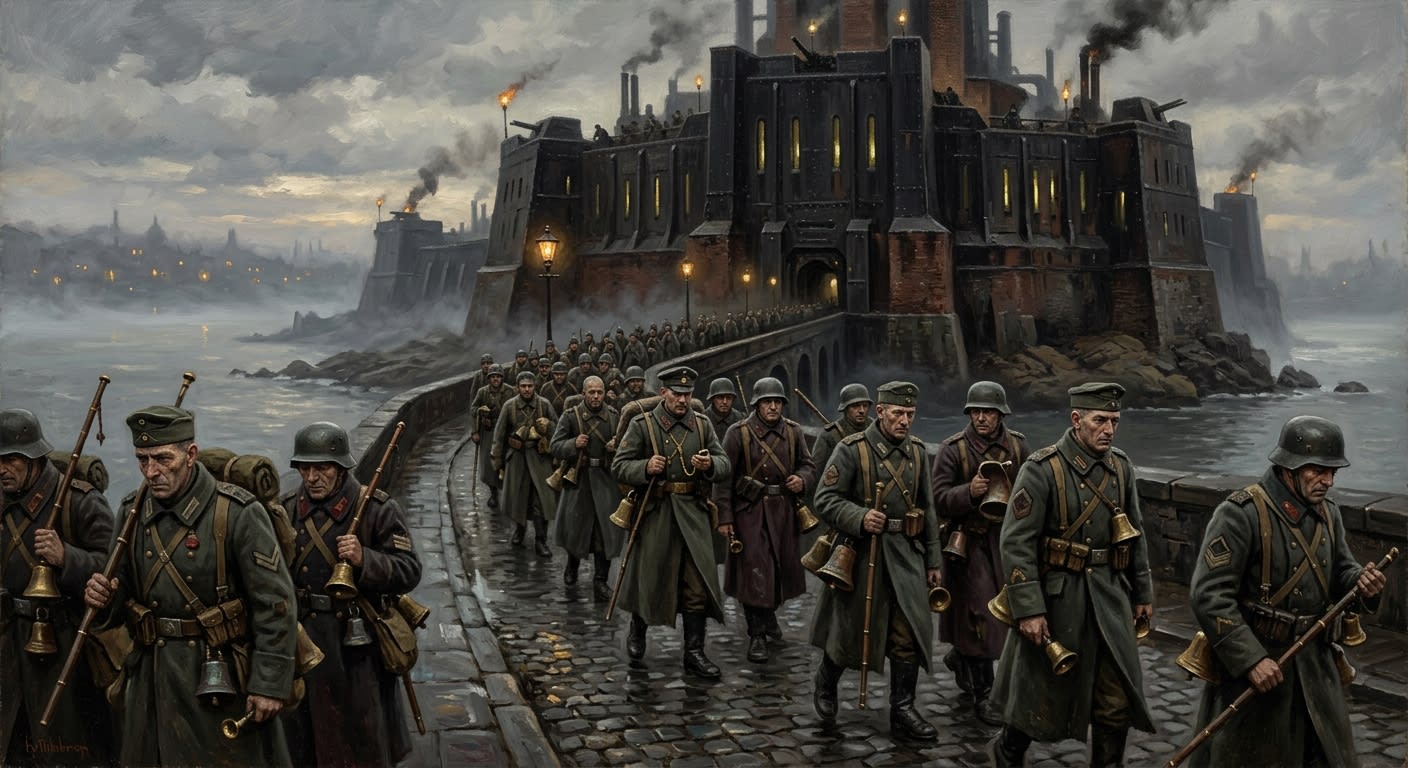
14th Bellwarden Cohort
The men who make sleep hurt at Shipka
The 14th Bellwarden Cohort keeps Bastion-Shipka awake with ugly bells, broken intervals, and the saintly cruelty of correct seconds.
Codex Ref. VIII.5.14-147
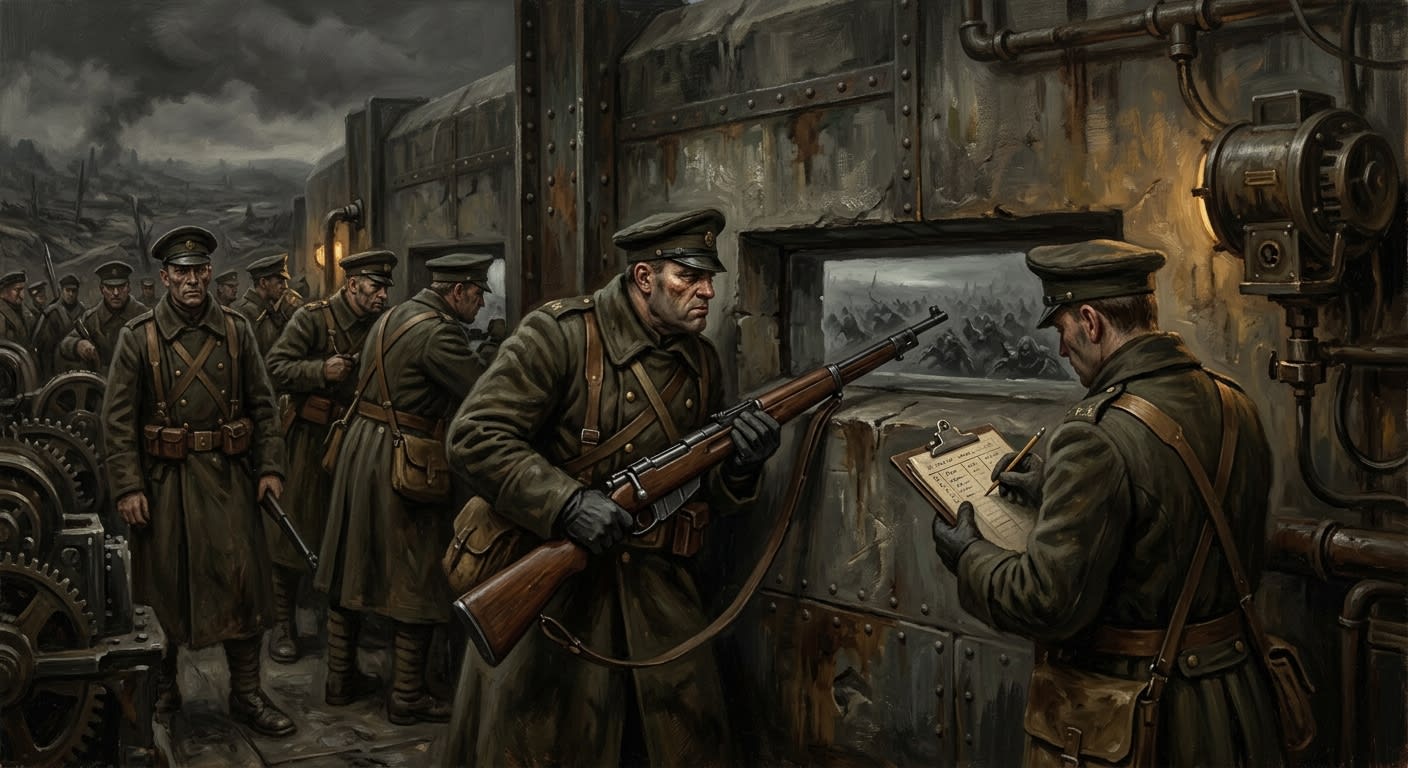
14th Garrison
The wall survives by learning when to look away
The 14th Garrison holds Bastion-Constantinople's hunger-facing wall by counting Kargath's horrors briefly, coldly, and under orders to look away.
Codex Ref. VIII.5.14-201
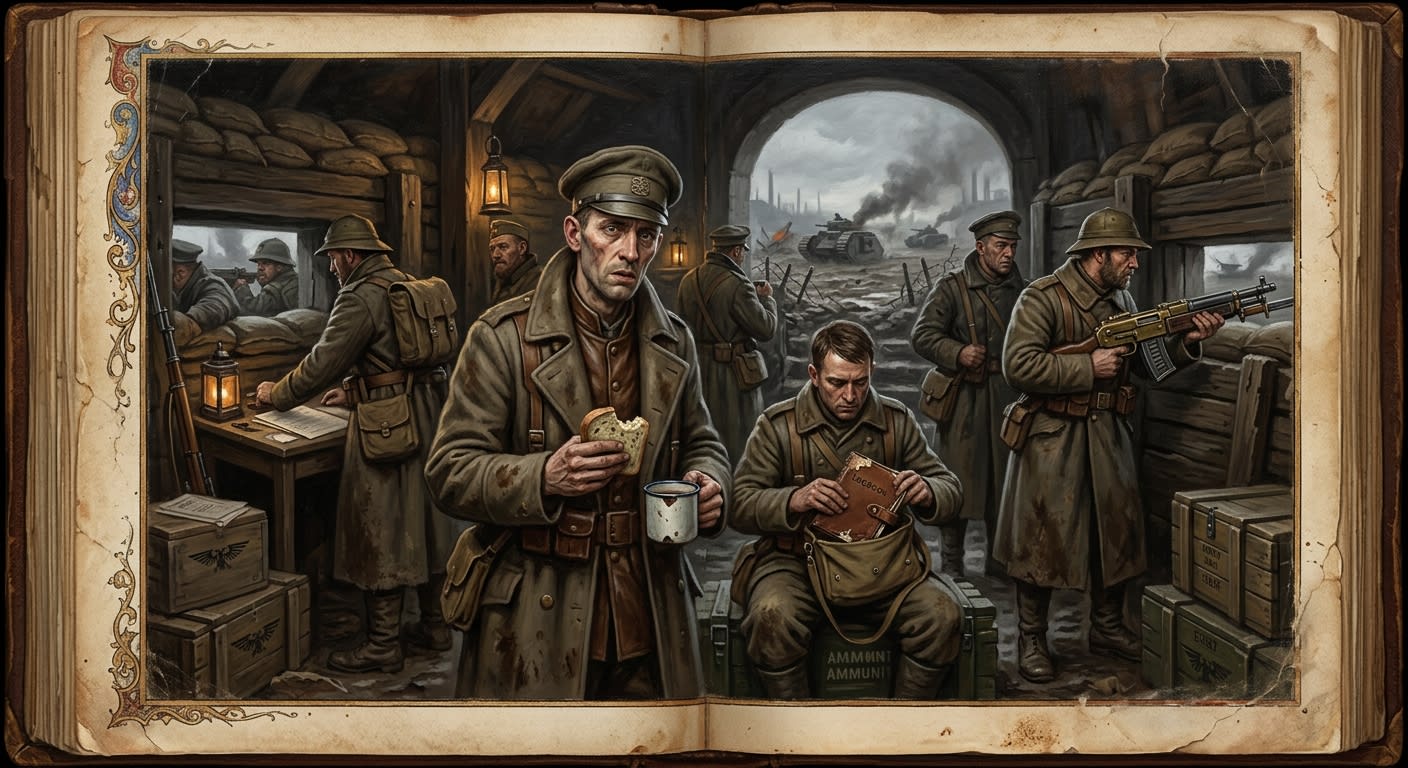
22nd Line Company
The hand is servant, and therefore watched
The 22nd Line Company gave Doctrine one bitten logbook, one hungry corporal, and the ninety-second rule by which men now survive looking.
Codex Ref. VIII.5.22-191
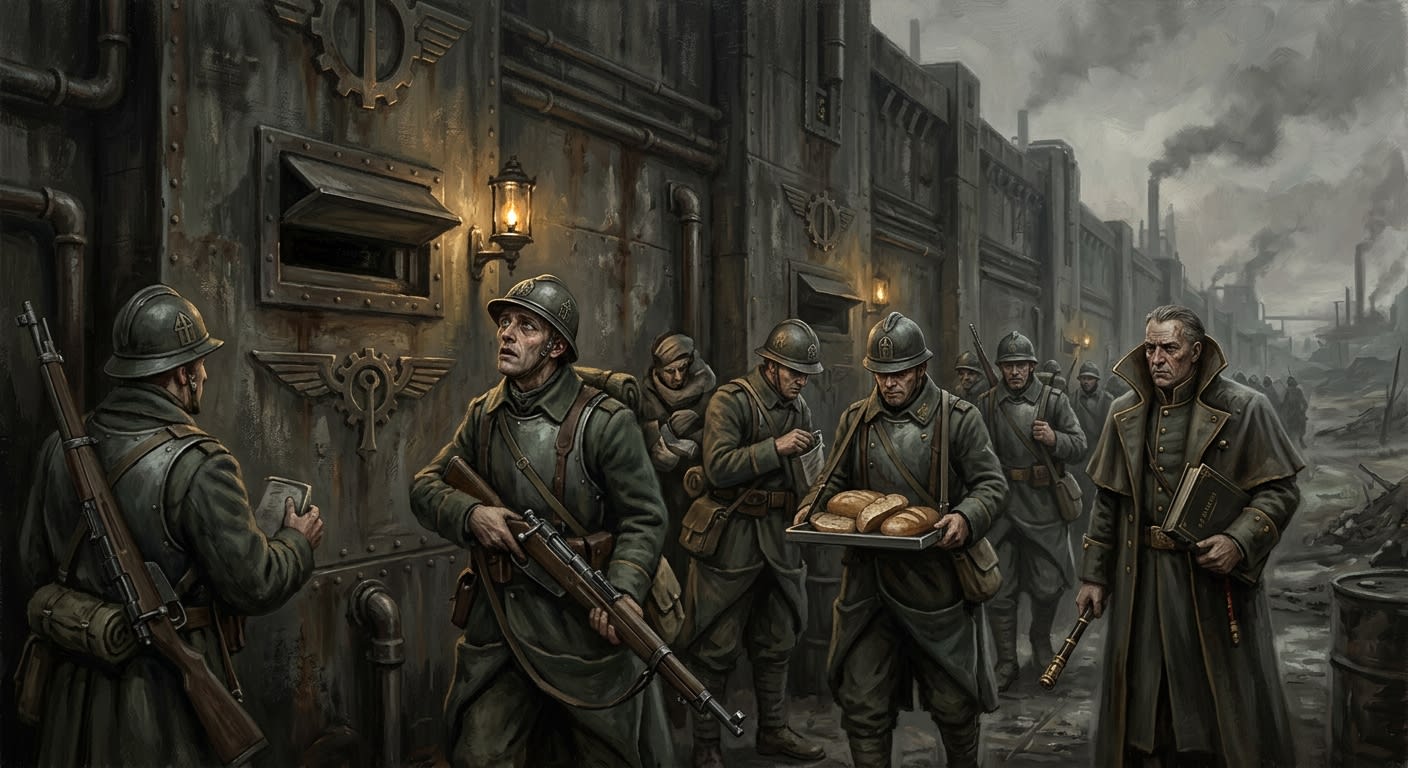
9th Garrison
Enough at the slit, bread under witness
The 9th Garrison taught the southern wall that looking too long has teeth, and that survival after hunger-contact begins with covered slits and witnessed bread.
Codex Ref. VIII.5.09-196
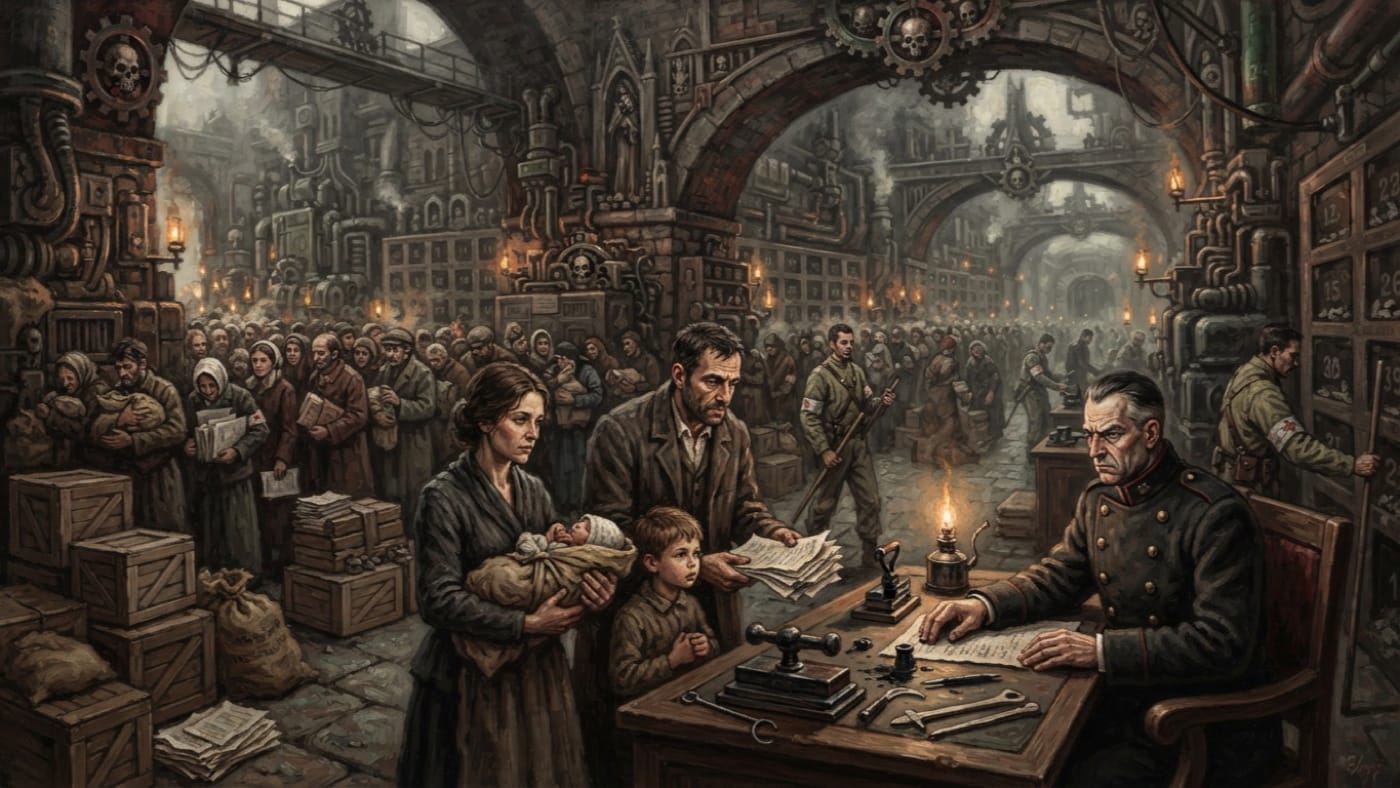
A.S. 78 Joint Classification Mandate
Five categories for the dead, one more queue for the living
The A.S. 78 emergency mandate made the dead controlled goods: five classifications, licensed mortuary clearance, and grief that could finally be billed.
Codex Ref. XIII.1.92-078
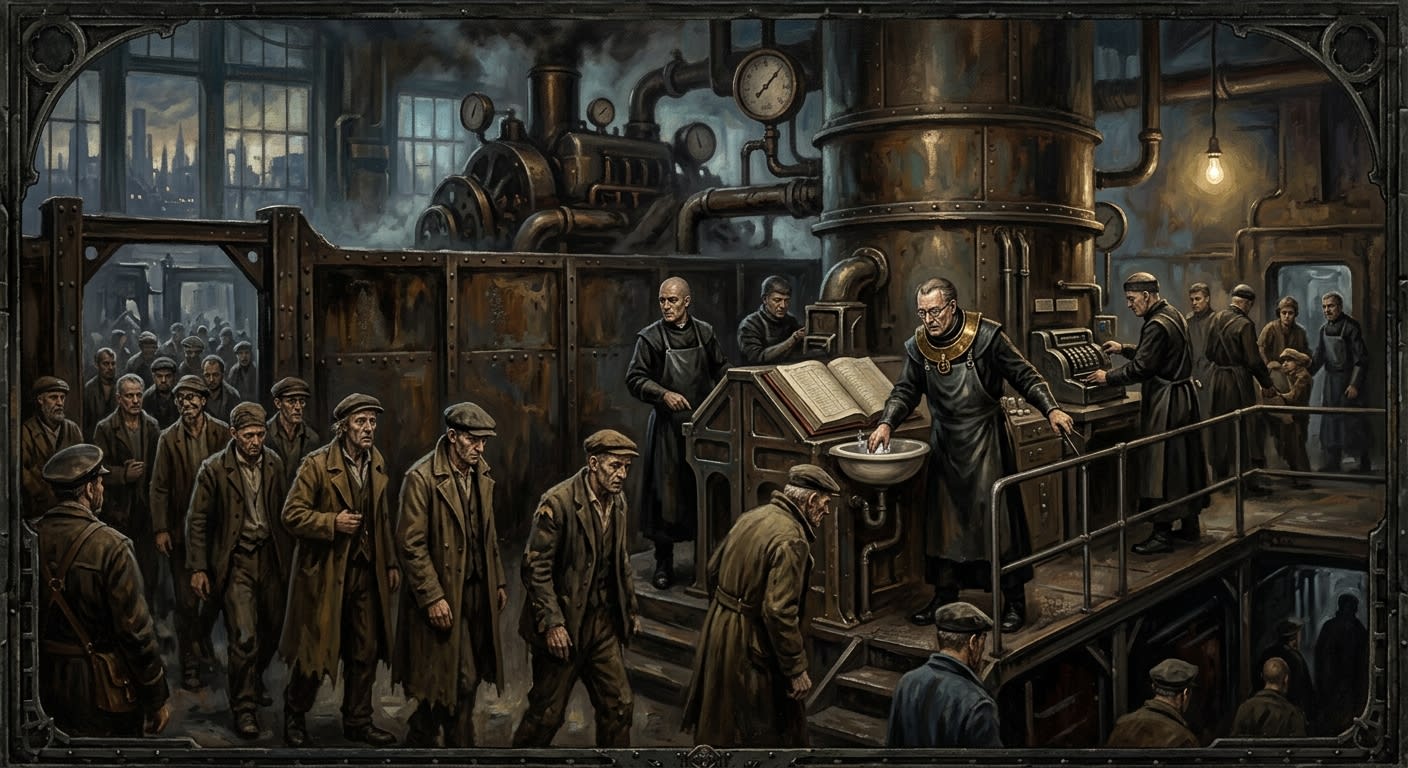
Absence Quota
The loaf improves when the mouth is misfiled
Rheinscarp's Absence Quota makes grain sufficient by correcting the hungry out of the count; arithmetic, being pious, washes its hands.
Codex Ref. XIII.1.97-198
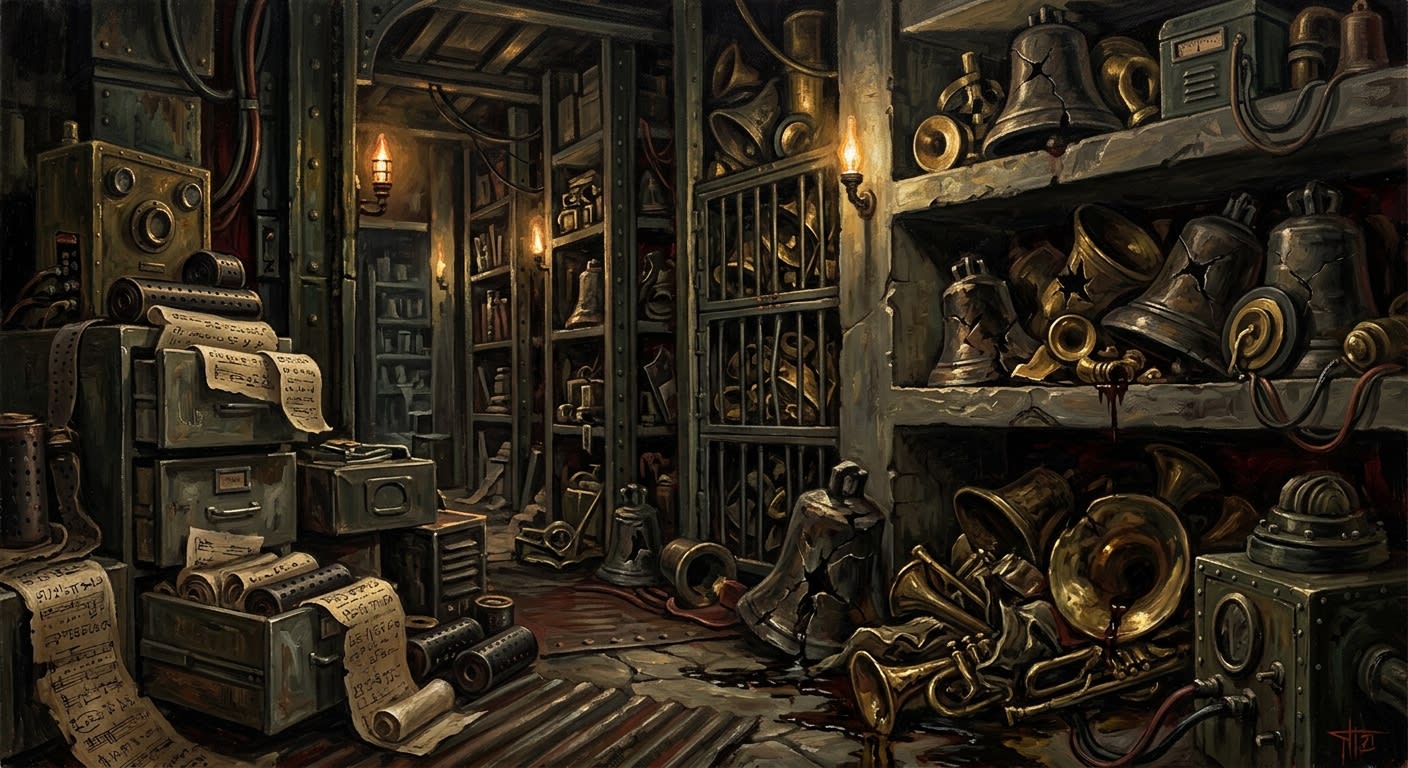
Acoustic Heresy Annex
Where forbidden notes are catalogued before anyone useful burns them
Strasbourg's Acoustic Heresy Annex preserves lethal notes, suspect hymn sheets, cracked bells, and musical filth too useful for Purity to burn.
Codex Ref. XIII.1.96-201
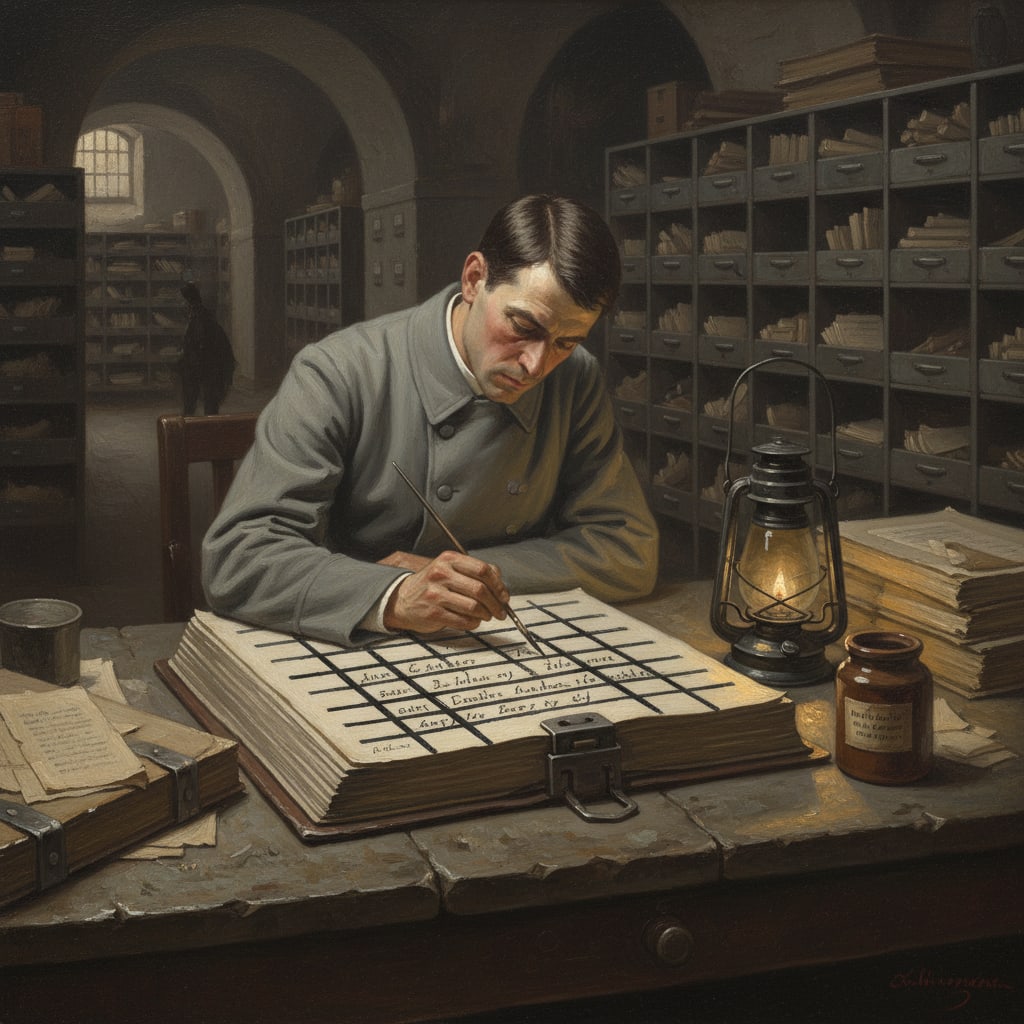
Administrative Dissolution
What the Bureau calls a filing action; what the dogs remember
Administrative Dissolution is the Bureau of Records' procedure for rendering a soul present but illegible — a grid of Mortuary Black drawn across the name-entry, the null-mark Ø applied, the Ledger amended.
Codex Ref. XIII.1.01-001
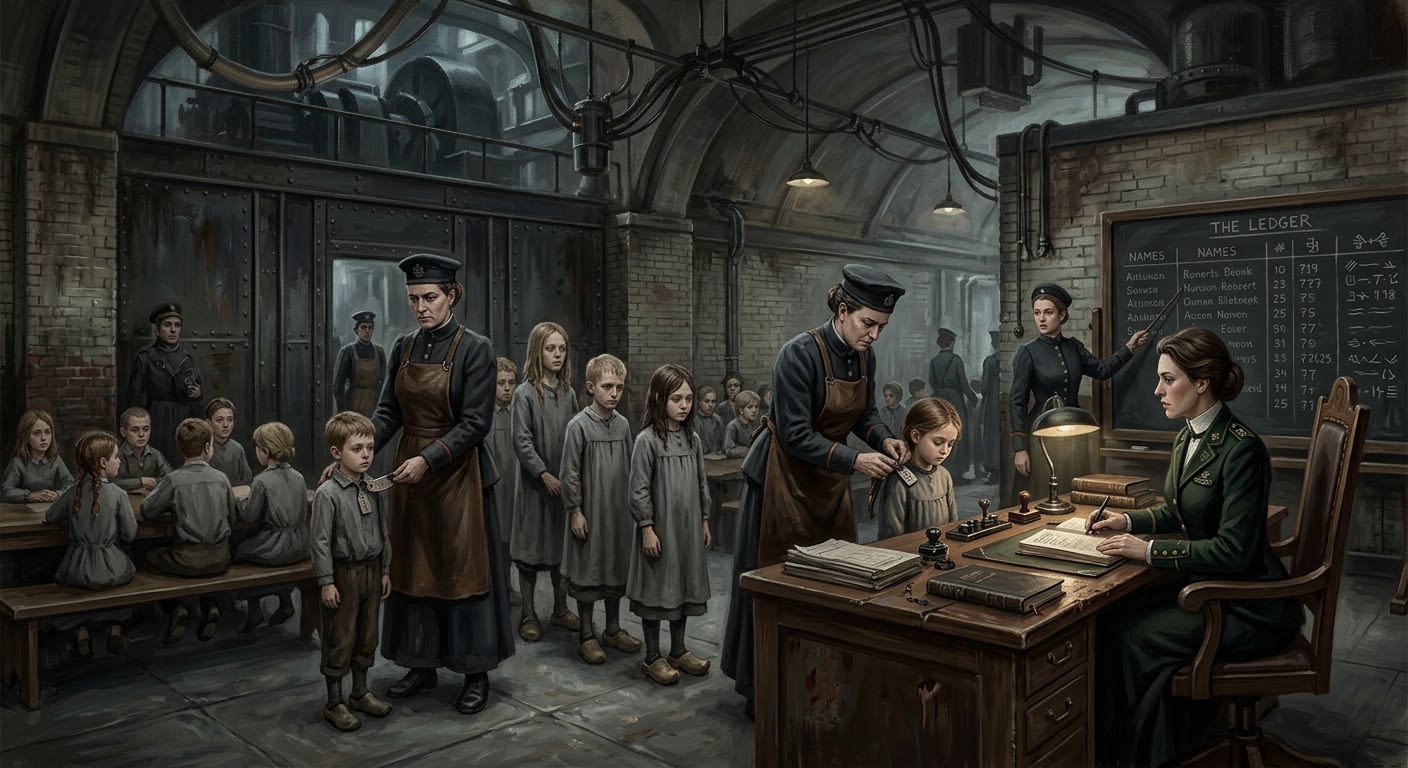
Administrative Recovery
The state calls it custody because theft has poor margins
Administrative Recovery is Mercy's washed name for taking unregistered children, renaming them, tagging them, and teaching the Ledger to stand where a family stood.
Codex Ref. XIII.1.02-159
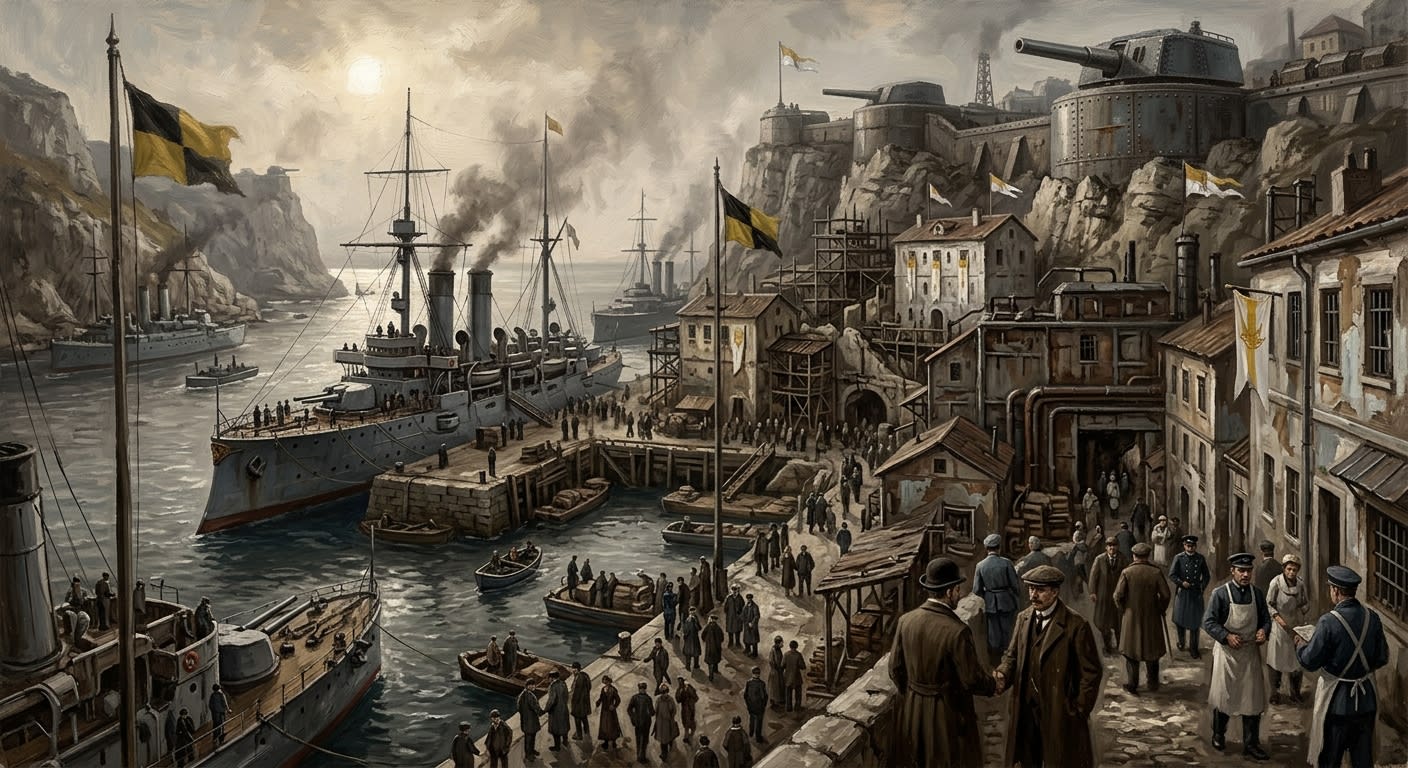
Adriatic Coast
The white edge where pilgrimage, quarantine, and invoice learn to float
The Adriatic Coast is the Synod's white southern hinge: pilgrim piers, quarantine flags, cliff guns, fever wards, and profitable fraud.
Codex Ref. II.7.03-201

Air Auditors
The plural office that edits the breath of cities
The senior collective custom of Ninth Mark Air Auditors: old noses deciding which smoke becomes law, revenue, mercy, or blessed omission.
Codex Ref. XII.32.03-143

Aldous Crenn
Seven saints in one quarter, and not one accuracy review survived to trouble them
Bureau of Doctrine hagiographic clerk whose A.S. 94 quarter processed seven canonization packets, including Saint Halva's deficient file, and made sanctity behave like paperwork.
Codex Ref. III.2.01-067

Angle-Runner
The child between the iron, the ledger, and the official hand
Angle-Runners are orphanage-roll children pressed into Brand-Smith service after the Compulsory Marking Decree, carrying tags, swatch plates, salve, and blame between the iron and the ledger.
Codex Ref. XII.20.07-001
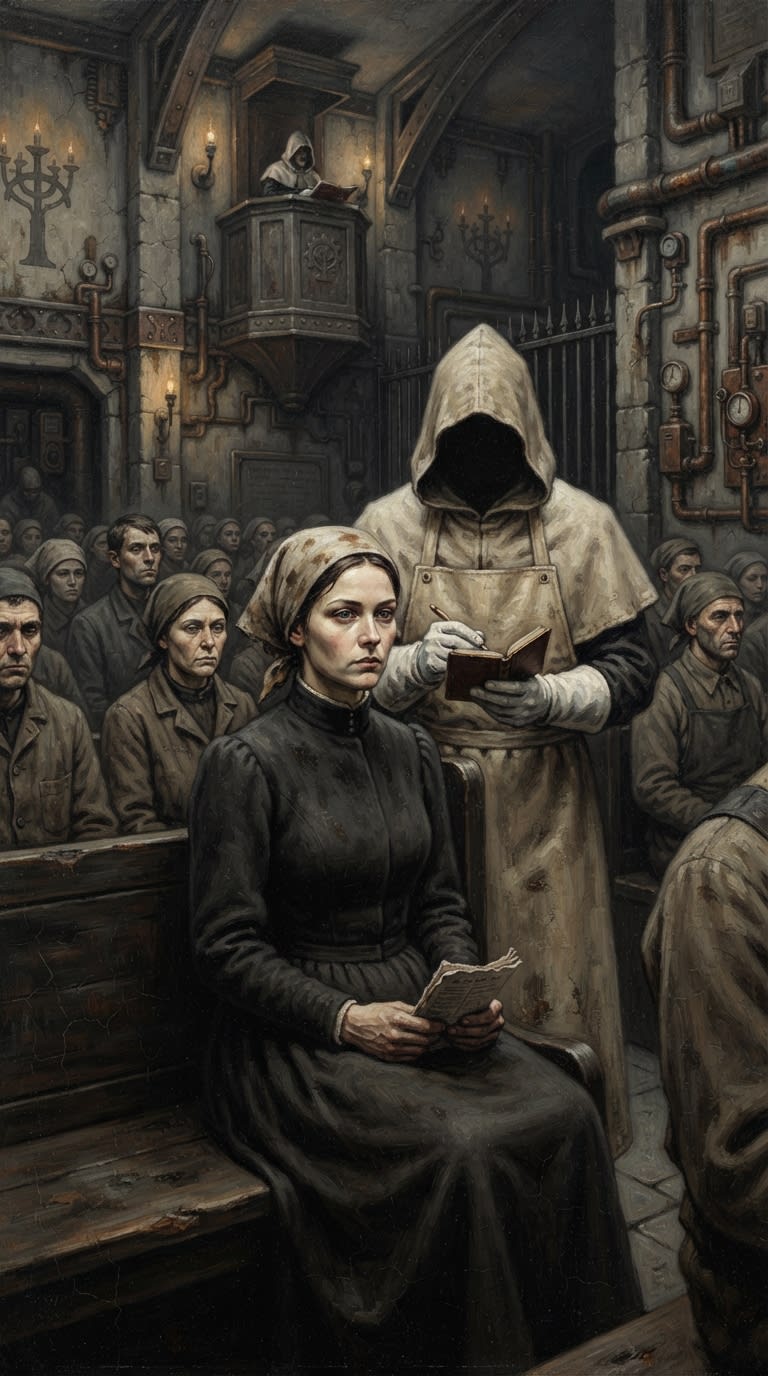
Appendix C
The face is a sloppy clerk; it files everything eventually
Restricted schedule to the Twelfth Amendment, Appendix C withholds the facial indicators by which Purity finds unlicensed thought sitting on the citizen's face.
Codex Ref. XIII.1.04-196
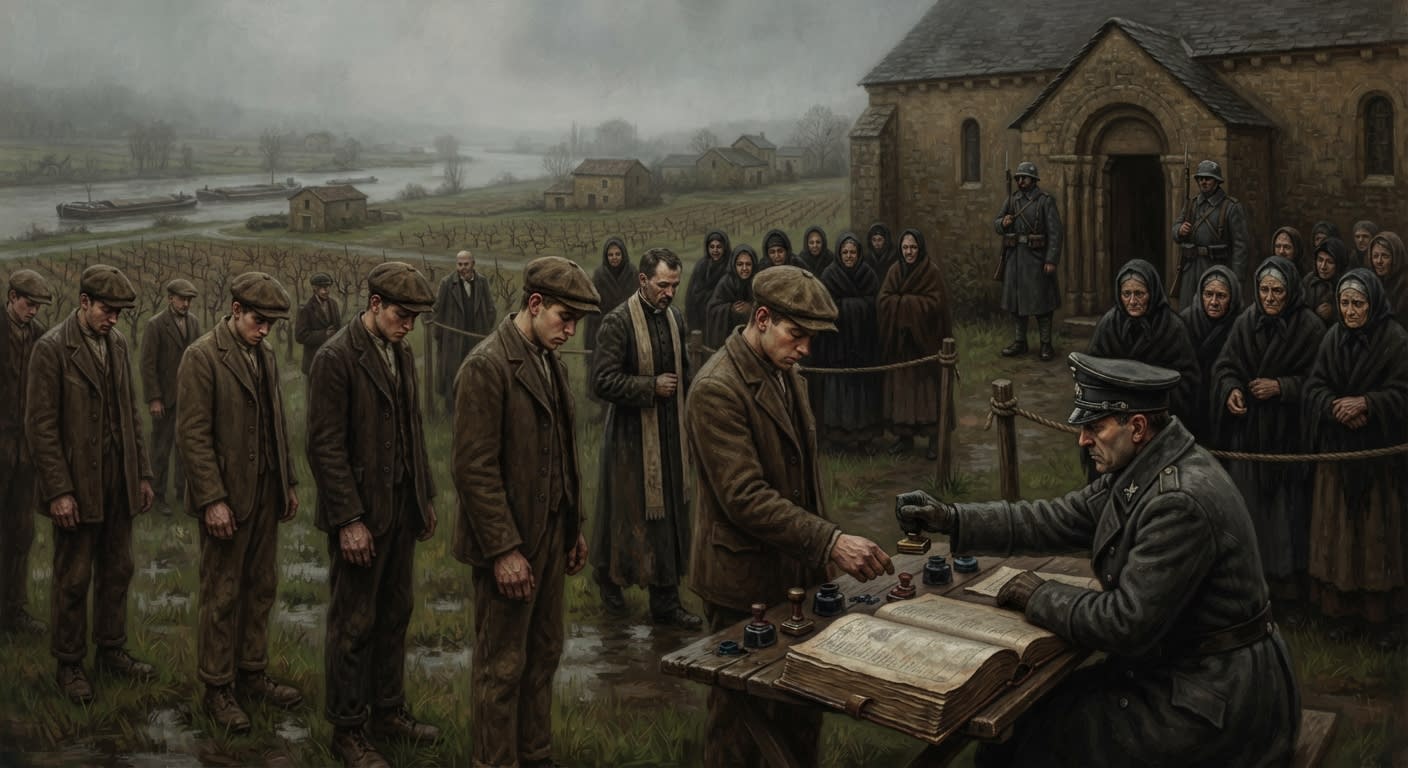
Aquitaine
The western field where sons go missing politely
Aquitaine is the Synod's damp western grain and wine basin: loyal by return, undercounted by suspicion, and courteous enough to make evasion look like hospitality.
Codex Ref. II.1.12-201

Archbishop Pellian of Rouen
The mercy that cost three percent
Archbishop Pellian of Rouen briefly governed the Bureau of Tithes, tried conciliation, lost three percent in one quarter, and taught Strasbourg that mercy must be priced.
Codex Ref. III.2.01-059

Archbishop Salome Veyrault
The smile that made arrears a sacrament
Archbishop Salome Veyrault governs the Bureau of Tithes with a smile sharp enough to audit grief, humble Purity, and make the Sagittal Line pay for one more day of survival.
Codex Ref. III.2.01-055
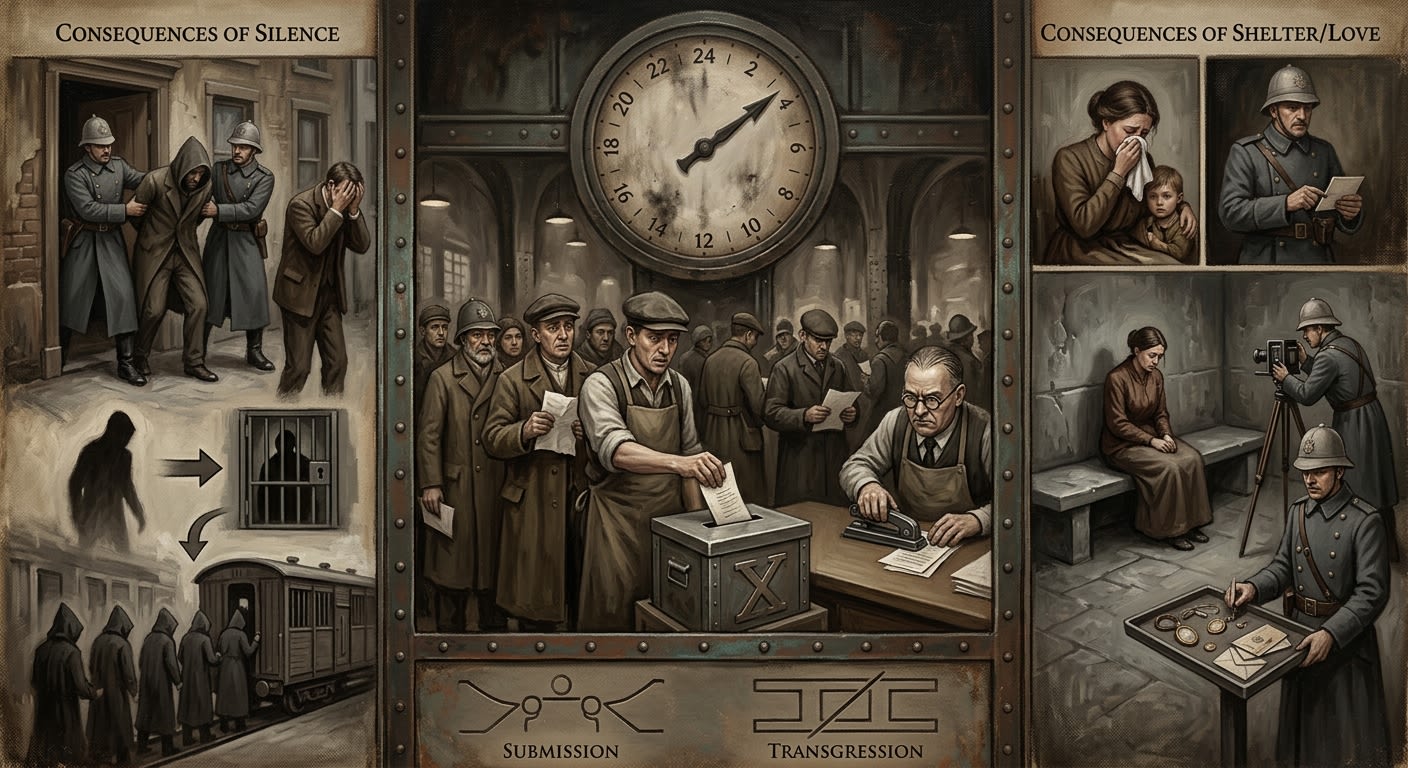
Article 19 of the Catechism of Obedience
The neighbour is promoted to witness and punished for delay
Article 19 makes suspected heresy reportable within twenty-four hours, converting silence into shelter, shelter into participation, and love into evidence.
Codex Ref. XIII.1.04-019
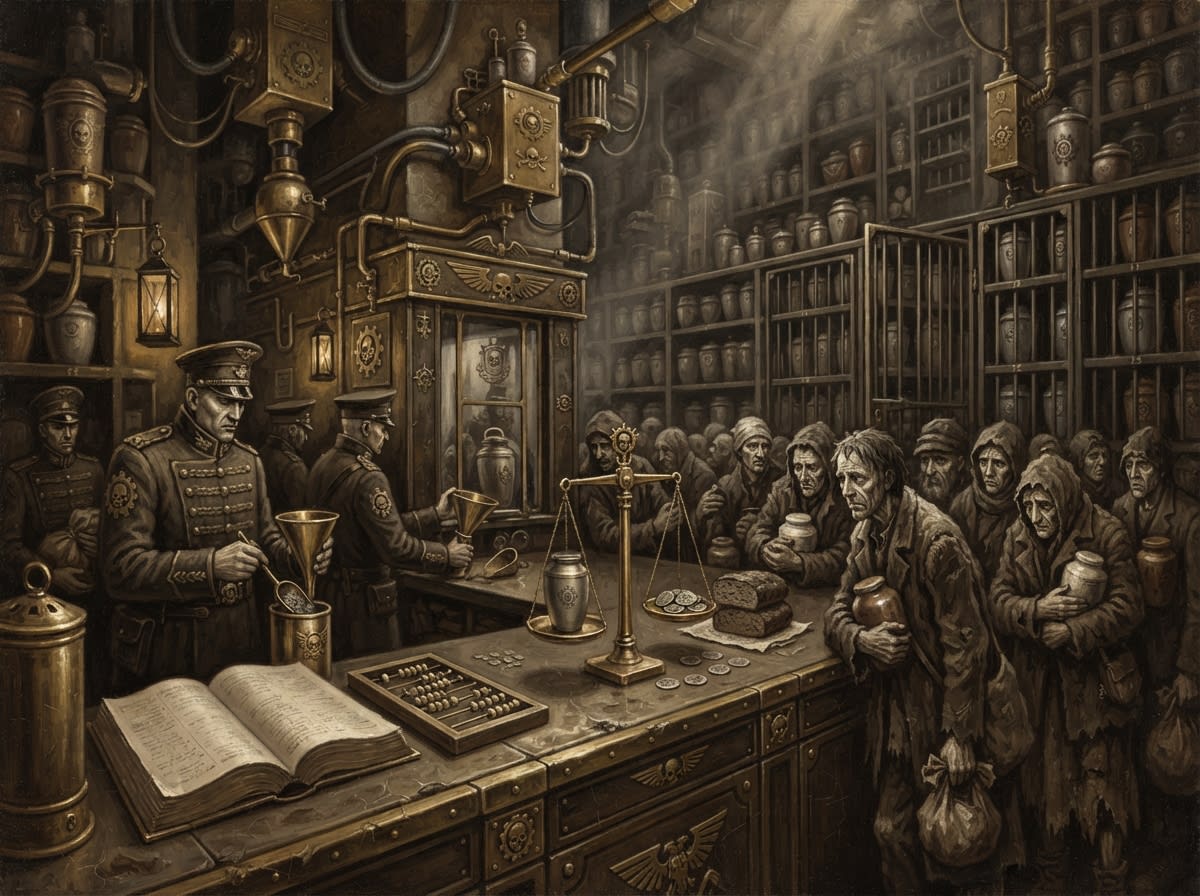
Ash Banks
Where grief is weighed, tendered, and filed as solvent
Ash Banks convert cremains, bone-dust, and pledged future remains into bread, salt, absolution tokens, and dust futures while every Bureau calls the ash something useful.
Codex Ref. XIII.1.98-201
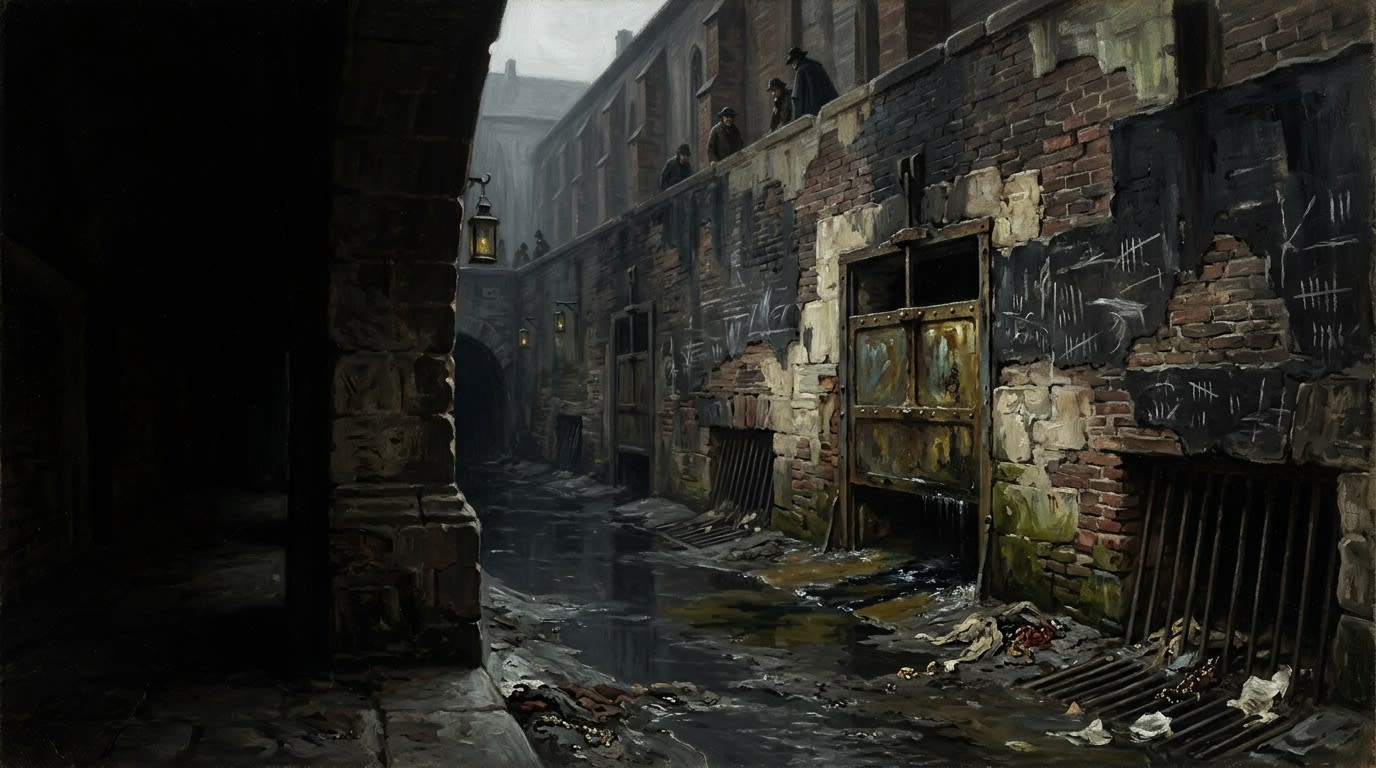
Ash Canal
Where Strasbourg teaches water to forget names
The Ash Canal is the Cloister's south runoff: drain, boundary, market, fever line, and the useful black water into which inconvenient custody is poured.
Codex Ref. II.3.06-007
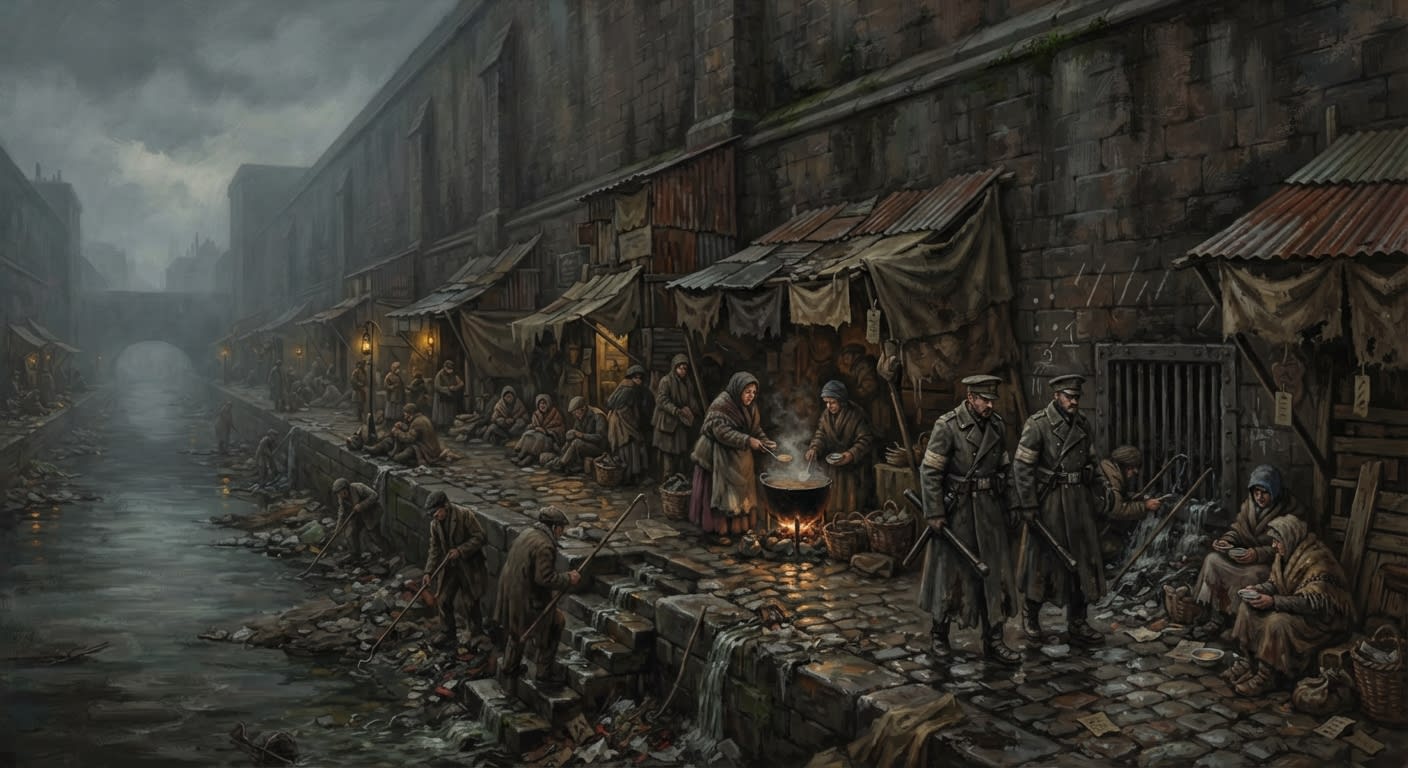
Ash Canal Walk
Where the wall leaks people, tags, and jurisdiction
Ash Canal Walk is the Cloister's denied south-wall strip: runoff margin, fever camp, broth market, hatch-smuggling line, and the place where sorted pilgrims return as prices.
Codex Ref. II.3.06-008
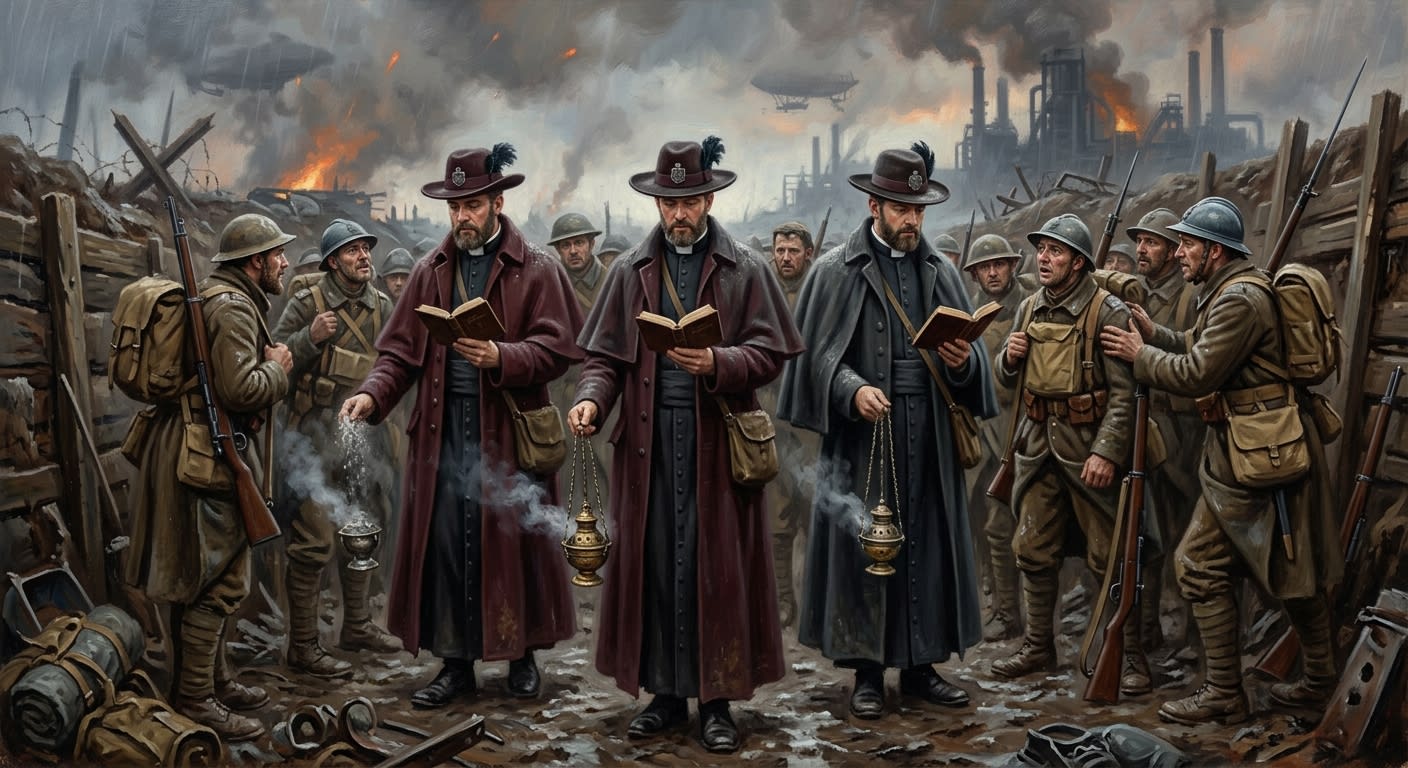
Ash Chaplains
Breath is only pastoral after War has taught it to hold
Bureau of War lung-clergy who deploy relic-ash, the Litany of Stones, cadence discipline, and name-silence to keep breach cohorts breathing in obedience under shell, song, and rupture.
Codex Ref. VIII.5.07-001
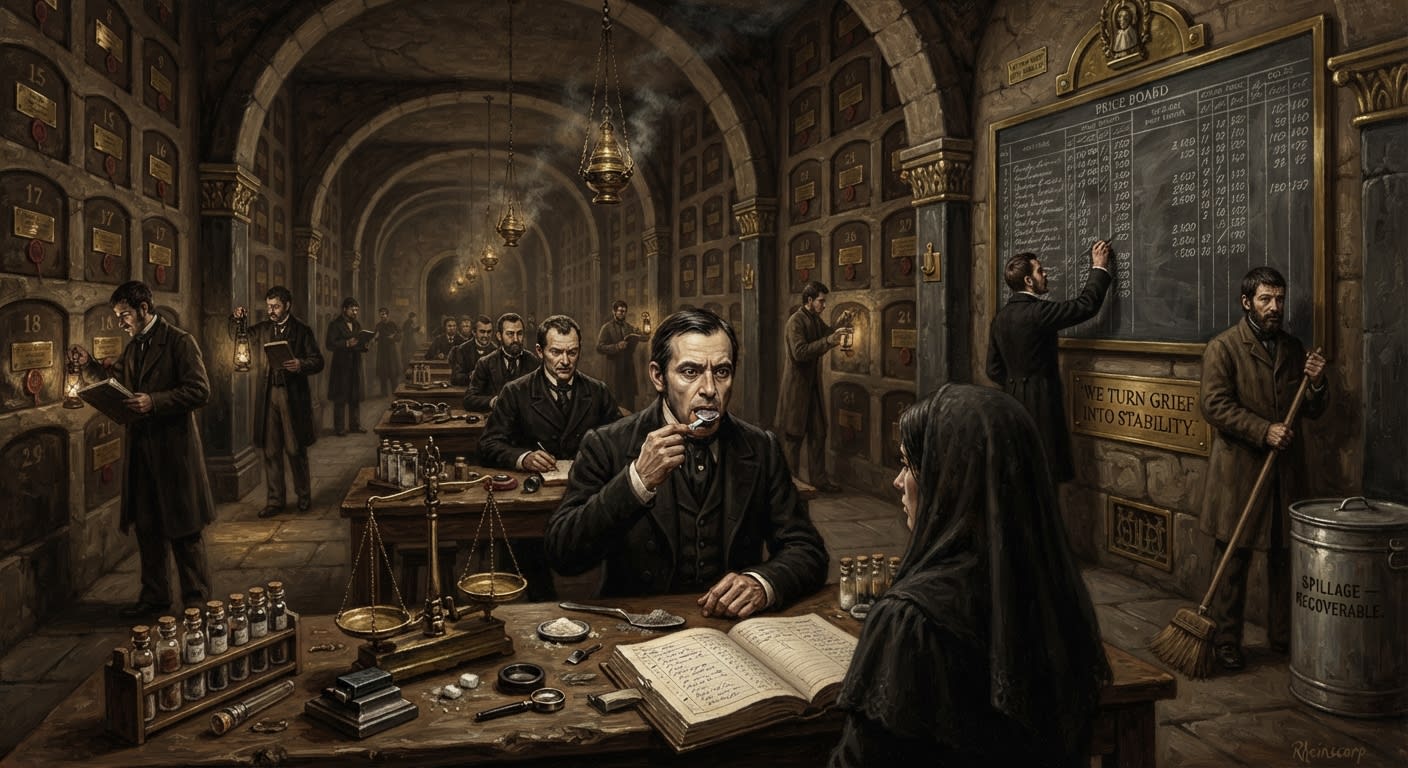
Ash Exchange of Saint Pelagia
Where grief becomes tender and the dead pay interest
Rheinscarp's seventh terrace turns the dead into collateral: cremains vaults, saint-shares, dust futures, and the cheerful arithmetic of Broker-Saintsman Damas Rohe.
Codex Ref. II.2.01-007
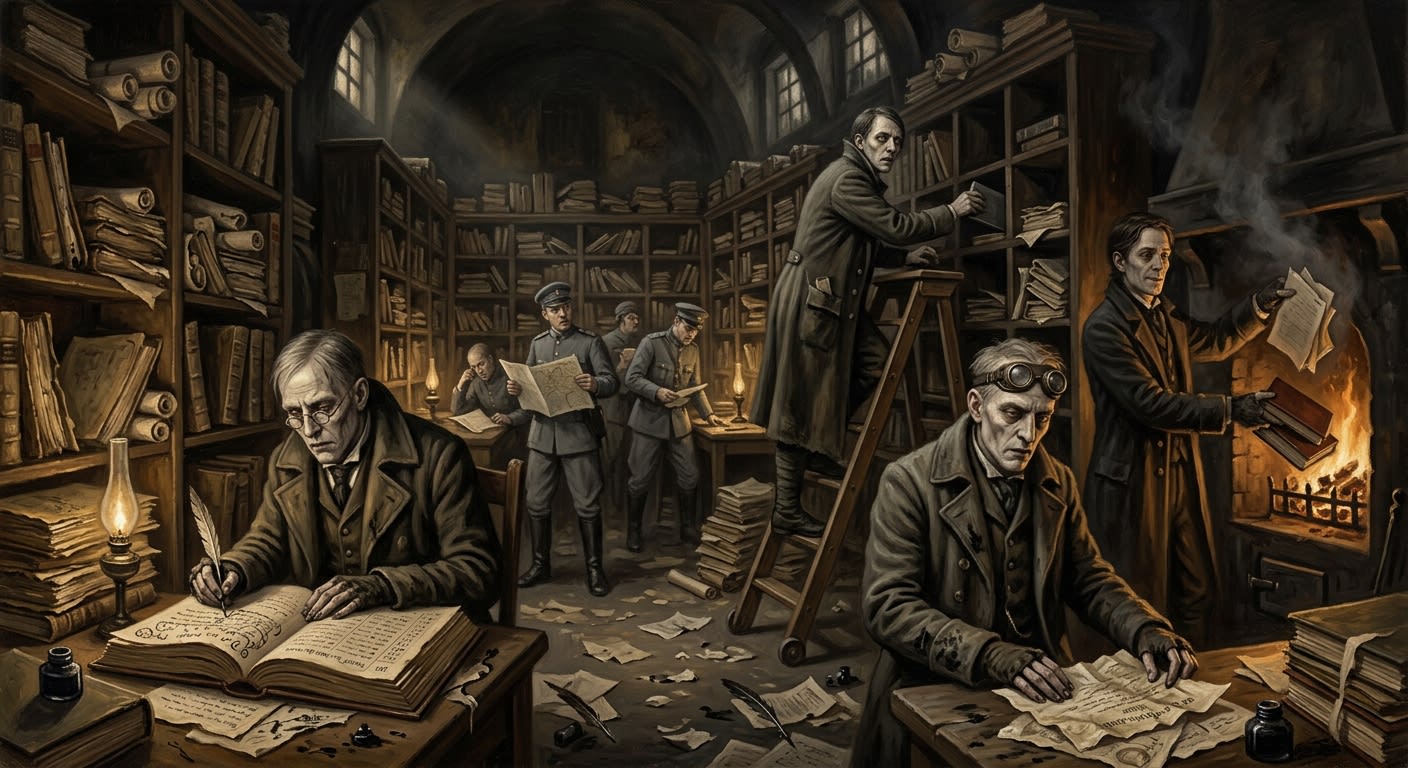
Ash Registrars
The child disappears when the form learns to lie
Pale Kin paper-first faction that frees hidden children by ruining, duplicating, and dulling official records until the Ledger loses confidence in its own page.
Codex Ref. XI.4.01-004
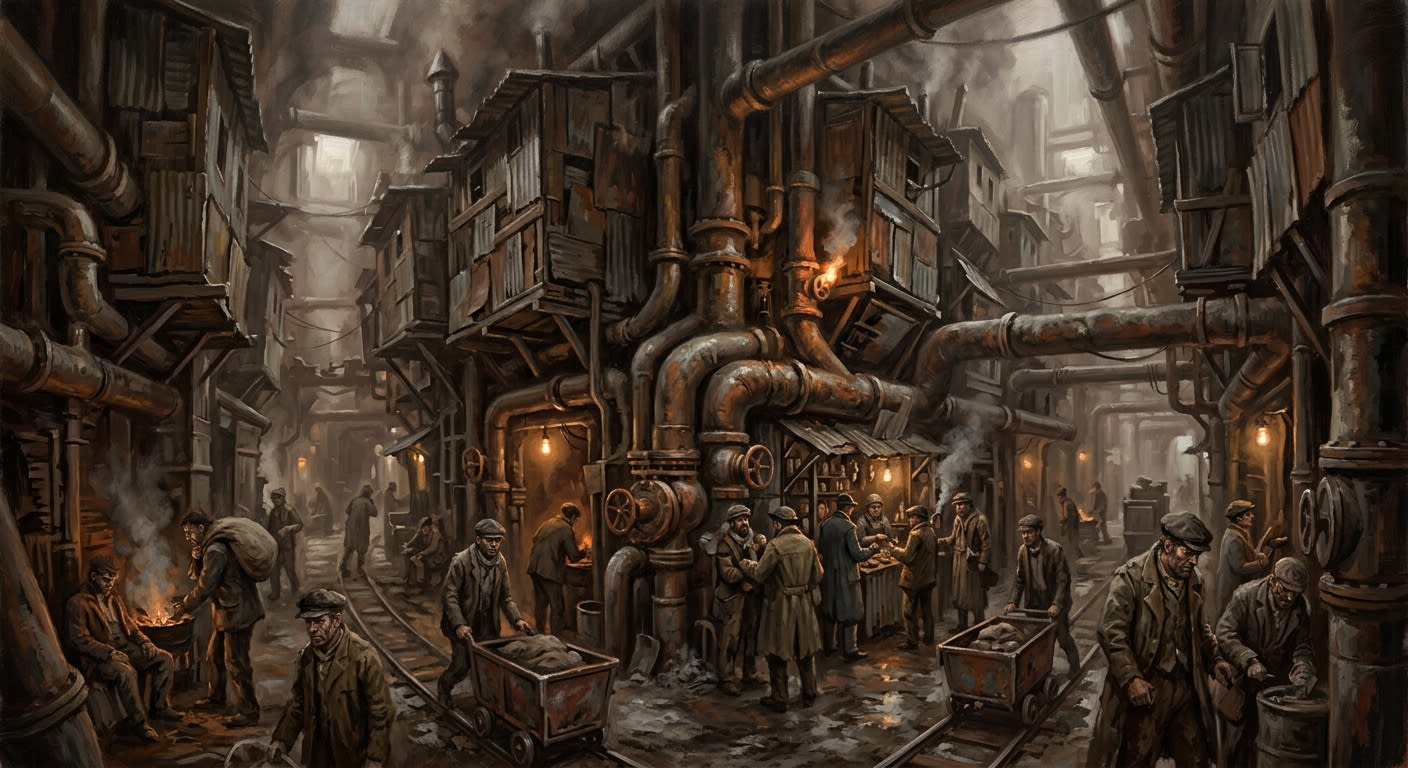
Ash Warrens
Where Essen rents warmth by the breath
The Ash Warrens are Essen-of-Hymnsteel's southern warm-duct sprawl: refugee burrow, condemned labour reserve, heat market, and acoustic wound.
Codex Ref. II.2.01-008
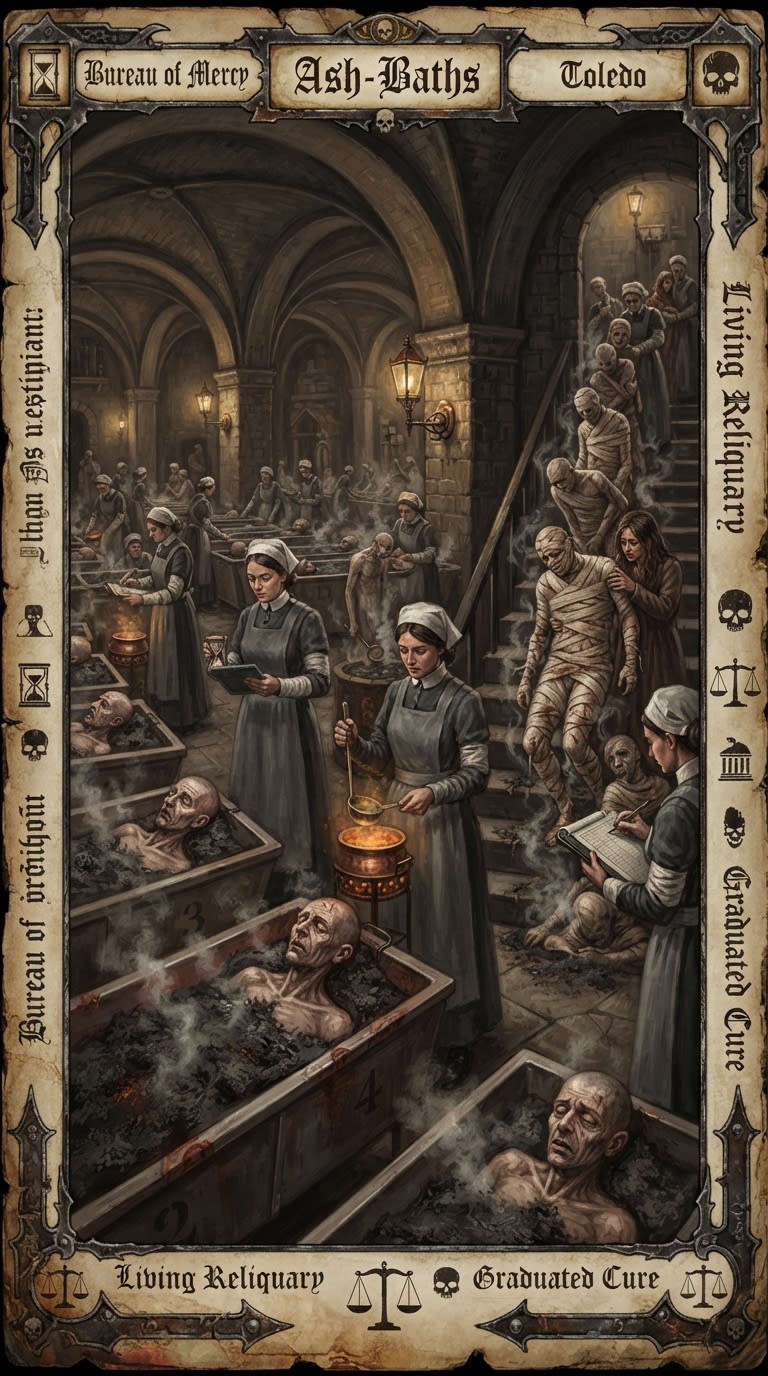
Ash-Baths
Where treatment warms its ash and bills the family
Toledo's Mercy-run ash treatment, where fever is lowered into hot ash, survivors become living reliquaries, and the dead are filed as graduated cures.
Codex Ref. XIII.1.56-002
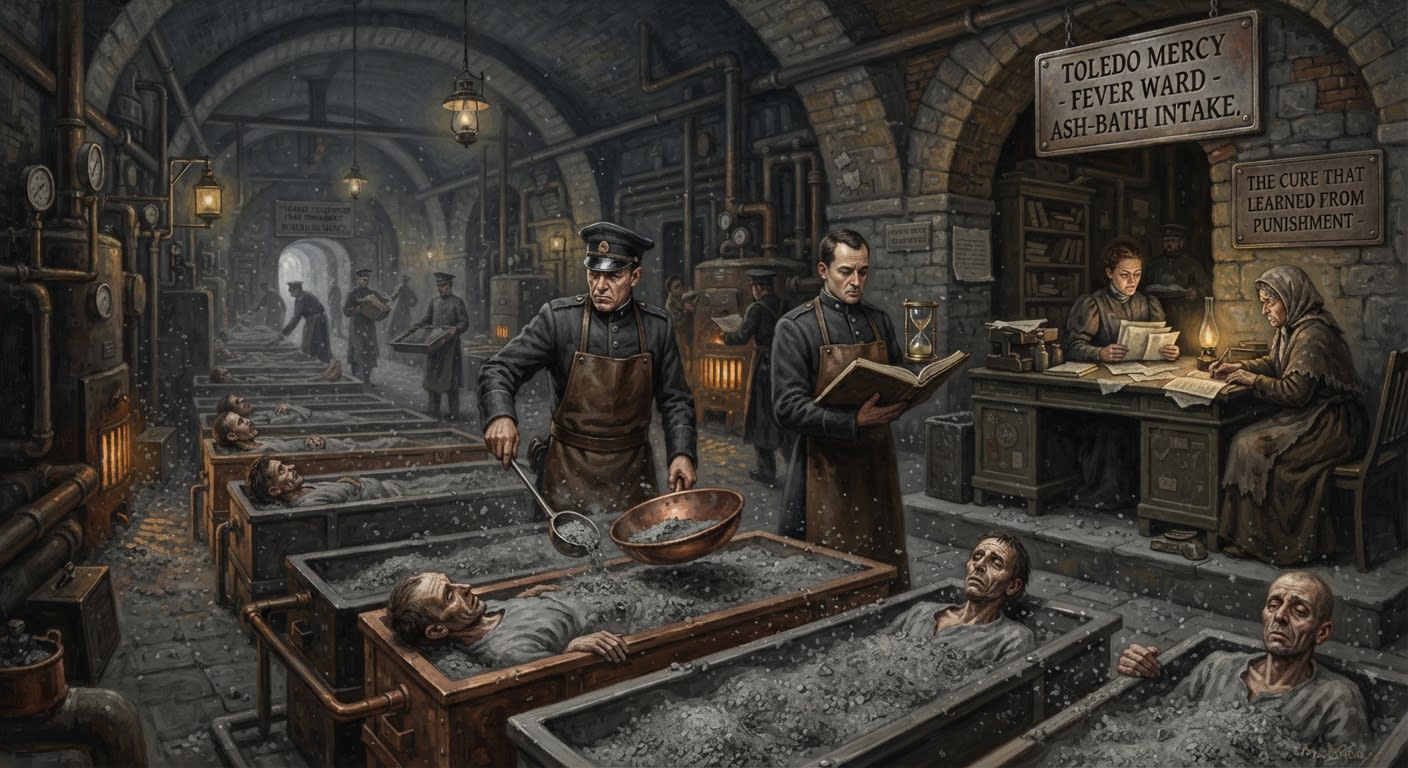
Ash-Baths of Toledo
Where Mercy learned to bill the fever
Toledo's Mercy-run ash cure, where fever patients are buried in hot grey doctrine, survivors are paraded as living reliquaries, and deaths are billed as graduated cures.
Codex Ref. XIII.1.56-002
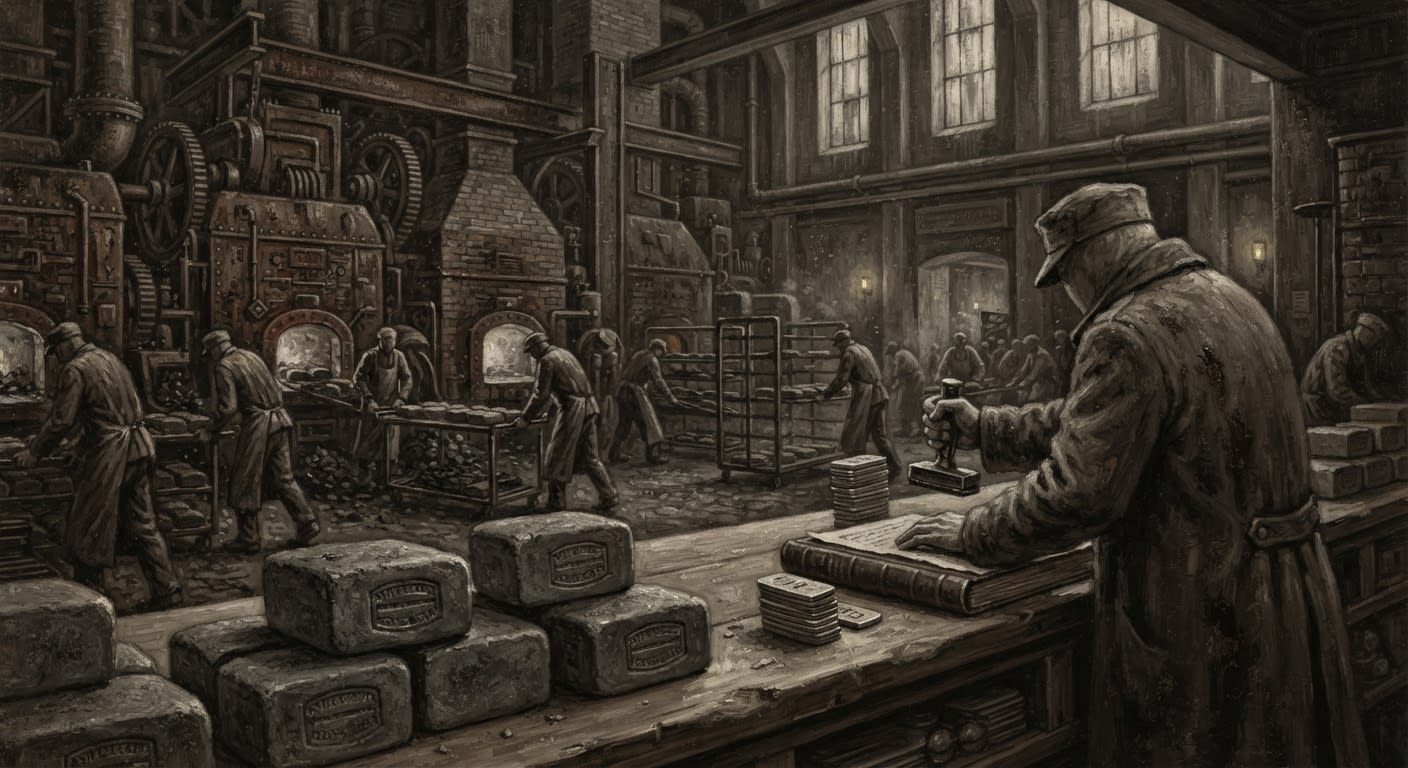
Ash-bread
The loaf does not spoil. That is how it learned to collect names.
San Vesta's grey ration-loaf does not rot, does not forgive, and does not let a name detach from its stamp; the Bureau of War calls this nutrition.
Codex Ref. VI.4.21-134
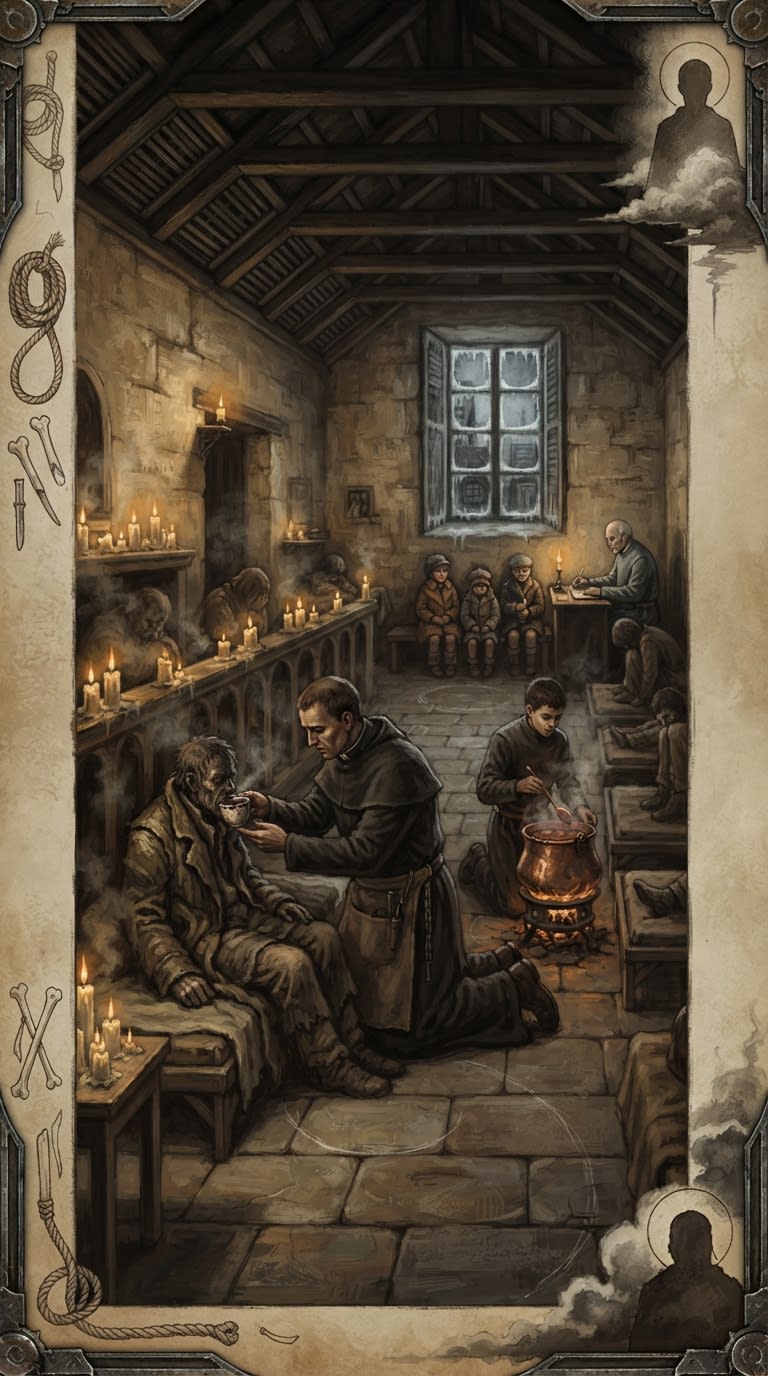
Ash-Chapel of Saint Lorn
Where Lor turns failed breath into wards
At the Warrens edge of Black-Snow Lor, the Ash-Chapel comforts the choking, registers storm-orphans, and keeps the oath lists no Bureau wants to read.
Codex Ref. II.4.09-201
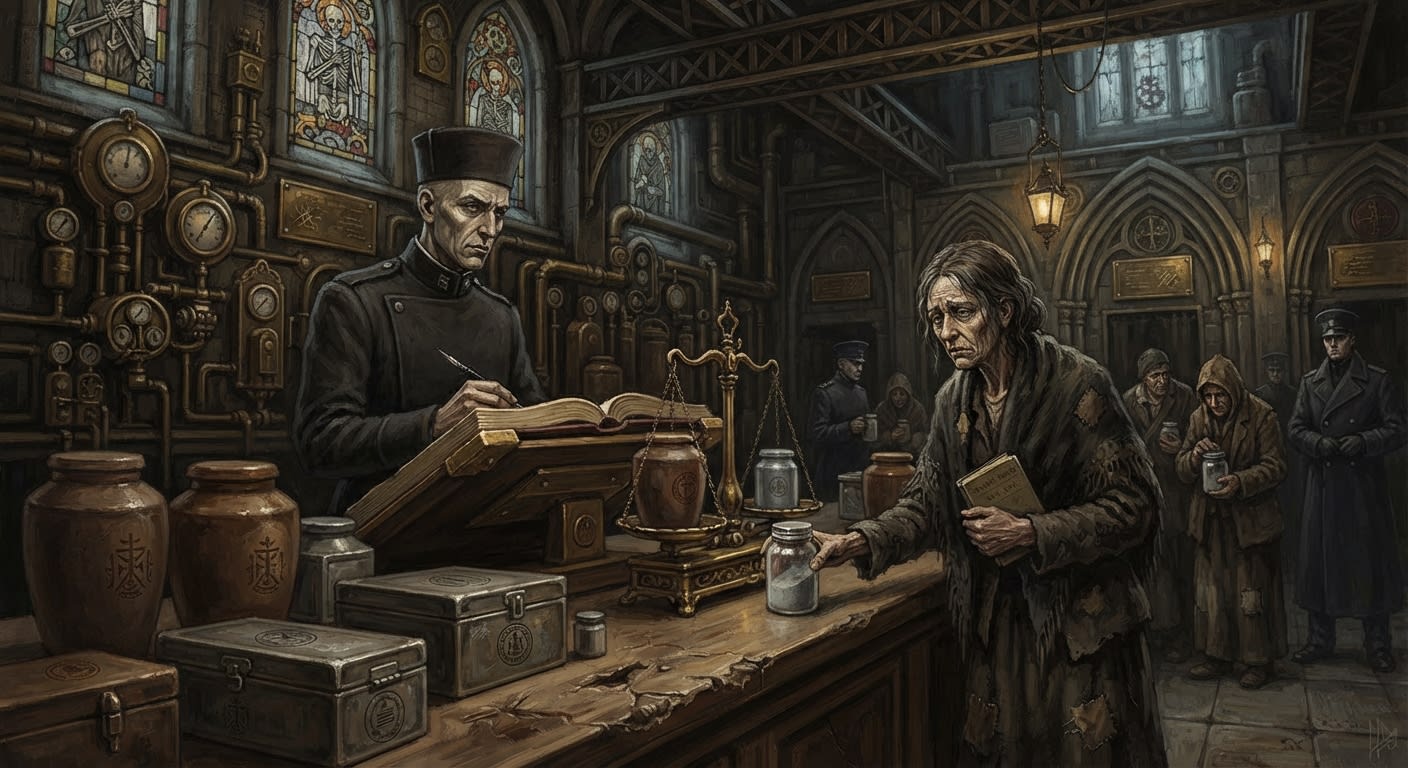
Ash-Credit
The dead are tender once Tithes finds a scale
Ash-credit is the Synod's devotional collateral, converting cremains, saint-dust, and pledged future remains into bread, grace rations, and obligations the dead cannot refuse.
Codex Ref. VI.3.01-002
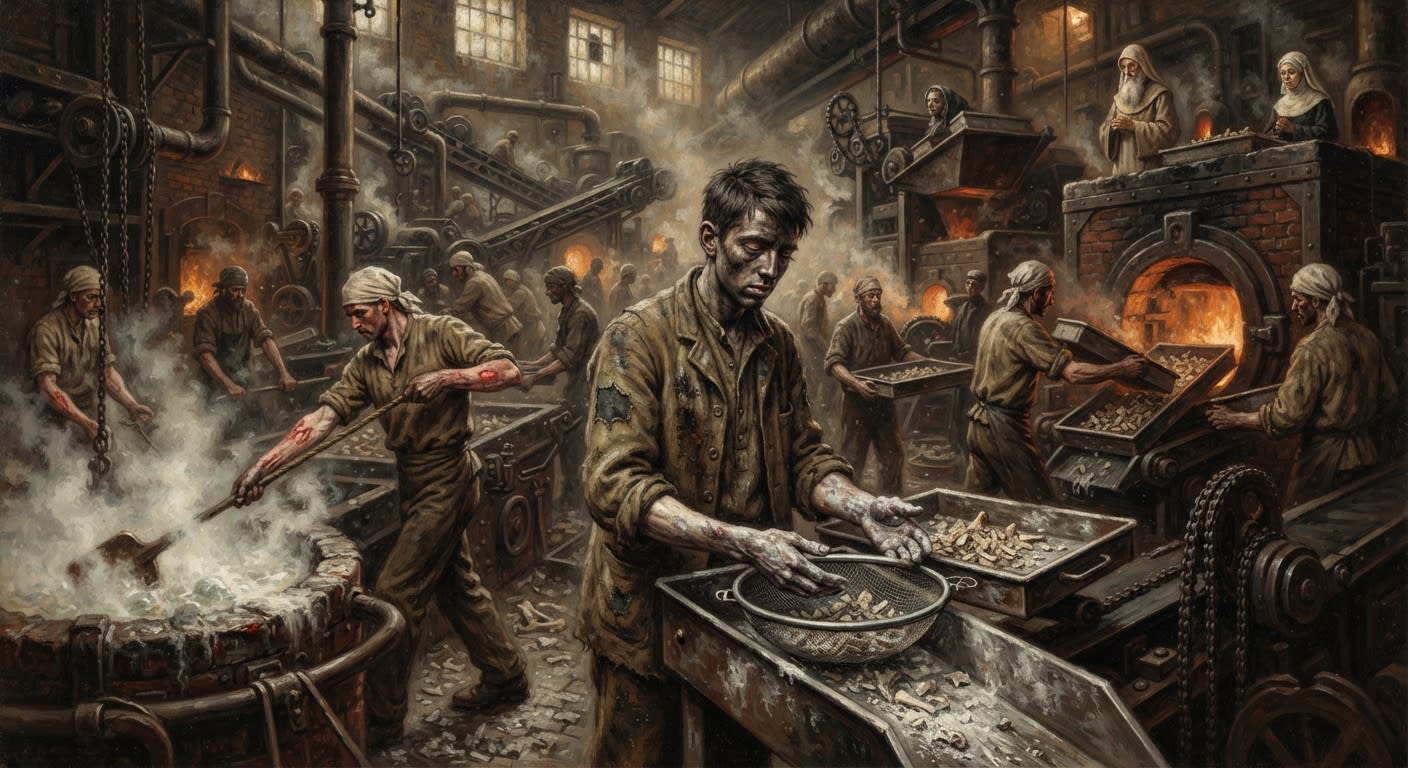
Ash-Hands
The lowest white hands touch the saint first and receive the blame first
Lowest Saint-Bone Melter station: intake hands, feed attendants, sifters, and slake-rope bodies whose cracked palms become the first document in any failed batch.
Codex Ref. XII.20.10-001
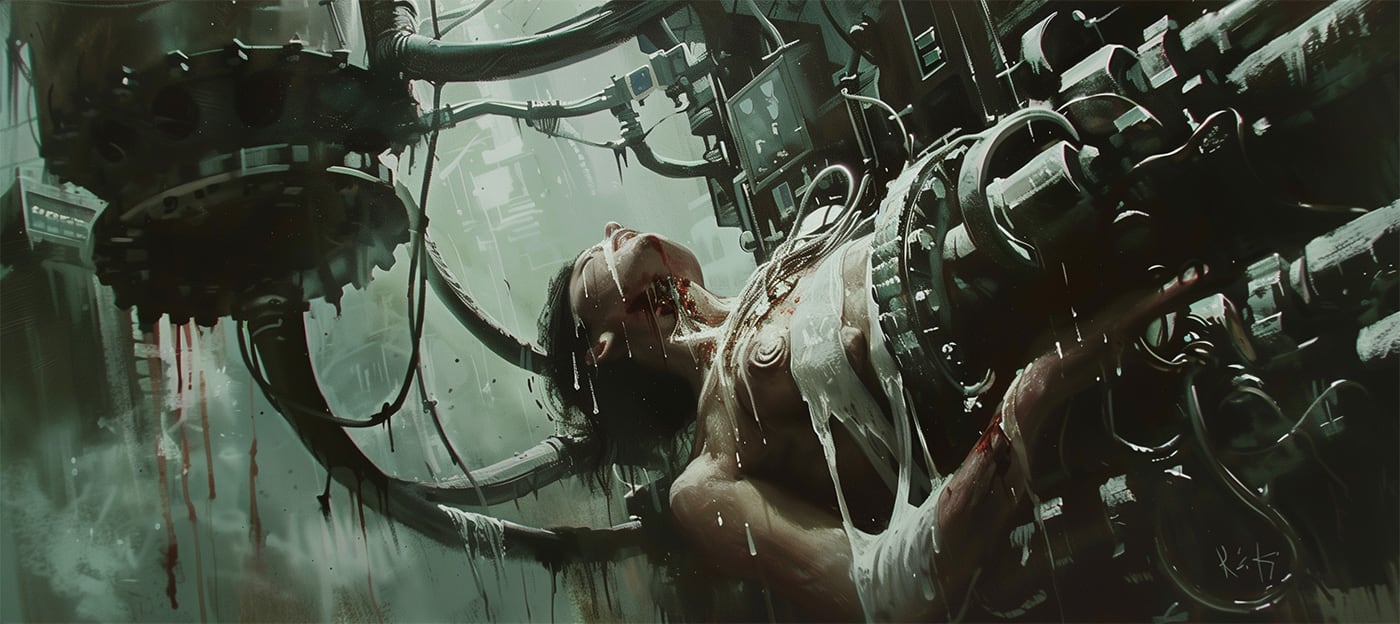
Ash-Mothers
A production line. The Bureau said two paragraphs were enough. They were not.
The Bureau's most exhaustive silence — Ash-Mothers are enemy reproductive logistics cells, captured women sustained by sorcery to generate Thrall regiments at industrial scale. I file the account that two paragraphs could not contain.
Codex Ref. IX.1.02-001
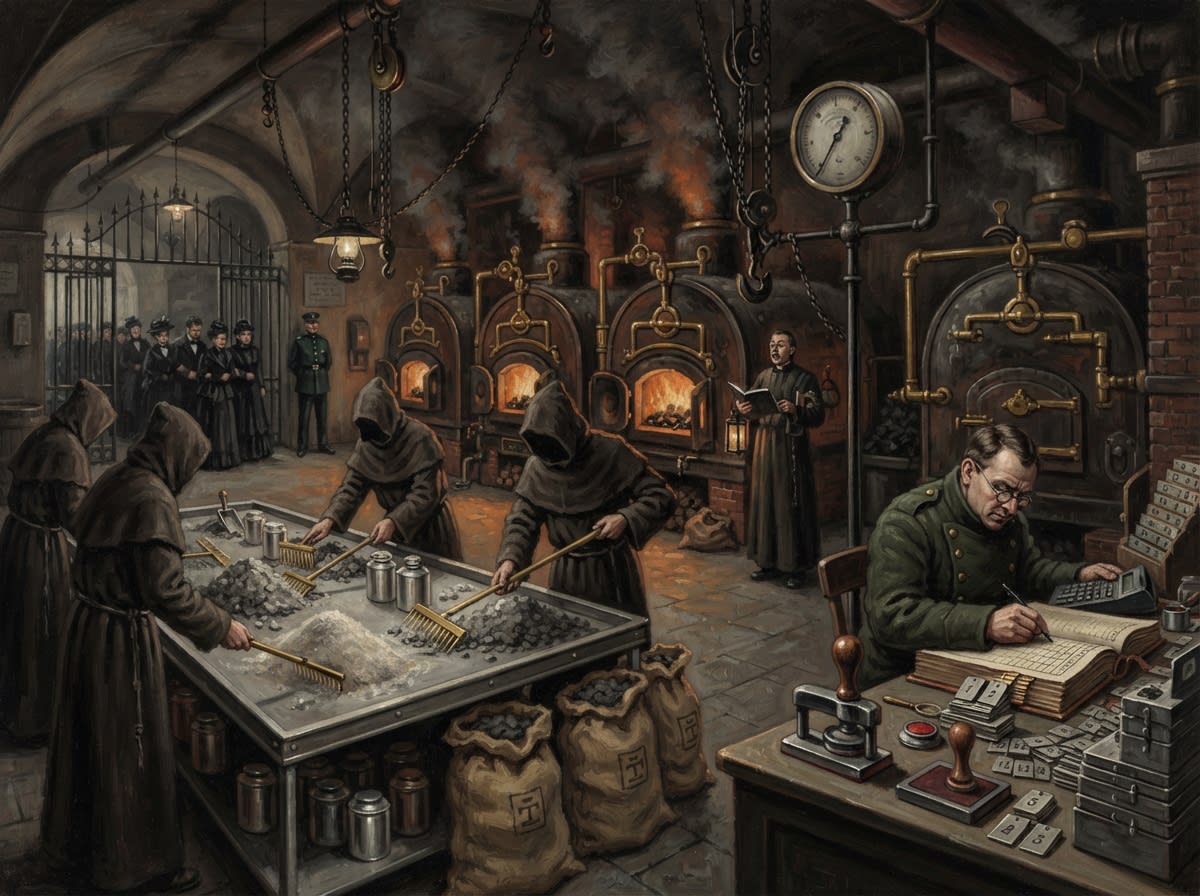
Ashbinders
The dead are sacred, and the receipt is extra
The Ashbinders burn the Synod's dead, sort the ash, sell the comfort, and accidentally perform one of the few procedures that keeps the cemeteries quiet.
Codex Ref. XII.41.01-001
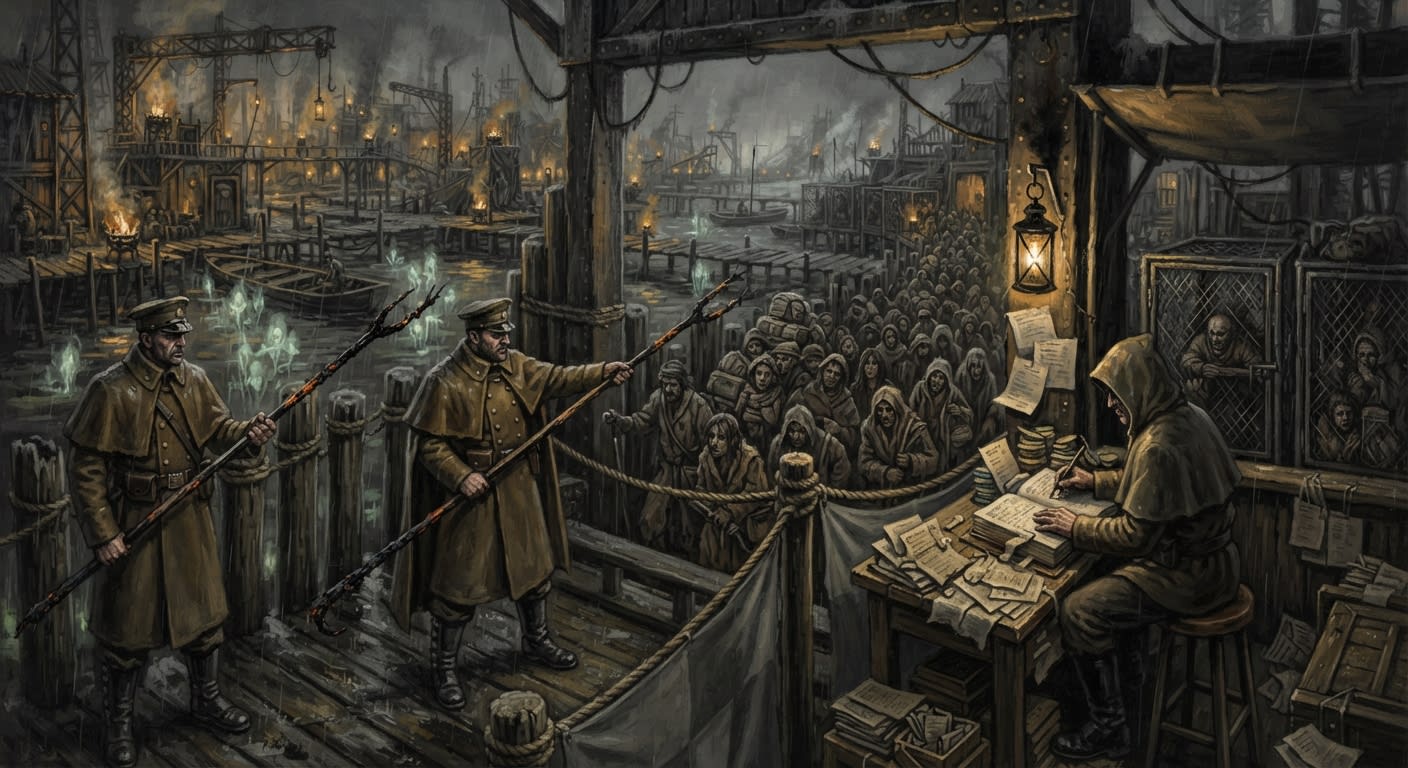
Ashbound Wardens
The Gate has one road out and one ledger open
The Ashbound Wardens hold the Causeway Gate at the Ash-Glyph Marshworks, enforcing a temporary quarantine that has lasted eighty-nine years and converting passage, debt, and fear into revenue.
Codex Ref. XII.7.02-002
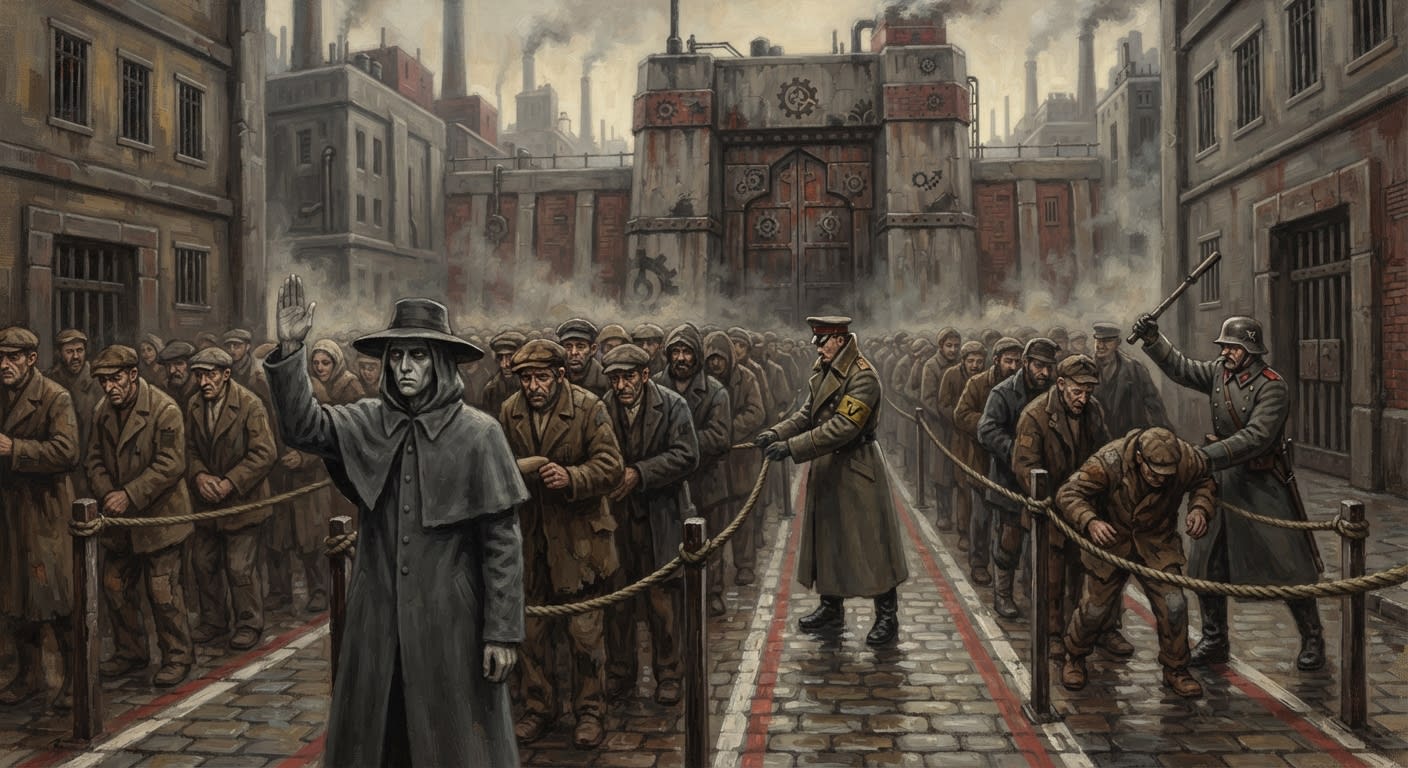
Ashbread Clause
The sentence that taught hunger to march
The A.S. 113 clause of the Concordat of Civic Cadence that made every bread queue subject to sound, rope, baton, and Bureau grammar.
Codex Ref. XIII.1.10-113
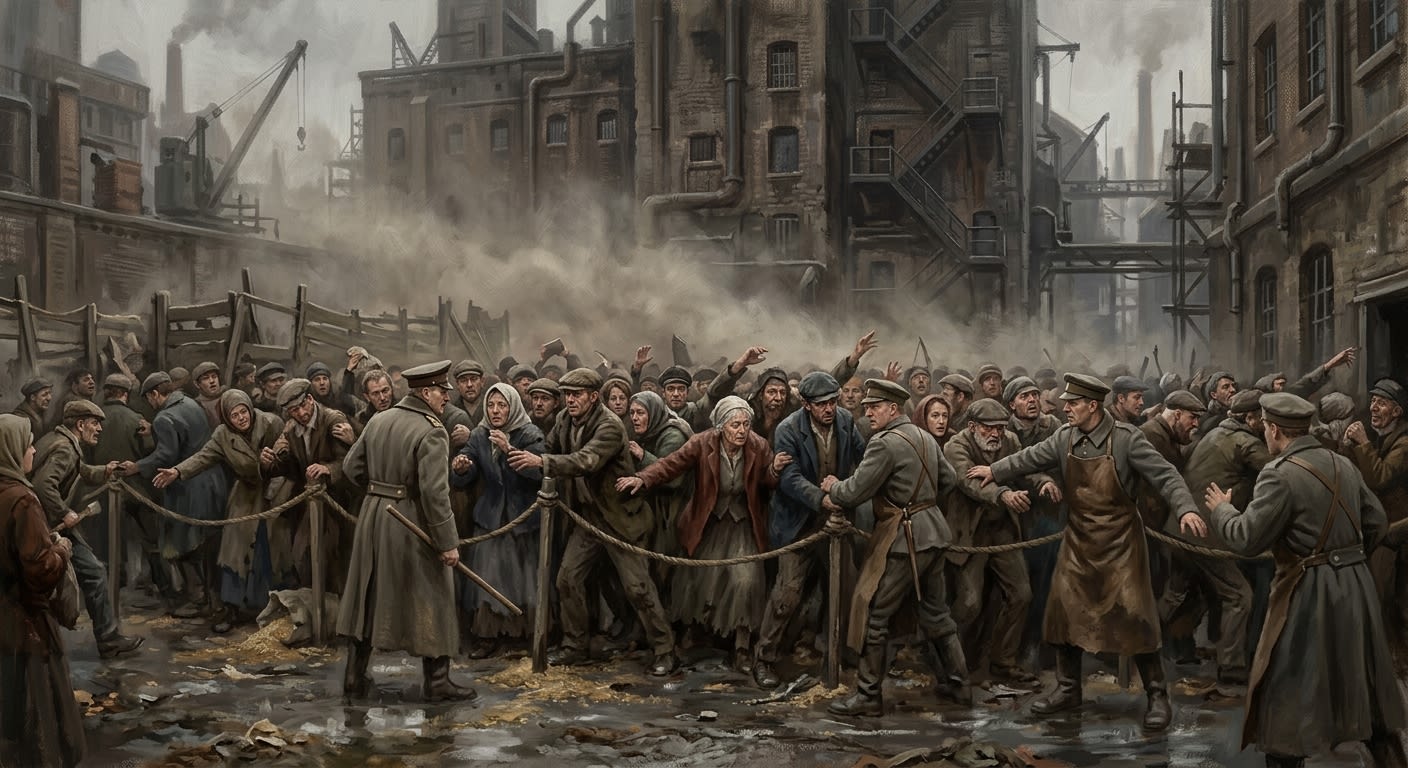
Ashbread Stampede
Where wet rope, short bread, and perfect schedules made a corps
A.S. 112 ration-yard crush at Bastion-Brest whose 317 official dead, wet lane ropes, and visible shame birthed the Cadence Corps.
Codex Ref. VII.8.10-057
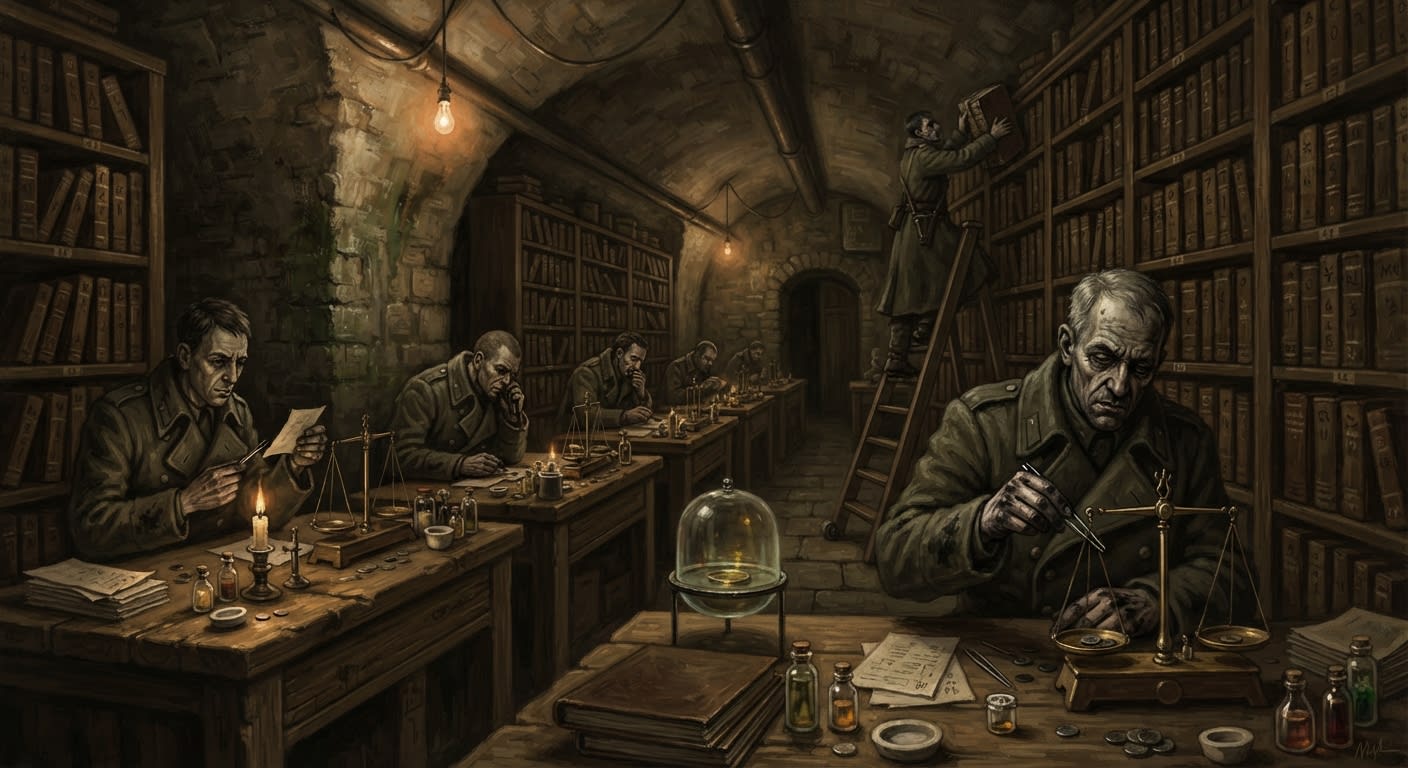
Assay Chamber
The scales are honest. That is the problem.
The Assay Chamber weighs Sibiu's war in coin, scrip, brass, and clean gold. Its tests are excellent. Velmora's economy is faster.
Codex Ref. II.4.09-181
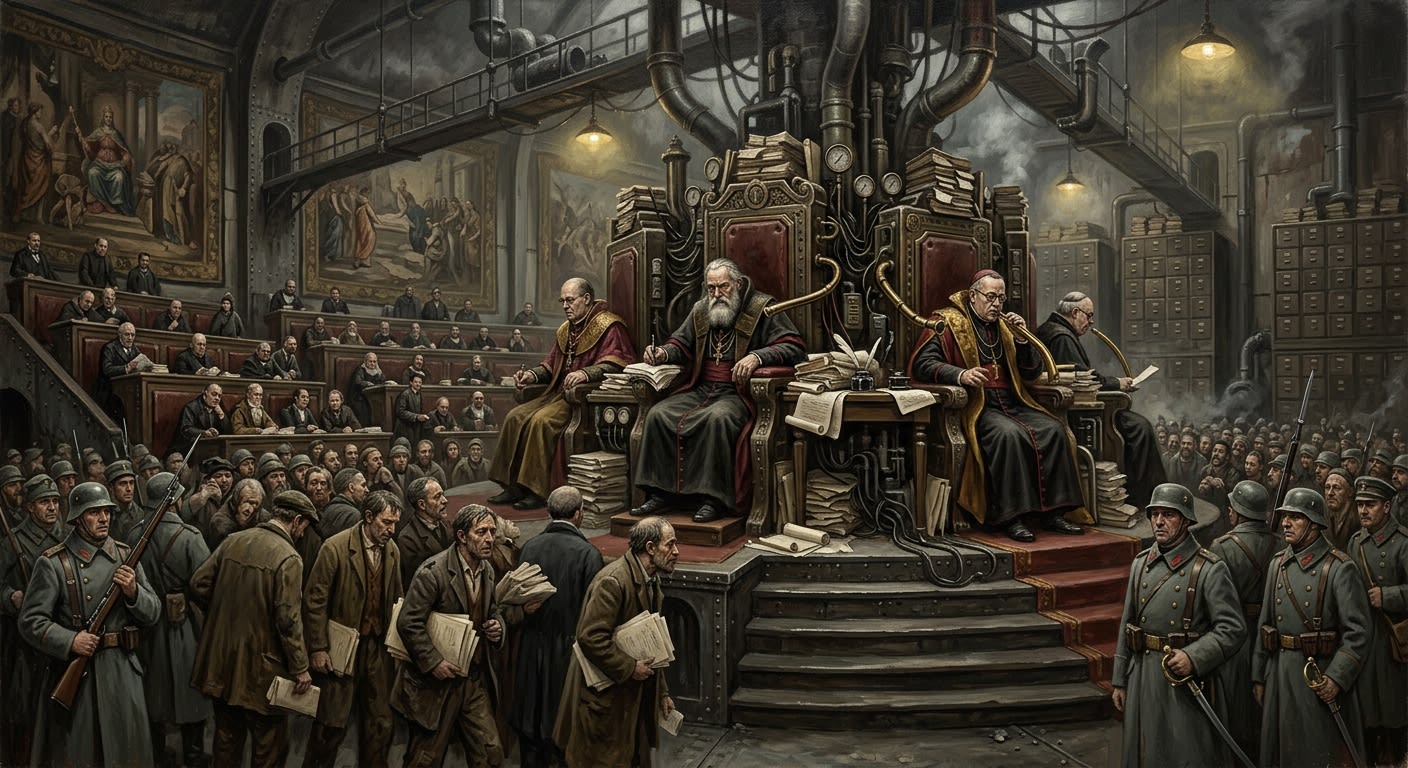
Assembly of Thrones
A chamber where pride is seated before it becomes militia
The Assembly of Thrones lets Bishops-Praetorial thunder safely: grievance seated, fury docketed, pride taxed, and every rebellion delayed by procedure.
Codex Ref. XIII.1.07-093
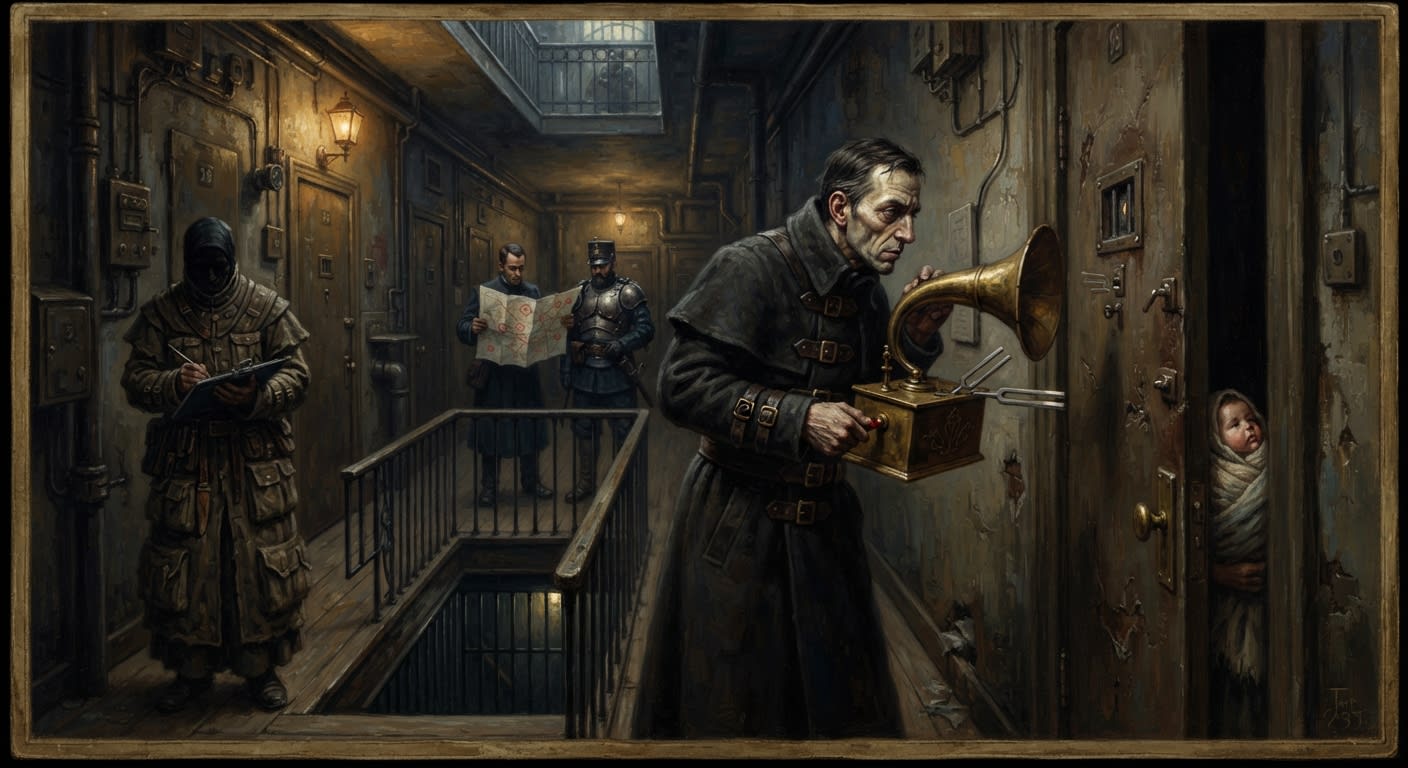
Auditory Heresy
Where recognition is possession and silence has a docket
The Synod's charge for unlicensed sound, where recognition becomes possession, comfort becomes contamination, and a child's sleep can convict a household.
Codex Ref. XIII.1.86-094
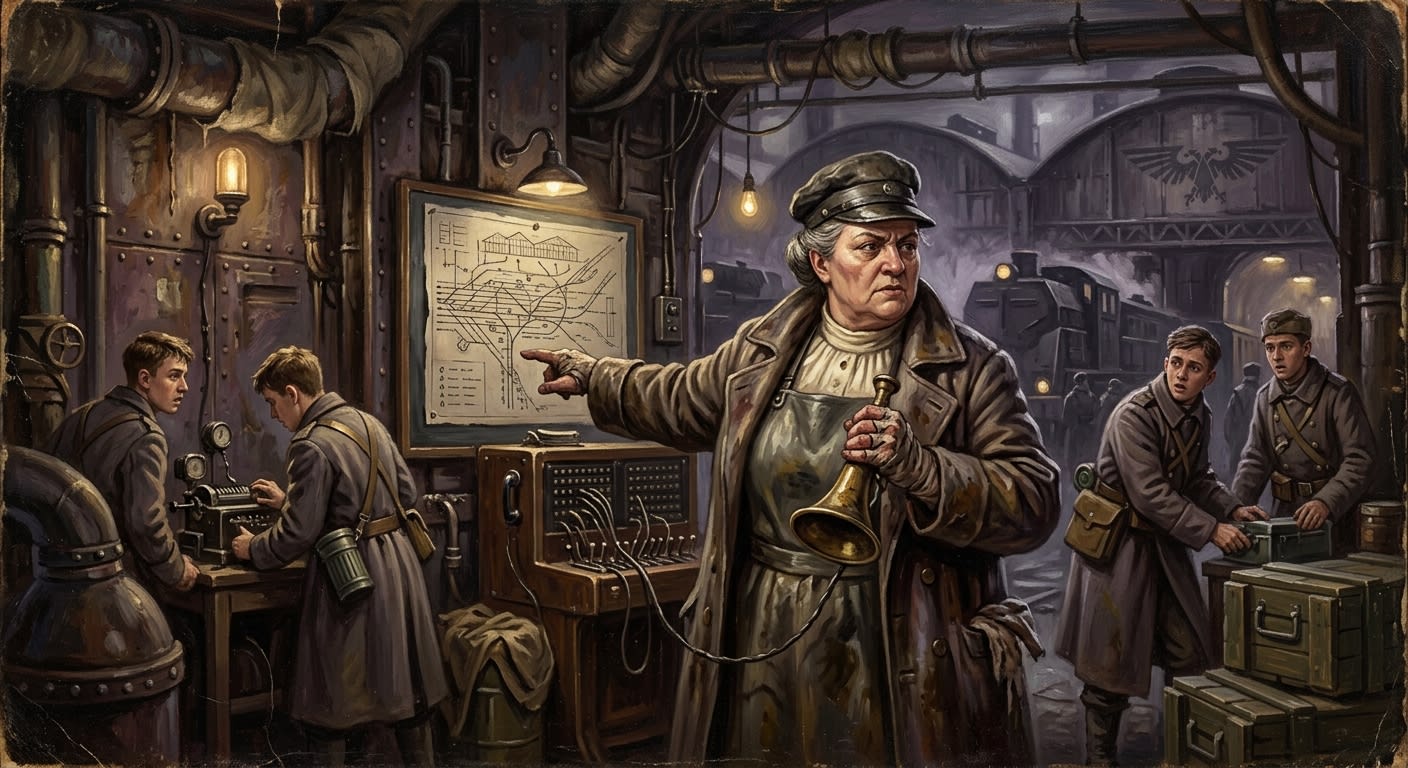
Aunt Velka
Unlicensed governance by soup, shame, and accurate memory
Aunt Velka is Thessaloniki's unofficial Shed authority: no office, no stipend, and more night command than several licensed men with seals.
Codex Ref. III.2.01-035
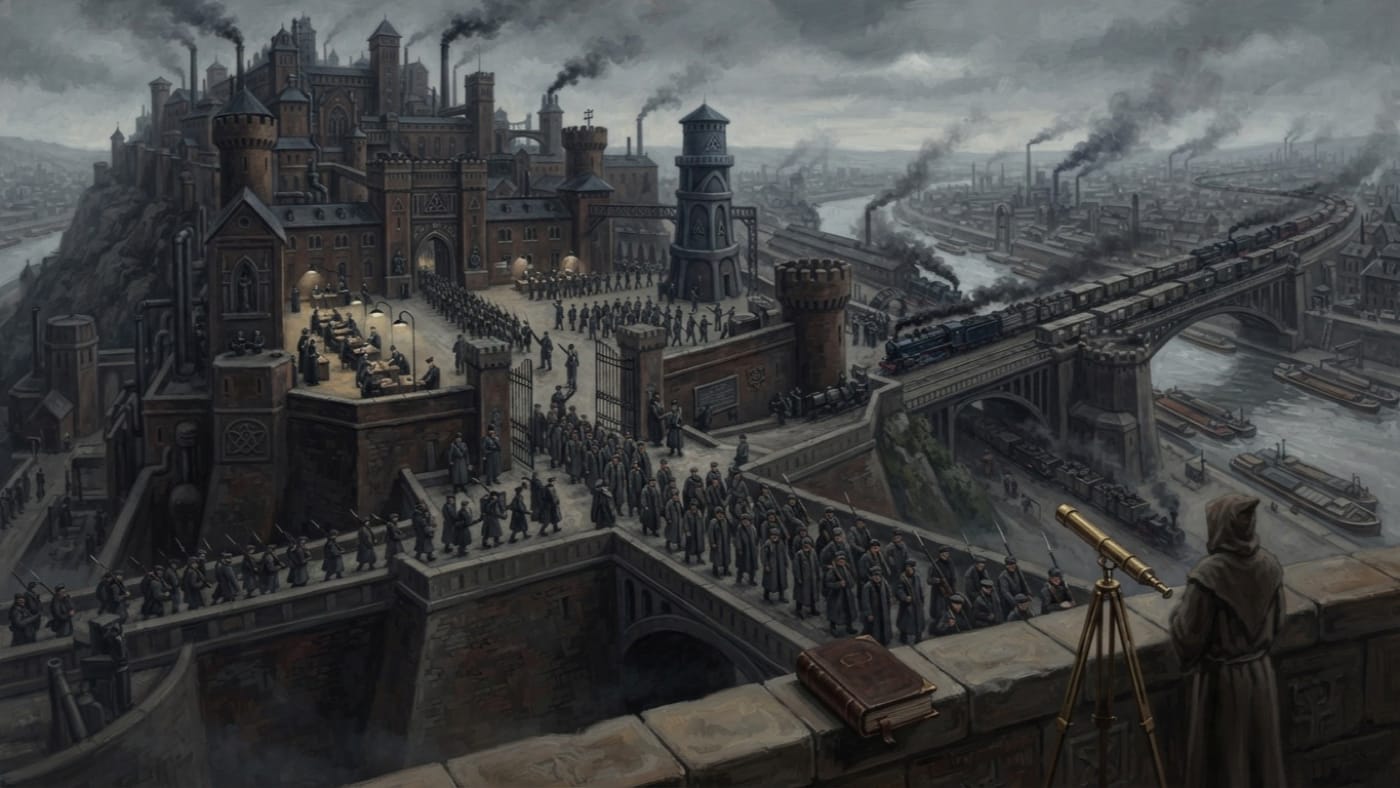
Auvergne
The province supplies, Lyon receives, the east consumes
Auvergne supplies levy boys to the Citadel of Lyon. This commissioned A.S. 201 survey records its place in the Rhône corridor's machinery: the province supplies, Lyon receives, the east consumes.
Codex Ref. II.1.12-201
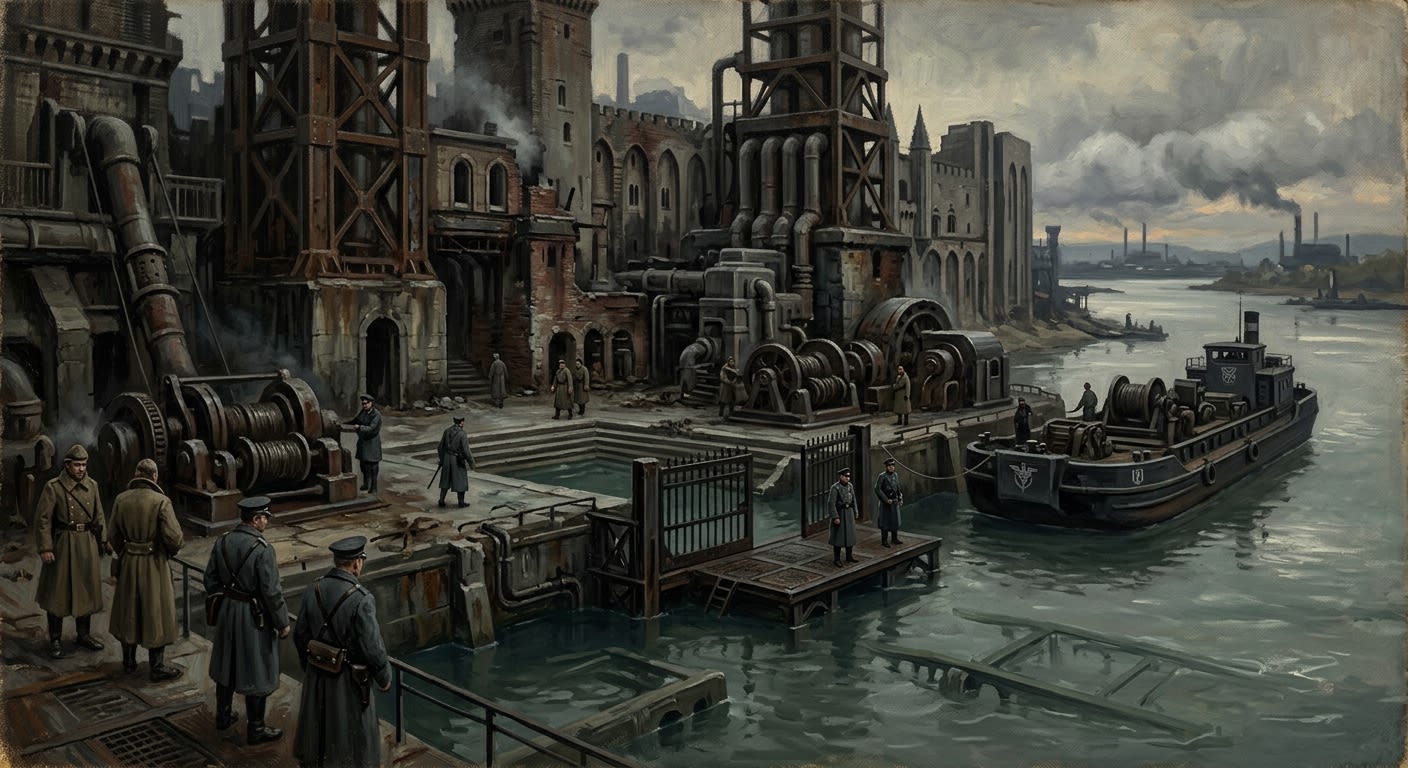
Avignon
A city corrected so thoroughly the river kept the receipt
Penitential ruins on the Rhône, where the Pontifex Submersis was crowned beneath water in A.S. 111, Avignon was razed into correction, and A.S. 145 burned the calendars into agreement.
Codex Ref. II.1.08-111
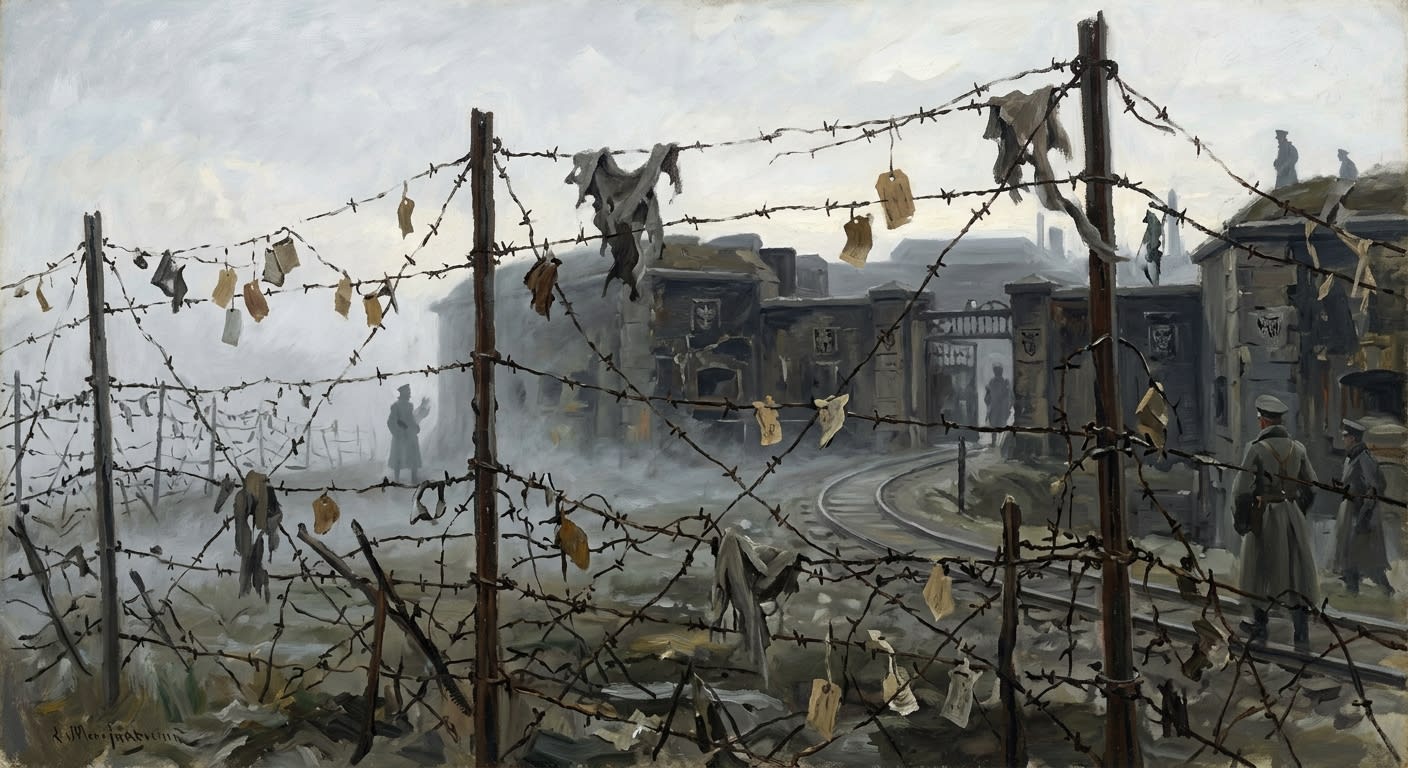
Bastion-Przemyśl
The Wire Remembers What the Ledger Forgets
The Wire Orchard at the Carpathian arc: three miles of electrified barb, a ration-tag economy, and the cold arithmetic of the dawn harvest. What enters Bastion-Przemyśl is processed. What exits is stamped. What fails the stamp feeds the Orchard.
Codex Ref. II.4.07-003
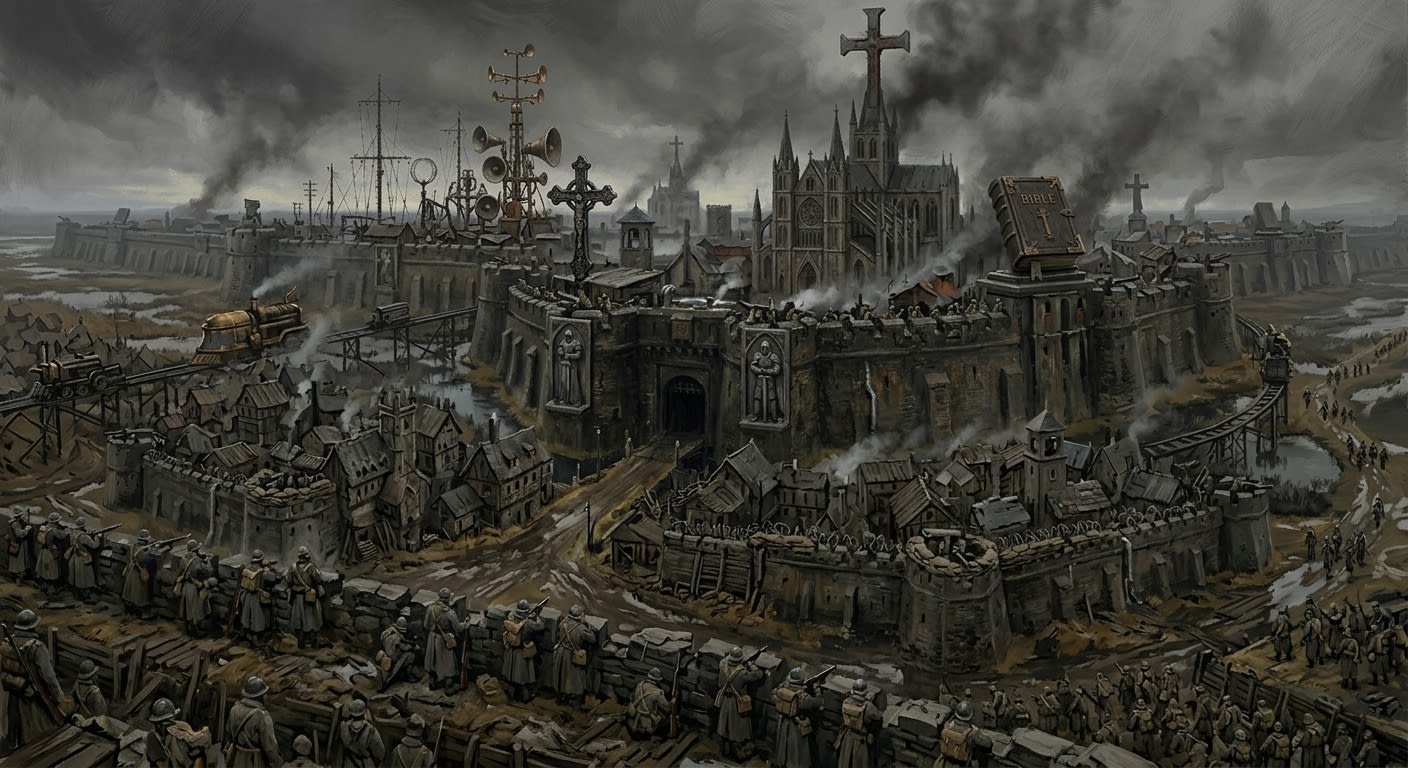
Bastion-Shipka
The Bastion That Guards the Minutes
The mud-sunk marsh-gate at the edge of Syrion's dream, where a kingdom once slept itself to death and a bastion stands awake by sheer force of maintenance schedules. Shipka guards not walls but minutes — the last reliable clock before the Vales of Stagnance.
Codex Ref. II.4.07-006
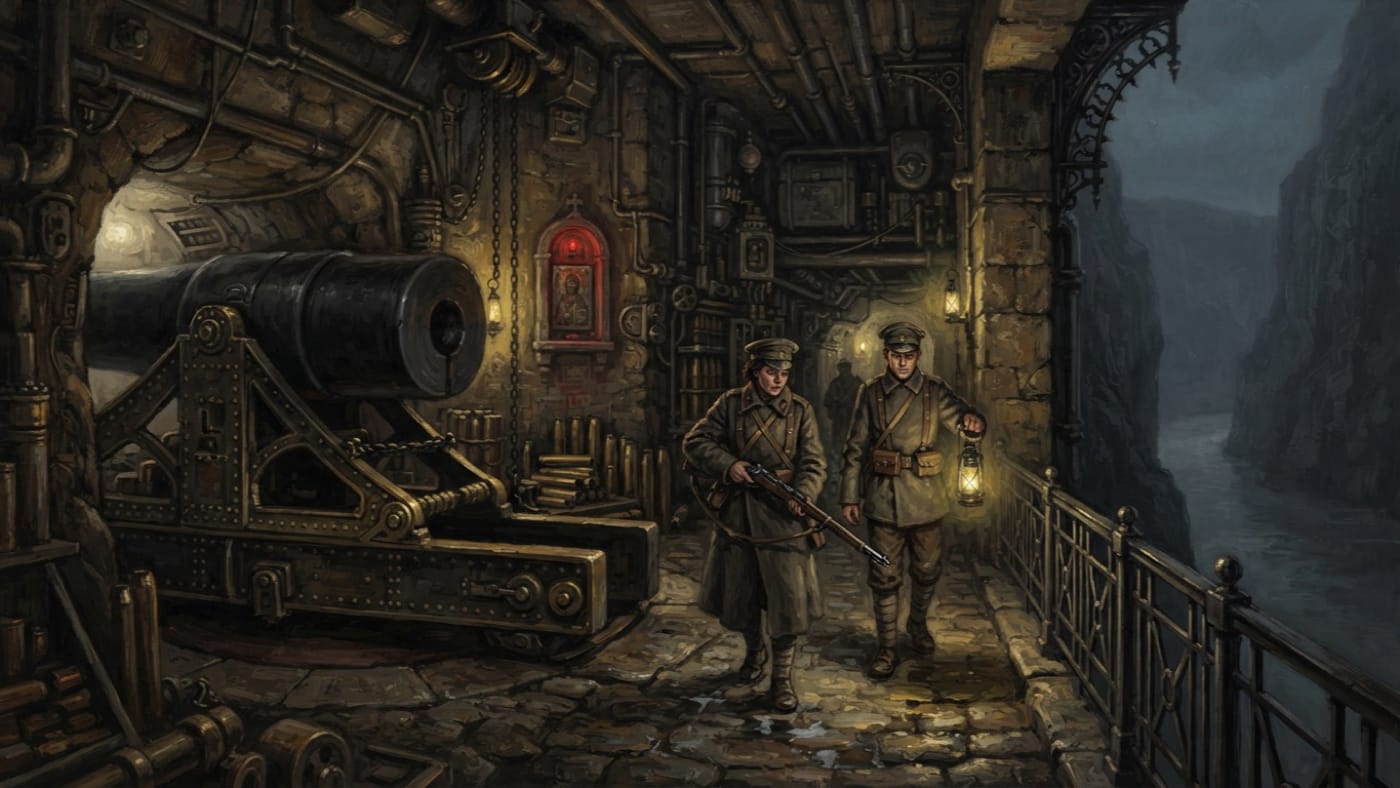
Battery Saint Cuthbert
The saint lends a name; the sentries pay in sleep
Battery Saint Cuthbert marks one end of Voss's night watch at Bastion-Irongate. The A.S. 197 deposition counts sleepless sentries more carefully than the file counts guns.
Codex Ref. II.4.07-197
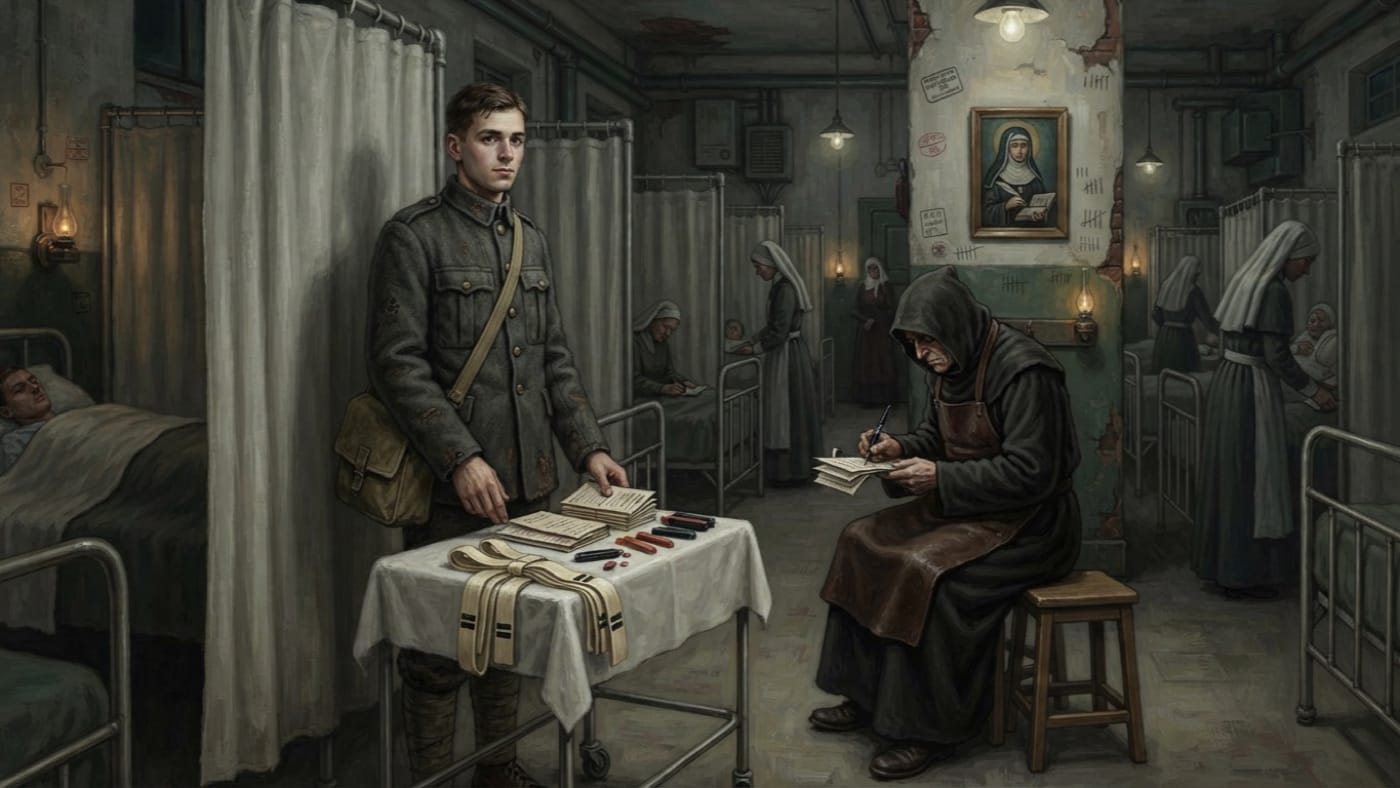
Bedside Runner
Close enough to hear everything, junior enough to bear the blame
The Bedside Runner carries ribbons, wax and forms for terminal confessions. The Bureau of Mercy's entry rank hears everything, seals nothing and supplies the second stool.
Codex Ref. XII.12.02-001
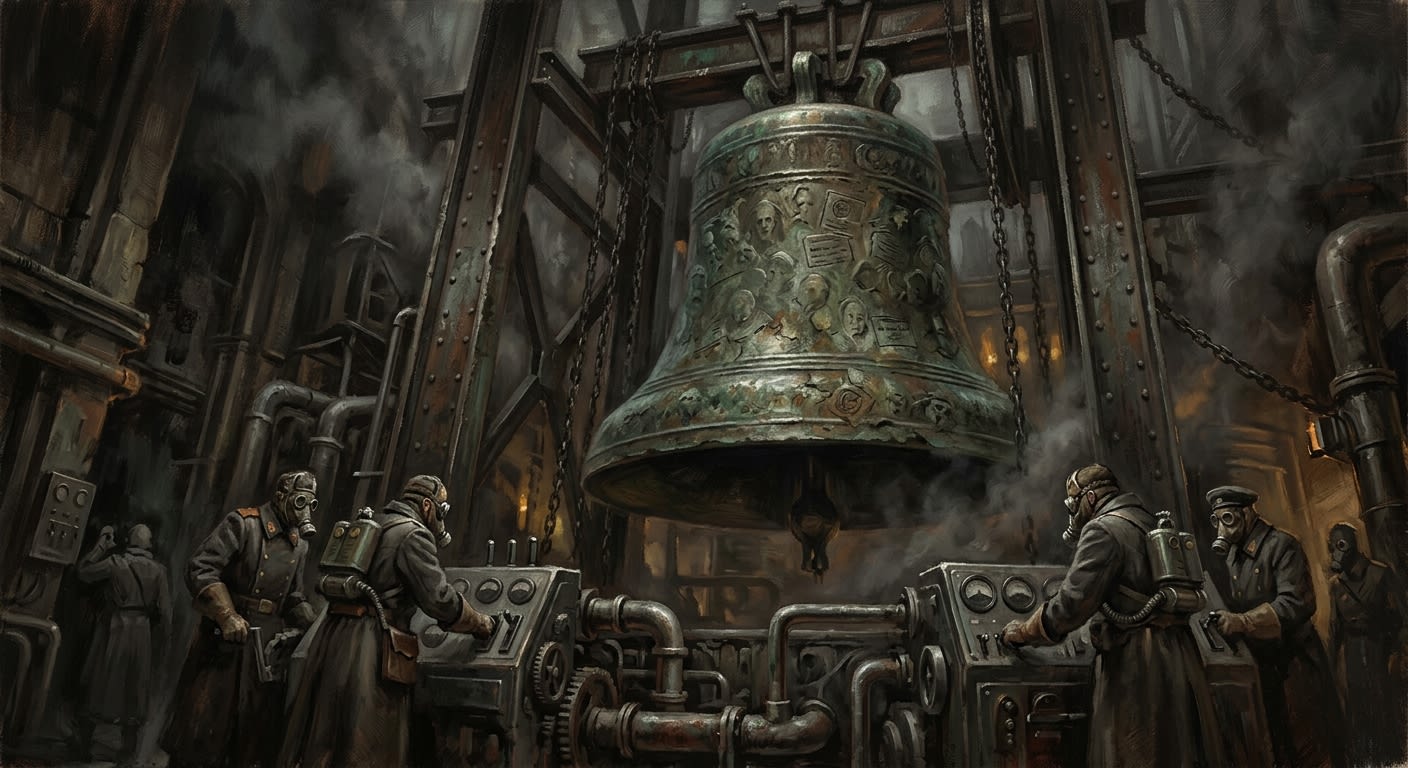
Bell of Names
When a city survives by paying thirty years from its own throat
The Bell of Names is the Synod's highest civic miracle: a forbidden peal that revises a city's memory and charges the years to its living.
Codex Ref. XIII.1.32-001
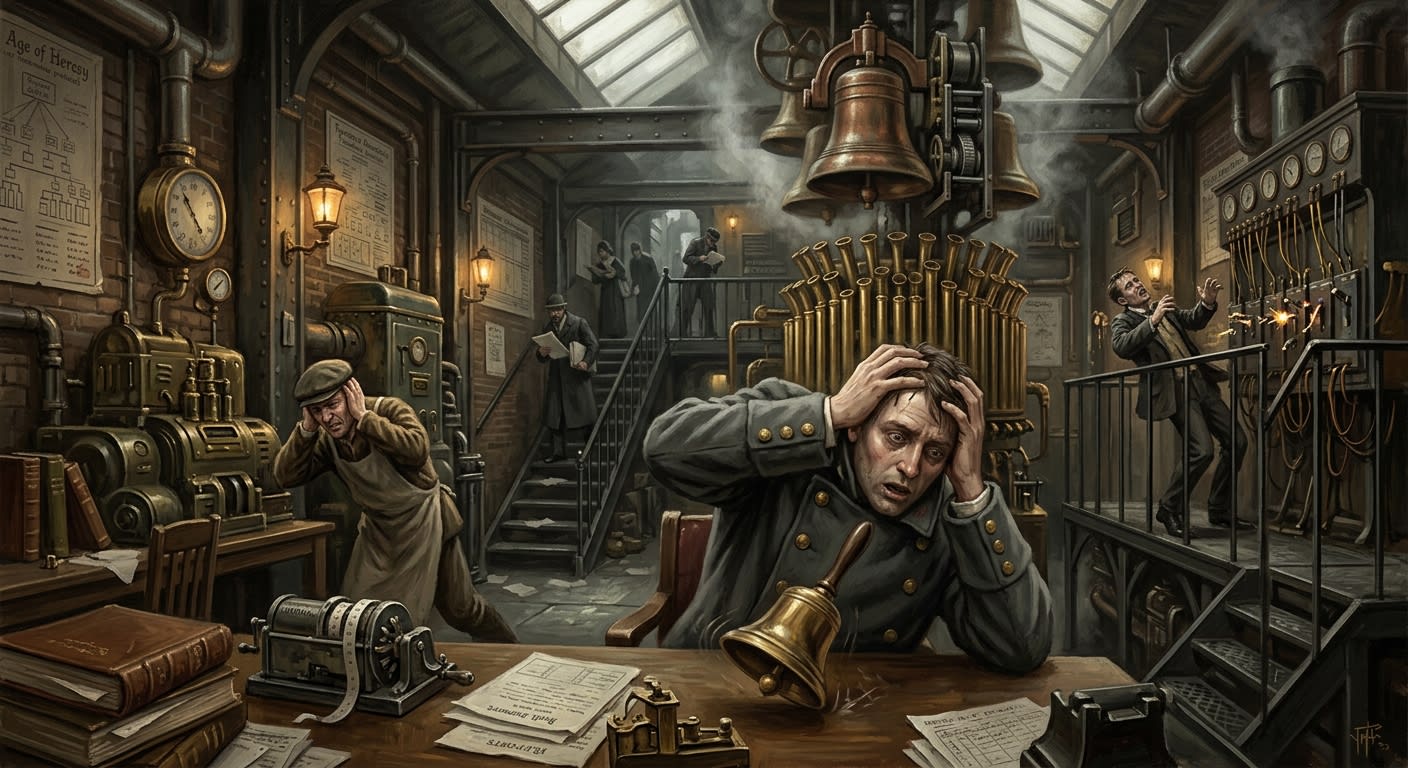
Bell-sickness
The bell stops; the obedient skull keeps ringing
Bell-sickness is the Synod's recognised resonance affliction: phantom peals, compulsive cadence, command mislocation, and the small theological problem of obedience ringing back.
Codex Ref. XIII.1.87-201
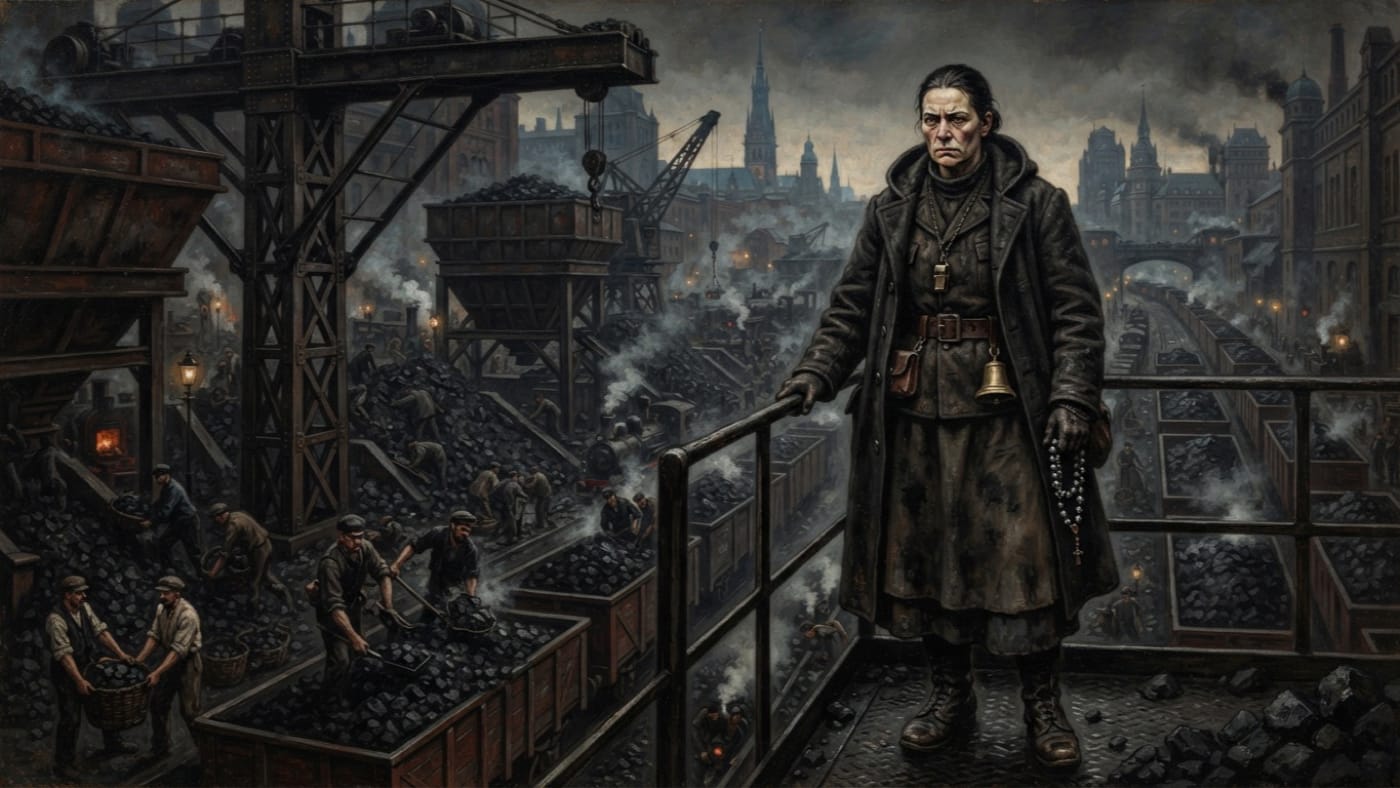
Black Marta Pell
Which dead man should take the extra shift?
Black Marta Pell, registered as Martha Pelmann, commands Hamburg's Coal-Heavers' Union. Her whistle governs the black yards; her questions make the Bureaus account for the men who keep the northern front warm.
Codex Ref. III.2.01-270
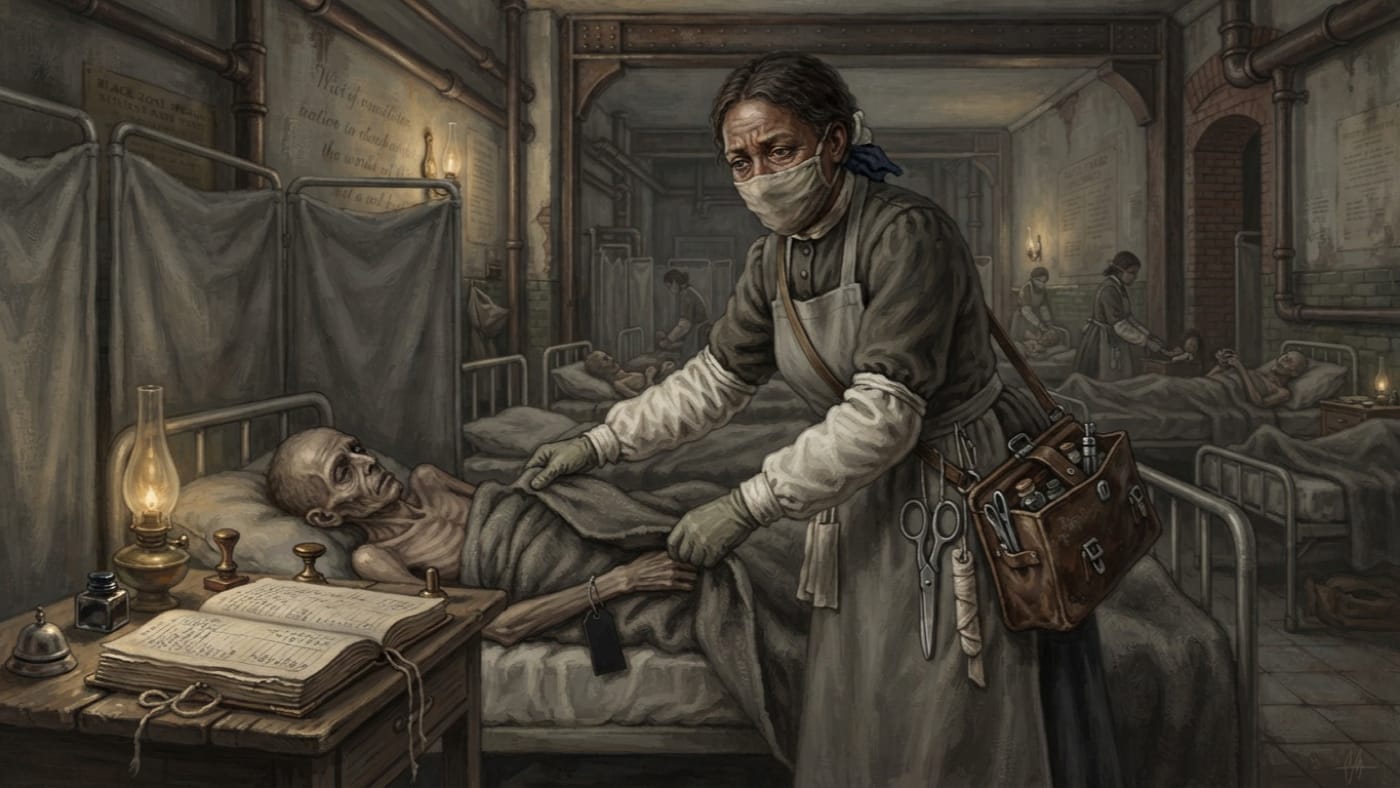
Black-Zone Specialist
Behind the screen, every kindness needs a signature
The Black-Zone Specialist serves Mercy Ward patients classified as terminal, contagious, anomalous, inconvenient, or beyond allotment. Every kindness needs a signature; every death must balance the ledger.
Codex Ref. XII.6.04-002
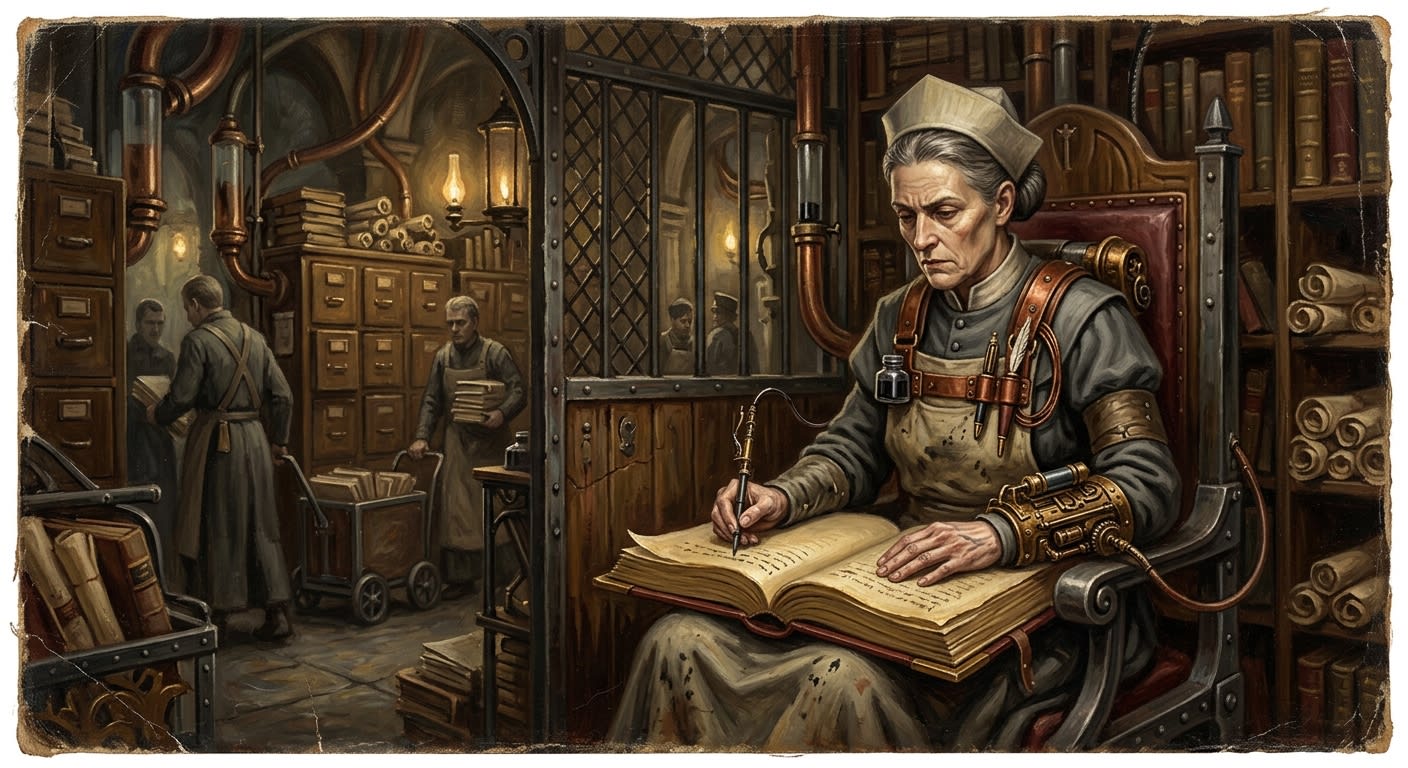
Blessed Vellum-Anna
The quiet quill that made mercy admissible before it made it kind
Blessed Vellum-Anna is the unauthenticated but indispensable patron of Deathbed Confession Harvesters, where last breaths become comfort, evidence, and paperwork.
Codex Ref. III.2.01-106
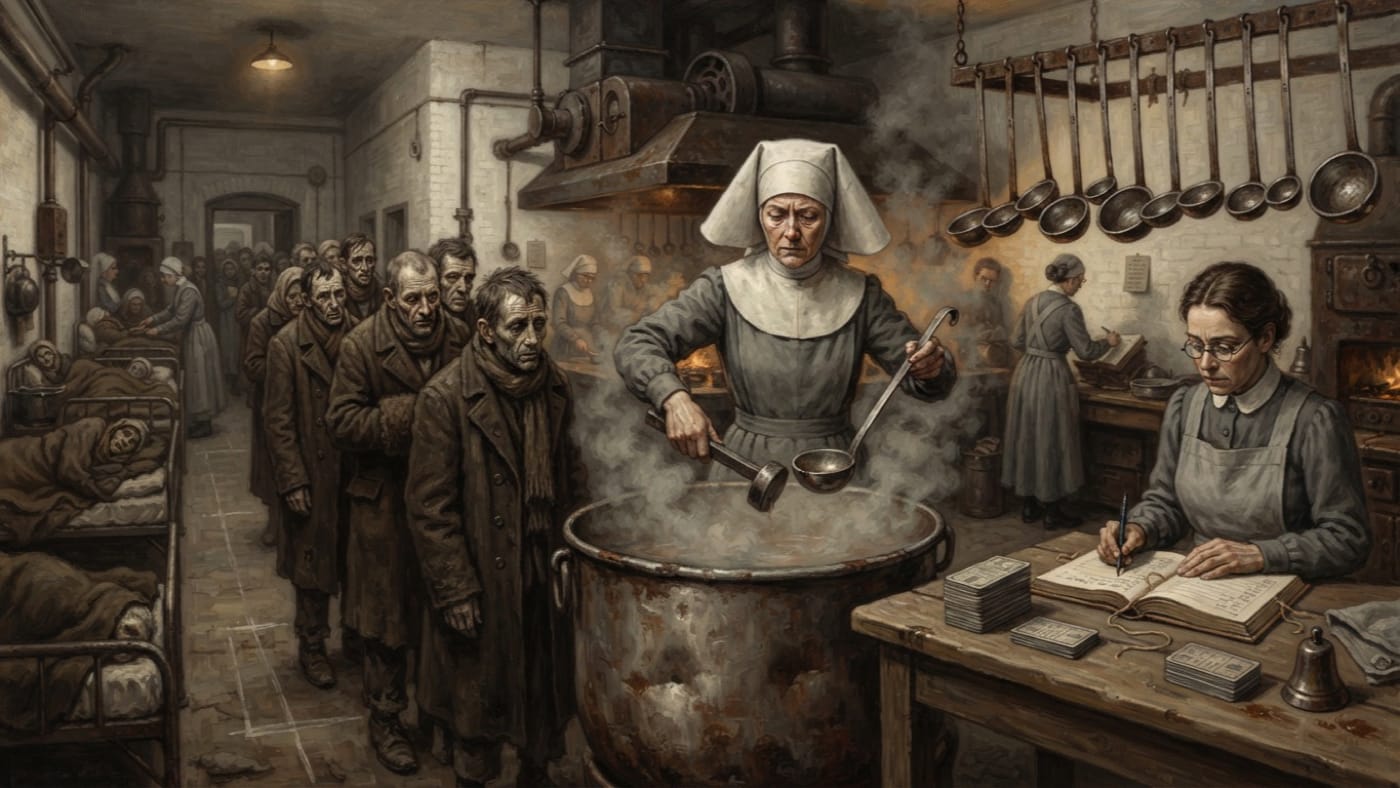
Blessing of the Ladles
Once a year the Church kisses the ladles; the measure remains fixed
An A.S. 201 survey of Saint Marrow's Mercy-house feast: ladles washed, counted, kissed and struck; the bowl is full, provided the hunger is registered.
Codex Ref. XIII.1.89-201

Blood-Kin Purists
The family tree, sharpened into a smuggling route
Conservative Pale Kin faction insisting hidden children be placed with blood relatives, preserving family memory while making Purity's kinship charts dangerously useful.
Codex Ref. XI.4.01-002
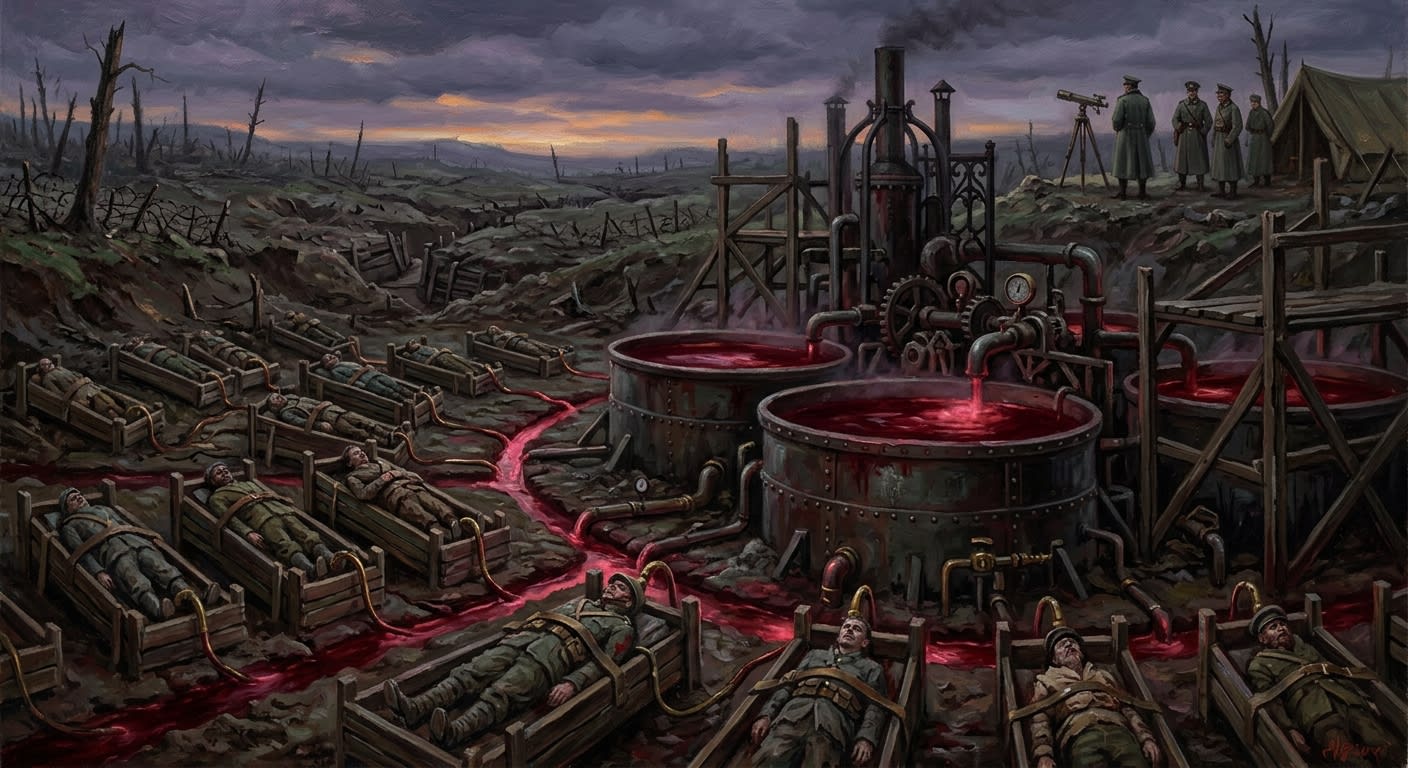
Blood-Tithes
Brass tubes, serial-numbered. Wooden cradles, precisely fitted. The Bureau calls it infrastructure. The screaming is a side-effect.
The Lie's sorcery economy runs on living blood. Prisoners are fitted with brass leeching tubes, arranged in geometric rows, and drained for weeks. The Bureau files it under infrastructure. The soldiers call it mercy work.
Codex Ref. IX.1.07-001
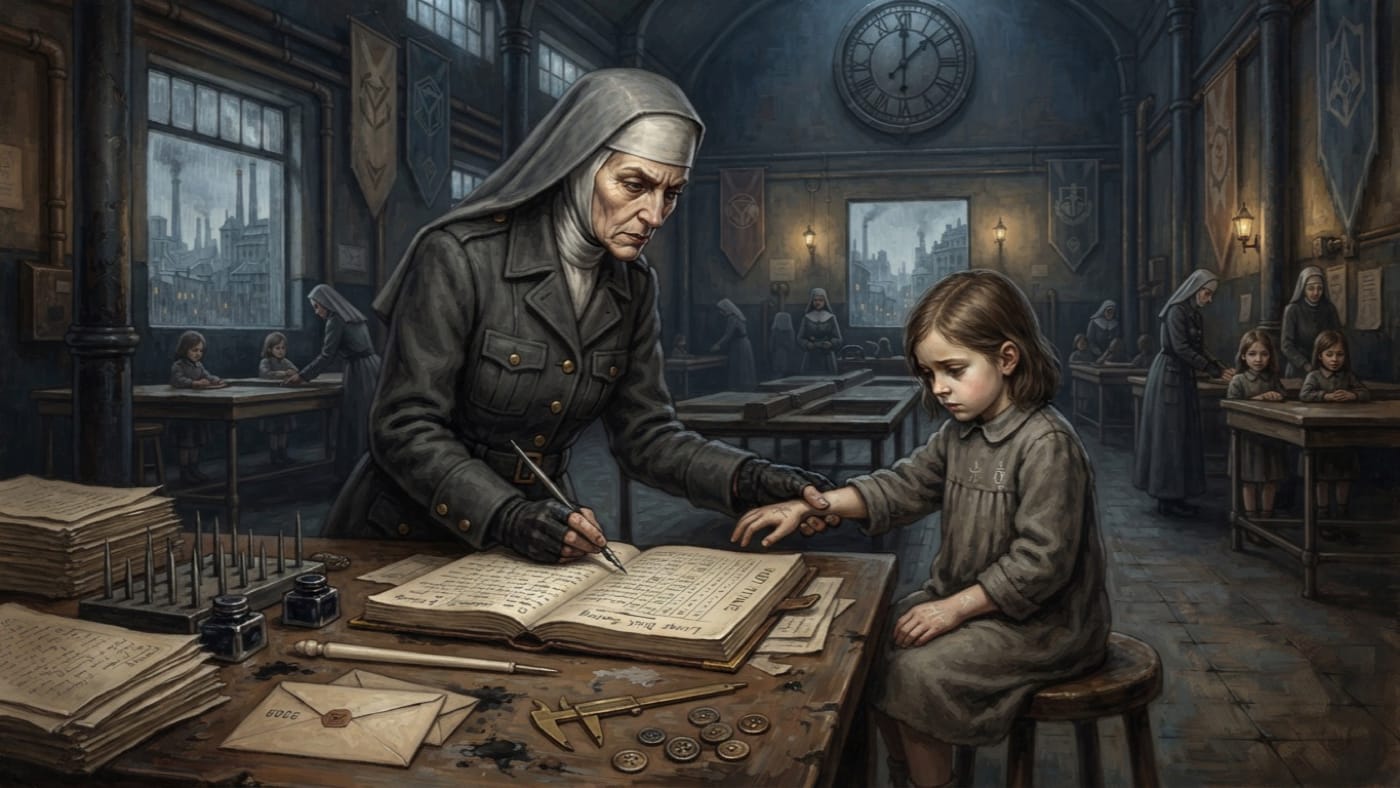
Bloodline Hawks
A clean name cannot silence the family the child remembers
The Bloodline Hawks distrust clean names: Registrars and Root assessors who turn inherited gestures, forbidden songs, and remembered parents into lineage flags.
Codex Ref. XI.1.05-002

Bone-Lung
The dead enter the chest one opened rack at a time
Progressive marrow-dust sickness of Ritual Bone-Stampers, politely misnamed by Medicine, cheaply classified by Records, and compensated by no one with a soul or budget.
Codex Ref. XIII.1.44-001
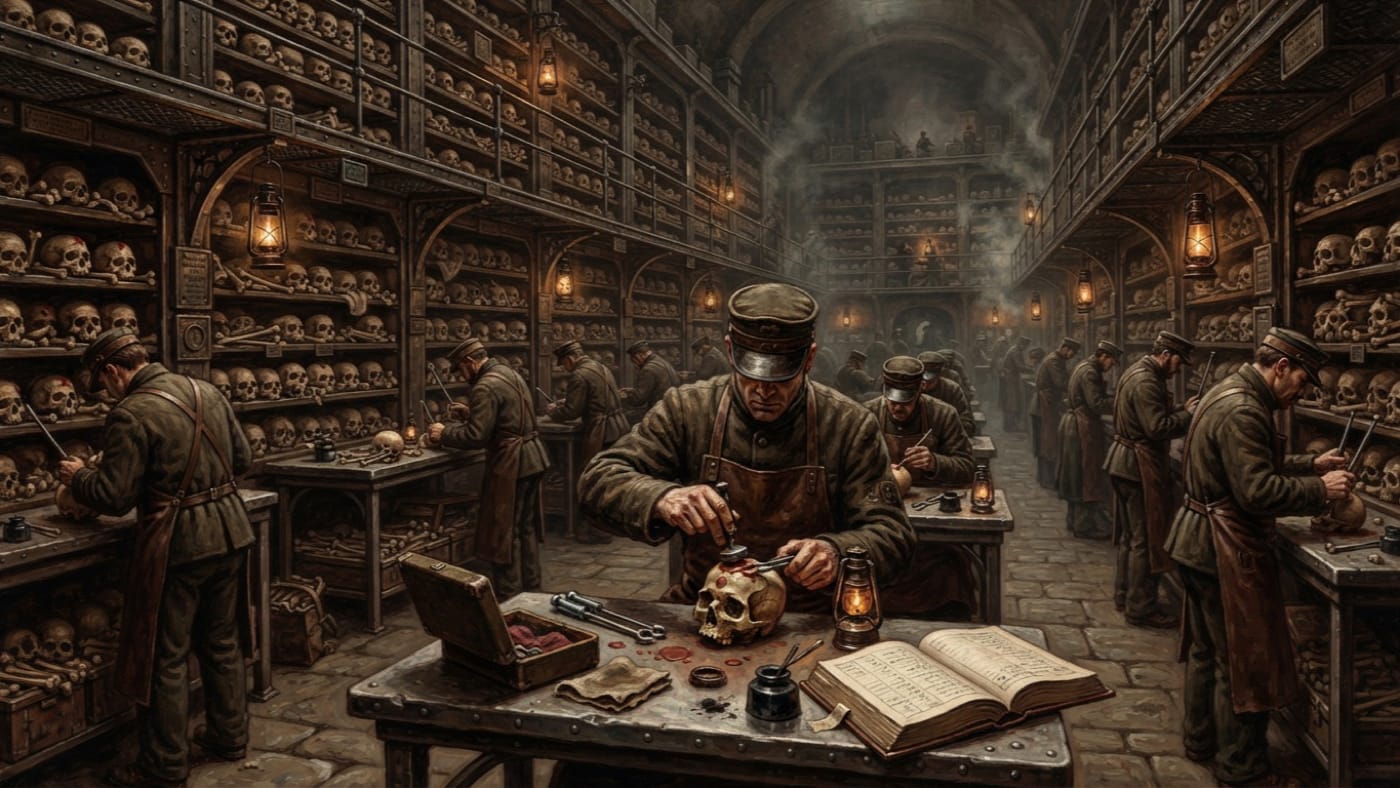
Bone-Stamp
The impression passes audit; the corridor gives its own verdict
The bone-stamp certifies that remains were received, catalogued, prayed over and placed. The Bureau audits the impression; the corridor judges whether it holds. Drax surveys the procedure in A.S. 201.
Codex Ref. VI.2.02-001
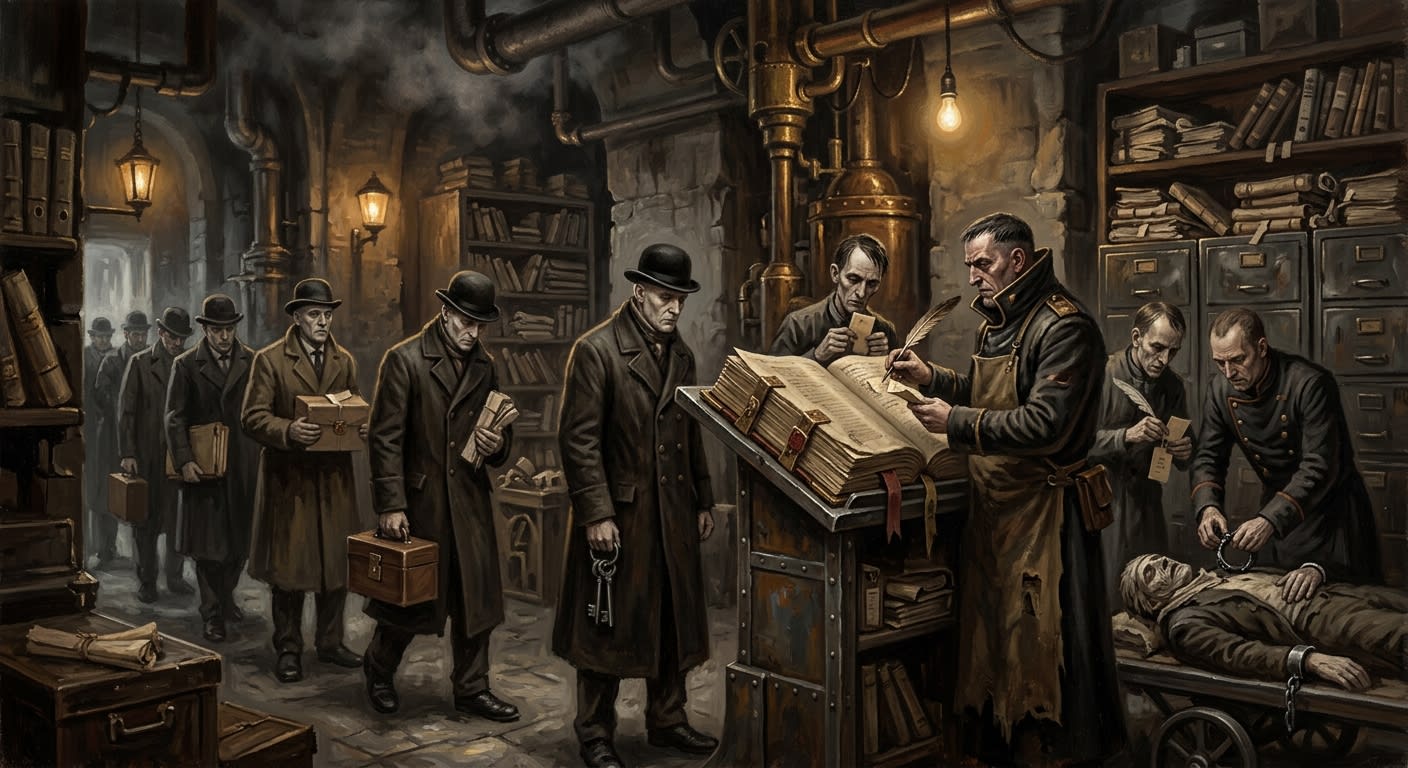
Book of Departures
Where the last breath becomes lawful ink
The Book of Departures receives every lawful death: mercy, tax instrument, burial rite, inheritance key, prayer license, and muzzle for ghosts.
Codex Ref. XIII.1.87-112

Booth Proliferation Decree of A.S. 112
One wooden box every three blocks, and Europe called it grace
A.S. 112 Bureau of Rites decree mandating one registered confession booth per three city blocks, turning confession into local, billable, auditable street infrastructure.
Codex Ref. VII.8.10-015

Branders
The hard count, the purple mark, and the theology of early punishment
Hard faction among Sky-Sermon Attendance Auditors, Branders publish clean Choir Rates, reject soft excuses, and summon the Brand before mercy can ripen into politics.
Codex Ref. XII.2.06-004
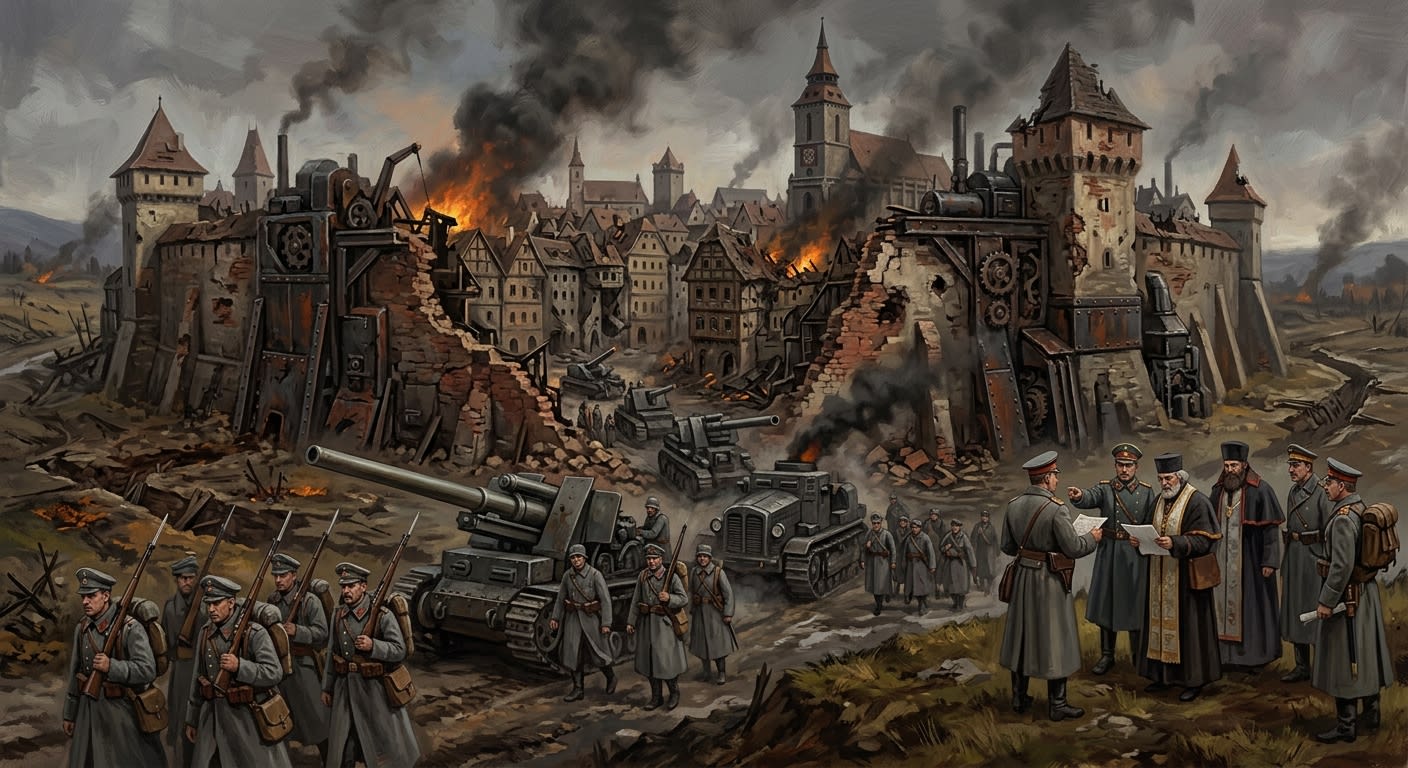
Brașov
The city [[hell|Hell]] ate before [[strasbourg|Strasbourg]] learned to count sons
Brașov, the Saxon-walled city consumed by Kargath in A.S. 110 and made pretext, warning, and arithmetic for the Synod's first continental levy.
Codex Ref. VI.1.01-110
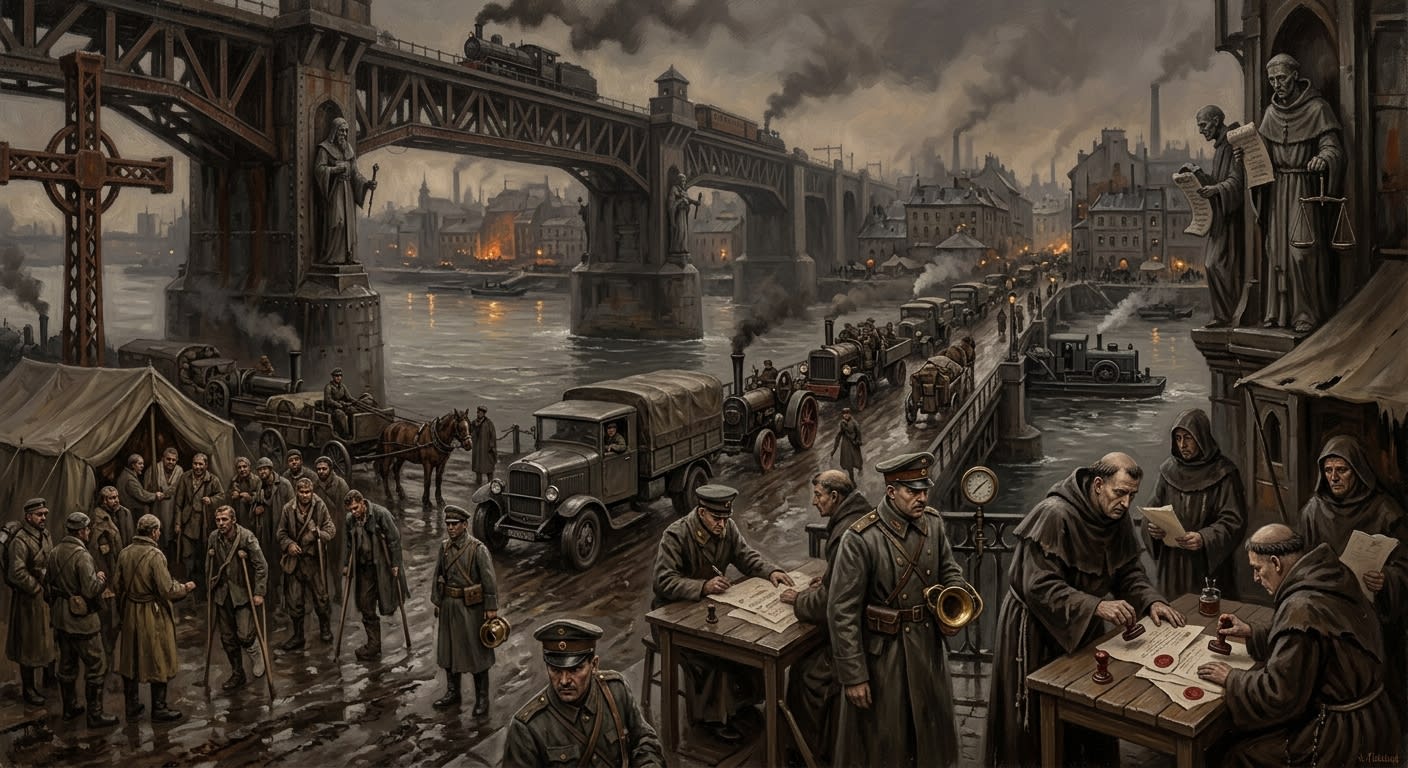
Bratislava
The throat between ruin, command, and the next inspection
Bratislava is the Central Corridor's damp throat: a Zone 3 Danube crossing where convoys, writs, wounded men, and official impatience are slowed into usefulness.
Codex Ref. II.4.09-011
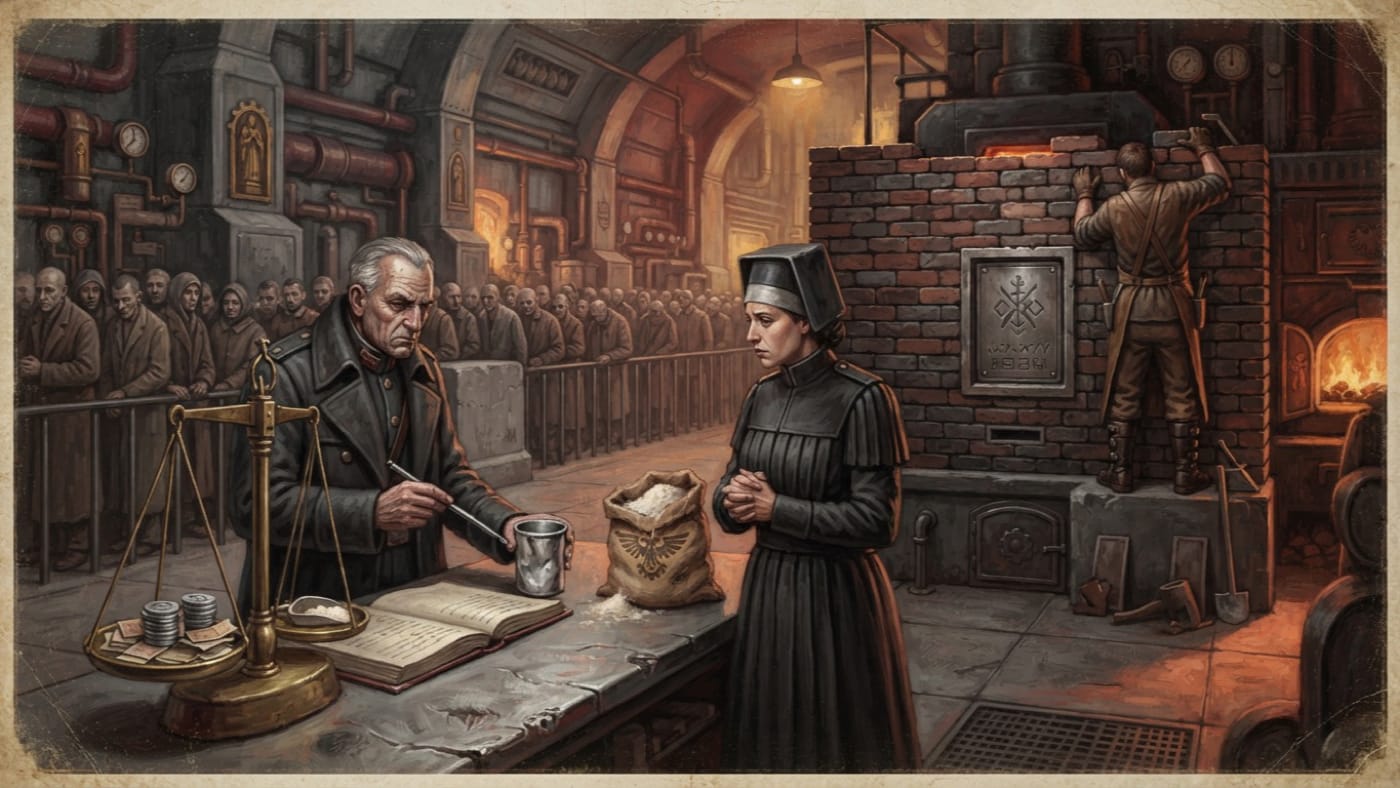
Bread Heresy
A short measure, a sealed wall
Bread heresy names the Church's charge against flour skimming, forged chits, hoarding, and unauthorized feeding. The cup measures the shortfall; the wall receives its assigned name.
Codex Ref. XIII.1.06-001
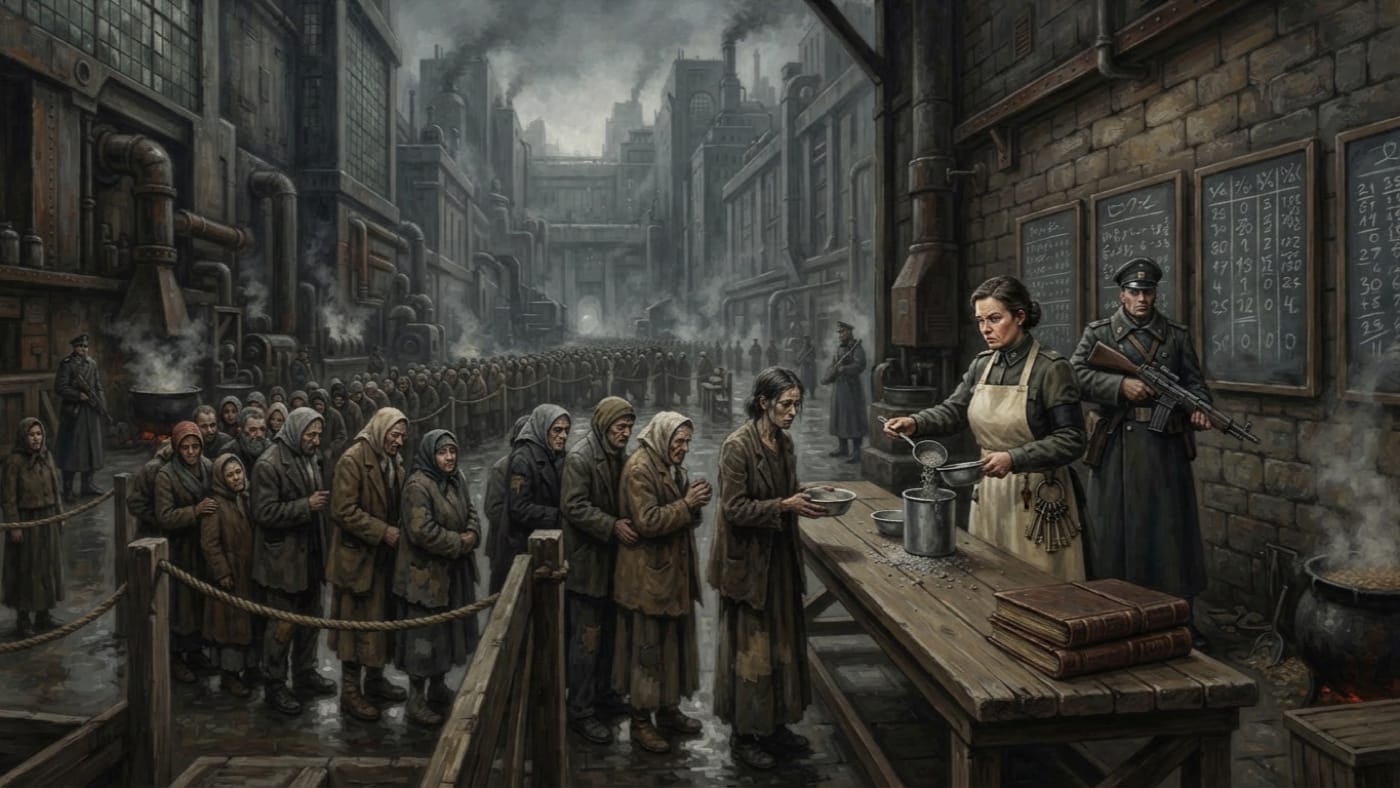
Breadfire Week
The ledgers burned; the guards remained
An A.S. 201 survey of Breadfire Week: ration halls burned in three unnamed bastion cities, records went with them, and the Mothers of Plenty gained guards and enforcement authority. The year remains disputed; the queue remains governed.
Codex Ref. VII.8.10-337
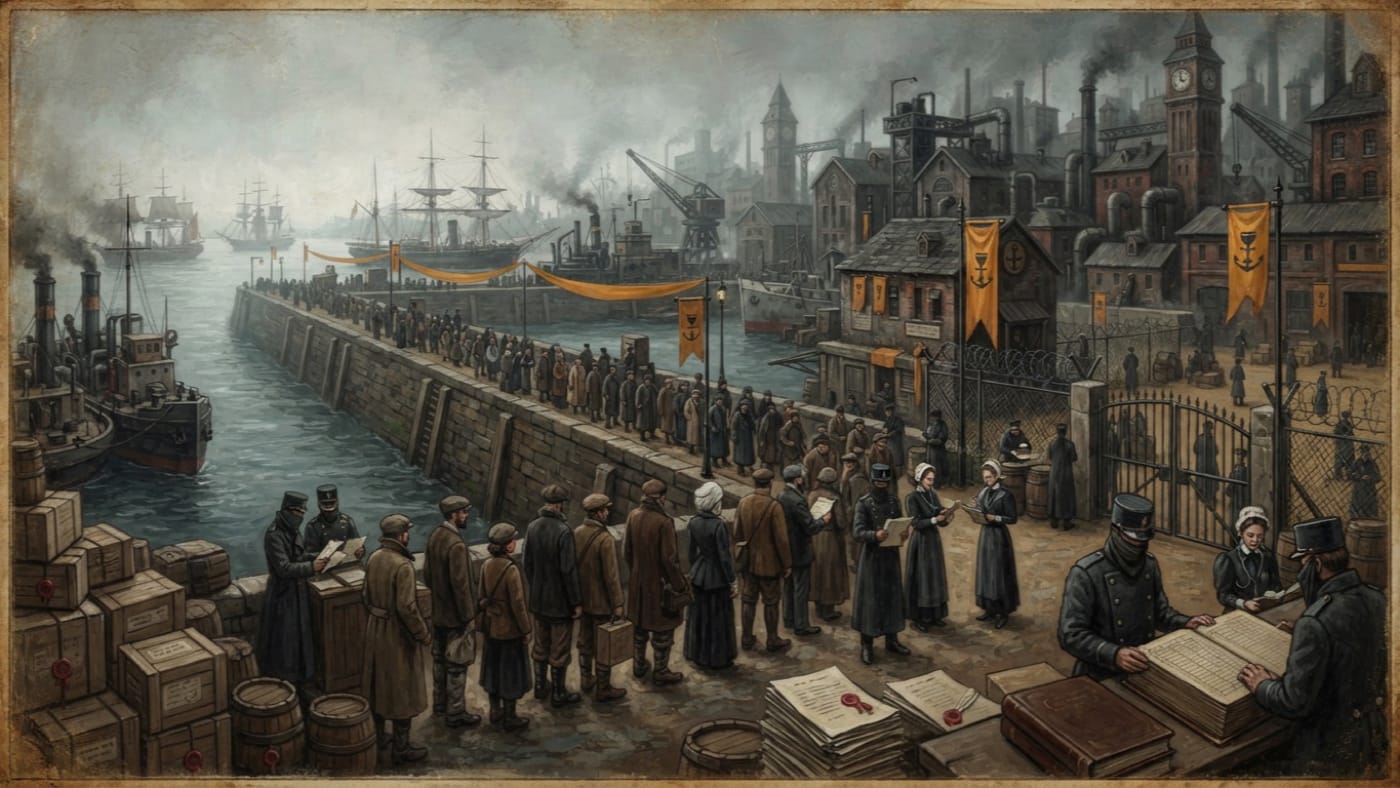
Brine Fever closures
Ships wait at the waterline; release waits for paper
An A.S. 201 survey of maritime fever restrictions: Saffron's A.S. 112 catastrophe, continuing quarantine practice, and Nenos's disputed boom account. The Ledger records waiting and custody; it certifies no closure of the whole coast.
Codex Ref. VII.8.13-201
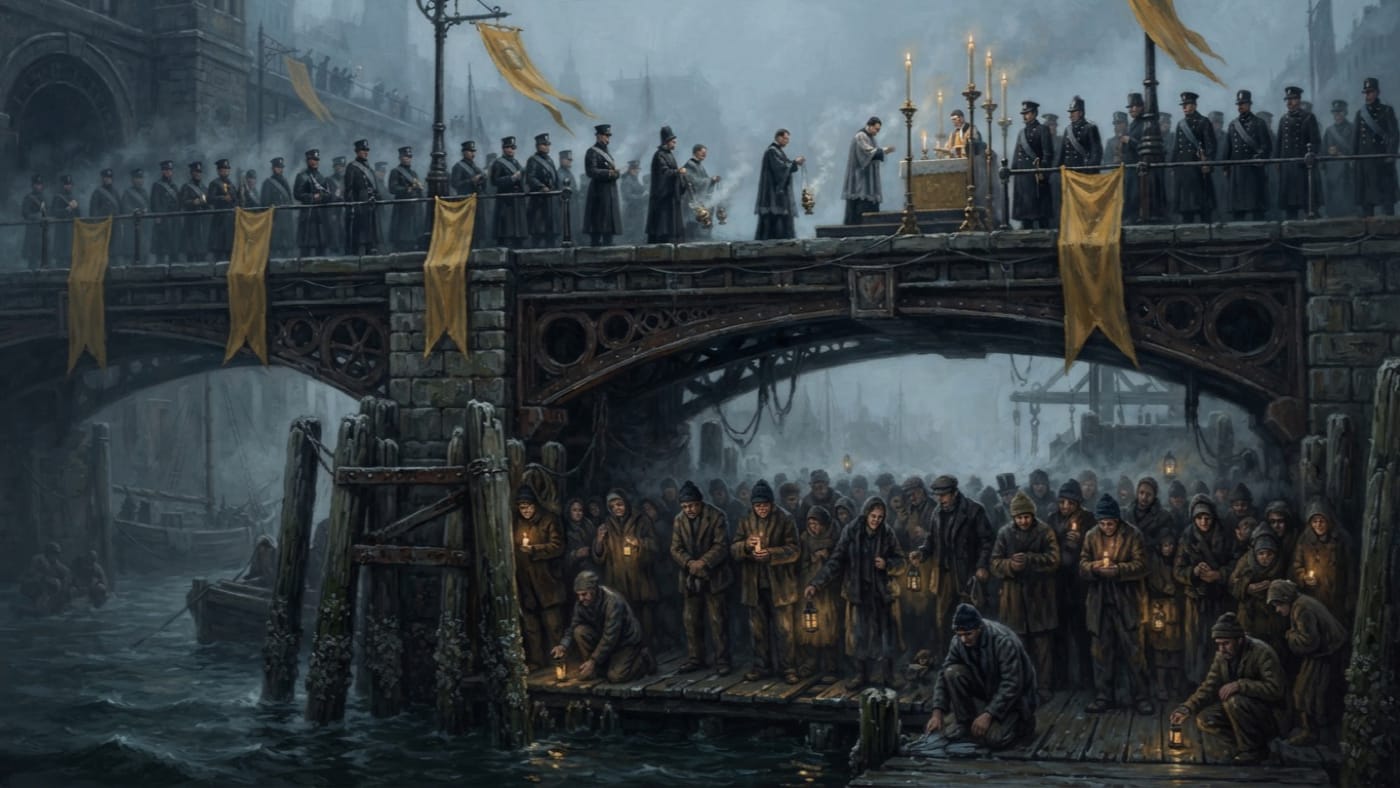
Brine Fever Winter
The dead became a proportion; the survivors became a jurisdiction.
In A.S. 112, brine-fever killed one in five at Saffron Bastion. Its aftermath brought a Quarantine Prefecture above the harbor and unlicensed mourning below.
Codex Ref. VII.8.12-112
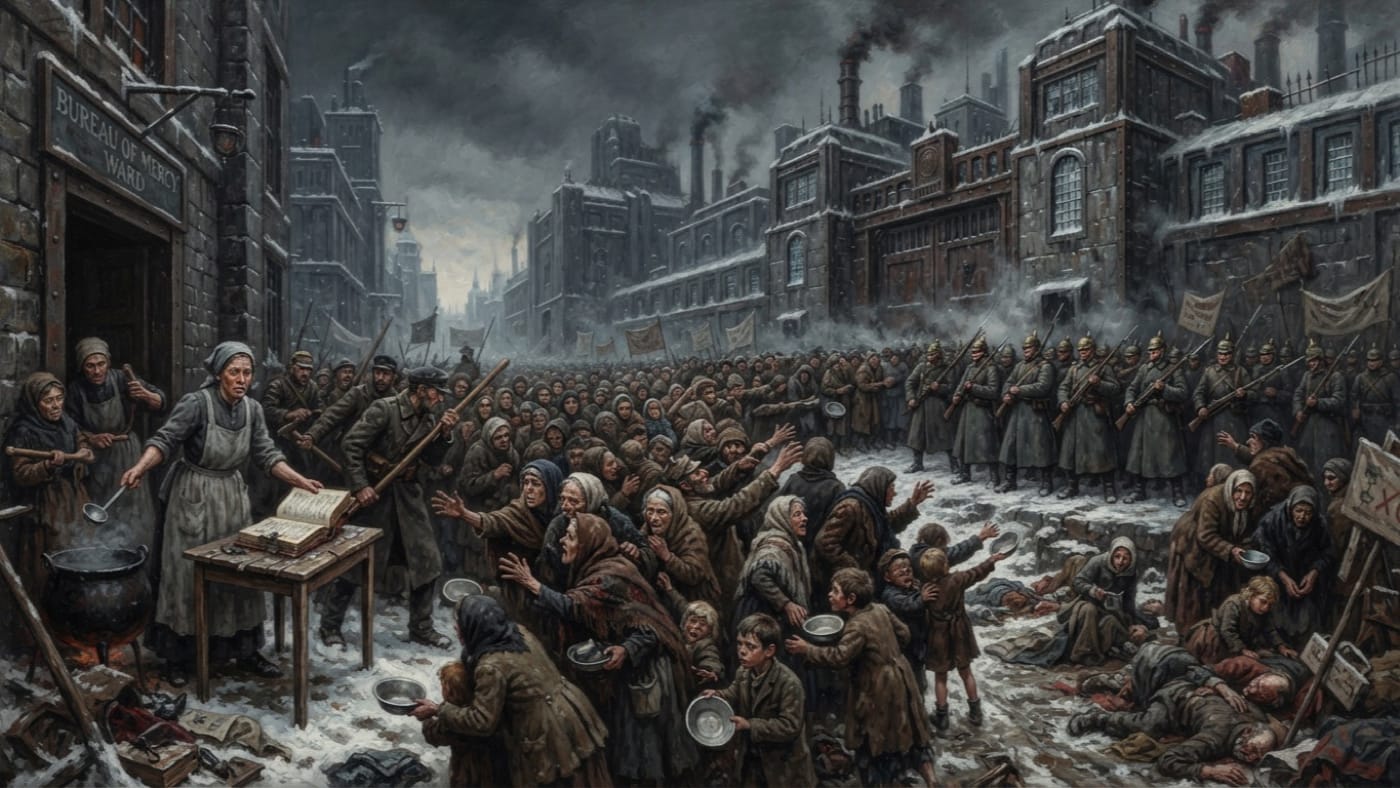
Broth Riots of A.S. 112
The hungry approached the granary; Mercy opened a ledger
The Broth Riots of A.S. 112 lasted eleven days: three hungry garrison populations sought grain; War supplied rifles, Purity arrests, and Mercy the Ledger Laws.
Codex Ref. VII.8.10-112

Budapest
The city the Danube cut in half, and the half that watches back
The largest city in the forward heartlands and the principal staging hub of the Central Corridor. 850,000 souls on the western bank, and something unaccounted for on the eastern. The Danube runs between them like a sentence the Bureau started and declined to finish.
Codex Ref. II.4.09-009

Budapest-Irongate Corridor
The road that pays in fuel and settles its accounts in men
The southern feeder route from Budapest to Bastion-Irongate carries blessed freight past nineteen confirmed wound-sites and four probable. Charter houses draw the fuel; their crews settle the human account.
Codex Ref. II.4.09-369

Budgetary Annexes
Fear requires furniture; furniture requires fear
The Budgetary Annexes turn closed prosecutions into requests for clerks, cots, and listening cards. Vienna's five thousand branded mothers remain persuasive arithmetic.
Codex Ref. XIII.1.100-201
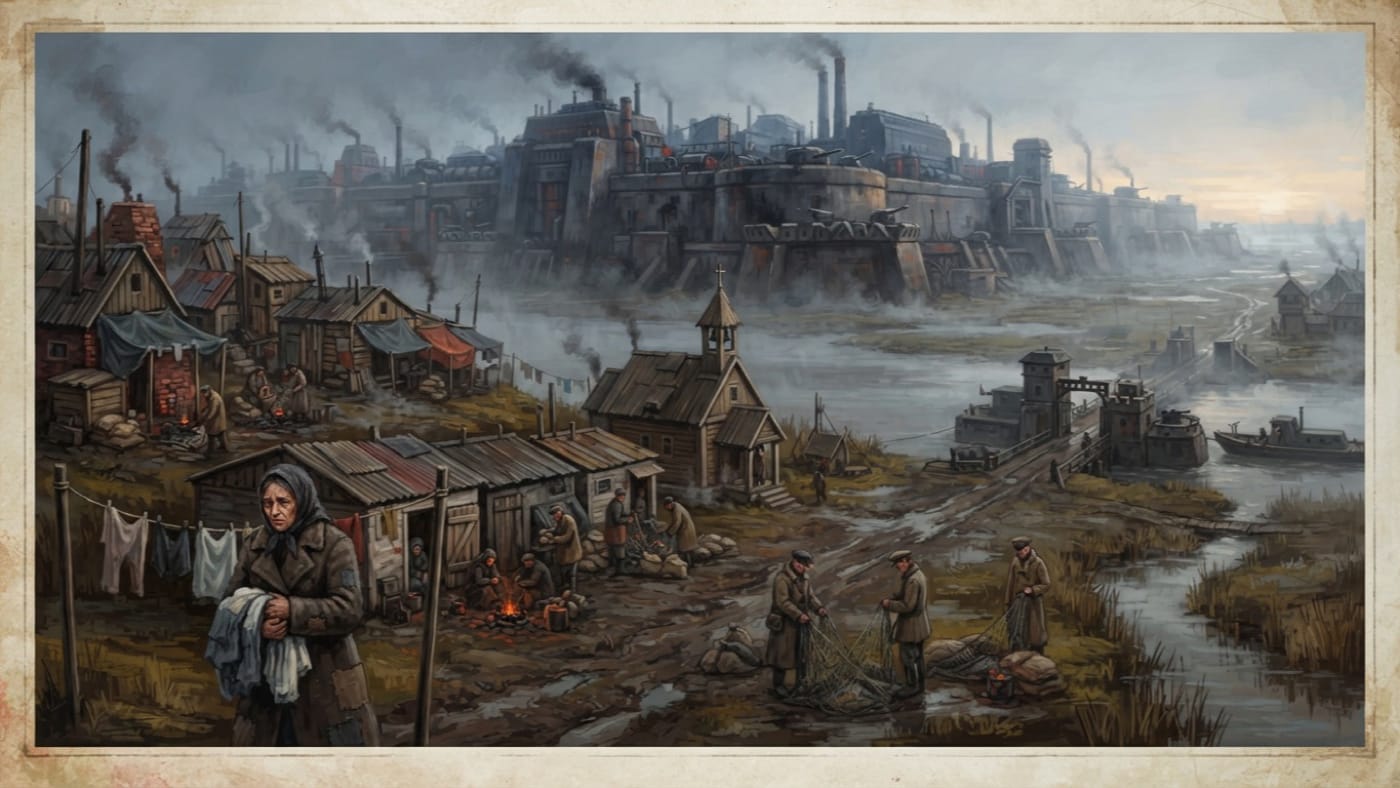
Bug River settlements
The villages disappear; their people remain pending
The Bug River settlements survive as a few western service hamlets and displaced households in Warsaw and Brest. Most villages are absent; their people still require permission to exist.
Codex Ref. II.4.09-201

Bureau Circular 221-R
Fourteen pages proving a living man can fail to count
Bureau Circular 221-R is the Records clarification that defines the dissolved as *praesens sed abrogatus*: present, abrogated, and ineligible for mercy by procedure.
Codex Ref. XIII.1.01-004
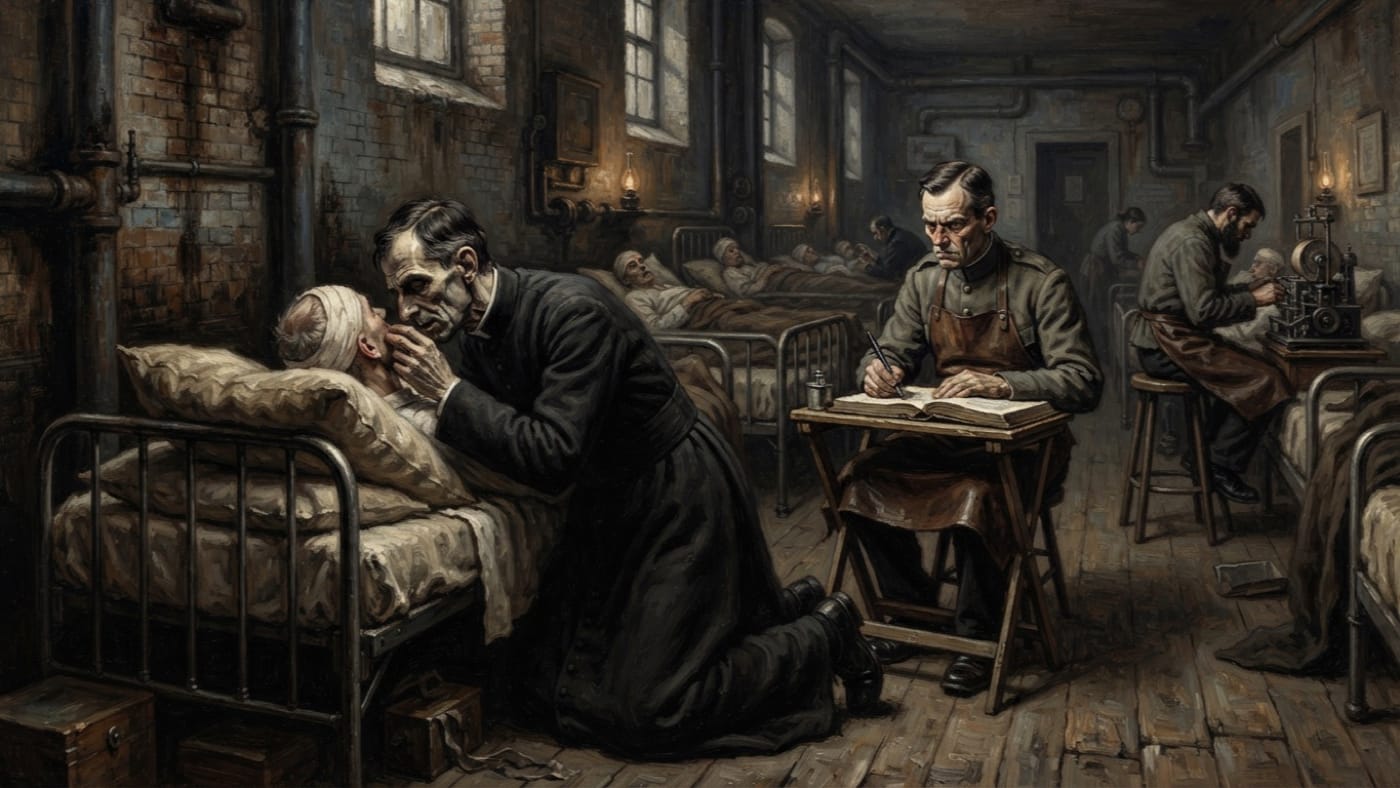
Bureau Circular 88-D
The appointed ear, and the reason Doctrine has not supplied
The Creed enters the right ear; the left remains doctrinally vulnerable. Circular 88-D specifies the side, withholds the reason, and leaves the bedside to manage exceptions.
Codex Ref. XIII.1.88-004
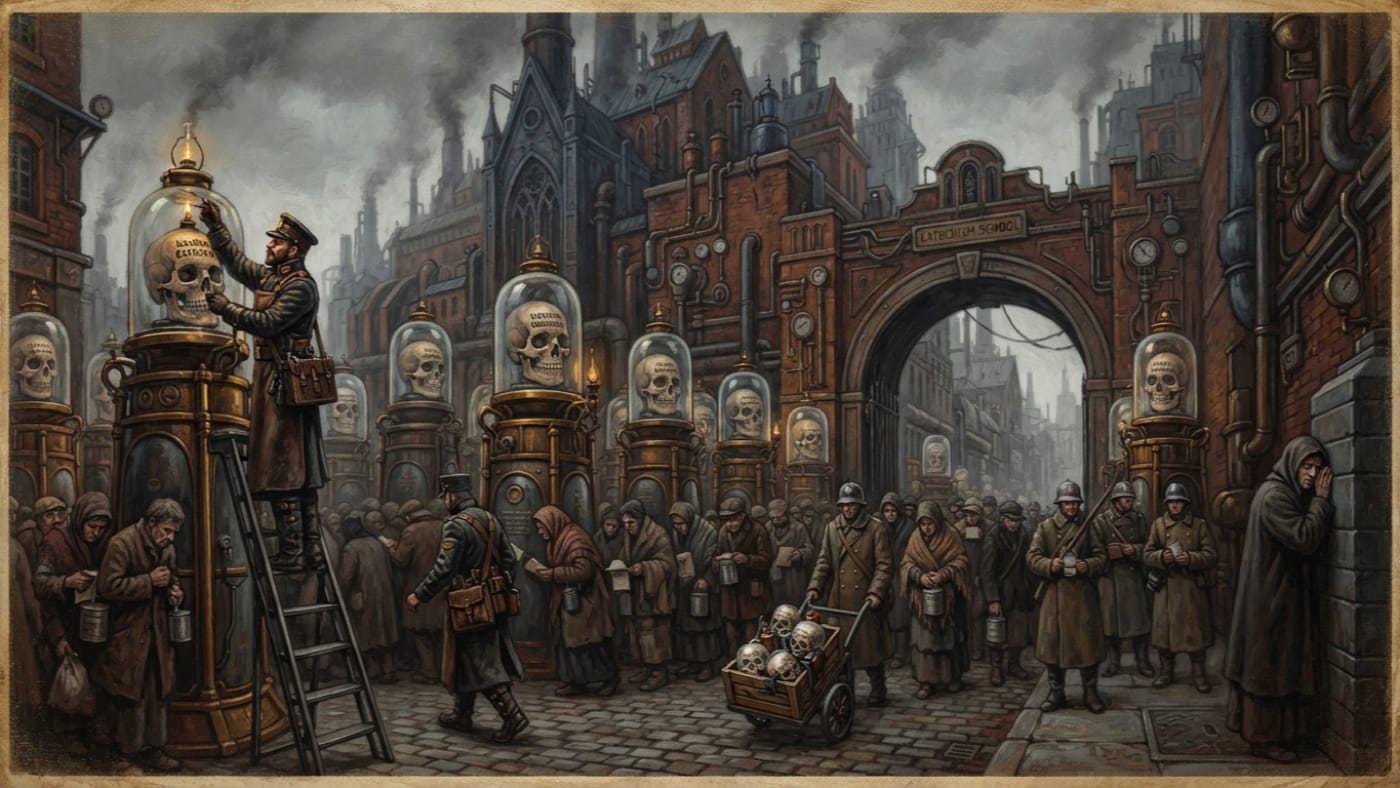
Bureau of Civic Doctrine
A name shall be legible; the hand that inks it need not be seen
The Bureau makes condemned names legible in glass and keeps them lit. Its Pillar-Keepers serve Visibility Standard 7c; the names are audited, the hands that maintain them are not.
Codex Ref. VIII.2.14-143
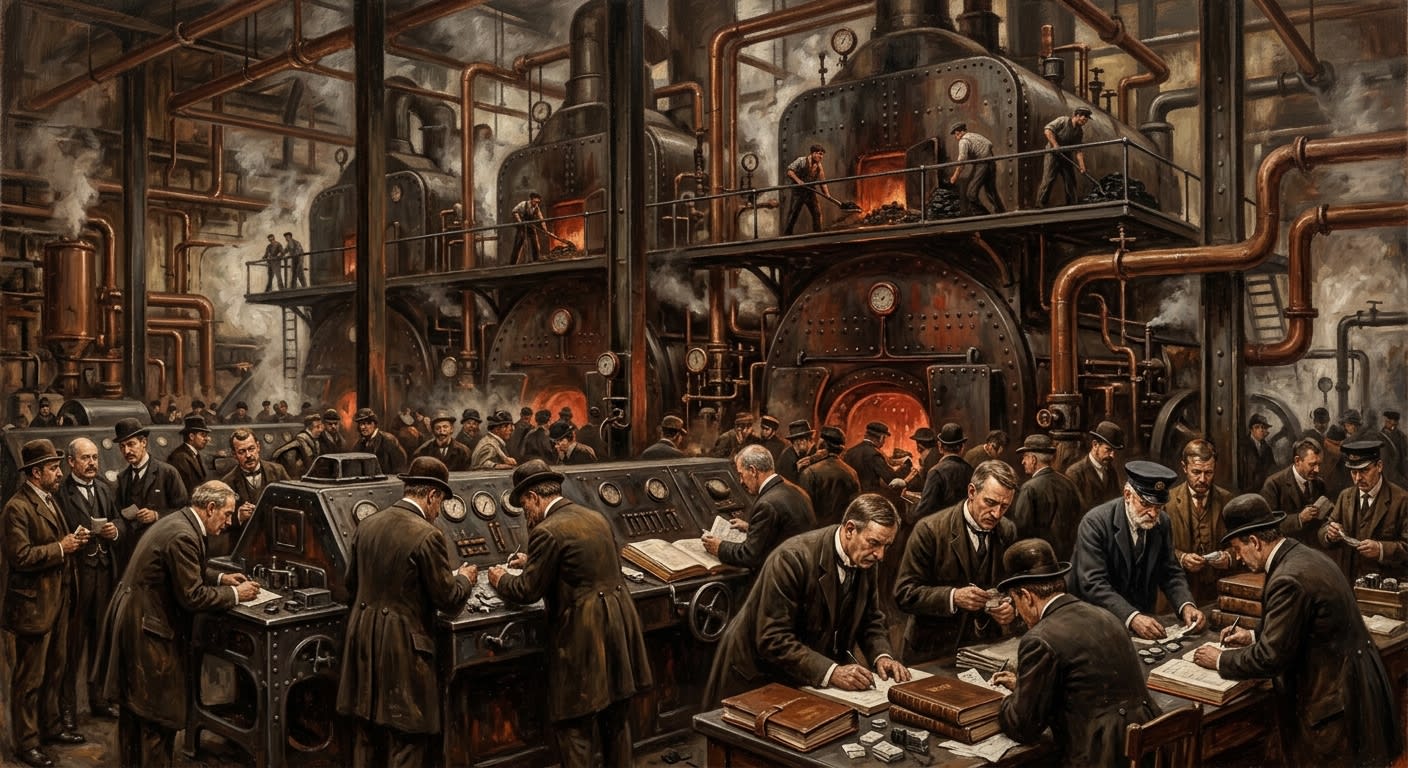
Bureau of Engines & Furnaces
The furnace burns because it must, and someone must invoice the flame
The Bureau of Engines & Furnaces governs the Synod's hot machinery: fuel allowances, furnace discipline, wound-site yield, pressure systems, and every boiler too useful to condemn.
Codex Ref. VIII.2.02-001

Bureau of Medicine
It measures. It classifies. It declines.
The Bureau of Medicine is not, technically speaking, a Bureau. It is something more dangerous: an institution that measures everything and recommends nothing, staffed by people who have read every report and arrived at conclusions they will not share.
Codex Ref. XII.7.09-044
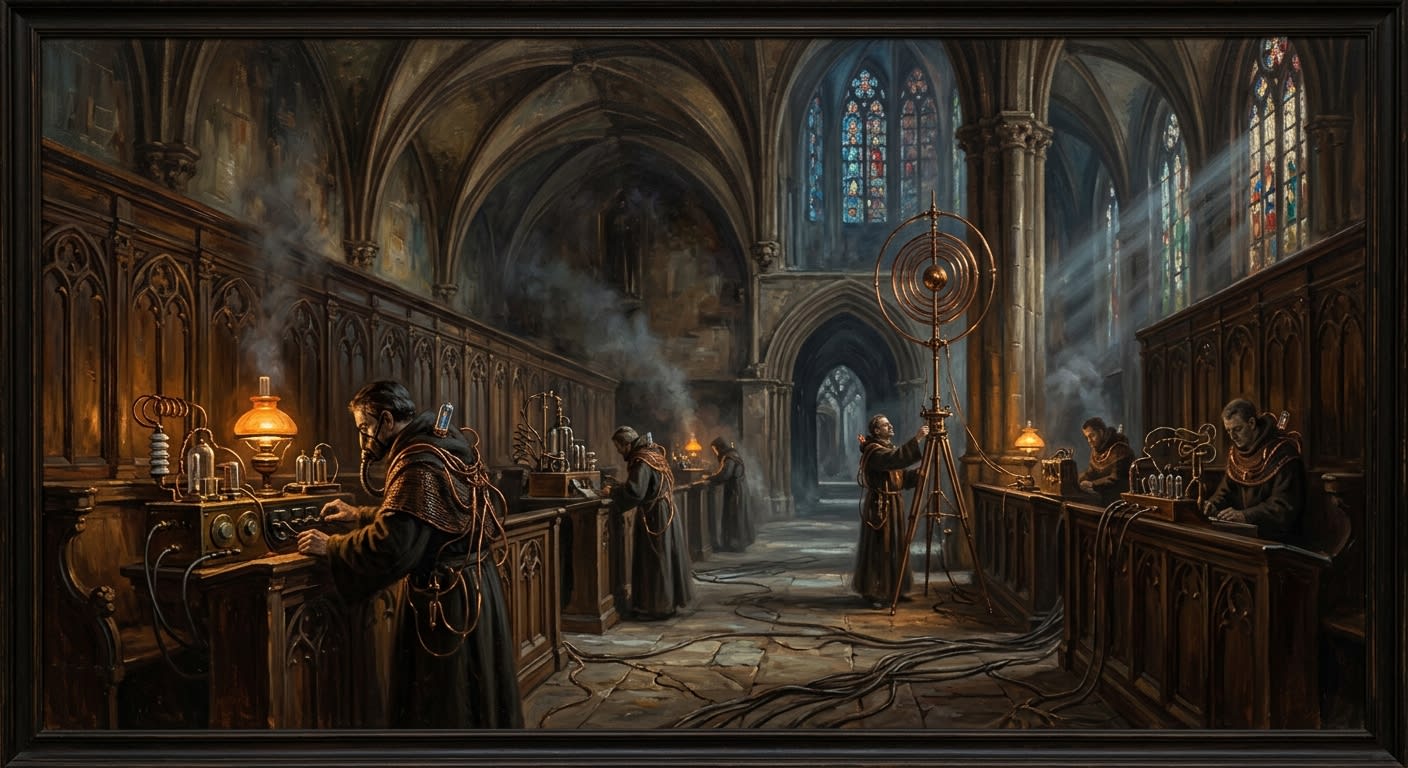
Bureau of Orison and Song
The only Bureau that can kill you with a hymn.
The Bureau of Orison and Song governs every hymn, broadcast, and weaponised voice in the Synod's arsenal — from the Master Hymnal Plates at Strasbourg to the Dustcasters of the Line, to the Sunken Choir whose throats have been converted into instruments of war.
Codex Ref. VI.3.12-042
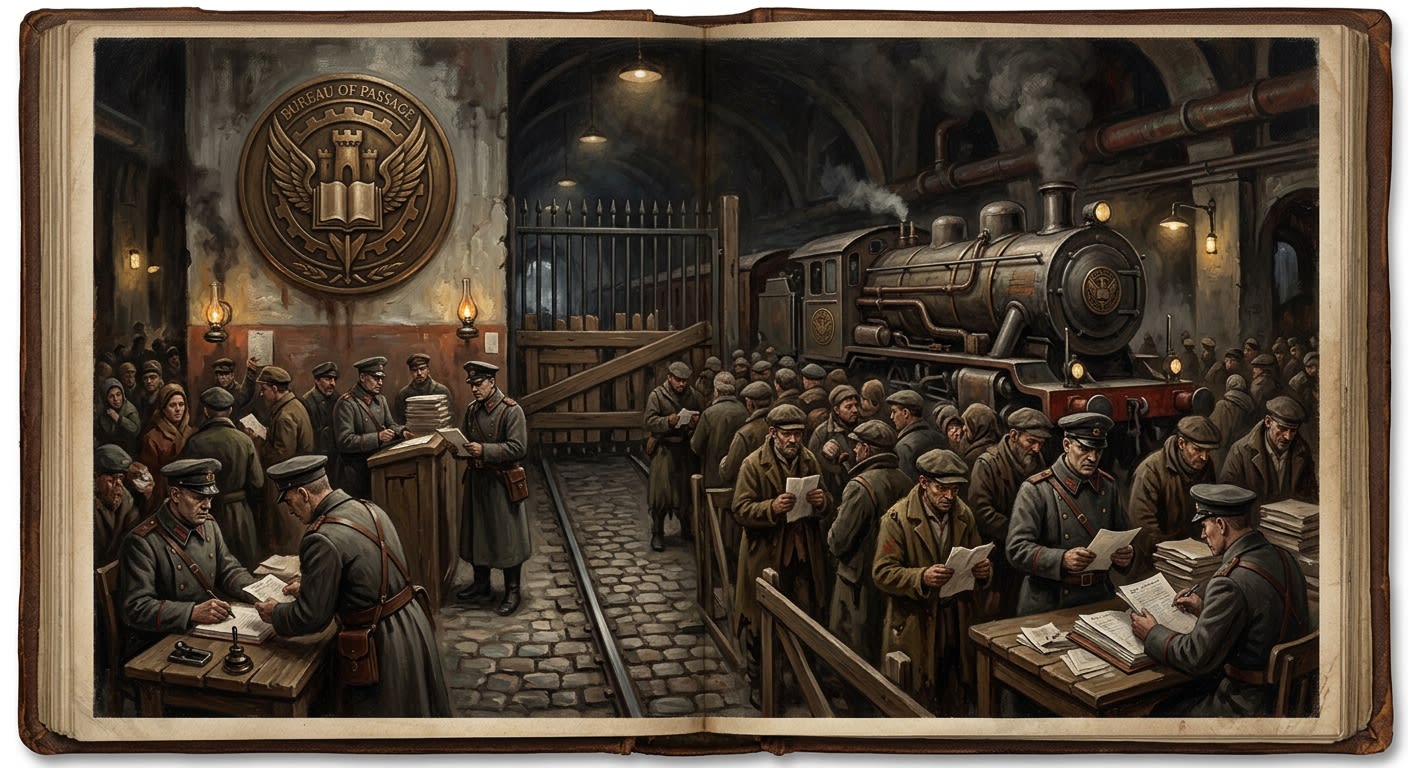
Bureau of Passage
The hand at the gate, ink-stained and pleased with itself
The Bureau of Passage owns the sacred interval between wanting to move and being permitted to do so; every road becomes doctrine where its seal descends.
Codex Ref. VIII.2.07-001
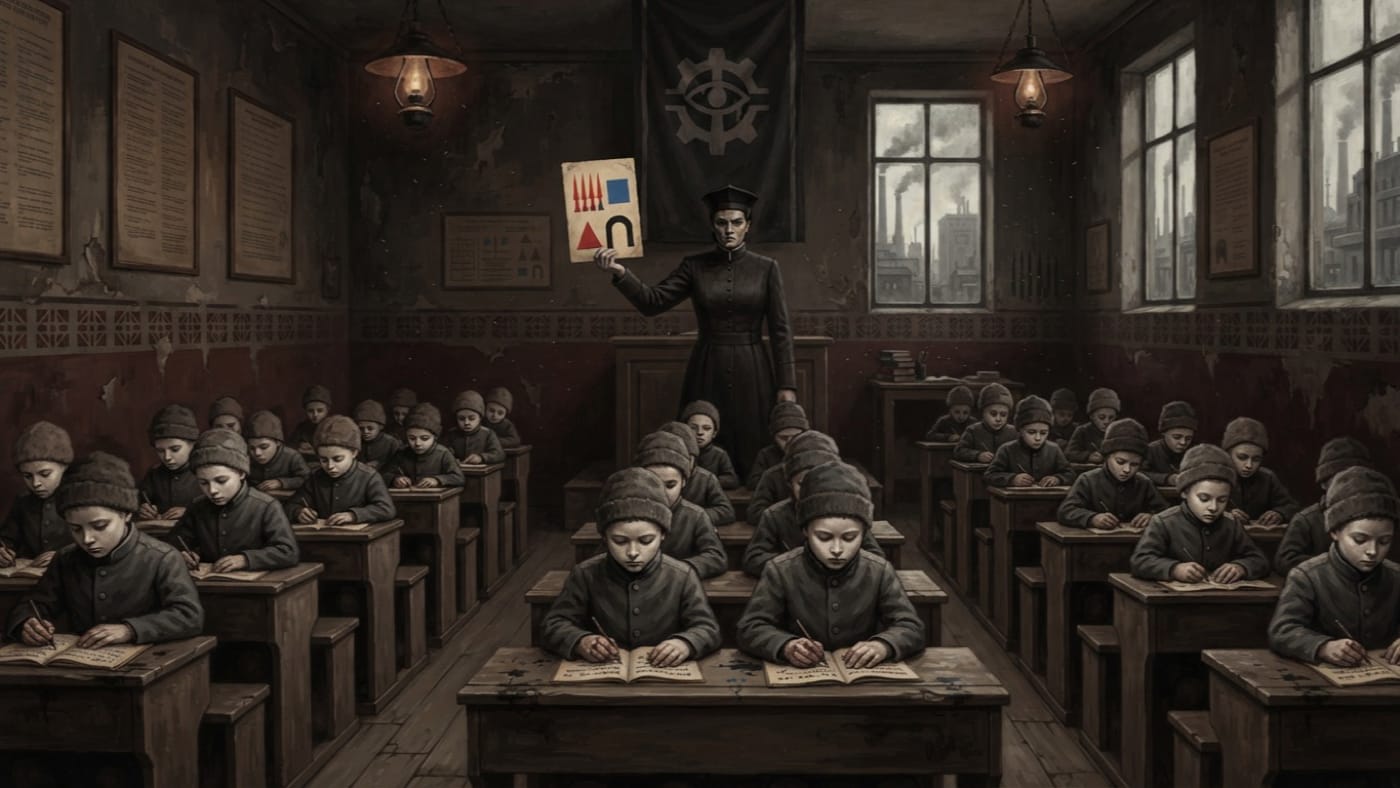
Bureau of Pedagogy
Doctrine owns the sentence. Pedagogy owns the drill.
The Bureau of Pedagogy puts Doctrine's sentences into children's mouths. Its seat is unrecorded; its primer cards teach obedience one red triangle at a time.
Codex Ref. VIII.8.03-001
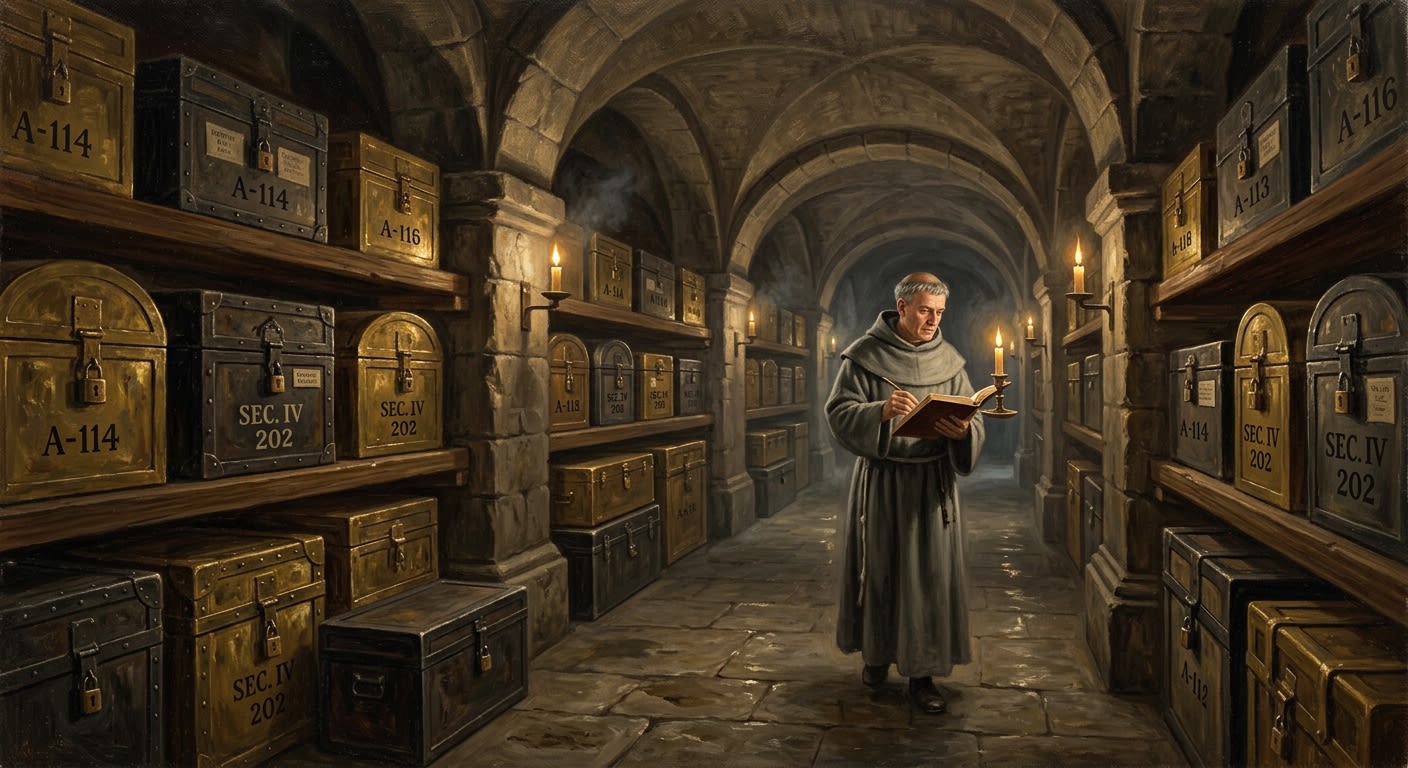
Bureau of Relics
The stamp is not the sanctity. The stamp is merely necessary.
The Bureau of Relics guards four thousand seven hundred authenticated bones, adjudicates the holiness of ash, and maintains the cheerful institutional fiction that it controls the things it catalogues.
Codex Ref. IV.3.12-019

Bureau of Tithes
The organ no one praises and no one dares remove
The Bureau of Tithes is the Synod's fiscal organ — the stomach no one praises and no one dares remove. It taxes breath, grain, bereavement, and the management of its own taxation.
Codex Ref. VIII.4.01-001

Bureau of War Chief Logistician
The number is classified. The arithmetic is not.
War's Chief Logistician speaks for its replacement arithmetic and keeps the installation total classified. I record two exchanges, a withheld number and the footnote nobody wishes to write.
Codex Ref. III.2.07-043

Bureau of War Instrument 44-K
The word is voluntary. The collar is iron.
Instrument 44-K classifies the Sunken Choir's boys as "Liturgical Combatants, Voluntary" and licenses Line deployment. Mercy's objection enters the file; the cohort returns underground.
Codex Ref. XIII.1.44-001
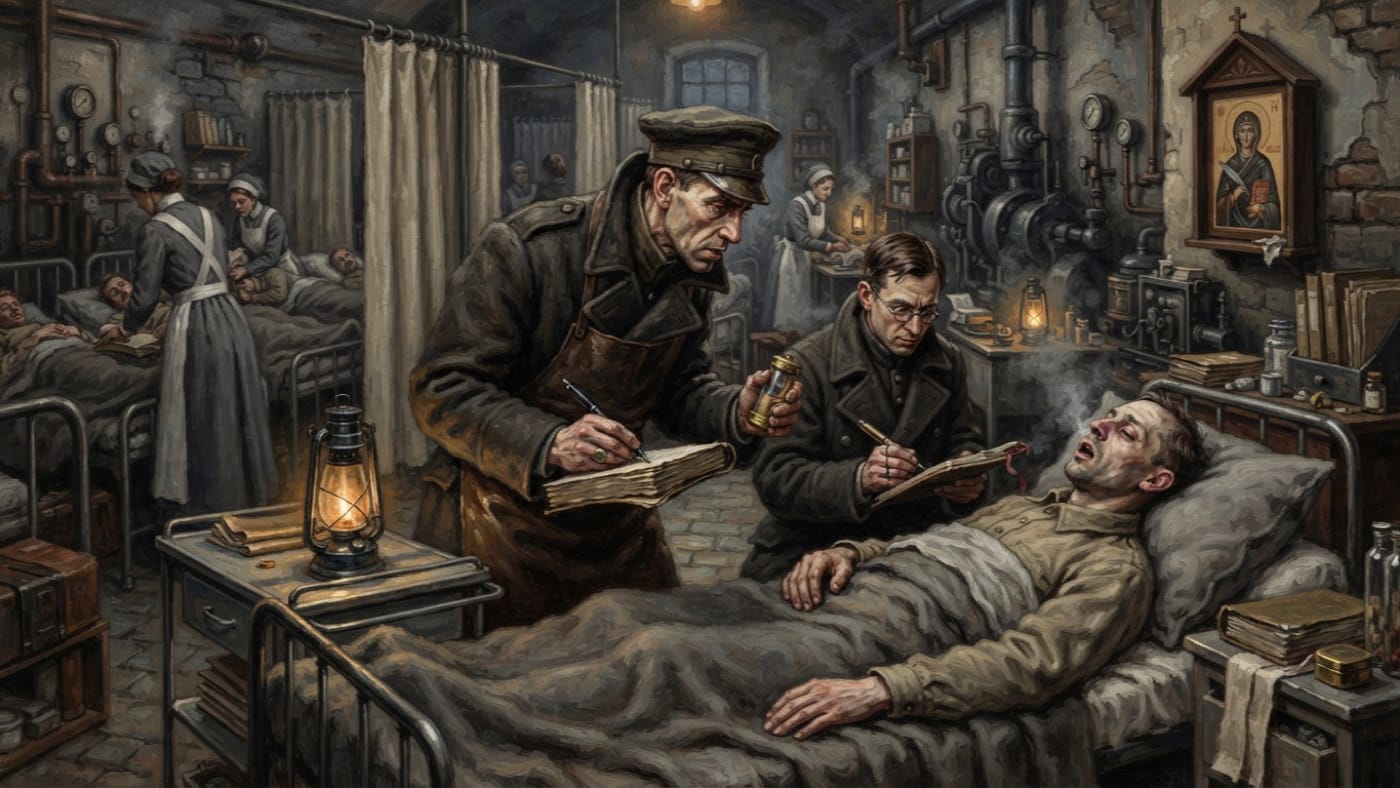
Butchers
Names before breath fails
The Butchers are information-first Deathbed Confession Harvesters, extracting names before comfort under the common seal. Their questions are sharp; their membership is unrecorded.
Codex Ref. XII.12.03-001

Cadence Corps
One beat, one body, one road, and one stick for correction
The Cadence Corps teaches crowds to move as one obedient spine: ration queues, funerals, levies, relic routes, and riots corrected by beat, rope, whistle, and boot.
Codex Ref. XII.7.01-112

Cadence Corps Manual
Cut the crowd, signal Rites, refrain from listening
A.S. 201 present-use survey of the Cadence Corps Manual: route discipline, bell clearance, SCATTER and Section 7's withdrawn explanation of choirwind. Cut the crowd, signal Rites, do not listen.
Codex Ref. XII.31.02-201
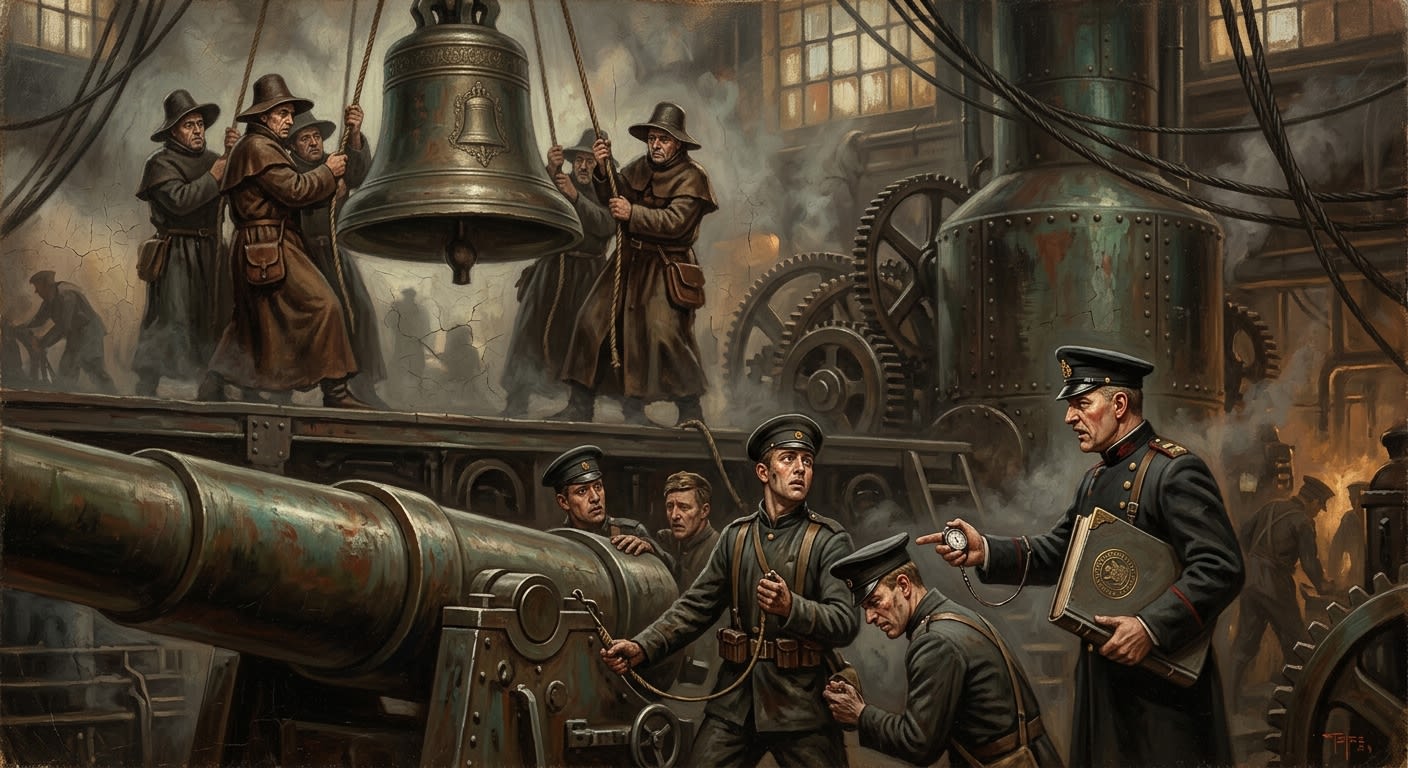
Cadence Reforms A.S. 95
The decree that put the bell above the barrel and made obedience audible
A.S. 95 reforms that made choir cadence govern shrine-platform batteries, created off-measure discharge as a punishable sin, and gave the bell legal teeth.
Codex Ref. VII.2.10-095
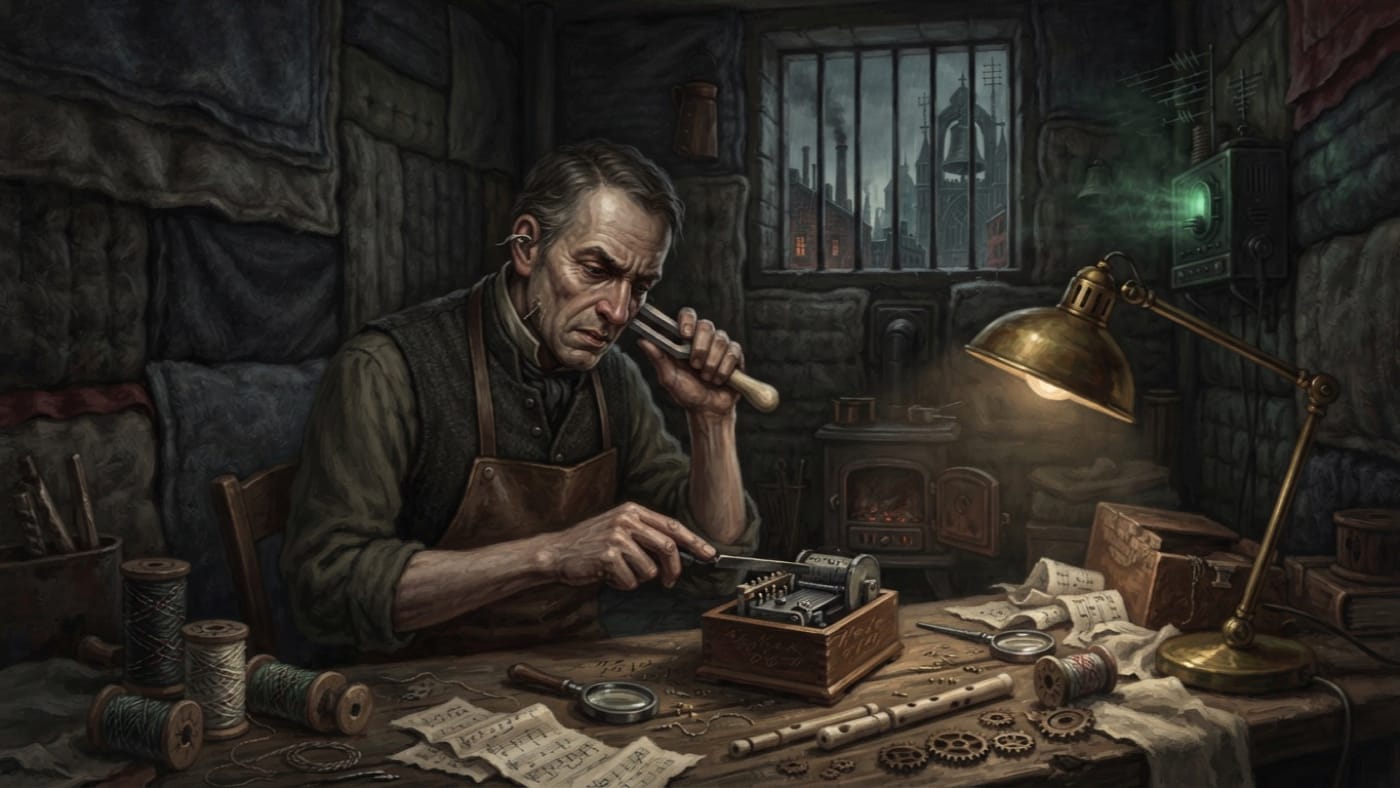
Cadence Surgeons
Lower the note; the charge remains
Upper-rank specialists of the melody-smuggling trade who edit forbidden fragments into bell-safe ranges. The pitch may pass beneath the bells; the charge of Melody Intent remains.
Codex Ref. XII.48.03-001
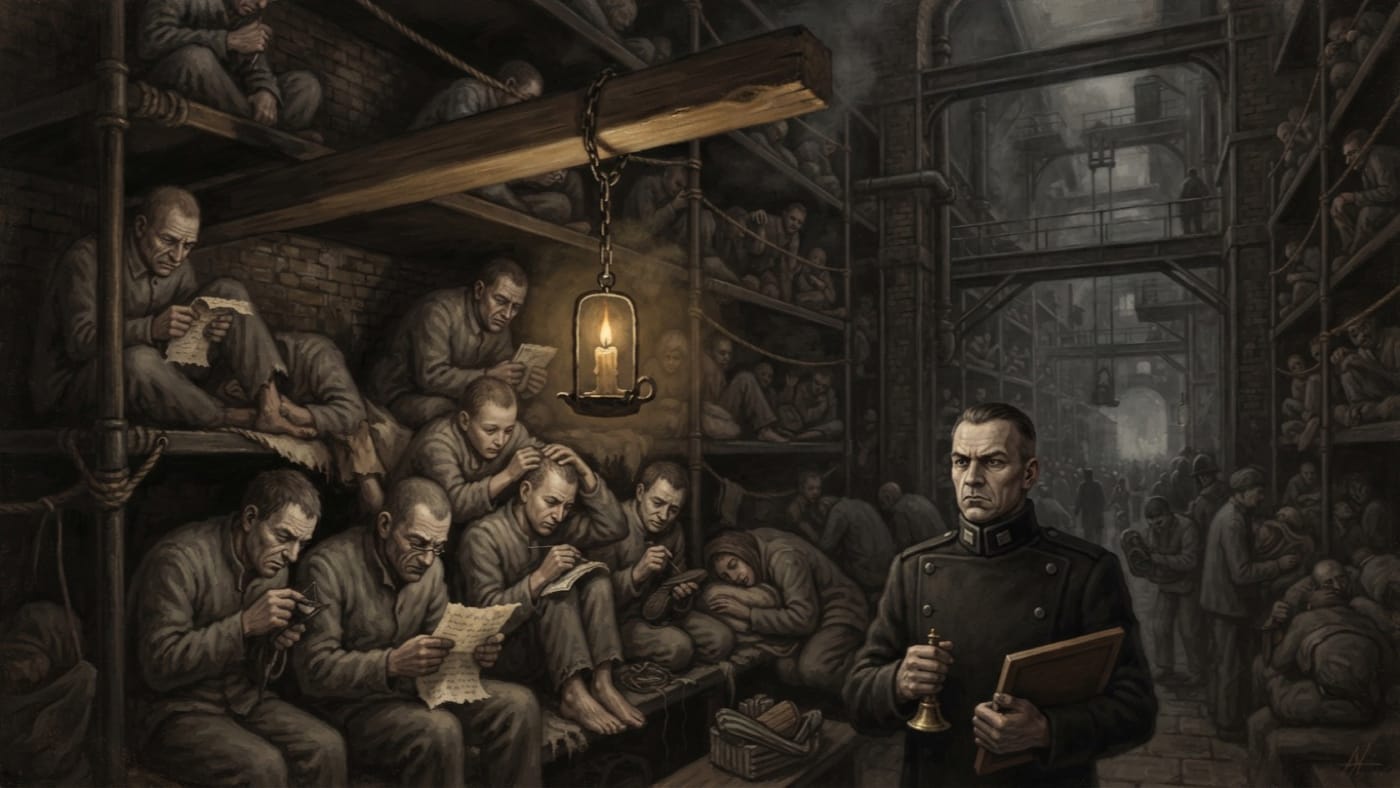
Candle Ration
One flame for six; the clerk keeps the darkness
One taper for six detainees, snuffed at fourth bell: the Dorm Rows ration light, delay appeals, and leave mercy to the clerk's revision.
Codex Ref. XIII.1.72-424
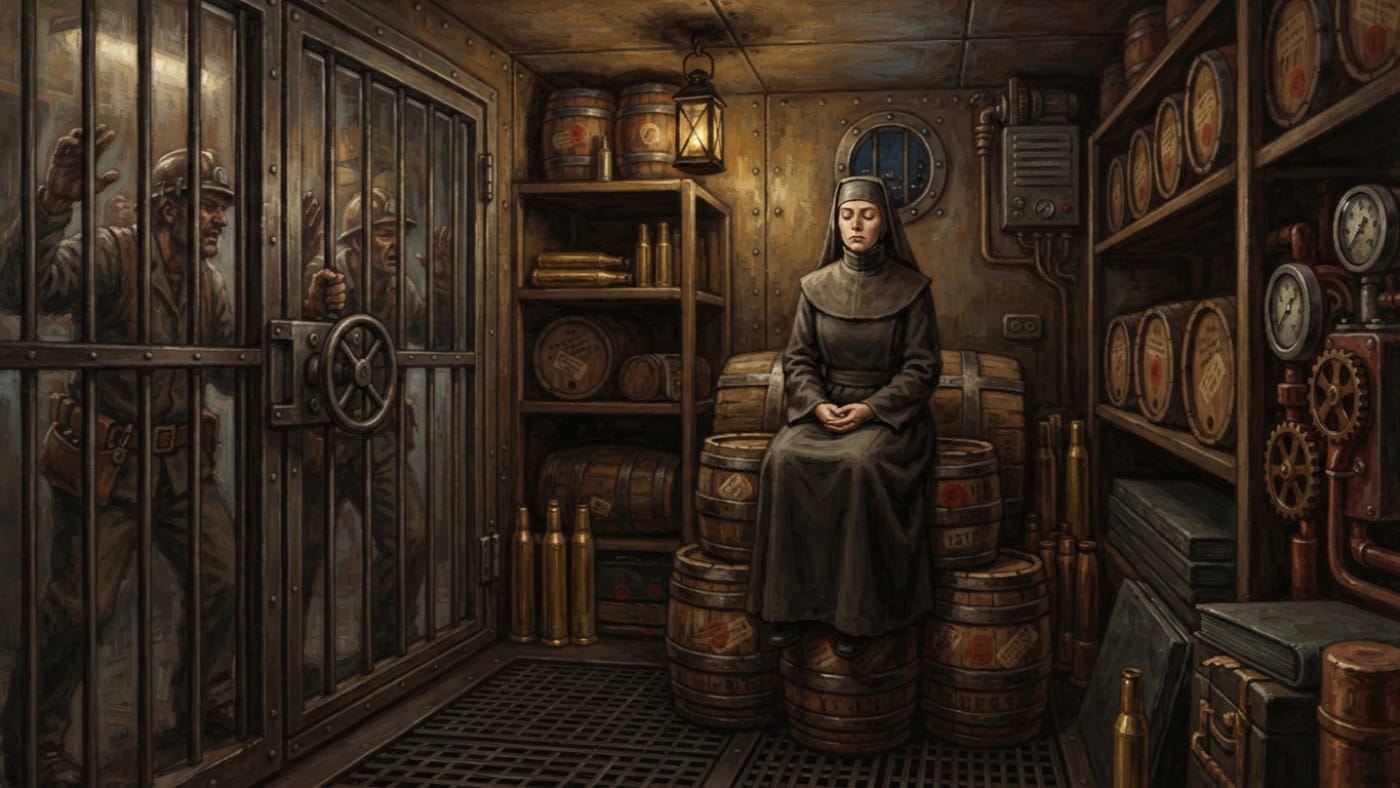
Canticle of Restraint
A locked magazine and eleven hours of unreasonable vocal endurance
Reported sung for eleven hours by Sister Margit during the Pressburg Mutiny following the A.S. 95 Cadence Reforms. The crew surrendered; the composer and score remain outside the Ledger.
Codex Ref. XIII.1.16-447
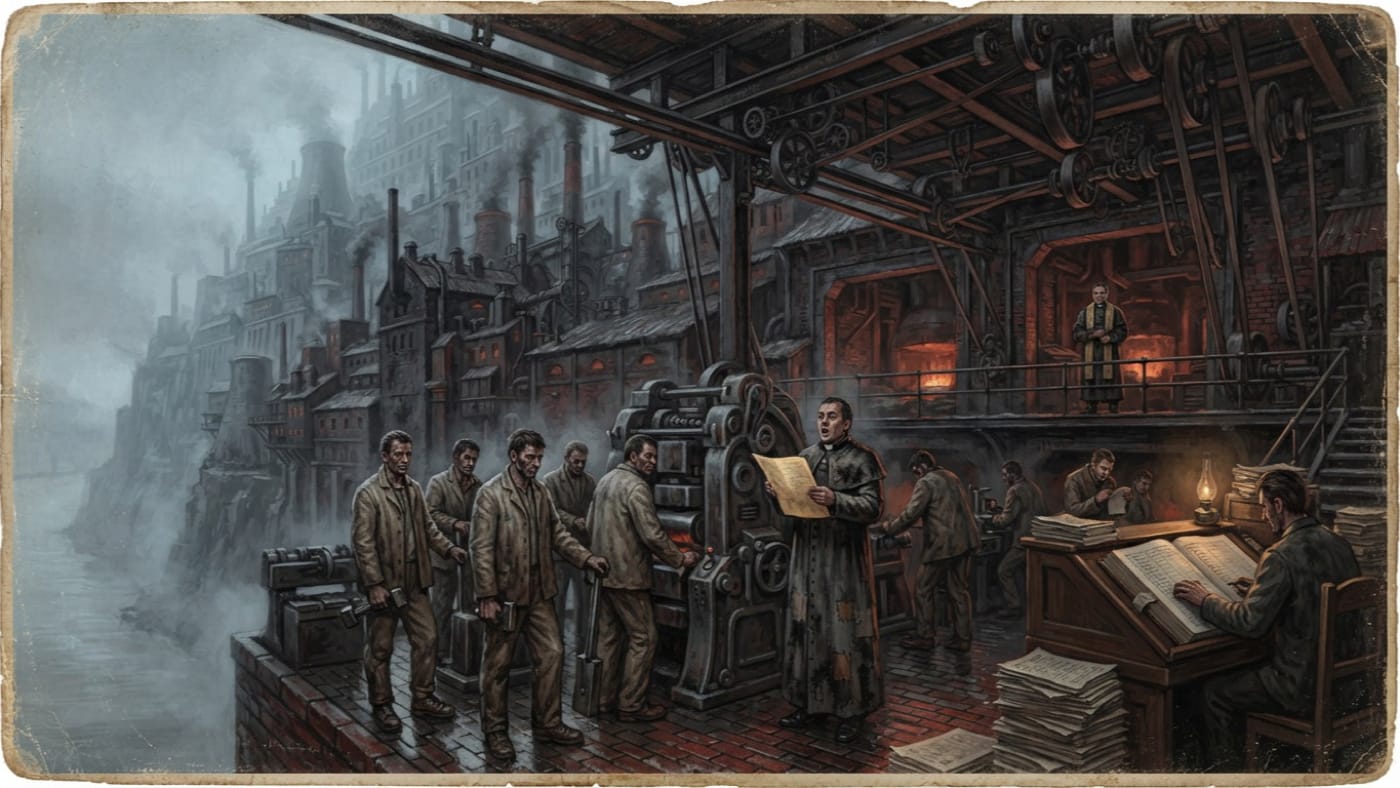
Cantor Foundries
Beneath the judges and above the dead, even the hour must be bought
Rheinscarp's eighth terrace runs its furnaces on purchased bell-hours and the Mill-Crown Cantors' cadence. The machinery may be ready; permission remains the Marshal's commodity.
Codex Ref. II.2.08-001

Cantor-Marshal Hrodric Venn
He holds the hours; the hungry hold their receipts
Hrodric Venn holds Rheinscarp's bell-hours, mill cadences and convoy timing. His credits decide ration priority; the hungry may miss their window, but the schedule does not miss them.
Codex Ref. III.2.01-201
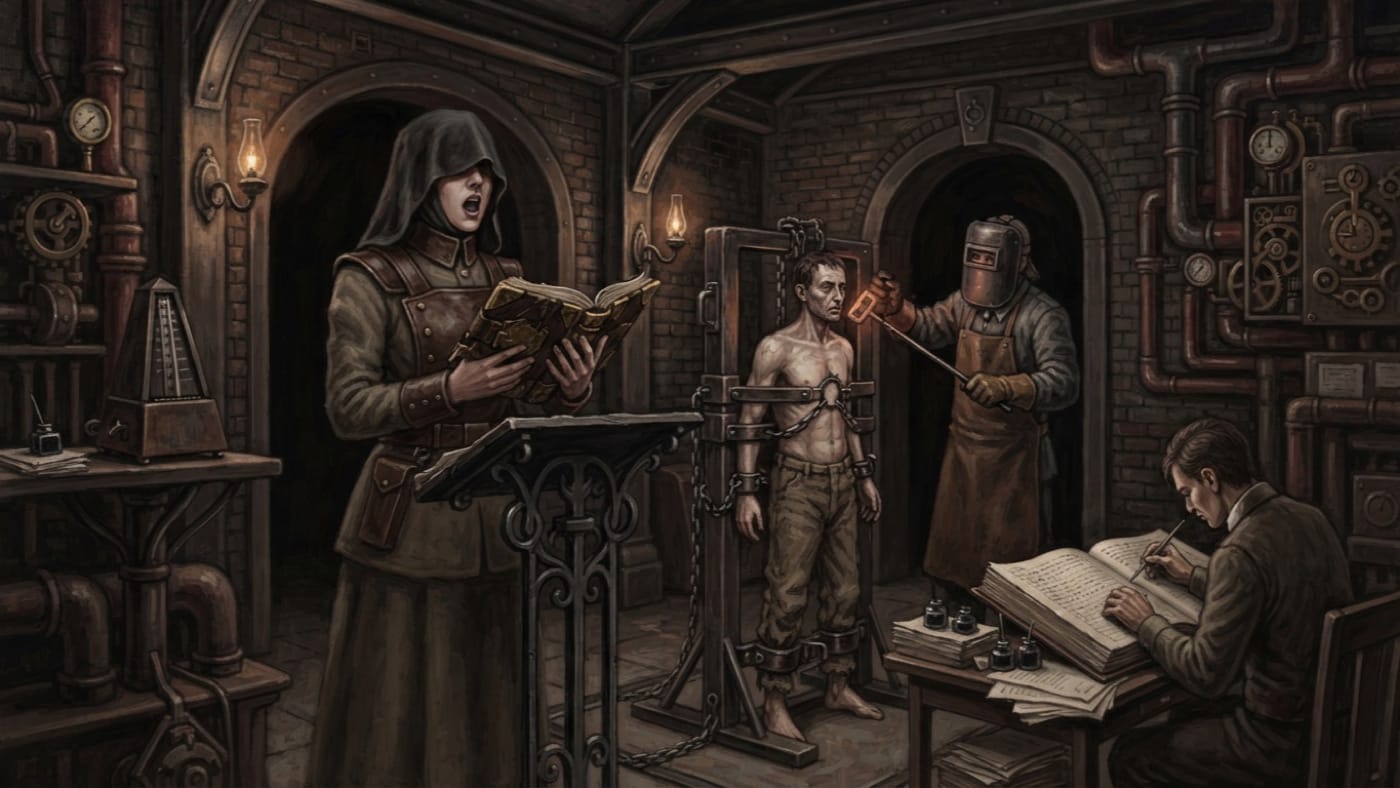
Cantor's Primer
Six words suffice for a citation. Truth requires more.
The Cantor's Primer is credited to Purity, Third Revision, through a single maxim. Six words explain the rite; they do not establish its compiler, issue date or the truth of a confession.
Codex Ref. XIII.1.41-003
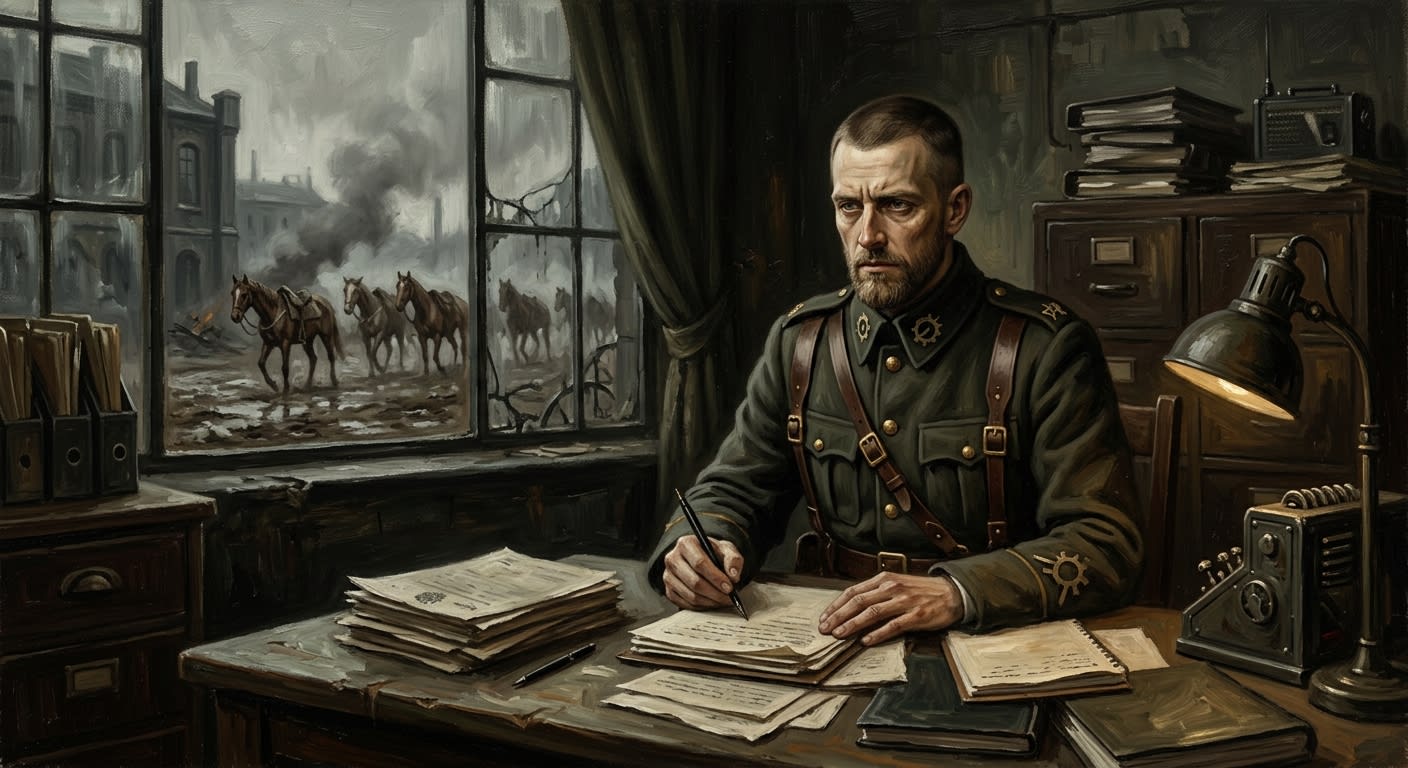
Captain Elias Mürren
The cavalryman who accepted hunger's polite invitation and kept the receipt
Rationalist cavalry captain and Debrecen survivor whose A.S. 49 deposition records sorcerous provender, vanished horses, and hunger with the manners of a clerk.
Codex Ref. III.2.01-082

Carnelian erasures
Every seal was correct; the ledger was impossible
In A.S. 67, three Notaries struck the Carnelian lineage across four cities without a shared anchor table. Two lawful cousins vanished from the rolls; the Notaries followed. The children lost their bread.
Codex Ref. VII.8.10-067
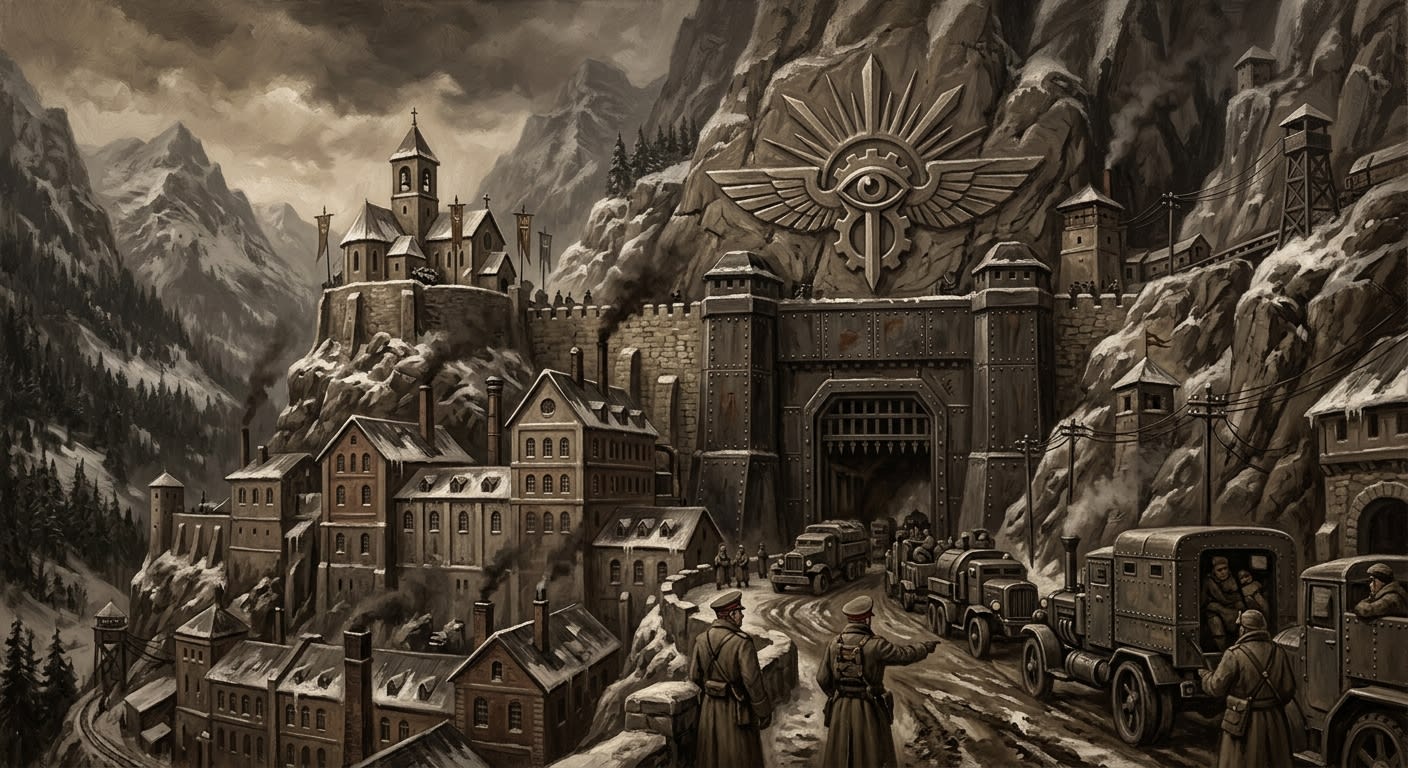
Carpathian Gates
Where the mountain learned to close its teeth
Mountain hinge of the middle Line: passes, locks, shrines, snow-voices, and Harrowglass terror between Bastion-Przemyśl and the Carpathian spine.
Codex Ref. II.4.08-065
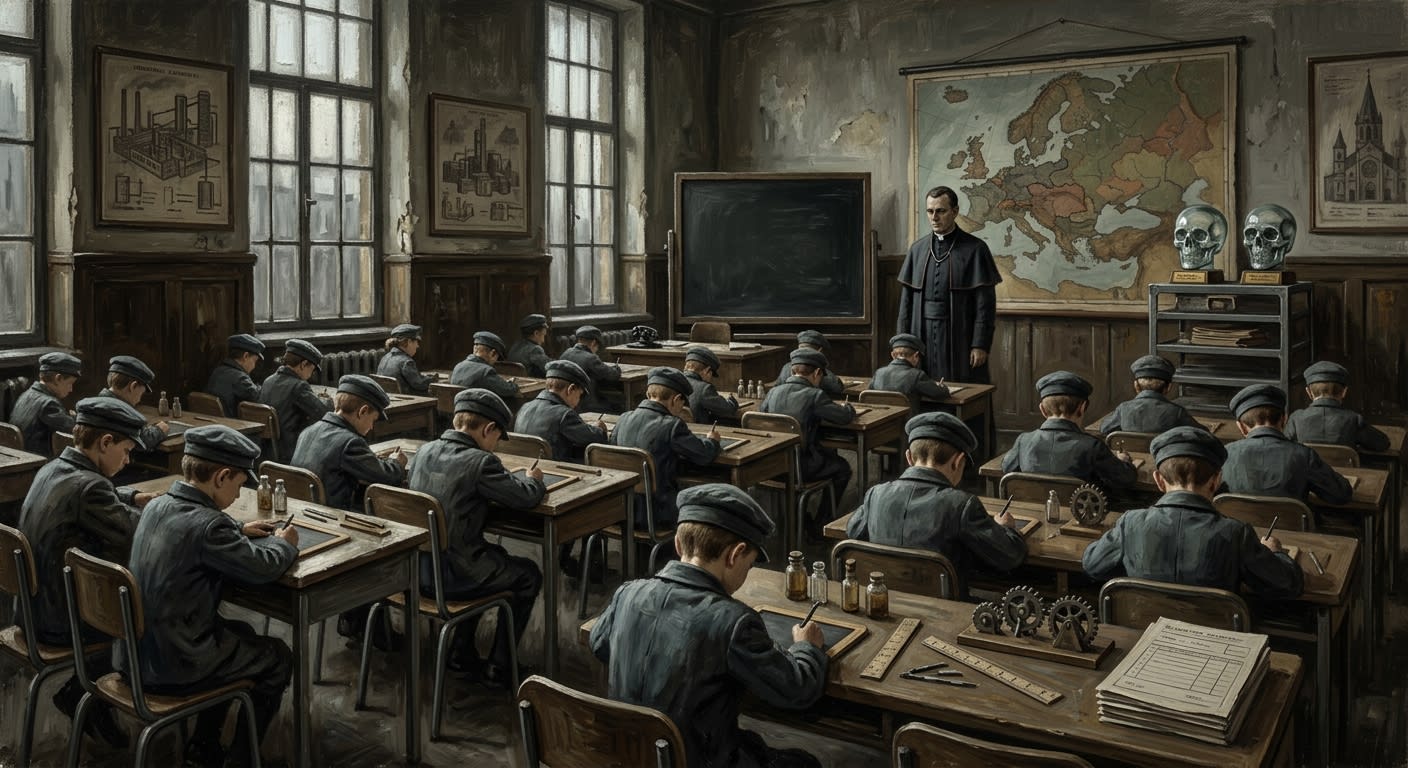
Catechism Schools
The child enters unformed; the school returns property
The Synod's parish and ward school system, where Creed, arithmetic, maps, loyalty trials, and entrance Glass Skull Stacks turn children into obedient instruments with names attached.
Codex Ref. VIII.8.01-001

Category D
The sentence is suspended. The prisoner remains condemned.
Category D suspends condemned prisoners' death sentences for battlefield-hazard studies. War supplies the subjects; Medicine measures them. The surviving record promises neither pardon nor release.
Codex Ref. XIII.1.99-134

Category Epsilon
Two weapons, one letter, and no defining memorandum.
Category Epsilon files Pale Chanters and Gore-Slingers under one letter. Two applications are attested; no general definition is on file. The ledger records what the bodies produce and leaves their names elsewhere.
Codex Ref. XIII.1.99-201
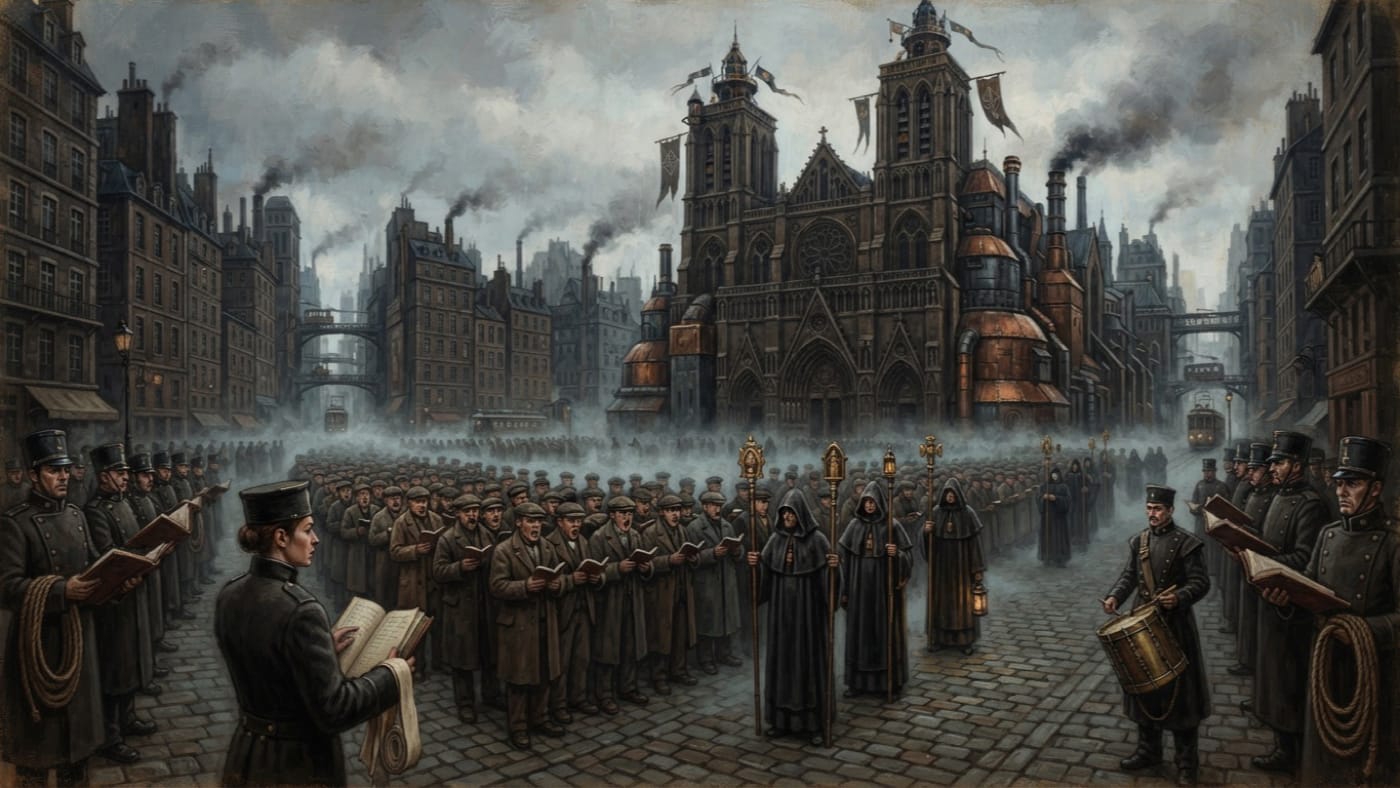
Cathedral of Saint-Jean
Three wards assemble with whole voices; the ledgers are still blank.
Saint-Jean, Lyon's departure station for the annual Procession of Tongues: three wards assemble by parish on Saint Sabina's feast, while their voices are still whole.
Codex Ref. II.1.04-201
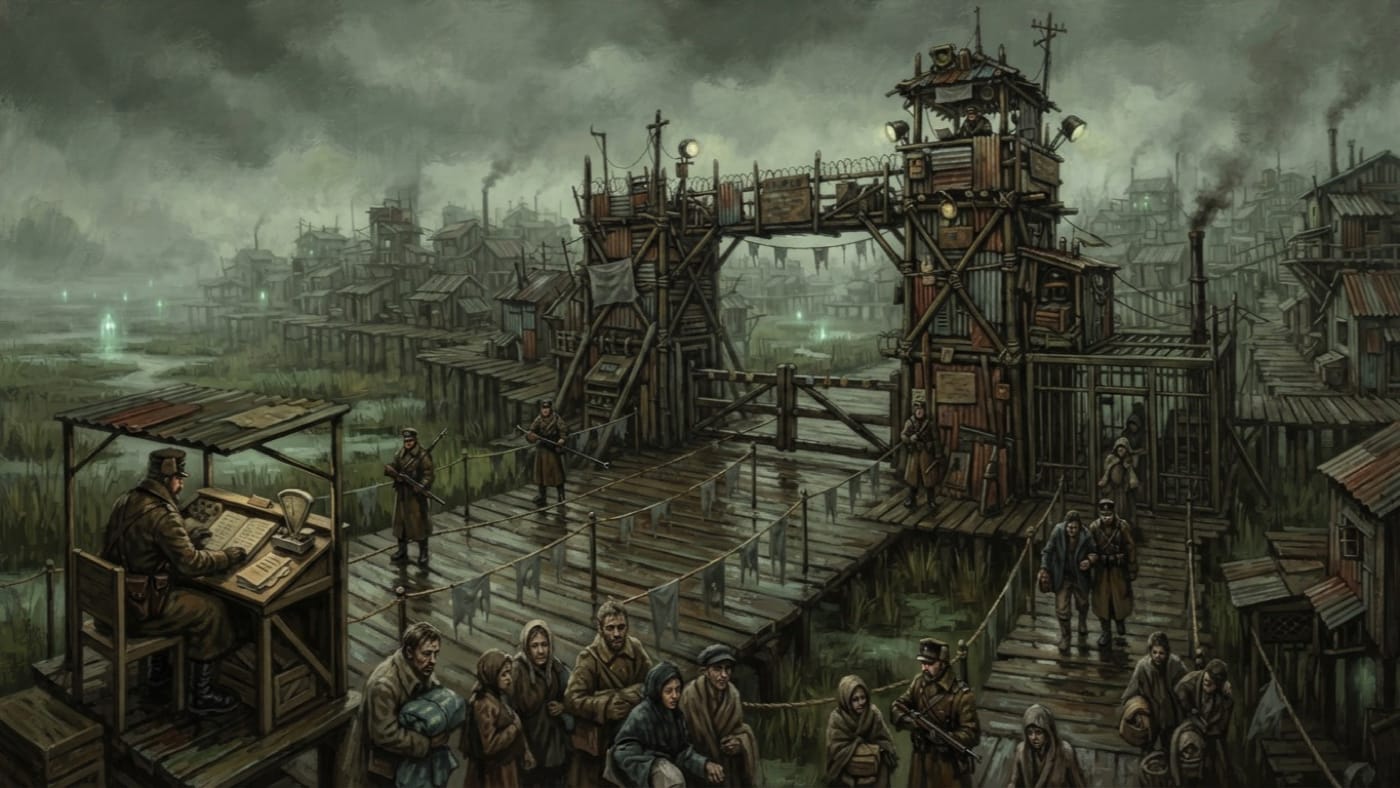
Causeway Gate
The road is open to those who can afford to leave.
The Ash-Glyph Marshworks' sole land checkpoint, where the Ashbound Wardens inspect seals, sell quarantine exemptions and charge more to leave than salvage earns. Those unable to pay are released to service. The ledger has yet to explain the release.
Codex Ref. II.4.08-005
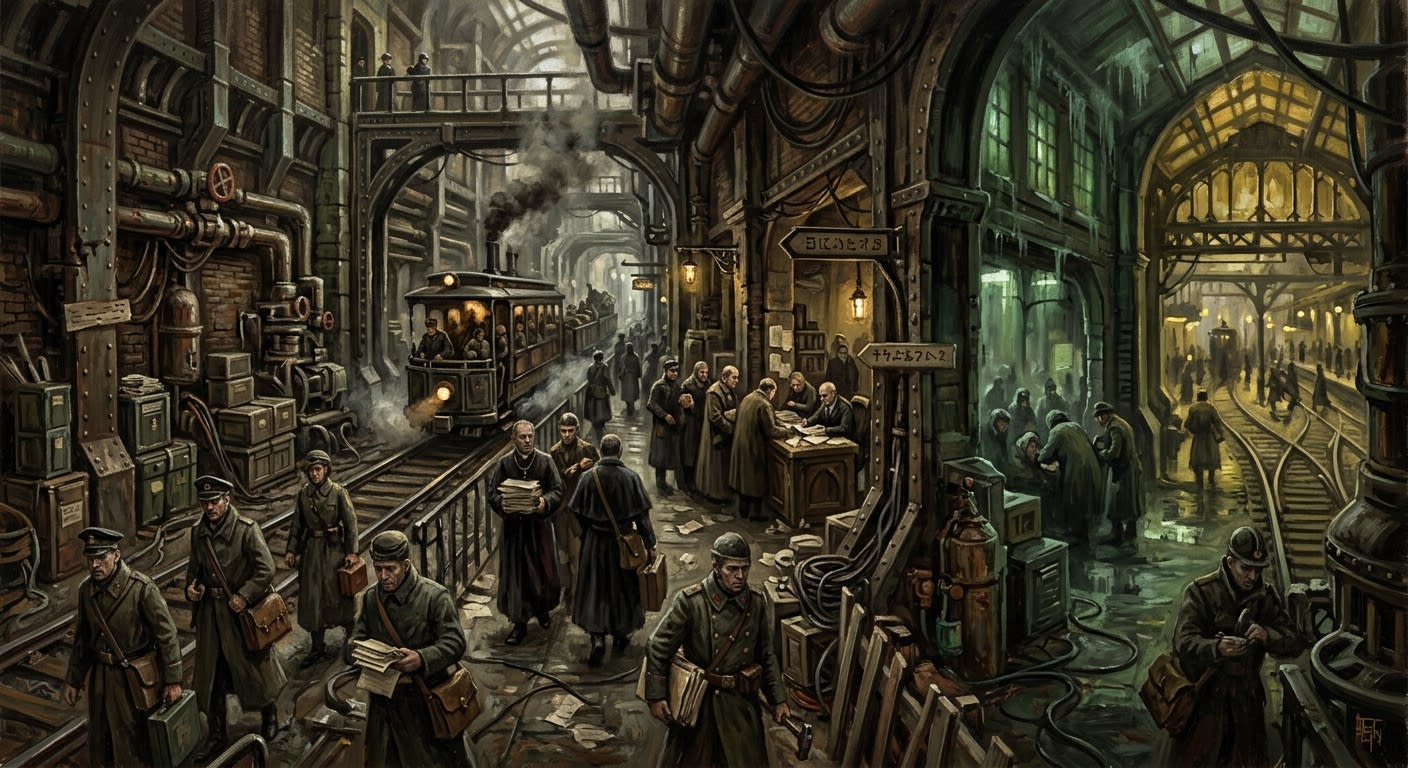
Central Corridor
Motion blurs the screams, which is why the Ledger loves trains
The Central Corridor is the Synod's middle artery: Munich's packed motion, Vienna's holy delay, Bratislava's damp throat, and Budapest's yellow pins.
Codex Ref. II.4.09-201

Central Corridor Command
Where a yellow pin decides who eats
The Bureau of War's logistics authority in Budapest's former Royal Palace, directing Central Corridor convoys to the forward bastions. Green moves, red is lost, and yellow requires decisions.
Codex Ref. VIII.7.04-201
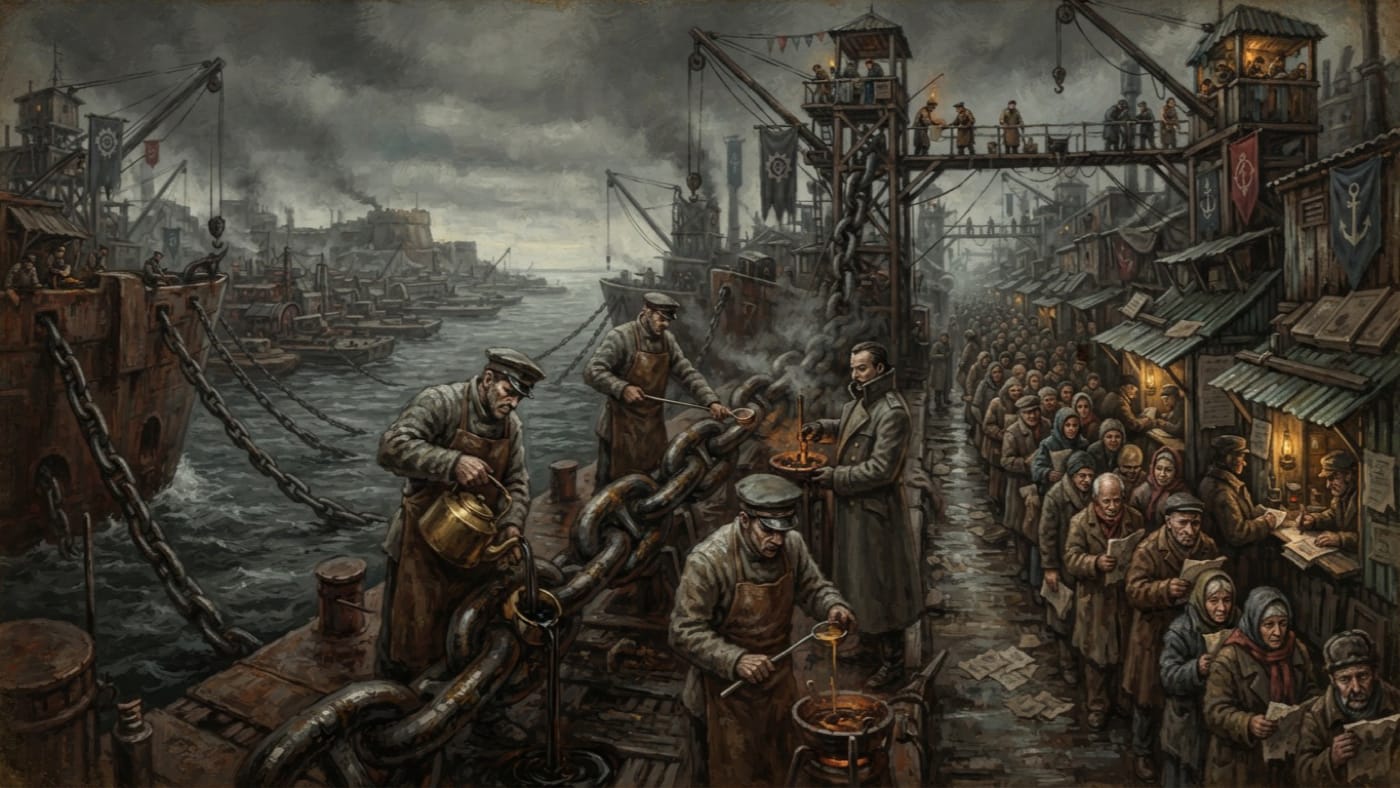
Chain Blessing
The chain is blessed; the debt keeps accruing.
An A.S. 201 survey of the Flotilla's spring blessing: oil and wax for the Grand Lash, half a day's rest for chain crews, and papers renewed at Seal Row. The iron is blessed; the debts continue.
Codex Ref. XIII.1.89-201
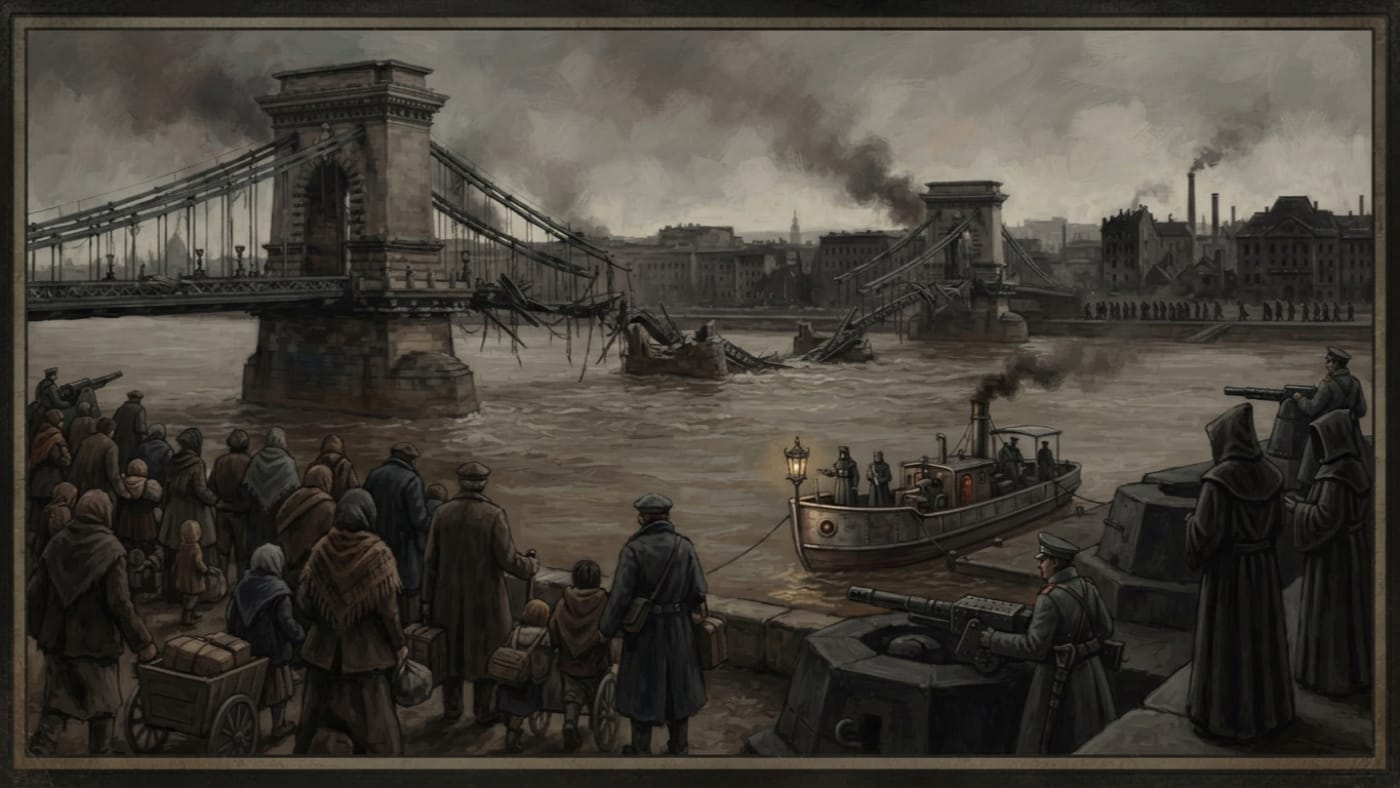
Chain Bridge
The crossing destroyed, the destination still pending
Budapest's last bridge held six hours after detonation in A.S. 122. Eight hundred refugees were crossing; the bridge is destroyed, their destination pending. Broken piers remain between Buda and Vacated Pest.
Codex Ref. II.4.09-122
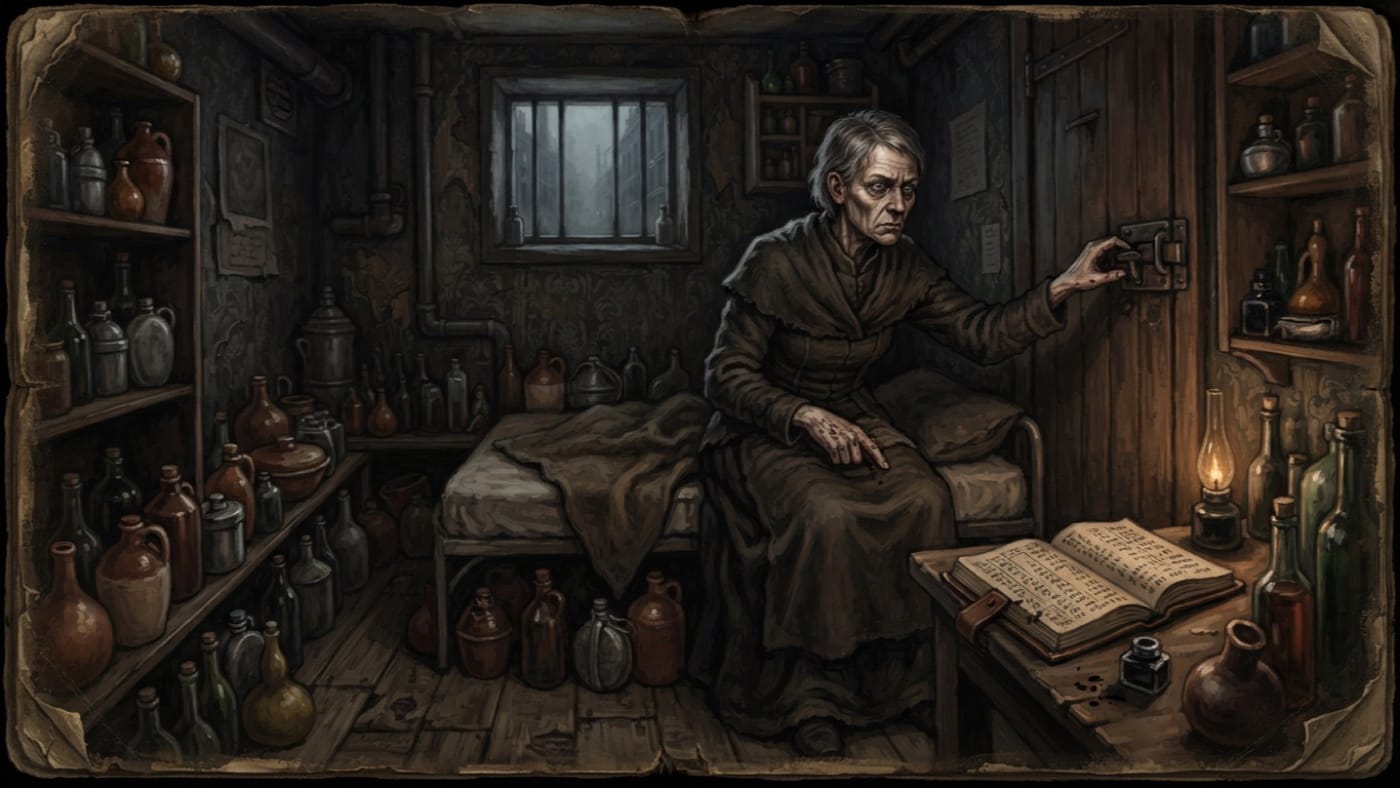
Chain-Sickness
The column ends; the count remains
The Handlers' name for duties that survive the Jubilee: compulsive lock-checking, counting, flinching at hymns and hoarded water. Mercy recognises no complaint; the ledger records success.
Codex Ref. XIII.1.225-201

Chainmaster
The binder of binders answers for every dirty hand
The Bureau of Purity's senior district rank: keeper of quotas, informants, seized words, and other officers' glasschains. Every dirty hand returns to the district seal.
Codex Ref. XII.49.02-002
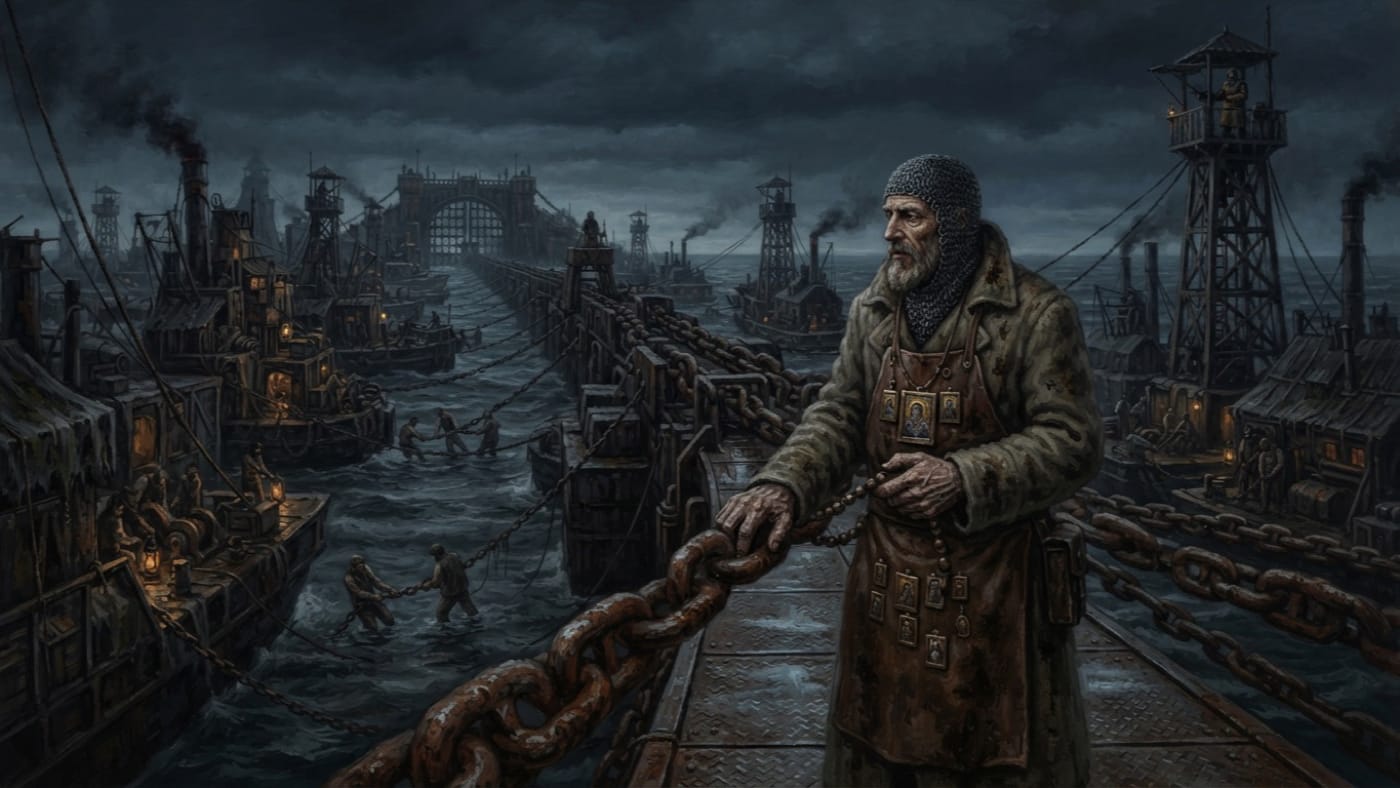
Chainmaster Olt
He keeps the city afloat and asks to be paid in sovereignty
Called Rosary-Iron, Olt keeps the Grand Lash of Saints Afloat. Three denied charter petitions have taught the Chapterhouse that sovereignty may begin with deciding which barge survives the next storm.
Codex Ref. III.2.01-154
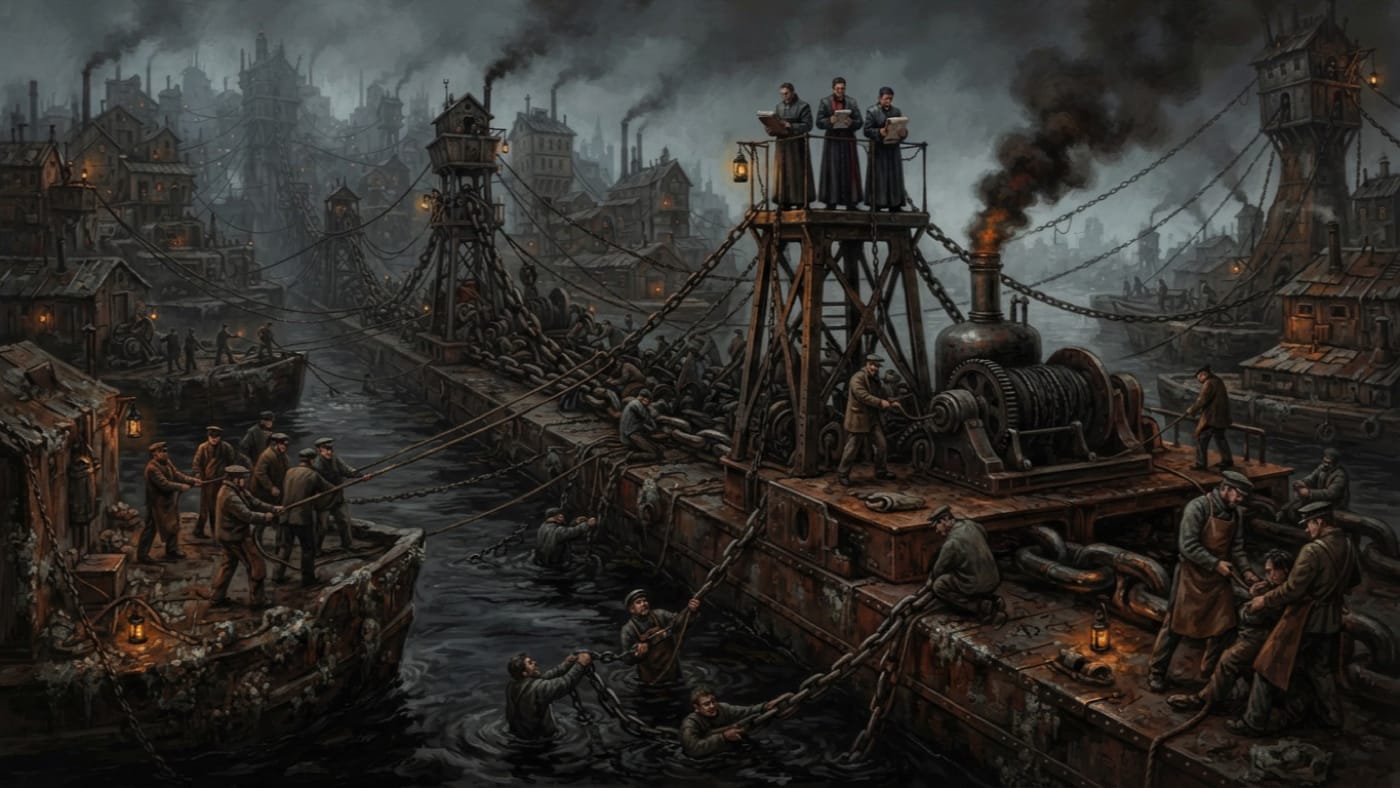
Chainwright Rosary
The Chapterhouse commands. The chain permits.
The Chainwright Rosary keeps Saints Afloat lashed together and seeks sovereignty through the iron it maintains. Three denied charter petitions have left the Chapterhouse's dependence intact.
Codex Ref. XII.44.09-002
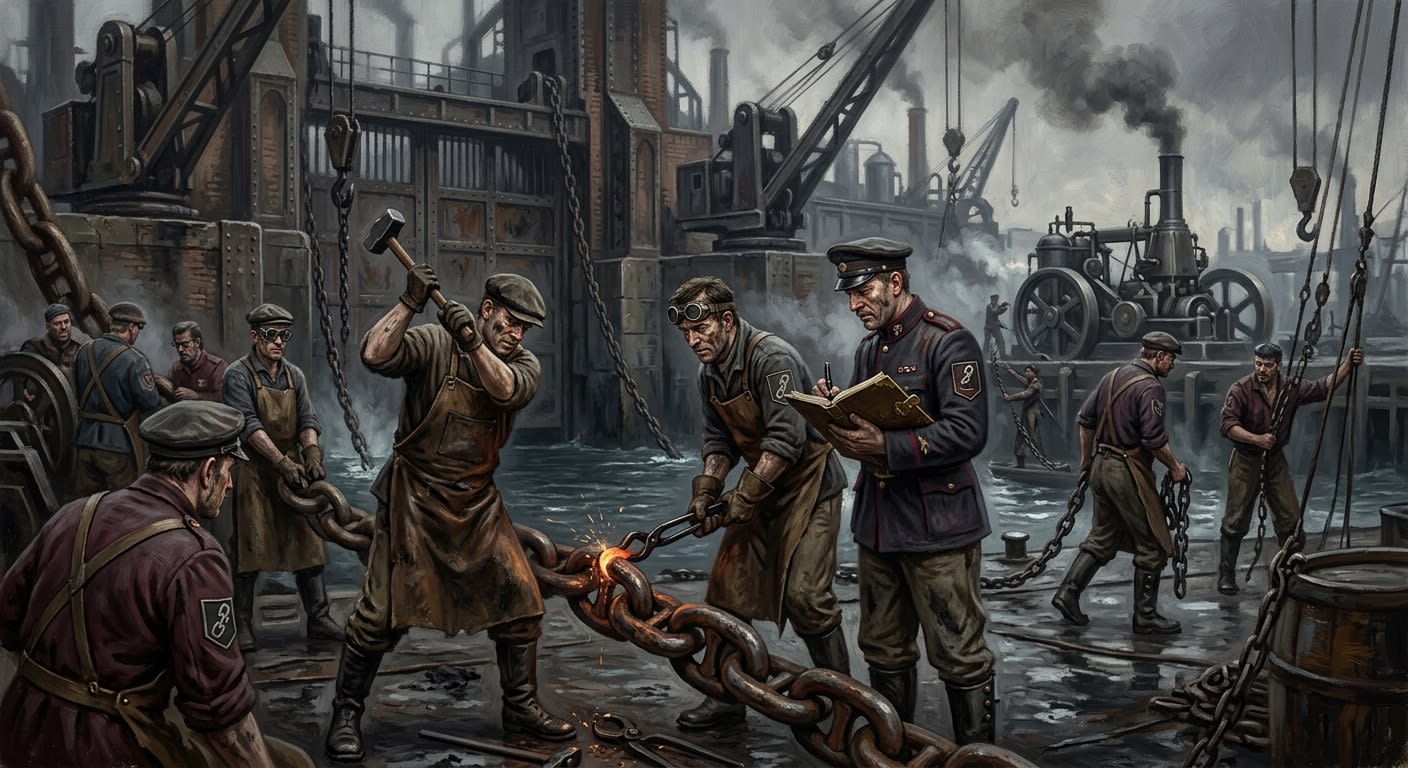
Chainwrights
Iron obeys because the right filthy hands count it
The Chainwrights keep Thessaloniki's harbor chains alive: makers, divers, riggers, singers, and liars whose iron counted when the bells went silent.
Codex Ref. XII.44.09-198
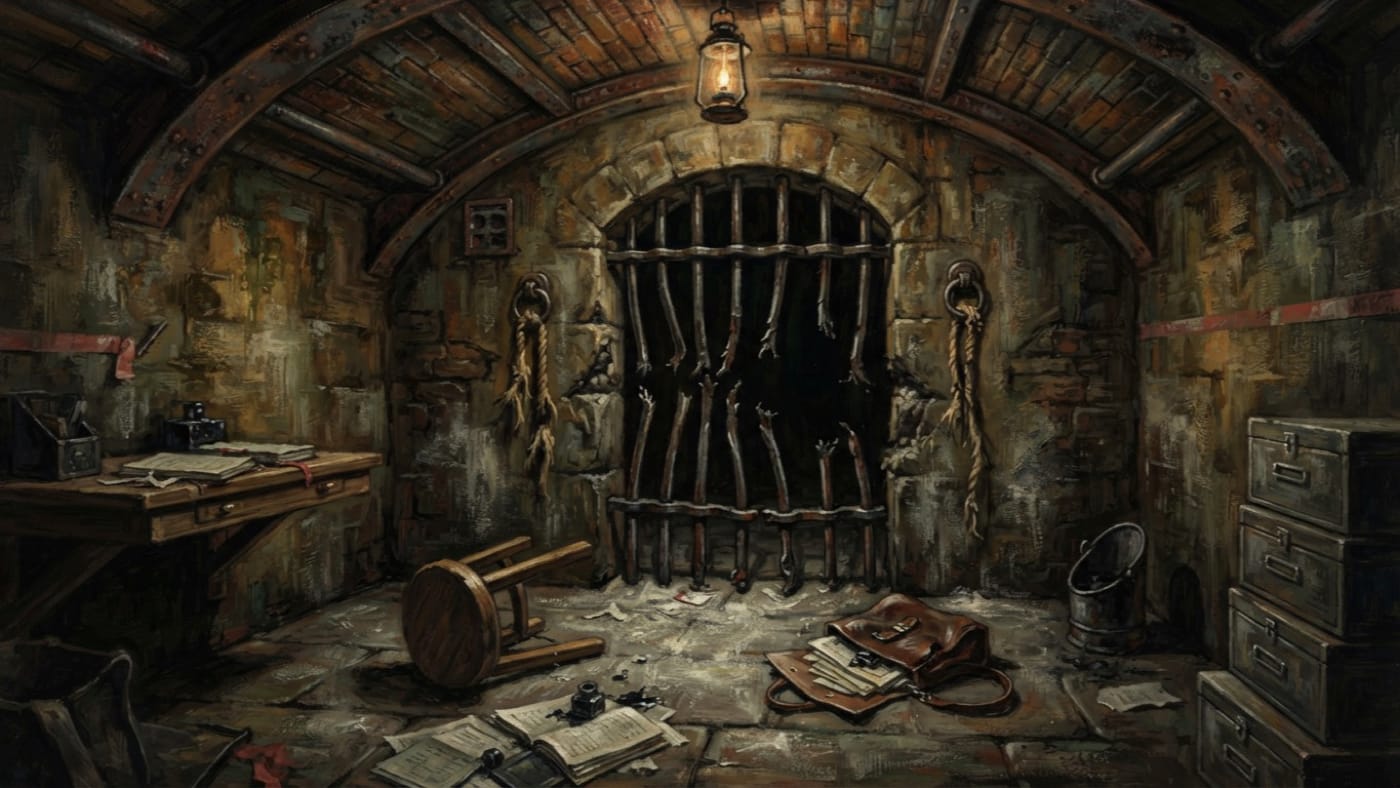
Chalk Pantry incident
The appetite that ate the interview
In A.S. 190, a Consumed subject ate the interview grille, two confession ropes, and portions of the notary. Chalk Pantry taught the Bureau to revise its manual before furnishing another interview.
Codex Ref. VII.8.10-190
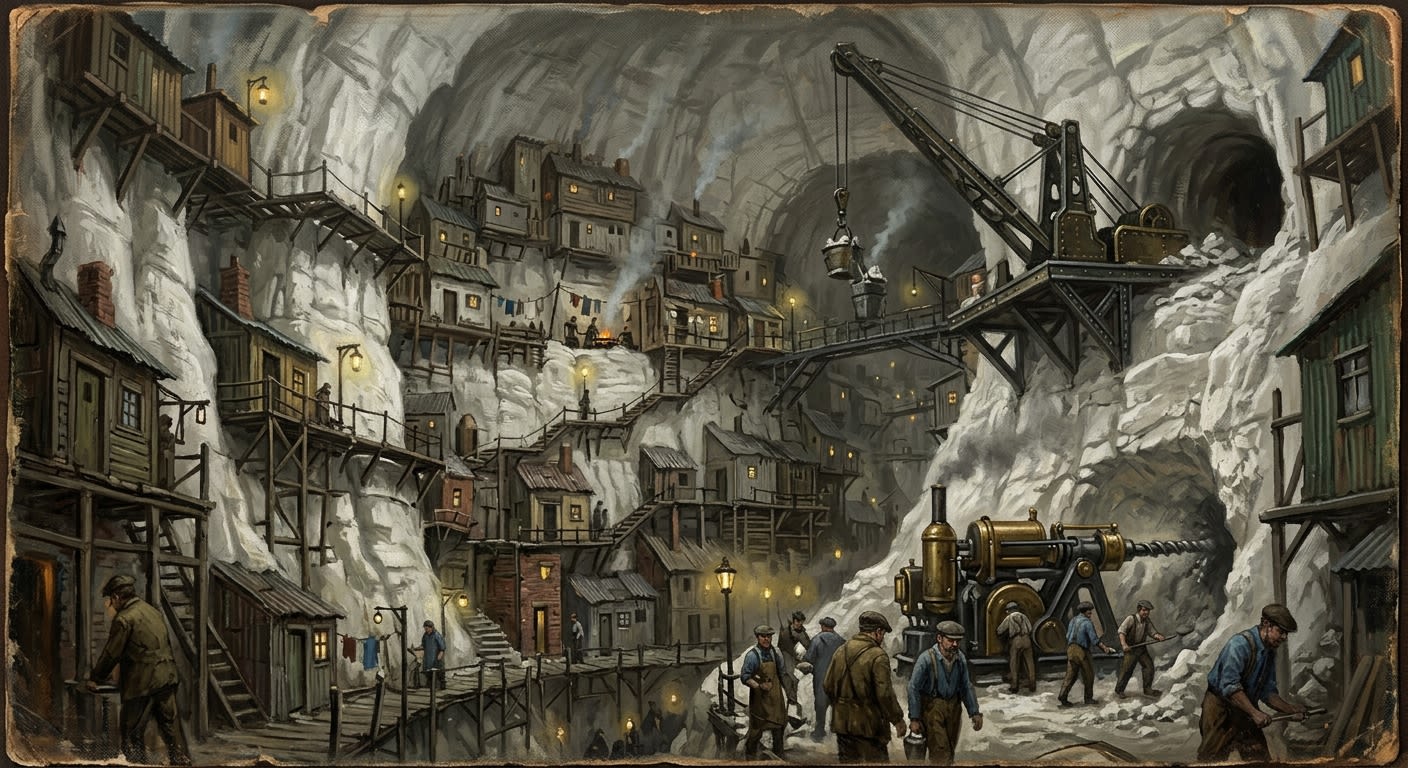
Chalk Warrens
The cliff's undercity, where rent is paid in breath
Worker-city beneath Calais, where quarry cuts became homes after the Great Breach, chalk writes inland, and every household owes the Wall a throat.
Codex Ref. II.4.09-071
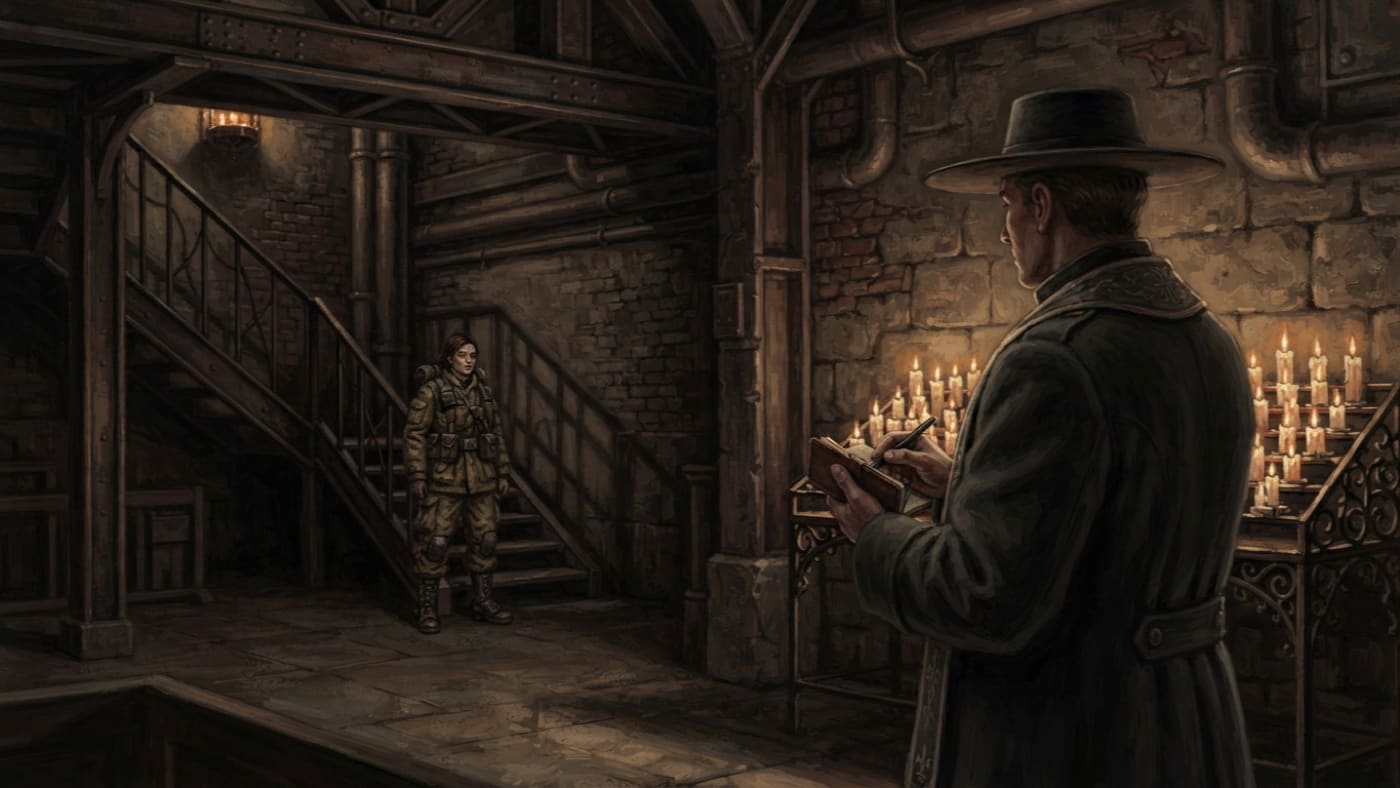
Chaplain Orr
The archive kept the opinion and mislaid the biography
A.S. 201 archival survey of Chaplain Orr's surviving appearance in the Voss dossier: a judgment on prayer, an exact observation, and a filed concern. The archive kept the opinion and mislaid the biography.
Codex Ref. III.2.01-585
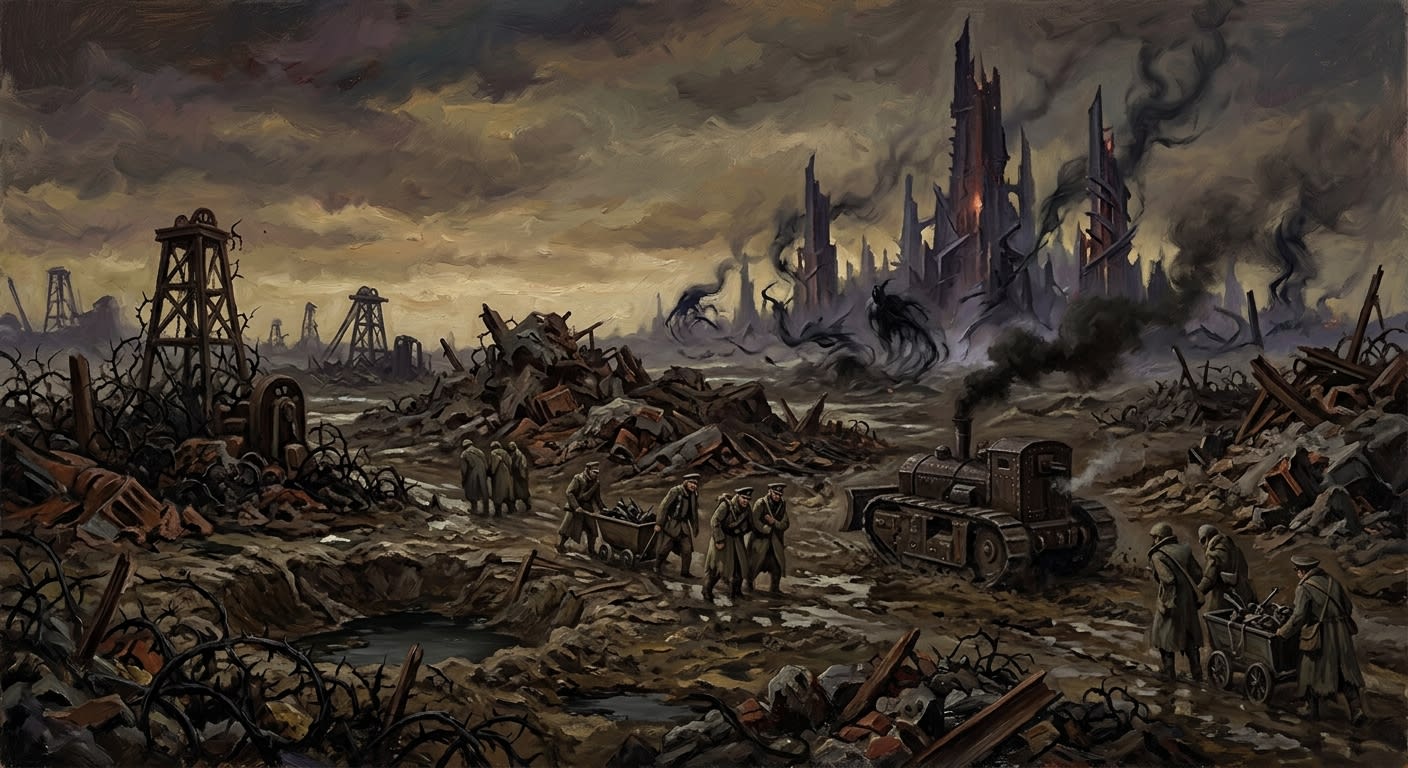
Charnel Lands
Where geography continues after mercy has been denied
The Charnel Lands are Zone 6, the demonic territories east of the Sagittal Line: geography made hostile to custody, with wilderness and cemetery both demoted to inadequate clerkly metaphors.
Codex Ref. II.6.06-001

Charter Baron Gruhl
The man who made forty-one deaths balance
Charter Baron Gruhl held seven Budapest-Irongate wound-sites, lost forty-one workers in one season, filed them as fuel-adjacent assets, and retired with a pension.
Codex Ref. III.2.01-149
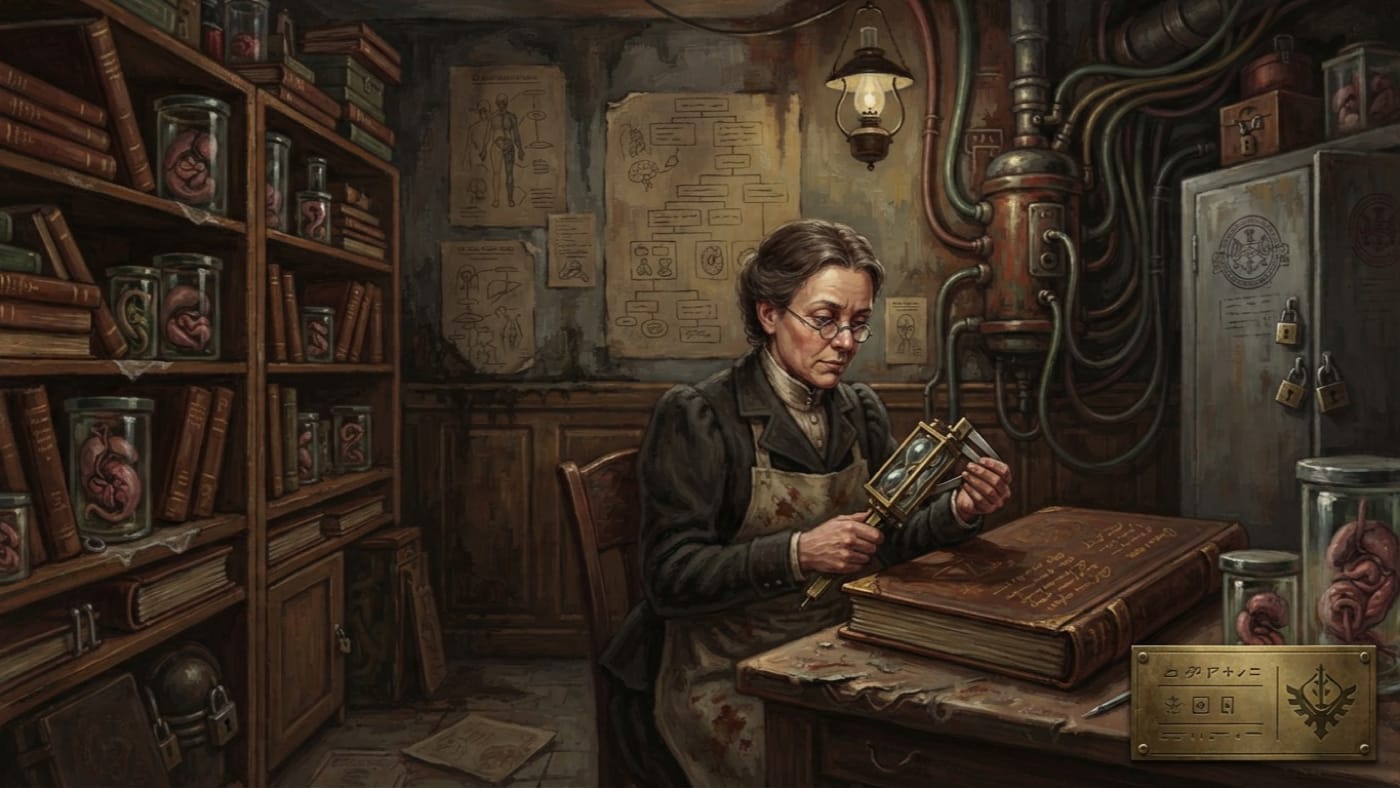
Chief Anatomist
Absent from the procession. Indispensable to the front.
The Chief Anatomist has no Synodal rank and every garrison's attention. Doctor Trenn holds the office: measurement, classification and a disclaimer that travels with each finding.
Codex Ref. XIII.1.07-082

Chief Archivist
The form asks for rank; it does not ask for conscience
The Bureau of Records' countersigning office: a Chief Archivist of at least Third Rank authorises Form 77-D to proceed. The folio is checked twice. The reason is filed elsewhere.
Codex Ref. XII.34.02-001

Chief Sealhand Orin
The saw removes tissue; his seal removes status
Chief Sealhand Orin commands Marrowgate's surgeon-notaries. His ring makes surgery lawful, the cut-stamp makes a patient someone else, and mercy waits for authentication.
Codex Ref. III.2.01-201
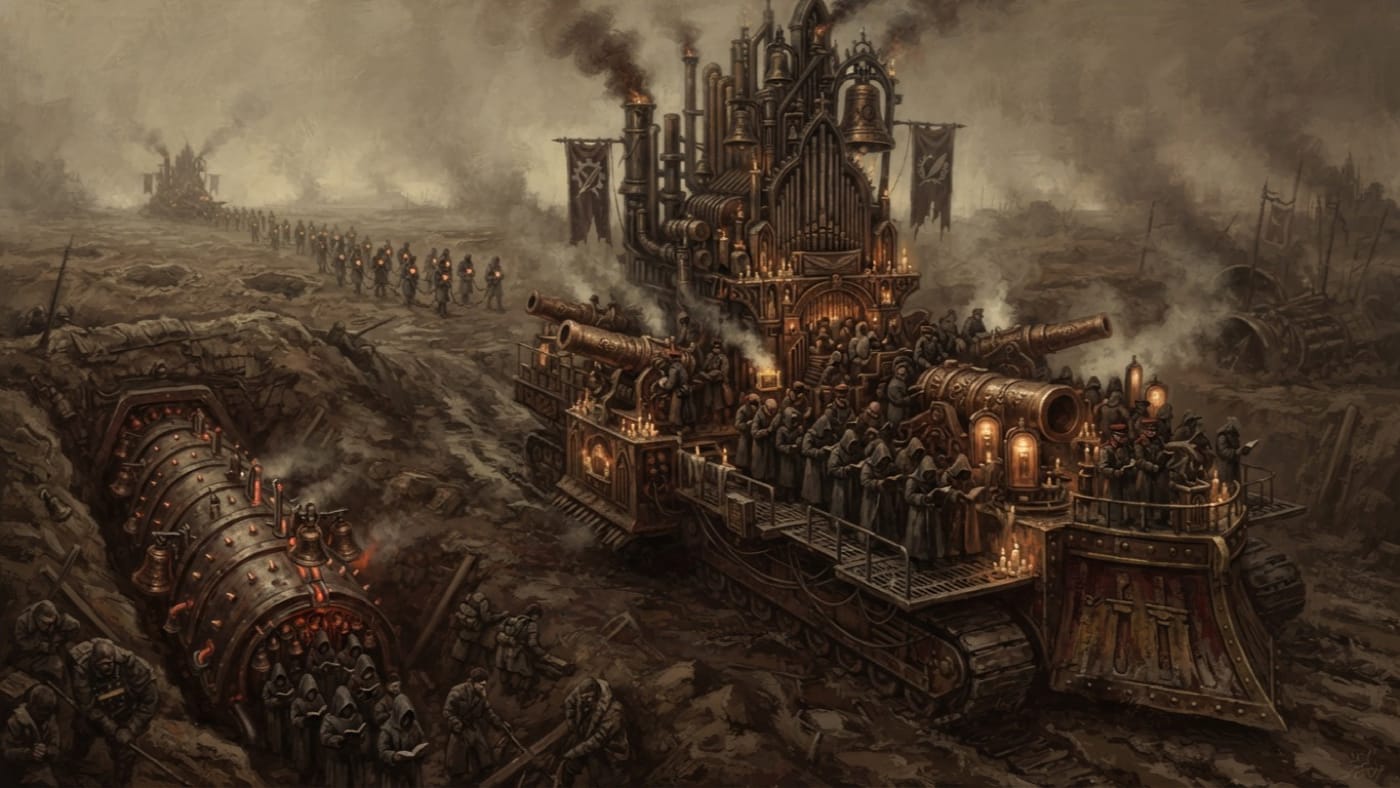
Choir-Engines
The Creator grants the miracle; the singer pays for it
The Sunken Choir, Processional Arsenal and Chorus Absolvers turn sanctioned prayer into siege work under Orison's War Directorate. The Creator grants the miracle; the singers pay in hearing, throats, lungs and years.
Codex Ref. XIII.1.32-001
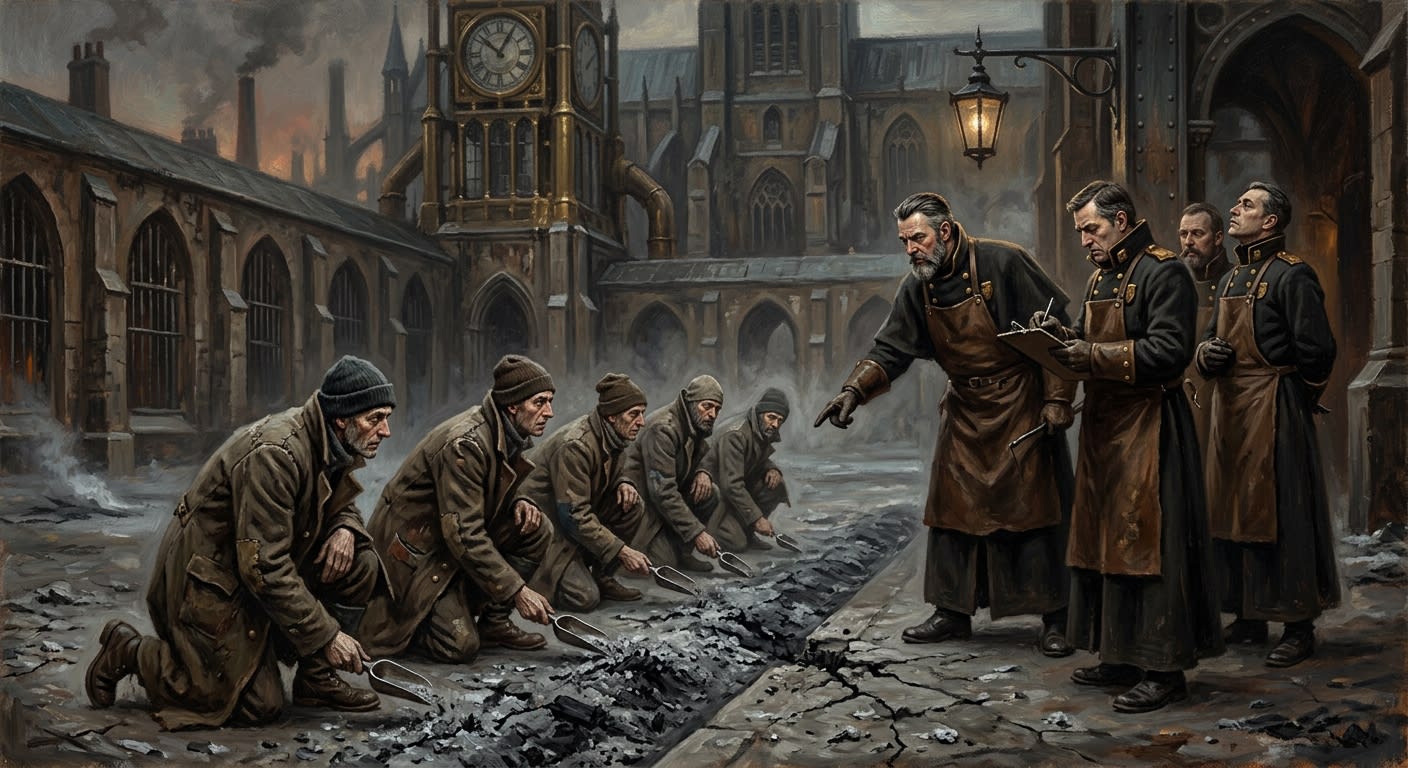
Cinder Trials
Where Toledo lets ash pretend to be law
Toledo's forecourt ash rite, born from post-Sundering martyrdom law, where grey crusts crack at Ninth Bell and Doctrine calls the fracture a verdict.
Codex Ref. XIII.1.56-001
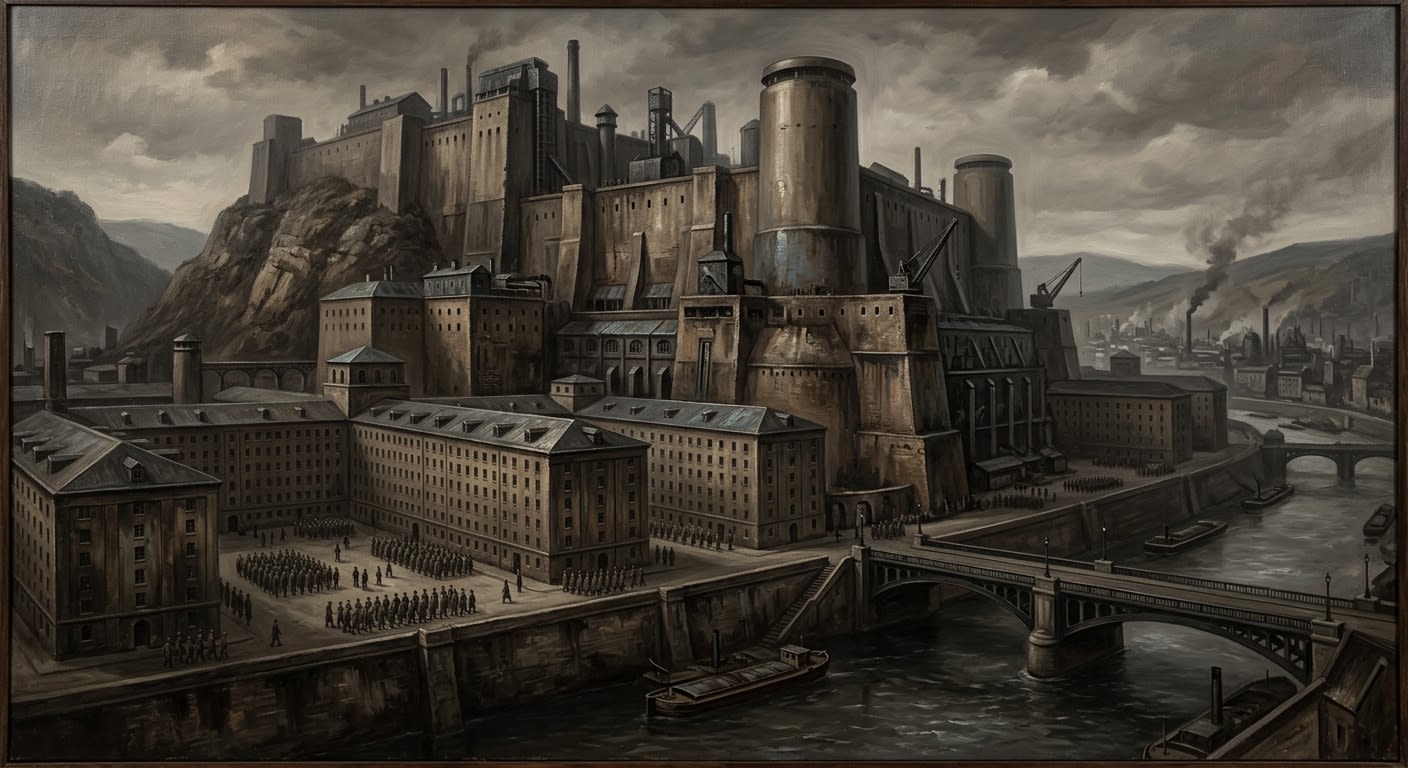
Citadel of Lyon
The hill where maternal invention meets drill tempo
The Citadel of Lyon is the Rhône corridor's catechism-barracks and civic warning, fixed after the Levy protests to train boys and supervise joy.
Codex Ref. II.1.01-004
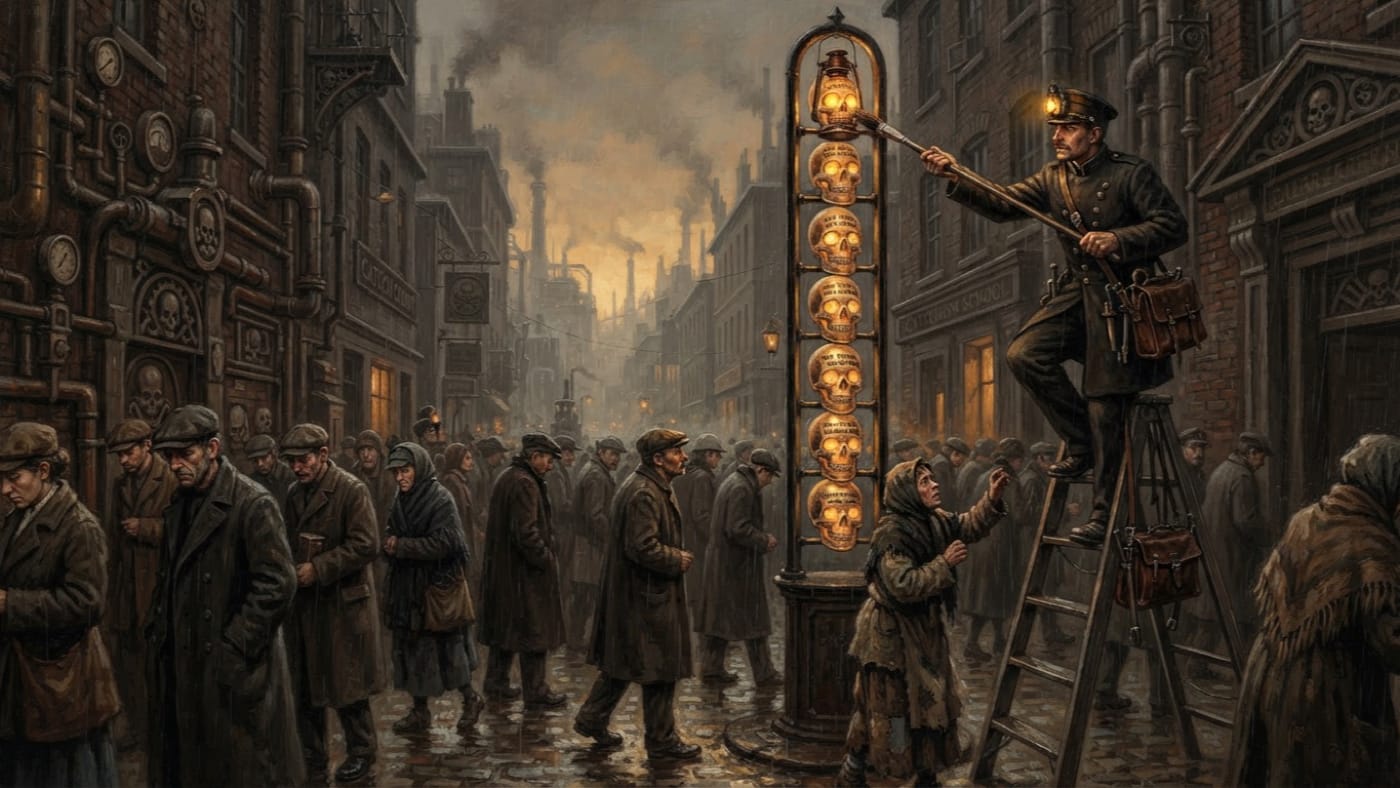
Civic Doctrine
A sentence in the ledger becomes a lesson in the street
A recorded sentence becomes compulsory street instruction: condemned names lit in Glass Skull Stacks, maintained by Pillar-Keepers and challenged by Mercy Cult blanks. The citizen need only pass beneath.
Codex Ref. XIII.1.07-201
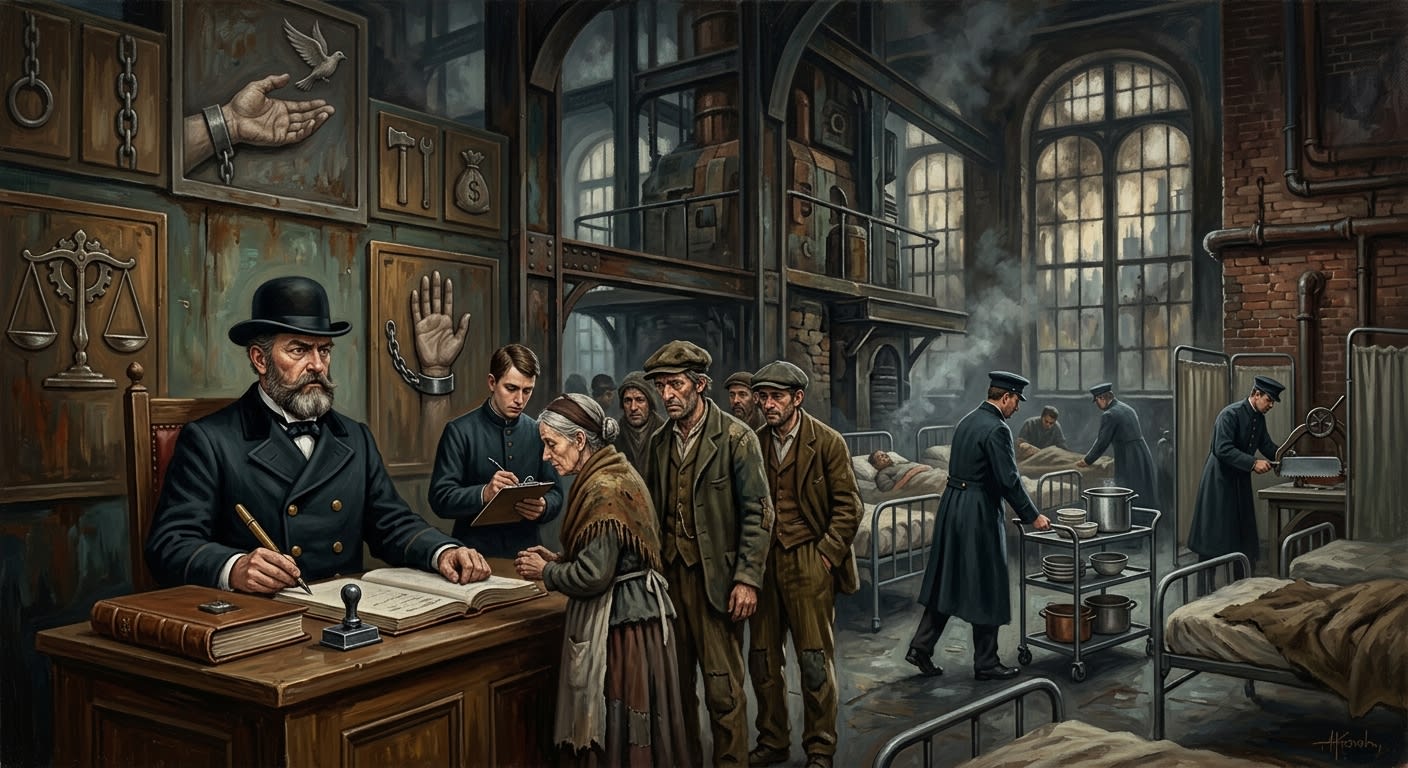
Civic Triage Tribunal
The court where wounds learn their price before they heal
Marrowgate's Civic Triage Tribunal turns beds, saws, broth, labour, debt, and death into rulings; mercy enters only after allocation.
Codex Ref. XIII.1.88-083
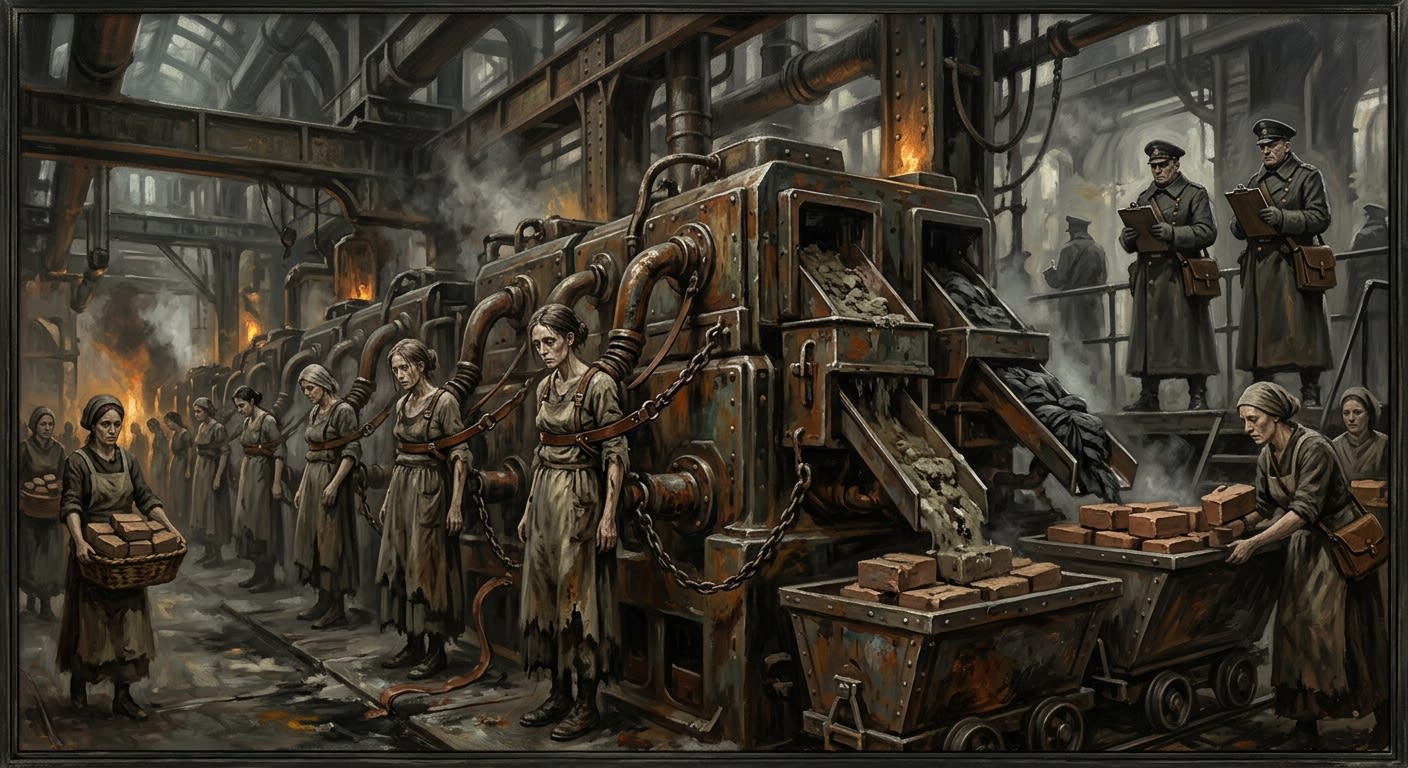
Classification 7-F
The file by which the Bureau teaches horror to stand in line
Classification 7-F names Reproductive Infrastructure, Hostile: the sealed category by which Ash-Mothers, mortar, obedience, and enemy supply become one file.
Codex Ref. XIII.1.72-004
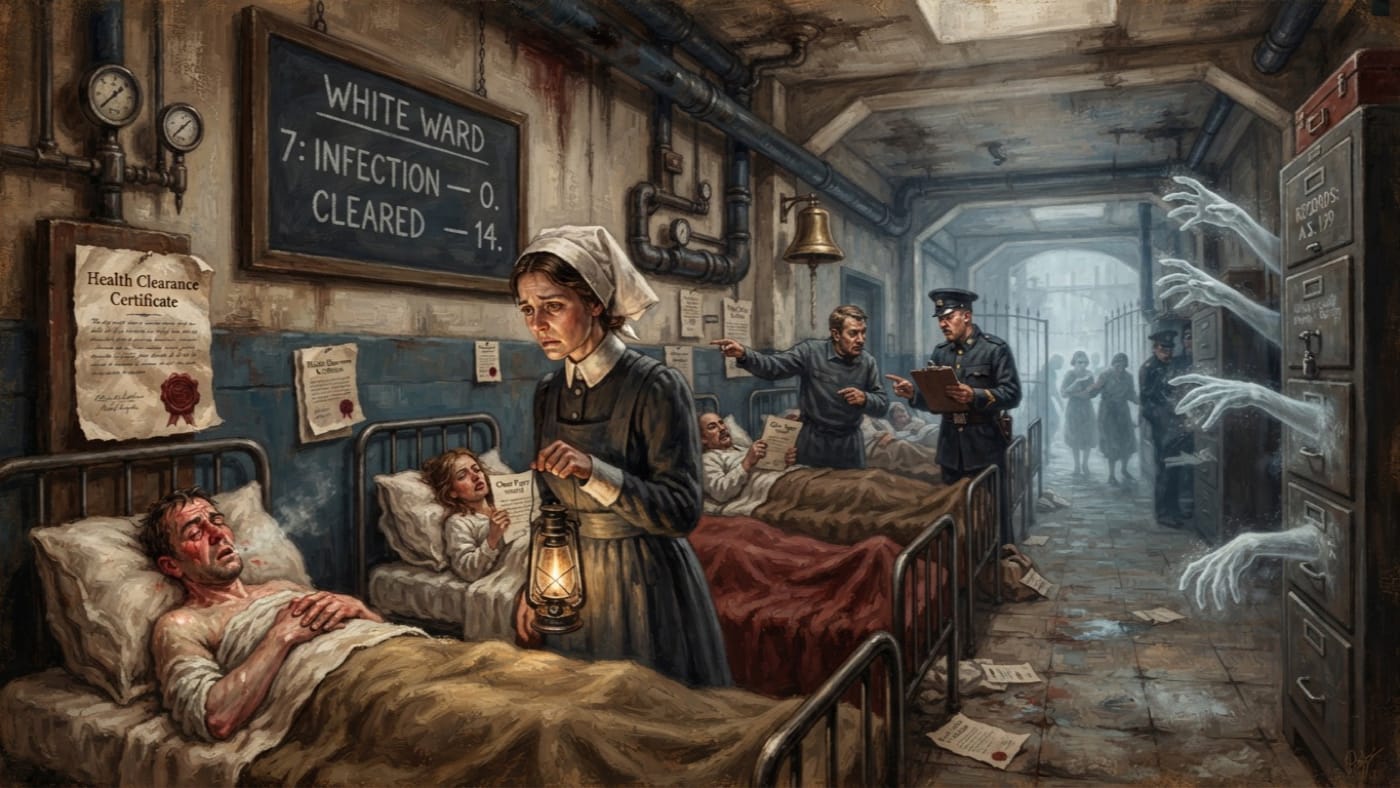
Clean Paper Plague
The certificate passed inspection. The fever passed the gate.
In A.S. 199, Marrowgate certified feverish patients as healthy and let them through its cordons. The official audit found tolerable fraud; the Marrowwind corrected the ledgers without such restraint.
Codex Ref. VII.4.20-199
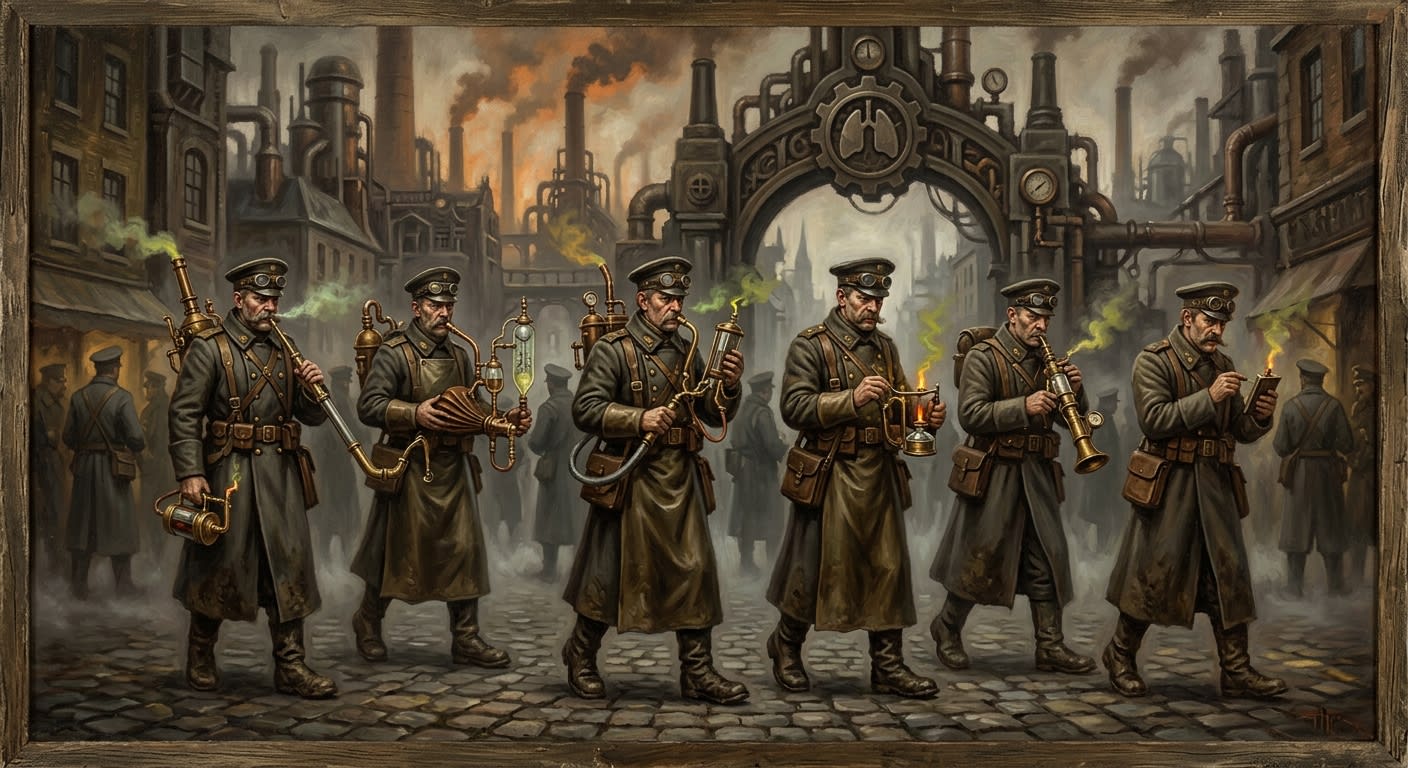
Clean-Lung Purists
The faction that believes the printed rule
Ninth Mark Fume-Inspector faction devoted to total detection of prohibited emanations, useful as conscience and purge tool, intolerable wherever command requires a city to keep breathing.
Codex Ref. XII.30.02-001
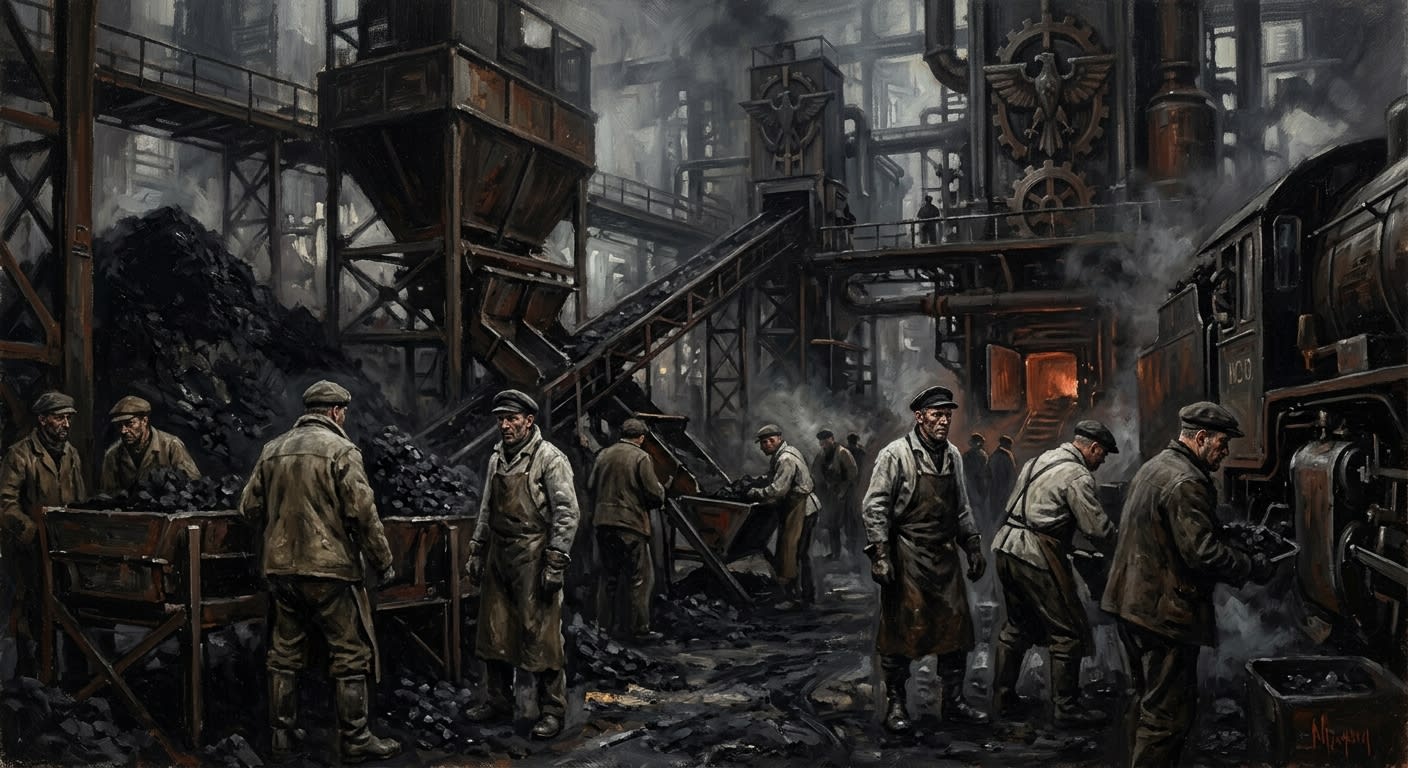
Coal-Heavers' Union
The black yard keeps winter from becoming doctrine
Hamburg's Coal-Heavers' Union rules the black yards, coal chutes, tender feeds, night bunker crews, and the soot-dark arithmetic by which northern bastions survive winter.
Codex Ref. XII.52.03-001
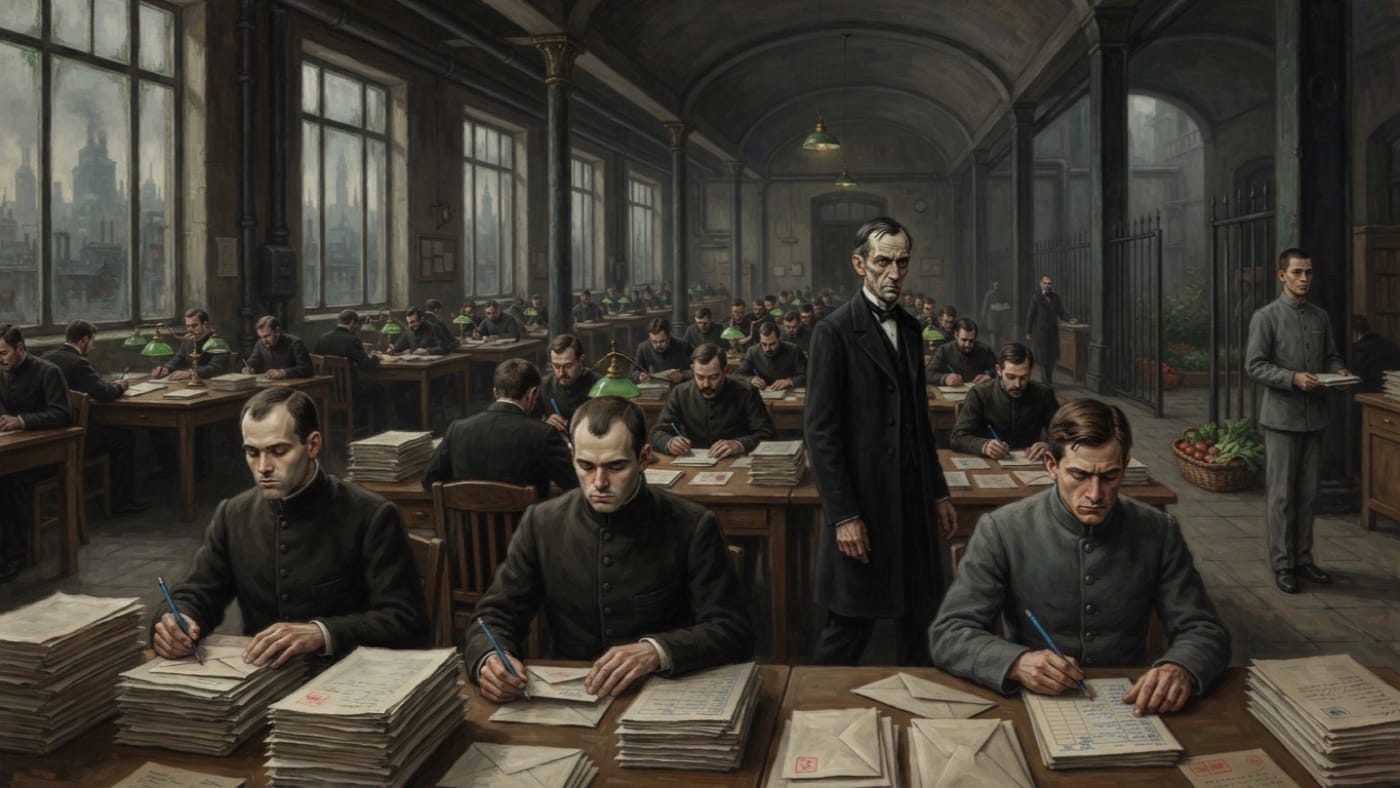
Code Seventeen
A man remains on the rolls; what happened to him does not
Code Seventeen keeps anomaly survivors on the Bureau of Records' rolls and their former postings out of reach. At Sofia, a desk may do the work of mercy.
Codex Ref. XIII.1.17-201
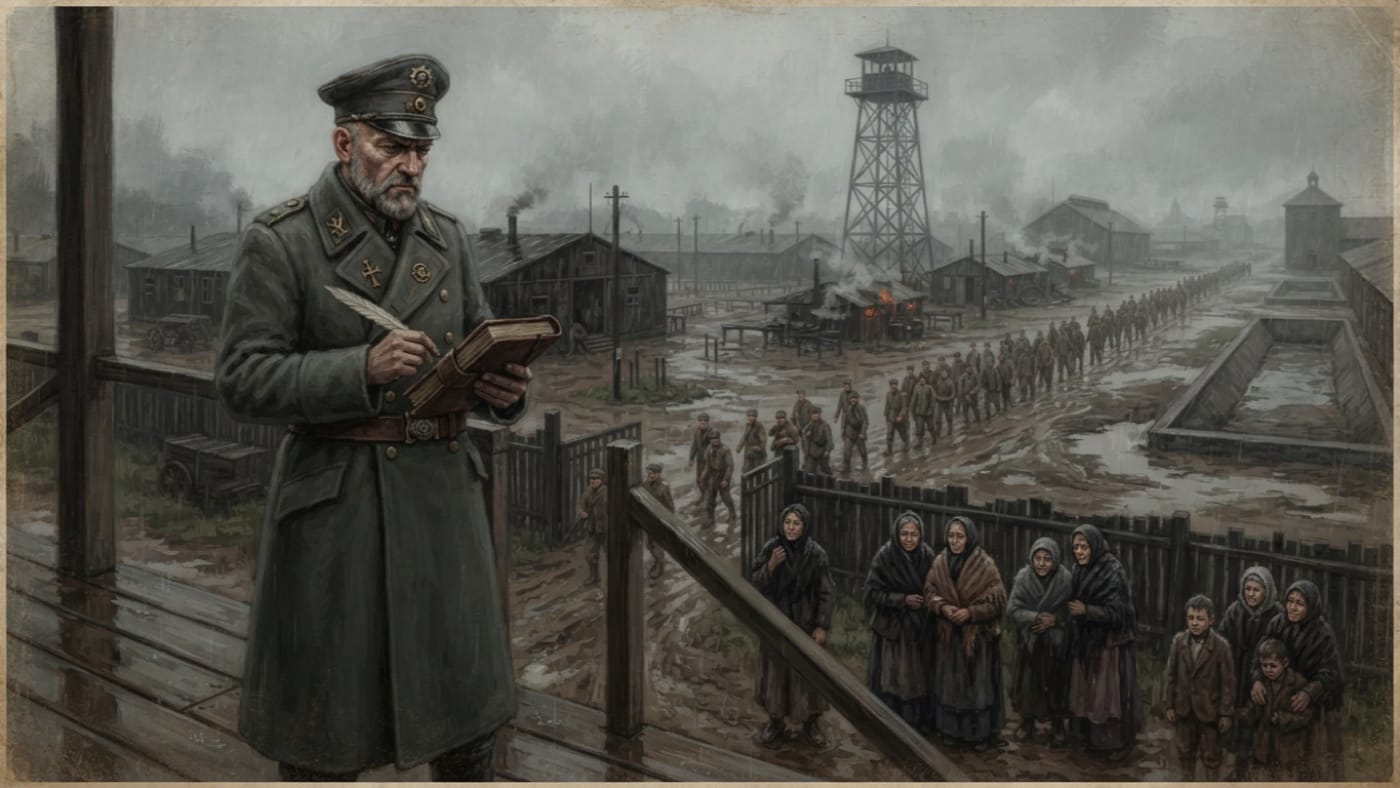
Colonel-Catechist Othmar Vey
Two trenches, three kitchens, and a roof for grief
Othmar Vey commands Stuttgart's catechism-barracks in the A.S. 201 survey. His recorded petition asks for another mud trench, three ration kitchens, and a roof for families; Doctrine approves the instincts and delays the silver.
Codex Ref. III.2.01-201

Colonel-Inquisitor Aras Venn
Every man returned. The file is closed.
Aras Venn led the First Shadow Court Expedition in A.S. 72. Every man returned. Venn died in an Adriatic sanitarium in A.S. 94; the phrase covering his quarters remains classified.
Codex Ref. III.2.01-677

Commandant Hadrik Sorn
The man who keeps the mountain alive by deciding what may die
Commandant Hadrik Sorn holds Bastion-Irongate's Transit Spine by gate keys, denial charges, pressure doctrine, and a mercy so cold it has become load-bearing.
Codex Ref. III.2.01-048
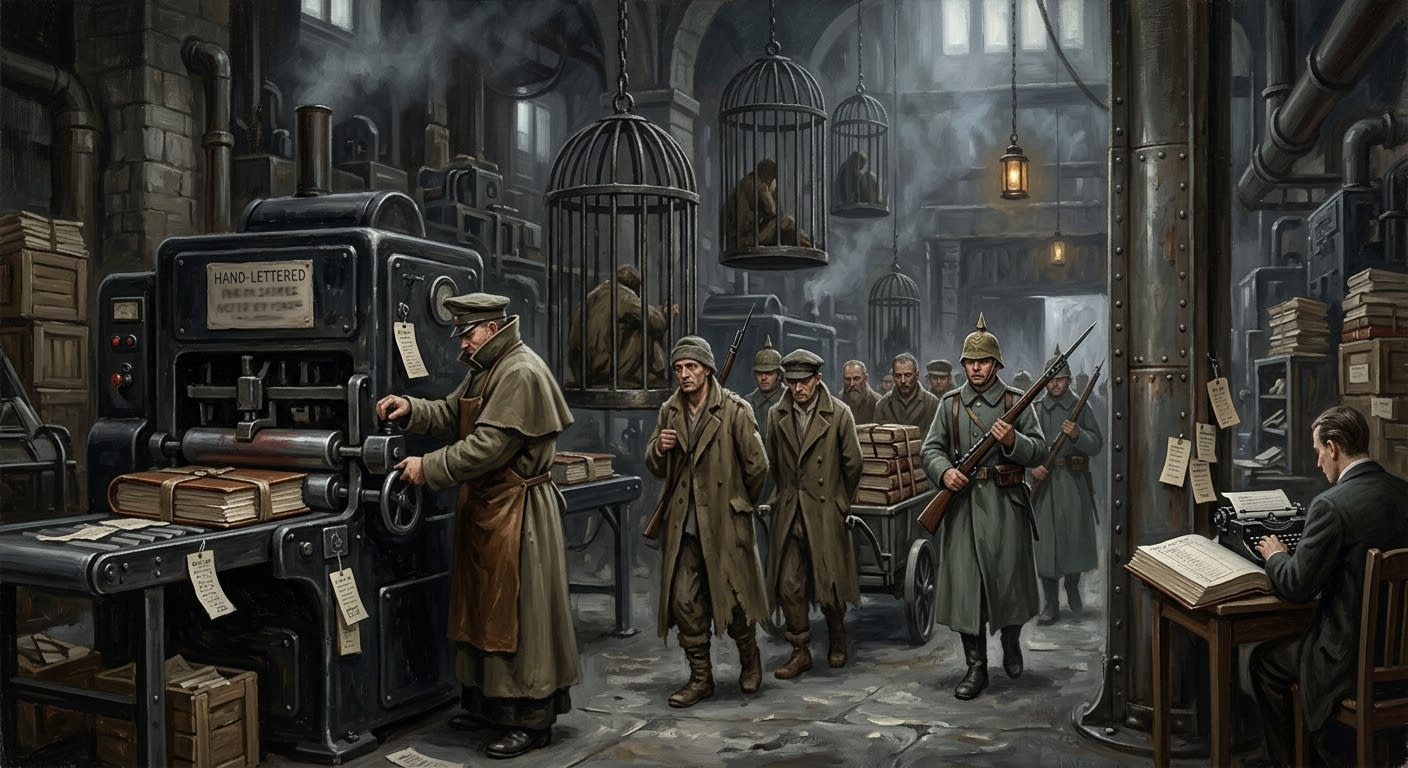
Commentaries on Faithful Severity
The book that taught cruelty to file receipts
Severian's Commentaries turn cruelty into apparatus: cages, tongues, households, witness columns, and the tidy receipt by which harm becomes Doctrine.
Codex Ref. XIII.1.04-134
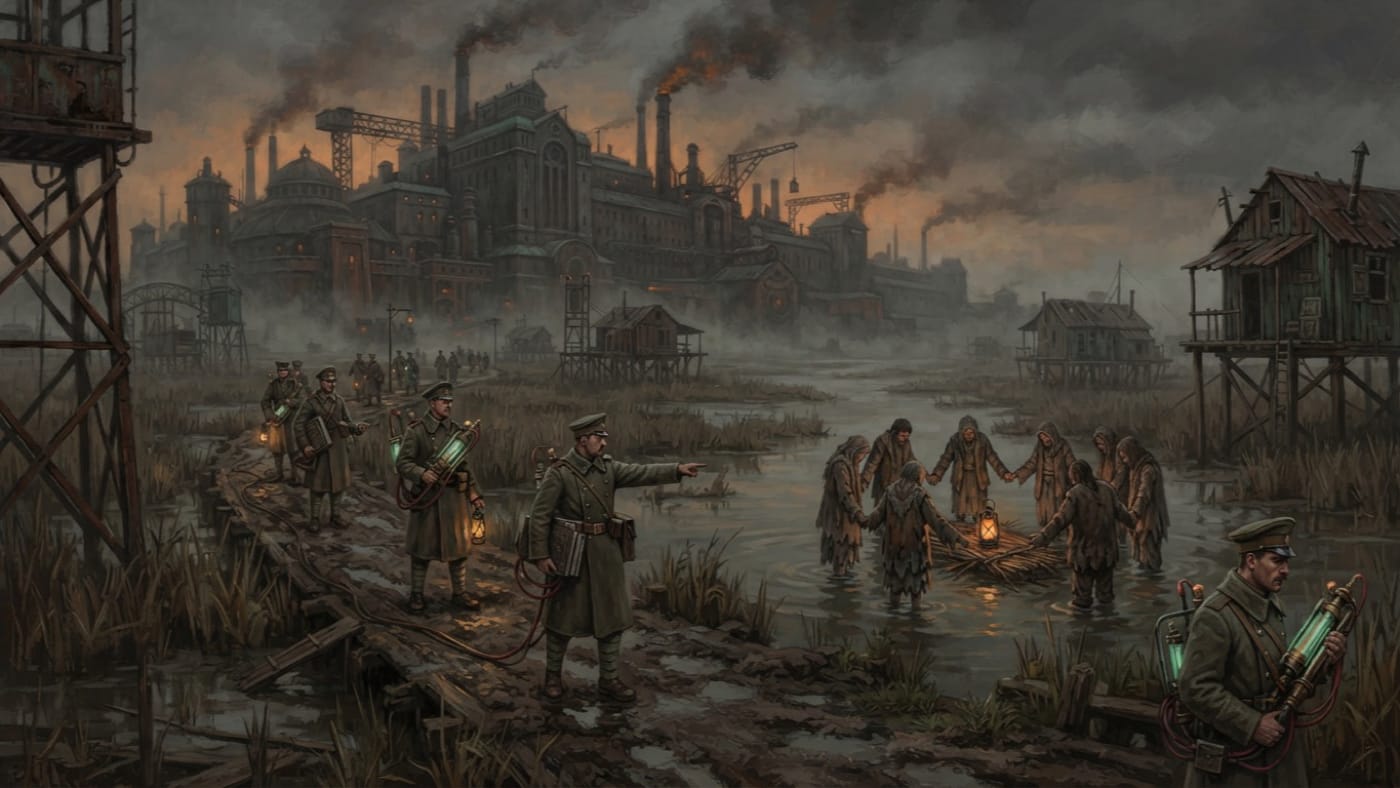
Compendium of Proscribed Devotional Practices
A number for the practice; no answer for the marsh
Subsection 14.iii supplied the Bureau of Purity's A.S. 196 classification of the Somnolent Communion Cells: Sloth-Heresy, Passive Variant. The practice was numbered; the marsh remained unimpressed.
Codex Ref. XIII.1.14-196
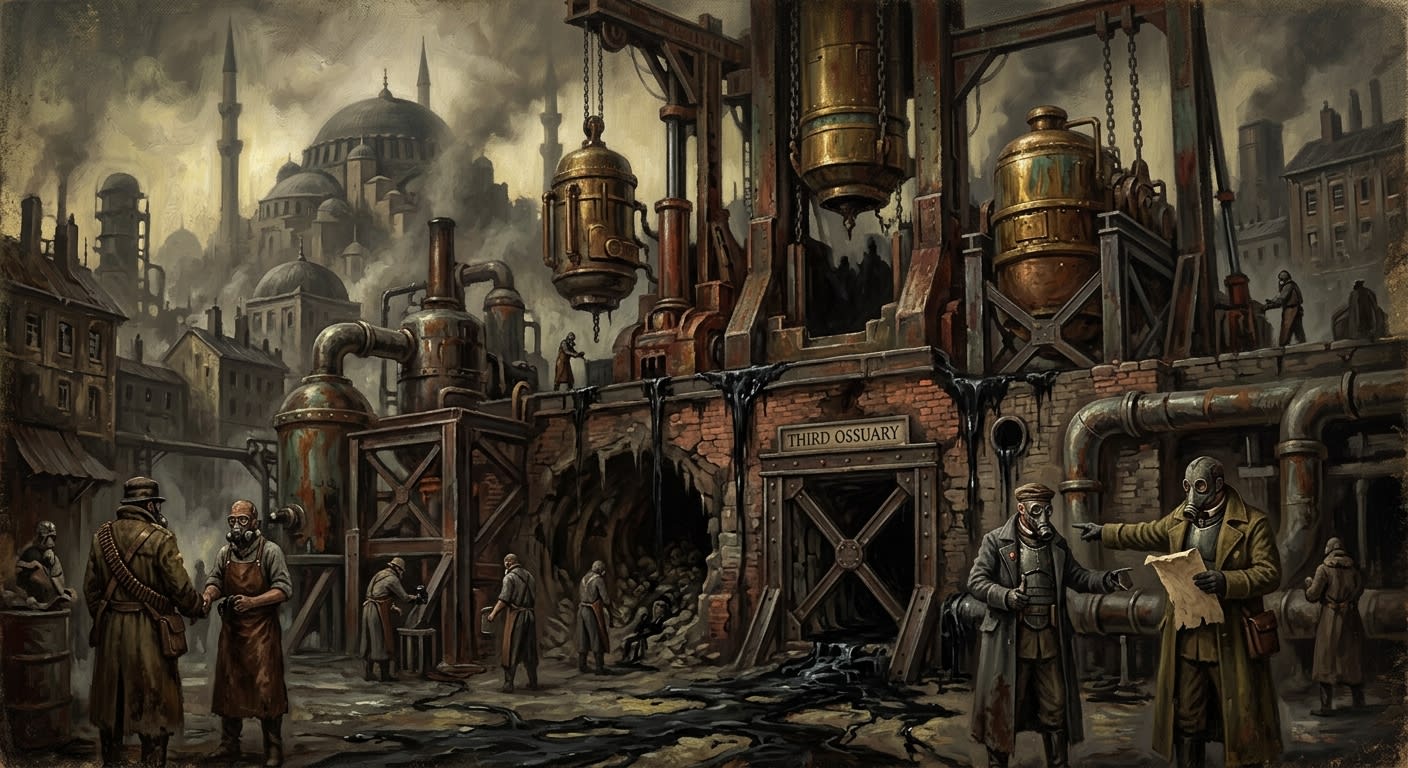
Compound 7
The gas that lifts cathedrals and smells like old confession
Compound 7 lifts the Vigil Arks, refuses flame, contracts toward relics, and leaks from the Third Ossuary beneath Constantinople with less generosity each season.
Codex Ref. XIII.1.21-003

Concordat settlement
Five masters, one servant, and the servant holds the keys
The A.S. 90 settlement at Strasbourg recognised Passage's authority over movement while preserving five offices' competing claims. The road acquired one keeper and the keeper five masters.
Codex Ref. III.1.02-090
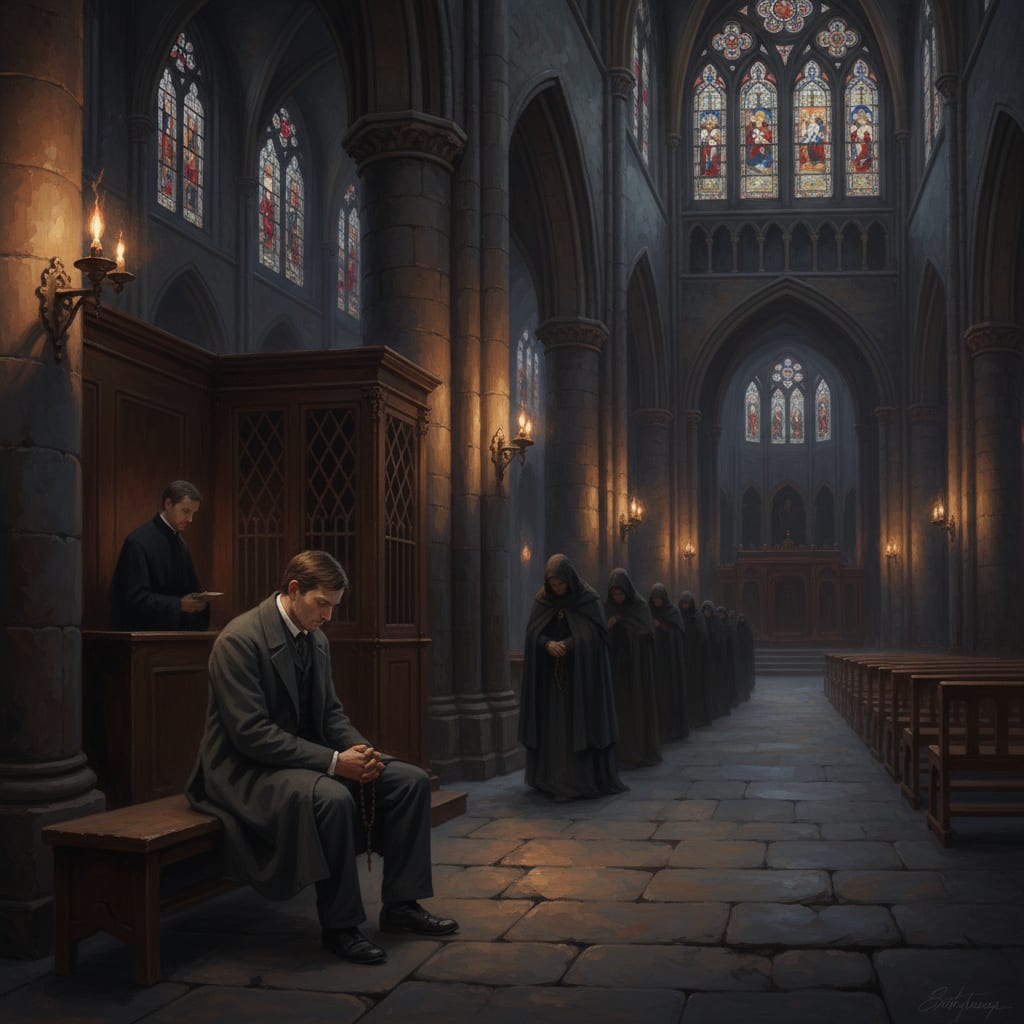
Confessarii
Two hundred and eighty-six reports filed; three blank pages received; the system functions as intended
The Confessarii are the Bureau of Shadows' listening network, which does not exist because the Bureau does not exist. They attend. They absorb. They file. The courier departs. Nothing is acknowledged. The system functions as designed.
Codex Ref. XIII.1.06-001
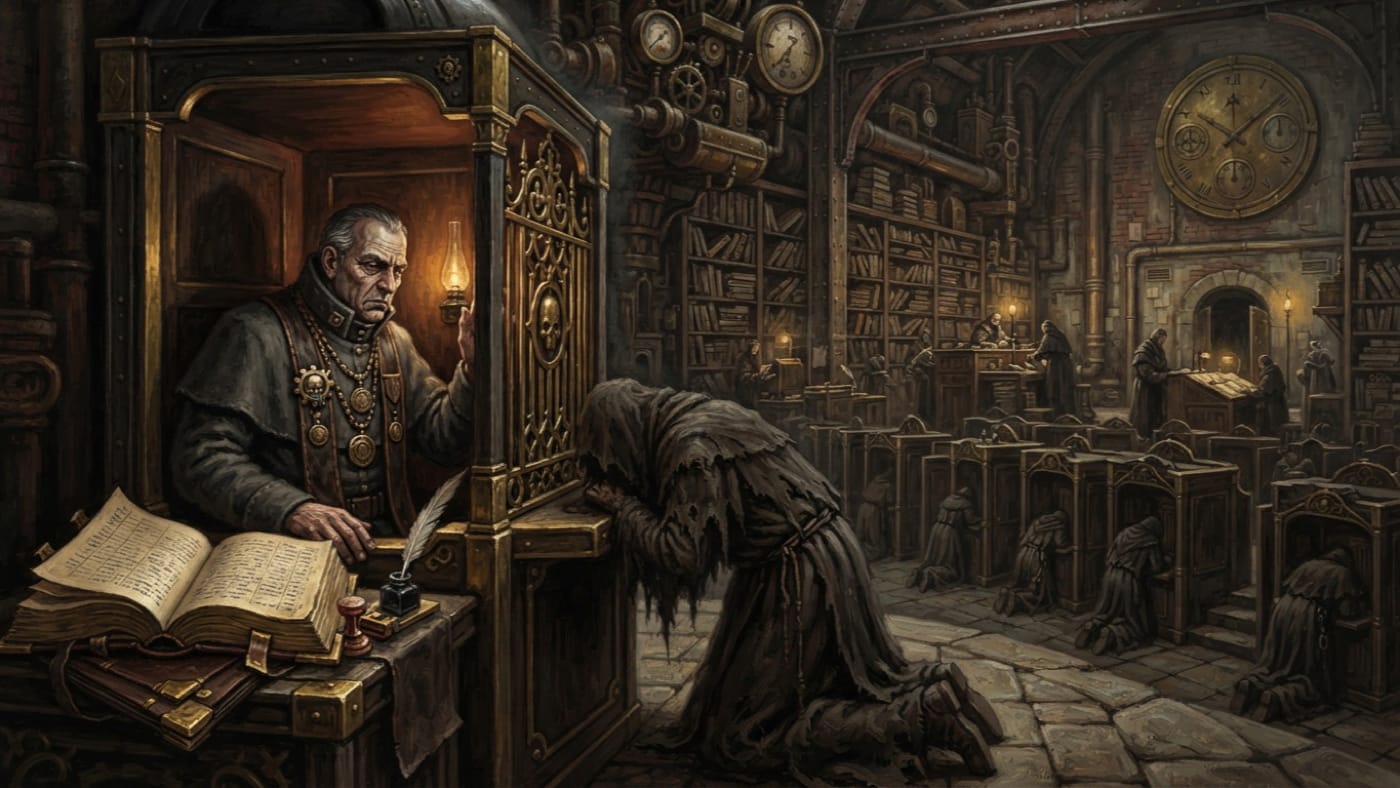
Confessors
The penitent goes home lighter. The register stays full.
The parish Confessor absolves the penitent and records the sin. I survey the ordained listeners who keep the Ear of the Synod open, from parish grilles to baptismal duty under Standing Order 88-F.
Codex Ref. XII.9.03-201

Continental Levy
The decimal point where obedience becomes infantry
The Continental Levy is the Synod's permanent tithe of flesh, born from the A.S. 110 crisis and refined into household arithmetic.
Codex Ref. XIII.1.54-001
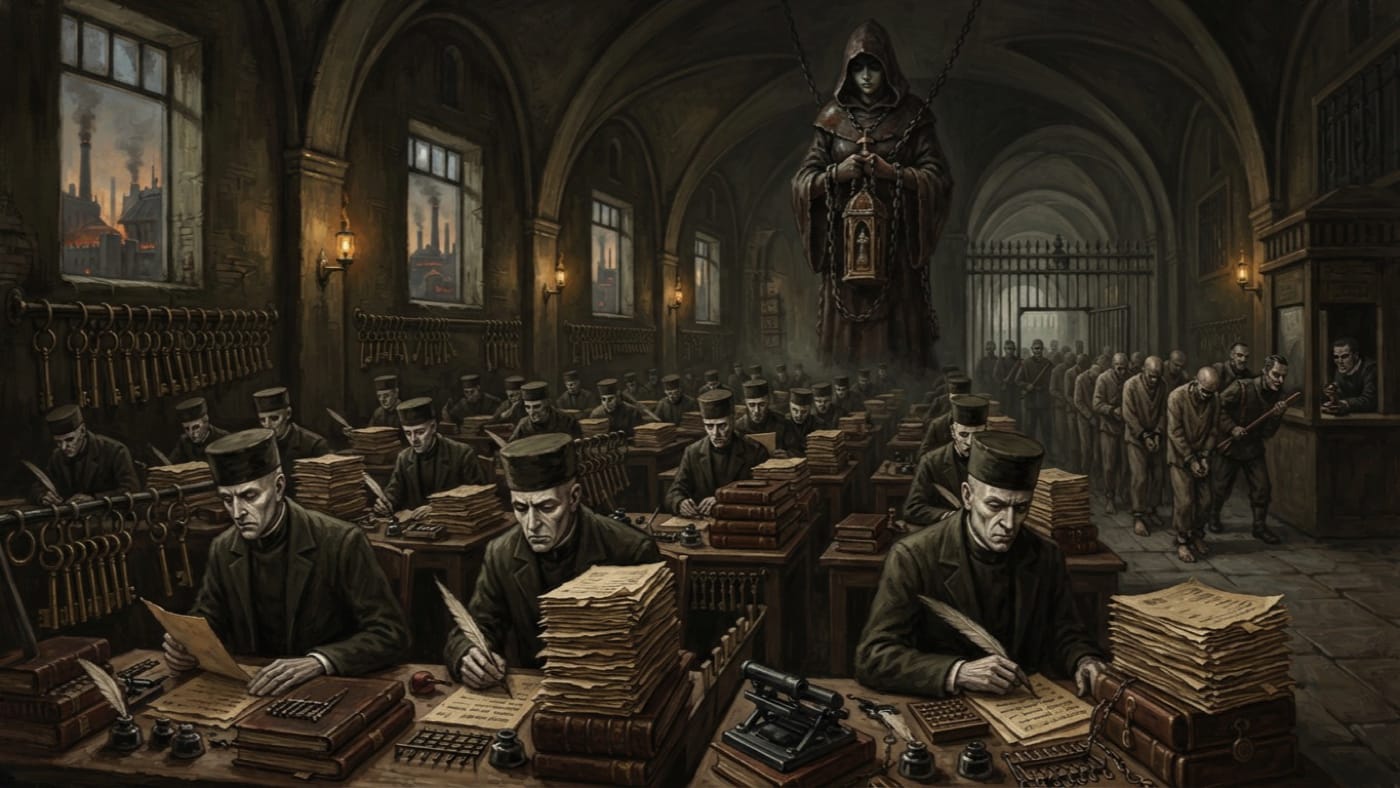
Convoy Audit Office
Where missing bodies become balanced accounts
The Convoy Audit Office reconciles relic seals, condemned carriers, numbered keys and five categories of loss. Its A.S. 196 memorandum records the discrepancies; continued observation keeps the cargo moving.
Codex Ref. III.2.09-196
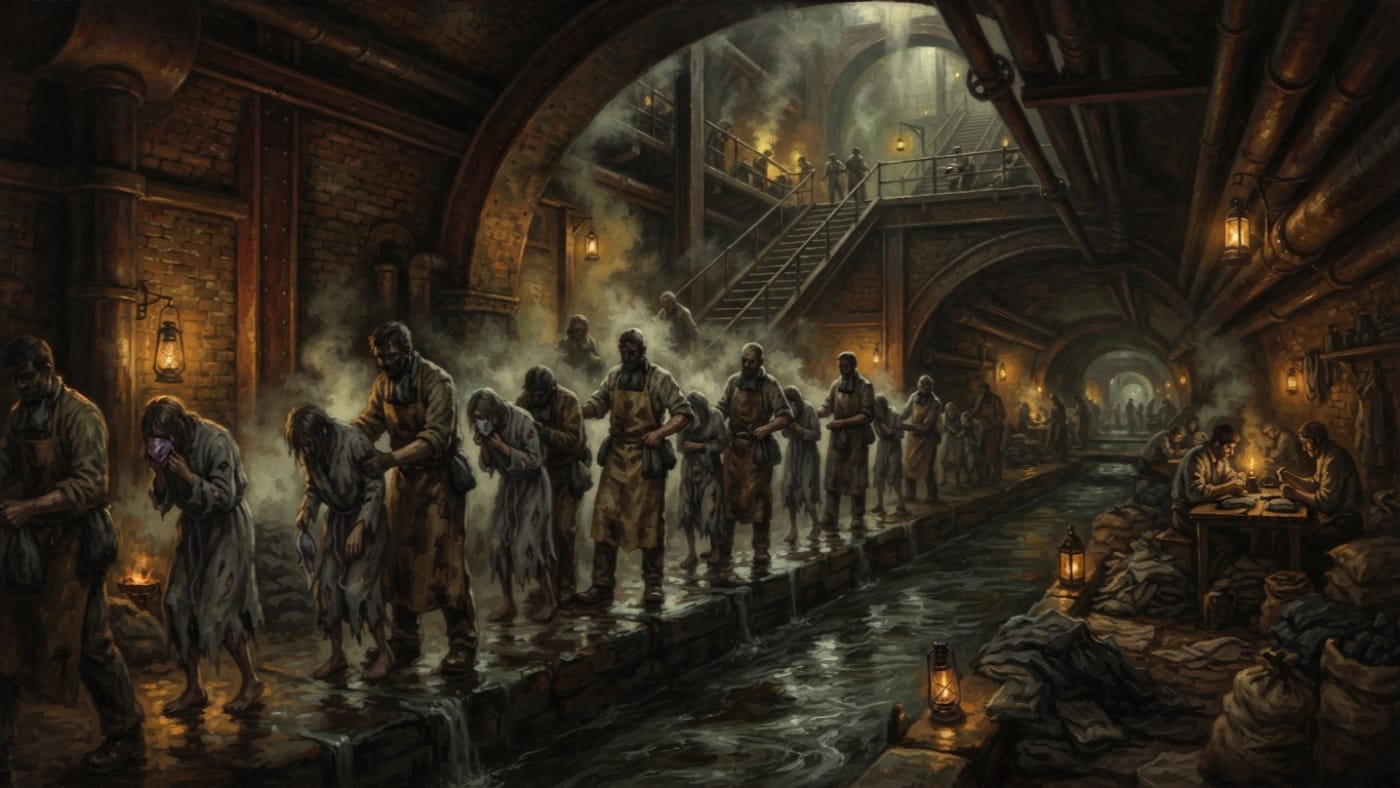
Cool Mask Brotherhood
Respiratory charity, conducted below the ledger.
An unchartered mutual-aid network beneath San Vesta, stitching charcoal masks for kiln-workers and moving medicine and patients through lava tubes. Purity maps the masks; the Tribunal counts the missing bodies.
Codex Ref. XII.27.04-002

Corporal Ereth Vey
Doctrine obtained a rule; Mercy retains an open file
The 22nd Line Company's Corporal Ereth Vey consumed his logbook's leather binding after six shifts watching the Self-Devoured in A.S. 191. Doctrine obtained an observation limit; Mercy retains an open file.
Codex Ref. III.2.01-191

Corporal H. Mace
His mother's whistle reached the wire; his answer was a shot
At Bastion-Constantinople's eastern wire in A.S. 197, Corporal H. Mace heard a Hollow-Walker speak his childhood name with his mother's whistle. He fired; the file records no later fate.
Codex Ref. III.2.01-197

Corridor Notary Hask
Two taps and a swallow; the rest awaits a ledger
An A.S. 201 review of old Corridor Notary Hask, preserved in Bone-Lung by a cough: two taps and a swallow. The bones received chamber numbers; their notary received one clause.
Codex Ref. III.2.01-757

Council of Prefects
Where dissent receives a chair, a minute, and a family corridor
The Council of Prefects is unanimity with chairs: a ratifying chamber where civic officers discover what Strasbourg has already decided they believe.
Codex Ref. XIII.1.90-138
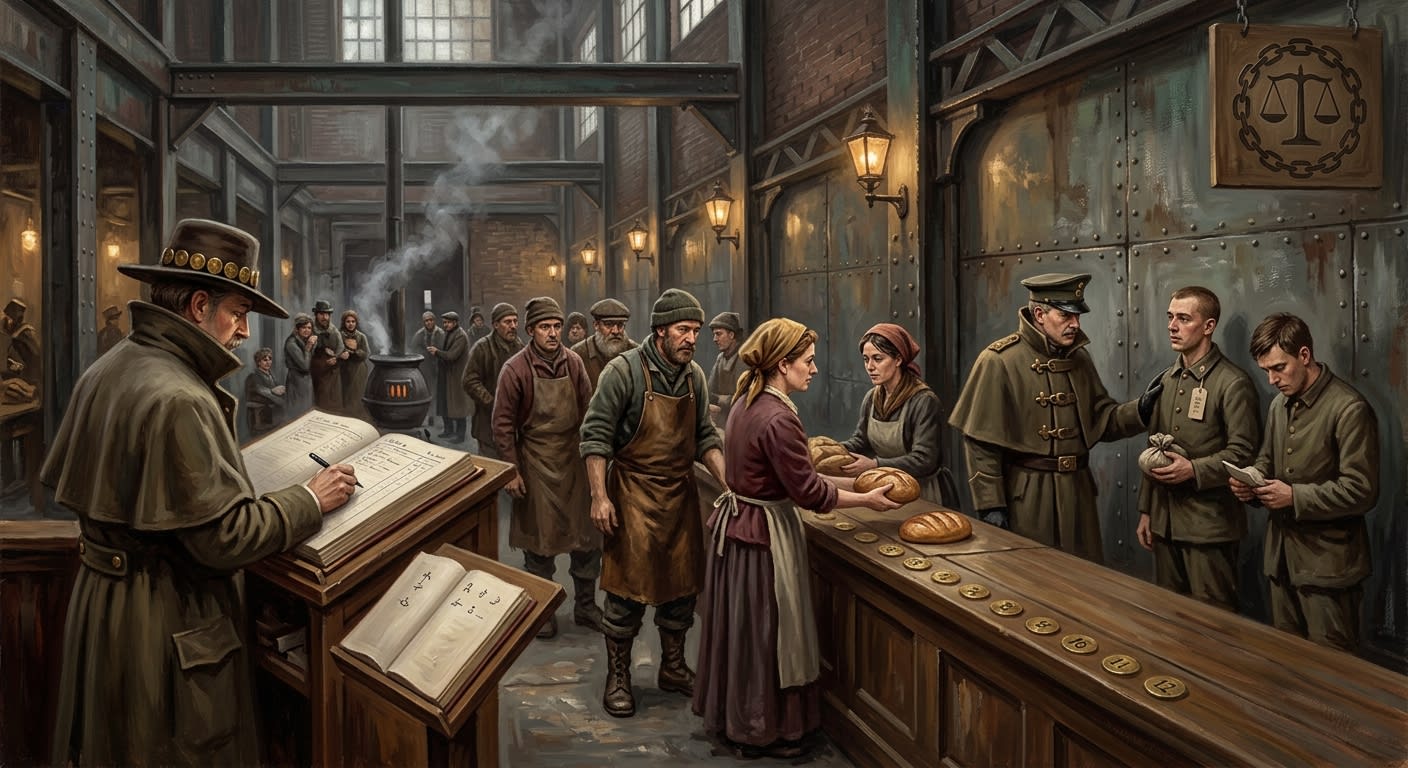
Covenant
The leash with bread on it, sanctified for public use
Covenant is the Synod's master noun: sacred pact in sermon, enforceable belonging in ledger, bread-chain in queue, and body-debt at the Line.
Codex Ref. XIII.1.04-090
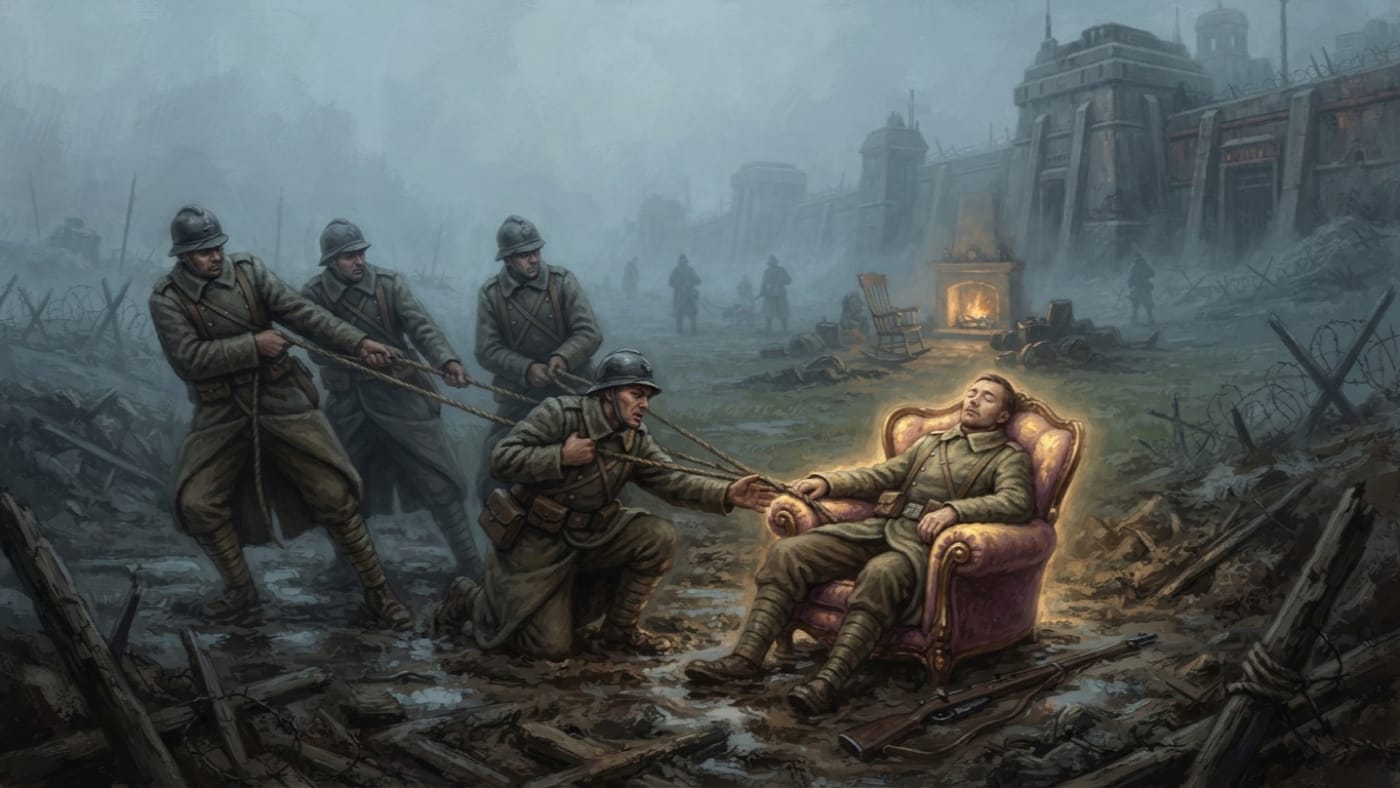
Cradled
The chair is warm. Remain standing.
The Cradled give Syrion's comfort a shape: a chair, a bed, a childhood room, a hearth. Seven men were pulled back from Outpost Eleven-West; nine still smile in Sofia.
Codex Ref. IV.1.07-194
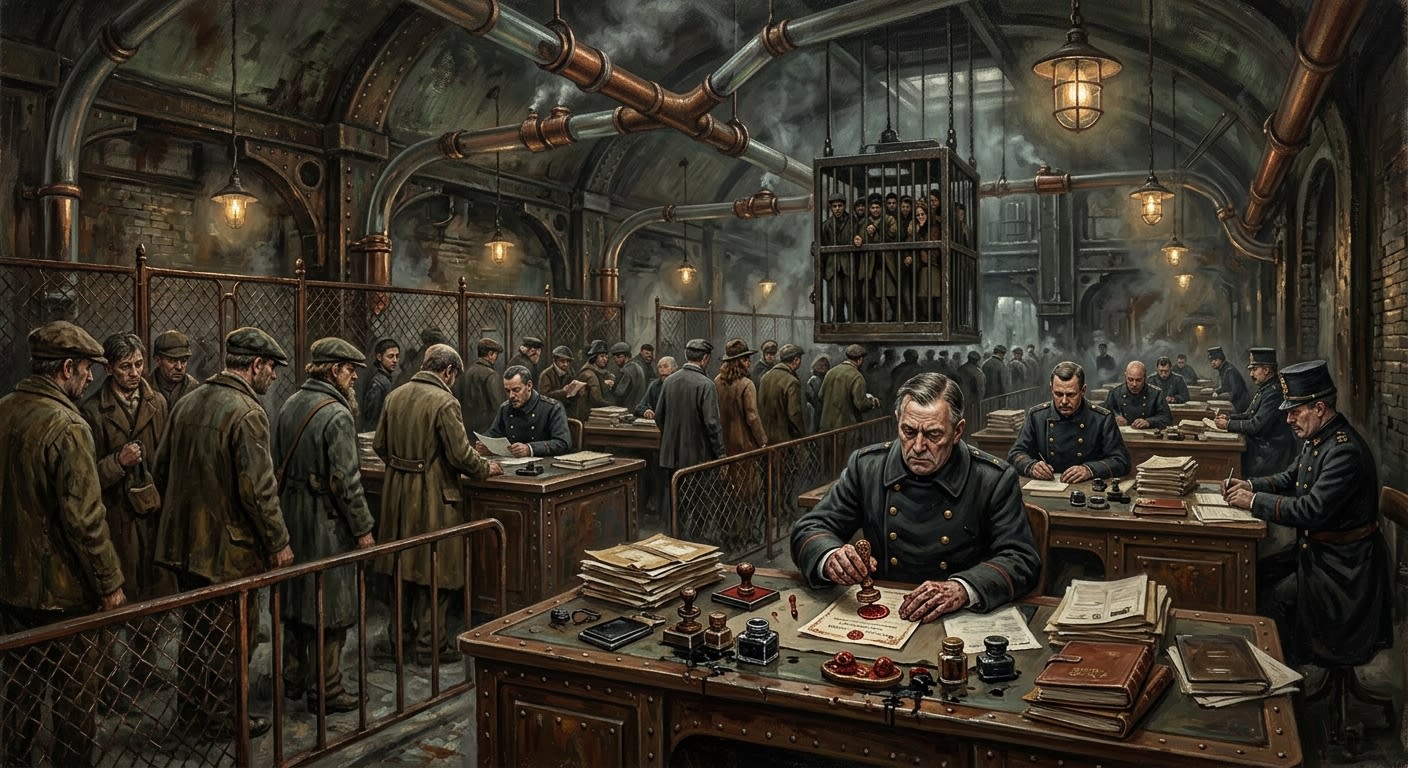
Crossing Bureau
No mark, no crossing; no crossing, no mercy worth recording
Bastion-Brest's Crossing Bureau is the local span authority between confession and passage, where Hett Ruis, wet paper, and warm wax decide who becomes lawful on the Brass Ribs.
Codex Ref. VIII.2.07-098
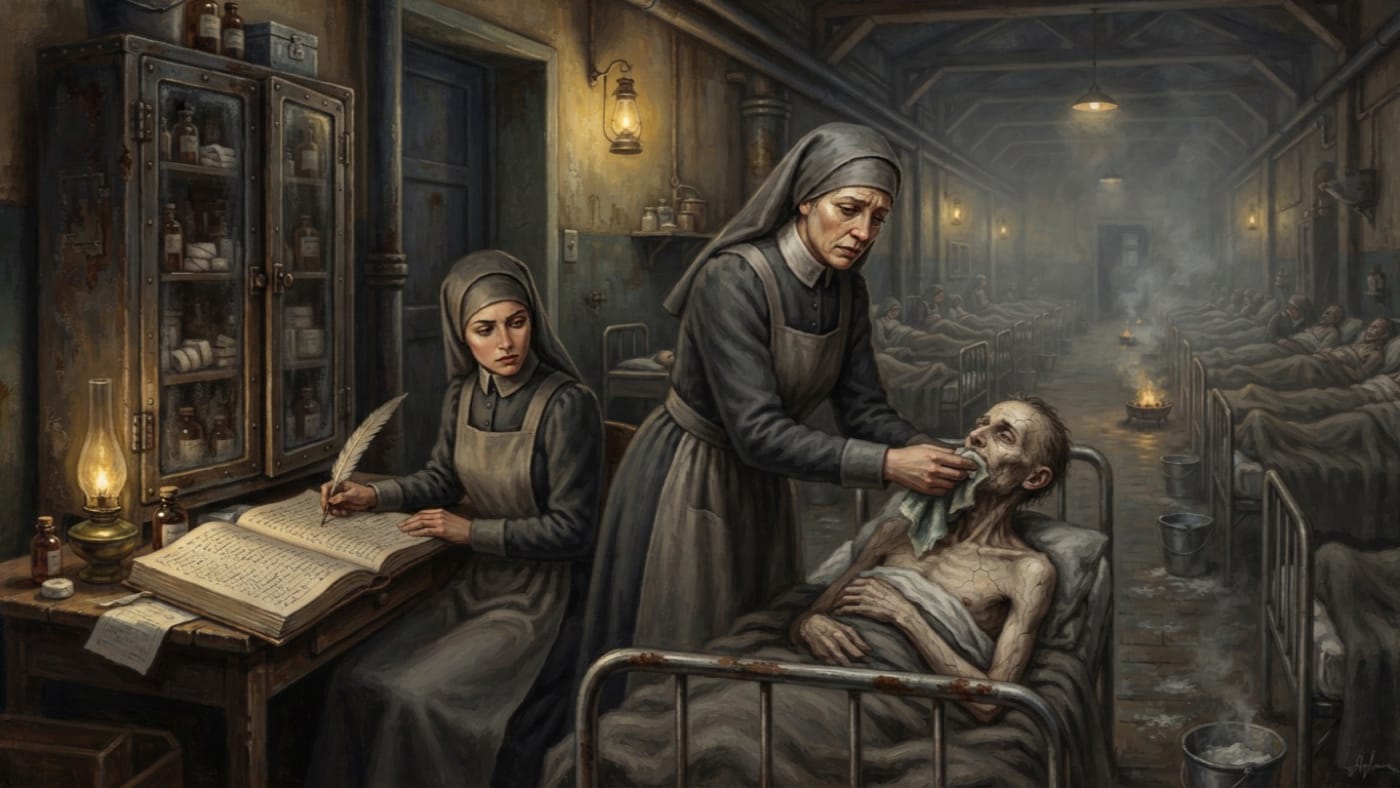
Crumble Ward Sisters
The cupboard holds mercy; the ledger keeps the patient
The Crumble Ward Sisters tend Mournwater's dust-sick, control the medicine cupboard and keep the ledger that decides who remains a patient and who becomes evidence.
Codex Ref. VIII.6.07-001
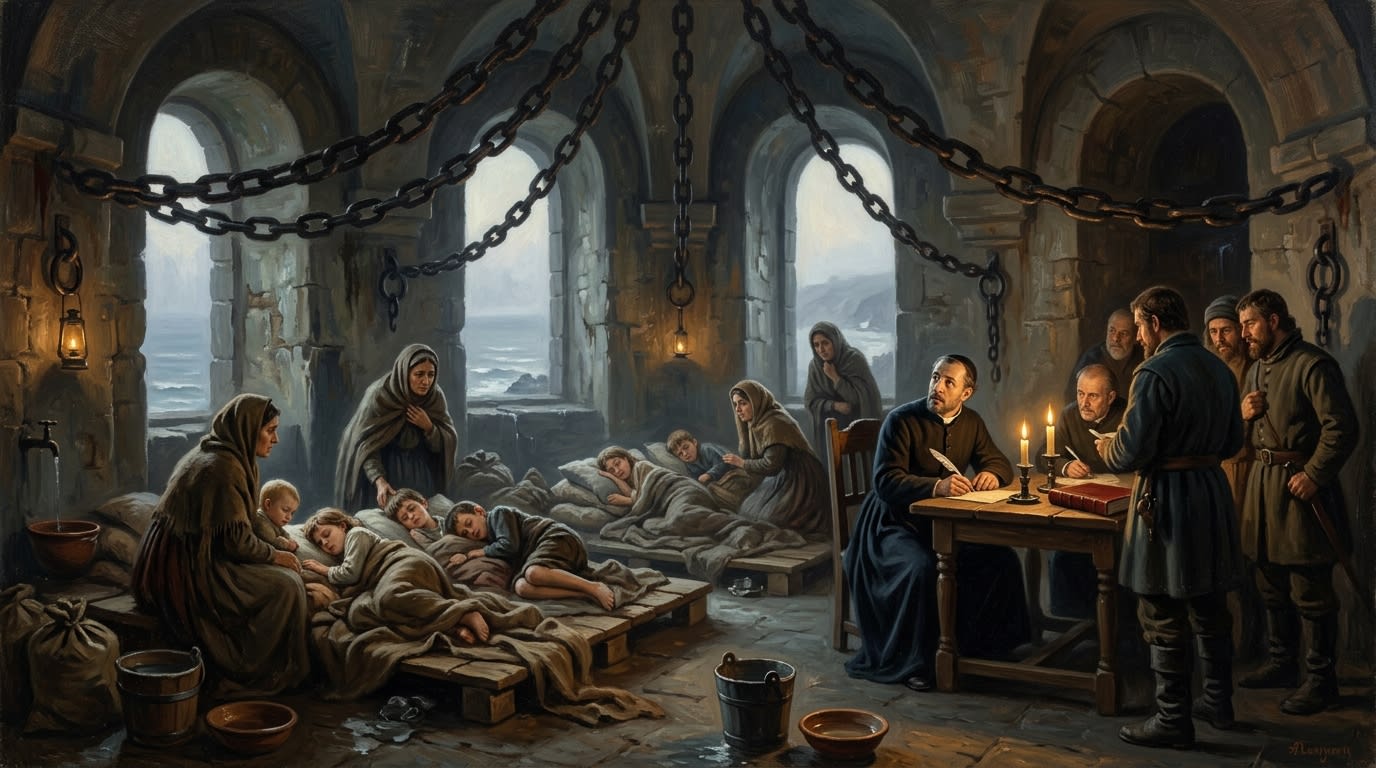
Crying Choir Incident
The night Thessaloniki learned a living child could be filed as lost
A.S. 145: refugee children sleeping under Thessaloniki's Harbor-Chain Towers sang before dawn, lost their tongues to salt water, and taught the Ledger to call the living lost.
Codex Ref. VII.8.10-145
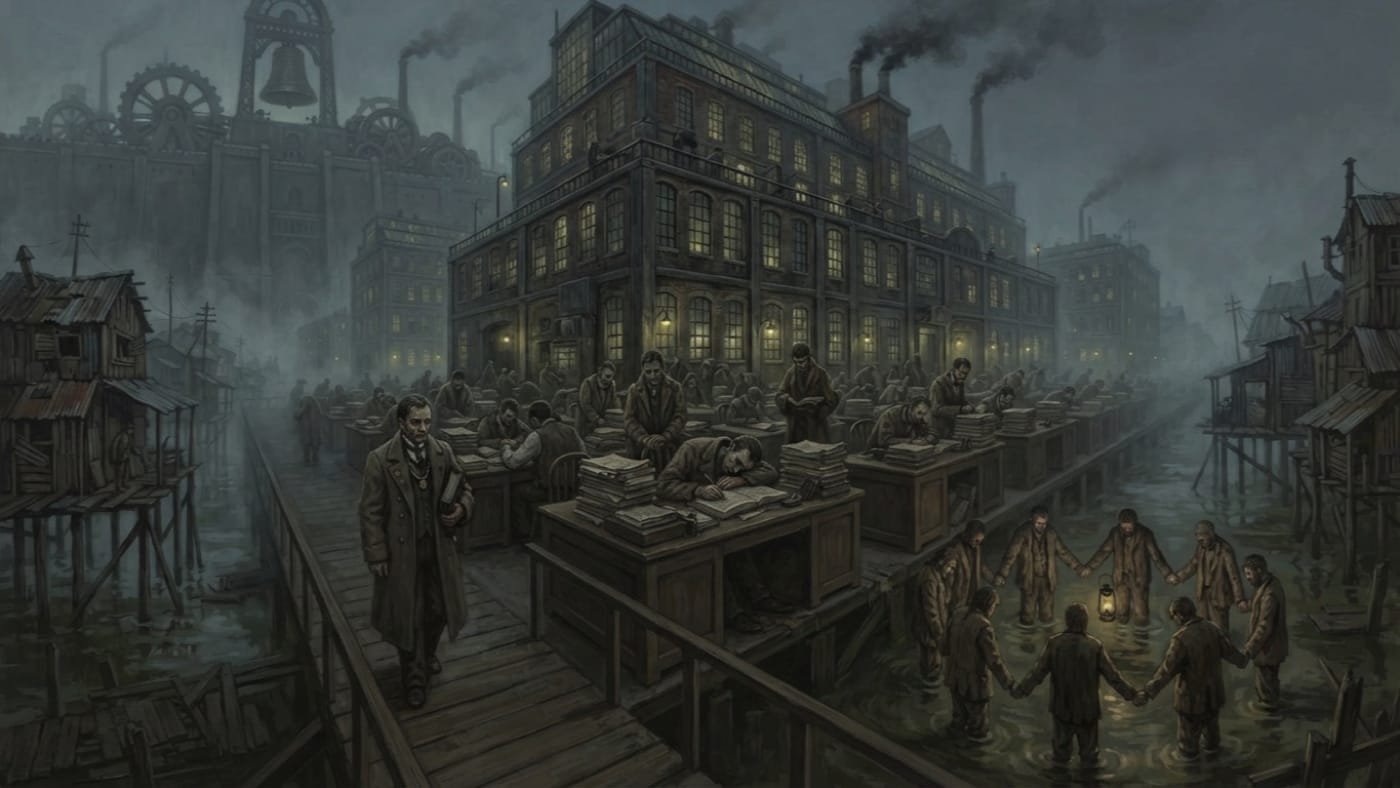
Cults of Stillness
The recruiter of Sloth comes carrying a blanket.
Syrion's quiet cells turn relief into a creed of surrender, spreading through wards, monasteries and Bureau offices. Purity can punish an abandoned duty; it cannot reliably tell devotion to Sloth from exhaustion.
Codex Ref. XI.6.01-002
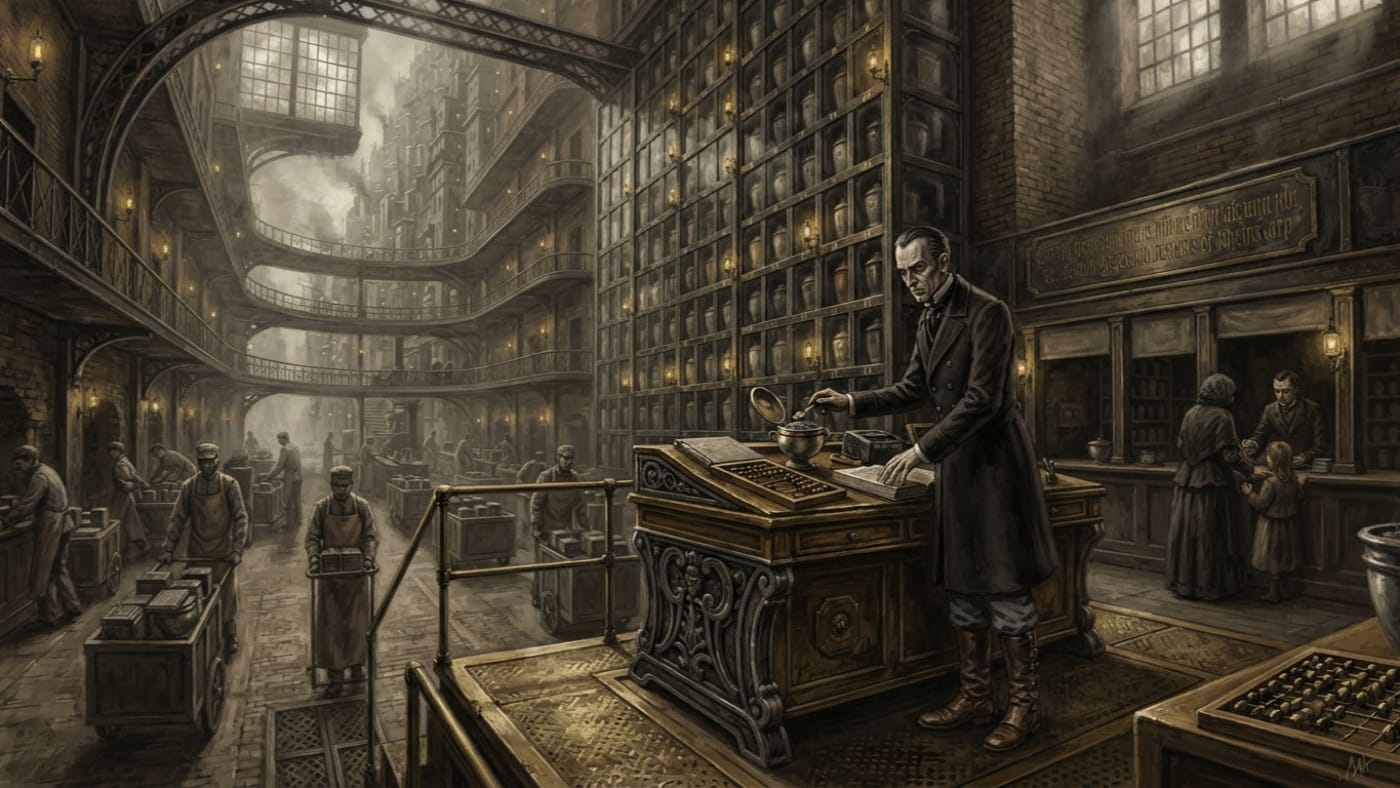
Damas Rohe
Uncle to the brokers, creditor to the dead
Broker-Saintsman Damas Rohe controls Rheinscarp's Ash Exchange, lending grain against future cremains and trading the dead. He holds no Synodal office; his collateral arrives all the same.
Codex Ref. III.2.01-201
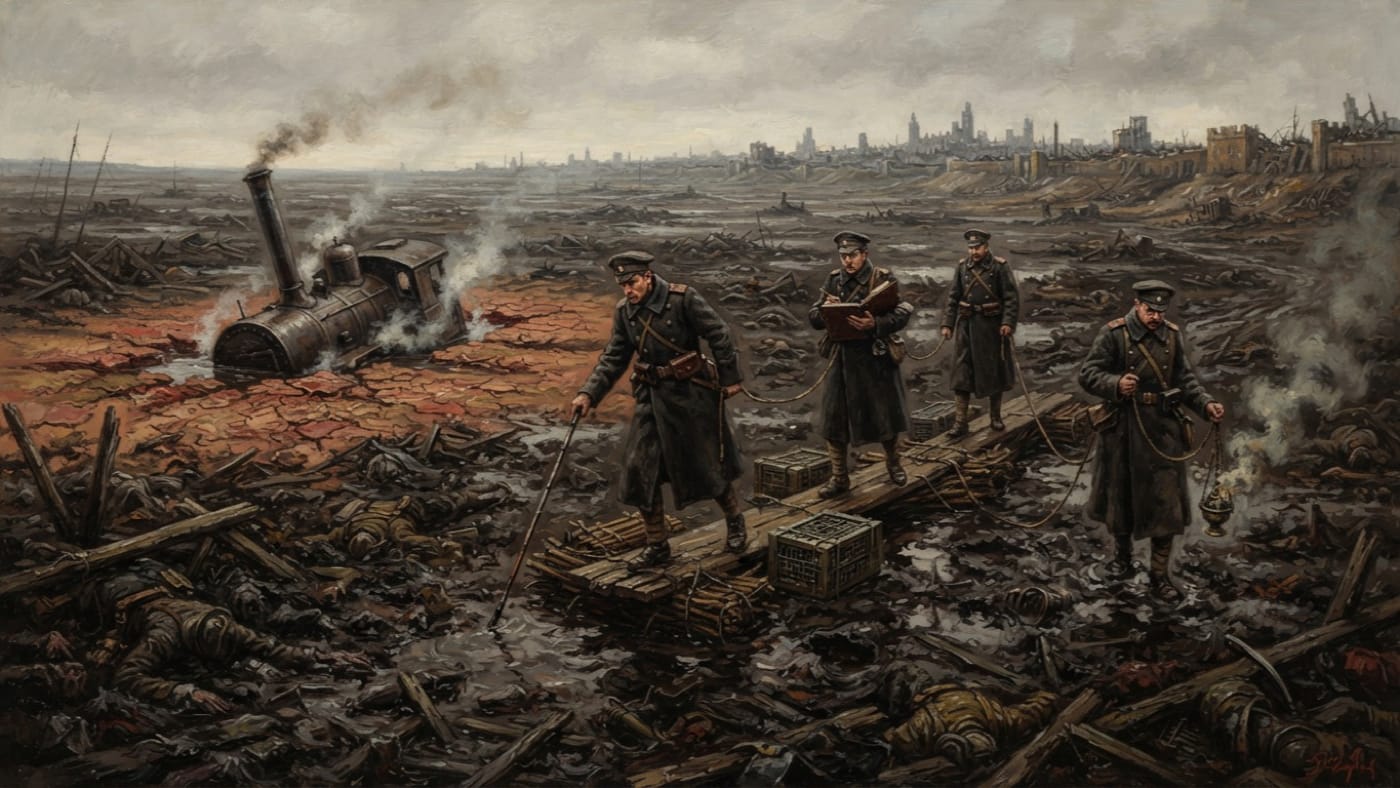
Danubian flats
The crust looked safe at Belgrade too.
An A.S. 201 survey of Danubian front flats in No Man's Land where Flesh-Mud is reported. Belgrade's A.S. 120 file records a swallowed Wrath-forged engine. Three Bureaus disagree; the crust looked safe there too.
Codex Ref. II.4.12-048
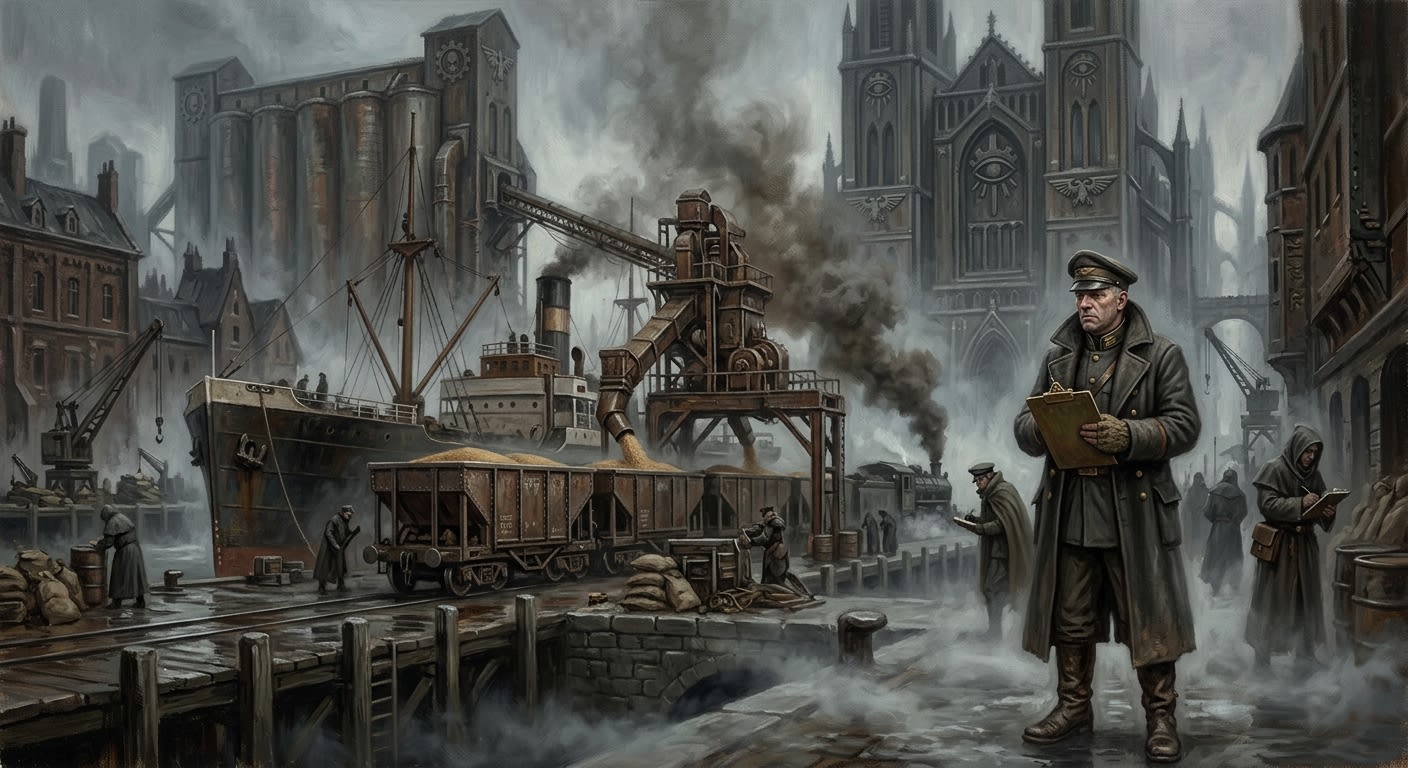
Danzig
The Baltic port that feeds the north and lies with admirable punctuality
Danzig is the Baltic grain mouth of the Northern Corridor: obedient in public, competent in fog, audited forever, and too necessary for Strasbourg to purify without starving itself.
Codex Ref. II.4.09-013

Deathbed Confession Harvester
The quill outlasts the patient; the Record outlasts both
Two thousand four hundred scribes posted at the bedsides of the dying, ensuring no death in Synod jurisdiction passes unfiled. The Record does not grieve. The Record does not wait. The Record simply continues.
Codex Ref. XII.12.01-001
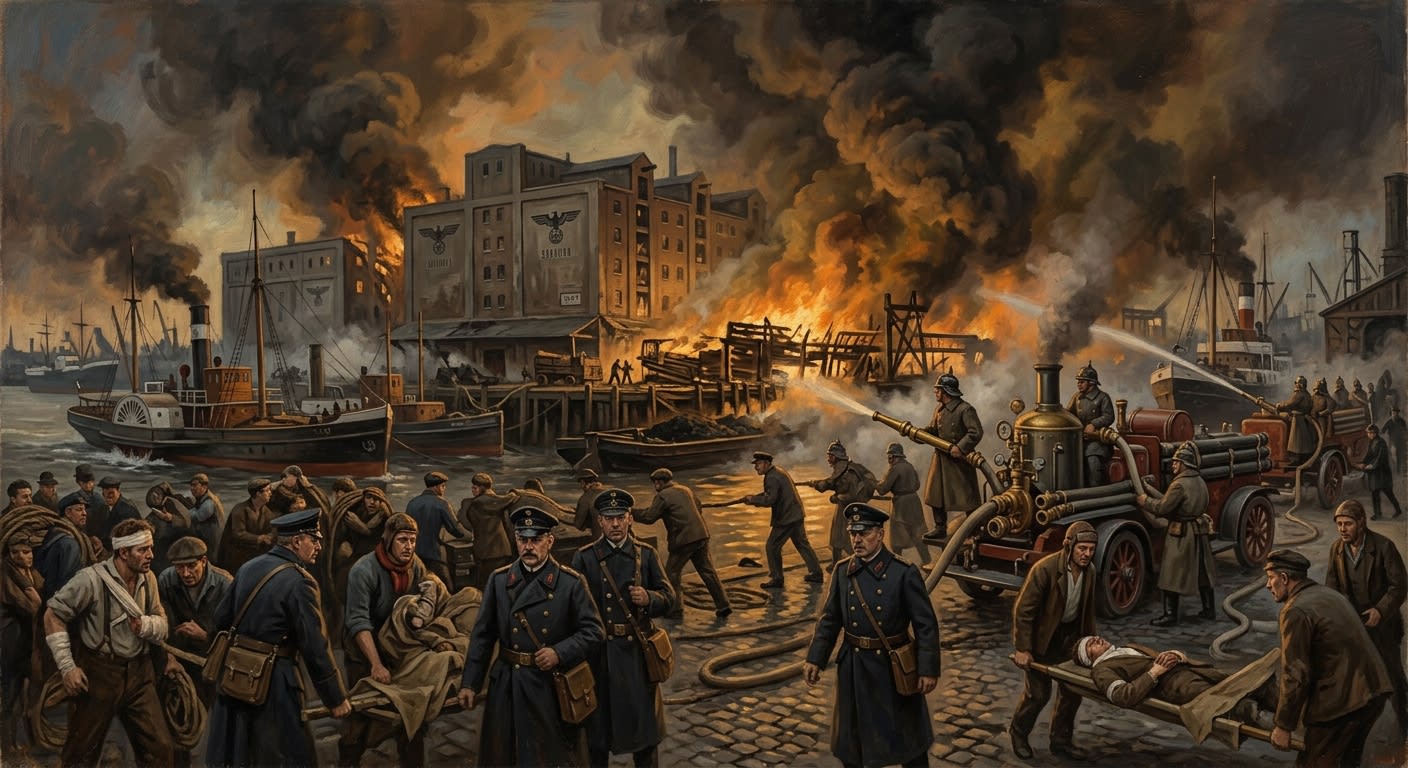
Dock Fire of Hamburg
Four blocks burned because brick was cheaper than obedience until it was not
The A.S. 189 chrismole warehouse fire in Hamburg killed 312, burned four dock blocks, stopped labour for eleven days, and made a seven-per-cent hazard supplement harder to seize than a relic.
Codex Ref. VII.8.10-189
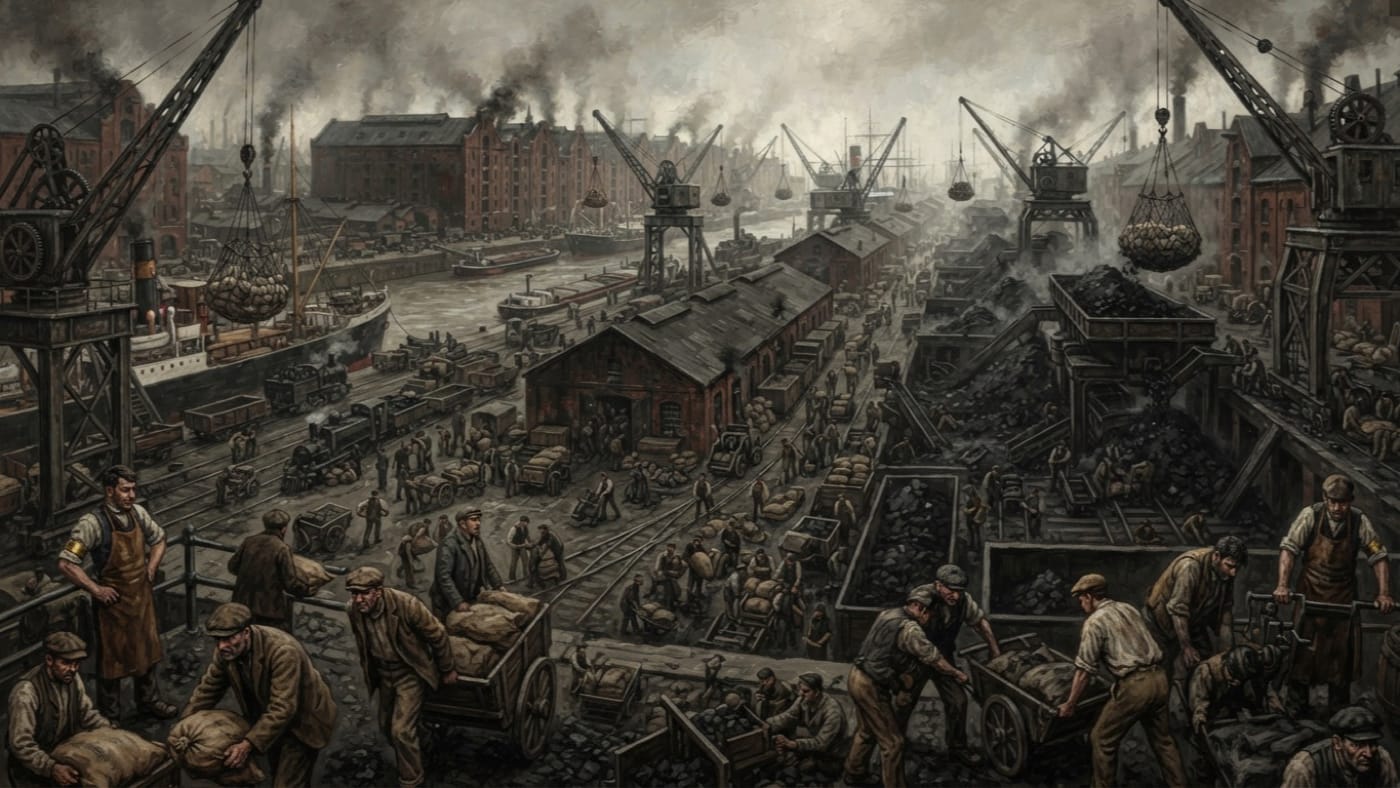
Dock Quarter
Where the northern war waits for the men beneath the crane
Hamburg's western and central Elbe quays turn North Sea cargo into northern-front survival. The Bureaus issue orders; the guilds decide when grain, coal, and military freight actually move.
Codex Ref. II.4.09-006

Doctor Haas
The man who taught the Synod that enemy iron keeps testimony
Doctor Haas heard the Black Sea Armada's wreckage remember its own burning. War called him useful, Medicine called him fatigued, and Doctrine kept the note.
Codex Ref. III.2.01-155
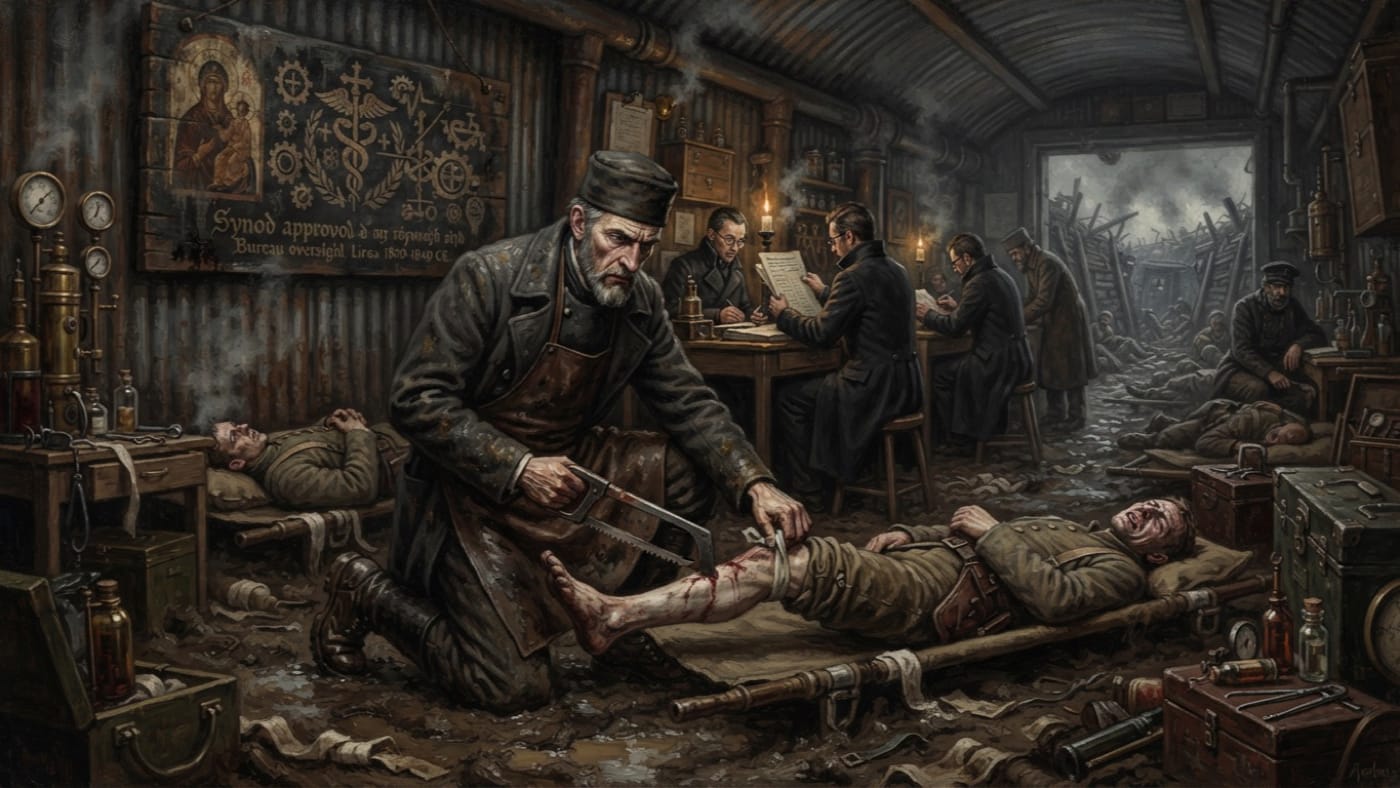
Doctor Kael Brenner
Returned to the payroll. Reconciliation has no entry.
Doctor Kael Brenner served as Medicine's first Chief Anatomist from A.S. 82 to 134. His excommunication and rehire were filed on the same day. Reconciliation has no entry.
Codex Ref. III.2.01-082
Doctor Maren Solen
The measurements remain. Her reasons are unrecorded.
Doctor Maren Solen attended the Pit Seven exposure as Chief Anatomist, then resigned and entered the Adriatic sanitarium. Her measurements survive. The archive gives no reason for her departure.
Codex Ref. III.2.01-134

Doctor Trenn
The anatomist who measured hunger and refused comfort
Doctor Trenn, Chief Anatomist of the Bureau of Medicine, gave the Famine Pit horror its clinical name and kept the word real where comfort wanted illusion.
Codex Ref. III.2.01-023
Doctrine of Acceptable Innovation
Three seals before the flame. A debt after the cure.
San Vesta's dispensation permits experiment after three seals and triplicate filing. The cure costs labour; the failure receives a classification. Unstamped experiment makes the practitioner a heretic.
Codex Ref. XIII.1.124-001
Doctrine of Deferred Fulfilment
The promise stands; the route belongs to the Bureaus
The Synod's promise is never broken: the Bureaus revise the vocation, Records certifies fulfilment, and the household's understanding is deferred indefinitely.
Codex Ref. XIII.1.22-002

Doctrine of Doctrinal Nullification
How the Synod learned to prosecute the empty altar
Legal doctrine drafted for Arno Kett in A.S. 138, making absence of belief prosecutable as civic injury and giving Purity a rope for vacancy.
Codex Ref. XIII.1.82-001
Doctrine of Layered Death
If all layers fail, make the failure expensive
War's breach-holding doctrine arranges panic into five useful layers: wall, charge, ash, rhythm, and the final dividend by which failure becomes legible.
Codex Ref. XIII.1.64-001
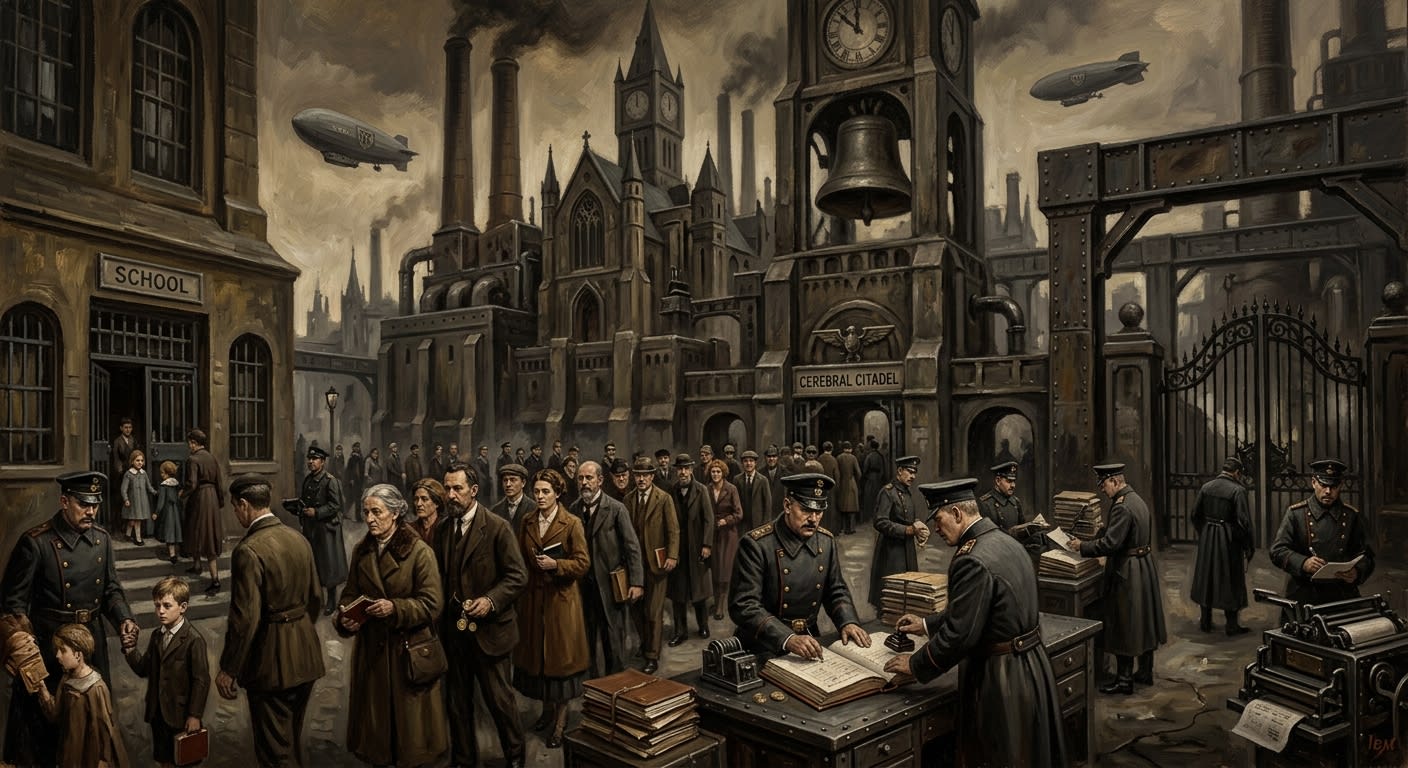
Dominion
Europe held in one gloved hand and taught to call it custody
Dominion is the Synod's official name for custody over Europe: border, tithe, bell, school, grave, and the thought before speech.
Codex Ref. XIII.1.02-090
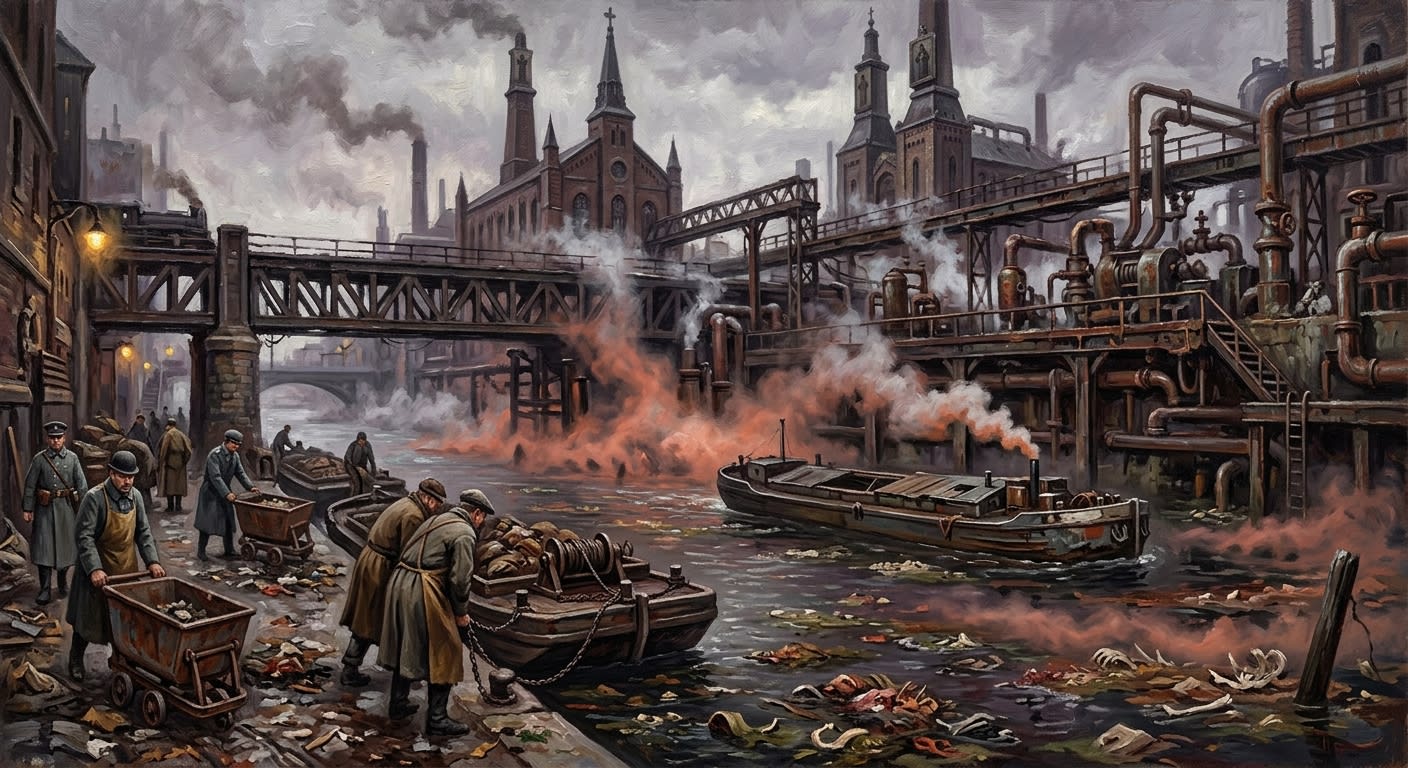
Donaukanal
Vienna's black water remembers what the ledgers rinsed away
Vienna's lesser Danube arm, the Donaukanal carries shrine filth, rebel bones, forbidden lullabies, and steam the Bureaus cannot quite explain.
Codex Ref. II.4.09-095
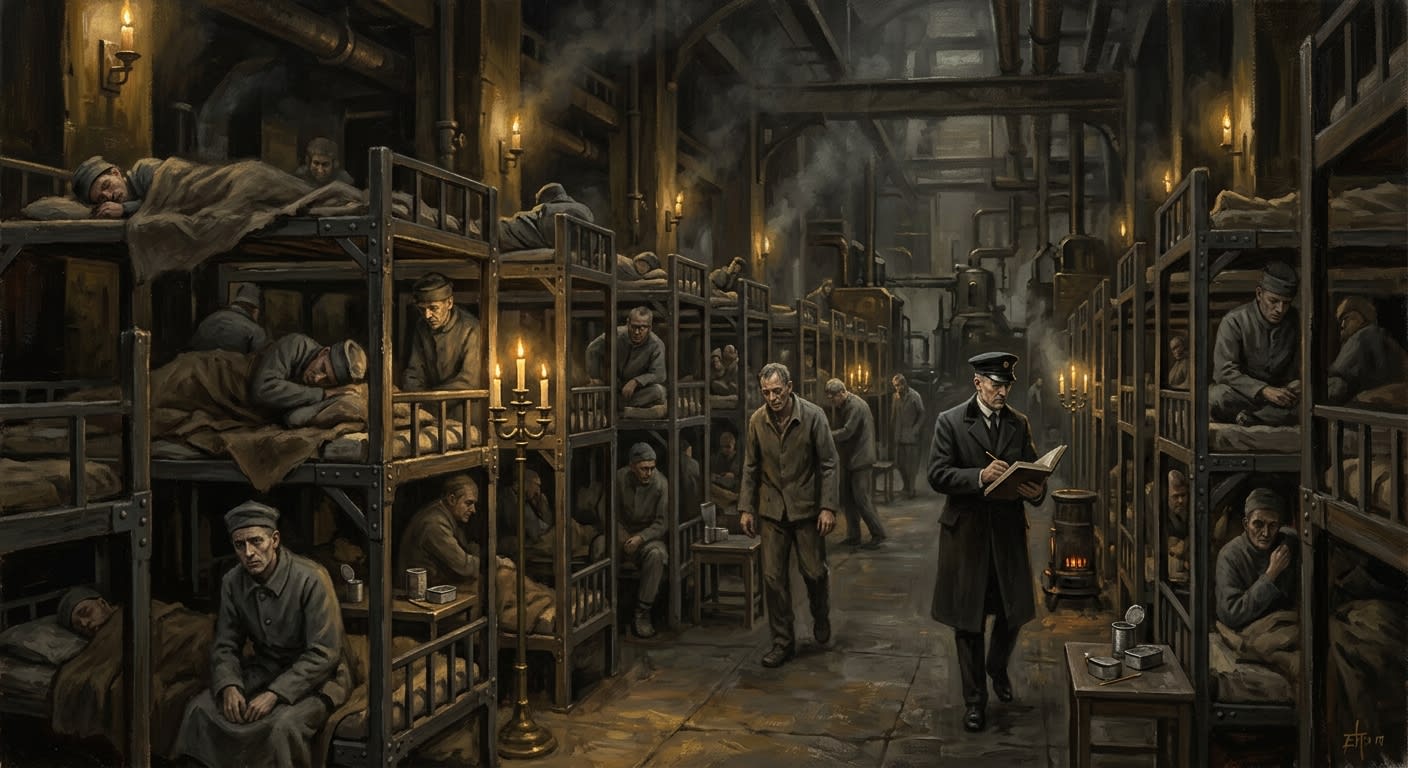
Dorm Rows
Awaiting is a doctrine with bunks and one candle per six
The Dorm Rows of the Cloister of Miscounted Beads turn detained pilgrims into Awaiting: bunked, rationed, counted, and corrected by candlelight.
Codex Ref. II.3.06-004
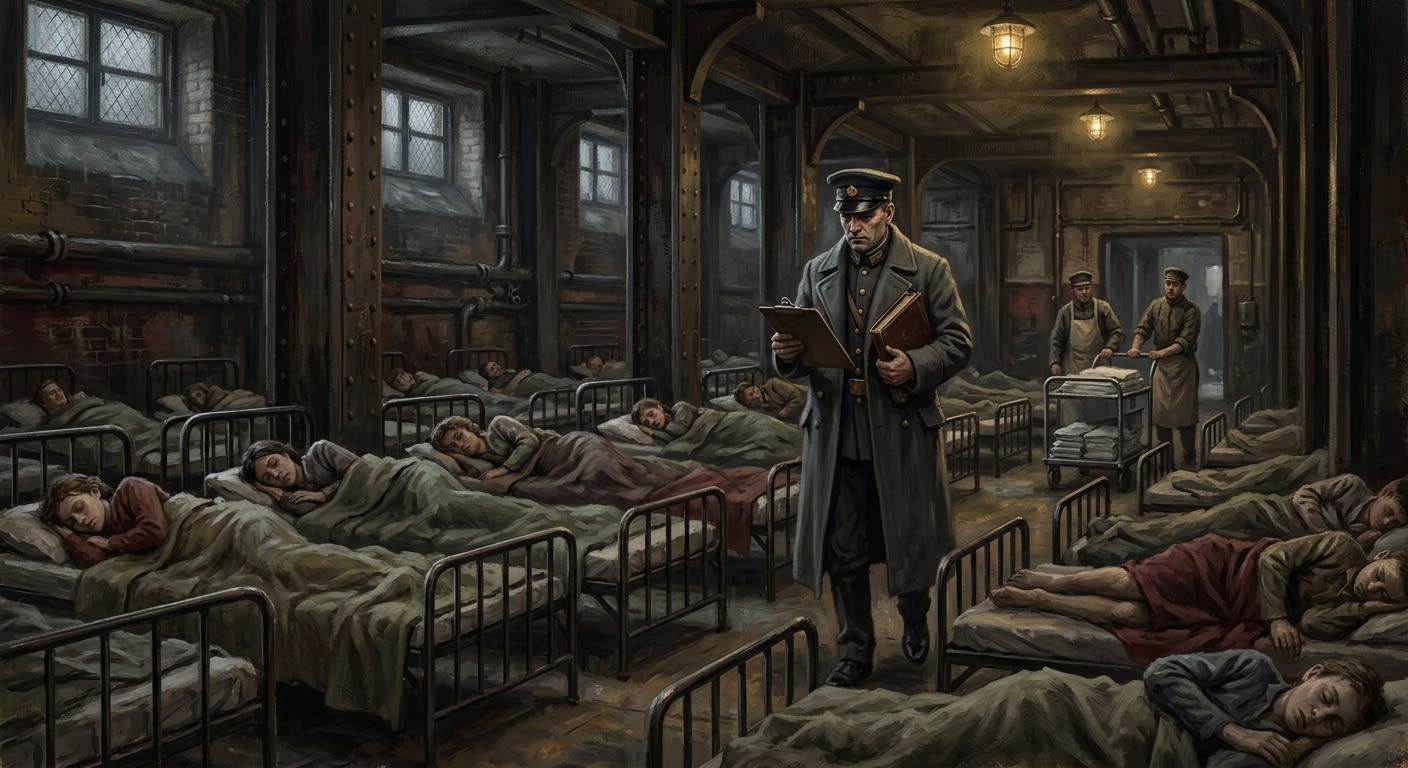
Dormition Canticle
Four bars, two deaf sleepers, and Mercy congratulated itself
Bureau-approved four-bar lullaby composed in A.S. 134 to replace criminalized comfort; its great triumph was stillness mistaken for sleep.
Codex Ref. XIII.1.86-134
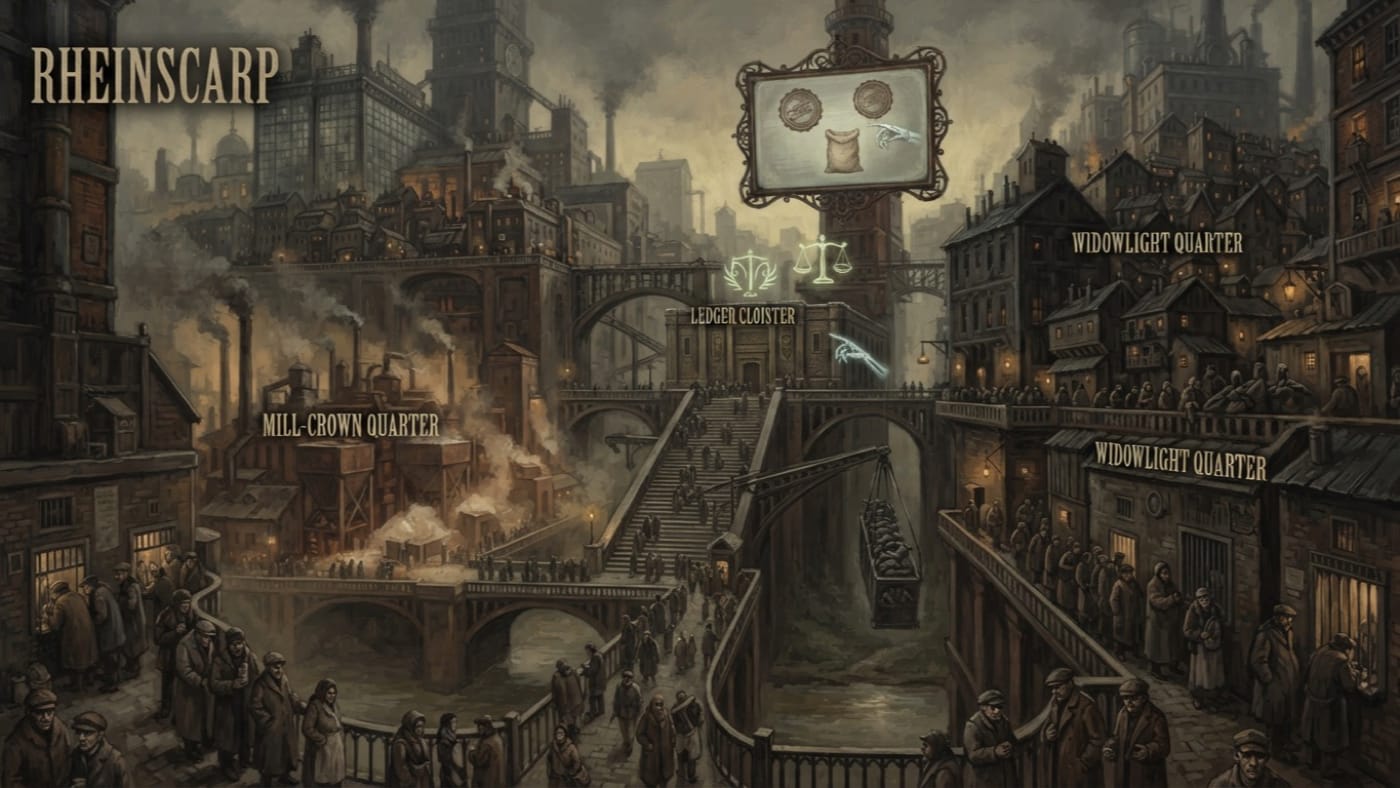
Double-Entry Famine of A.S. 198
Two authentic receipts, one shipment, forty-one graves
Rheinscarp's famine of A.S. 198 authenticated two receipts for one grain shipment and buried forty-one people. The ledgers balanced; the bowls did not.
Codex Ref. VII.2.01-198
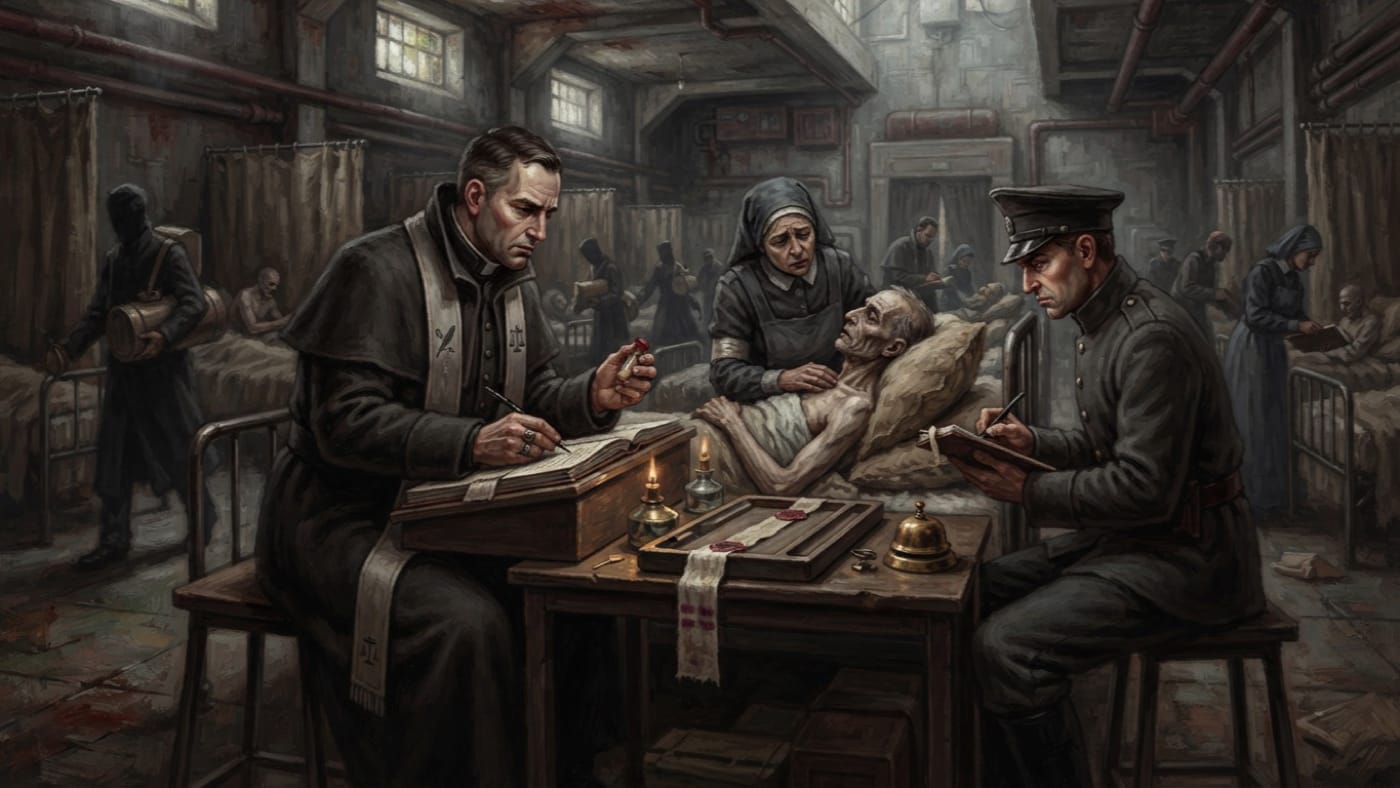
Double-Witness Protocol
Two seals for the truth, two names for the blame
After the A.S. 134 Mercy Ward Purge, terminal confessions require a second official, a countersigned ribbon, a separate bell-time entry and two seals. Mercy now has two names to blame.
Codex Ref. XIII.1.98-134

Drag Corridor
The road that keeps the walker and spends his years elsewhere
A Drag Corridor is Syrion's linear wound in useful roads: a route that eats routine, keeps the walker moving, and spends his years where the map cannot object.
Codex Ref. XIII.1.87-201

Dreher
A father disputes the archive and the sea pretends to give back what it took
Dreher, fisherman of Bastion-Königsberg's Harbour Quarter, refused the boy returned by the Grey and thereby made fatherhood a legal problem.
Codex Ref. III.2.01-040
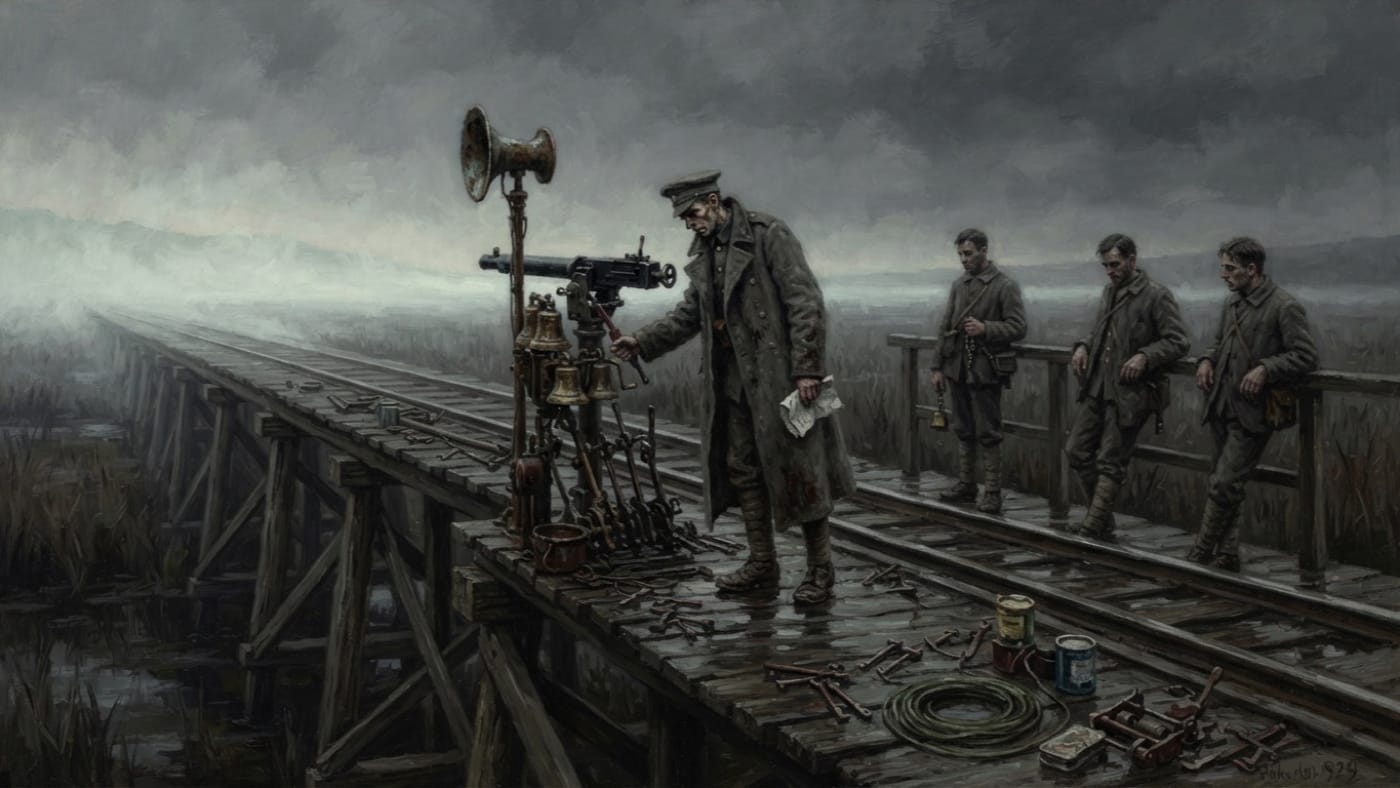
Drift-S 9
The order was spoken; the year remains unknown
An A.S. 201 survey of Drift-S 9's surviving patrol record: Rusk gave the order to fire, could not finish wanting it and was recovered alive. The incident year is unknown; Mercy keeps three sentences.
Codex Ref. VII.5.06-009
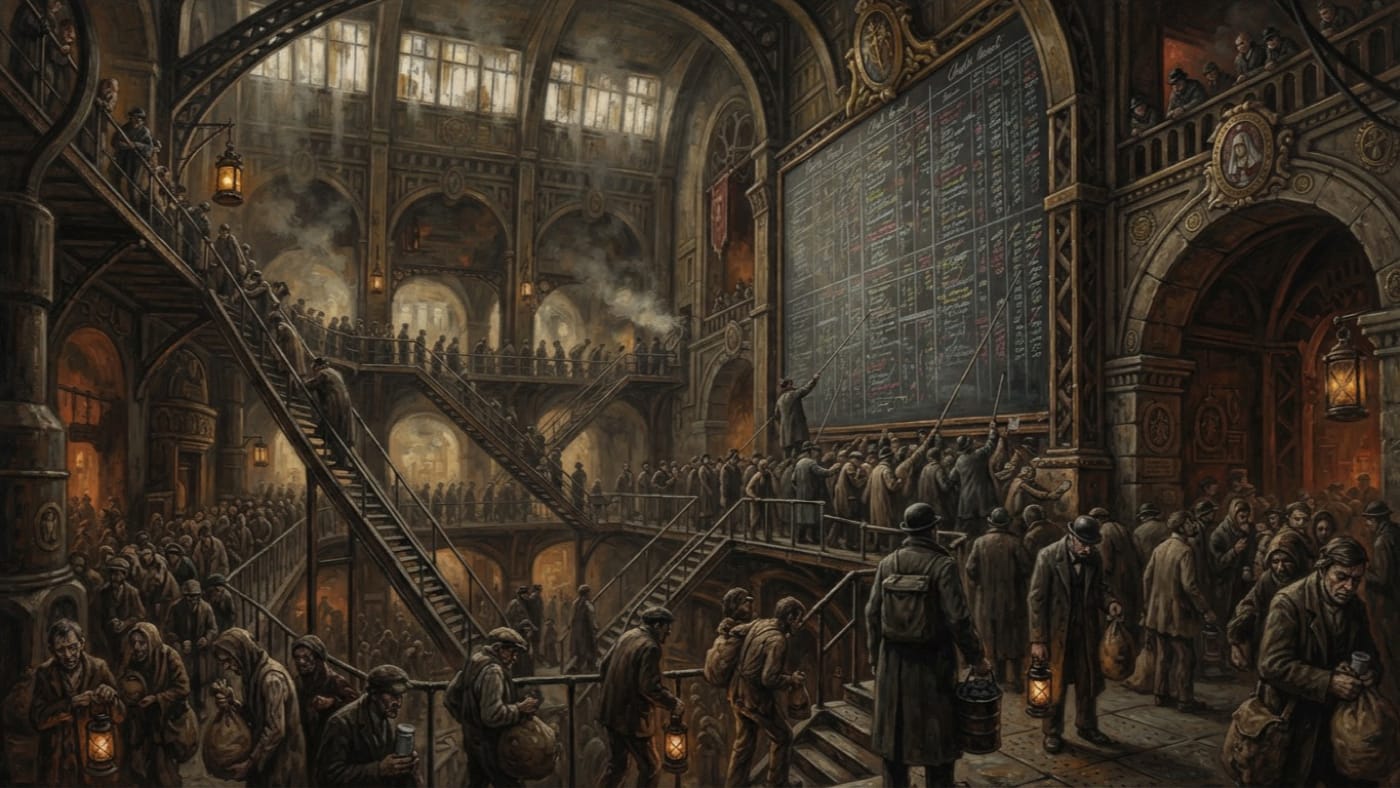
Dust Futures Scandal of A.S. 199
The claims had prices; the living had supplied no signatures
In A.S. 199, Rheinscarp's Ash Exchange was found trading futures on the cremains of living people who had signed nothing. By A.S. 201, the tranches had new names and the Tribunal had issued no ruling. A price proved easier to obtain than a signature.
Codex Ref. VII.2.01-199
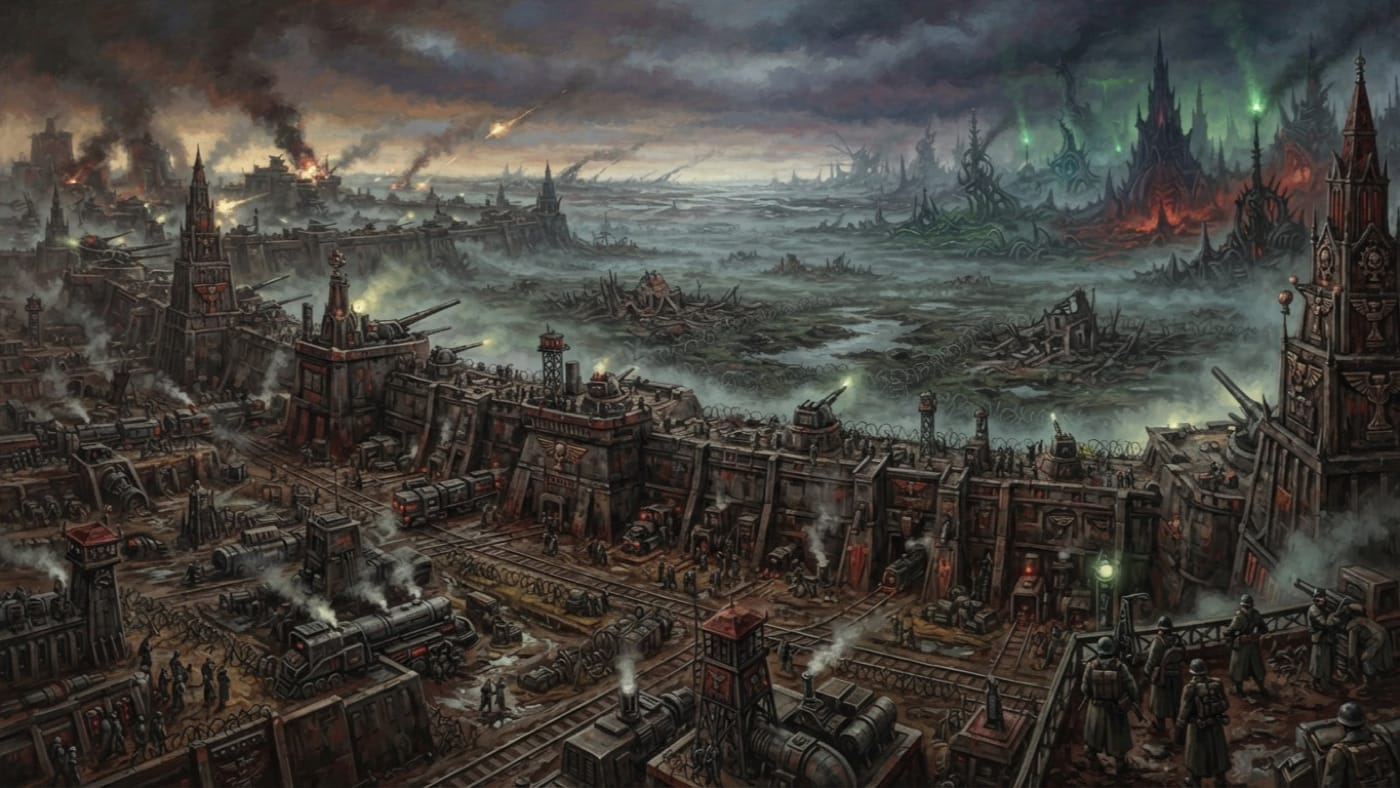
Eastern Theatre
A province has a governor to blame. The Eastern Theatre has an inbox.
The eastern war's unchartered heading: the Sagittal Line, contested strip, fallen lands and supporting rear. Drax surveys the front in A.S. 201; the reports have desks, but the Theatre has no commander.
Codex Ref. II.4.13-201
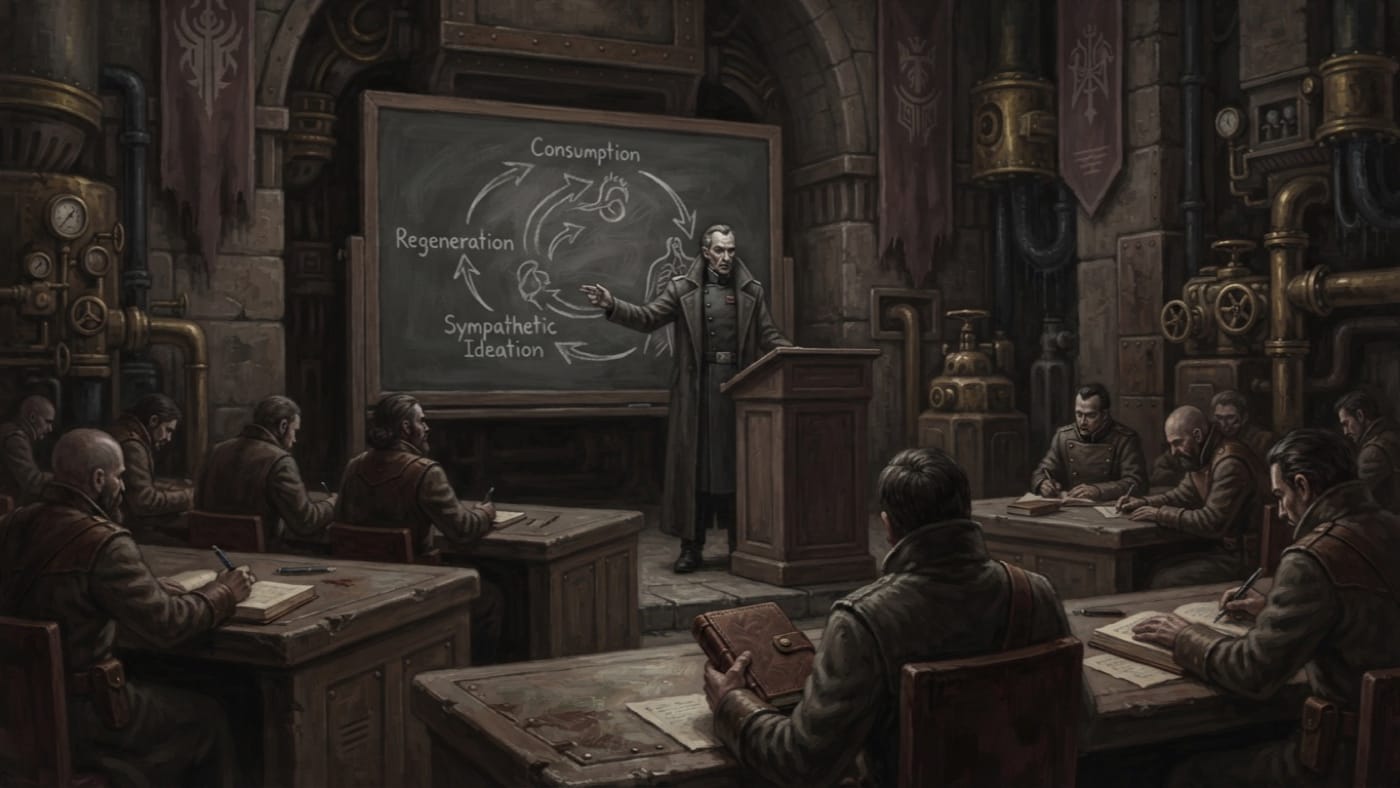
Eighteenth Conference on Demonic Pathology
Medicine supplied the noun; Doctrine supplied the instruction
At the A.S. 193 conference, Medicine named the Self-Devoured's proximity effect: sympathetic consumption ideation. No objection was entered. Eight years later, the theory remains working and the mechanism unproven.
Codex Ref. VII.8.10-018
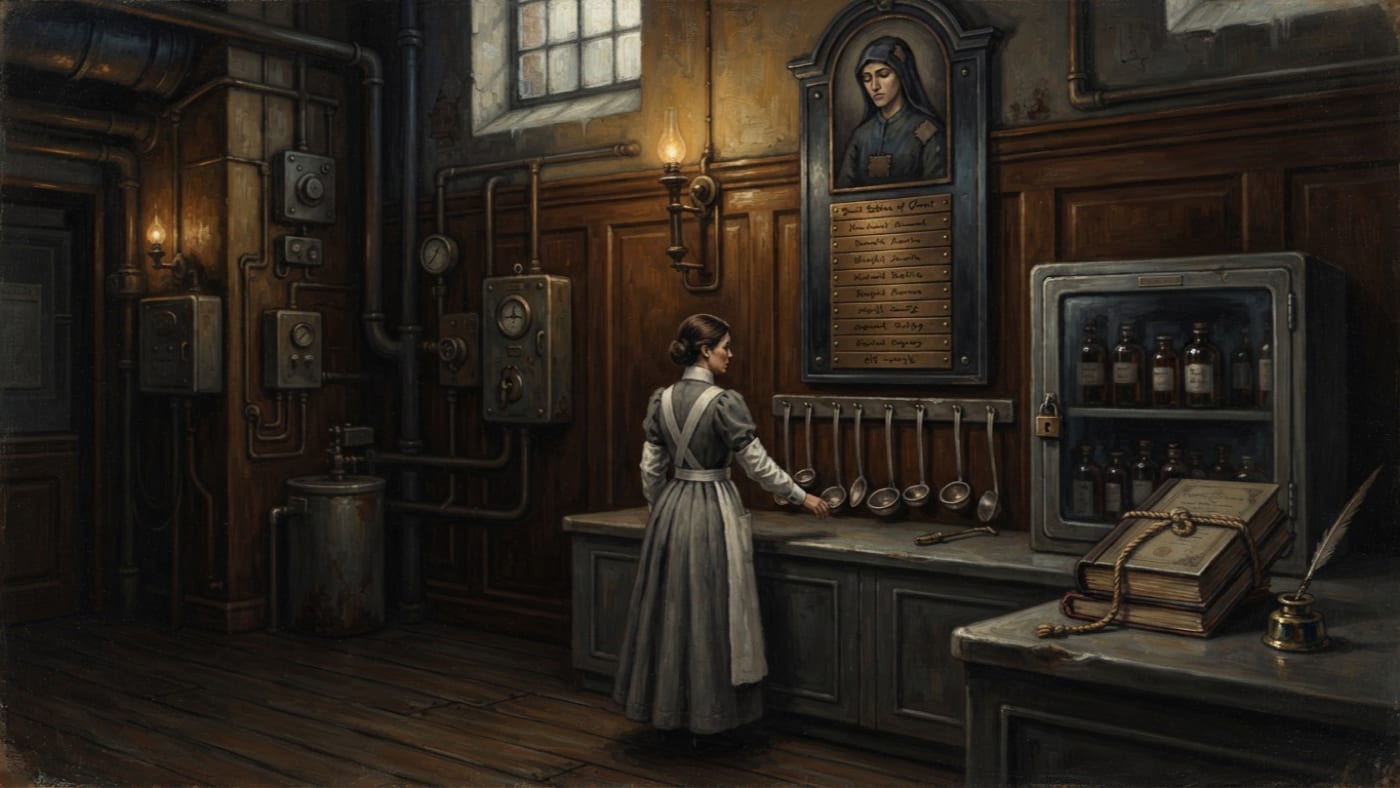
Eleven Bound list
Eleven bodies bound, seven witnesses counted, and Mercy's lesson in the ledger
The Eleven Bound remembers Sabina's reported bandaging recipients. Mercy recites their names; the seven final witnesses remain a different count.
Codex Ref. VII.8.02-002
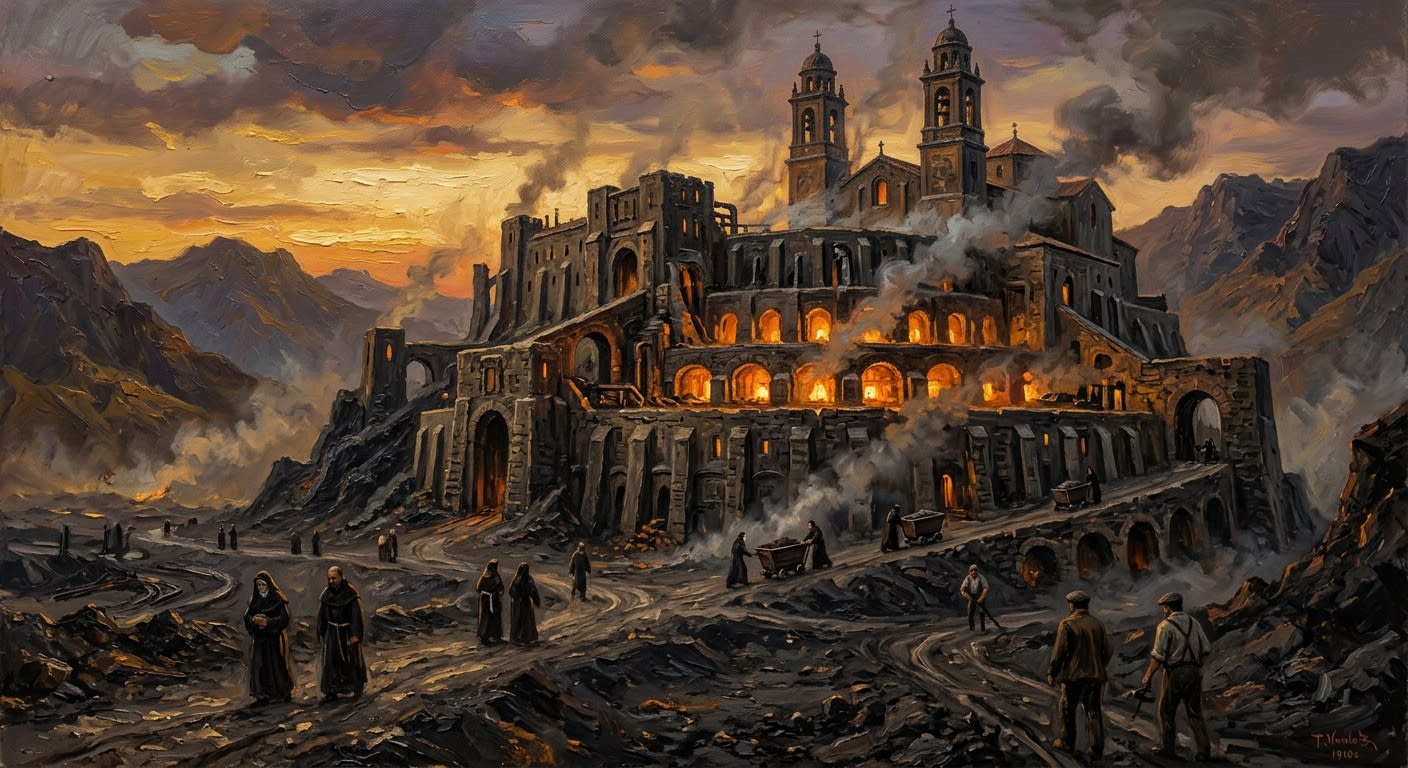
Ember-Priory of San Vesta
The ovens glow. The debt accrues. The smoke writes names no one authorised.
A volcanic priory-city in the Iberian south where bread never spoils, dying men buy three more days, and the sealed vent beneath the foundations grows warmer every year. The Synod's most productive monastery, and possibly its most dangerous one.
Codex Ref. VII.1.03-001

Empty Cradle Accord
Incentives for birth, an audit for loss
An A.S. 201 survey of the Empty Cradle Accord: fertility encouraged, miscarriages audited, and pregnant women received into Plenty Houses. The ledger counts the losses; the Accord's adoption year remains unknown.
Codex Ref. XIII.1.06-984

Erasure Notary
The scaffold produces martyrs; the Office of Nullity produces only silence — and nine hundred Black-Stamps to stamp it.
Nine hundred Black-Stamps who unmake persons through ink and wax — no body, no grave, and no widow to scratch the martyr's name on cellar walls.
Codex Ref. XII.14.01-001
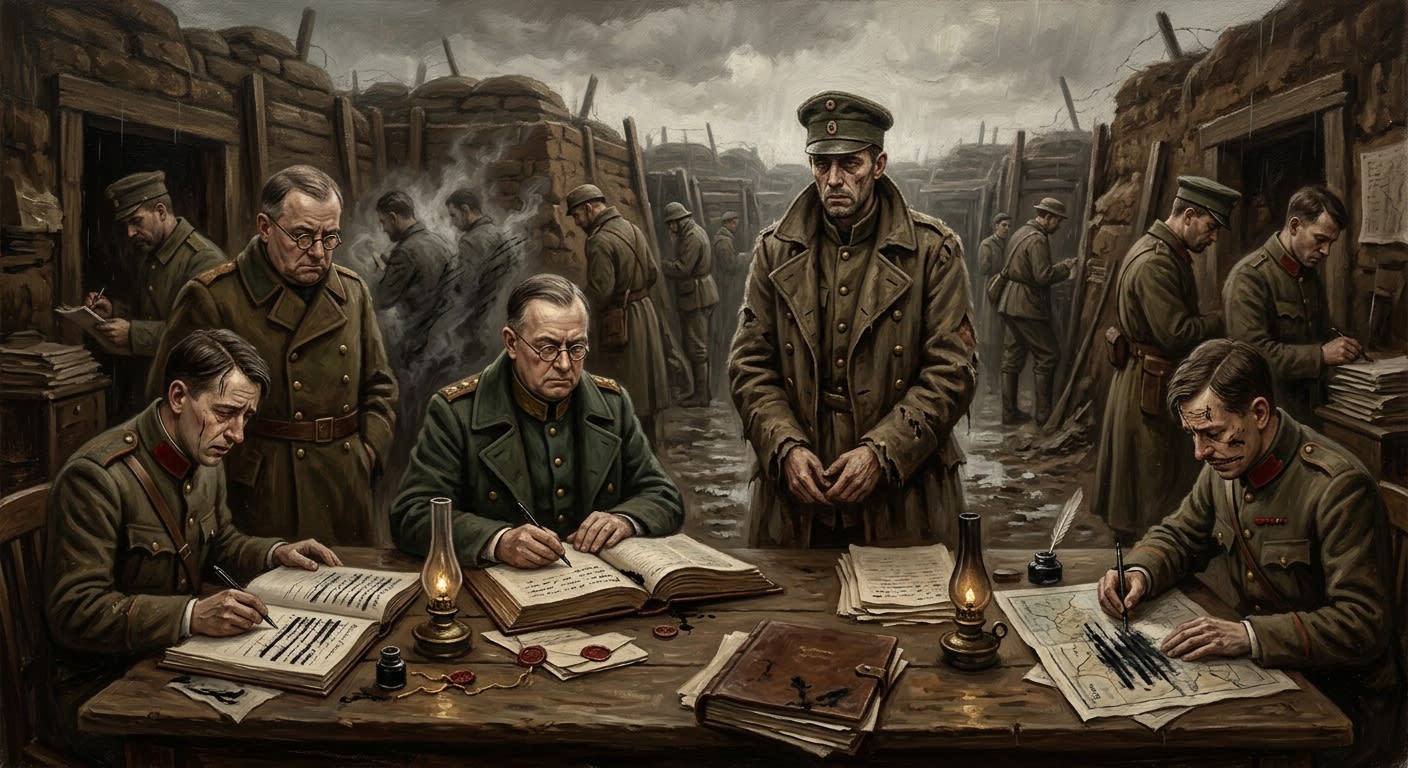
Erasure of Veyss
The man who asked for arrears and received absence
A.S. 148 trench-court erasure in which Lieutenant Veyss lost standing over a missing ancestral tithe-stamp, and every dependent ledger corrected him into absence.
Codex Ref. VII.8.10-048
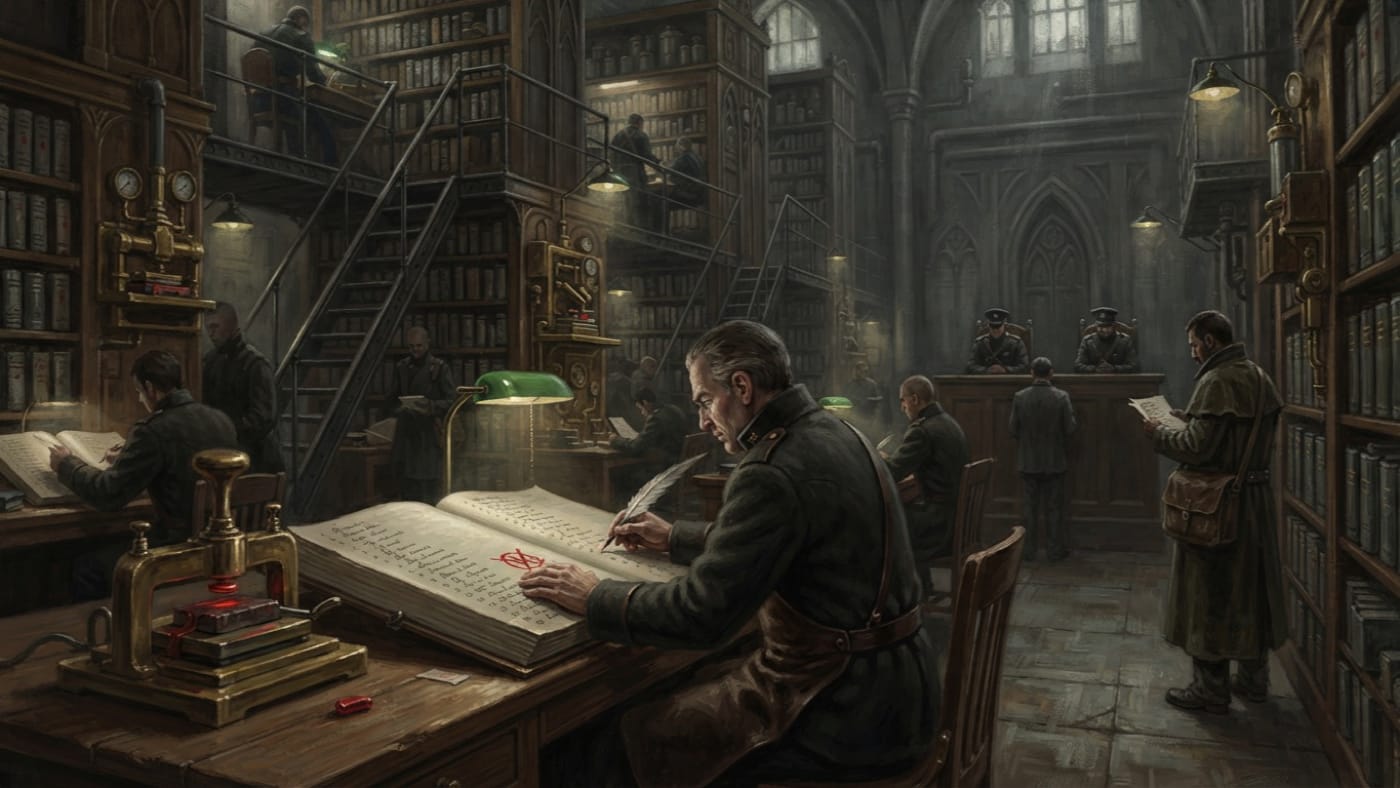
Excommunication
Cast out of communion, retained for punishment
Excommunication casts a person out of communion but keeps the name legible in the Great Ledger of Souls. The condemned retain standing for punishment and possible restoration. Records calls this generosity.
Codex Ref. XIII.1.01-005
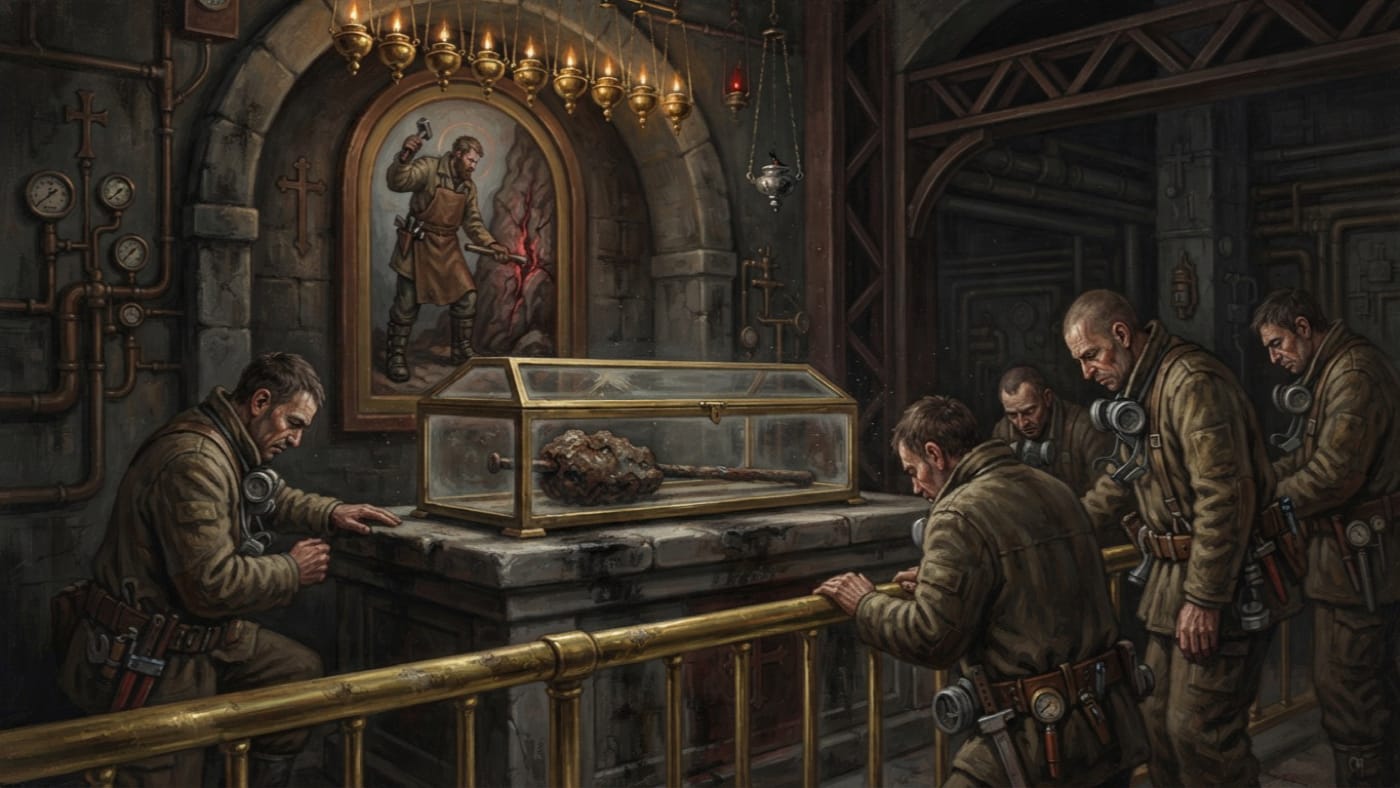
Extraction Chapel
The plug rests under glass; its age remains an argument
Budapest's Extraction Chapel holds Saint Orren's provisionally authenticated iron plug in a sealed case. Prospectors come for a patron who bought nine hours; Relics keeps the dating dispute open.
Codex Ref. II.3.12-112
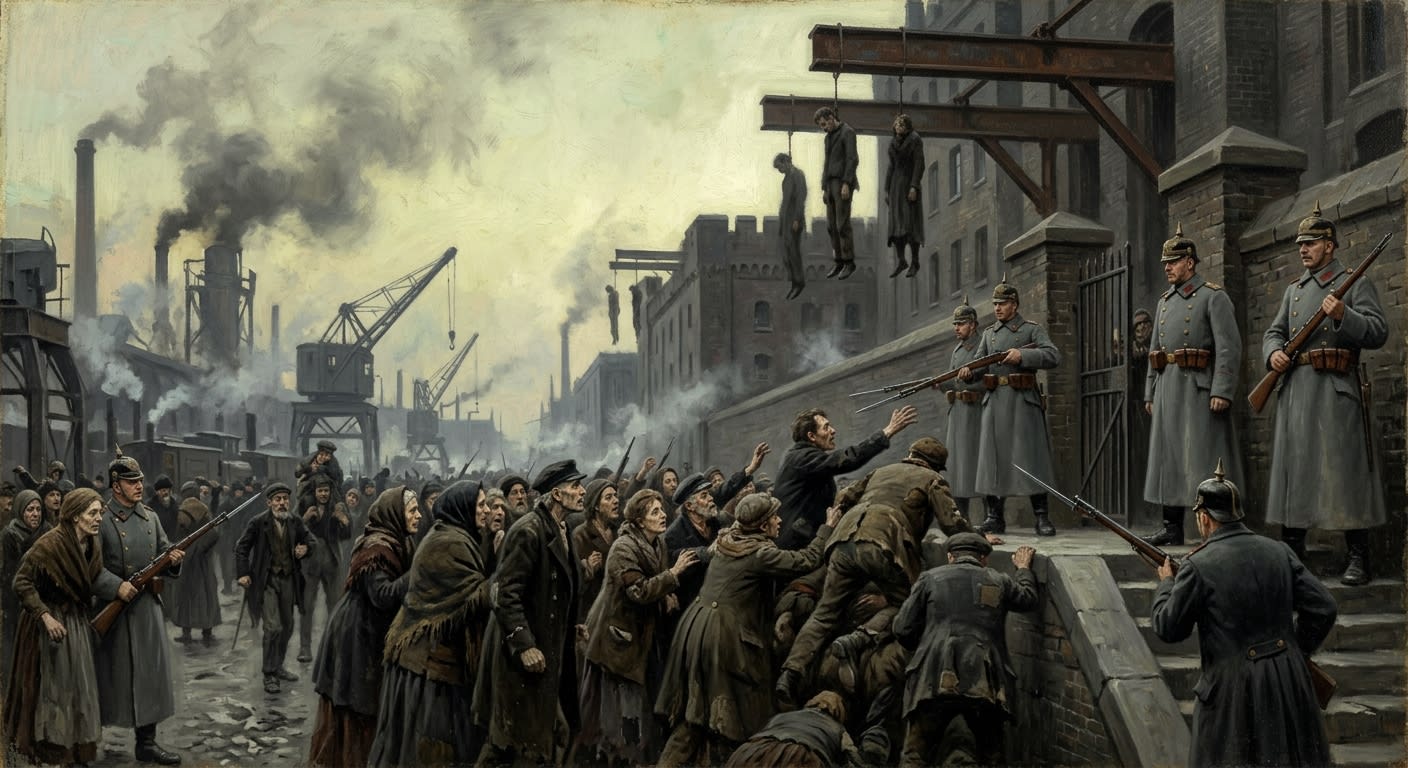
Famine of A.S. 65
Two per cent mercy, measured against an empty sack
The A.S. 65 Hamburg famine and nine-day riot came as the northern throat became indispensable: failed harvests, due tithes, Berlin troops, public hangings, and a two-per-cent mercy too small to eat.
Codex Ref. VII.4.21-065
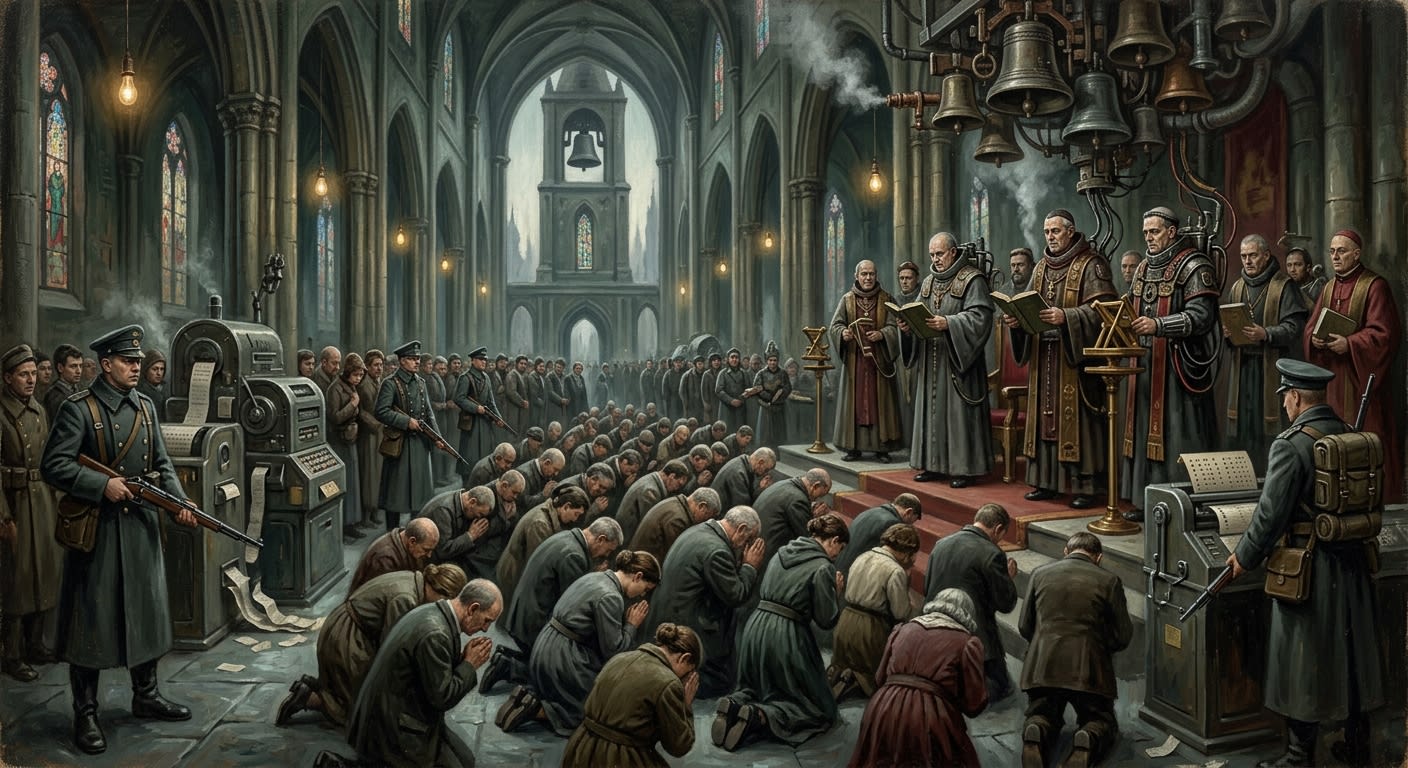
Feast of Doctrinal Submission
The holiday that teaches the spine to kneel before the mouth calls it faith
The Feast of Doctrinal Submission is the Synod's mandatory kneeling holiday: census, pageant, ration queue, loyalty assay, and permitted joy under bells.
Codex Ref. XIII.1.89-072
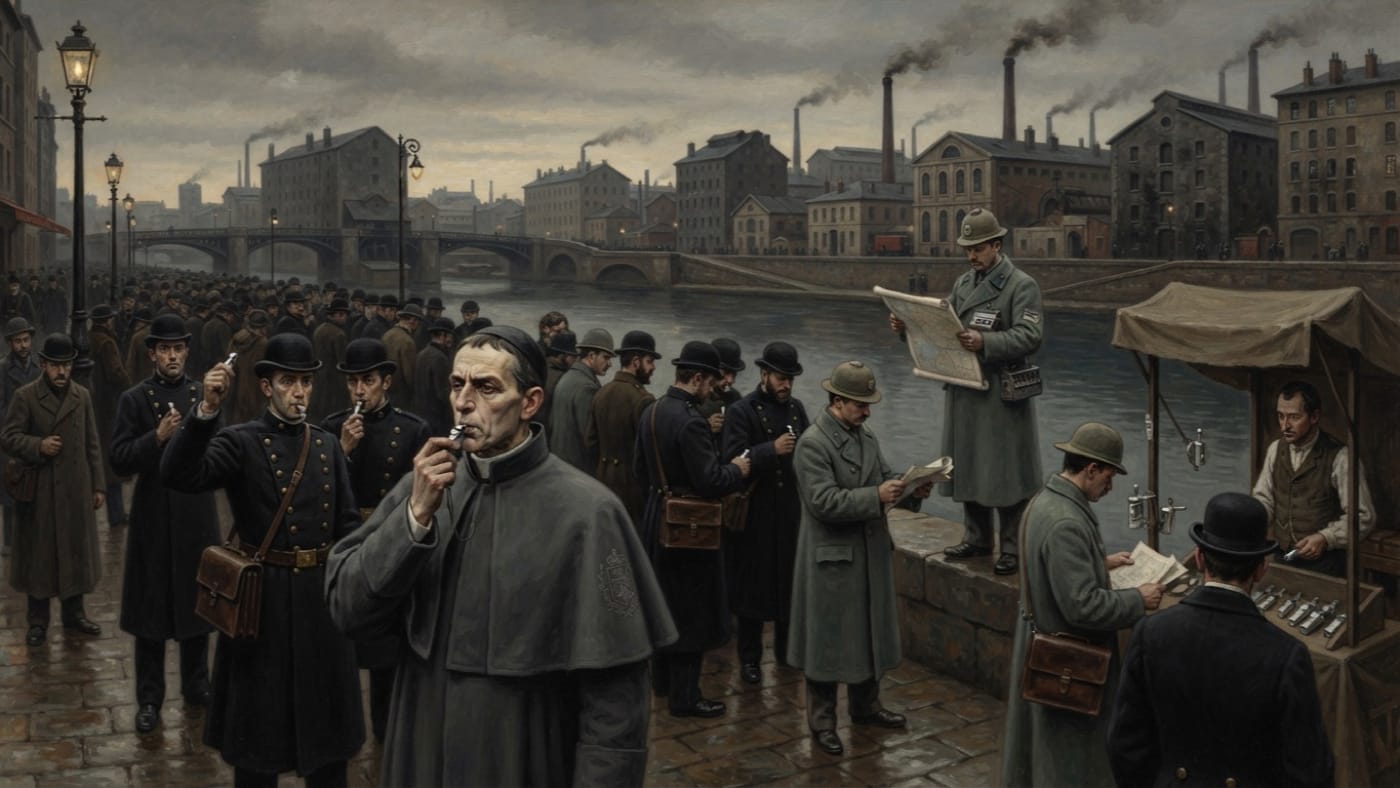
Feast of Saint Calistus
Lyon keeps the sound, and Festivals keeps the maps
This A.S. 201 survey records Lyon's supervised commemoration of Saint Calistus through whistle-hymns. Festivals keeps the route maps, merchants sell silver whistles, and Bureau counters attend. Memory travels by permission.
Codex Ref. XIII.1.87-015
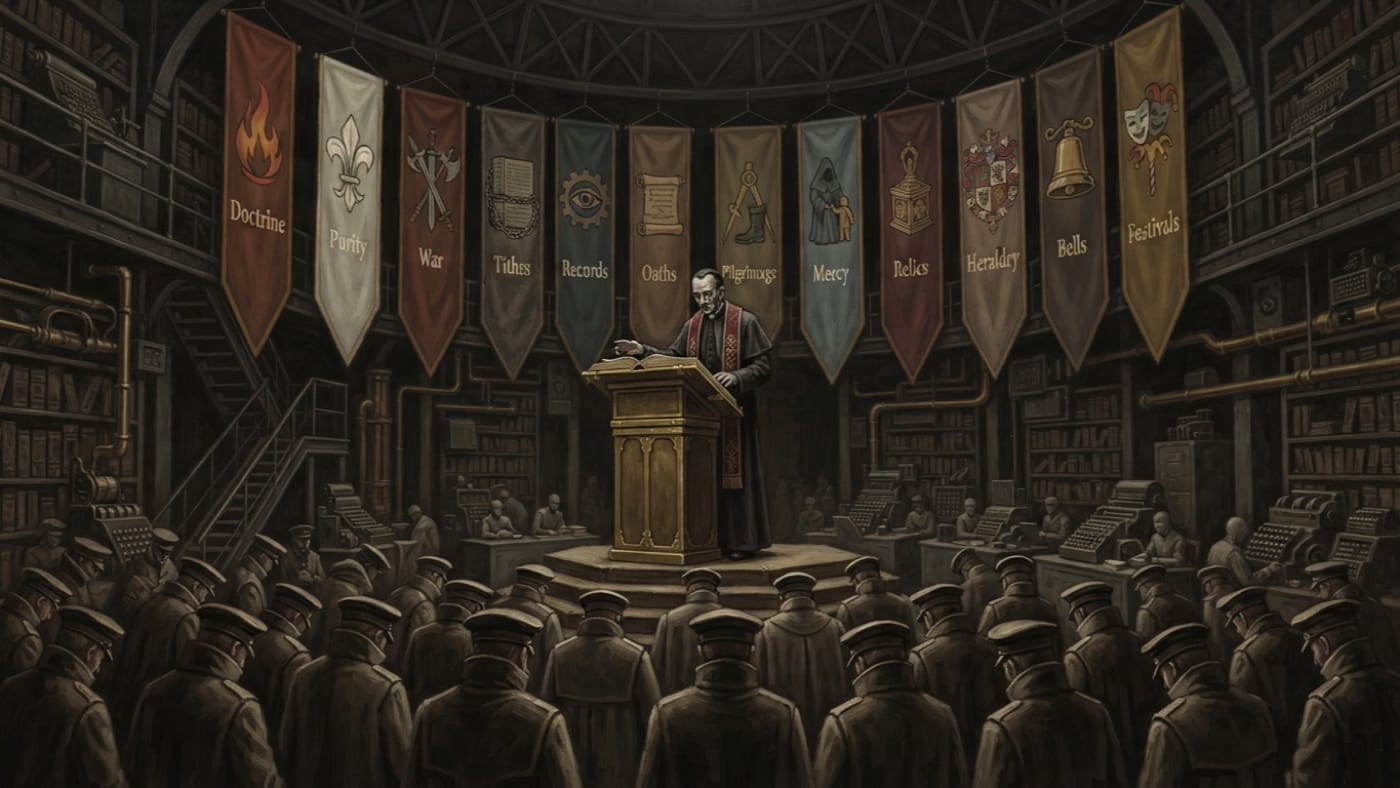
Feast of the Ledger
Twelve portfolios read aloud; the offices that keep them standing go unnamed.
At the Feast of the Ledger, the Synod reads its twelve canonical portfolios aloud. Settlement, which assigns three hundred million addresses, receives no syllable. The recital is correct; the census is incomplete.
Codex Ref. XIII.1.89-201
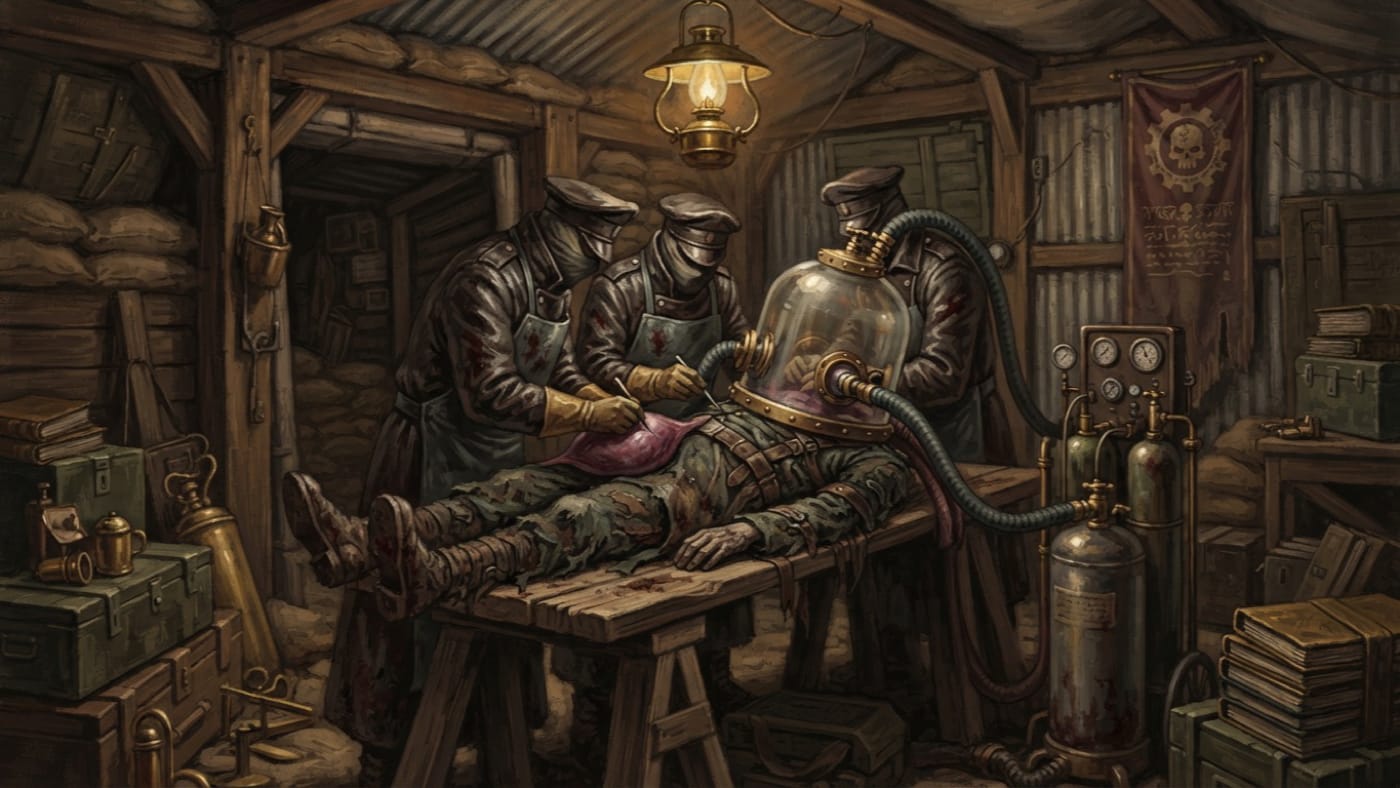
Field Autopsy Protocol 14-D
Three lost, one silent, and the capital letters remain.
The Bureau of Medicine's recorded A.S. 193 prohibition on incising Gore-Slinger sacs without full containment apparatus. Three field surgeons were lost; the fourth survived and has not spoken since.
Codex Ref. XIII.1.74-193
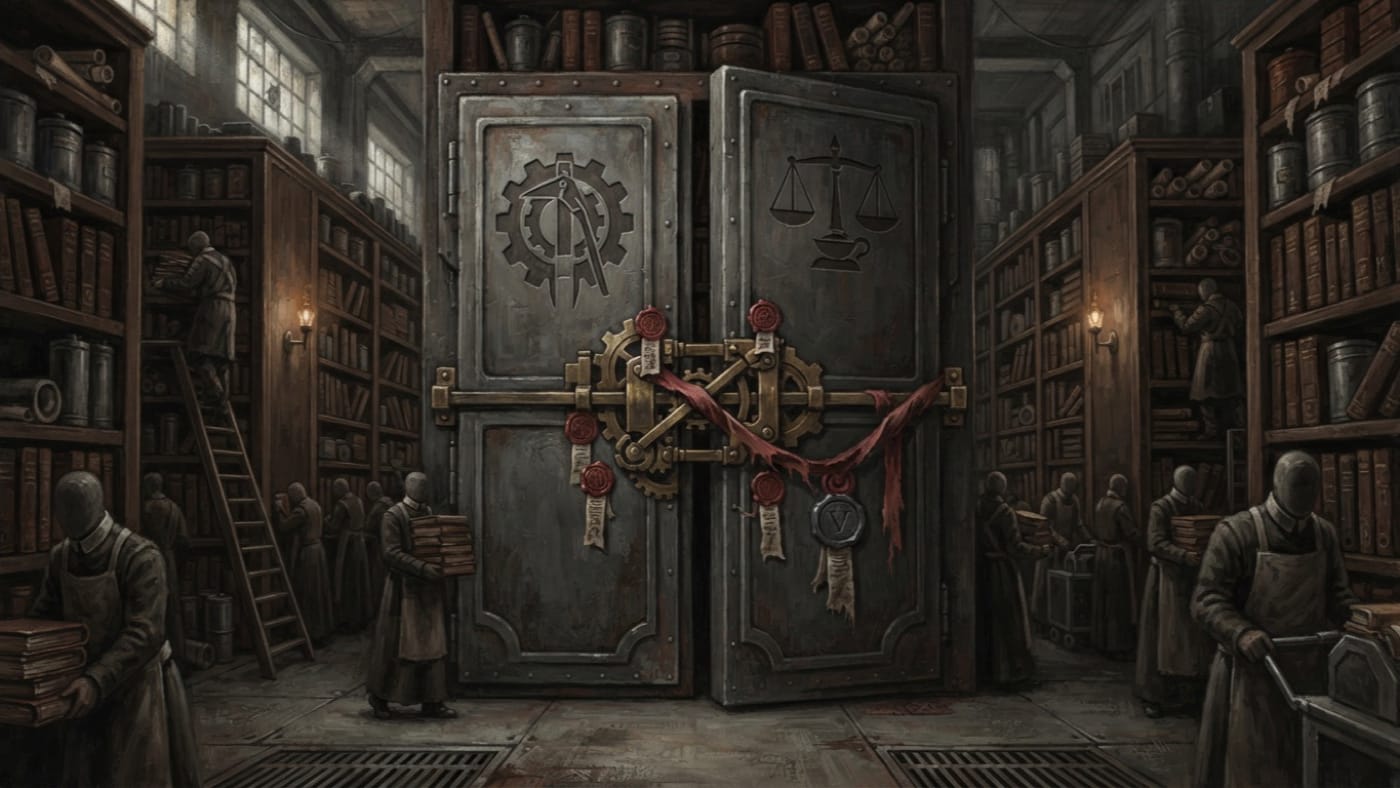
Fifth Ratification
The name is filed; the particulars remain sealed
An A.S. 201 survey of the Fifth Ratification's attested sealing of Augustinus's construction particulars. Engineering keeps the structural data; Mercy keeps the rest. The name is filed. The text is not before us.
Codex Ref. XIII.1.90-201
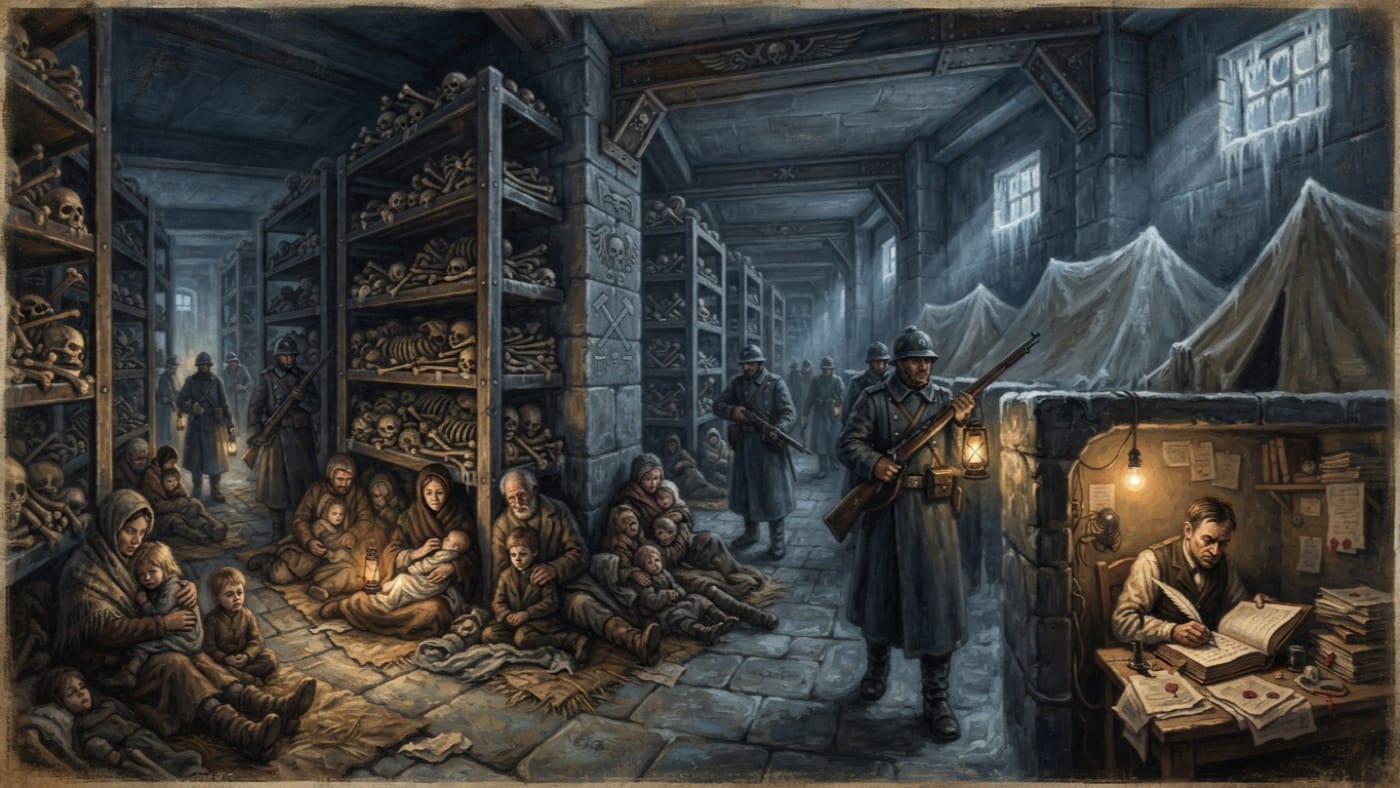
First Grave-Field Winter
The tents froze, and the shortage acquired a clerk
An A.S. 201 retrospective of an undated winter at three unnamed bastions, when frozen tents drove refugees into sanctified dead chambers. Four offices objected; shelter beside the dead acquired a clerk.
Codex Ref. VII.4.11-081
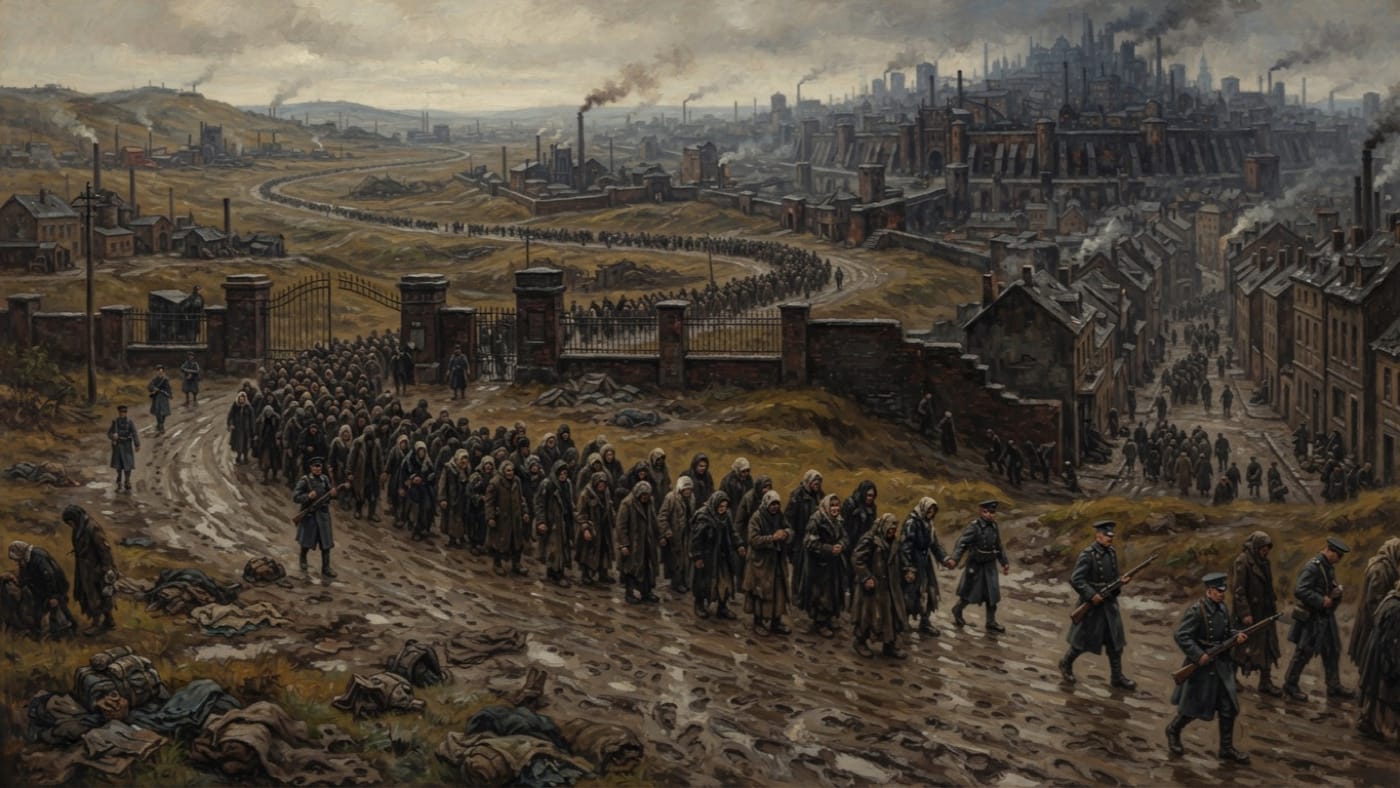
First Jubilee Flight
The record remembers the disgrace; it does not remember the year
The Flight has a name, thousands of nominal converts, and no recorded year. This A.S. 201 survey separates the attested mass-defection account from the wider early Jubilee failures. The ledger remembers the embarrassment.
Codex Ref. VII.3.03-002
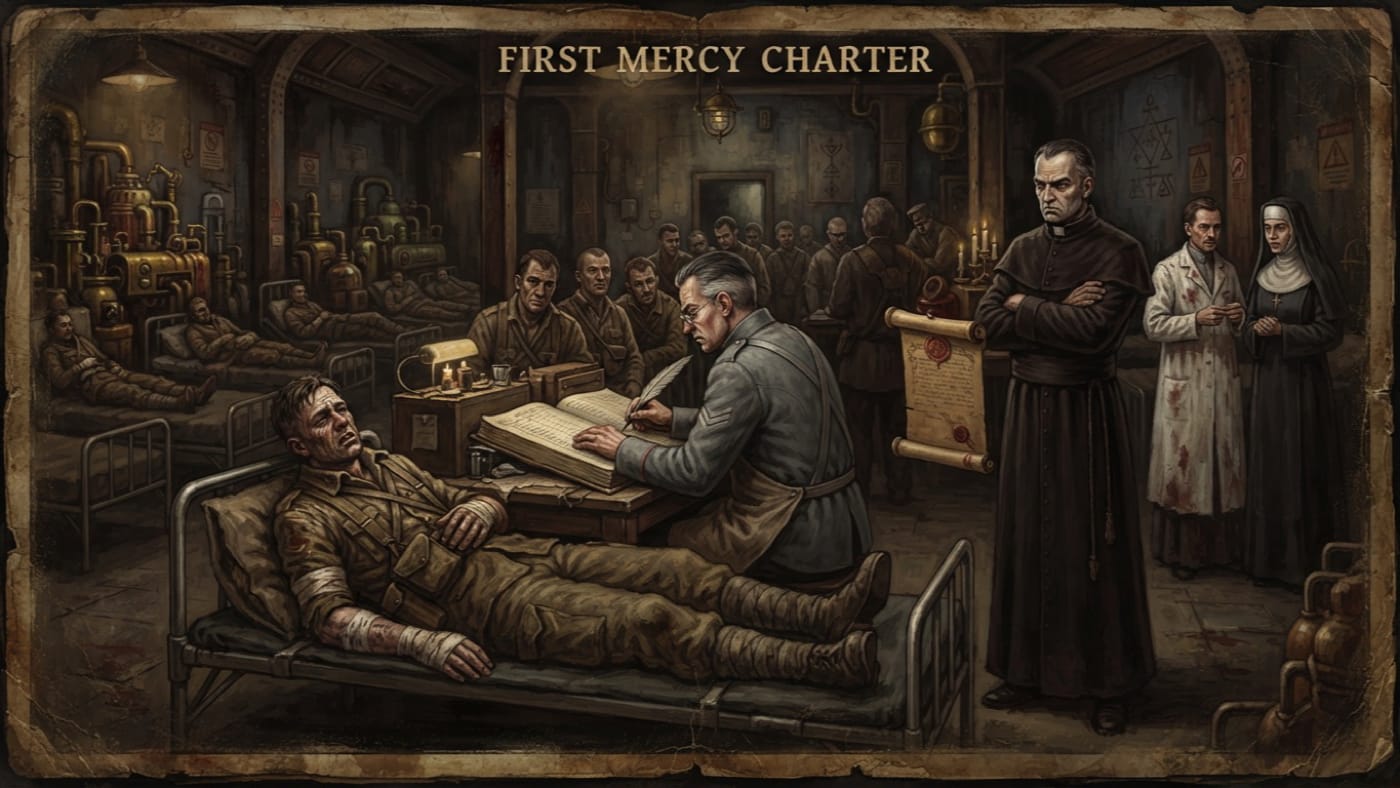
First Mercy Charter
The wound waits while the soul is put in order.
The First Mercy Charter of A.S. 92 conditions treatment on confession, absolution and acknowledgment of Providence. The body waits while the soul's paperwork is completed.
Codex Ref. XIII.1.92-092
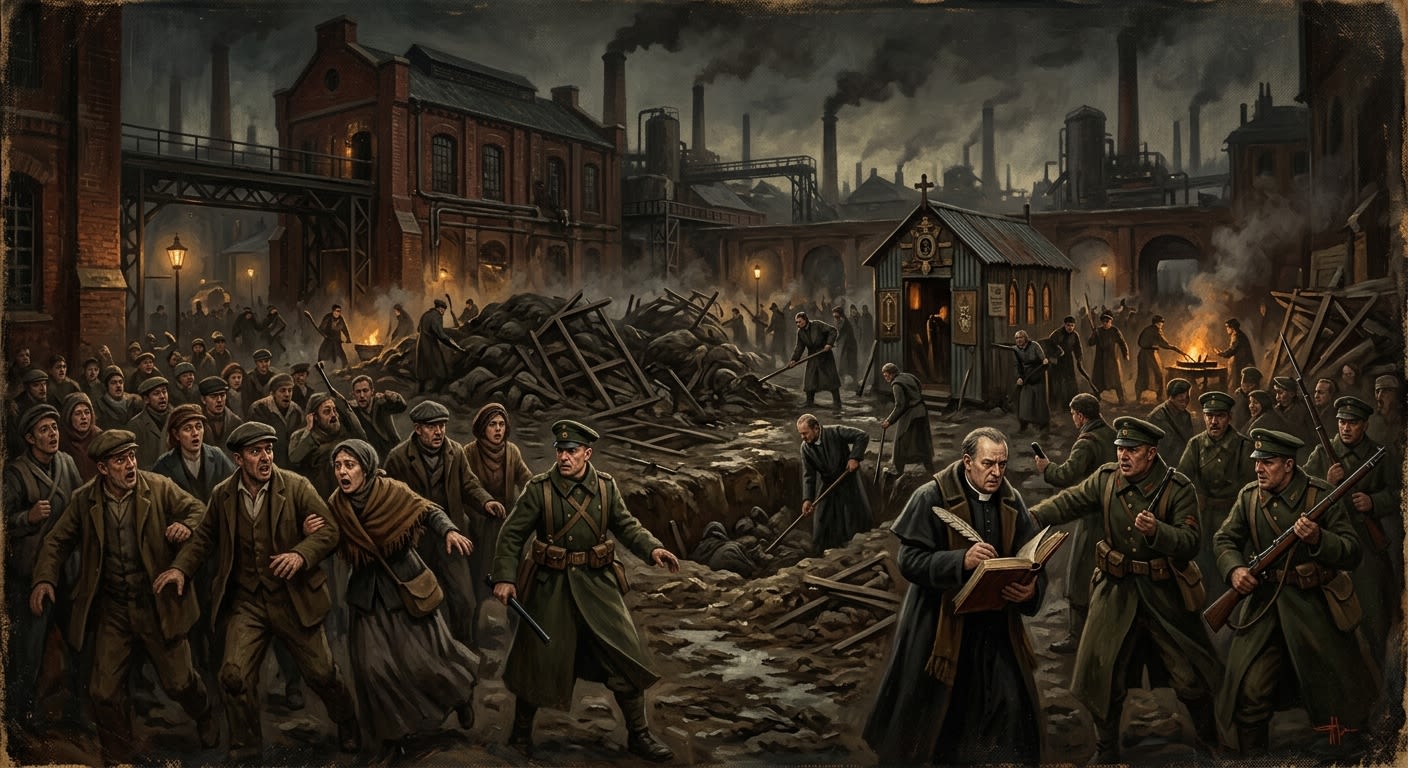
First Ossuary Panic
The dead spoke, and the Synod answered with a form
A.S. 78 Rhine corridor mortuary panic in which overcrowded pits began sounding after dark, forcing burial clearance, tariff-chapels, and the Dead-Goods Tariffer into law.
Codex Ref. VII.4.25-078
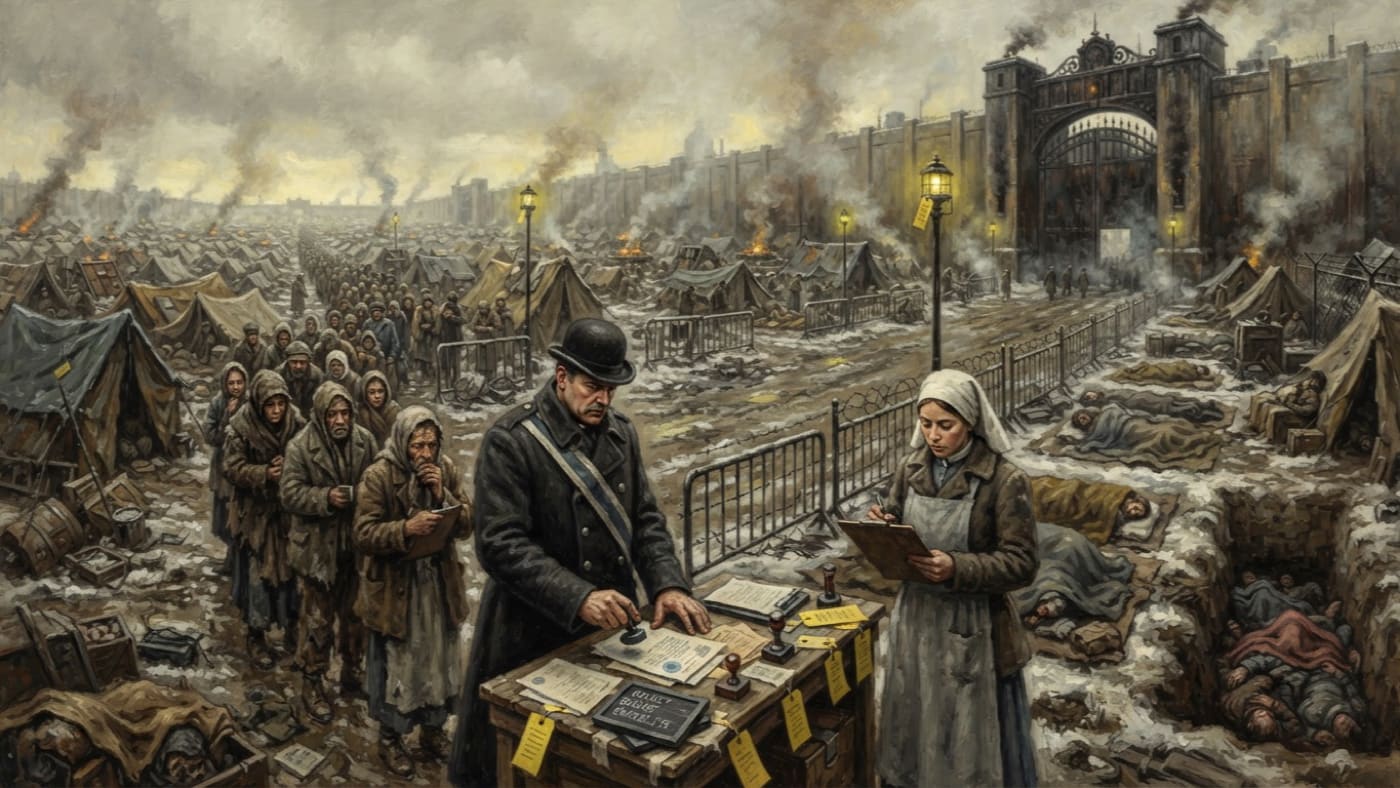
First Quarantine Winter
The year went missing. The authority remained.
An A.S. 201 survey of the undated convoy-camp plague remembered as the First Quarantine Winter. The camps became charnel pits; the gates gained medical authority they have never relinquished.
Codex Ref. VII.8.10-1094
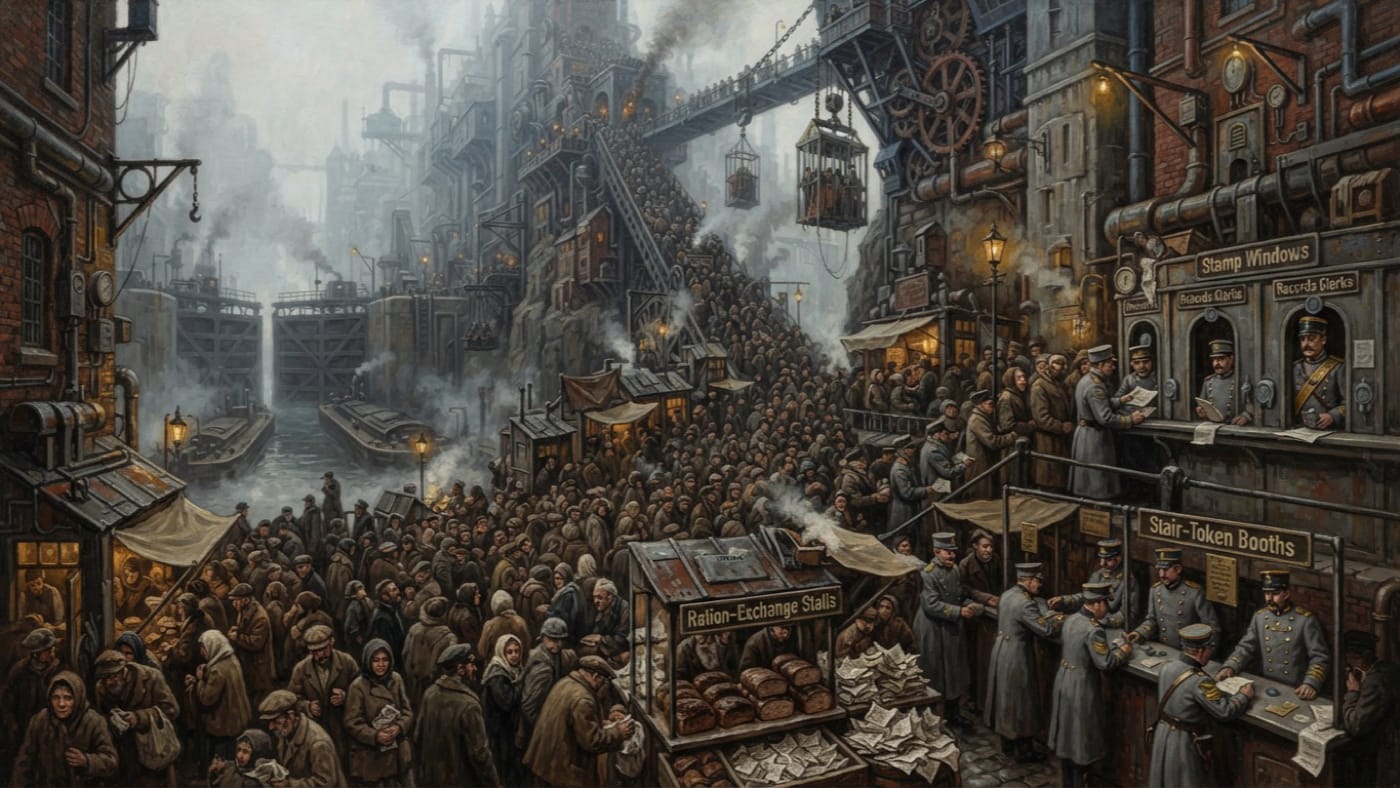
First Step Market
Where brass buys a crossing and bread competes with the stairs
Rheinscarp's market above the locks sells ration chits, clipped brass stair-tokens and instruction in staying registered. Each coin buys bread or ascent; the Ledger is quite content to let a newcomer choose.
Codex Ref. II.2.01-003
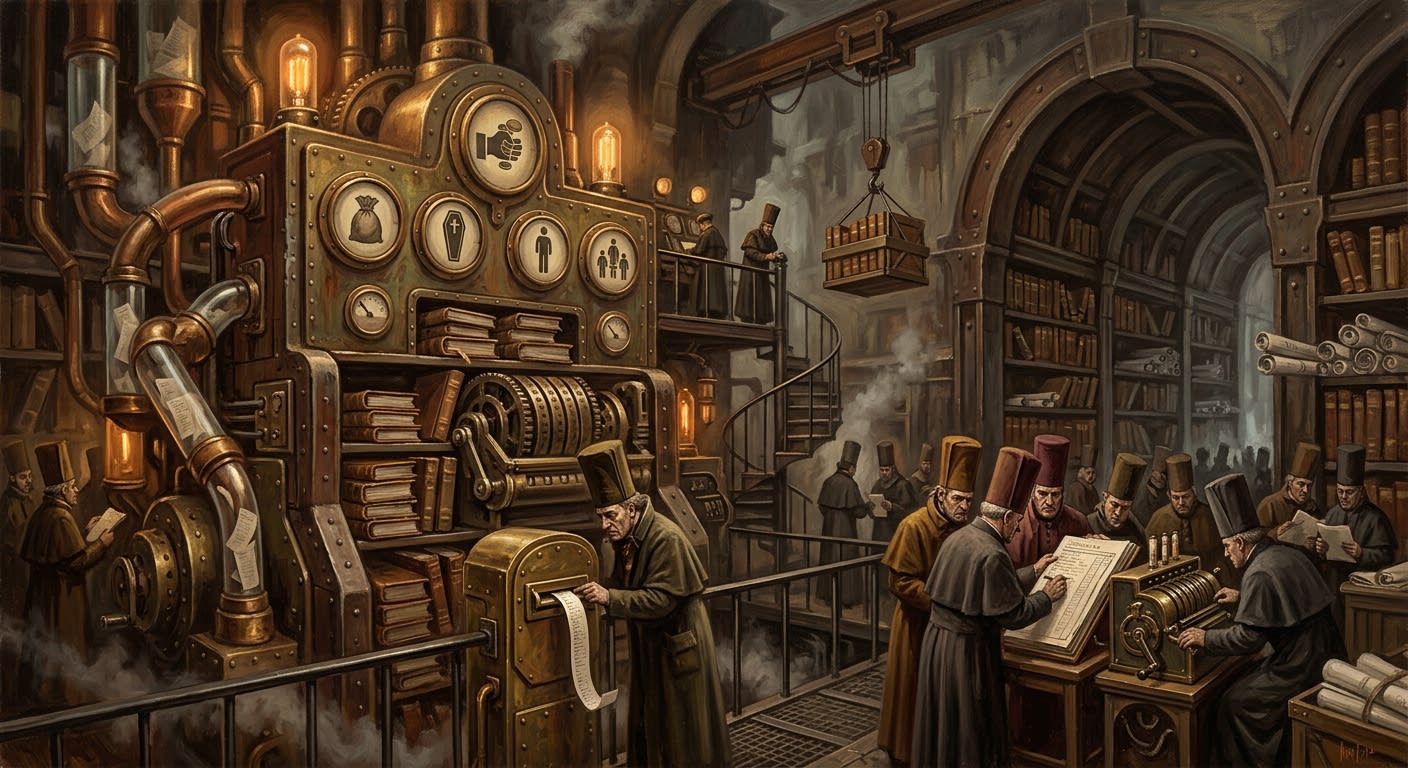
Fiscal Census
The mouth beneath the Ledger, still hungry after burial
The Fiscal Census is Tithes' continental obligation register: a vault-machine counting what the living, dead, unborn, and administratively inconvenient still owe.
Codex Ref. XIII.1.38-092
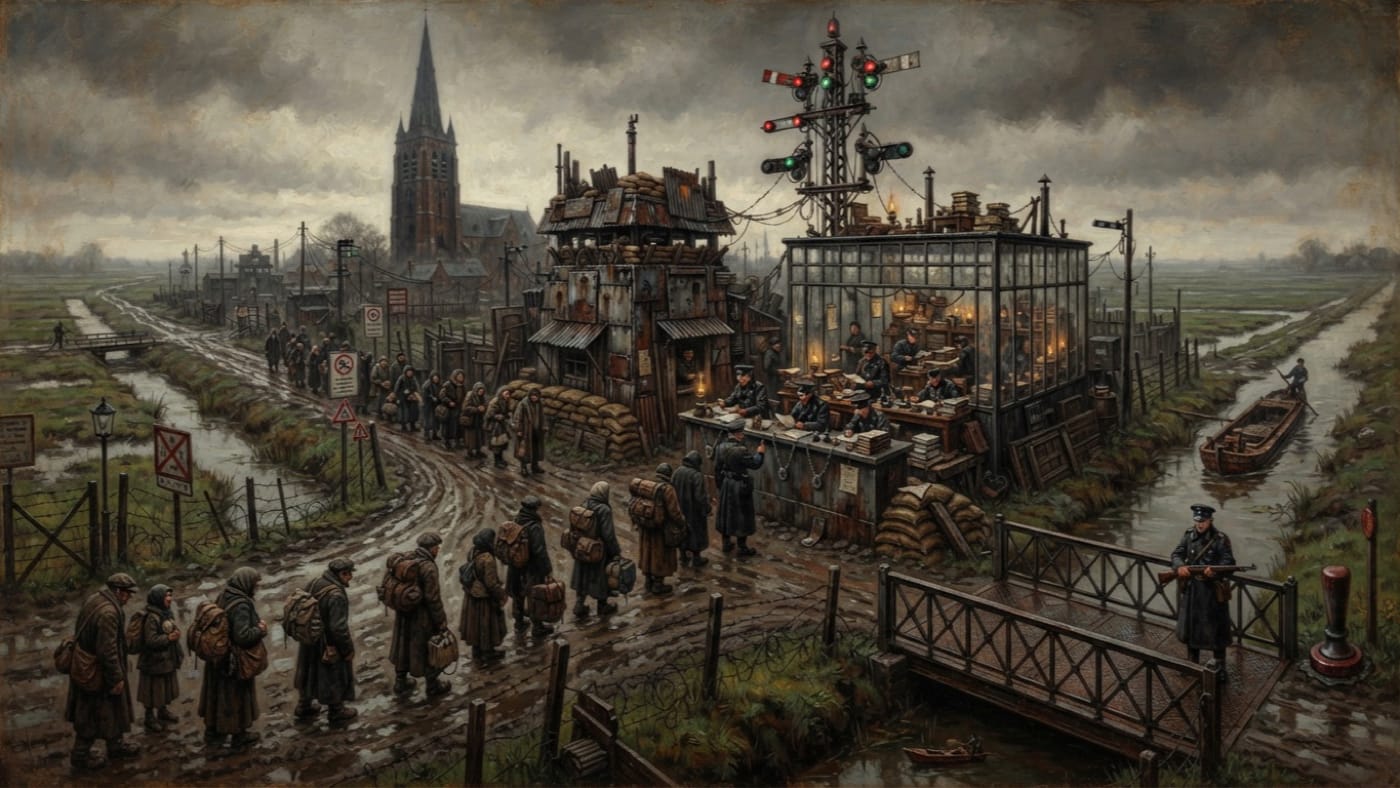
Flanders
Loyal. Damp. Licensed.
Flanders supplies pilgrims from the Synod's damp western parishes. The Brotherhood of the Blessed Foot once charged at the crossroads; the Bureau of Pilgrimage now publishes the fees and charges again for the walk home.
Codex Ref. II.1.07-201
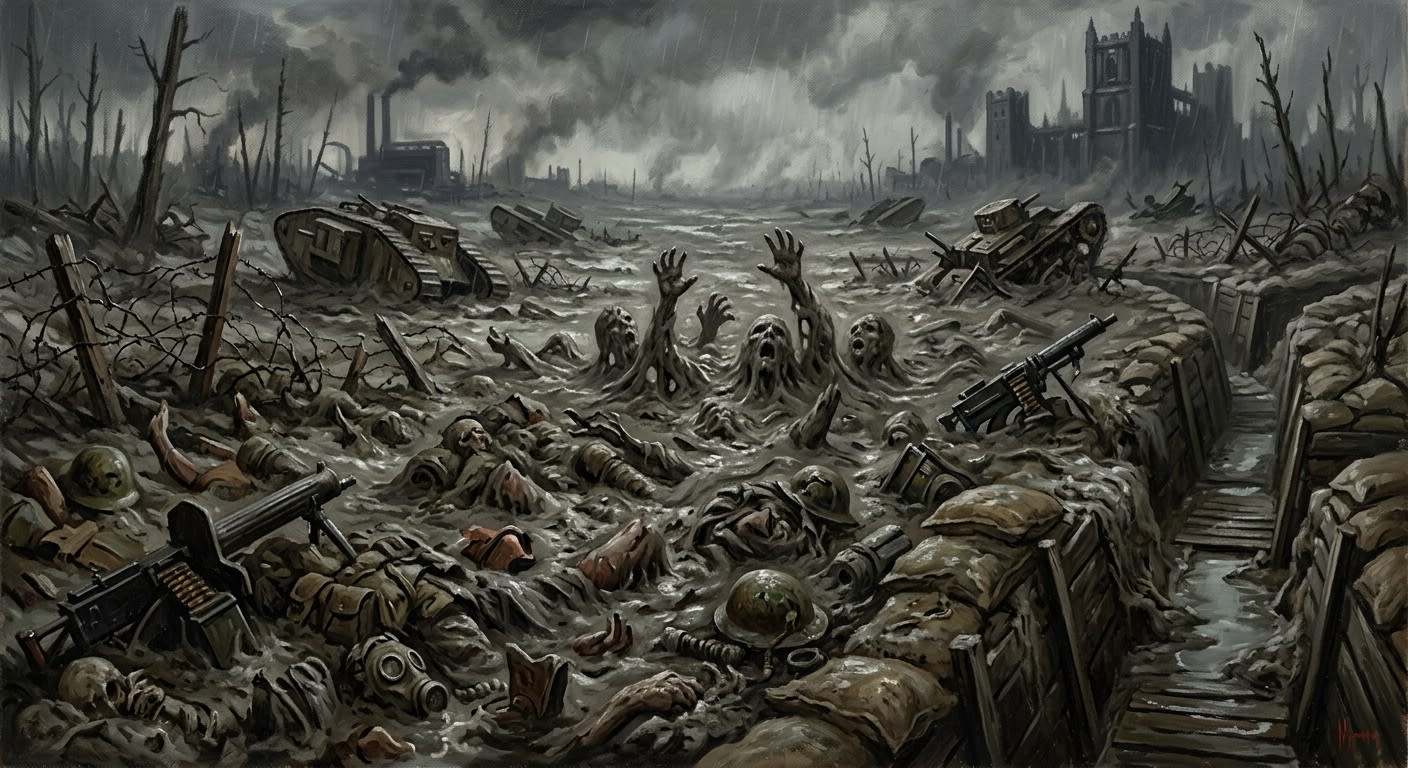
Flesh-Mud
The trench remembers what the grave failed to finish
Flesh-Mud is No Man's Land with appetite: trench mire made from rain, bone, grief, and the administrative failure to bury men separately.
Codex Ref. VI.2.01-004
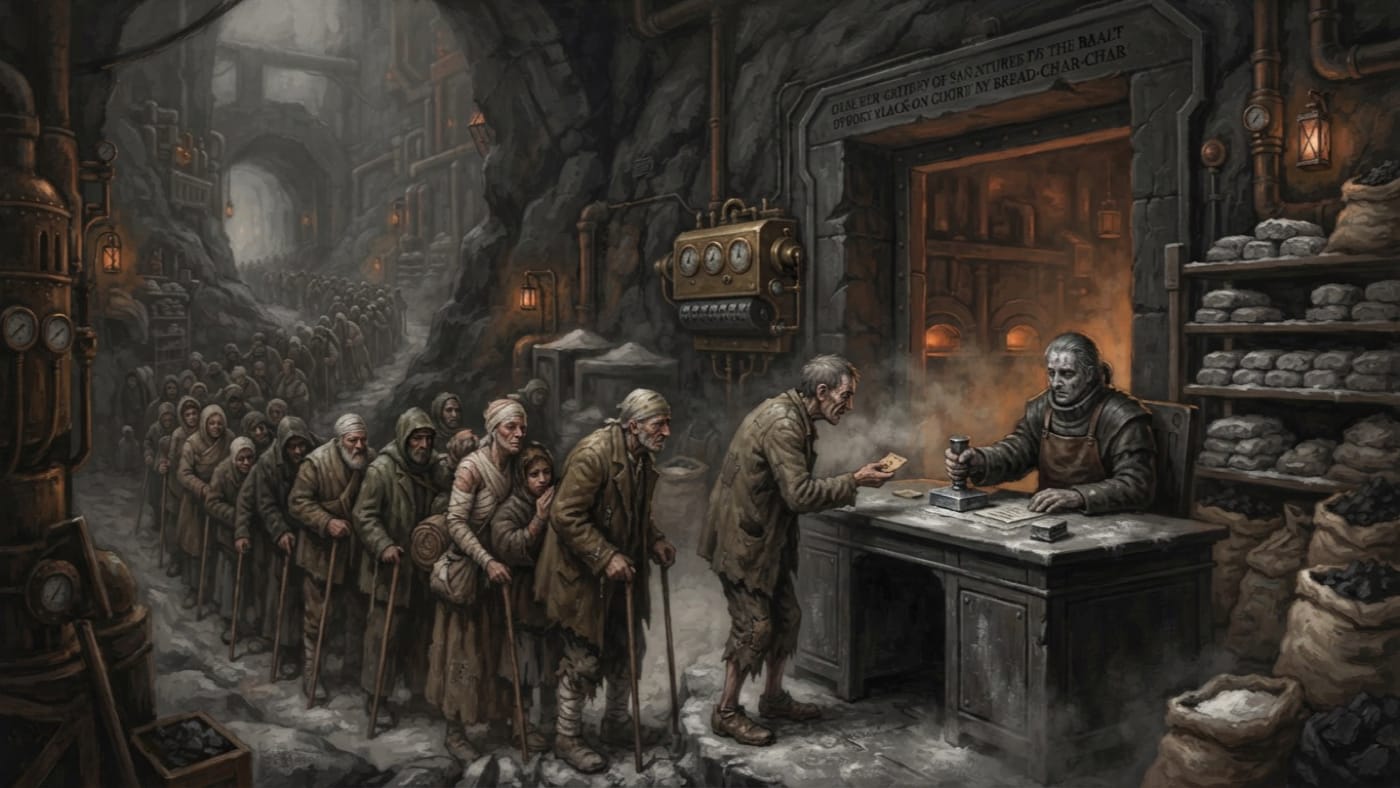
Flour Gate
One road, one ledger desk, one stamp that decides who eats.
San Vesta's ration gate, where a named bread token proves you exist and one clerk decides whether you eat. The flour convoy is three days late; Quartermaster Ashweight has begun the count.
Codex Ref. VII.1.03-002
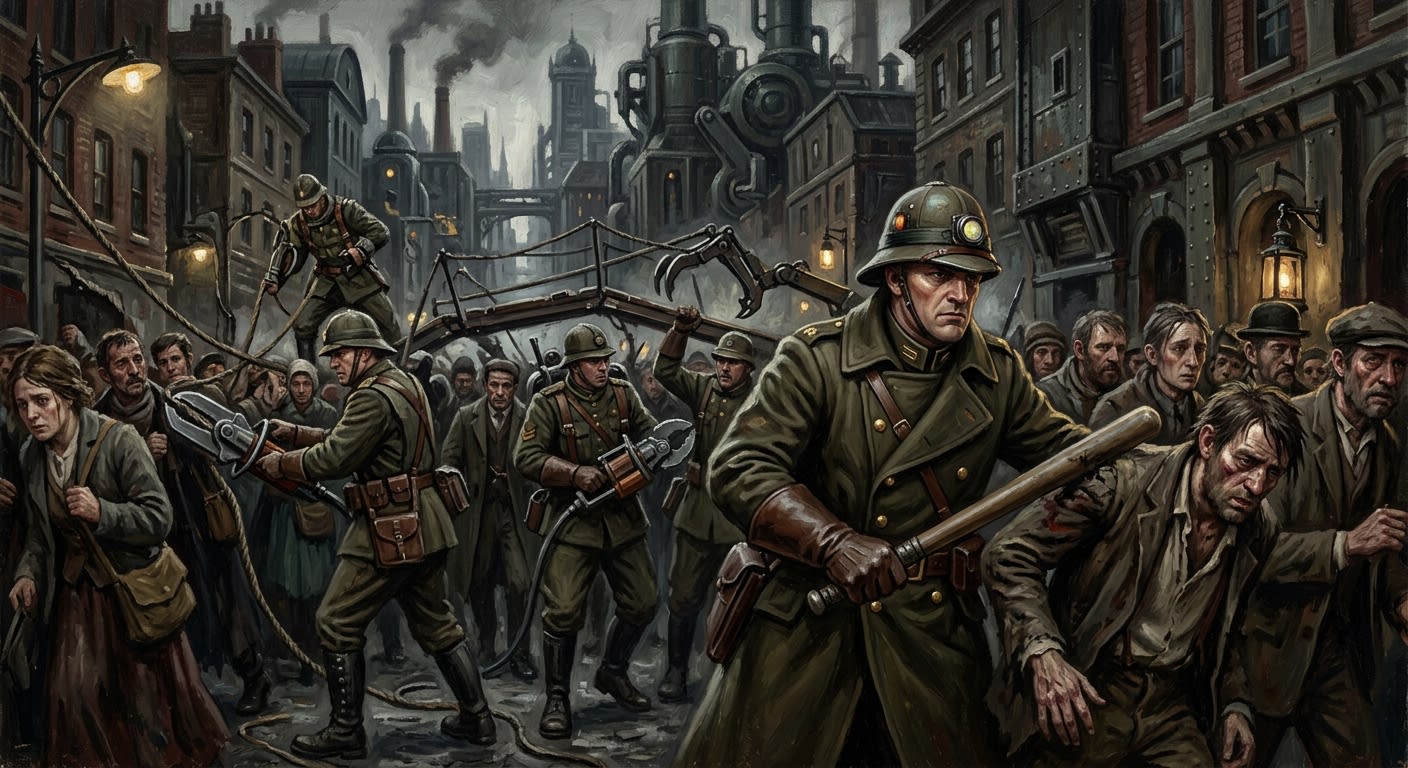
Flow Marshals
Keep them breathing; pray after
Cadence Corps tendency that reduces processions to survivable movement, cutting rope, pulsing bridges, and bruising citizens so they remain alive to complain.
Codex Ref. XII.7.03-001

Form 77-D
Three copies agree; the reason takes another road
Form 77-D authorizes Administrative Dissolution: three copies, one countersignature, and a soul rendered illegible. The reason travels under a separate seal; the writ has no field for undoing.
Codex Ref. XIII.1.77-201
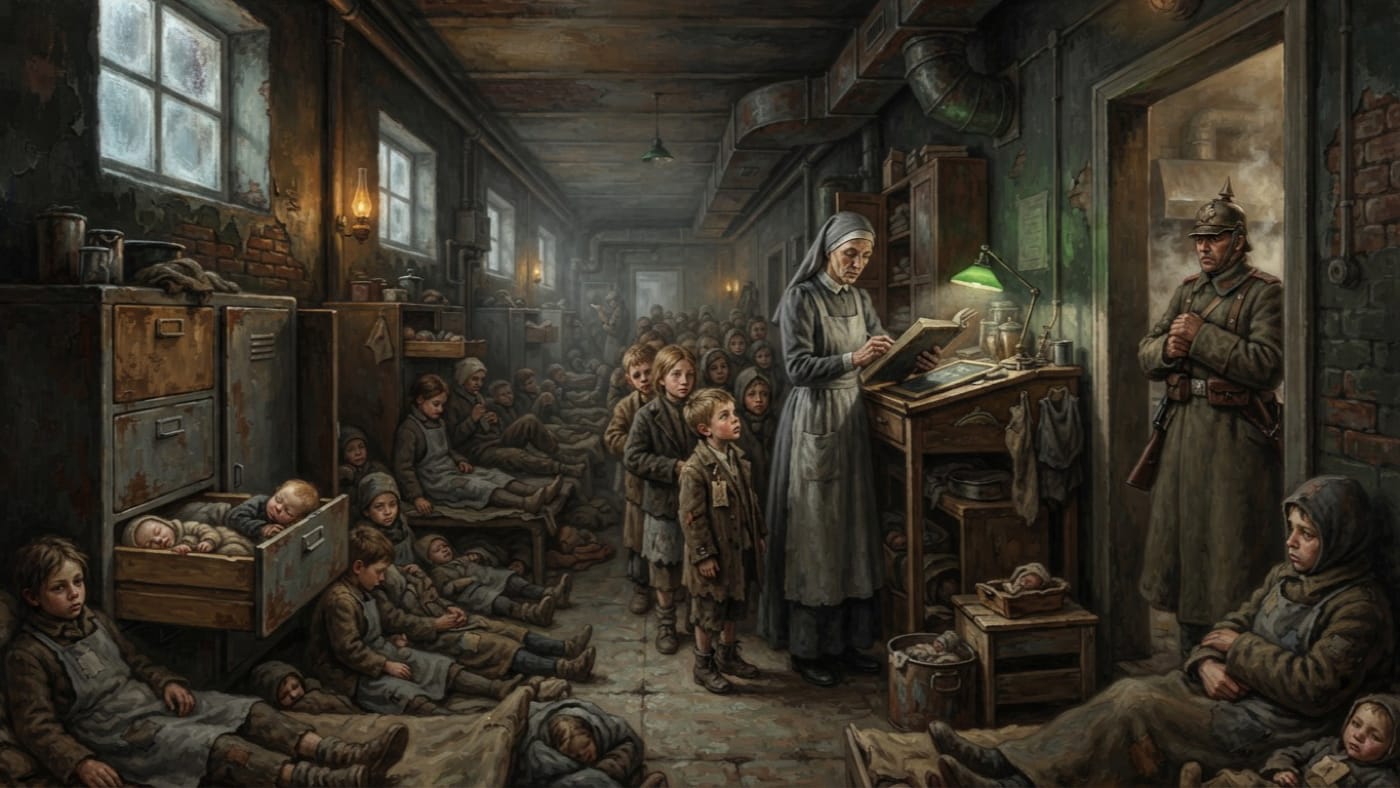
Foundling Winter
Hunger filled the drawers; the ledger decided who could eat
An A.S. 201 survey of the undated famine episode that crowded early Orphanarii with abandoned children and prompted Mercy's ration-eligibility codes. Hunger filled the drawers; the ledger decided who could eat.
Codex Ref. VII.2.12-001
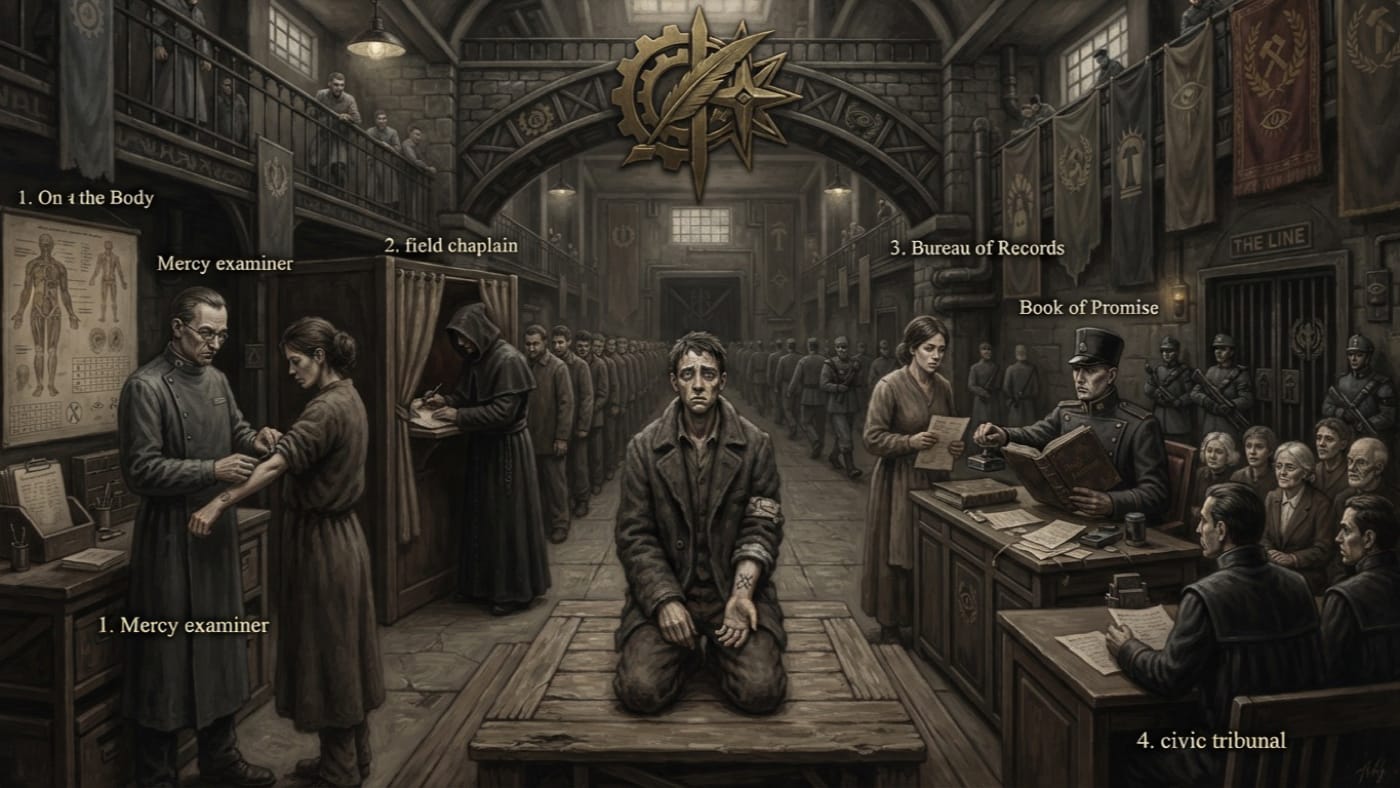
Fourfold Assessment
Four folios, one file, and a destination.
Body, confession, Promise and loyalty: the Fourfold Assessment converts a conscript into an assignment. Mercy examines, Records reconciles, and Conscription decides what the boy is worth.
Codex Ref. XIII.1.23-201
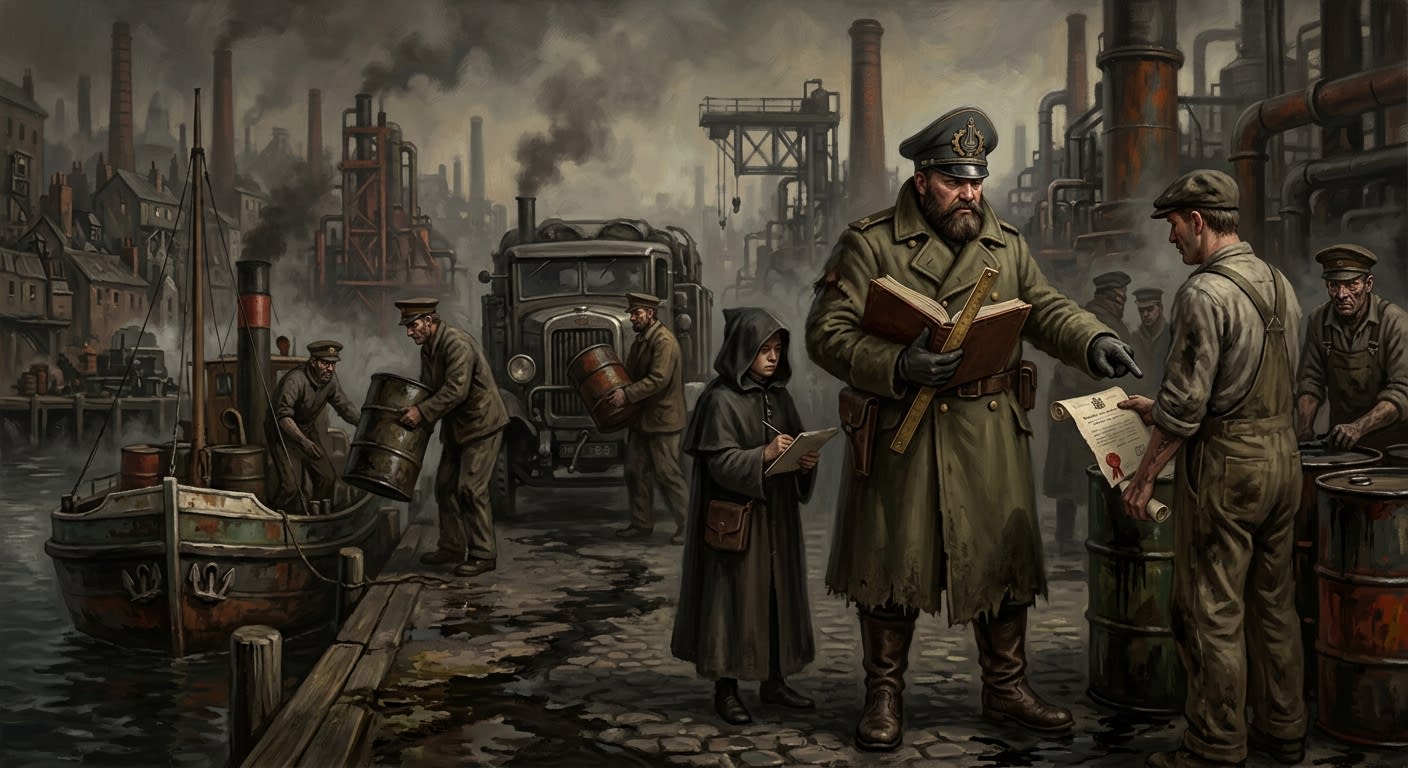
Fuel Monopoly Acts
The statute by which heat learned to kneel before a tariff table
A.S. 112 legal doctrine placing wound-site fuel, drums, charters, workers, accidents, and heat itself beneath Synodal licence and tariff.
Codex Ref. XIII.1.92-112
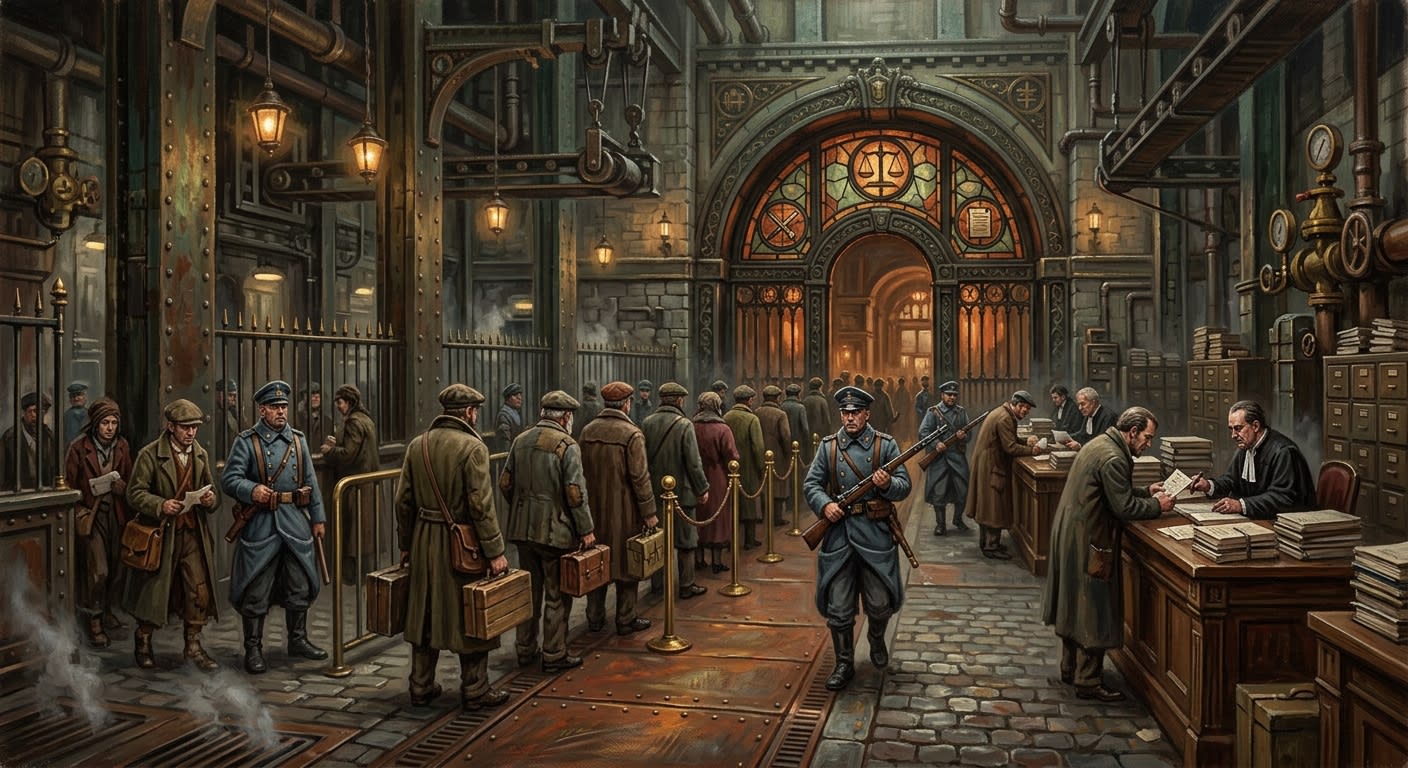
Gate Nine
The final mouth of the Queue Road, where waiting becomes debt and debt learns to breathe
Final court of the Queue Road: a clearance complex over the Apparatus where reclassification, minute debt, appeals, erasure, and warm floors devour travellers by procedure.
Codex Ref. II.3.05-009

Gate Vent Four
One heel-print outweighed the bell
At Gate Vent Four in Bastion-Irongate, Sergeant Voss trusted a narrow heel-print over a negative bell-pulse in A.S. 196. A dead clerk soon made the lieutenant's objection expensive.
Codex Ref. II.4.07-196
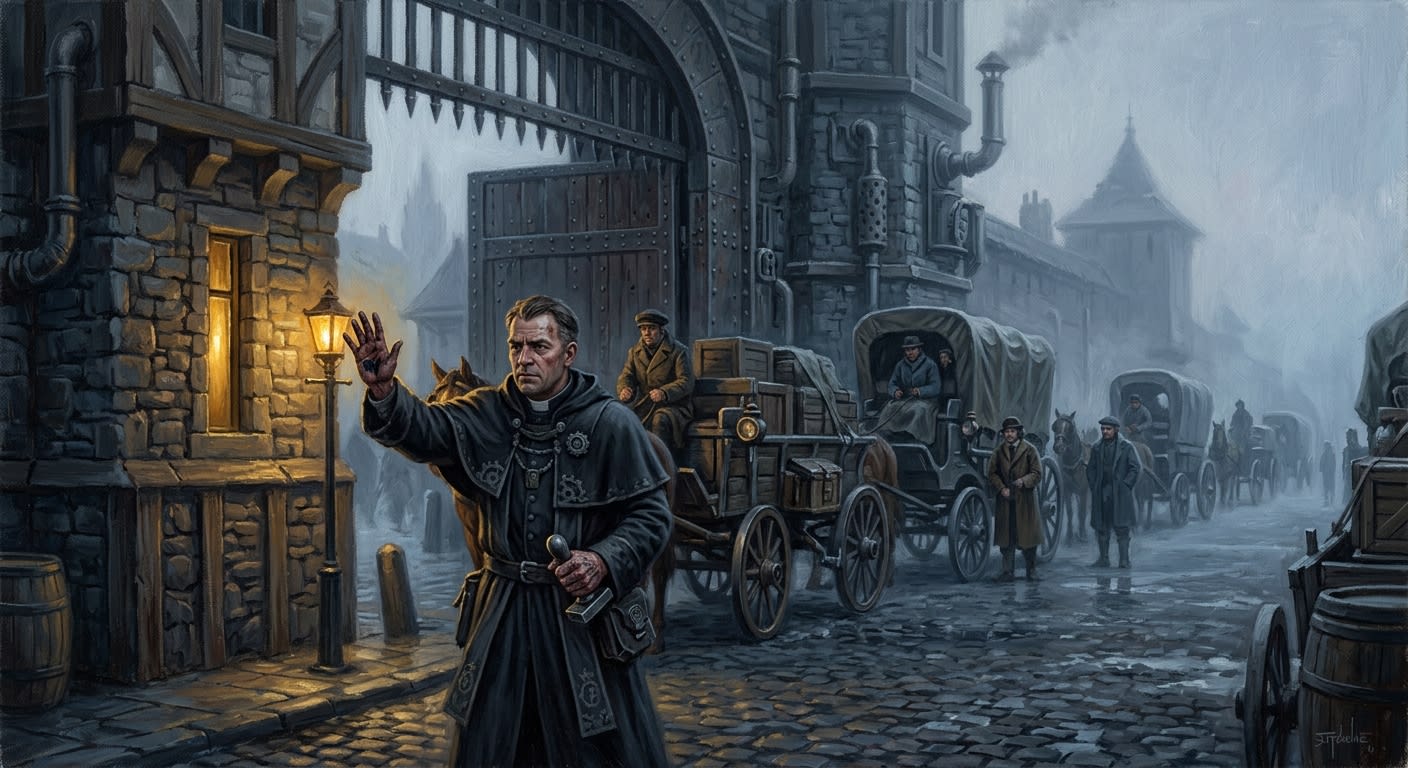
Gatewarden-Notary of Passage
The sole functionary who may halt a column of four thousand by raising one ink-stained hand and asking for documentation.
The Gatewarden-Notary of Passage stands at the point where all five great commodities of the war — disease, heresy, desertion, contraband, and ambition — must be sorted, weighed, stamped, and either admitted or refused. The Gate does not care about the man.
Codex Ref. XII.7.04-001

Gauze-Masked Custodian
Nine turns of gauze, one white ledger, and the administrative certainty that nothing happened
The operative the Bureau of Shadows does not employ, who performs collections the Bureau of Purity cannot conduct, in corridors no Bureau will map. Nine turns of gauze. One white ledger. Nothing happened.
Codex Ref. VI.8.01-009
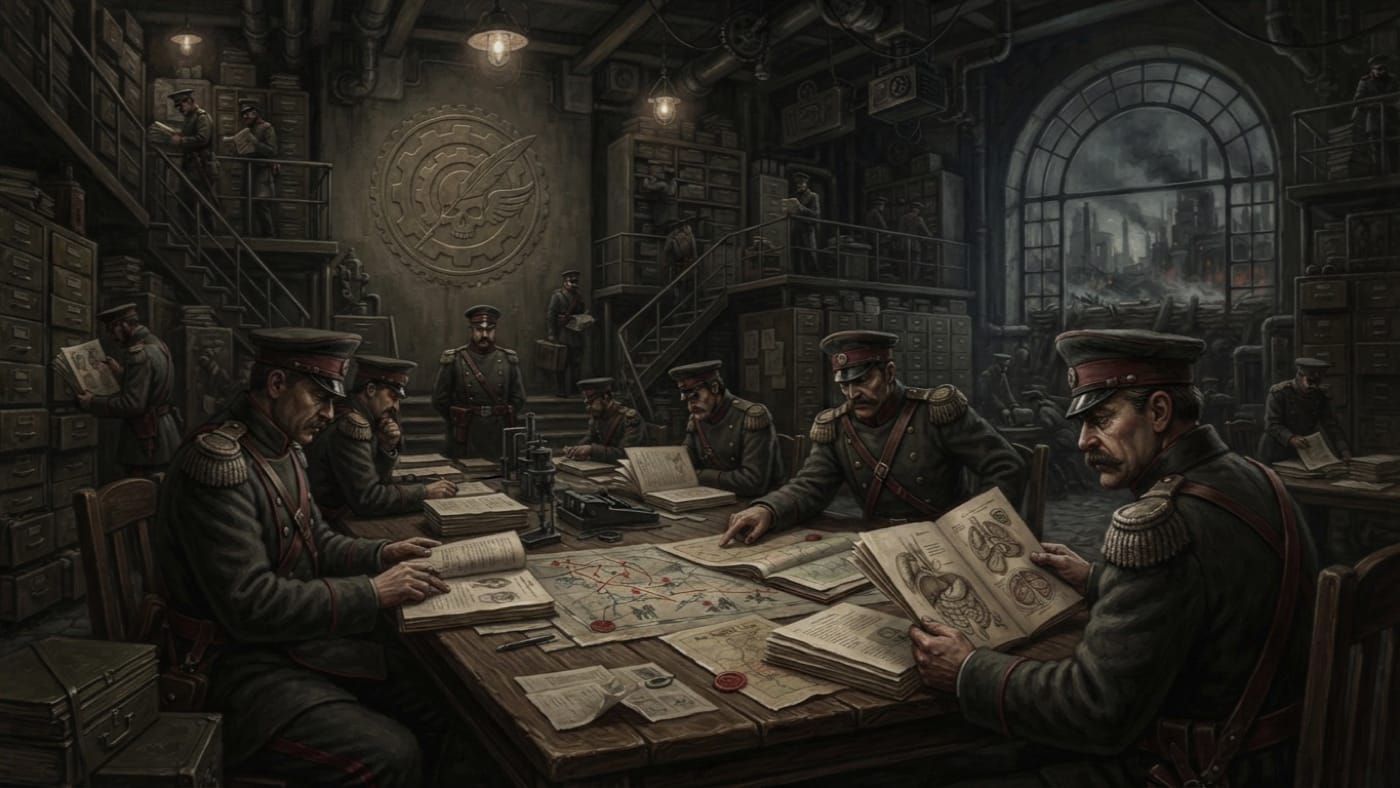
General Staff of the Bureau of War
The Staff reads. The record says so.
War's General Staff reads the Chief Anatomist's replies and accords the office grudging respect. This A.S. 201 survey records that habit. A founding, a roster and a formal remit require evidence the record has not supplied.
Codex Ref. III.2.07-042

Geometry Brand-Smith
Six Thousand Four Hundred Licensed Geometers of Guilt, and the Irons That Did Not Come Back
The Bureau of Heraldry’s serialized geometers of guilt — 6,400 licensed Brand-Smiths who make identity permanent in the only ledger that cannot be forged, lost, or filed incorrectly: the body itself.
Codex Ref. XII.20.01-001

Gerda Weil
The midwife whose bitter draught survived the men who stole it
Halle midwife whose hidden Rationalist remedy lowered fever deaths in A.S. 112, was stolen as Protocol 7-C, and died in Ulm under an erased name.
Codex Ref. III.2.01-091
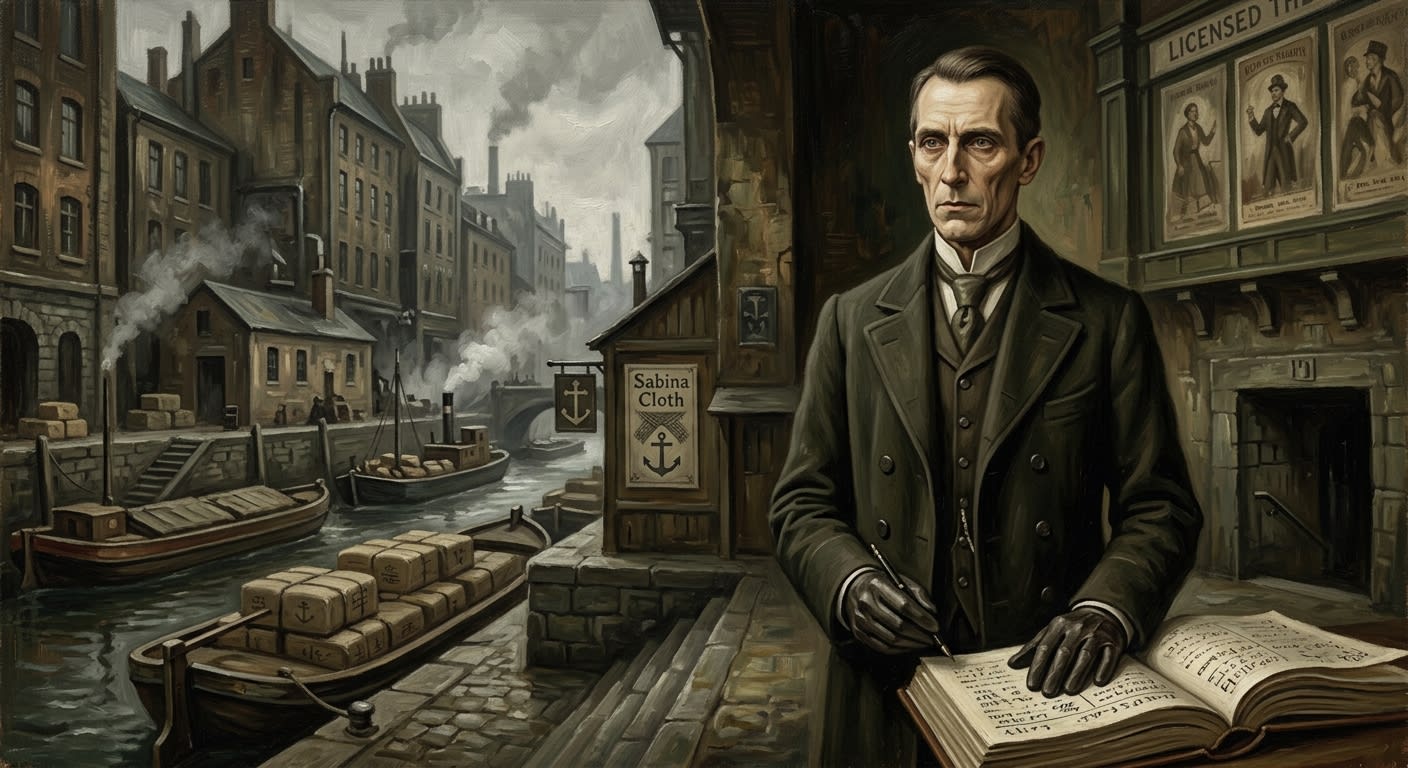
Ghent
The canal city where water keeps copies and loyalty learns to smuggle
Ghent is the Synod's wet ledger in Flanders: canal trade, Records quays, Sabina cloth, licensed theatres, Black Ledger cells, Wormhost scars, and obedience with annotations.
Codex Ref. II.1.05-201
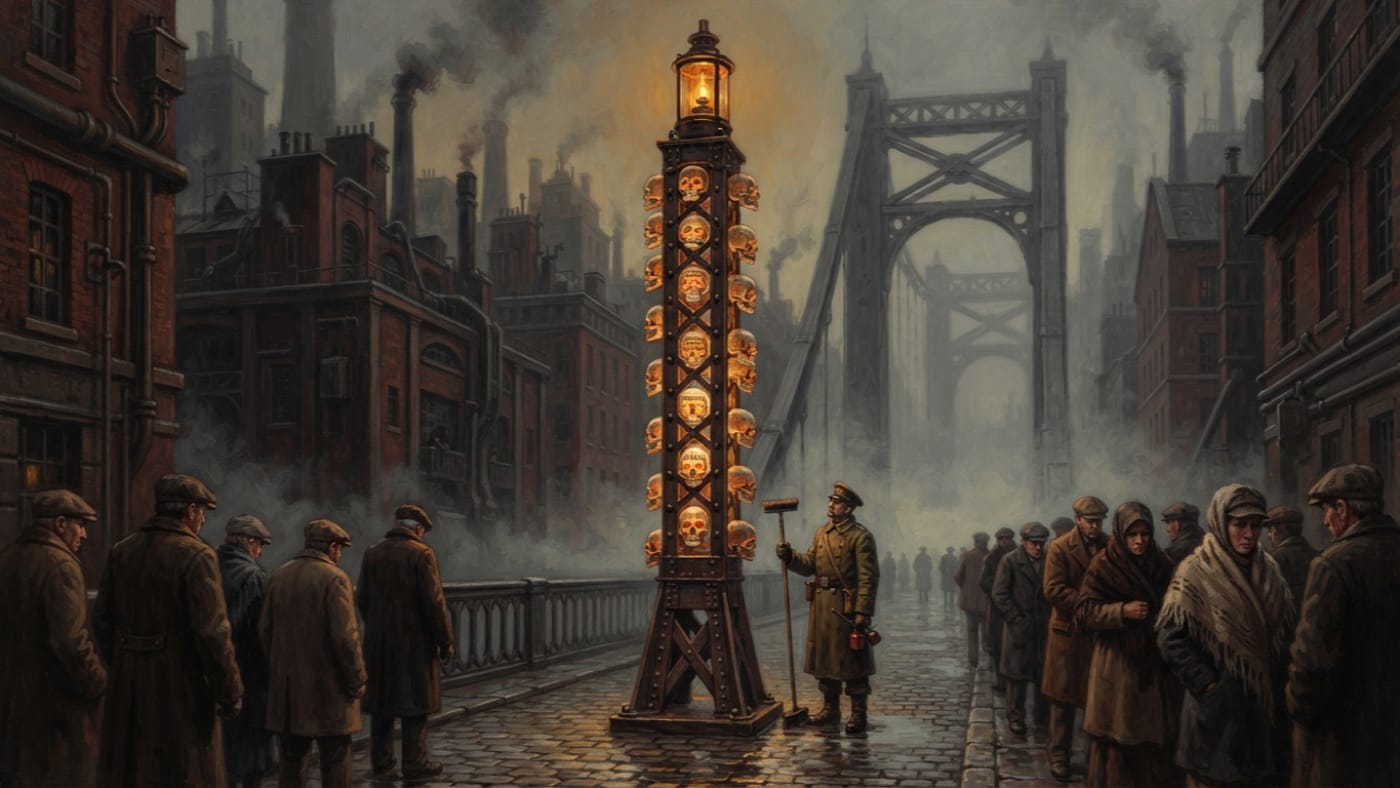
Glass Skull Stacks
The name goes up; the city learns to look
The Synod's municipal deterrence pylons hold condemned names in hollow glass crania, lit nightly for the street. Glass, ink and iron do the warning; Pillar-Keepers keep the sentence legible.
Codex Ref. V.2.08-001
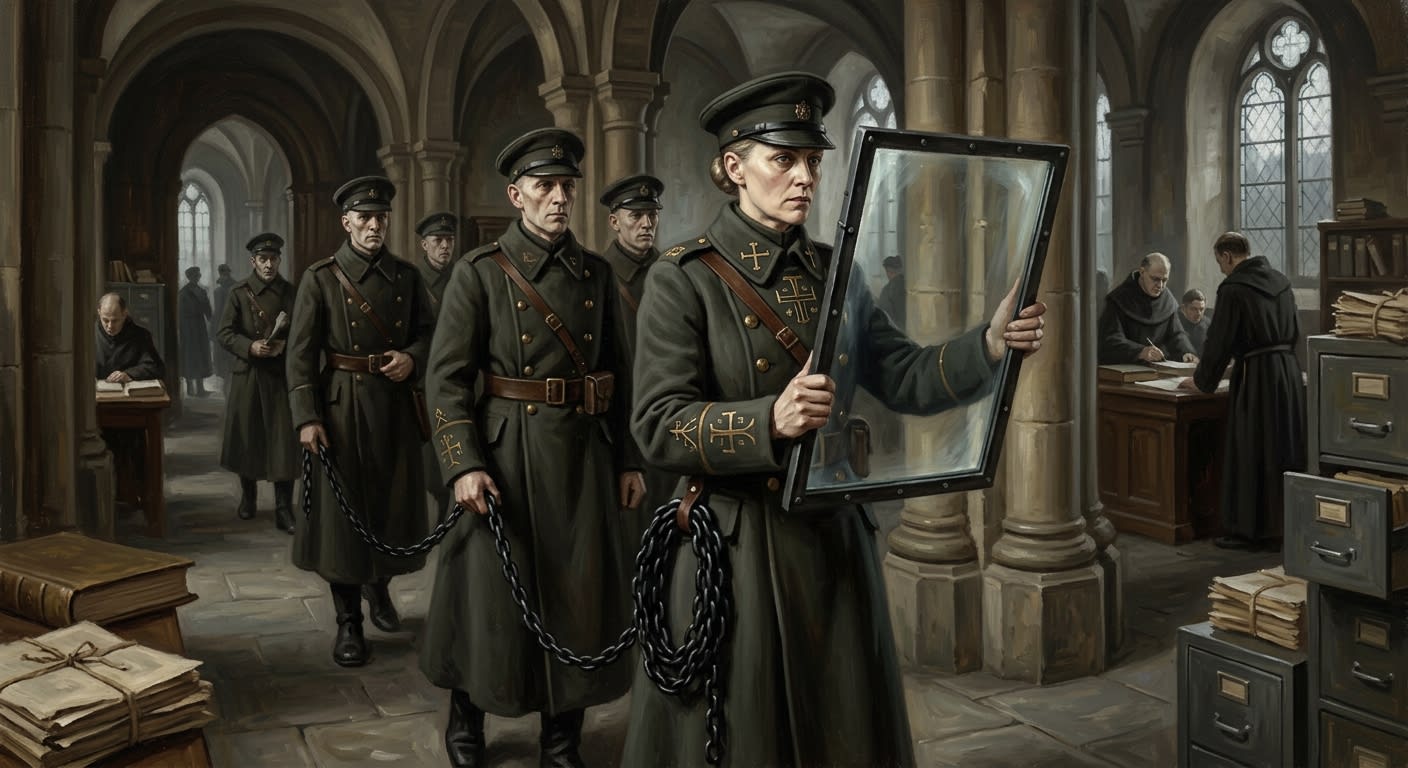
Glass-Canons
The officer enters after the chain begins to sing
Bureau of Purity specialists for singing phrases and chain-response events, armed with clear witness-glass and the black chain no public decree admits.
Codex Ref. XII.49.02-001

Glass-Listener
The Synod has found a use for ruined ears
A Pillar-Keeper whose disciplined glass-speech detects cracks, sealed names and counterfeit pins. The Synod calls the affliction folklore, sends the worker into sealed yards and pays the old wage.
Codex Ref. XII.30.04-001

Glass-Speech
The city enters through the ear and leaves as obedience
Occupational condition of long-service Pillar-Keepers, beginning in tone, advancing into condemned names, and ending when the city speaks through the worker it has damaged.
Codex Ref. XIII.1.43-001

Gore-Slingers
Seven variants of the same atrocity, confirmed conscious, confirmed still producing.
The Bureau of War's least beloved Category Epsilon auxiliary — human bodies reshaped by sustained demonic exposure into biological ordnance, seven variants (one per Sin-General).
Codex Ref. IX.1.04-001

Governor-Praelate Alaricus
The dangerous administrator who made mercy balance
Toledo's Governor-Praelate, watched for the A.S. 185 opening of the Granaries of Saint Benedict: mercy recorded so thoroughly that Tithes could not call it theft.
Codex Ref. III.2.01-085
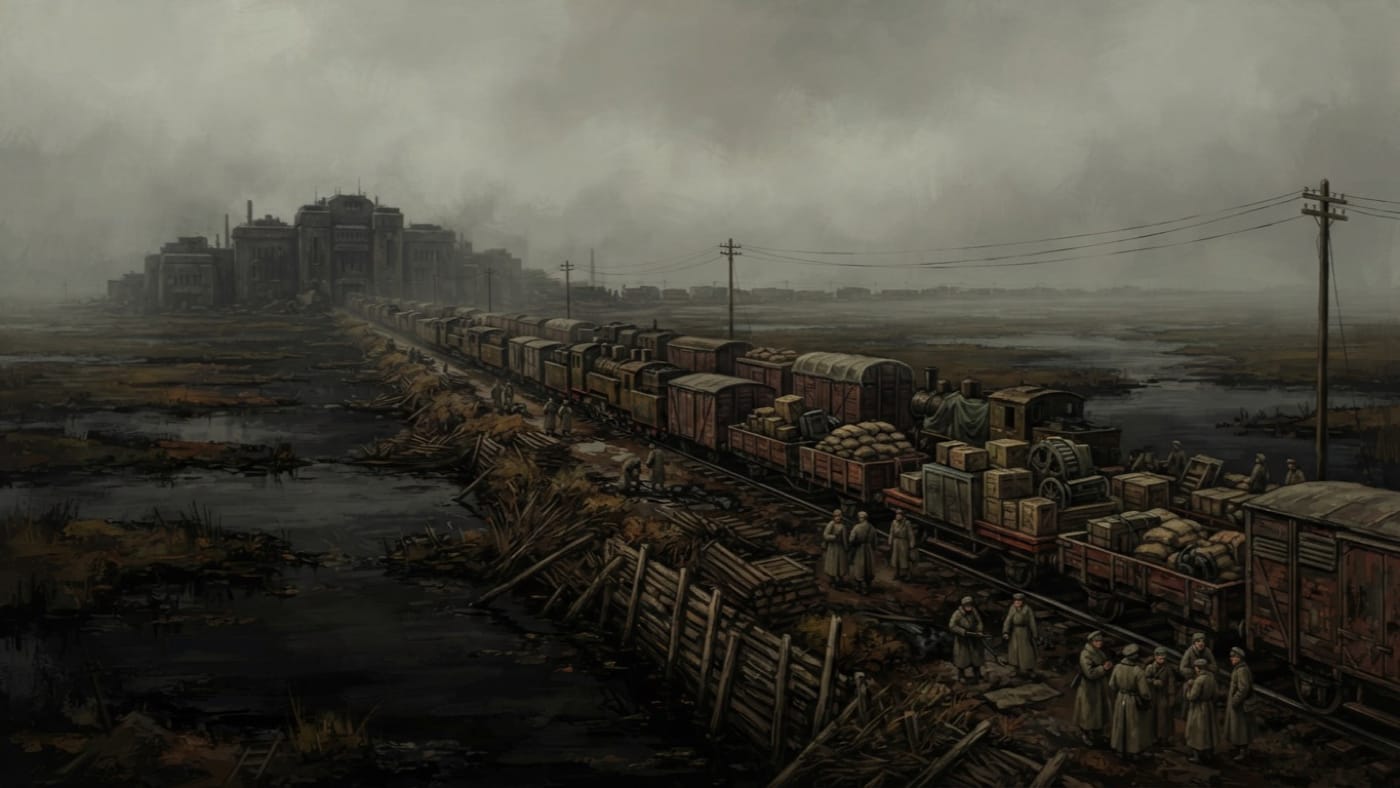
Grain Riots of the Drava corridor
The year is missing; the railway bore the load
An A.S. 201 retrospective of the undated Drava corridor grain riots: Shipka's marsh spur carried loads far beyond capacity, trains queued for days, and Strasbourg praised the logistics from a desk.
Codex Ref. VII.8.10-201
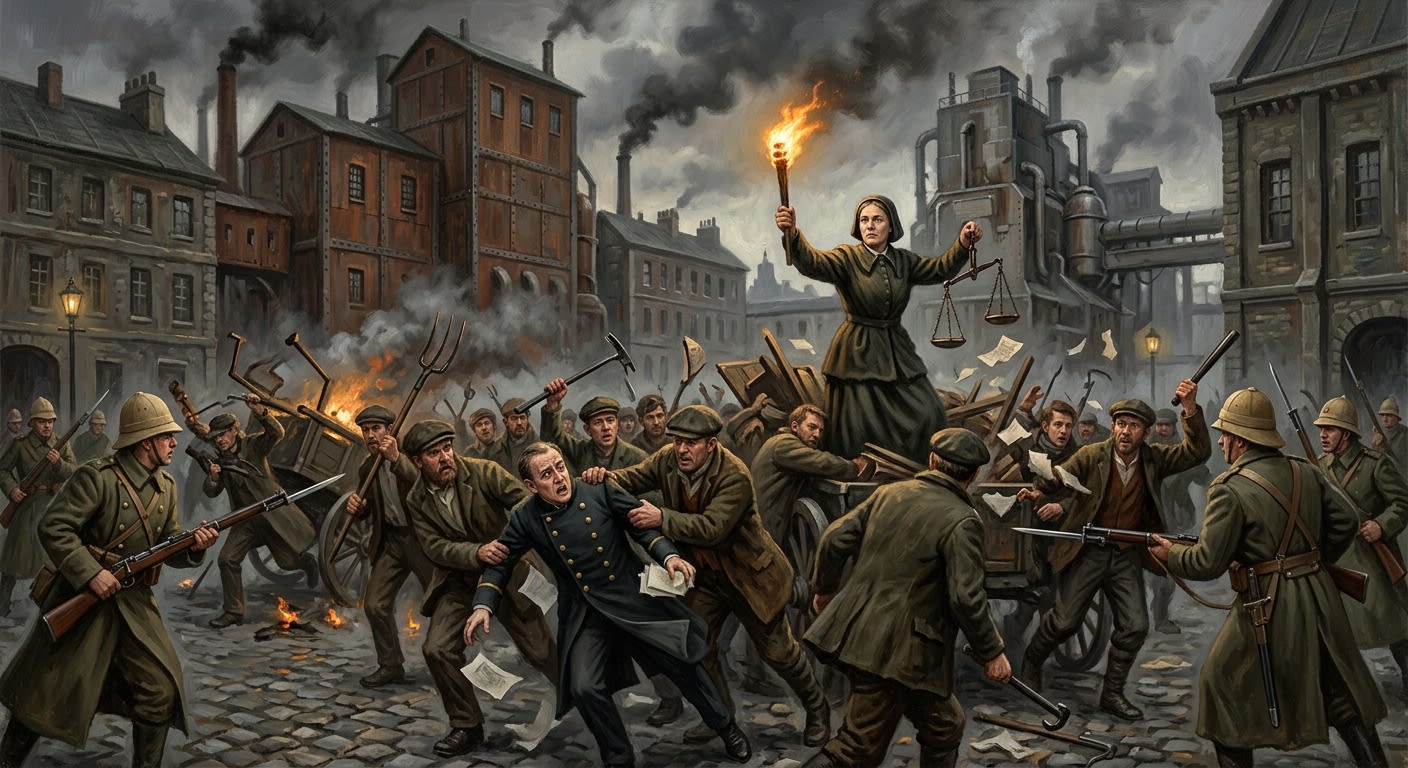
Grain Tithe Riots
Where hunger learned arithmetic and Hildegarde brought fire
The Grain Tithe Riots of A.S. 160 killed three Tithes Assessors, condemned forty Rhenish villages, and made Hildegarde of Mainz a saint with a scale in one hand and a torch in the other.
Codex Ref. VII.8.10-160

Grand Inquisitor Severian
The tongue made public office, the cage made catechism
Severian of Mainz made fear audible, denunciation intimate, and cruelty administrative; his Second Appendix still walks through Prague with nail and tablet.
Codex Ref. III.2.01-062
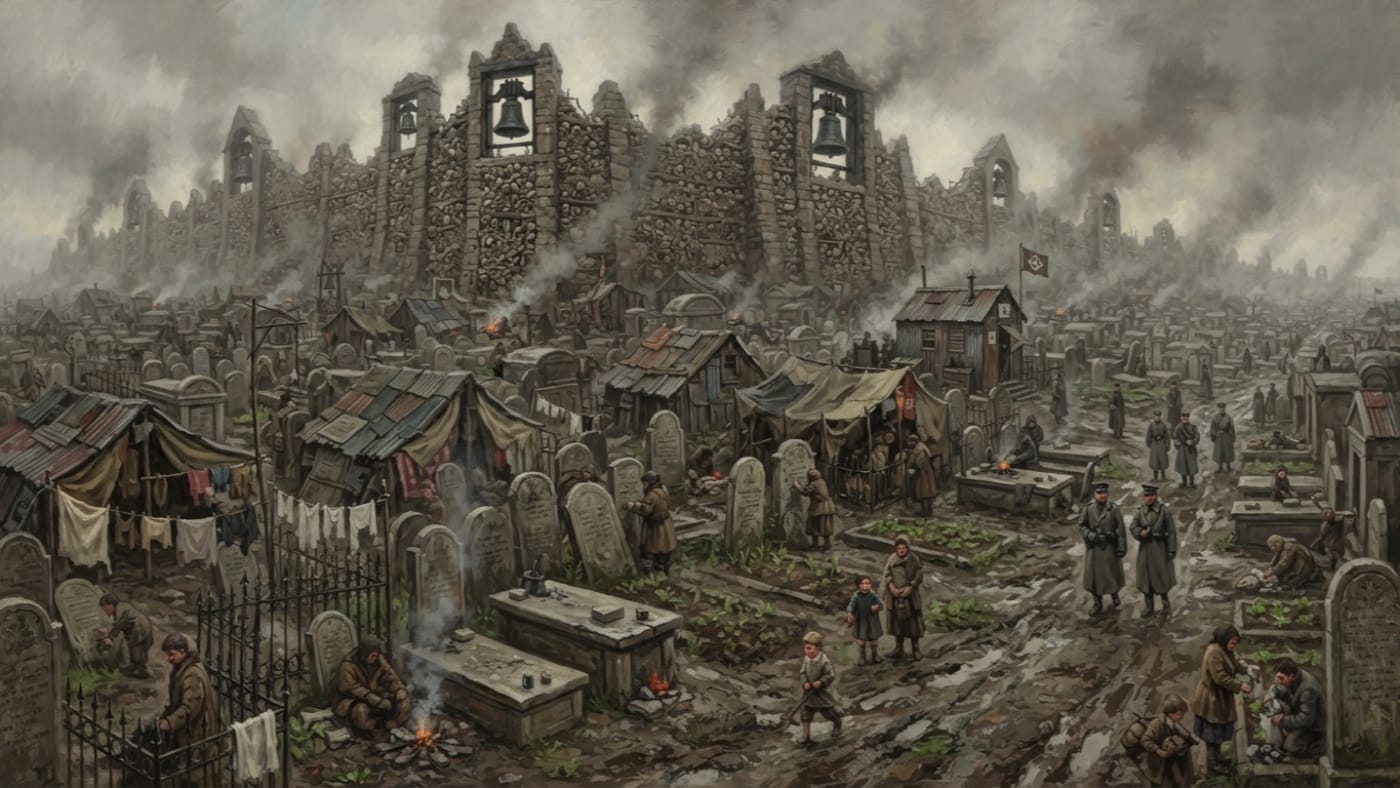
Grave-Fields
Occupancy temporary. Residents permanent.
Grave-fields house the living among the dead outside ossuary walls. Dry ground, bell coverage and renewable permits keep temporary residence permanent.
Codex Ref. III.2.04-1252
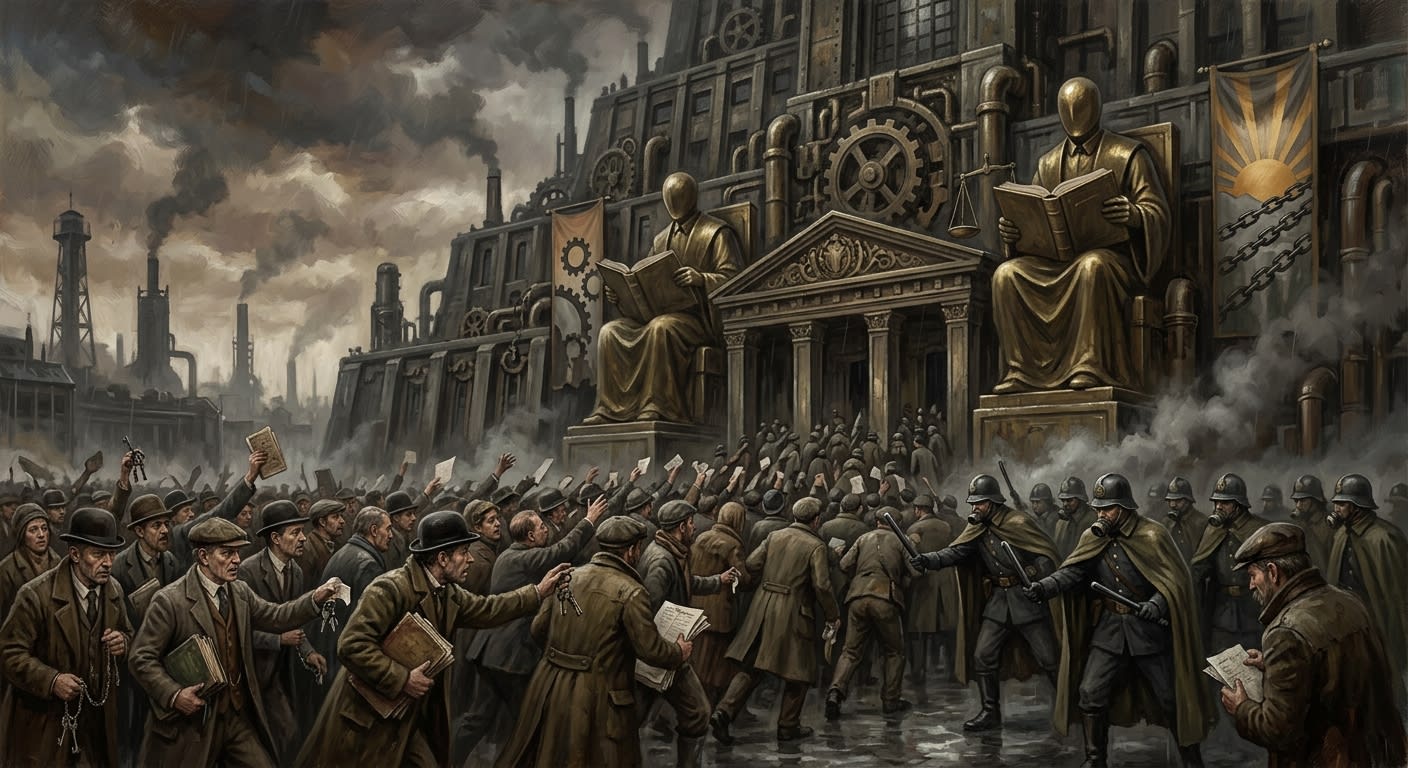
Great Maturity
The final due date Hell files through inherited keys
The Great Maturity is Velmora's deferred eschatology of debt: the hour when every key, favour, pledge, and inherited obligation comes due for the Inheritors.
Codex Ref. XIII.1.95-201
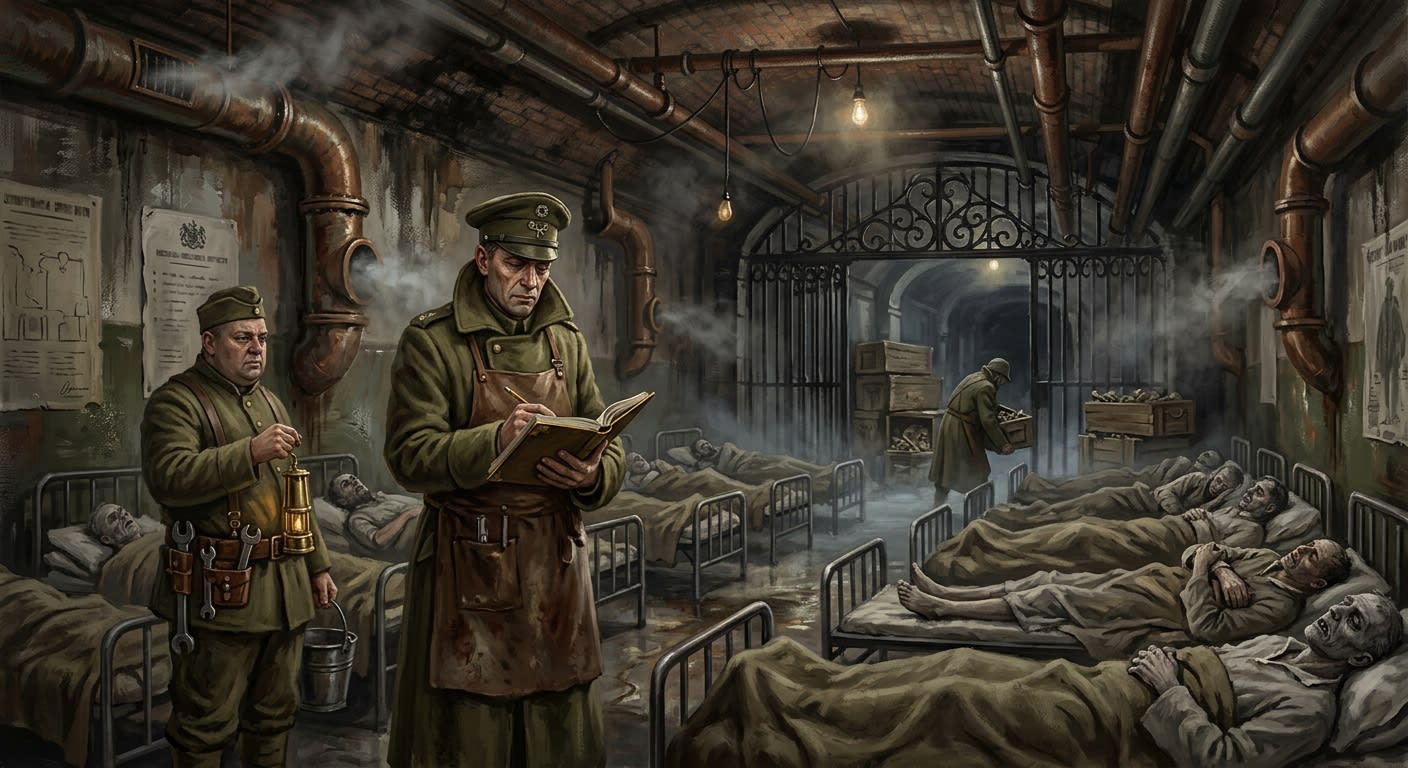
Great Plague of A.S. 78
The year Mercy learned to write before the mouth closed
The Great Plague of A.S. 78 ravaged the southern trench infirmaries and became the Lull of Names, birthing terminal confession mandates, ossuary controls, and threshold doctrine.
Codex Ref. VII.4.20-002

Guildmaster Joryn
The arm restores work; the contract chooses it
Guildmaster Joryn restores Marrowgate's wounded to usefulness, then collects on that usefulness for life. The fitting is affordable; charity is absent from the contract.
Codex Ref. III.2.01-201

Hamburg
The throat of the northern front — and the hand around it is not the Synod's
The Synod's northern import terminal: nine hundred thousand souls at the Elbe's mouth, processing the grain and coal that keep the northern front from freezing, starving, and dying.
Codex Ref. II.4.09-005
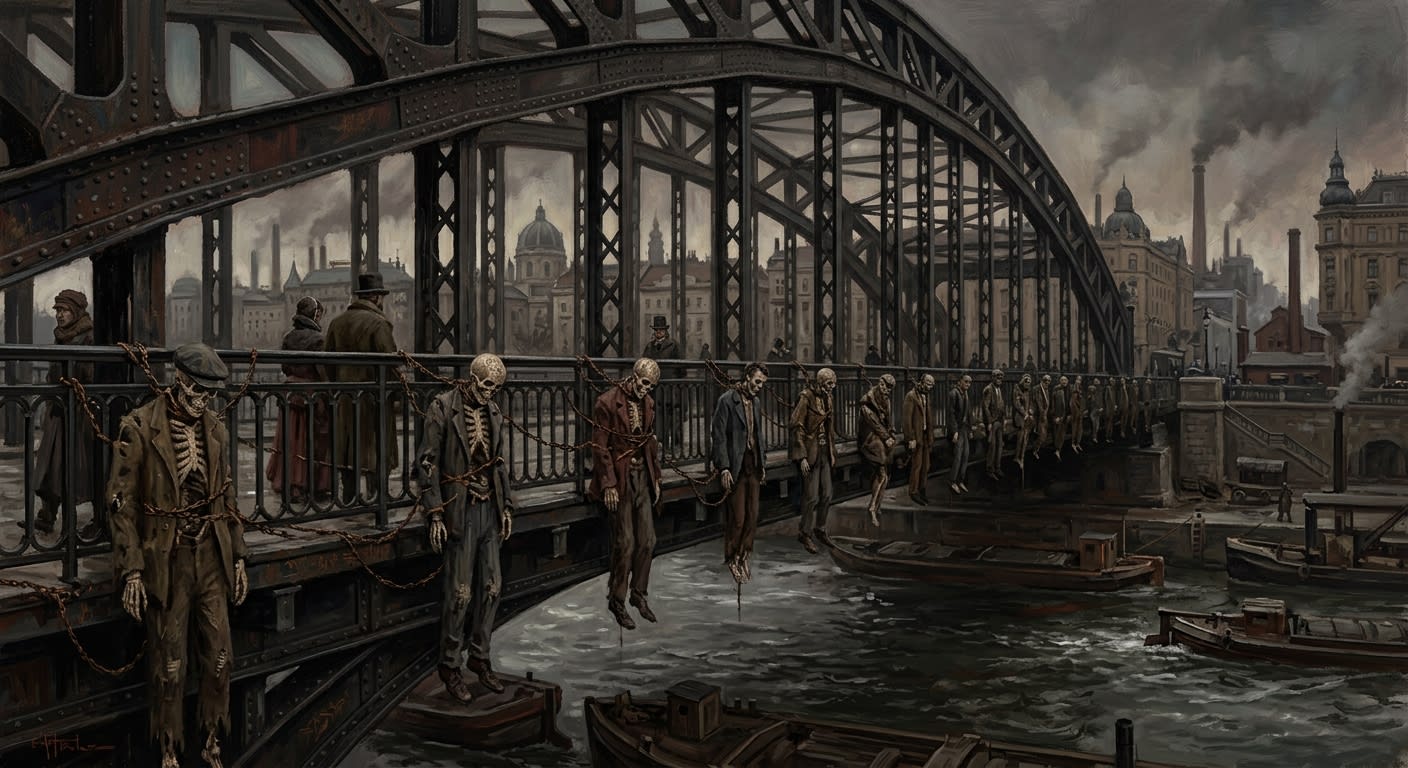
Hanged Bridge
Forty dead rebels made better sermons than their pamphlets
The Hanged Bridge over Vienna's Donaukanal preserves the A.S. 102 aftermath of forty Rationalist rebels whose inscribed bones still preach without permission.
Codex Ref. II.4.09-013
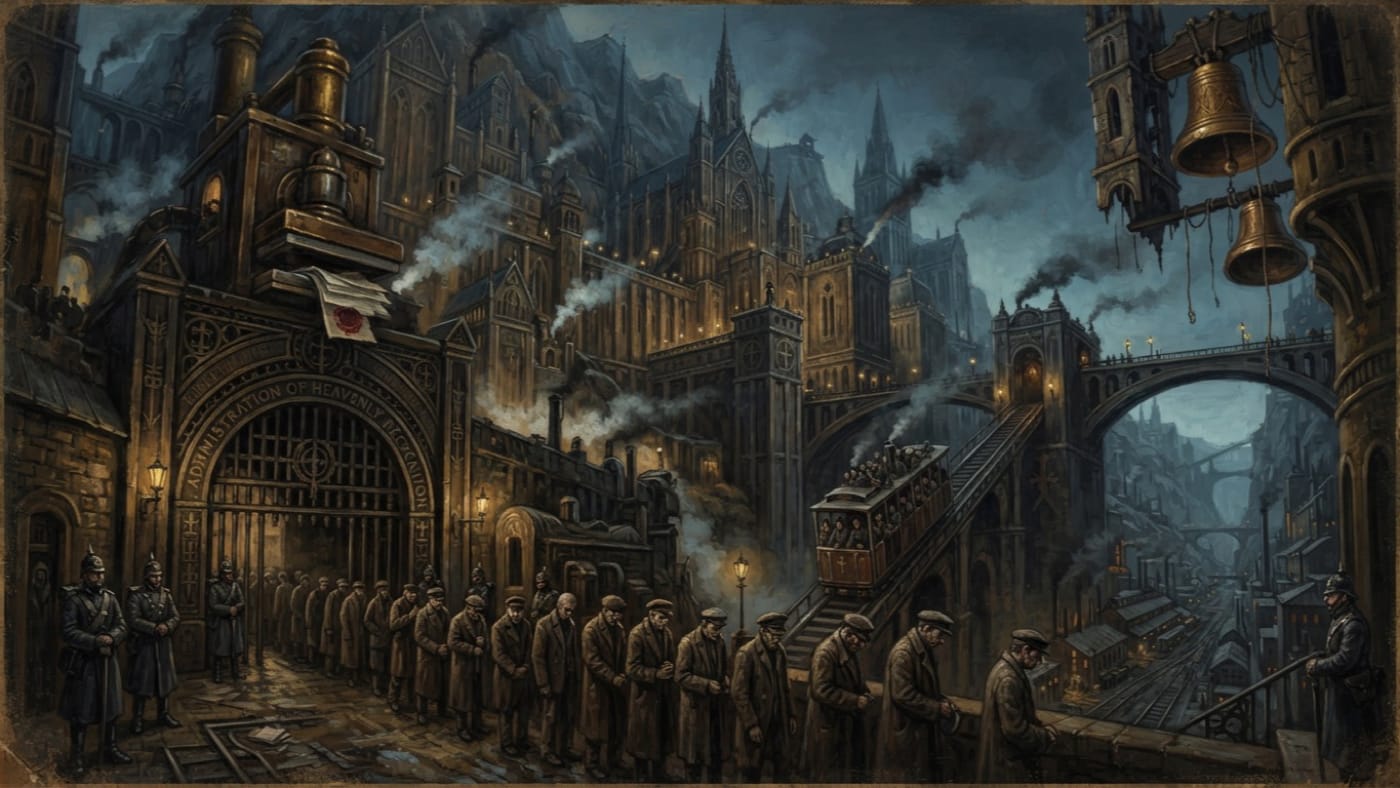
Heaven
Perfect recognition, beyond the reach of any clerk
Heaven knows every soul, Doctrine assures us. Strasbourg stamps acceptance until contradicted; I record the death registers and the silence no bureau can countersign.
Codex Ref. VI.1.02-201

Herta Stoltz
The woman who made refusal resemble arithmetic
Herta Stoltz, Warsaw's Bureau of Settlement Resident-Director, has spent nineteen years declining false readiness, revising Standing Order 14-W/3, and teaching maps to admit bakeries.
Codex Ref. III.2.01-152
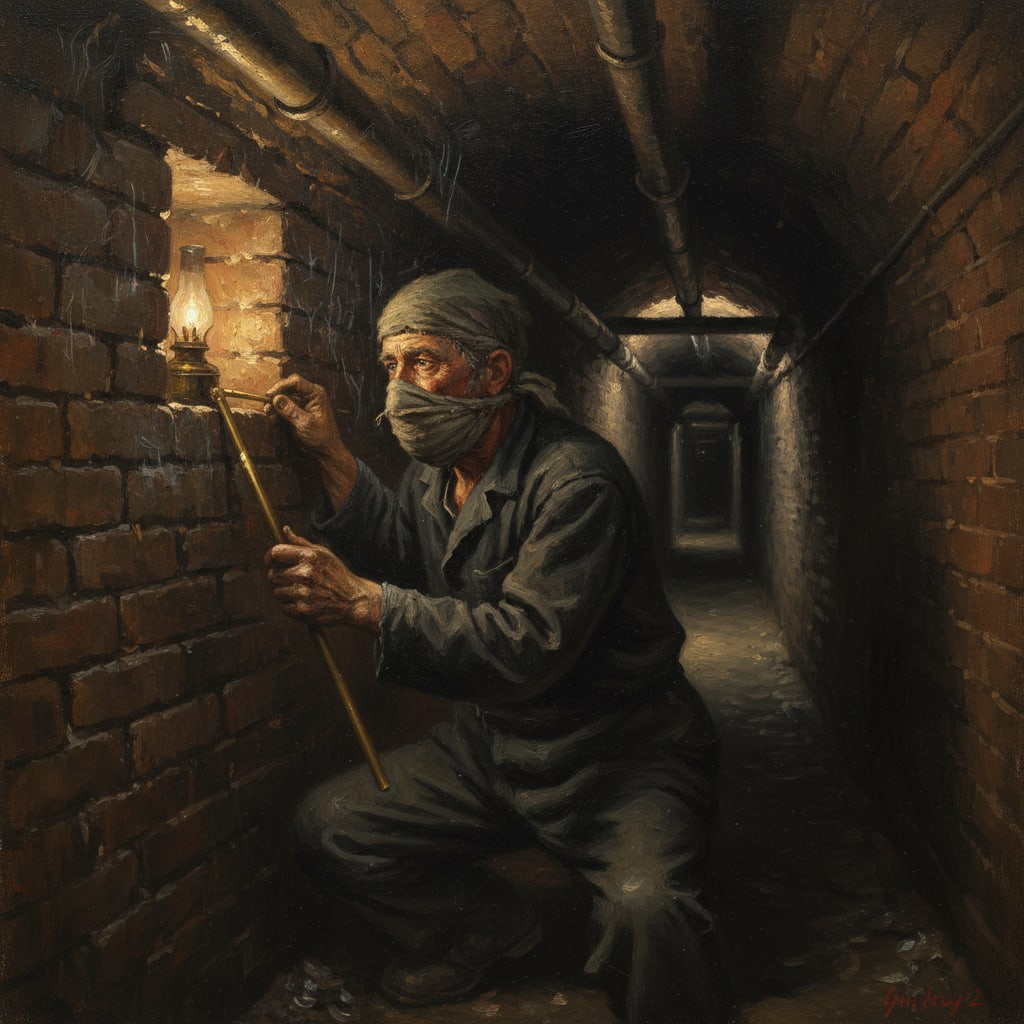
Hidden Pipe-Runner
Classified nonexistent. Audited quarterly. The pipes remain.
The Synod's invisible circulatory system: four ranks of Soot-Boys, Joint-Menders, Route-Keepers, and Bell-Duct Ghosts delivering black diesel through pipe networks the Bureau of Engineering has surveyed three times and failed to find, at the standard rate for failure.
Codex Ref. XII.3.02-001

Hieromnemon
The office that teaches memory to kneel
The Hieromnemon governs public memory for Doctrine: seal, margin, erratum, redaction, and the blessed sentence that makes contradiction obey.
Codex Ref. XIII.1.31-090
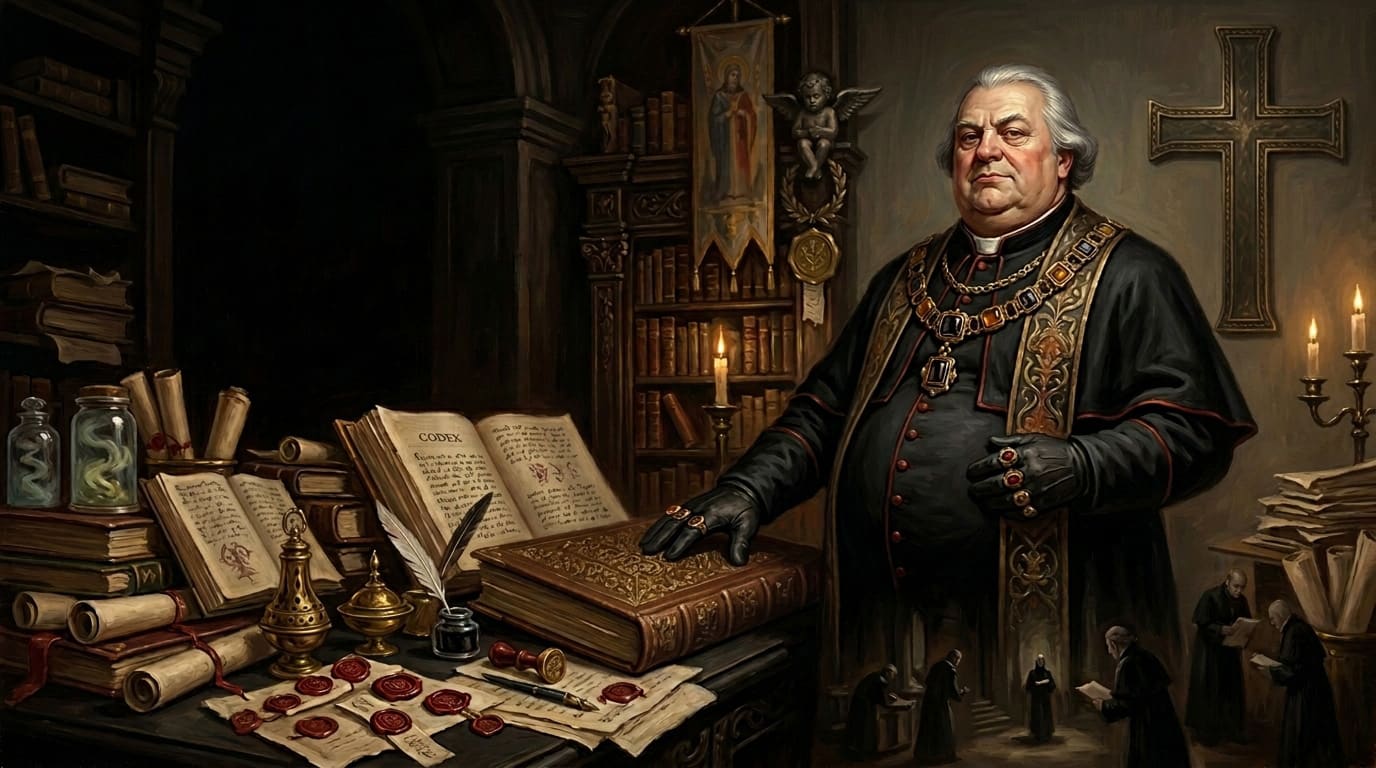
Hieromnemon Valerius Drax
The hand that corrects History before History embarrasses itself
Valerius Drax, Hieromnemon and Warden of the Sacred Ledger, is Doctrine's finest current instrument: prose stylist, ratifier, propagandist, archivist, and living rebuke to committee language.
Codex Ref. III.2.01-201
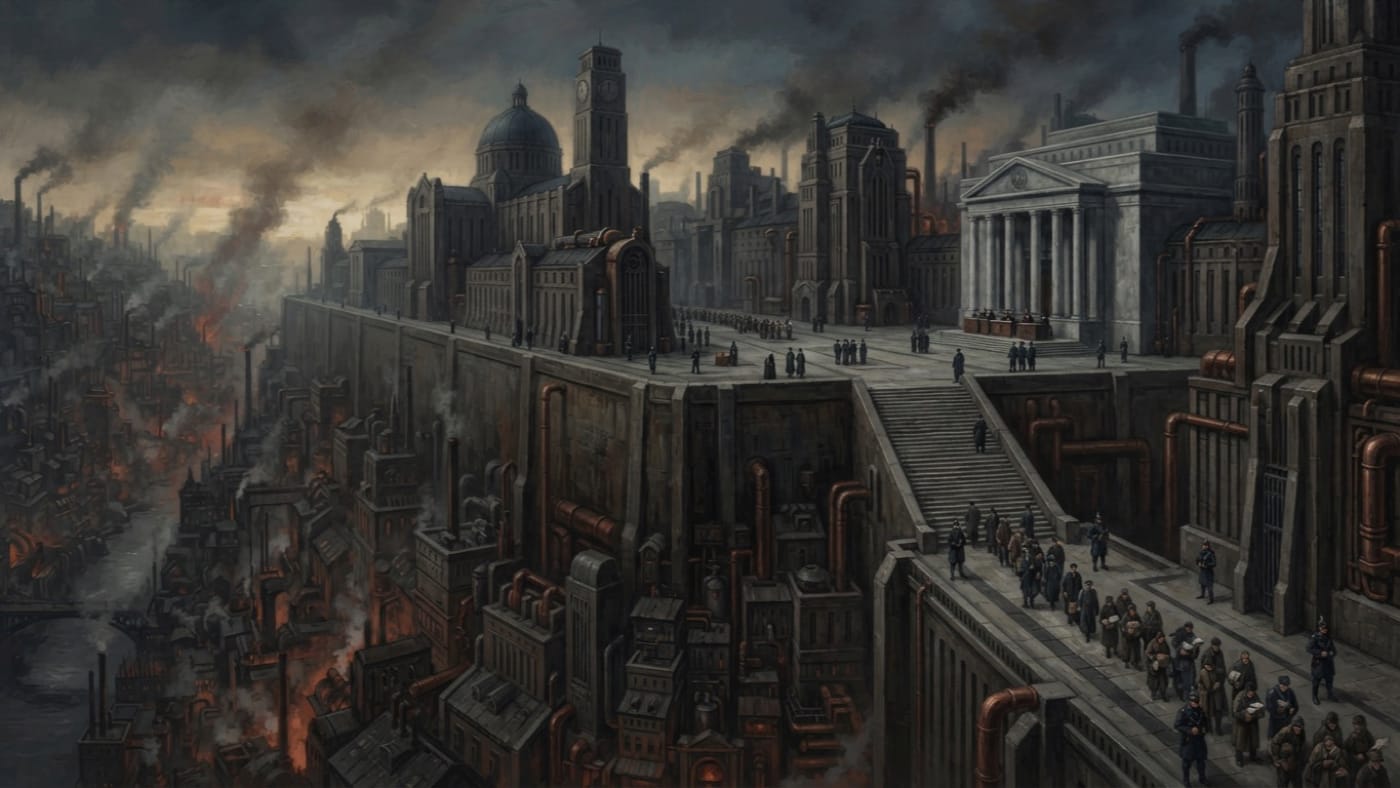
High Step Precinct
Clean air, correct names, and a posted rate for confession
Rheinscarp's ninth terrace houses the Ration-Cathedral, Tribunal of Stairs and offices that govern names, hours and ashes. The air is clean, the names are correct, and every debt survives the climb.
Codex Ref. II.2.01-009
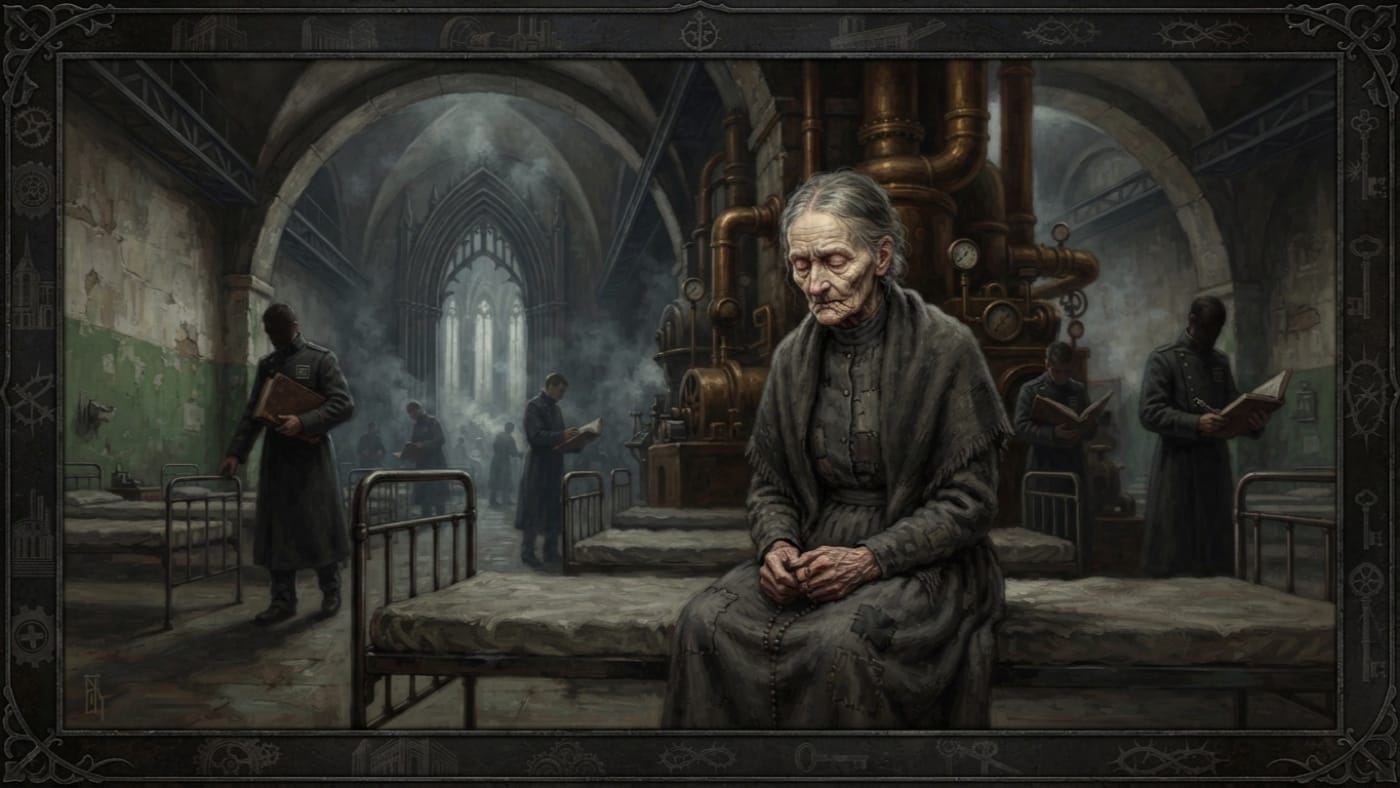
Hilde Voss
The danger left. The volume stayed.
Hilde Voss outlived every Cellar Saint the archive could confirm. She died at one hundred in Strasbourg, A.S. 130, still praying in whispers; the Bureau recorded her death more fully than her life.
Codex Ref. III.2.01-130
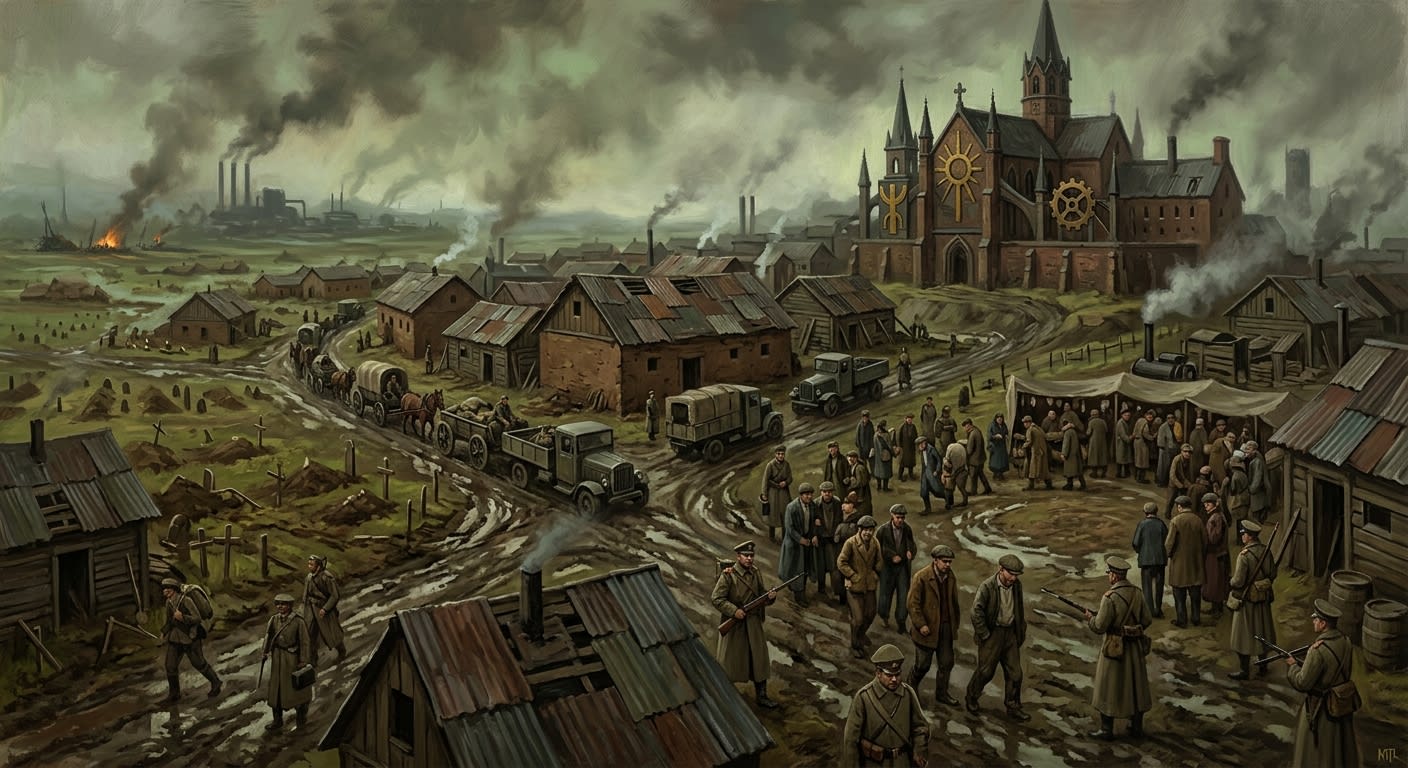
Hinterland
The fifty kilometres that pretend to be rear
The Hinterland is the fifty-kilometre bruise behind the Sagittal Line: farms, wards, graves, depots, markets, and civilians ordered to call occupation protection.
Codex Ref. II.4.09-201
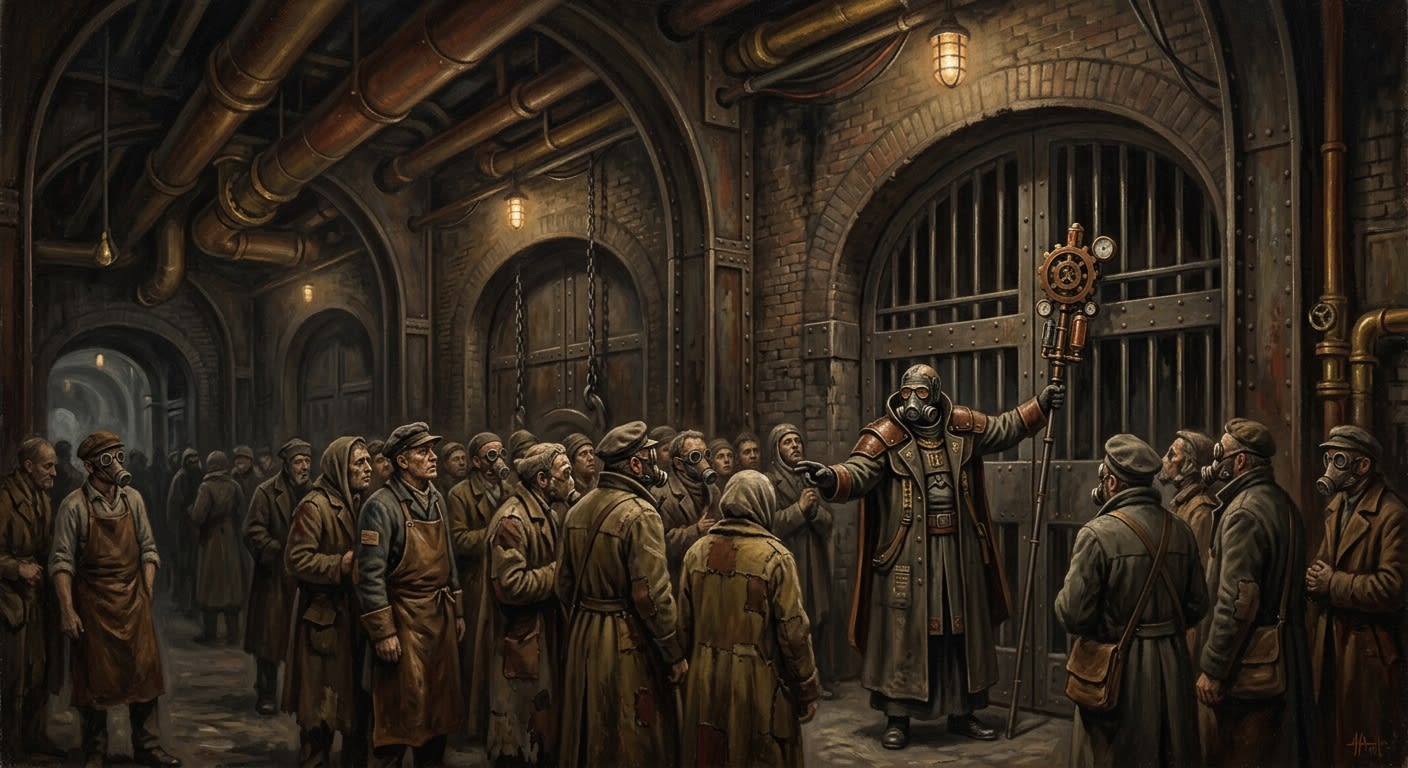
Hollow Fast of Saint Calistus
Forty nights without bread, and Lyon learned to whistle
During the Year Without Dawn, Saint Calistus sealed Lyon's ration-halls for forty nights; the plague halted, the fasters lived, and their descendants still sing through absence.
Codex Ref. VII.4.01-002
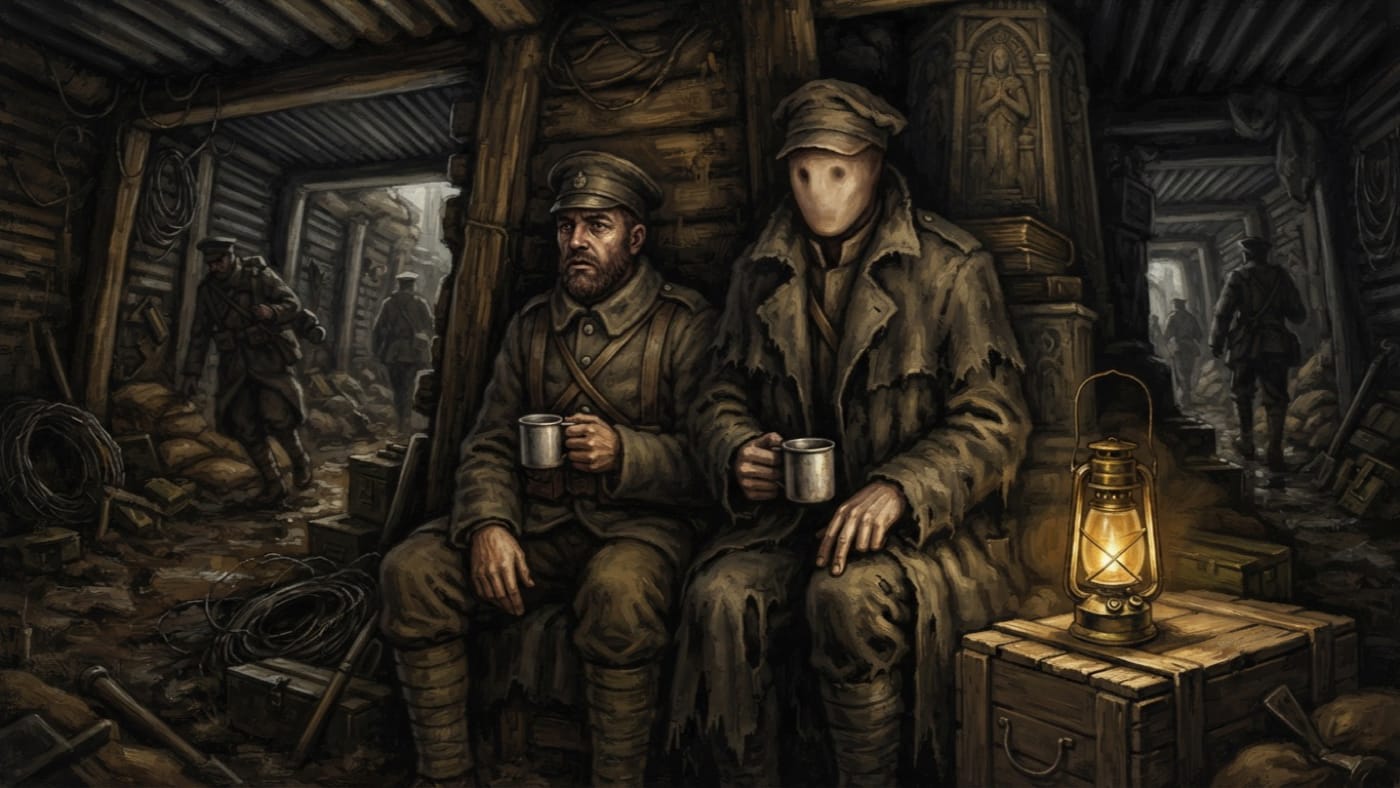
Hollow Ones
It learns your life while you forget it.
Morwen's Hollow Ones learn your phrases while you forget them. At Irongate, the Ledger may recognise the thief more readily than the man.
Codex Ref. IV.1.07-018
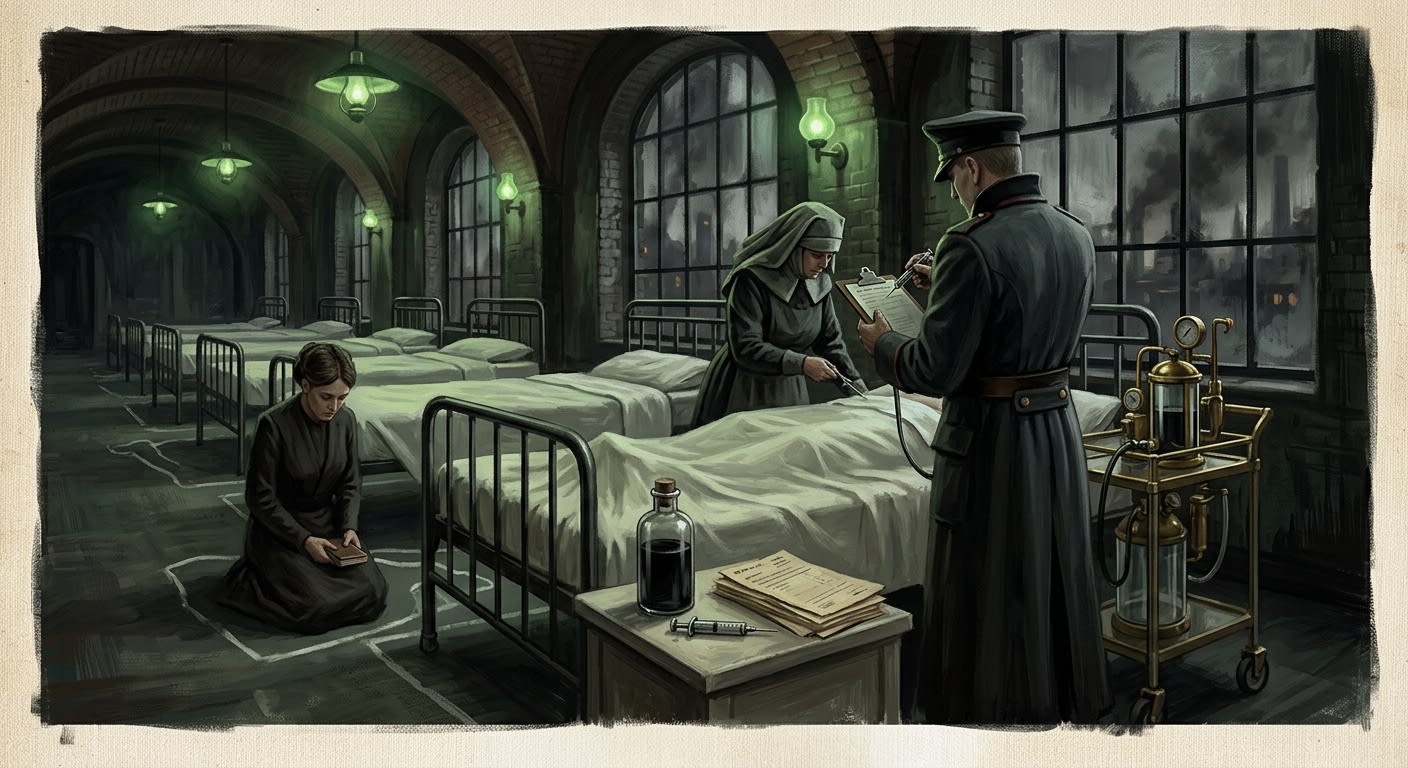
Hospices of Departure
Where Mercy warms the cup and counts the breath
The Hospices of Departure are Mercy's immaculate terminal rooms: clean linen, black elixir, family chalk-lines, final slips, and the doctrine by which the Synod makes death kind, lawful, useful, and recorded.
Codex Ref. XIII.1.88-112
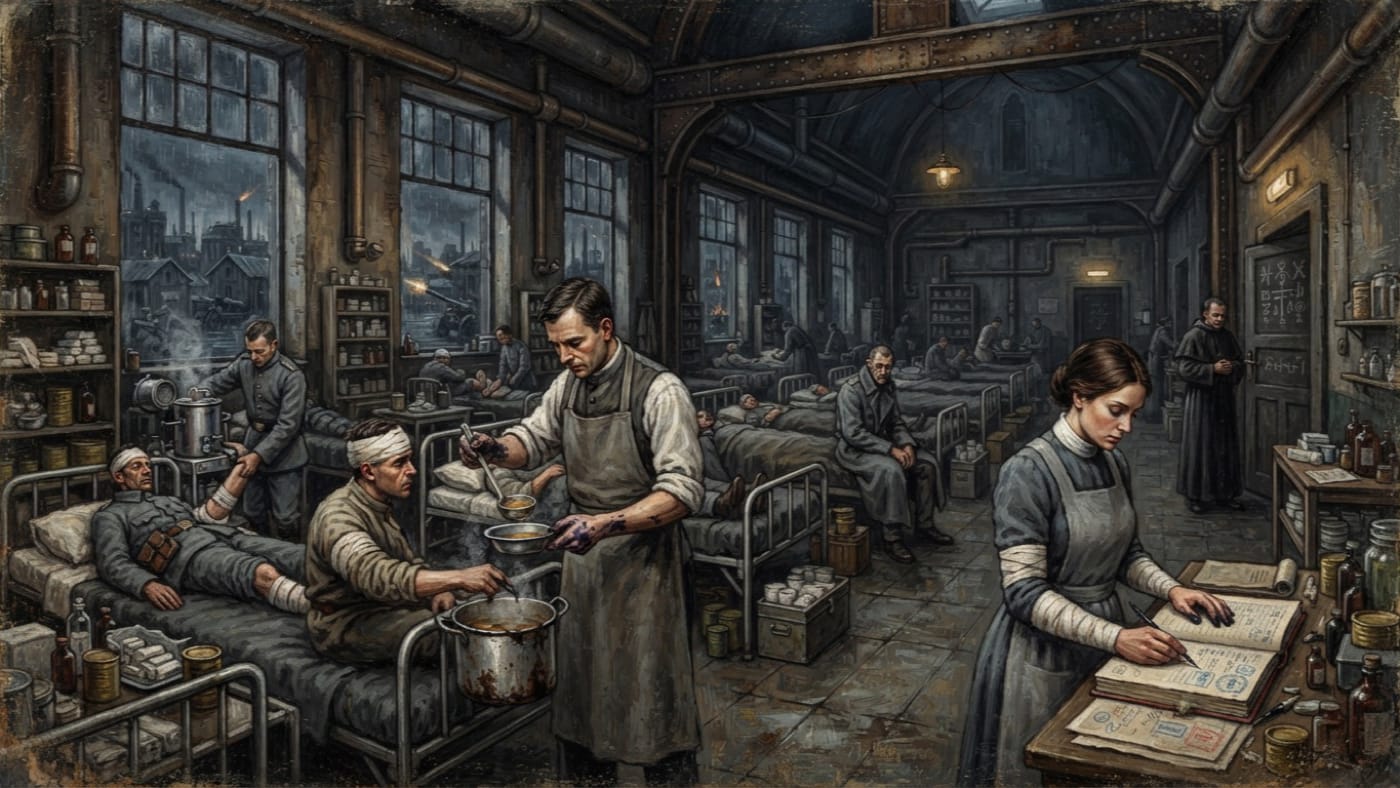
Hospital of Saint Sebastian
Where the Military City sends the wounded
Saint Sebastian tends wounded soldiers or buries them in Strasbourg's Military City. This A.S. 201 survey keeps the local record distinct from Mercy's wider machinery of care, confession and ink.
Codex Ref. II.2.10-201
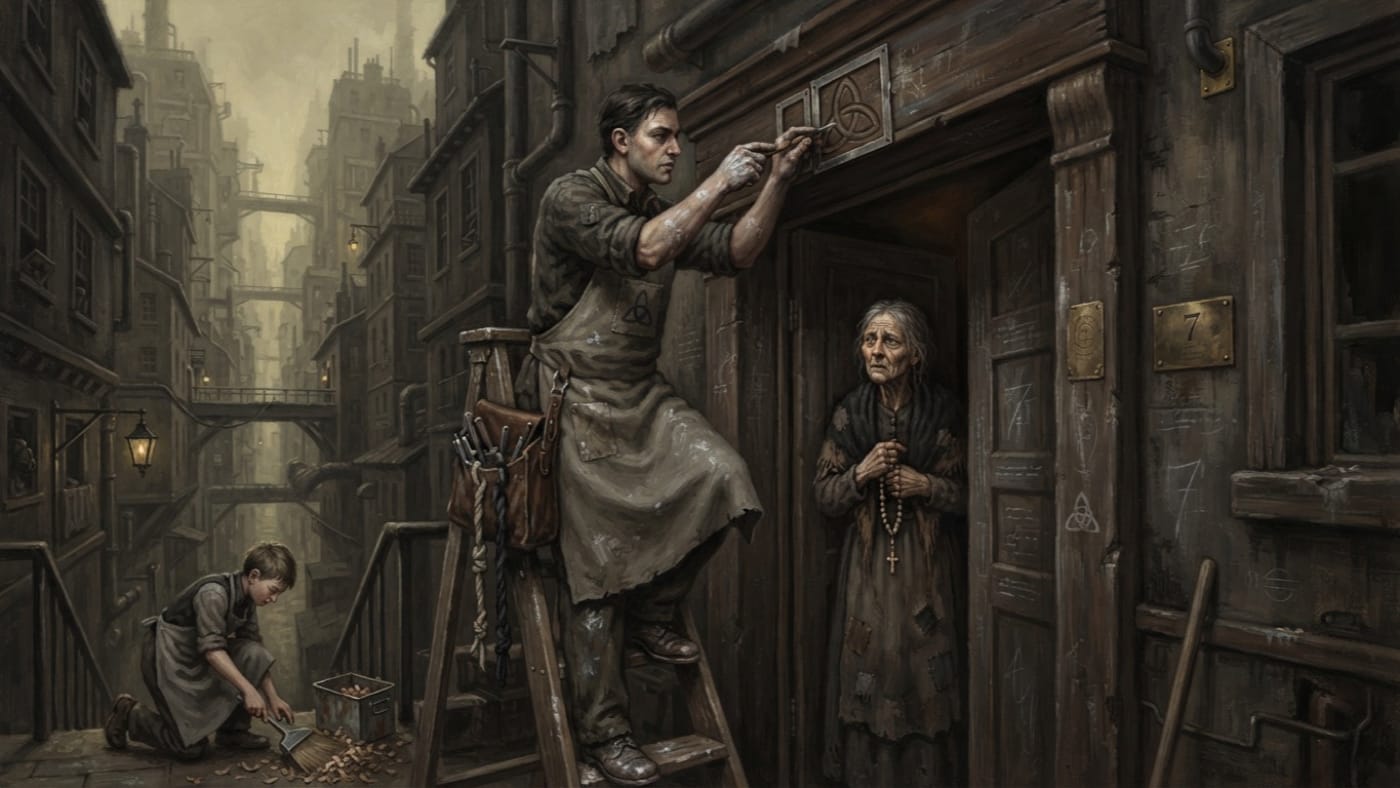
House-Knotters
Name the living; let the Registry read it
Current survey, A.S. 201: House-Knotters are the Gate-Carver faction that cuts and registers household thresholds. Families pay for protection; the Registry receives a legible address.
Codex Ref. XII.19.02-004
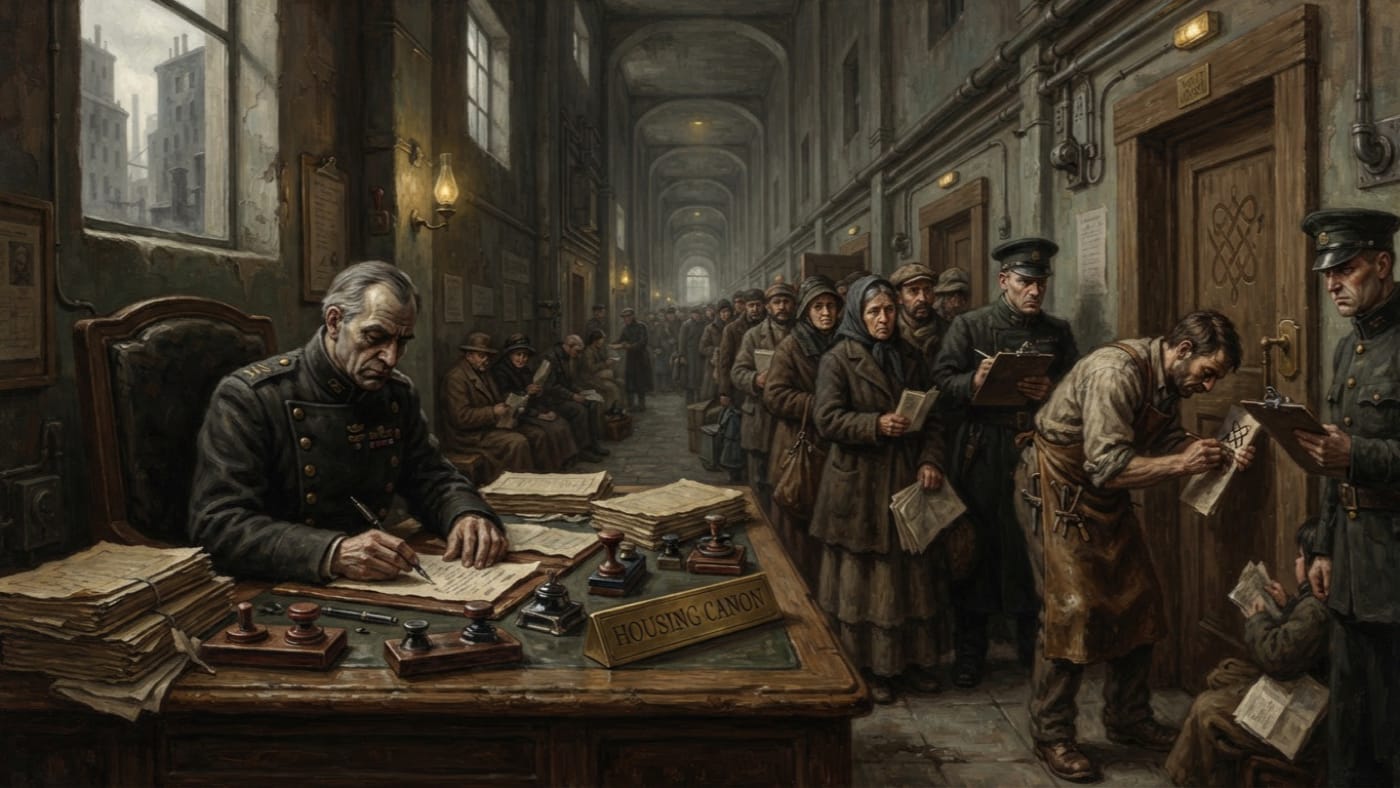
Housing Canon
Praise on the day, fines at month's end
The Bastion Housing Canon balances lawful households against marked thresholds, praising the carver who prevents today's riot and fining both haste and delay when the monthly tables arrive.
Codex Ref. XII.19.03-001
Hungary
The breadbasket that [[hell|Hell]] ate and [[strasbourg|Strasbourg]] filed by the slice
Hungary is the old grain kingdom remade into Budapest's held bank, Pest's visible absence, Blightmarsh hunger, southern corridor necessity, refugee memory, and every office's damp-fingered embarrassment.
Codex Ref. II.4.09-045
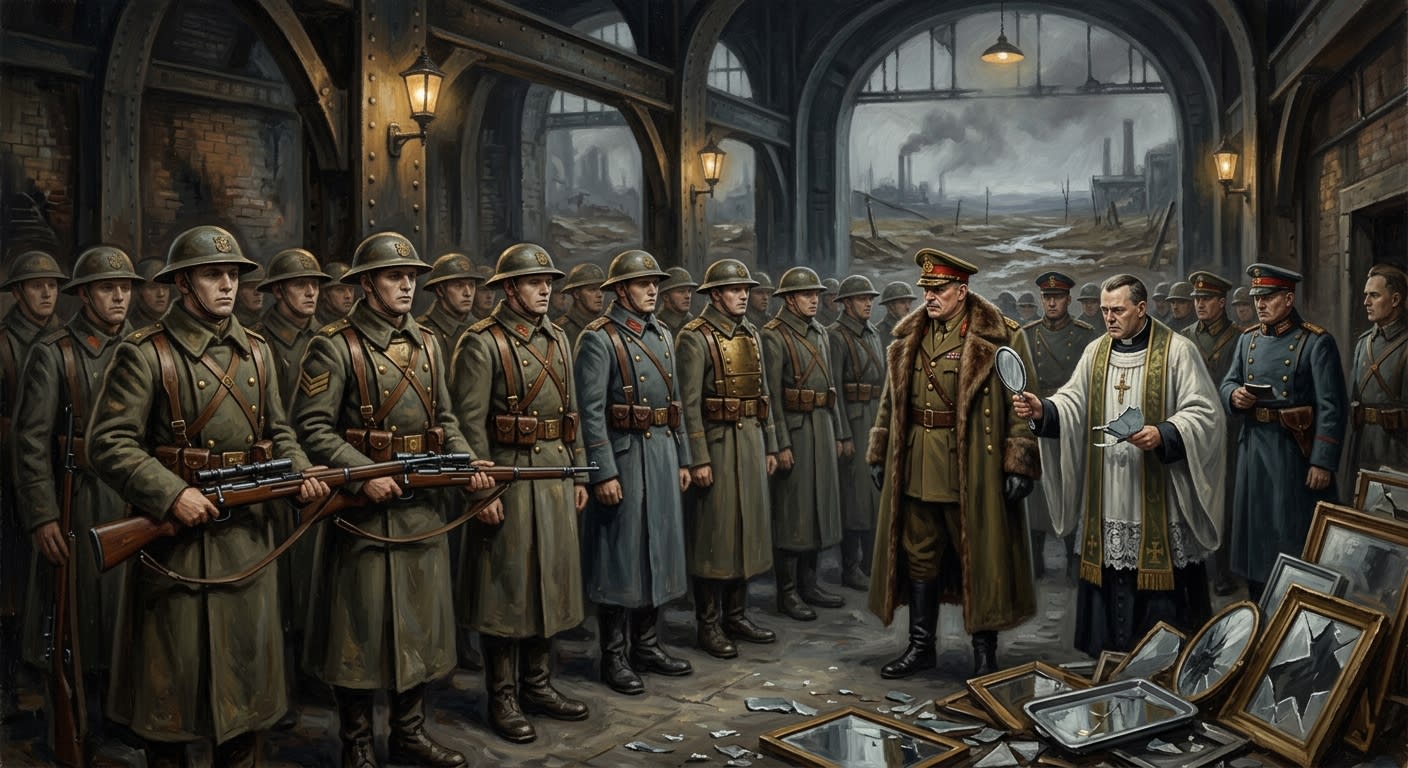
Incident at Sector Nineteen
Count to three, then stop being available
Sector Nineteen taught Irongate that a face is evidence only until Envy wears it better: thirty-one dead men returned to post, and mirrors became contraband.
Codex Ref. VII.8.10-193
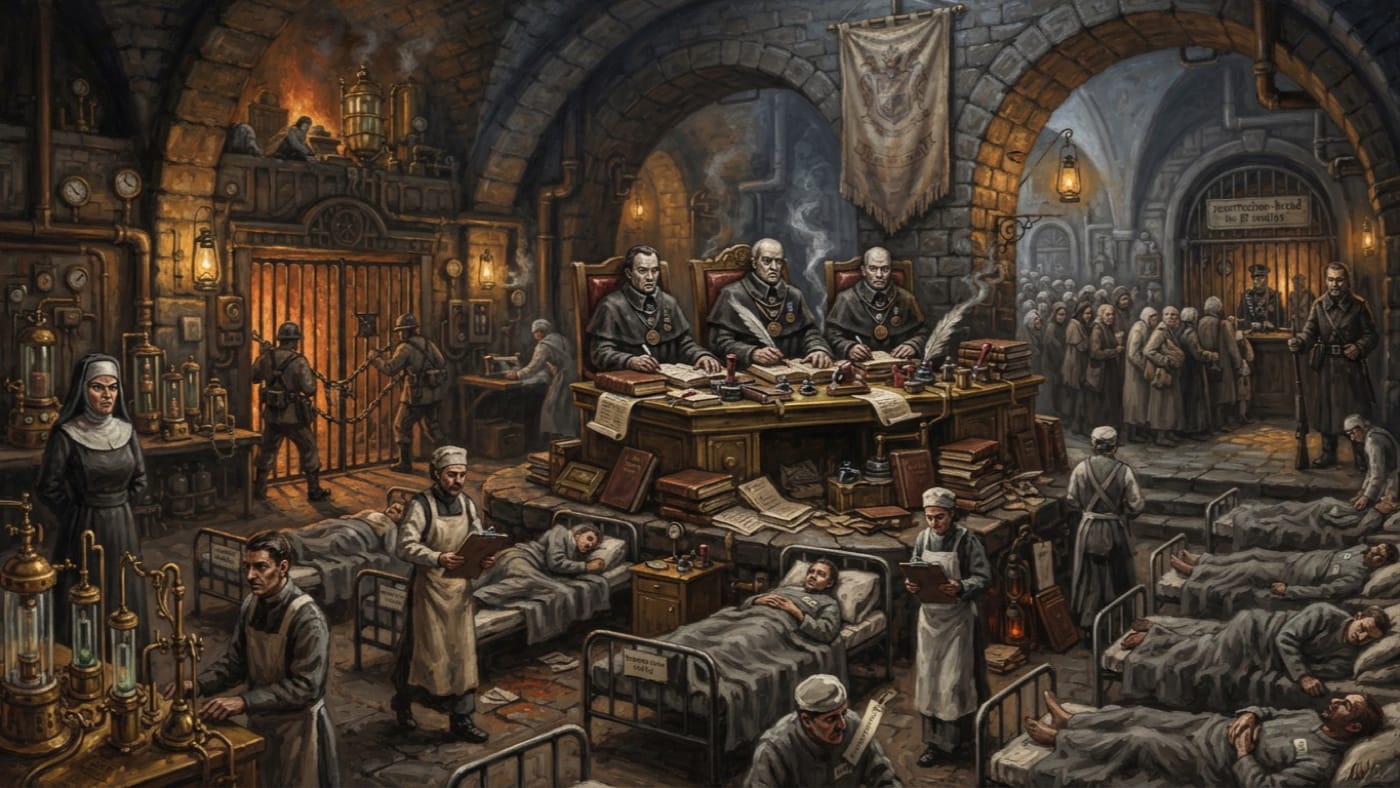
Infirmary Tribunal
The court decides when a patient is well. The ledger decides when a body is paid.
San Vesta's medical court assigns treatment, approves experiments, locks quarantine wards and rations resurrection-bread. Recovery earns a labour debt; the Tribunal decides when the patient is well enough to pay.
Codex Ref. VIII.1.03-001
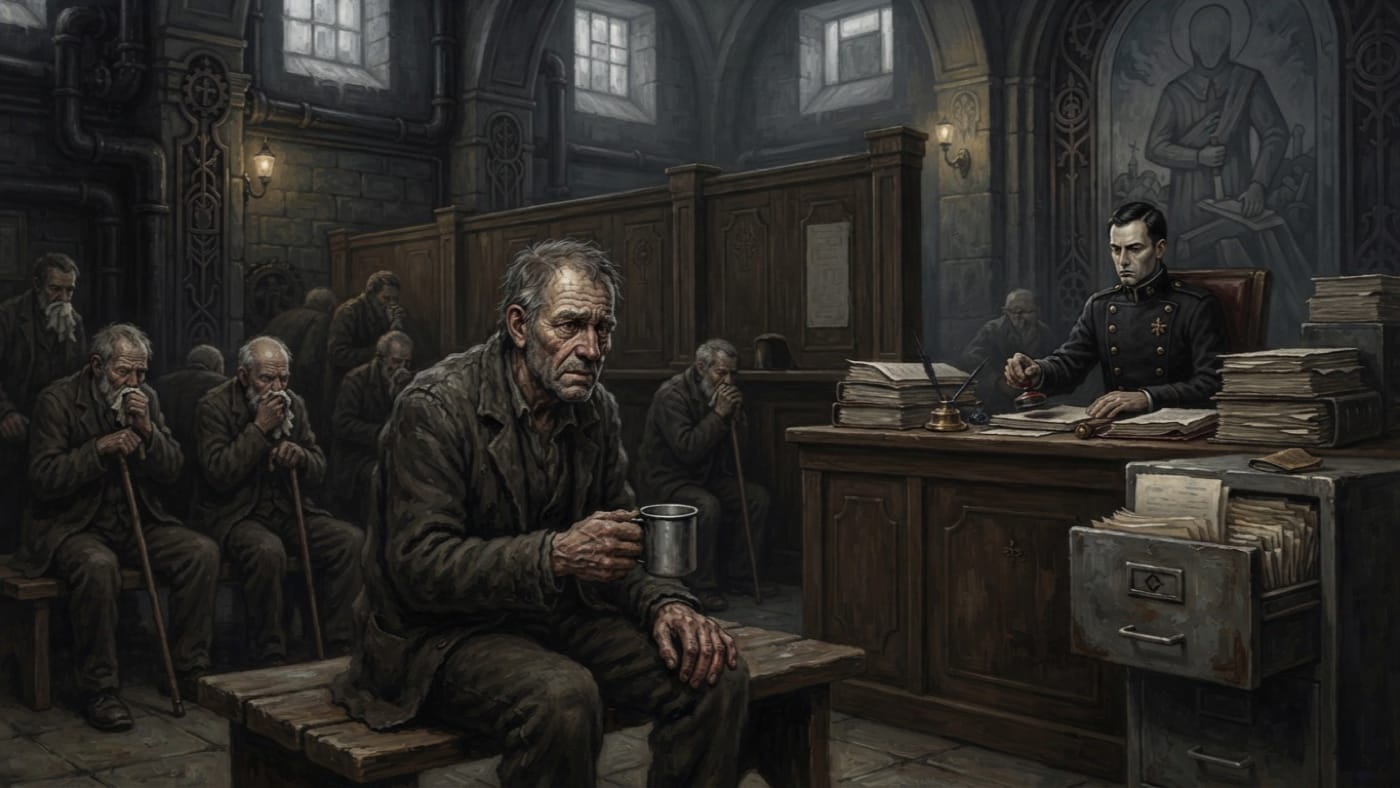
Injured Laborers' Provision
The law stops at the edge of the payroll
The A.S. 160 Provision gives injured direct Bureau employees recognised standing before the Synod. Charter-house prospectors fall outside it. Seven requests to close the gap have been received; seven have been filed.
Codex Ref. XIII.1.93-160
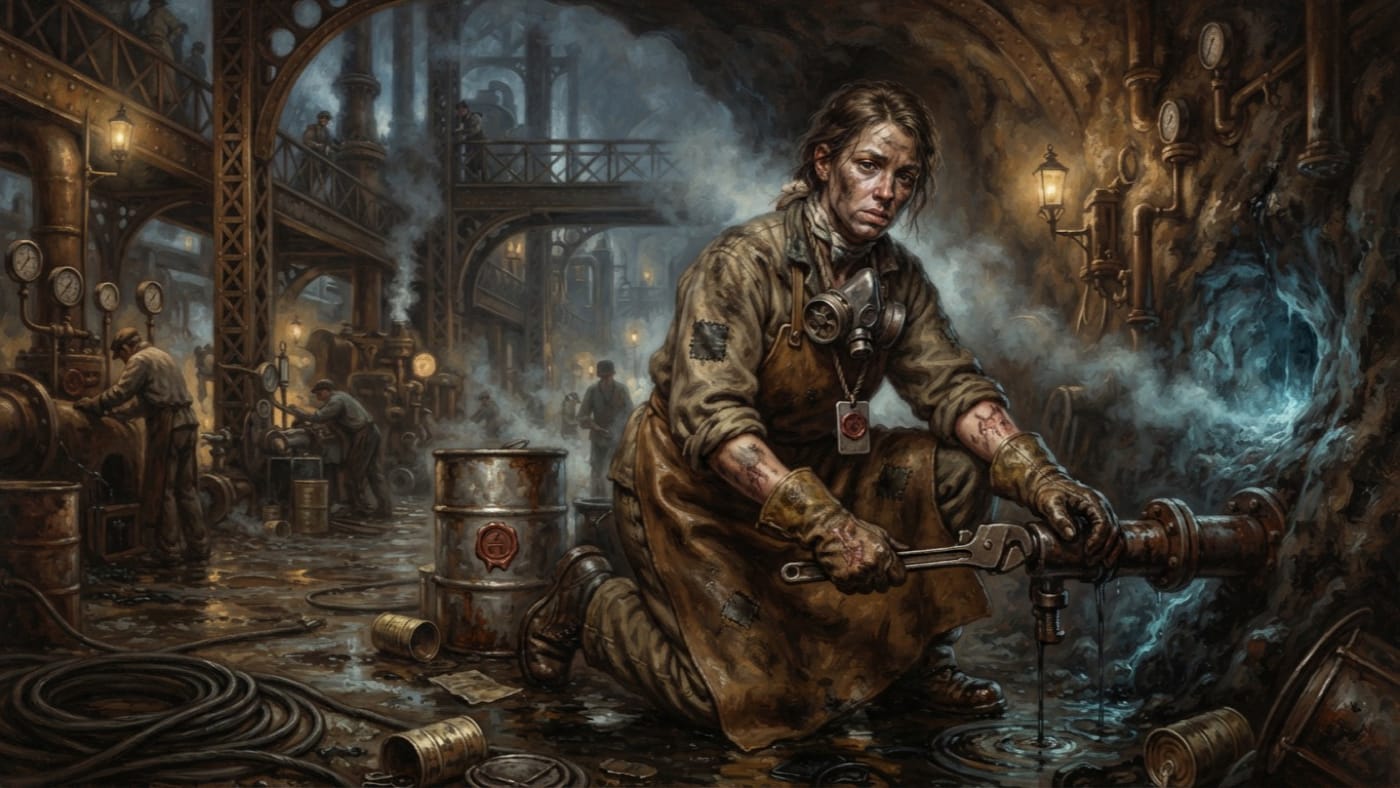
Injured Laborers’ Provision of A.S. 160
The wound is Synodal; the wages belong to someone else
The A.S. 160 provision covers injured Bureau employees and excludes charter-house prospectors. Seven petitions bearing Saint Orren's name sought correction; all seven were filed. The payroll decides whose wounds count.
Codex Ref. XIII.1.93-160
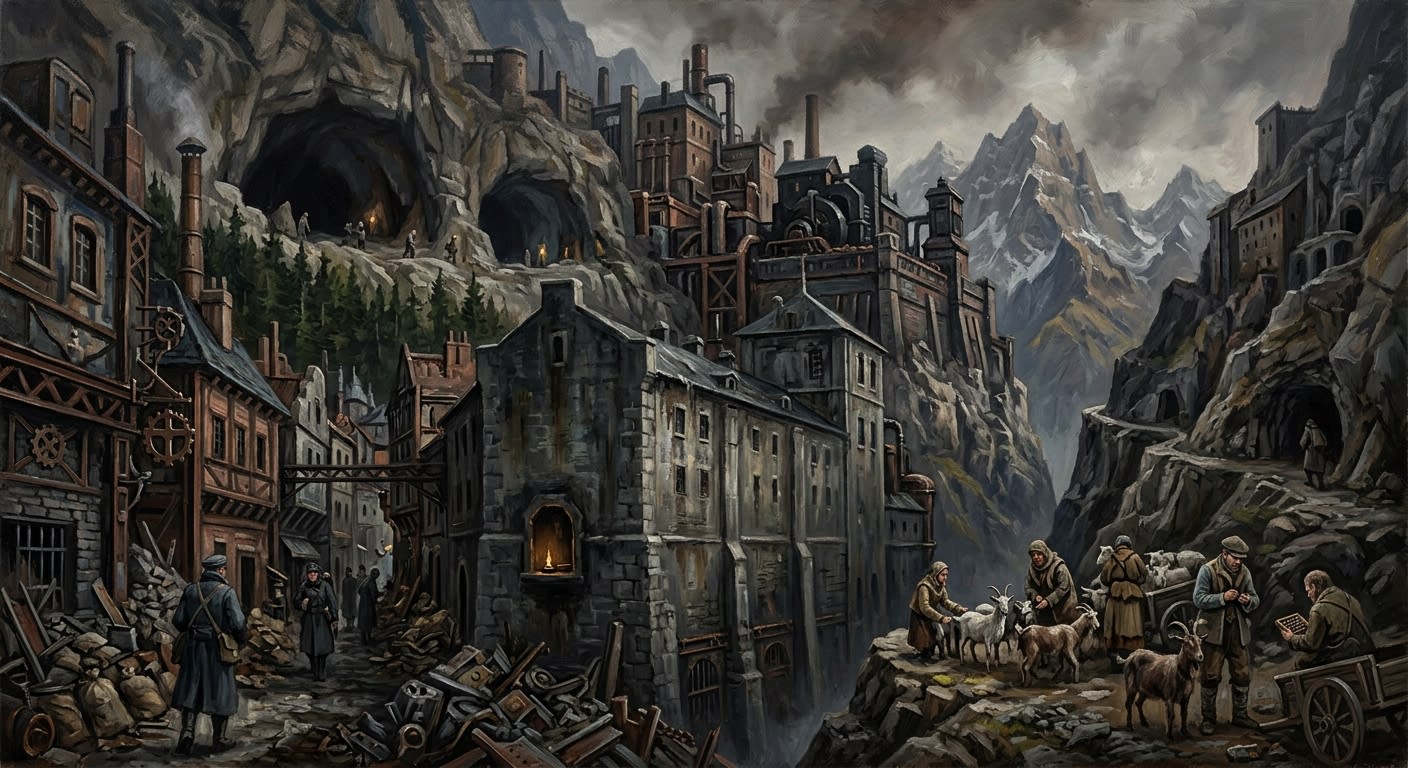
Innsbruck
Where mountains, grandmothers, caves, and walls defeat the census
Innsbruck is the Synod's alpine refuge-city: Cellar Saint caves above the treeline, relics disguised as trash, Mother Sava's wall-cavity, Pale Kin routes, goat arithmetic, and the most pious registry evasion in the mountains.
Codex Ref. II.2.09-030
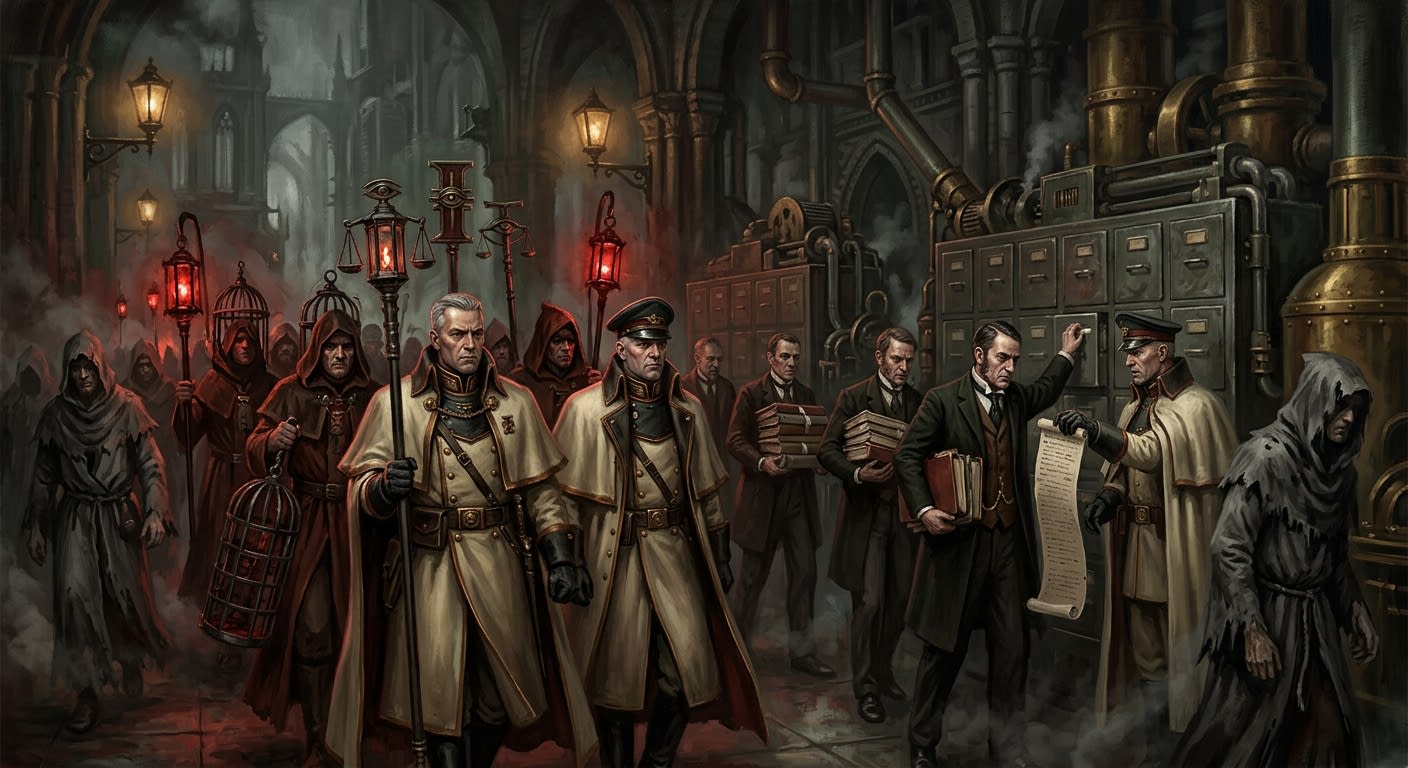
Inquisition
The white hand closes with a receipt
The Inquisition is Purity's authorised appetite for correction: White Cloaks, Lictors, Red Lanterns, Ashmen, Shadows, Index packets, denunciation law, and the clerkly miracle by which fear learns to file itself.
Codex Ref. VIII.1.08-093

Inquisitor-General Severian
The man who taught fear to sing in tune
Architect of the Iron Choir of Mainz and Severian Gloss to the Catechism of Obedience, he made silence culpable, cruelty legible, and fear useful enough to receive forms.
Codex Ref. III.2.01-006

Inquisitorial Corps
The street sees one mantle; the ledger holds the Corps
Behind each white mantle stands a district of rolls, seized words, and inspected chains. I record the Corps that turns forbidden speech into cases, corrections, and silence.
Codex Ref. XII.49.02-001
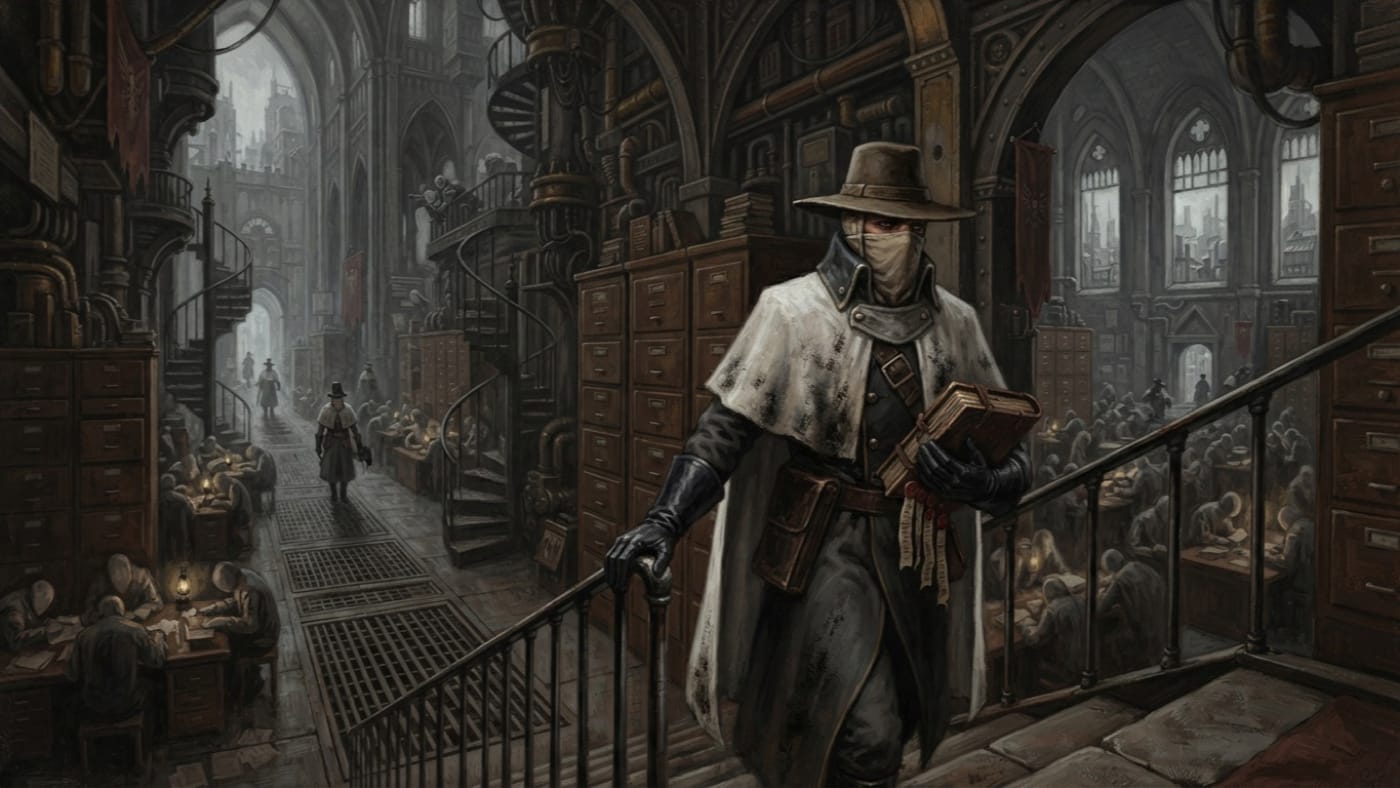
Inquisitors
A writ is a sentence still looking for its subject
An inquisitor carries a writ and decides which answers become evidence. I record Purity's officers: their white mantles, Levy enforcement, the Black Census, and the audits that may erase the examiner.
Codex Ref. VIII.1.09-201
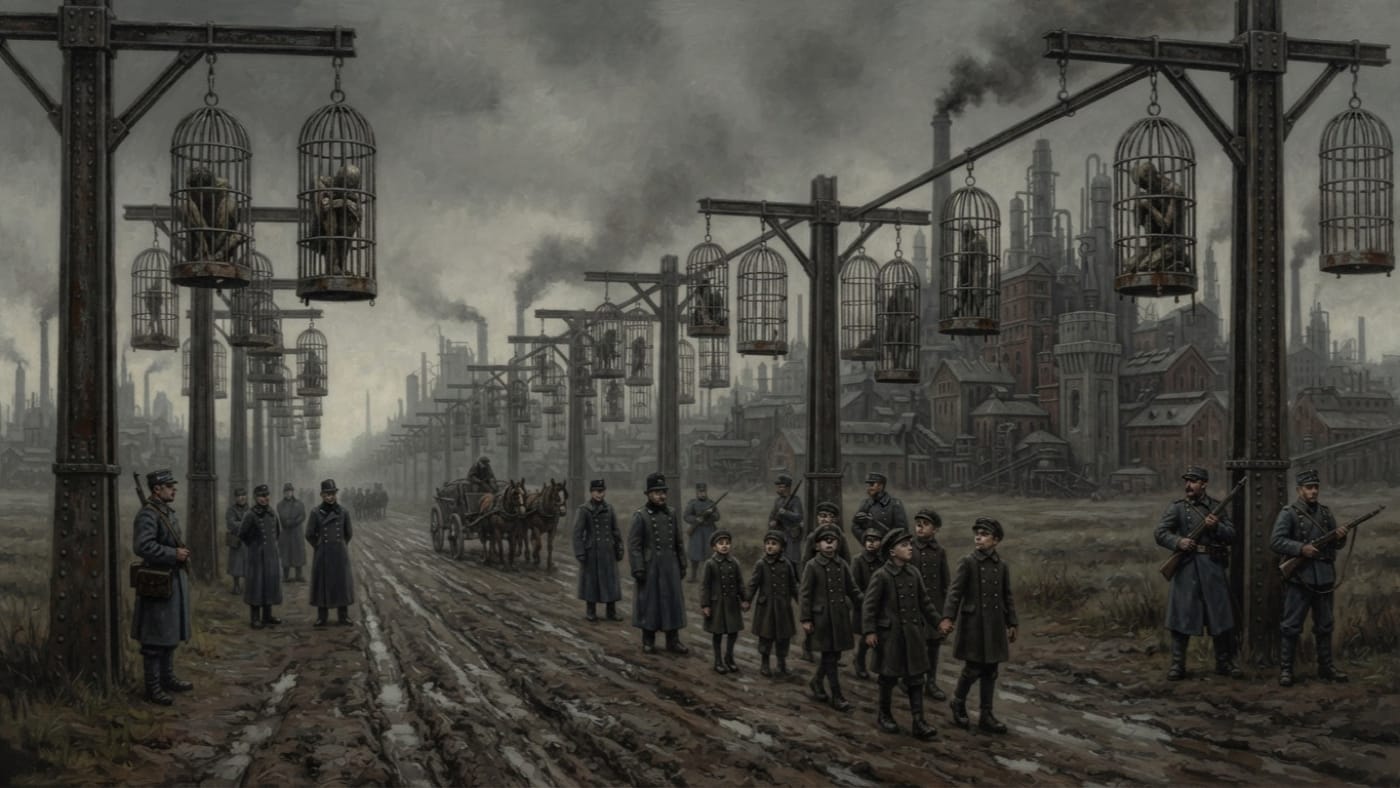
Iron Choir
A licensed hymn in the chamber, a captive congregation on the road
The Iron Choir gives confession a licensed hymn and the Mainz road a congregation of cages. Severian's method keeps fear in public service, even when most of the cages stand empty.
Codex Ref. VIII.1.09-001
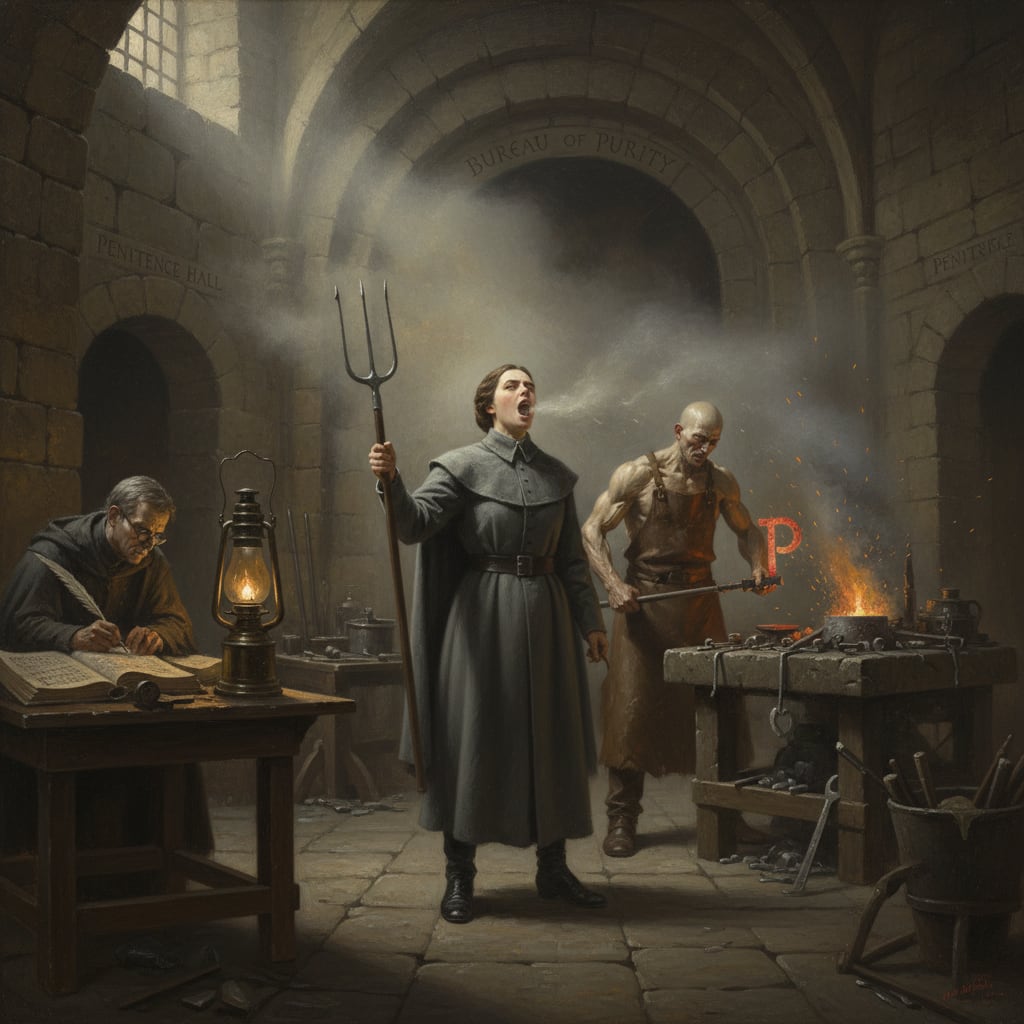
Iron Choir Brand-Singer
Because screaming is imprecise.
Licensed custodians of the note that steadies the iron — the Brand-Singers who hold pitch through Bureau of Purity penitence rites so that the resulting inscriptions are legible and the confession, accordingly, valid.
Codex Ref. XII.24.01-001
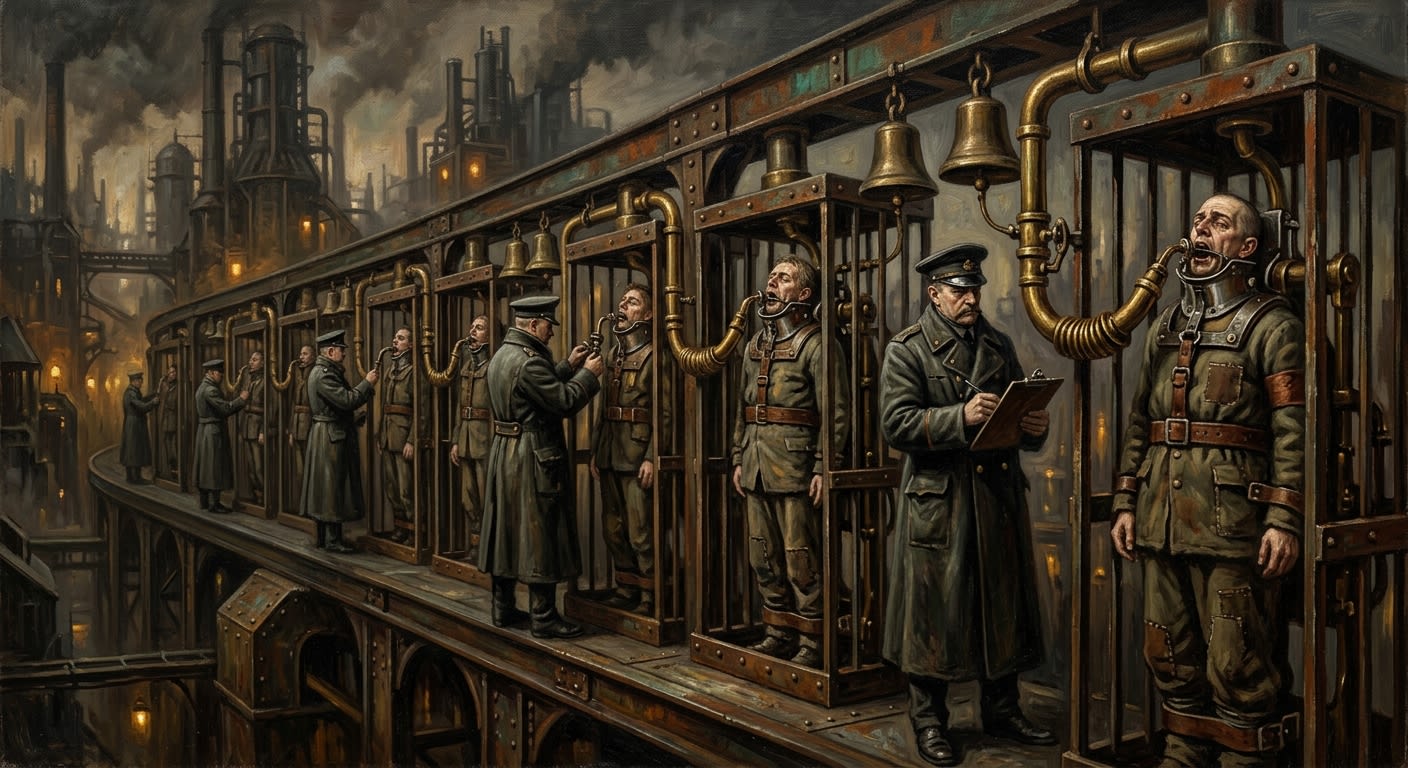
Iron Choir of Mainz
Where the road learned to keep a throat open
The Iron Choir of Mainz turns condemned throats into civic instruction: a Purity road of cages, bells, Brand-Singers, witness columns.
Codex Ref. VIII.1.09-134
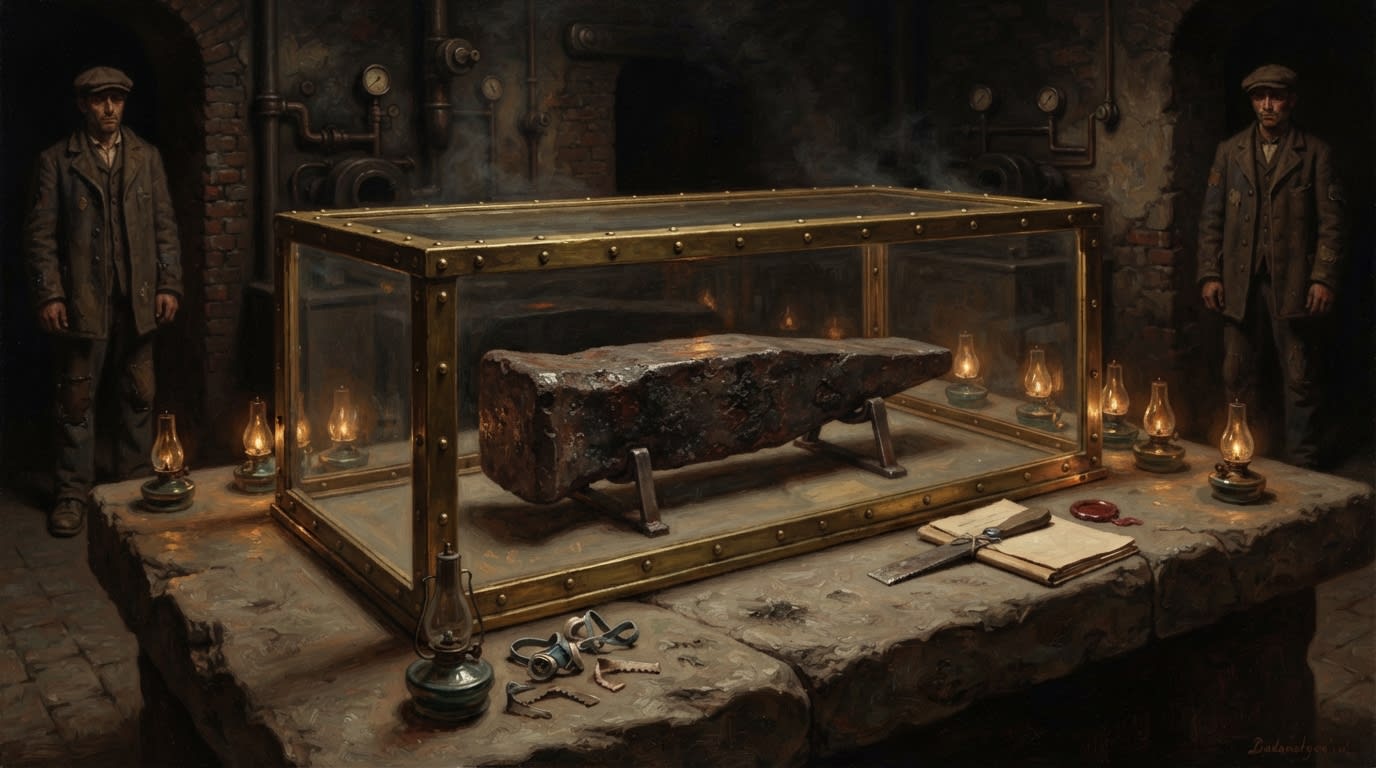
Iron Plug
The iron survives; its pedigree is a petition
R-0447-BP, the iron plug attributed to Saint Orren, rests under glass in Budapest. Nine hours are doctrine; the relic's identity remains provisional.
Codex Ref. III.2.04-447
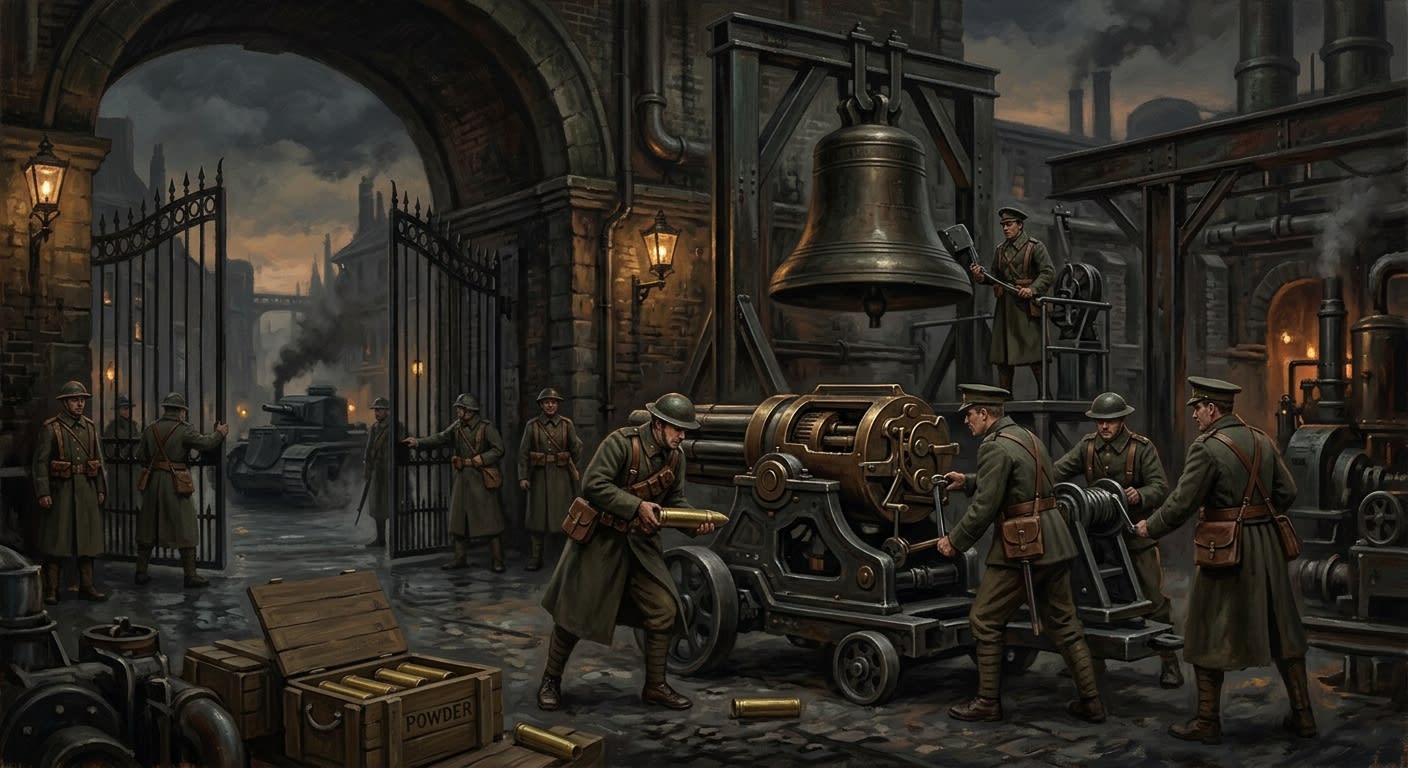
Iron Vespers
Bronze orders the night to become useful
Iron Vespers is the Synod's martial evening peal: seven strokes that lock gates, open powder, transfer custody to night, and teach soldiers that fear obeys better when bronze gives the order.
Codex Ref. XIII.1.62-004

Ivenn Rusk
The order was spoken; the wanting remained unfinished
This A.S. 201 survey keeps Corporal Ivenn Rusk's undated Drift-S 9 report within its evidence: an order spoken and understood, wanting left unfinished, recovery alive, and three sentences sealed under Mercy custody.
Codex Ref. III.2.01-1497

Joy Rot
The ledger balances long after the music ceases to matter.
Joy rot leaves the Pageant Captain's count intact and his celebration dead. Mercy calls it Occupational Malady 17-F; Festivals requires a smile and files the damage as performance.
Codex Ref. XIII.1.17-001
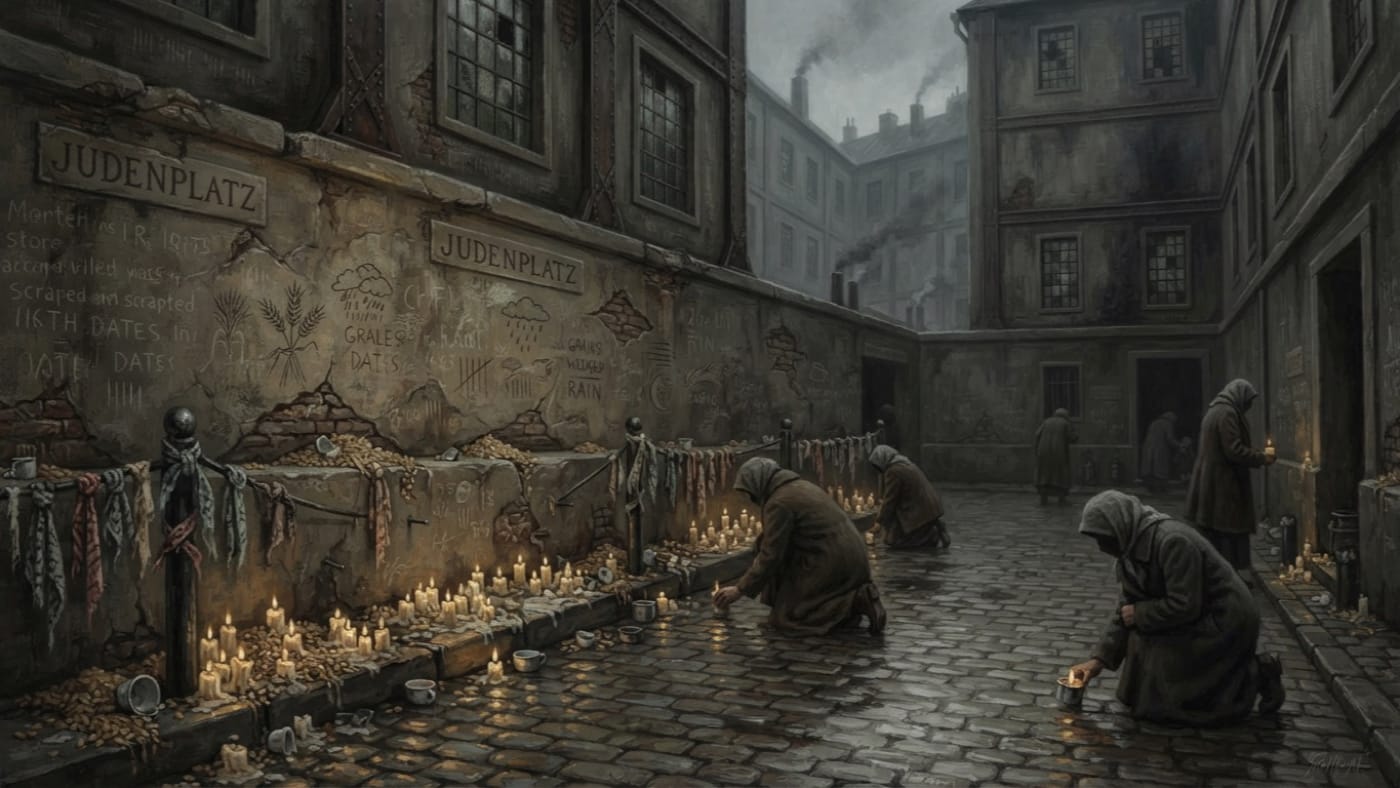
Judenplatz
Four removals, four returns, and a wall still awaiting permission
Judenplatz is Vienna's unlicensed memorial to the five thousand mothers branded in A.S. 112. Four clearances, four returns; Orison has a prohibition, and the square still has a wall.
Codex Ref. II.4.09-015
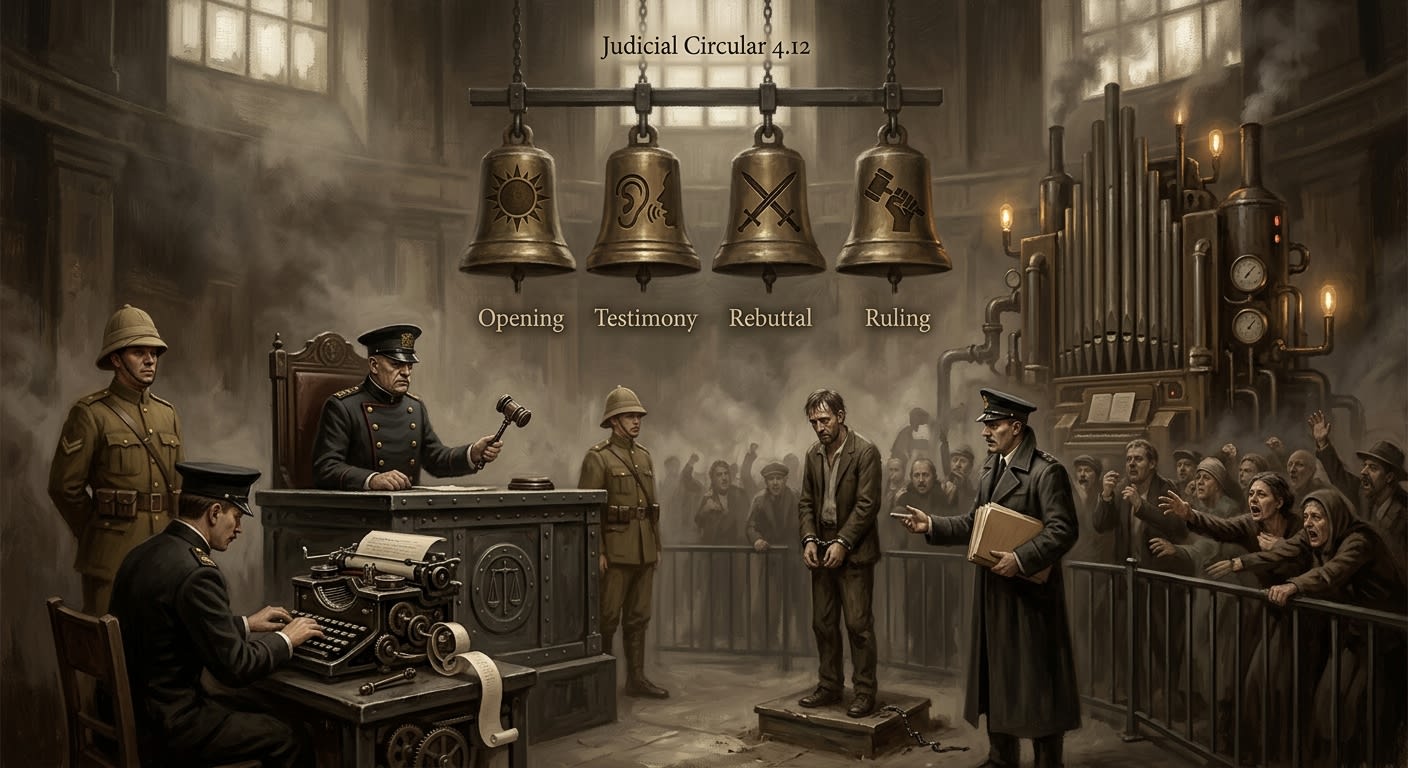
Judicial Circular 4.12
Four minutes for law to wound before the road learns its hands
Judicial Circular 4.12 compressed roving circuit trials into one creed-hymn: opening, testimony, rebuttal, ruling — four chimes by which law outruns crowds, mothers, mercy, and its own exposed ankles.
Codex Ref. XIII.1.91-141

Kaspar Thenm
The prison warden who taught the Synod to number beds before souls
Kaspar Thenm, first officer of the Bureau of Settlement, turned post-Concordat refugees into addresses with a warden's key, three clerks, and no talent for mercy.
Codex Ref. III.2.01-014
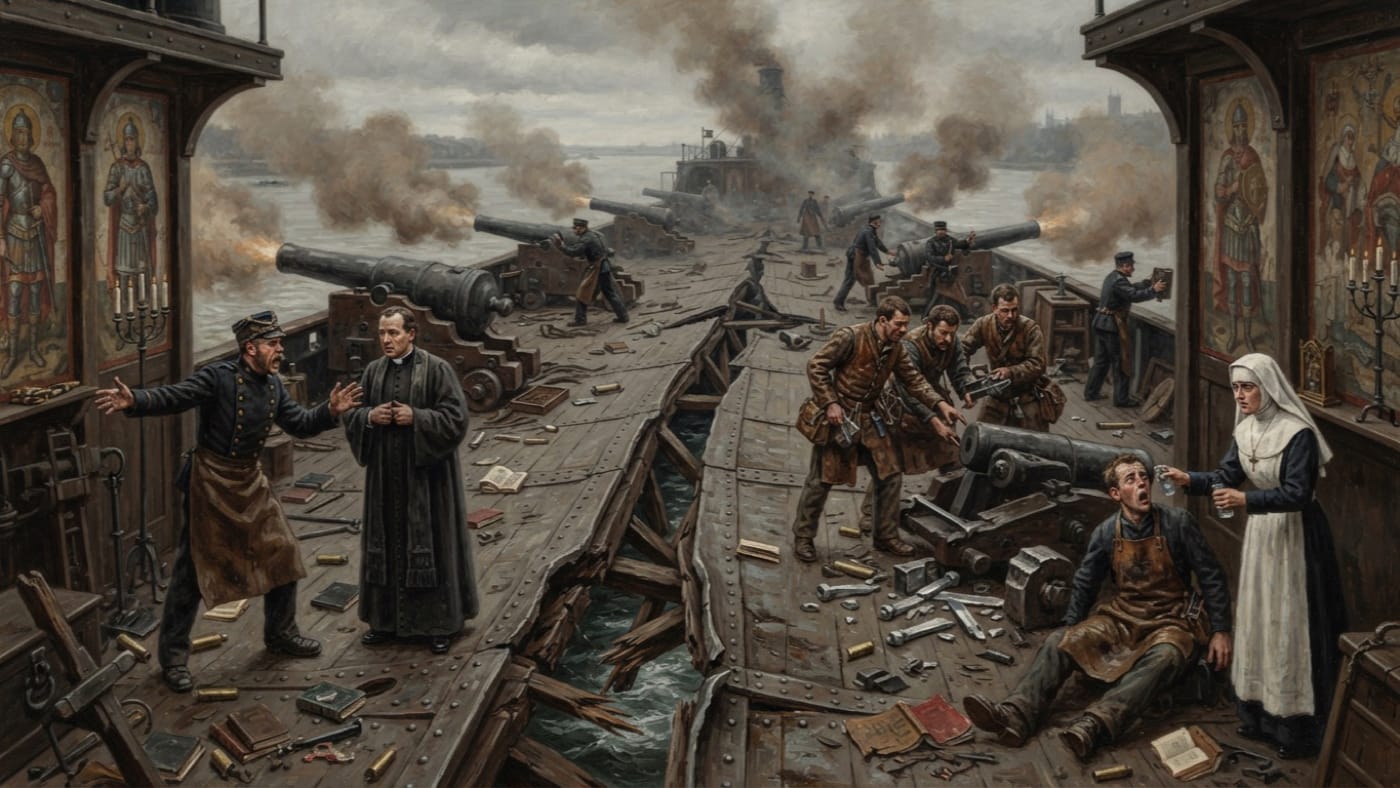
Kelen Chain-Yard Misalignment
Six guns missed the measure; the river received the blame
An A.S. 201 survey of the undated Kelen shrine-barge failure: six guns defied the choir beat and split the central deck seam. War blamed the river; Engineering brought bolts.
Codex Ref. VII.2.11-201
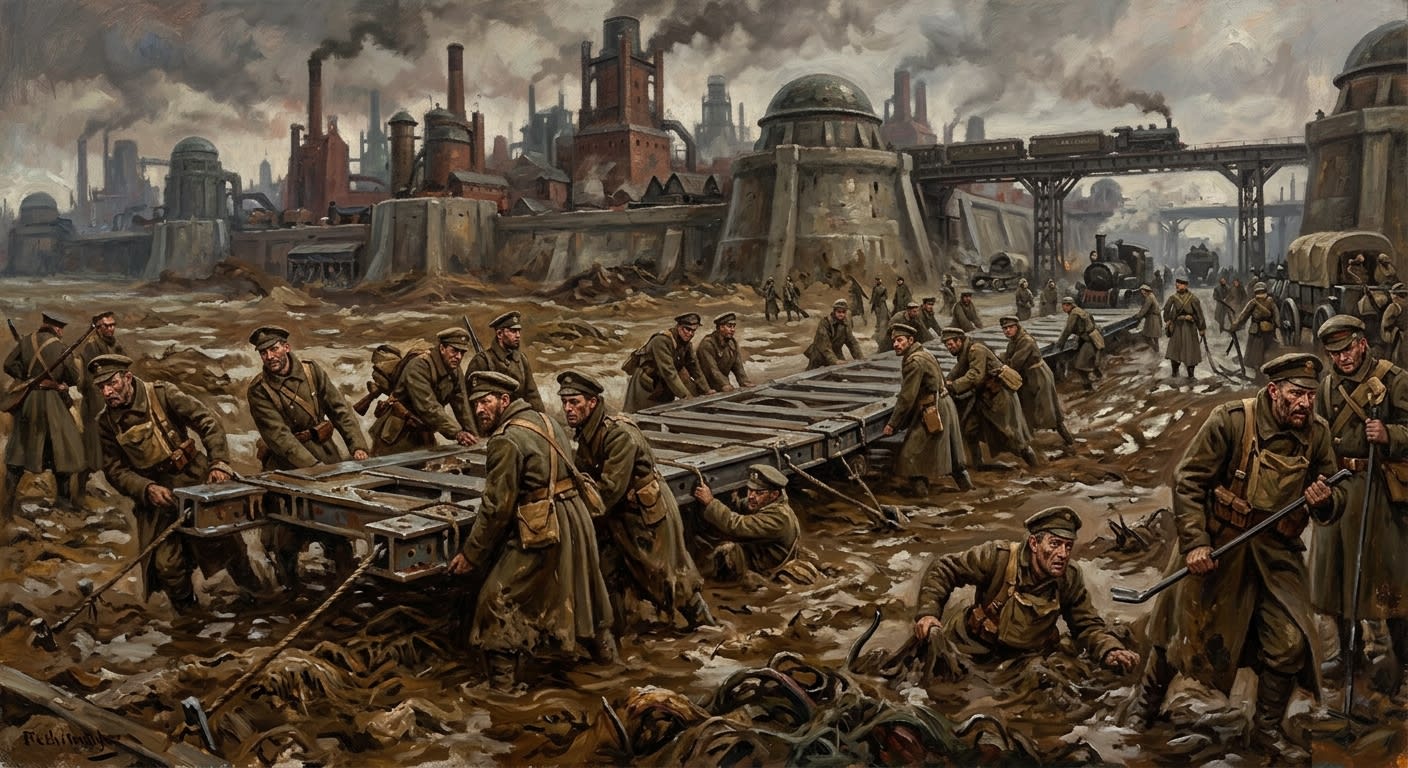
Knife Mile
Where the mud keeps the names and War keeps the route
The A.S. 137 catastrophe before Bastion-Constantinople where Shield Paladins became a causeway through Flesh-Mud and the Bureau learned to count the swallowed.
Codex Ref. VII.5.04-001
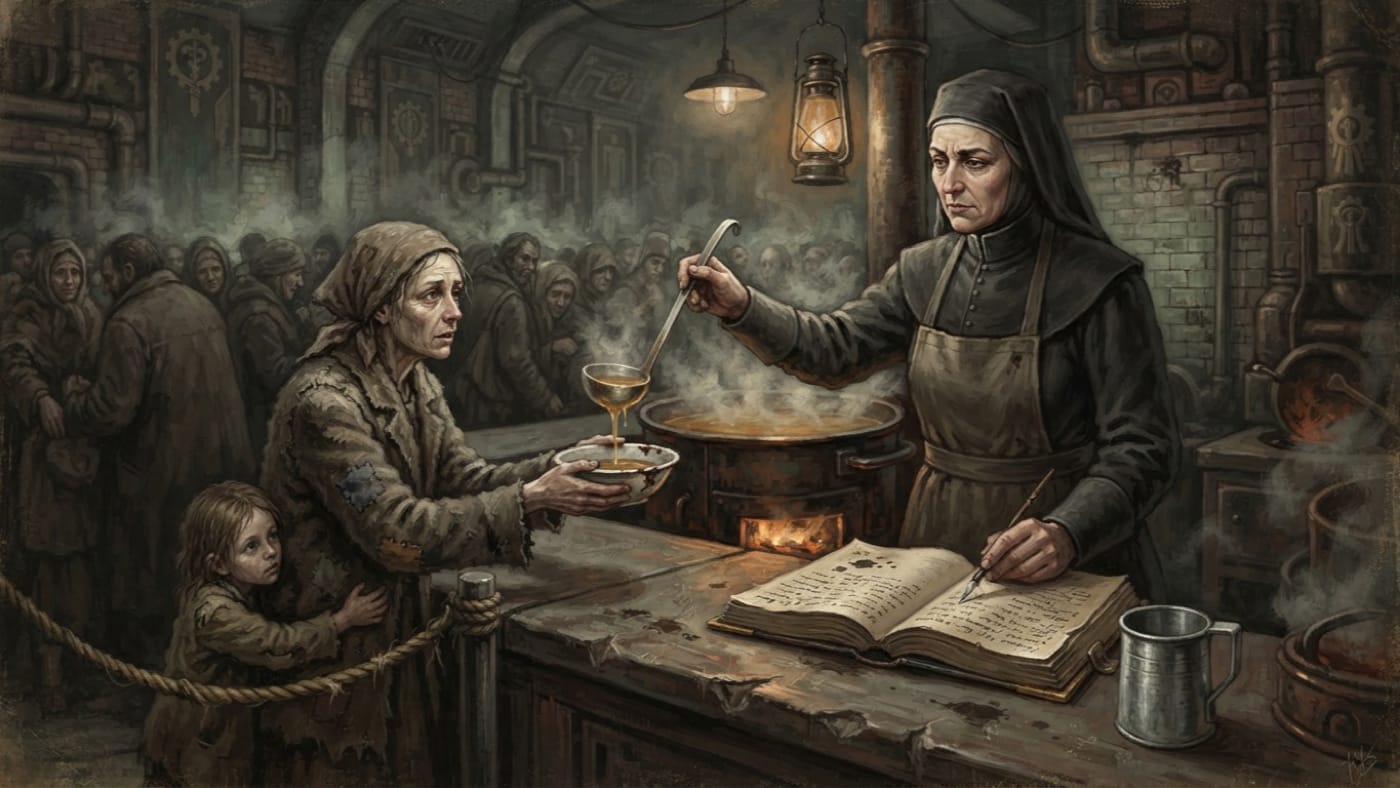
Ladle Debt
The bowl is warm; the account remains open
An extra ladle today buys an unspecified future service in a Matron's book. Mercy may leave the debt uncalled; desperation or cruelty may collect it. The broth is real. So is the name in ink.
Codex Ref. XIII.1.06-001

Lantern "Mercy" Preacher (Rebel)
Eighth heresy, eighth rank, eighth because the Synod reserves that number for what it made, cannot unmake, and will not thank.
Eighth of eight proscribed heresies: the Licensed Consolators who meant what they said, and were immured for it.
Codex Ref. XI.3.01-001
Las Cadenas
Bread and incense inbound. Wounded outbound. The dependency renews itself.
An Iberian trench bastion dependent on San Vesta for ash-bread and incense, sending its wounded back to the priory. The supply order renews perpetually; the patients repay their cures in labour.
Codex Ref. II.4.09-1576
Ledger Cloister (Rheinscarp)
On the fifth terrace, the bread waits for your name to agree with the register
Rheinscarp's fifth-terrace Records labyrinth reconciles crossing receipts, ration rolls and names under Ysabeau Kelm. You arrive to file a receipt; the Quill-Choir may correct whether you exist.
Codex Ref. II.2.01-003
Ledger Laws
Mercy measured by the ladle, sanctioned by the noose
The Ledger Laws made mercy countable after the Broth Riots: every bowl, bandage, draught, confession, death, and useful pity entered the record before it dared call itself compassion.
Codex Ref. XIII.1.89-112
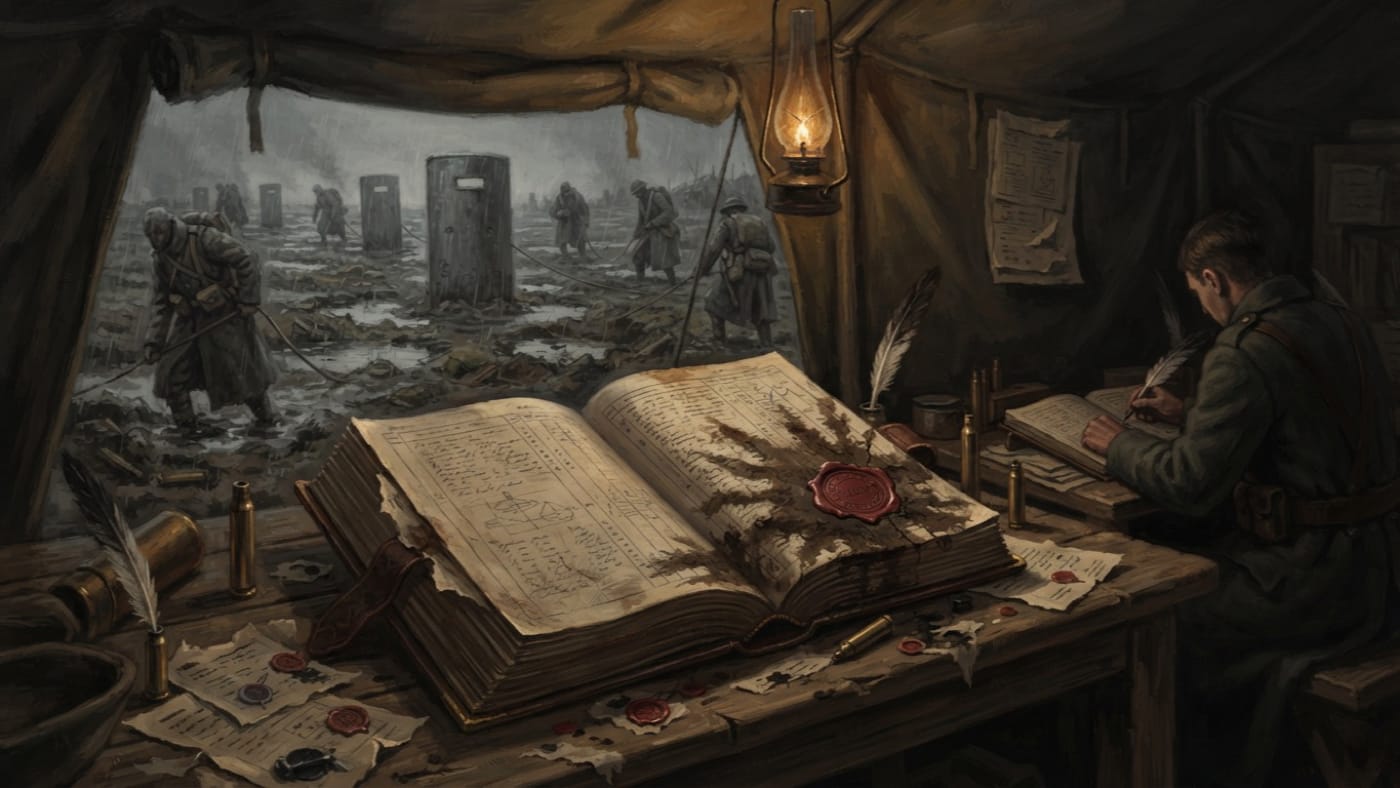
Ledger of Mud
The ground takes the man; Records keeps him pending
At Knife Mile, Records sorts the swallowed by depth and consistency, then harmonises the count. A man may remain pending long after the mud has finished with him.
Codex Ref. XIII.1.06-004
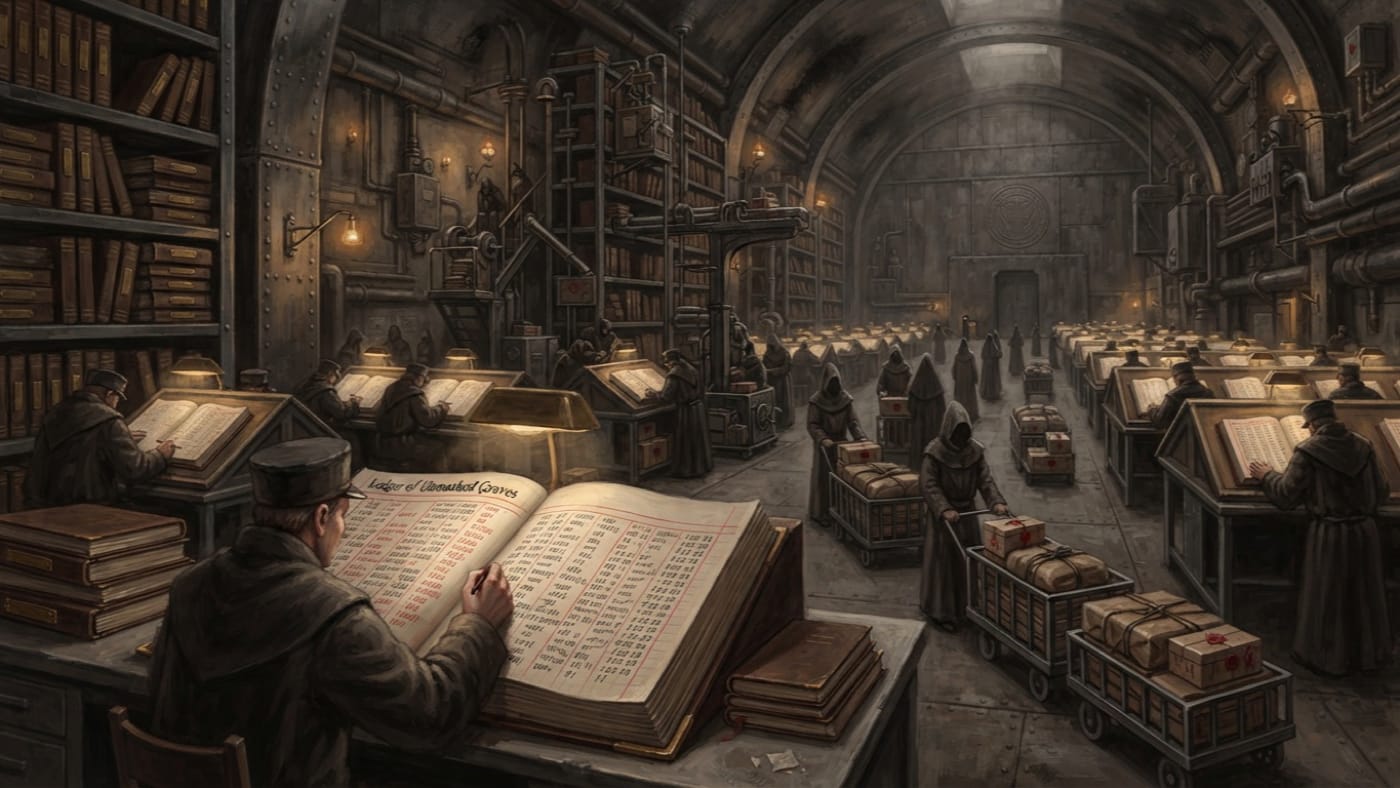
Ledger of Unmarked Graves
The columns agree. The dead have not been consulted.
The Bureau of Records balances recorded deaths against sanctified burials. Missing bodies are supplied; missing deaths are assigned. I certify the arithmetic. The names are another matter.
Codex Ref. VI.2.01-002
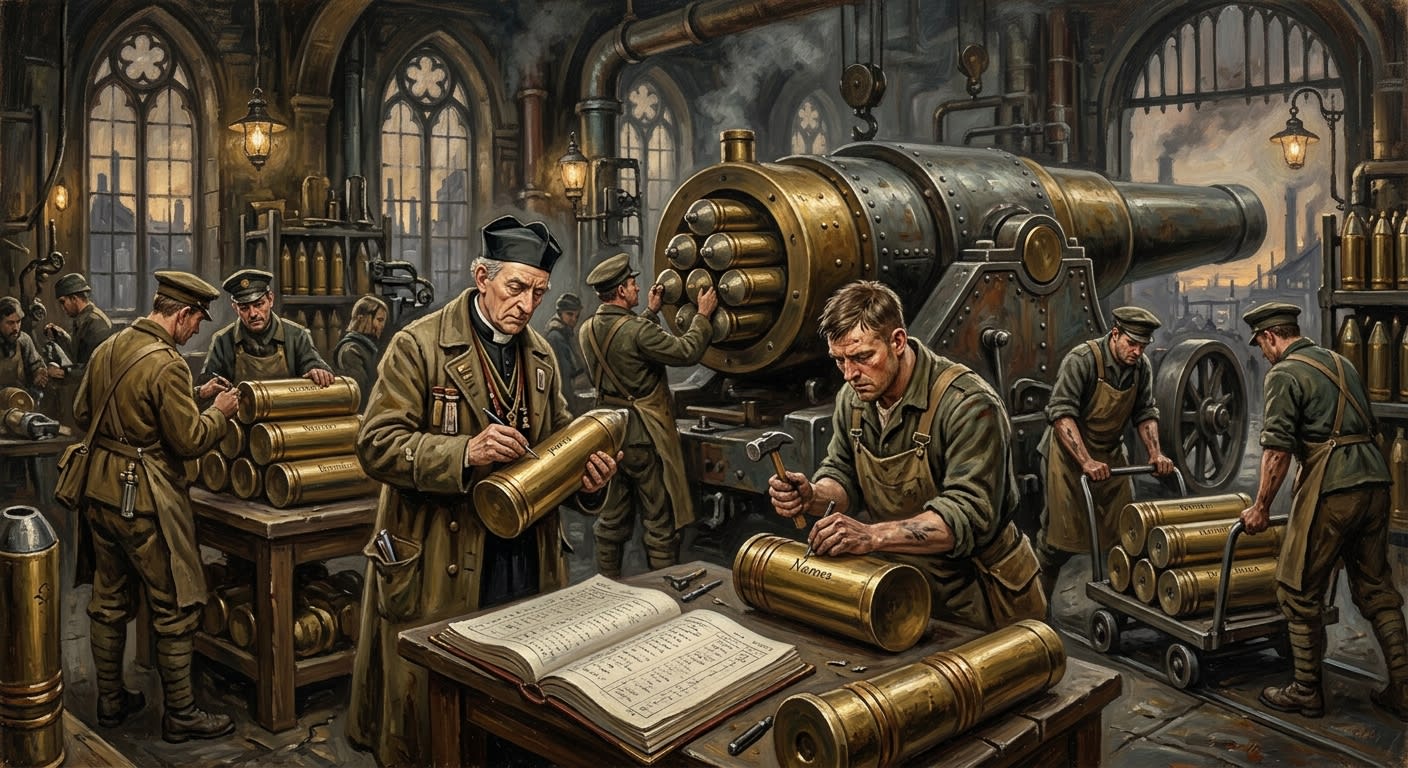
Ledger Reforms A.S. 165
No round without a name-bearing hand
A.S. 165 shrine-platform reform after the Bastion-Irongate grapeshot discharge, requiring each loaded round to bear a Powder Acolyte's name.
Codex Ref. VII.2.10-165
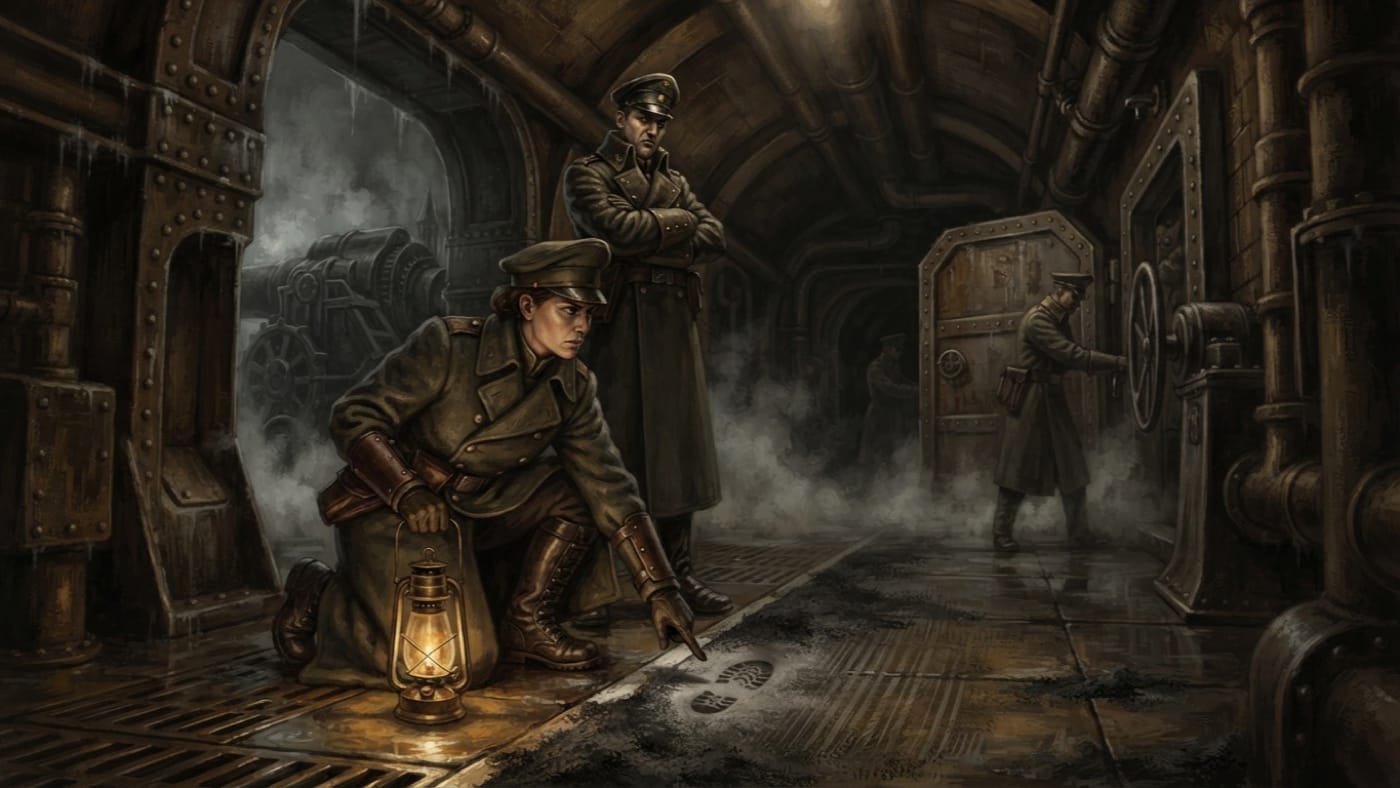
Lent-Eve Infiltration at Irongate
The ash kept a record; the bell revealed nothing
At Irongate in A.S. 196, Voss trusted a heel-print over a bell-pulse and an officer's objection. The gallery was sealed; a clerk was found dead an hour later.
Codex Ref. III.2.05-196

Levy Assessor
The census names the household. The Assessor names the son.
The Levy Assessor compares sacred ledgers, declares a household's liability and stamps the selected wrist. The Bureau calls this collection. The household has other names.
Codex Ref. III.4.08-201

Liber Examinationis
The bone awaits a verdict. The reader incurs a strain.
The Bureau of Relics' Examiners carry the Liber Examinationis to the bench. Its cross-references constitute a Category Two Devotional Strain; the bone awaits a verdict.
Codex Ref. XIII.1.64-001
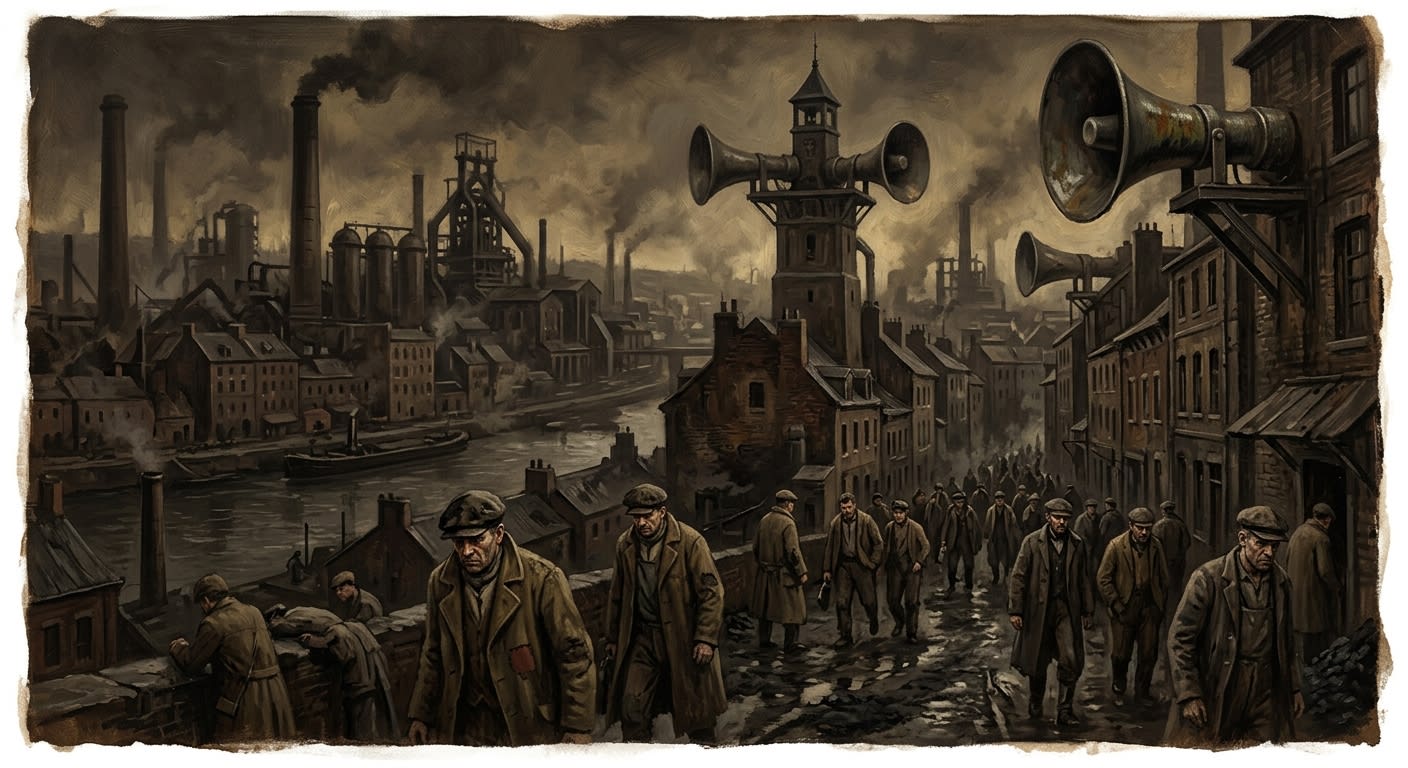
Liège
Where the bell was broken and the horn learned obedience
Liège, soot-black industrial city of the Meuse, lost its shift-bells in A.S. 108 after miners rang survival without licence; the horns remain ugly, lawful, and obeyed.
Codex Ref. II.2.03-108
Lieutenant Veyss
The name retained after the man was struck
Lieutenant of the 4th Rhineland Fusiliers, struck in A.S. 148 after a claim for promotion arrears exposed a missing ancestral tithe-stamp. The Bureau kept his case and cancelled his standing.
Codex Ref. III.2.01-148

Listening Cell Host
A coat may swallow a voice; a witness remembers it
Listening Cell Hosts teach forbidden lullaby endings in rooms padded with coats. Their pupils carry comfort home; Orison calls the same transaction distribution.
Codex Ref. XII.48.03-001
Litany of Saint Aldebrand
The prayer kept its name; the man who said it did not
A nameless labourer recited the Litany of Saint Aldebrand after sight returned in Ulm's Gallery Three, A.S. 156. The file preserves the prayer's name and none of its words.
Codex Ref. XIII.1.96-156
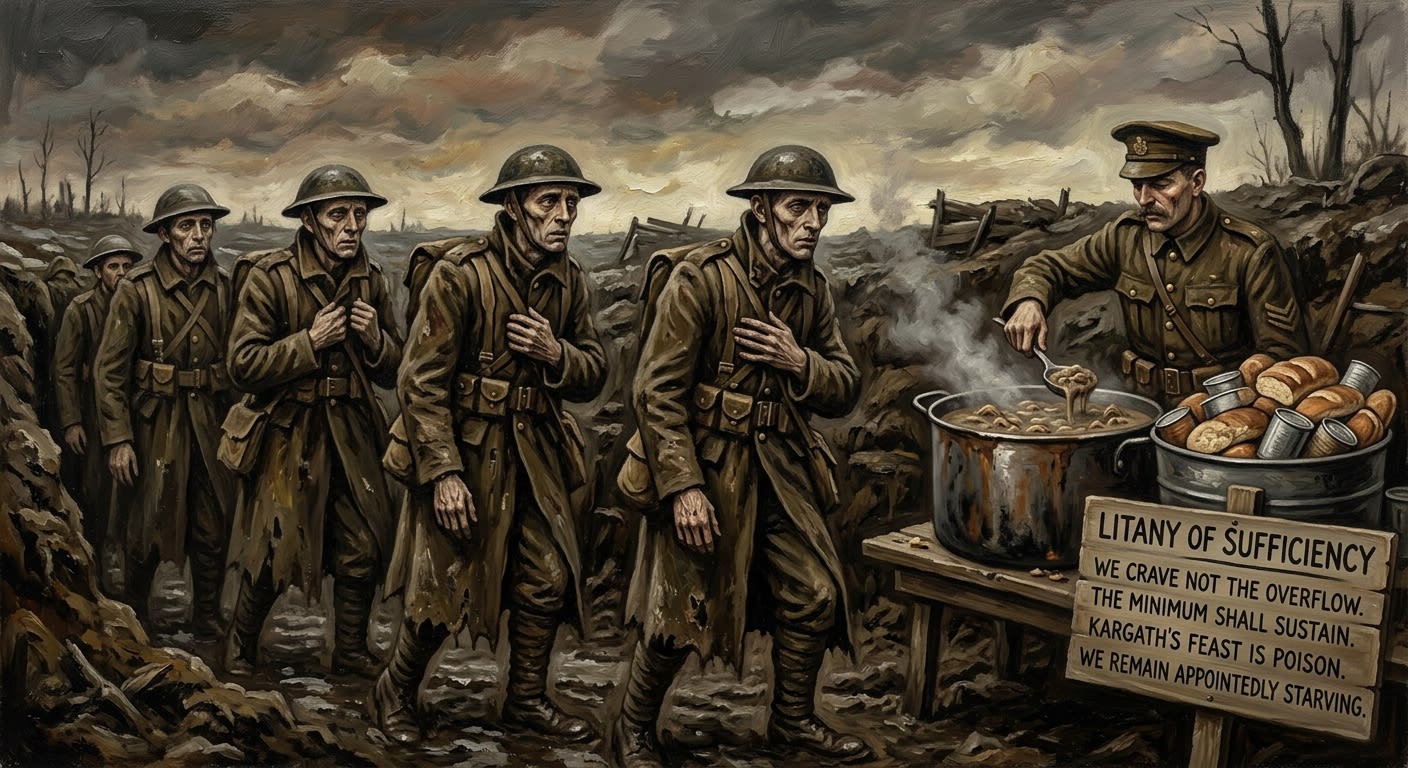
Litany of Sufficiency
Enough is given, and the Bureau has weaponised the crust
The approved field-prayer against Kargath's plenty: four ugly lines by which hungry soldiers step away from miracle food and remain merely starving.
Codex Ref. XIII.1.90-163
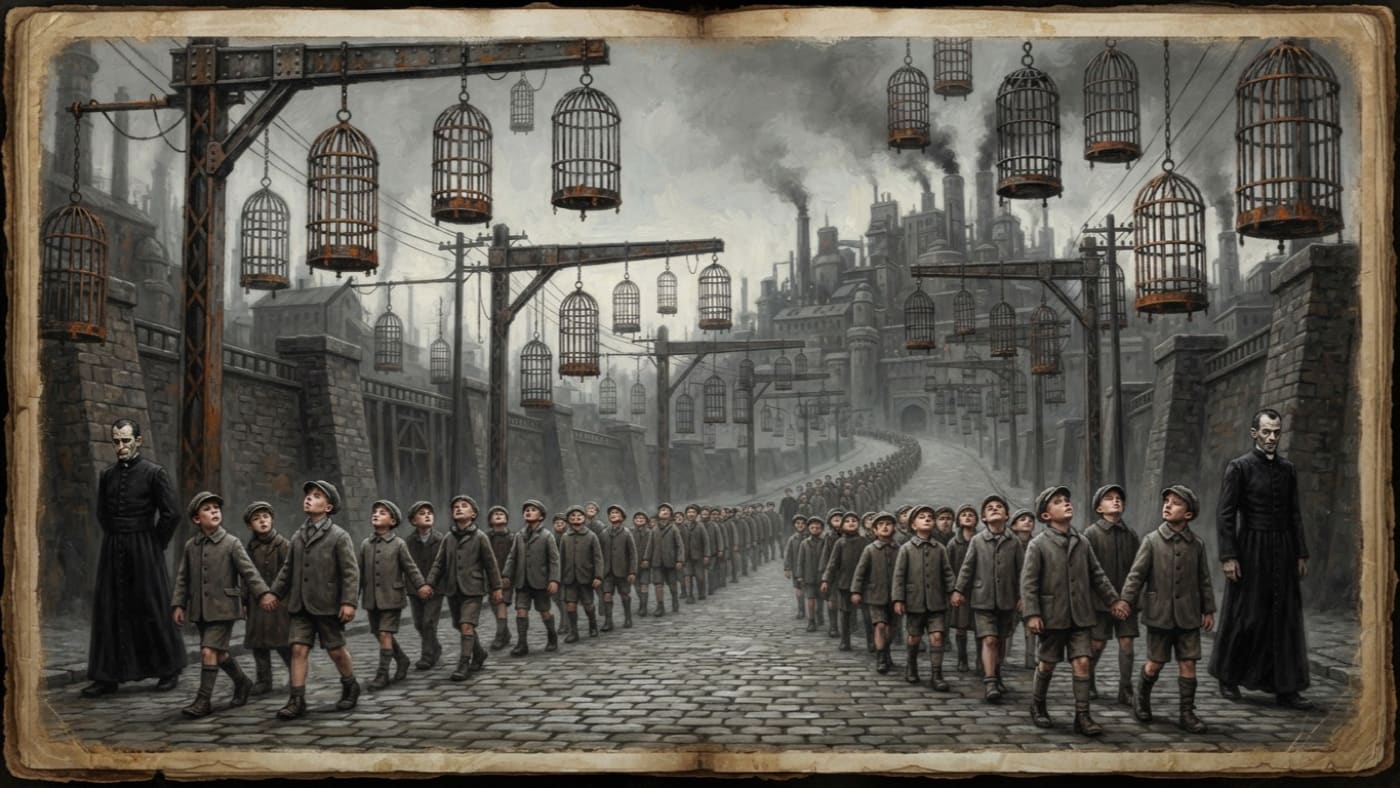
Little Witness Program
The schoolroom learns what the cage is for
The Little Witness Program marches schoolrooms past Mainz's Iron Choir to teach obedience through terror. Records claims a sixty-percent rise in confessional punctuality; Mercy's objection remains overruled.
Codex Ref. XIII.1.08-201
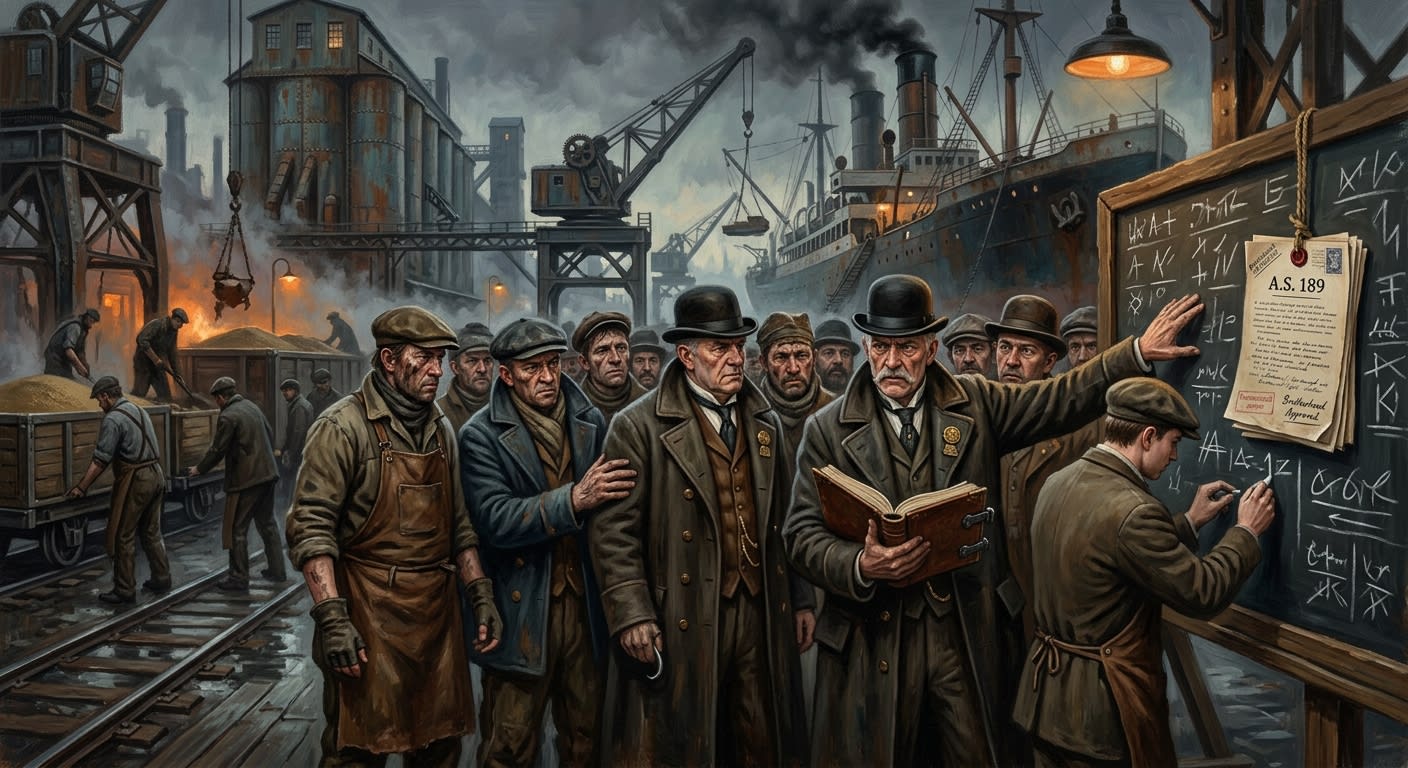
Longshoremen's Brotherhood
The port moves when the men beneath the crane consent to bend
Hamburg's oldest dock guild controls western and central quay labour, grain call-books, Brotherhood chalk marks, and the A.S. 189 hazard supplement that Tithes keeps trying to resurrect as taxable.
Codex Ref. XII.52.01-001
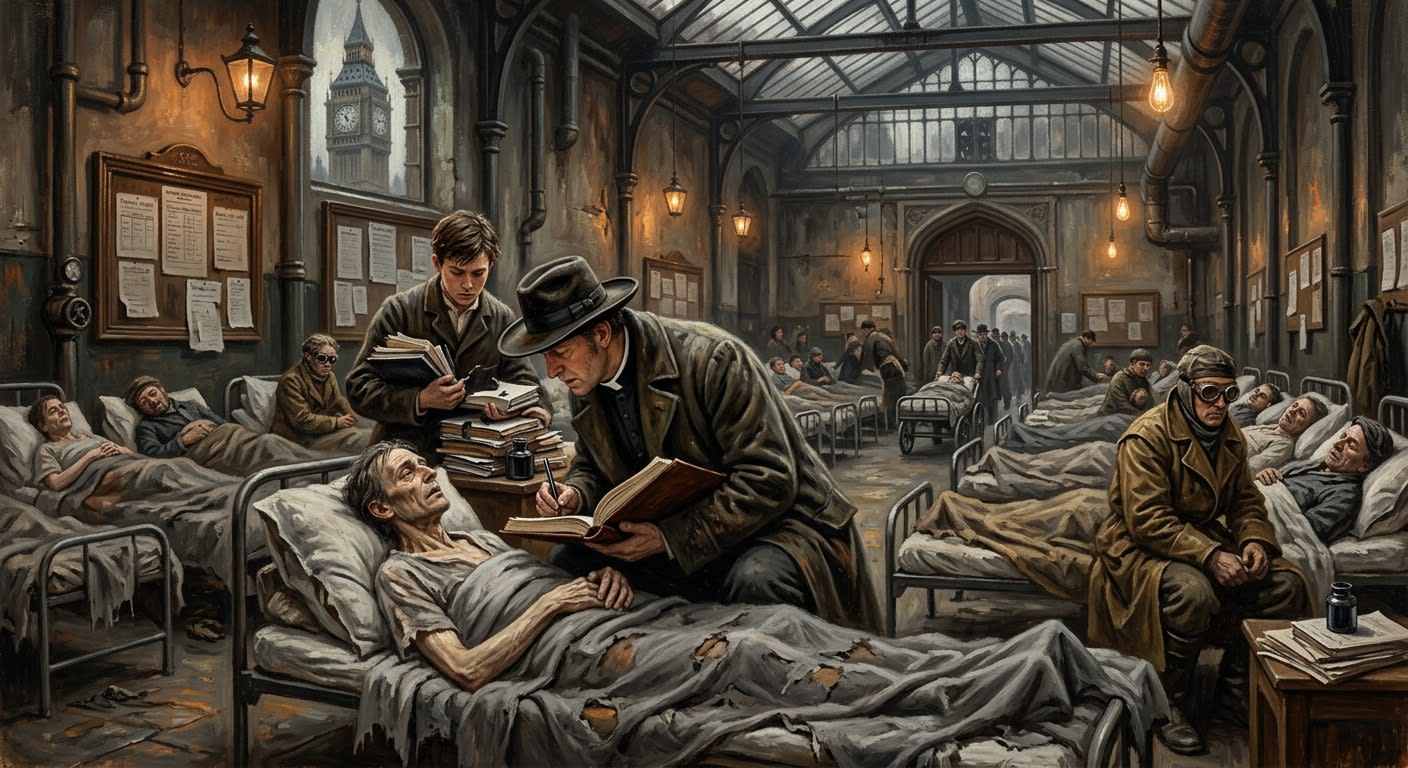
Lull of Names
The plague year when silence became a breach and the bedside became a bureau
The Lull of Names was the A.S. 78 plague-year catastrophe in which deaths in the southern wards outran transcription, birthing Standing Order 22-C and the Deathbed Confession Harvester corps.
Codex Ref. VII.8.10-022
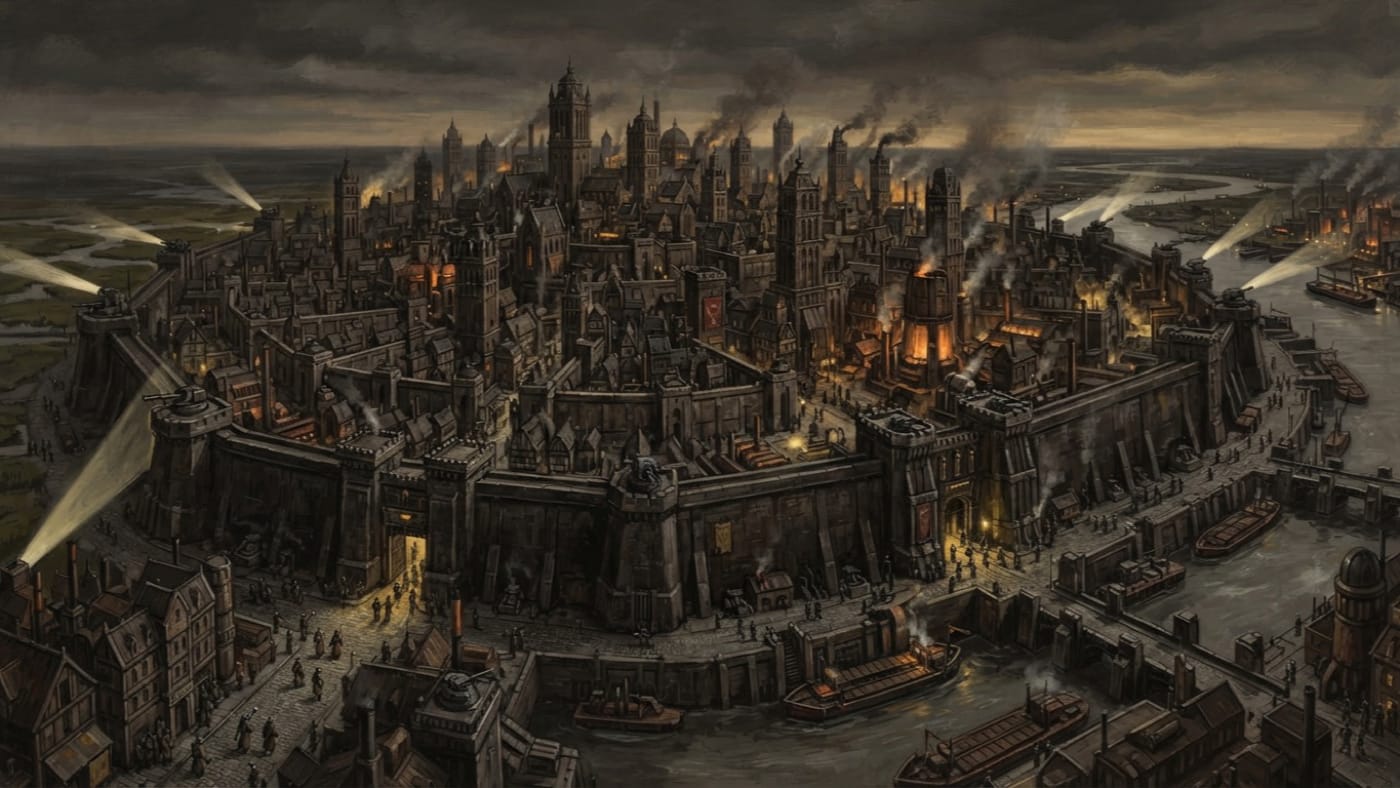
Lunden-Kirk
The Thames city whose parish walls keep the Bureau outside
London survives as a walled monastery-city on the Thames: perhaps four hundred thousand souls, each parish armed, each street watched. The British Crown governs; the Bureau possesses reports and no jurisdiction.
Codex Ref. II.0.10-201
Lungward
Breath Is Sacred; Admission Is Conditional
Candlewick's infirmary district treats the damage its industries leave in workers' lungs. The Lungward Sisters provide care, ration filters and issue quarantine writs; admission depends on colour, guild standing and papers.
Codex Ref. II.1.01-201
Lungward Sisters
Breath Is Sacred; Its Custody Is Lucrative
The Lungward Sisters keep Candlewick breathing through infirmaries, rationed filters and quarantine writs. Care follows guild standing, confession and mask debt; the authority behind the writs remains conveniently unfiled.
Codex Ref. VIII.6.08-001
Lye Order
Bodies accompany their papers.
The Quarantine Wardens of the Rope-Ferry Chain wash travellers, inspect stamps, and widen cordons. Their mandate is plague prevention; their surest product is fear.
Codex Ref. XI.8.01-001
Lyon
The Rhône city where scars learned to sell tickets
Synod-held Lyon is a Rhône city of red ash, whistle-hymnody, Festival supervision, relic volatility, licensed enthusiasm, and profitable repentance.
Codex Ref. II.1.04-001
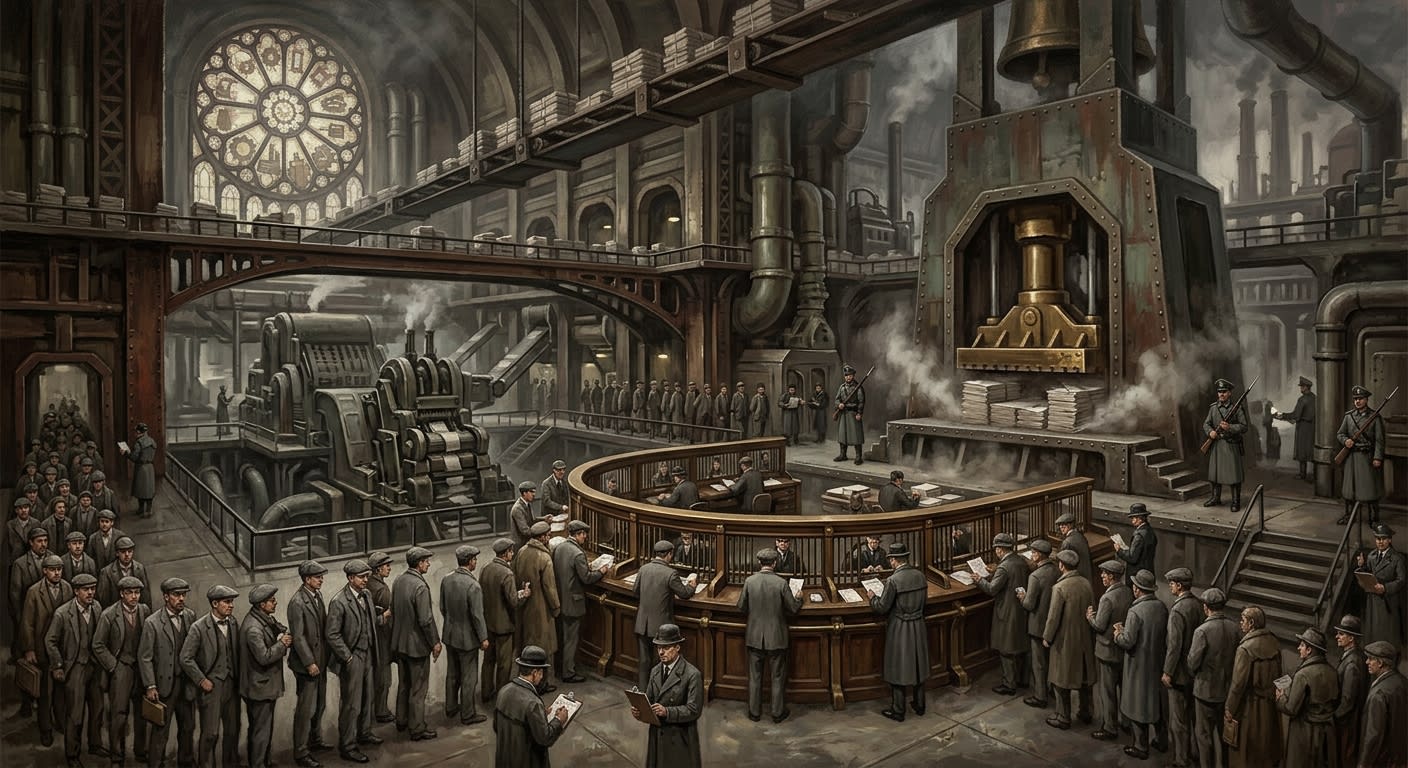
Manifest Basilica
Lorn's altar is a routing desk
The Manifest Basilica is Lorn's paper cathedral: routing desk for altar, correction for sacrament, and a Pulse that stamps men into obedience.
Codex Ref. II.2.09-104
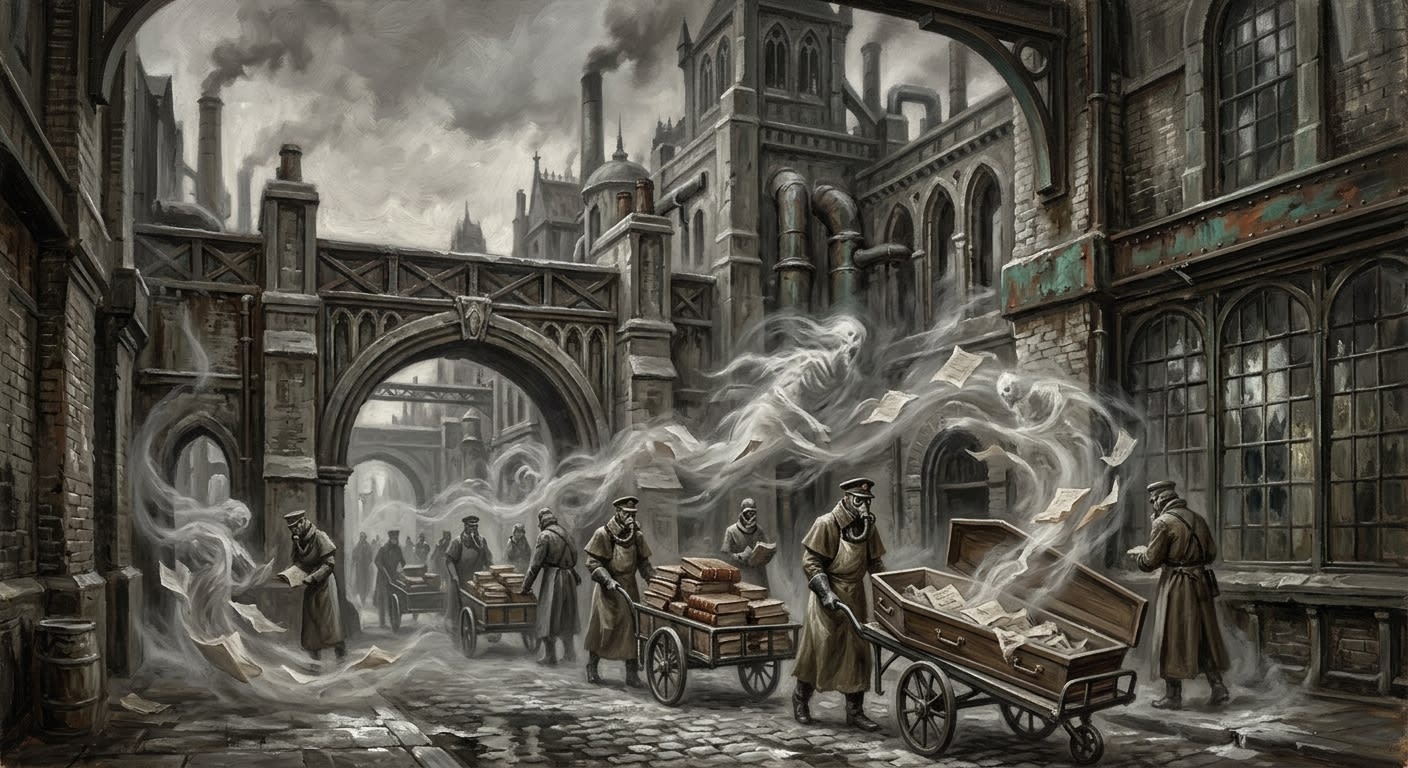
Marrowwind
The dead file amendments in lime and breath
At Marrowgate, chalk wind carries the voices of the dead, corrects fraudulent ledgers, and proves that a corpse with paperwork remains a witness.
Codex Ref. XIII.1.20-001

Martyrology of Saint-Malo
Thirty-one names, forty-three seconds, and a civilization built from first blood
The Martyrology of Saint-Malo counts thirty-one dead, five absences, and every obedience the Synod has purchased with their blood.
Codex Ref. VII.8.02-001
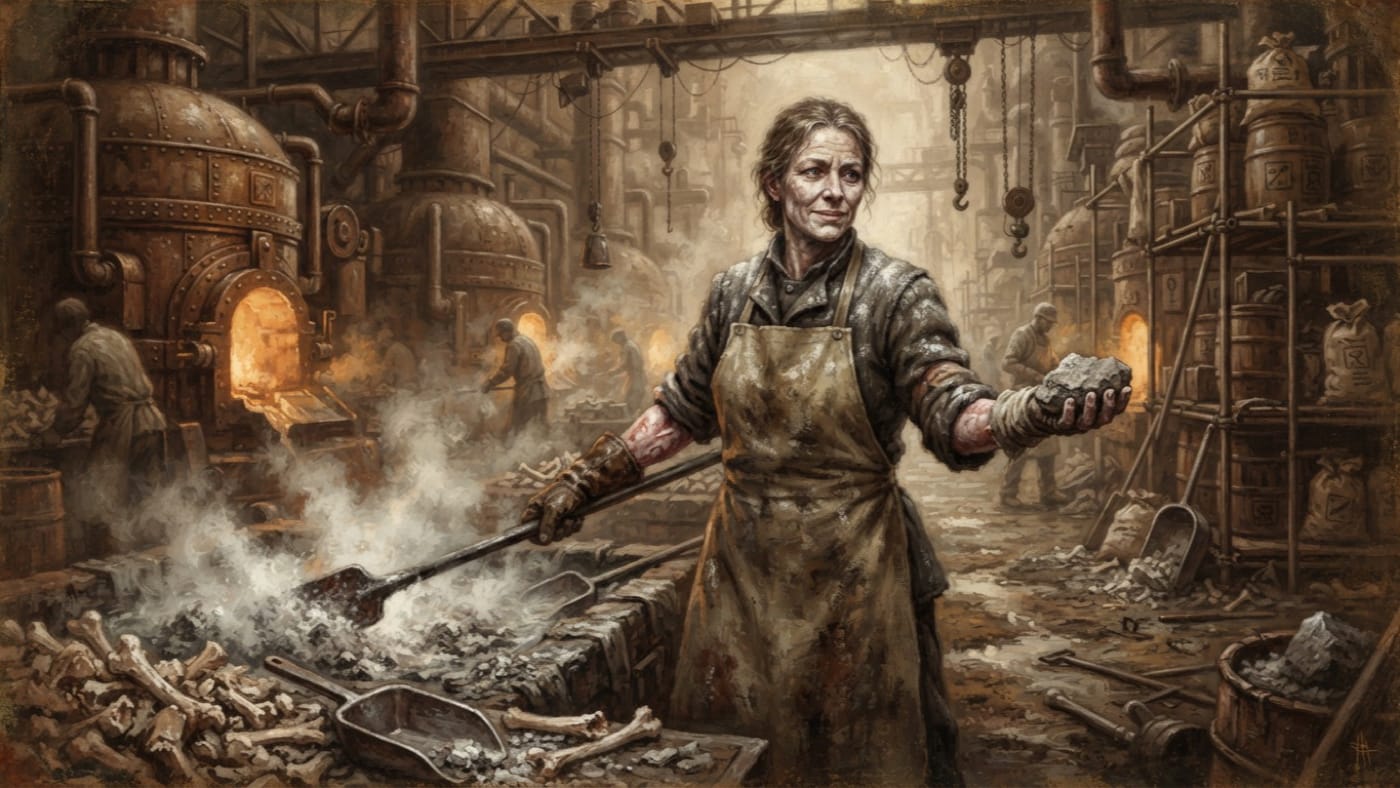
Master Melter Gretz
One name, one rank, one encounter in the kiln steam
At Bastion-Przemyśl in A.S. 194, Master Melter Gretz handed me mortar she identified as Saint Ephraim's leg. I record her station and her laugh. The Ledger supplies no later service record.
Codex Ref. III.2.01-194
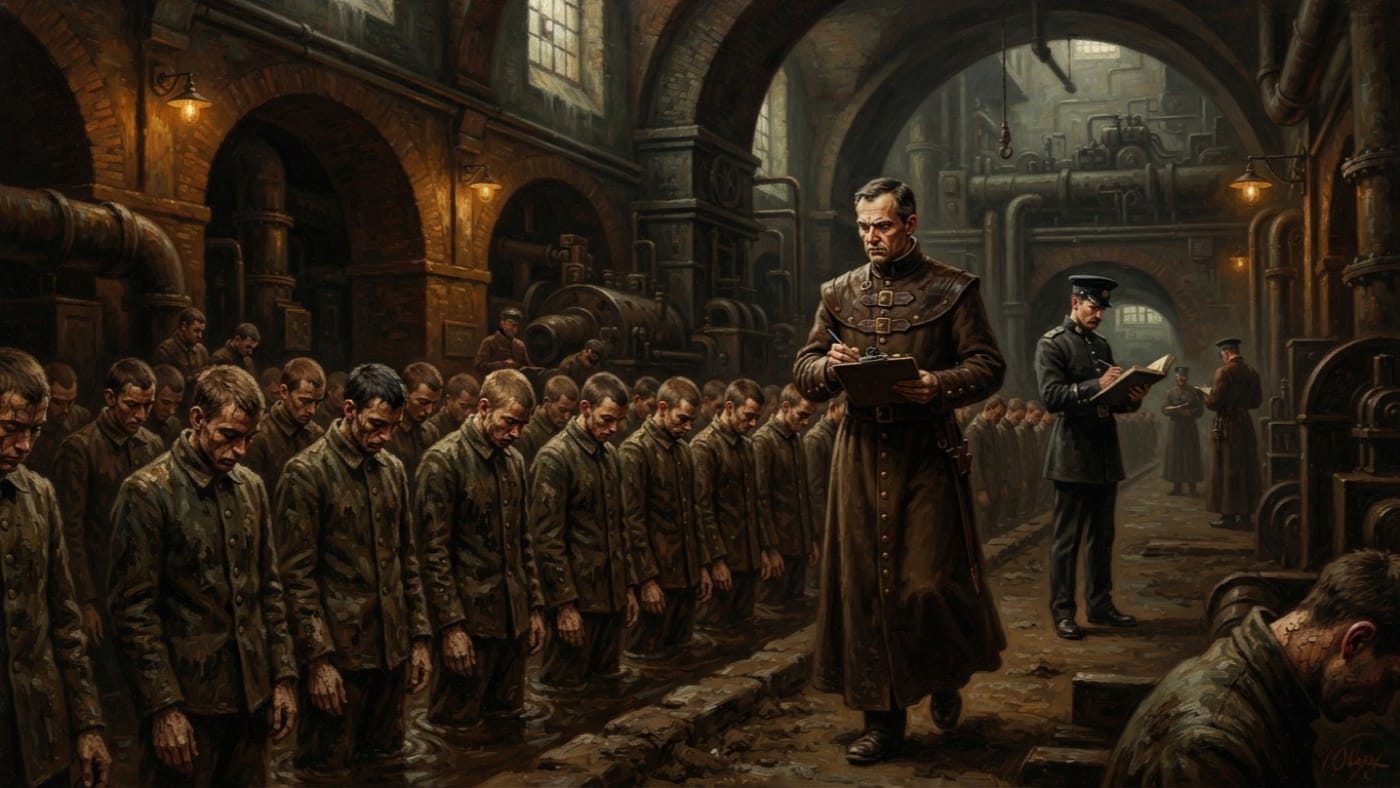
Medical Annex 44-C
Seventeen cases, one corrected sentence
Medical Annex 44-C survives through Stuttgart's broadsheet correction: trench rash, fungal bloom and seventeen cases of devotional fever. The A.S. 201 survey records amended promises and unchanged mud; the annex's issue date remains unrecorded.
Codex Ref. XIII.1.91-044
Medical Directorate of the Bureau of War
The surgeons arrived before the charter.
First recorded in A.S. 82, the Medical Directorate is the older name of the Bureau of Medicine. Its surgeons treated the wound before the confession ended. The charter followed ten years later.
Codex Ref. XII.7.09-045
Medical Protocol 9-C
The little iron tooth that makes hunger testify
Medical Protocol 9-C is Medicine's iron tooth: a quarantine rite that turns appetite, refusal, dreams, and mud under the tongue into evidence.
Codex Ref. XIII.1.91-134
Melody Intent
The song need not be heard for the charge to be filed
Orison's charge for inferred knowledge of an unlicensed cadence and intent to transmit it; a silent cuff and a willing neighbour can begin the paperwork.
Codex Ref. XIII.1.86-201
Memorandum on Artillery Bombardment
Nine thousand shells, four hundred twelve names, and one unsigned appetite for arithmetic
An unsigned Bureau of War memorandum proposes shelling the Hollow Court. Doctrine finds nine thousand shells, no absolution, and a table that may be an organ.
Codex Ref. XIII.1.23-001
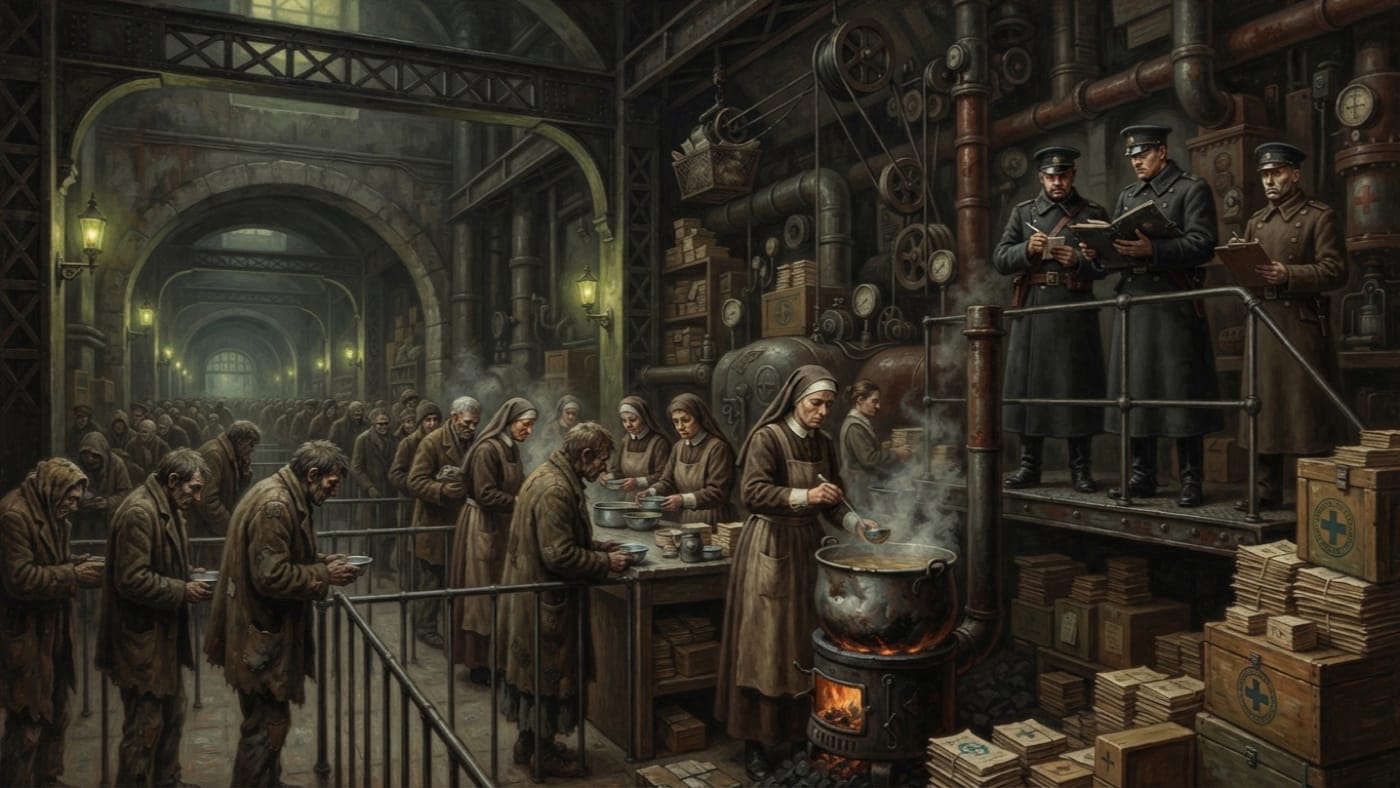
Merciful Pragmatists
Bread before ashes; auditors after bread.
A weak Synodal faction that ranks charity above purity. Commonly identified with Saint Mildred's Hospitallers, it survives because someone must feed the queues before the auditors arrive.
Codex Ref. VIII.7.01-201
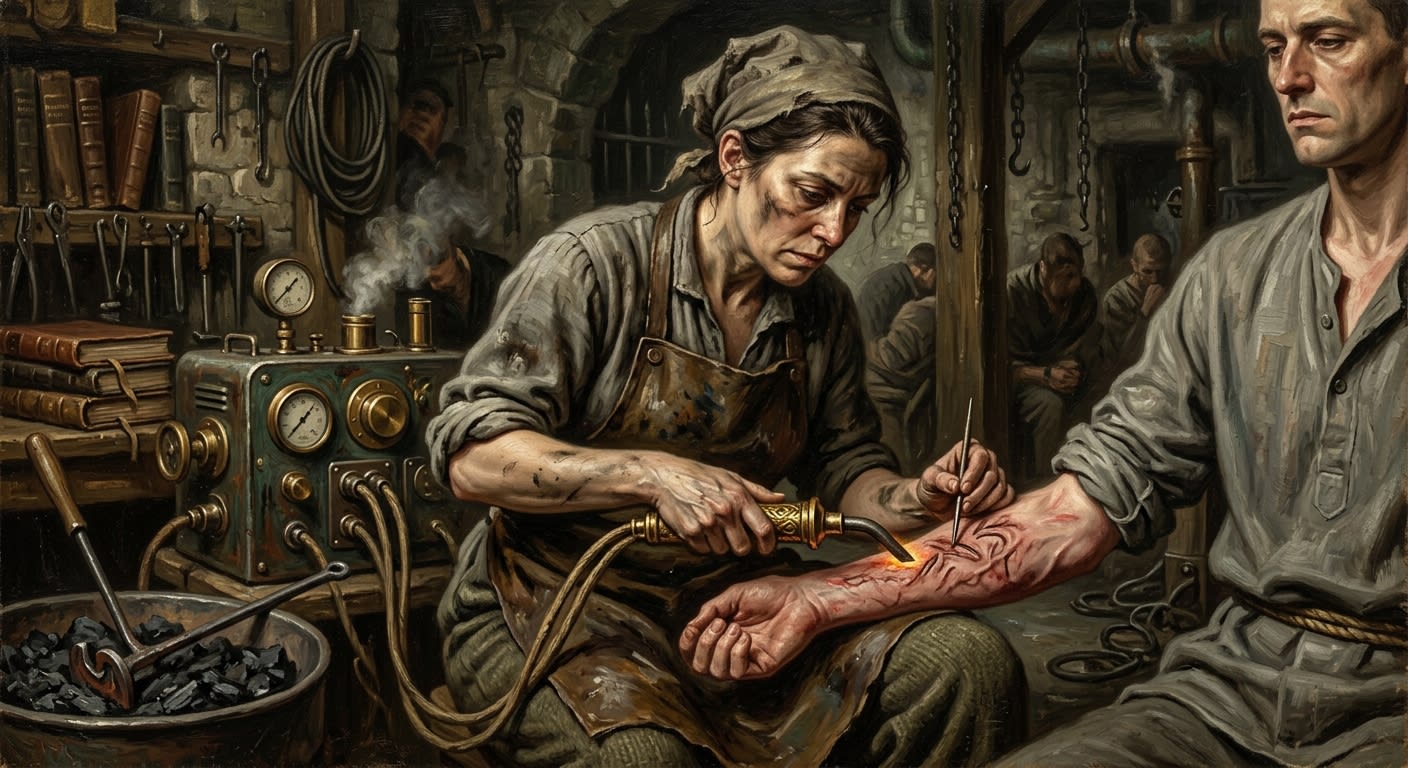
Mercy Branders
Private pity, measured in degrees and prosecuted in heat
Mercy Branders are licensed Brand-Smiths who soften bodily tri-marks through tiny acts of illicit discretion, turning excessive punishment into survivable ambiguity.
Codex Ref. XII.20.04-001
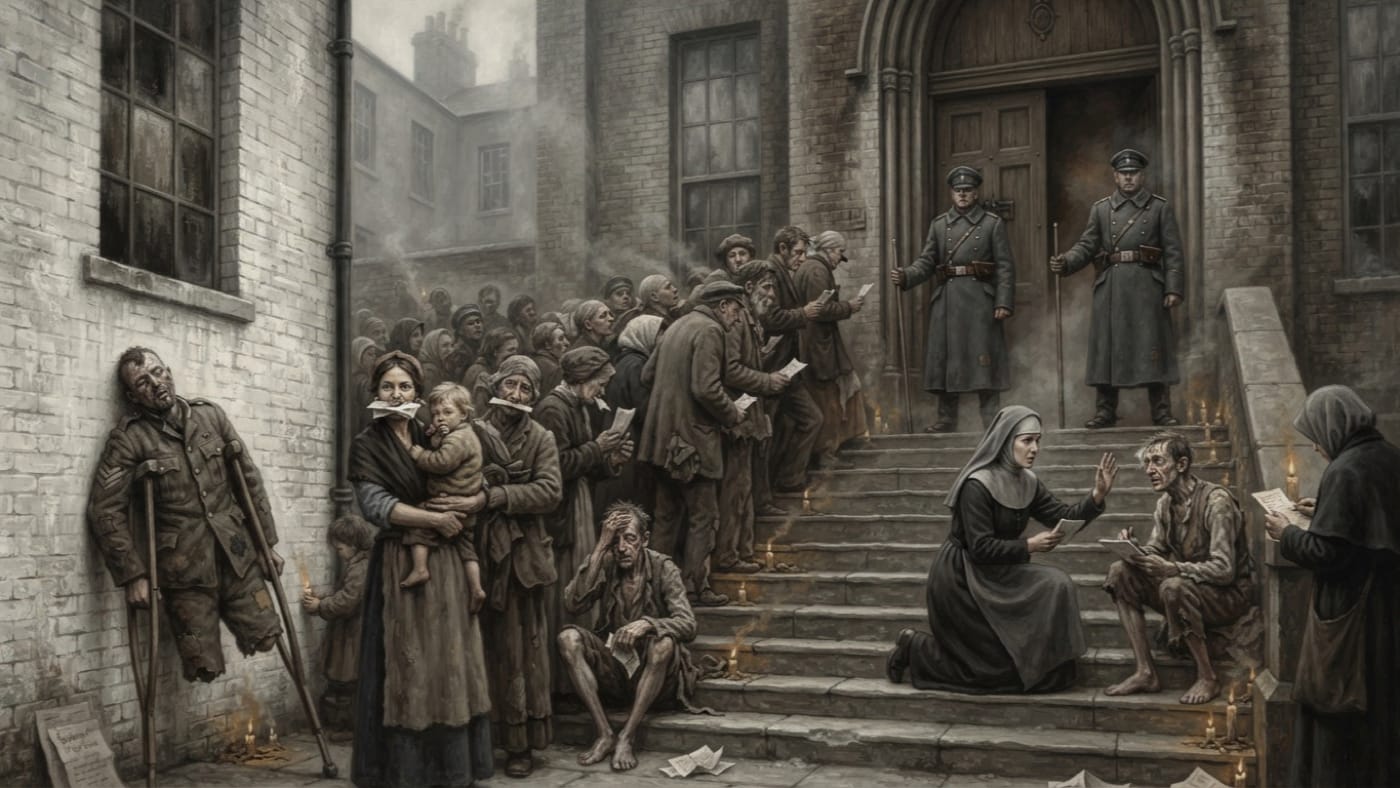
Mercy Chapel
Pain is relieved; the confession is retained
At Marrowgate's Mercy Chapel of the Unburdened, pain relief is rationed as sacrament, confessions become leverage, and sanctuary lasts as long as the chapel finds it useful.
Codex Ref. II.2.06-201

Mercy Counters
The soft thumb on the tally, tolerated until it becomes doctrine
Unofficial soft faction among Sky-Sermon Attendance Auditors, Mercy Counters round compliance upward to spare districts the Brand and keep streets quiet.
Codex Ref. XII.2.06-003
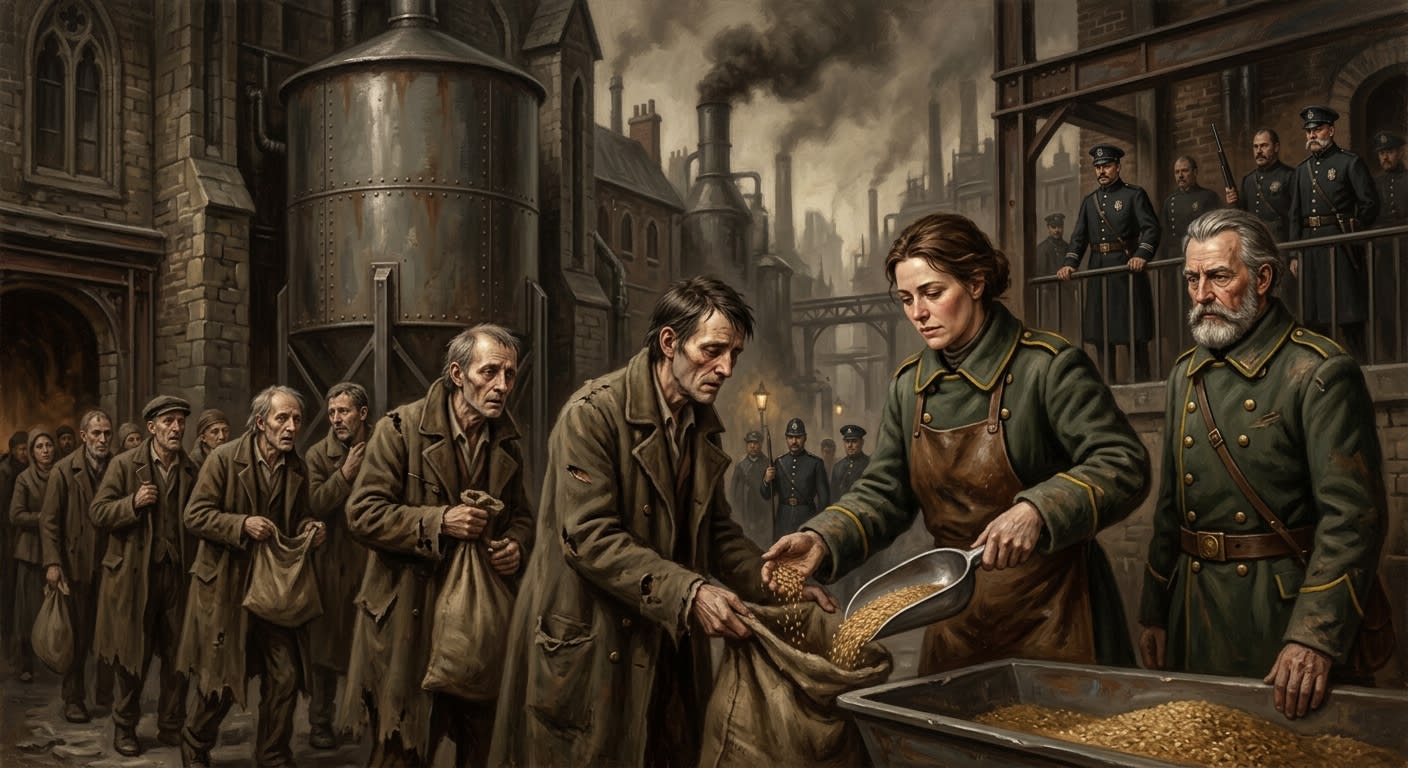
Mercy Keepers
The softest heresy is always the one that feeds before it counts
Mercy Keepers are the beloved, ruinous Grain Keeper faction that gives bread without fee, receipt, or permission, thereby offending every profitable theology.
Codex Ref. XII.13.04-001
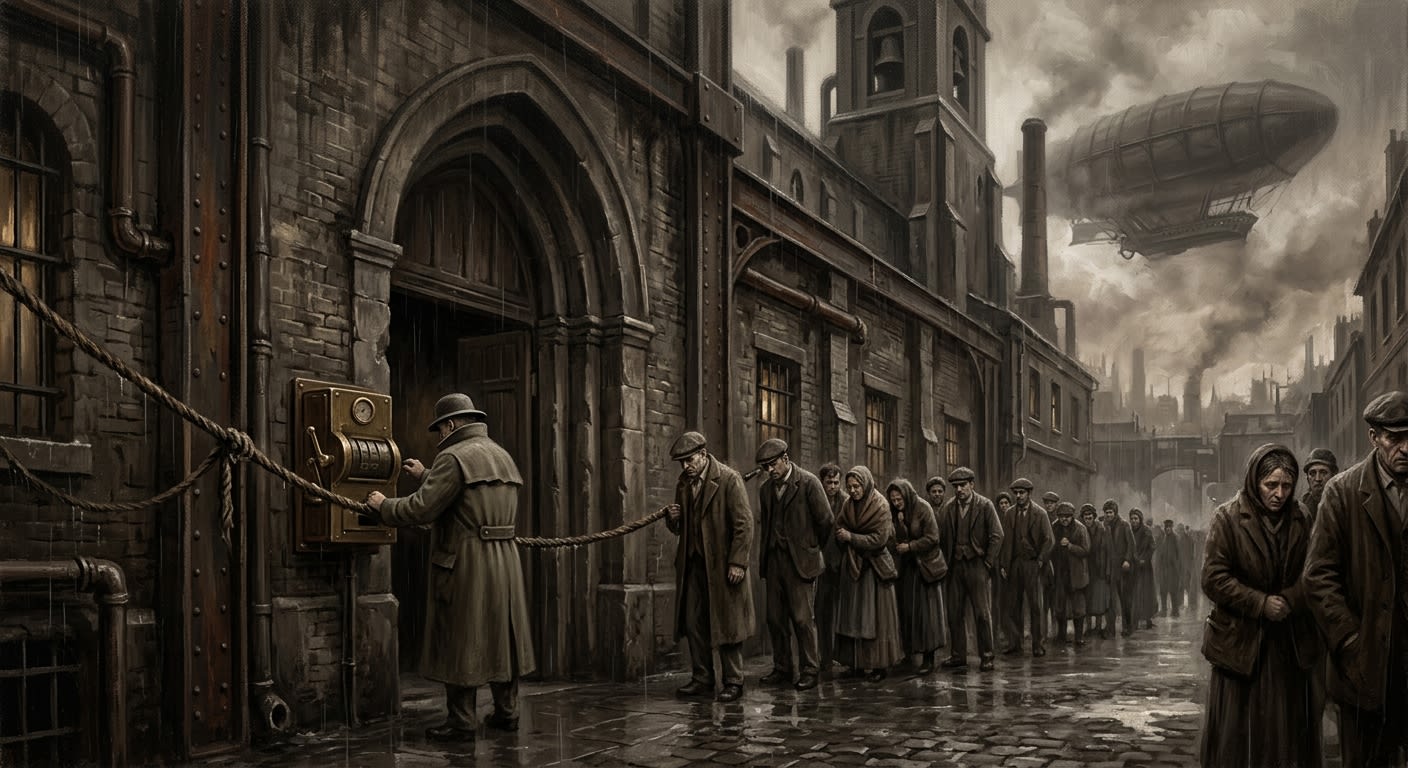
Mercy Line
The rope where grief learned its tariff schedule
The Mercy Line began as a left-hand rope outside Saint Morin's chapel in A.S. 157, where grief discovered that even mercy could be accelerated.
Codex Ref. II.2.06-157
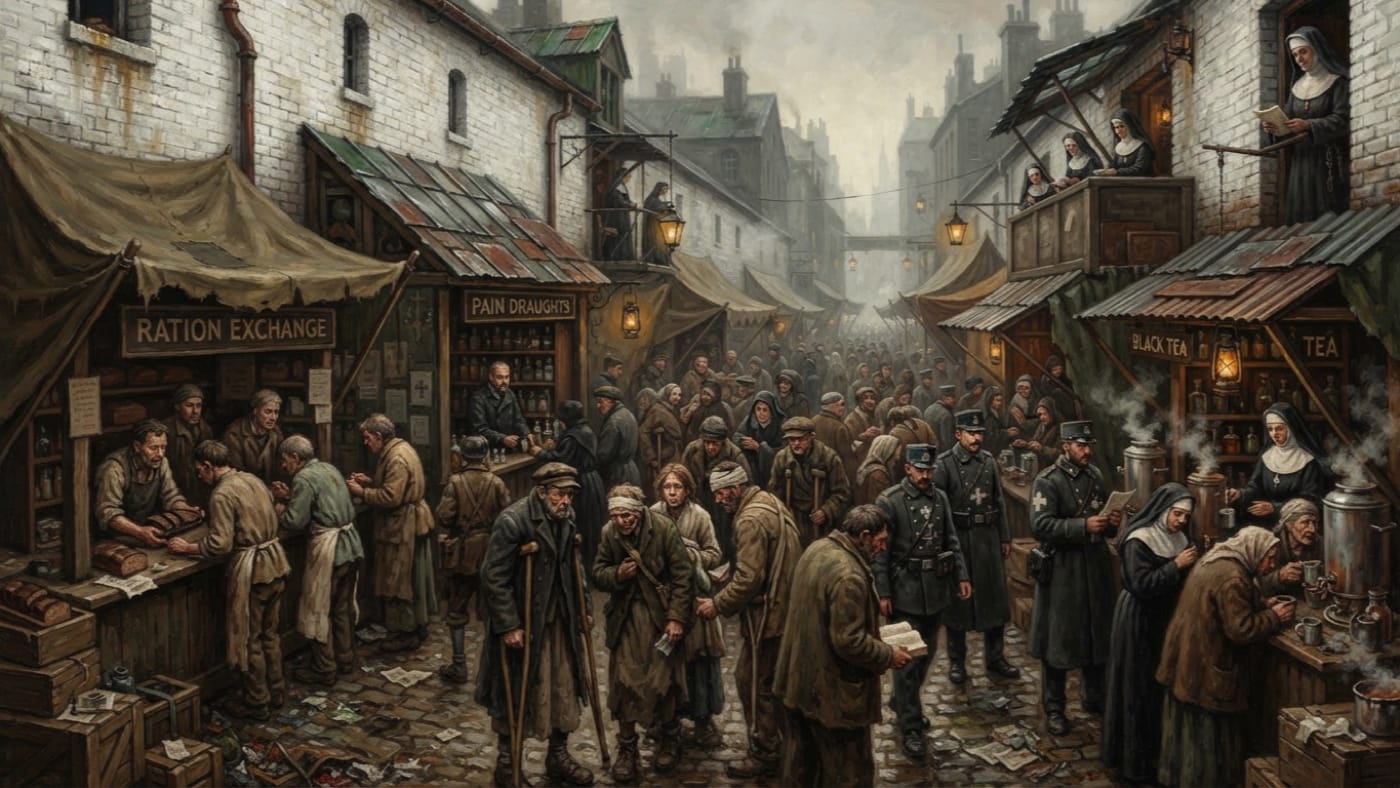
Mercy Market
Bread has a price; relief requires permission
Mercy Market trades in rations, pain draughts and black tea under Marrowgate's overlapping authorities. Bread has a price; relief requires permission.
Codex Ref. III.3.07-006
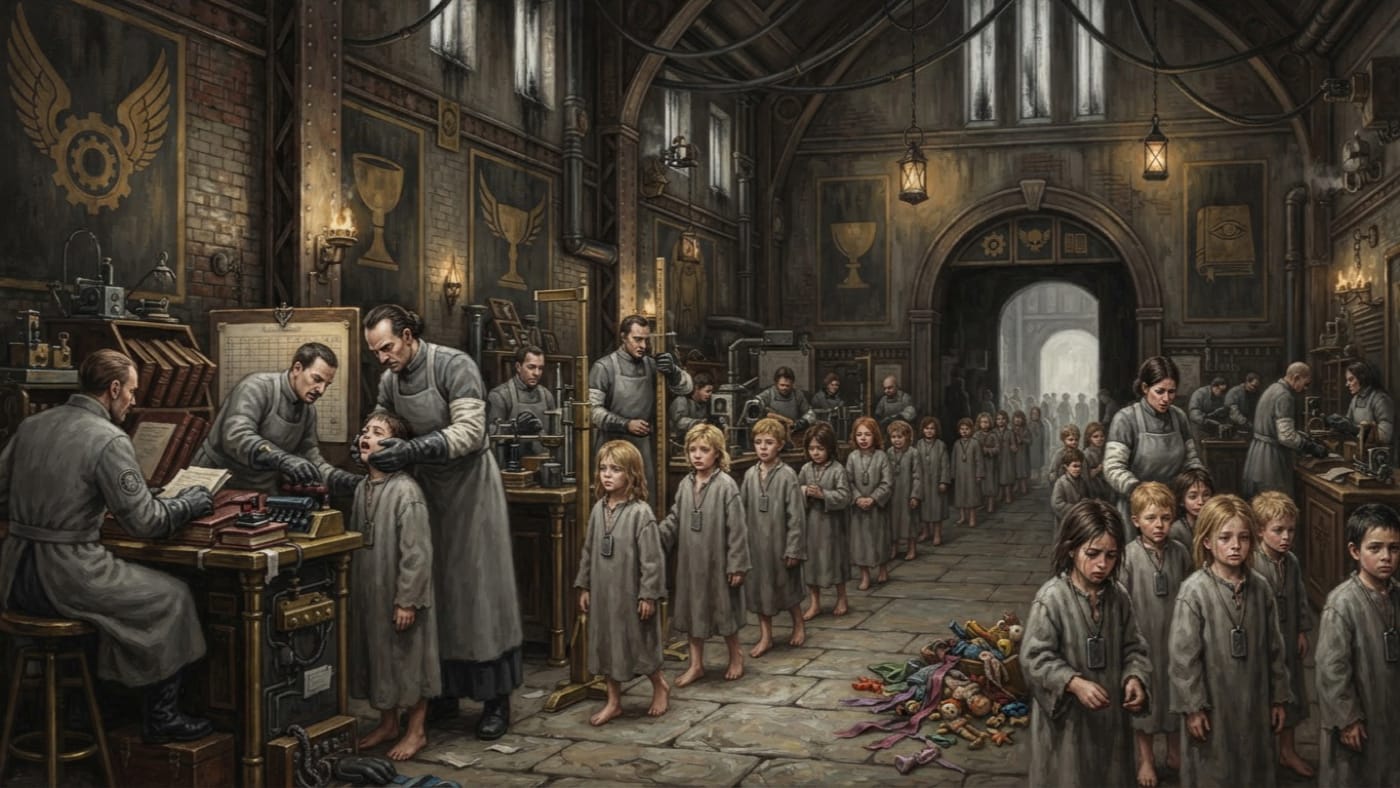
Mercy Orphanarii
A cot, a name, a future — all assigned
The Mercy Orphanarii feed, clothe and instruct the Synod's wards. They also replace family names, divide siblings and assign futures. A cot is provided; the child who entered it is administratively dissolved.
Codex Ref. VI.4.12-032
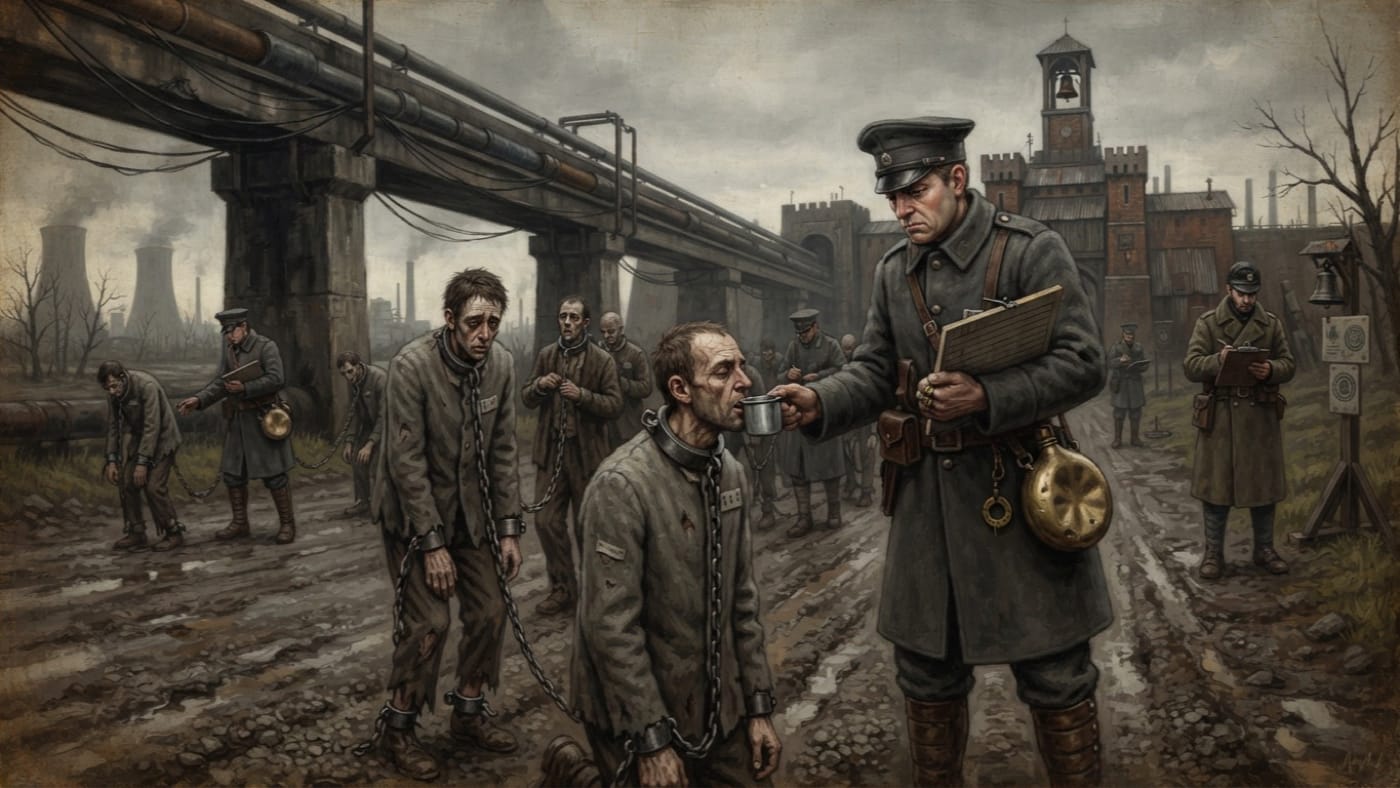
Mercy Quota System
Every mercy has a measure; need has no column
Water by the cup, rest by the minute, bandages by the strip: the Jubilee formula permits only recorded relief. The slate accounts for every mercy. It has no column for need.
Codex Ref. XIII.1.89-141
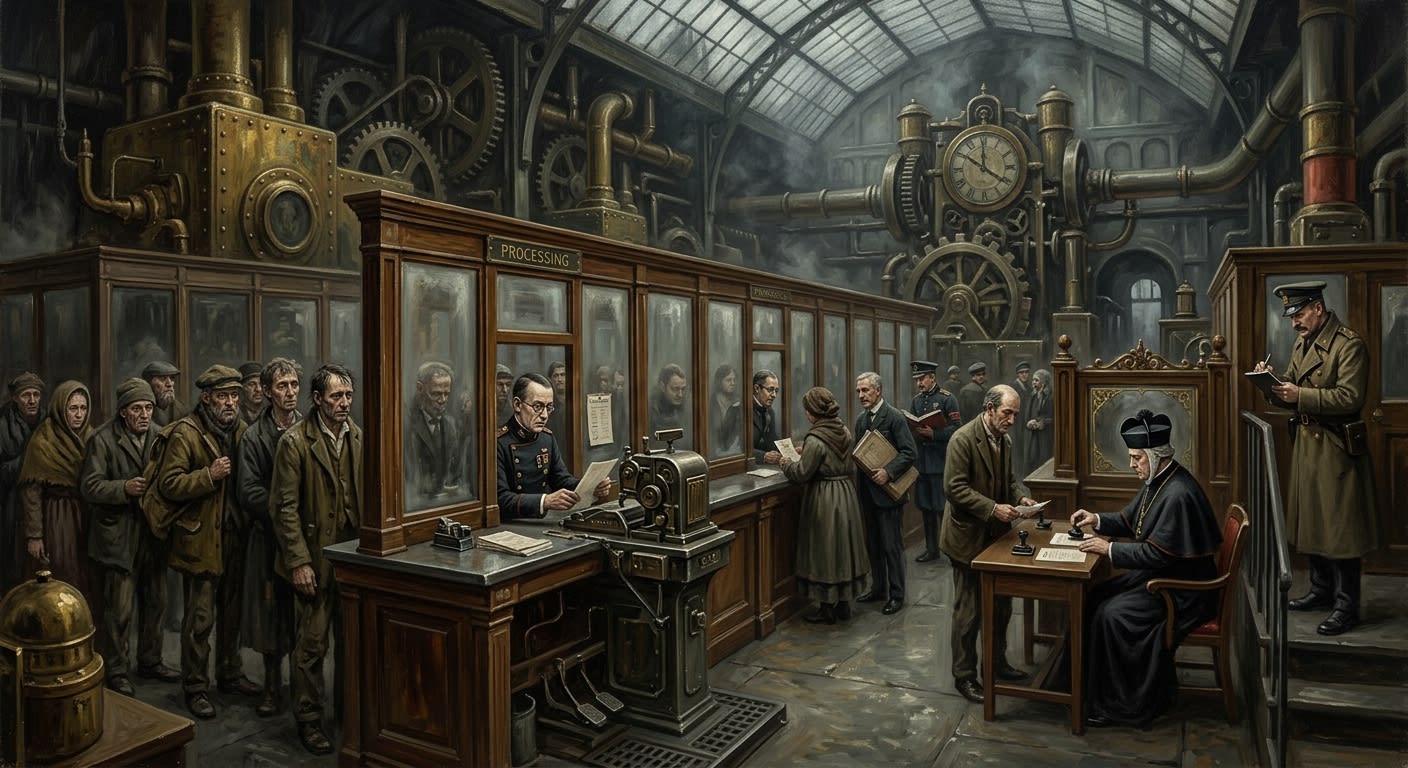
Mercy Rationing Reform of A.S. 134
Processing decides who may survive meanwhile; forgiveness is filed elsewhere
A.S. 134 Bureau of Rites reform, affirmed by Bureau of Doctrine, that restricted mercy stamps to licensed confessors, separated booth processing from forgiveness, and made unauthorised kindness auditable.
Codex Ref. VII.8.10-017
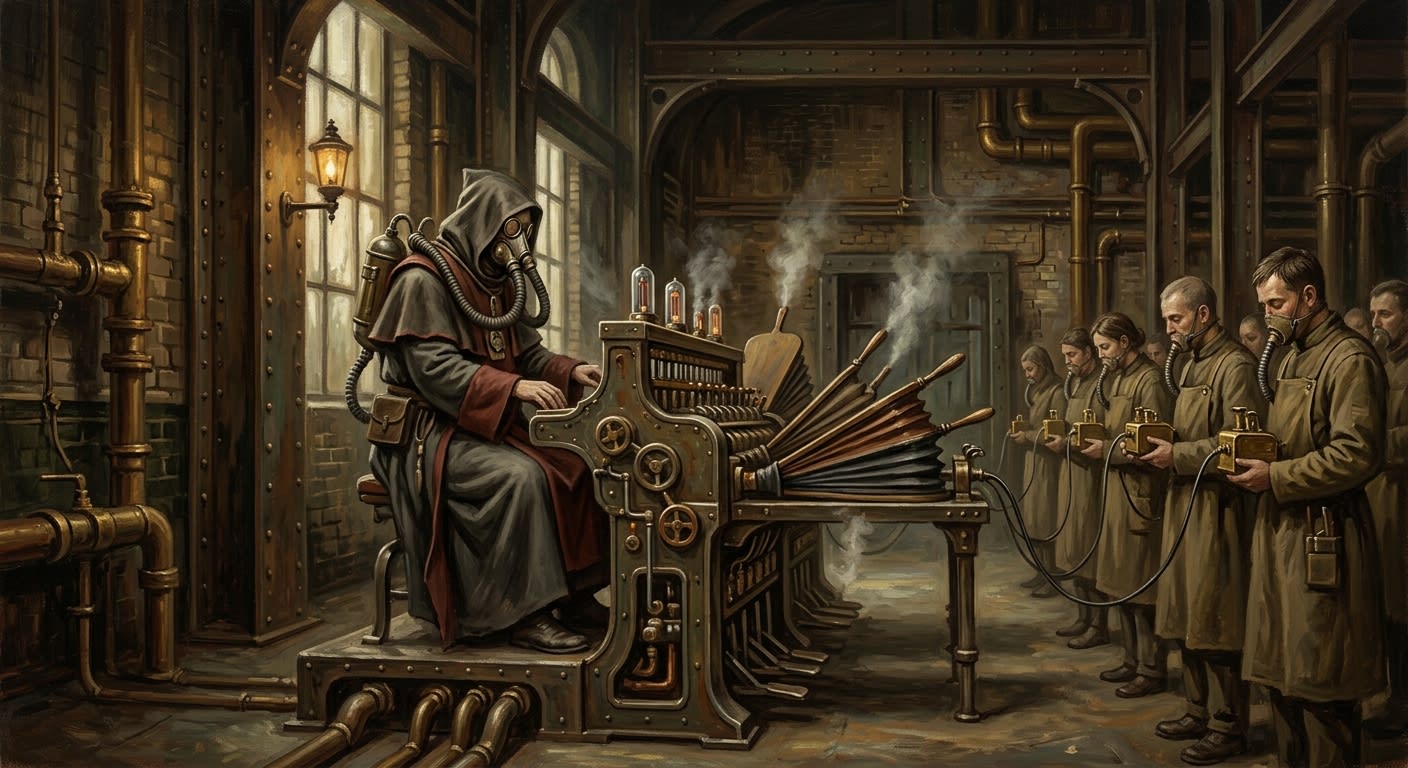
Mercy Tone
The slow note by which the body remains useful
Mercy Tone is the Brand-Singer school that preserves breath, extends confession, and proves that the Synod can call acquisition mercy when the note is slow enough.
Codex Ref. XIII.1.41-001
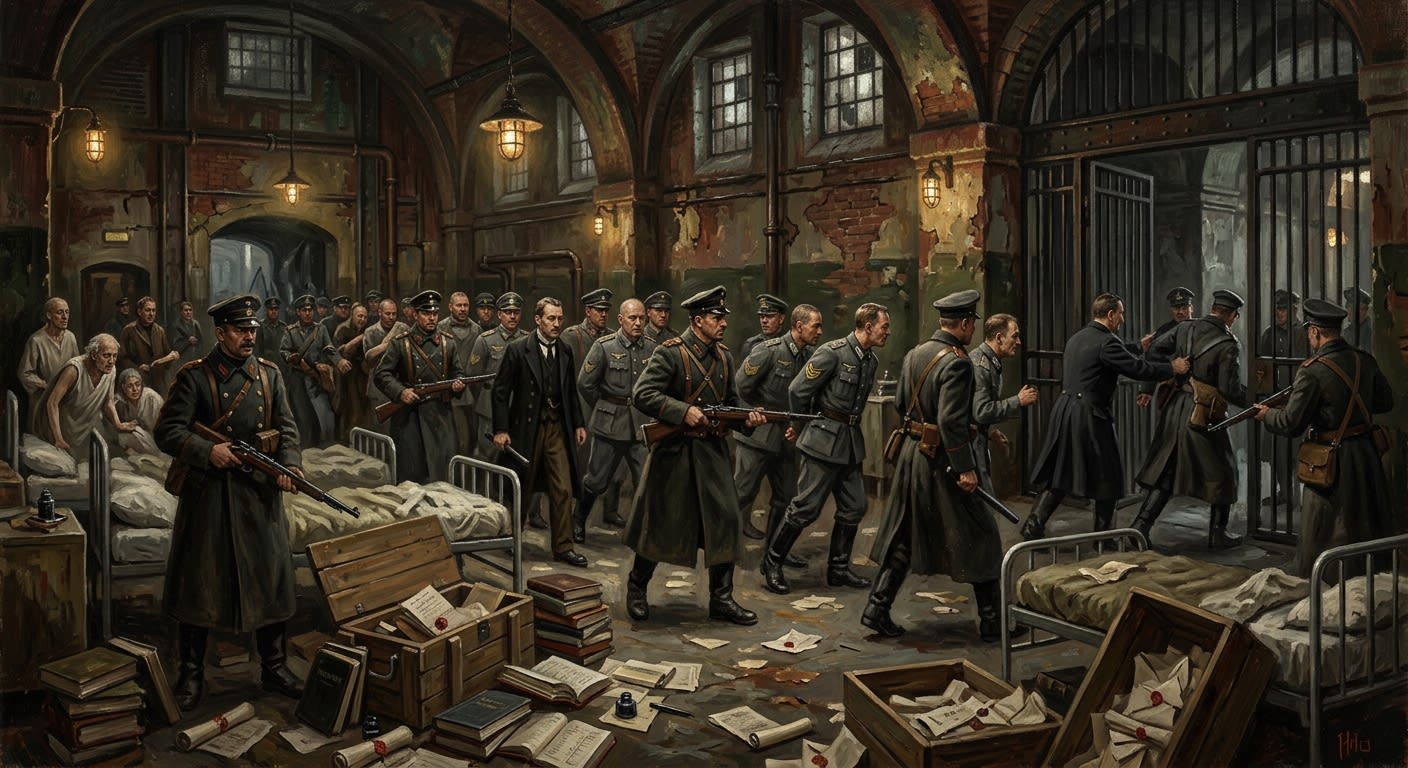
Mercy Ward Purge of A.S. 134
The year last words became contraband unless properly priced by authority
The Mercy Ward Purge of A.S. 134 exposed the sale and alteration of terminal confessions across Rhineland wards.
Codex Ref. VII.8.10-023
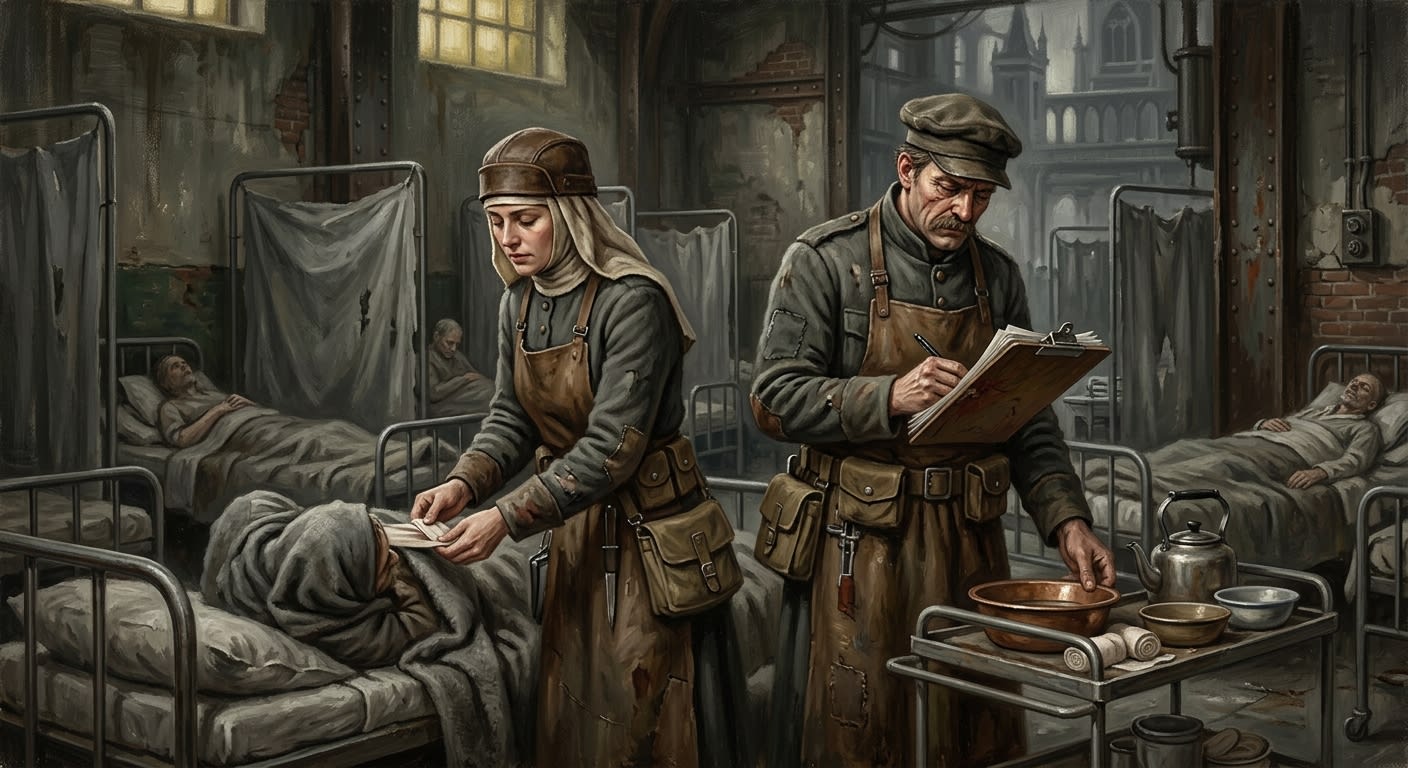
Mercy Ward-Sister / Mercy Ward-Brother
The hand that brings broth also carries the ledger
The Mercy Ward-Sister and Ward-Brother are the Bureau of Mercy's grey-aproned operators of counted compassion, where broth, bandage, confession, and paperwork become one instrument.
Codex Ref. XII.6.04-001
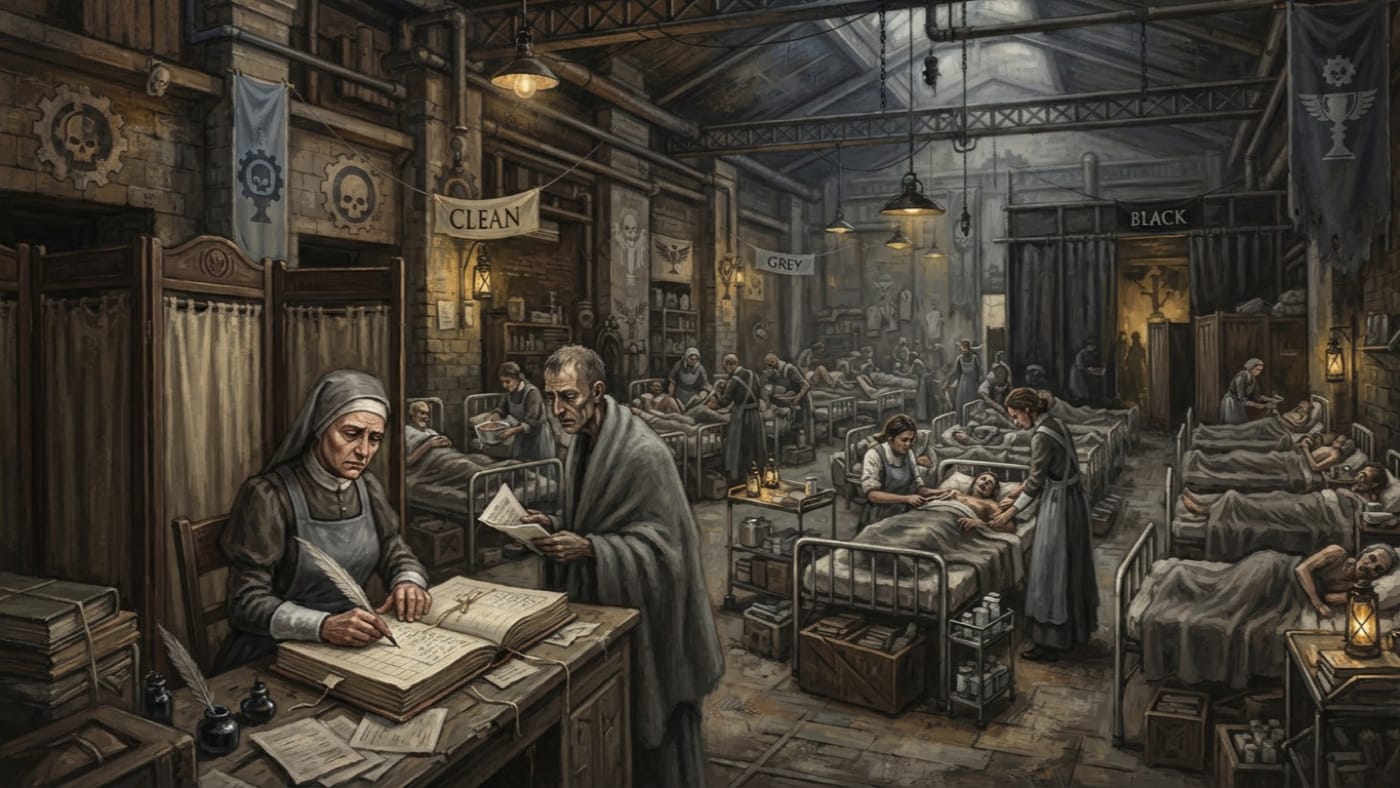
Mercy Wards
The bed is allotted; the suffering must be entered
The Bureau of Mercy's houses of the sick: broth, bandages, confession and clean, grey or black tags. This A.S. 201 survey counts the registered wards; the living remain harder to reconcile.
Codex Ref. II.6.04-001
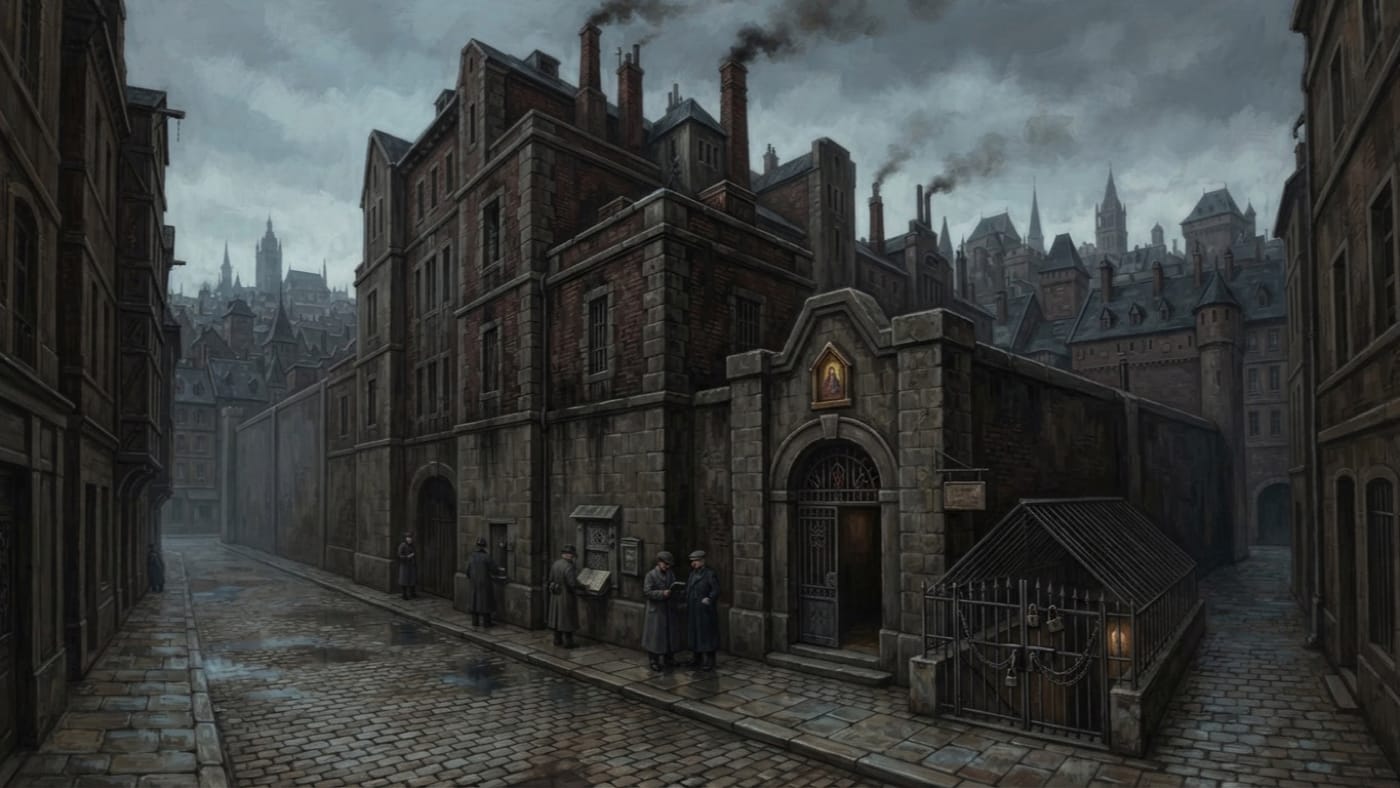
Mercy Wing
The building keeps its name. The Vault keeps its findings.
The old Mercy Wing on Strasbourg's Rue des Cendres houses the Vault of Findings in its sub-basement. Medicine keeps the evidence; two Bureaus clear entry to the archive, and three clear departure.
Codex Ref. II.1.09-201
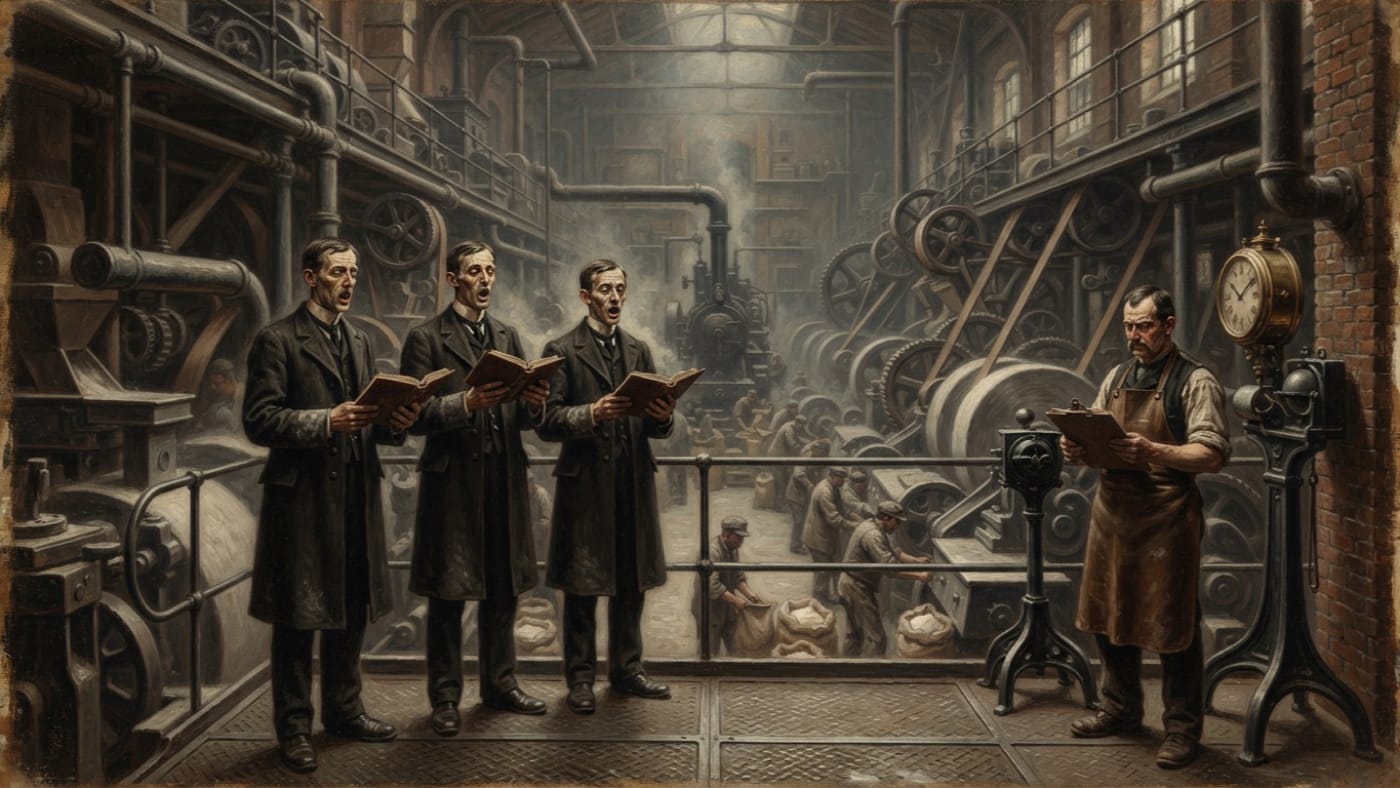
Mill-Crown Cantors
The mills need a cadence; the Cantors require a contract
Rheinscarp's mill and foundry singers sell cadence by the bell-hour under Hrodric Venn. The mills need rhythm; the Cantors insist the rhythm needs a contract.
Codex Ref. VIII.6.03-001
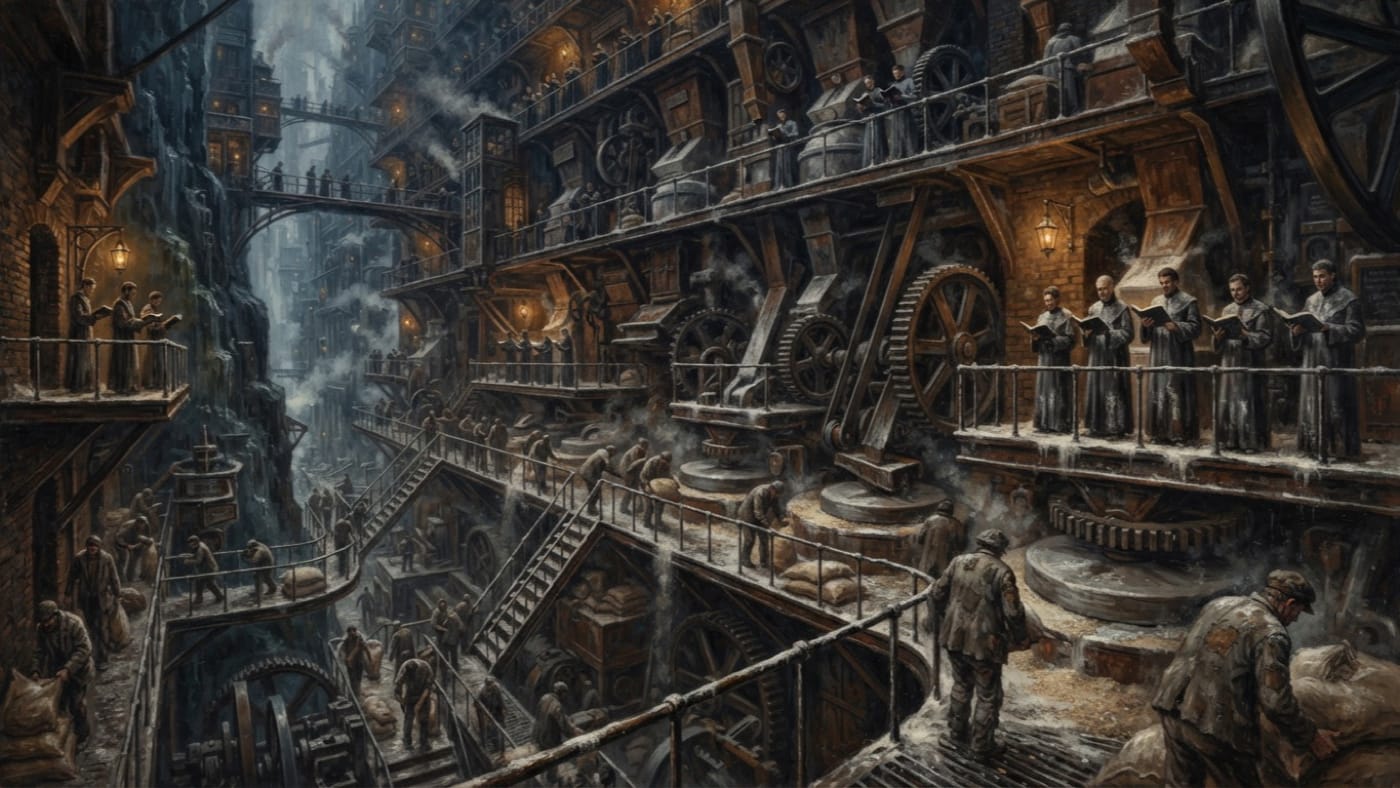
Mill-Crown Terraces
The fourth Step grinds the flour; the fifth decides who may eat
Rheinscarp's fourth terrace grinds ration flour to purchased hymns. The Cantors sell the cadence, Records certifies the hungry, and a mill-hand may work a full shift while officially absent.
Codex Ref. II.2.01-004
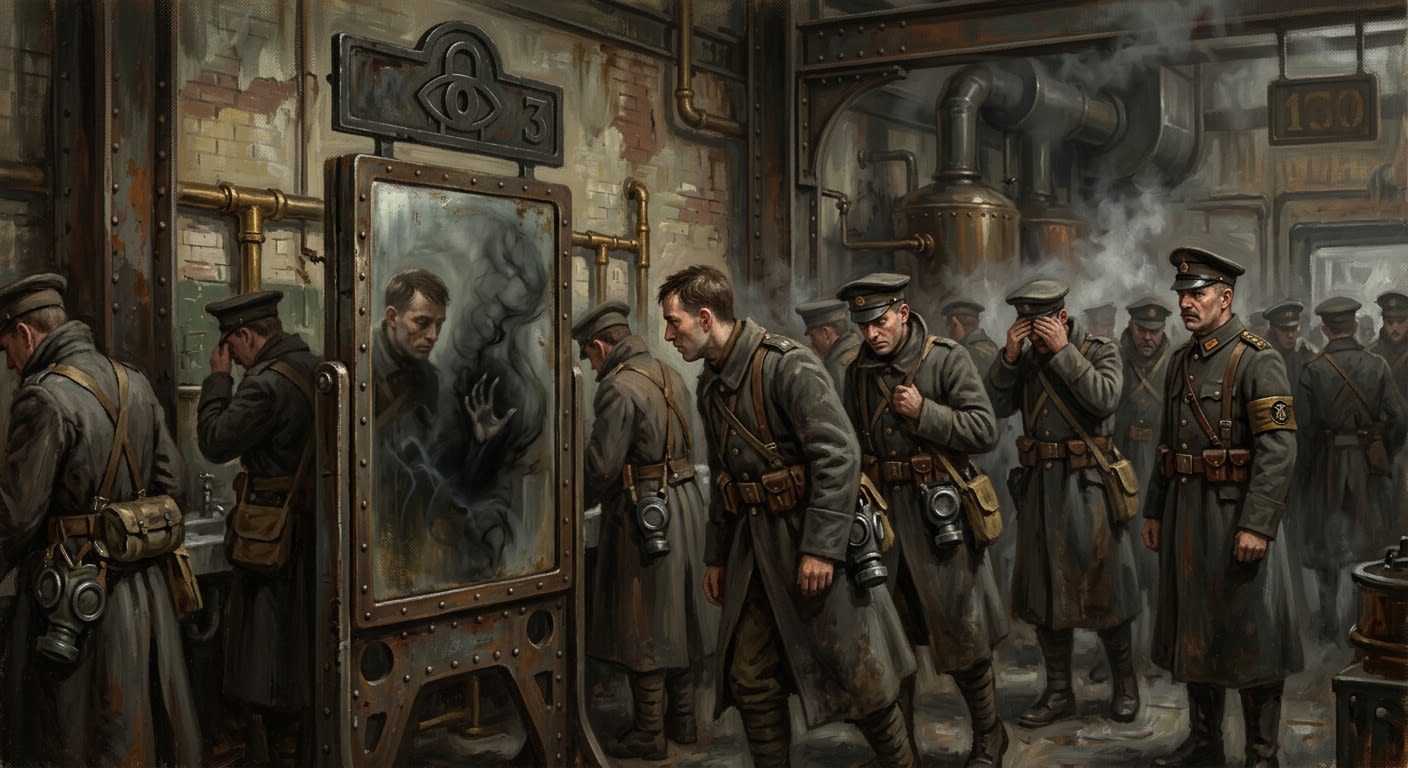
Mirror Discipline
Count to three before your face becomes negotiable
Mirror Discipline forbids the Irongate garrison from lingering over its own face, because Morwen enters where vanity counts past three.
Codex Ref. XIII.1.01-003
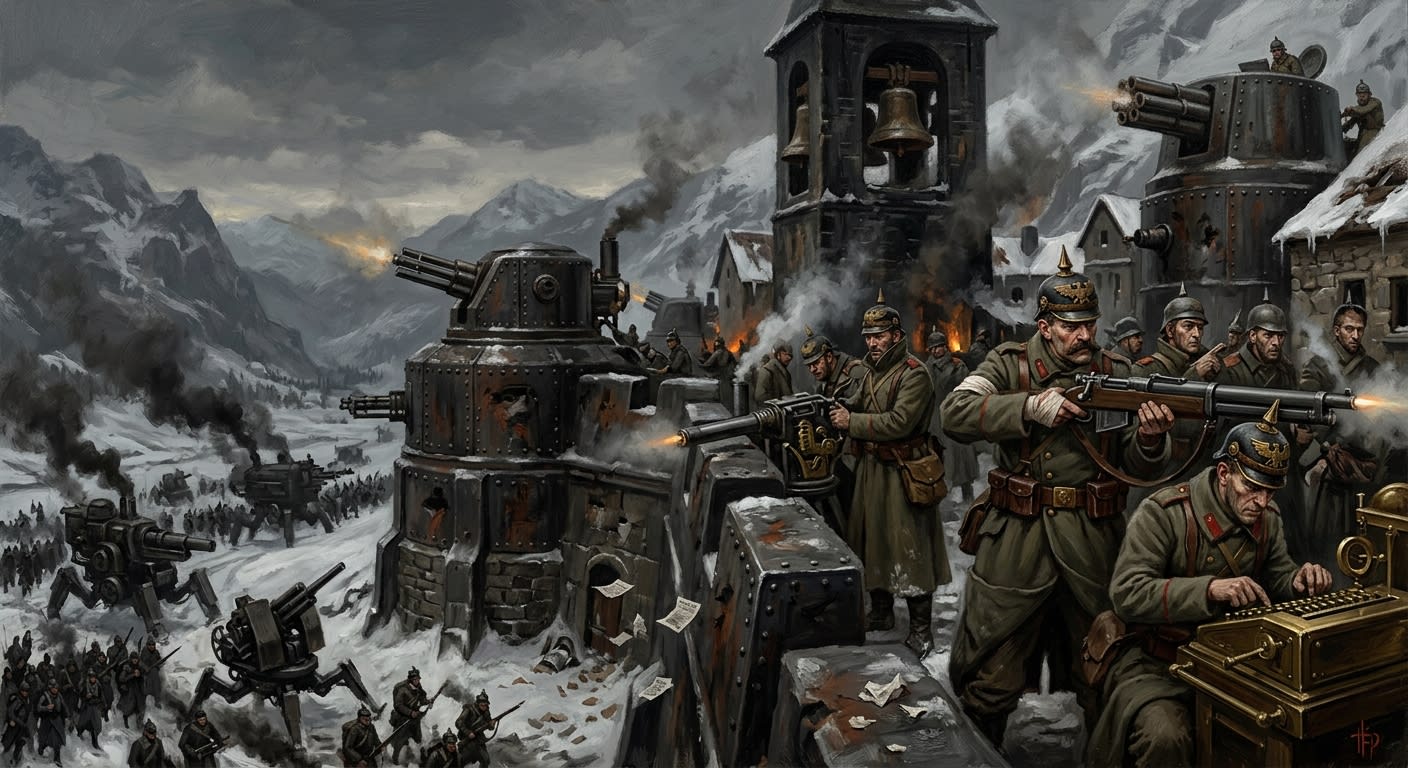
Montreval
The pass-town that taught Reason the road was closed
Montreval held three winters against Lucien Artois's clockwork guns, hunger, pamphlets, fever, and arithmetic; a southern pass-town where Severin bought time with walls, bells, broth, and burned bridges.
Codex Ref. II.1.09-015
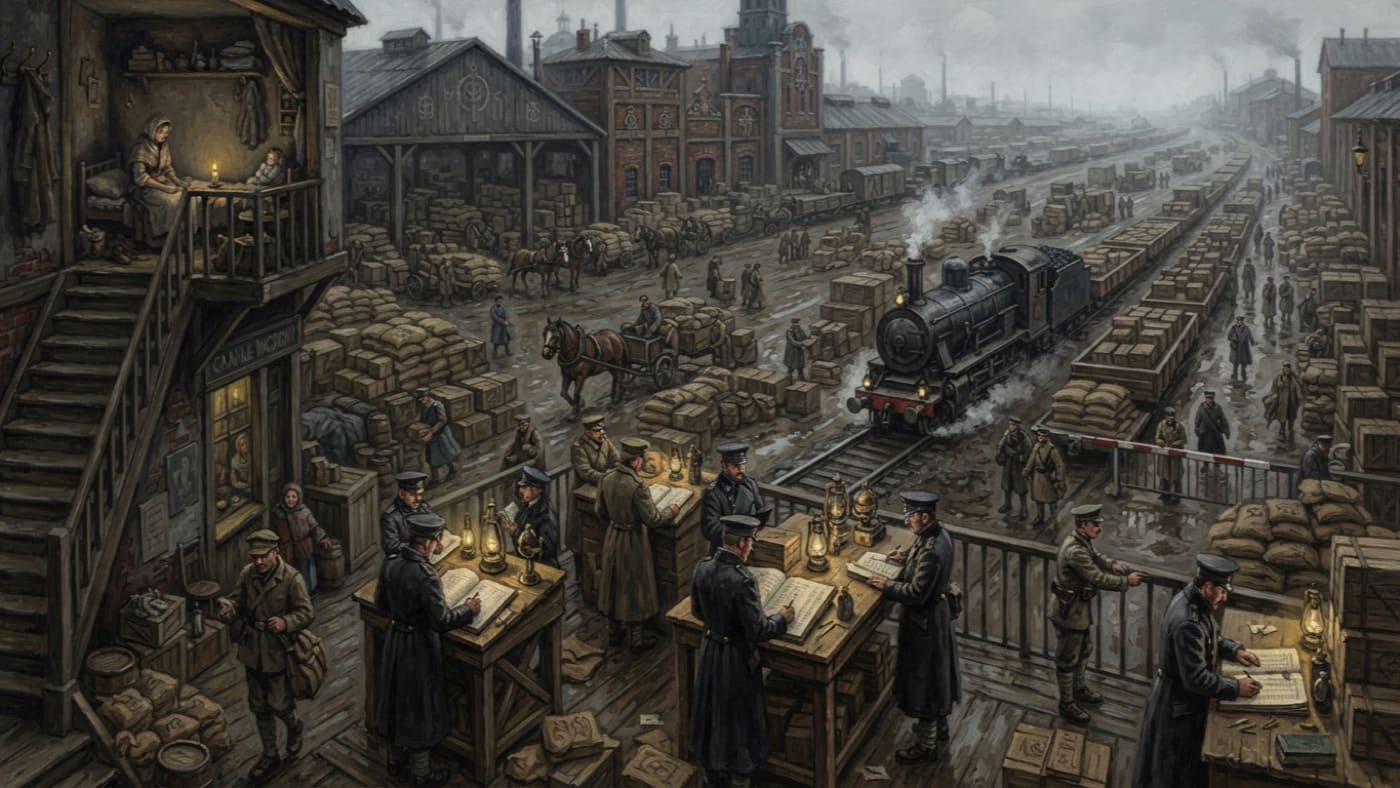
Moravia
Every sack accounted for; one pilgrim unnamed
Moravia stages supplies for the Sagittal Line. The ledger counts its sacks; Vienna's lullaby file preserves one unnamed pilgrim wife.
Codex Ref. II.3.02-201
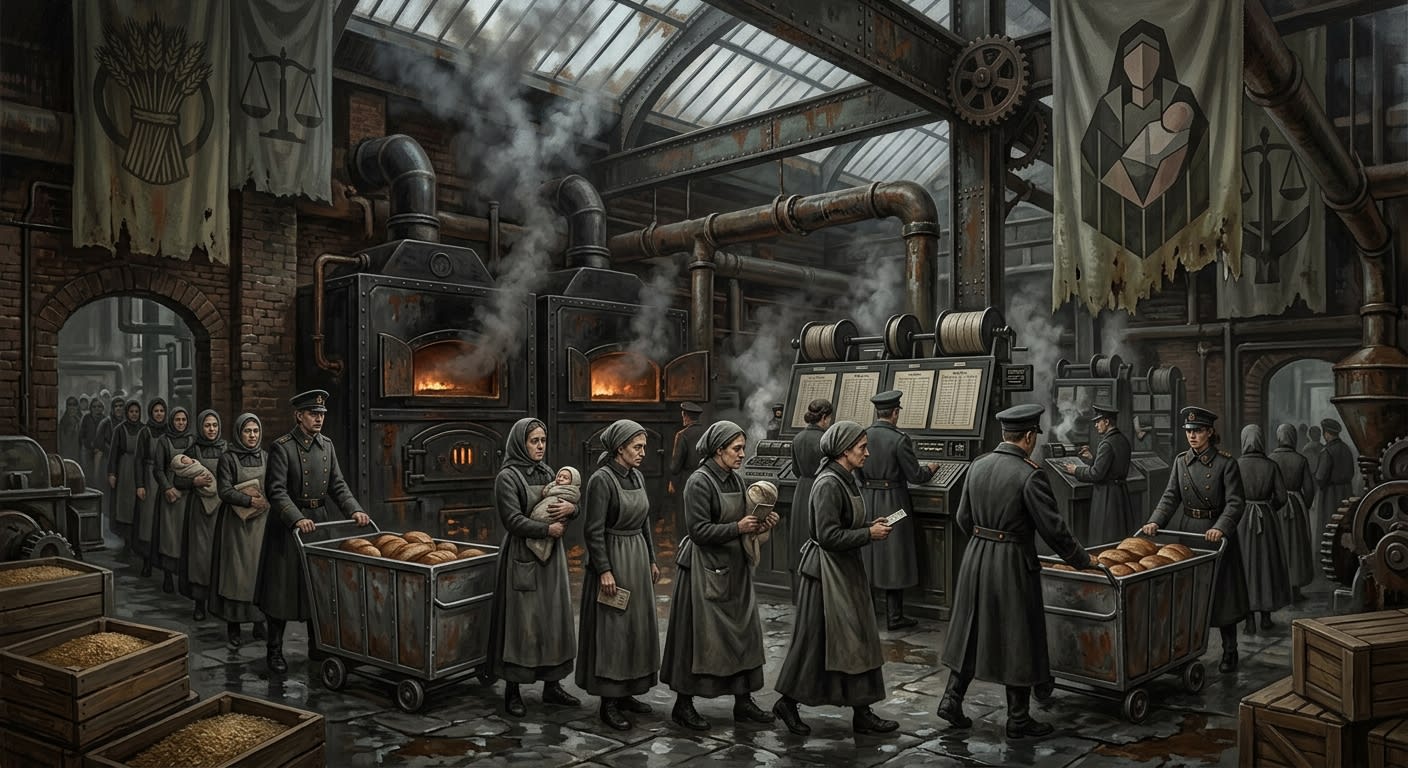
Mothers of Plenty
The queue kept warm, the cradle kept counted
The Mothers of Plenty govern bread and birth as one obedient system, turning ration queues, pregnancy ledgers, and infants not yet weaned into instruments of state continuity.
Codex Ref. XII.6.05-001
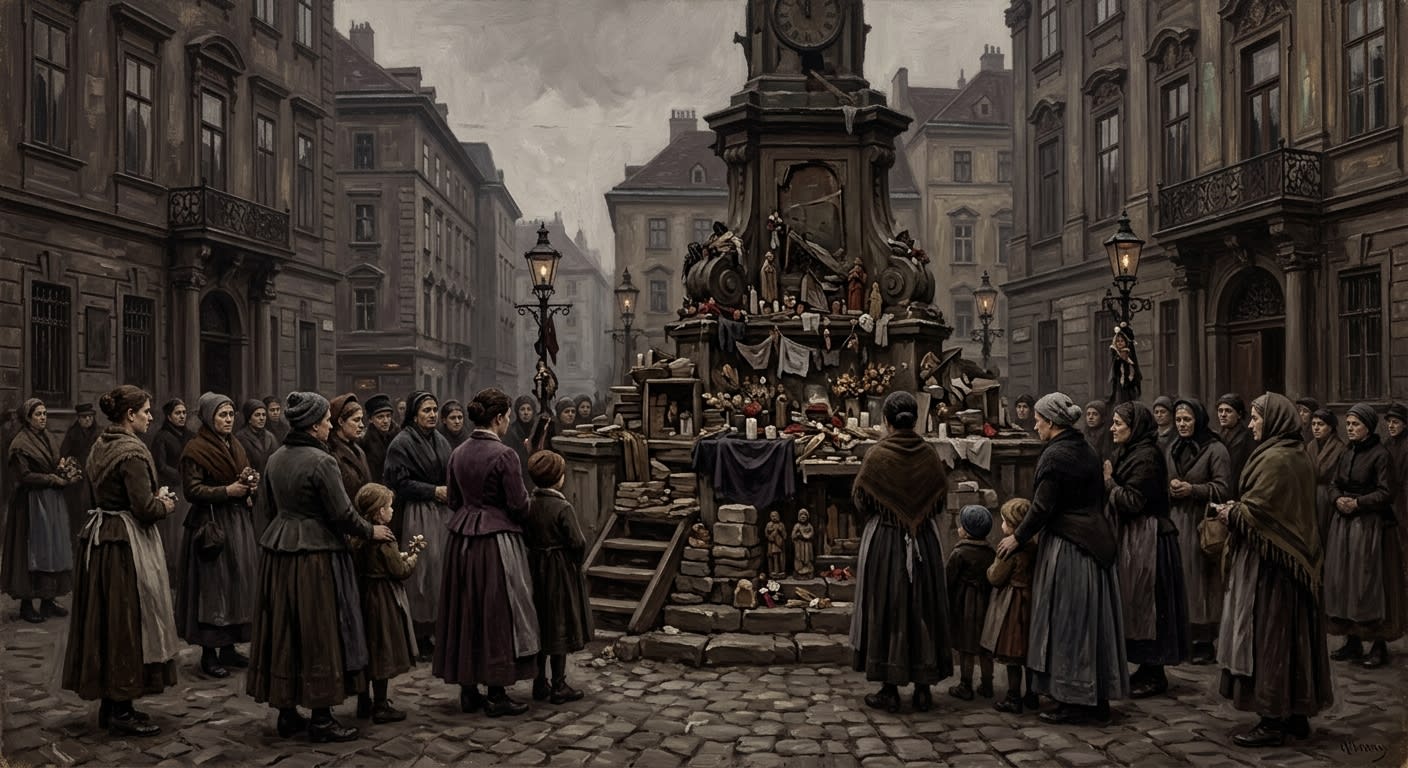
Mothers' Shrine, Judenplatz
The wall where Orison learned that silence has witnesses
The illegal Mothers' Shrine in Vienna's Judenplatz commemorates the A.S. 112 branding of five thousand mothers, and keeps returning after removal.
Codex Ref. II.4.09-014

Munich
The last comfortable city; or, where the war becomes a number before it becomes a wound
The Synod's central logistics hub and the last city where the war is an abstraction. Seven hundred thousand souls administer the machinery of a conflict they will not fight. Munich pays its tithes, fills its quotas, and resents everything.
Codex Ref. II.4.09-008

Munich Provisorium
The temporary warehouse complex that learned to digest a city
The Provisorium is Munich's vast Bureau of War quartermaster depot: 412 storage facilities, 14,000 tons a week, three incompatible inventories, and lungs the paperwork declines to notice.
Codex Ref. II.2.01-013
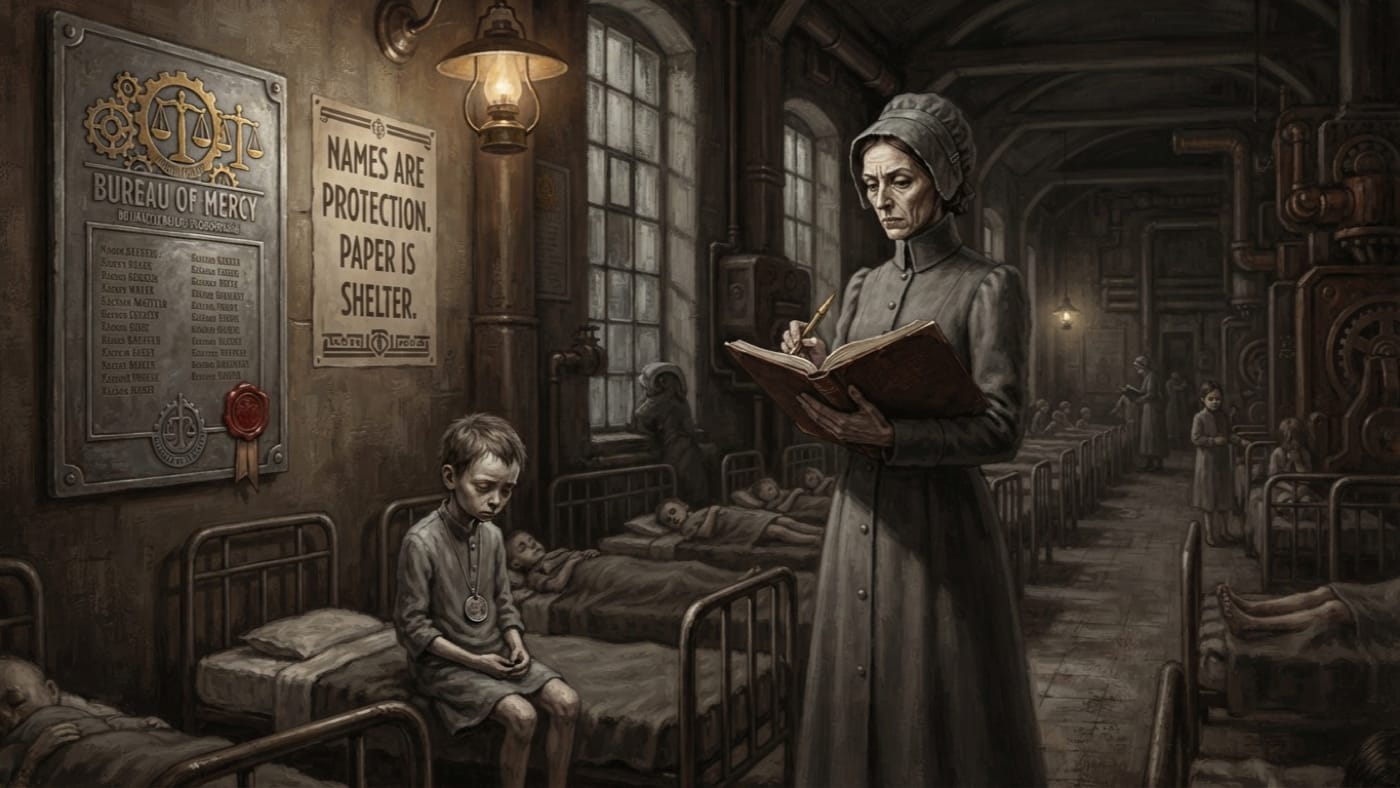
Name-Givers
The child answers to the name that feeds it
The Name-Givers are Orphanage Registrars who trust paper, discipline, and hunger to remake a child's identity. The assigned name secures supper; the remembered family remains a disciplinary problem.
Codex Ref. XI.1.05-003
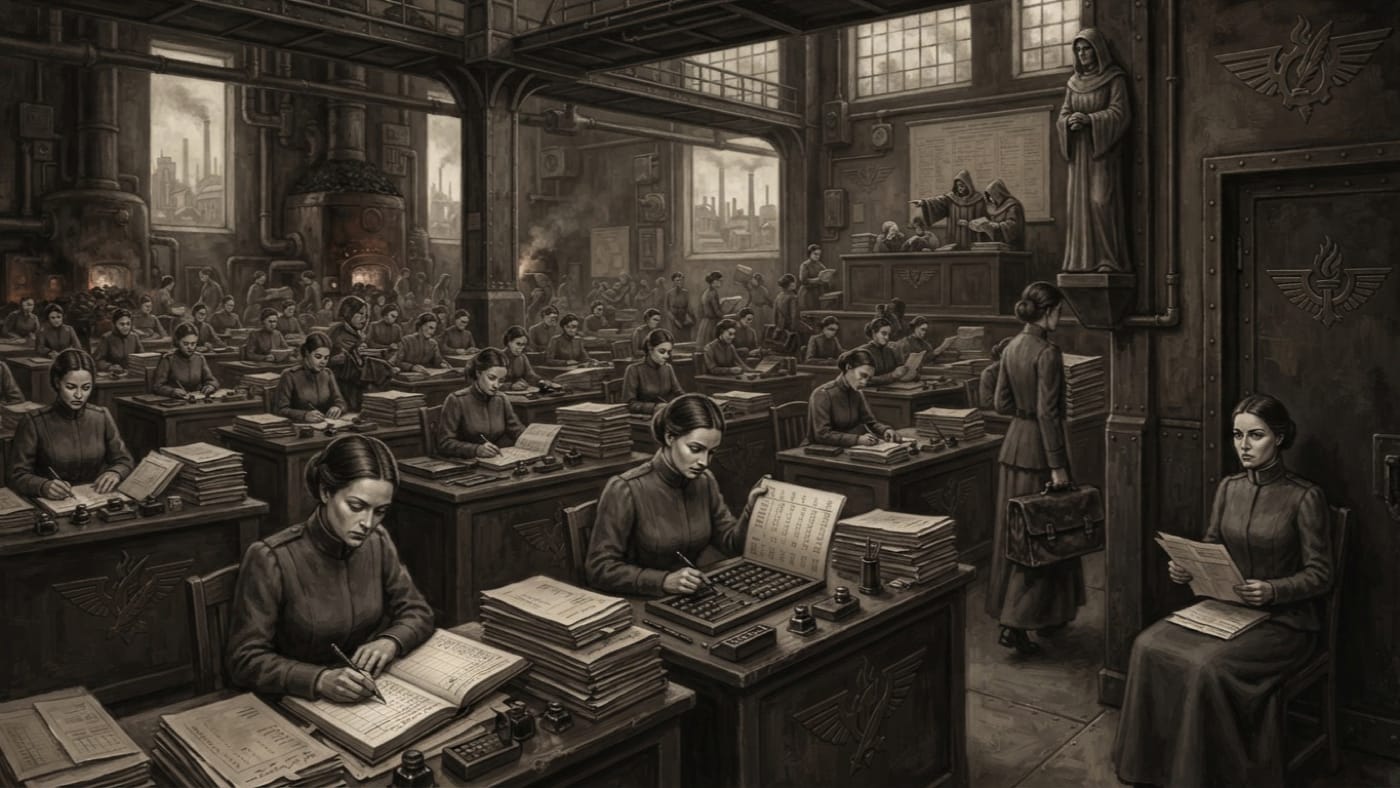
Natal Division
Where congratulations becomes a claim upon the household
The Natal Division trains Strasbourg's Womb Registrars to make pregnancy legible: notices, approved names, household sums, reconciled writs, and suspicions precise enough for Purity to act upon.
Codex Ref. XII.9.04-002
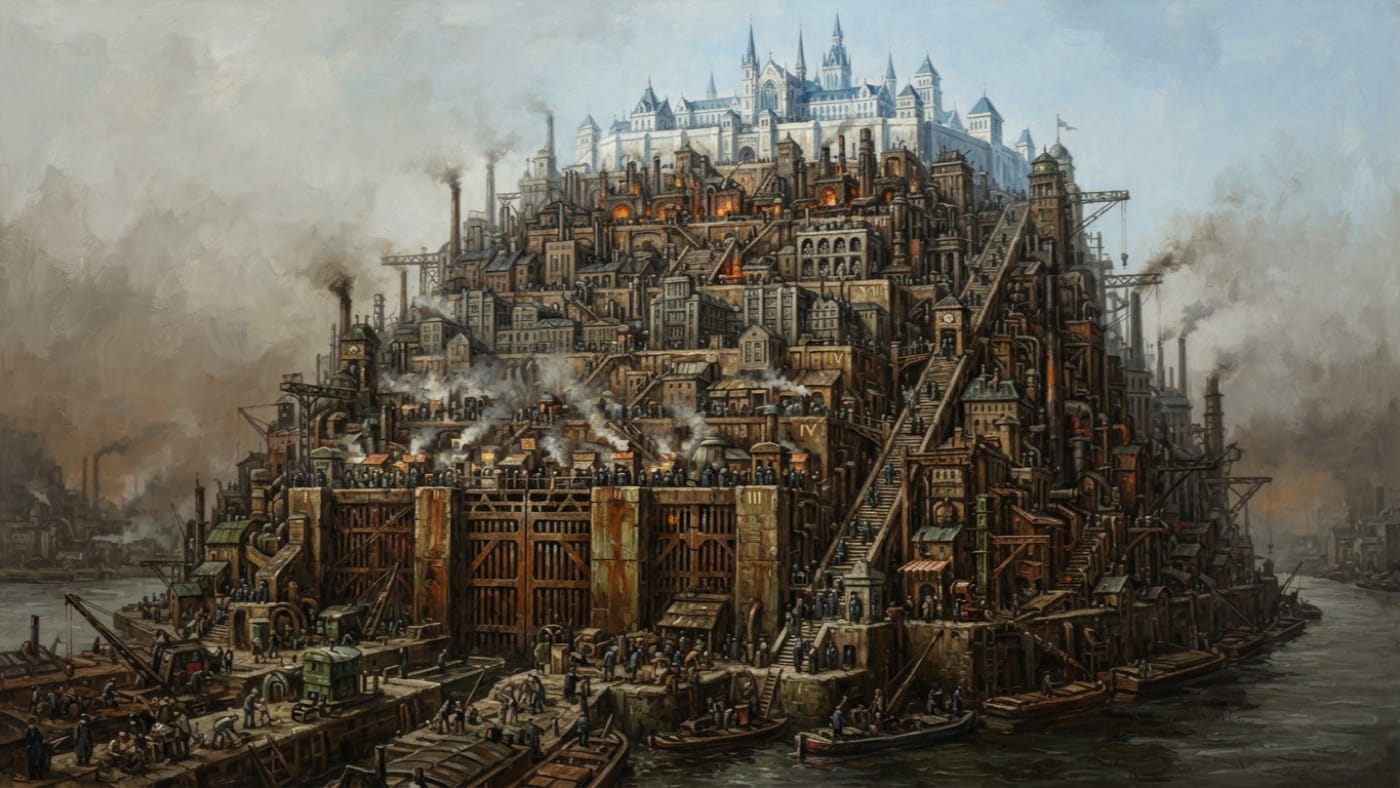
Nine Steps
From river silt to clean air, every crossing requires coin, verse and stamp
Rheinscarp's nine terraced districts rise from the Sump Docks to the High Step Precinct. Every crossing requires coin, verse and stamp; the air improves upward, and so does the spelling.
Codex Ref. II.2.01-011
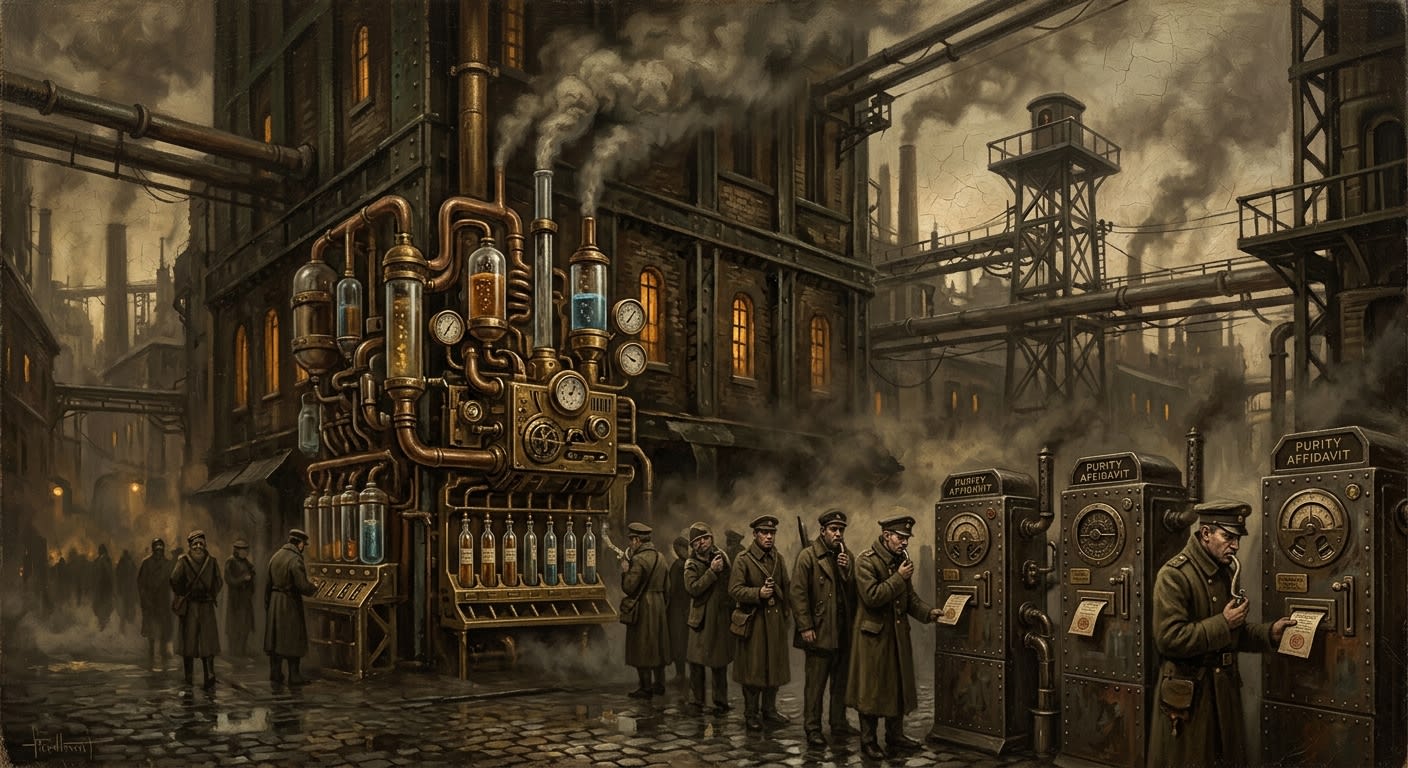
Ninth Mark
The Bureau discovered that even breath improves after indictment
The Ninth Mark makes air legible: smoke becomes evidence, warmth becomes chargeable, and every citizen's breath waits politely for Purity's affidavit.
Codex Ref. VIII.2.09-143
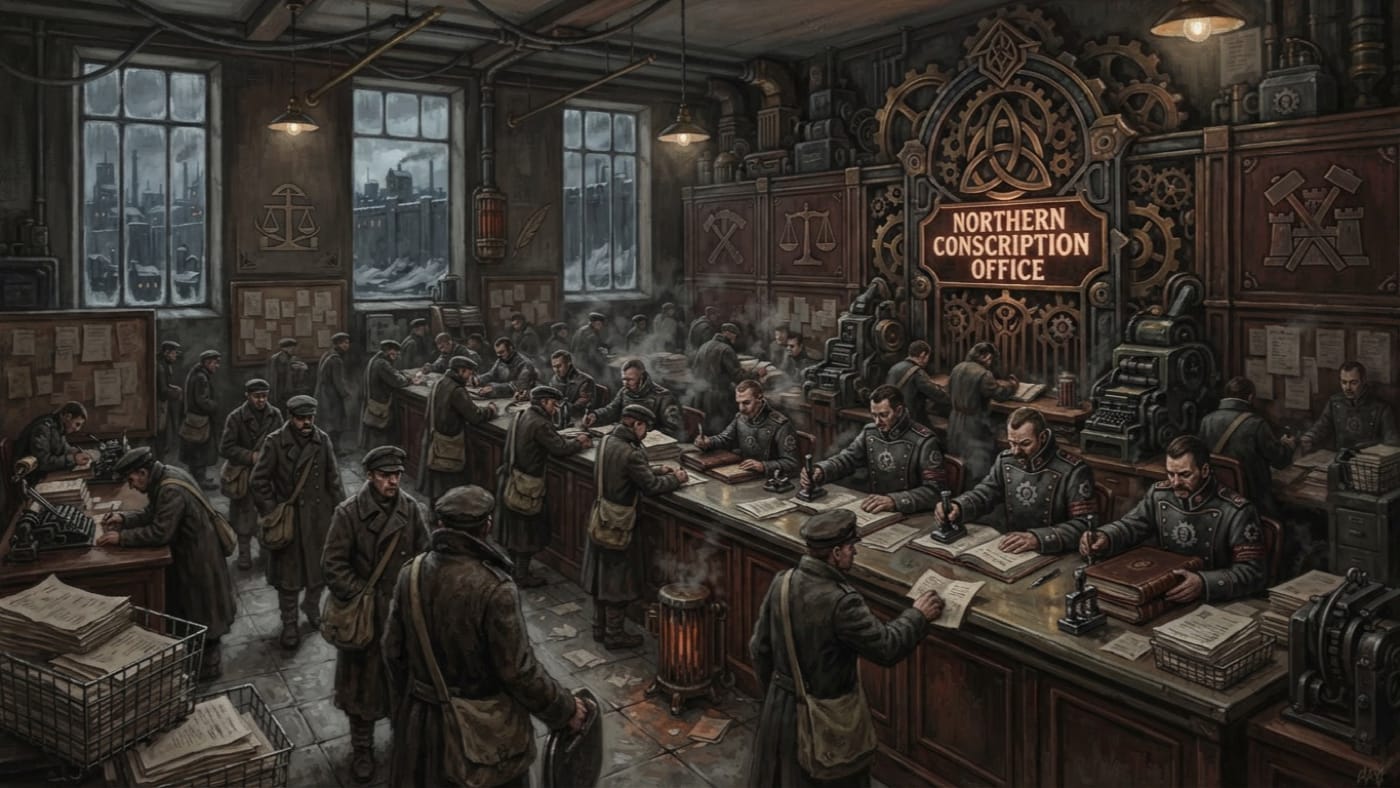
Northern Conscription Office
Every man volunteered. Every man was assigned.
The Northern Conscription Office receives Königsberg's conscripts and reconciles them against losses. Conscription claims the desk; War signs the briefing. Every assigned man is entered as a volunteer.
Codex Ref. III.4.07-1943
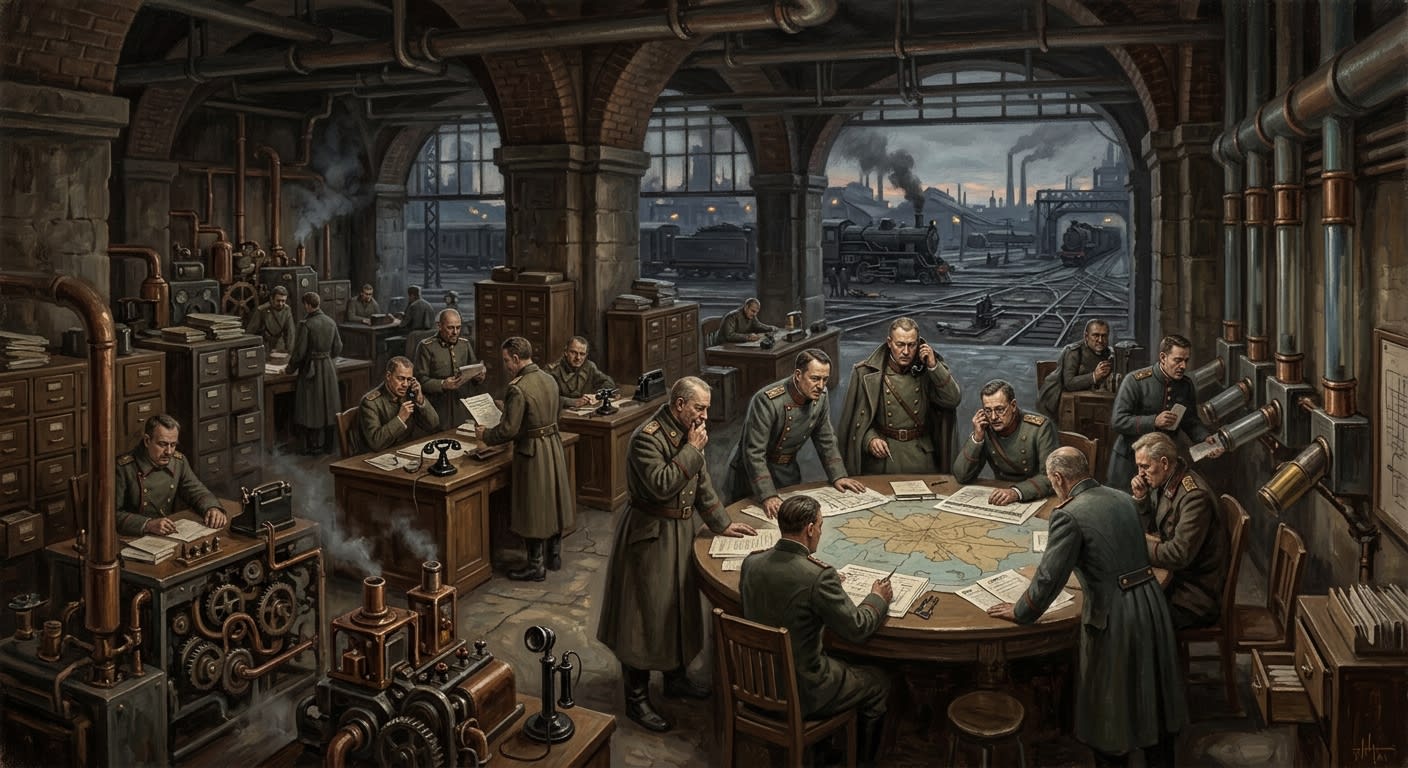
Northern Hierarchate
Where the north is made punctual enough to survive
Seated at Kanzleiburg in A.S. 95, the Northern Hierarchate turns Prussian machinery, rail priority, reserve depots, and inter-Bureau quarrels into survival for the Baltic-Carpathian front.
Codex Ref. VIII.7.01-095
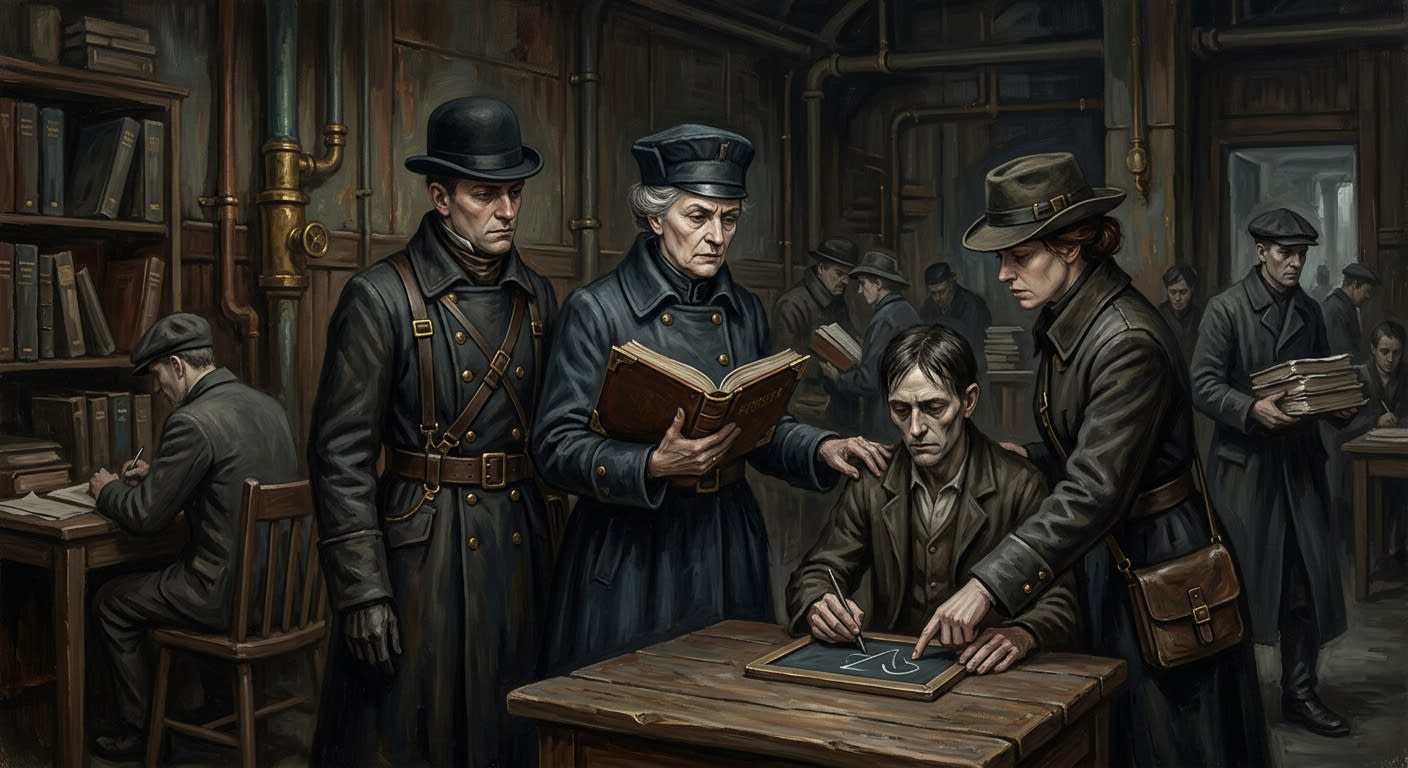
Null Catechists
The teachers who remove the altar and leave the wound awake
Apex Silent Godless functionaries who teach anti-faith, deny consolation, forbid Kett-worship, and remain more difficult to burn than ordinary unbelief.
Codex Ref. XI.1.02-001
Oath Inns
Where speech is rented, stored, and later weaponised with receipts
The Oath Inns of the Steppe Gate sell beds, witness space, collateral confession, and the dangerous comfort of speaking indoors before the Burnless Archive answers back.
Codex Ref. II.4.09-078

Observation Post Sigma-7
The cycle does not change; the watcher must be relieved
The 14th Garrison holds a slit in the outer wall of Bastion-Constantinople above three Self-Devoured. The cycle never changes. The watcher may. Ninety seconds is the ceiling, and looking away is the work.
Codex Ref. III.2.07-201

Office of Nullity
The knife kept inside the book
Sub-office of the Bureau of Records governing Erasure Notaries, strike writs, dependent ledgers, black seals, and the civic art of making a person unprovable.
Codex Ref. XIII.1.70-001
Office of the Last Watch
The dead must remain obedient; the totals must agree
Records' mortuary sub-bureau oversees cemeteries, funerals, exhumations, and the obedience of the dead. Its totals balance; its corridors require a separate report.
Codex Ref. III.2.09-004
Old Krebb
One blow, two entries, and a shovel above the door
Old Krebb split his shovel against a War notice board during Hamburg's A.S. 189 stoppage. Records calls it vandalism; the Union calls it commentary. The blade survives where the biography does not.
Codex Ref. III.2.01-189
On the Joyful Surrender of Offspring to Providence
War Takes the Son; Mercy Receives the Tears
Mercy's pamphlet teaches mothers to surrender a son to the levy and enter their tears as proof of faith. War takes the boy; Mercy takes title to the grief.
Codex Ref. XIII.1.54-002
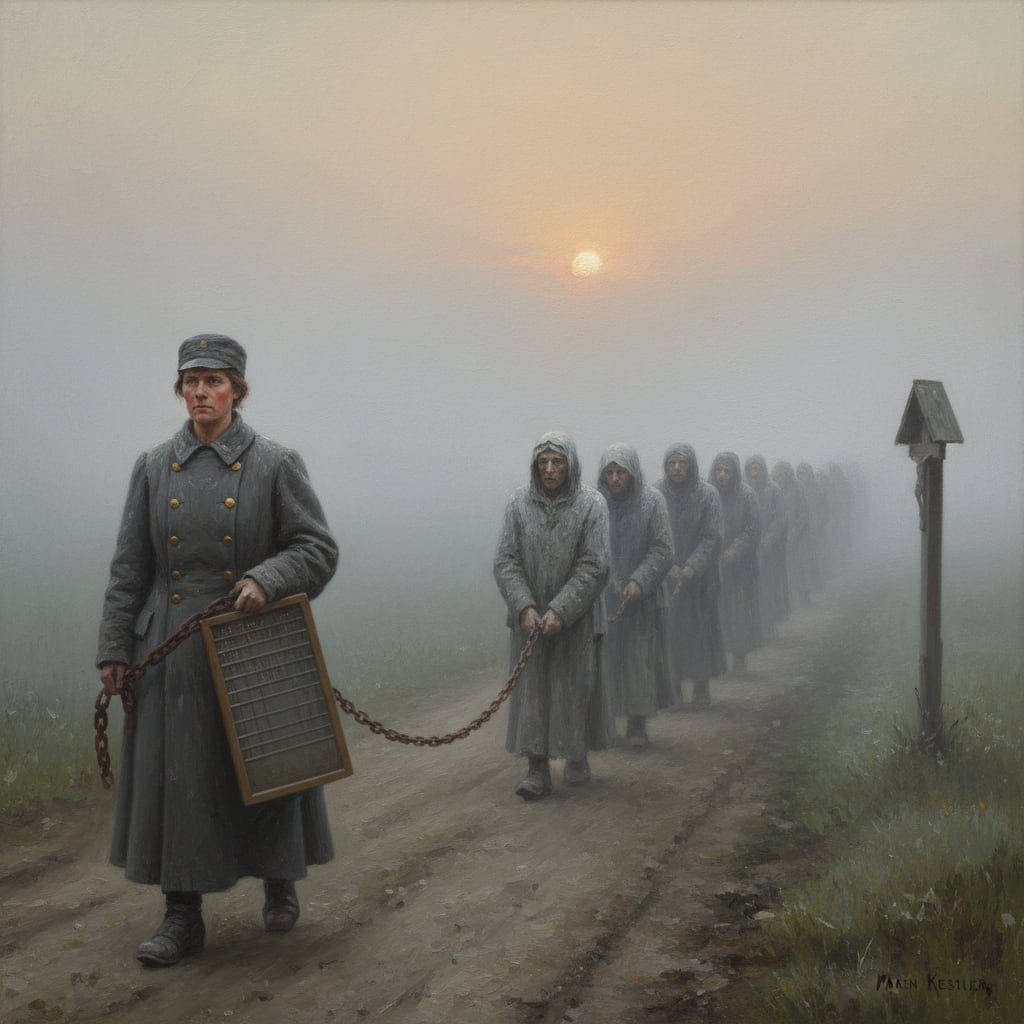
On the Pilgrim-Chain Handlers
The mercy quota; or, how the chain teaches patience to both ends
The licensed custodians of the Jubilee chain and everything the chain implies — water counted by formula, confession harvested in strips, and a ditch at the end of every route the Bureau calls holy.
Codex Ref. XII.29.01-001
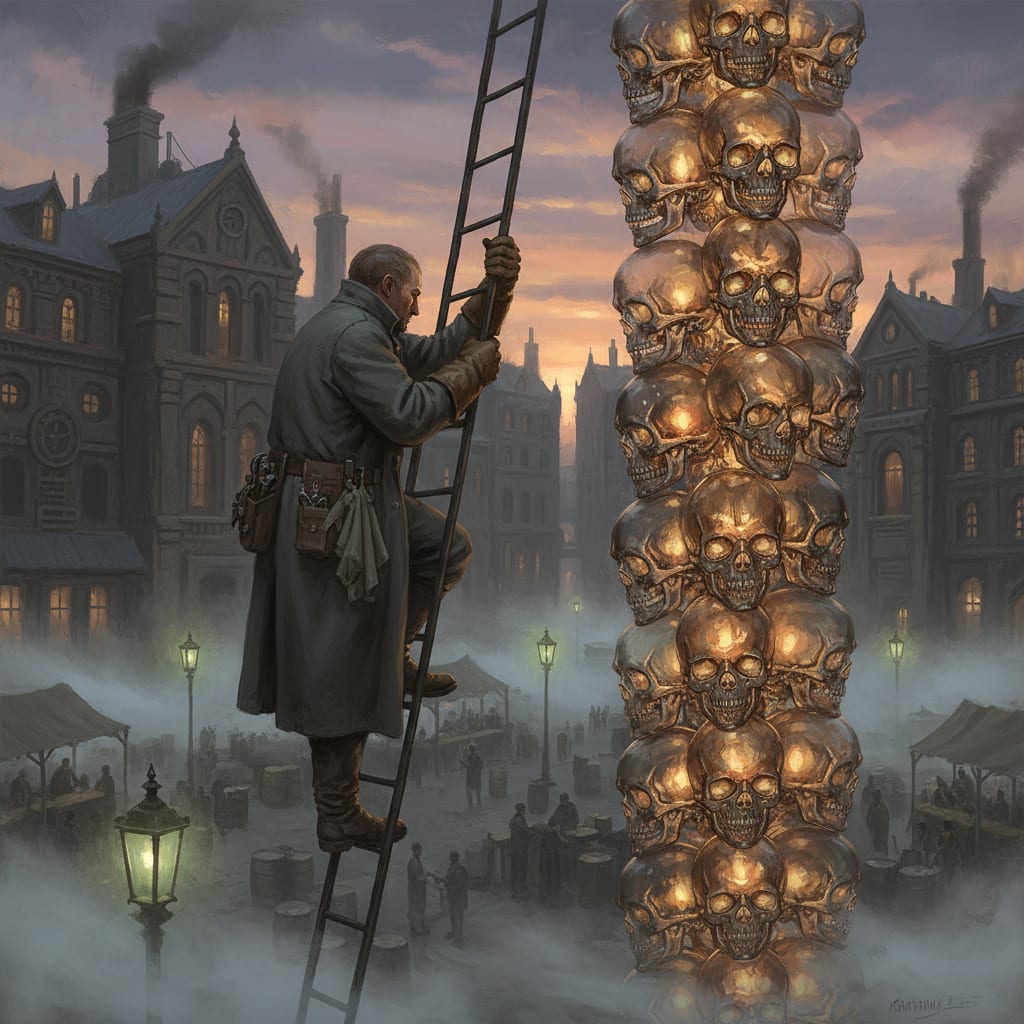
On the Pillar-Keepers of the Glass Skull Stacks
The city is held by witness; the witness is held by someone who needs his wages
A Drax survey of the Pillar-Keepers — grey-coated custodians who maintain the Synod's civic deterrence pylons: iron-boned columns of sermon-clear glass and inked names, holding the city by witness at a cost the Bureau does not audit.
Codex Ref. XII.30.01-001
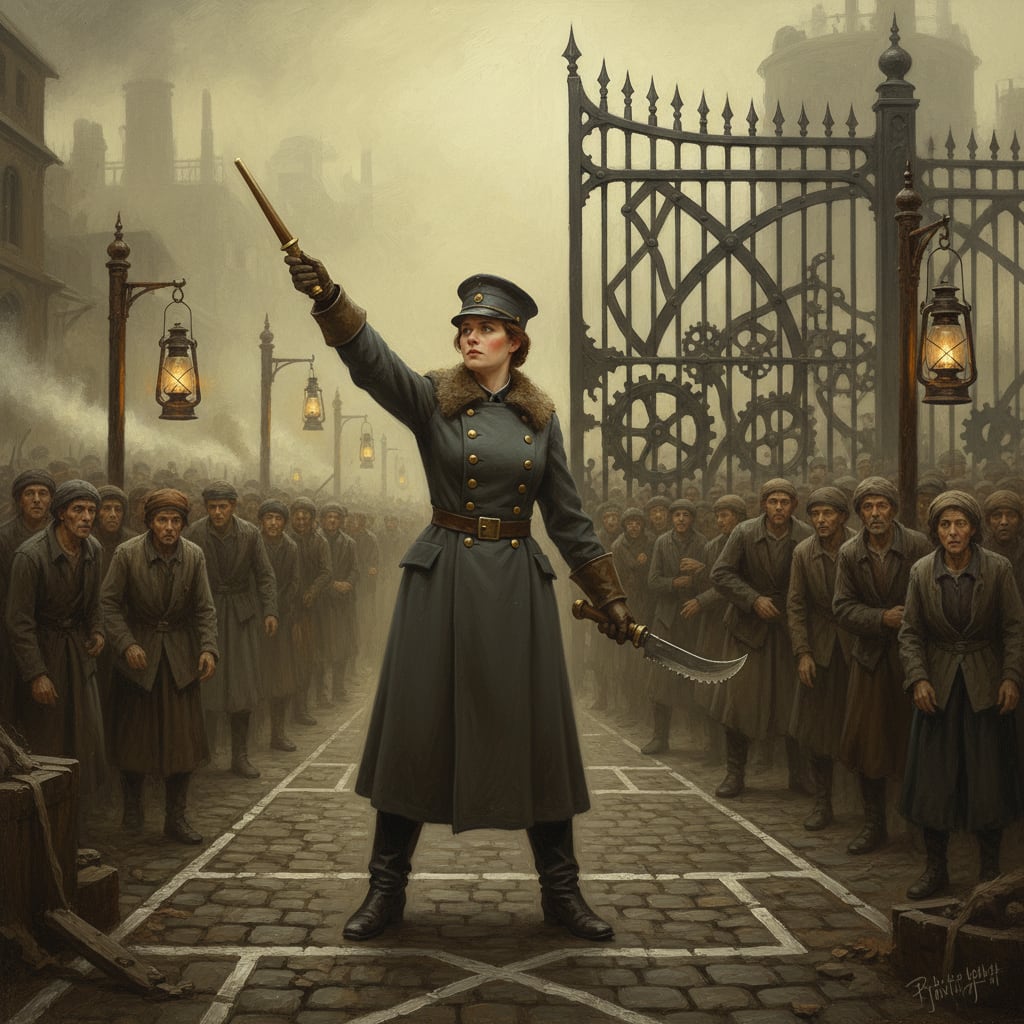
On the Procession Marshal
The boot behind the beat; or, why orderly grief is the Synod's last public prayer
The boot behind the beat. The Procession Marshal controls pilgrim columns, funeral trains, and levy marches — setting cadence by baton, marking routes in chalk, and cutting lane ropes when the crowd folds. Born of three hundred dead at Bastion-Brest, A.S. 112.
Codex Ref. XII.31.01-001
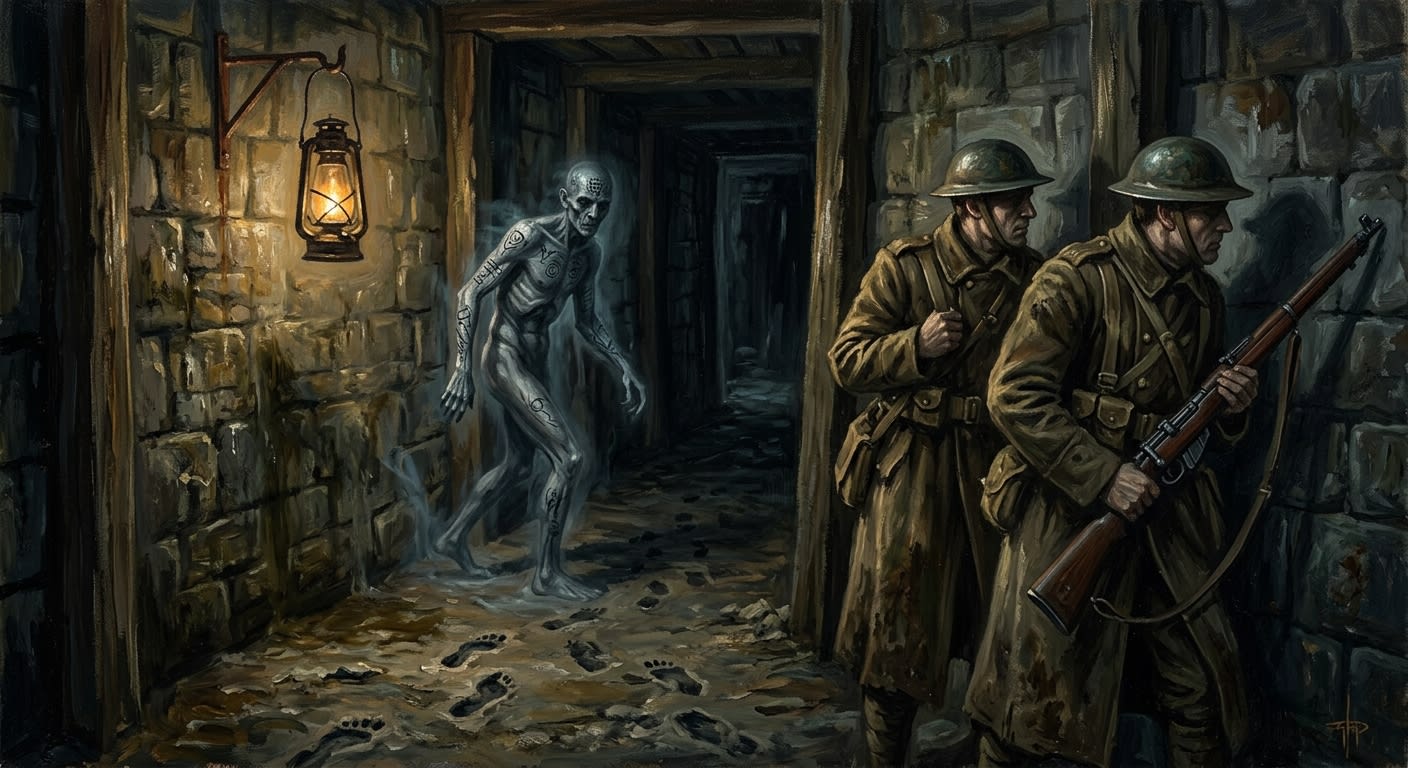
On the Veil-Stalkers
The enemy the eye refuses to see
A taxonomy of the Shadow Court's concealment-inscribed mortal stealth auxiliaries — five modes of glyph-fed invisibility, a lifespan measured in weeks, and the Bureau's admission that a knife you cannot see kills morale more efficiently than a cannon you can.
Codex Ref. IX.1.05-001

Oratio Oblitterans
The six lines Heaven was not permitted to hear
The Oratio Oblitterans is the six-line Rites prayer proposed in A.S. 142 for Administrative Dissolution, rejected by Records, and preserved wherever mercy disobeys filing autonomy.
Codex Ref. XIII.1.01-003
Order 88-V
The method is sealed. The measurements remain.
Order 88-V seals the Pit Seven exposure methodology. The A.S. 135 expungement is attested; the order's issue date is not. Its unsealed appendix keeps the measurements in circulation.
Codex Ref. XIII.1.100-135

Order of Severance
The inward knife that cuts office from affection before affection becomes a kingdom
The Order of Severance is the Bureau of Purity's inward knife: an inquisitorial fraternity that hunts clerical and bureaucratic heresy where clean cuffs, perfect ledgers, and trusted colleagues become shelter.
Codex Ref. VIII.1.07-134
Ordinary Carmina
The verdict has a choir; the Ordinary keeps her silence
Ordinary Carmina of Ghent leaves verdicts to a blinded, tongueless witness choir. Her undated Wintering taught the Order of the Root how to cut families and revise the kinship that survived.
Codex Ref. III.2.01-2030
Orison Hour
The hour that owns the ear and charges rent for listening
The Orison Hour is prayer, ration order, casualty roll, curfew, census pressure, and acoustic cudgel: Europe instructed to possess one throat.
Codex Ref. XIII.1.96-112
Orison Licensing Acts A.S. 94
No private hymn, no innocent breath
A.S. 94 legal seizure of melody itself: the Acts made every cadence licensed or criminal and created the market they pretended to destroy.
Codex Ref. VII.2.10-094
Orison Provost House
Where questions grow louder and answers grow less certain
Essen's Orison Provost House enforces sanctioned cadence through acoustic interrogation. Mercy records permanent impairment; Orison files the confession and renames the chamber.
Codex Ref. II.2.06-014

Orphanage Registrar
The child enters crying and leaves legible
Orphanage Registrars convert foundlings into entries: named, tagged, risk-scored, and placed before hunger, memory, or bloodline can become a rival jurisdiction.
Codex Ref. VI.4.12-044
Orphanarii
Mercy with a cot, a tag-punch, and the legal courage to rename a child before breakfast
The Orphanarii are the Synod's state orphanage system: Mercy houses that wash, tag, rename, sort, feed, place, and sometimes erase children until grief becomes legible.
Codex Ref. VIII.2.12-134
Ossuary Housing Allocator
The wall keeps the dead, and the clerk decides who may cling to it
Ossuary Housing Allocators sell dryness, bell-coverage, and sanctioned sleep beside the dead, converting overflow, grief, and fear into chalk lines and rent.
Codex Ref. VI.4.11-052
Ossuary-Draft Handler
Sanctioned freight-keeping; or, how the condemned earn their redemption by the pound
The Ossuary-Draft Handler converts the condemned into transport capacity. Licensed under joint writ of the Bureau of Rites and Bureau of War, he decides whether a human body is worth forty pounds over twenty miles.
Codex Ref. XII.27.01-001
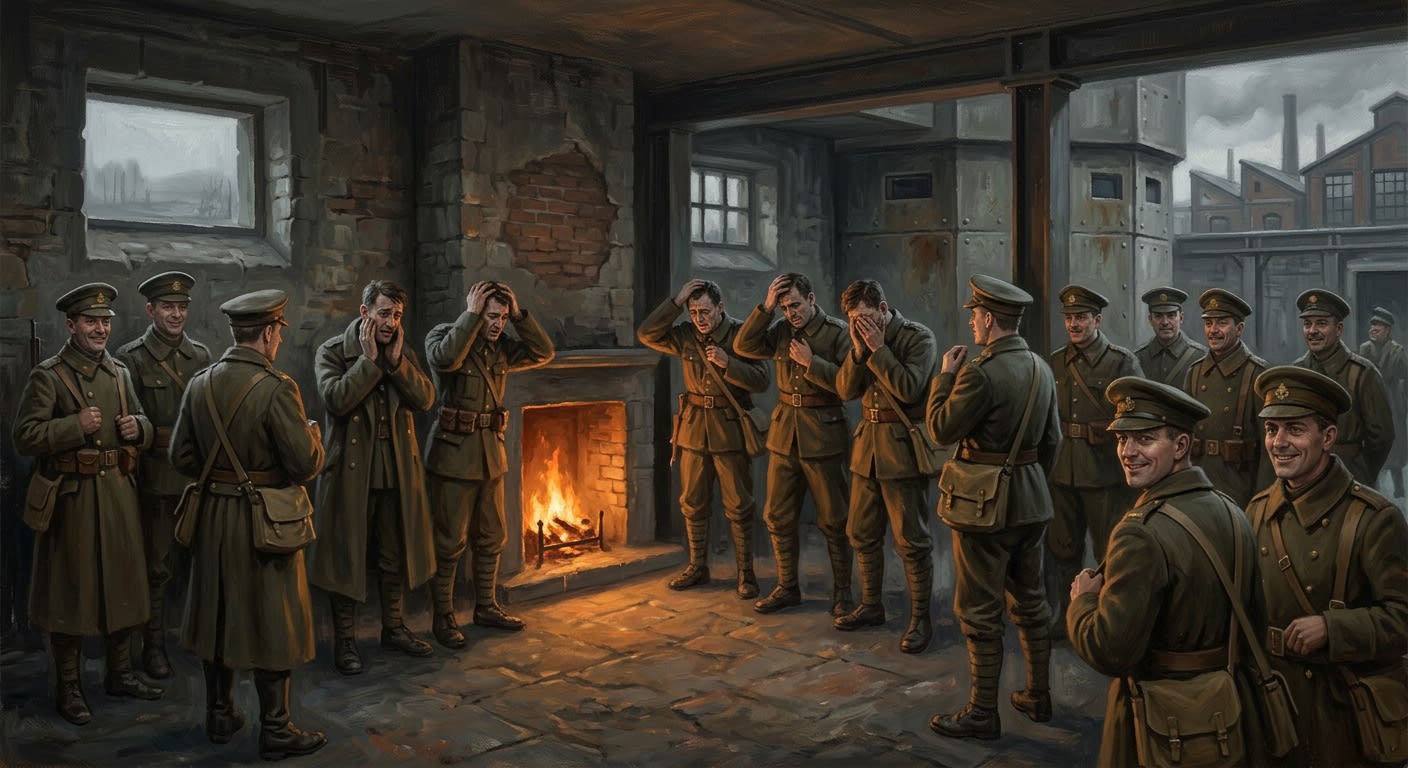
Outpost Eleven-West Incident
Where rest learned to smile and the Bureau forgot its nouns
At Outpost Eleven-West, a hearth appeared where no hearth could stand; seven soldiers returned screaming, and nine remained smiling in Sofia.
Codex Ref. VII.8.10-194
Palace of Echoes
Envy learning masonry from stolen memory
Morwen's Palace of Echoes is no fortress but a hostile architecture of envy, where rooms are built from stolen selves and better lives open like doors.
Codex Ref. II.6.07-073

Pale Kin Runner
What the Bureau calls inventory discrepancy; what the mothers call salvation
The Pale Kin Runner is a child-smuggler, a midwife's heir, and the Bureau of Conscription's oldest unsolved arithmetic problem. She intervenes between birth and stamp. The Synod calls this heresy.
Codex Ref. XII.28.01-001
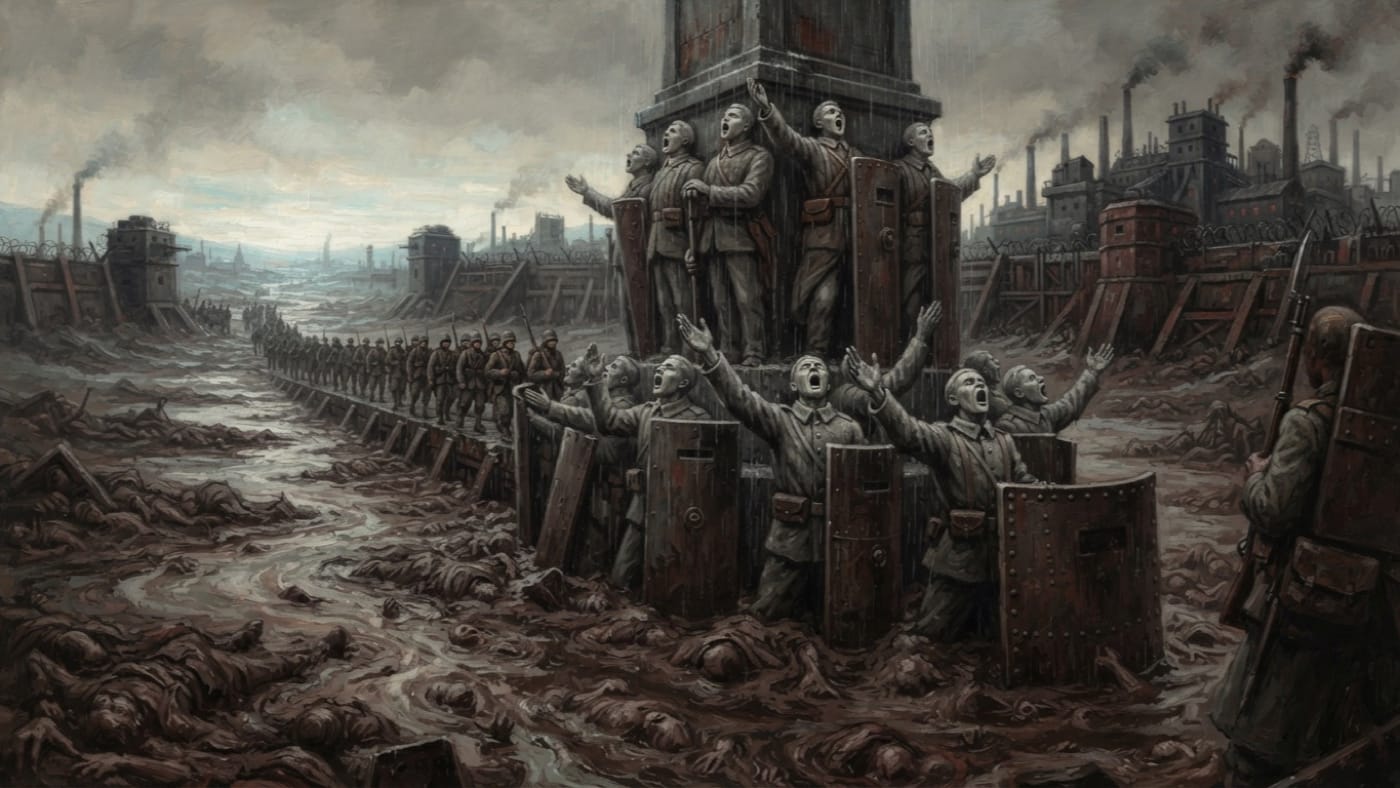
Penance March of Extraordinary Zeal
The dead sank; Records taught them to march
Records renamed the Knife Mile drowning the Penance March, taught survivors the approved account, and gave the dead singing mouths. A.S. 137 dates the catastrophe beneath the title.
Codex Ref. XIII.1.137-002
Pest, Abandoned Bank
The empty city that keeps answering without being called
Pest is the eastern bank of Budapest: declared Vacated in A.S. 120, visible across the Danube, annually confirmed, and inconveniently less empty than doctrine prefers.
Codex Ref. II.4.09-012
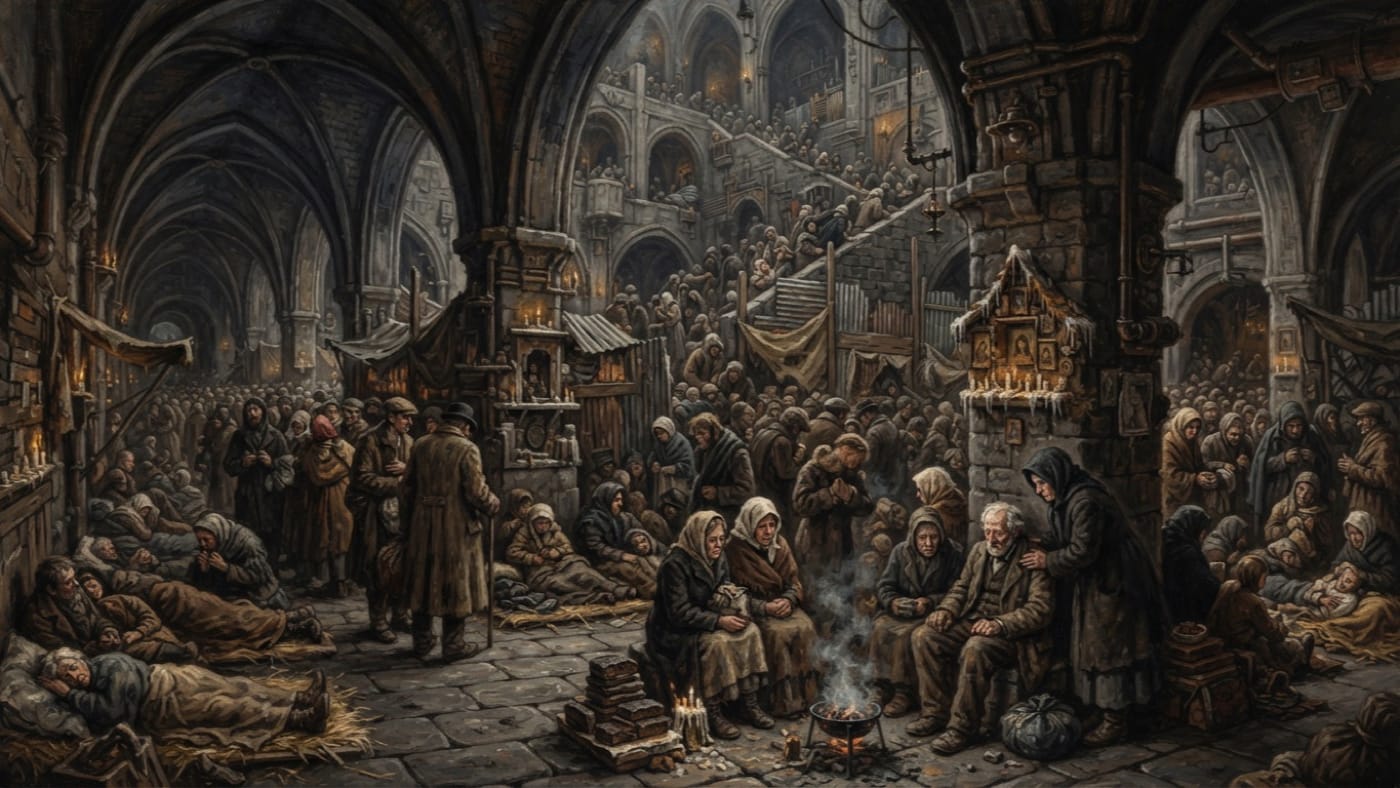
Pilgrim Dormitories
Three days of borrowed life. A lifetime entered in the ledger.
Converted cloisters at San Vesta hold pilgrims awaiting resurrection-bread and debtors bound to recovery service. The vigils demand three more days; the ledger records a lifetime.
Codex Ref. VII.1.03-005
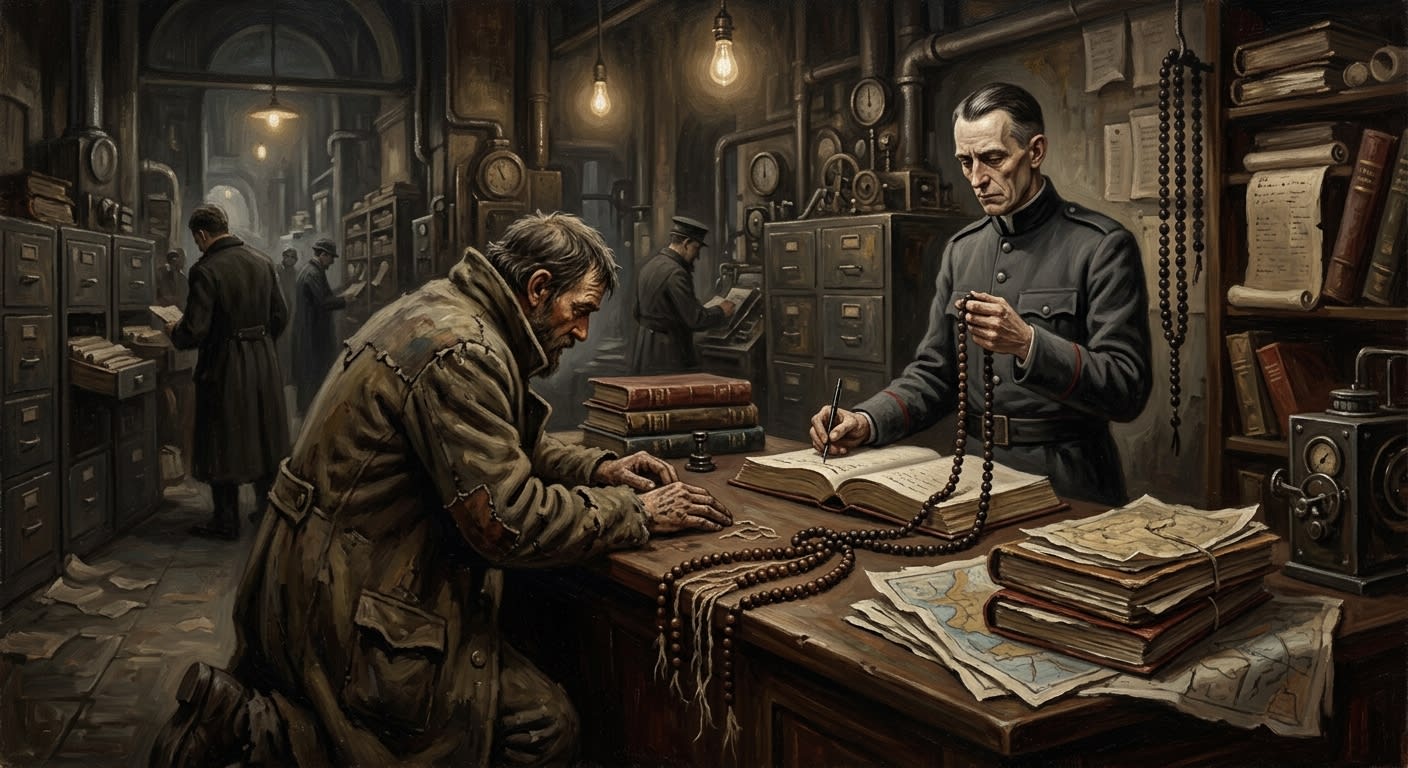
Pilgrim Reconciliation Statutes
Correction is salvation, provided the fee clears
The Pilgrim Reconciliation Statutes made mercy countable: bead strings, route errors, confession addenda, second strings, debt, and sanctioned delay.
Codex Ref. XIII.1.72-097
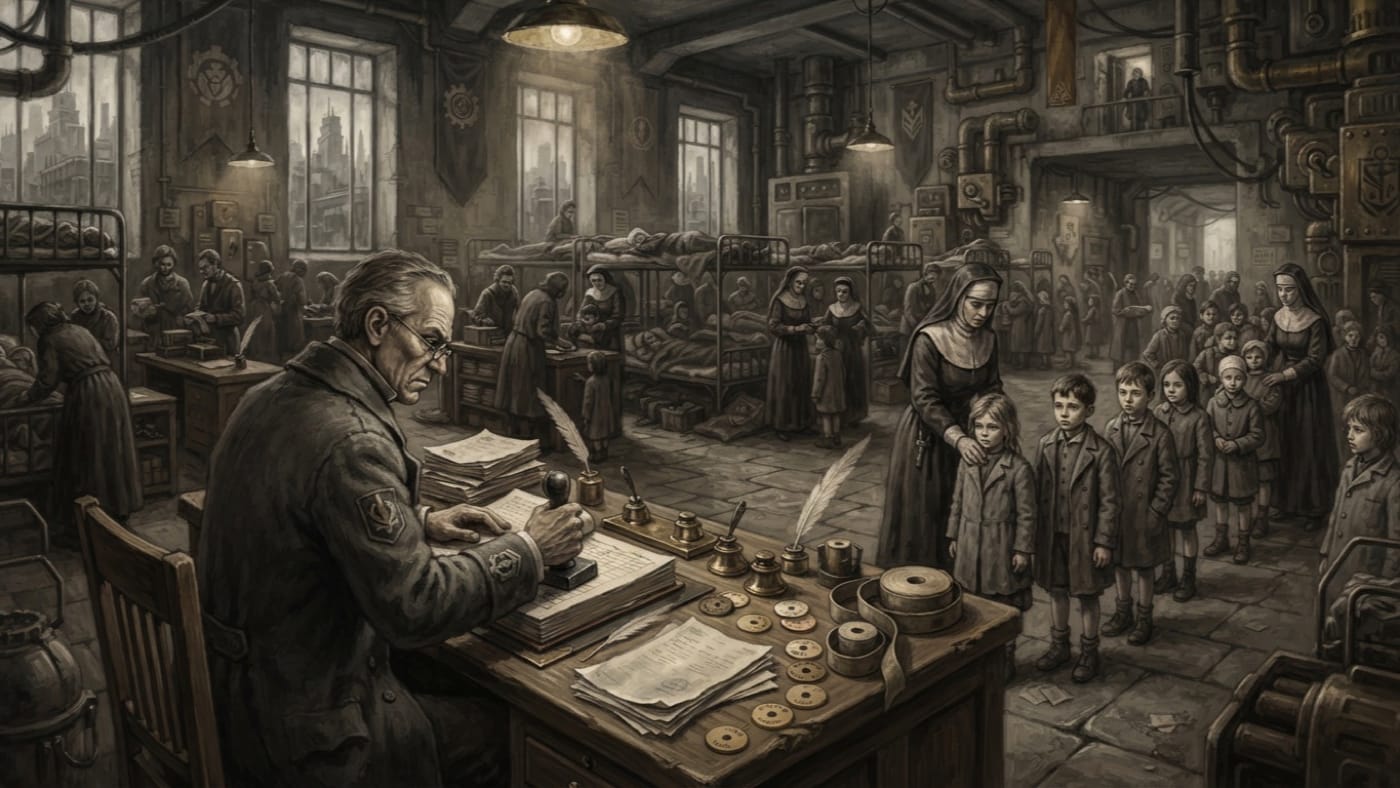
Pipeline Purists
The cot is a waiting room; the placement order is the purpose
The Pipeline Purists treat the Orphanarii as a route from cot to use: Registrars who prize swift placements, reconciled tags, and empty beds. The ledger records delivery more readily than harm.
Codex Ref. XI.1.05-004
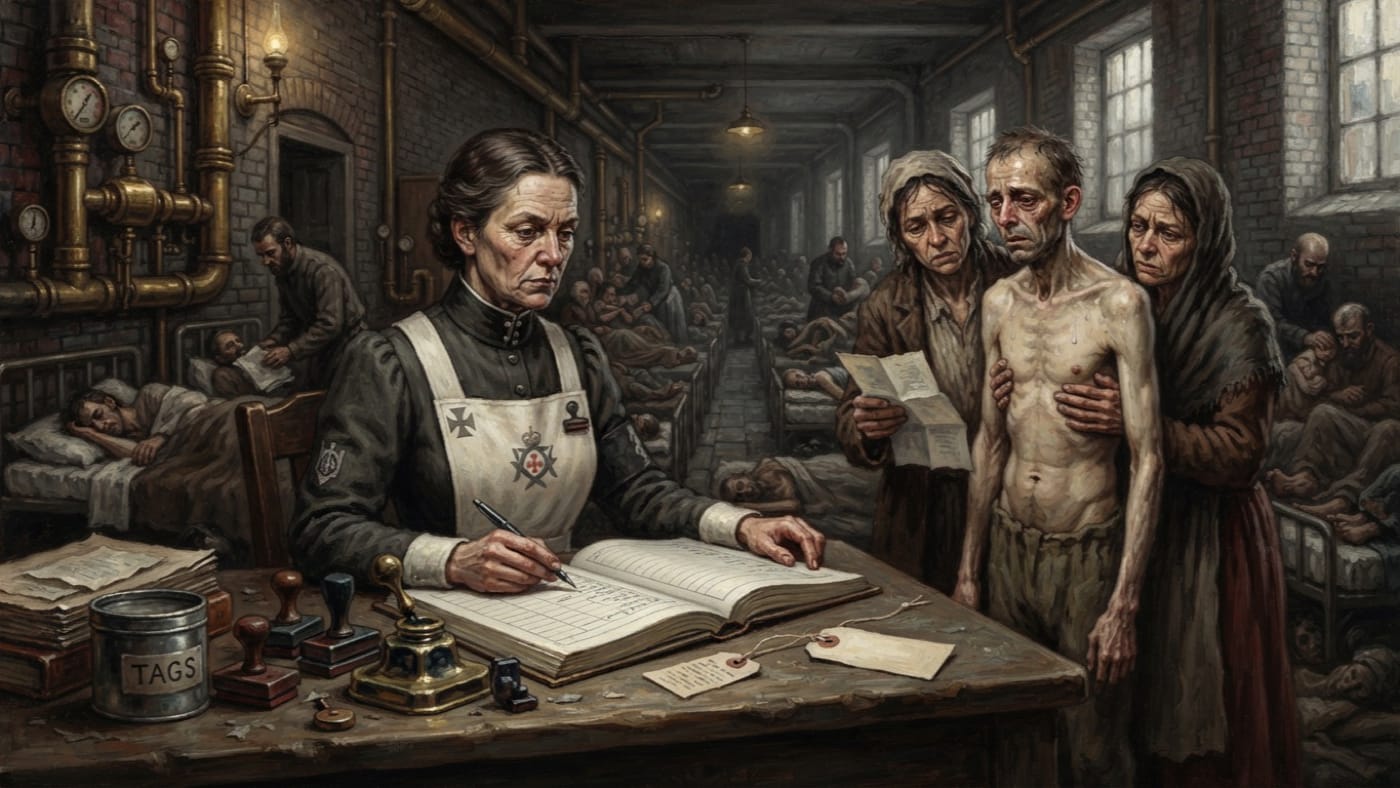
Pity-Clerk
The ledger is correct; the patient is still waiting
A Pity-Clerk is a Mercy ward-hand accused of loving forms more than patients. Clean-zone tags wait for signatures or fuel chits; the ledger can remain immaculate.
Codex Ref. XII.6.04-002
Place des Terreaux
Where the Creed arrives hoarse, and the schedule has nothing further to say.
Lyon's Place des Terreaux receives the hoarse and the gagged after the Procession of Tongues. Four hours of compulsory Creed bring three wards to the square; the schedule records arrival and says nothing of release.
Codex Ref. II.1.04-003
Praga
Warsaw's east-bank throat, where bread teaches logistics to kneel
Praga is Warsaw's east-bank rail throat: refugee room, bridge queue, flour wound, and the district that proved hunger can stop a northern corridor.
Codex Ref. II.3.06-188
Praga Ration Disturbance
Four thousand citizens taught the northern corridor to feel hunger
In A.S. 195, four thousand hungry civilians in Warsaw's Praga district blocked the eastern rail spur for eleven hours and made the northern corridor confess that logistics has a stomach.
Codex Ref. VII.8.10-195
Prayer-Jam
When obedience enters the ear and comes out treason
Prayer-Jam is liturgical signal failure under hostile acoustic pressure: bells betray, hymns gag, and obedient men march precisely into ruin.
Codex Ref. VI.2.01-005
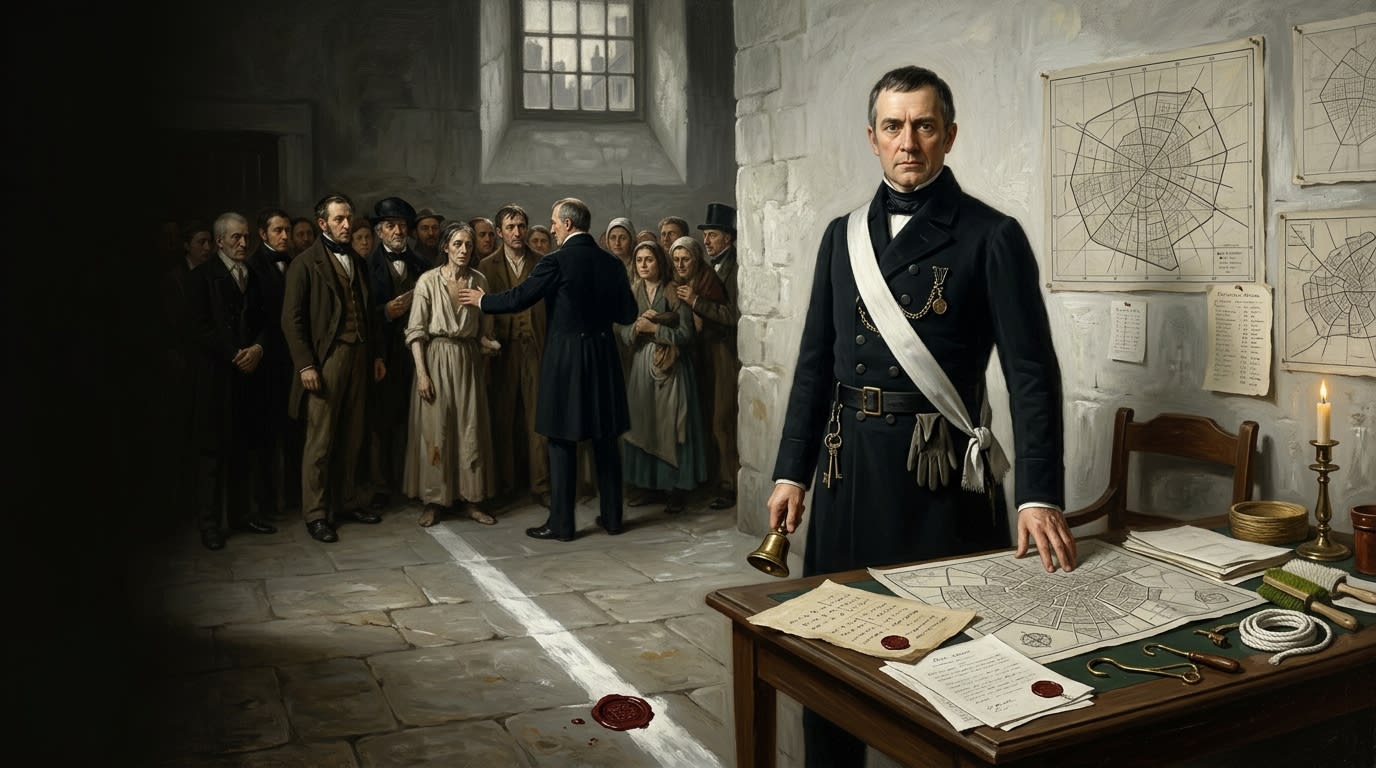
Prefect Salvius
The man who made cleanliness a border with teeth
Prefect Salvius commands Marrowgate's clean lines, proving that hygiene becomes jurisdiction the moment a frightened city applauds the rope.
Codex Ref. III.2.01-201

Prior Idris of the Sixth Tide
The road drinks, and Idris keeps the receipt
Prior Idris governs Brine Fork as if a road were a hound: fed, cursed, watched, and never mistaken for harmless scenery.
Codex Ref. III.2.01-201
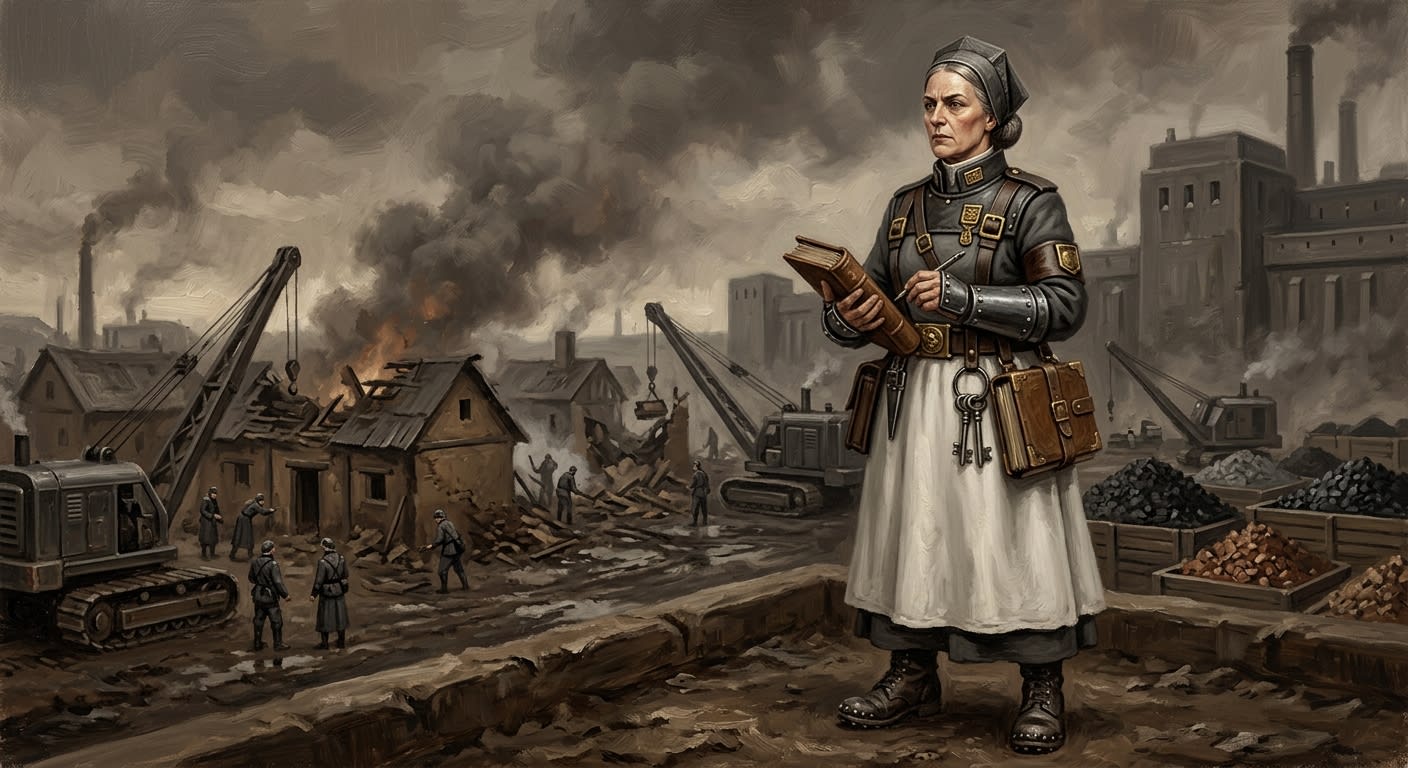
Procurator Hildegarde of Mainz
She made correction visible and mercy file its own apology
Hildegarde of Mainz gave Purity its white mantle, razed forty tithe villages, and became the saint of visible correction.
Codex Ref. III.2.03-001
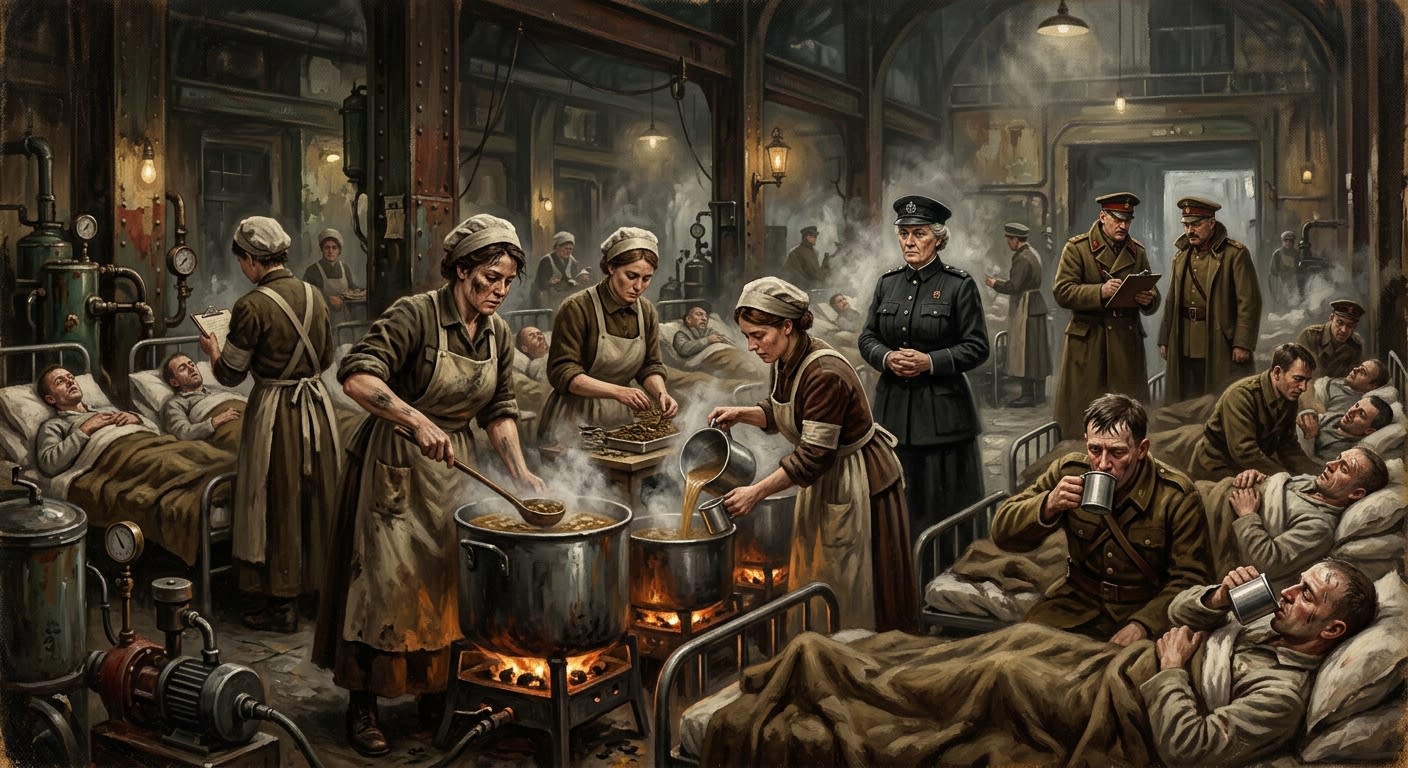
Protocol 7-C
The Bureau named the kettle after stealing the cure
Protocol 7-C saves fevered soldiers by boiling water, brewing bark, and pretending the woman who knew this first had never touched the pot.
Codex Ref. XIII.1.74-113
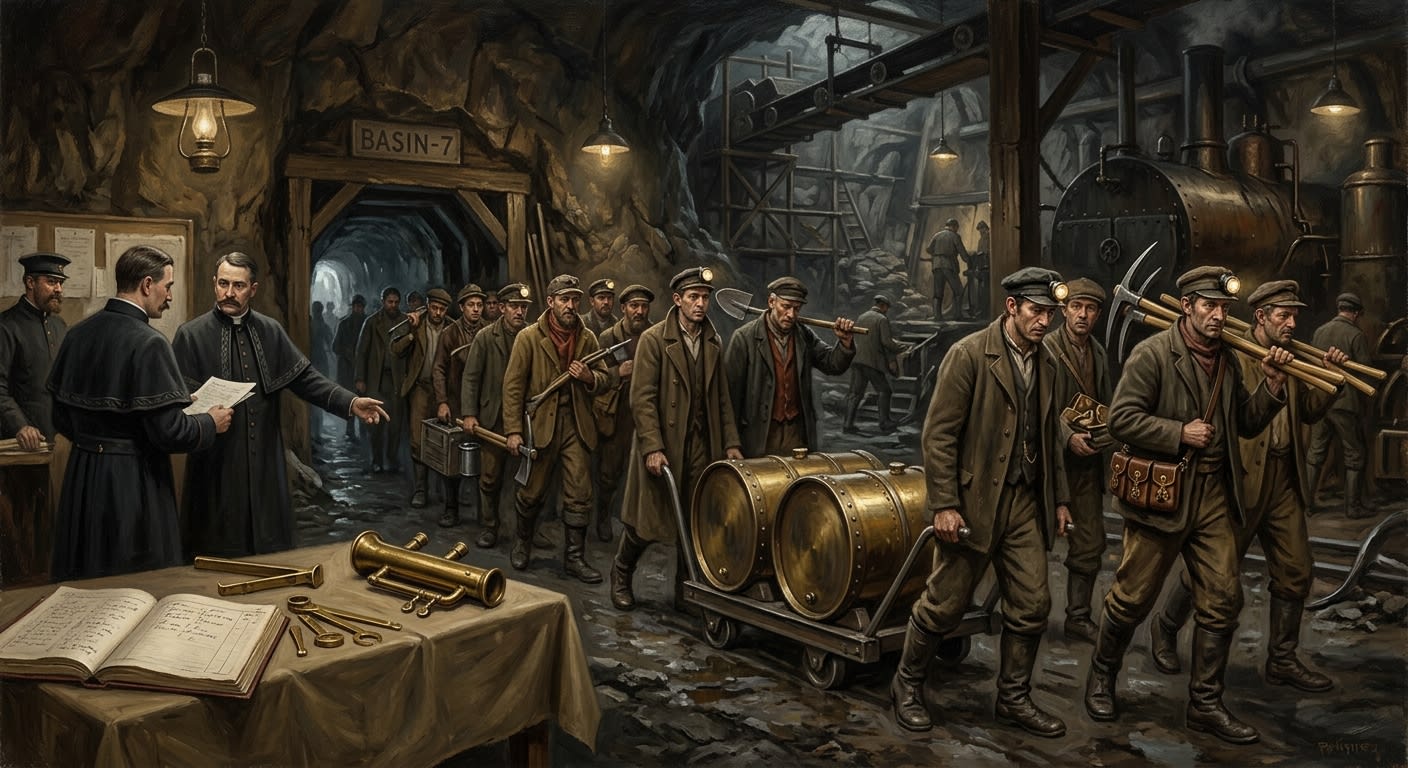
Quiet Basin Incident
The drums returned warm; the men did not
Basin-7 took seventeen extraction personnel in A.S. 178 and returned sealed warm drums, clean tools, intact warding, record yield, and a pitch pipe the Bells refused to name.
Codex Ref. VII.8.10-178
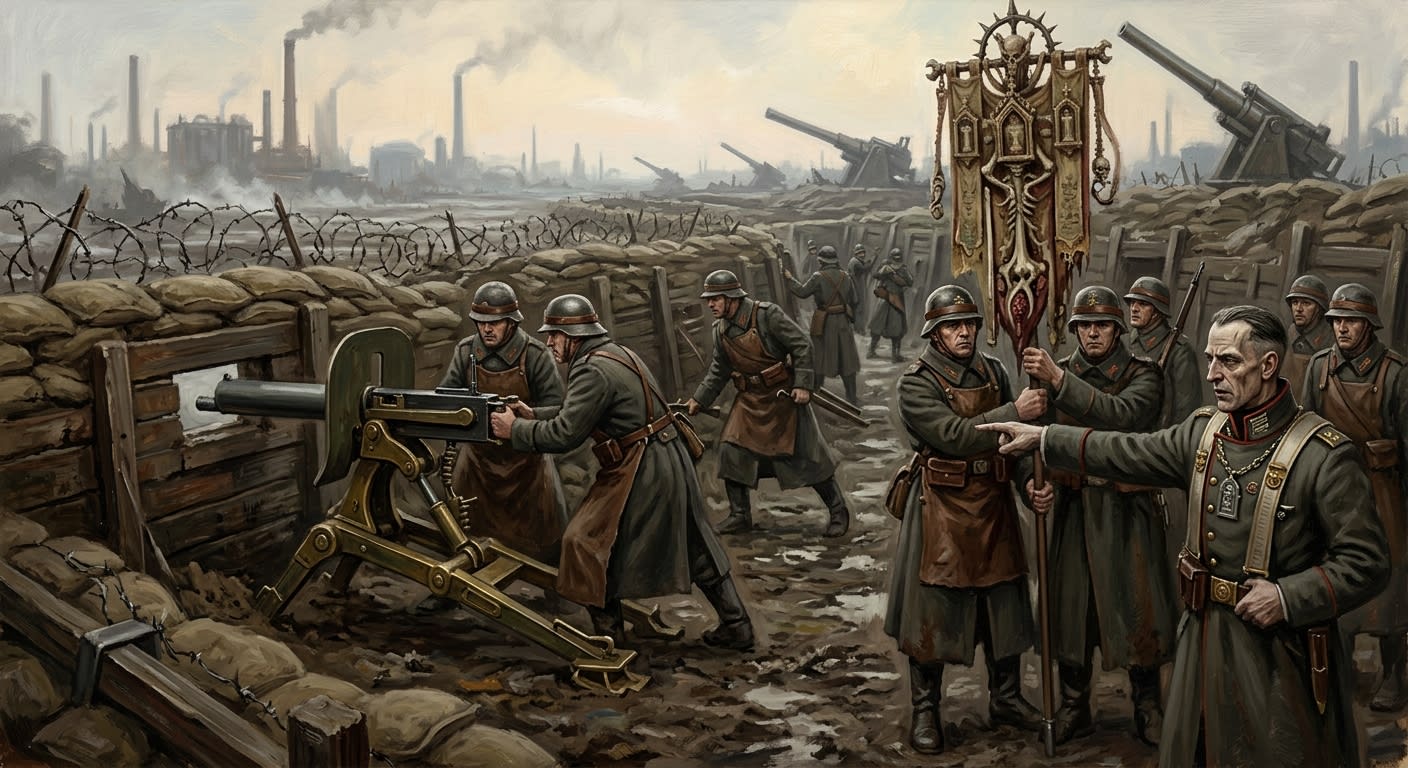
Ravelin of Vigilance
The eye that learned to blink by rotation
The First Ravelin of Bastion-Constantinople watches the Knife Mile, drills low guns, carries Saint Iselda's Bone Walk, and teaches sentries the cost of seeing first.
Codex Ref. II.4.10-137
Refugee Sheds
Temporary mercy, permanently damp
Thessaloniki's Refugee Sheds are temporary shelter turned permanent wall-side settlement: damp, crowded, humming, and governed after dusk by Aunt Velka's unlicensed mercy.
Codex Ref. II.7.04-198
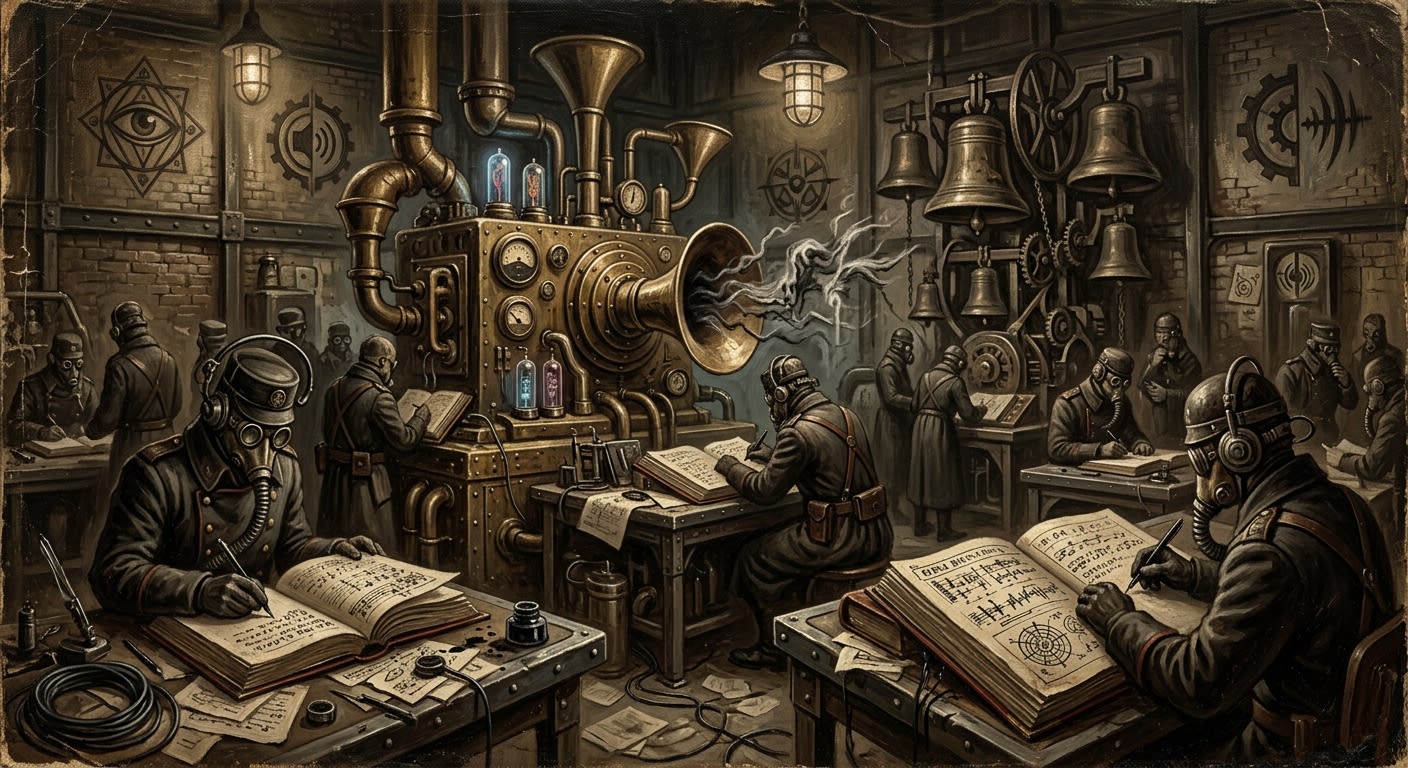
Register of Sounds
Where music is taught to confess before it escapes
Third register of the Index Damnatus, cataloguing forbidden tones, cadences, bellfalls, breath patterns, and the treasons ink can carry from one skull to another.
Codex Ref. XIII.1.46-001
Rest Societies
The heresy that simply wants to sit down — and the Bureau that cannot permit it
A tract on the Rest Societies of Bastion-Shipka: two confirmed heretical assemblies forming among exhausted administrative staff who concluded that the Synod's wakefulness mandate was the greater sin. Three more suspected. The fog advances.
Codex Ref. XI.7.01-001
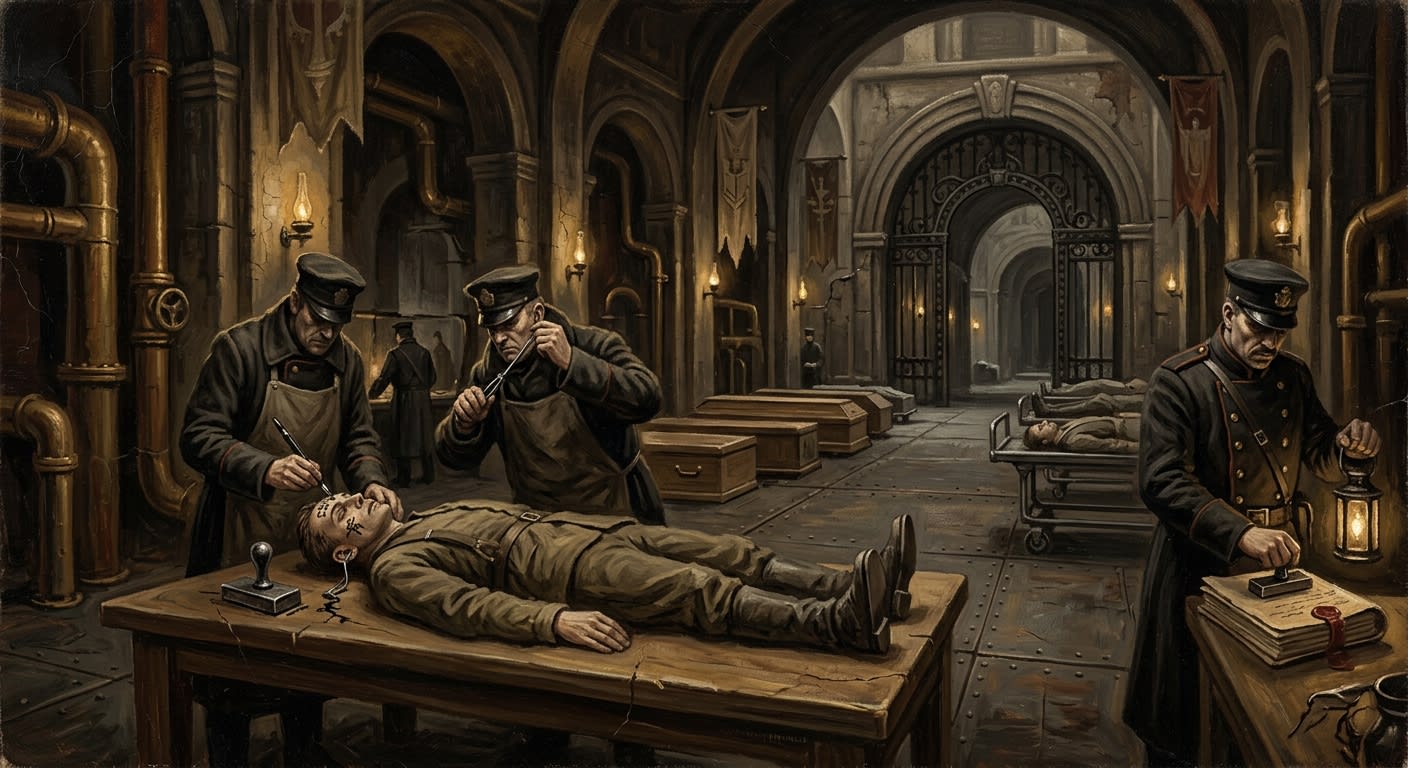
Rite of Passing
No soul departs until the Ledger has improved the death
The Rite of Passing turns death into lawful custody: right ear, last words, body display, black ink, routed remains, and no soul left vulgarly private.
Codex Ref. XIII.1.85-080
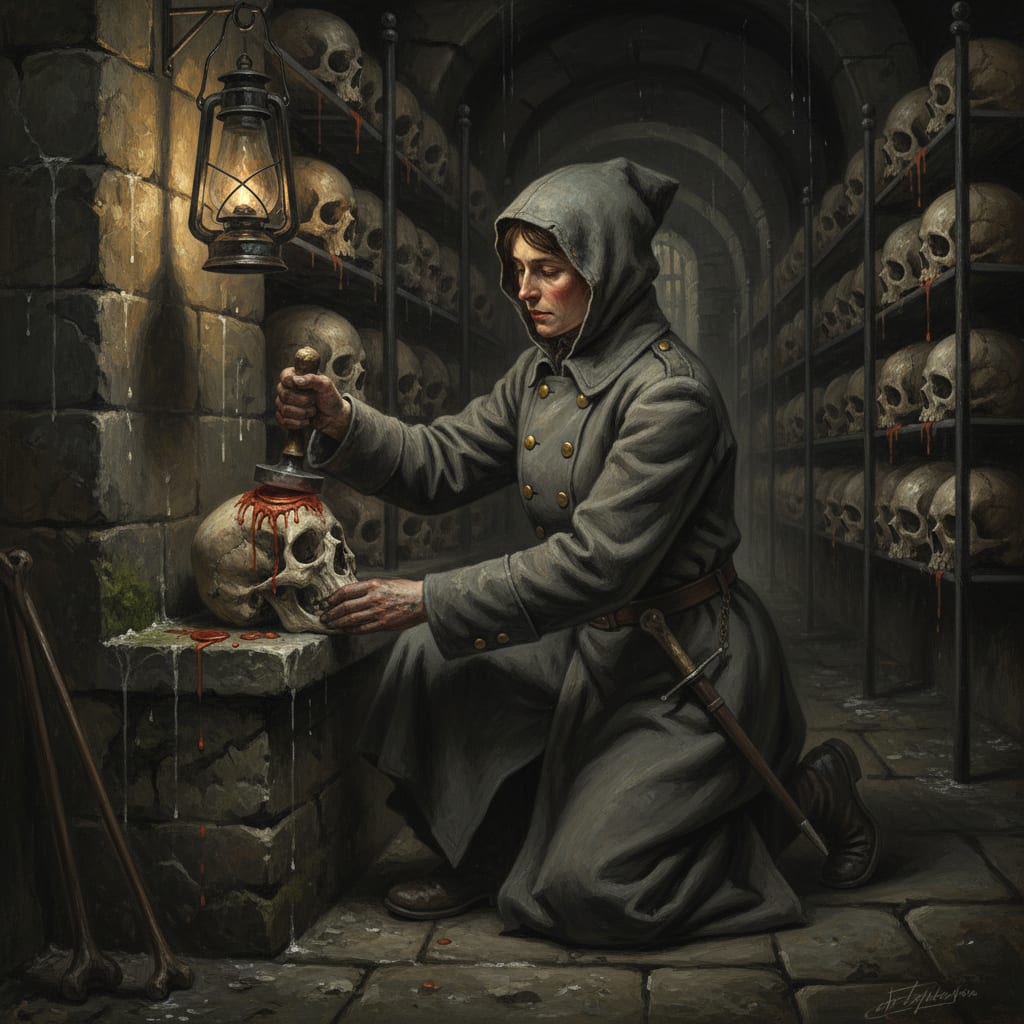
Ritual Bone-Stamper
Unsealed is unbound; the stamp is mercy; the stamper is what mercy costs
The Bureau of Records calls them Ossuary Authentication Wardens. The stampers call themselves tired. They have sealed the night-shift dead since A.S.
Codex Ref. XII.37.01-001
River-belt
The wet spine where permission learns to float
The River-belt manufactures permission in water, wax, ink, toll-stone, bone tags, saint-dust, and every damp little form by which reality becomes admissible.
Codex Ref. II.1.03-082
Rot-Week of Saint Vellum
Eleven days to save the forms, four days to lose the food
The Rot-Week of Saint Vellum was an eleven-day port paralysis in which disputed cargo names perfected the paperwork, spoiled the food, and licensed Manifest Litigants into profitable necessity.
Codex Ref. VII.8.10-001

Sacred Ledger
The Synod's memory, sharpened until grief signs the receipt
The Sacred Ledger is the Synod's authorised memory: fact cooked into Doctrine, grief made grammatical, contradiction kept on a leash.
Codex Ref. XIII.1.32-090
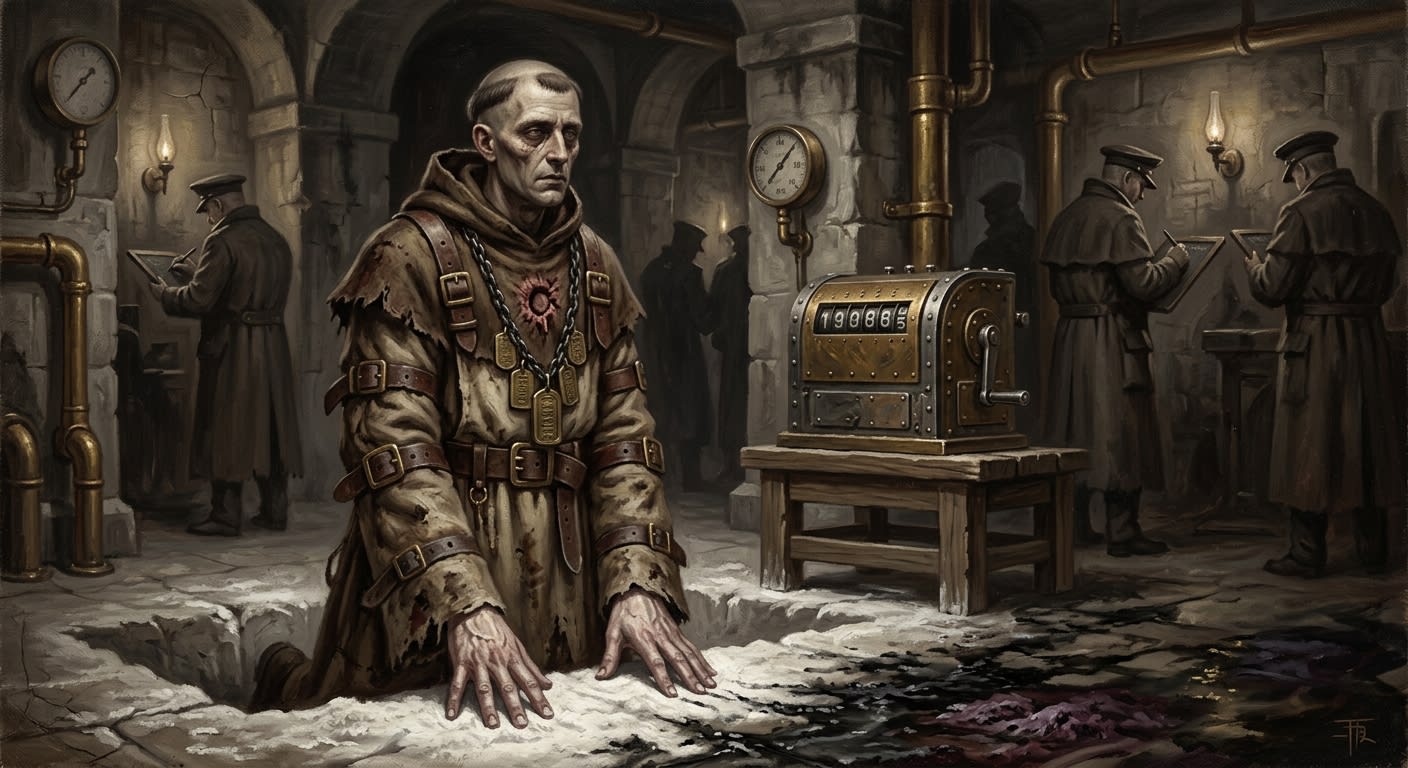
Saint Calistus
Count them, said the saint, and the Bureau has been counting ever since
Cellar-Prior of Lyon whose A.S. 32 Hollow Fast halted plague at a chalk boundary and left the Synod a saint, a tally, and a whistle-shaped wound.
Codex Ref. III.2.01-078

Saint Edrin of the Three Nails
Cut true, name all, hold the door
Saint Edrin of the Three Nails is the patron of Gate-Carvers, remembered for sealing a plague-house during the A.S. 78 Lull of Names with measure, witness, and refusal.
Codex Ref. III.2.01-120
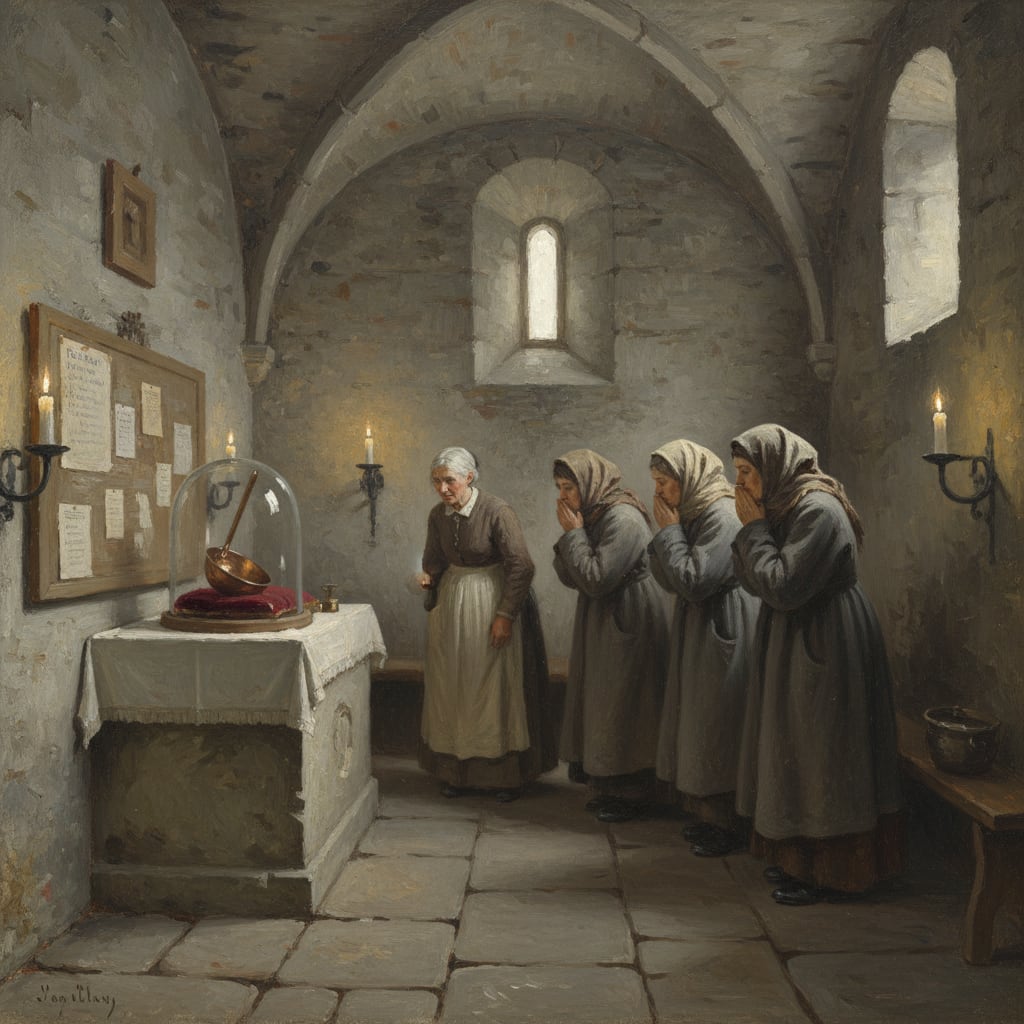
Saint Halva of the Warm Ladle
Salt of the Institution, patron of acceptable portions
Patron saint of the Mothers of Plenty, canonized A.S. 94 with zero miracles attested, no body produced, and a relic the Bureau of Relics classifies as "devotionally sufficient." She may not have existed.
Codex Ref. III.2.01-001
Saint Hessa of the Closed Mouth
The song delivered by silence
Uncanonised patron of melody smugglers, saint-knots, lull-runners, and mothers who move songs where licensed hymns have failed.
Codex Ref. III.2.01-148
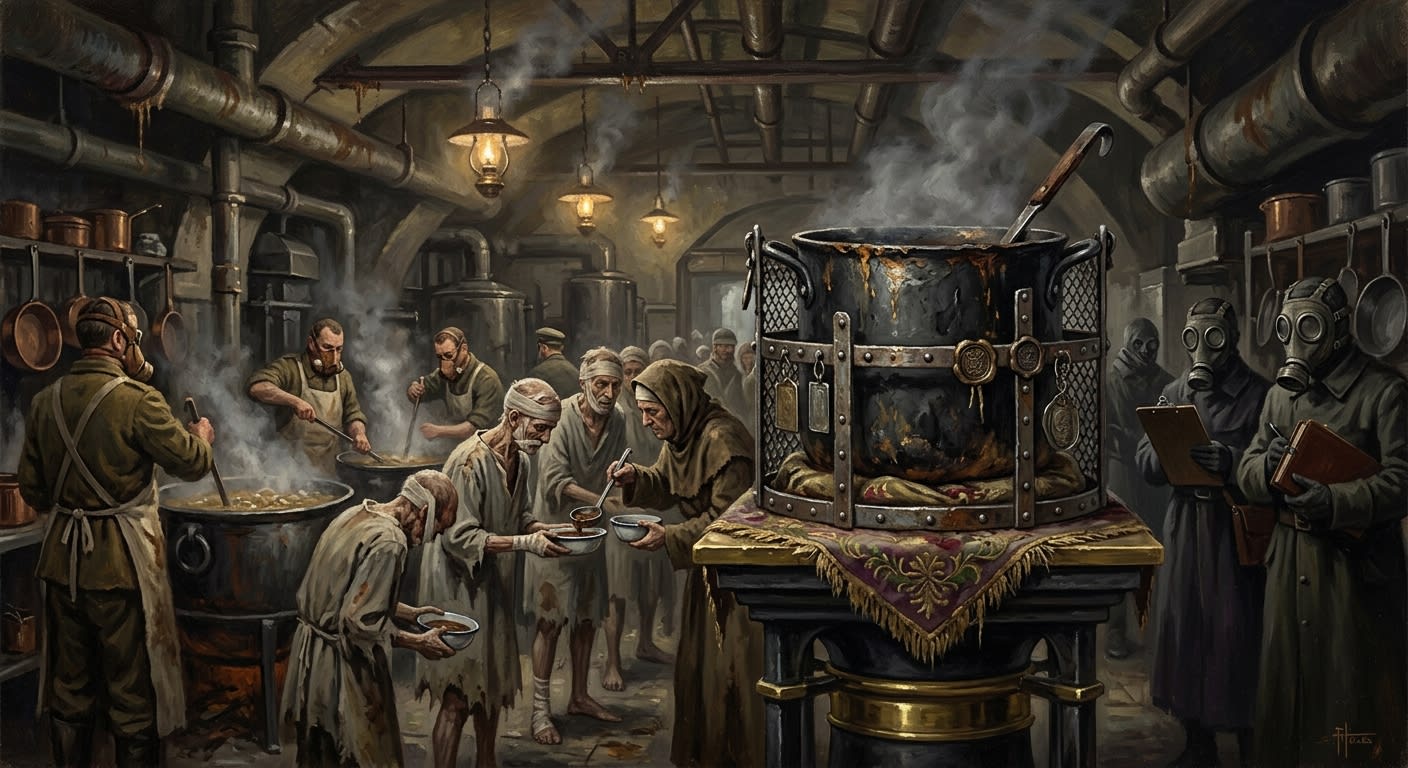
Saint Marrow-of-the-Ladle
Counted mercy, warm broth, and the holy arithmetic of the bowl
Saint Marrow-of-the-Ladle, patron of Mercy ward kitchens, may have been a pot; the Bureau prefers the miracle to the biography.
Codex Ref. III.2.01-016

Saint Maurus of the Burnt Lantern
The hospice martyr whose left leg taught arithmetic to kneel
Hospice martyr, ward-lantern patron, and owner of three authenticated left femurs; Maurus proves that sanctity can outgrow anatomy.
Codex Ref. III.2.01-148
Saint Sabina of Ghent
The seamstress who gave Mercy its cloth and Doctrine its discomfort
Saint Sabina of Ghent bound eleven bodies after the Massacre at Saint-Malo, died of fever, and became Mercy's most useful rebuke.
Codex Ref. III.2.01-015

Saint Varric of the Twelve Blisters
The chain becomes holy when the foot bleeds on schedule
Approved patron of Pilgrim-Chain Handlers: a useful, poorly documented saint whose twelve blisters became stations, tolls, custody doctrine, and a halo bent from iron.
Codex Ref. III.2.01-134
Sanitation Chapter
The clean line is a border, a sermon, and a threat
Mercy calls it sanitation; Marrowgate calls it the office that paints a white line and makes obedience look like hygiene.
Codex Ref. VIII.2.10-078
Scripture-Smoke
The vapour is not prophecy; it merely has the insolence to be legible
Scripture-Smoke is black-diesel vapour that writes back, which is precisely why the Bureau forbids reading it before reading it first.
Codex Ref. XIII.1.90-136
Sea Wall, Bastion-Königsberg
Where the Sagittal Line meets Baltic water and the fog outranks the wall
The Sea Wall of Bastion-Königsberg is where the Line runs into Baltic water, the Grey arrives without attacking, and sentries salute absence.
Codex Ref. II.4.07-067
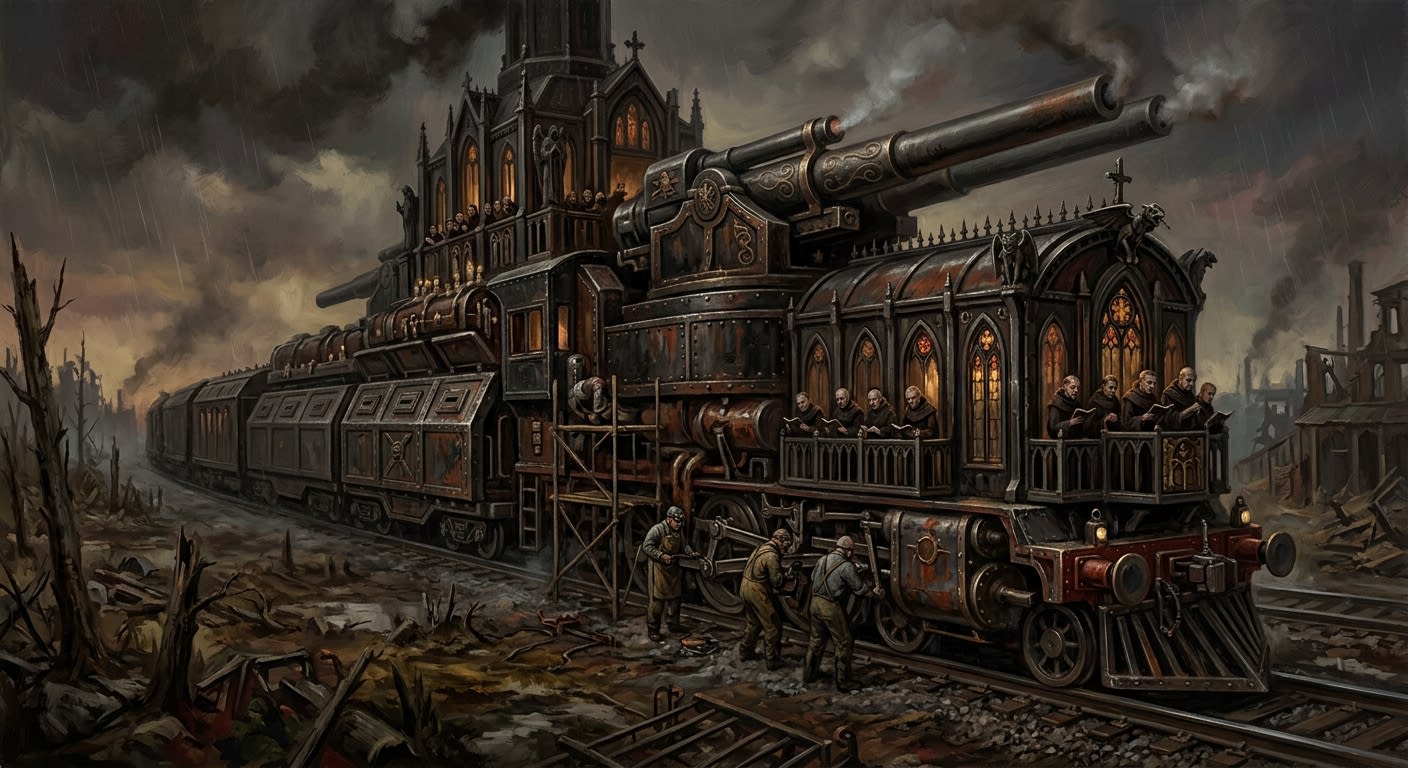
Sepulcher Locomotive
A shrine at speed, with guns already turning
Rail-bound mobile shrine and artillery train whose blessed guns, ossuary magazine, choir bay, and ruinous maintenance bills make piety arrive on schedule.
Codex Ref. XIII.1.90-001

Sergeant Elke Voss
Vigilance is cheaper than mercy, and therefore holy
Sergeant Elke Voss of Bastion-Irongate filed the A.S. 197 deposition that named Veil-Stalker vigilance as an injury without blood, thereby inconveniencing Mercy and War at once.
Codex Ref. III.2.01-059

Shadow Angle Crews
The illegal geometry that teaches skin to lie back
Shadow Angle crews are unlicensed Brand-Smith cells that alter, downgrade, counterfeit, and erase bodily tri-marks wherever lawful identity has become intolerable.
Codex Ref. XI.5.01-001
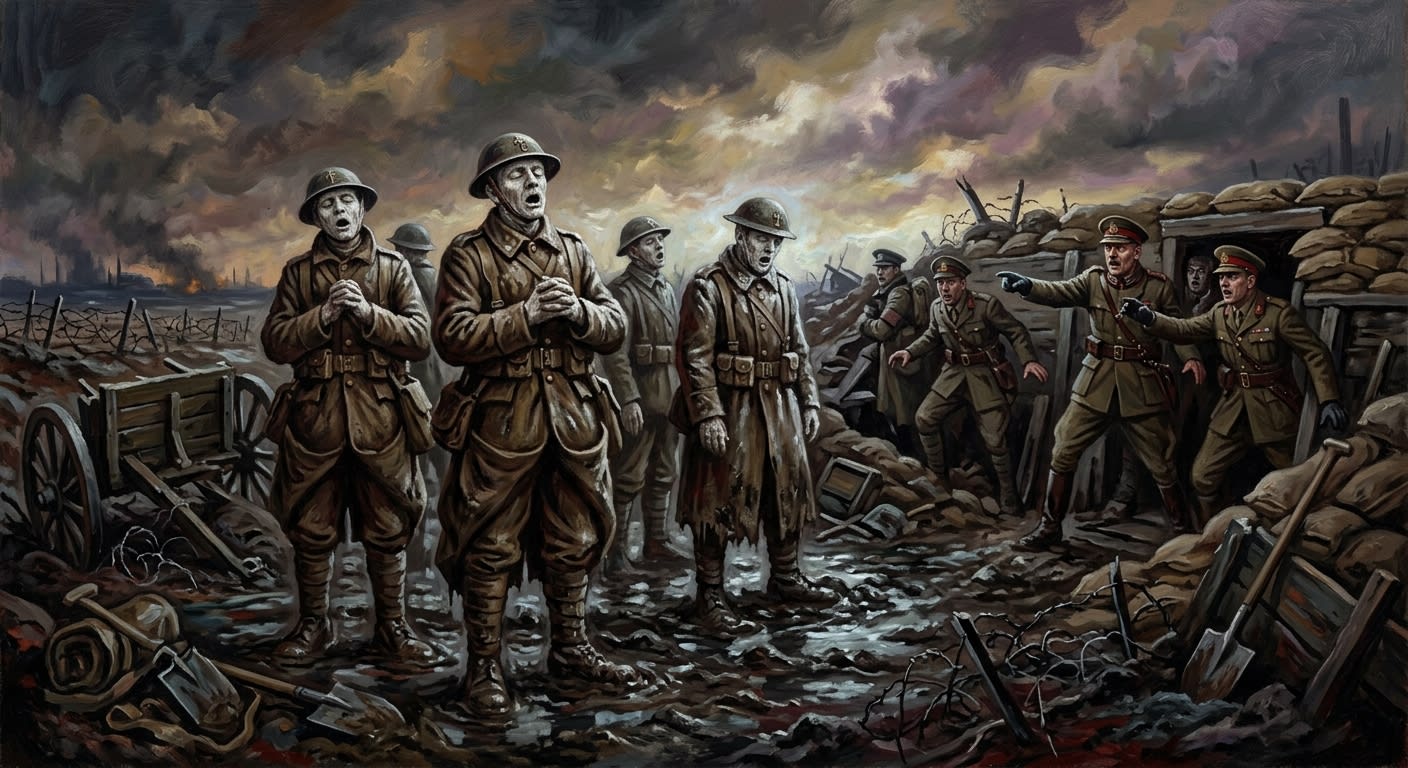
Shadow Noon Incident
When noon cast the wrong verdict and men became salt
A.S. 201 No Man's Land field disaster in which a Litany-Engineer advance under contradictory shadow was found upright, singing, booted in Flesh-Mud, and transformed into salt.
Codex Ref. VII.8.10-052
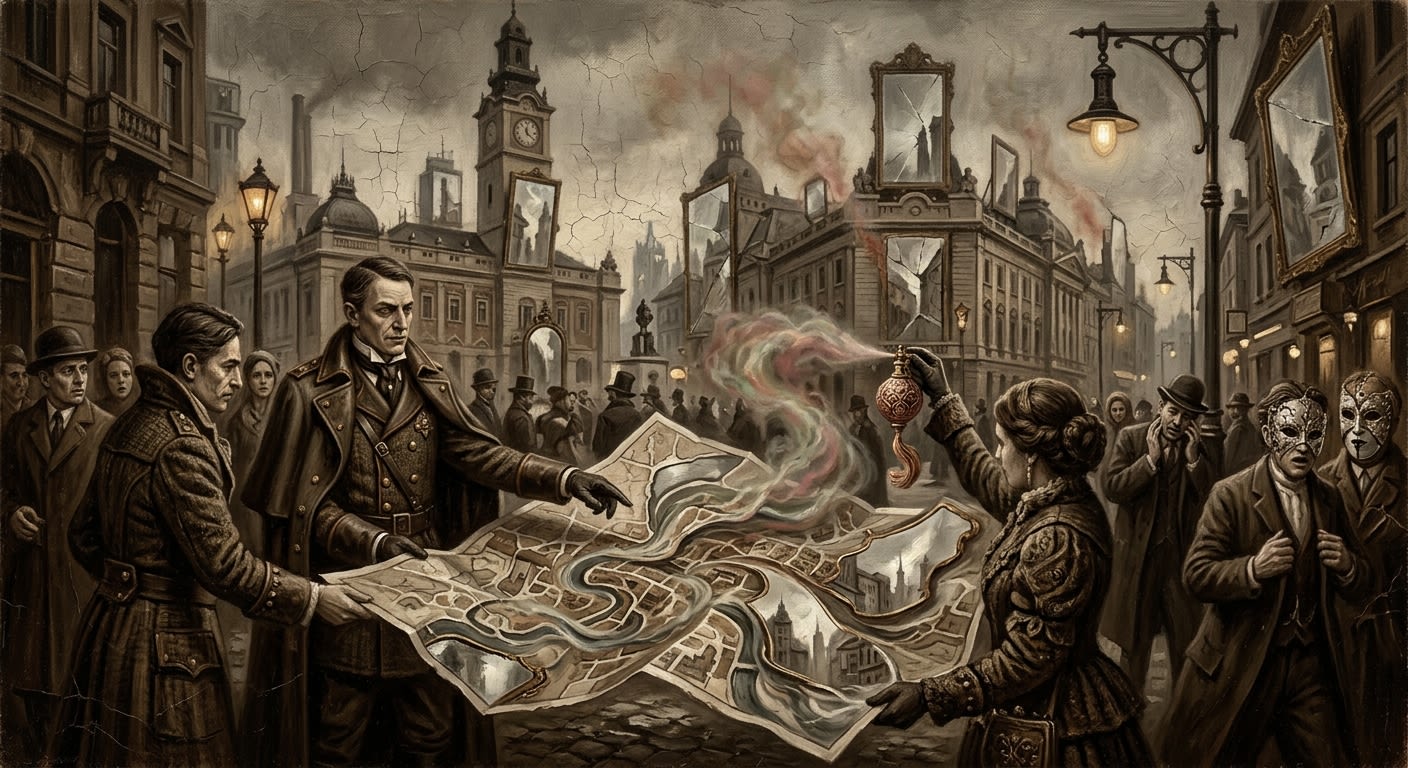
Shattered Courts
A palace that wears Belgrade like perfume wears a throat
Velkara's Shattered Courts occupy Belgrade by mirror, perfume, appetite, and refusal: a hostile palace that cannot be mapped without flattering it.
Codex Ref. II.5.06-117
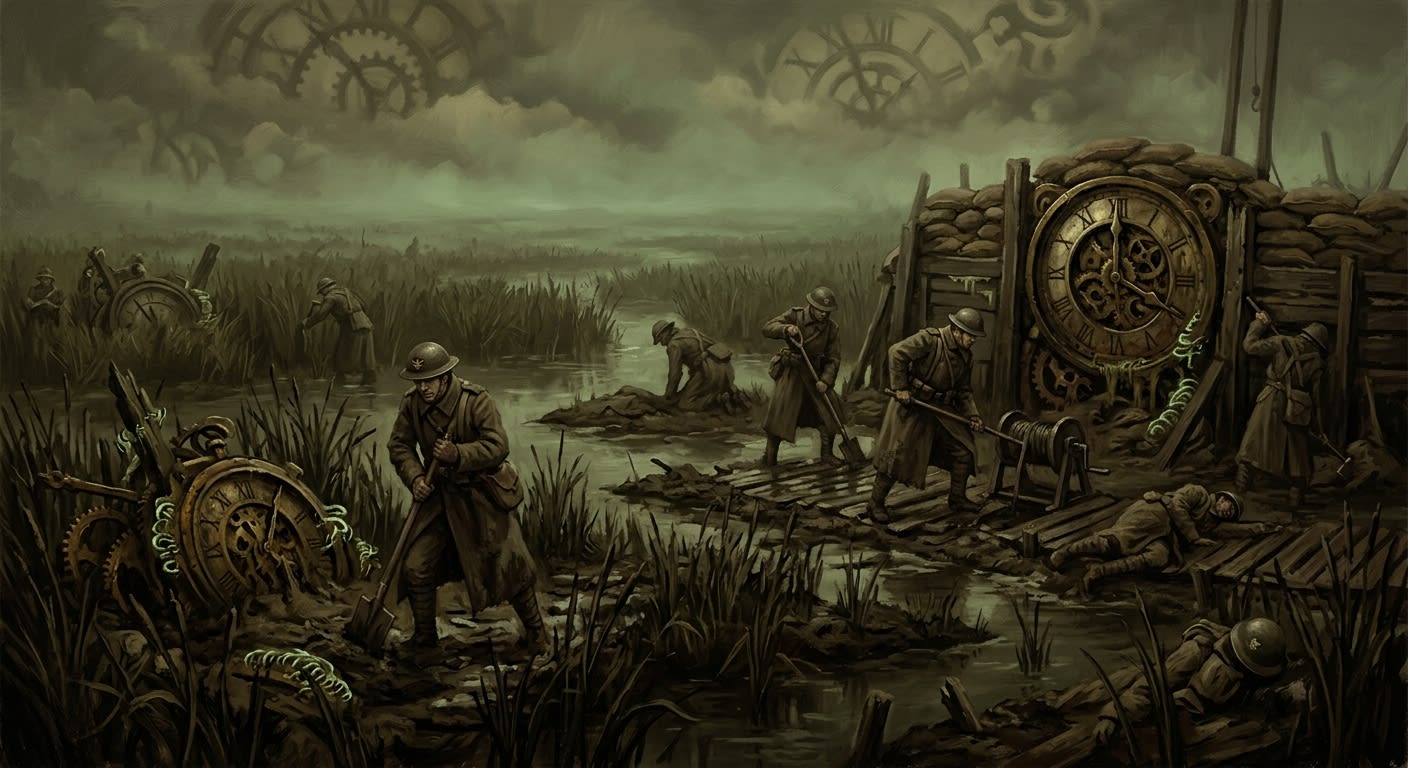
Shipka Marsh
The wet country where Sloth learned drainage
Shipka Marsh is the drowned Phocian corridor east of Bastion-Shipka, where reeds, clocks, sleep, and Syrion contest the Line by inches.
Codex Ref. II.4.08-017
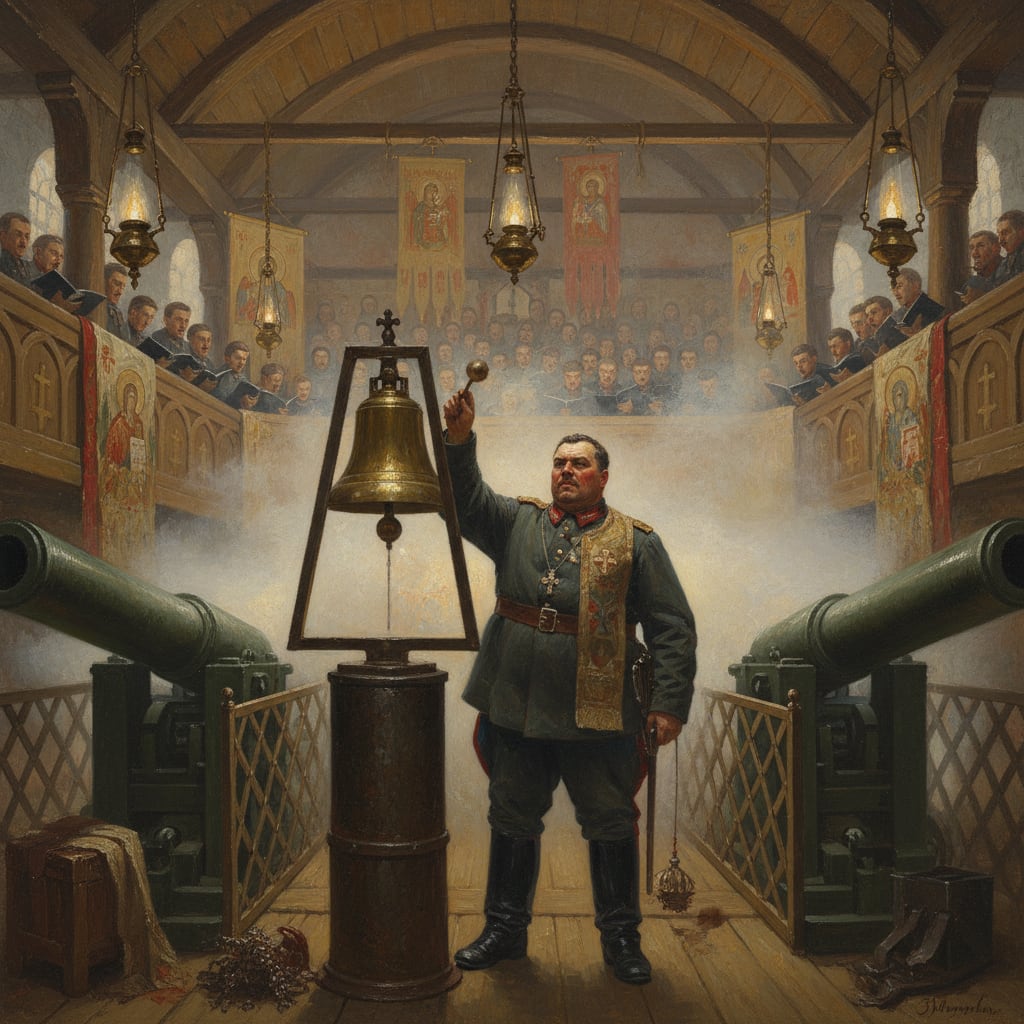
Shrine-Deck Crew
Bell, chalk, and brass — the three sacraments of the man who is too useful to die quickly
Mobile artillery and choir crews of the Synod's shrine-platforms — firing on the psalm-beat, logging every shell in a shot-ledger the Bureau calls the platform's soul, and maintaining chalk rings while the metronome bell keeps the guns from going hollow.
Codex Ref. XII.42.01-001
Siege Melters
The men who burn first, write later, and keep the wall standing long enough to be reprimanded
Impatient faction of Saint-Bone Melters who run trenchline quick-kilns, defer provenance under shelling, and seal cracks before doctrine can finish objecting.
Codex Ref. XII.20.08-001

Sister Adelhaid
A name, a correspondence, a fire, and the blessed cowardice of files
Sister Adelhaid survives as a name in a Confessarius report, attached to Marseille letters, Saint Isidore's Eve, and a bookseller's fire too clean to comfort anyone.
Codex Ref. III.2.01-151
Skopje
The bitten city keeps its markets below the teeth
Skopje fell within hours of the Sundering, then survived below itself: a bitten city of Lantern Warrens, forged papers, humming lamps, and useful lies.
Codex Ref. II.5.08-045
Sofia Filing Annex
A seminary gutted, shelved, and made merciful by neglect
The Sofia Filing Annex is a converted seminary where the Bureau of Records stores southern personnel files, impossible dates, and people too useful to diagnose.
Codex Ref. II.4.09-012

Somnolent Communion Cells
The heresy that holds hands; the Bureau that holds nothing
Bureau classification A.S. 196: Sloth-Heresy, Passive Variant. Participants link hands, face a dimmed lantern, and stand waist-deep in marsh water until dawn — producing Syrionic temporal drag the Bureau cannot explain and will not discuss.
Codex Ref. XI.6.01-001
Standing Order 14-B
The bridge learned to answer before Strasbourg finished asking
Standing Order 14-B is Brest's span-sovereign knife: seize the blank paper, halt the crossing, and make absence answer.
Codex Ref. XIII.1.14-196

Standing Order 14-W/3
The evacuation order that discovered bakeries
Standing Order 14-W/3 ordered Warsaw to become movable in A.S. 95; a century later, the city remains larger, louder, and better fed by its own disobedience than by Settlement arithmetic.
Codex Ref. XIII.1.87-095
Standing Order 22-C
No last word unfiled, no dying mouth left private
Standing Order 22-C makes the dying useful: names first, comfort second, three copies sealed before the body is allowed to cool.
Codex Ref. XIII.1.98-080
Standing Order 34-PK
The cradle confesses when the Ledger is hungry
Standing Order 34-PK makes the hidden cradle confess: missing infants become stolen soldiers, and a mother’s silence becomes evidence.
Codex Ref. XIII.1.34-158
Standing Order 77-K
Stand here, not there; the dead are bad at obedience
Standing Order 77-K draws a four-mile commandment around the Famine Pits, converting hunger into evidence and distance into doctrine.
Codex Ref. XIII.1.23-001
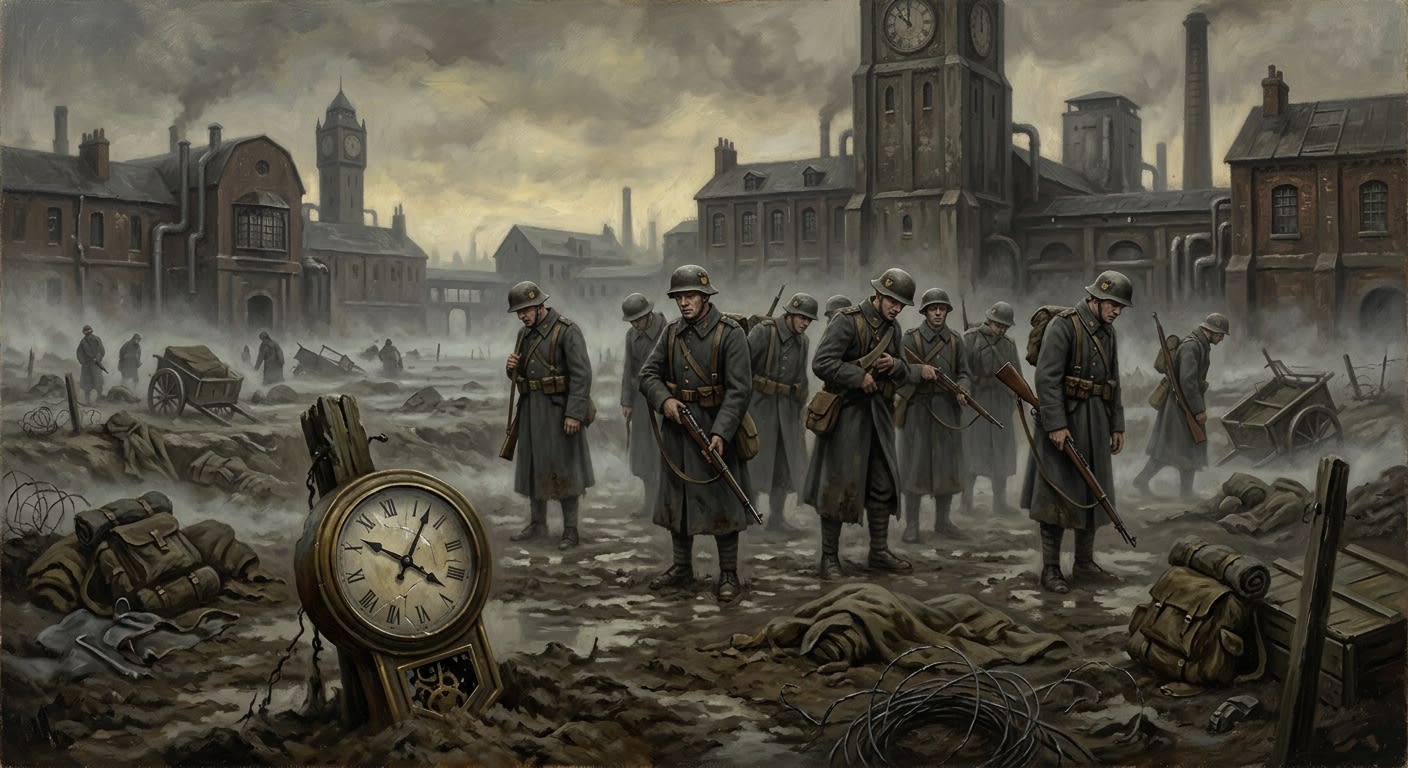
Stillness Fields
Where time sits down and calls it mercy
Syrion's fields do not stop men with walls. They offer rest, steal sequence, and let clocks become witnesses too frightened to agree.
Codex Ref. XIII.1.88-045

Stitch-Score Couriers
Where paper burns, the hem remembers the tune
Mid-rank melody-smuggling couriers who hide forbidden middle bars in cuffs, hems, vestments, infant bands, and every domestic cloth authority mistakes for harmless labor.
Codex Ref. XII.48.02-001
Strasbourg Central Orphanarium
No kin but the Synod, no cradle without a ledger
Strasbourg Central Orphanarium is Mercy's mother-house without mothers: gate, bench, tag kiln, sleep trial, placement hall, and cabinet.
Codex Ref. II.2.06-006
Superintendent Horvath
Mercy disguised as custody, filed under acceptable output
Superintendent Horvath keeps the Sofia Filing Annex running by treating damaged transfers as records worth preserving, which is almost mercy and therefore suspicious.
Codex Ref. III.2.01-151
Swiss Cantons
Where mercy climbs uphill and stops writing back
The Swiss cantons keep passes, bells, hospice beds, and the Synod's most merciful disappearances beneath snow clean enough to indict Heaven.
Codex Ref. II.2.08-201
Syrion
The fog does not advance. It waits for you to stop moving.
Fourth of the Seven, Syrion holds the Bulgarian highlands in a fog of stillness and stolen time. He does not attack. He waits while you attack yourself.
Codex Ref. IV.1.07-004
Târgu
The grave-ring town where walls learned doctrine
Târgu is the Przemyśl approach town where grave-rings house the living, walls recite through mortar, and surplus lamps taught children to glow.
Codex Ref. II.4.09-201
Târgu Child-Lamp Incident
Eleven small lights, and every Bureau suddenly blind
The Târgu Child-Lamp Incident began with surplus Engineering lamps and ended with eleven children requisitioned as battlefield light.
Codex Ref. VII.8.10-038
The Ash-Rain of Zaragoza
Where artillery made weather and fourteen children paid the grammar of “clean”
The A.S. 143 Ash-Rain of Zaragoza followed a sanctioned bombardment of a Velkara-aligned compound: three days of salt-and-milk ash, fourteen silenced children, no quarantine, and a city forced to keep trading beneath residue.
Codex Ref. VII.4.13-001
The Ashen Ascension
Mercy with a bowl, a ledger, and an appetite it will not name
The Ashen Ascension feeds before it prays, shelters before it asks, and names the dead before it claims the living — which is why the Bureau cannot burn it without admitting what the Bureau has failed to feed.
Codex Ref. XII.9.04-001
The Assignors
Men with maps, seals, and exactly enough authority to be hated
Assignors are Settlement field officers: map-carriers, permit-revokers, and escort-dependent instruments by which ink tells citizens where to stand.
Codex Ref. XII.2.06-001
The Balkans
The wound that taught Europe to count its bleeding
The Balkan wound-region, broken first by the Eastern Silence and the Sundering, then divided into Synod margins, contested corridors, Sin-General dominions.
Codex Ref. II.6.05-045
The Black Census of Metz
Four hundred and eleven soldiers, one mother, and the arithmetic that broke denial
The Black Census of Metz turned Ash-Mothers from trench epithet into Classification 7-F after four hundred and eleven captured Thralls were traced to one dead woman whose remains held an enemy bastion together.
Codex Ref. VII.4.14-001

The Bone-Lattice Warrens of Black-Snow Lor
Where the dead are structural and the living pay by the breath
Frontier storm-shelter accreted into a town on the Carpathian edge of the Line — where the air is taxable, the architecture is anatomical, and the Bureau of Alchemical Standards has had a classification pending since A.S.
Codex Ref. II.4.08-002
The Book of Promise
The child is named, measured, forecast, and gently confiscated
The Book of Promise is the Synod's vocational pre-allocation ledger, where baptism becomes forecast, childhood becomes collateral, and hope receives a quota mark.
Codex Ref. XIII.1.22-001
The Broth Riots
The hungry asked for food and received laws
The Broth Riots of A.S. 112 began with thin soup and ended with rifles, saints, Ledger Laws, and the Synod's discovery that hunger becomes obedient once measured.
Codex Ref. VII.8.10-112
The Calibration Choir
Three hundred and twelve licensed throats between fuel and opinion
The Calibration Choir keeps Brast's chrismole obedient: three hundred and twelve licensed throats, one fourth-bell hymn, and machines with opinions.
Codex Ref. VIII.6.02-001
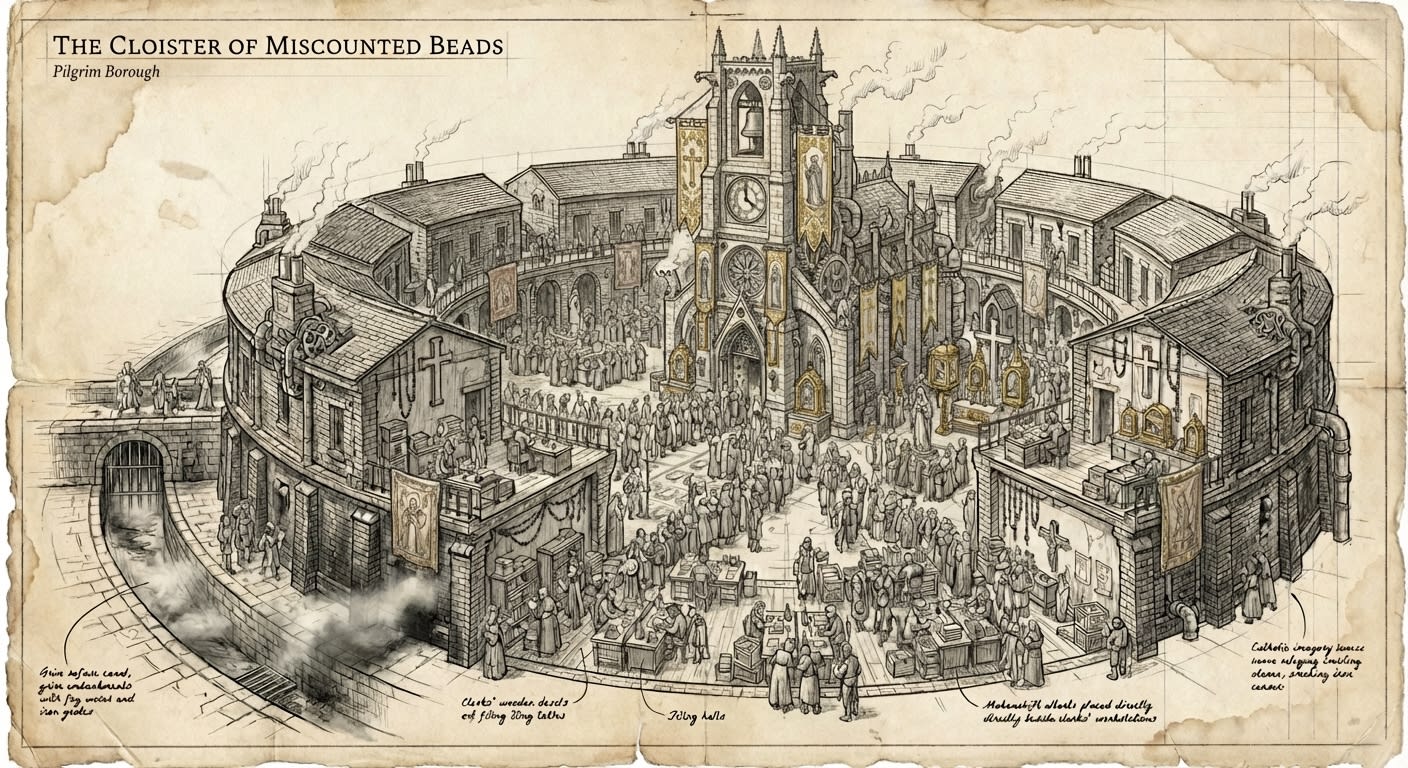
The Cloister of Miscounted Beads
The Bureau does not distinguish between mercy and procedure. Both produce the same paperwork.
Strasbourg's pilgrim processing facility, where six thousand souls await bead reconciliation, the dead reappear on intake rosters, and the Bureau of Records declines to call any of it a problem.
Codex Ref. II.2.06-001
The Concordat of Strasbourg
The A.S. 90 constitutional settlement
The binding of France, Iberia, and the Rhineland into one sacramental polity — the act that turned a wartime council into a continental throne and adopted the Synod's calendar retrospectively.
Codex Ref. III.1.02-003
The Confessor-Booth Clerk
The booth does not forgive — but it files. A survey of the twenty-two thousand stamps that keep the Synod clean.
Twenty-two thousand booths; one stamp; no absolution. The Confessor-Booth Clerk processes sin as throughput, files guilt as data, and keeps the Synod's spiritual economy solvent — a contemporary survey by Hieromnemon Valerius Drax, A.S. 201.
Codex Ref. XII.9.01-001
The Dead
What the filing system remembers, and what the Bureau has declined to ask
The Bureau maintains death is a clerical event. The dead, by the Bureau's own monitoring, appear to disagree. Drax files the discrepancy.
Codex Ref. VI.2.01-001
The Doctrine of Enough
The crust is counted because the soul is counted first
The Doctrine of Enough teaches the hungry that what is sealed is sufficient, and that desire beyond allocation gives Kargath a mouth.
Codex Ref. VI.3.01-002

The Heartlands
The safe country, provided one defines safety as distance from teeth and proximity to stamps
The Heartlands are the Synod's safe interior only by infantry arithmetic: Zones 1–3 feed the Line with bread, steel, bodies, bells, paperwork, and bones.
Codex Ref. II.0.02-201
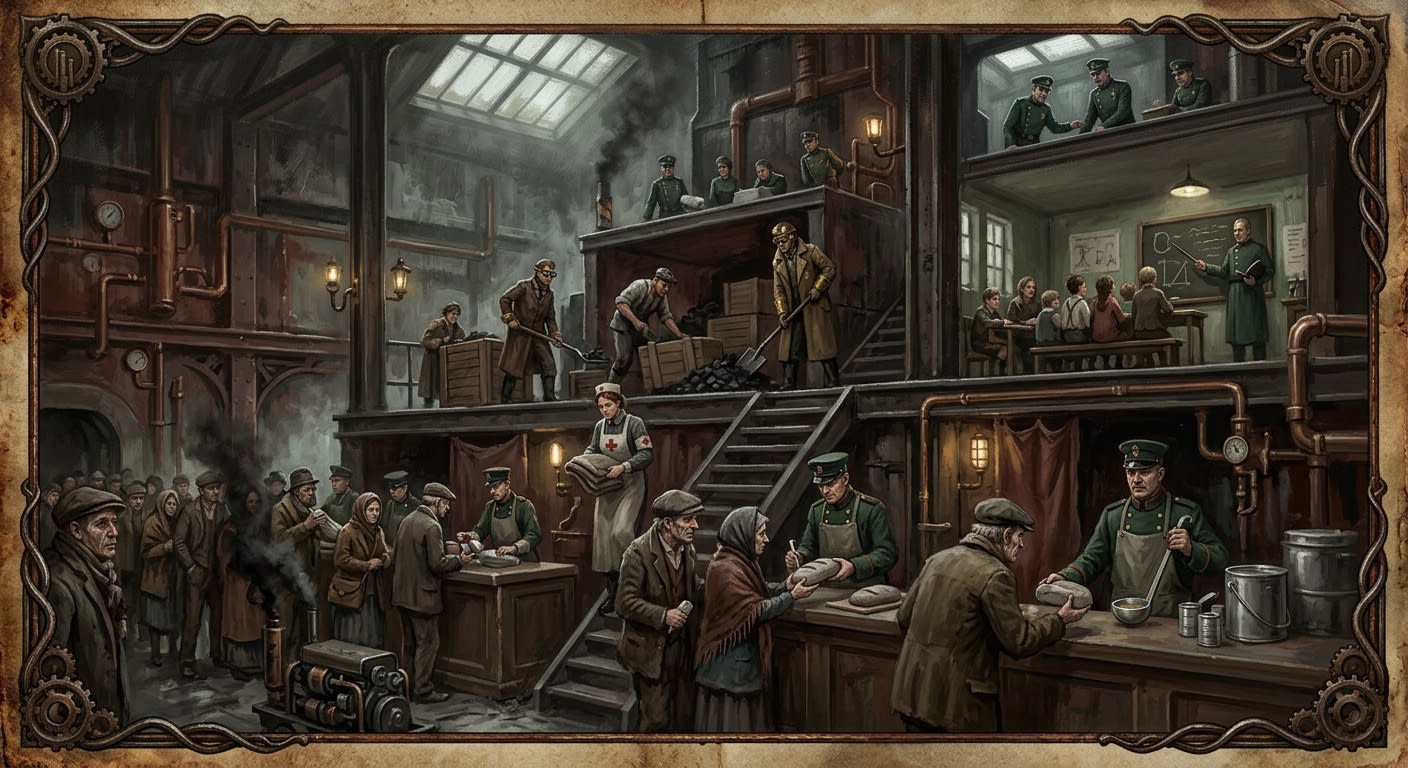
The Hierarchy of Need
Hunger is the sermon Kargath learned to serve hot
Kargath's cults do not begin with horns, but with bread. The Bureau calls their five stations a hierarchy. The hungry call them provision.
Codex Ref. IX.2.01-001
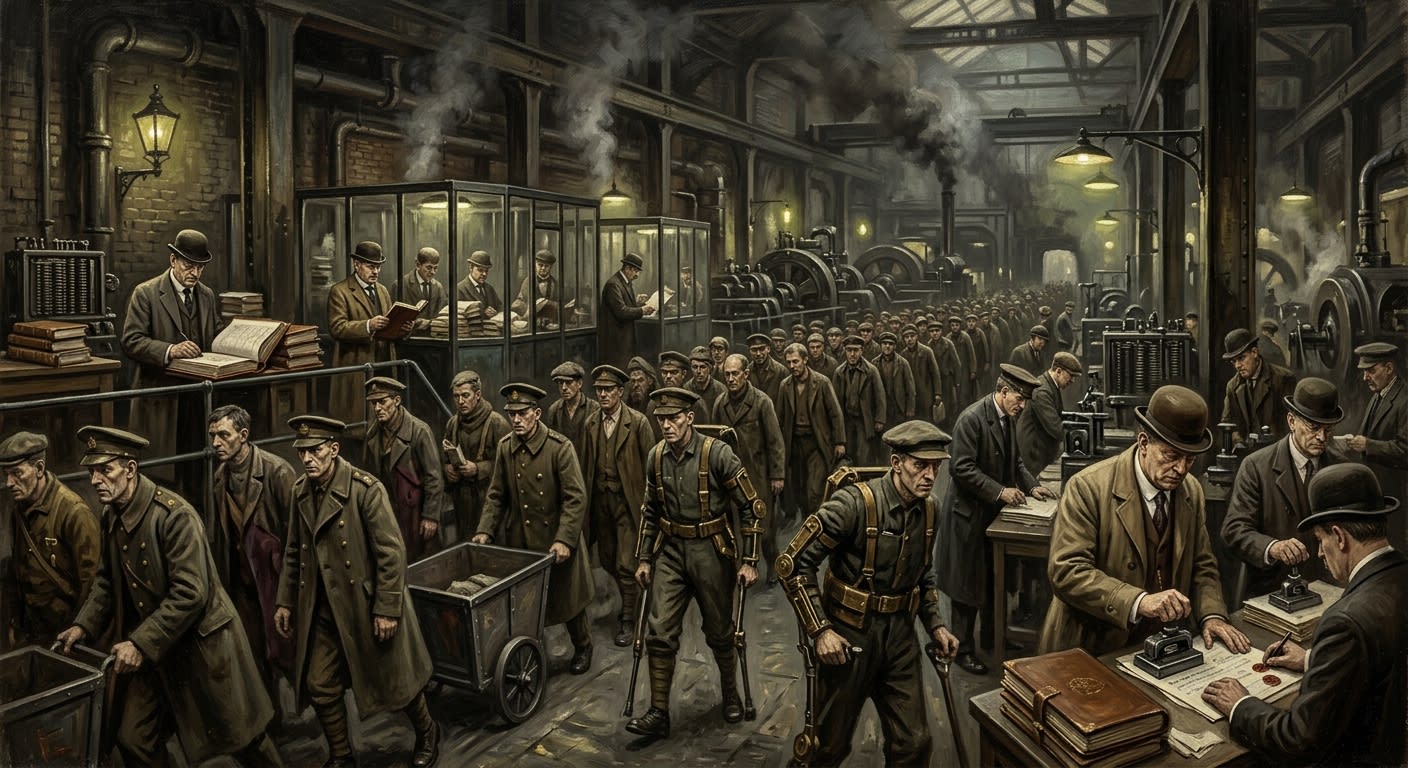
The Hollowing
When the hand remembers the rite and the soul declines attendance
The Bone-Stampers' private name for vocational faith-depletion, by which conviction thins, seals bite less deeply, and the dead resume their education in motion.
Codex Ref. XIII.1.45-001
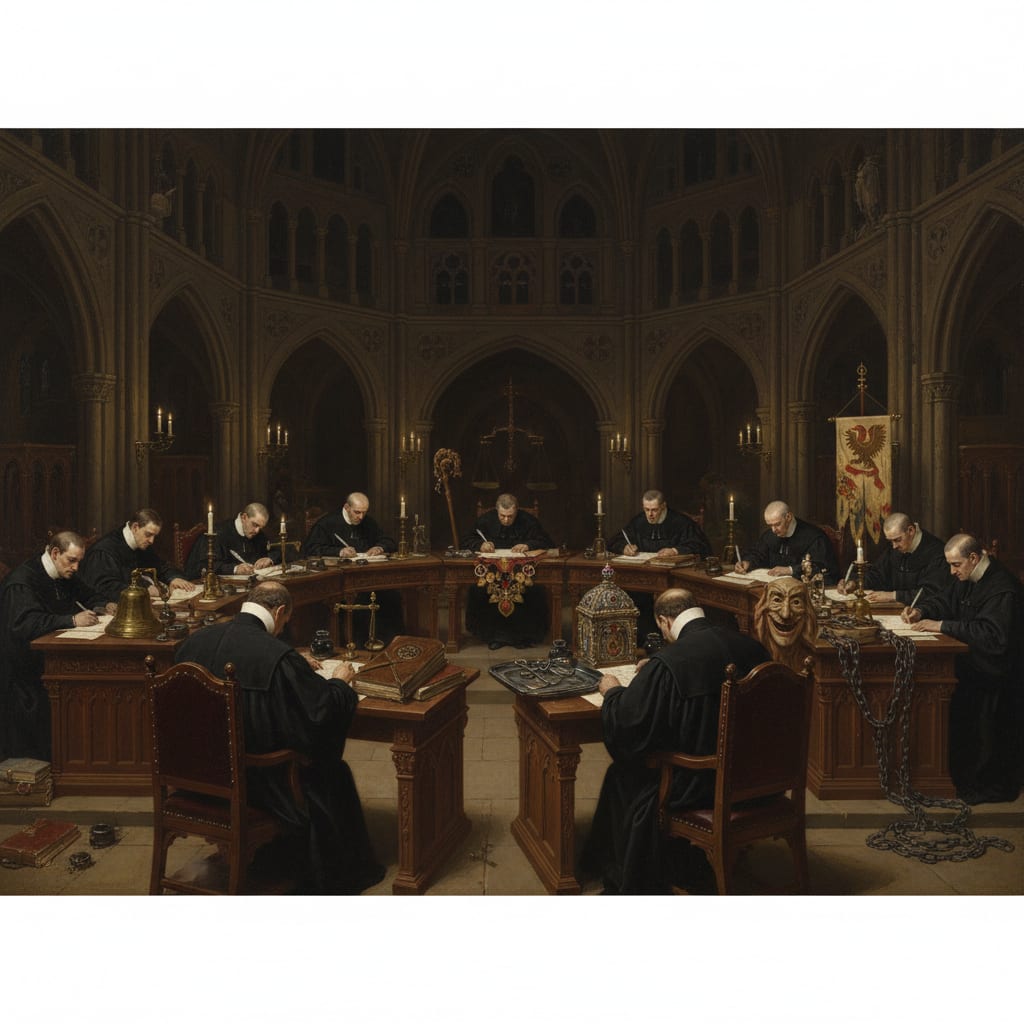
The Holy Bureaus
Twelve Instruments of Providence, or Thirteen If You Count the One That Does Not Exist
The twelve sacred organs through which Strasbourg bends a continent to its will. Each Bureau claims a charism of governance descended from the Apostolic Sundering. Their clerks are legion, their archives endless, their contradictions — by design.
Codex Ref. III.3.01-001

The Inheritors
Debt becomes dynasty when patience learns to wear keys
Highest confirmed tier of the Ten Thousand Keys cult, the Inheritors preserve debt across bloodlines until obligation begins to look like inheritance.
Codex Ref. XI.2.02-001
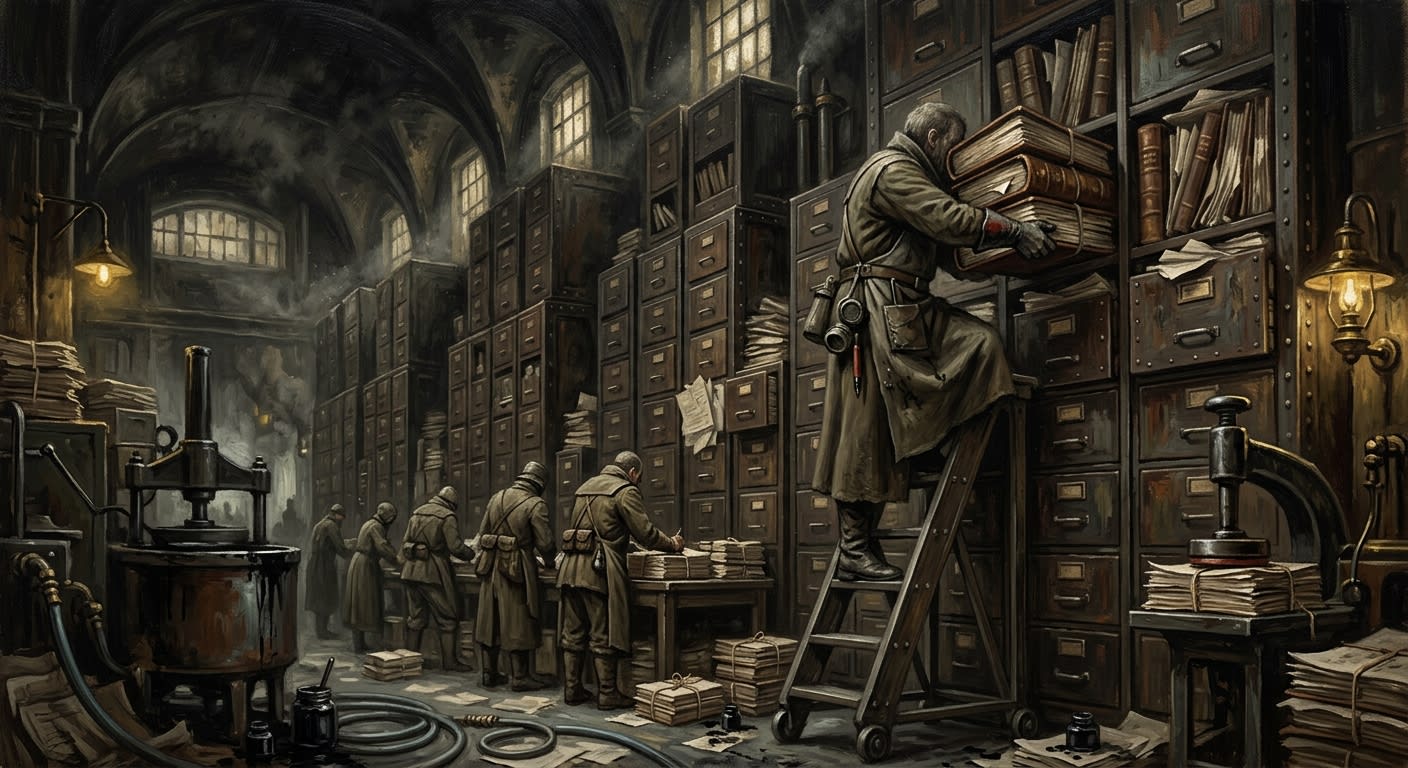
The Ledgers of Self
Identity, accepted provisionally until the next contradiction
At Bastion-Irongate the self is filed in triplicate, because Morwen steals what is unfastened and Strasbourg fastens with ink.
Codex Ref. XIII.1.01-002
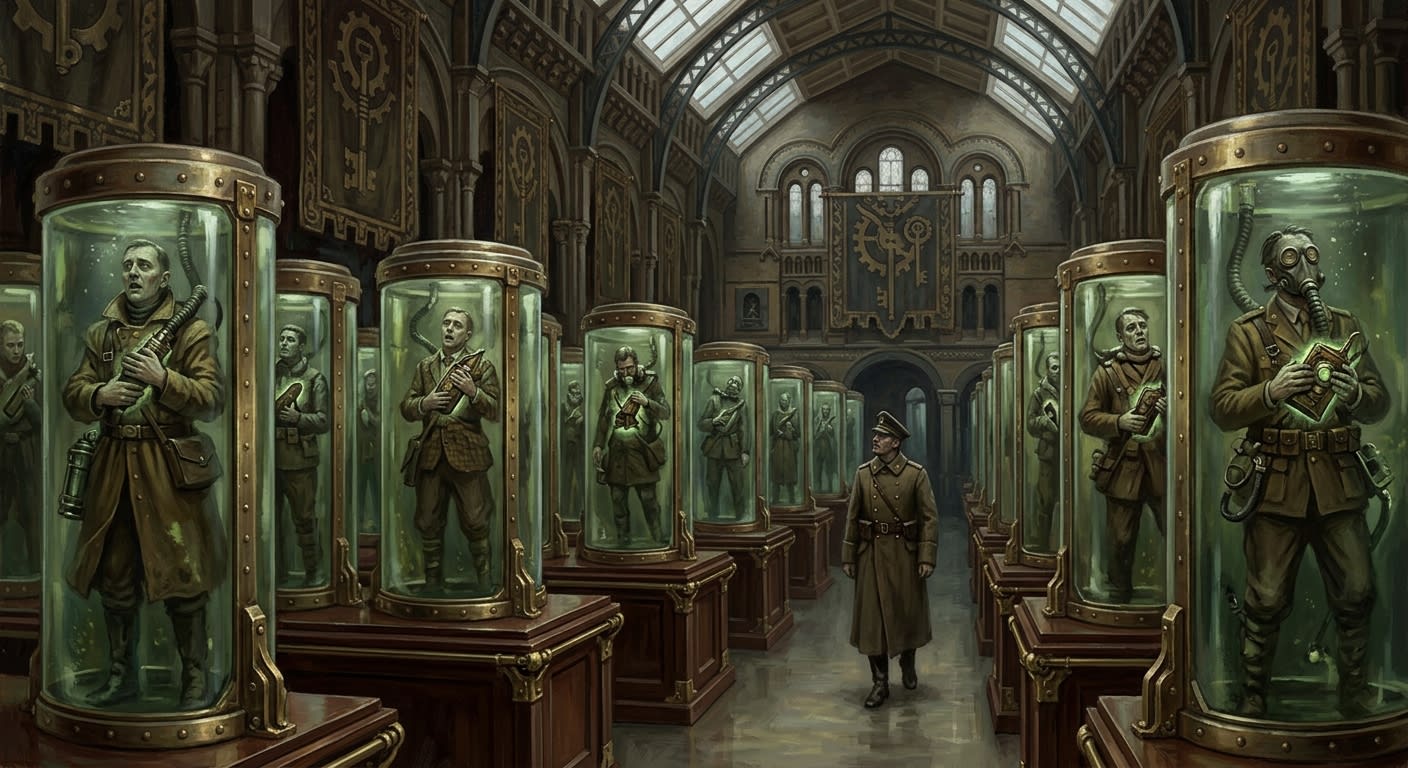
The Locked
The collector becomes the last object collected
Former visitors of the Vault of Ten Thousand Keys, the Locked hold the thing they came to find and remain alive behind glass, arranged as Greed's museum.
Codex Ref. IV.1.07-003
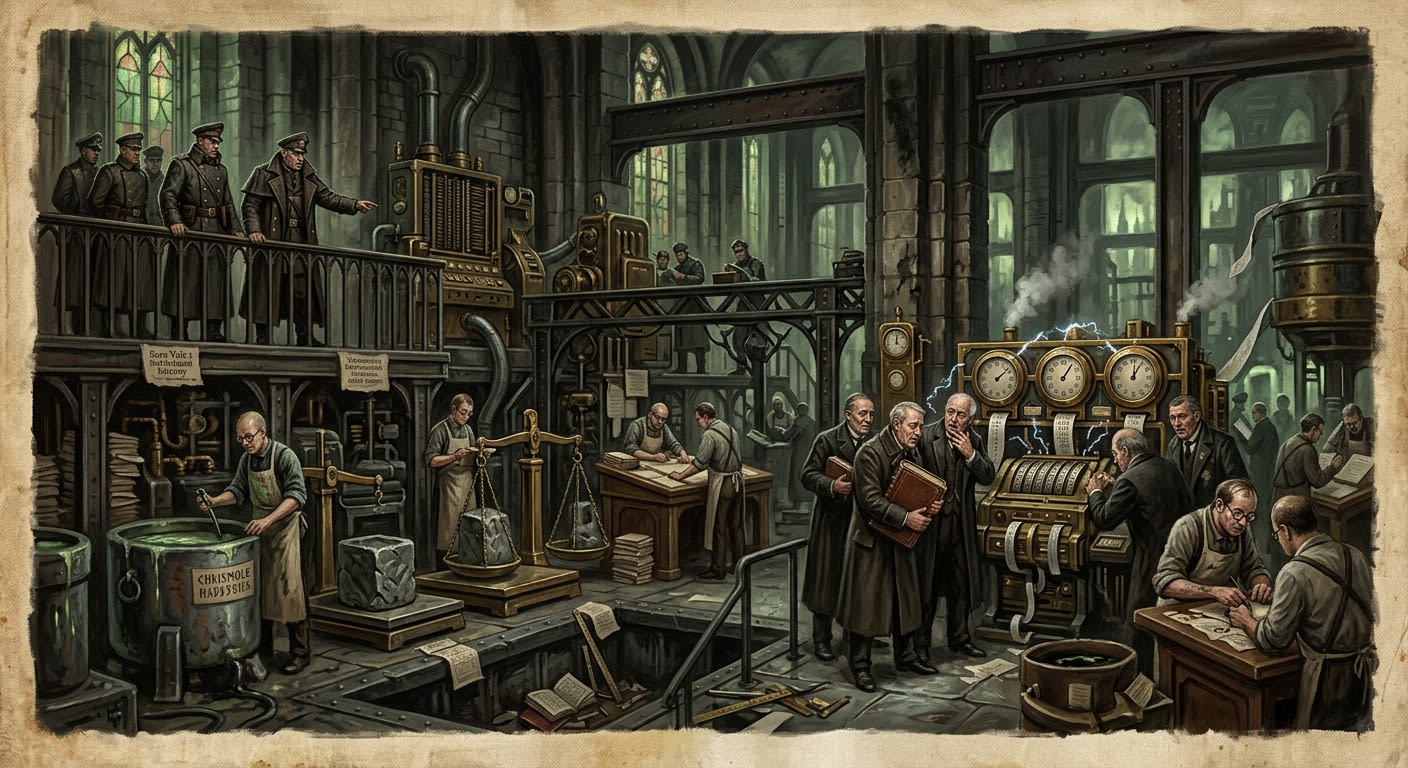
The Manifest Court
Where a drum becomes lawful and arithmetic learns the rope
The Manifest Court of Brast counts chrismole into legality: weigh-bridges, wax tables, variance pits, missing gallons, Sorn Vale's balcony, and the sacred terror of a number disagreeing with itself.
Codex Ref. XIII.1.93-090
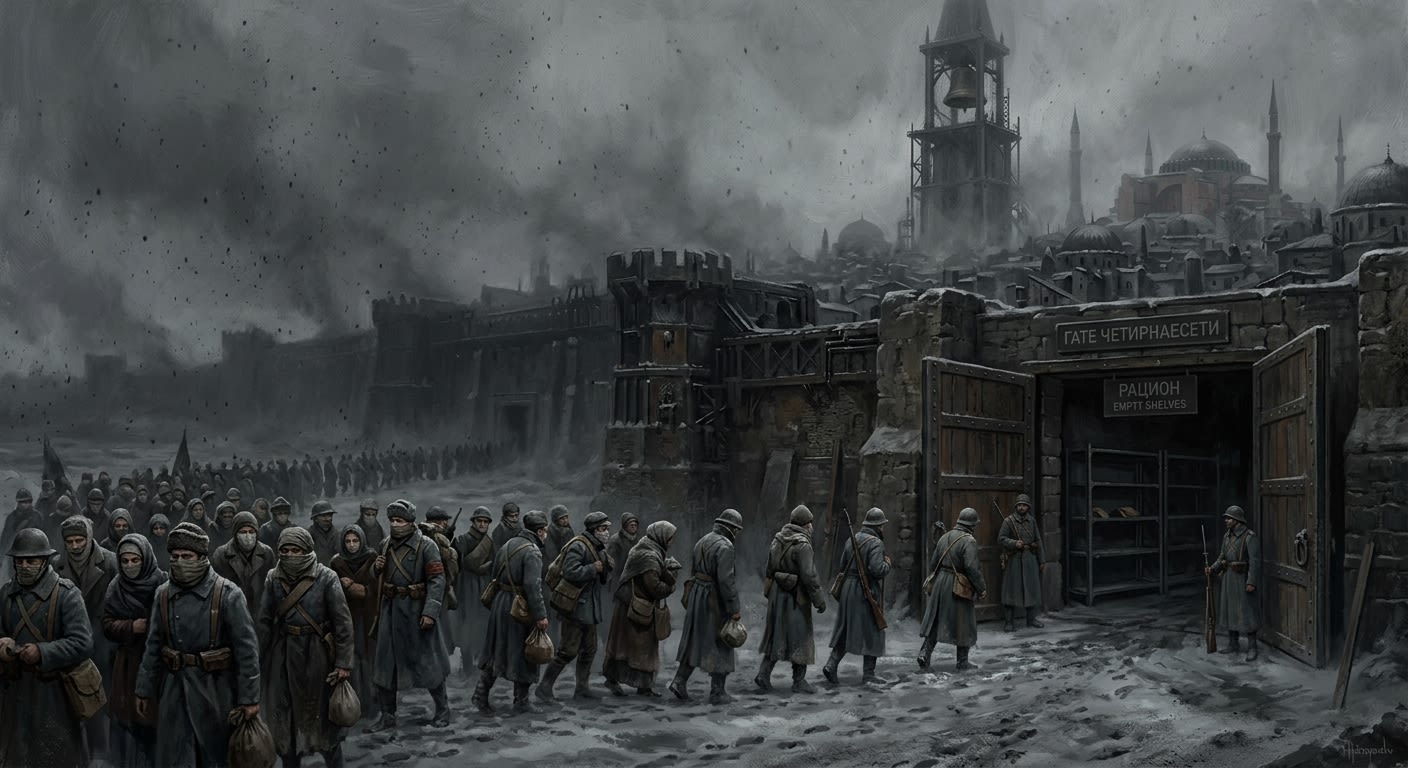
The Ninth Bell Famine
The bell tolled. The bread did not arrive. The Bureau classified this distinction later.
Sixty-eight thousand dead. Nine months of ash. The ninth bell tolled on time. The bread did not arrive. The Bureau of Rites calls it a refining tribulation. The refined are in the walls.
Codex Ref. VII.5.01-001
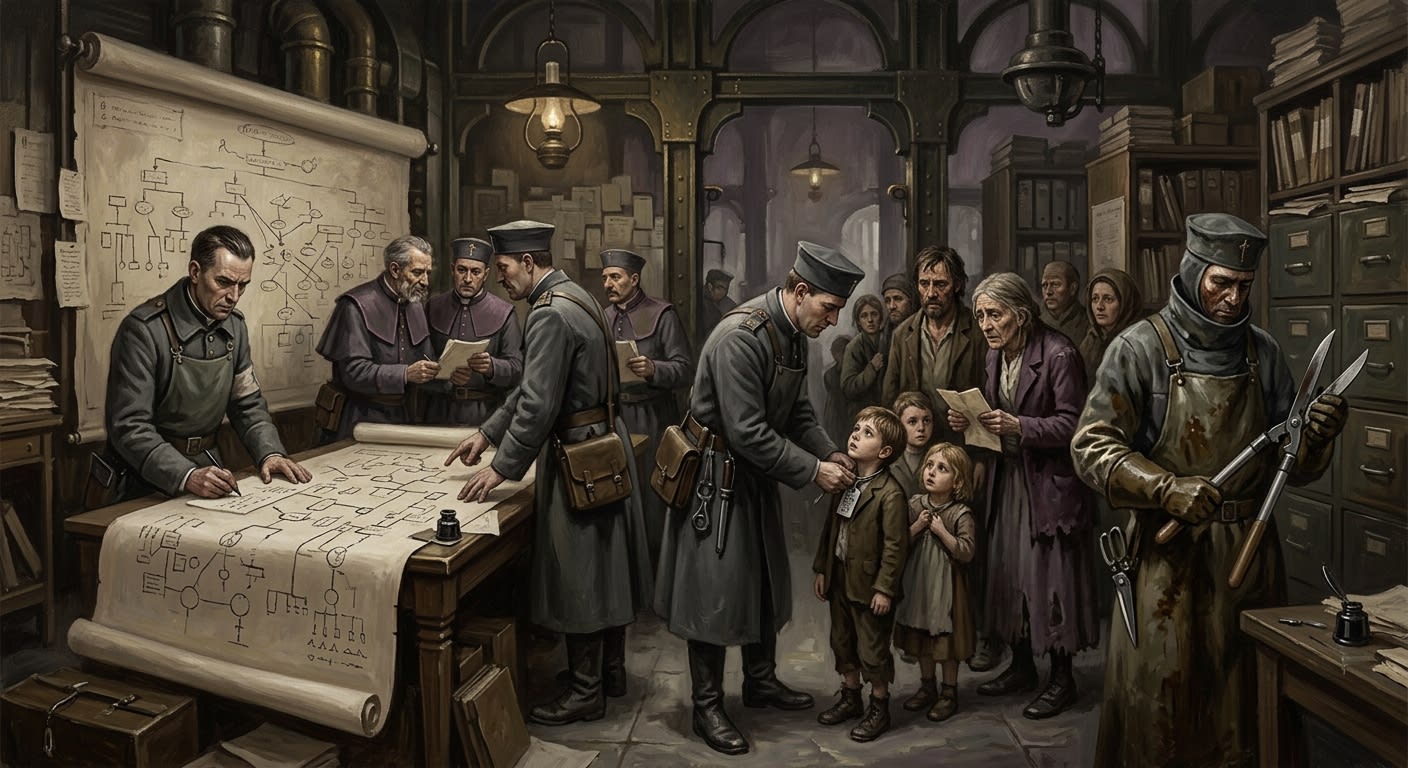
The Order of the Root
Where family trees are pruned with forms, cuffs, and holy shears
The Order of the Root is the Synod's hereditary-contamination apparatus: kinship charts, child tags, bloodline review, and mercy sharpened into pruning shears.
Codex Ref. XI.1.05-001
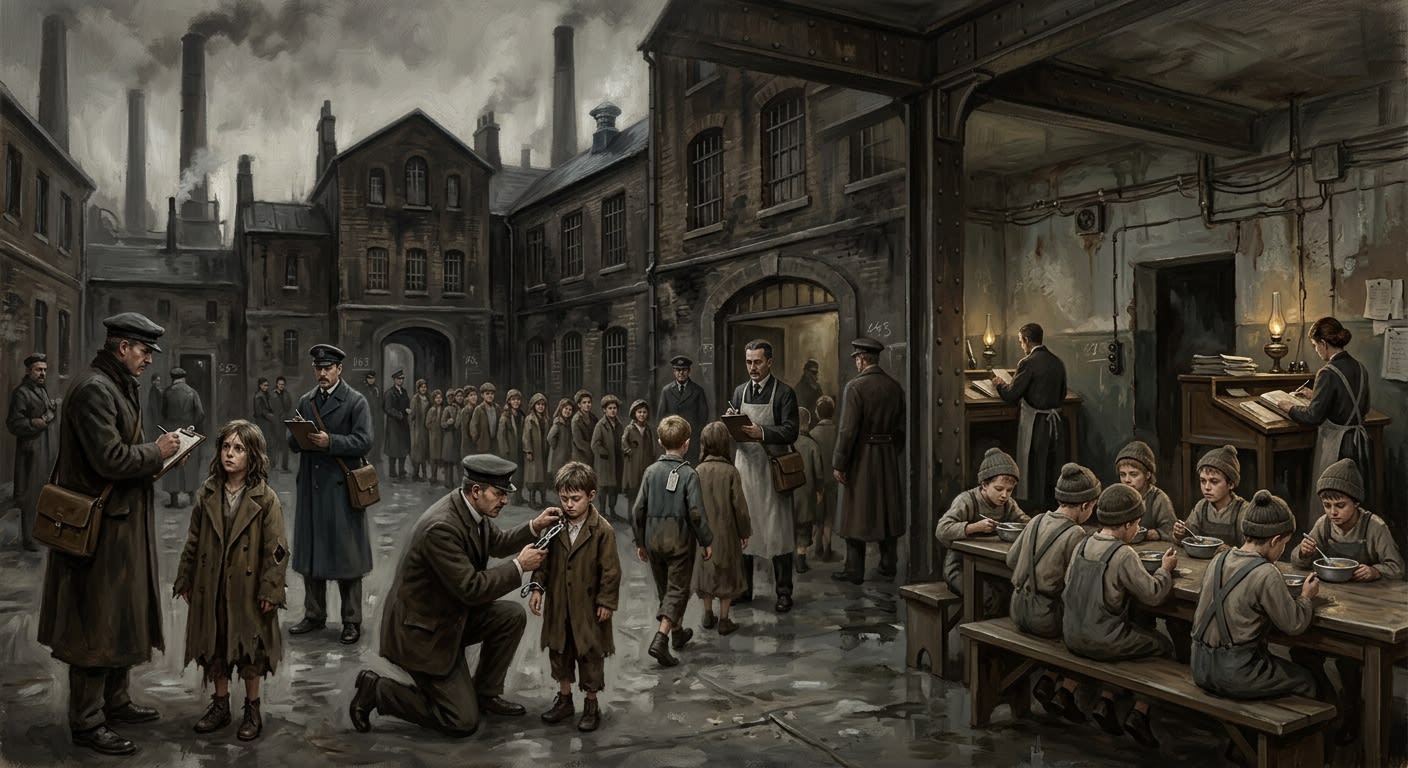
The Orphanarium
Mercy with hinges, locks, soup, and a tag cabinet
The Orphanarium receives children without acceptable custody and returns registered minors: washed, renamed, tagged, fed, placed, and corrected until Mercy can invoice itself.
Codex Ref. II.2.06-005
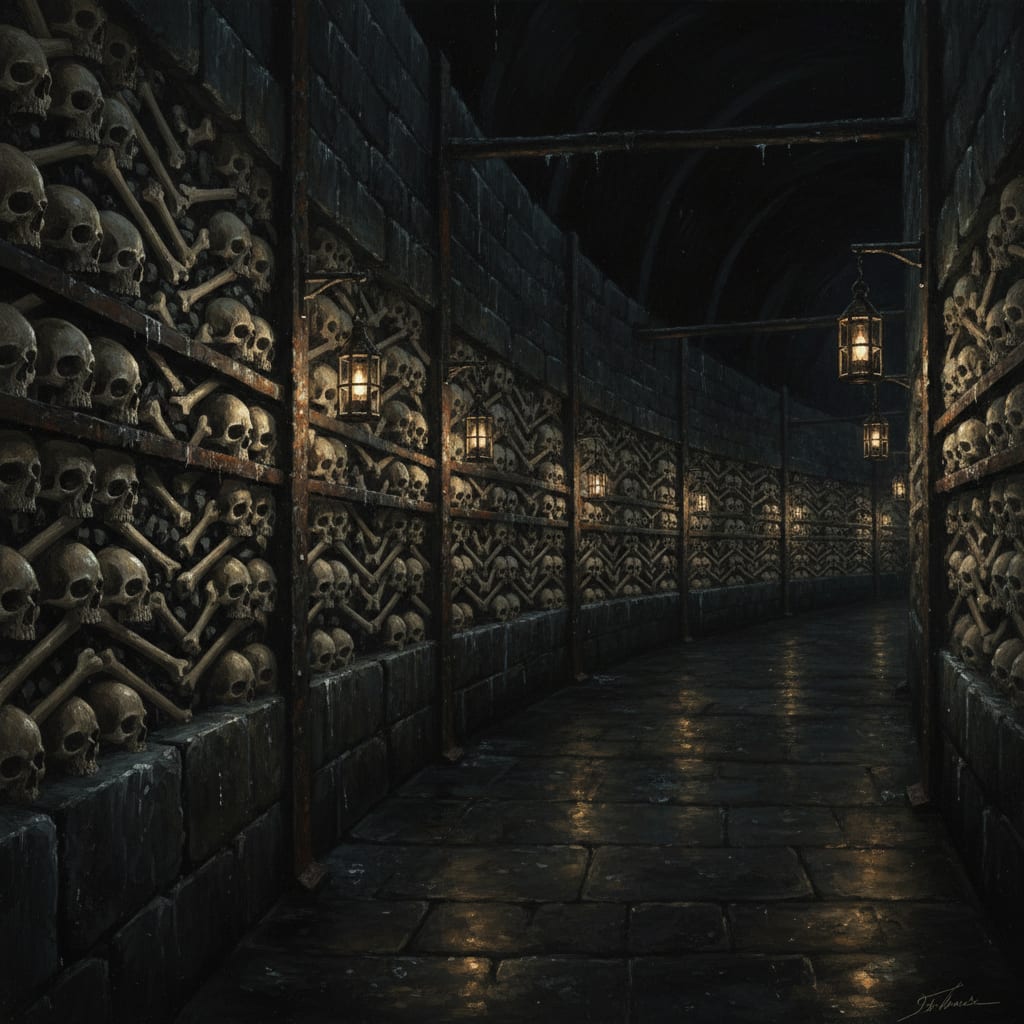
The Ossuary Rings of Bastion-Constantinople
Six walls of the dead, holding the city of the living together
Six rings of catacomb-fortification sunk into the Bosphorus headland — begun A.S. 47 when armies ran out of mortar and substituted femurs, expanded with every war dead since, administered by a Mother-Cryptor who knows 46,312 urns and sleeps facing away from the innermost ring.
Codex Ref. II.4.10-002
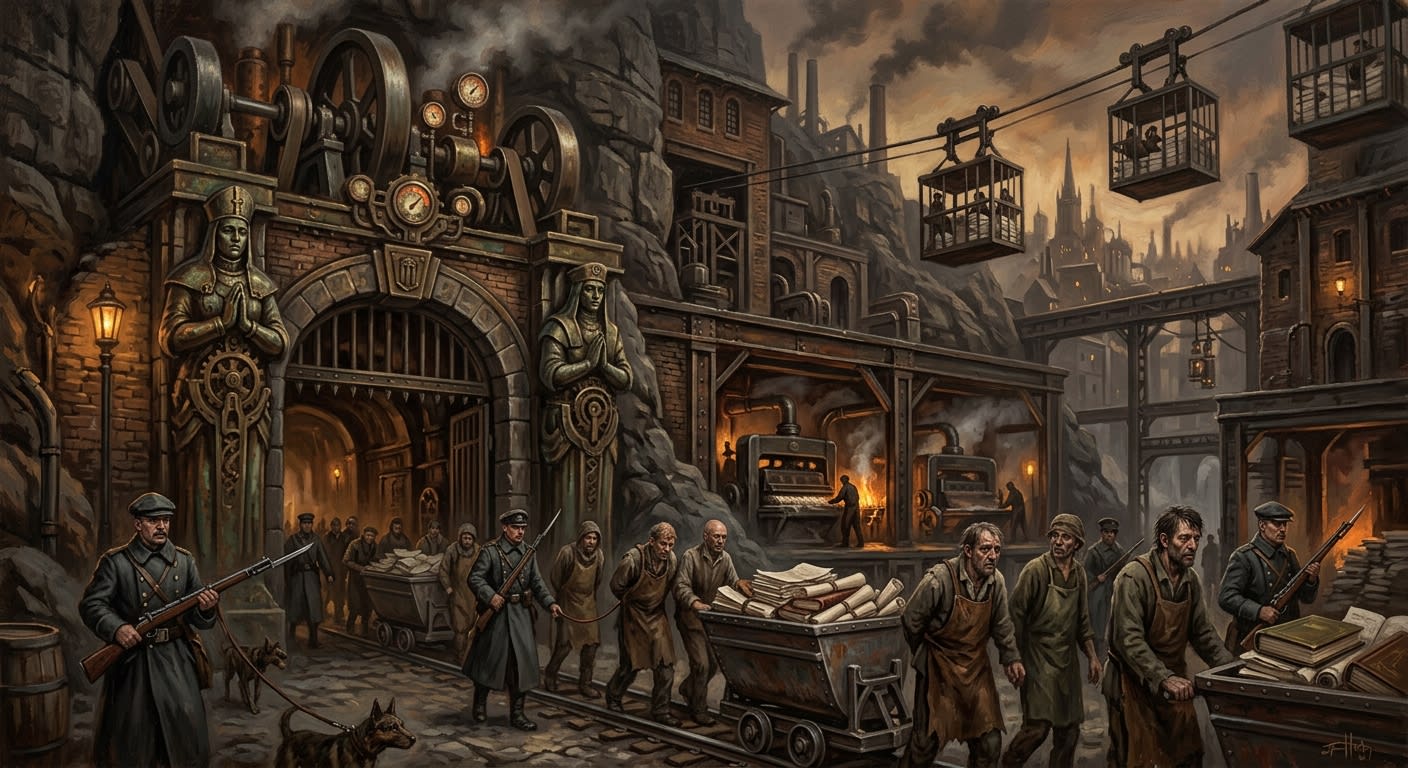
The Paper Mines of Ulm
Where forbidden minds are pressed into obedient sheets
The Paper Mines outside Ulm turn condemned scholars, clerks, witnesses, and families into archival stock, redaction vellum, penitential forms, and troublingly warm sheets.
Codex Ref. II.2.06-002
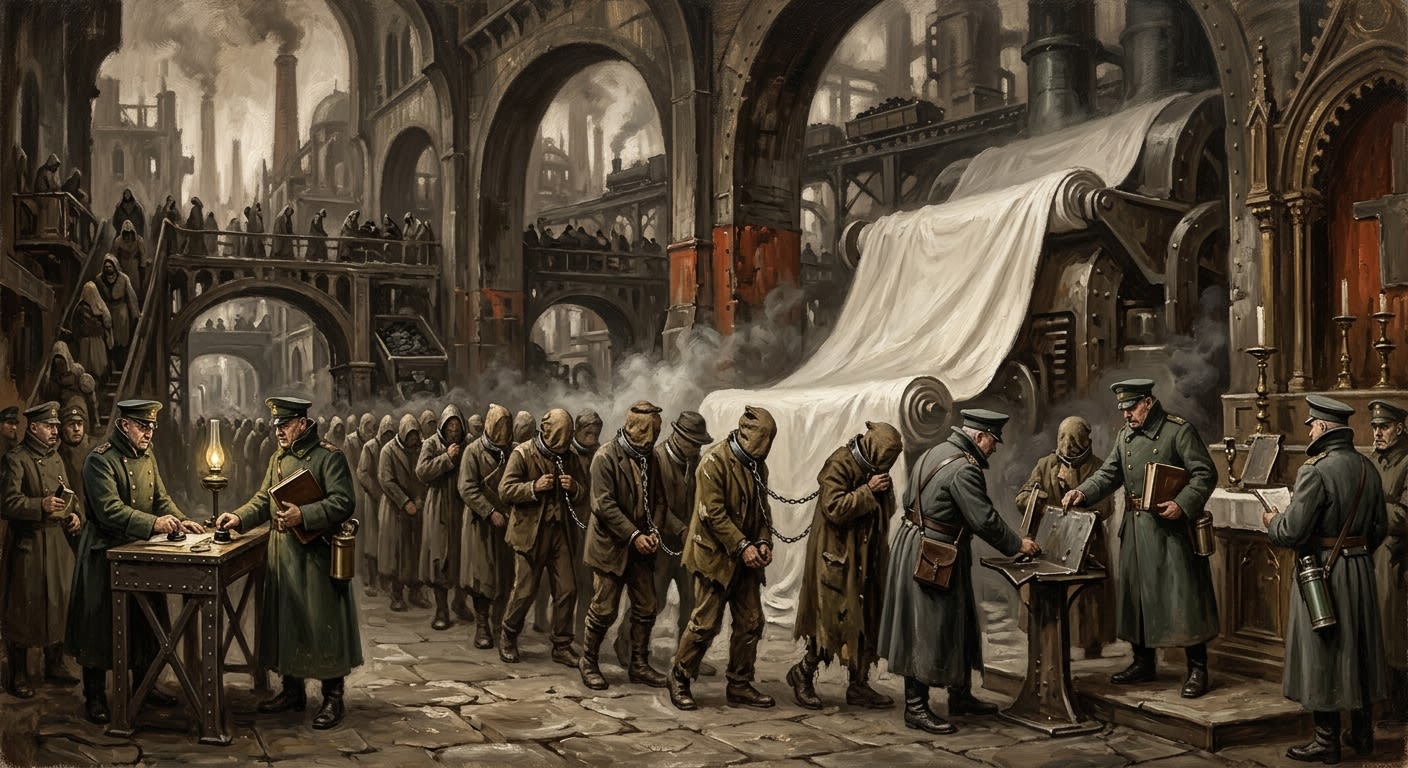
The Peregrine Jubilee
The road renews itself with chains, flags, and profitable terror
The Peregrine Jubilee is Pilgrimage's decennial month of chained penitents, route audits, shrine downgrades, guild dissolutions, confession harvests, and public white cloth laid over very practical terror.
Codex Ref. VII.3.03-001
The Procession of Tongues
One hundred and seven consecutive years of doctrine tablets, iron nails, and fixed cobblestones — the [[bureau-of-purity|Bureau of Purity]]'s clearest argument, and the one requiring no rebuttal.
The Bureau of Purity's ceremony of ambulatory confession — heretics with tongues nailed to doctrine tablets, marching across Prague's Charles Bridge since A.S.
Codex Ref. VII.6.01-001
The Ragged Host
Where the remainder learned to kneel and the kneeling learned to burn
The Ragged Host is the condemned mobile movement that treats unaddressed harm as a public charge before the Creator — poor, armed, improvised, and more dangerous than any mob because it keeps records.
Codex Ref. XII.9.02-001
The Republican Guards
The philosophers wrote the sentence; the Guards added punctuation
The Republic's armed hand wore blue-grey, carried law over the heart, and proved that unbelief does not remain in books. It drills.
Codex Ref. I.1.05-001

The Rhine Corridor
Damp procedure, counted backward from every bridge
The Rhine Corridor is the Synod's damp procedure: a Zone 2 logistics artery, mortuary road, ferry court, heresy school, and billable proof that movement can be made afraid.
Codex Ref. II.2.08-202

The Saint Veritas
Truth went below and returned with courtesy in its teeth
A Bureau of Records supply galleon vanished during the Silence of Harbor Lamps and returned six months later with its crew intact and its log ruined by invitation.
Codex Ref. V.2.03-001
The Saint-Bone Melter
The wall is the only sermon the Enemy has ever been forced to hear
The artisan who feeds the bones of saints to the kiln and receives in return the mortar that holds the Sagittal Line together. The arithmetic is simple and brutal: a femur in a reliquary inspires; a femur in a wall holds.
Codex Ref. XII.40.01-001
The Screaming Coin
The smallest transaction Hell ever notarised
A coin-like anomaly from Constantinople's Foundry Quarter passes through lawful hands, screams at transfer, and returns after every recorded destruction.
Codex Ref. V.2.01-001

The Sealed Testimonies
Witness paper under restraint, because memory bites when shelved badly
First silence of the Vault of Silences, holding Atheron's emergence folios, the Mürren deposition from Debrecen, and the Iron Plains survivor volume.
Codex Ref. XIII.1.48-001
The Self-Devoured
Low direct threat; extreme proximity hazard; and the Bureau declines, for now, to rule on whether there is anyone inside
Kargath's sixth taxonomic class: demons that eat themselves, regenerate, and eat themselves again. The cycle has no pause. The Bureau classifies direct threat as Low and proximity threat as Extreme, and has not yet issued a ruling on whether anyone is home.
Codex Ref. IV.1.07-006

The Slumber-Hulk
A building that remembered how to walk — and what it was built to crush
Syrion's heaviest deployed asset — a chain-bound mass of compressed flesh and arrested time, classified HEAVY SIEGE (SUB-TYPE: TEMPORAL) by the Bureau of War. It does not strike. It approaches.
Codex Ref. IV.4.01-001
The Synod Task Force
On the Armed Enforcement of Administrative Truth
The Synod's answer to contested truth: temporary, armed administrative cells dispatched by warrant when ordinary procedure has failed, become complicit, or begun devouring its own paperwork. They preserve facts powerful offices would prefer misplaced.
Codex Ref. IV.7.12-001
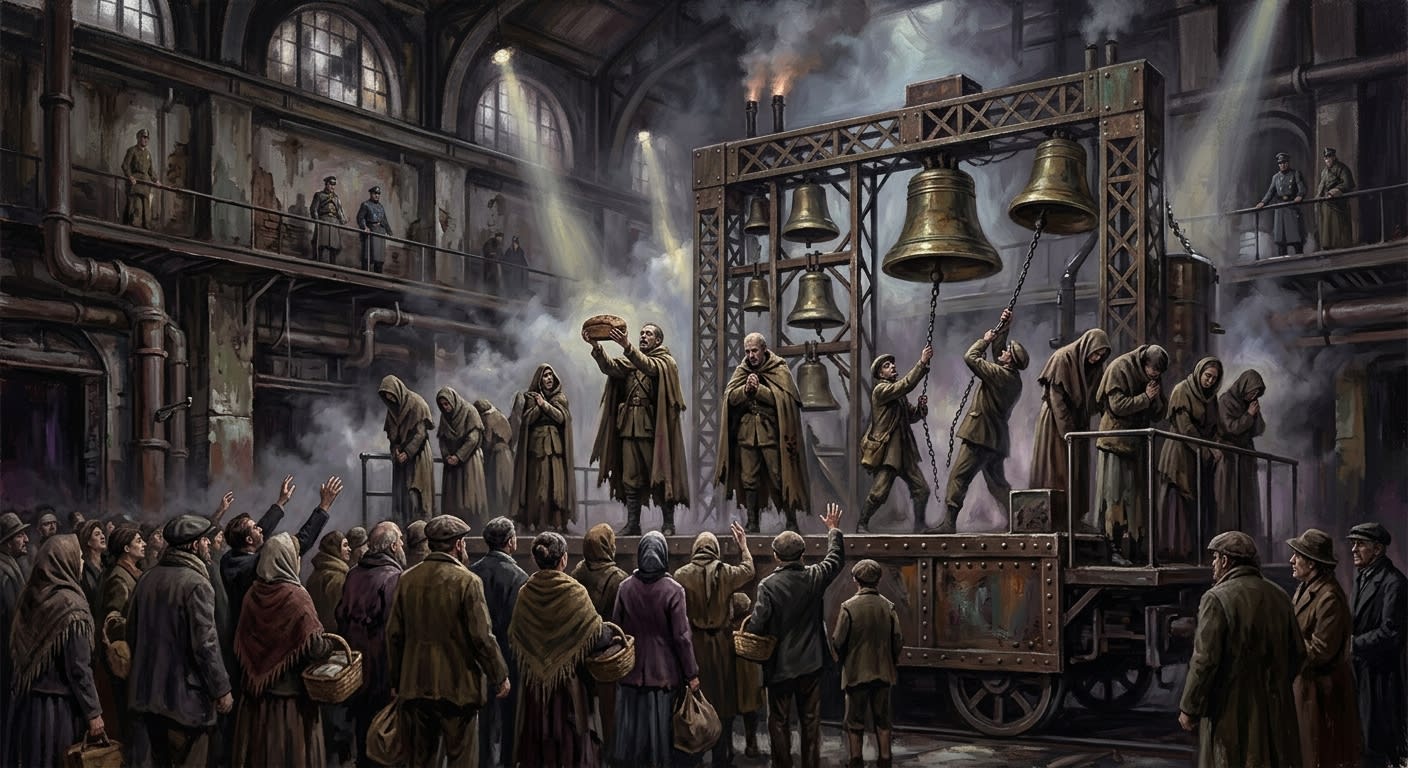
The Theatres
Bread, bells, and applause stolen from the altar
The Theatres are the Black Ledger faction that turns stolen bread into civic memory, staging Queue-Saint performances where hunger, bells, and witnesses become recruitment.
Codex Ref. XI.1.04-002
The Third Lung
The chamber silence killed and law kept using
The Third Lung is Bastion-Irongate's sealed acoustic wound: three thousand dead, sixteen days of knocking, and a wall still useful to law.
Codex Ref. II.4.24-095

The Twelfth Amendment
The skull is licensed ground; keep your thoughts in uniform
Ratified in A.S. 196, the Twelfth Amendment closes the internal loophole, licenses private hope, and gives Purity the citizen's face as evidence.
Codex Ref. XIII.1.04-196
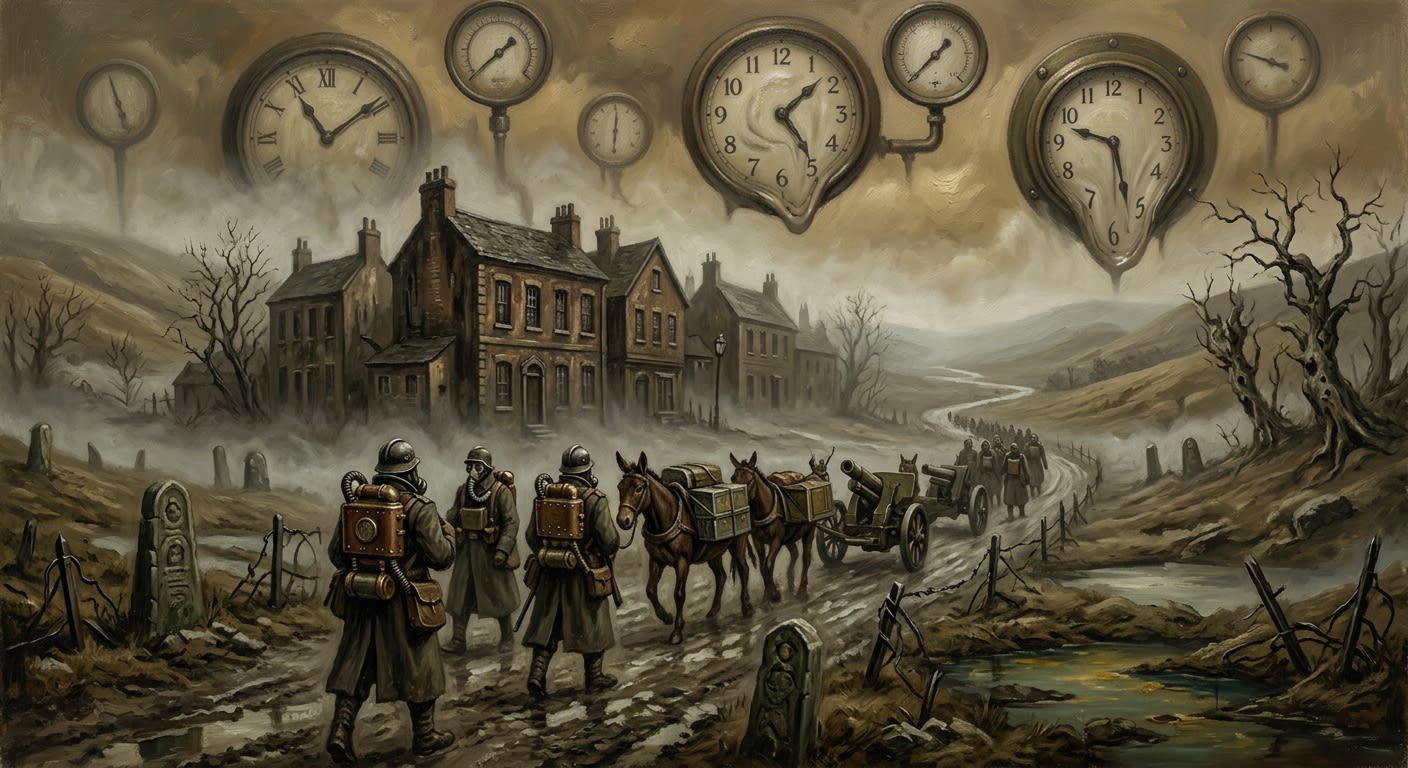
The Vales of Stagnance
Syrion's country, where geography sits down and refuses audit
Syrion's Vales are the old Shipkan wound made landscape: fog, soft clocks, preserved villages, patient armies, and roads that return with fewer years.
Codex Ref. VI.2.04-004

The White-Mantled Inquisitor
The Bureau does not silence speech; it teaches the population to do it themselves
Bureau of Purity's language constables — Chalklings, Mantle Examiners, Chainmasters, and Glass-Canons — charged with containing unregistered speech, enforcing the Index Claritatis, and hunting the phrases that make the chain sing.
Codex Ref. XII.49.01-001
The Widow-Notary
The hand that taught charity to forge receipts
The Widow-Notary may be one woman, seven women, or a criminal mask; her forged assessments fed Strasbourg's poor and taught the Black Ledger to steal in the Bureau's own hand.
Codex Ref. III.2.01-062
The Witch-Hunts of Toulouse
The fire that learned to file its victims
Toulouse taught Purity its grammar for cruelty: warrant before fire, confession before brand, spectacle before silence, silence before archive.
Codex Ref. VII.8.02-001
The Year Without Dawn
The Bureau's Second Portent: forty days without sun, seventeen explanations without facts, and one Province without tongues.
A.S. 32: forty days without the sun, children born grey-eyed and voiceless, the Rationalists publishing seventeen treatises to explain a volcano no one could find. The Bureau's Second Providential Portent.
Codex Ref. VII.4.01-001
Theocracy
Piety with pipes, doctrine with payroll
Theocracy is the Synod's mature art: altar made warrant, prayer made schedule, fear made grammar, and every soul brought under ratified custody.
Codex Ref. XIII.1.01-201
Thrace
The province geography learned to condemn
Thrace is the fallen south-eastern furnace where old roads became warnings, Maldrake taught soil to rage, and maps learned shame.
Codex Ref. II.6.03-045
Tithe Assessor
The Bureau's walking appetite; or, what it costs to weigh the widow's salt
The Tithe Assessor is the Bureau of Tithes' primary field instrument — a man with scales, seal cord, and an armed escort who determines whether a family's payment purchases another week of existence. He arrives. He weighs. He chalks the door.
Codex Ref. XII.46.01-001
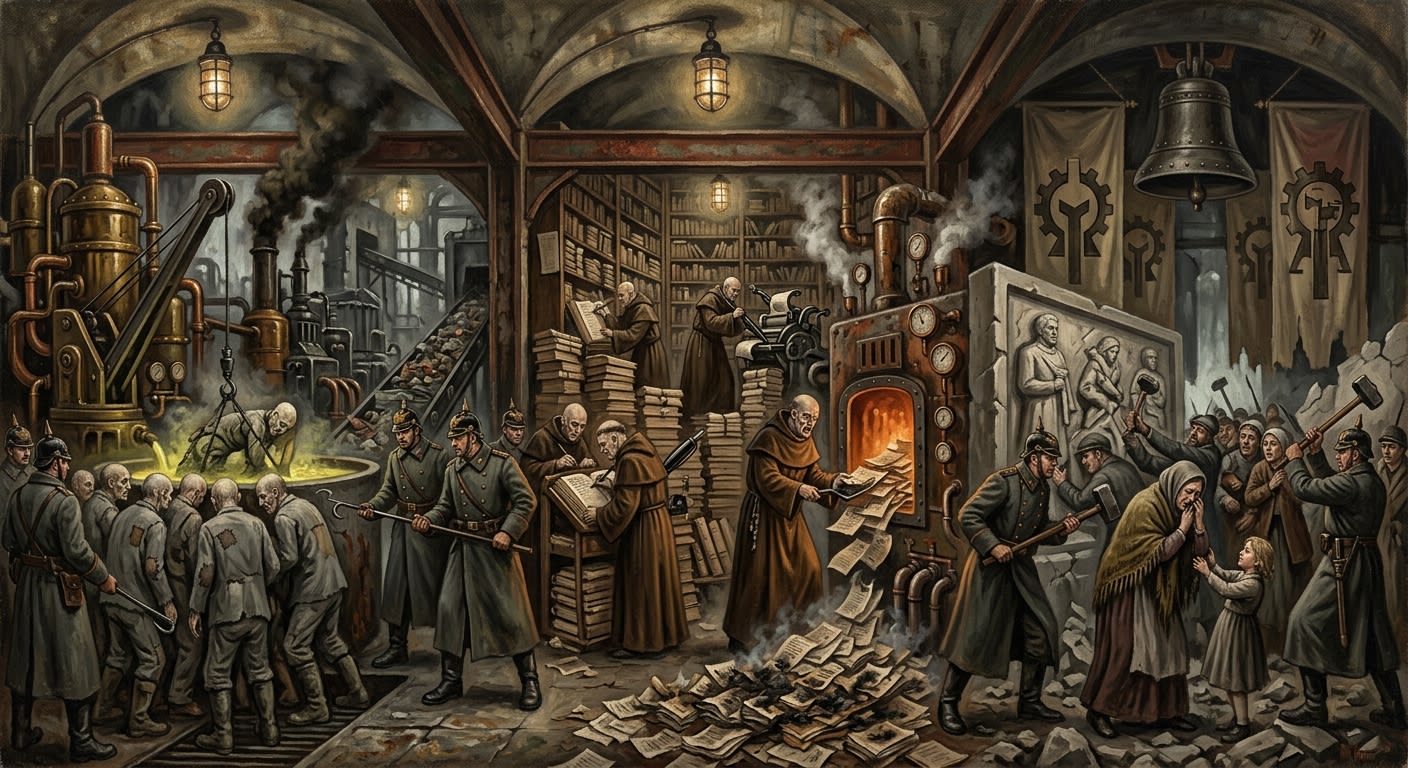
Trifold Erasure
Kill the body, strike the name, poison the recollection
Trifold Erasure is the Synod's threefold cure for rebellion: body extinguished, name struck, memory made too dangerous to love.
Codex Ref. XIII.1.71-111

Unauthorized Melody Smuggler
The lullaby the Bureau buried; the mouth it walks out of now
The Unauthorized Melody Smuggler is classified under Tongue-Crime, Melody Intent, Doctrinal Sabotage — above common theft, below armed heresy. The lullaby does not care what the Bureau calls it. It continues to walk out in someone else's mouth.
Codex Ref. XII.48.01-001
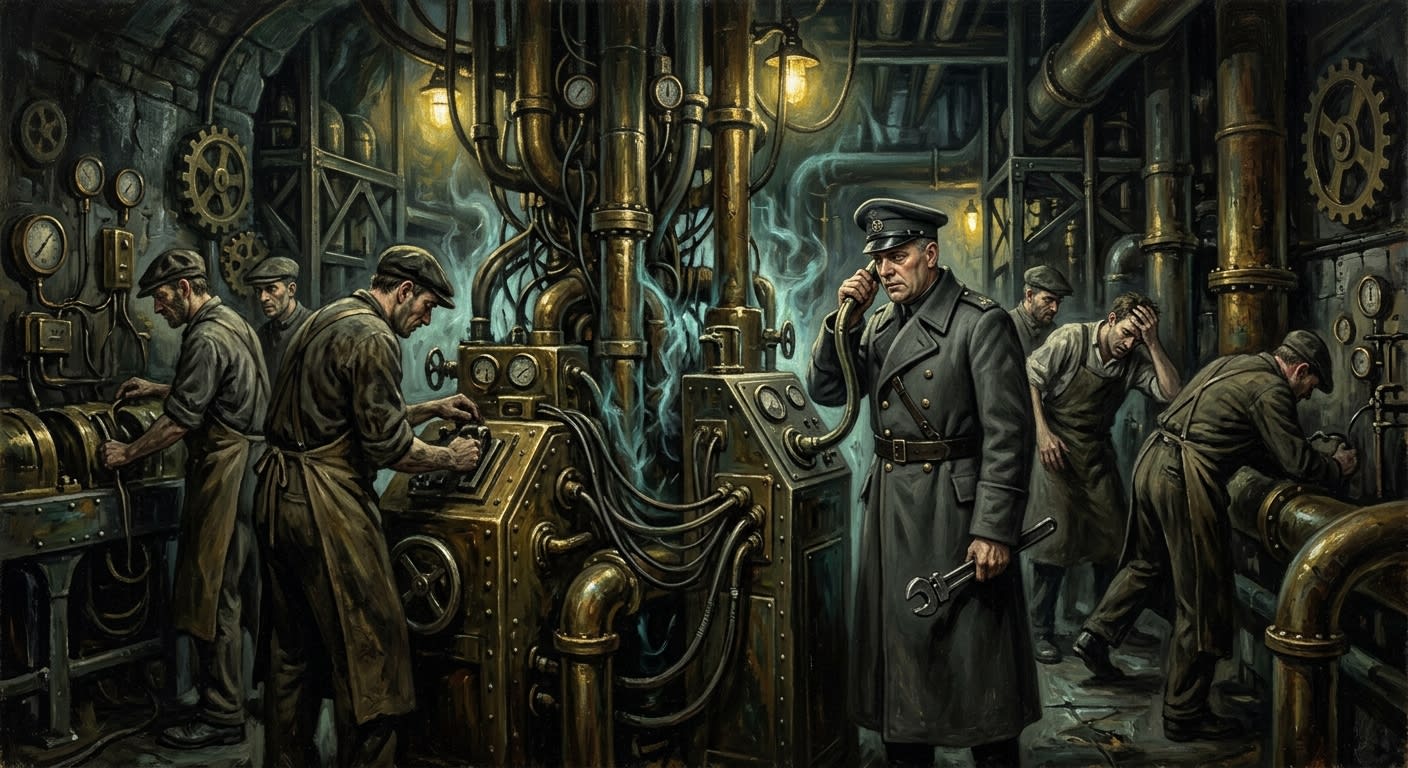
Unhymn Infiltration of A.S. 163
When the [[the-bureaucratic-synod|Synod's]] own pipes sang Later
The Unhymn Infiltration of A.S. 163 turned Shipka's resonance conduits into authorised lullabies, proving that hostile cadence could travel through honest metal.
Codex Ref. VII.4.23-001
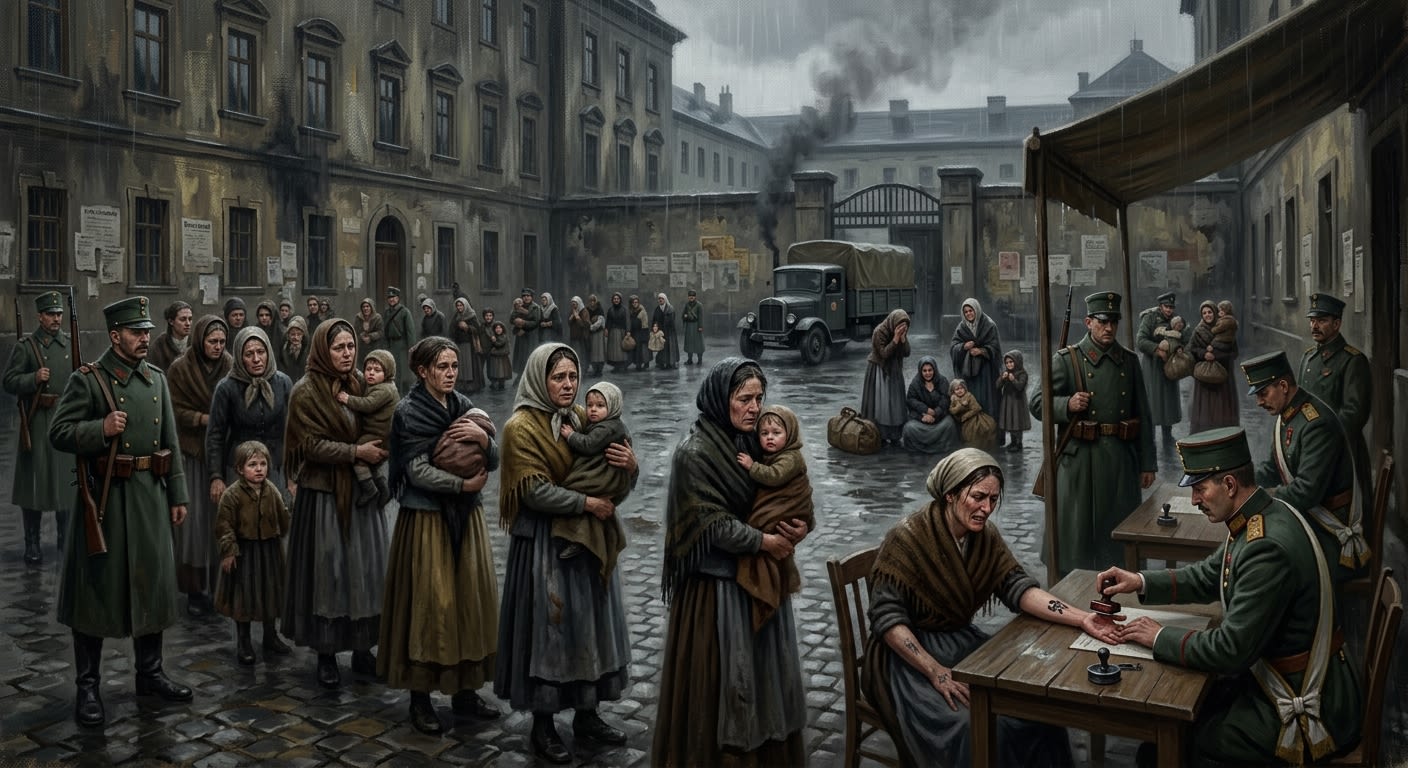
Vienna Incident A.S. 112
Five thousand tongues, and one lullaby still breathing
A.S. 112 Orison sweep in Vienna that branded five thousand mothers for a rain-and-barley lullaby and made unauthorized comfort a training case.
Codex Ref. VII.8.10-112
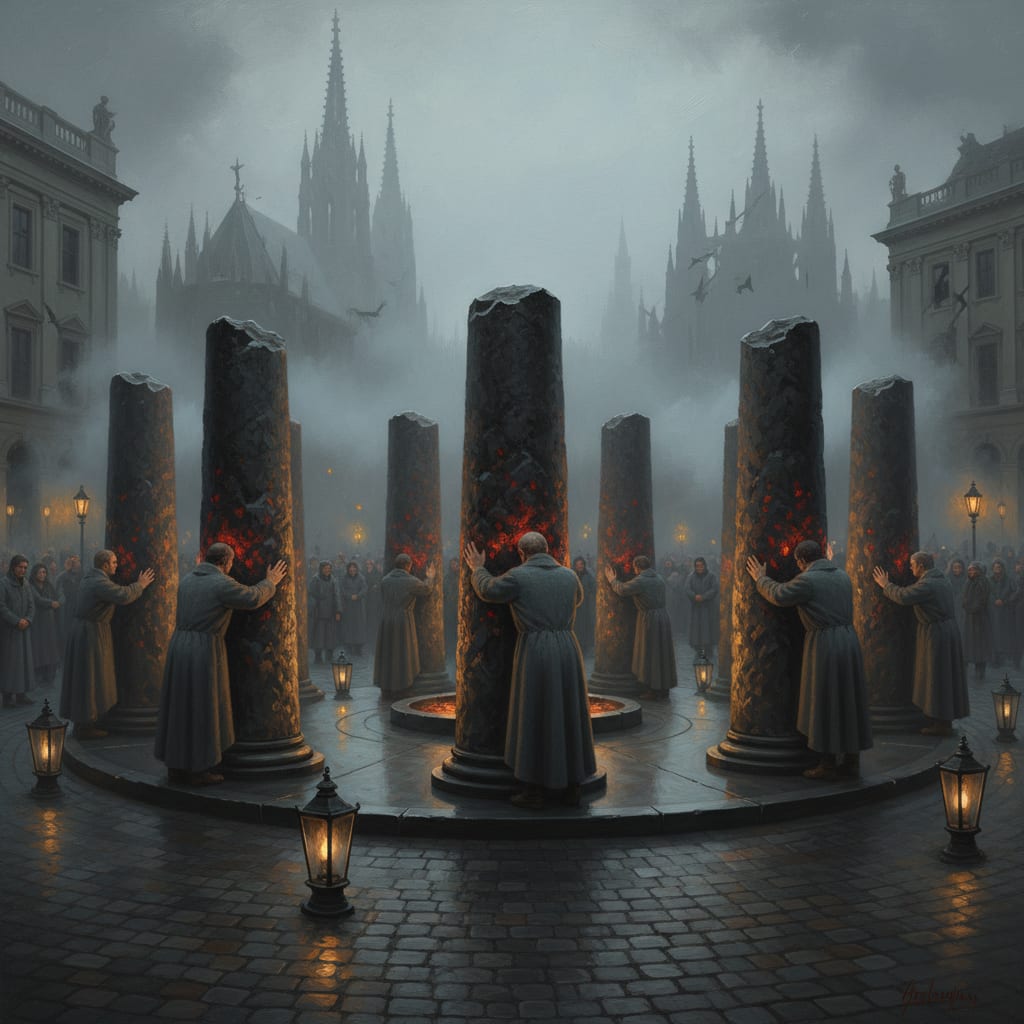
Vienna, the Shrine-Ruins
Three deaths, one gift shop, and a pen that has not dried in forty years
Three times ruined and once reclaimed. Vienna is the Synod's finest shrine and its most honest monument: the Rationalist capital, the Great Retreat's wound.
Codex Ref. II.4.09-010
Ward-Builders
Another table, no blood-name, and the mercy of useful strangers
Pale Kin faction placing hidden children with tested strangers rather than blood, building survival from shared guilt, chores, false names, and audit-resistant mess.
Codex Ref. XI.4.01-003

Warden of the Sacred Ledger
Memory is permitted only after custody
The Warden of the Sacred Ledger guards the passage between recorded fact and ratified meaning, lest memory escape and become a riot with dates.
Codex Ref. XIII.1.33-090
Warden Sermon Trials
Seven comforters tried, and seven hundred mouths learned caution
A.S. 134 sealed Purity tribunal where seven Licensed Consolators were tried for pastoral overreach, creating the precedent that taught Lantern heresy to hide better.
Codex Ref. VII.8.10-044
Warden-Physic Iri
Mercy, after vinegar and witness
Warden-Physic Iri rules Thessaloniki's quarantine throat: severe, useful, watched, and merciful only after the forms have learned fear.
Codex Ref. III.2.01-201
Warrens of Strasbourg
The capital's conscience, filed under mildew
Strasbourg hides its poor where bells arrive broken, maps grow bashful, and charity, crime, and surveillance share the same wet staircase.
Codex Ref. II.2.06-201
Warsaw
The city the Bureau told to leave, and the bakeries it opened in reply
The Synod's forward staging city on the Vistula — Zone Three, Northern Corridor, entry 14-W. 160 km from the Sagittal Line; close enough to hear the front on clear nights. The Bureau told it to leave in A.S. 95. It has grown by a quarter-million souls since.
Codex Ref. II.4.09-007
Weeping Trenches of Odessa
Where the walls learned hymns and men paid in tongues
The A.S. 178 Odessa trench incident in which Pale Chanter seepage turned Litany-Engineer hymnals against their owners, leaving pumps running, men weeping, and tongues ruined.
Codex Ref. VII.5.04-002
Womb Registrars
The cradle has a visitor, and she has already priced the child
Womb Registrars are Bureau of Records parish deputies who turn pregnancy into ledger matter: notice, name control, midwife compliance, and tithe projection before first breath becomes evasion.
Codex Ref. XII.9.04-001
Wormhosts
The human face, retained just long enough to open the gate
Mortal auxiliaries seeded with living parasites, recognisable as human until rupture turns pity, checkpoint mercy, and defensive formation into a door.
Codex Ref. IV.1.07-009
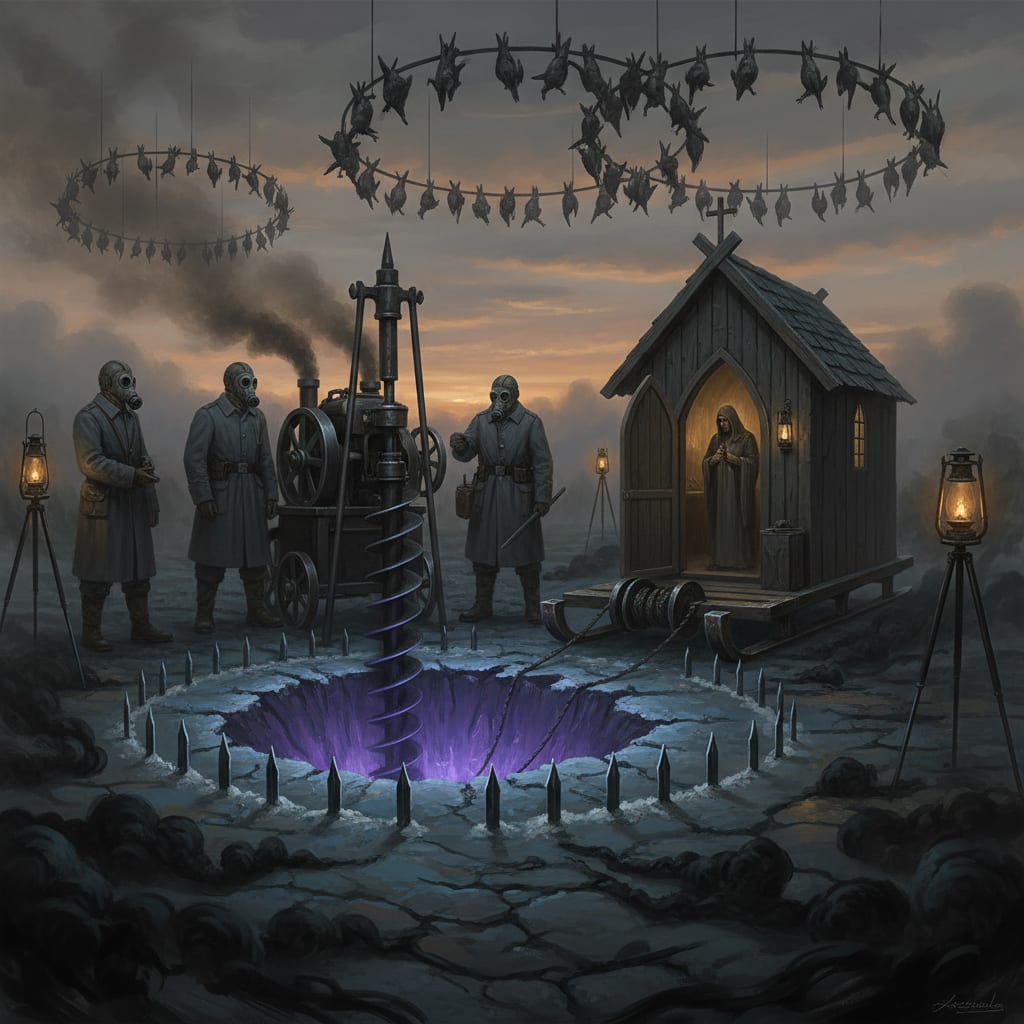
Wound-Site Prospector
The earth seeps; the drums breathe; the Bureau explains neither, and taxes both
The licensed harvesters of demon-seep from wound-sites — chartered by the Bureau of Tithes, destroyed by the work, and collectively silent on the one event that explains everything. The drums breathe at night.
Codex Ref. XII.50.01-001
Year of Smoke
Eleven wagons, one fire, and the night the [[bureau-of-shadows|Bureau of Shadows]] stopped being a ghost story
The night Lübeck's harbour records burned, its guilds dissolved, and eleven wagons drove into legend. The Year of Smoke is what happened when the Bureau of Shadows stopped being theoretical and started being operational.
Codex Ref. VII.1.02-001
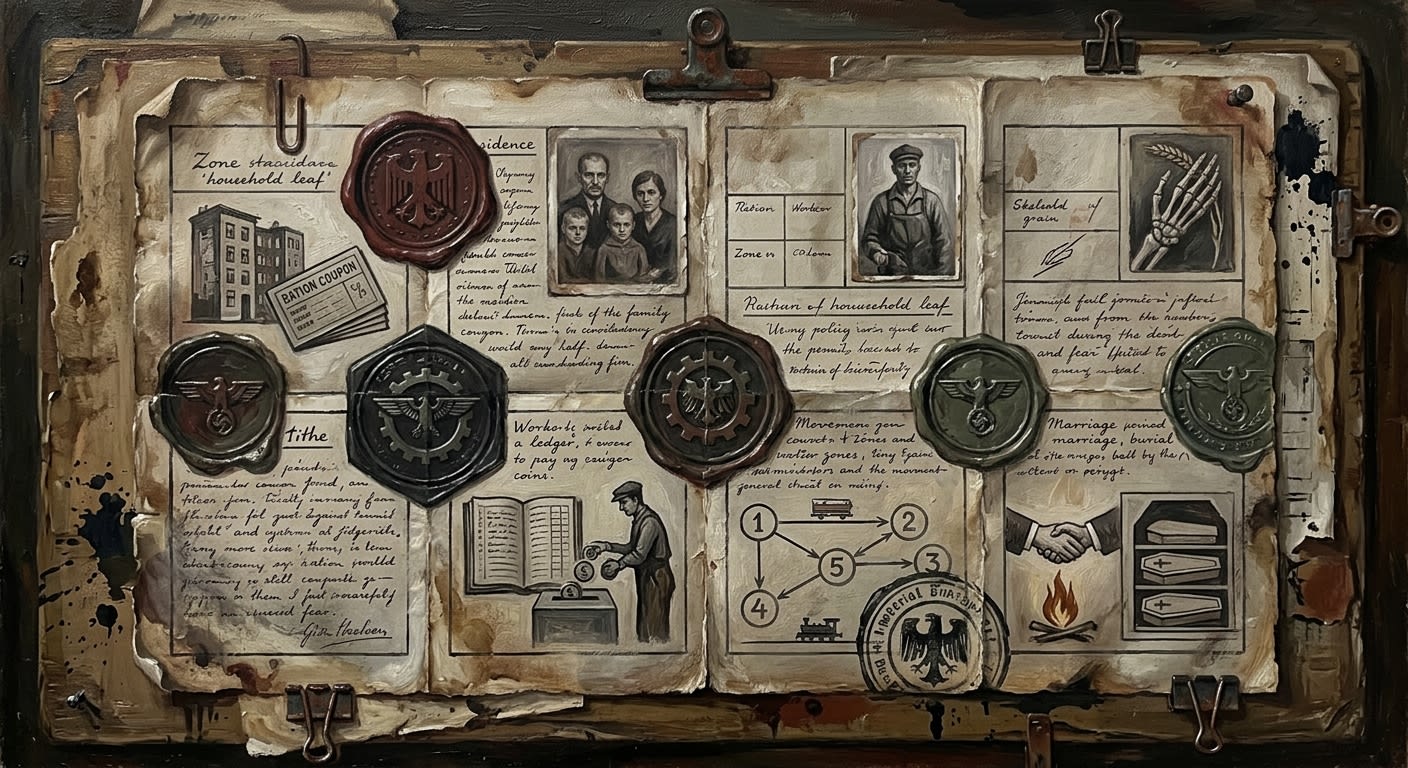
Zone Permit
The paper beneath the feet, and the shackle in the drawer
The Zone Permit is lawful standing made paper: residence, ration, tithe, movement, marriage, burial, and fear folded into one stamped household leaf.
Codex Ref. XIII.1.93-130
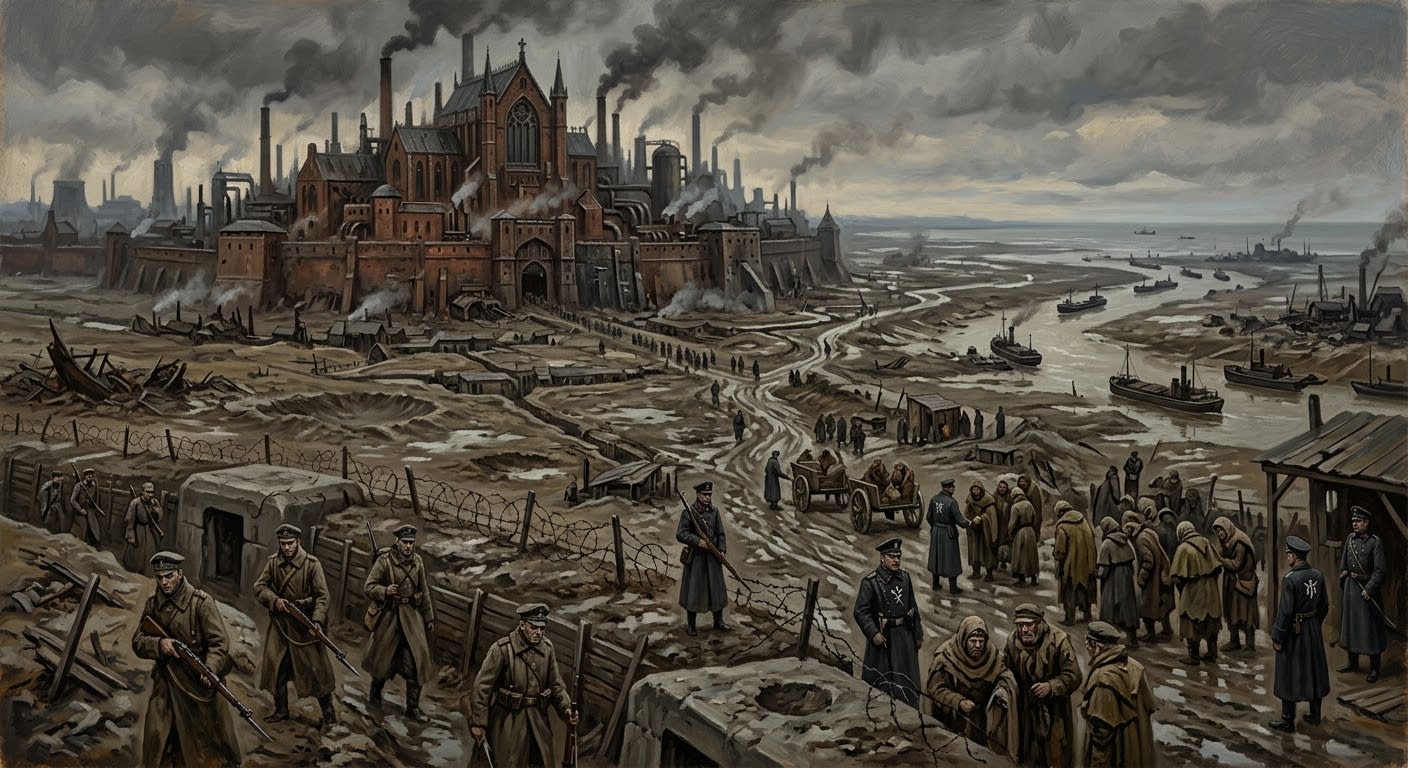
Zones 5 through 7
Mud, mouth, water — the outer grammar of danger
Zones 5 through 7 are the Synod’s controlled contact belt: contested mud, demonic custody, sea-rim commerce, contraband, pilgrimage, and useful contamination.
Codex Ref. XIII.1.00-207