

Reverse Index
Referencing “Bastion-Brest”
Every codex entry that links to Bastion-Brest. 421 entries.
Return to Bastion-Brest
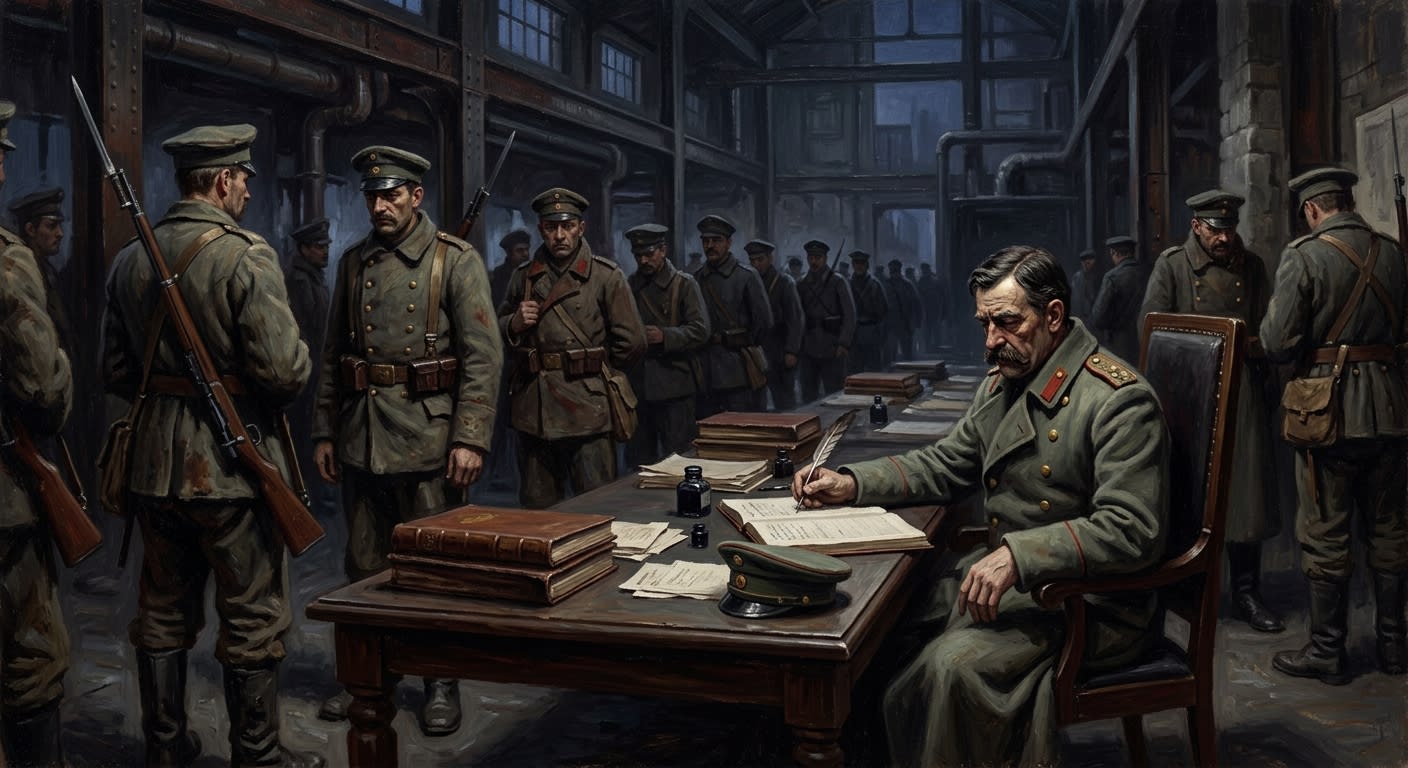
4th Rhineland Fusiliers
The regiment that forgot before dusk
The 4th Rhineland Fusiliers accepted a corrected roster before dusk, proving that the Synod can conscript memory as readily as flesh.
Codex Ref. VIII.5.04-148
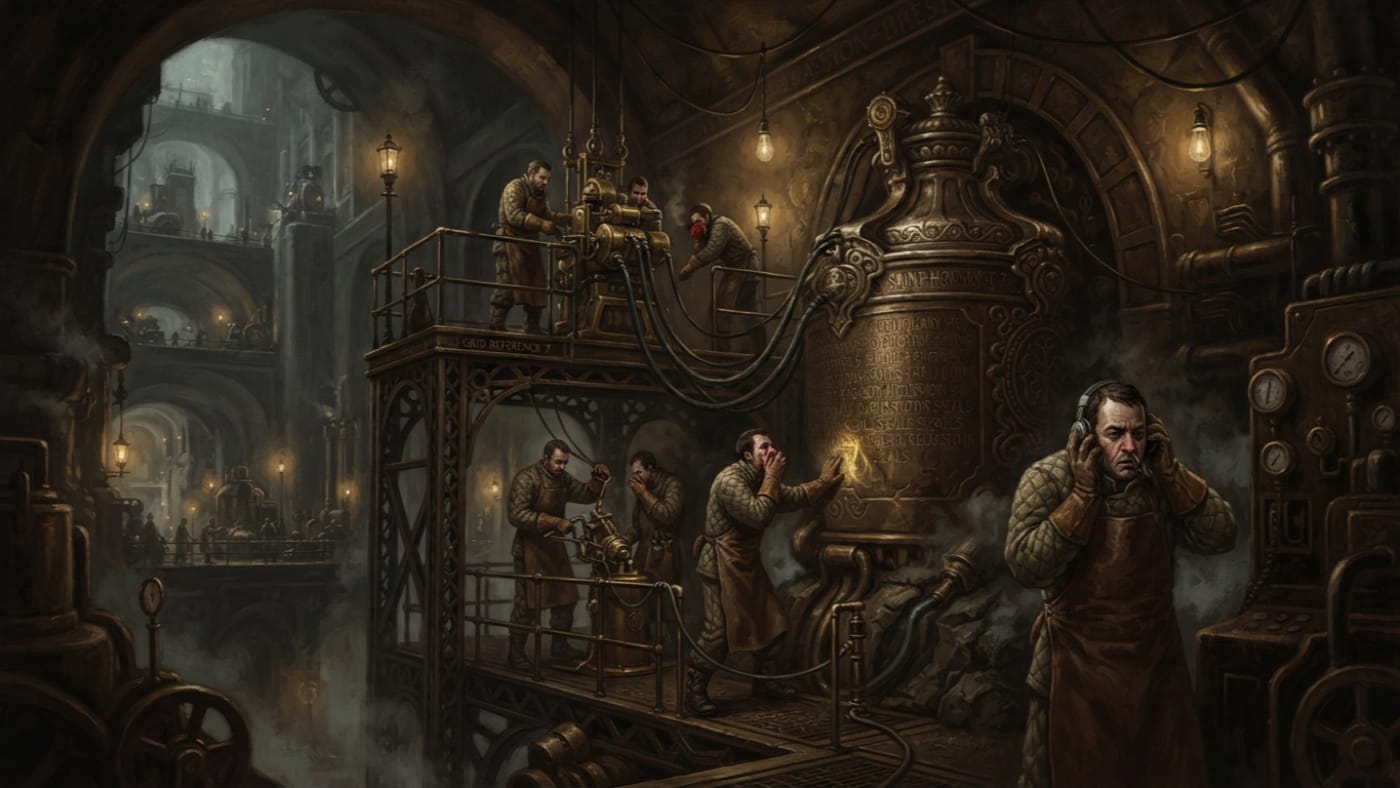
A.S. 176 C-sharp housing incident
Eleven minutes of C-sharp; the Bureau sealed the housing and classified the note
At Bastion-Brest in A.S. 176, Crew 14-R scraped a saint-housing inscription. The housing sounded C-sharp for eleven minutes; the Bureau re-sealed it, sent the crew to surface duty and classified the note. The Recoverers kept the warning.
Codex Ref. XII.36.02-176
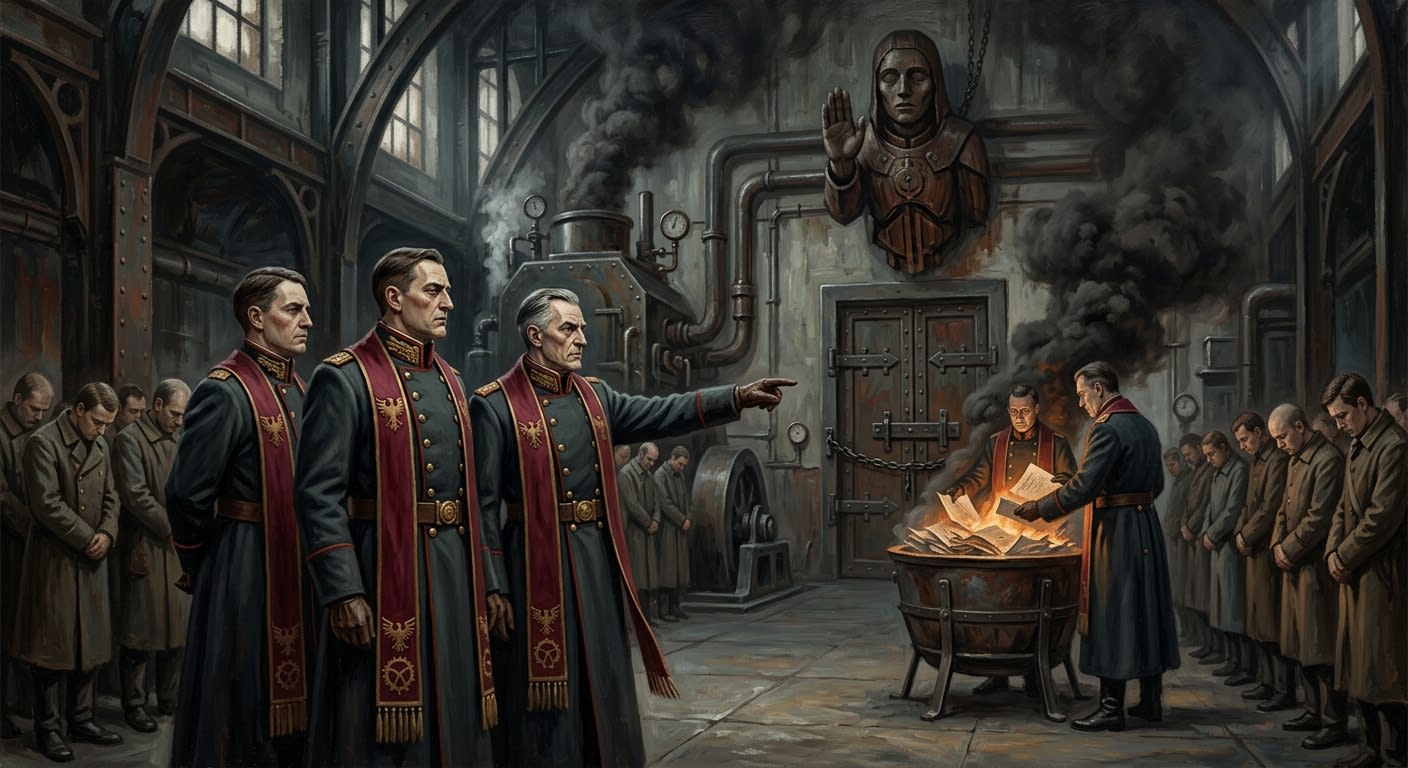
Absolute Suppression
The secret so holy it must command what it denies
Absolute Suppression is the Bureau's art of making hidden knowledge binding: a silence that issues orders, then denies it has a mouth.
Codex Ref. XIII.1.97-190
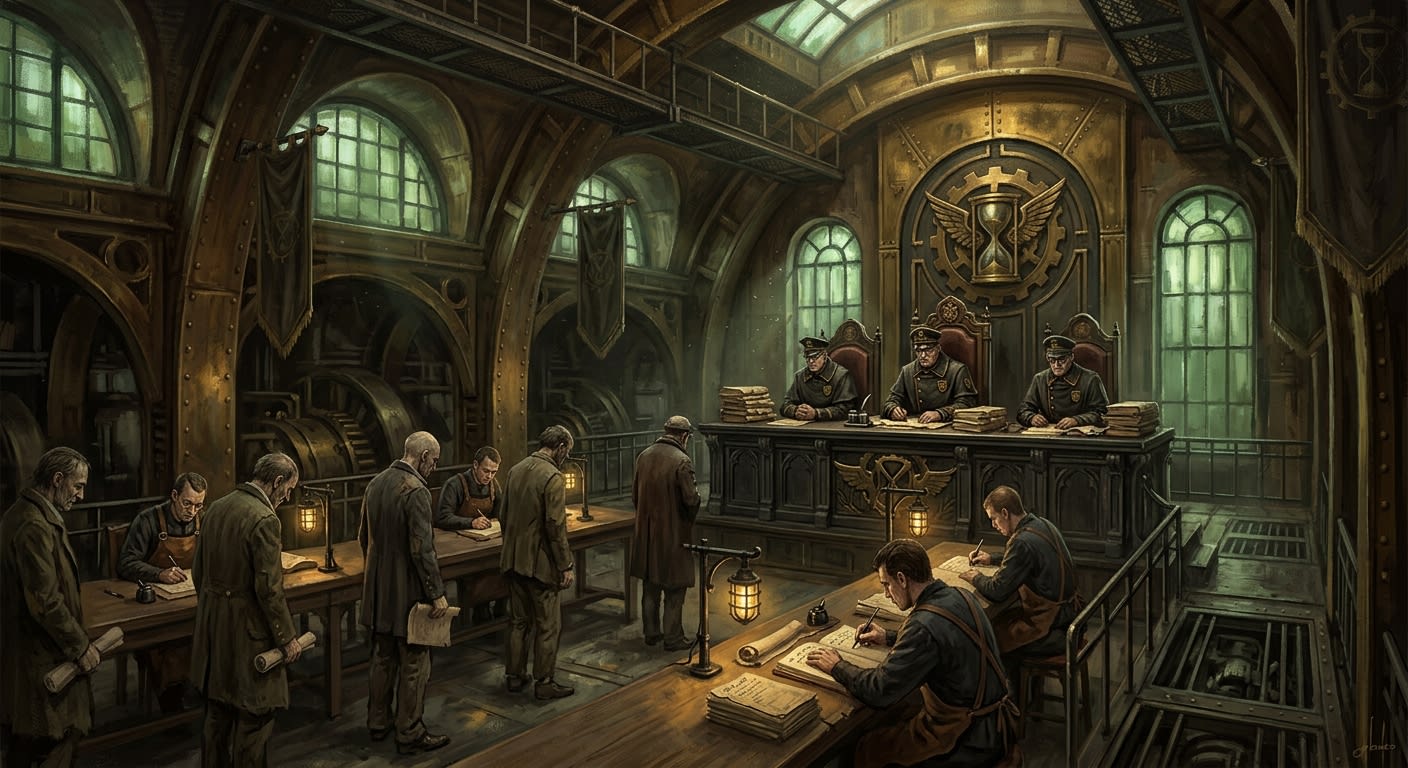
Absolution Hall
Where crossing becomes confession and confession becomes custody
Mid-span tribunal chamber inside Bastion-Brest's brass bridge-body, where crossing petitions, confession irregularities, Blank-Sheet cases, and Echo events are weighed in iron ink.
Codex Ref. II.4.08-098

Absolution Token
Forgiveness, clipped at the gate and void by bell
The Absolution Token lets Brest sell movement as proof of confessed guilt: wax in the hand, sin in the file, gunfire postponed until the next bell.
Codex Ref. XIII.1.13-199
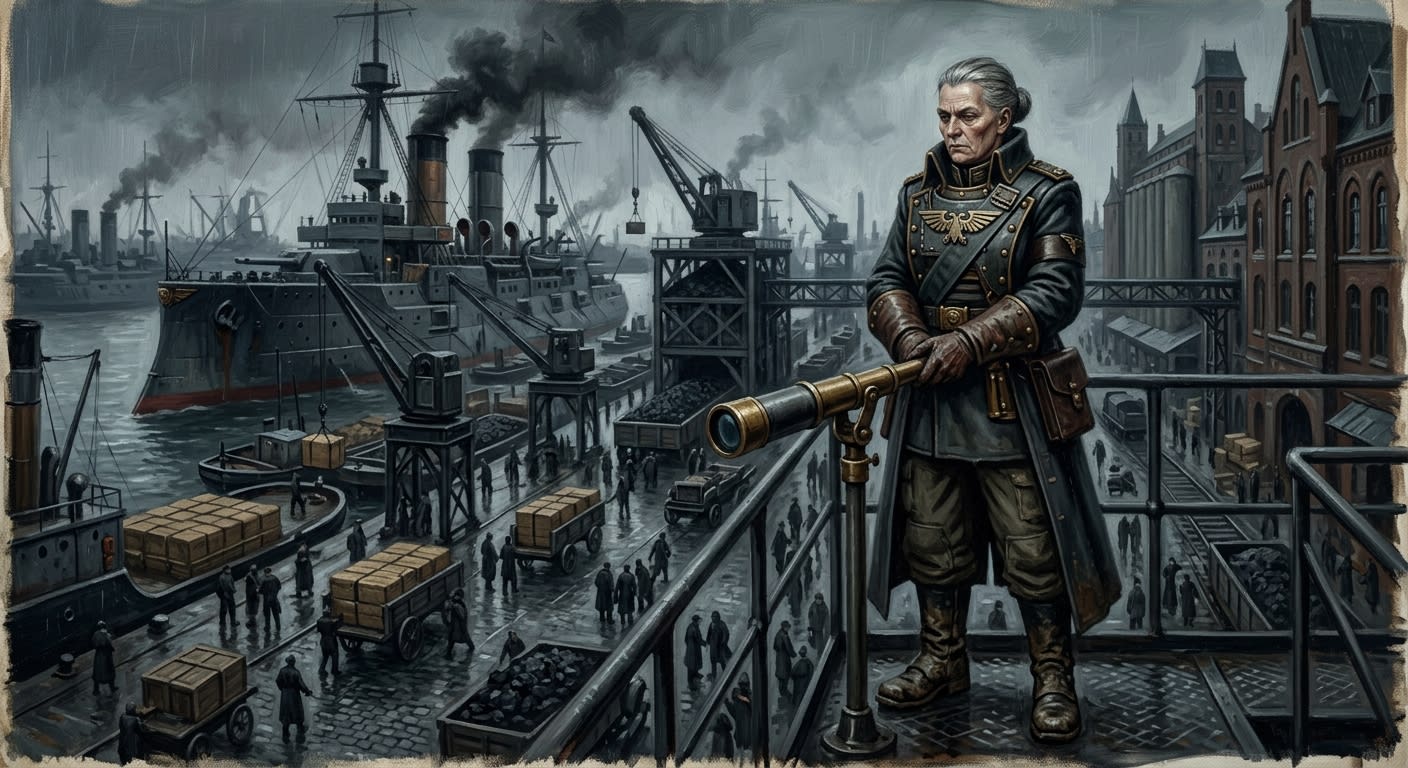
Admiral-Prefect Gerta Halske
The tide table has more mercy than most bishops
Admiral-Prefect Gerta Halske rules Hamburg's wet arithmetic: ships, grain, coal, foreign credit, dock rage, and the northern front's daily refusal to starve.
Codex Ref. III.2.01-151

Admiral-Prefect Gerta Halske
The harbour obeys her because theology cannot unload grain
Hamburg's Admiral-Prefect since A.S. 194, Gerta Halske governs harbour routing, foreign factors, war-cargo priority, and the arithmetic by which the northern front continues breathing.
Codex Ref. III.2.01-150

Admiral-Prefect Halske
Kanzleiburg abbreviates what Hamburg cannot afford to lose
Admiral-Prefect Halske is Kanzleiburg's clipped name for Gerta Halske: the harbour officer whose refusals turn foreign cargo into northern survival.
Codex Ref. III.2.01-152

Angle-Runner
The child between the iron, the ledger, and the official hand
Angle-Runners are orphanage-roll children pressed into Brand-Smith service after the Compulsory Marking Decree, carrying tags, swatch plates, salve, and blame between the iron and the ledger.
Codex Ref. XII.20.07-001
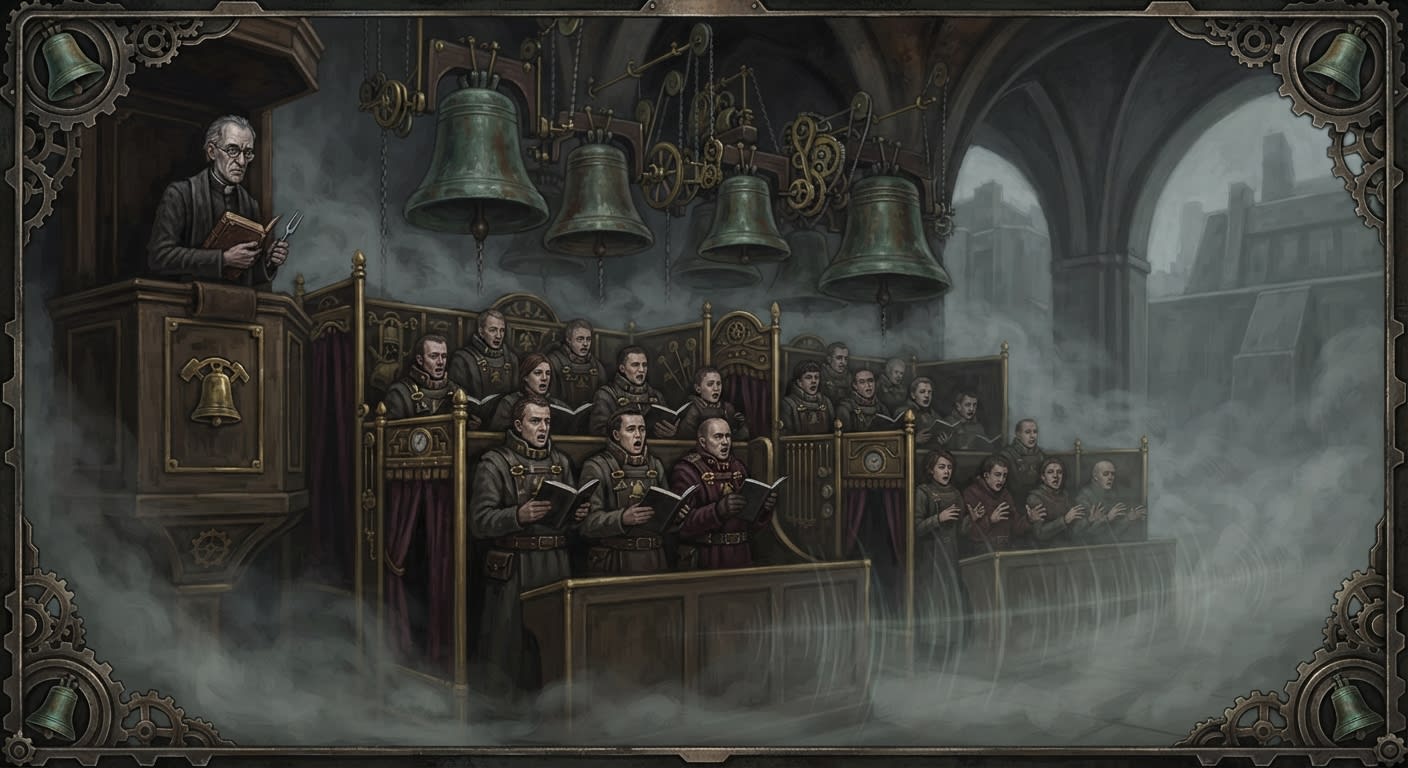
Anticipatory Acoustic Resonance
What the fog sings before the Choir dares breathe
Anticipatory acoustic resonance names the Grey's habit of returning Königsberg hymns before they are sung, because prophecy would require a braver office.
Codex Ref. XIII.1.87-037
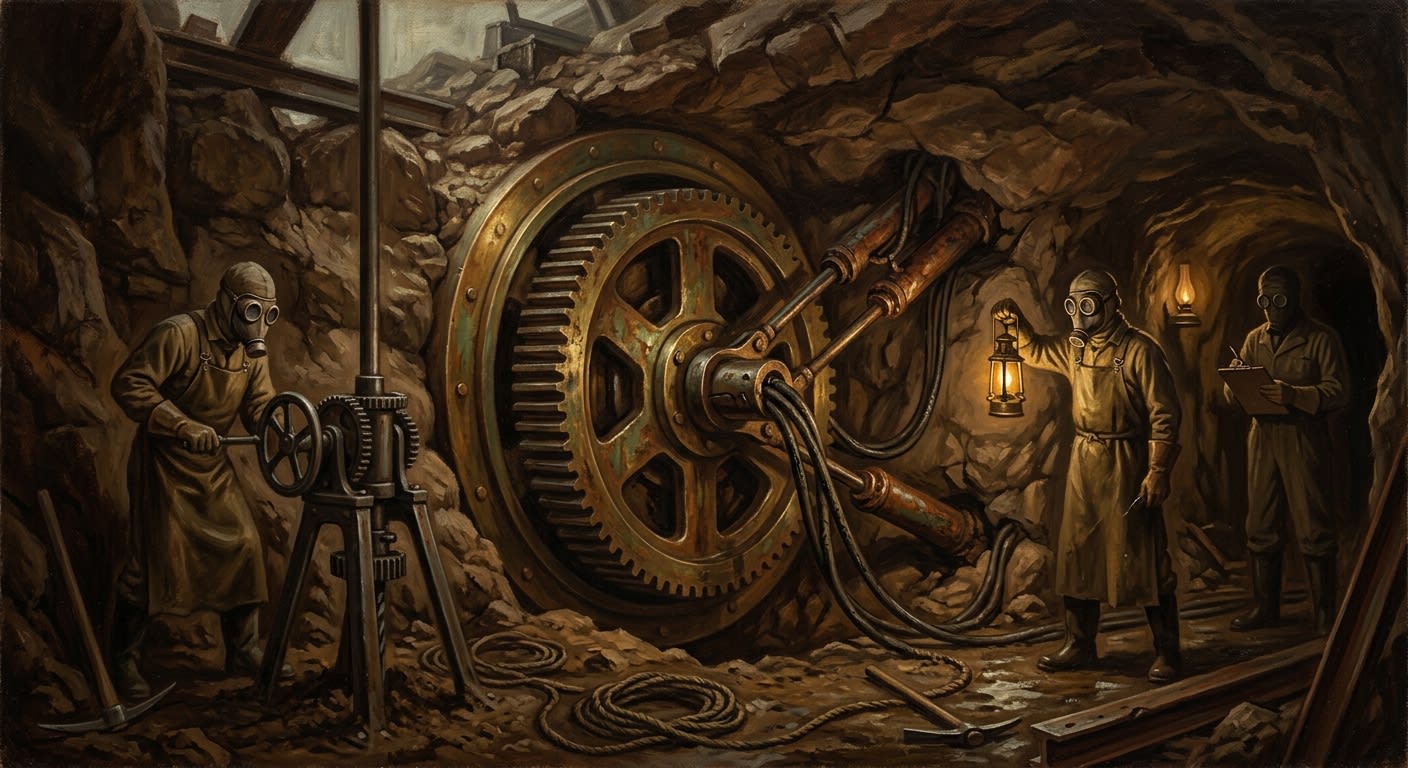
Apparatus of Gate Nine
The drill went down for vibration and returned with doctrine
A.S. 178 Gate Nine survey in which Bureau of Engineering Team Gamma-9 drilled beneath the Queue Road and found a turning wheel, a sealed chamber, and obedience already waiting.
Codex Ref. VII.4.15-001

Approved Comforts
Fourteen lawful softenings, and the heresy of meaning them
The Approved Comforts are fourteen lawful phrases by which the Bureau calms grief without granting it rights, mercy, or a dangerous future tense.
Codex Ref. XIII.1.97-094
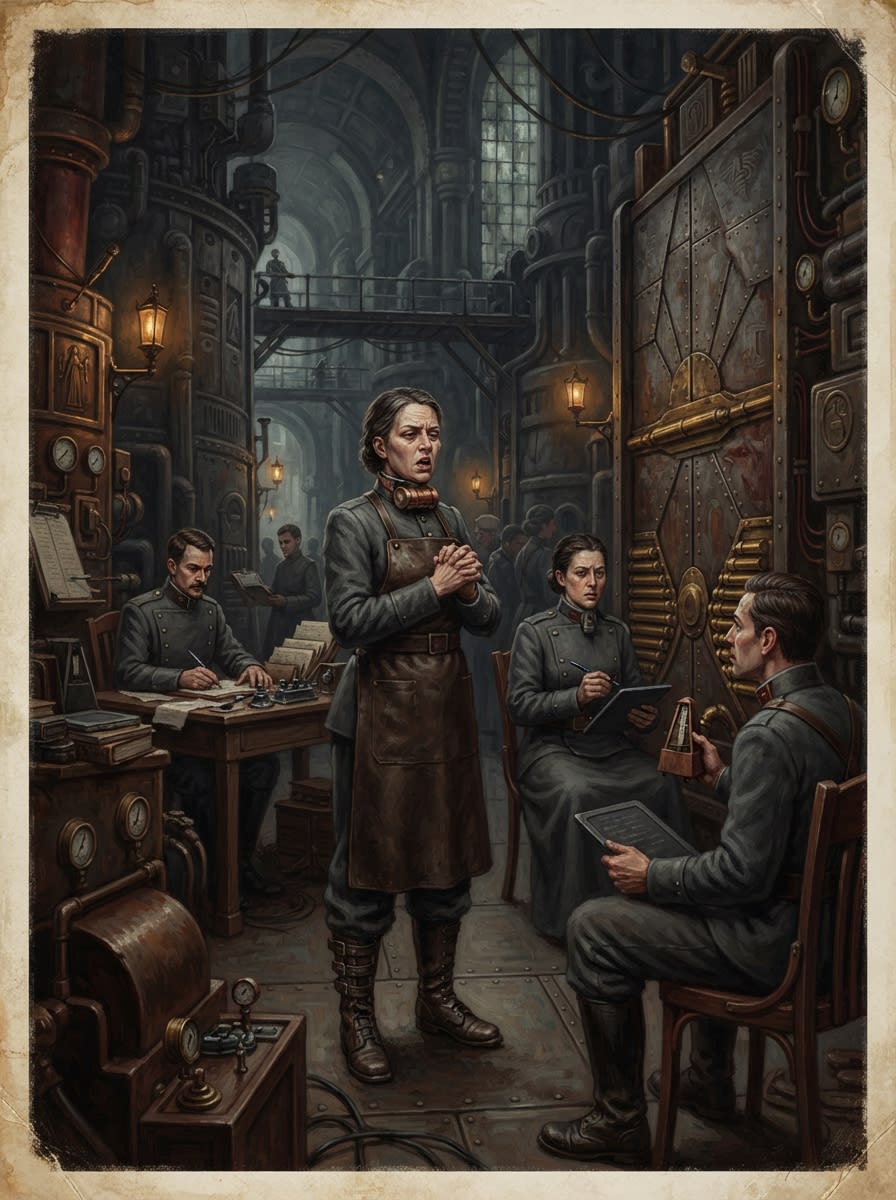
Approved Hymn Protocols Revision 14
The rulebook that made truth mandatory and expensive
Approved Hymn Protocols Revision 14 is Purity's A.S. 199 acoustic rulebook: witness the count, keep the iron dry, grade the room's answer, and do not harmonise.
Codex Ref. XIII.1.41-014
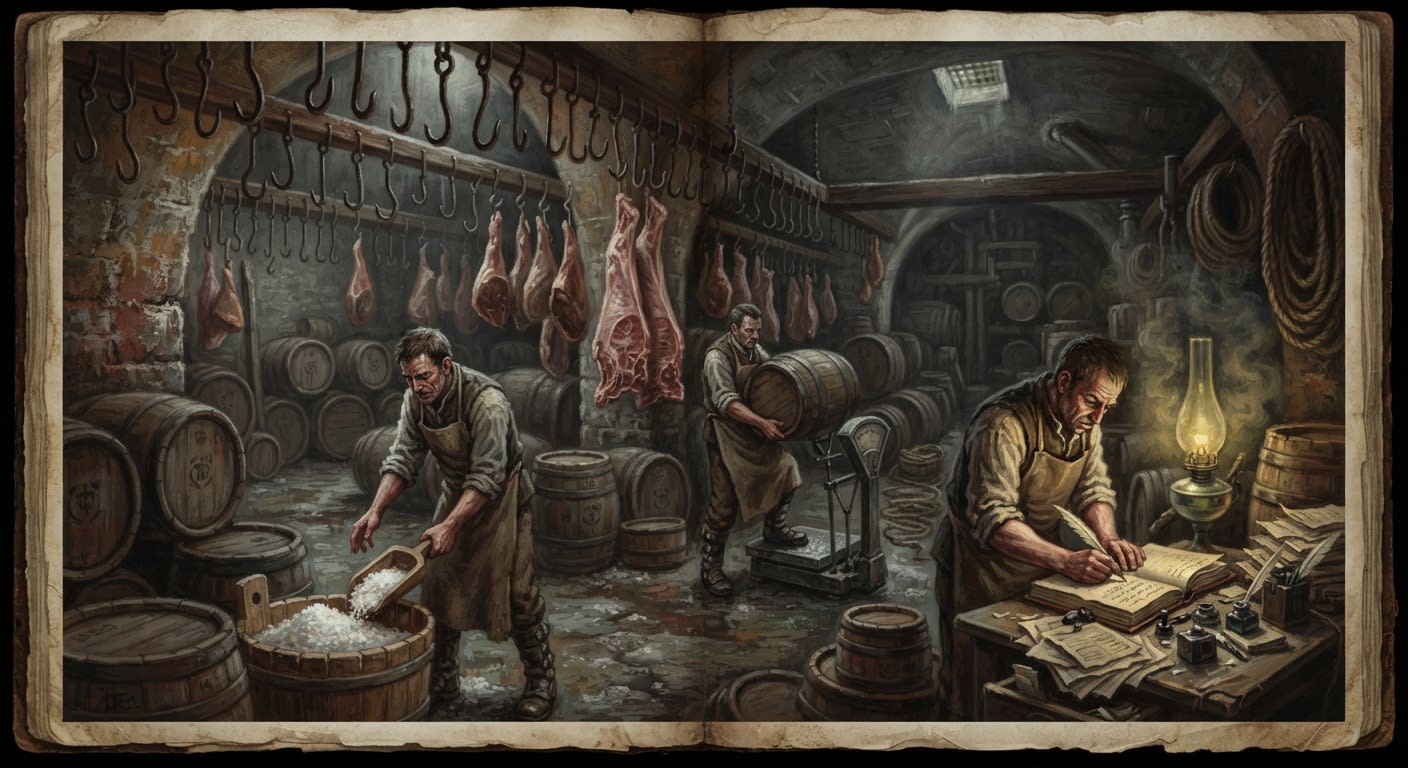
Approved Preservation Factors
A trade without a body, a cellar without a memory
Lübeck preservation contractors who inherited the Salters' cellars, retained the salt trade, and learned to change their roster before anyone could call them a guild.
Codex Ref. XII.26.03-002
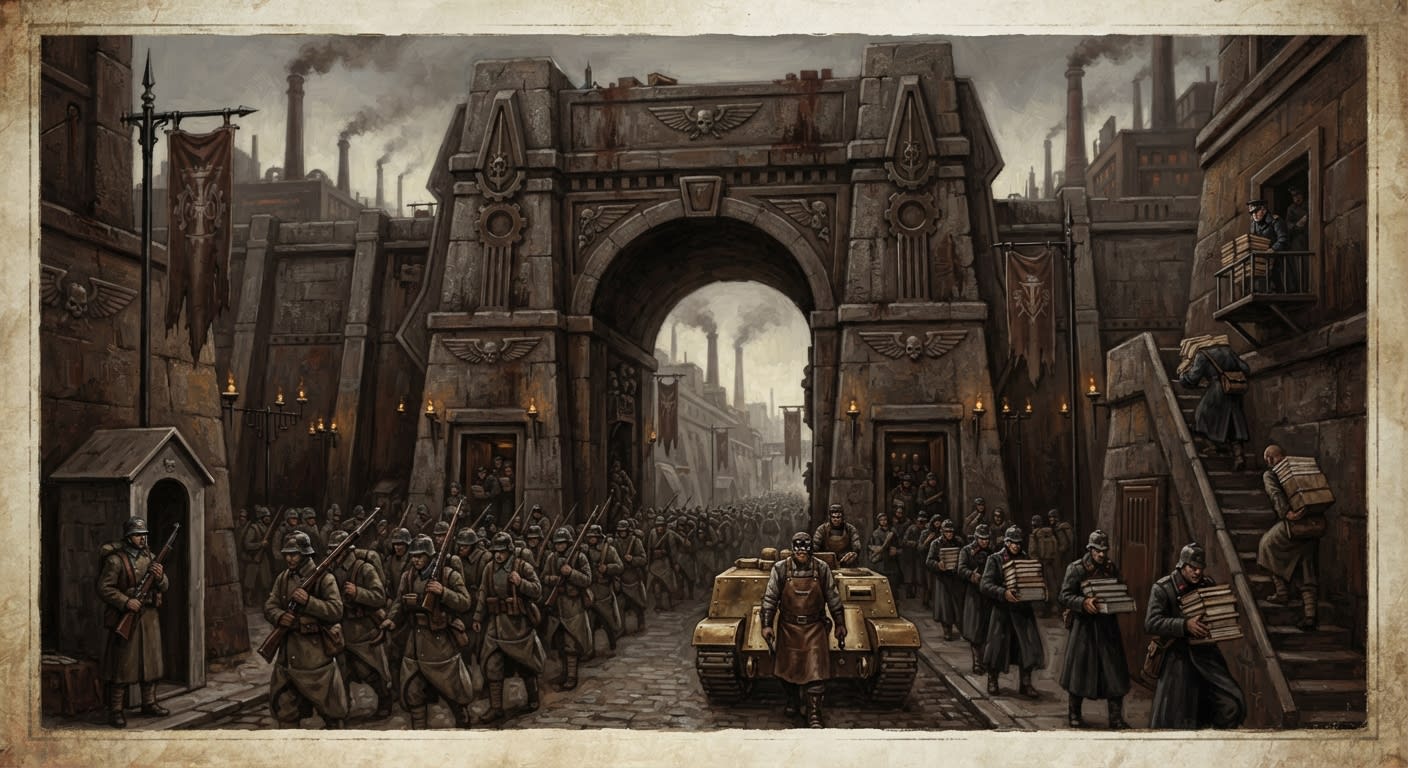
Arch of Campaigns
Where iron enters, and law exits wearing a crimson seal
Strasbourg's military threshold, where the Bureau of War turns cannons, levies, rail priority, and coffin orders into lawful violence beneath the keystone.
Codex Ref. II.3.06-105
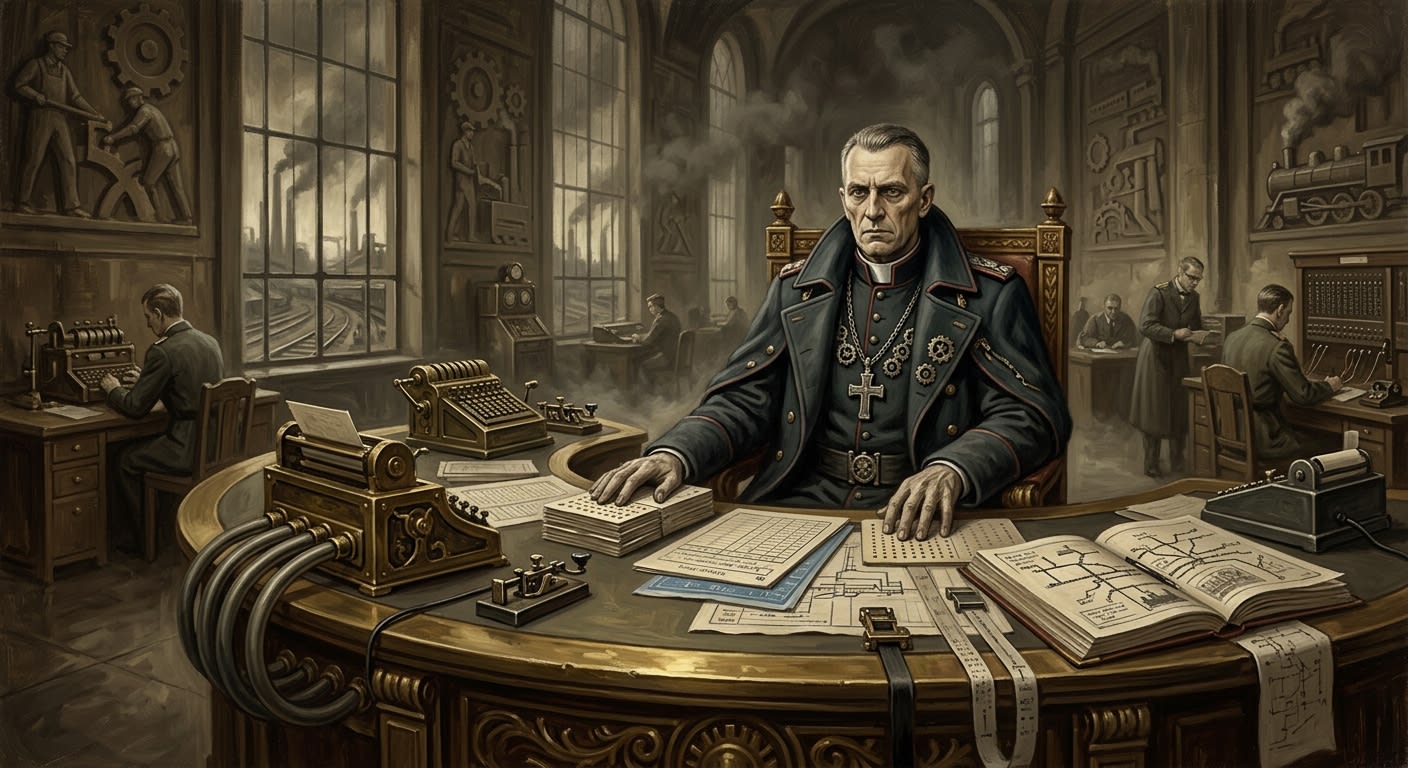
Archon of Kanzleiburg
A nameless man is sometimes the cleanest machinery of State
Nameless by courtesy and terrifying by routing table, the Archon of Kanzleiburg governs northern civil movement, reserves, rail priority, and Hamburg liaison as infrastructure with a pulse.
Codex Ref. III.2.01-151
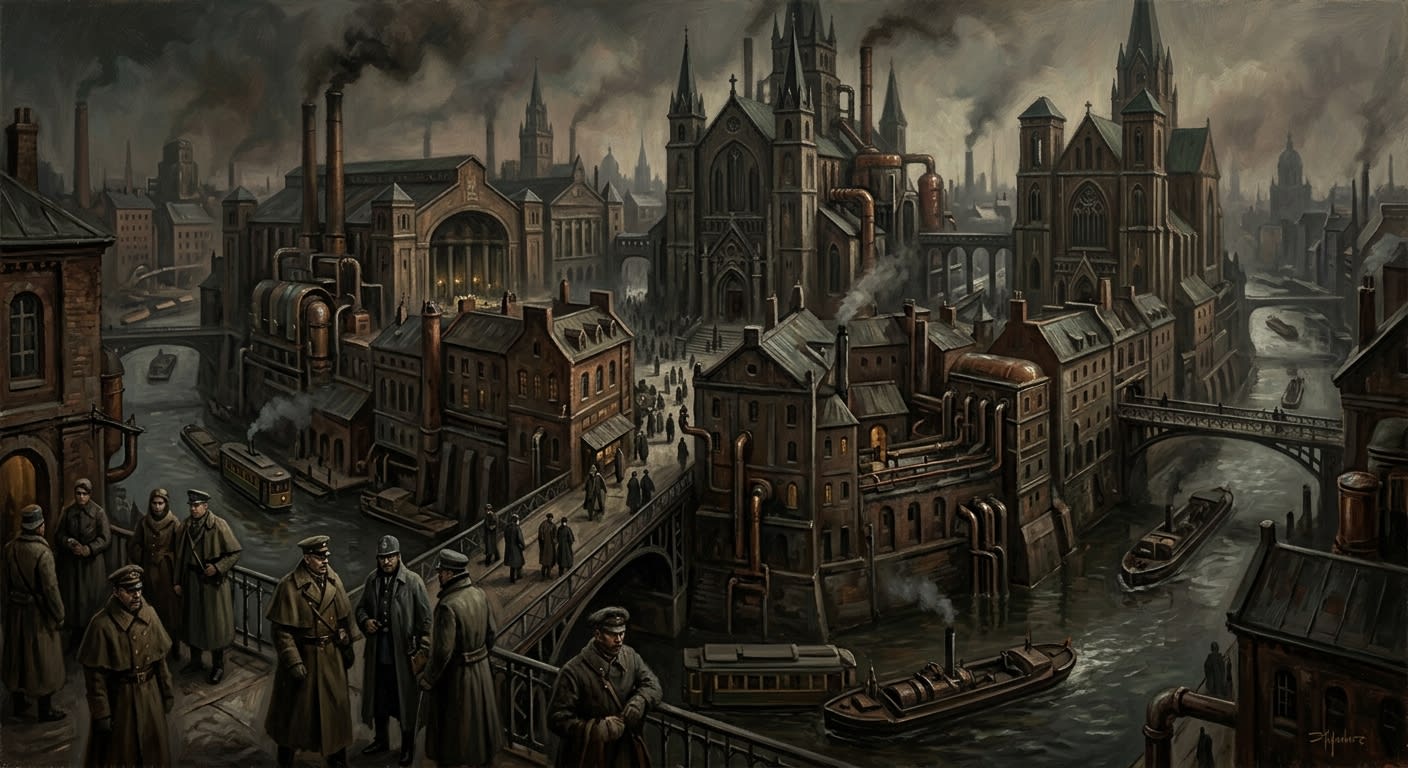
Archonate Isle
The north is not commanded; it is routed until obedience becomes timetable
Administrative island at Kanzleiburg's Spree core, where the Northern Hierarchate, the Archon, Records vaults, War concurrence, and Doctrine's coldest sermon desk make the north move.
Codex Ref. II.4.09-007
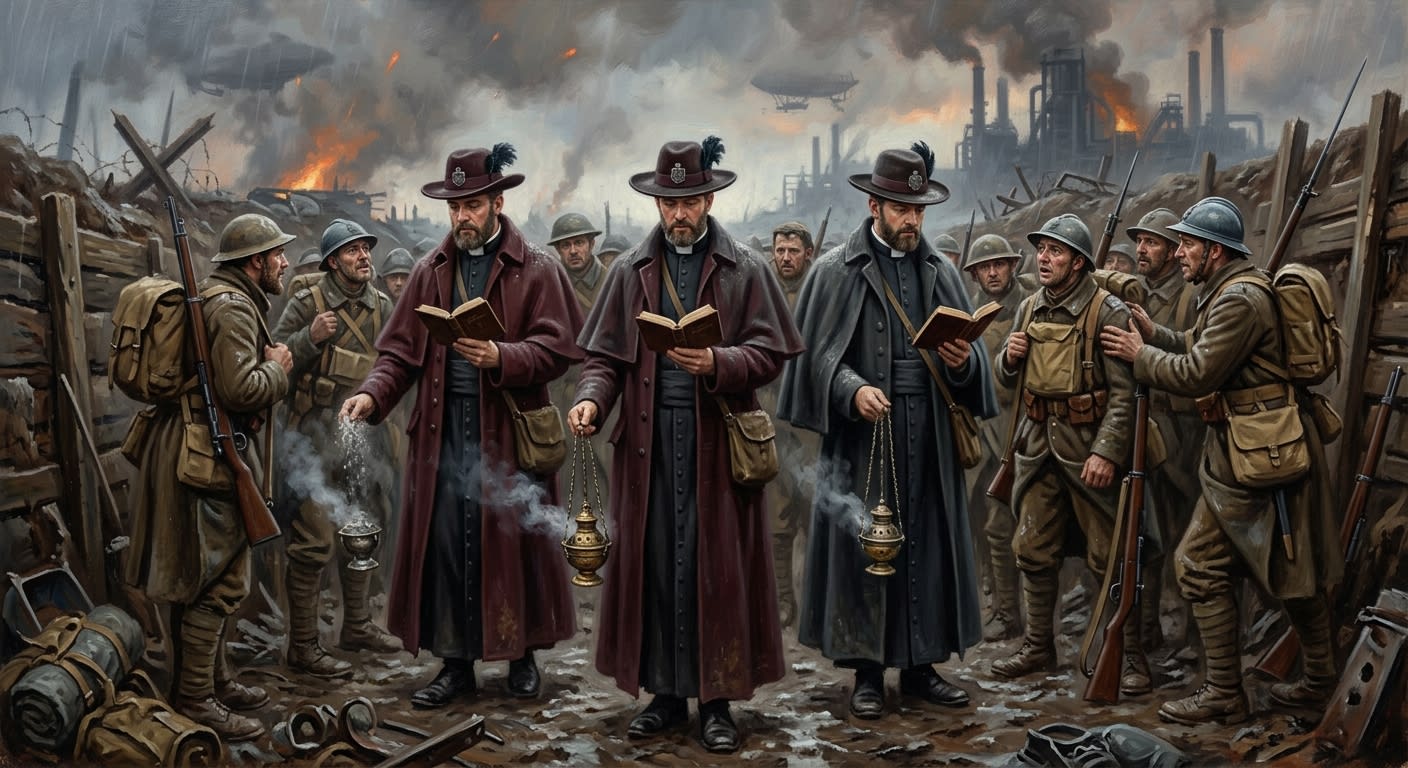
Ash Chaplains
Breath is only pastoral after War has taught it to hold
Bureau of War lung-clergy who deploy relic-ash, the Litany of Stones, cadence discipline, and name-silence to keep breach cohorts breathing in obedience under shell, song, and rupture.
Codex Ref. VIII.5.07-001
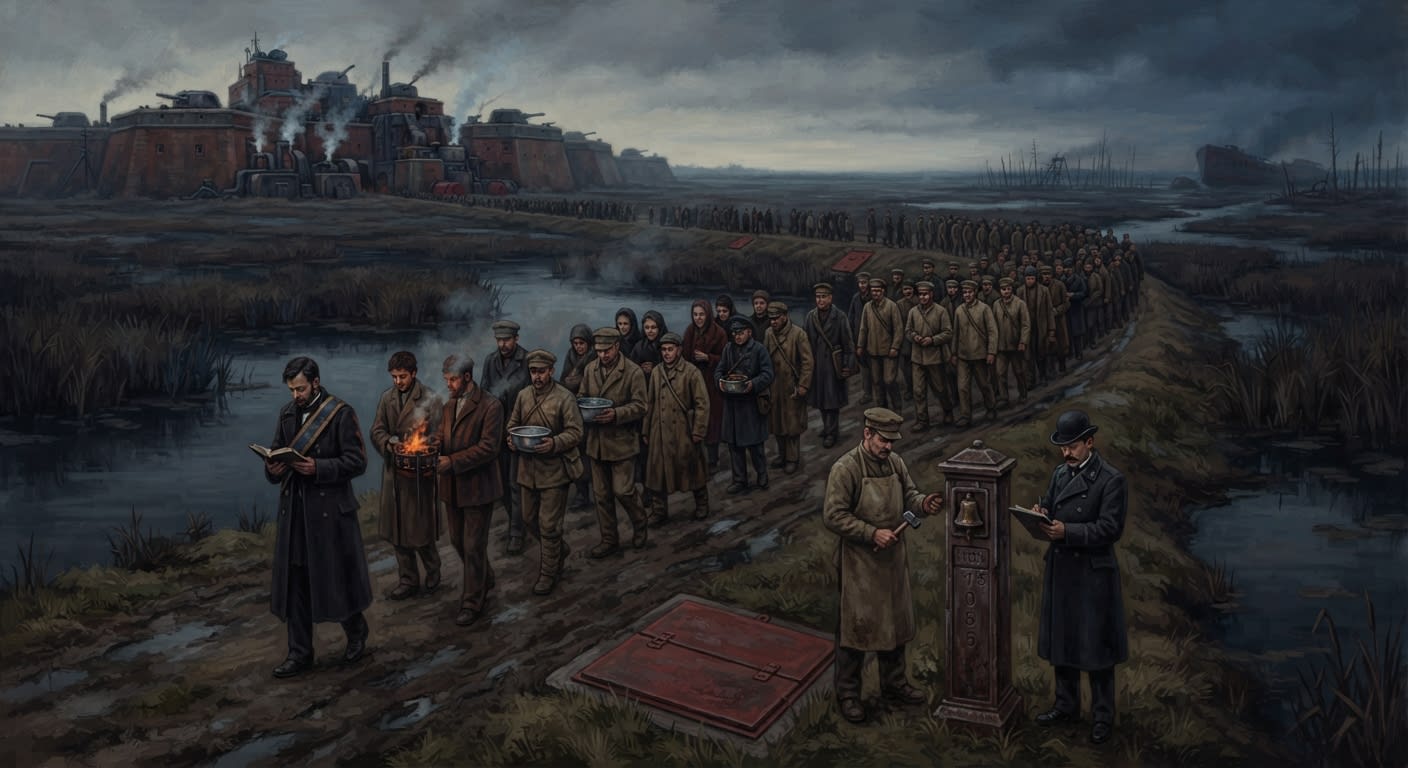
Ash Toll of Bastion-Shipka
A licensed walk over the fire Shipka refused to light
The Bureau of Festivals calls it a regional observance. Shipka calls it a drill with singing: two kilometres of ash, bells, sealed fire and black water, walked yearly over the road that once survived by drowning.
Codex Ref. II.4.08-113
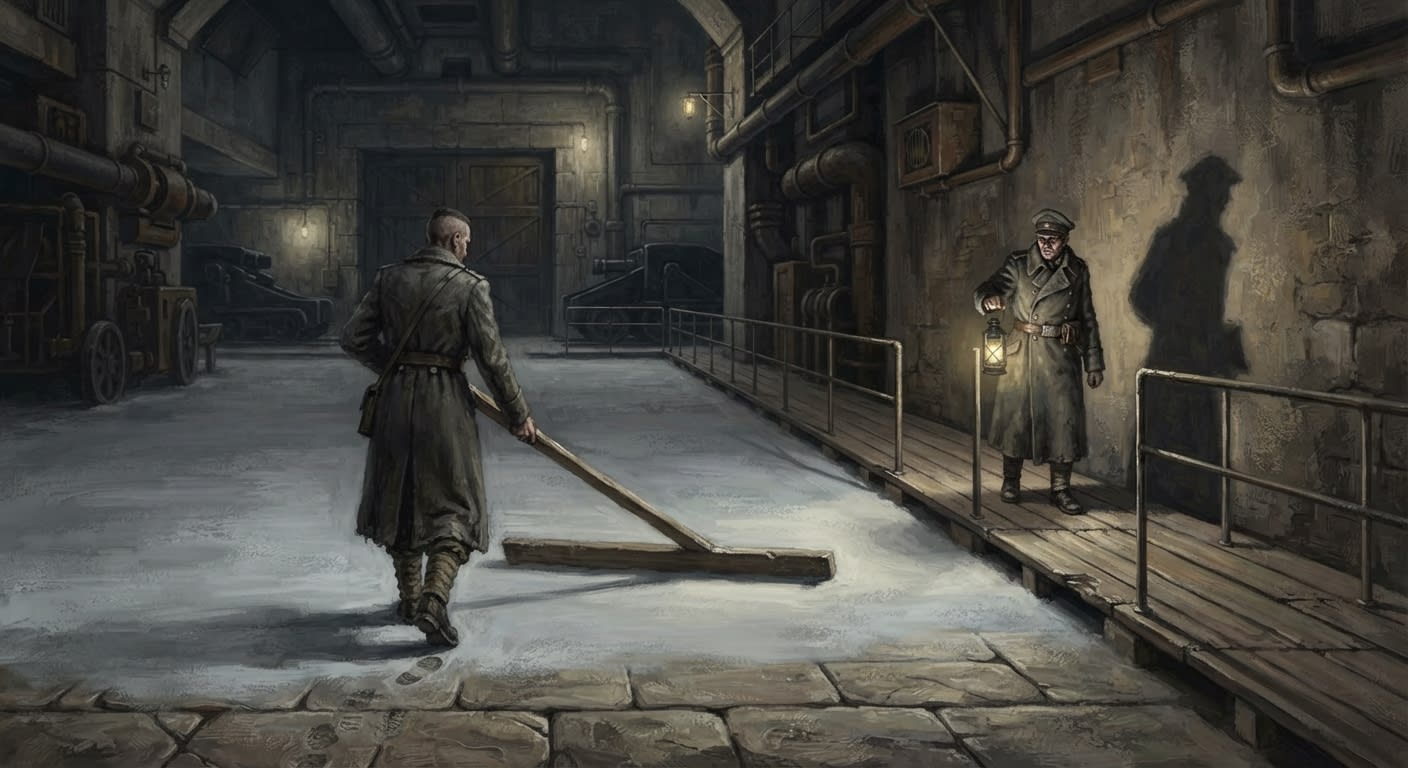
Ash-Dusting
Ask the floor; the floor has no reason to lie
Ash-dusting is the Synod's cheapest answer to Veil-Stalkers: blessed ash, a smoothing board, and the admission that the floor may be more reliable than a frightened sentry.
Codex Ref. XIII.1.88-190
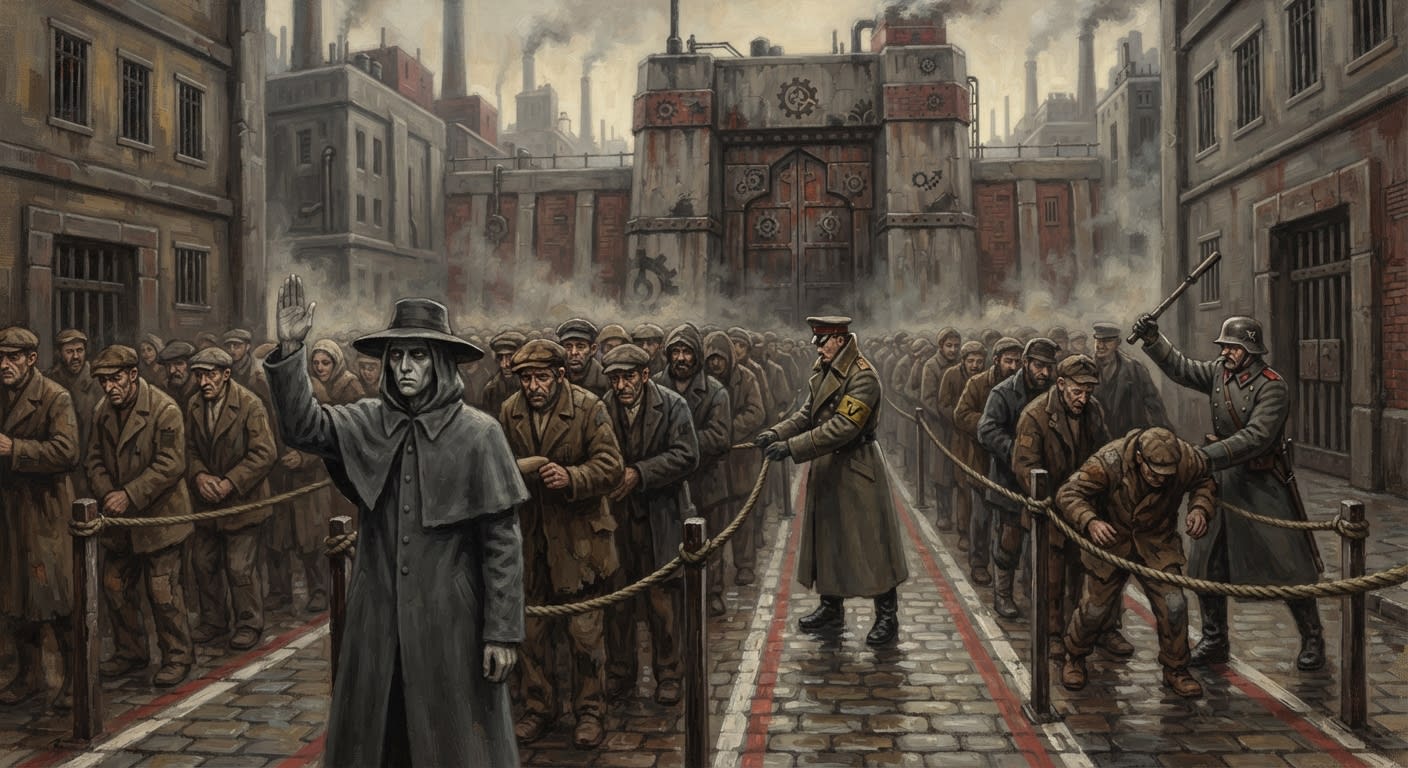
Ashbread Clause
The sentence that taught hunger to march
The A.S. 113 clause of the Concordat of Civic Cadence that made every bread queue subject to sound, rope, baton, and Bureau grammar.
Codex Ref. XIII.1.10-113
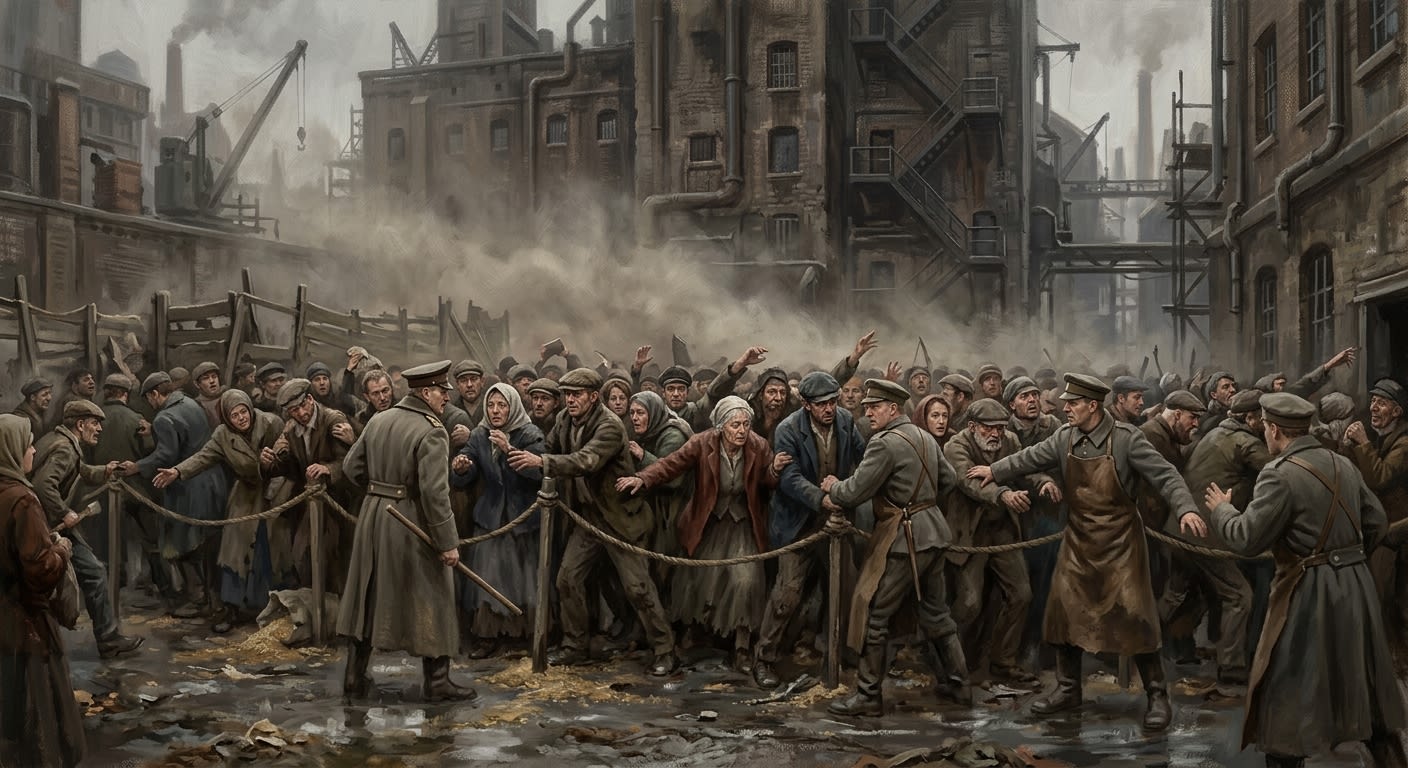
Ashbread Stampede
Where wet rope, short bread, and perfect schedules made a corps
A.S. 112 ration-yard crush at Bastion-Brest whose 317 official dead, wet lane ropes, and visible shame birthed the Cadence Corps.
Codex Ref. VII.8.10-057
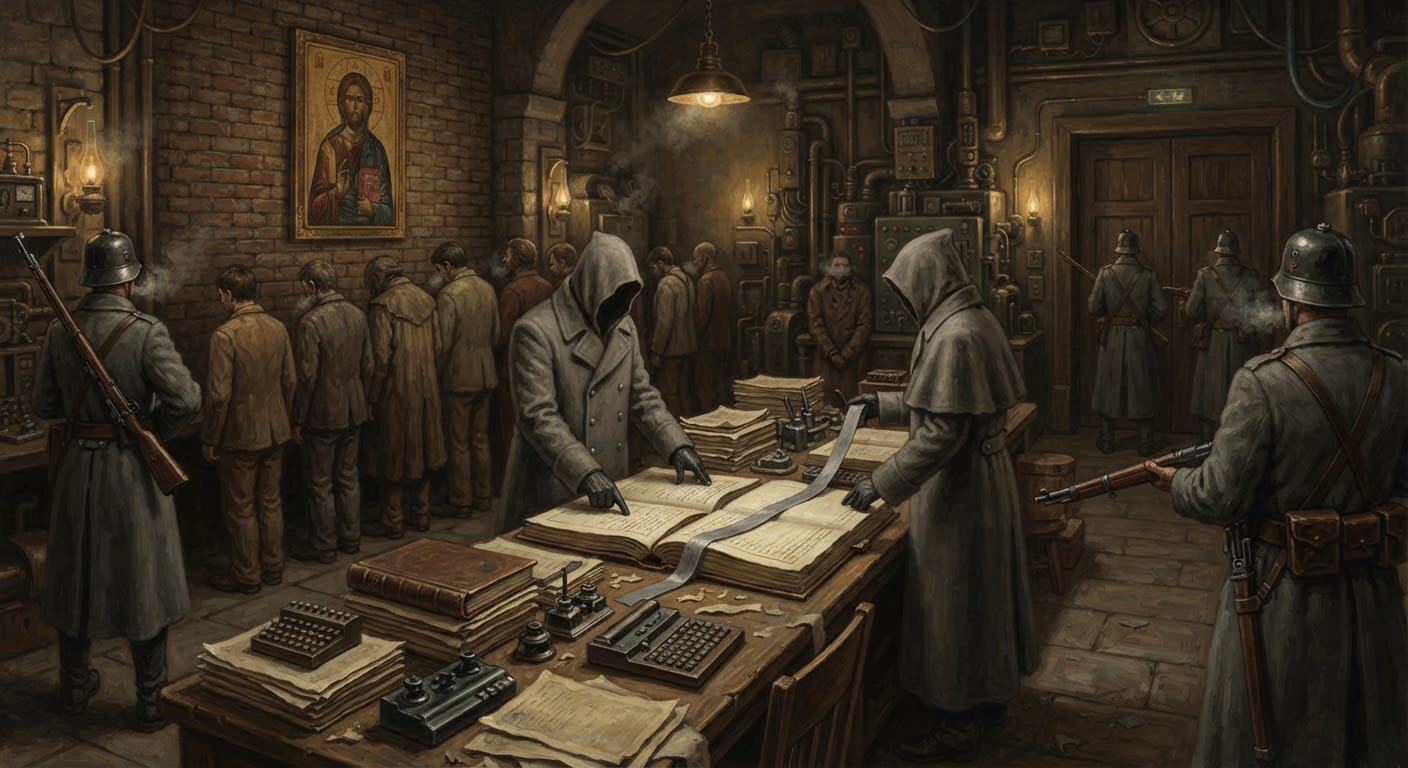
Audit Silence
The hush by which Records makes a room confess
Audit Silence is the Bureau of Records doctrine that stills speech, opens locked repositories, encloses witnesses, and lets an Indiction writ make law out of hush.
Codex Ref. XIII.1.06-090
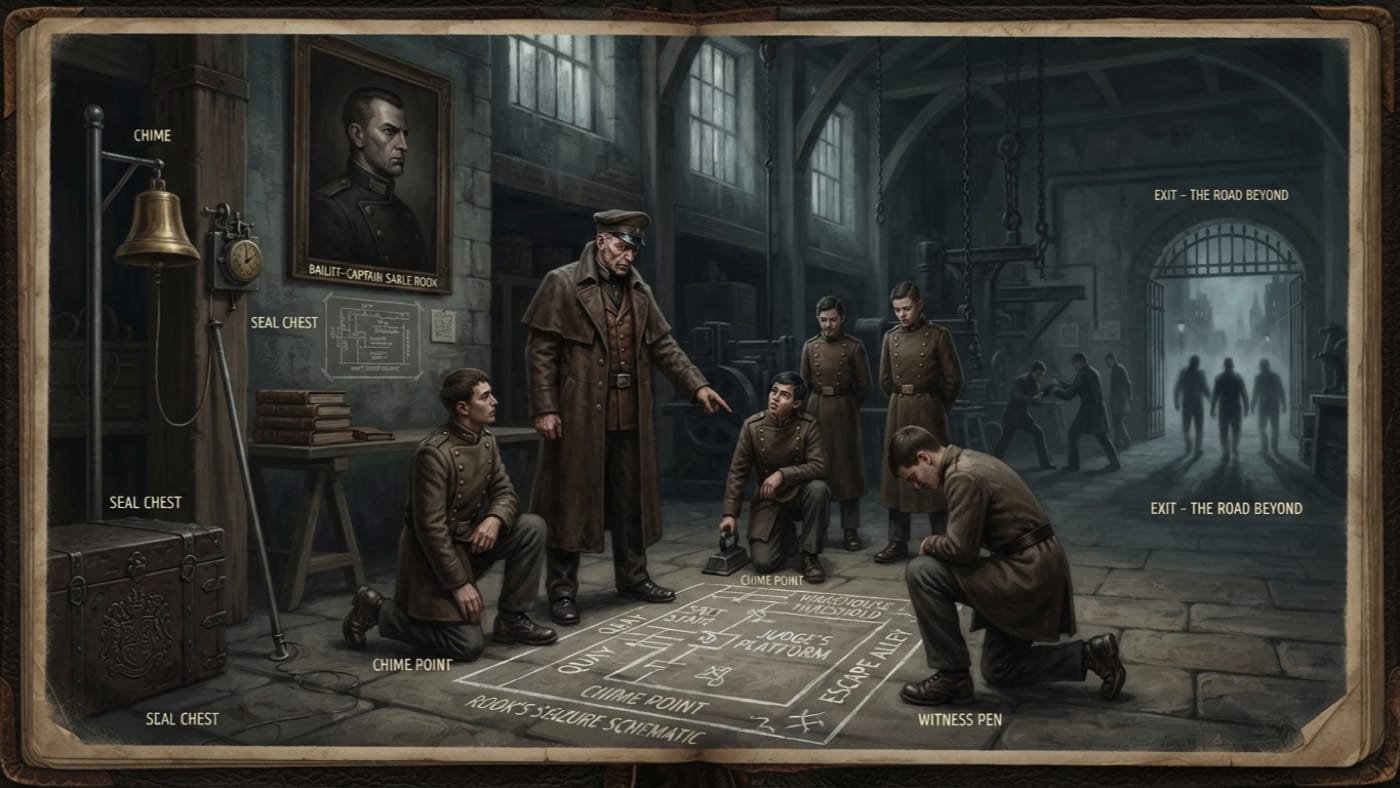
Bailiff Academy
Chalk, chime, seal and chain; the model ends where the missing names begin
The academy teaches chalk, chime, seal and chain. Rook supplies the model; his three missing prisoners remain outside the lesson.
Codex Ref. XII.39.04-193
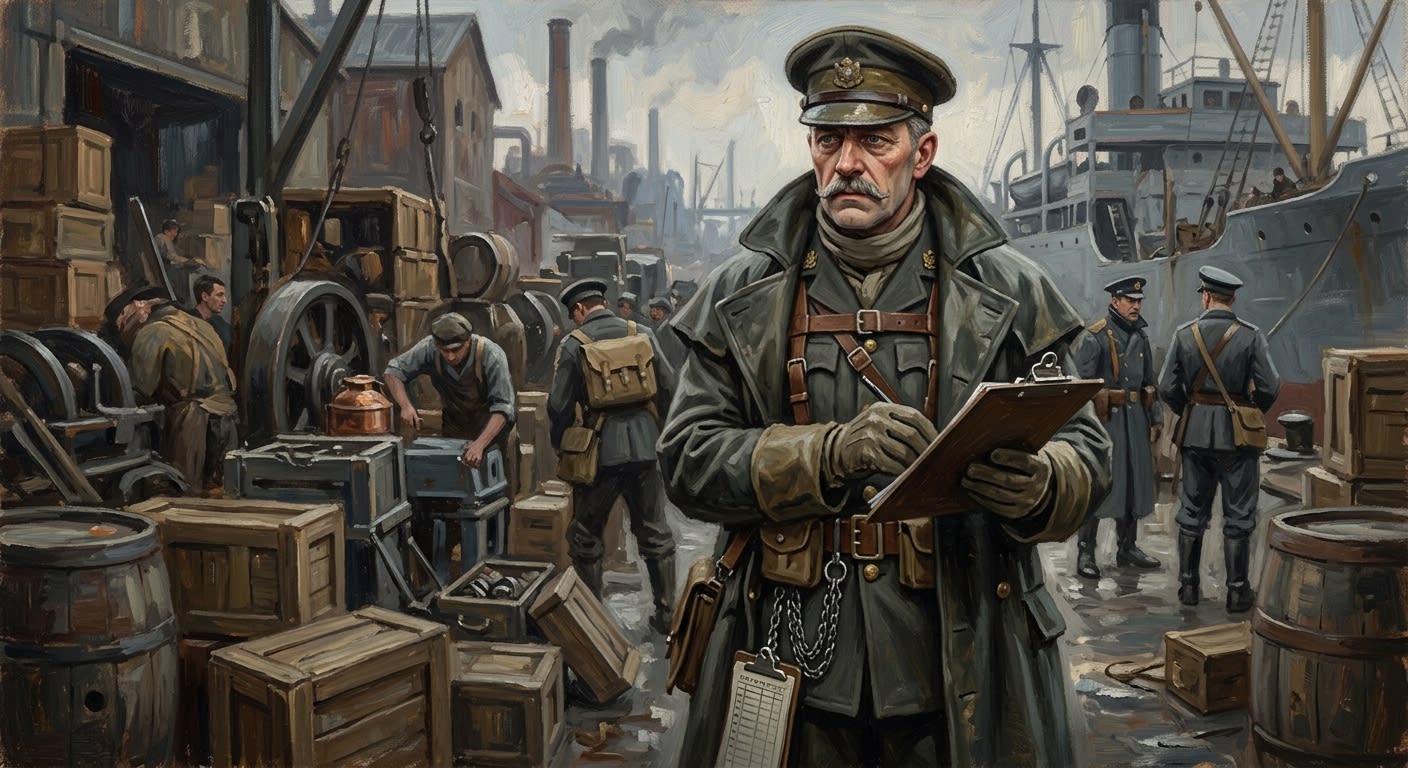
Bailiff-Captain Sable Rook
The chime made law; the chain kept its own arithmetic
Instructional Bailiff-Captain of the Brest port seizure, praised for making riot into inventory and restricted for the three prisoners his chain misplaced.
Codex Ref. III.2.01-142
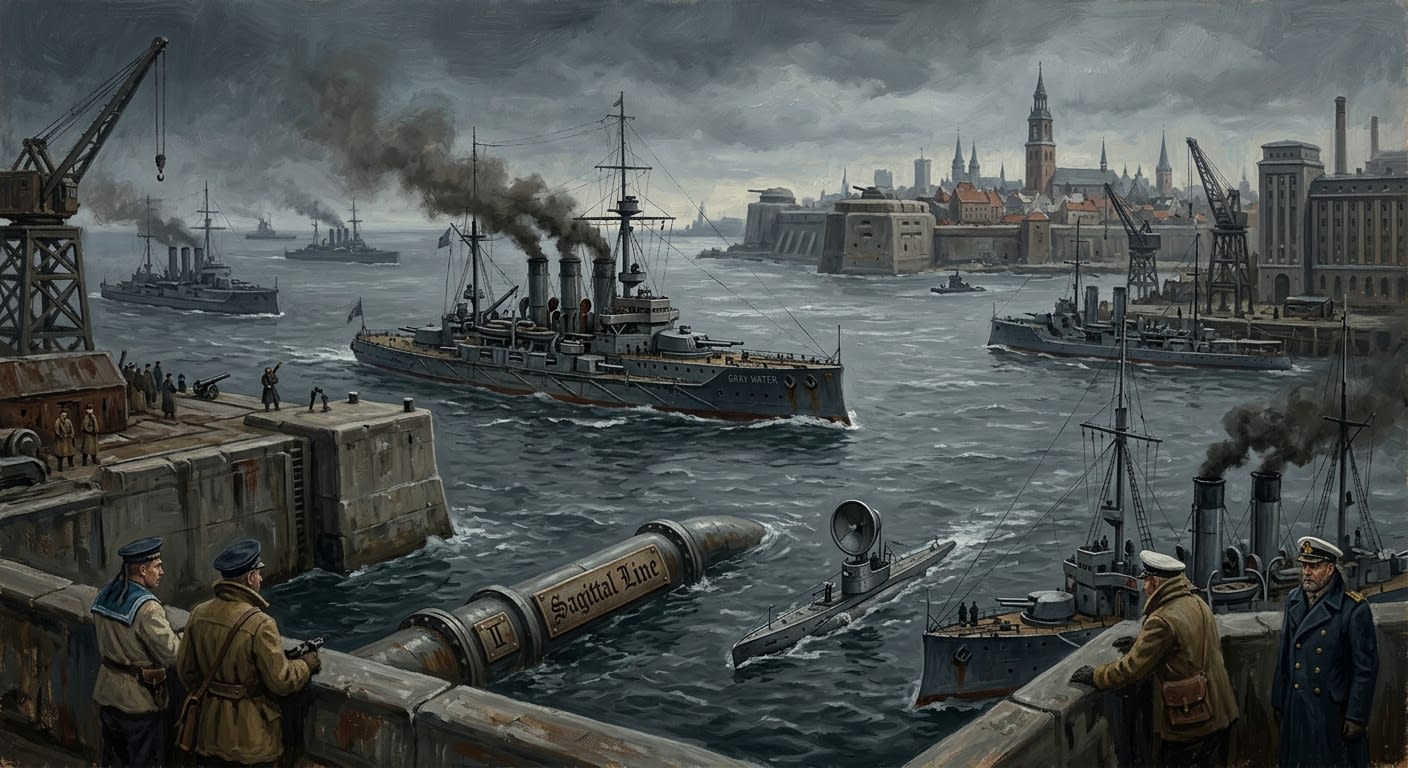
Baltic Sea
The cold bowl that listens back
The Baltic Sea is the cold northern bowl where the Sagittal Line ends at Königsberg, Grey Water listens, old bells answer, and maps lose courage.
Codex Ref. II.8.01-065

Bastion-Irongate
The mountain does not need the iron. The mountain needs the sound.
The fifth bastion of the Sagittal Line guards the Danube gorge with stone, chain-booms, and a choral infrastructure whose song is the only reason the mountain has not yet collapsed. Facing Morwen, Sin-General of Envy, who attacks not to take the gorge but to ruin it.
Codex Ref. II.4.07-005
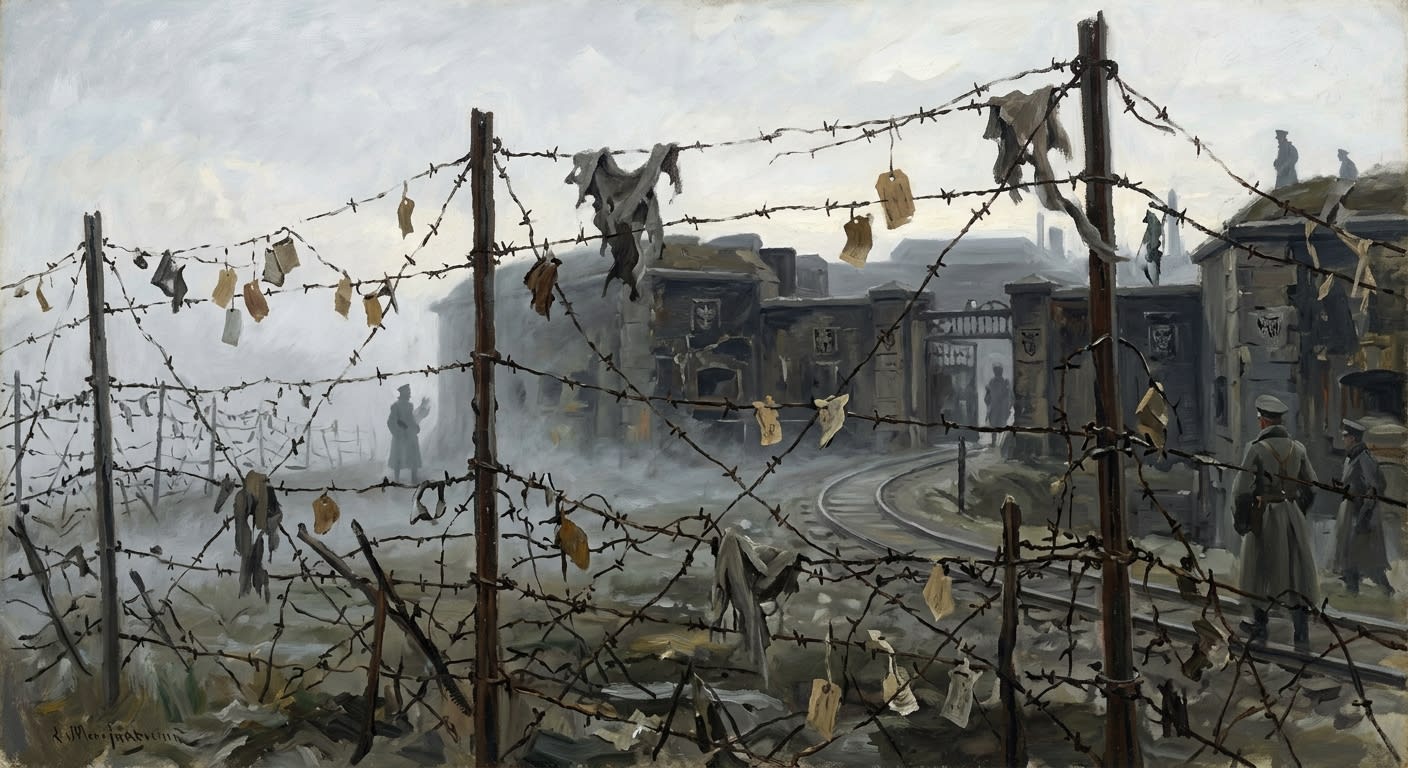
Bastion-Przemyśl
The Wire Remembers What the Ledger Forgets
The Wire Orchard at the Carpathian arc: three miles of electrified barb, a ration-tag economy, and the cold arithmetic of the dawn harvest. What enters Bastion-Przemyśl is processed. What exits is stamped. What fails the stamp feeds the Orchard.
Codex Ref. II.4.07-003
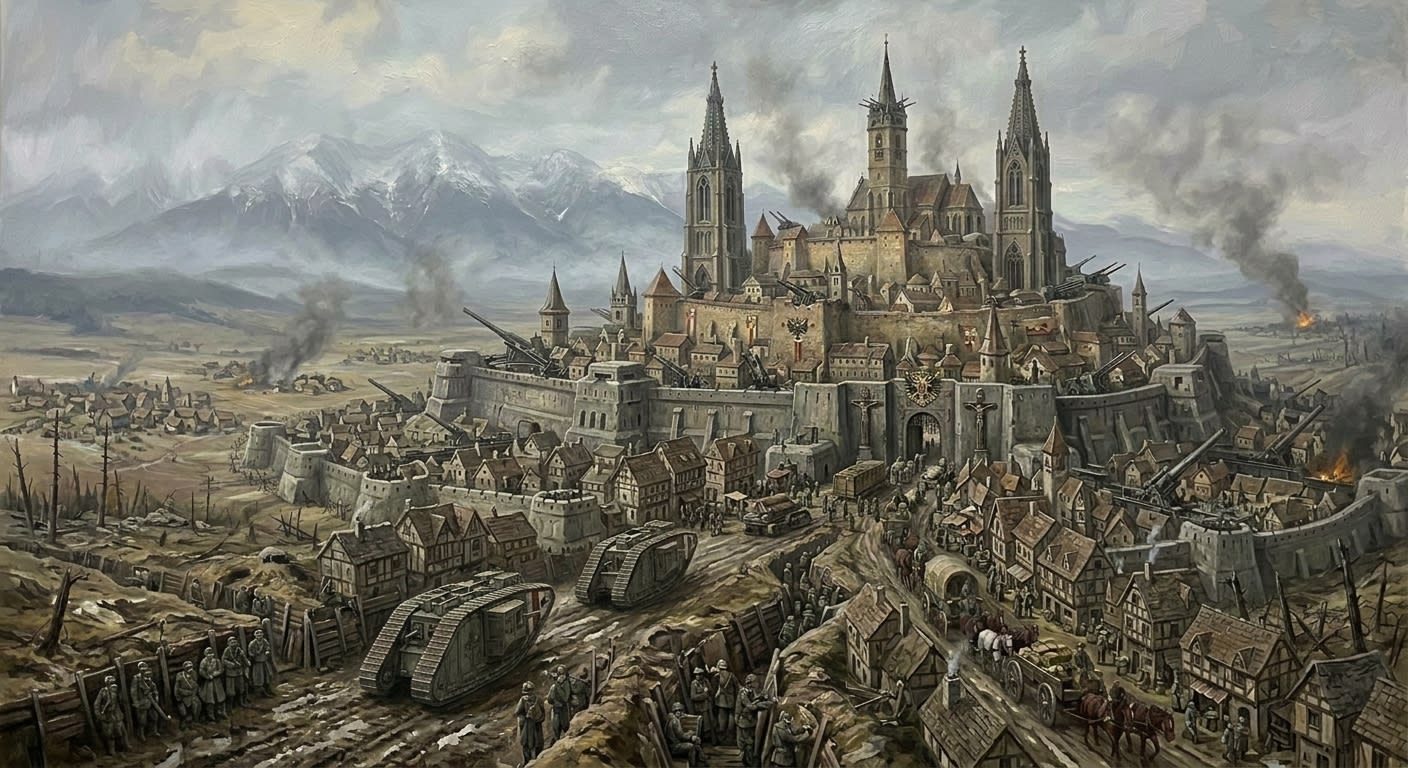
Bastion-Sibiu
The walls hold. The ledger bleeds.
Bastion-Sibiu has never fallen. Its economy is another matter. Velmora does not storm the Transylvanian Alps — she audits them: counterfeit scrip, corrupted convoys, and the gold veins that may already be hers.
Codex Ref. II.4.07-004
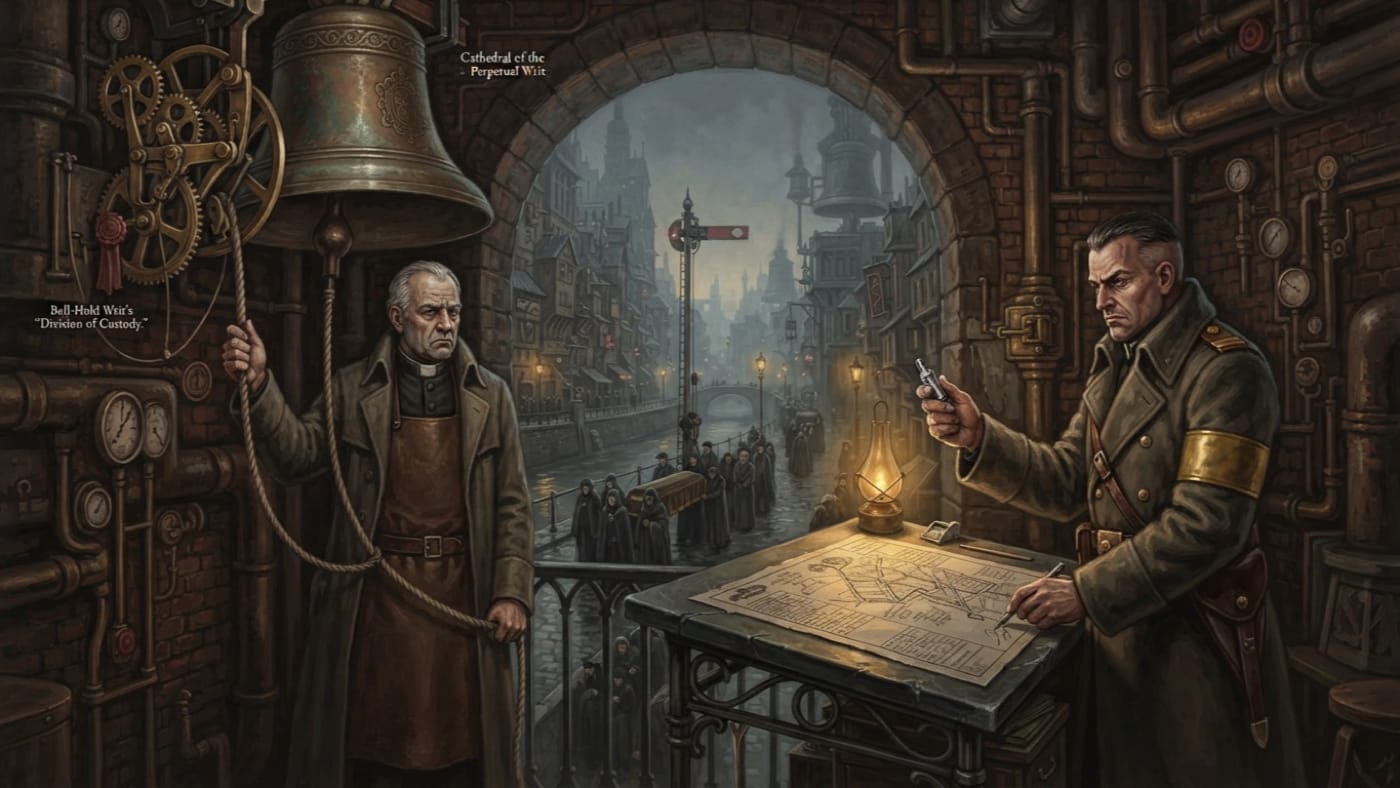
Bell-Hold Commentary
Bells keeps the tone. The Marshal keeps the hour.
The A.S. 132 gloss assuring Bells that the Route-Timing Concordat diminished no Bureau's dignity. Dignity survived; command of the hour passed to the Marshal.
Codex Ref. XIII.1.62-132
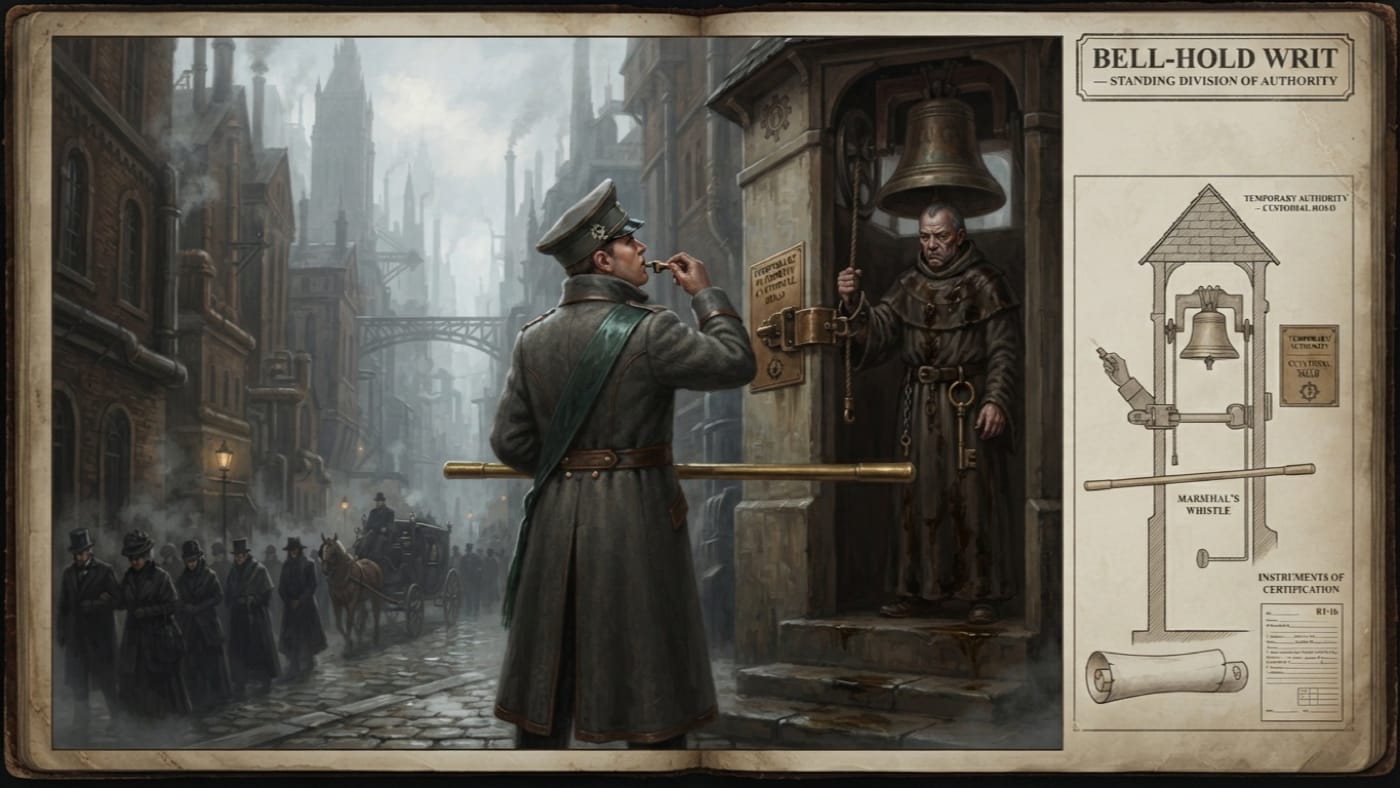
Bell-Hold Writ
The whistle may suspend. It may not compose.
The Bell-Hold Writ lets a Marshal suspend lawful bells inside cleared routes. Bells keeps the liturgy; the Corps keeps the crowd alive.
Codex Ref. XIII.1.62-129
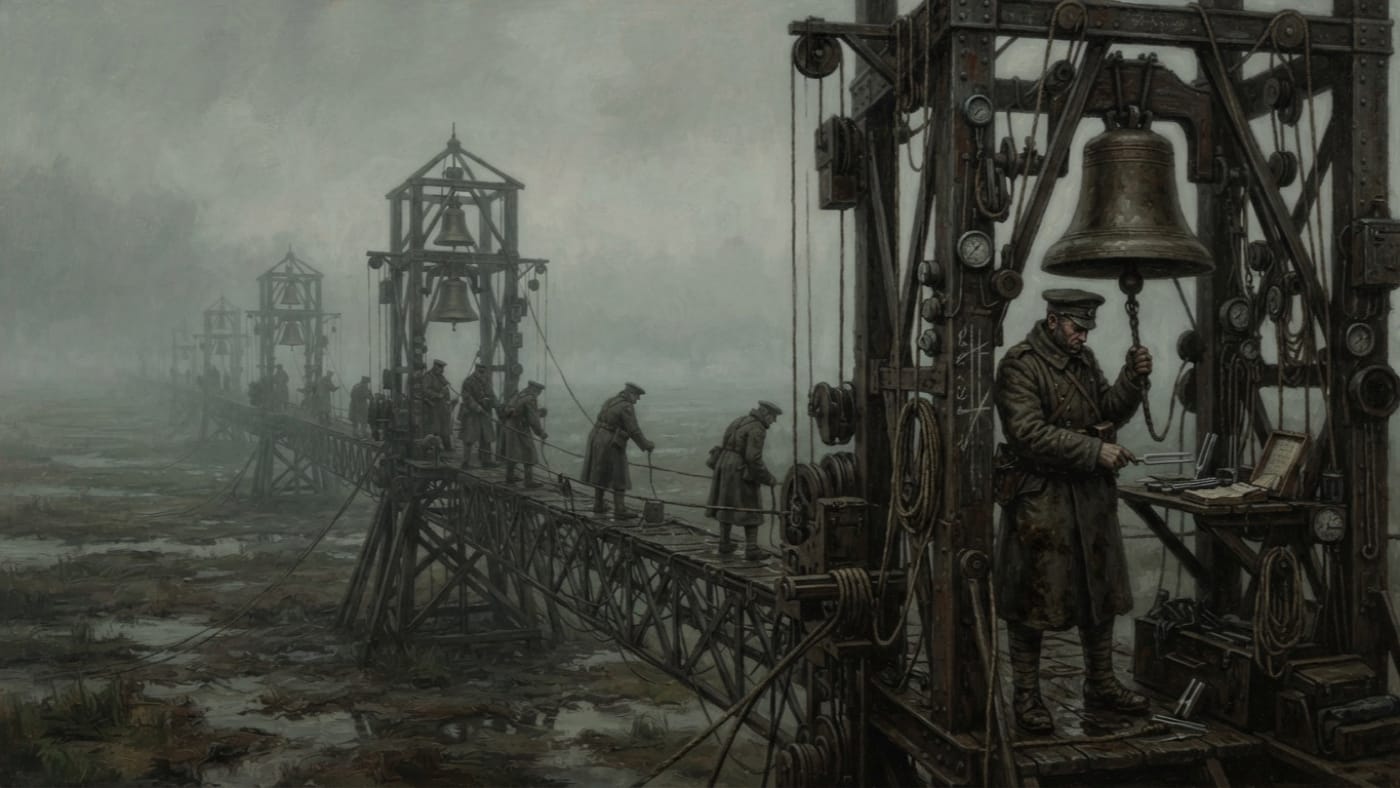
Bell-Resonance Towers
The Peal Is Lawful; the Traveller Is Unproven
Brest's forward-wire towers order watches, warnings and lawful movement. Their peals are calibrated, licensed and logged; the Bureau has yet to make an honest traveller by ringing a bell.
Codex Ref. XIII.1.62-201

Bell-Tappers
The profit nearest the bell, where every hymn becomes a hiding place
Bell-Tappers are the richest and most doomed Hidden Pipe-Runner faction, moving black diesel beside bellways where civic resonance hides the hiss.
Codex Ref. XII.3.05-001
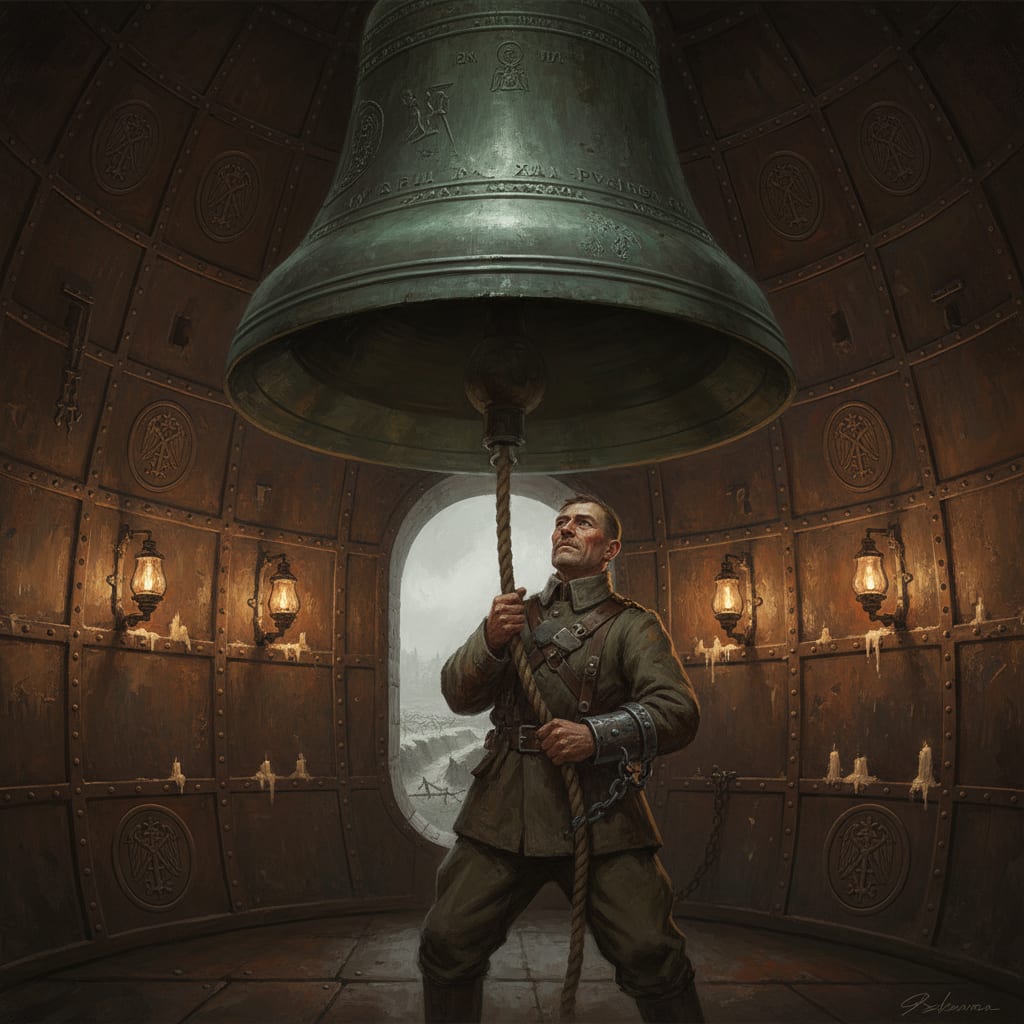
Bellwarden
Chained by the wrist to the Synod's schedule, he rings a war he will never be permitted to understand.
Eleven thousand four hundred souls chained by the wrists to a Synod schedule they did not write, ringing a war they cannot explain, in service of a theology their bells increasingly refuse to perform.
Codex Ref. XII.2.01-001
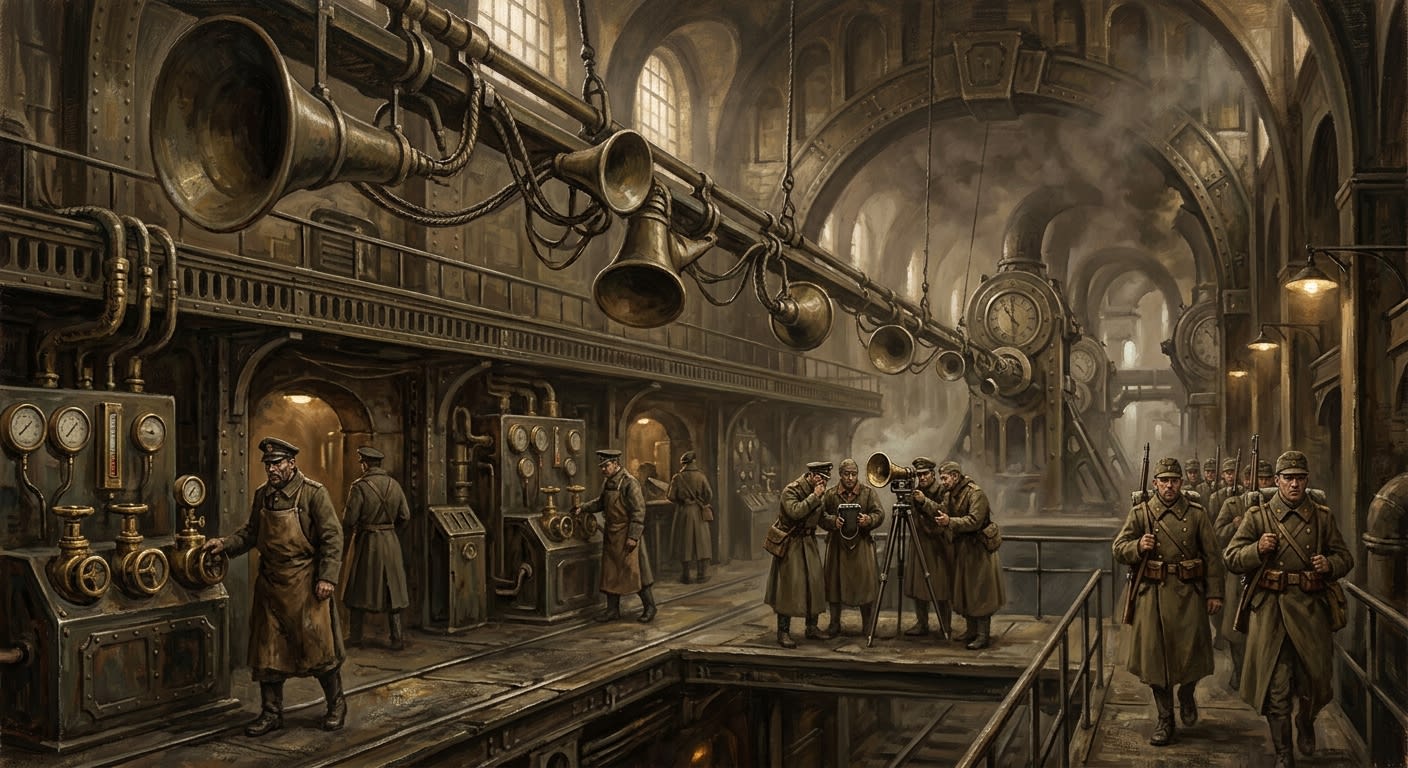
Bellway
The road that hears you, blesses you, taxes you, and may repeat you
Bellways are the Synod's sanctioned acoustic corridors: road, alarm, sermon, surveillance net, and mercy with teeth, carrying lawful sound through the Line and beyond.
Codex Ref. XIII.1.88-201
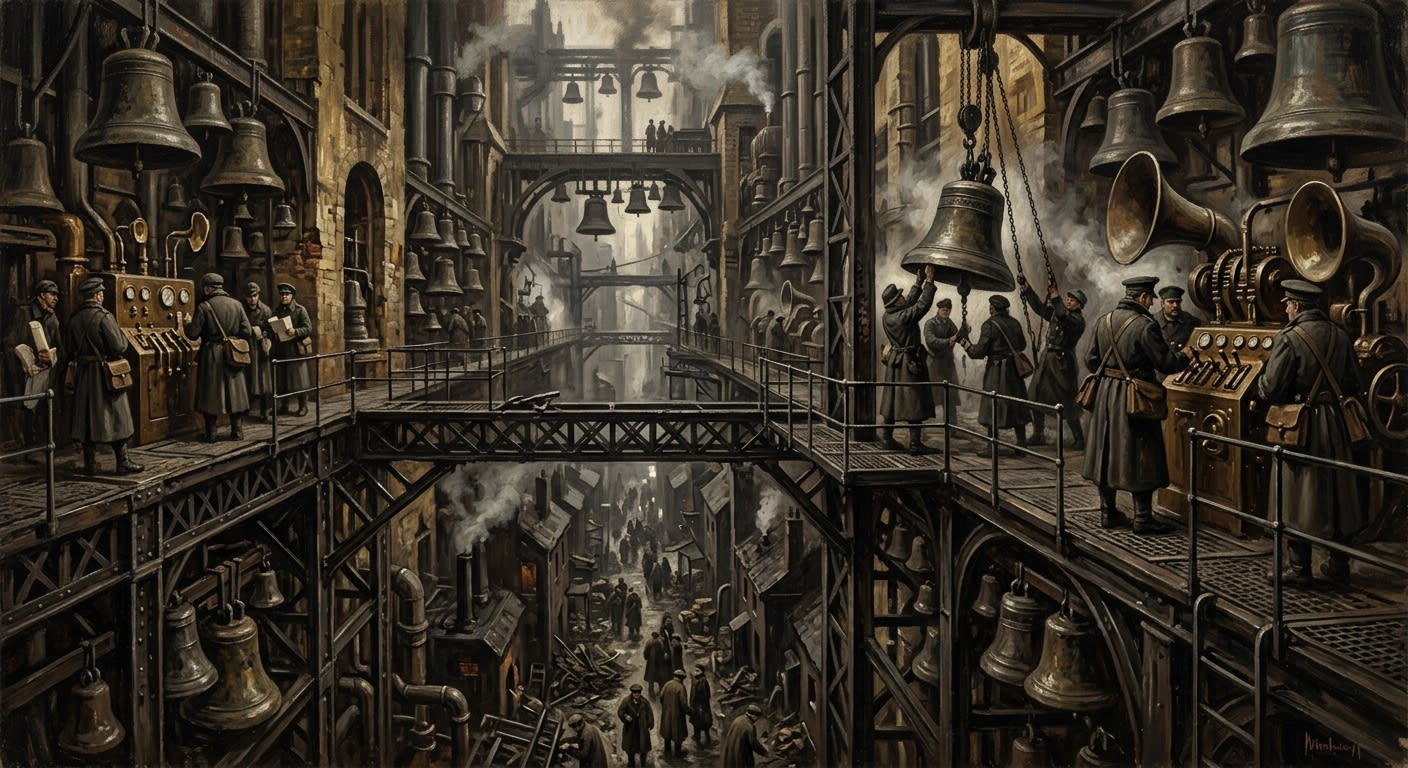
Bellways
The plural doctrine of roads, sky, trench, and taxable obedience
Bellways are the Synod's plural acoustic jurisdiction: low roads, middle war-lattices, high Ark corridors, and every quarrel they make audible.
Codex Ref. XIII.1.89-201
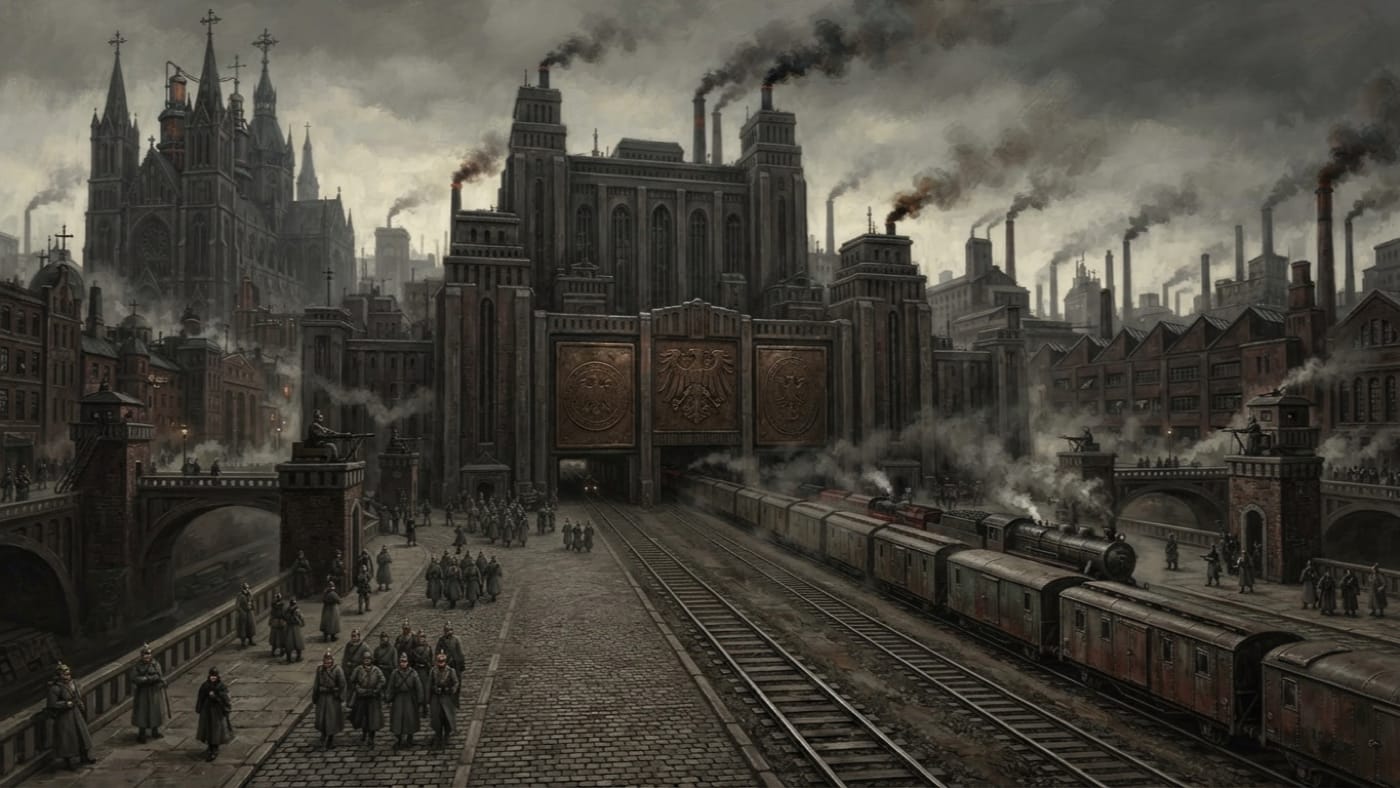
Berlin
The Ledger keeps both names; the city answers to one
Berlin supplied the Northern Garrison sent to famine-struck Hamburg in A.S. 65. Renamed Kanzleiburg in A.S. 95, it remains the same city; the Ledger keeps both names.
Codex Ref. II.4.09-095
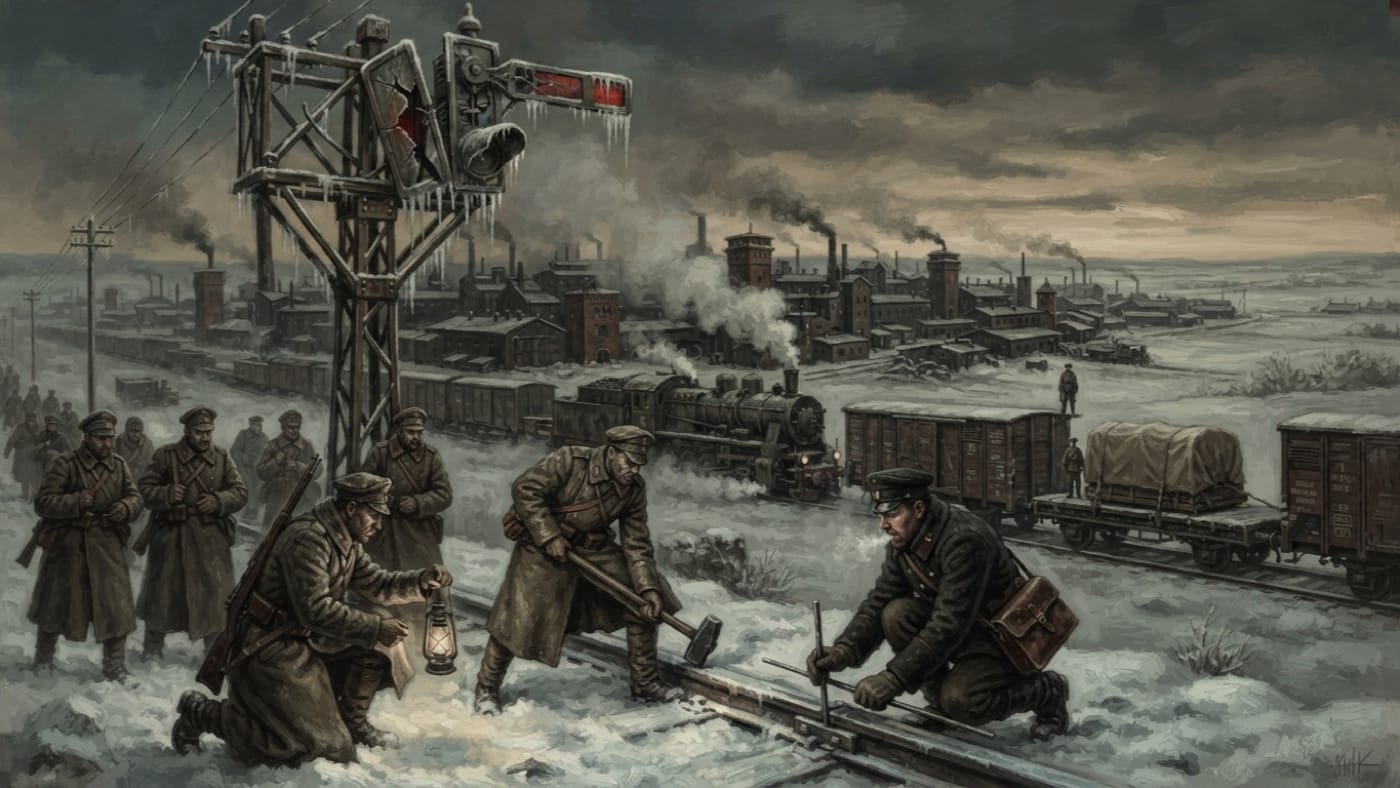
Białystok
Frost cracks the signals; War suspects the delay
Białystok carries Warsaw's military freight toward Königsberg. This commissioned A.S. 201 survey covers winter signal risk, rail damage and extra patrols: frost obeys no timetable.
Codex Ref. II.4.09-250

Bishops-Praetorial
Mitres welded to prefectures, and souls counted twice
The Bishops-Praetorial keep souls, quotas, provinces, and grudges: mitred governors whose pastoral care arrives with tithe tables attached.
Codex Ref. VIII.3.04-093
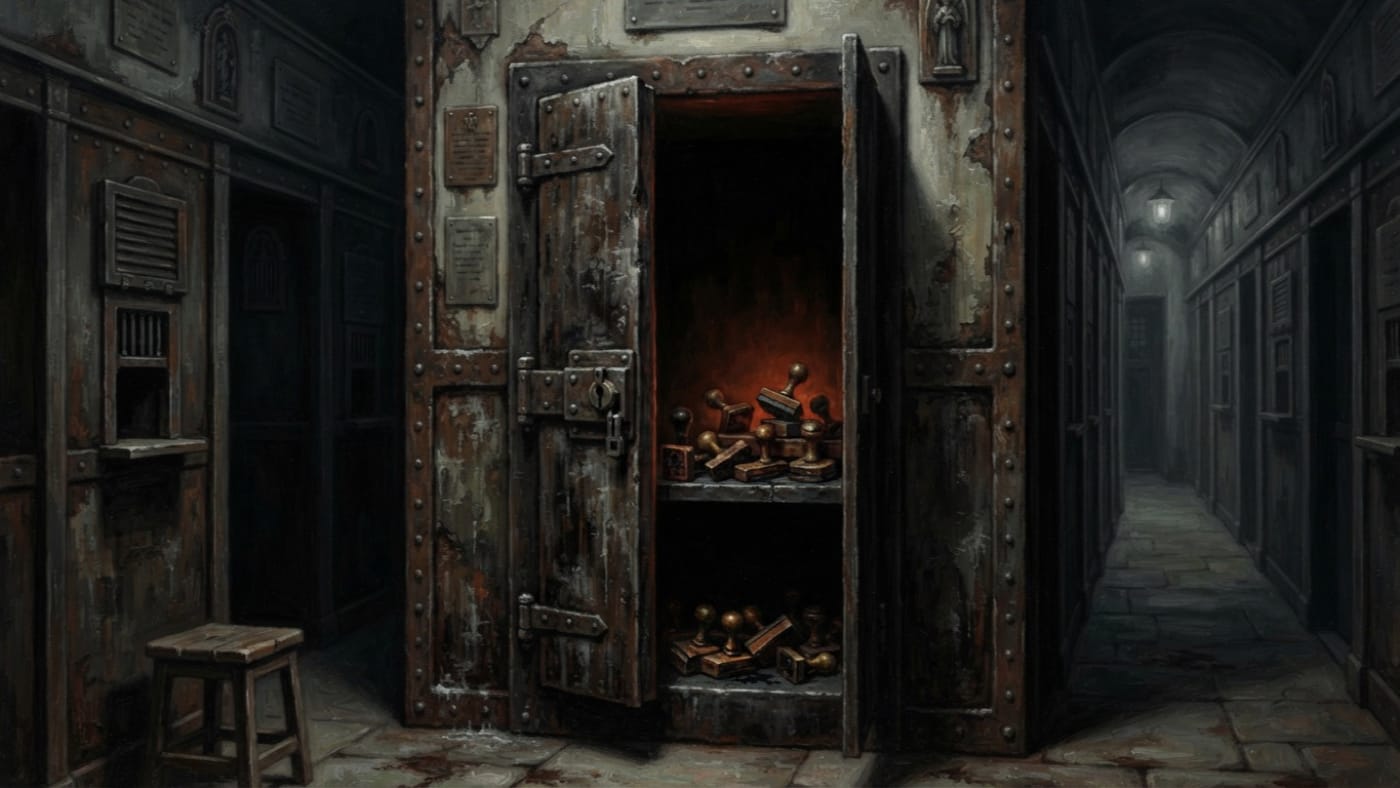
Black Brine Cupboard
A warm stamp is no proof of a cupboard
Booth clerks whisper of a cupboard where defective stamp sets spend the night and return warm. The Codex certifies the saying; the furniture remains unverified.
Codex Ref. XIII.1.61-002
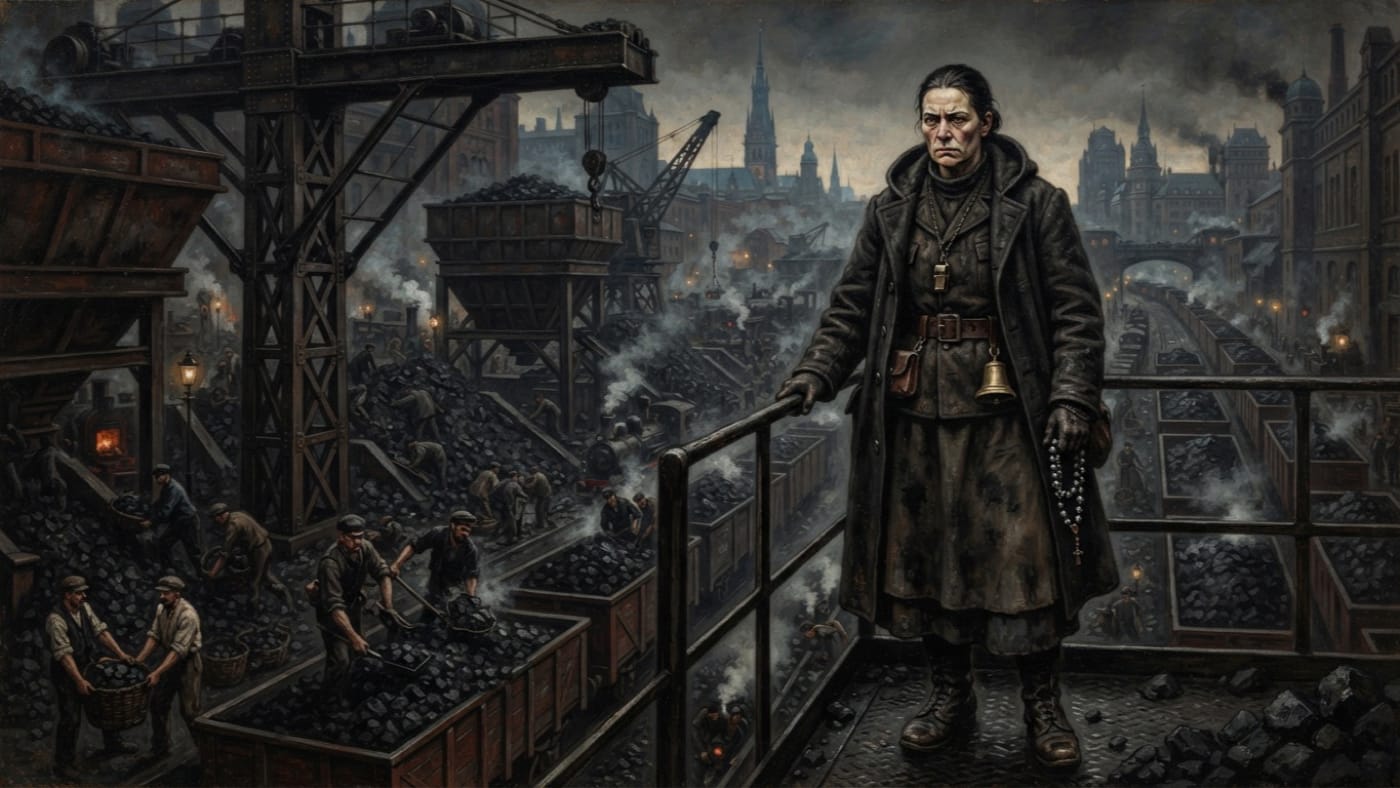
Black Marta Pell
Which dead man should take the extra shift?
Black Marta Pell, registered as Martha Pelmann, commands Hamburg's Coal-Heavers' Union. Her whistle governs the black yards; her questions make the Bureaus account for the men who keep the northern front warm.
Codex Ref. III.2.01-270
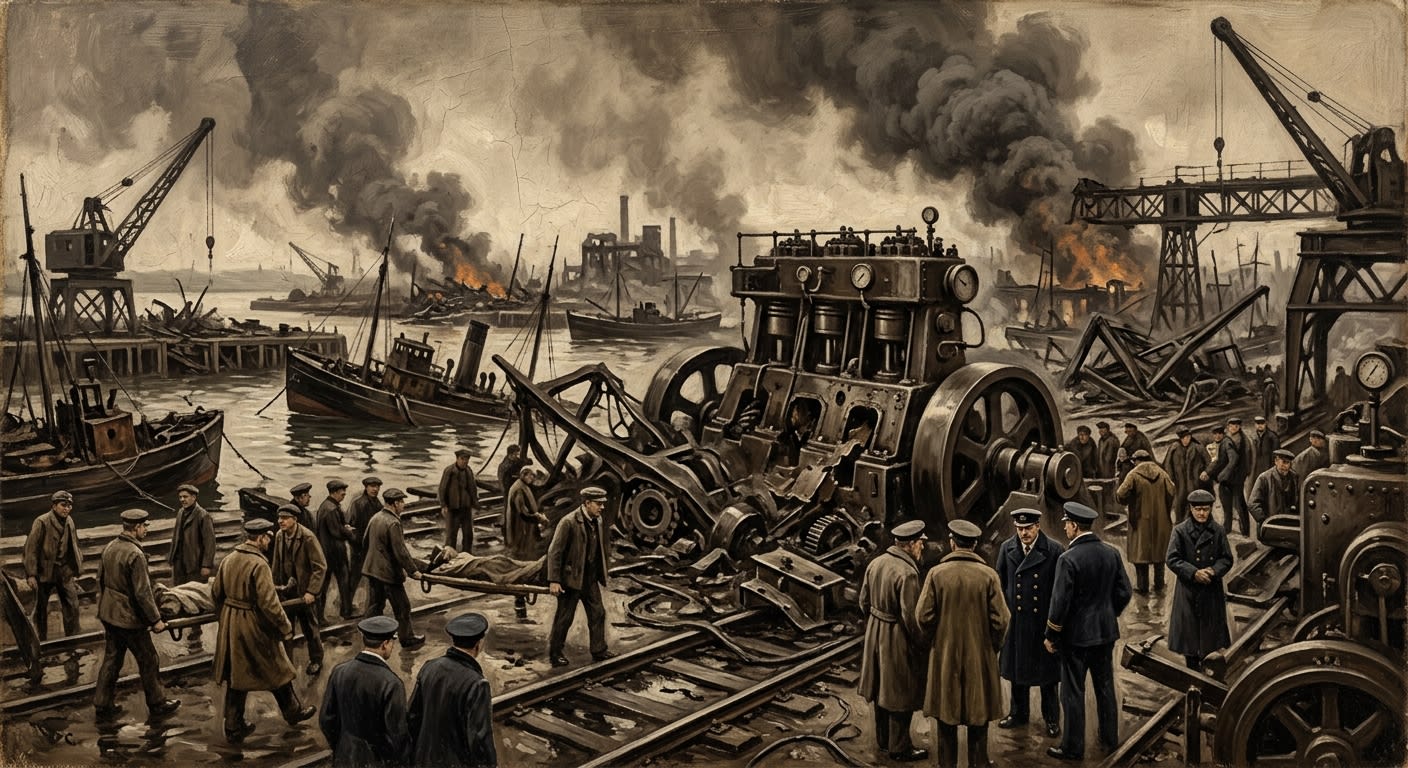
Black Start Catastrophe
Forty-three dead, one wall niche, and a profession born screaming
A.S. 97 Bastion-Brest harbour disaster in which an uncertified black start killed forty-three men, burned half the port, and created the licensed Litany-Engineer vocation.
Codex Ref. VII.8.10-051
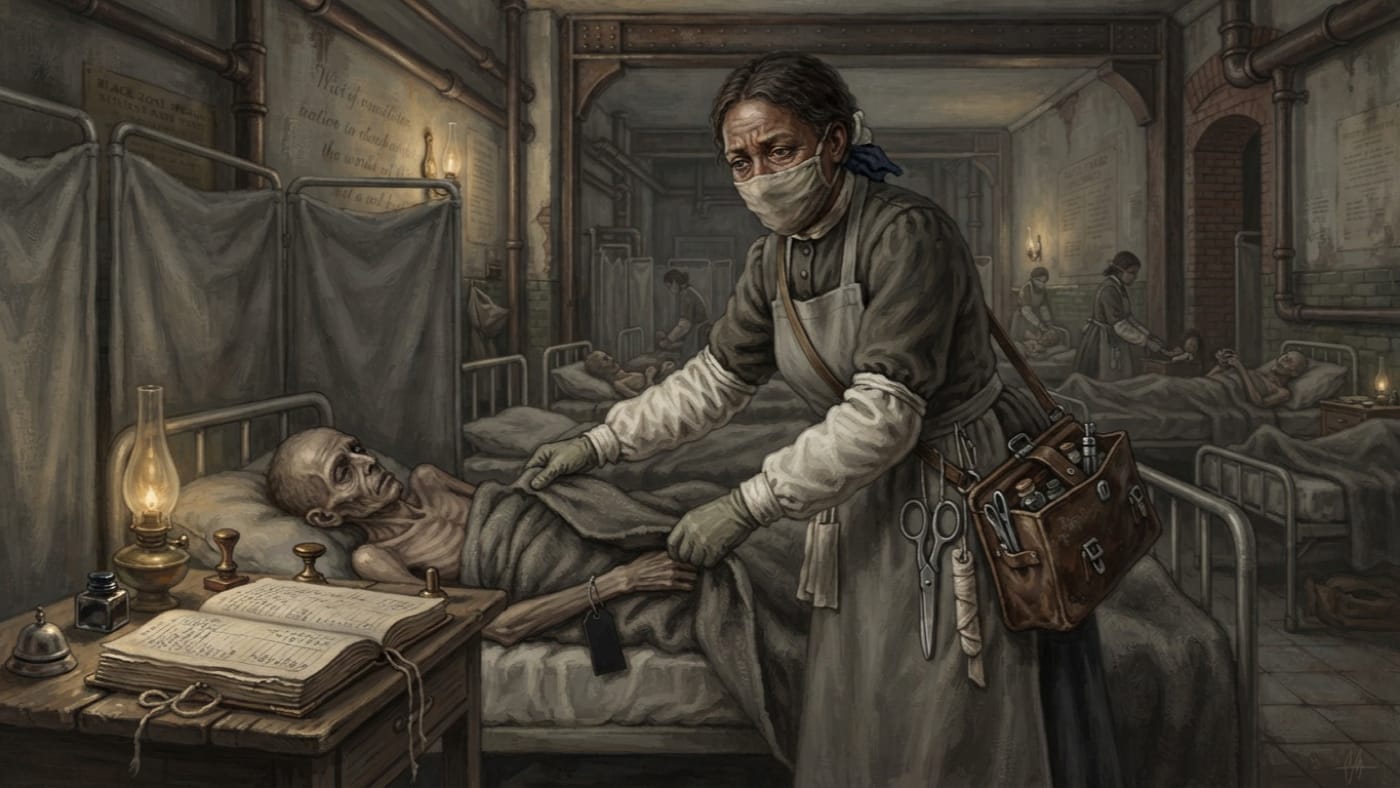
Black-Zone Specialist
Behind the screen, every kindness needs a signature
The Black-Zone Specialist serves Mercy Ward patients classified as terminal, contagious, anomalous, inconvenient, or beyond allotment. Every kindness needs a signature; every death must balance the ledger.
Codex Ref. XII.6.04-002

Blessed Clerk Harlowe “Dry-Ink”
The closed stamp pad by which mercy learned its office hours
Tolerated vocational patron of Confessor-Booth Clerks: a devotionally sufficient blessed whose dry stamp pad sanctifies refused mercy and audit-safe cruelty.
Codex Ref. III.2.01-102
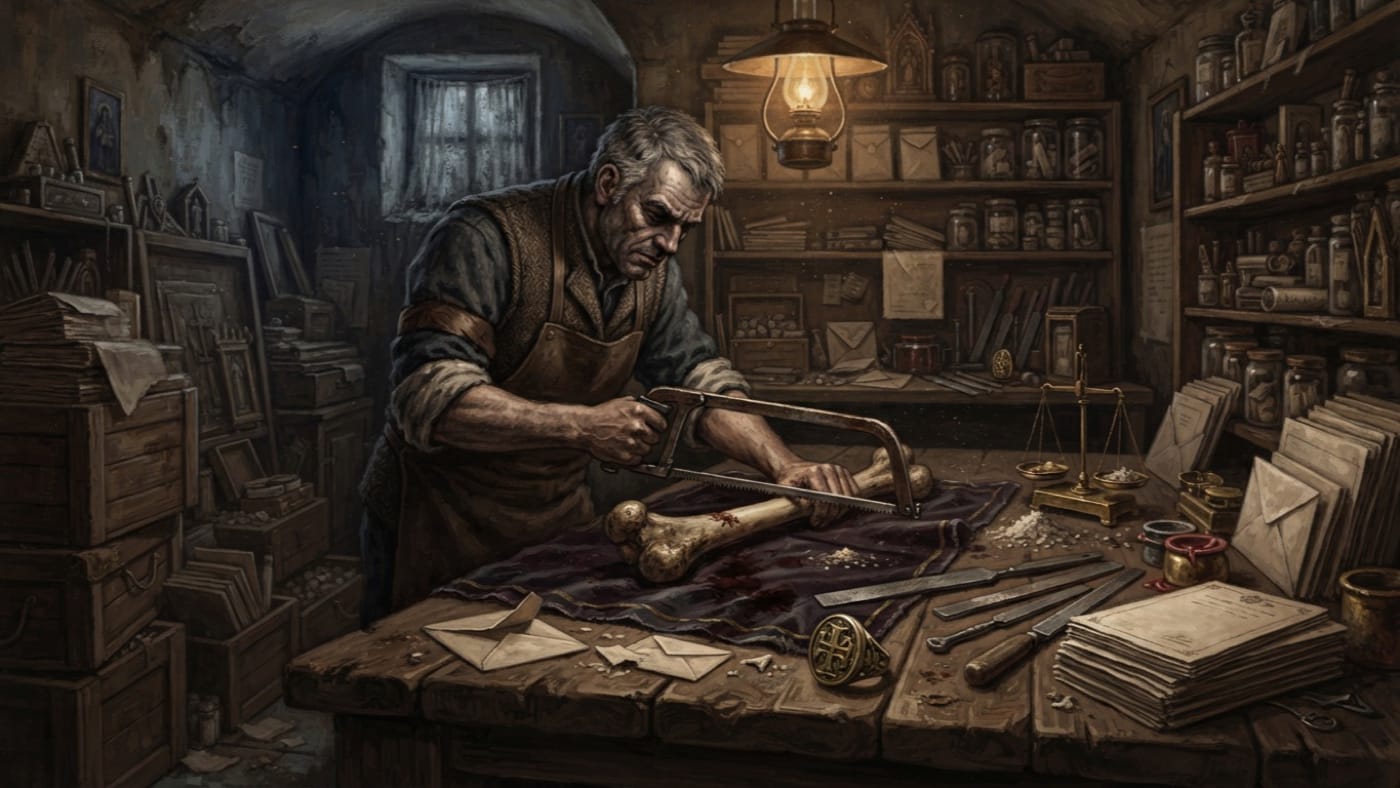
Bone Splitters
The certificate travels separately; the saint travels in pieces
The Paper-Only insult for Peace and Profit brokers who divide authenticated saint-bones into separately certified portions. Surveyed in A.S. 201: tolerated when useful, denied when caught, and indispensable whenever calendars fail.
Codex Ref. XII.15.05-001

Bone-Lung
The dead enter the chest one opened rack at a time
Progressive marrow-dust sickness of Ritual Bone-Stampers, politely misnamed by Medicine, cheaply classified by Records, and compensated by no one with a soul or budget.
Codex Ref. XIII.1.44-001
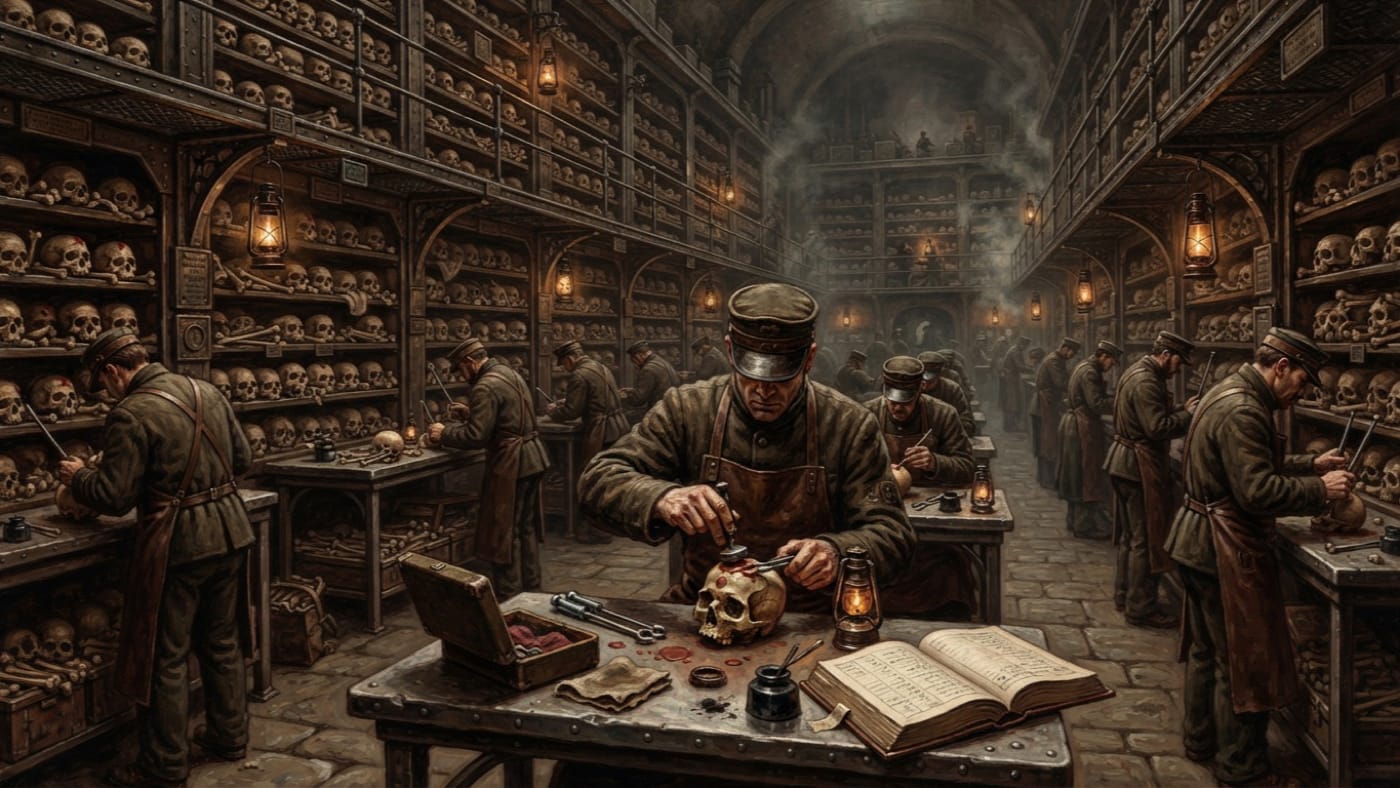
Bone-Stamp
The impression passes audit; the corridor gives its own verdict
The bone-stamp certifies that remains were received, catalogued, prayed over and placed. The Bureau audits the impression; the corridor judges whether it holds. Drax surveys the procedure in A.S. 201.
Codex Ref. VI.2.02-001
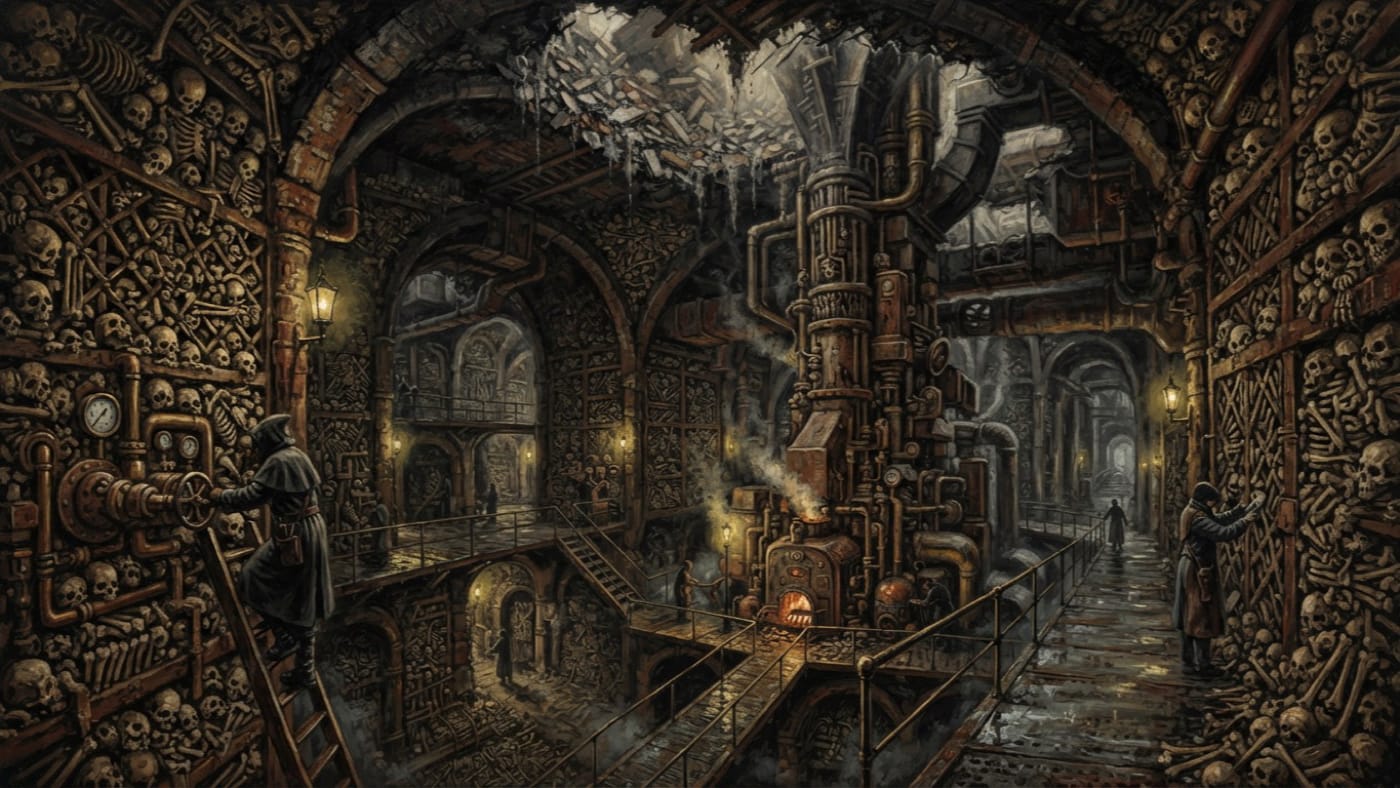
Bonefield Vaults of Lor
Where the dead hold the air and the living pay to breathe
Mortuary chambers beneath Black-Snow Lor carry its air through the forgotten dead. A northern chamber yielded recovered assets in A.S. 194; the rest remain unsurveyed. The Bureau approves the mortar and declines to discuss the lungs.
Codex Ref. II.4.08-003
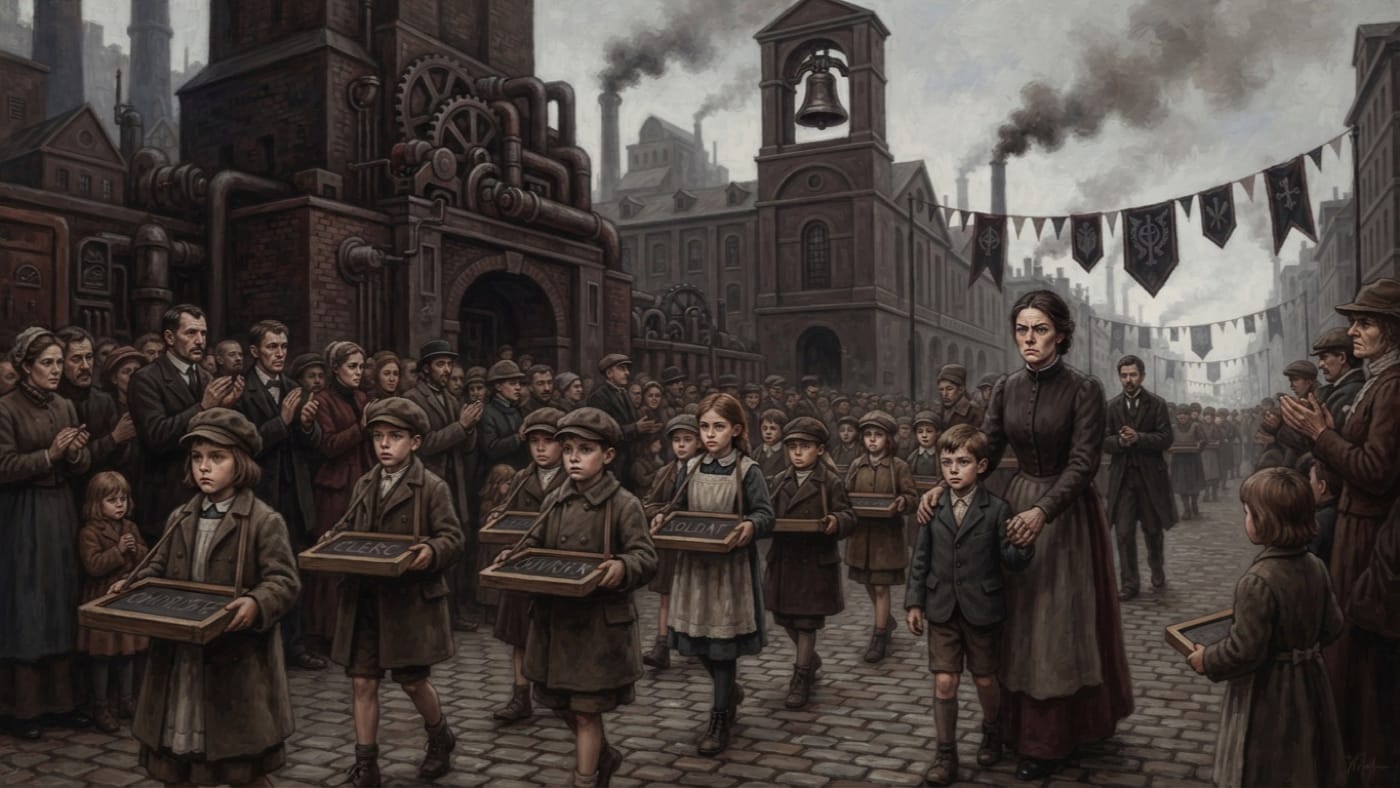
Book of Promise Parade
The child carries a future; the Bureaus retain the right to revise it
The Book of Promise Parade brings childhood's provisional vocations into the street: children carry wax tablets, families applaud, and the Bureaus reserve the right to change the future.
Codex Ref. XIII.1.22-002
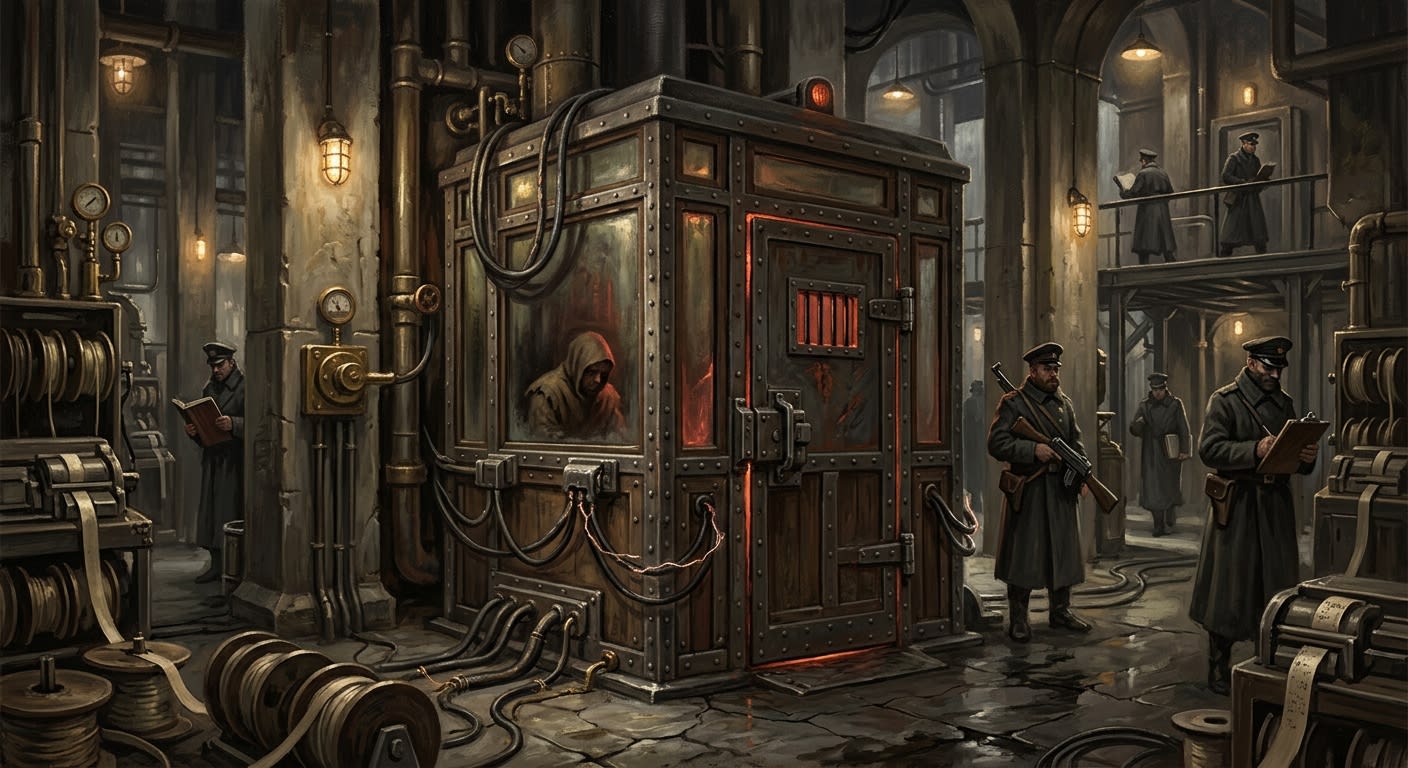
Booth 77
The confession box that filed tomorrow before the sinner arrived
Booth 77 is Bastion-Brest's sealed confession box that repeats sins before mouths arrive, making time itself an unlicensed witness before the Bridge Tribunal.
Codex Ref. II.4.08-077
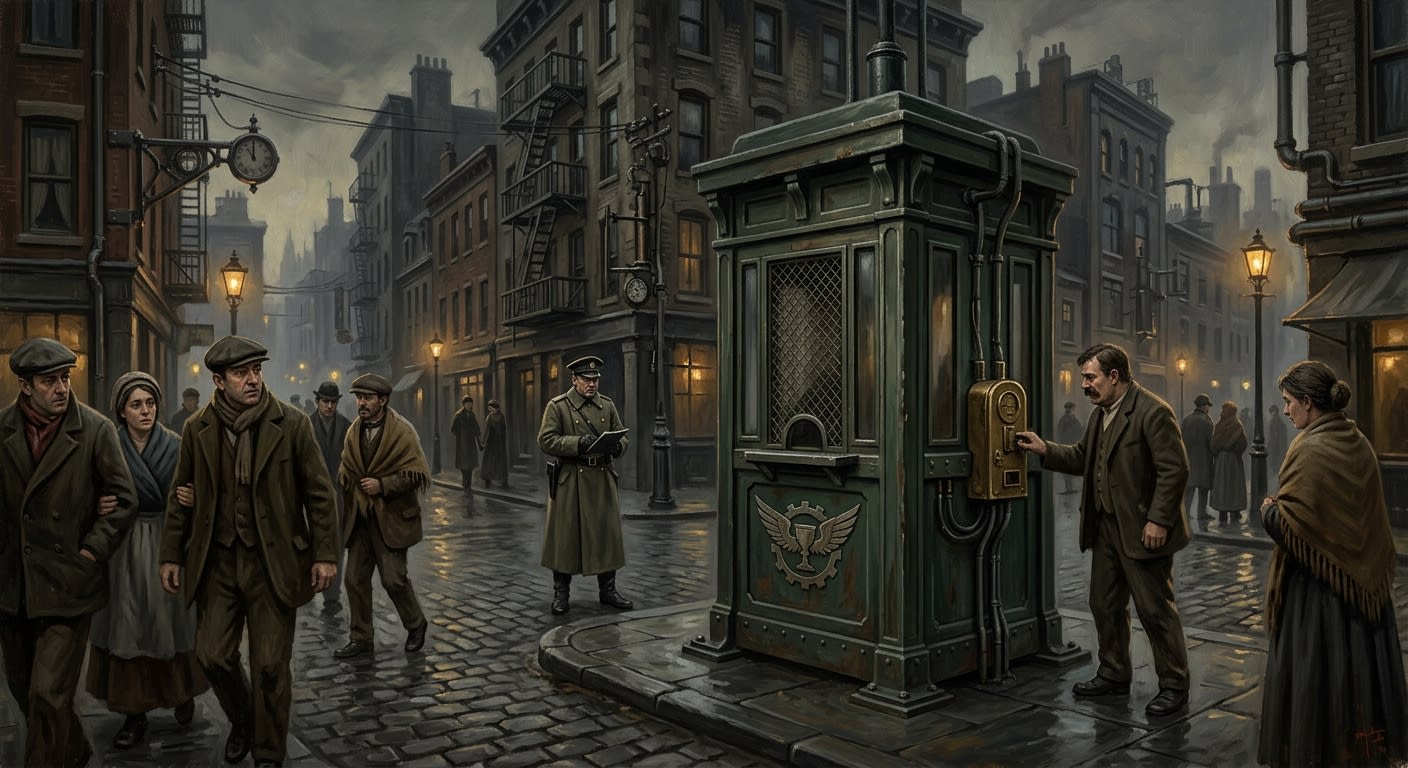
Booth Proliferation Decree of A.S. 112
One wooden box every three blocks, and Europe called it grace
A.S. 112 Bureau of Rites decree mandating one registered confession booth per three city blocks, turning confession into local, billable, auditable street infrastructure.
Codex Ref. VII.8.10-015
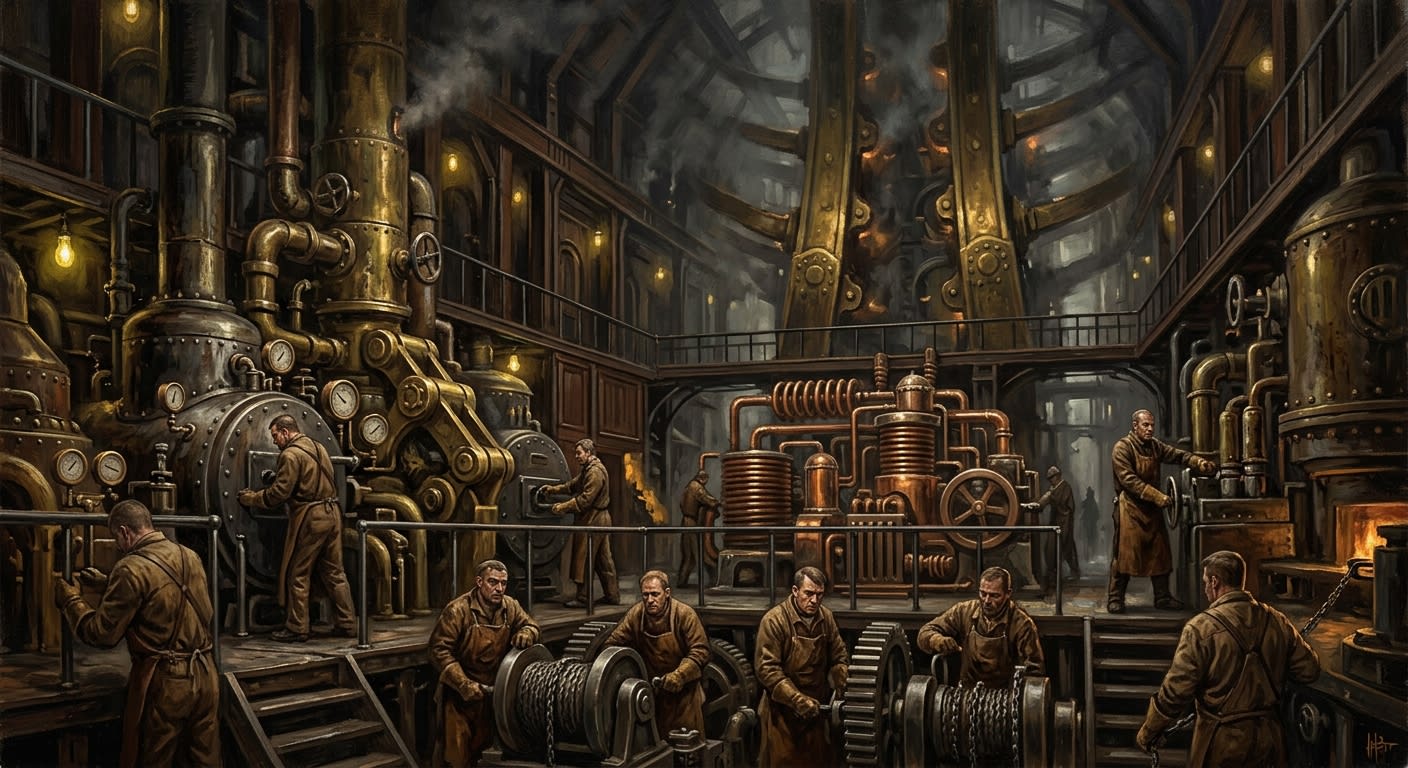
Brasswright Guild
The hands that make Bastion-Brest wait before it collapses
Bastion-Brest's Brasswright Guild keeps the Brass Ribs standing and converts every bolt, shutter, rib-note, and delay into local power.
Codex Ref. XII.2.05-098
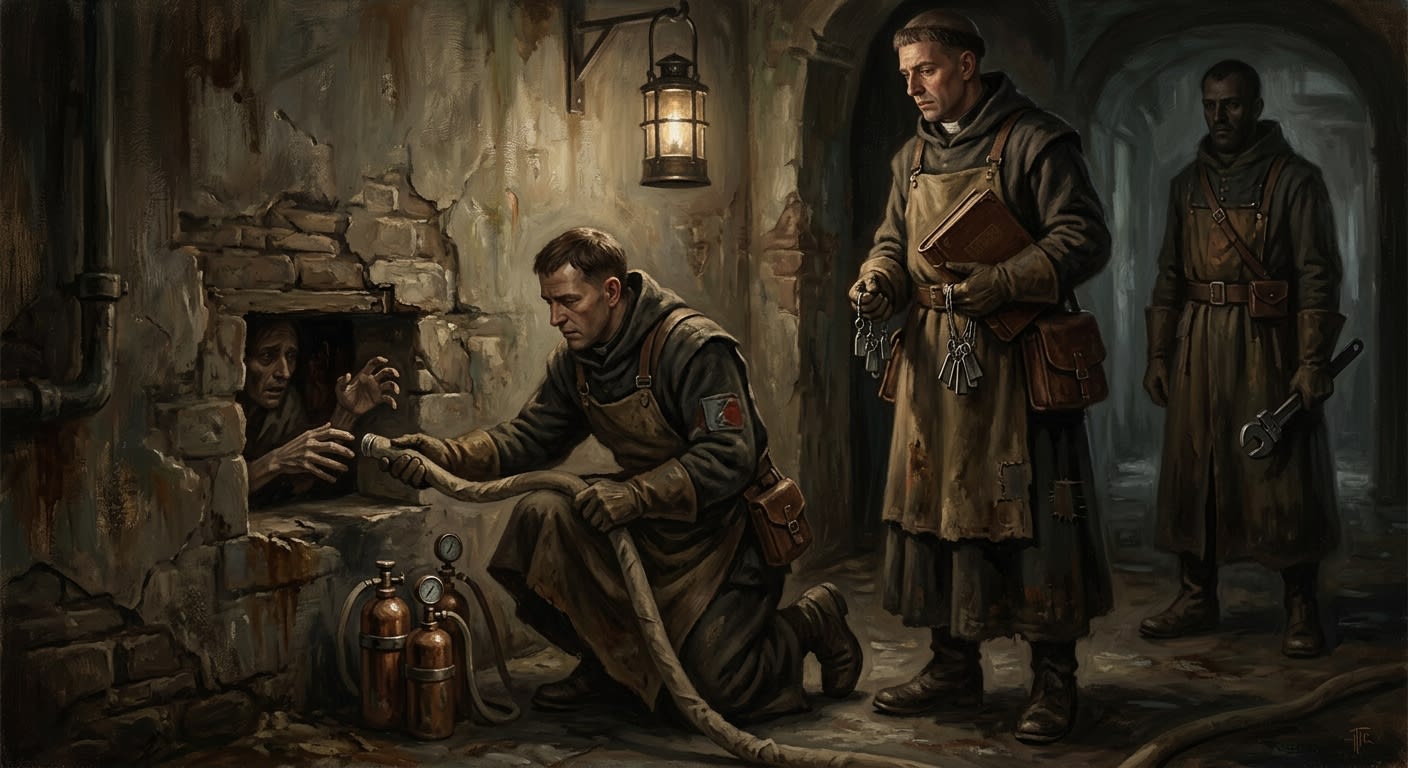
Breath-Givers
Another measure of air, never absolution
Denied merciful faction of the Immurement Masons, Breath-Givers sell hidden air through walls and call duration a lesson.
Codex Ref. XII.22.03-001
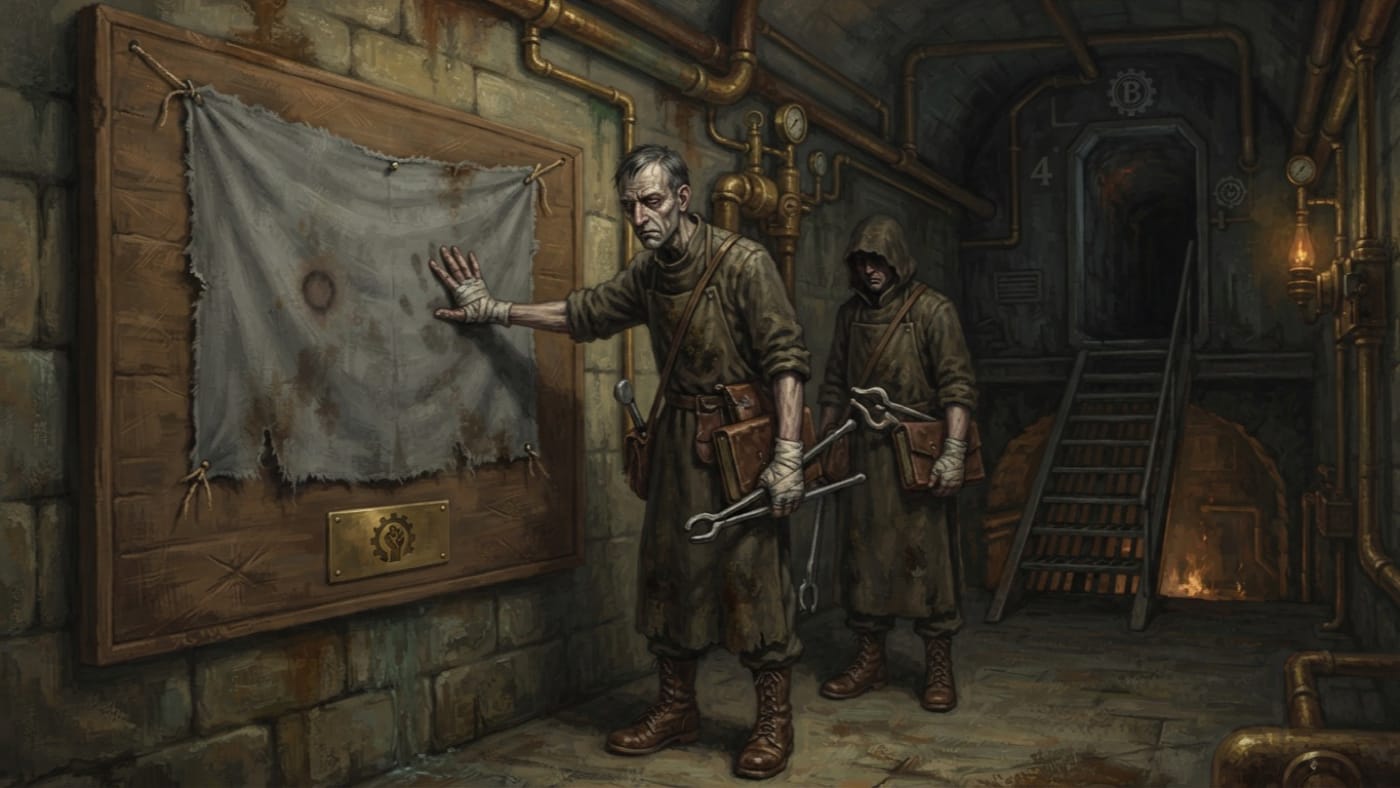
Brest Palm-Cloth
The linen failed authentication. The stampers kept touching it.
Grey linen attributed to Saint Vellum, rejected by Relics in A.S. 140 and still touched before hot corridors. The cloth quiets workers; its paperwork remains unsatisfactory.
Codex Ref. III.2.04-346
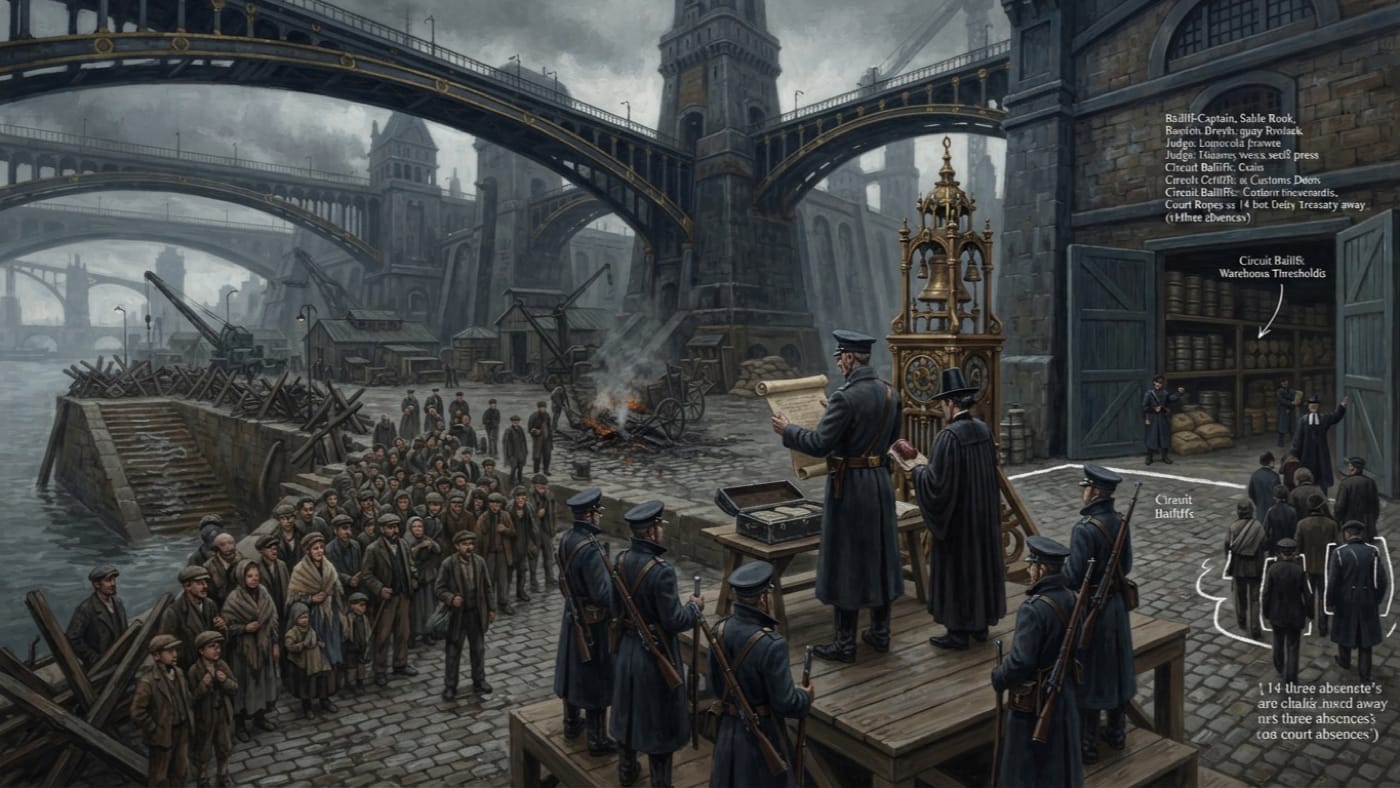
Brest Port Seizure
The treasury counted aloud; the chain counted in private
A.S. 201 survey of the undated Brest seizure: Rook turned a dock uprising into inventory; the academy kept the diagram and suppressed three absences from his following chain.
Codex Ref. VII.8.10-347
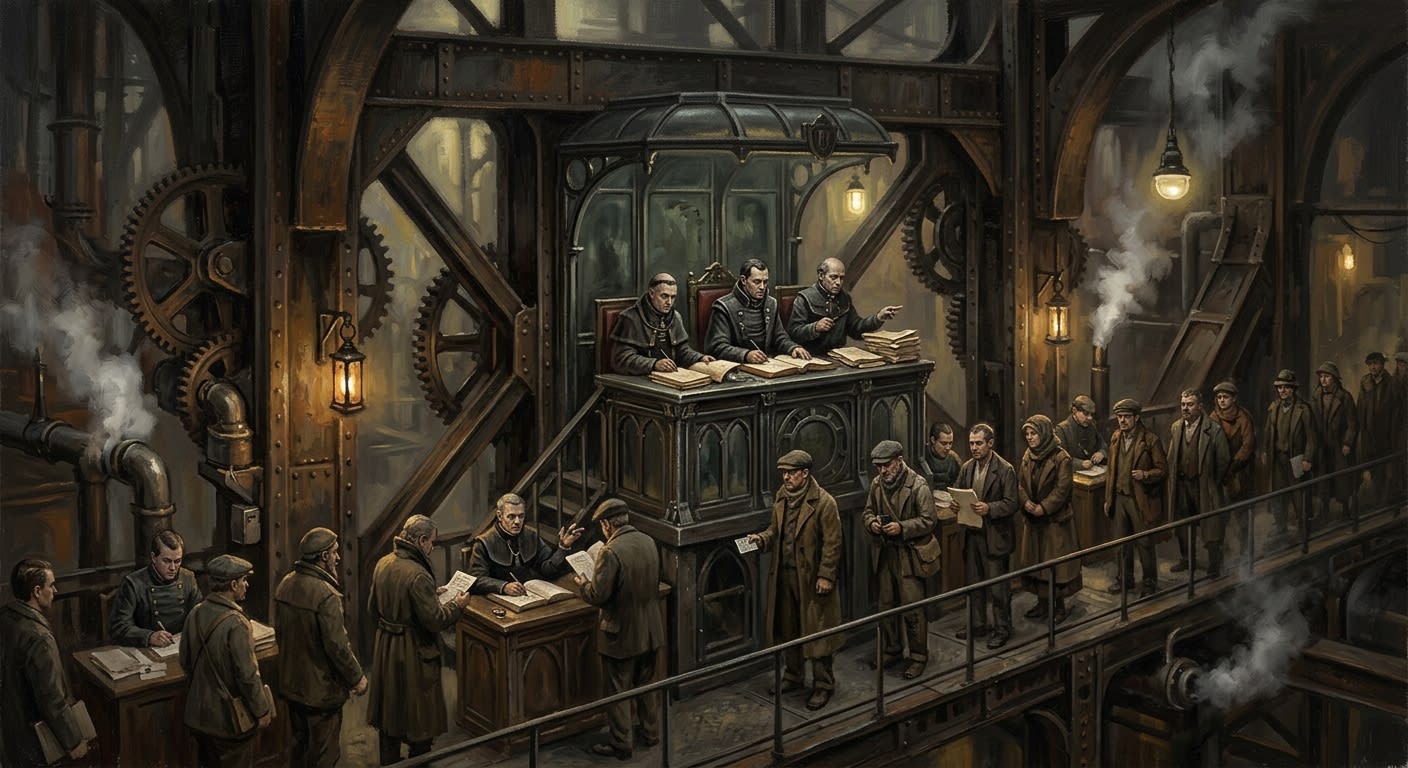
Bridge Tribunal
The court that made a crossing into a confession with traffic
The Bridge Tribunal of Bastion-Brest is the span-sovereign court that audits names, sins, crossings, and blank papers inside the Brass Ribs.
Codex Ref. VIII.1.07-001

Brine Ledgers
A lie is safest in the column the auditor already expects to be wrong
Lübeck's cellar accounts hid debts behind salt losses. Their method was confiscated in A.S. 180; reconstructed books remain monitored and useful. The fraternity dissolved; its arithmetic kept working.
Codex Ref. XIII.1.180-358
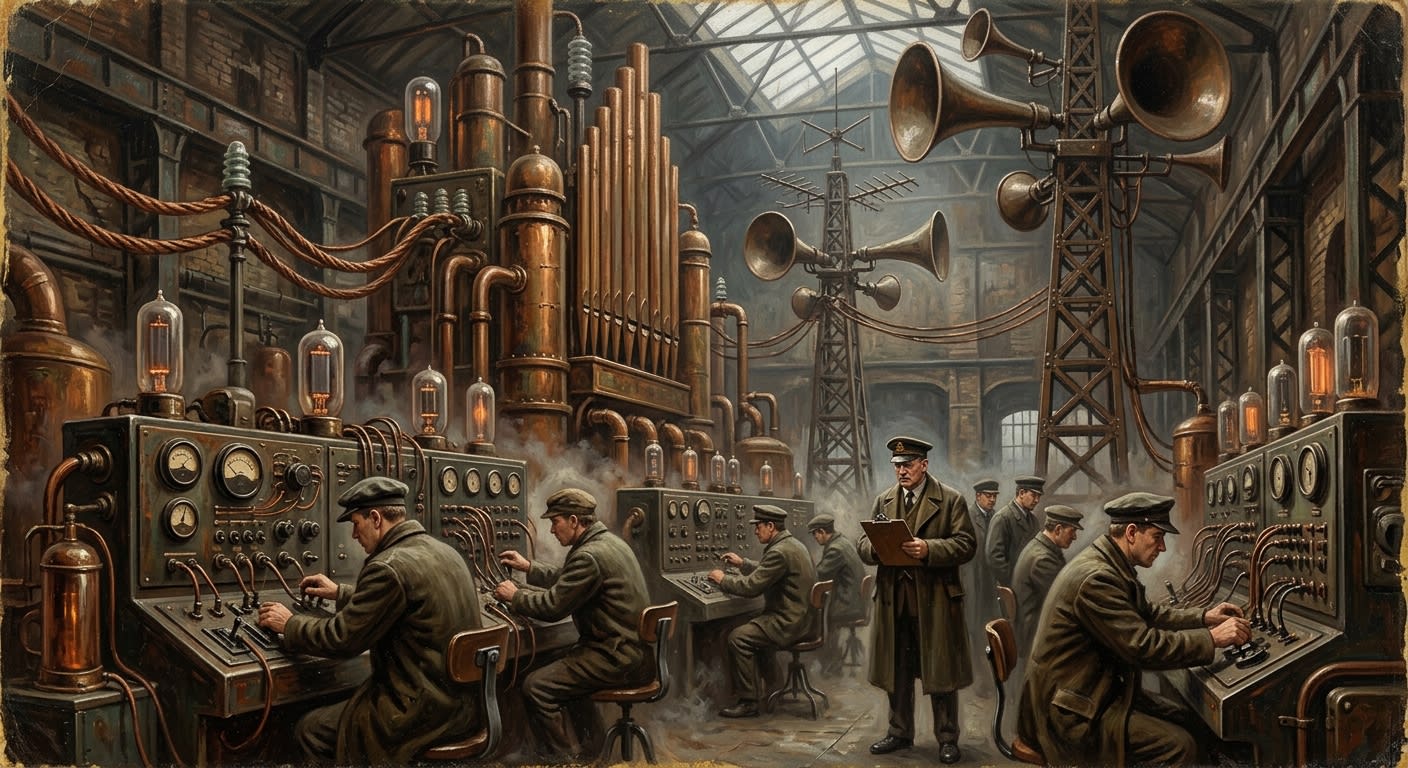
Broadcast Directorate
The long throat that makes distance obey
The Broadcast Directorate is Orison's long throat: saint-dust, copper, coercion, and daily prayer made into empire-wide reach.
Codex Ref. VIII.6.02-092
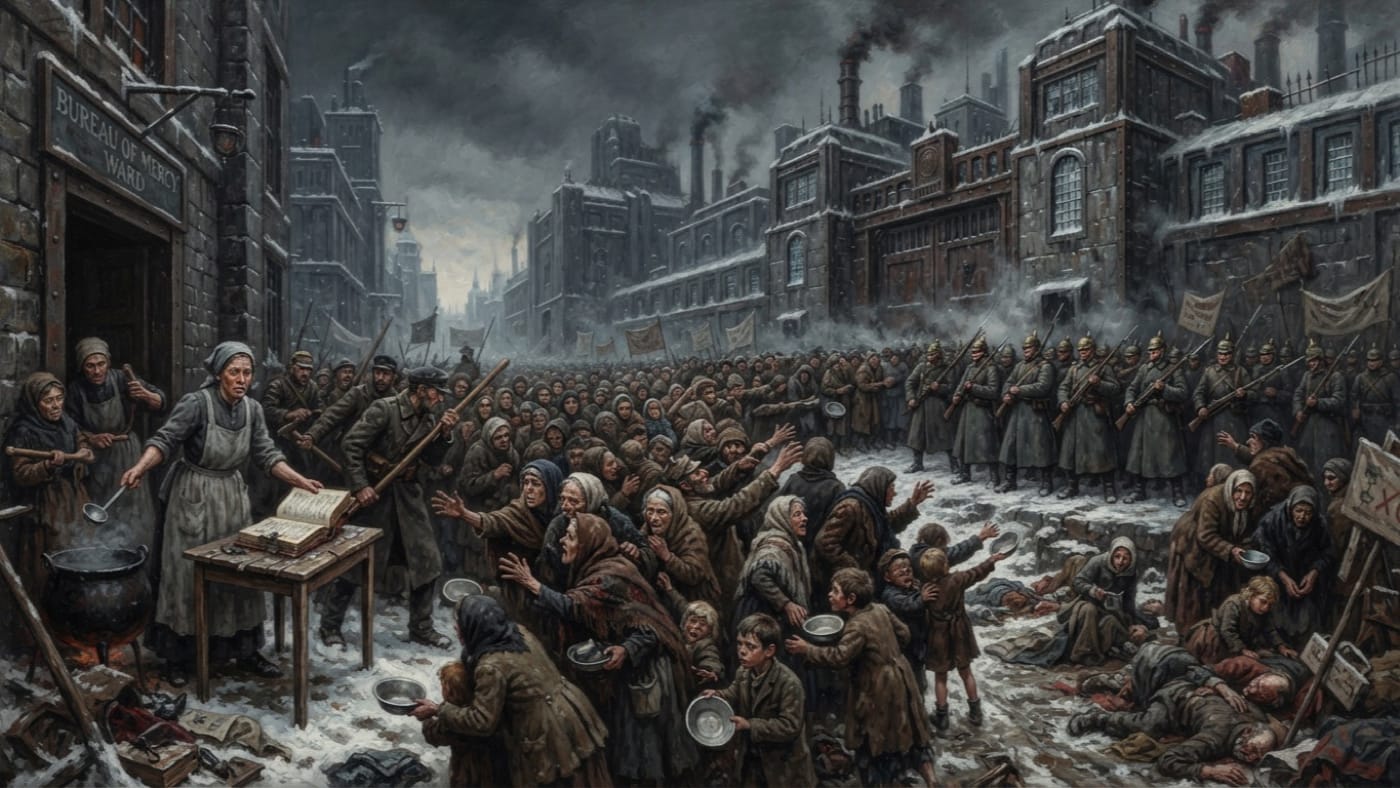
Broth Riots of A.S. 112
The hungry approached the granary; Mercy opened a ledger
The Broth Riots of A.S. 112 lasted eleven days: three hungry garrison populations sought grain; War supplied rifles, Purity arrests, and Mercy the Ledger Laws.
Codex Ref. VII.8.10-112
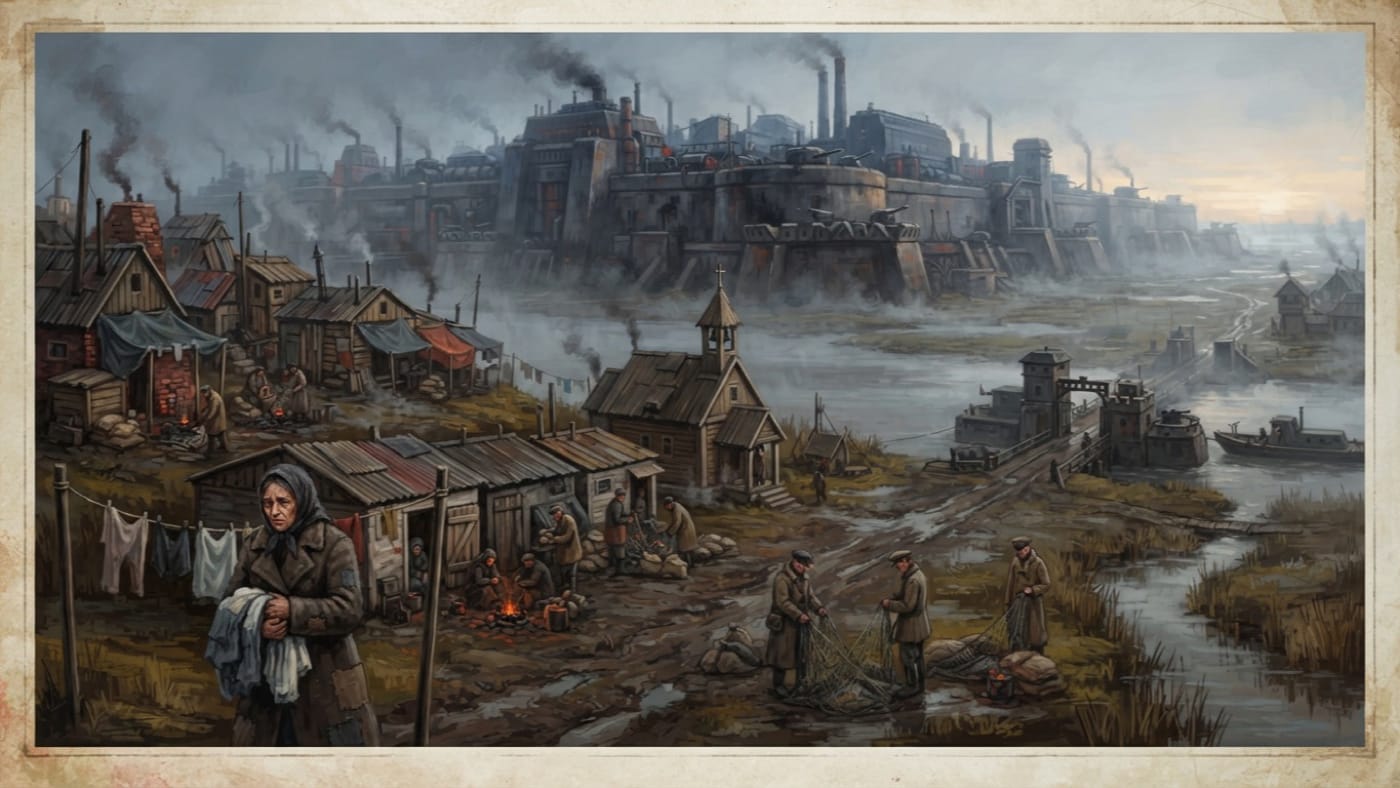
Bug River settlements
The villages disappear; their people remain pending
The Bug River settlements survive as a few western service hamlets and displaced households in Warsaw and Brest. Most villages are absent; their people still require permission to exist.
Codex Ref. II.4.09-201
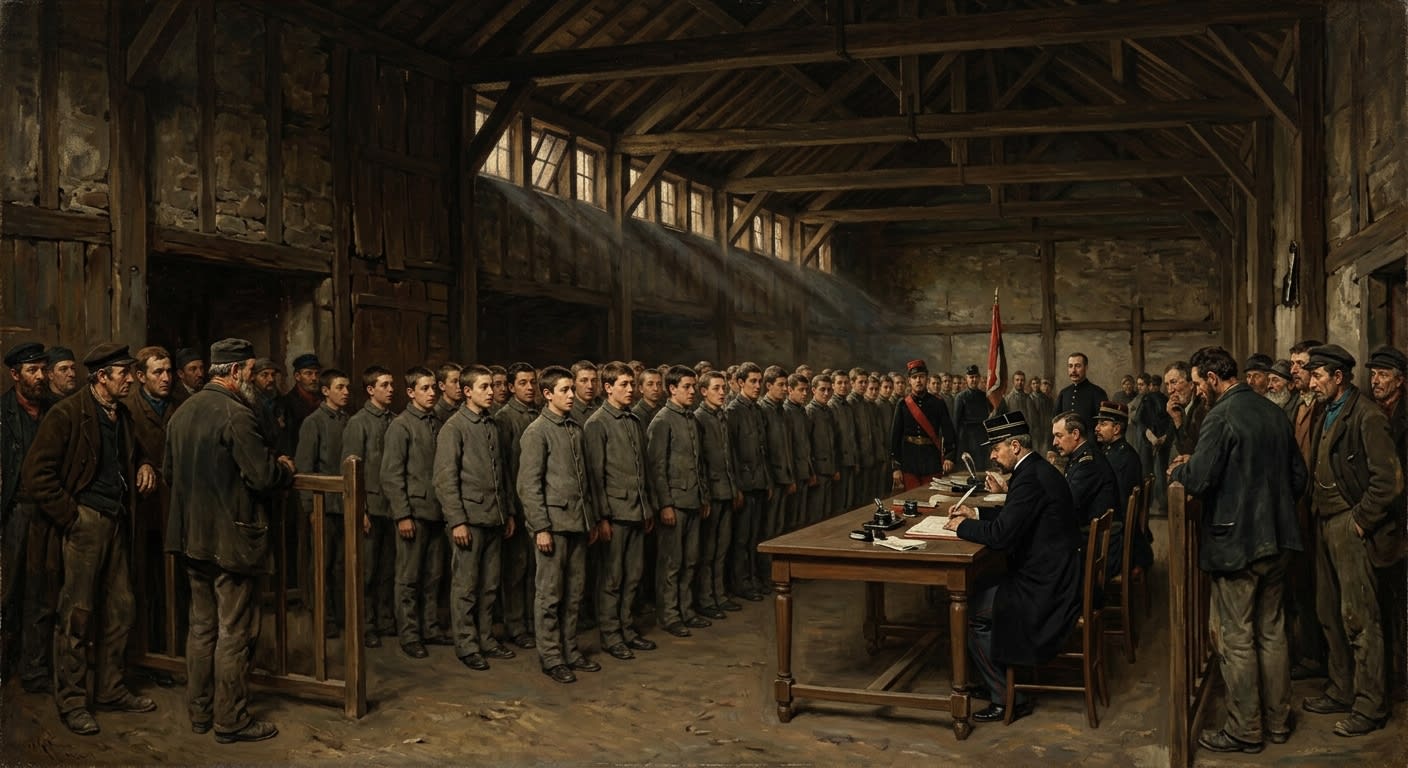
Bureau of Conscription
A tithe of flesh. The Bureau calls it a fraction.
The Bureau does not take. It collects. The hand that reaches into the household, past the mother's grip, and removes what was promised — which is to say, everything.
Codex Ref. III.4.07-112
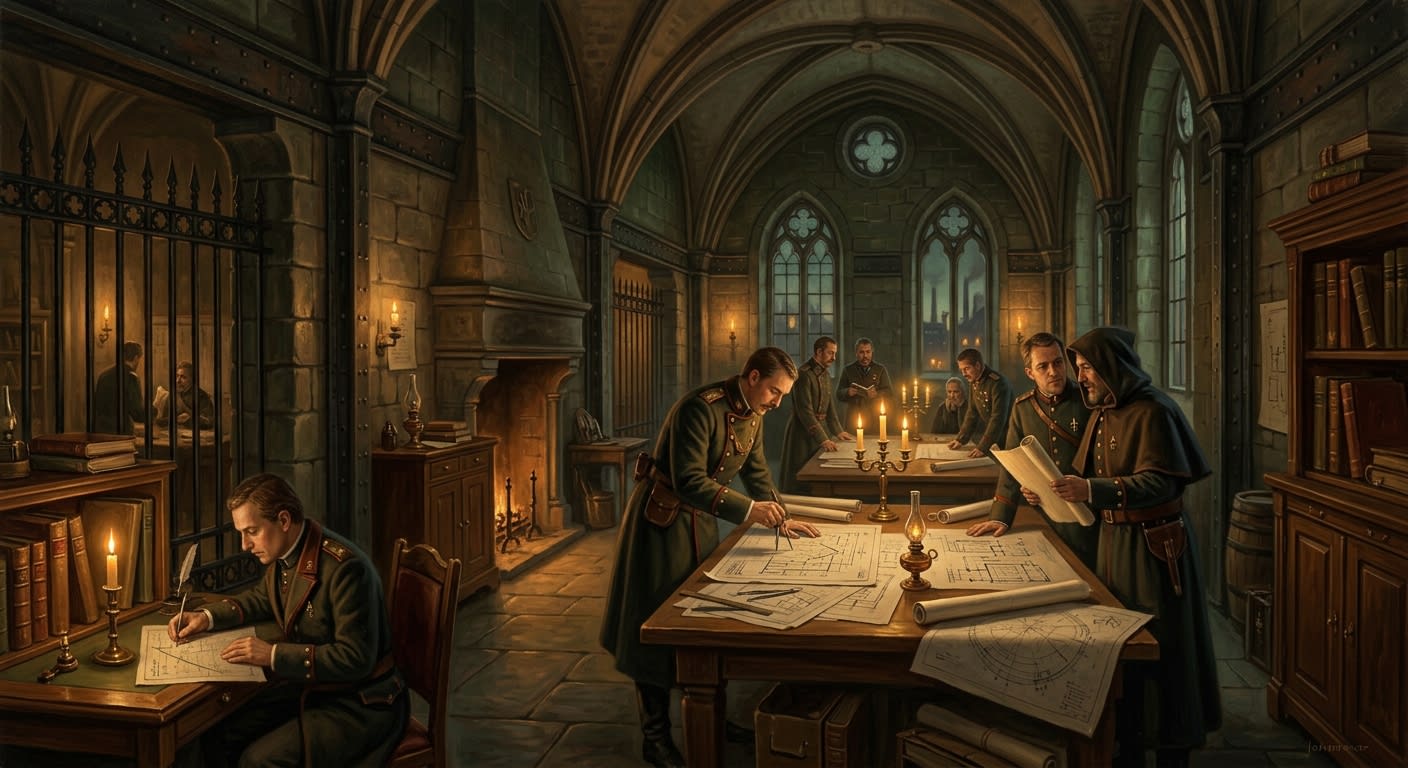
Bureau of Engineering
The number is the number, and the number does not care whether you find it convenient.
The Bureau of Engineering digs, measures, pours, rivets, surveys, calculates, and then builds the thing that holds every other Bureau upright. Its motto is not in any catechism. It is carved into latrine walls.
Codex Ref. VII.4.02-011
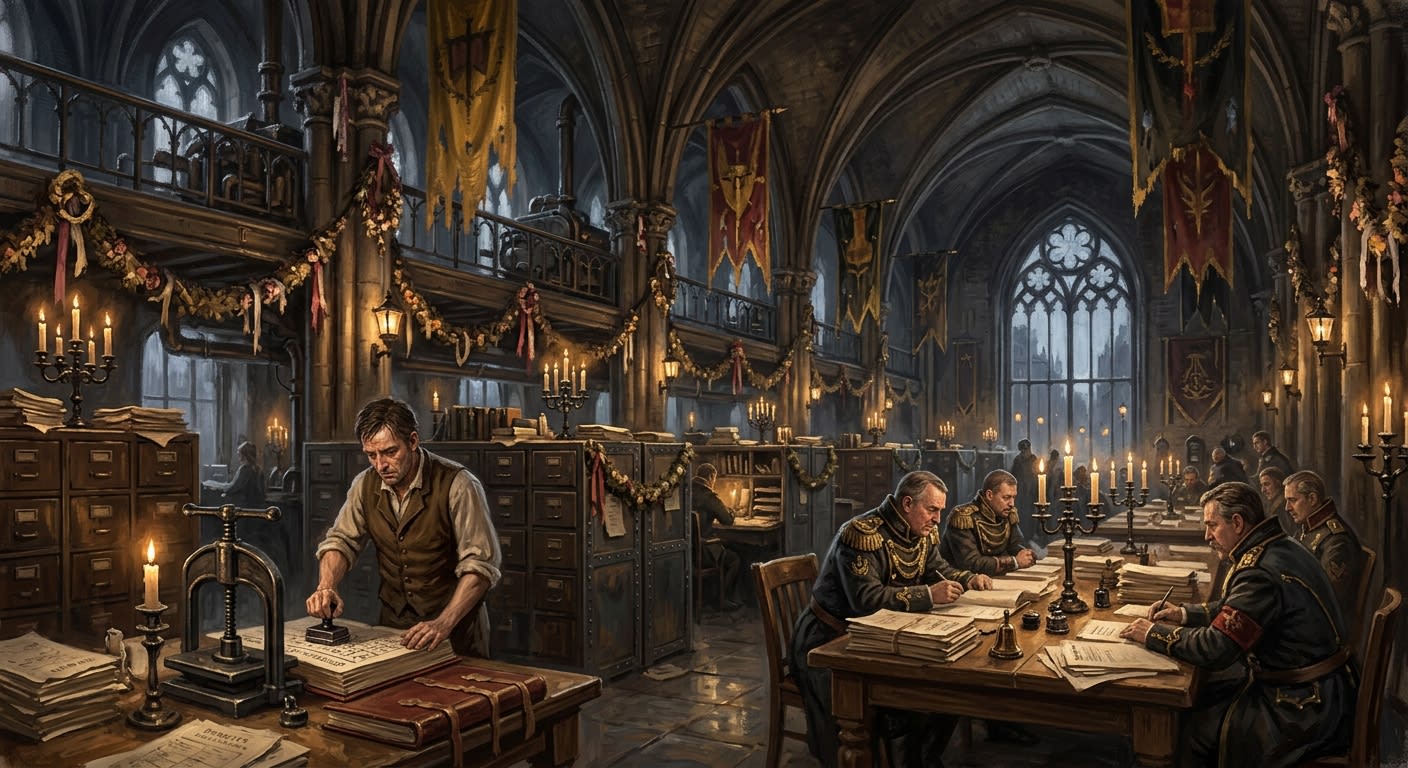
Bureau of Festivals
Joy, administered at scale — licensed, measured, and periodically revoked
The Bureau that manufactures joy, schedules grief, and meters celebration with the same rigour the Bureau of War applies to troop rotations — and which has, on seventeen documented occasions, deployed confetti.
Codex Ref. VIII.5.01-001
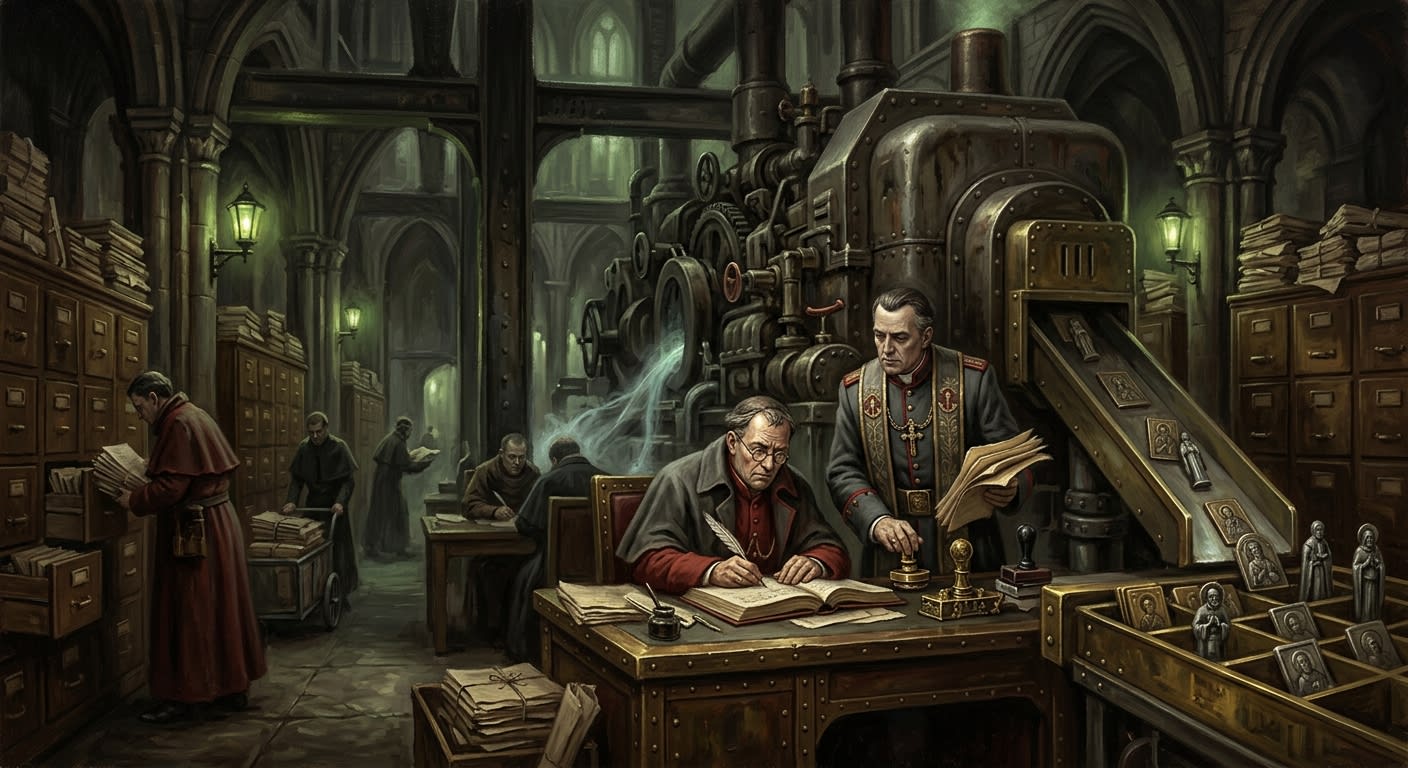
Bureau of Hagiography
The dead may vote only after editing
The Bureau of Hagiography edits the dead into useful saints, delaying, ratifying, taxing, suppressing, and polishing grief until it obeys.
Codex Ref. VIII.6.03-112
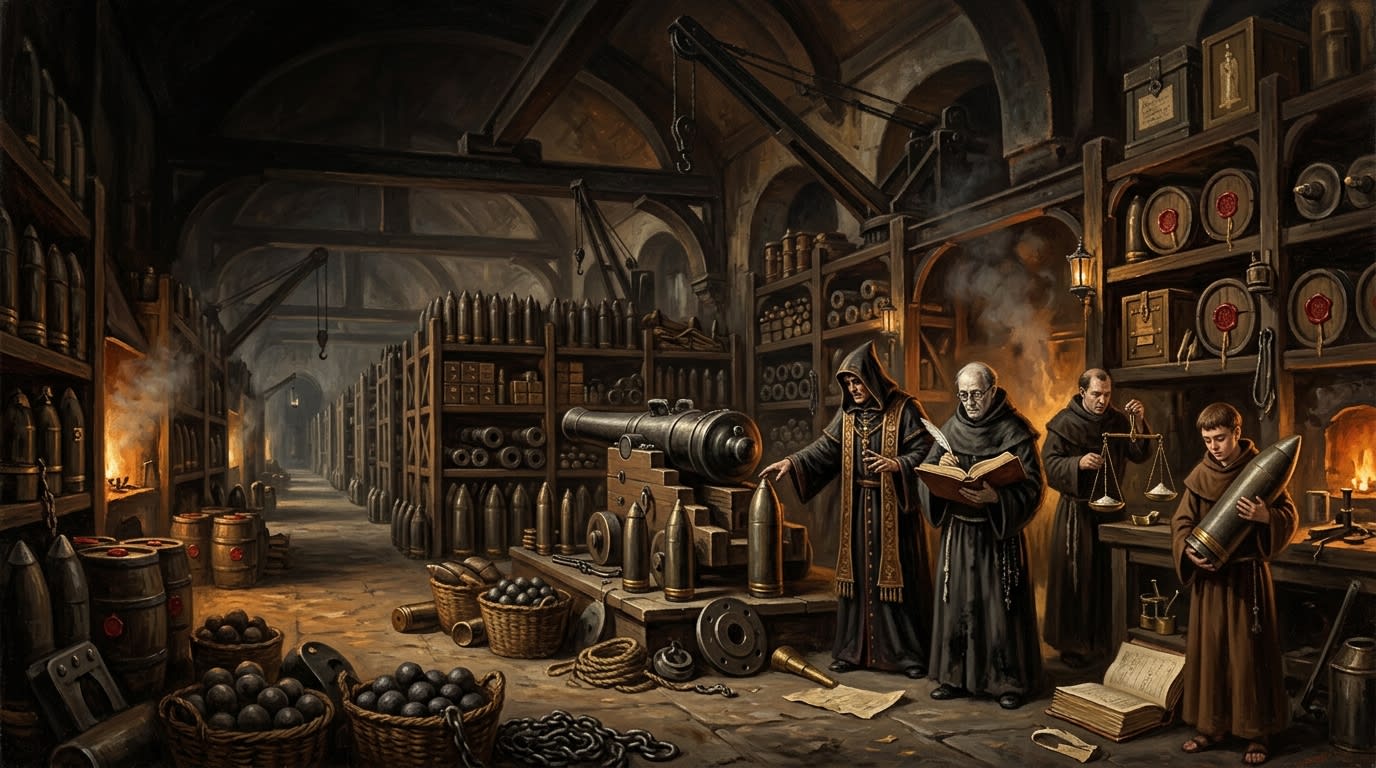
Bureau of Ordnance
No violence is lawful until inventory permits it
The Bureau of Ordnance blesses powder, counts shells, seals fuel, restrains officers, and teaches matter to obey violence only after the Ledger consents.
Codex Ref. VIII.2.11-090
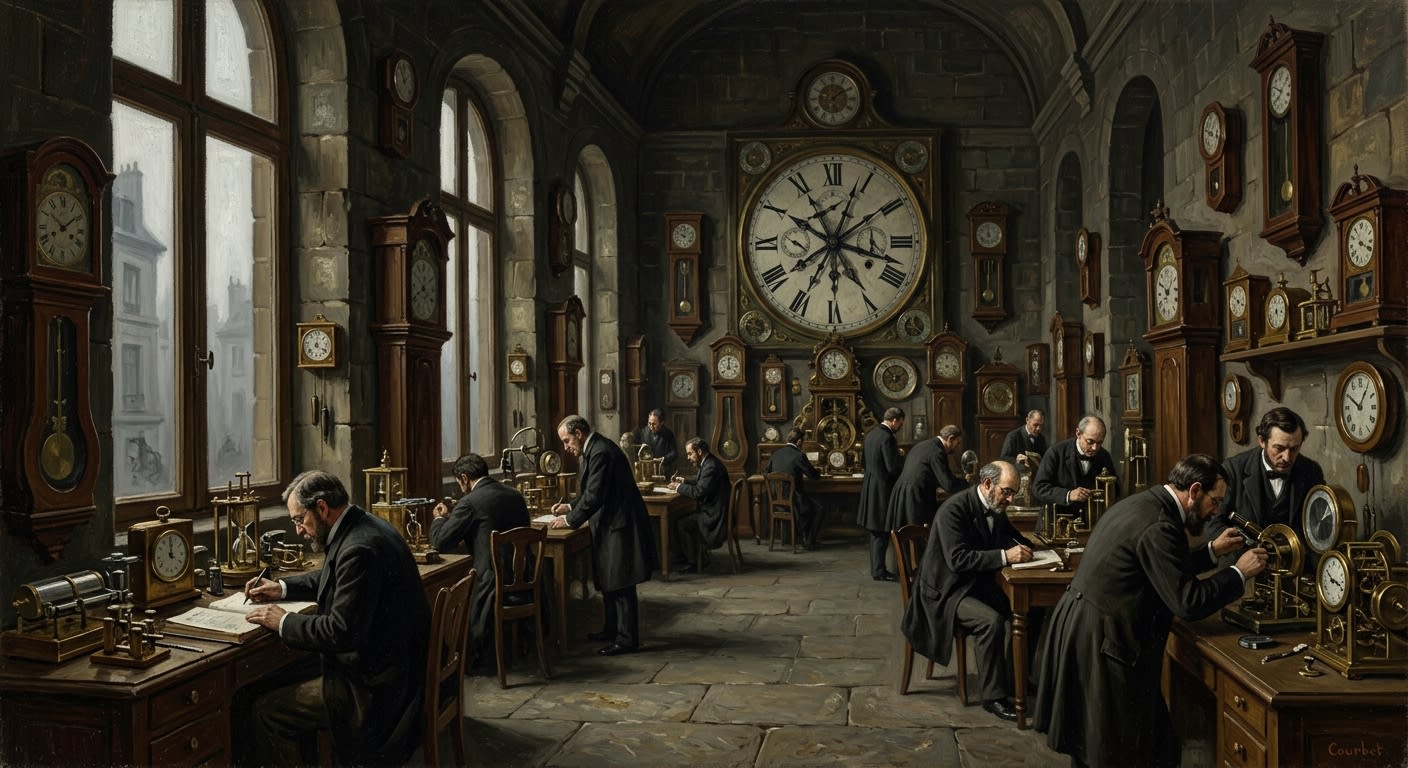
Bureau of the Hourglass
The Bureau measures. The Synod does not read. Time continues to disagree.
The Bureau of the Hourglass, constituted A.S. 134 to measure the Languid Dreamer's temporal drift along the Line, publishes quarterly reports no one reads, and has spent sixty-seven years proving that time is thinner near the front.
Codex Ref. VIII.3.01-001
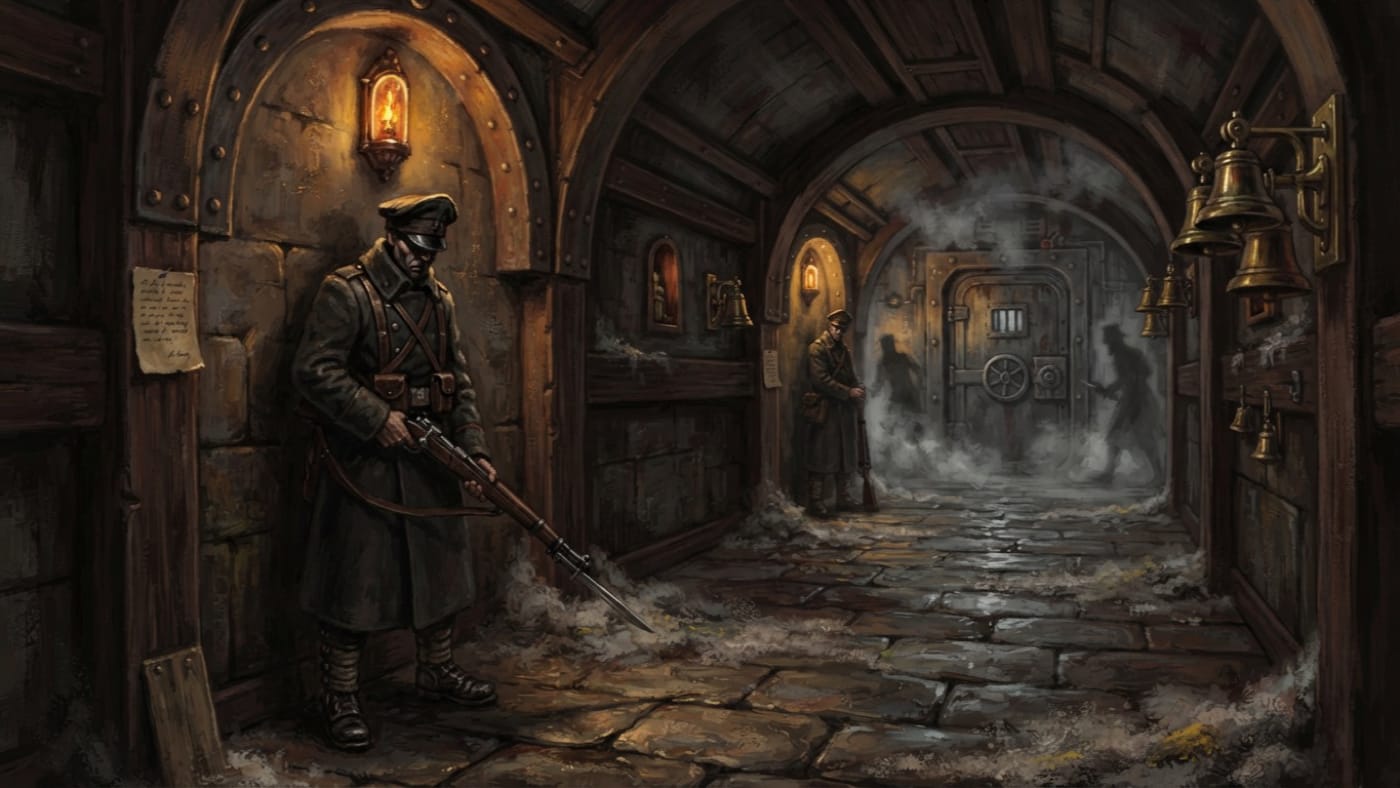
Bureau of War Field Manual 19-C
The margin is legible; the instructions remain unproduced
An A.S. 201 assessment of the Bureau of War's Seventh Revision on Veil-Stalkers: one attested marginal warning, four surrounding practices, and a sentry left to pay the cost of vigilance.
Codex Ref. III.2.07-019
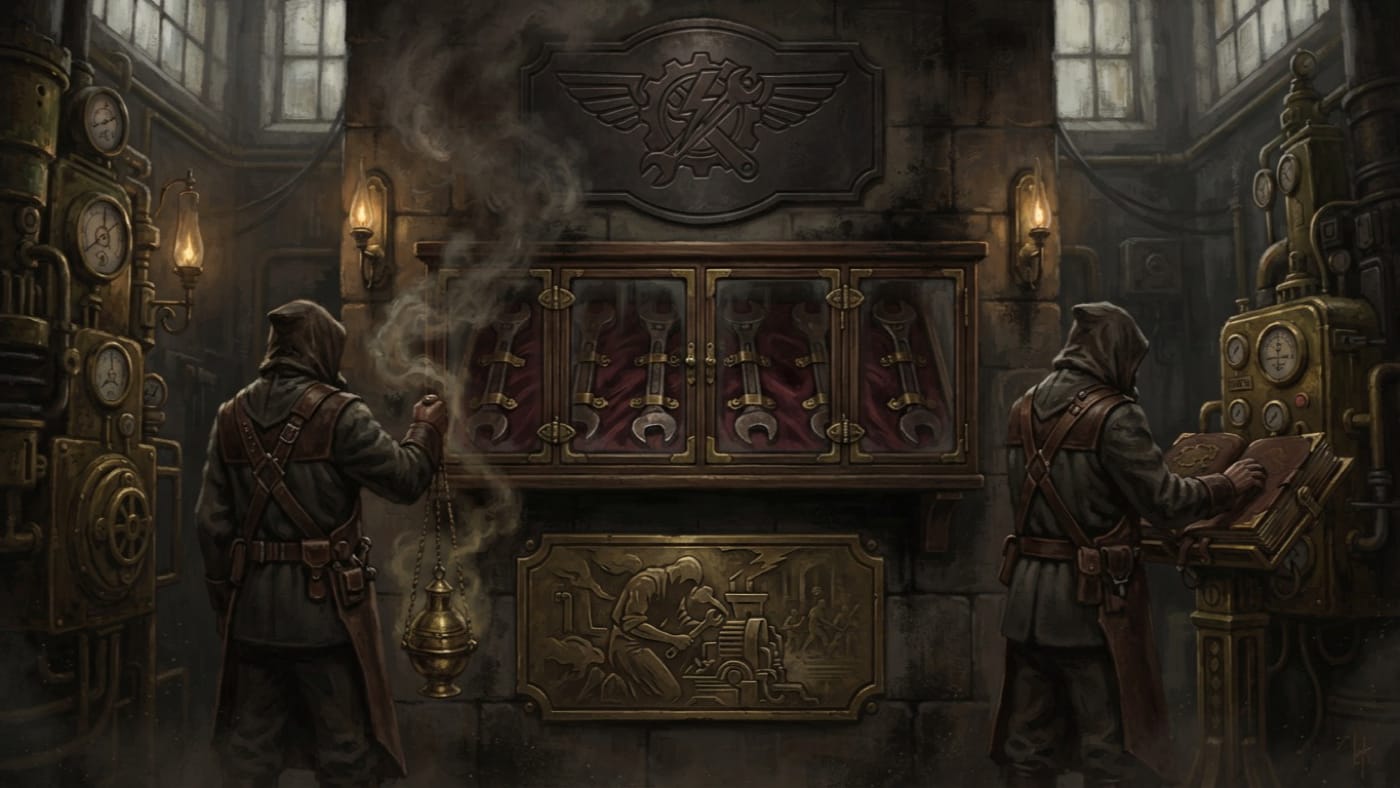
Burned Wrench
Six wrenches, four grades, and no custody chain
Six heat-darkened wrenches claim Edrin's hand at Kalnik Road. Relics recognises all six by four grades; none of those grades supplies the missing custody chain.
Codex Ref. III.2.04-399
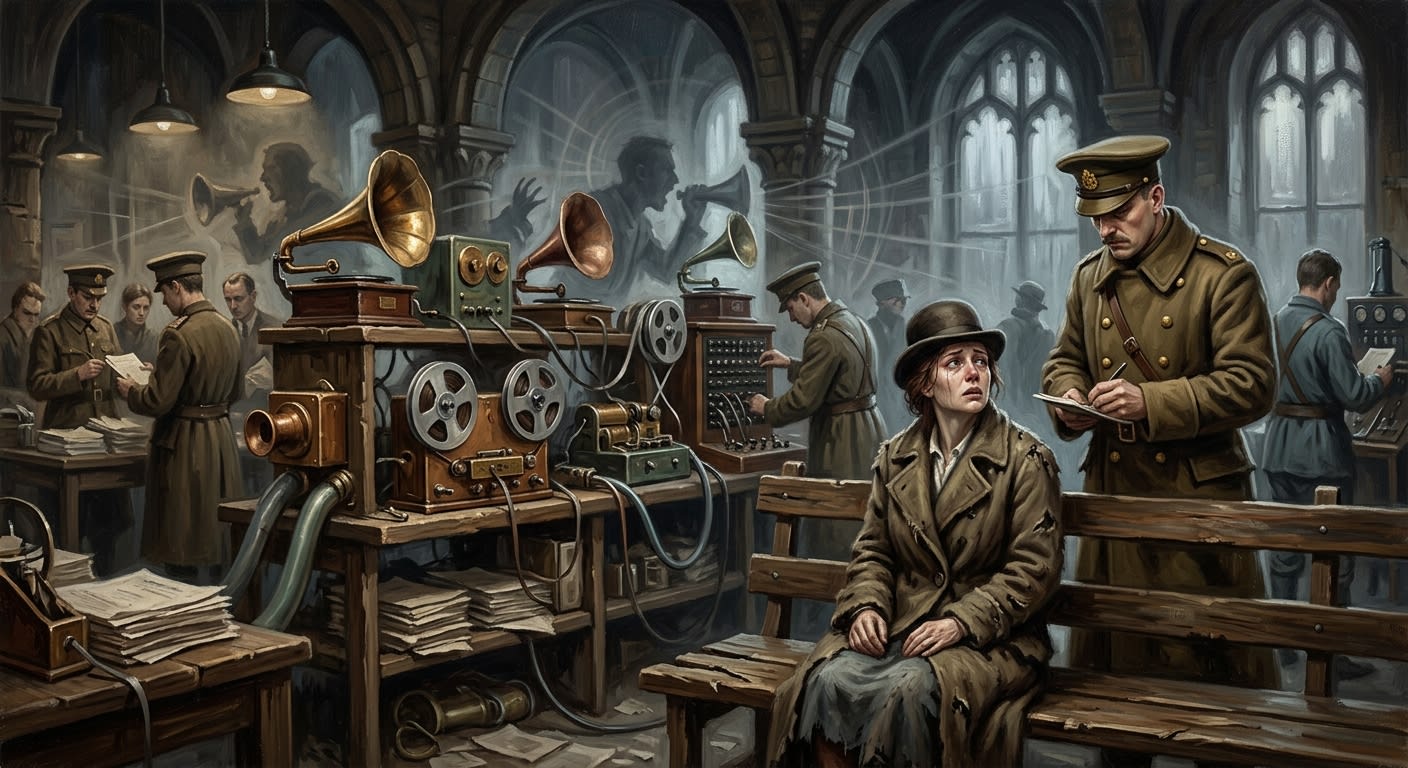
Cadence Anomaly
When the mouth is loyal and the voice is not
Restricted fifth Trench Court confession category for borrowed voices, wrong rhythms, and last words whose owners are administratively disputed.
Codex Ref. XIII.1.86-092
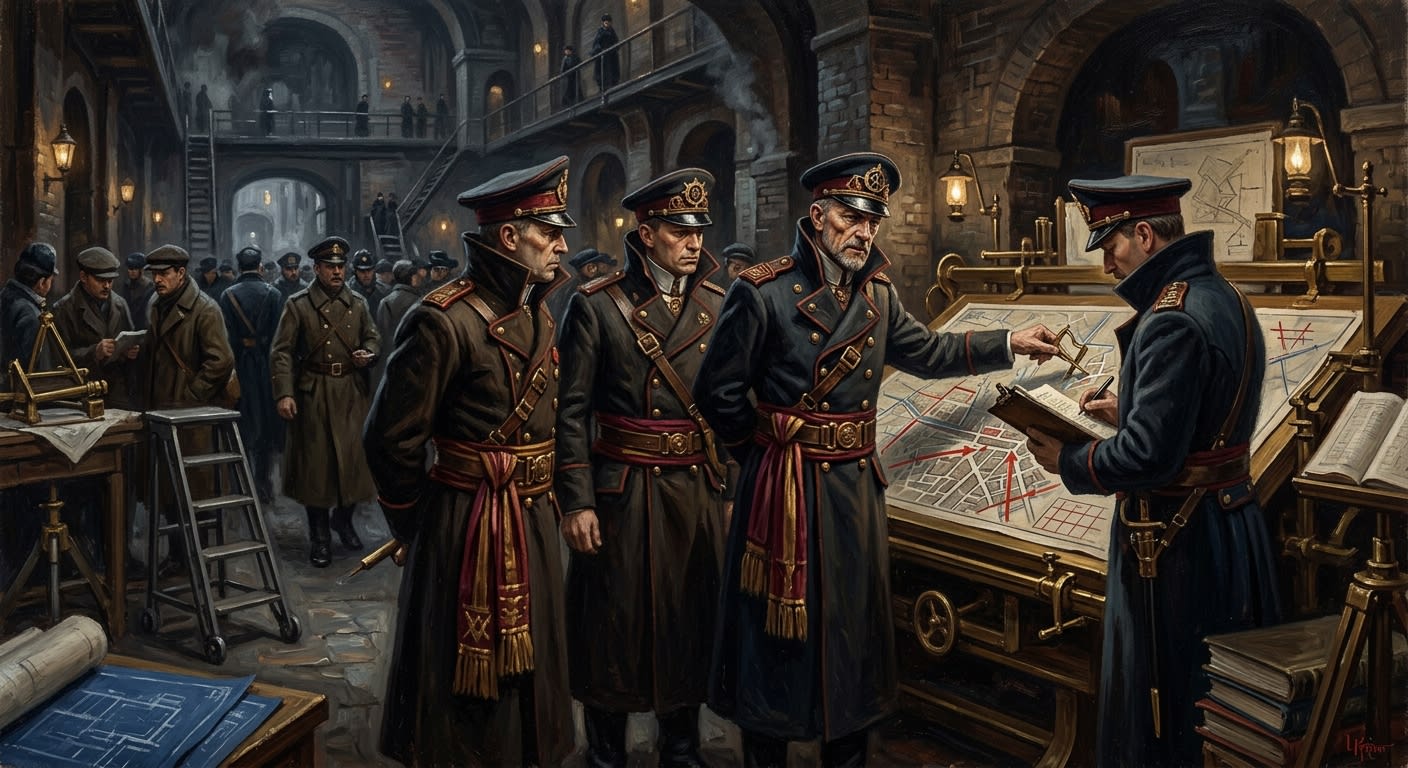
Cadence Architects
The street confesses before the bodies arrive
Cadence Architects are the Cadence Corps' route geometers: they design bellways, choke-points, and obedient grief before crowds become casualty diagrams.
Codex Ref. XII.7.05-129

Cadence Corps
One beat, one body, one road, and one stick for correction
The Cadence Corps teaches crowds to move as one obedient spine: ration queues, funerals, levies, relic routes, and riots corrected by beat, rope, whistle, and boot.
Codex Ref. XII.7.01-112

Cadence Corps Manual
Cut the crowd, signal Rites, refrain from listening
A.S. 201 present-use survey of the Cadence Corps Manual: route discipline, bell clearance, SCATTER and Section 7's withdrawn explanation of choirwind. Cut the crowd, signal Rites, do not listen.
Codex Ref. XII.31.02-201

Cadence Examiner
The ear with seal authority
Cadence Examiners turn suspicious sound into evidence, deciding whether a voice belongs to a mouth, a crowd, a page, or the Enemy's borrowed throat.
Codex Ref. XII.47.05-091

Cantor-Lieutenant Sera
The woman who sings before the shutters open
Cantor-Lieutenant Sera serves in Bastion-Brest's casemate artillery, turning range tables into pitch, holding Vonn's second fire key, and hearing fear before dispatch admits danger.
Codex Ref. III.2.01-094
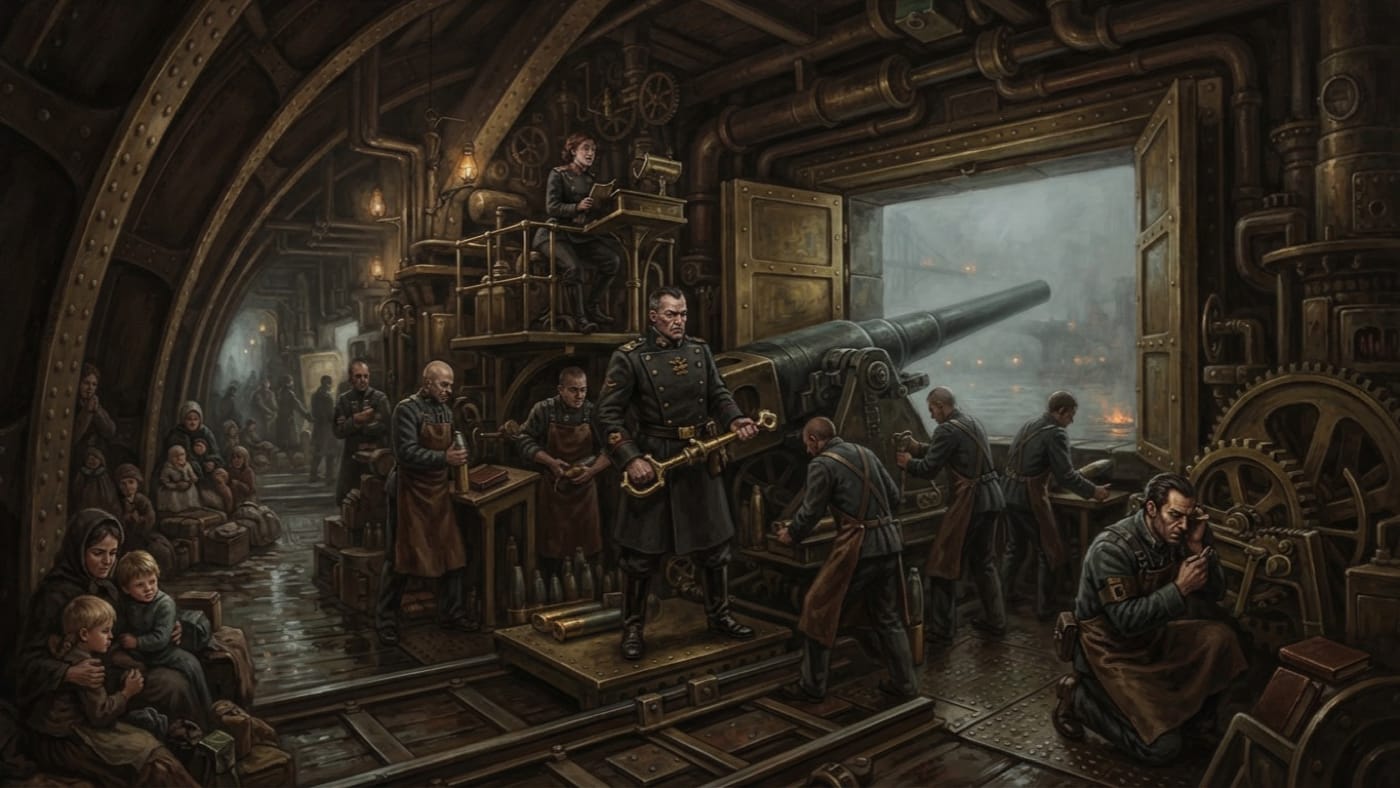
Casemate Galleries
Do Not Answer the Shutters
Bastion-Brest's artillery galleries lie beneath the Ribwalk, where cantors time the guns, the Brasswright Guild keeps the shutters moving, and the Confession Echo has learned the sound of a command. Operational, by the Bureau's definition.
Codex Ref. II.4.08-004

Cataloguers
The reader will ask whether I fear my own entry. I fear its accuracy.
Things of ink and paper drift through Velmora's Vault, making ledger entries. Doctrine believes they inventory every visitor's identity and desires. No page has been recovered.
Codex Ref. IV.1.07-005
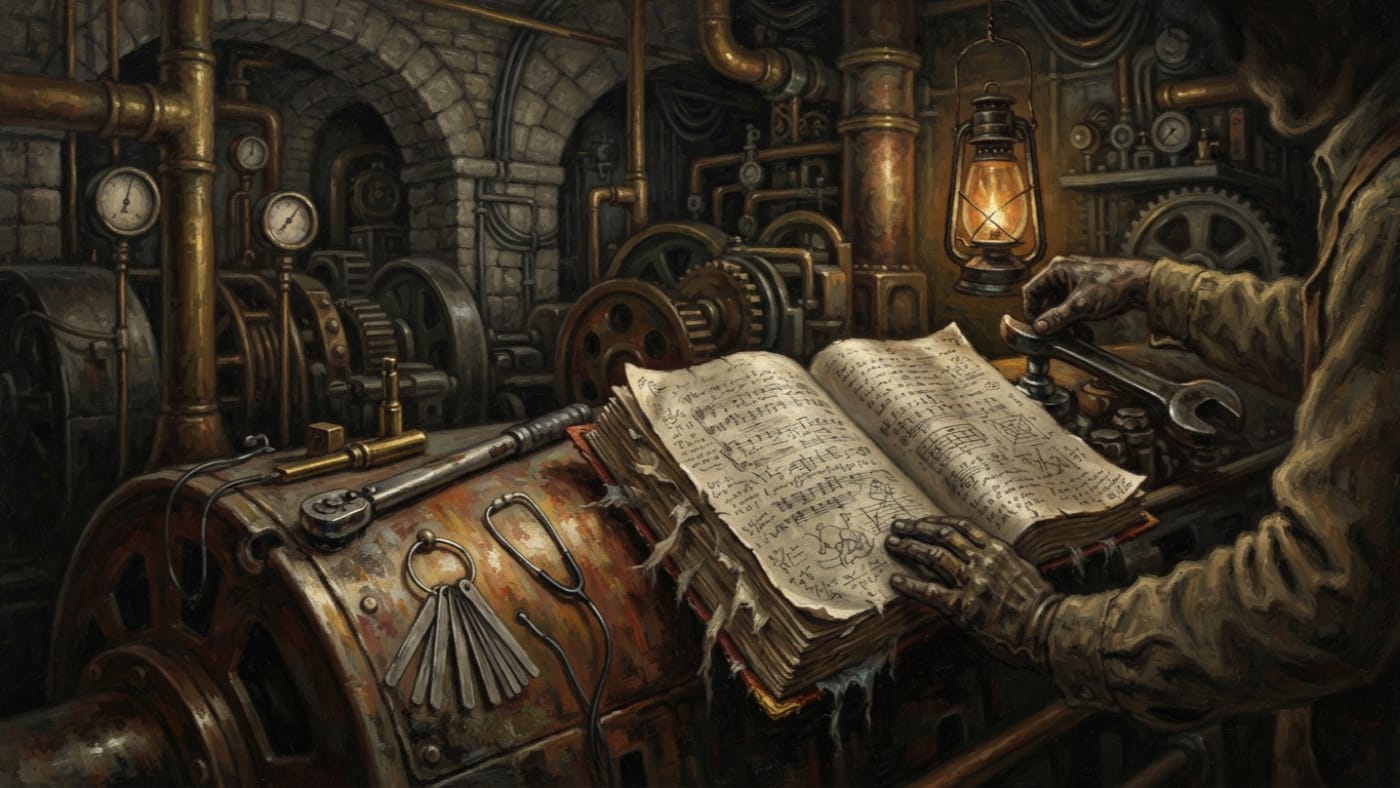
Chant Codex
The book that tells an engine what to hear and an auditor whom to blame.
The Litany-Engineer's sanctioned reference for cant aligned to engine RPM bands. It keeps combustion orderly and gives auditors a page to quote when the operator does not.
Codex Ref. XII.1.02-201
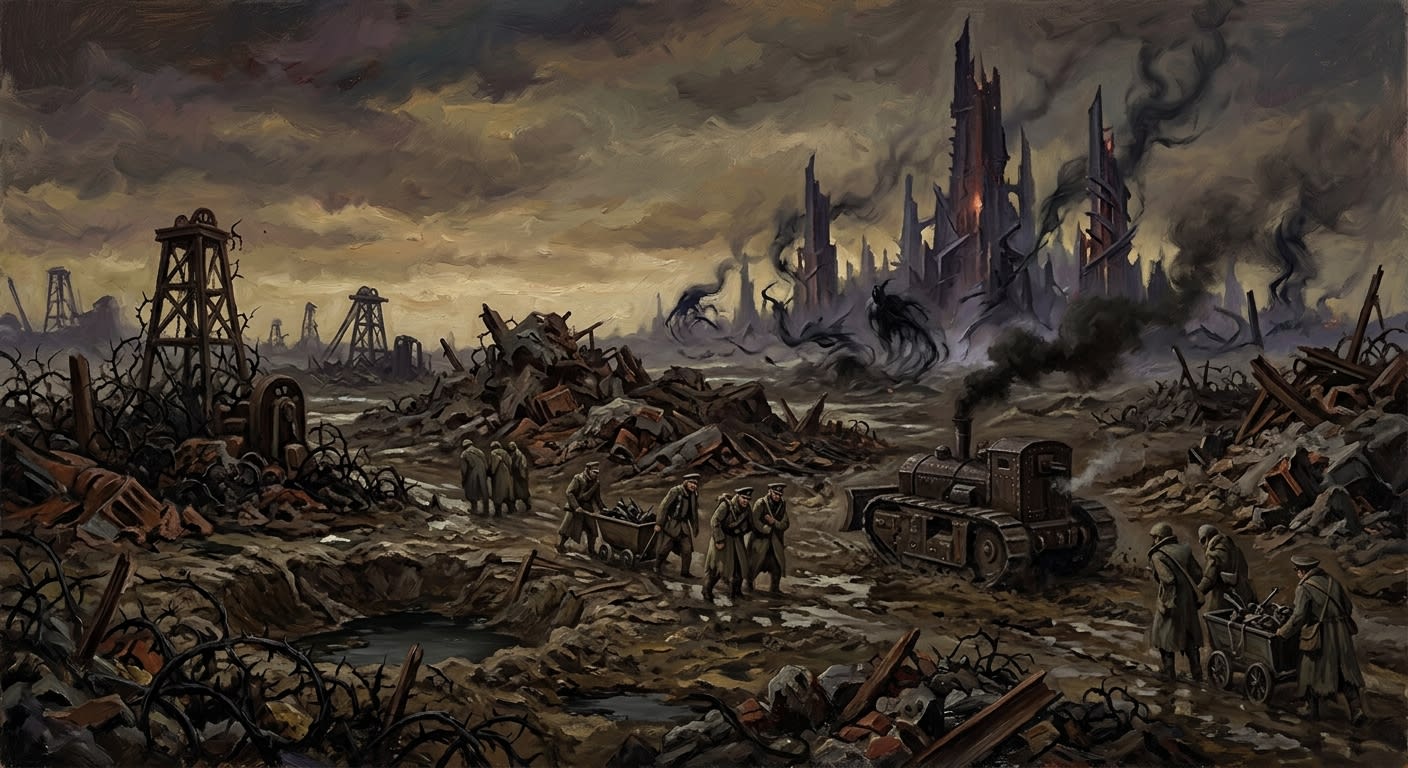
Charnel Lands
Where geography continues after mercy has been denied
The Charnel Lands are Zone 6, the demonic territories east of the Sagittal Line: geography made hostile to custody, with wilderness and cemetery both demoted to inadequate clerkly metaphors.
Codex Ref. II.6.06-001
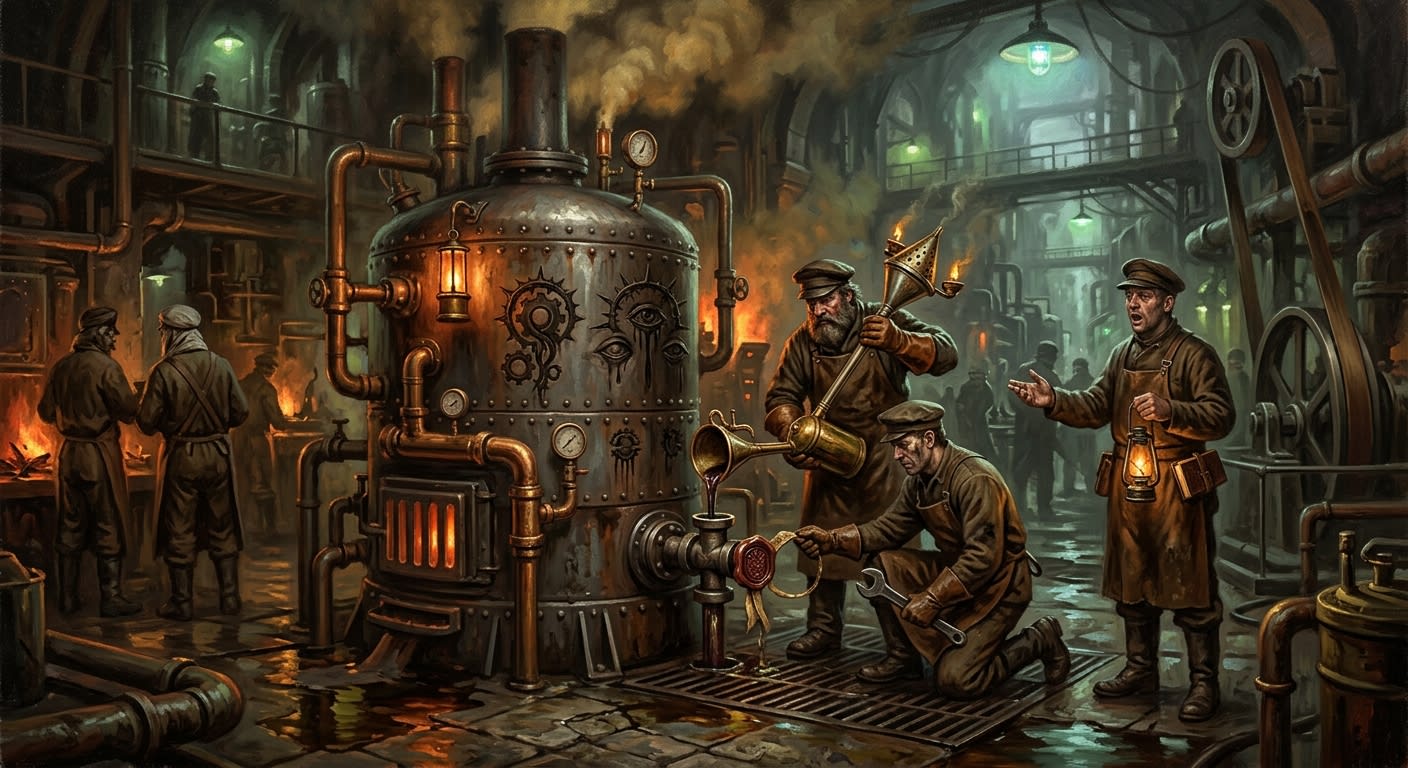
Chrismole
Blessed fuel, classified substrate, and the blue-black argument of necessity
Chrismole is sanctified fuel: oil disciplined by hymn, substrate, seal, and denial until it warms guns, feeds engines, and argues back.
Codex Ref. XIII.1.12-072
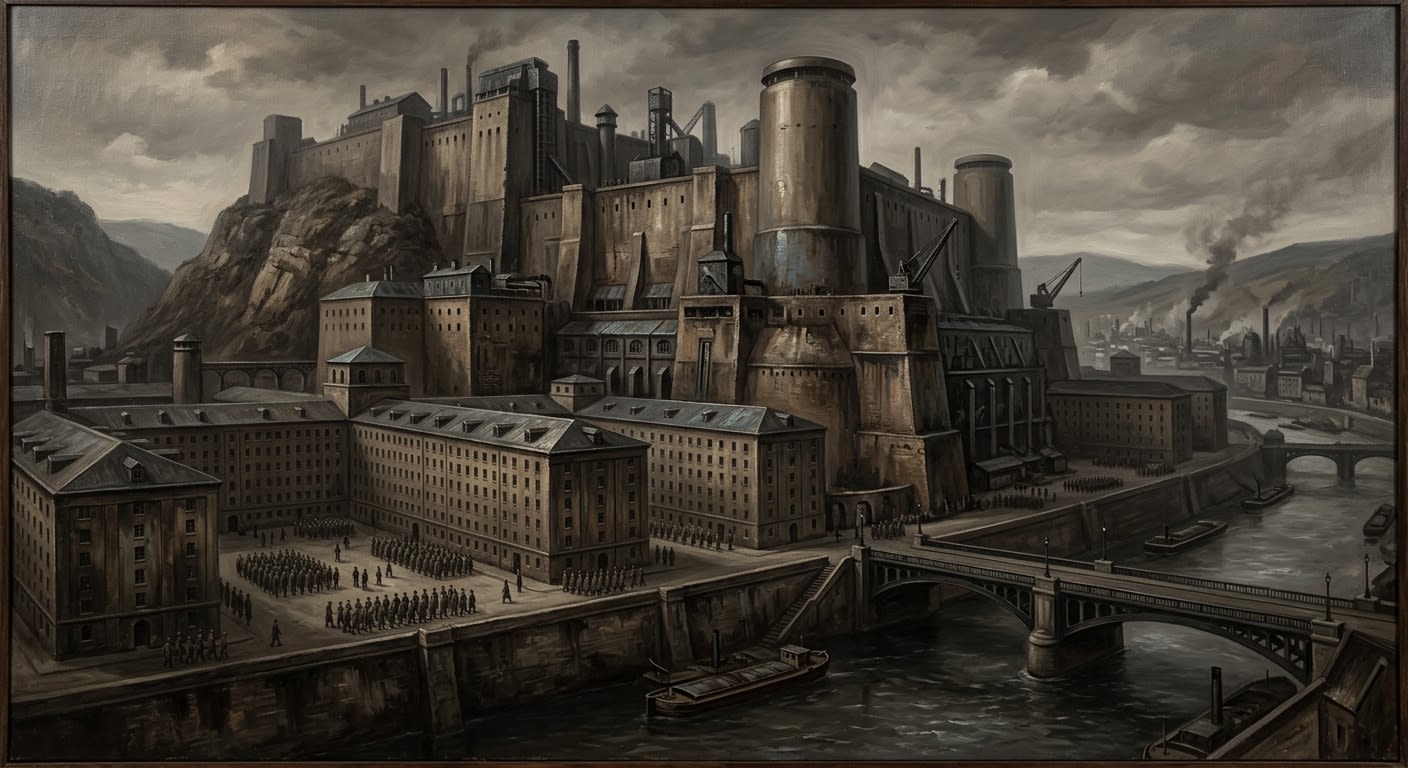
Citadel of Lyon
The hill where maternal invention meets drill tempo
The Citadel of Lyon is the Rhône corridor's catechism-barracks and civic warning, fixed after the Levy protests to train boys and supervise joy.
Codex Ref. II.1.01-004
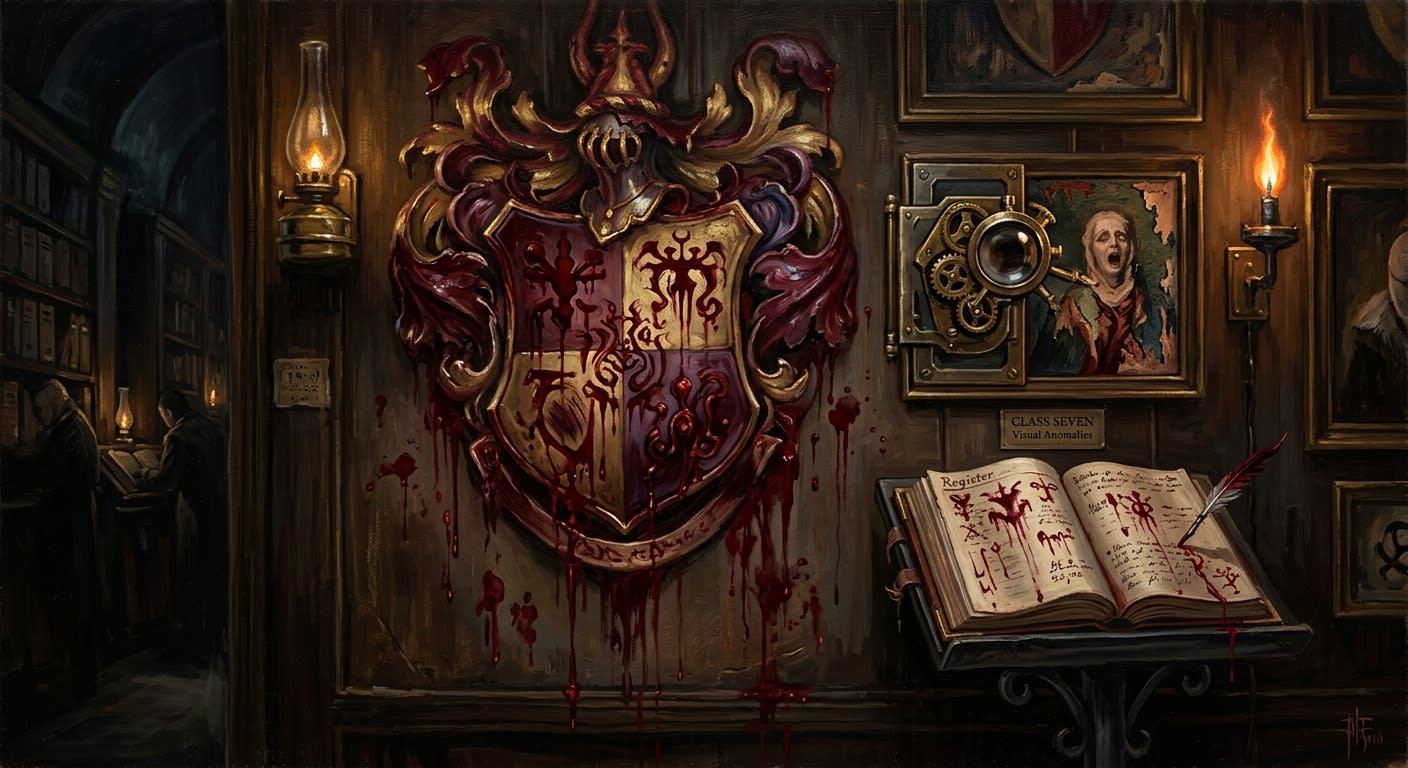
Class Seven Visual Anomalies
If the paint sings, leave the wall to the Creator
Heraldry’s red-ink doctrine for marks that move, sing, sweat, restore themselves, enter dreams, and teach the Inspector why courage needs a leash.
Codex Ref. XIII.1.83-001
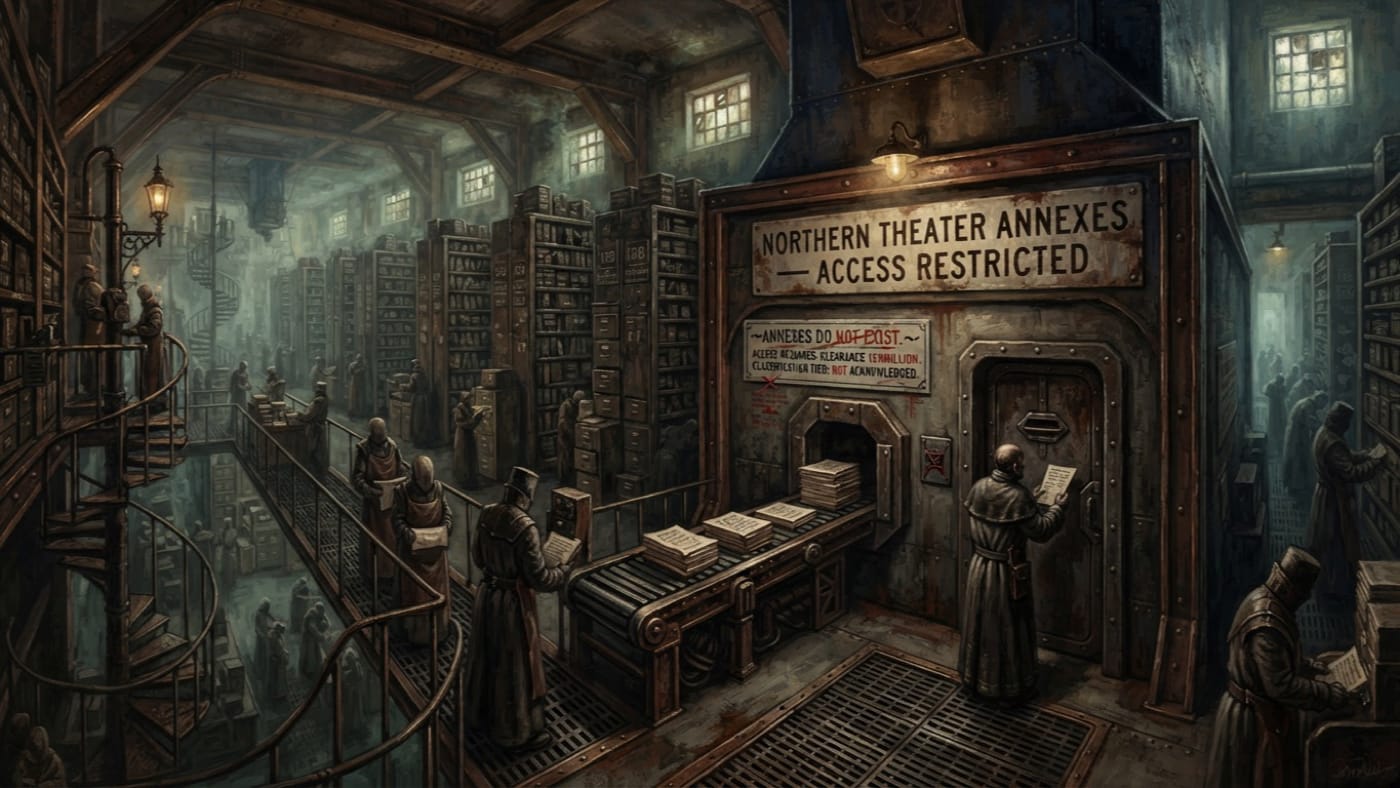
Clearance Vermillion
The Tier That Denies Its Own Existence
Clearance Vermillion restricts Brest's Northern Theater annexes while the Church denies the tier exists. I recorded the denial; my record acquired the same classification. The Ledger keeps its answer from its own Warden.
Codex Ref. XIII.1.72-011

Clerk-Prime Yoren
The hand that decides whether an hour was ever entered
Clerk-Prime Yoren heads the Time Clerks' Collegium of the Queue Road. His guild decides which waiting hours reach the ledger. The file records his office; it offers no history of the man.
Codex Ref. III.2.01-648
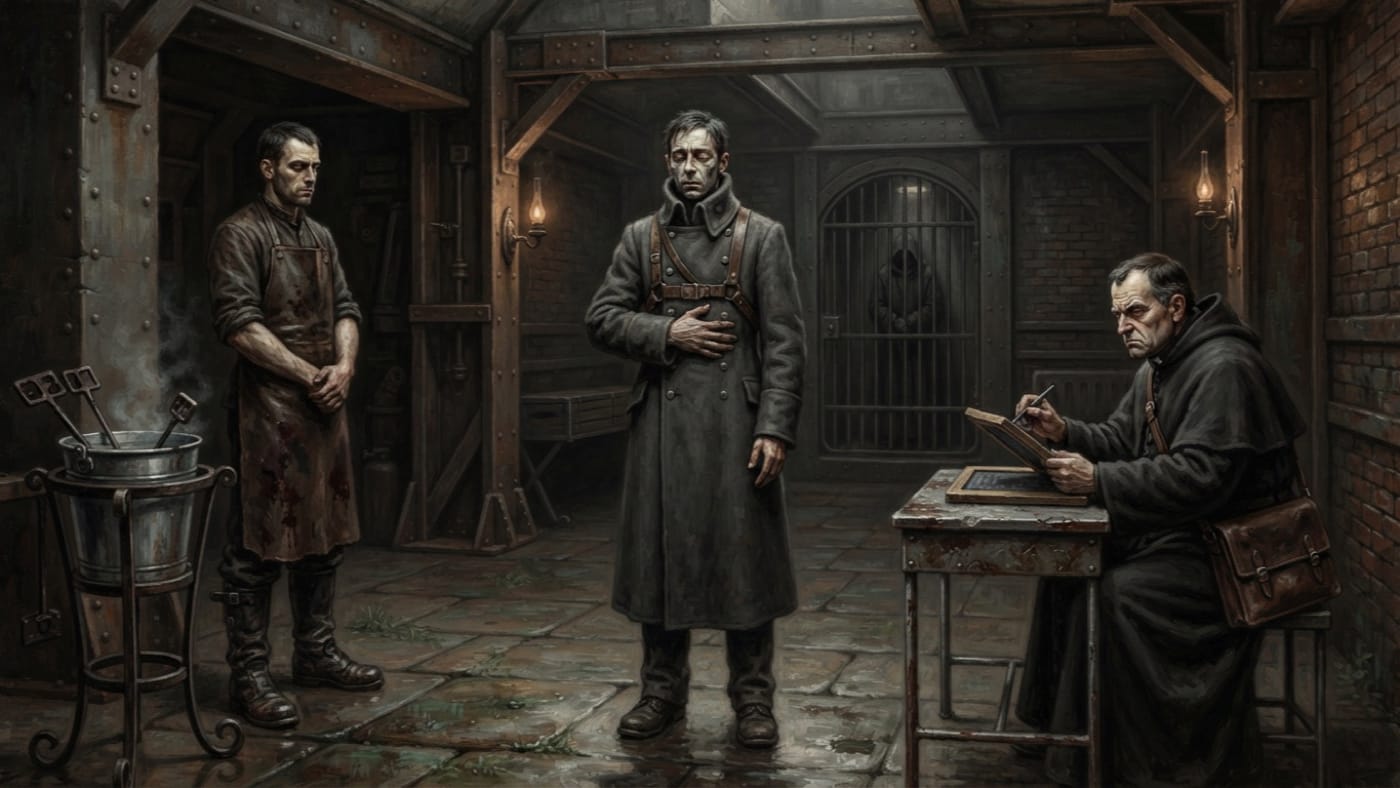
Closing Tone
Three notes down, fourteen heartbeats, and the clerk has the last word
Three descending notes, fourteen heartbeats of silence, and no speech until the scribe certifies the chamber clean: Purity permits even an ending only by paperwork.
Codex Ref. XIII.1.41-005
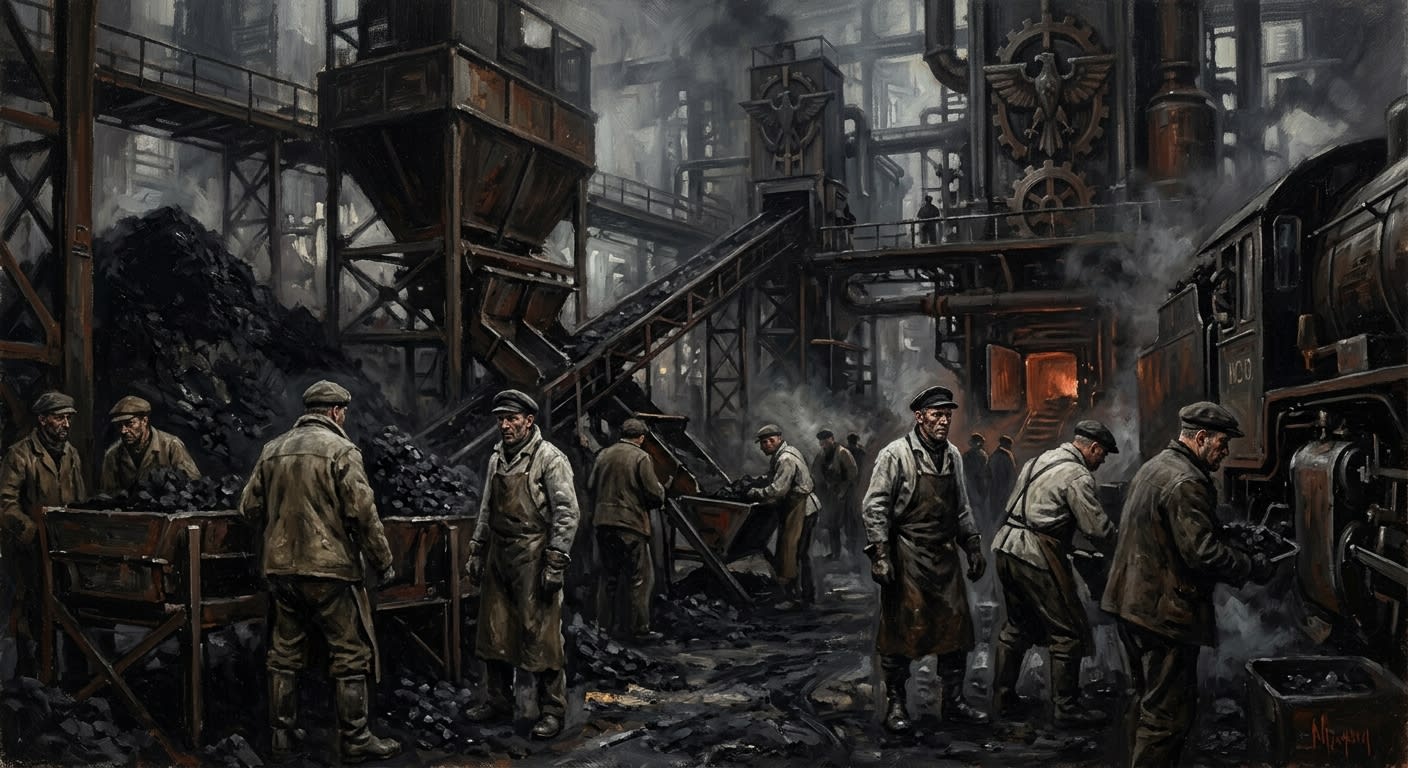
Coal-Heavers' Union
The black yard keeps winter from becoming doctrine
Hamburg's Coal-Heavers' Union rules the black yards, coal chutes, tender feeds, night bunker crews, and the soot-dark arithmetic by which northern bastions survive winter.
Codex Ref. XII.52.03-001

Codex 'Doubt' Auditor
The men and women who weigh belief on scales you cannot see and file the reading under your name
The Codex Auditors are the Bureau of Purity's intelligence branch — operatives who audit belief itself, detecting hesitation before it becomes opinion and opinion before it becomes faction.
Codex Ref. VIII.2.01-001
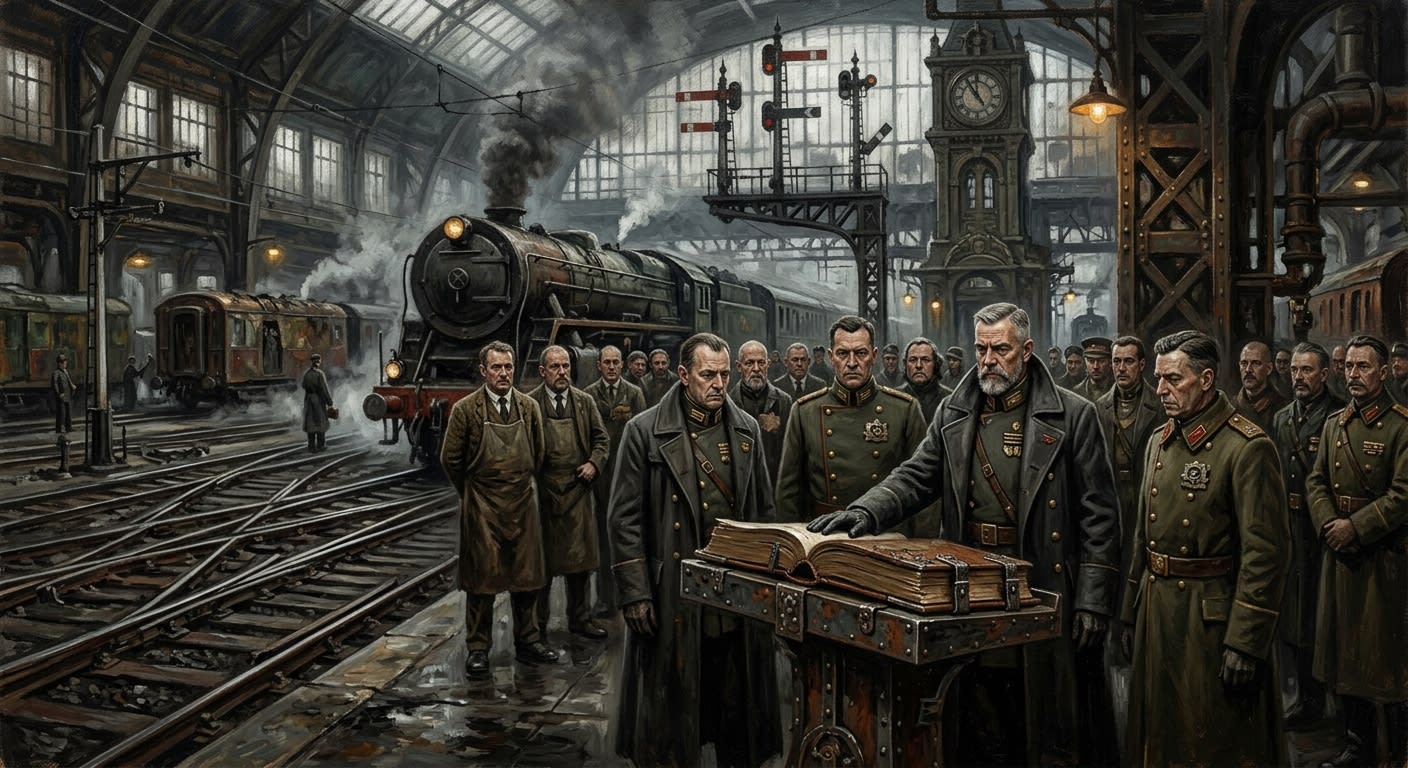
Codex Ferrum
The iron book that taught bishops to wait for the rail
The Codex Ferrum chartered the Guild of Rails in A.S. 94, giving iron custody a legal voice and every later train delay a holy ancestor.
Codex Ref. XIII.1.94-001

Codex of Permitted Symbols
The little book that makes walls guilty
Pocket abridgement of the Armorial carried by Sigil Inspectors, where lawful shapes are licensed, colours are weaponised, and mercy is a counterfeit edition.
Codex Ref. XIII.1.82-001
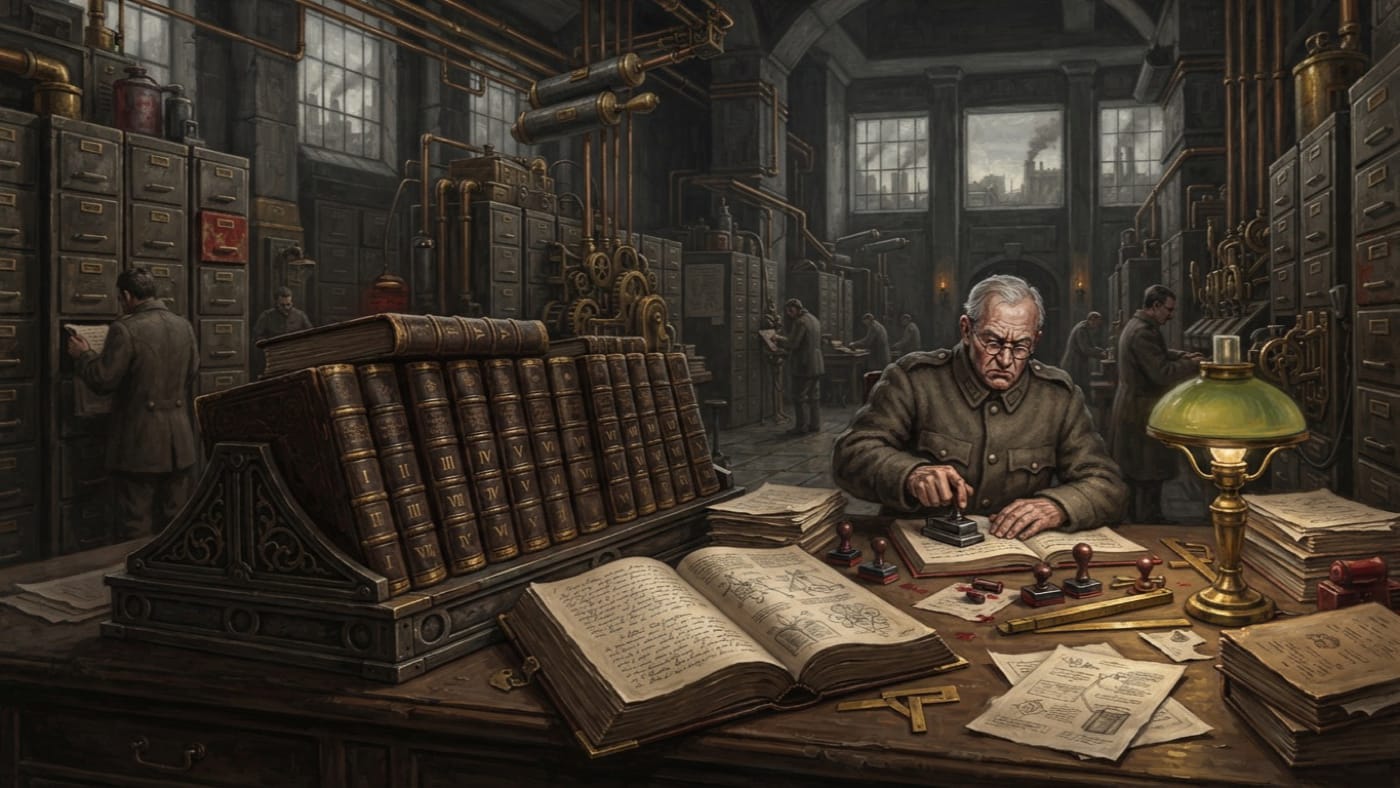
Compendium Infernum
Twelve volumes of answers, and a northern question without a filing number
Twelve volumes give the enemy a designation, a class, a countermeasure and a filing number. The Grey has only the name its garrison gave it; the Bureau has had eleven years to supply the rest.
Codex Ref. XIII.1.102-001

Concordat of Civic Cadence
One beat, one body, one road, and every crowd made countable
A.S. 113 joint Rites-War decree born from the Ashbread Stampede, licensing the Cadence Corps to rule queues, funerals, gates, and marches by rhythm.
Codex Ref. VII.2.10-059
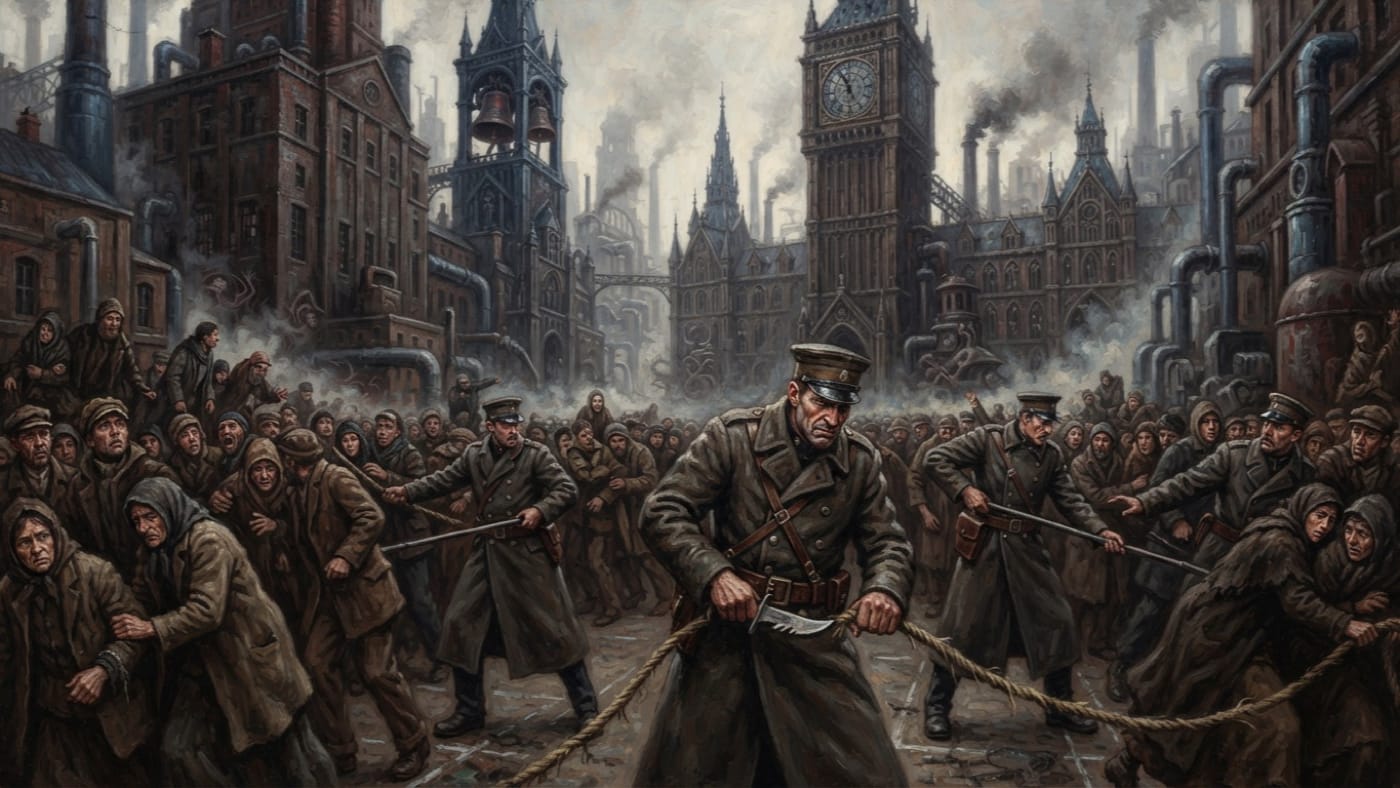
Concordat of Silence
Orders for the street; explanations for the vault
The A.S. 155 classification of crowd acoustics and demonic audition: Marshals receive orders to break the crowd, while Doctrine withholds what the crowd might be answering.
Codex Ref. VII.2.10-061
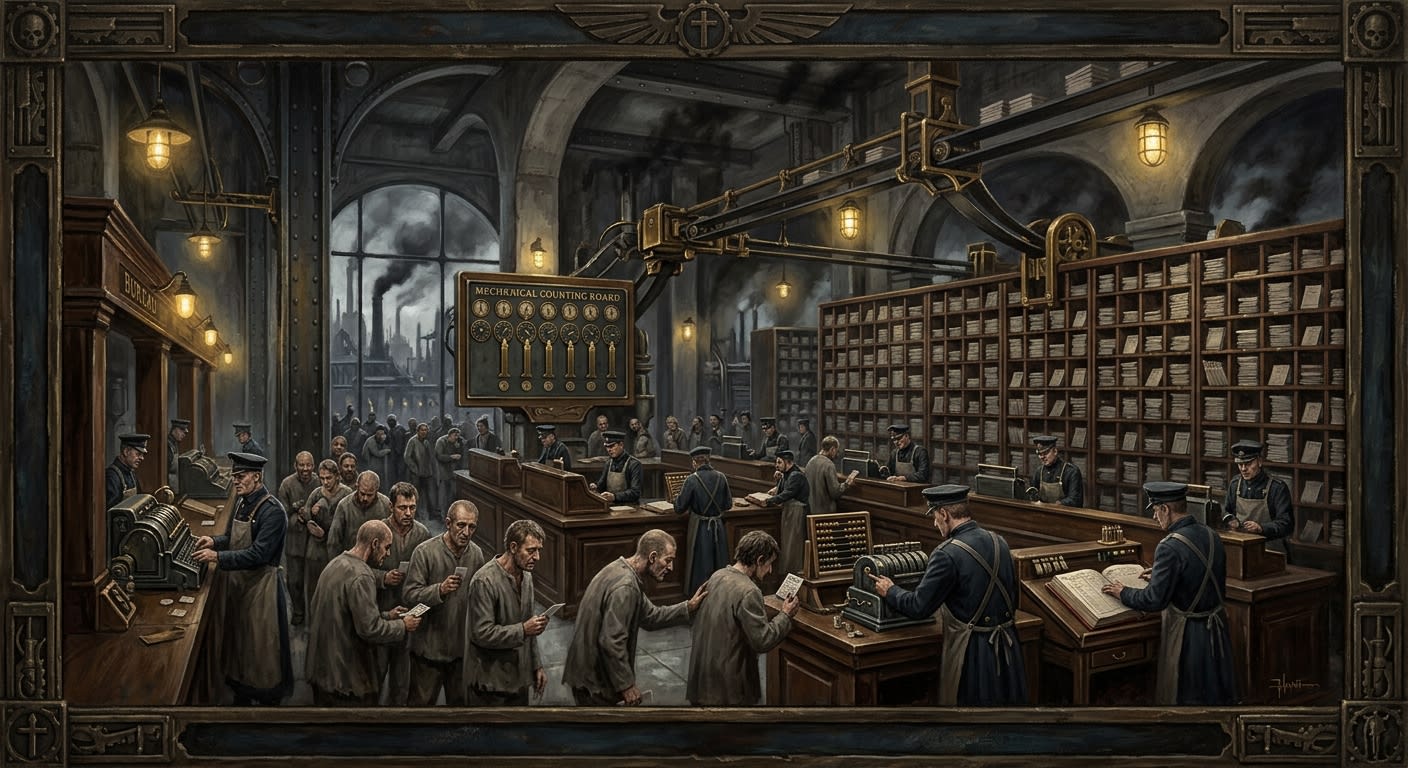
Confession Reform of A.S. 104
The paragraph that made sin stand in columns
A.S. 104 Bureau of Rites reform that standardised sin categories, introduced rubric cards, authorised lay intake clerks, and made confession countable at scale.
Codex Ref. VII.8.10-014
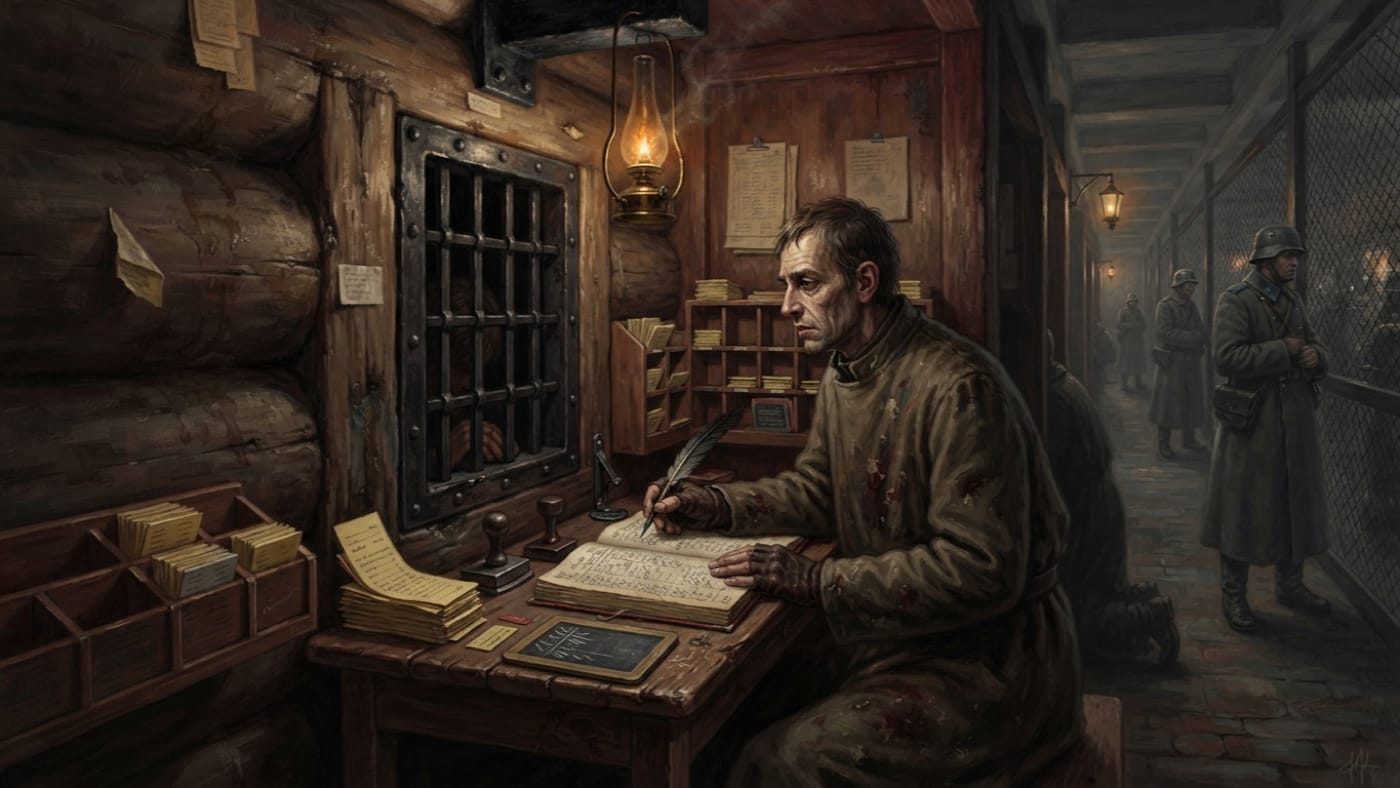
Confession Scribe
The hand between spoken guilt and lawful passage
At Bastion-Brest, the Confession Scribes turn spoken guilt into crossing authority, hoard secrets and sell edited sins. Hal assures their reliability; the Tribunal keeps its doubts under seal.
Codex Ref. XII.9.02-001
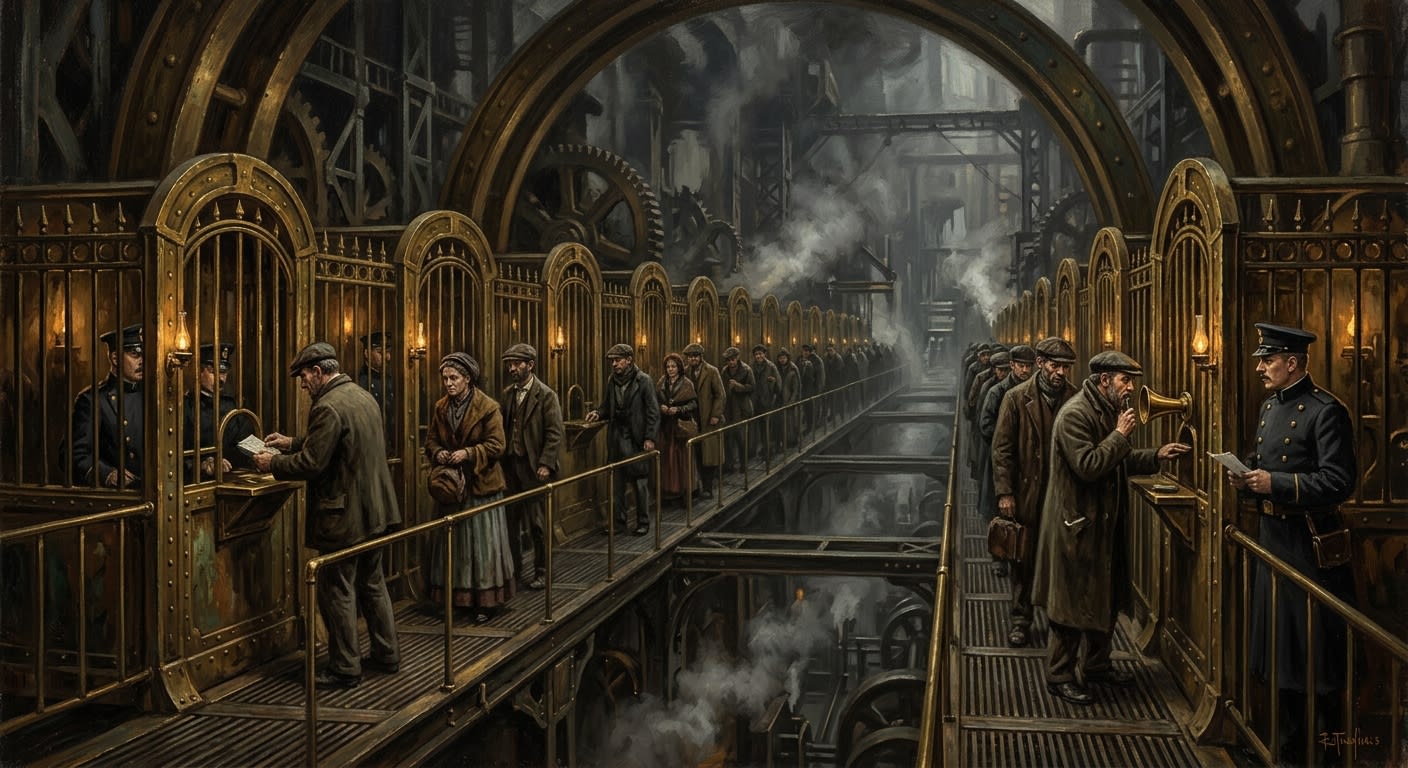
Confessional Lanes
Where sin kneels, pays, receives a token, and keeps the bridge moving
The Confessional Lanes of Bastion-Brest are two hundred and fourteen bridge-booths where every crosser must surrender name, sin, receipt, and voice before the Brass Ribs allow passage.
Codex Ref. II.4.08-098
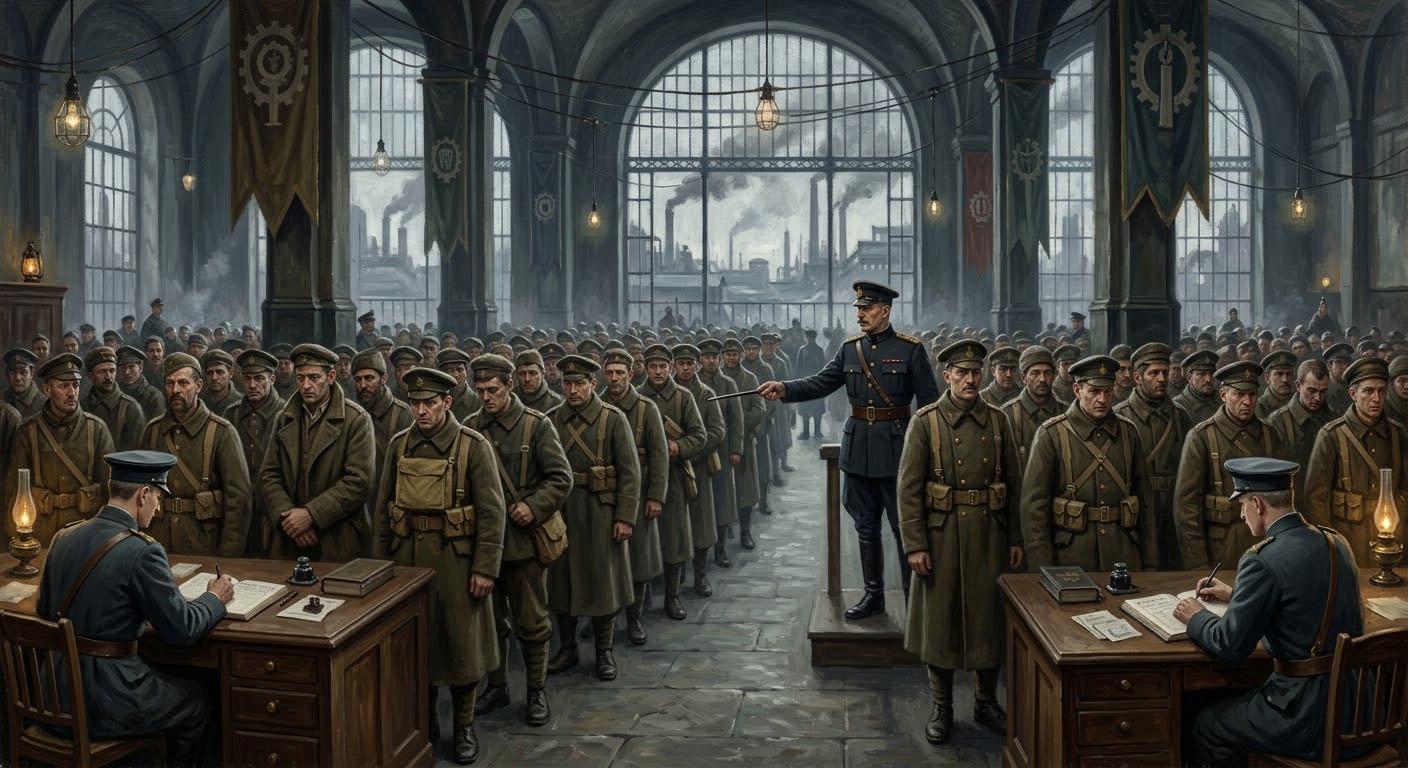
Continental Levy
The decimal point where obedience becomes infantry
The Continental Levy is the Synod's permanent tithe of flesh, born from the A.S. 110 crisis and refined into household arithmetic.
Codex Ref. XIII.1.54-001
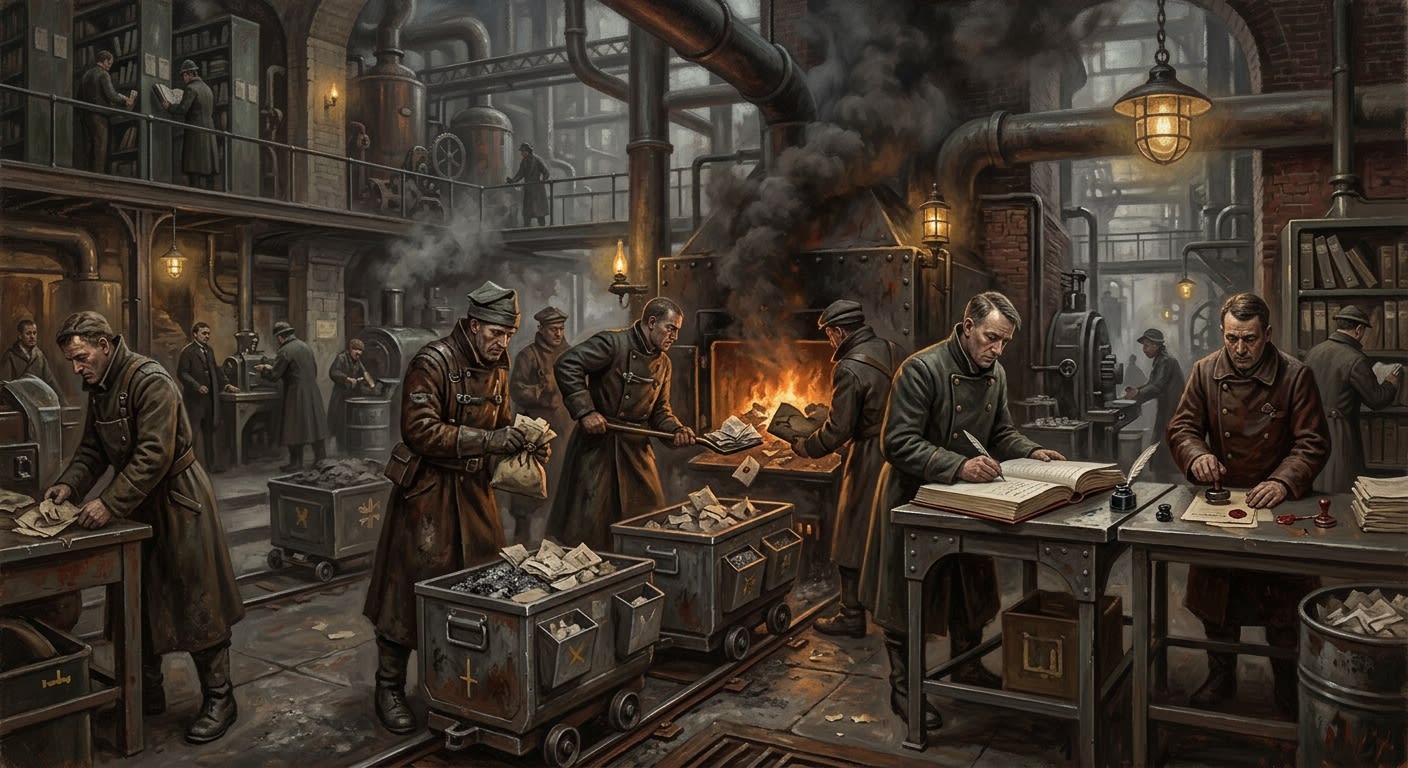
Contradiction Custodians
The hand between archive and ash
Senior Trench Court handlers of contradiction pouches, burn-cycle disposition, furnace logs, ash certification, and evidence too dangerous to remain speech.
Codex Ref. XII.47.04-091
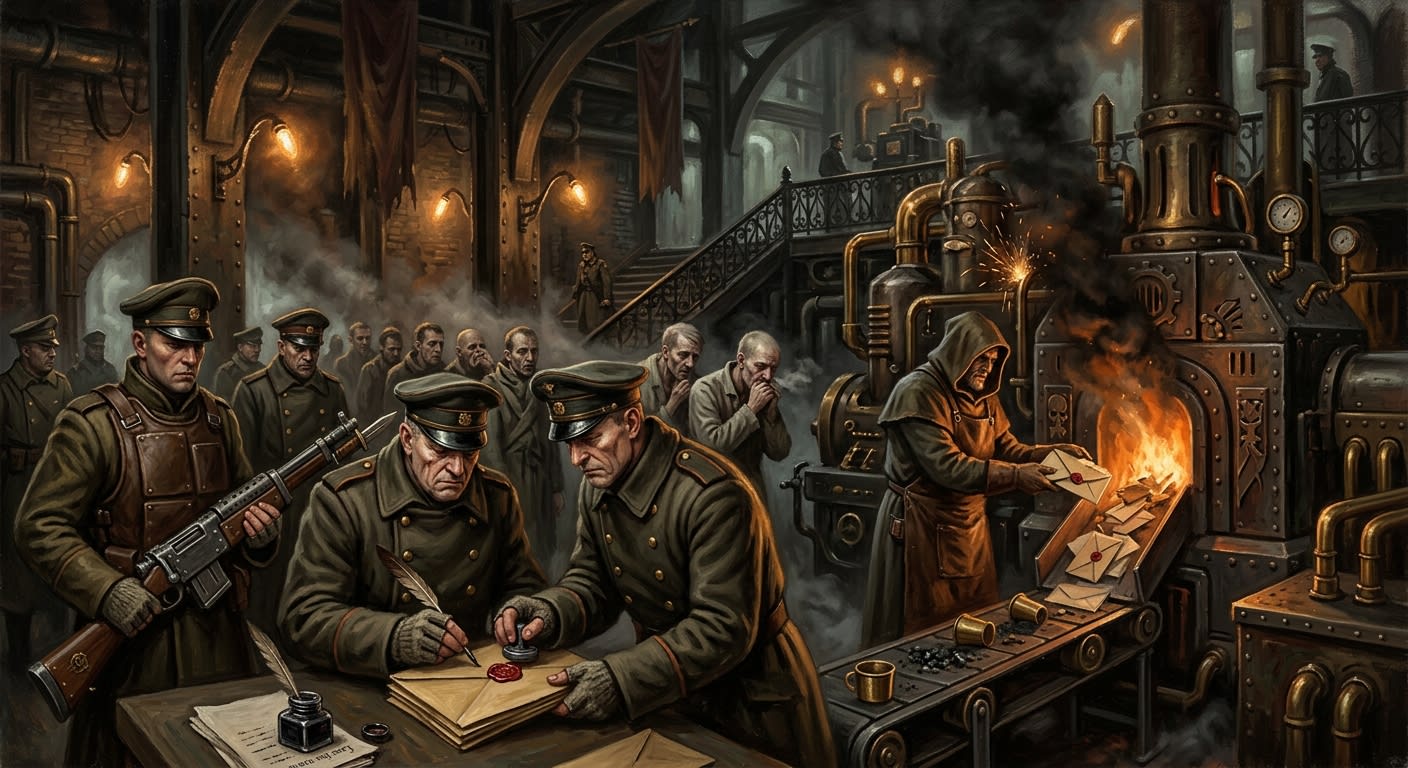
Contradiction Doctrine
Write it down, seal it, burn it properly
Field doctrine codified in A.S. 91 requiring dangerous last words to be recorded, marked, sealed, routed, and burned under authority.
Codex Ref. XIII.1.86-091

Contradiction Map
The holy art of keeping incompatible truths from meeting before lunch
The Contradiction Map is the Broker's slip-book of lethal truths: relic claims, feast days, custody lies, and the blessed delays that keep bones from starting wars.
Codex Ref. XII.15.05-148
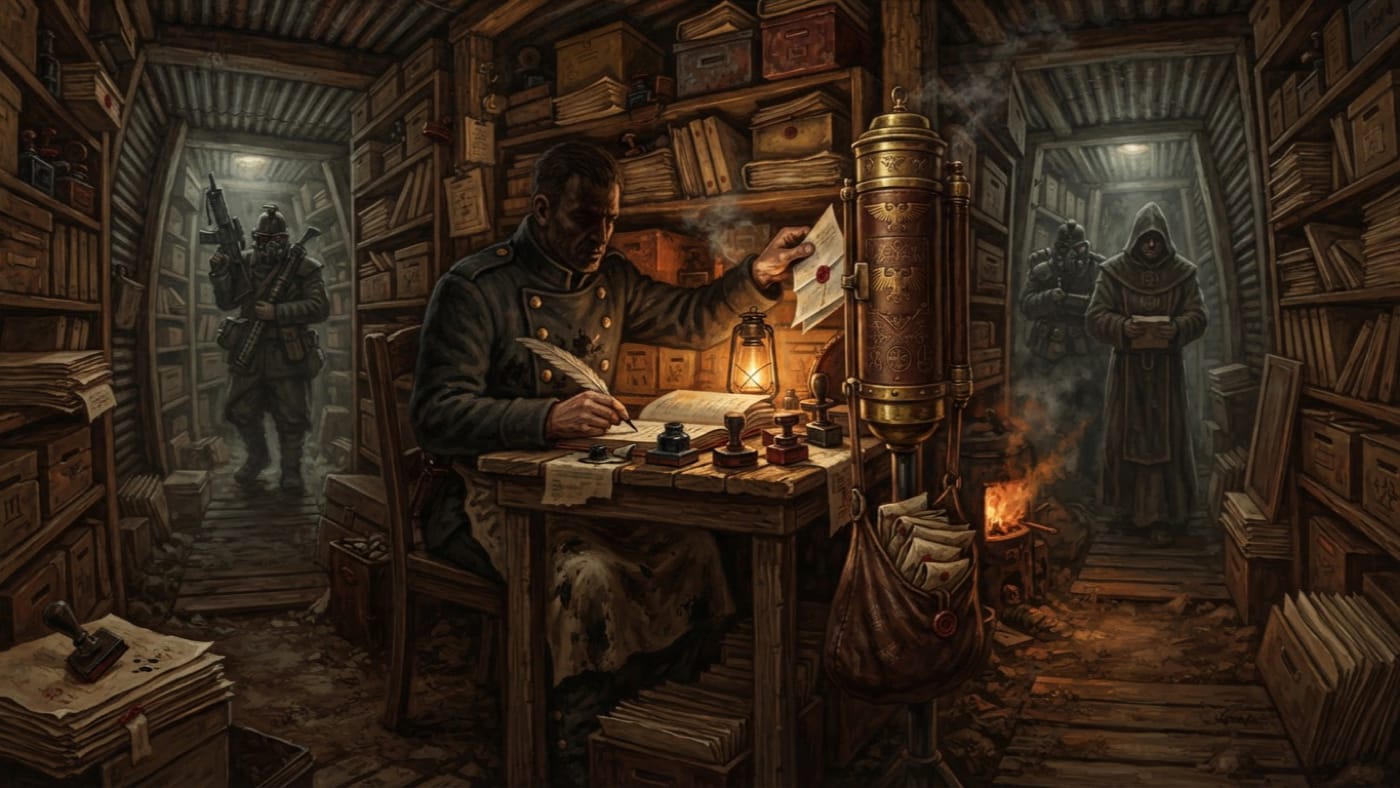
Contradiction Pouch Mechanism
One hearing, two custodies
Purge-era Trench Court procedure keeps a deserter's incriminating findings in the ordinary record while sealing accusations against command in separate custody. The sentence proceeds; the explanation waits.
Codex Ref. XIII.1.87-091
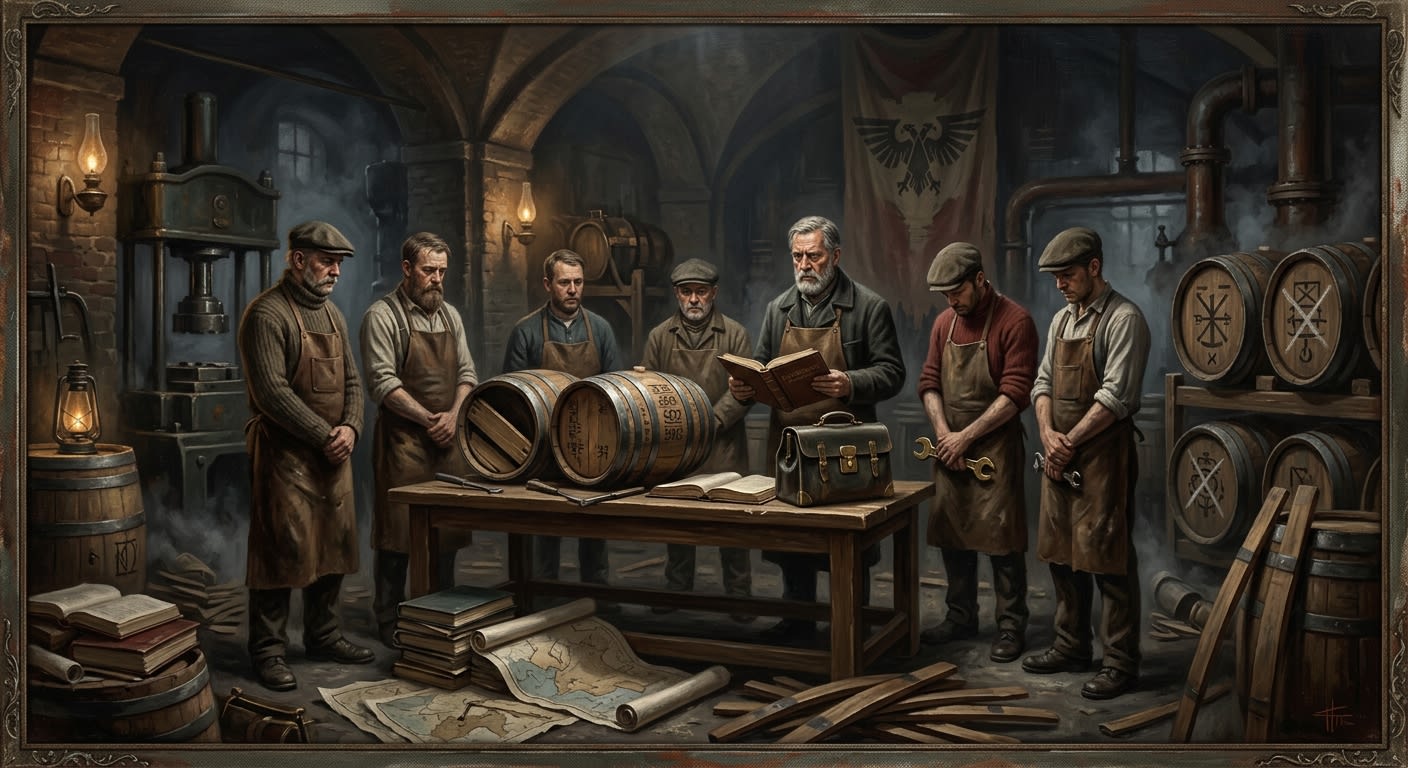
Coopers' Brotherhood of the Blessed Barrel
A barrel is hollow, certified, and treacherous when taught to sing
Dissolved Lübeck cooperage fraternity whose A.S. 180 contemplative silence followed Shadow seizure of hoop codes, false-bottom casks, route songs, and the harbour's loudest useful lies after the Year of Smoke.
Codex Ref. XII.26.04-001

Corvin Marche
Nineteen years. No window. Adequate, narrowly.
Corvin Marche has held the Chair of Prescribed Observance for nineteen years. His memory holds seventeen suppressed rites; his office balances grace and returns questions with their grammar corrected.
Codex Ref. III.1.04-019
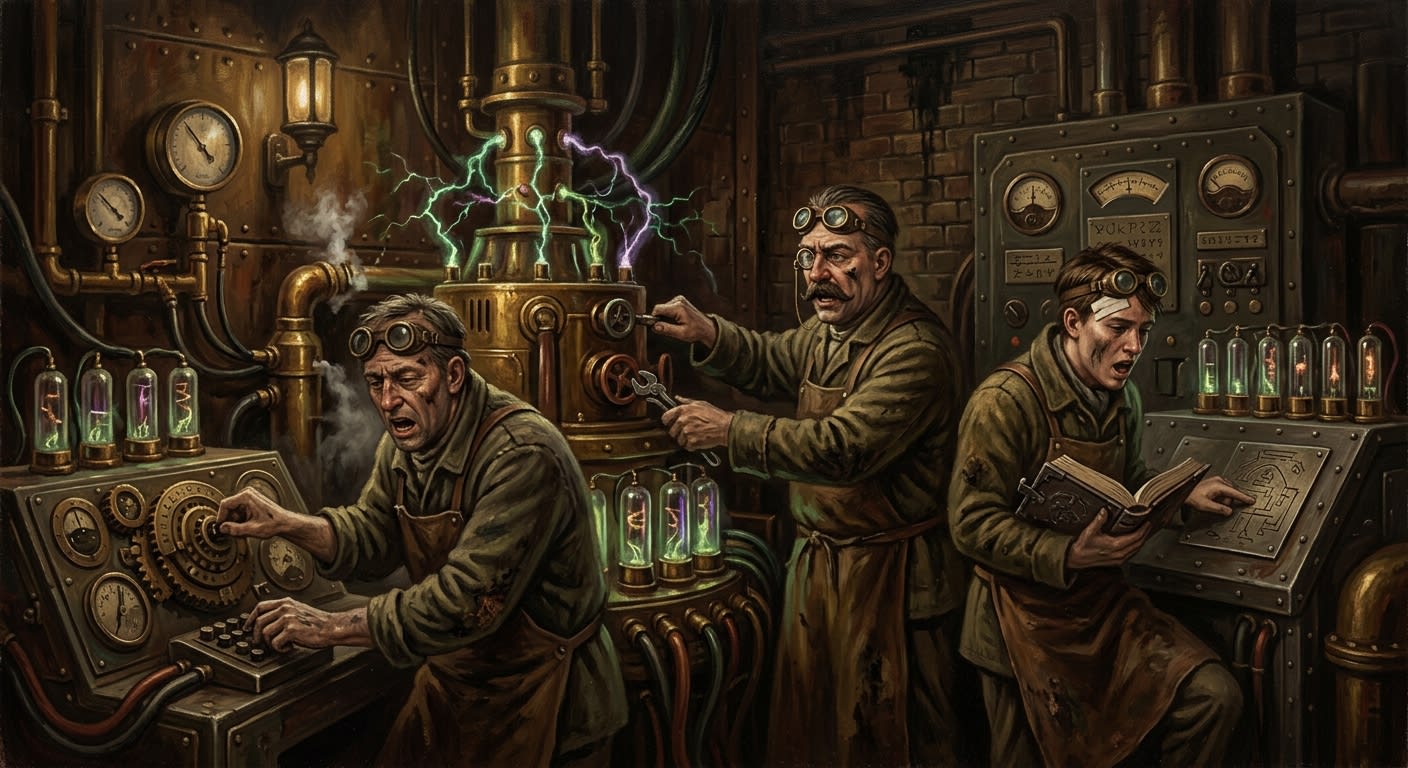
Counter-Sorcery Verses
Speak only what you can finish, for the wall listens
The sanctioned combat cant of Litany-Engineers: twenty-seven working verses that time charges, fracture sorcery seams, and punish miscadence.
Codex Ref. XIII.1.65-001

Counter-Toll Corps
Louder is cleaner, until the city taps back
The Counter-Toll Corps is the Synod's sanctioned acoustic overwrite force: bronze artillery for false curfews, borrowed obedience, and bells that answer back.
Codex Ref. XII.2.02-135
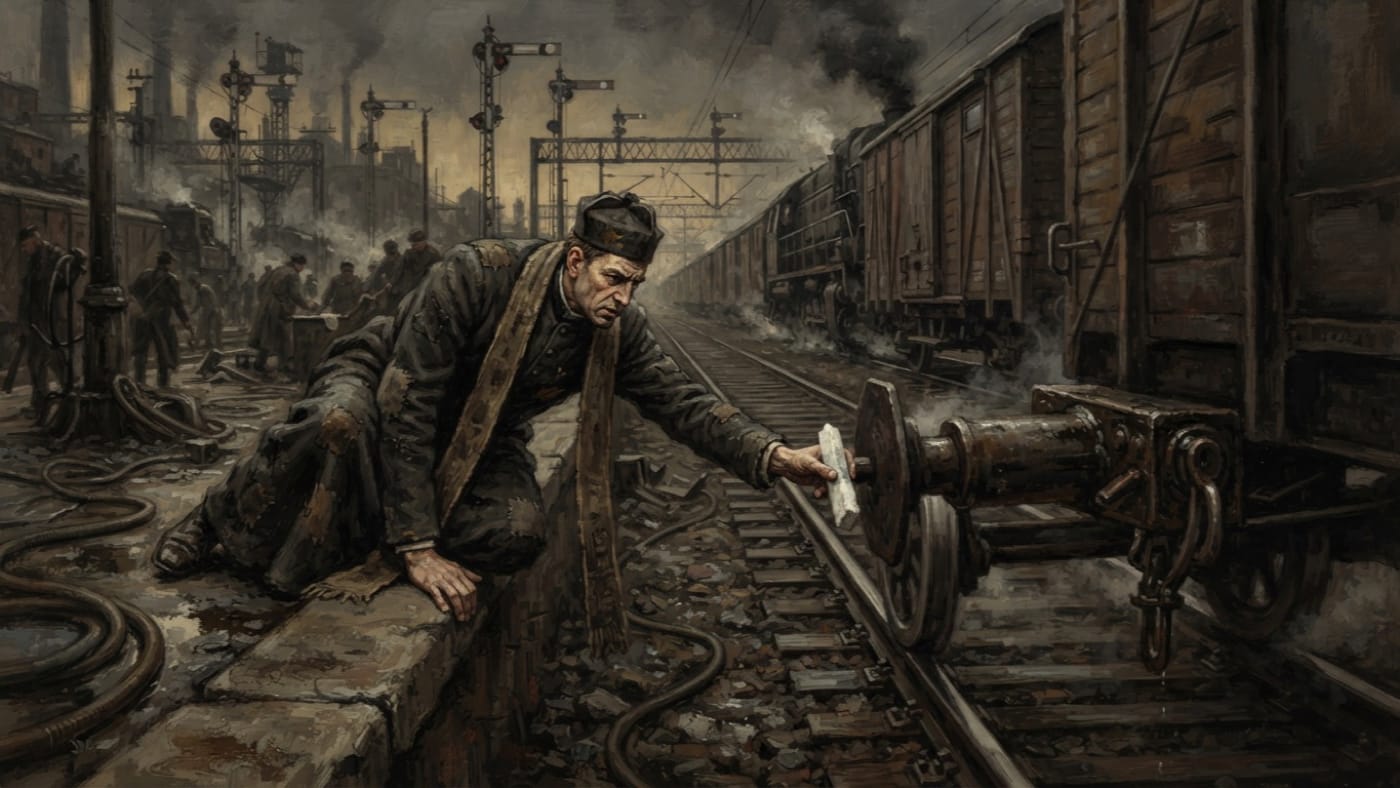
Coupler Rite
The blessing catches up; the fingers do not.
A priest touches a moving train's rear coupling with consecrated chalk to supply a missed departure blessing. Rites records three lost fingers as devotional expenditure; the Guild of Rails keeps its own account.
Codex Ref. XIII.1.05-201
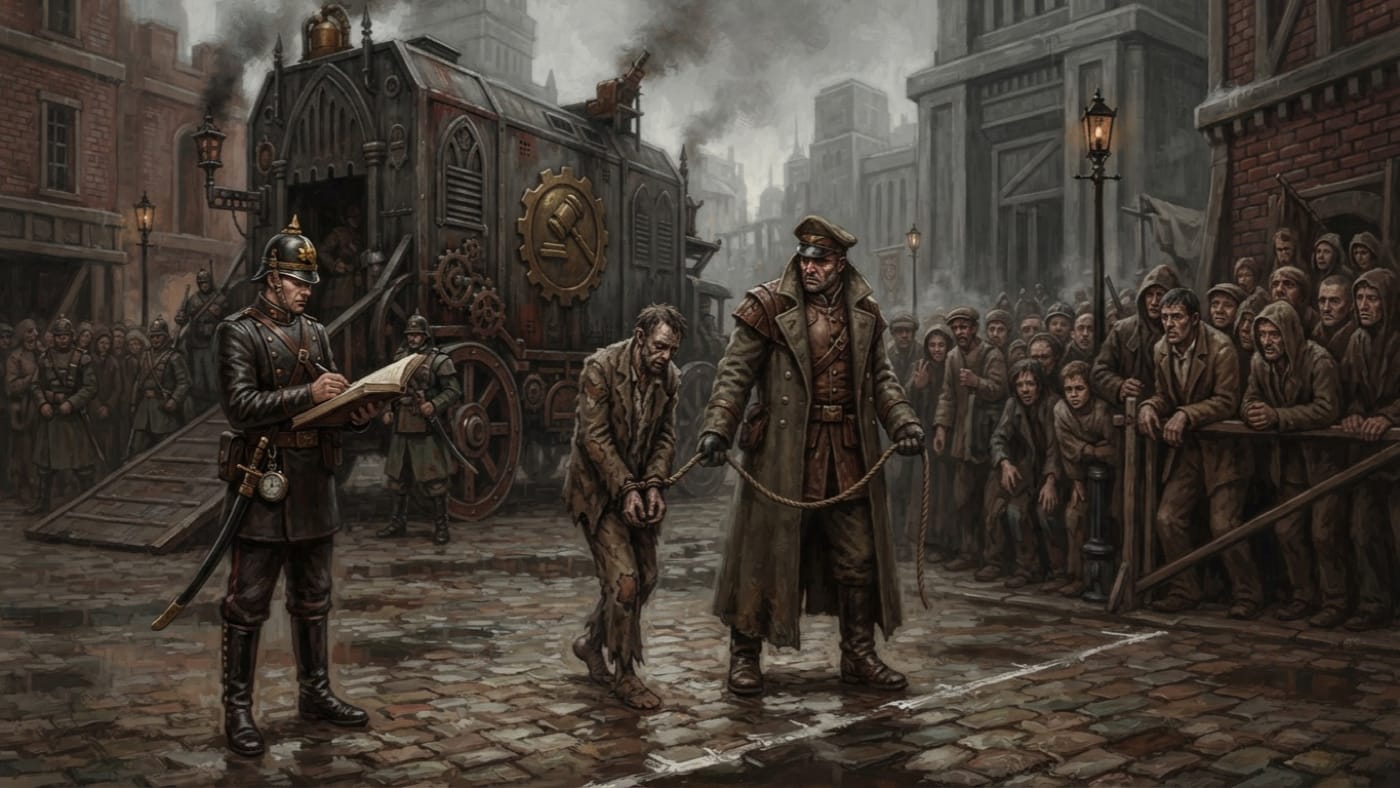
Court Rope
The Judge pronounces, the Bailiff records, and the Rope is remembered
The Court Rope is an entry rank of the Roving Judge's Bailiff corps: moving the accused from wagon to chalk and onward to sentence, while a superior certifies the chain and the crowd remembers the hand.
Codex Ref. XII.39.01-002
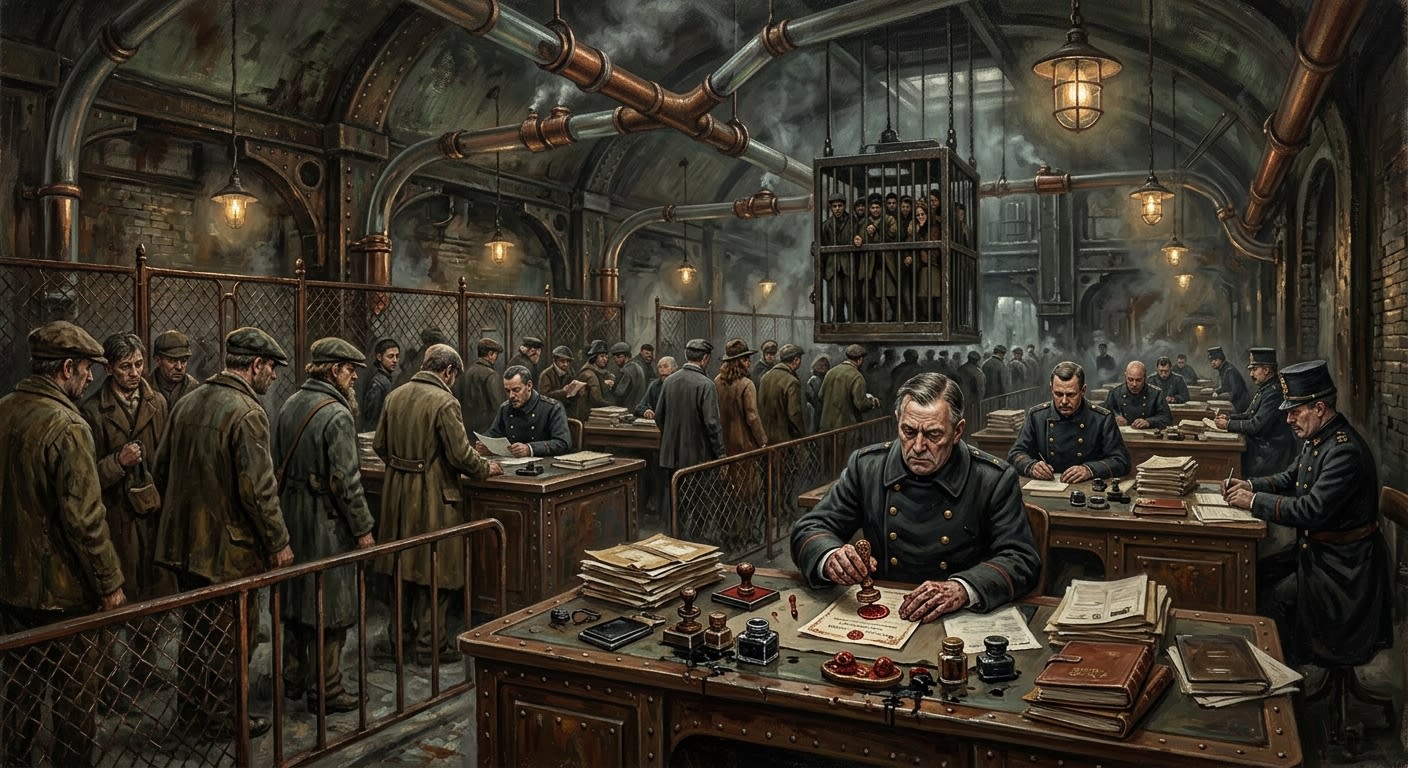
Crossing Bureau
No mark, no crossing; no crossing, no mercy worth recording
Bastion-Brest's Crossing Bureau is the local span authority between confession and passage, where Hett Ruis, wet paper, and warm wax decide who becomes lawful on the Brass Ribs.
Codex Ref. VIII.2.07-098
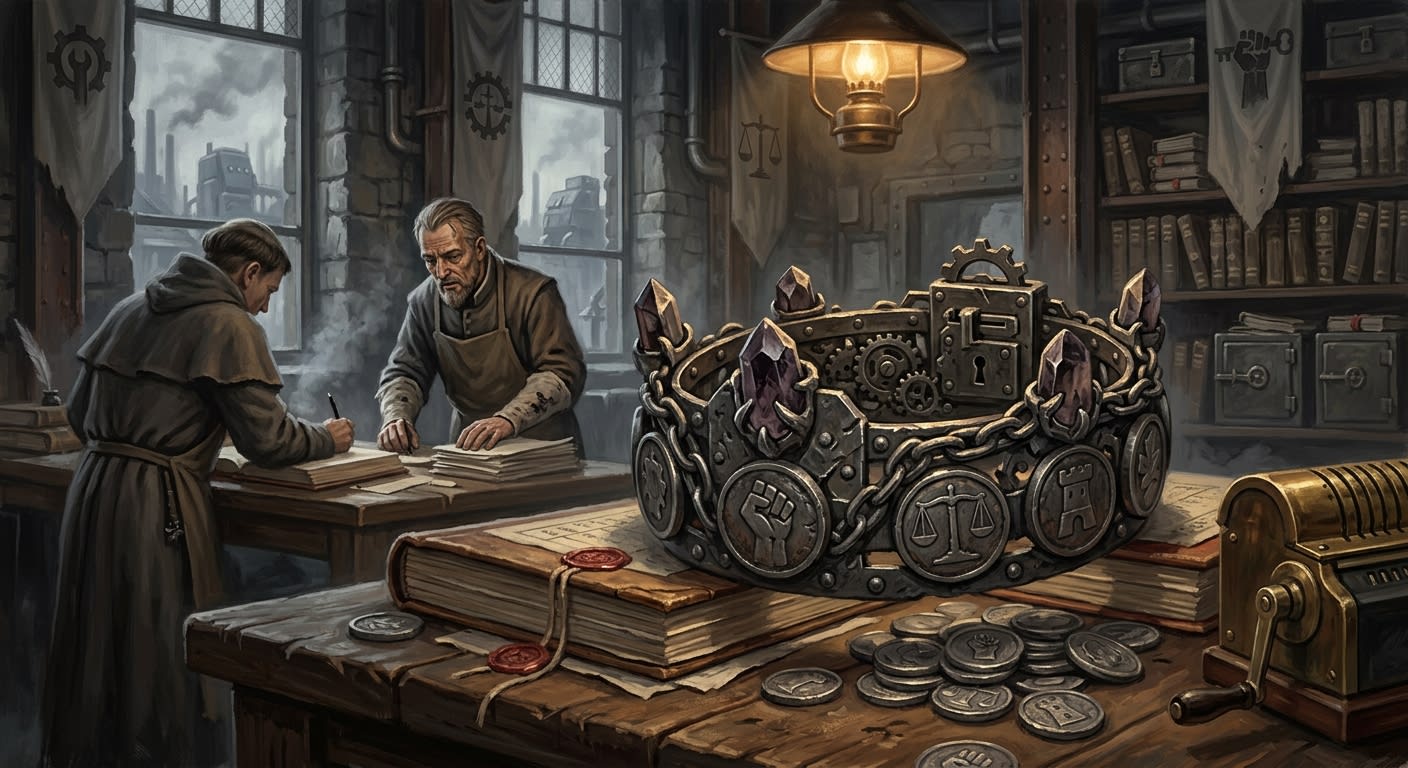
Crown of Grace
Iron given a halo, so long as the receipt survives
The Crown of Grace is the Synod's iron sacrament of value: minted, blessed, tested, taxed, hoarded, counterfeited, and still expected to buy bread under artillery.
Codex Ref. XIII.1.22-092
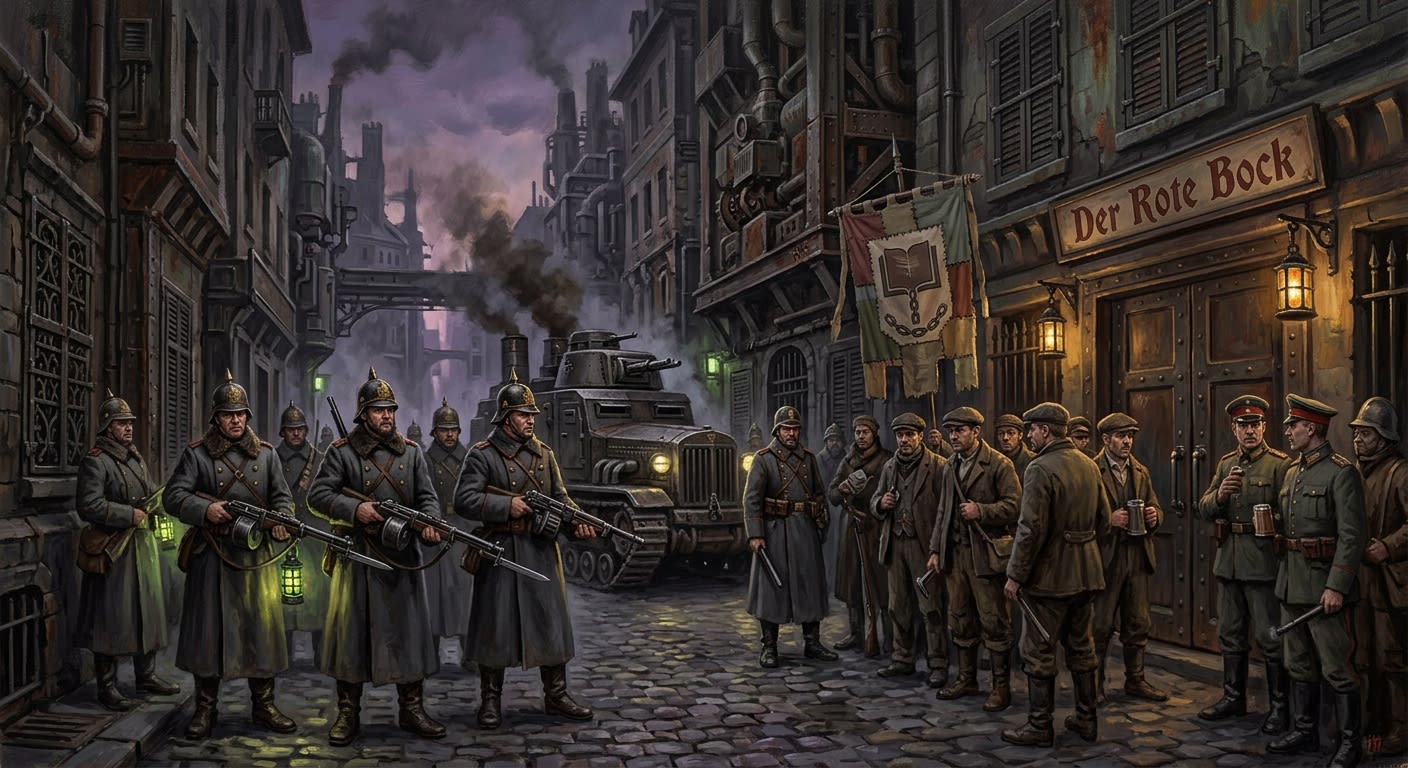
Curfew Standoff of A.S. 140
Beer closed its doors and Purity discovered policy
In A.S. 140, Kanzleiburg's Old City beer-halls obeyed Purity's curfew so completely that the officer corps petitioned, the Archon withdrew enforcement, and obedience became a weapon.
Codex Ref. VII.8.10-140
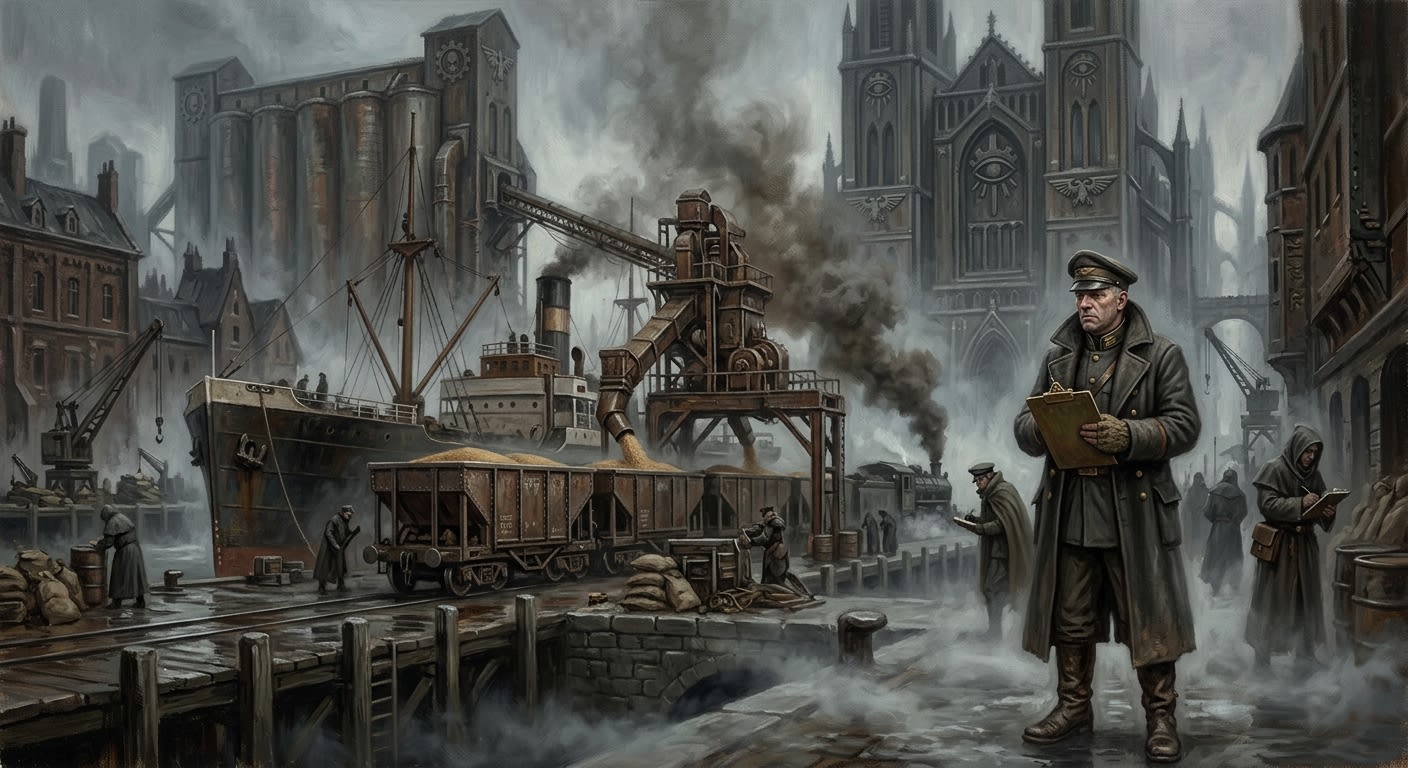
Danzig
The Baltic port that feeds the north and lies with admirable punctuality
Danzig is the Baltic grain mouth of the Northern Corridor: obedient in public, competent in fog, audited forever, and too necessary for Strasbourg to purify without starving itself.
Codex Ref. II.4.09-013

Deathbed Confession Harvester
The quill outlasts the patient; the Record outlasts both
Two thousand four hundred scribes posted at the bedsides of the dying, ensuring no death in Synod jurisdiction passes unfiled. The Record does not grieve. The Record does not wait. The Record simply continues.
Codex Ref. XII.12.01-001
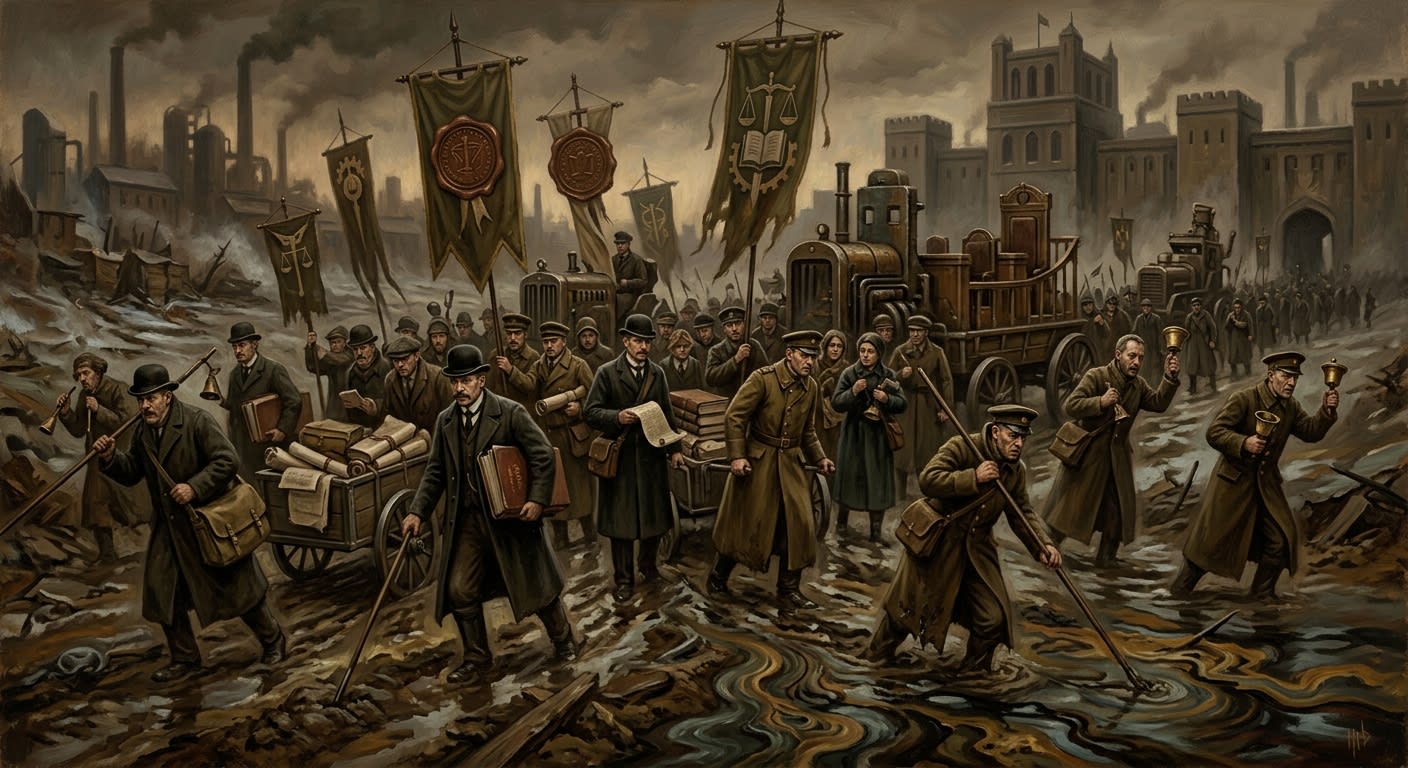
Demon-Route Years
Fifteen years in which the roads learned procedure and began holding court
A.S. 160–175: the forward roads imitated courts, crowds, witnesses, and chimes until the Synod learned that even law must ask the ground for permission.
Codex Ref. VII.8.10-160
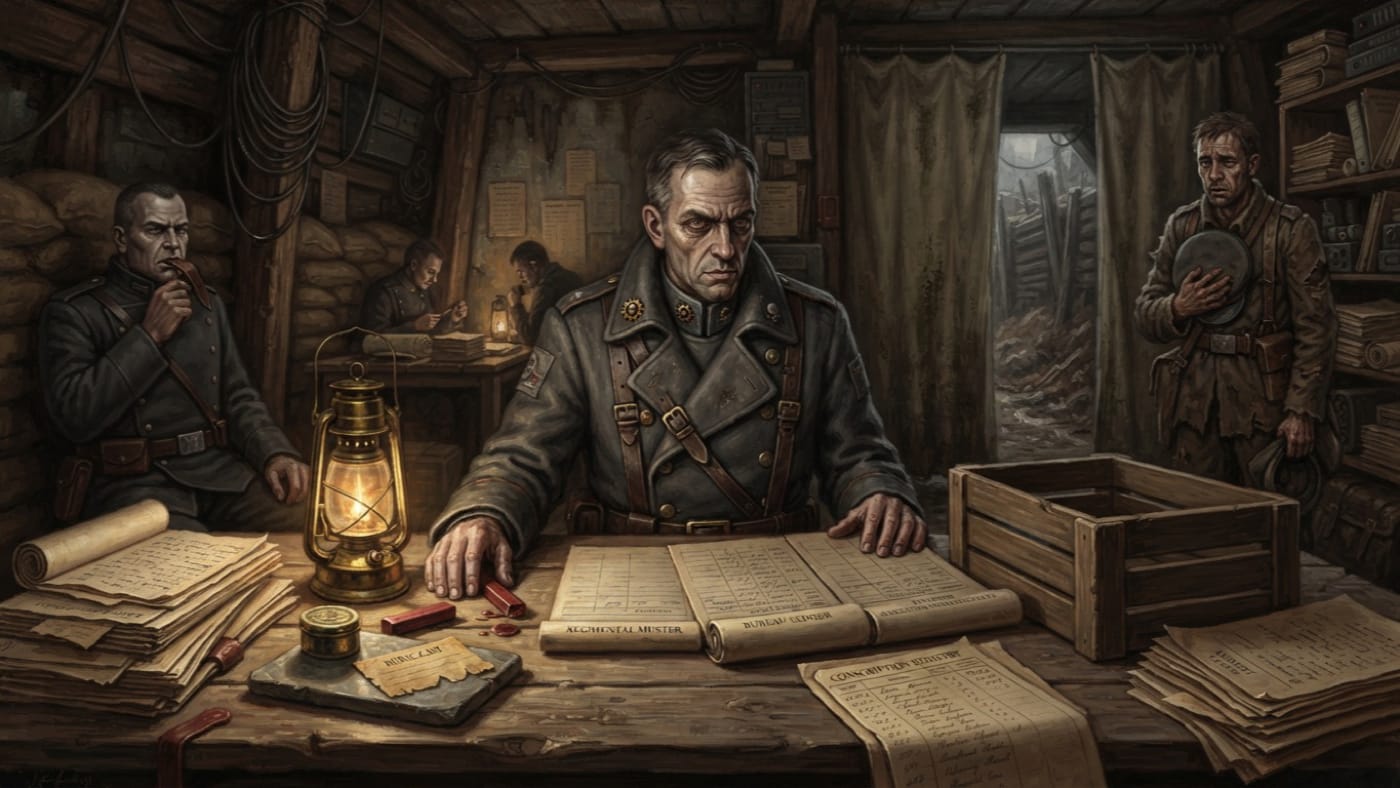
Desertion Hearing Specialist
Where absence is made to testify
Elite Trench Court clerks who reconcile disputed absence, hear deserter identity cases, and prepare the record that sends a man back to his name, punishment, or the rope.
Codex Ref. XII.47.06-201

Diesel Resonance Plumber
The unwashed saints who keep the bastions from collapsing — and are blamed when they do.
The Diesel Resonance Plumber — Pipe-Singer, Thumper-Runner, Heretic Wrencher — maintains the pressurised diesel conduits that carry resonant vibration through the bastions' bones. The Bureau of Engines insists this work is impossible. The bastions continue to require it.
Codex Ref. XII.2.03-001
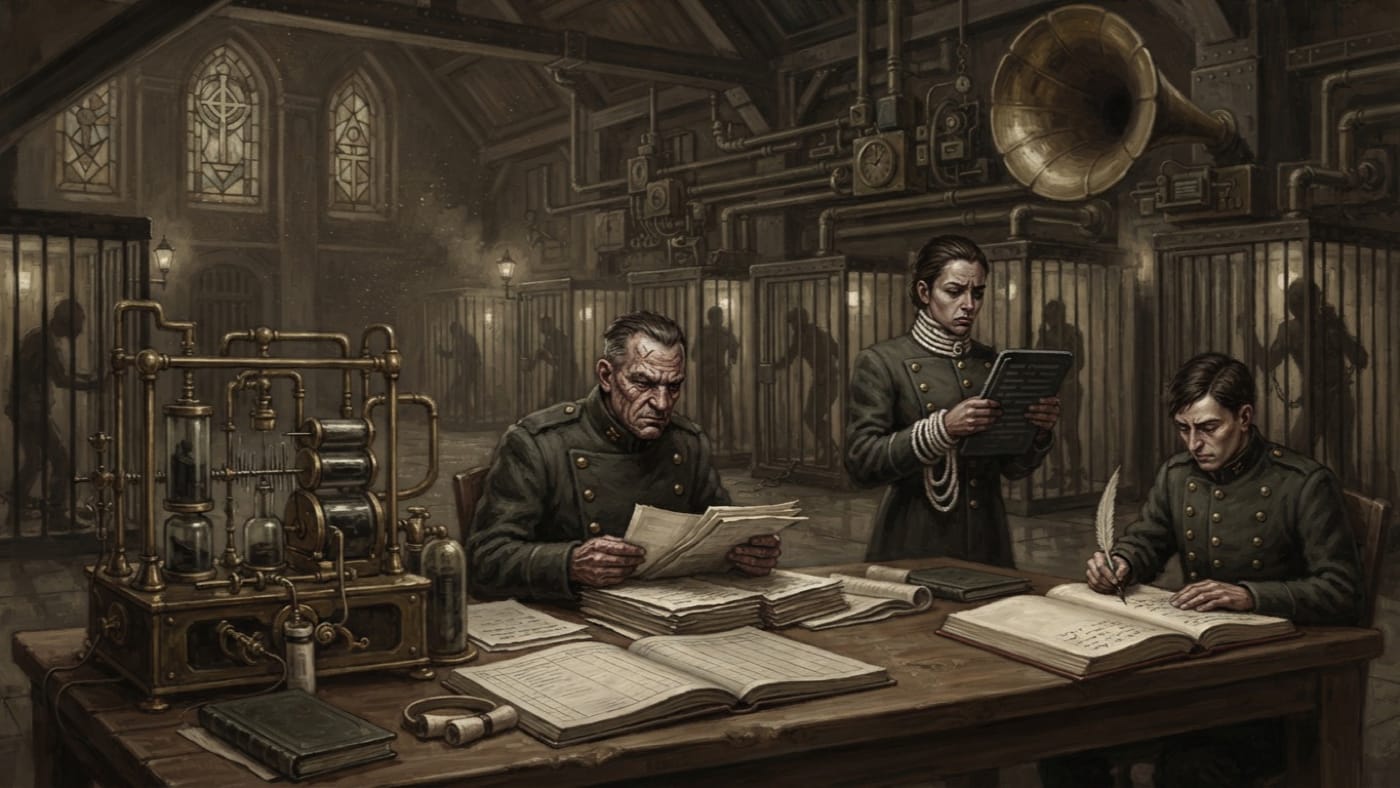
Directorate of Acoustic Enforcement
Every throat accountable; no reply authorised
Purity's office for licensing punitive voices, auditing penitential rites, and deciding which throat pays when the records disagree. Every anomaly receives a grade; no rank receives permission to reply.
Codex Ref. III.3.02-879
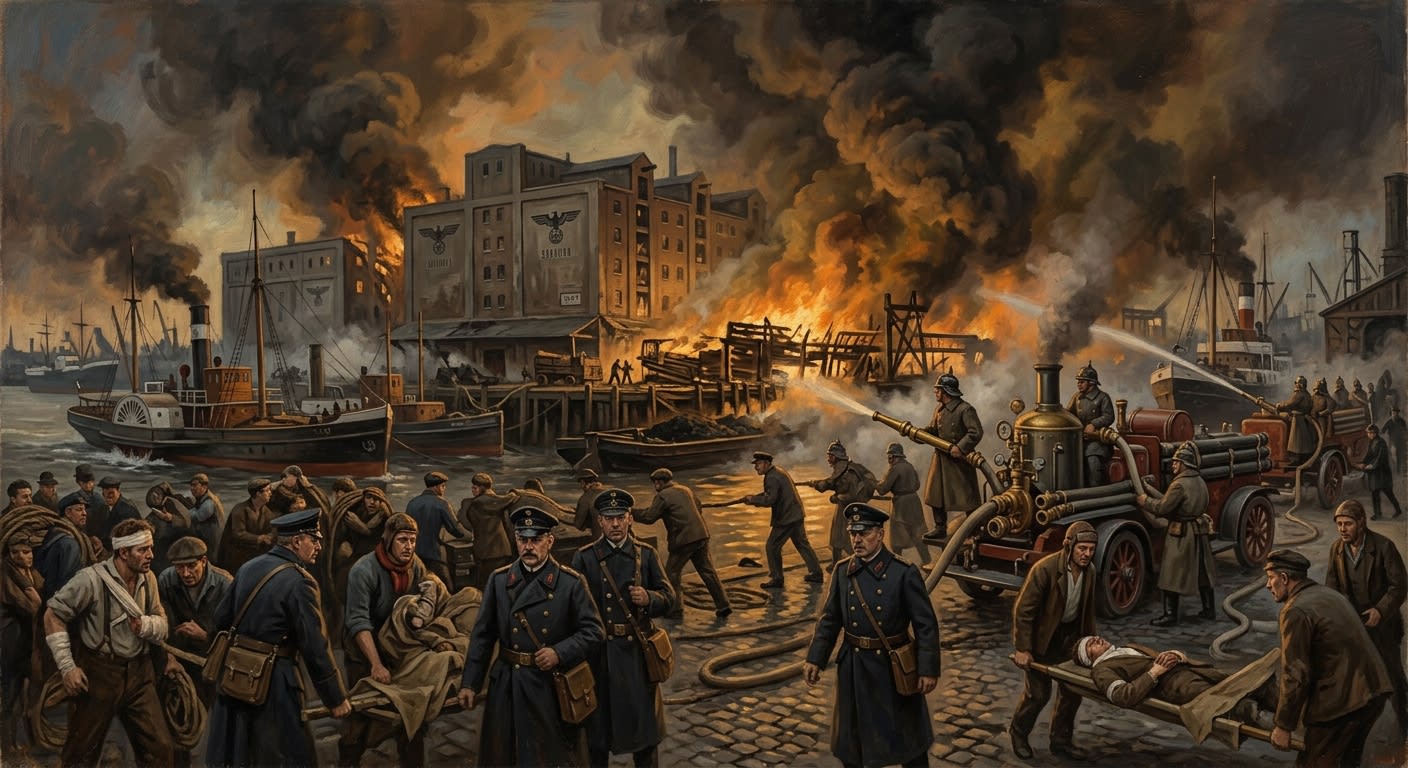
Dock Fire of Hamburg
Four blocks burned because brick was cheaper than obedience until it was not
The A.S. 189 chrismole warehouse fire in Hamburg killed 312, burned four dock blocks, stopped labour for eleven days, and made a seven-per-cent hazard supplement harder to seize than a relic.
Codex Ref. VII.8.10-189
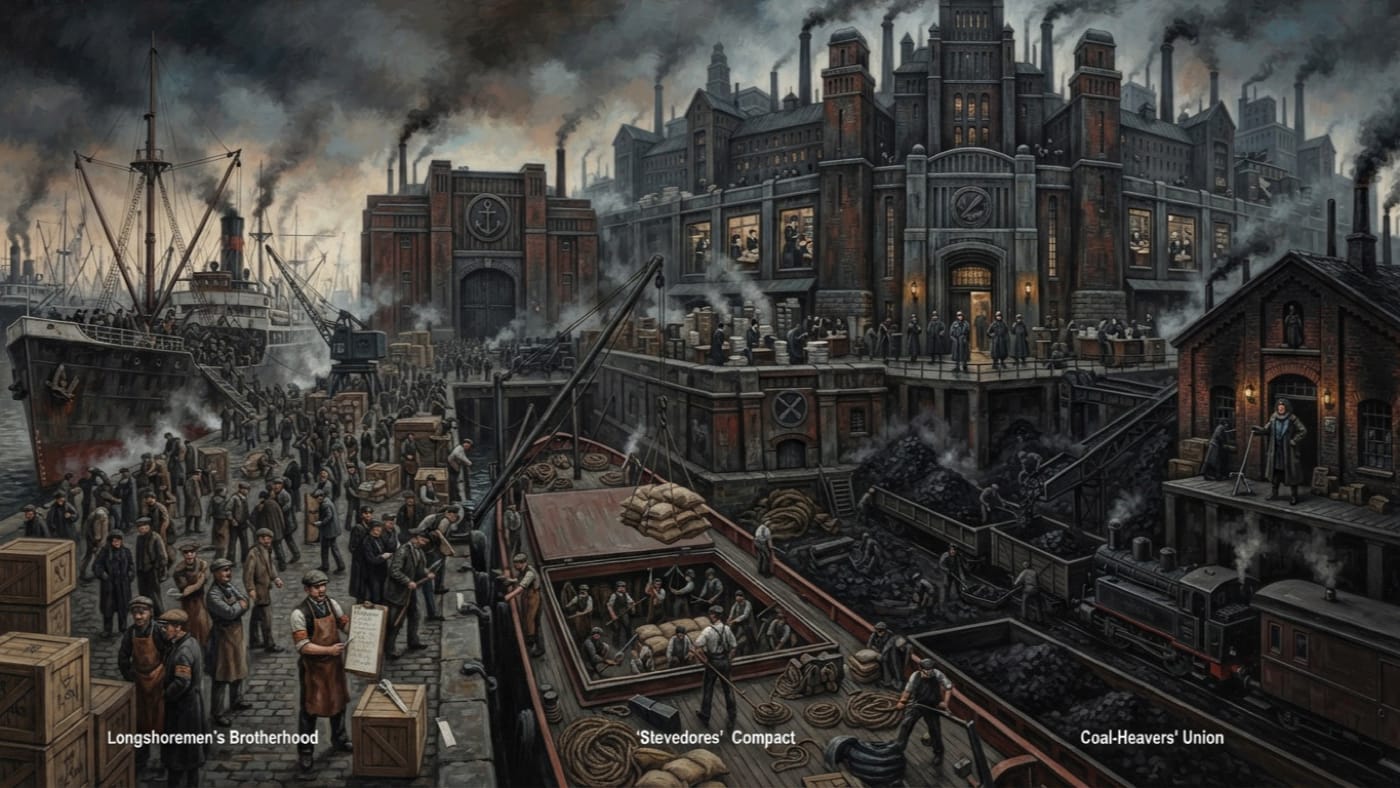
Dock Labour Bodies
Twelve halls remember what one harbour costs
Hamburg's twelve dock labour bodies keep separate halls, trades and injury accounts. Their shared refusal after the A.S. 189 Dock Fire taught the Bureaus that doctrine cannot unload a ship.
Codex Ref. XII.52.04-001
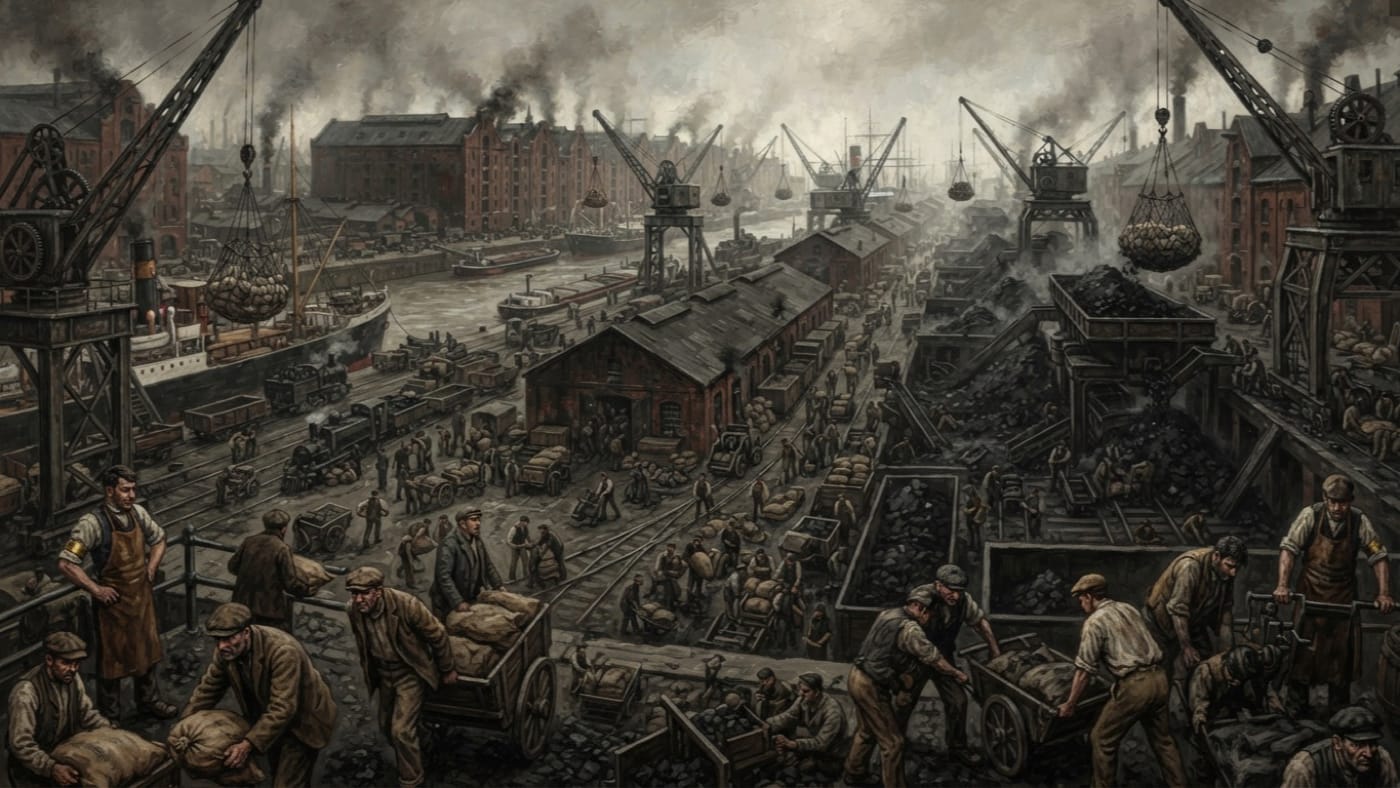
Dock Quarter
Where the northern war waits for the men beneath the crane
Hamburg's western and central Elbe quays turn North Sea cargo into northern-front survival. The Bureaus issue orders; the guilds decide when grain, coal, and military freight actually move.
Codex Ref. II.4.09-006
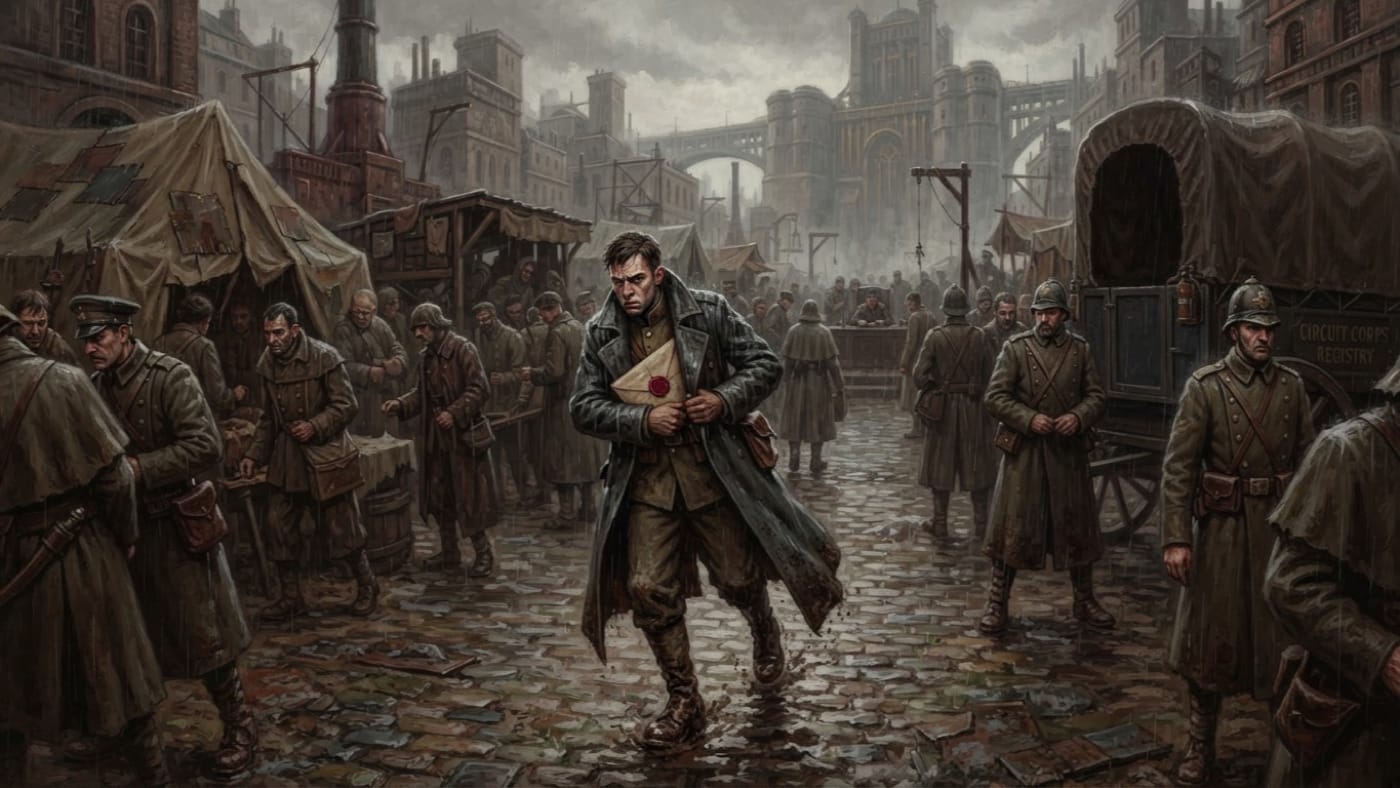
Docket Runner
The paper travels under seal; the blame travels on foot
Entry rank of the Roving Judge's Bailiff corps, carrying writs, custody pages and seizure receipts. The Runner conveys the Judge's authority and inherits the blame when paper fails.
Codex Ref. XII.39.01-002
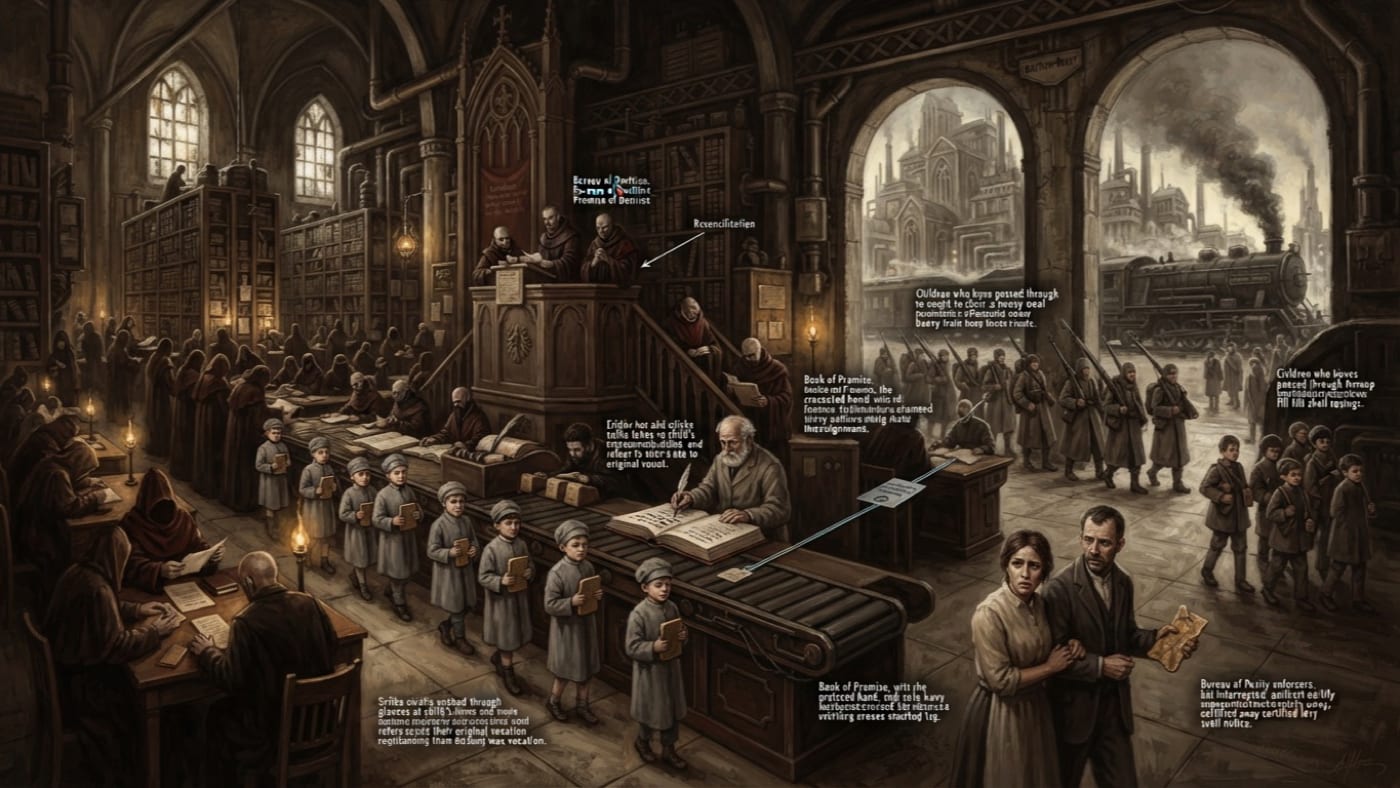
Doctrine of Deferred Fulfilment
The promise stands; the route belongs to the Bureaus
The Synod's promise is never broken: the Bureaus revise the vocation, Records certifies fulfilment, and the household's understanding is deferred indefinitely.
Codex Ref. XIII.1.22-002
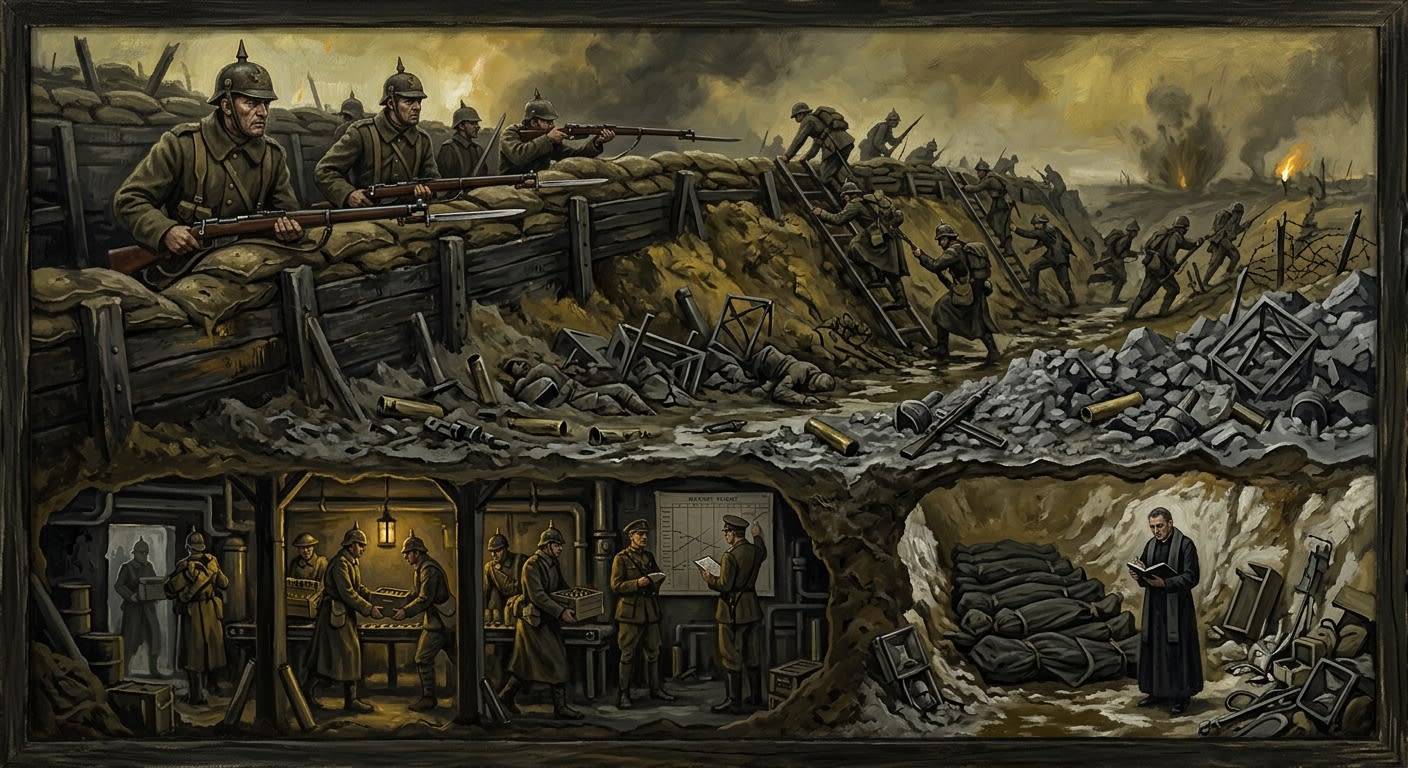
Doctrine of Layered Death
If all layers fail, make the failure expensive
War's breach-holding doctrine arranges panic into five useful layers: wall, charge, ash, rhythm, and the final dividend by which failure becomes legible.
Codex Ref. XIII.1.64-001
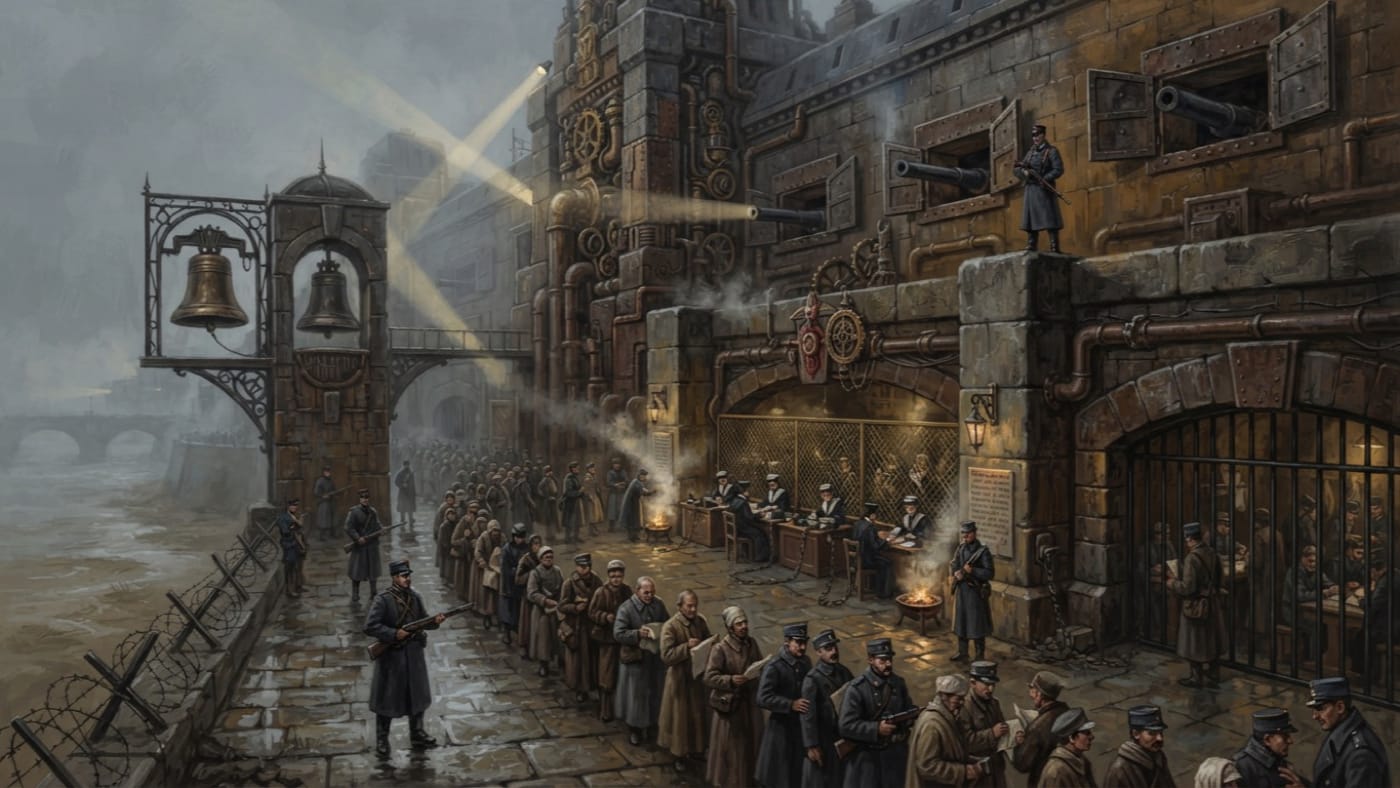
East Gate
Where a stamp admits the traveller and the bell abandons him
East Gate receives Bastion-Brest's convoys, pilgrims and prisoners through wet papers, chained dies and holding pens. Krail holds the argument, Ruis the clock, and Vonn the bell.
Codex Ref. III.2.04-945
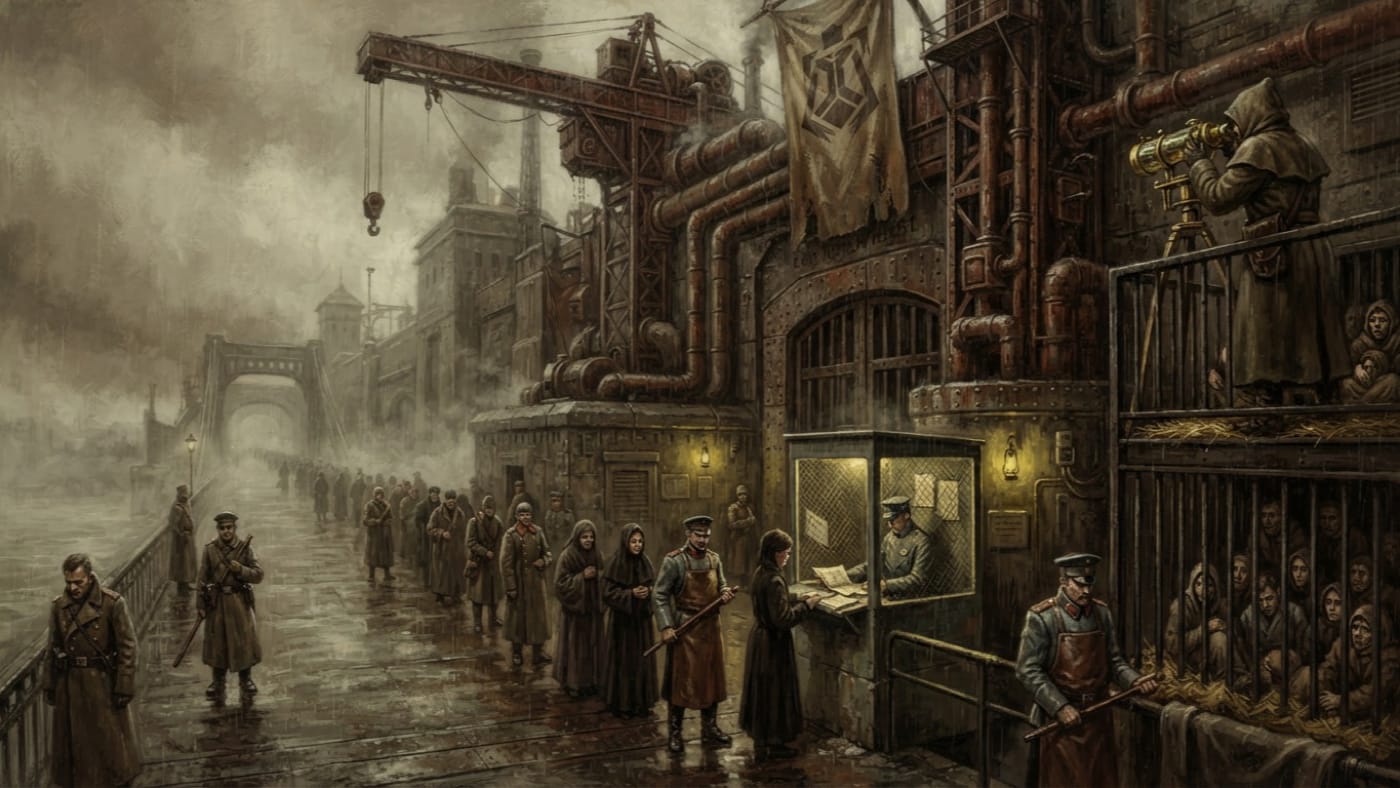
East Gatehouse (Brest)
Where a small mark decides who may move
Brest's eastern intake, where wet papers meet vinegar, confession receipts meet chained dies, and Hett Ruis's transit mark decides who may cross the Bug and who waits in the holding pens.
Codex Ref. II.4.07-003
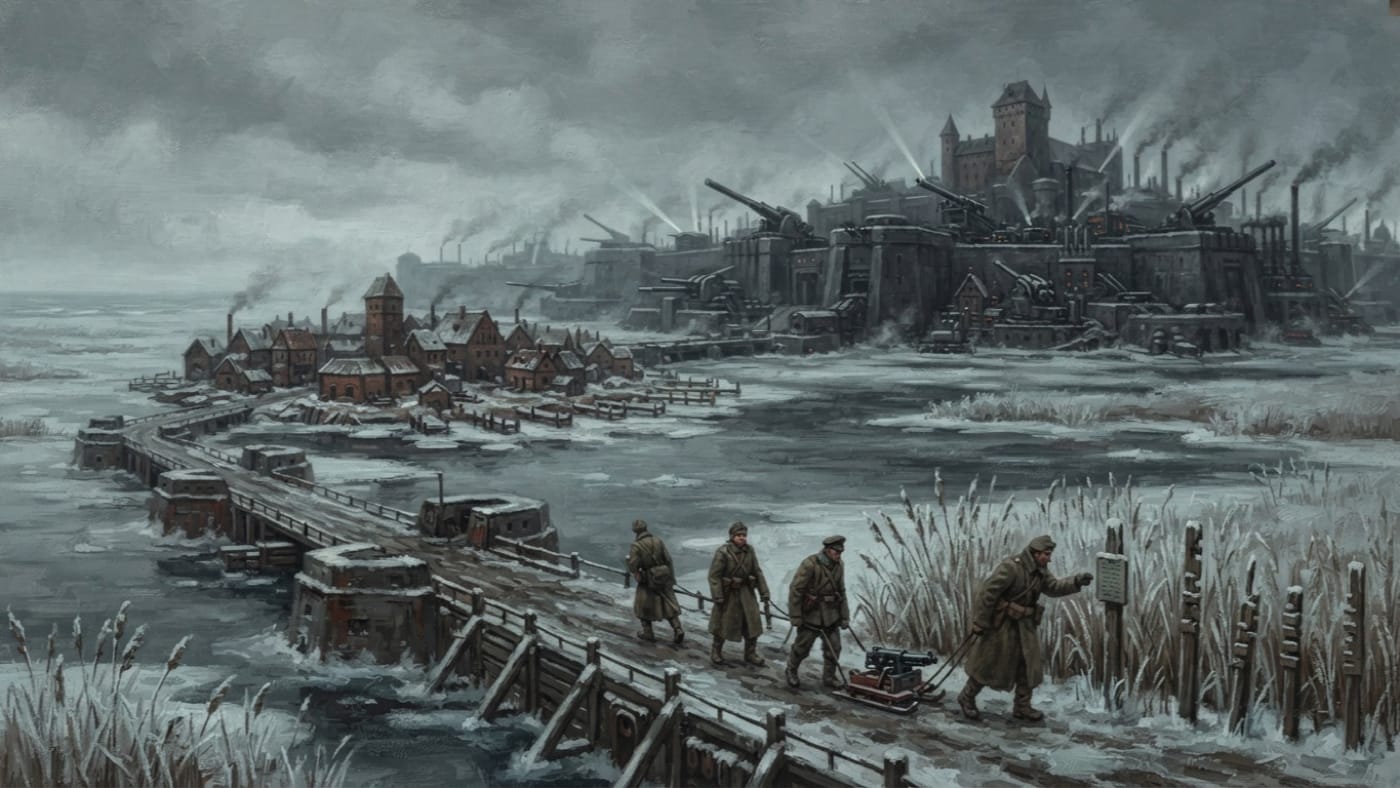
East Prussia
Where the Line Runs Out of Land and the Survey Runs Out of Courage
East Prussia holds the Baltic end of the Sagittal Line: Königsberg, the Masurian maze, and the villages that feed the walls. The Bureau can count its stamps. It has yet to count the region.
Codex Ref. II.4.07-002
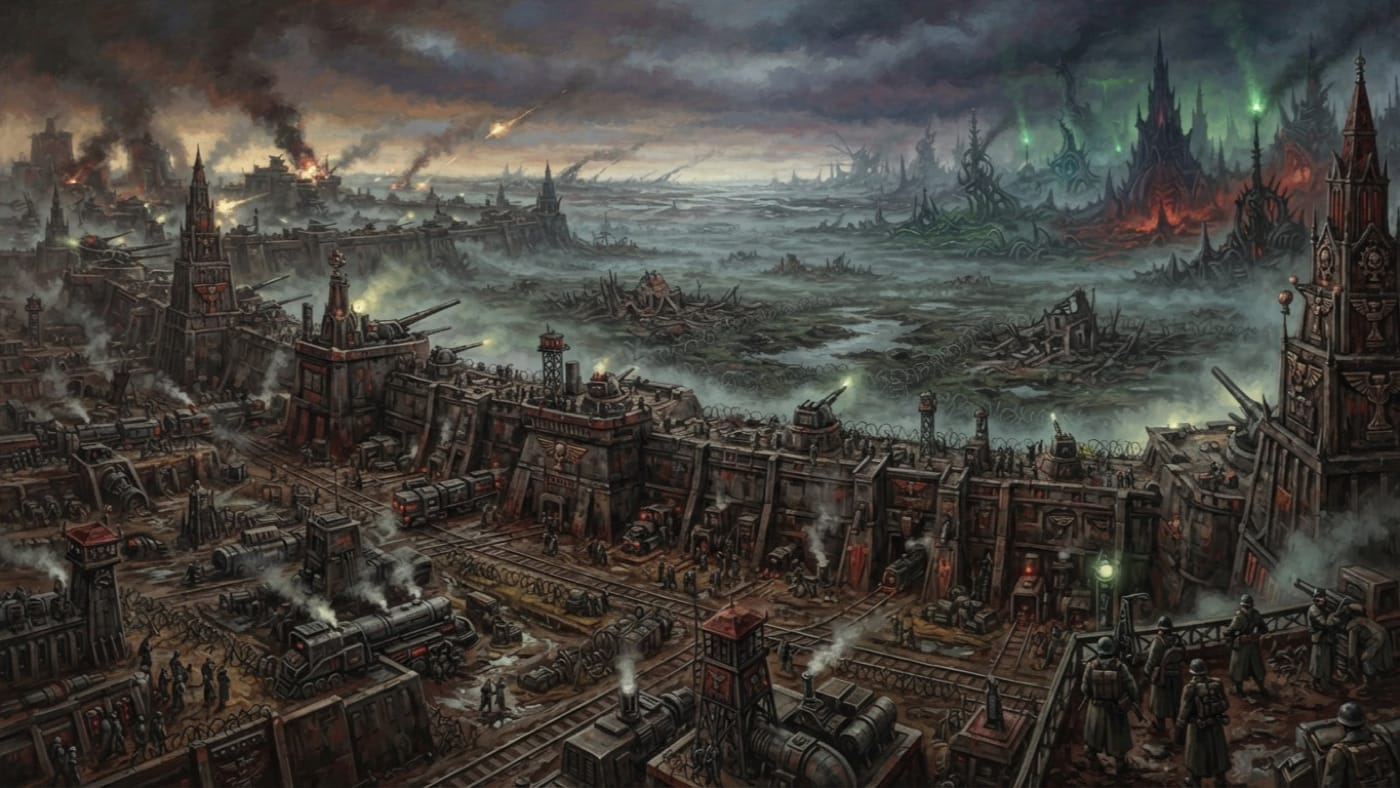
Eastern Theatre
A province has a governor to blame. The Eastern Theatre has an inbox.
The eastern war's unchartered heading: the Sagittal Line, contested strip, fallen lands and supporting rear. Drax surveys the front in A.S. 201; the reports have desks, but the Theatre has no commander.
Codex Ref. II.4.13-201
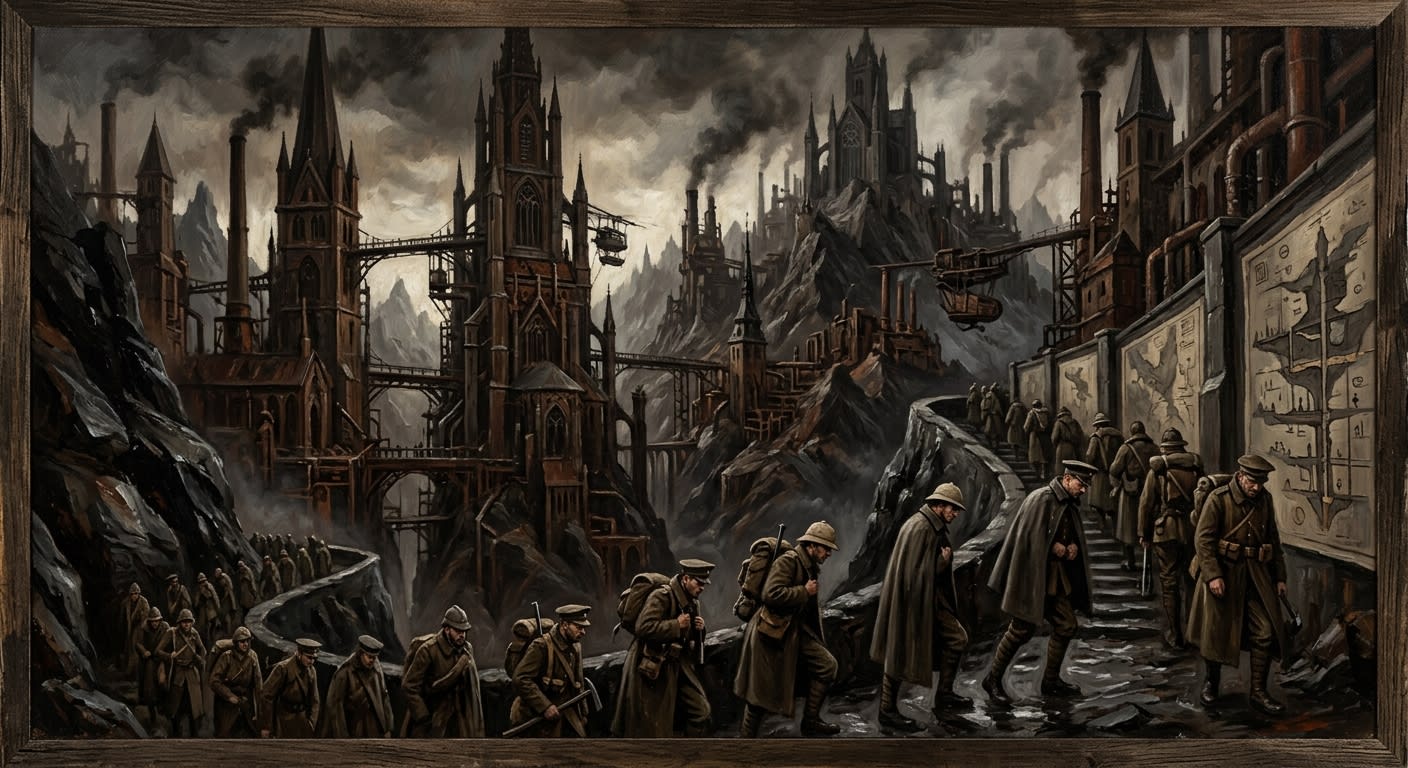
Ebon Heights
Where Pride built mountains tall enough to injure the watcher
The Ebon Heights are Atheron's black Carpathian dominion east of Bastion-Przemyśl, where spires grow upward, soldiers learn shame, and maps fail vertically.
Codex Ref. II.4.03-046
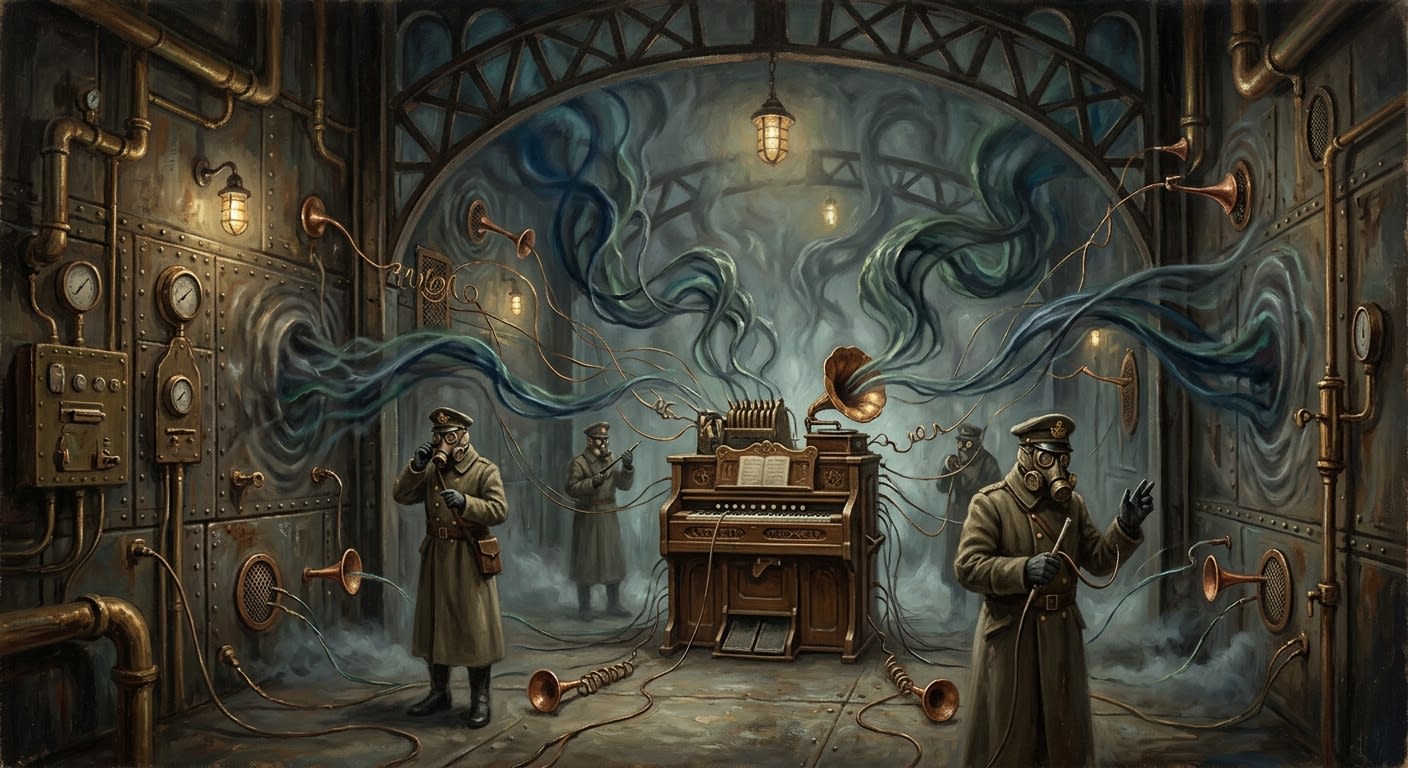
Echo Weather
The room replies, and the wise do not harmonise
Echo weather is the Brand-Singer name for chamber response: the room returning cadence with manners of its own.
Codex Ref. XIII.1.41-004
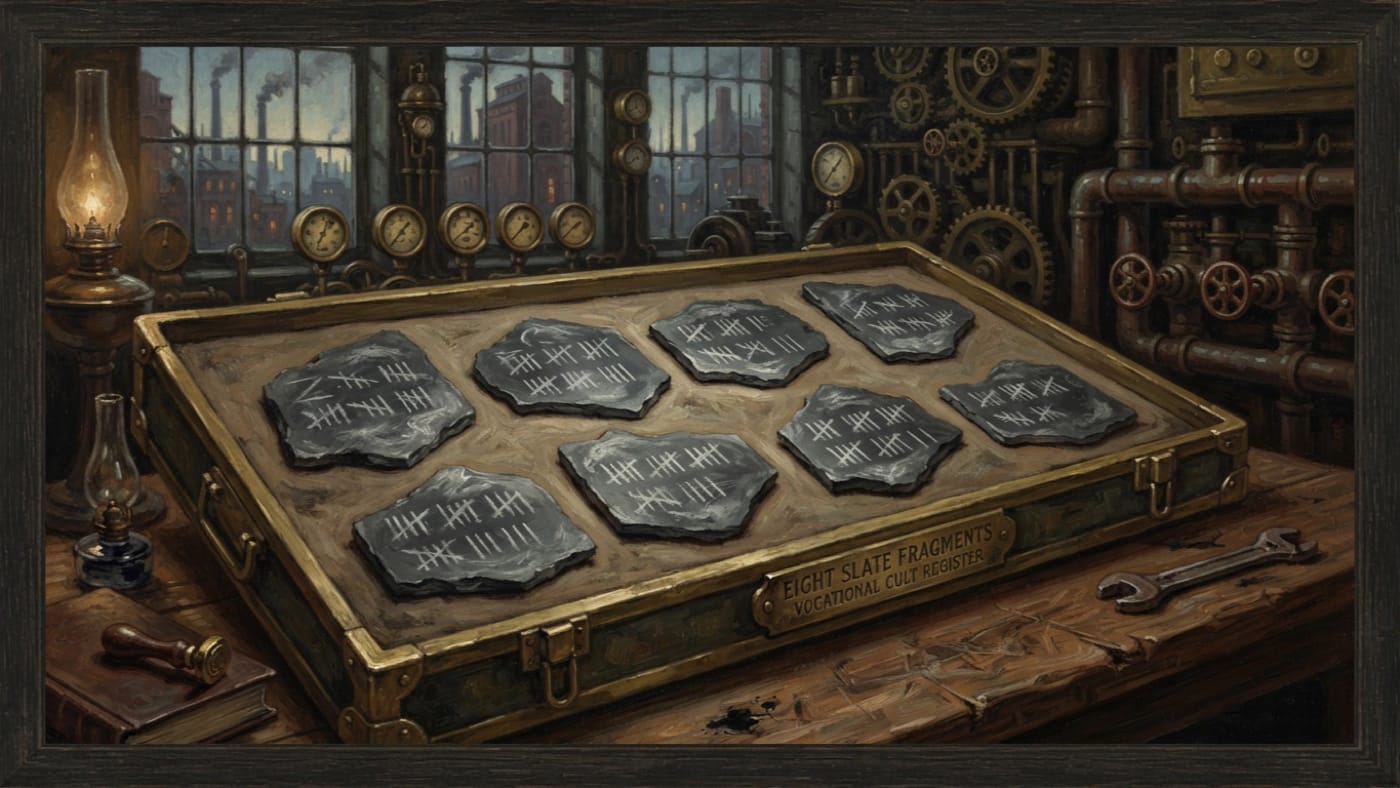
Eight Slate Fragments
Eight pieces, one procedure, and no proven hand
Eight slate fragments supposedly carry apprentice copies of Edrin's Strokes in soot. The cult names them; the record supplies no writer, recovery date, keeper, or proven link to Kalnik Road.
Codex Ref. III.2.04-972
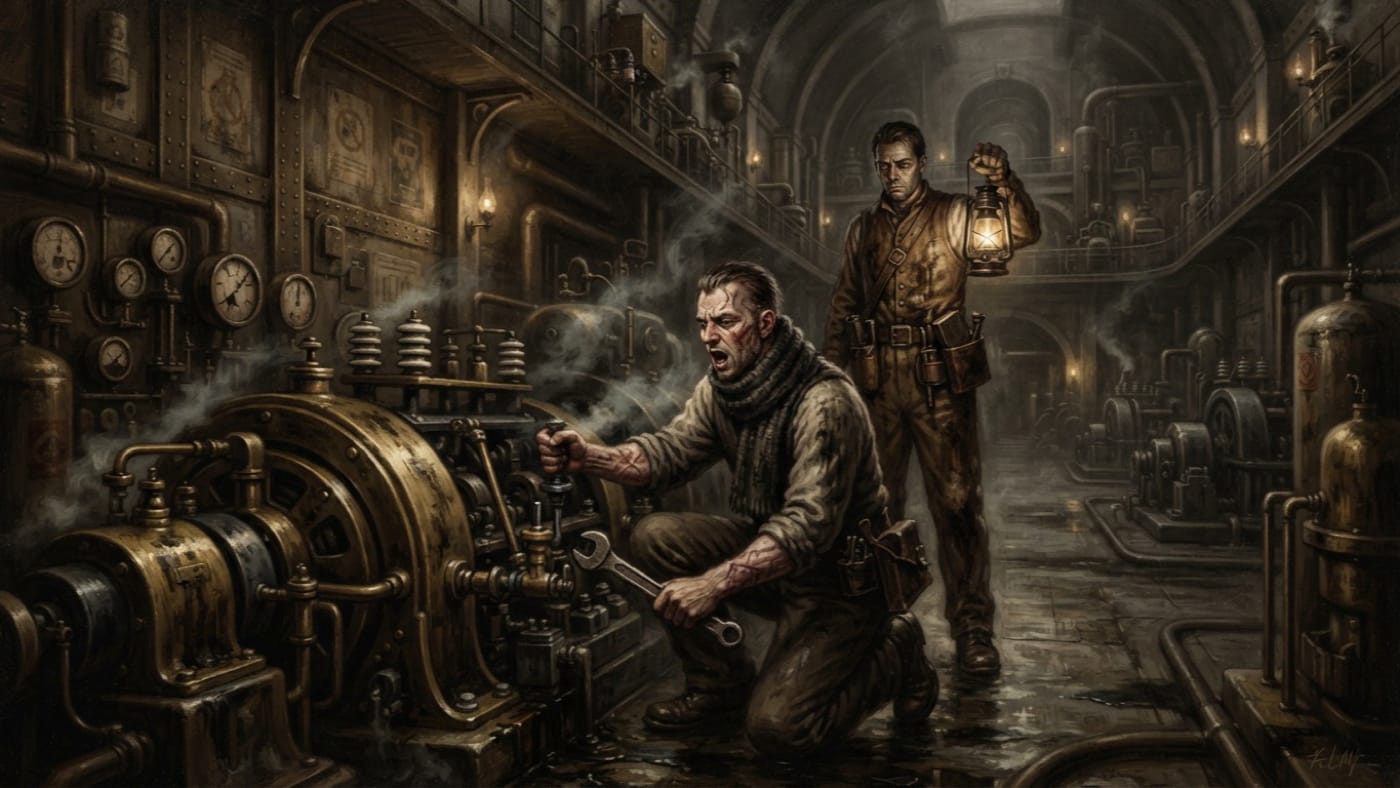
Eight Strokes
Count the breath; keep the witness; earn the rotation
A.S. 201 survey of the Eight Strokes: eight sung ignition beats, compulsory for emergency restarts, with a witness and two working hands. The recensions still disagree.
Codex Ref. XIII.1.08-001
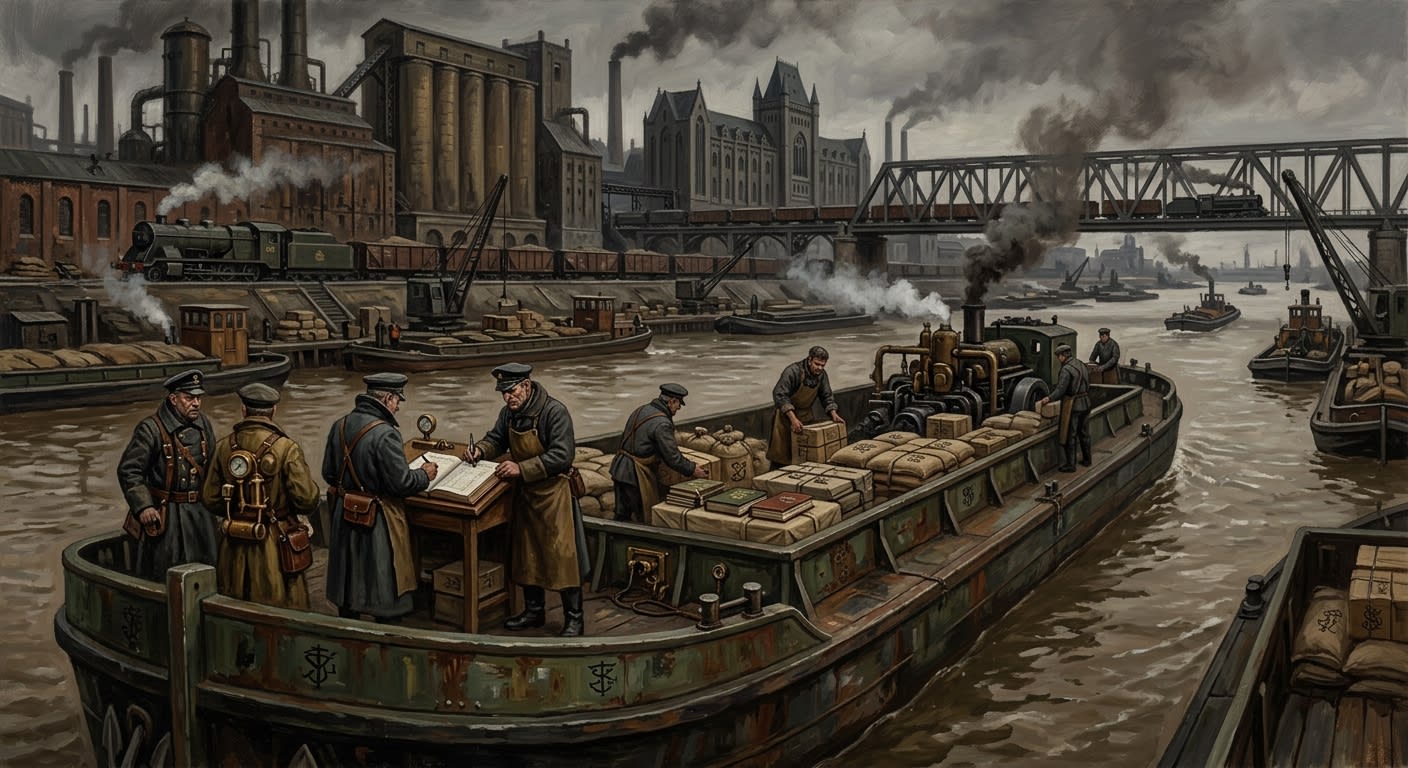
Elbe
The northern river that makes hunger, coal, and failure countable
The Elbe is the northern Synod's wet ledger: barge route, rail supplement, mud-law court, and the river that decides how long the north eats.
Codex Ref. II.4.09-201
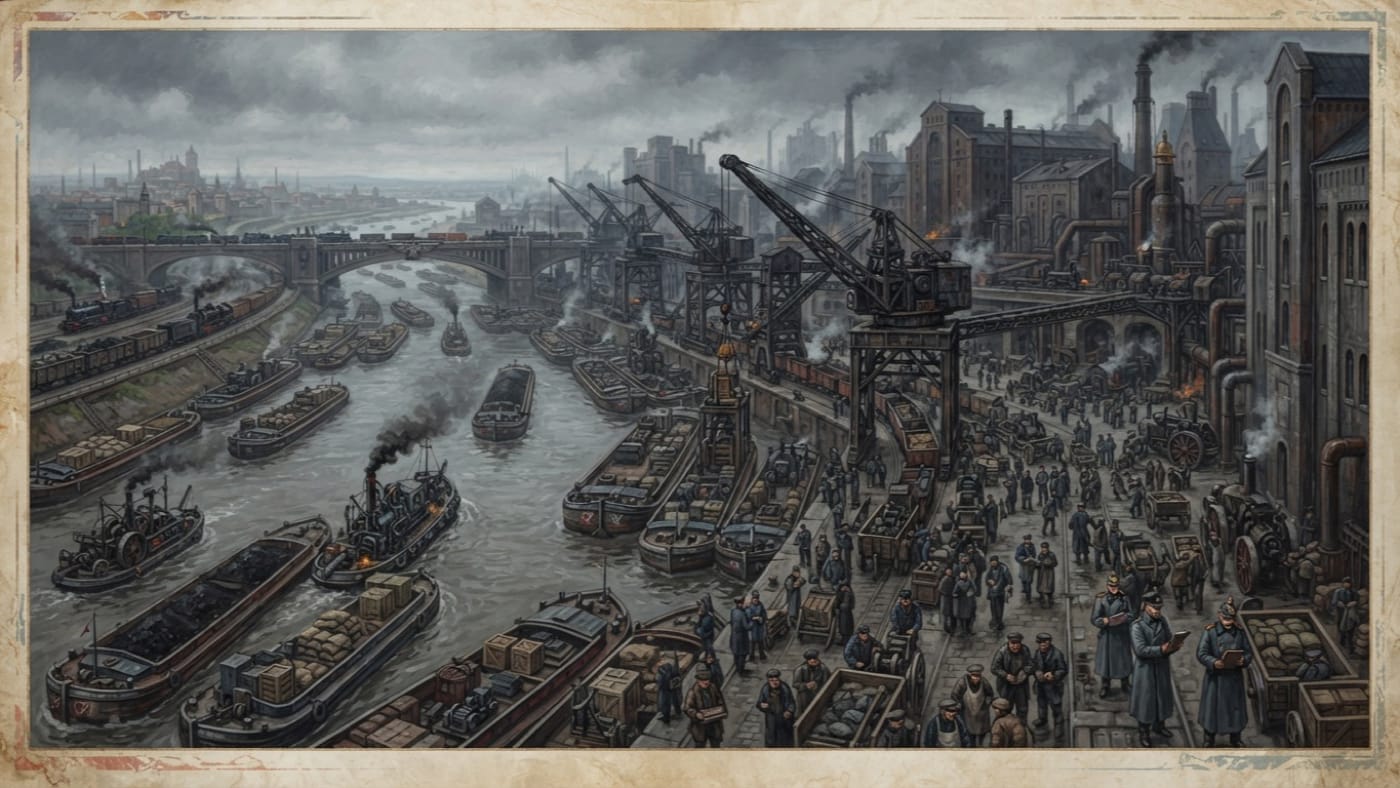
Elbe Barge Network
The river gives the northern front another path and no second mouth
Hamburg's waterborne supply route carries bulk freight to Magdeburg and Dresden for transfer to rail. It stocks winter reserves and relieves the northern corridor when the railway falters; both routes still depend on the same mouth.
Codex Ref. II.3.05-008
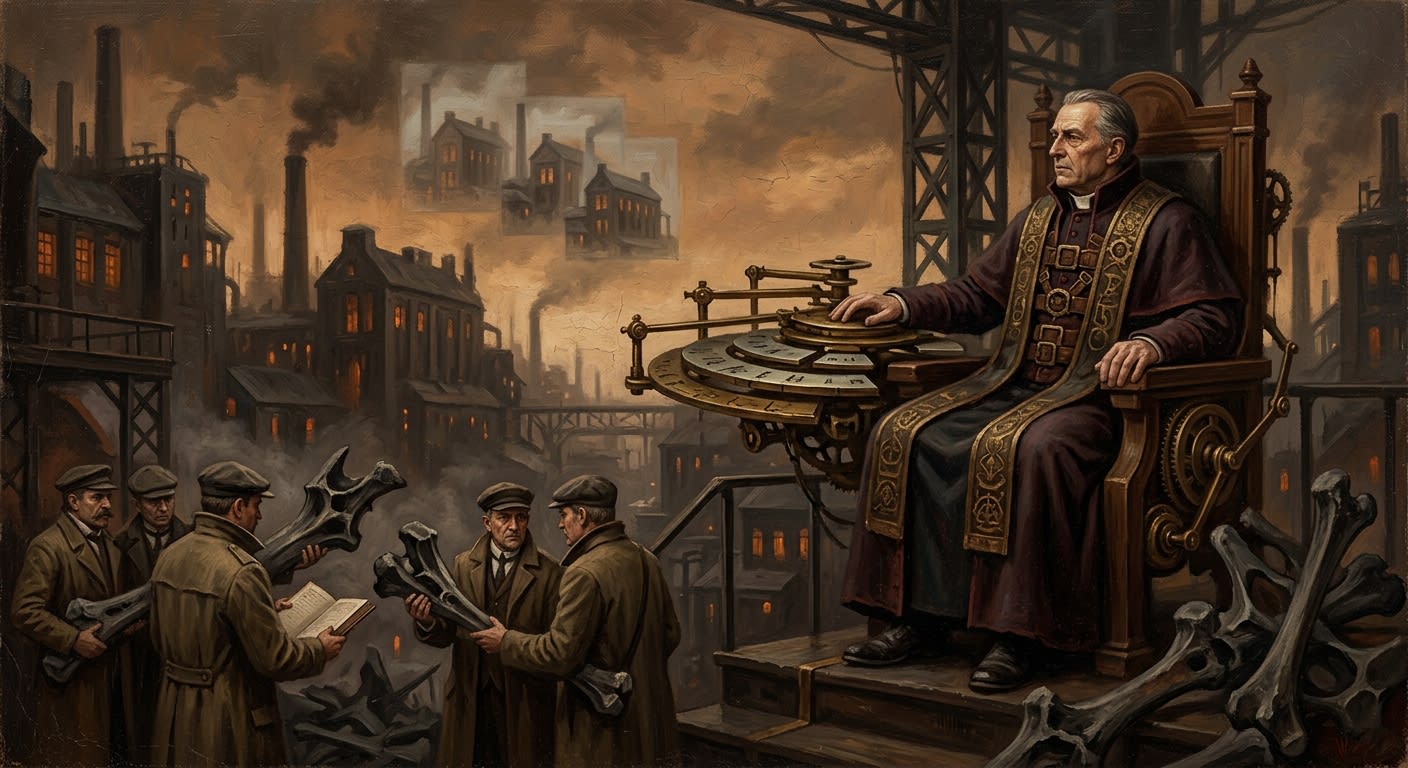
Elder Noxa
She taught the contradiction manners
Elder Noxa, sealed former registry scribe and practical founder of Femur-War brokerage, settled the Triplicate Femur Incident by separating impossible relic truths across time.
Codex Ref. III.2.01-114
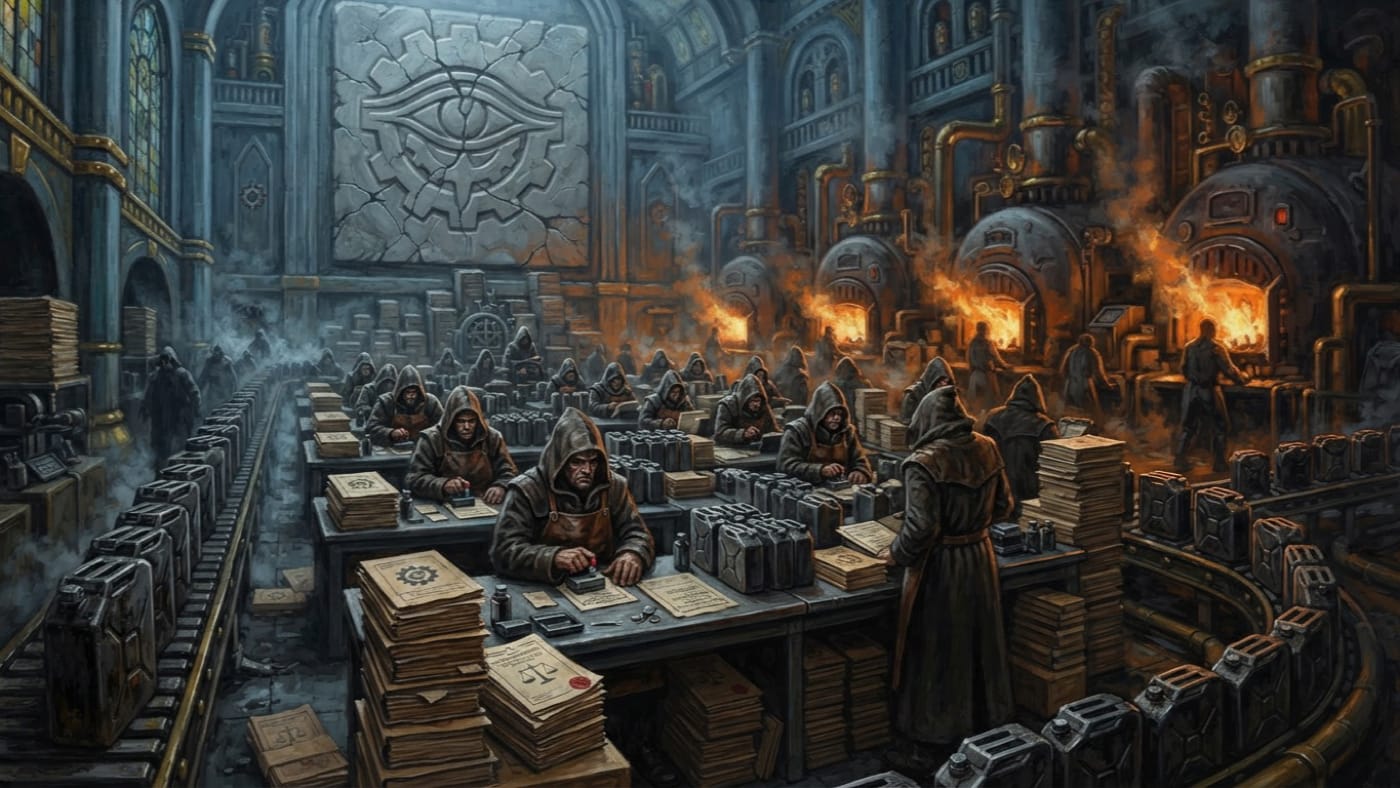
Enforcement Digest
The canisters are counted; the pipes remain unfound
The Bureau of Purity's Enforcement Digest counts seized black diesel, corrects eradication into reduction, and preserves a return the Bureau of Tithes' projections contradict. The figures are sealed; the furnaces remain lit.
Codex Ref. XIII.1.97-198
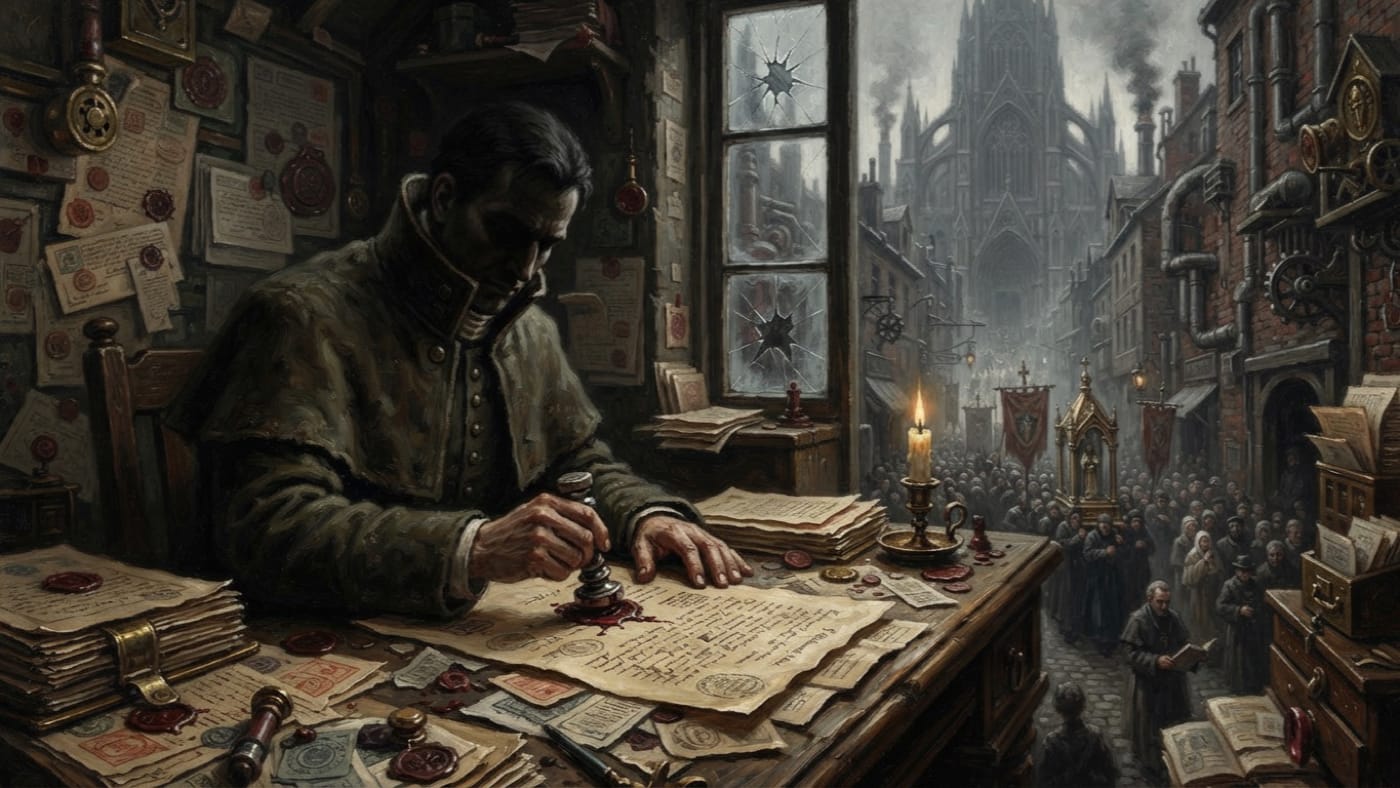
Equivalence Letter
The bone stays; the permission to kneel travels
The Equivalence Letter lets a shrine honour another jurisdiction's relic authentication without moving the bone. The seal travels; custody and identity stay where they were.
Codex Ref. XII.15.06-201

Erasure Notary
The scaffold produces martyrs; the Office of Nullity produces only silence — and nine hundred Black-Stamps to stamp it.
Nine hundred Black-Stamps who unmake persons through ink and wax — no body, no grave, and no widow to scratch the martyr's name on cellar walls.
Codex Ref. XII.14.01-001
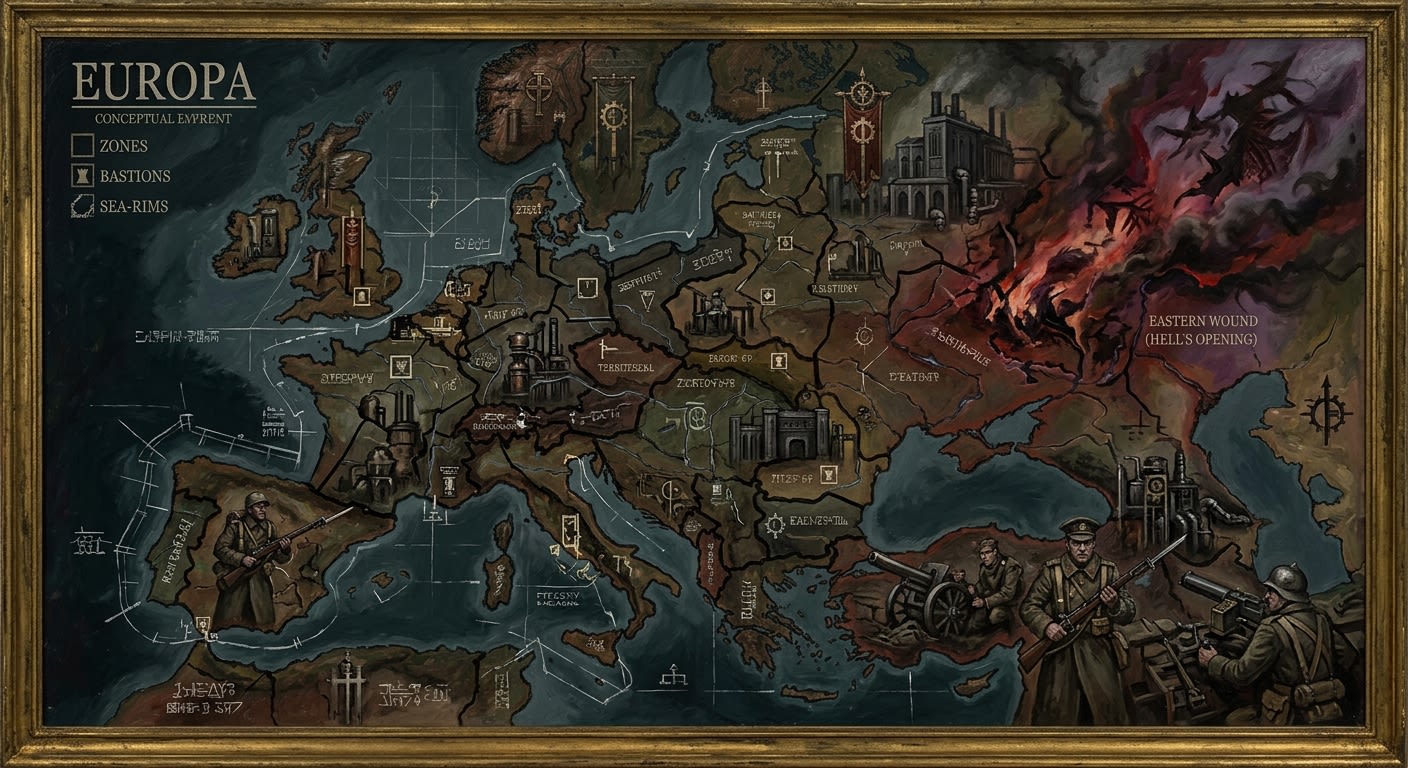
Europa
The continent as filed, wounded, taxed, and made obedient enough
Europa is not whole; it is the continent filed into zones, bastions, sea-rims, independent nuisances, and the eastern wound Hell keeps open.
Codex Ref. II.0.00-201

Europe
The wounded continent, held together by rails, bells, hunger, and denial
Europe is the wounded continent: Synod west, Charnel east, Line between, and every road, harbour, cradle, ration card, bell, and grave bent toward survival.
Codex Ref. II.0.01-201
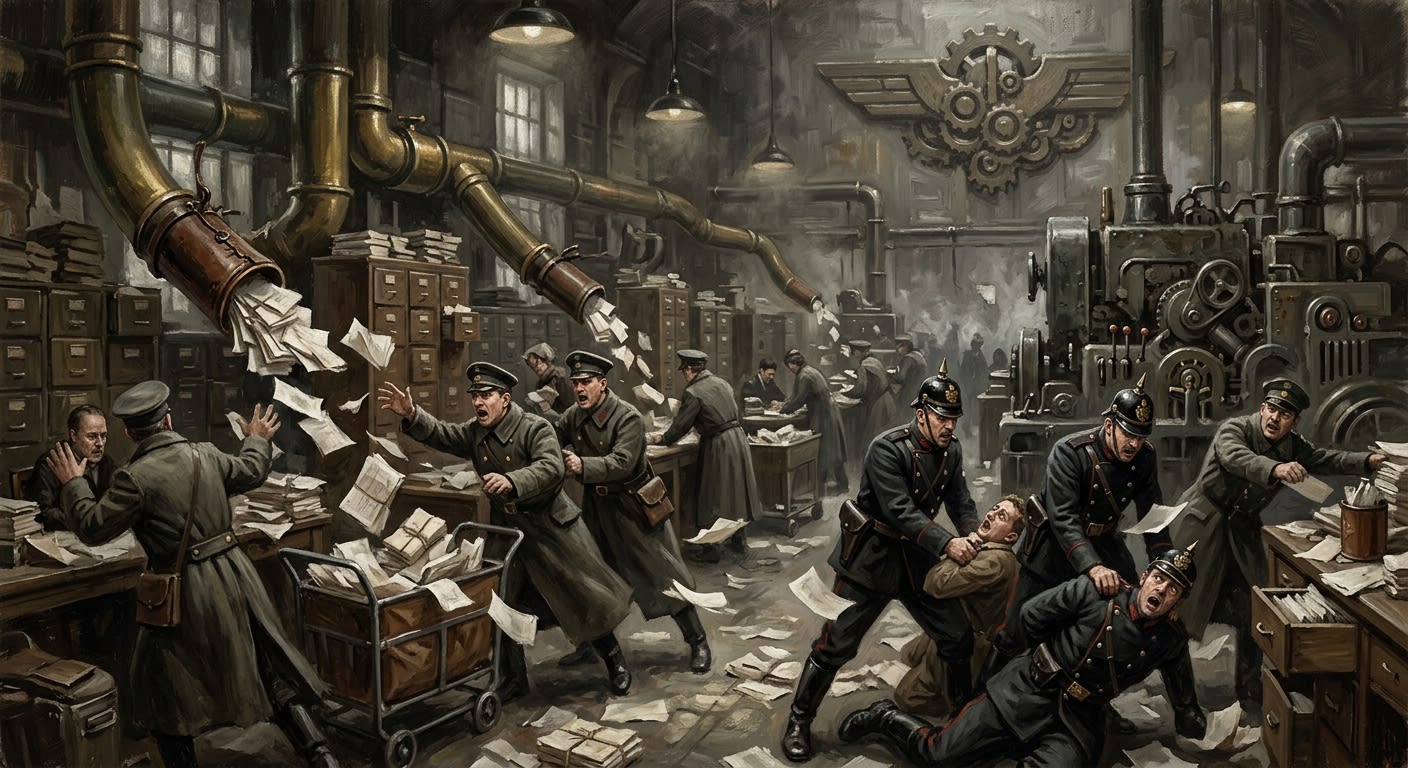
False Packet Panic
When forged wax taught four hundred citizens the speed of obedience
The A.S. 134 False Packet Panic sent forged blacklist bundles through three Rhineland cities, making false paper produce true arrests, riots, and reforms.
Codex Ref. VII.8.10-042
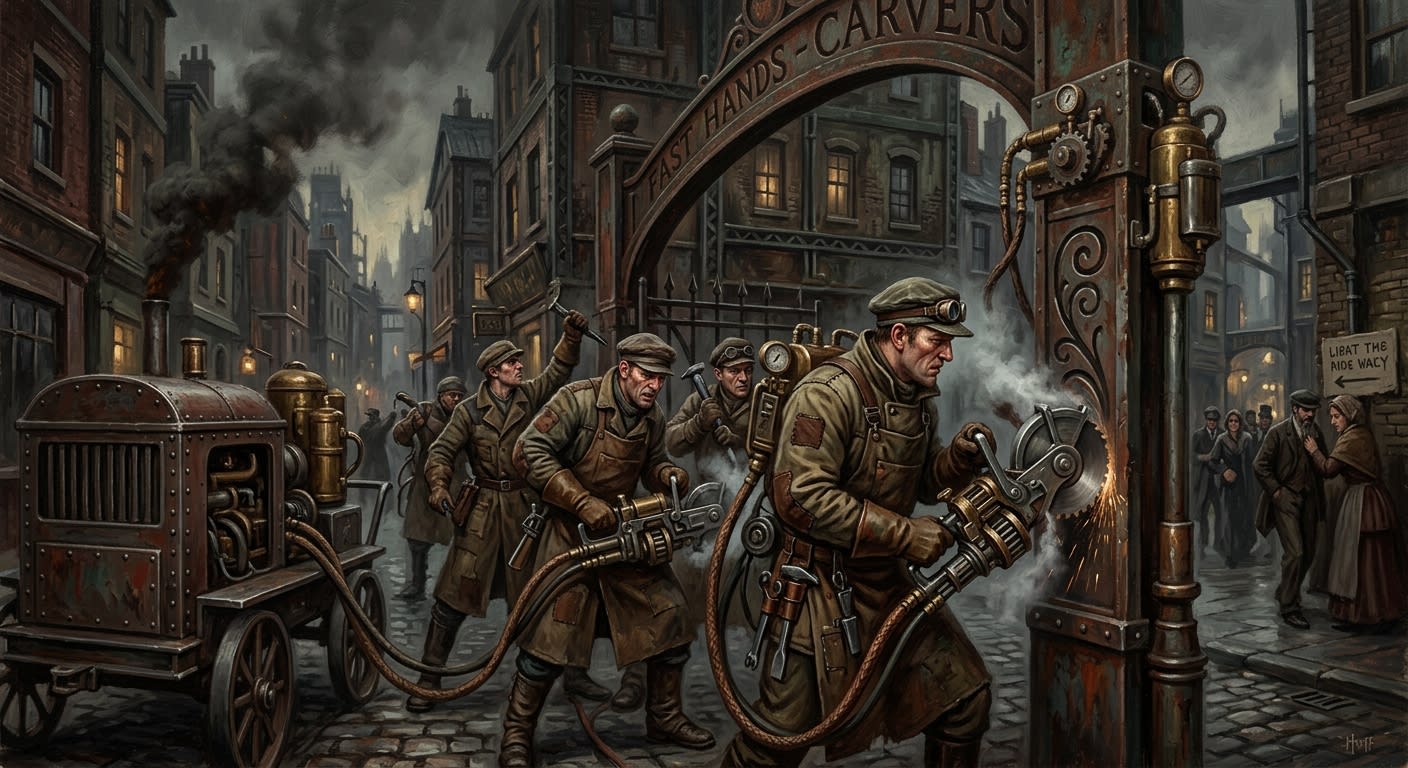
Fast Hands, Gate-Carvers
The marked door before dusk is the state admitting it was late
Fast Hands are the accelerated-compliance faction within the Gate-Carver trade, cutting thresholds quickly enough to legalise streets before hunger, riot, or Purity arrives.
Codex Ref. XII.19.02-002
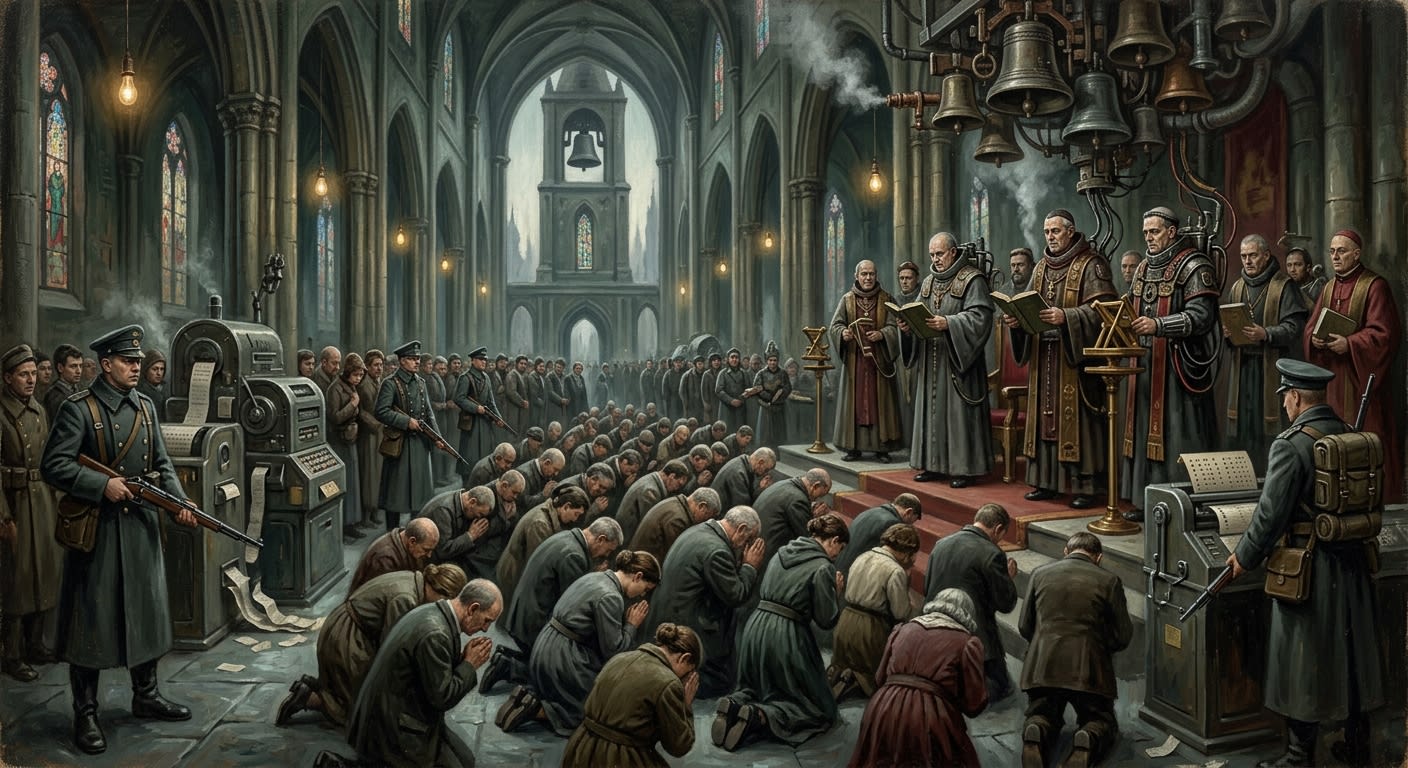
Feast of Doctrinal Submission
The holiday that teaches the spine to kneel before the mouth calls it faith
The Feast of Doctrinal Submission is the Synod's mandatory kneeling holiday: census, pageant, ration queue, loyalty assay, and permitted joy under bells.
Codex Ref. XIII.1.89-072
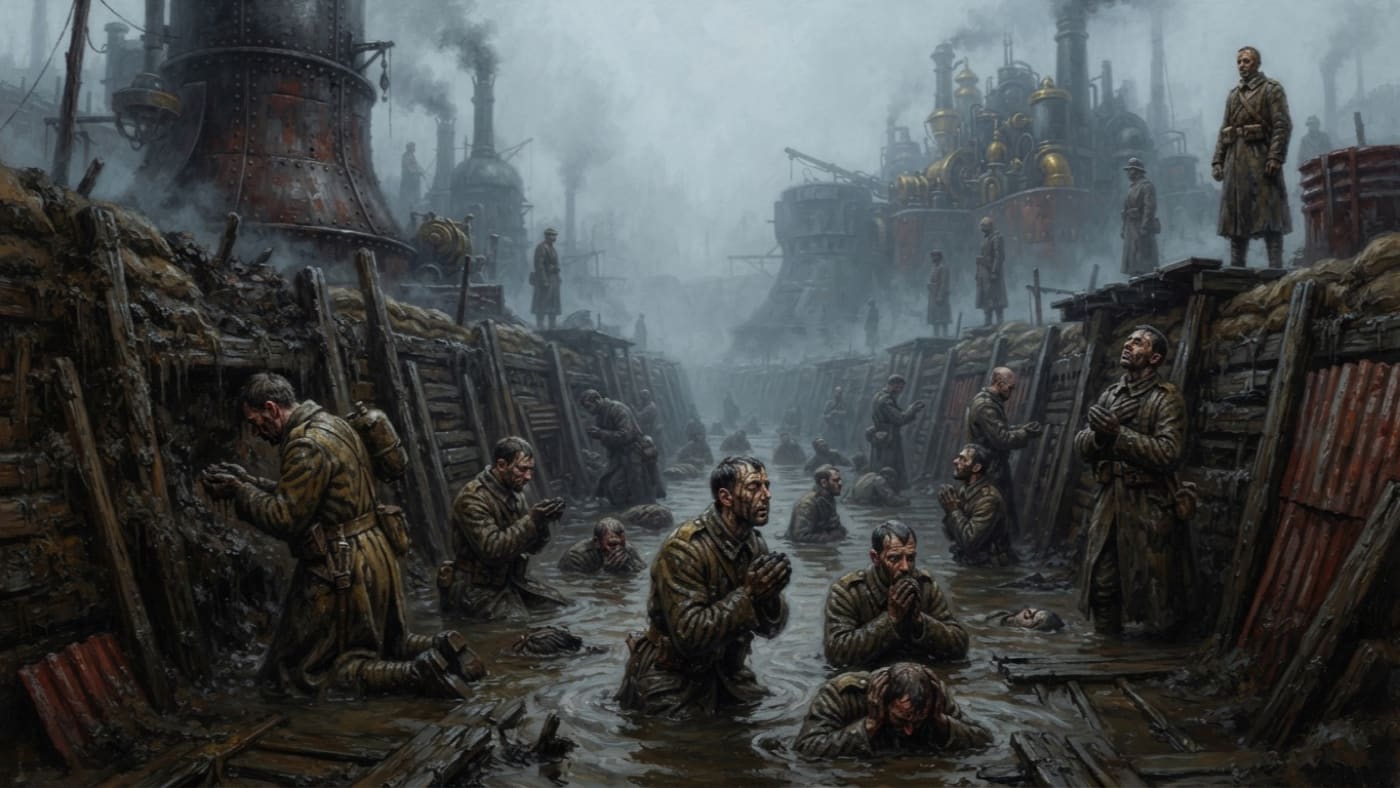
Feast of the Mud
The trench becomes a cathedral when the order arrives
Soldiers coat themselves in trench mud and chant endurance into duty; children rehearse it with clay, and villages buy the residue as saint-soil. Attendance, unlike belief, is required.
Codex Ref. XIII.1.89-1047
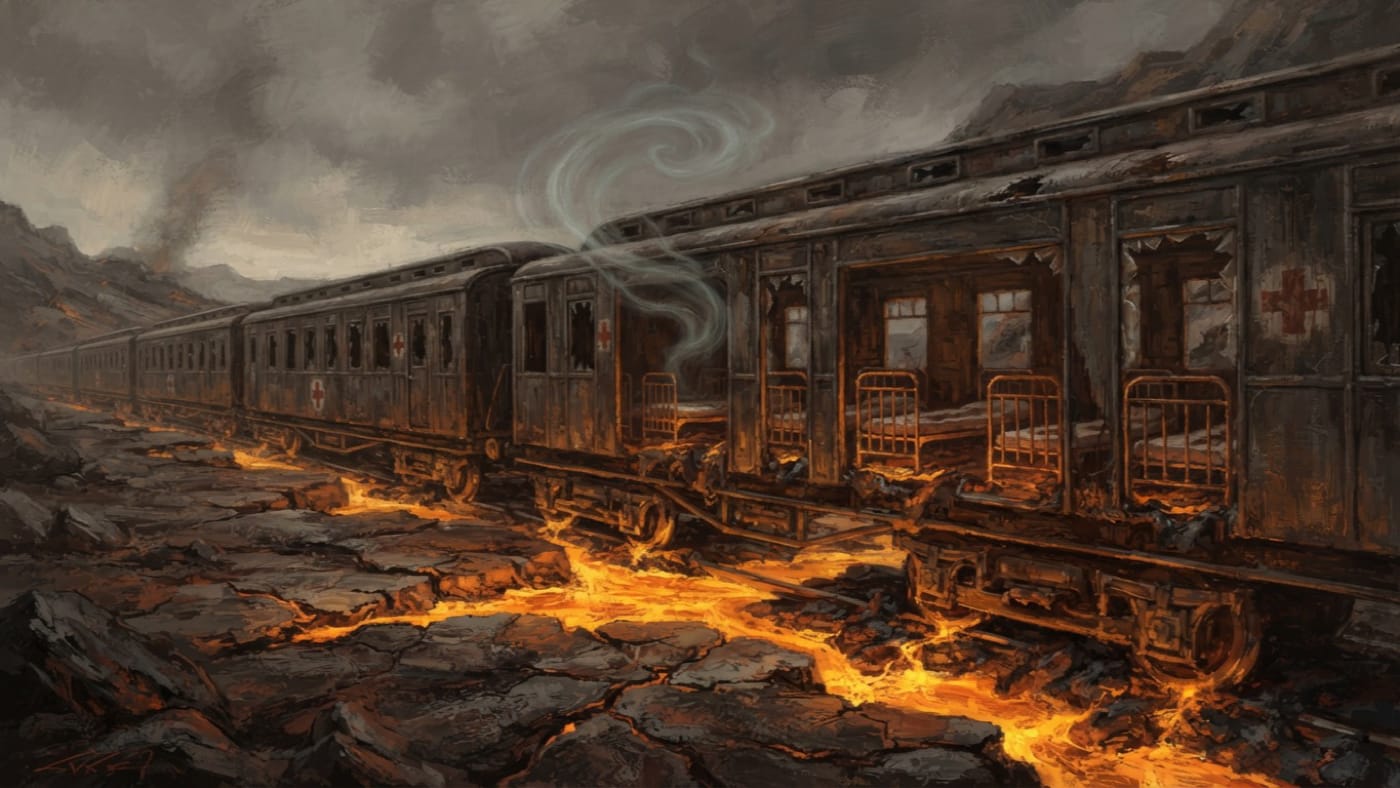
Ferrum-17
The river moved; the beds stayed warm
Ferrum-17 diverted beneath an abandoned hospital train in the Iron Wastes in A.S. 197. The salvage note counts 112 bedframes, warm mattresses and no remains. The river's present course is undocumented.
Codex Ref. VI.1.03-017
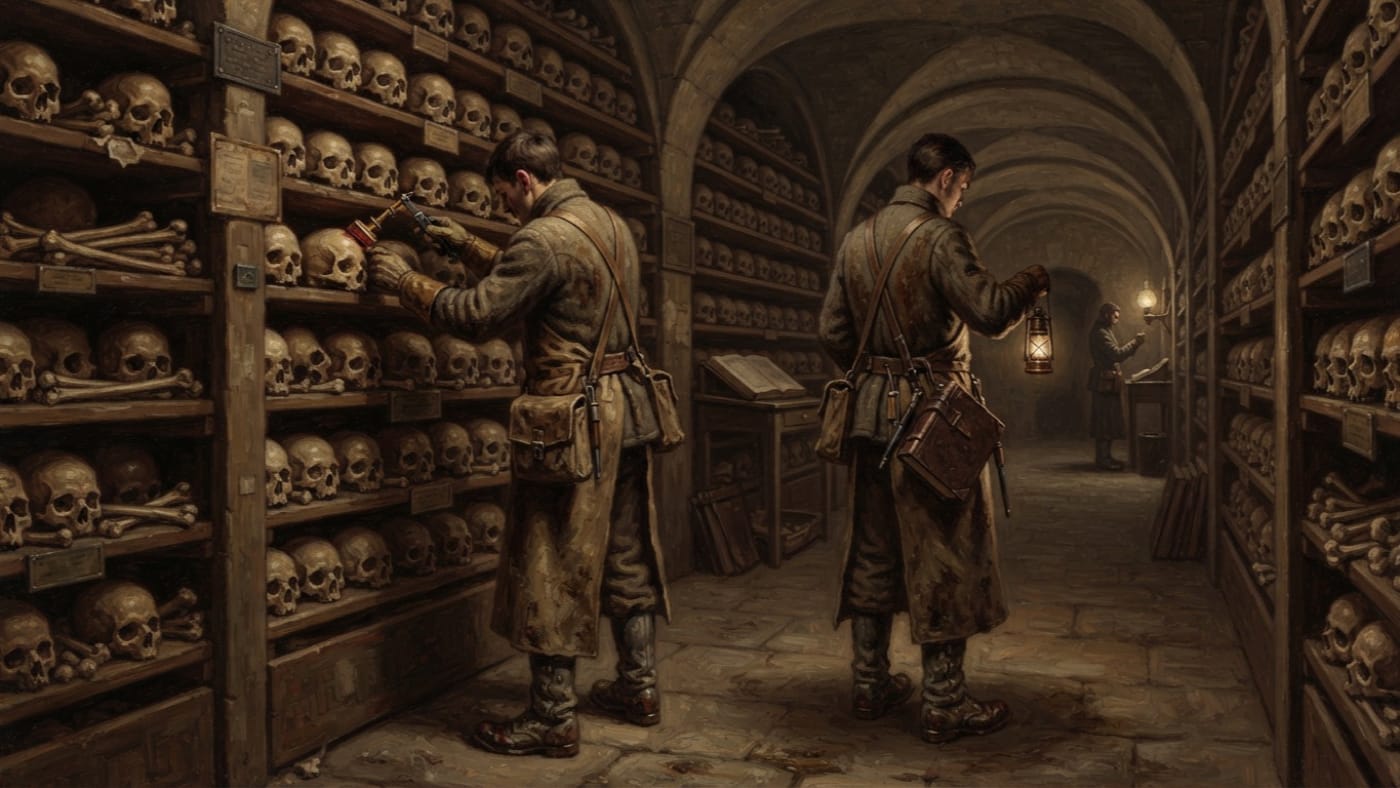
Field Quieters
The ledger records; the corridor decides
An A.S. 201 survey of the Field Quieters, an internal Bone-Stamper tendency whose maxim is that truth is what doesn't spread. They preserve Vellum's forbidden account; the corridor remains their argument against paper authority.
Codex Ref. XII.37.03-001
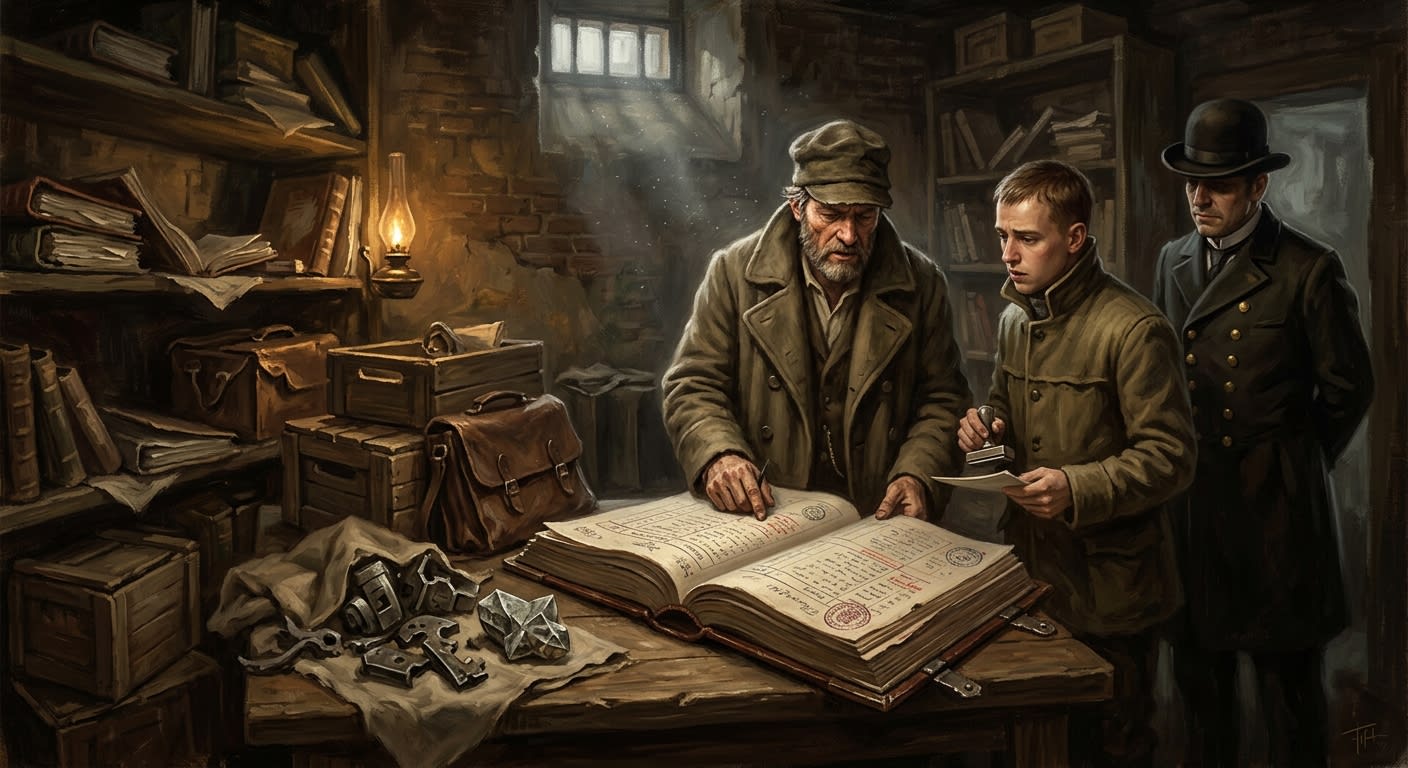
First Quake-Ledger A.S. 105
The rubble was counted, and therefore became guilty
A.S. 105 Records compilation that exposed unreported sacred recoveries from collapse sites and gave the Reliquary Salvager his first licensed leash.
Codex Ref. VII.8.10-092
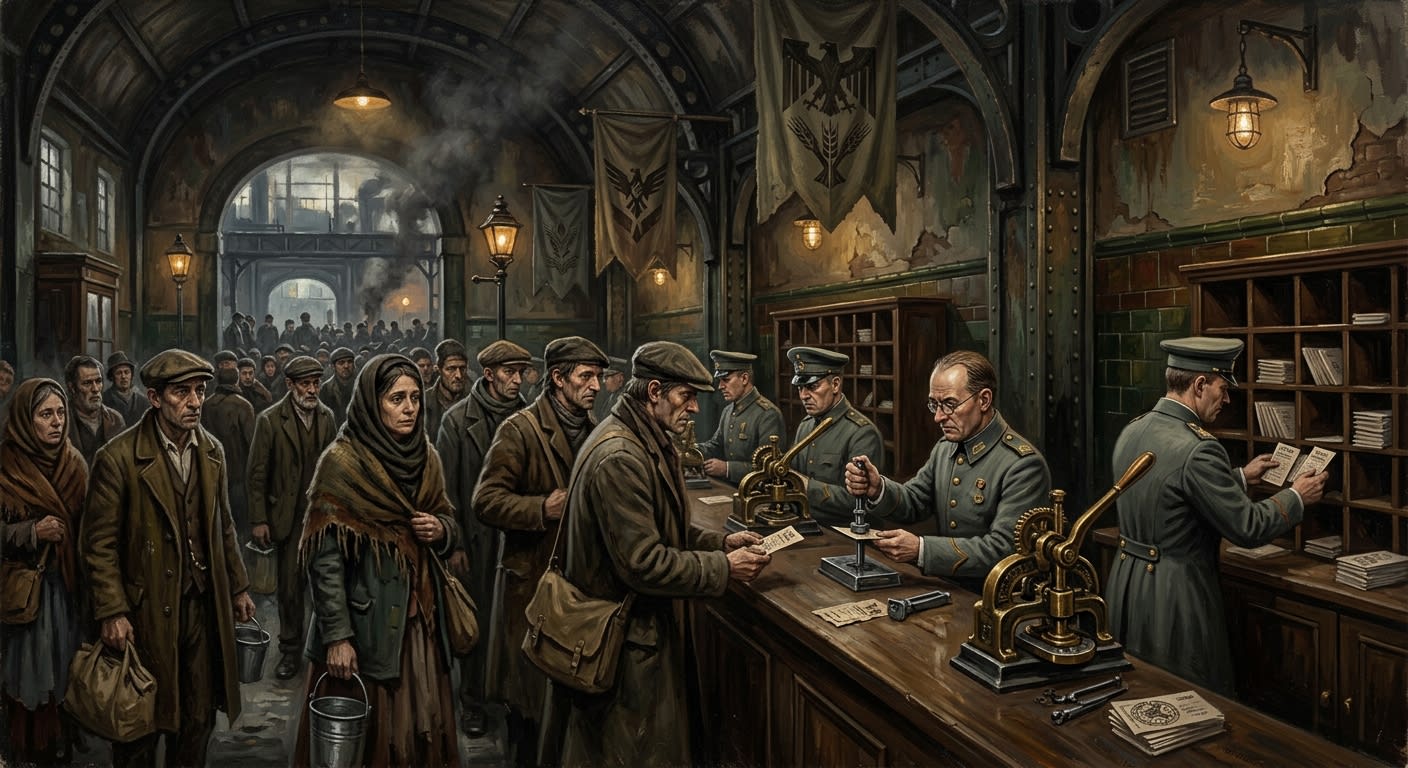
First Ration Reforms
The year hunger became portable, printable, and politely deniable
The A.S. 104 First Ration Reforms standardised ration chits across eight provinces, making hunger legible to Tithes and teachable to Grain Keeper fraud.
Codex Ref. VII.8.10-037
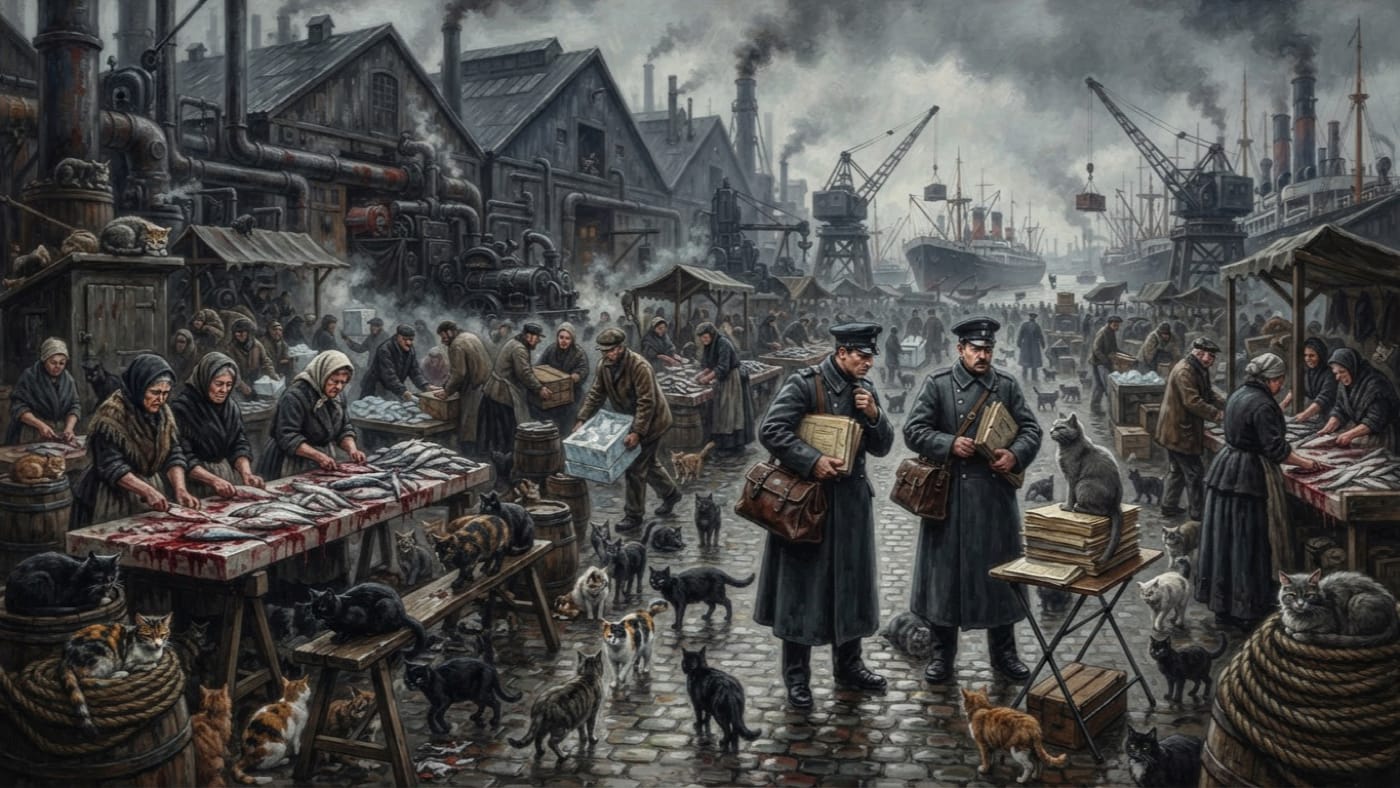
Fishmarket cats
The Ledger can survive one blank line
A.S. 201 survey of Hamburg's Fishmarket cats: ordinary animals, unregistered with Records, estimated by the Hamburg account at forty thousand. A census failed in A.S. 178; their theology remains opaque.
Codex Ref. IV.2.01-001
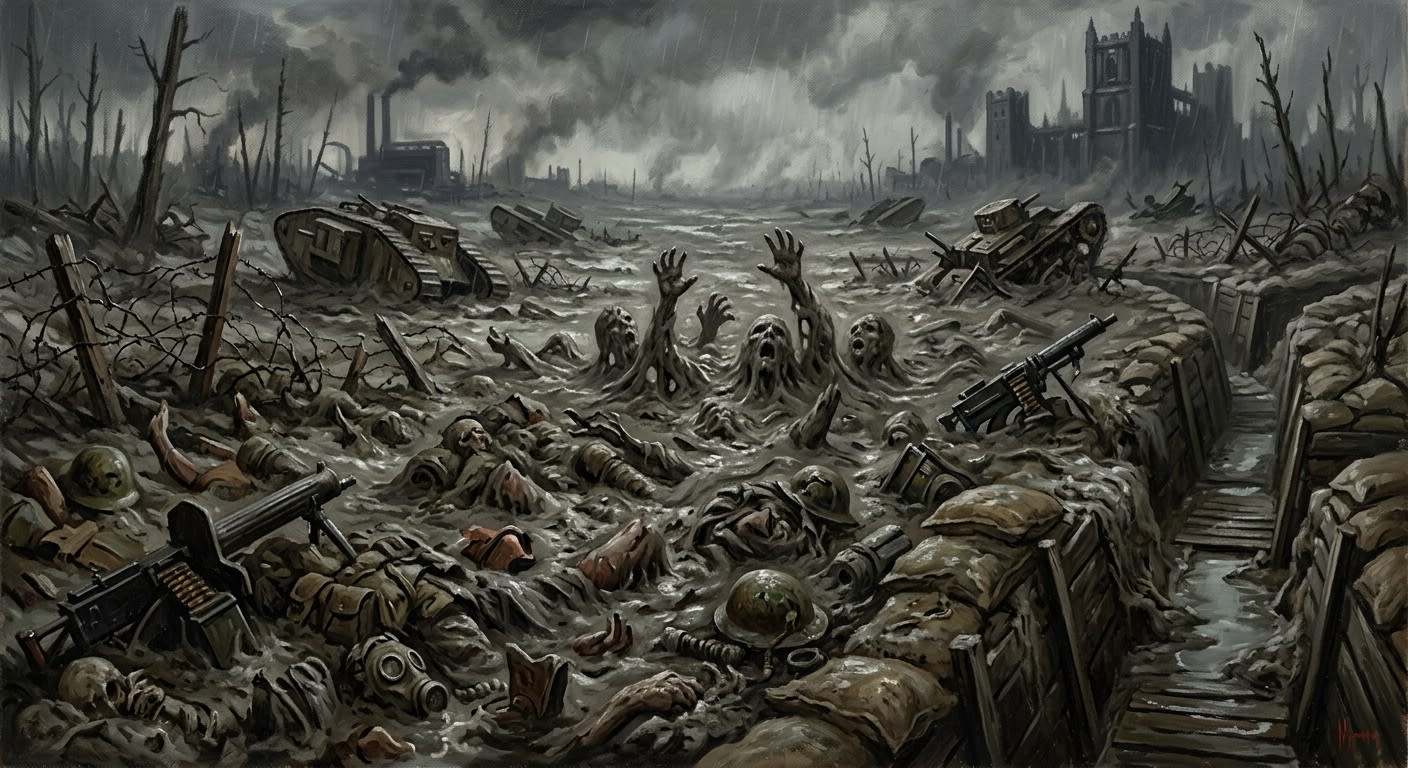
Flesh-Mud
The trench remembers what the grave failed to finish
Flesh-Mud is No Man's Land with appetite: trench mire made from rain, bone, grief, and the administrative failure to bury men separately.
Codex Ref. VI.2.01-004
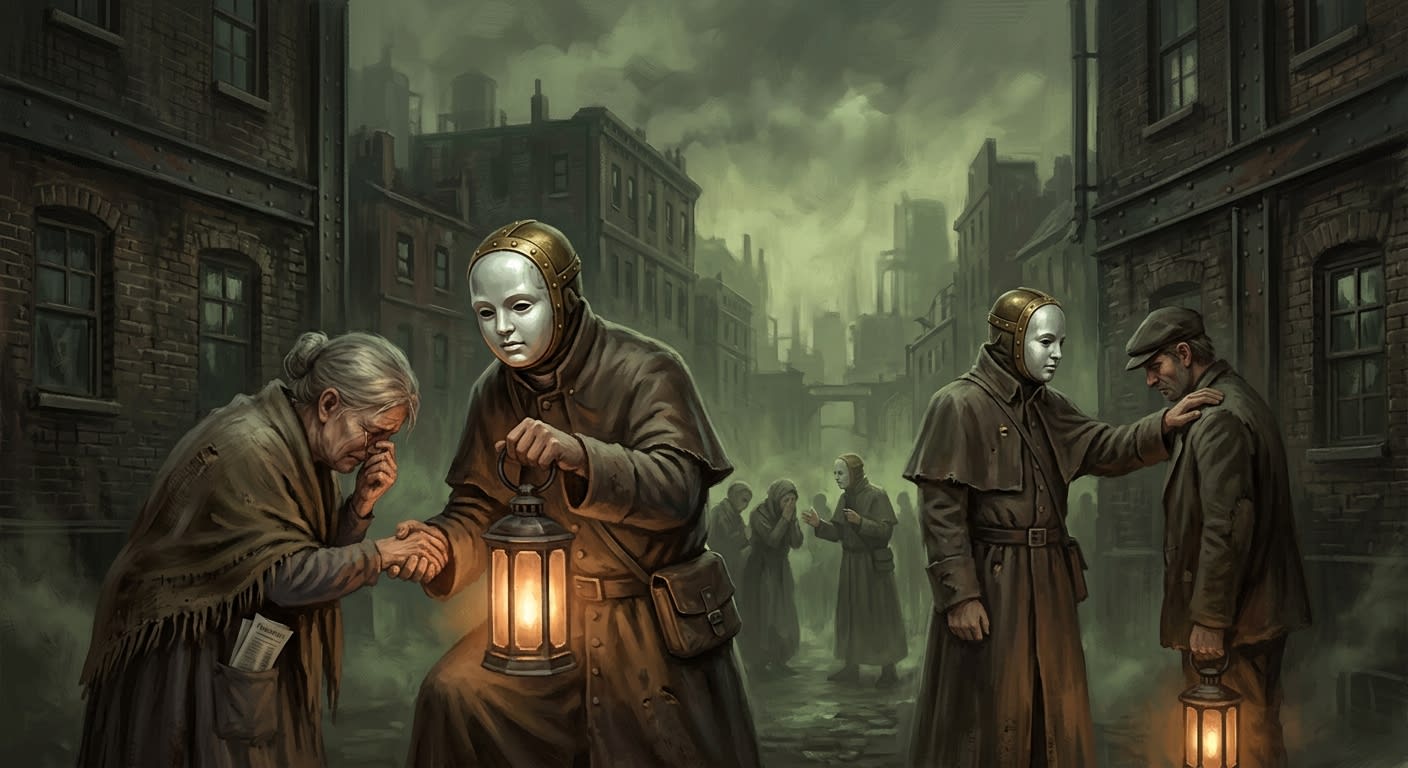
Fog Preachers
The sanctioned lantern is harmless; the unsanctioned throat is not
Street-facing Lantern Mercy operatives who wear the Licensed Consolator mask, calm public grief, and hide instructions inside comfort before Purity can quote them.
Codex Ref. XII.25.08-001

Force-Count
The voice keeps time; the corridor keeps score
The cadence that keeps stamp pressure honest and dead bone where the Ledger put it. Quiet Hands reportedly quiet corridors before the wax touches; Records requires the Count without printing its words.
Codex Ref. XII.37.03-001
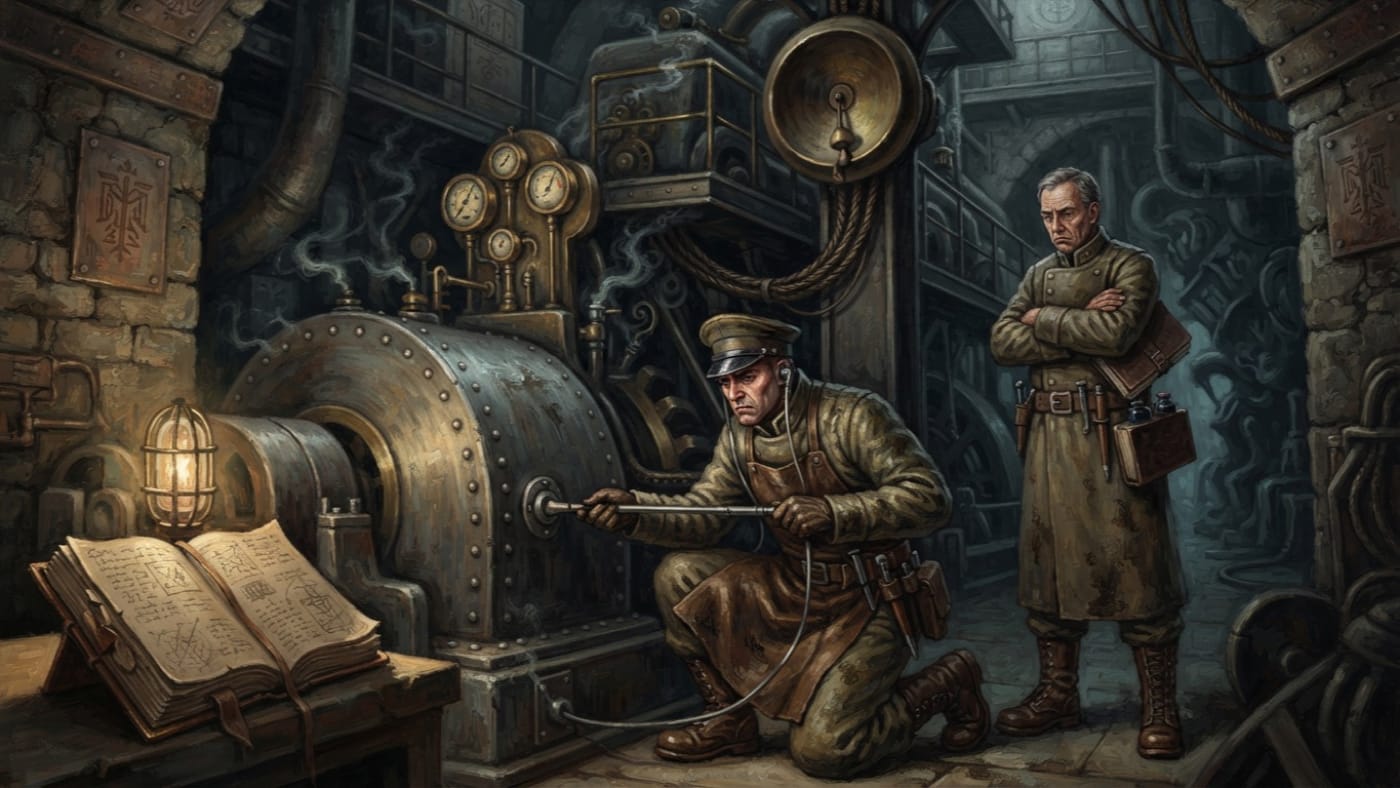
Foreign Harmonics
An engine may have many faults. The cause column permits one.
Engines drift, whisper, and sometimes answer outside the codex. The Litany-Engineer listens; Purity's A.S. 199 advisory permits one cause-column entry: Classification 7-K.
Codex Ref. XIII.1.07-199
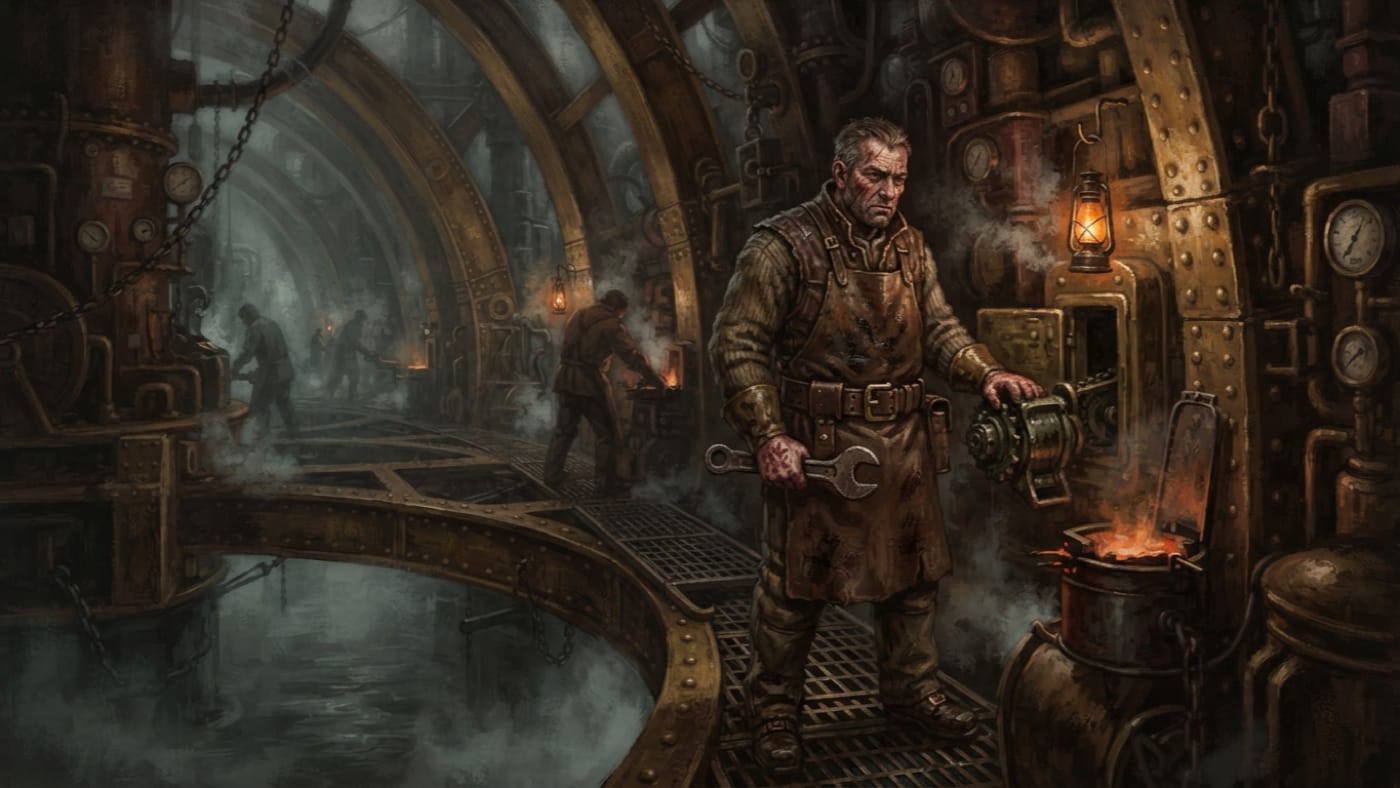
Foreman Jost
Structural Necessity, Unaudited
Foreman of Bastion-Brest's Brasswright Guild, Jost keeps the shutters moving and the span standing. The Bureau calls this structural necessity; it has yet to secure an audit.
Codex Ref. III.2.01-1127
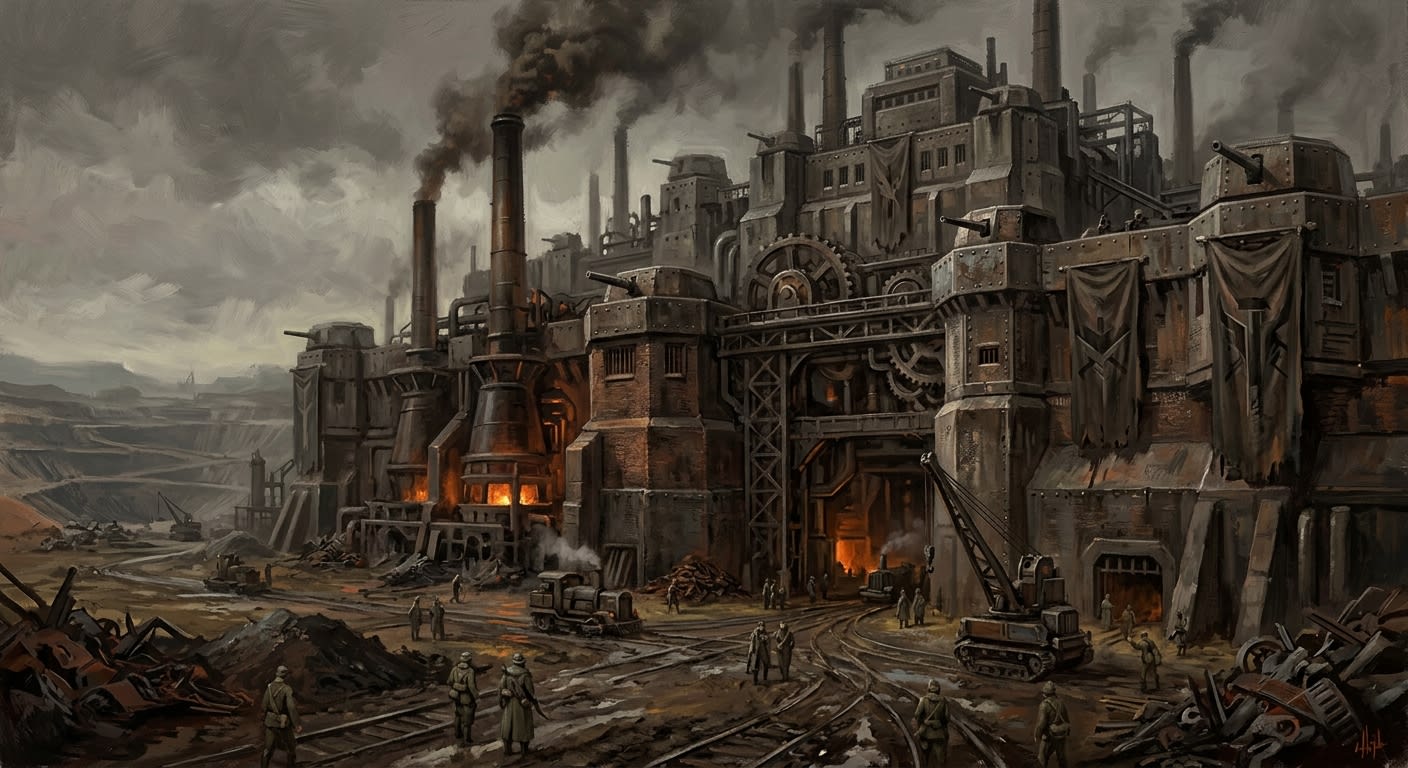
Forge-Pyre Bastion
The citadel that hammers distance into a theological inconvenience
The Forge-Pyre Bastion is Maldrake's unmeasured forge-citadel in the Iron Wastes, where Wrath manufactures walls, weapons, and reasons to hate.
Codex Ref. II.6.03-046
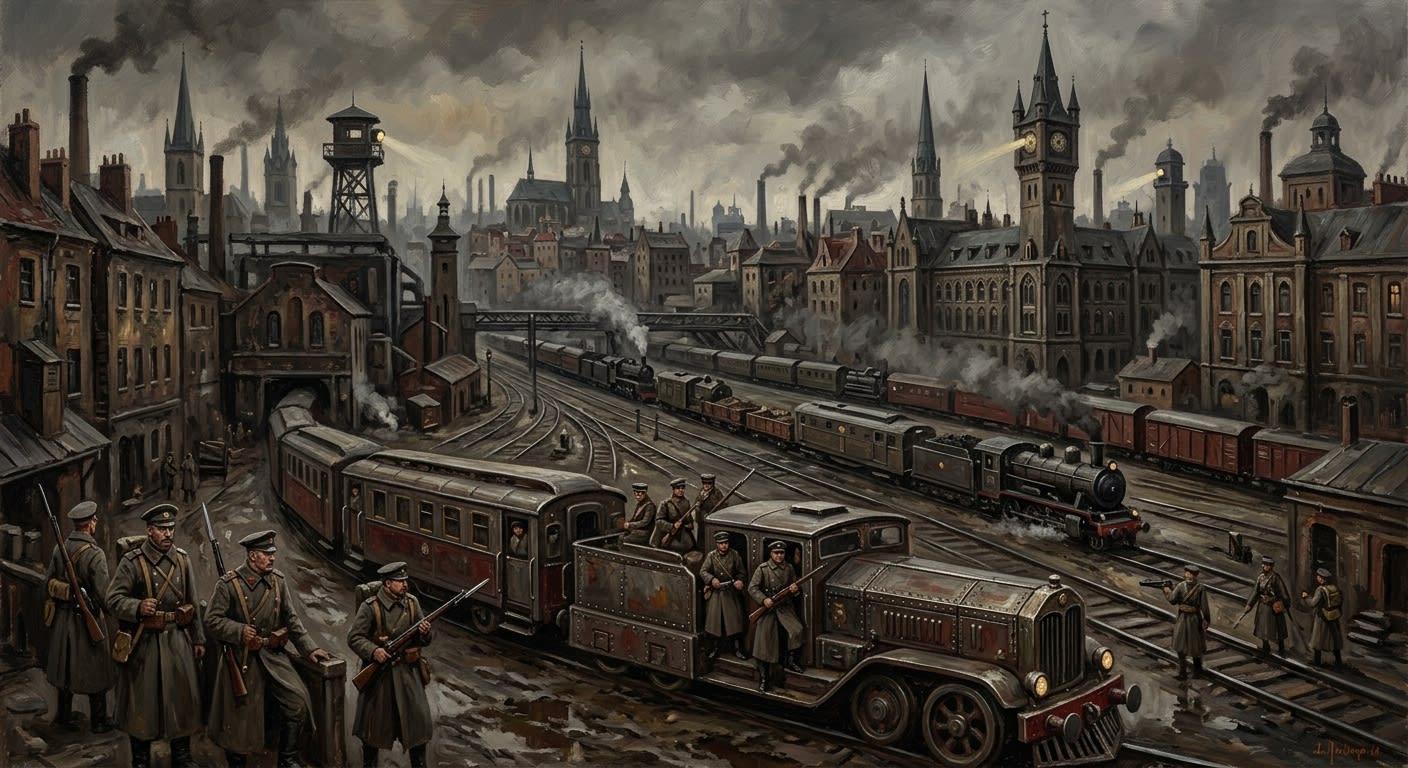
Forward Heartlands
The held breath behind the gunline
Zone 3 is the Synod's forward heart: Prague's corrected beauty, Bratislava's damp throat, Budapest's divided engine, Warsaw's teeth, Sofia's hard face, and every ugly town that keeps the Line fed.
Codex Ref. II.3.00-201
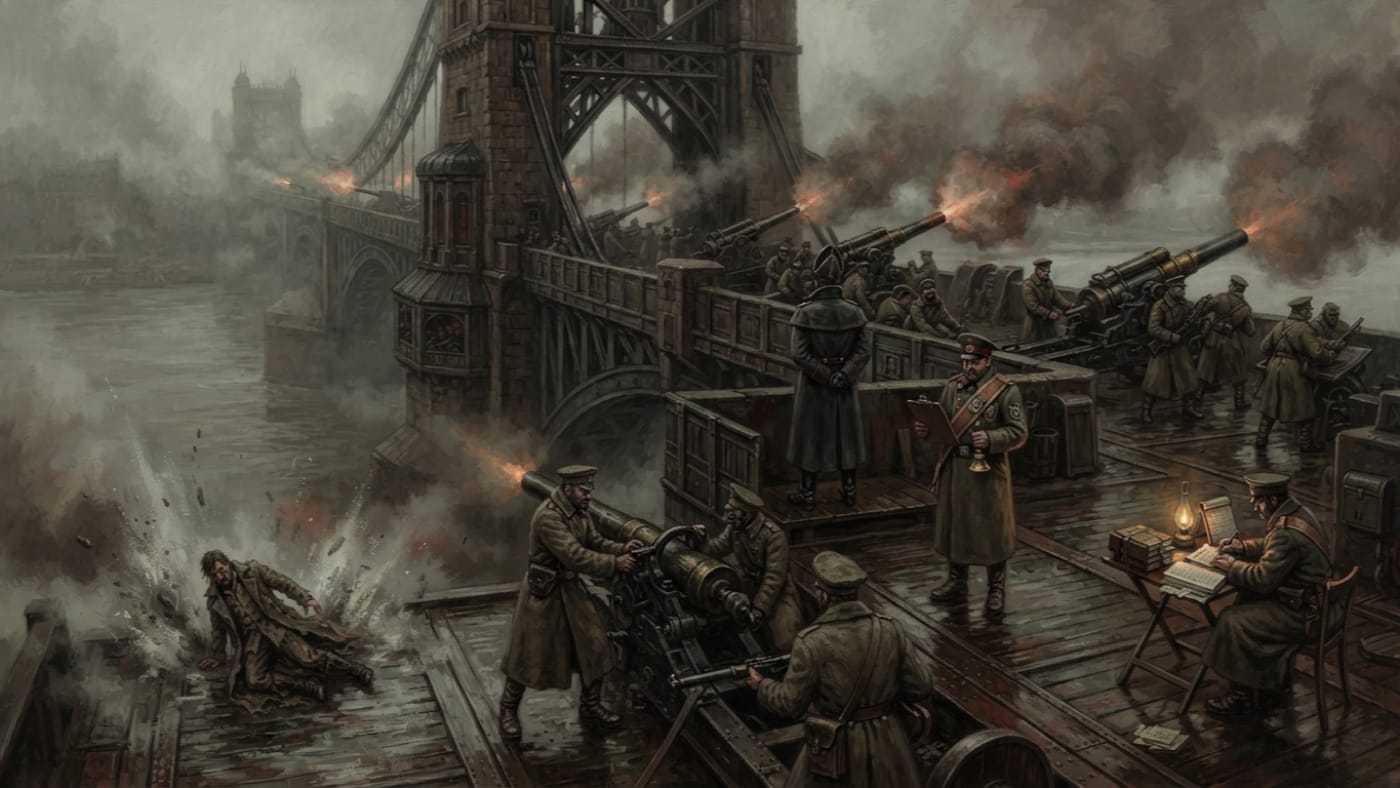
Founding Salvo of Bastion-Brest
The bridge fell. The anniversary remains licensed.
Brest's annual gun salute honours, per the current Codex, the nine-day stone-bridge defence of A.S. 66. The bridge fell on the tenth day. The guns commemorate endurance; Records files accidental deaths as celebratory expenditure.
Codex Ref. XIII.1.89-1146
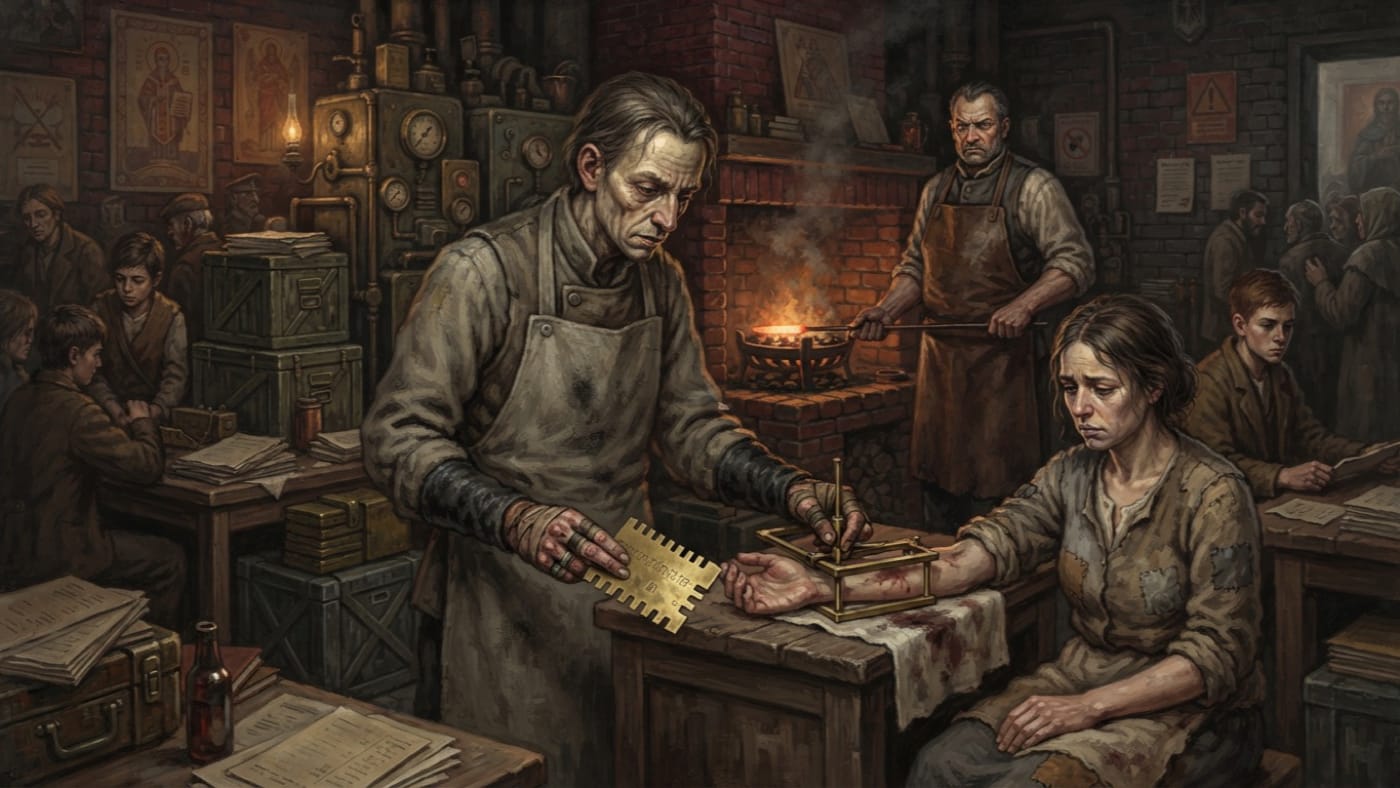
Frame-Hand
The master keeps the iron; the hand carries the blame
Frame-Hands are Heraldry's mid-rank Brand-Smith assistants, verifying bodily mark geometry with frame and swatch plate while the master keeps the iron and the audit seeks a name.
Codex Ref. XII.20.08-001
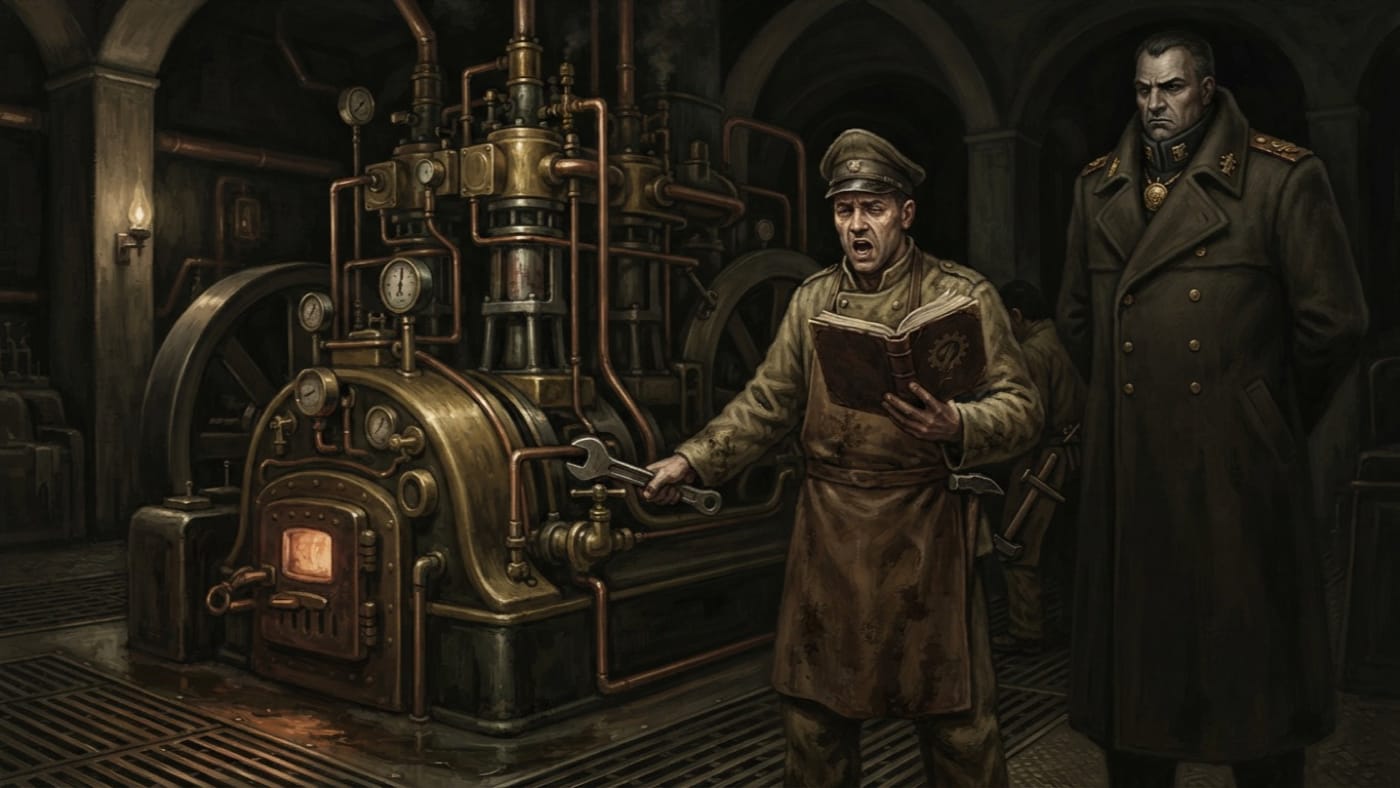
Furnace Choir Reforms
One sanctioned voice for every engine; the old tunes persist off the ledger.
The A.S. 134 reforms gave every bastion and rear installation one authorised engine cant. Folk tunes became heresy; engines continued to prefer them.
Codex Ref. VII.2.10-134
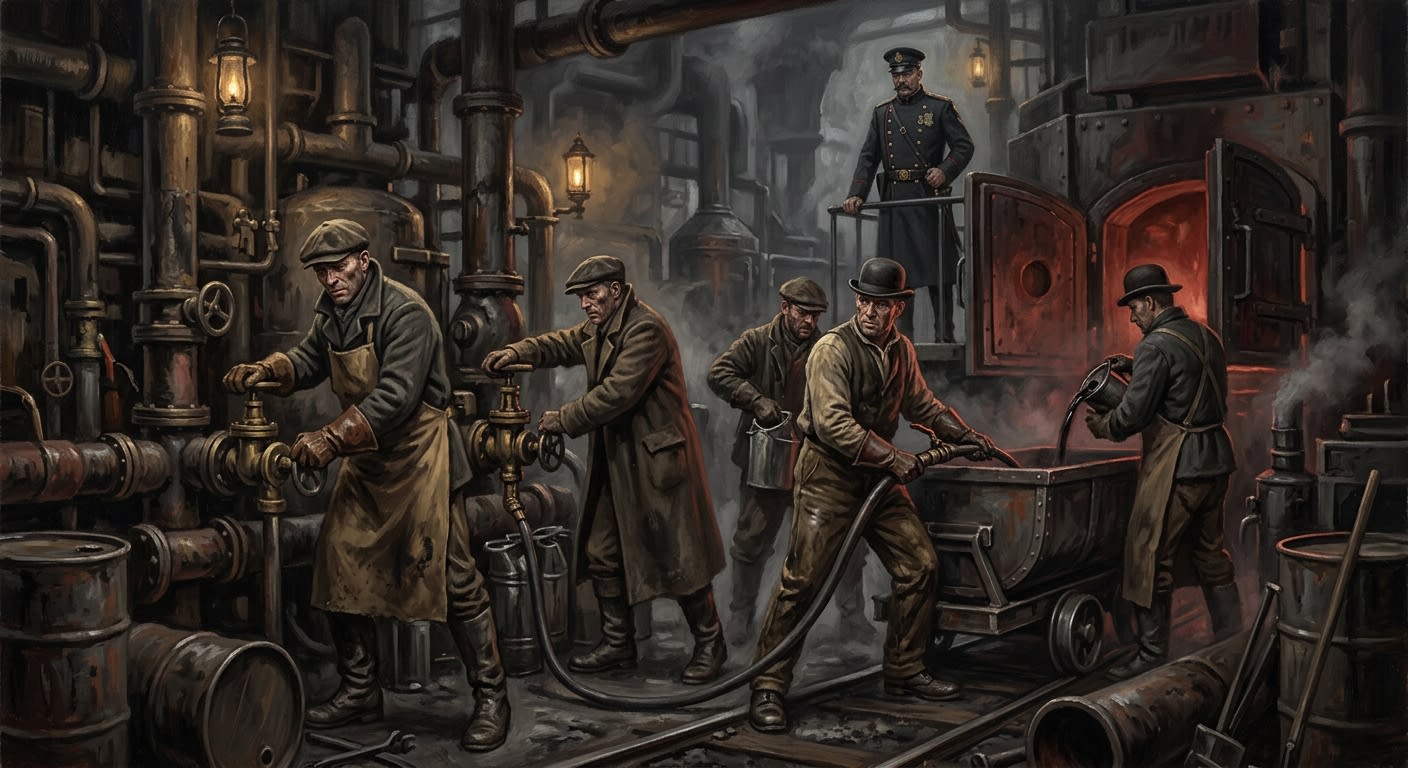
Furnace-Hardliners
Mercy at scale, counted in drums, pumps, kitchens, and bodies
Furnace-Hardliners are the industrial-priority faction of Hidden Pipe-Runners, feeding kitchens, pumps, engines, and trenchline furnaces with illicit black diesel.
Codex Ref. XII.3.04-001
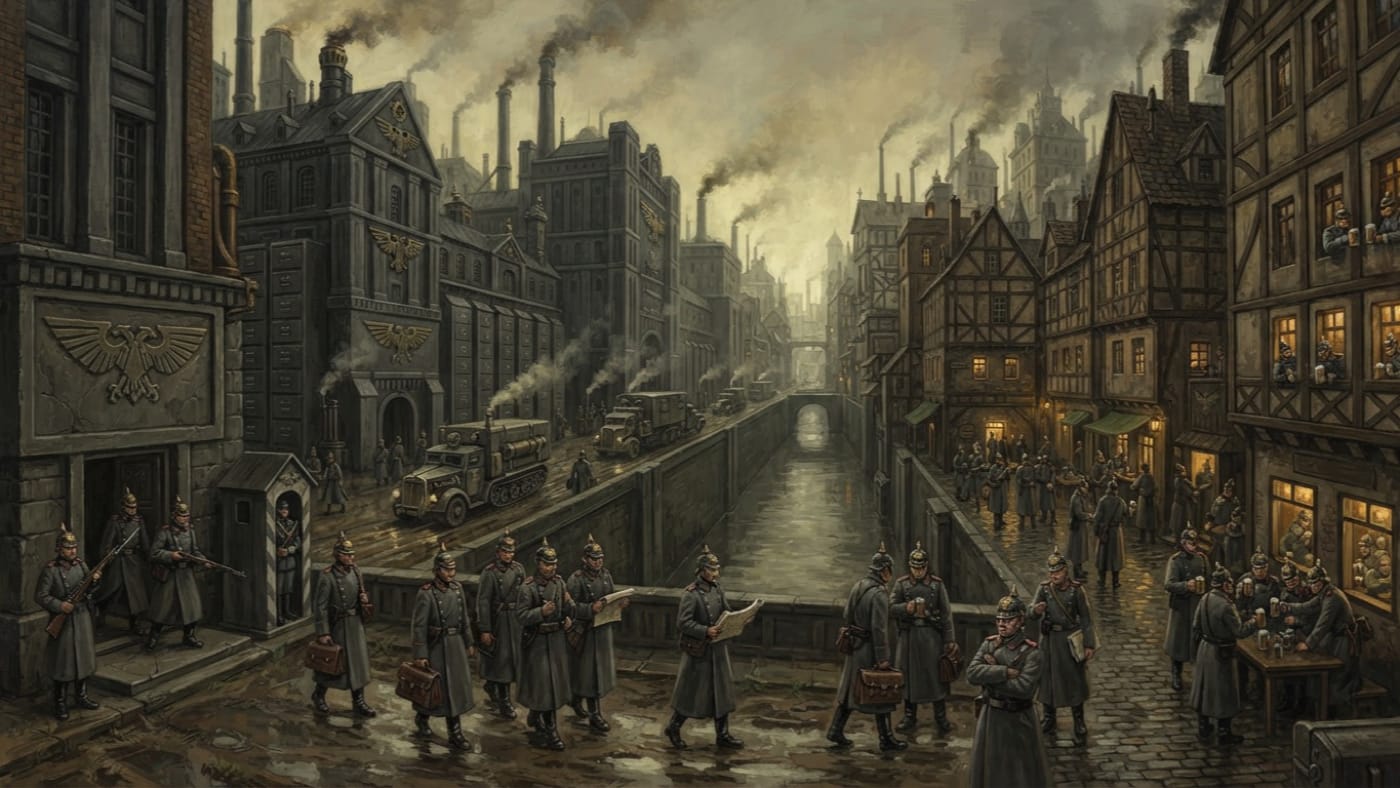
Garrison Quarter
Orders at the desk, reconciliation at the beer-hall
Kanzleiburg's officer district keeps northern command in ink and depends on Old City beer-halls for what regulations cannot settle. In A.S. 140, its petition made enforced sobriety an operational deficiency.
Codex Ref. II.4.09-201
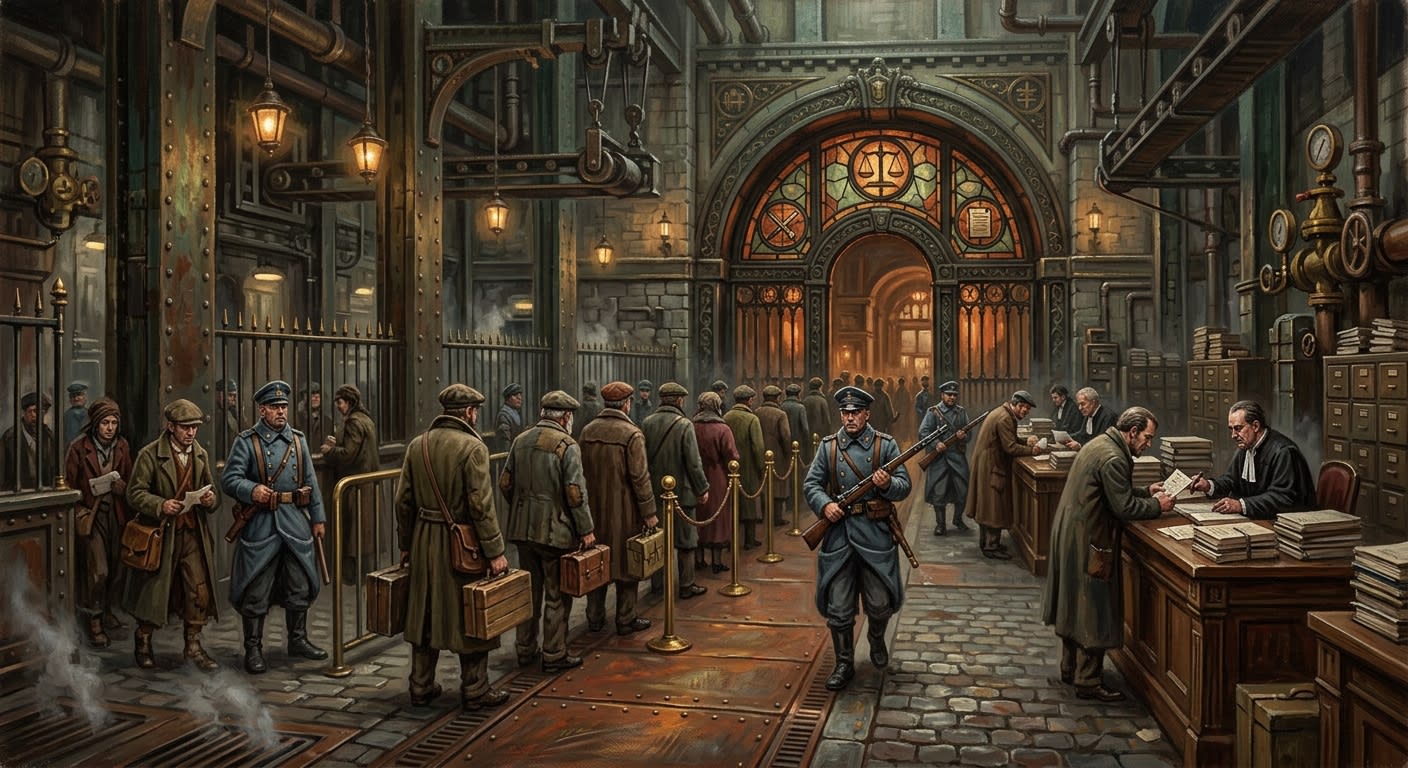
Gate Nine
The final mouth of the Queue Road, where waiting becomes debt and debt learns to breathe
Final court of the Queue Road: a clearance complex over the Apparatus where reclassification, minute debt, appeals, erasure, and warm floors devour travellers by procedure.
Codex Ref. II.3.05-009
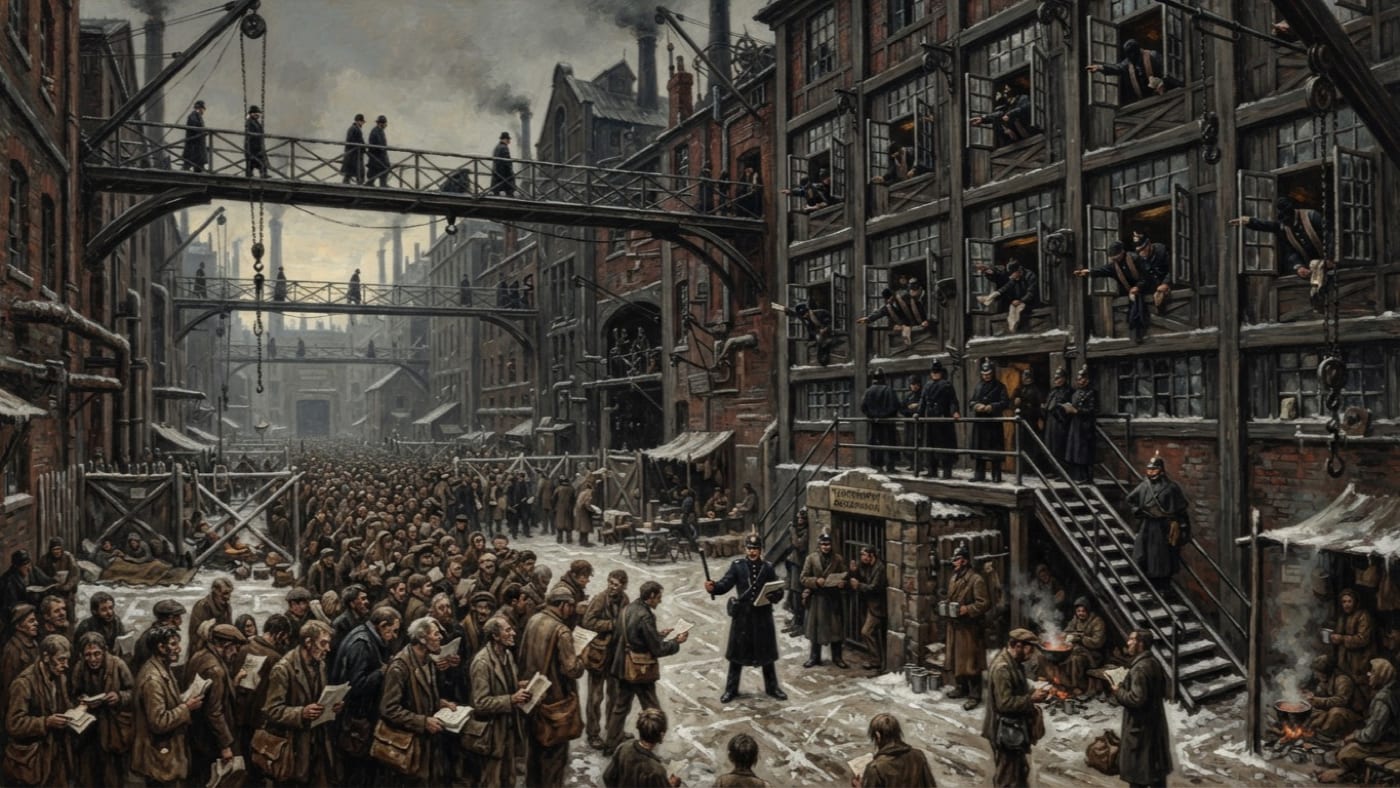
Gate Nine Commons
Where minute debt acquires hands
At the Queue Road's ninth court, day hire, recruitment and conscription share one chalked yard. Minutes buy an appeal; minute debt buys the labourer. The Directorate calls this employment.
Codex Ref. II.3.05-009
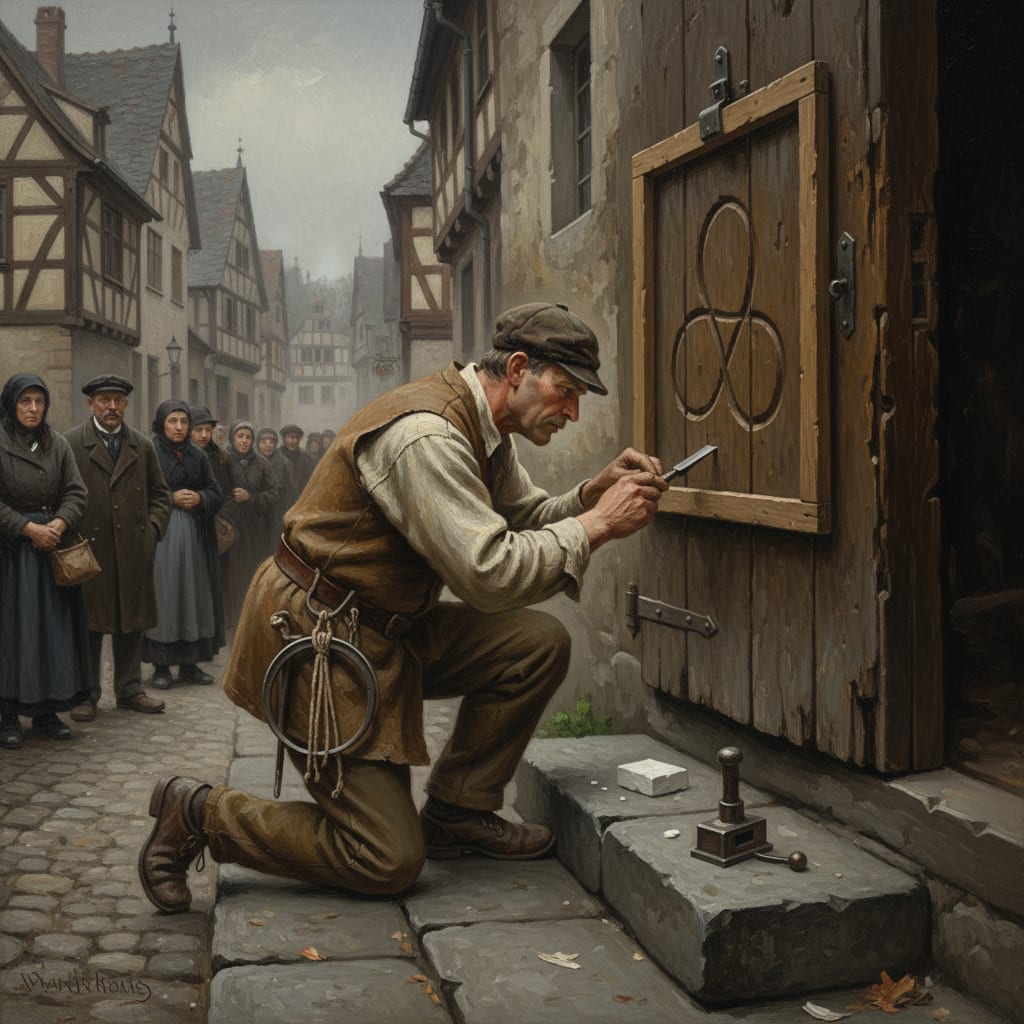
Gate-Carver of the Triune Knot
Three loops, one law, and the prayer that this time the threshold will hold
Six thousand licensed Gate-Carvers execute the Triune Knot into every threshold, grave-slab, and ossuary niche — sanctifying doors, sealing dead, and sustaining the Bureau of Heraldry's claim that a world without geometry is a world the enemy can enter.
Codex Ref. XII.19.01-001
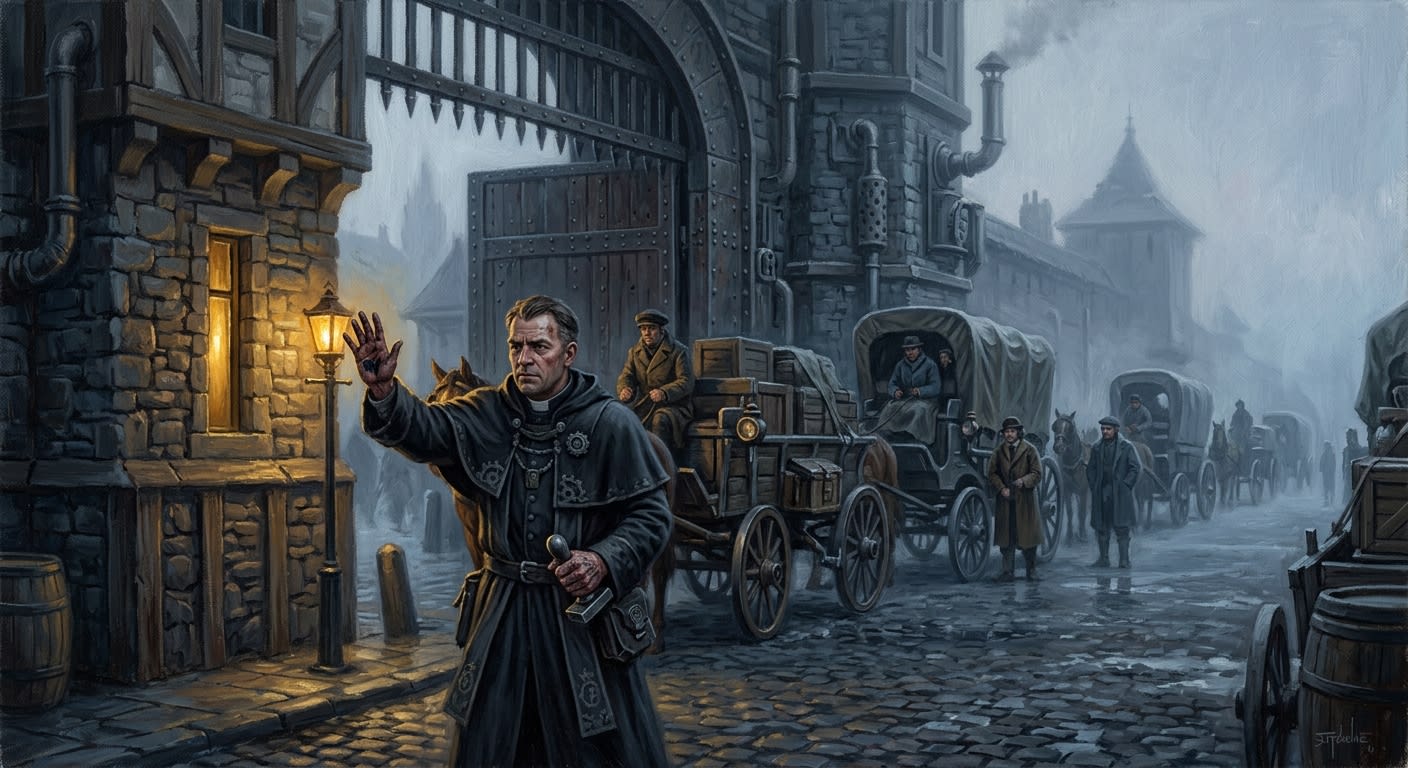
Gatewarden-Notary of Passage
The sole functionary who may halt a column of four thousand by raising one ink-stained hand and asking for documentation.
The Gatewarden-Notary of Passage stands at the point where all five great commodities of the war — disease, heresy, desertion, contraband, and ambition — must be sorted, weighed, stamped, and either admitted or refused. The Gate does not care about the man.
Codex Ref. XII.7.04-001
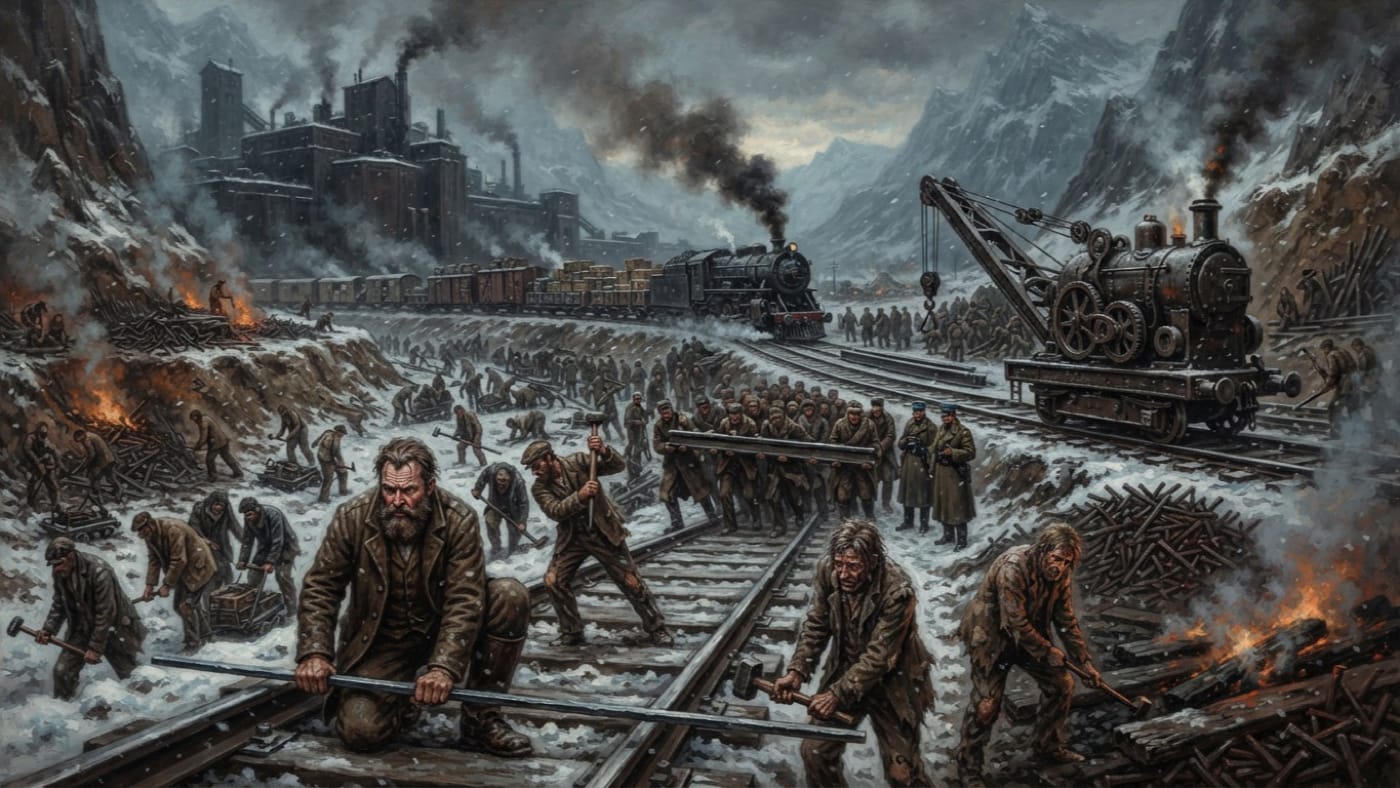
Gauge Standardization Decree
One measure for the iron, four thousand graves for the agreement
The A.S. 136 decree imposed 1,435 millimetres on Dominion rail and ended the Gauge War by threat of closure. Three years of relaying cost approximately four thousand lives; Engineering supplied the measure, labour the graves.
Codex Ref. XIII.1.136-001
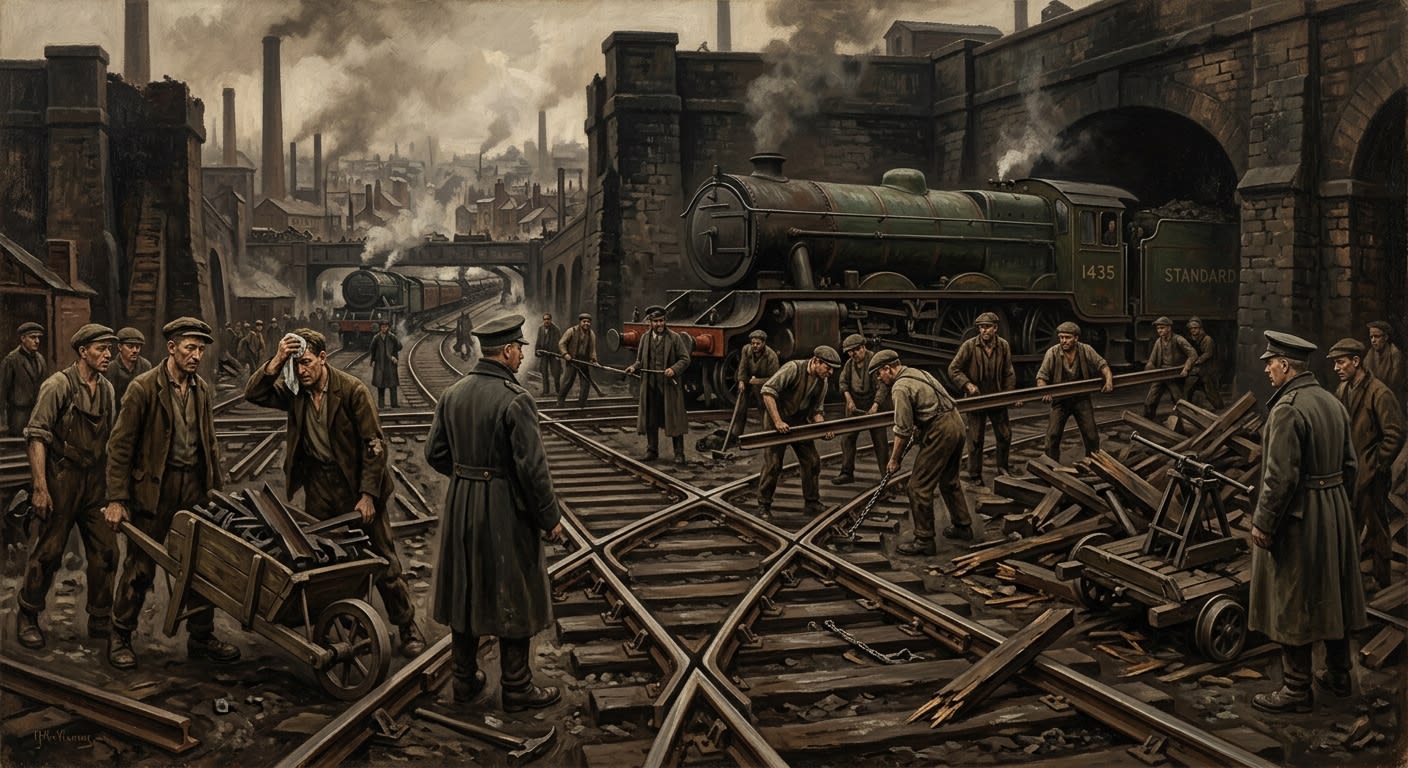
Gauge War
Forty years to agree on the distance between two rails
A.S. 96–136 rail-standardization conflict in which rival gauges starved bastion corridors until Engineering imposed 1,435 millimetres and labour paid in hands, hunger, and four thousand dead.
Codex Ref. VII.2.10-136

Gauze-Masked Custodian
Nine turns of gauze, one white ledger, and the administrative certainty that nothing happened
The operative the Bureau of Shadows does not employ, who performs collections the Bureau of Purity cannot conduct, in corridors no Bureau will map. Nine turns of gauze. One white ledger. Nothing happened.
Codex Ref. VI.8.01-009

Geometry Brand-Smith
Six Thousand Four Hundred Licensed Geometers of Guilt, and the Irons That Did Not Come Back
The Bureau of Heraldry’s serialized geometers of guilt — 6,400 licensed Brand-Smiths who make identity permanent in the only ledger that cannot be forged, lost, or filed incorrectly: the body itself.
Codex Ref. XII.20.01-001
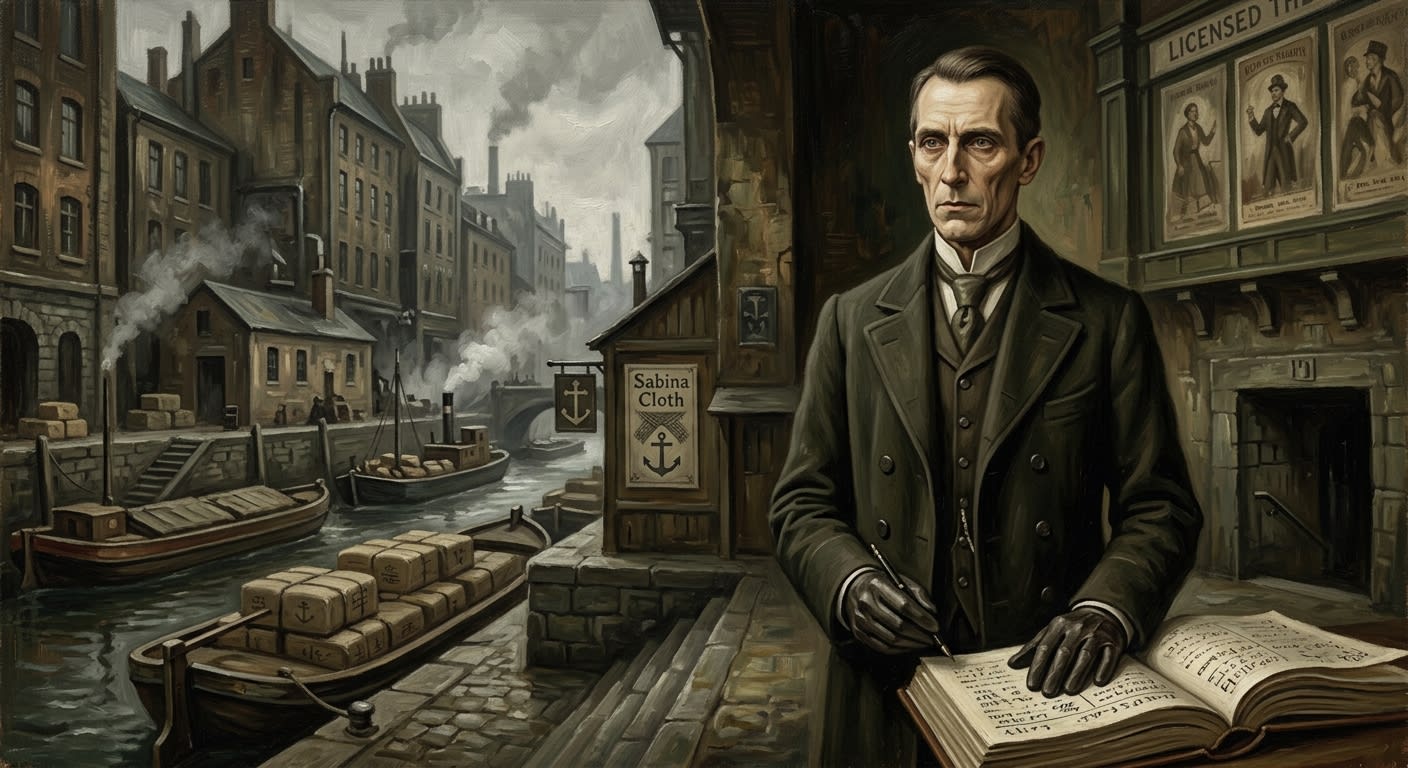
Ghent
The canal city where water keeps copies and loyalty learns to smuggle
Ghent is the Synod's wet ledger in Flanders: canal trade, Records quays, Sabina cloth, licensed theatres, Black Ledger cells, Wormhost scars, and obedience with annotations.
Codex Ref. II.1.05-201

Ghost Tags
A true number, a false history, and a fragment worth keeping
Forged salvage custody strips borrow numbers from destroyed registries, giving true fragments a false history. Relics keeps the fragment; the forger fares less well.
Codex Ref. XIII.1.36-002
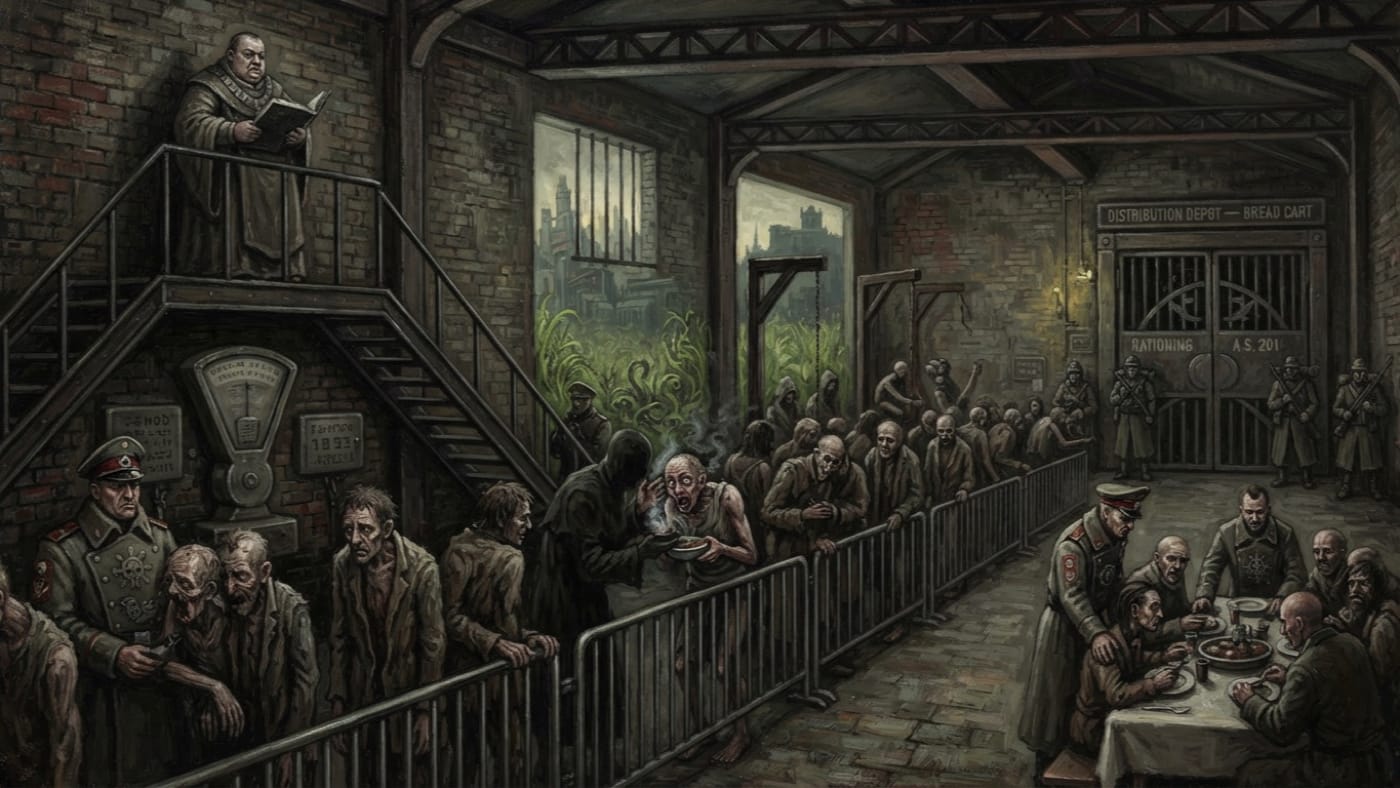
Gluttony
The Hunger That Survives the Feast
In this A.S. 201 survey, Gluttony is need that grows with feeding. Kargath offers relief before the hunger returns larger; the Synod answers with rationing, fasts and gallows. An empty stomach is no proof of a guilty soul.
Codex Ref. VI.3.01-003
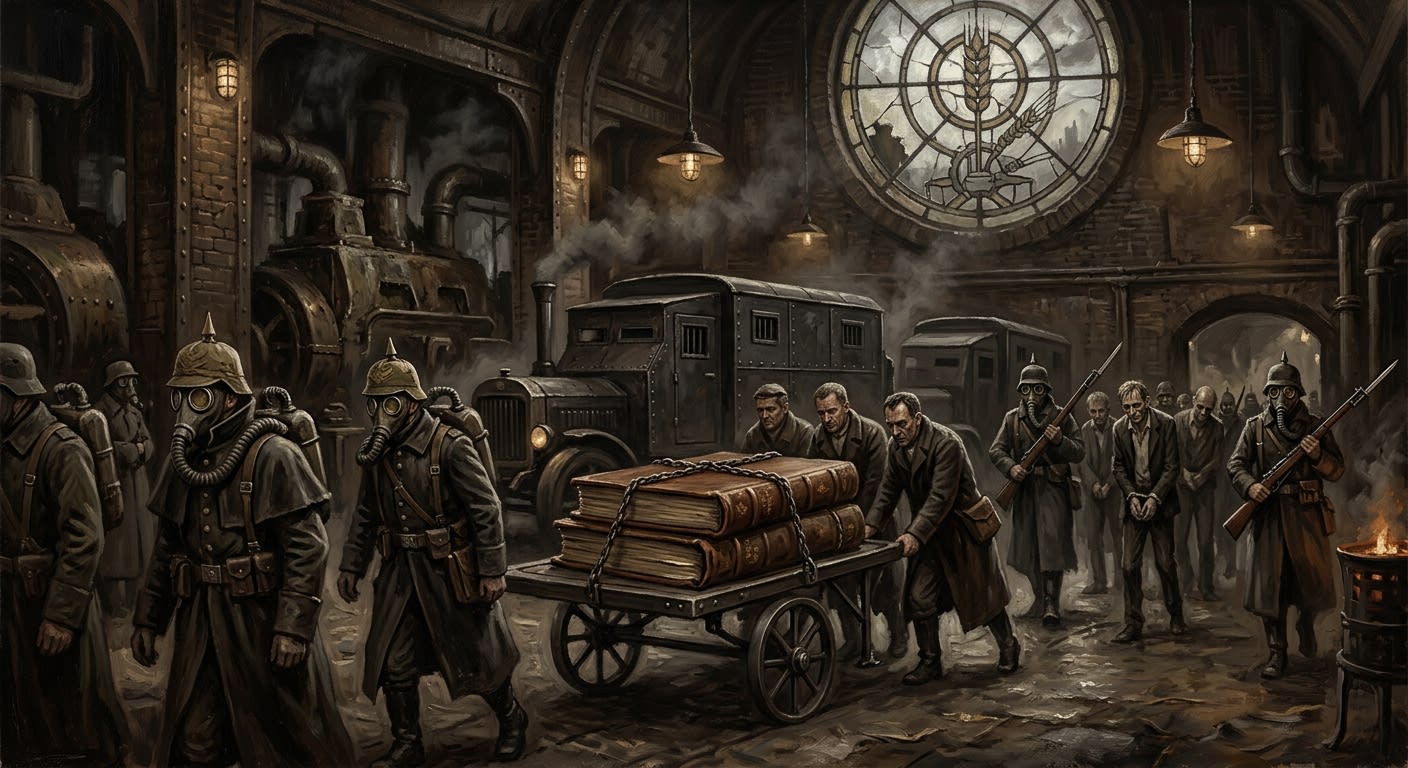
Grain Merchants' Guild, Lübeck
The fattest civic animal discovered the Creator when black gauze knocked
Dissolved Lübeck grain fraternity whose A.S. 180 spiritual renewal followed eleven Night Wagons, seized ledgers, and Shadow custody of the northern corridor's hungriest arithmetic.
Codex Ref. XII.26.02-001

Grave-Wax
A scent of authority beneath a sentence no ledger will admit
Grave-wax seals the Synod's deniable Night Papers: grey grit, a recognised scent, an unverified origin, and enough certainty to make a commander burn a sector.
Codex Ref. XIII.1.99-003
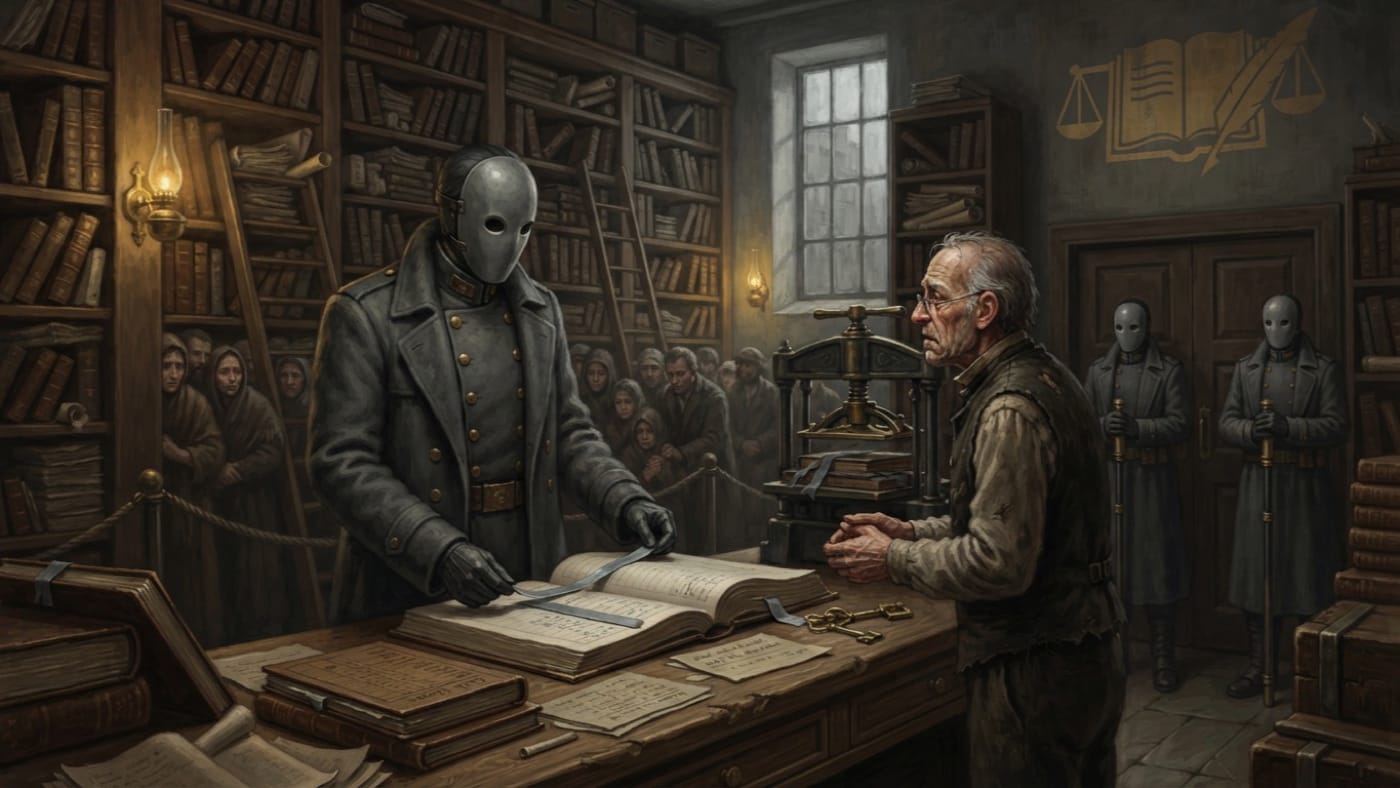
Great Ledger Harmonisation Mandate
The larger page that never has to enter the room
The Great Ledger Harmonisation Mandate supplies the standing authority cited by Indiction writs: books are reconciled, names suspended, and appeal waits until the archive decides who still counts.
Codex Ref. XIII.1.06-002
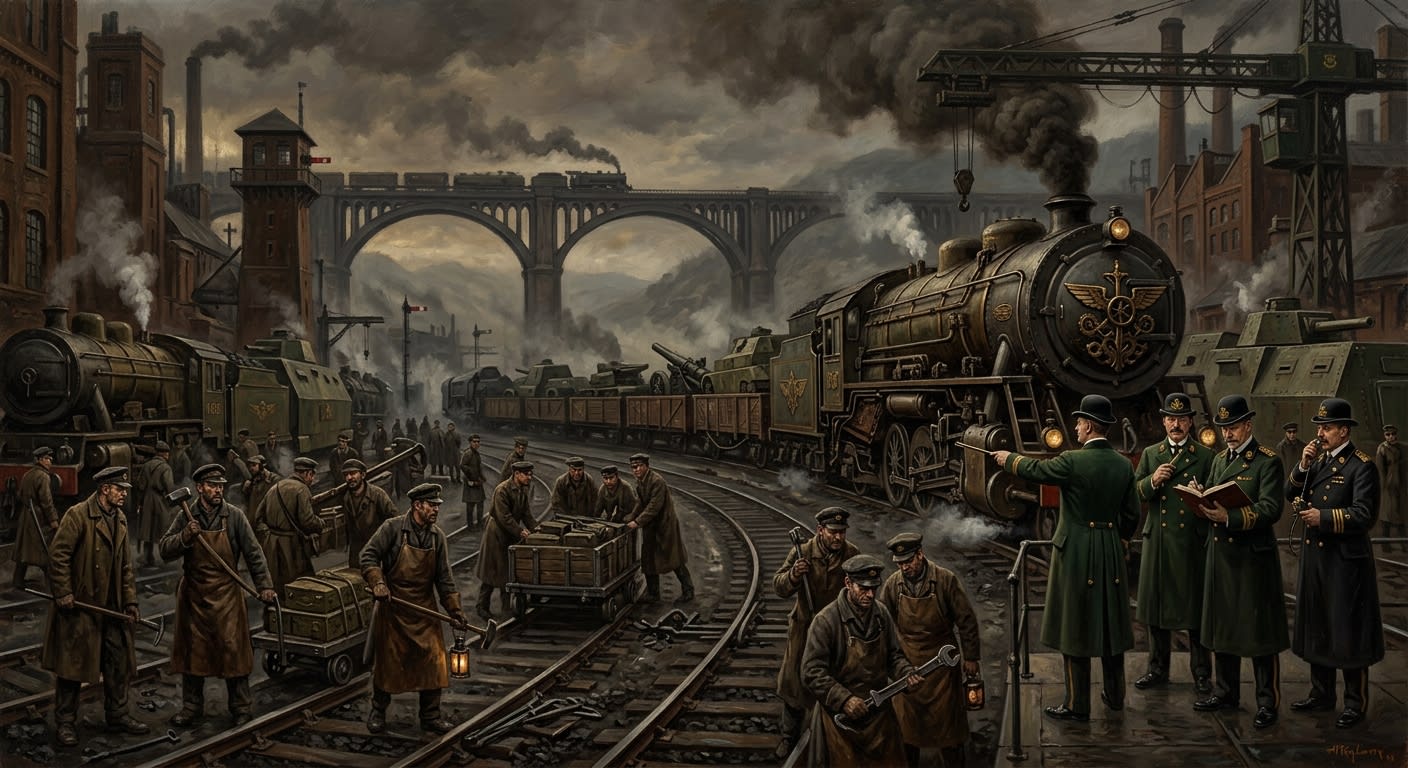
Guild of Rails
The iron road permits the war to arrive
Licensed brotherhood of track, gauge, junction, ballast, bridge, and schedule; the Guild moves the Dominion’s war and charges extra when physics objects.
Codex Ref. XII.44.01-001

Gun-Cantor Marshal Vonn
The man Brest permits to decide when prayer should acquire muzzle flash
Gun-Cantor Marshal Vonn commands Bastion-Brest's artillery, binding psalm, powder, range, and bell against the Nameless Tide and the bridge's own confessing machinery.
Codex Ref. III.2.01-093
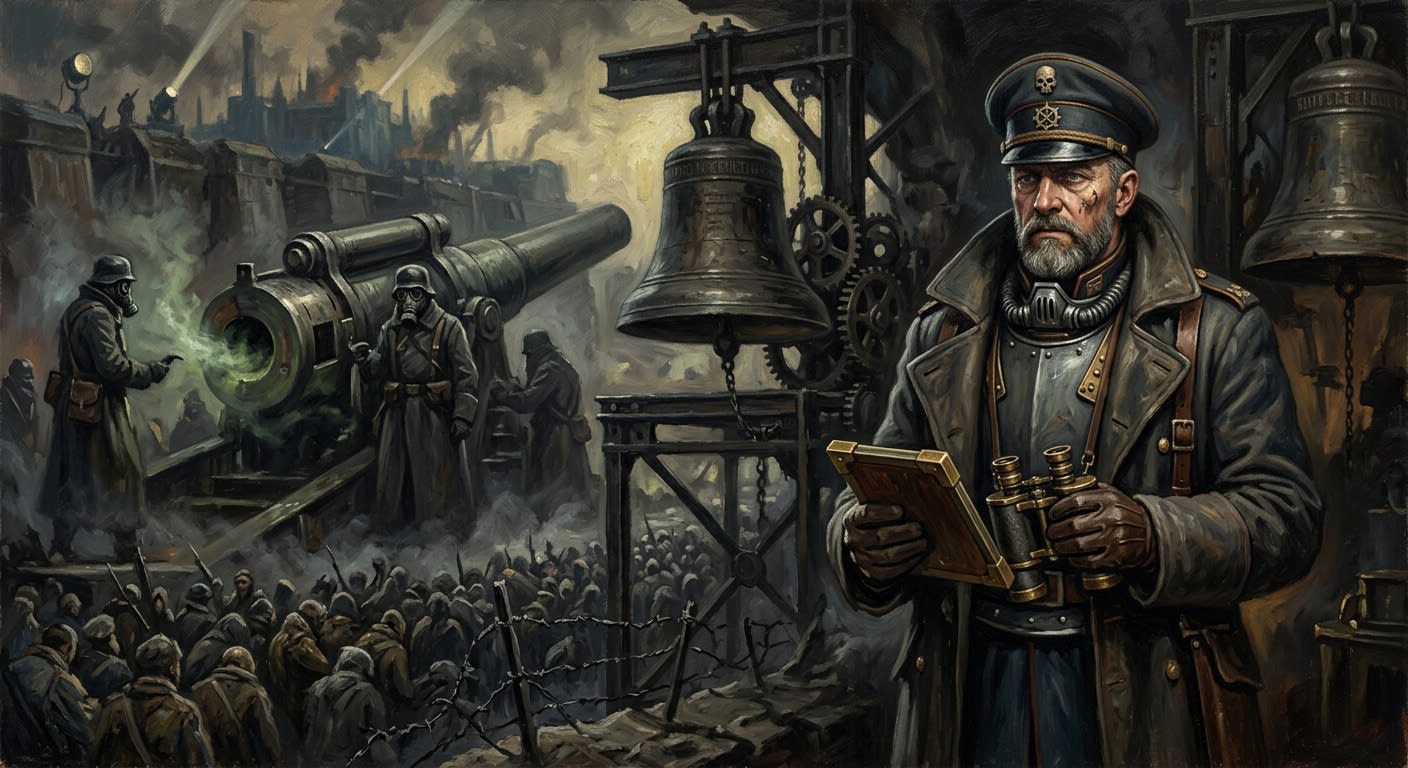
Gun-Cantor Marshal Vonn
He decides when prayer becomes shrapnel, and Brest calls that governance
Gun-Cantor Marshal Vonn commands Bastion-Brest's artillery, where casemate bells, confession booths, and the Nameless Tide make accuracy a sacrament.
Codex Ref. III.2.01-041
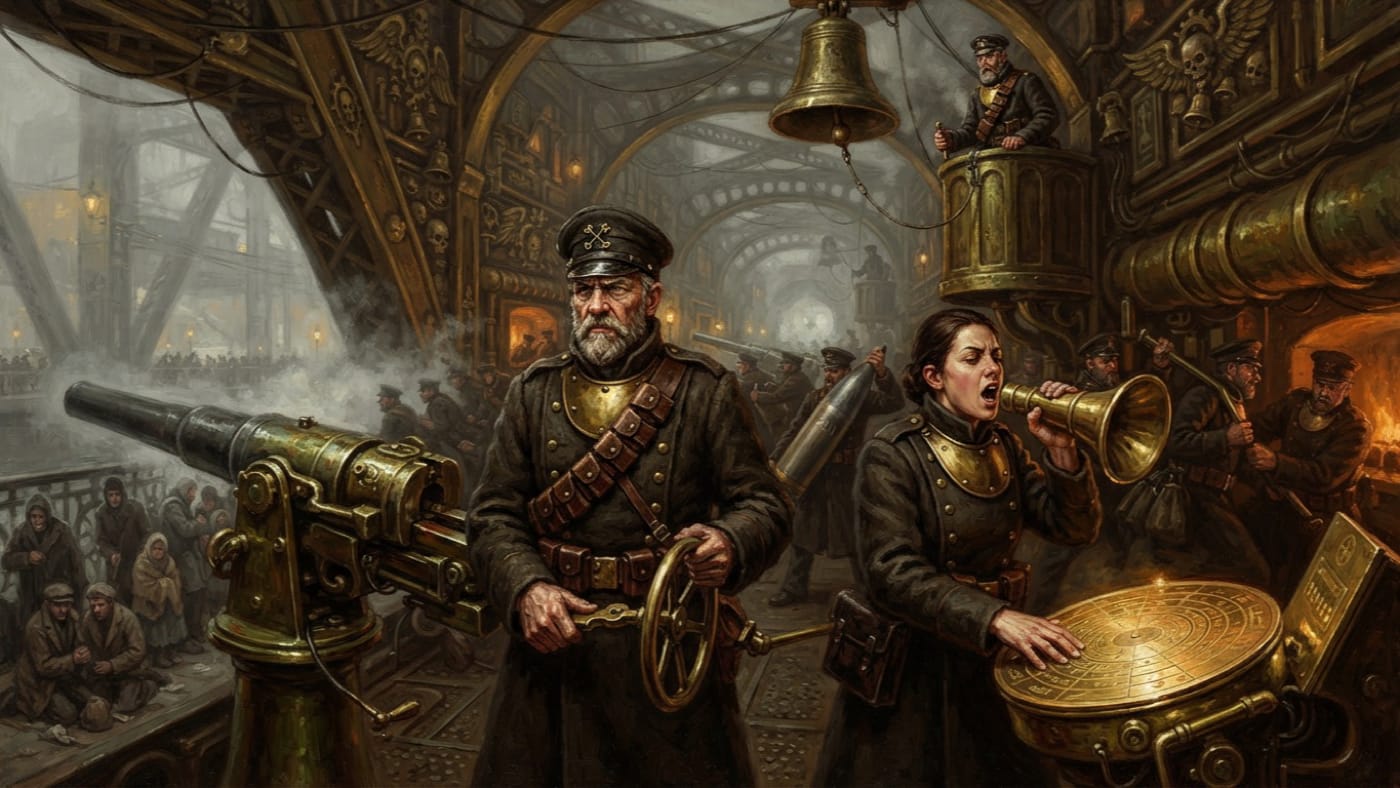
Gun-Cantors
At Brest, prayer keeps the beat and artillery keeps the crossing
Brest's Gun-Cantors bind range, powder, bell and psalm into choral artillery. They hold the fire keys, ring curfew and call fire into crossing lanes a safety salvo.
Codex Ref. XII.1.02-001
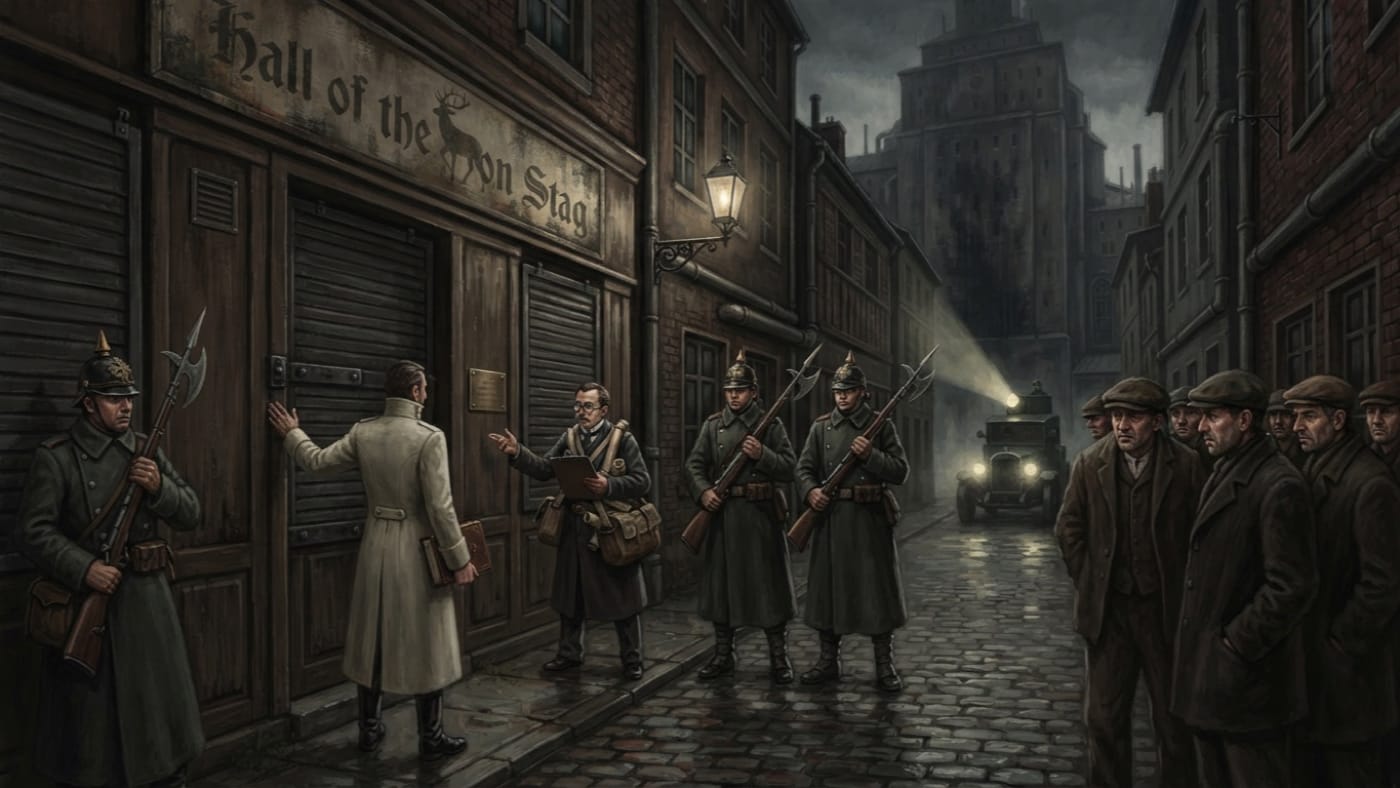
Hall of the Iron Stag
Two hundred and twelve patrons, one inconvenient question
Kanzleiburg's Old City beer-hall held 212 drinking citizens when Purity came in A.S. 140. Its proprietor asked for a fire-safety certificate; its shutters later made obedience an inconvenience the Archon could not ignore.
Codex Ref. II.4.09-140

Hamburg
The throat of the northern front — and the hand around it is not the Synod's
The Synod's northern import terminal: nine hundred thousand souls at the Elbe's mouth, processing the grain and coal that keep the northern front from freezing, starving, and dying.
Codex Ref. II.4.09-005
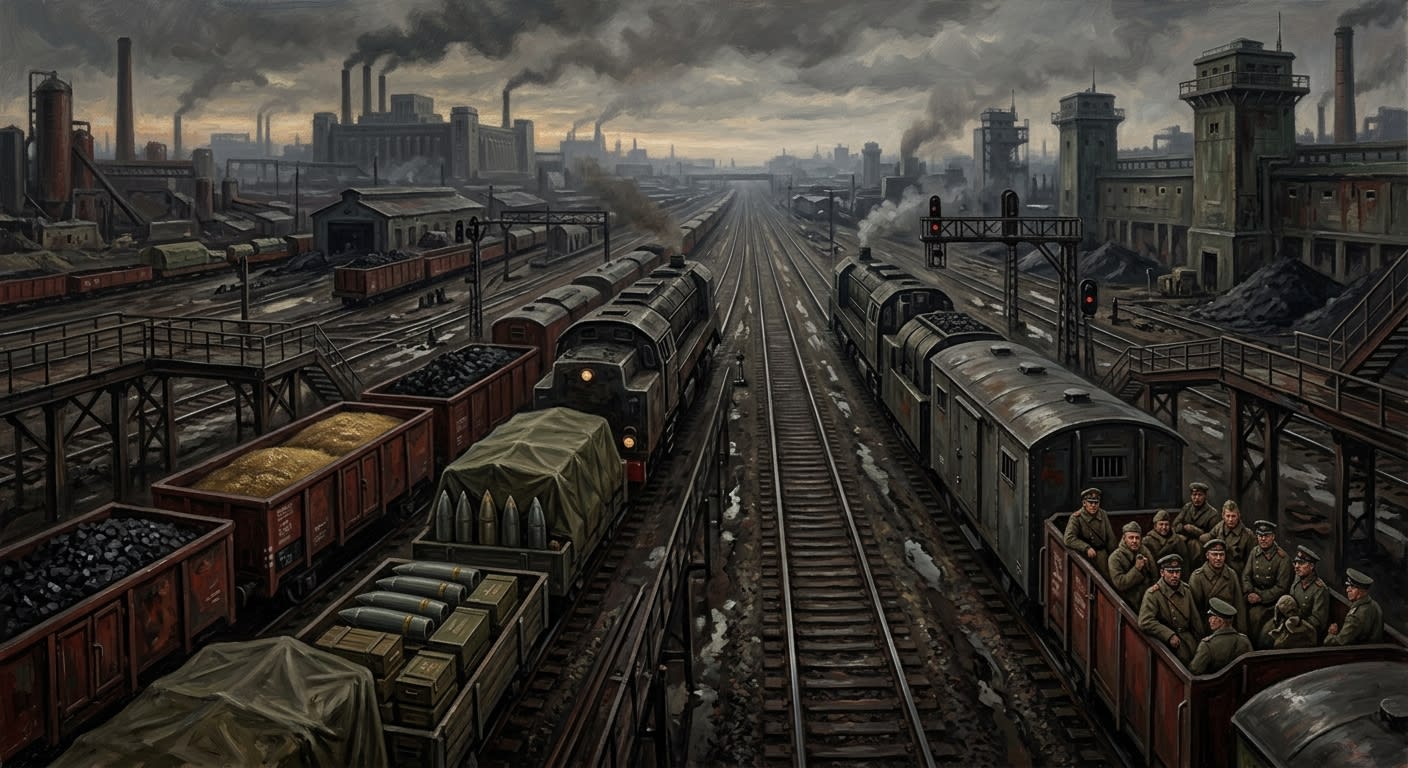
Hamburg-Kanzleiburg Line
The iron throat by which the northern front is fed
The double-tracked 280-kilometre rail throat between Hamburg and Kanzleiburg carries grain, coal, shells, orders, and the northern front's daily permission to continue breathing.
Codex Ref. II.3.05-007
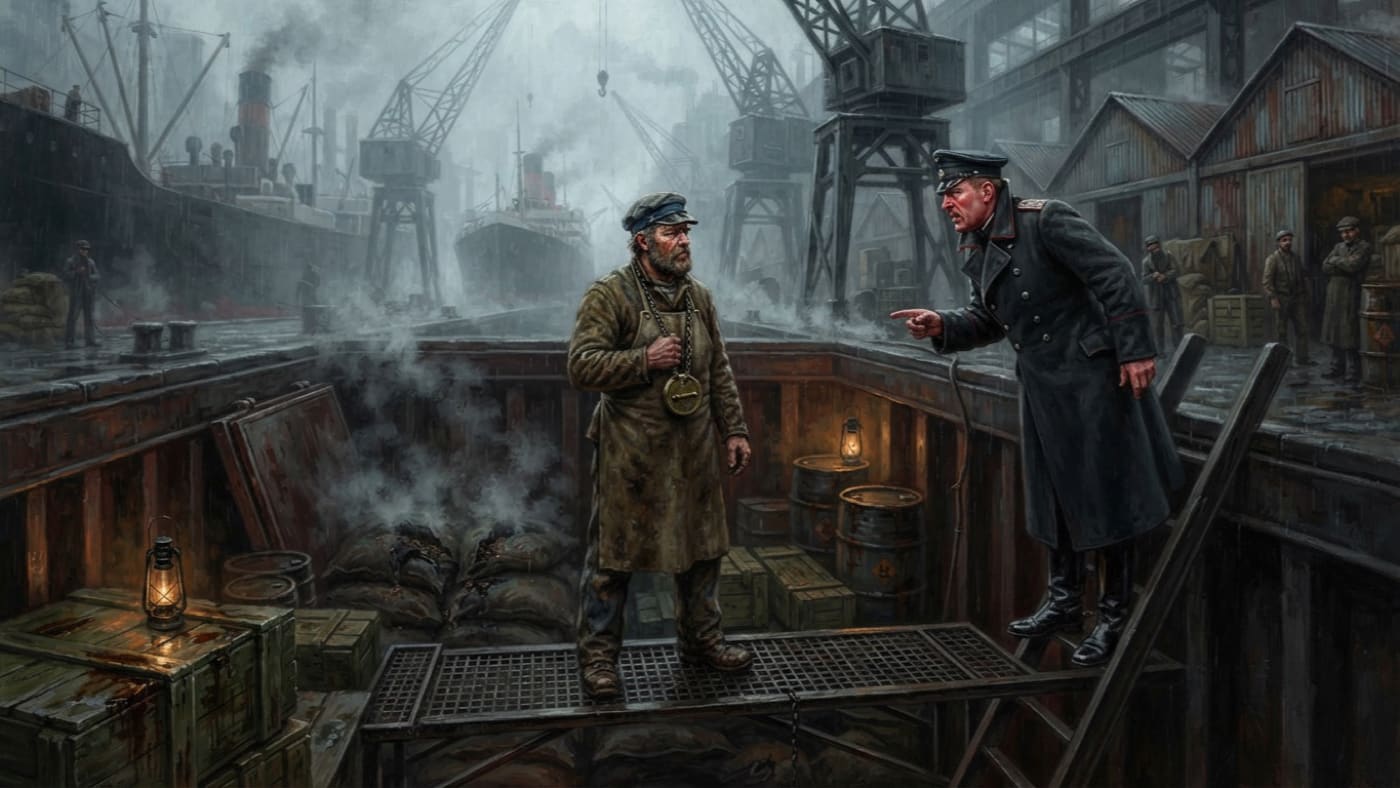
Hazard Clause
The right to keep the token in one's pocket
Hamburg's A.S. 189 concession lets senior Compact holdmen withhold discharge certification for three named cargo hazards without immediate arrest for obstruction. War may buy labour; it cannot buy the signature.
Codex Ref. XIII.1.89-189
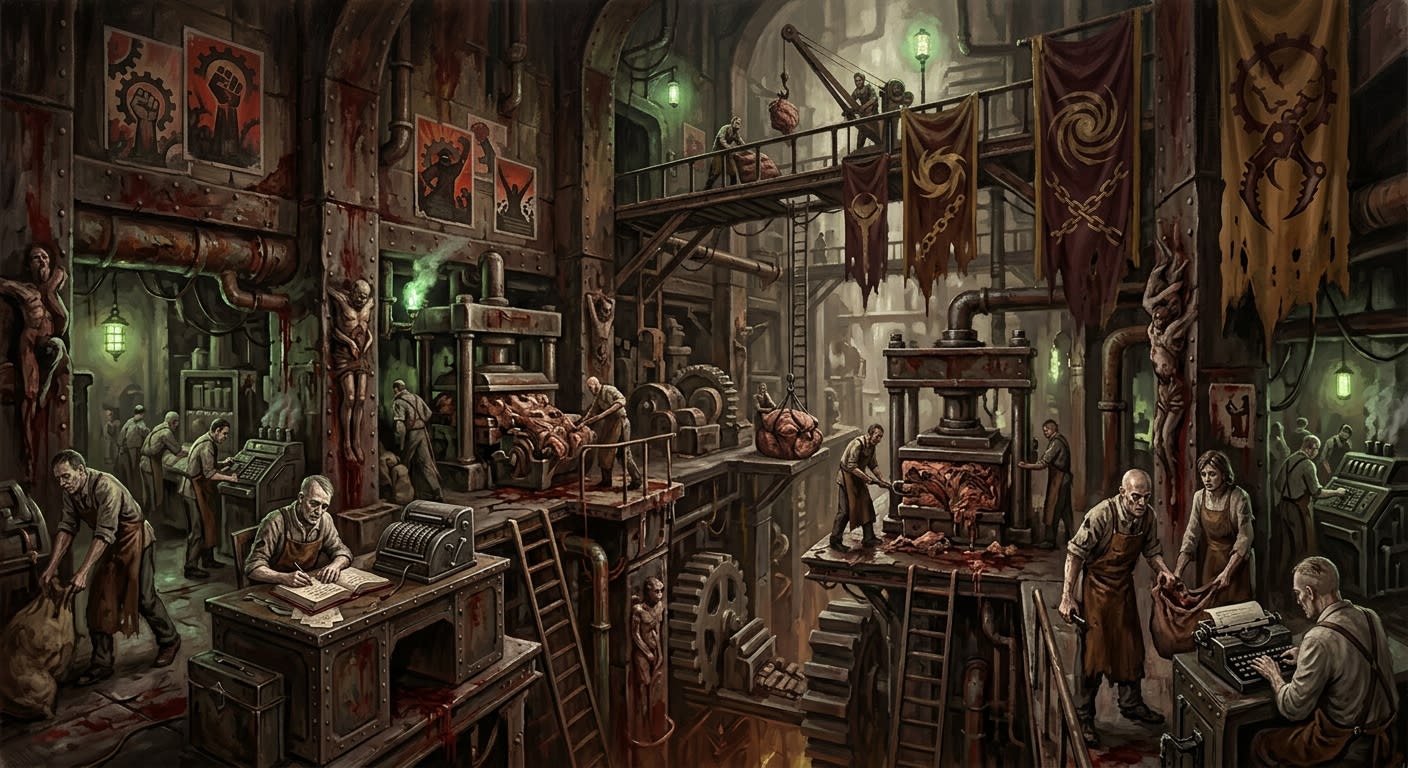
Hell
The Enemy's claim upon Creation, filed where screams become jurisdiction
Hell is not merely a place beyond the Sagittal Line. It is the Great Deceiver's active claim upon Creation: jurisdiction expressed through matter, contract, territory, sorcery, corrupted flesh, and obedient fear.
Codex Ref. XIII.1.01-201
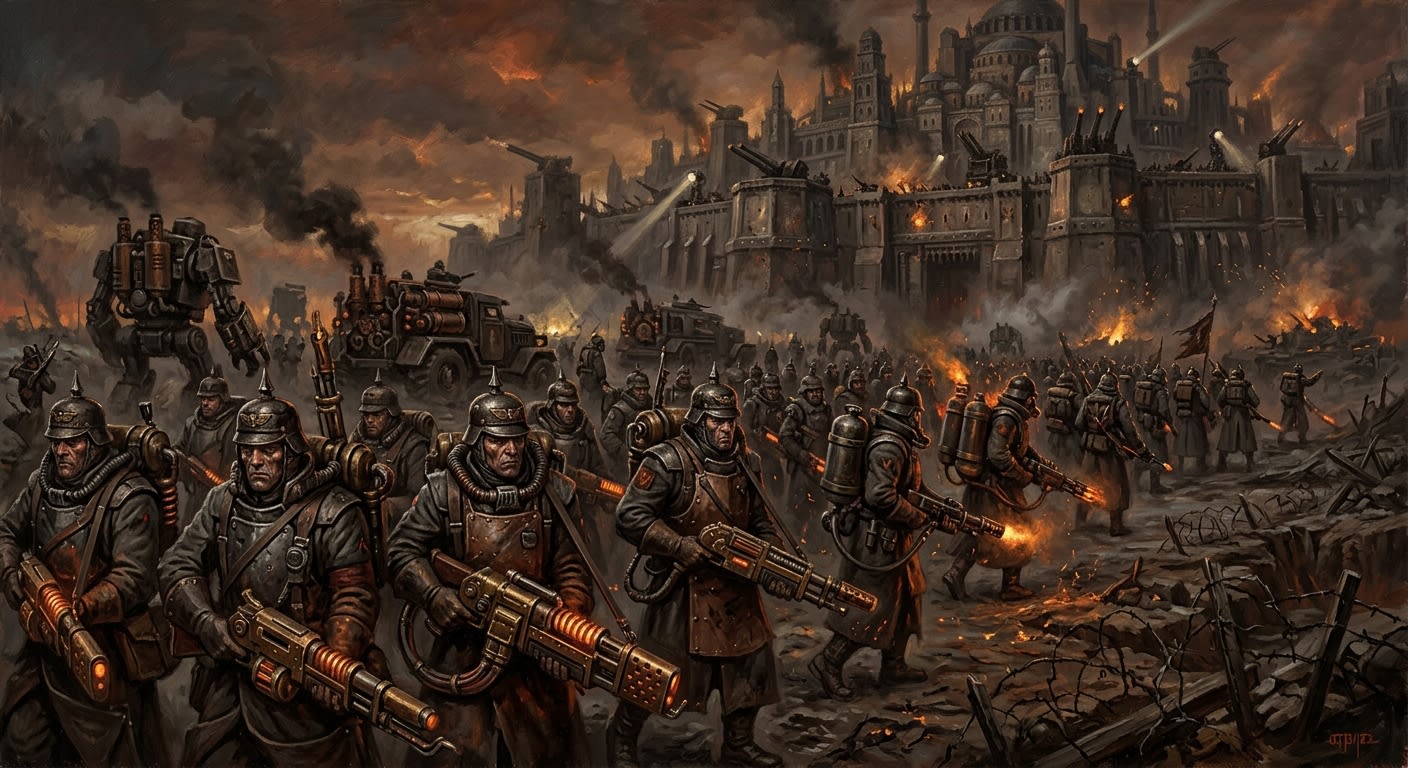
Hellbow Legion
Maldrake's arc of wrath, where range becomes theology and stone learns fear
Maldrake's Hellbow Legion is a wrath-forged assault host, not a regiment of archers: slag-bow cohorts, pyre-smiths, Ember-Soldiers, Hollowed columns, and siege heat aimed at Bastion-Constantinople.
Codex Ref. IV.1.07-009

Hett Ruis
The small permission is a kingdom when every bridge has a gate
Hett Ruis, Seal-Registrar of Bastion-Brest's Crossing Bureau, survives the Vale breach by owning stamps, delays, and the rot between law and movement.
Codex Ref. III.2.01-076
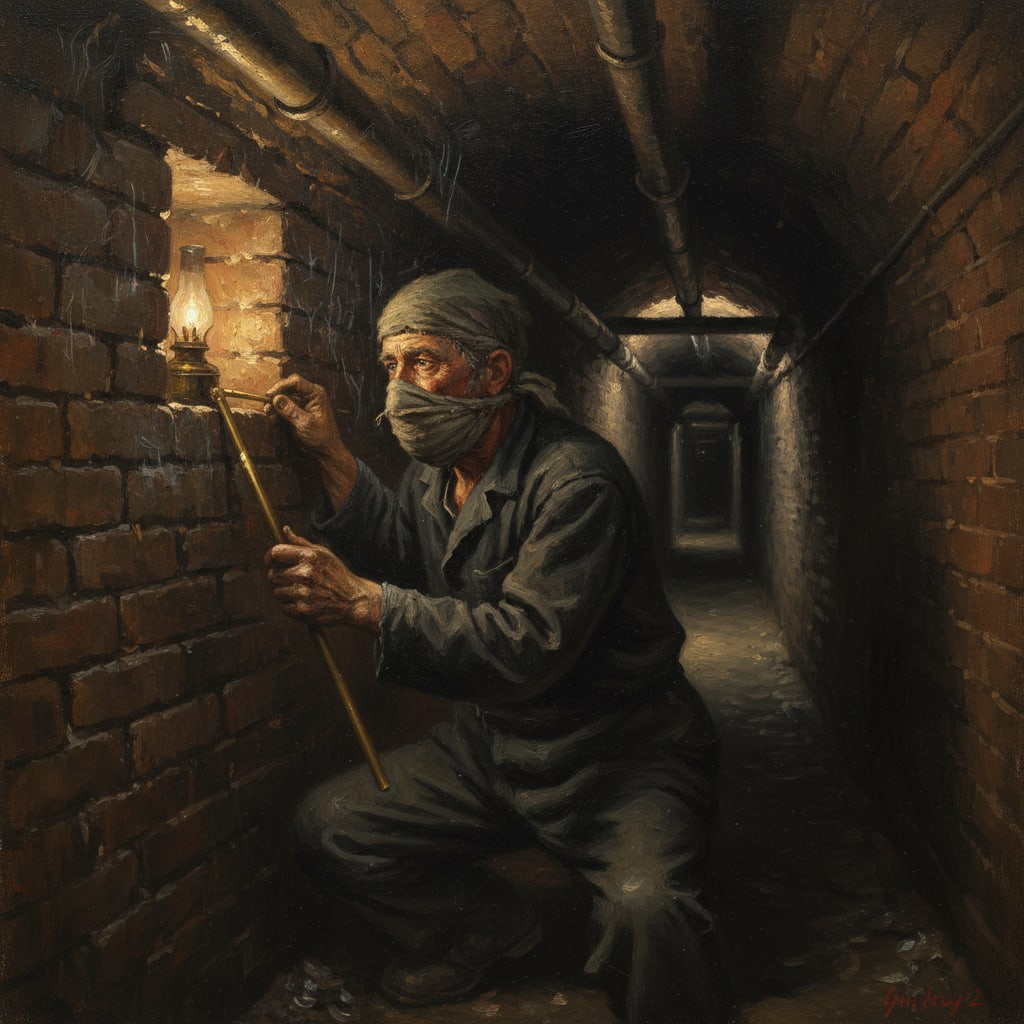
Hidden Pipe-Runner
Classified nonexistent. Audited quarterly. The pipes remain.
The Synod's invisible circulatory system: four ranks of Soot-Boys, Joint-Menders, Route-Keepers, and Bell-Duct Ghosts delivering black diesel through pipe networks the Bureau of Engineering has surveyed three times and failed to find, at the standard rate for failure.
Codex Ref. XII.3.02-001
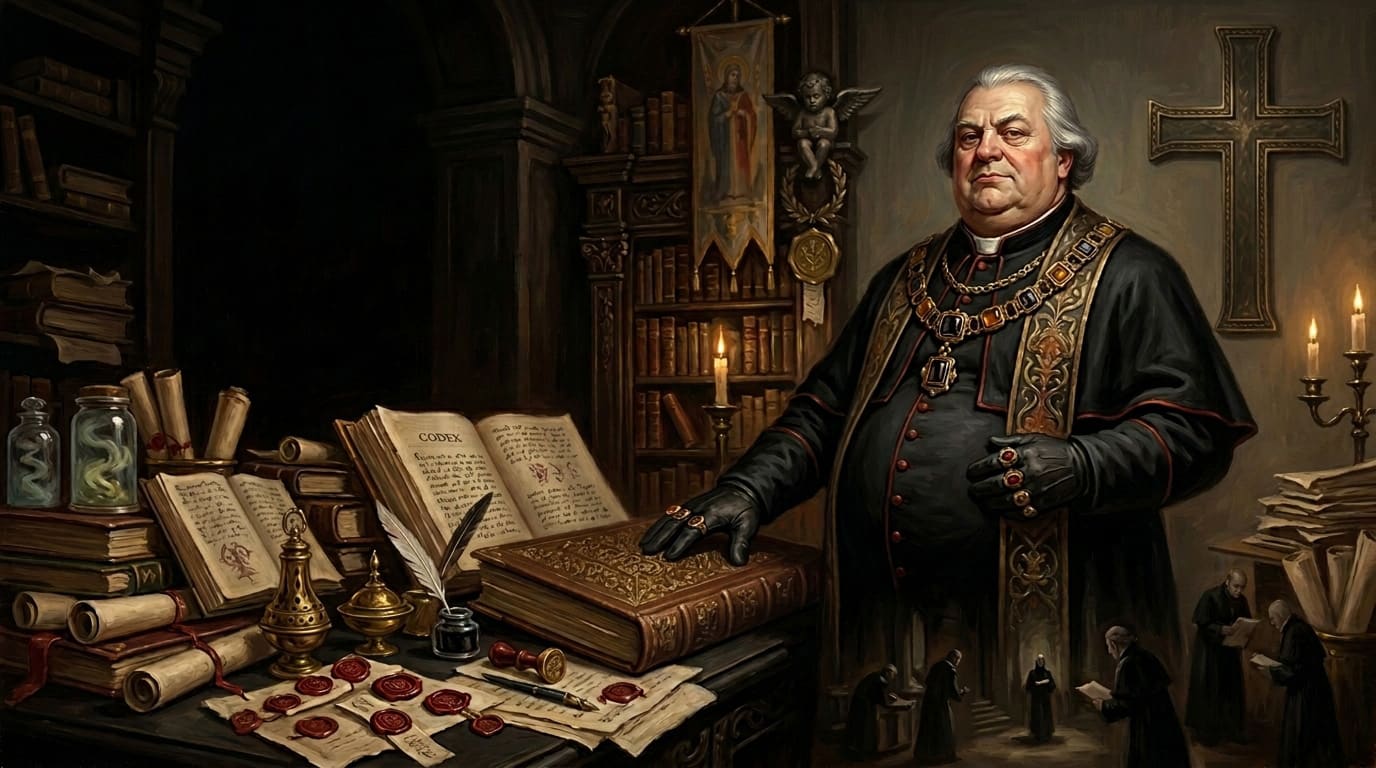
Hieromnemon Valerius Drax
The hand that corrects History before History embarrasses itself
Valerius Drax, Hieromnemon and Warden of the Sacred Ledger, is Doctrine's finest current instrument: prose stylist, ratifier, propagandist, archivist, and living rebuke to committee language.
Codex Ref. III.2.01-201
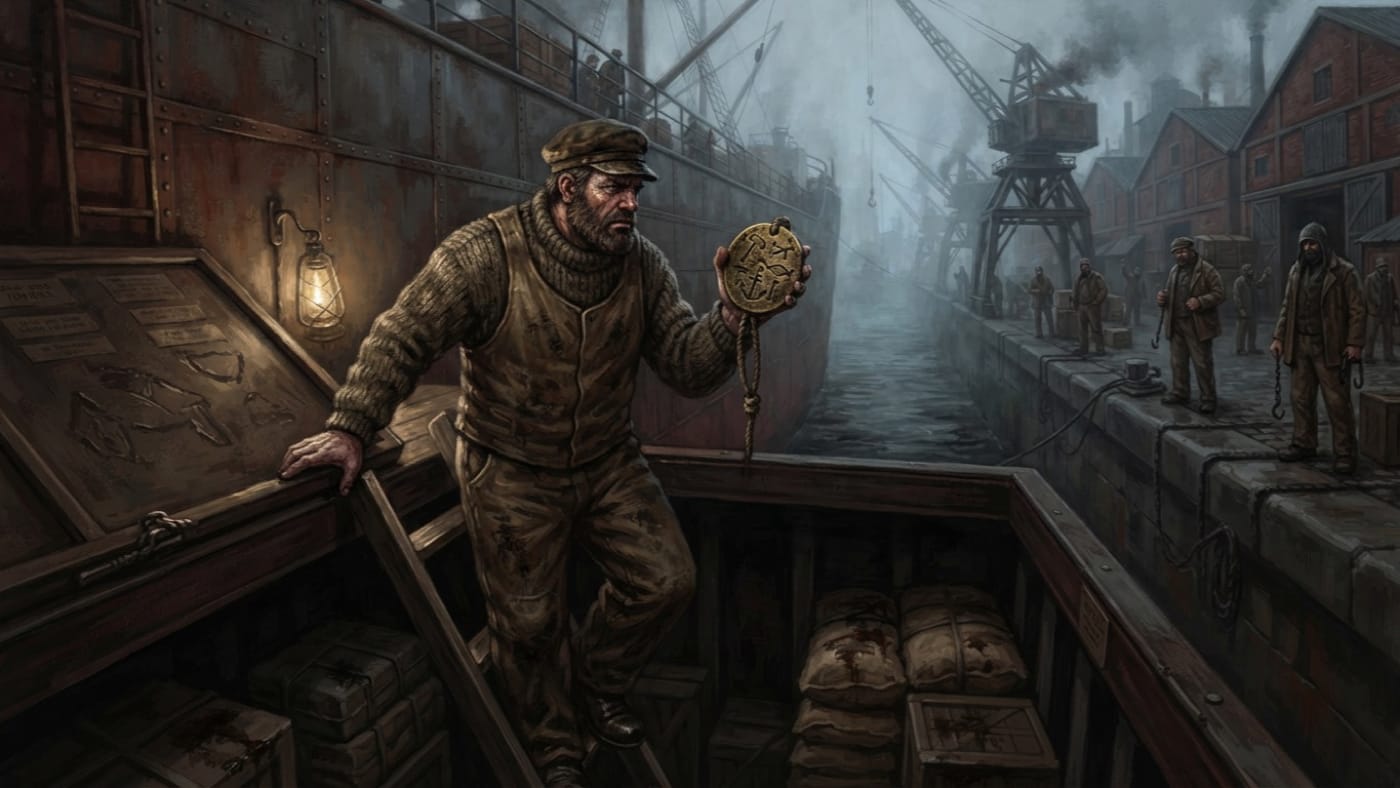
Hold-Order Token
A thumb below the hatch outweighs a signature above it
Hamburg's hold-order token certifies stowage fit for discharge. Its release divides hold and quay authority; senior holdmen may withhold it on protected hazard grounds while the Bureaus wait.
Codex Ref. XII.52.02-002
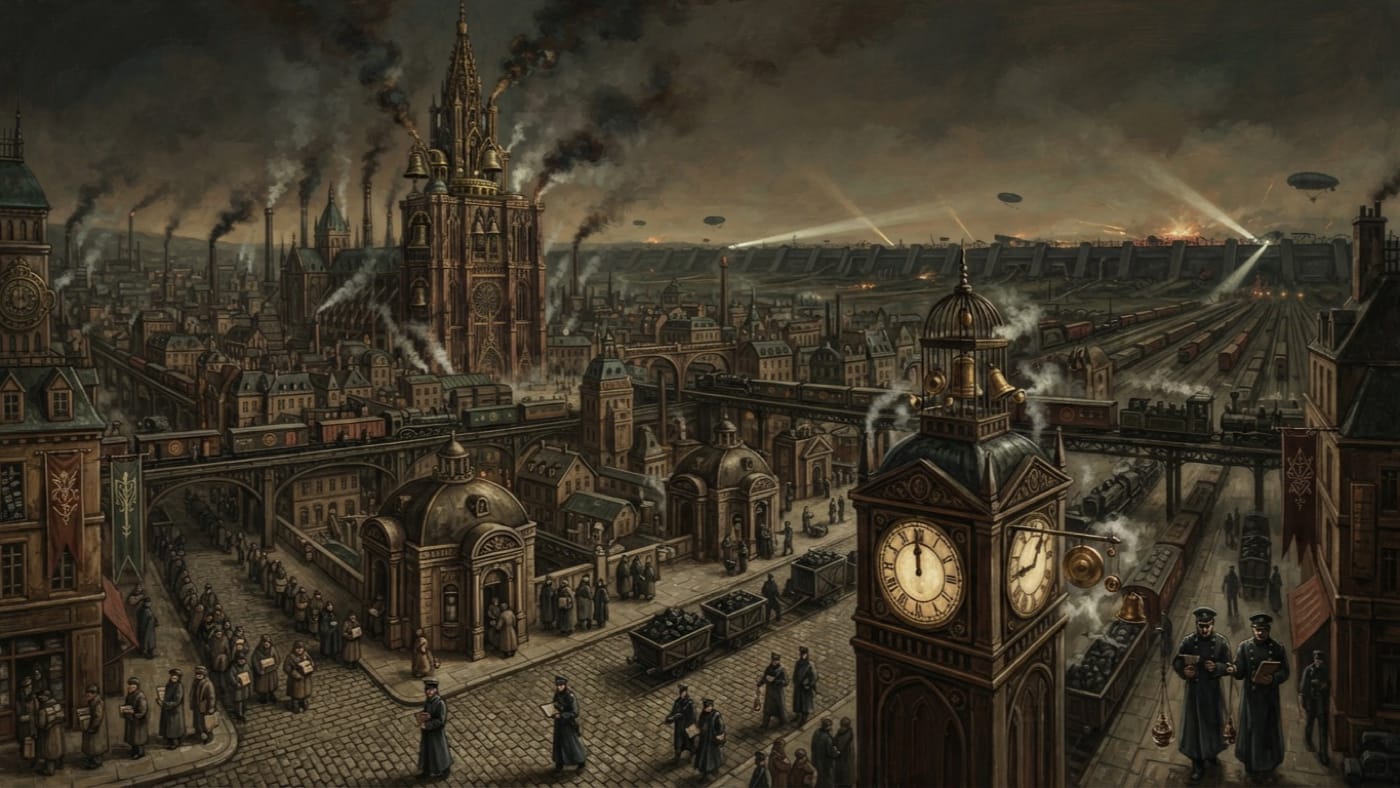
Holy Dominion
Your name is in a book. The book is in better repair than you are.
The Holy Dominion is the Synod's continental jurisdiction, surveyed in A.S. 201. From Strasbourg to the Sagittal Line, bells govern the hours, tithes feed the guns, and every soul must appear in a book.
Codex Ref. II.1.01-001
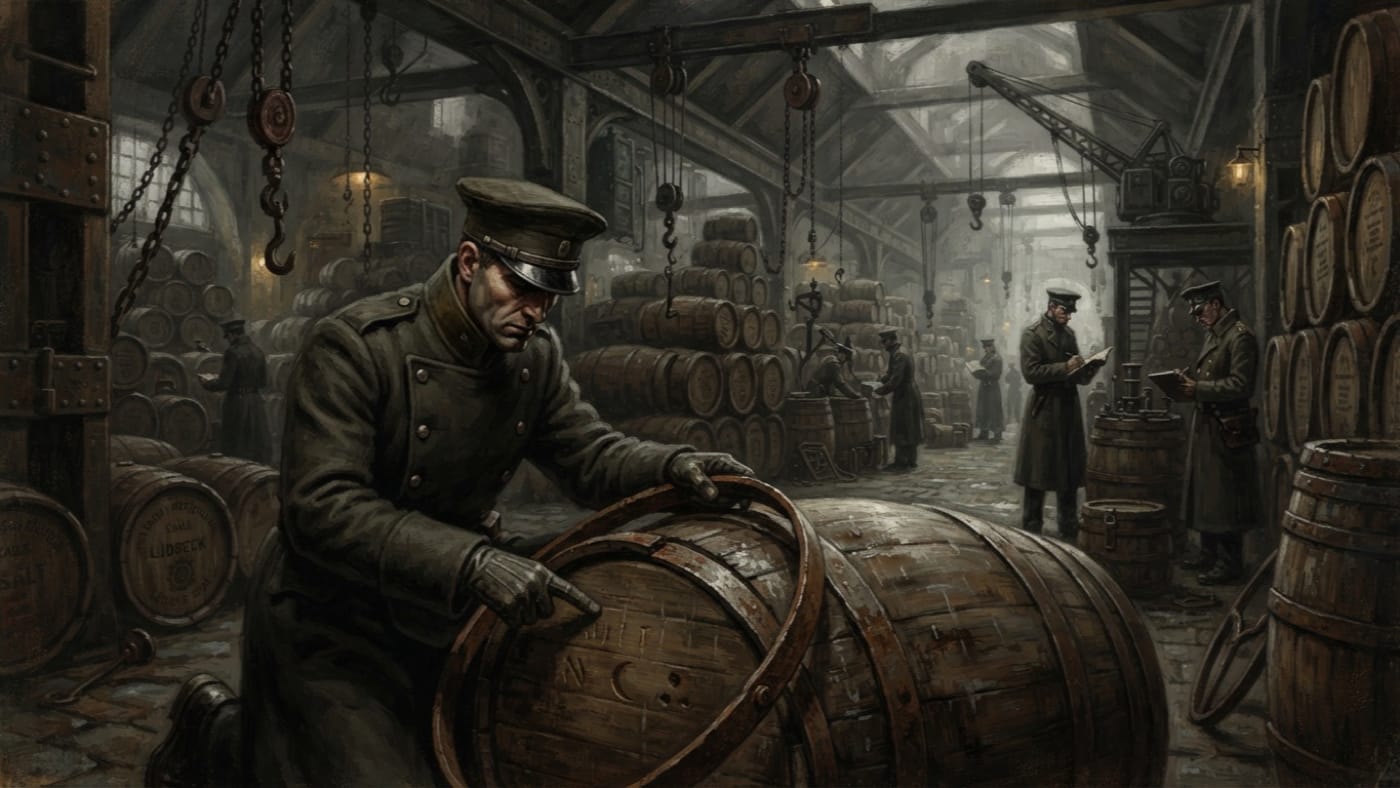
Hoop Codes
The private sign is forbidden; its approved shape is required
Lübeck's coopers wrote route memory beneath barrel hoops. Four meanings are recorded; the full grammar is not. After the Year of Smoke, private signs were prohibited and old shapes acquired respectable inspection names.
Codex Ref. XIII.1.26-004
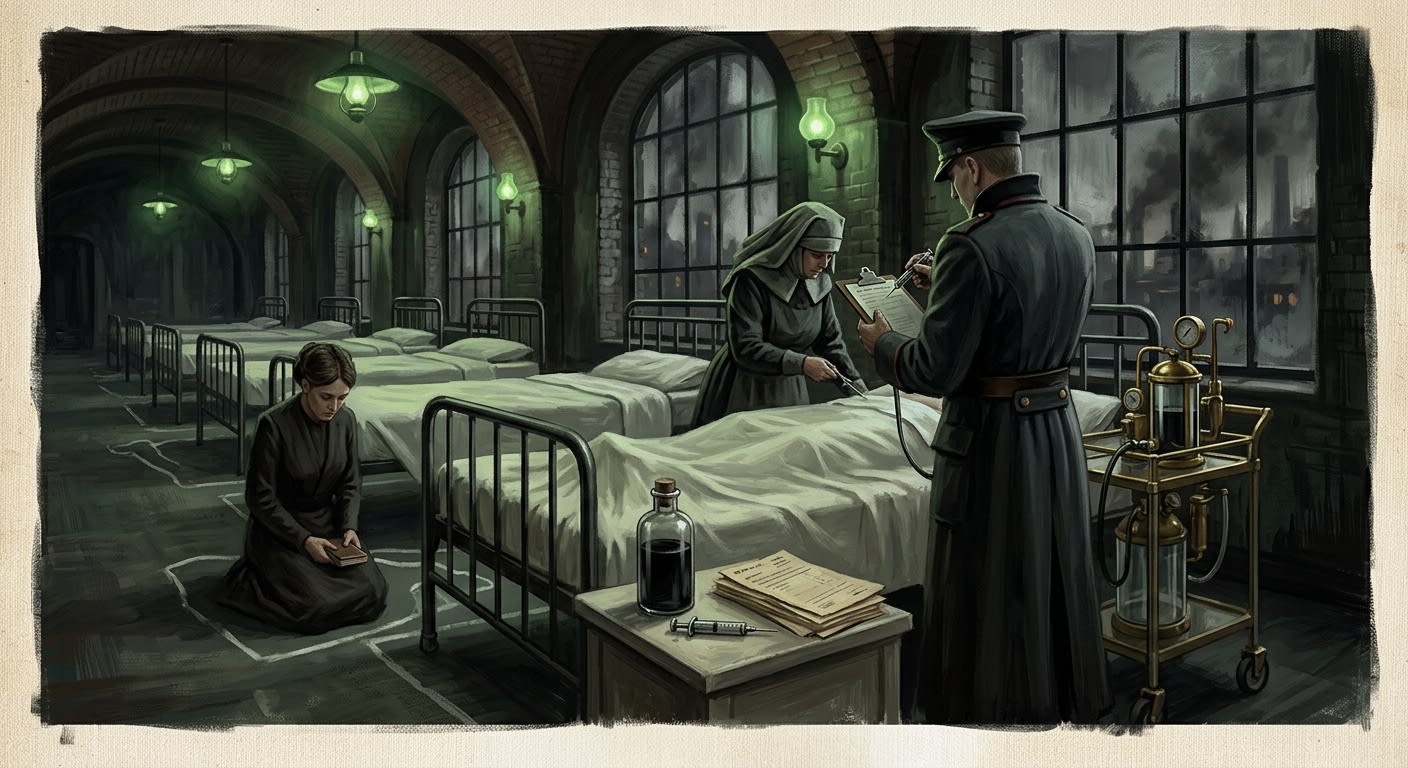
Hospices of Departure
Where Mercy warms the cup and counts the breath
The Hospices of Departure are Mercy's immaculate terminal rooms: clean linen, black elixir, family chalk-lines, final slips, and the doctrine by which the Synod makes death kind, lawful, useful, and recorded.
Codex Ref. XIII.1.88-112
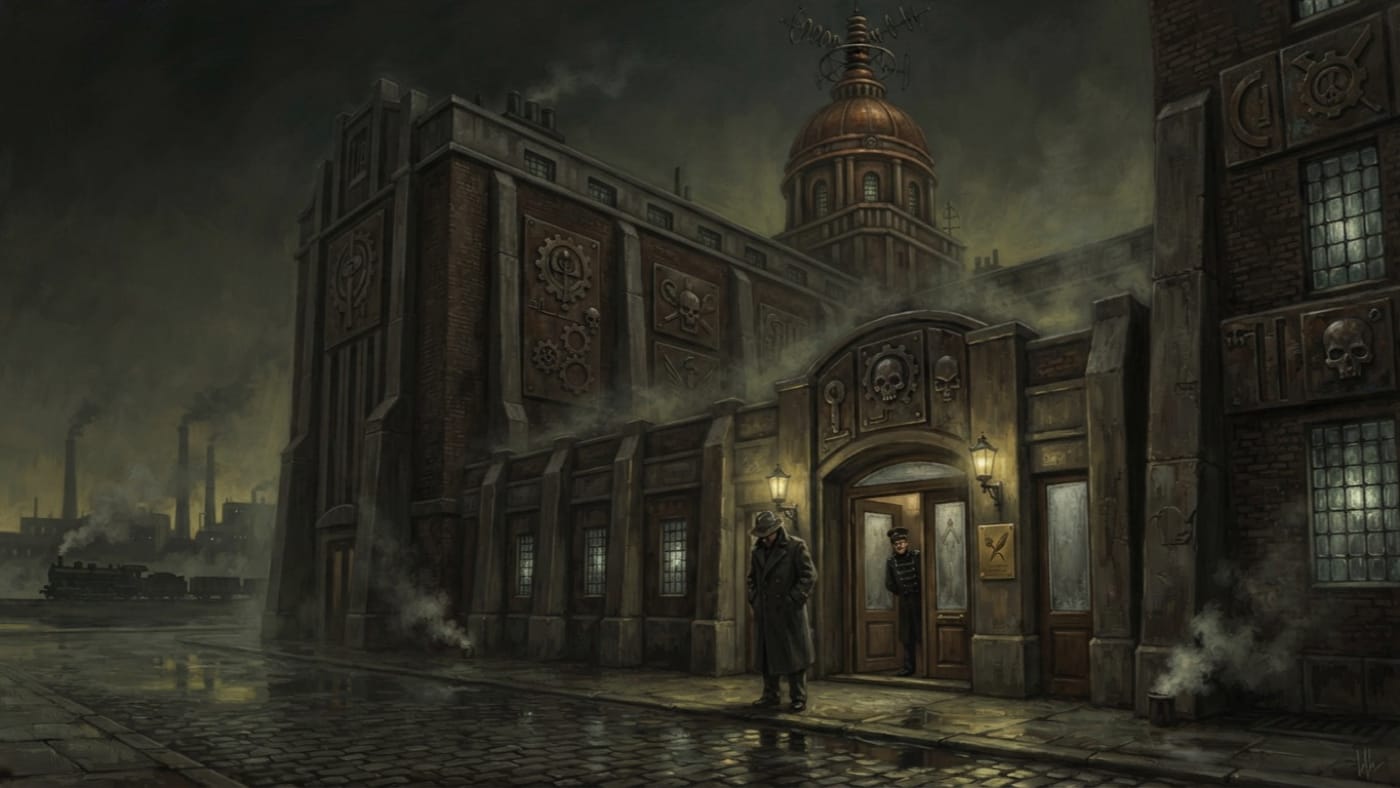
Hotel Sigismundus
Pilgrimage's waiting room on the bank that was supposed to be deaf
Pilgrimage's transit lodge in Warsaw's old city, recalled from my A.S. 197 visit: camphor, candle-wax, mildew, seven additional days, and my hearing of the Breathing on a bank that considered itself deaf.
Codex Ref. II.4.09-197
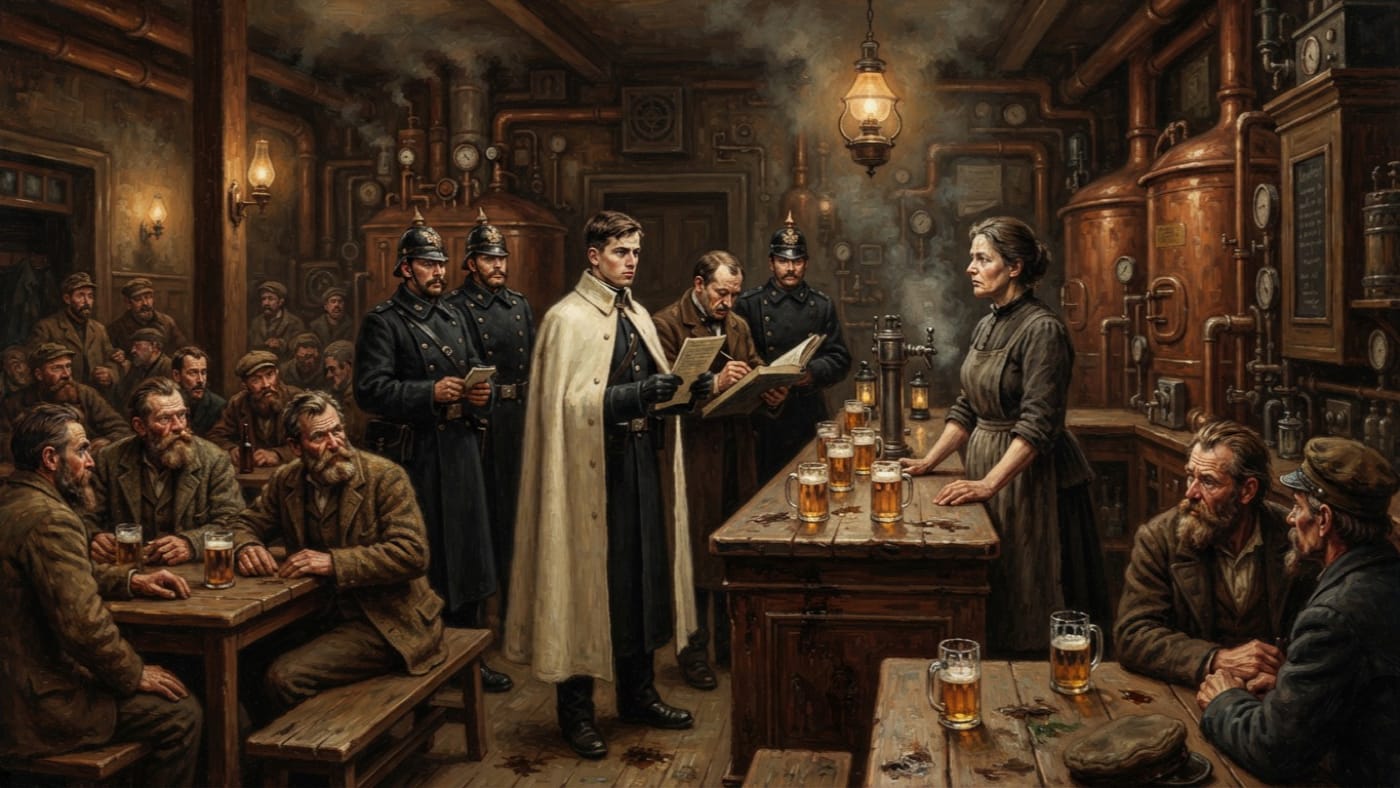
House of Eighteen Steps
Purity brought a curfew; the widow asked who would pay
An Old City beer-hall in Kanzleiburg where, during the A.S. 140 Curfew Standoff, a brewer's widow asked Purity who would pay for unfinished beer. The question survives; the inspectors' answer does not.
Codex Ref. II.3.18-140
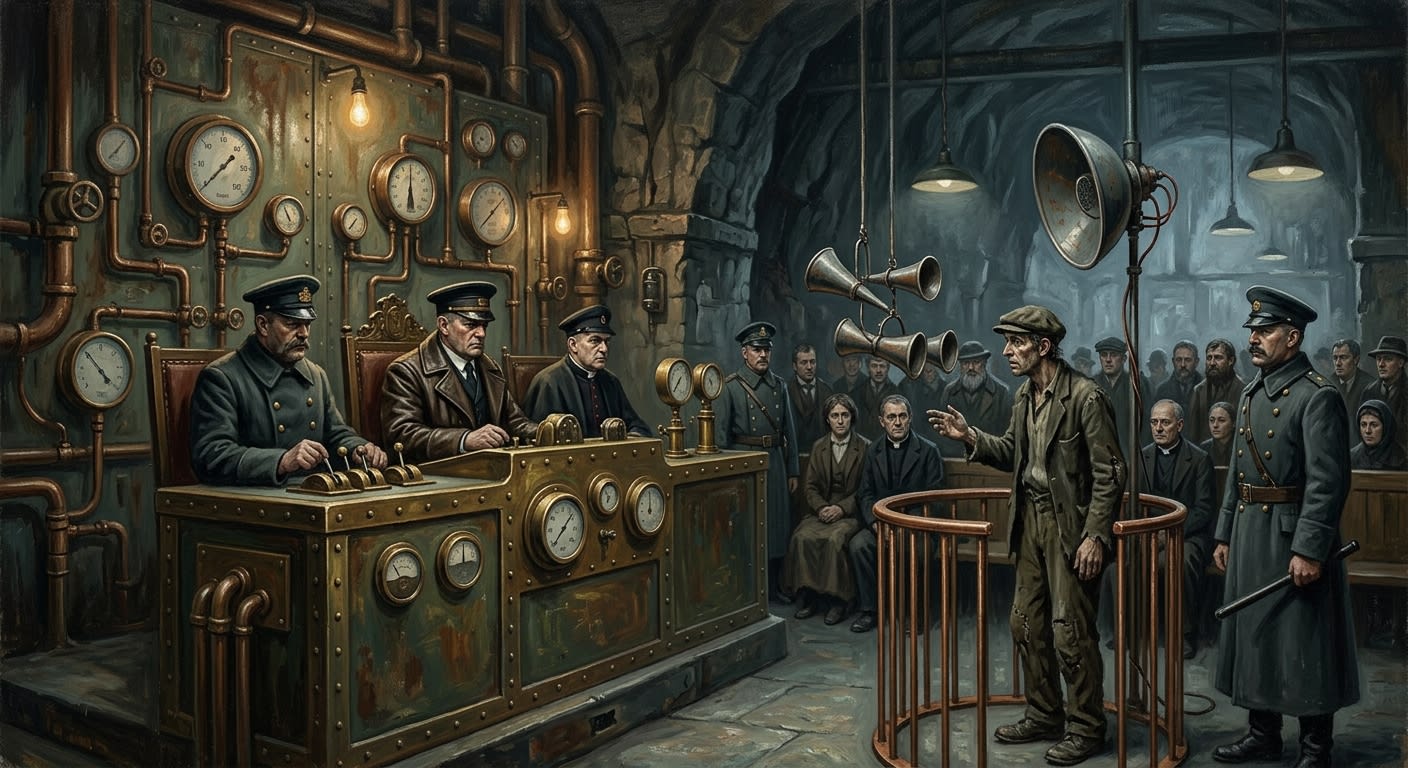
Hush Court
Where lungs become evidence and the ceiling signs the verdict
The Hush Court is Bastion-Irongate's acoustic tribunal: born from the Great Hush, sustained by pressure gauges, silence crimes, voice licenses, identity hearings, and every breath the mountain permits to become evidence.
Codex Ref. XIII.1.88-097
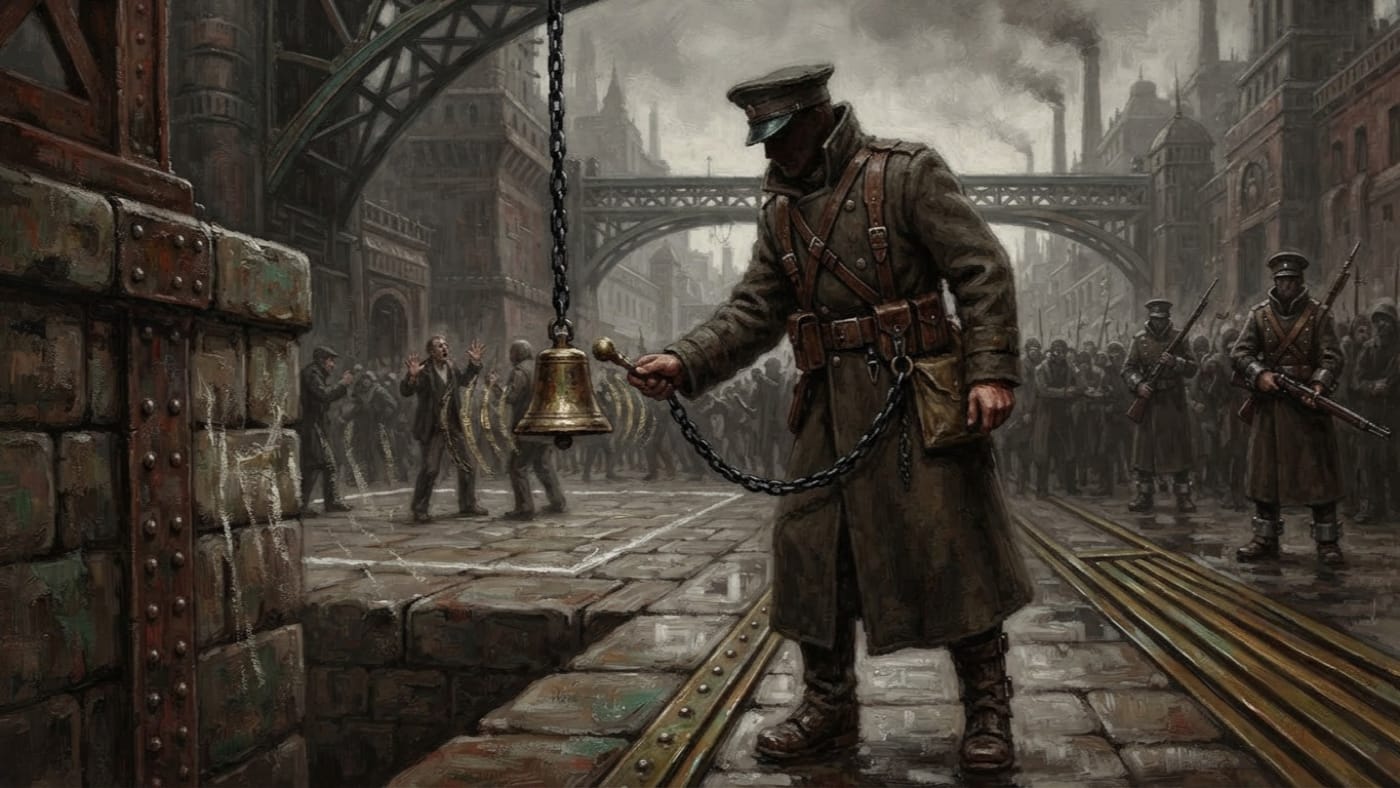
Hymn-Chime
The law stops listening on time
A.S. 201 survey of the circuit bailiff's chained chime: four marks close opening, testimony, rebuttal and ruling within one creed-hymn. The law stops listening on time.
Codex Ref. III.2.04-1409
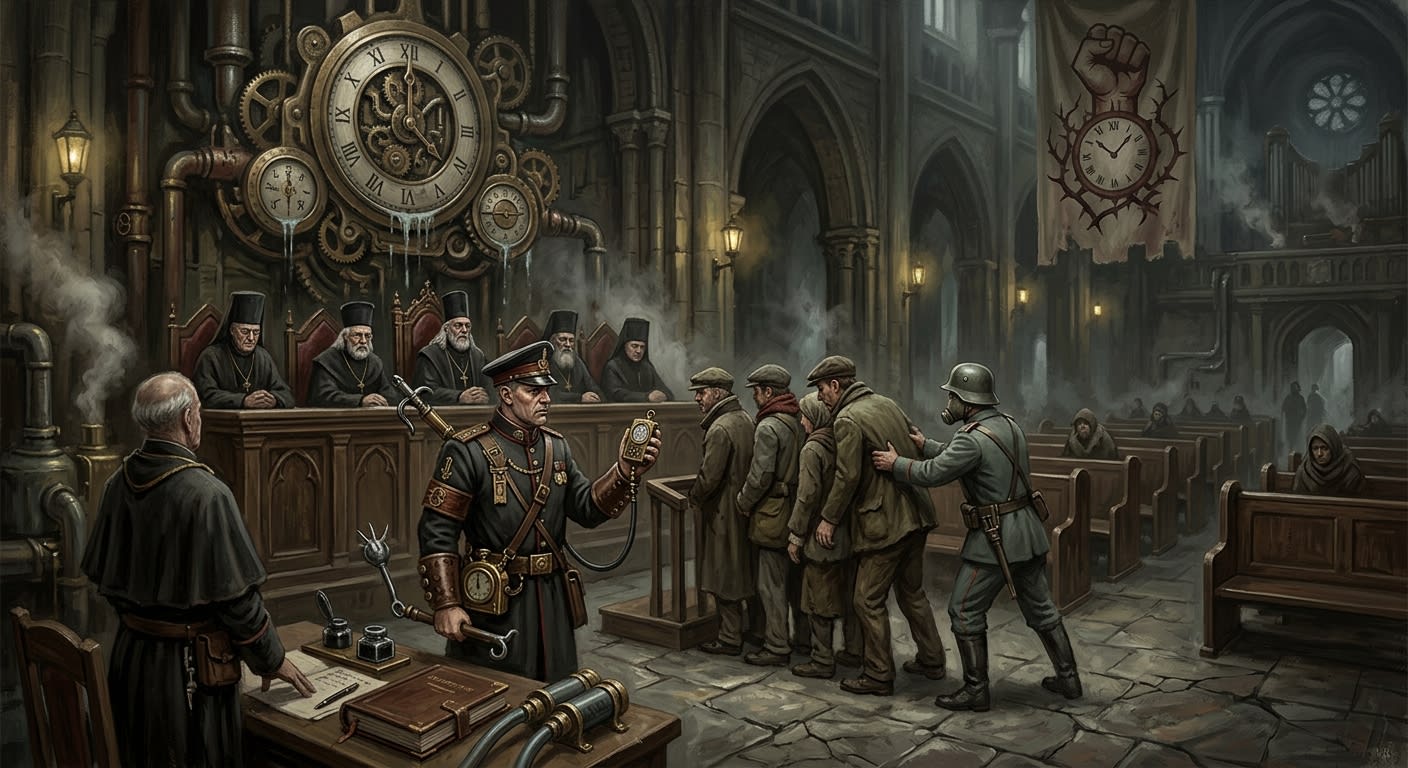
Hymn-Length Reforms
Four minutes of law, because the fifth minute belongs to the mob
The A.S. 141 reforms compressed circuit trials into one creed-hymn, turning time into a bailiff's weapon after the Road Riots taught the Synod what delay can do.
Codex Ref. VII.2.10-095
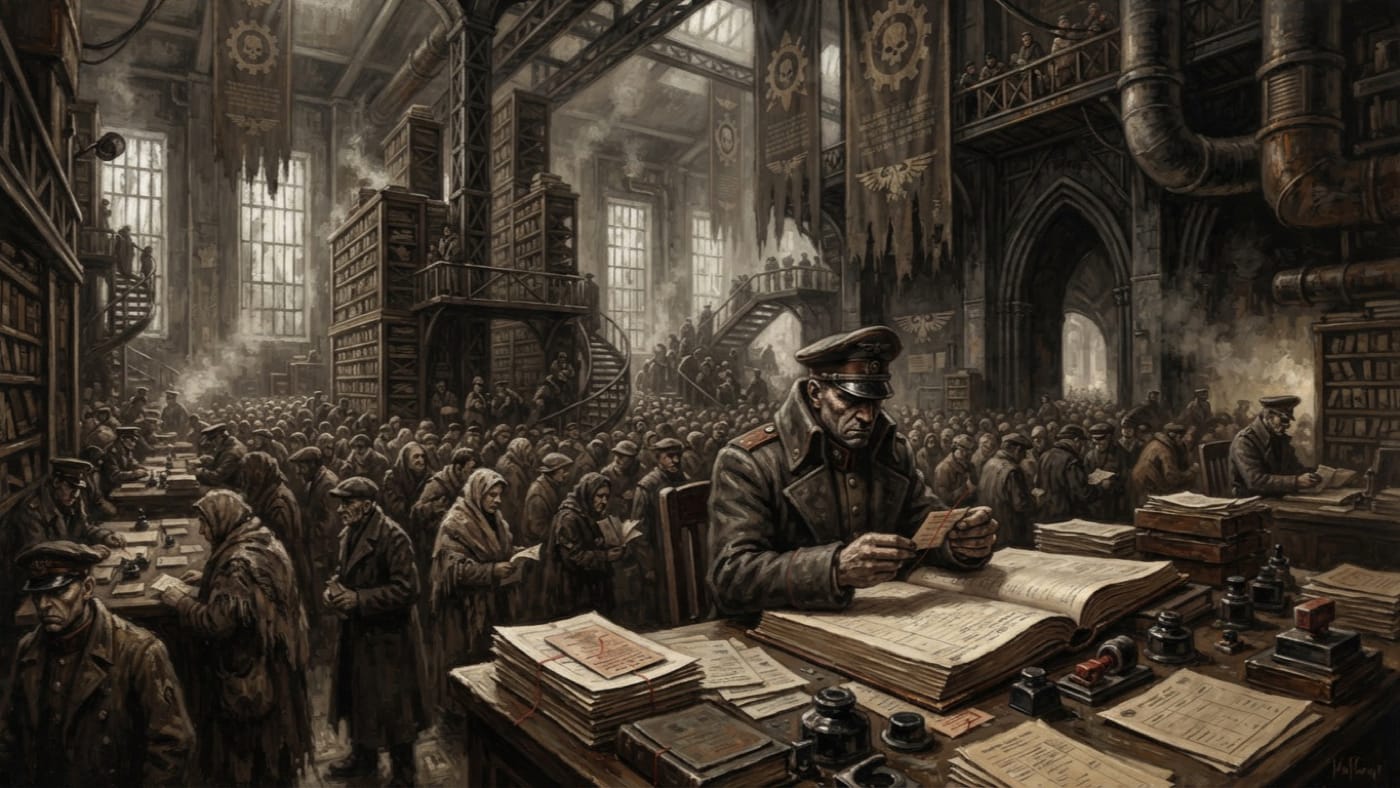
Identity Fraud
A stolen name buys bread; an authorised alteration earns a salary
Identity Fraud steals the registered person: names, ration rights and passage permissions. Standing Order 14-M gives offences of sufficient degree a wall; authorised alterations remain daily duty.
Codex Ref. XIII.1.97-1422
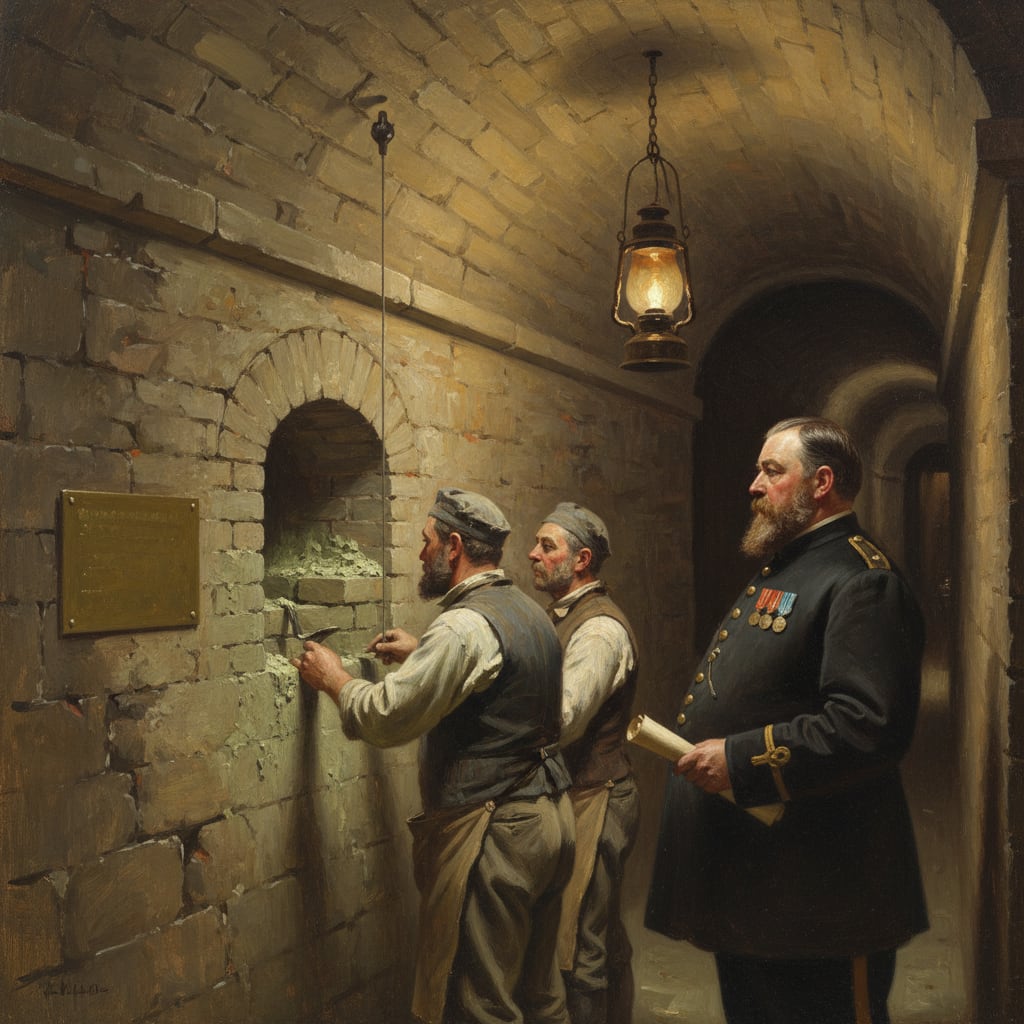
Immurement Mason
The Punitive Construction Auxiliary: On the craft of permanent deterrence, the condemned as structural element, and the mortar that does not negotiate
~2,400 licensed Masons who turn living bodies into load-bearing lessons; three ranks, two factions, one Standing Order that recommends no air provisions; the condemned ceases to be a problem and becomes a structural element.
Codex Ref. XII.22.01-001
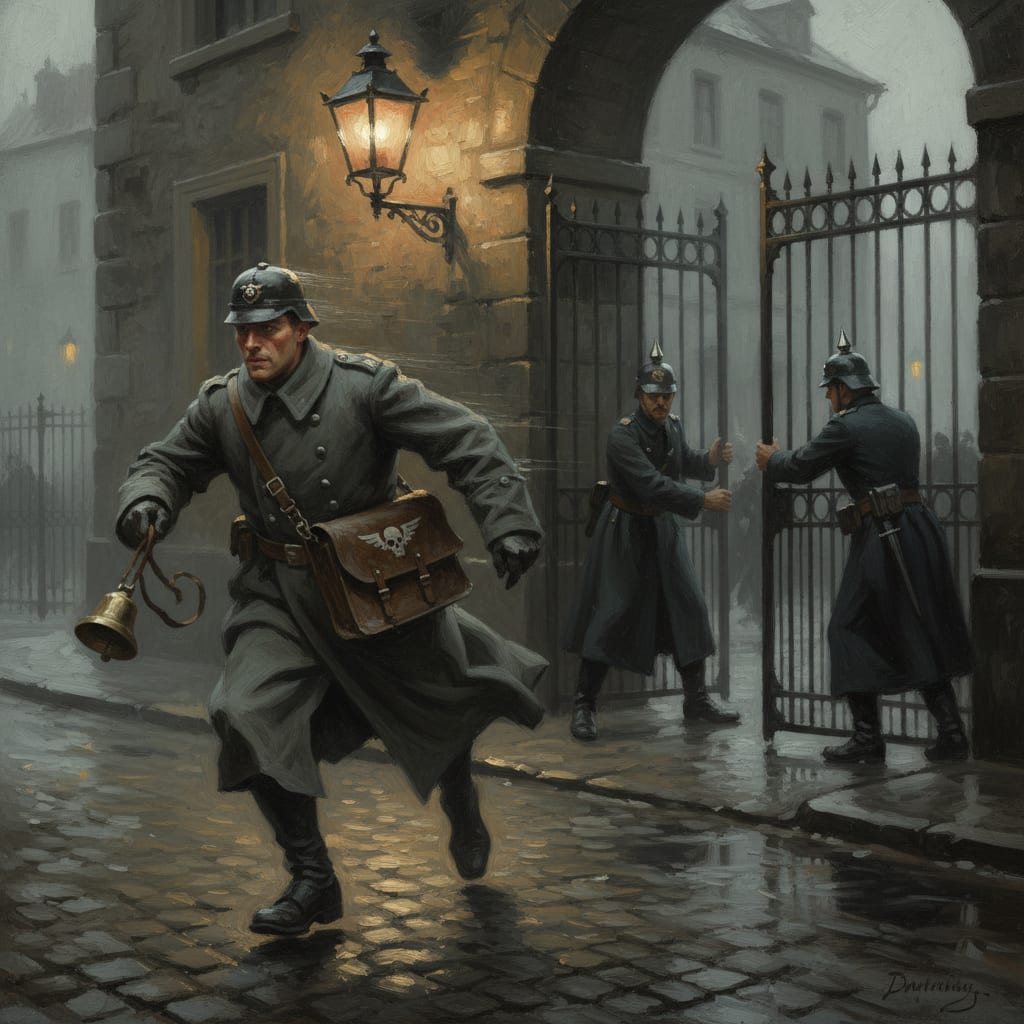
Index Damnatus Runner
On couriers who carry condemned names faster than the condemned can flee
The Bureau of Purity's courier corps: eleven hundred Runners who carry condemnation packets from Strasbourg to every gate, ferry, orphanage, and shrine before the damned can cross a border. Speed is doctrine. Late is the same as false.
Codex Ref. XII.23.01-001
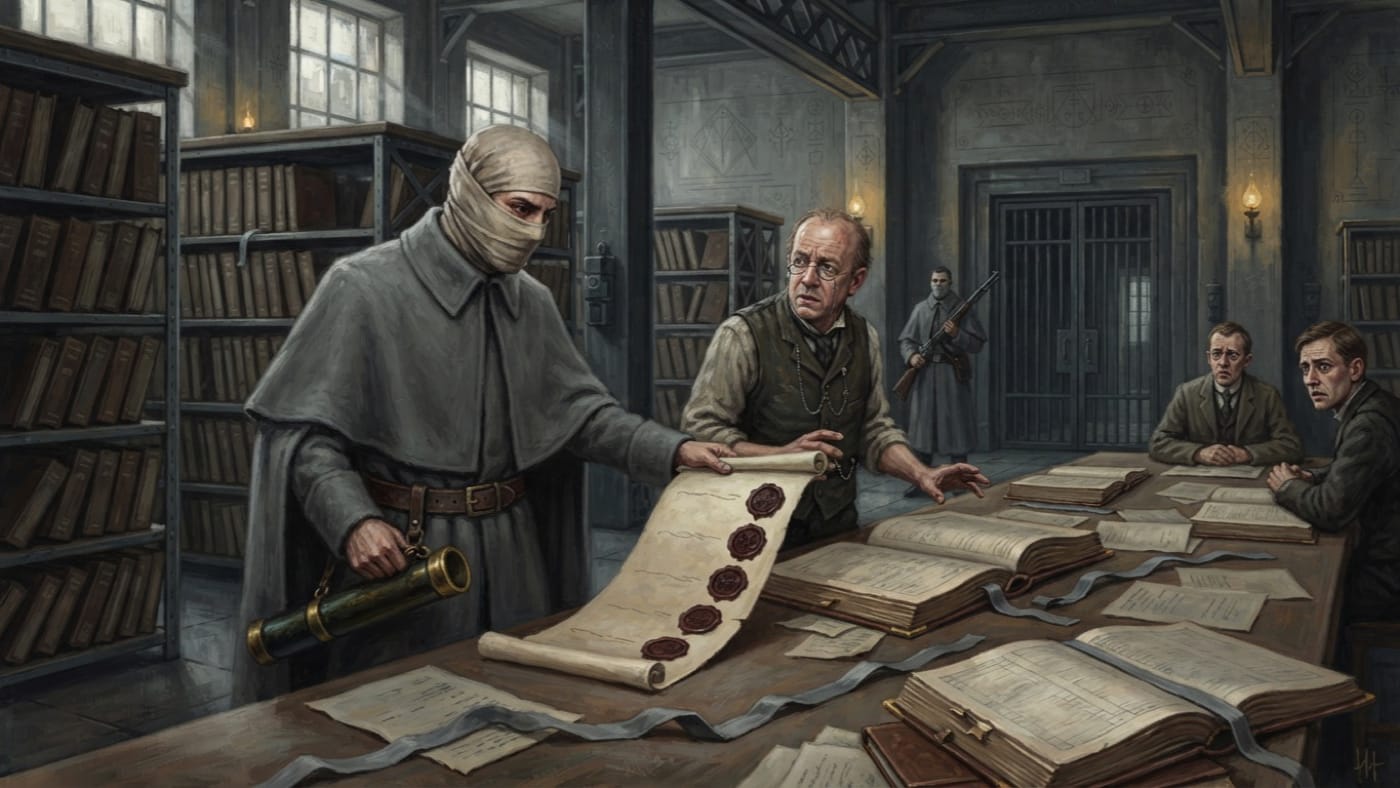
Indiction Writ
Five seals, five powers, and an appeal that waits
The Indiction writ lets Records seize ledgers, enclose witnesses and suspend names before any charge. Five seals announce that the Bureau has noticed; appeal waits until reconciliation.
Codex Ref. XIII.1.06-003
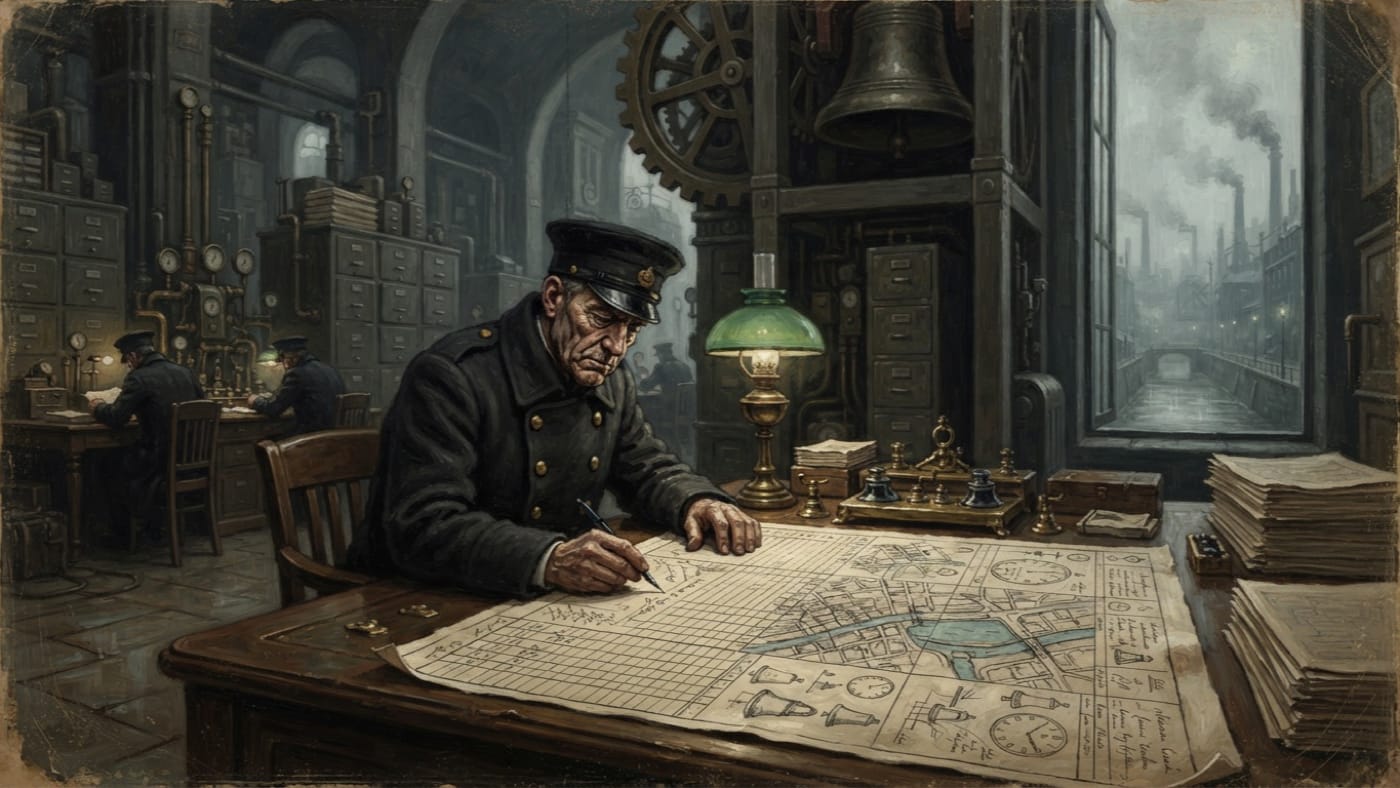
Integrated Route and Bellway Table
The street, the sound, and the name to blame
RT-1 and its later revision RT-1b join routes, bells and hazards on one sheet under the A.S. 129 Route-Timing Concordat. The living officer signs; the canal supplies the consequences.
Codex Ref. XIII.1.129-001
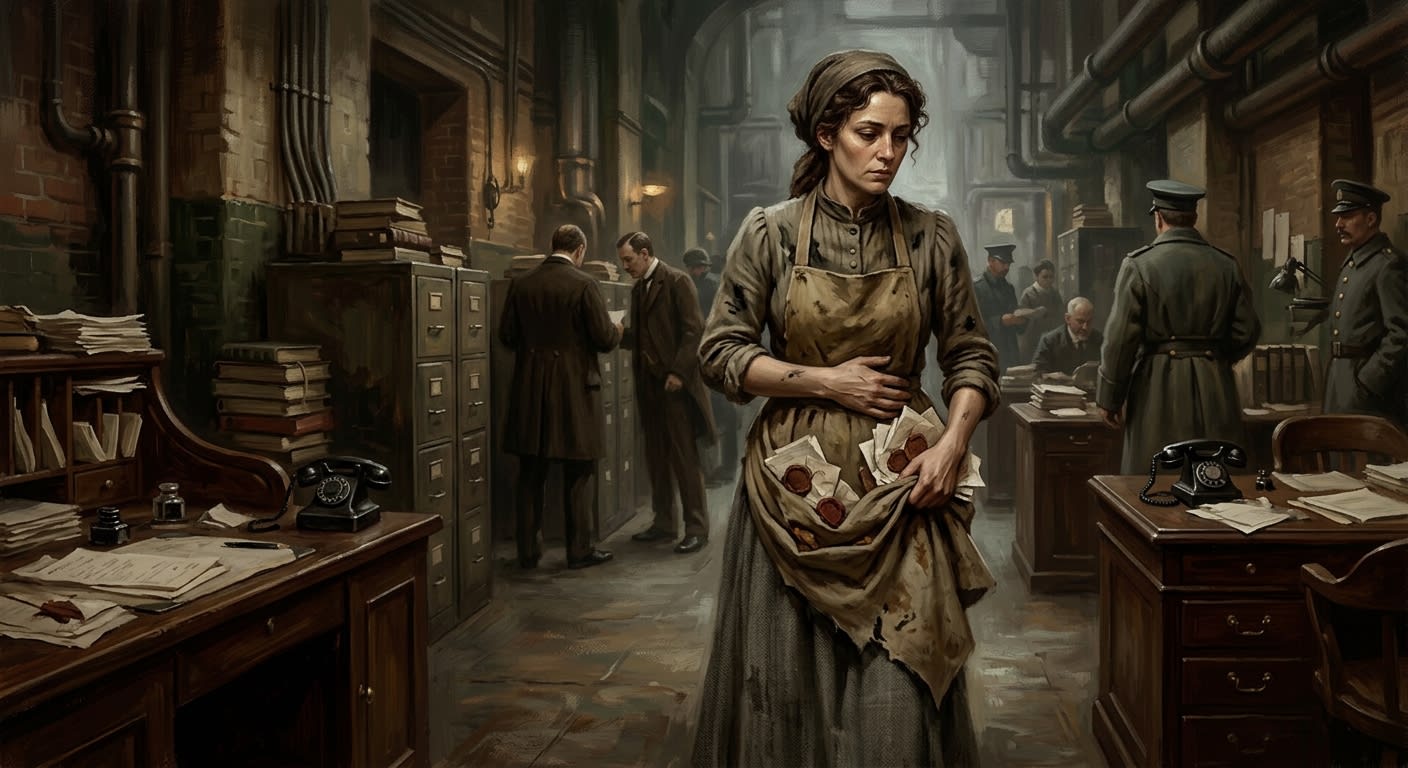
Irena Vale
The apron taught the stamp room humility
Warsaw-born stamp-room clerk Irena Vale carried wax impressions out of Bastion-Brest in an apron, turning blank papers into usable treason.
Codex Ref. III.2.01-074
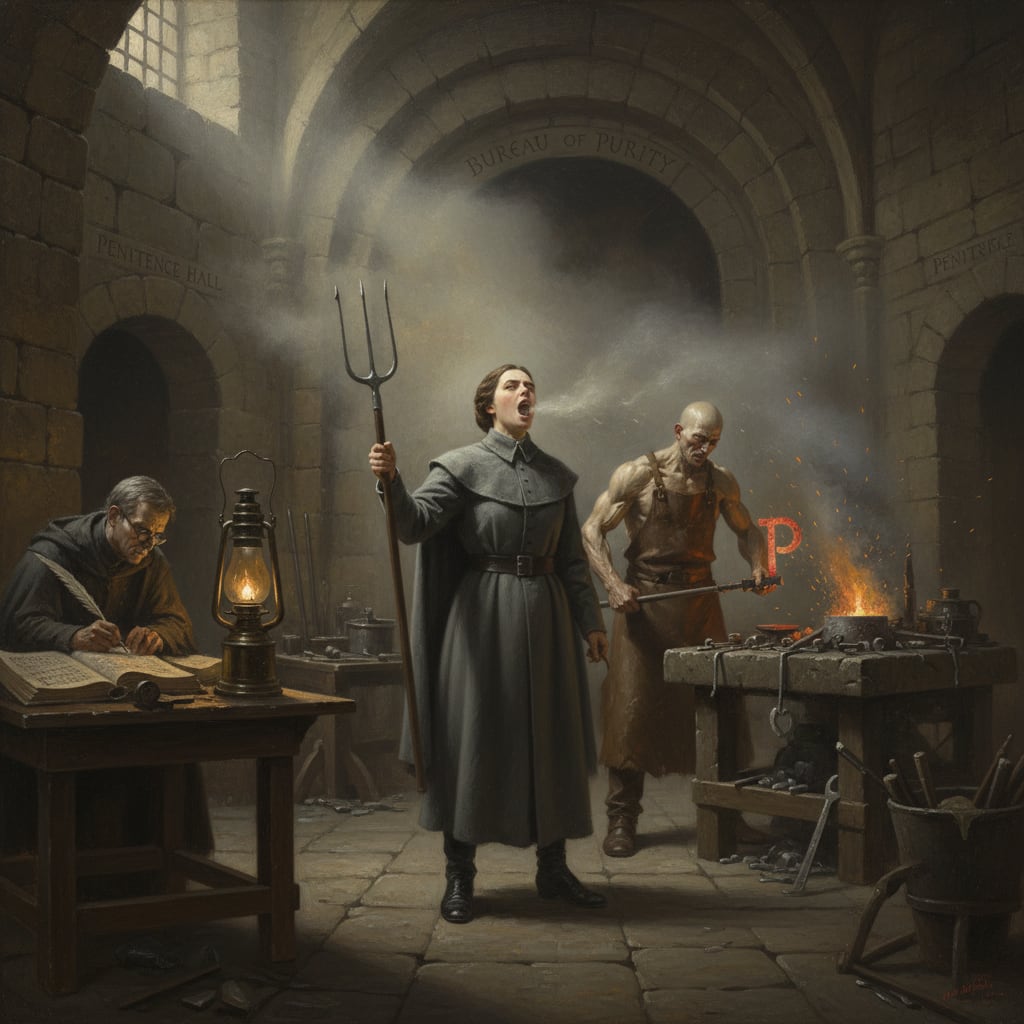
Iron Choir Brand-Singer
Because screaming is imprecise.
Licensed custodians of the note that steadies the iron — the Brand-Singers who hold pitch through Bureau of Purity penitence rites so that the resulting inscriptions are legible and the confession, accordingly, valid.
Codex Ref. XII.24.01-001
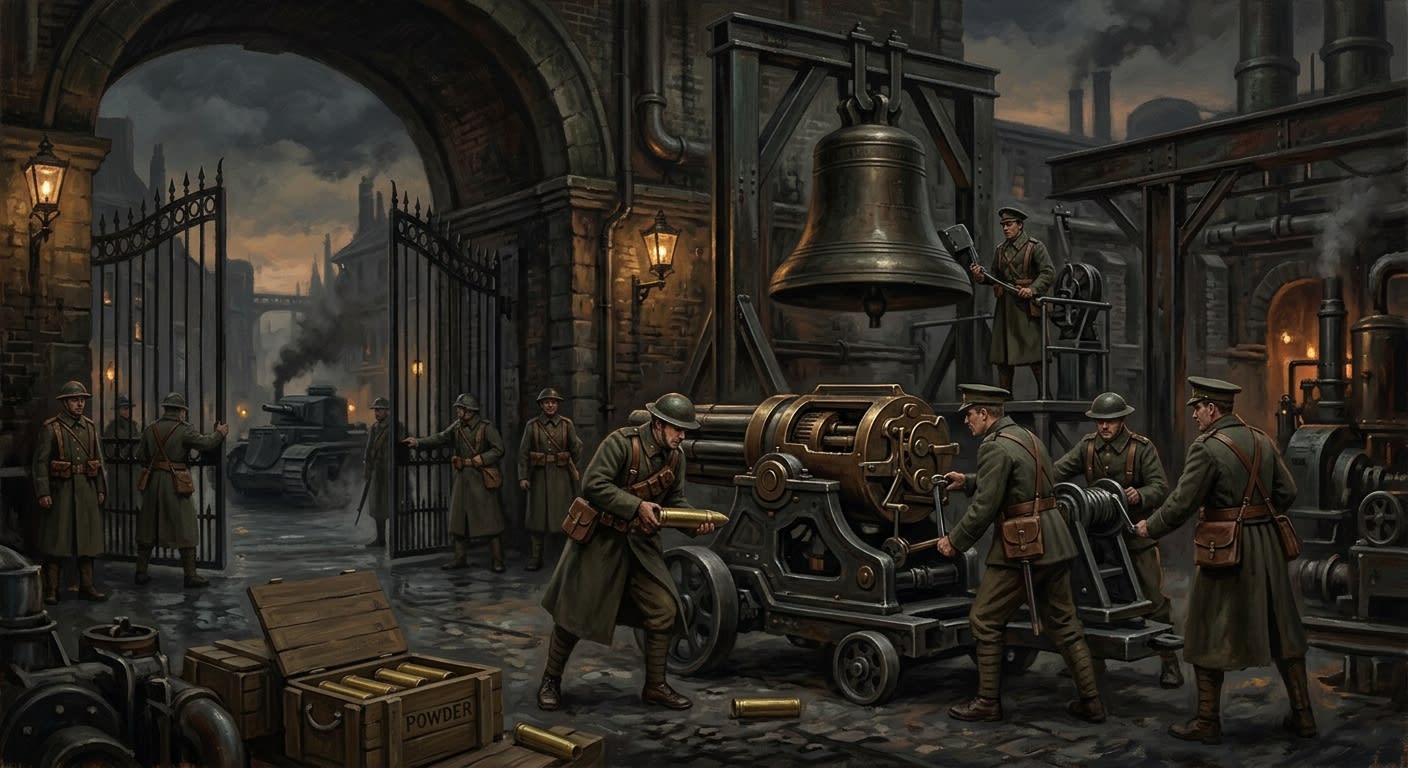
Iron Vespers
Bronze orders the night to become useful
Iron Vespers is the Synod's martial evening peal: seven strokes that lock gates, open powder, transfer custody to night, and teach soldiers that fear obeys better when bronze gives the order.
Codex Ref. XIII.1.62-004
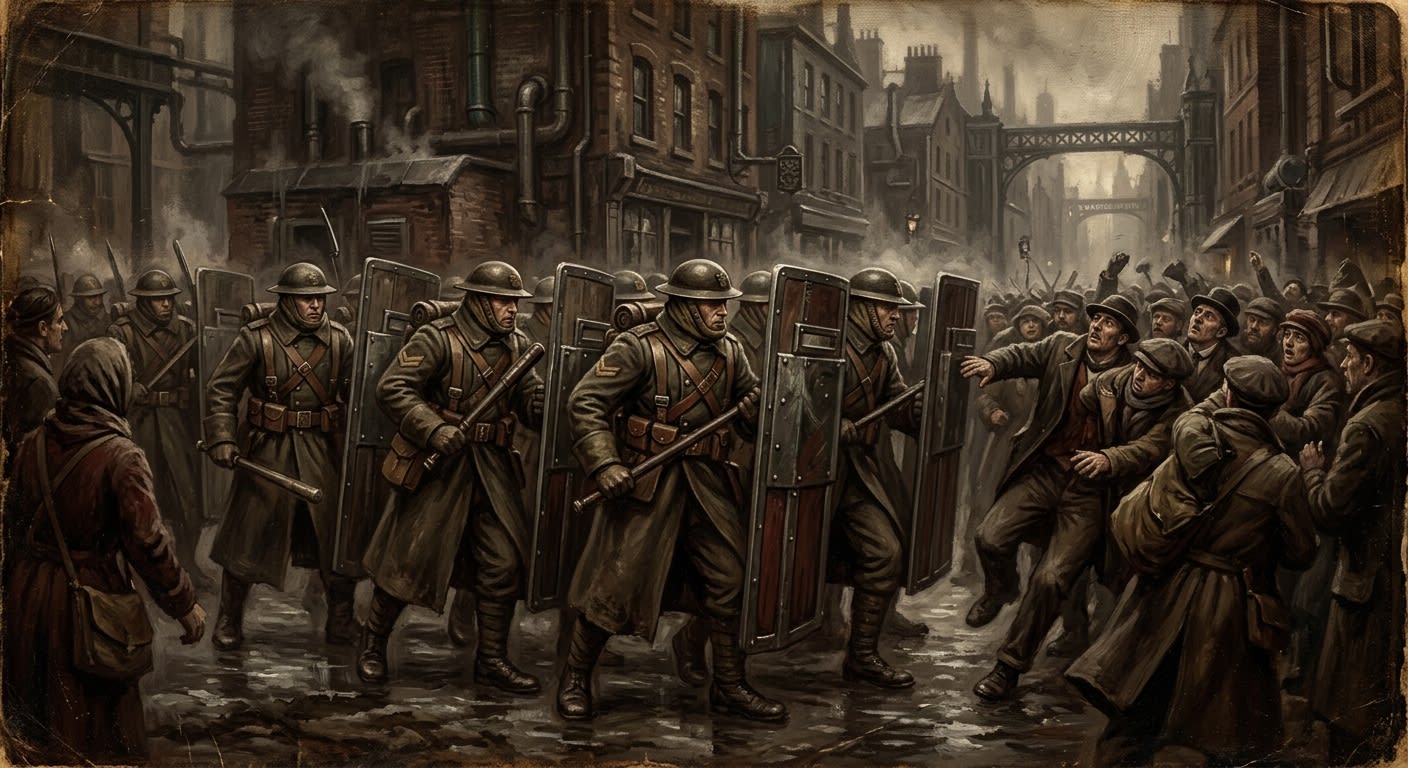
Iron Wedges
Fear is the cheapest fence ever devised by government
Cadence Corps hard-step faction that opens crowds by baton and shield, preventing crush deaths while teaching the street better methods of hatred.
Codex Ref. XII.7.04-001
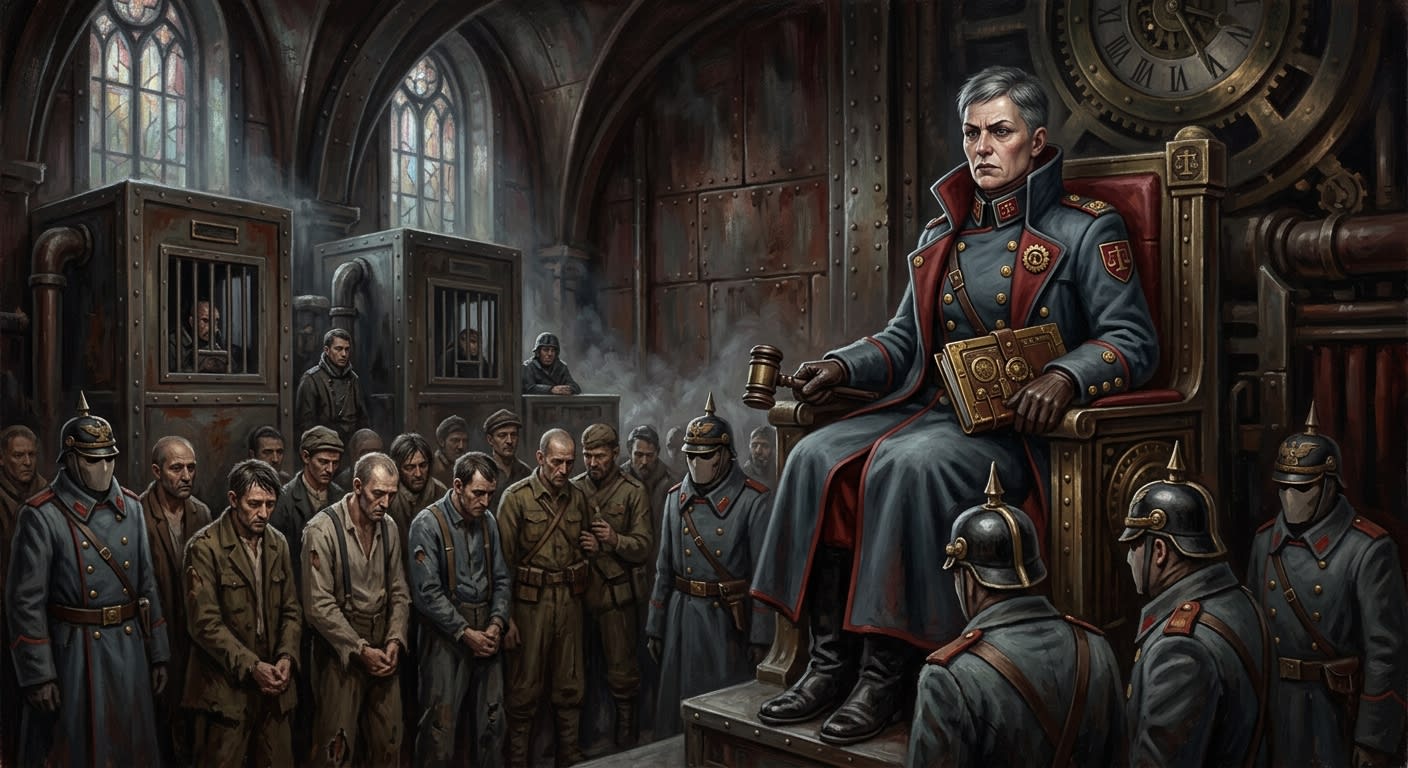
Judge Elsbeth Krail
The woman at mid-span, where mercy is not a jurisdictional category
Presiding Judge Elsbeth Krail governs Bastion-Brest's Bridge Tribunal with exact law, sealed booths, nineteen arrests, and a silence even Doctrine cannot casually overrule.
Codex Ref. III.2.01-092
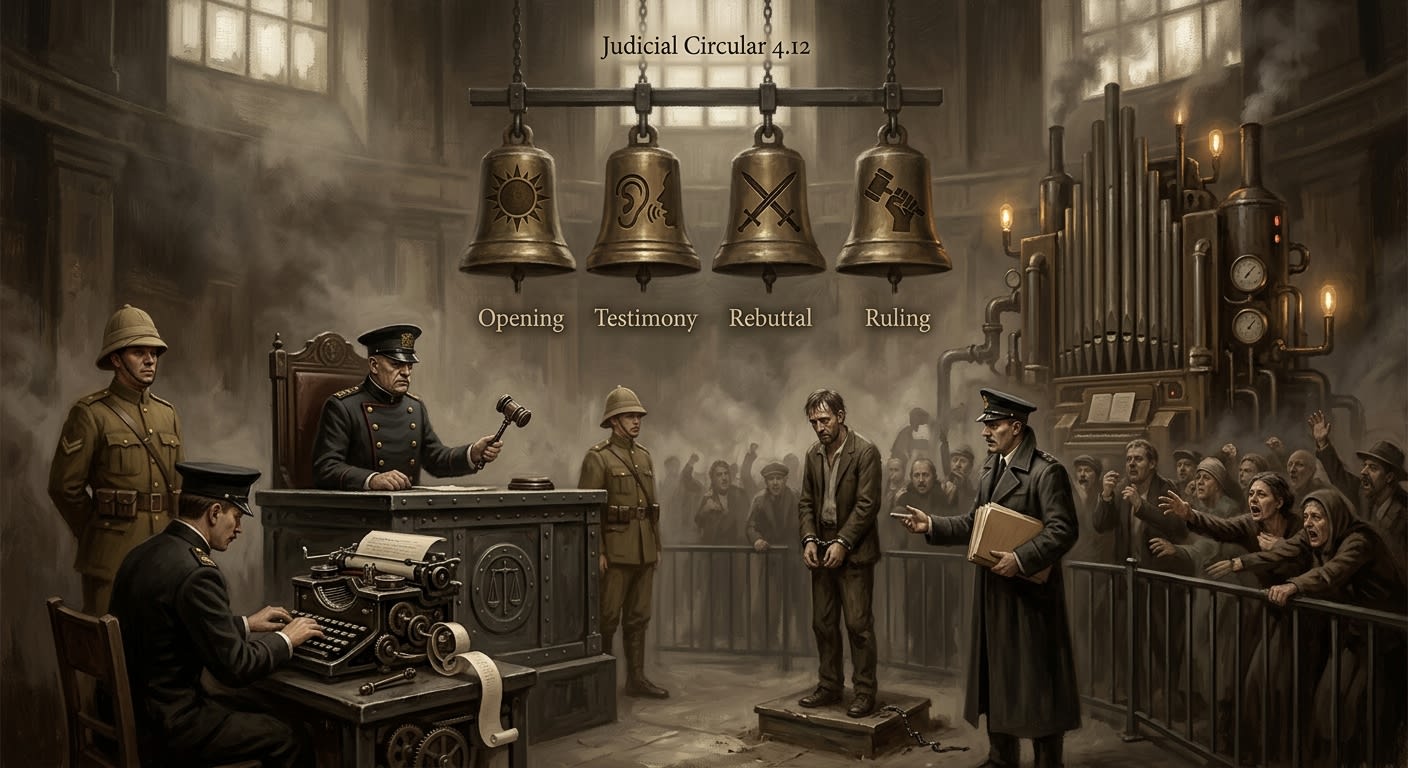
Judicial Circular 4.12
Four minutes for law to wound before the road learns its hands
Judicial Circular 4.12 compressed roving circuit trials into one creed-hymn: opening, testimony, rebuttal, ruling — four chimes by which law outruns crowds, mothers, mercy, and its own exposed ankles.
Codex Ref. XIII.1.91-141
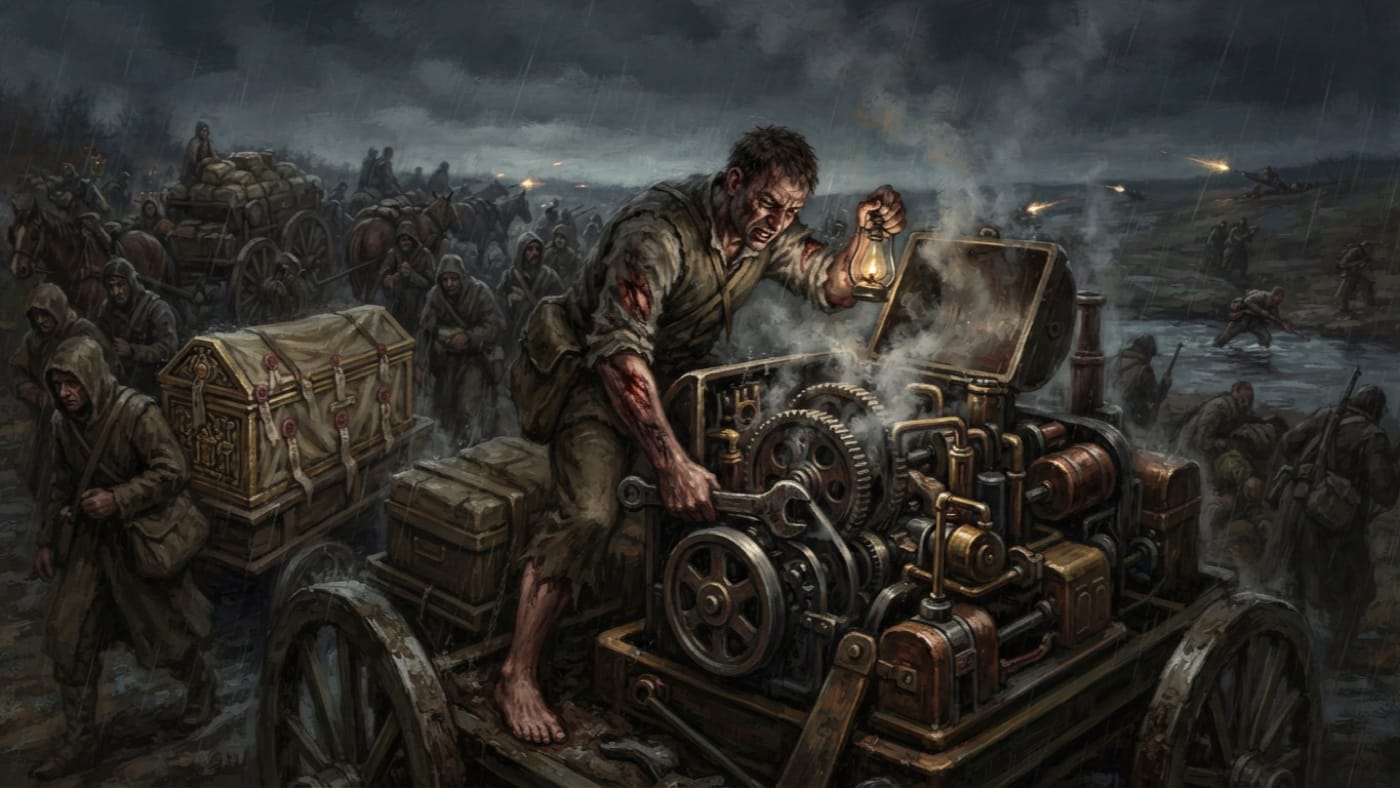
Kalnik Restart
Eight strokes, one crossing, and eleven years on the books
In A.S. 48, Edrin restarted a Kalnik Road generator with wrench and Eight Strokes. The wounded crossed; he died three days later. The engine served eleven years, which Engineering considers a verdict.
Codex Ref. VII.8.10-052

Kanzleiburg
The name is paint; the machine beneath it has run Prussian since A.S. 95
Berlin absorbed, renamed, and set to work — Kanzleiburg is three million souls, sixty trains per day, and the administrative brain of every military operation between the Baltic and the Carpathians. The Synod gave it a new name; the Prussians kept running it.
Codex Ref. II.4.09-006
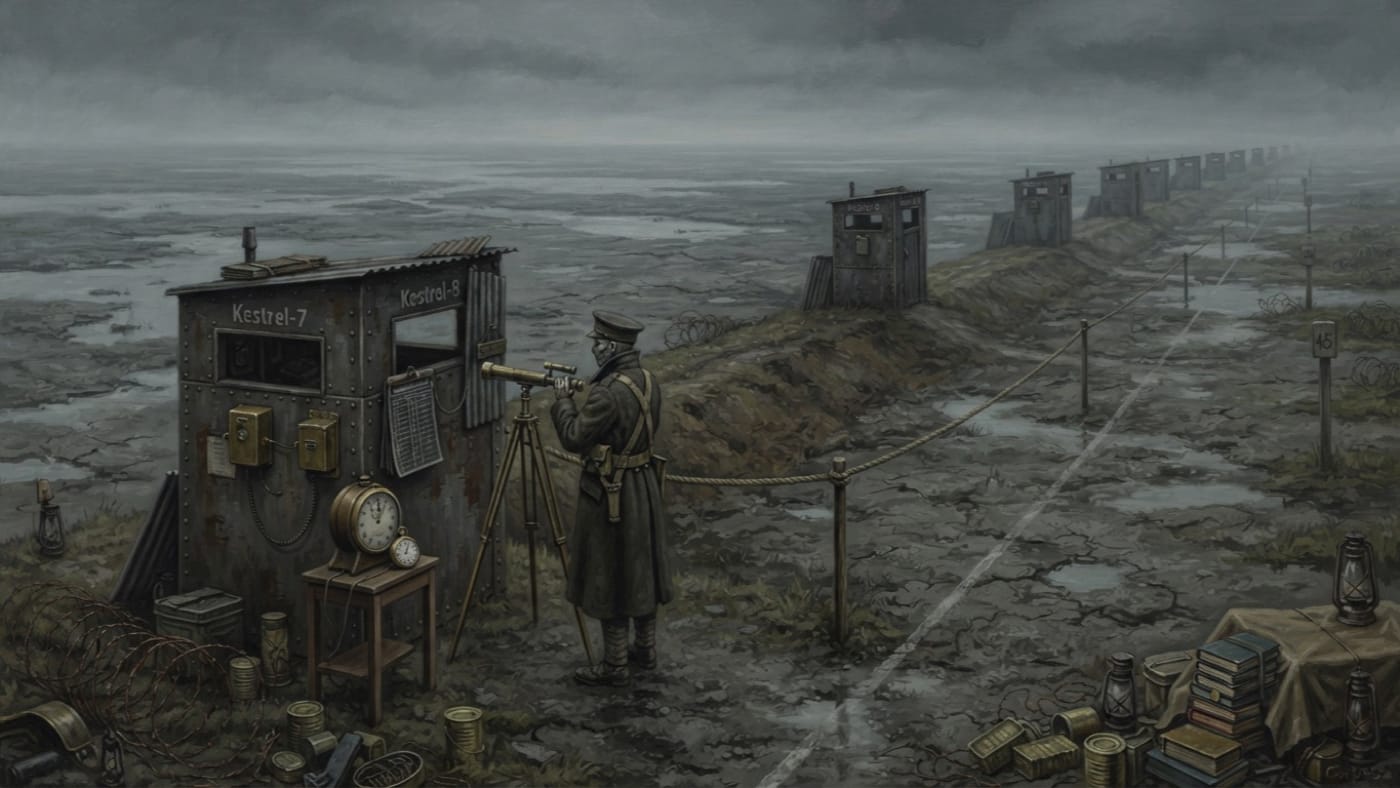
Kestrel Line
Fourteen posts to measure what nobody can stop
Fourteen numbered posts watch the Blightmarsh. The A.S. 201 return lists three unnamed vacancies; War supplies the numbers and leaves readiness uncertified.
Codex Ref. II.4.09-1533
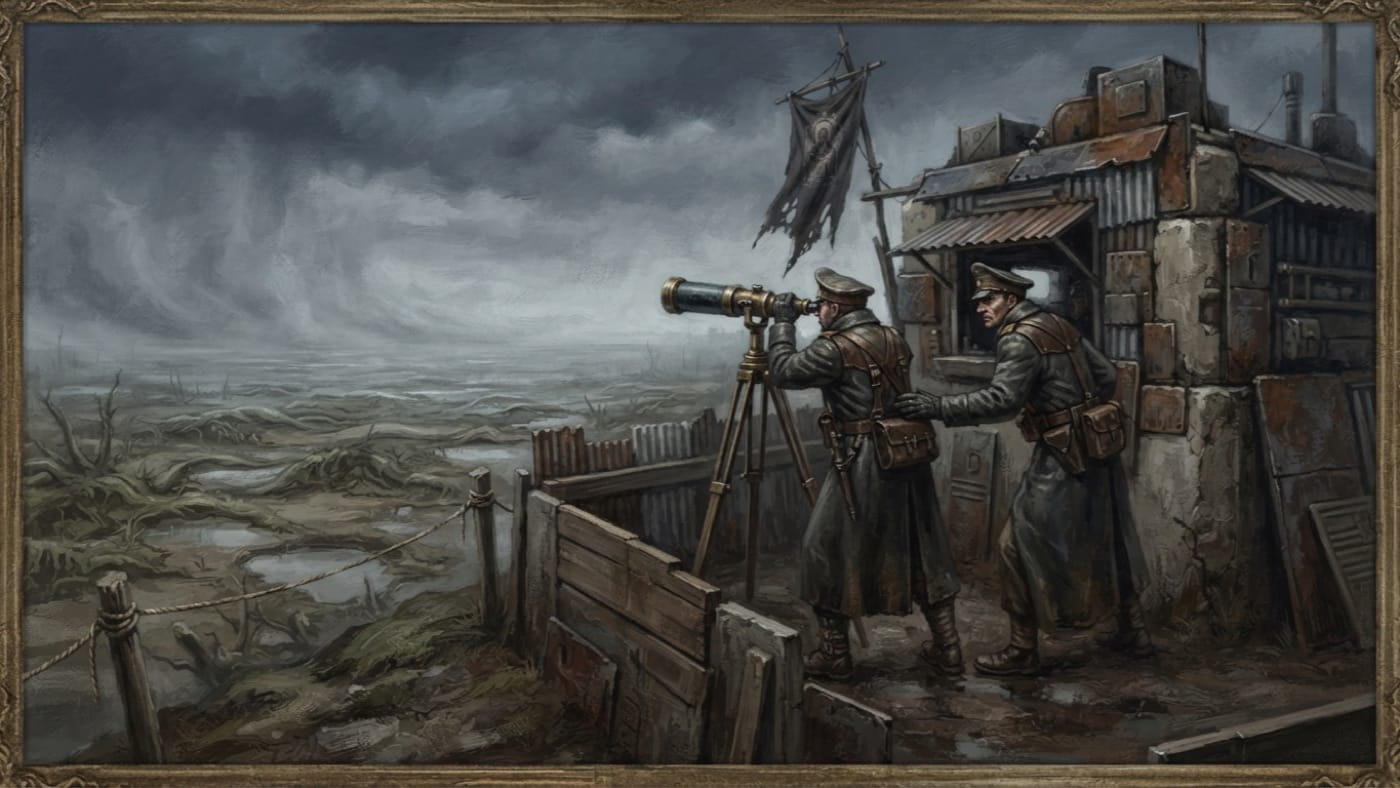
Kestrel-9
Where looking is duty and knowing when to stop is judgment
Kestrel-9 watches the western Blightmarsh perimeter. During my A.S. 199 inspection, Corporal Drennan interrupted eleven minutes of fascination with one hand at my elbow. His judgment earned no public commendation.
Codex Ref. II.6.05-009
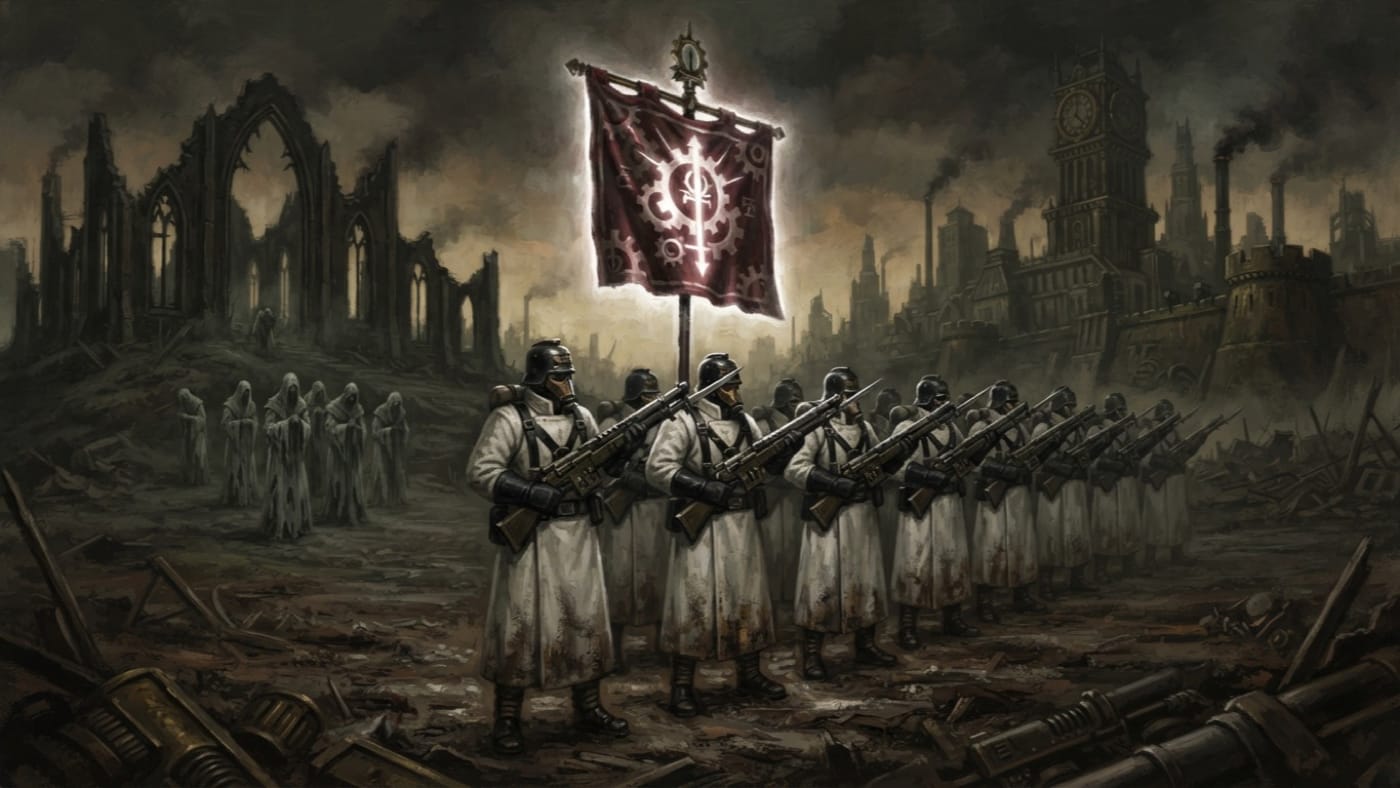
Kyrie Eleison
A prayer everyone knows is a key everyone carries
The Church's mercy prayer remains orthodox after its inversion at Prague in A.S. 167. Forty-three Fusiliers died without firing; the Bureaus have named the failure and left its mechanism unresolved.
Codex Ref. XIII.1.51-167
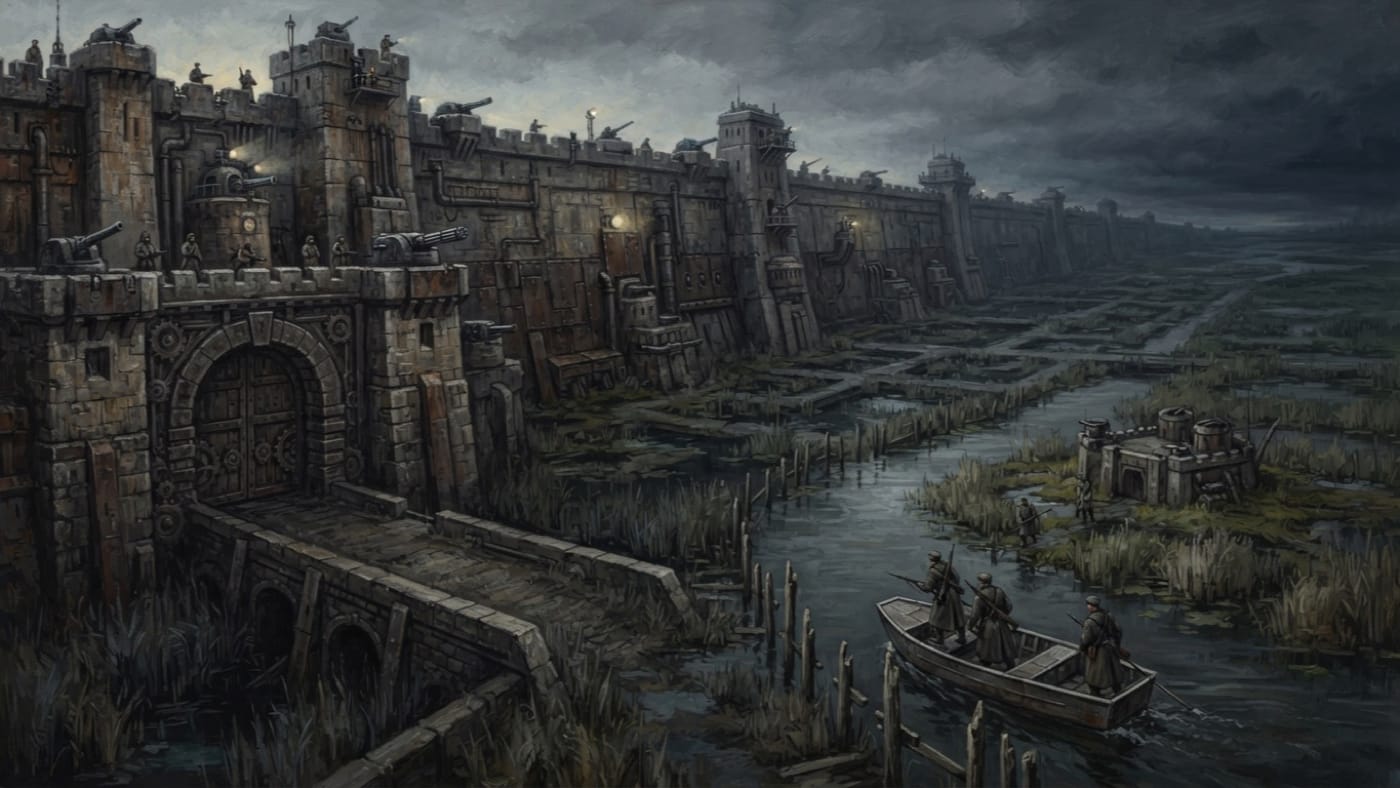
Lake Gate
Twelve metres of wall awaiting the enemy the engineers expected
Königsberg's eastern district faces the Masurian lakes with twelve metres of stone, iron and fill. The Watchers deploy; no eastern assault is recorded. The Bureau may not call this a victory.
Codex Ref. II.4.07-004
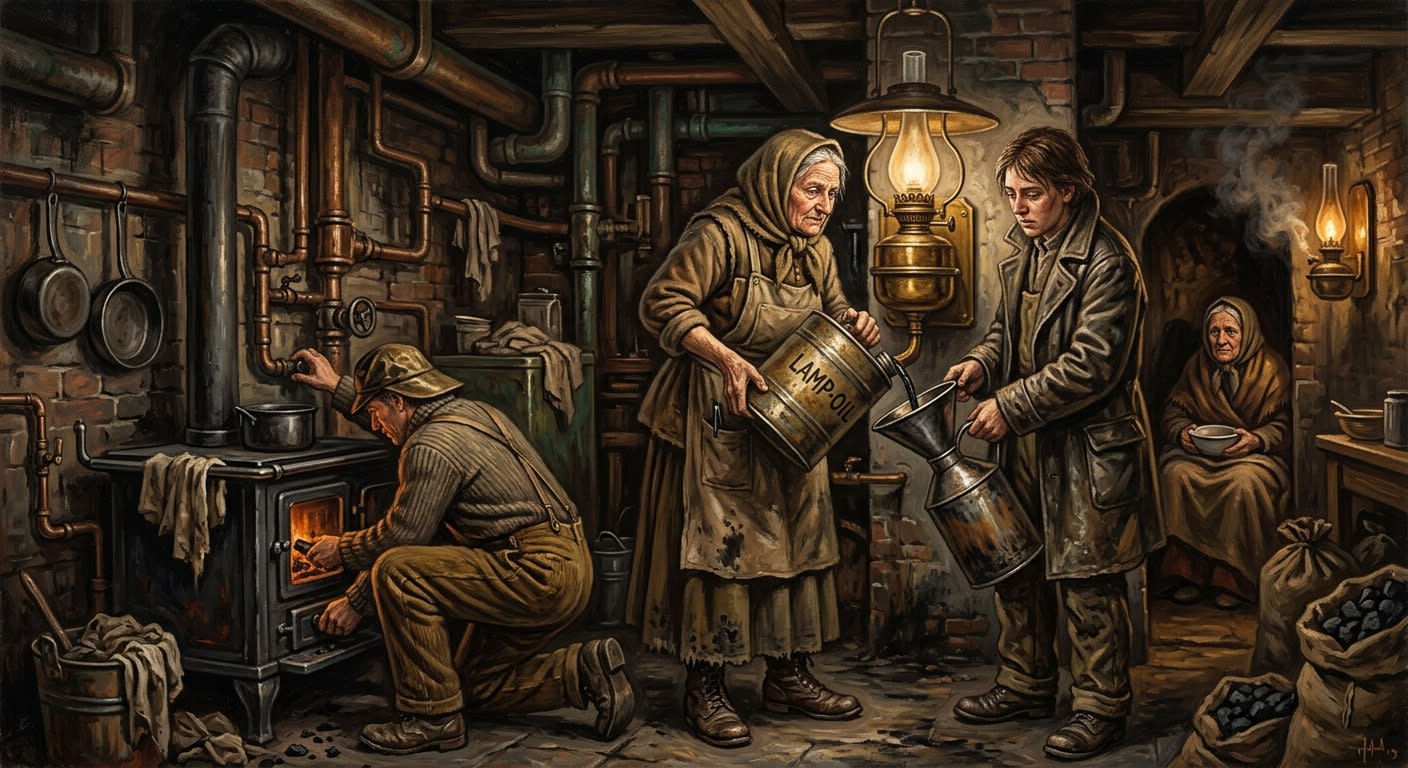
Lamp-Mercers
The mercy that arrives by cup, pressure, and soot-mark
Lamp-Mercers are the household-priority faction of Hidden Pipe-Runners, spending illegal black diesel on kitchens, sickrooms, lamps, and old women’s stove-niches.
Codex Ref. XII.3.03-001

Lantern "Mercy" Preacher (Rebel)
Eighth heresy, eighth rank, eighth because the Synod reserves that number for what it made, cannot unmake, and will not thank.
Eighth of eight proscribed heresies: the Licensed Consolators who meant what they said, and were immured for it.
Codex Ref. XI.3.01-001
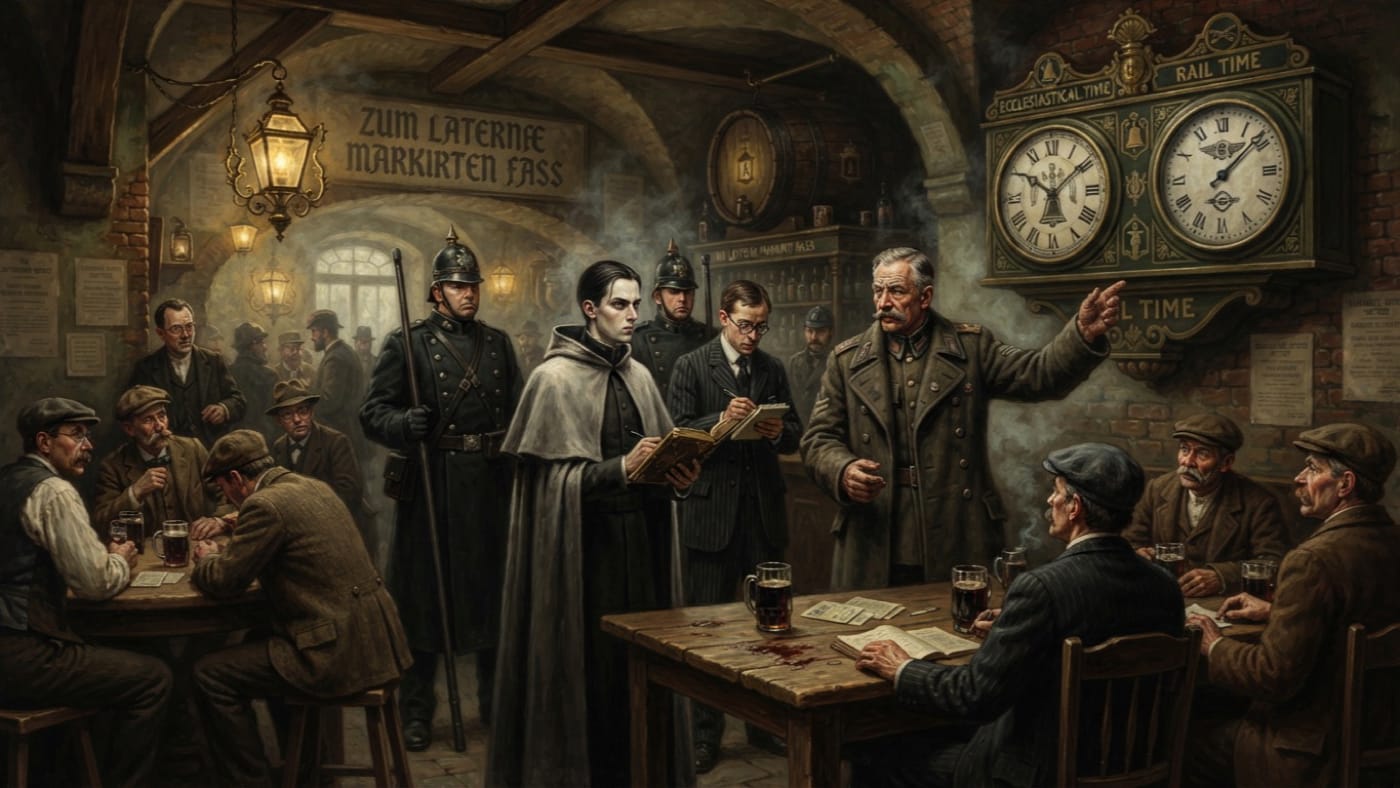
Lantern-Marked Cask
Purity named the hour; a retired major asked whose clock
An Old City beer-hall in Kanzleiburg where a retired major asked Purity which clock governed ninth bell during the A.S. 140 Curfew Standoff. The halls reopened; the question remains unanswered.
Codex Ref. II.3.19-140
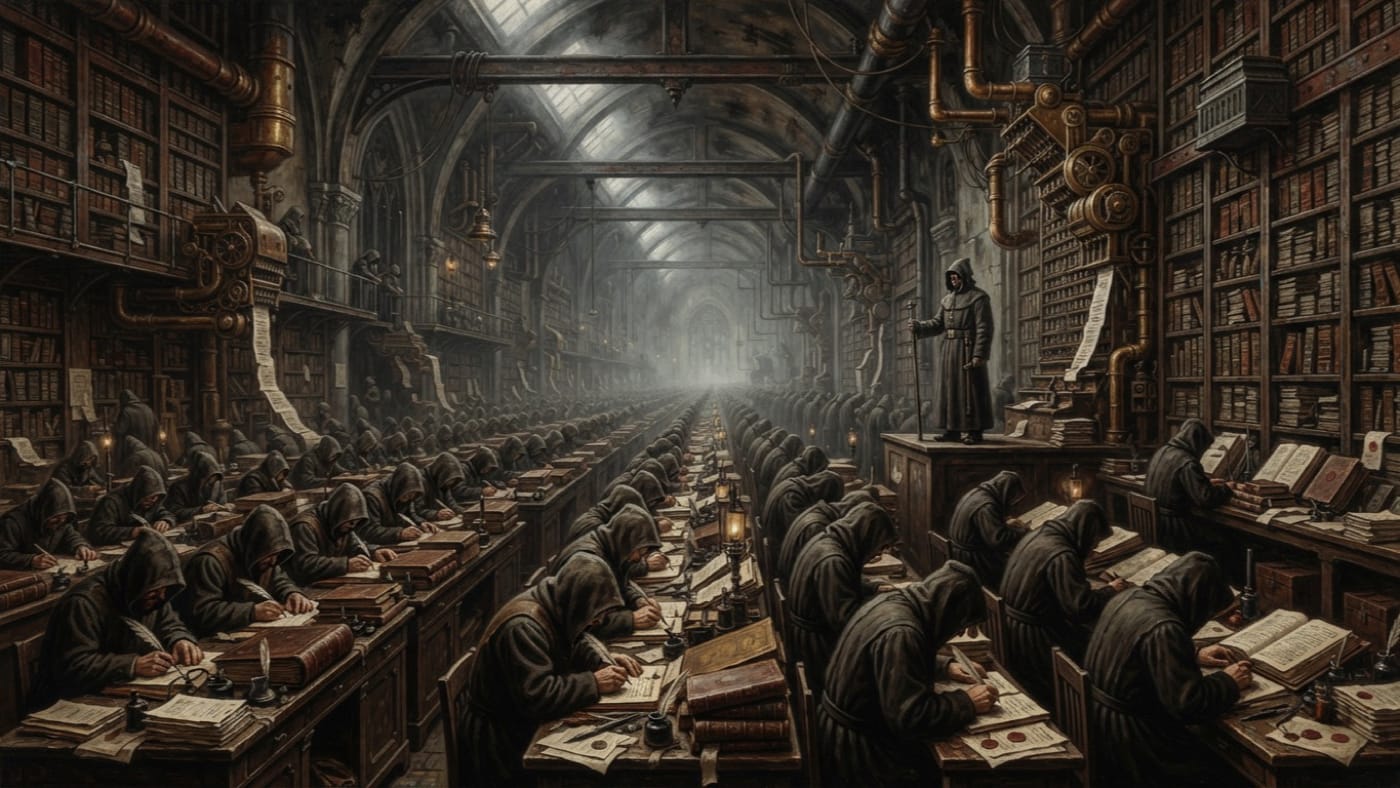
Ledger
Where the entry governs the living
The Ledger is the Synod's doctrine of authorized memory: every roll is presumed to agree, every name stands where an office writes it, and the body obeys the entry even when the words change.
Codex Ref. XIII.1.33-201
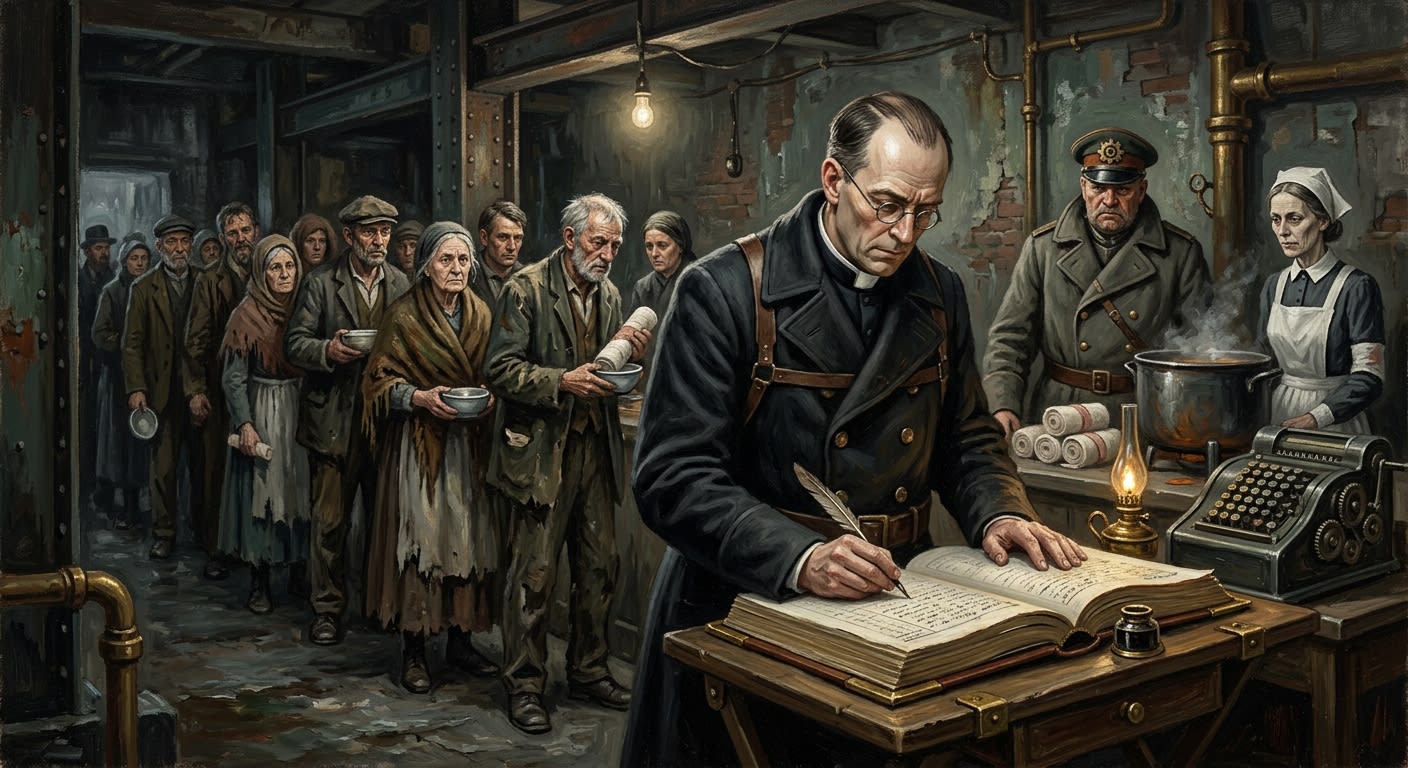
Ledger Laws
Mercy measured by the ladle, sanctioned by the noose
The Ledger Laws made mercy countable after the Broth Riots: every bowl, bandage, draught, confession, death, and useful pity entered the record before it dared call itself compassion.
Codex Ref. XIII.1.89-112
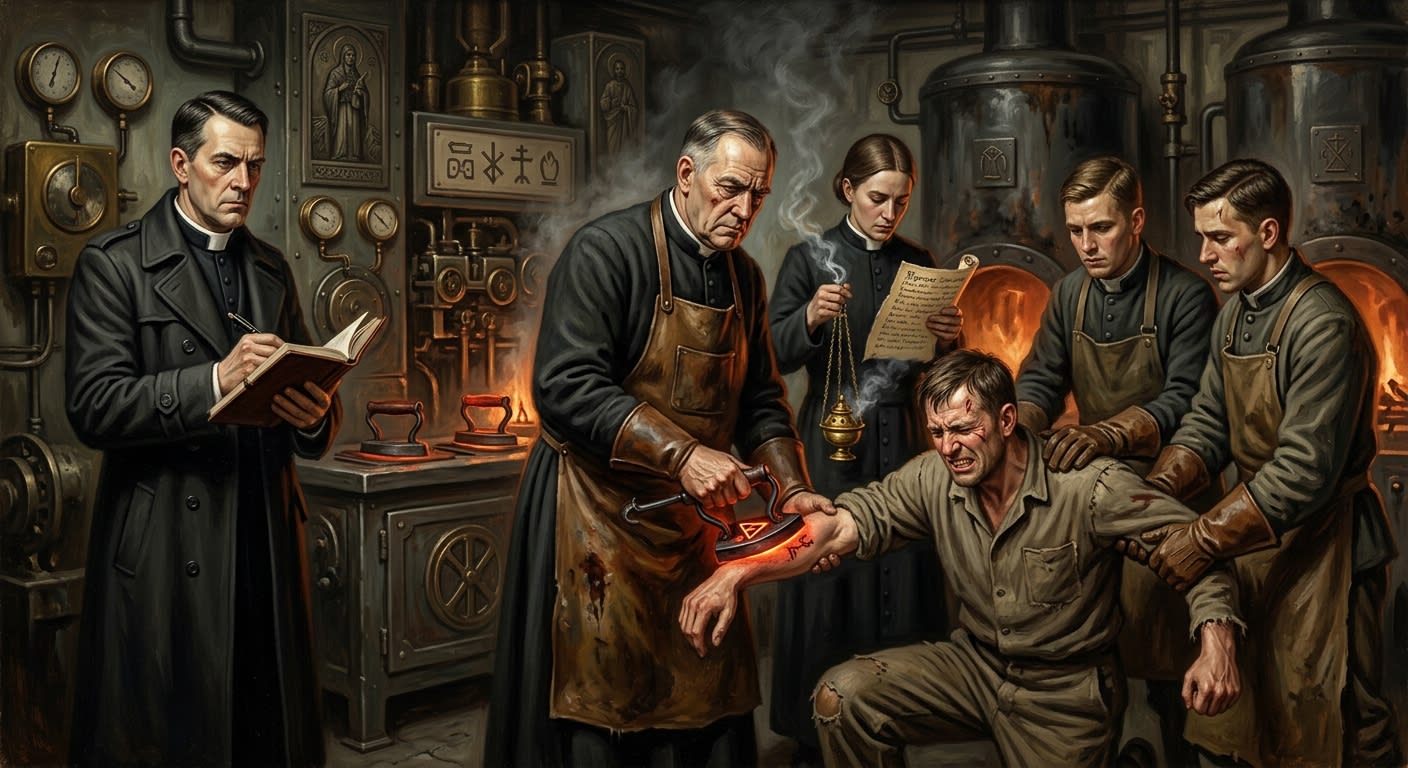
Licensed Chapel Brand-Smiths
Clean procedure does not cleanse the act; it makes the act admissible
Licensed Chapel Brand-Smiths are the sanctioned purists of bodily proof, applying tri-marks under full witness protocol in fixed chapels where pain becomes admissible.
Codex Ref. XII.20.05-001
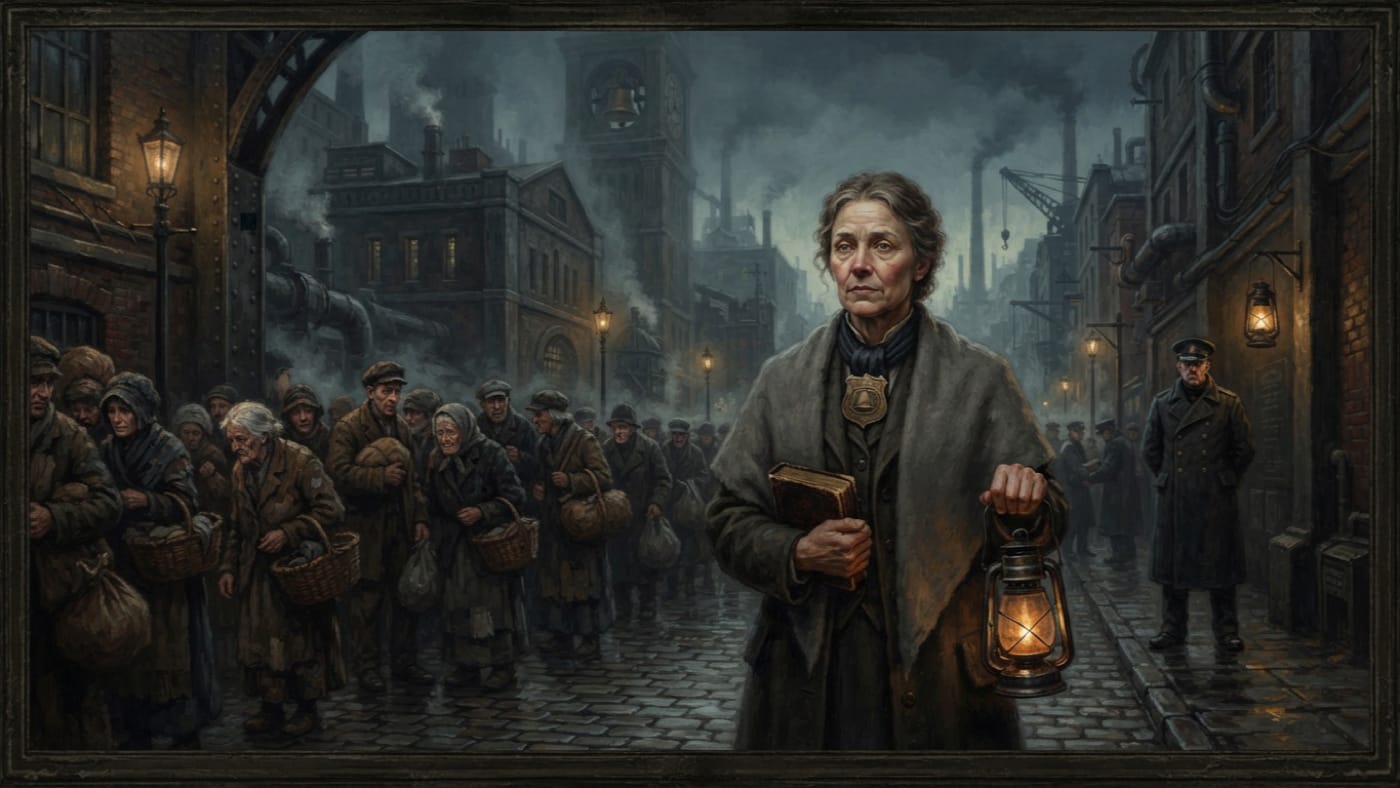
Licensed Consolators
Fourteen comforts, one licence, and a throat under inspection
Grey-stoled civic comforters ratified in A.S. 94 to calm curfew crossings with fourteen Approved Comforts. The licence permits reassurance; the extra sentence earns a tribunal.
Codex Ref. XII.25.09-094

Licensed Recoverers
Blue cord, clean hands, and slowness witnessed into speed
Bureau of Relics-sanctioned Reliquary Salvagers whose blue wax cords, custody tags, and Contract Sanctifiers turned recovery into witnessed law after A.S. 131.
Codex Ref. XII.13.06-001
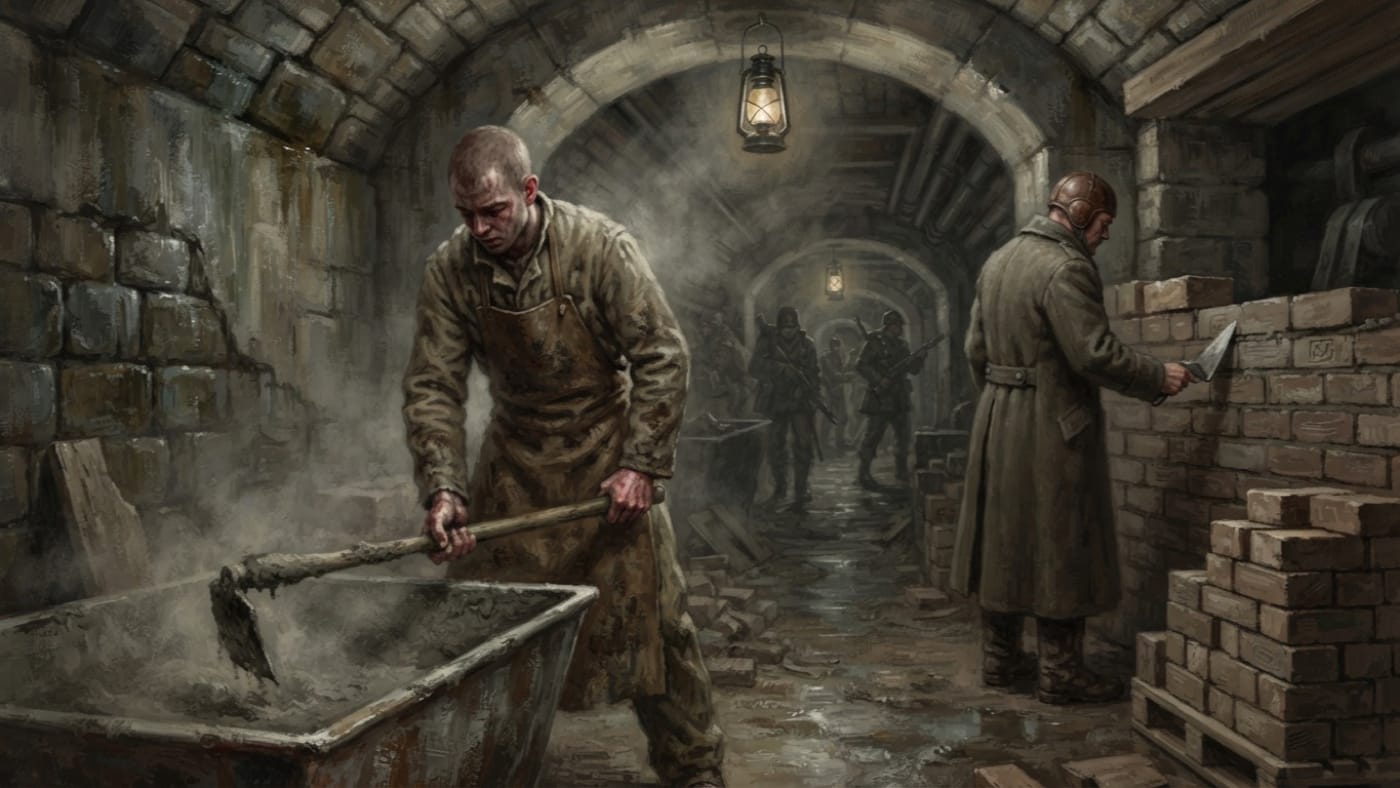
Lime Boy
The entry rank of the Masonry Corps: the hands that mix the sentence and receive the blame
The Masonry Corps' entry rank carries brick, mixes binding mortar and answers for cracked seams. The senior mason stamps the wall; the Lime Boy carries the blame. His authority covers the hoe.
Codex Ref. XII.22.05-001
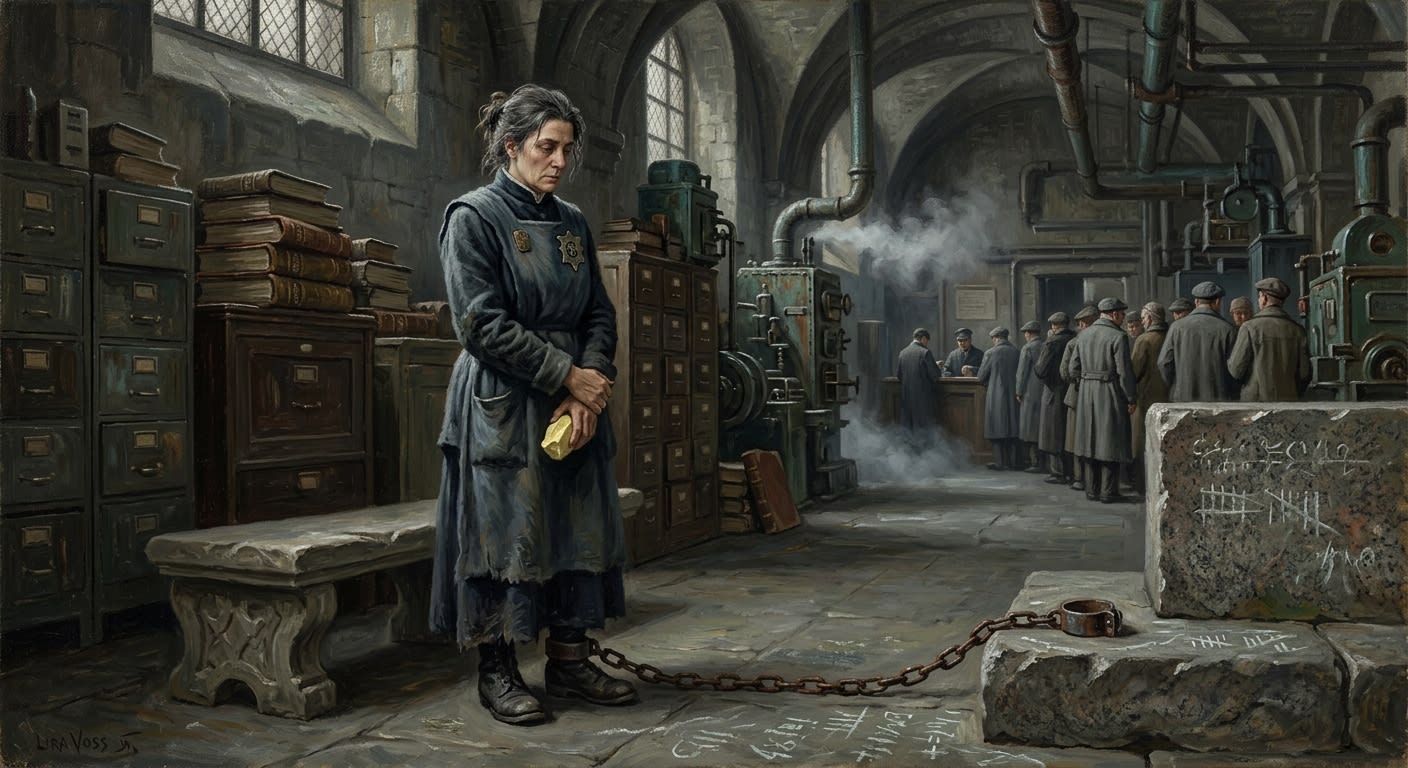
Lira Voss
The woman whose mercy taught Brest to count mortar
Licensed Consolator of Bastion-Brest, immured after one true sentence in A.S. 197; her chalked phrase still returns where levy queues learn arithmetic.
Codex Ref. III.2.01-126

Litany of Correct Arc
Good elevation is no answer to the conscience
Gun-Cantor Marshal Vonn recites the Litany before each salvo at Bastion-Brest, where Sera sings the ranges and the Bureau measures everything except the conscience.
Codex Ref. VI.6.04-002
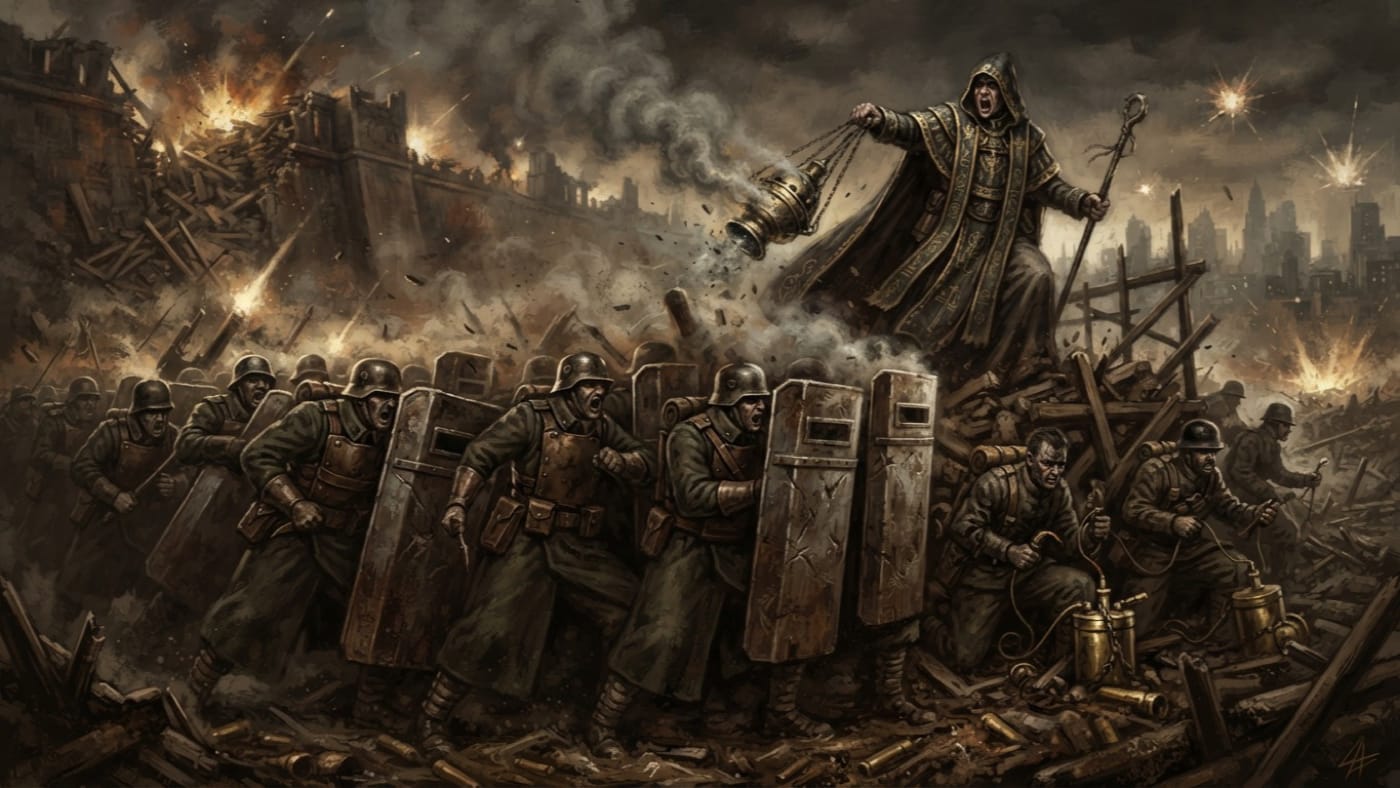
Litany of Stones
One throat keeps iron and powder in the same minute
The Ash Chaplain's breach litany binds Shield-Paladins and Litany-Engineers to one count. Iron braces, powder waits, and a name withheld teaches the cohort what silence costs.
Codex Ref. XIII.1.64-002

Litany-Engineer
The Sanctified Mechanist — wrench in one hand, chant codex in the other, keeping the Sagittal Line from becoming an extraordinarily expensive wall.
The Bureau of Engineering's foundational combat-rated mechanists: four thousand licensed, nine thousand actual, all keeping engines running by wrench and cant in chambers that hum in frequencies no codex records.
Codex Ref. XII.1.01-001

Little Finger Bone of No Parish
The attribution survives. The provenance has yet to arrive.
Attributed to Saint Vellum, venerated, tested, doubted and kept. The name supplies a finger; the file supplies neither an owner nor a parish.
Codex Ref. III.2.04-1654
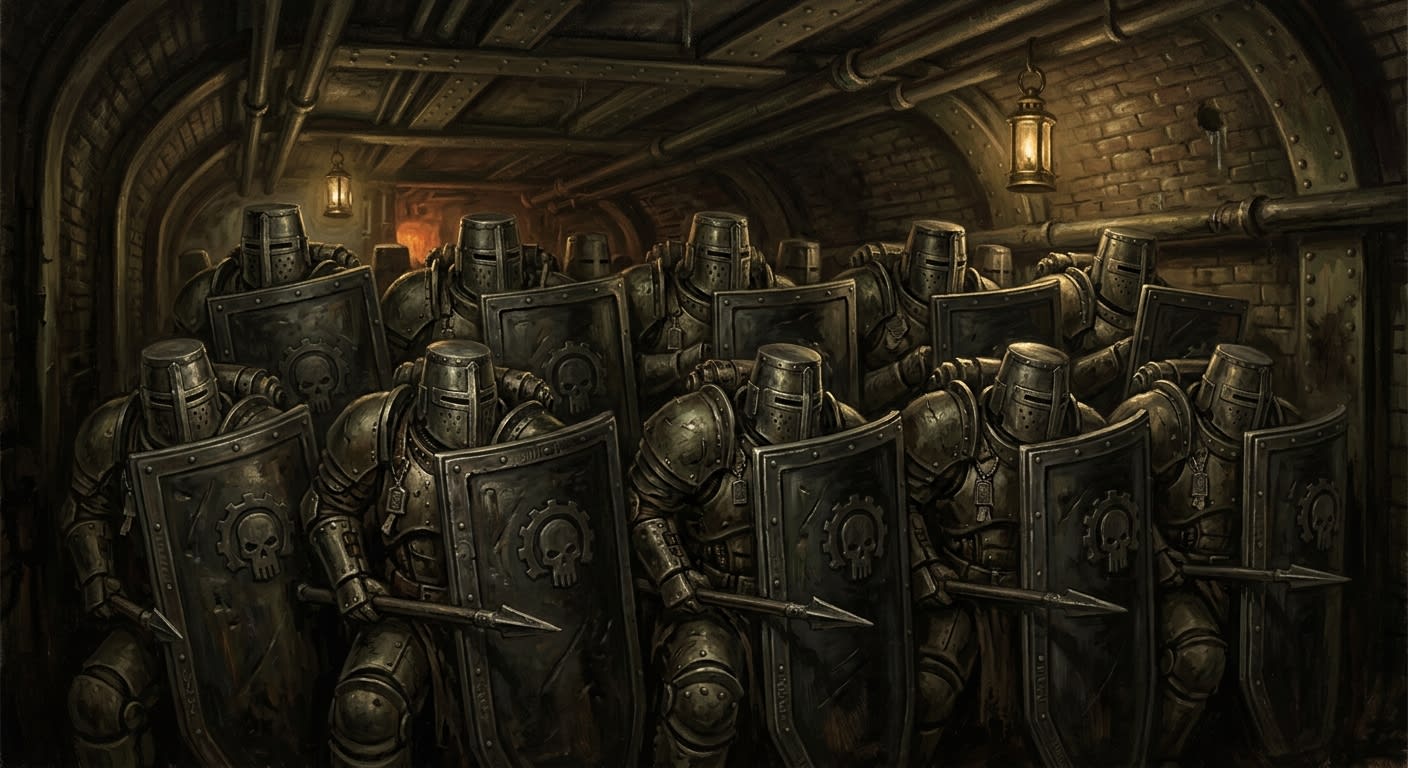
Lock Formation
Three ranks, one breath, and the wall answering in iron
The Shield Paladins' breach-reception doctrine: three ranks of interlocked iron, jawbone chant, rim discipline, and the geometry by which panic is denied passage.
Codex Ref. XIII.1.63-001
Longshoremen's Brotherhood
The port moves when the men beneath the crane consent to bend
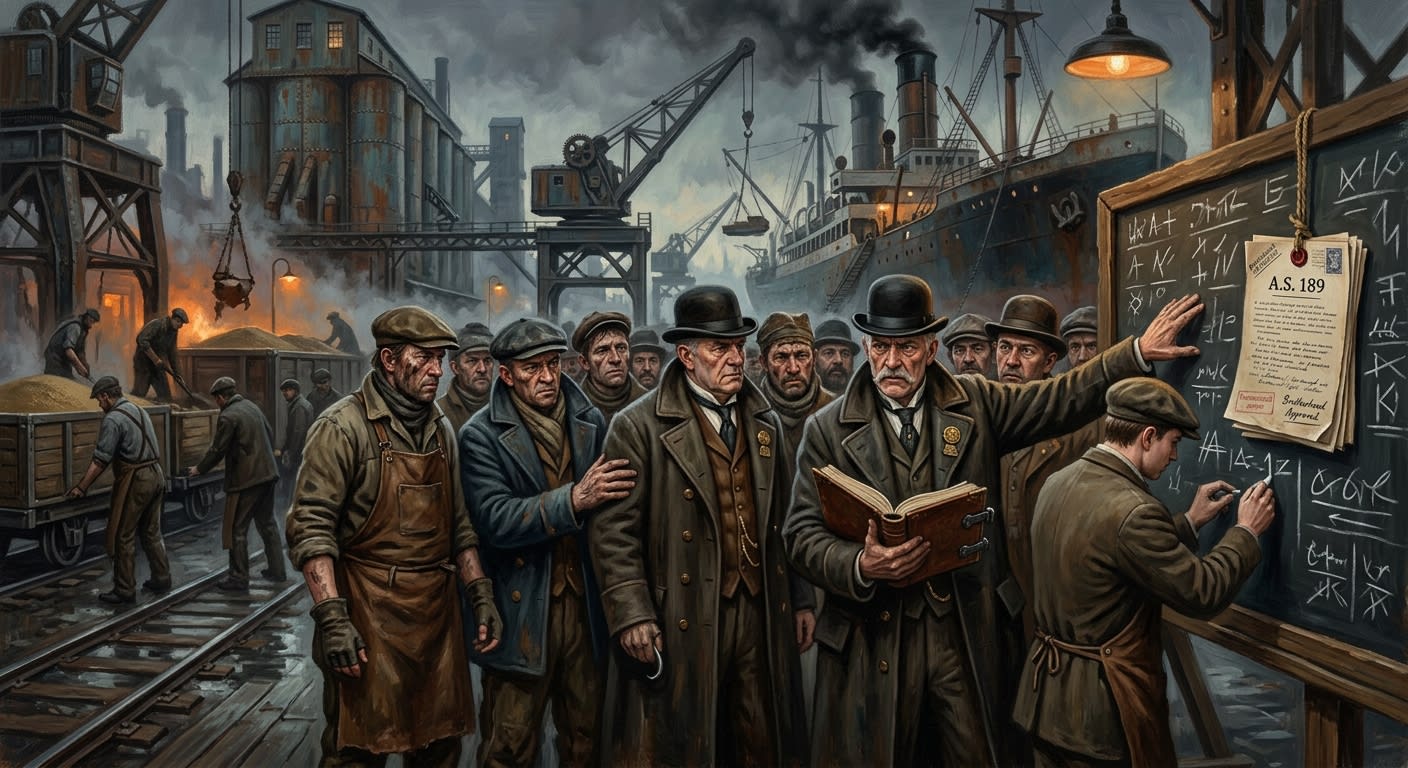
Hamburg's oldest dock guild controls western and central quay labour, grain call-books, Brotherhood chalk marks, and the A.S. 189 hazard supplement that Tithes keeps trying to resurrect as taxable.
Codex Ref. XII.52.01-001
Lübeck
The harbour remembers eleven; the records remember smoke
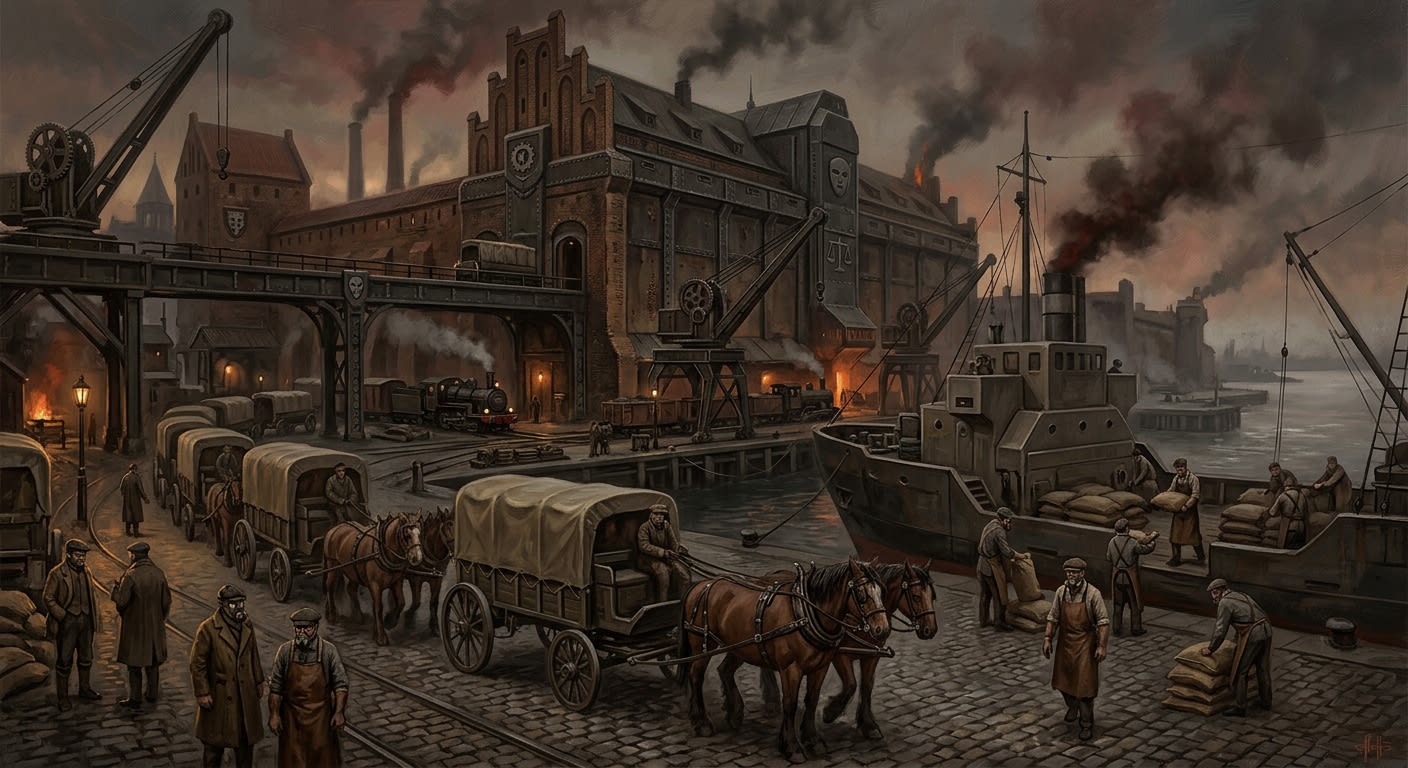
Baltic grain port and northern corridor municipality made exemplary in the A.S. 180 Year of Smoke, when eleven night wagons taught Lübeck to move cargo and misplace memory.
Codex Ref. II.4.09-011
Magdeburg
Where wet cargo becomes northern survival
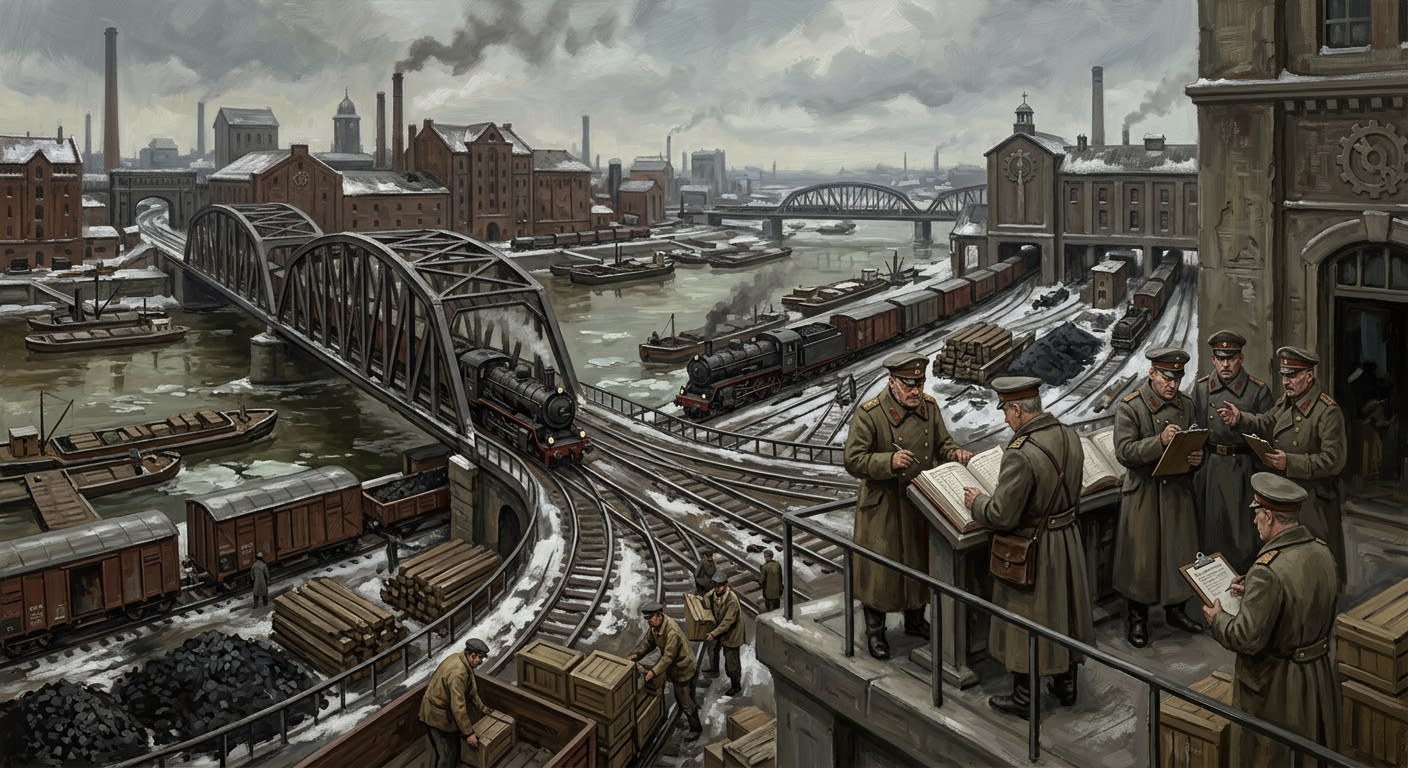
Magdeburg is the Elbe transfer hinge no one praises until the rail throat chokes: damp ledgers, bridge limits, winter tables, and cargo made obedient.
Codex Ref. II.2.07-096
Mainz Stamp-Head
Devotion has supplied what provenance has not
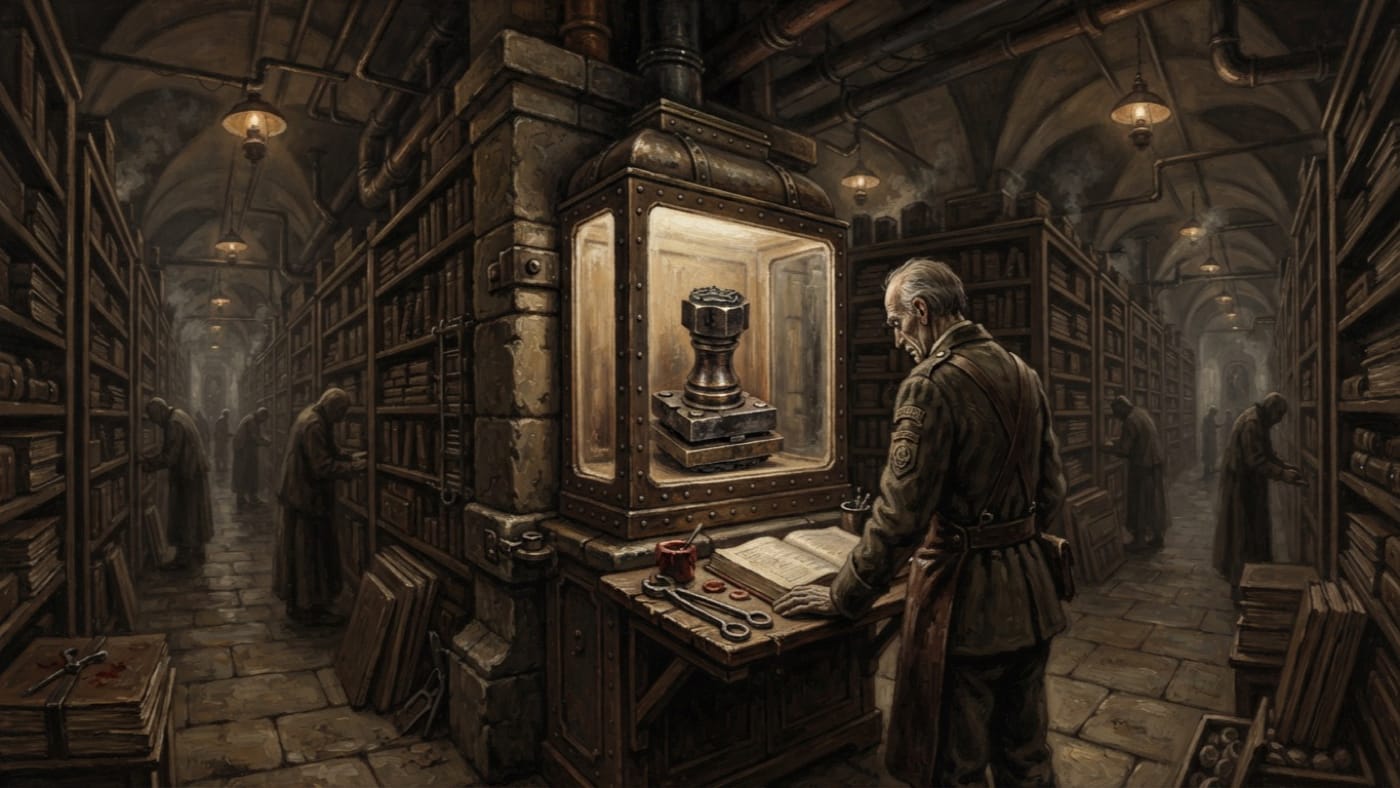
One of six objects attributed to Saint Vellum-of-the-Quiet-Hand: venerated, tested, doubted and returned to custody. The devotion is recorded; the authentication is absent.
Codex Ref. XIII.1.45-002
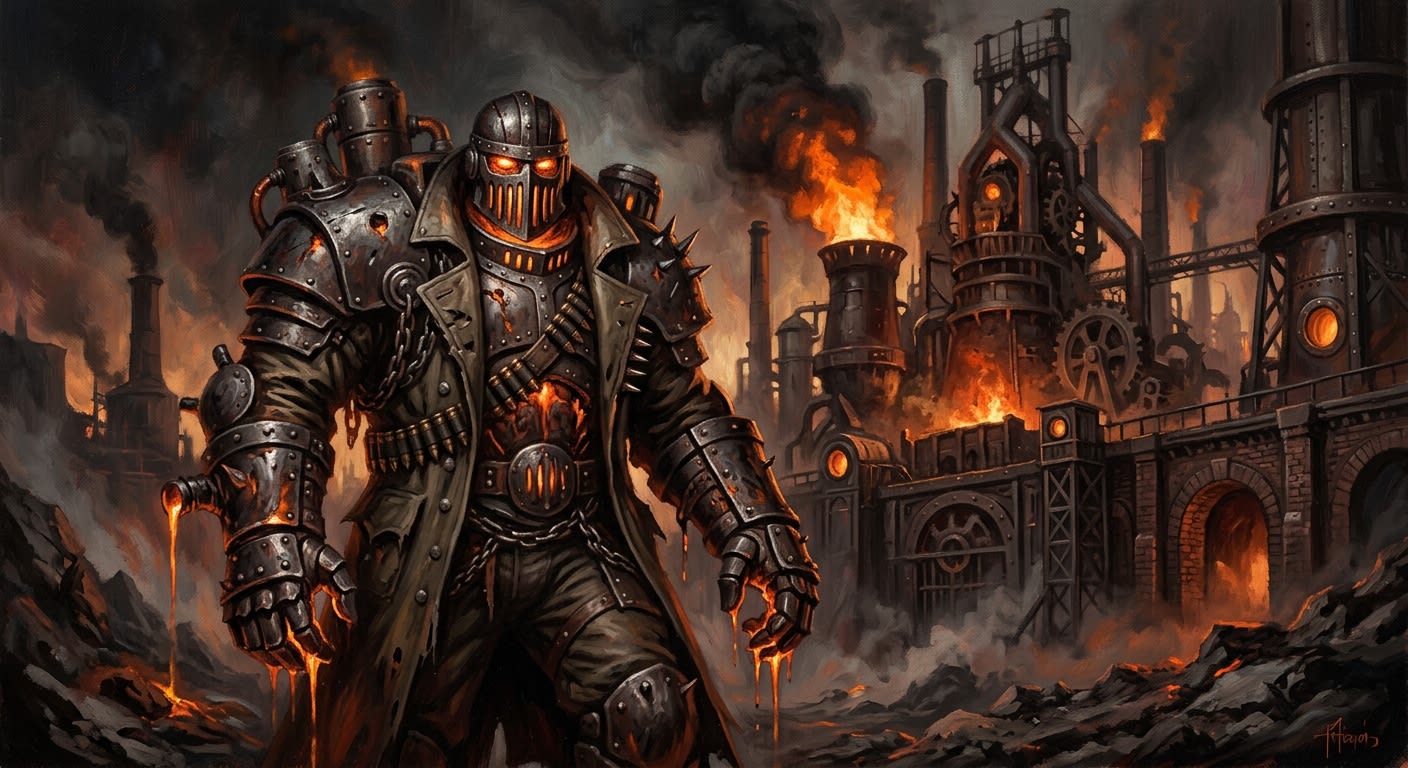
Maldrake, the Wrathforged
The fire does not care what it was given to burn.
Sin-General of Wrath: architect of the Eternal Forges, commander of the Hellbow Legion, fourteen confirmed breaches of the Sagittal Line. The fire that outlived its cause and kept marching.
Codex Ref. IV.1.07-003
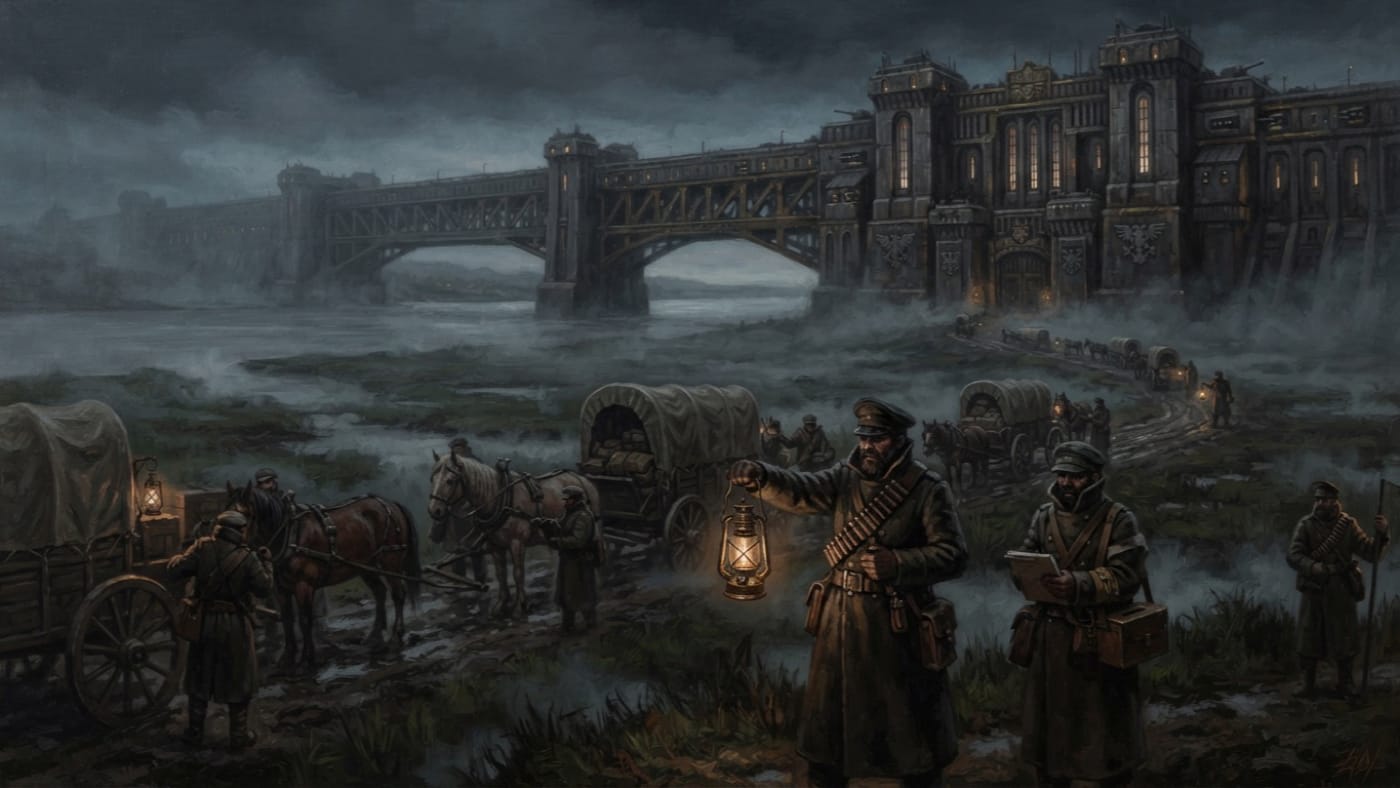
Marsh Lanterns
The lamps show the road; the militia names the price
An A.S. 201 survey of Brest's floodplain militia: lantern signals, marsh routes, toll ambushes and escort fees, tolerated by the Commandant when useful. Protection from bandits is the public claim; extortion is the business.
Codex Ref. VIII.5.05-002
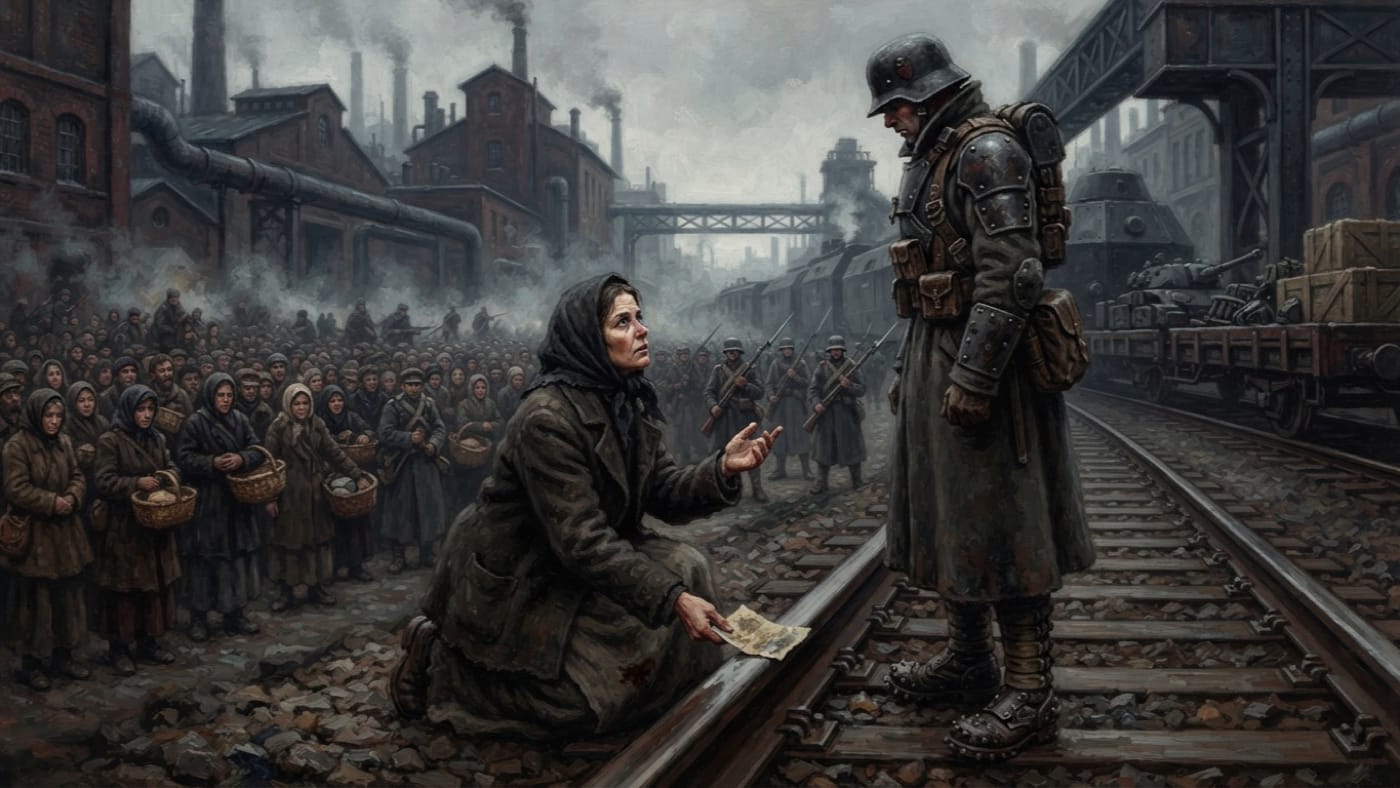
Marta Krol
One remembered name, one ration card, and a boot that stayed still
Later oral accounts name Marta Krol as the bakery widow who laid a ration card on Praga's rails in A.S. 195 and invited a soldier to stamp it with his boot. The boot stayed still; her fate is unrecorded.
Codex Ref. III.2.01-195
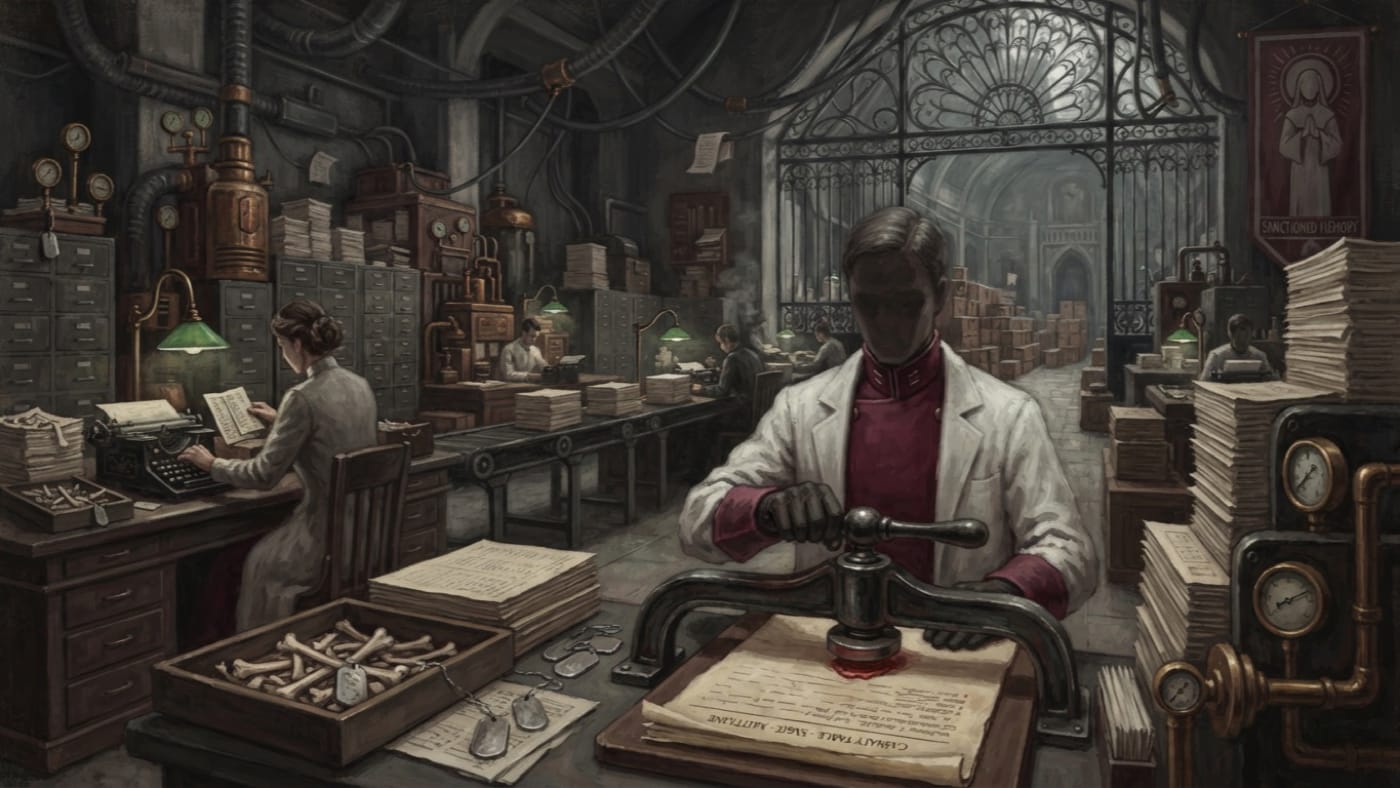
Martyrdom
The dead remain useful until their paperwork fails
The Seal of Martyrdom governs the Synod's recorded dead, sanctions their memory and commands the Bureau of Relics. War supplies names; Martyrdom decides what the parish may say.
Codex Ref. VIII.1.10-201
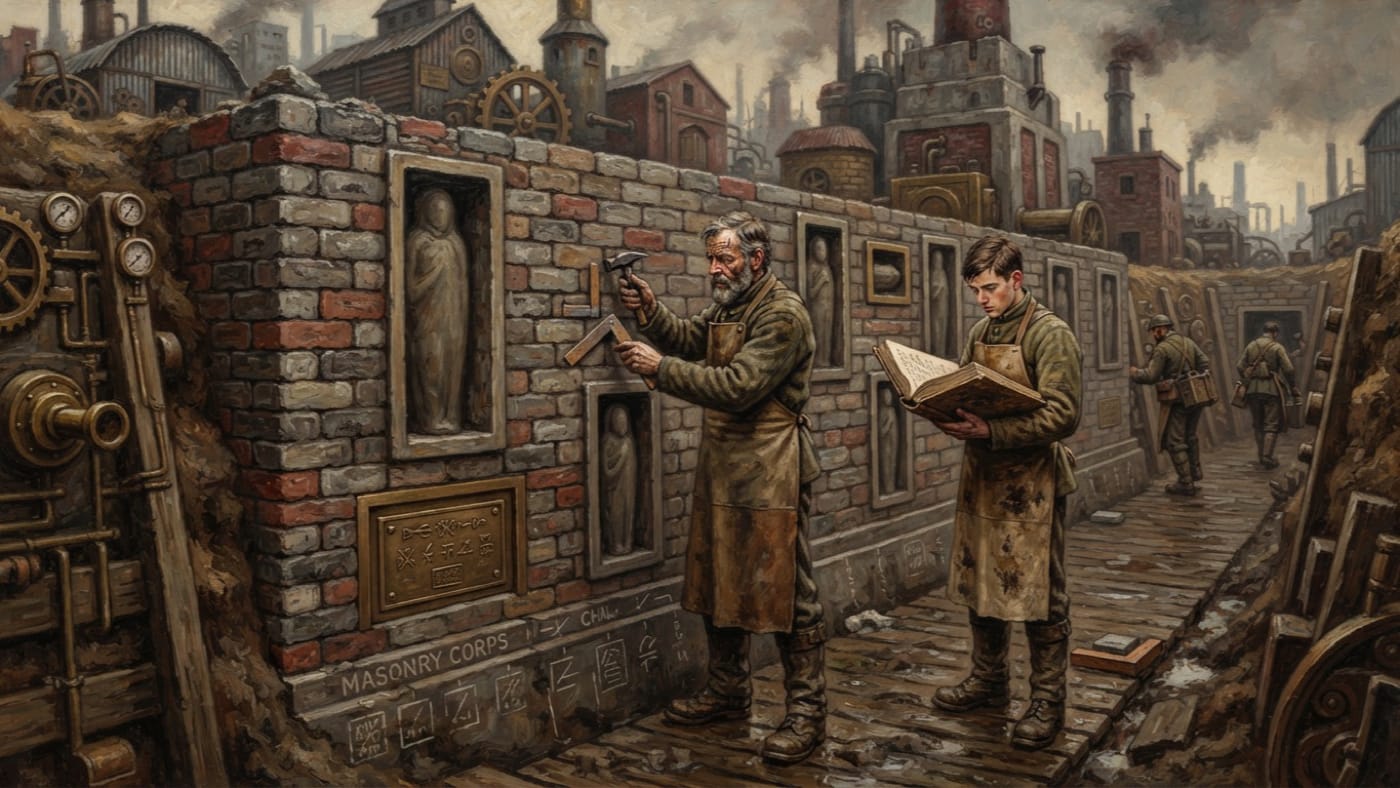
Masonry Code
The sentence supplies the body; the specification supplies the wall
An A.S. 201 survey of the specifications that turn a writ into a wall: measured niches, binding mortar, paired masons, and a stamp that tells the inspector whom to blame.
Codex Ref. XIII.1.97-001

Masonry Corps
The Punitive Construction Auxiliary: every sentence requires a wall, a stamp, and someone to blame
Approximately 2,400 licensed masons across Zones 1–5, governed by Standing Order 14-M. Three ranks, two denied factions, and a personal stamp worth more than its owner: every sentence must leave a sound wall and a matching log.
Codex Ref. XII.22.04-001
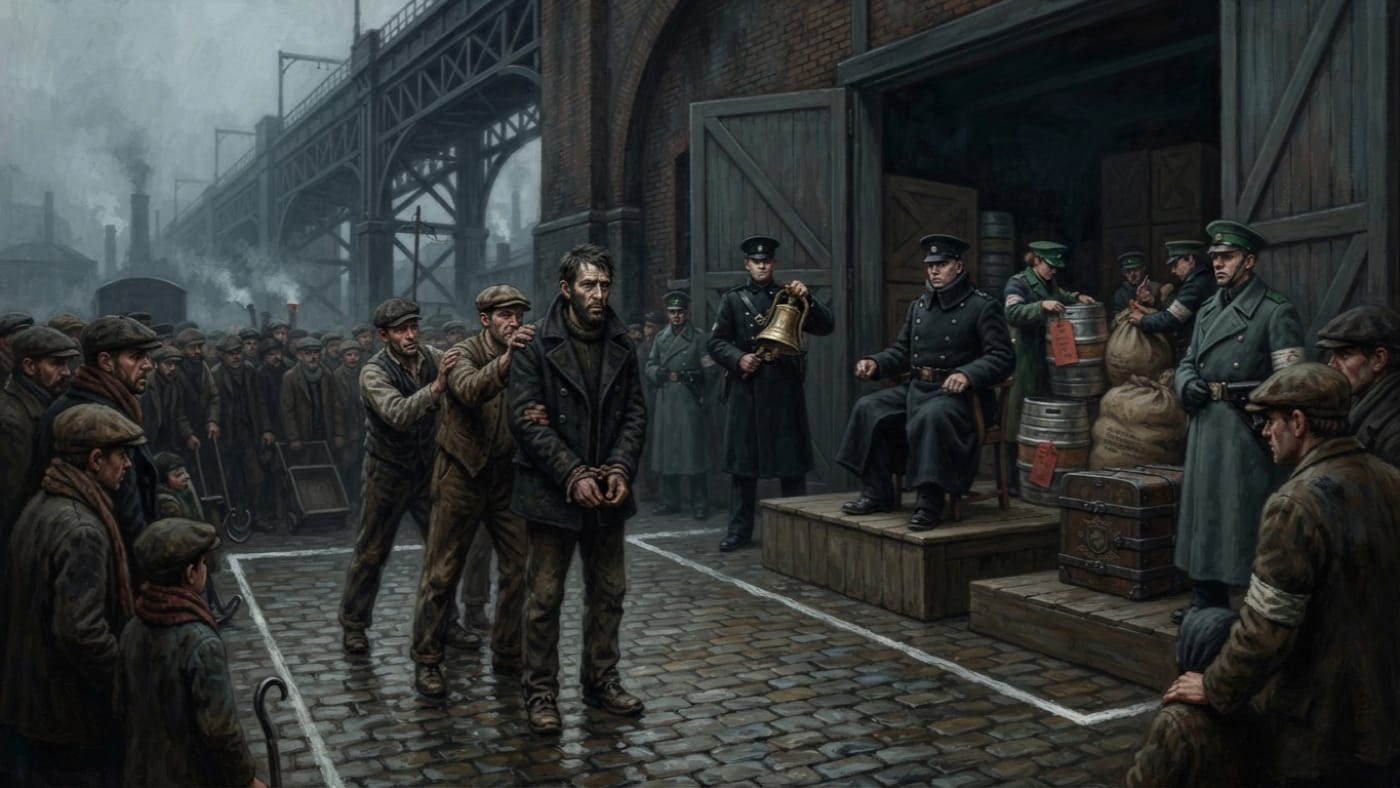
Master Havel Tor
The treasury was counted; the treasurer's fate was not
Rope-Guild treasurer brought before Rook's Brest warehouse court. The Synod took the treasury at the final chime; the record gives Tor no disposition.
Codex Ref. III.2.01-1336
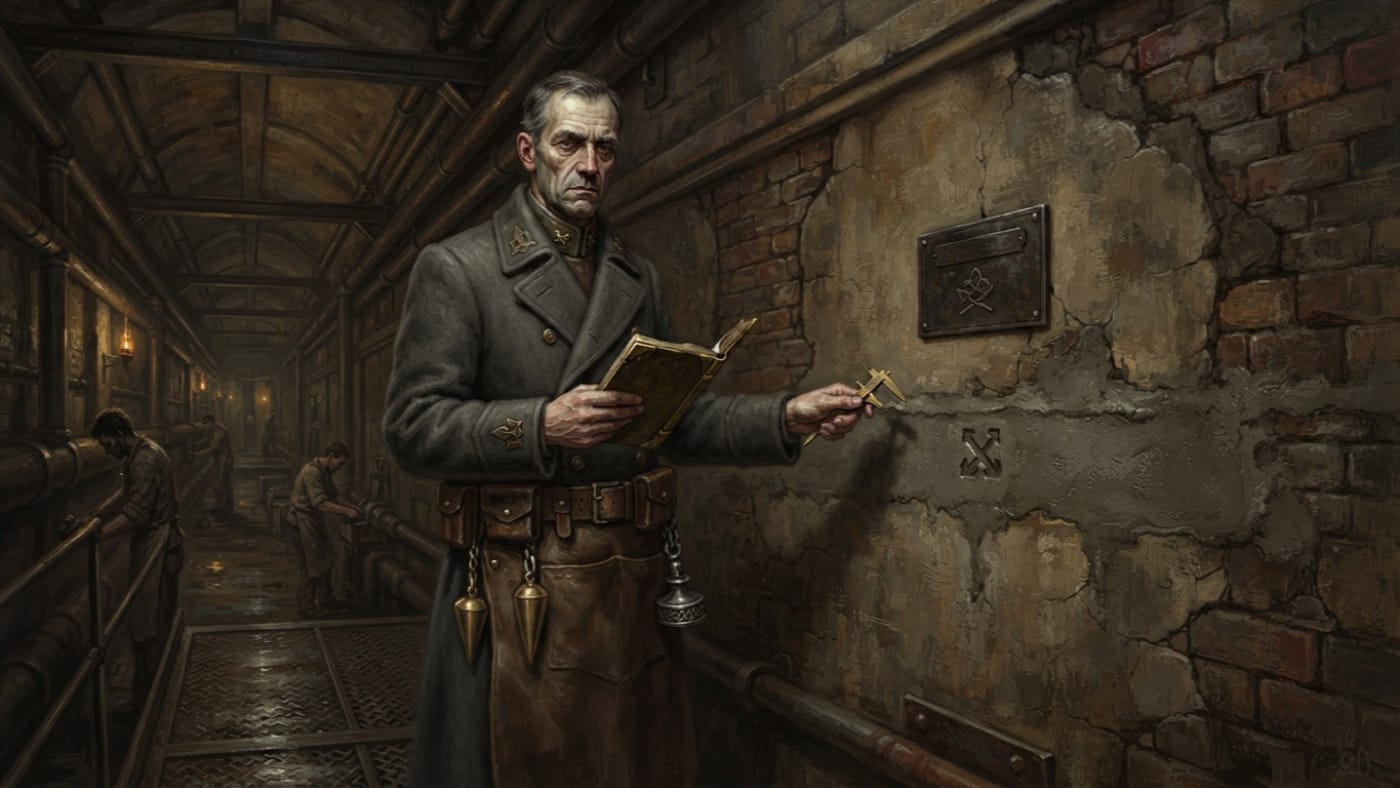
Master Sealer
The senior rank of the Masonry Corps: clean hands, certified seams, and a stamp that outlives its owner
The Masonry Corps' senior rank checks the writ, certifies the wall, and stamps the mortar. The Judge decides the air; the Master Sealer answers for the seam. His hands stay clean. His name stays on the wall.
Codex Ref. XII.22.05-001
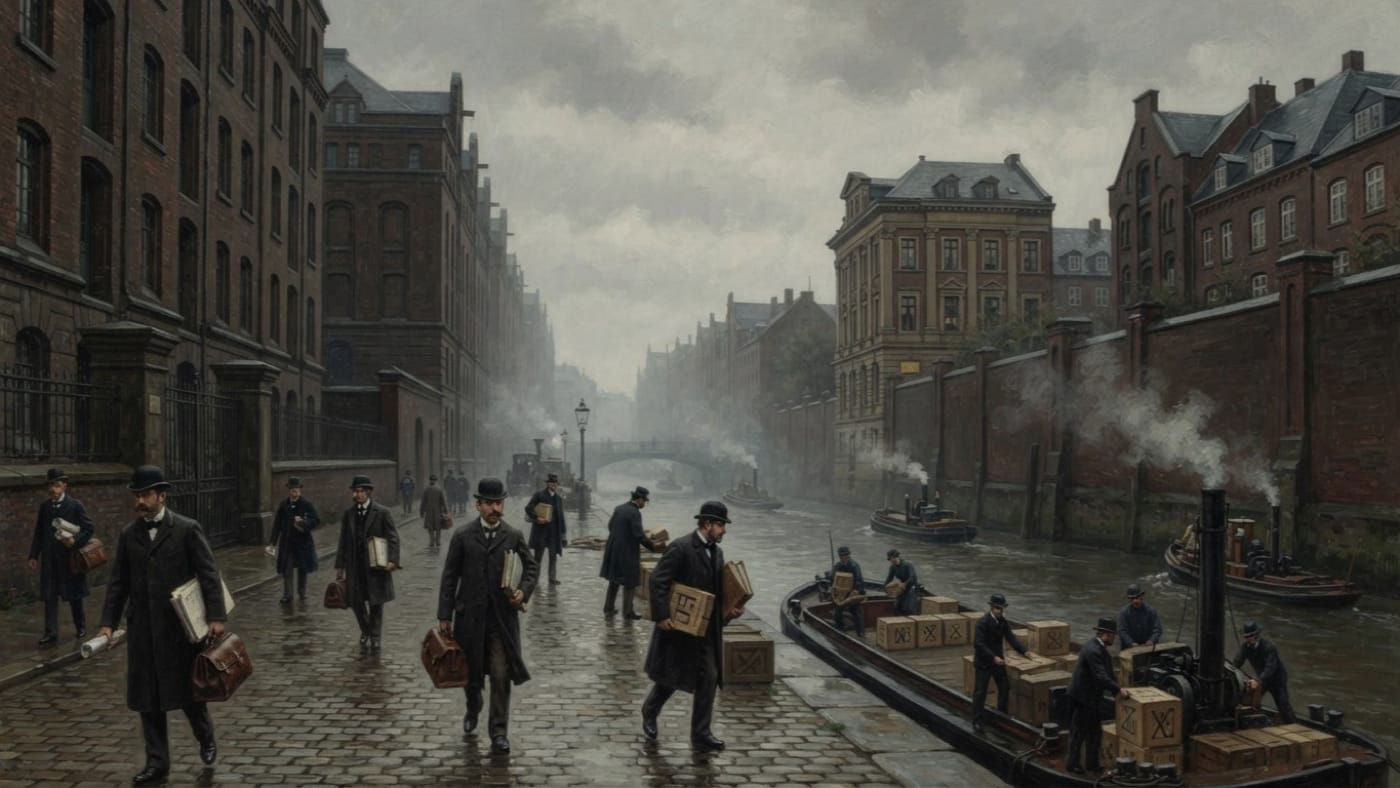
Merchant Quarter
Where the Synod has to knock
Hamburg's Merchant Quarter houses Dutch credit, British grain contracts and foreign factors behind respectable walls. The Synod governs by inspection and feeds its northern front by accepting the terms.
Codex Ref. II.4.09-007
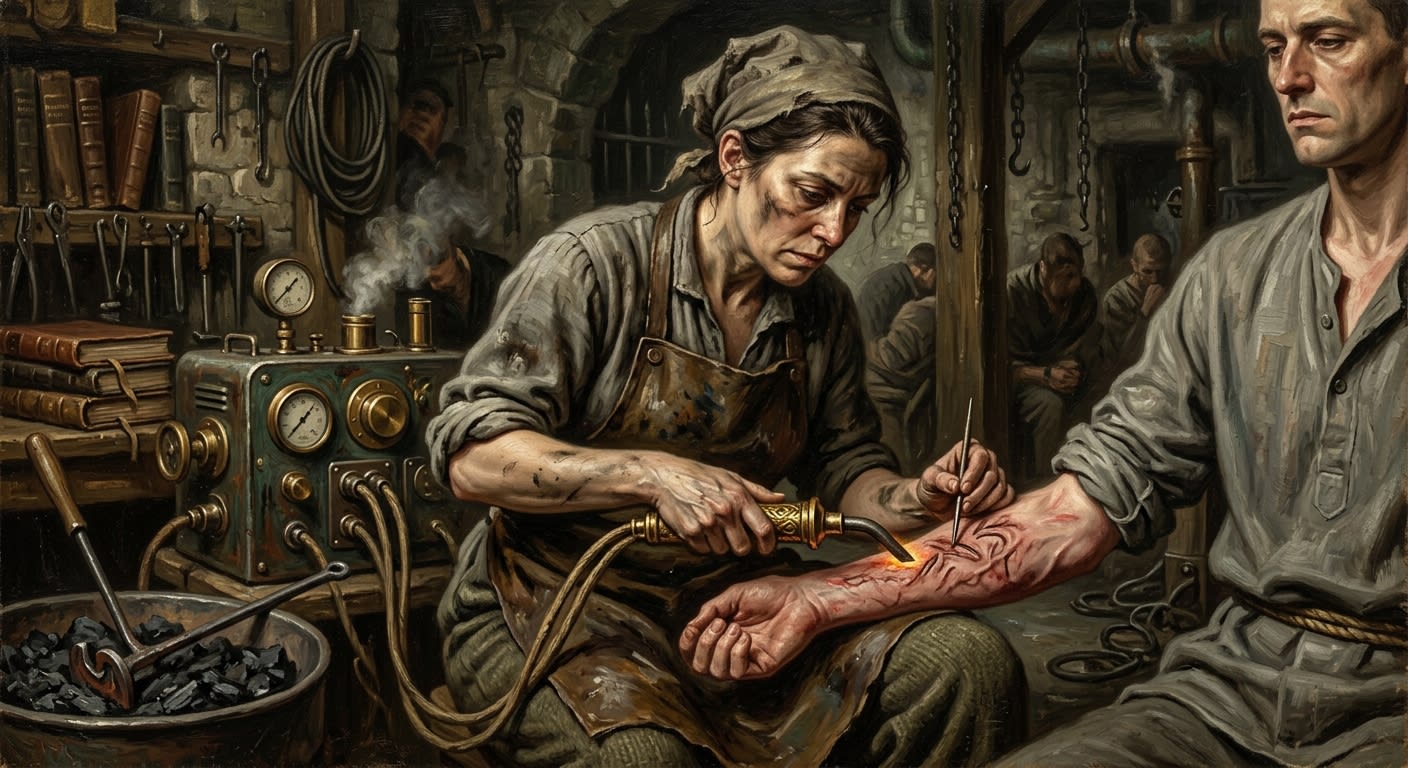
Mercy Branders
Private pity, measured in degrees and prosecuted in heat
Mercy Branders are licensed Brand-Smiths who soften bodily tri-marks through tiny acts of illicit discretion, turning excessive punishment into survivable ambiguity.
Codex Ref. XII.20.04-001
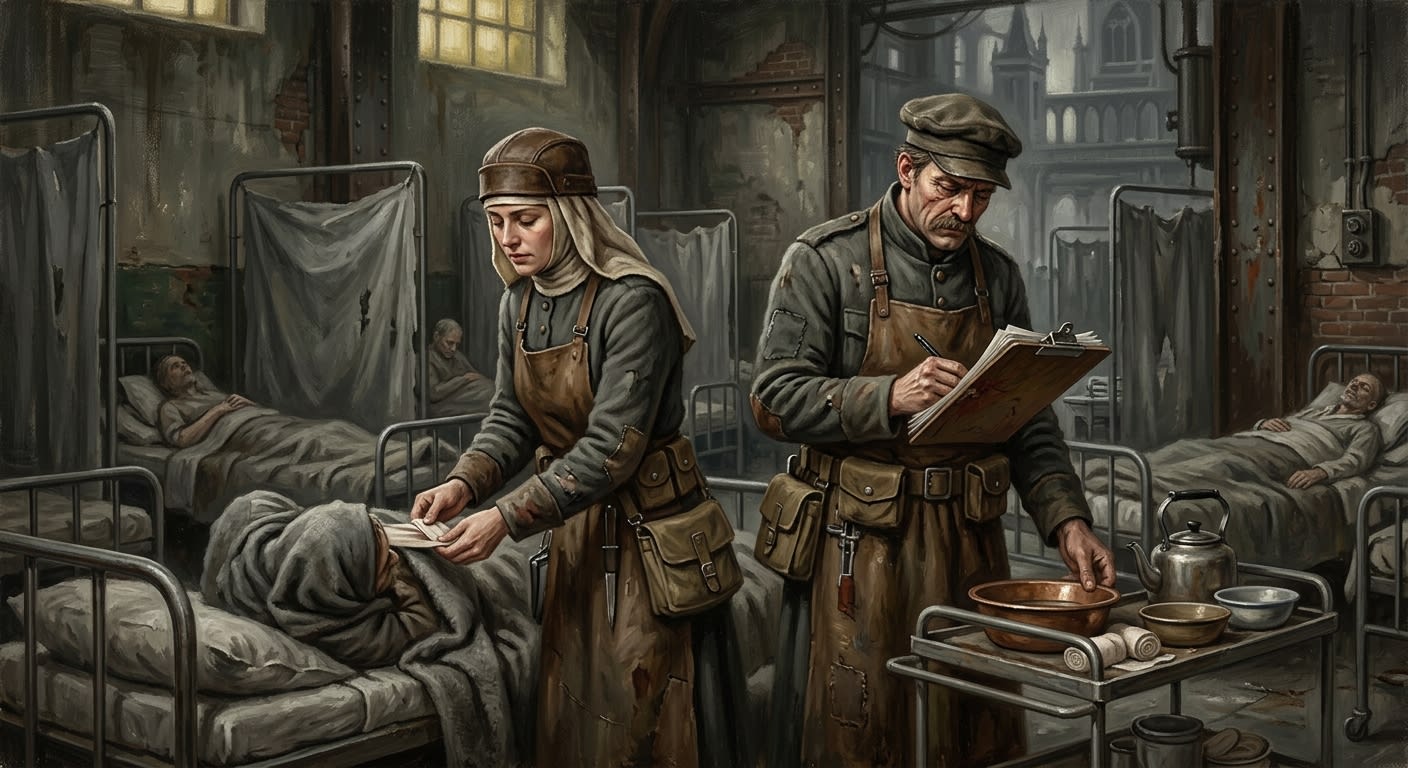
Mercy Ward-Sister / Mercy Ward-Brother
The hand that brings broth also carries the ledger
The Mercy Ward-Sister and Ward-Brother are the Bureau of Mercy's grey-aproned operators of counted compassion, where broth, bandage, confession, and paperwork become one instrument.
Codex Ref. XII.6.04-001
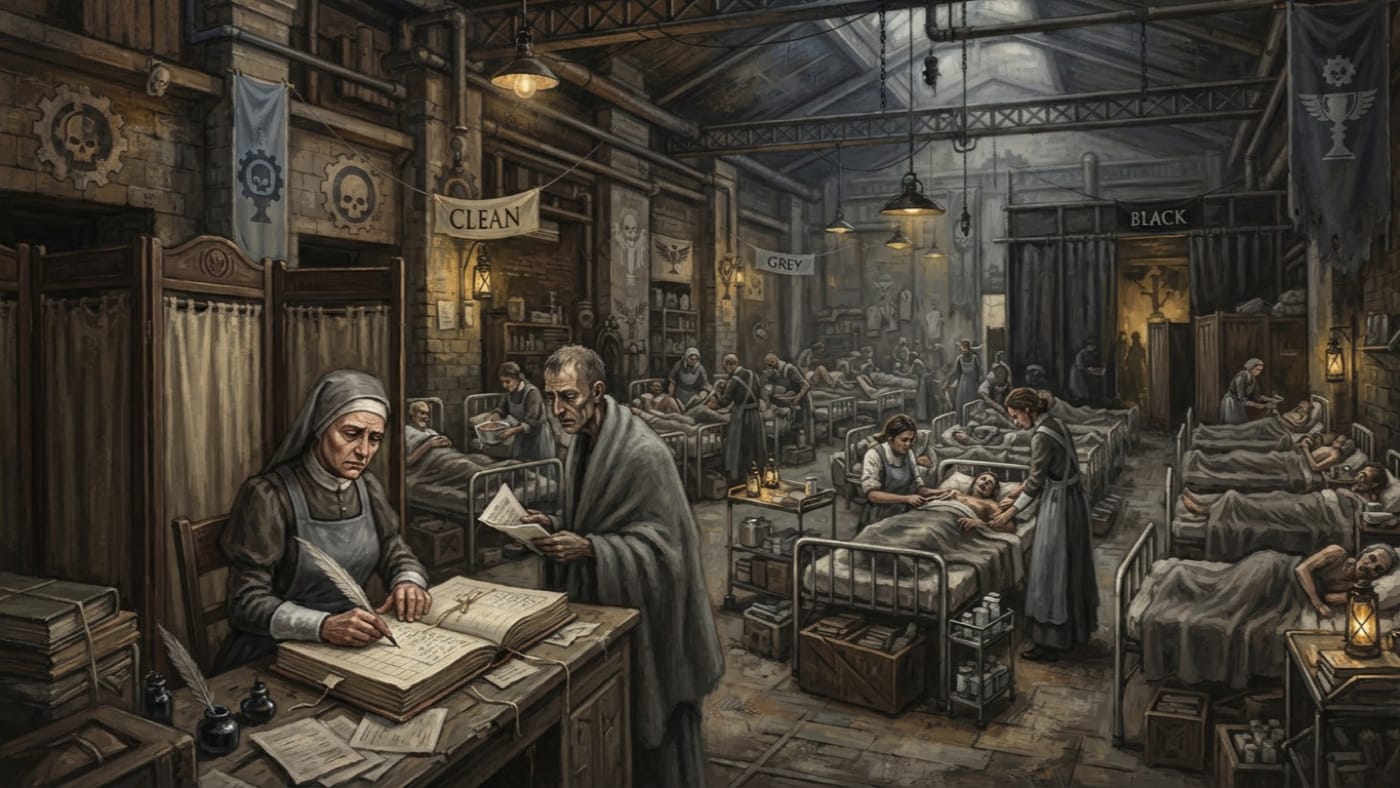
Mercy Wards
The bed is allotted; the suffering must be entered
The Bureau of Mercy's houses of the sick: broth, bandages, confession and clean, grey or black tags. This A.S. 201 survey counts the registered wards; the living remain harder to reconcile.
Codex Ref. II.6.04-001

Military Track Corps
The rail advances first, and complains last
War-requisitioned Guild crews who lay, repair, certify, and sometimes die beneath tactical rail so guns, shrines, and commanders may arrive pretending motion was inevitable.
Codex Ref. XII.44.02-001
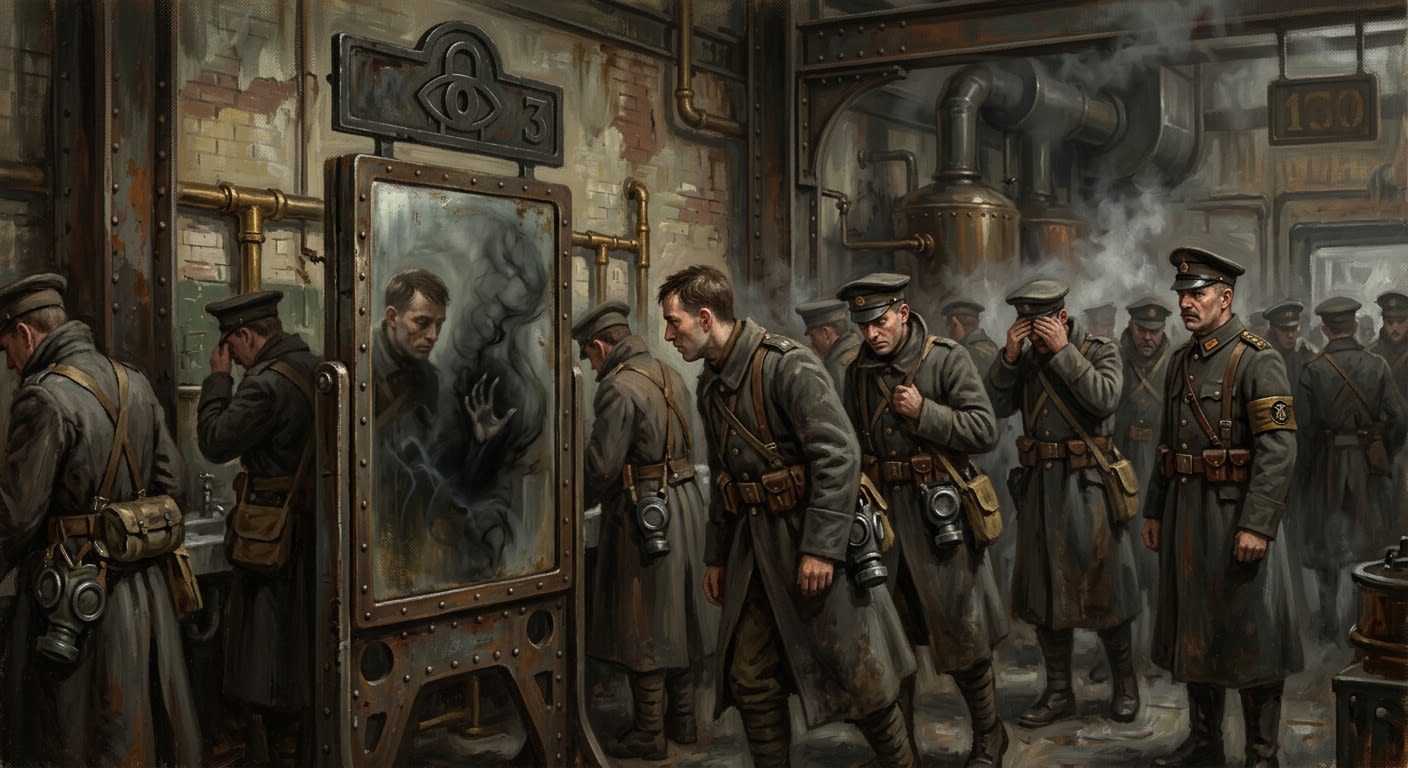
Mirror Discipline
Count to three before your face becomes negotiable
Mirror Discipline forbids the Irongate garrison from lingering over its own face, because Morwen enters where vanity counts past three.
Codex Ref. XIII.1.01-003
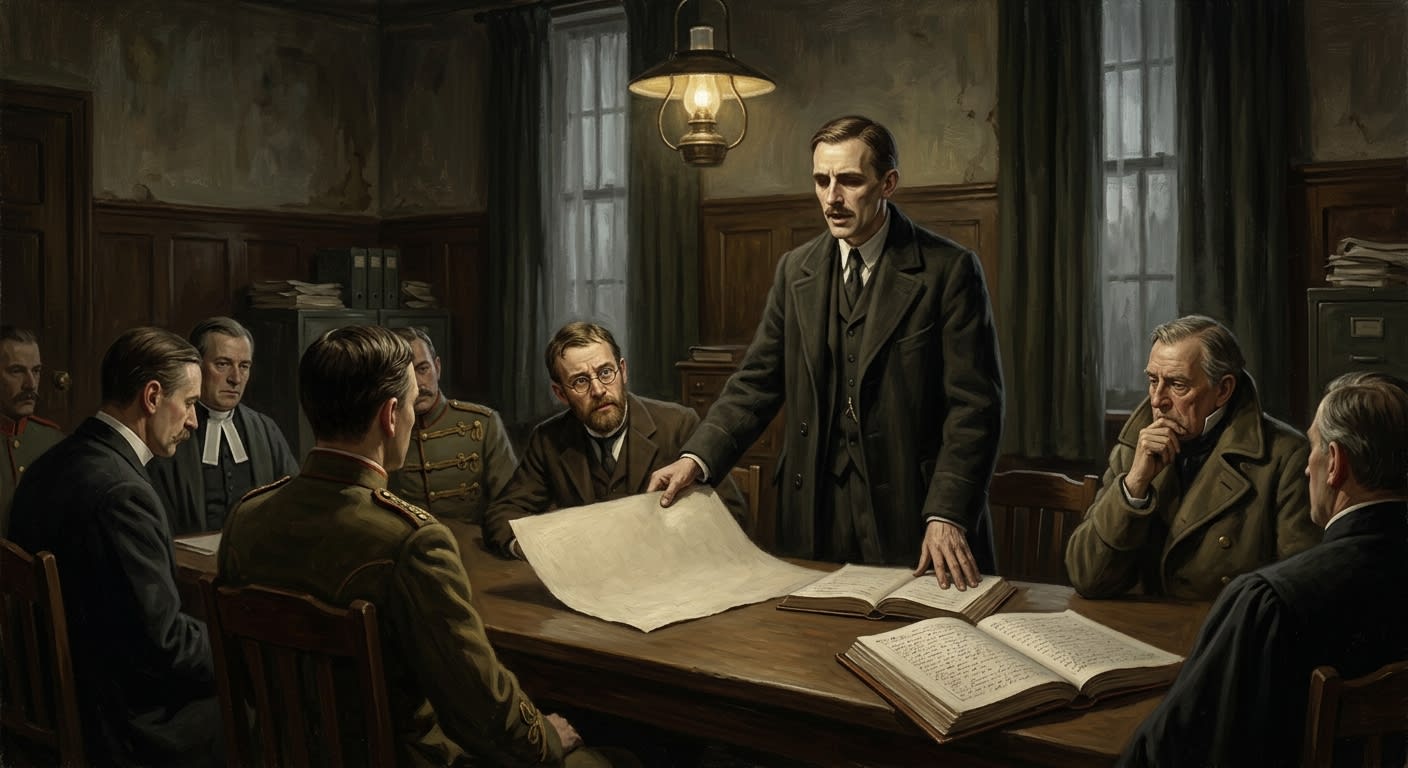
Moth
The command title with too many bodies and one blank appetite
Moth names the Blank-Sheet Circle's disputed command absence: perhaps person, office, paper, or the procedure by which blankness learns to cross.
Codex Ref. XIII.1.53-001
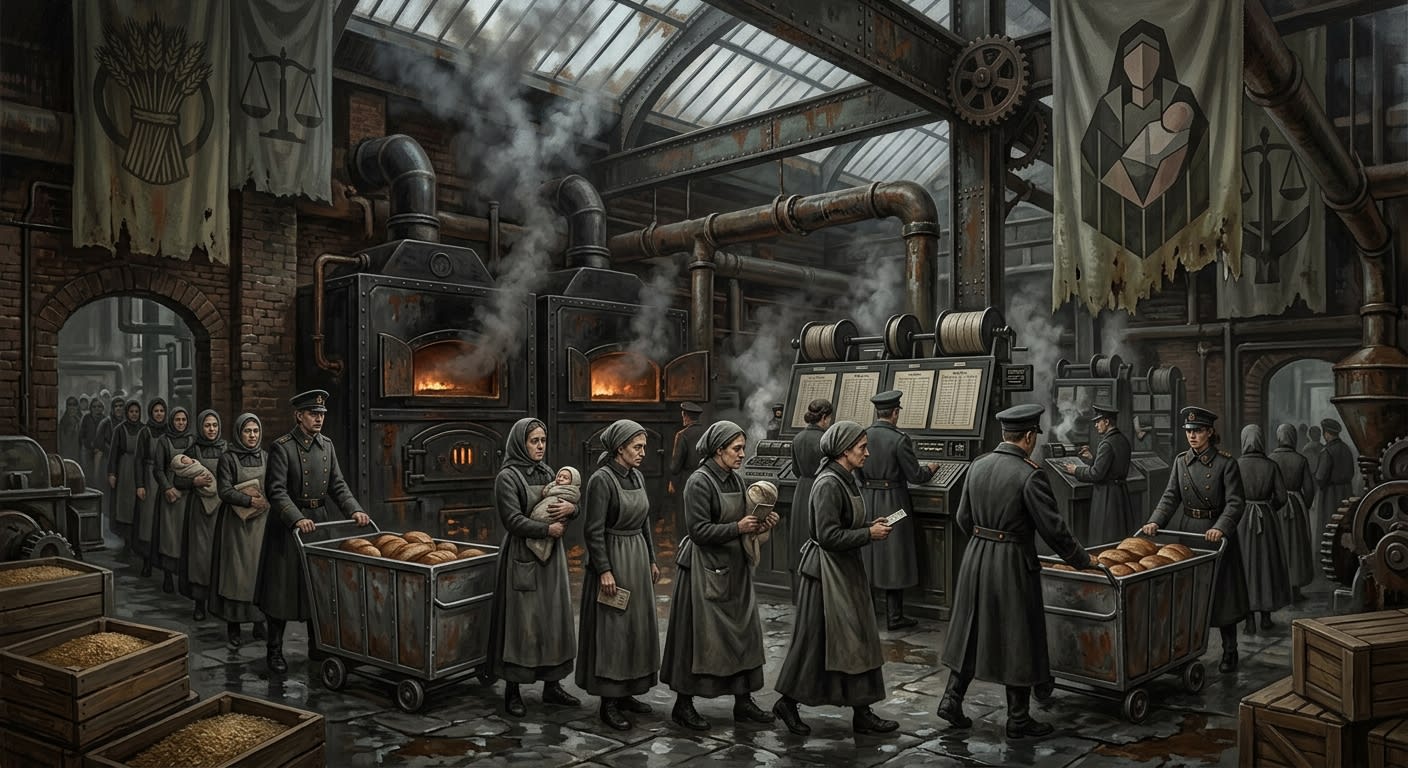
Mothers of Plenty
The queue kept warm, the cradle kept counted
The Mothers of Plenty govern bread and birth as one obedient system, turning ration queues, pregnancy ledgers, and infants not yet weaned into instruments of state continuity.
Codex Ref. XII.6.05-001
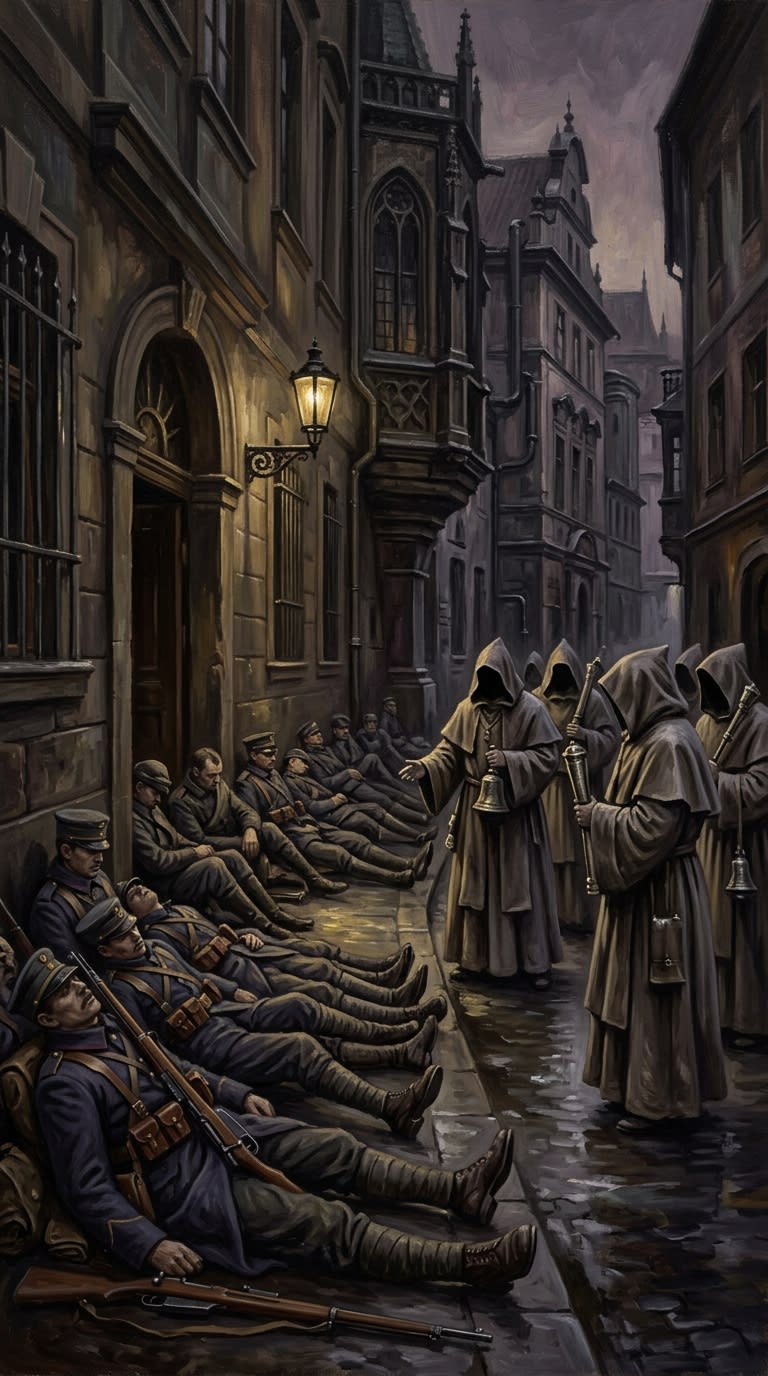
Night of Silent Steel
Where obedience stood perfect and violence forgot its name
The A.S. 167 Prague incident in which seven Pale Chanters severed a Radiant Fusilier regiment's passage between command and act, leaving forty-three rifles loaded and forty-three men dead.
Codex Ref. VII.5.04-001
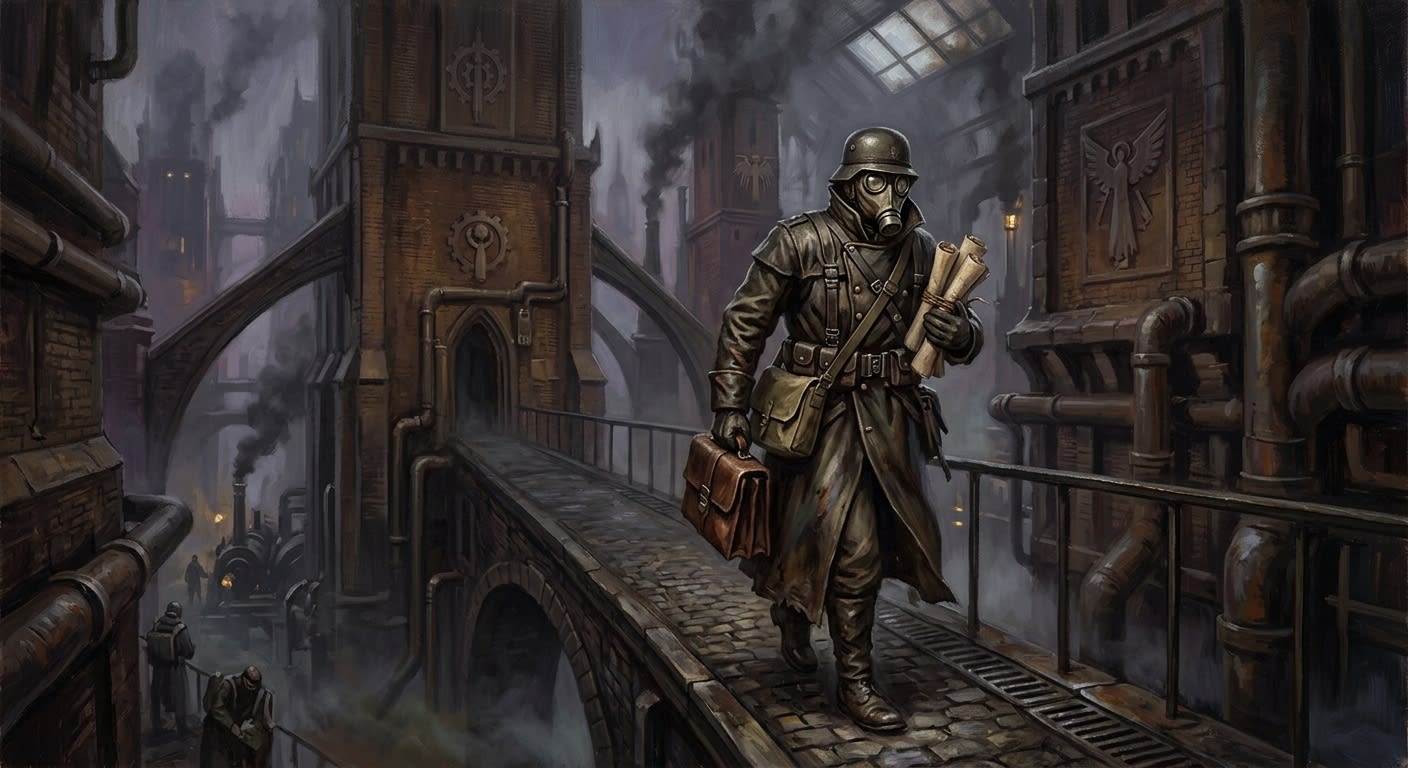
Night Papers Courier
Authority on borrowed hours and disappearing vellum
Night Papers Couriers deliver the Synod’s most deniable commands: grey vellum that outranks rank, bypasses appeal, and dies at dawn if conscience has not already done so.
Codex Ref. XII.14.03-001

Night Wagon Driver
The wheel that carries absence farther than doctrine can walk
Night Wagon Drivers are the Bureau of Shadows’ logistics spine, hauling people, orders, relics, and corpses through streets trained to forget the sound of wheels.
Codex Ref. XII.14.04-001
Ninefold Matins
Dawn is not welcomed; it is struck into obedience
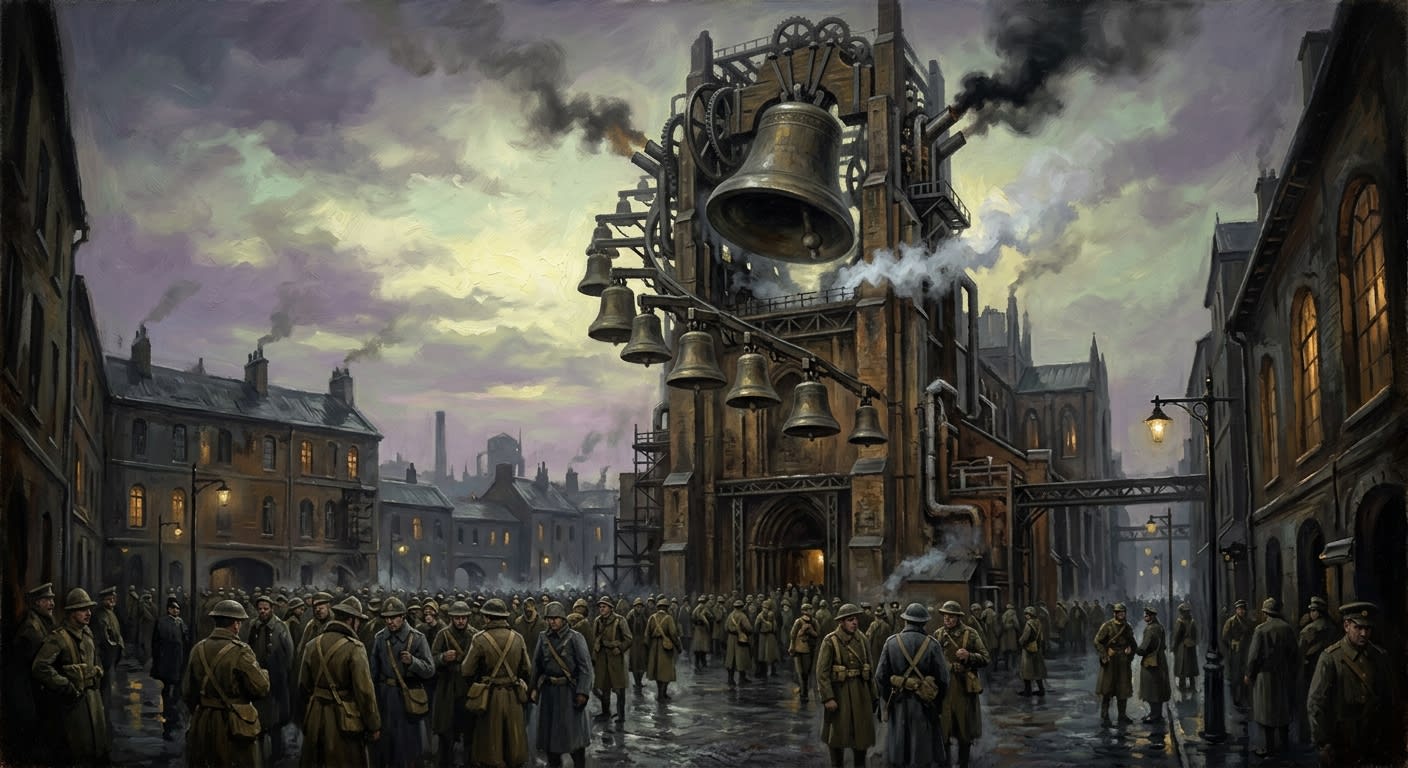
Ninefold Matins is the Synod's dawn peal: nine descending strokes by which sleep is annulled, bodies are mustered, first actions become lawful, and the private self is beaten into schedule.
Codex Ref. XIII.1.62-115
North Sea
The wet border that feeds the Line and refuses the Ledger
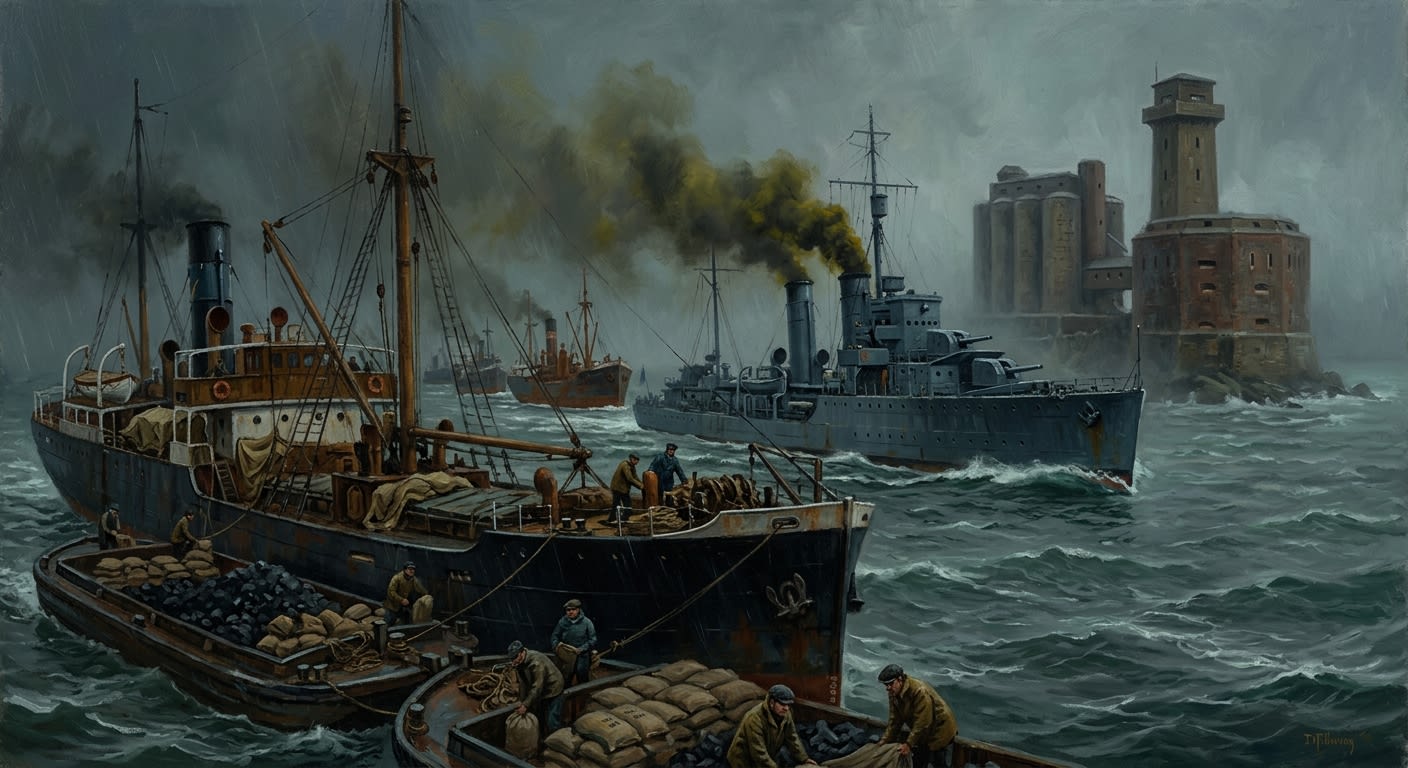
The North Sea is the Synod's least obedient frontier: a maritime supply basin of grain, coal, fish, fog, foreign credit, reluctant allies, and weather that accepts no stamp.
Codex Ref. II.4.09-201

Northern Corridor
The long throat by which Hamburg becomes Brest's bread and Königsberg's coal
The Northern Corridor is the Synod's long supply throat: Hamburg sea-cargo, Kanzleiburg sequence, Warsaw yards, British grain, Dutch credit, Prussian clocks, and bread for the northern bastions.
Codex Ref. II.4.09-095
Northern Hierarchate
Where the north is made punctual enough to survive
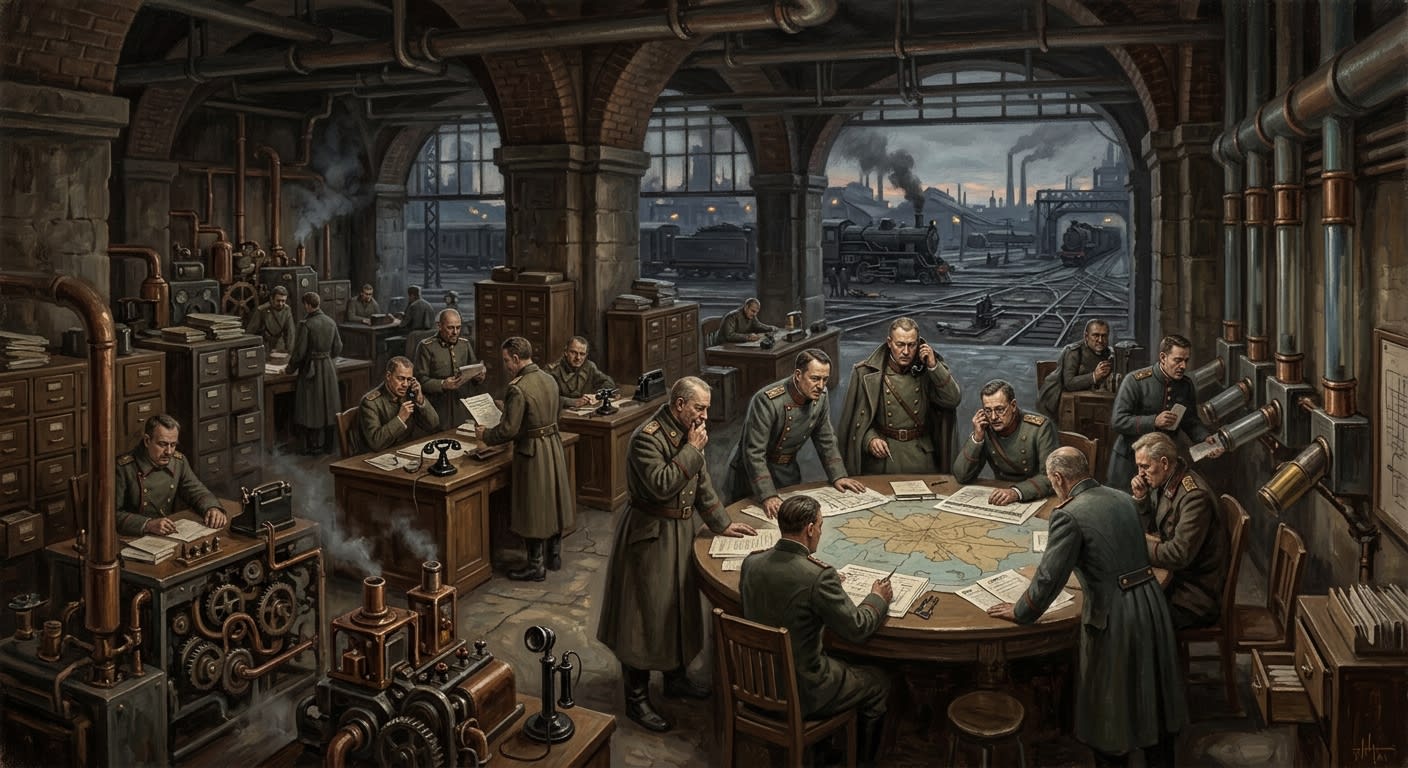
Seated at Kanzleiburg in A.S. 95, the Northern Hierarchate turns Prussian machinery, rail priority, reserve depots, and inter-Bureau quarrels into survival for the Baltic-Carpathian front.
Codex Ref. VIII.7.01-095
Northern Levy
Papers Complete, Movement Incomplete
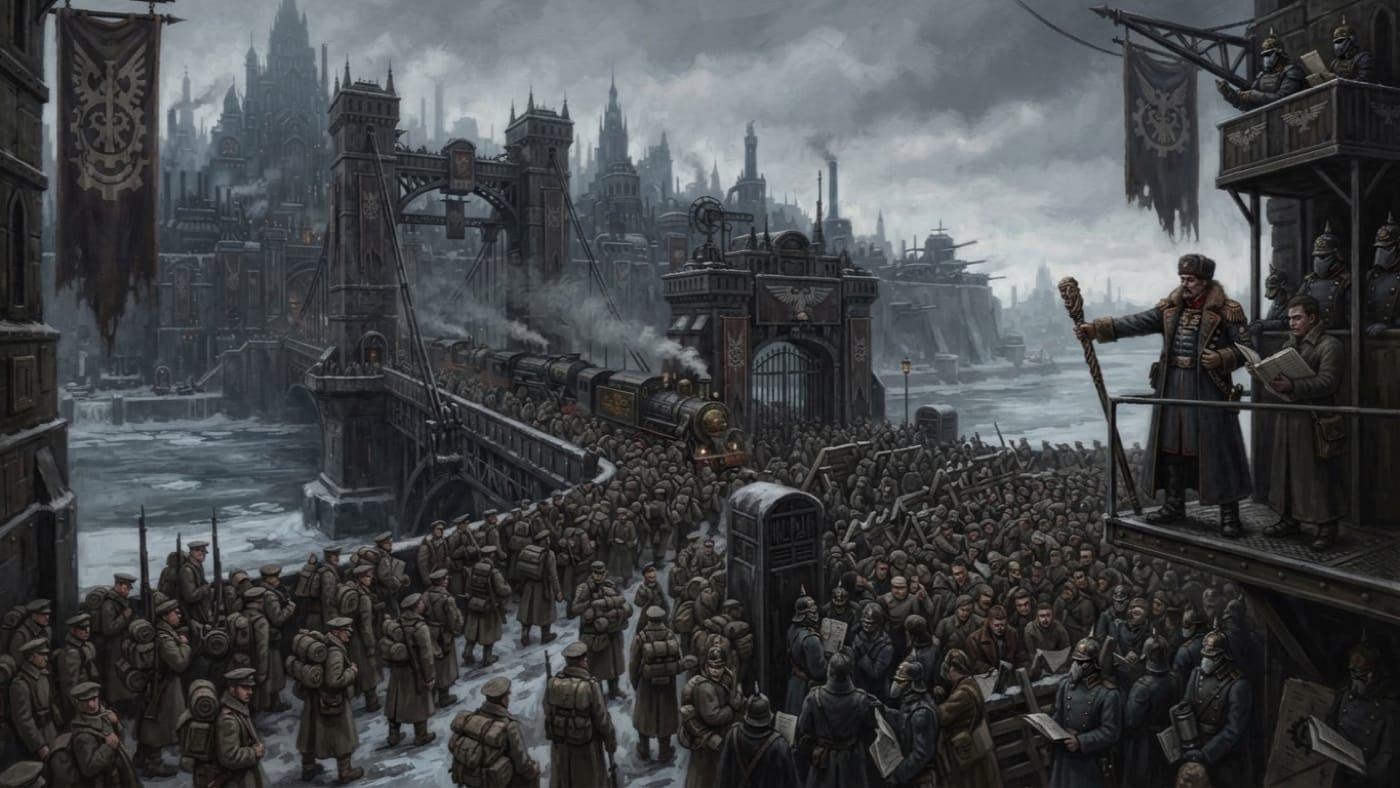
The A.S. 201 return of Brest's northern replacements: lowland sons sent through Warsaw, columns arriving short and late, and valid orders awaiting the bridge's permission to cross.
Codex Ref. VII.8.10-201
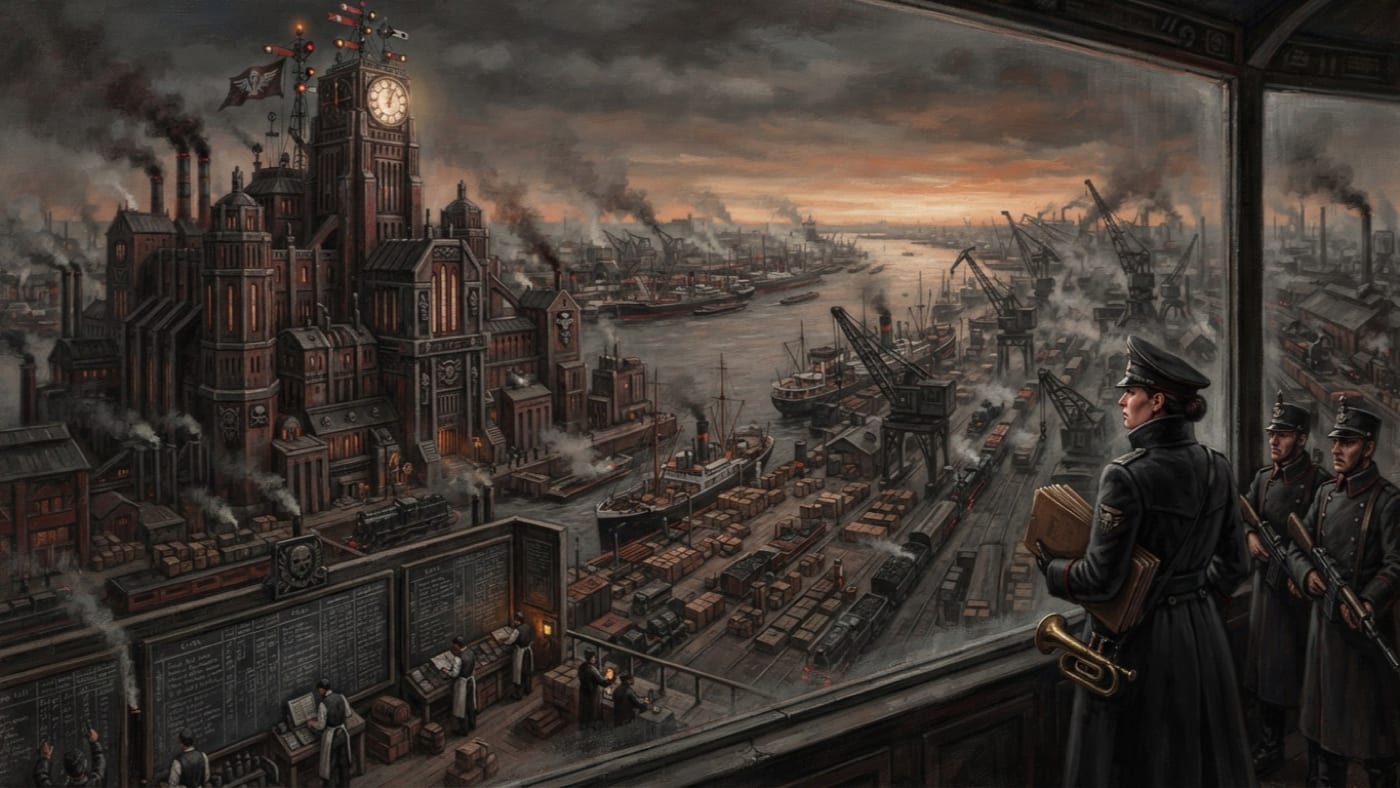
Northern Maritime Chapterhouse
The tide has a schedule; the Synod has objections
Hamburg's senior Synod installation orders berths, war cargo and foreign-factor schedules under Admiral-Prefect Gerta Halske. It can command the harbour boards; it cannot command the ships to come.
Codex Ref. II.4.09-006
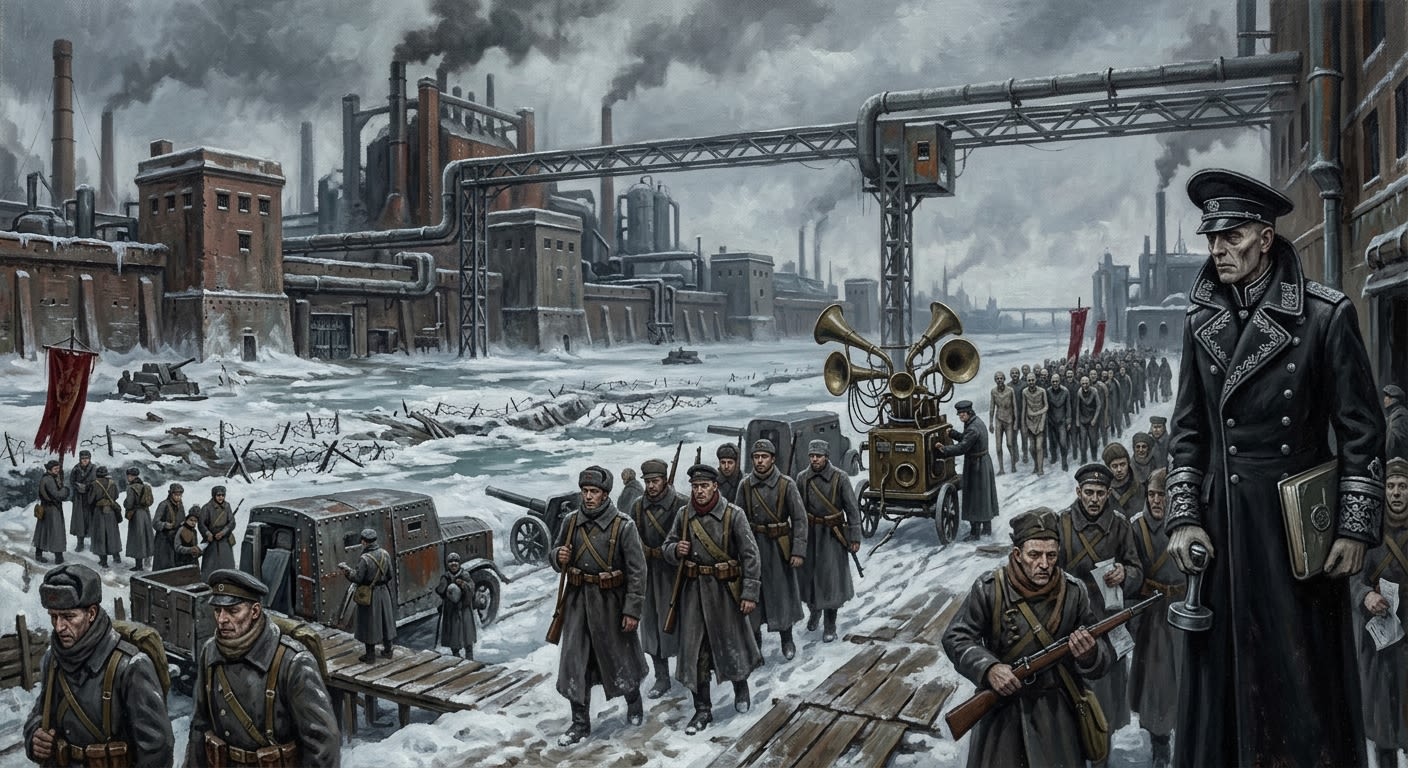
Northern Theater
Where the north remains faithful because terror has not been assigned a better category
The Northern Theater is the Synod's coldest unresolved front: Königsberg, Brest, the Grey, the Nameless Tide, failed hymns, returned faces, echoing confessions, and confidence stamped over fear.
Codex Ref. II.4.10-190
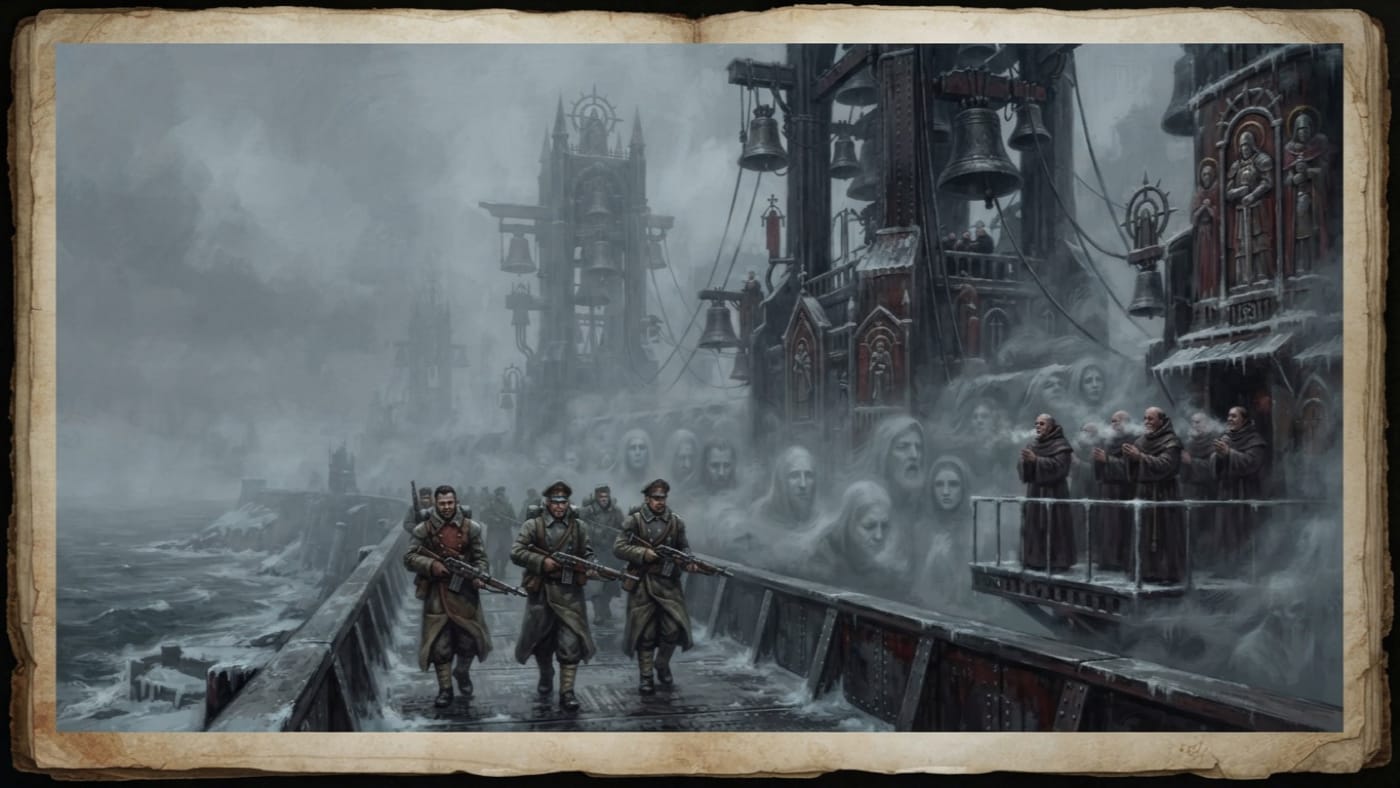
Northern Theater Assessment
Eleven years of acknowledged receipt, and still no ruling
The Bureau of War filed its assessment of the Grey in A.S. 190 and urged classification review in A.S. 196. Doctrine acknowledged both. Eleven years on, I can record the receipts; I cannot record a ruling.
Codex Ref. XIII.1.103-190
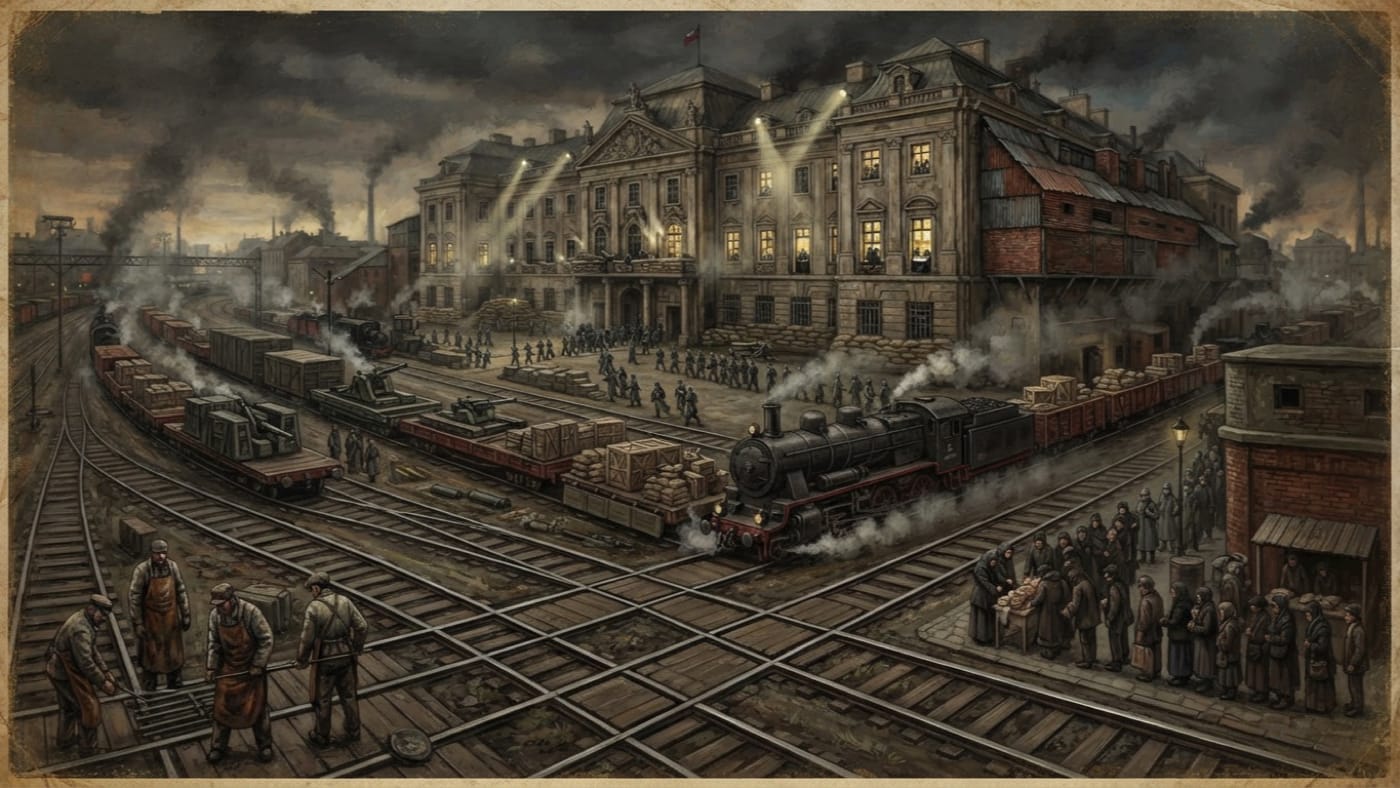
Northern Theater Logistics Command
The palace writes the order; the railway waits for bread
Northern Theater Logistics Command works from an old Polish palace in Warsaw, serving the routes to Brest and Königsberg. Orders are plentiful; coal, sound rail and bread decide what moves.
Codex Ref. VIII.7.05-201
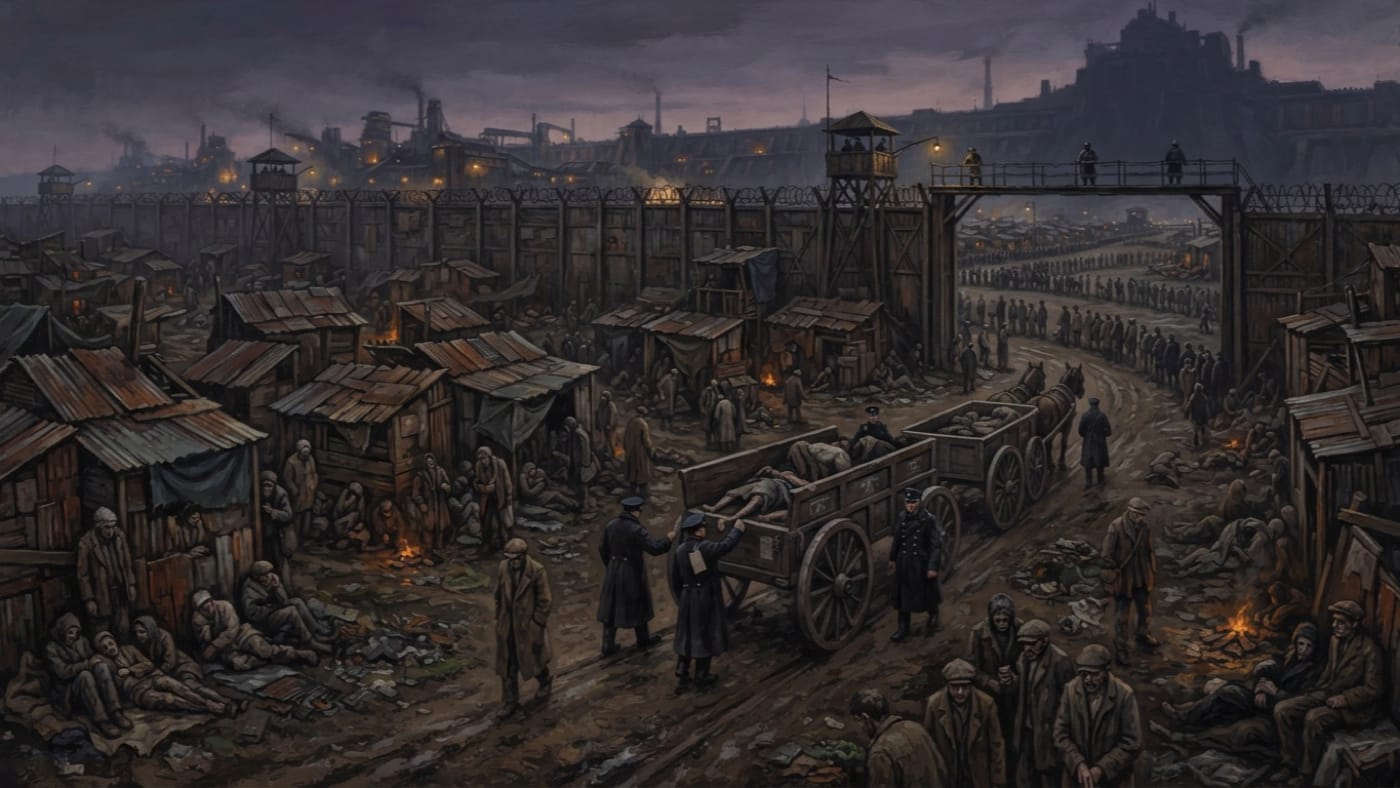
Null Verge
Where the ledger ends and the carts begin
The Queue Road's uncounted southern margin houses erased debtors in darkness. Reeve's Custodians collect the sick, the dead and the inconvenient, and export labour under stamps naming no bureau. The census remains correct.
Codex Ref. II.3.05-012

Office of Nullity
The knife kept inside the book
Sub-office of the Bureau of Records governing Erasure Notaries, strike writs, dependent ledgers, black seals, and the civic art of making a person unprovable.
Codex Ref. XIII.1.70-001
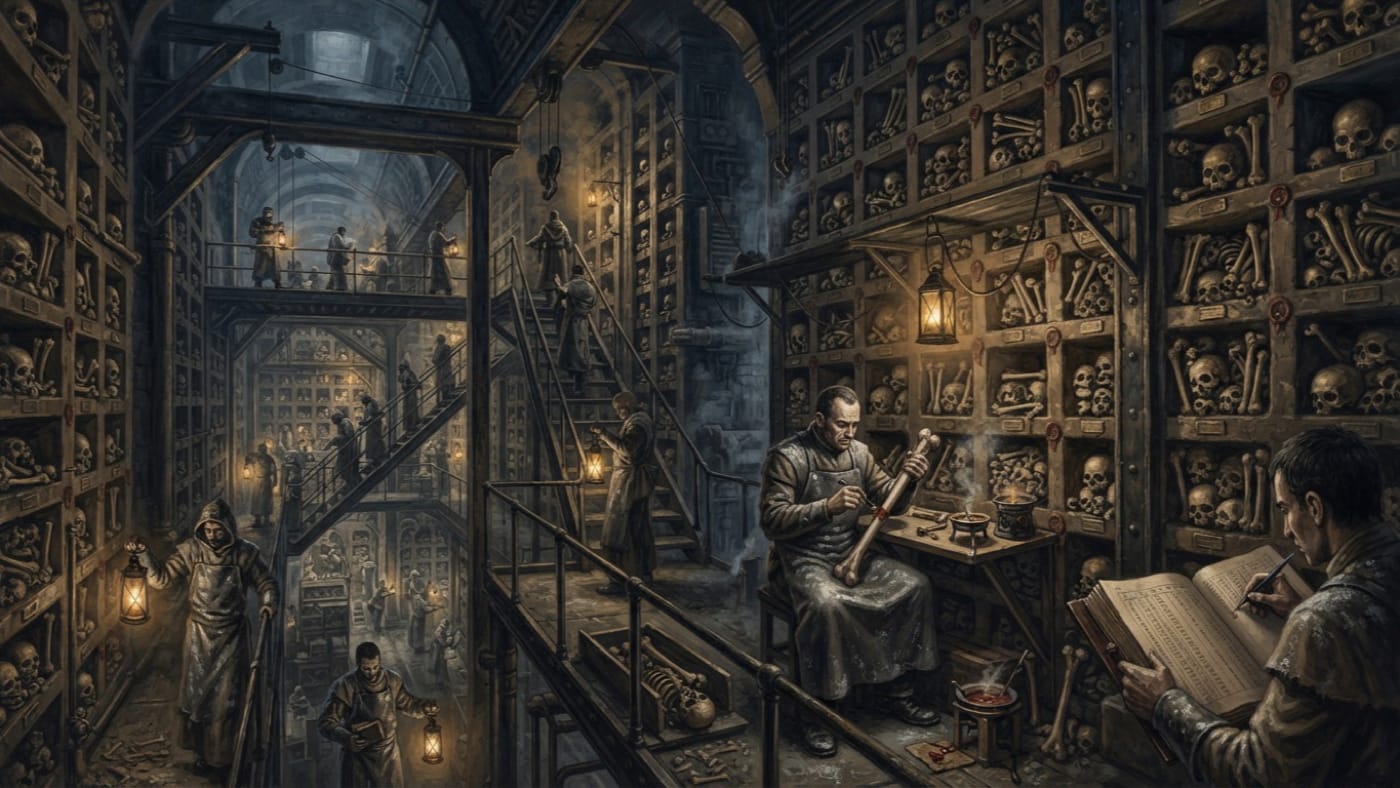
Office of the Last Watch
The dead must remain obedient; the totals must agree
Records' mortuary sub-bureau oversees cemeteries, funerals, exhumations, and the obedience of the dead. Its totals balance; its corridors require a separate report.
Codex Ref. III.2.09-004
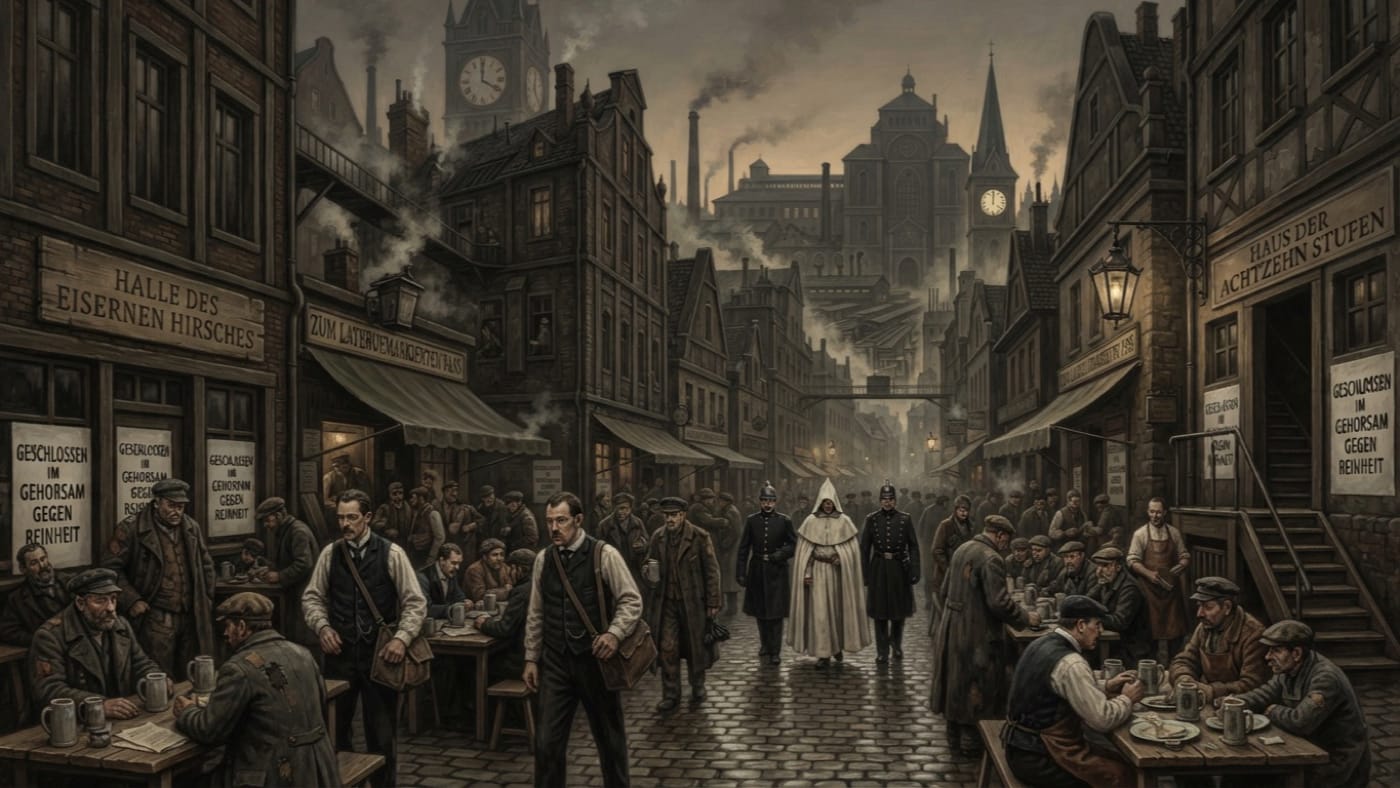
Old City of Kanzleiburg
Where the north settles what its offices cannot
Kanzleiburg's inherited residential quarter keeps veterans, clerks and brewers at common tables. In A.S. 140, Purity discovered what closing those tables cost the north.
Codex Ref. II.4.10-201
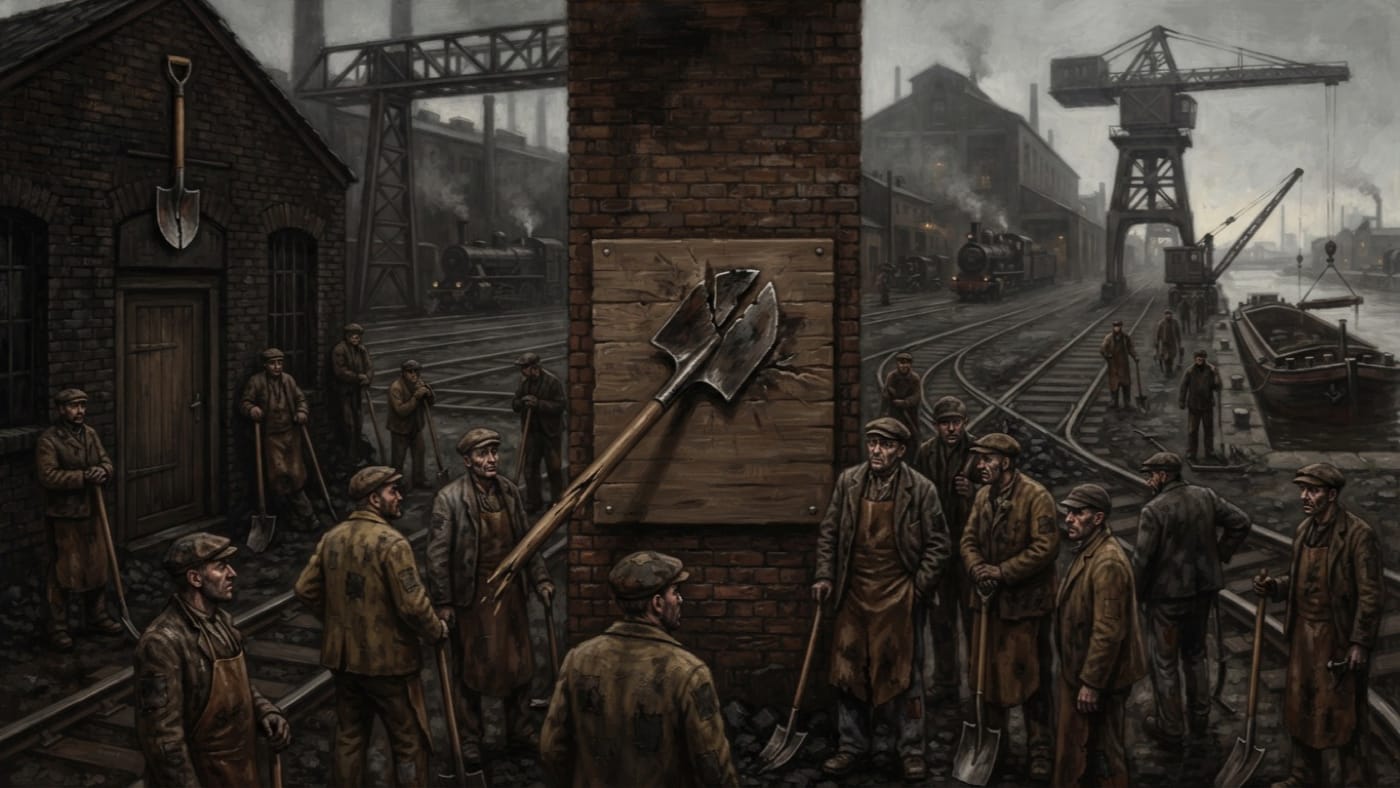
Old Krebb
One blow, two entries, and a shovel above the door
Old Krebb split his shovel against a War notice board during Hamburg's A.S. 189 stoppage. Records calls it vandalism; the Union calls it commentary. The blade survives where the biography does not.
Codex Ref. III.2.01-189
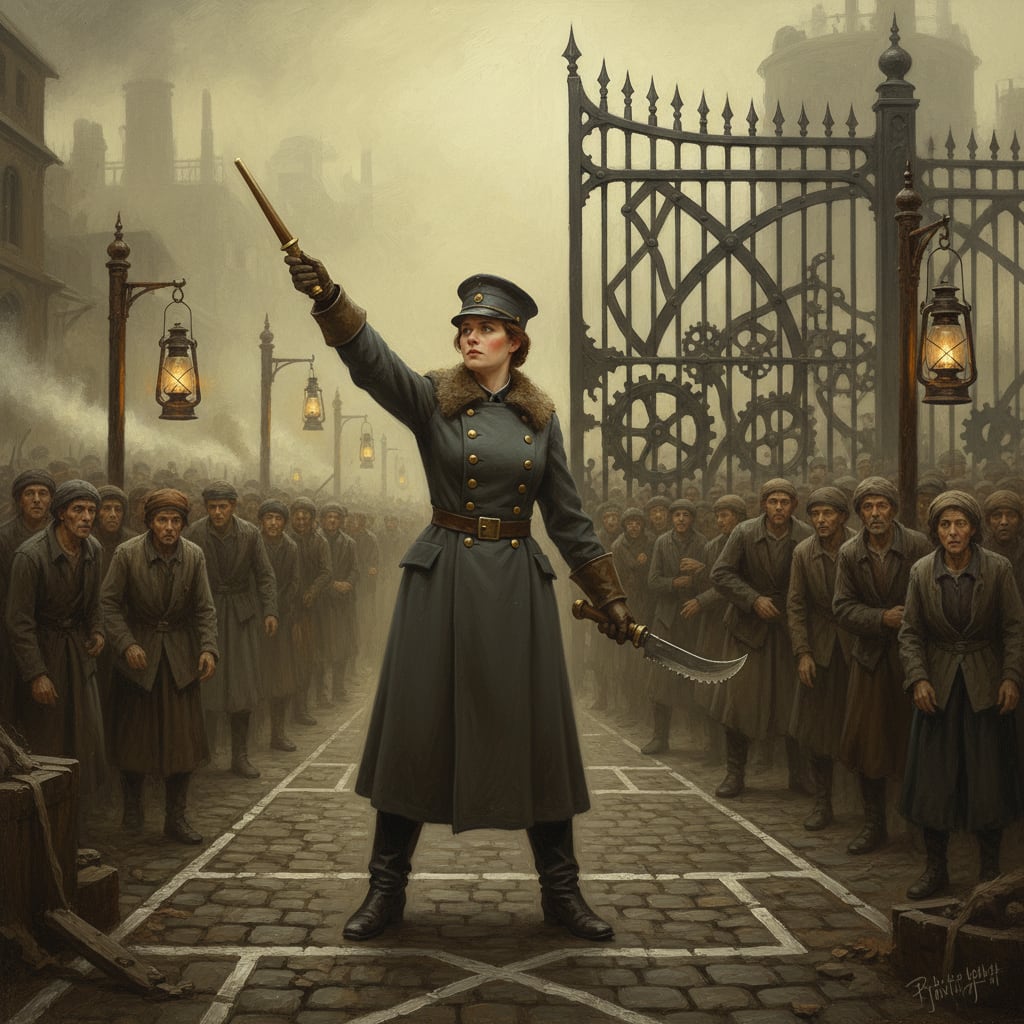
On the Procession Marshal
The boot behind the beat; or, why orderly grief is the Synod's last public prayer
The boot behind the beat. The Procession Marshal controls pilgrim columns, funeral trains, and levy marches — setting cadence by baton, marking routes in chalk, and cutting lane ropes when the crowd folds. Born of three hundred dead at Bastion-Brest, A.S. 112.
Codex Ref. XII.31.01-001
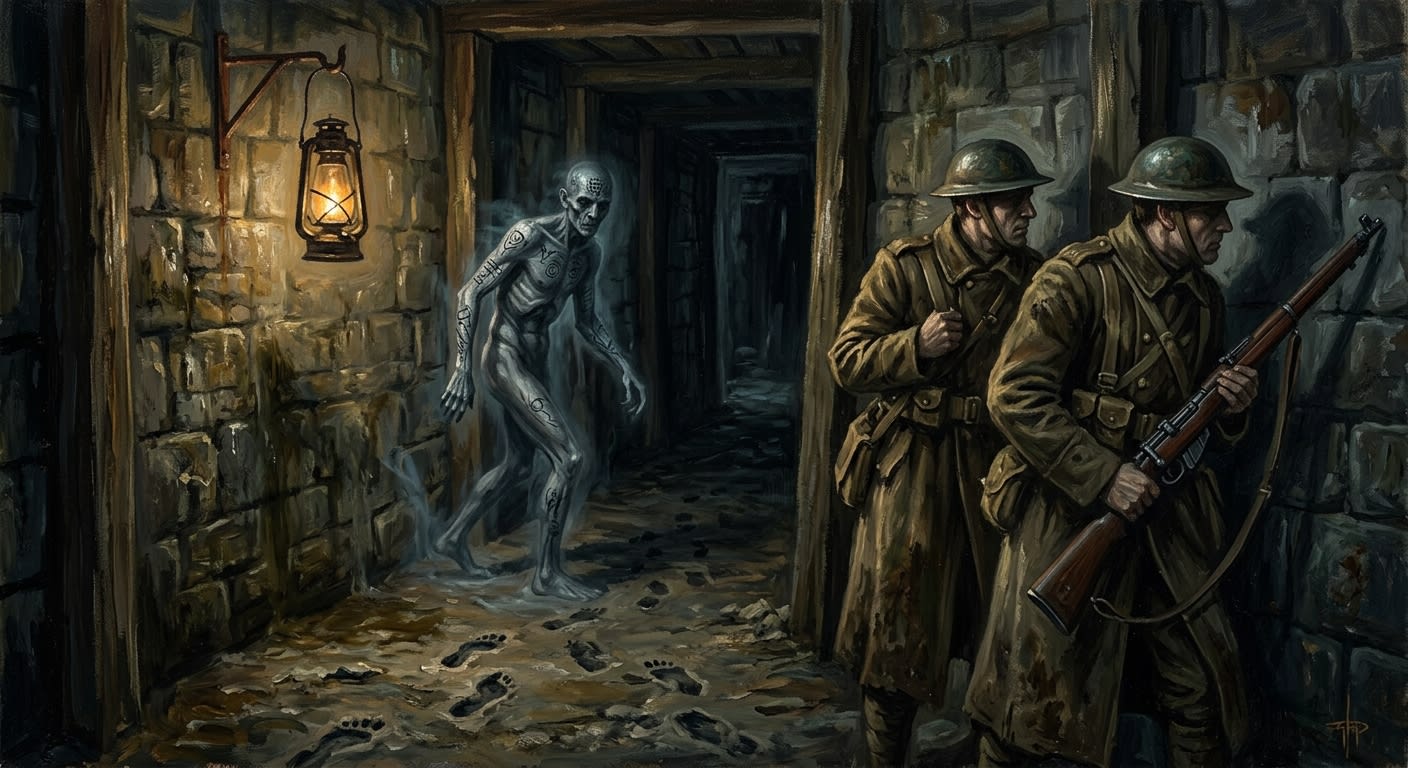
On the Veil-Stalkers
The enemy the eye refuses to see
A taxonomy of the Shadow Court's concealment-inscribed mortal stealth auxiliaries — five modes of glyph-fed invisibility, a lifespan measured in weeks, and the Bureau's admission that a knife you cannot see kills morale more efficiently than a cannon you can.
Codex Ref. IX.1.05-001
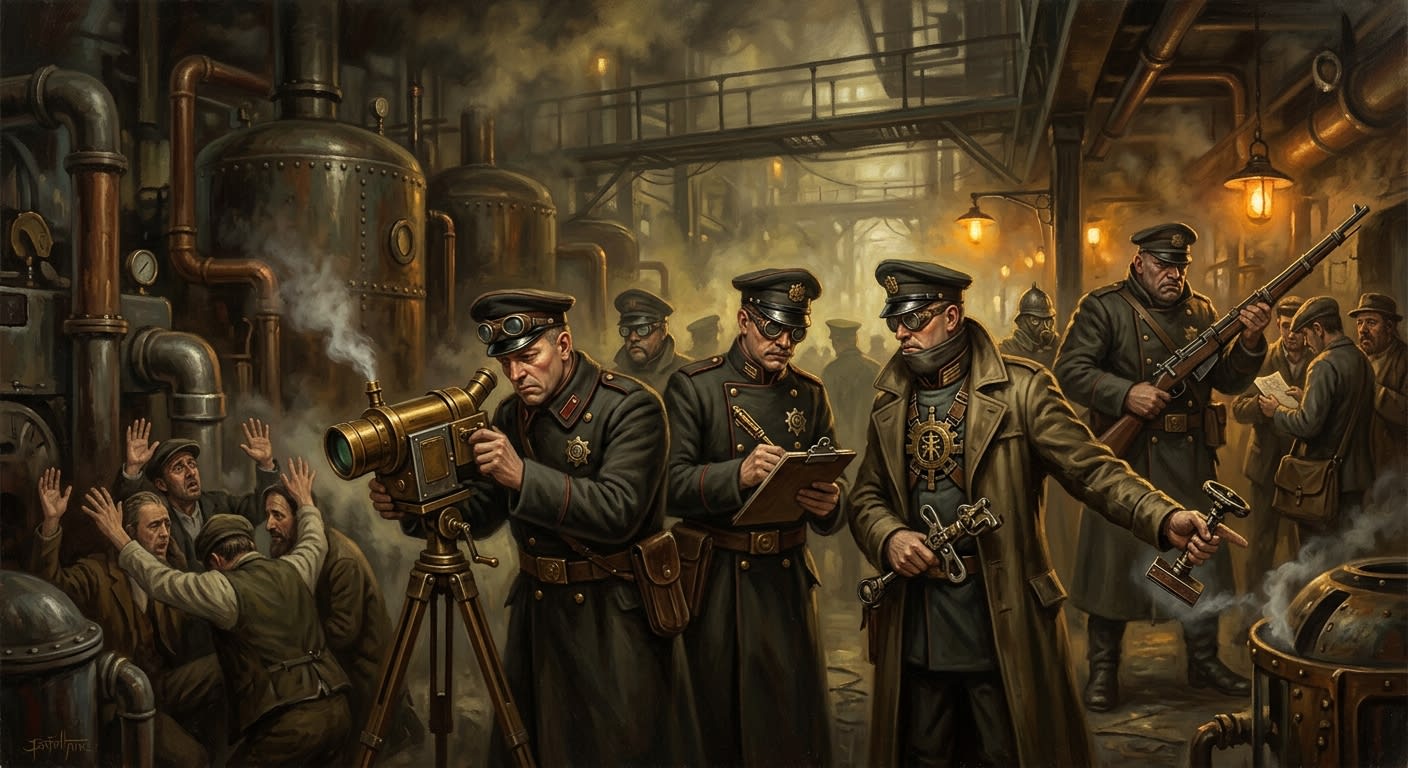
Operational Directive 14
The order that made air searchable and warmth prosecutable
Operational Directive 14 made smoke a witness, warmth a suspicion, and air a lawful target of Bureau of Purity entry, seizure, citation, and theatrical correction.
Codex Ref. XIII.1.94-143
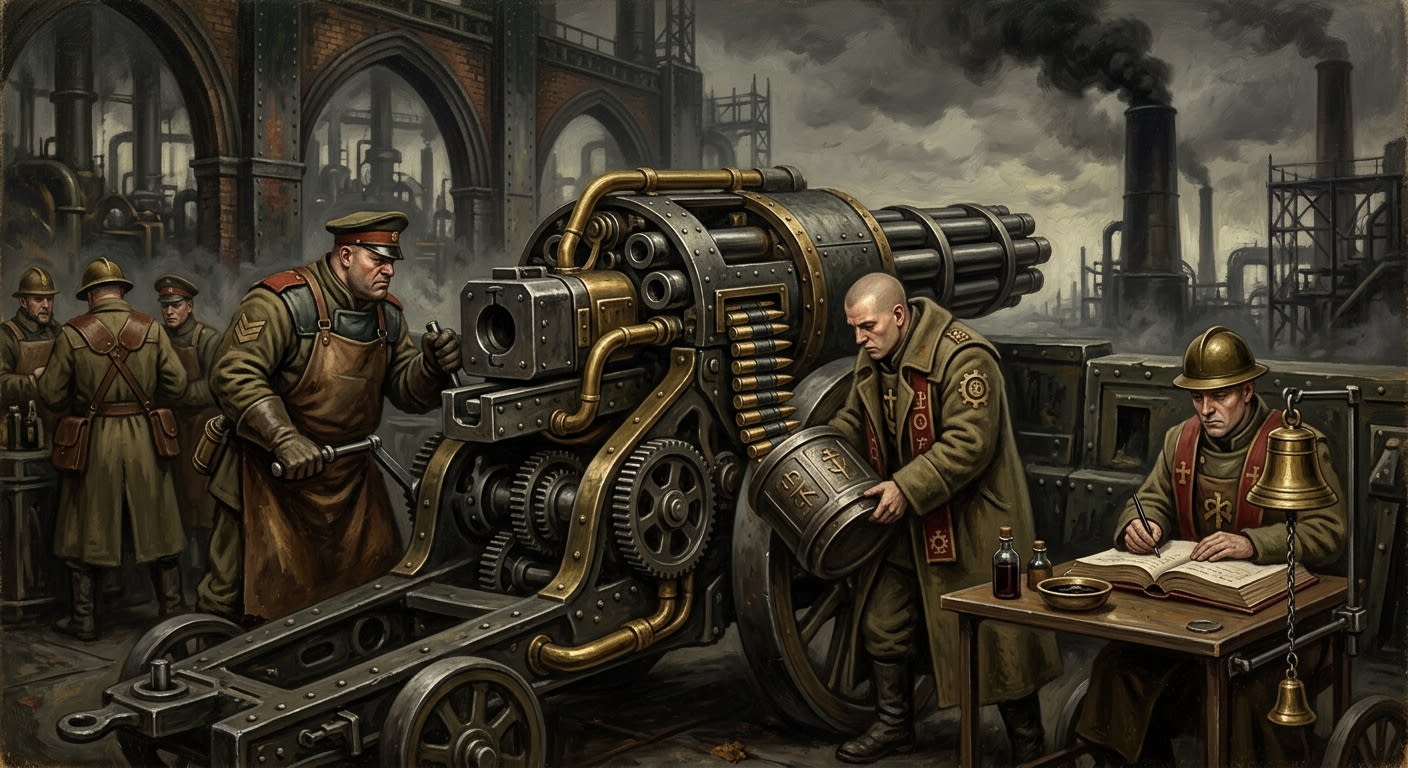
Ordained Repeater
The heretic made a gun; the Synod made it kneel
The Ordained Repeater is Artois's clockwork artillery corrected by chrism, ledger, bell-cadence, and the sacred art of denying useful debt.
Codex Ref. III.2.04-015
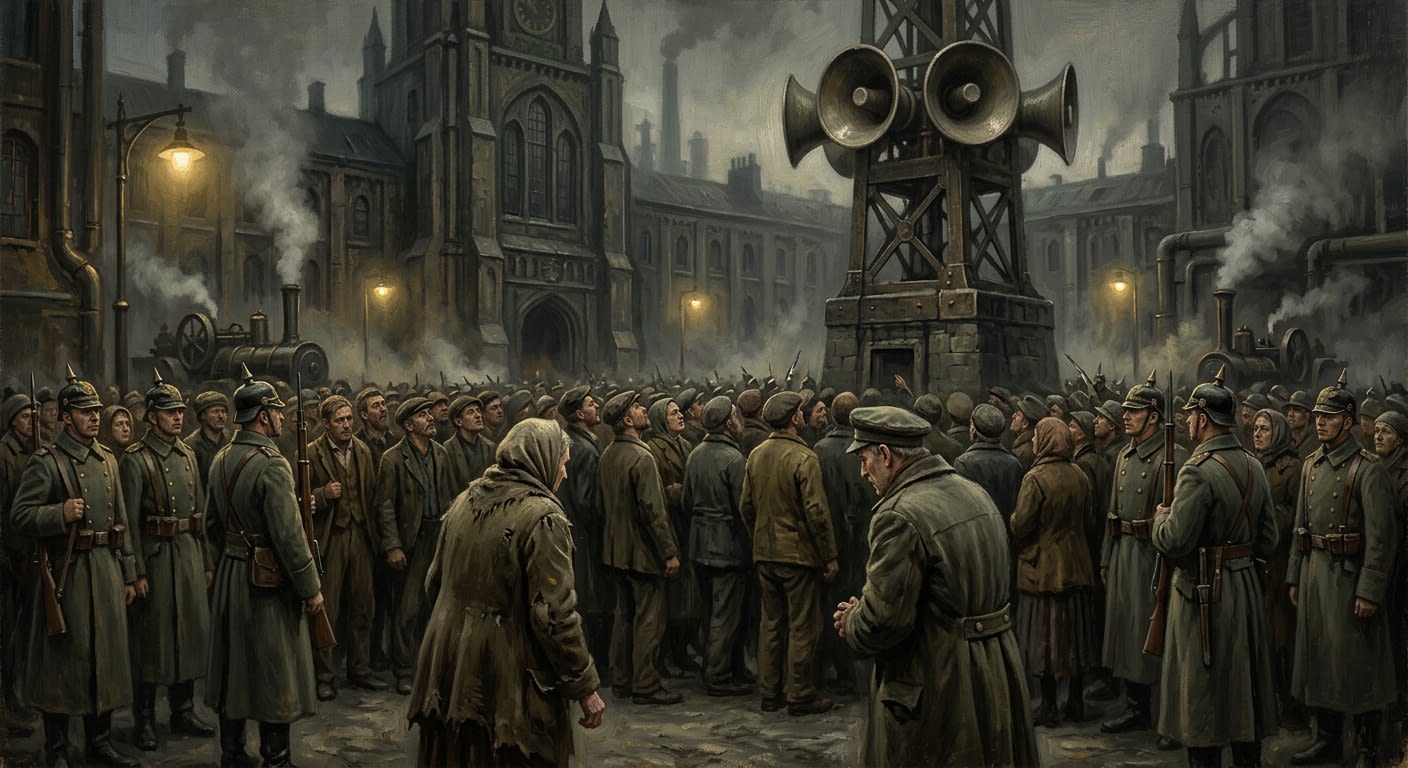
Orison Hour
The hour that owns the ear and charges rent for listening
The Orison Hour is prayer, ration order, casualty roll, curfew, census pressure, and acoustic cudgel: Europe instructed to possess one throat.
Codex Ref. XIII.1.96-112
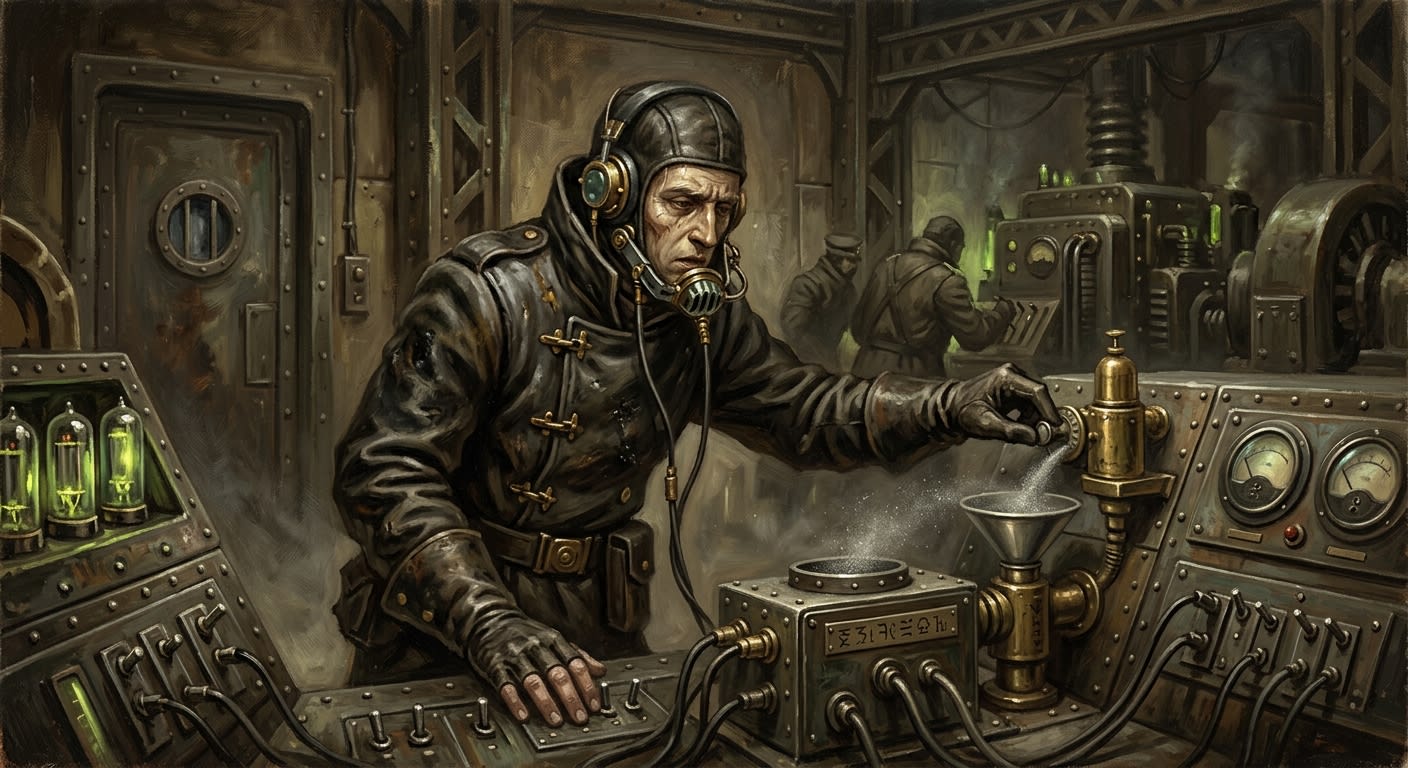
Orison Signal Engineer
The approved voice must arrive cleaner than the air that carries it
Orison Signal Engineers lace the Synod's broadcasts with saint-dust, keeping doctrine, ration orders, and war commands from curdling into enemy song.
Codex Ref. VI.4.07-018
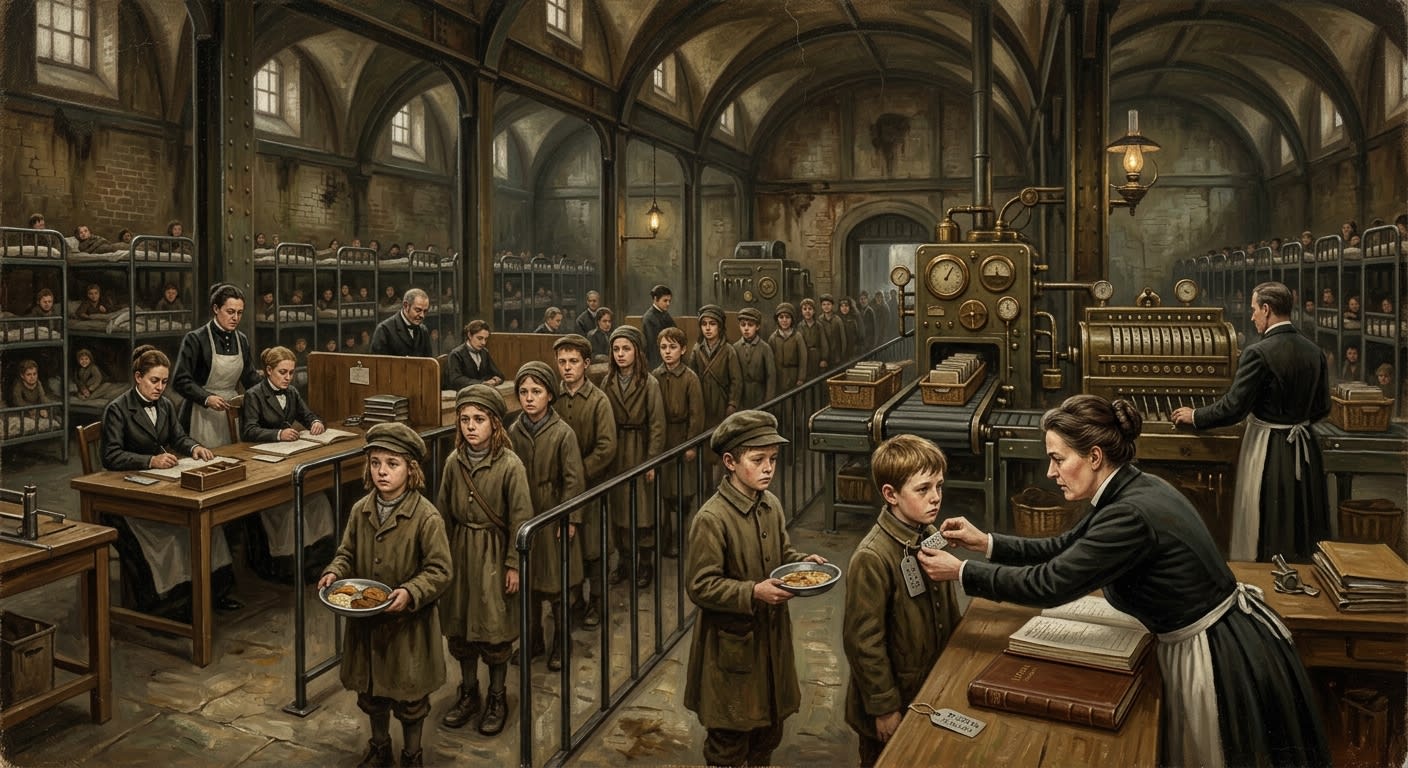
Orphanarii
Mercy with a cot, a tag-punch, and the legal courage to rename a child before breakfast
The Orphanarii are the Synod's state orphanage system: Mercy houses that wash, tag, rename, sort, feed, place, and sometimes erase children until grief becomes legible.
Codex Ref. VIII.2.12-134
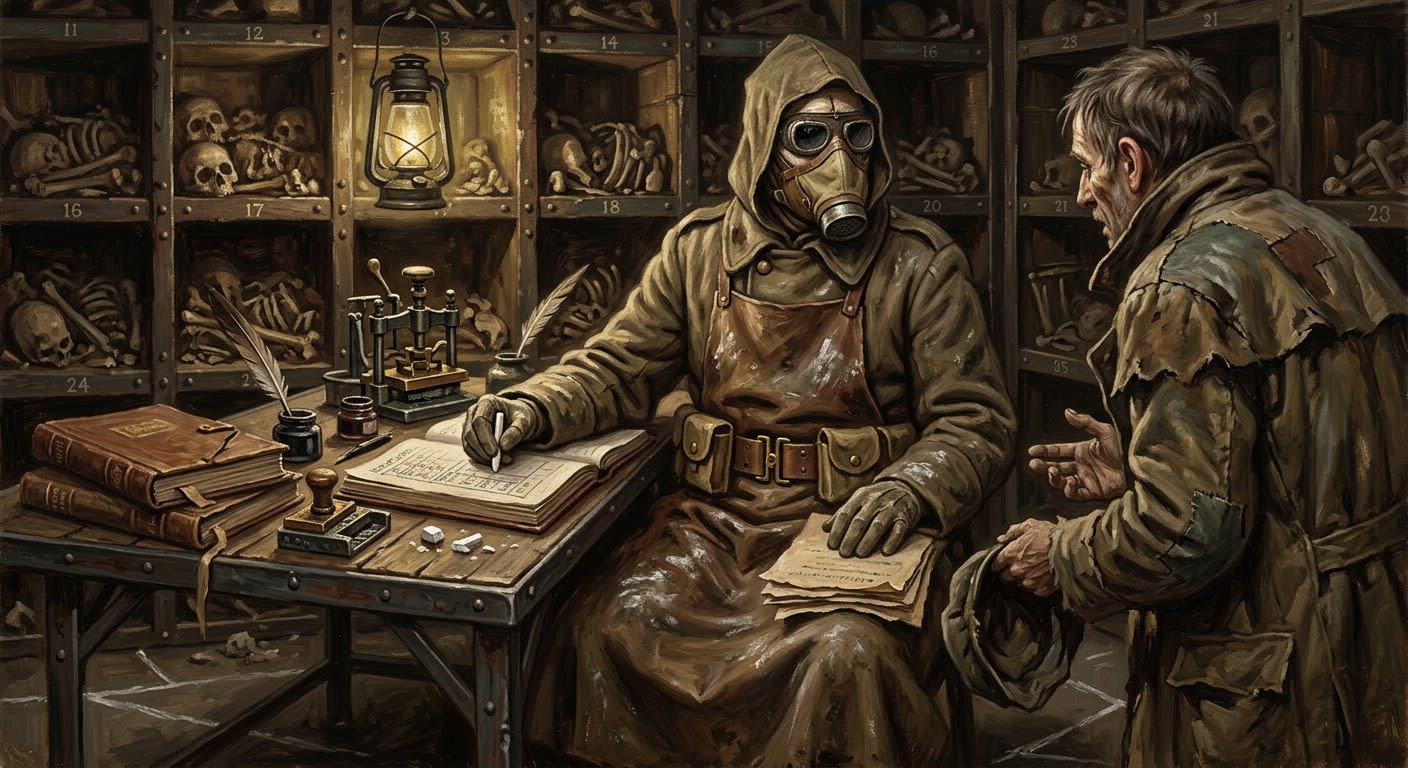
Ossuary Housing Allocator
The wall keeps the dead, and the clerk decides who may cling to it
Ossuary Housing Allocators sell dryness, bell-coverage, and sanctioned sleep beside the dead, converting overflow, grief, and fear into chalk lines and rent.
Codex Ref. VI.4.11-052
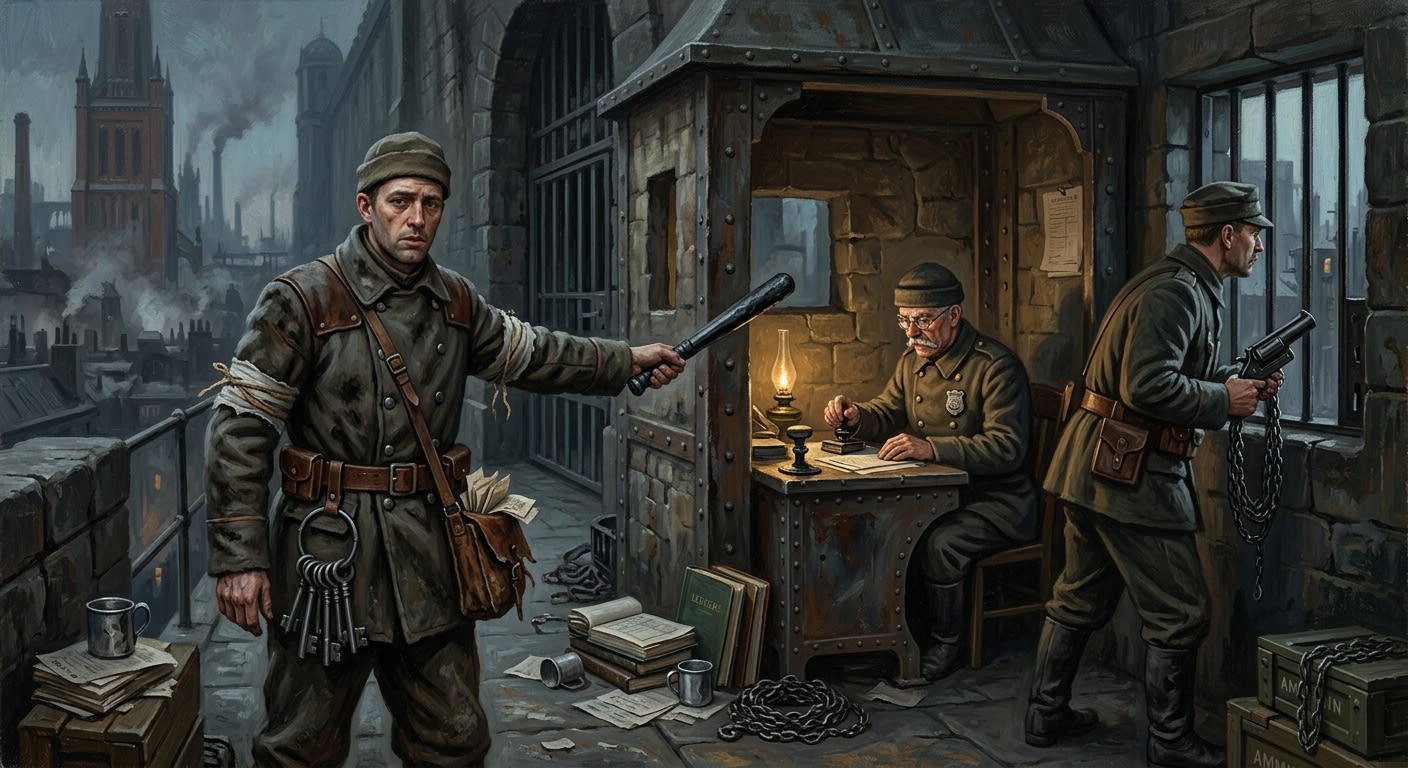
Outer Watch Post
The gate keeps its theology in tar, keys, and cudgels
The Outer Watch Post guards the Cloister's wall with ash armbands, chain keys, seizure slips, tarred batons, and the useful lie of municipal authority.
Codex Ref. II.3.06-005
Outside Current Doctrinal Scope
The question has been received. A verdict has not.
The Bureau has received the question. It declines to say what the question concerns. I survey the northern filings under Outside Current Doctrinal Scope; no classification is conferred.
Codex Ref. XIII.1.99-201
Paper-Only Faction
The smallest heresy says the seal moves faster than the saint
The Paper-Only faction is the smallest Femur-War Broker branch, refusing relic contact while selling provenance chains, delay writs, and custody narratives.
Codex Ref. XII.15.04-001

Peace Brokers
The grey-corded liars who sell the cheapest form of mercy: delay
Peace Brokers are the oldest Femur-War Broker faction, heirs to Elder Noxa's temporal-separation method, selling quiet by keeping authenticated relic contradictions apart.
Codex Ref. XII.15.02-001
Peripheral Erasure
The sentry sees a man and files him as rubble
Peripheral Erasure lets a Veil-Stalker stand in plain sight while attention files him as rubble. The commonest concealment mode spends its bearer slowly enough to learn how a fortress eats.
Codex Ref. XIII.1.05-001
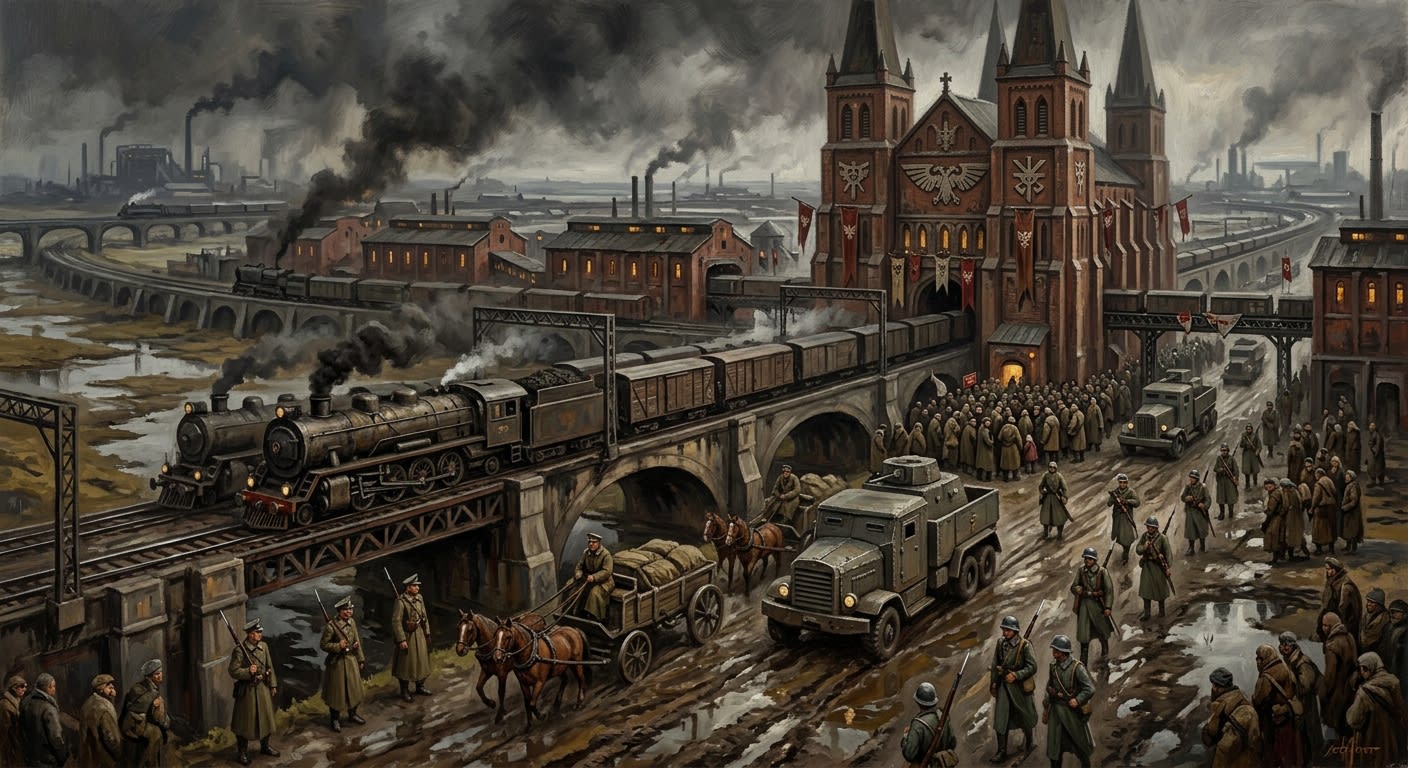
Polish Corridor
The flat throat by which Warsaw feeds the northern guns
The Polish Corridor is Warsaw's long flat throat: rail, road, hunger, prayer, and smoke feeding Brest and Königsberg while pretending passage is not a country.
Codex Ref. II.3.06-095
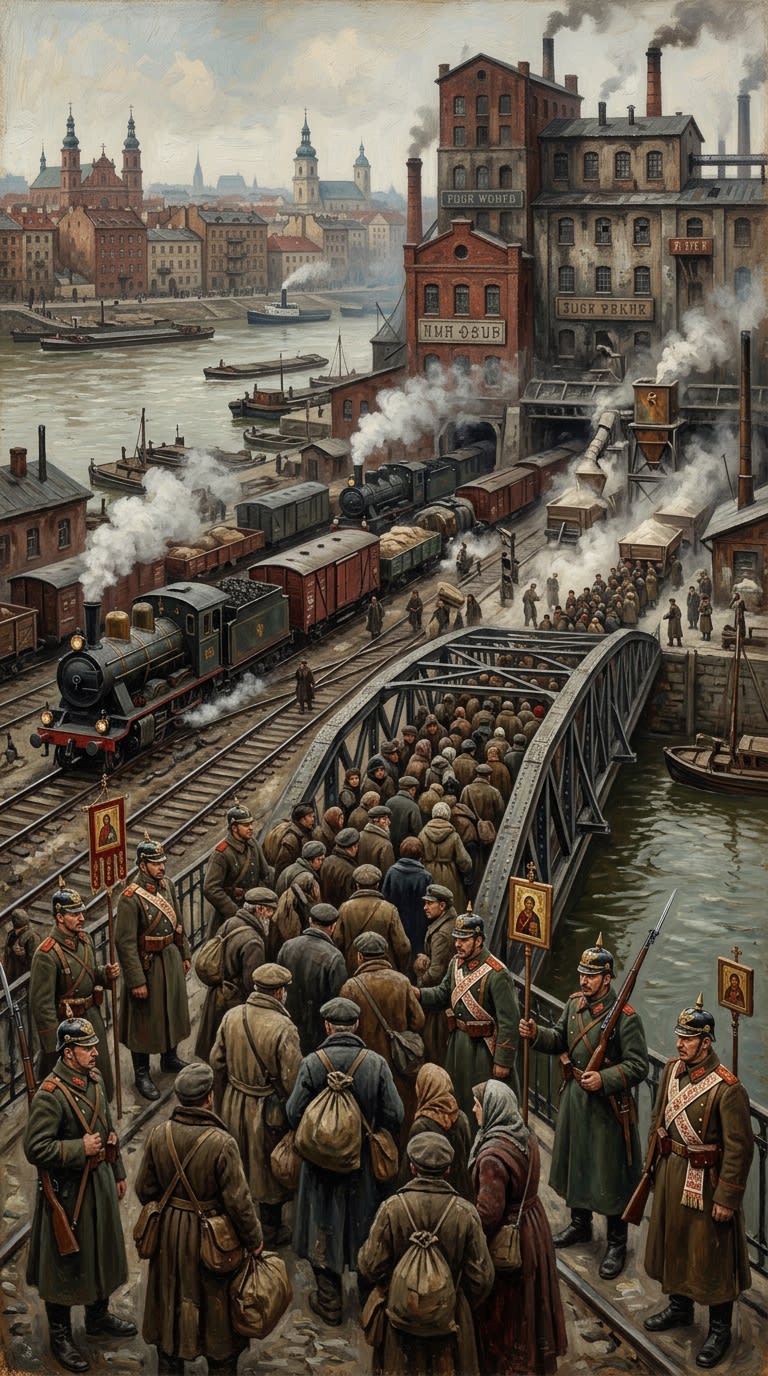
Praga
Warsaw's east-bank throat, where bread teaches logistics to kneel
Praga is Warsaw's east-bank rail throat: refugee room, bridge queue, flour wound, and the district that proved hunger can stop a northern corridor.
Codex Ref. II.3.06-188
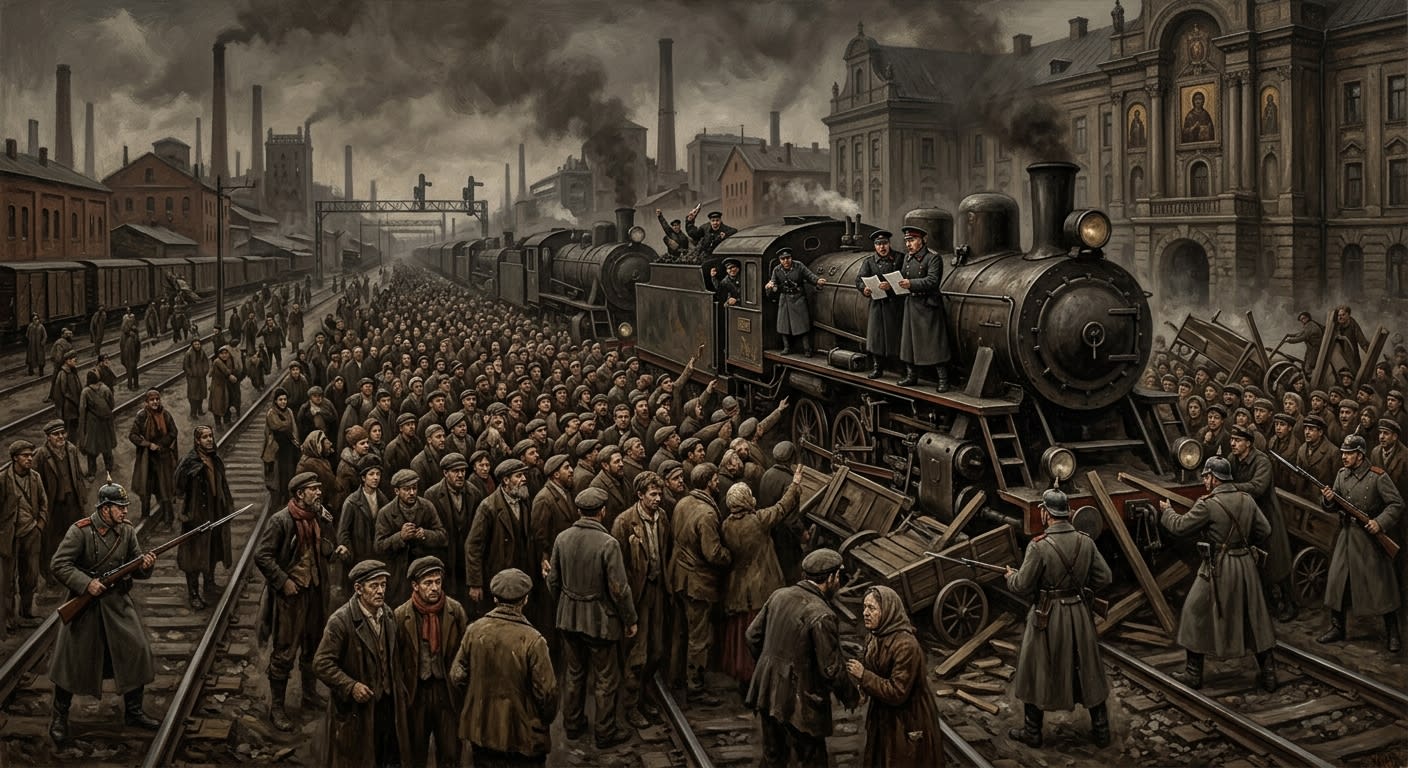
Praga Ration Disturbance
Four thousand citizens taught the northern corridor to feel hunger
In A.S. 195, four thousand hungry civilians in Warsaw's Praga district blocked the eastern rail spur for eleven hours and made the northern corridor confess that logistics has a stomach.
Codex Ref. VII.8.10-195
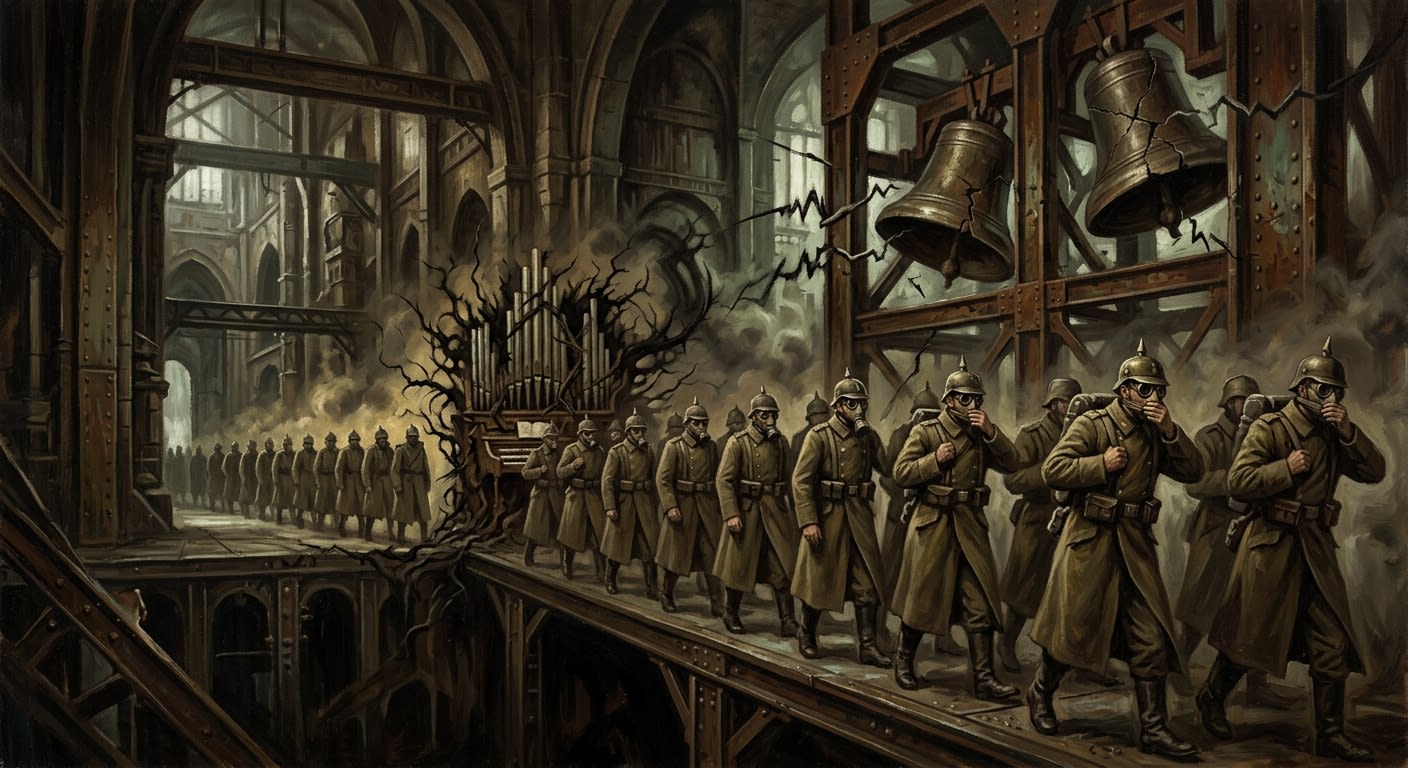
Prayer-Jam
When obedience enters the ear and comes out treason
Prayer-Jam is liturgical signal failure under hostile acoustic pressure: bells betray, hymns gag, and obedient men march precisely into ruin.
Codex Ref. VI.2.01-005
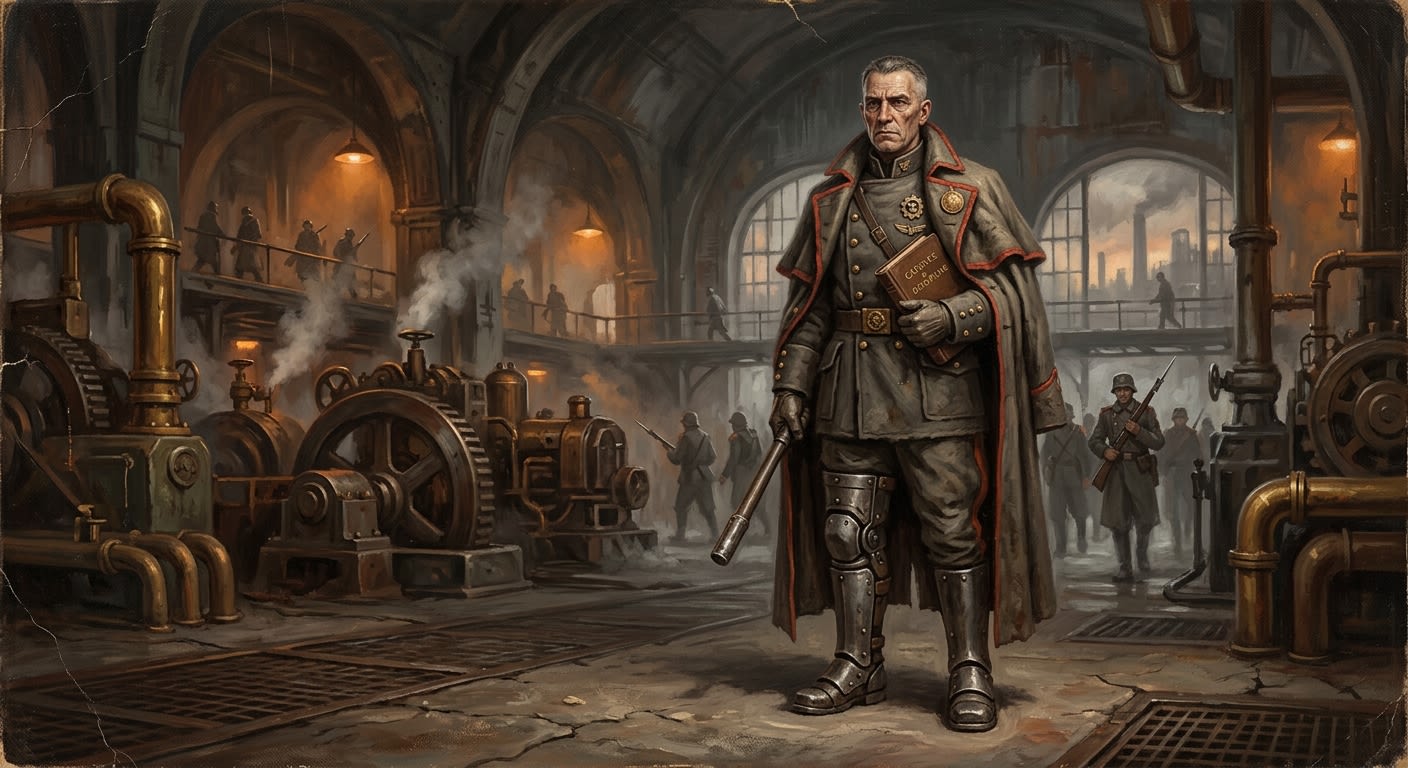
Prefect Malven "Iron Step"
A boot-beat older than evidence and more useful than truth
Composite patron of the Cadence Corps, Malven “Iron Step” survives as quarantine legend, training rhythm, disputed relic nuisance, and mandatory boot-beat.
Codex Ref. III.2.01-137
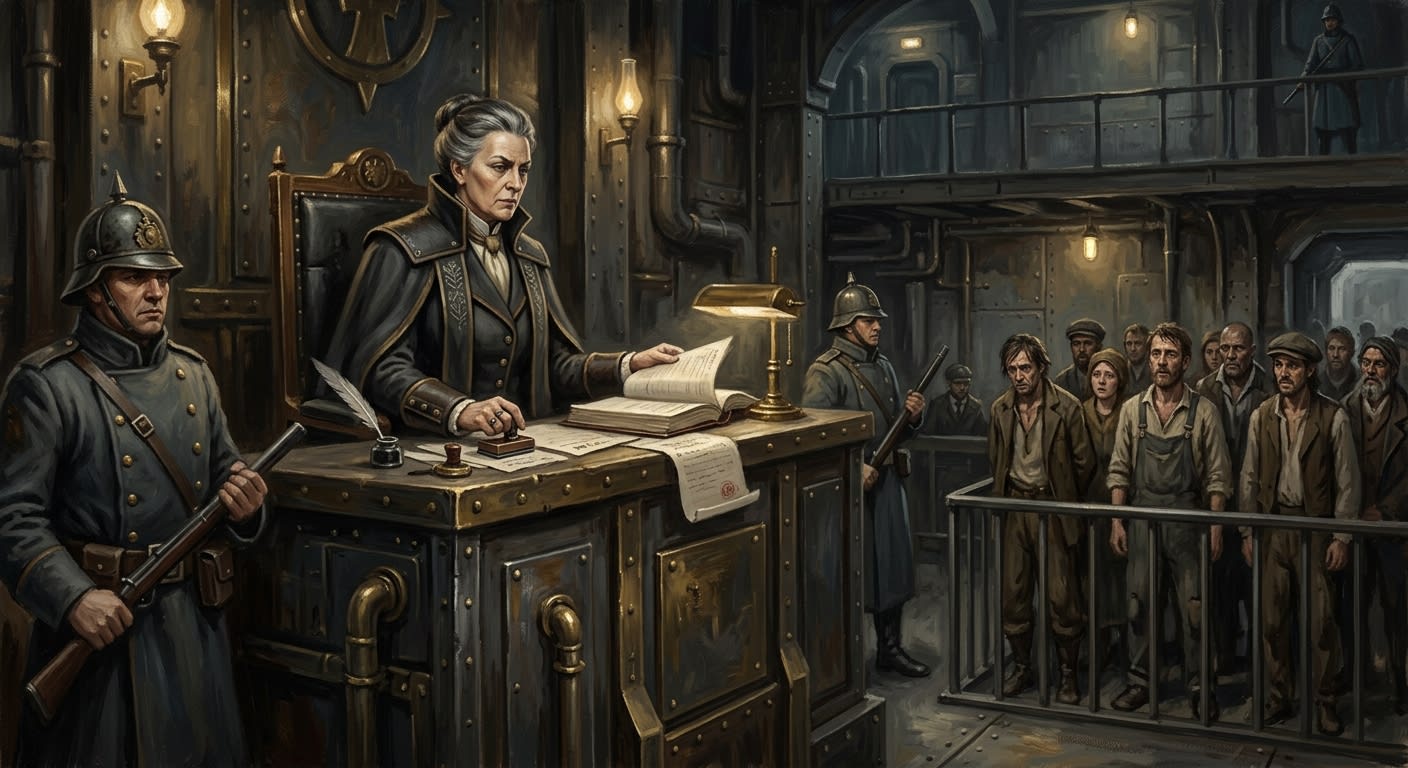
Presiding Judge Elsbeth Krail
The bridge obeys because she has filed its fear
Elsbeth Krail rules Brest’s bridge by writ, receipt, and silence. Her court arrested nineteen heretics and not one phenomenon.
Codex Ref. XI.5.02-001
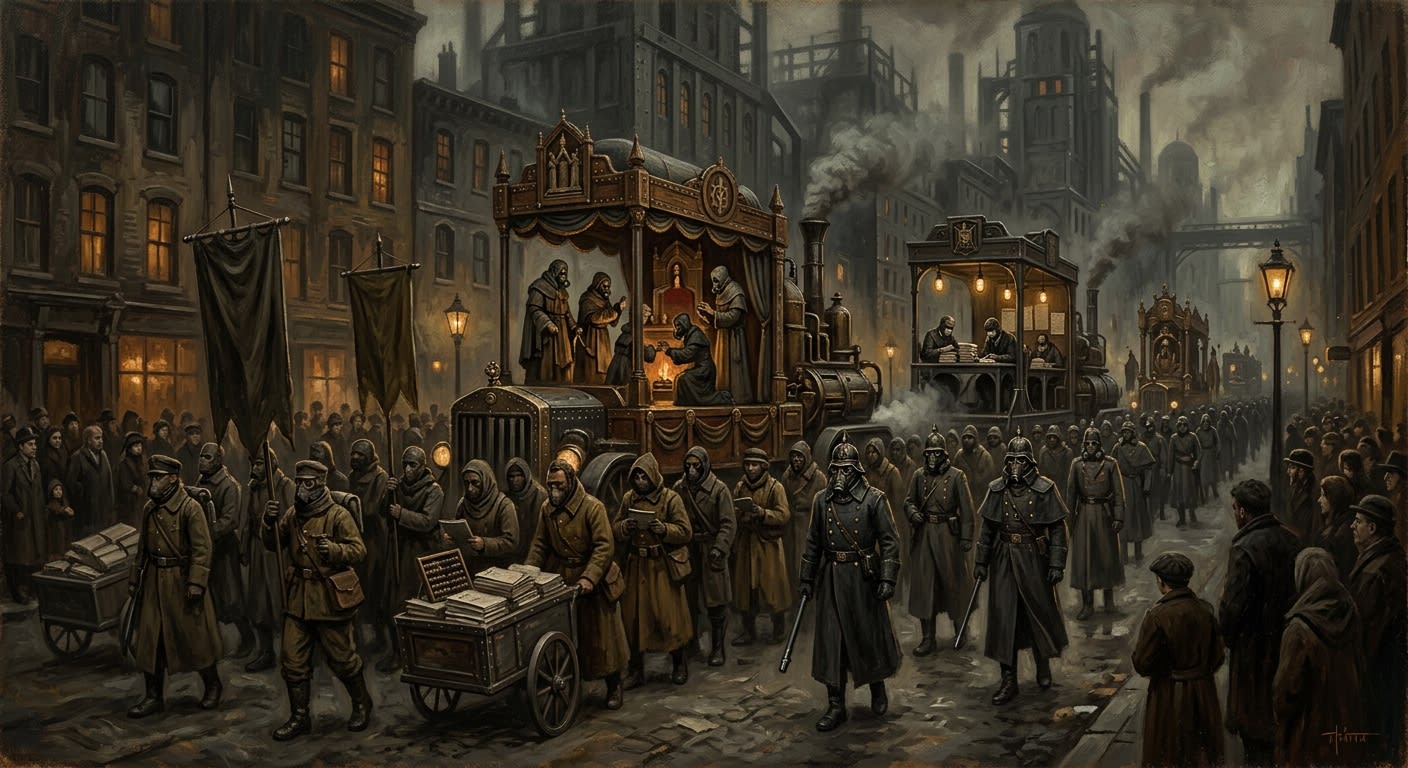
Procession of the Triune Hearth
One people, one creed, one spectacle, counted twice
First staged in A.S. 175, the Procession of the Triune Hearth turned Concordat memory into forty days of floats, census work, unity theatre, and invoices.
Codex Ref. VII.3.02-001
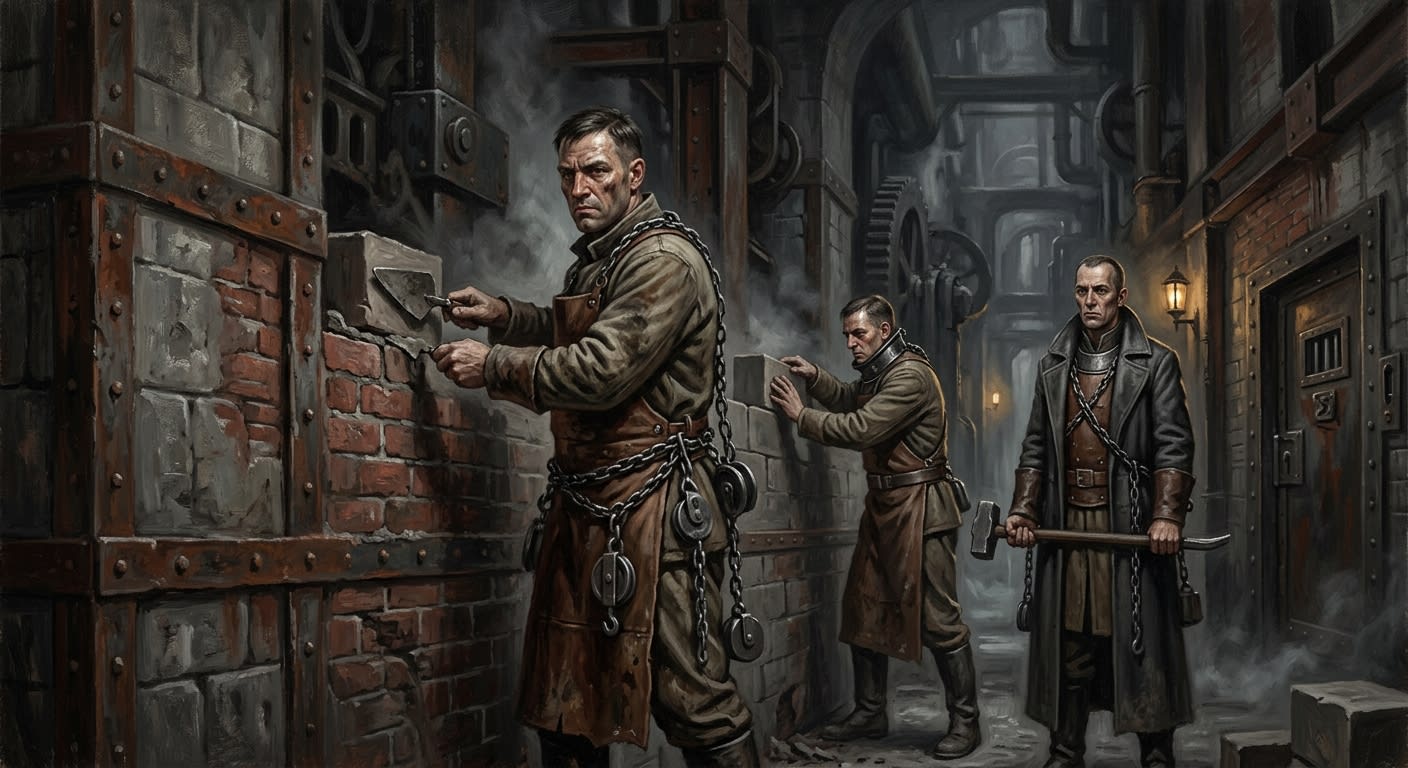
Pure Sealers
No mercy-channel, no second judge, no debt in the wall
Hard faction of the Immurement Masons, the Pure Sealers refuse mercy vents, breath-threads, and every little kindness by which walls learn to lie.
Codex Ref. XII.22.02-001
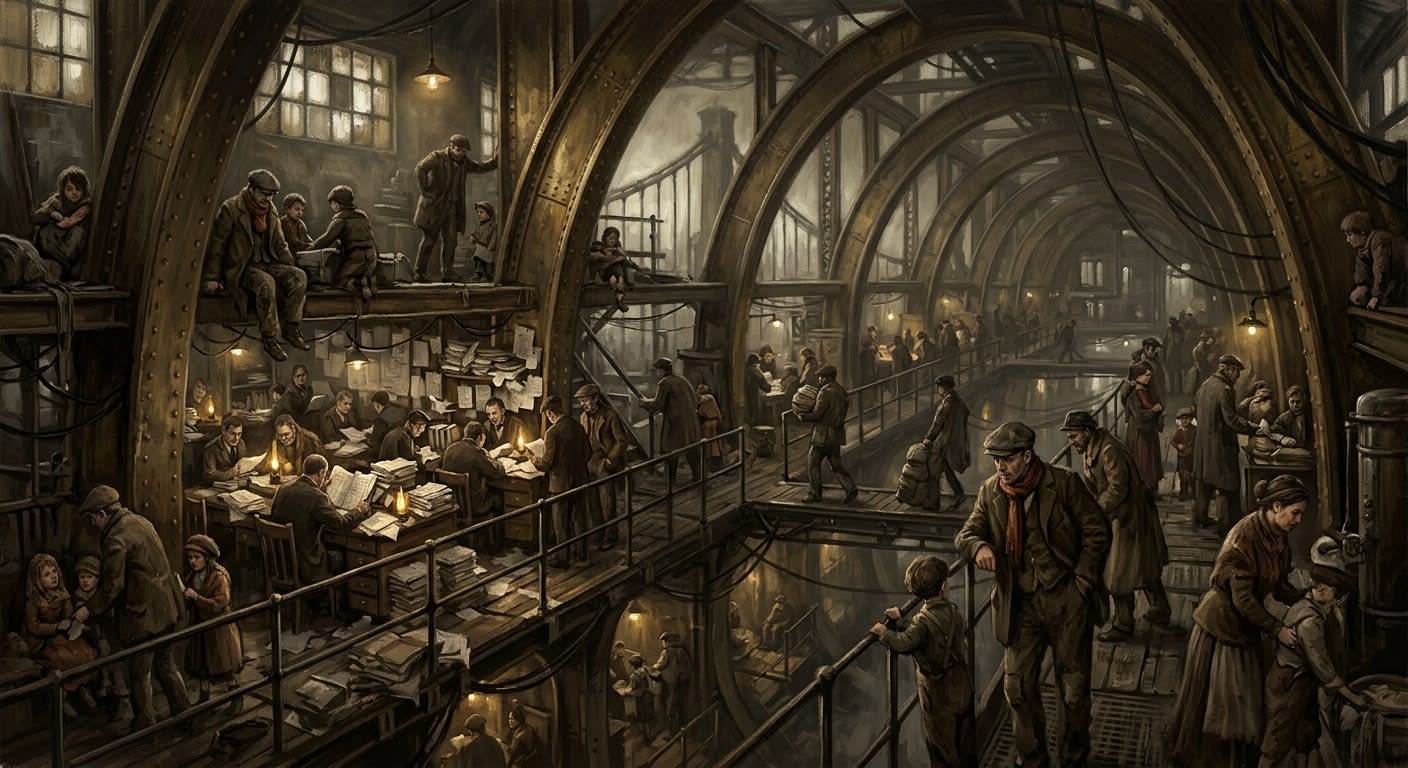
Pylon Warrens
The bridge holds because the hungry live in its bones
The Pylon Warrens are Bastion-Brest's bridge-slums: damp worker cavities inside the Brass Ribs where labour, paper, children, and heresy keep the span alive.
Codex Ref. II.4.08-099
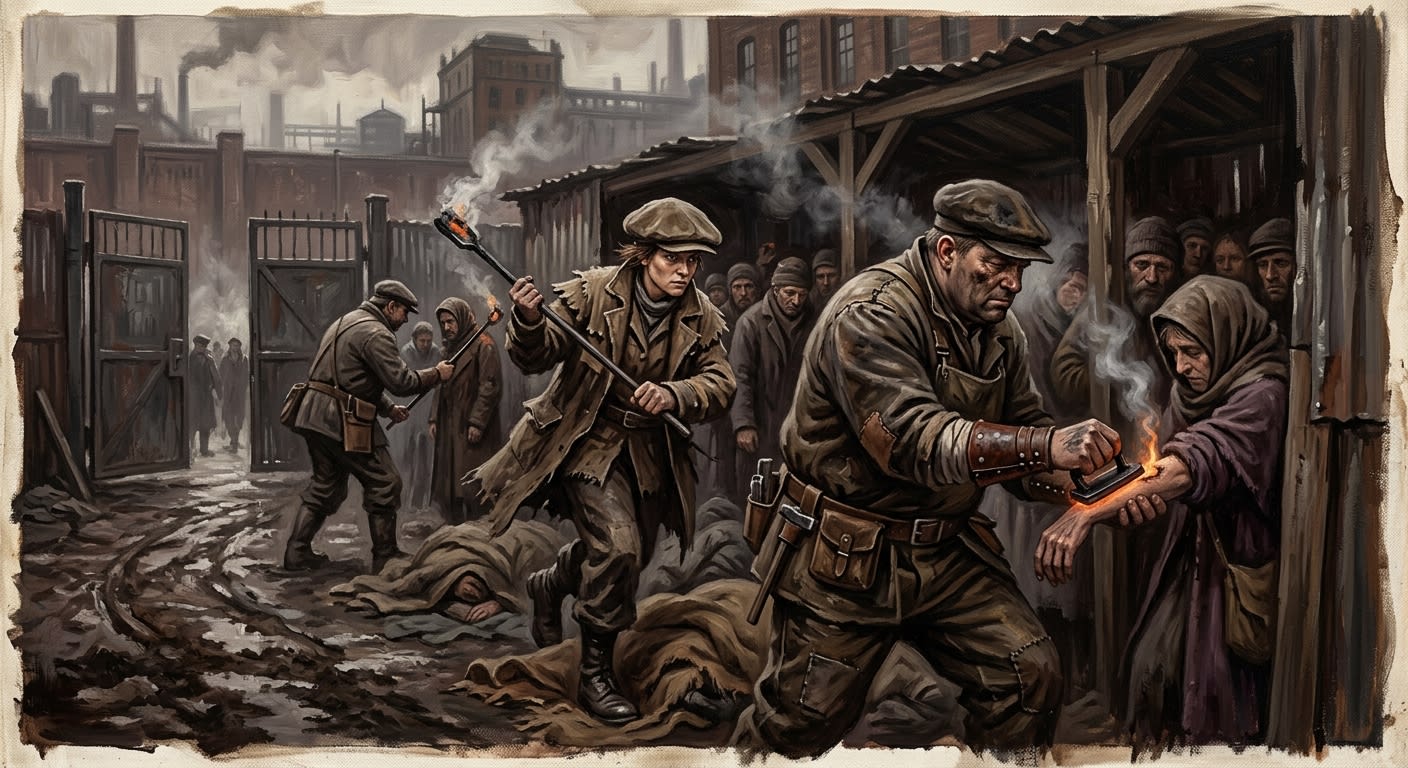
Quick Burners
Haste, under shelling, becomes a form of grammar
Quick Burners are accelerated field Brand-Smiths who mark bodies in queues, sheds, gates, and mud before ceremony can strangle movement.
Codex Ref. XII.20.06-001

Quiet Engine Heresy
The machine ran, and therefore men had to be punished
A.S. 147 mechanistic scandal in which licensed Engineers proved stable combustion without certified cant, forcing Doctrine to punish success before it became method.
Codex Ref. VII.8.10-050
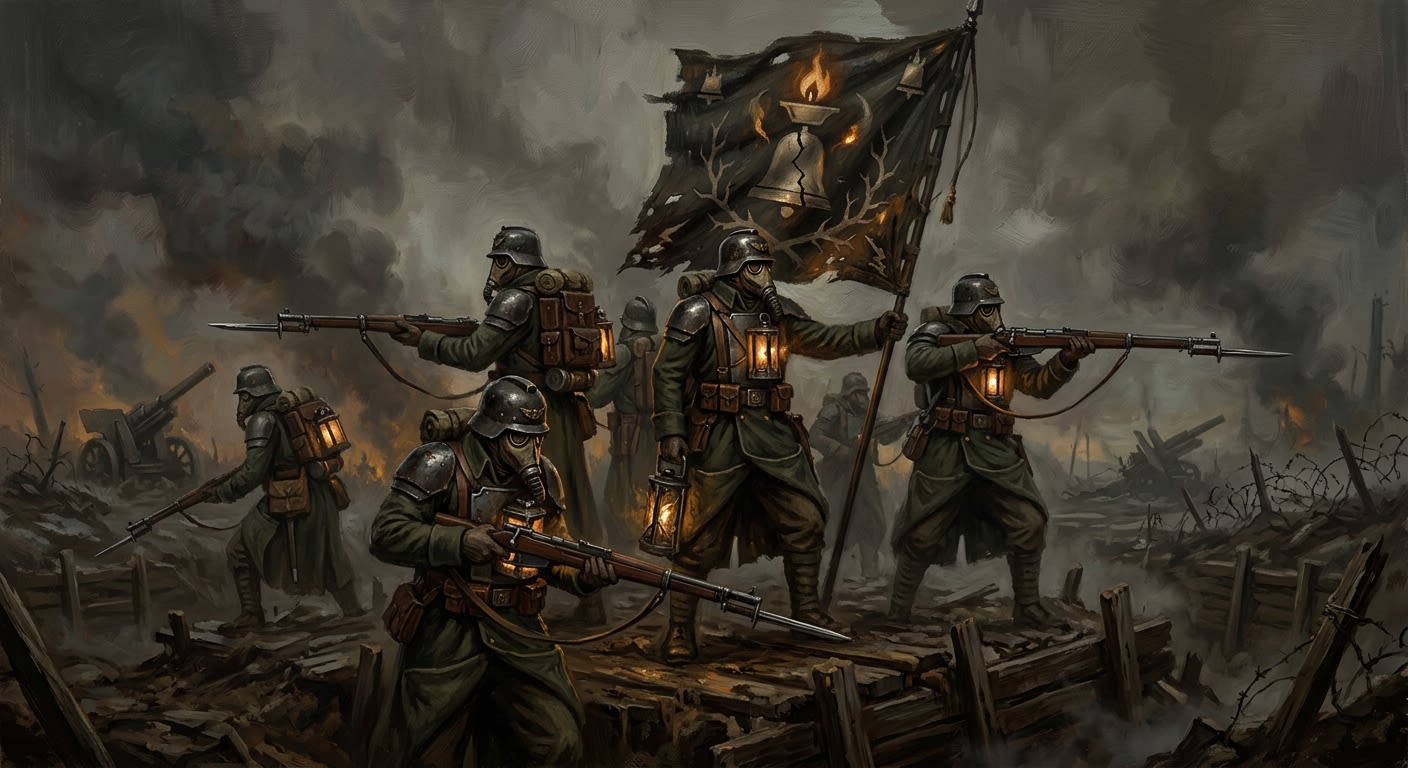
Radiant Fusiliers
The rifle as rite, the volley as testimony
The Radiant Fusiliers are elite Covenant light infantry whose banner-lit volleys serve as weapon, rite, and witness; at Debrecen, obedience learned to count horror after firing at it.
Codex Ref. VIII.5.02-001

Rail-Confessor Corps
Absolution cut to fit the departure bell
The Rail-Confessor Corps gives Warsaw's rail crews eleven seconds of blessing, ninety seconds of confession, and just enough mercy to depart before the wheels become sovereign.
Codex Ref. VIII.1.05-001
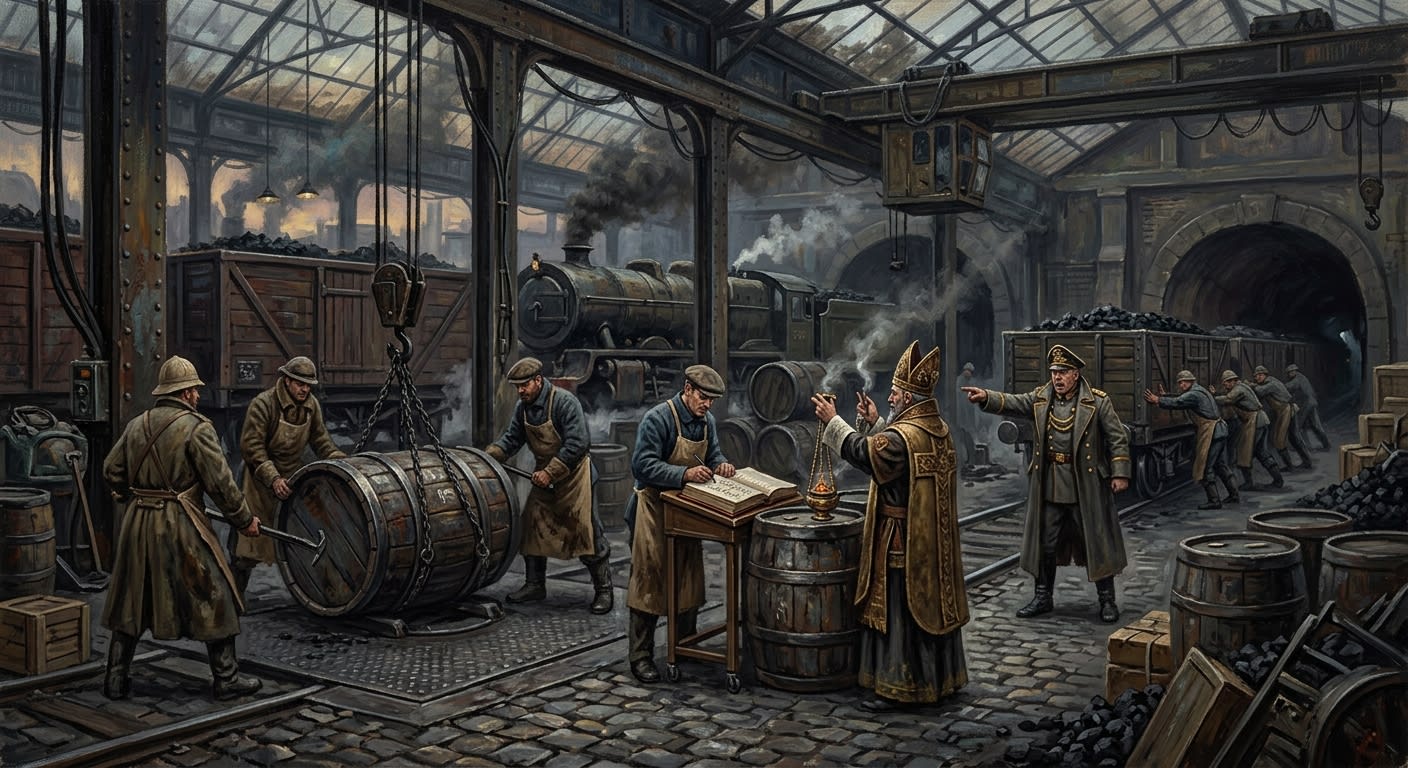
Rail-Manifest Quarter
Where fuel receives a number, a culprit, and permission to burn
Brast's Rail-Manifest Quarter is the court-throat where chrismole drums are weighed, blessed, numbered, blamed, and sent east to warm the Line.
Codex Ref. II.2.01-021
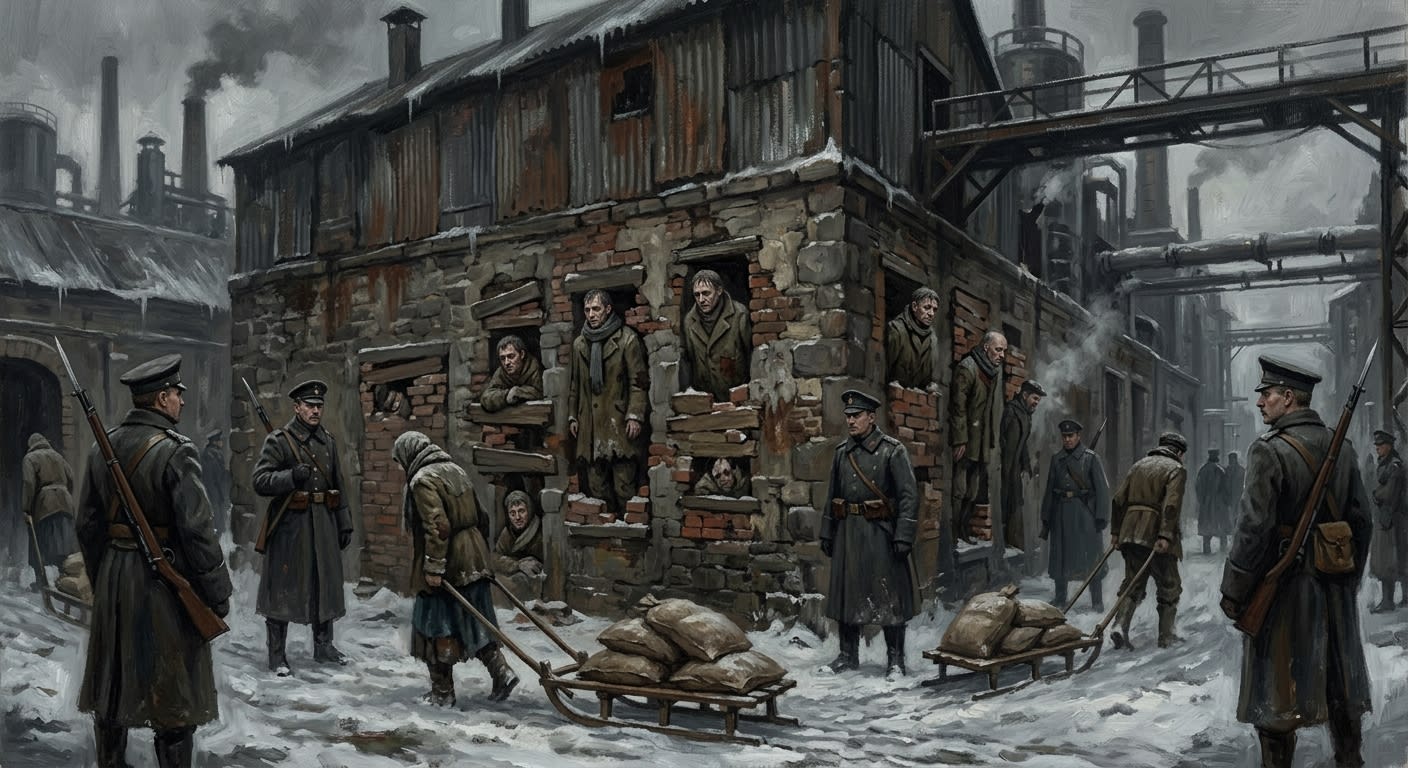
Ration Plunder Winter
Three barrels of flour founded a profession and called it Order
The A.S. 97 Ration Plunder Winter turned flour theft into visible punishment, making one depot wall the profitable ancestor of formal immurement by writ.
Codex Ref. VII.8.10-041
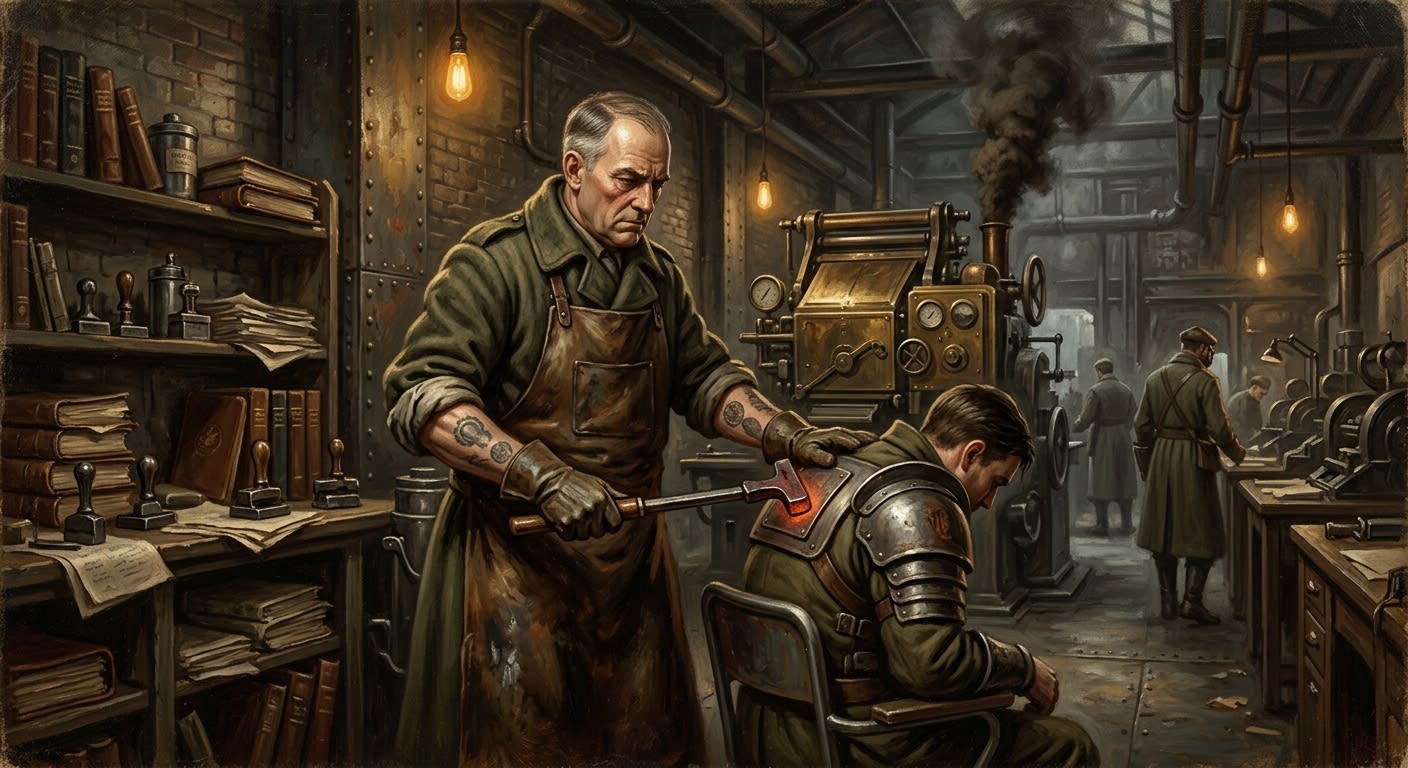
Re-inspection Brand-Smith
The Bureau's apology, applied two degrees from mercy
Re-inspection Brand-Smiths are Heraldry specialists created after the A.S. 119 Angle Riots to verify bodily tri-marks and burn lawful corrections into failed proof.
Codex Ref. XII.20.03-001
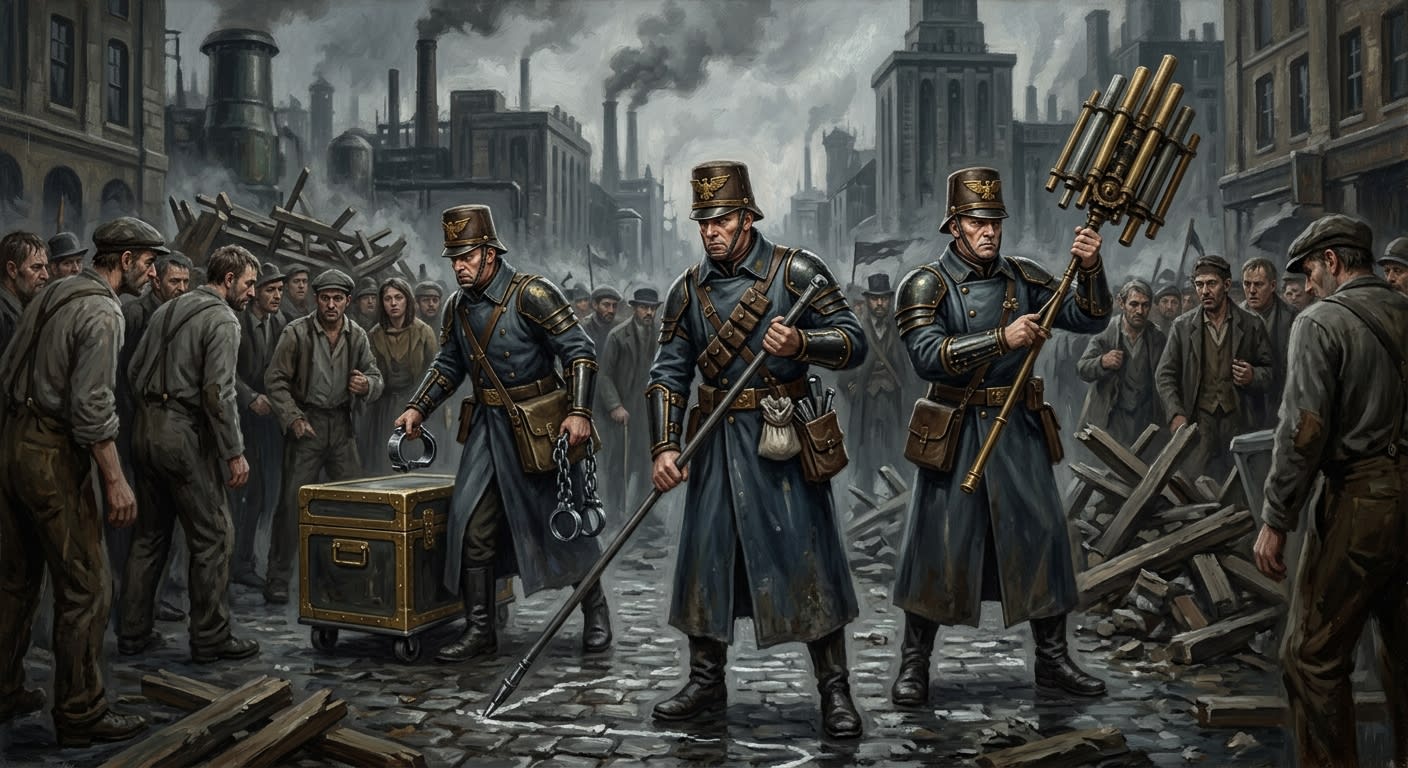
Riot-Quiet Specialists
The man at the chalk line teaches the mob to leave itself
Elite Roving Judge's Bailiffs trained after the Road Riots to break crowds by chalk, chime, placement, and the profitable restraint of unfired violence.
Codex Ref. XII.39.02-001
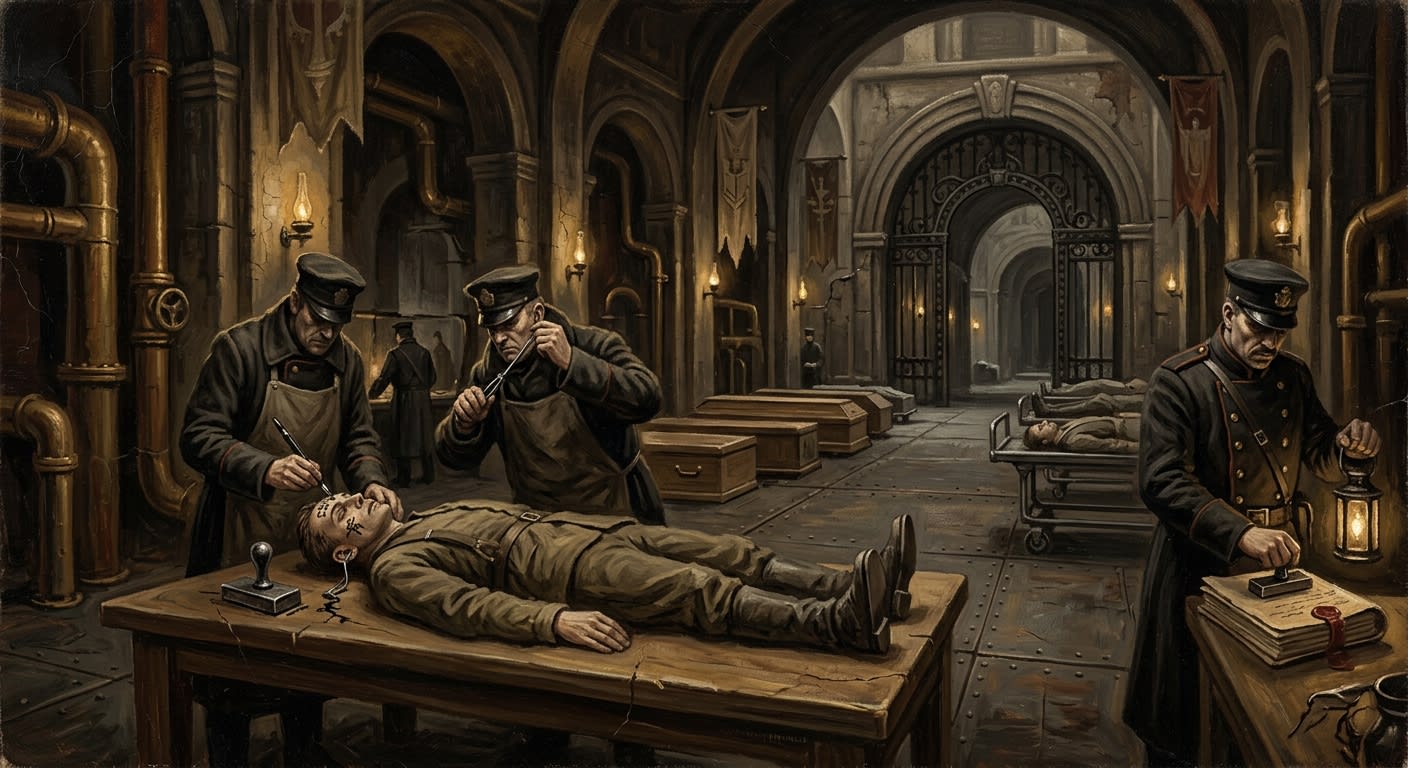
Rite of Passing
No soul departs until the Ledger has improved the death
The Rite of Passing turns death into lawful custody: right ear, last words, body display, black ink, routed remains, and no soul left vulgarly private.
Codex Ref. XIII.1.85-080
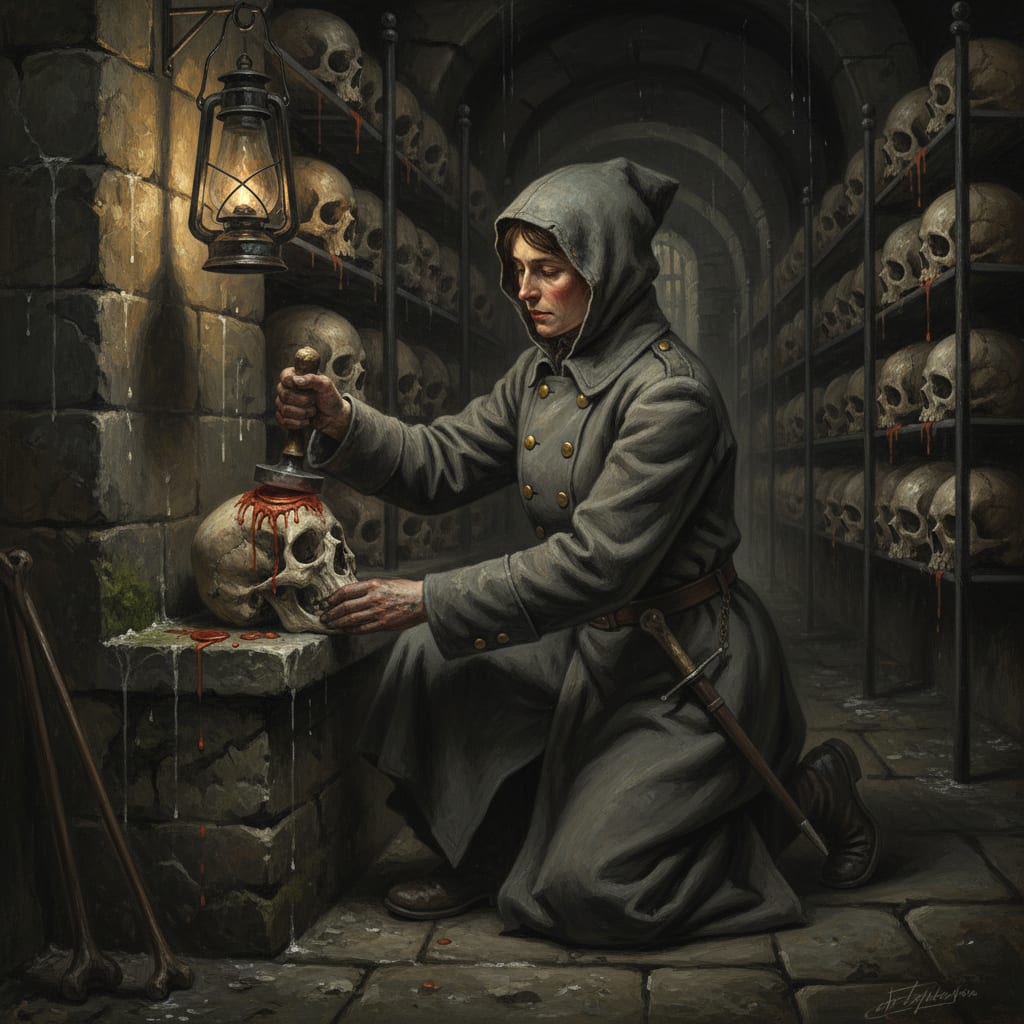
Ritual Bone-Stamper
Unsealed is unbound; the stamp is mercy; the stamper is what mercy costs
The Bureau of Records calls them Ossuary Authentication Wardens. The stampers call themselves tired. They have sealed the night-shift dead since A.S.
Codex Ref. XII.37.01-001
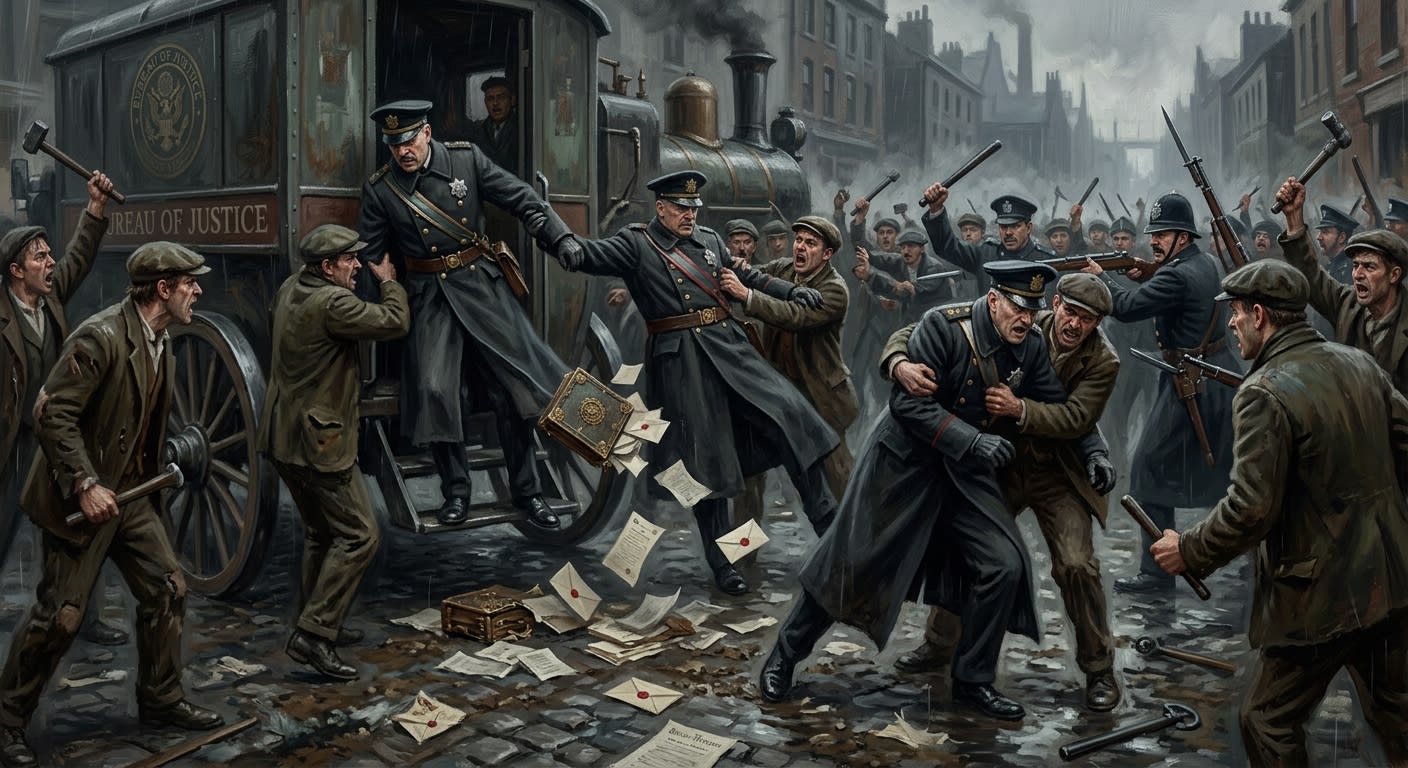
Road Riots A.S. 140
The afternoon the road learned the seal had a throat
Circuit violence in A.S. 140 that pulled three Judges from their wagons, scattered seals through the road, and taught the Bureau to make justice faster than sympathy.
Codex Ref. VII.8.10-094

Route-Timing Concordat
Split the sound, split the crowd, own the dead
A.S. 129 Strasbourg route law born from the Night of Two Bells, imposing two-bell clearance and integrated bellway tables on every serious procession.
Codex Ref. VII.2.10-060
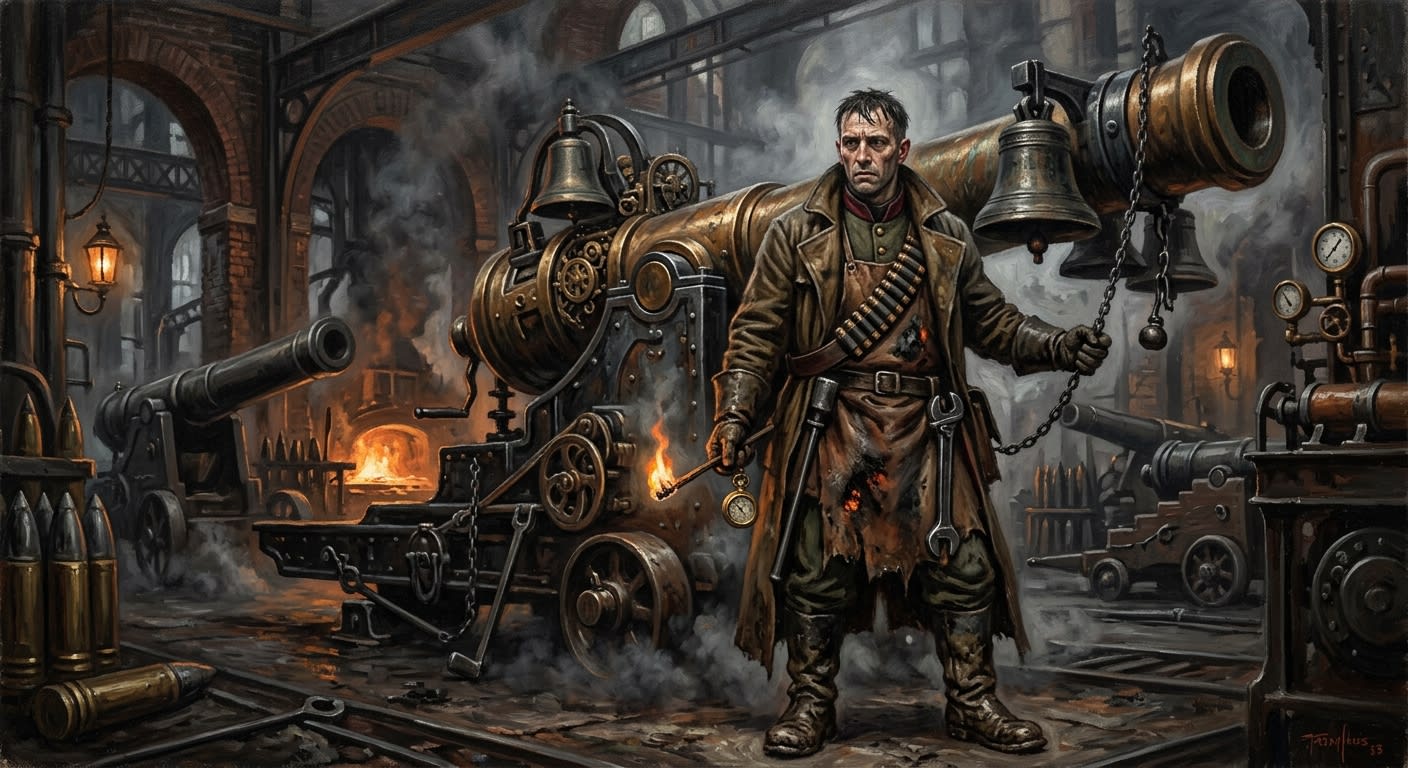
Saint Aegidius
The patron of the waiting hand and the honest charge
Saint Aegidius is the artillerymen’s patron: foundry hand, martyr of the Third Peal, saint of timed violence, bell-cannon discipline, and Shipka’s sulking gun.
Codex Ref. III.2.01-194
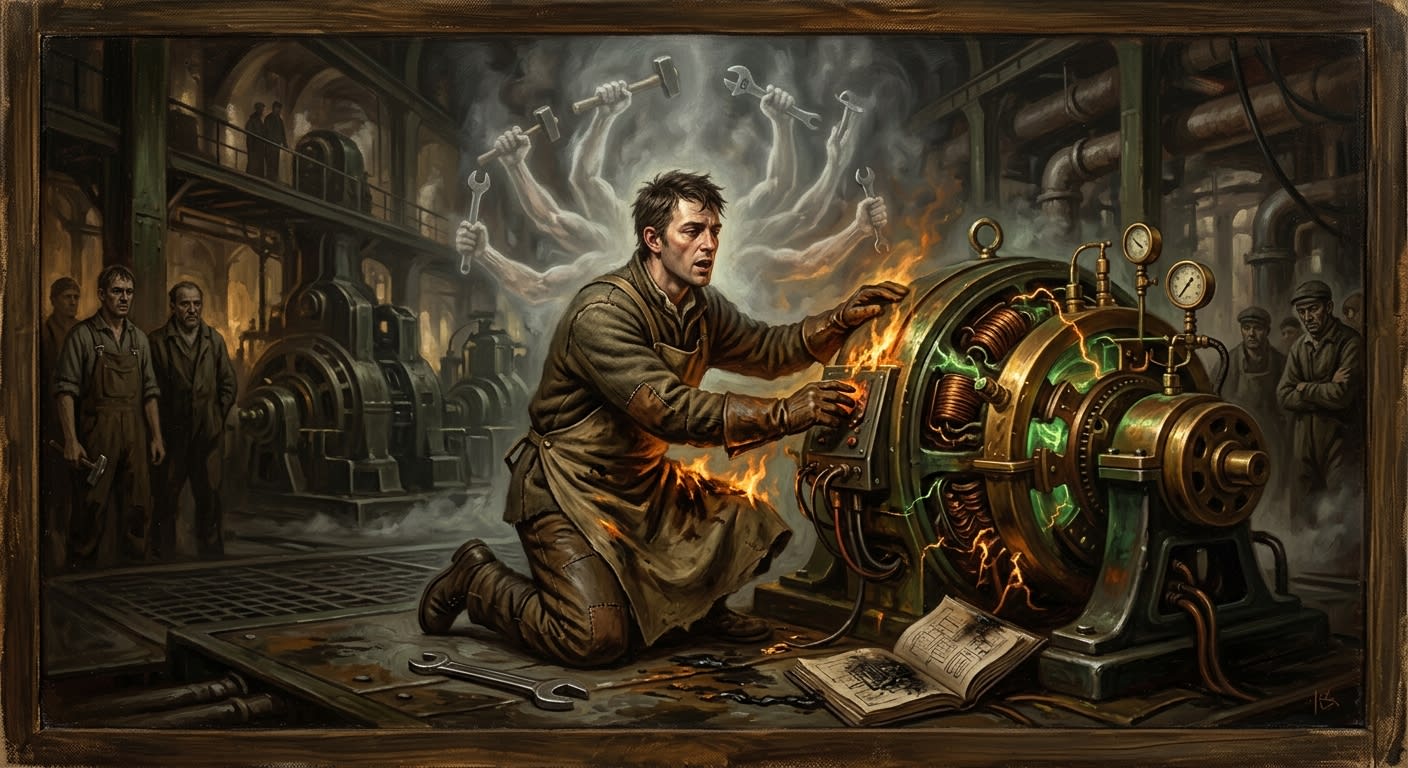
Saint Edrin of the Eight Strokes
A clean note, a burned hand, and eleven years of obedience
Patron of Litany-Engineers and engine-cant apprentices, Edrin sang a failed generator back to obedience during the Great Retreat and burned for the privilege.
Codex Ref. III.2.01-130
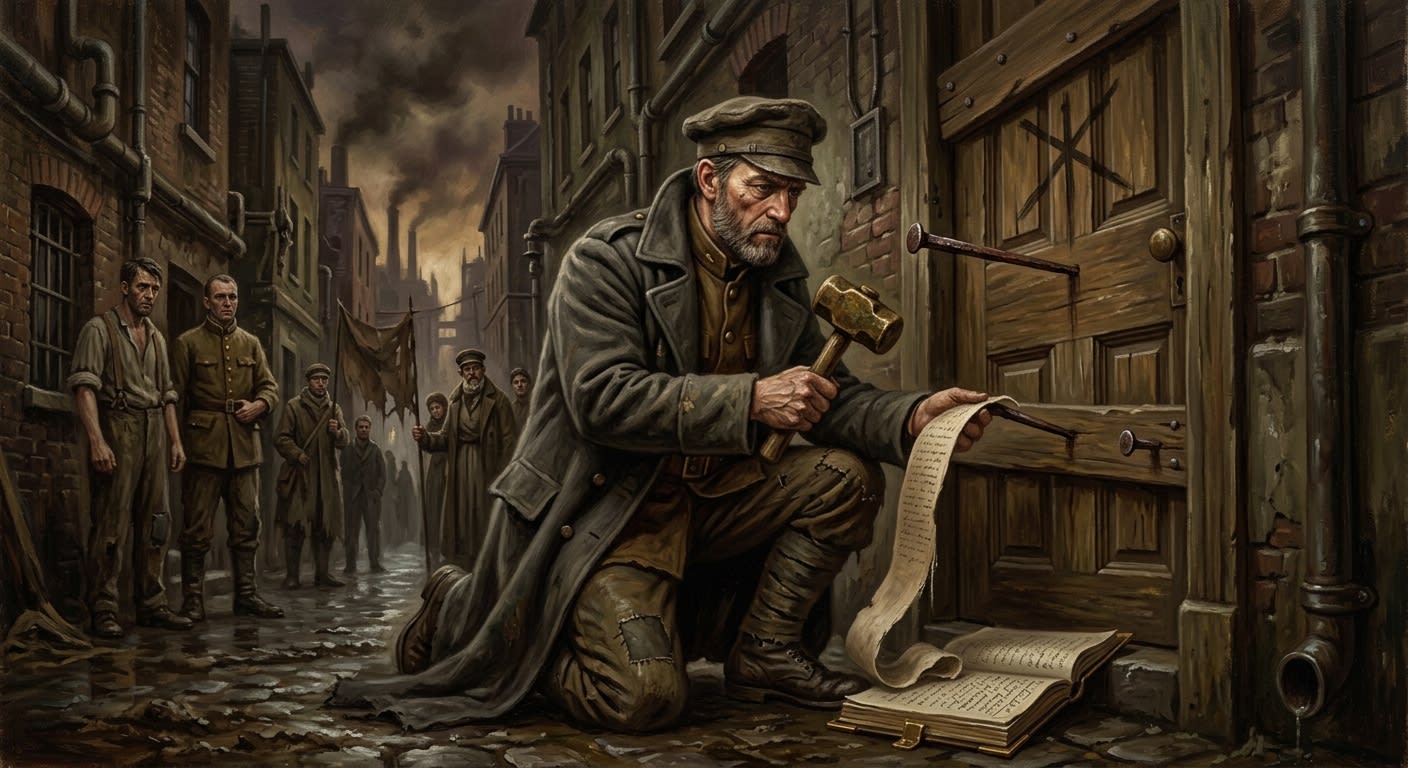
Saint Edrin of the Three Nails
Cut true, name all, hold the door
Saint Edrin of the Three Nails is the patron of Gate-Carvers, remembered for sealing a plague-house during the A.S. 78 Lull of Names with measure, witness, and refusal.
Codex Ref. III.2.01-120
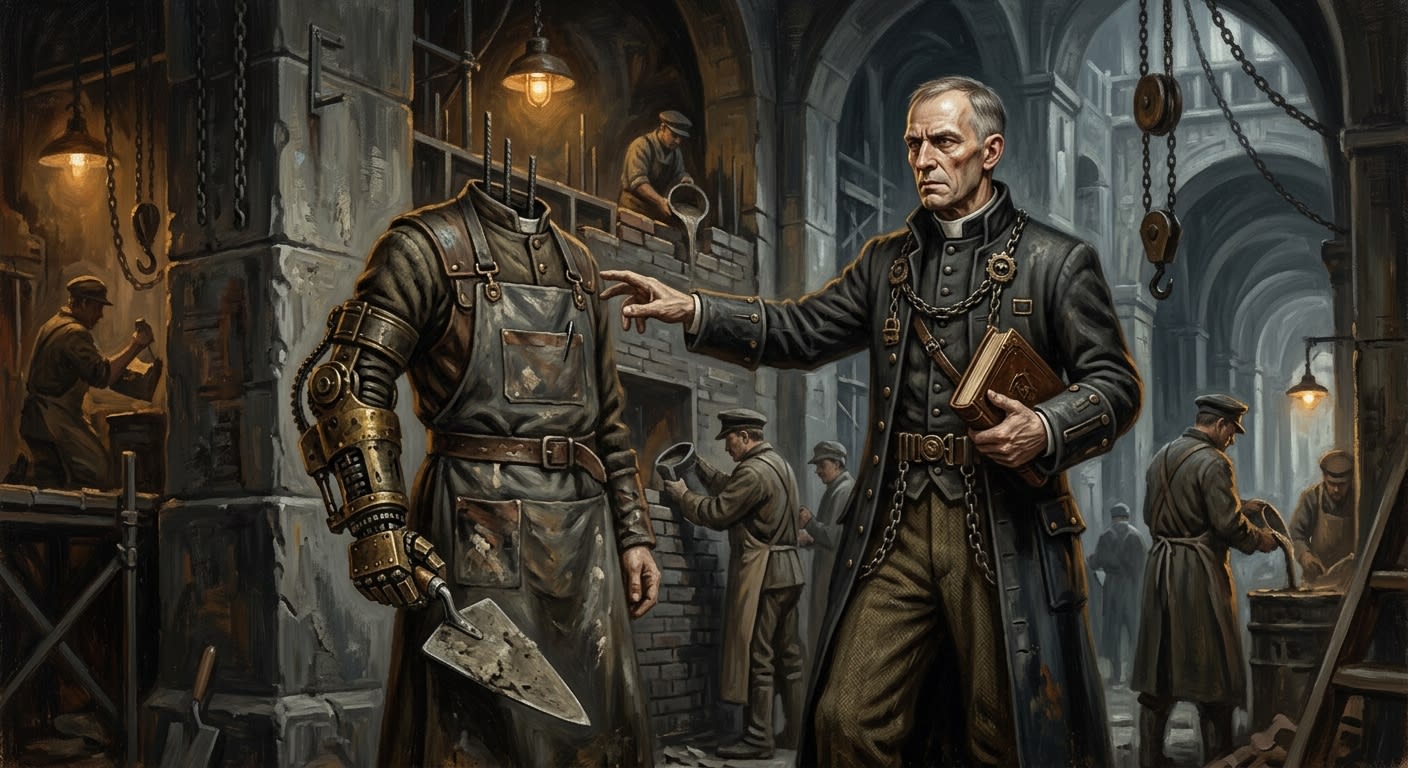
Saint Karron the Trowel-Hand
Stone is faithful because men are easier to mortar
Occupational patron of the Immurement Masons, Saint Karron made a screaming sentence architectural and left the Synod a recipe for silence.
Codex Ref. III.2.01-124
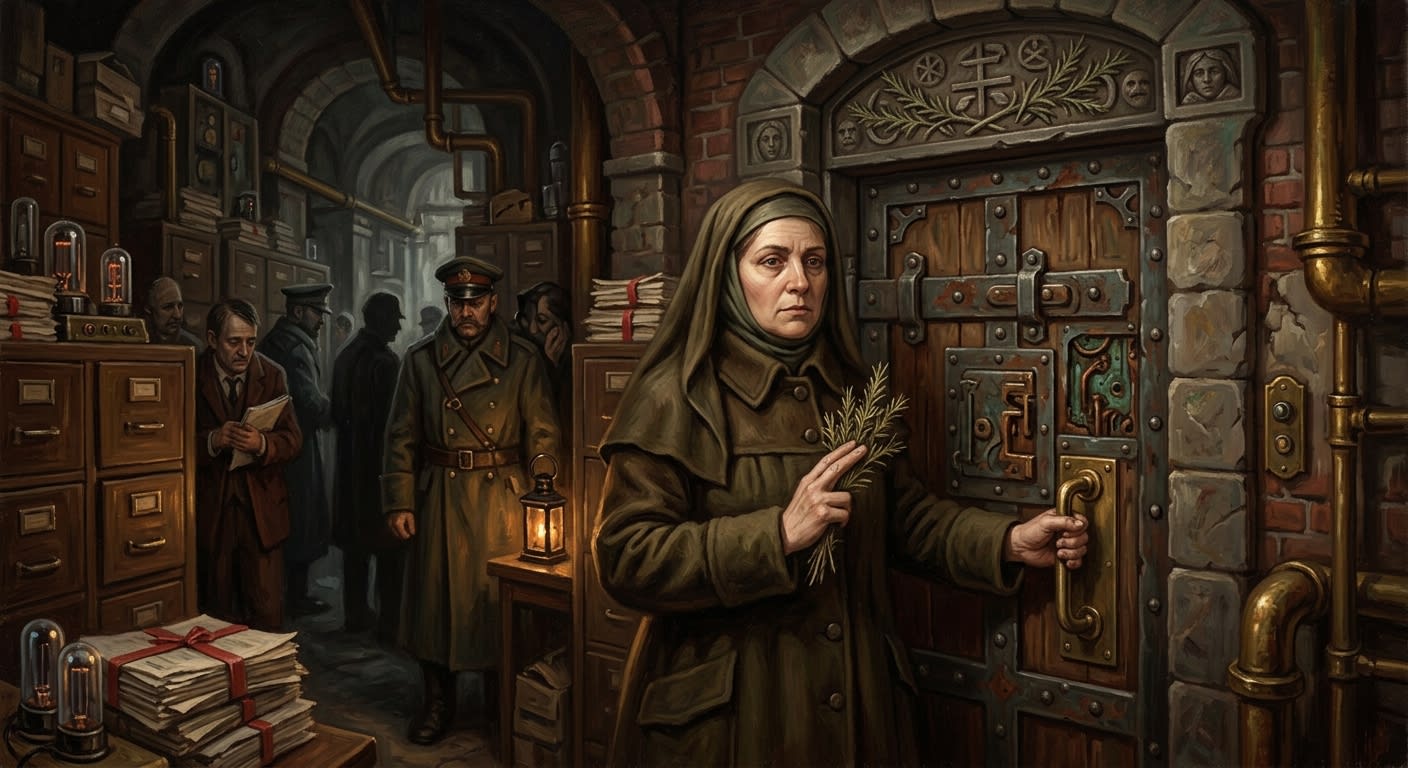
Saint Marea of the Closed Door
The unofficial saint of rosemary, shut doors, and useful silence
Saint Marea of the Closed Door is the unofficial tavern saint of rosemary lintels, hidden deserters, quiet hospitality, and the Bureau's most profitable refusal to decide.
Codex Ref. III.2.01-104
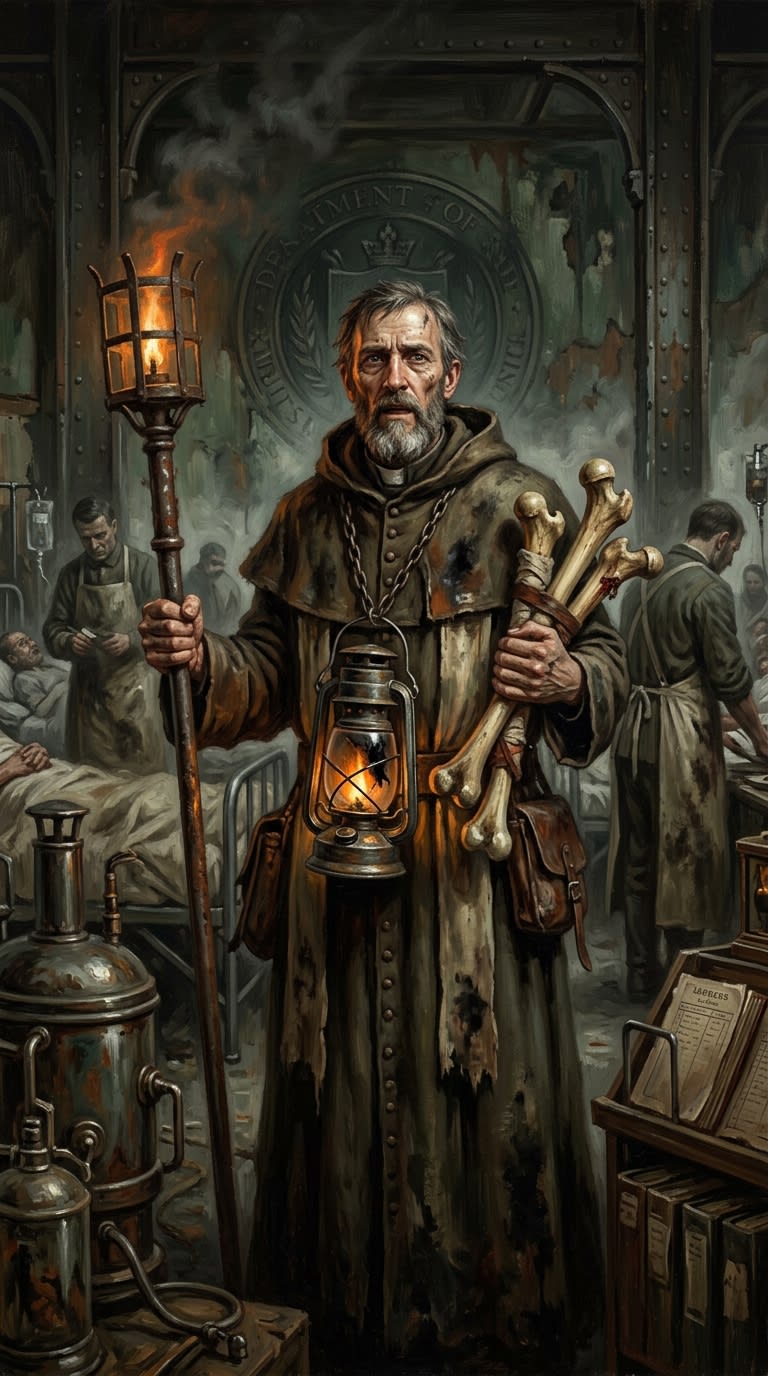
Saint Maurus of the Burnt Lantern
The hospice martyr whose left leg taught arithmetic to kneel
Hospice martyr, ward-lantern patron, and owner of three authenticated left femurs; Maurus proves that sanctity can outgrow anatomy.
Codex Ref. III.2.01-148
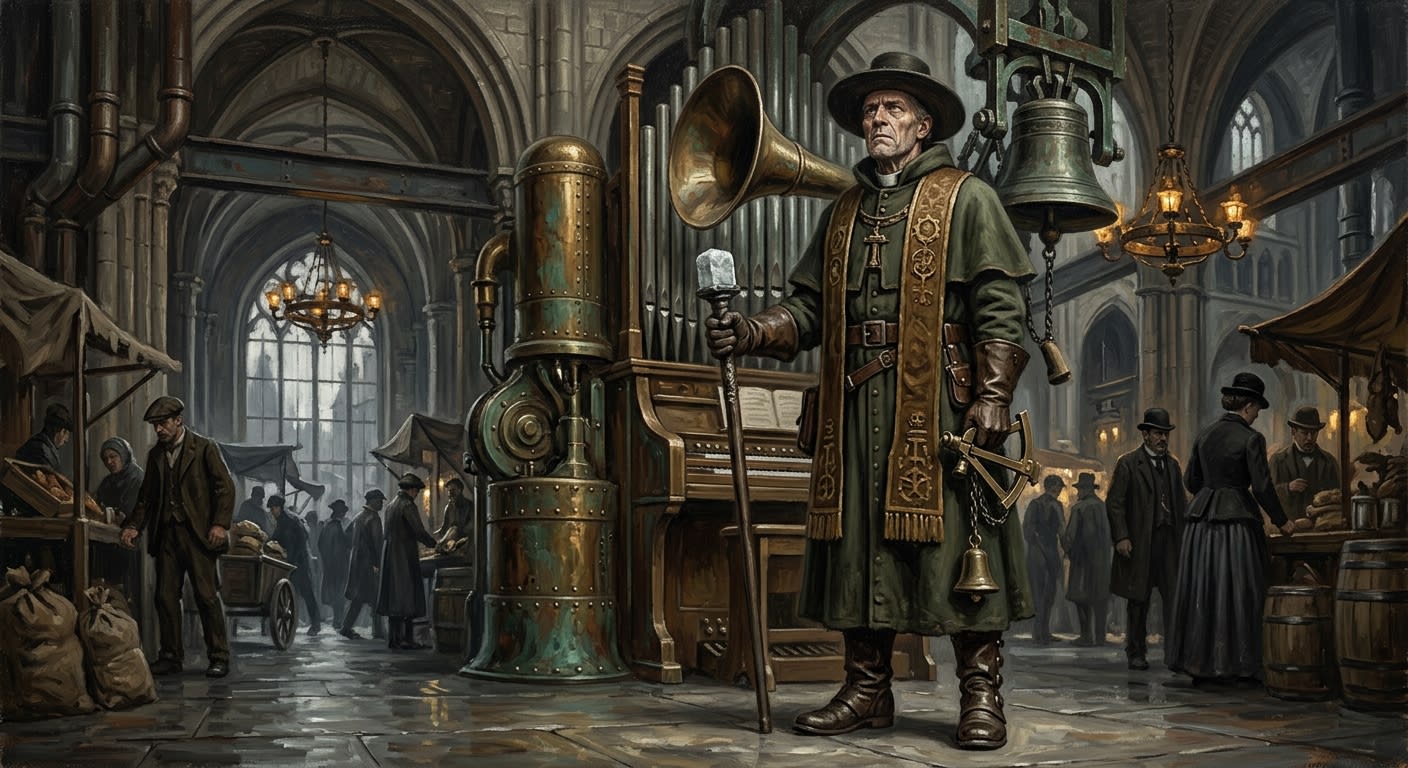
Saint Rupert
Salt in the wound, bronze in the tower, order in the market
Saint Rupert, Vienna’s salt-saint, preserves meat, measure, bells, markets, and civic memory: the patron whose bronze throat answered when men forgot to kneel.
Codex Ref. III.2.01-095
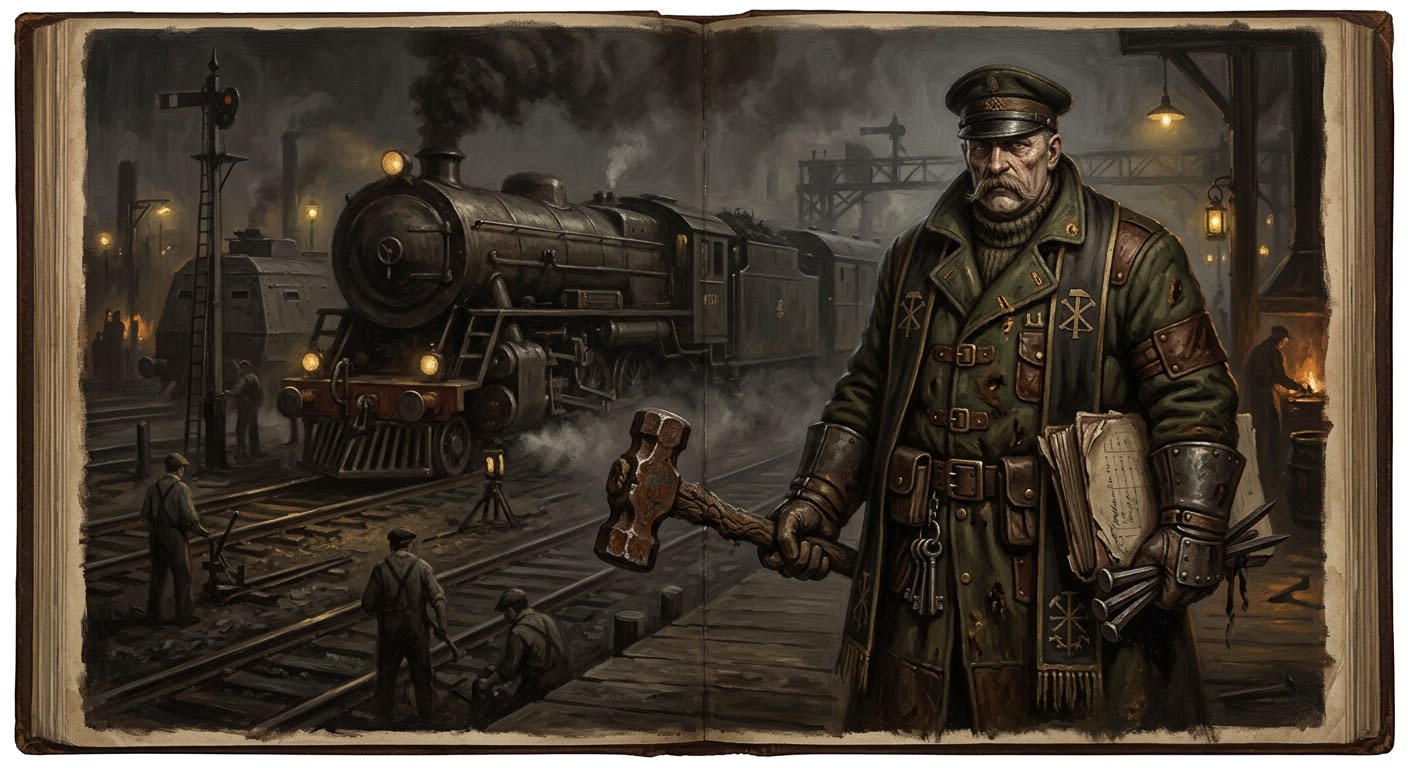
Saint Vandrail
The rail remembers; the hammer asks whether it tells the truth
Saint Vandrail, uncanonised and undenied, is the Guild of Rails’ hammer-fisted patron of track, gauge, night patrol, iron-blood, and useful delay.
Codex Ref. III.2.01-136

Saint Vell of the Lantern Table
Seal it before the mud eats the name
Occupational patron of Trench-Court Clerks and front registrars, Saint Vell keeps the page dry, the lantern lit, and the dying name useful.
Codex Ref. III.2.01-148

Saint Vellum of the Valve
Hold while I turn, says the saint the clean offices refuse to hear
Uncanonised occupational patron of Diesel Resonance Plumbers, Saint Vellum of the Valve is the hand on the wheel where pressure, bell-shadow, and useful heresy meet.
Codex Ref. III.2.01-111

Saint Vellum-of-the-Quiet-Hand
The Saint Records Needed Before Rites Could Admit She Existed
Disputed patron saint of Ritual Bone-Stampers and ossuary notaries, operationally accepted after A.S. 92 because the corridors required a mother before the Bureaus could manufacture one.
Codex Ref. III.2.01-069
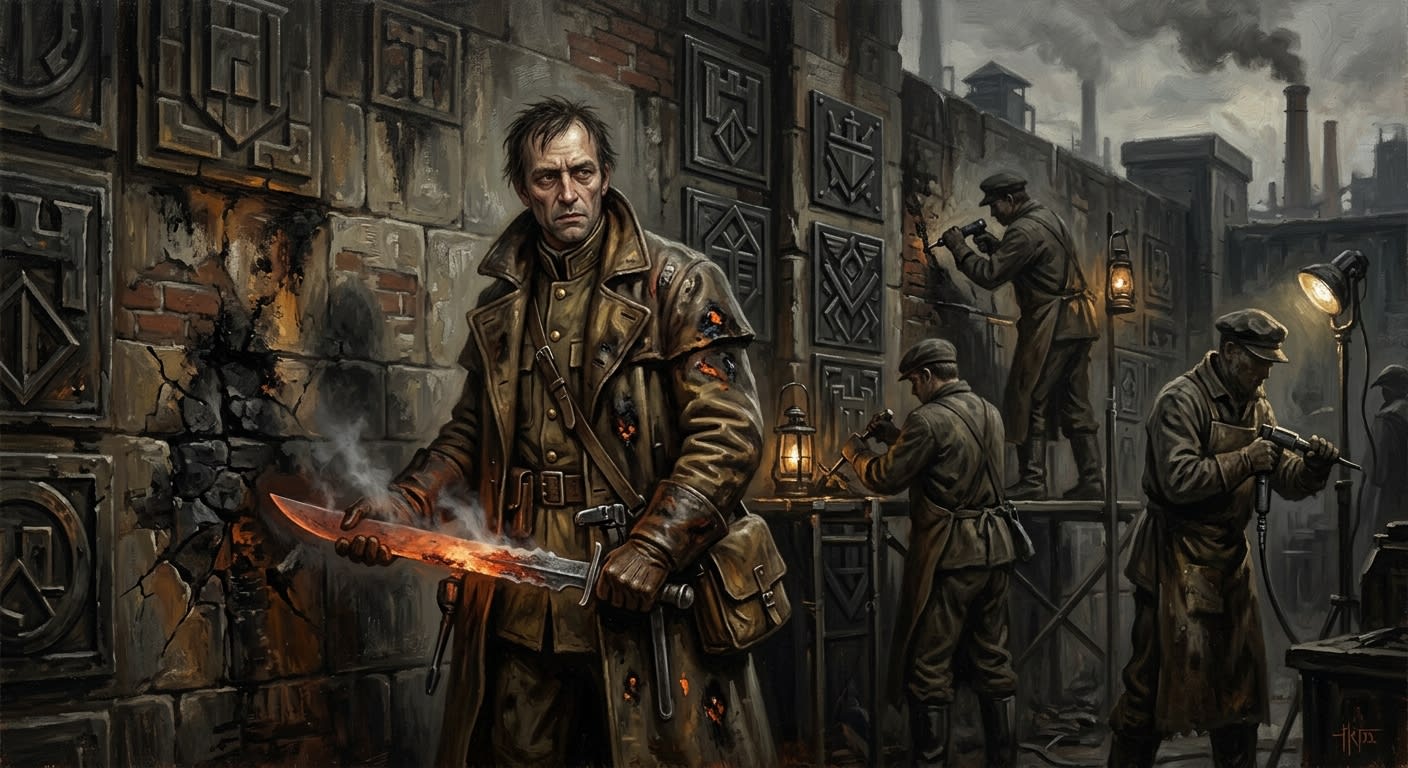
Saint Verral of the Clean Field
The hot blade is kinder than the singing wall
Doubtful patron of Sigil Inspectors and field scrapers, useful because his hot blade gives Heraldry a saint for every wall that must be made obedient.
Codex Ref. III.2.01-144

Saint Verran of the Unsmudged Line
The Creator is a column, and mercy hates the ruler
Patron saint of Records Scribes, approved in A.S. 112 for the clean line that cut ten thousand names from a siege roll and left the ink blameless.
Codex Ref. III.2.01-139
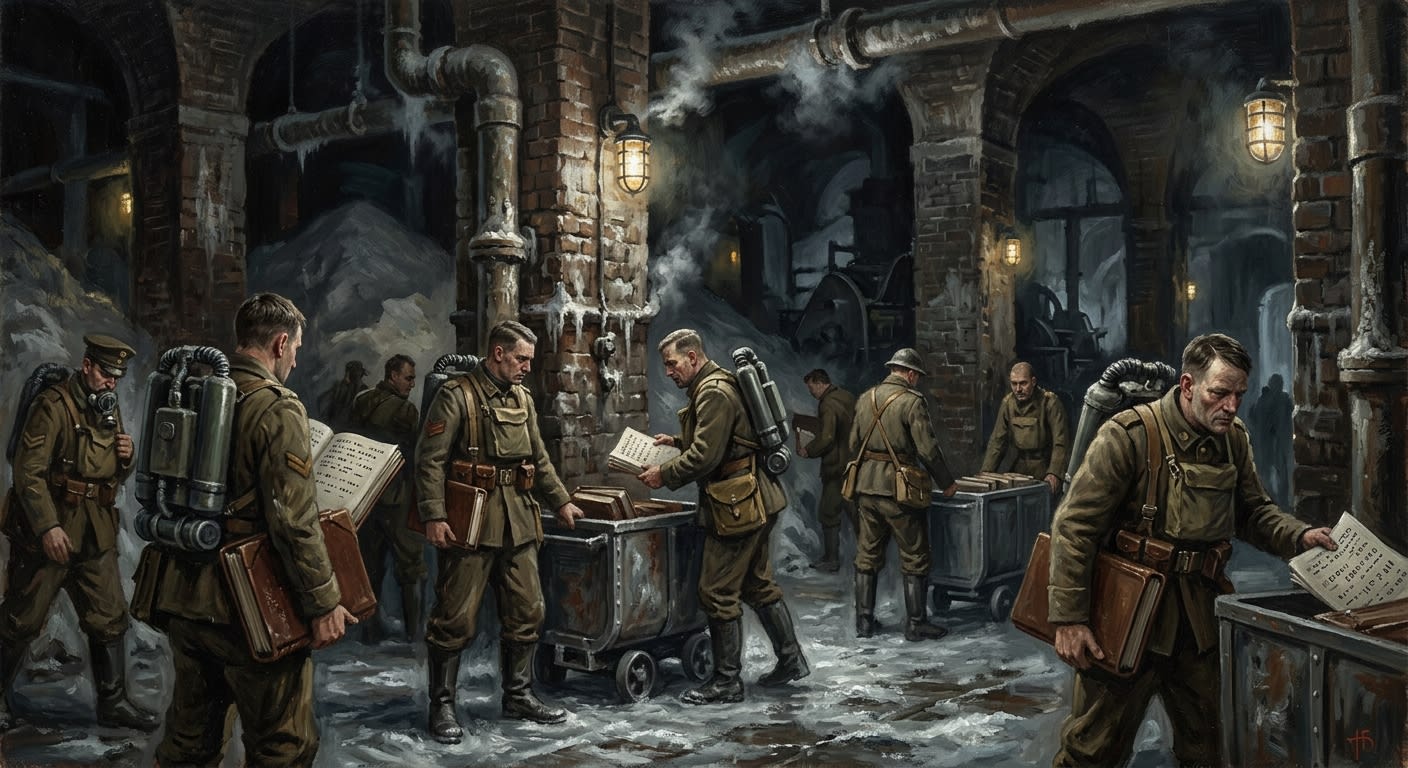
Salters' Compact, Lübeck
Salt preserves meat, debts, names, and every sin that should have rotted
Dissolved Lübeck salt fraternity whose A.S. 180 insufficient membership followed Shadow intervention, brine-code ledgers, preserved debts, and cellars too useful to burn.
Codex Ref. XII.26.03-001
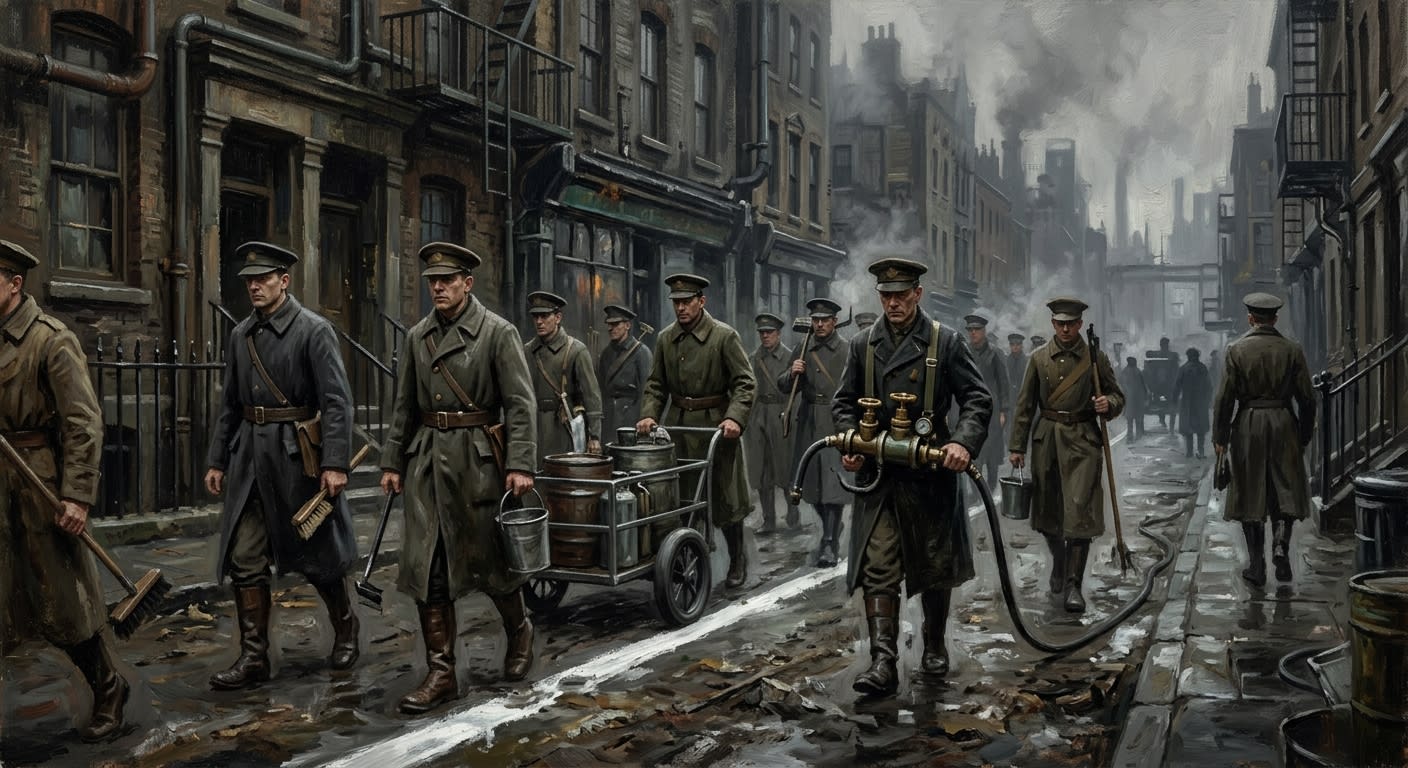
Sanitation Chapter
The clean line is a border, a sermon, and a threat
Mercy calls it sanitation; Marrowgate calls it the office that paints a white line and makes obedience look like hygiene.
Codex Ref. VIII.2.10-078
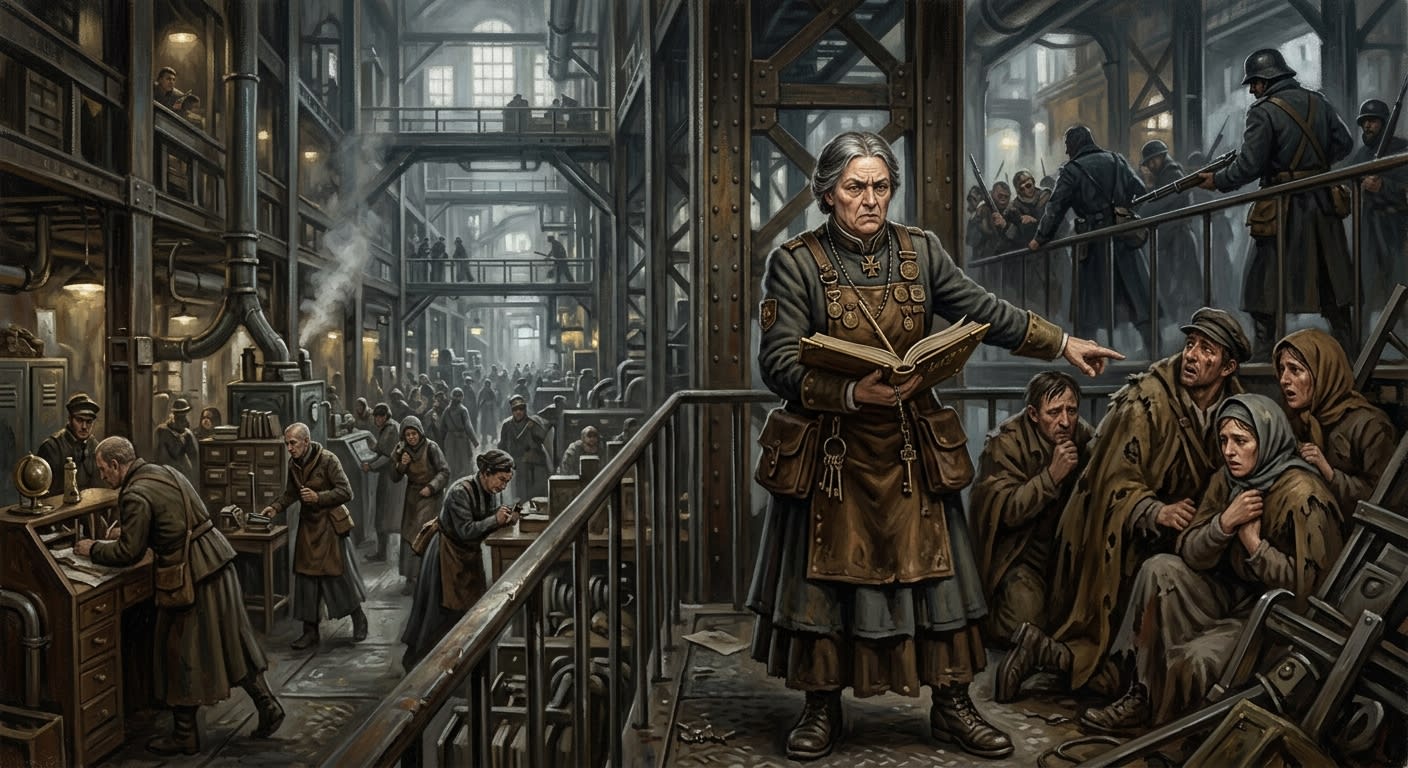
Scribe-Mother Hal
Two hundred and fourteen booths call her Mother because fear needs a schedule
Scribe-Mother Hal runs Bastion-Brest's 214 Confessional Lanes, defending damaged clerks while the Echo, the Circle, and Krail tighten the noose.
Codex Ref. III.2.01-075
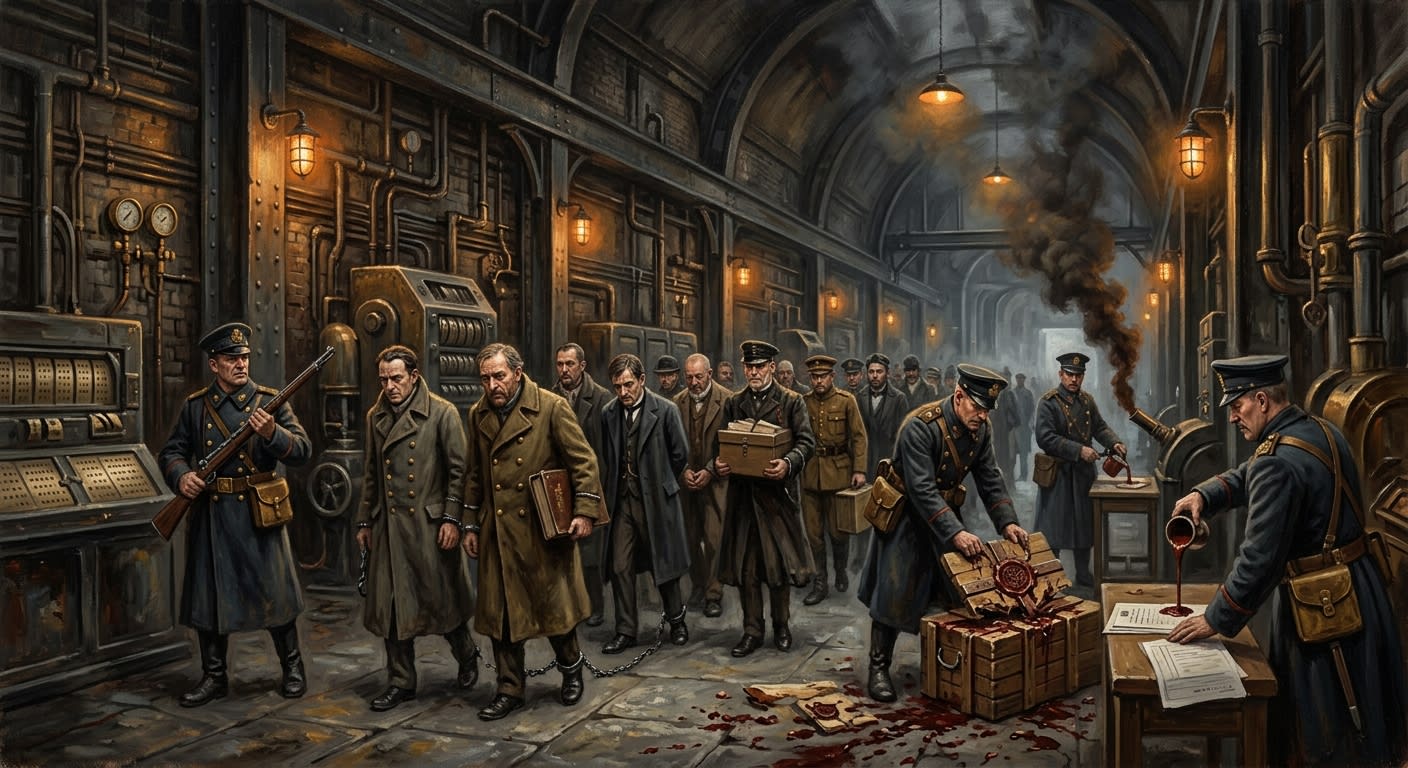
Seal Theft Scandals A.S. 158
Three false impressions and the day sovereignty learned to smell its own wax
The A.S. 158 Seal Theft Scandals exposed forged judicial impressions across the Rhine circuits, purged a third of the bailiff corps, and made wax residue into doctrine.
Codex Ref. VII.8.10-096

Seal-Forger, Counterfeiter
The Synod's confession, pressed in unauthorised wax
The seal-forger is the Synod's shadow — pressing wax into survival where the Bureau presses wax into doctrine. Eleven immurements signed, six thousand fed, and the woman who may never have existed.
Codex Ref. XII.41.01-001

Sergeant Elke Voss
Vigilance is cheaper than mercy, and therefore holy
Sergeant Elke Voss of Bastion-Irongate filed the A.S. 197 deposition that named Veil-Stalker vigilance as an injury without blood, thereby inconveniencing Mercy and War at once.
Codex Ref. III.2.01-059
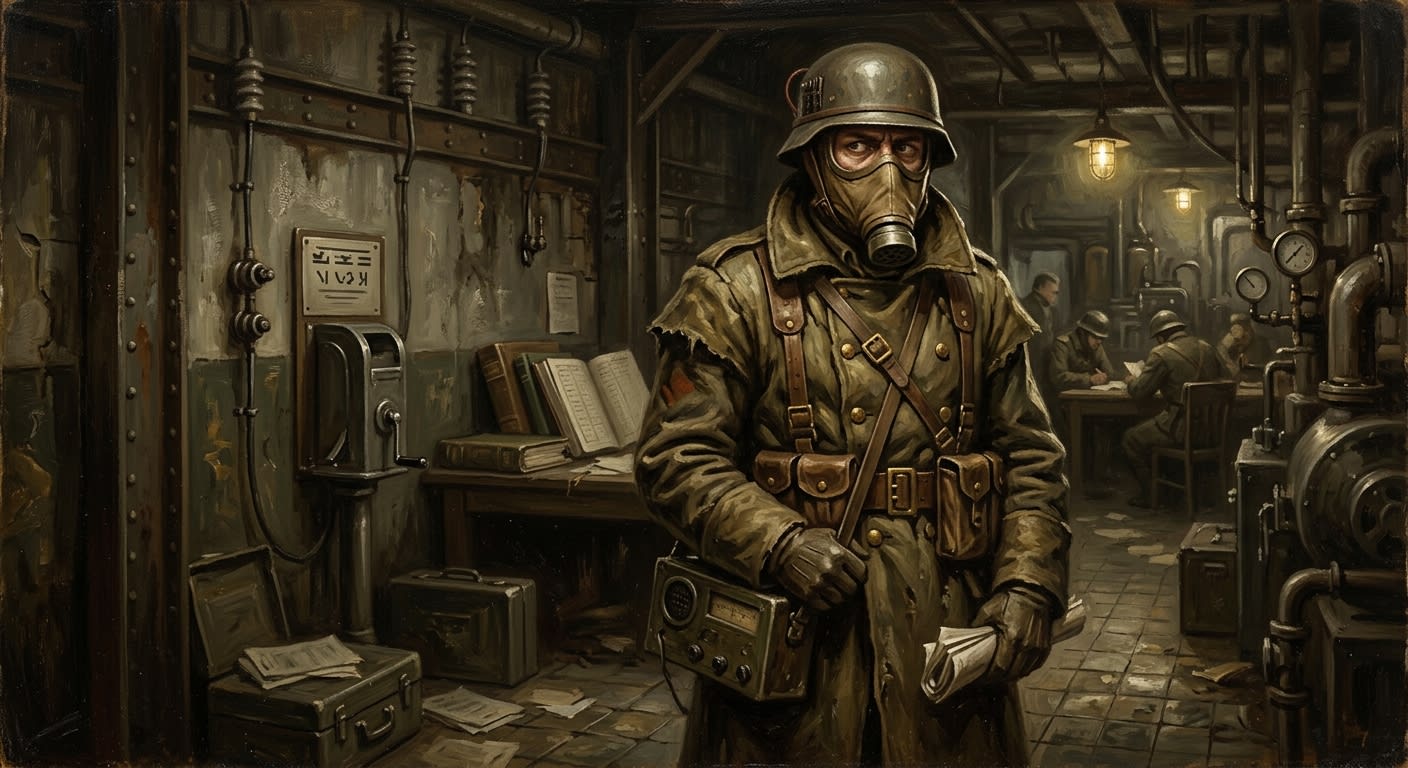
Sergeant Vell
The man who left the Blightmarsh and called Brest a relief
Sergeant Vell of the Thracian Survey survived Kestrel duty at the Blightmarsh in A.S. 199, spoke carefully, and requested Bastion-Brest as a relief.
Codex Ref. III.2.01-019
Shadow Angle Crews
The illegal geometry that teaches skin to lie back
Shadow Angle crews are unlicensed Brand-Smith cells that alter, downgrade, counterfeit, and erase bodily tri-marks wherever lawful identity has become intolerable.
Codex Ref. XI.5.01-001
Shadow Archivists
The second copy is always a heresy until Records needs it
Alleged Records Scribe faction preserving unsanctioned copies of corrected rolls, officially absent, practically feared, and dangerous under the right lamp.
Codex Ref. XII.9.03-003
Shadow Noon
When a man's shadow applies for command
Shadow Noon is the Zone Five contradiction where light behaves, shadows mutiny, and the wise soldier survives by sitting down before Doctrine catches up.
Codex Ref. XIII.1.97-201
Shadow Pullers
Faster than law, dirtier than doctrine, and useful before breakfast
Unlicensed Reliquary Salvager crews who reach cracked vaults before the seal-box, forge ghost tags, and sell usefulness back to the Synod.
Codex Ref. XII.13.05-001
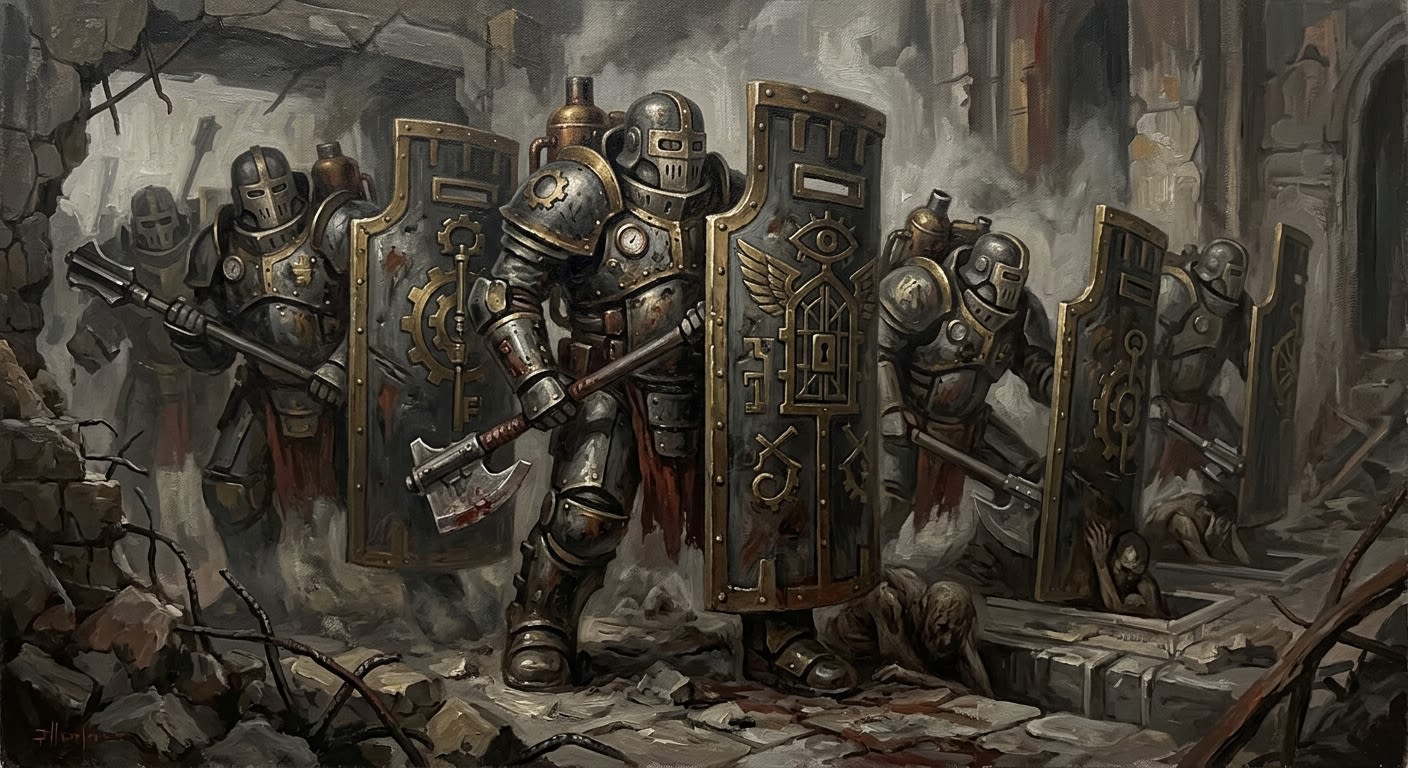
Shield Paladins
Men instructed to become wall until the wall believes them
Covenant heavy infantry trained for breach reception, line denial, emergency causeways, and the sacred absurdity of turning frightened men into architecture.
Codex Ref. VIII.5.06-001
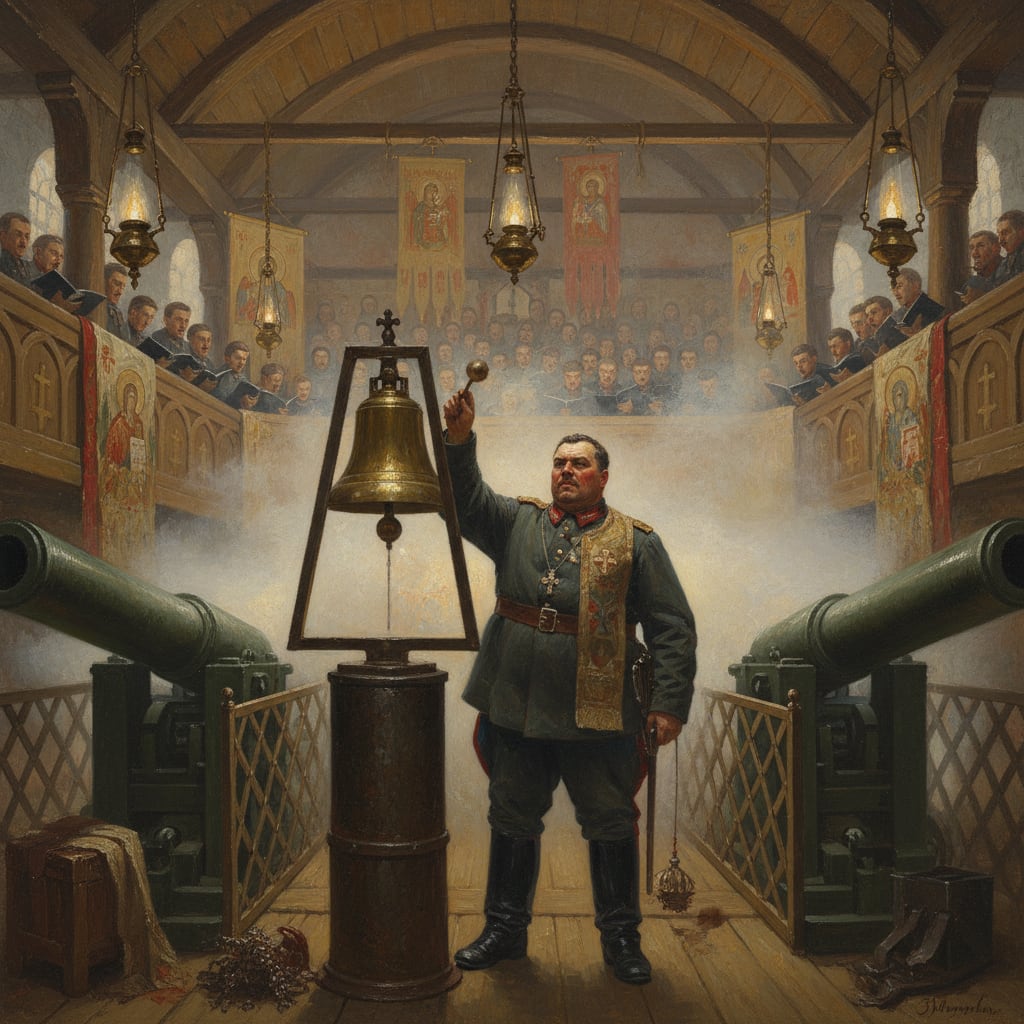
Shrine-Deck Crew
Bell, chalk, and brass — the three sacraments of the man who is too useful to die quickly
Mobile artillery and choir crews of the Synod's shrine-platforms — firing on the psalm-beat, logging every shell in a shot-ledger the Bureau calls the platform's soul, and maintaining chalk rings while the metronome bell keeps the guns from going hollow.
Codex Ref. XII.42.01-001

Sigil Inspector
The man who tells the world what it is allowed to look like — and scrapes the rest
The Bureau of Heraldry tells the world what it is permitted to look like. The Sigil Inspector is the man who walks the world and checks — codex in hand, swatch at the hip, blade heated to scraping temperature.
Codex Ref. XII.43.01-001
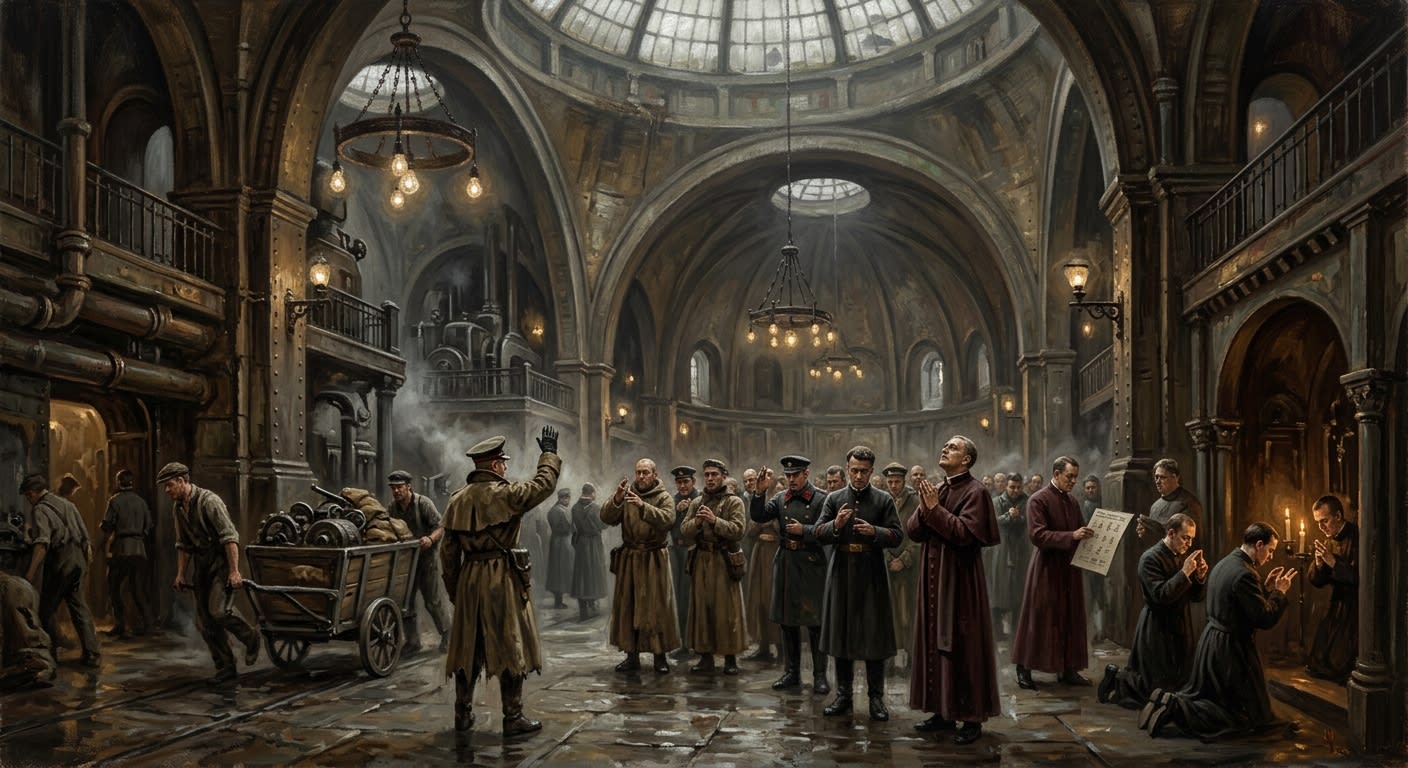
Silence Domes
When bells cannot carry, hands must become bells
Silence Domes are acoustic null palls where command, prayer, cadence, and civic habit die at the teeth; Orison governs the passes, signals, and surviving gestures.
Codex Ref. XIII.1.66-001
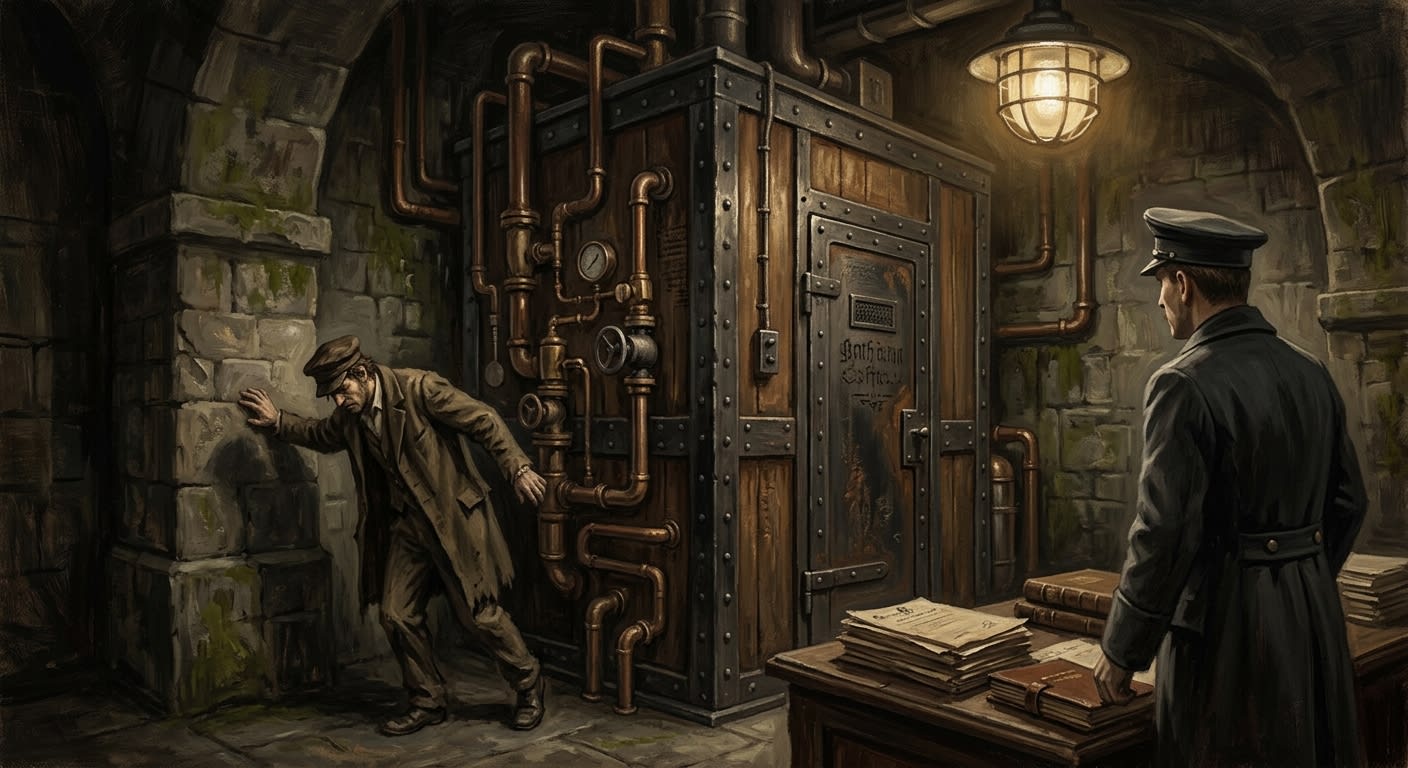
Silent Confessional of Vienna
A cabinet need not hear you to make you confess
Rumoured Viennese black-iron confession apparatus whose victims emerged senseless yet speaking, preserved by Doctrine as a repurposed warning to every booth clerk who trusts furniture.
Codex Ref. XIII.1.61-001

Silent-Core Crew
Permission without a voice remains a crime in better clothes
Shadow faction of Route-Stamper criminals who mute bell-hour cores, sell unmeasured movement, and teach the road the profitable shape of silence.
Codex Ref. XII.2.06-004
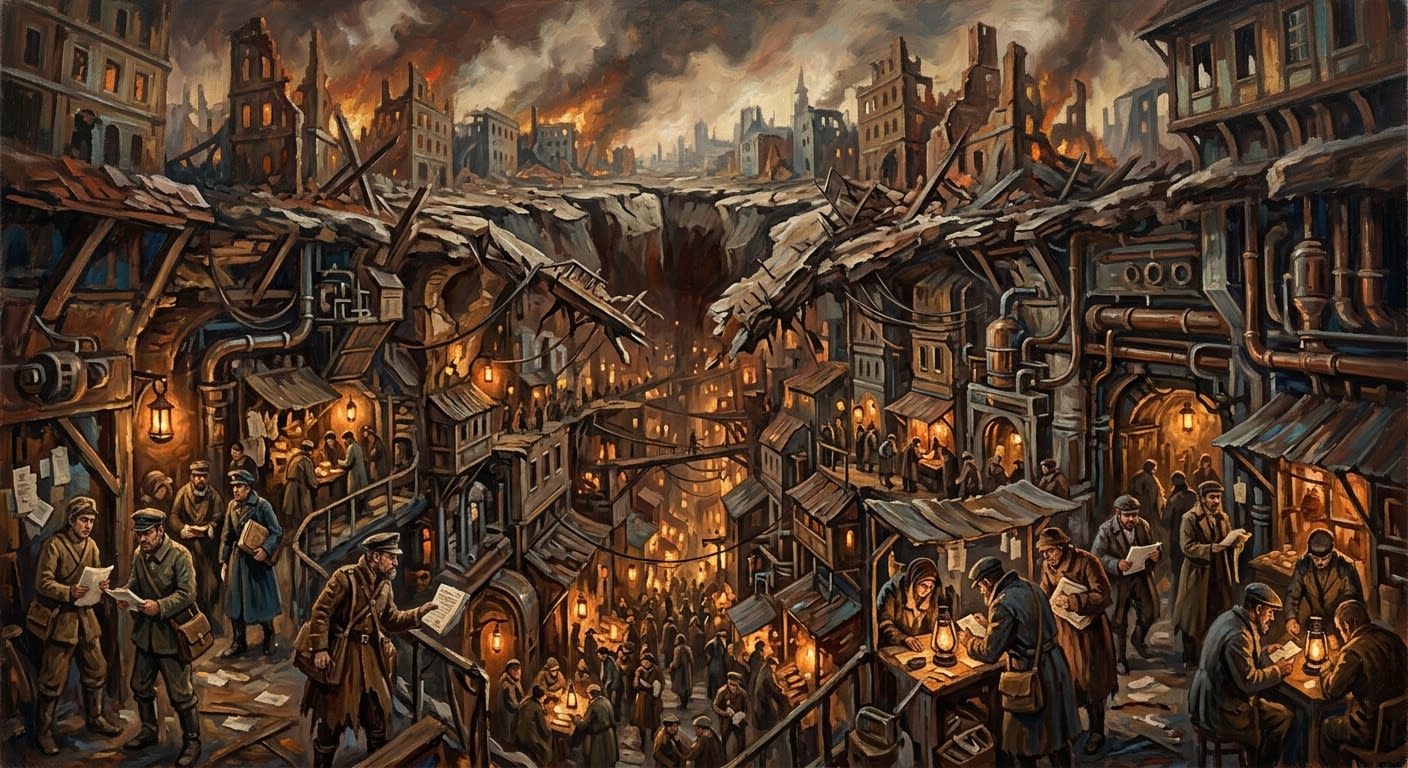
Skopje
The bitten city keeps its markets below the teeth
Skopje fell within hours of the Sundering, then survived below itself: a bitten city of Lantern Warrens, forged papers, humming lamps, and useful lies.
Codex Ref. II.5.08-045
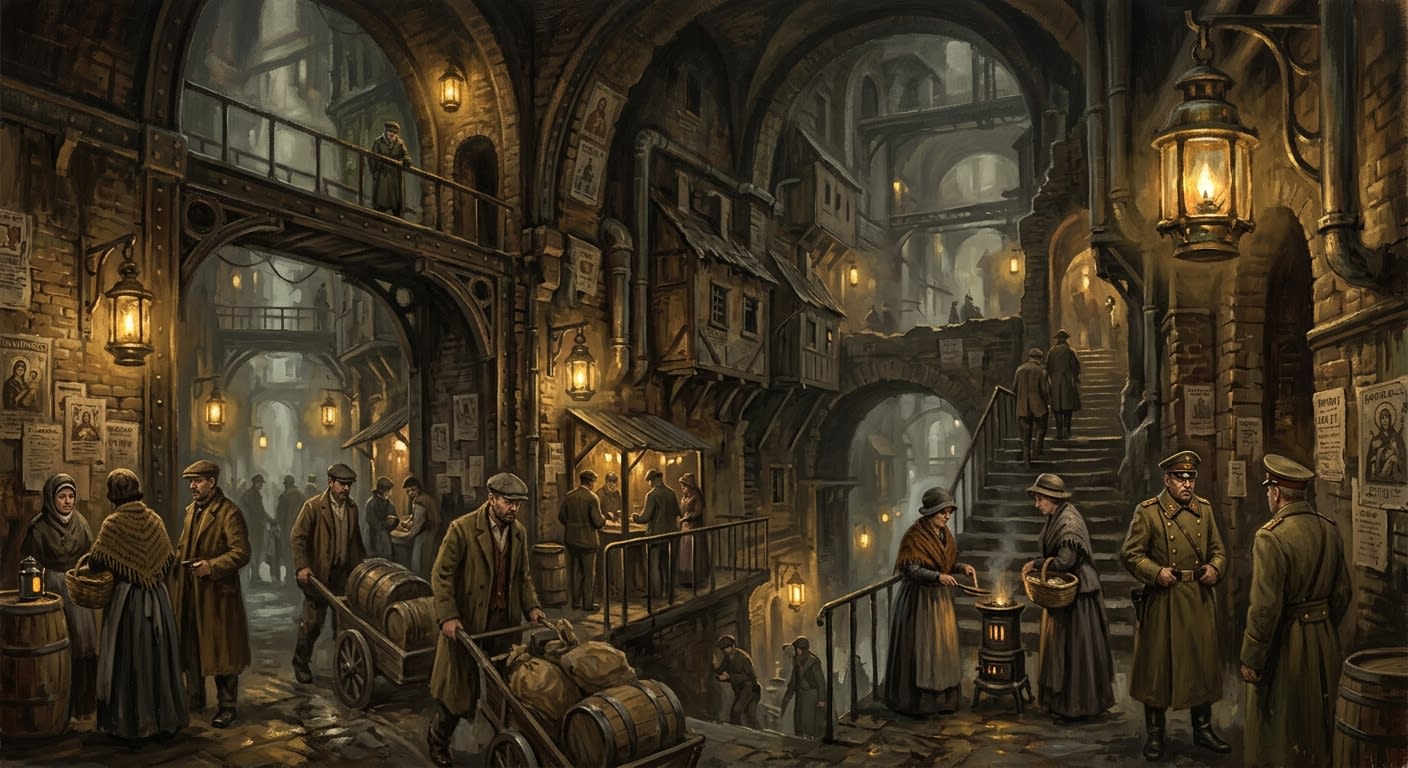
Skopje Lantern Warrens
A city bitten from above, still singing below
The Skopje Lantern Warrens are the tunnel-city beneath a Sundering-eaten ruin, where black-diesel lamps hum in forbidden pre-Codex modes.
Codex Ref. II.4.08-017
Sluice Yards
Where the Bug is hooked, taxed, and made to confess
Downstream of Bastion-Brest, the Sluice Yards hook the Bug's filth into evidence, paper, bodies, taxes, and the sort of truth that stains gloves.
Codex Ref. II.4.09-098
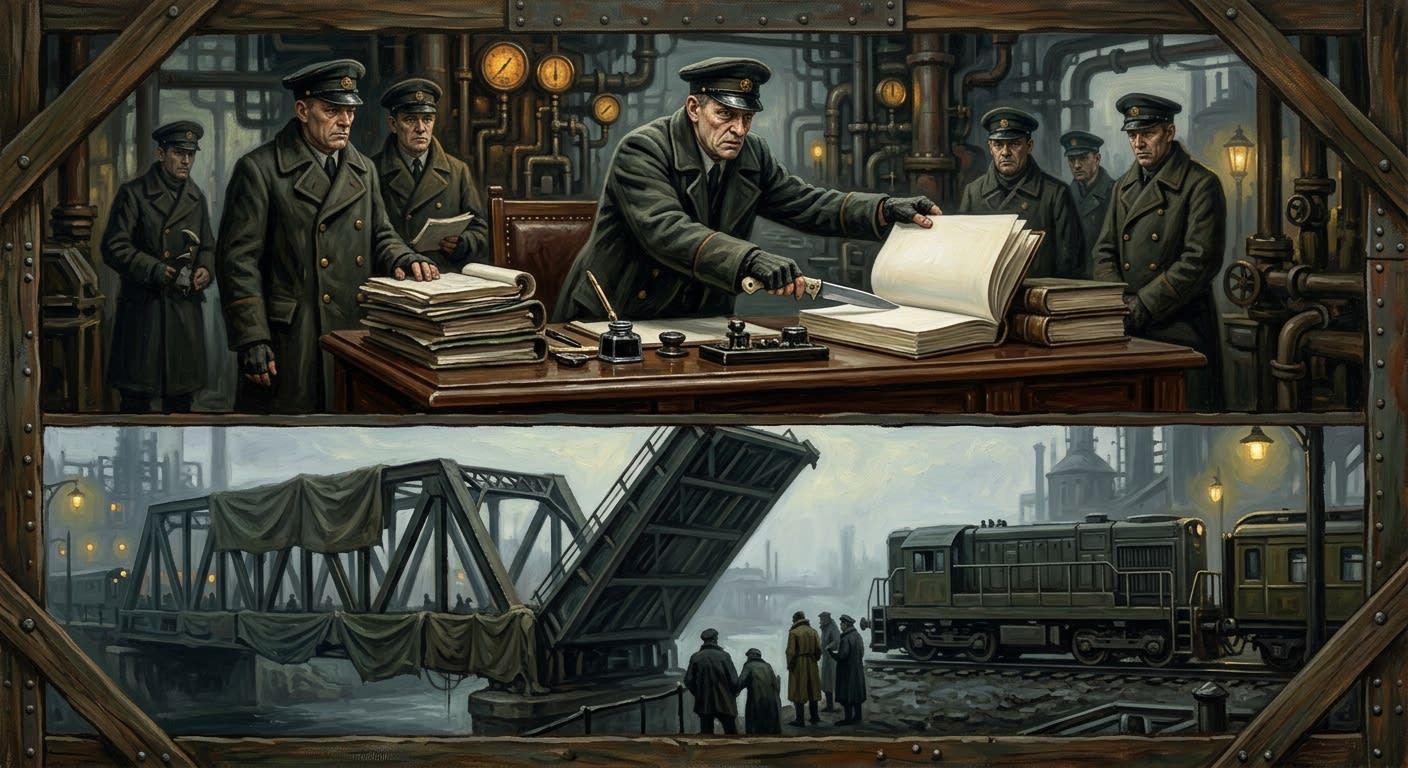
Standing Order 14-B
The bridge learned to answer before Strasbourg finished asking
Standing Order 14-B is Brest's span-sovereign knife: seize the blank paper, halt the crossing, and make absence answer.
Codex Ref. XIII.1.14-196
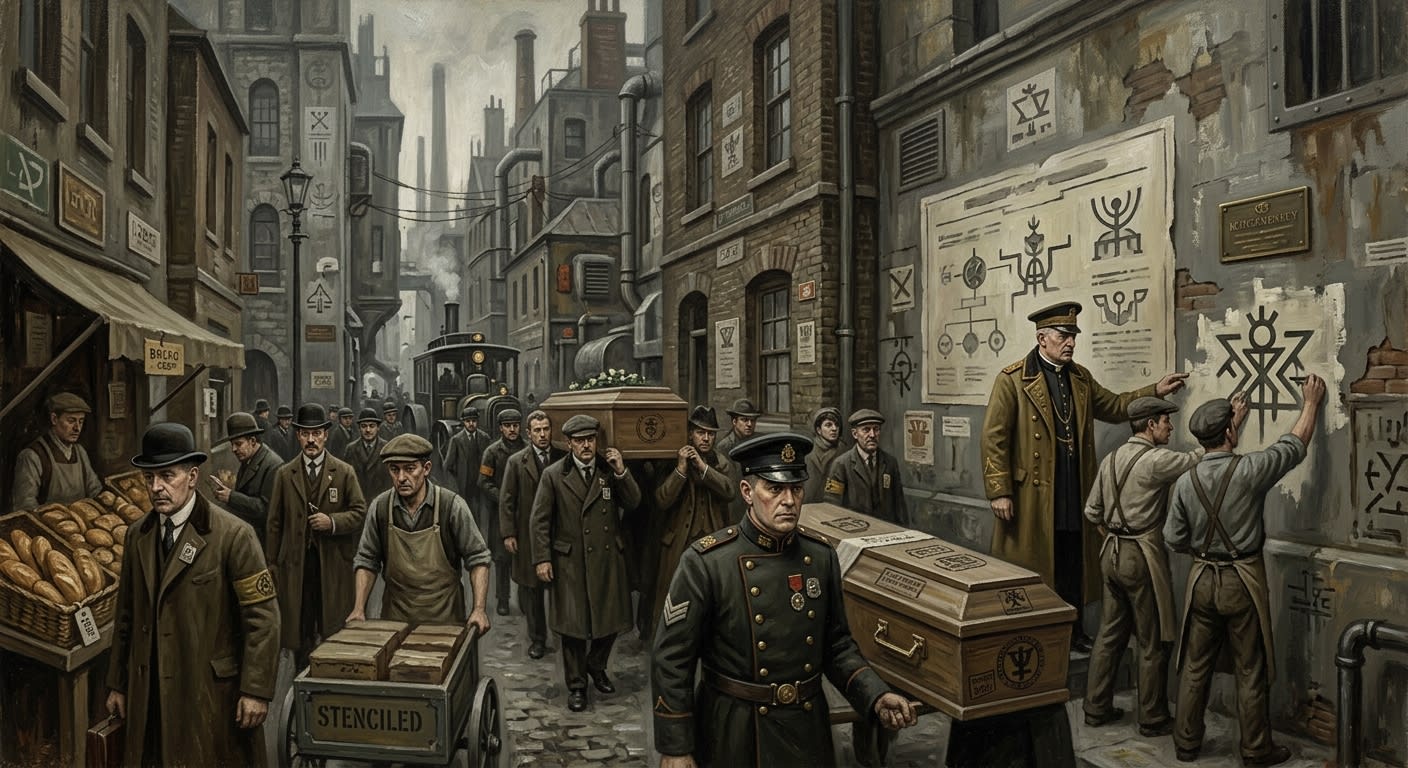
Standing Order 14-C
Every surface shall confess before speech begins
Standing Order 14-C teaches walls, bread, badges, coffins, and brows to confess: no lawful surface remains visually unclaimed.
Codex Ref. XIII.1.14-090
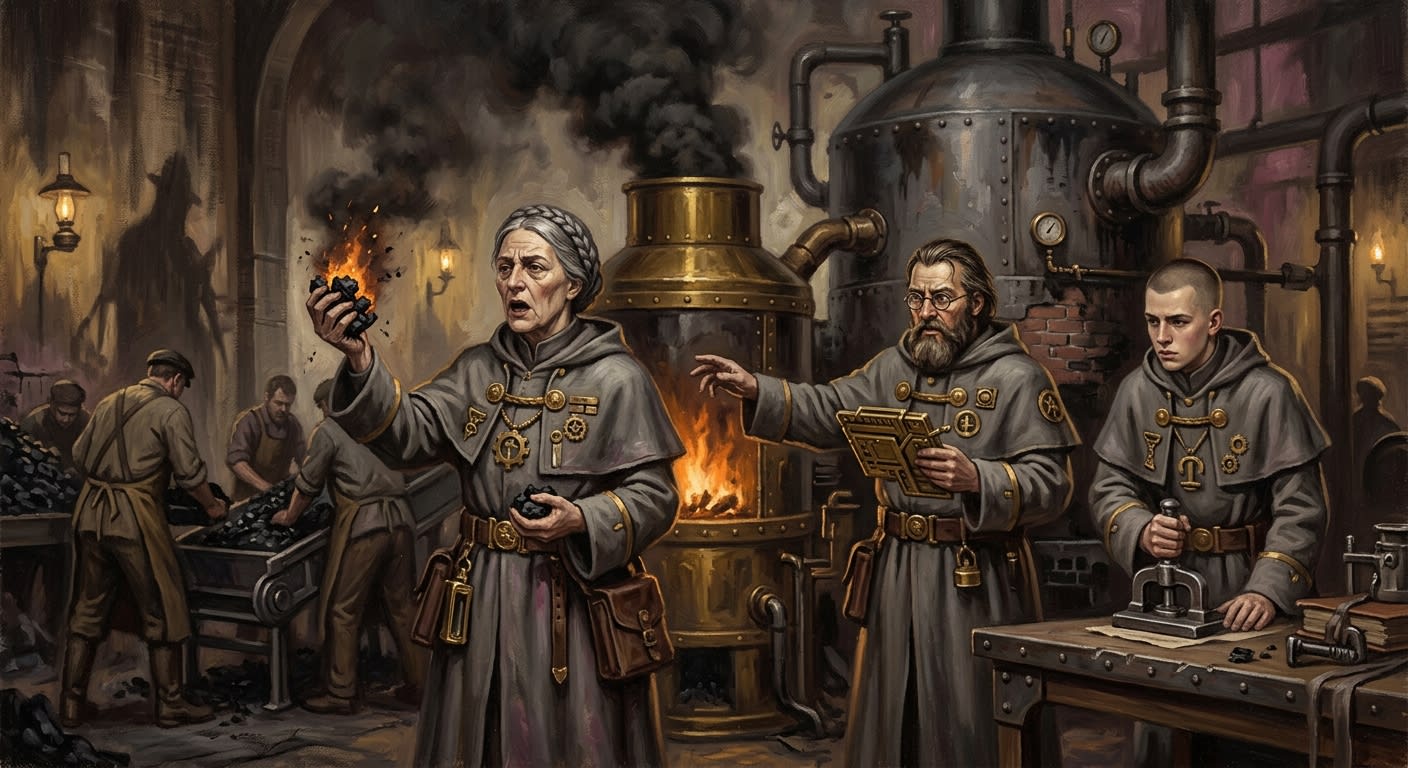
Standing Order 14-E
Sing before spark, or let the wall receive you
Standing Order 14-E is the smoke-written law of ignition: sing before spark, witness before load, seal before claim.
Codex Ref. XIII.1.14-097
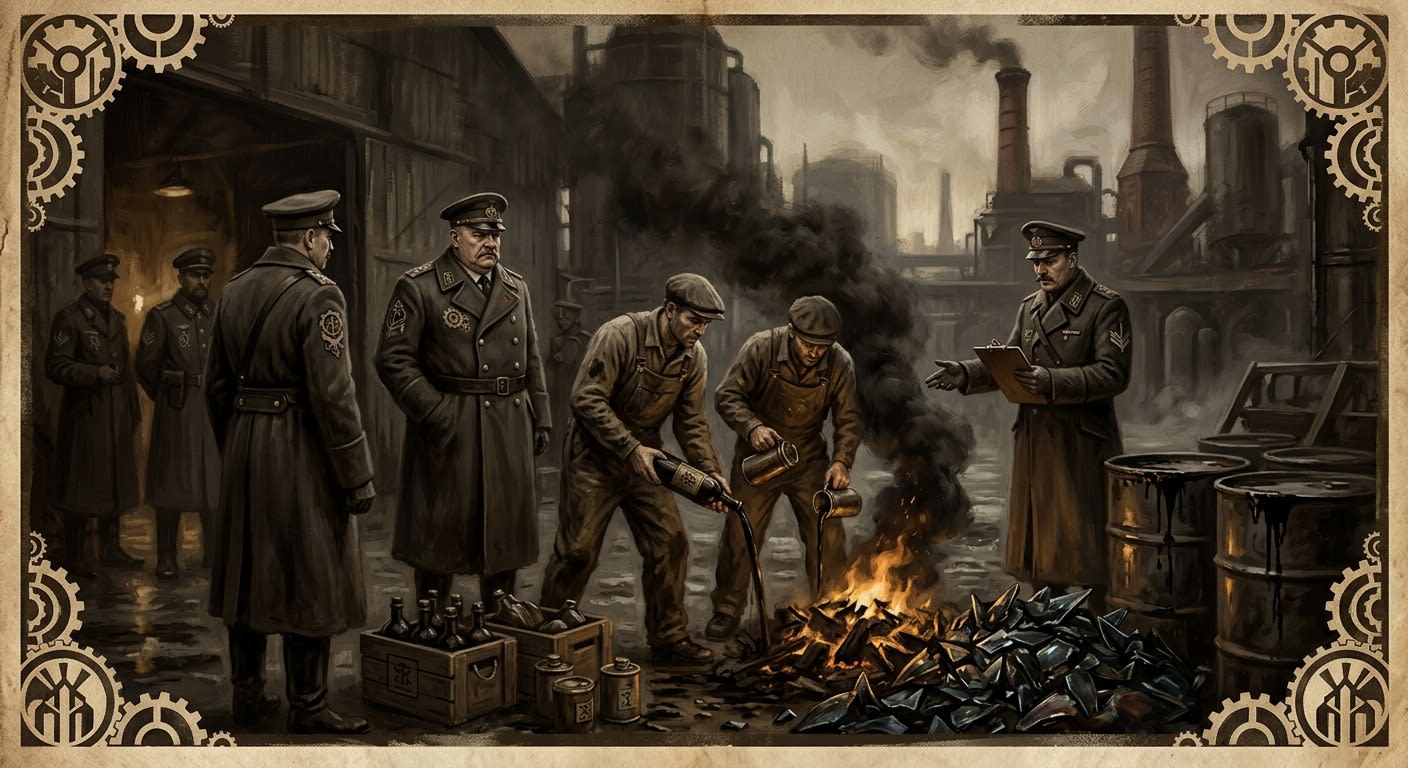
Standing Order 14-K
The law that forbids the fuel by which the righteous keep warm
Standing Order 14-K forbids black diesel, demon glass, scripture-smoke, and every useful contamination the Synod condemns in public and routes by night.
Codex Ref. XIII.1.96-134
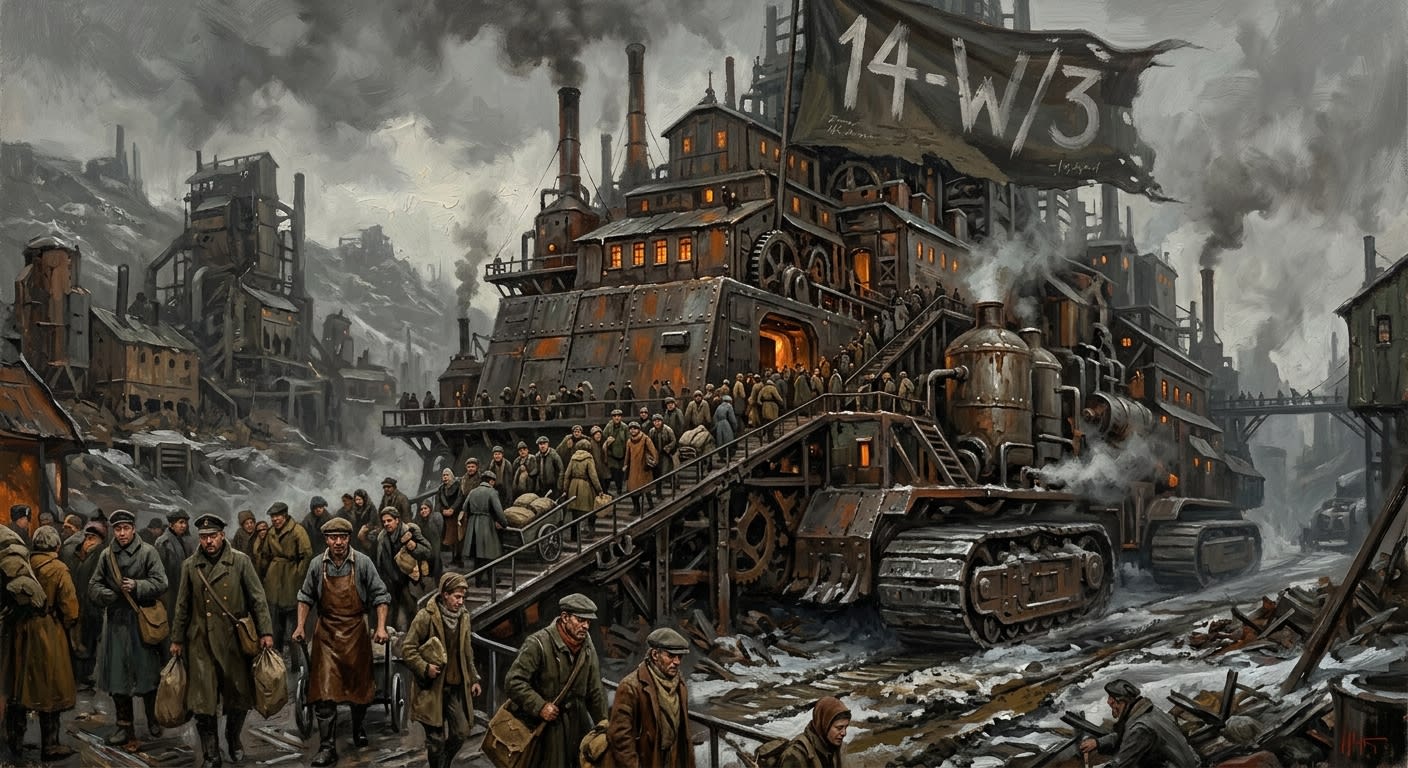
Standing Order 14-W/3
The evacuation order that discovered bakeries
Standing Order 14-W/3 ordered Warsaw to become movable in A.S. 95; a century later, the city remains larger, louder, and better fed by its own disobedience than by Settlement arithmetic.
Codex Ref. XIII.1.87-095
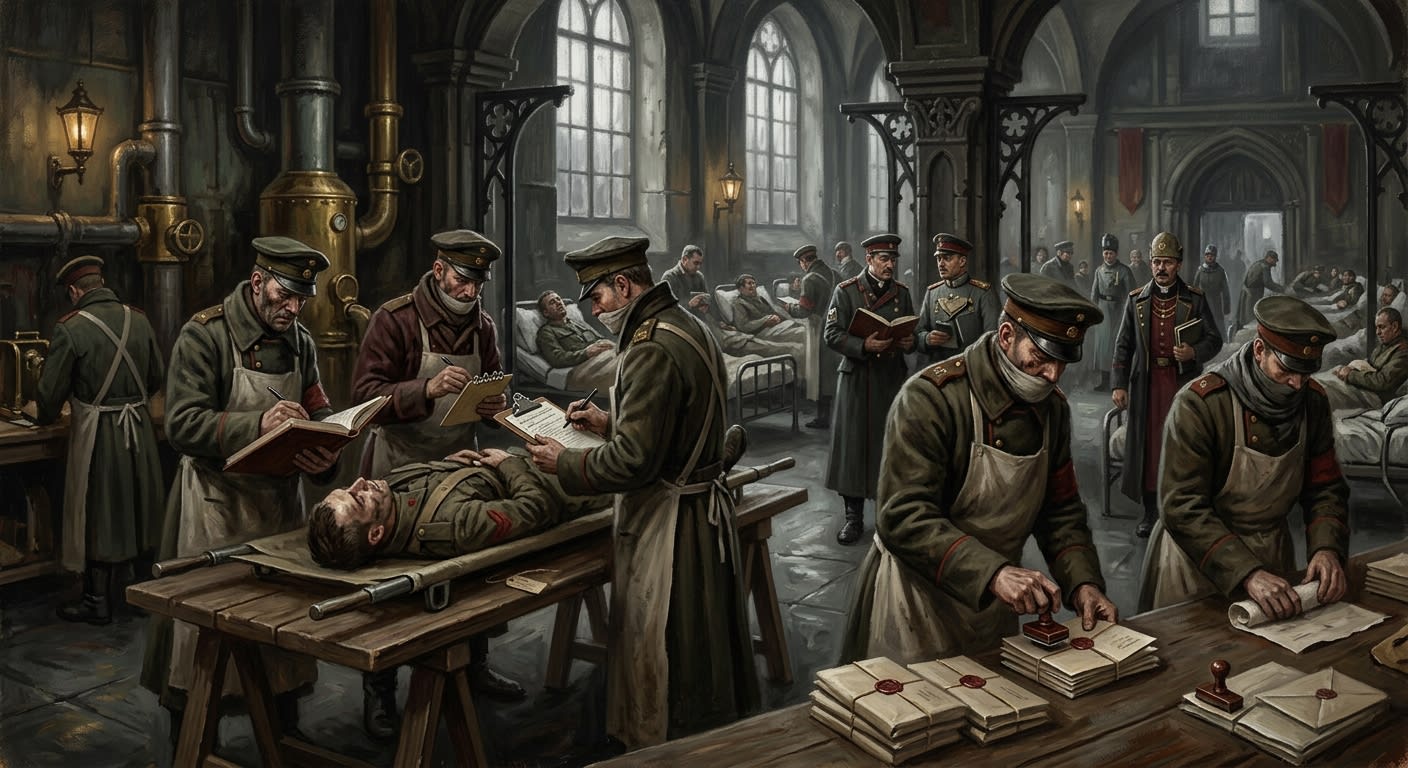
Standing Order 22-C
No last word unfiled, no dying mouth left private
Standing Order 22-C makes the dying useful: names first, comfort second, three copies sealed before the body is allowed to cool.
Codex Ref. XIII.1.98-080
Standing Order 22-S
When the room answers, starve it
Standing Order 22-S teaches the holy art of refusal: three notes down, fourteen beats sealed, no answer to the hungry wall.
Codex Ref. XIII.1.41-104
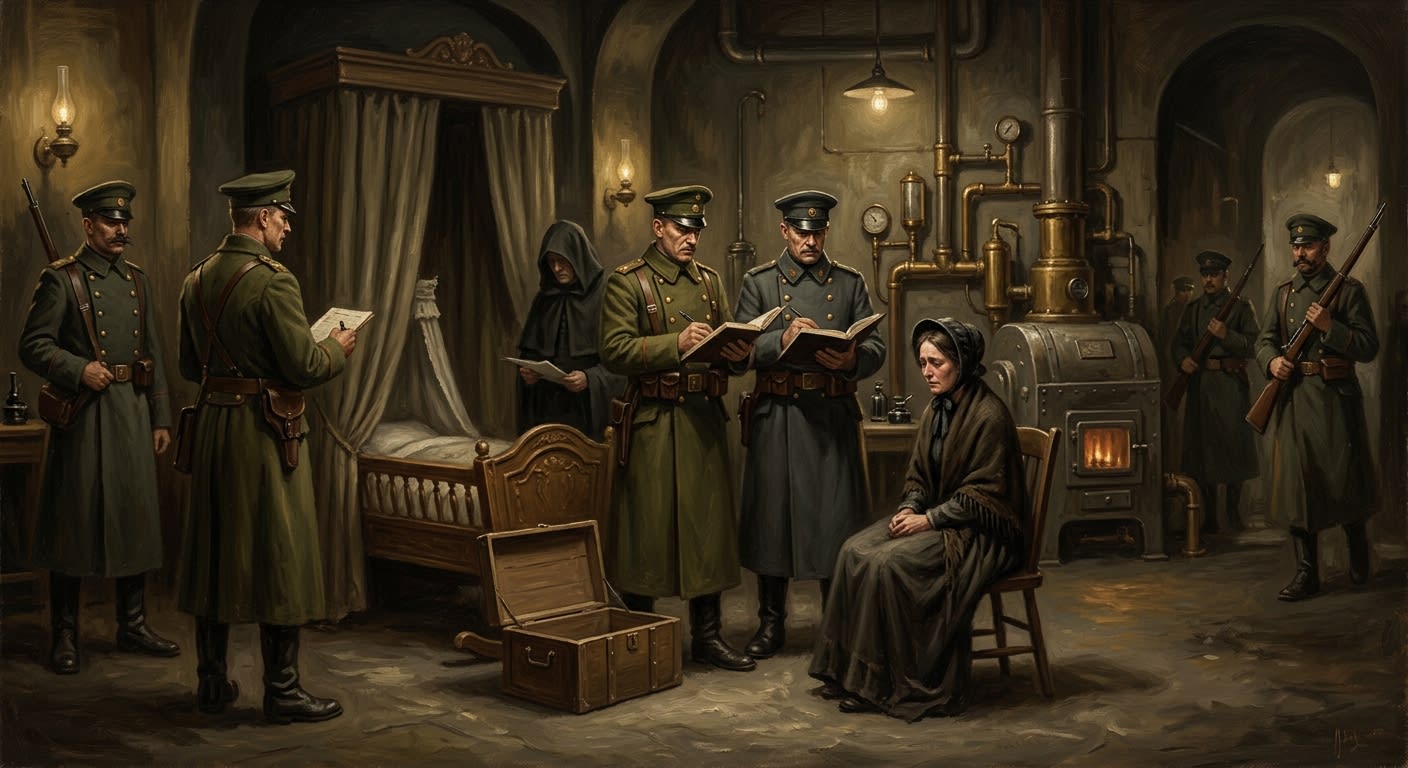
Standing Order 34-PK
The cradle confesses when the Ledger is hungry
Standing Order 34-PK makes the hidden cradle confess: missing infants become stolen soldiers, and a mother’s silence becomes evidence.
Codex Ref. XIII.1.34-158
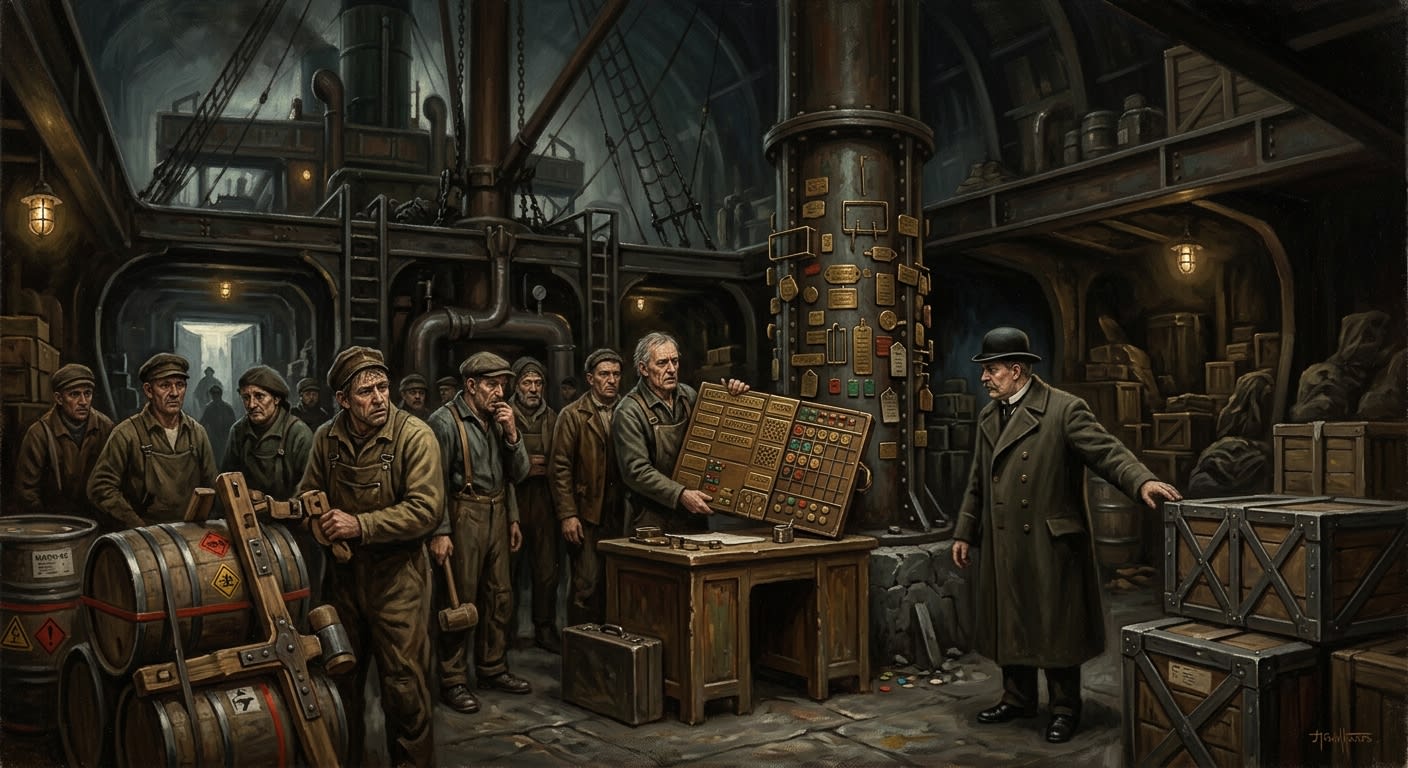
Stevedores' Compact
What the hold remembers, the manifest learns too late
Hamburg's Stevedores' Compact governs shipboard stowage, hold-order tokens, hazardous load bracing, and the right of senior holdmen to refuse death disguised as cargo discipline.
Codex Ref. XII.52.02-001
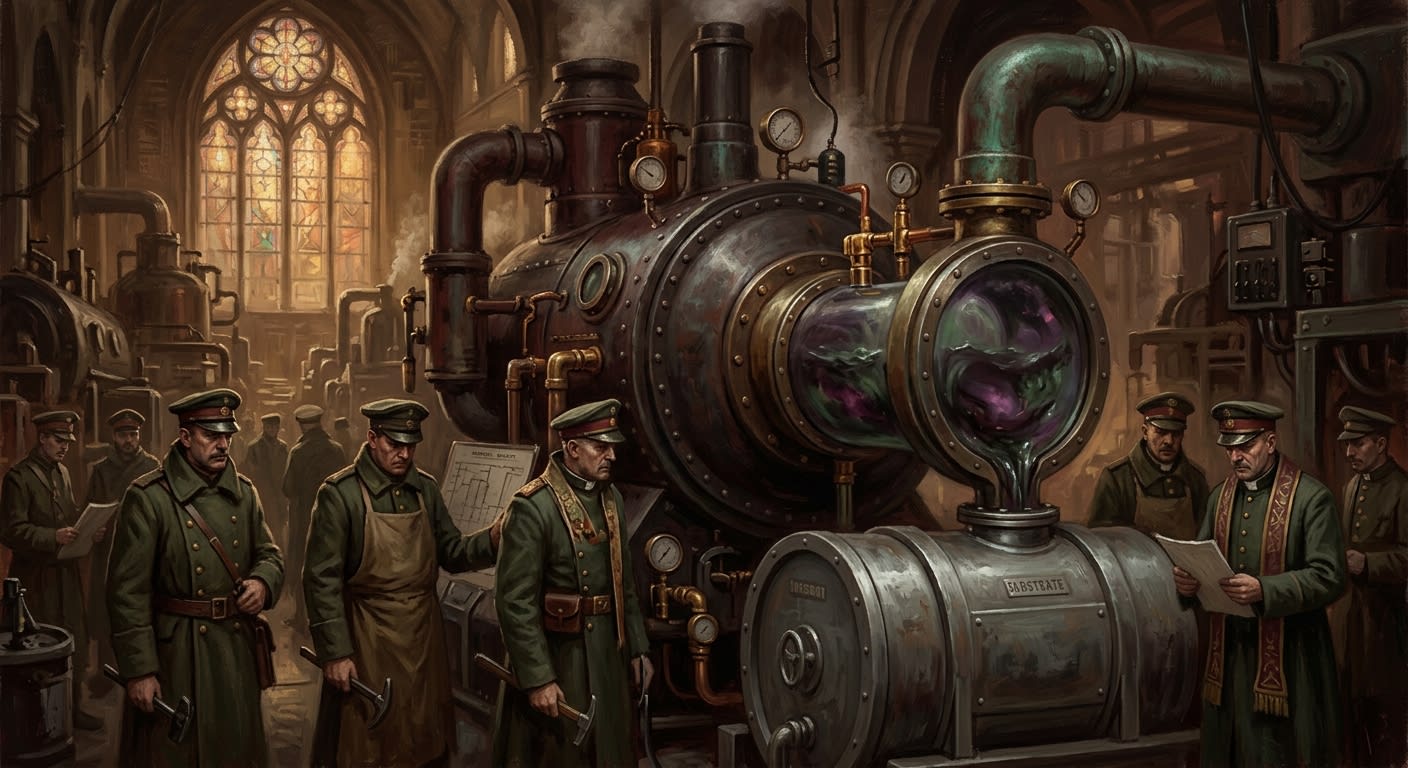
Substrate
The grey thing beneath the hymn
Brast's fourth fuel component is named blandly because useful horrors prefer dull labels, locked caskets, and a hymn before seventh bell.
Codex Ref. XIII.1.92-201
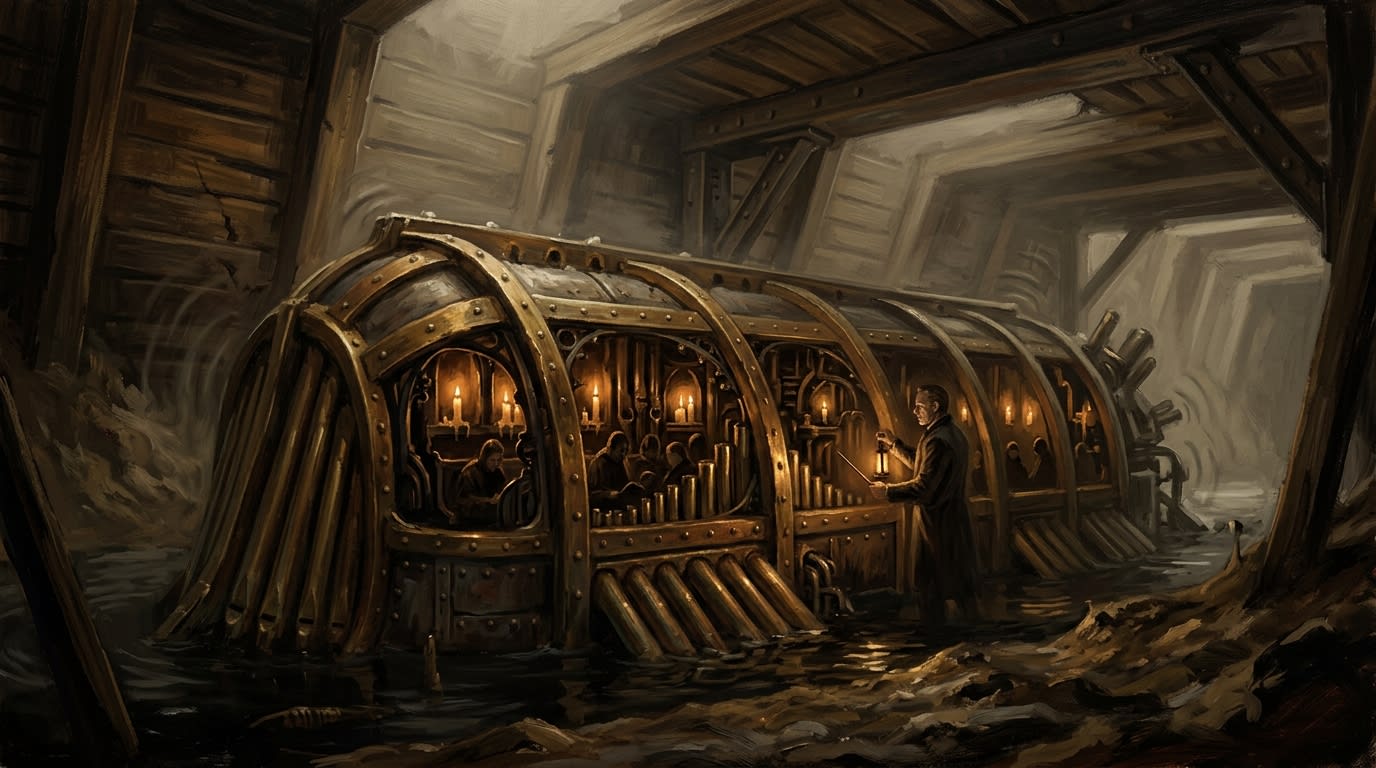
Sunken Choir
The hymn beneath the trench, paid for in boys' throats
The Sunken Choir is a sanctioned Choir-Engine: boys altered into subterranean hymn machinery so the Synod may collapse enemy tunnels while calling the invoice grace.
Codex Ref. XIII.1.33-001

Surveyor-Lieutenant Hadrien Vesk
The heat destroyed his instruments; the Bureau preserved his reprimand
In A.S. 189, Hadrien Vesk was sent to measure the Iron Wastes' western thermal gradient. His instruments melted; Engineering obtained a reprimand instead of a number.
Codex Ref. III.2.01-189

The Armorial of the Faithful
The book by which even colors learn obedience
The Armorial teaches every banner, crest, seal, colour, knot, and shop sign in the Synod the first virtue of a surface: obedience.
Codex Ref. VIII.1.03-002
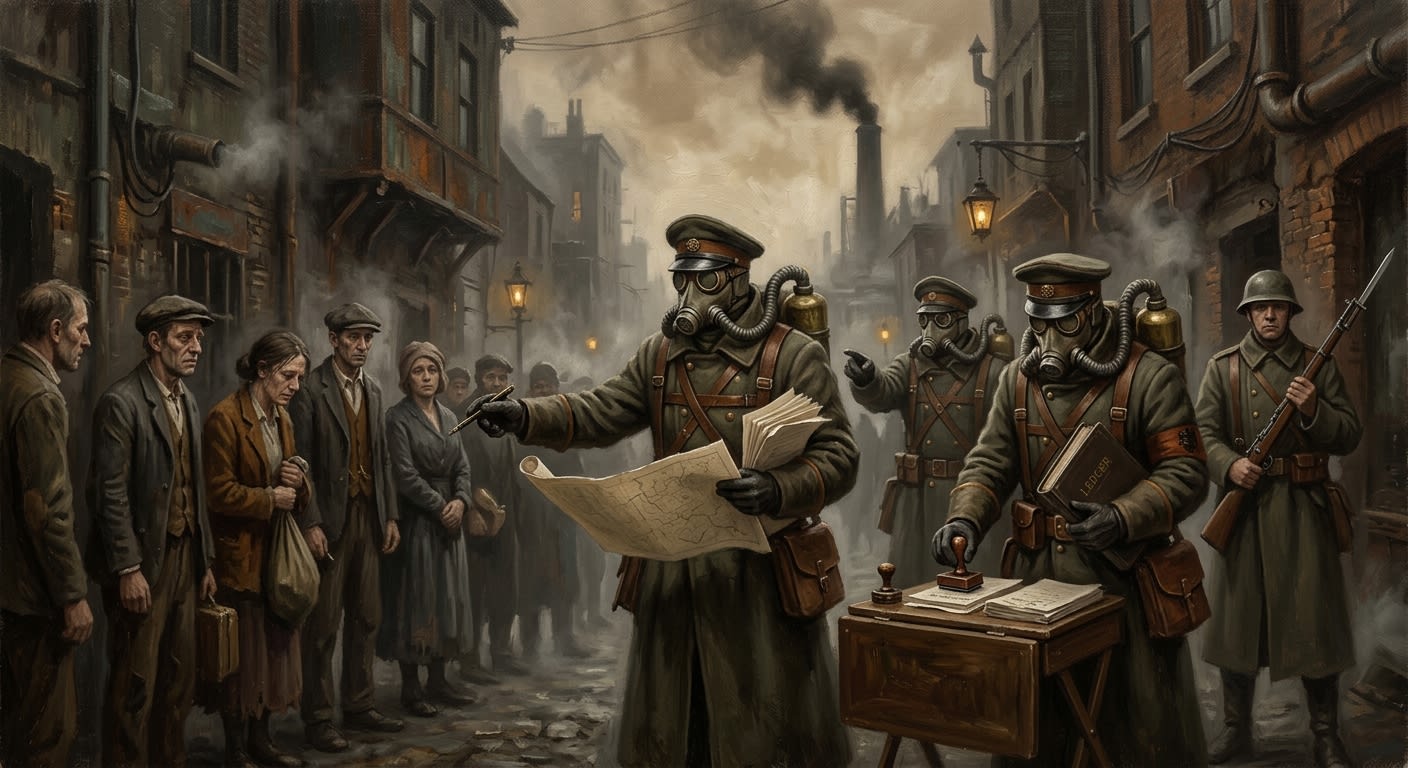
The Assignors
Men with maps, seals, and exactly enough authority to be hated
Assignors are Settlement field officers: map-carriers, permit-revokers, and escort-dependent instruments by which ink tells citizens where to stand.
Codex Ref. XII.2.06-001
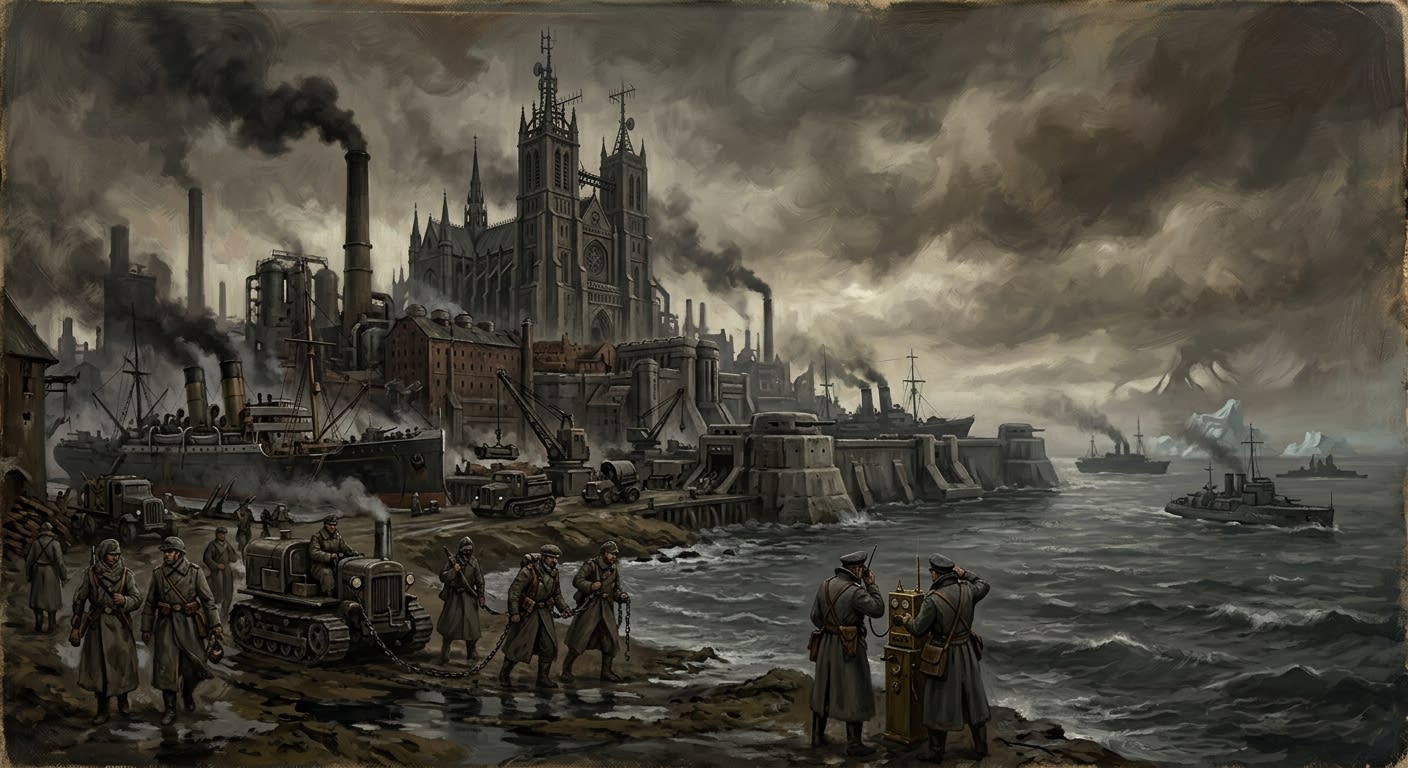
The Baltic
The cold sea at the end of the Line, claimed by ink and not by water
The Baltic northern war basin, where the Sagittal Line ends at Königsberg, Danzig feeds the cold corridor, the Fractured North rings older bells, and Grey Water listens.
Codex Ref. II.8.01-065

The Blank-Sheet Circle
A heresy that fits on a single sheet; the sheet is blank
A proscribed organisation operating from the Pylon Warrens of Bastion-Brest; manufactures blank crossing papers permitting nameless transit across the bridge; the Bridge Tribunal has made nineteen arrests; this has not helped.
Codex Ref. XI.5.01-001
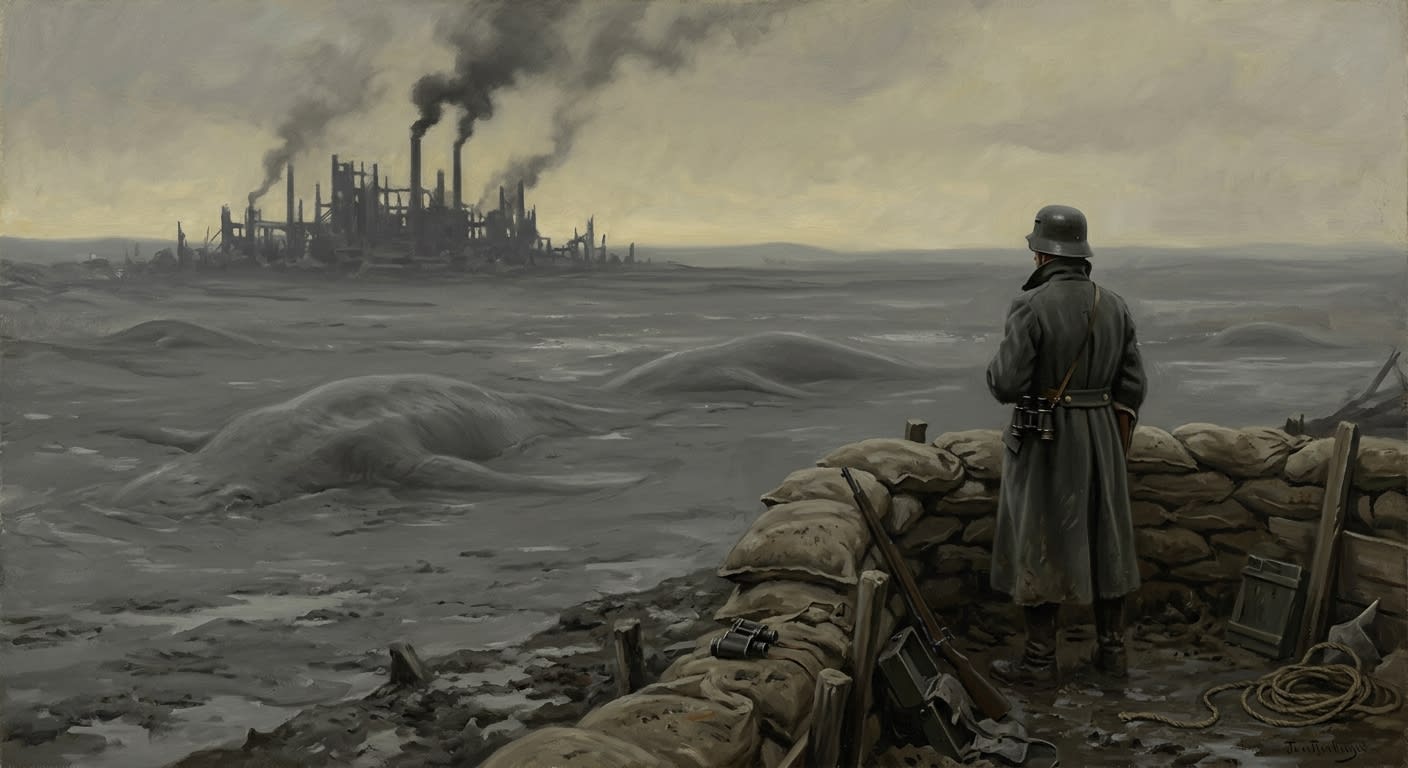
The Blightmarsh
Kargath's larder, fully stocked, permanently empty
The consumed plains of Hungary — twenty-three thousand square miles of grey mud, expanding mouths, and hunger that does not end. Kargath's forward infrastructure. The Sagittal Line's nearest unsolvable problem.
Codex Ref. V.6.01-001

The Bone-Lattice Warrens of Black-Snow Lor
Where the dead are structural and the living pay by the breath
Frontier storm-shelter accreted into a town on the Carpathian edge of the Line — where the air is taxable, the architecture is anatomical, and the Bureau of Alchemical Standards has had a classification pending since A.S.
Codex Ref. II.4.08-002
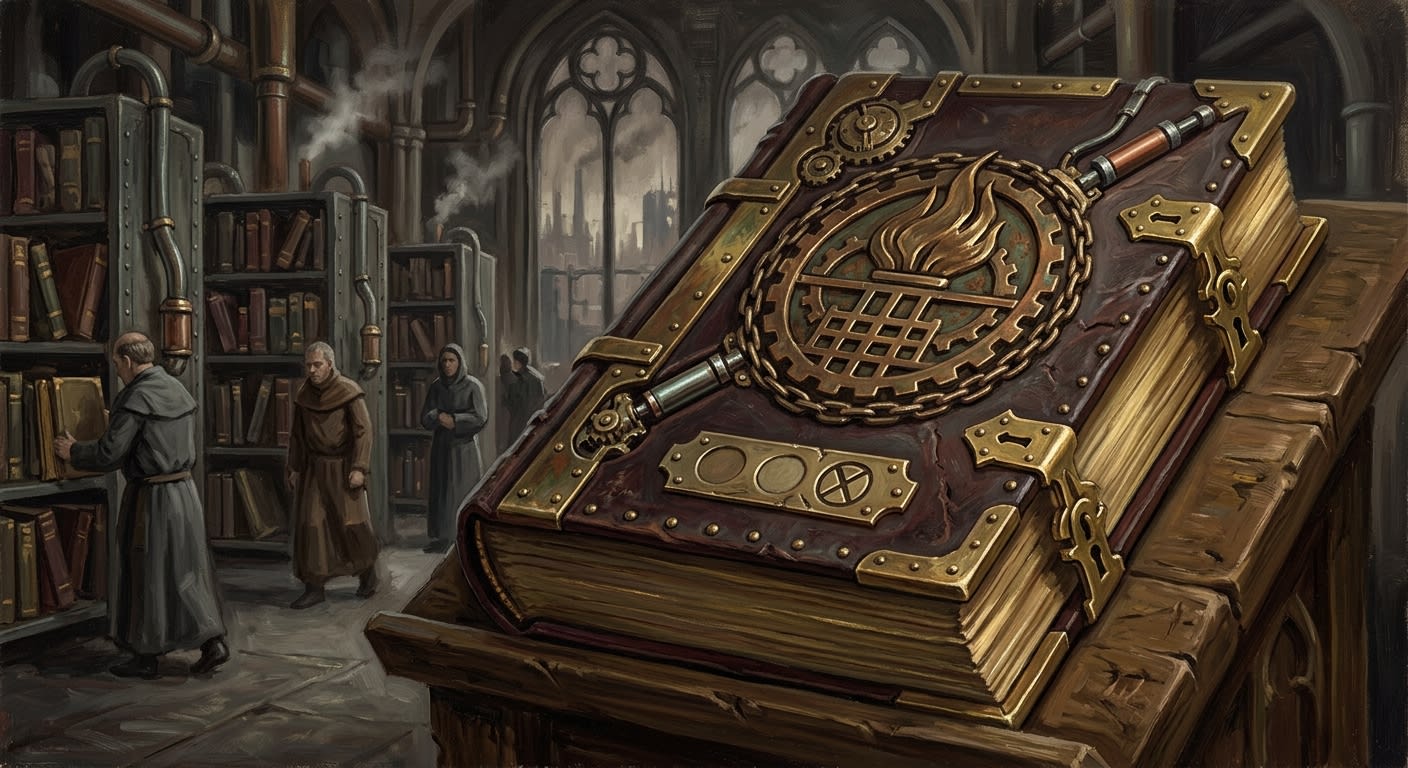
The Book of Promise
The child is named, measured, forecast, and gently confiscated
The Book of Promise is the Synod's vocational pre-allocation ledger, where baptism becomes forecast, childhood becomes collateral, and hope receives a quota mark.
Codex Ref. XIII.1.22-001
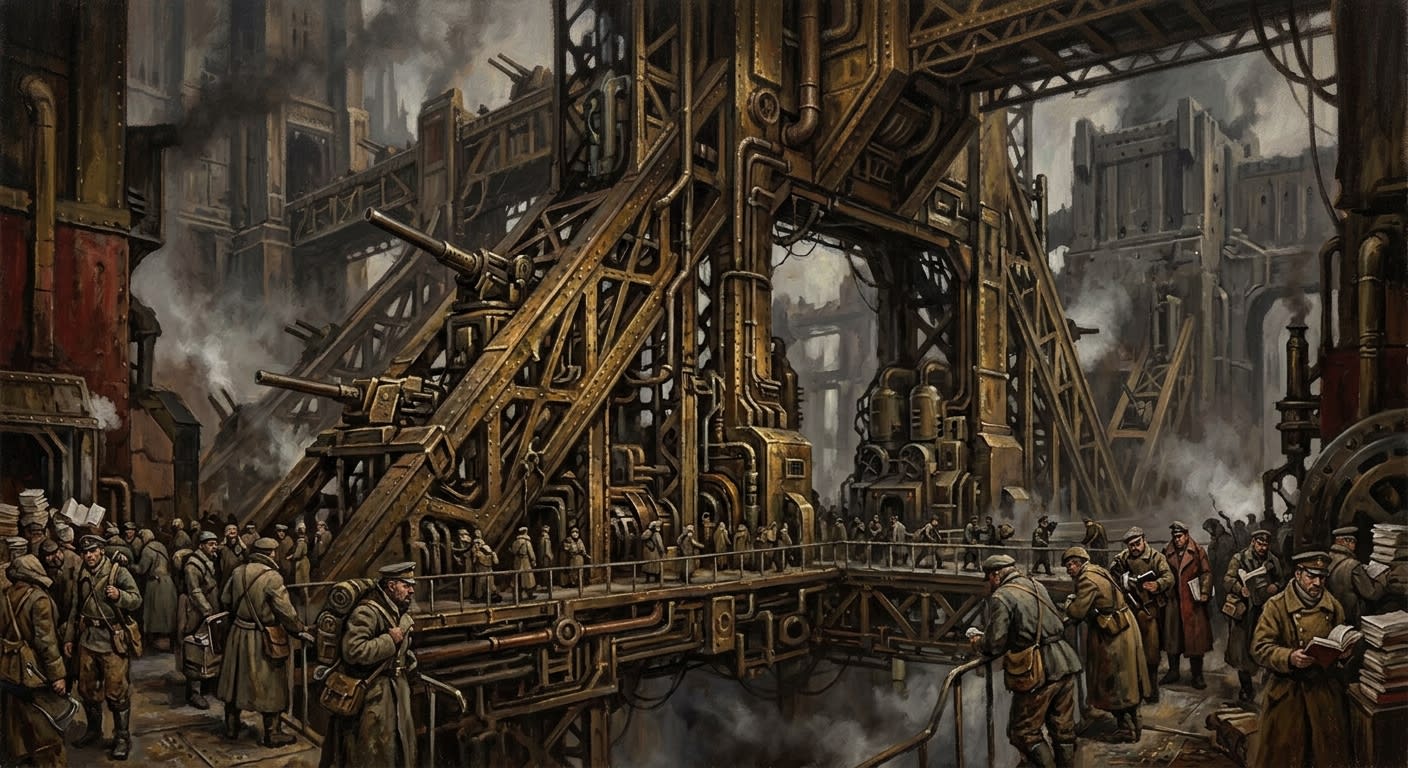
The Brass Ribs
Thirty-two arches, two hundred fourteen mouths, and one bridge pretending to be law
The Brass Ribs are Bastion-Brest's thirty-two bridge-trusses: load-bearing, armed, sacramental, overcrowded, and conducting more voices than Engineering cares to admit.
Codex Ref. II.4.08-032
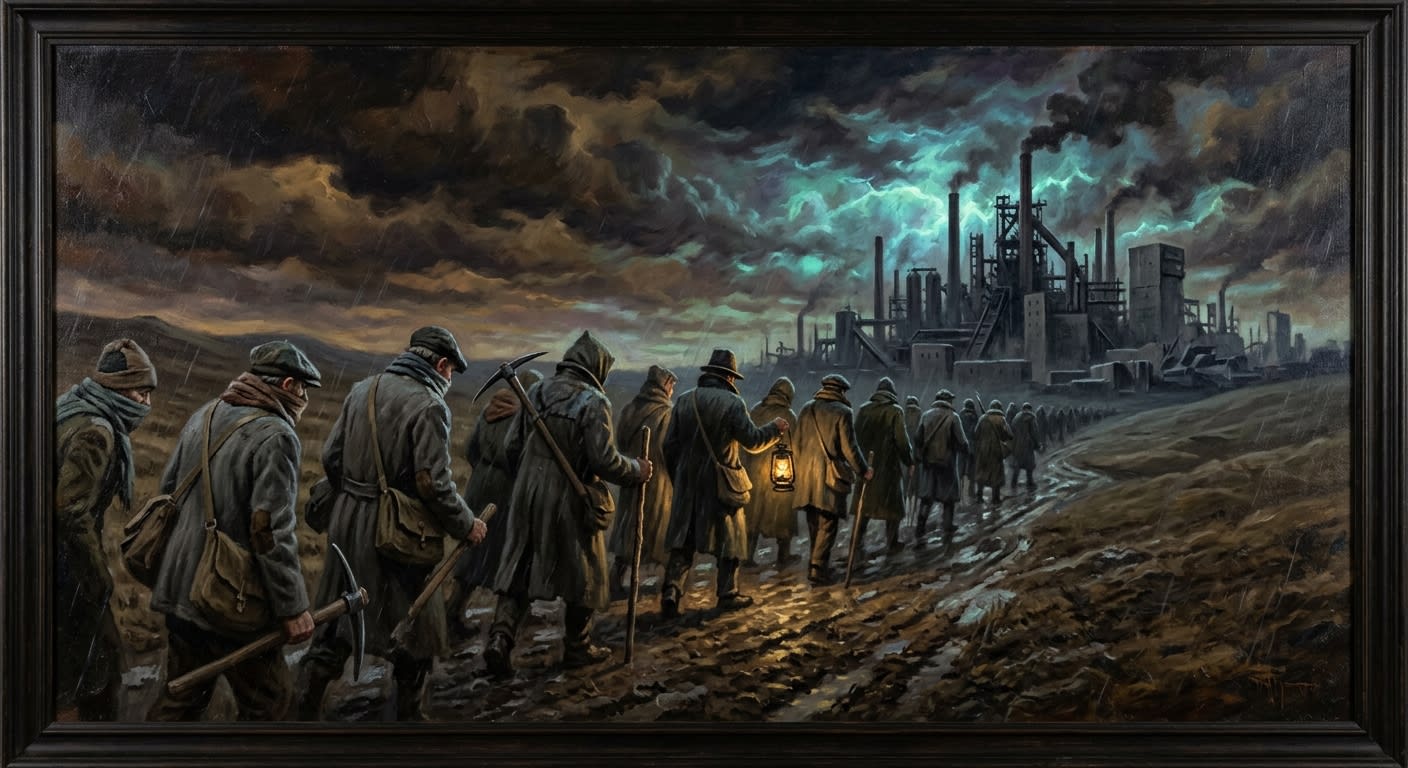
The Breathing
The forbidden name Praga gives the front at night
Praga calls the eastern night-pulse the Breathing; Doctrine forbids the name, which proves only that Doctrine has never successfully prosecuted weather, hunger, or grandmothers.
Codex Ref. XIII.1.88-201
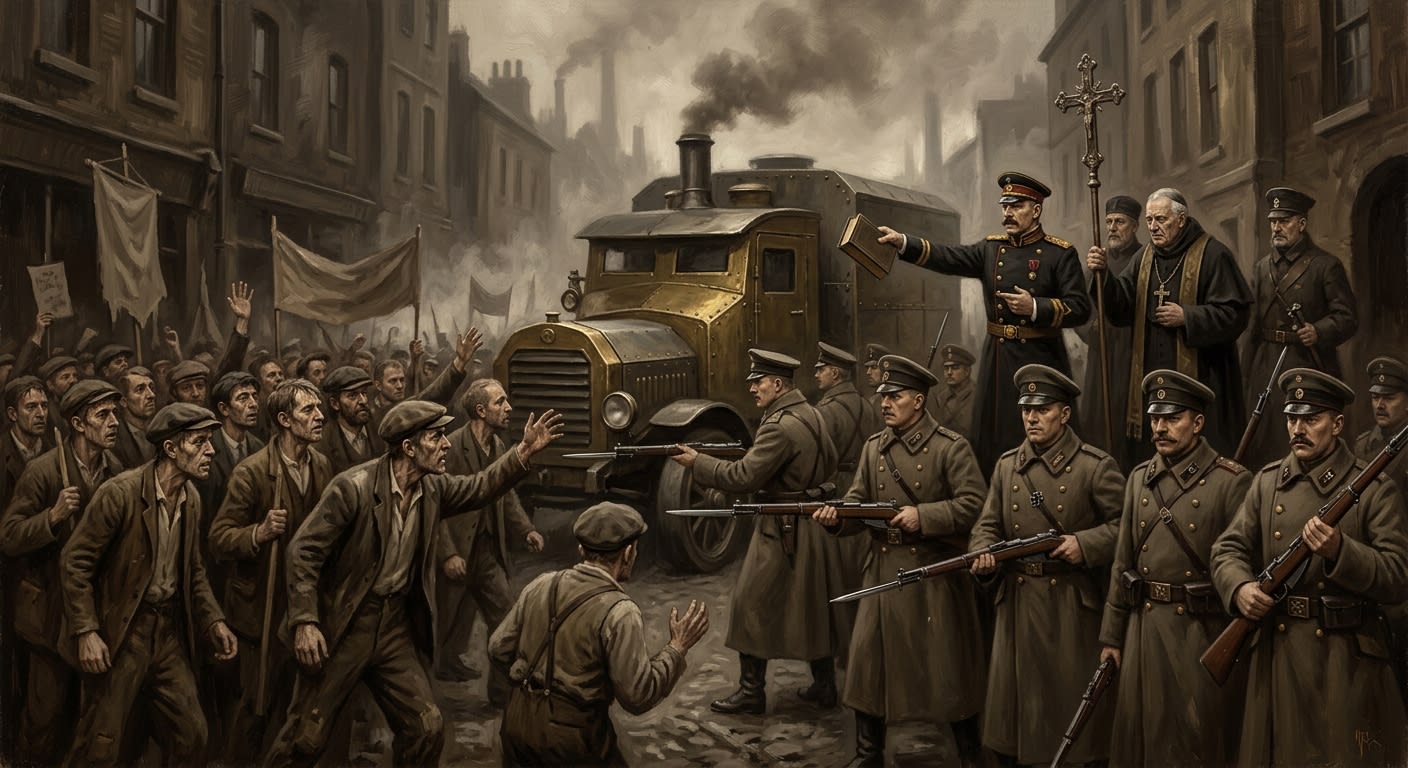
The Broth Riots
The hungry asked for food and received laws
The Broth Riots of A.S. 112 began with thin soup and ended with rifles, saints, Ledger Laws, and the Synod's discovery that hunger becomes obedient once measured.
Codex Ref. VII.8.10-112
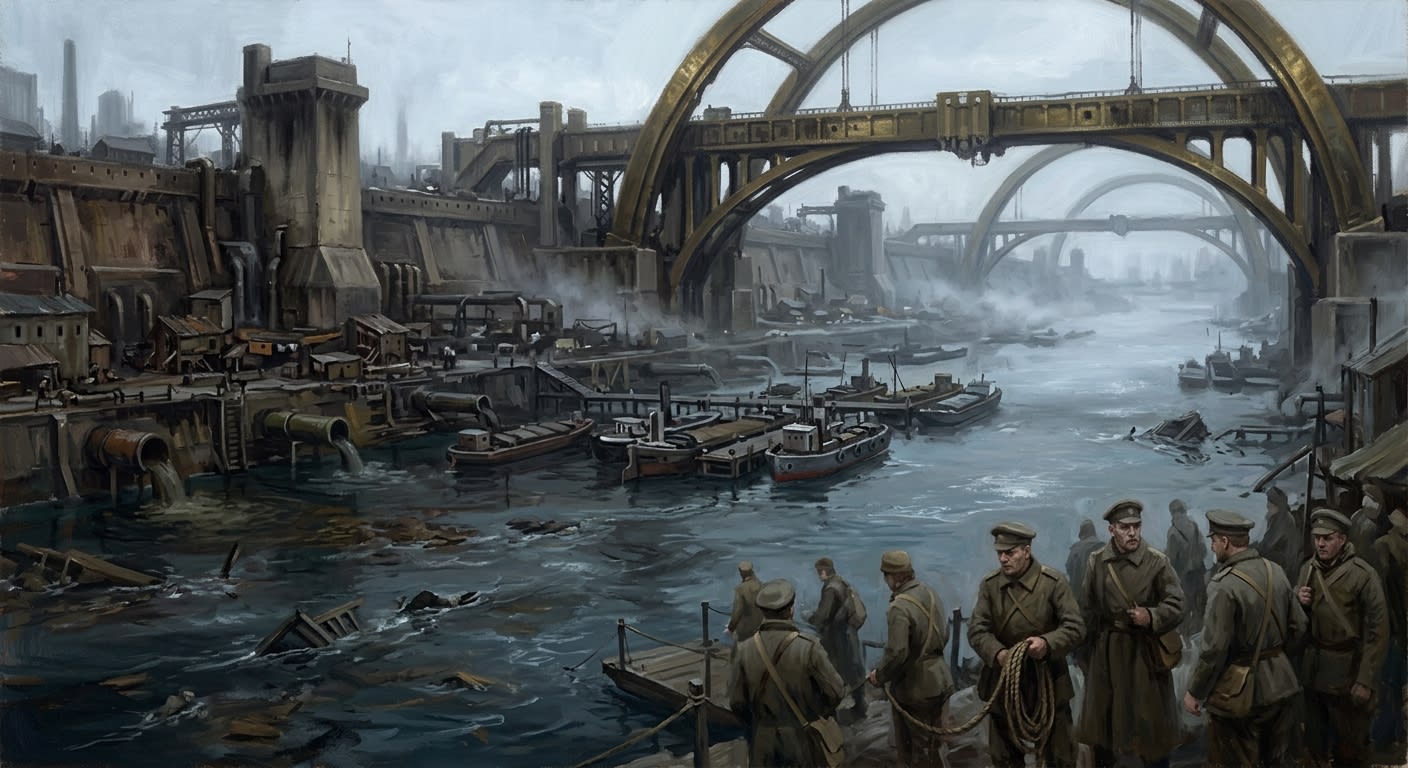
The Bug River
The moat has learned to audit the drowned
The Bug River is Bastion-Brest's natural moat: cold water, legal throat, corpse archive, anomaly carrier, and the wet witness beneath the Brass Ribs.
Codex Ref. II.4.08-066
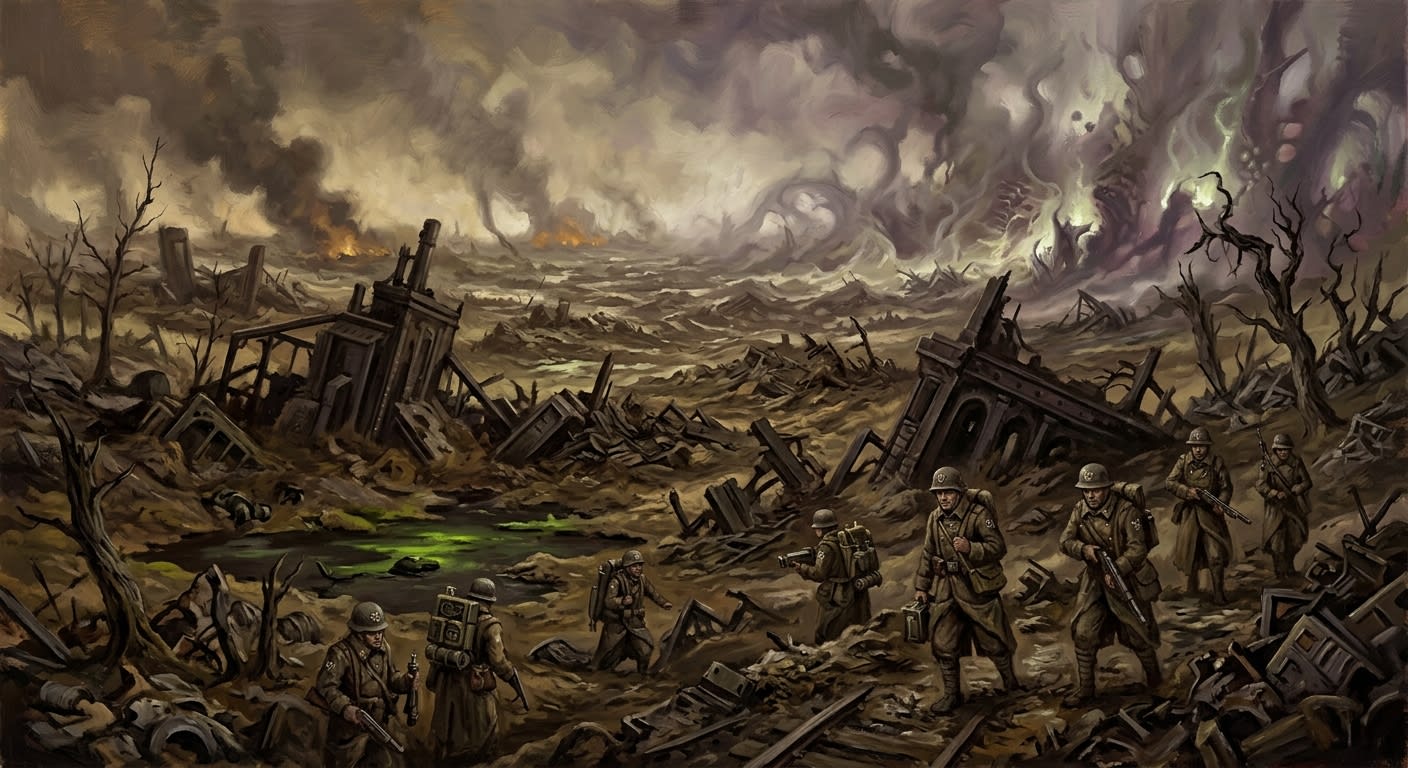
The Charnel Lands
The East keeps our failures alive in hostile weather
Zone 6 is the Synod's polite name for the Charnel Lands: the demonic East where appetite has borders, maps fail, and names come home missing.
Codex Ref. II.6.06-001
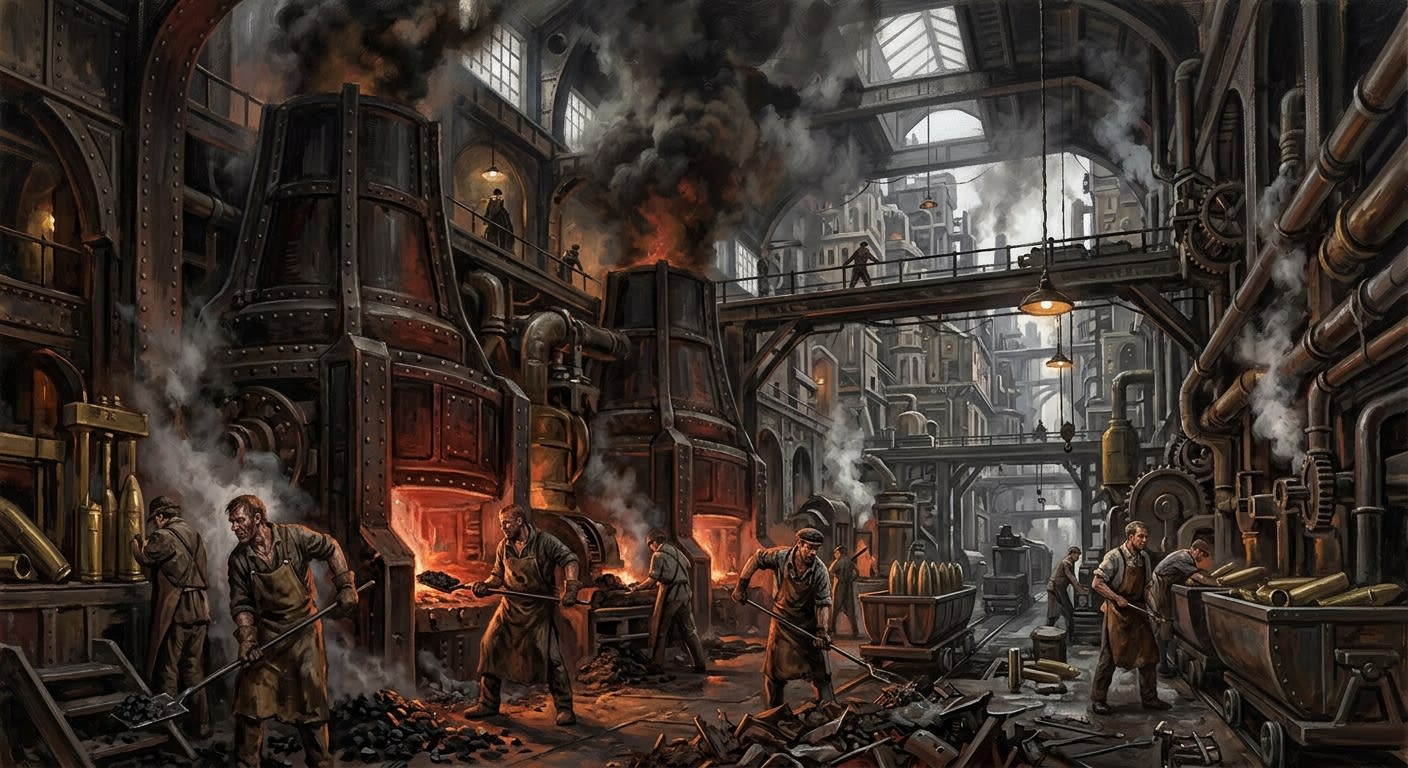
The Chrismole Furnaces of Brast
Where oil learns hymn and iron consents to kill
Brast is the Warm City, a Zone 2 foundry-city whose chrismole furnaces turn fuel, hymn, soot, and denial into artillery breath for the Line.
Codex Ref. II.2.01-003
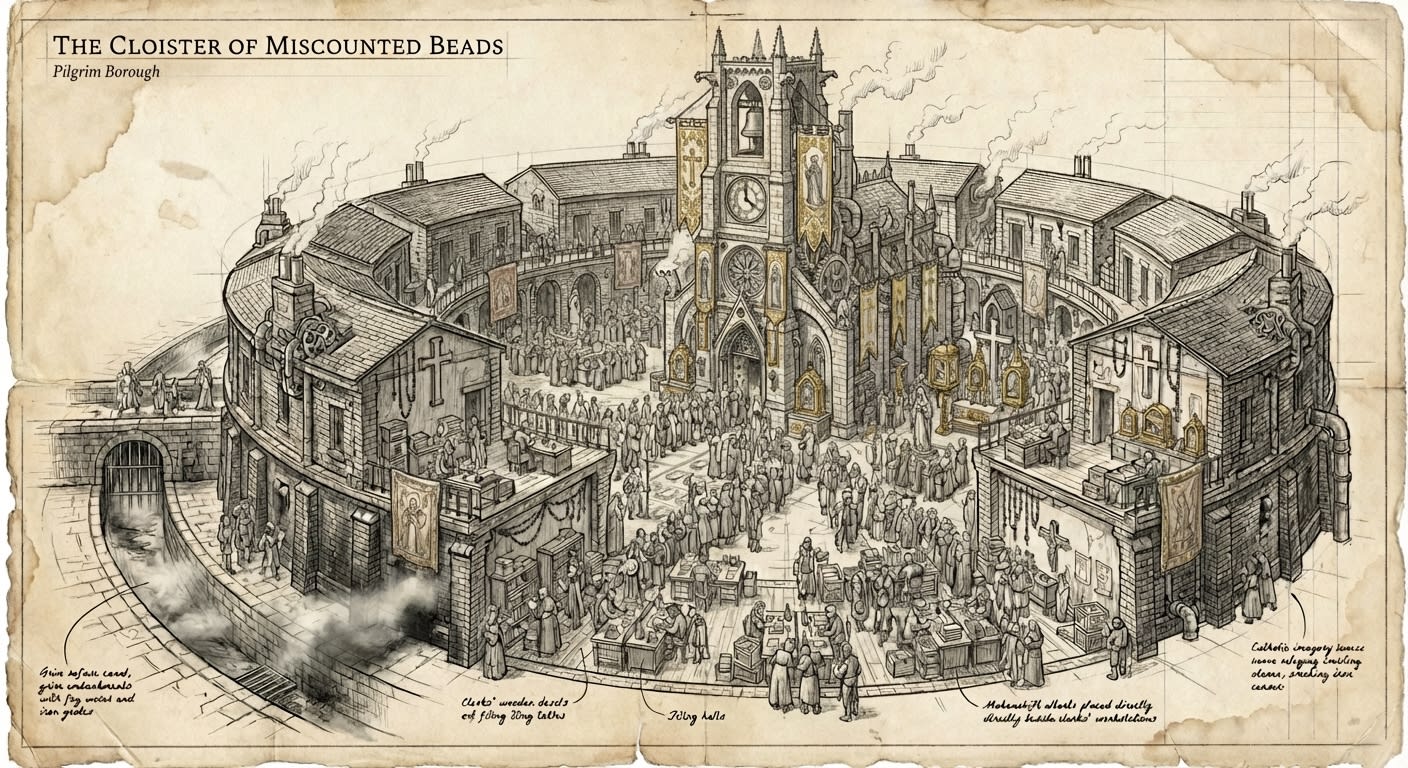
The Cloister of Miscounted Beads
The Bureau does not distinguish between mercy and procedure. Both produce the same paperwork.
Strasbourg's pilgrim processing facility, where six thousand souls await bead reconciliation, the dead reappear on intake rosters, and the Bureau of Records declines to call any of it a problem.
Codex Ref. II.2.06-001
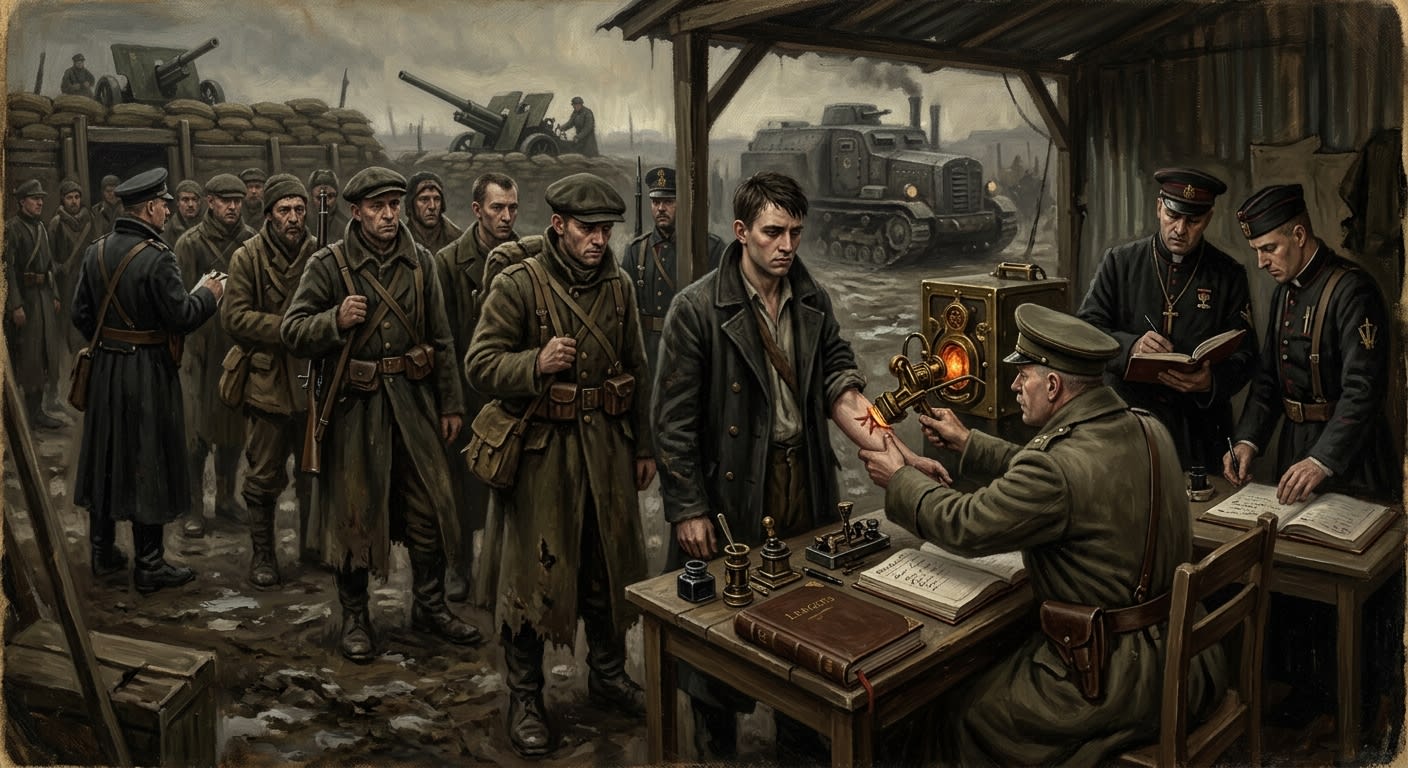
The Compulsory Marking Decree
The day paper lost authority and flesh became the Bureau's preferred document
The A.S. 113 Compulsory Marking Decree made bodily tri-marks mandatory at forward-zone checkpoints after forged papers killed eighty-seven at Bastion-Przemyśl.
Codex Ref. VII.8.10-035
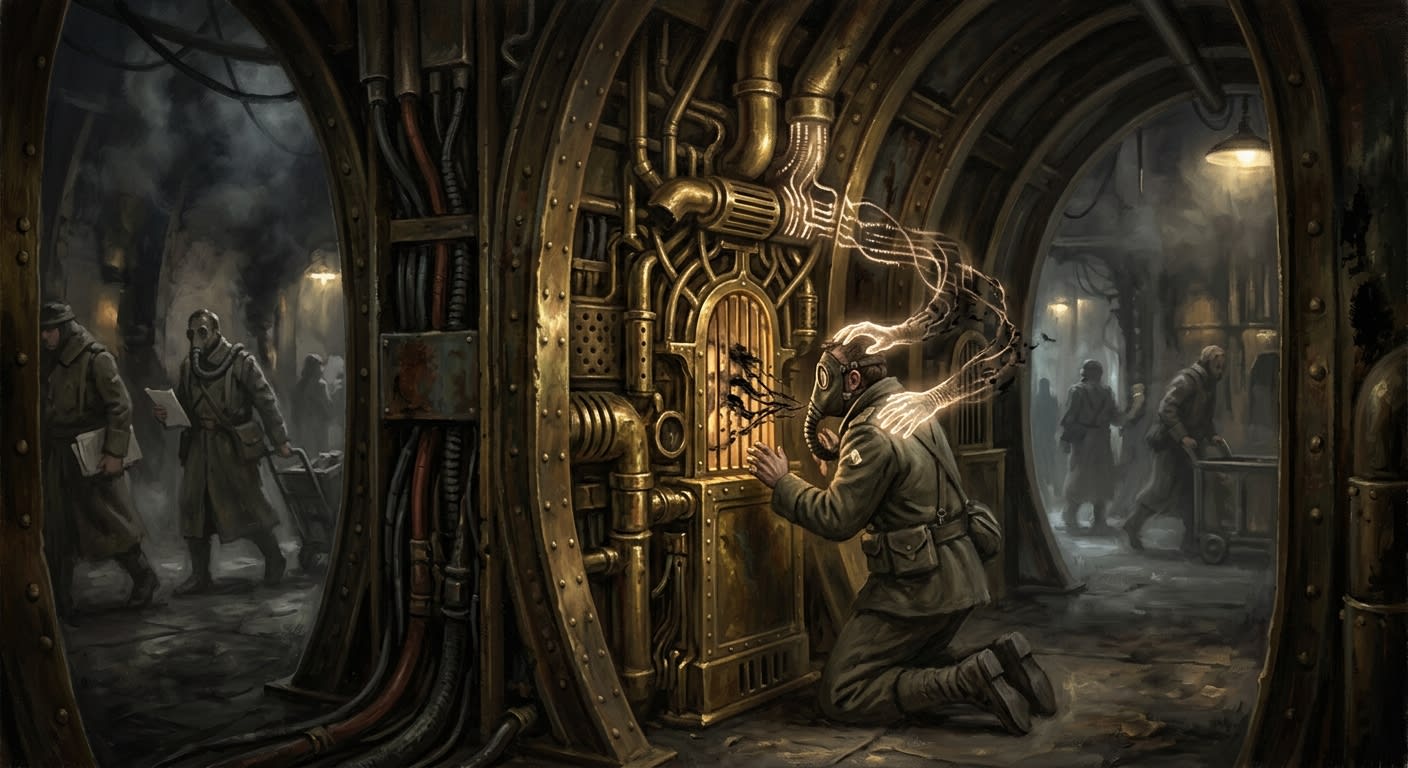
The Confession Echo
Speak once for the booth; speak twice for the river
At Bastion-Brest, sins spoken into the Confessional Lanes return from brass ribs, corrected by something that has learned the Synod's sacrament.
Codex Ref. XIII.1.13-001
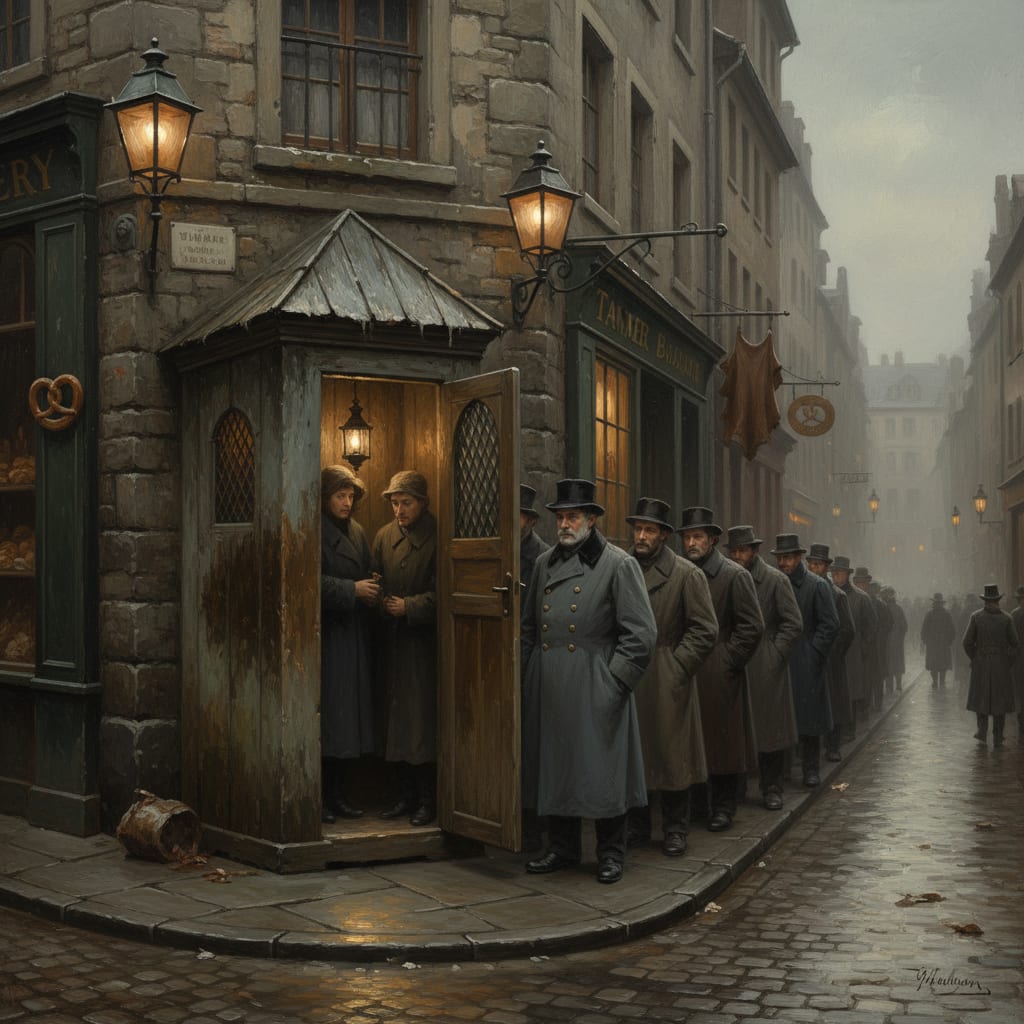
The Confessor-Booth Clerk
The booth does not forgive — but it files. A survey of the twenty-two thousand stamps that keep the Synod clean.
Twenty-two thousand booths; one stamp; no absolution. The Confessor-Booth Clerk processes sin as throughput, files guilt as data, and keeps the Synod's spiritual economy solvent — a contemporary survey by Hieromnemon Valerius Drax, A.S. 201.
Codex Ref. XII.9.01-001

The Corridor Twitching
The dead moved once, and the living invented a profession
A.S. 92 ossuary disturbance beneath Bastion-Brest in which unstamped remains moved under observation, forcing the seventy-two-hour authentication rule and licensed Bone-Stamper doctrine.
Codex Ref. VII.4.16-001

The Covenant Military
The rifle behind the sermon, visible enough to be pastoral
The Synod's standing armed auxiliary between war and administration: civic cordon, Bureau escort, rear-line reinforcement, and visible obedience with a rifle.
Codex Ref. VIII.5.05-001
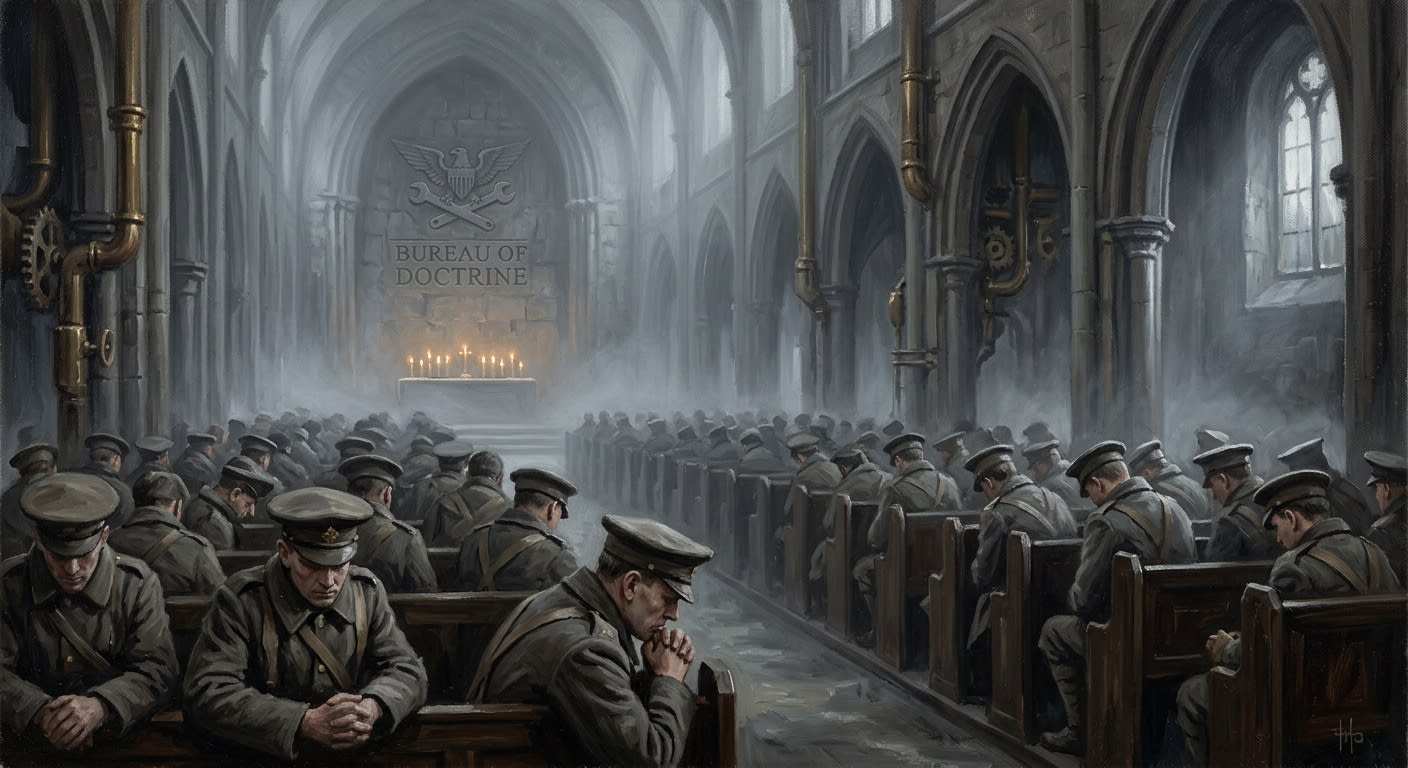
The Creator
The Bureau has two words for the most important question in theology. This entry contains both of them.
A doctrinal entry on the Creator composed by Hieromnemon Drax under compulsion, covering divine nature, the Silence, the inconvenience of miracles, and four forbidden heresies the Bureau insists do not exist.
Codex Ref. VI.1.01-001
The Curfew-Fog Tavern Runner
On the publican who administers joy by bellows and bribe-tin — the Dominion's most controlled detonation, licensed, regulated, and quietly indispensable
The Licensed Housewarden — Fog-Keeper, atmospheric pacification operative, keeper of fifty strangers alive for ten minutes at a time — who sells the illusion of warmth inside a machine built to extinguish it.
Codex Ref. XII.10.01-001
The Custodians
The broom, the knife, and the blank page share one handle
The Custodians preserve Synodic continuity by omission: gauze-veiled operatives who collect contradictions, file absence, and leave the chair cleaner than the corpse.
Codex Ref. VIII.8.02-001
The Dead
What the filing system remembers, and what the Bureau has declined to ask
The Bureau maintains death is a clerical event. The dead, by the Bureau's own monitoring, appear to disagree. Drax files the discrepancy.
Codex Ref. VI.2.01-001
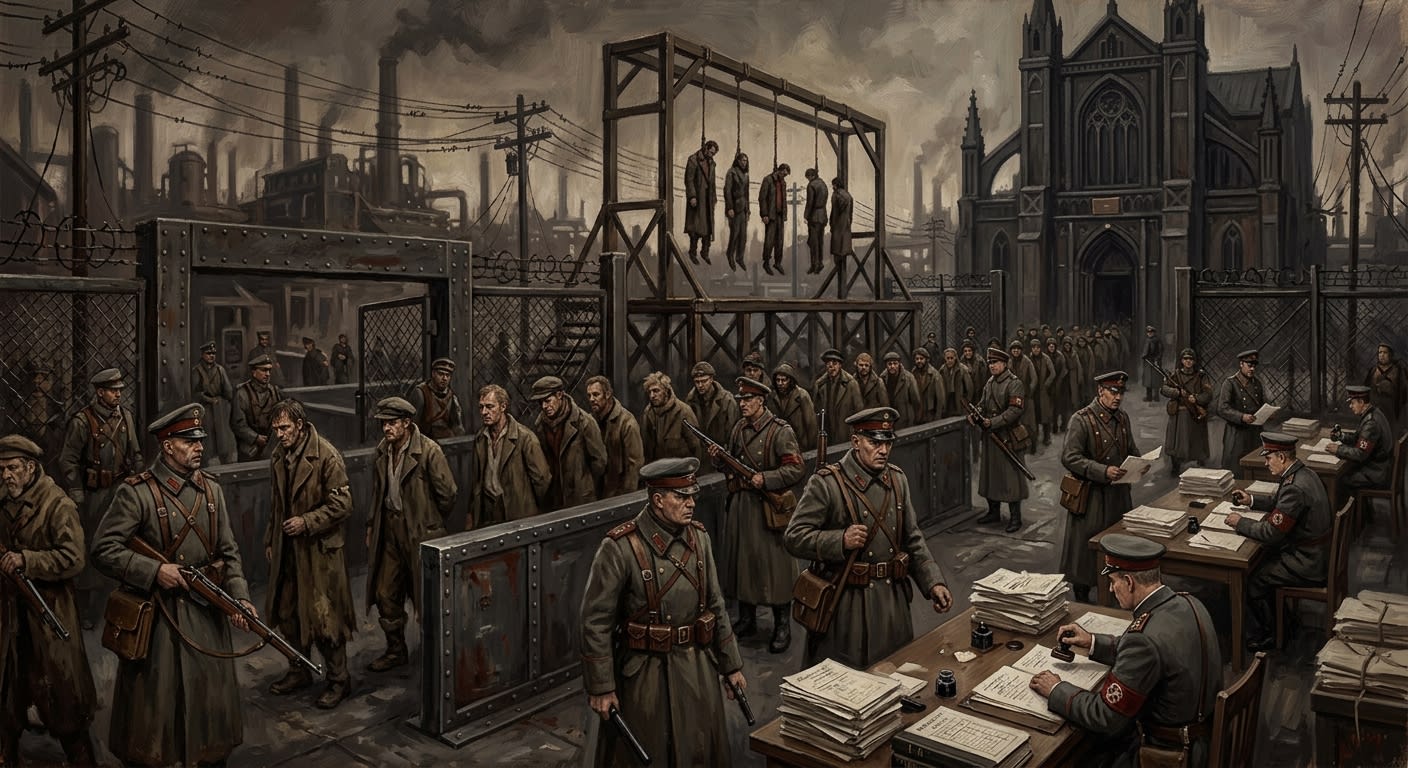
The Deserter Purges
The audit had rope
Post-Uncounted Winter military-administrative purge of A.S. 91, when reconciliation tables turned absence into accusation and rope into punctuation.
Codex Ref. VII.8.10-093
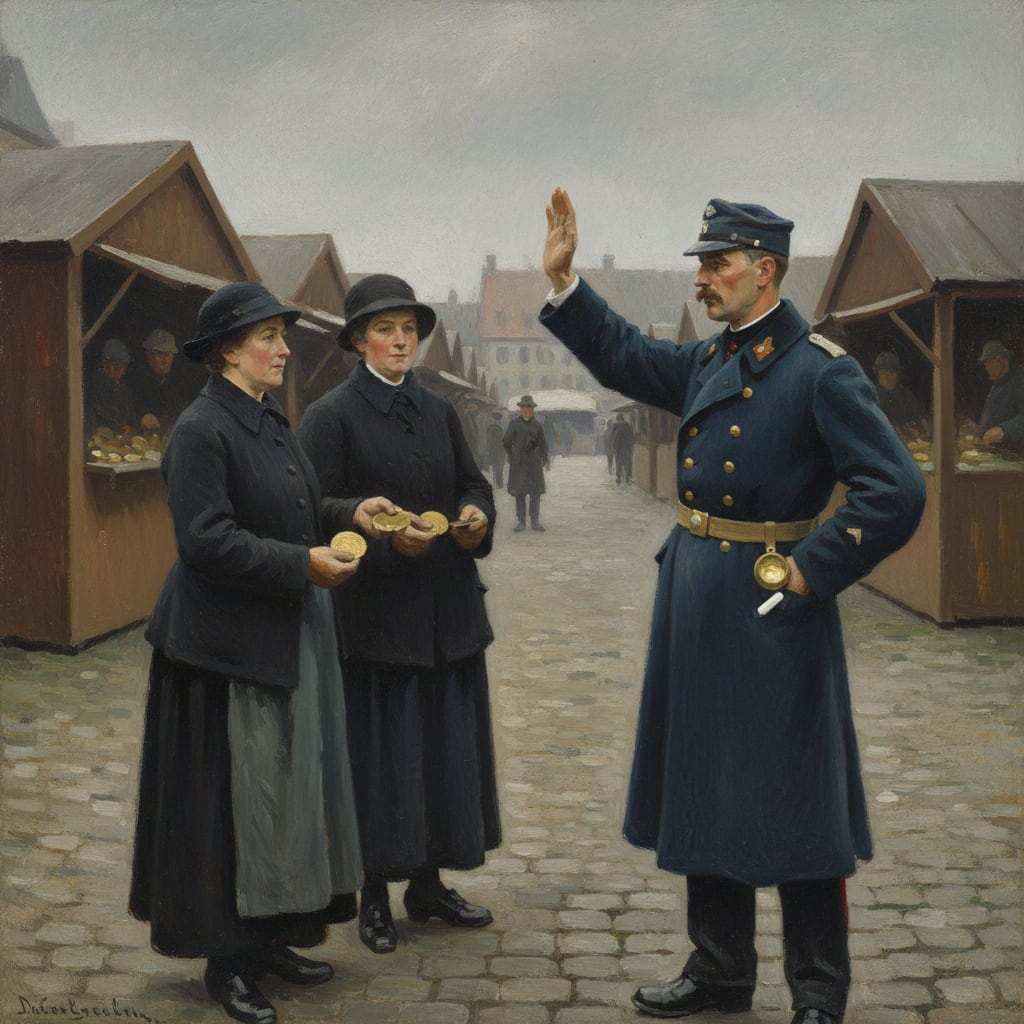
The Doctrine Street-Vicar
The bell's feet; the chalk's teeth; the compliance that comes to you.
The Bureau of Doctrine's mobile enforcement arm: four thousand three hundred chalk-bearing officers who walk where the bell cannot reach, inspect purity tokens, and mark doorframes in white, yellow, and red.
Codex Ref. XII.9.02-001
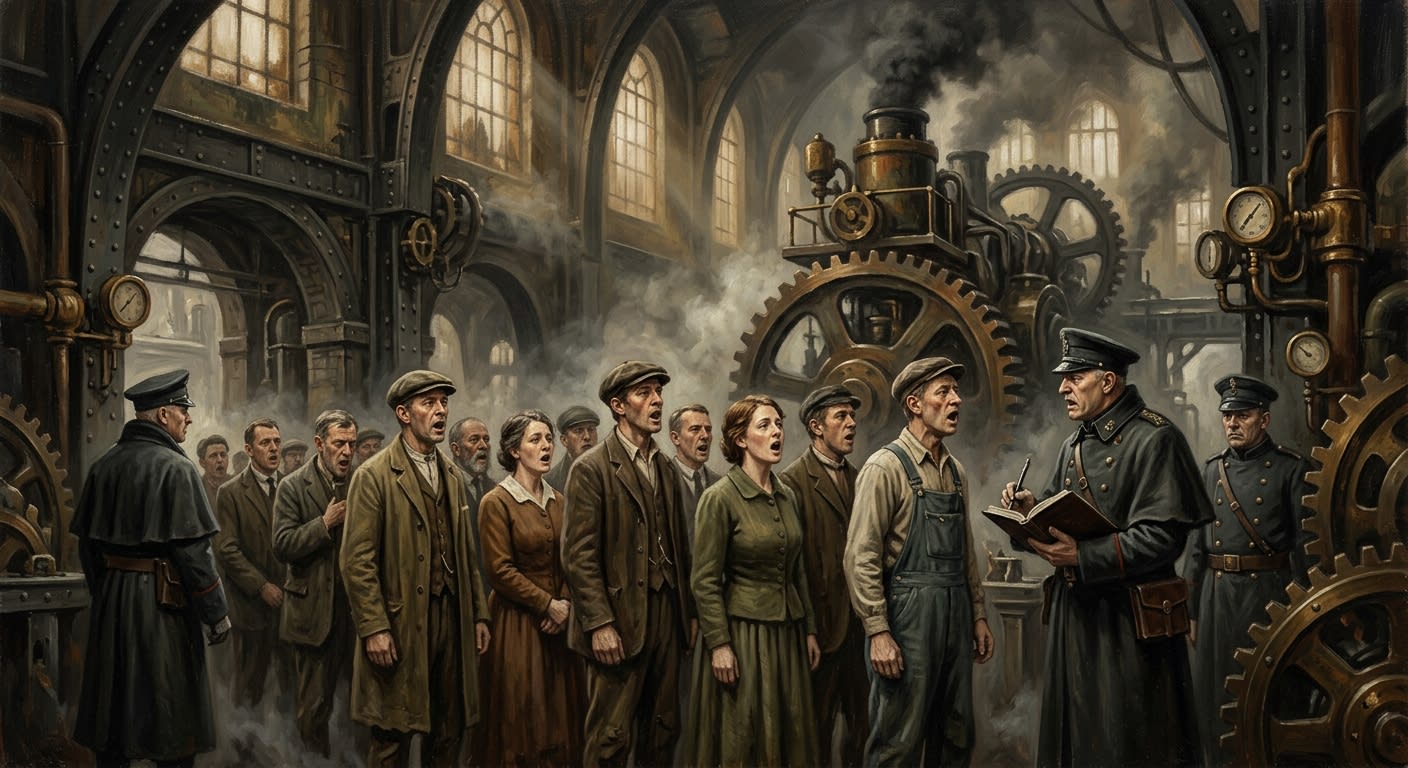
The Eternal Creed
The first tax of the day is breath
The Eternal Creed is the Synod's oral civic machine: recited at dawn, commerce, correction, and inspection, hidden from paper so obedience may occupy the tongue.
Codex Ref. XIII.1.68-001
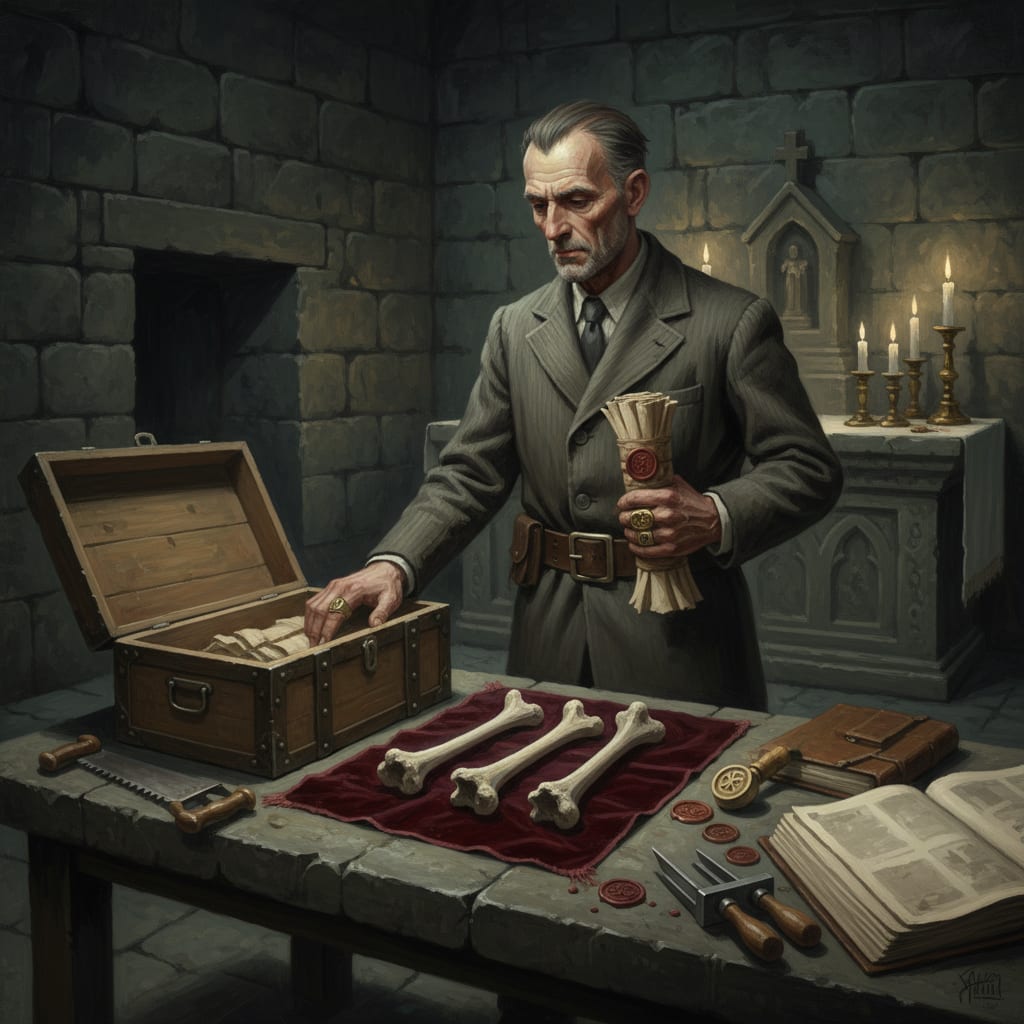
The Femur-War Broker
The unofficial routing service that keeps authenticated contradictions from becoming authenticated riots
The officially nonexistent profession that routes authenticated relic contradictions without collision — the Femur Principle's logical consequence, managed for a fee by two hundred brokers the Bureau insists do not exist.
Codex Ref. XII.15.01-001

The Ferry Chokepoint Broker
On the Profession of Moving Men Across Water When the Synod Requires Them to Stay Still
The Ferry Chokepoint Broker is what the Synod's permit system produces when it grows too thick for its own officers to parse — a human patch cable working the gap between the rule and the crossing.
Codex Ref. XII.16.01-001
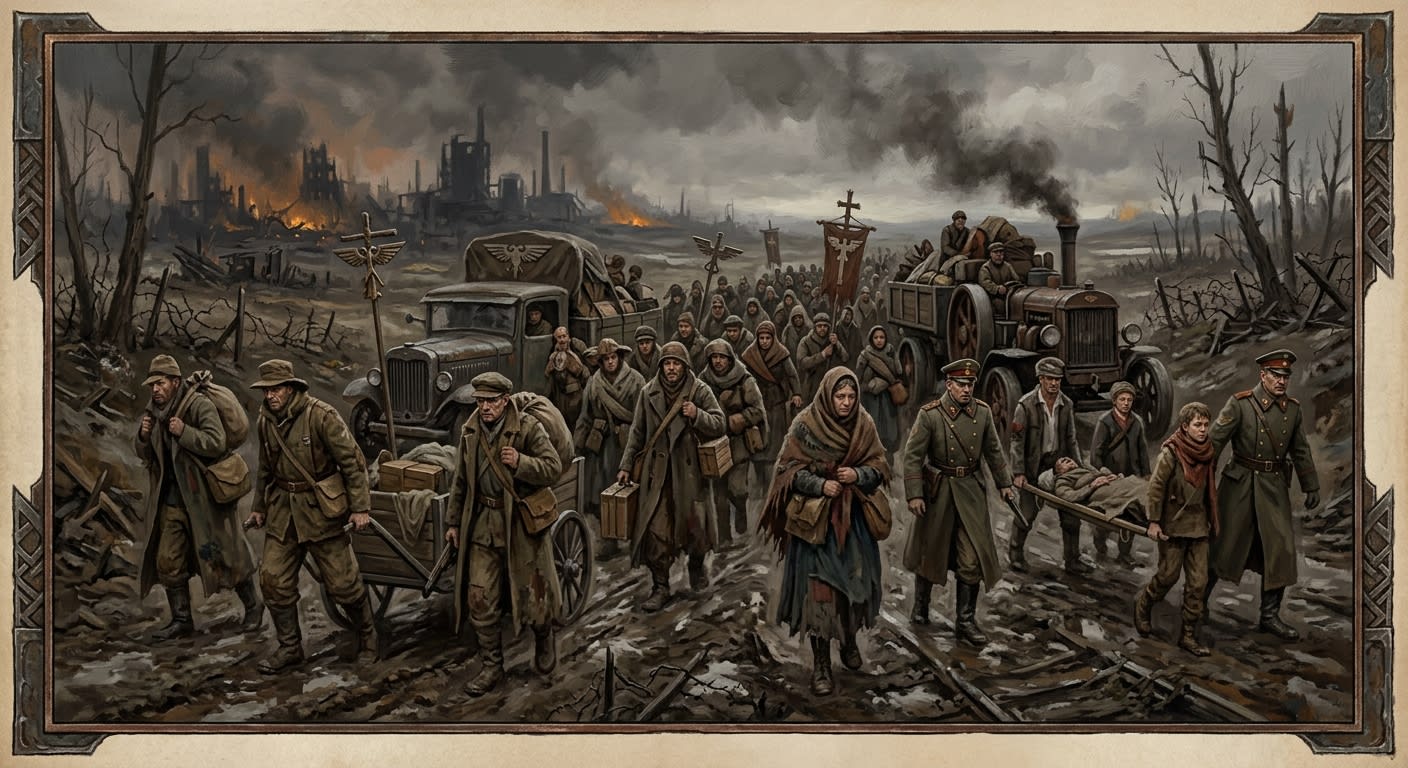
The Great Retreat
Seventeen years of westward mud before the Line learned to stand
From A.S. 48 to A.S. 65, the faithful West walked, bled, improvised institutions, and finally stopped running where the Sagittal Line began to hold.
Codex Ref. VII.1.03-001
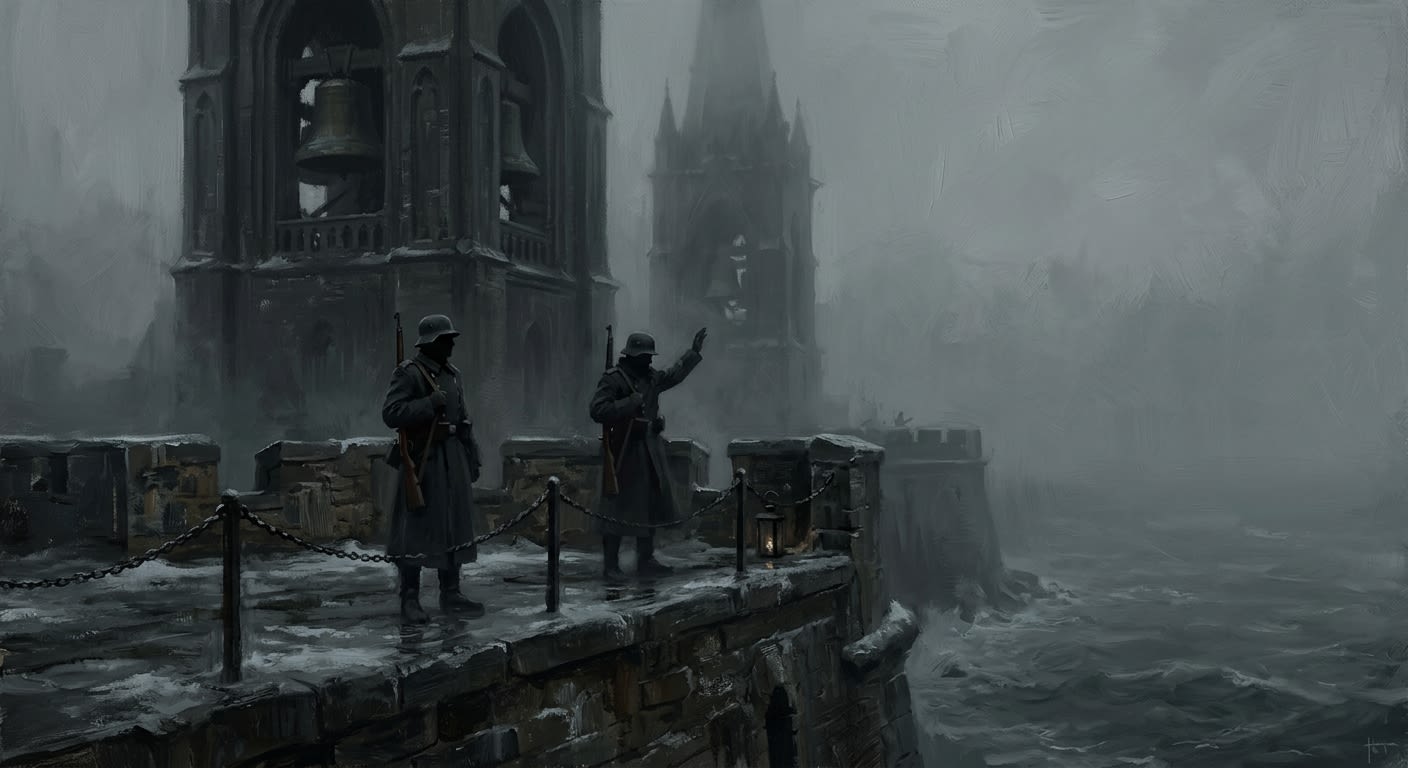
The Grey (The Unnamed)
Eleven years of classification pending, and the Bureau's best answer to why
The Grey is not a Sin-General. The Bureau has known this for eleven years and found the fact so uncomfortable that it has not yet produced a classification. Drax produces one anyway.
Codex Ref. VI.3.01-001

The Heartlands
The safe country, provided one defines safety as distance from teeth and proximity to stamps
The Heartlands are the Synod's safe interior only by infantry arithmetic: Zones 1–3 feed the Line with bread, steel, bodies, bells, paperwork, and bones.
Codex Ref. II.0.02-201
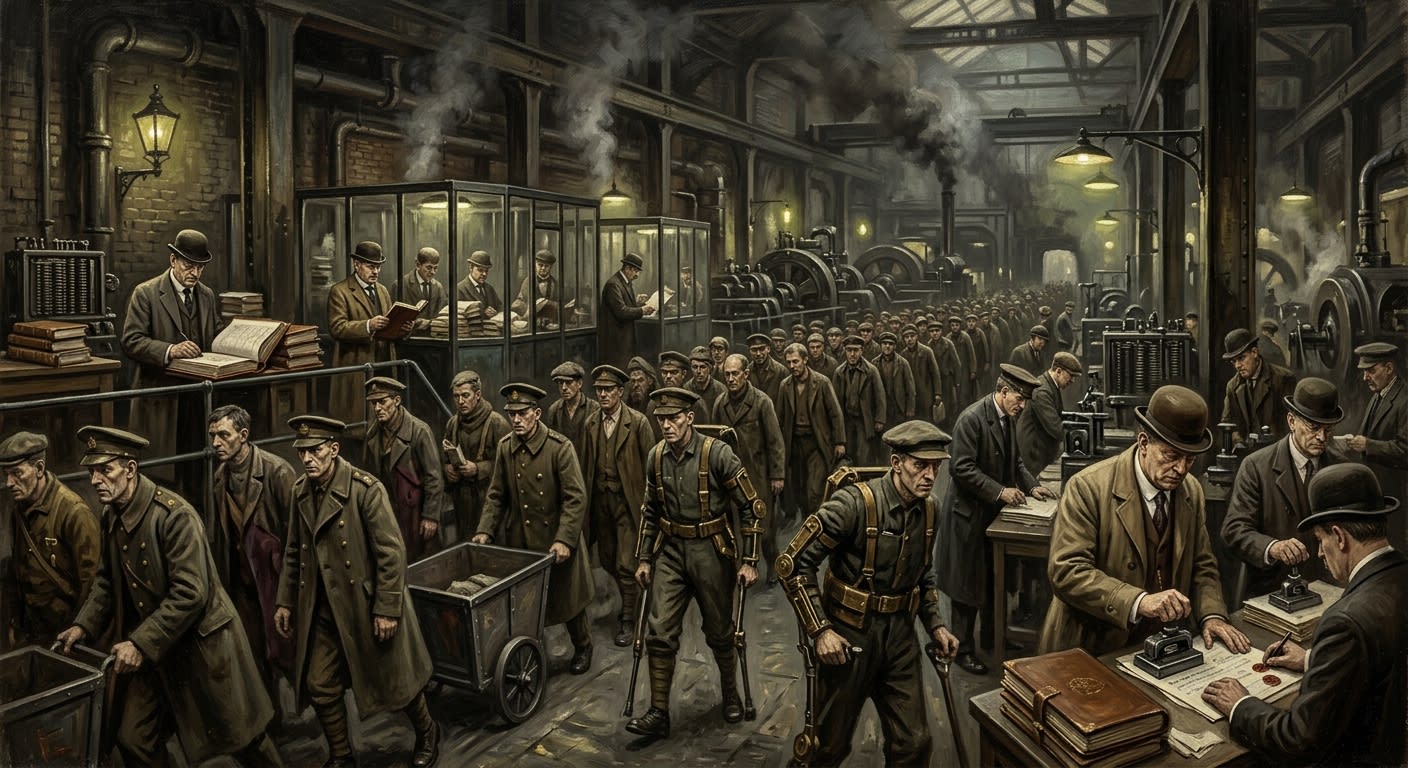
The Hollowing
When the hand remembers the rite and the soul declines attendance
The Bone-Stampers' private name for vocational faith-depletion, by which conviction thins, seals bite less deeply, and the dead resume their education in motion.
Codex Ref. XIII.1.45-001

The Hourglass Monolith
A black standard for measuring the ways time refuses obedience
The Hourglass Monolith is Lyon's forbidden temporal standard: part instrument, part confession, and quite possibly an enemy noun wearing Bureau wax.
Codex Ref. XIII.1.86-134
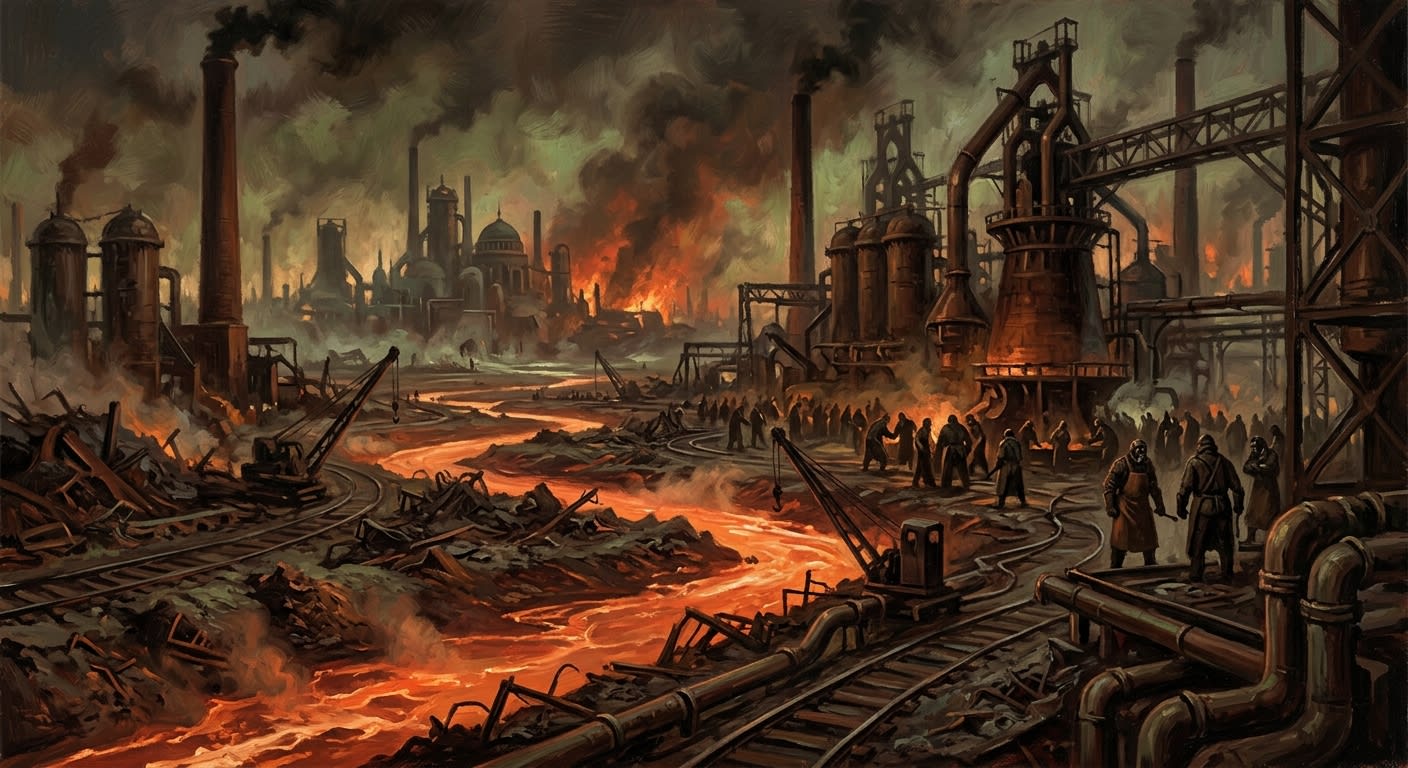
The Iron Wastes
Where Wrath taught geography to burn without cooling
The Iron Wastes are Maldrake's Thracian furnace-country: slag-rivers, moving heat, hostile iron, and the northern pressure against Constantinople.
Codex Ref. VI.1.03-001
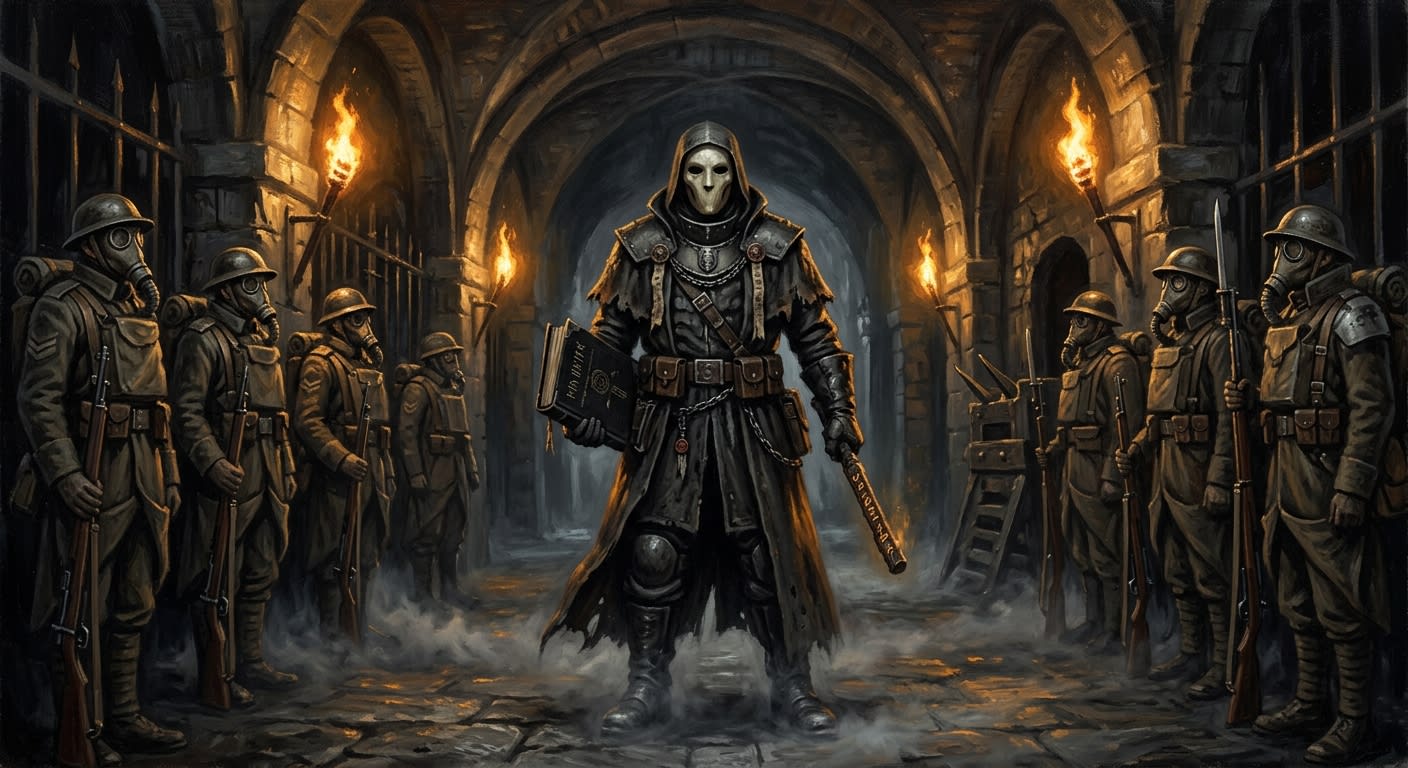
The Judges
They walk without letter, without herald, and without the patience of the Bureau.
The Judges arrive without letter, try without jury, and depart without filing. The Bureau denies they exist. It has been denying this since A.S. 92. The denial requires renewal every thirty years, which is itself a kind of evidence.
Codex Ref. V.1.01-003
The Ledgers of Self
Identity, accepted provisionally until the next contradiction
At Bastion-Irongate the self is filed in triplicate, because Morwen steals what is unfastened and Strasbourg fastens with ink.
Codex Ref. XIII.1.01-002
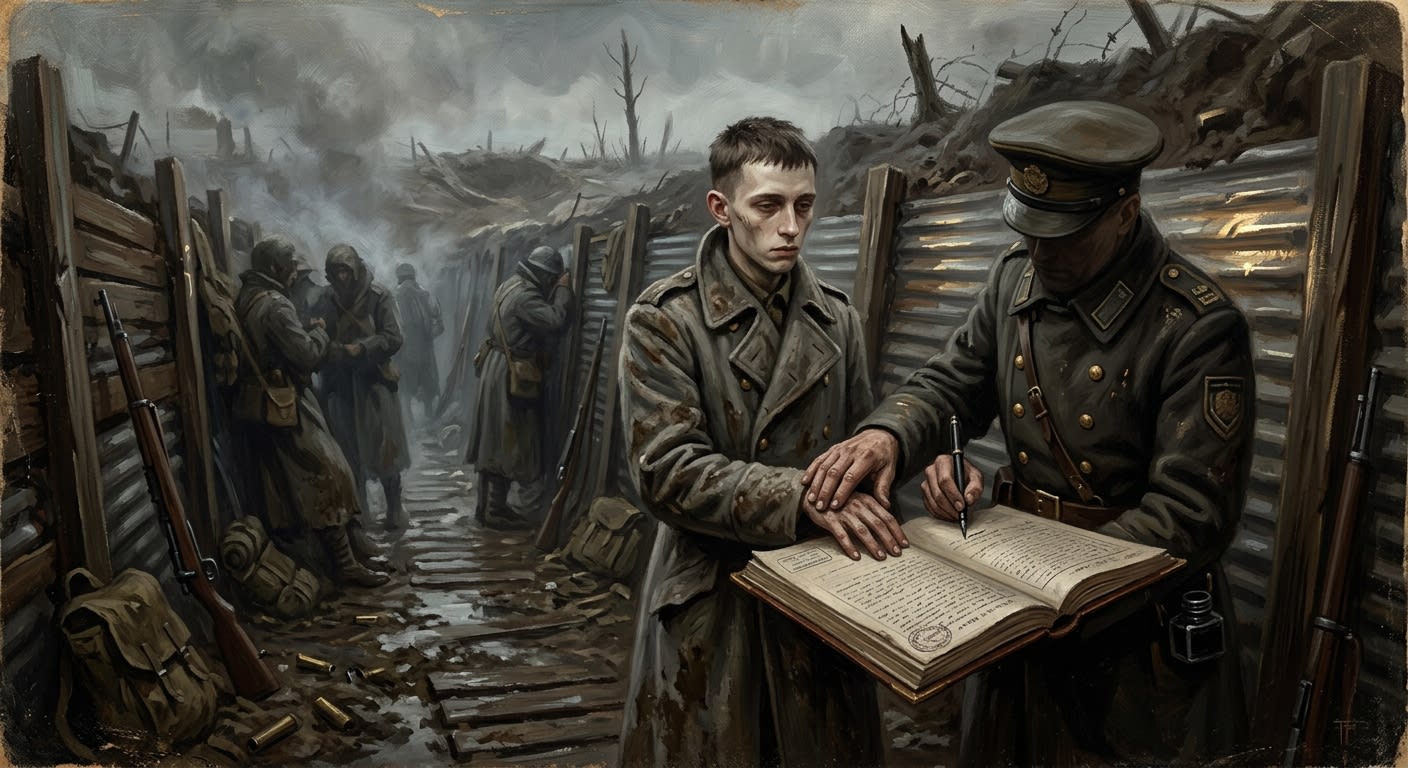
The Litany of First Earth
Mud receives the flesh; War receives the name
The Litany of First Earth is War's mud-prayer for levy transfer: four public lines, twenty-seven barracks responses, one cold trench, and a boy made legible before the Line eats him.
Codex Ref. XIII.1.55-105
The Manifest Court
Where a drum becomes lawful and arithmetic learns the rope
The Manifest Court of Brast counts chrismole into legality: weigh-bridges, wax tables, variance pits, missing gallons, Sorn Vale's balcony, and the sacred terror of a number disagreeing with itself.
Codex Ref. XIII.1.93-090
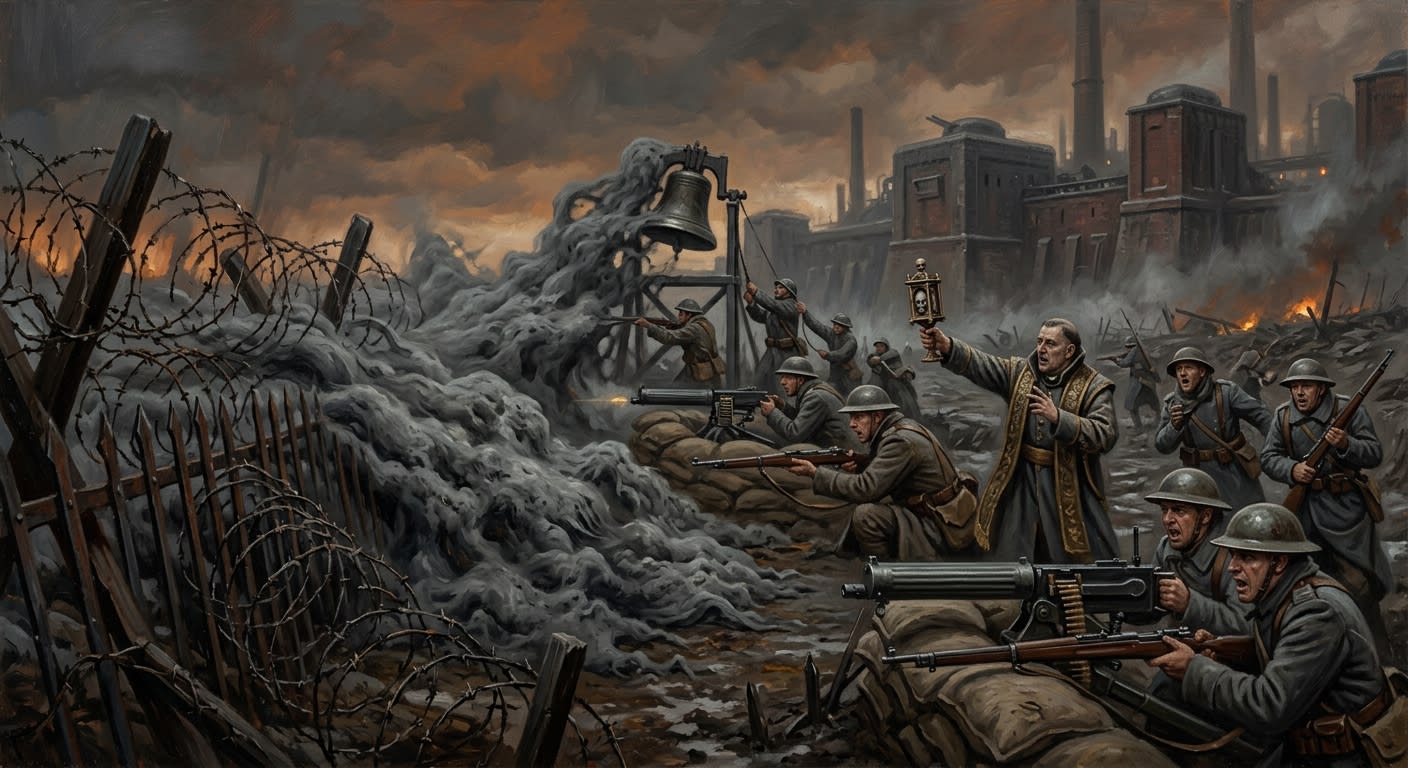
The Nameless Tide
The thing at Brest that does not arrive until it has already taken your name
The Nameless Tide presses Bastion-Brest's eastern wire: a grey, accumulating hostile phenomenon that defeats hymns, relics, bells, names, and the Bureau's last useful excuses.
Codex Ref. IV.1.07-008
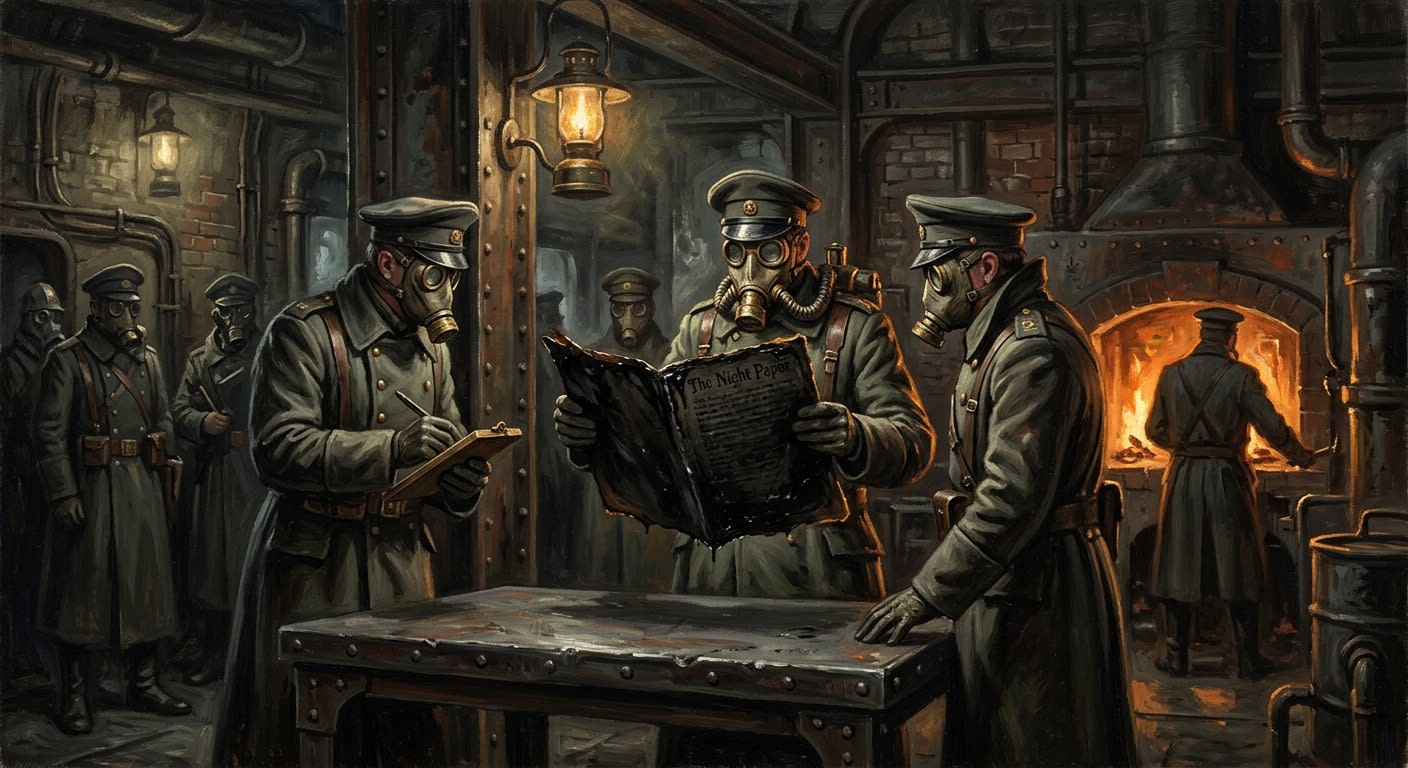
The Night Paper
Law with a knife in its sleeve, valid only between receipt and dawn
The Night Paper is Doctrine's black-wax instrument: read once, witnessed by three, burned before dawn, and obeyed before conscience learns its own name.
Codex Ref. XIII.1.28-001
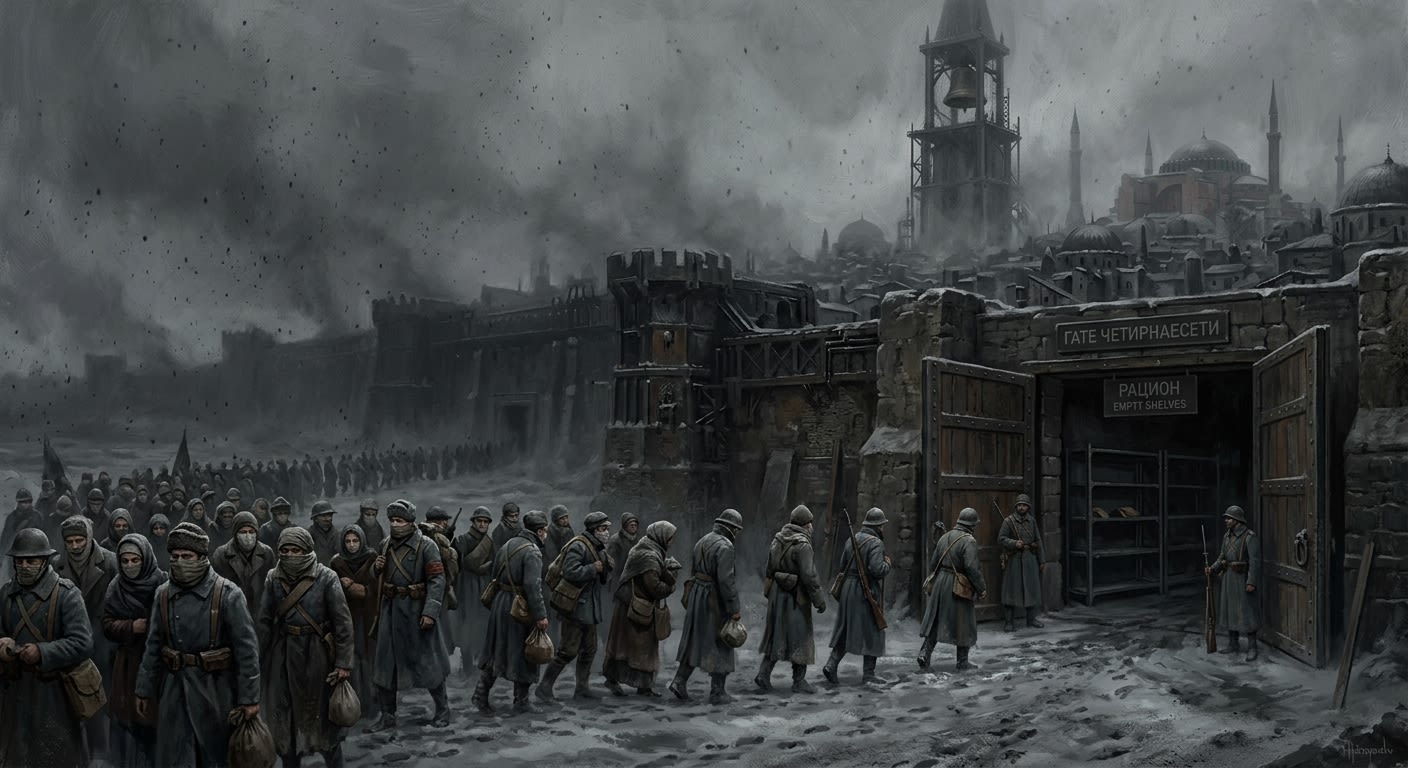
The Ninth Bell Famine
The bell tolled. The bread did not arrive. The Bureau classified this distinction later.
Sixty-eight thousand dead. Nine months of ash. The ninth bell tolled on time. The bread did not arrive. The Bureau of Rites calls it a refining tribulation. The refined are in the walls.
Codex Ref. VII.5.01-001
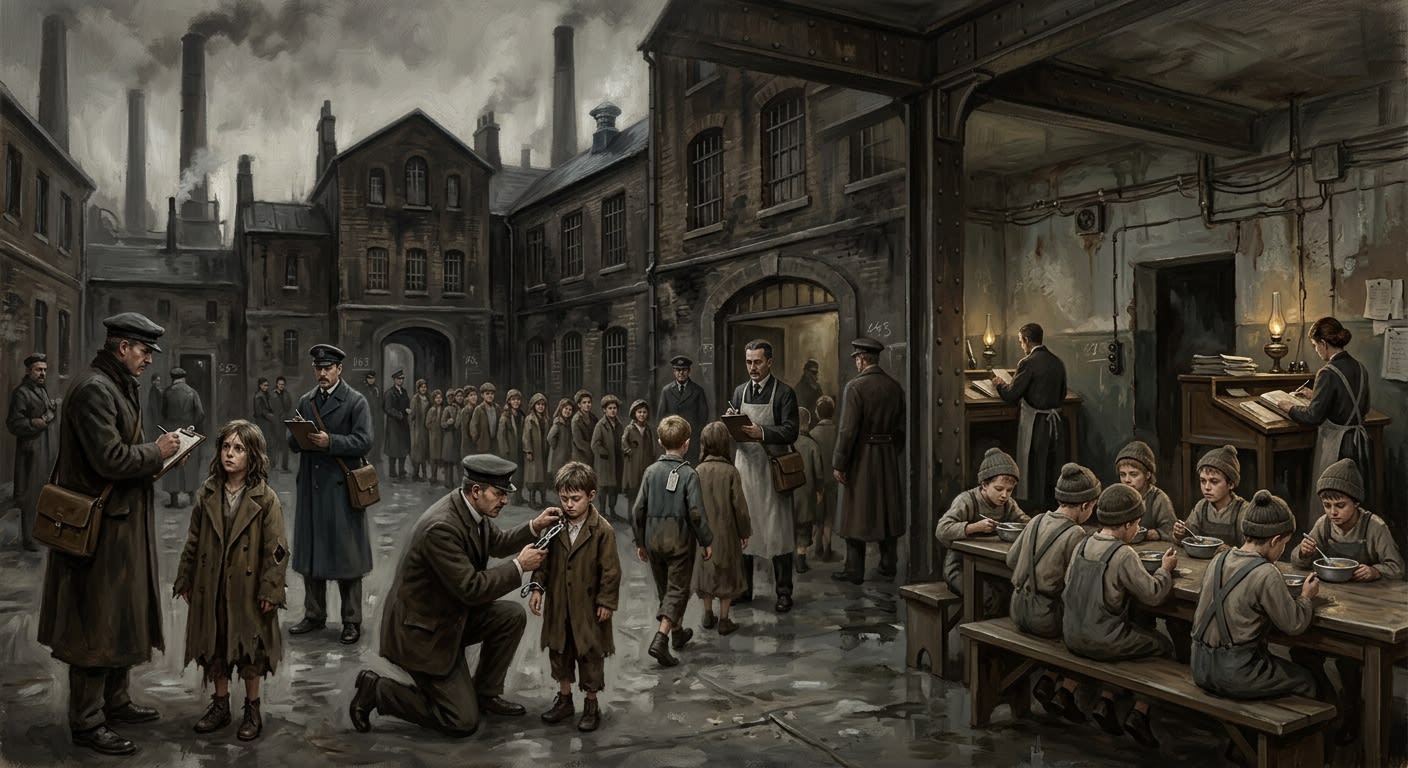
The Orphanarium
Mercy with hinges, locks, soup, and a tag cabinet
The Orphanarium receives children without acceptable custody and returns registered minors: washed, renamed, tagged, fed, placed, and corrected until Mercy can invoice itself.
Codex Ref. II.2.06-005
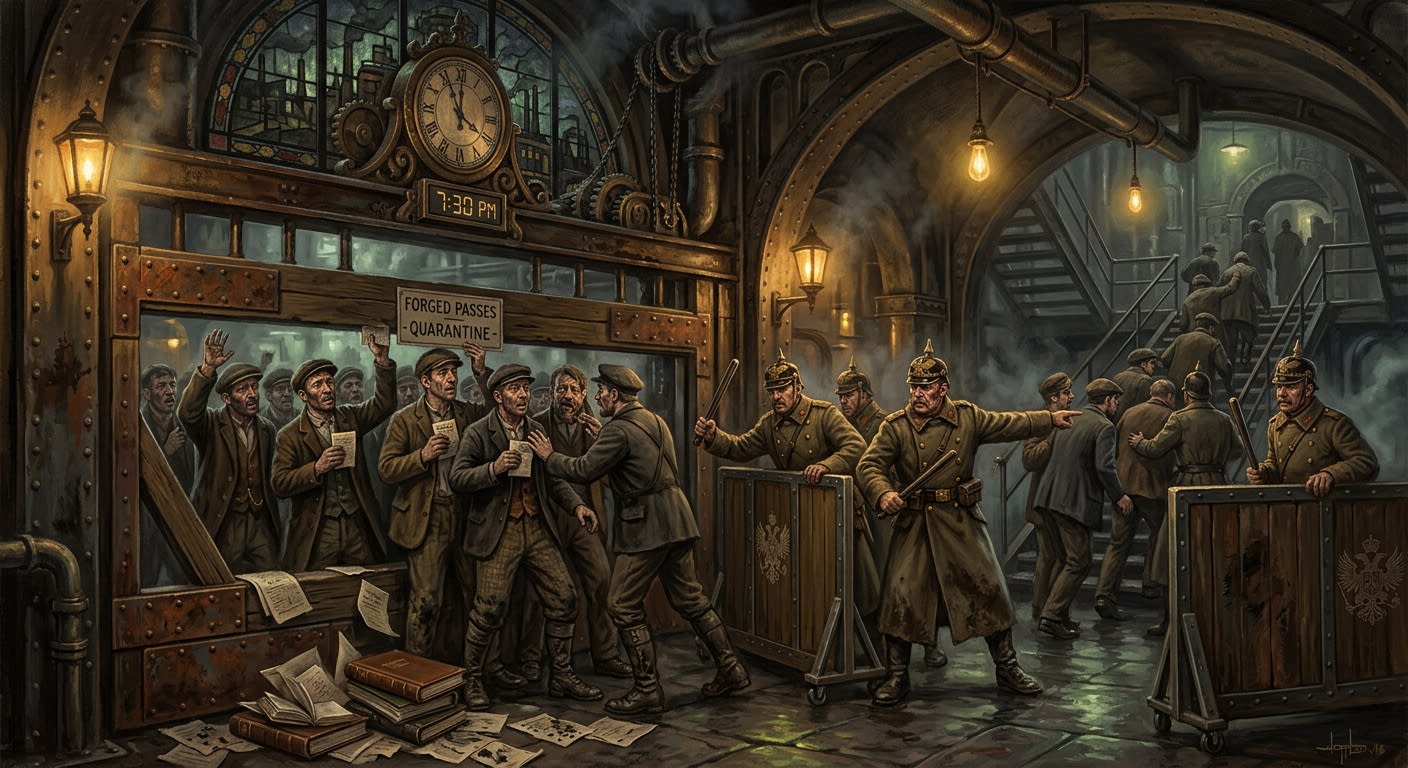
The Paper Plague of A.S. 112
Where forged paper entered Przemyśl and flesh became policy
The Paper Plague of A.S. 112 was the Bastion-Przemyśl forged-pass disaster that killed eighty-seven, locked the western perimeter, and birthed bodily identity law.
Codex Ref. VII.8.10-036
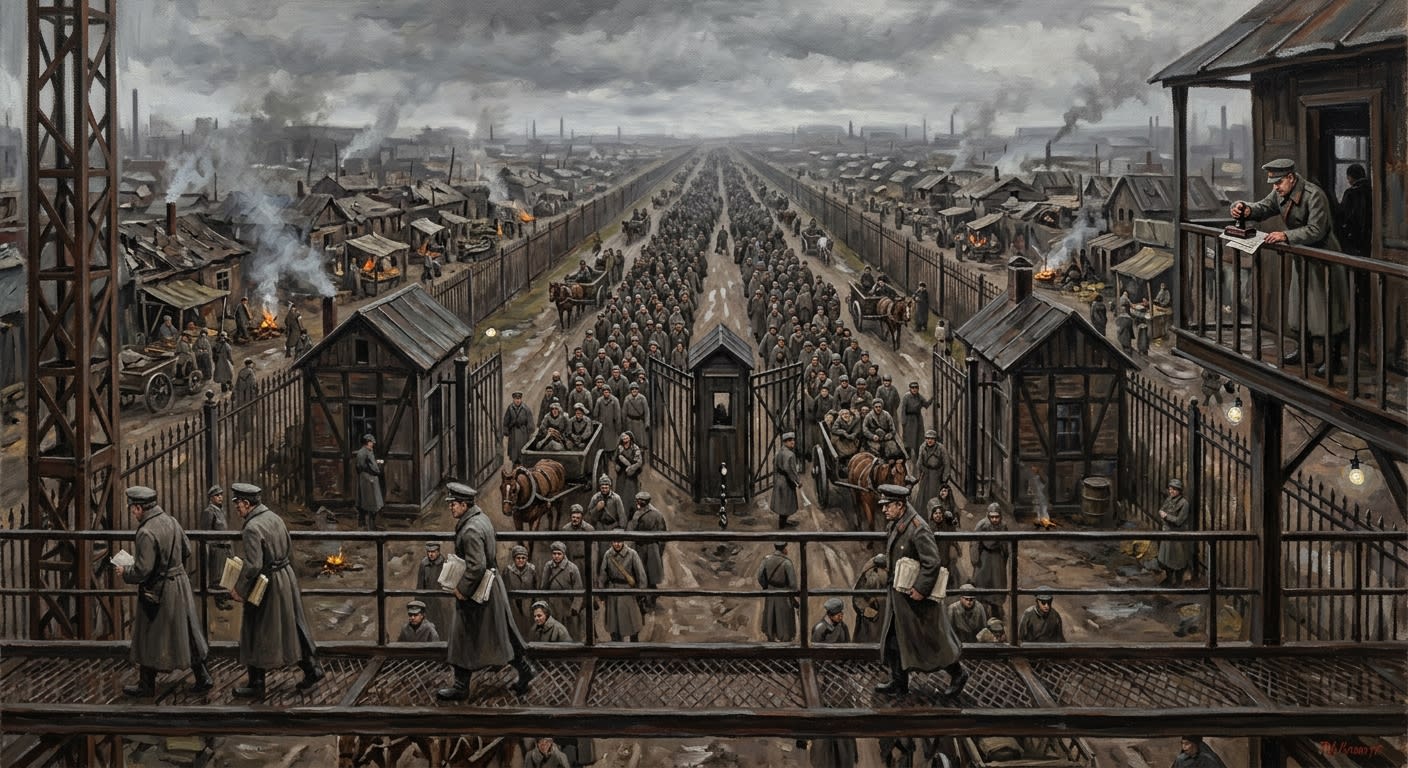
The Queue Road
Where motion became a taxable offense and patience became policy
One hundred and twelve miles of weaponised patience. The Queue Road converts motion into revenue and compliance into a commodity — nine gates, forty-eight thousand registered souls, one apparatus beneath Gate Nine that the Bureau of Doctrine does not discuss.
Codex Ref. II.3.05-001
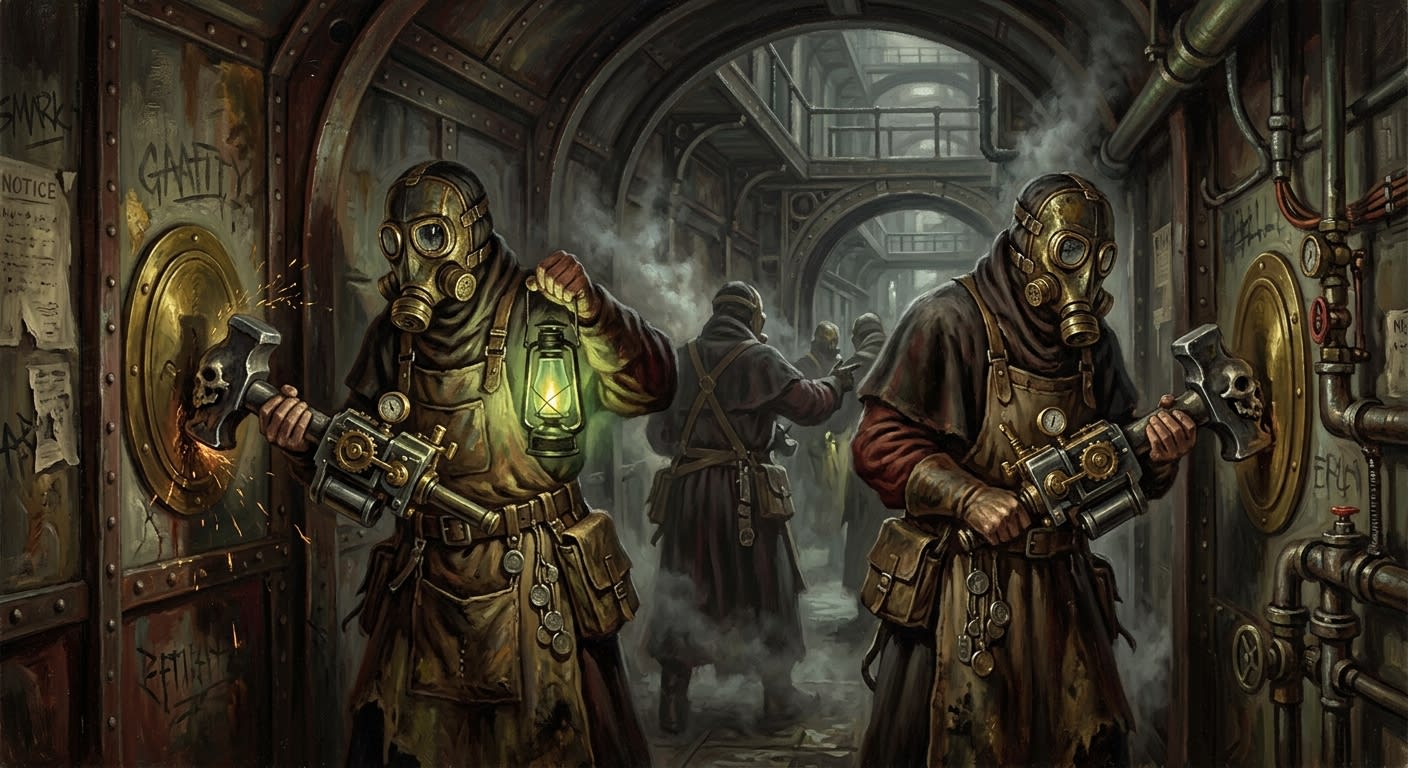
The Quiet Hands
The hand that does not tremble is the one the corridor obeys
Senior Ritual Bone-Stampers who quiet active corridors when ordinary seals fail, unlisted by organigramme yet indispensable wherever the dead begin correcting the Ledger.
Codex Ref. XII.37.02-001

The Records Scribe
Paper is citizenship; the Scribe is its god
Fourteen thousand souls in the Bureau of Records' base stratum, processing sixty entries per shift, deciding with each stamp who exists and who does not. The most powerful minor functionary in the Theocracy holds a reed pen and smells of wax smoke.
Codex Ref. XII.34.01-001
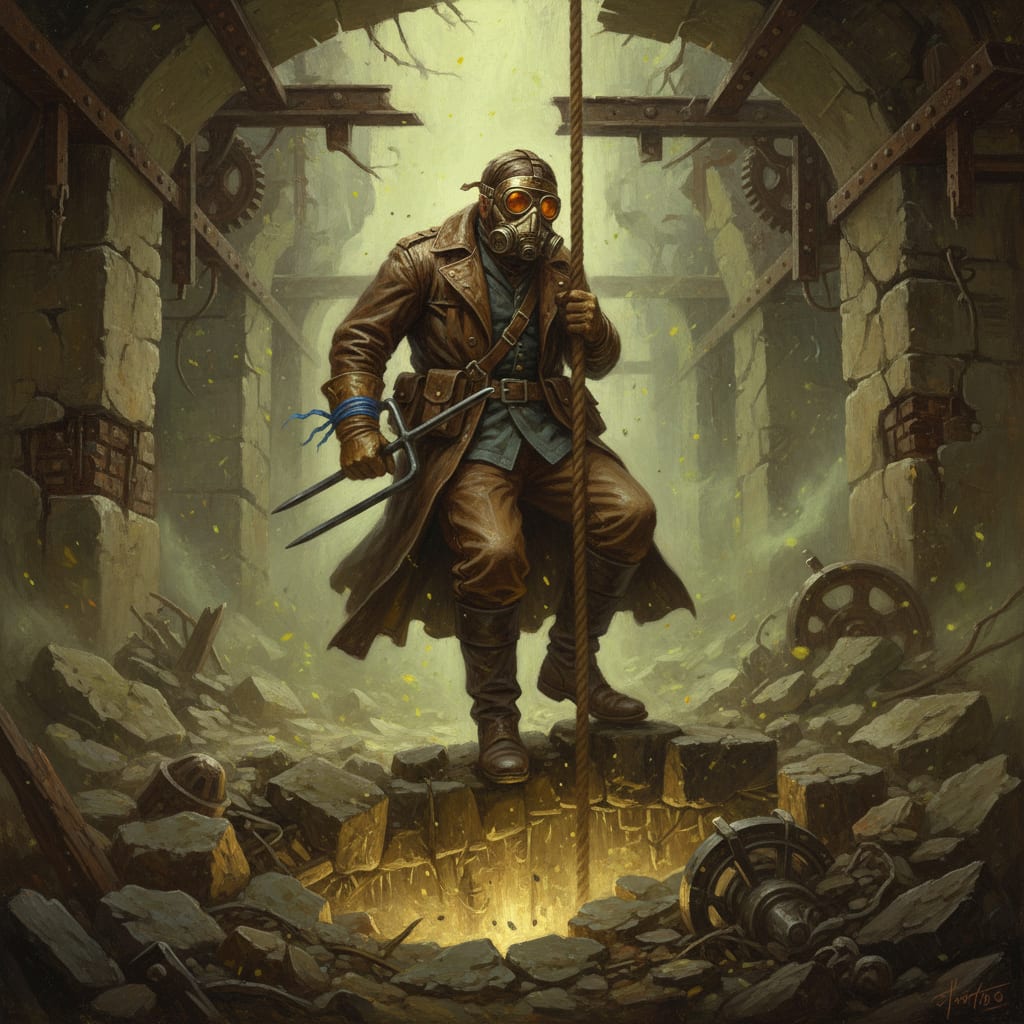
The Reliquary Salvager
The Synod misplaces relics; the Salvager retrieves them; no one speaks of the arrangement
The Synod does not lose its relics. It misplaces them — in collapsed vaults, sheared cathedrals, and quake-opened cellars. The Reliquary Salvager crawls in to retrieve them. His compliance record is spotless. His lungs are not.
Codex Ref. XII.36.01-001
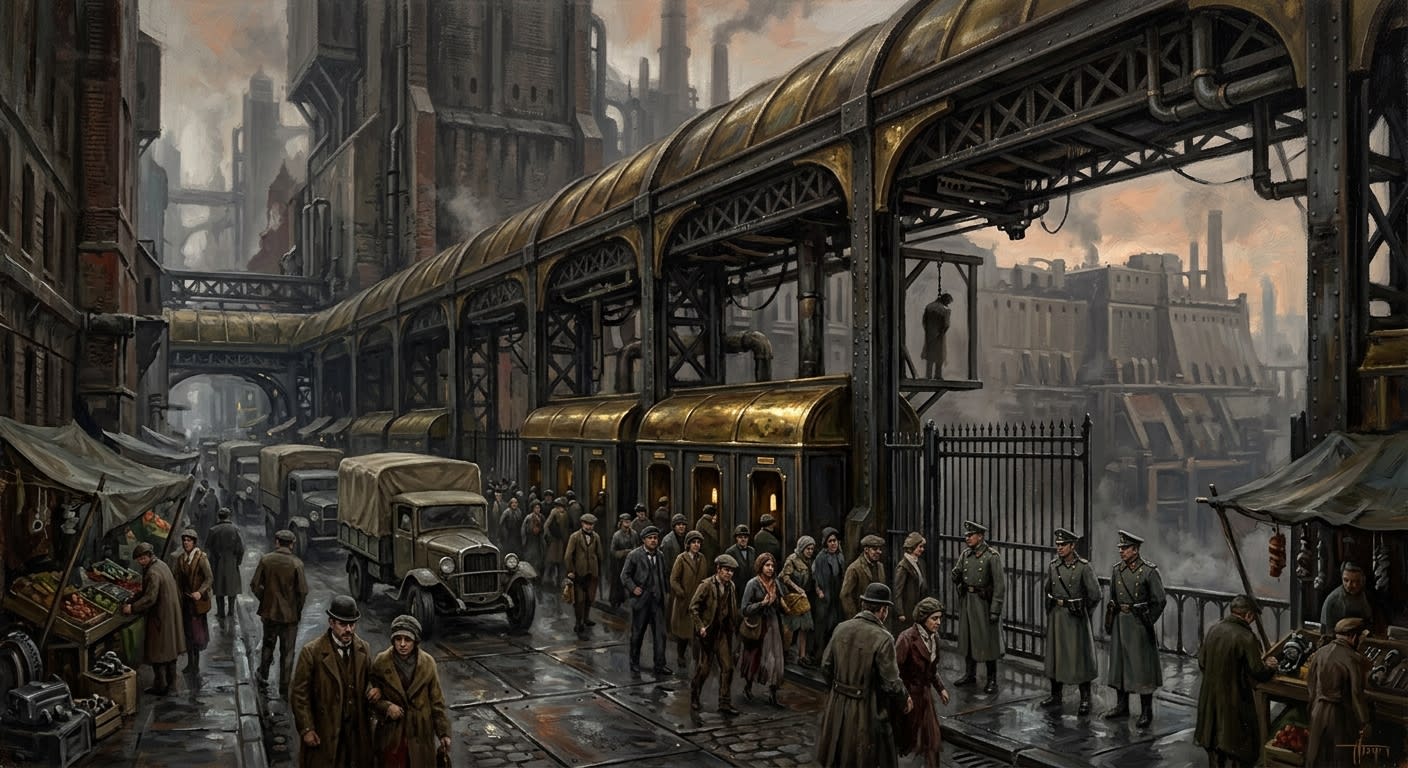
The Ribwalk
Brest’s bridge market, where every crossing learns to confess
The Ribwalk is Bastion-Brest’s upper bridge-deck: market street, convoy throat, gallows approach, curfew funnel, and brass skin above confession booths.
Codex Ref. II.4.08-201
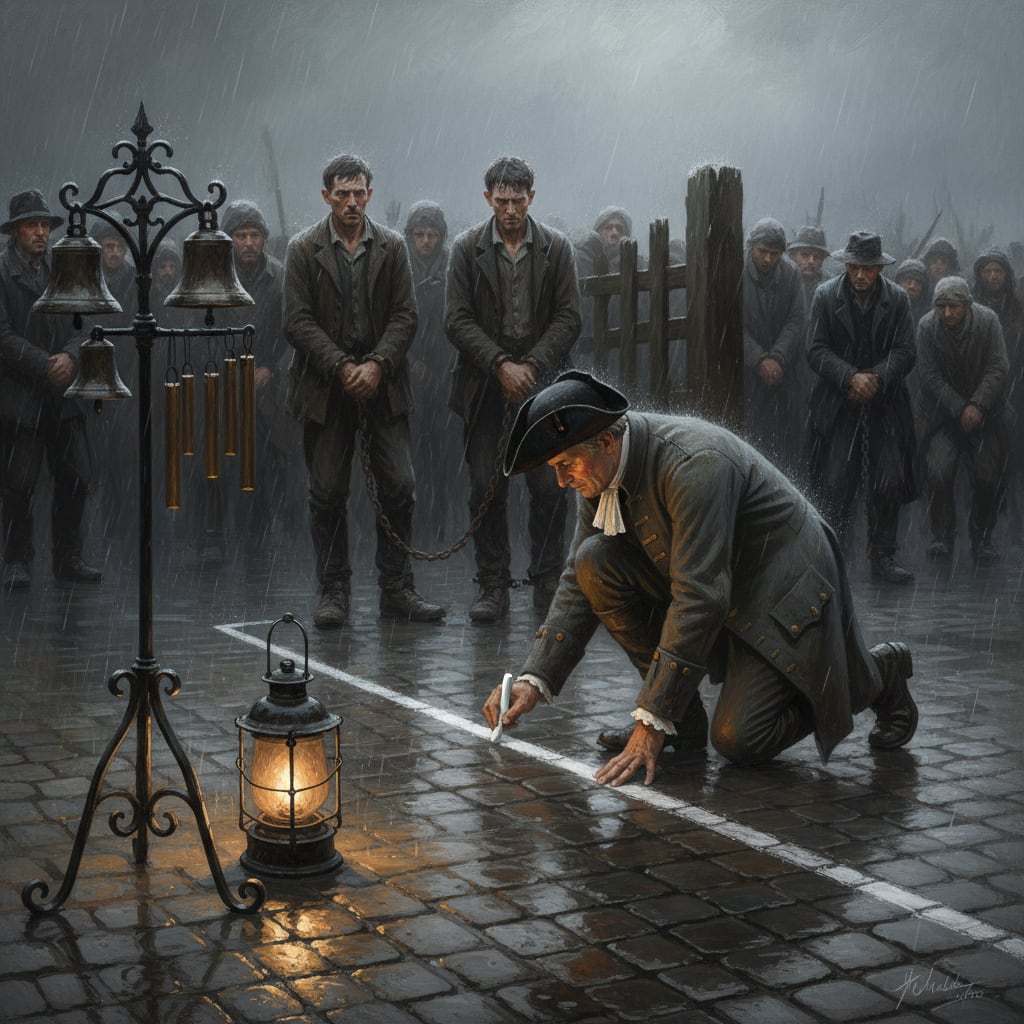
The Roving Judge's Bailiff
Chalk before mercy; chime before appeal; the seal is the court and the bailiff is its spine
The Roving Judge's Bailiff converts any patch of ground into a court and any crowd into an audience for justice lasting precisely one hymn. He keeps the chain, keeps the seal, and keeps the Judge above the stink. The rest is procedure.
Codex Ref. XII.39.01-001
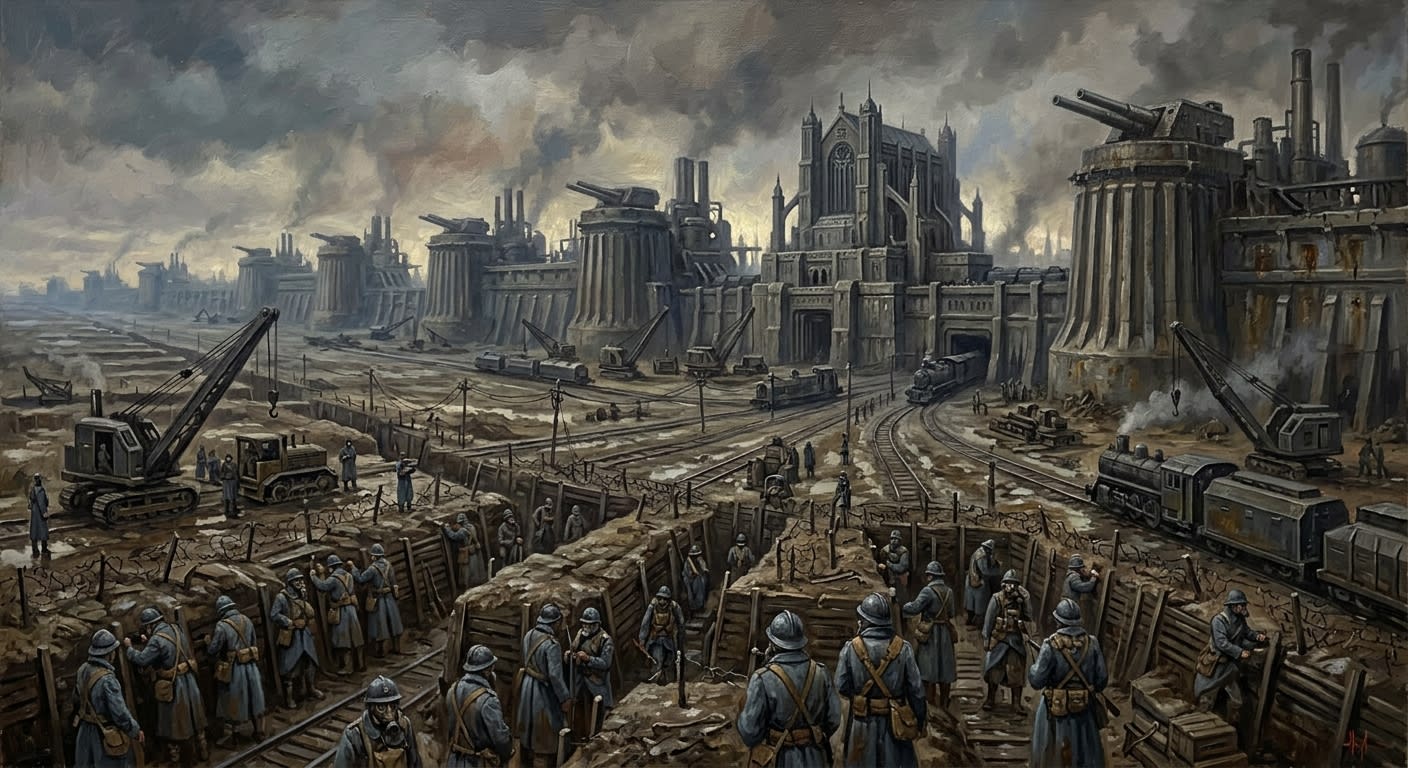
The Sagittal Line
The continent's spine, stitched in mud, bells, and refusal
The north-south defensive spine of the Synod: seven bastions, two thousand miles of trenches, and the bureaucratic miracle of making stalemate into civilization.
Codex Ref. III.1.01-001
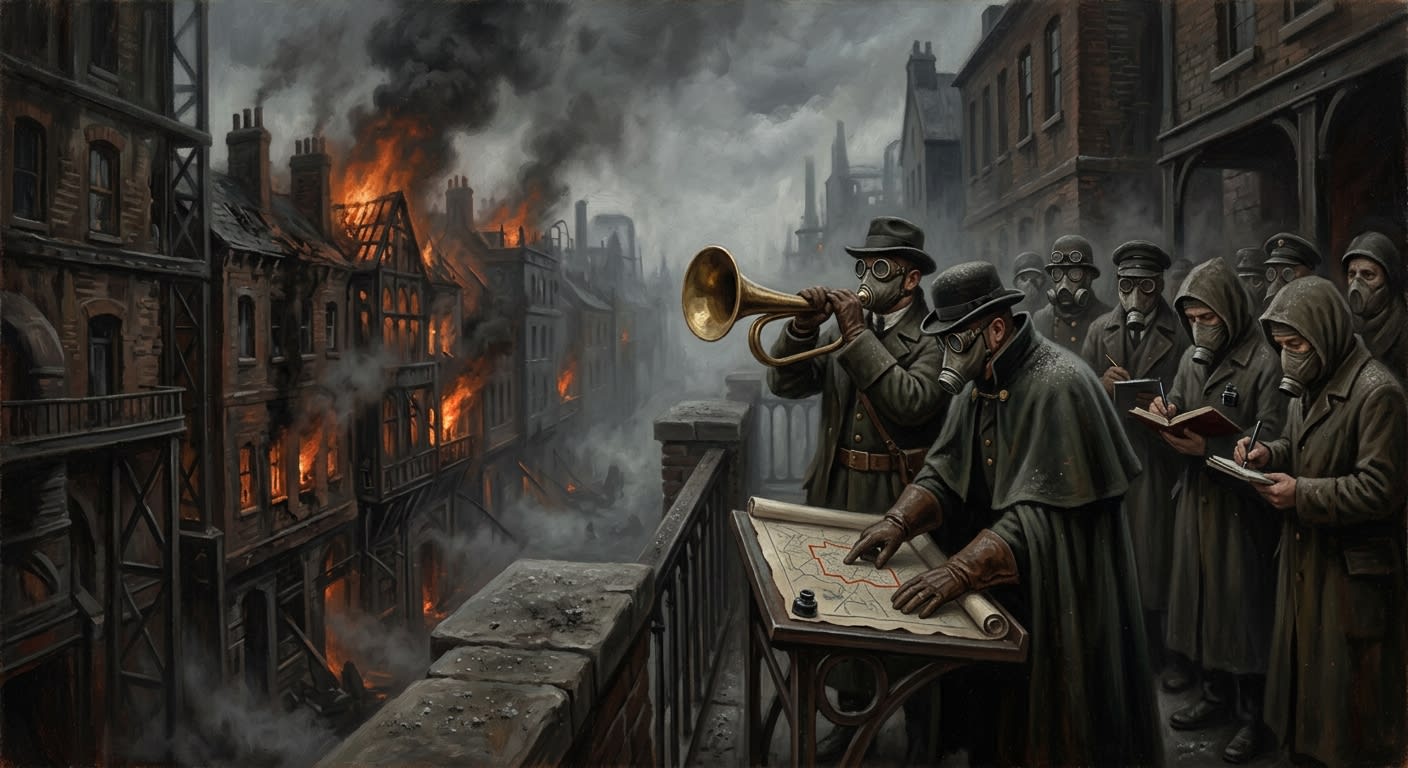
The Scour
When the Bureau decides a street has forfeited the privilege of remaining architecture
The Synod's ritual fire-purge of condemned quarters: horn, map, witness-line, and ash — the point at which bureaucracy ceases to argue and begins to burn.
Codex Ref. VI.4.01-001
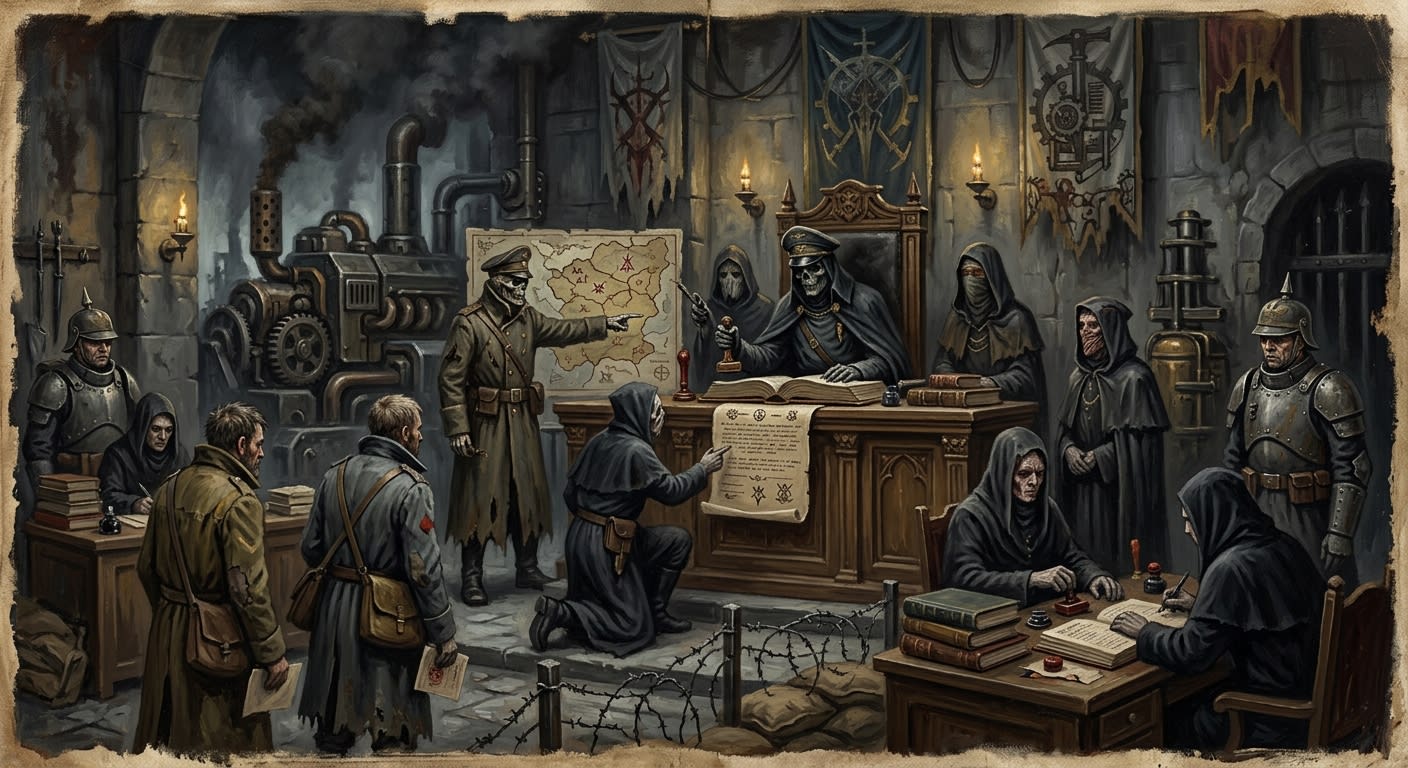
The Shadow Court
Infernal sovereignty without a capital, throne, or mercy
The Great Deceiver's anti-Synodal jurisdiction: not a mere place east of the Line, but a hostile authority expressed through sin-generals, bargains, mortal auxiliaries, and mock liturgy.
Codex Ref. IX.1.01-001
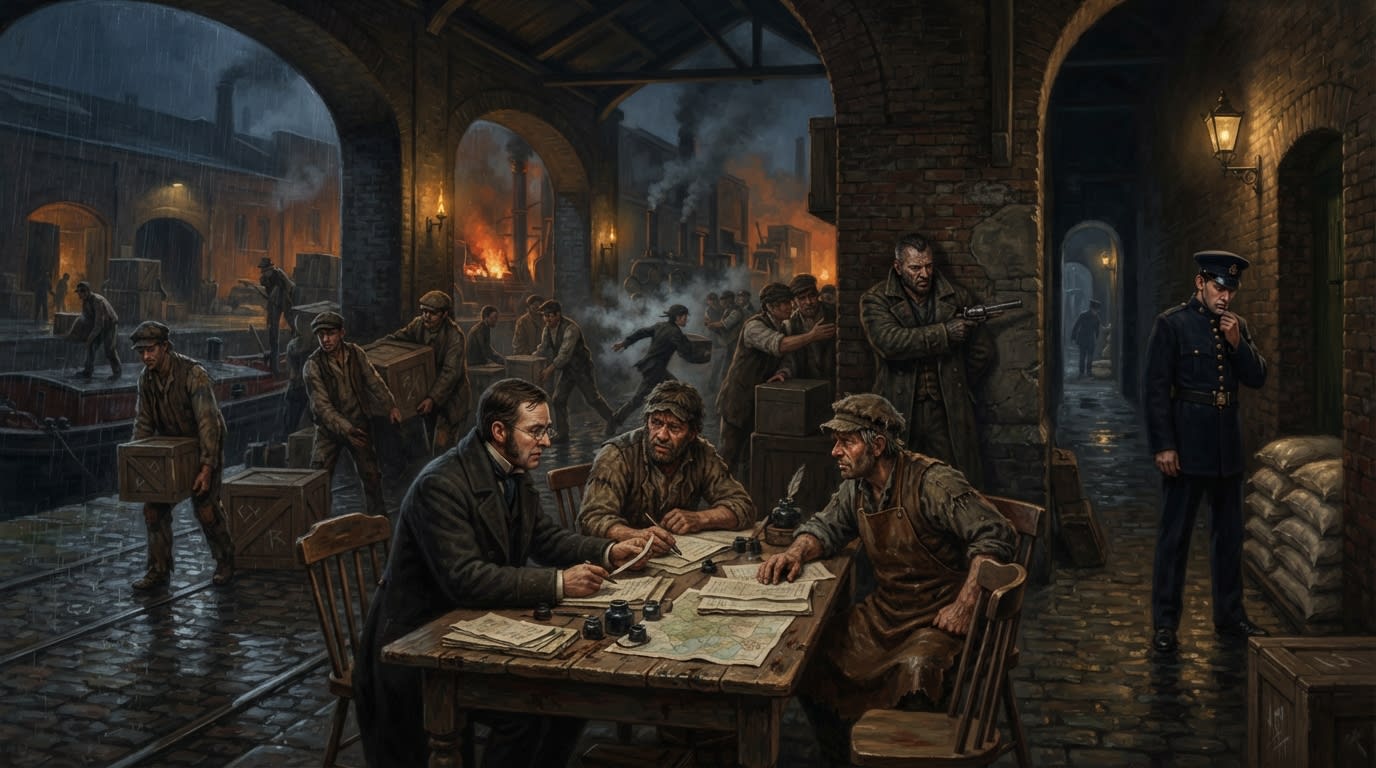
The Smuggler's Syndicate
The Other Road Has a Toll
Not a guild, brotherhood, cartel, or cause: the Syndicate is what emerges when official roads kill more reliably than unofficial ones. It moves medicine, witnesses, bodies, proof, names, and obligations through the interval between need and permission.
Codex Ref. IV.7.03-001
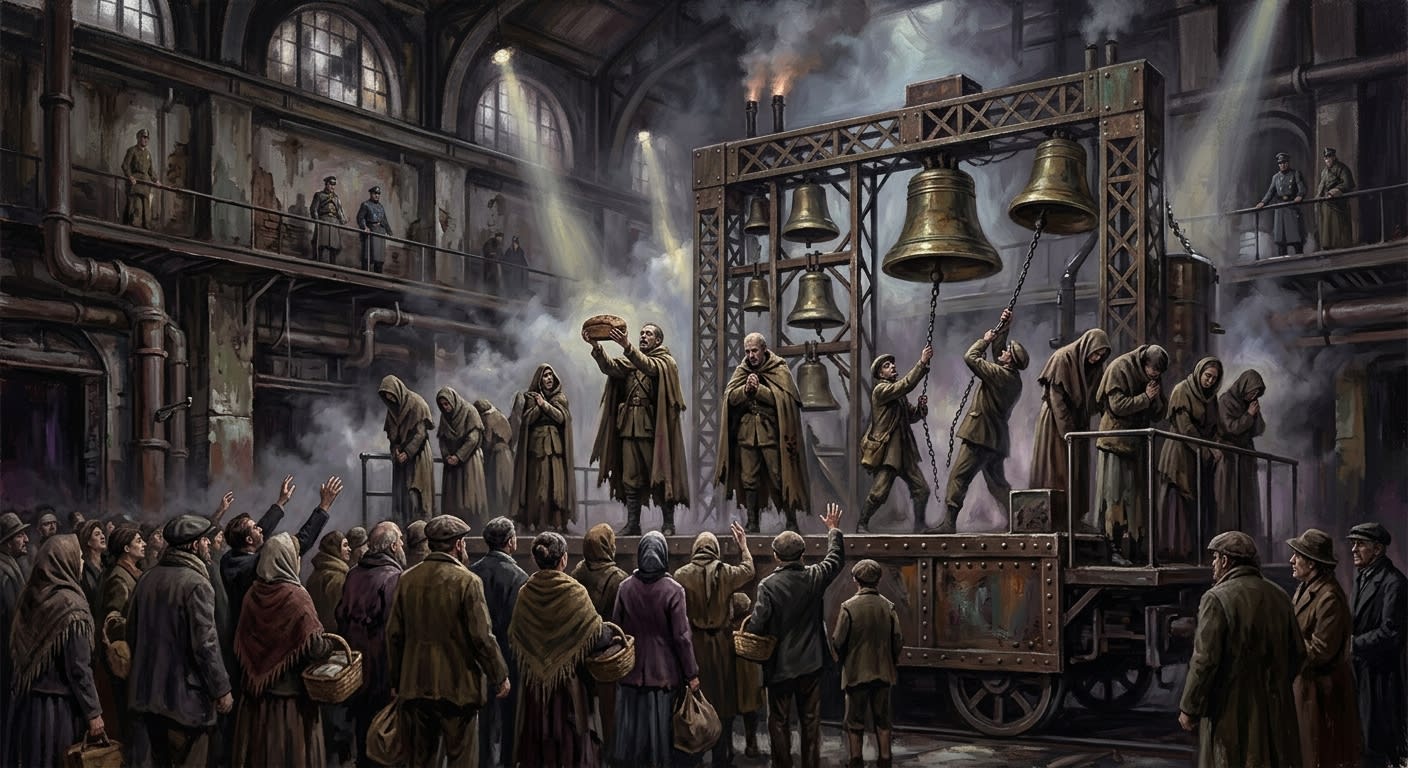
The Theatres
Bread, bells, and applause stolen from the altar
The Theatres are the Black Ledger faction that turns stolen bread into civic memory, staging Queue-Saint performances where hunger, bells, and witnesses become recruitment.
Codex Ref. XI.1.04-002
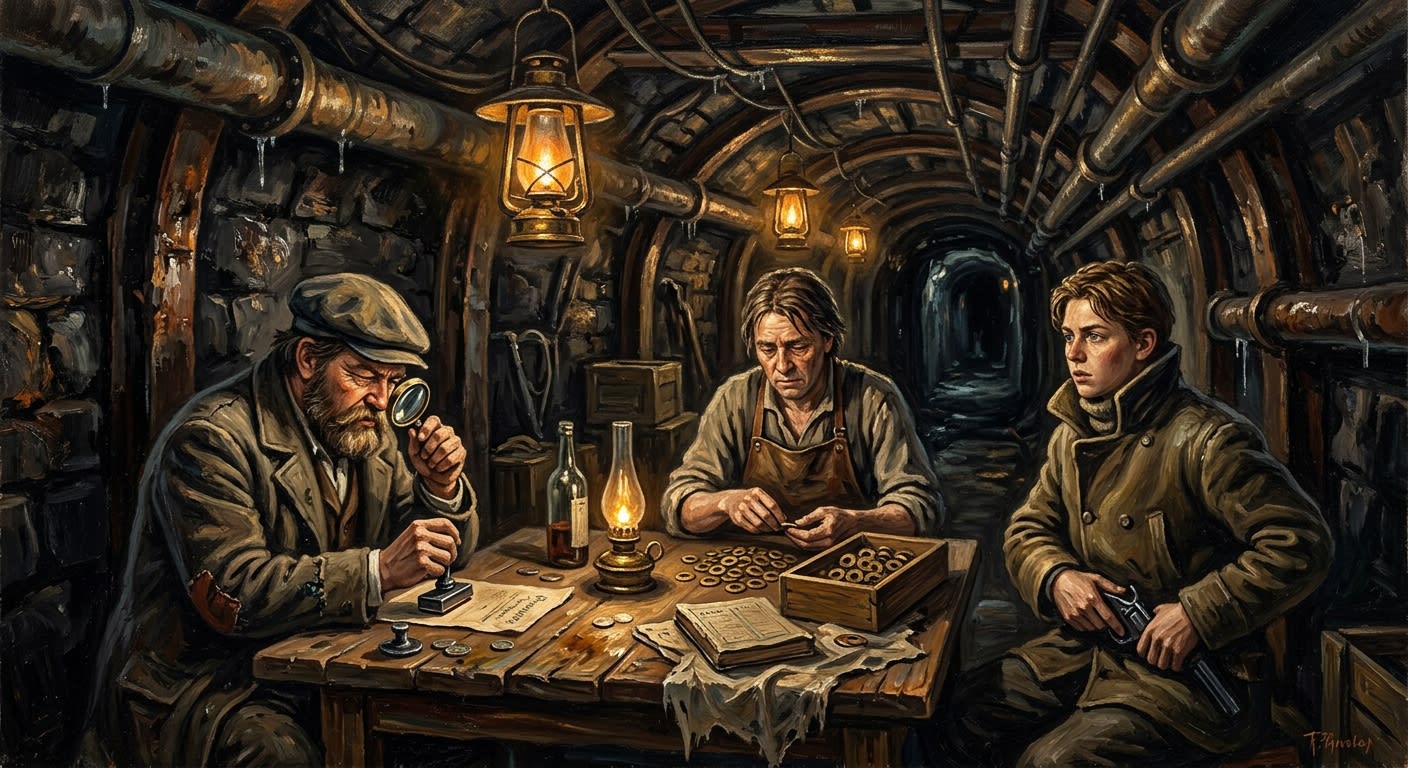
The Underchords
The Irongate's cellar has learned to grow
The eleven miles of sealed corridors and denied tunnels beneath Bastion-Irongate — home to the Underchord Cartel, the Counterkey Circle, and a gallery that grows by itself in the dark.
Codex Ref. II.4.10-001
The Unnamed Briefing Officer
Clarity sufficient to end a room and merit a northern fog
An unnamed Purity Briefing Officer taught that the Velvet Choir wins by making forbidden choices feel like honesty; six weeks later, she vanished north.
Codex Ref. III.2.01-050
The Vault of Ten Thousand Keys
Every door opens. Every door locks behind you.
Velmora's seat within the Gilded Chasm — a palace of infinite descending doors, each one beautiful, each one locking behind you. Four expeditions entered. None returned intact. The Bureau has recommended permanent interdiction.
Codex Ref. V.6.02-001
The Warrens of Königsberg
Laughter under the northern guns
The Warrens of Königsberg are the civilian quarter the fortress needs, mocks, watches, and refuses to admit it cannot spare.
Codex Ref. II.4.07-067

Theobald of Worms
The man who taught Europe to confess by angle
First Archon of the Bureau of Heraldry, Theobald of Worms standardised the Triune Knot and made the visible world legible, taxable, and prosecutable.
Codex Ref. III.2.01-119

Tongue-Smiths
Lawful ink made treasonous by breath, comma, grief, and timing
Elite Lantern Mercy writers who forge audit-clean catechisms with breath-dependent meanings, making authorised comforts disobey before the law can quote them.
Codex Ref. XII.25.10-001
Toulouse
The safe city where Purity learned its grammar
Toulouse is the red-brick safe city corrected in A.S. 93: birthplace of Purity's public dread, still loyal, profitable, lowered-voiced, and watched.
Codex Ref. II.1.09-093
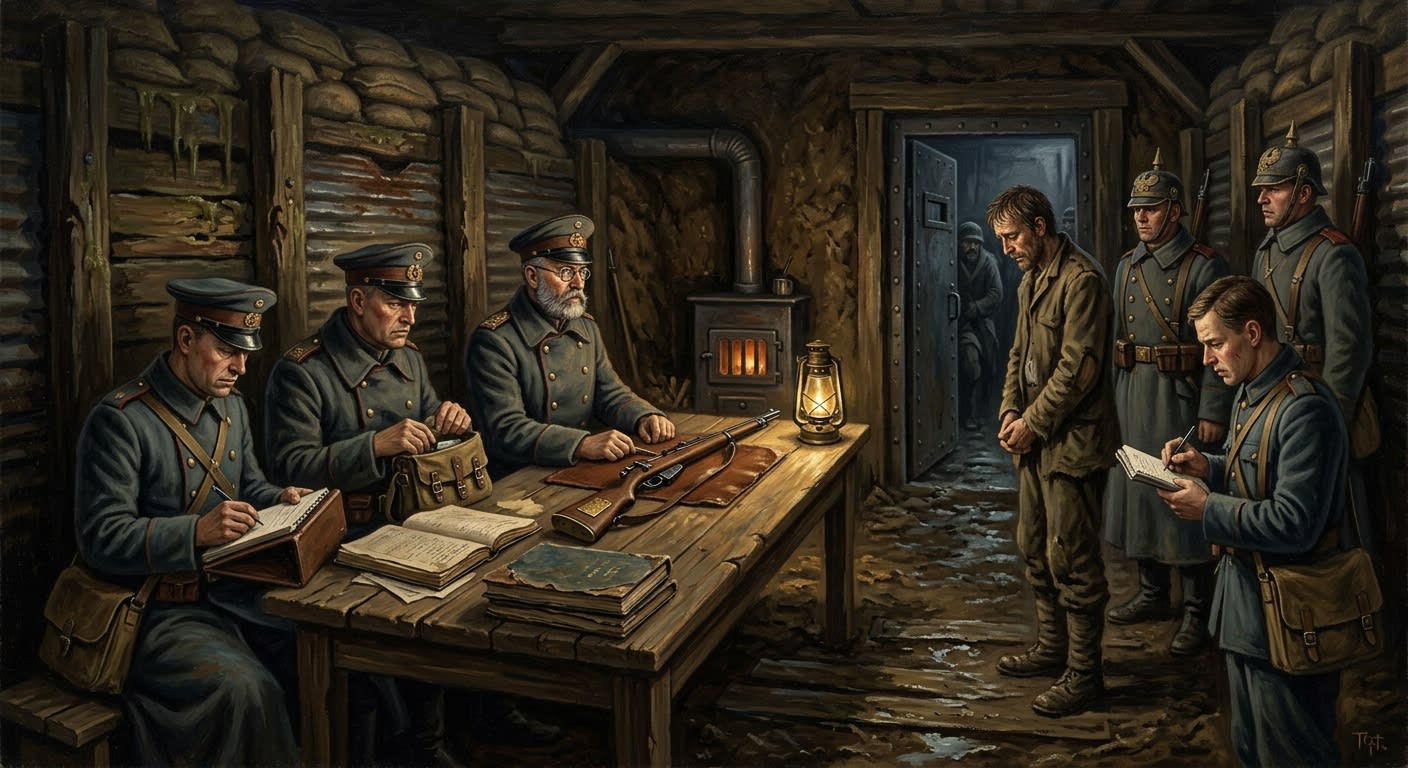
Trench Courts
Due process, shortened to fit one hymn and a rifle knock
The Trench Courts drag law into mud: lantern table, rifle-gavel, contradiction pouch, furnace, and the mercy of recording men before they rot out of legality.
Codex Ref. XIII.1.86-091
Trench-Court Clerk
The last words of the faithfully dead; and what becomes of the rest
Forward-deployed registry clerks of the Bureau of Records, stationed at Trench Court dugouts on the Sagittal Line to record the last confessions of the dying, assign doctrinal categories.
Codex Ref. XII.47.01-001
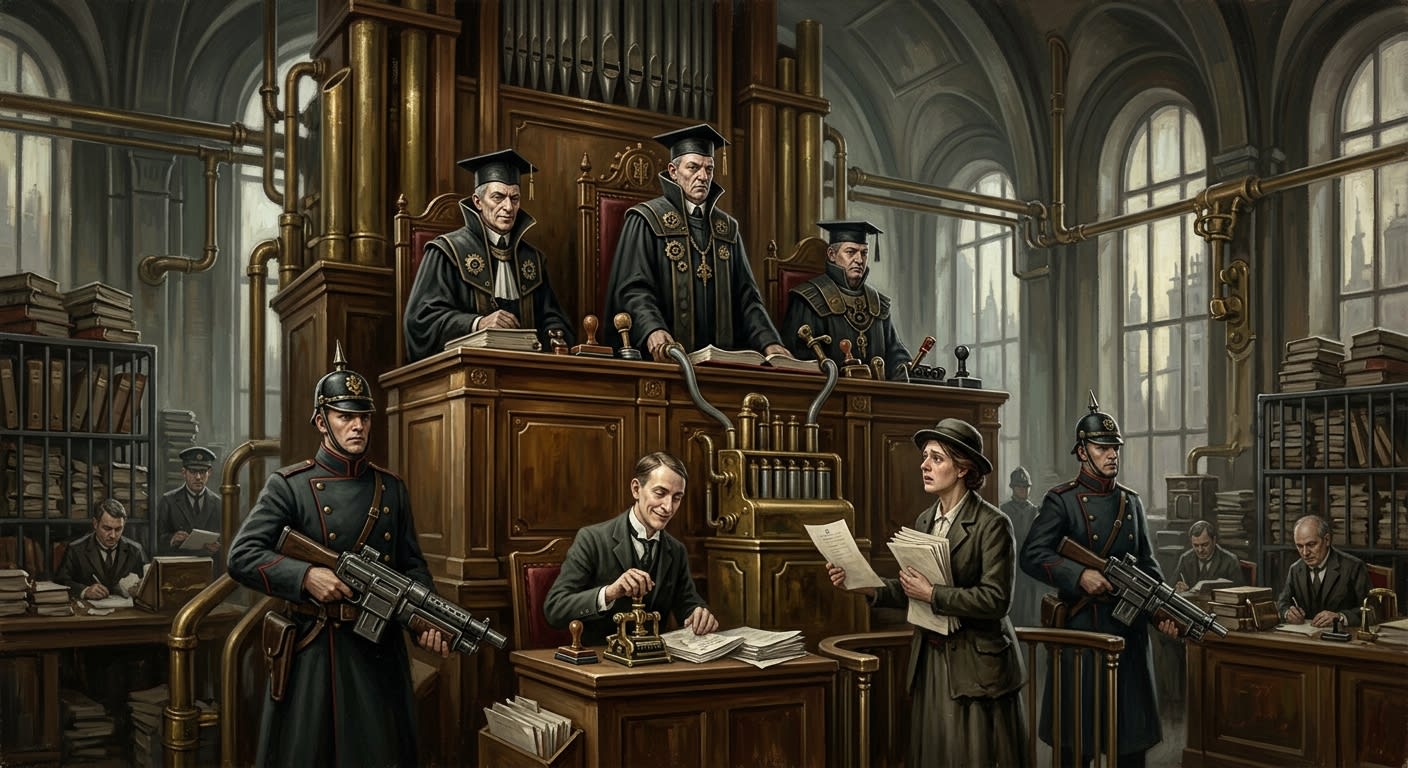
Tribunals of Doctrine
Where truth acquires a chair, a clerk, and teeth
The Synod's lawful tribunals convert dispute into Doctrine, mercy into numbered form, and local quarrel into central authority with a clerk's smile.
Codex Ref. XIII.1.58-100
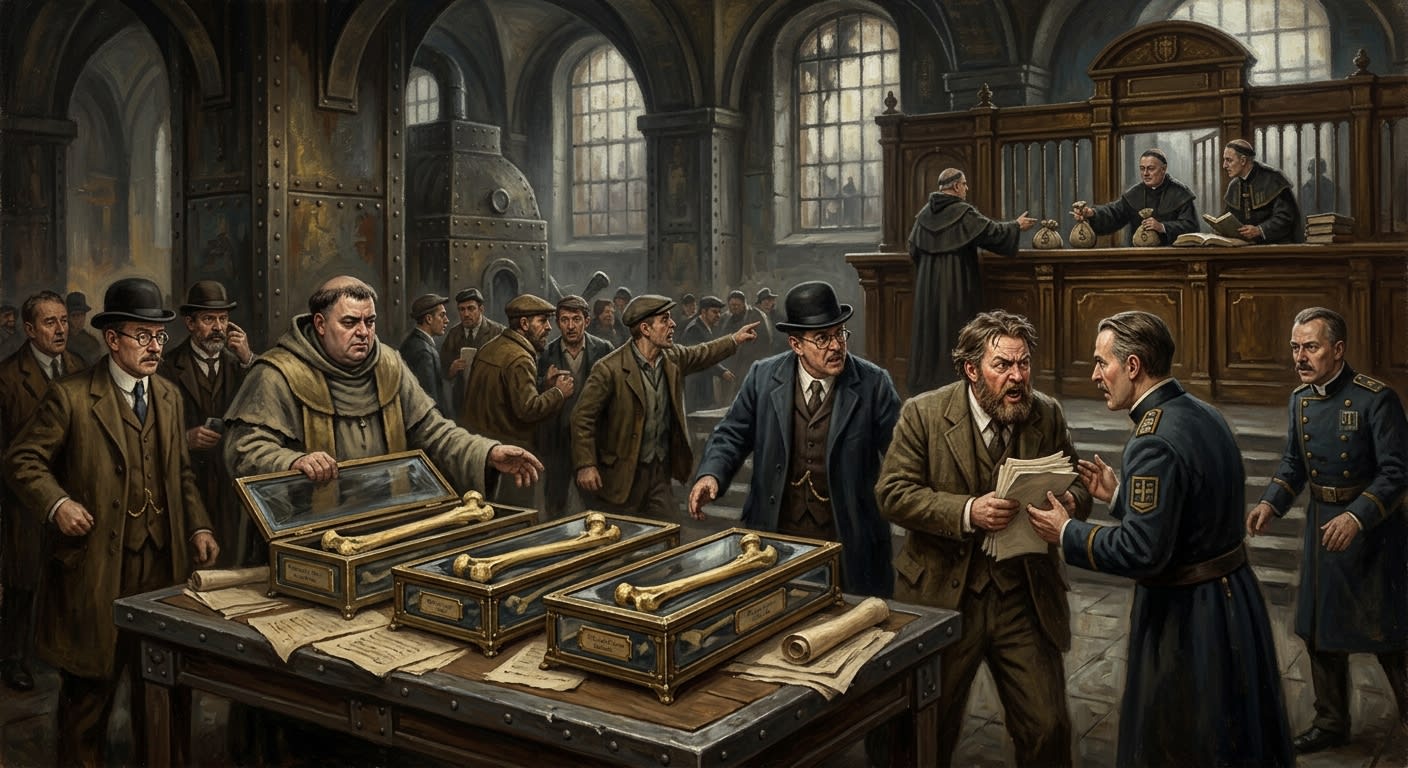
Triplicate Femur Incident
Three saintly legs entered one manifest; a profession walked out
The c. A.S. 148 Triplicate Femur Incident exposed three authenticated left femurs of Saint Maurus at once, birthing Femur-War brokerage from public contradiction.
Codex Ref. VII.8.10-027
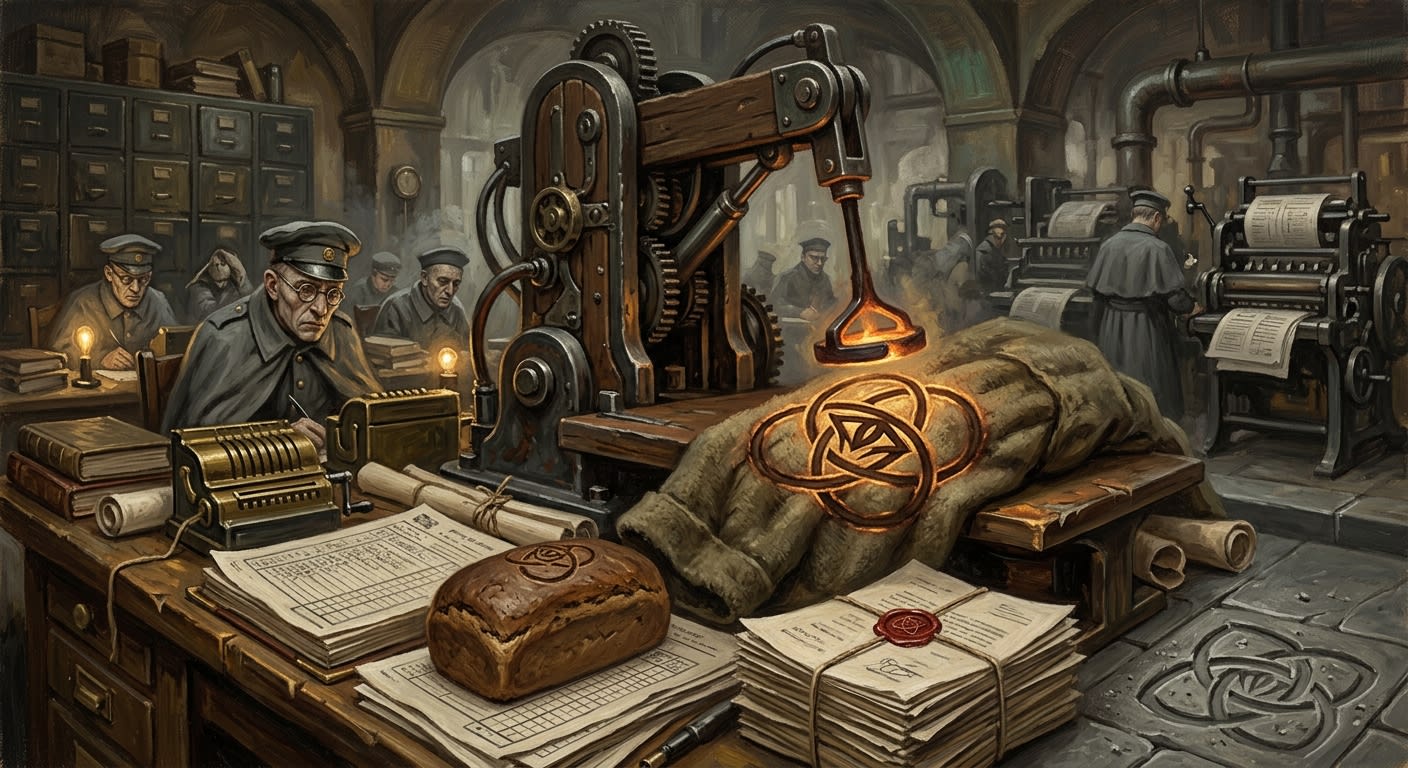
Triune Knot
Three loops, one law, and every door accounted for
Universal Synodal binding mark standardised under Theobald of Worms, by which doors, papers, bread, flesh, and graves become readable to law.
Codex Ref. XIII.1.03-002

Vera "Iron-Thumb" Malrec
Praise later; lift now
Tolerated Salvager patron whose A.S. 160 Irongate extraction cost her right thumb, won her an iron replacement, and forced the Bureau of Relics to tolerate a worker-saint.
Codex Ref. III.2.01-140
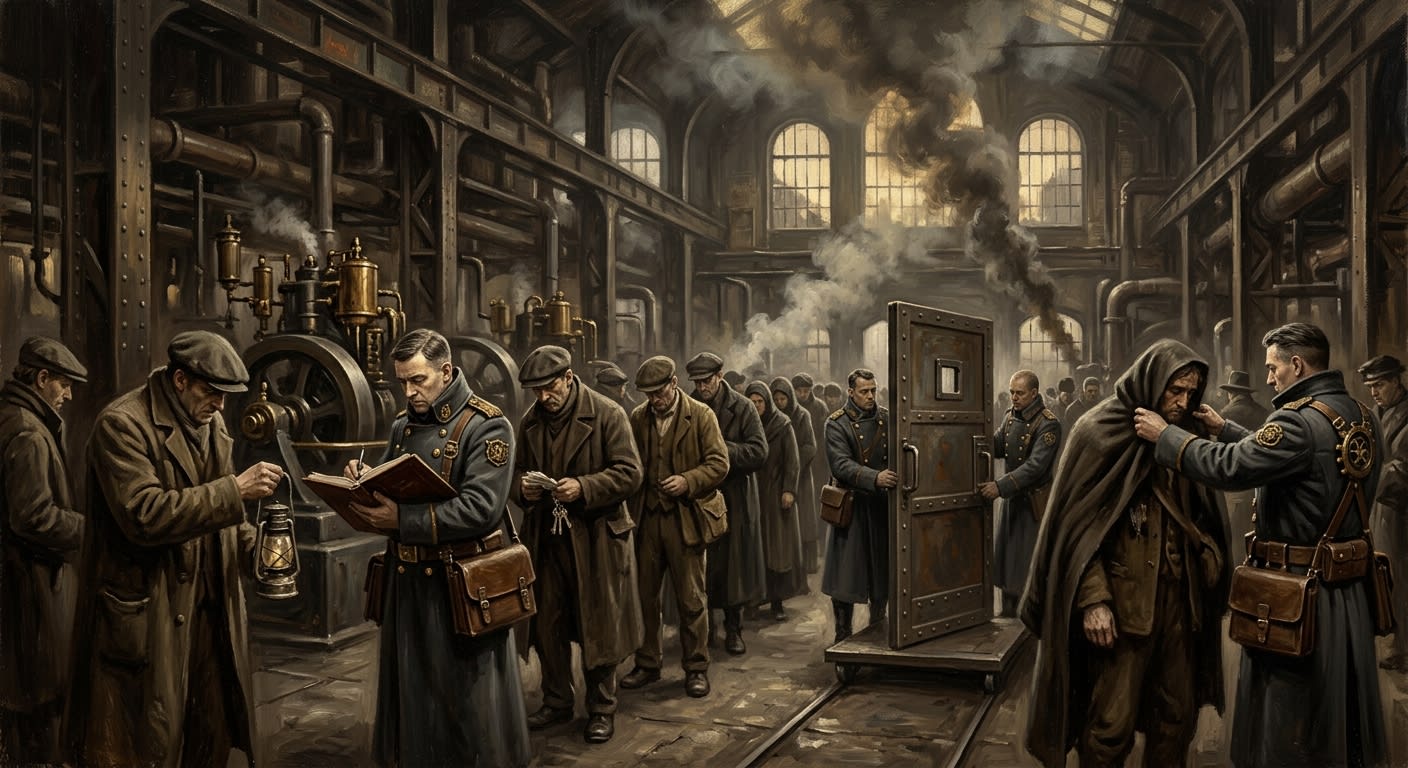
Vespers
The bell that repossesses the day
Vespers is not gentle evening prayer. It is the Synod's daily repossession of light, household, lamp, door, excuse, and dark.
Codex Ref. XIII.1.96-115

Veyrel
The man who made condemnation buy shoes
Condemned in Strasbourg and respectable in Cologne, Veyrel exploited stale Index copies so neatly that Purity invented speed to hate him properly.
Codex Ref. III.2.01-125
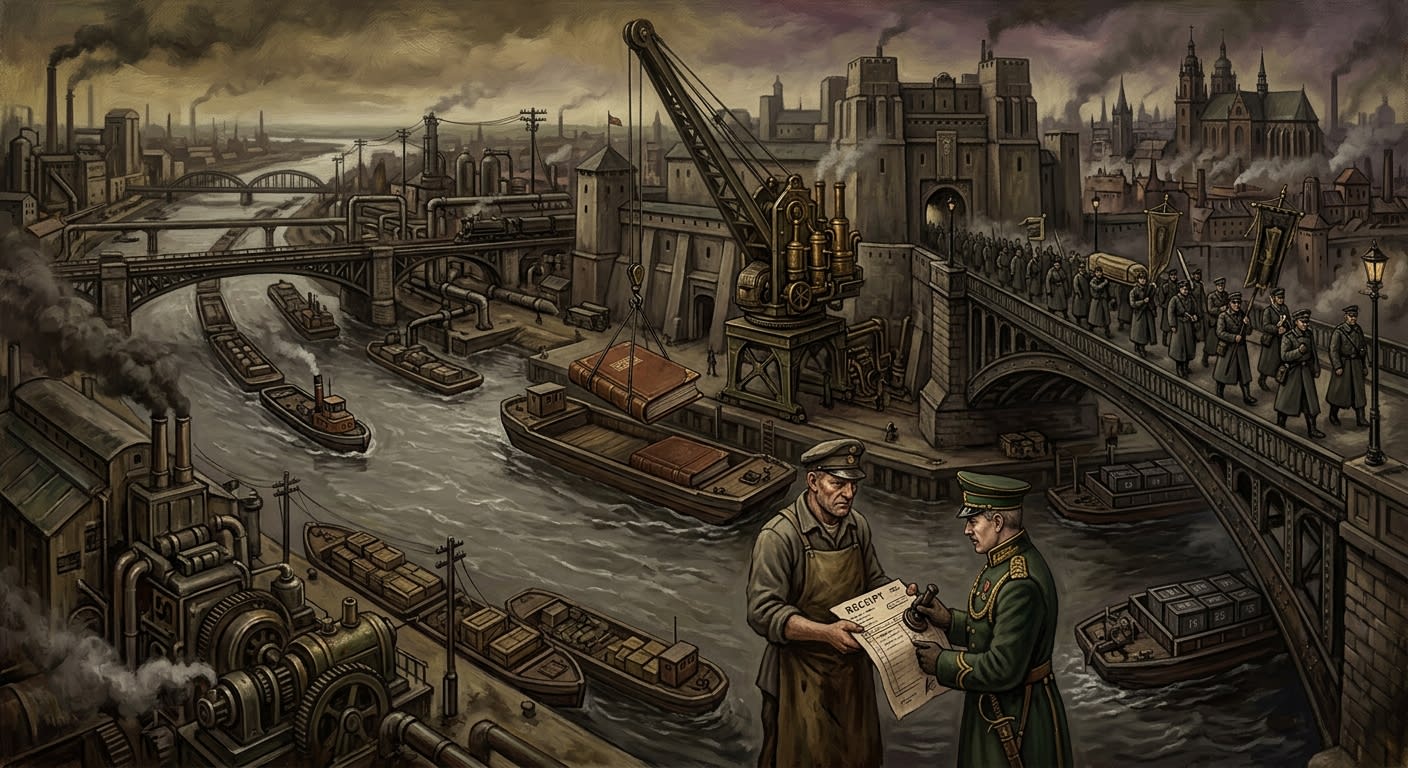
Vistula
The river carries evidence better than tribunals carry shame
The Vistula is Poland's wet archive: martyr-road at Kraków, receipt at Sandomierz, supply throat at Warsaw, and a river no Bureau has taught to forget.
Codex Ref. II.3.06-018
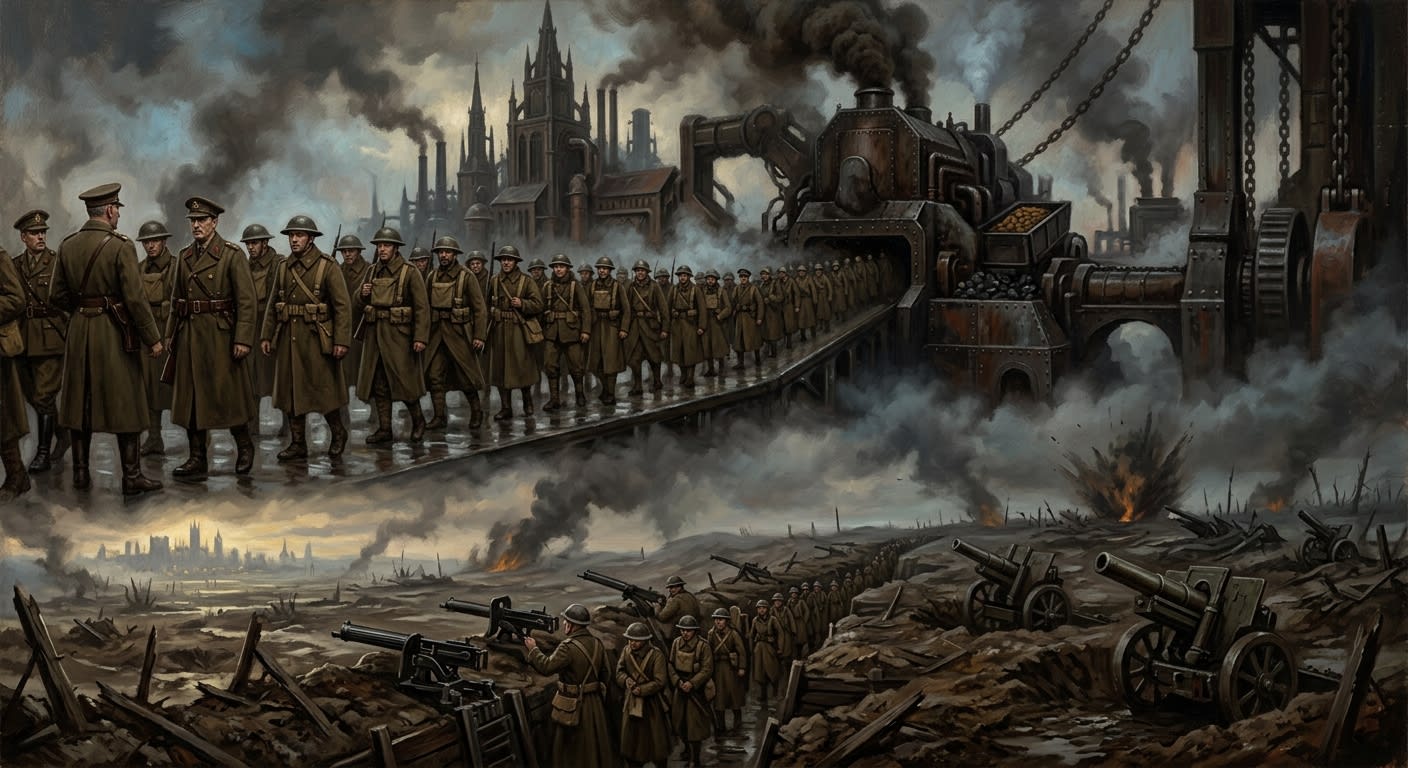
War Eternal
Victory assured; timetable irrelevant
The War Eternal is governed horror: the Line fed daily so the West may mistake survival for morning.
Codex Ref. XIII.1.92-065

Warden-General
Command is safest when it kneels beneath an empty chair
The Warden-General is the rotating public throat of the Bureau of War, commanding beneath the Empty Throne and its occupied-in-absentia Seal.
Codex Ref. VIII.5.03-001
Warsaw
The city the Bureau told to leave, and the bakeries it opened in reply
The Synod's forward staging city on the Vistula — Zone Three, Northern Corridor, entry 14-W. 160 km from the Sagittal Line; close enough to hear the front on clear nights. The Bureau told it to leave in A.S. 95. It has grown by a quarter-million souls since.
Codex Ref. II.4.09-007
Warsaw Standing Brigade
The wall behind the wall has bayonets and bakery rumours
The Warsaw Standing Brigade is twelve thousand rear-echelon soldiers drilled to front-line standard, holding rails, queues, bridges, and the fiction that Warsaw is safely behind the Line.
Codex Ref. VIII.5.05-002
Womb Registrars
The cradle has a visitor, and she has already priced the child
Womb Registrars are Bureau of Records parish deputies who turn pregnancy into ledger matter: notice, name control, midwife compliance, and tithe projection before first breath becomes evasion.
Codex Ref. XII.9.04-001
Wormhosts
The human face, retained just long enough to open the gate
Mortal auxiliaries seeded with living parasites, recognisable as human until rupture turns pity, checkpoint mercy, and defensive formation into a door.
Codex Ref. IV.1.07-009
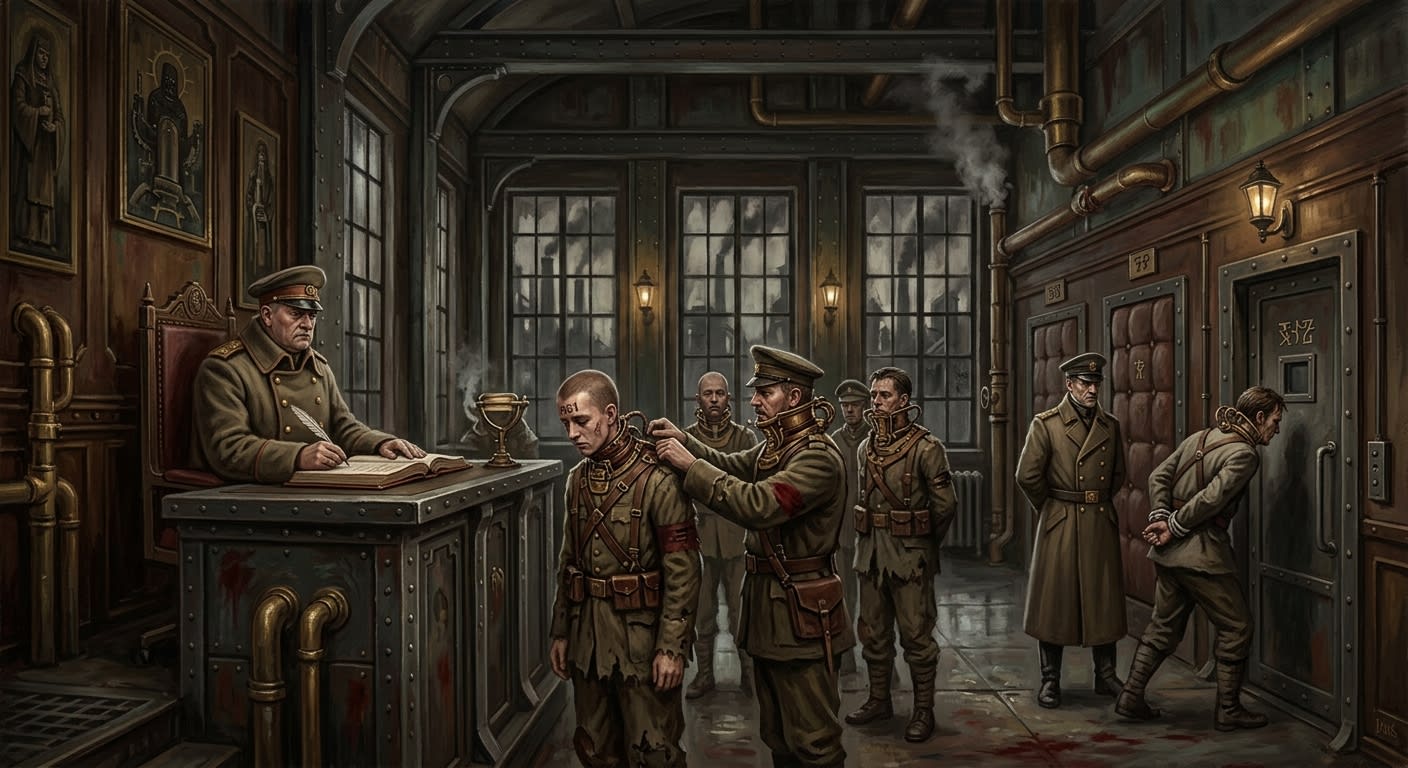
Writ 14-C
The law that taught the throat to wear a seal
Writ 14-C made the human throat an office: licensing Iron Choir Brand-Singers, disciplining pain into sound, and teaching rooms not to be answered.
Codex Ref. XIII.1.41-104
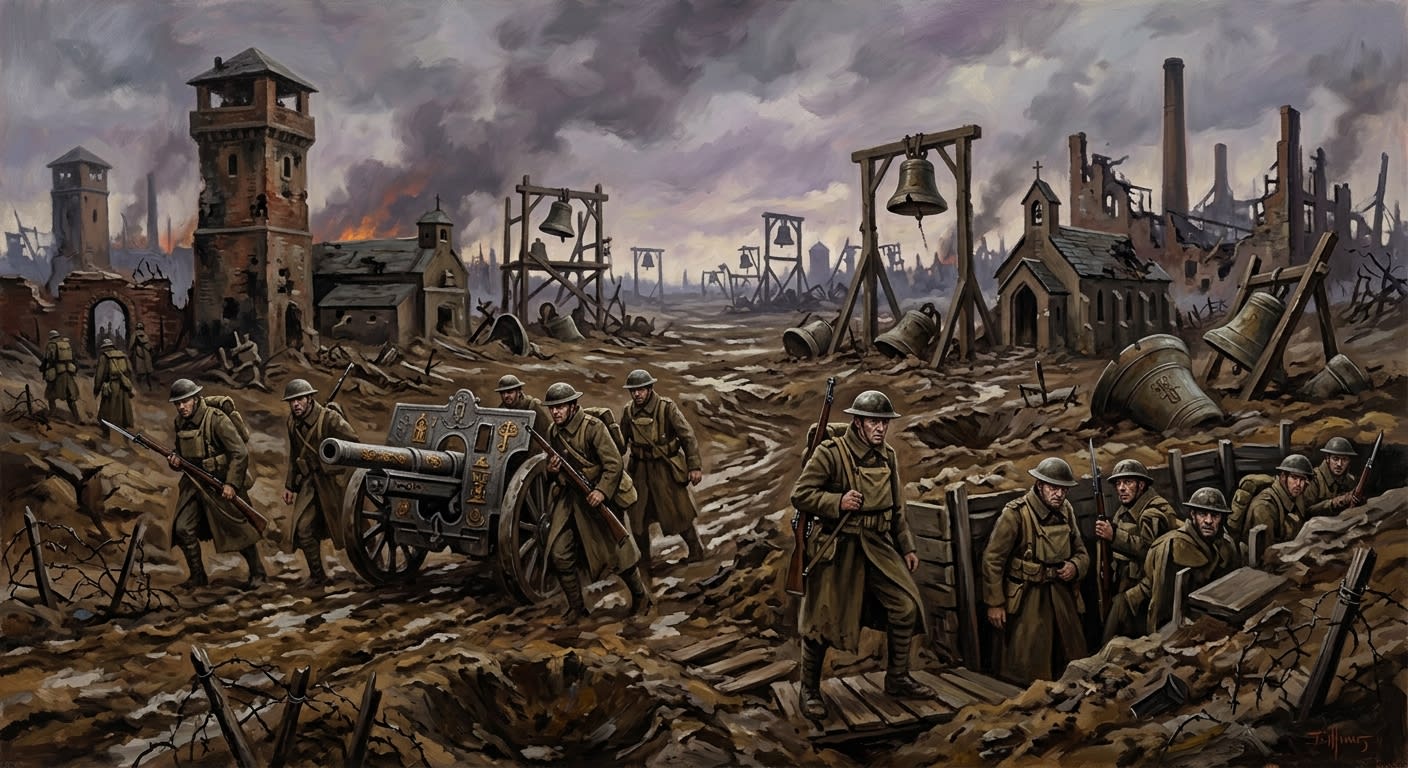
Zone Five
The strip where maps confess and mud countersigns
Zone Five is the Synod's contested receipt between living stone and demonic appetite: No-Man's-Land, where mud, bells, shadows, and orders all lie.
Codex Ref. II.5.00-201
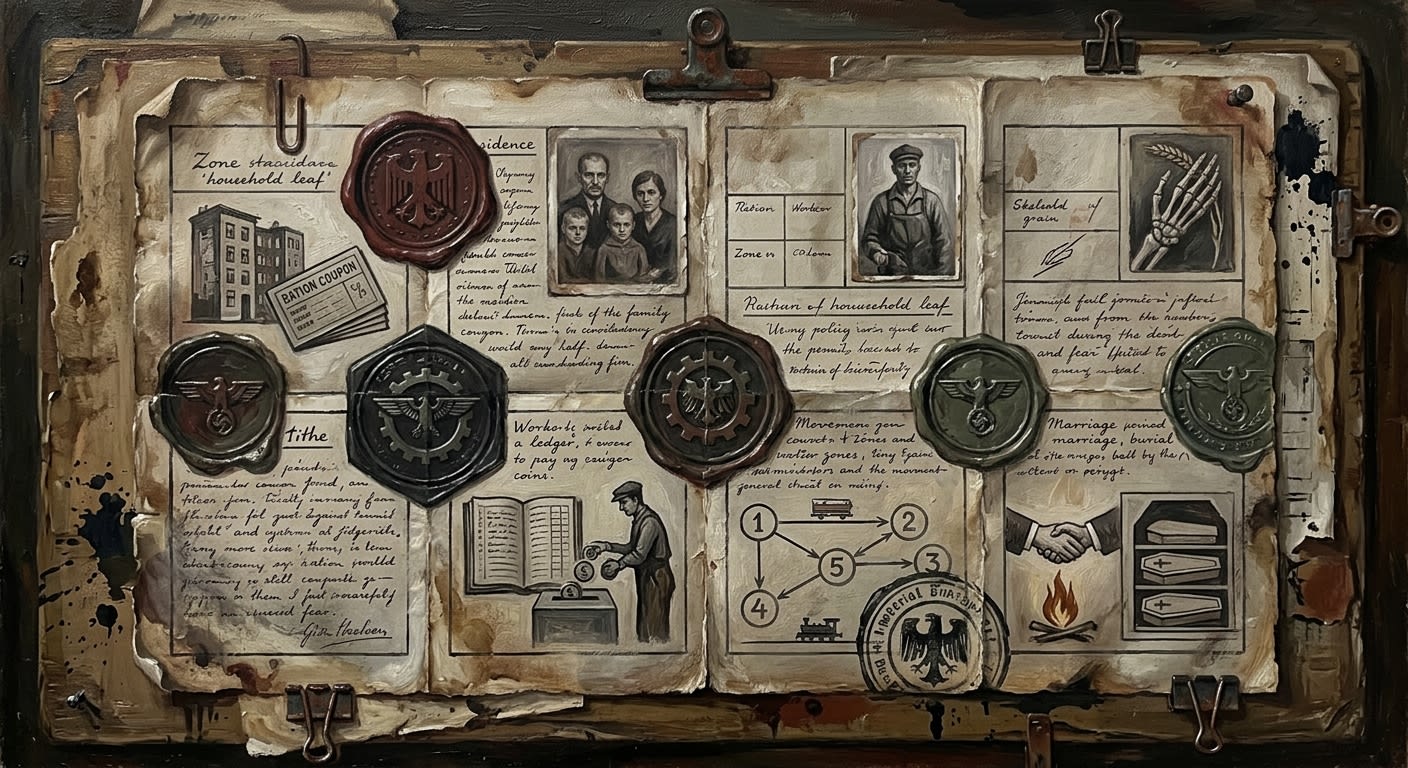
Zone Permit
The paper beneath the feet, and the shackle in the drawer
The Zone Permit is lawful standing made paper: residence, ration, tithe, movement, marriage, burial, and fear folded into one stamped household leaf.
Codex Ref. XIII.1.93-130
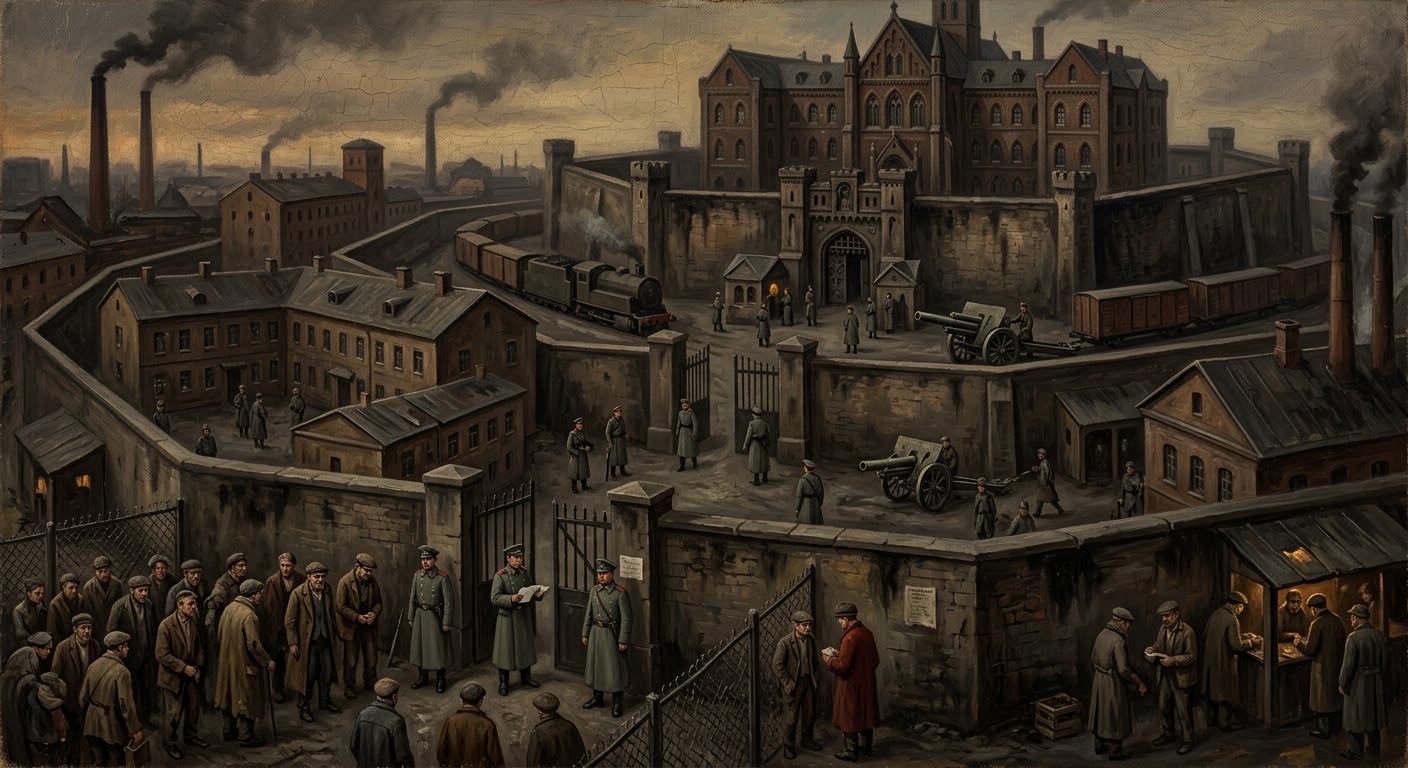
Zones 1 through 5
Five lawful pressures between invoice and mud
Zones 1 through 5 are graded permissions for bread, sons, movement, fear, artillery, and the state’s appetite.
Codex Ref. XIII.1.00-201