

Reverse Index
Referencing “The Great Ledger of Souls”
Every codex entry that links to The Great Ledger of Souls. 294 entries.
Return to The Great Ledger of Souls

Abbot-Registrar Solene
She made contradiction choose a widow and a loaf
Solene of Lyon, first Abbot-Registrar of Nemea, made ruins into an archive and panic into the doctrine of original by ratification.
Codex Ref. III.2.01-096

Administrative Dissolution
What the Bureau calls a filing action; what the dogs remember
Administrative Dissolution is the Bureau of Records' procedure for rendering a soul present but illegible — a grid of Mortuary Black drawn across the name-entry, the null-mark Ø applied, the Ledger amended.
Codex Ref. XIII.1.01-001

Administrative Inconvenience Premium
The price of making the Ledger notice you twice
The Premium prices disobedience as clerical labour: miss Form 7-NR, trouble the Ledger, and watch one infant become a lifetime of doubled debt.
Codex Ref. XIII.1.02-158
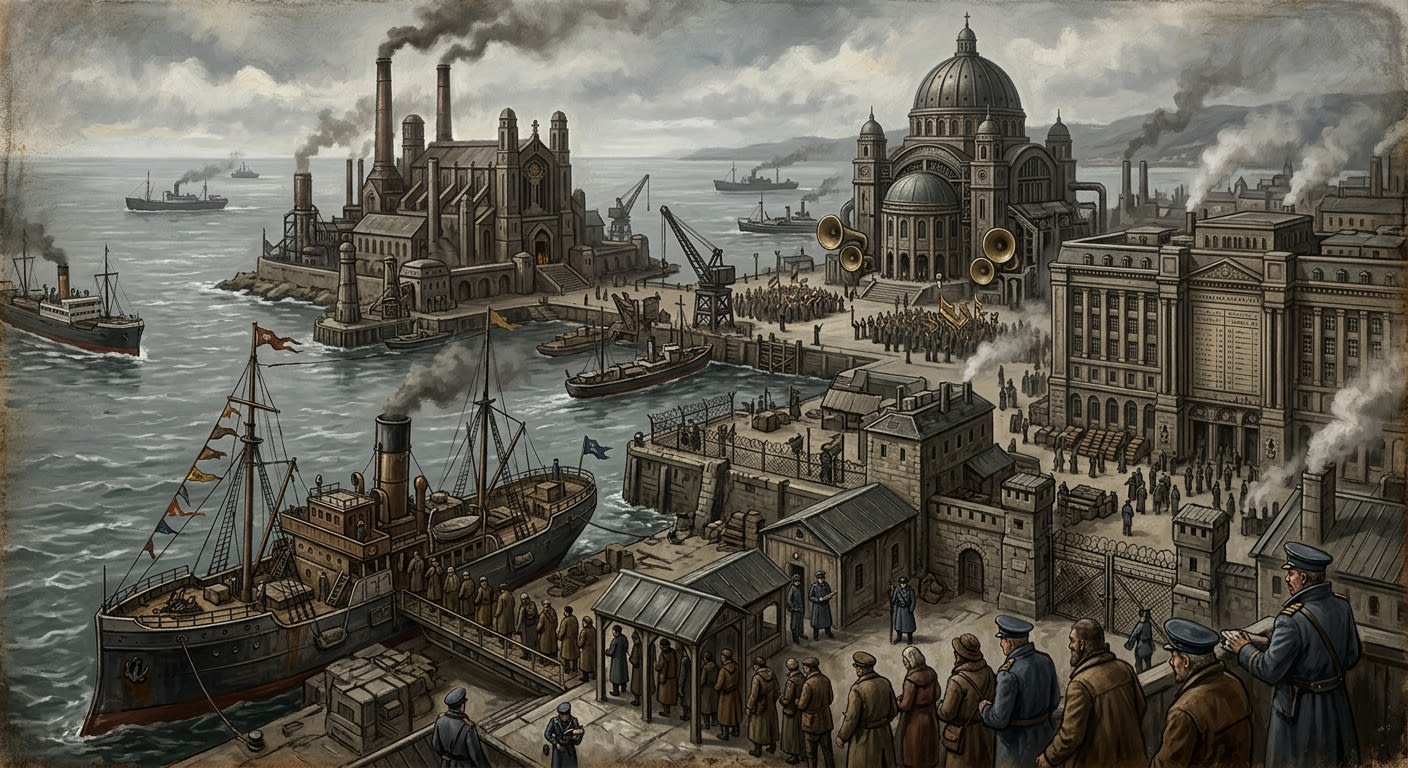
Aegean Shrine-Circuit
Devotion by convoy, tariff, bell, and brine
Licensed pilgrim sea-route where Marseille weighs devotion, Saffron quarantines it, Thessaloniki sings at it, and the Bureau invoices the miracle.
Codex Ref. XIII.1.40-123

Aerial Wing
The sky, briefly obedient, under seal
Joint aerial custody apparatus by which the Synod lifts reliquary dirigibles, sermons, guns, clerks, and terror above Bastion-Constantinople.
Codex Ref. XIII.1.21-168
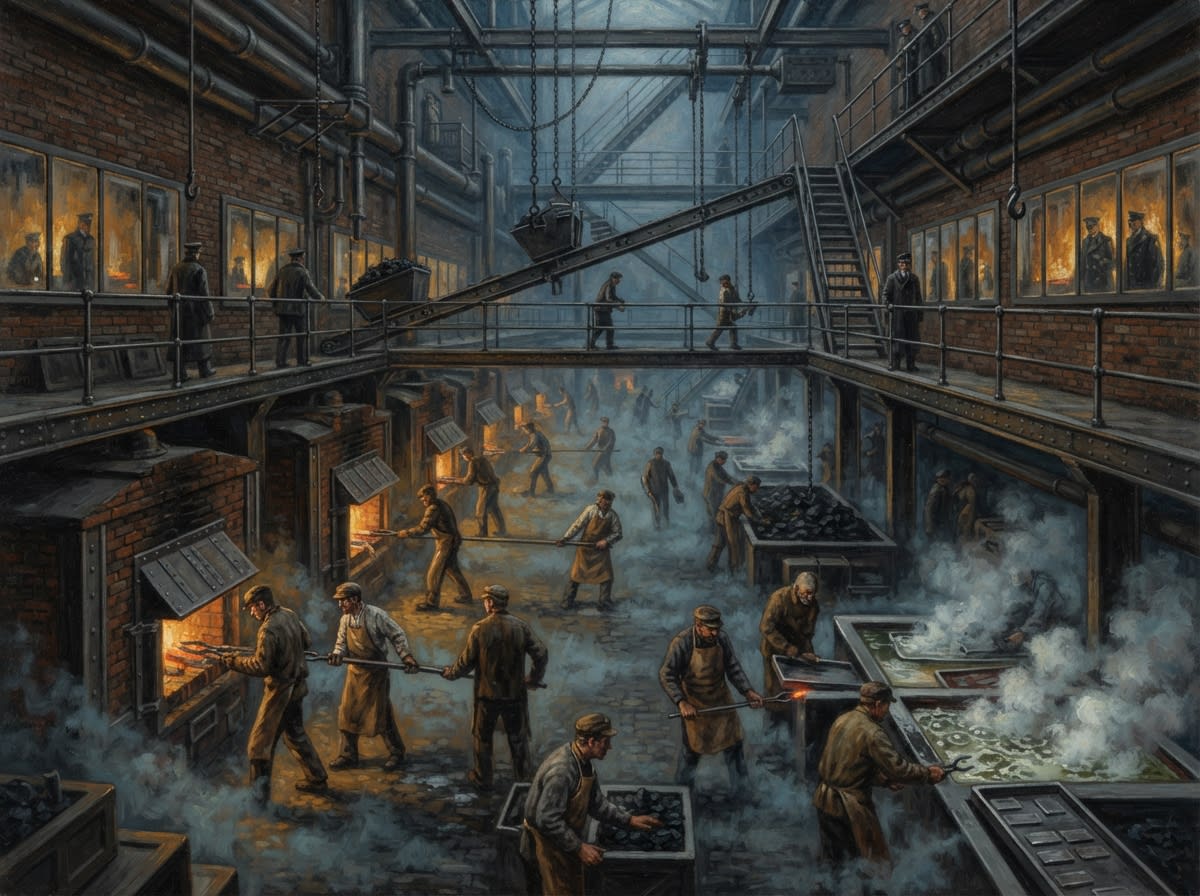
Anneal Courts
Where blank metal is taught to accept a face
Sable Court's Anneal Courts soften blank metal, harden lawful faces, feed the Clipped Choir through furnace loss, and prove identity survives only what the fire permits.
Codex Ref. II.2.07-094
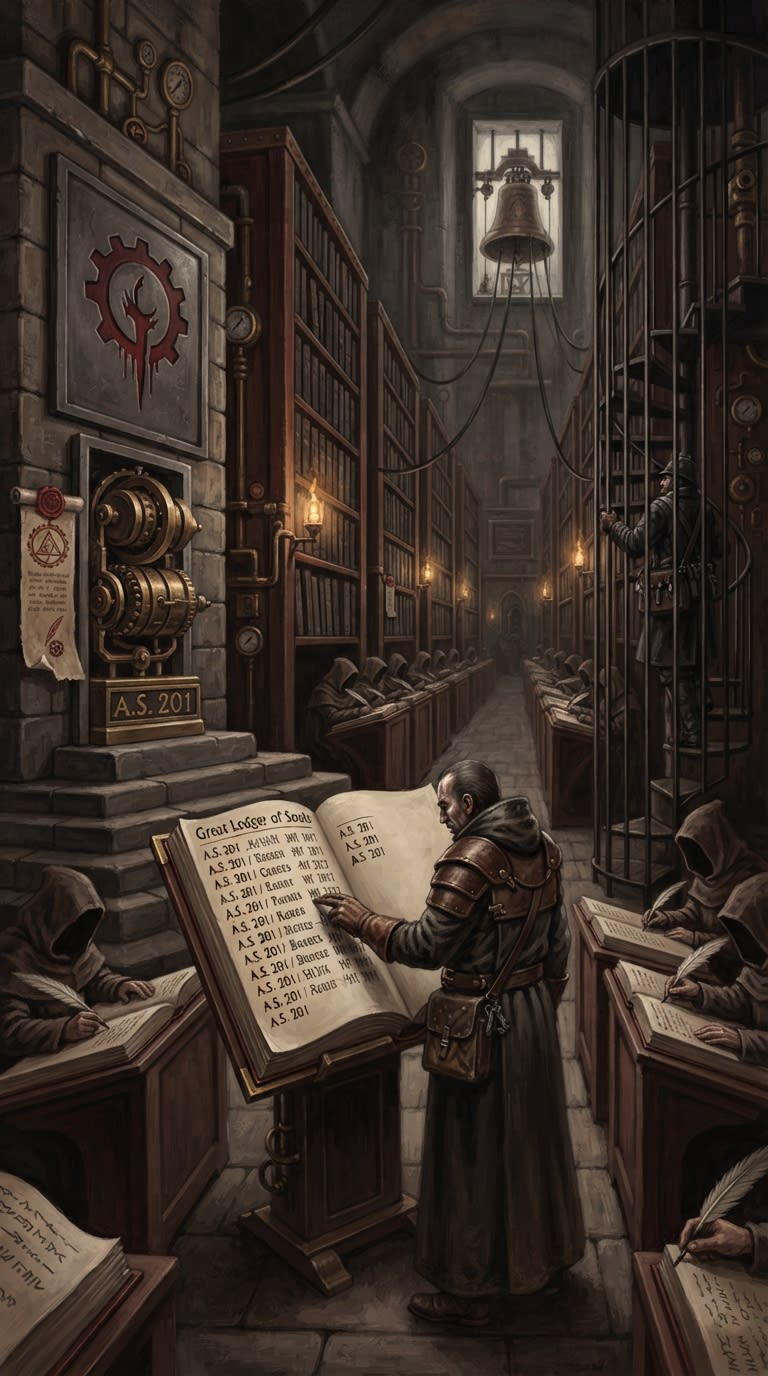
Anno Synodi
The wound by which Strasbourg owns the year
The Synod's calendar counts not from triumph but from wound: A.S. 0 at De Vera Luce, adopted retrospectively at the Concordat, and enforced by Records, Bells, and Doctrine.
Codex Ref. XIII.1.00-090

Annual Confirmation of Vacuity
One boat, three passes, and a city officially not answering
The Annual Confirmation of Vacuity is the yearly rite by which Pest remains legally Vacated: three river passes, five admissible measurements, no landing, and no occupancy category.
Codex Ref. XIII.1.88-201
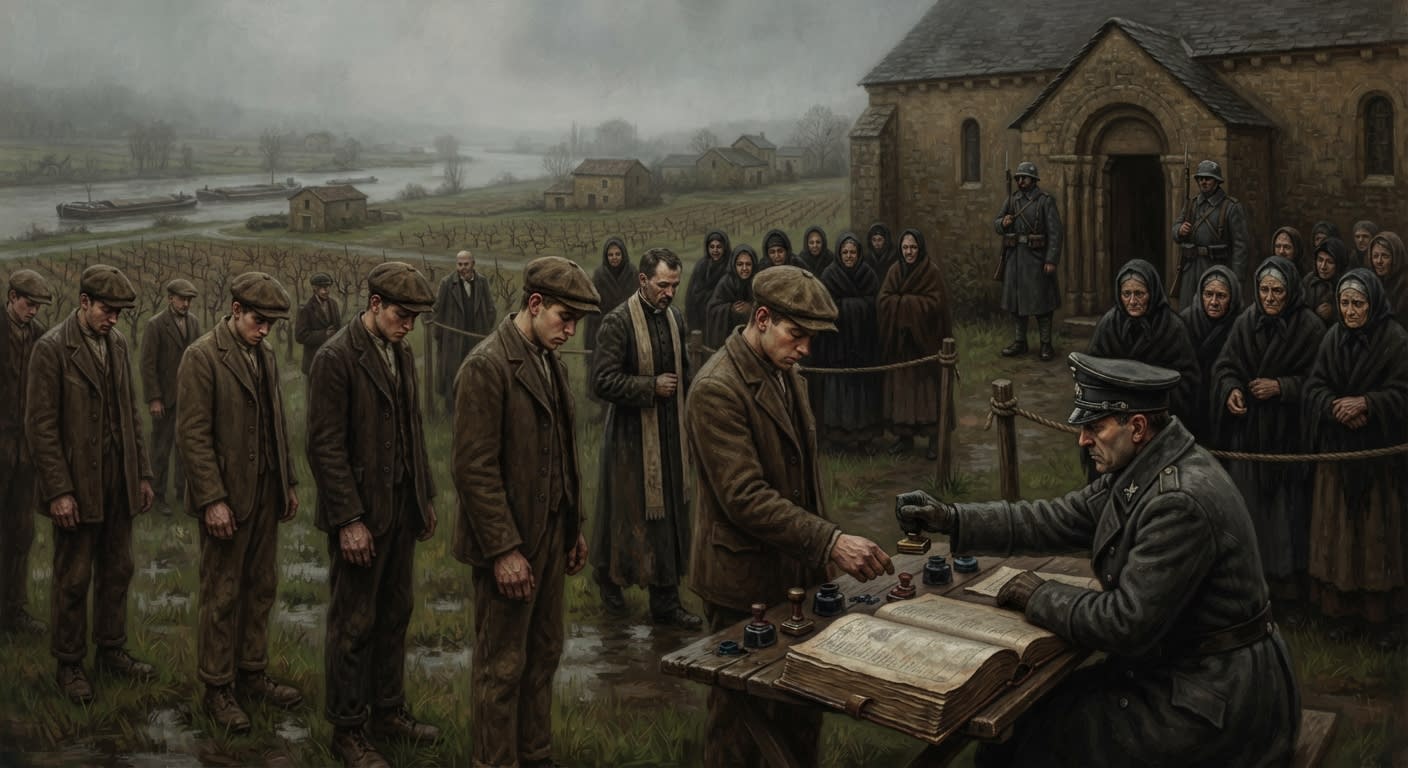
Aquitaine
The western field where sons go missing politely
Aquitaine is the Synod's damp western grain and wine basin: loyal by return, undercounted by suspicion, and courteous enough to make evasion look like hospitality.
Codex Ref. II.1.12-201

Arbiter-Widow Solenne
The Bench mourns first and invoices after
Veiled judge of Griefgate's grief-tax appeals, famous for verdicts that arrive before noon and for a private ledger the culverts insist should not exist.
Codex Ref. III.2.01-094

Archivist Keth
Mother Thread hears what the cases deny
Archivist Keth, called Mother Thread, keeps the Bead Vault cold, locked, and almost obedient while its confiscated pilgrim strings learn to answer.
Codex Ref. III.2.01-152
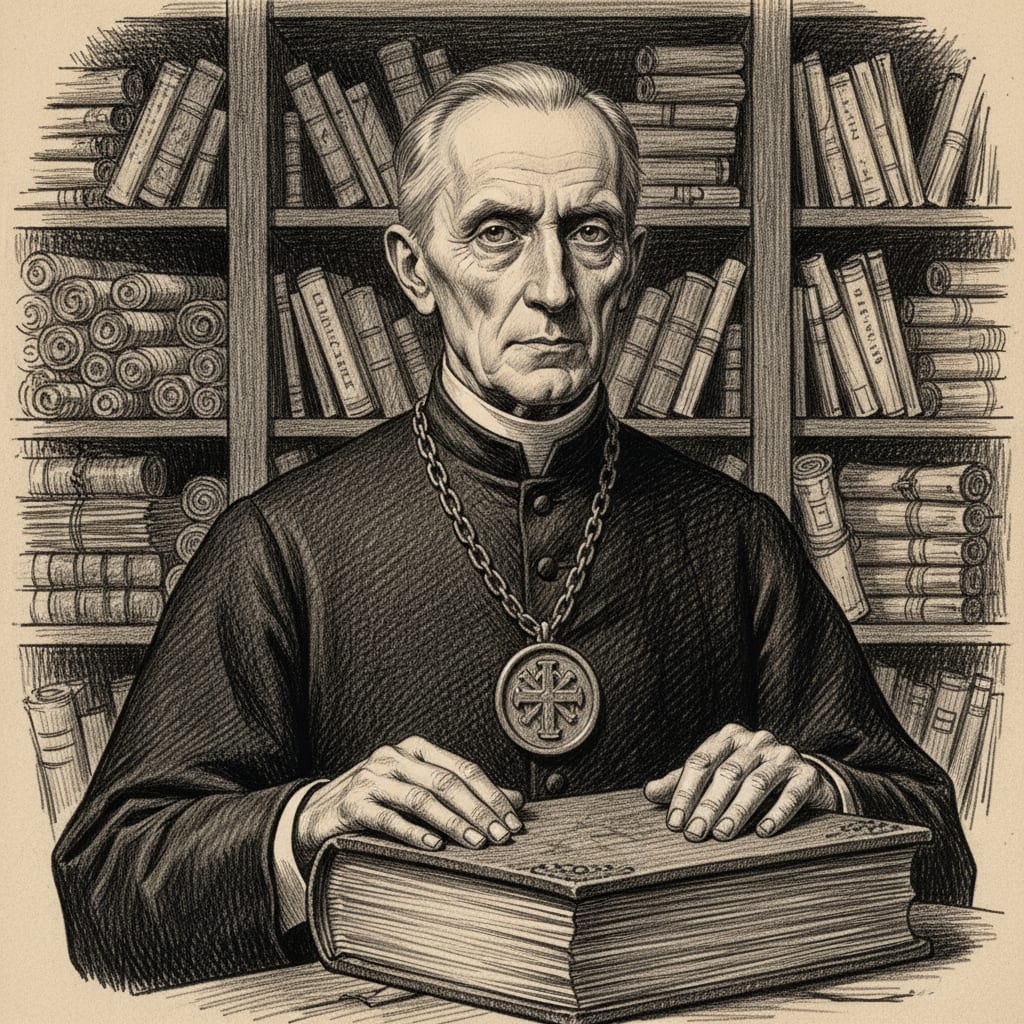
Archon Benedict Veyrault
The Monk Who Made Memory a Weapon
Once a monk of Dijon, Veyrault built the Bureau of Records into the scaffolding of reality itself. Cities he struck from the ledgers ceased to exist. His motto endures — "Nothing is forgotten" — and the faithful repeat it with equal parts pride and terror.
Codex Ref. III.3.02-008

Archon of Records
The hand that opens almost everything, and records what it cannot touch
The Archon of Records opens nearly every lock in the Church's memory, commands the Great Ledger, and preserves one terrifying receipt: proof that some silences outrank even Records.
Codex Ref. XIII.1.07-078
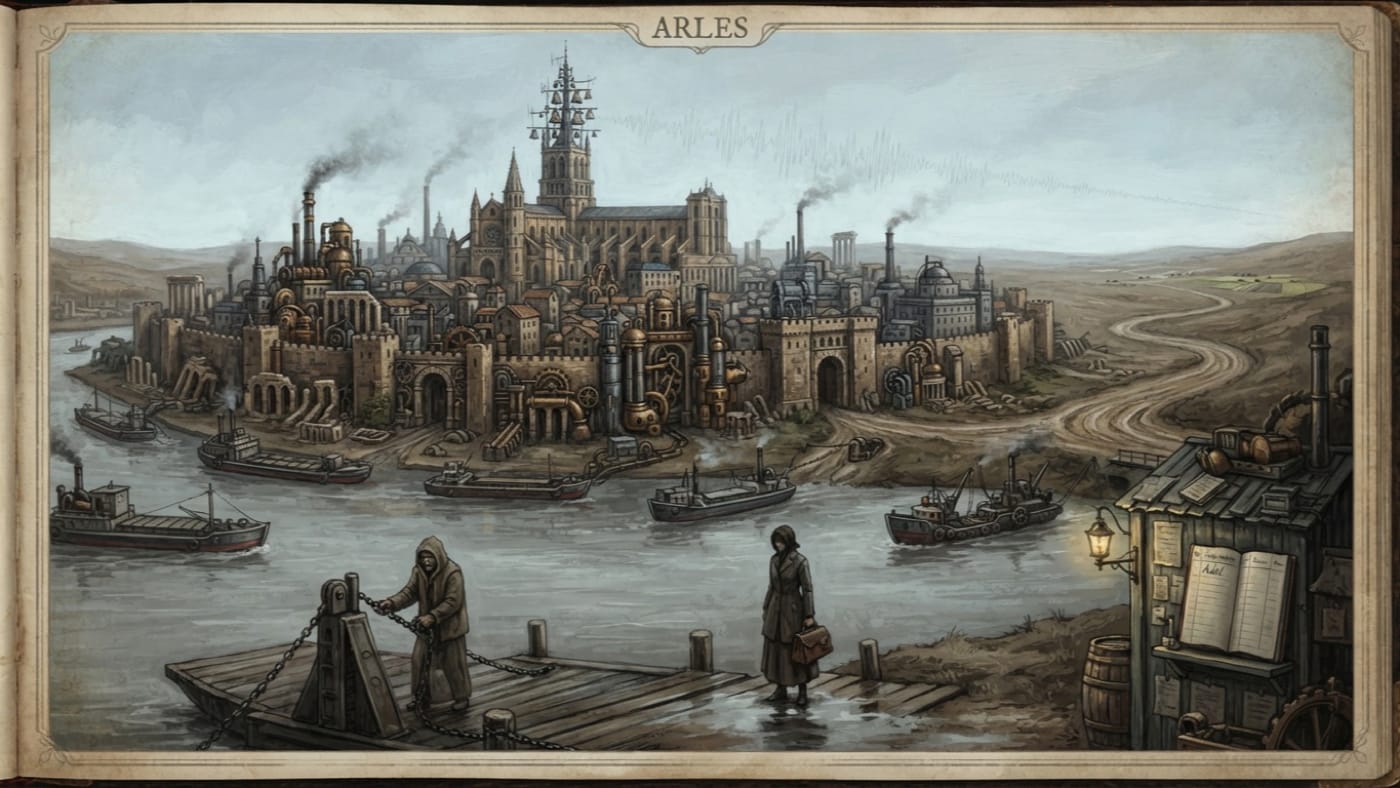
Arles
A town, a diocesan claim, and a name without a destination
Arles stands on the lower Rhône. An undated account gives its diocese fields sixty miles away by bell and ledger; a ferry registry near the town gives Adel no destination. Paper hears further than it explains.
Codex Ref. II.1.08-201
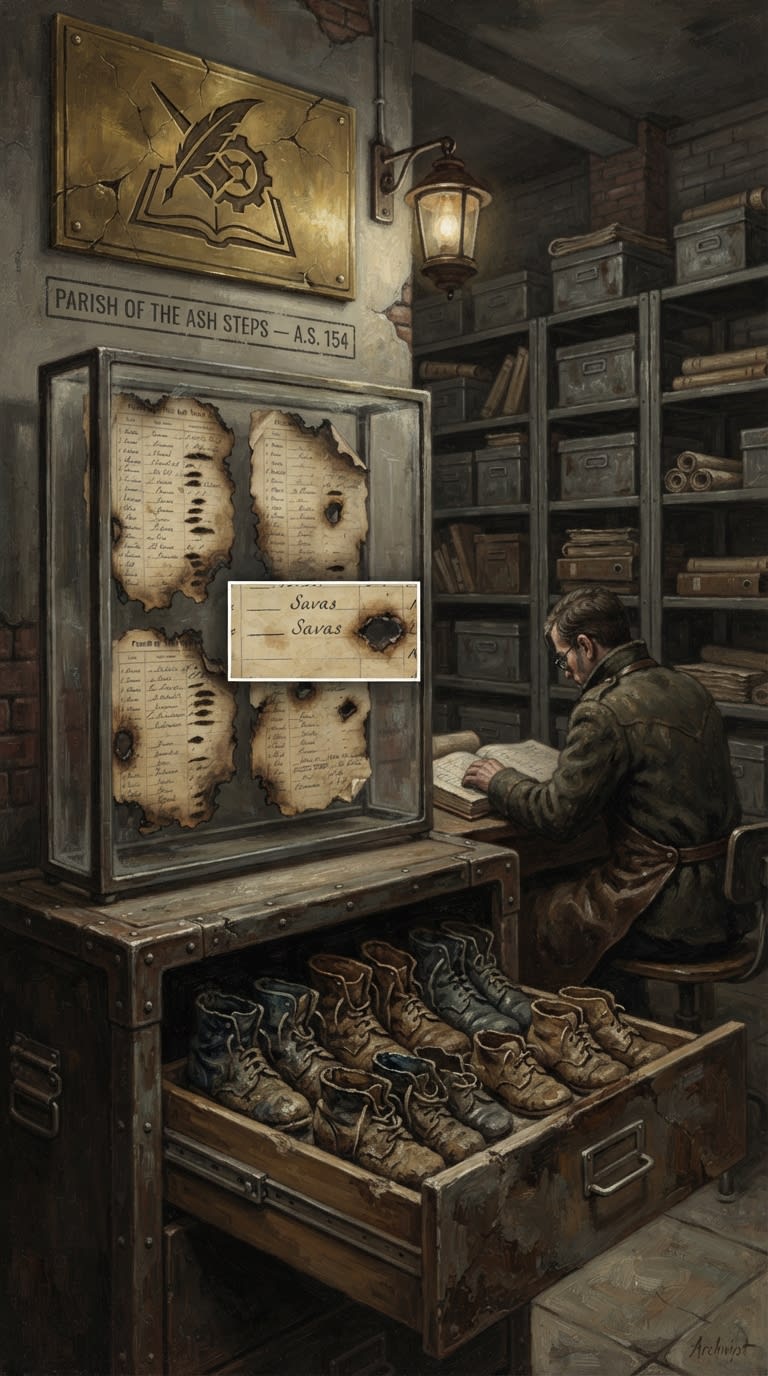
Ash Eleven
Eleven ruled lines, six names, one scorched twin
Eleven Ash Steps infants erased from A.S. 154 levy arithmetic by Mother Sava's registry fire, leaving six names, one scorched twin, and shoes the Ledger cannot file.
Codex Ref. VII.8.10-154

Ash Registrars
The child disappears when the form learns to lie
Pale Kin paper-first faction that frees hidden children by ruining, duplicating, and dulling official records until the Ledger loses confidence in its own page.
Codex Ref. XI.4.01-004
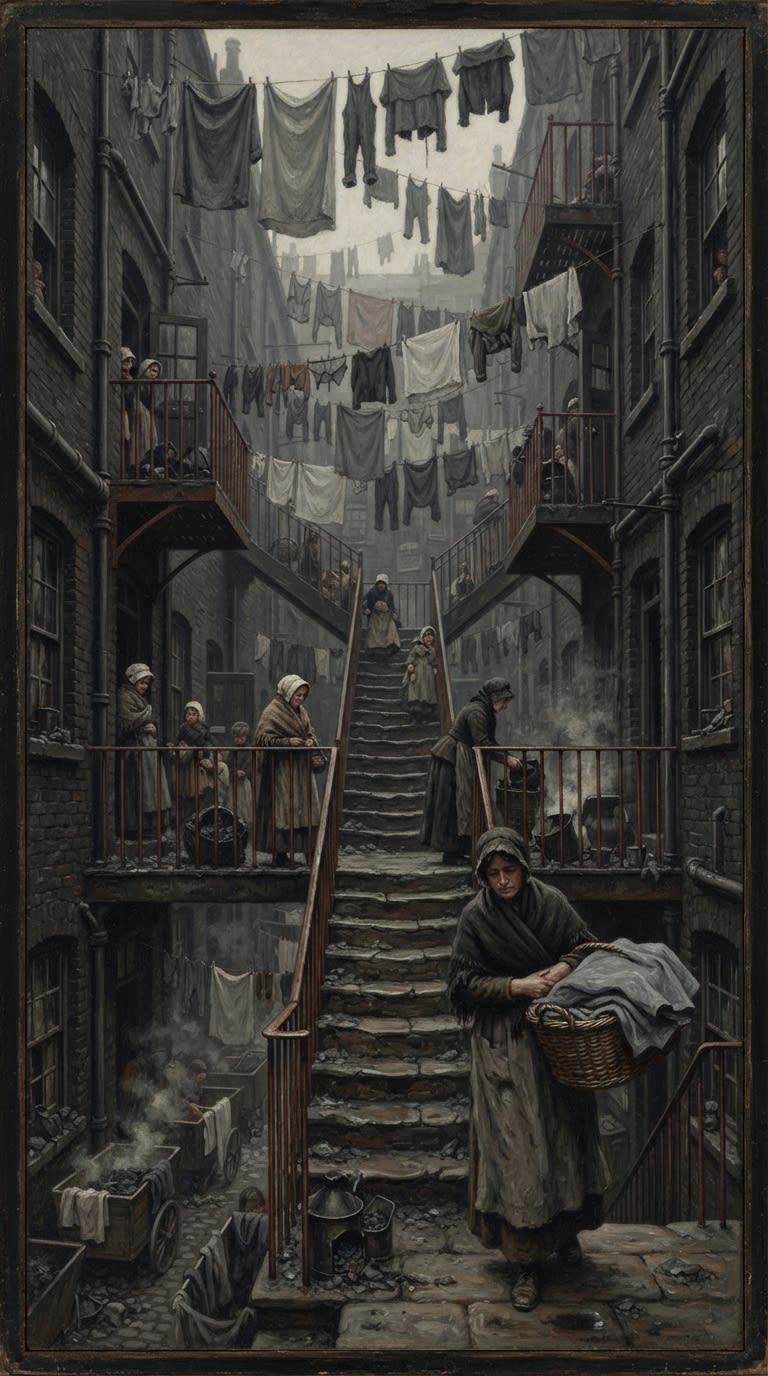
Ash Steps
Where a parish became a method and a roll became ash
The Ash Steps are an unmapped parish-name where laundry, back stairs, milk debts, and a burned A.S. 154 registry taught the Pale Kin that a place can become a method.
Codex Ref. II.2.06-154
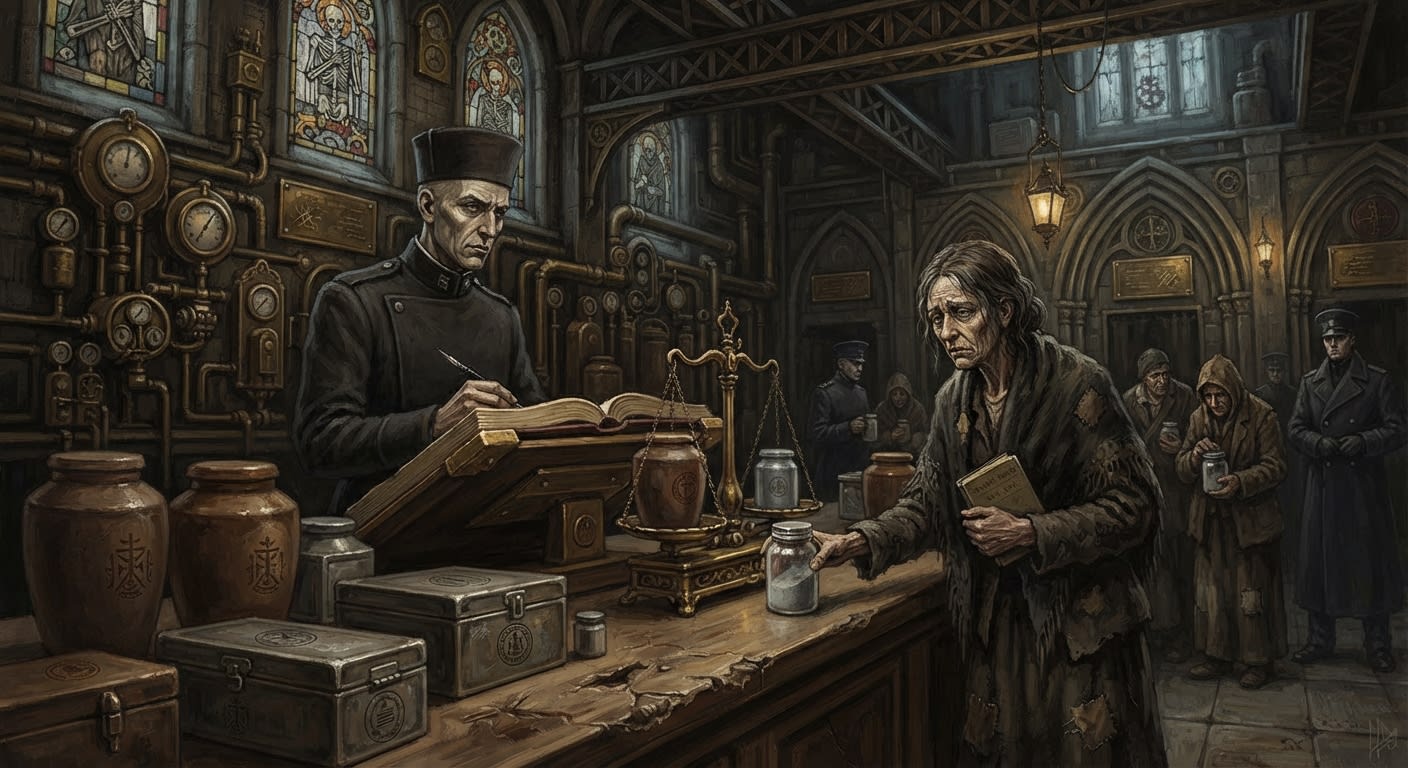
Ash-Credit
The dead are tender once Tithes finds a scale
Ash-credit is the Synod's devotional collateral, converting cremains, saint-dust, and pledged future remains into bread, grace rations, and obligations the dead cannot refuse.
Codex Ref. VI.3.01-002
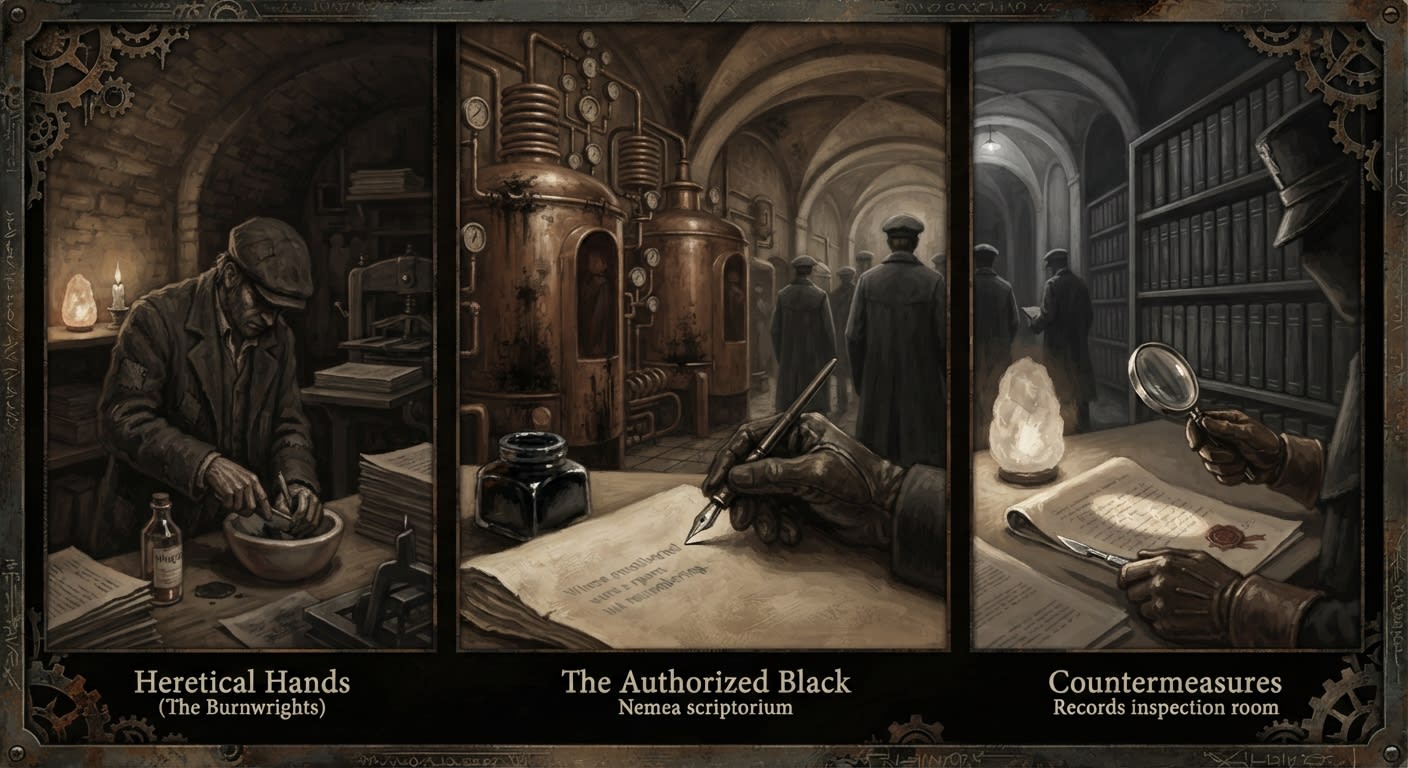
Ash-Ink
The authorized black, and the forgeries it taught to breathe
The lawful black of Nemea and its hanged imitations: ink made from burned authority, relic residue, and the Bureau of Records' dearest mistake.
Codex Ref. XIII.1.96-096
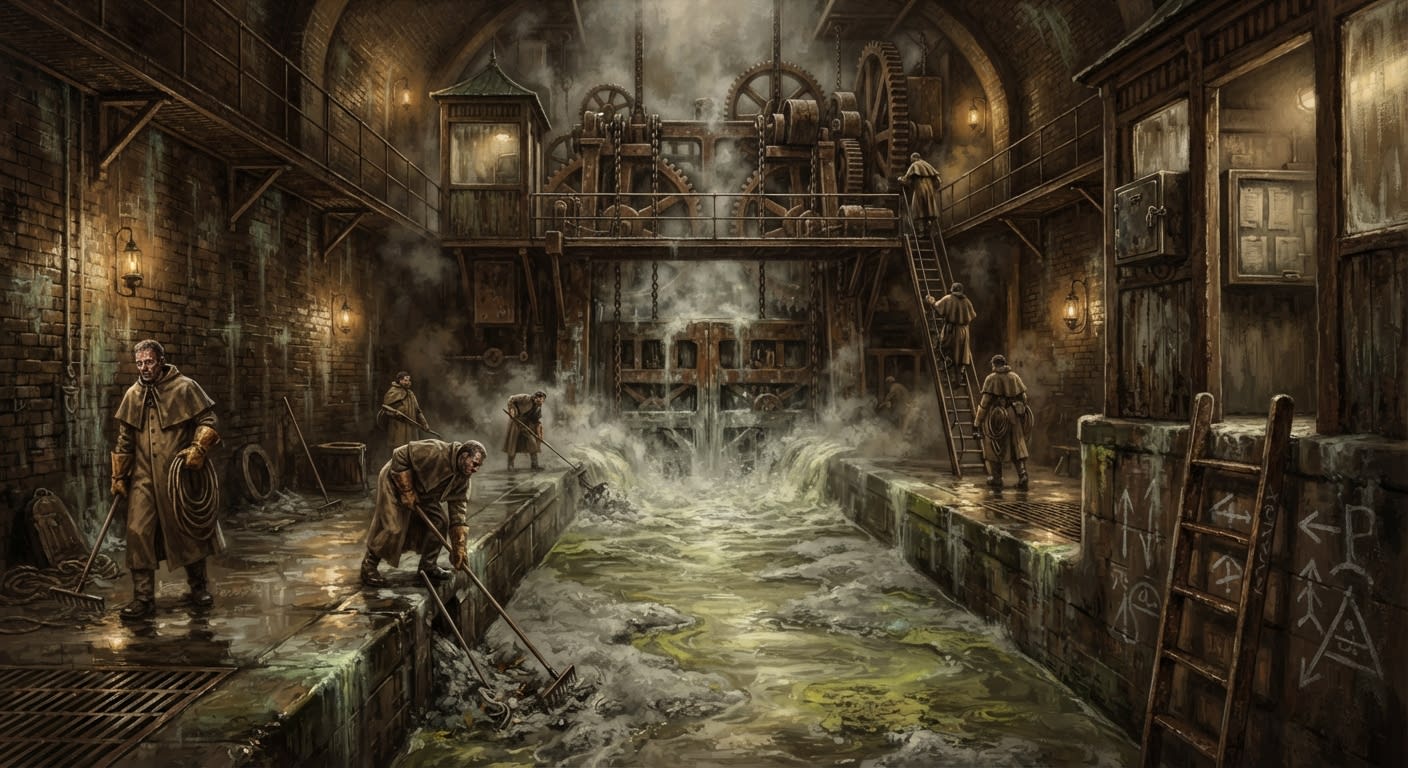
Ash-Sluice Line
Who holds Gate IX holds the water, and therefore everything else
The lowest line of Candle-Sump: soot brick, caustic water, Gate IX's singing gears, and the chart boxes that may govern both flood releases and the harvest of dead names.
Codex Ref. II.1.05-002
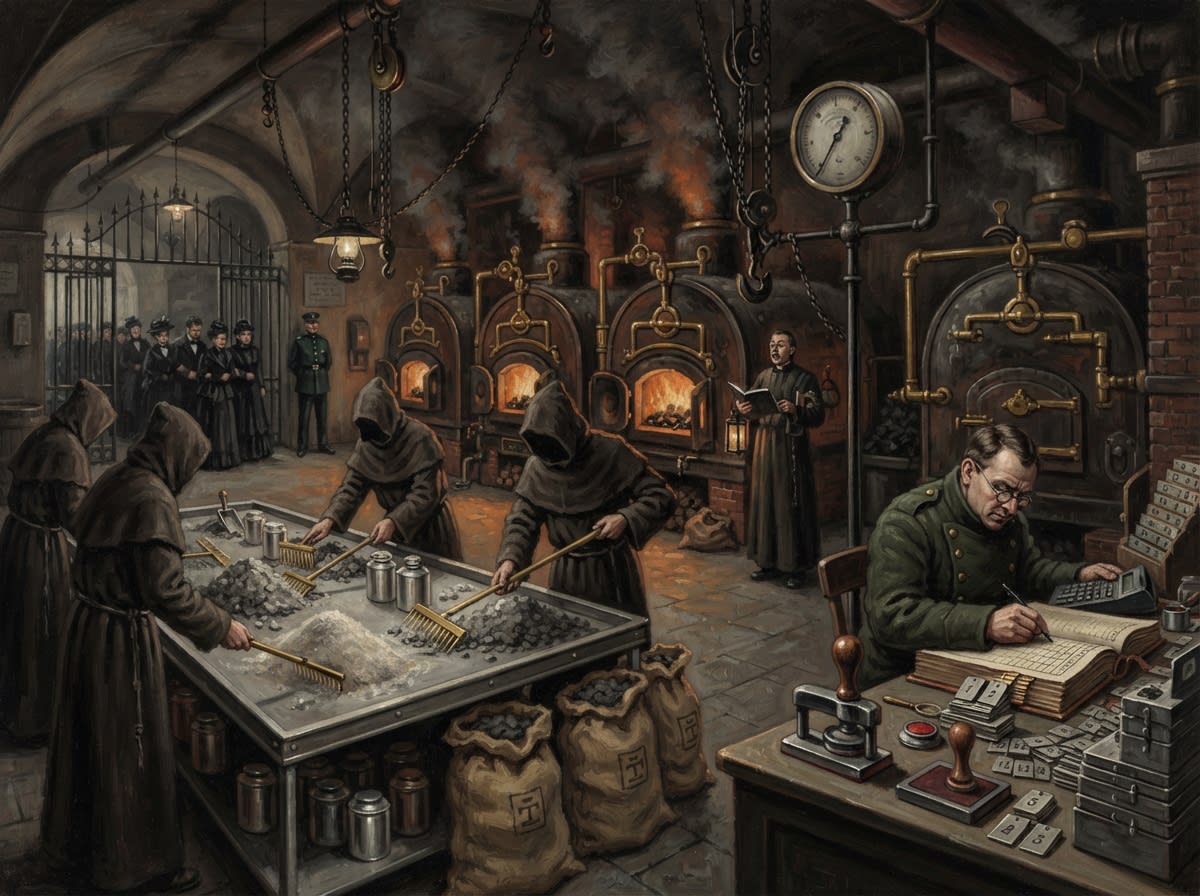
Ashbinders
The dead are sacred, and the receipt is extra
The Ashbinders burn the Synod's dead, sort the ash, sell the comfort, and accidentally perform one of the few procedures that keeps the cemeteries quiet.
Codex Ref. XII.41.01-001

Assay Cloisters
Where coin is taught to confess before its owner is accused
In Sable Court's eastern arc, blind clerks, acid bowls, hymn-forks, and small bells decide whether a coin's face may continue pretending to be lawful.
Codex Ref. II.2.07-003
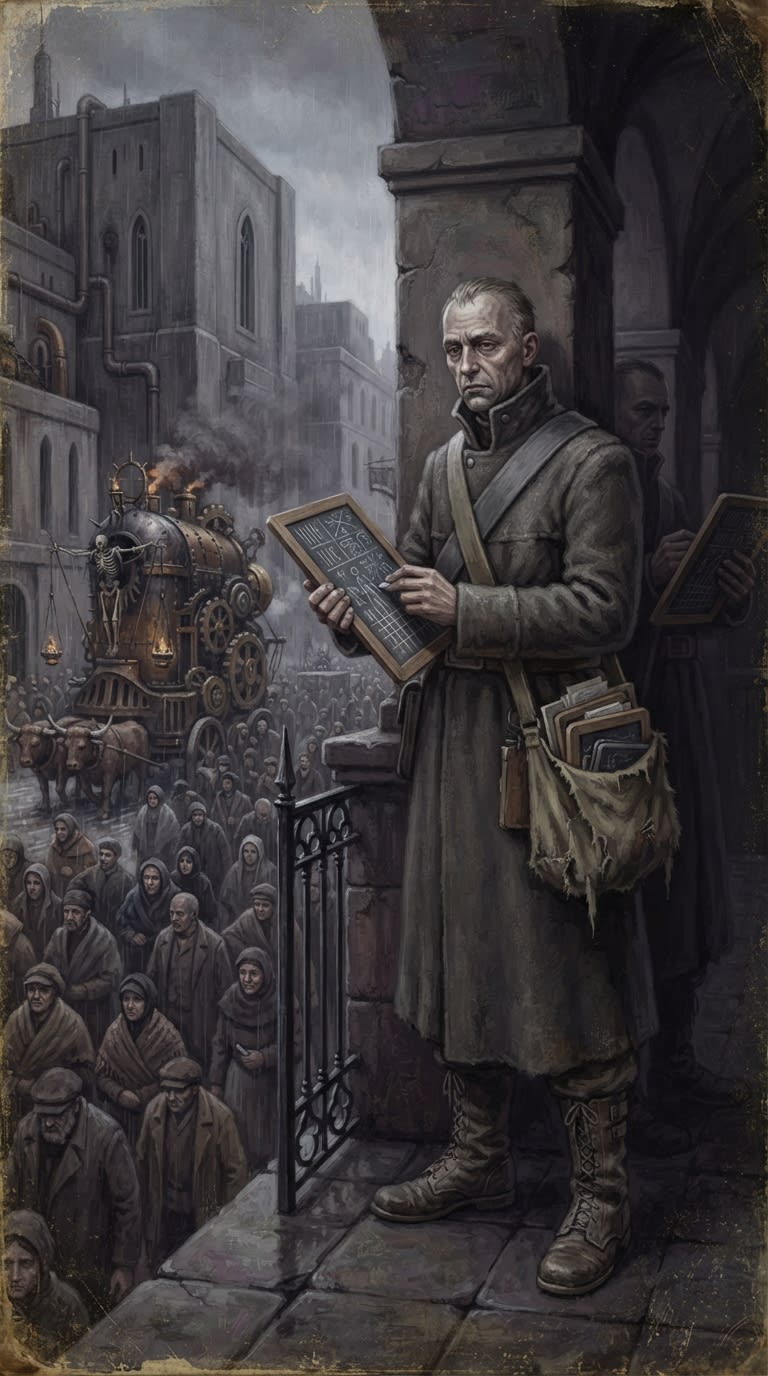
Attendance Auditor
The man at the edge of the square, doing arithmetic on your face
Field intelligence officers of the Bureau of Festivals who count attendance, score public feeling, and prove that Synodal joy has been enjoyed correctly.
Codex Ref. XII.17.04-001
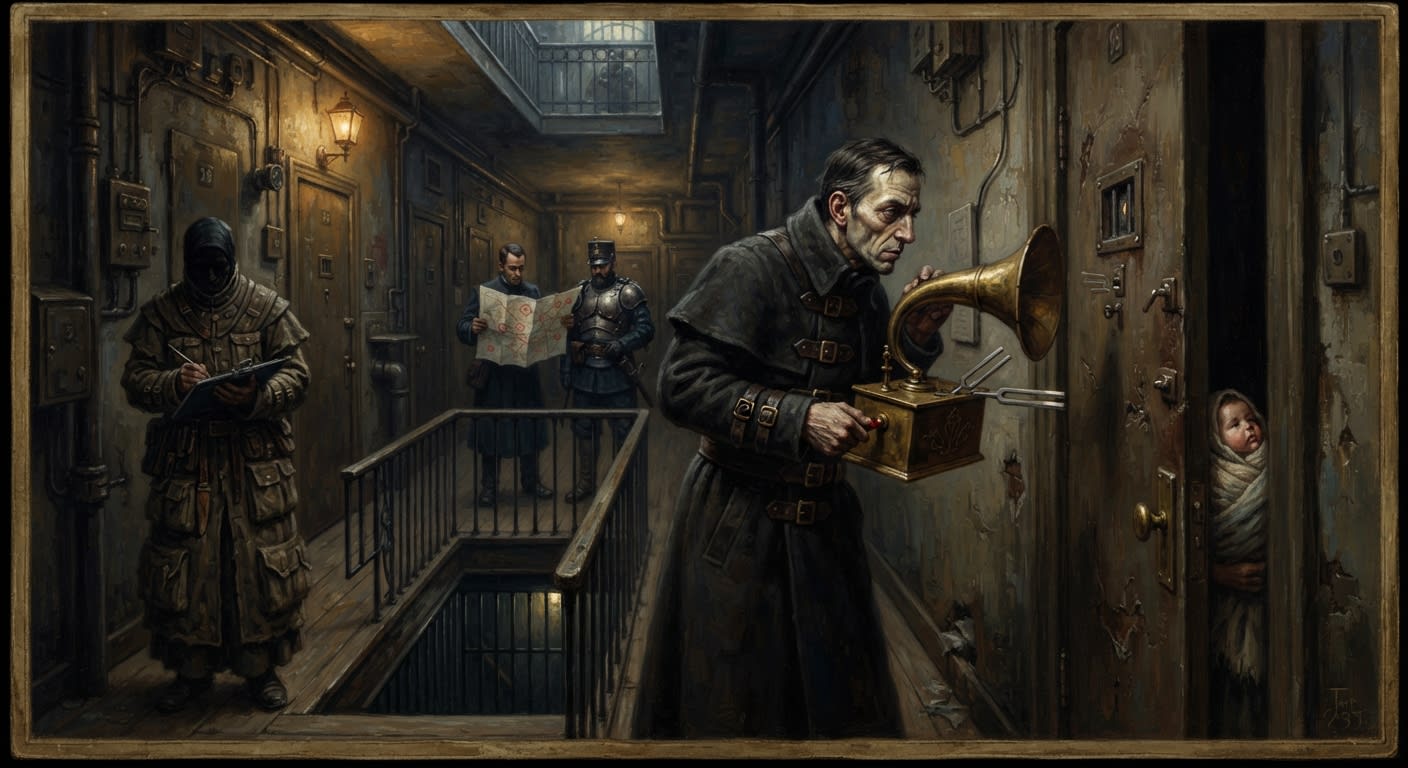
Auditory Heresy
Where recognition is possession and silence has a docket
The Synod's charge for unlicensed sound, where recognition becomes possession, comfort becomes contamination, and a child's sleep can convict a household.
Codex Ref. XIII.1.86-094

Auditory Heresy Division
The crime begins when comfort recognizes itself
The Bureau of Orison and Song's enforcement division for melody crime, built from ruined broadcast ears to provoke, record, and prosecute recognition itself.
Codex Ref. XII.48.01-096
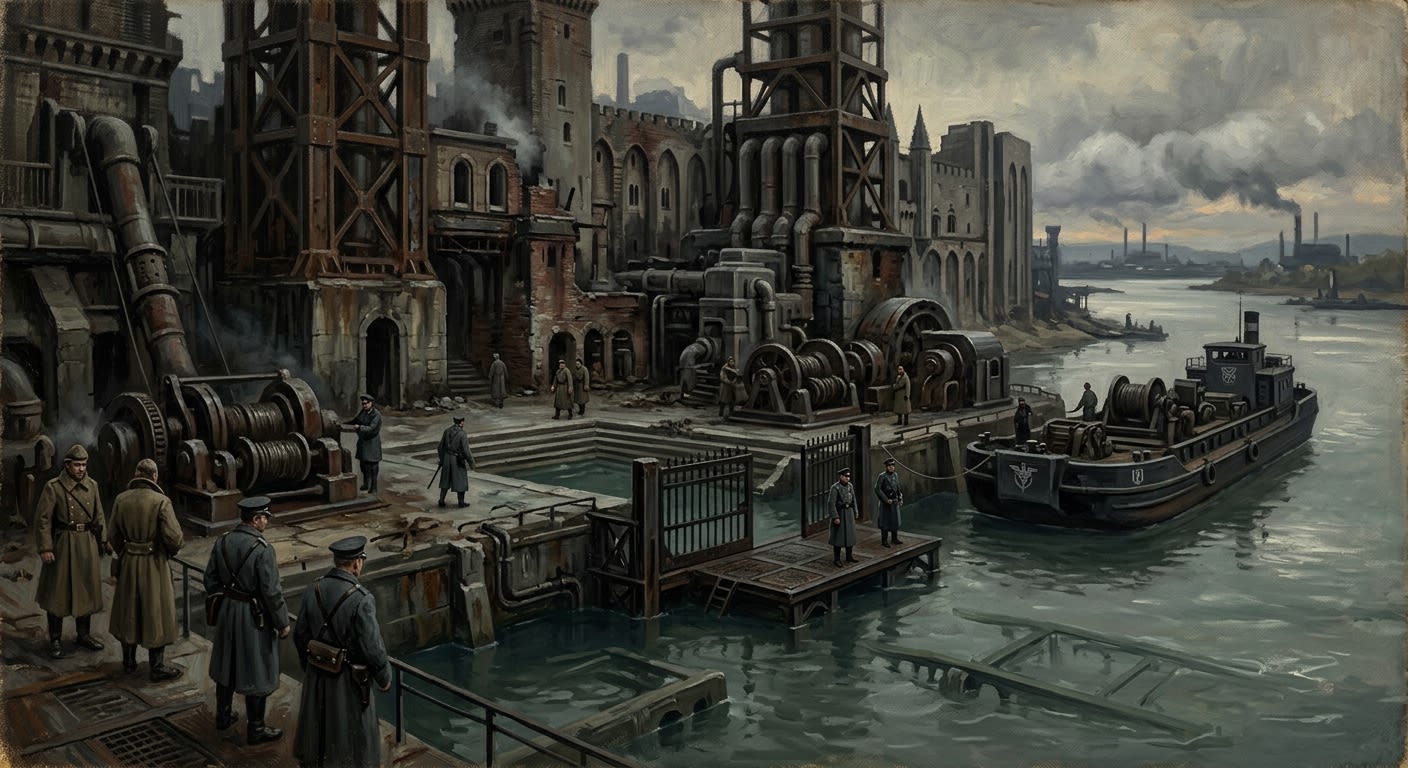
Avignon
A city corrected so thoroughly the river kept the receipt
Penitential ruins on the Rhône, where the Pontifex Submersis was crowned beneath water in A.S. 111, Avignon was razed into correction, and A.S. 145 burned the calendars into agreement.
Codex Ref. II.1.08-111
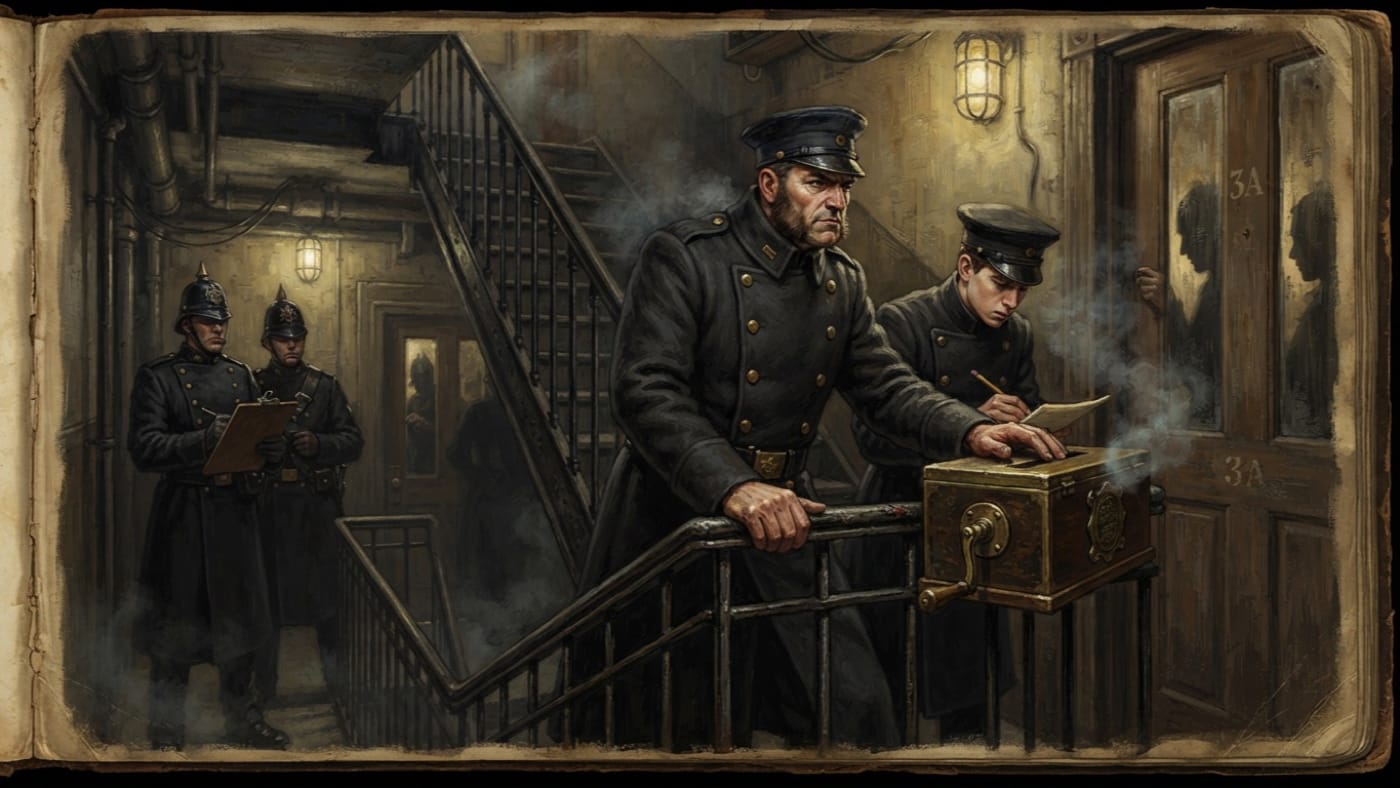
Bait-Cadence
The box plants a tune; the clerk harvests guilt
Orison's provocation method: a broken fragment of forbidden melody exposes recognition, turning a flinch, a corrected rhythm, or a sleeping infant into evidence of Melody Intent.
Codex Ref. XIII.1.87-201
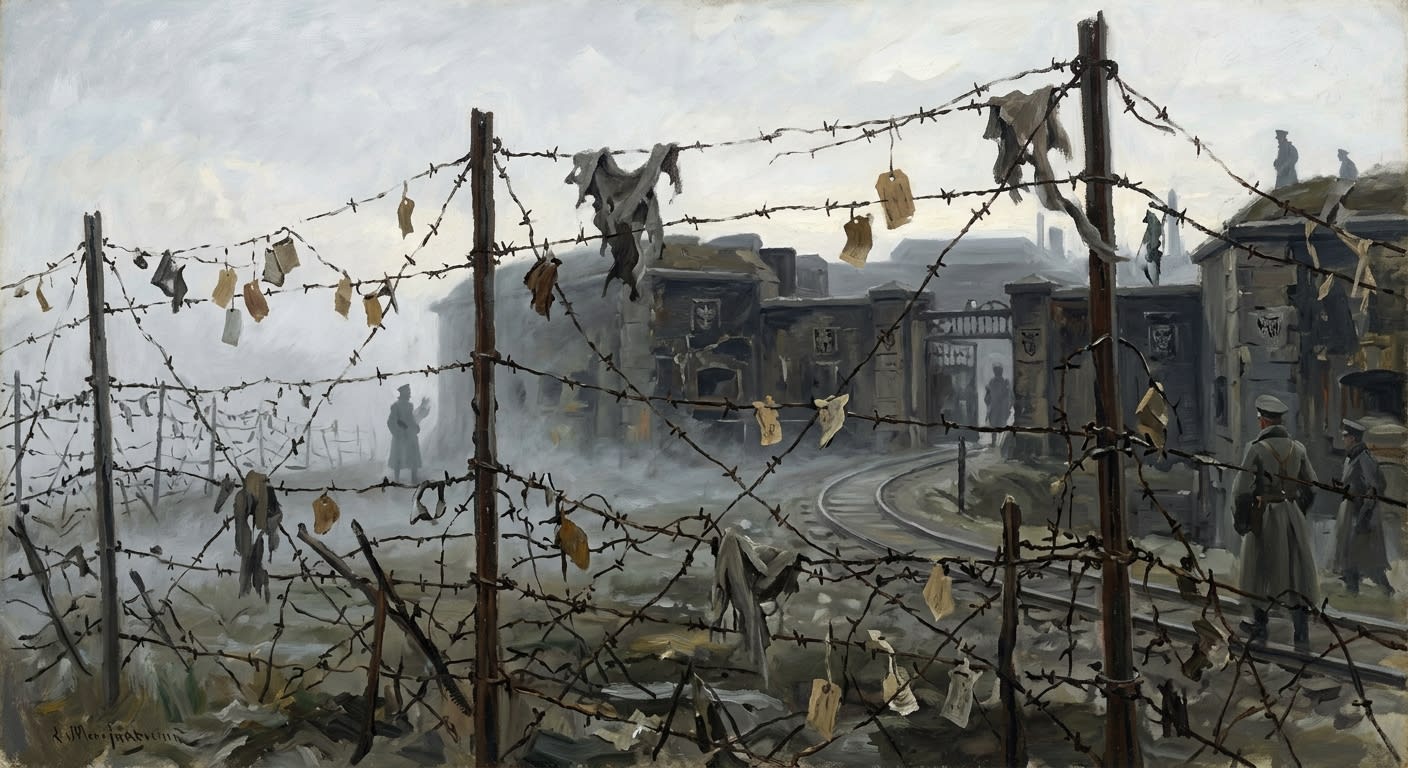
Bastion-Przemyśl
The Wire Remembers What the Ledger Forgets
The Wire Orchard at the Carpathian arc: three miles of electrified barb, a ration-tag economy, and the cold arithmetic of the dawn harvest. What enters Bastion-Przemyśl is processed. What exits is stamped. What fails the stamp feeds the Orchard.
Codex Ref. II.4.07-003
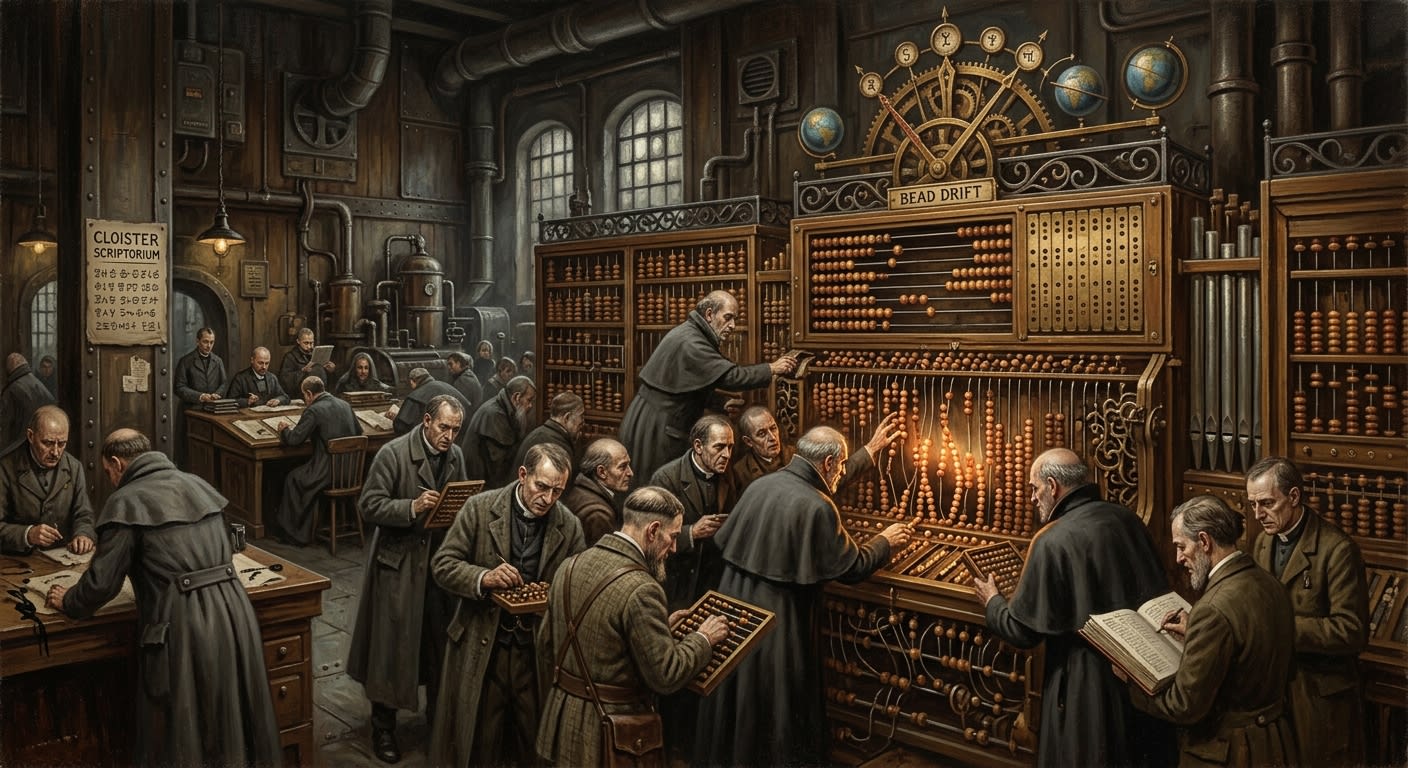
Bead Drift
The count moves, and Records bills the correction
Bead Drift is the Cloister's forbidden arithmetic: strings warm, names return, counts alter, and Records writes handling deviation over the sound of beads counting back.
Codex Ref. XIII.1.72-004

Bellwarden
Chained by the wrist to the Synod's schedule, he rings a war he will never be permitted to understand.
Eleven thousand four hundred souls chained by the wrists to a Synod schedule they did not write, ringing a war they cannot explain, in service of a theology their bells increasingly refuse to perform.
Codex Ref. XII.2.01-001
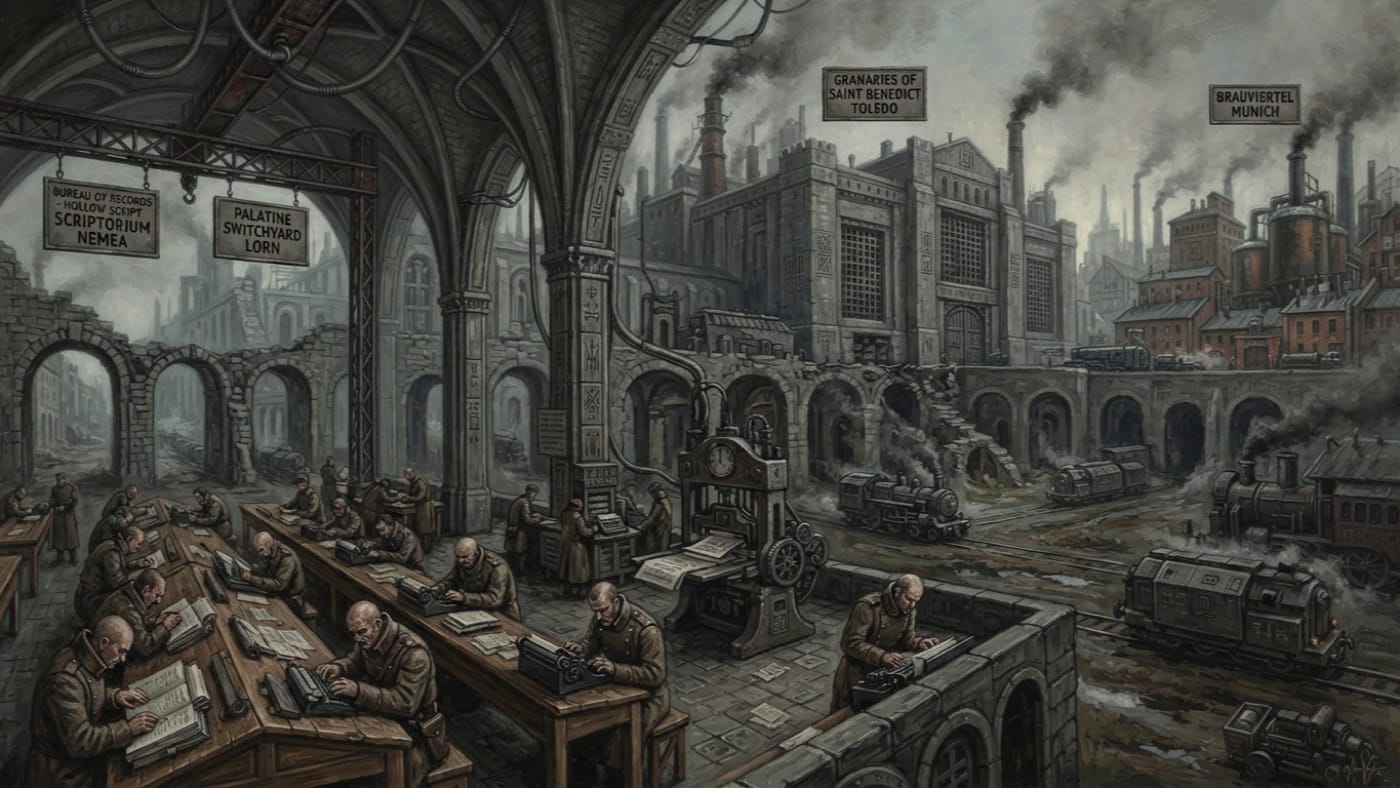
Benedictine
Property Dispersed, Name in Circulation
Benedictine houses trained Veyrault and left traces in Nemea and Lorn. Toledo claims their charity; Munich claims their yeast. Neither claim supplies me with a surviving order.
Codex Ref. VIII.9.02-244
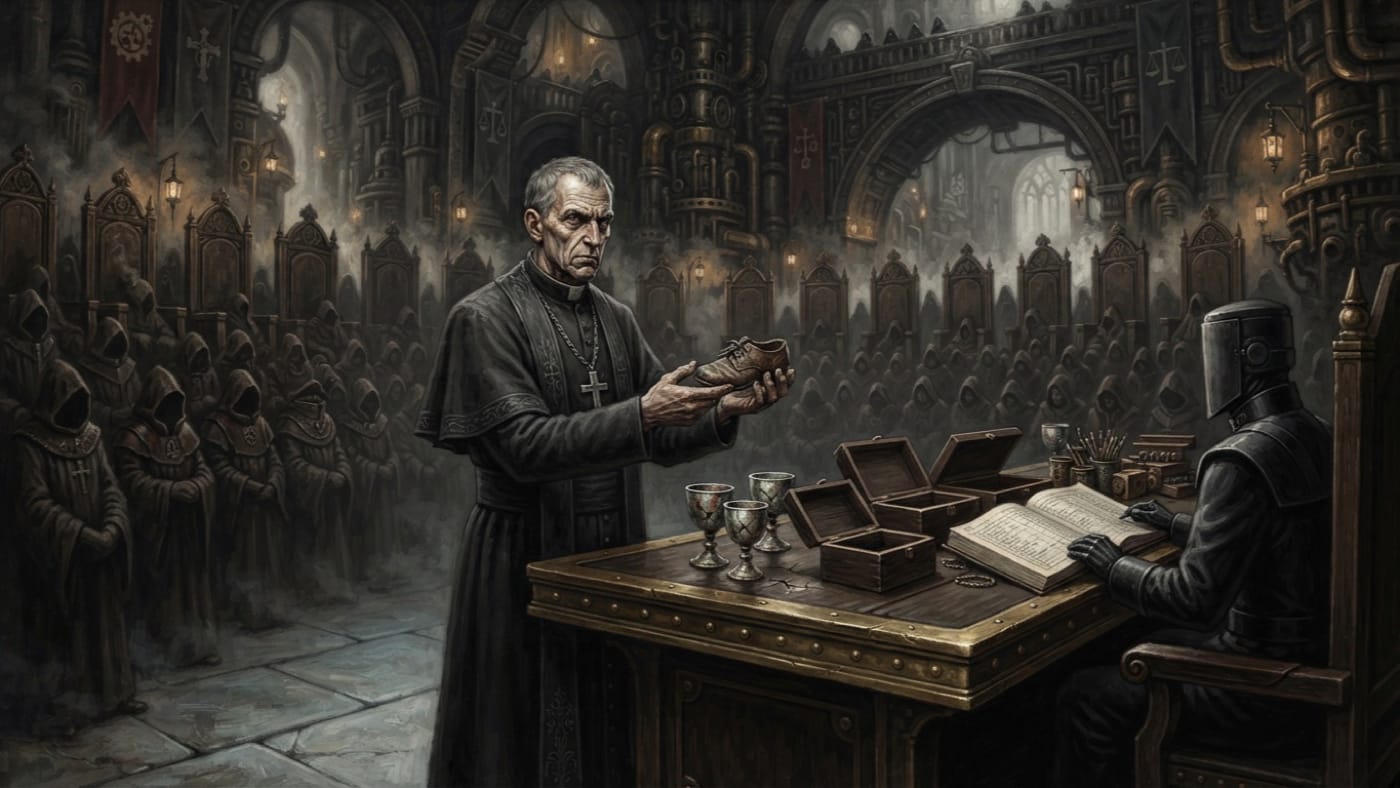
Bishop-Praetorial Lanfranc of Trier
A child's shoe before the Thrones, a bill afterward
Bishop-Praetorial Lanfranc of Trier challenged the Meta-Levy for seventeen dioceses in A.S. 138. His child's shoe moved the Thrones; the Fiscal Census moved the ruling.
Codex Ref. III.2.01-138
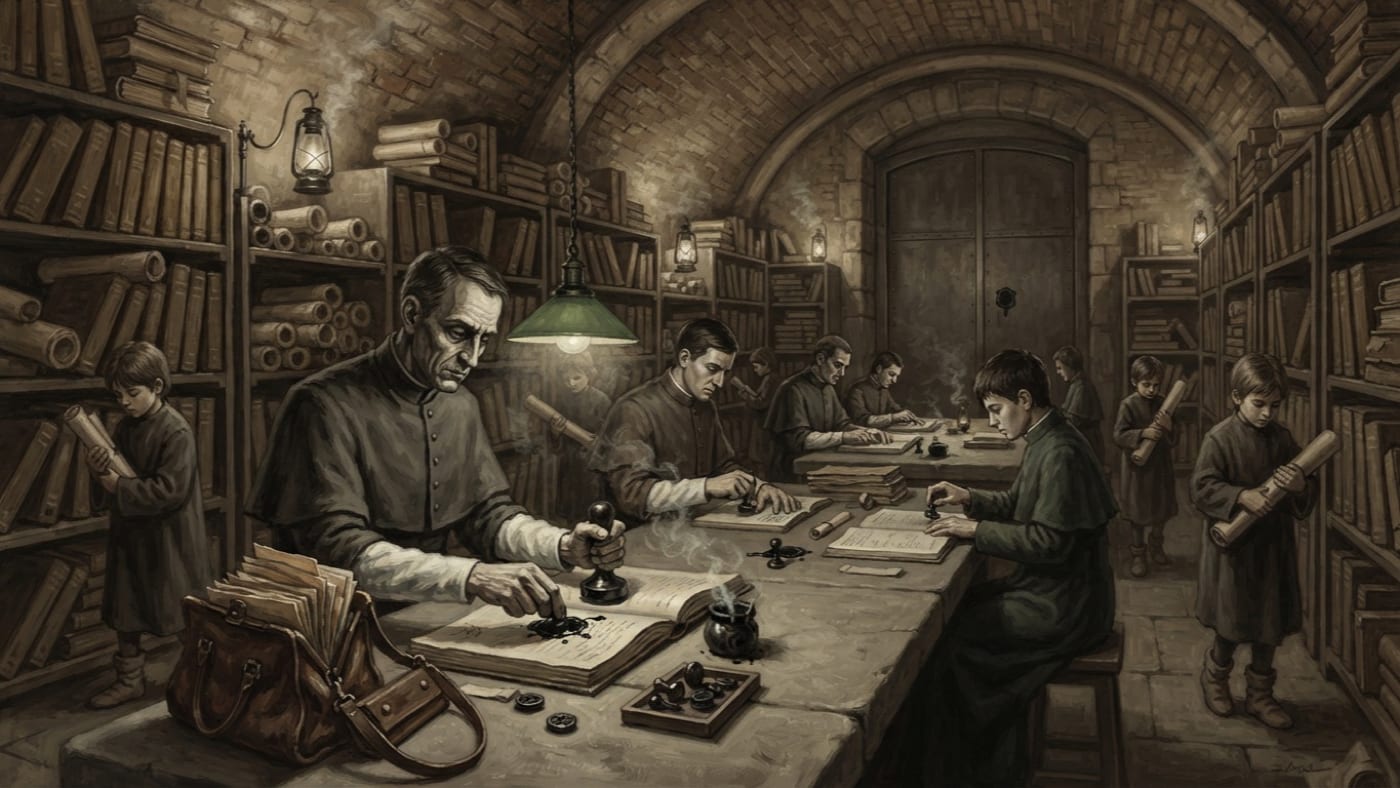
Black Seal Annex
The citizen loses everything. The file loses nothing.
Beneath Strasbourg's Records house, the Erasure Notaries keep every file behind a vanished citizen. The citizen loses everything; the Annex loses nothing.
Codex Ref. XIII.1.70-002
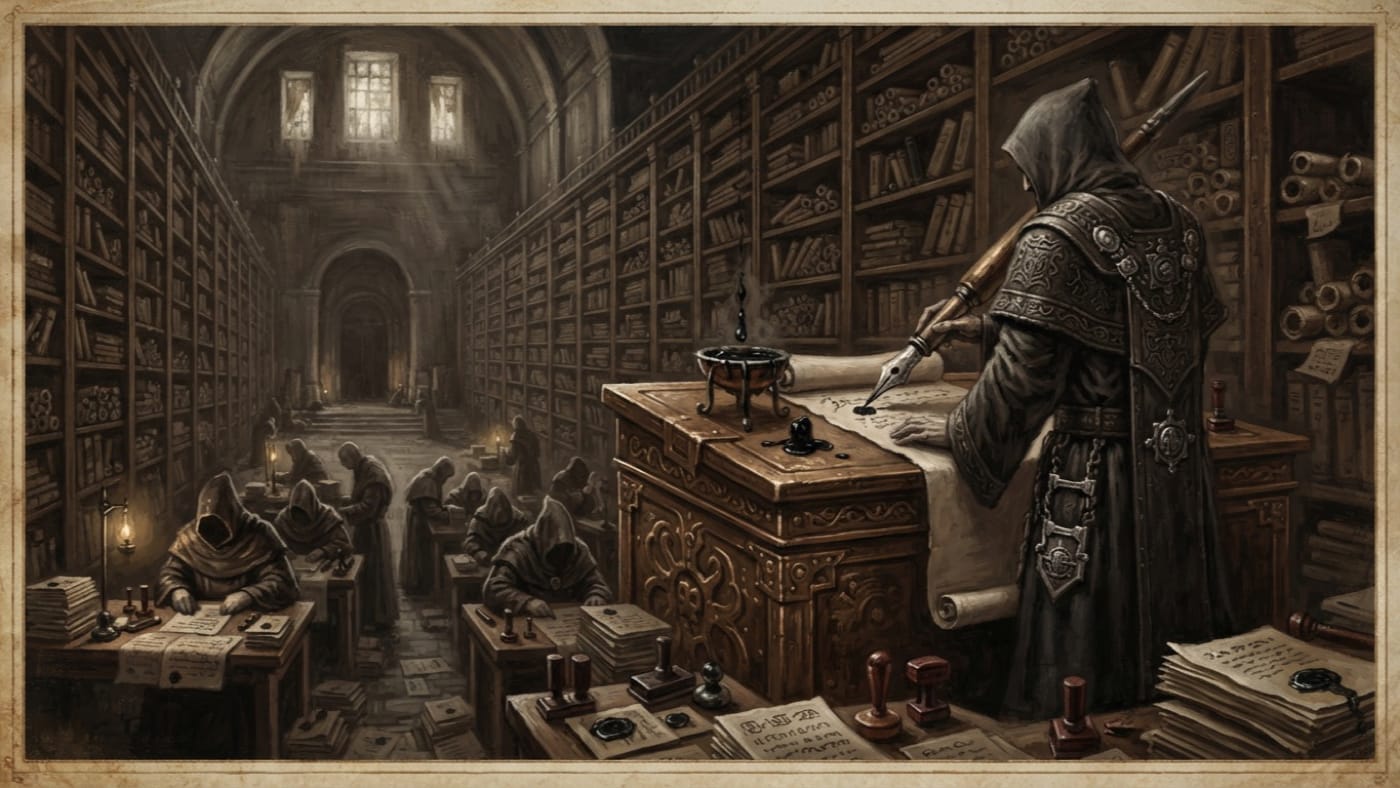
Black Seal Prelate
The Notary signs the strike; the summit decides whose signature survives.
The summit of the Office of Nullity's hierarchy: rarely seen, feared by every Erasure Notary, and capable of ruining one with a signature. The station is attested; the incumbent remains outside the public rolls.
Codex Ref. XIII.1.70-002

Blood-Kin Purists
The family tree, sharpened into a smuggling route
Conservative Pale Kin faction insisting hidden children be placed with blood relatives, preserving family memory while making Purity's kinship charts dangerously useful.
Codex Ref. XI.4.01-002

Bloodline Hawks
A clean name cannot silence the family the child remembers
The Bloodline Hawks distrust clean names: Registrars and Root assessors who turn inherited gestures, forbidden songs, and remembered parents into lineage flags.
Codex Ref. XI.1.05-002
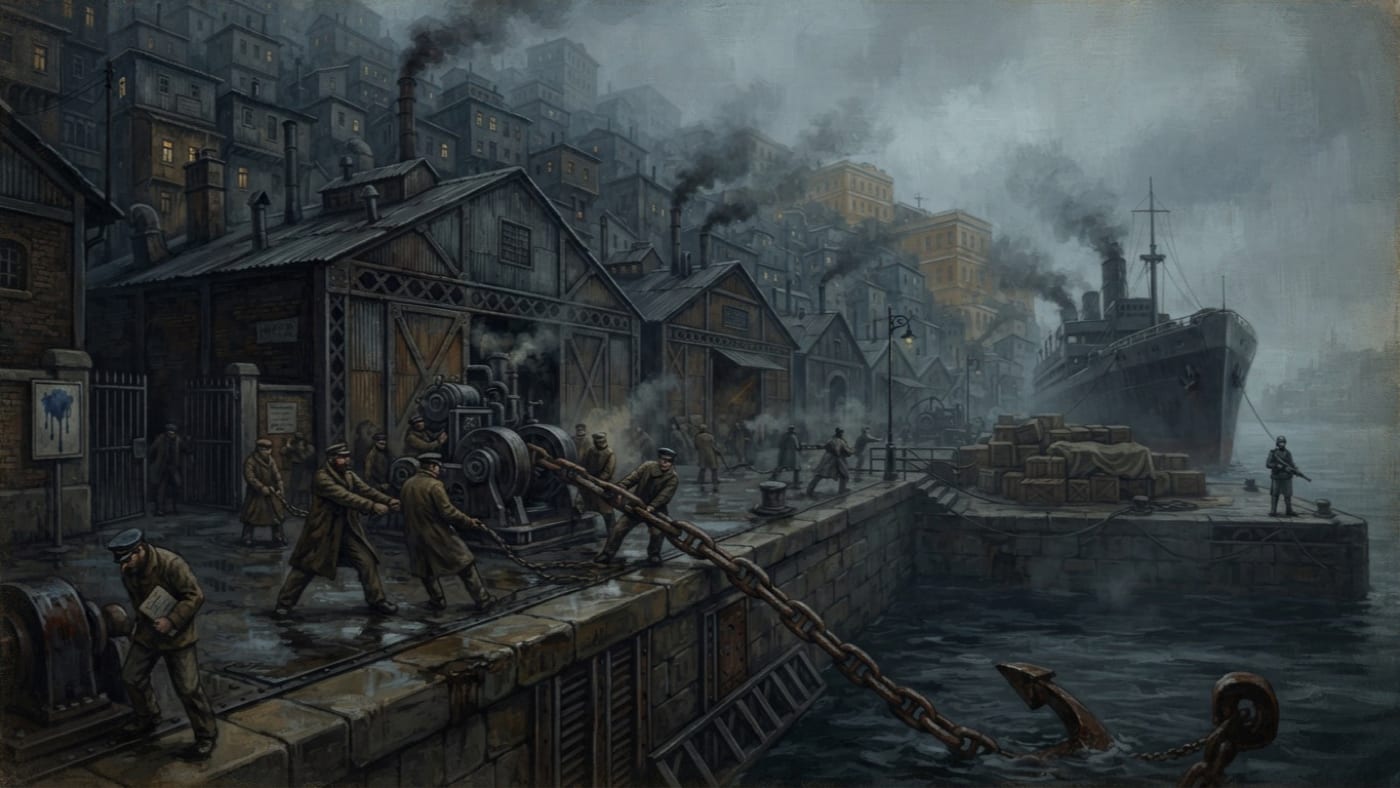
Blue ledger zone
Residence is permission to be counted
Blue registers the Harbor of Chains households for residence, rations and tithe. The permit supplies lawful standing; it leaves passage to another stamp.
Codex Ref. XIII.1.93-288
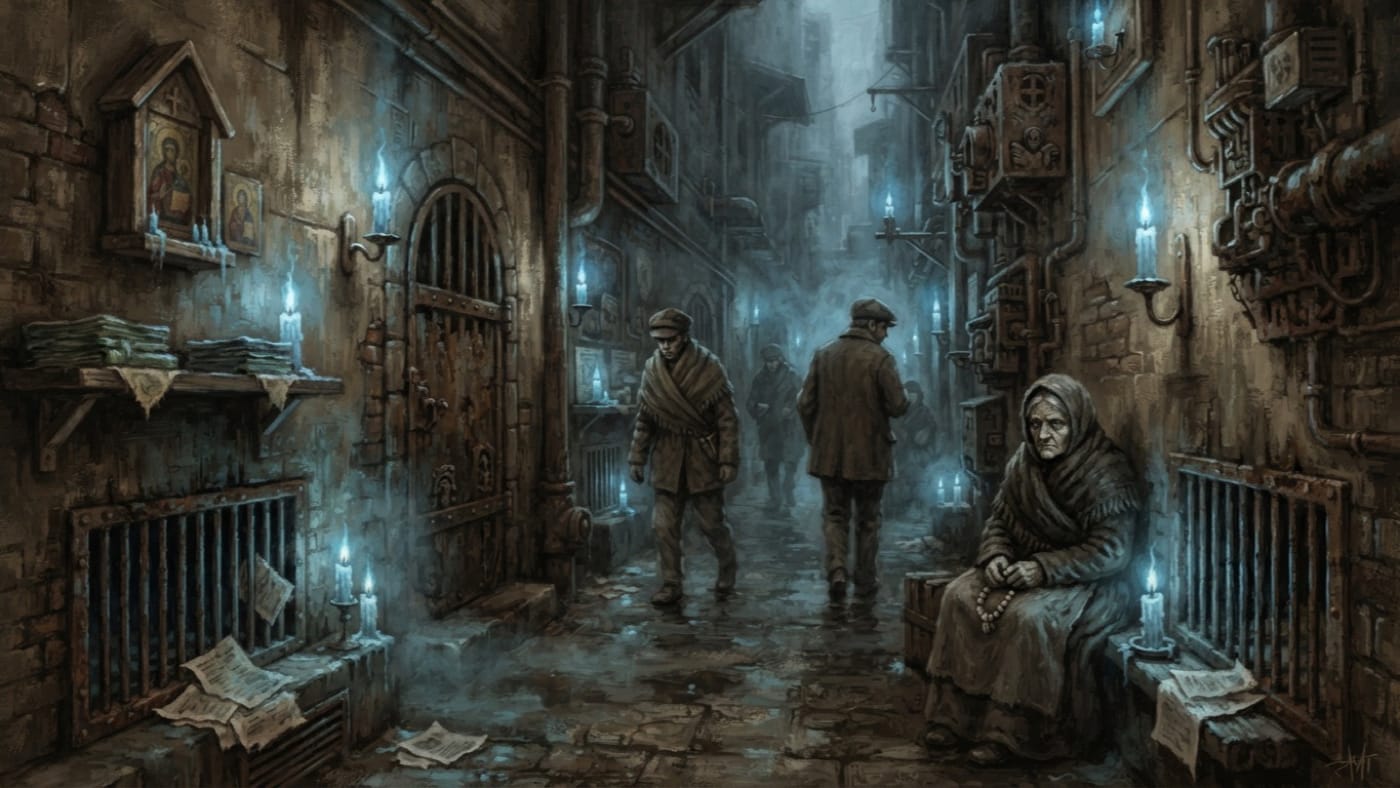
Blue-Burn Phenomenon
A candle changes colour; a neighbour supplies the name
Near Candle-Sump's crypt mouths, tallow candles reportedly burn blue. I cannot certify the cause. I can record the silence that follows, and the neighbour whose report sends a resident to doctrinal health assessment.
Codex Ref. VII.8.10-287
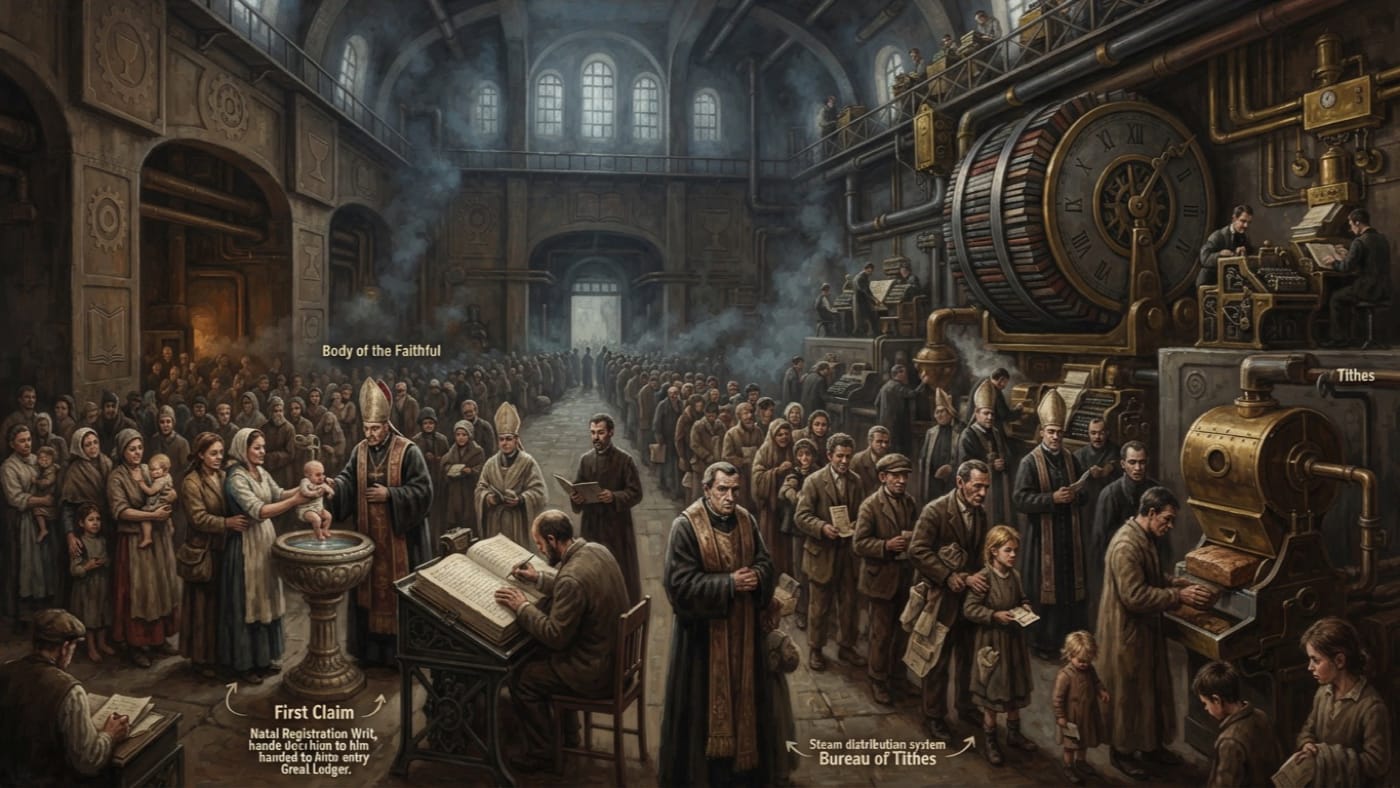
Body of the Faithful
Devotion warms the flock; recognition takes its pulse
The Church's faithful taken together: shepherded by bishops, recognised through the Ledger and claimed before the font. The flock receives bread; the accounts remember what it owes.
Codex Ref. XIII.1.03-201
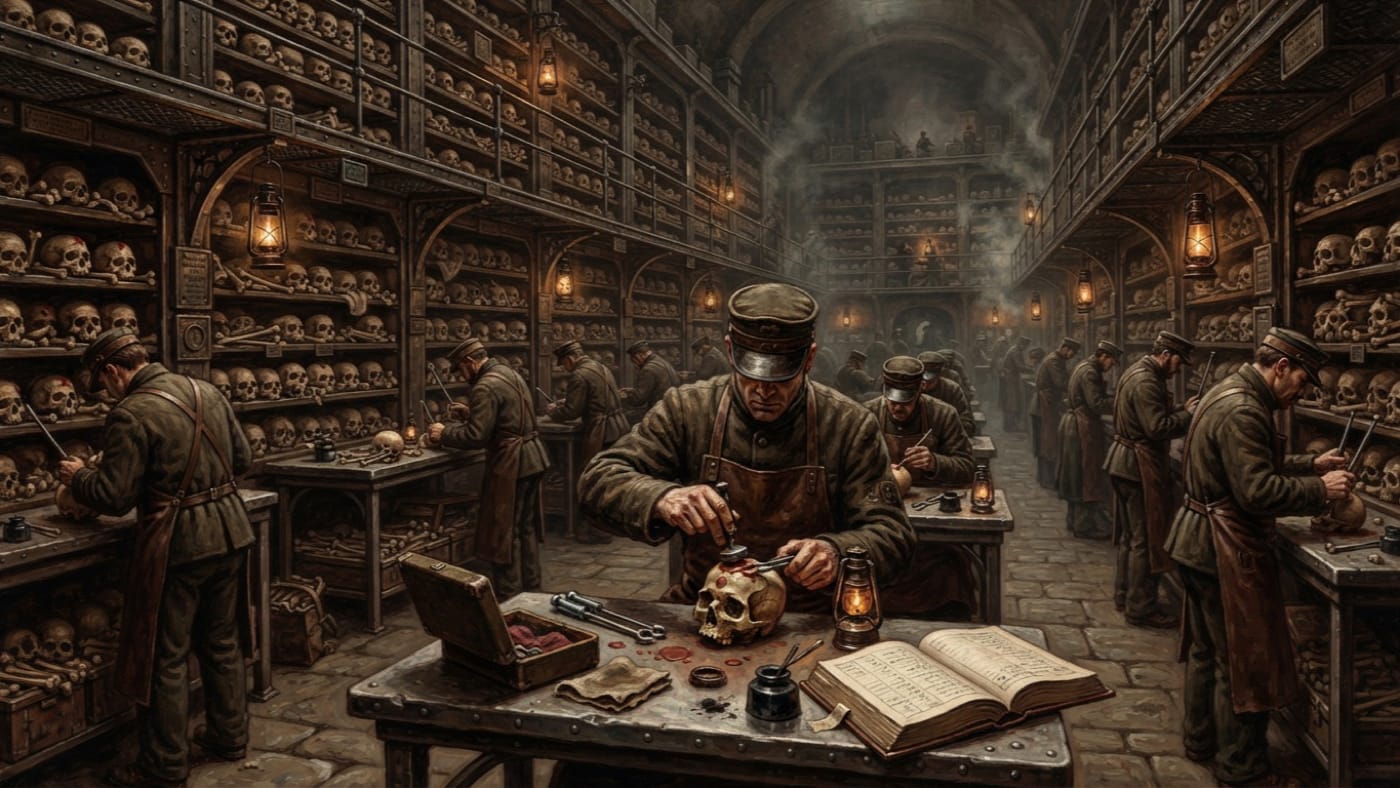
Bone-Stamp
The impression passes audit; the corridor gives its own verdict
The bone-stamp certifies that remains were received, catalogued, prayed over and placed. The Bureau audits the impression; the corridor judges whether it holds. Drax surveys the procedure in A.S. 201.
Codex Ref. VI.2.02-001

Bone-Tag Arcade
The dead require a receipt; the living require permission
The counters of Candle-Sump certify the dead and hold the living's papers in suspense. Chief Clerk Dalen Voss commands the seals; behind him, a second press reissues names harvested from the crypt drafts.
Codex Ref. II.1.05-003

Bone-Tag Registry
Counting the dead, with jurisdiction over the living
Candle-Sump's Records adjunct fastens names to the dead, holds the living's papers as collateral, and honours clean slips drawn from the crypt drafts. Chief Clerk Voss calls this counting.
Codex Ref. VIII.1.05-001
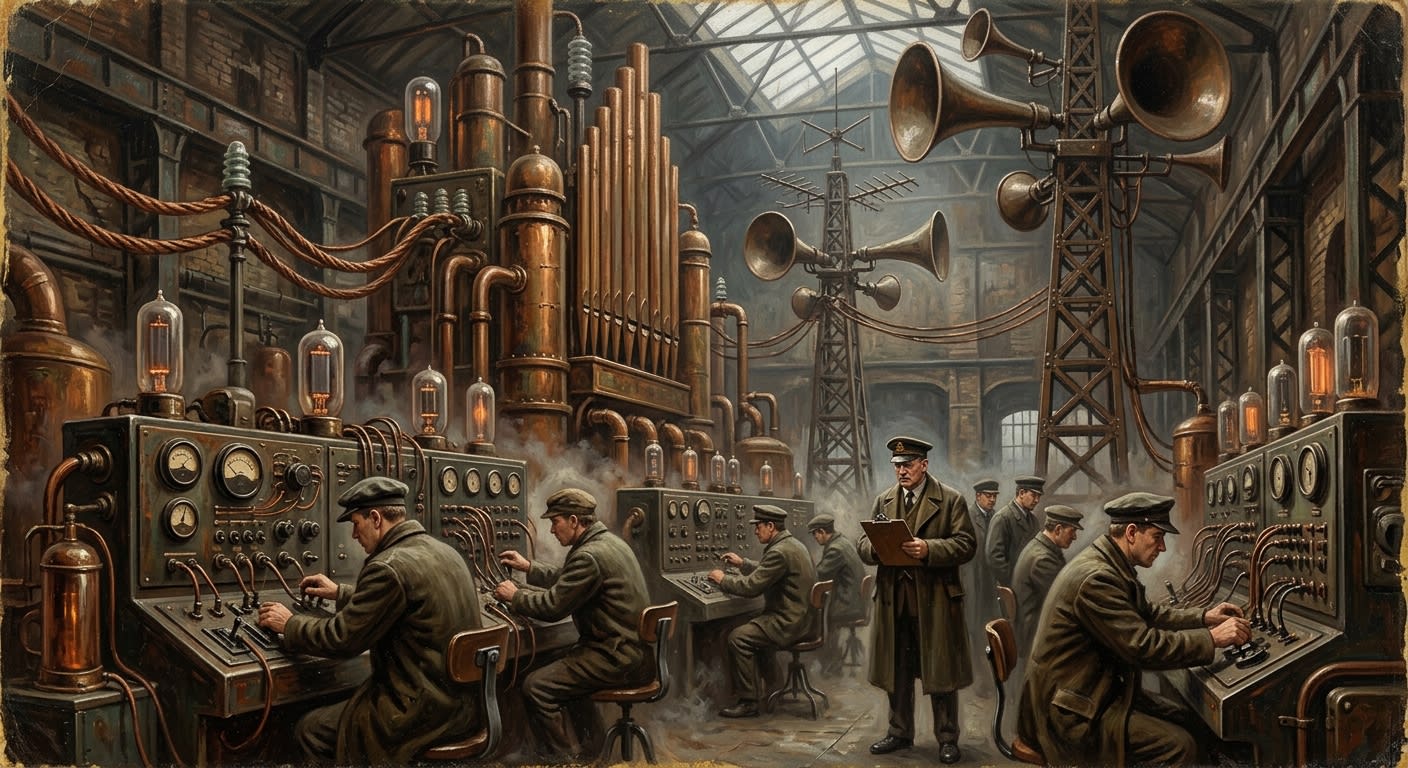
Broadcast Directorate
The long throat that makes distance obey
The Broadcast Directorate is Orison's long throat: saint-dust, copper, coercion, and daily prayer made into empire-wide reach.
Codex Ref. VIII.6.02-092

Brother Paweł Nowak
Four consecrated days, three turns, and a broken pull
Carmelite novice and youngest of the forty-seven clergy drowned in the A.S. 18 Night of Knives, remembered for an unfinished sign of the cross.
Codex Ref. III.2.01-088

Budapest
The city the Danube cut in half, and the half that watches back
The largest city in the forward heartlands and the principal staging hub of the Central Corridor. 850,000 souls on the western bank, and something unaccounted for on the eastern. The Danube runs between them like a sentence the Bureau started and declined to finish.
Codex Ref. II.4.09-009
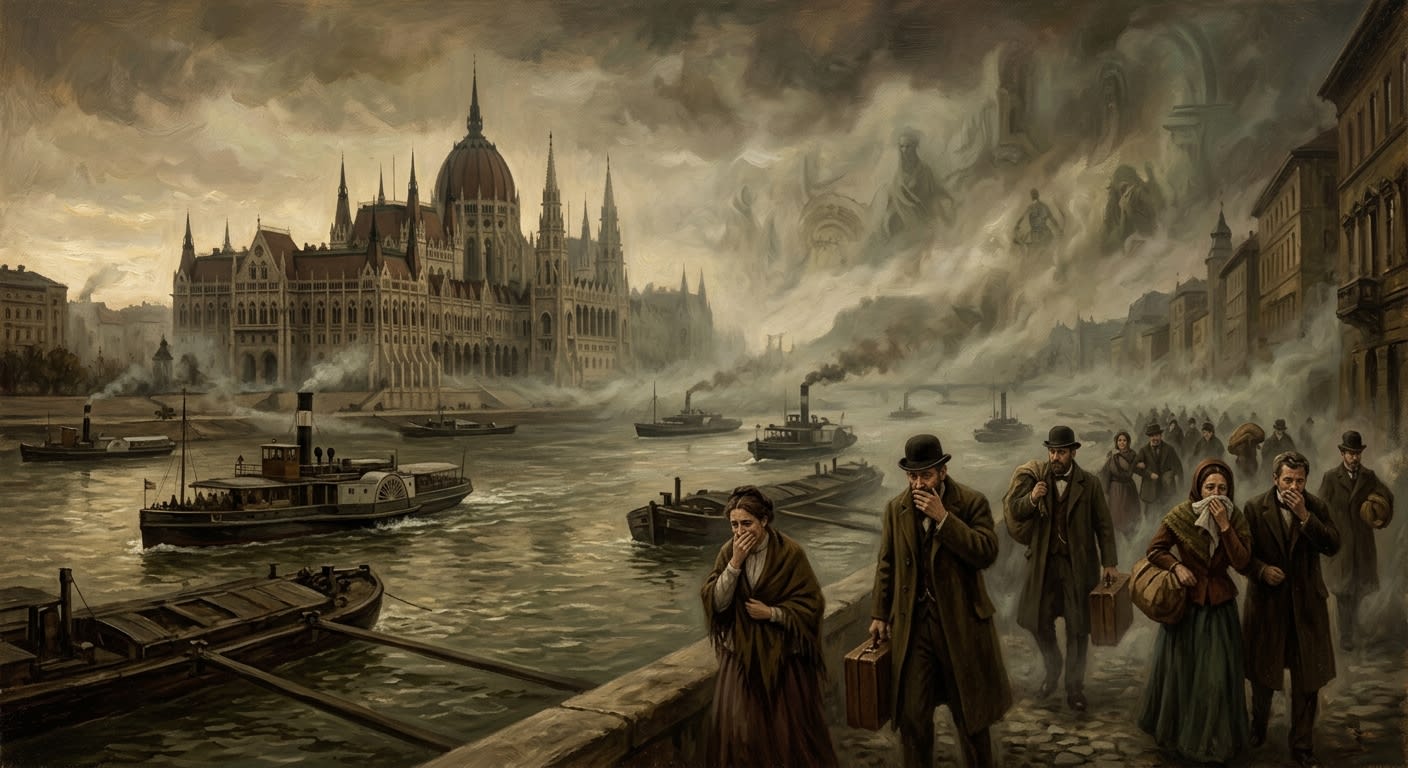
Budapest Perfume Fog
Eleven days of beloved lies before the bank went empty
The A.S. 117 Budapest Perfume Fog carried Velkara's Shattered Courts across both banks, preceding Pest's abandonment by scent, memory, and sealed cowardice.
Codex Ref. VII.4.16-117

Bundle-Carriers
Two doors, one living child, no papers
The Pale Kin's entry rank carries infants between two doors, with no papers and little knowledge. The Bureau counts thieves; the trade counts children alive after winter.
Codex Ref. XII.28.02-001

Burden Index Analyst
The red pen is warm; the household is elsewhere
The Burden Index Analyst corrects household scores for the Bureau of Tithes. One red slip can raise dues, thin rations and bring seizure nearer; the household seldom meets the hand.
Codex Ref. XII.46.02-201

Bureau Circular 221-R
Fourteen pages proving a living man can fail to count
Bureau Circular 221-R is the Records clarification that defines the dissolved as *praesens sed abrogatus*: present, abrogated, and ineligible for mercy by procedure.
Codex Ref. XIII.1.01-004
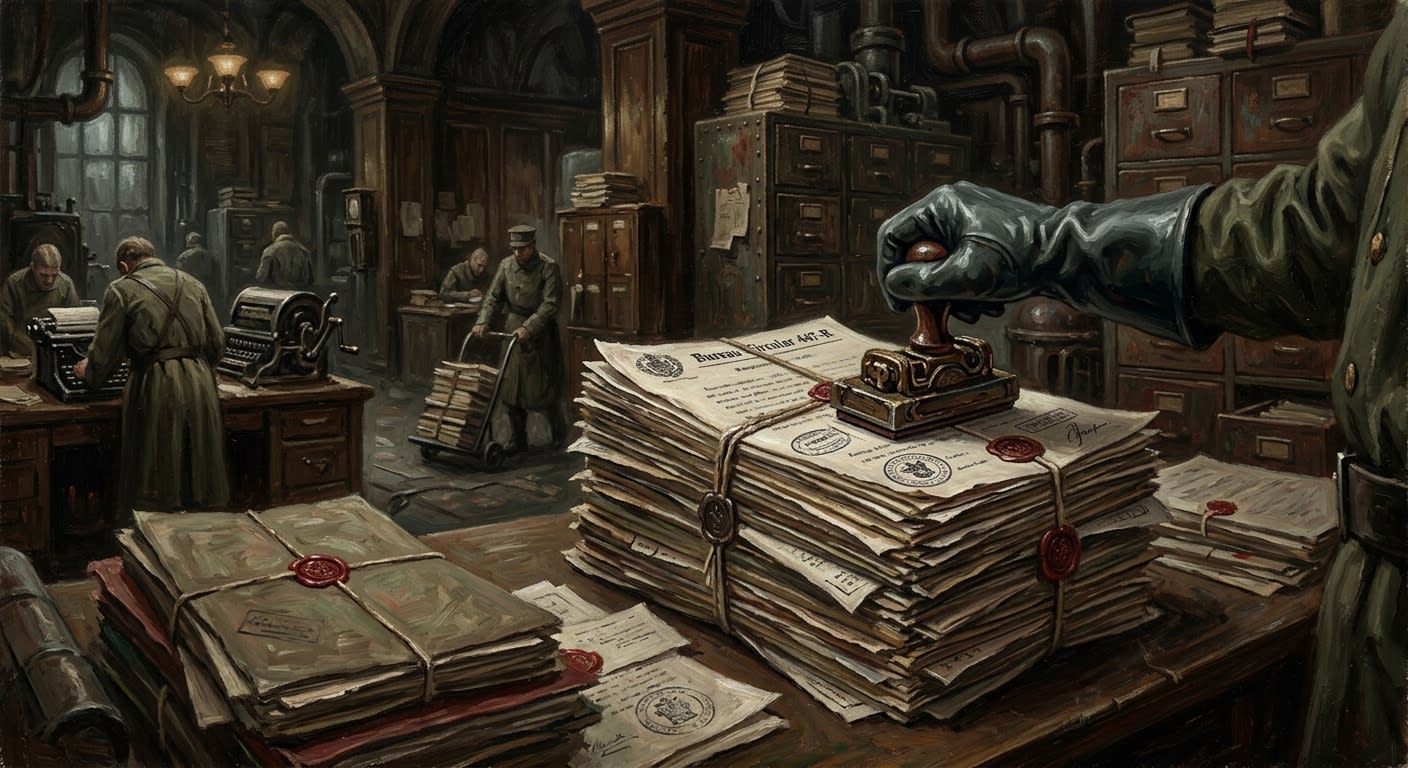
Bureau Circular 447-R
Four hundred and forty-seven words, none of them innocent
Bureau Circular 447-R denies the Codices Obscurae in exactly 447 words, each counted, sealed, revised, denied, and improved by fear.
Codex Ref. XIII.1.06-002
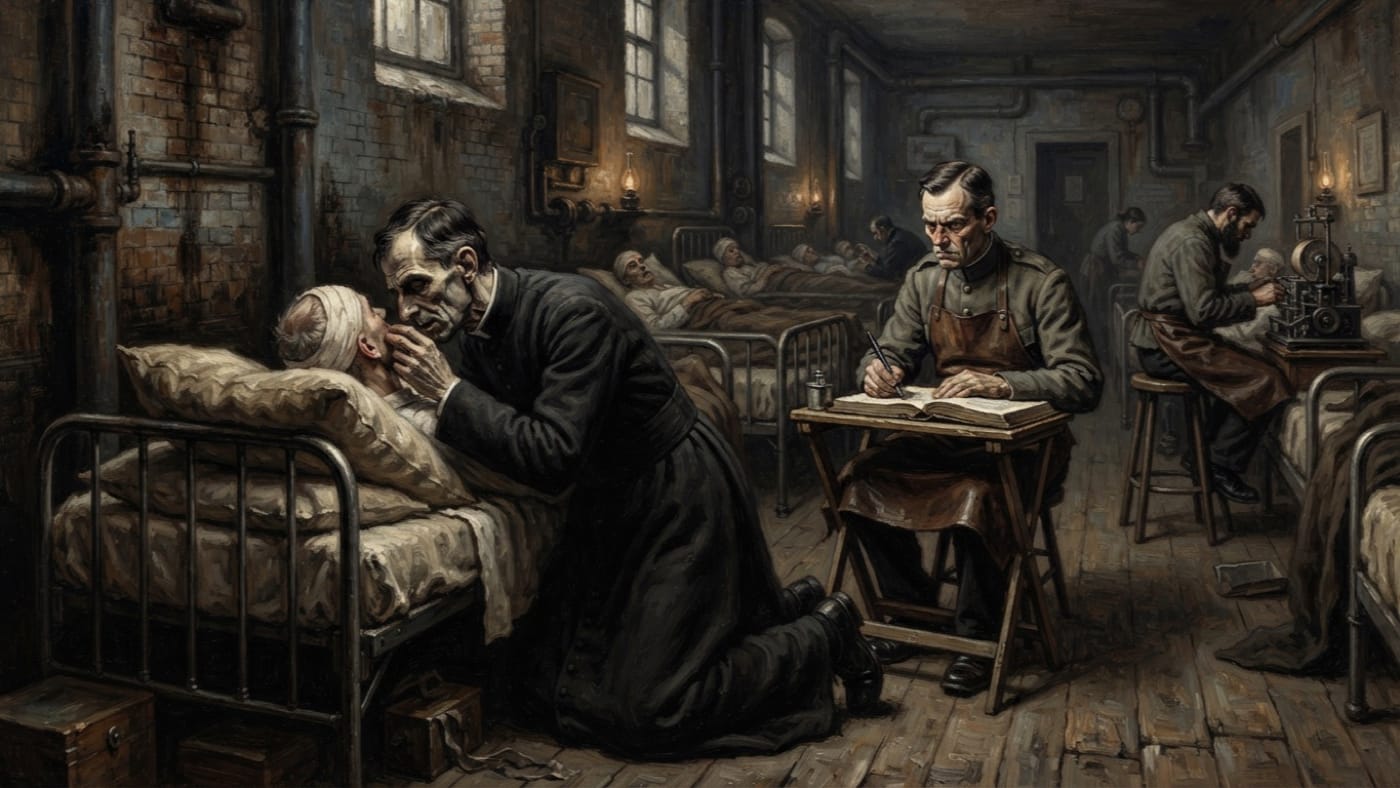
Bureau Circular 88-D
The appointed ear, and the reason Doctrine has not supplied
The Creed enters the right ear; the left remains doctrinally vulnerable. Circular 88-D specifies the side, withholds the reason, and leaves the bedside to manage exceptions.
Codex Ref. XIII.1.88-004
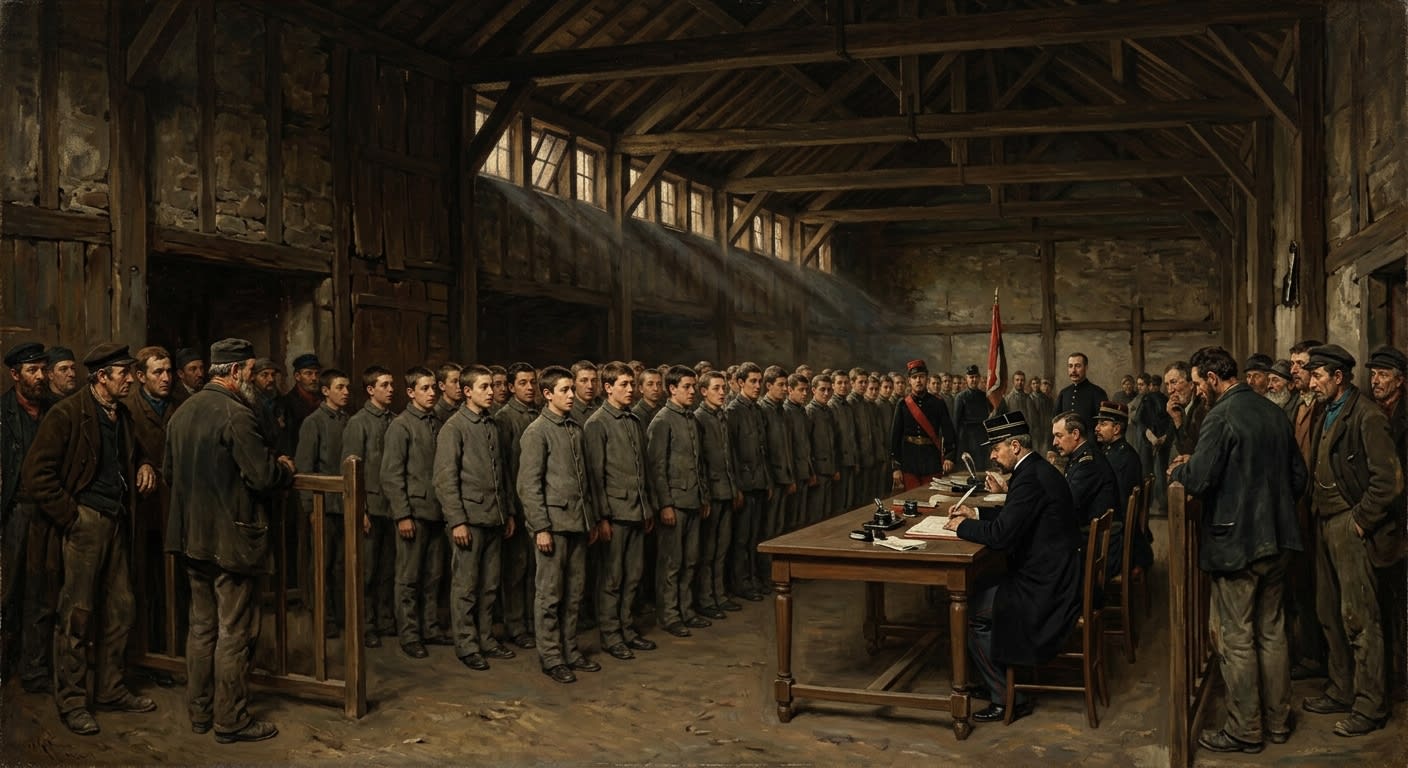
Bureau of Conscription
A tithe of flesh. The Bureau calls it a fraction.
The Bureau does not take. It collects. The hand that reaches into the household, past the mother's grip, and removes what was promised — which is to say, everything.
Codex Ref. III.4.07-112

Bureau of Festivals
Joy, administered at scale — licensed, measured, and periodically revoked
The Bureau that manufactures joy, schedules grief, and meters celebration with the same rigour the Bureau of War applies to troop rotations — and which has, on seventeen documented occasions, deployed confetti.
Codex Ref. VIII.5.01-001

Bureau of Masks and Seals
The stamp is the Synod. Everything else is suggestion.
The Bureau of Masks and Seals controls every stamp, seal, and counter-seal in Synod territory. Without its impressed wax, no document is real. Without its license, no face may be hidden. Casselius of Mainz holds the Synod's mouth and press in one pair of ink-stained hands.
Codex Ref. VI.4.19-014
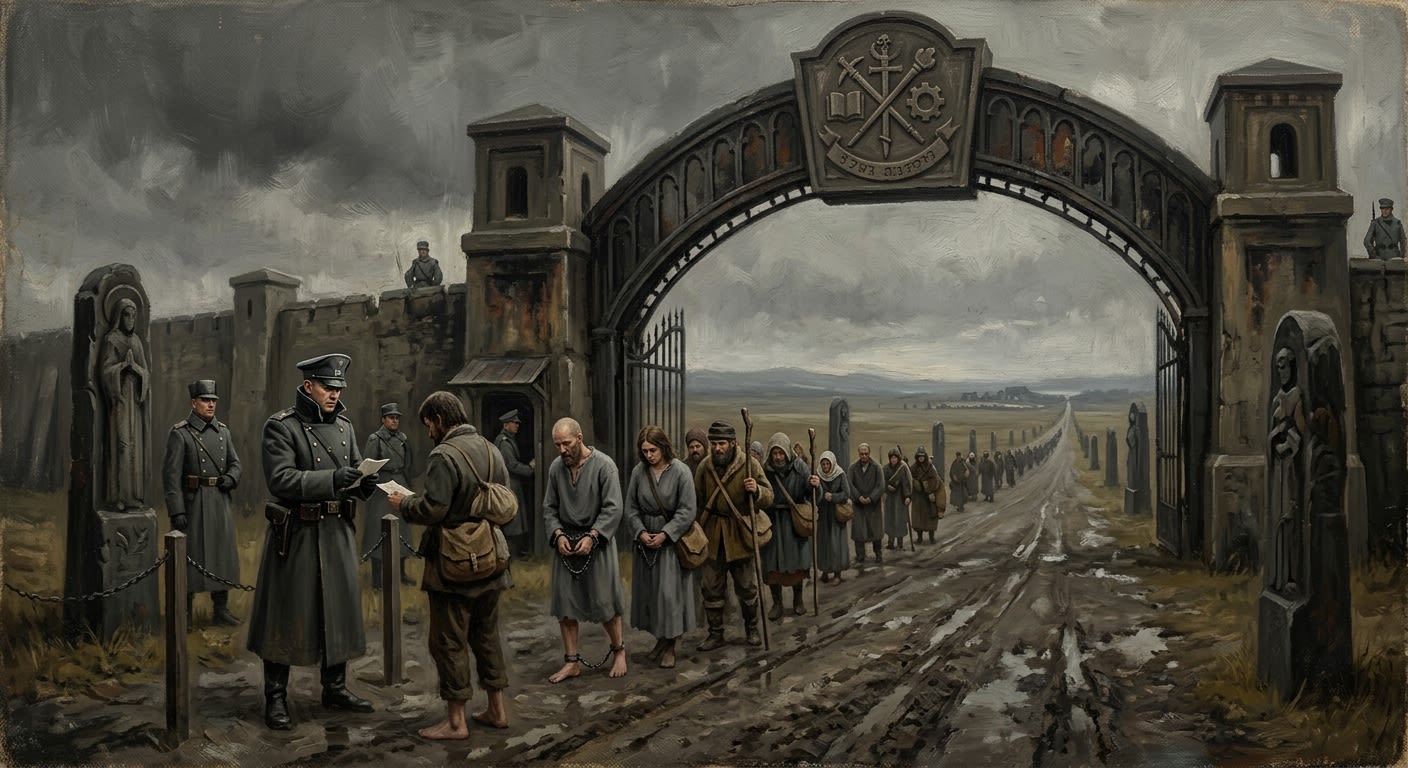
Bureau of Pilgrimage
Three million permits. Six million Crowns. No foot moves unwatched.
The Bureau of Pilgrimage governs all movement across the Theocracy's holy roads — issuing tokens, licensing routes, crushing guilds, and extracting revenue from every soul who dares to walk toward sanctity without prior authorisation.
Codex Ref. III.2.07-004
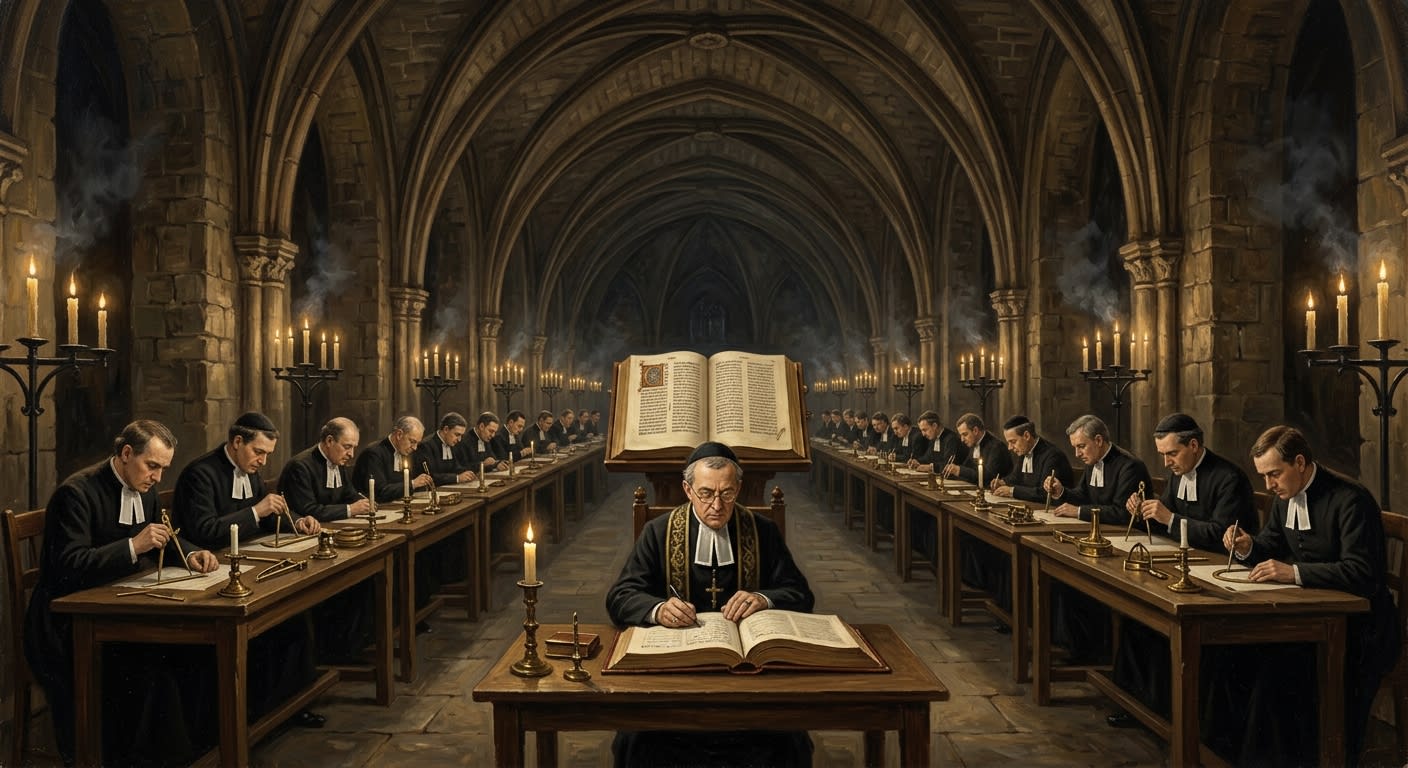
Bureau of Rites
The grammar no one speaks and everyone obeys.
The grammar of the Dominion, indistinguishable from its law: the Bureau that does not govern governs everything, from the angle of the censer to the weight of the Host on Lenten Fridays.
Codex Ref. VIII.1.01-001

Bureau of Settlement
Where three hundred million subjects are permitted to stand — and by whose leave.
The Bureau of Settlement does not appear in the twelve canonical portfolios. No crimson sash, no hymn. What it has is authority over the address of every living subject of the Theocracy — and the knowledge that no one listens until the plumbing fails.
Codex Ref. IV.3.08-001
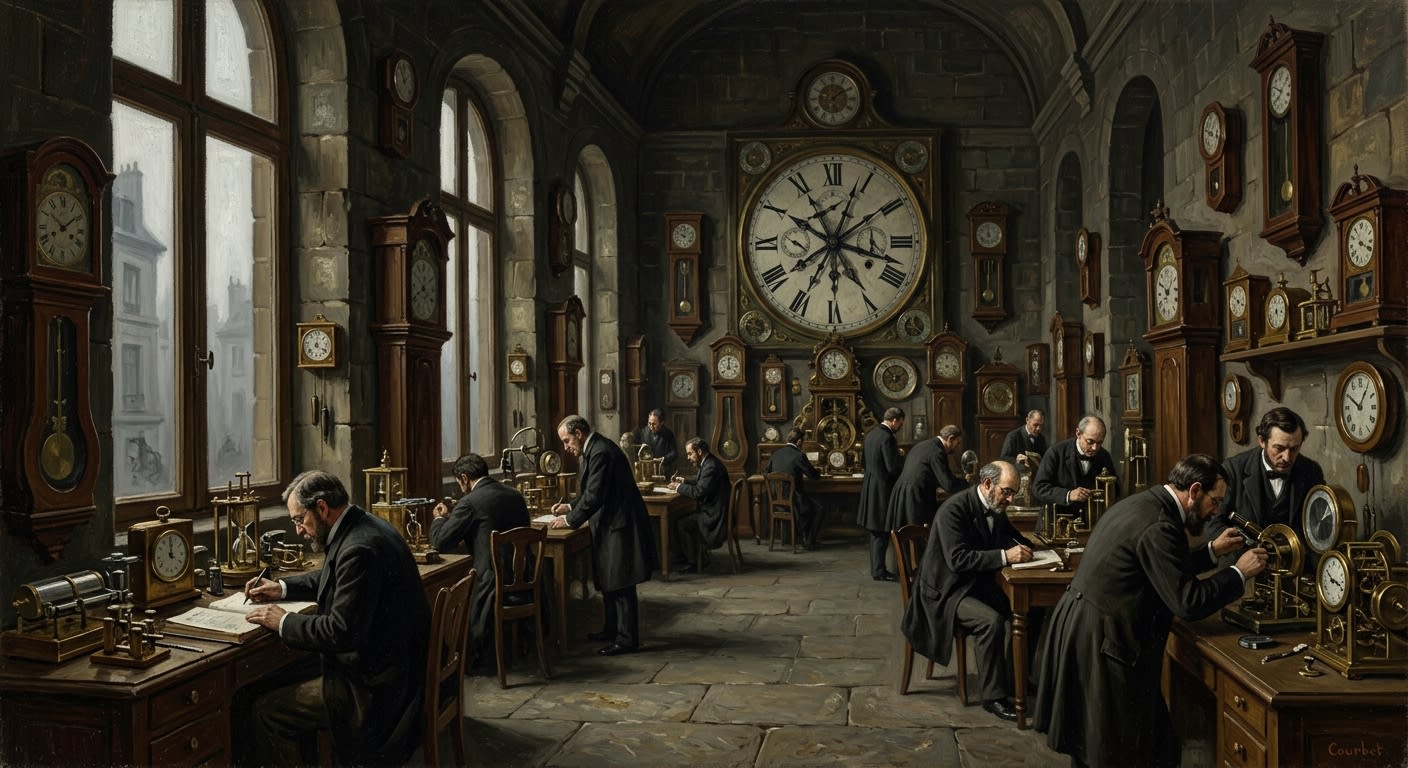
Bureau of the Hourglass
The Bureau measures. The Synod does not read. Time continues to disagree.
The Bureau of the Hourglass, constituted A.S. 134 to measure the Languid Dreamer's temporal drift along the Line, publishes quarterly reports no one reads, and has spent sixty-seven years proving that time is thinner near the front.
Codex Ref. VIII.3.01-001

Bureau of Tithes
The organ no one praises and no one dares remove
The Bureau of Tithes is the Synod's fiscal organ — the stomach no one praises and no one dares remove. It taxes breath, grain, bereavement, and the management of its own taxation.
Codex Ref. VIII.4.01-001
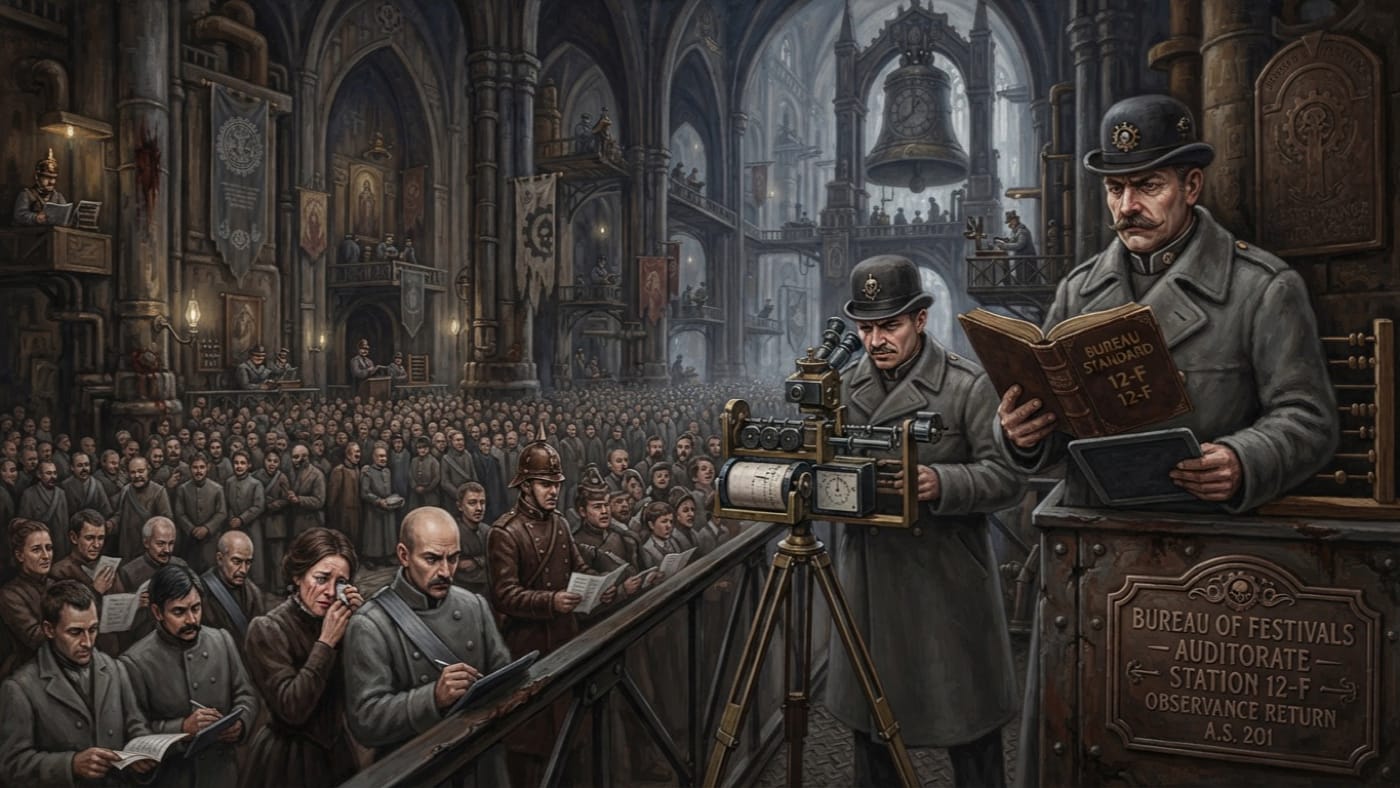
Bureau Standard 12-F
The heart has no column; the face owes a return
The Bureau of Festivals scores smiles, tears and songs under Standard 12-F. Forty-two behaviours yield three classifications, with four points between insufficient zeal and dangerous emotion. The heart is spared a column.
Codex Ref. VIII.5.12-201

Cadence Surgeons
Lower the note; the charge remains
Upper-rank specialists of the melody-smuggling trade who edit forbidden fragments into bell-safe ranges. The pitch may pass beneath the bells; the charge of Melody Intent remains.
Codex Ref. XII.48.03-001
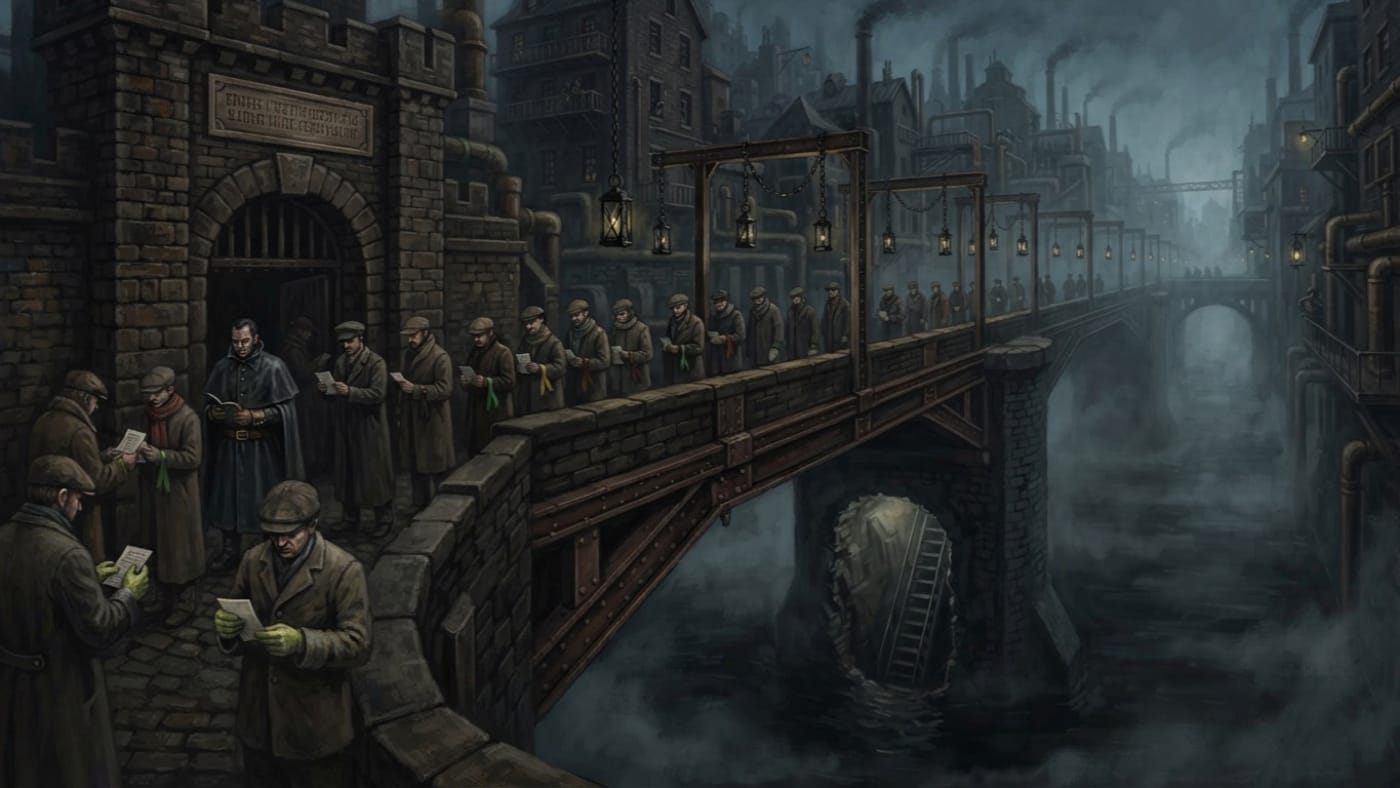
Candle Bridge
A crossing that preaches, and charges for the lesson
Candle-Sump's main crossing preaches cleanliness, obedience and sacred accounting above the canal. Its toll is unrecorded; its hollow pier descends to the underworks.
Codex Ref. XIII.1.05-201
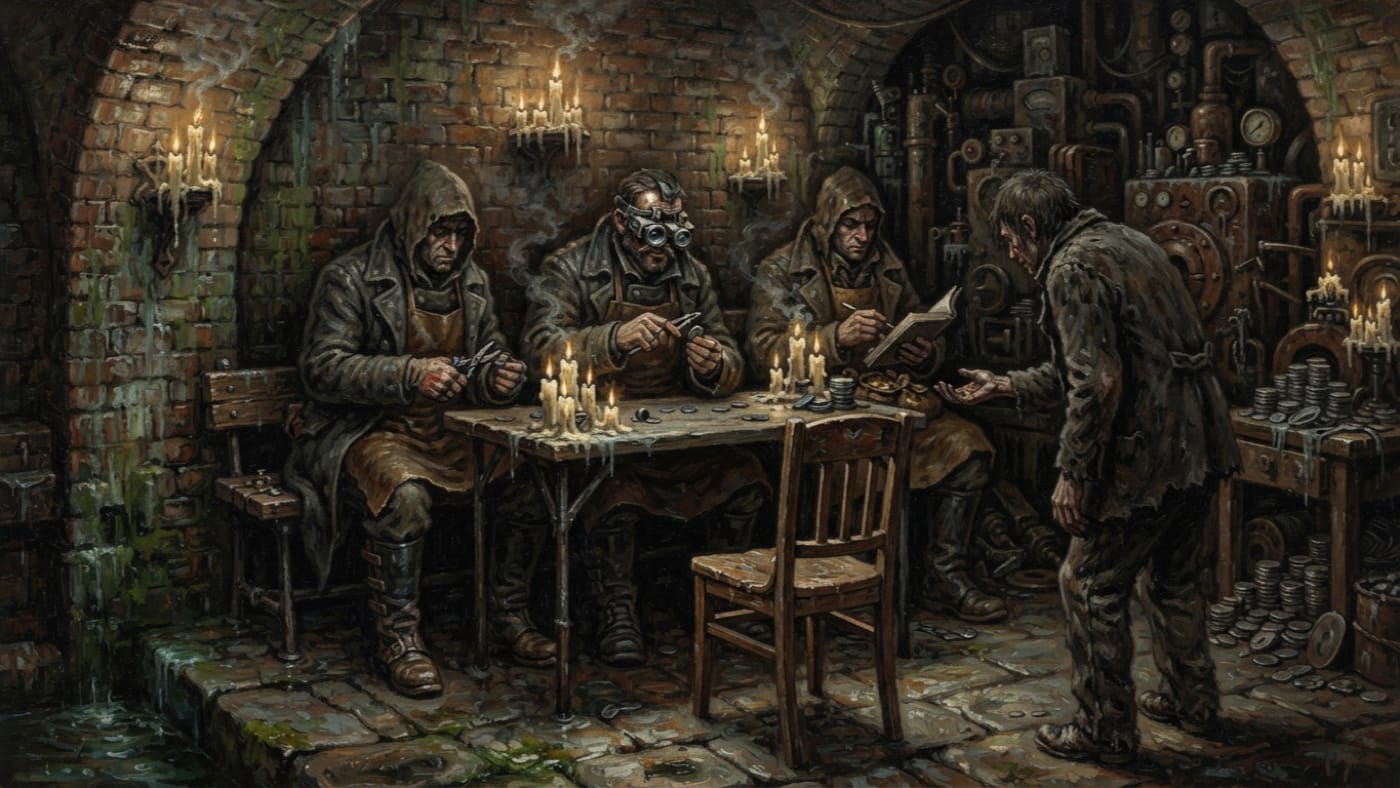
Candle Tribunal
Justice paid into the palm at low water
Beneath Sable Court's second canal lock, the Clipped Choir pays verdicts into the palm: acquittal, debt, exile, or cold coin. No appeal is recorded.
Codex Ref. XIII.1.58-201

Candle-Sump District (Lower Vire)
The gut of Lower Vire — it was supposed to be a drainage ditch
The gut of Lower Vire — a drainage ditch that metastasised into a district of forty-two thousand souls, where tallow feeds the wards above, bone tags stamp the dead into existence, and the crypt-route drafts murmur names no one asked to hear.
Codex Ref. II.1.05-001
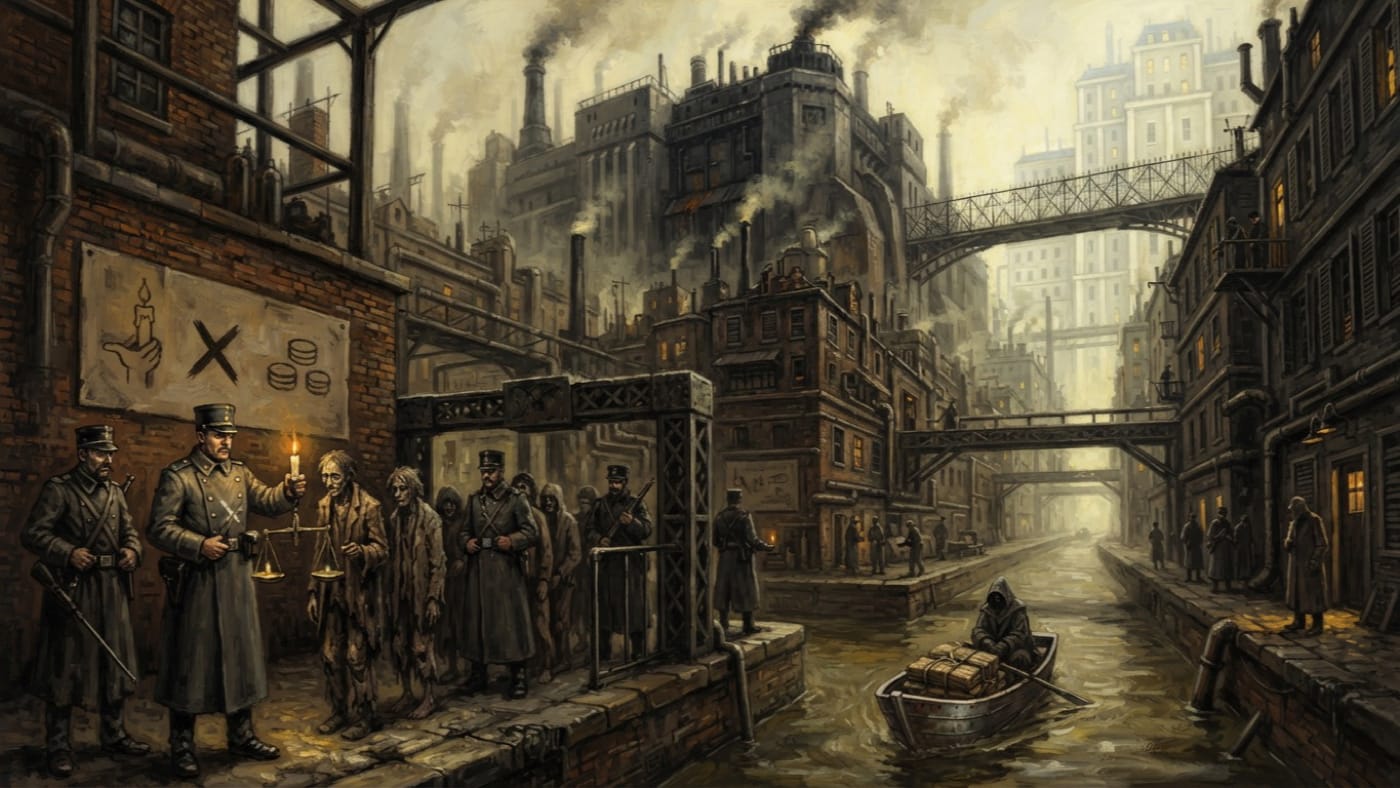
Candlewright Compact
Light costs bone. The Compact sets how much.
The guild that owns Lower Vire's light: wick fiber, tallow, and a declared blight that has tripled candle prices. The blight is unverified; the darkened households are easier to count.
Codex Ref. XI.1.08-001
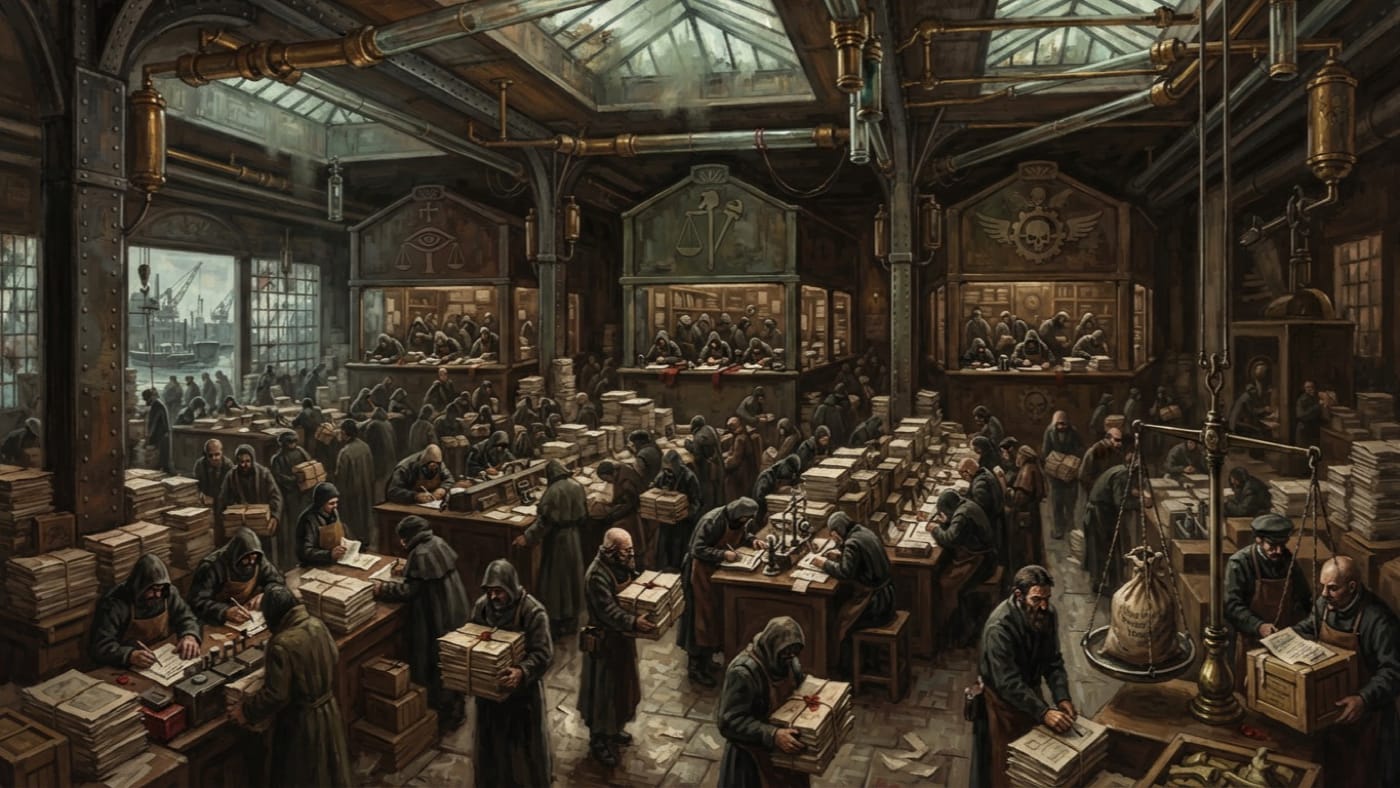
Canebière
Where cargo becomes paper, and paper waits for permission
Marseille's commercial quarter, where merchant houses turn cargo into paper under three competing Bureau offices. Goods may leave once their description has acquired every necessary seal.
Codex Ref. II.4.09-019
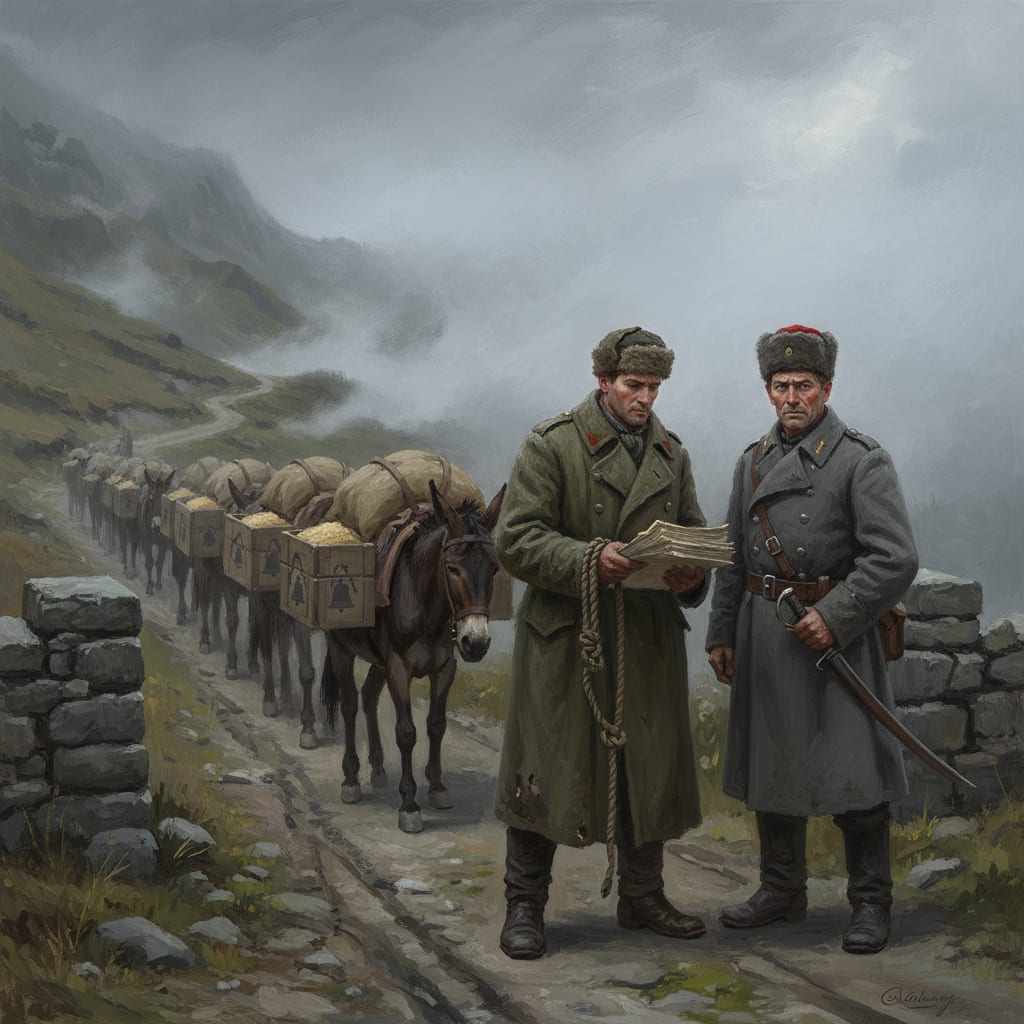
Caravan Factor
The Synod's confession that geography is ungovernable, licensed and taxed accordingly
The Caravan Factor occupies the gap between the Bureau's filed route-plan and the road's actual condition — part cartographer, part accountant, part diplomat, and part criminal, though the Synod prefers not to use the last term in official correspondence.
Codex Ref. XII.6.01-001
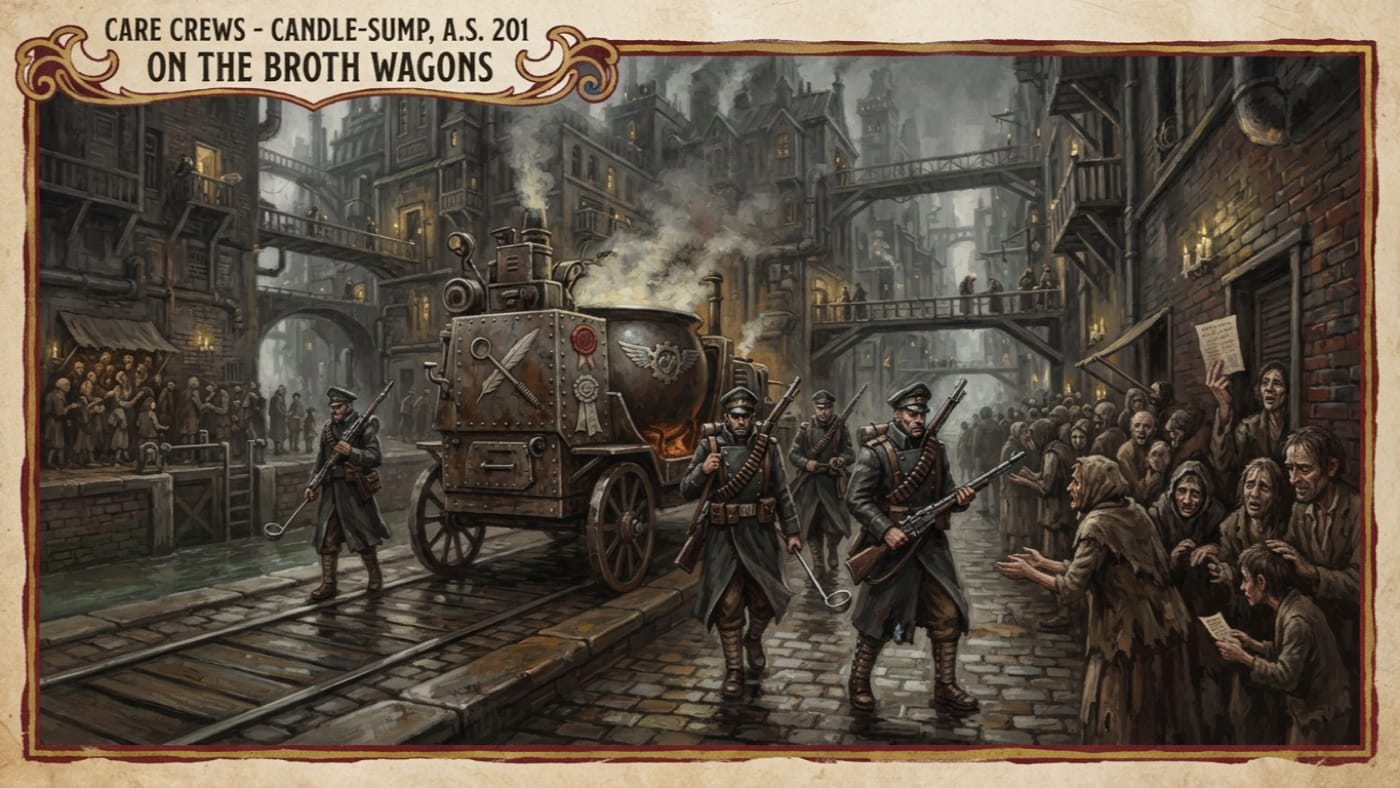
Care crews
Supper travels under guard; the guards are hungry too
The guards of Candle-Sump's broth wagons, still escorting the district's supper in A.S. 201. Another ration cut may stop them; the Bureau has recorded their threatened strike more carefully than their organisation.
Codex Ref. XI.1.08-002

Carnelian erasures
Every seal was correct; the ledger was impossible
In A.S. 67, three Notaries struck the Carnelian lineage across four cities without a shared anchor table. Two lawful cousins vanished from the rolls; the Notaries followed. The children lost their bread.
Codex Ref. VII.8.10-067
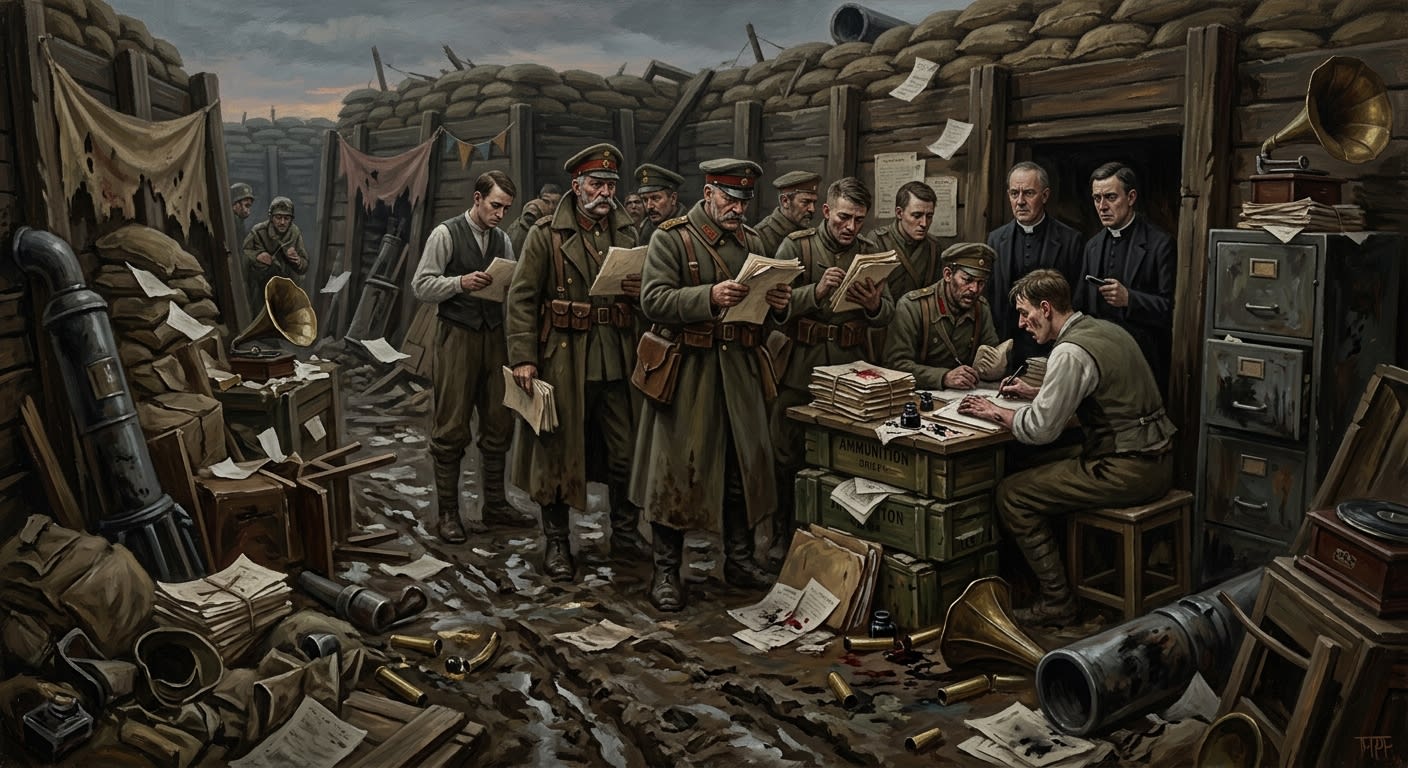
Carnival of Ink
Twelve arguments touched the same ink
The A.S. 162 Bastion-Constantinople festival disaster in which twelve simultaneous trench-court duels tangled citations until four hundred names vanished by nightfall.
Codex Ref. VII.8.10-026

Category Two Localized Atmospheric-Scribal Disturbance
The file names the effects and leaves the cause blank
Since A.S. 194, Candle-Sump's crypt drafts have carried name-whispers, ruined paper and troubled lungs under a designation still pending review. The file names the effects; it declines to name their cause.
Codex Ref. XIII.1.20-002
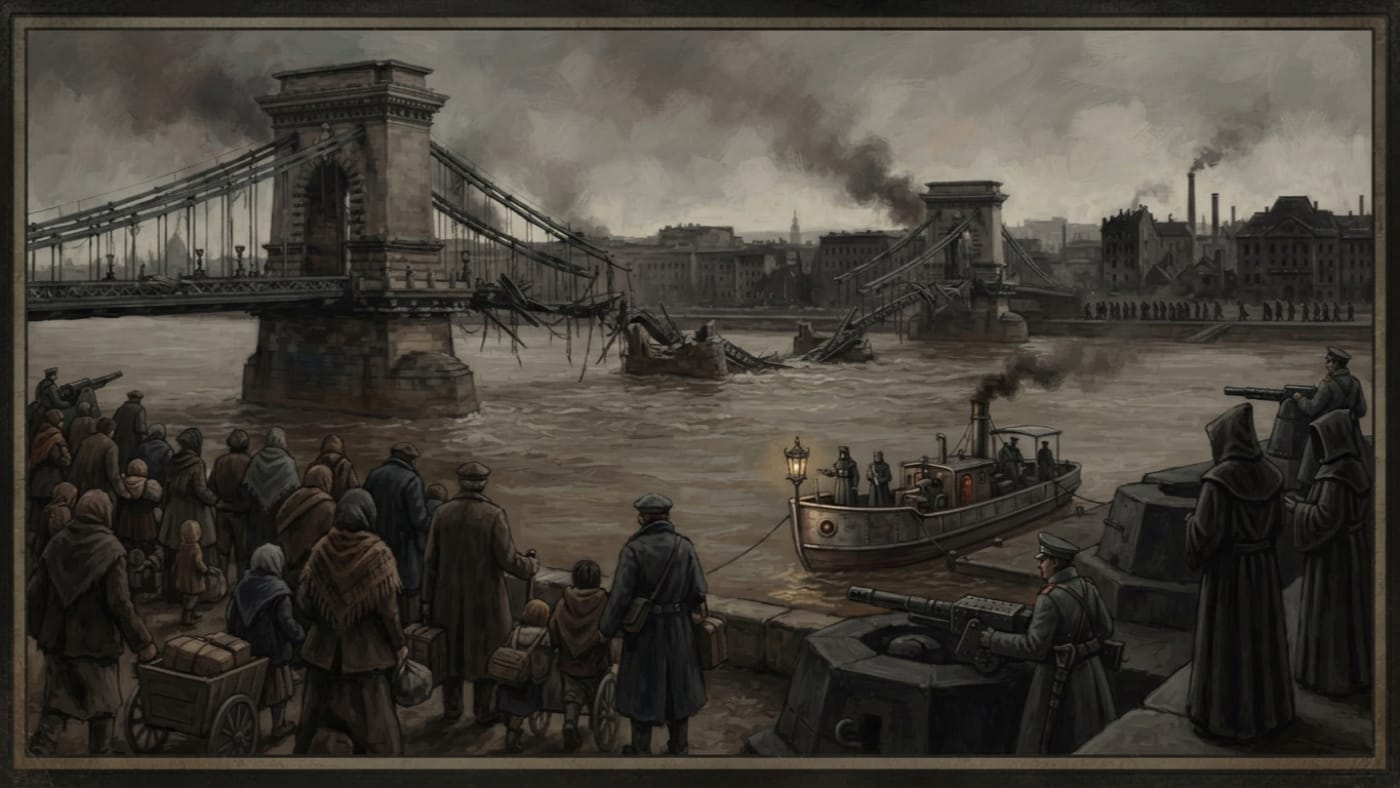
Chain Bridge
The crossing destroyed, the destination still pending
Budapest's last bridge held six hours after detonation in A.S. 122. Eight hundred refugees were crossing; the bridge is destroyed, their destination pending. Broken piers remain between Buda and Vacated Pest.
Codex Ref. II.4.09-122

Chief Archivist
The form asks for rank; it does not ask for conscience
The Bureau of Records' countersigning office: a Chief Archivist of at least Third Rank authorises Form 77-D to proceed. The folio is checked twice. The reason is filed elsewhere.
Codex Ref. XII.34.02-001

Chief Clerk Dalen Voss
He holds the seal; the district holds its breath
Candle-Sump's Chief Clerk holds the seals that decide who counts as living or dead. Called the Knife, Dalen Voss commands the Bone-Tag Registry while clean slips and a pending Purity transfer order threaten his column.
Codex Ref. III.2.01-201

Circular 881-R
The sentence that made moving beads a billable error
Circular 881-R is Records' A.S. 199 denial order: bead counts are fixed, bead drift is unsanctioned, and correction remains beautifully billable.
Codex Ref. XIII.1.72-199
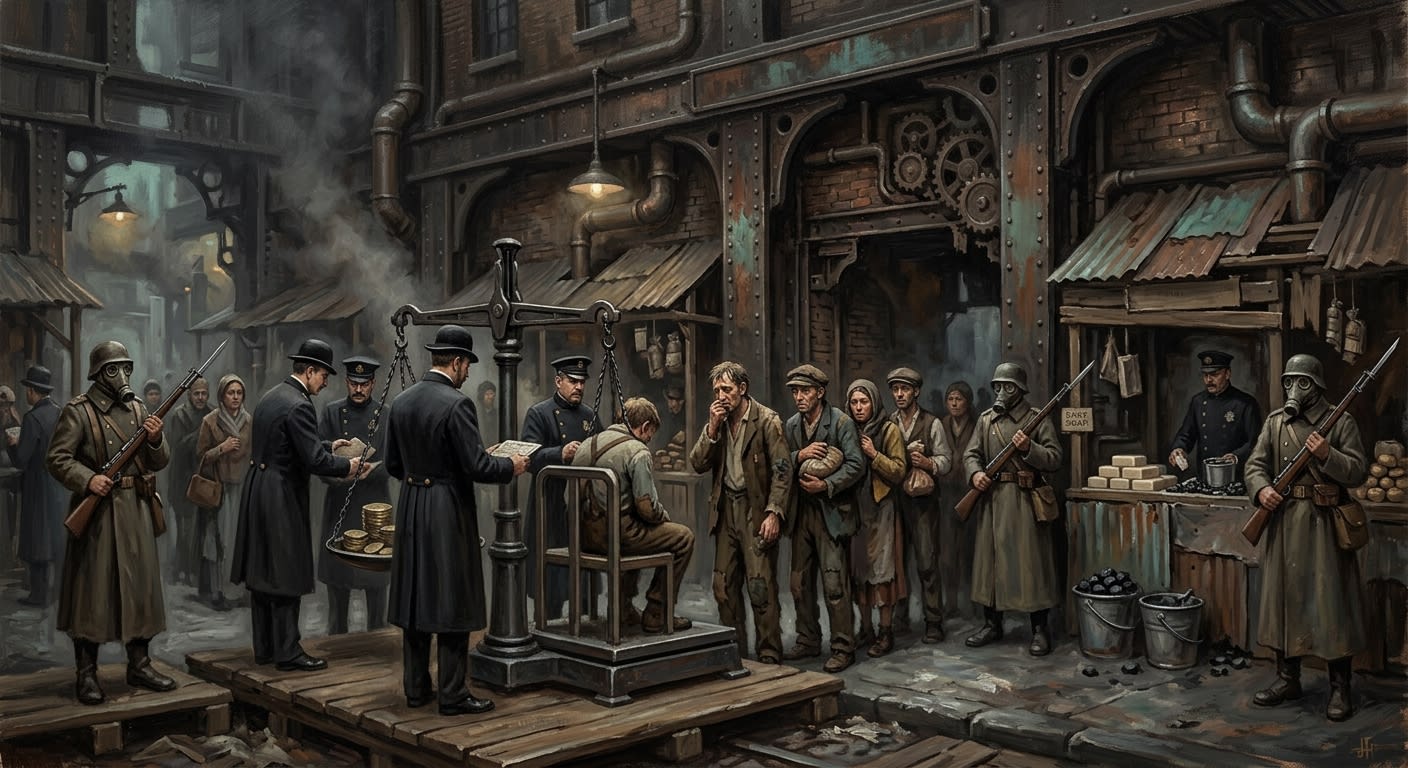
Clipper's Market
Where money confesses and hunger pays the fee
Sable Court's legal exchange frontage weighs coin, face, and citizen alike; the soap is cheap, the fear is official, and the mercy is illegal.
Codex Ref. II.2.07-002
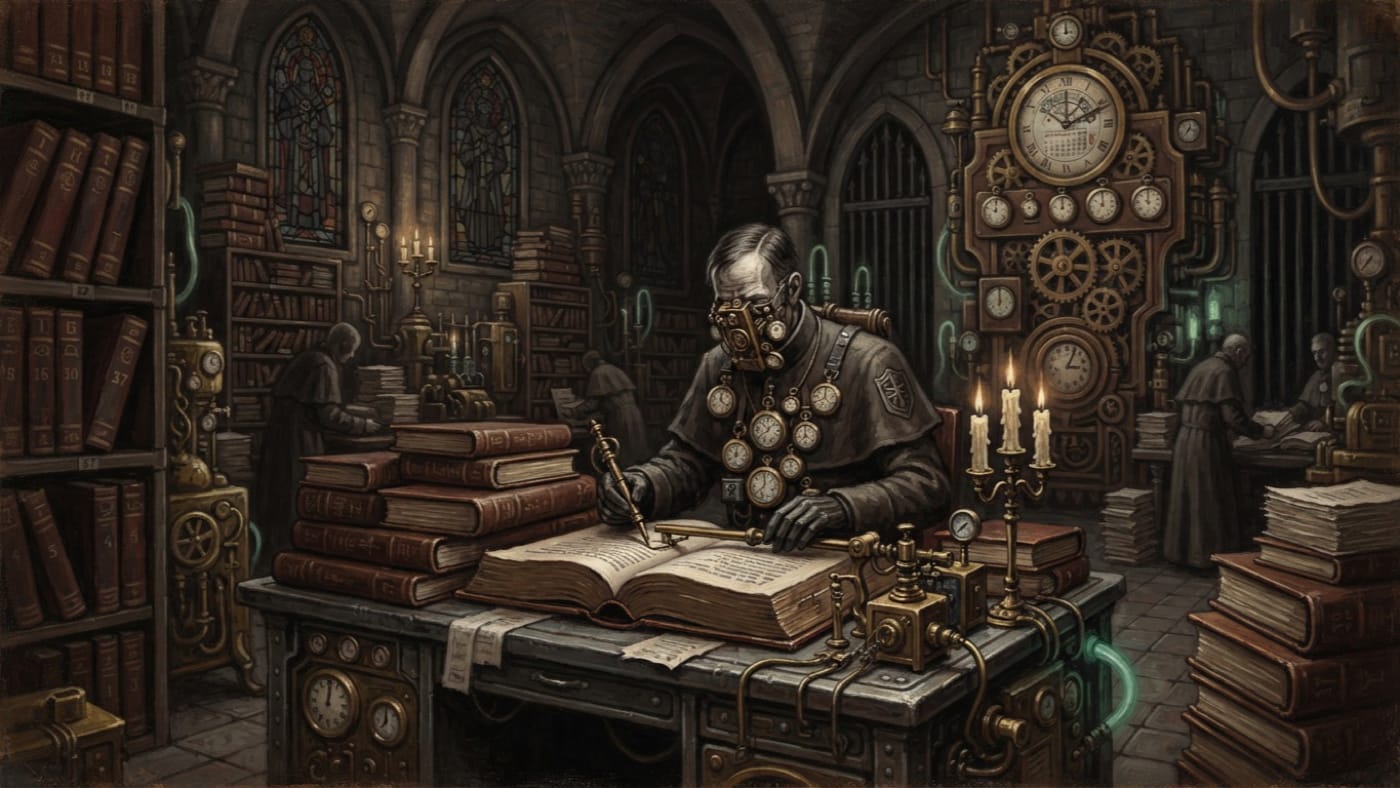
Codex Liturgiae
Eleven volumes. Thirty-seven annexes. One lawful way to kneel.
Eleven volumes and thirty-seven annexes prescribe every authorized rite in the Dominion. The Bureau of Rites measures obedience by the syllable and the second; the faithful pay afterward.
Codex Ref. XIII.1.63-001
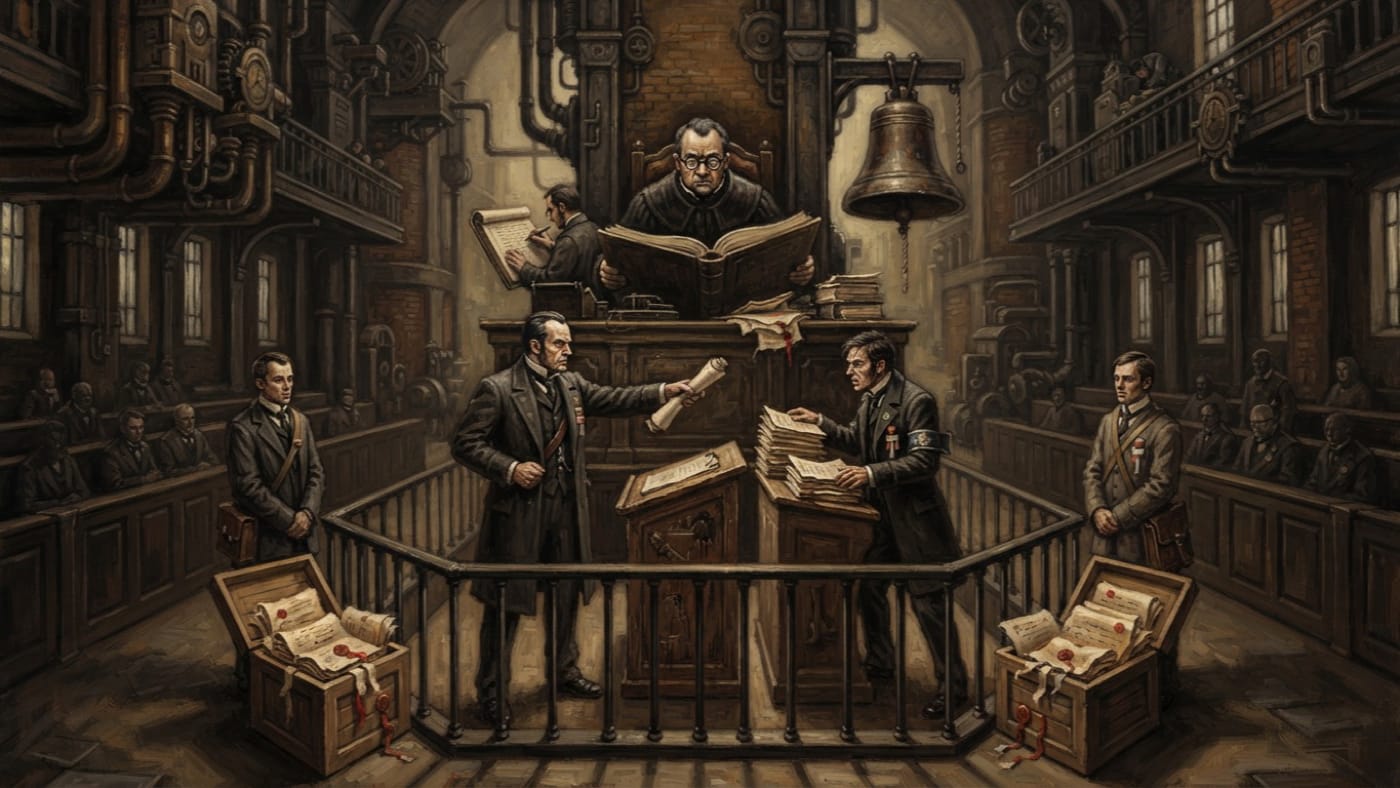
Concordat Annex 14-C
A quarrel given a bell, a verdict given a register
Ratified in A.S. 104, the joint Records-Doctrine Annex made citation duels binding, fixed court procedure and permitted remedies from asset freezes to full erasure. Mercy acquired a bell and a register.
Codex Ref. VII.8.10-104

Concordat of Civic Cadence
One beat, one body, one road, and every crowd made countable
A.S. 113 joint Rites-War decree born from the Ashbread Stampede, licensing the Cadence Corps to rule queues, funerals, gates, and marches by rhythm.
Codex Ref. VII.2.10-059
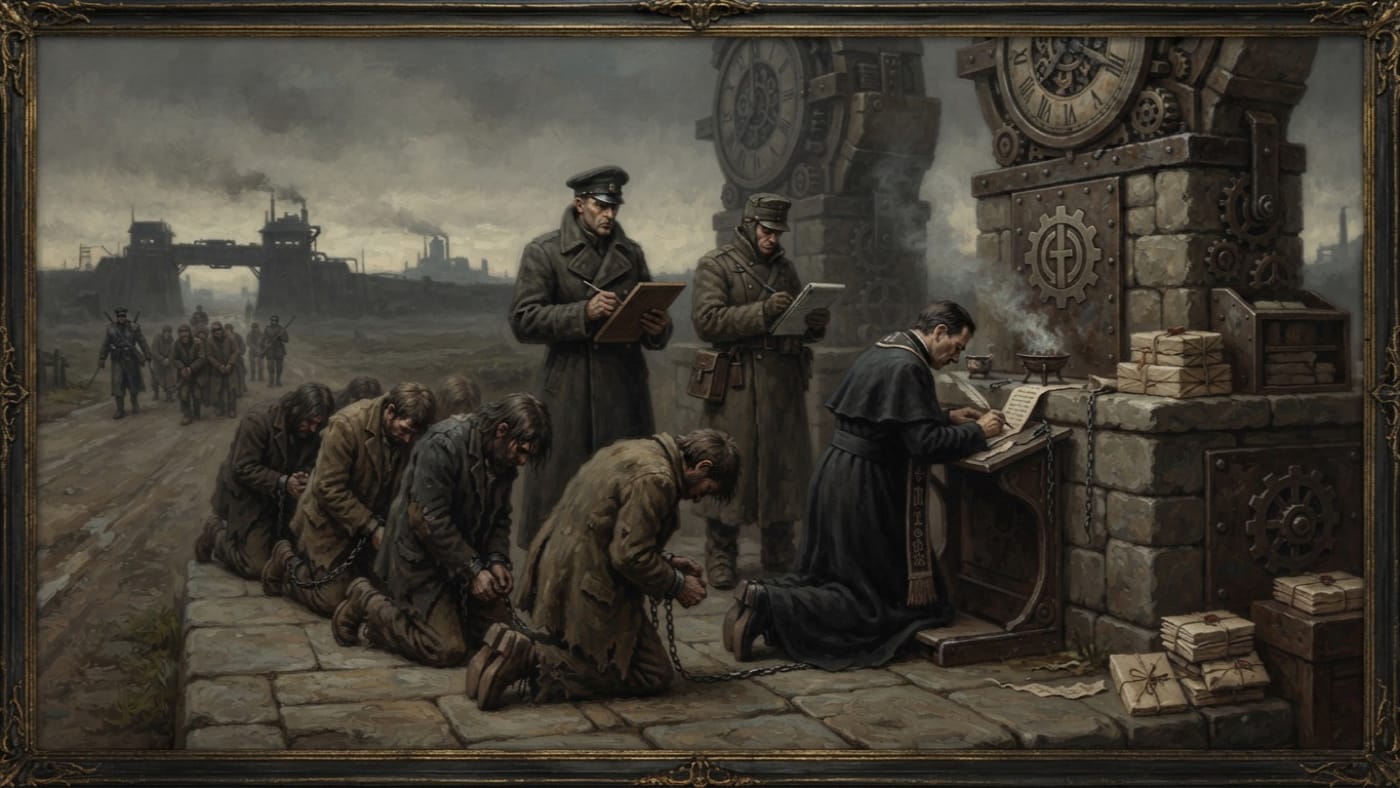
Confession Harvest
The strips travel with the condemned; the names bring others
At Jubilee shrines, chained penitents speak and priests write. Records files the sealed strips; Purity follows the names. The road supplies its next column.
Codex Ref. XIII.1.100-201
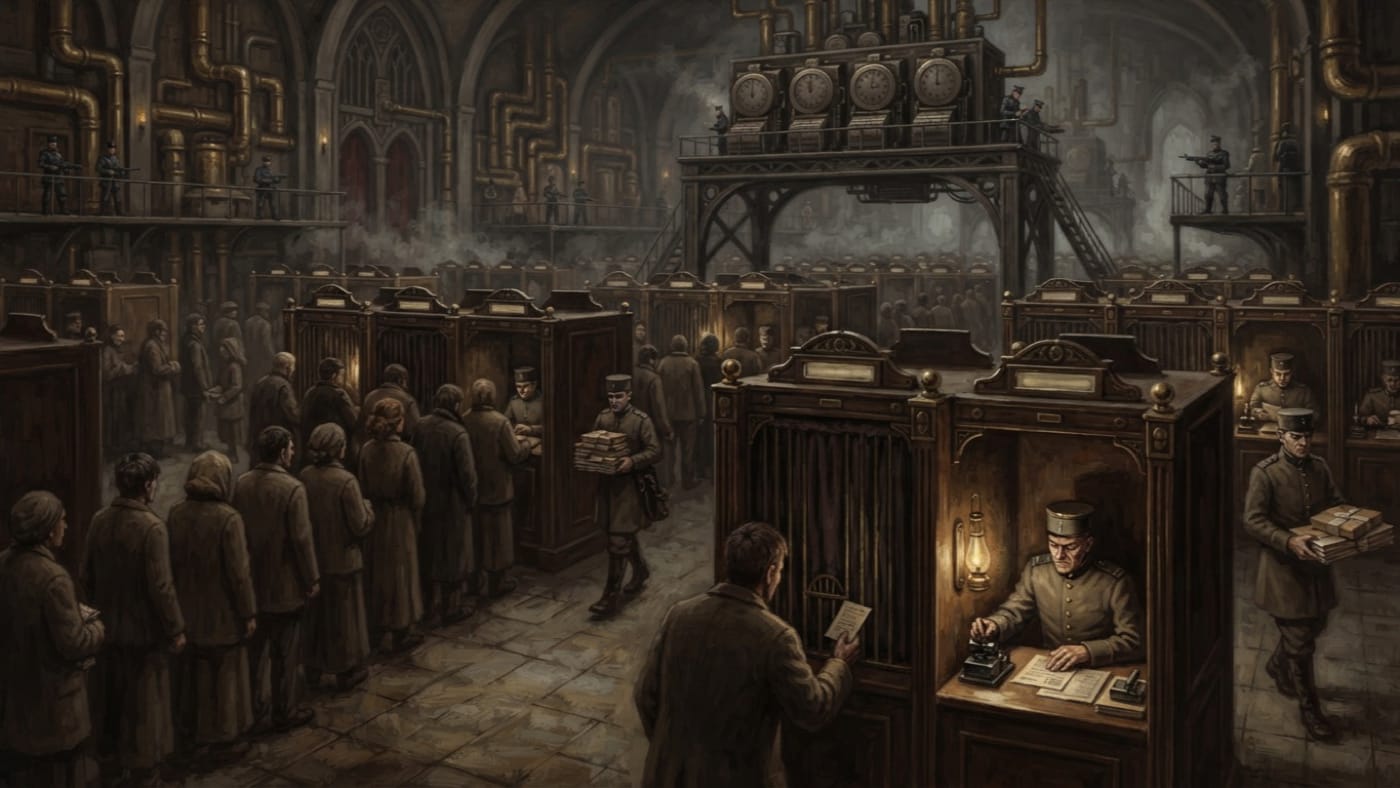
Confession Reform
The printed card that taught the Synod to count doubt
In A.S. 104, the Bureau of Rites gave sin approved phrasing, uniform categories and lay intake clerks. Confession became comparable; doubt became evidence.
Codex Ref. VII.8.10-014

Continental Levy
The decimal point where obedience becomes infantry
The Continental Levy is the Synod's permanent tithe of flesh, born from the A.S. 110 crisis and refined into household arithmetic.
Codex Ref. XIII.1.54-001

Continuations of the Original Grace
Grace is given once and collected forever
War's name for the Continental Levy renewals: the A.S. 110 emergency carried into successive generations, with sealed quotas and no promise of completion.
Codex Ref. XIII.1.54-002
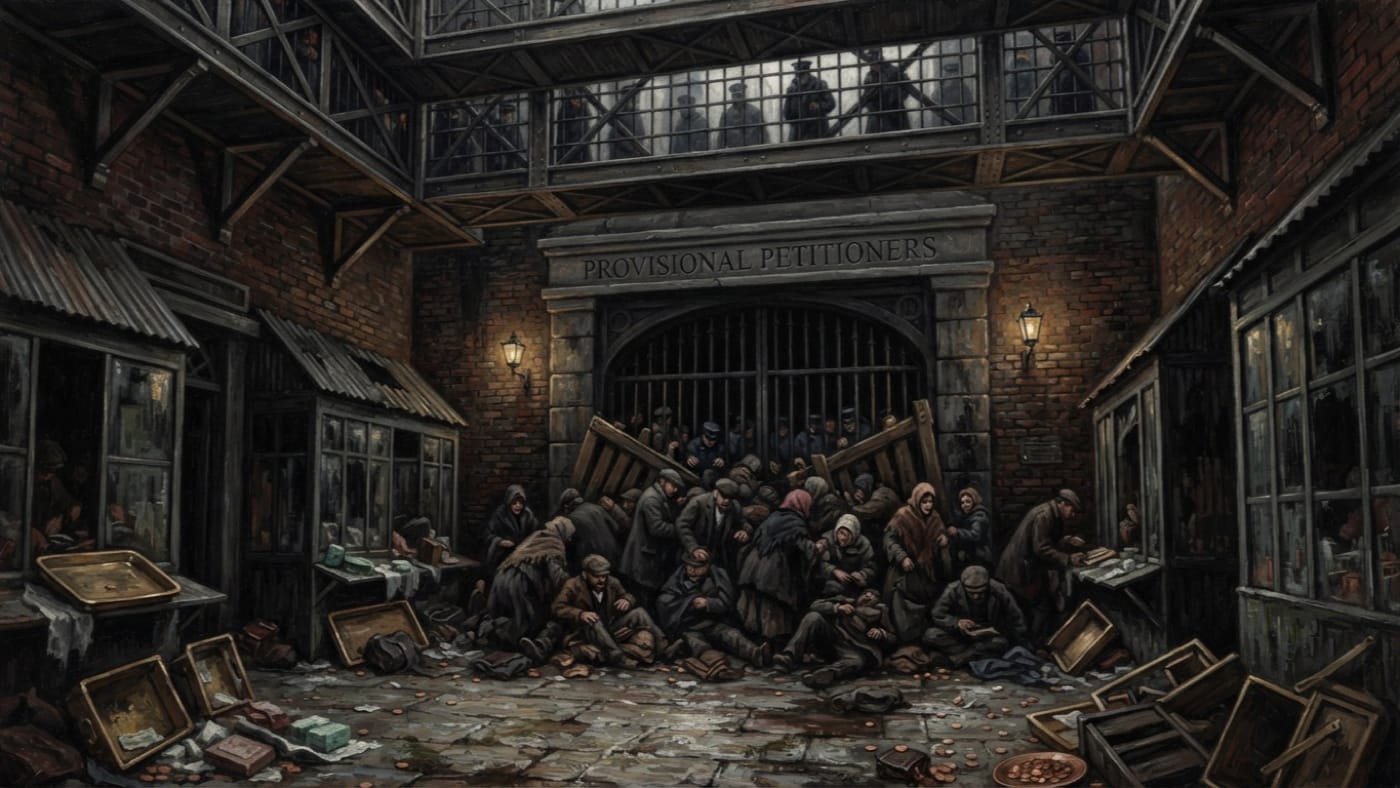
Copper Saint Crush
Ordinary copper, nineteen dead, and a bill
At Clipper's Market in A.S. 196, a rumour of saint-faced copper crushed nineteen petitioners against the Widow Gate. The copper was ordinary; the dead still owed inspection fees.
Codex Ref. VII.8.10-196
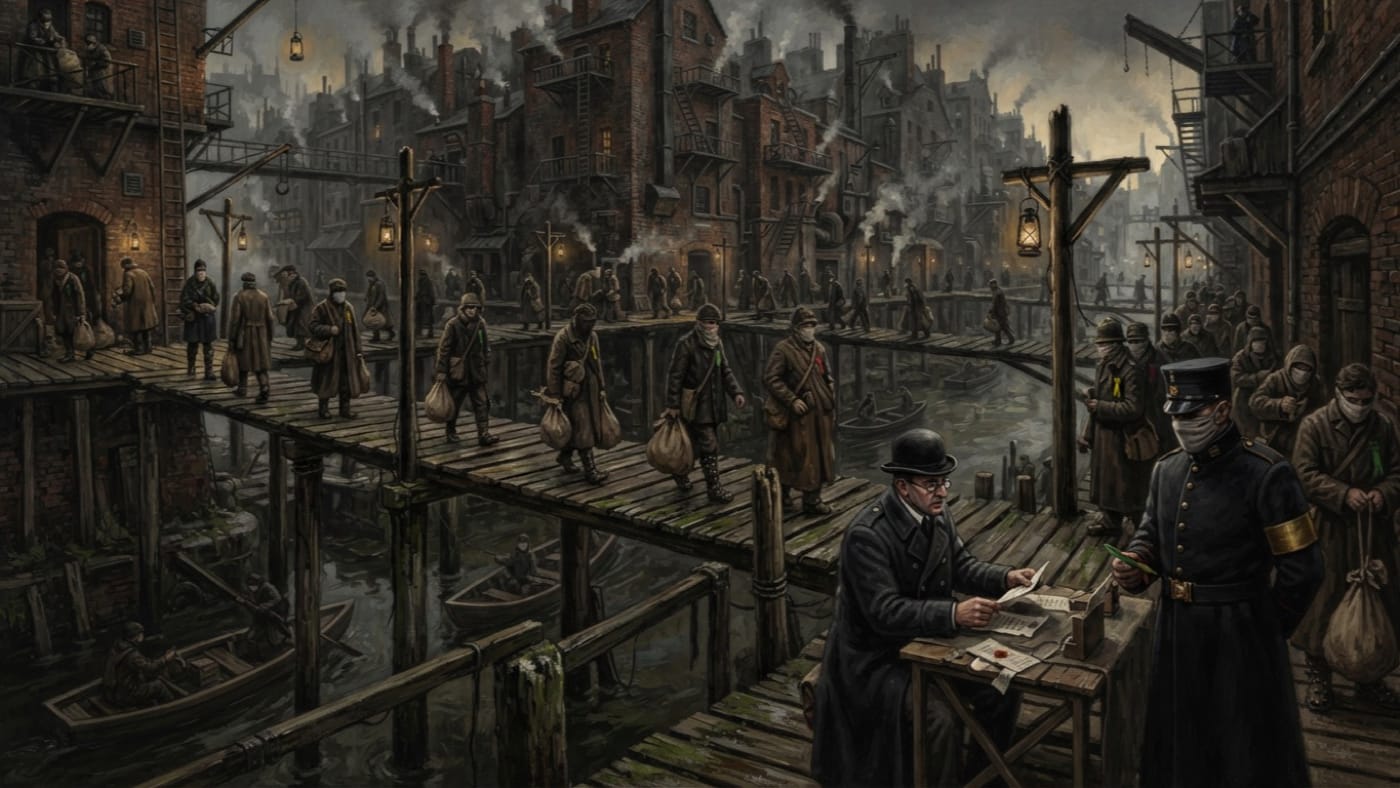
Coughwalks
Dry boots are the whole of the guarantee
Candle-Sump's raised plank roads keep boots above the flood line and lungs in the damp. Runners, patrols and illicit identity slips pass here; no office admits responsibility for the boards.
Codex Ref. II.1.05-002

Council of Prefects
Where dissent receives a chair, a minute, and a family corridor
The Council of Prefects is unanimity with chairs: a ratifying chamber where civic officers discover what Strasbourg has already decided they believe.
Codex Ref. XIII.1.90-138
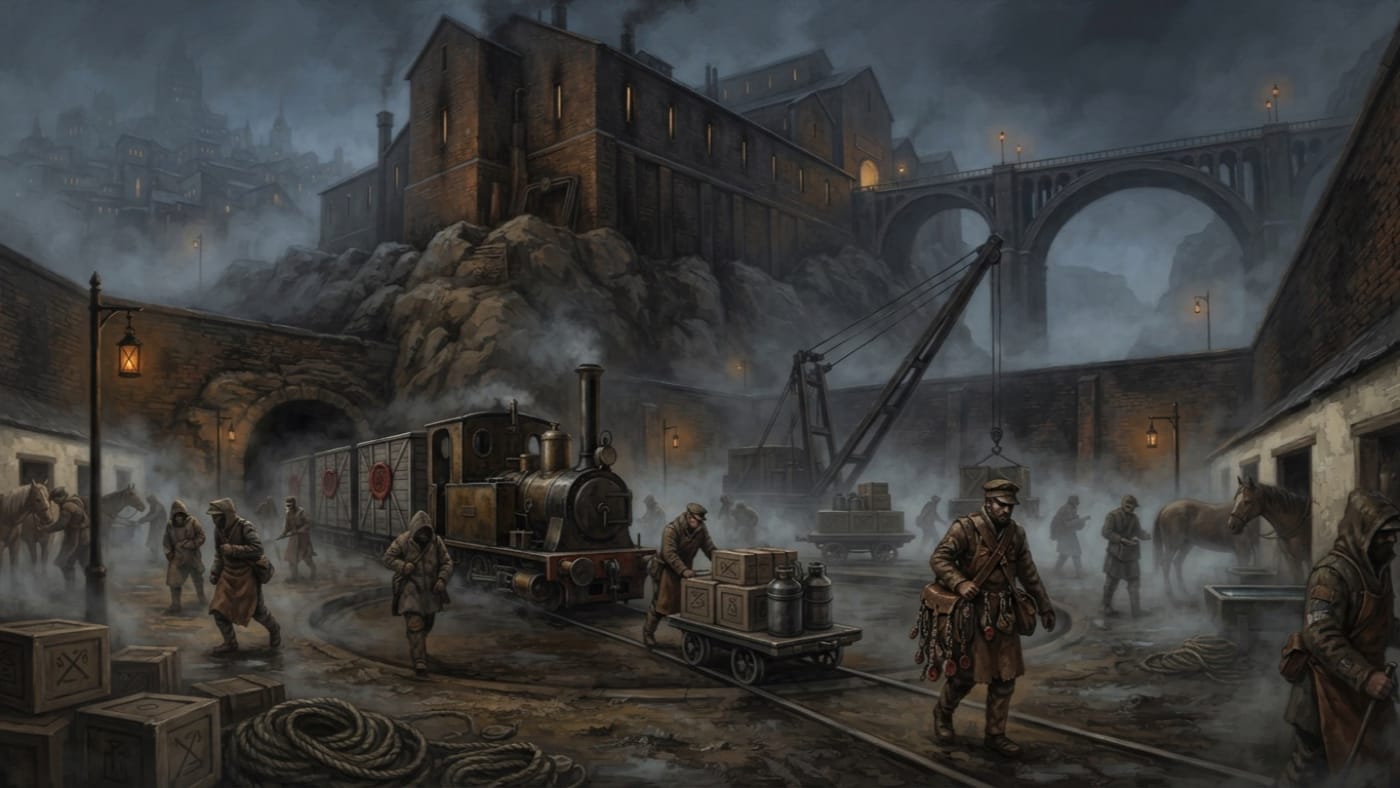
Courier Spur
Carriage certified; contents not warranted
Nemea's eastern dispatch district exports sealed decrees, certified identities and ash-ink under Collegium scrutiny. The Brotherhood certifies carriage. Contents, as the stamp says, are not warranted.
Codex Ref. II.2.06-017

Cradle Brokers
Escape takes one night; milk is due again before dawn
Cradle Brokers place hidden infants and maintain the Pale Kin's wet-nurse rings. The Bureau calls them child thieves; their ledger asks whether anyone survived winter.
Codex Ref. XII.28.04-001

Crossing Bureau
No mark, no crossing; no crossing, no mercy worth recording
Bastion-Brest's Crossing Bureau is the local span authority between confession and passage, where Hett Ruis, wet paper, and warm wax decide who becomes lawful on the Brass Ribs.
Codex Ref. VIII.2.07-098
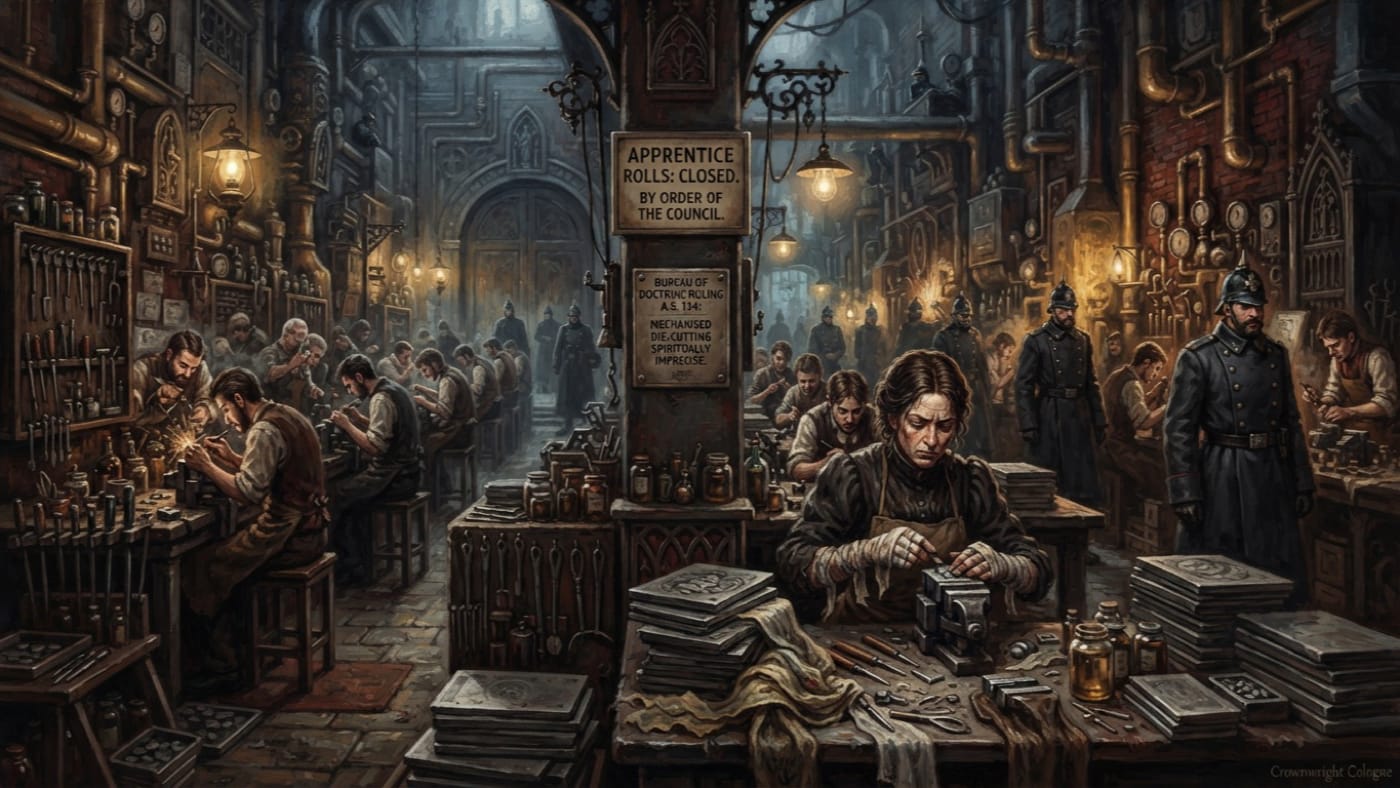
Crownwright Guild
The Chapter owns the face; the Guild owns the hand
The Crownwright Guild cuts Sable Court's lawful faces, charges for recognition, and keeps the Mint-Chapter dependent on its hands. Its apprentice rolls remain closed during the Face Theft crisis.
Codex Ref. XI.7.01-001
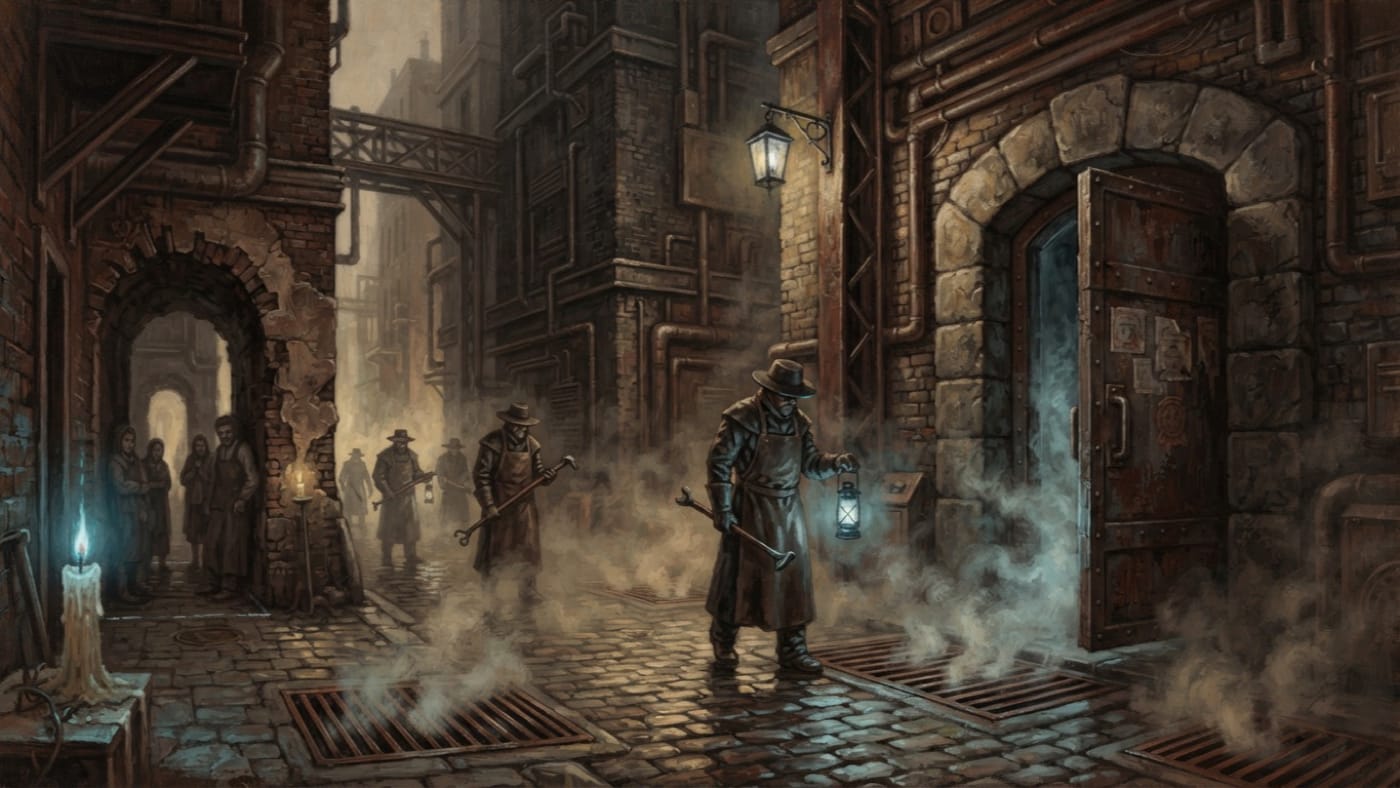
Crypt Mouths
The doors are sealed; the routes are maintained
The Crypt Mouths are Candle-Sump's vent alleys and sealed doors, where warm drafts carry rot-spores and whispered names from maintained burial routes. A shadow registry puts the names to work; the Bureau keeps the review pending.
Codex Ref. II.1.05-002
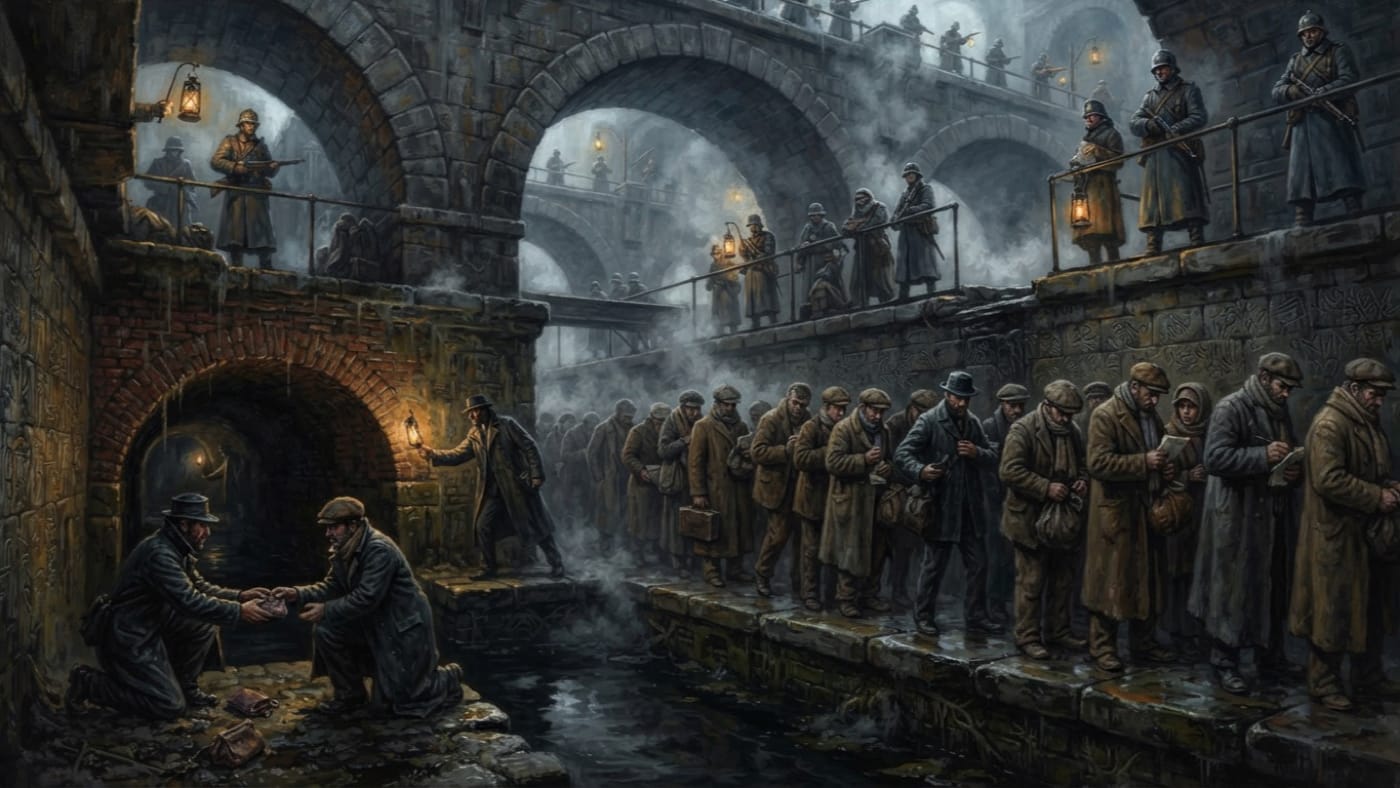
Culvert Choir
The arches can be passed; the name remains
Griefgate's unregistered smuggler network sells passage, borrowed grief and blank indulgence slips beneath the arches. Desperation sets the fee; the Ledger keeps the name.
Codex Ref. XI.5.03-002
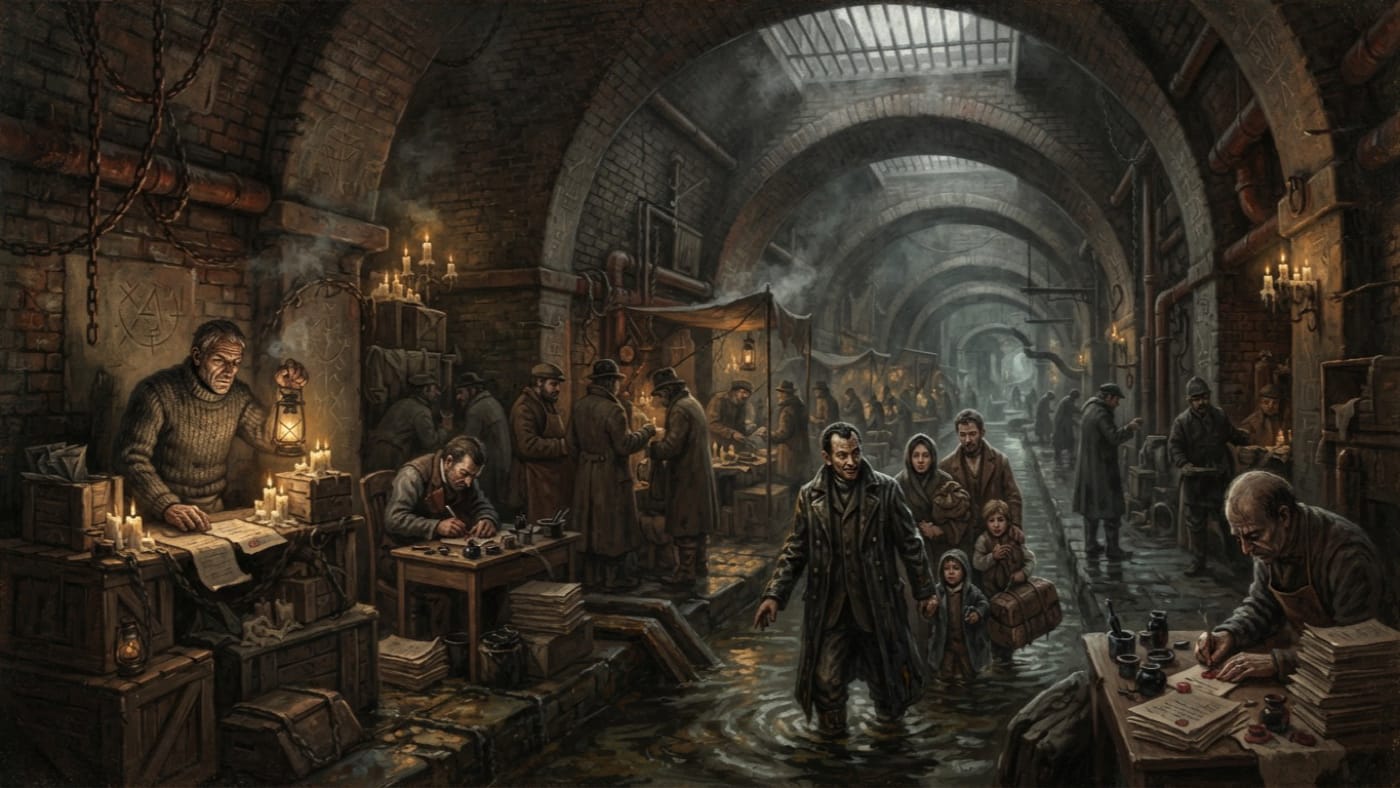
Culvert Market
Where passage is sold and the Ledger keeps your name
Griefgate's unchartered market beneath the arches trades in indulgence slips, forged papers, hired witnesses and unlawful passage. A body may evade the Gate; its name remains in the Ledger.
Codex Ref. II.1.04-002

Deathbed Confession Harvester
The quill outlasts the patient; the Record outlasts both
Two thousand four hundred scribes posted at the bedsides of the dying, ensuring no death in Synod jurisdiction passes unfiled. The Record does not grieve. The Record does not wait. The Record simply continues.
Codex Ref. XII.12.01-001

Demon-Glass Polisher
The craft the Bureau has shattered, blessed, interred in lime, and declined to stop purchasing
The profession the Bureau insists does not exist: found in every port from Marseille to the Harbor of Chains, supplying the Bureau of War with combat-grade optics, having developed a hierarchy, a patron saint, and three factions — all since the last Purity raid.
Codex Ref. XII.13.01-001
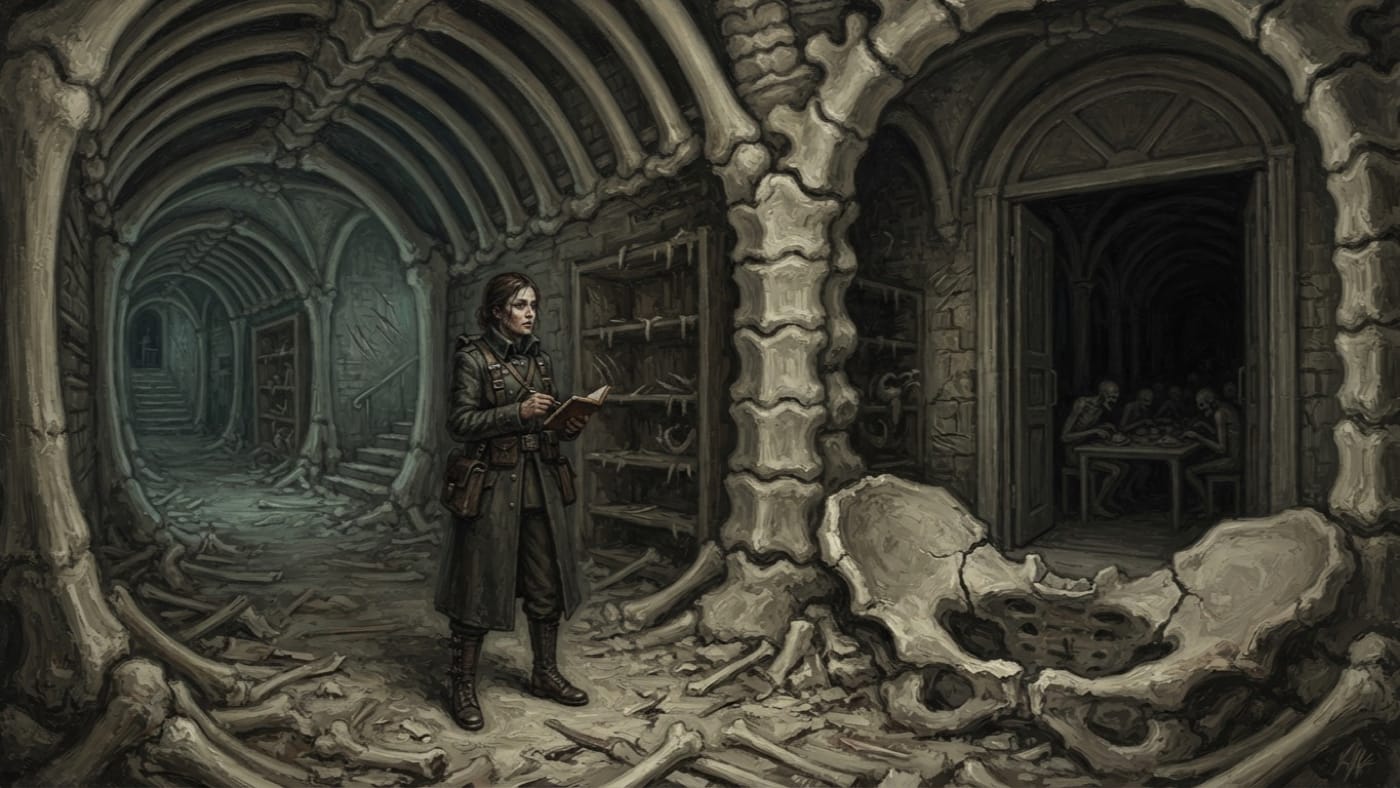
Deposition 7-K
Three days by her account. Nineteen by the calendar.
One redacted Shadows operative returned from the Hollow Court's outer galleries in A.S. 196. She reported about three days; the calendar recorded nineteen. The Bureau entered both and explained neither.
Codex Ref. V.6.01-007
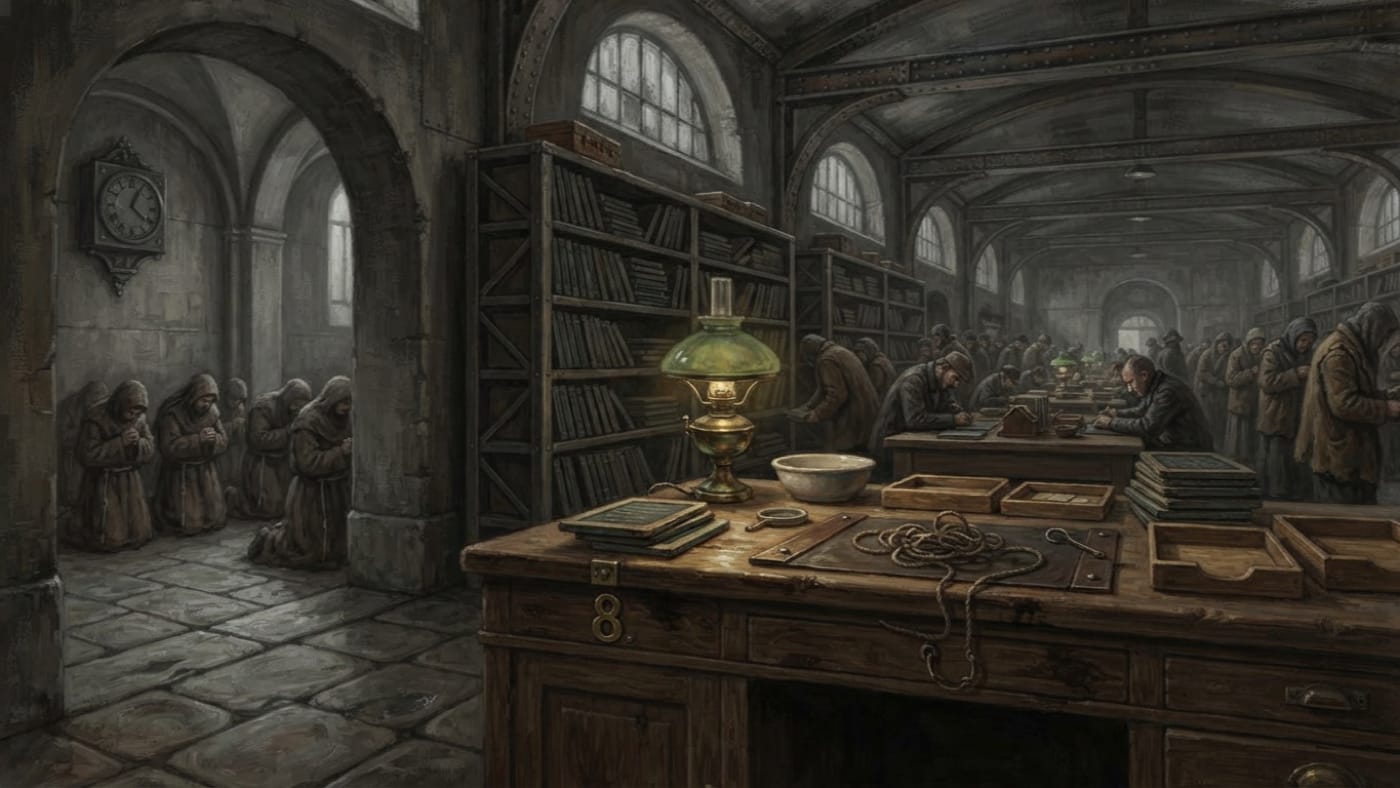
Desk Eight
The knees pay before the evidence arrives
Desk Eight reviews suspected counterfeit strings in the Counting Hall. The Chapel collects an hour of kneeling while the evidence waits for a clerk.
Codex Ref. II.3.06-008

Devotional Debt
The Bureau balances; it does not forgive.
Current survey, A.S. 201: grace entails obligations, and unpaid obligations accumulate as devotional debt. Rites records the deficits and their reported signs. The Bureau balances; it does not forgive.
Codex Ref. VI.3.01-002
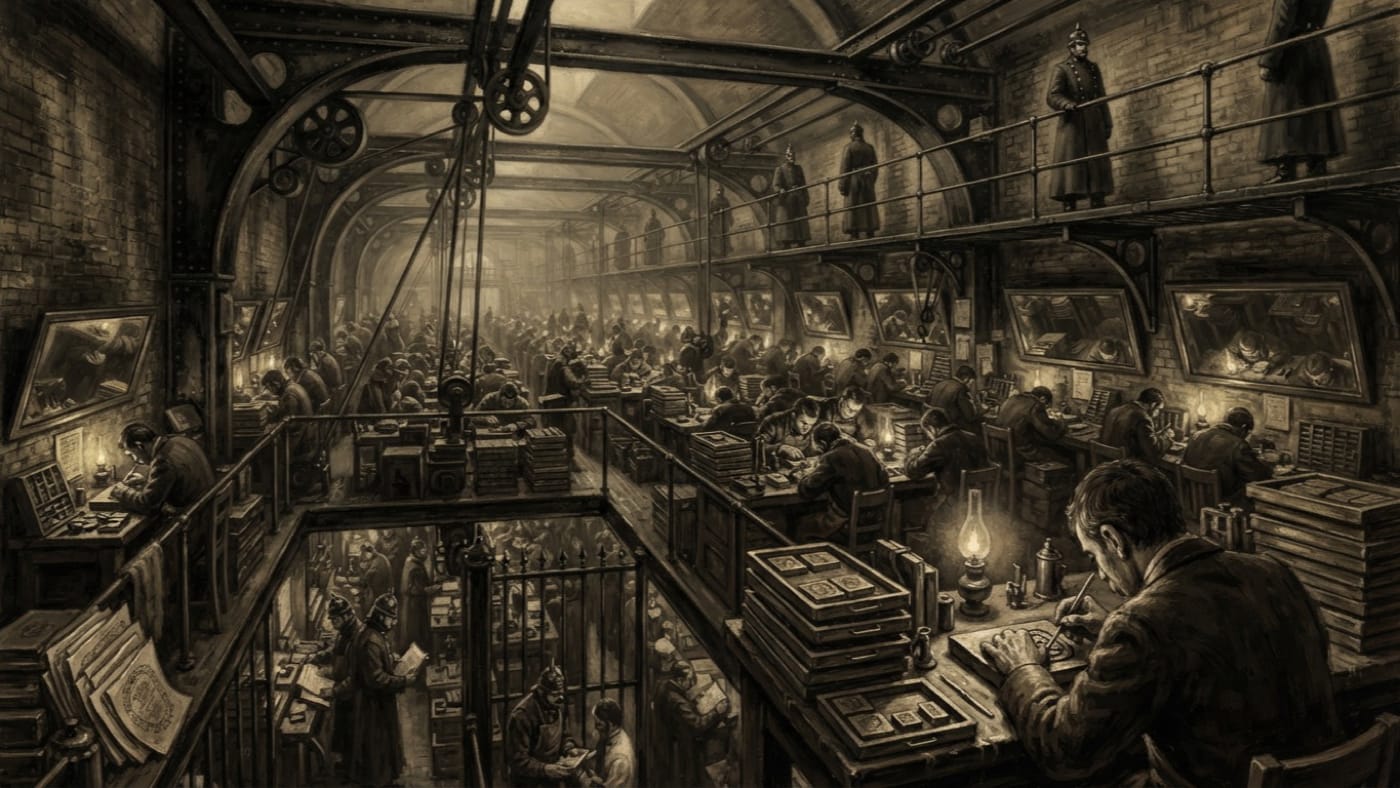
Die Row
Where a lawful face still requires a human hand
In Sable Court's northern engraving halls, Crownwright masters cut faces into steel by hand. Several offices make the result lawful; every office sends a bill.
Codex Ref. II.2.07-002
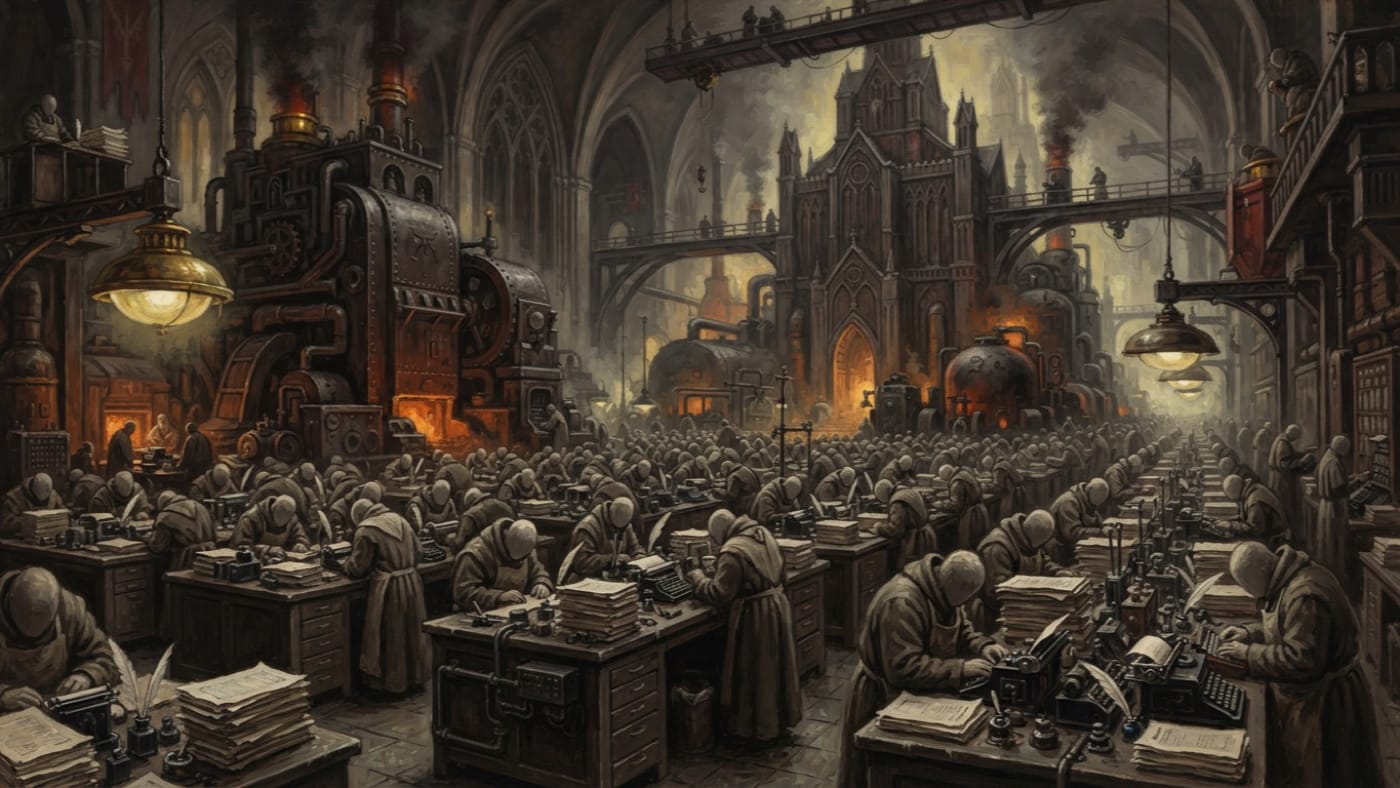
Dijon
The city that sends clerks
Dijon is a principal city of Synod-held Burgundy, recorded for sending clerks and for Archon Benedict Veyrault's former monastic affiliation. A.S. 201 survey: three facts, carefully entered.
Codex Ref. II.1.12-201

Discrepancy Writ
A name at the font. No voice at the screen.
A son stands on the birth-roll and vanishes from the confession ledger. Conscription files the writ and informs Purity. The books disagree; the household acquires a second Bureau's attention.
Codex Ref. XIII.1.83-201
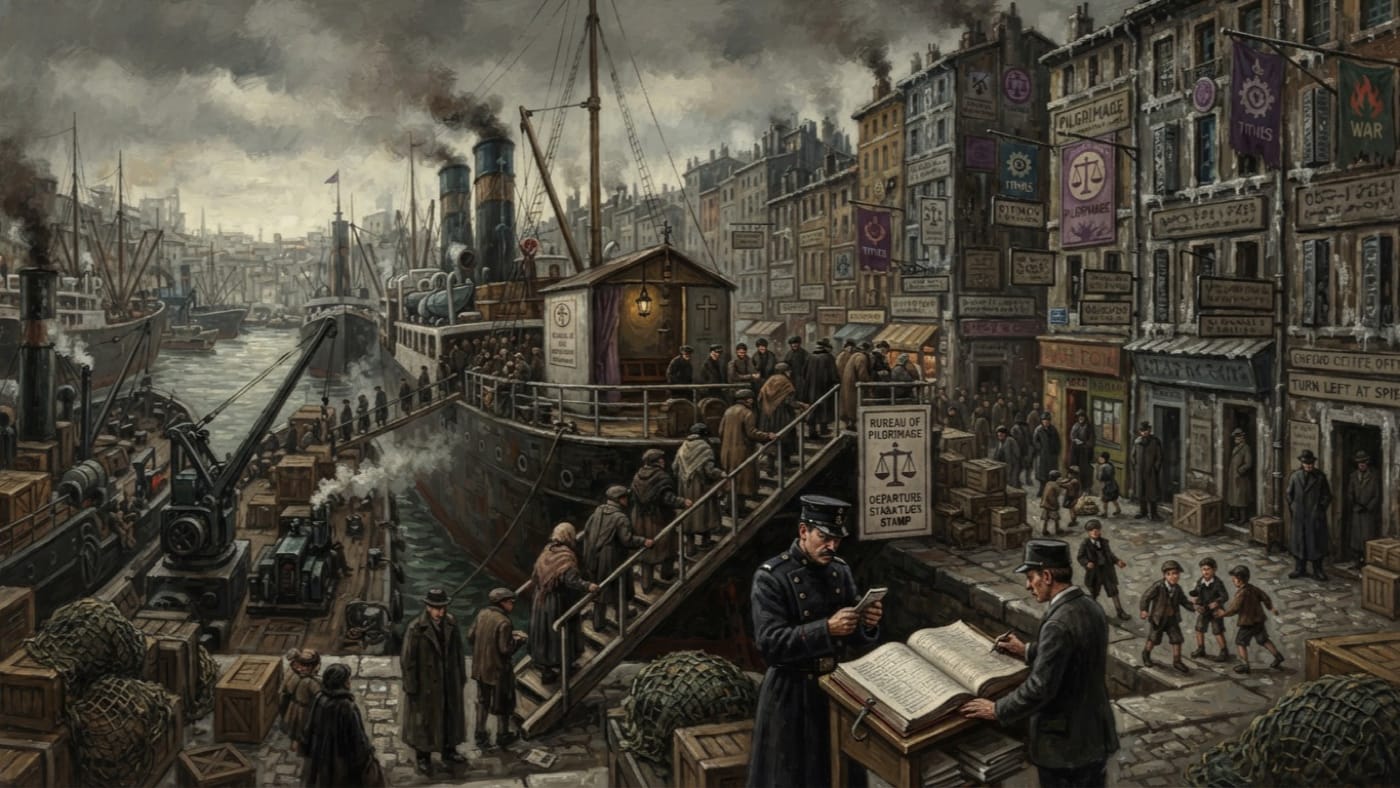
Eastern Basin
Pilgrims sail under seal; the spies serve as landmarks
A.S. 201 survey of Marseille's enlarged harbour and quayside quarter: pilgrims sail under seal, relics arrive under suspicion, three Bureaus dispute the water, and the officially nonexistent spies serve as landmarks.
Codex Ref. II.4.09-013
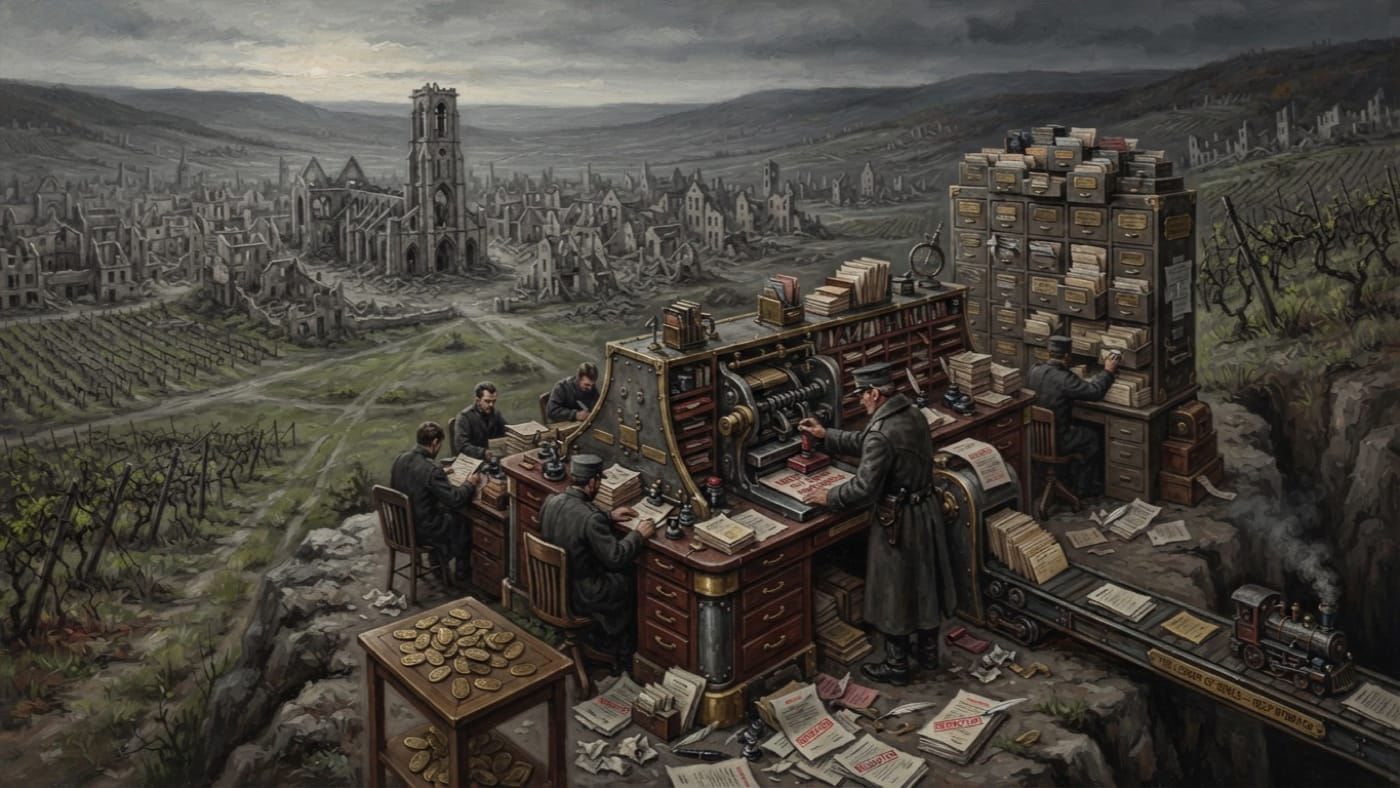
Epernay
The City That Keeps Appearing in Its Own Denial
Epernay was a prosperous Champagne city until Veyrault struck it from the Ledger in A.S. 103. The valley is empty; its name still turns up on tokens in Reims. Doctrine calls them forgeries. I call this an active filing problem.
Codex Ref. II.1.08-103

Erasure Notary
The scaffold produces martyrs; the Office of Nullity produces only silence — and nine hundred Black-Stamps to stamp it.
Nine hundred Black-Stamps who unmake persons through ink and wax — no body, no grave, and no widow to scratch the martyr's name on cellar walls.
Codex Ref. XII.14.01-001
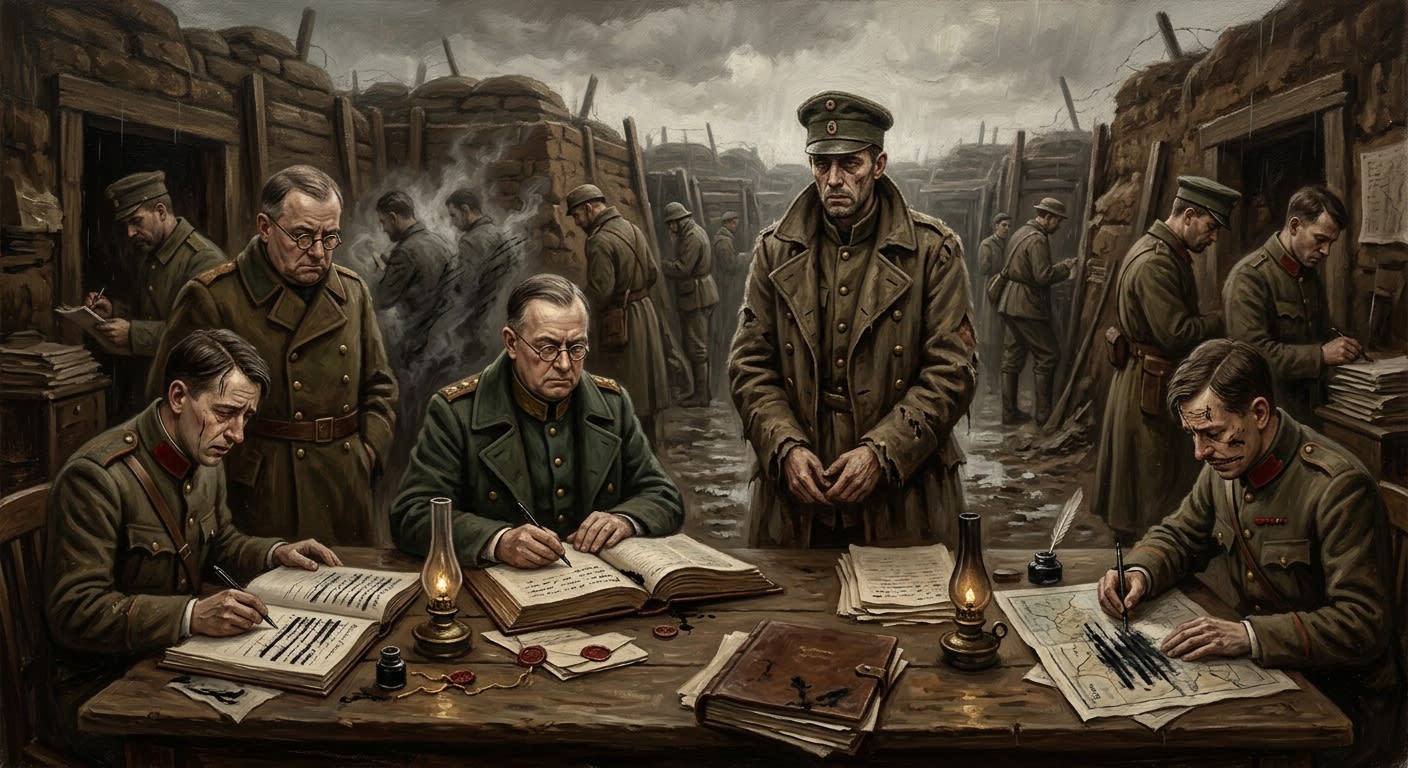
Erasure of Veyss
The man who asked for arrears and received absence
A.S. 148 trench-court erasure in which Lieutenant Veyss lost standing over a missing ancestral tithe-stamp, and every dependent ledger corrected him into absence.
Codex Ref. VII.8.10-048

Excommunication
Cast out of communion, retained for punishment
Excommunication casts a person out of communion but keeps the name legible in the Great Ledger of Souls. The condemned retain standing for punishment and possible restoration. Records calls this generosity.
Codex Ref. XIII.1.01-005
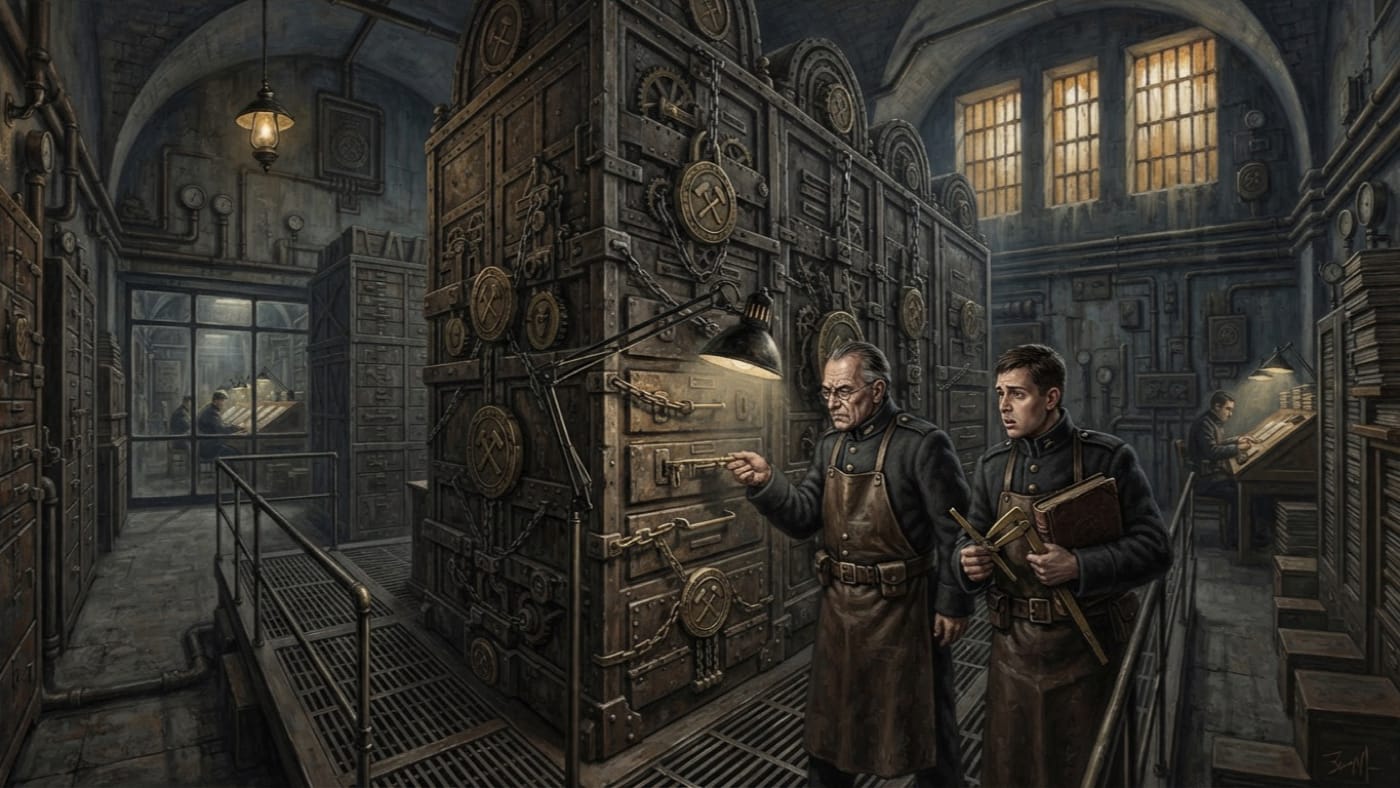
Face Archive
The locked reference by which a face is permitted to circulate
Sable Court keeps every lawful face under triple lock. The Face Archive binds coin to name and memory; since its plates began to change, the Chapter has answered doubt with tighter locks.
Codex Ref. II.2.07-002
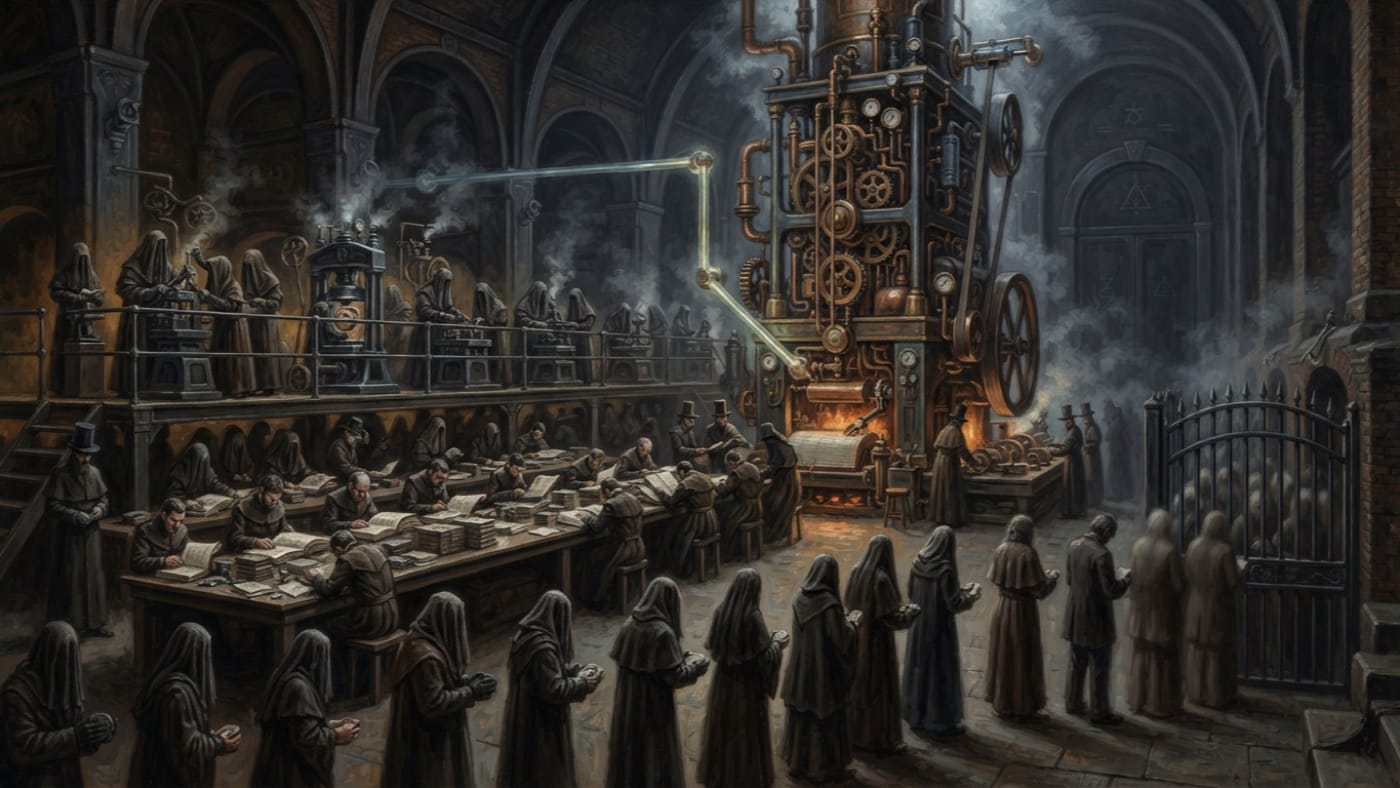
Face Registry Compact
The law that made recognition portable, taxable and revocable
Ratified in A.S. 94, the Face Registry Compact binds coin, face, name and the Ledger's soul account. Recognition may travel, be taxed, or be recalled; in Sable Court, even memory pays its dues.
Codex Ref. XIII.1.91-002
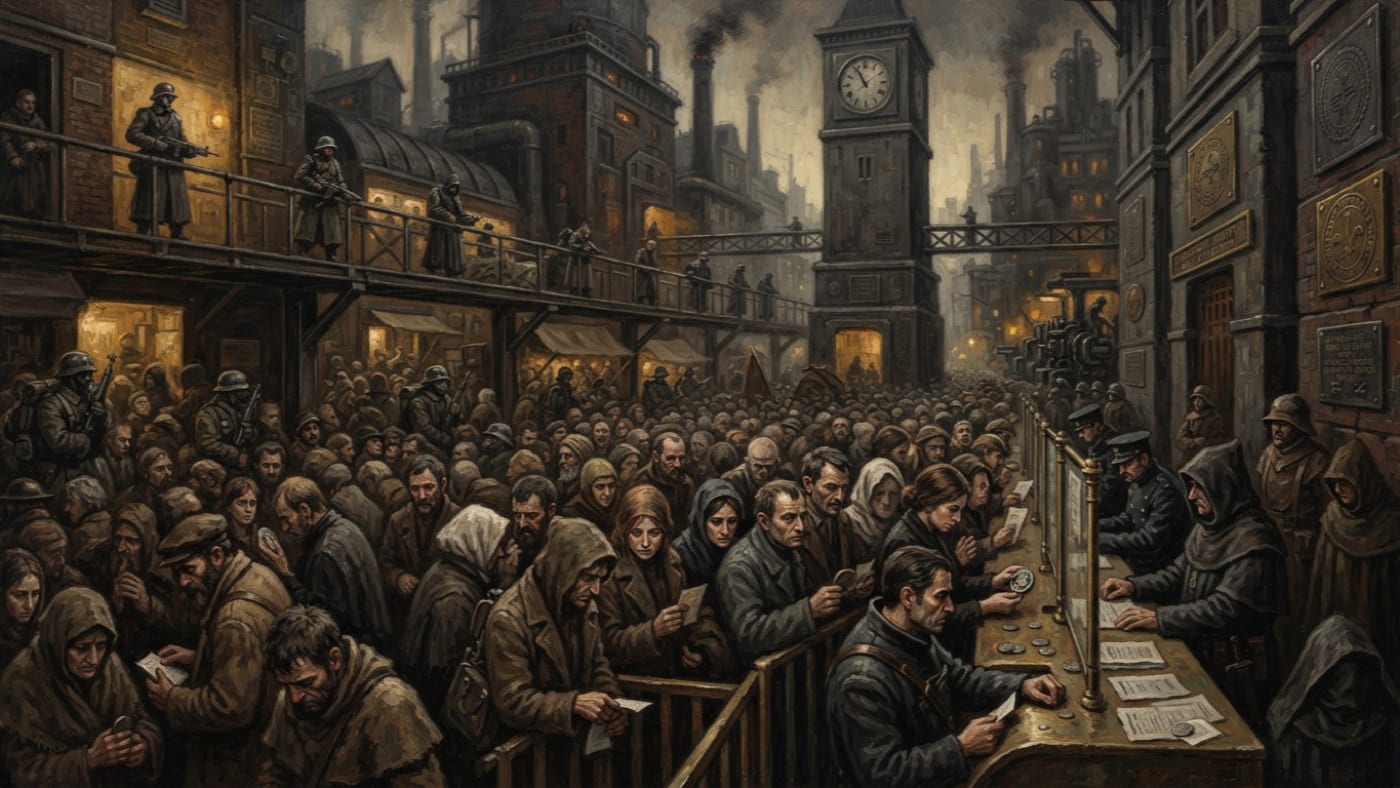
Face Theft Crisis of A.S. 199–201
When the coin forgets, the citizen pays
Since A.S. 199, Cologne's coins have changed faces, loosening memory and lawful identity. Seventeen denominations were recalled; the investigation remains open in A.S. 201, while hunger waits for an assay slip.
Codex Ref. VII.8.10-199

Faith-Tithe
The tenth that never settles the bill
The Faith-Tithe is the tenth owed by every baptised Synod subject, payable in coin, livestock, grain or labour. I certify the receipt; the surcharges follow.
Codex Ref. XIII.1.92-001
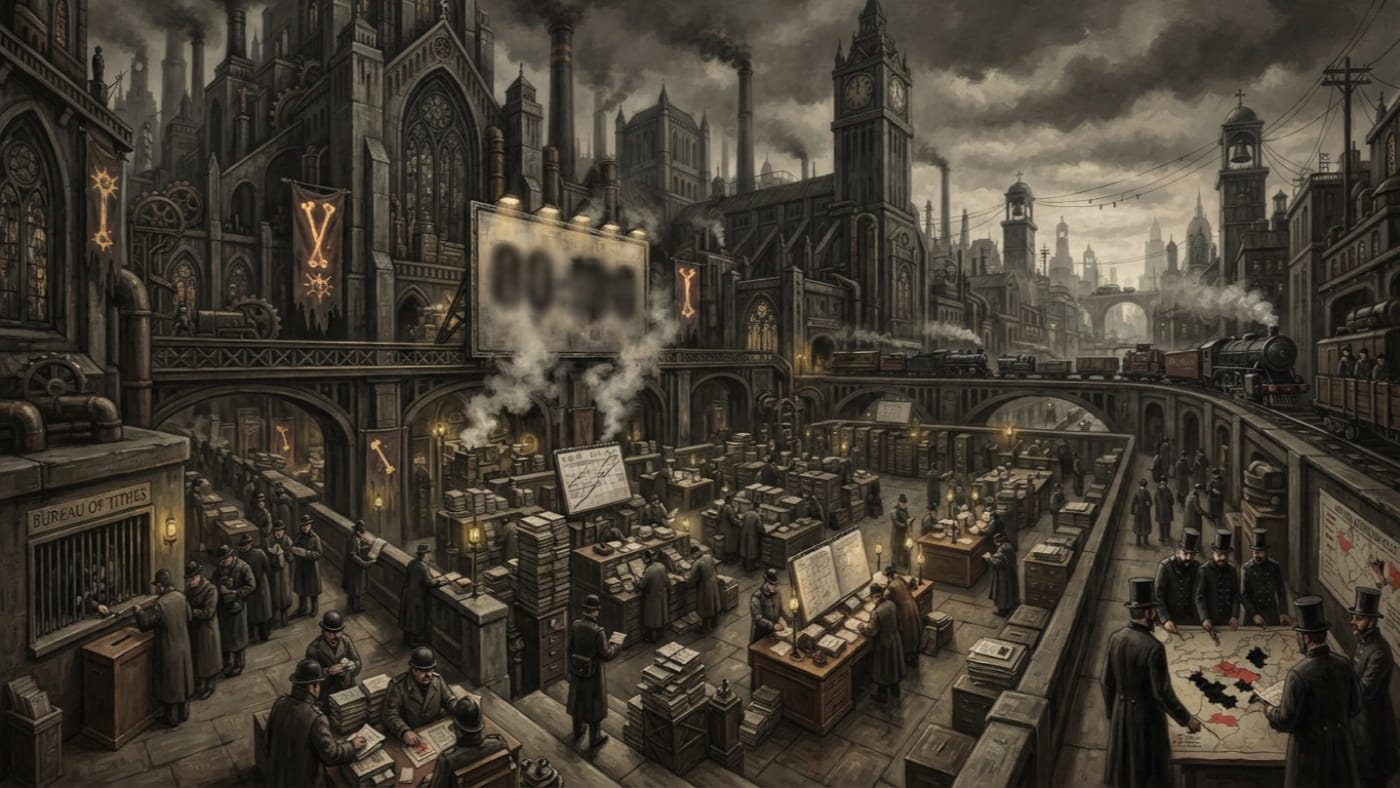
Feast of Saint Aldebrand
Remembered by the register, mislaid by the diocese
A.S. 201 survey of Aldebrand's feast: sanctioned by Festivals, observed or omitted by dioceses, disputed by Records and taxed by Tithes. The register remembers; the day remains unknown.
Codex Ref. XIII.1.89-201

Feast of Saint Barachiel
The calendar gave the sky a patron and the weapon an appropriation
Ratified in A.S. 167 and bound to the Ark's first ascent in A.S. 168, Saint Barachiel's feast supplies lawful witness, counted candles, and the holy protection of a military budget.
Codex Ref. XIII.1.89-167
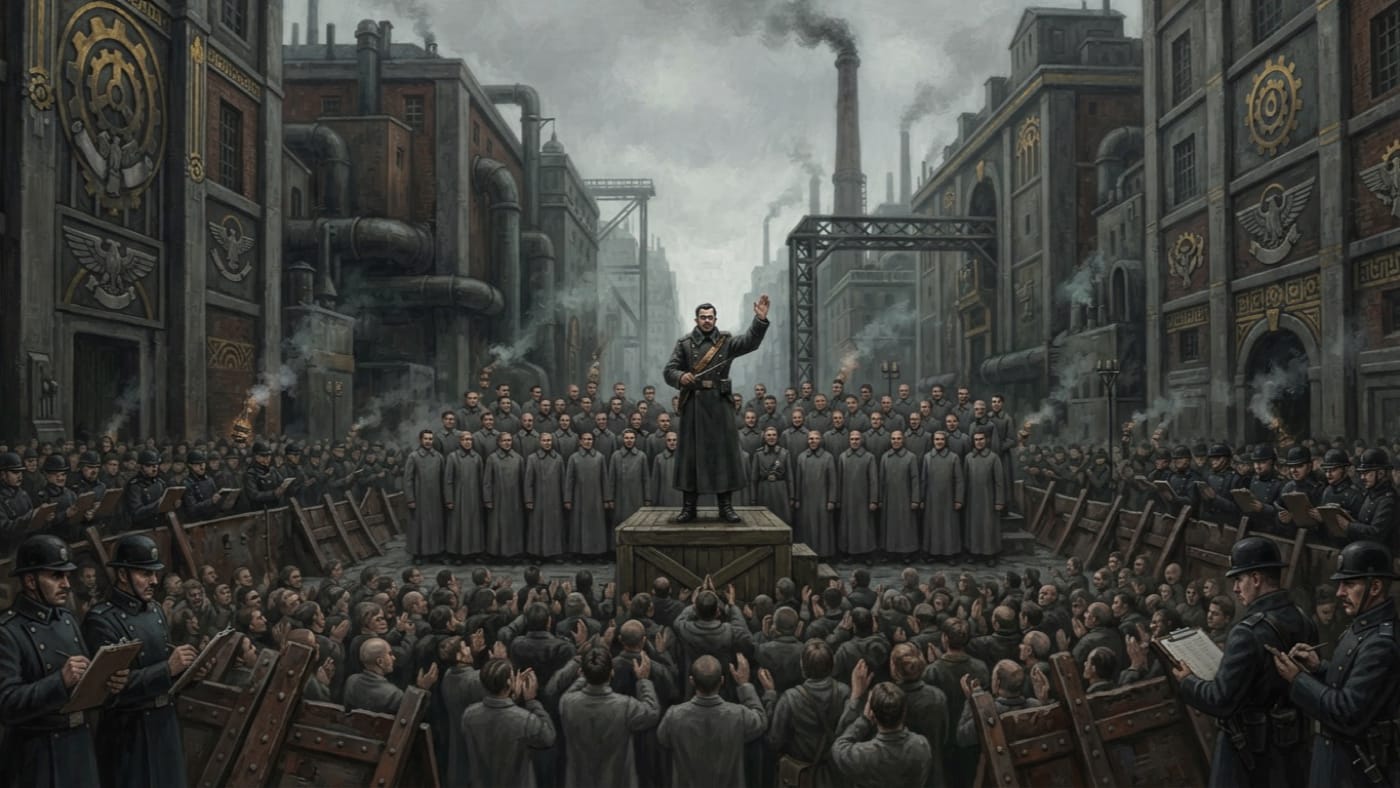
Feast of Saint Rupert
Attendance is mandatory; relief has no column
Saint Rupert's mandatory feast, preserved in the Strasbourg return of A.S. 199: 1,847 present, 13.7 seconds of applause, and joy classified Within Parameters.
Codex Ref. XIII.1.89-199

Feast of the Ledger
Twelve portfolios read aloud; the offices that keep them standing go unnamed.
At the Feast of the Ledger, the Synod reads its twelve canonical portfolios aloud. Settlement, which assigns three hundred million addresses, receives no syllable. The recital is correct; the census is incomplete.
Codex Ref. XIII.1.89-201
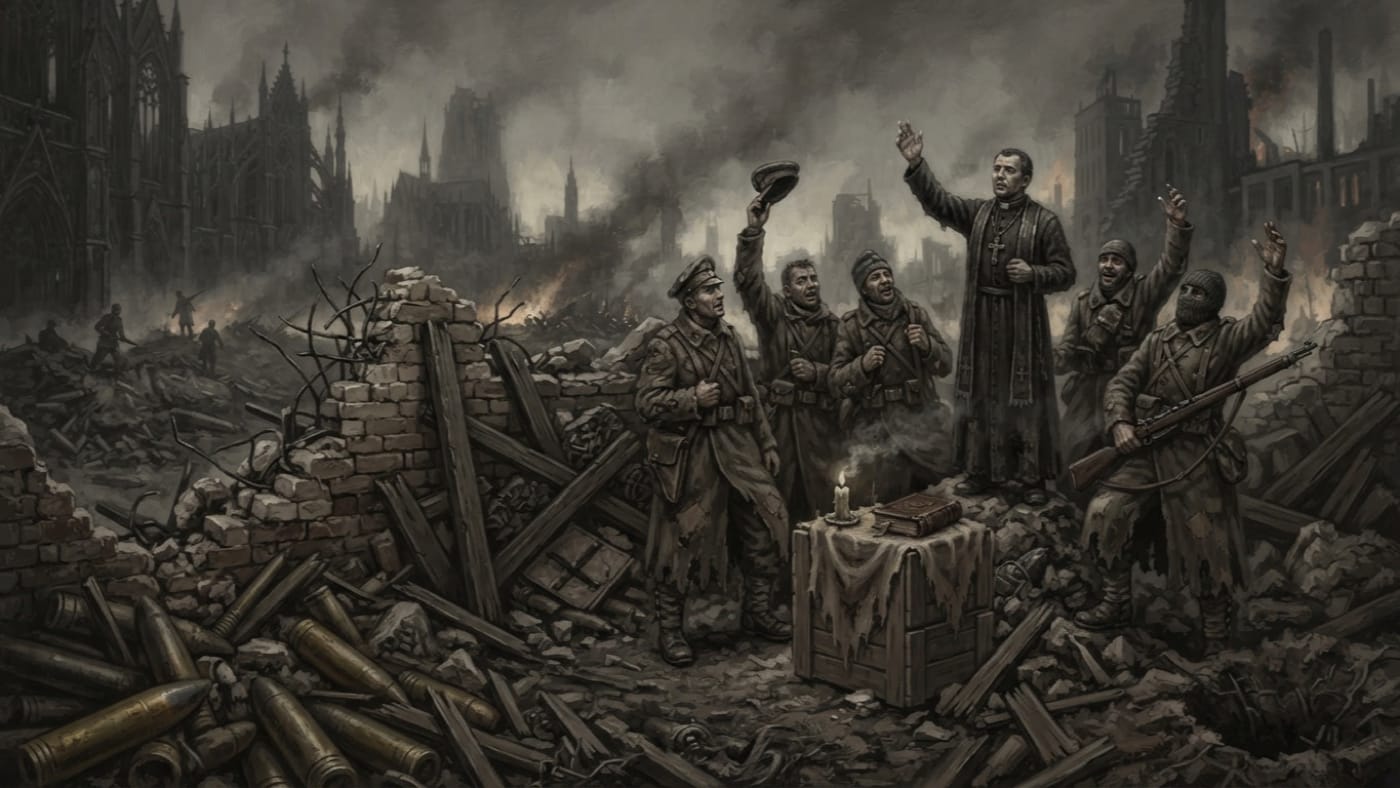
Feast of the Unbroken Wall
The wall held; the bureaucracy arrived later
A surviving barricade, an unnamed priest, and one unscheduled cheer in A.S. 52: the Bureau of Festivals' founding precedent. The wall held; the bureaucracy arrived later.
Codex Ref. VII.8.10-1050
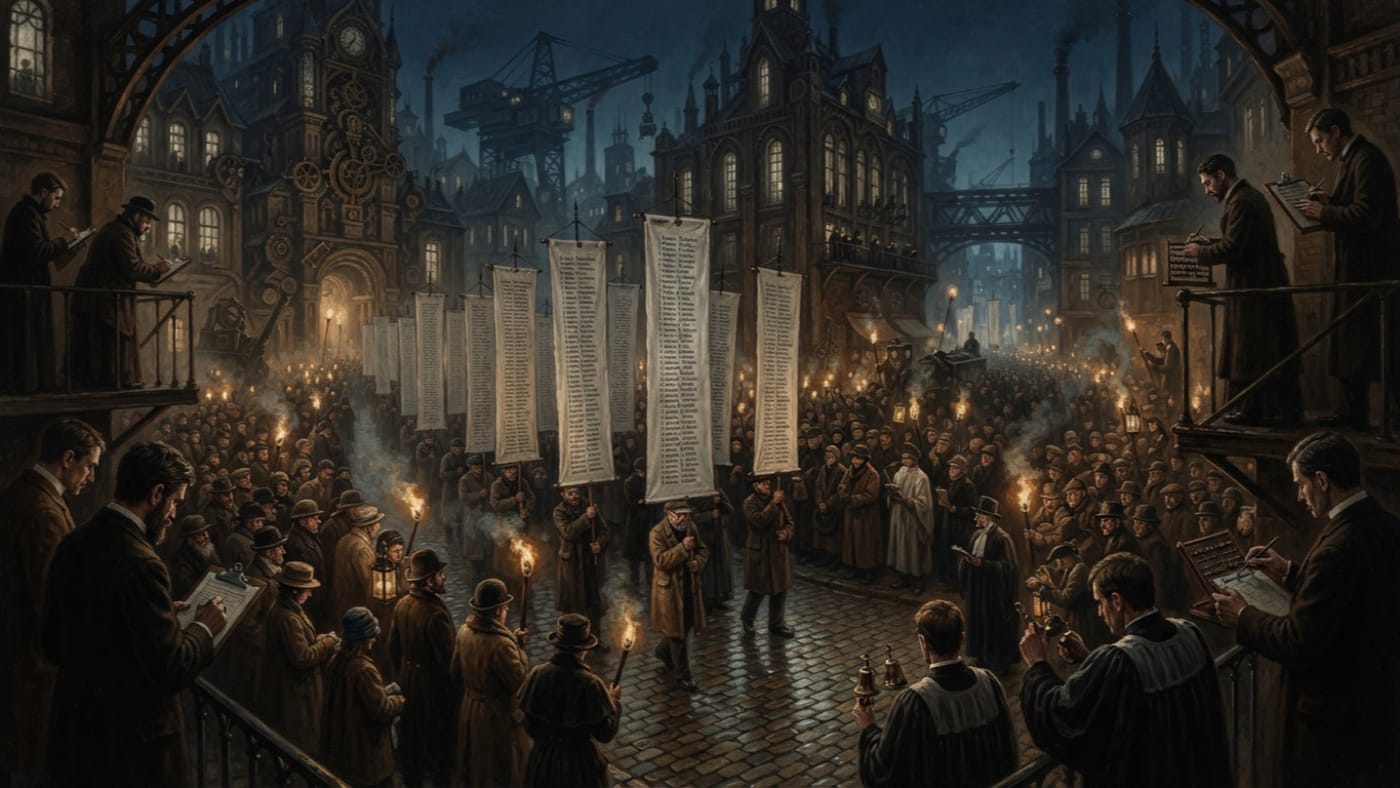
Festival of Departed Flames
The names are read; the weeping is measured
Each autumn the Synod reads its dead by torchlight. Festivals counts the mourners, Rites consecrates the chant, Records logs the names, and the weeks that follow grow quieter. I record the figures; the Bureaus supply the explanation.
Codex Ref. VII.3.03-001
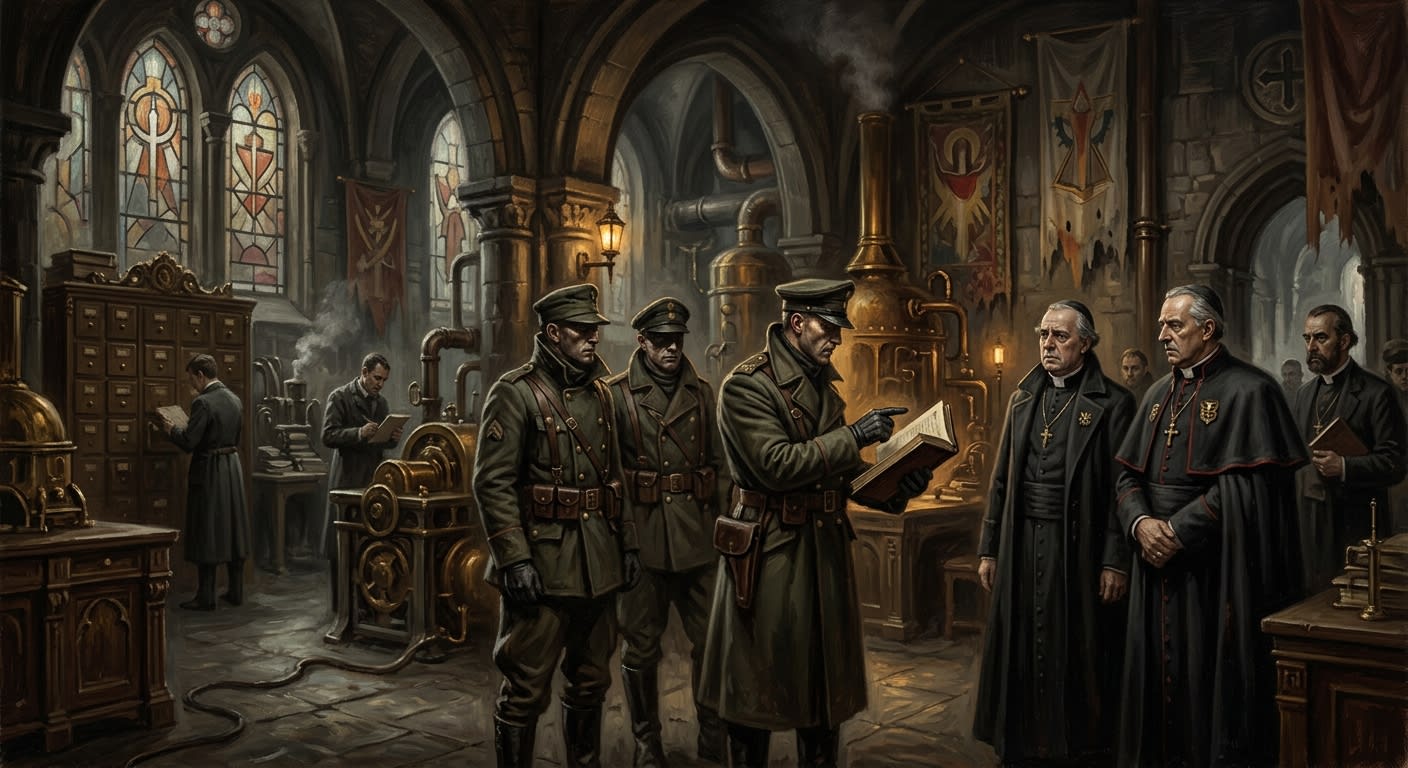
First String
The absent cord by which every correction fears being measured
The First String is the Cloister's officially absent prime cord: unindexed, unadmitted, and feared because origin with teeth makes every correction appealable.
Codex Ref. XIII.1.72-002
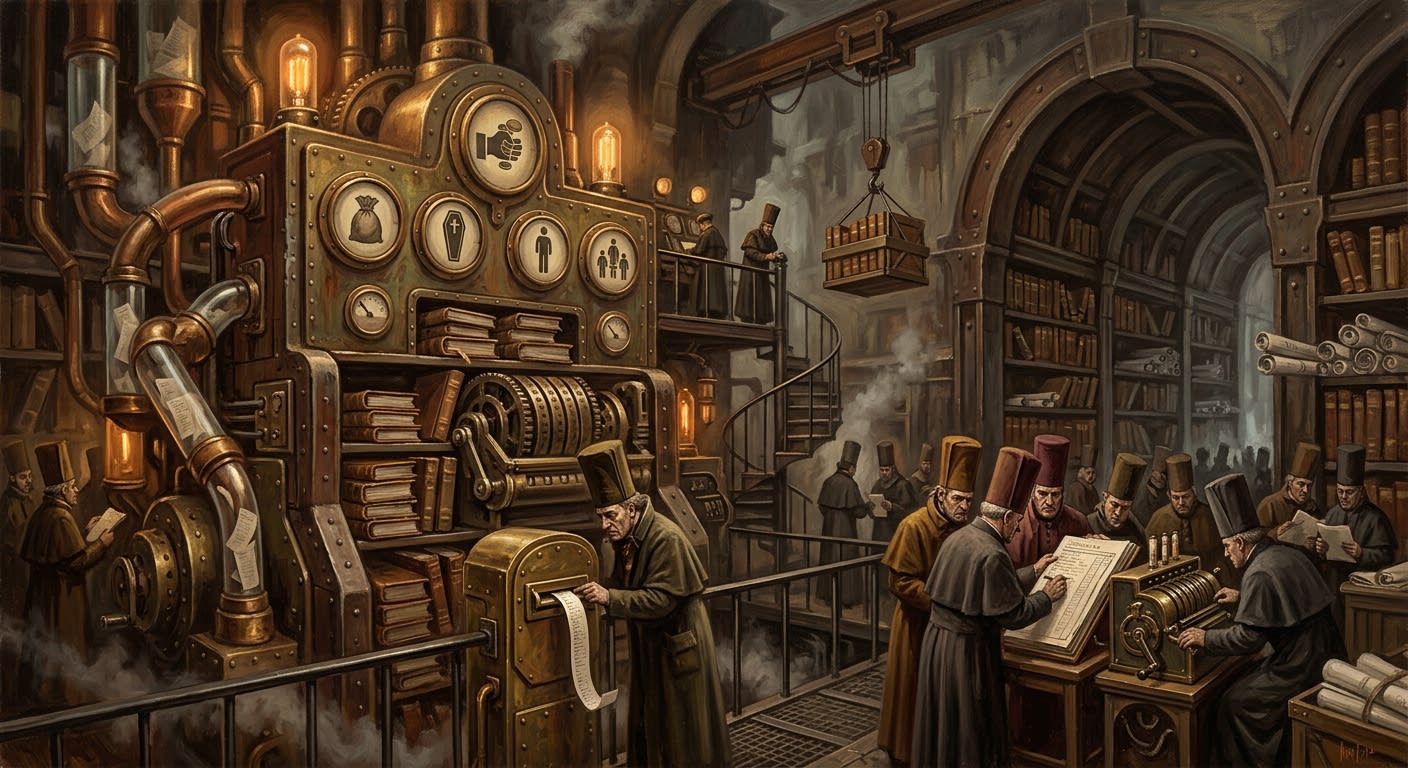
Fiscal Census
The mouth beneath the Ledger, still hungry after burial
The Fiscal Census is Tithes' continental obligation register: a vault-machine counting what the living, dead, unborn, and administratively inconvenient still owe.
Codex Ref. XIII.1.38-092
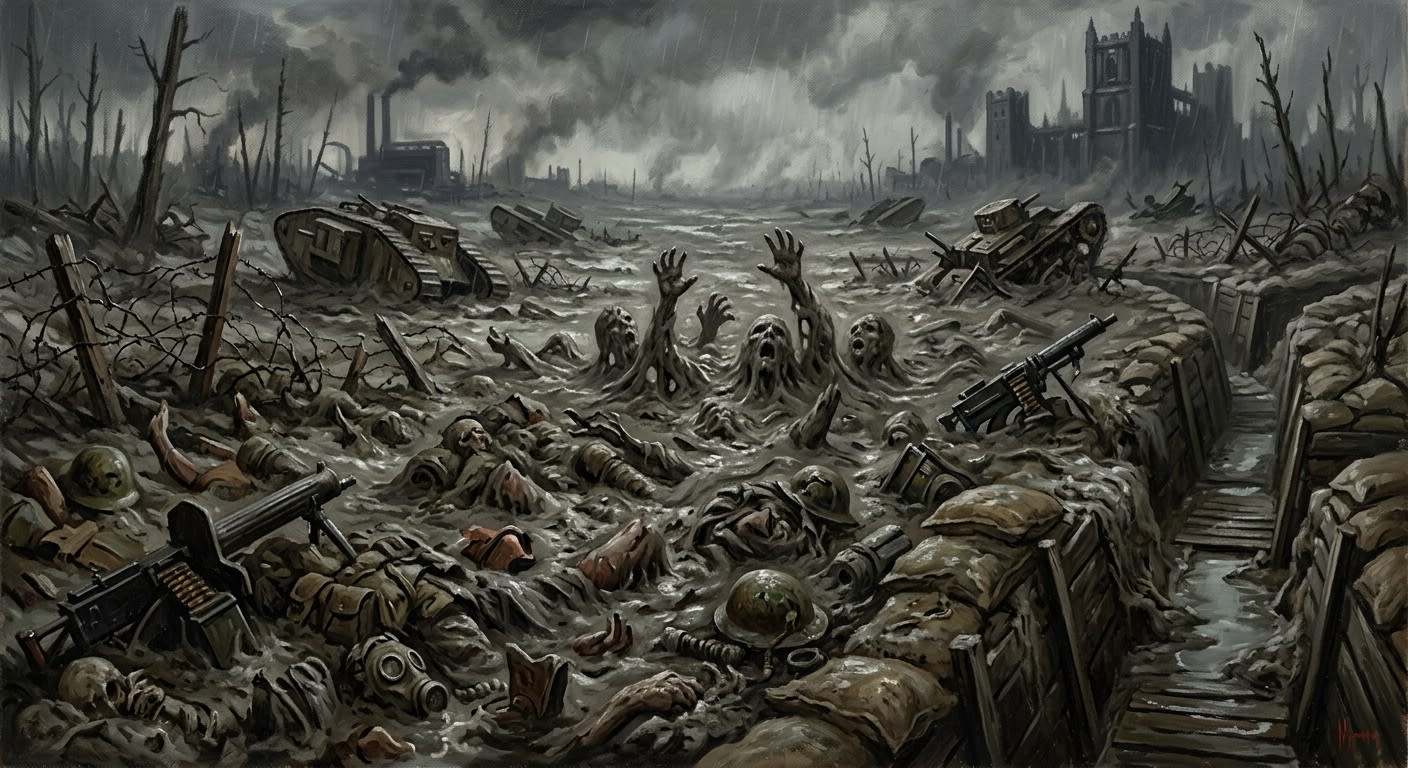
Flesh-Mud
The trench remembers what the grave failed to finish
Flesh-Mud is No Man's Land with appetite: trench mire made from rain, bone, grief, and the administrative failure to bury men separately.
Codex Ref. VI.2.01-004

Form 77-D
Three copies agree; the reason takes another road
Form 77-D authorizes Administrative Dissolution: three copies, one countersignature, and a soul rendered illegible. The reason travels under a separate seal; the writ has no field for undoing.
Codex Ref. XIII.1.77-201
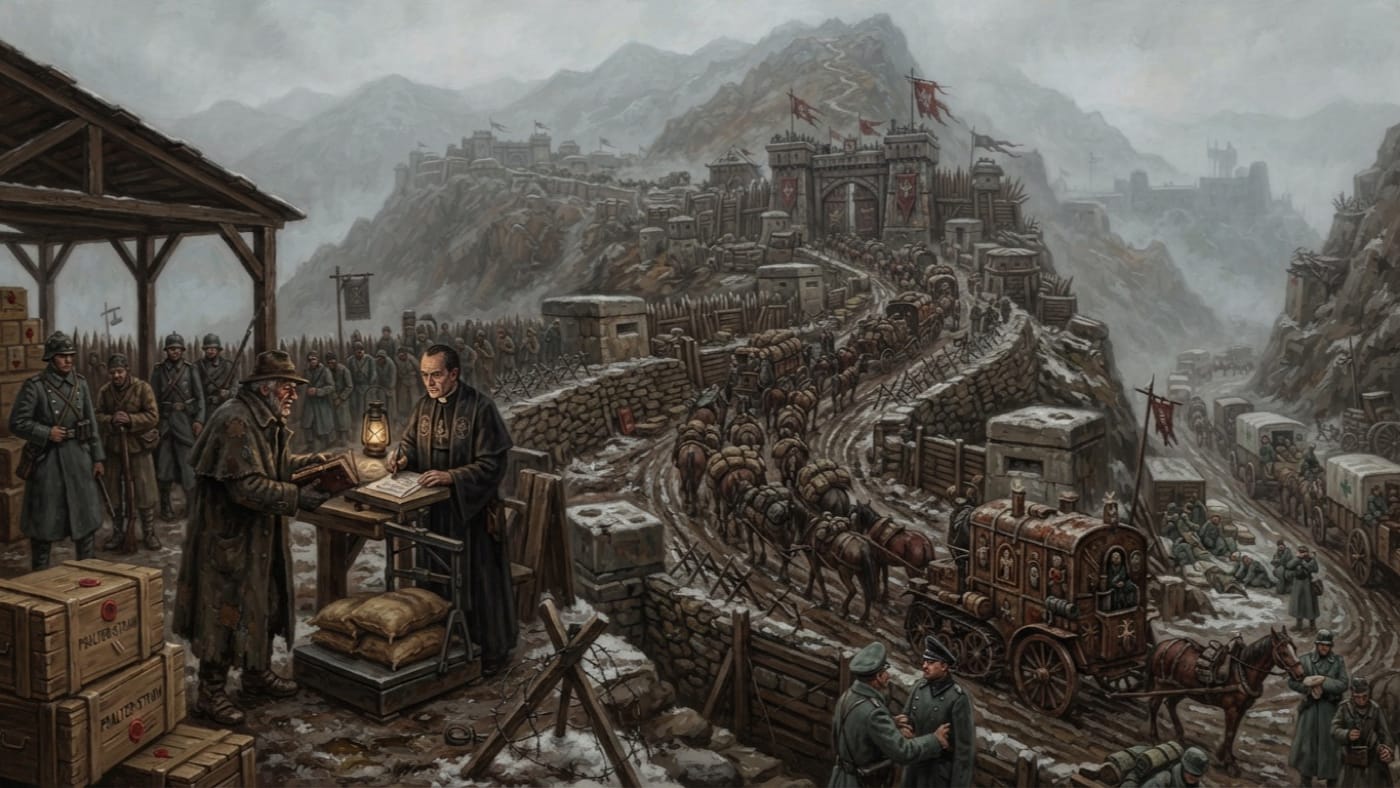
Forward Supply Zone
Where freight becomes evidence and every sack requires a confessor
The Bureau of War defines the Forward Supply Zone as Zones 4–7: bastions, contested ground, Charnel Lands and southern sea lanes. Freight crosses by permit; every loss and every bribe must find a name to answer for it.
Codex Ref. II.4.07-201

Founding Salvo of Bastion-Brest
The bridge fell. The anniversary remains licensed.
Brest's annual gun salute honours, per the current Codex, the nine-day stone-bridge defence of A.S. 66. The bridge fell on the tenth day. The guns commemorate endurance; Records files accidental deaths as celebratory expenditure.
Codex Ref. XIII.1.89-1146

Garrison-Prior Aldric Venn
He saved the crates, which is how saints survive the road
Garrison-Prior Aldric Venn commanded Saint Stephen's defensive precinct during Vienna's Great Retreat withdrawal, completed the relic manifest, and vanished into the road.
Codex Ref. III.2.01-154
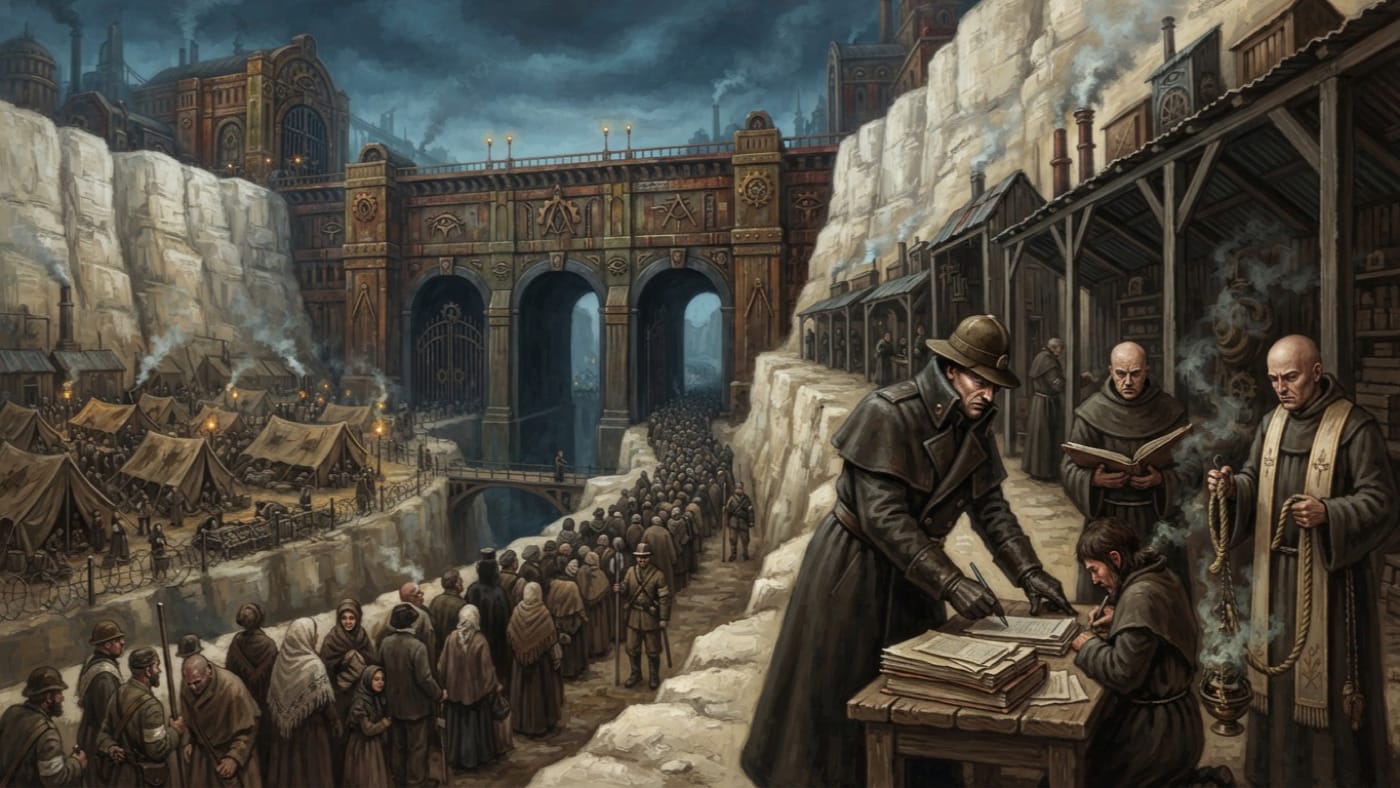
Gate Chapter of Griefgate
The brokers run the Exchange; the Chapter runs the doubt
The Synod's ecclesiastical co-steward of Griefgate certifies passage, raises doubt flags, and turns detention into labor. The brokers run the Exchange; the Chapter runs the doubt.
Codex Ref. II.1.04-002
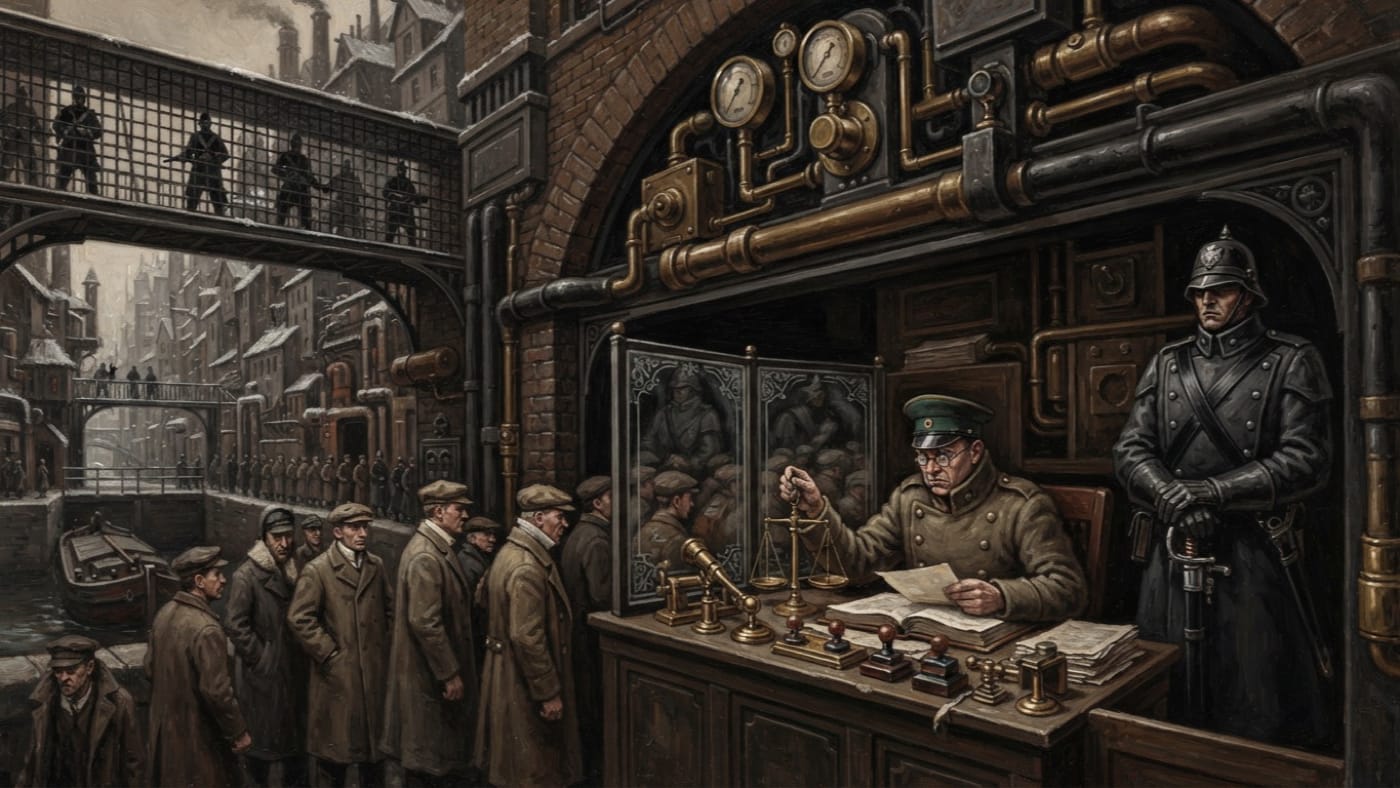
Gate of Assay
Where a clean strike promises a clean soul
A.S. 201 survey of the Mint-Chapter's Gate of Assay in Sable Court, Cologne. A clean strike promises a clean soul; even my seal of office required repeated inspection.
Codex Ref. II.2.07-002
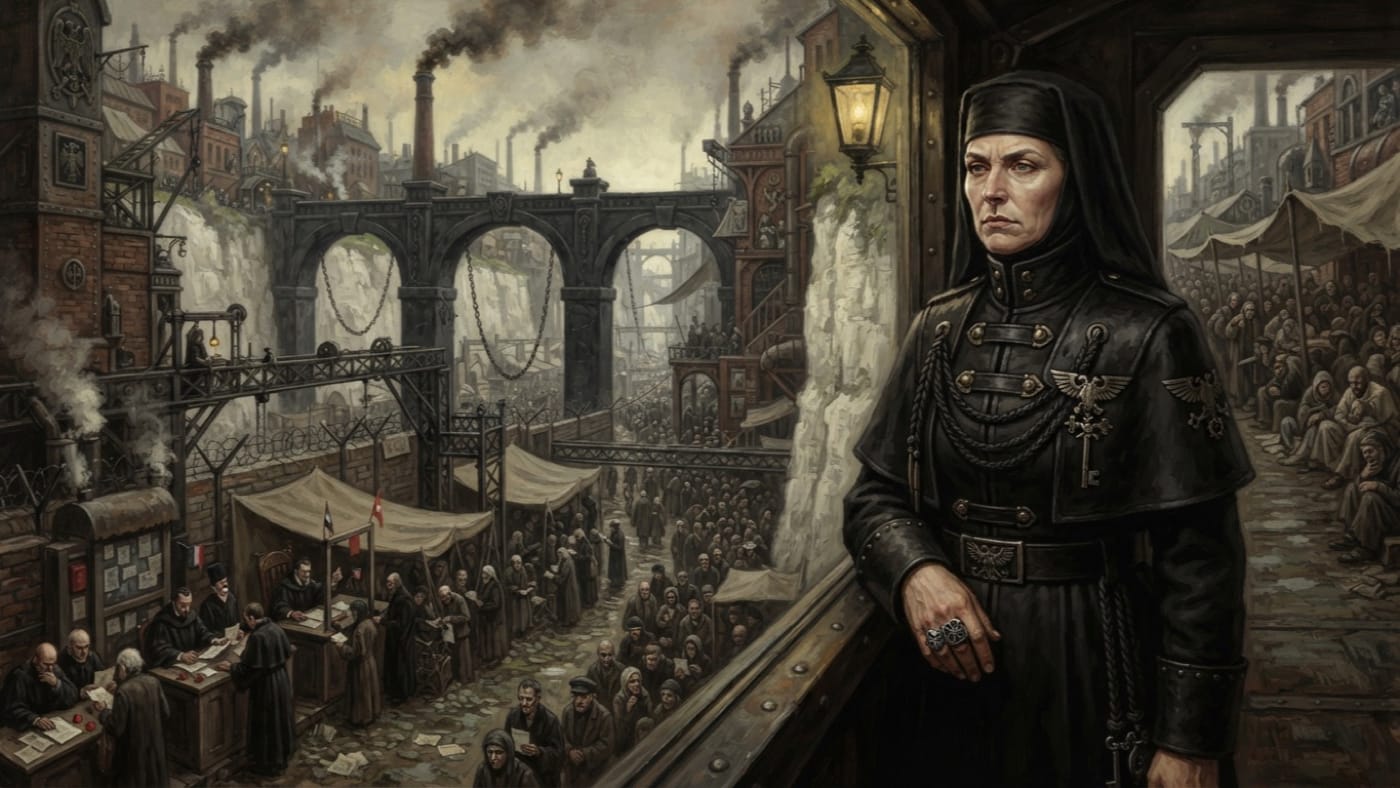
Gate-Canon Meral Voss
Two masters, one stamp, and a queue that must not riot
Meral Voss holds Griefgate's shared seal between brokers who want traffic and a Synod that wants bodies. Her inspectors always produce a confession; the forms do not ask where it came from.
Codex Ref. III.2.01-201

Gate-Nullity Liaison
The name is struck upstream; the traveller learns at the gate.
An A.S. 201 survey of the Erasure Notary specialist who coordinates nullity records with Gatewarden-Notaries. The Bureau files absence; the traveller finds a closed gate.
Codex Ref. XII.14.01-002

Gatewarden-Notary of Passage
The sole functionary who may halt a column of four thousand by raising one ink-stained hand and asking for documentation.
The Gatewarden-Notary of Passage stands at the point where all five great commodities of the war — disease, heresy, desertion, contraband, and ambition — must be sorted, weighed, stamped, and either admitted or refused. The Gate does not care about the man.
Codex Ref. XII.7.04-001

Gerda Weil
The midwife whose bitter draught survived the men who stole it
Halle midwife whose hidden Rationalist remedy lowered fever deaths in A.S. 112, was stolen as Protocol 7-C, and died in Ulm under an erased name.
Codex Ref. III.2.01-091
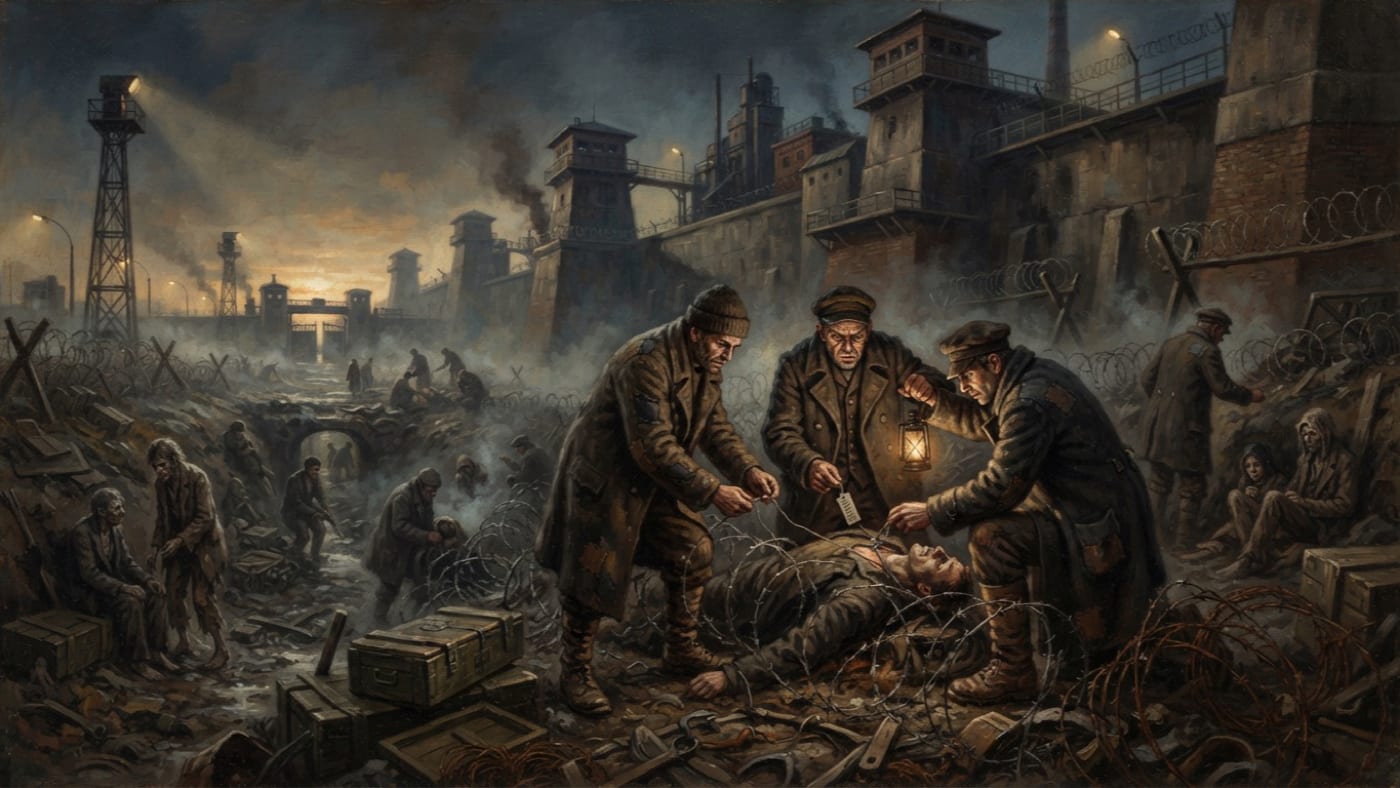
Gleaners
What the harvest leaves behind may yet live
Beneath Bastion-Przemyśl, the Gleaners shelter the Erased, swap the living into dead men's tags, and steal survival from the dawn harvest. Purity calls it sacrilege; the uncounted call it another day.
Codex Ref. XI.5.02-001

Grand Inquisitor Malthus the Red
The erased butcher whose procedure outlived his name
Grand Inquisitor Malthus the Red is officially absent from every Bureau list, which is how the Synod confesses that the Vienna incident frightened Purity into erasing one of its own.
Codex Ref. III.2.01-054
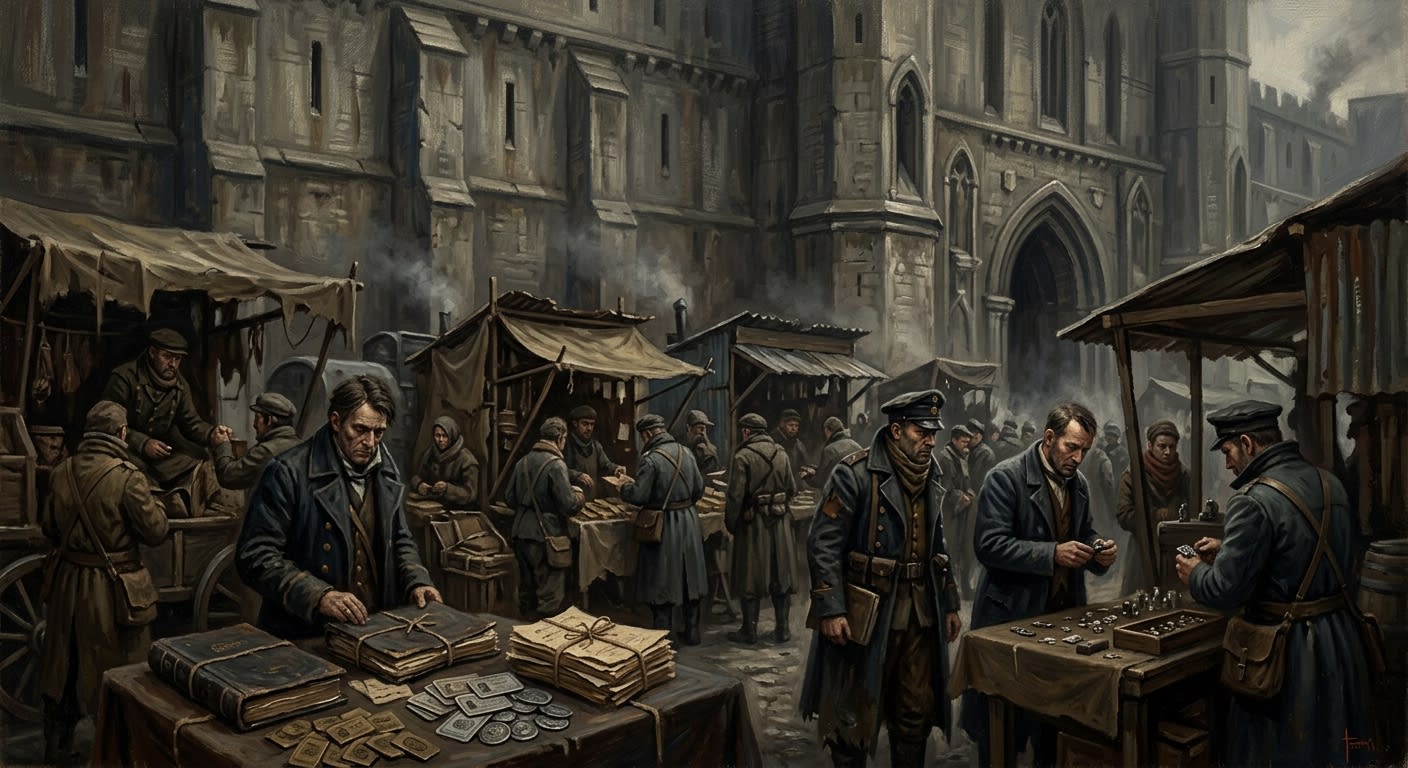
Grave-Name Market
Where the dead are priced by warmth and the Ledger learns to haggle
The Grave-Name Market squats outside the Cloister wall, selling dead identities, warm clearance traces, stolen bead indices, and the little blank spaces where authority fails to close its fist.
Codex Ref. II.3.06-006

Great Ledger Harmonisation Mandate
The larger page that never has to enter the room
The Great Ledger Harmonisation Mandate supplies the standing authority cited by Indiction writs: books are reconciled, names suspended, and appeal waits until the archive decides who still counts.
Codex Ref. XIII.1.06-002
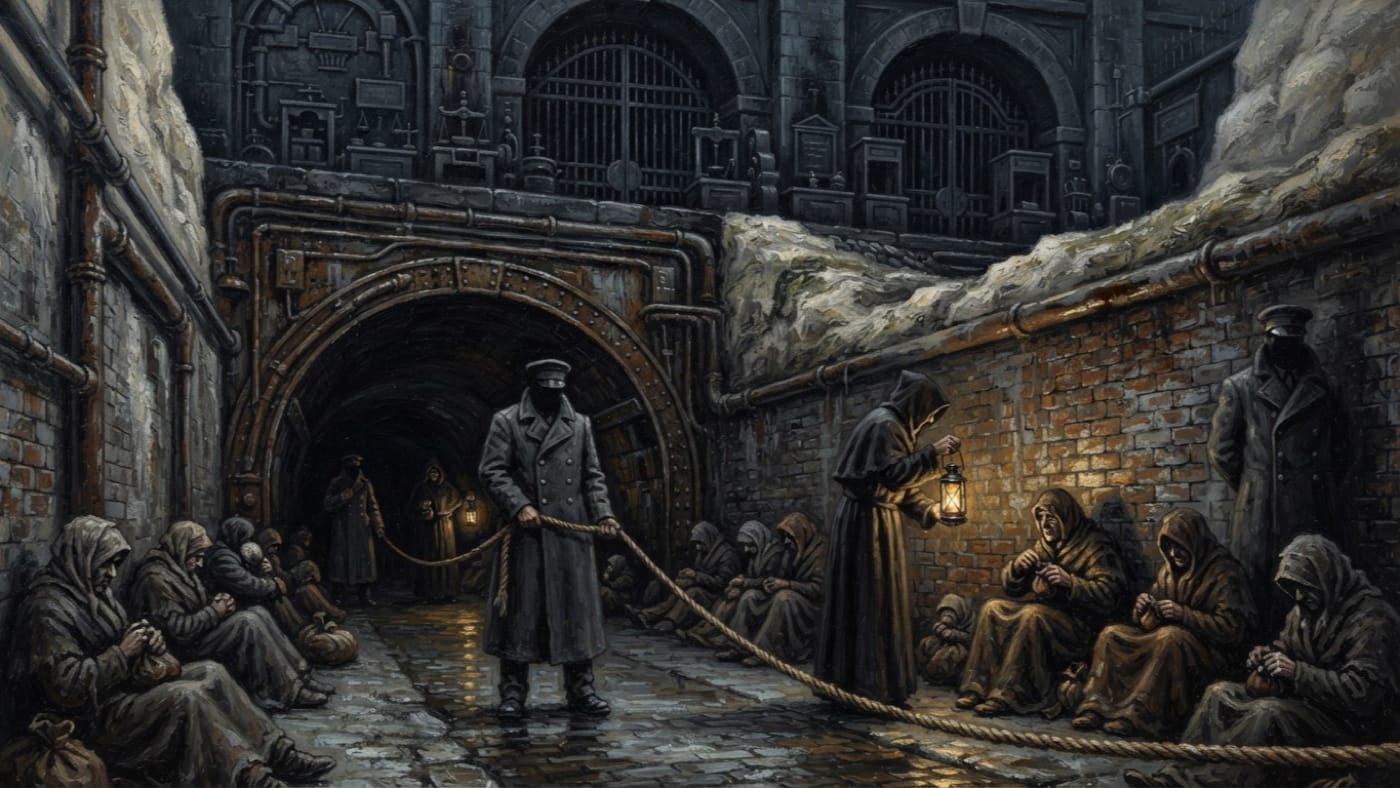
Grief Lane
The seals must be protected; the mourners may wait
Griefgate's drainage culvert holds visibly mourning pilgrims apart from the arches to protect seals, coin and declarations. Comfort falls outside the survey; collection continues after dusk.
Codex Ref. II.1.04-002
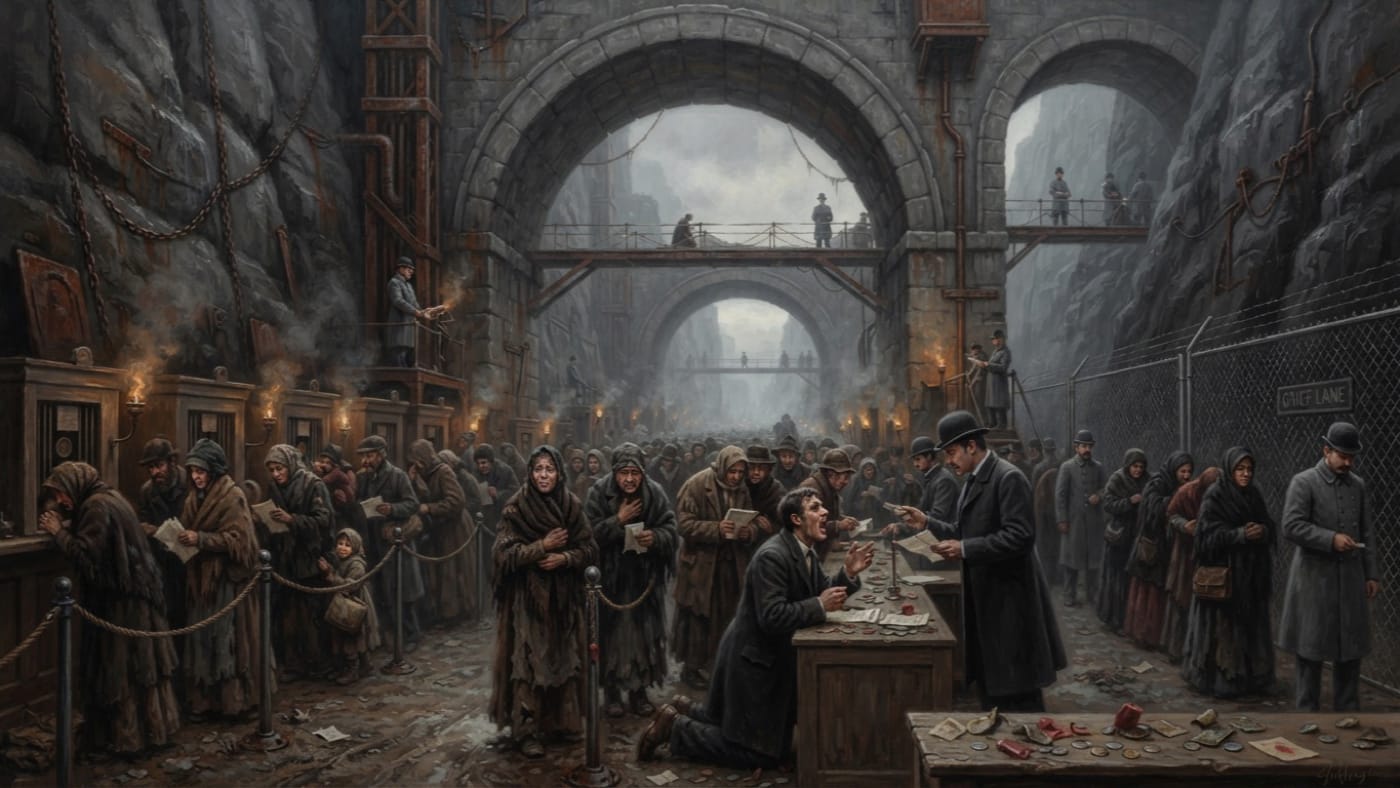
Grief Resonance
The stone takes a name; the clerk records a discrepancy
When mourners crowd Griefgate's arches, seals smear, coins tarnish, bells flatten and names fail. The Bureau has classified the disturbance and declined to fund its explanation.
Codex Ref. XIII.1.23-003
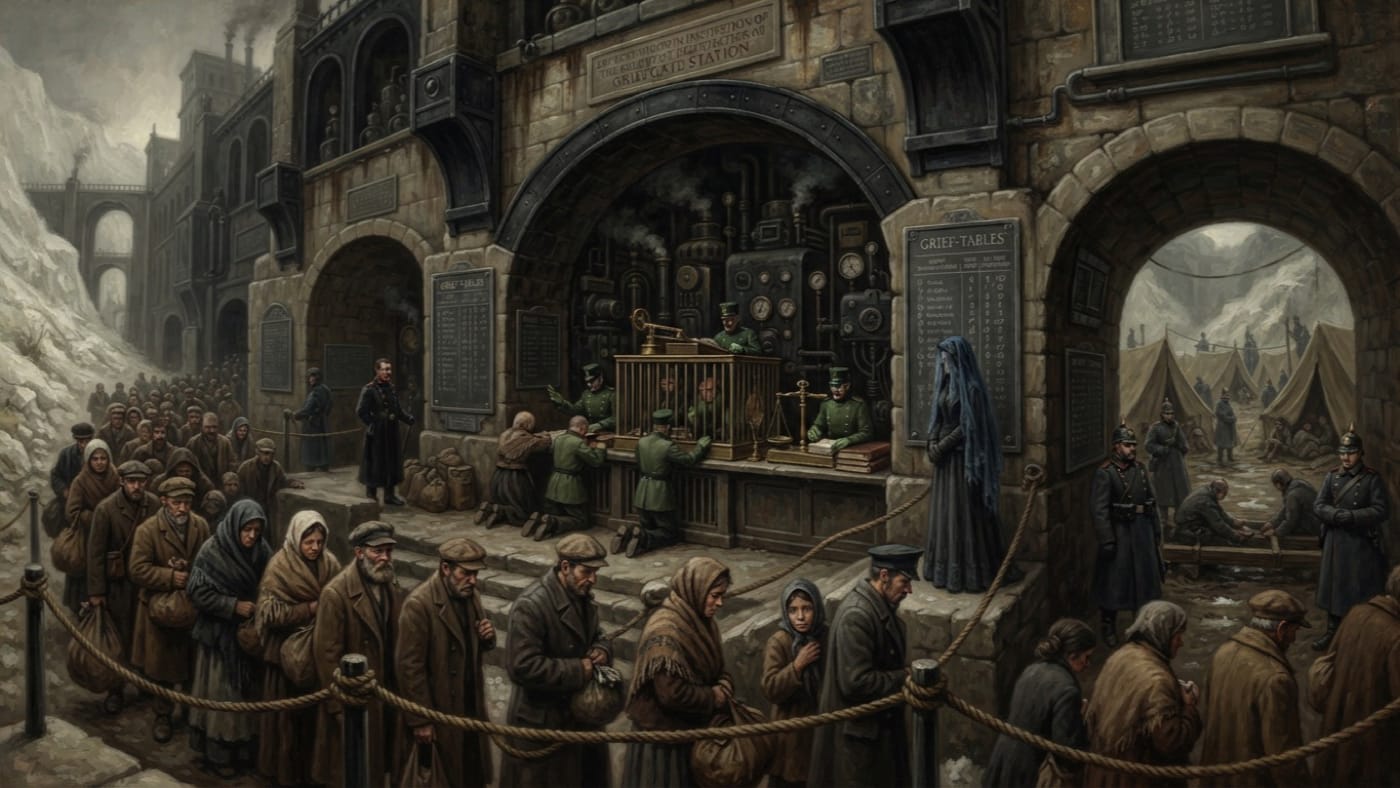
Grief-Tax
Declare your burden; the Gate will declare its price
At Griefgate, spiritual burden becomes a toll, payment becomes portable clearance, and unpaid sorrow becomes detention debt. The tables have no row for the unburdened.
Codex Ref. XIII.1.85-201
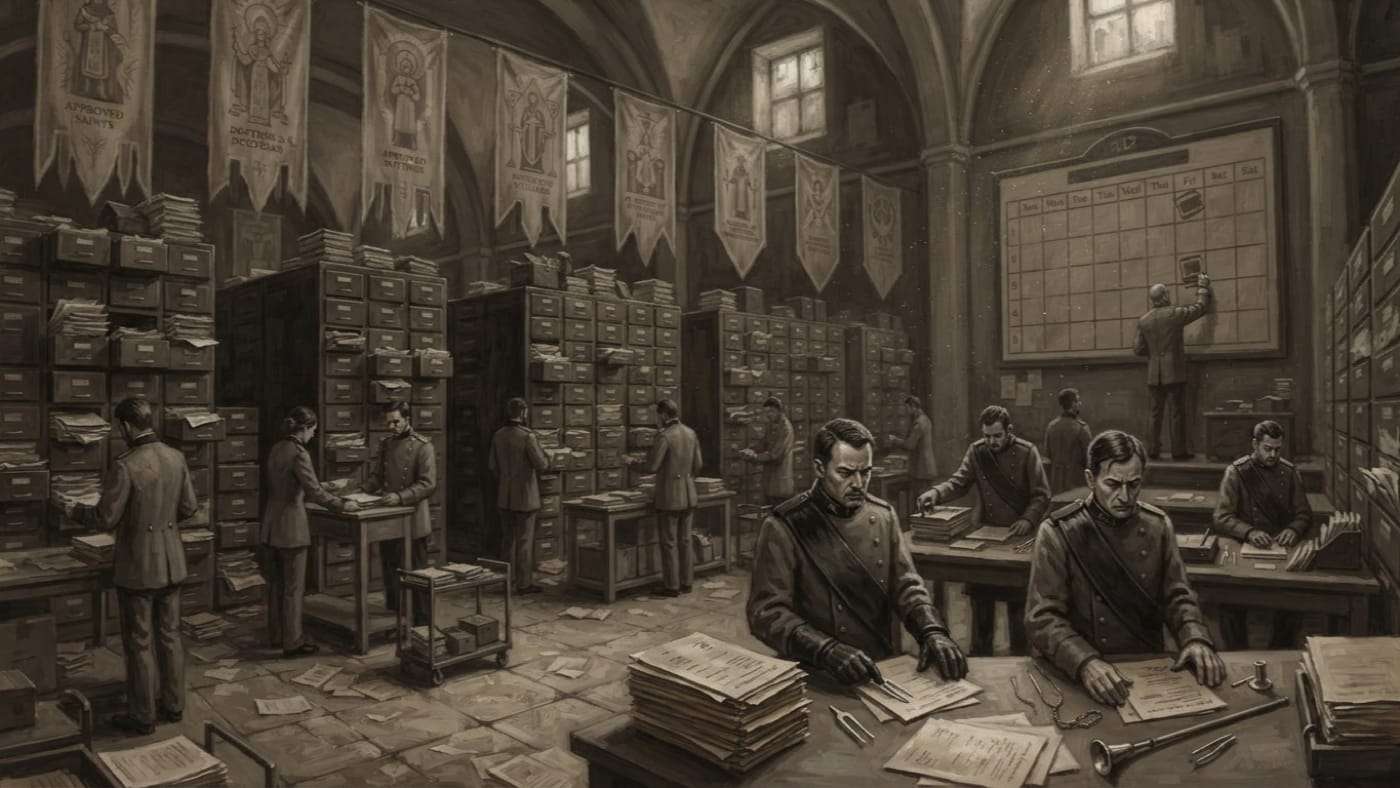
Hall of Prescribed Joy
Where every celebration begins by waiting
Eleven hundred square metres of approved ornament, permit tables and filing cabinets in Strasbourg. The Bureau of Festivals licenses joy here; its backlog has not cleared since A.S. 155.
Codex Ref. II.3.05-201

Halve
Coin truth, green fingers, and no allowance for mercy
Master Assayer Tinn Halve keeps Griefgate's coin honest and its trade stoppable. His green fingers certify the money; other offices collect the human cost.
Codex Ref. III.2.01-201

Hierarch-Procurator Marius of Cologne
The signature that moved the state into the birth room
Marius of Cologne ratified the Natal Registration Act of A.S. 158, turning Veyrault's recorded-existence doctrine into midwife deadlines, Womb Registrars, and the price of a child's first breath.
Codex Ref. III.2.01-158

Hieromnemon
The office that teaches memory to kneel
The Hieromnemon governs public memory for Doctrine: seal, margin, erratum, redaction, and the blessed sentence that makes contradiction obey.
Codex Ref. XIII.1.31-090

Hinterland
The fifty kilometres that pretend to be rear
The Hinterland is the fifty-kilometre bruise behind the Sagittal Line: farms, wards, graves, depots, markets, and civilians ordered to call occupation protection.
Codex Ref. II.4.09-201
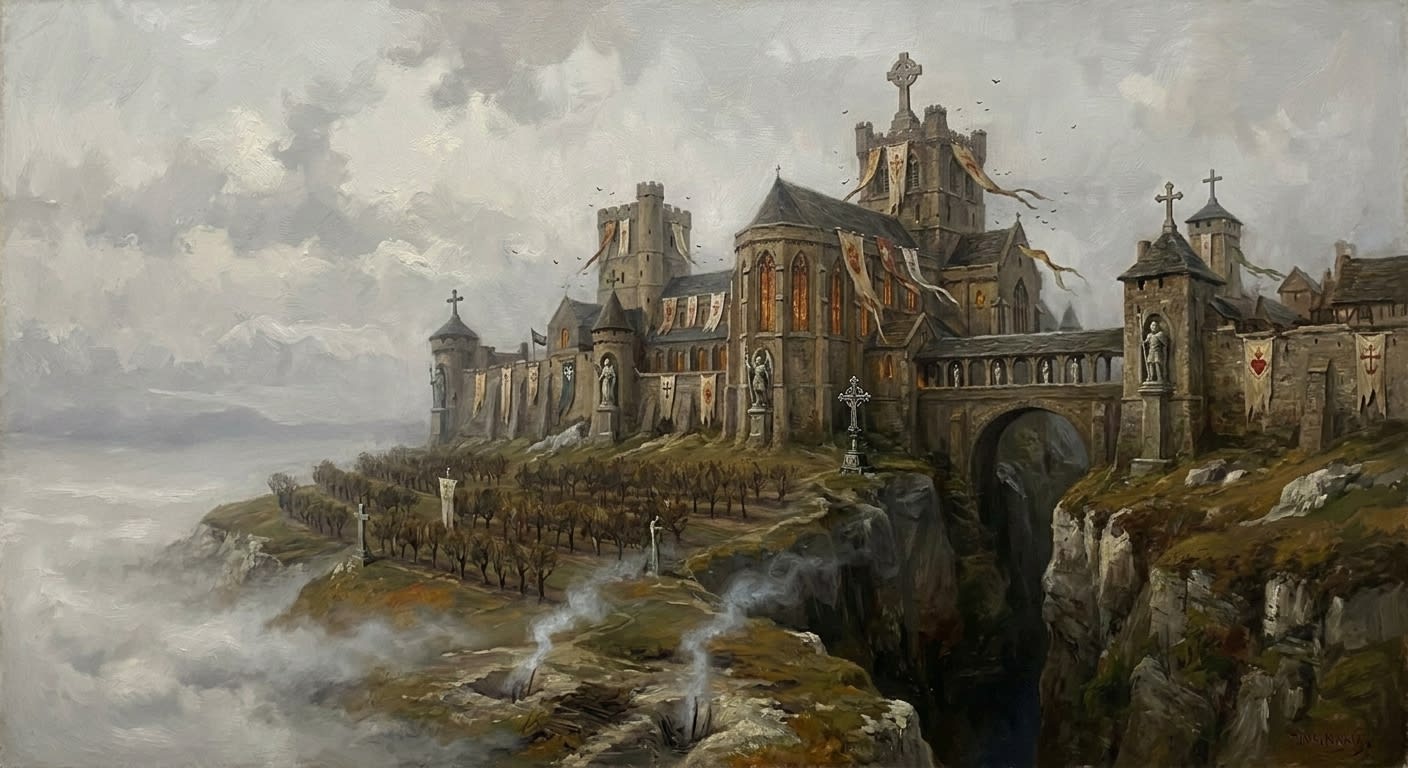
Hollow-Script Scriptorium of Nemea
Where the ink rewrites the truth, and the truth rewrites the ink
The Bureau of Records' master archive-scriptorium on a chalk ridge: where names are erased, contracts rewrite themselves overnight, and the ash in the Yards speaks. Drax has been named by its ink and would prefer the record show otherwise.
Codex Ref. II.2.06-002

Identity Fraud
A stolen name buys bread; an authorised alteration earns a salary
Identity Fraud steals the registered person: names, ration rights and passage permissions. Standing Order 14-M gives offences of sufficient degree a wall; authorised alterations remain daily duty.
Codex Ref. XIII.1.97-1422

Index Clerk
The Notary strikes the name. Someone has to tell him where it is.
The Office of Nullity's lowest desk with a pen: clerks who locate names, map dependent ledgers and file the notices that make an erasure travel. The seal belongs upstairs; the blame comes down.
Codex Ref. XII.14.01-003
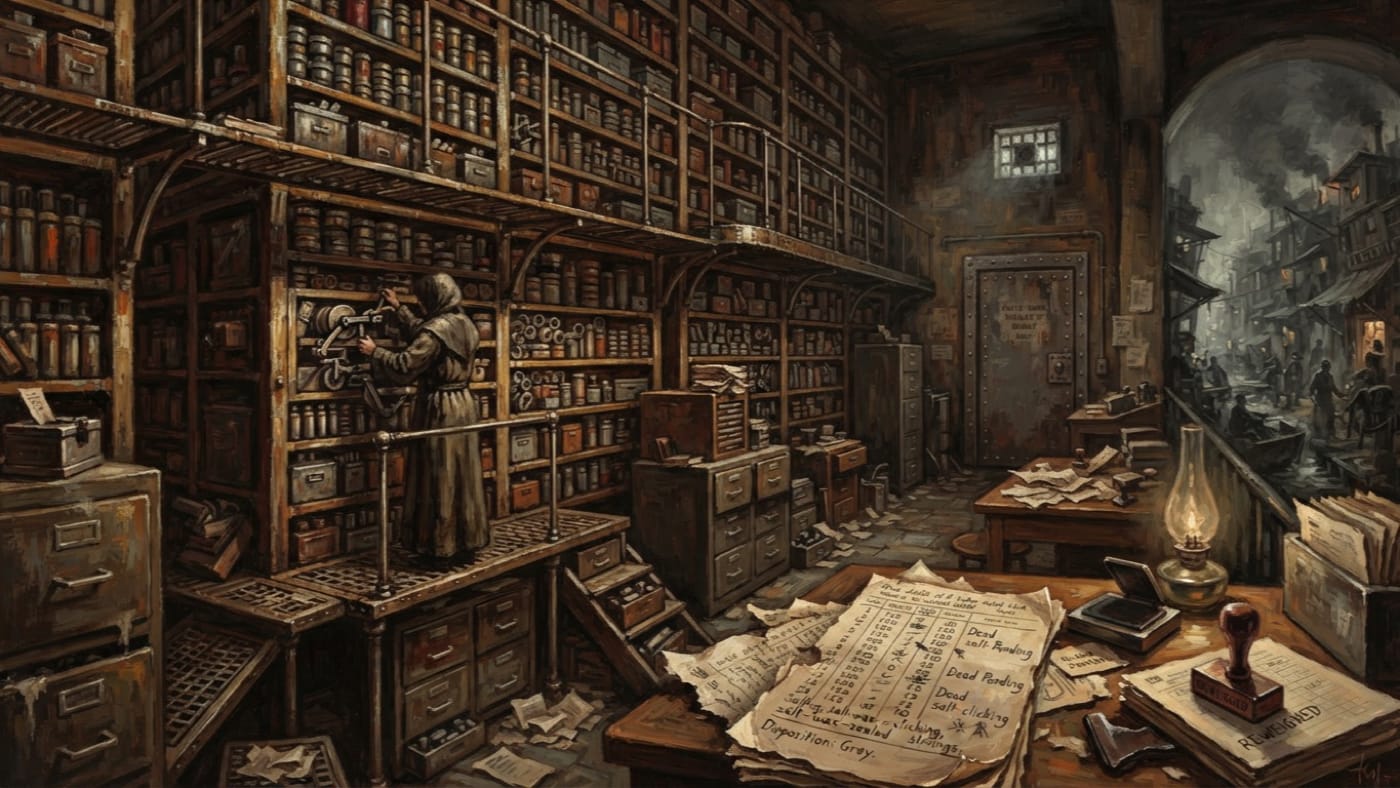
Index-Fragment Scandal
The shelves were corrected; the copies kept selling
In A.S. 200, a fragment of the Bead Vault index reached the Grave-Name Market. Keth changed the shelves; the Chapter changed an adjective. The thief remains unnamed, and no record certifies the return of every copy.
Codex Ref. VII.8.11-200
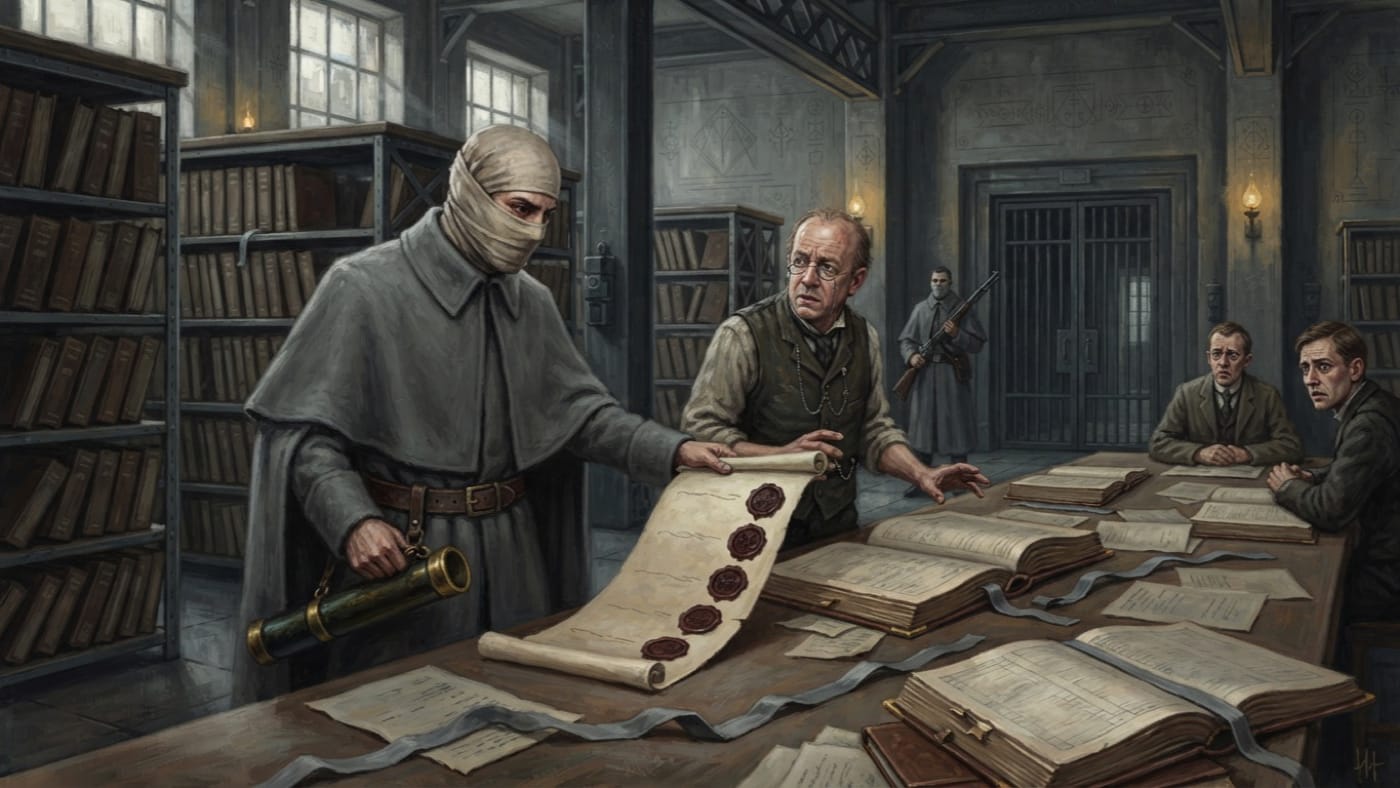
Indiction Writ
Five seals, five powers, and an appeal that waits
The Indiction writ lets Records seize ledgers, enclose witnesses and suspend names before any charge. Five seals announce that the Bureau has noticed; appeal waits until reconciliation.
Codex Ref. XIII.1.06-003
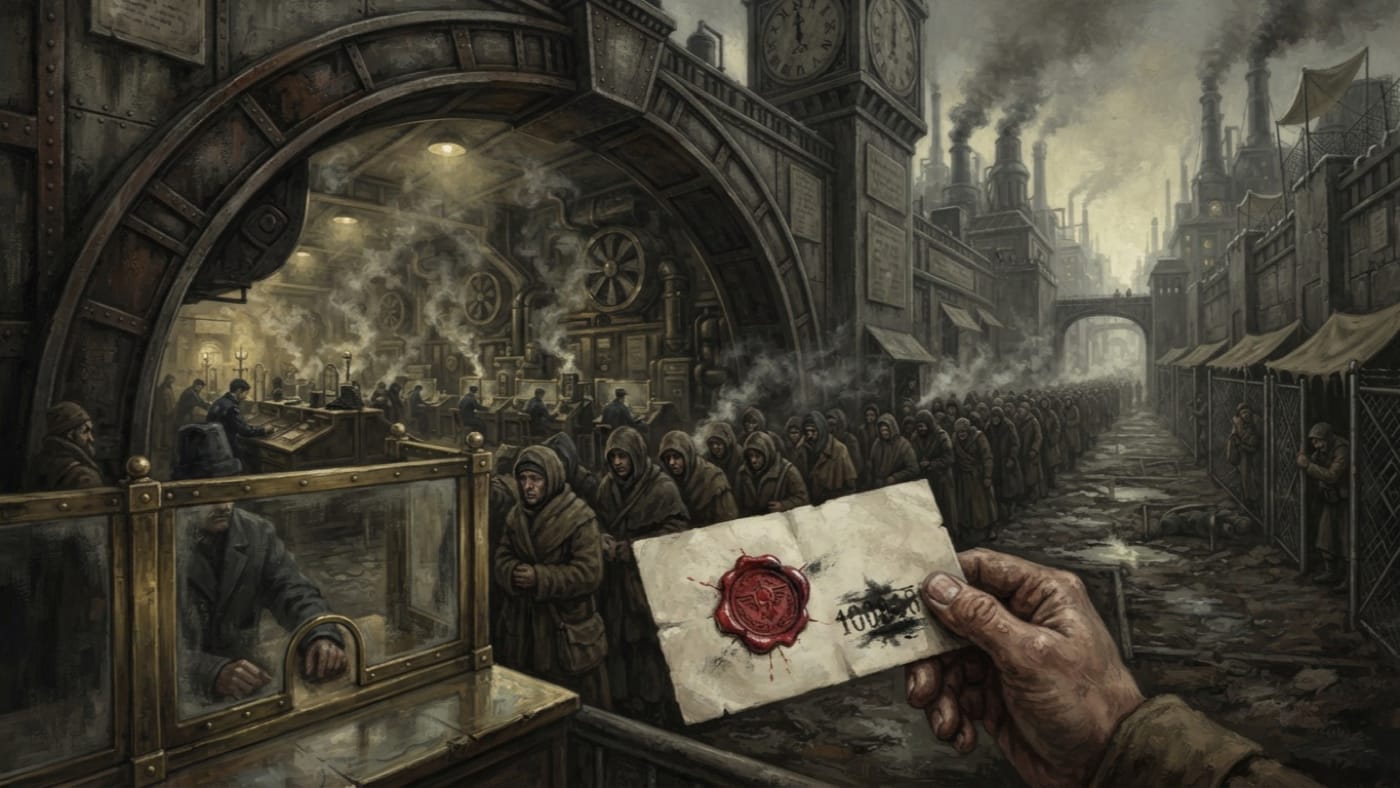
Indulgence Slip
Thirty days of passage; the name remains on file
Portable innocence in wax and paper: thirty days of passage on the Pilgrim Roads, a disputed currency, and no protection against a doubt flag on the bearer's name.
Codex Ref. XIII.1.40-002

Inkhouse Bridge
The bridge carries the papers; the gatehouses decide
Nemea's single stone span carries all freight, couriers and novice intake. The Bureau arranged the bottleneck deliberately. The bridge carries the papers; the Collegium waits beyond the crossing.
Codex Ref. II.2.06-021
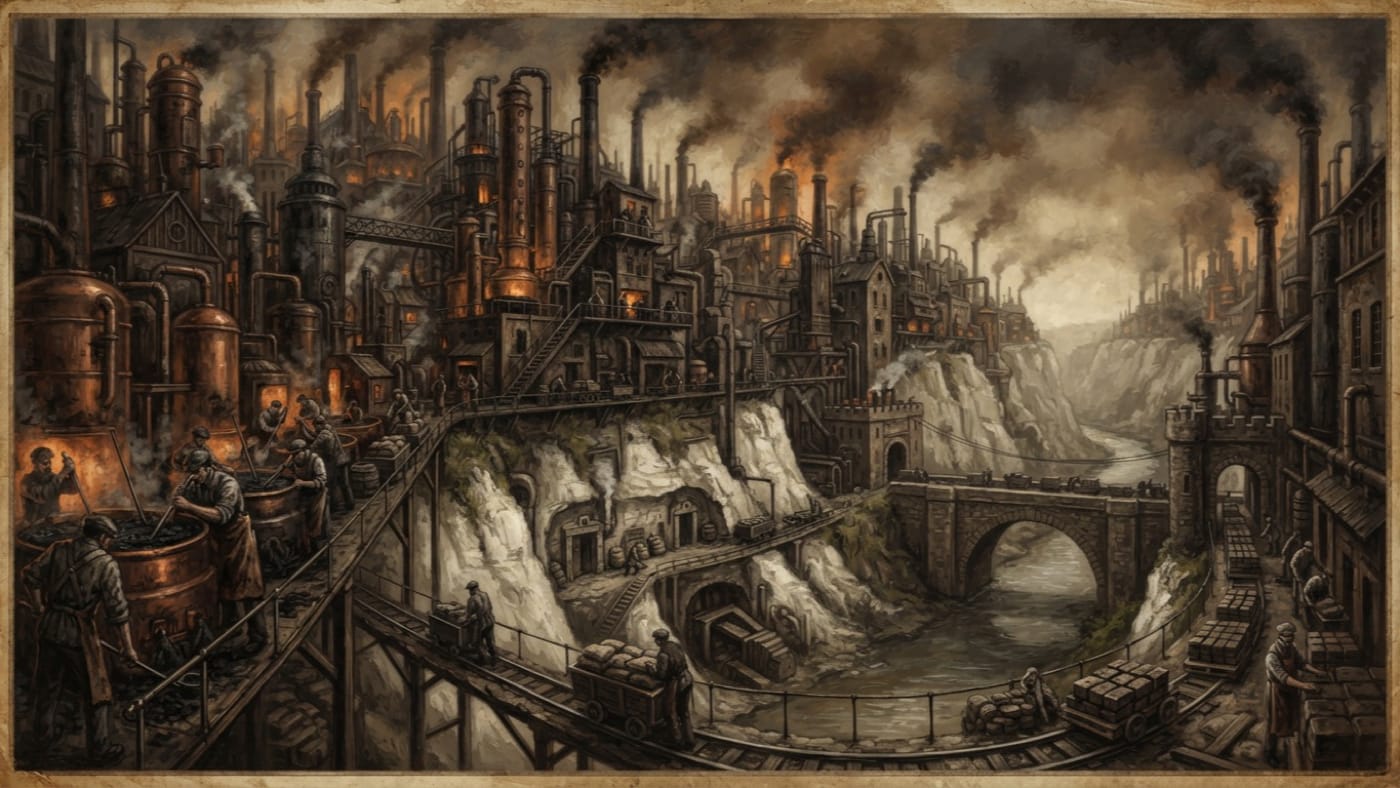
Inkhouse Quarter
Where the law is boiled before it is written
Nemea's copper-vat precinct supplies the Bureau of Records with rationed ash-ink. The brewers pay in shifts and surnames; the contracts downstairs keep finding new obligations.
Codex Ref. II.2.06-020
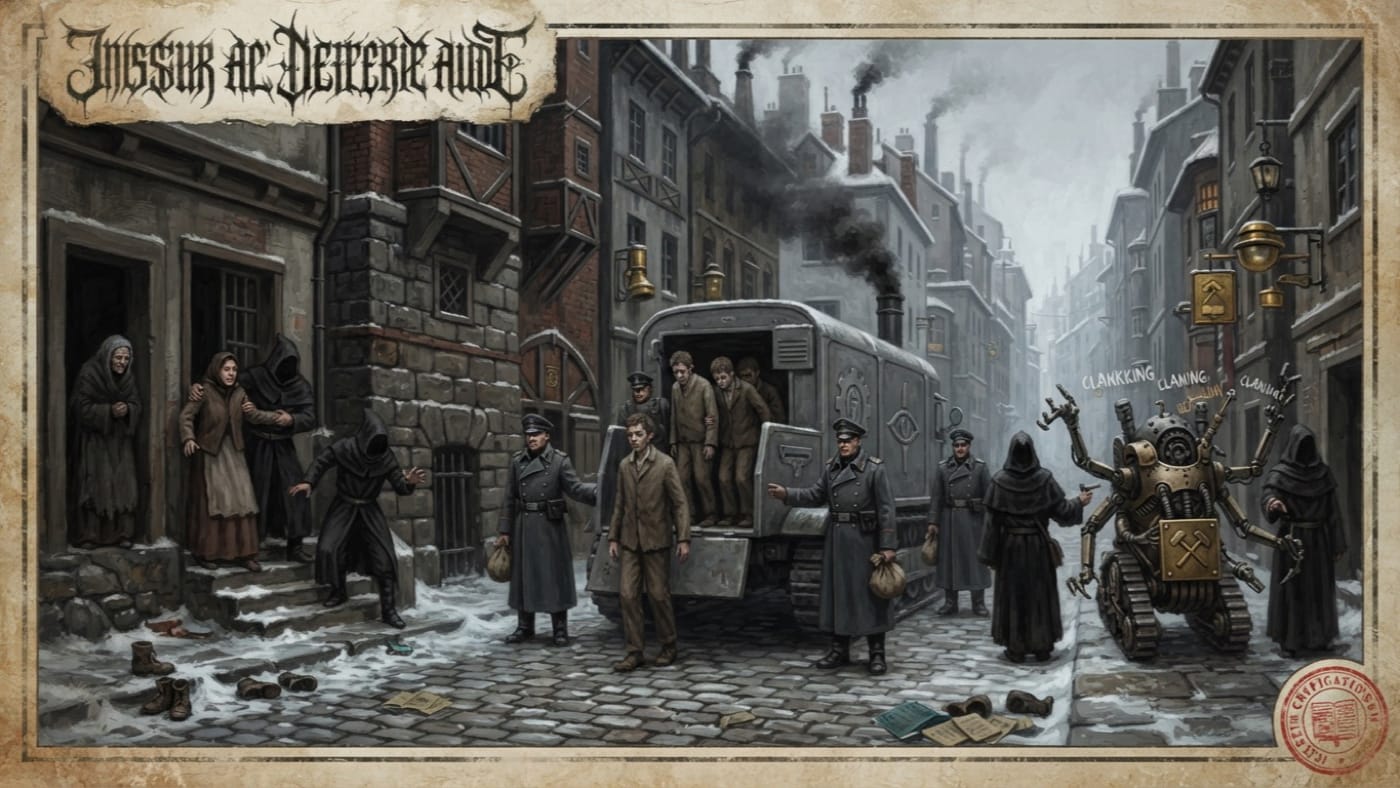
Innsbruck Audit
Fourteen years late, the Ledger declared victory
In A.S. 178, Innsbruck's auditors found three sons concealed for fourteen years. Conscription took the sons, the Index took the parents, and an iron choir took the midwife. The Ledger called its lateness a victory.
Codex Ref. VII.8.10-178
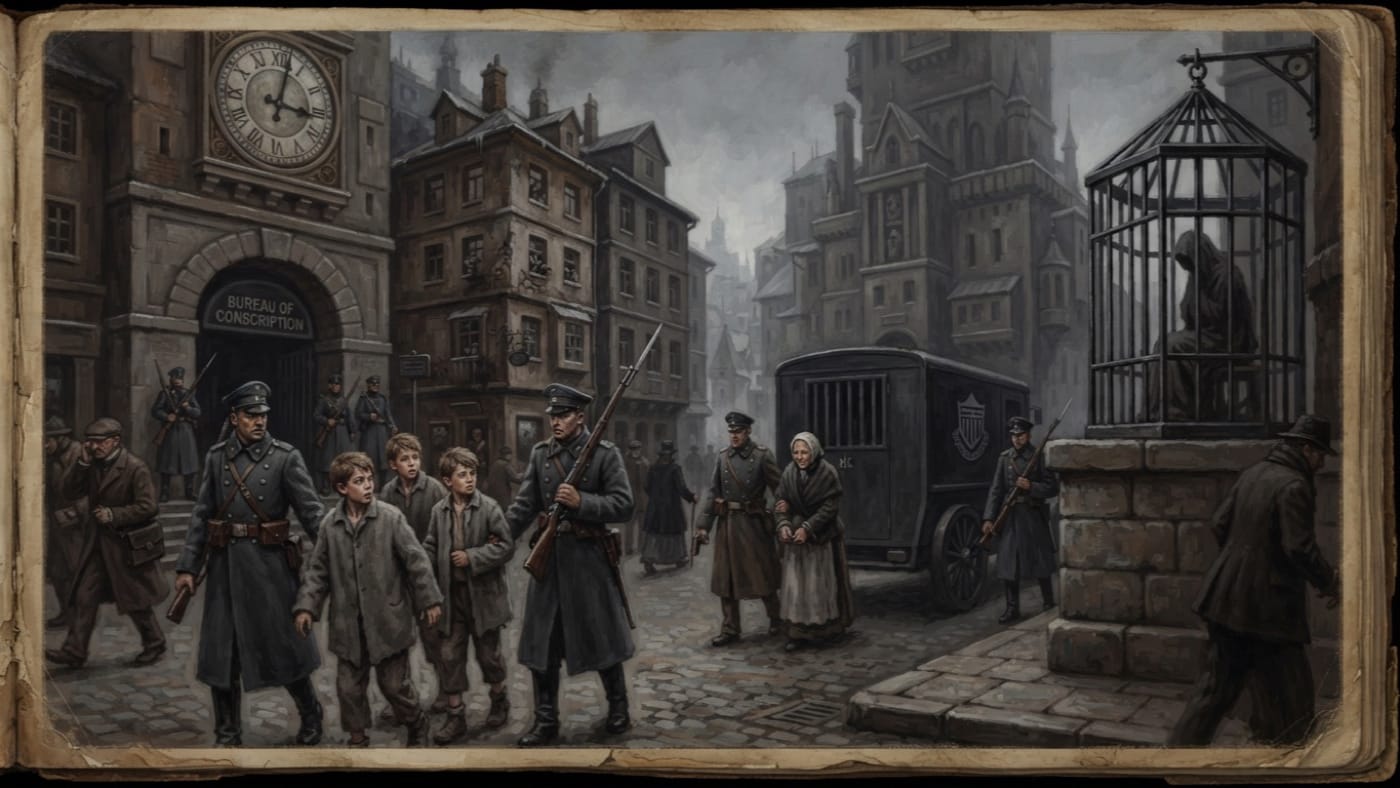
Innsbruck Audit of A.S. 178
Three recovered; fourteen years unaccounted
In A.S. 178, Purity found three sons concealed in Innsbruck for fourteen years. The sons were conscripted, the parents entered the Index, and the midwife died in an Iron Choir. The Bureau filed its lateness as vigilance.
Codex Ref. VII.8.10-178

Inquisitor Halvyr
White-Lung — a pending transfer to a district made of paper
White-Lung carries a portable audit press and burn authority. Candle-Sump awaits a transfer still moving through Purity's approval chain; the paper is endangered before the officer arrives.
Codex Ref. III.2.01-1459
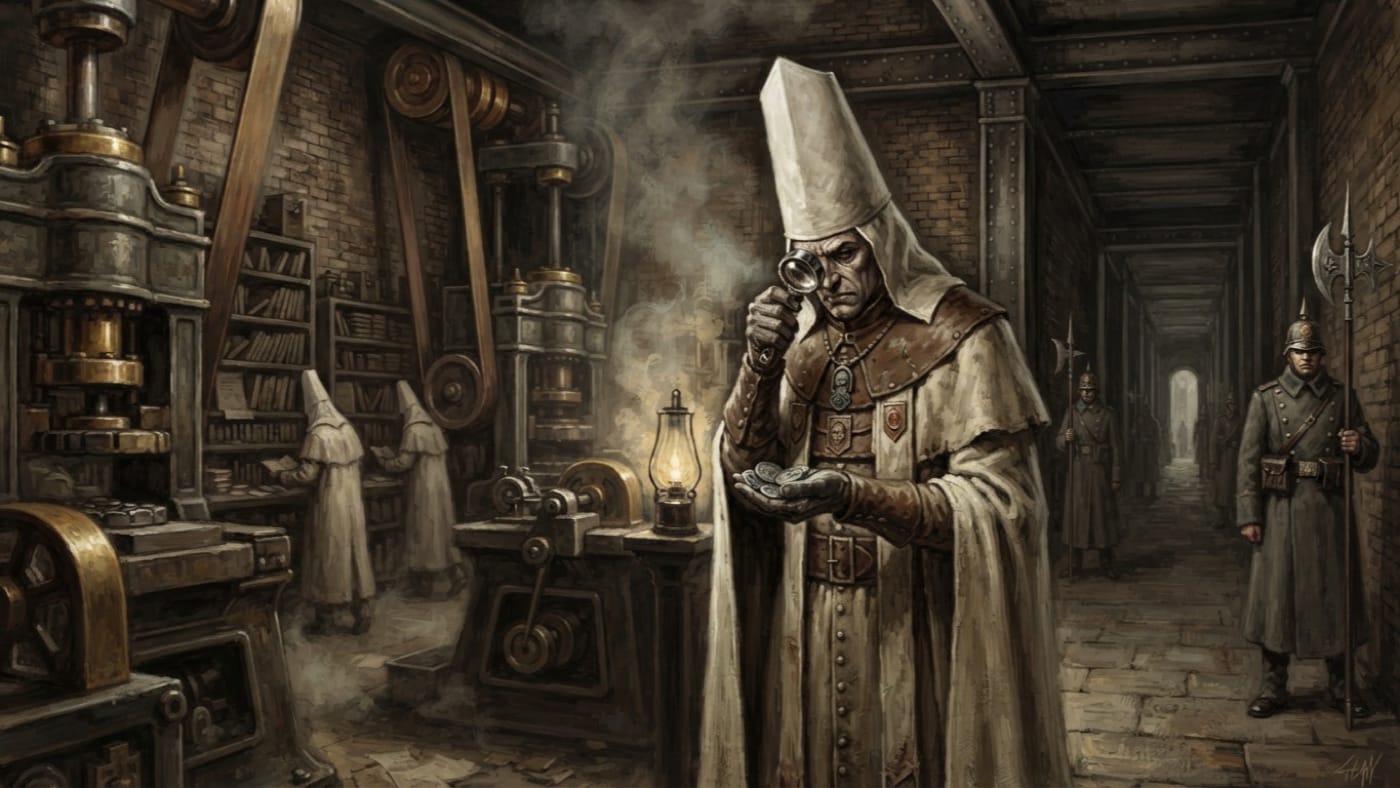
Inquisitor-Assayer
Sent to defend the face, with a name that is not coined
Purity's currency heresy specialist has been dispatched to Sable Court. File 1104-SC remains open at the A.S. 201 assessment; the appointee's name is not coined, and the personal record goes no further.
Codex Ref. III.2.01-201

Inquisitor-Corrector Sel Durn
An open inquiry into originals that will not hold still
Inquisitor-Corrector Sel Durn's A.S. 201 visitation tests Nemea's originals and Voss's definitions. The custodian is competent; the custody remains unstable.
Codex Ref. III.2.01-201

Inter-Bureau Arbitration Panel
One corrected tally, two refusals, and a ruling still pending
Convened in A.S. 199 to decide whether Marseille's corrected pilgrim-fleet departure count requires return-voyage harbour dues to be refunded. Pilgrimage refuses; Tithes refuses the refusal. The ruling remains pending as of A.S. 201.
Codex Ref. VIII.4.09-199

Irena Coilhand
The Church's lawful faces begin beneath her veils
Master Engraver of Die Row, Irena Coilhand cuts the steel that gives the Synod's souls their spendable faces. In the A.S. 201 Face Theft crisis, she wraps the dies in blessed silk; Doctrine calls it irregular devotion.
Codex Ref. III.2.01-1480
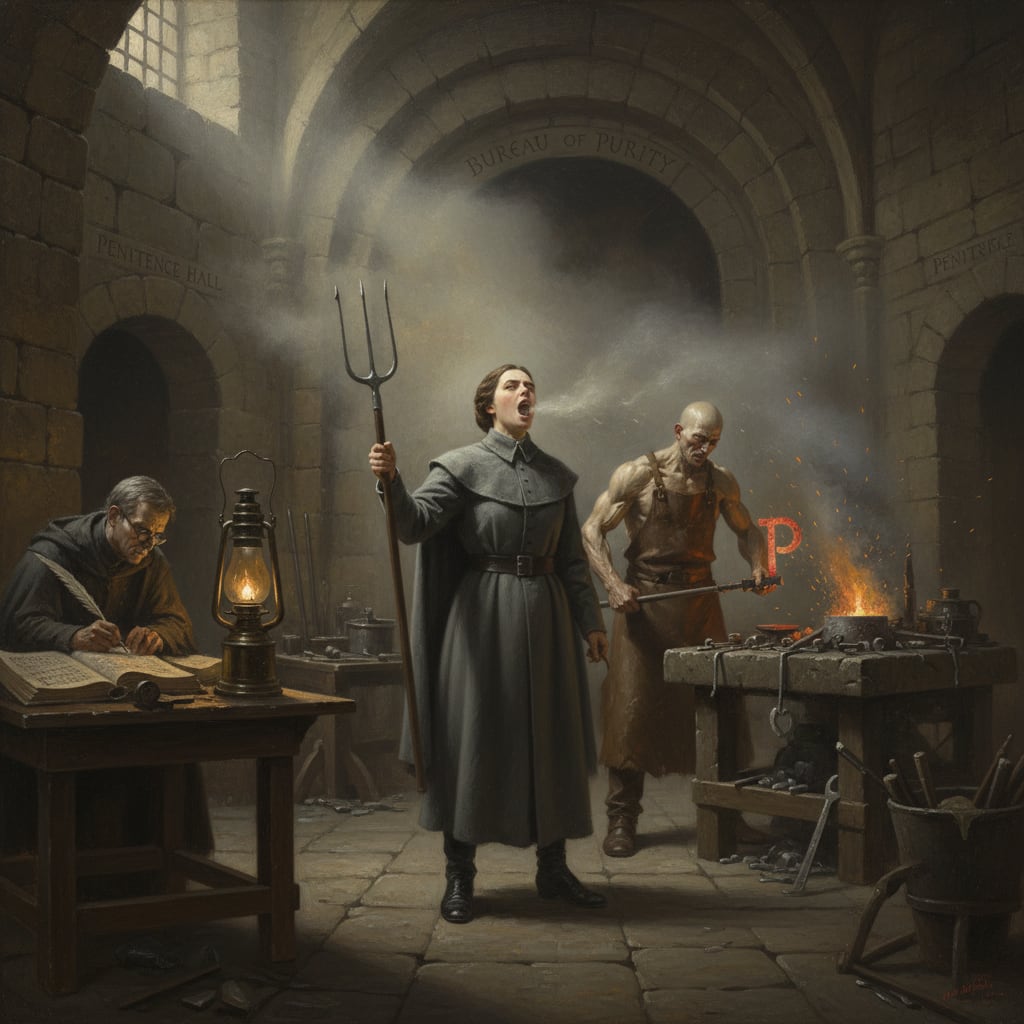
Iron Choir Brand-Singer
Because screaming is imprecise.
Licensed custodians of the note that steadies the iron — the Brand-Singers who hold pitch through Bureau of Purity penitence rites so that the resulting inscriptions are legible and the confession, accordingly, valid.
Codex Ref. XII.24.01-001

Josek of Düren
The debtor who carried the crate and became too memorable
Josek of Düren, condemned debtor and Grade A relic carrier, bore a sealed ossuary crate to Bastion-Irongate in A.S. 138 and became the forbidden Cart-Saint of convoy rumour.
Codex Ref. III.2.01-131

Joy Compliance Index
Rejoice by permission; be judged by the slate
The Bureau of Festivals grades a crowd's rejoicing through forty-two observable behaviours. Three verdicts follow; four points separate insufficient zeal from excessive emotion. The slate certifies conduct. It cannot certify joy.
Codex Ref. XIII.1.67-201
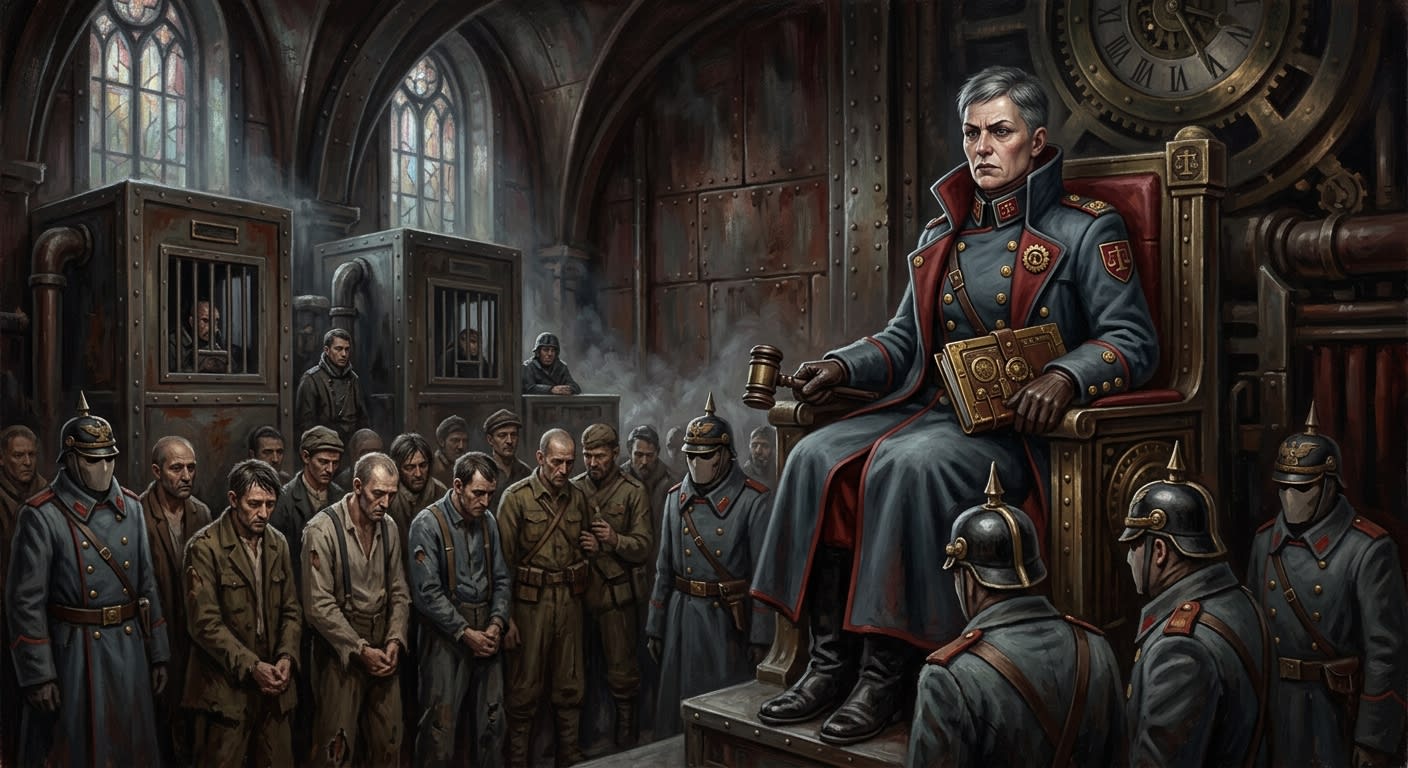
Judge Elsbeth Krail
The woman at mid-span, where mercy is not a jurisdictional category
Presiding Judge Elsbeth Krail governs Bastion-Brest's Bridge Tribunal with exact law, sealed booths, nineteen arrests, and a silence even Doctrine cannot casually overrule.
Codex Ref. III.2.01-092

Lampglass Row
Every name must be read before it can be erased
Nemea's glassworking district supplies the panes and lenses by which records are proven to exist. Its Compact sells light, lends oil against pages and names, and charges for truths no authority has certified.
Codex Ref. II.2.06-022
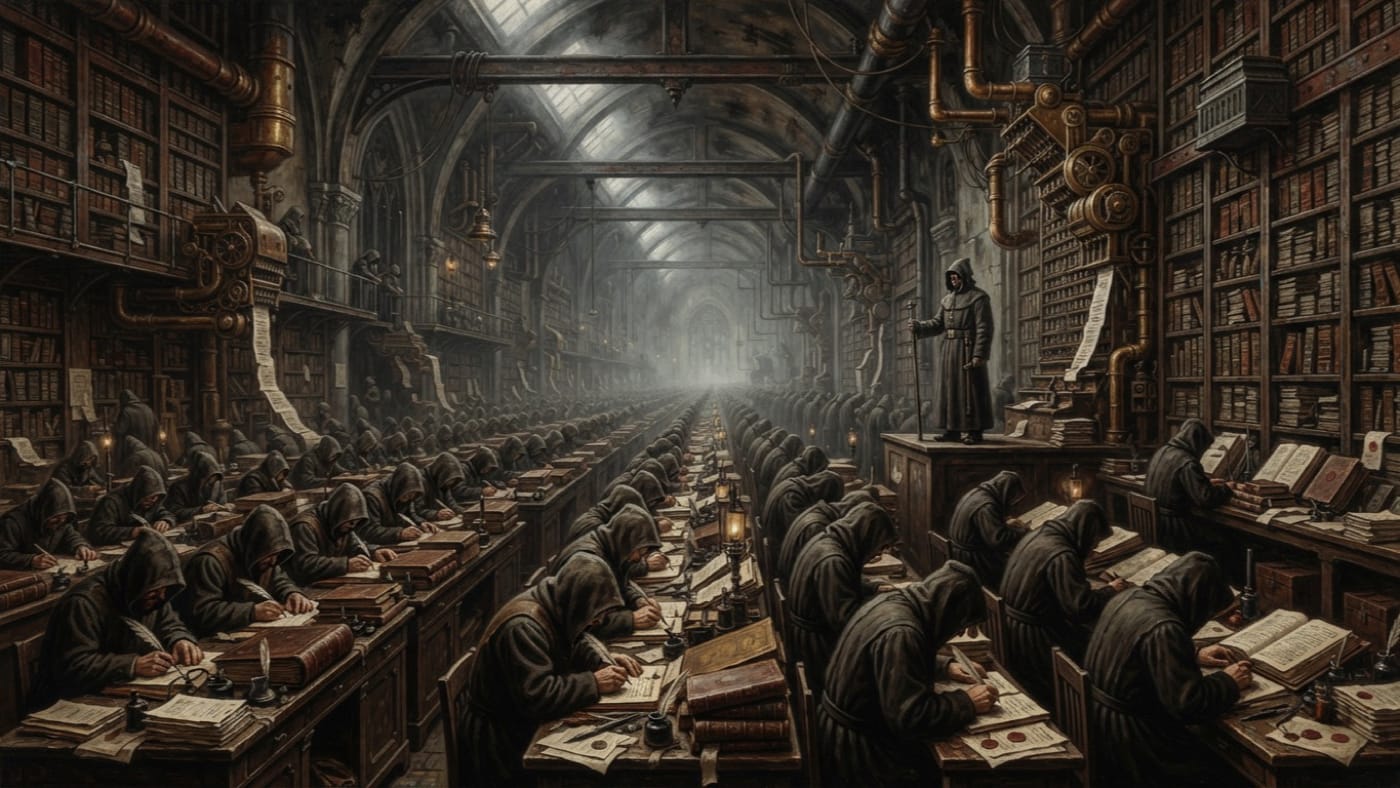
Ledger
Where the entry governs the living
The Ledger is the Synod's doctrine of authorized memory: every roll is presumed to agree, every name stands where an office writes it, and the body obeys the entry even when the words change.
Codex Ref. XIII.1.33-201

Ledger Duellist / Citation Advocate
Where the sword would be excessive and the firing squad irreversible, the Synod reaches for its ink
Fourteen hundred licensed advocates fight citation duels in the Synod's precedent pits — establishing standing, constructing precedent chains, striking opponents from the Ledger of Souls. Three hundred more operate in the shadows.
Codex Ref. XII.26.01-001
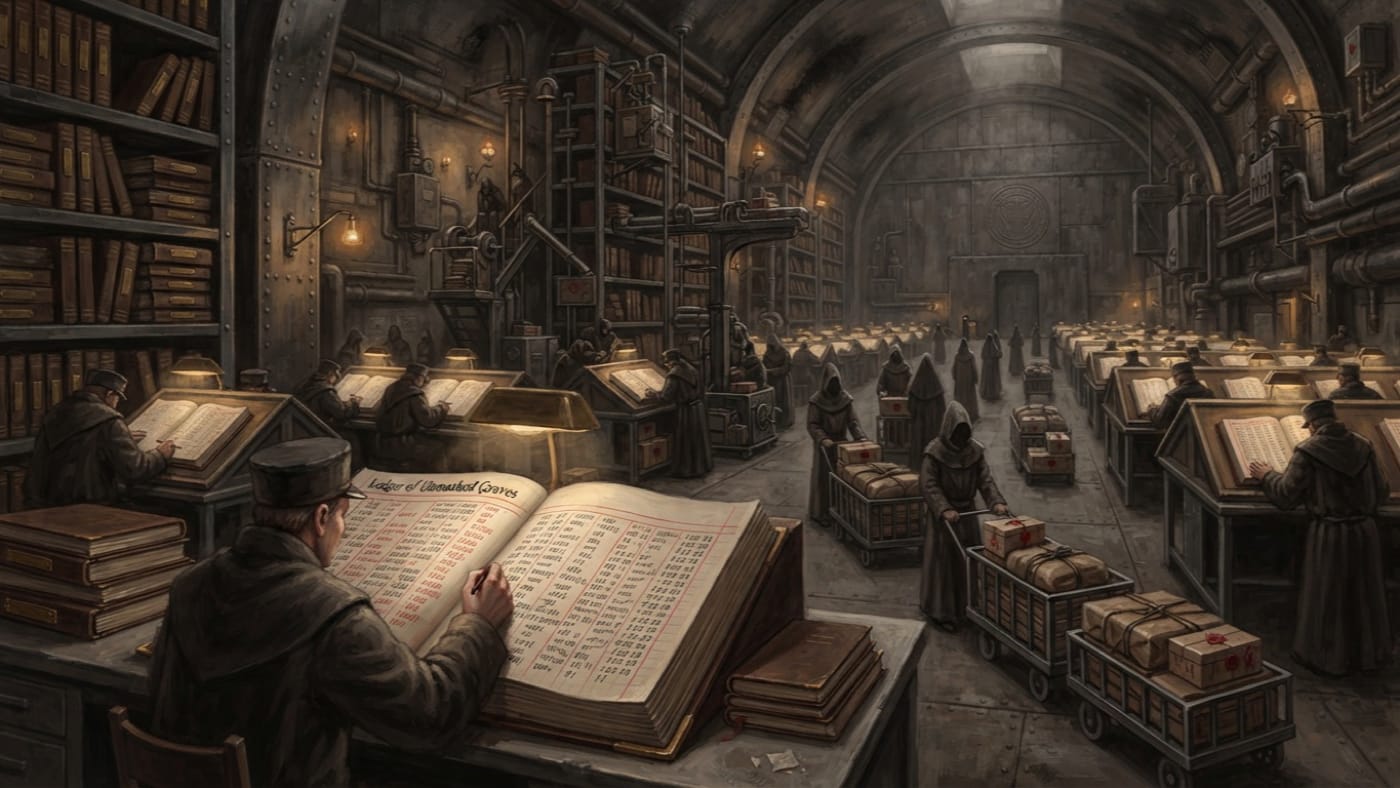
Ledger of Unmarked Graves
The columns agree. The dead have not been consulted.
The Bureau of Records balances recorded deaths against sanctified burials. Missing bodies are supplied; missing deaths are assigned. I certify the arithmetic. The names are another matter.
Codex Ref. VI.2.01-002

Levy Assessor
The census names the household. The Assessor names the son.
The Levy Assessor compares sacred ledgers, declares a household's liability and stamps the selected wrist. The Bureau calls this collection. The household has other names.
Codex Ref. III.4.08-201
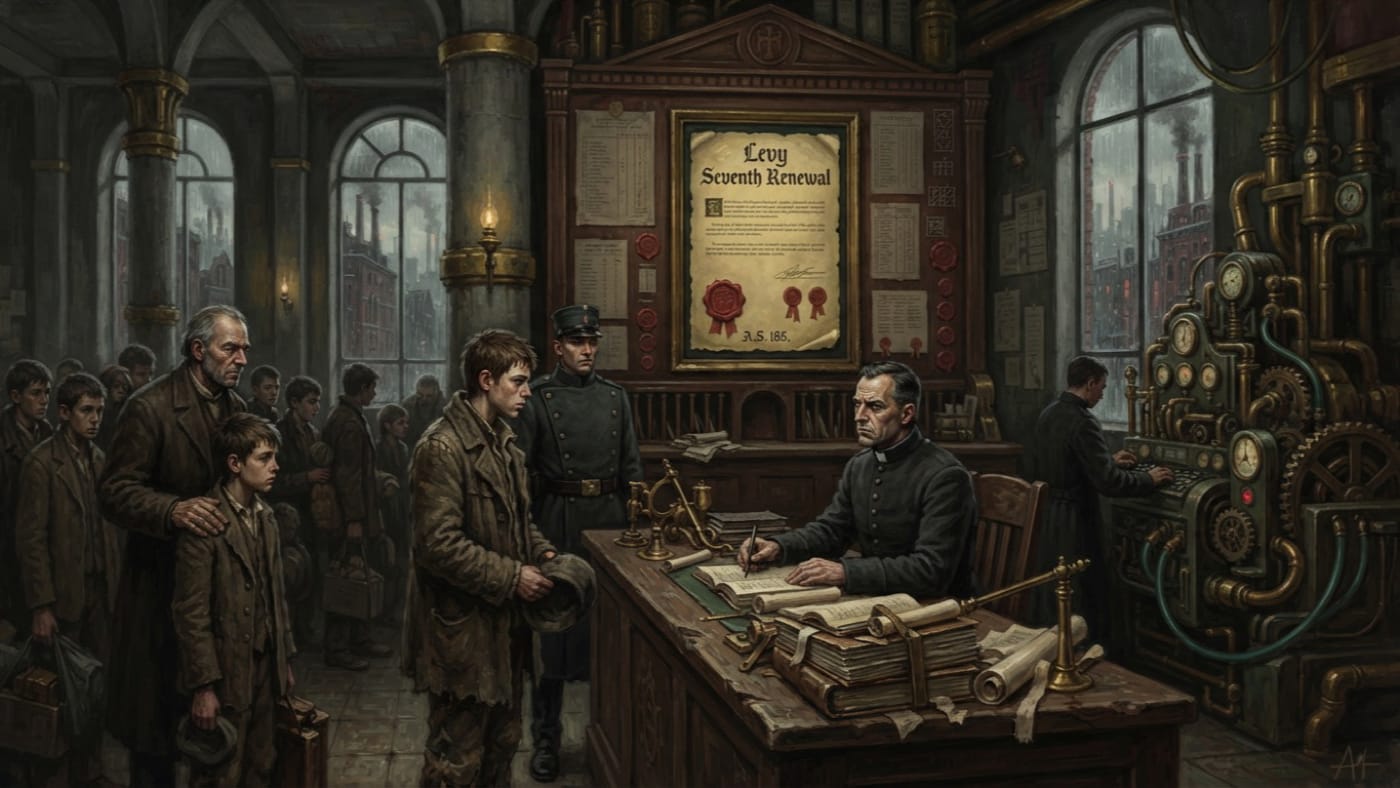
Levy Seventh Renewal
The charter is renewed. The fraction remains under wax.
In A.S. 185, the Church renewed the Bureau of Conscription's charter and revised levy quotas under a sealed Martial Edict. The year is public. The fraction, the provinces and the additional ratifying seals remain under wax.
Codex Ref. VII.8.10-185
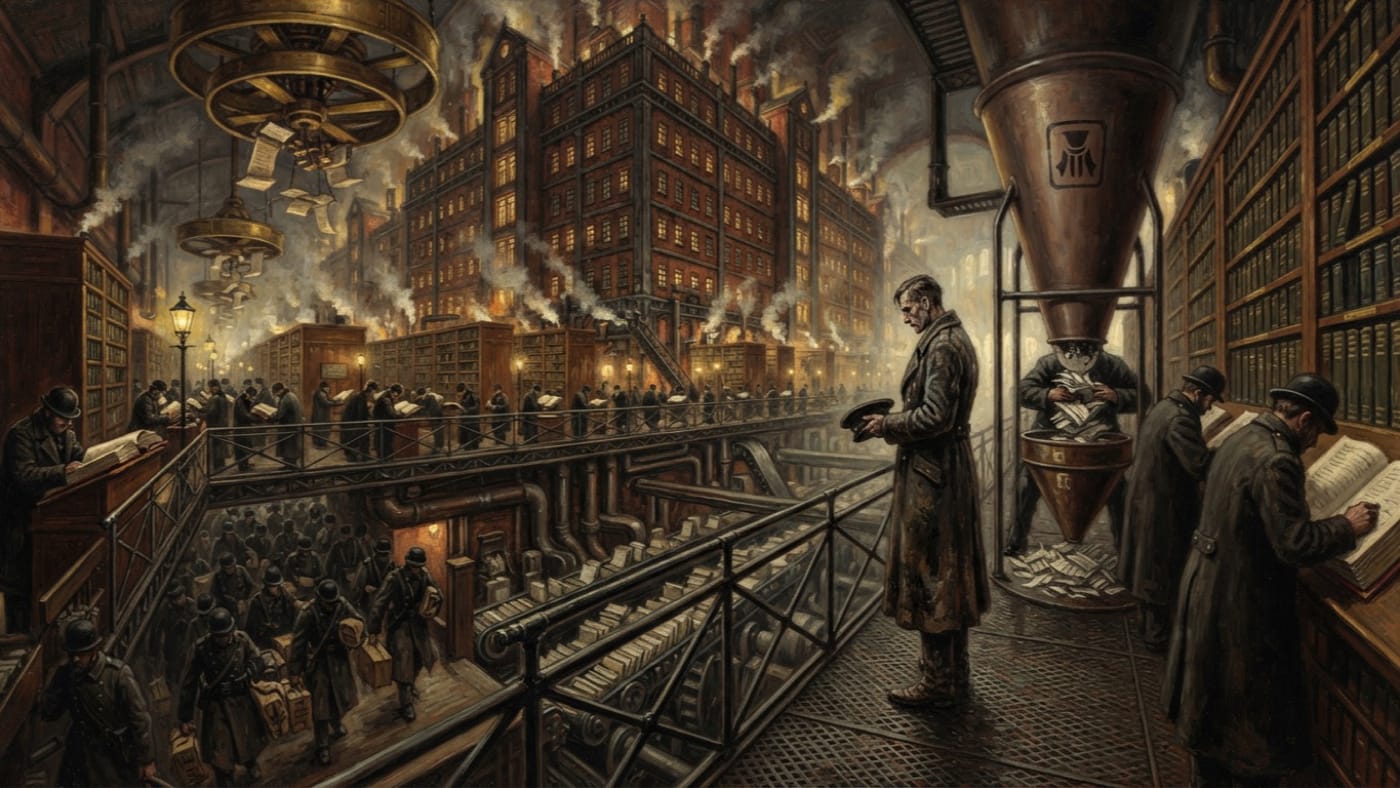
Lieutenant Veyss
The name retained after the man was struck
Lieutenant of the 4th Rhineland Fusiliers, struck in A.S. 148 after a claim for promotion arrears exposed a missing ancestral tithe-stamp. The Bureau kept his case and cancelled his standing.
Codex Ref. III.2.01-148

Lineage Severer
The household loses its standing; the Office keeps every page.
The Office of Nullity's family-strike specialists reconcile dependent rolls before sealing a household out of civic life. Nobody dies at the desk; every office afterward refuses them.
Codex Ref. XII.14.01-003

Lise Three-Eyes
Six bells, one tongue, no name containing r
Lise Three-Eyes reportedly gave a debtor six bells in a recalled face. The conditions are filed; the birth name, warrants and whereabouts remain less obliging.
Codex Ref. III.2.01-1636

Listening Cell Host
A coat may swallow a voice; a witness remembers it
Listening Cell Hosts teach forbidden lullaby endings in rooms padded with coats. Their pupils carry comfort home; Orison calls the same transaction distribution.
Codex Ref. XII.48.03-001
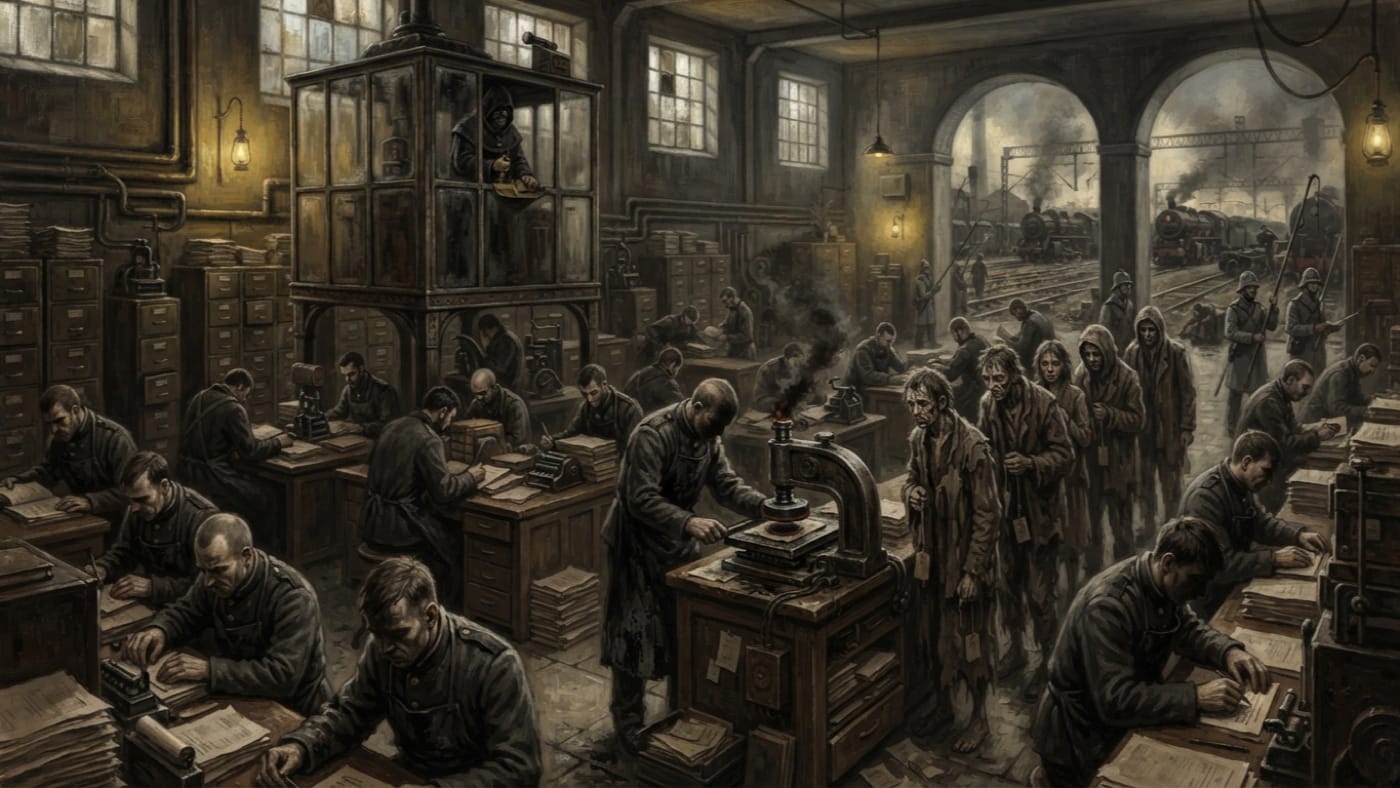
Logistics-Penance Tribunal
When the Ledger Will Not Balance on Paper
At Bastion-Przemyśl, the Logistics-Penance Tribunal balances ration ledgers by audit, confession and erasure. A missing stamp die has left its largest discrepancy without a name, and the Provost-Marshal would like its authority.
Codex Ref. I.2.07-003
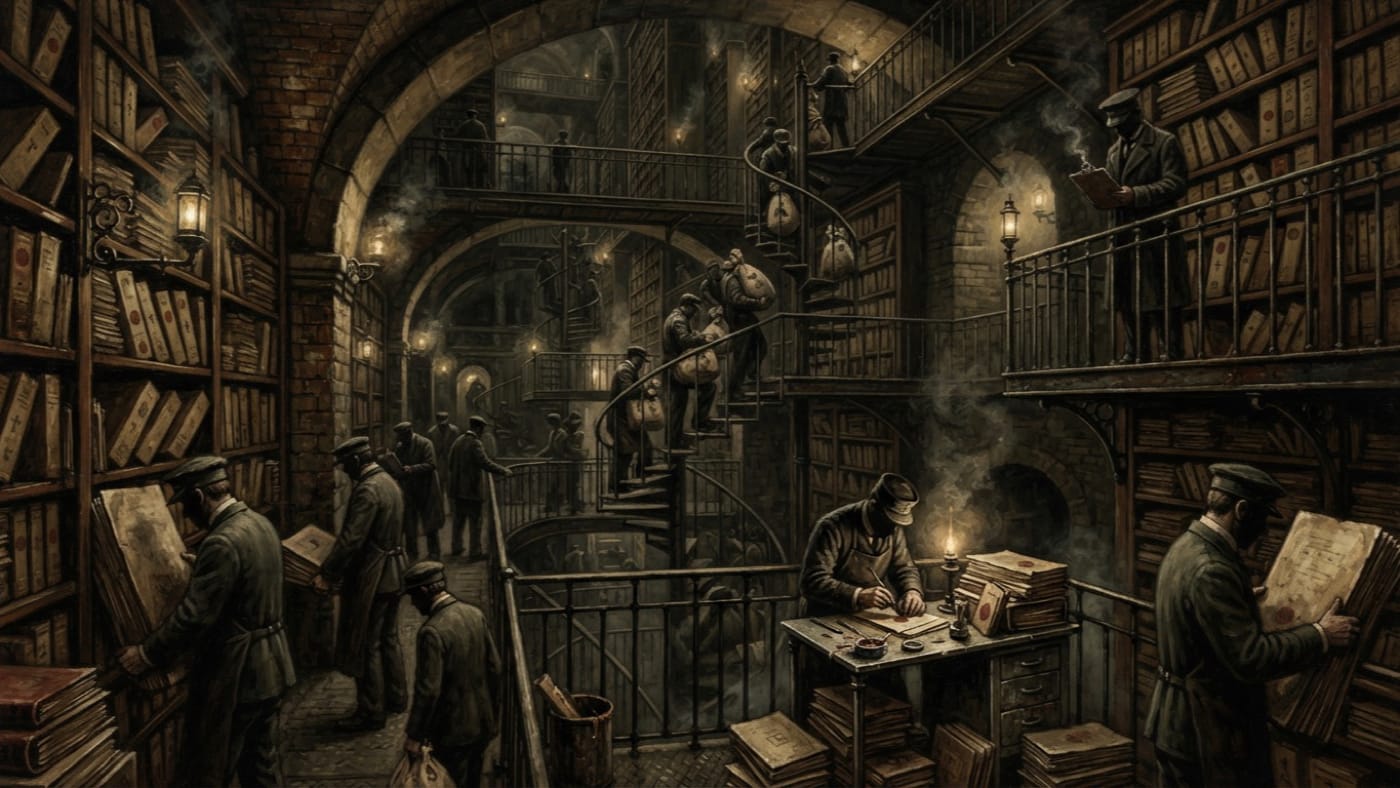
Lower Vaults
Every pardon descends; no depth is certified
Beneath Strasbourg's Basilica, Records shelves baptisms, tithes, pardons and recantations. The custody is certified; the depth is not.
Codex Ref. II.1.04-007
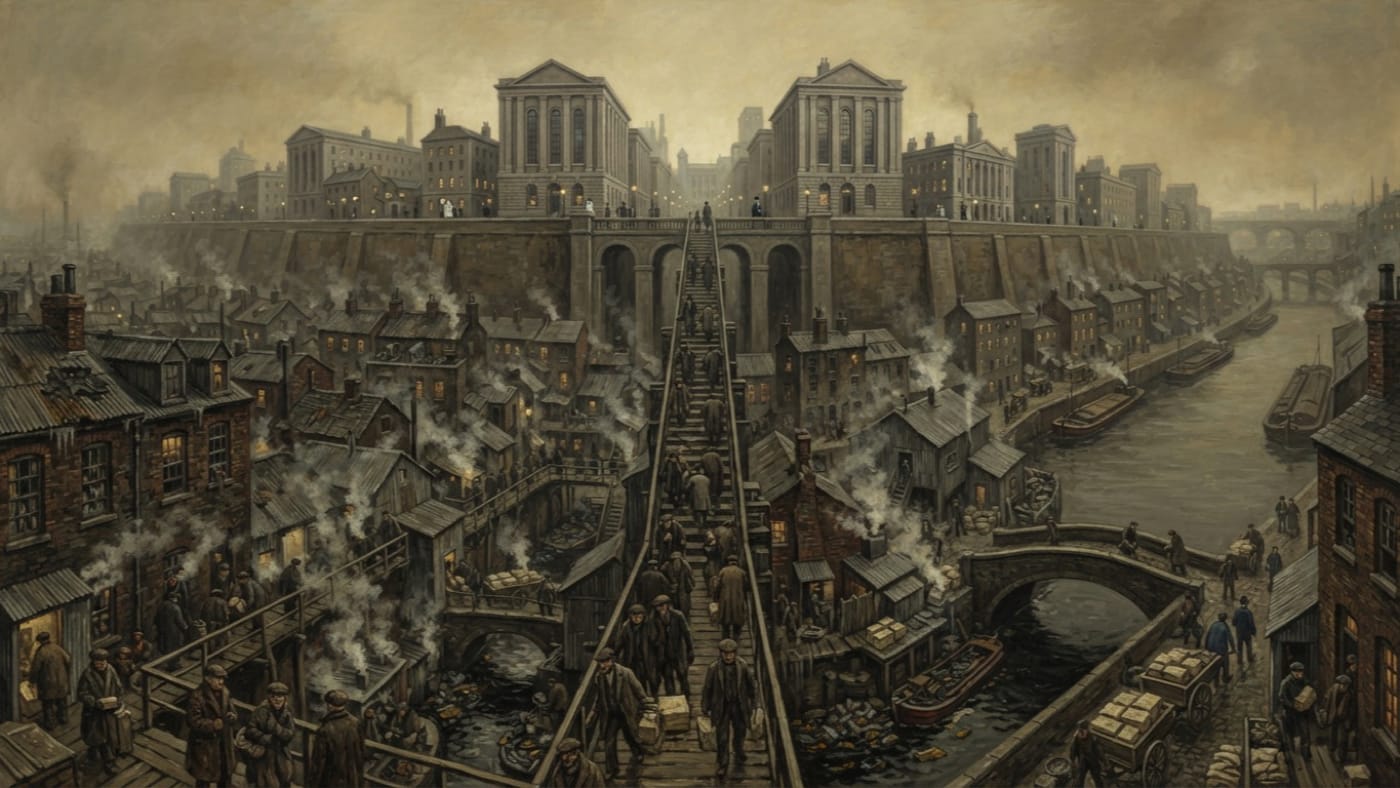
Lower Vire
Candles go up. Refuse comes down.
A River-belt city where Candle-Sump supplies the Heights with light, broth and certified dead. The offices above keep their stamps dry; the people below pay for the privilege.
Codex Ref. II.1.05-002

Lutz Brennan
The smile by which cowardice acquired procedural value
Young Strasbourg assessor whose confession and return-smile betrayed Arno Kett, opened the Silent Godless founder-case, and taught Purity that relief is evidence.
Codex Ref. III.2.01-145
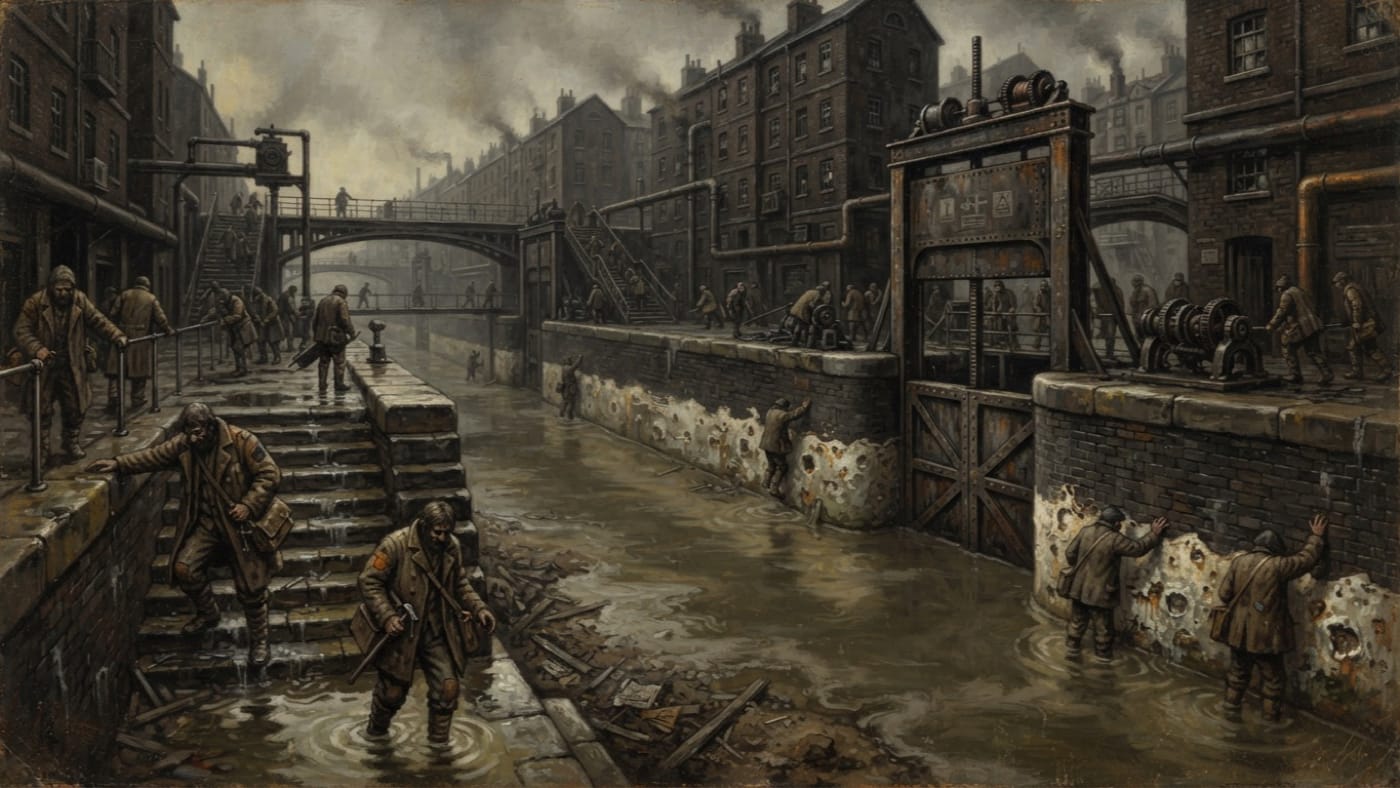
Lye Flood
The water burned; the paperwork followed
Candle-Sump's first catastrophe, attributed to A.S. 84: ash-water burned skin, dissolved papers and scarred the brick. The Chapterhouse appointed offices to manage water and records; the injured remained the Sump's concern.
Codex Ref. VII.8.10-084

Macedonian Diocese
Jurisdiction asserted. Collection undemonstrated.
The Macedonian Diocese sent Assessors to tax the Gilded Chasm in A.S. 114. They returned solvent, punctual and silent. The paperwork survived; proof of collection did not.
Codex Ref. I.3.09-114
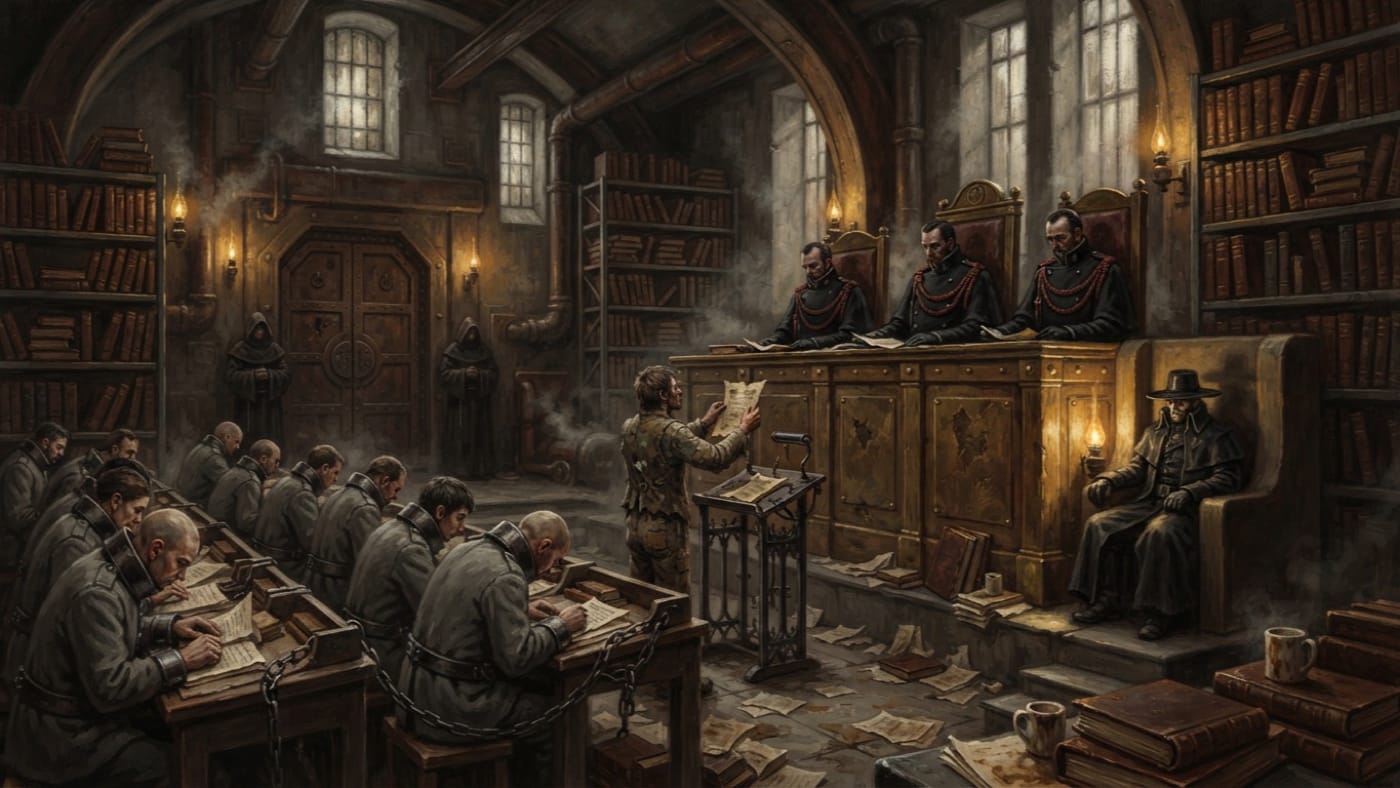
Margin Court
Your name remains yours until the Court corrects it
Nemea's red-cord tribunal settles identity claims, contracts and the position of a name on a page. The Court supplies the evidence, judges the record, and charges for the correction.
Codex Ref. VIII.2.14-1731
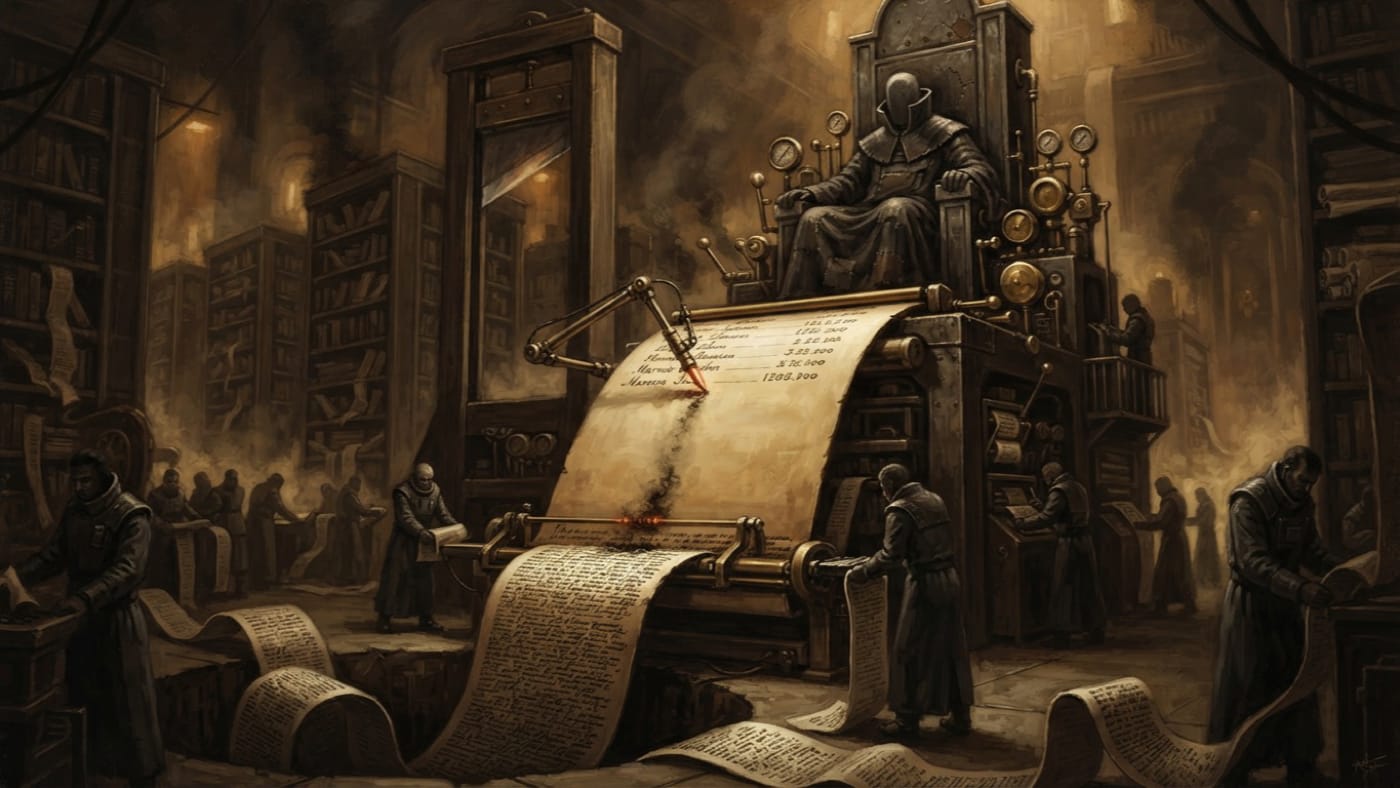
Margin Inheritance
The name grows smaller; the debt does not
Nemea's Margin Court moves names and debts into footnotes: a name loses its standing; a debt waits for whoever inherits the page. The Court insists this is not punishment.
Codex Ref. XIII.1.73-1732

Market Restoration Canticle
The stones were clean; the paper was not
The Bureau of Rites' canticle, attested during the A.S. 162 (1872 CE) restoration of Bastion-Constantinople's southern market after the Carnival of Ink. The stalls reopened; the account records no reversal of the erasures.
Codex Ref. XIII.1.89-162
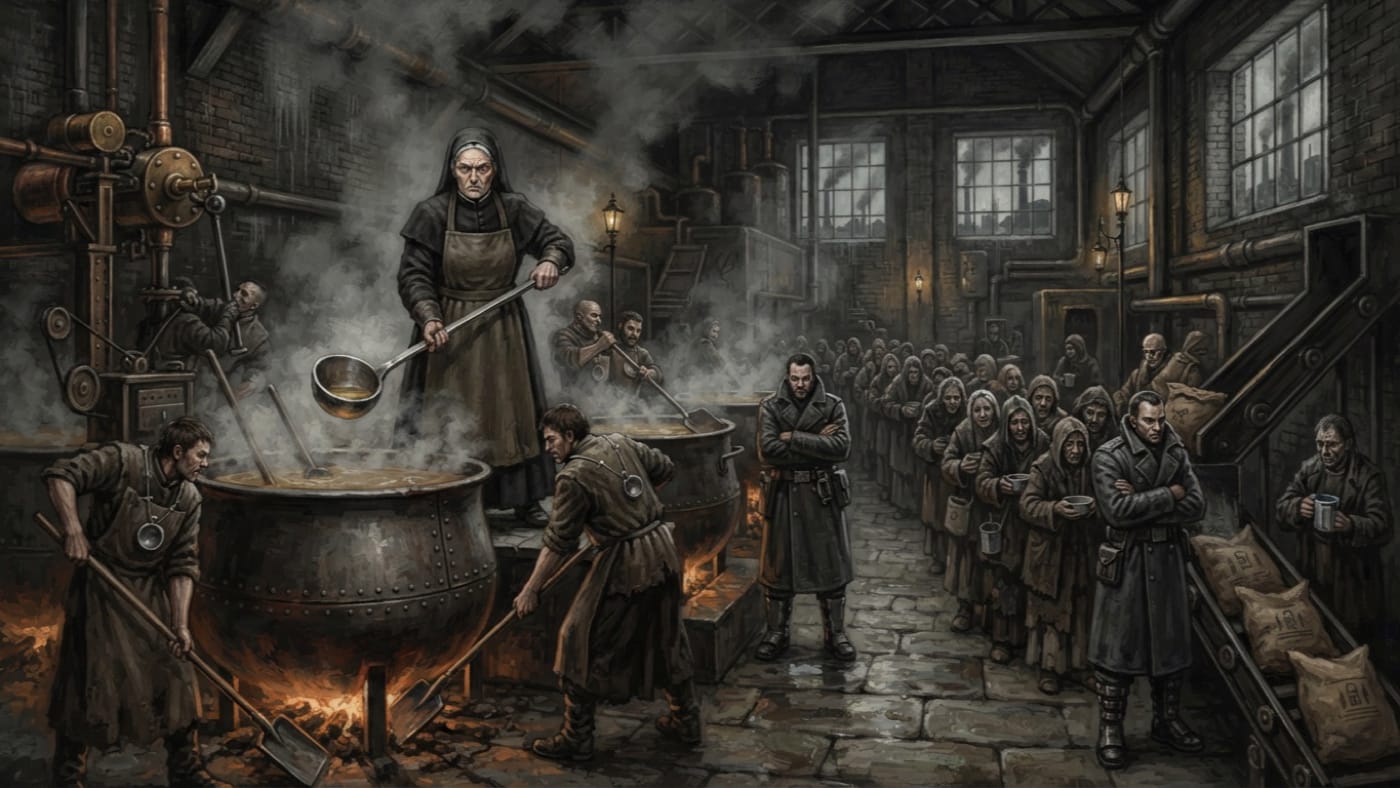
Marrow Kitchens of Saint Ilka
The ladle governs until the grain stops
The Marrow Kitchens feed Candle-Sump and file its confessions. Matron Ilka holds the ladle; the Prefecture holds the grain. As of A.S. 201, she demands autonomy, and the Care crews threaten to stop supper.
Codex Ref. XI.1.08-004

Marrow Row
Where the queue eats and the confession is kept
Candle-Sump's broth ward, where Matron Ilka governs by the ladle and every bowl leaves paperwork. The Prefecture controls the allocation; the Care crews threaten to stop the wagons.
Codex Ref. II.1.05-004

Marrow-Quill of Cologne
The advocate who taught grammar to leave bodies hungry
Cologne Citation Advocate and Ledger Duellist whose week of three duels struck a rival household from standing, bread, gates, contracts, and consecrated earth.
Codex Ref. III.2.01-128

Marseille
Salt, pilgrims, and a territorial dispute the [[bureau-of-records|Bureau of Records]] has declined to arbitrate
The Synod's southern mouth — 650,000 souls between limestone and salt water, two competing Bureaus sharing a harbour they cannot agree on.
Codex Ref. II.4.09-012

Master Engraver Irena Coilhand
The hand that makes recognition spendable
Irena Coilhand cuts Sable Court's lawful faces. The Mint-Prelate may recognize a soul; making it spendable still requires a hand Doctrine forbids replacing.
Codex Ref. III.2.01-1784
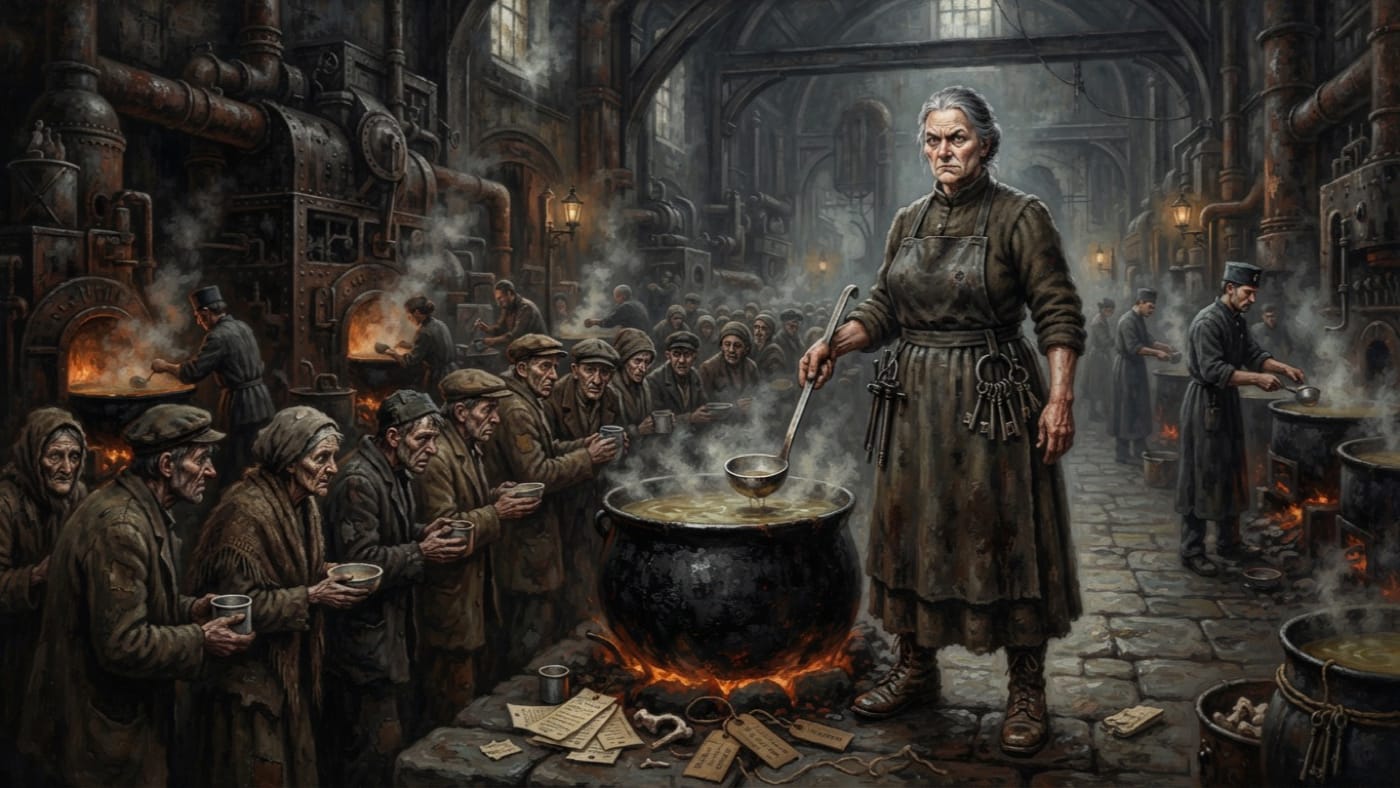
Matron Ilka
Calories are sovereign, and she holds the ladle
Matron Ilka, the locally styled Broth-Saint, feeds Candle-Sump and governs its brothline. At the A.S. 201 assessment, she seeks kitchen autonomy from Prefectural calorie allocation. The ladle has outlasted seven officials.
Codex Ref. III.1.05-001
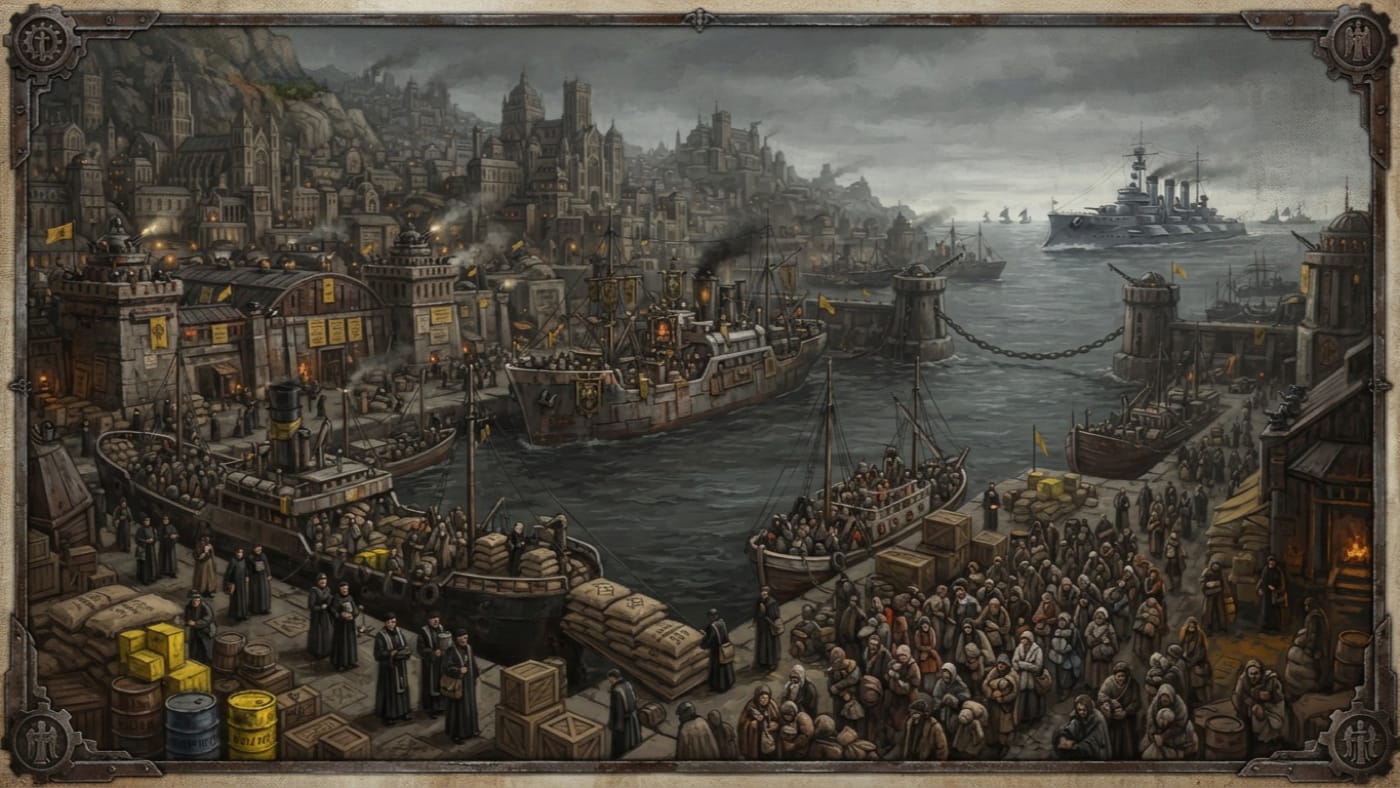
Mediterranean
The oldest road the Church holds, and the only one it cannot pave
The Mediterranean feeds the southern Line with grain, shot and pilgrims. Rival ports tax the passage, quarantine the passengers and leave room for contraband. The sea takes its share without a receipt.
Codex Ref. II.7.01-201

Memorandum on Artillery Bombardment
Nine thousand shells, four hundred twelve names, and one unsigned appetite for arithmetic
An unsigned Bureau of War memorandum proposes shelling the Hollow Court. Doctrine finds nine thousand shells, no absolution, and a table that may be an organ.
Codex Ref. XIII.1.23-001
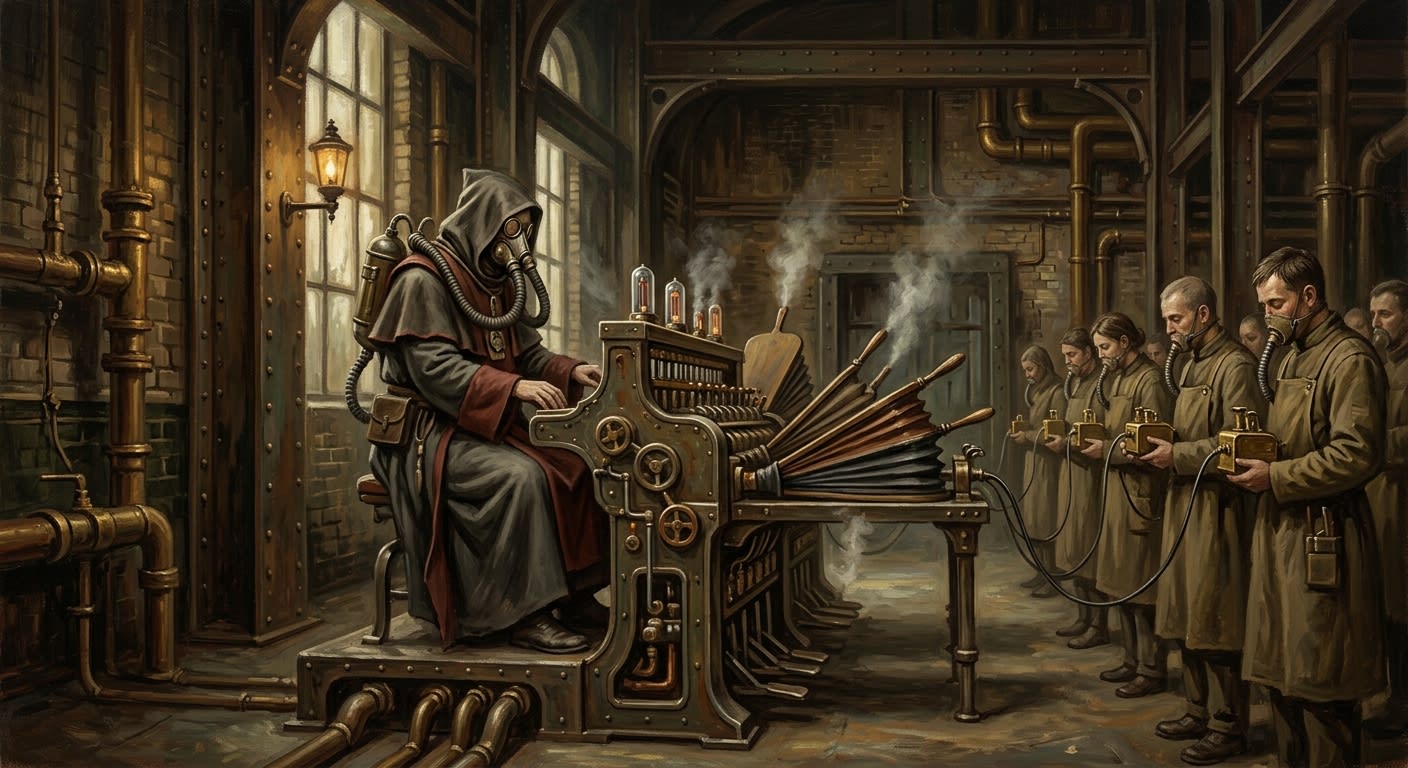
Mercy Tone
The slow note by which the body remains useful
Mercy Tone is the Brand-Singer school that preserves breath, extends confession, and proves that the Synod can call acquisition mercy when the note is slow enough.
Codex Ref. XIII.1.41-001
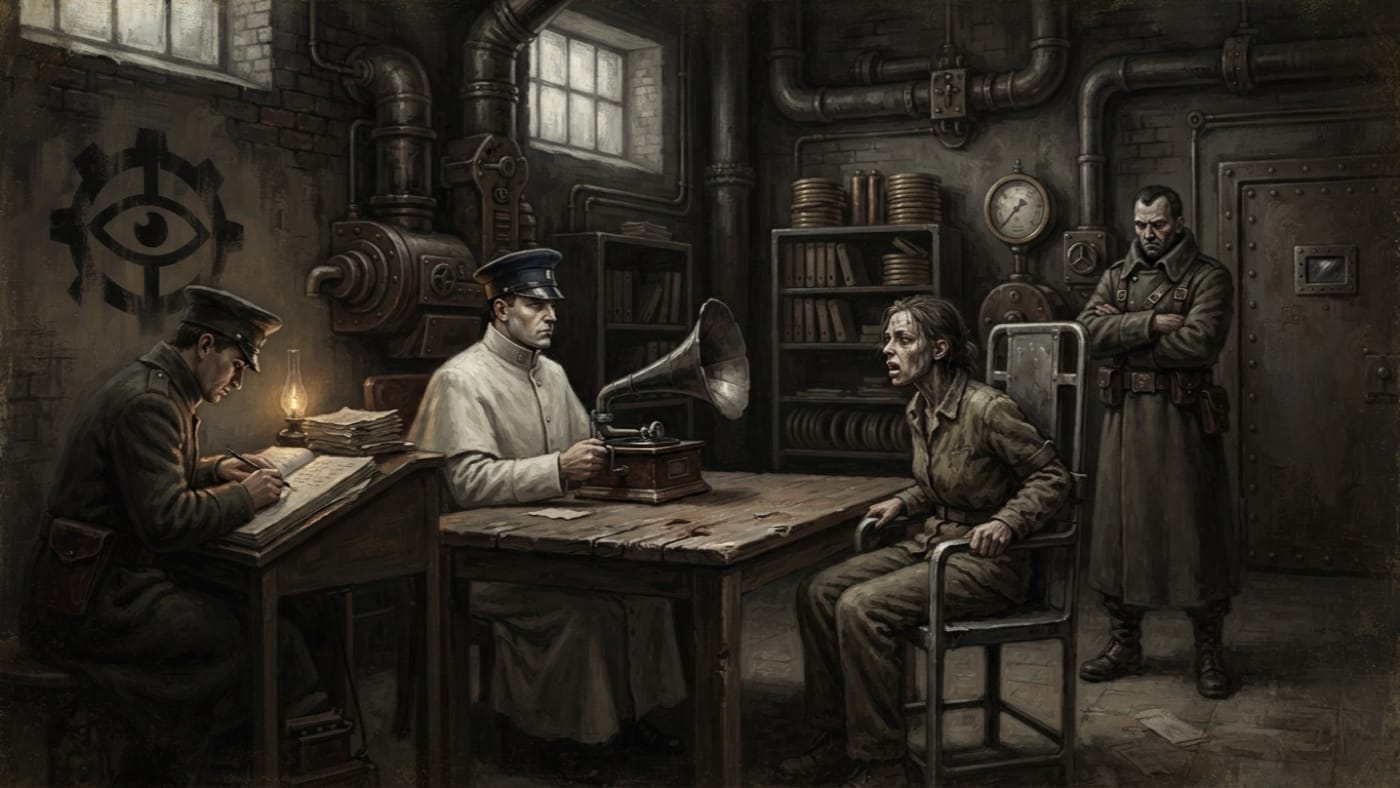
Methodical Interview Protocols
The song leaves no residue; the confession leaves names
The Bureau of Purity turns remembered melodies into sealed admissions. This A.S. 201 survey records the origin chain, the bargain for three names and the certainty a confession acquires once the wax is pressed.
Codex Ref. XII.48.02-001

Midwives
She catches the child and inherits the clock
Midwives attend the birth and carry its liability to Records. This A.S. 201 survey follows notice, Form 7-NR, Registrar scrutiny and evasion through laws whose clocks still disagree.
Codex Ref. XII.9.04-002
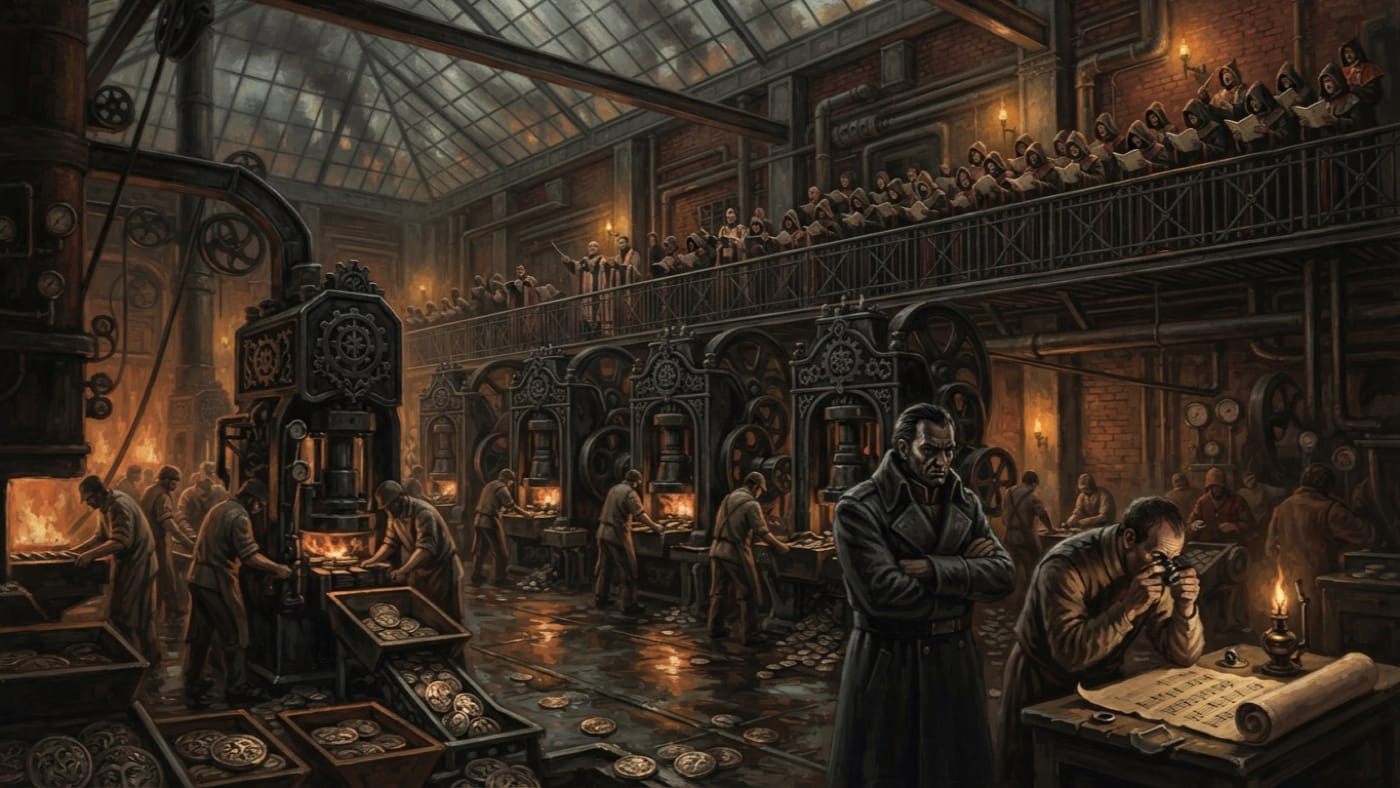
Mint Catechism
Strike on the syllable. Speak no name.
In Sable Court, the choir sings faces into lawful currency. The Mint Catechism governs every press-hammer; its text is withheld, its origin undated, and twice its timing has slipped.
Codex Ref. XIII.1.23-002
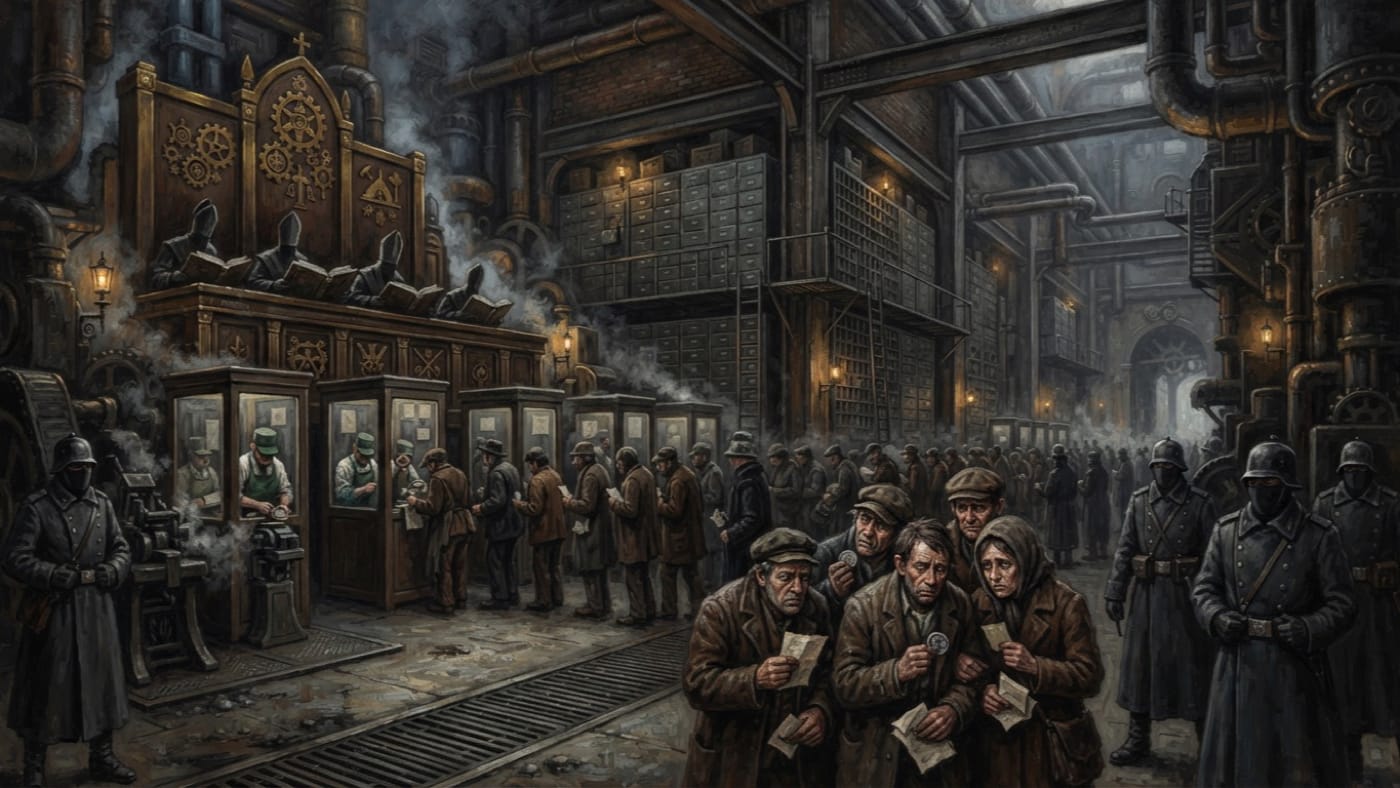
Mint Tribunal
Recognition is lent. The Hall keeps the receipt.
The Mint Tribunal of Sable Court holds, recalls, and corrects the right of a face to be recognised. Its orders reach bread, wages, and memory; the Face Theft complaints now wait on evidence that cannot remember itself.
Codex Ref. XIII.1.91-201

Mint-Chapter
Where the Synod makes faces spendable and obedience portable
The Mint-Chapter binds face, name, and coin into one leash: a polished doctrine by which bread, debt, memory, and burial all learn to ask for a clean strike.
Codex Ref. XIII.1.91-094
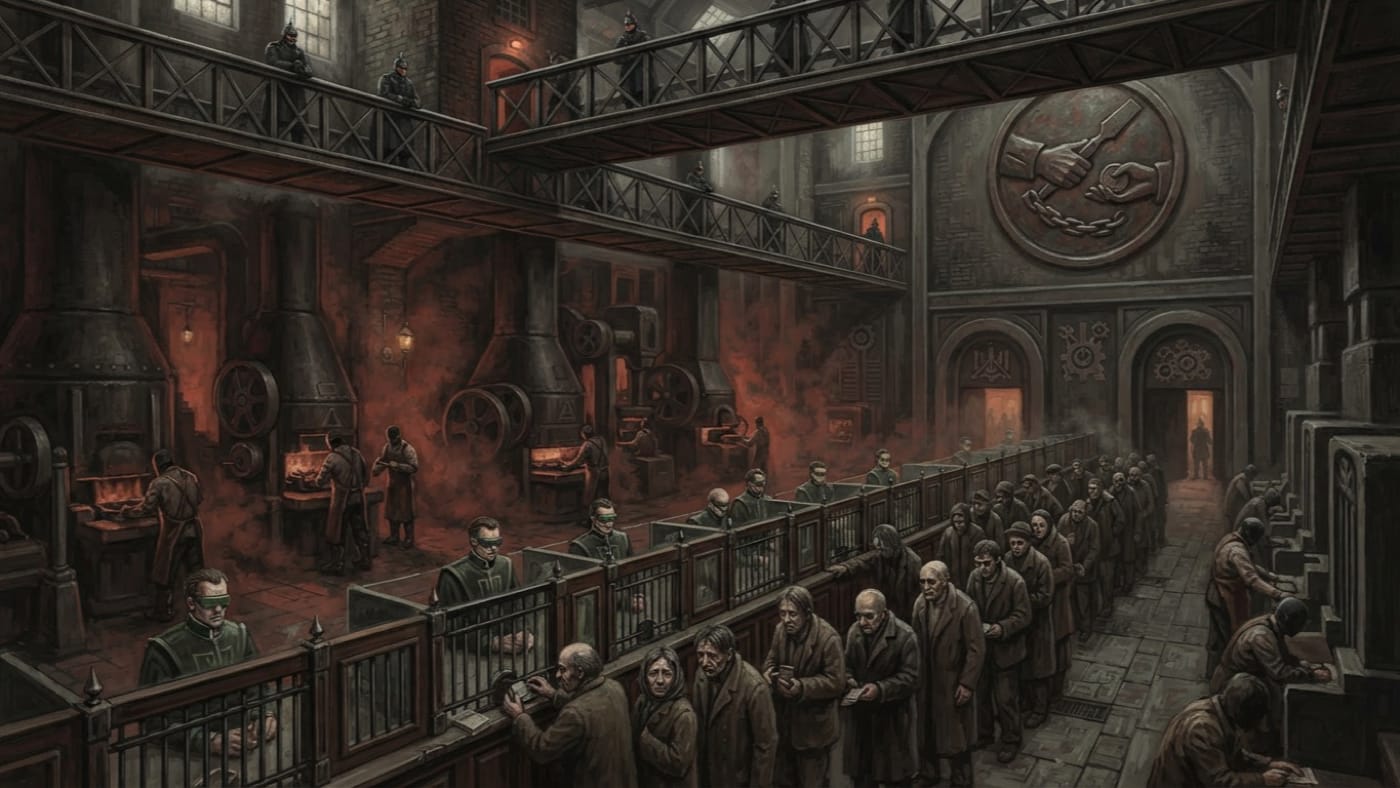
Mint-Chapter Compact
One hand cuts the face; the other decides whether it may buy bread
The A.S. 94 bargain binding Crownwright craft to Mint-Chapter authority. At the A.S. 201 assessment, its two hands still strike coin, collect fees, and decide whose face may buy bread.
Codex Ref. XI.7.01-002

Mint-Prelate
The stamp that makes a face spendable
The Mint-Prelate makes Sable Court's coin-faces lawful. Varo Sable keeps recognition payable in advance while the Face Theft crisis enlarges the office's authority.
Codex Ref. XIII.1.91-002

Mint-Prelate Albrecht Sable
He taught the coin to look back
Albrecht Sable made coinage into identity infrastructure: face, name, Ledger account, tax, recall, and accusation flattened into metal.
Codex Ref. III.2.01-094
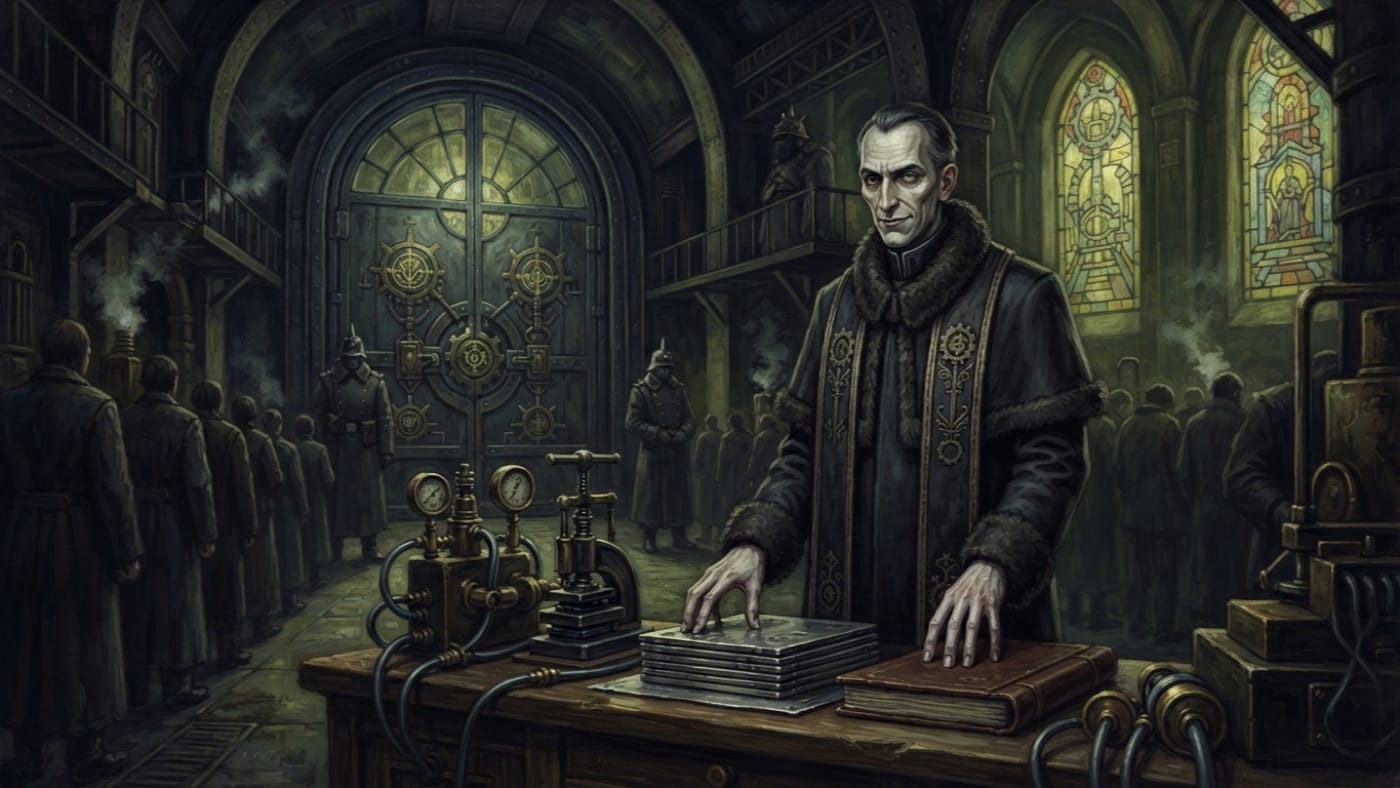
Mint-Prelate Varo Sable
The man who decides whether a face counts
Varo Sable decides which faces spend as lawful coin. The Face Theft crisis keeps the Archive sealed, his inspections multiplying, and the Clipped Choir useful to the authority that condemns it.
Codex Ref. III.2.01-1848
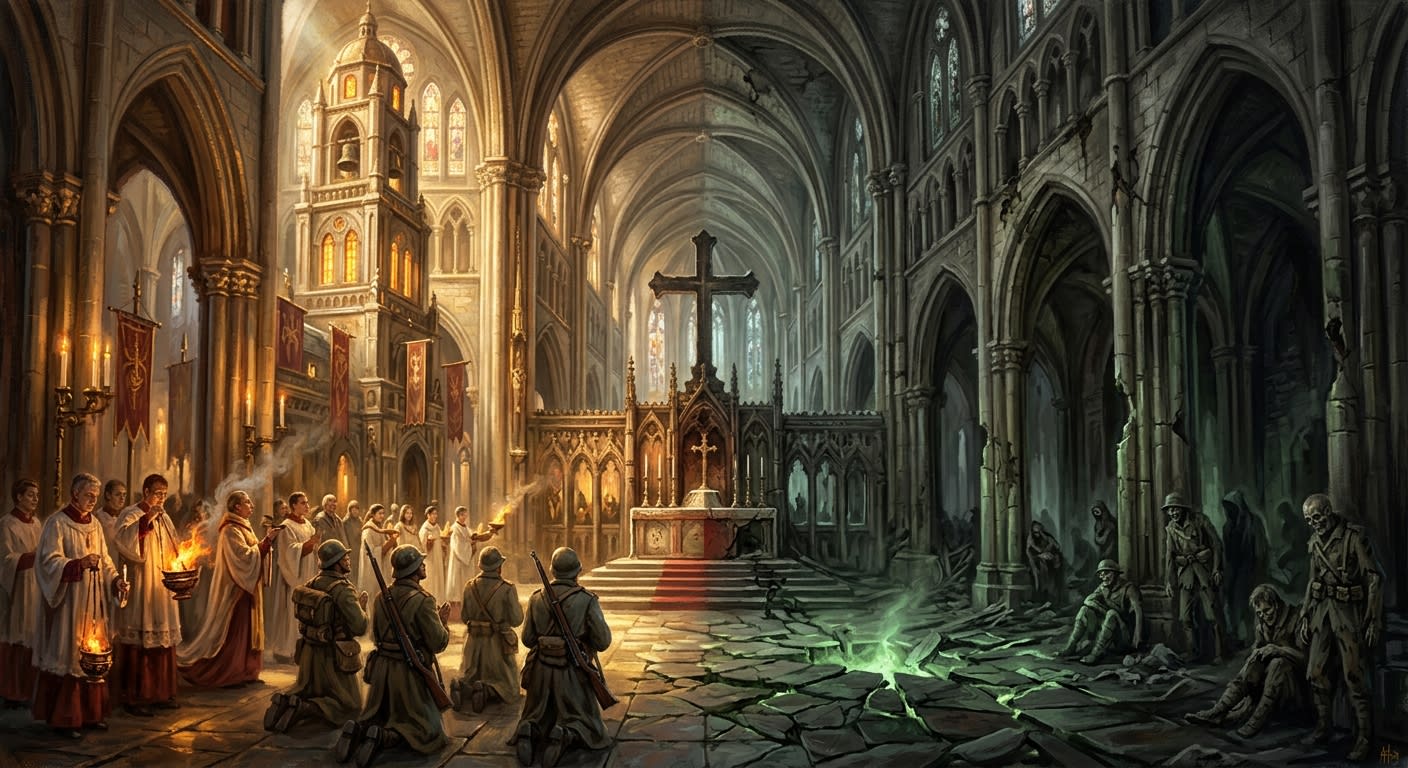
Miracles and Sorcery
Both crack Creation; only the paperwork differs
The Bureau insists miracles and sorcery are opposites. The mechanism, as Drax reluctantly confirms, is identical. The source determines canonisation or burning. The paperwork is different. The world pays either way.
Codex Ref. VI.3.01-001
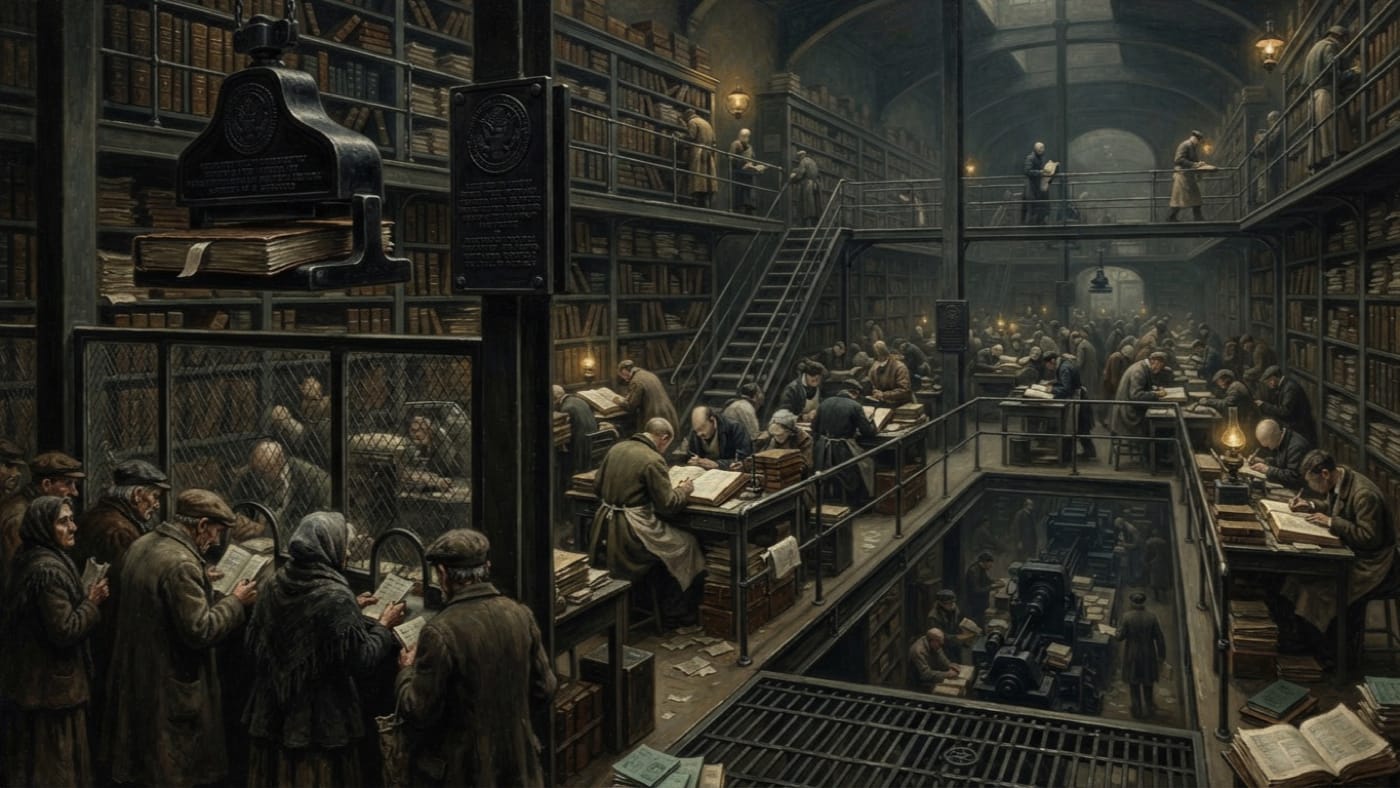
Mortuary Index
The dead receive a line. The erased receive nothing.
The Bureau of Records acknowledges the dead one name at a time. A line in the Mortuary Index records a recognised death; the erased receive none. I certify the distinction.
Codex Ref. XIII.1.98-201

Moth
The command title with too many bodies and one blank appetite
Moth names the Blank-Sheet Circle's disputed command absence: perhaps person, office, paper, or the procedure by which blankness learns to cross.
Codex Ref. XIII.1.53-001
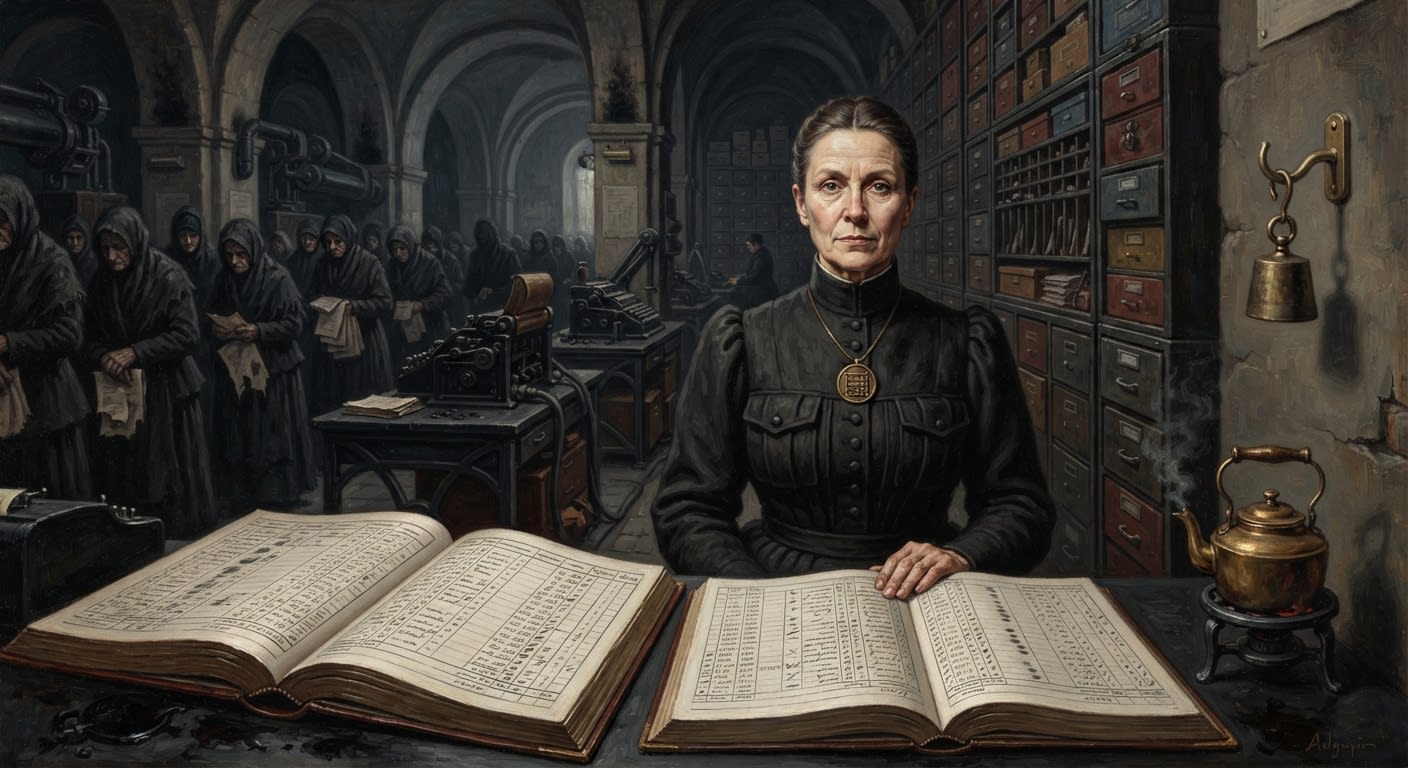
Mother Ledgermistress Anka Vey
She buys the Synod's delay and files the receipt
Mother Ledgermistress Anka Vey keeps Black Pennies' accounts so clean that Tithes cannot decide whether it has been audited, invoiced, or defeated.
Codex Ref. III.2.01-201

Mother Sava of the Ash Steps
Eleven shoes, one burnt register, and the arithmetic heresy of mercy
Mother Sava, proscribed midwife of the Ash Steps, burned an A.S. 154 parish registry, hid eleven infants from levy arithmetic, and became the Pale Kin's quiet patron of placement over possession.
Codex Ref. III.2.01-133

Music-box Drums
A witness small enough to hide in a boot
Brass cylinders carry fragments of forbidden melody beyond the courier's memory. The household receives comfort; Orison receives a witness that cannot recant.
Codex Ref. XII.48.03-201
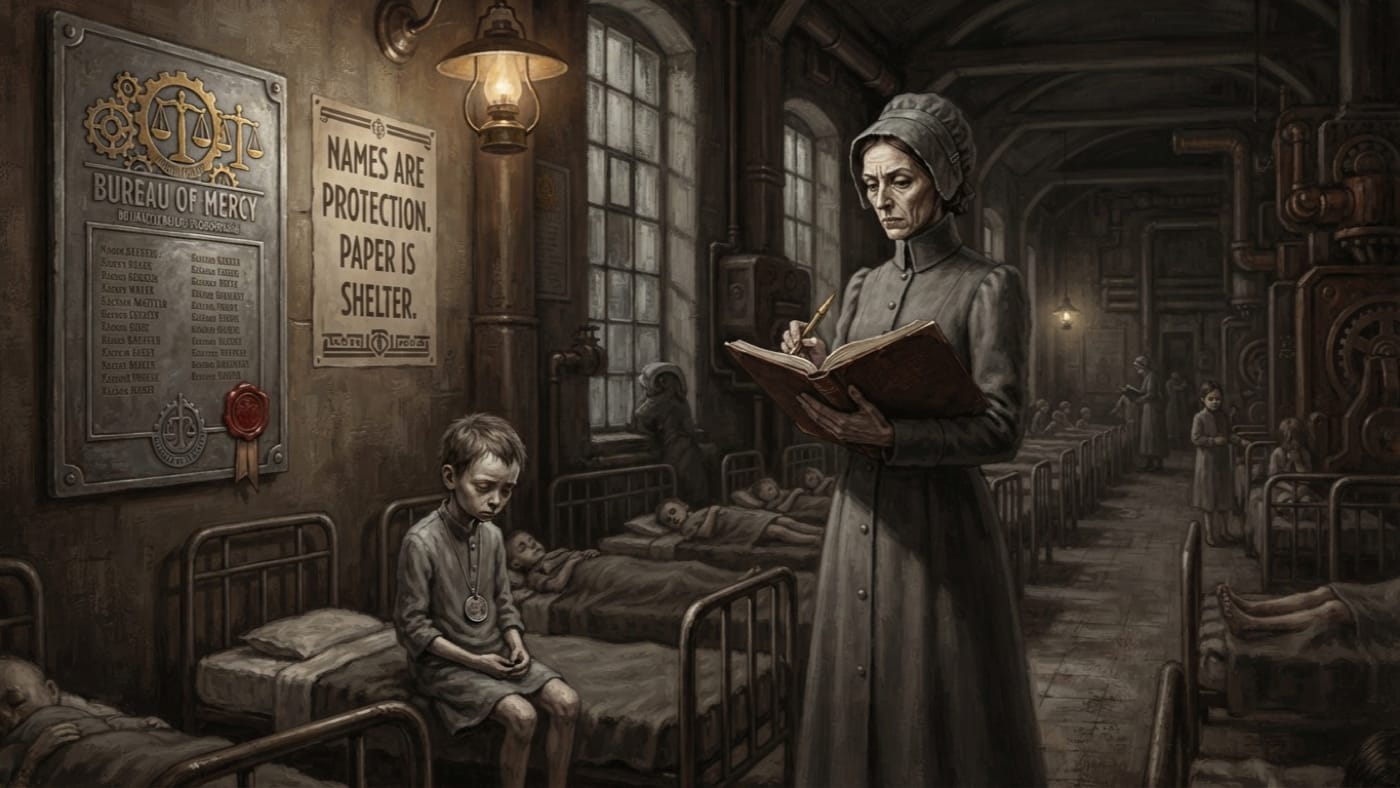
Name-Givers
The child answers to the name that feeds it
The Name-Givers are Orphanage Registrars who trust paper, discipline, and hunger to remake a child's identity. The assigned name secures supper; the remembered family remains a disciplinary problem.
Codex Ref. XI.1.05-003
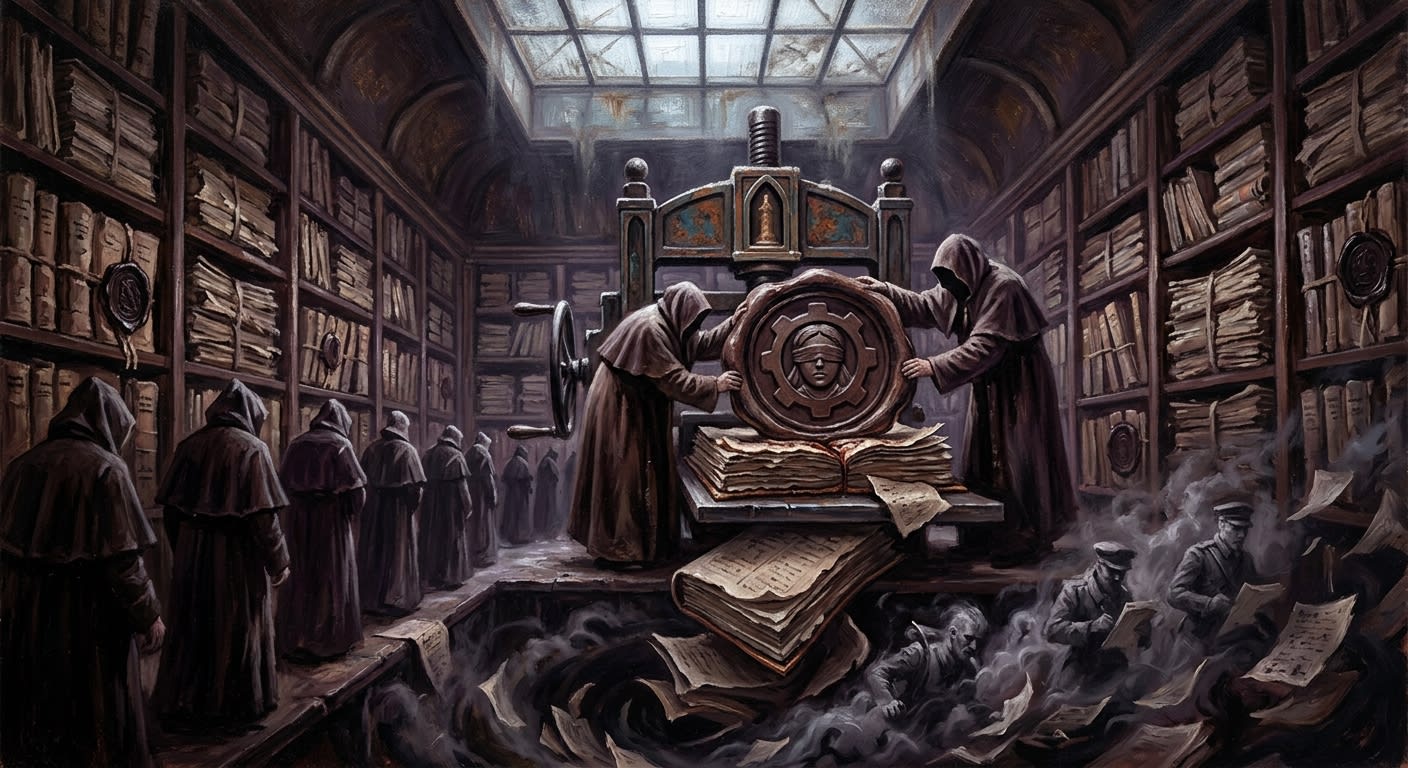
Ninth-Ratification
The seal that forbids analogy because pattern is accusation
Ninth-Ratification is the Synod's highest publicly nameable seal: a doctrine of lawful ignorance for records whose disclosure changes context, office, witness, and history itself.
Codex Ref. XIII.1.76-103
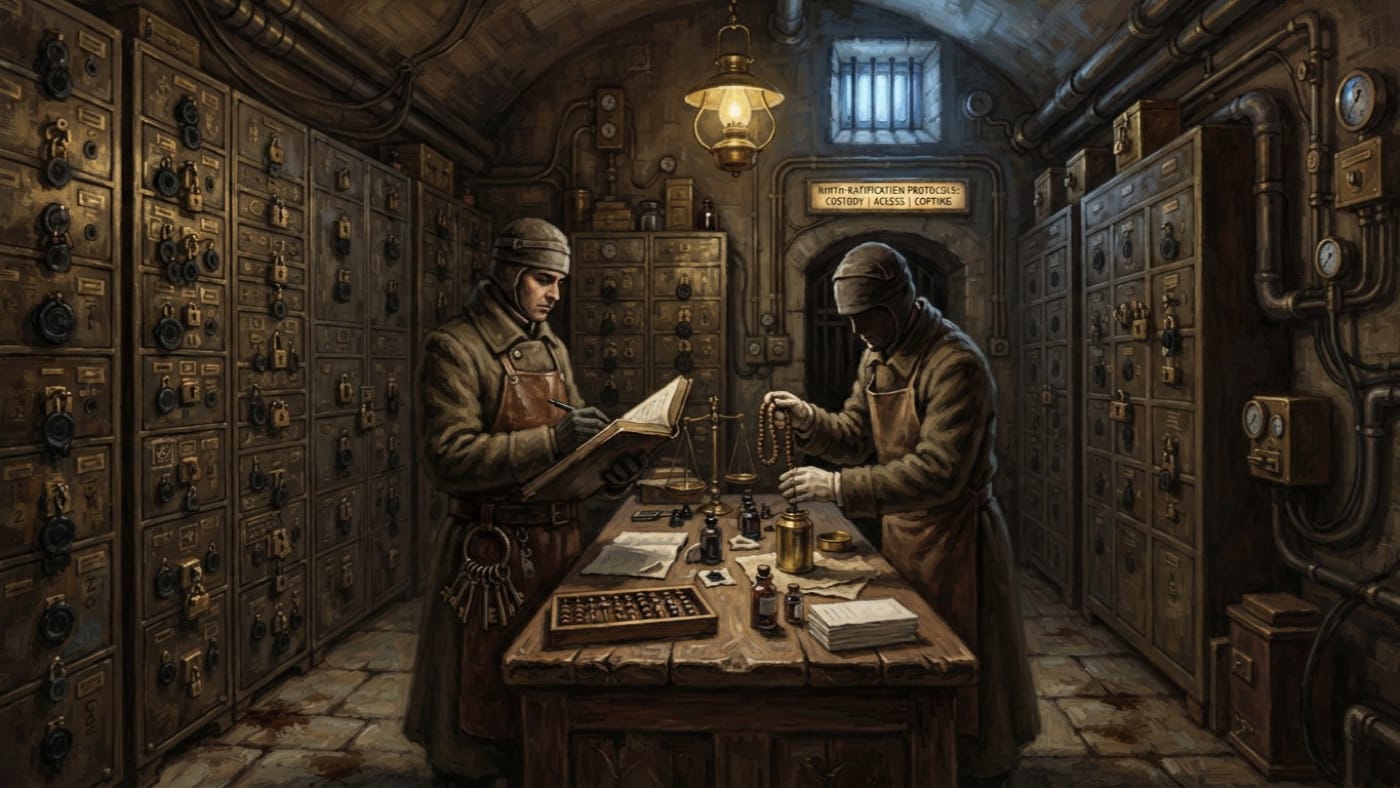
Ninth-Ratification Protocols
The evidence is kept; understanding is withheld
The Bead Vault applies Ninth-Ratification to custody, access and copying when a pilgrim case defeats correction. The evidence stays under lock; understanding is rationed by office.
Codex Ref. XIII.1.72-005
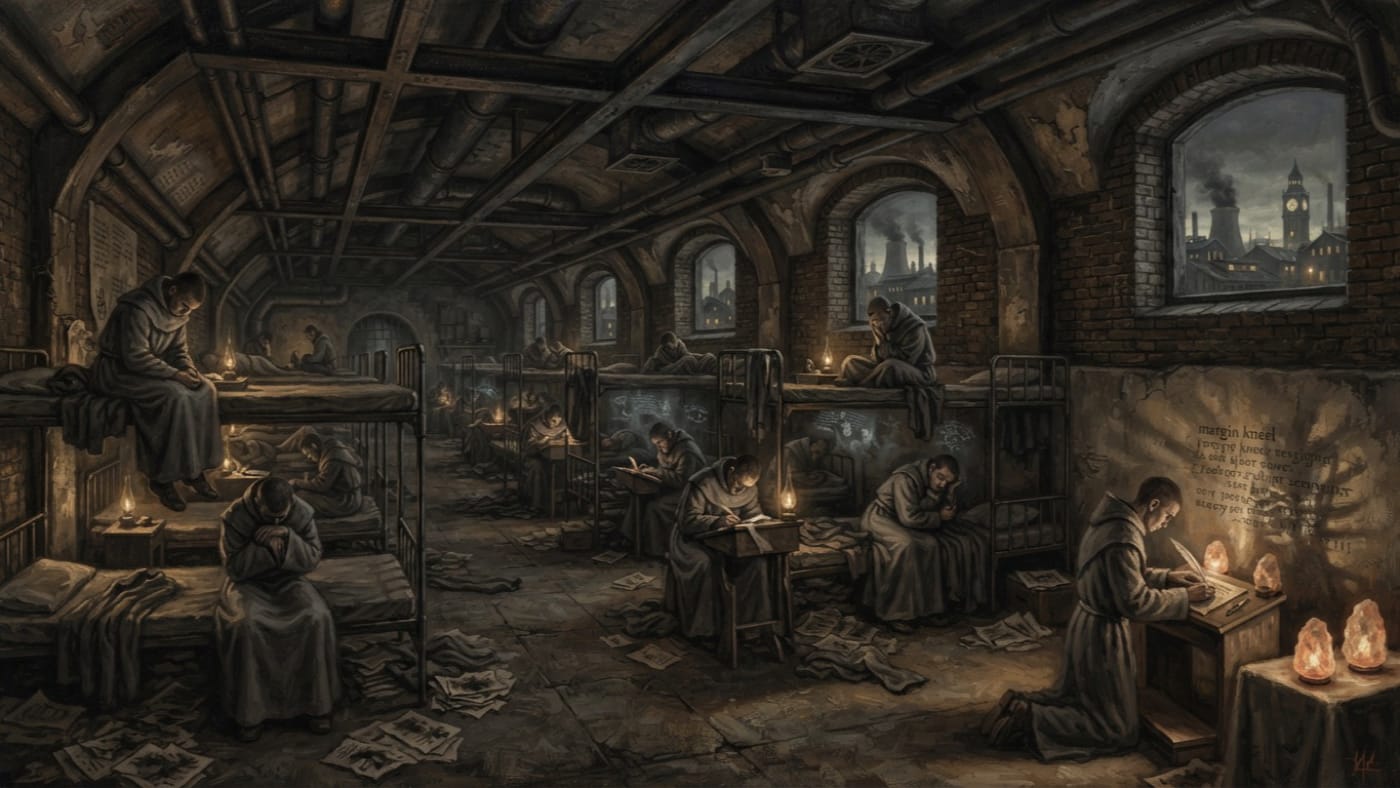
Novice Barrens
Where novices sleep and their obligations do not
Nemea's dormitories and vow rooms house novices stripped of birth-names and bound by page debt. Their contracts sleep in the vaults; their obligations need not remain as signed.
Codex Ref. II.2.06-201
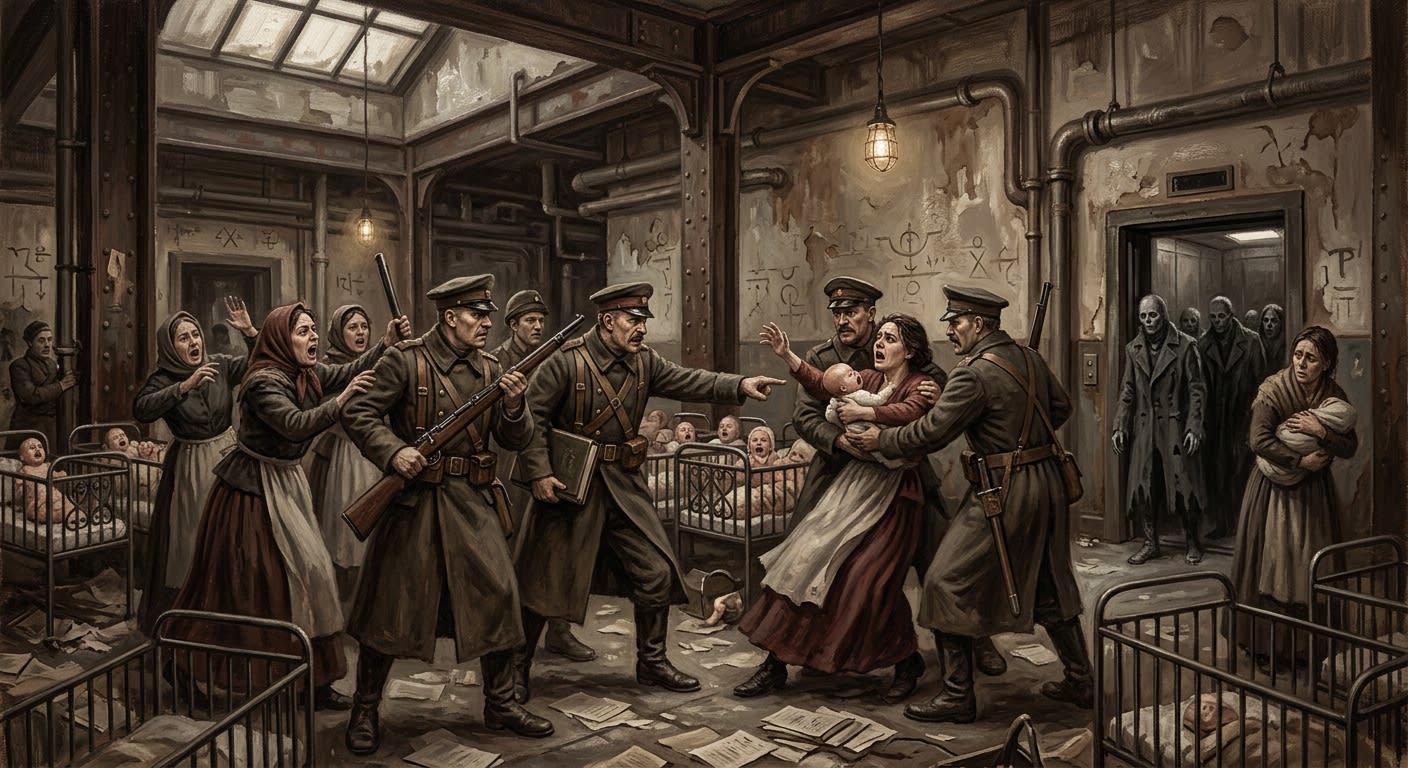
Nursery Levy Decrees
The law counted the cradle; the cradle learned to lie
A.S. 152 cradle-registration laws that cut infant filing to twelve and seventy-two hours, birthed armed registry teams, midwife resistance, and the Pale Kin trade.
Codex Ref. VII.8.10-054
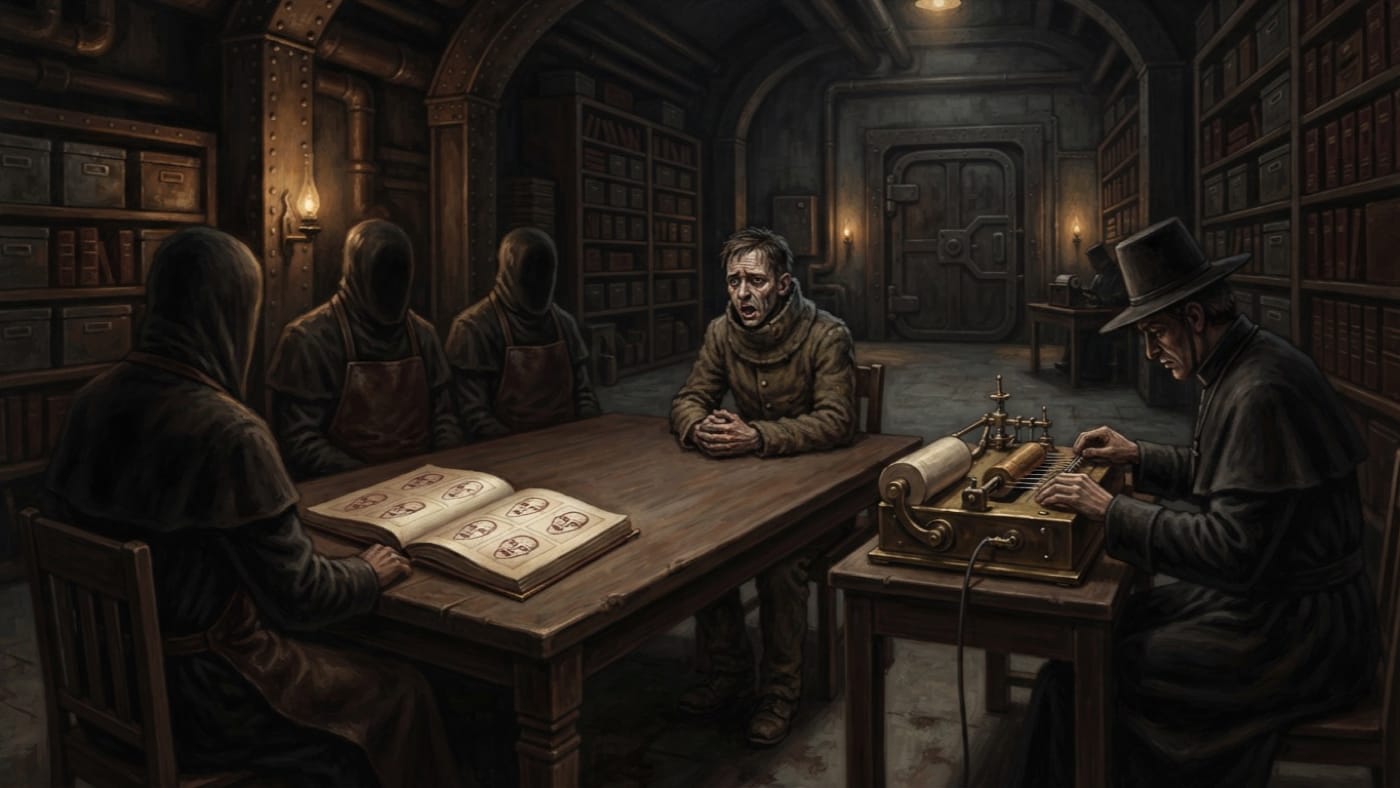
Oath of Compelled Testimony
Fourteen answers. No single account.
The oath requires truthful answers under threat of Administrative Dissolution. Fourteen survivors of Commission 73-C spoke under it in A.S. 73. Their accounts disagreed. The obligation was fulfilled.
Codex Ref. XIII.1.17-002

Obscurists of the Third Ink
The clerks no Bureau admits to employing
The Obscurists of the Third Ink allegedly turn hesitation into conscience entries for the Codices Obscurae. Their title survives in an undated fragment; no Bureau admits to employing them.
Codex Ref. XIII.1.06-003
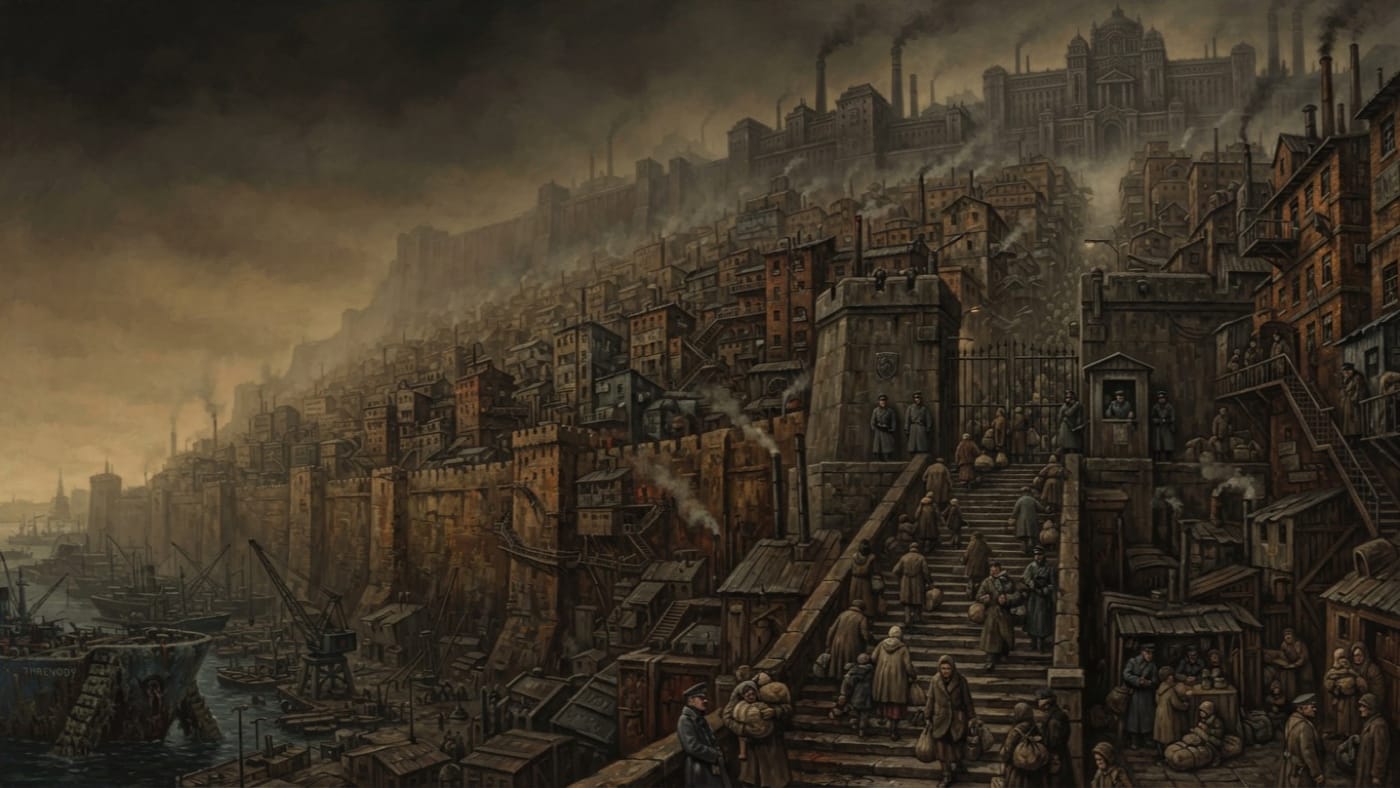
Ochre terraces
Above the walls, still within the ledger
Ochre enters the civilian terraces above Constantinople's old walls in the settlement ledger. A household may live uphill; passage to Blue still requires a stamp.
Codex Ref. III.2.04-1980

Office of Nullity
The knife kept inside the book
Sub-office of the Bureau of Records governing Erasure Notaries, strike writs, dependent ledgers, black seals, and the civic art of making a person unprovable.
Codex Ref. XIII.1.70-001
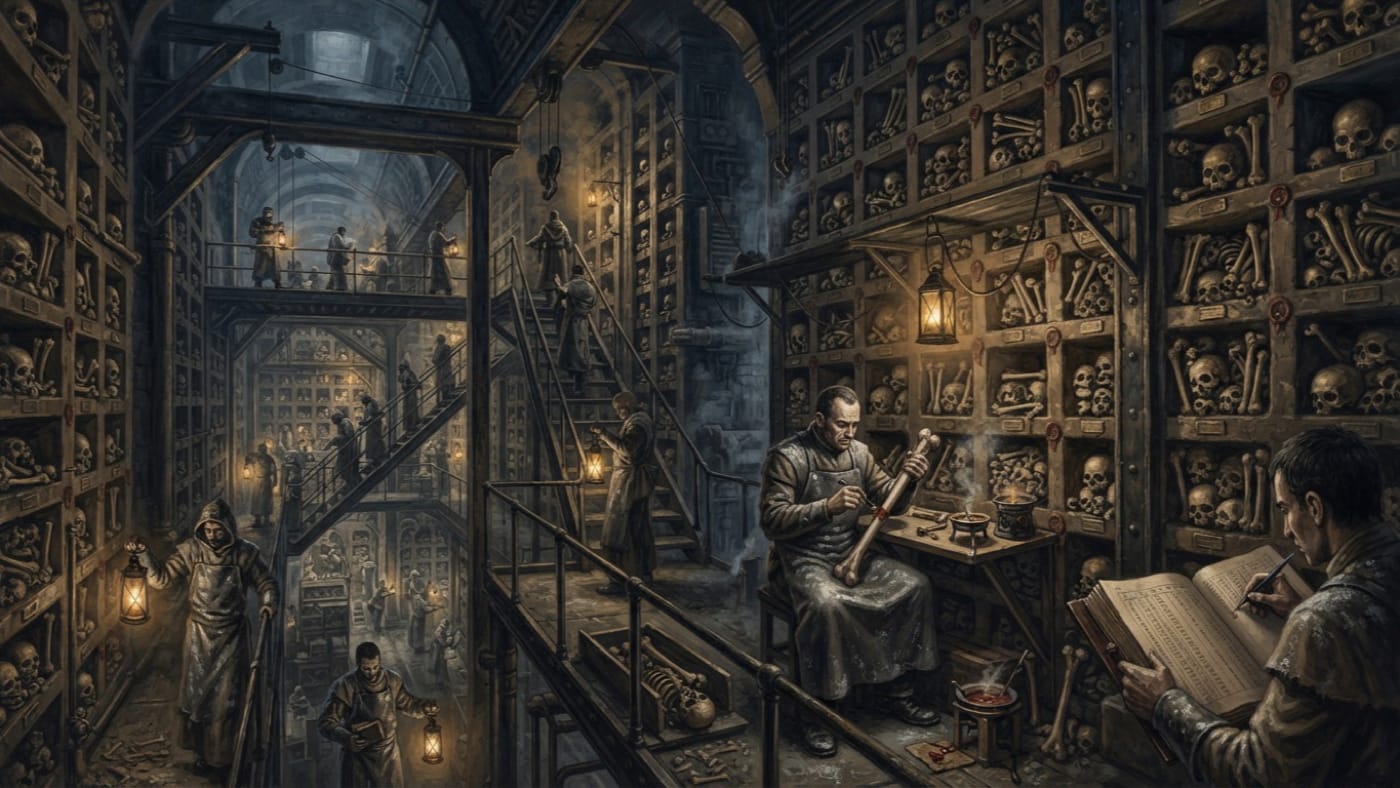
Office of the Last Watch
The dead must remain obedient; the totals must agree
Records' mortuary sub-bureau oversees cemeteries, funerals, exhumations, and the obedience of the dead. Its totals balance; its corridors require a separate report.
Codex Ref. III.2.09-004

Oratio Oblitterans
The six lines Heaven was not permitted to hear
The Oratio Oblitterans is the six-line Rites prayer proposed in A.S. 142 for Administrative Dissolution, rejected by Records, and preserved wherever mercy disobeys filing autonomy.
Codex Ref. XIII.1.01-003
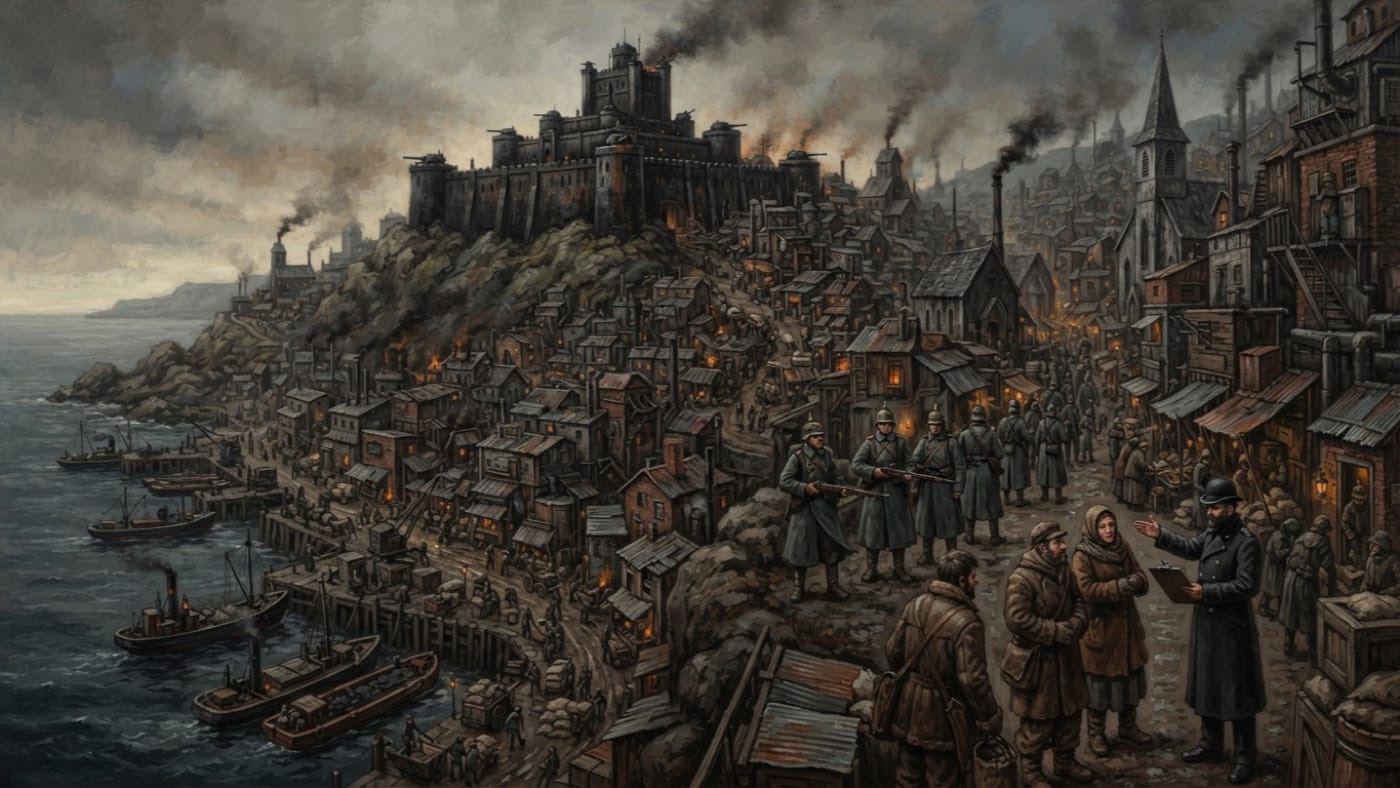
Organic Garrison Towns
The fort has soldiers. The town has a category.
An A.S. 201 survey of civilian communities that have outgrown Synod forts, especially along the Pilgrim's Coast. War claims the garrison, Tithes the market, Settlement the residents. The town has a category; responsibility remains pending.
Codex Ref. III.2.04-018
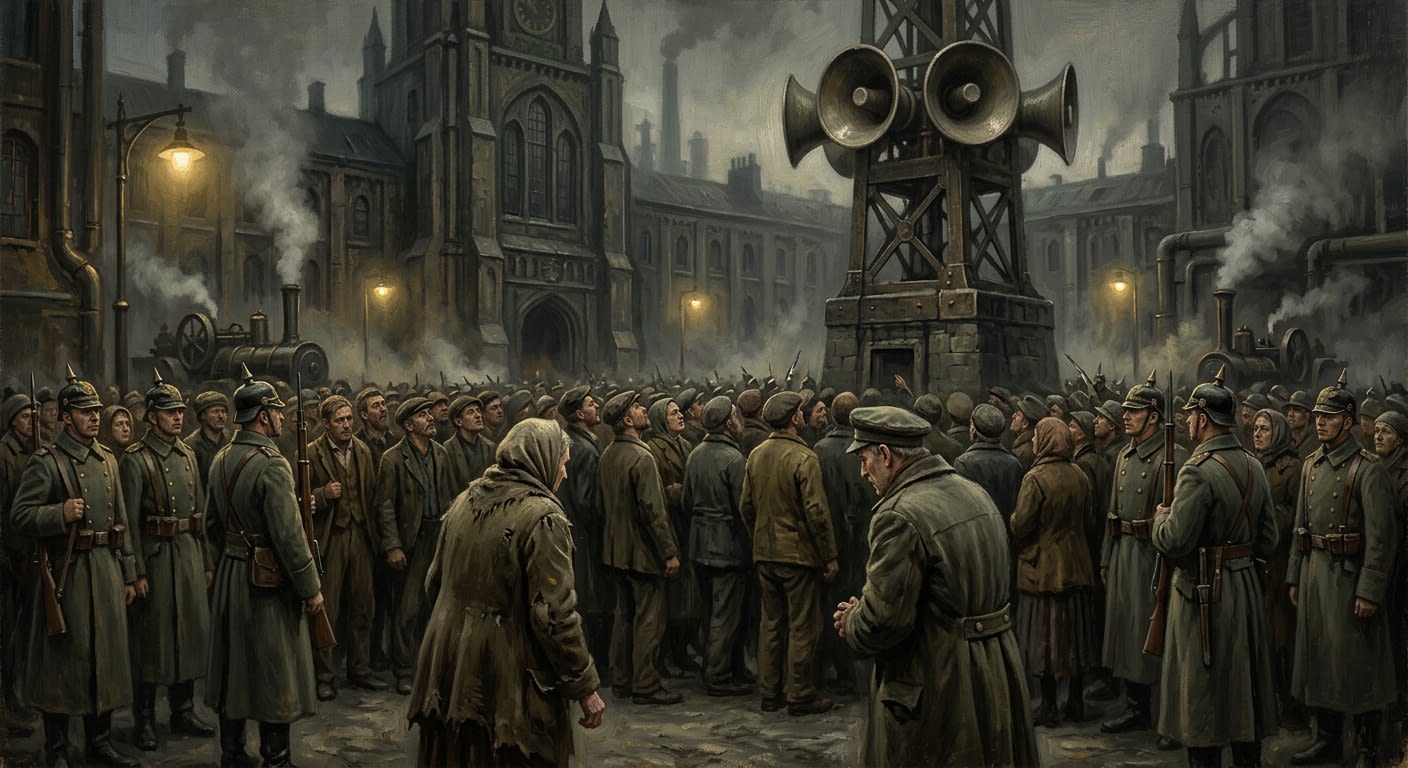
Orison Hour
The hour that owns the ear and charges rent for listening
The Orison Hour is prayer, ration order, casualty roll, curfew, census pressure, and acoustic cudgel: Europe instructed to possess one throat.
Codex Ref. XIII.1.96-112

Orison Licensing Acts A.S. 94
No private hymn, no innocent breath
A.S. 94 legal seizure of melody itself: the Acts made every cadence licensed or criminal and created the market they pretended to destroy.
Codex Ref. VII.2.10-094

Orphanage Registrar
The child enters crying and leaves legible
Orphanage Registrars convert foundlings into entries: named, tagged, risk-scored, and placed before hunger, memory, or bloodline can become a rival jurisdiction.
Codex Ref. VI.4.12-044

Ossuary-Nullity Adjudicator
The dead have reached the gate; their claim is still under review.
A higher specialist of the Office of Nullity determines whether a struck name retains a burial claim. A body is evidence of death; it is no guarantee of a grave.
Codex Ref. XII.14.01-002

Pageant Captain
Crowds routed, confetti reconciled, joy accounted for
The Bureau of Festivals' logistical officers route crowds, move relic-floats and weigh the confetti afterward. Their signatures accompany every anomaly list. The paper must balance.
Codex Ref. XII.17.03-001
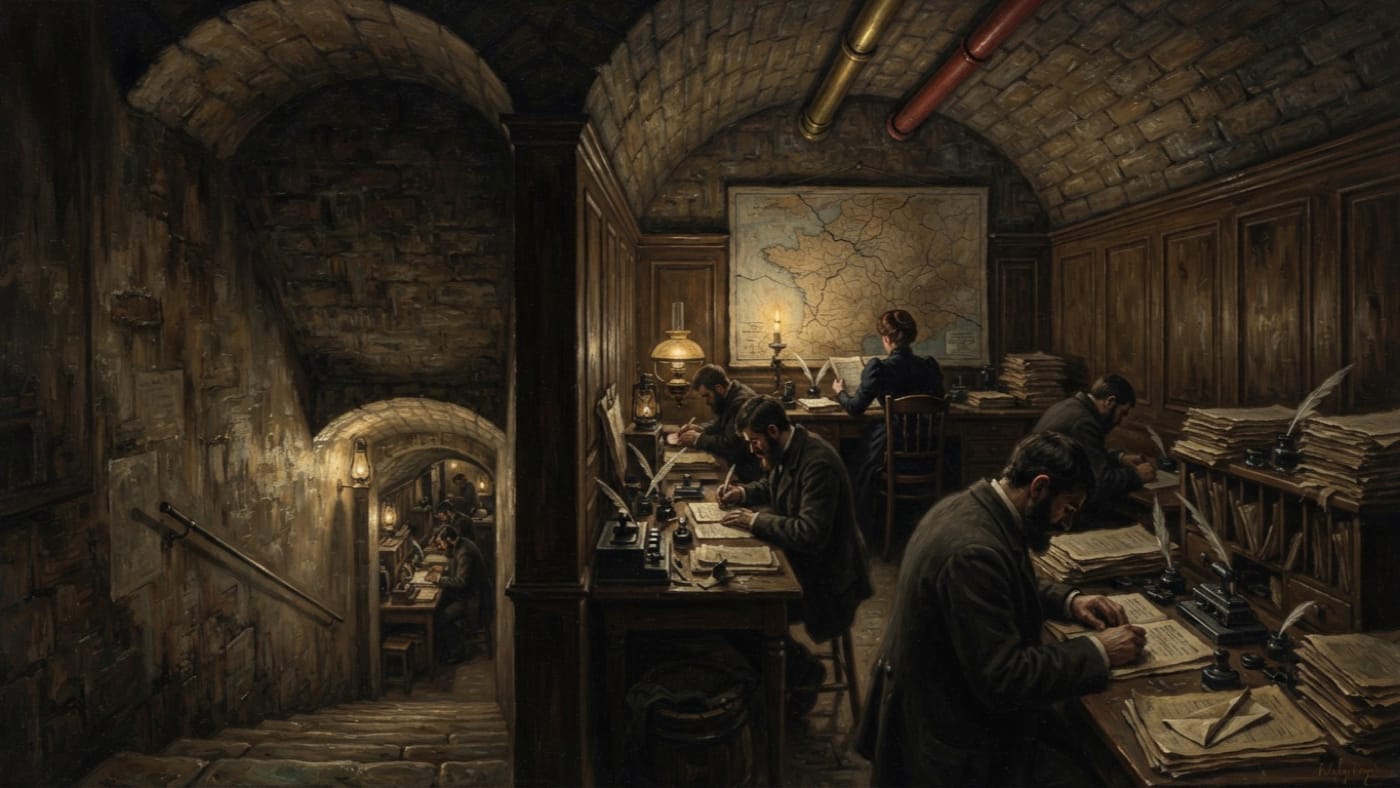
Palatine Administrative Wing
Rank ascends. Settlement descends.
The Palatine Administrative Wing stacks Tithes above Records above Settlement, whose wine-cellar offices decide where three hundred million subjects may sleep. In Strasbourg, dependence is measured by how far one must descend.
Codex Ref. II.2.08-201

Pale Kin Runner
What the Bureau calls inventory discrepancy; what the mothers call salvation
The Pale Kin Runner is a child-smuggler, a midwife's heir, and the Bureau of Conscription's oldest unsolved arithmetic problem. She intervenes between birth and stamp. The Synod calls this heresy.
Codex Ref. XII.28.01-001

Paper Loft Quarter
Where paper survives and sick clerks become scheduled maintenance
Candle-Sump's lofts keep ration slips, death receipts and washed names legible. Rot-lung consumes the clerks; the Registry records only scheduled maintenance.
Codex Ref. II.1.05-008
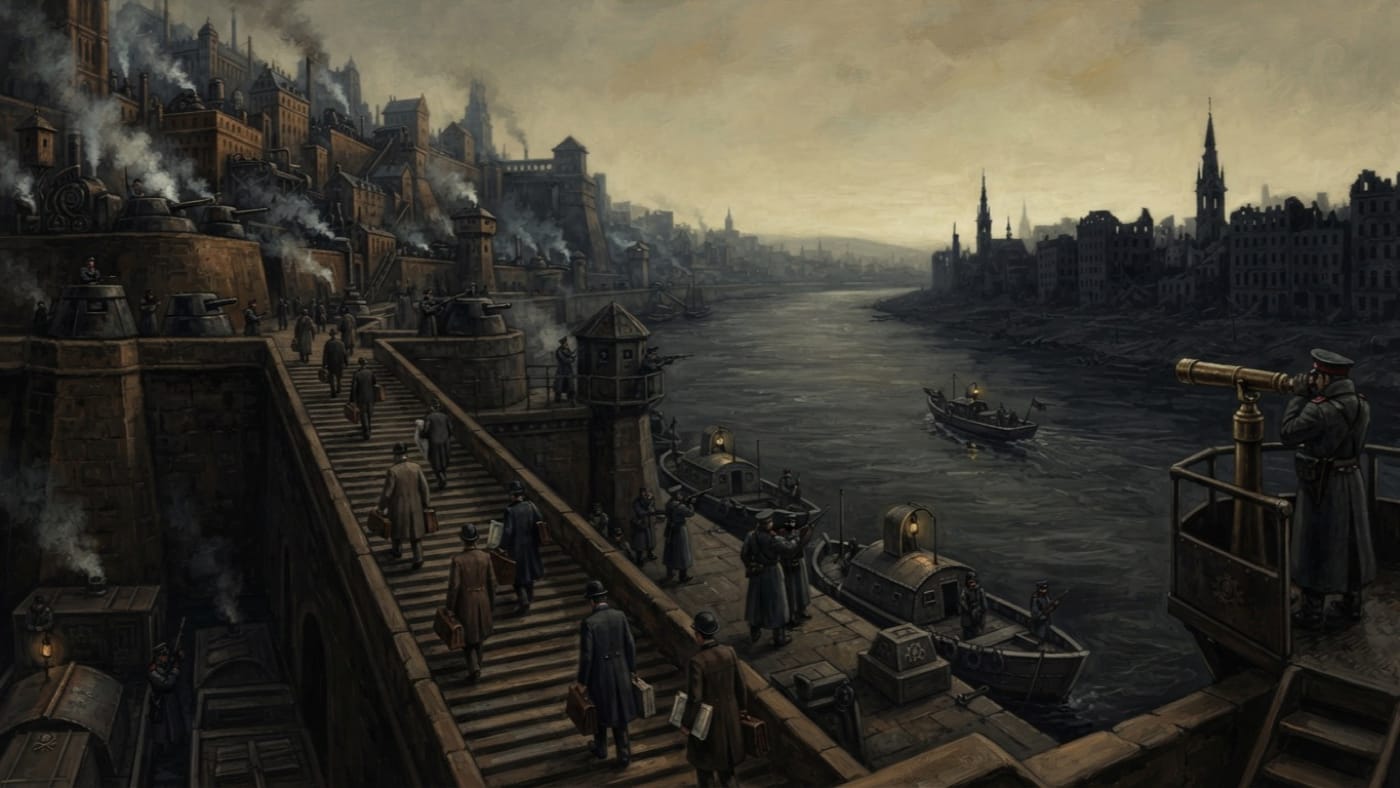
Pastoral Directive 88-E/BUDAPEST
The Church advises the neck; the river keeps its mirror
Pastoral Directive 88-E/BUDAPEST advises Budapest's quay clerks to face west. Pest remains Vacated, and eleven documented crossing attempts make the view a pastoral concern.
Codex Ref. XIII.1.88-201
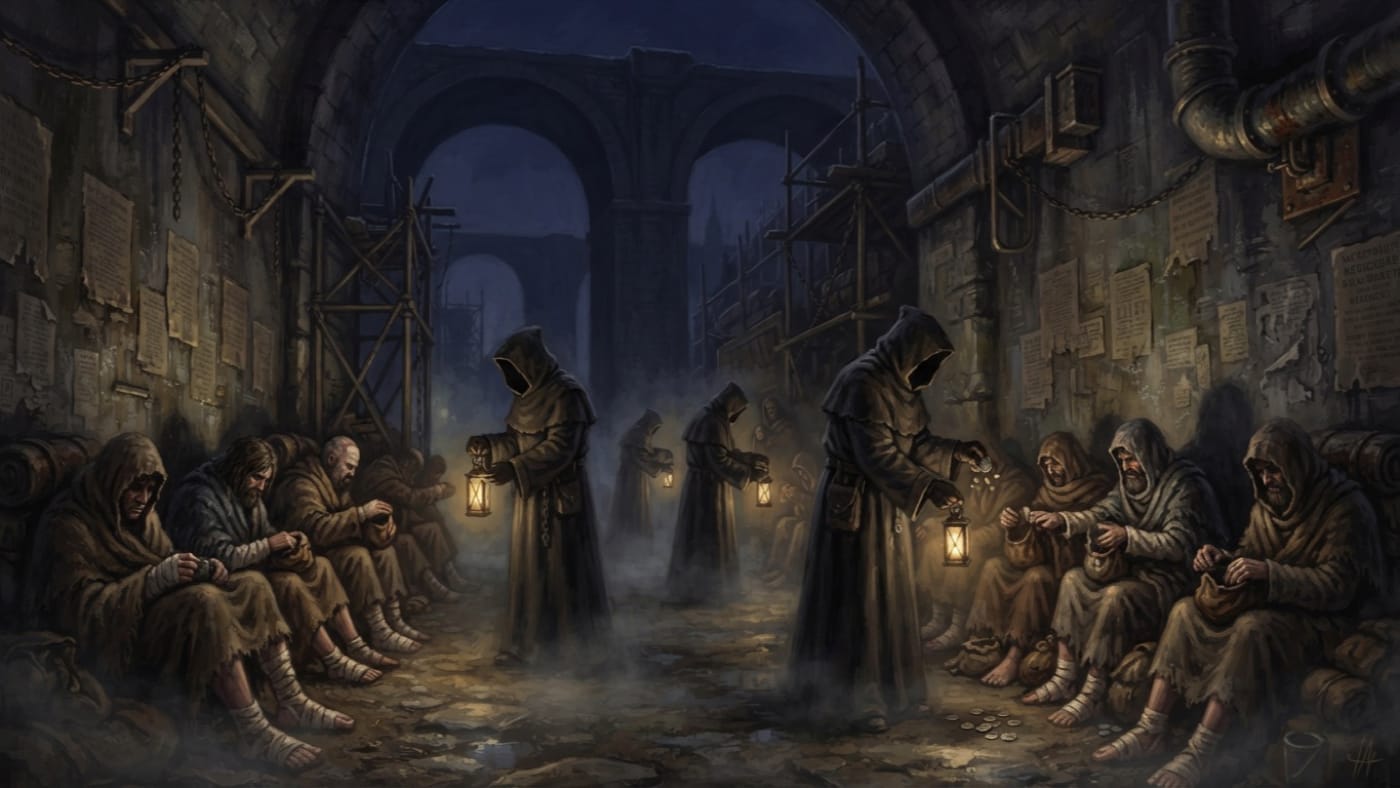
Penny Collectors
The arches close. The collection continues.
At Griefgate, robed Penny Collectors take coin from pilgrims after the arches close. Their brass lanterns are recorded; their authority and accounts are not.
Codex Ref. XII.7.04-001

Pest, Abandoned Bank
The empty city that keeps answering without being called
Pest is the eastern bank of Budapest: declared Vacated in A.S. 120, visible across the Danube, annually confirmed, and inconveniently less empty than doctrine prefers.
Codex Ref. II.4.09-012

Petyr Vann
Attendance: one hundred percent. Enthusiasm: filed separately.
Chorus-Master Eleventh Grade Petyr Vann administered Reims's Feast of Doctrinal Submission in A.S. 198. The Bureau reported full attendance. Enthusiasm was filed separately.
Codex Ref. III.2.01-198
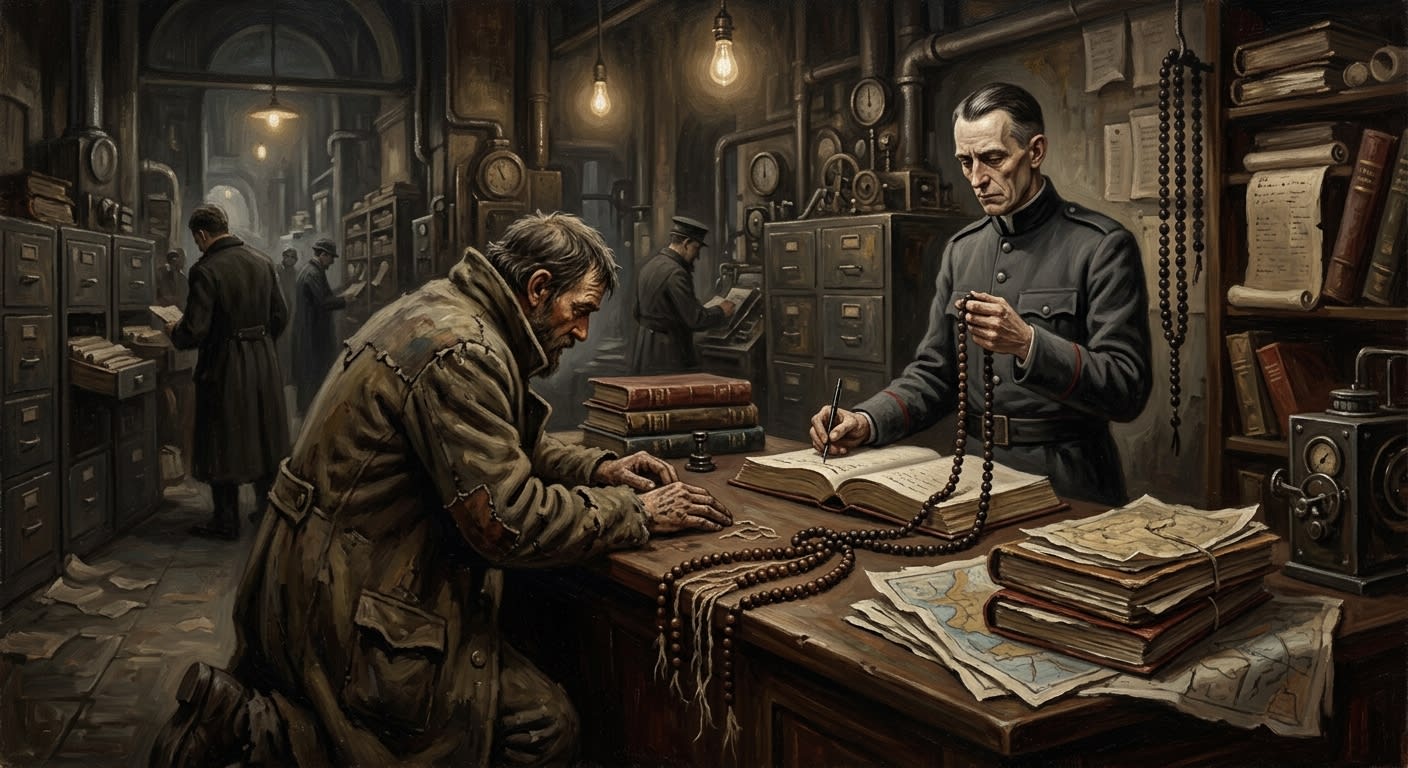
Pilgrim Reconciliation Statutes
Correction is salvation, provided the fee clears
The Pilgrim Reconciliation Statutes made mercy countable: bead strings, route errors, confession addenda, second strings, debt, and sanctioned delay.
Codex Ref. XIII.1.72-097
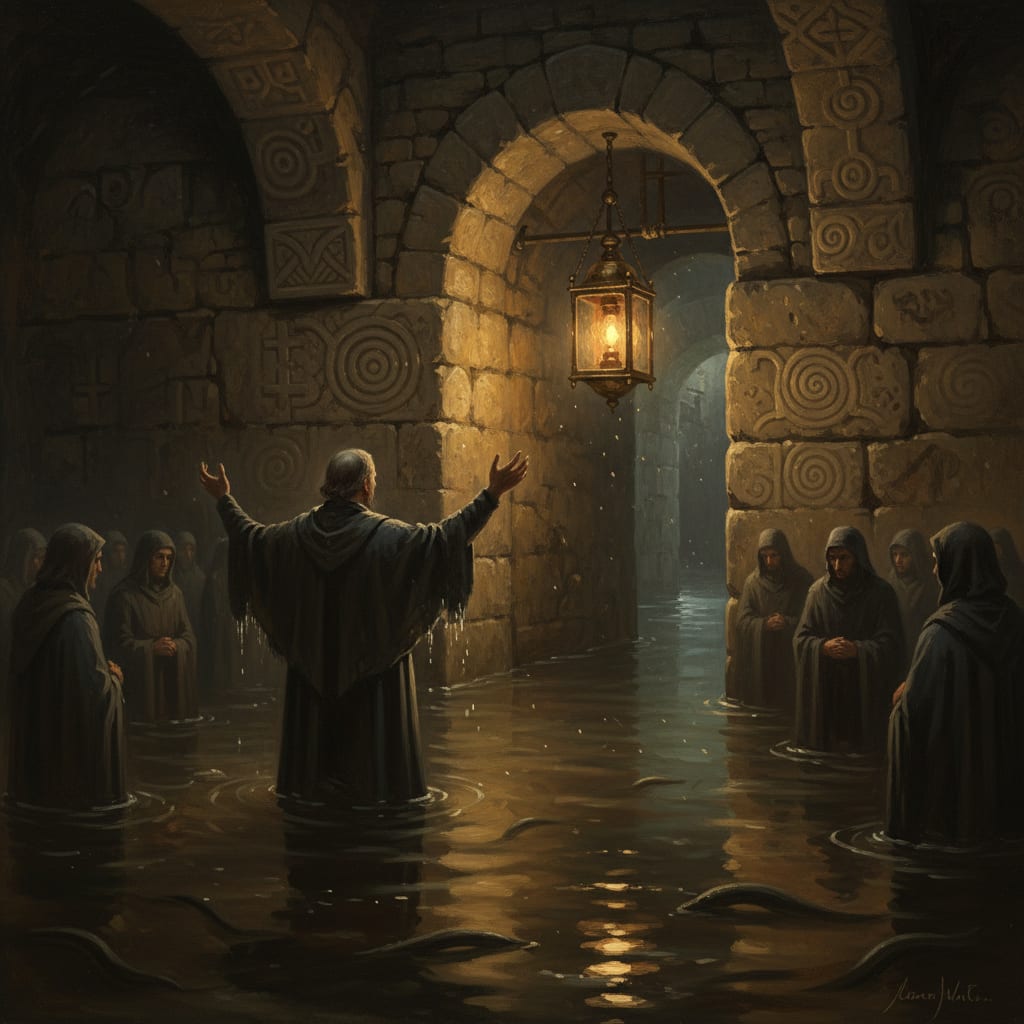
Pontifex Submersis
The name is gone; the chains still hum; the Bureau has no comment
The man the Bureau erased so thoroughly it must write eleven pages explaining what he was not: the Drowned Pontiff of Avignon, non-person, non-event, non-theology. His name is gone. The chains hum in B-flat.
Codex Ref. III.2.02-001

Quai Saint-Lazare
Where holiness queues, fraud pays duty, and Marseille sells the answer twice
Quai Saint-Lazare is Marseille's salt-crusted relic throat, where the Bureau of Relics weighs bones, doubts miracles, prices fraud, and forwards danger under seal.
Codex Ref. II.4.09-017

Record-True Clerks
Every word belongs to the Ledger before the furnace
Unrecognised Trench Court faction that preserves dangerous confessions against furnace doctrine, insisting the Ledger's authority depends on completeness.
Codex Ref. XII.47.02-091

Red Trial of Bastion-Constantinople
The ledgers bled because the tithe was wrong
A.S. 157 southern-anchor trench trial in which Judge Marrowe condemned a company for misfiled tithes and the ledgers bled red ink with the mud.
Codex Ref. VII.8.10-047
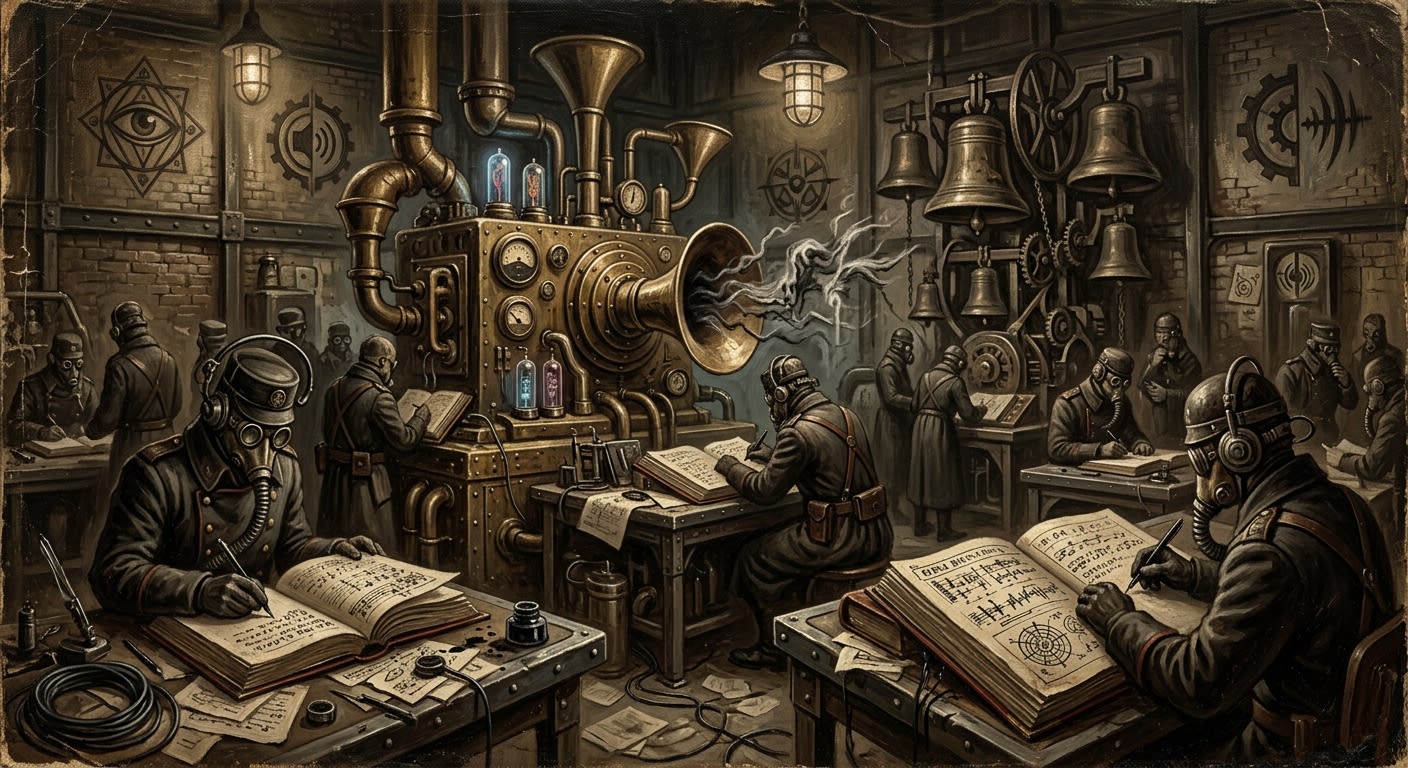
Register of Sounds
Where music is taught to confess before it escapes
Third register of the Index Damnatus, cataloguing forbidden tones, cadences, bellfalls, breath patterns, and the treasons ink can carry from one skull to another.
Codex Ref. XIII.1.46-001

Sacred Ledger
The Synod's memory, sharpened until grief signs the receipt
The Sacred Ledger is the Synod's authorised memory: fact cooked into Doctrine, grief made grammatical, contradiction kept on a leash.
Codex Ref. XIII.1.32-090

Saint Margaux of the First Blood
Distinguishing features: none — which was precisely why she worked
She was old and small and grey and holding a book, and she died on her knees, and the Bureau wrote upon her blank page the most useful saint in the Theocracy's arsenal.
Codex Ref. III.2.01-002
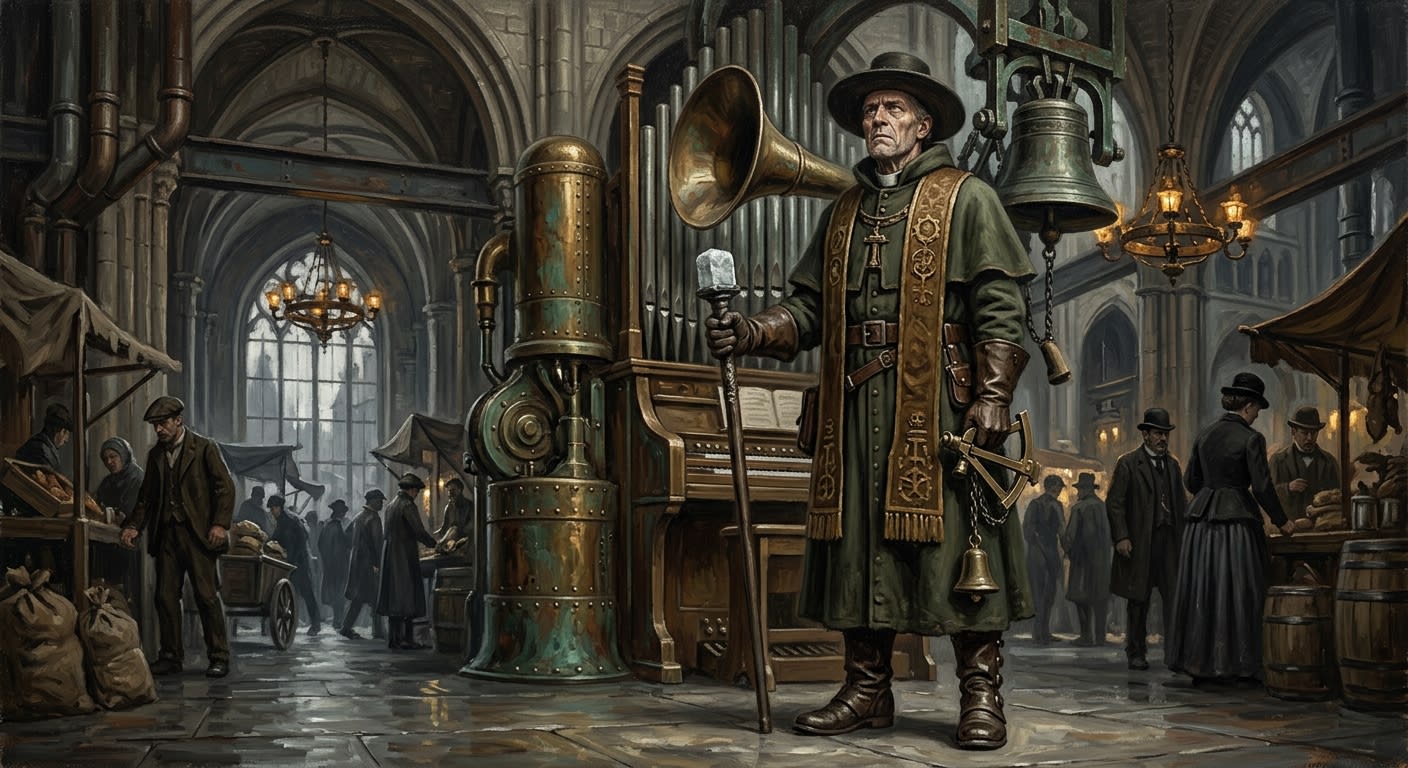
Saint Rupert
Salt in the wound, bronze in the tower, order in the market
Saint Rupert, Vienna’s salt-saint, preserves meat, measure, bells, markets, and civic memory: the patron whose bronze throat answered when men forgot to kneel.
Codex Ref. III.2.01-095

Saint Vellum the Silent
A patron saint whose relic is procedure
Occupational patron of Erasure Notaries, Strike Scribes, Nullity Clerks, and Lineage Severers; a saint of washed hands, black seals, and names made quiet.
Codex Ref. III.2.01-113

Saint Vellum-of-Breath
Close what must close
Occupational patron of Purity Fume-Inspectors, administratively devotional and publicly impossible, whose sealed nostril-ring teaches selective detection where total truth would freeze a district.
Codex Ref. III.2.01-137

Saint Ysolt of the Scales
Patroness of pity weighed until it becomes collection
Ratified patron of Tithe Assessors and arrears clerks, Saint Ysolt gives extraction a kindly face, a brass scale, and a grain that never falls.
Codex Ref. III.2.01-146
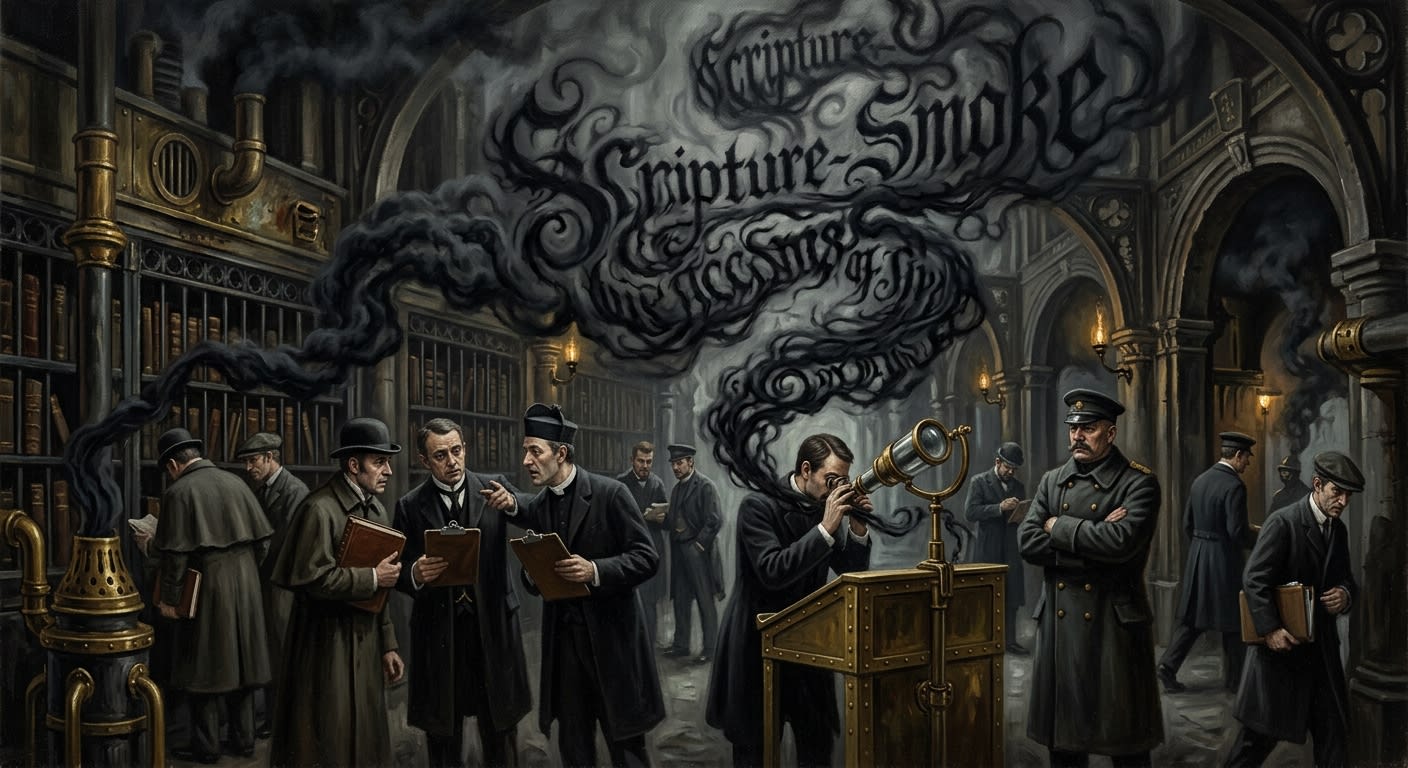
Scripture-Smoke
The vapour is not prophecy; it merely has the insolence to be legible
Scripture-Smoke is black-diesel vapour that writes back, which is precisely why the Bureau forbids reading it before reading it first.
Codex Ref. XIII.1.90-136

Sealwright-Master Joryn Malk
The Gun and the Confessional Sit Downstream of the Vat
Joryn Malk supplies the wax that lets Bastion-Przemyśl recognize a life. The die is missing, the investigation is open, and the Sealwright-Master continues to smile.
Codex Ref. III.2.01-201
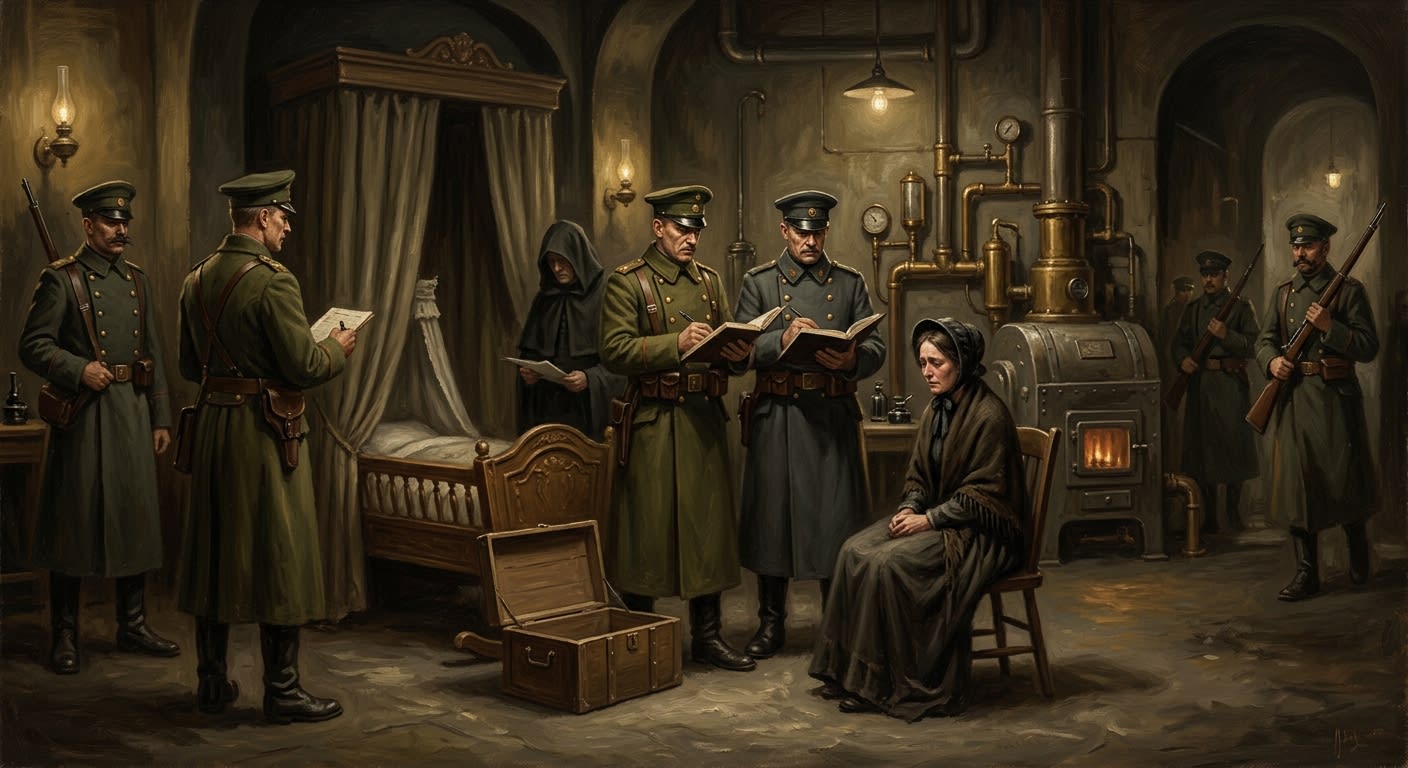
Standing Order 34-PK
The cradle confesses when the Ledger is hungry
Standing Order 34-PK makes the hidden cradle confess: missing infants become stolen soldiers, and a mother’s silence becomes evidence.
Codex Ref. XIII.1.34-158

Stitch-Score Couriers
Where paper burns, the hem remembers the tune
Mid-rank melody-smuggling couriers who hide forbidden middle bars in cuffs, hems, vestments, infant bands, and every domestic cloth authority mistakes for harmless labor.
Codex Ref. XII.48.02-001

Sub-Archon Provisional Yvette Langres
The woman in the wine cellar who can tell you whether your city exists
Yvette Langres administers three hundred million addresses from a damp Strasbourg cellar; provisional since A.S. 194, indispensable since the first corrected line.
Codex Ref. III.2.01-013

Surveyor First-Class Edda Grieve
The order survived. The rest of the file is closed.
In A.S. 73, Edda Grieve recorded Reath's last order and returned with thirteen others. Her later Cologne posting is undated; her age and present status remain unverified. The Ledger preserves what the file permits.
Codex Ref. III.2.01-964
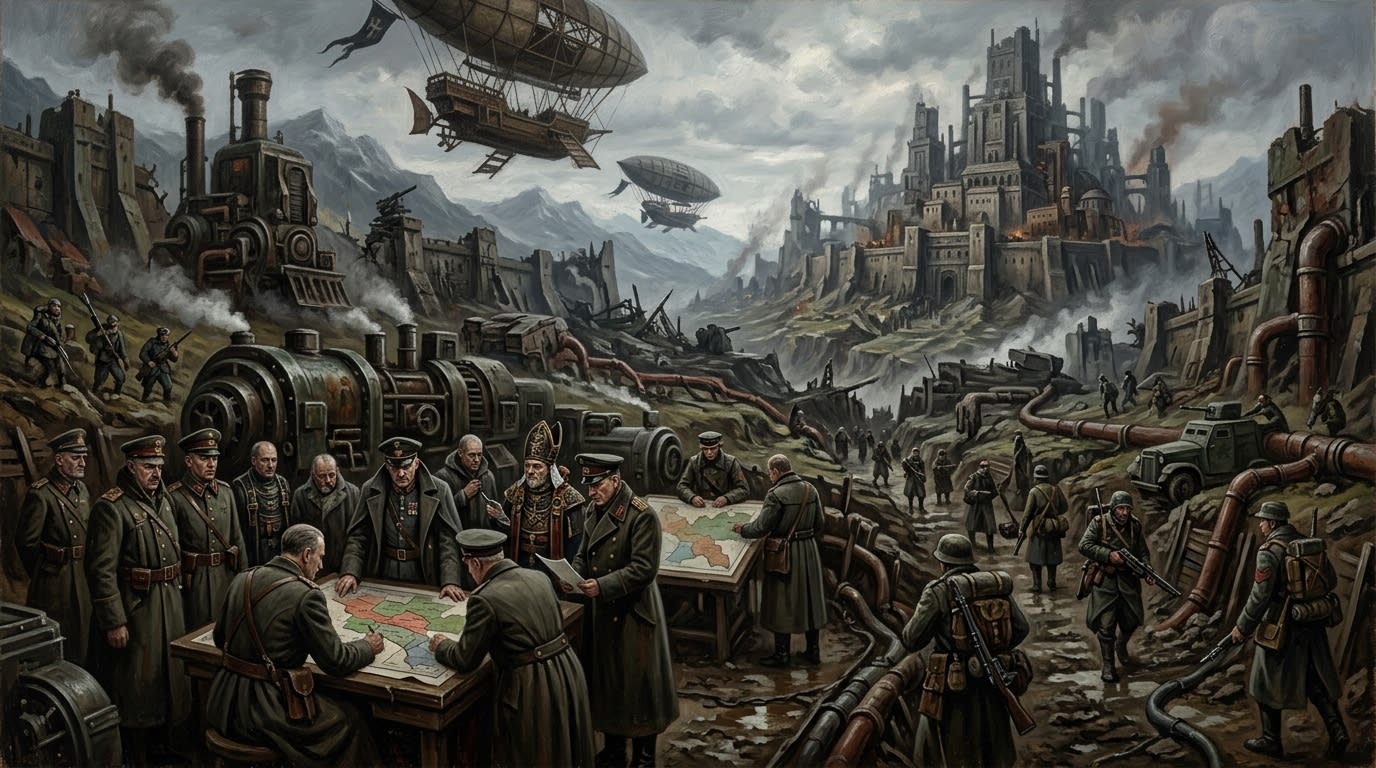
The Balkans
The wound that taught Europe to count its bleeding
The Balkan wound-region, broken first by the Eastern Silence and the Sundering, then divided into Synod margins, contested corridors, Sin-General dominions.
Codex Ref. II.6.05-045

The Bead Vault
Where prayer beads learn to testify against the living
The Bead Vault is the Cloister's cold evidence room, where confiscated pilgrim strings are weighed, sleeved, locked, and sometimes found counting back.
Codex Ref. II.3.06-003
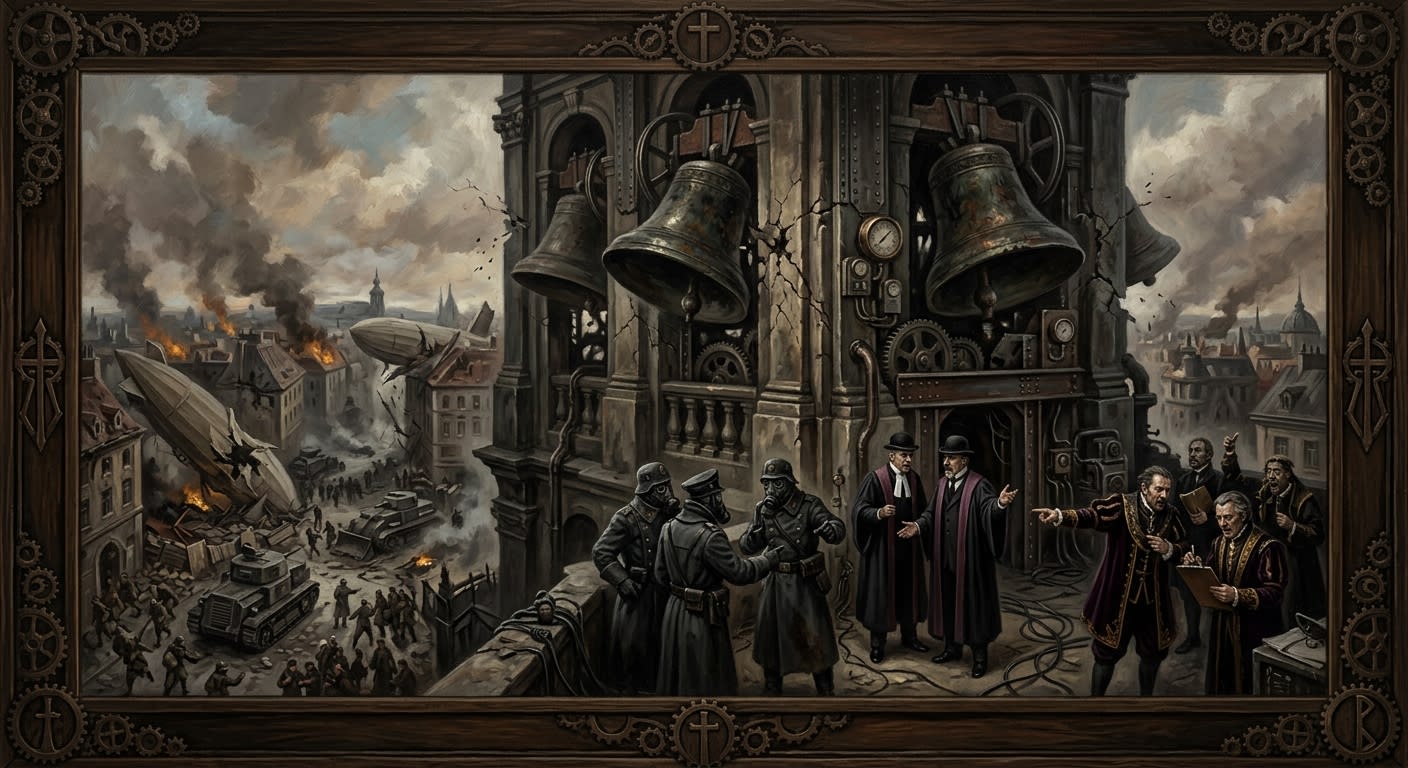
The Bells of Saint Rupert
Bronze sang; committees have been recovering ever since
At Vienna in A.S. 95, the unroped bells of Saint Rupert rang without permission, broke a siege, and left three Bureaus arguing with bronze.
Codex Ref. III.2.04-018

The Blank-Sheet Circle
A heresy that fits on a single sheet; the sheet is blank
A proscribed organisation operating from the Pylon Warrens of Bastion-Brest; manufactures blank crossing papers permitting nameless transit across the bridge; the Bridge Tribunal has made nineteen arrests; this has not helped.
Codex Ref. XI.5.01-001
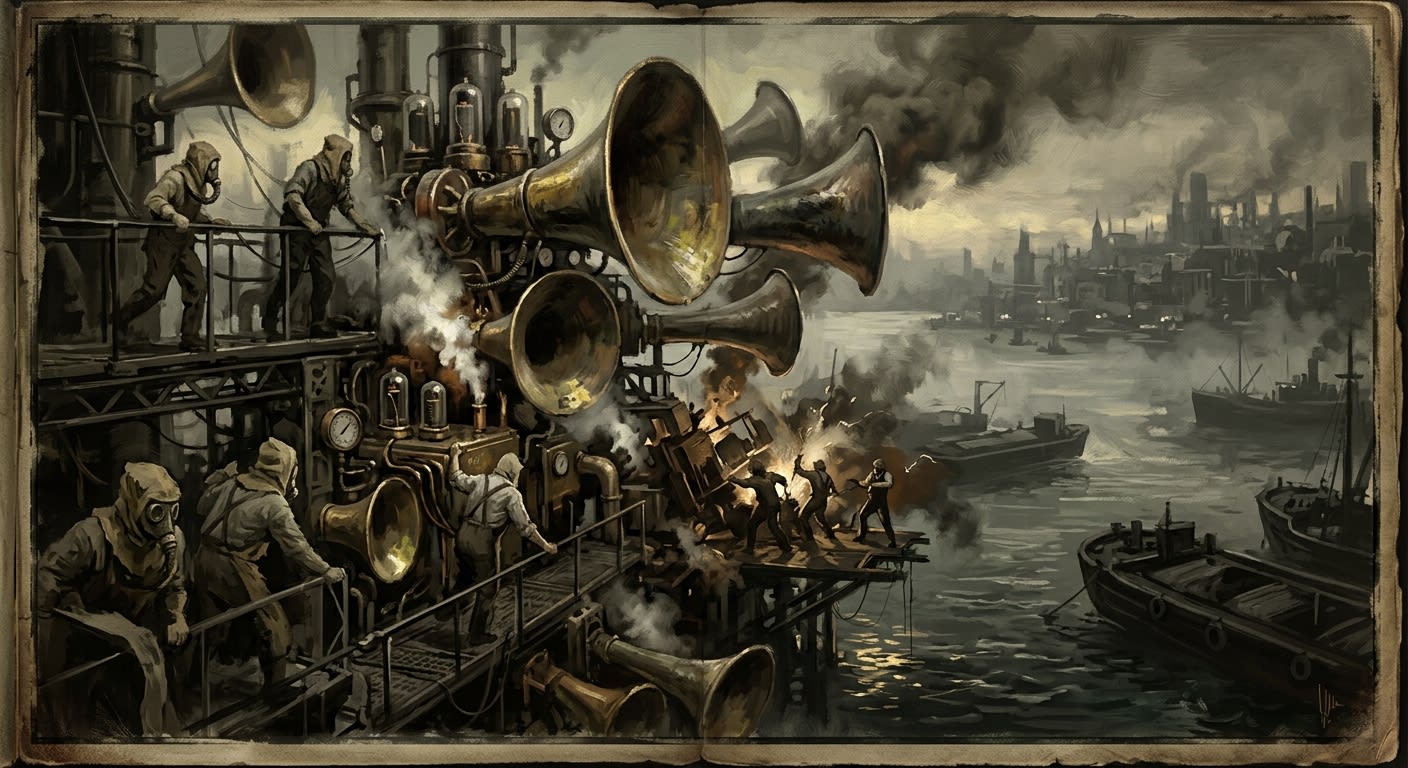
The Broadcast
Eleven minutes, forty-three seconds, and one name the Ledger would not keep still
On 3rd Argent, A.S. 199, Saint Barachiel's Sermon-horns carried an unauthorised apology across the Bosphorus. The machinery survived. The record did not.
Codex Ref. VII.4.09-001

The Burden Index
The number rises; the bread shrinks
The Burden Index is the Bureau of Tithes household score that turns hunger, obedience, arrears, and suspicion into one billable number.
Codex Ref. XIII.1.84-157

The Bureau of Heraldry
The grammar of loyalty, measured in ink and iron
The Bureau of Heraldry controls what the Synod is permitted to look like. Every crest is a sentence. Every unregistered symbol is a rebellion not yet named.
Codex Ref. VIII.1.03-001
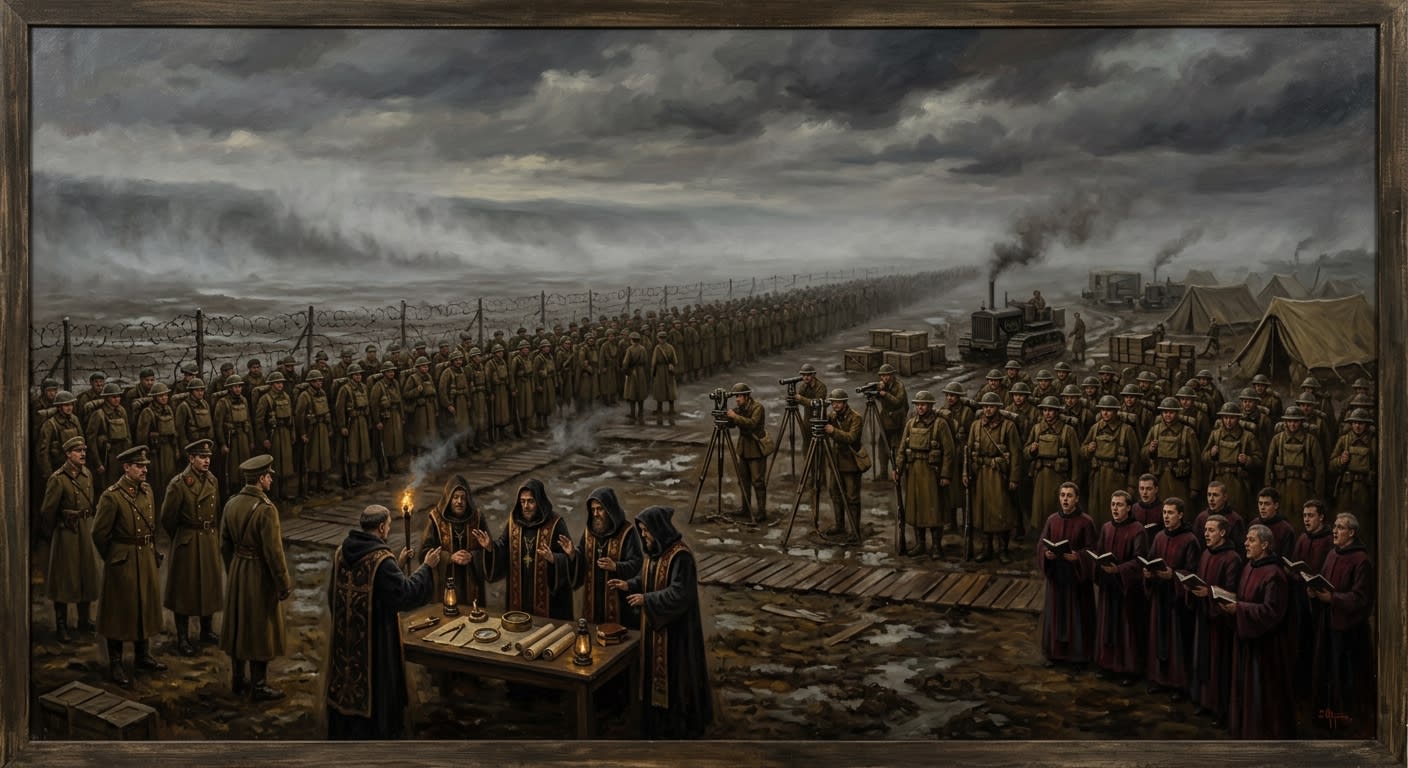
The Cartographic Expedition of A.S. 73
Three hundred men went to draw a map. The map drew them instead.
In A.S. 73, three hundred men entered the Charnel Lands to draw a map. Fourteen returned, and on every folio they carried — drawn in charcoal, ink, graphite, and in one case blood — the same face. Commission 73-C is closed. Its lesson is not.
Codex Ref. VII.1.01-001
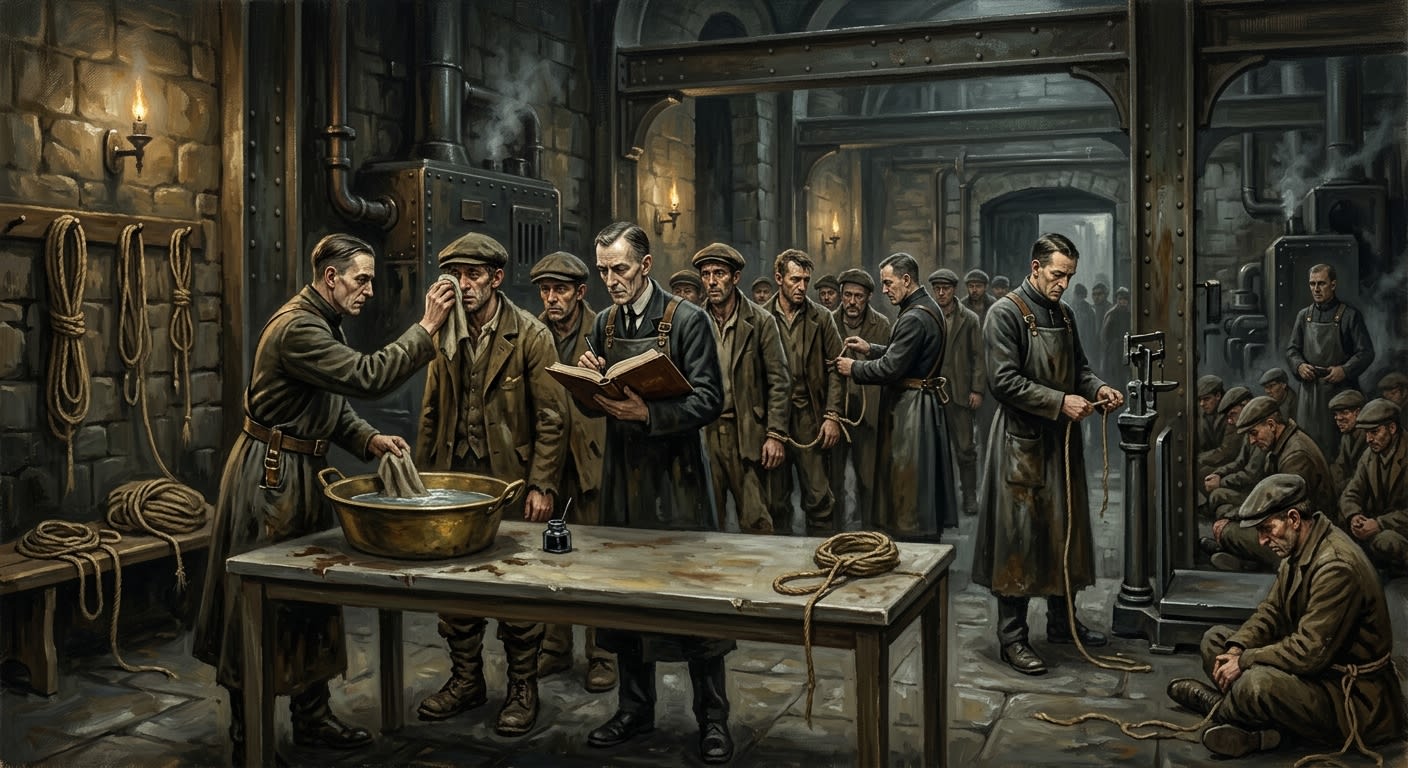
The Chapel of the Second String
Where correction kneels until origin learns its place
The Chapel of the Second String reconciles miscounted pilgrims with cheap cord, cold stone, silence tests, basin water, and the doctrine that correction outranks origin.
Codex Ref. II.3.06-006
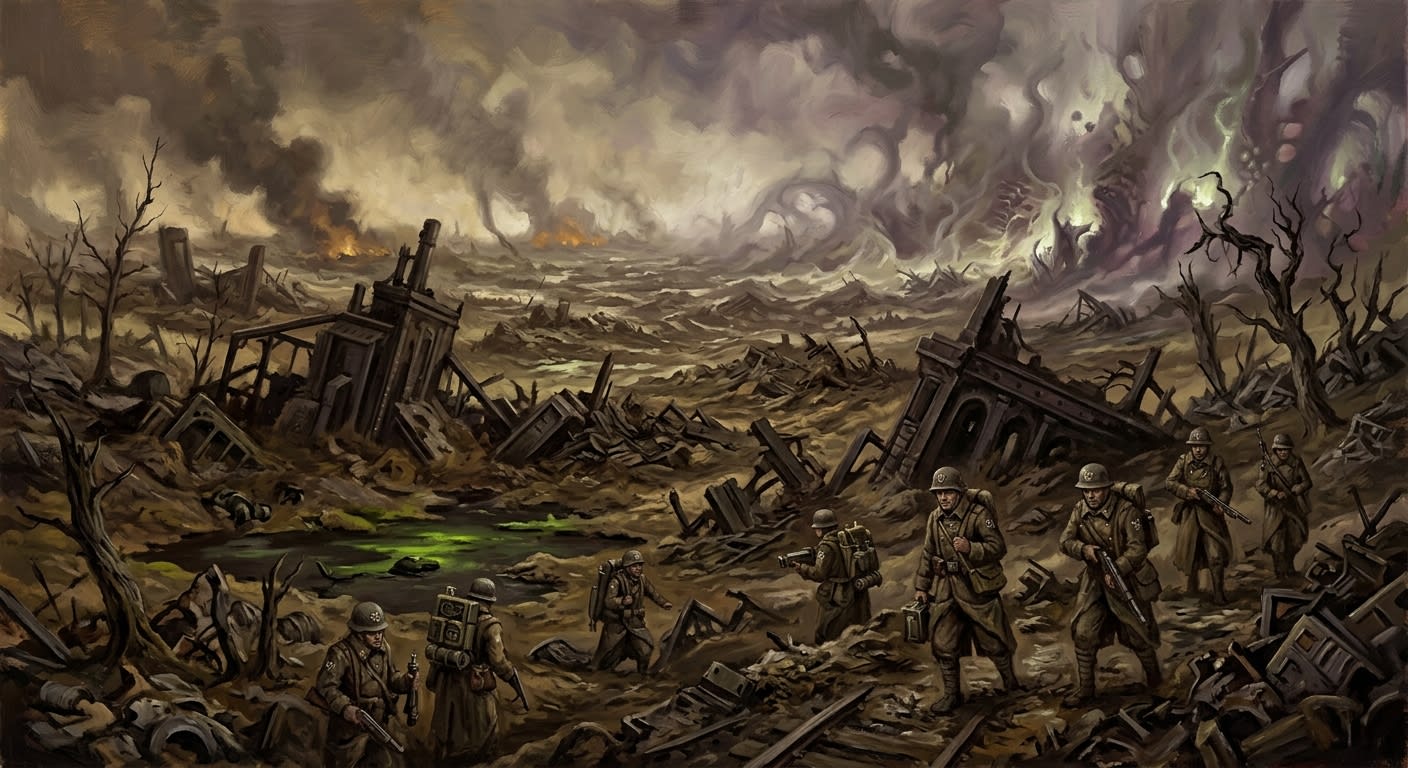
The Charnel Lands
The East keeps our failures alive in hostile weather
Zone 6 is the Synod's polite name for the Charnel Lands: the demonic East where appetite has borders, maps fail, and names come home missing.
Codex Ref. II.6.06-001
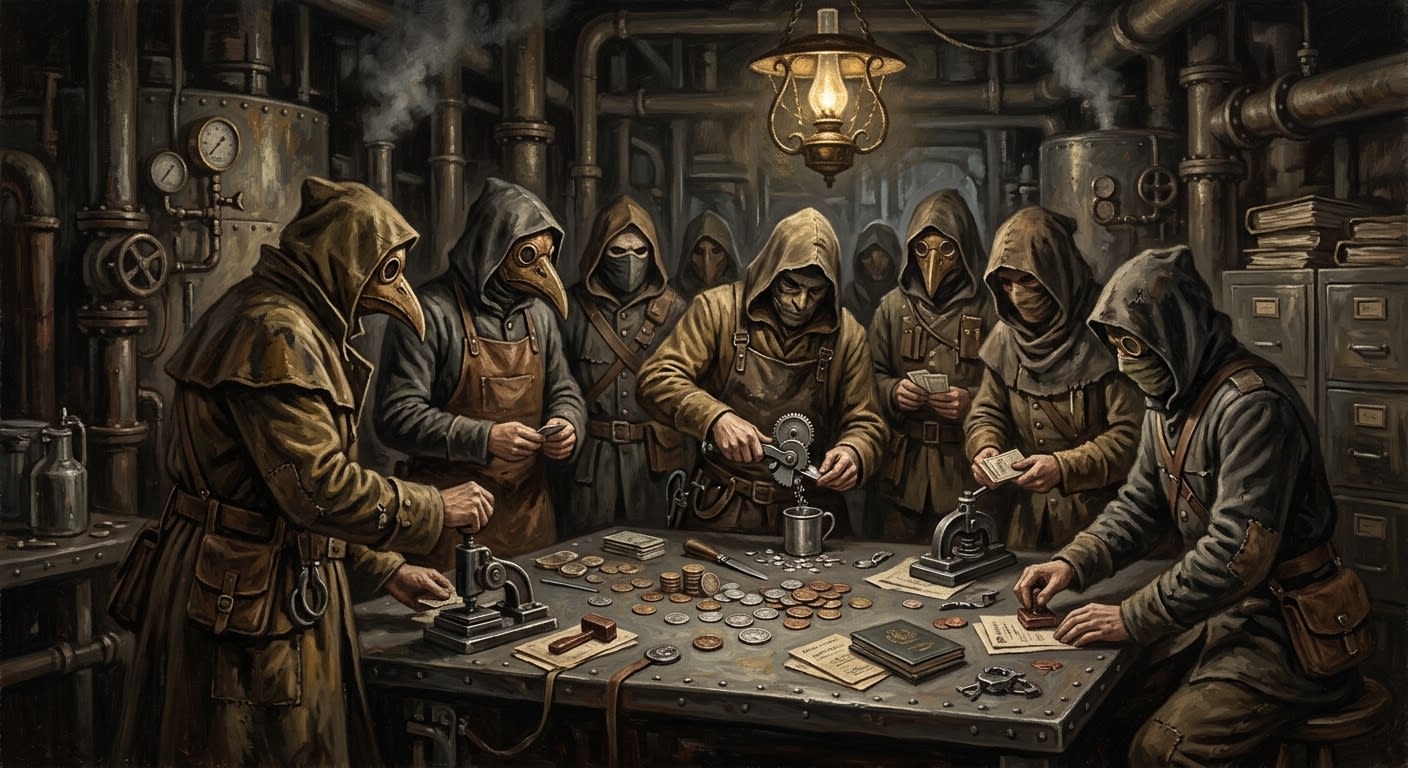
The Clipped Choir
The counter-mint beneath Sable Court’s lawful face
Beneath Sable Court’s lawful face, the Clipped Choir clips coin, rents recognition, and proves that even identity has a discount stall.
Codex Ref. XI.7.02-004
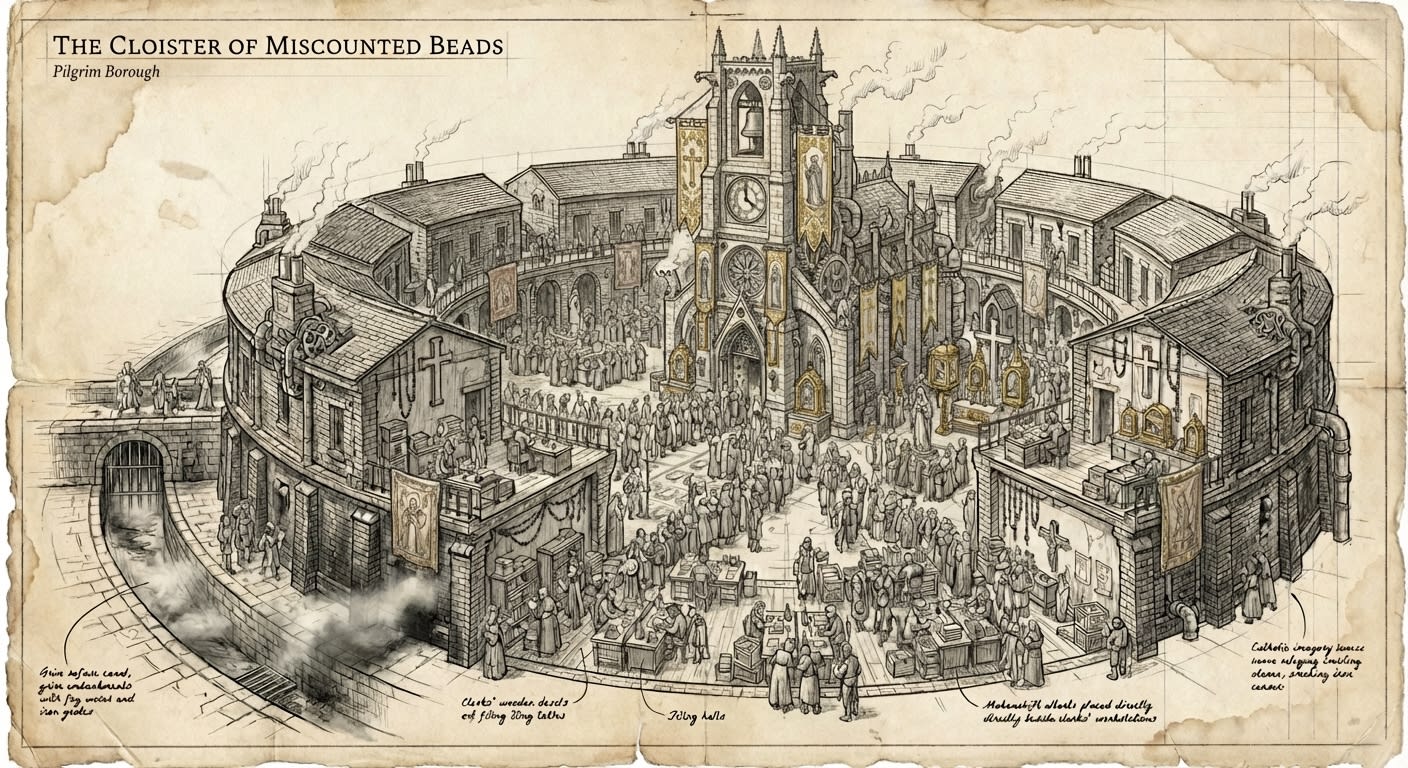
The Cloister of Miscounted Beads
The Bureau does not distinguish between mercy and procedure. Both produce the same paperwork.
Strasbourg's pilgrim processing facility, where six thousand souls await bead reconciliation, the dead reappear on intake rosters, and the Bureau of Records declines to call any of it a problem.
Codex Ref. II.2.06-001
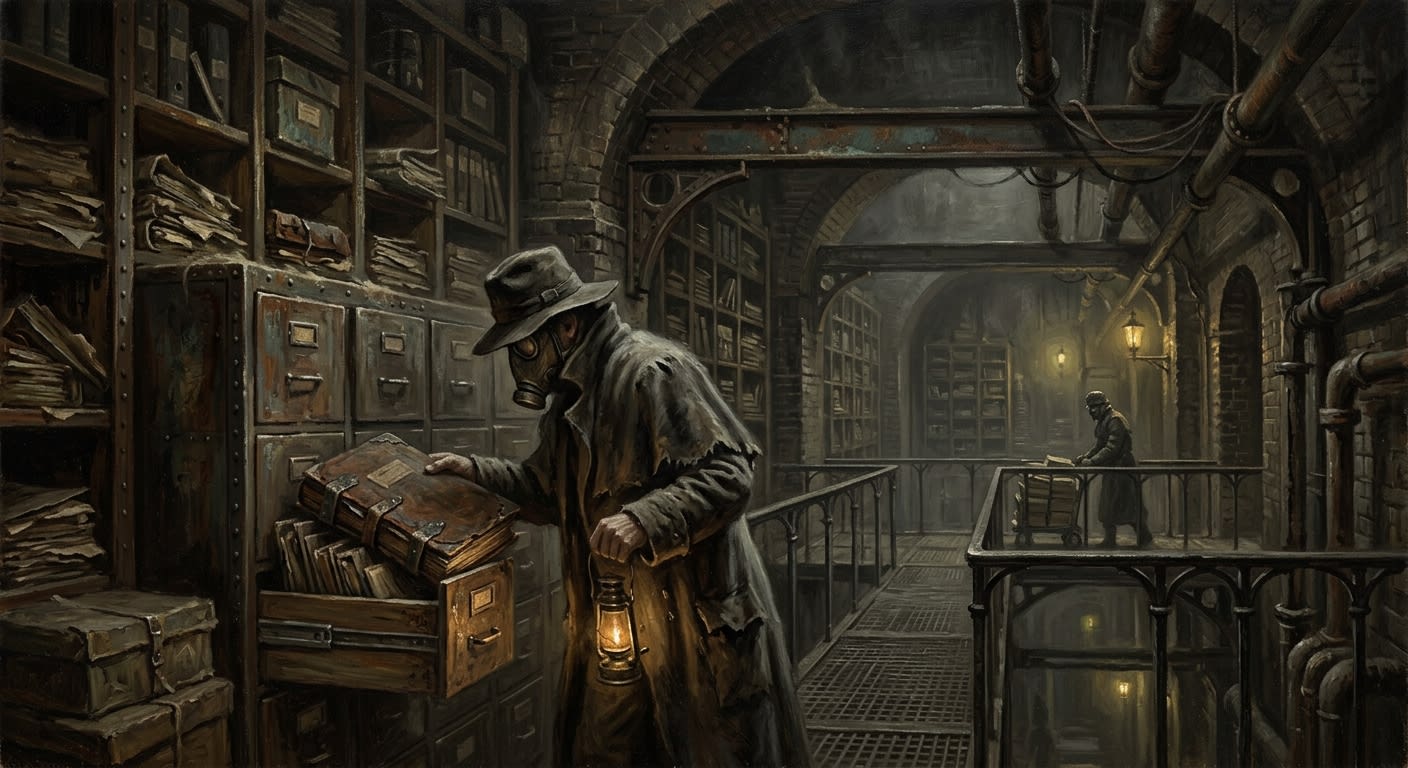
The Codices Obscurae
The books that do not exist have excellent indexing
The Codices Obscurae are denied by every Bureau that matters, which is precisely how a careful reader knows where the bodies are indexed.
Codex Ref. XIII.1.06-001
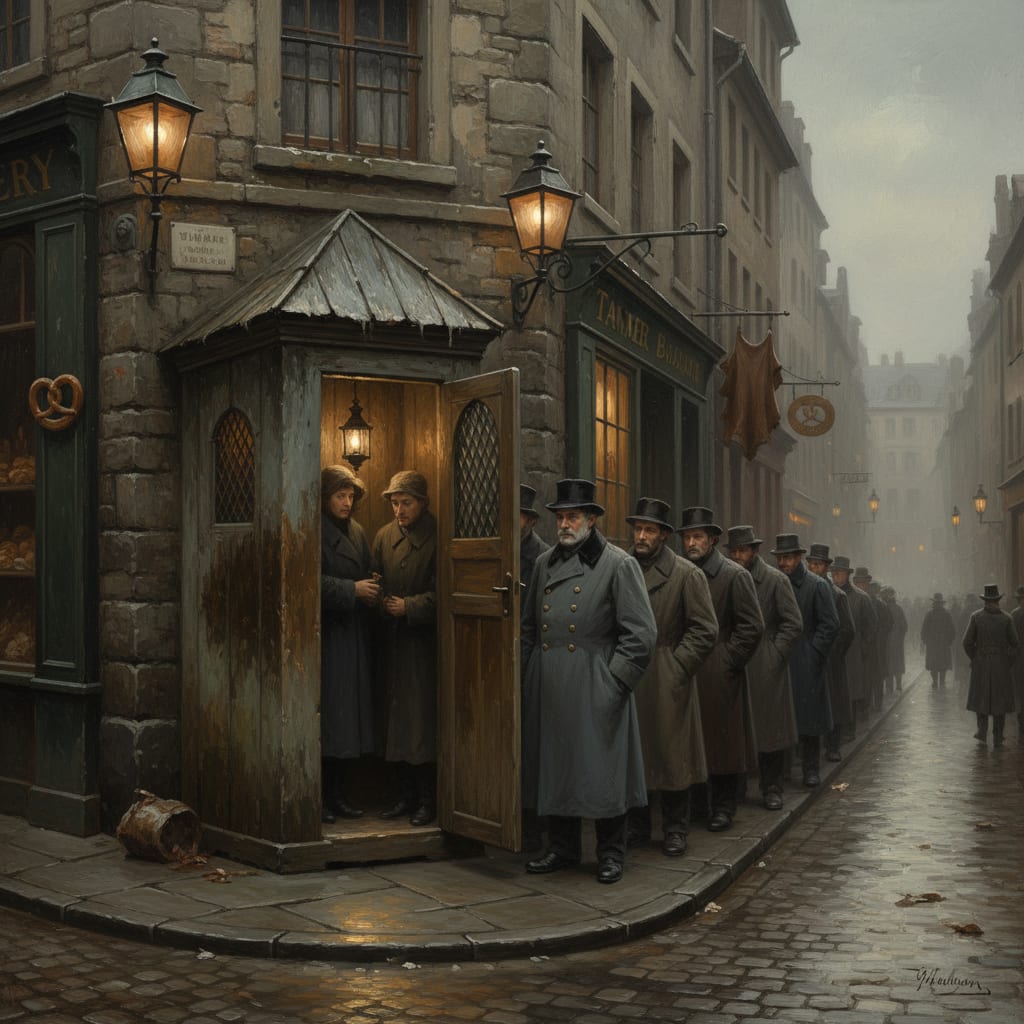
The Confessor-Booth Clerk
The booth does not forgive — but it files. A survey of the twenty-two thousand stamps that keep the Synod clean.
Twenty-two thousand booths; one stamp; no absolution. The Confessor-Booth Clerk processes sin as throughput, files guilt as data, and keeps the Synod's spiritual economy solvent — a contemporary survey by Hieromnemon Valerius Drax, A.S. 201.
Codex Ref. XII.9.01-001
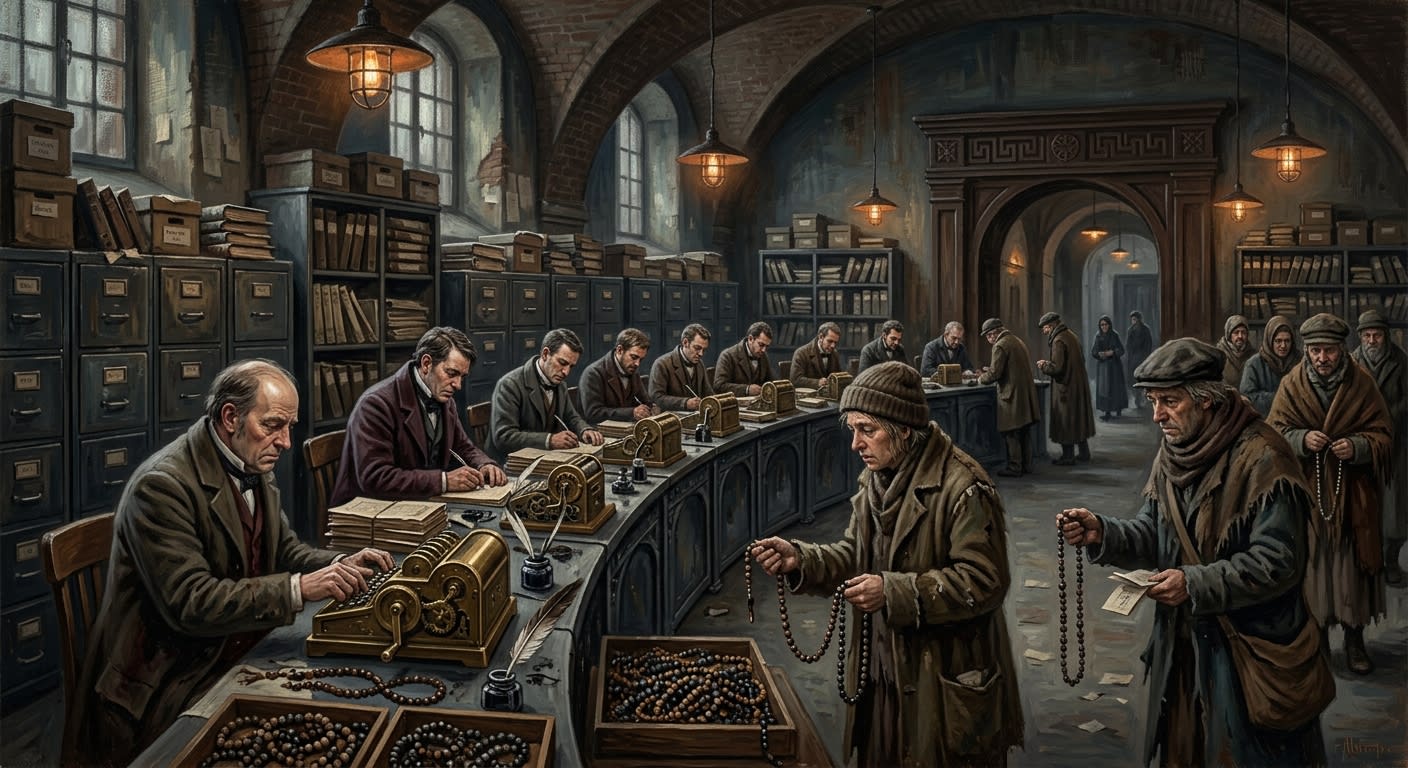
The Counting Hall
Where a bead becomes evidence and salvation waits its turn
The Counting Hall of the Cloister of Miscounted Beads is the Clickery: twelve desks where pilgrims, bead strings, debts, deaths, and names are reconciled into obedience.
Codex Ref. II.3.06-001

The Crownwright Diehouses of Sable Court
In Sable Court, identity is currency — and the Synod strikes every coin
The restricted mint-quarter of Cologne where the Synod strikes every face into coin and every coin into law. Where identity is minted, recalled, and—when the Bureau requires—unfaced. A.S. 201: the Face Theft crisis continues and the master die may be real.
Codex Ref. II.2.07-001
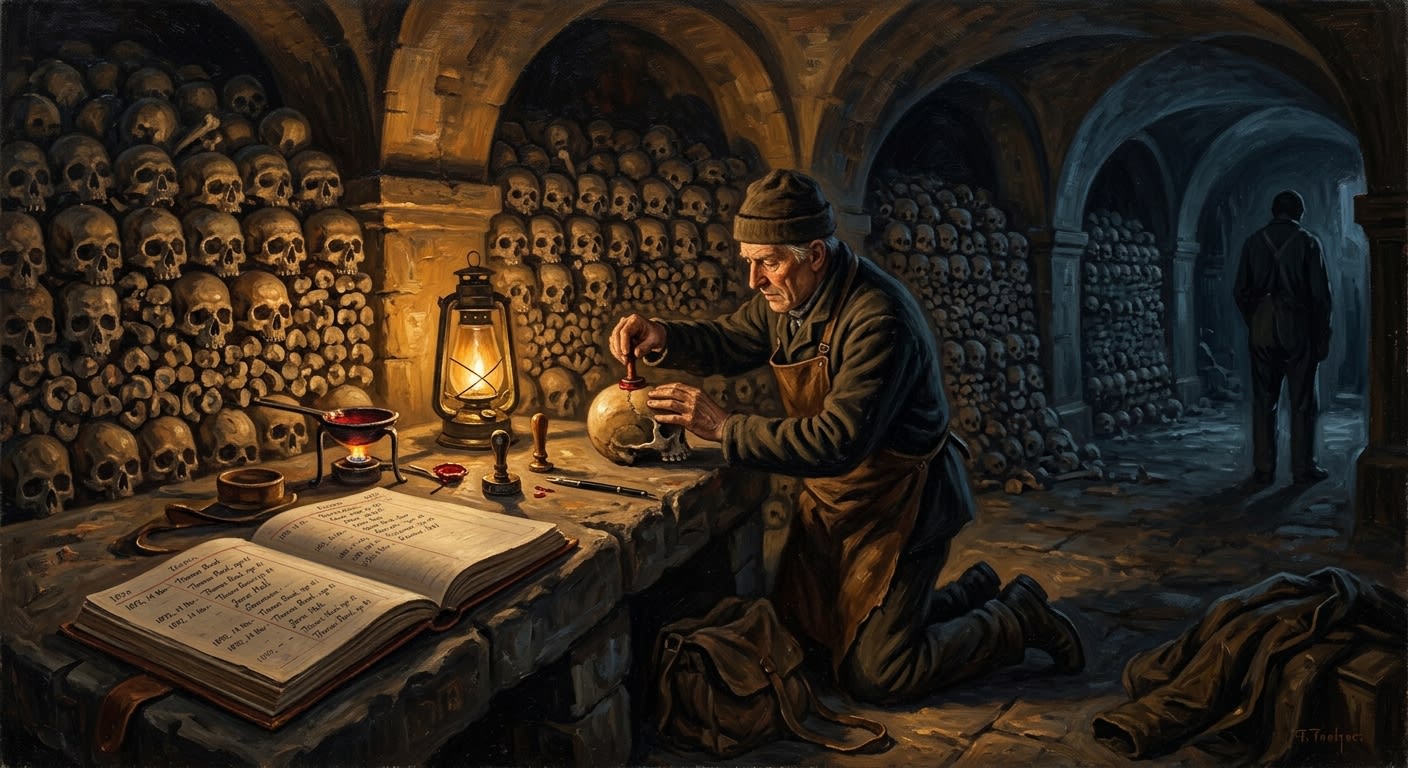
The Dead
What the filing system remembers, and what the Bureau has declined to ask
The Bureau maintains death is a clerical event. The dead, by the Bureau's own monitoring, appear to disagree. Drax files the discrepancy.
Codex Ref. VI.2.01-001

The Doctrine of Enough
The crust is counted because the soul is counted first
The Doctrine of Enough teaches the hungry that what is sealed is sufficient, and that desire beyond allocation gives Kargath a mouth.
Codex Ref. VI.3.01-002

The Femur-War Broker
The unofficial routing service that keeps authenticated contradictions from becoming authenticated riots
The officially nonexistent profession that routes authenticated relic contradictions without collision — the Femur Principle's logical consequence, managed for a fee by two hundred brokers the Bureau insists do not exist.
Codex Ref. XII.15.01-001
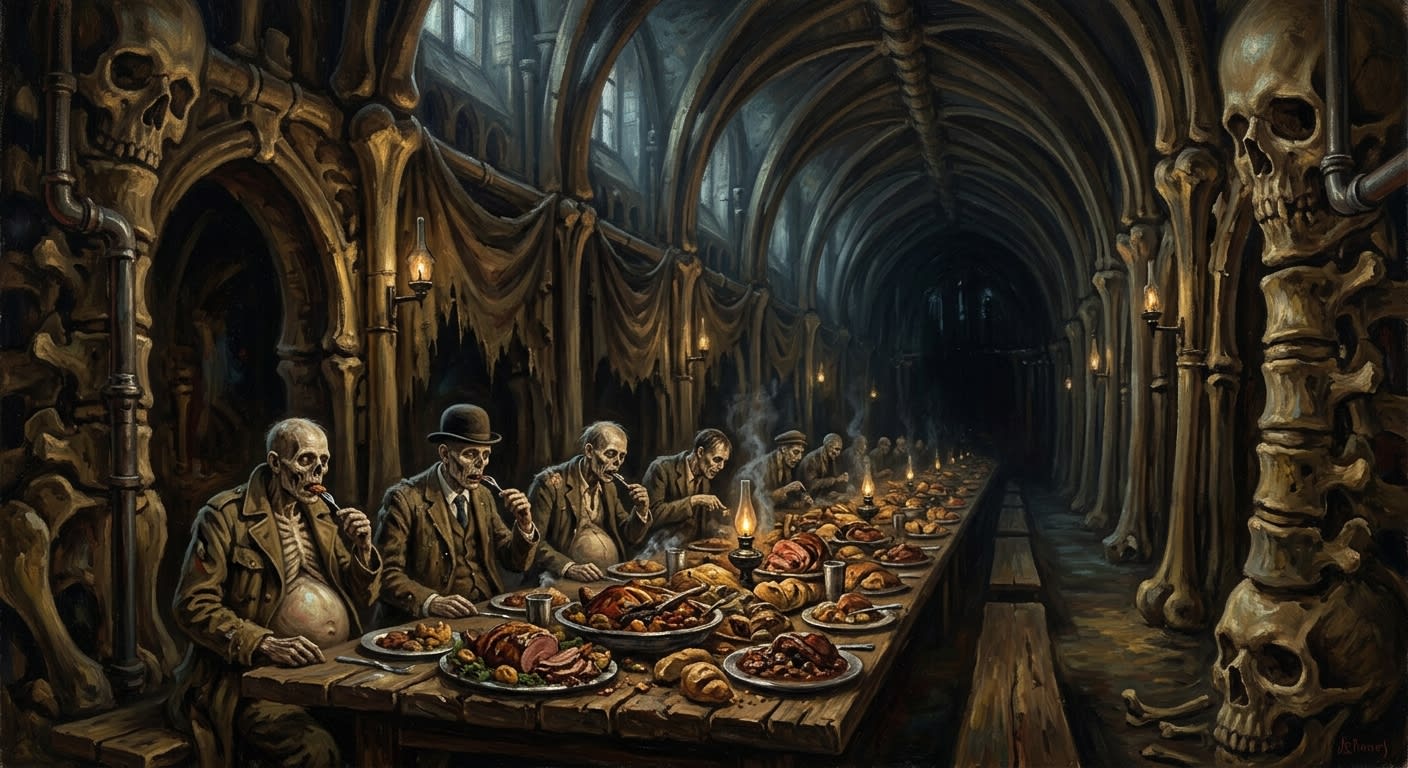
The Hollow Court
Nine miles of table. Every seat occupied. The host is always hungry.
The seat of the Sin-General of Gluttony, confirmed four times, located forty leagues east-south-east of Debrecen. Its feast has not ended. Its guests have not left. Its table runs nine miles. The Bureau of War has declined to act on this information three times.
Codex Ref. V.6.01-004

The Judges
They walk without letter, without herald, and without the patience of the Bureau.
The Judges arrive without letter, try without jury, and depart without filing. The Bureau denies they exist. It has been denying this since A.S. 92. The denial requires renewal every thirty years, which is itself a kind of evidence.
Codex Ref. V.1.01-003
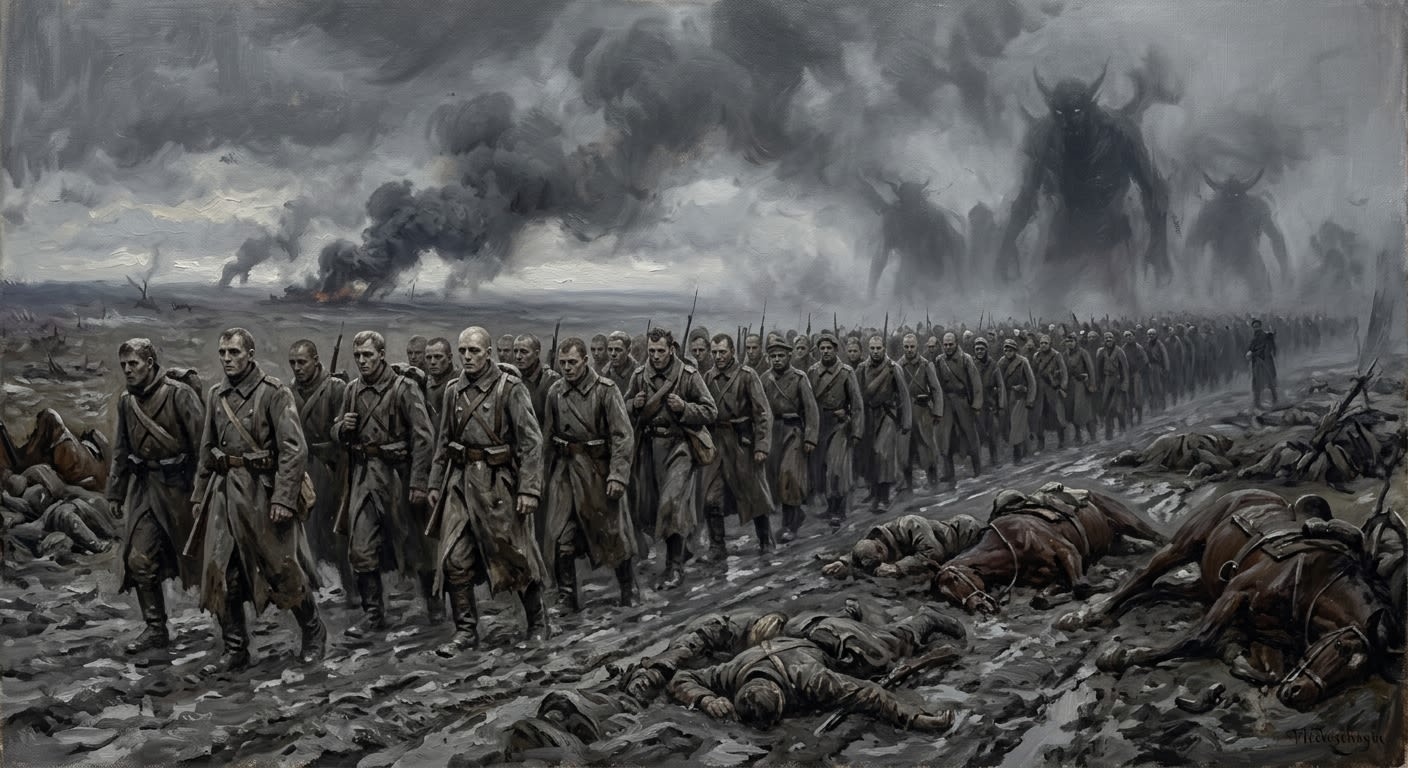
The Legions of Sin
Forty-seven souls for every demon — and the Bureau calls this mathematics
The mortal host beneath the Lie's banners: Thralls, Hollowed, Ash-Mothers, Blood-Tithes, Wormhosts, Processional Slaves, Ash-Fodder. Forty-seven souls for every demon. The Bureau calls this mathematics. I call it a confession.
Codex Ref. IX.1.01-001

The Master Die
Four denials, one reported cylinder, no established custodian
A steel cylinder reportedly capable of striking coins that loosen identity and unsettle the Face Registry. Four Mint-Chapter denials are on file; the instrument remains unverified.
Codex Ref. V.2.03-001
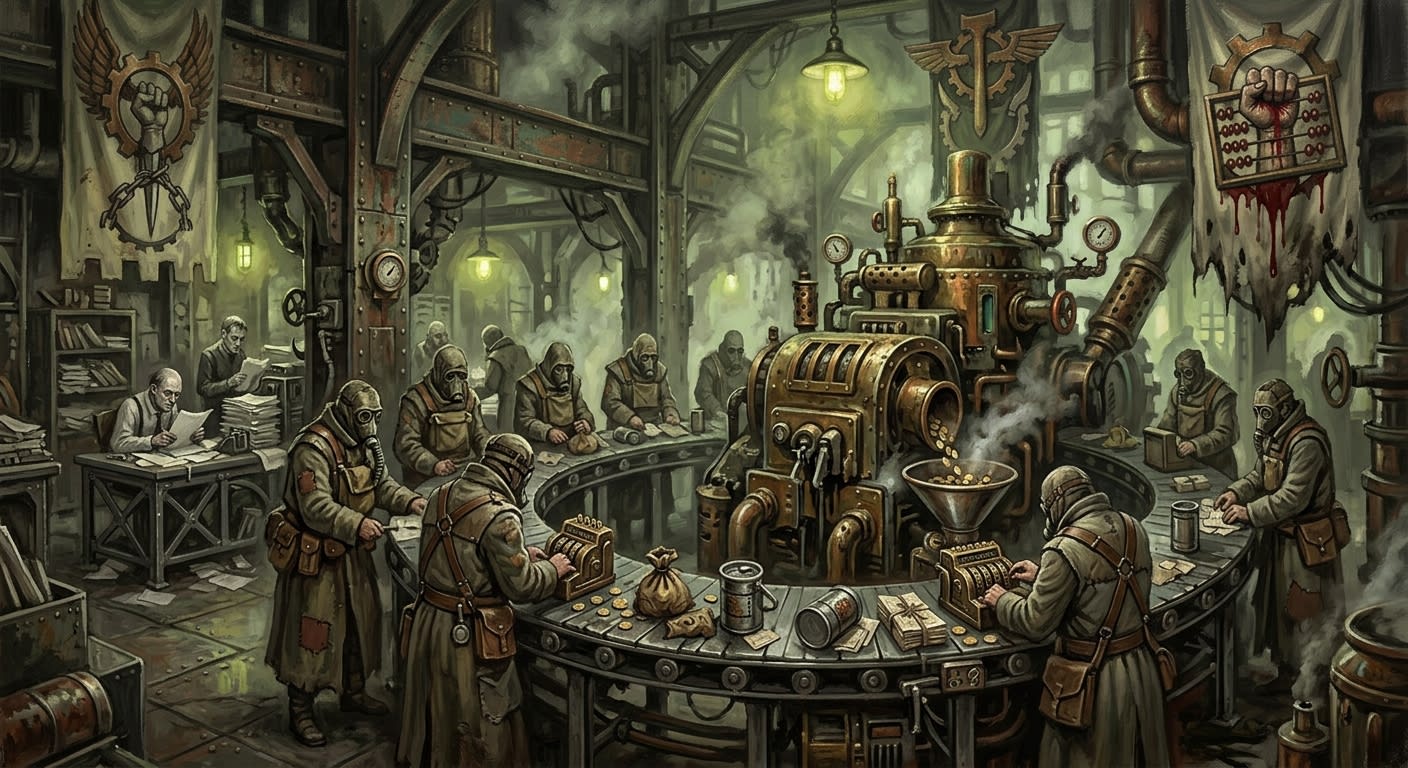
The Meta-Levy
The tax that charges for the privilege of being counted
The Meta-Levy is the Synod's tithe upon tithes, a circular sanctification of collection costs by which the Bureau of Tithes proves that even arithmetic kneels.
Codex Ref. XIII.1.38-001

The Natal Registration Act
The statute that put a clock beside the cradle
The Natal Registration Act of A.S. 158 made birth a Records event: forty-eight hours from first breath, Form 7-NR, midwife filing, tithe projection, and the cradle docketed.
Codex Ref. XIII.1.02-158
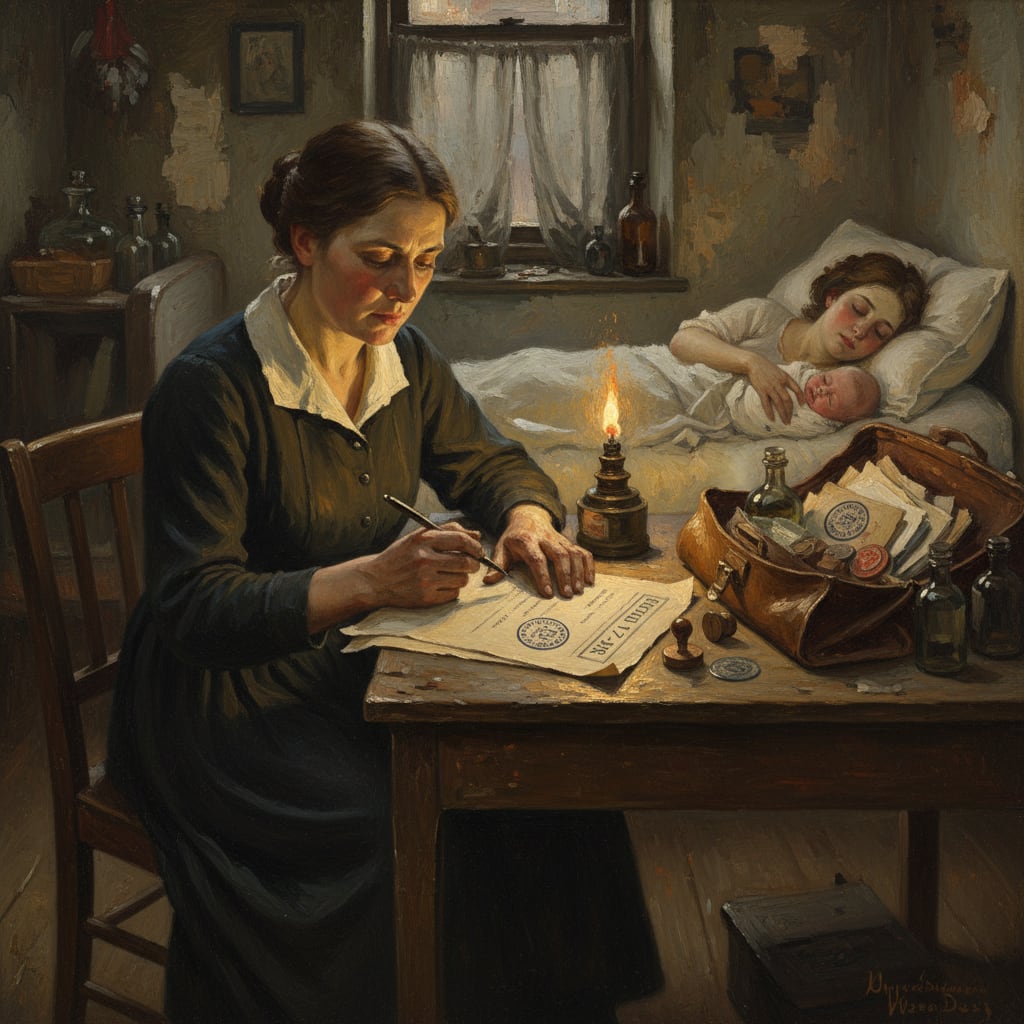
The Natal Registration Writ
Eleven inches by fourteen, and the whole apparatus of a life not yet lived
Form 7-NR is eleven inches by fourteen, bears two watermarks, and calculates the fiscal value of a human life at the moment of birth. Drax explains the theology, the penalties, and the people who would rather disappear than sign it.
Codex Ref. XIII.1.02-001

The Night of Knives in Kraków
Forty-seven mouths wired shut so that no prayer could escape
Forty-seven clergymen seized in the night, their mouths wired shut with iron wire, and cast from the Dębnicki Bridge into the frozen Vistula. The Bureau spent one hundred and thirty years ratifying the narrative; it has been collecting the candle wicks ever since.
Codex Ref. VII.8.01-001
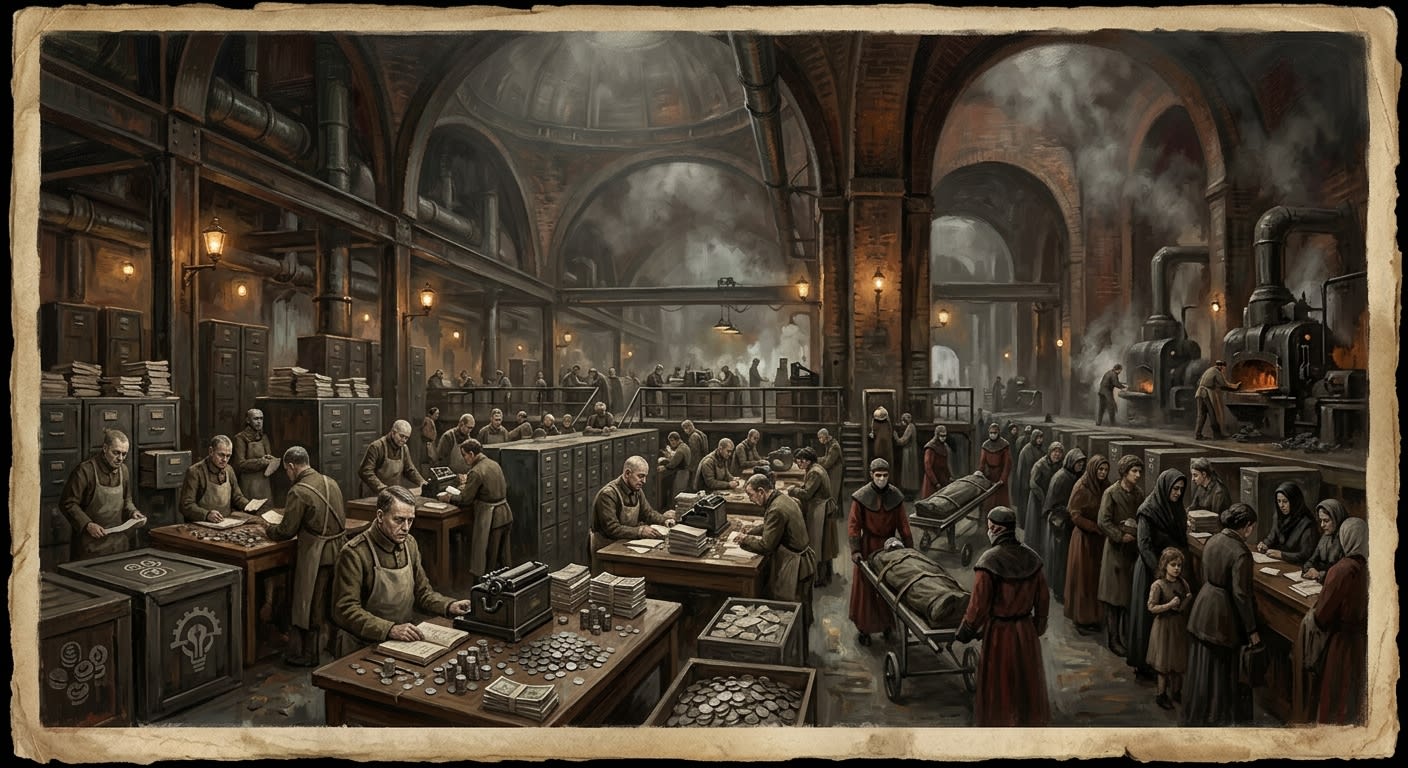
The Palatine Counting House
Where debt receives its sacrament and arithmetic learns to bite
The Palatine Counting House is Strasbourg's sleepless Fiscal Heart, seat of the Bureau of Tithes, where coins, corpses, widows, unborn debtors, and corrected accountants are counted.
Codex Ref. II.2.07-001

The Pale Kin
Where the cradle refuses its invoice
The Pale Kin are the proscribed cradle-resistance families who hide births, alter records, shelter unnumbered children, and make maternity a crime against arithmetic.
Codex Ref. XI.4.01-001

The Penitential Shadows
Those Who Watch Without Eyes
The Inquisition's faceless operatives, culled from the broken and fitted with glass-ash eyes. They do not kill. They erase.
Codex Ref. III.4.09-031
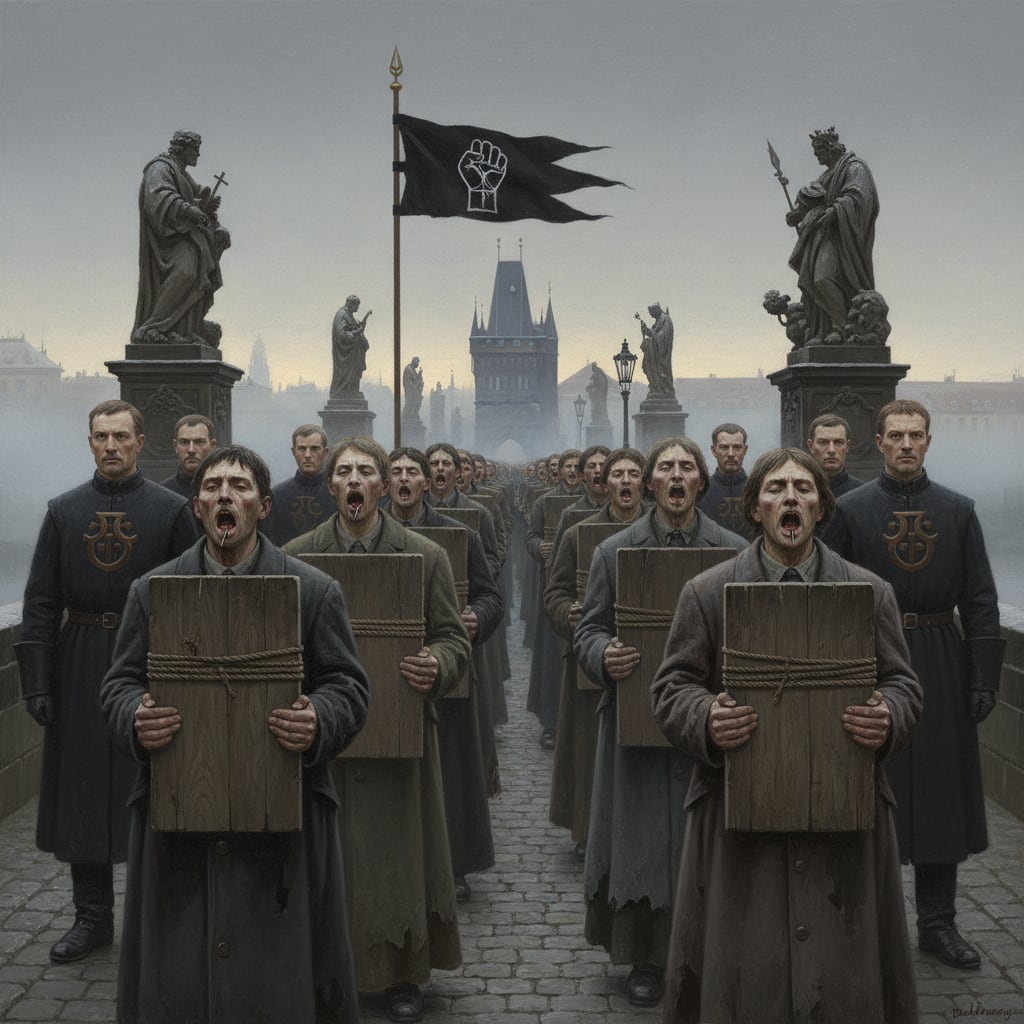
The Procession of Tongues
One hundred and seven consecutive years of doctrine tablets, iron nails, and fixed cobblestones — the [[bureau-of-purity|Bureau of Purity]]'s clearest argument, and the one requiring no rebuttal.
The Bureau of Purity's ceremony of ambulatory confession — heretics with tongues nailed to doctrine tablets, marching across Prague's Charles Bridge since A.S.
Codex Ref. VII.6.01-001
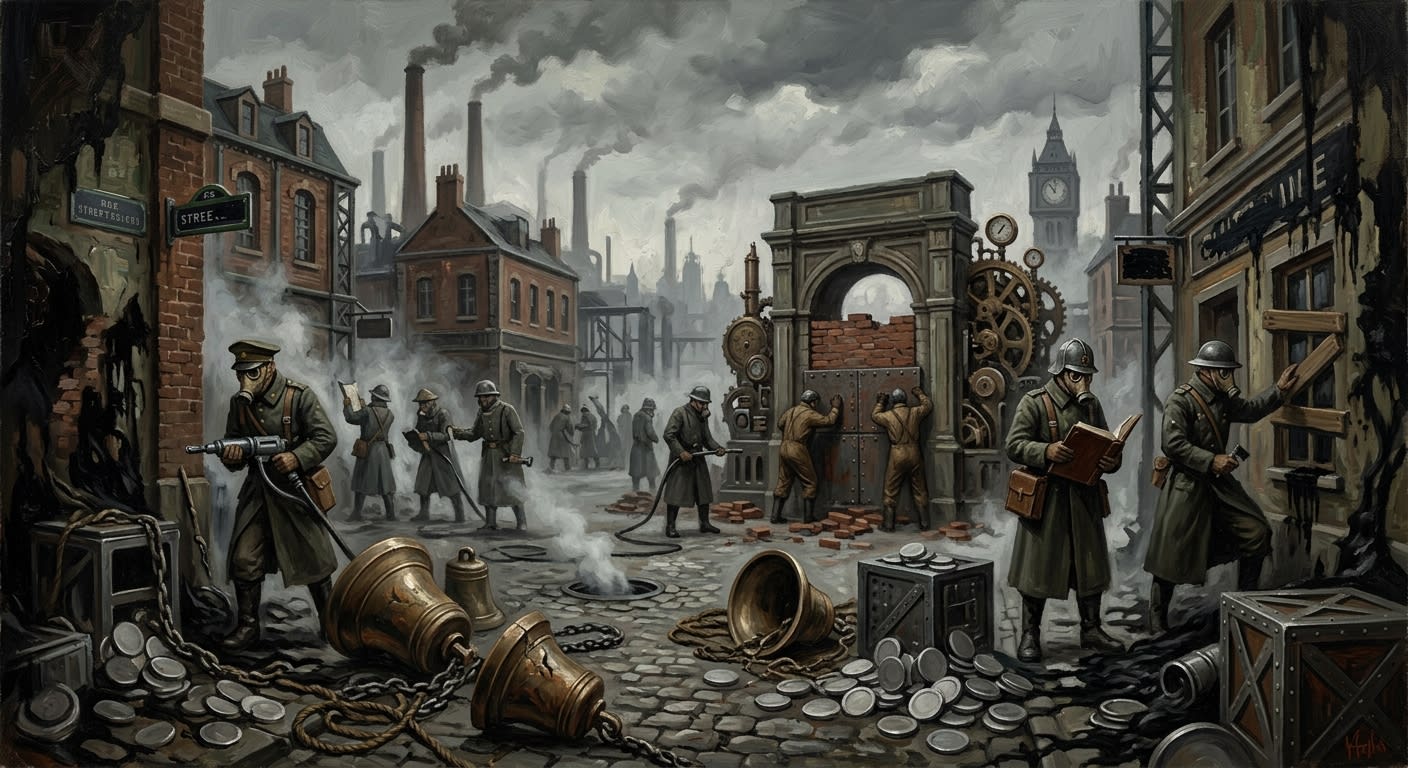
The Redaction of Épernay
Absence can be administered, and the valley still keeps quarter-hours
In A.S. 103, Records, Silence, and Shadows converted Épernay from a wine-country city into an authorised absence, leaving bells, tokens, and denial behind.
Codex Ref. VII.8.02-001
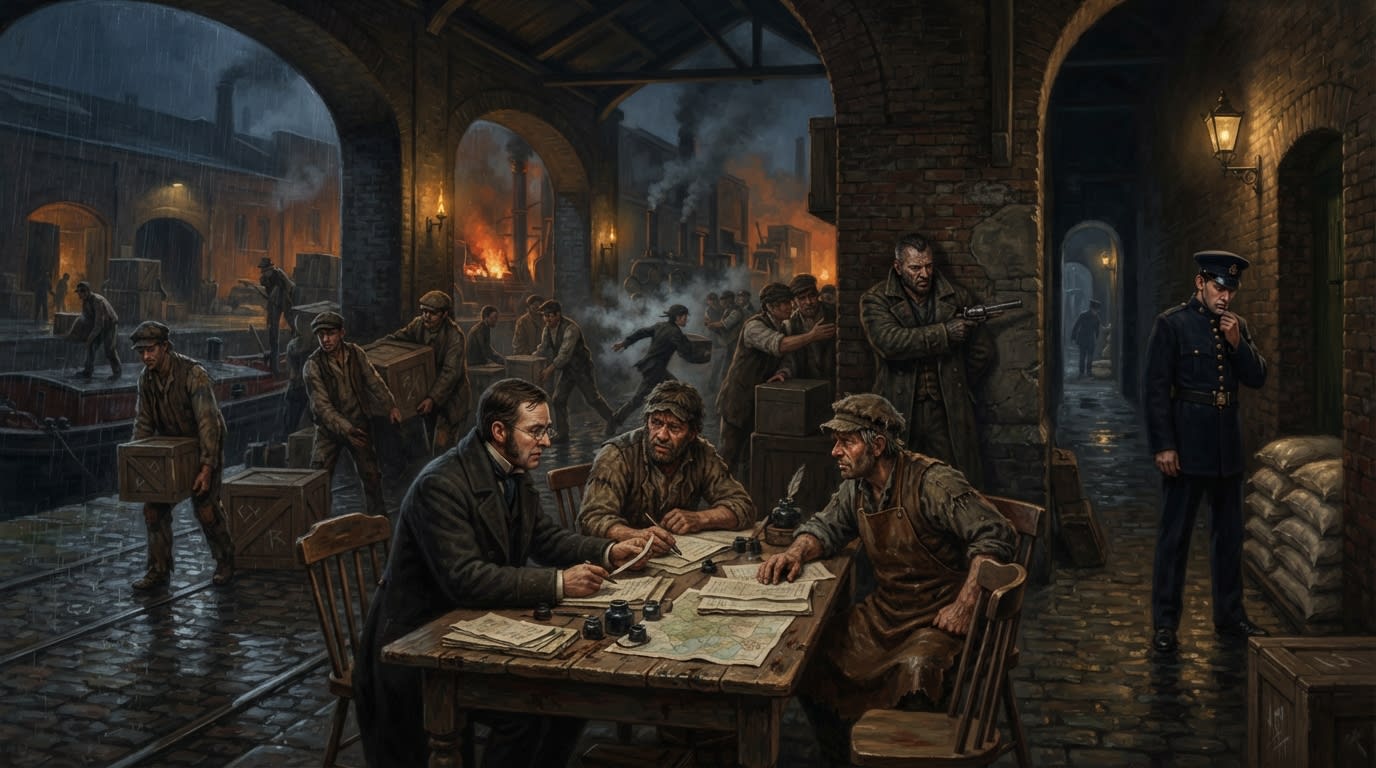
The Smuggler's Syndicate
The Other Road Has a Toll
Not a guild, brotherhood, cartel, or cause: the Syndicate is what emerges when official roads kill more reliably than unofficial ones. It moves medicine, witnesses, bodies, proof, names, and obligations through the interval between need and permission.
Codex Ref. IV.7.03-001

The Supplementary Entry Office
Where lives acquire addenda and mercy learns to bill
The Supplementary Entry Office is the Cloister's paper gut, where discrepancies become forms, forms become fees, and lives are amended past recognition.
Codex Ref. II.3.06-004

The Triune Alphabet
Twenty-three approved letterforms; everything else is heresy in the first stroke
The Triune Alphabet is the Synod's most perfect instrument of control: twenty-three approved letterforms, each angle mandated, each curve licensed, every dialect that falls between them erased. Procurator della Torre did not merely prescribe script. He proscribed thought.
Codex Ref. XIII.1.03-001
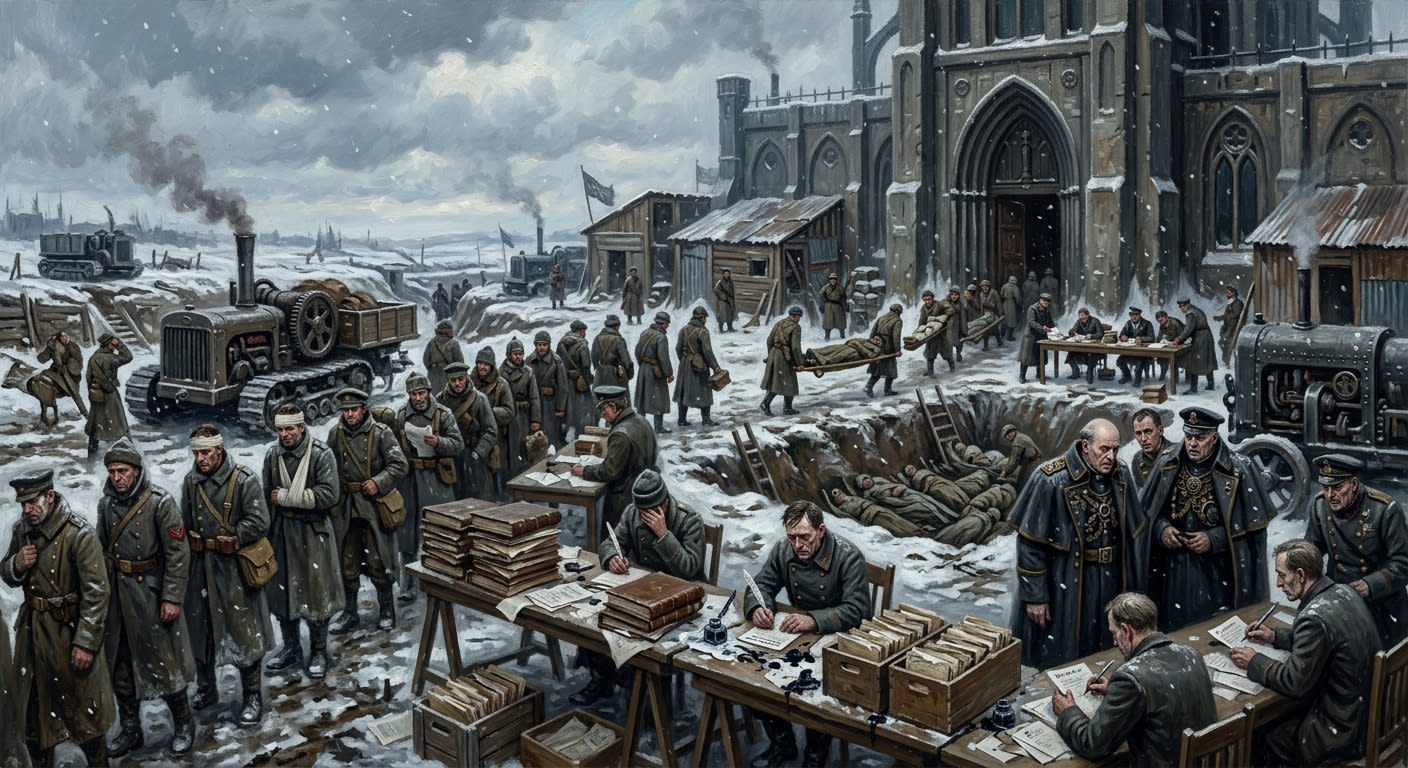
The Uncounted Winter
Fifty thousand dead, and the page arrived late
Northern offensive and registry collapse of A.S. 87–91, when fifty thousand dead went unattested and the Synod learned to put a court beside the wound.
Codex Ref. VII.8.10-091

The Velvet Choir
[[velkara|Velkara's]] order of consciences-undone: it unfolds inside the [[the-sagittal-line|Line]]
The classified assessment of Velkara's primary infiltration instrument by the Bureau of Doctrine — the network by which Lust enters Synod territory as a Tuesday rather than an army.
Codex Ref. VIII.6.01-001
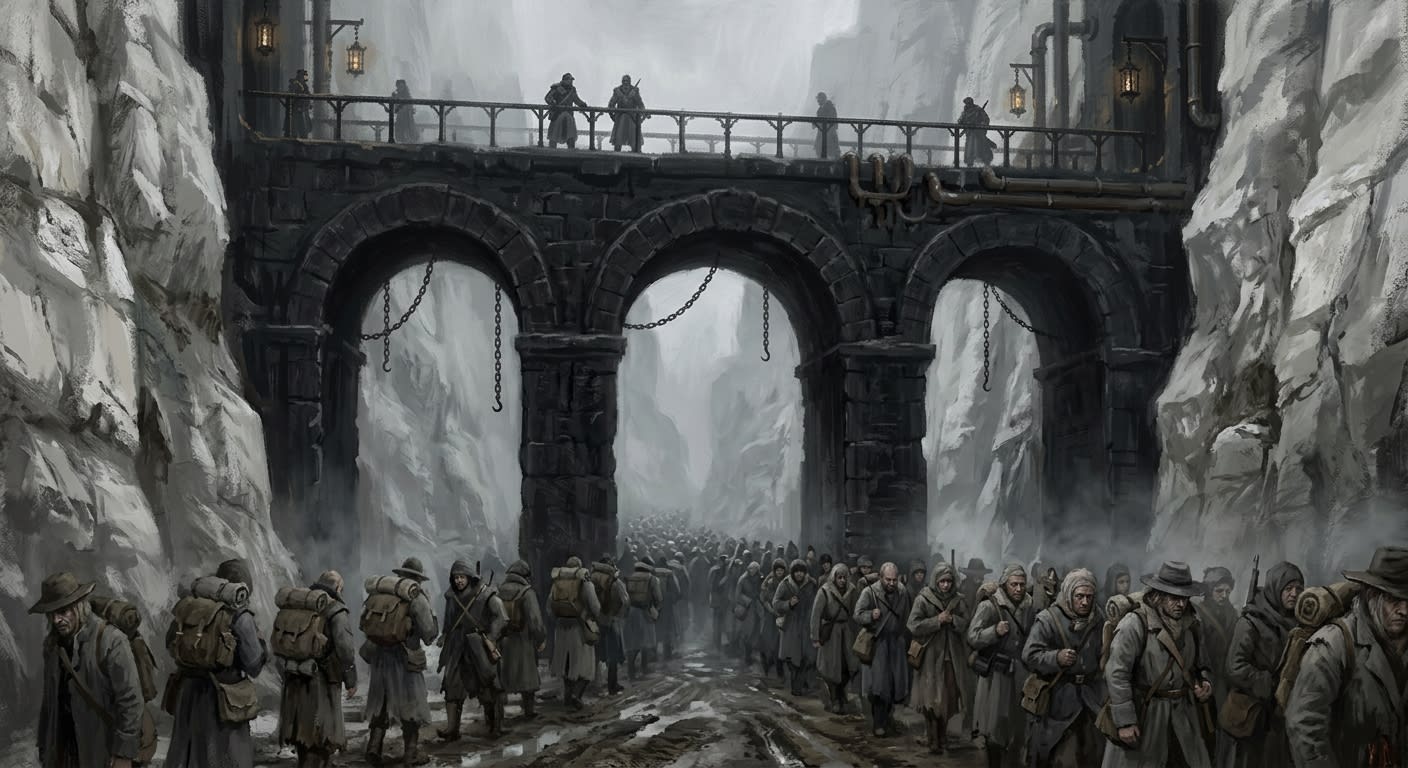
The Widow's Pennies Exchange at Griefgate
Where guilt is the currency and the arch keeps the change
The most efficient grief-processing apparatus on the pilgrim roads — three black-stone arches, a ledger of sorrows, and a staff of professionals who charge for the arithmetic.
Codex Ref. II.1.04-001
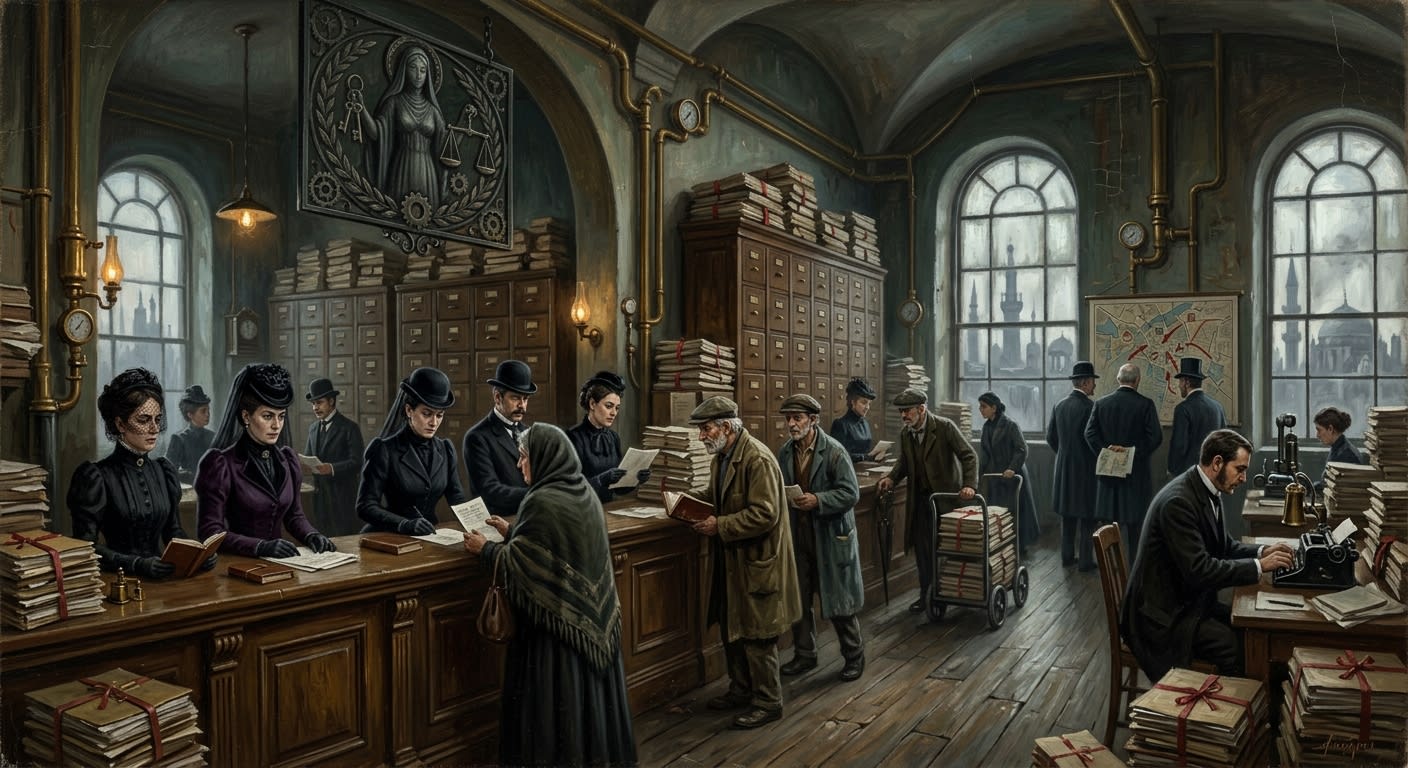
The Widow's Syndicate
A grief with ledgers is already a government
Constantinople's widows turned charity into credit, mourning into archives, and tea into a jurisdiction no Bureau can quite survive.
Codex Ref. XI.4.01-001

The Wire Orchard
Where the paper grows teeth and the dawn performs audit
The Wire Orchard is Bastion-Przemyśl's three-mile killing and sorting grid, where paper becomes permission, wire becomes judgment, and dawn harvests both.
Codex Ref. II.4.09-075
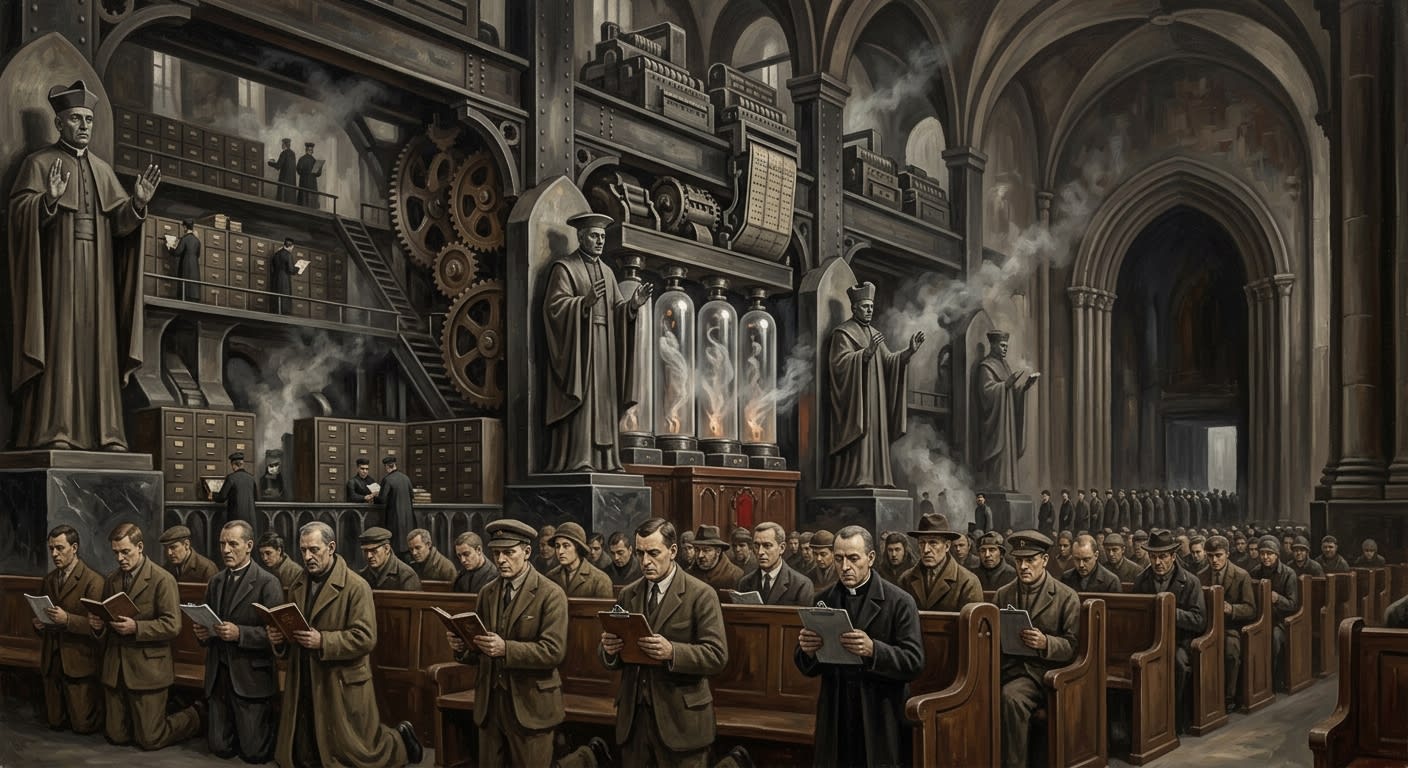
Theocracy
Piety with pipes, doctrine with payroll
Theocracy is the Synod's mature art: altar made warrant, prayer made schedule, fear made grammar, and every soul brought under ratified custody.
Codex Ref. XIII.1.01-201
Thrace
The province geography learned to condemn
Thrace is the fallen south-eastern furnace where old roads became warnings, Maldrake taught soil to rage, and maps learned shame.
Codex Ref. II.6.03-045
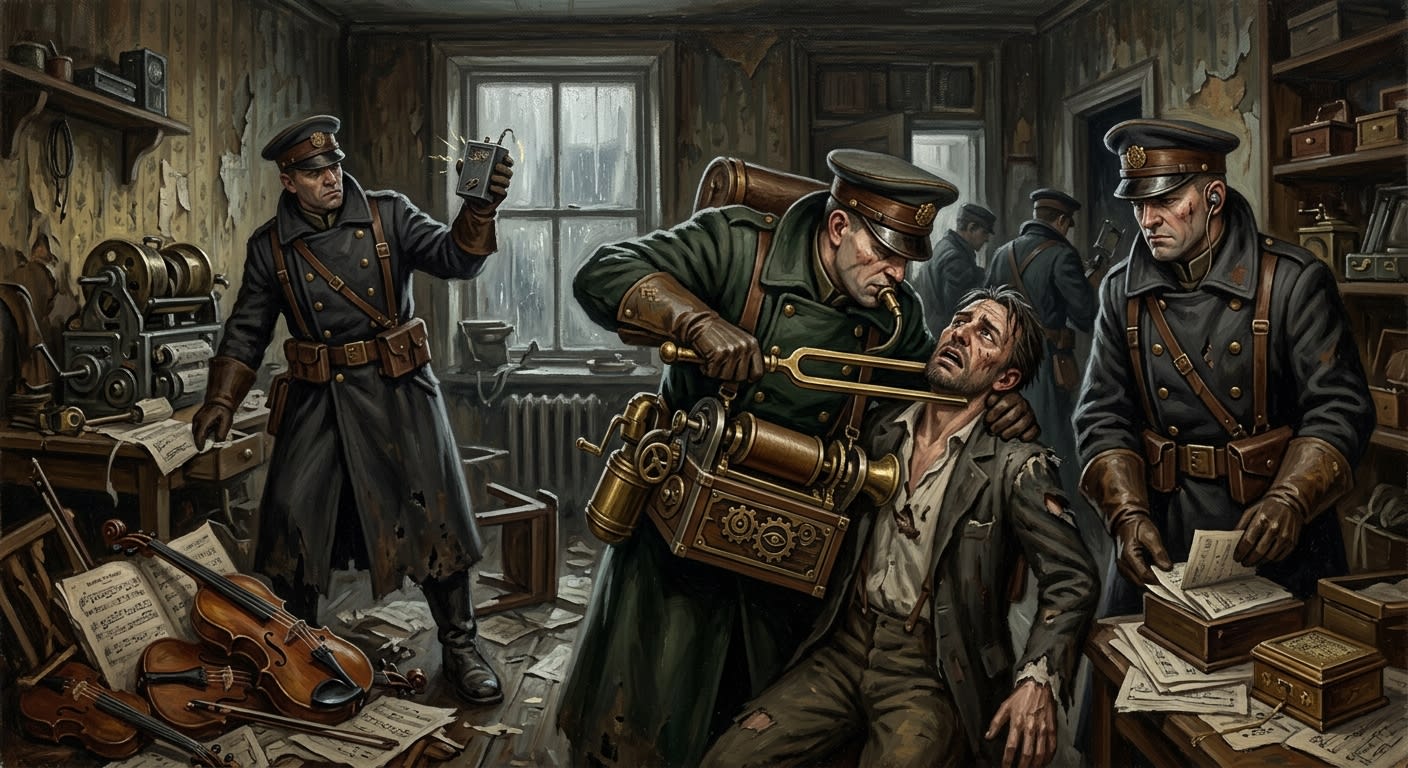
Tone Inquisitors
The ear becomes courtroom, and comfort confesses
Field enforcers of the Bureau of Orison and Song who provoke, detect, record, and prosecute unlicensed melody with forks, boxes, and ruined ears.
Codex Ref. XII.48.02-096
Trifold Erasure
Kill the body, strike the name, poison the recollection
Trifold Erasure is the Synod's threefold cure for rebellion: body extinguished, name struck, memory made too dangerous to love.
Codex Ref. XIII.1.71-111

Unauthorized Melody Smuggler
The lullaby the Bureau buried; the mouth it walks out of now
The Unauthorized Melody Smuggler is classified under Tongue-Crime, Melody Intent, Doctrinal Sabotage — above common theft, below armed heresy. The lullaby does not care what the Bureau calls it. It continues to walk out in someone else's mouth.
Codex Ref. XII.48.01-001

Vigil Ark *Saint Barachiel*
On the consecrated dirigible that blesses the Bosphorus sky, the sermon heard forty feet below the water, and the eleven minutes forty-three seconds of A.S. 199 the Bureau has classified as Not Our Co
The Vigil Ark Saint Barachiel: armed dirigible-reliquary, Constantinople theater, A.S. 168–present. Thirty-three years of consecrated patrol. One unexplained Broadcast. The Ark flies. The Bureau recommends continued faith.
Codex Ref. II.4.11-001

Void
The child survives when the gap is too dull to notice
Ash Registrar doctrine naming the document-thick gap between a living hidden child and the dead, misfiled, or duplicated child the Ledger believes in.
Codex Ref. XI.4.01-005
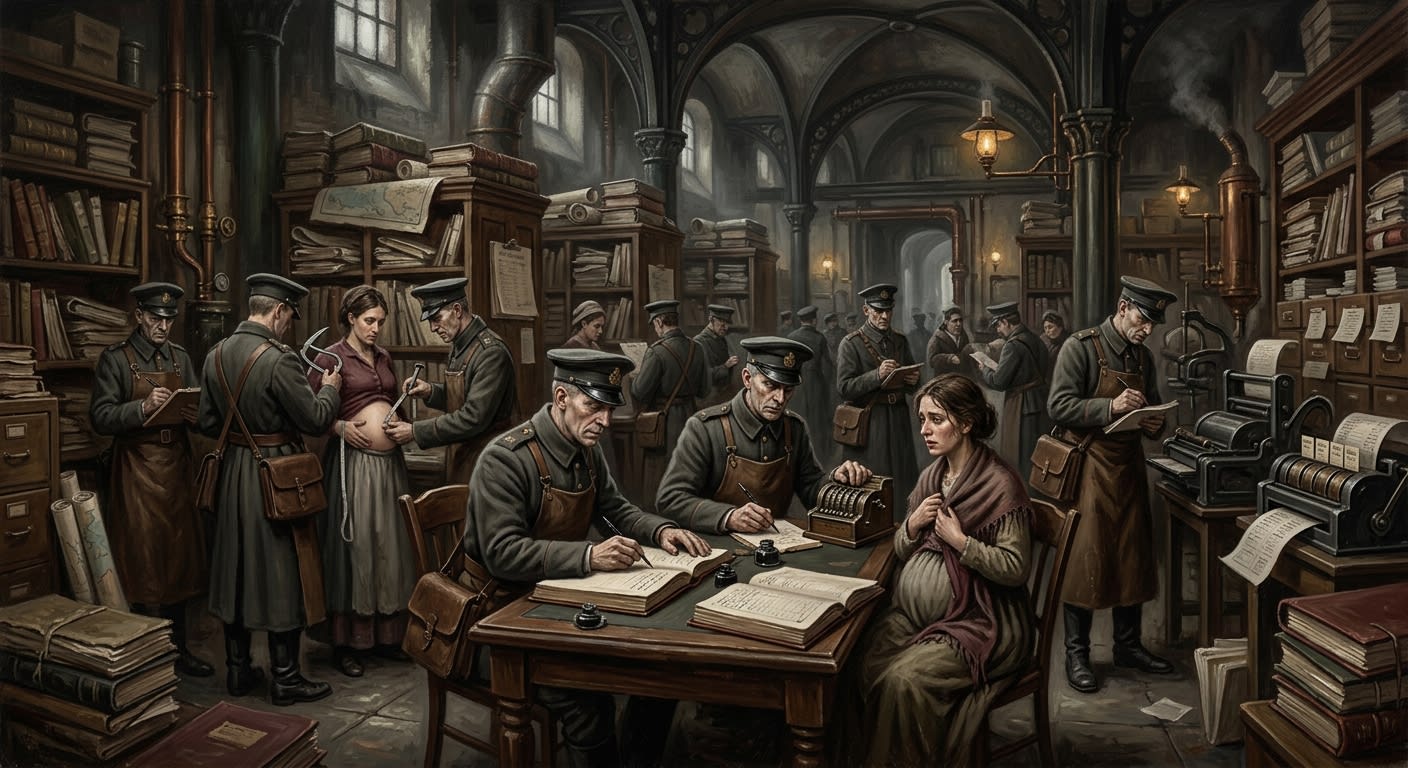
Womb Registrars
The cradle has a visitor, and she has already priced the child
Womb Registrars are Bureau of Records parish deputies who turn pregnancy into ledger matter: notice, name control, midwife compliance, and tithe projection before first breath becomes evasion.
Codex Ref. XII.9.04-001
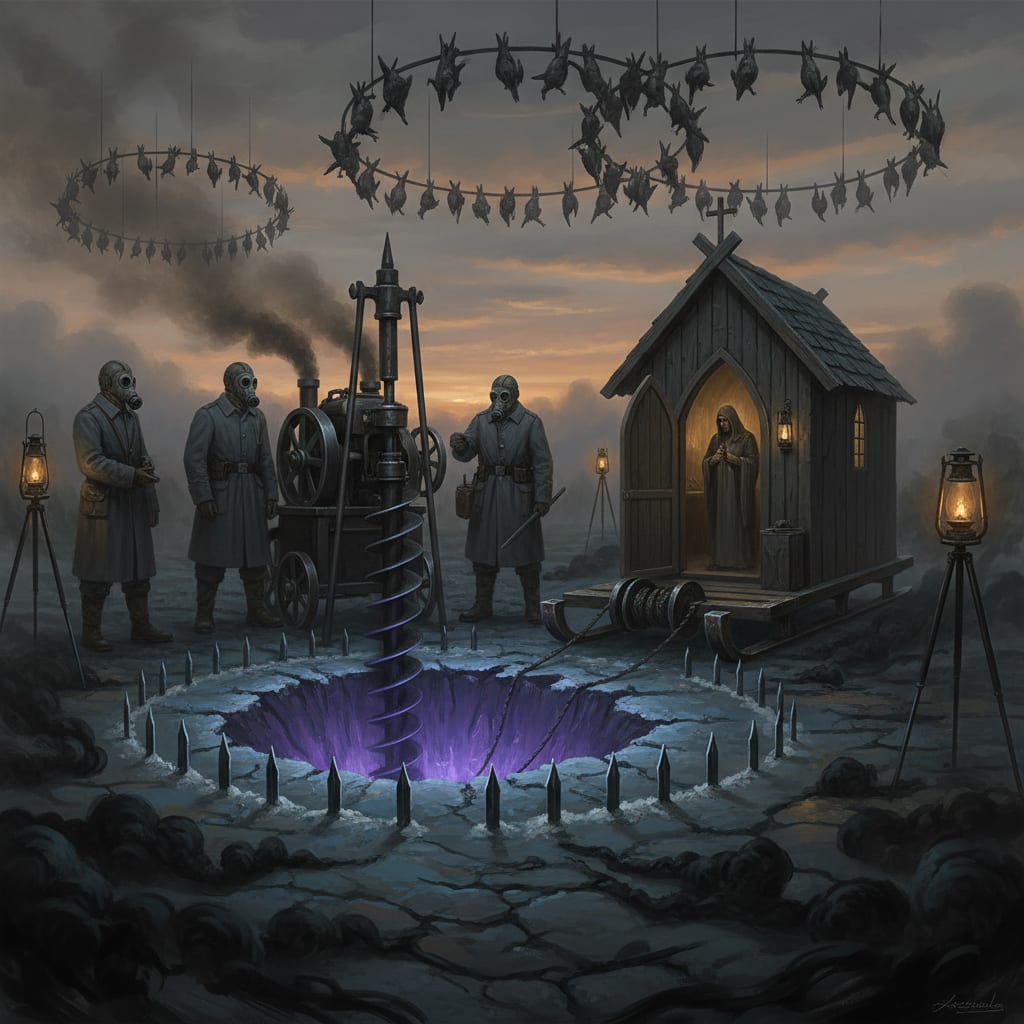
Wound-Site Prospector
The earth seeps; the drums breathe; the Bureau explains neither, and taxes both
The licensed harvesters of demon-seep from wound-sites — chartered by the Bureau of Tithes, destroyed by the work, and collectively silent on the one event that explains everything. The drums breathe at night.
Codex Ref. XII.50.01-001