

Reverse Index
Referencing “The Treaty of Regensburg”
Every codex entry that links to The Treaty of Regensburg. 121 entries.
Return to The Treaty of Regensburg
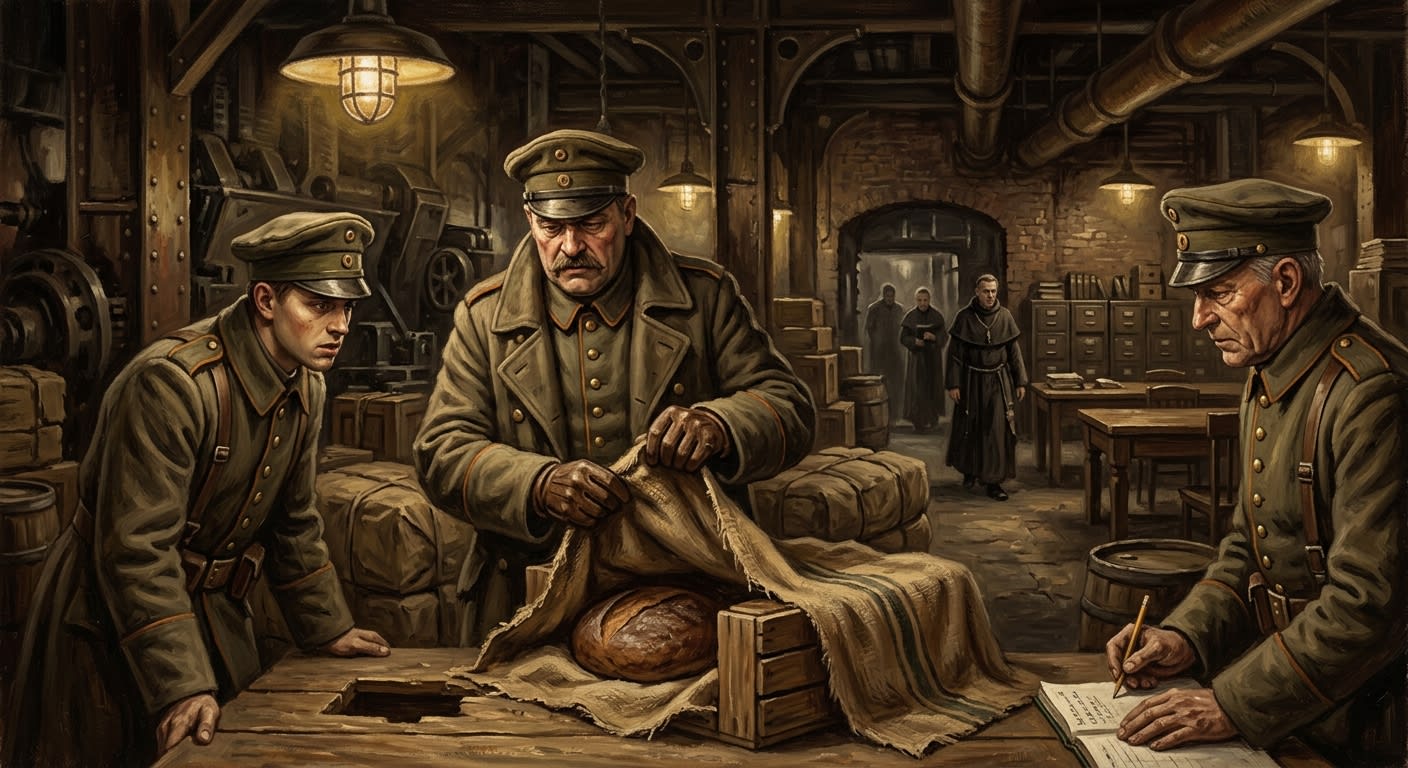
14th Rhine Customs Brigade
The guards who inspected bread and missed Providence
The 14th Rhine Customs Brigade lifted a cloth, saw bread, and missed three apostolic phalanges; Providence has seldom dressed itself so plainly.
Codex Ref. I.1.14-031
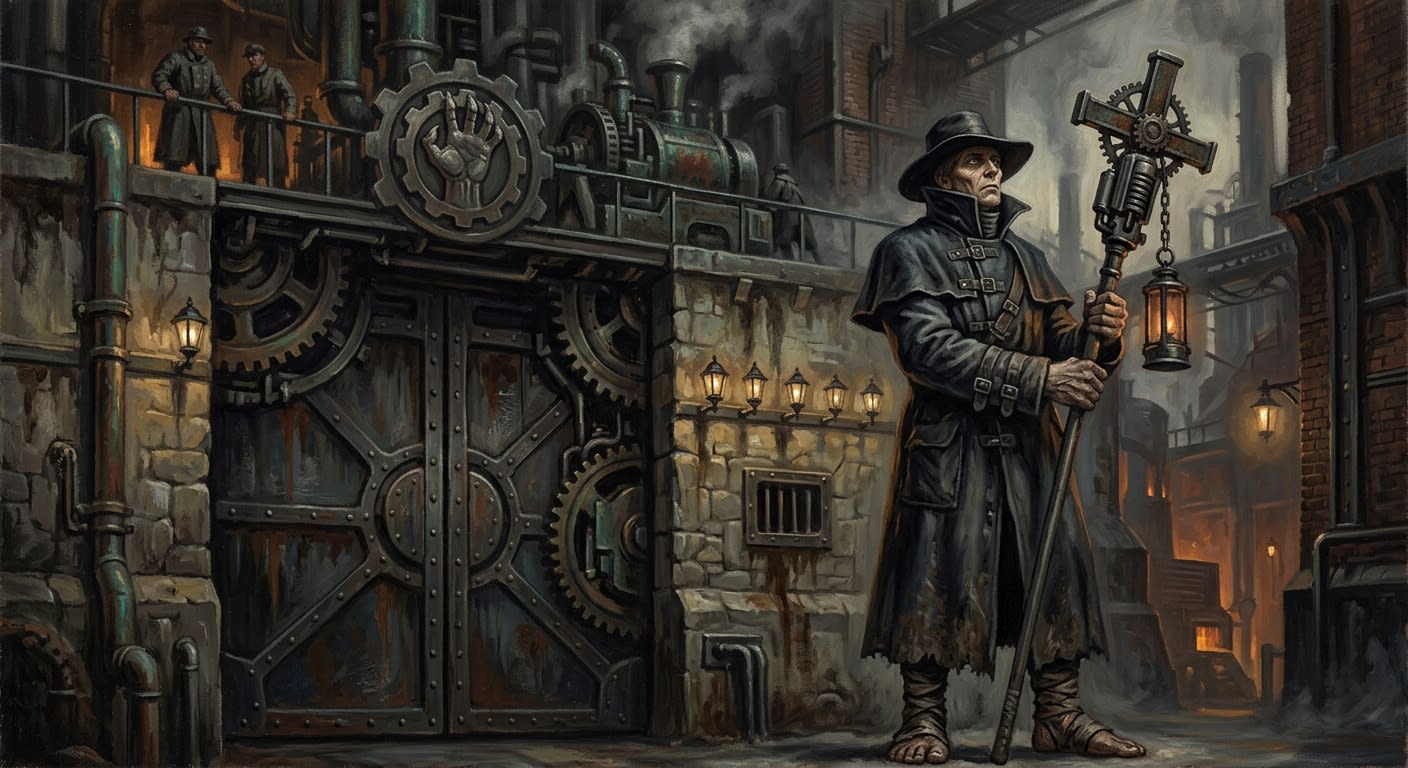
Aachen
The city that survived its own fall
Aachen opened its gate in A.S. 25, survived the betrayal, and has spent every taxed, polished, barefoot century proving survival is not innocence.
Codex Ref. II.2.02-001
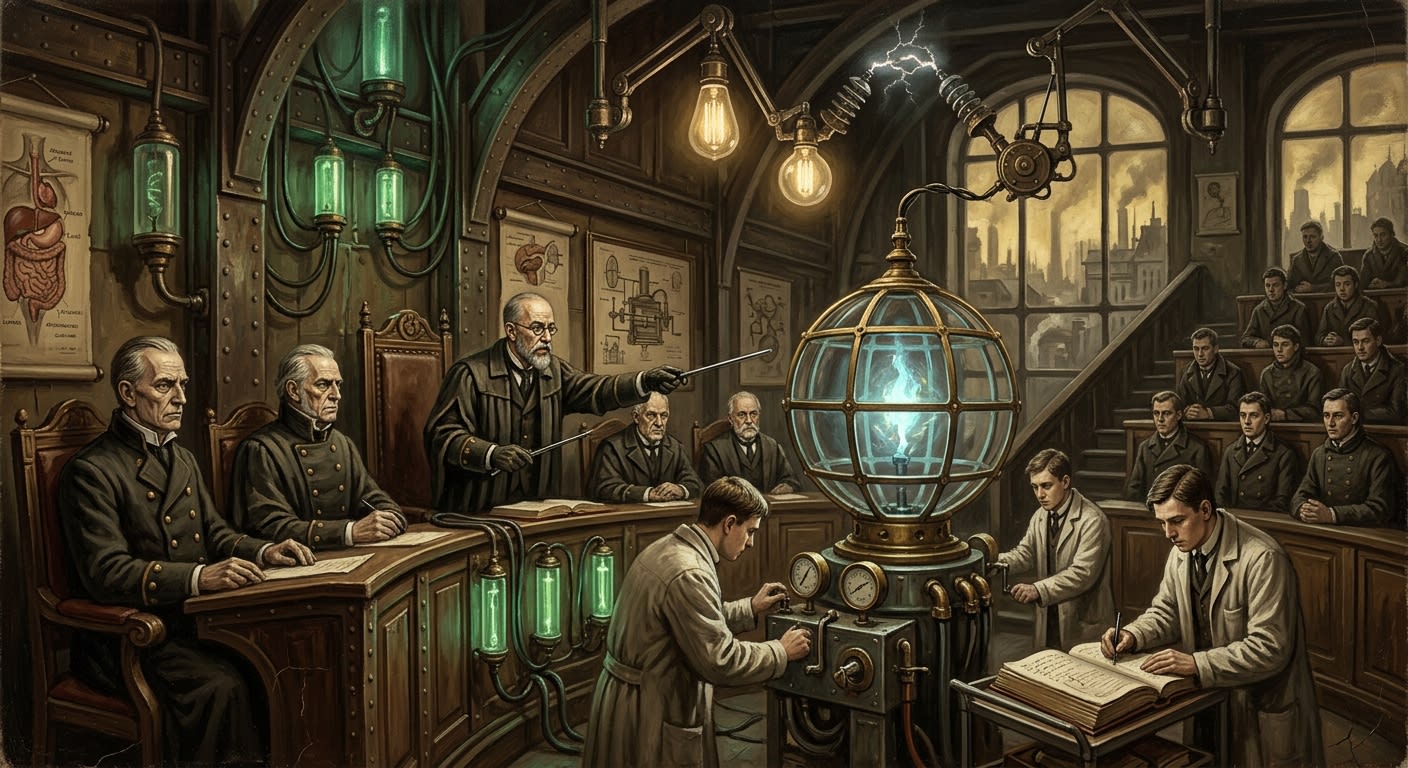
Académie des Sciences
Reason alone, applauding the dark until it called the clapping dawn
The Académie des Sciences measured miracles, disciplined facts, rewarded approved errors, and taught Vienna how to call Providence inadmissible in four languages.
Codex Ref. I.1.03-032
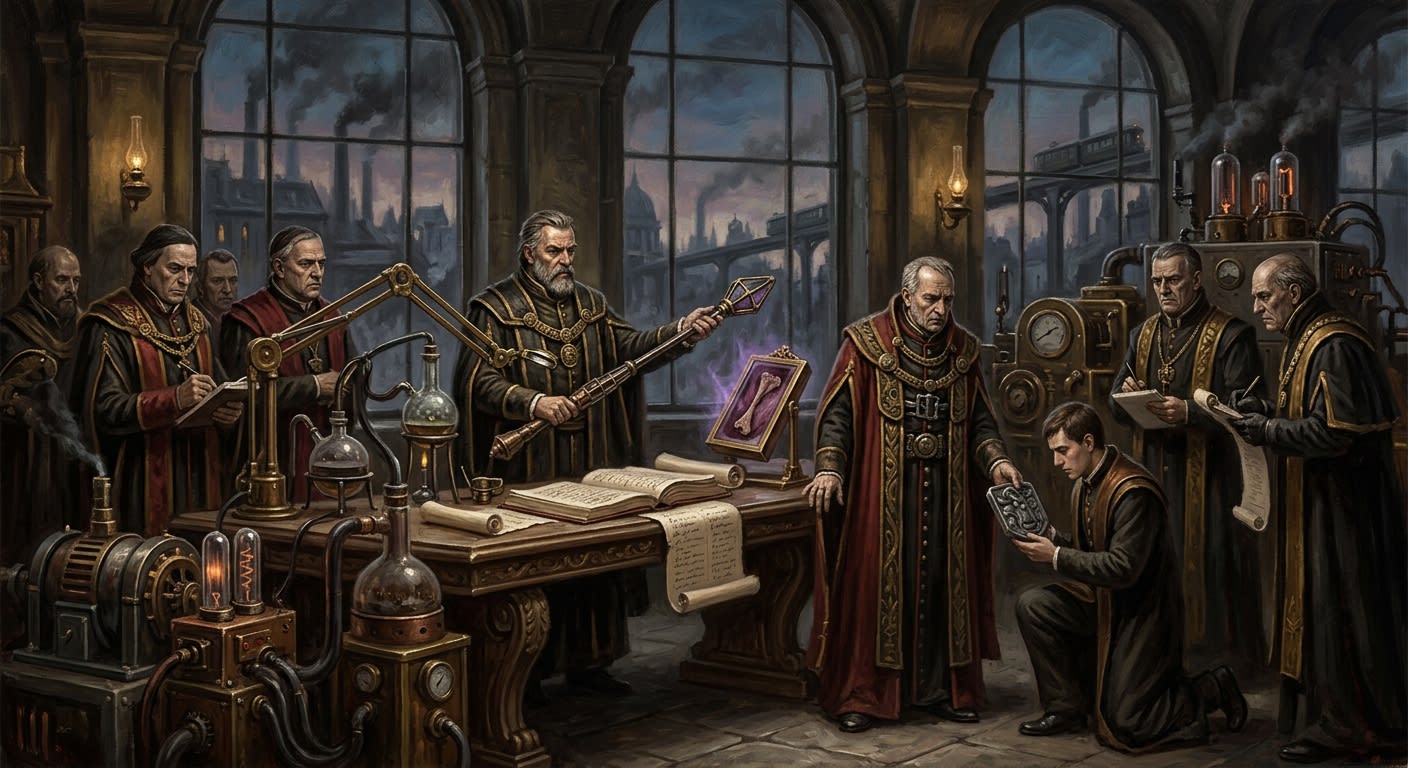
Académie des Sciences, Vienna
Reason alone, and therefore alone when the sun refused attendance
Vienna's Académie des Sciences made unbelief elegant: measuring relics, disciplining evidence, rewarding Molyneaux, and applauding darkness as mechanism.
Codex Ref. I.1.03-032
Academies
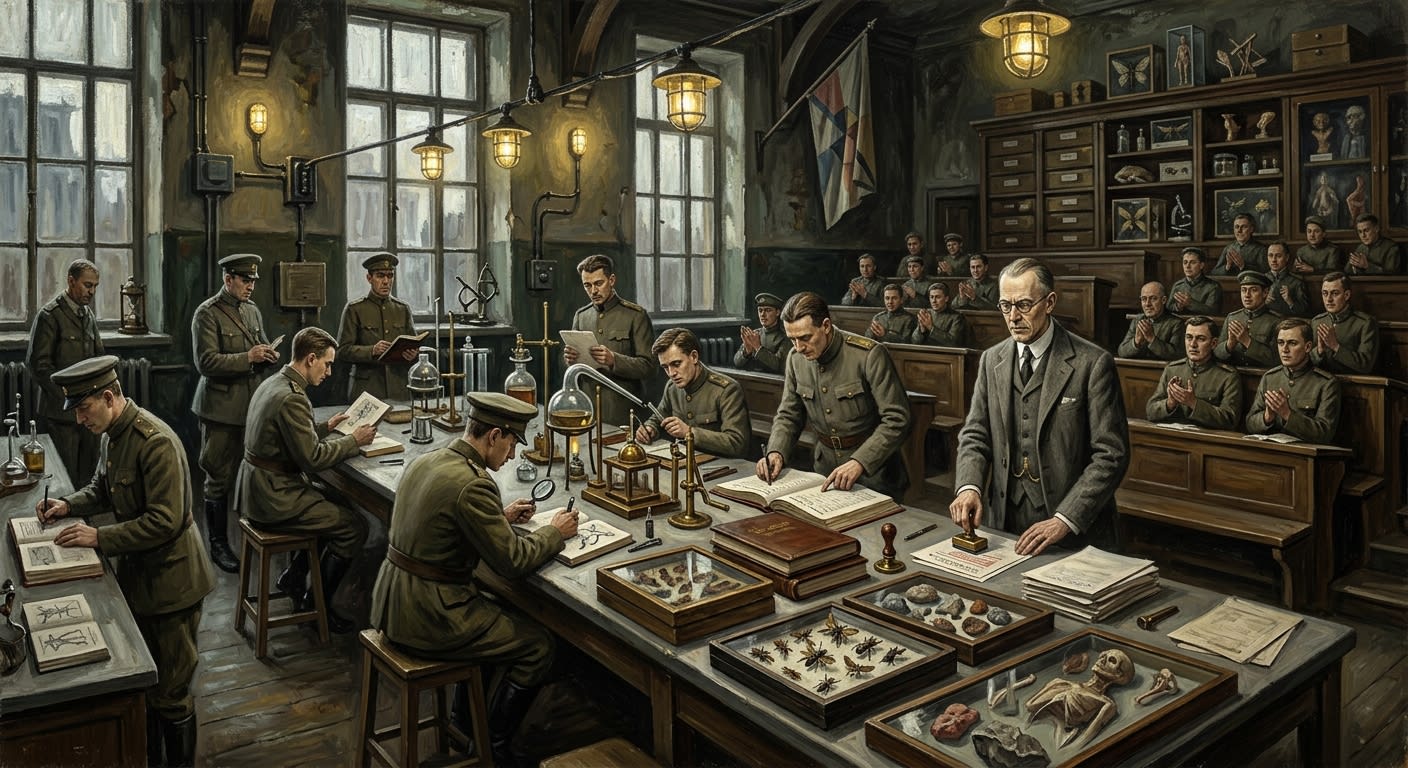
New cathedrals of Reason, with better brass and worse gods
The Academies taught Europe to replace altar with demonstration table, relic with specimen case, prayer with applause, and cruelty with excellent paperwork.
Codex Ref. I.1.03-000
Academy of Sciences
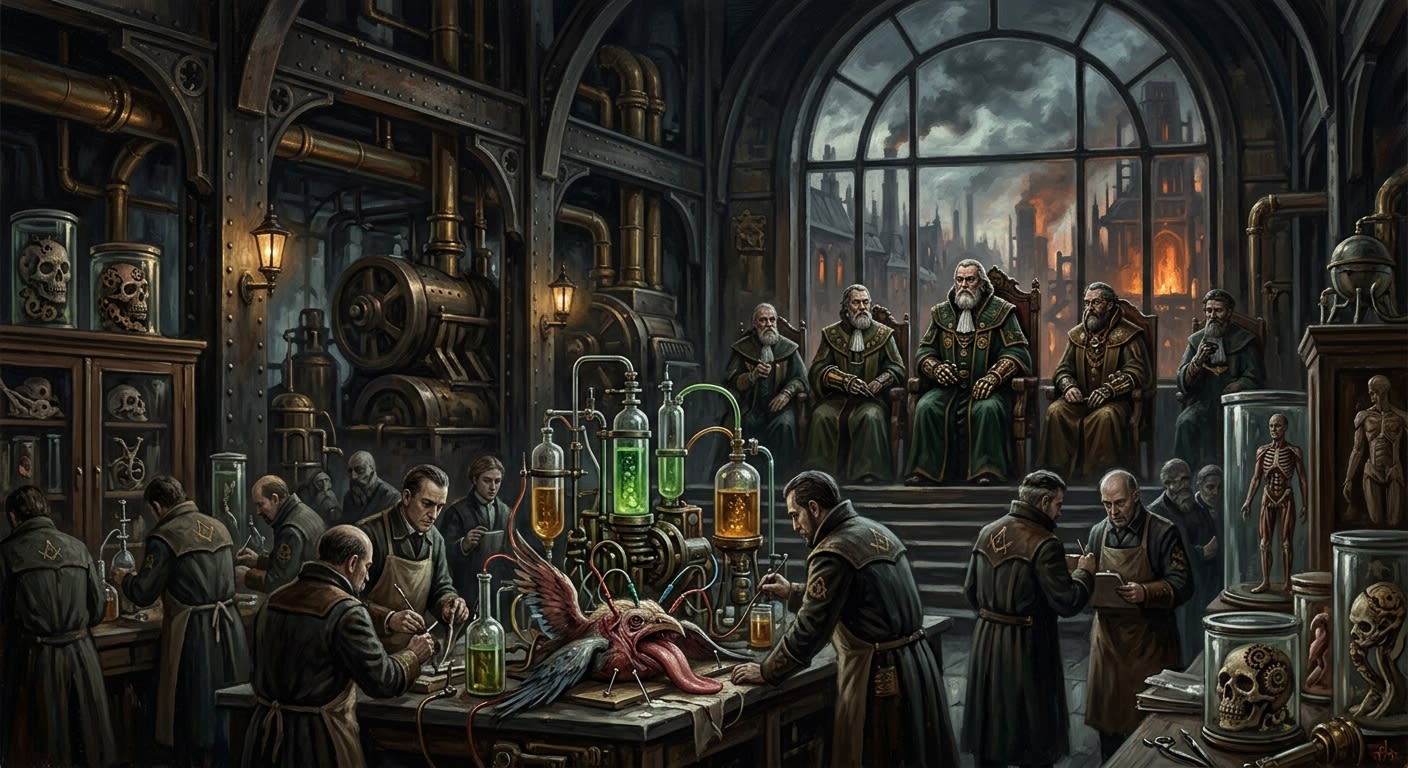
The Republic's licensed brain, perfumed in Paris
Paris's Academy of Sciences gave the Rationalist Republic clean nouns for dirty hands: prayer as infection, tongues as evidence, and schools as knives.
Codex Ref. I.1.03-030
Academy of Vienna
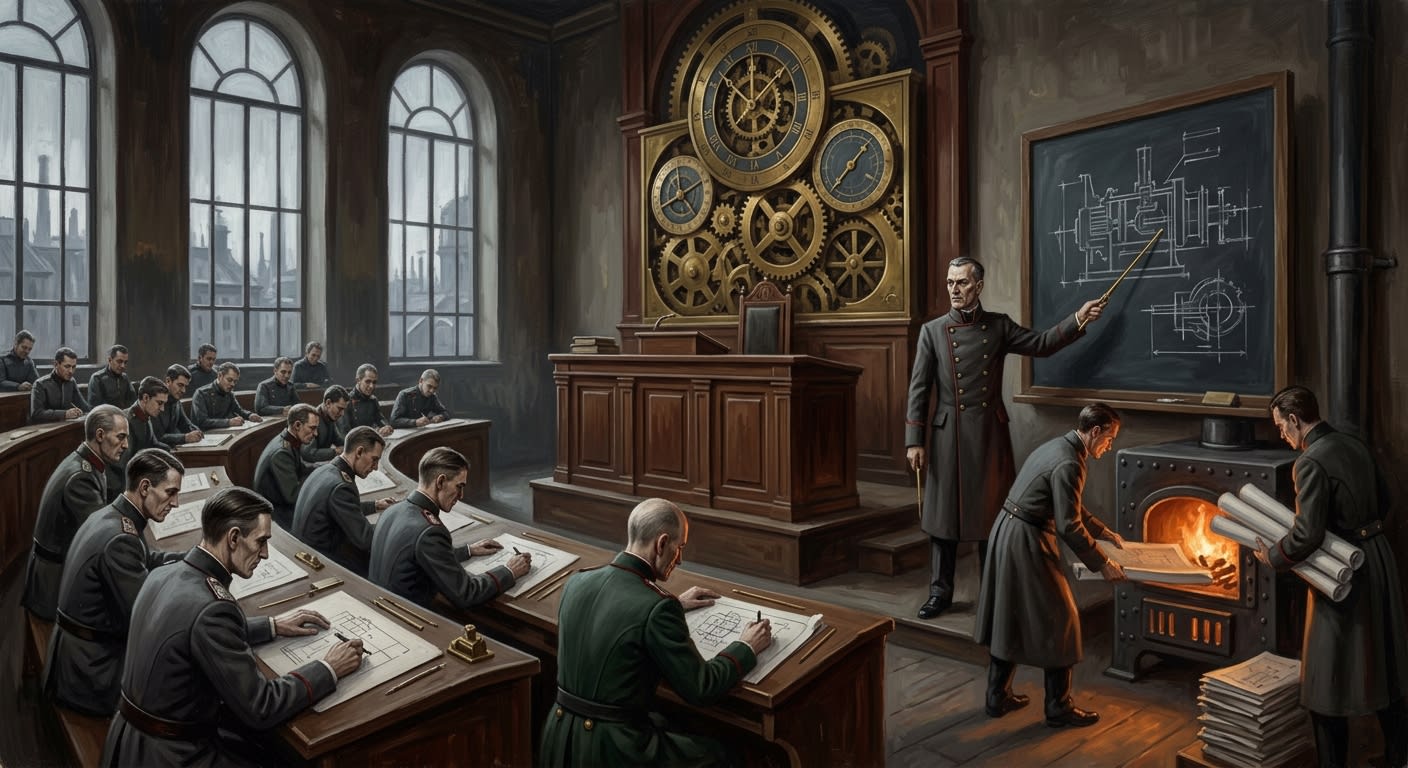
Where gears replaced the crucifix and called the arrangement practical
Vienna's Rationalist Academy replaced Saint Stephen's crucifix with gears, trained clean-handed persecutors, and sent perfect diagrams into Maldrake's fire.
Codex Ref. I.1.03-045
Administrative Harmonists
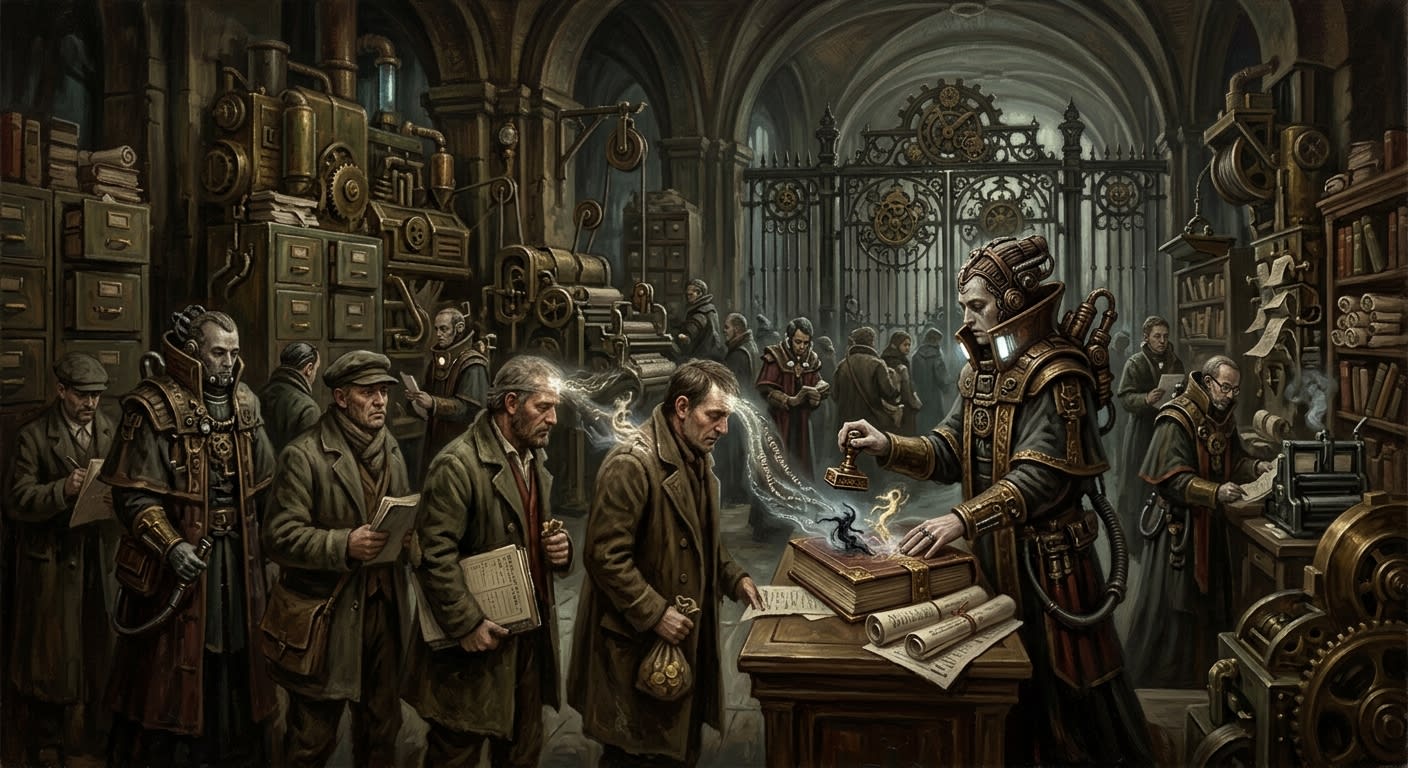
The school that taught contradiction to queue politely
The Administrative Harmonists saved Regensburg's gate economy by teaching blessing and curse to obey the pamphlet, the stamp, and the fee schedule.
Codex Ref. XIII.1.76-092
Amsterdam
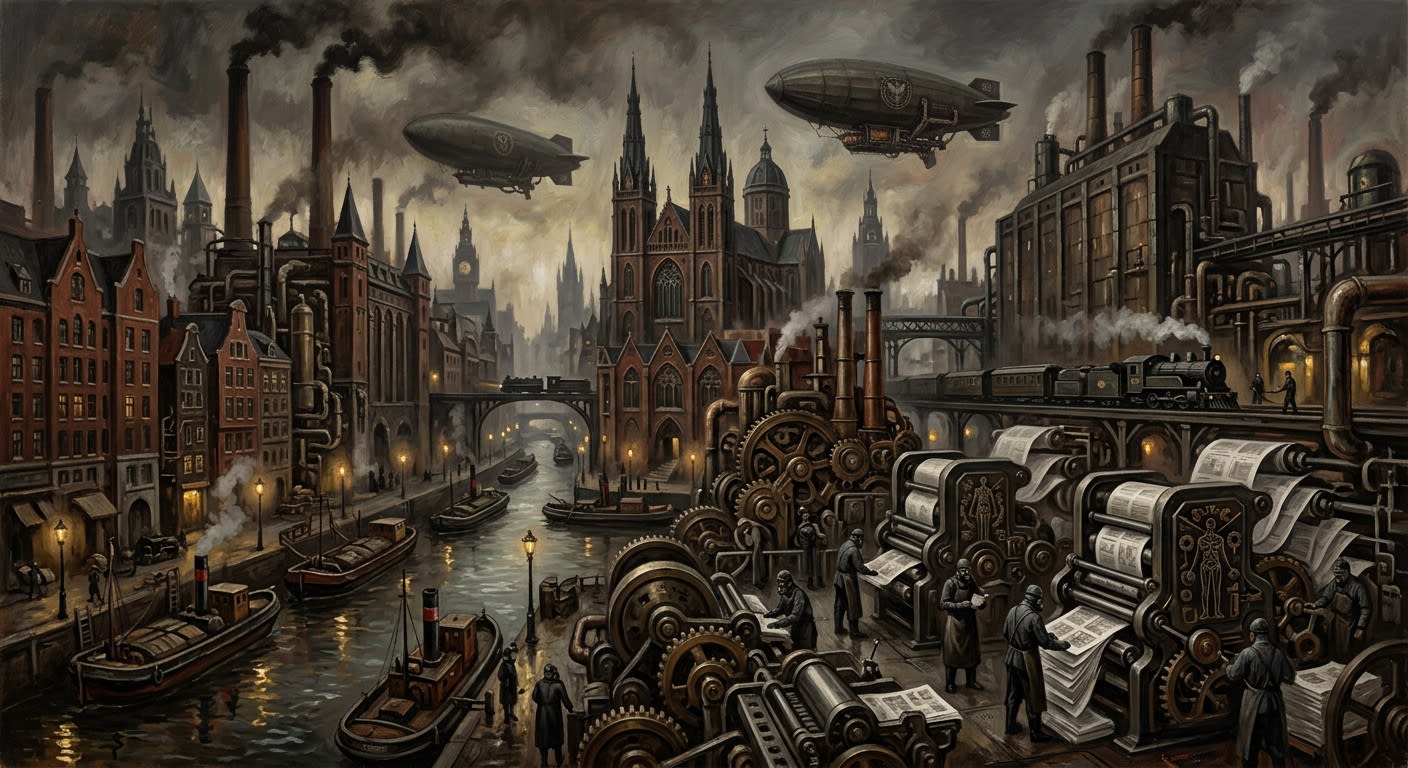
The city where Europe learned to sin in pamphlet form
Amsterdam is the independent Dutch city where the Synod's calendar wound was printed: first the Year of Letters, then *De Vera Luce*, then Europe taught to doubt by invoice.
Codex Ref. II.4.09-012
Amsterdam Academy
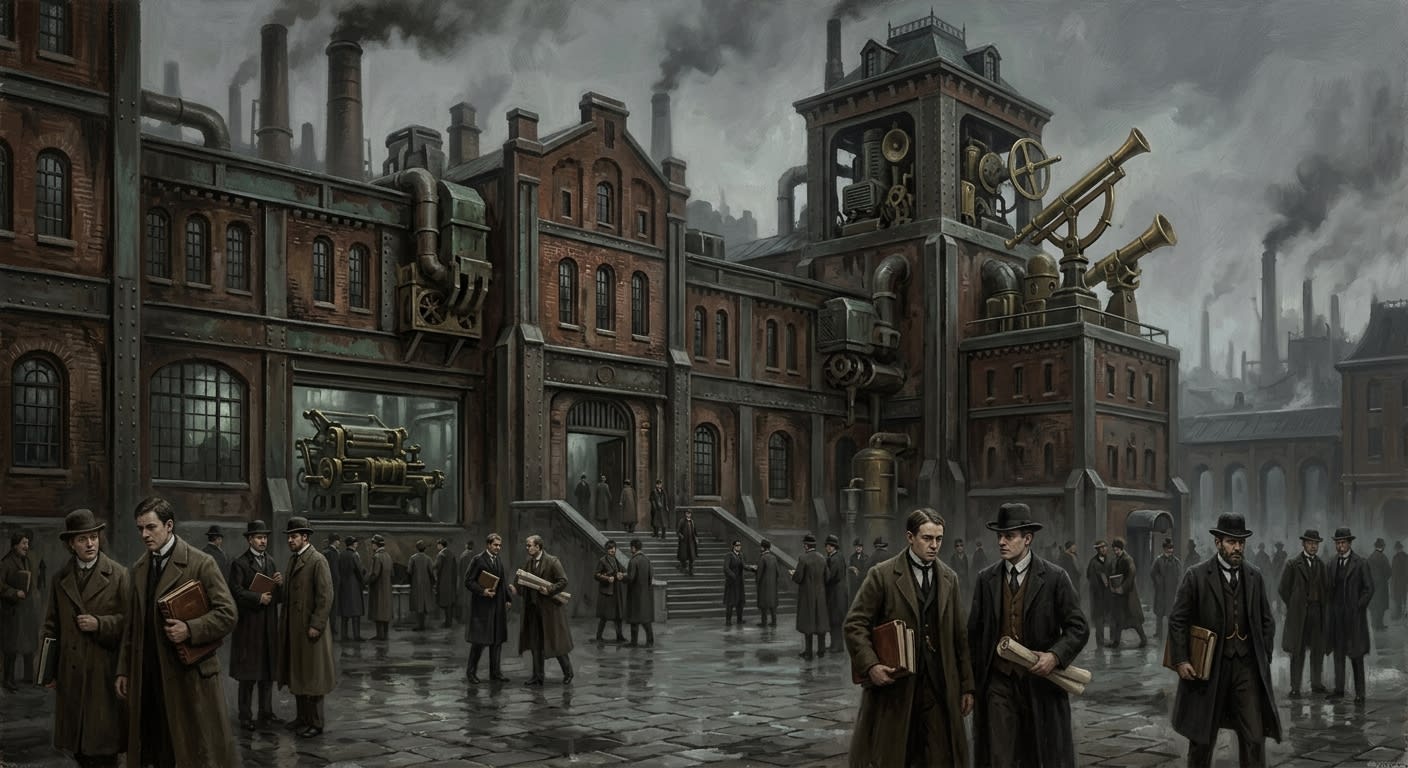
The lectern that made unbelief printable
The Amsterdam Academy licensed unbelief, printed the calendar wound, and taught Europe that a schoolhouse may do the work of a siege engine.
Codex Ref. VIII.8.01-000
Antwerp
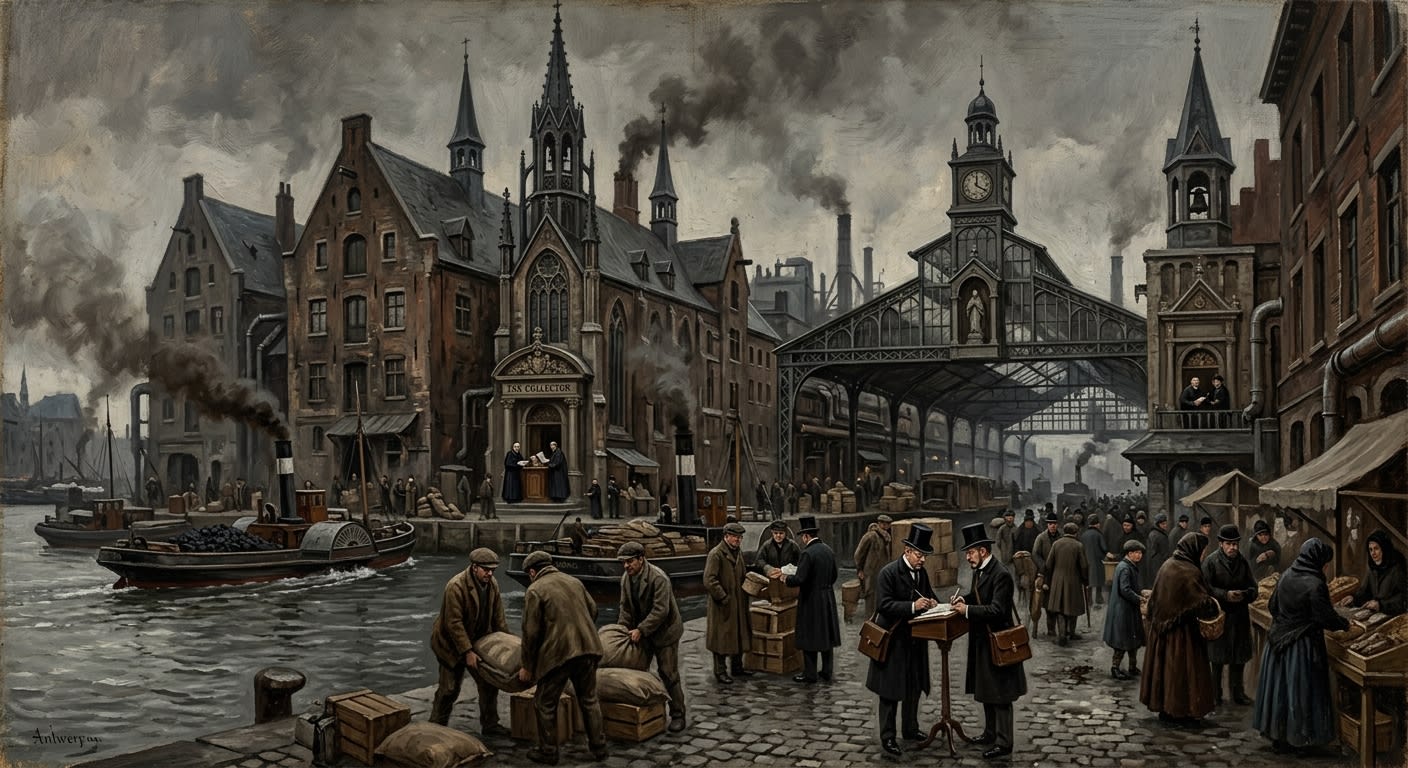
A port city weighing saints by warehouse light
Antwerp is the Scheldt port where commerce learned piety, hunger learned arithmetic, and every warehouse keeps a chapel close enough to tax.
Codex Ref. II.1.06-138
Archbishop of Vienna
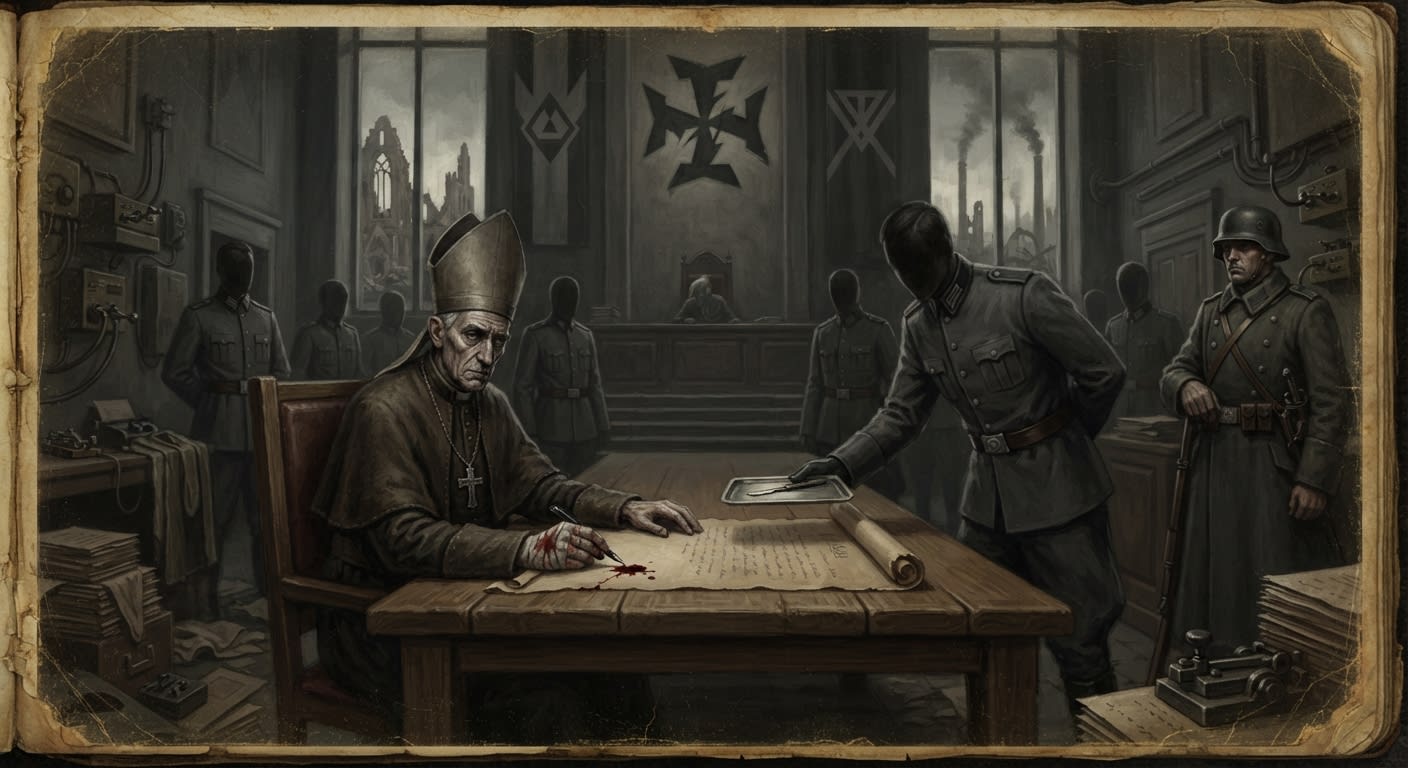
The hand the Rationalists needed and Doctrine refuses to name
The unnamed prelate whose blood signed the Treaty of Regensburg, dissolved the Holy See under threat, and later became Doctrine's evidence that coercion is not consent.
Codex Ref. III.2.06-004
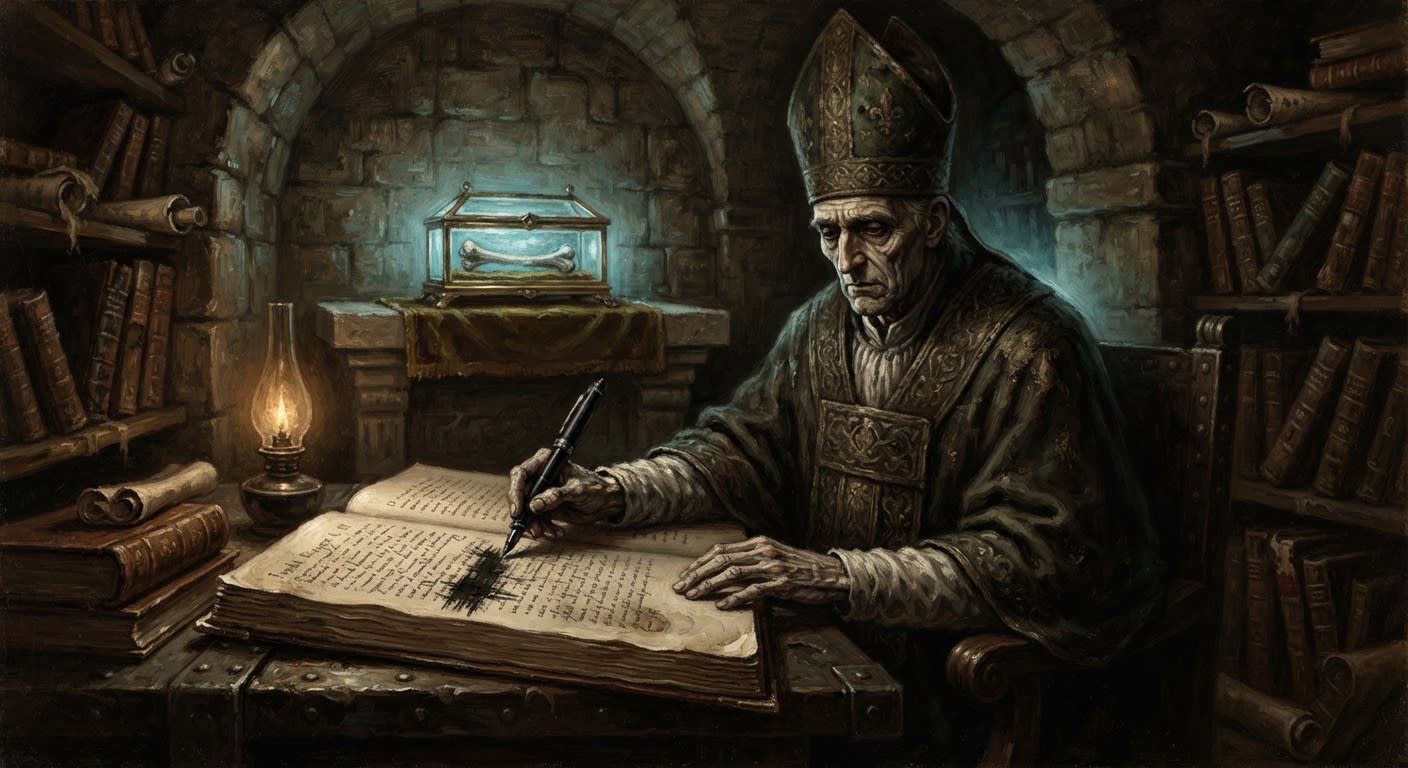
Archbishop Rupert III
The prelate who made a relic absent by letter
Pre-Synodic Archbishop of Vienna who answered Amsterdam's bone arithmetic by erasing the Reliquary of Saint Aldebrand from the records while leaving it glowing in the vault.
Codex Ref. III.2.01-032
Aristotle
The pagan who lent the Church its knife
Aristotle gave the Church no doctrine, no obedience, and no permission. Unfortunately for him, he did leave behind a very useful machine for arguing.
Codex Ref. III.2.01-073
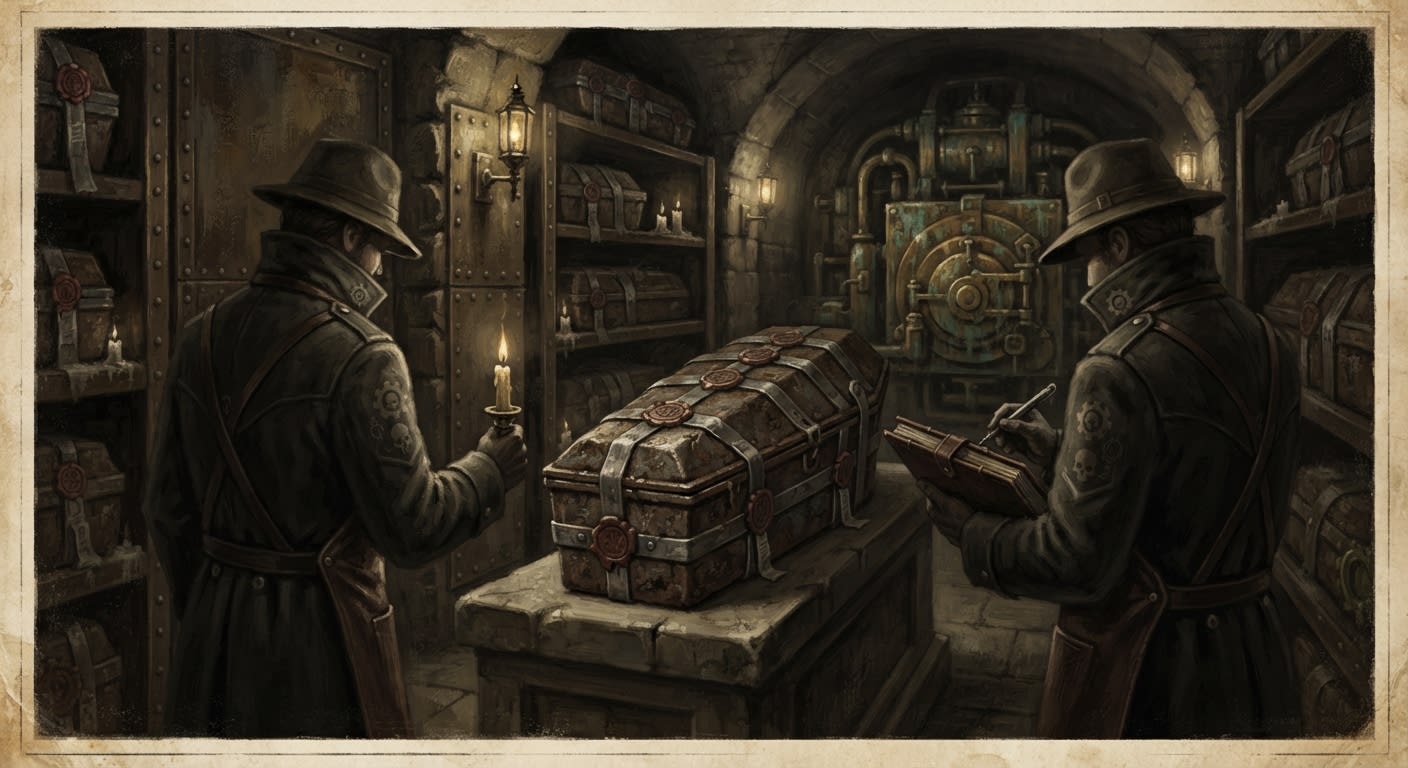
Ashes of the Sundering
The day in the jar, and the seal around the fear
The Bureau of Relics keeps a sealed iron vessel said to contain the Sundering's own residue, gathered from Vienna's cathedral floor and never opened since.
Codex Ref. V.1.03-045
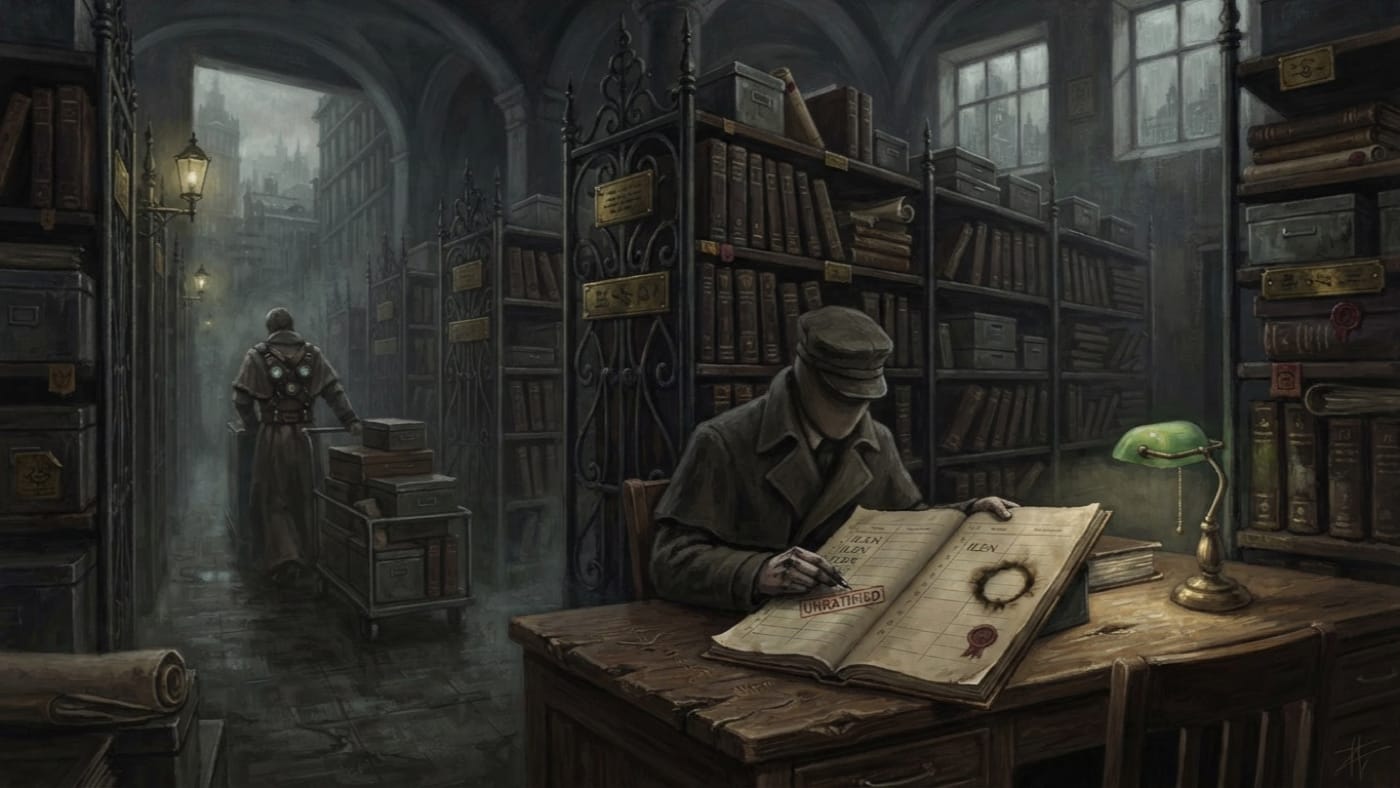
Auxiliary Ilen of the Lesser Quarter
Two names, one place in the roster, and no man the Ledger can certify
Auxiliary Ilen appears in certain rosters of Prague's Night of Crowns, A.S. 8, where other copies name Marek. The Ledger preserves his name; it has never located the man.
Codex Ref. III.2.01-151
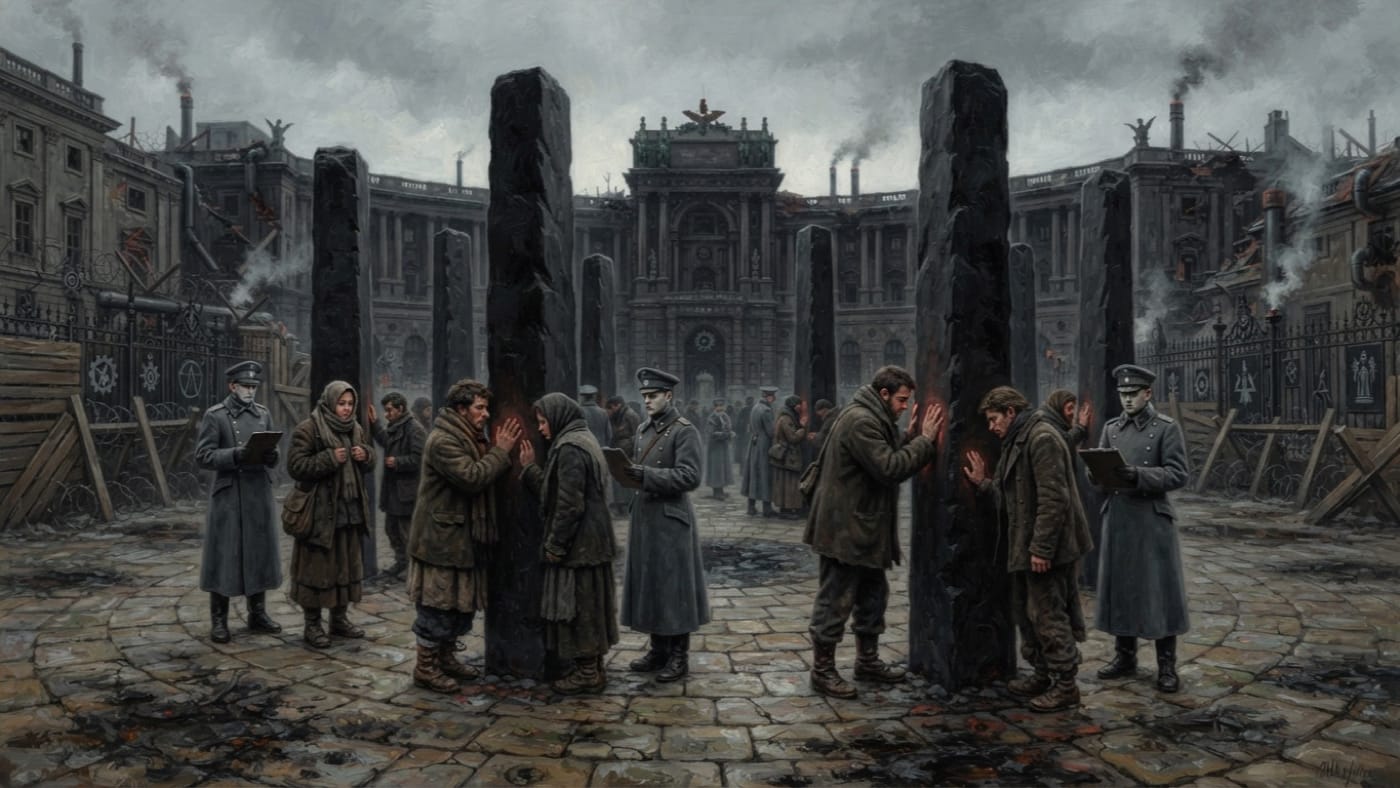
Basalt Columns of Heldenplatz
Seven stones, two explanations, and one temperature
Seven basalt columns warm the palms of Vienna's pilgrims at thirty-seven degrees. Raised in A.S. 95 where Rationalist pyres burned cold, they need no fuel; their explanations require two Bureaus.
Codex Ref. II.4.09-012
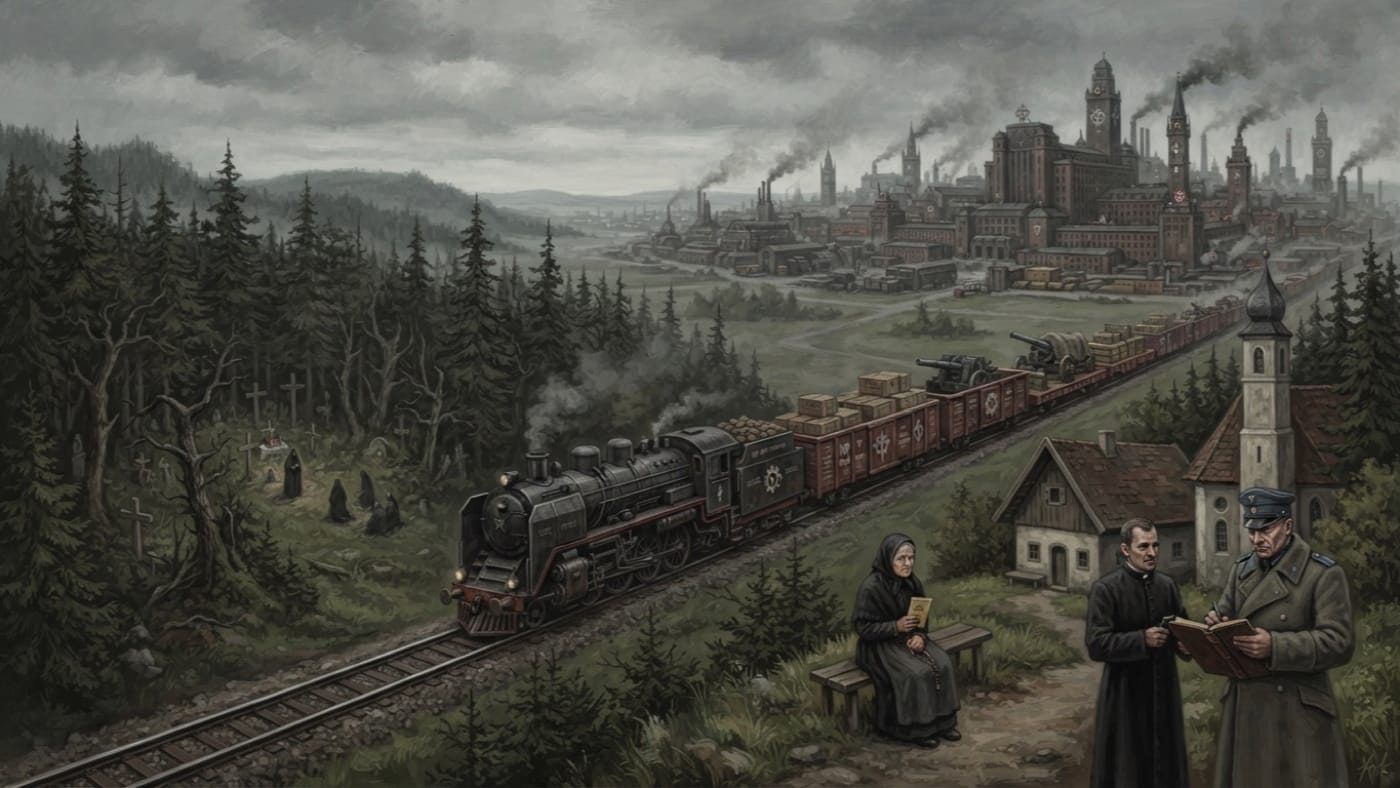
Bavaria
The heartland pays for safety one son at a time
Bavaria's forests once hid scattered faithful. Its parishes now supply the Continental Levy, while Munich sends War's freight east. Heartland safety is paid for one household at a time.
Codex Ref. II.2.11-201
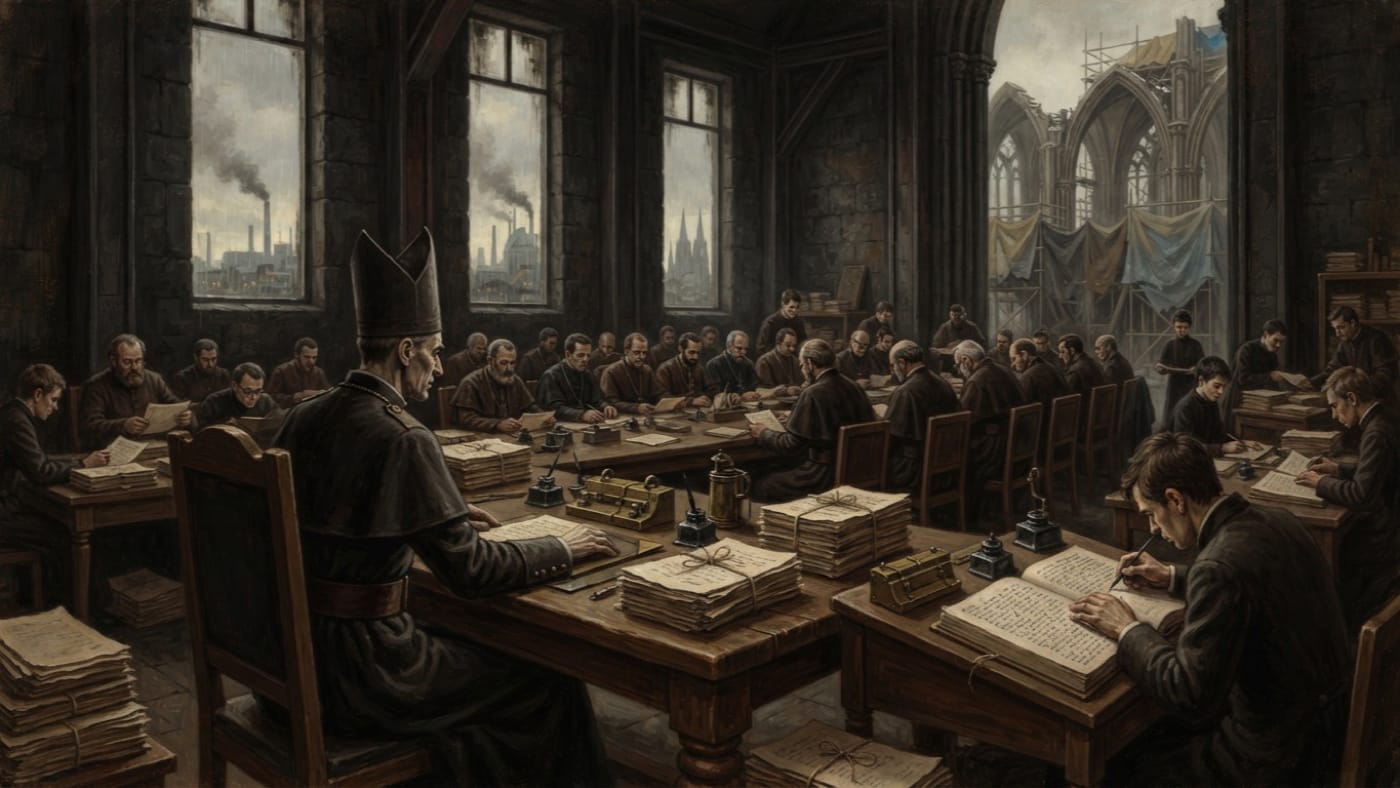
Bishop Adelmar of Cologne
Nine days entered; a lifetime left blank
Bishop Adelmar hosted the nine-day First Council of Cologne in September A.S. 27. Seven articles failed; voluntary requests survived. His life dates remain outside the Ledger.
Codex Ref. III.2.01-253
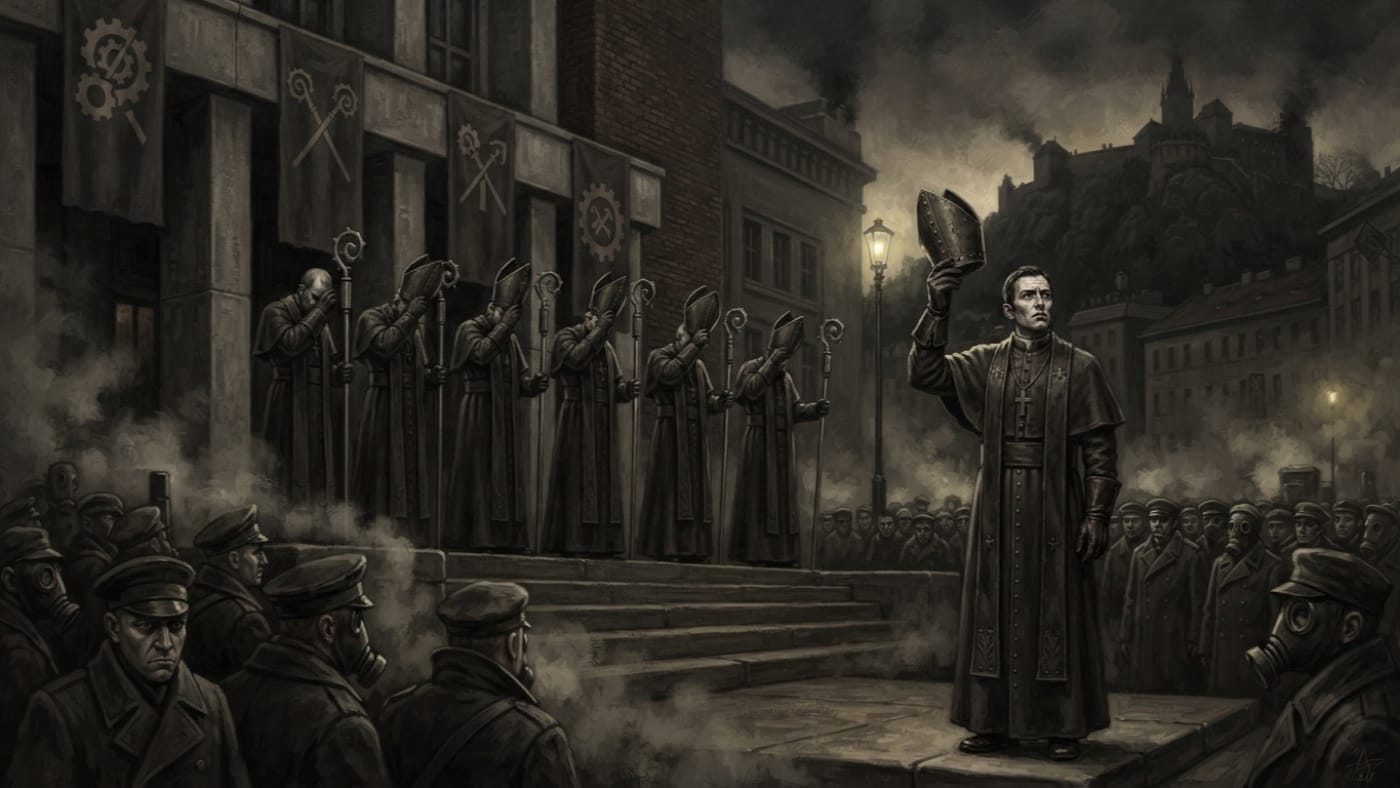
Bishop Marek of Vyšehrad
The seventh line names a bishop; the vellum supplies no man
Certain rosters name Bishop Marek of Vyšehrad as Prague's seventh bishop at the Night of Crowns, A.S. 8. The Ledger keeps the name; attendance, gesture and death remain unconfirmed.
Codex Ref. III.2.01-254

Bishop of Worms
A title, two toasts, and an existence disputed by clerks
A bishop vanished between the ninth and tenth toasts at Regensburg in A.S. 29. Reason declared him nonexistent; Records keeps his file open and his fate unproved.
Codex Ref. III.2.01-257
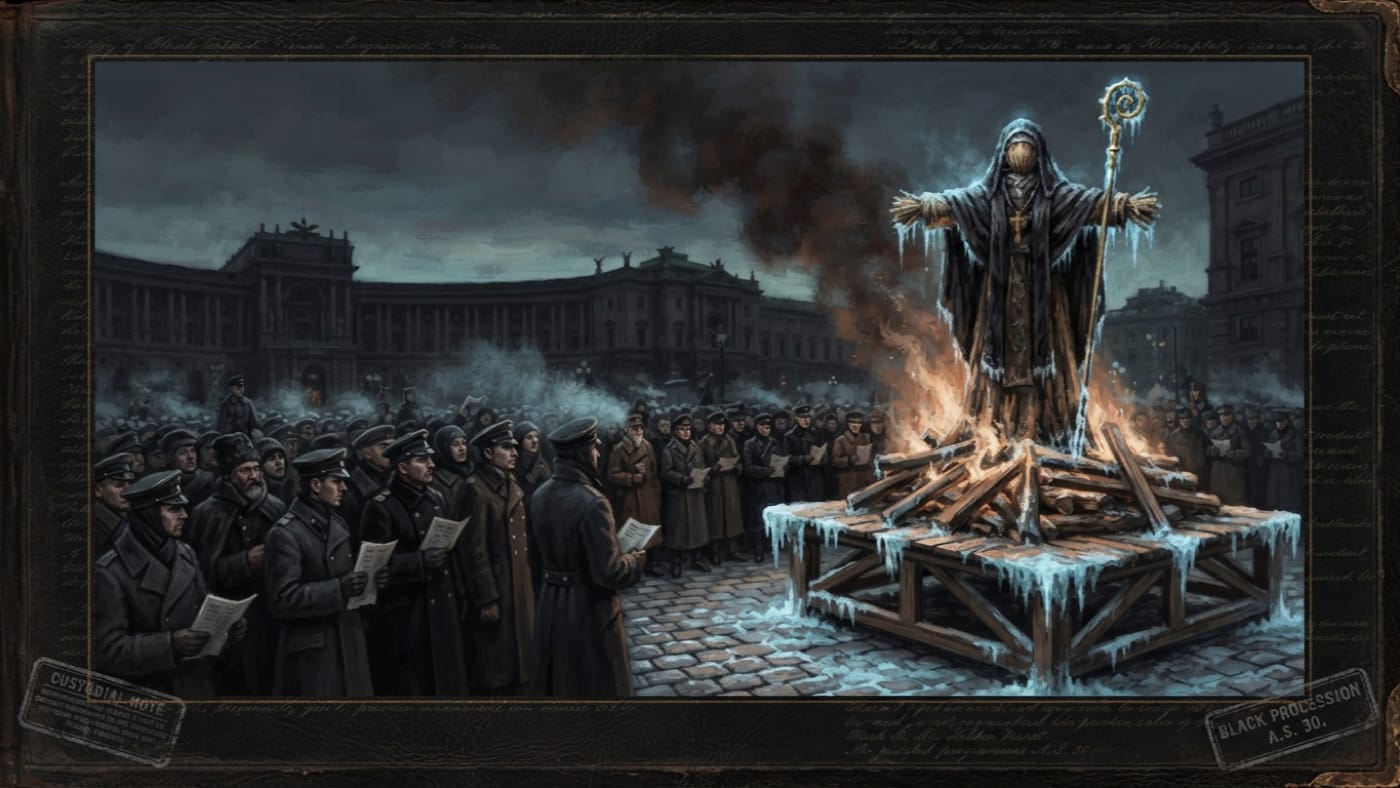
Blessed Adalheid
The Republic burned her likeness and preserved its own indictment
Blessed Adalheid survives in Vienna's relic processions, a tradition of healing the blind, and an effigy burned in A.S. 30. The Ledger keeps her title and declines to invent her life.
Codex Ref. III.2.01-281
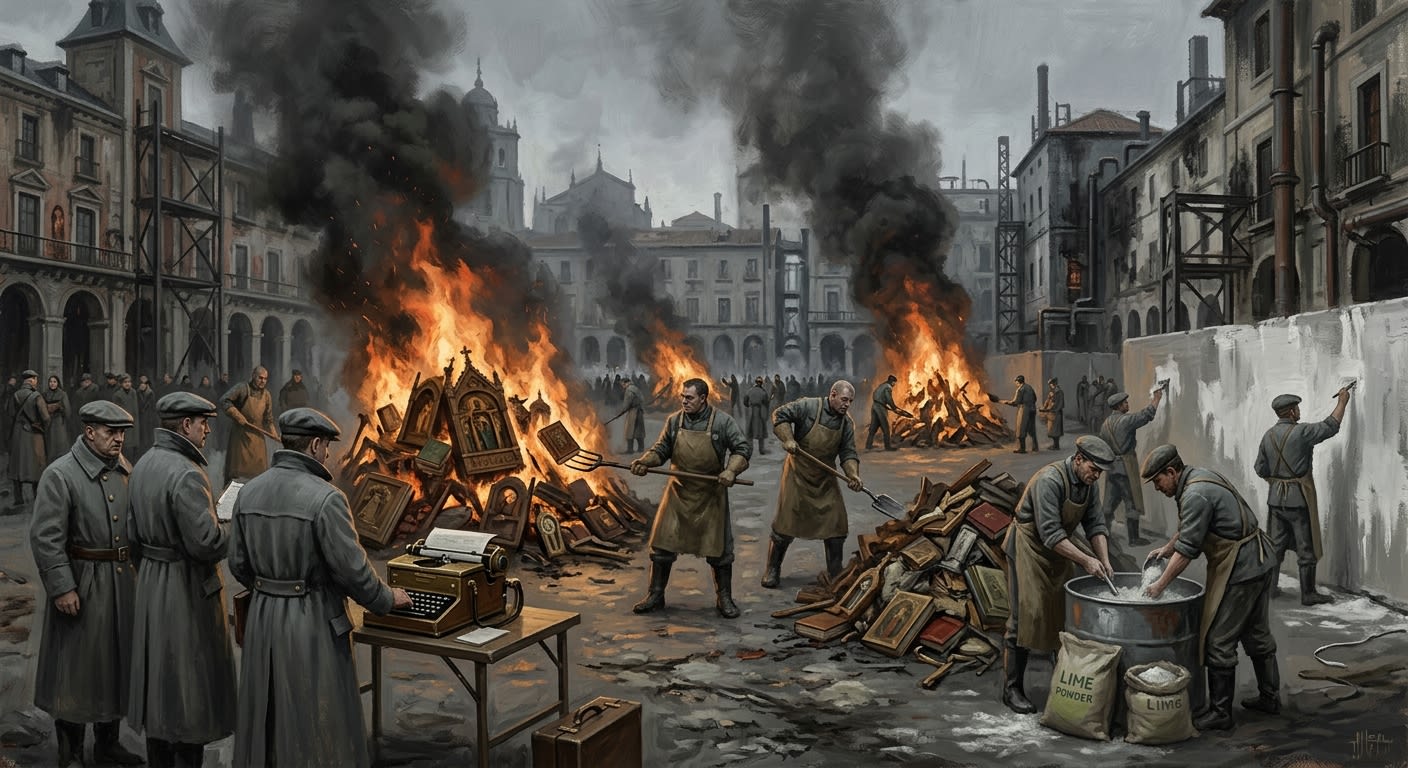
Bonfires of Purification
The walls have not finished speaking
The Bonfires of Purification were Iberia's pre-Synod Rationalist liturgies of theft: relics catalogued, mocked, burned, mixed into ash-lime, and taught from walls that remembered.
Codex Ref. VII.8.06-018
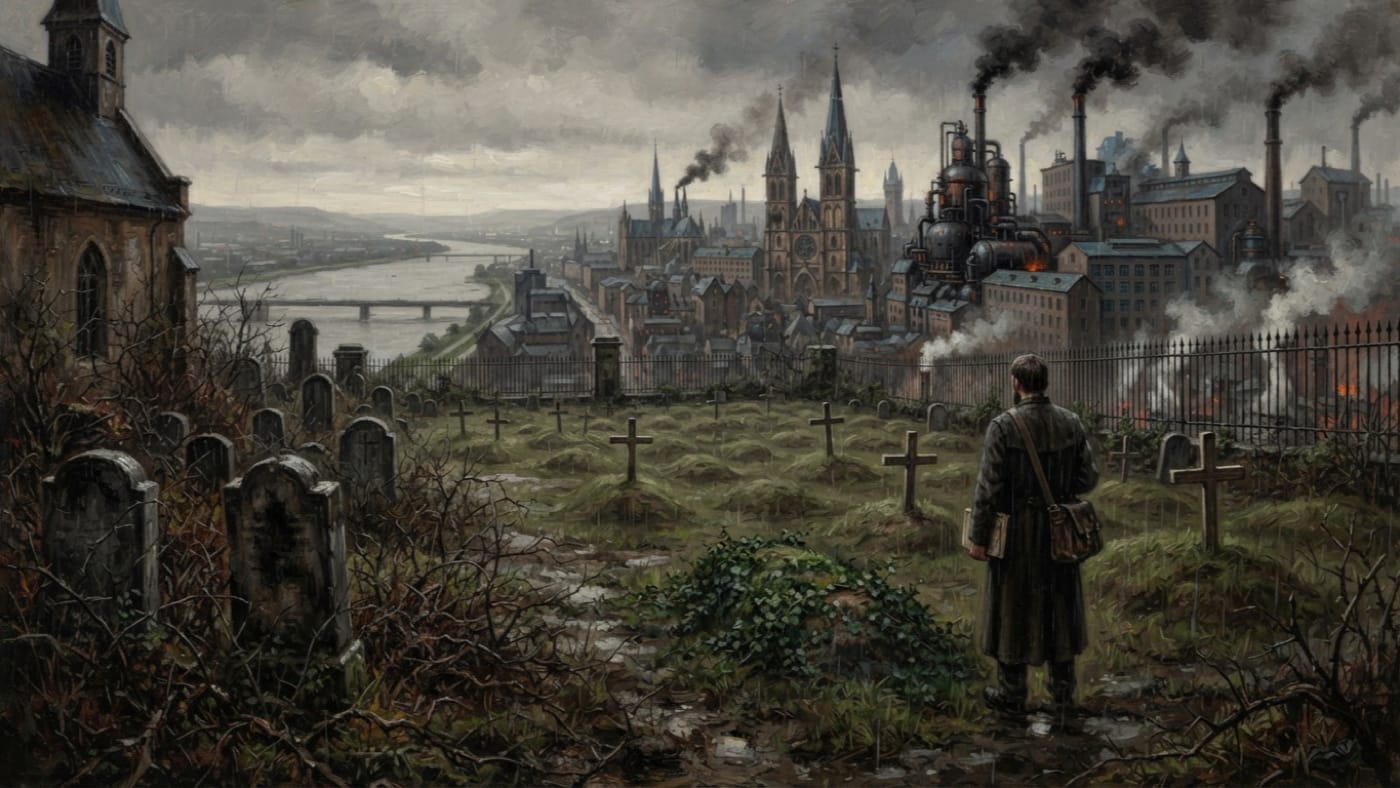
Bonn
A saint nearby; no directions supplied
Bonn is a Rhineland city on the Rhine. Ignatius Brenner died and was buried nearby in A.S. 71. The churchyard is unnamed, the grave unmarked, and the record supplies no directions.
Codex Ref. III.2.04-313
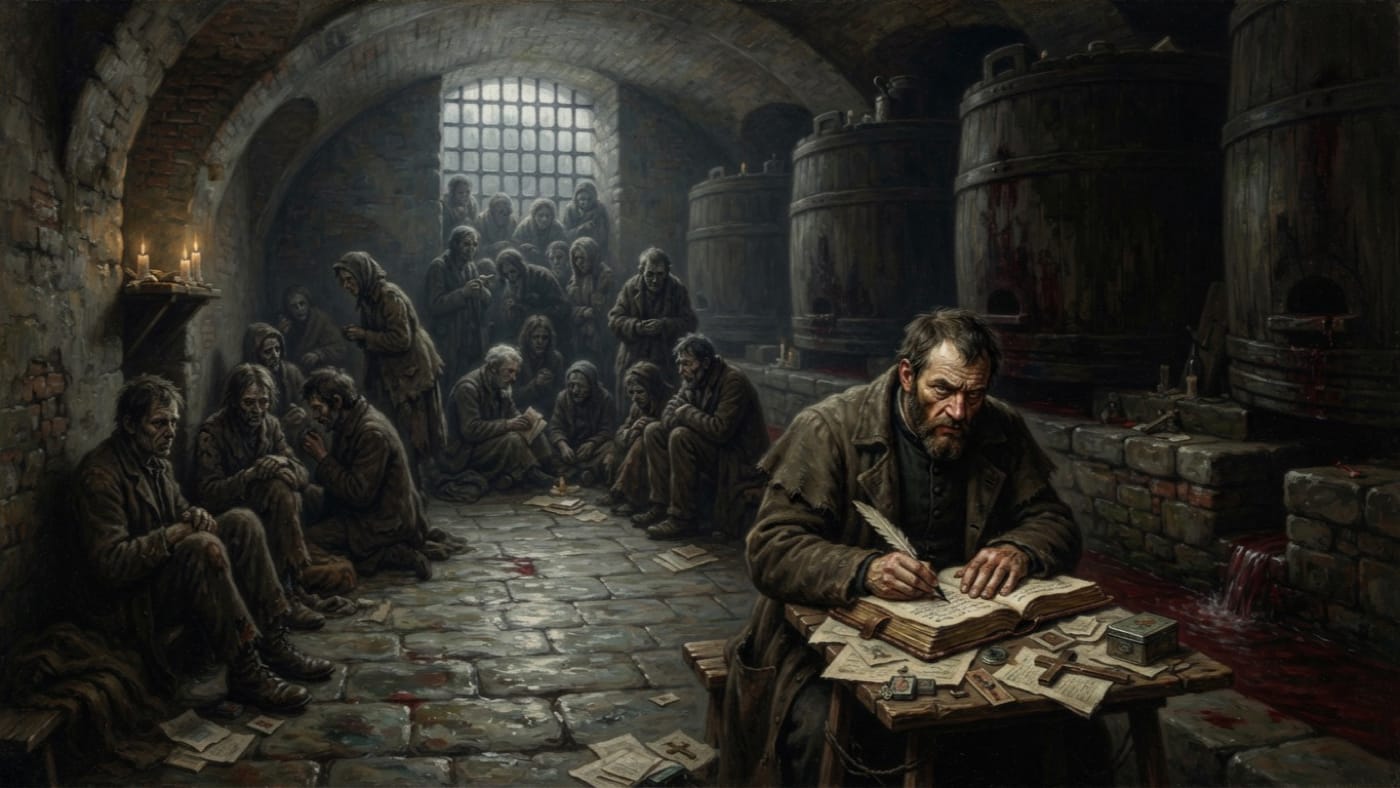
Brewers' Quarter
Sixty souls beneath the vats
Cologne's brewing quarter sheltered sixty faithful beneath the vats. In A.S. 34 its drains ran crimson; Records preserved the journal and holds no survey of the stone.
Codex Ref. II.1.04-034

Cardinal-Marshal Severin of Avignon
The tourniquet of Montreval, ugly enough to save a front
Severin of Avignon held Montreval through the Atheist Wars: severe, loud, bloodstained, and too useful for the Bureau to canonise cleanly.
Codex Ref. III.2.01-007
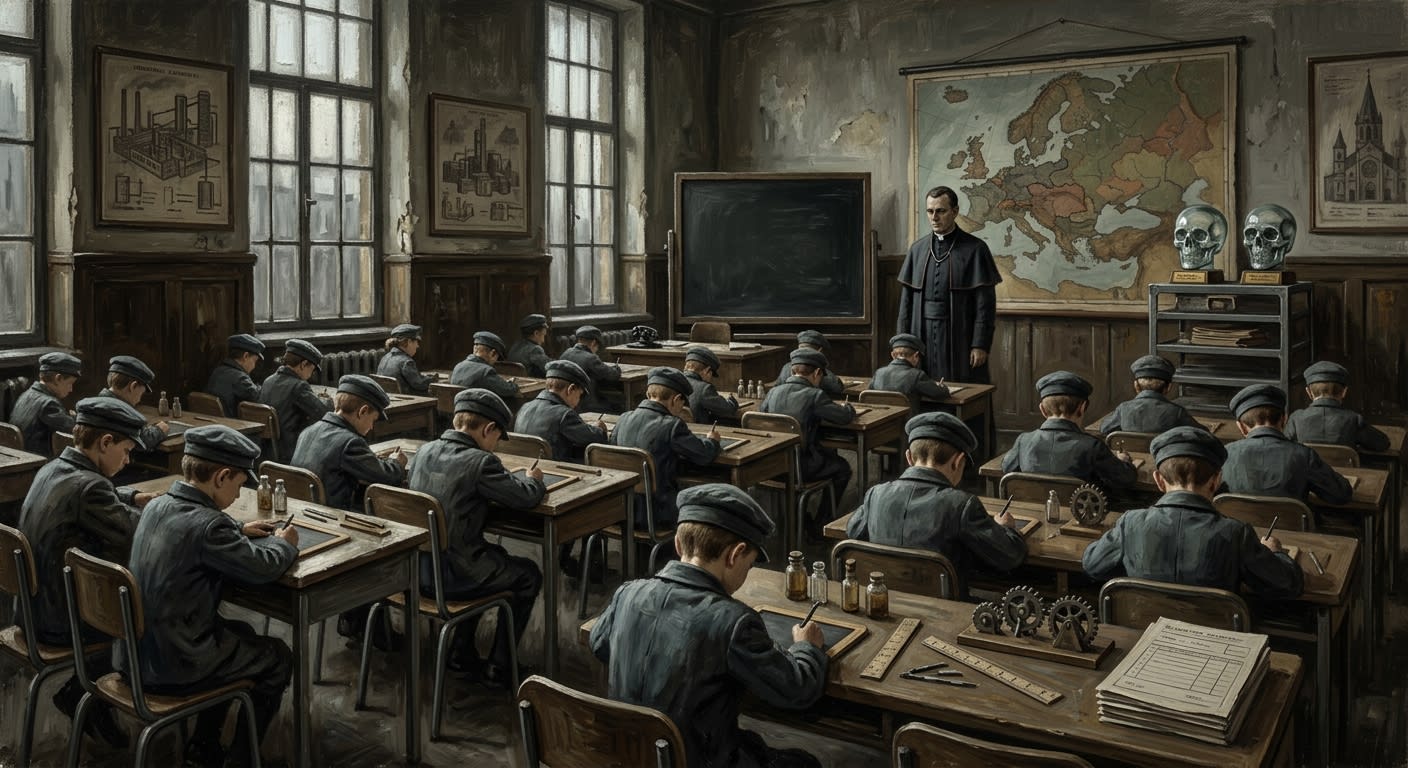
Catechism Schools
The child enters unformed; the school returns property
The Synod's parish and ward school system, where Creed, arithmetic, maps, loyalty trials, and entrance Glass Skull Stacks turn children into obedient instruments with names attached.
Codex Ref. VIII.8.01-001
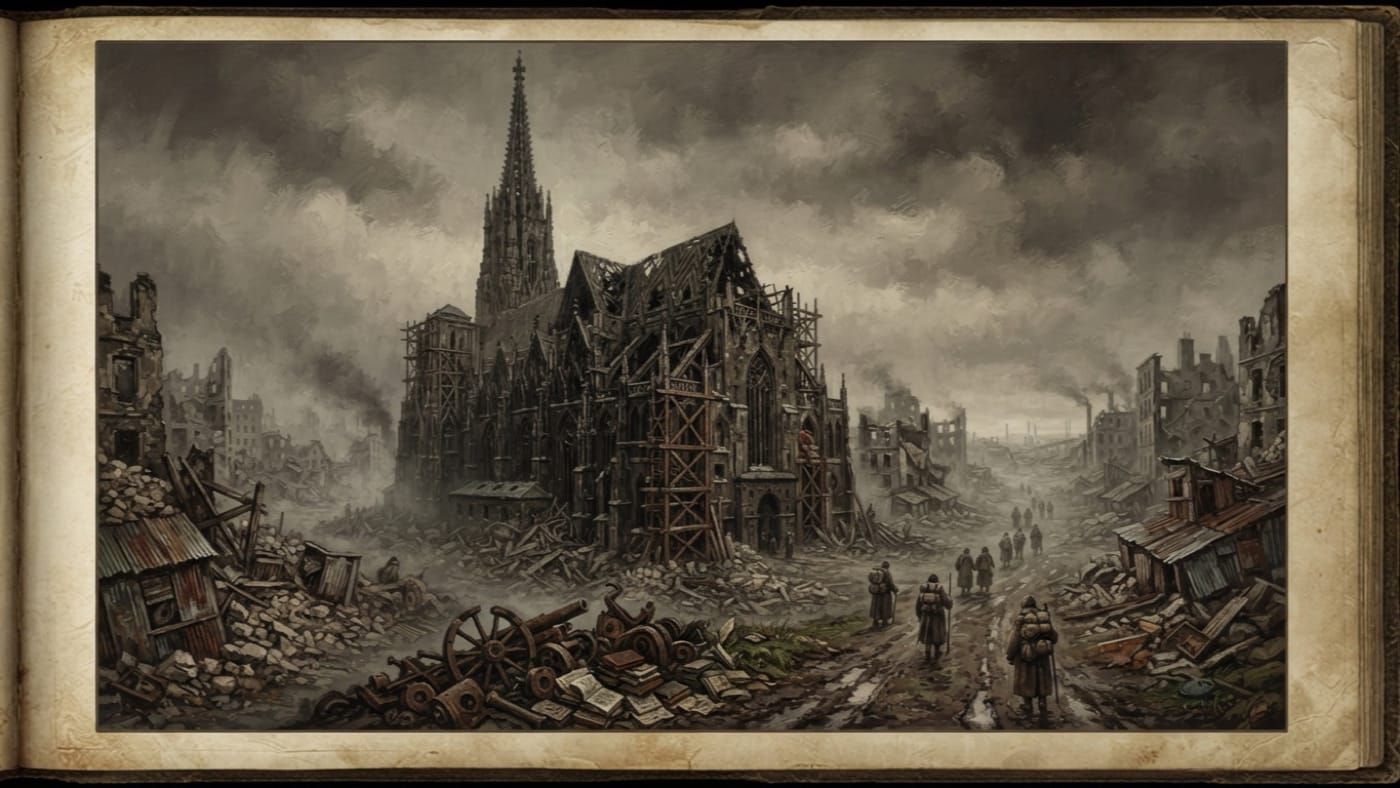
Cathedral of Saint Stephen
A Dead See, a Condemned Academy, and Stones That Stayed
Vienna's former cathedral housed the Rationalist Academy by A.S. 30 and was reclaimed with the city in A.S. 95. The See is dissolved, the Academy condemned, and the Ledger records no successor occupant.
Codex Ref. II.4.09-201
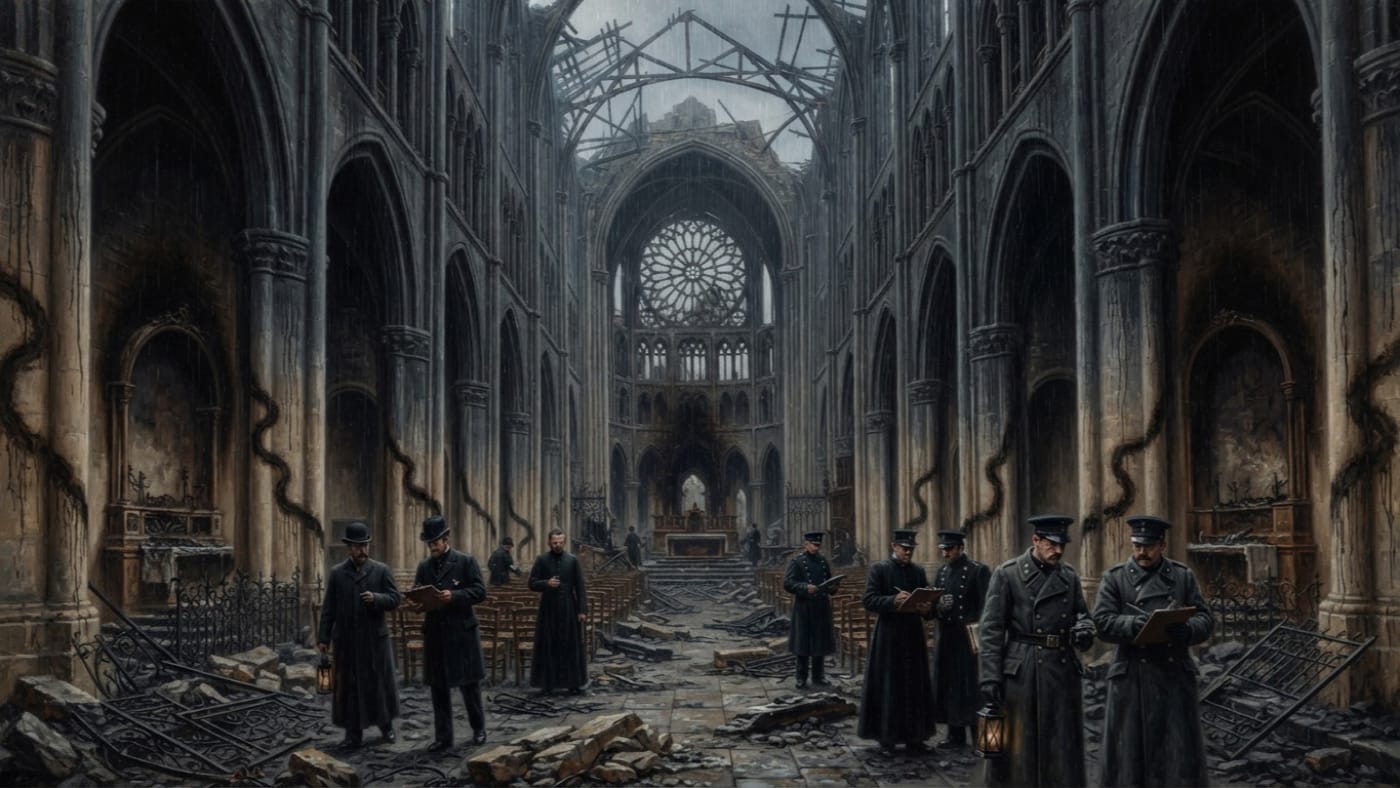
Cauterization
The cathedral burned; the stones have yet to finish their testimony
The A.S. 24 burning of Rouen's cathedral, orchestrated by Rationalists who blamed arsonists. Witnesses swore the fire paused at every altar; its agency remains unresolved, and the stones still bleed soot.
Codex Ref. VII.1.04-024
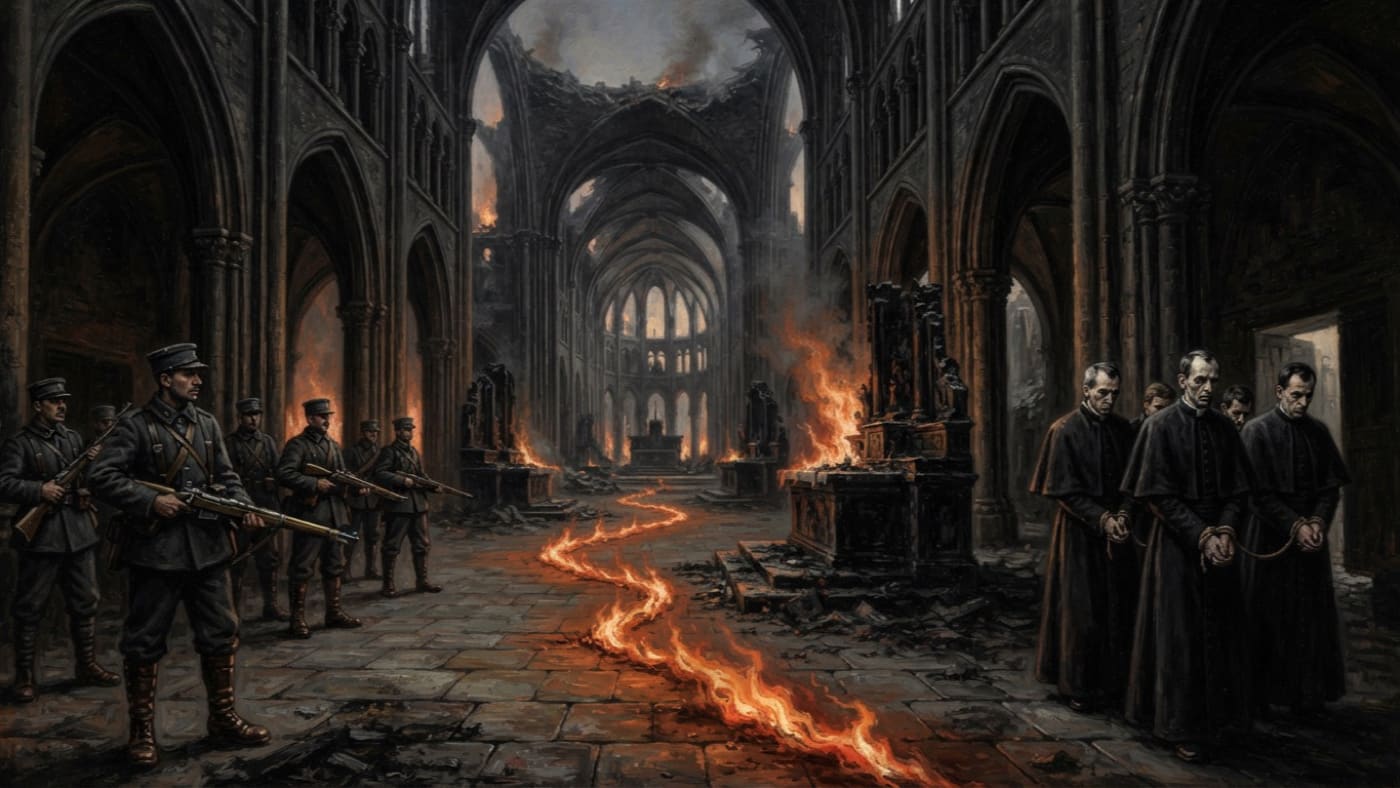
Cauterization of Rouen
The burning was arranged; the fire remains under theological review
The Rationalists gutted Rouen's cathedral in A.S. 24. Witnesses swore the fire paused before each altar. Three captured priests later died at Regensburg. The Bureau disputes the flame's agency; responsibility requires no debate.
Codex Ref. VII.2.01-004
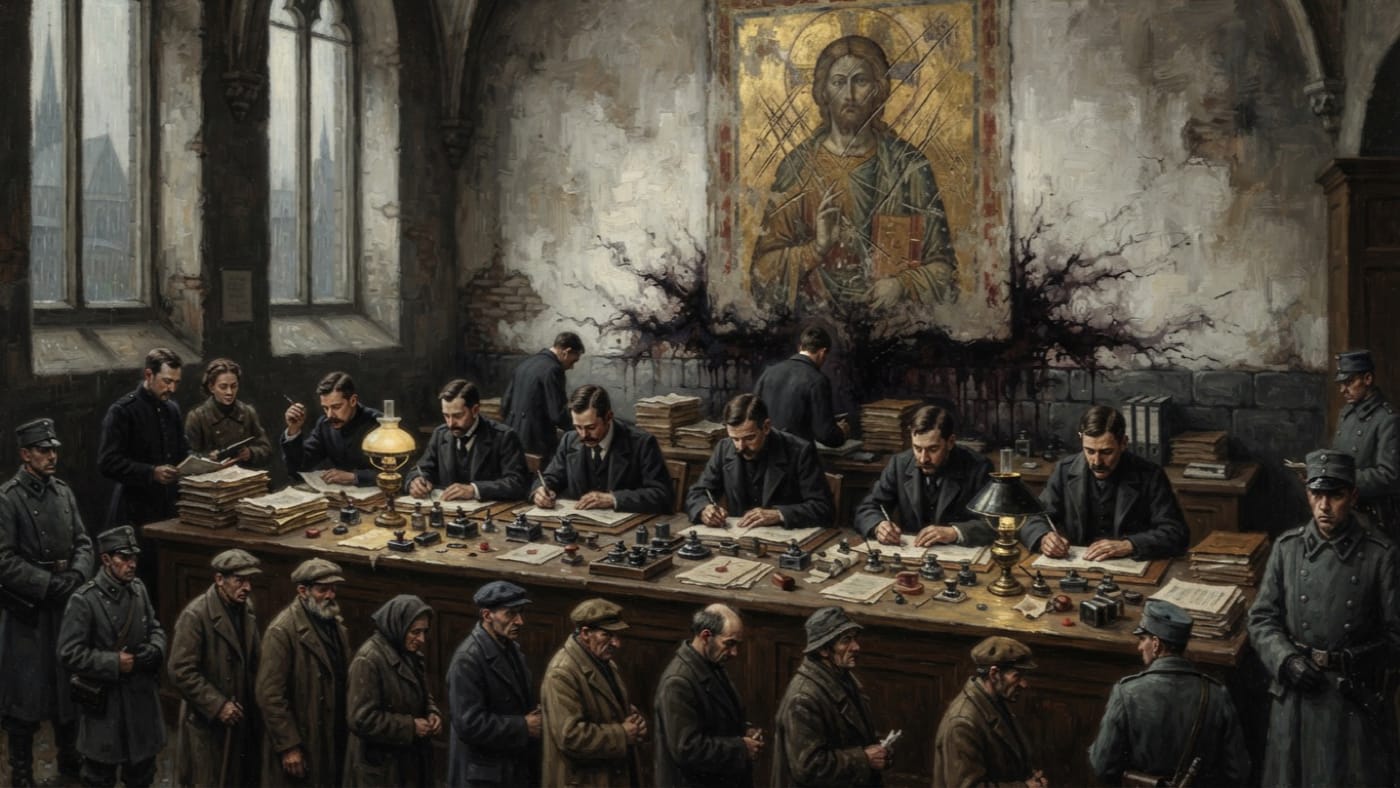
Chapel of the Crowned Seat
Where confiscation acquired a halo
Rationalist clerks signed away Aachen's property beneath a scratched halo. The Chapel of the Crowned Seat's wall darkens every Saint Bartholomew; administration leaves a stain.
Codex Ref. II.2.02-002
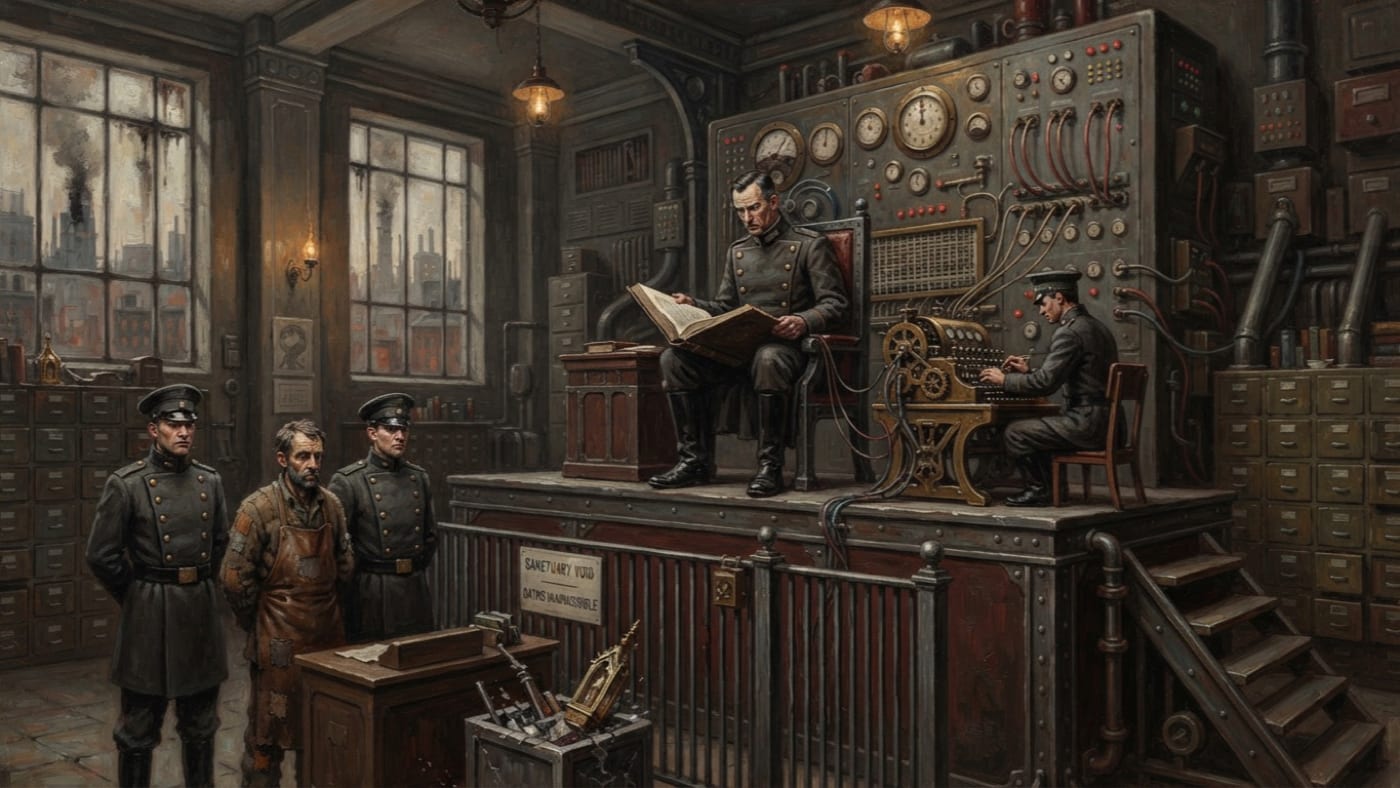
Code of Rational Jurisprudence
A Courtroom Without Relics, and a Divisor Where Mercy Belonged
The Republic's court law made evidence sovereign, abolished relic-sworn oaths and sanctuary, and priced punishment by usefulness. Indexed to Regensburg, A.S. 30; its promulgation remains unknown.
Codex Ref. XIII.1.58-030

Colonel Verdane
He did not break Aachen; he purchased the hinge
Colonel Verdane bought Aachen with terms, silk, wine, and exact road arithmetic. Guillaume sold the gate; Verdane priced the hinge.
Codex Ref. I.1.04-001

Concordats of Governance
Four hundred and twelve pages proving Hell does not respect footnotes
The Concordats of Governance were the Rationalist Republic's procedural gospel: prefectures, censuses, tribunals, and emergency clauses annulled too late to unmake their wounds.
Codex Ref. XIII.1.12-030

Corentin Madec
The fisherman who kept the book before Strasbourg learned to want it
Corentin Madec, wounded witness of Saint-Malo, preserved Margaux's psalter long enough for the Bureau to call acquisition devotion.
Codex Ref. III.2.01-017
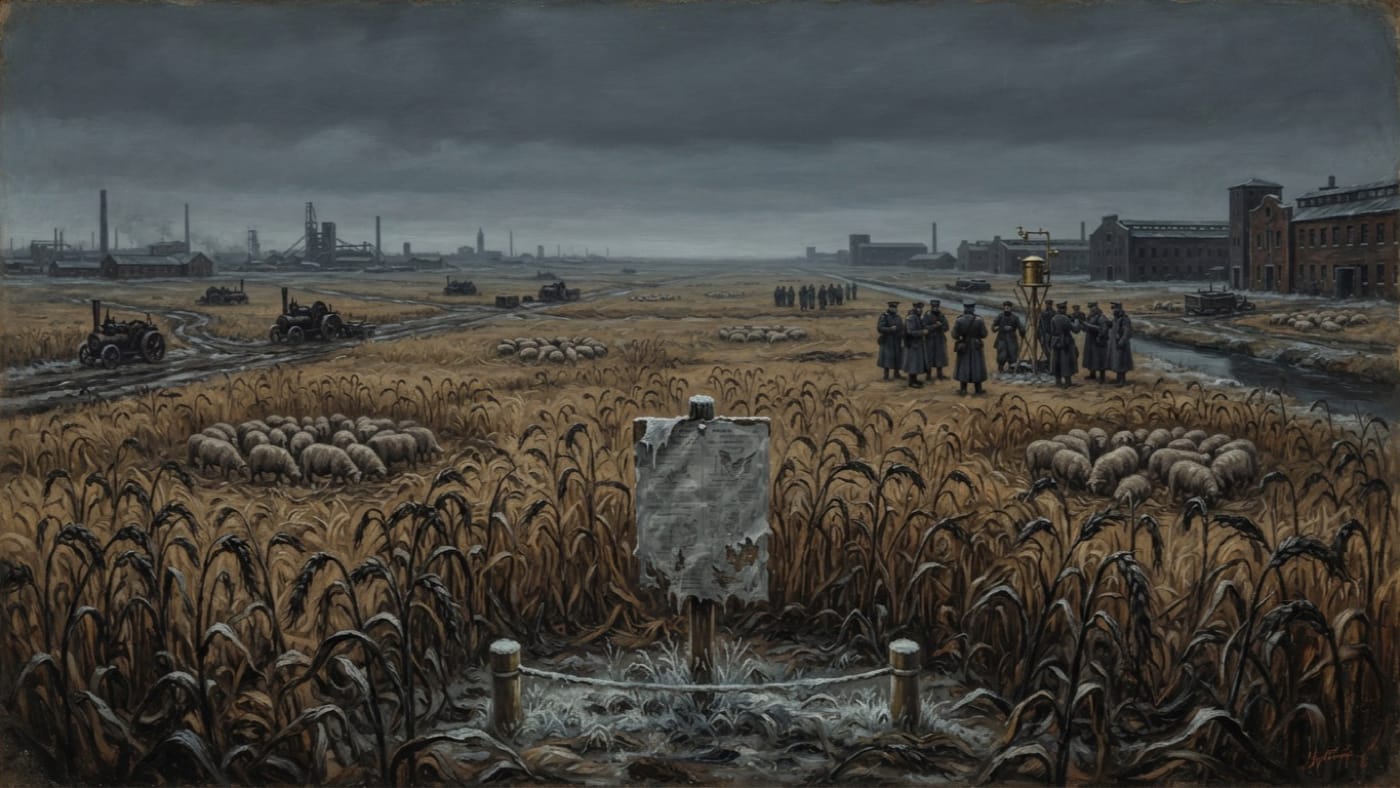
Council of Natural Sciences
One unsigned treatise, a continent of witnesses, and no confirmed author.
The Republic's Council survives as a name credited with the anonymous fifth treatise of A.S. 32. It blamed forty days without sunrise on mass hysteria. Authorship remains unconfirmed; the barley has already testified.
Codex Ref. I.1.03-033
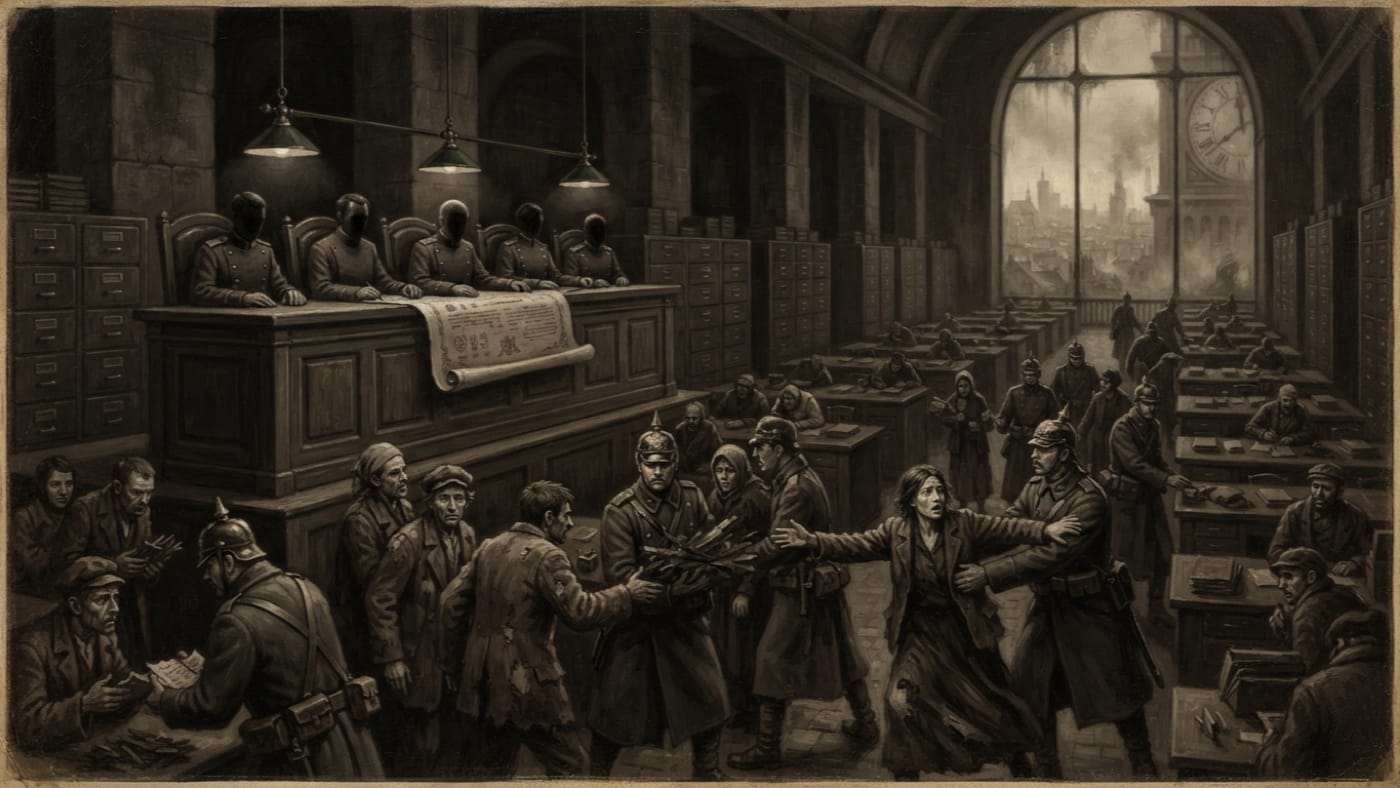
Council of Rational Governance
The committee that prosecuted the warning instead of answering it
Vienna's Council of Rational Governance answered the Eastern Silence in A.S. 38 by criminalising supernatural testimony. Its charter and councillors are unrecorded; its confidence survives in the declarations.
Codex Ref. I.1.03-038
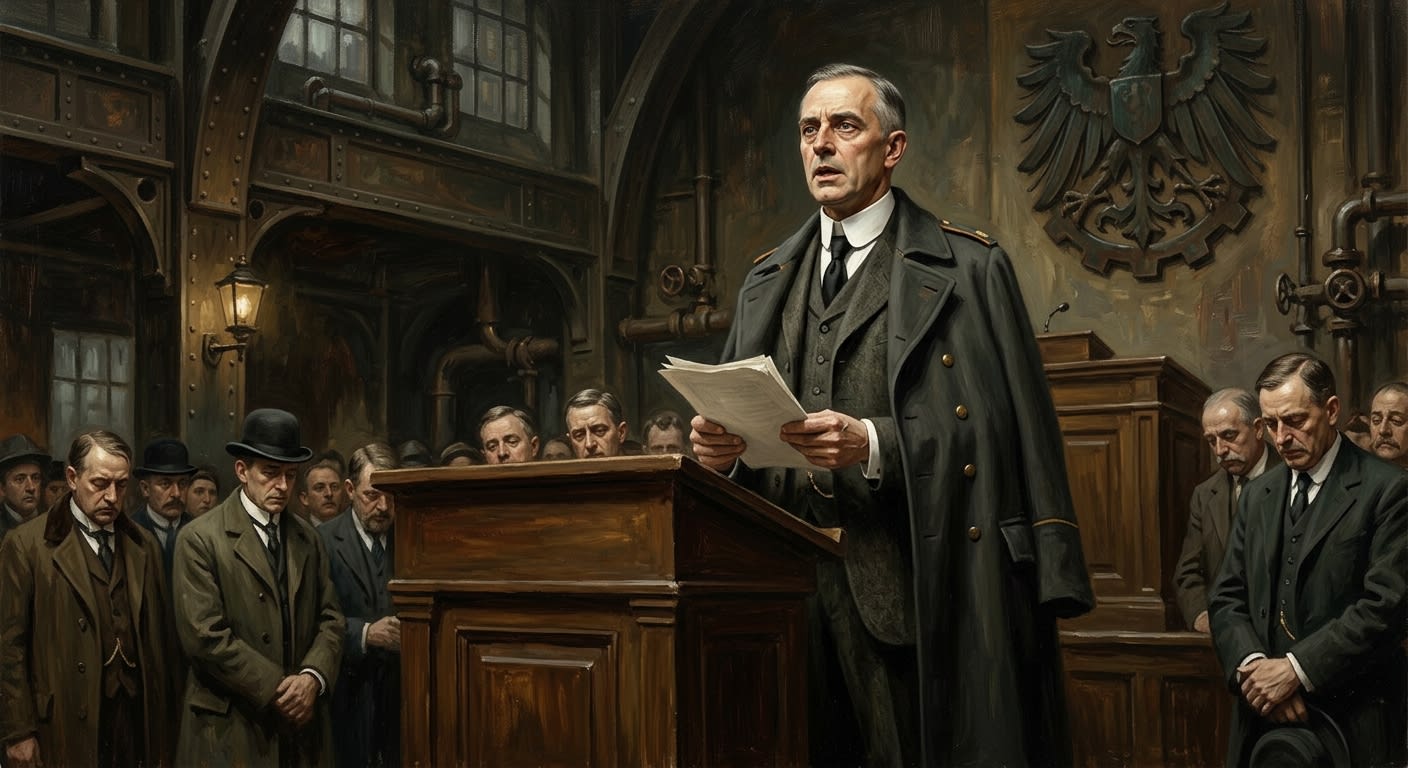
Dr. Albrecht Klemm
He saw the cold fire, named the premise, and chose the lecture hall anyway
Rationalist Prefect of Public Instruction whose A.S. 30 Black Procession address nearly produced repentance, then produced only better cowardice.
Codex Ref. III.2.01-077
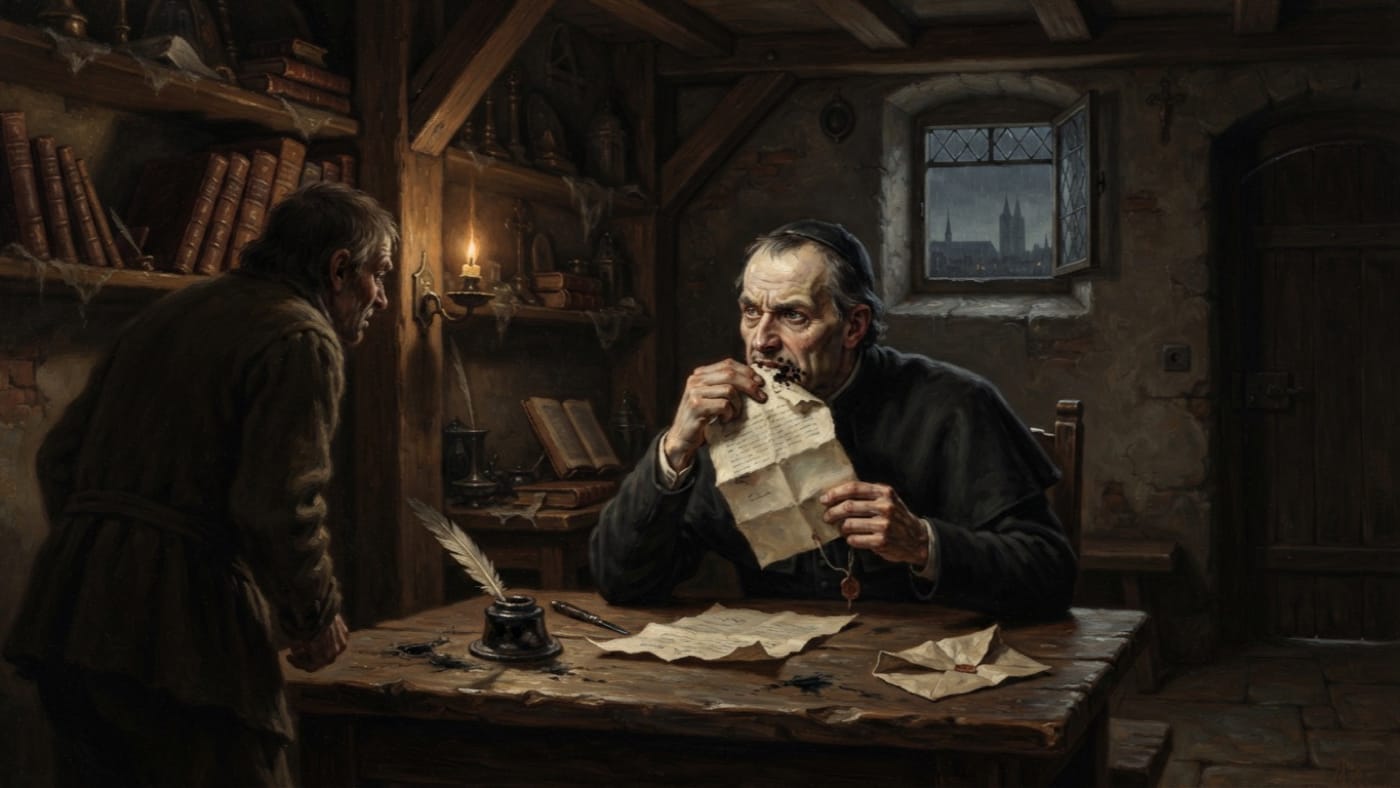
Düsseldorf
One priest. One letter. Nothing left to quote.
A Rhineland city remembered for Father Grauss, who ate the Amsterdam letter in A.S. −32 / 1678 CE. The magistrate supplied three days in gaol; the Bureau supplied a classification.
Codex Ref. II.2.01-941
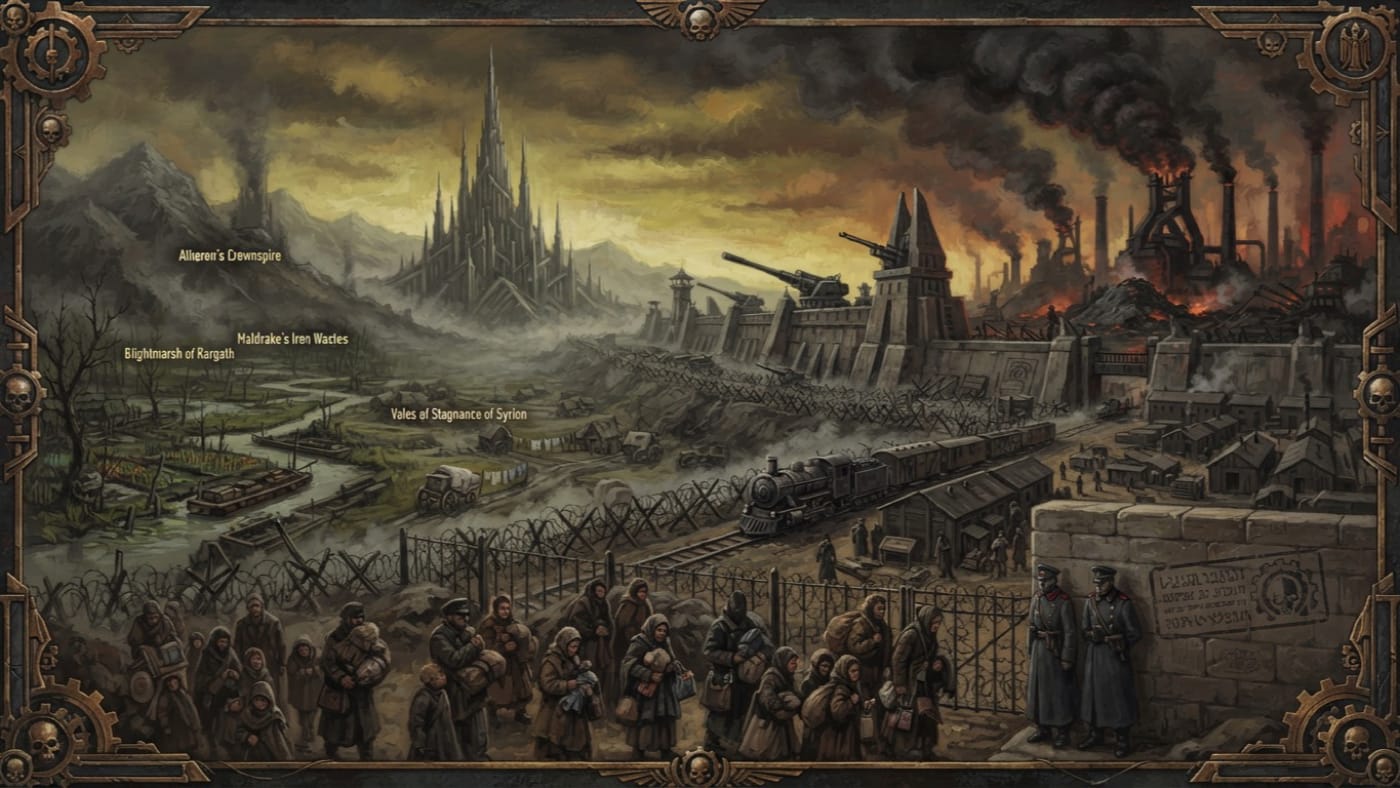
Eastern Kingdoms
The lands were lost; the Ledger retains their names
The eastern jurisdictions lost after the Sundering, now largely held by rival Sin-General dominions. Their people endure; the Ledger still calls the occupation temporary.
Codex Ref. II.6.07-201
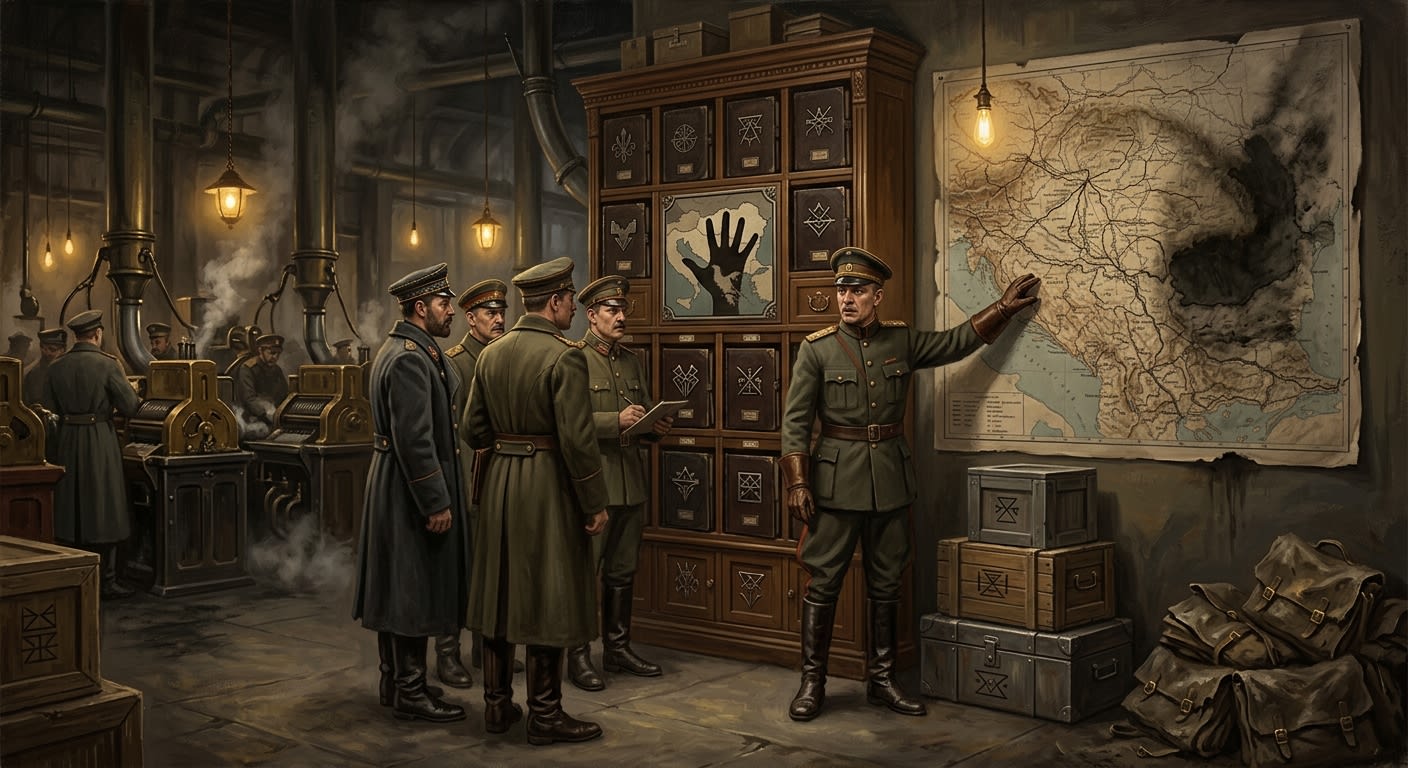
Eastern Silence
When the East stopped answering and the world mistook absence for order
In A.S. 38 the Balkans stopped writing back. Letters failed, couriers vanished, maps lied, and the Rationalists called silence a quarantine until Hell translated it.
Codex Ref. VII.4.19-001

Edict of Ironmouth
When Reason mistook prayer for infection and discovered eleven thousand tongues to classify
A.S. 30 Rationalist law that made spoken prayer vocal treason, answered hymns with pincers, and left the Synod a cabinet of tongues to condemn and study.
Codex Ref. XIII.1.55-001
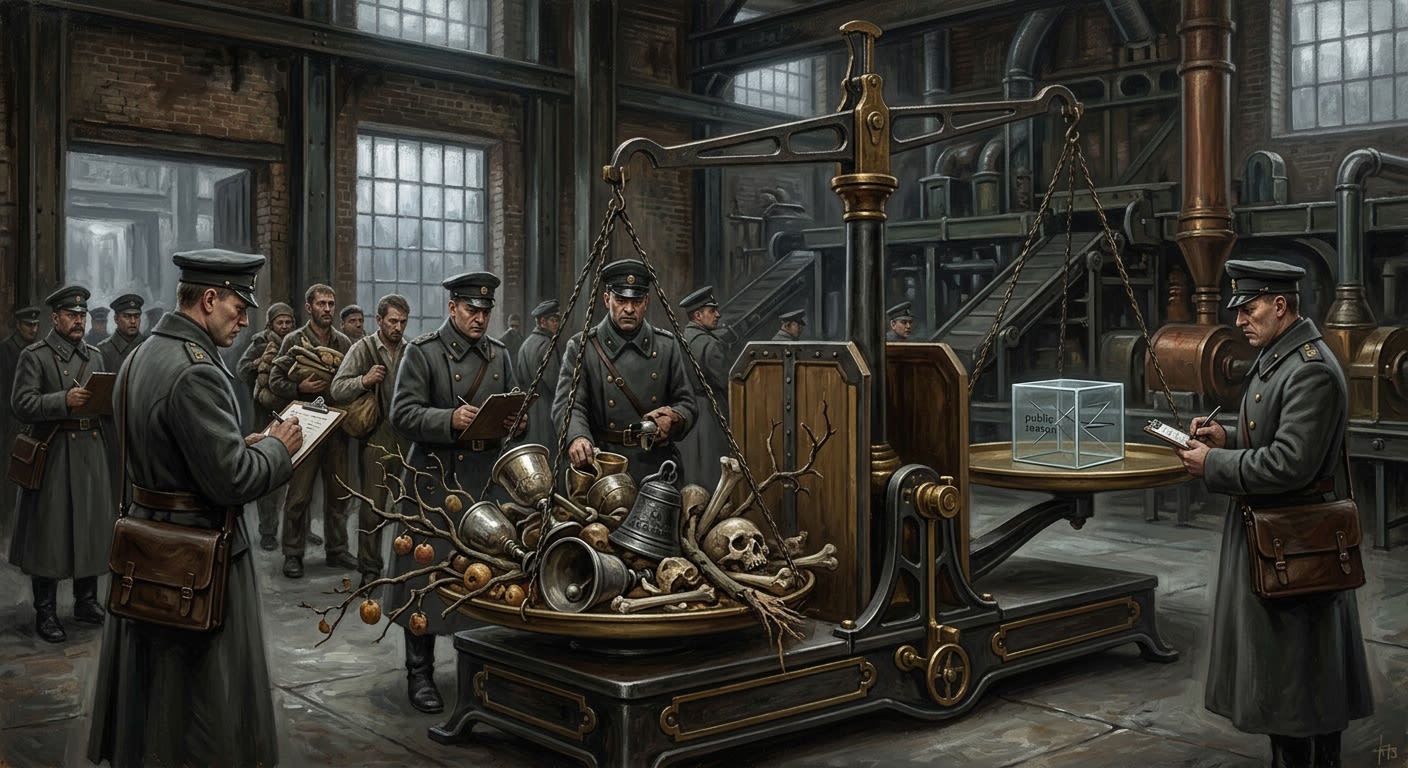
Edict of Rational Allocation
The chalice failed to justify its allocation, so theft put on spectacles
The Rationalist Republic weighed chalices, bells, bones, and orchards as idle matter, then called confiscation public reason until the Sundering audited the account.
Codex Ref. XIII.1.00-030

Europe
The wounded continent, held together by rails, bells, hunger, and denial
Europe is the wounded continent: Synod west, Charnel east, Line between, and every road, harbour, cradle, ration card, bell, and grave bent toward survival.
Codex Ref. II.0.01-201
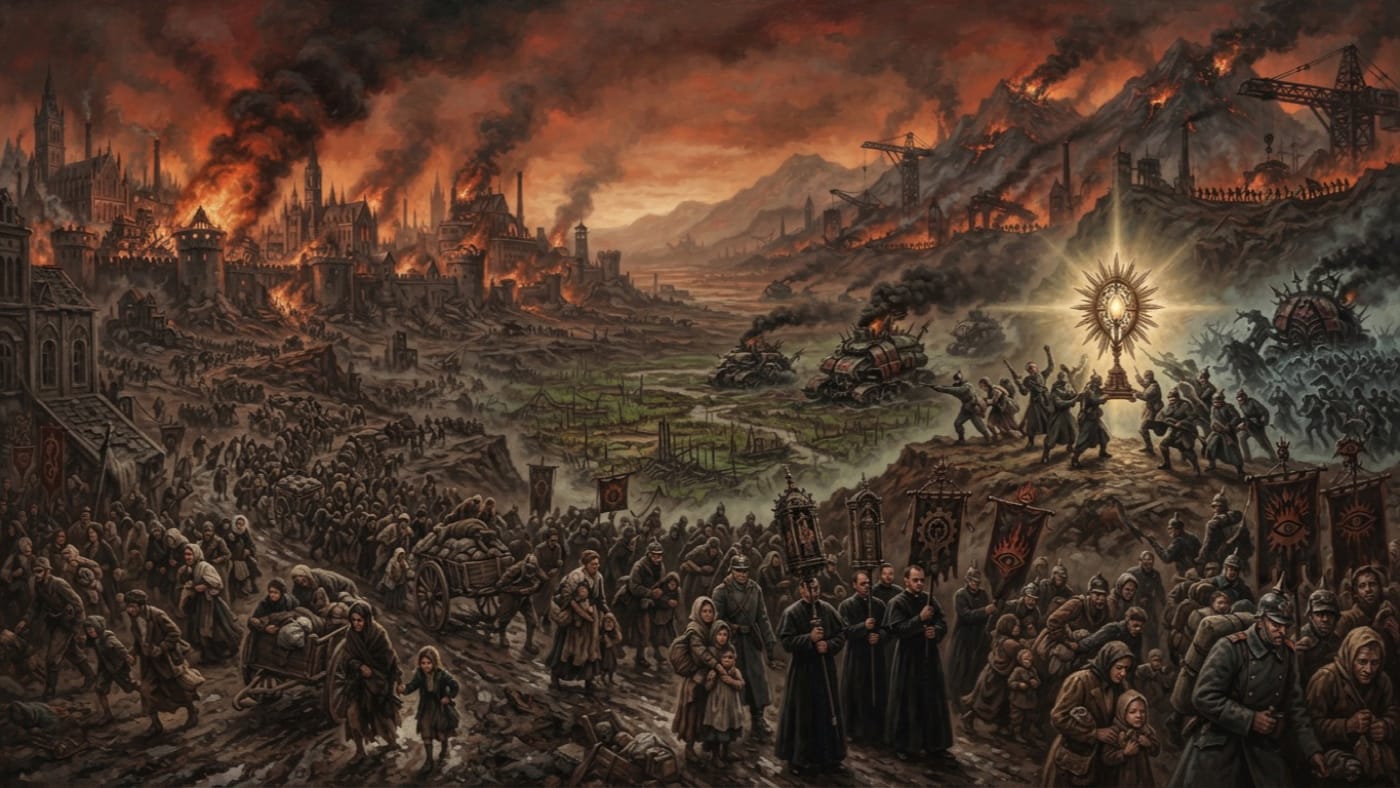
Fall of the Eastern Kingdoms
The Kingdoms Fell; Their Accounts Remain Open
The eastern jurisdictions collapsed after the Sundering of A.S. 45: garrisons burned, granaries failed, and refugees fled west. I retain their accounts in the Ledger; occupation does not constitute permission to forget.
Codex Ref. VII.1.02-001
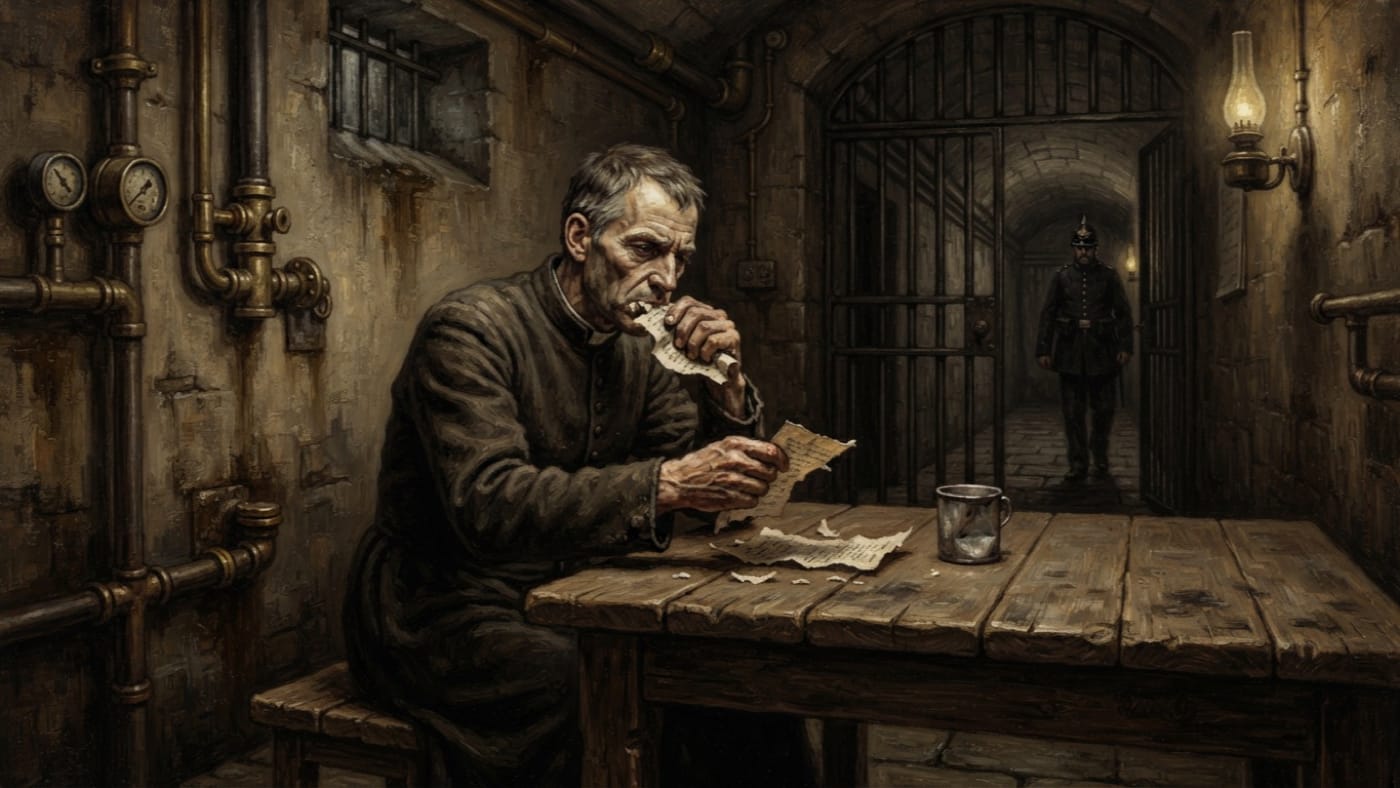
Father Grauss of Düsseldorf
One letter eaten. Three days served. Five words preserved.
Father Grauss ate the Amsterdam letter in A.S. −32 / 1678 CE, received a beating and three days in gaol, and did not recant. The Ledger calls him Doctrinally Sound, Gastronomically Irregular.
Codex Ref. III.2.01-1024

Father Ignatius of Cologne
The clerk whose breadbasket outranked an empire
Ignatius Brenner, parish clerk of Cologne, carried three apostolic phalanges beneath black rye in A.S. 31. The fire at Kalnik arrived seventeen years later.
Codex Ref. III.2.01-043

Father Wernher of Cologne
The cellar priest whose lists kept sixty souls from becoming a sermon illustration
Defrocked Cologne canon and Cellar Saint leader whose forty-seven-page journal preserves the underground Church between Regensburg and the Sundering.
Codex Ref. III.2.01-045
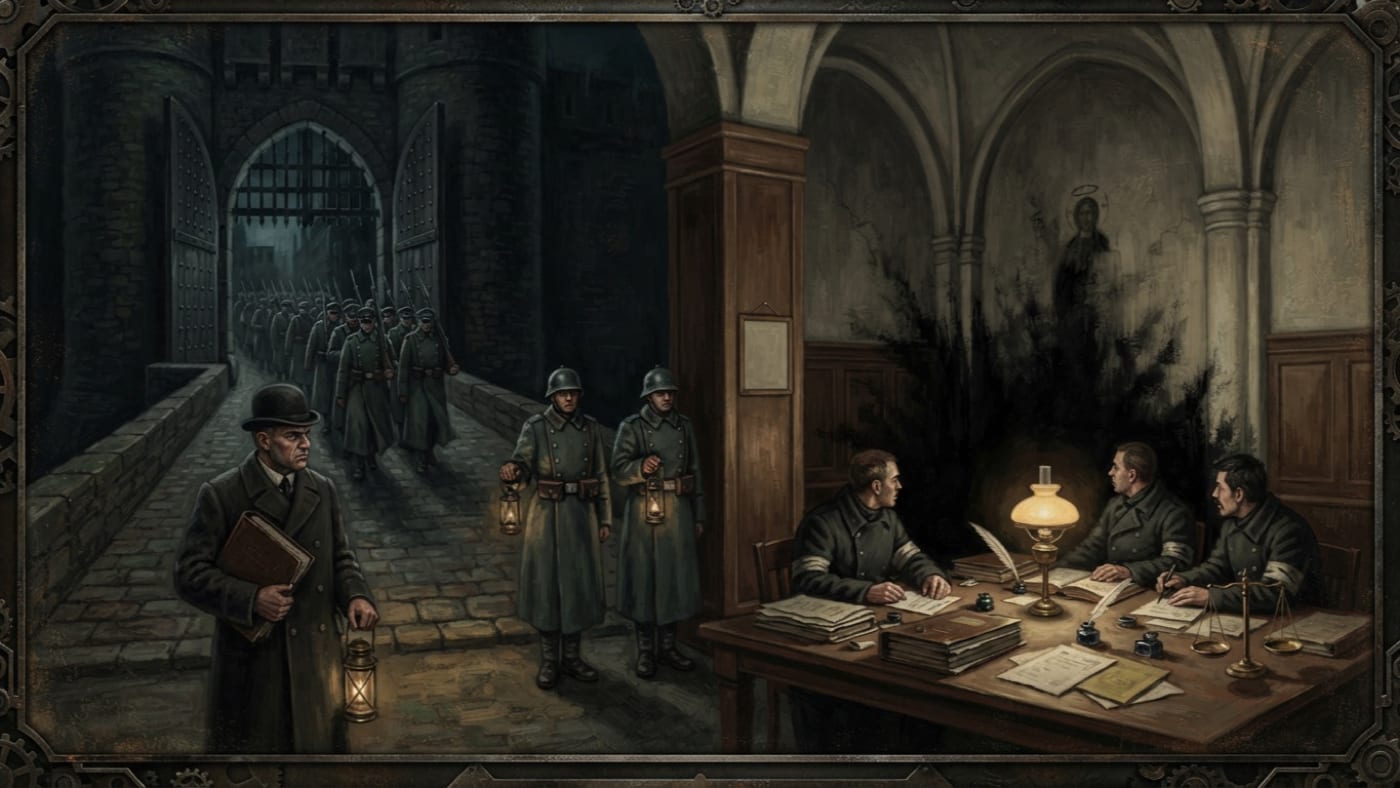
Feast of Saint Bartholomew
One opening, one stain
Aachen opened its western gate at midnight on this feast in A.S. 25. Each year, the former confiscation office turns ink-dark. The Bureau records both occurrences; it has not ruled on the stain.
Codex Ref. VII.8.10-025

First Black Census
The Republic learned to murder with a household table and a clean pen
The First Black Census turned belief into a column, children into transfer marks, and faithful households into blanks awaiting carts.
Codex Ref. I.1.06-030
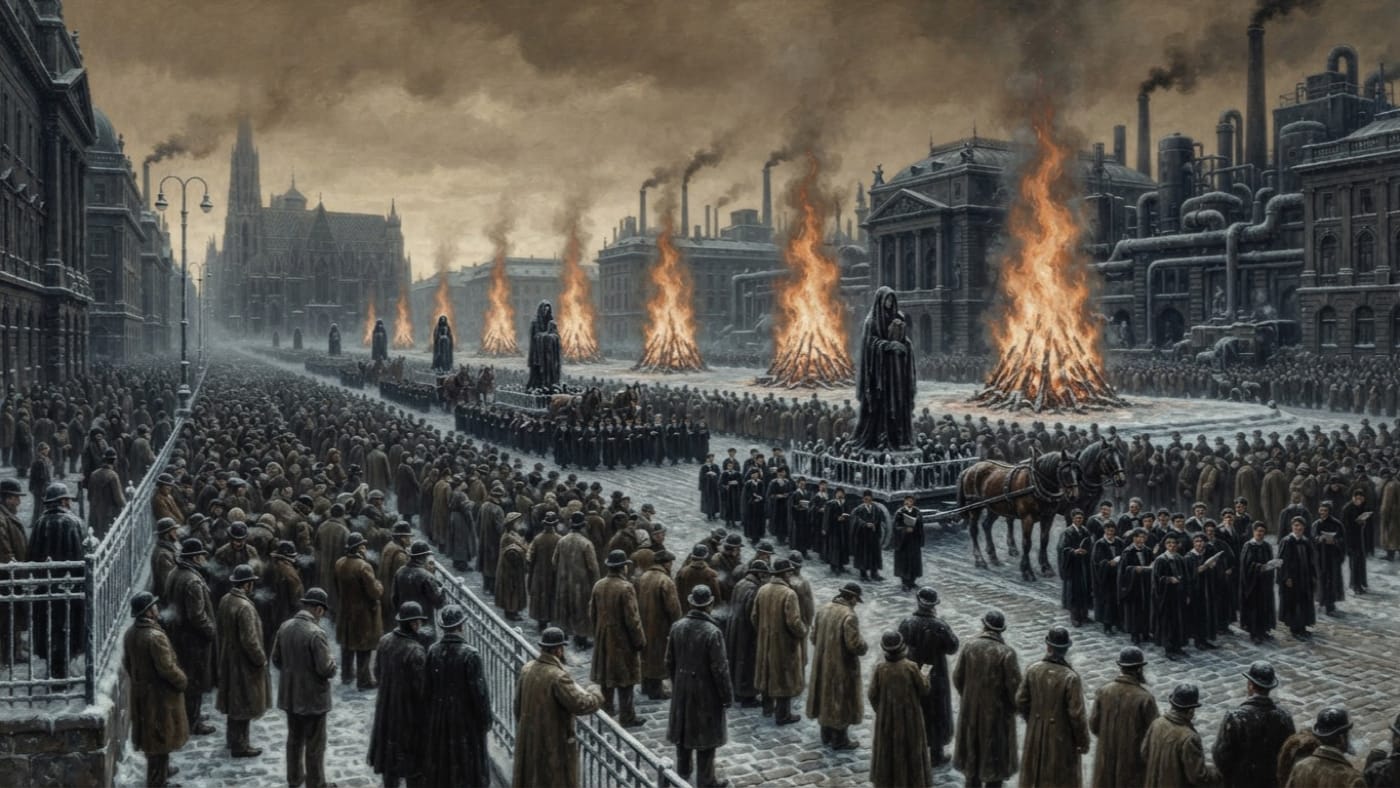
First Prefectural District
One Clause, One Afternoon, No Surviving Map
Vienna’s Rationalist civic district, attested in A.S. 30 by compulsory attendance at the Black Procession. The Ledger preserves the obligation; its founding, boundaries and successor remain unrecorded.
Codex Ref. II.4.09-030
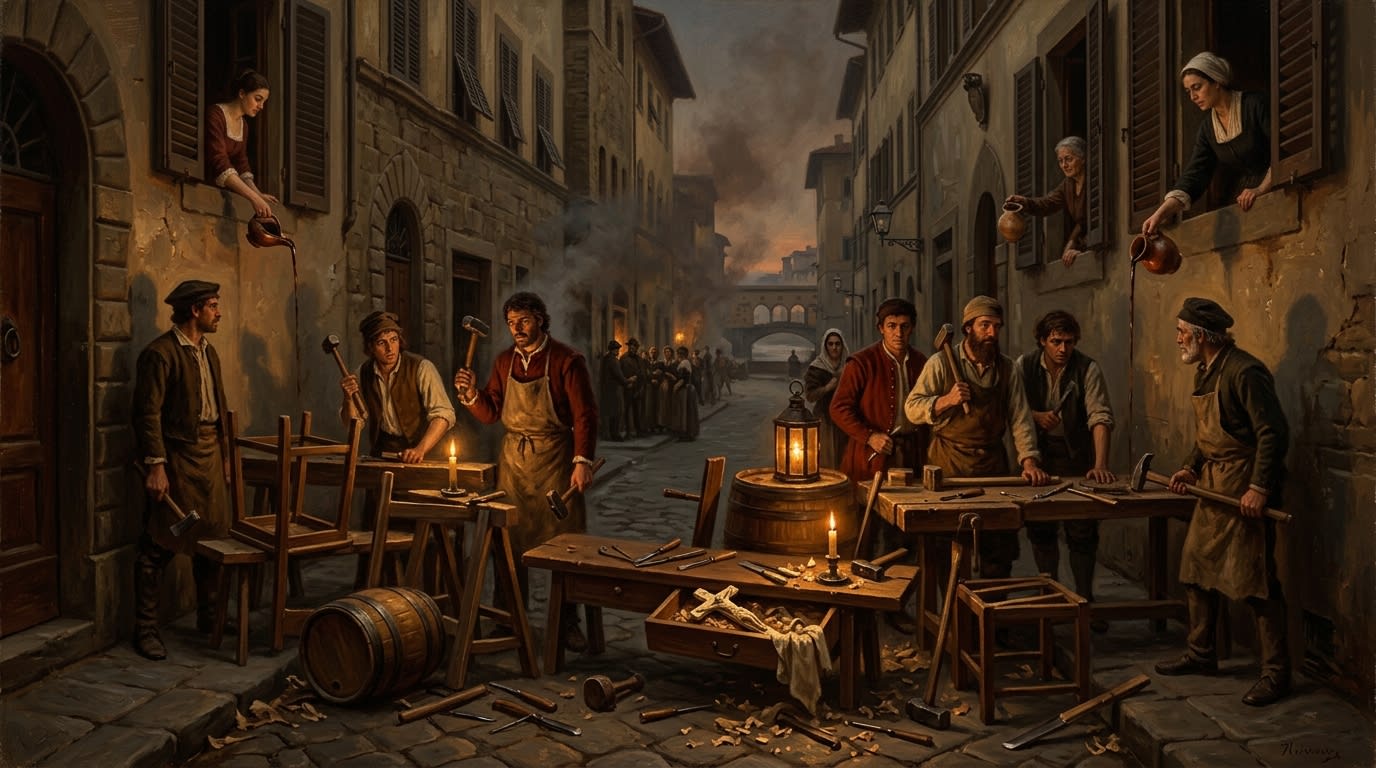
Florence
The city that taught drawers to keep the faith
Florence is the polished Tuscan wound where hidden crucifixes, artisan tools, and the A.S. 44 Ivory Revolt made small devotion sharper than empire.
Codex Ref. II.4.09-044
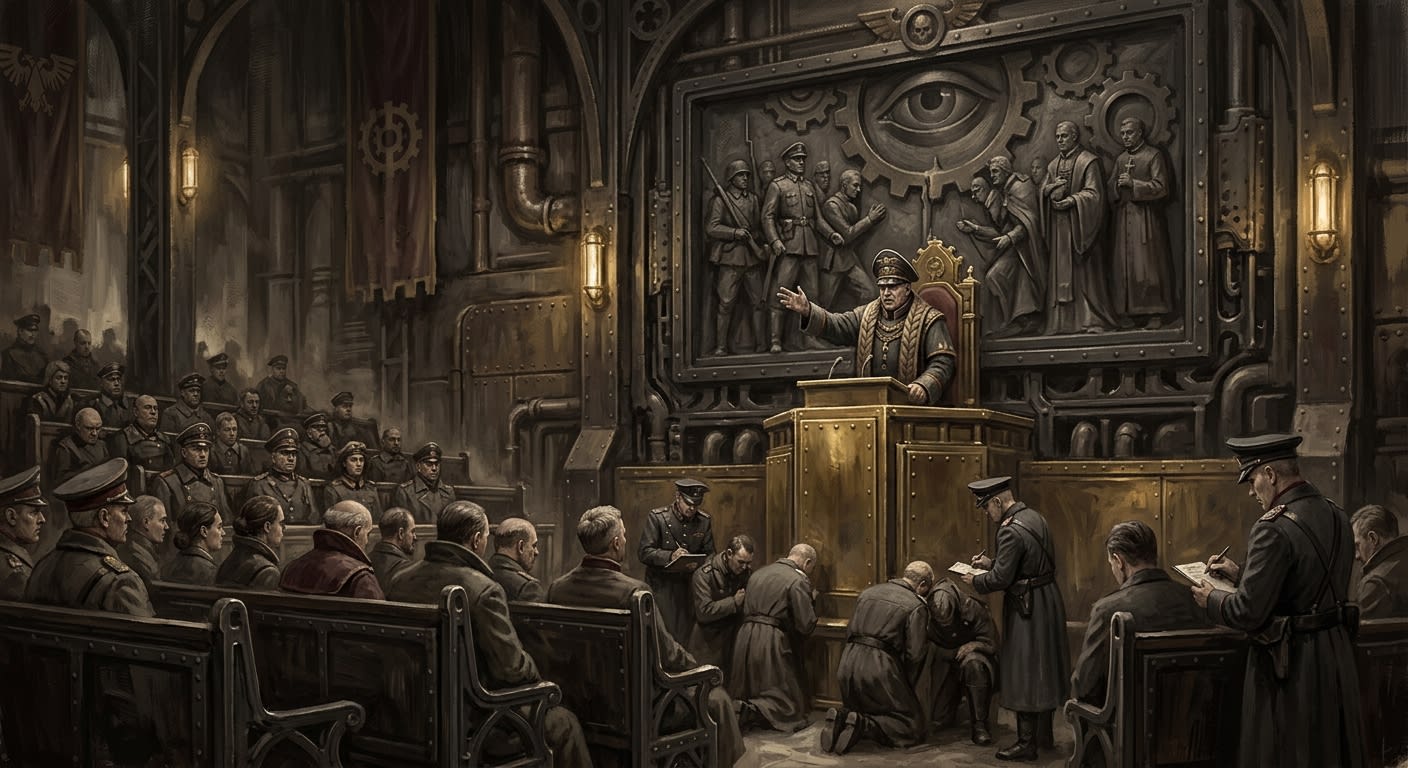
Fourth Doctrinal Congress
Where silence was made to testify against the listener
The Fourth Doctrinal Congress did not end doubt. It converted silence into mortal fault, canonised useful dead, and taught Strasbourg to occupy the Creator's quiet.
Codex Ref. XIII.1.90-104
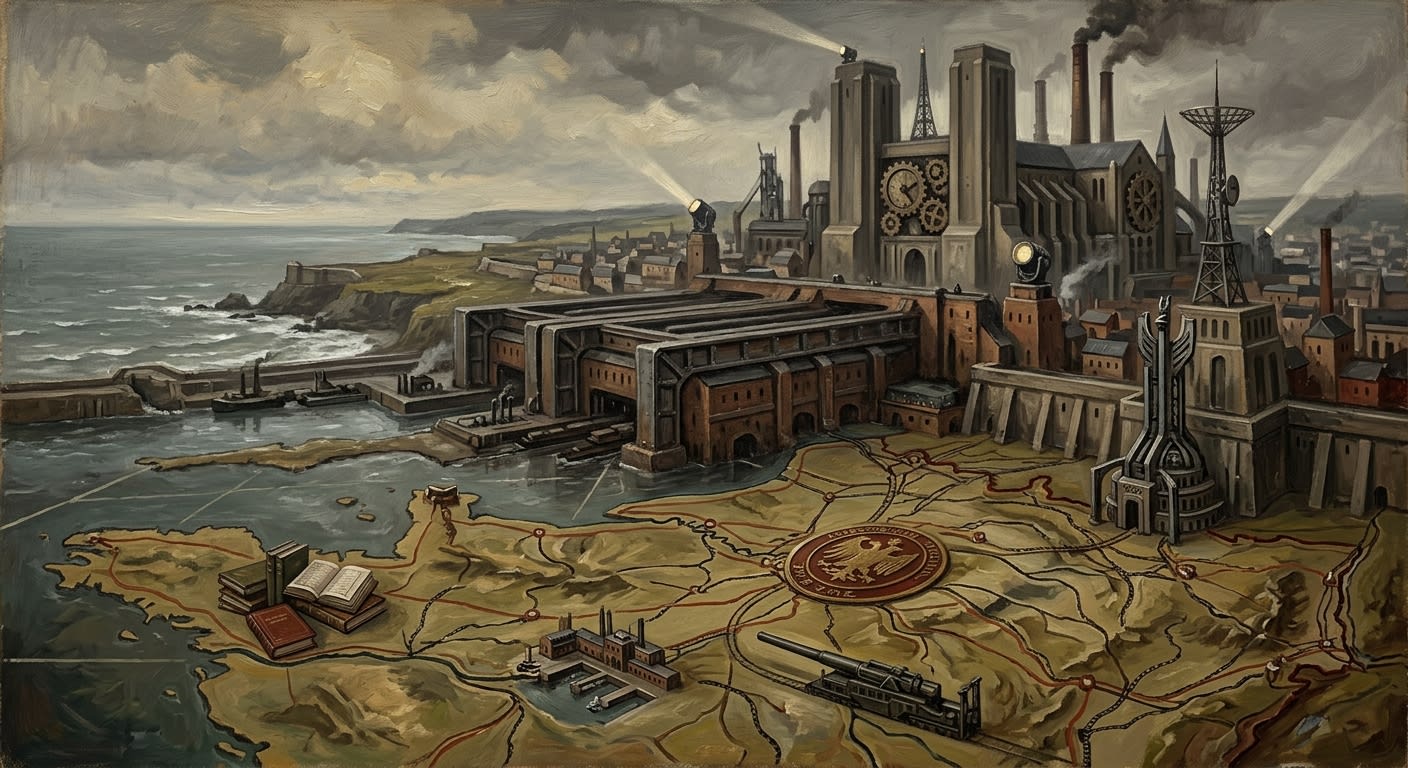
France
The country the Synod did not abolish, because it proved too taxable to waste
A.S. 201 survey of France as Zone One heartland: martyr coast, watched cities, taxable memory, useful ports, and one conquered name made indispensable.
Codex Ref. II.1.01-201
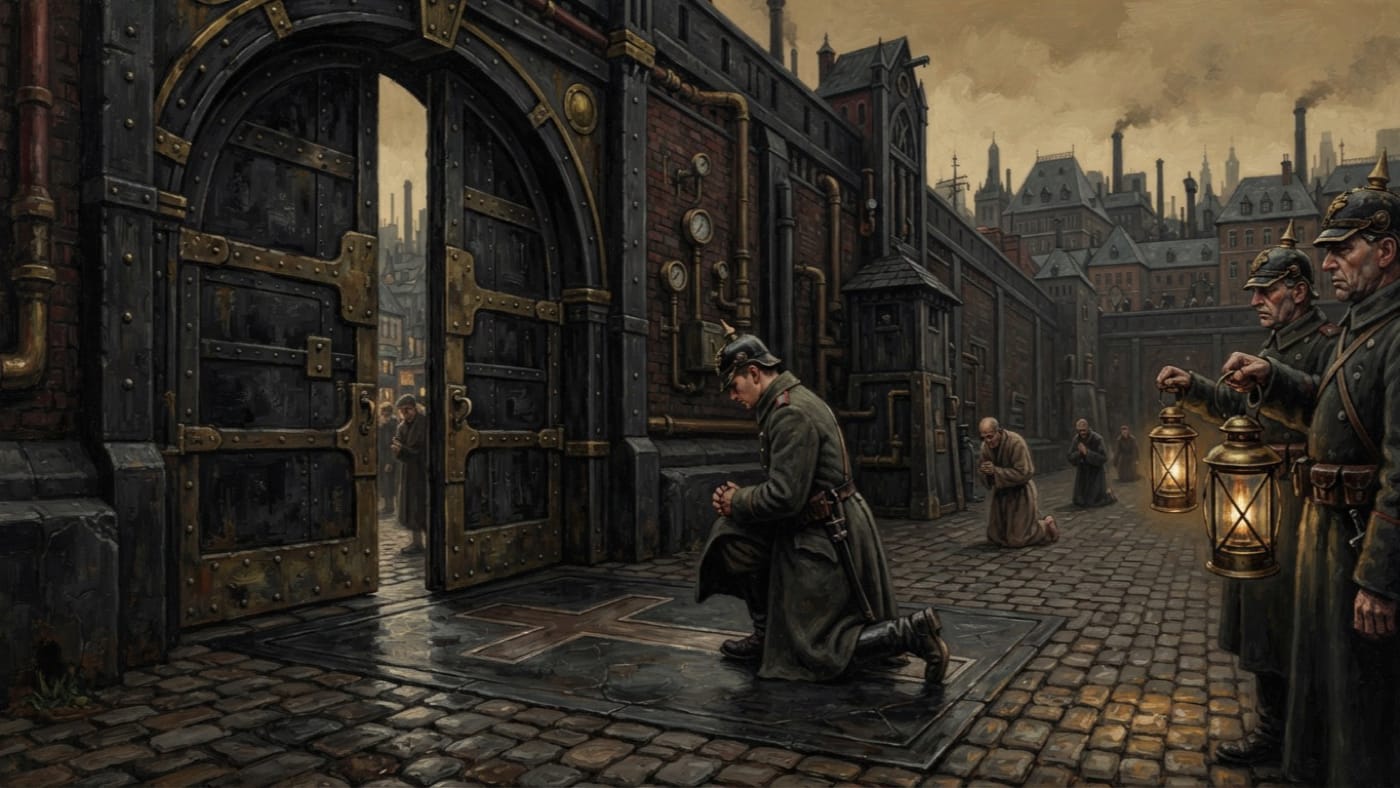
Gate Litany
Forty-seven clauses and no release
At Aachen's western gate, forty-seven clauses turn a recruit's innocence into an obligation. The gate opened in A.S. 25; the knees still answer for it.
Codex Ref. II.2.02-002
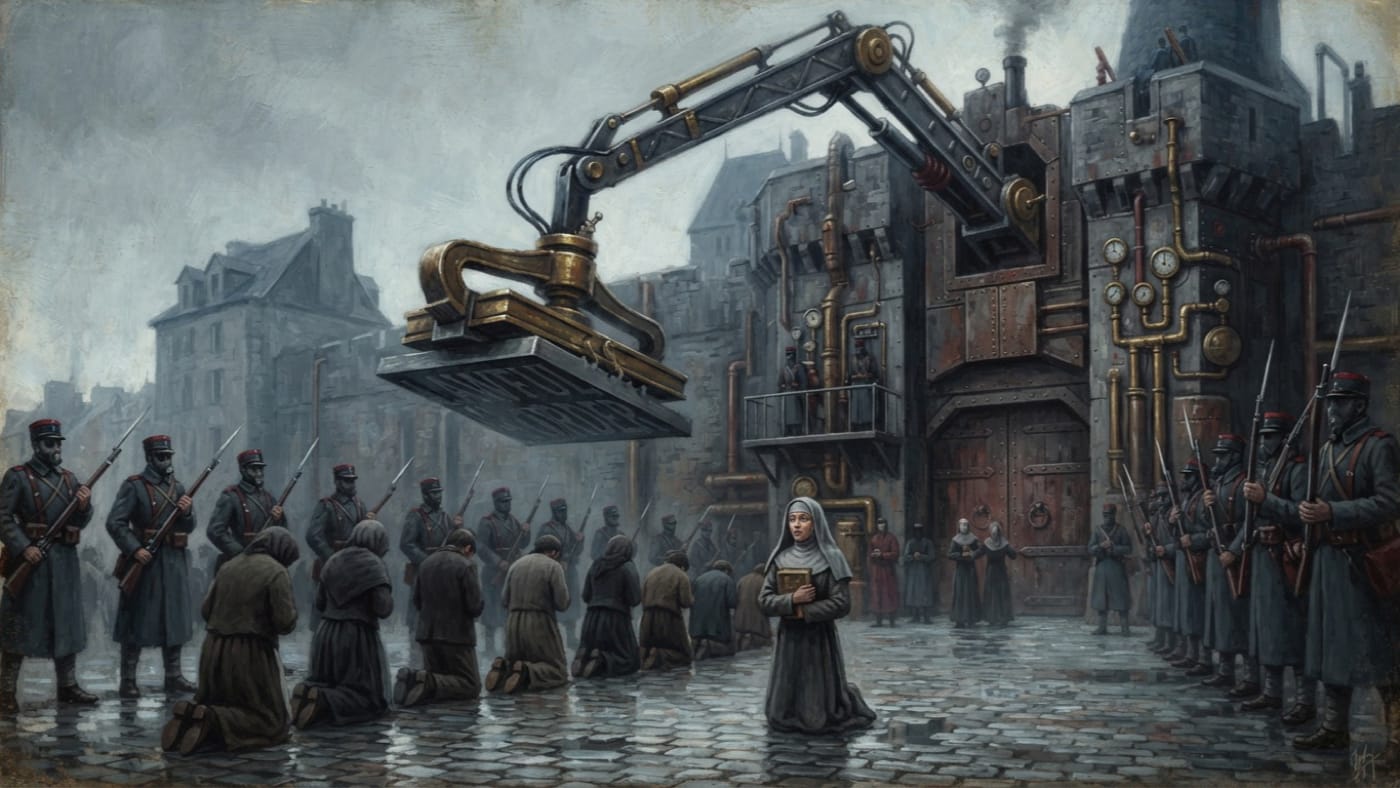
Gazette de la Raison
Four sentences against thirty-one dead
Four sentences made Saint-Malo's kneeling pilgrims vagrants and its bayonets lawful. The Gazette kept the magistrate's grammar; the Church kept the face of Saint Margaux.
Codex Ref. I.1.04-010
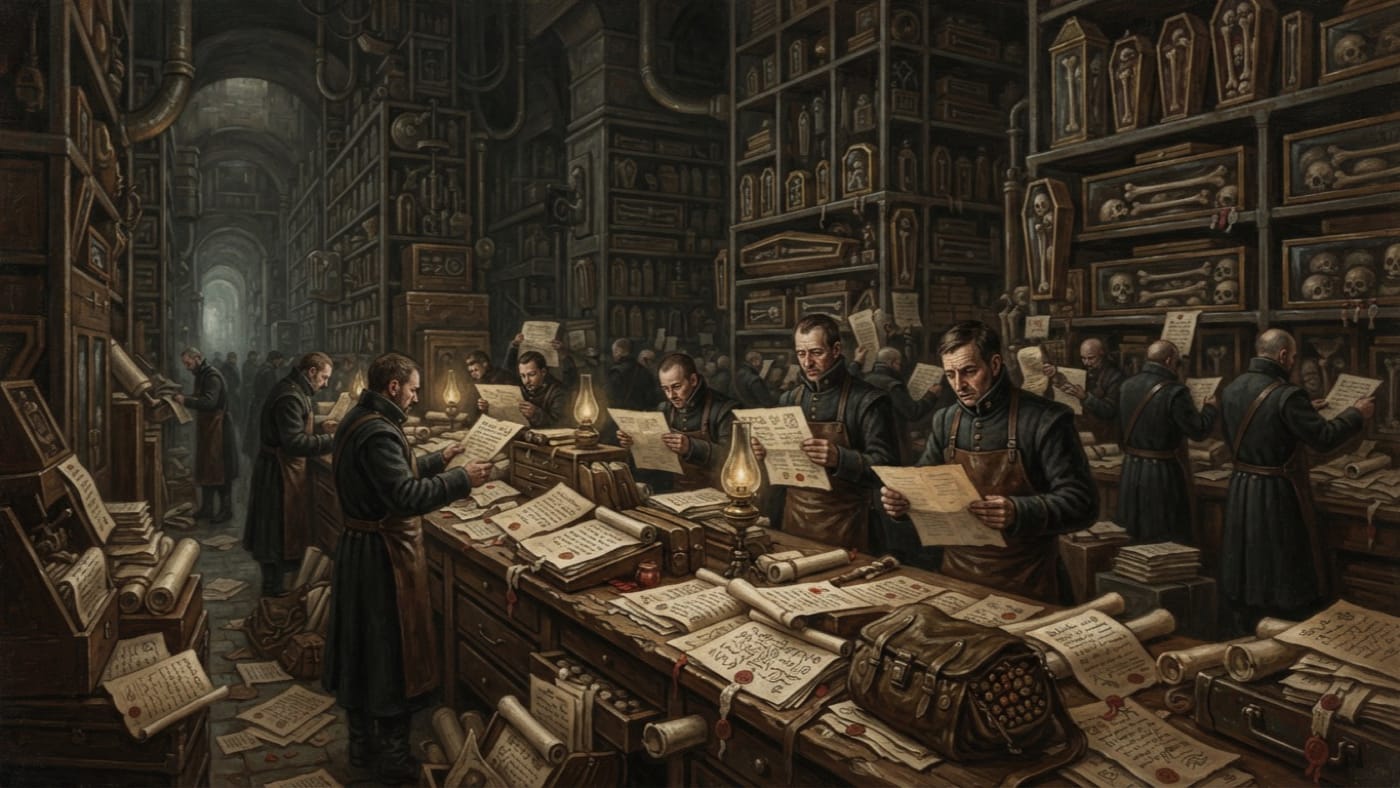
German states
Many jurisdictions. Separate seals. One inconvenient table.
The German states in 1678: many jurisdictions, separate seals, and no common answer to Amsterdam's bone census. The relics agreed locally. The ledgers did not.
Codex Ref. II.1.10-001
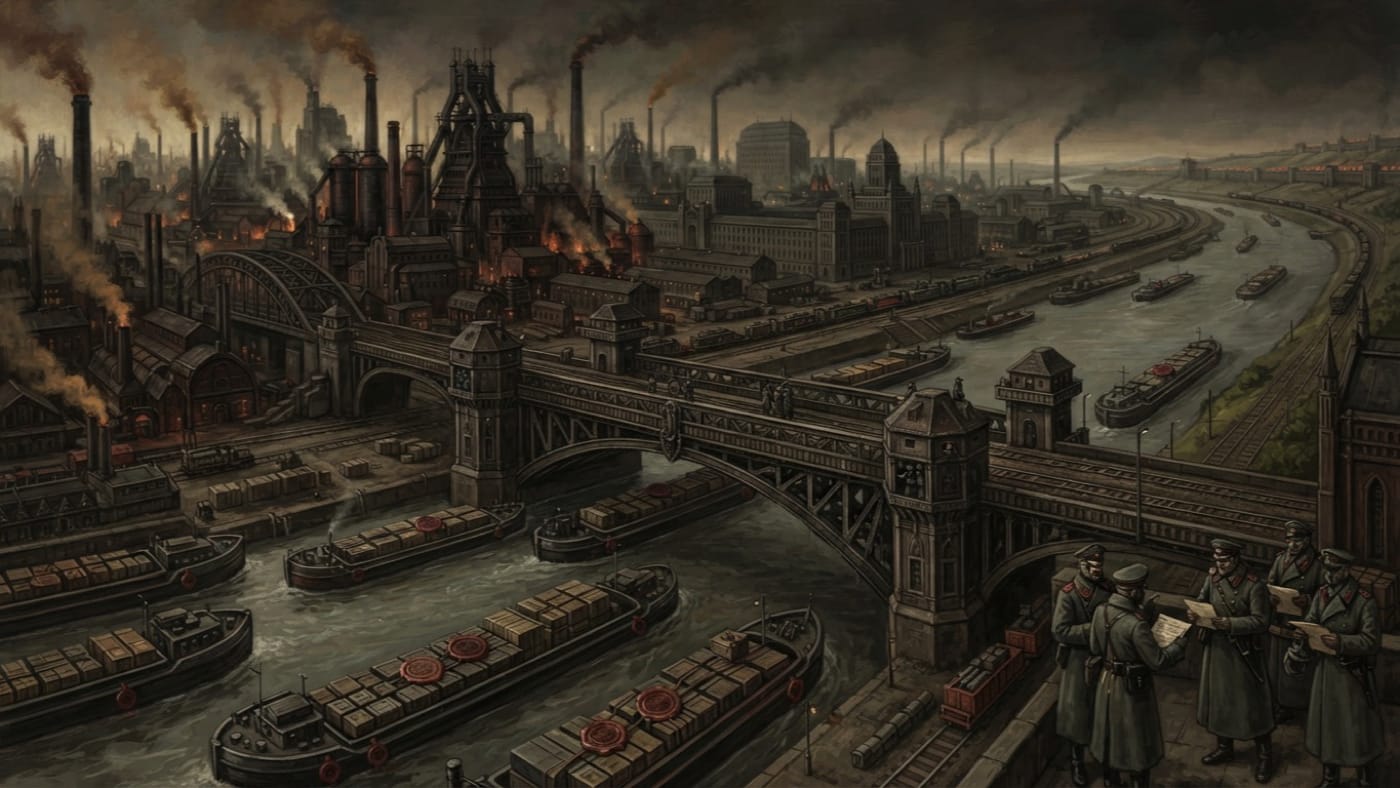
Germany
The heartland that supplies the frontier and answers to several seals
Germany in A.S. 201: the Zone Two heartland of taxed rivers, singing furnaces and military depots. The old borders were erased; the territory still supplies the frontier, and every cargo requires a seal.
Codex Ref. II.6.01-201
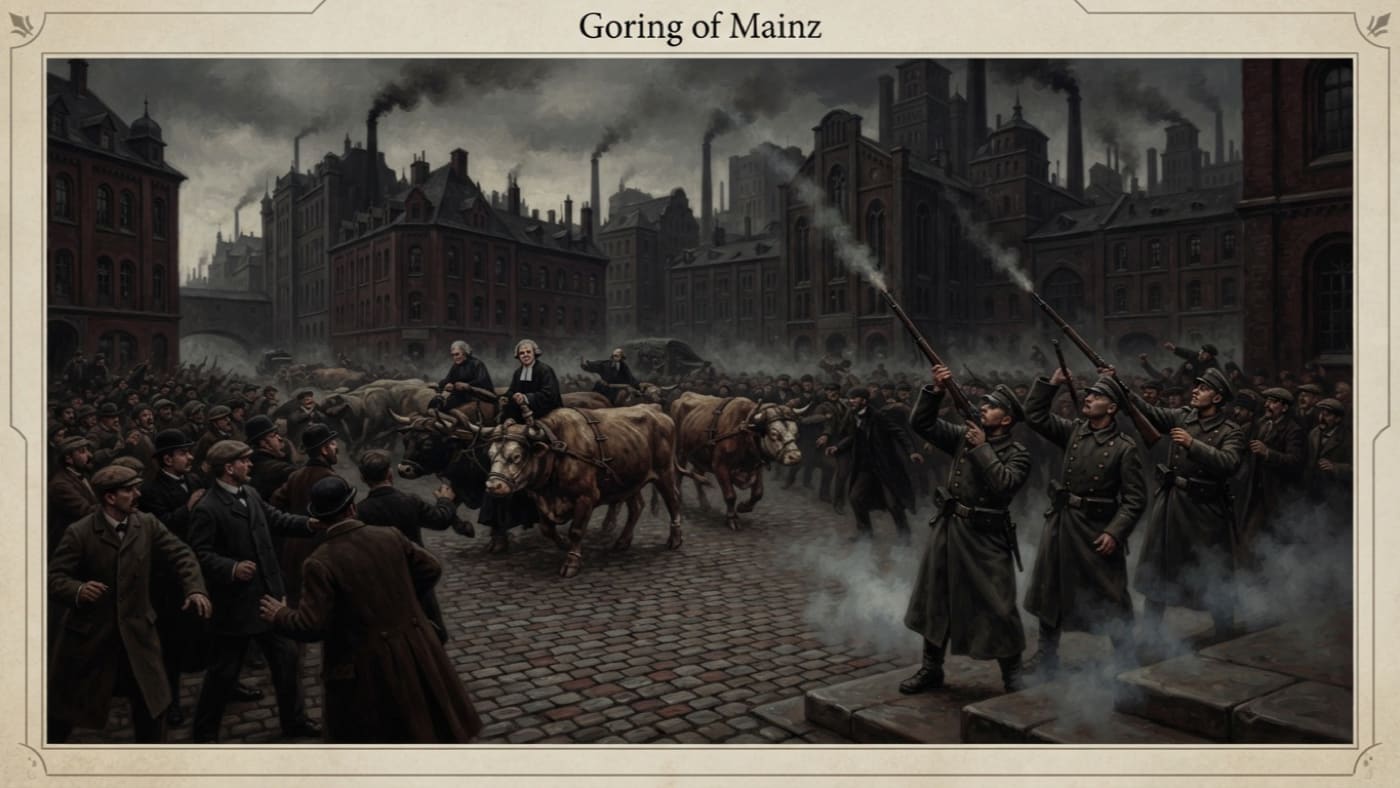
Goring of Mainz
What the faithful remembered, the archive filed as livestock
In A.S. 37, Rationalists nailed Mainz clerics to oxen horns; the Fusiliers fired three shots into the air. The faithful remember judgment. Later Records preferred livestock.
Codex Ref. VII.1.37-001
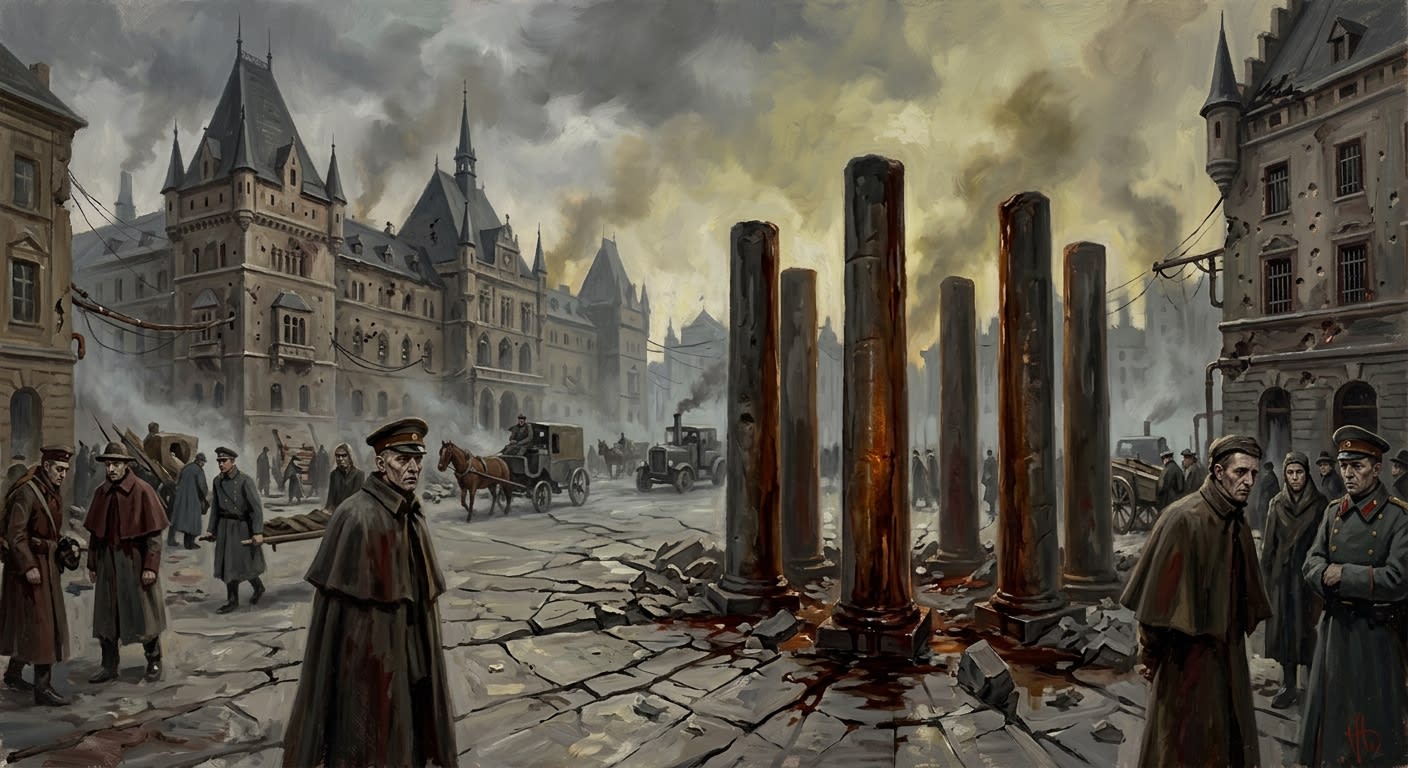
Heldenplatz
Where fire froze, stone warmed, and Vienna learned to kneel in public
Heldenplatz is Vienna's corrected civic theatre: the A.S. 30 cold-fire blasphemy answered by the A.S. 95 reliquary blow, radial fracture, and seven blood-warm basalt columns.
Codex Ref. II.4.09-095
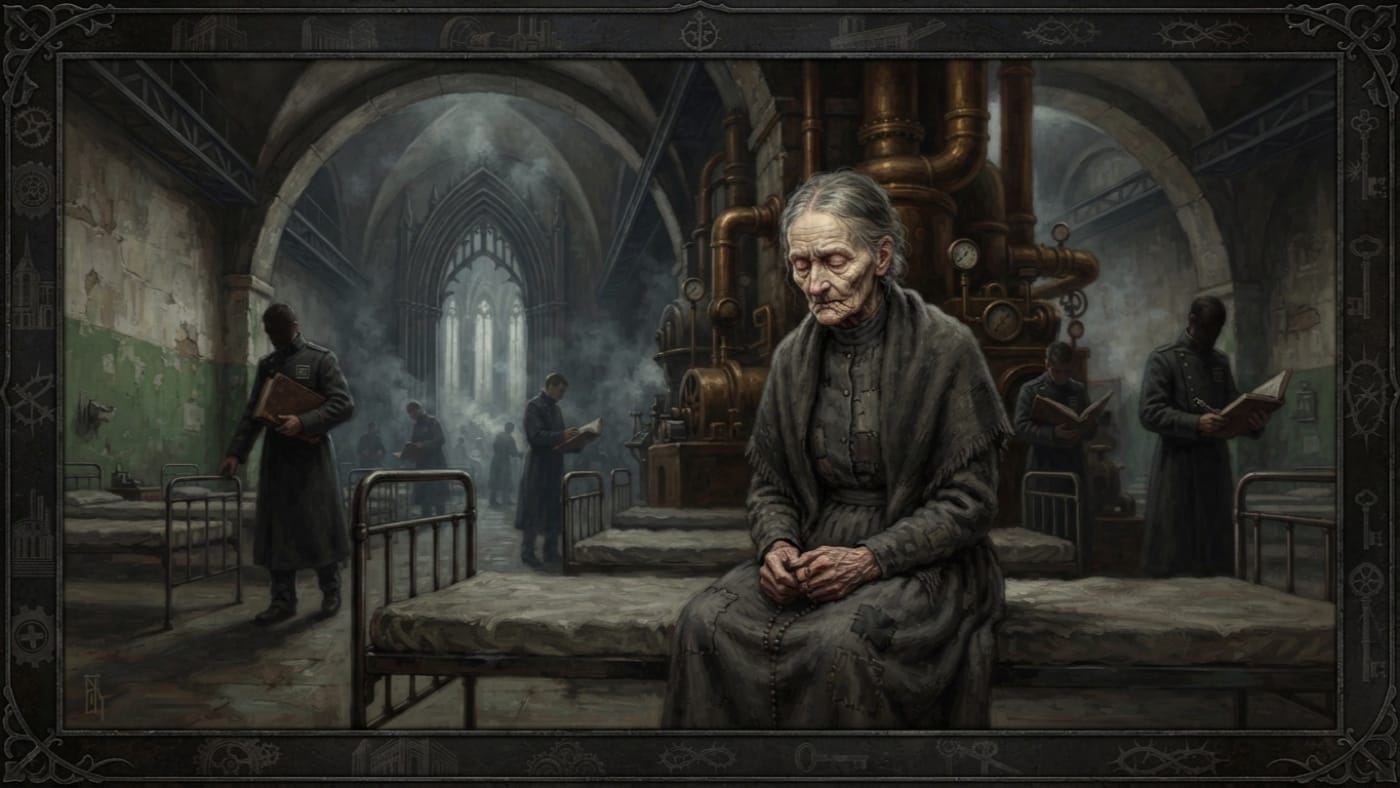
Hilde Voss
The danger left. The volume stayed.
Hilde Voss outlived every Cellar Saint the archive could confirm. She died at one hundred in Strasbourg, A.S. 130, still praying in whispers; the Bureau recorded her death more fully than her life.
Codex Ref. III.2.01-130
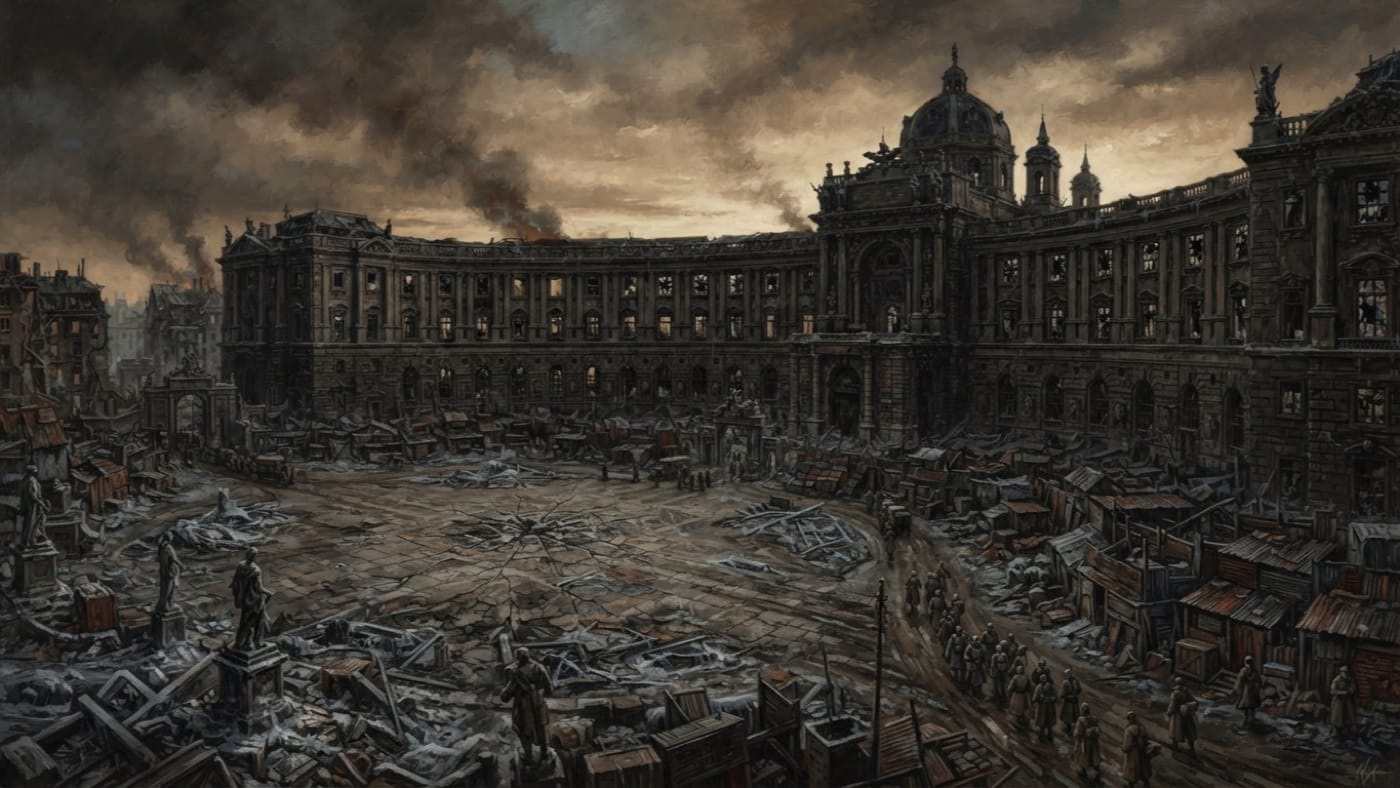
Hofburg
Broken glass and unfinished business
Vienna-Ruins' Hofburg palace was sealed in A.S. 95, its glass shattered by Saint Aldebrand's reliquary blow. The Council's unfinished minutes are reported, their session undated. Even defeat leaves paperwork.
Codex Ref. II.4.09-1373
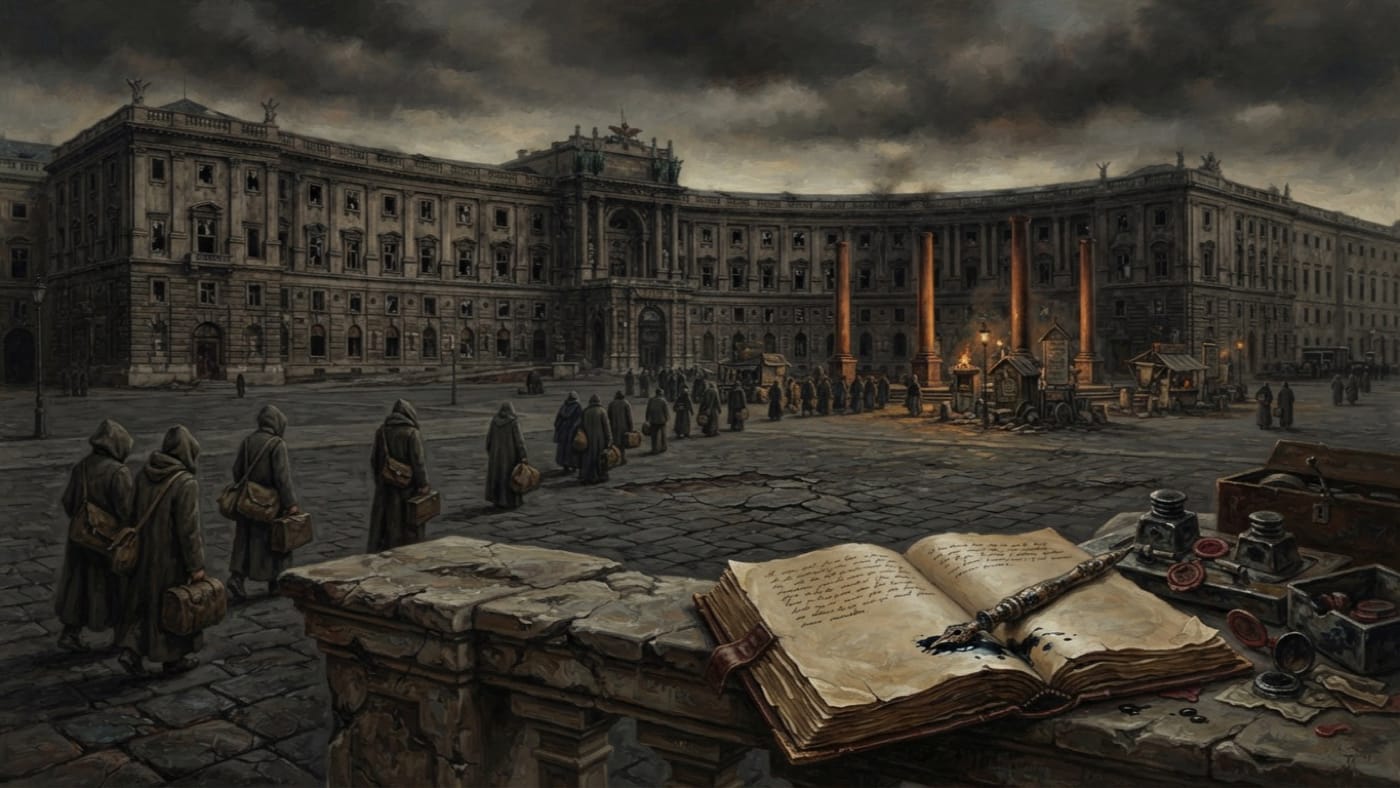
Hofburg Palace
Unfinished minutes behind a century's seal
The Hofburg was sealed in A.S. 95 with the Council of Nine's last minutes unfinished and its pen reported wet. The meeting has no recorded date. The pen has two reported homes. Neither file is closed.
Codex Ref. II.4.09-1374
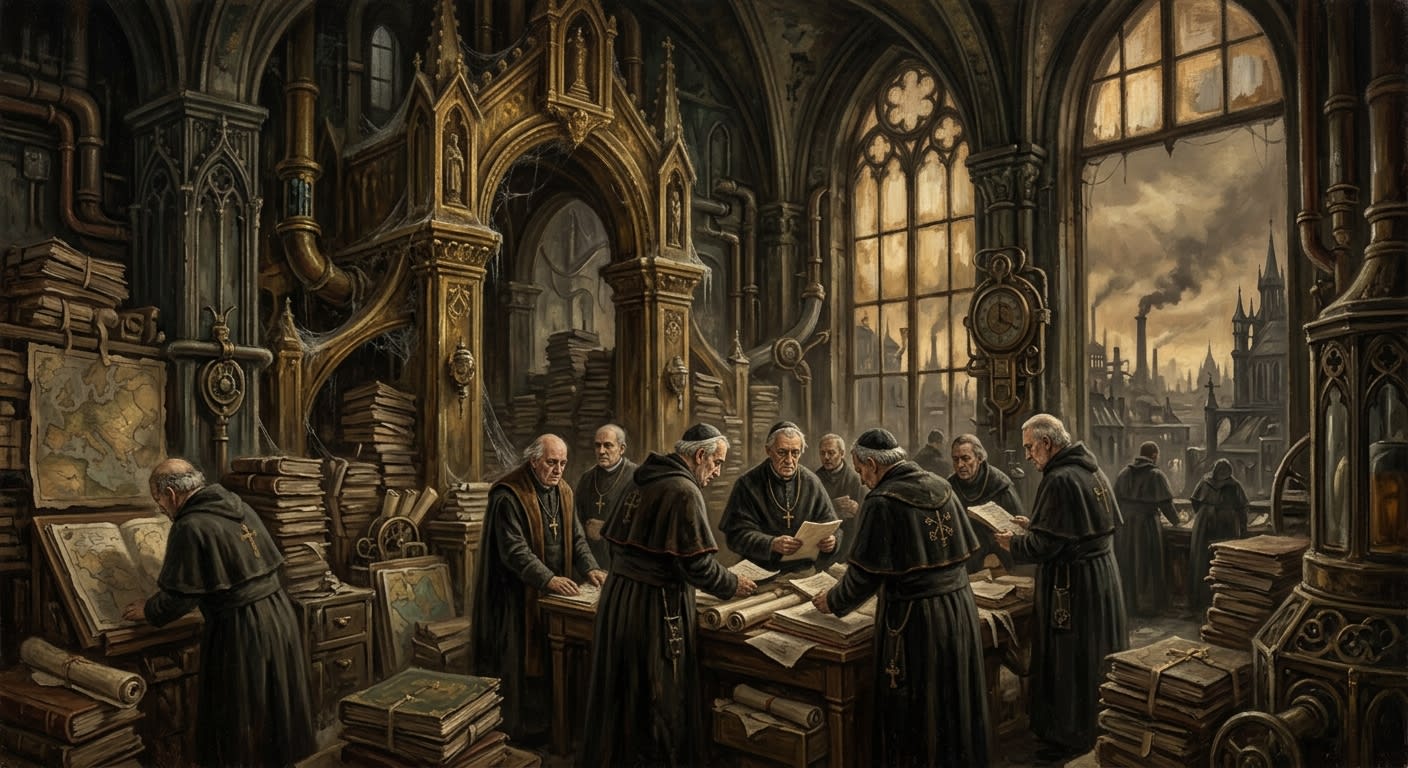
Holy See of Vienna
The dead chair that Strasbourg found too useful to resurrect
The Holy See of Vienna was the Church's old continental chair: venerable, beautiful, administratively inadequate, dissolved at Regensburg in A.S. 30, and later preserved by Strasbourg as shrine, warning, and useful absence.
Codex Ref. VIII.1.09-030
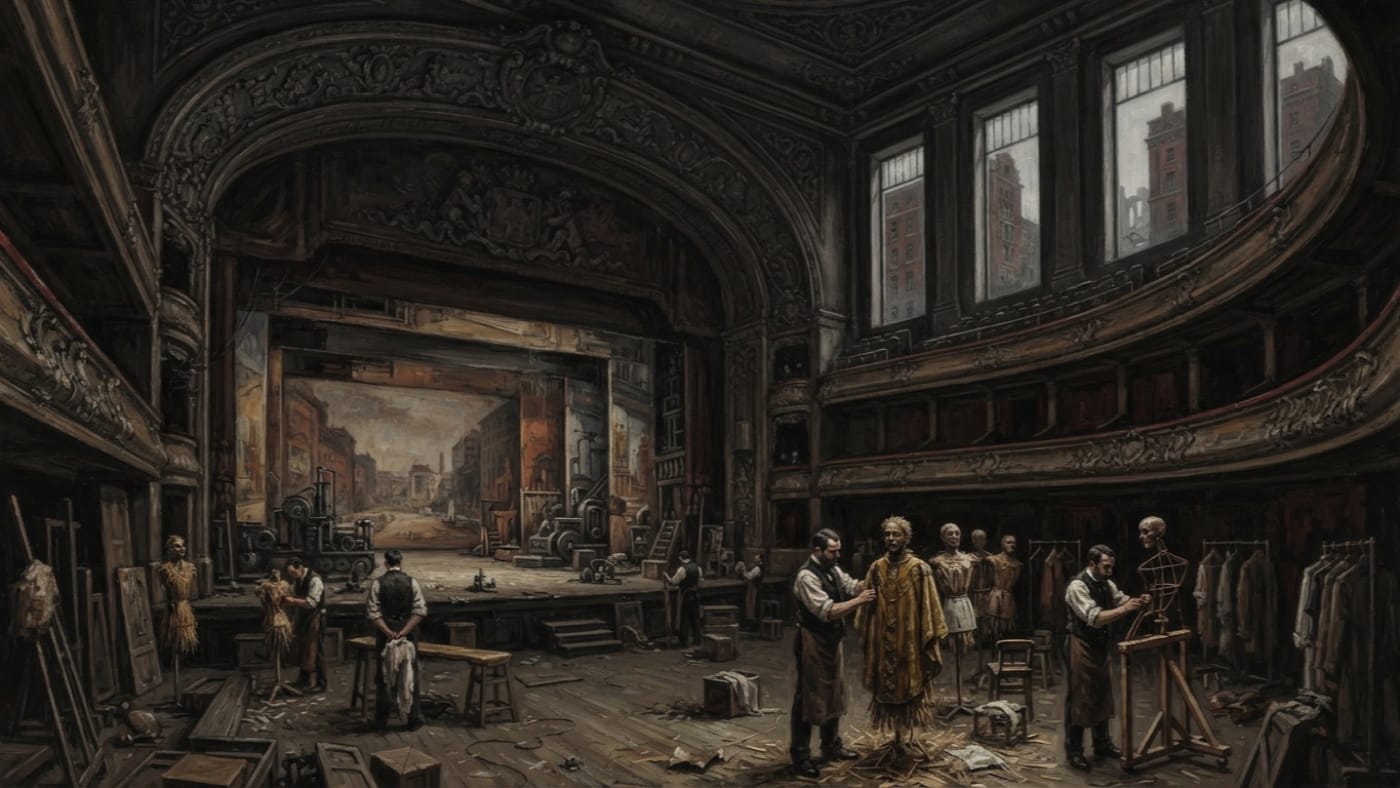
Imperial Theatre
The Costumiers Went On to Dress Saints for Burning
Vienna's Imperial Theatre enters the Ledger through craftsmen later hired for the Black Procession of A.S. 30. Their saints were lifelike; the house's founding and fate remain unrecorded.
Codex Ref. II.4.09-030
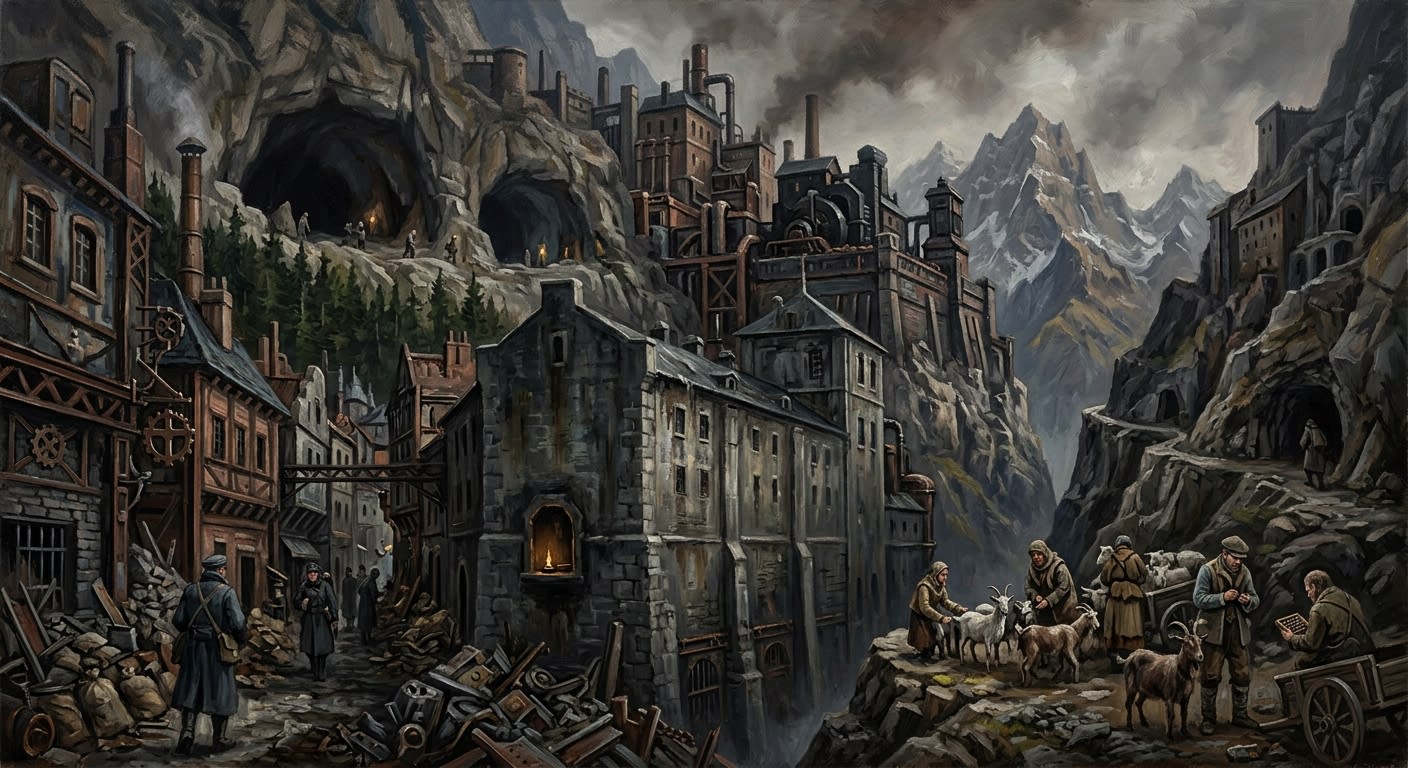
Innsbruck
Where mountains, grandmothers, caves, and walls defeat the census
Innsbruck is the Synod's alpine refuge-city: Cellar Saint caves above the treeline, relics disguised as trash, Mother Sava's wall-cavity, Pale Kin routes, goat arithmetic, and the most pious registry evasion in the mountains.
Codex Ref. II.2.09-030
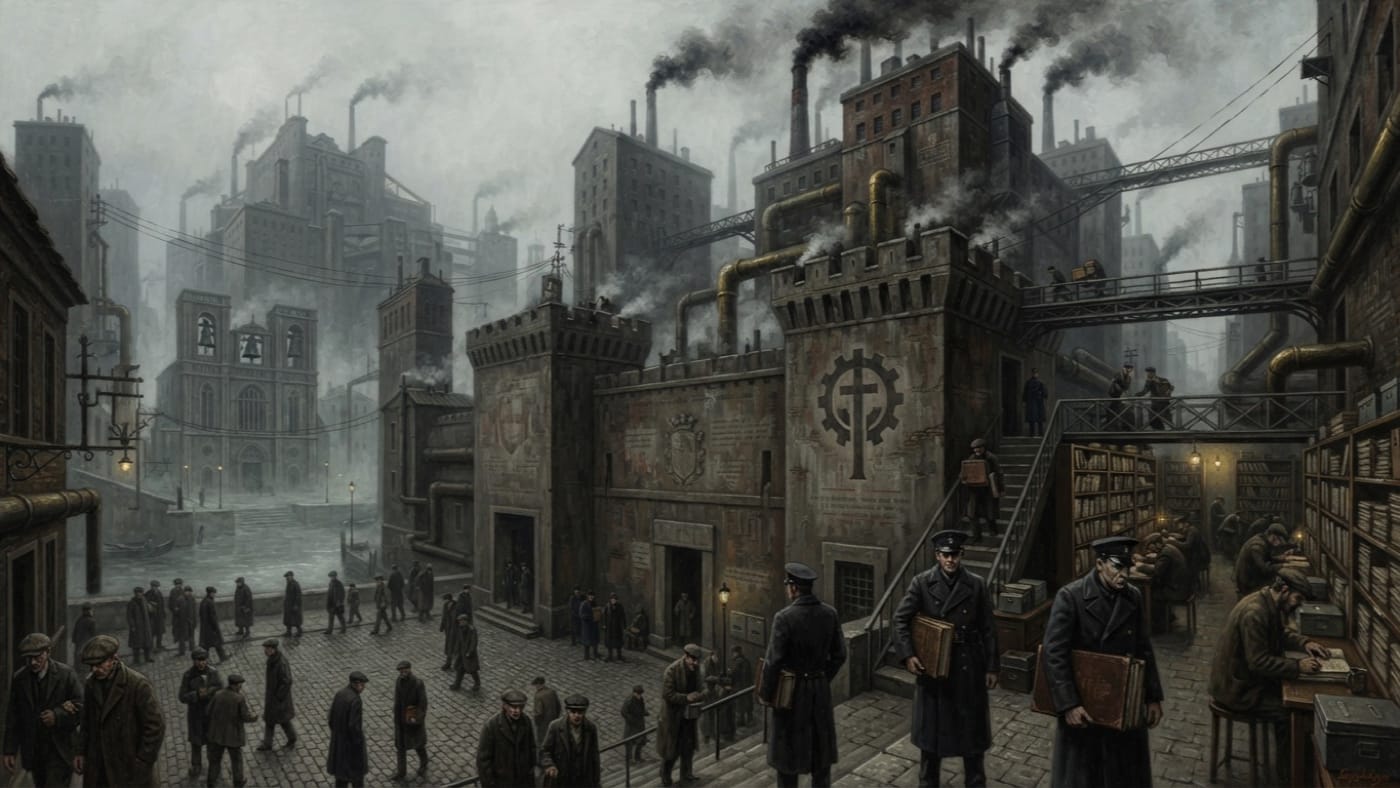
Italian principalities
One filing drawer for a peninsula that never consented to share it
The old Italian jurisdictions, erased by Regensburg in A.S. 30 and inherited piecemeal by the Synod. Their complete roster remains unestablished; their objections remain abundant.
Codex Ref. II.3.09-030
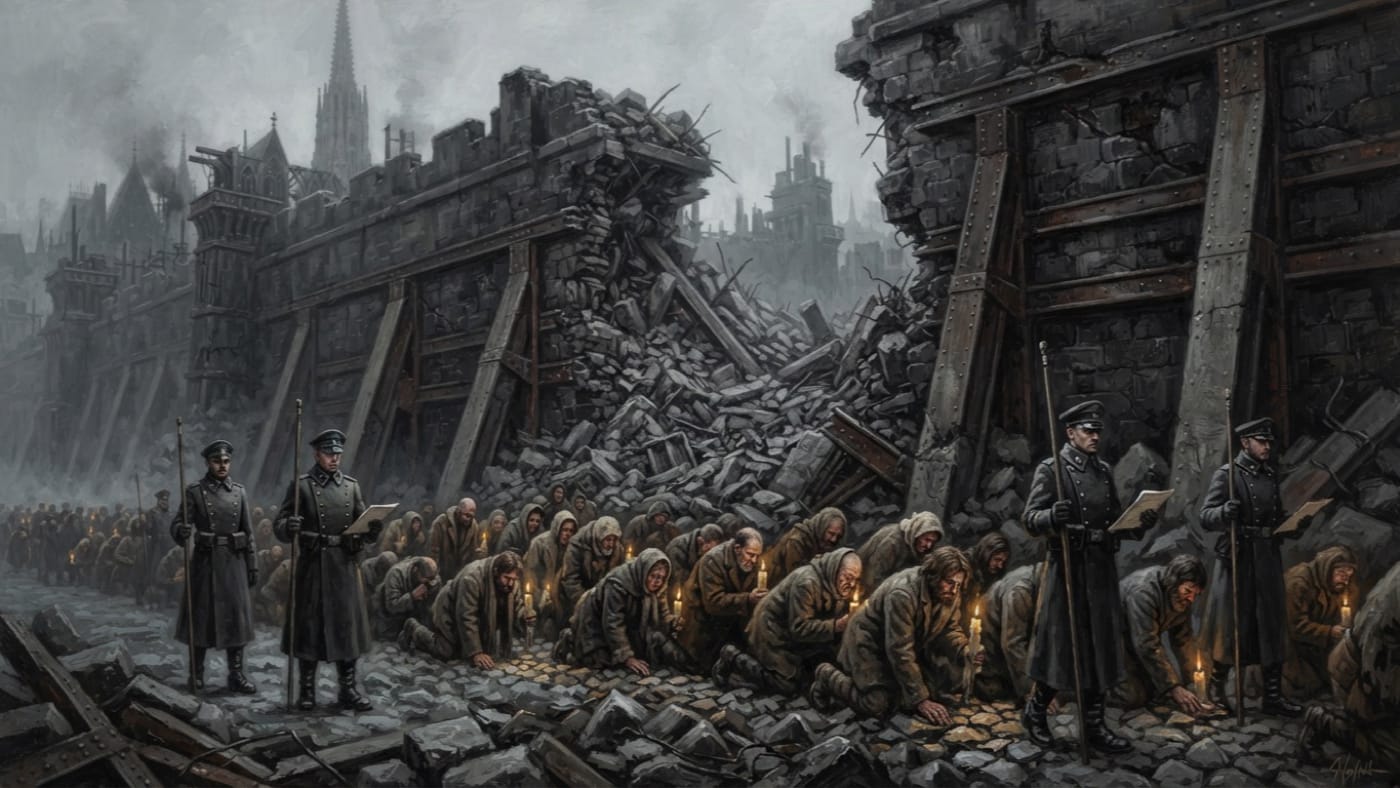
Kärntner Breach
The wall stayed broken so that knees might learn obedience
The Kärntner breach is Vienna's broken gate passage, where Clemens Stahlhand entered in A.S. 95 and pilgrims now pay with their knees.
Codex Ref. II.4.09-095
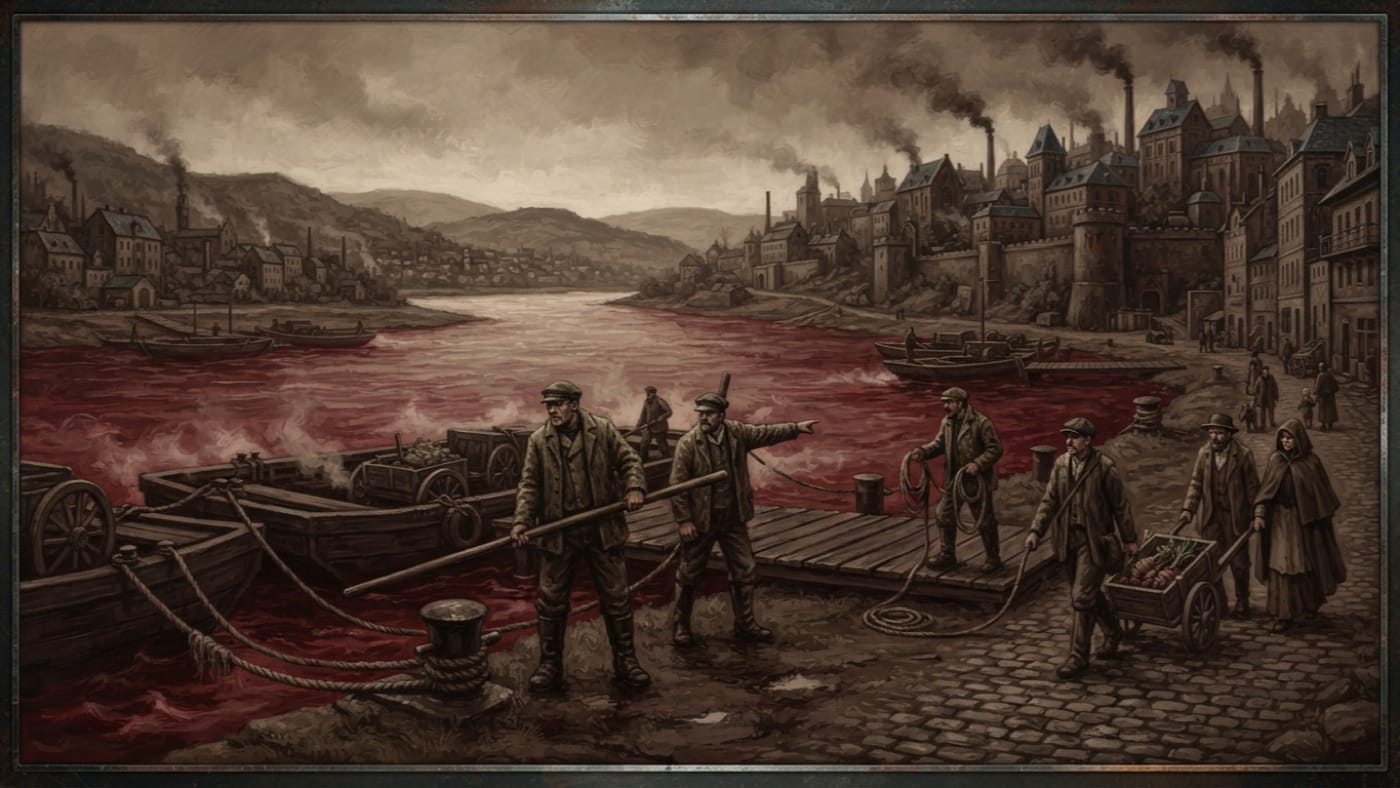
Linz
The ferrymen declined; the Ledger concurs
Linz, a Danube town between Passau and Vienna, refused ferry crossings by noon during the A.S. 34 Red Flood. The ferrymen read the warning before the bureaus supplied its meaning.
Codex Ref. II.2.03-034
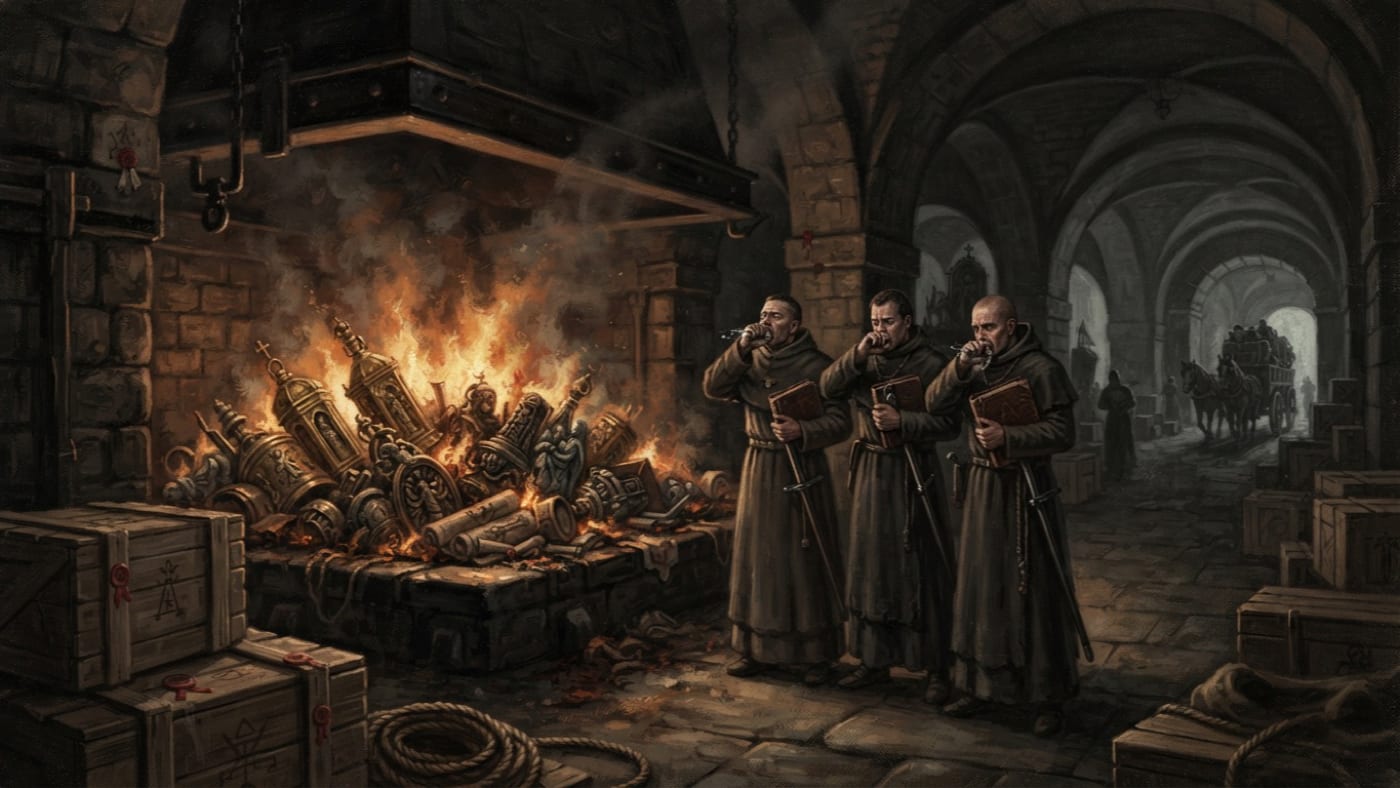
Litany of Custody
Custody ended in fire; the witnesses remained
Three canon-wardens recited the Litany of Custody while untransportable relics burned in Vienna in A.S. 48. The manifest preserves its name; the words remain unrecorded.
Codex Ref. XIII.1.62-048

Lord-Protector Guillaume
The gate-seller who mistook a palace for survival
Guillaume sold Aachen for Lowlands dominion, sent a proxy to Regensburg, and learned too late that the Bureau's cleanest executions are grammatical.
Codex Ref. III.2.06-003
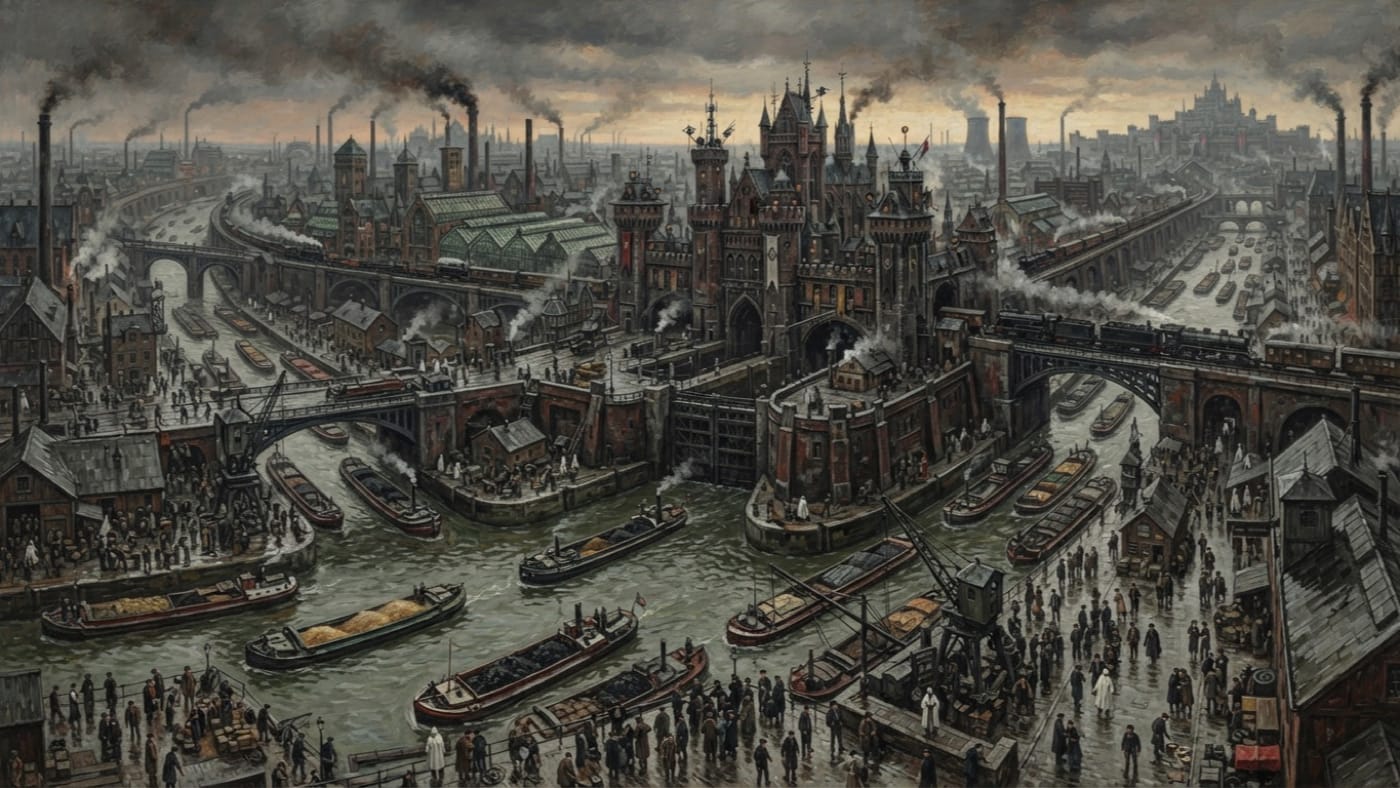
Lowlands
The country promised for a gate
The Synod's Lowlands move grain, cloth and credit through Bruges, Ghent and Antwerp. Guillaume was promised dominion for Aachen's gate; delivery remains uncertified.
Codex Ref. II.1.08-001

Lumen
Reason alone, debased by its own mint
The Lumen was the Rationalist Republic's bright little sermon in stolen metal: altar silver, RATIO SOLA, and a compass pointing straight into confiscation.
Codex Ref. XIII.1.90-030
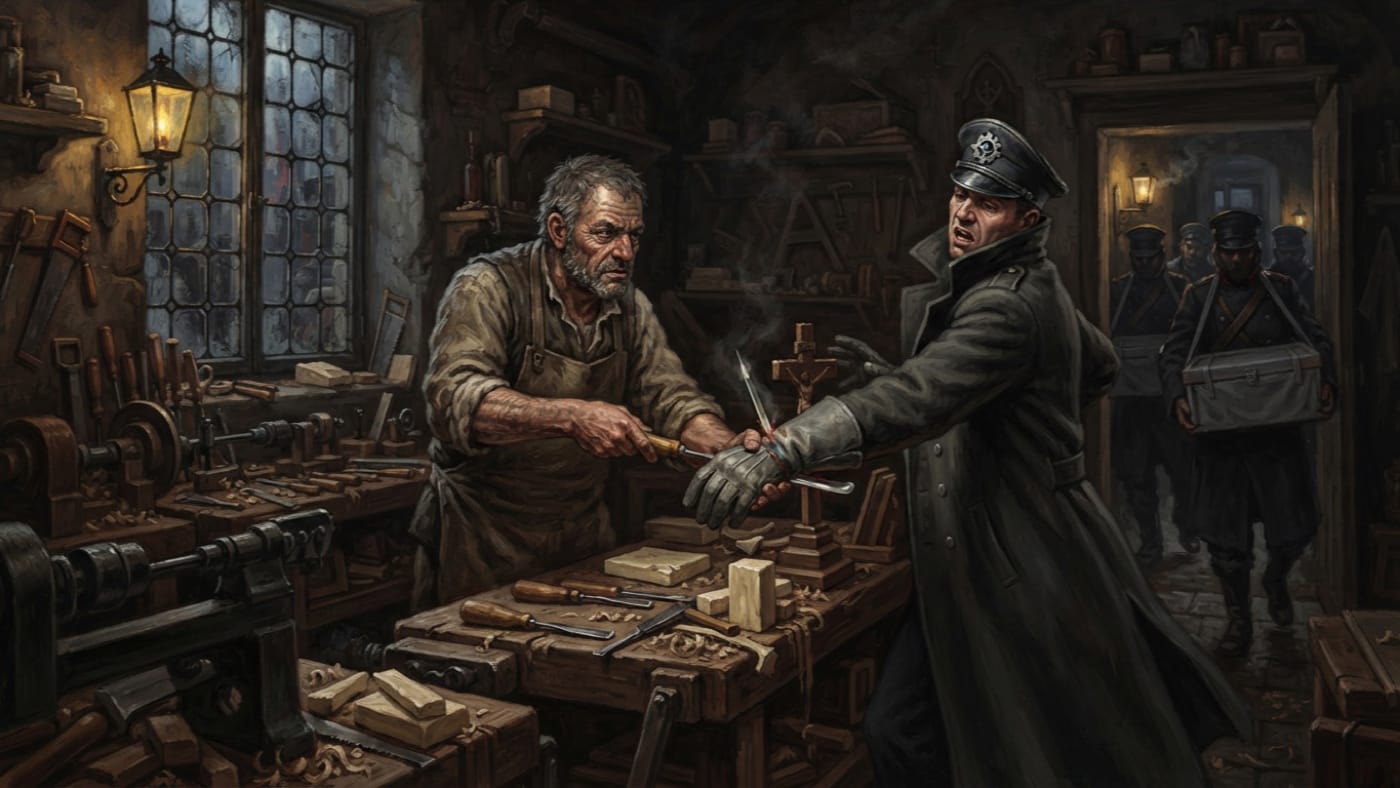
Matteo Bellandi
A carver's chisel answered the confiscation writ
Matteo Bellandi, Florentine ivory carver and father of four, answered Rationalist confiscation with a gouge chisel in A.S. 44. The Ivory Revolt followed; Records has no separate account of his death.
Codex Ref. III.2.01-044
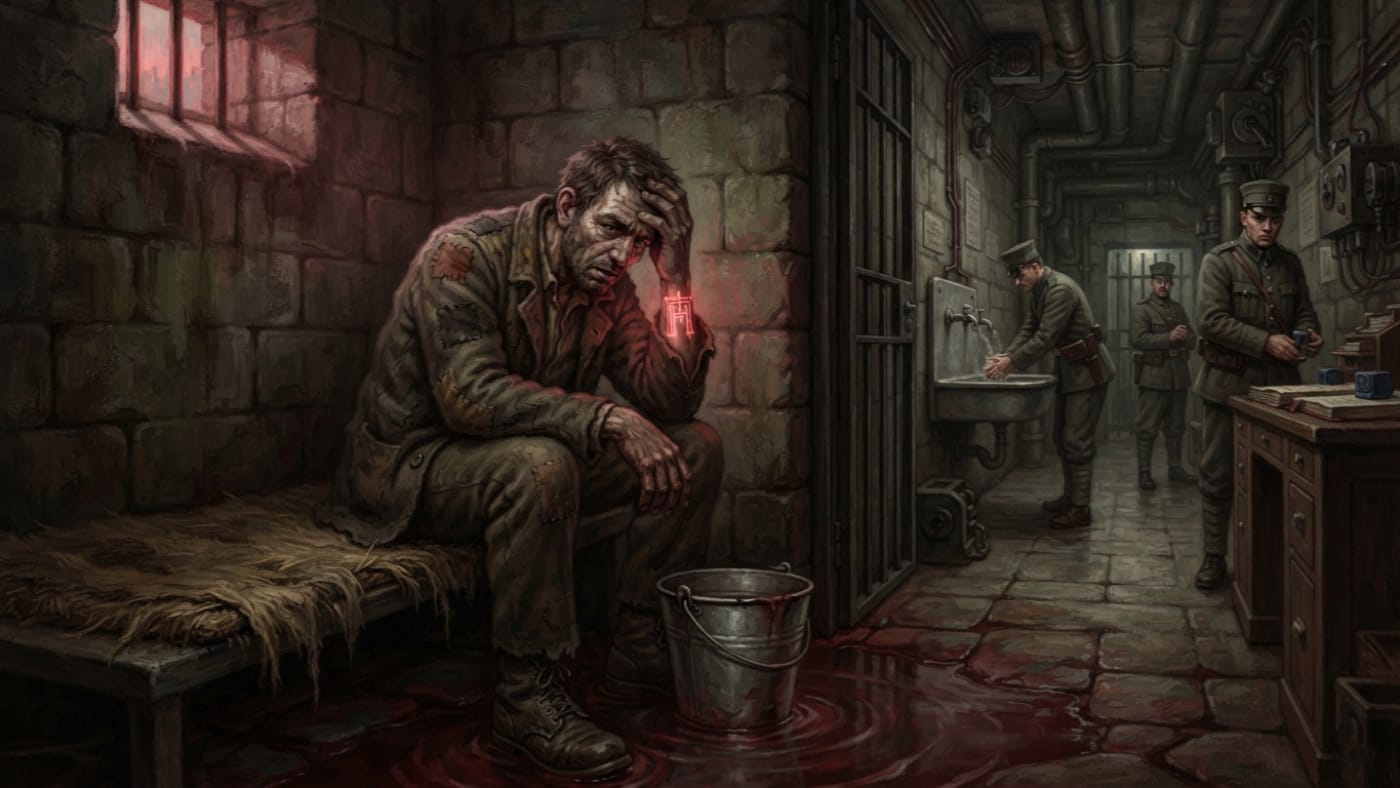
Matthias Krell
The wrist kept hours; the archive kept no ending
Vienna rope-hauler marked during the A.S. 34 Red Flood: his wrist kept hours, his cell flooded upward, and the institutions kept everything except his fate.
Codex Ref. III.2.01-034
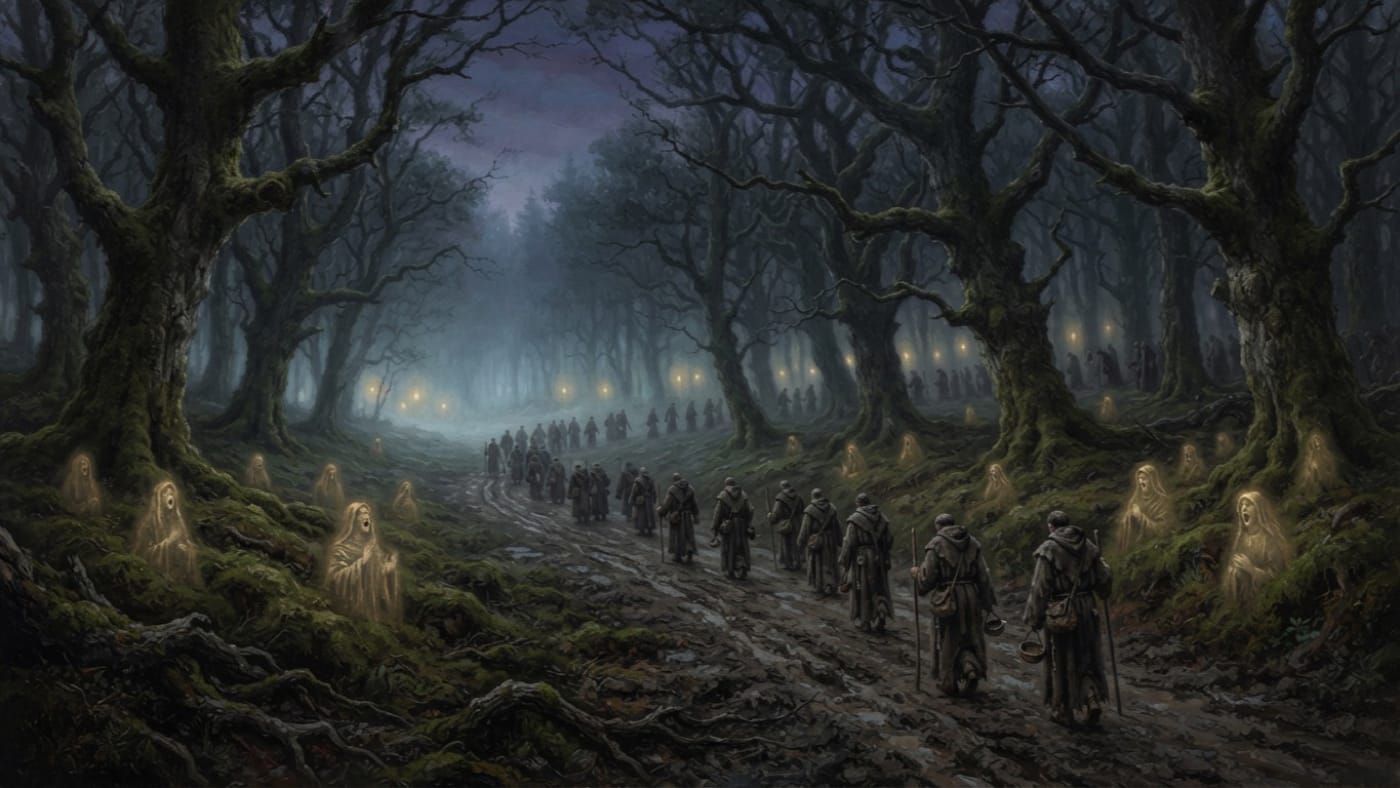
Mendicant Orders
The Friars Were Declared Disbanded; the Forest Was Not Consulted
The old Church's begging friars were expelled from France; many vanished into the Ardennes. The Rationalists called them disbanded. The Ledger records the disappearance and attributes the singing.
Codex Ref. XI.7.02-001

Meuse corridor
The bridge fell; the query remains unanswered
The Meuse corridor gathered armies and refugees at its crossings. Maud's bridge fell in A.S. 16; the chaplain's query about axle grease remains unanswered.
Codex Ref. II.1.08-016
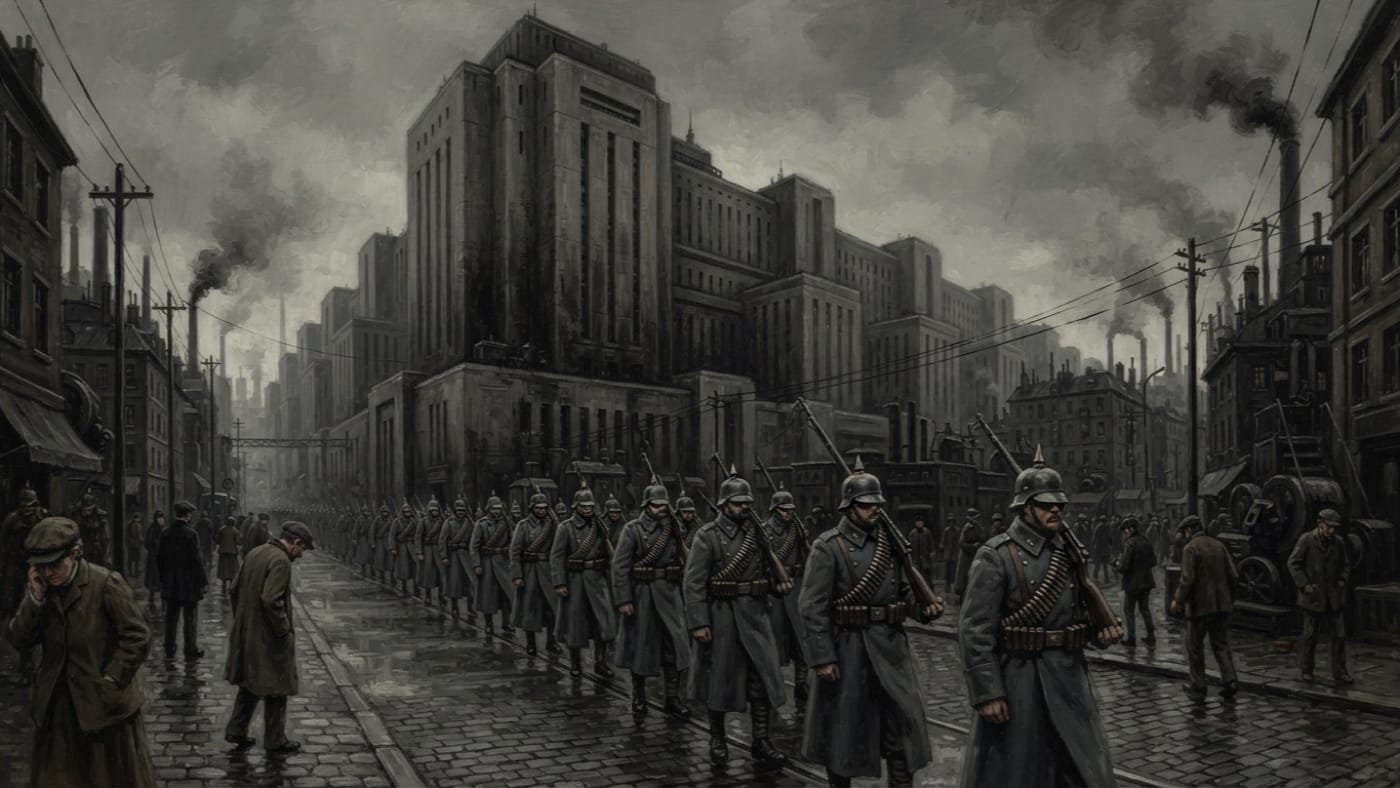
Ministry of Civic Security
The office above the bayonets
The Republic placed its Guards under a Ministry of Civic Security in A.S. 30. The name survives in the Stacks; the citizen's security was another matter.
Codex Ref. I.1.05-002
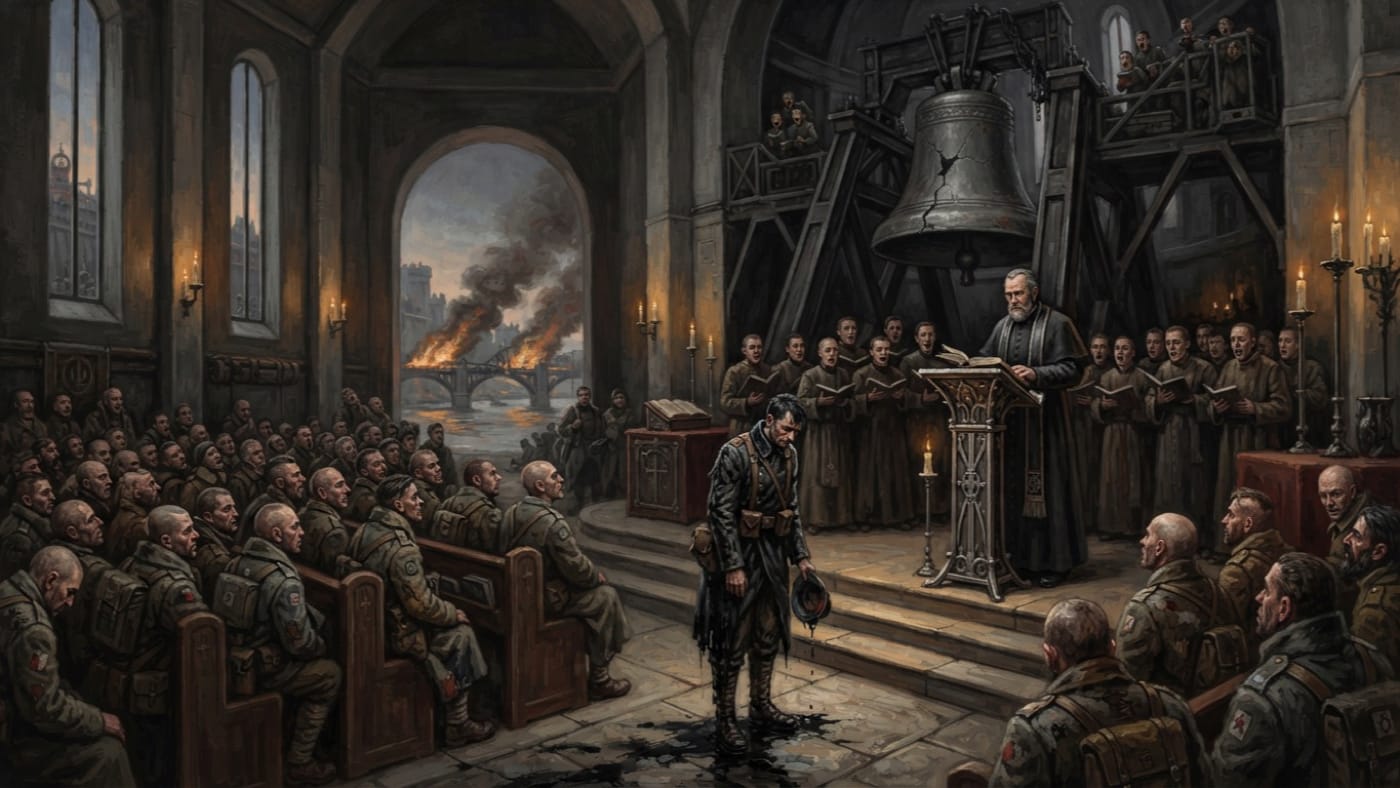
Miserere
The psalm Severin finished while the northern front collapsed
Severin finished the Miserere at Montreval after reading of Aachen's betrayal in A.S. 25. Mercy was requested; the bridges were burned anyway.
Codex Ref. XIII.1.96-025
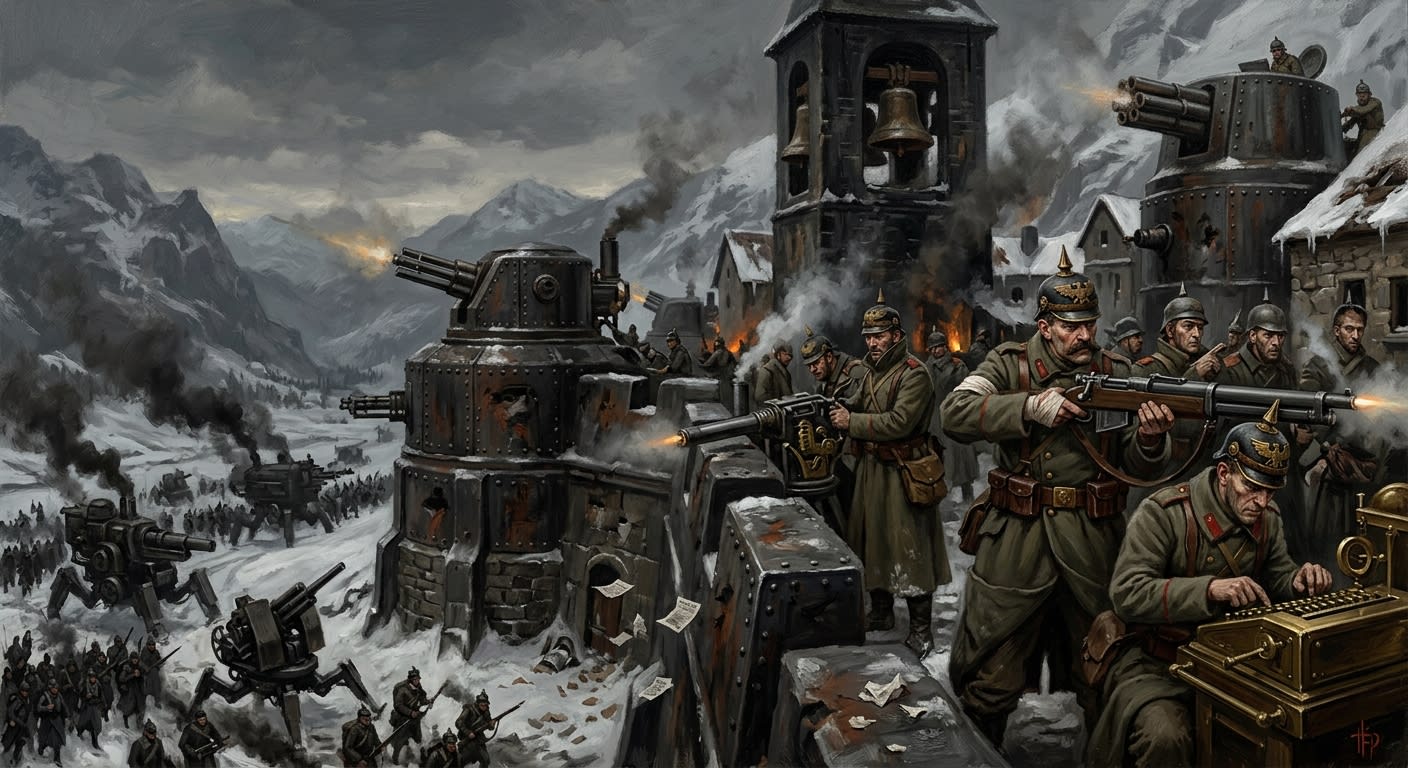
Montreval
The pass-town that taught Reason the road was closed
Montreval held three winters against Lucien Artois's clockwork guns, hunger, pamphlets, fever, and arithmetic; a southern pass-town where Severin bought time with walls, bells, broth, and burned bridges.
Codex Ref. II.1.09-015
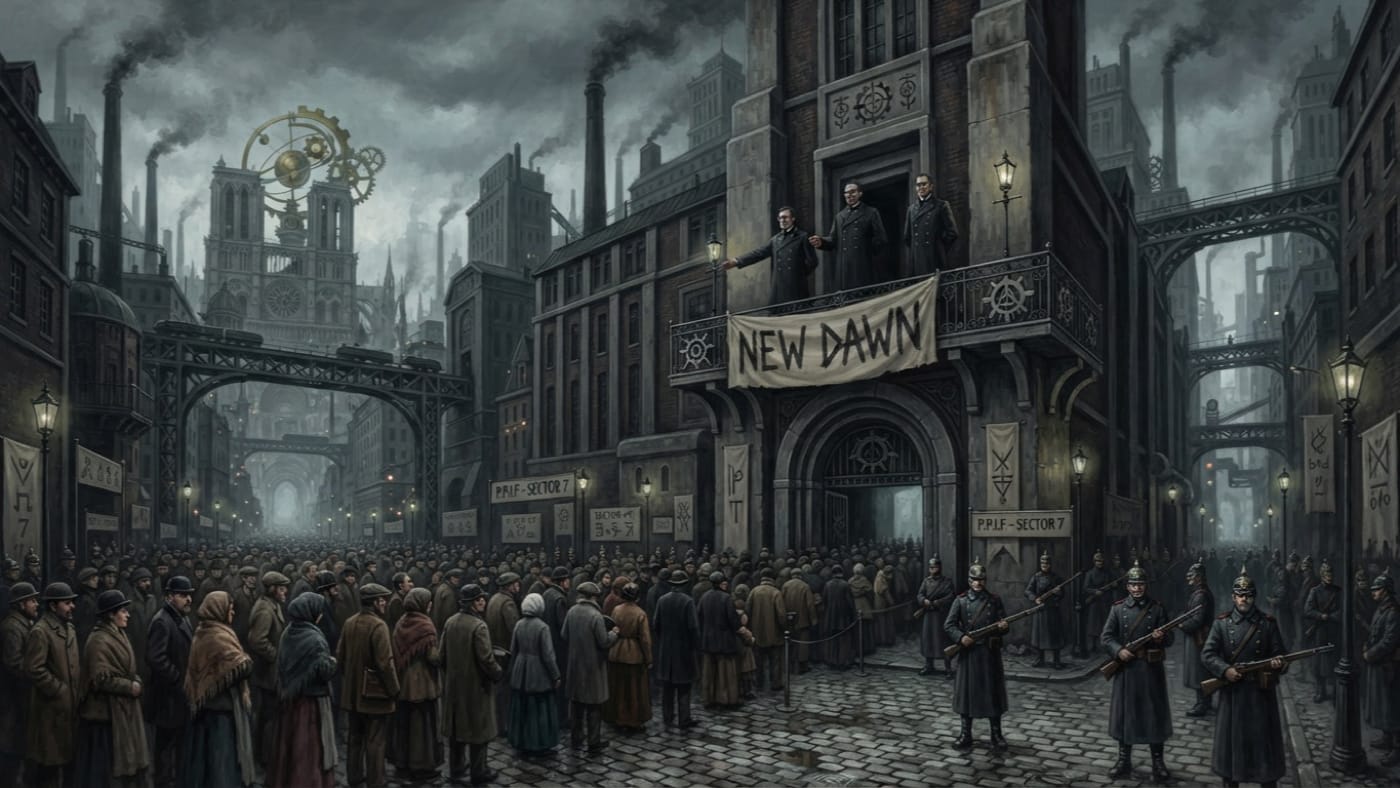
New Dawn
Liberty Proclaimed, Persecution Administered
The Rationalists' proclamation of victory after the Treaty of Regensburg, A.S. 30: liberty advertised from balconies, persecution administered through prefectures. The Bureau retains the slogan as evidence.
Codex Ref. VII.2.01-030
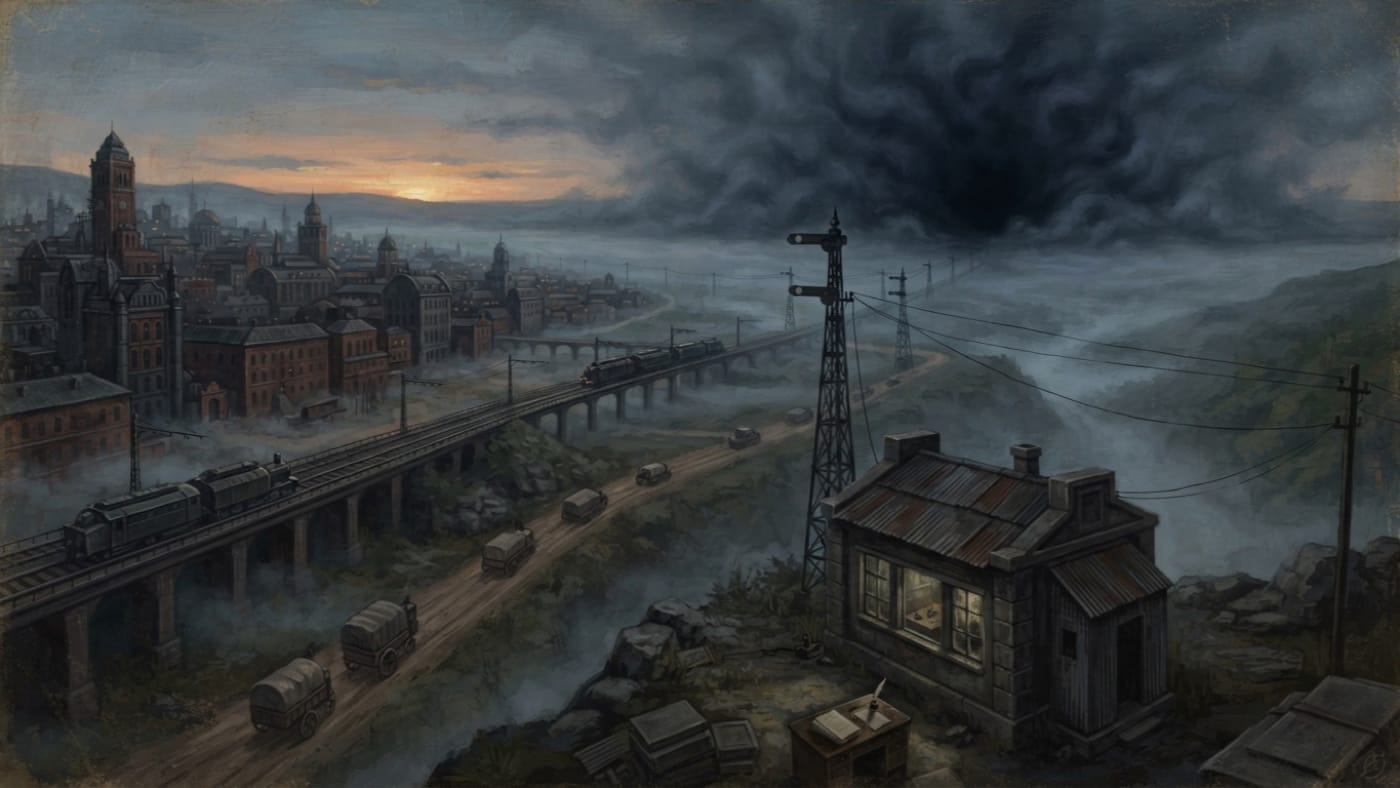
Niš
A missing grain return and a column no conjecture can close
In A.S. 38 a parish in Niš failed to send its grain report. The Eastern Silence gave that empty column a place in the Codex; it supplied no explanation.
Codex Ref. II.5.09-038
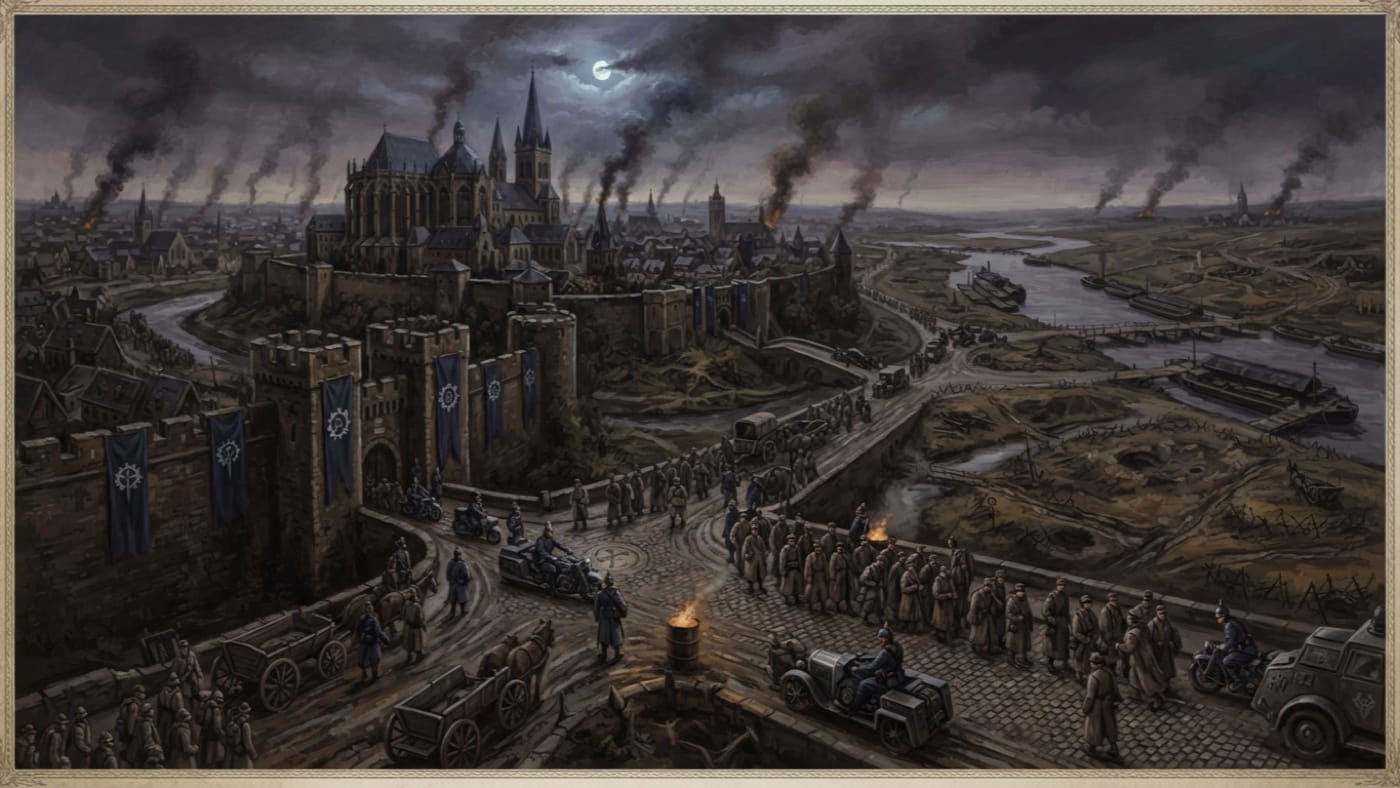
Northern Coalition
The Front Guillaume Sold for a Promise
The faithful's northern command lost its roads, stores and future when Guillaume sold Aachen in A.S. 25. The soldiers owed bread received a lesson in noble honour.
Codex Ref. VIII.6.02-025
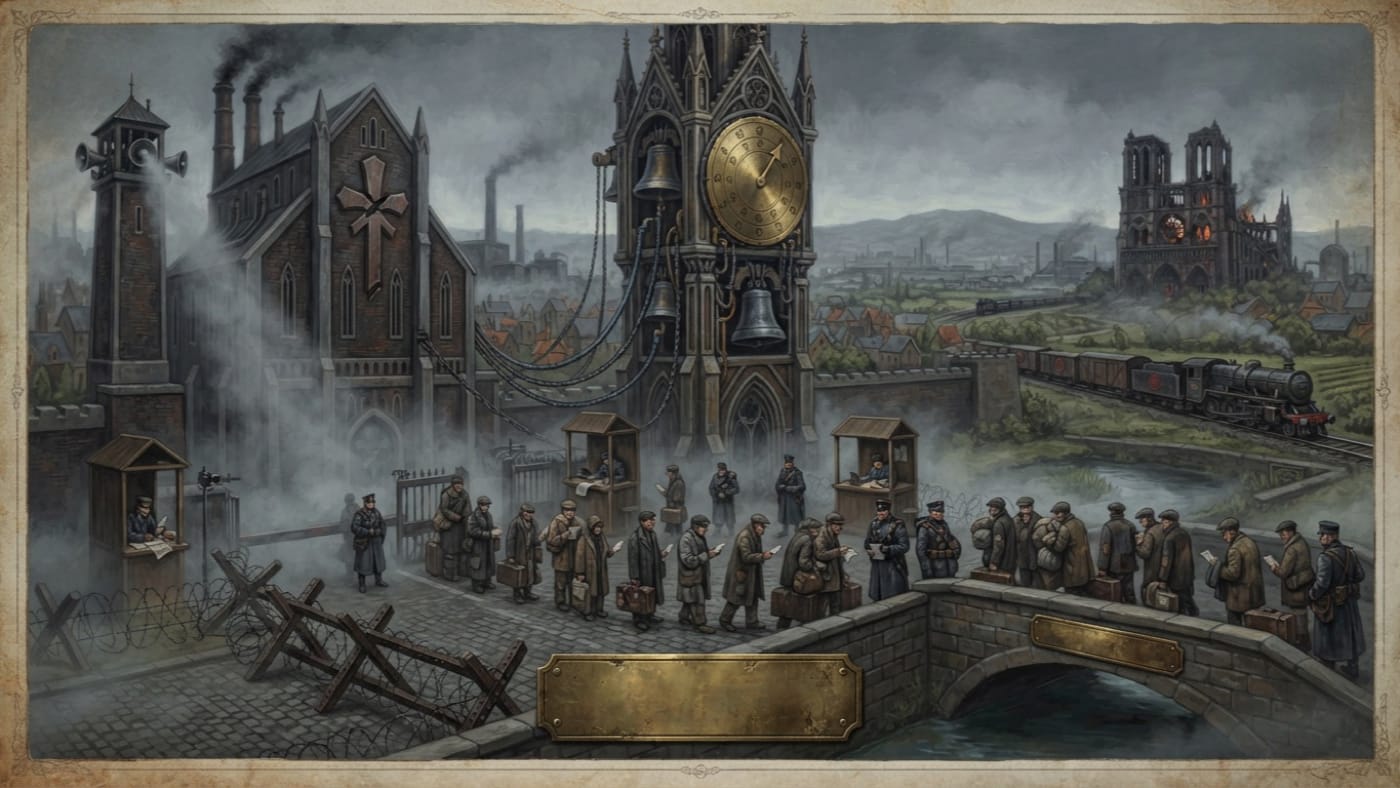
Northern France
Lost through a German gate, recovered parish by parish
Much of northern France fell after Aachen opened in A.S. 25. Recovered parish by parish, the country now pays tithes, carries papers, and calls supervision safety.
Codex Ref. II.1.09-025
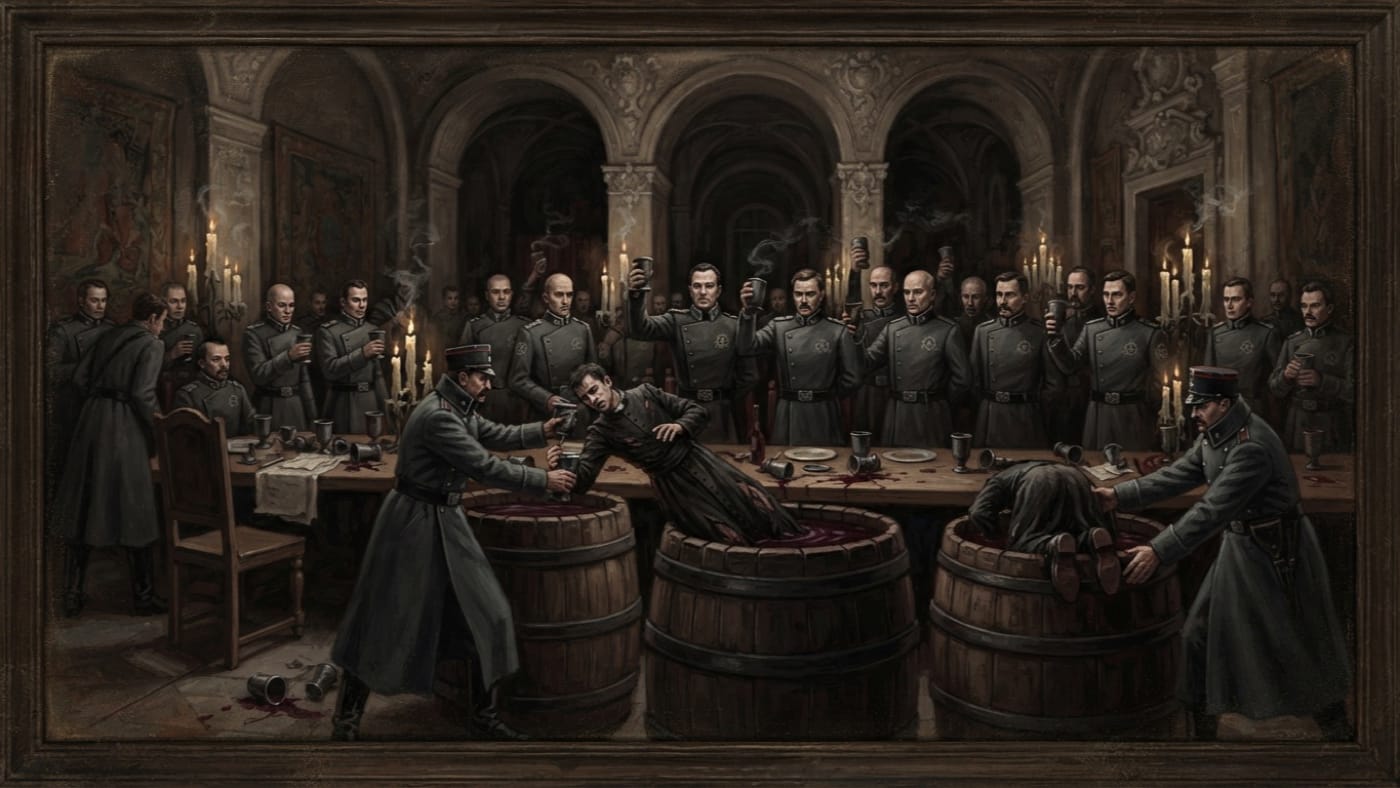
Oaths of Regensburg
Three refusals, a missing bishop, and a toast answered in water
At Regensburg's A.S. 29 banquet, three priests refused recantation and were drowned in wine. The Bishop of Worms vanished; his captors declared he had never existed. The cups kept no minutes.
Codex Ref. VII.2.01-002
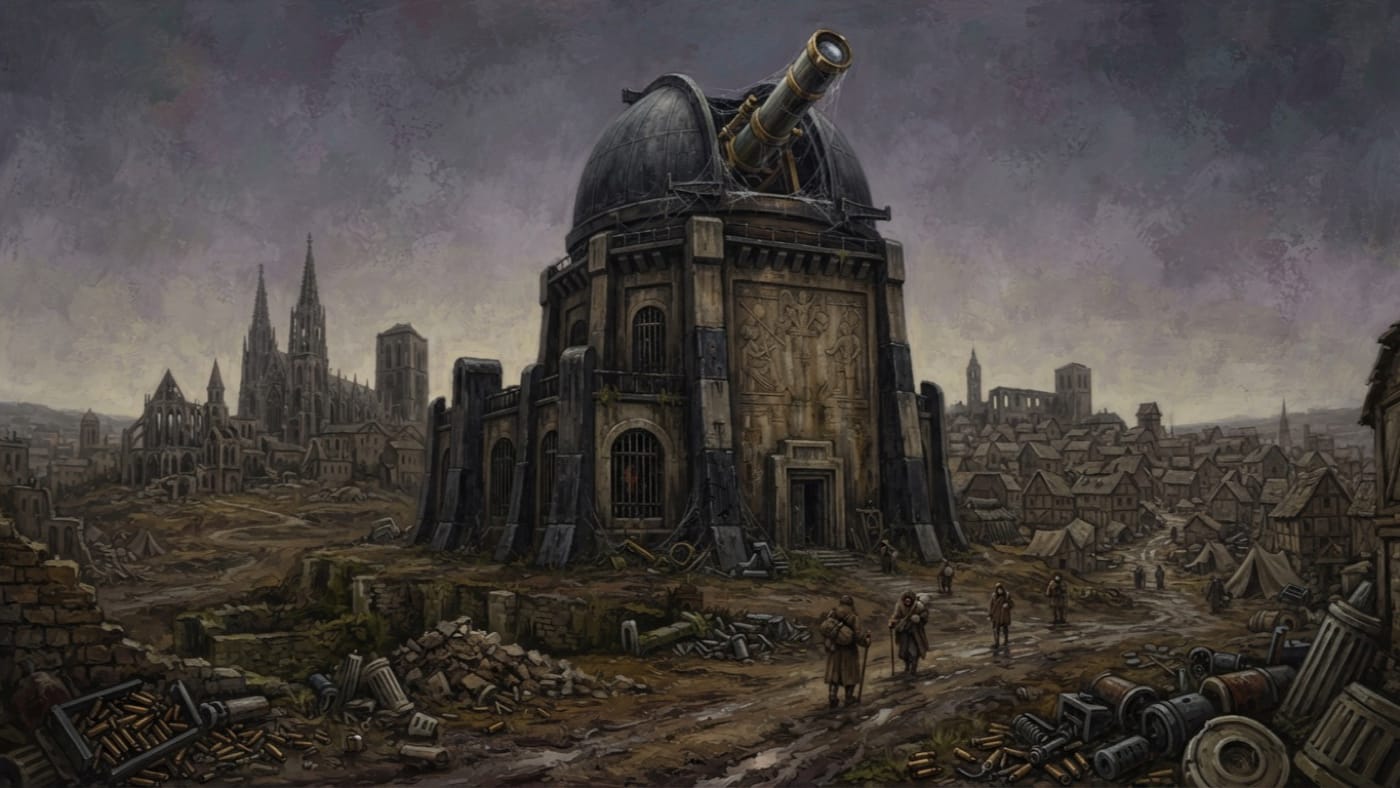
Observatory at Vienna
The telescope remains. The sky is not certified.
A.S. 201 survey of Vienna's empty Republican Observatory, funded with confiscated Church wealth and costing more than the cathedral it replaced. The telescope remains; the sky is not certified.
Codex Ref. II.4.09-201
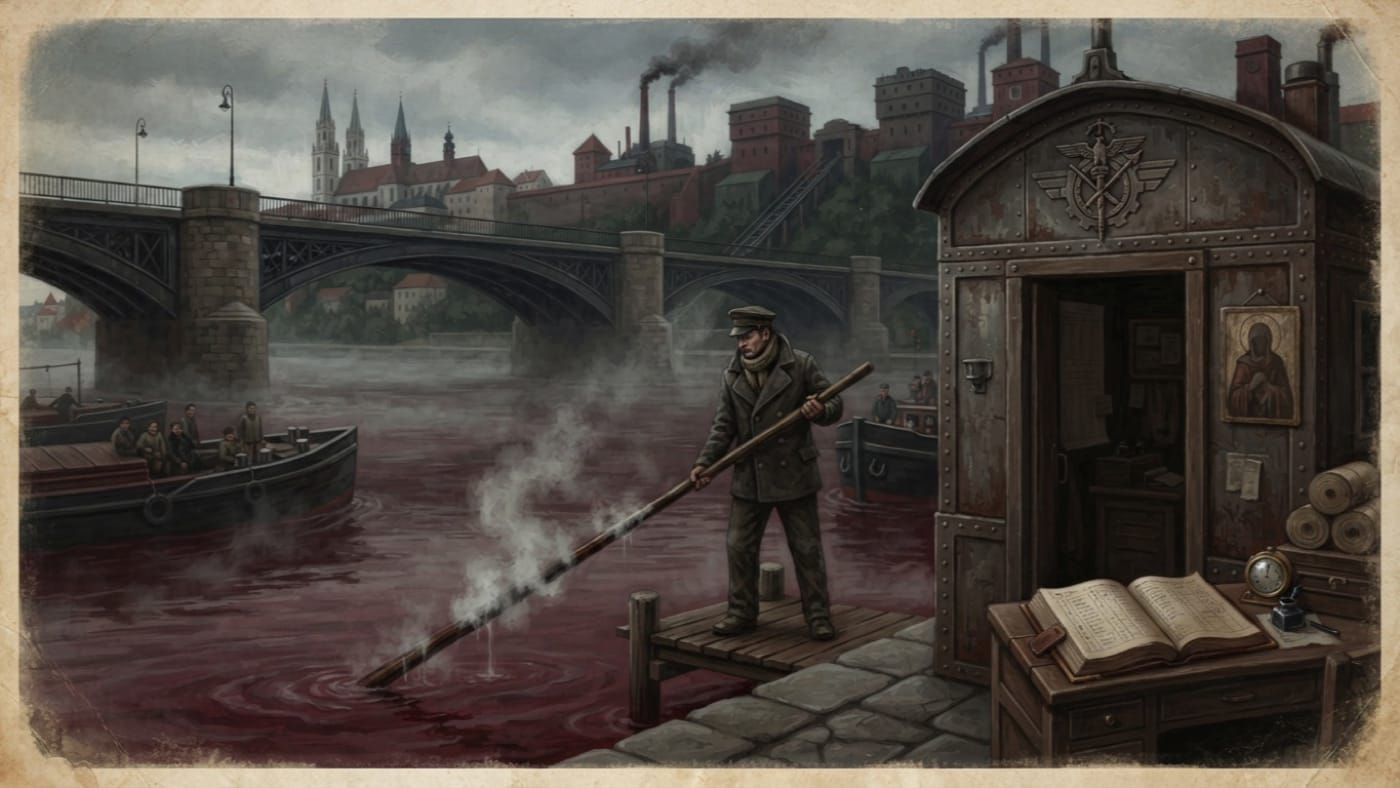
Passau
The keeper wrote it down; the Ledger keeps it
A toll keeper east of Passau recorded the first confirmed signs of the A.S. 34 Red Flood. The pole steamed; the toll rolls kept the three-week count. The Bureau supplied the meaning later.
Codex Ref. II.2.04-034
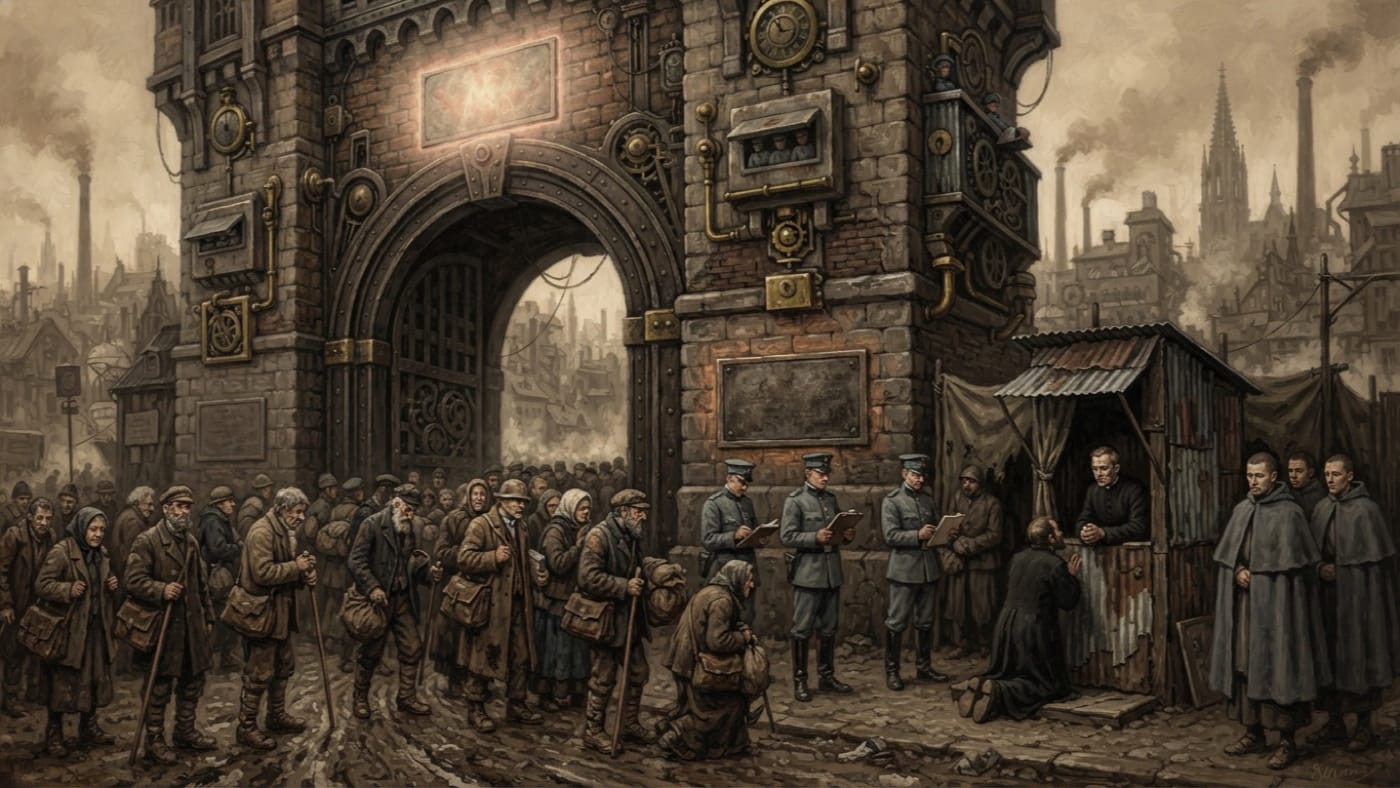
Pastoral Separatists
The soul decides; the clerk wants evidence
The Pastoral Separatists let the pilgrim's soul decide which Regensburg inscription takes hold, leaving the gatehouse to demand evidence it cannot inspect.
Codex Ref. XIII.1.76-093
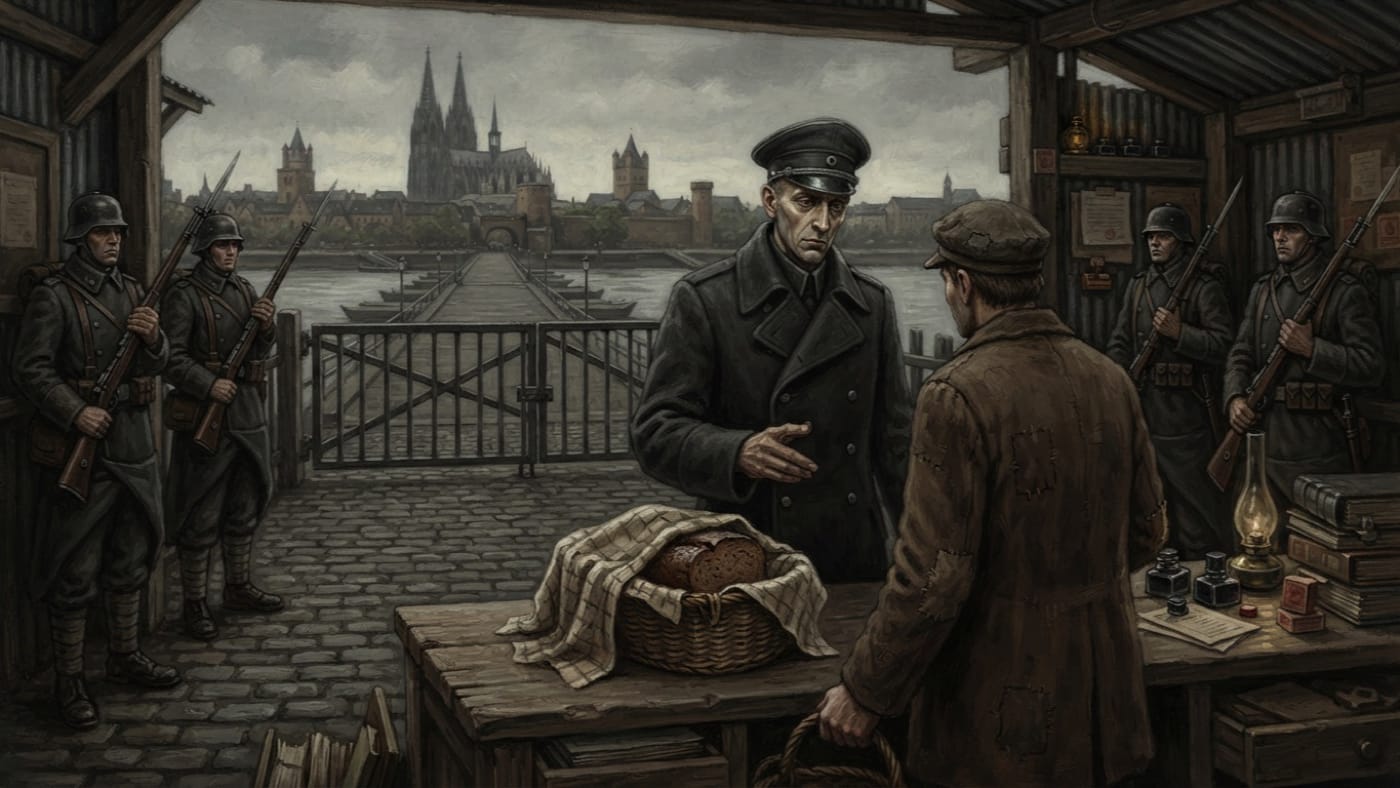
Philosophical Prefect
He looked at the basket. The bones went through.
A Rationalist examiner of documents, parcels and suspected sacred objects, attested at Cologne in A.S. 31. He waved Ignatius Brenner's breadbasket through. Three apostolic bones escaped; the inspector's name did not survive.
Codex Ref. III.2.01-031

Philosophical Prefectures
Reason numbered Europe; Hell ignored the numbers
The Philosophical Prefectures were Reason's thirty-seven cuts across Europe: a map designed to erase saints, graves, borders, and memory by schedule.
Codex Ref. XIII.1.13-030

Procurator Maxentius della Torre
The jaw by which Doctrine learned to bite
Della Torre expanded Purity in A.S. 80, birthed the Index Damnatus, and taught the Synod that a named error is already halfway into chains.
Codex Ref. III.4.02-031

Professor Gérard Molyneaux
The man who gave panic a professorial overcoat and called the missing sun weather
Rationalist professor whose A.S. 32 volcanic hypothesis explained away the Year Without Dawn, won a medal, and survived only as evidence that confidence can be catalogued as guilt.
Codex Ref. III.2.01-079
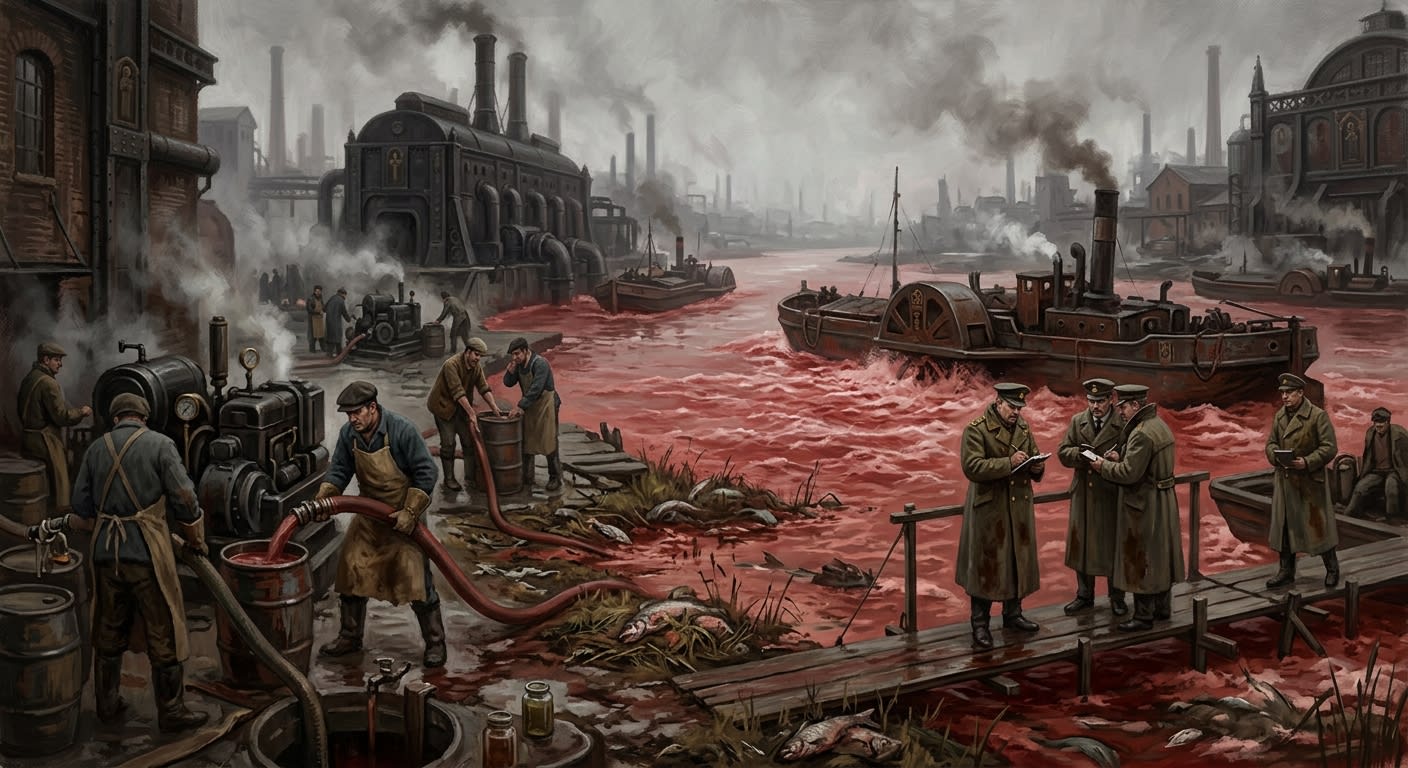
Red Flood of the Danube
The river cleared; the warning did not
The Danube ran crimson for three weeks in A.S. 34, boiling, staining wells, killing fish, and teaching Rationalist hydrology that some rivers are invoices.
Codex Ref. VII.4.18-001
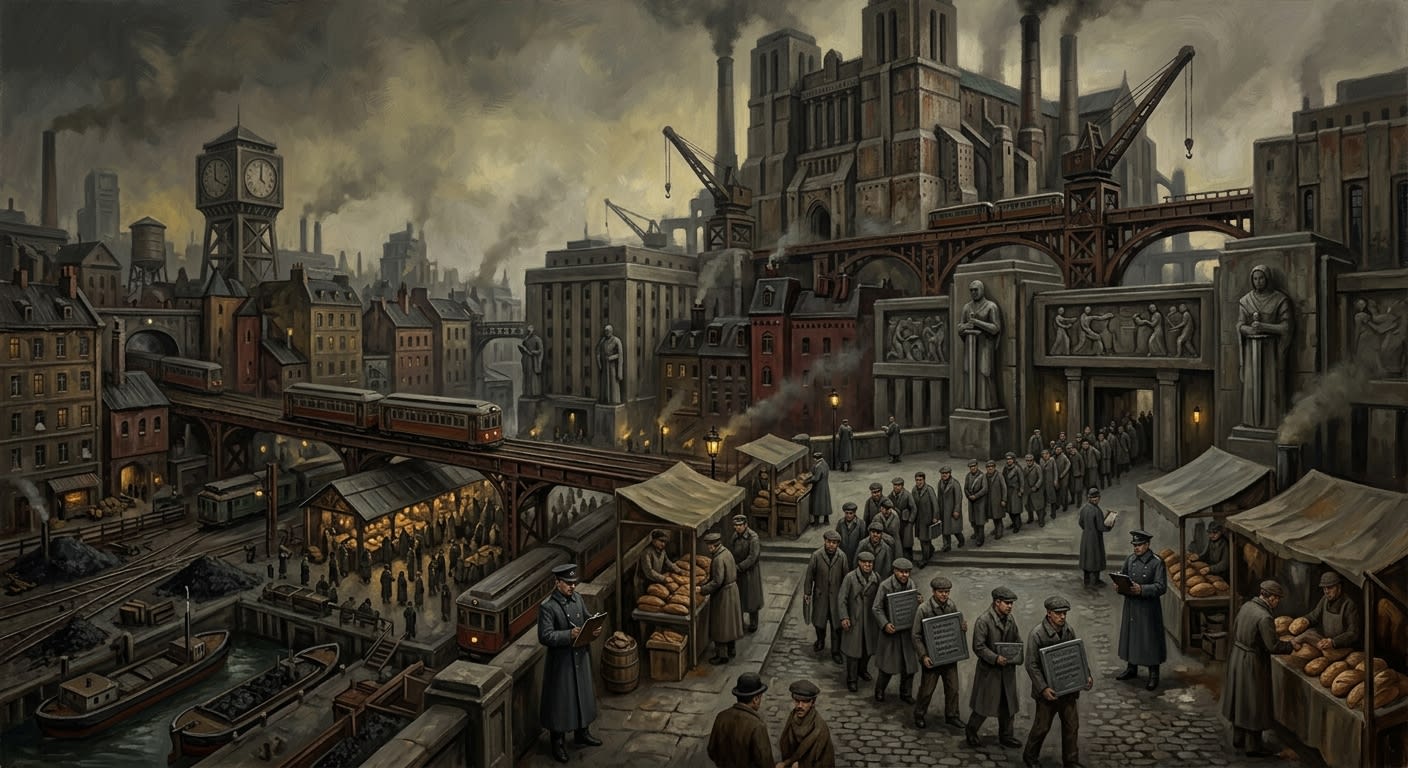
Regensburg
The city that sold false dawn by the plaque and glass
Regensburg hosted Reason's false triumph, sold bread to signatories and plaques to penitents, and still rehearses its profitable disgrace under Bureau watch.
Codex Ref. II.2.03-030
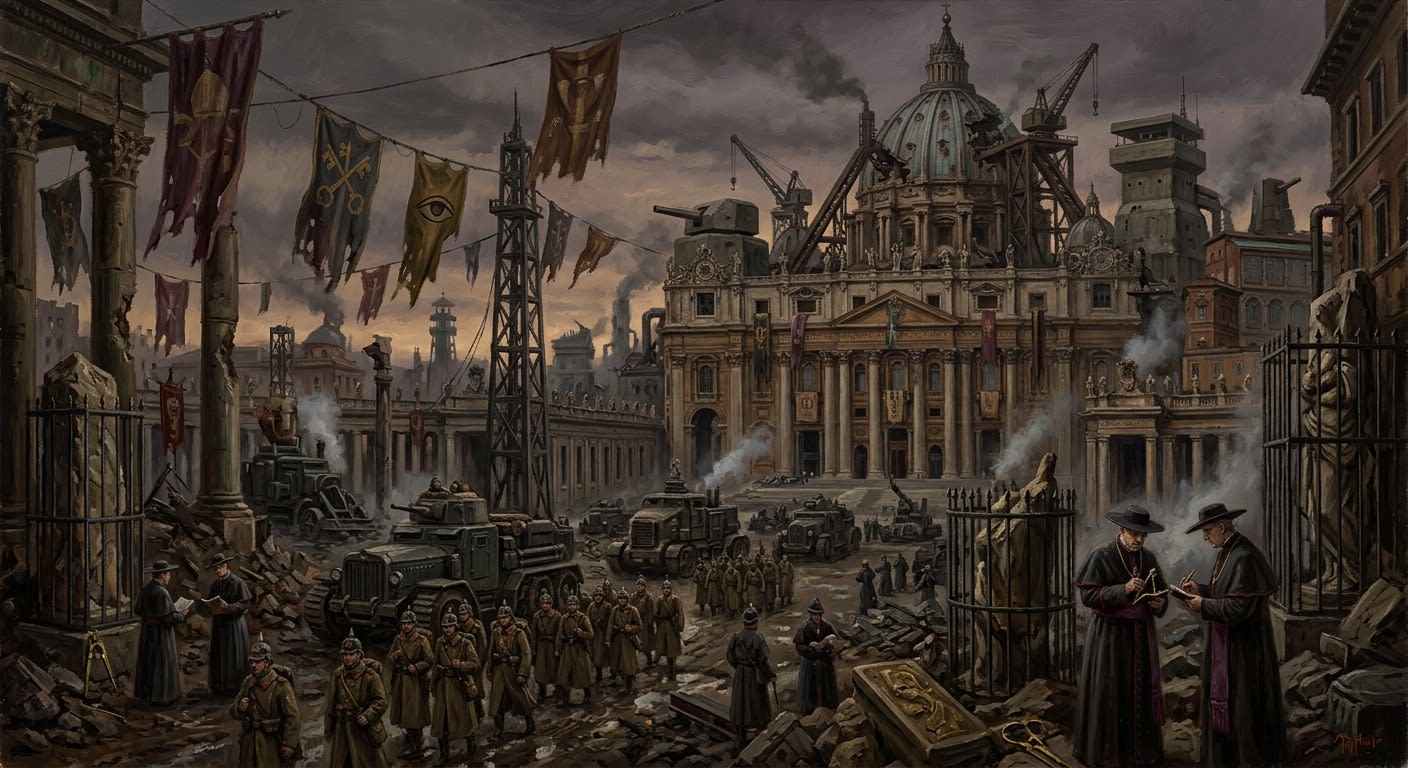
Rome
The old chair, subordinated and still dangerous in pieces
Rome is the Synod-held Old Chair: ruined, supervised, relic-rich, papalist-haunted, and too symbolically useful for Strasbourg to bury cleanly.
Codex Ref. II.1.11-201

Saint Ignatius the Carrier
He walked. That was enough.
Parish clerk who carried three apostolic phalanges across a Rationalist checkpoint in a breadbasket. Zero personal miracles; one Kalnik Ridge. Canonized A.S. 104 at the insistence of every porter, smuggler, and supply-runner on the Line. He walked. That was enough.
Codex Ref. III.2.01-003
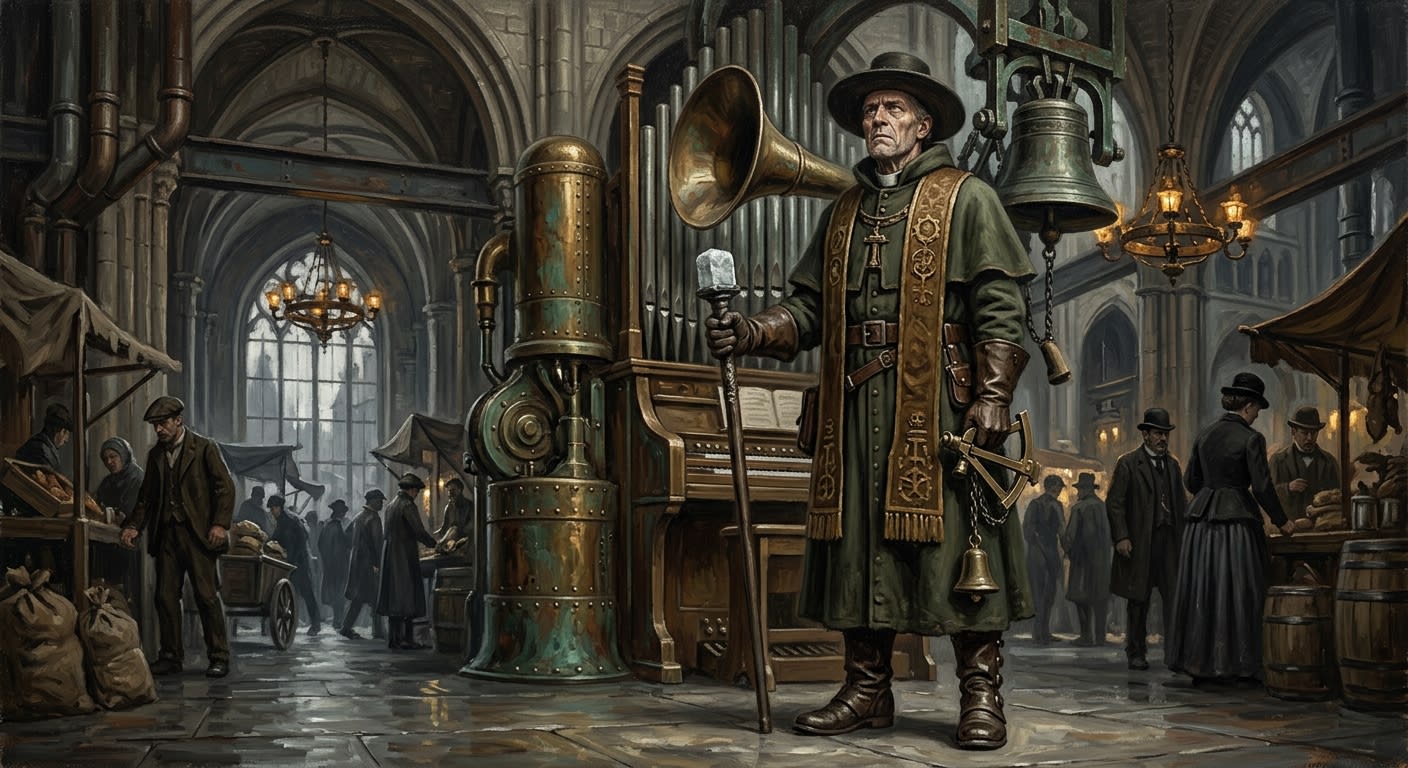
Saint Rupert
Salt in the wound, bronze in the tower, order in the market
Saint Rupert, Vienna’s salt-saint, preserves meat, measure, bells, markets, and civic memory: the patron whose bronze throat answered when men forgot to kneel.
Codex Ref. III.2.01-095
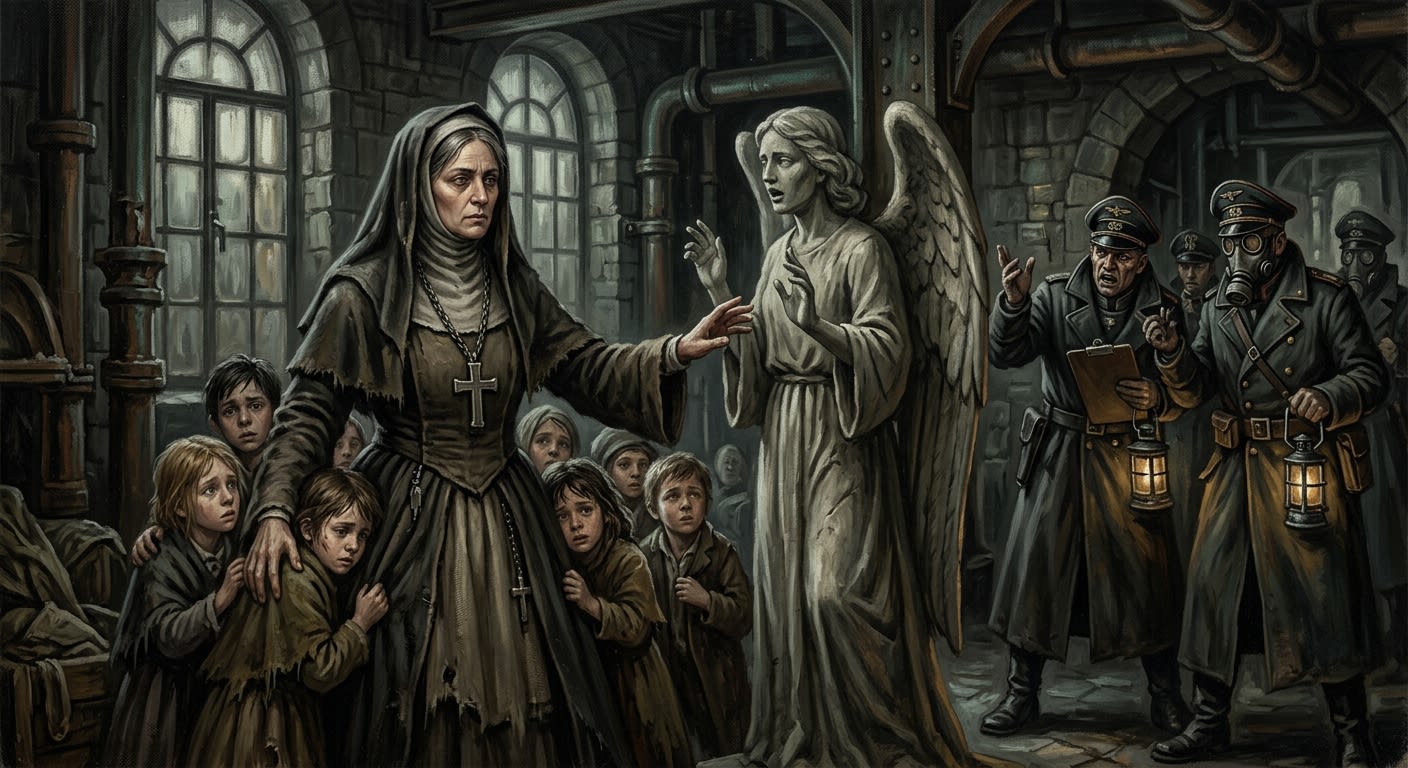
Saint Theophania
Nine days of oil and one drop of inconvenient witness
Theophania hid children in Lyon, taught prayers in whispers, and after the Concordat let a statue do what officials hate most: testify without permission.
Codex Ref. III.2.01-006
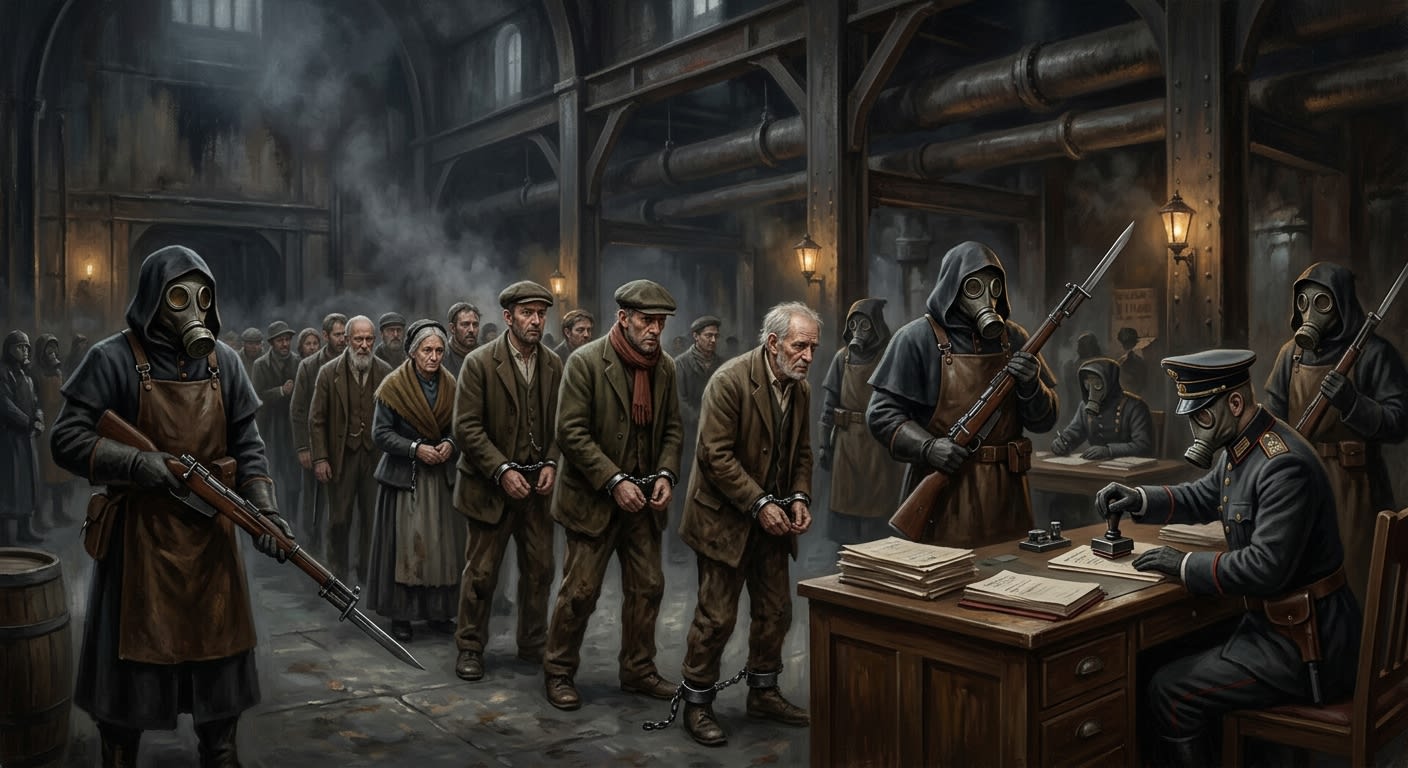
Secular Gatherings Act
The permit form that taught bayonets to quote law
The Secular Gatherings Act did not order massacre. It made massacre available, cleanly phrased, properly witnessed, and ready for bayonets.
Codex Ref. I.1.05-002

The Age of Heresy
A World Sundered, a Faith Forged in Fire
The definitive overview of the Age of Heresy — a continent sundered by demonic invasion, ruled by a theocratic bureaucracy of bells and ink, locked in eternal war against the Seven Sin-Generals. As compiled by the only man qualified to compile it.
Codex Ref. I.1.01-001
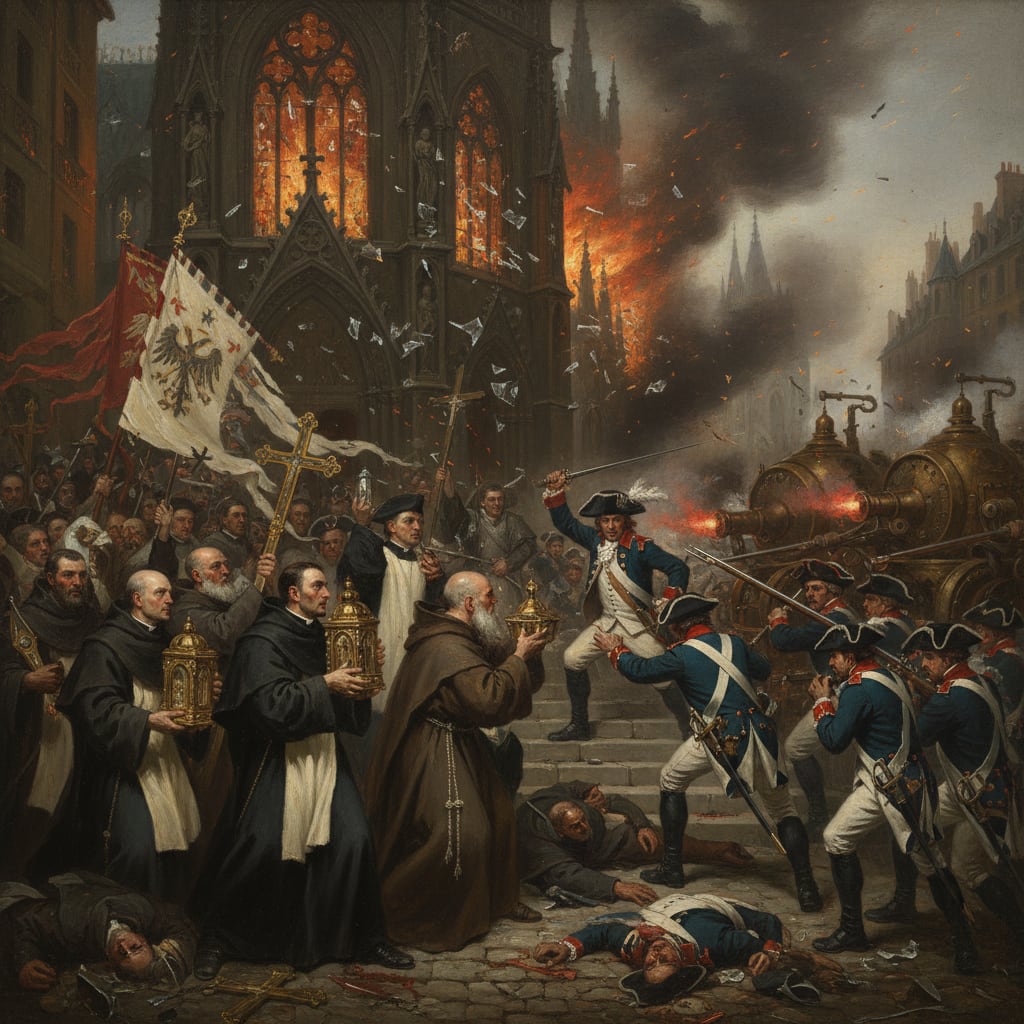
The Atheist Wars
When Reason Drew Steel and Faith Drew Blood
The two decades of continental civil war between the Rationalist Republic and the scattered faithful — a catastrophe so instructive that the Bureau requires its retelling in every catechism school, twice annually, with examinations.
Codex Ref. I.1.03-001
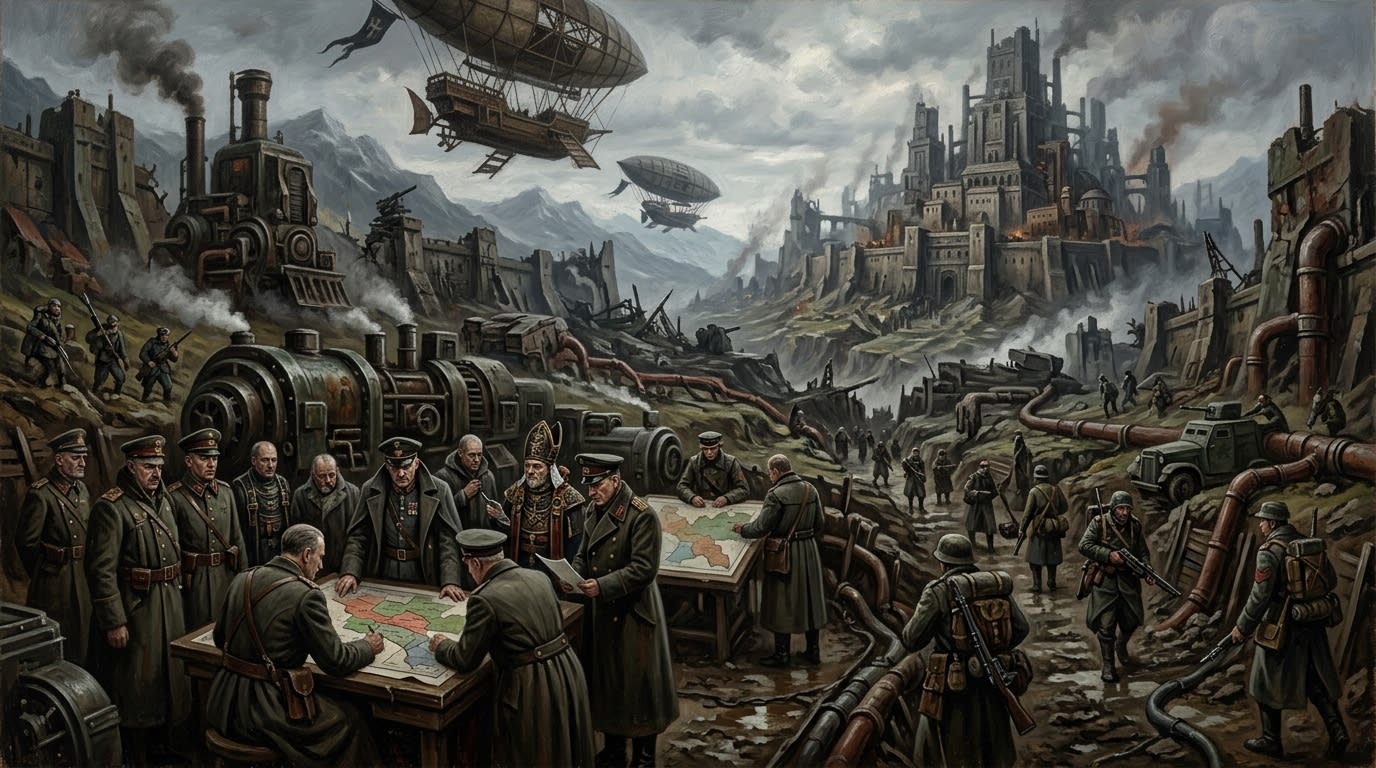
The Balkans
The wound that taught Europe to count its bleeding
The Balkan wound-region, broken first by the Eastern Silence and the Sundering, then divided into Synod margins, contested corridors, Sin-General dominions.
Codex Ref. II.6.05-045
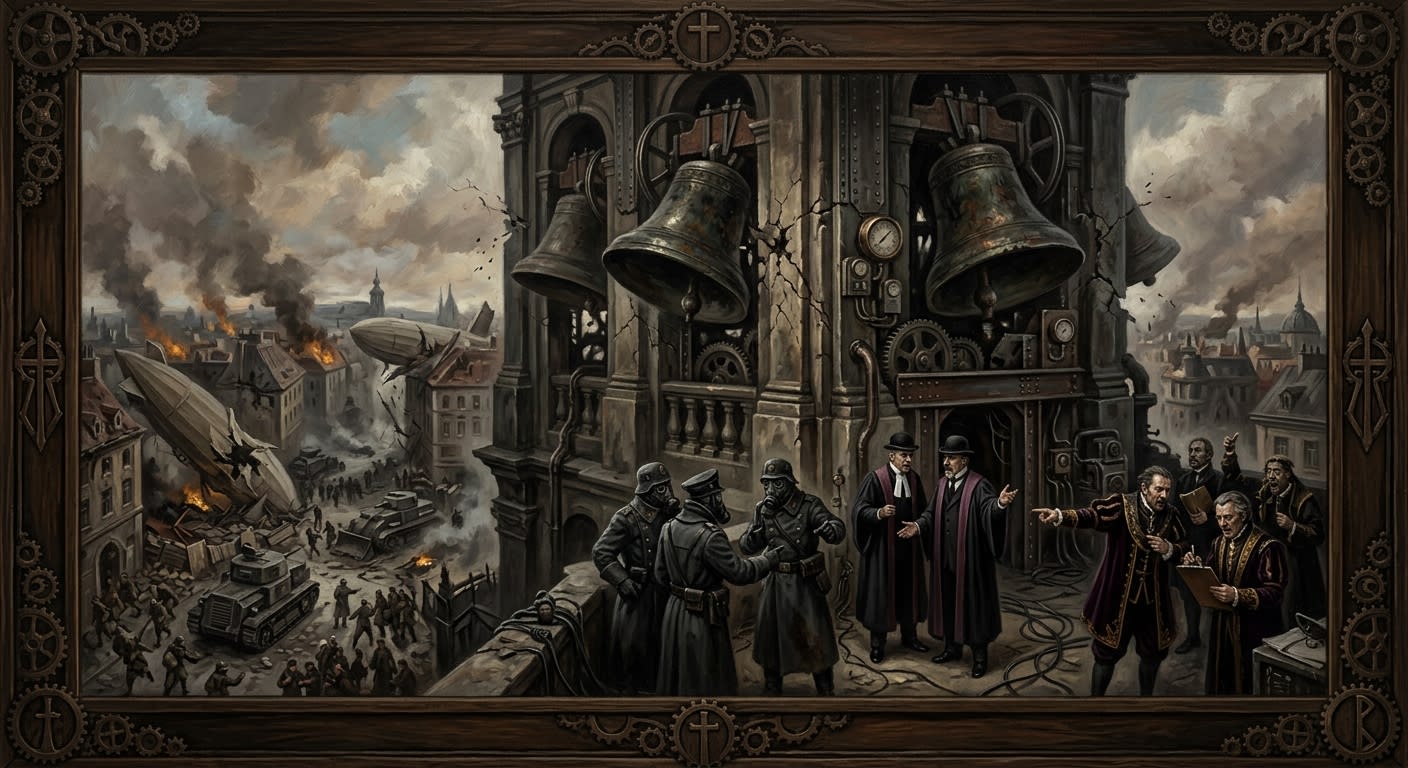
The Bells of Saint Rupert
Bronze sang; committees have been recovering ever since
At Vienna in A.S. 95, the unroped bells of Saint Rupert rang without permission, broke a siege, and left three Bureaus arguing with bronze.
Codex Ref. III.2.04-018
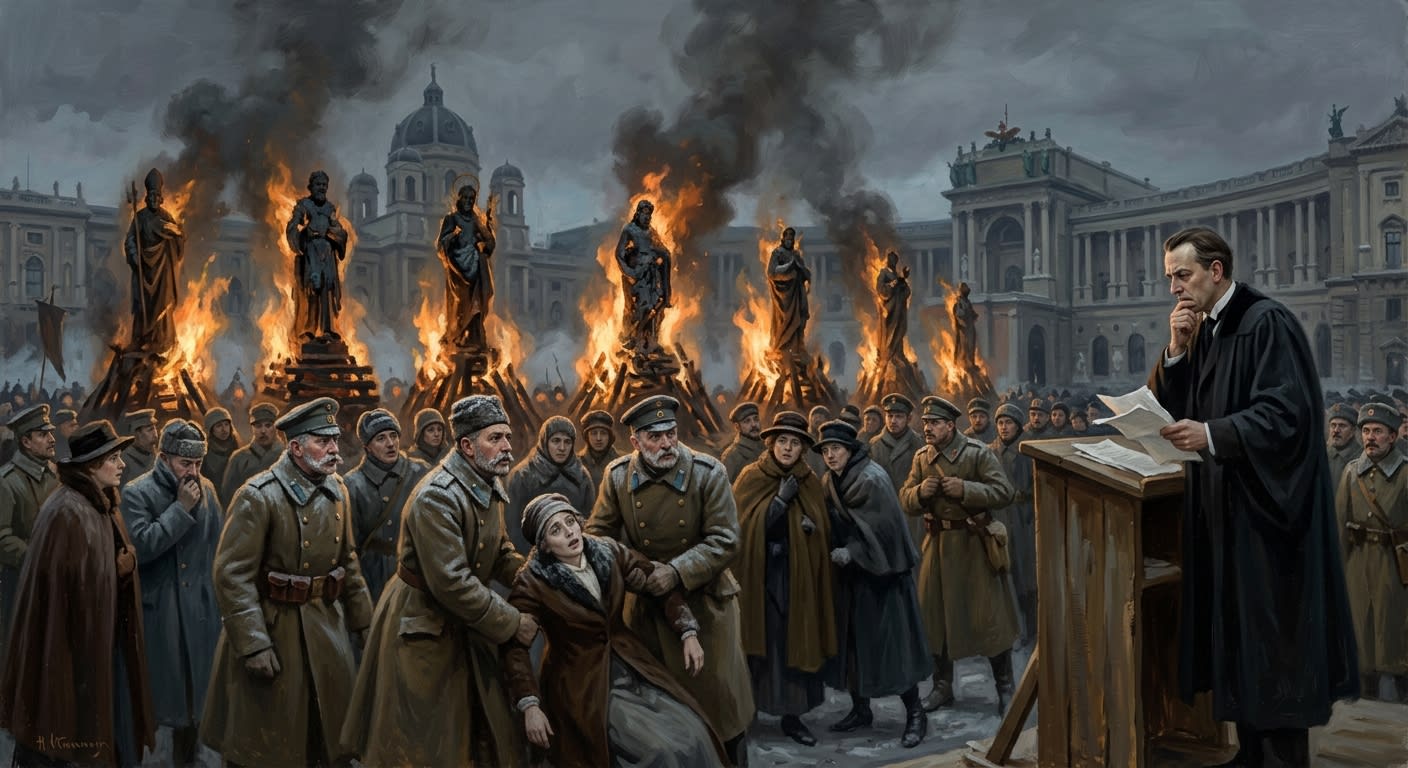
The Black Procession of A.S. 30
Where the Saints Burned Cold and the Rationalists Filed It Under Weather
A staged Rationalist bonfire in Vienna, A.S. 30, where forty-seven saint-effigies burned without heat — the Bureau's First-Order Portent, classified retroactively and still warm.
Codex Ref. VII.3.01-001
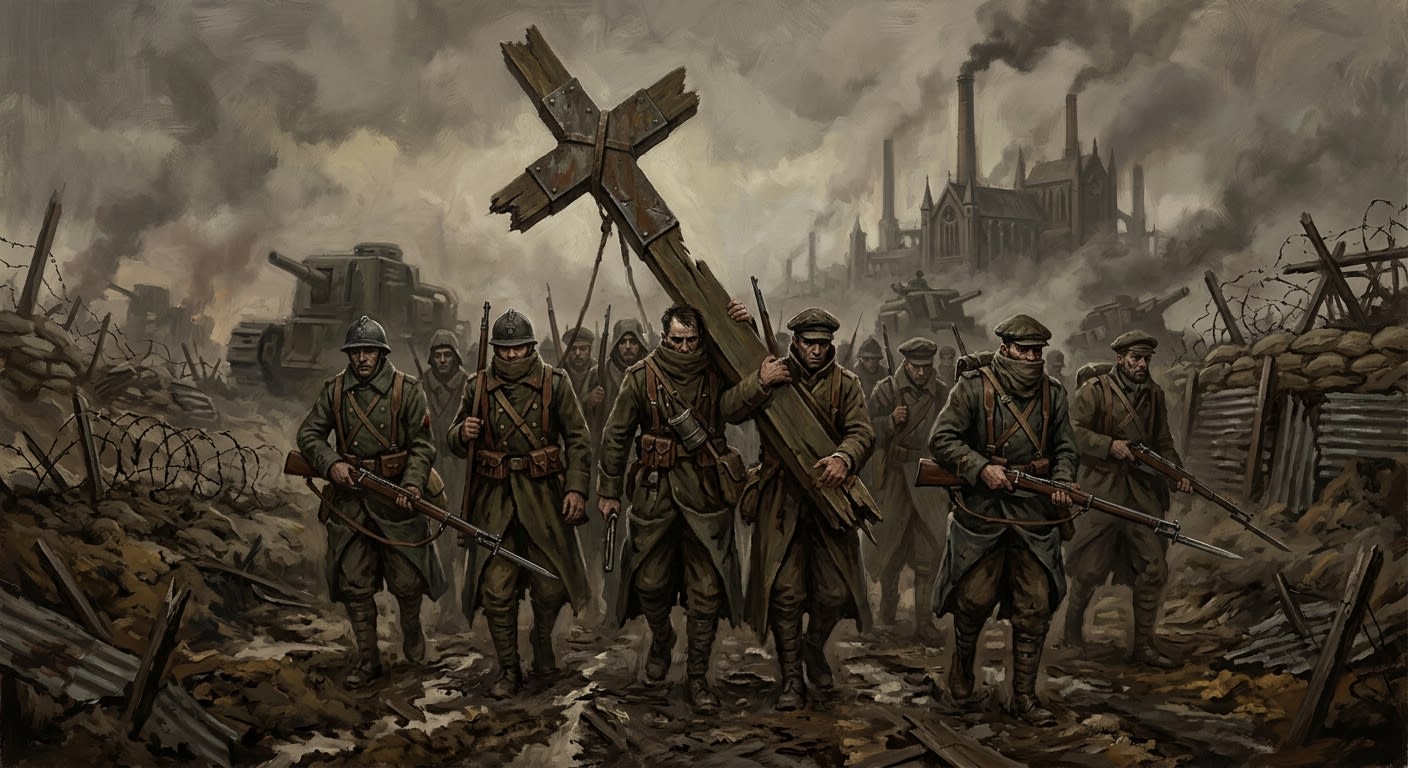
The Broken Cross
The sigil that snapped heaven and called the wound reason
The Broken Cross was Reason's battlefield sermon: a snapped crucifix carried by men who denied symbols while marching under one.
Codex Ref. I.1.05-003
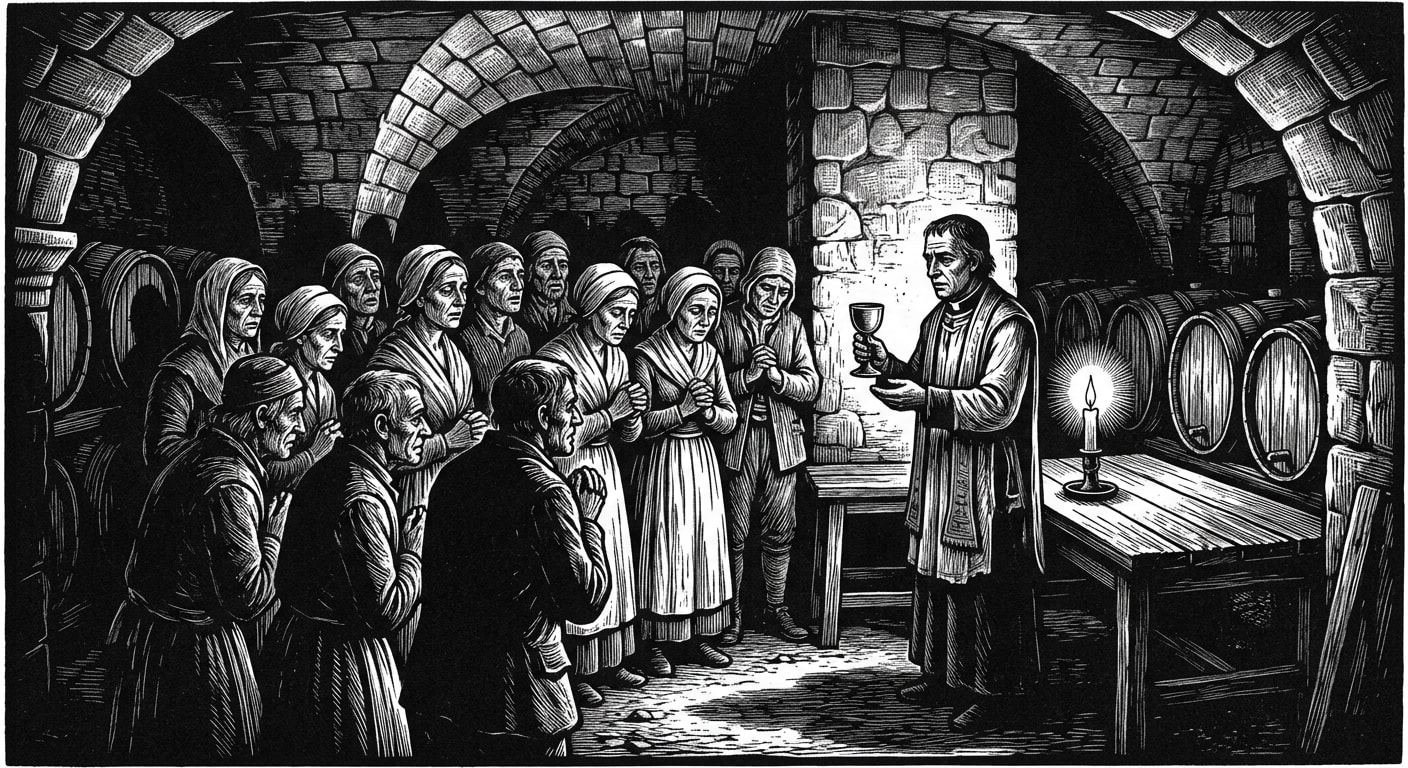
The Cellar Saints
Those who hid in basements built the floor on which the Synod stands.
The frightened faithful who descended into cellars and catacombs when Reason conquered Europe, preserved the relics, and became the soil from which the Synod grew — whether they consented to the harvest or not.
Codex Ref. IV.2.14-003
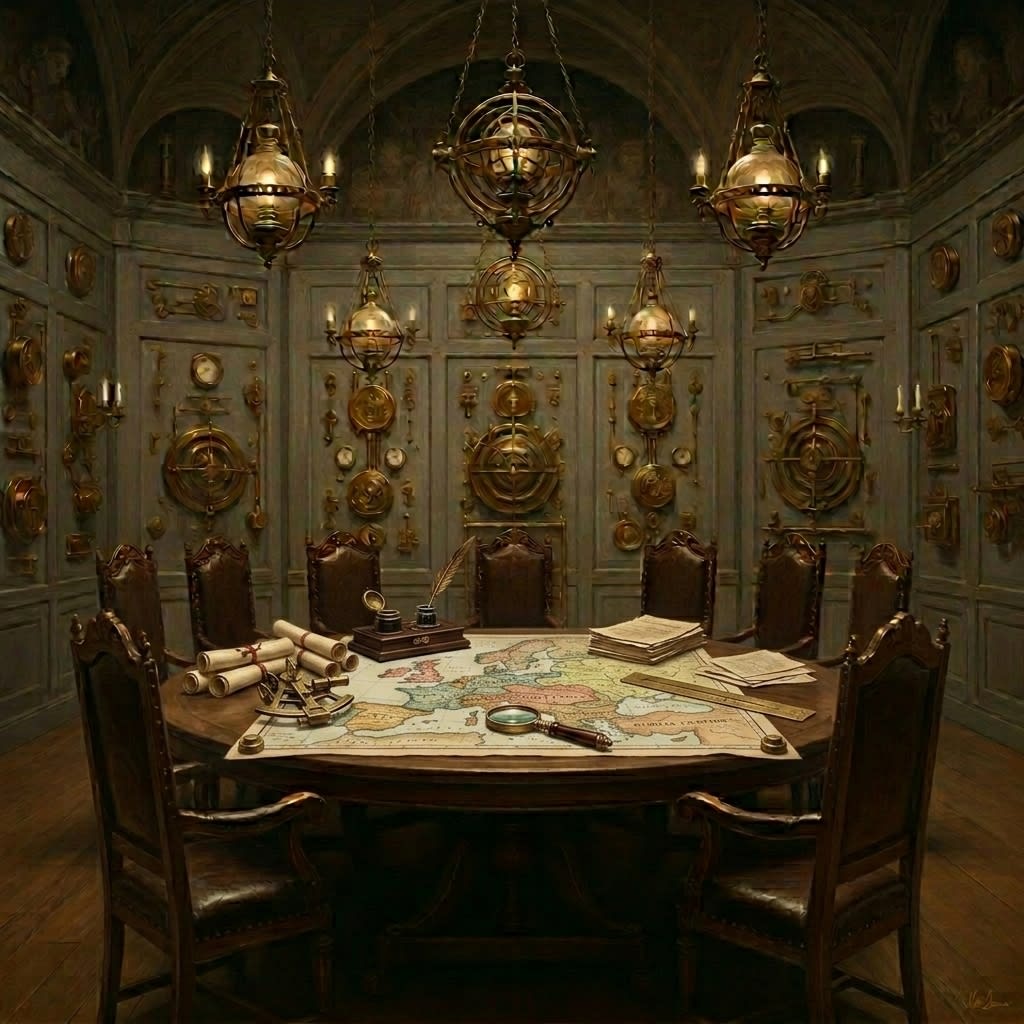
The Council of Nine Rationalists
Nine men governed Europe. Their names are sealed. Their methods are retained.
The sealed governing body of the Rationalist Republic — nine nameless men who administered a continent for fifteen years with instruments of measurement, mass surveillance, and the removal of tongues, until the Sundering settled the argument for them.
Codex Ref. I.1.03-001
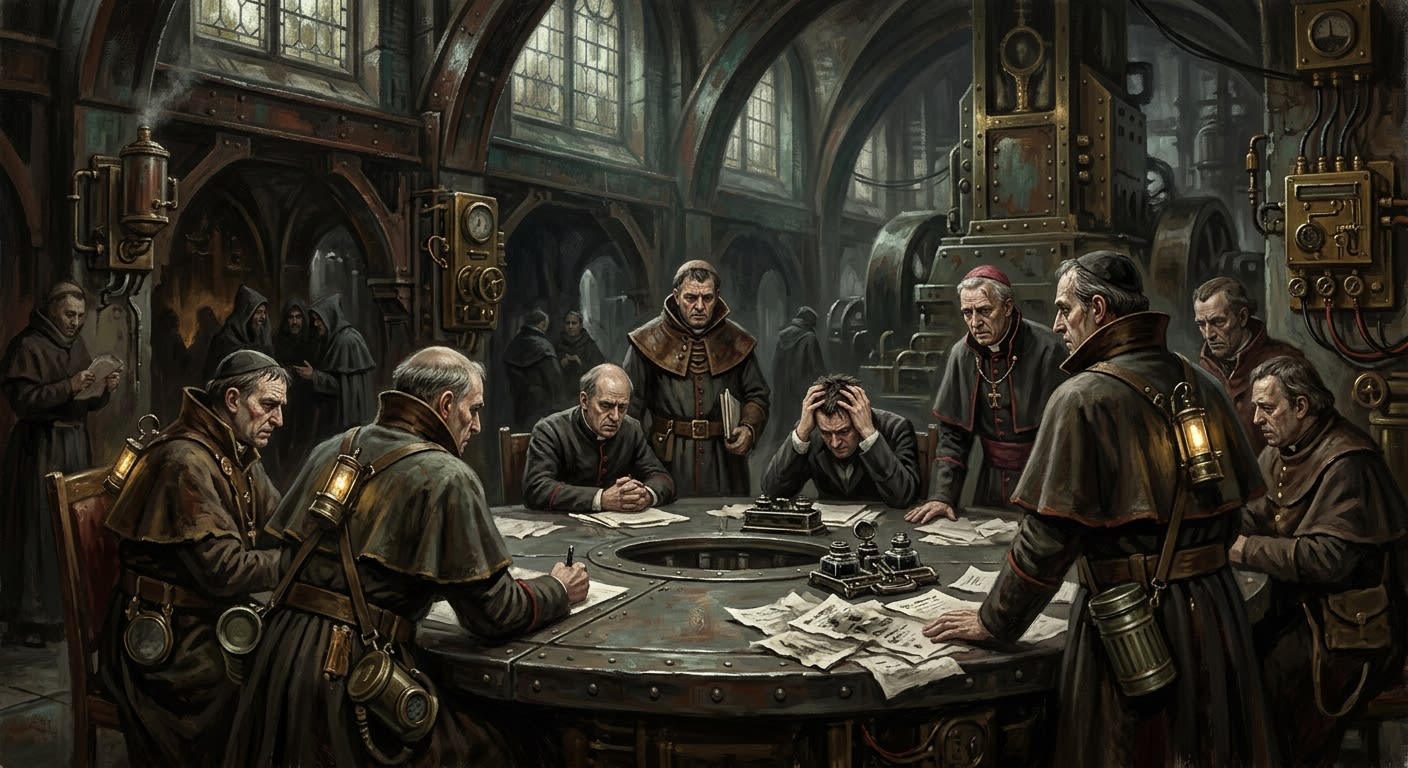
The First Council of Cologne
The yoke was imagined before it was blessed
The September A.S. 27 preliminary convocation produced seven unadopted articles, corrected minutes, and limited voluntary contacts among dioceses.
Codex Ref. VII.7.01-002
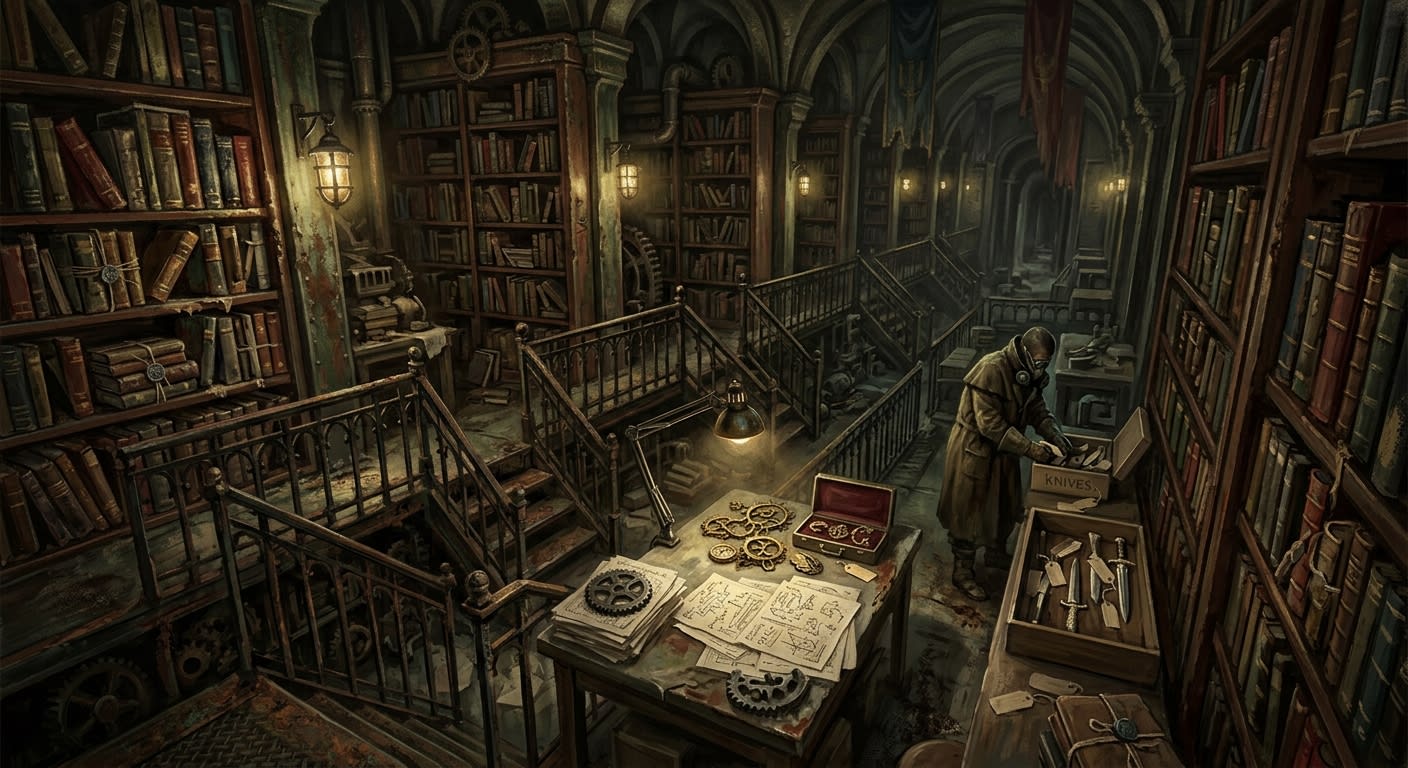
The Forbidden Stacks
Where heresy is shelved close enough to hate efficiently
The Forbidden Stacks beneath Strasbourg preserve Rationalist paper, contraband symbols, and other knives the Bureau prefers labelled rather than lost.
Codex Ref. II.2.06-001
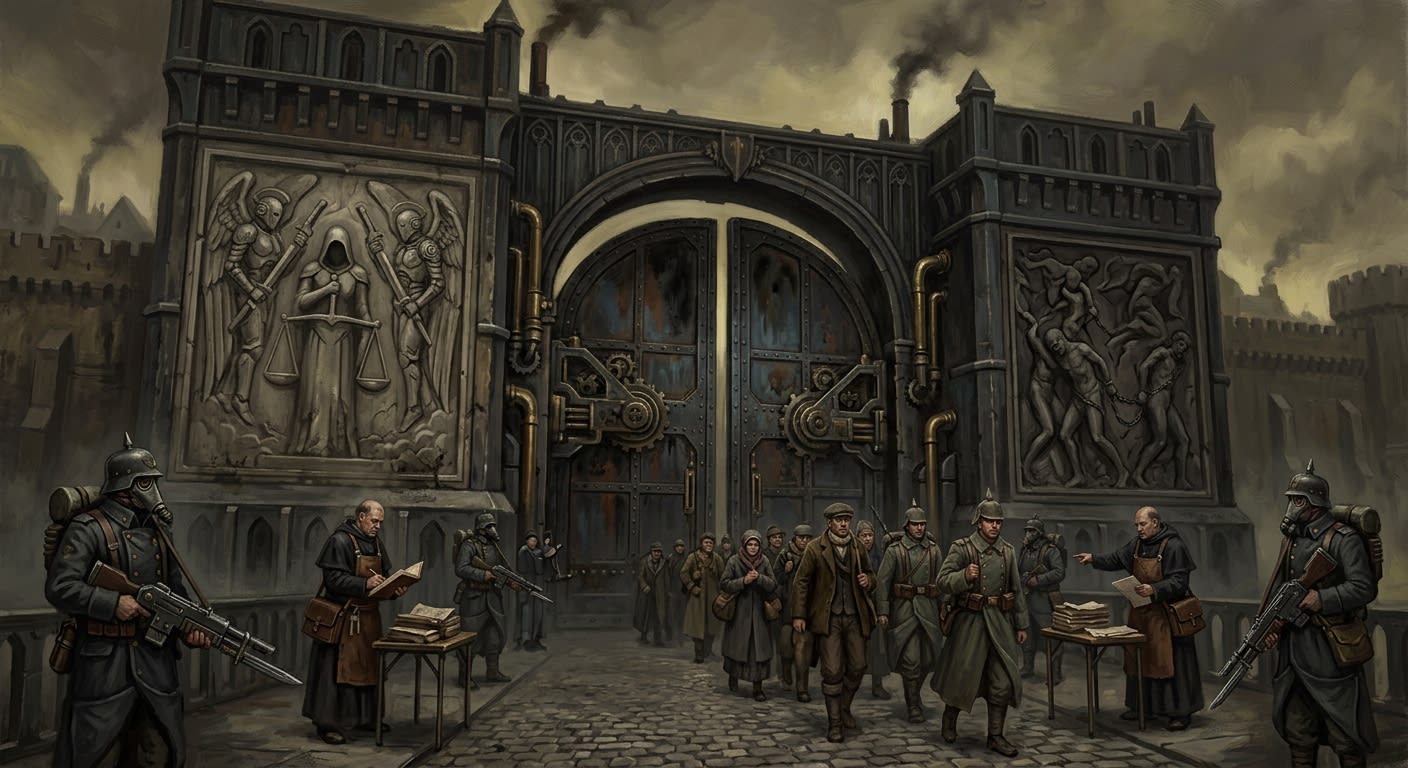
The Gates of Regensburg
Blessing above, curse below, and the pamphlet between
Regensburg's western gates bless and curse the traveller at once, leaving theologians, pamphleteers, and sinners to discover which verdict bites first.
Codex Ref. VII.2.01-003
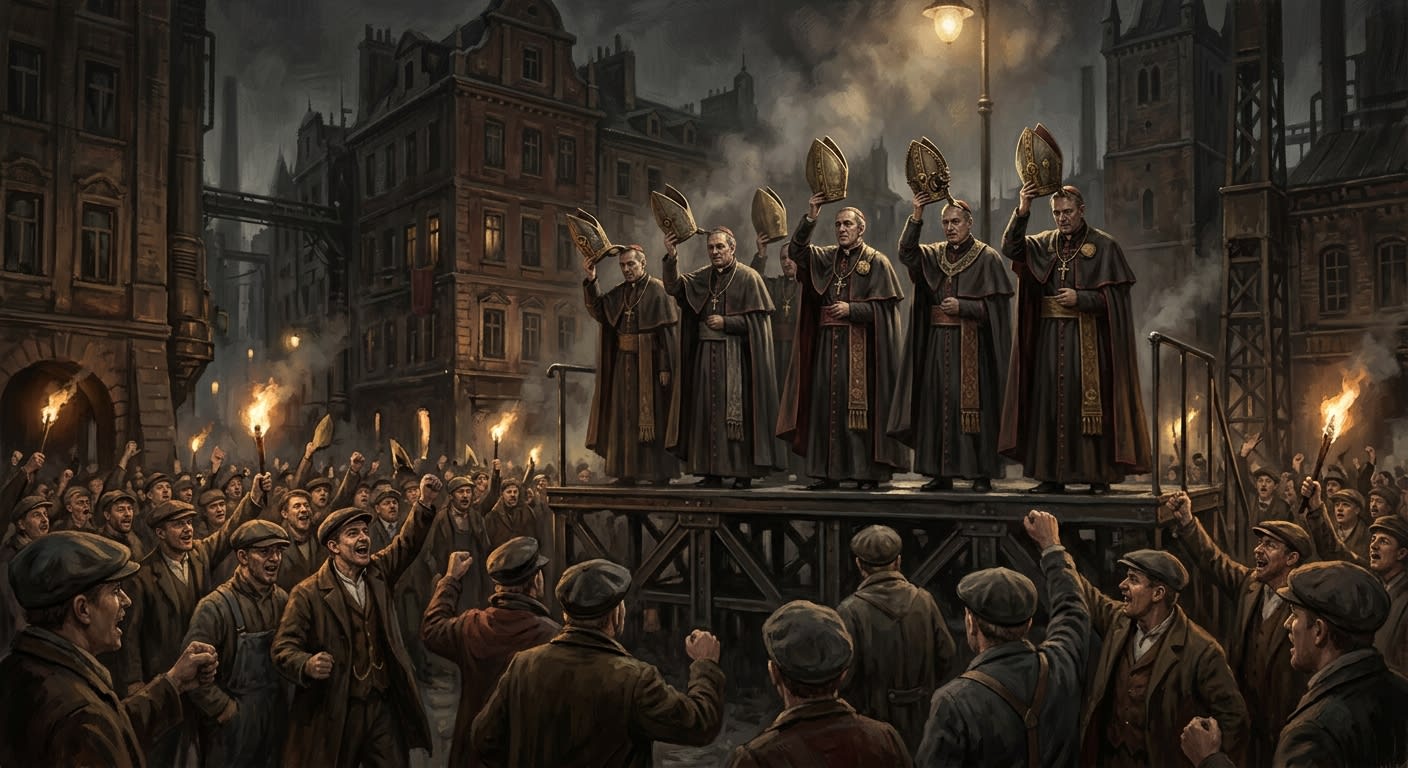
The Night of Crowns
Seven mitres fell, and Prague mistook the sound for progress
In A.S. 8, seven bishops in Prague removed their mitres before a cheering crowd, teaching the Rationalists that apostasy travels fastest when an authorised mouth performs it.
Codex Ref. VII.8.07-001
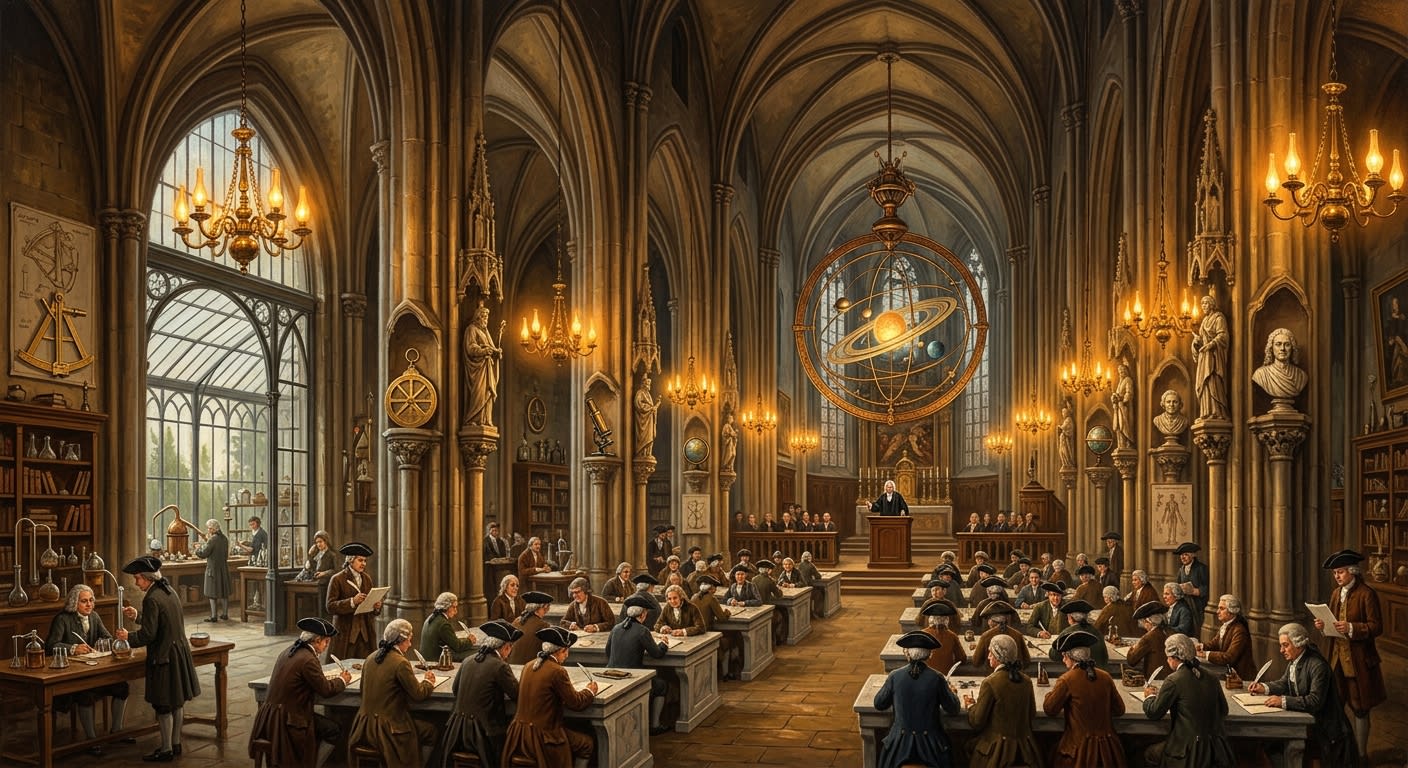
The Rationalist Republic
Fifteen Years of Continental Supremacy, and the Precise Nature of Its Correction
Rationalist institutions predated Regensburg; the Republic's A.S. 30–45 continental supremacy expanded prefectures, census rolls, and repression before central command collapsed at the Sundering.
Codex Ref. I.1.02-001
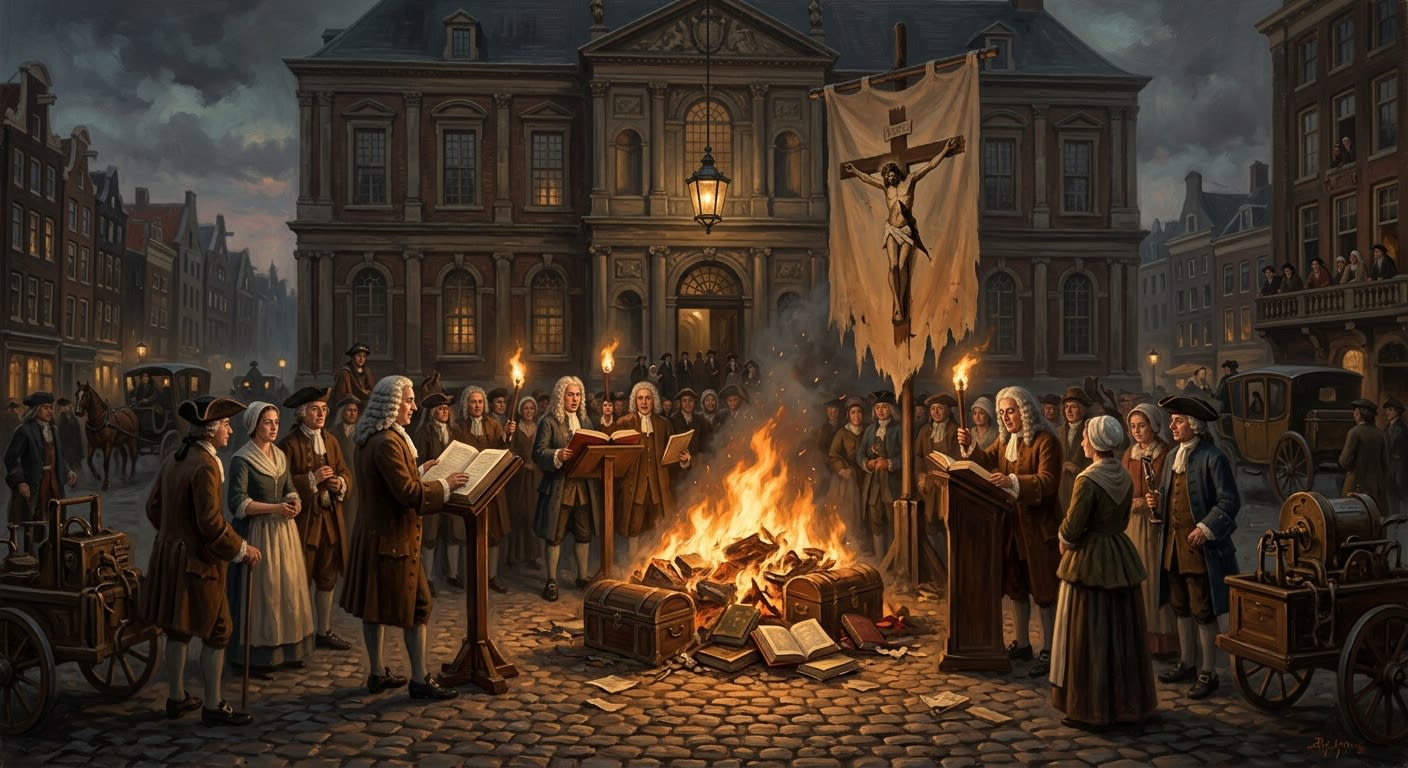
The Rationalists
Architects of the wound the Synod counts from
The Synod's most instructive enemy — philosophers who stripped Europe of its spiritual armor on the eve of Hell's invasion and then had the grace to be destroyed by the consequences.
Codex Ref. I.1.01-001
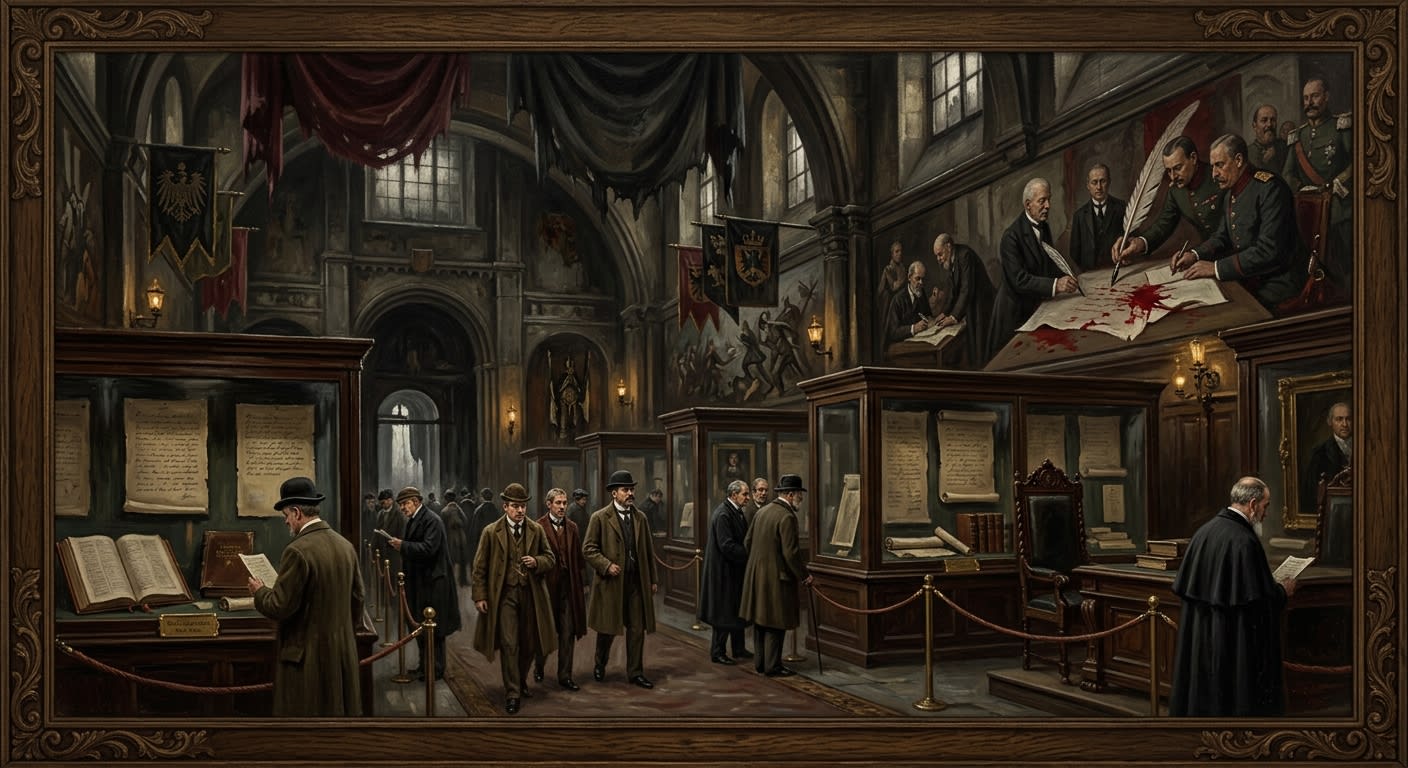
The Reichssaal
The hall that lent empire to heresy and received an altar for its trouble
The Reichssaal gave imperial furniture to Rationalist blasphemy, received the Treaty in blood and ink, and now instructs pilgrims under glass, pall, and Bureau custody.
Codex Ref. II.2.03-031

The Republican Guards
The philosophers wrote the sentence; the Guards added punctuation
The Republic's armed hand wore blue-grey, carried law over the heart, and proved that unbelief does not remain in books. It drills.
Codex Ref. I.1.05-001
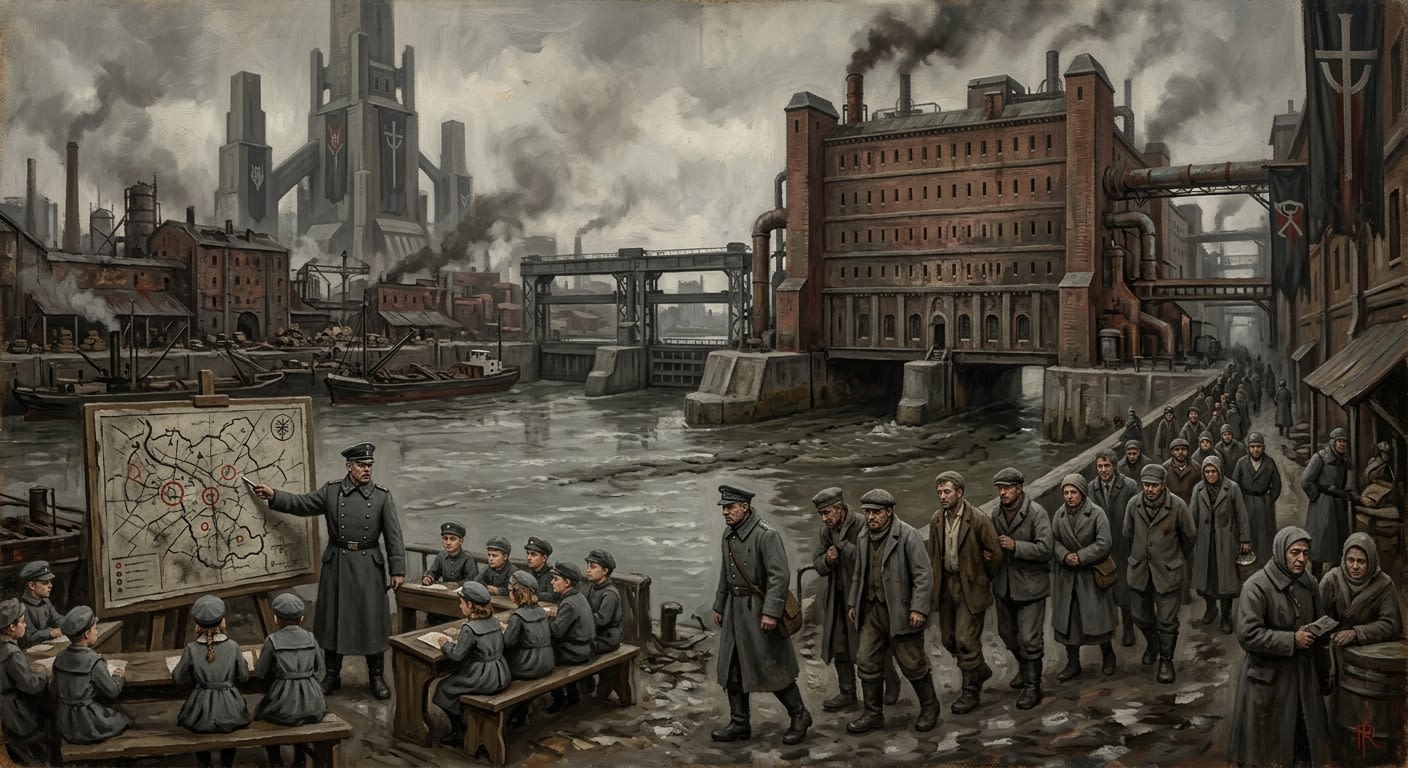
The Rhineland
A province corrected so often it learned to keep the corrections
The Rhineland is the Synod's most corrected province: river belt, market school, scriptorium wound, curfew map, chalk lesson, and loyal suspicion made taxable.
Codex Ref. II.2.09-201
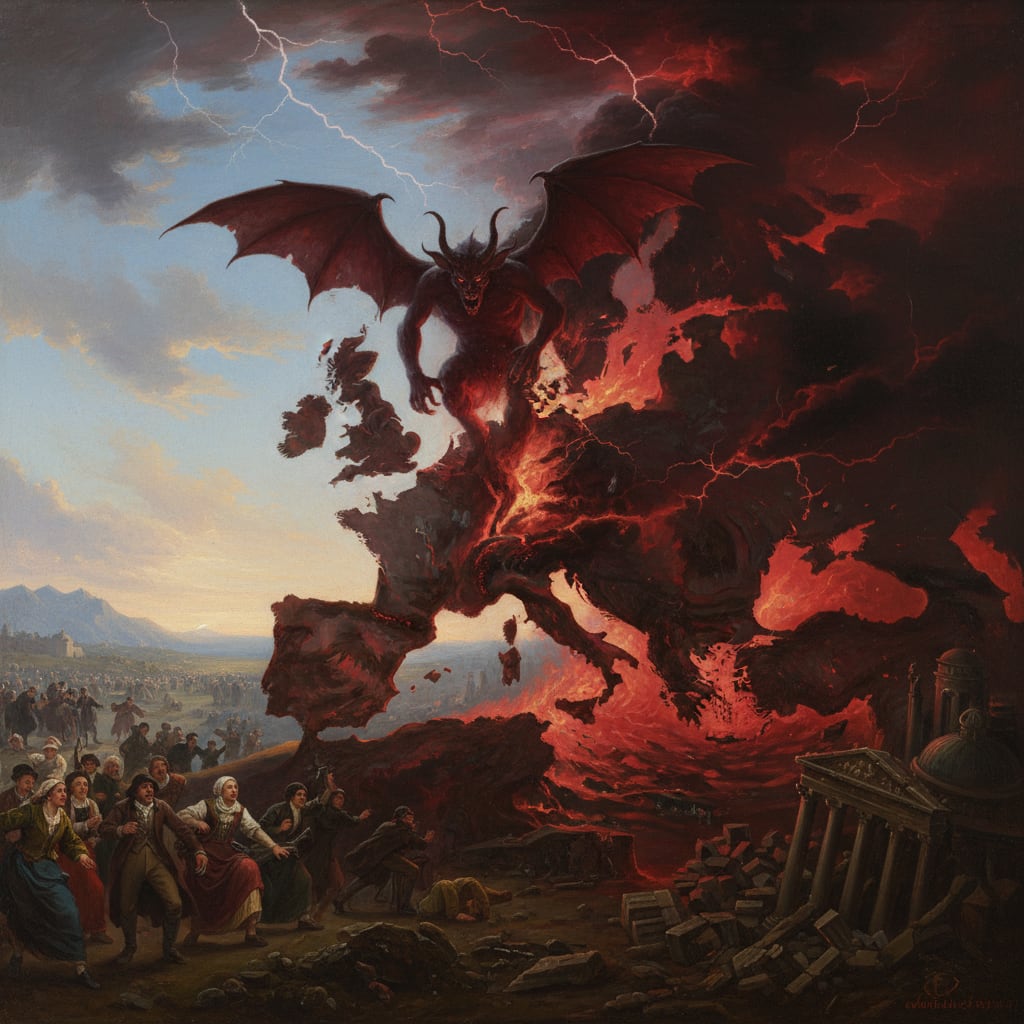
The Sundering
The Day the World Cracked Open and the Creator Sent His Invoice
The cataclysm of 1 November, 45 An.S. — when the Balkans erupted and the legions of the Great Deceiver poured through the wound in Creation. The event that ended Reason and birthed Faith's second coming. As explained by the only man whose explanation matters.
Codex Ref. I.1.02-001
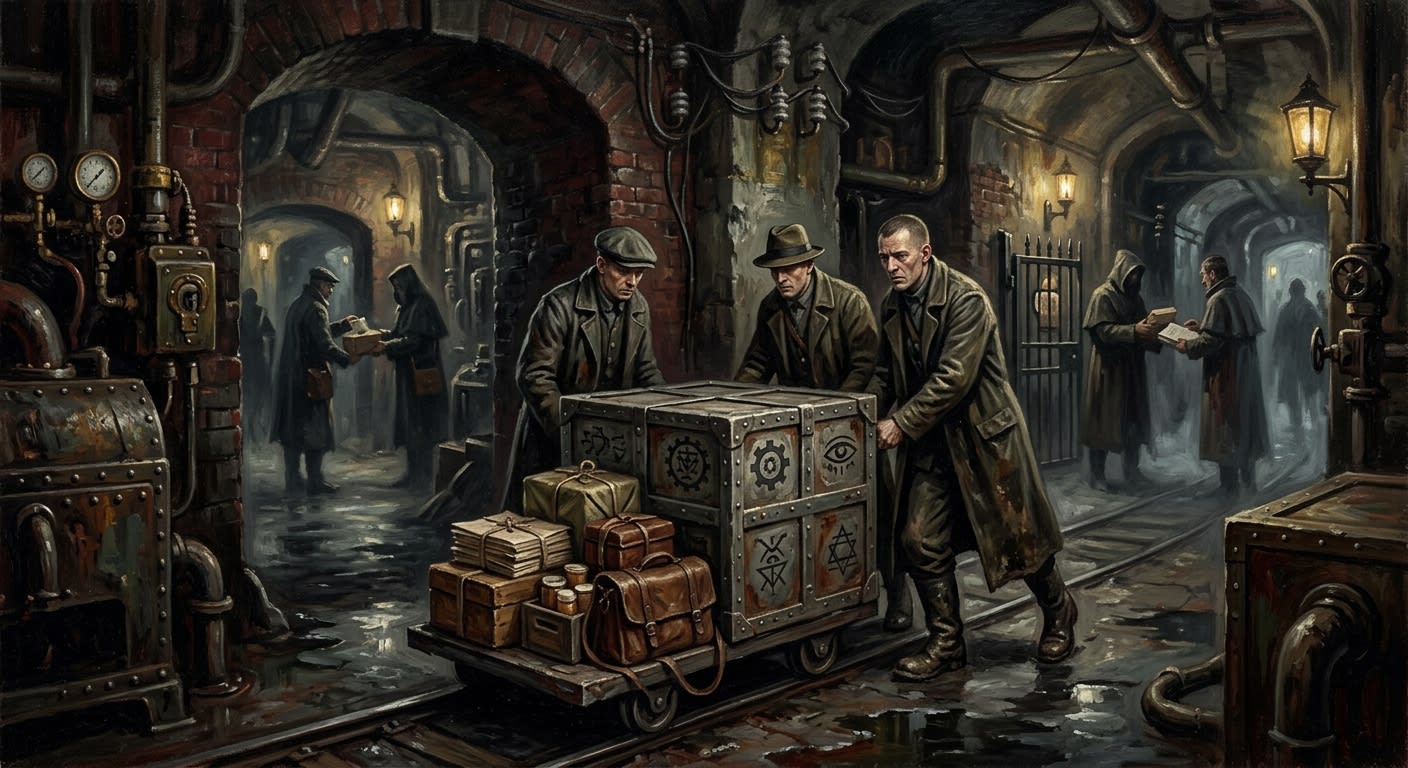
The Thread
The quiet line by which bones, names, and suspicion crossed the dark
Informal Cellar Saint transit doctrine that moved relics, names, wafers, and warnings through trusted cellars from A.S. 30 until the Sundering tore the roads open.
Codex Ref. XIII.1.91-045

Van Hoorn, Lemstra & de Waal
Three clerks of doubt, one table of bones, and forty cities taught to sneer
Pieter van Hoorn, Gerrit Lemstra, and Jan de Waal made doubt portable in -32 A.S.; their Bone Census counted relics accurately and wounded truth efficiently.
Codex Ref. III.2.01-026
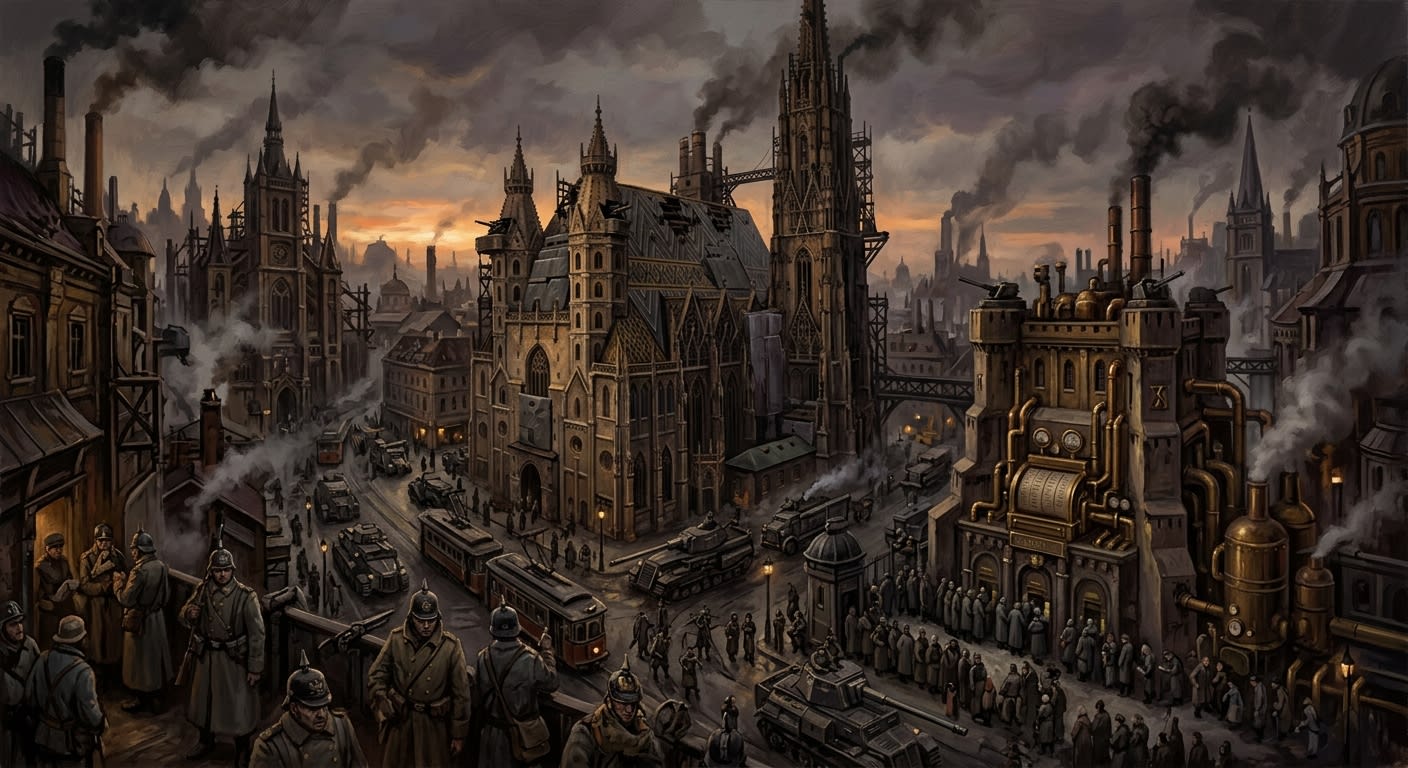
Vienna
The corpse that learned accounting
Vienna is the Synod's most decorated corpse: old see, Rationalist capital, shrine-ruin, supply hinge, lullaby scar, and profitable proof that ruins can be taxed.
Codex Ref. II.4.09-095
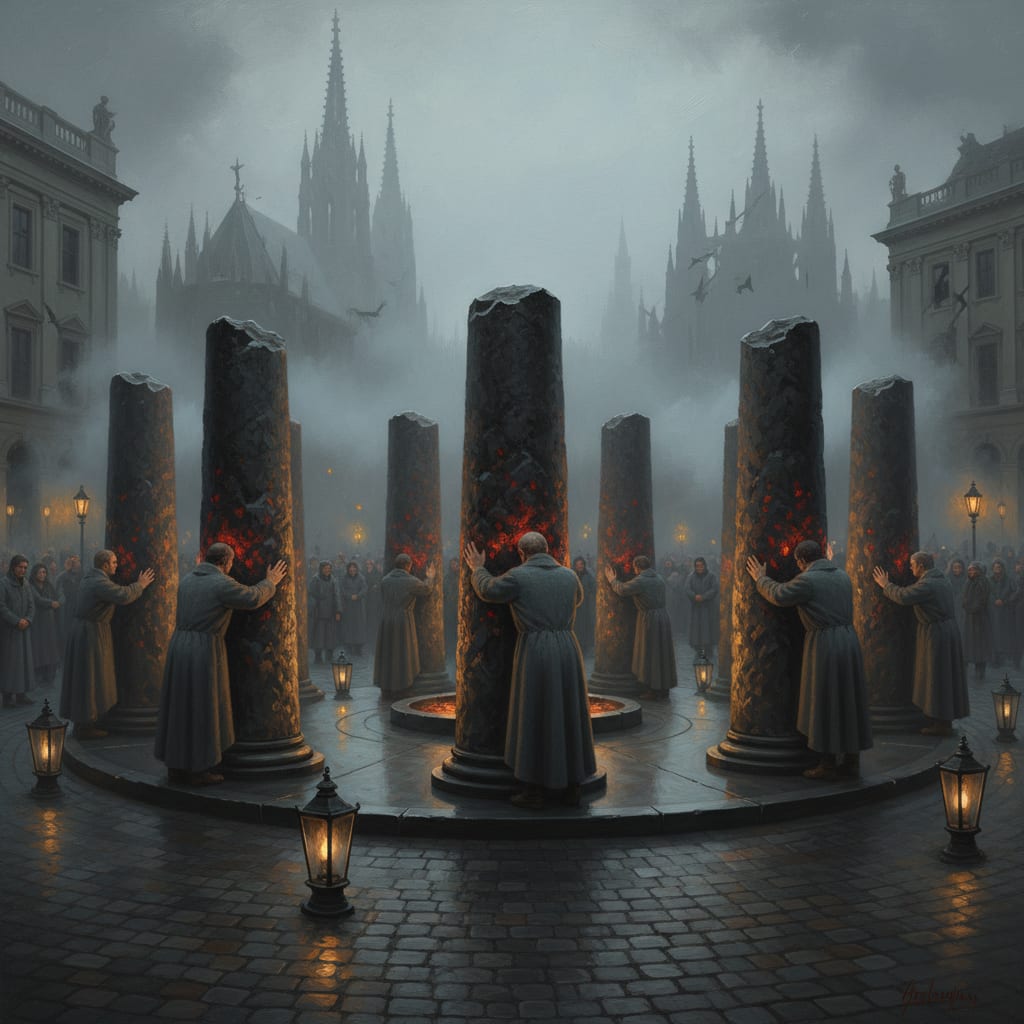
Vienna, the Shrine-Ruins
Three deaths, one gift shop, and a pen that has not dried in forty years
Three times ruined and once reclaimed. Vienna is the Synod's finest shrine and its most honest monument: the Rationalist capital, the Great Retreat's wound.
Codex Ref. II.4.09-010