

Reverse Index
Referencing “The Lictors of Purity”
Every codex entry that links to The Lictors of Purity. 138 entries.
Return to The Lictors of Purity

Aldric Venn
The clerk who heard our hymn in the enemy's mouth
Aldric Venn, Records copyist and brother to a master-carillonist, proposed that Covenant hymns might return through Wound-Sites as Pale Chanter cadence.
Codex Ref. III.2.01-060
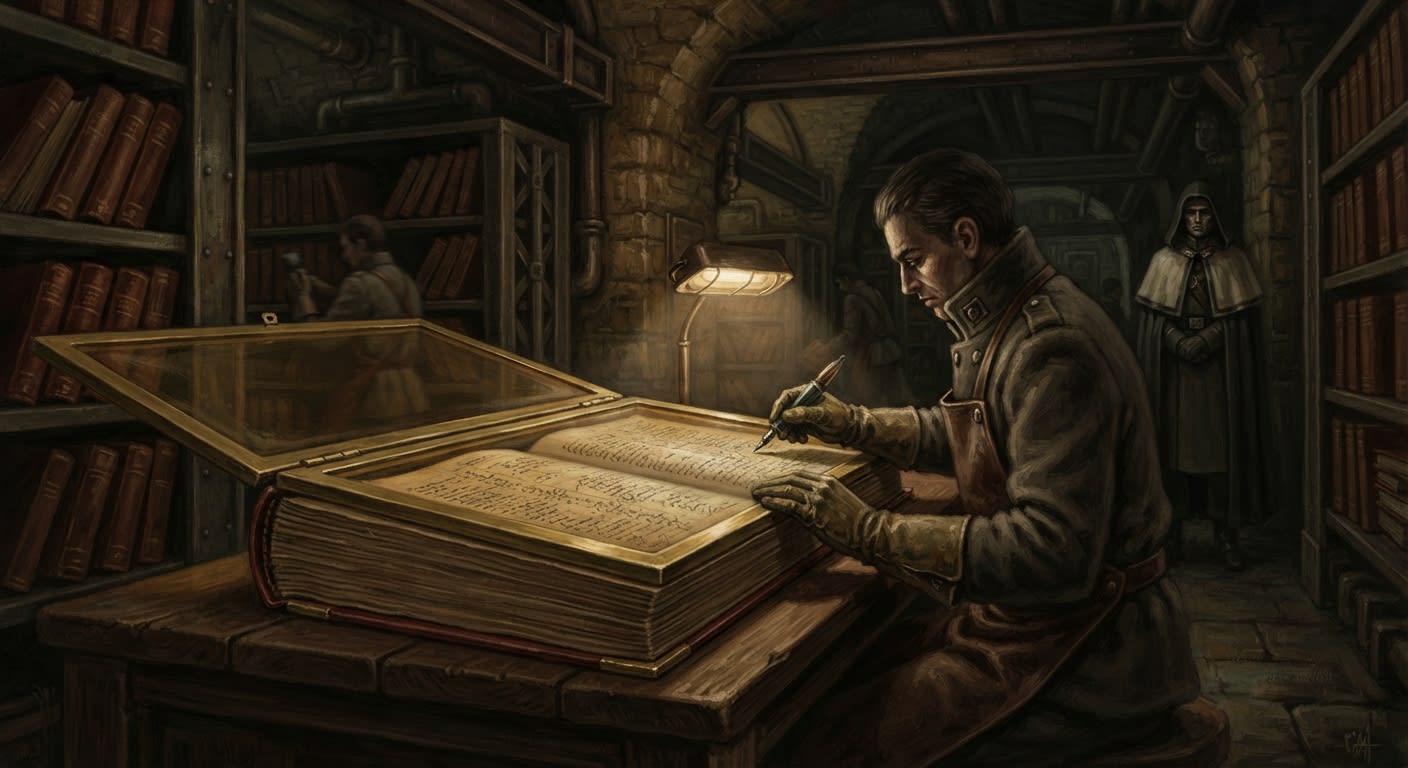
Amber Book
The ledger Purity refuses to close
The Amber Book is Purity's tacky ledger of suspended warrants: names kept breathing under glass until the charge written for them catches up.
Codex Ref. XIII.1.06-002

Angle-Runner
The child between the iron, the ledger, and the official hand
Angle-Runners are orphanage-roll children pressed into Brand-Smith service after the Compulsory Marking Decree, carrying tags, swatch plates, salve, and blame between the iron and the ledger.
Codex Ref. XII.20.07-001
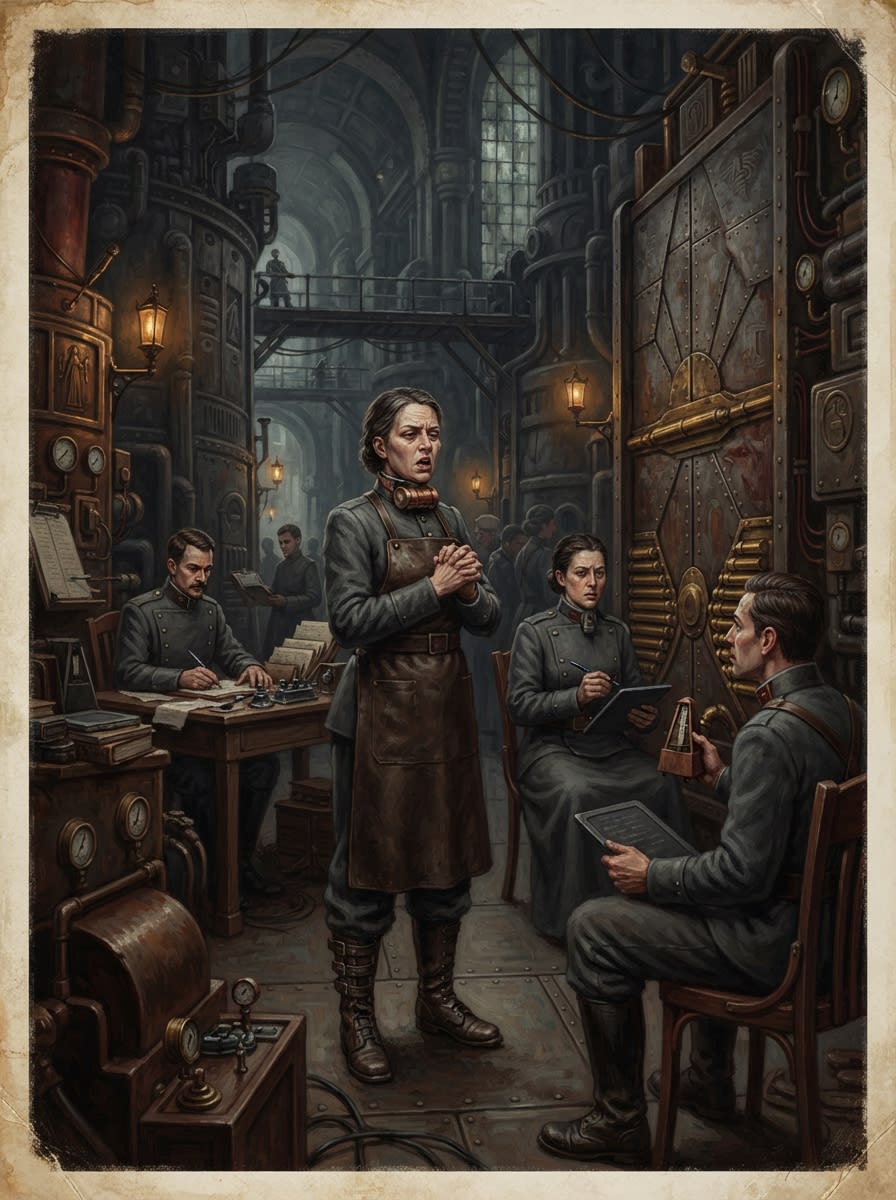
Approved Hymn Protocols Revision 14
The rulebook that made truth mandatory and expensive
Approved Hymn Protocols Revision 14 is Purity's A.S. 199 acoustic rulebook: witness the count, keep the iron dry, grade the room's answer, and do not harmonise.
Codex Ref. XIII.1.41-014
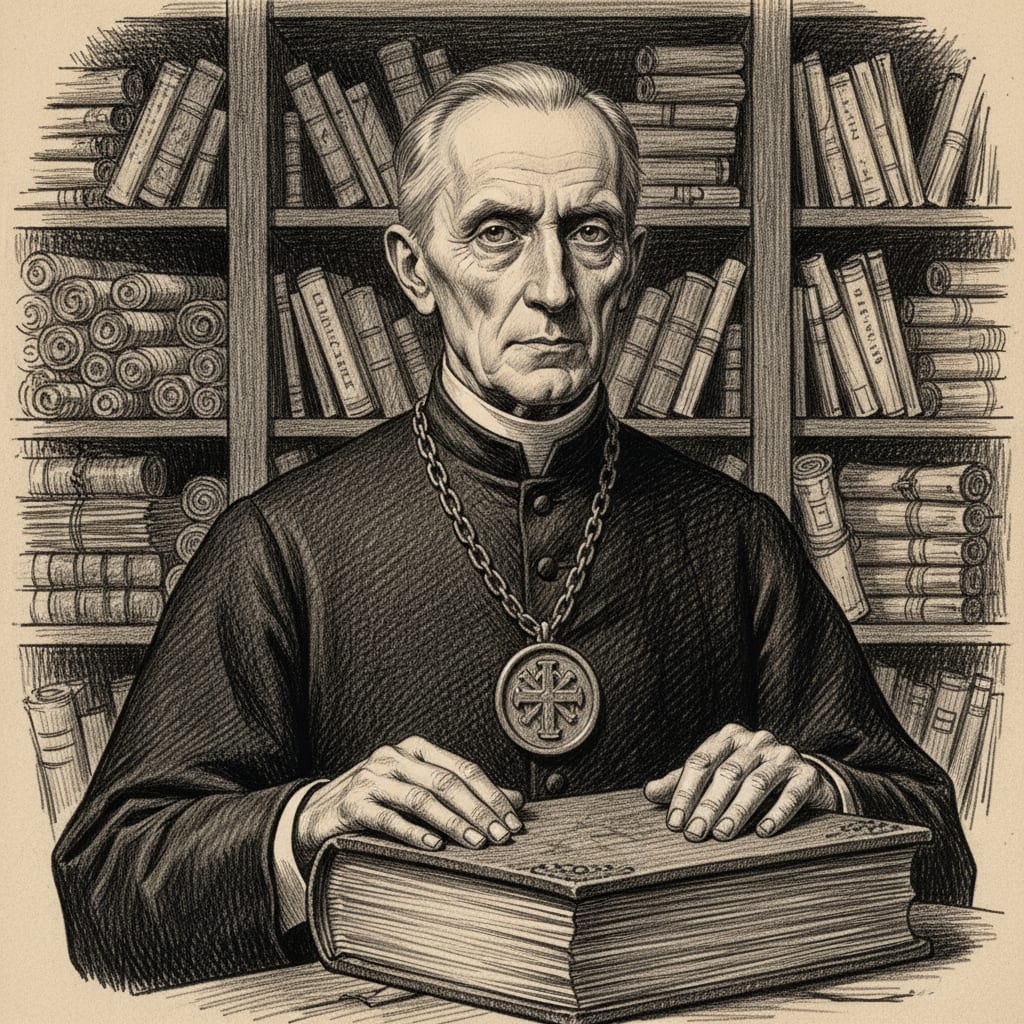
Archon Benedict Veyrault
The Monk Who Made Memory a Weapon
Once a monk of Dijon, Veyrault built the Bureau of Records into the scaffolding of reality itself. Cities he struck from the ledgers ceased to exist. His motto endures — "Nothing is forgotten" — and the faithful repeat it with equal parts pride and terror.
Codex Ref. III.3.02-008
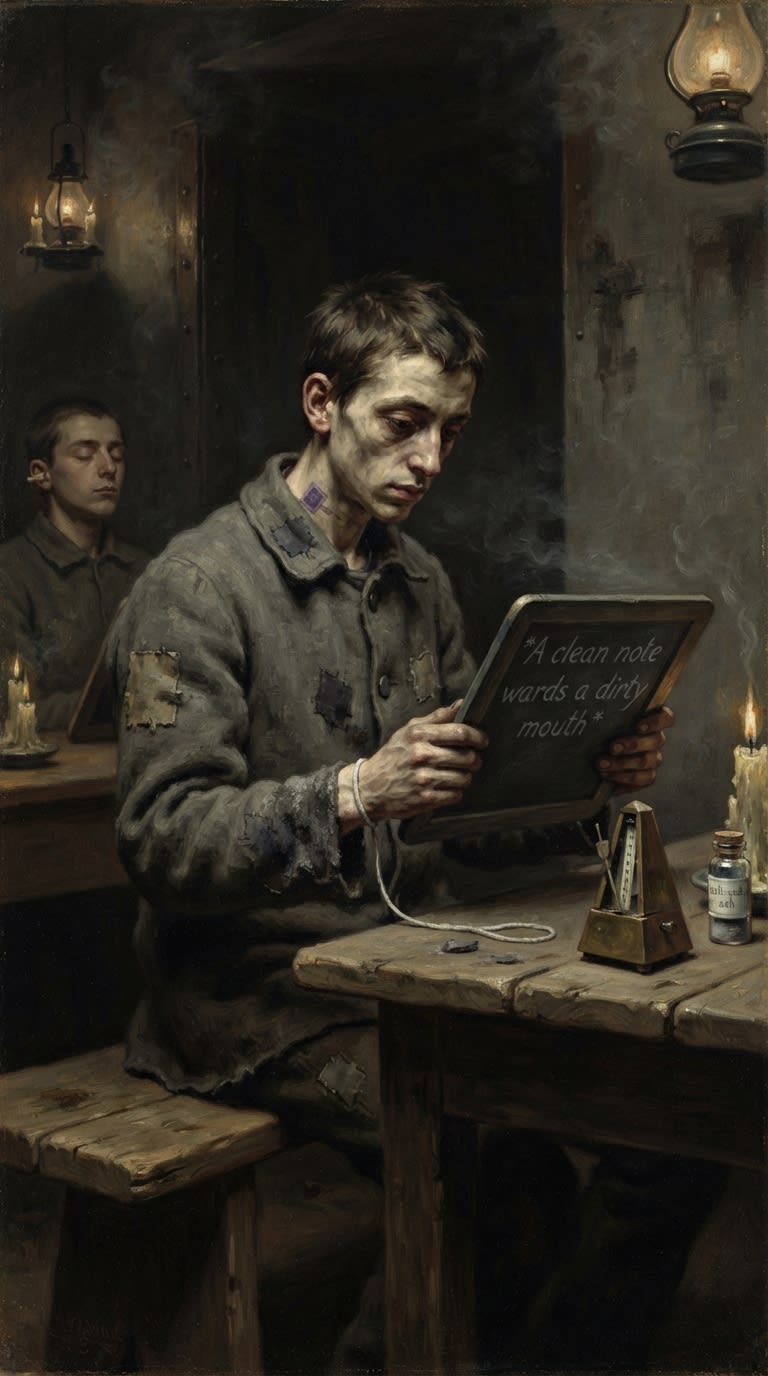
Ash Chorister
The novice rank where the Iron Choir teaches breath by blame
Ash Choristers are Purity's lowest licensed throats: novice drones with ash on the tongue, a token under it, and a professional gift for receiving blame.
Codex Ref. XII.24.01-002
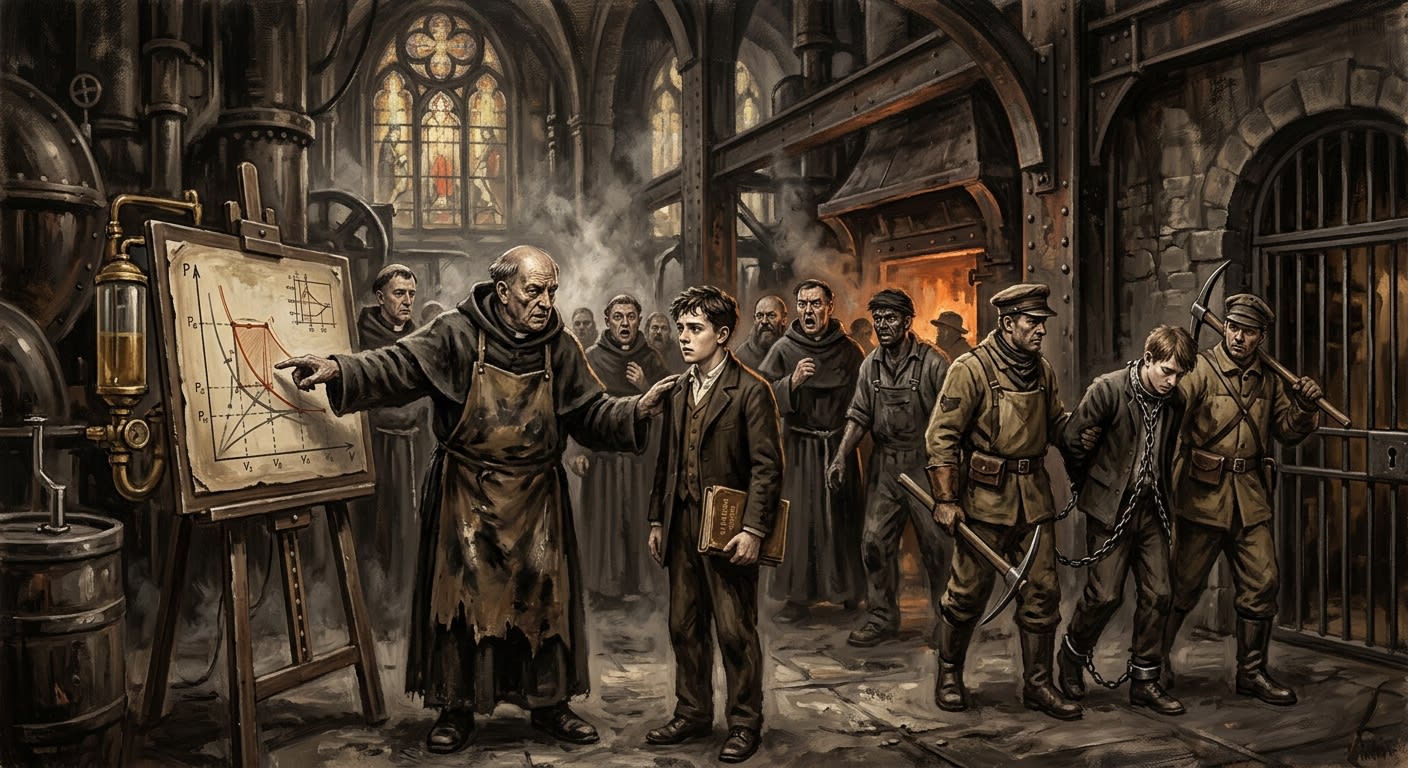
Ash-School Scandal
The lesson that saved a pour and cost two souls
A.S. 187 Essen scandal in which a Furnace Catechist taught real thermodynamics to a brilliant apprentice, producing one saved pour, one immurement, and one transfer to Ulm.
Codex Ref. VII.8.10-031
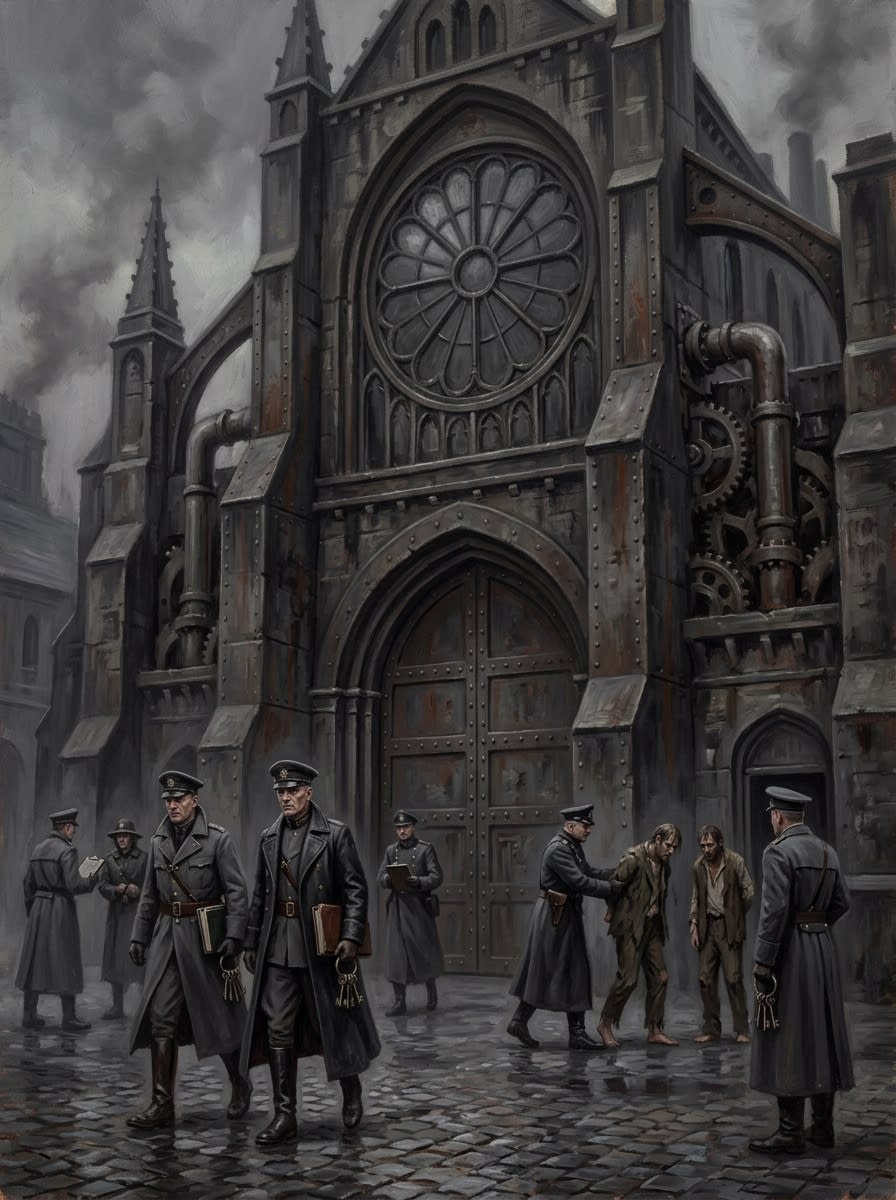
Ashen Cloister
Purity's house has handles only on the outside
The Ashen Cloister is Purity's Strasbourg seat: gate without welcome, court without mercy, archive with appetite, and the cleanest terror in the Synod.
Codex Ref. II.1.04-003
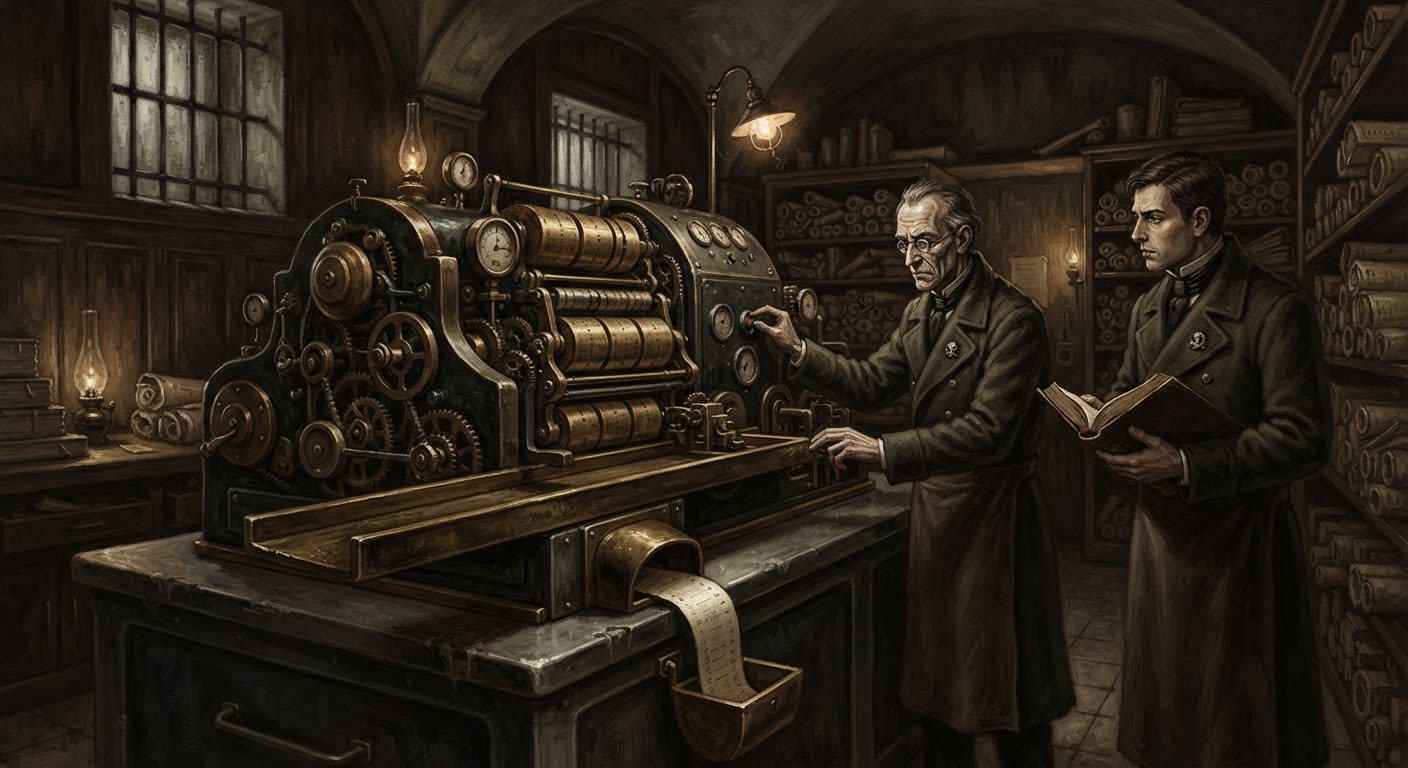
Assessment Engines
The machine does not ask what you cost. It tells you what may be bought.
Velmora's Assessment Engines price objects, persons, loyalties and betrayals with intolerable accuracy; the Synod captured them, ordered them destroyed, and then kept their accounts.
Codex Ref. XIII.1.27-201
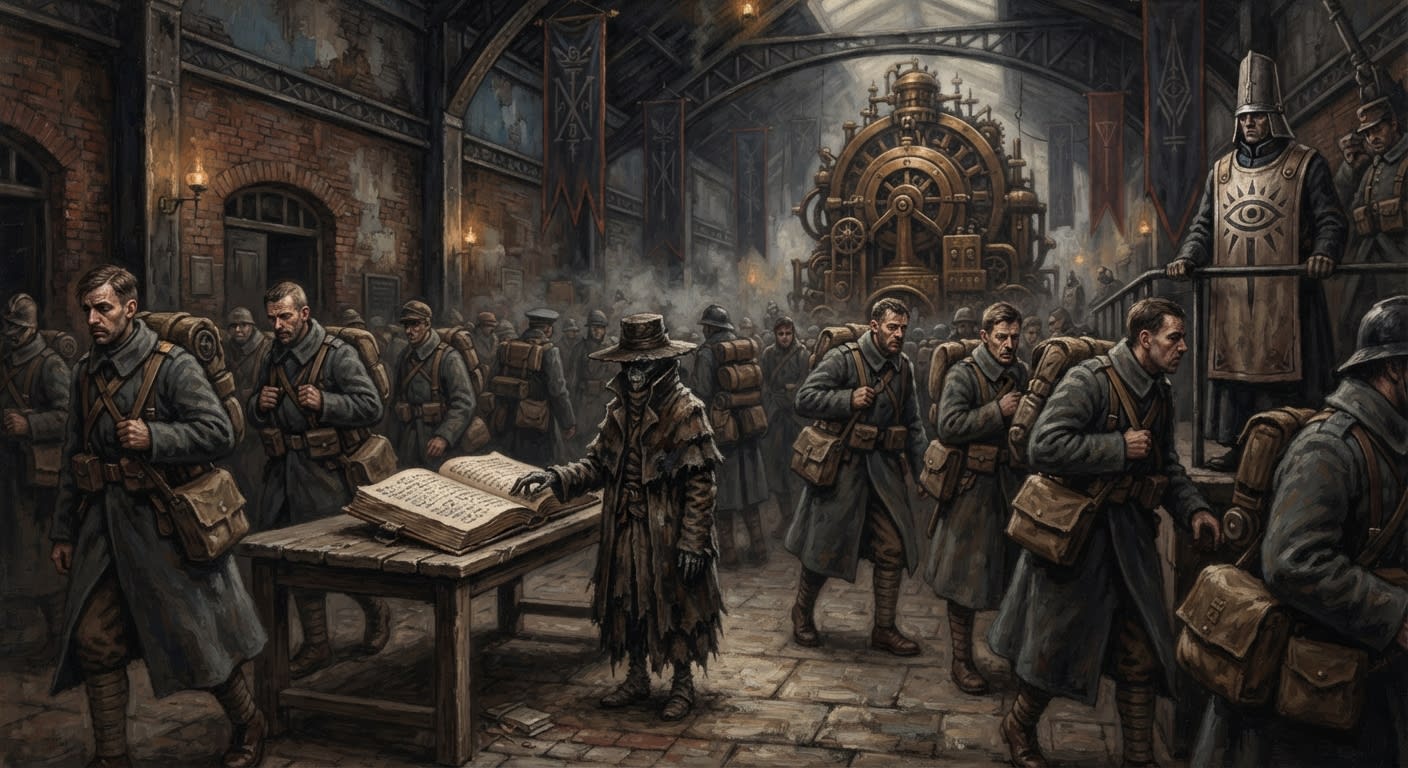
Assessors (Velmoran Demons)
The demon that prices without touching
Velmora's demonic Assessors do not fight; they look, price every loyalty and betrayal, and send the figures ahead to ledgers the Bureau has not found.
Codex Ref. IV.1.07-015
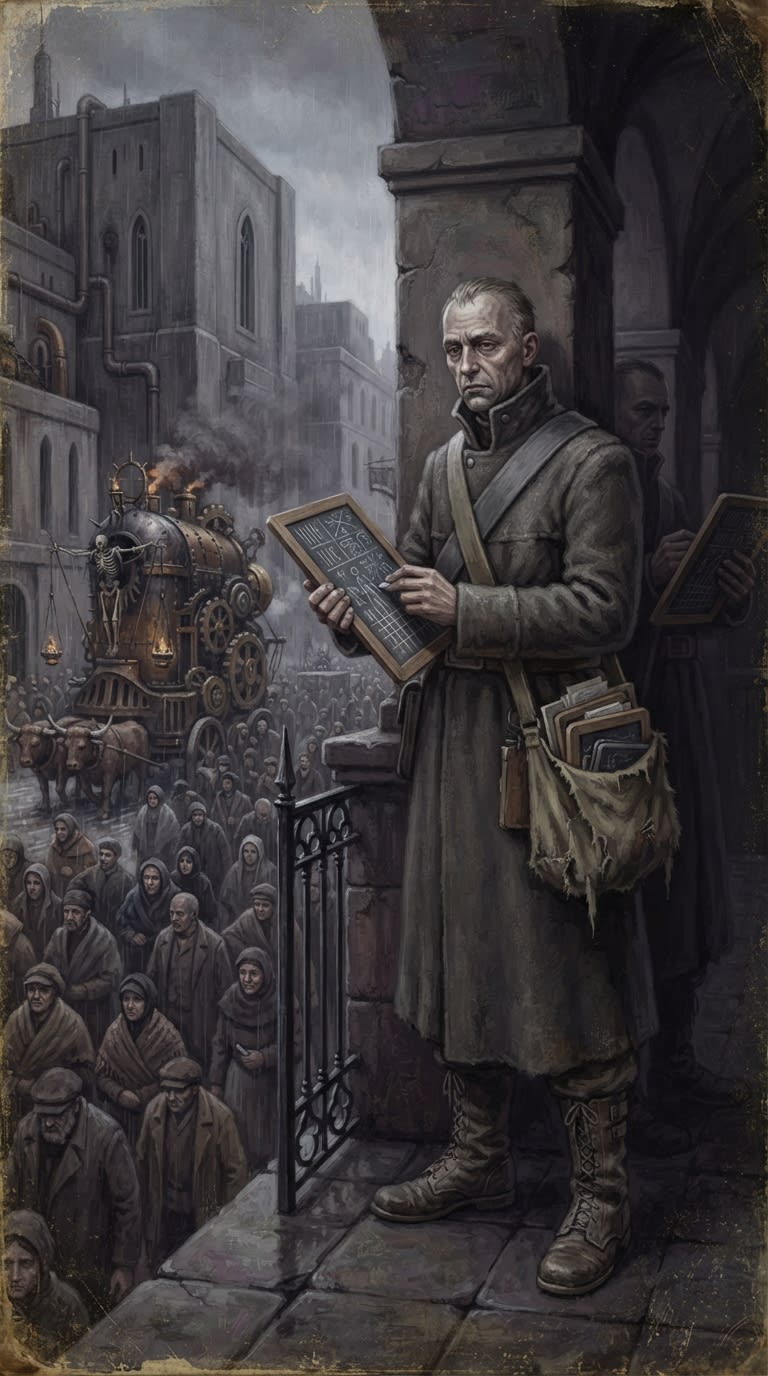
Attendance Auditor
The man at the edge of the square, doing arithmetic on your face
Field intelligence officers of the Bureau of Festivals who count attendance, score public feeling, and prove that Synodal joy has been enjoyed correctly.
Codex Ref. XII.17.04-001
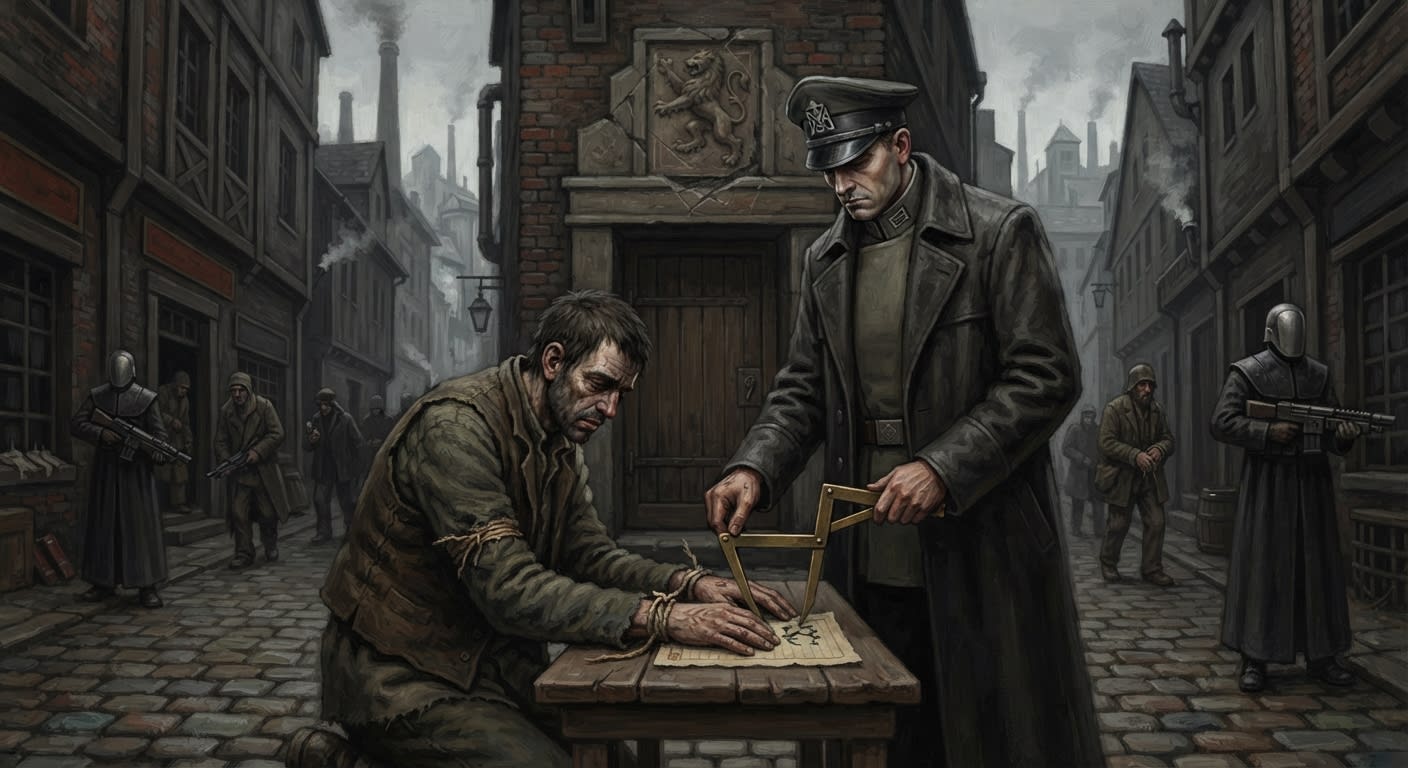
Augsburg
The city corrected first by blade, then by gauge
Augsburg is known to the Codex by what the Synod removed from it: beasts from its guildhalls, vermillion from a dyer, and doubt from three condemned hands.
Codex Ref. II.2.09-182
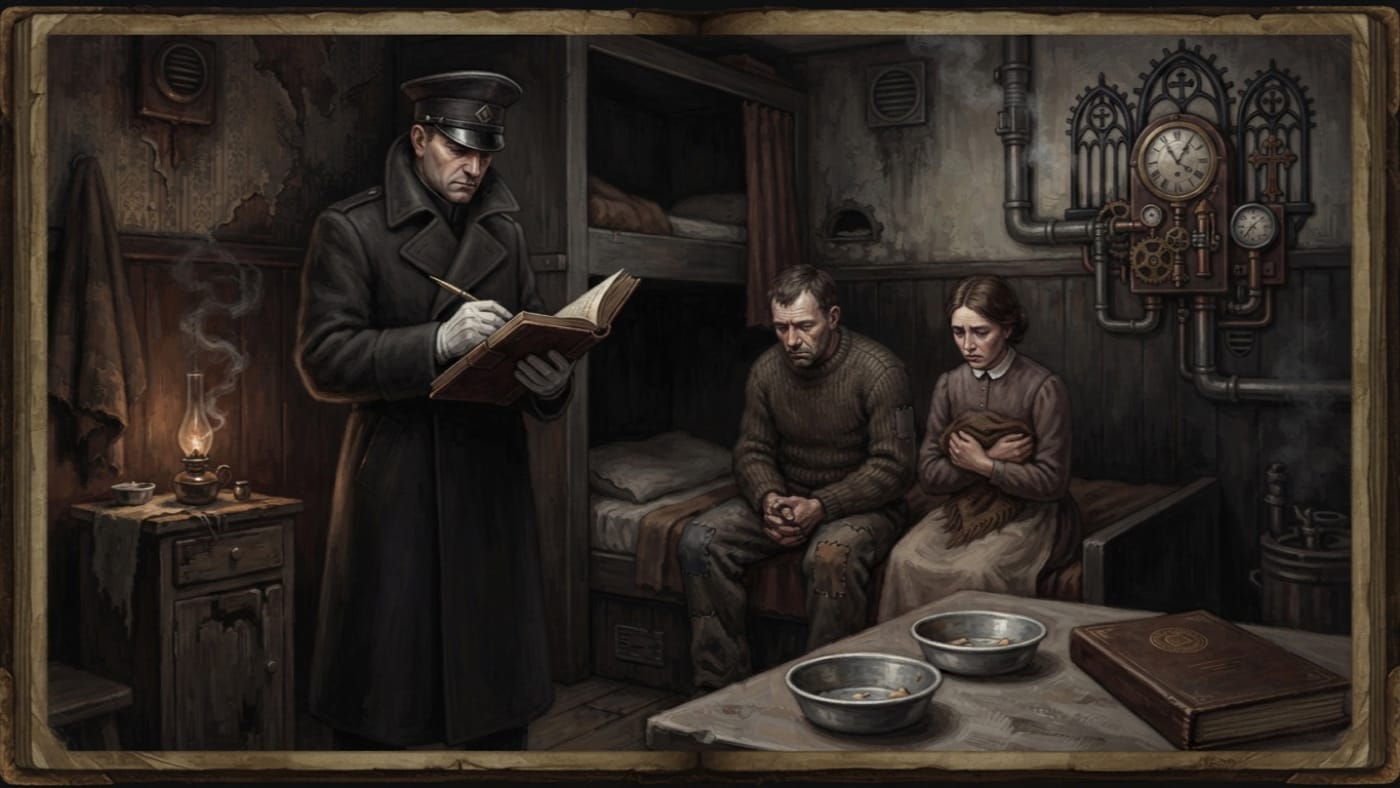
Bed Audits
The Bureau Counts Nights; the Household Counts Bread
Purity requires married couples to share a bed at least thrice per week. Failure is theft of fertility, answered by reduced rations. The Bureau counts nights; the household counts what remains in the bowl.
Codex Ref. XIII.1.02-197
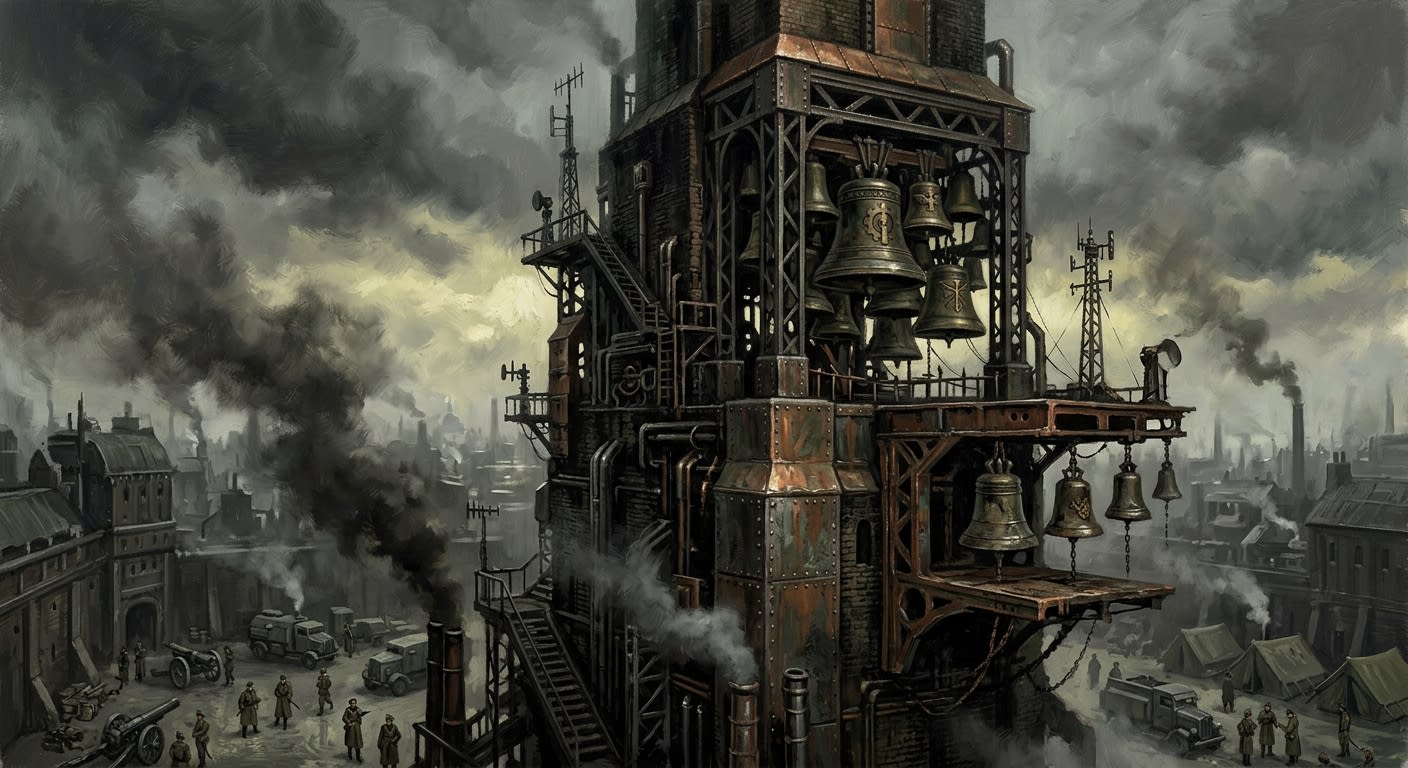
Belfry of the Hinge
Twenty-three mouths teach Constantinople which fear is lawful
The Belfry of the Hinge is Bastion-Constantinople's command tower: twenty-three principal bells, four shame bells, and the voice that makes fear lawful.
Codex Ref. II.4.10-007
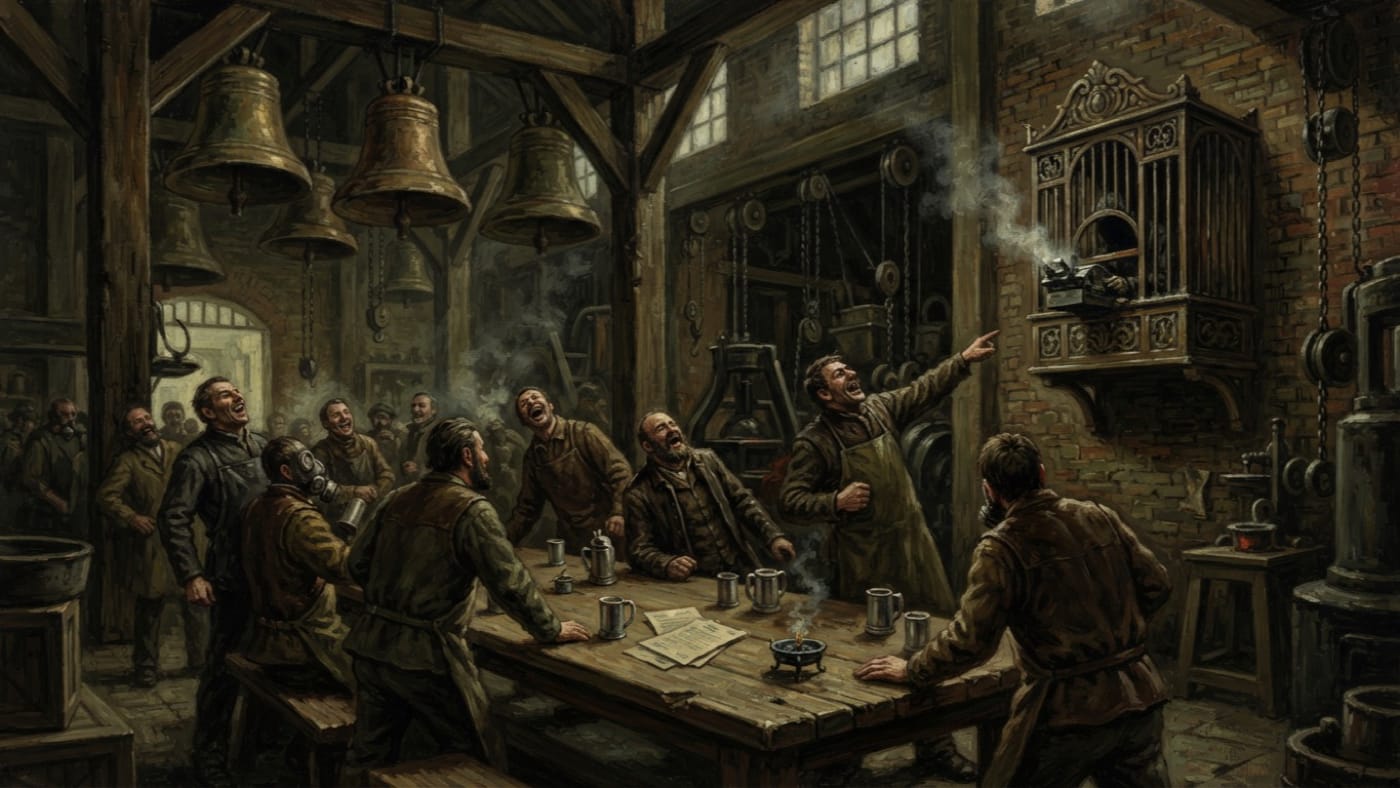
Bellfounders' Hall
Seven minutes of laughter, one brief permission
Bellfounders' Hall, Seville: a licensed grief toast became seven minutes of hostile laughter in A.S. 153. Form 19-M claims the first breach; the Fishmongers' Court disputes it.
Codex Ref. II.1.04-153
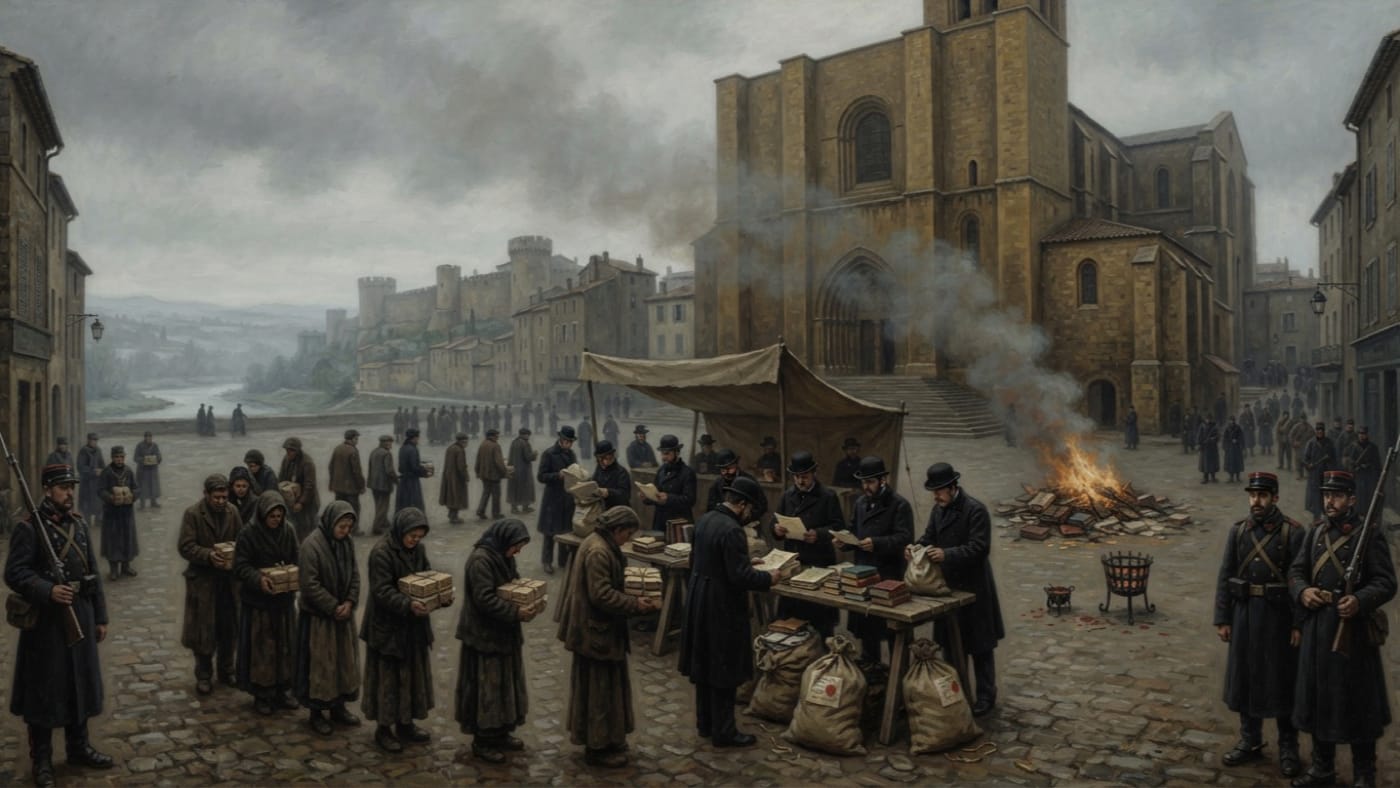
Béziers
A city named by someone else's confession
Béziers entered the Toulouse Hunts in A.S. 93 through a confession taken at Carcassonne. Purity retained the name; the surviving record supplies no separate local reckoning.
Codex Ref. II.1.10-093
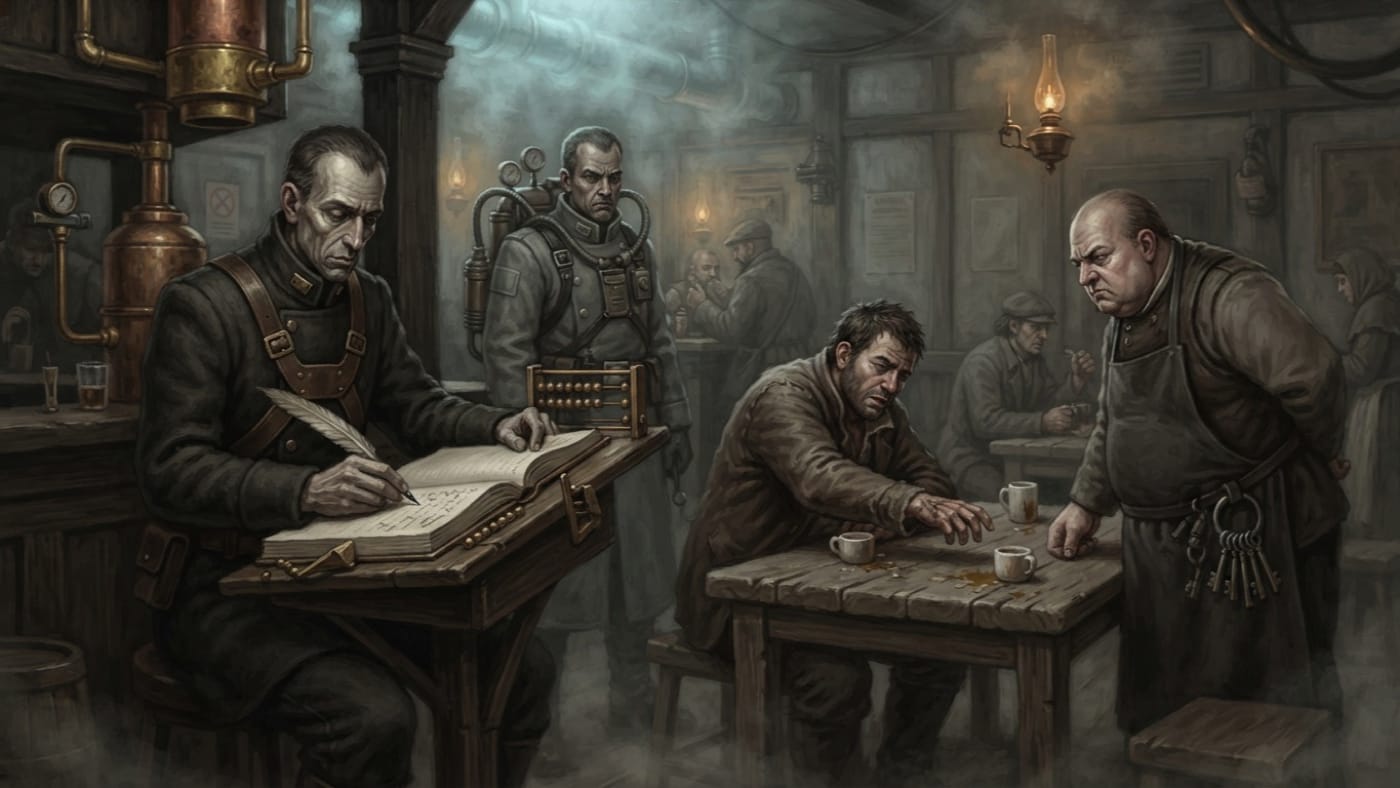
Bodily Percussion, Non-Musical
The hand forgets its thigh; the clerk remembers the licence
Bodily Percussion, Non-Musical is the List of Laughters category for a drunk who strikes a table believing it his thigh. The clerk records intention, keeps the bead rate unpublished, and charges the house for the noise.
Codex Ref. XIII.1.66-002
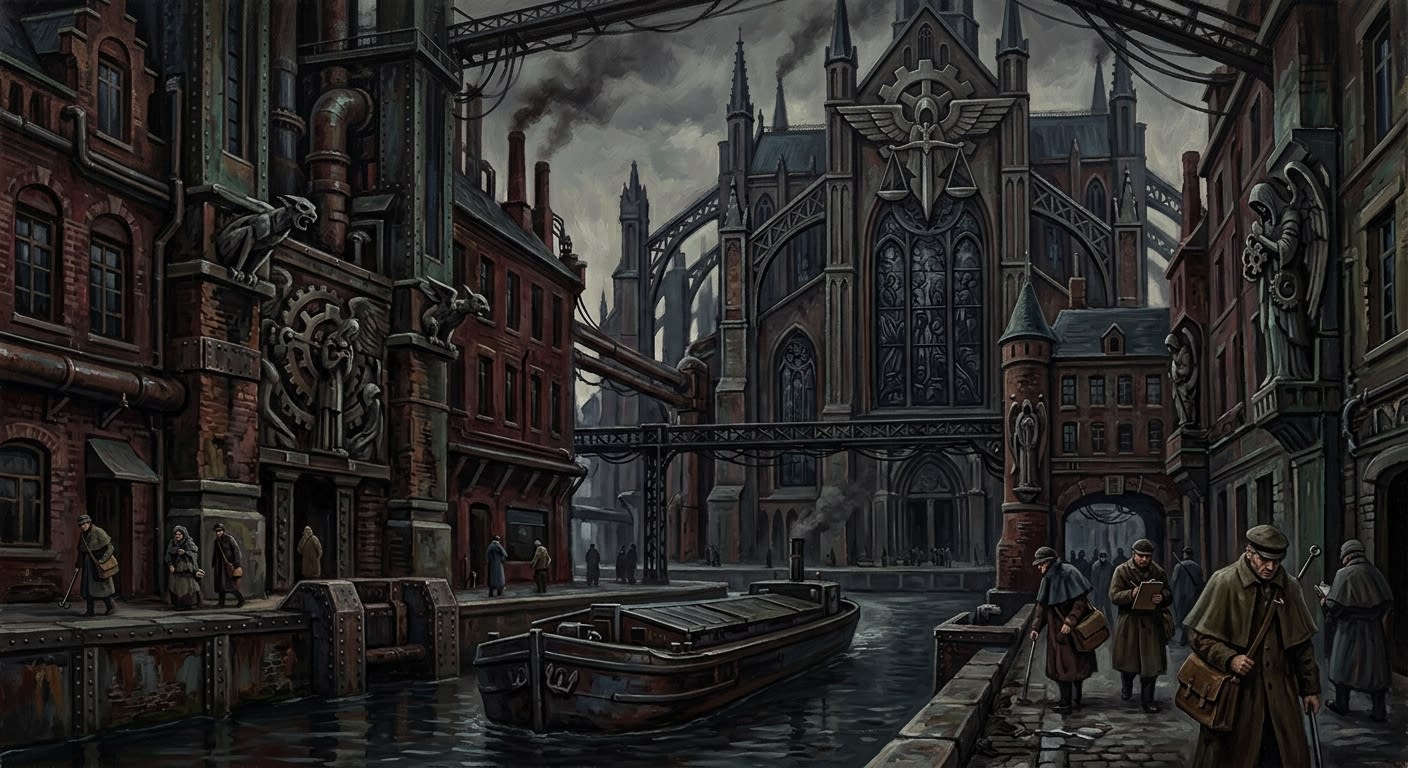
Bruges
Permit prosperity; audit beauty
Bruges is the Synod-held Lowlands city whose canals, colours, grotesques, relic glass, and impossible Tithes seal make beauty a recurring audit problem.
Codex Ref. II.1.04-058
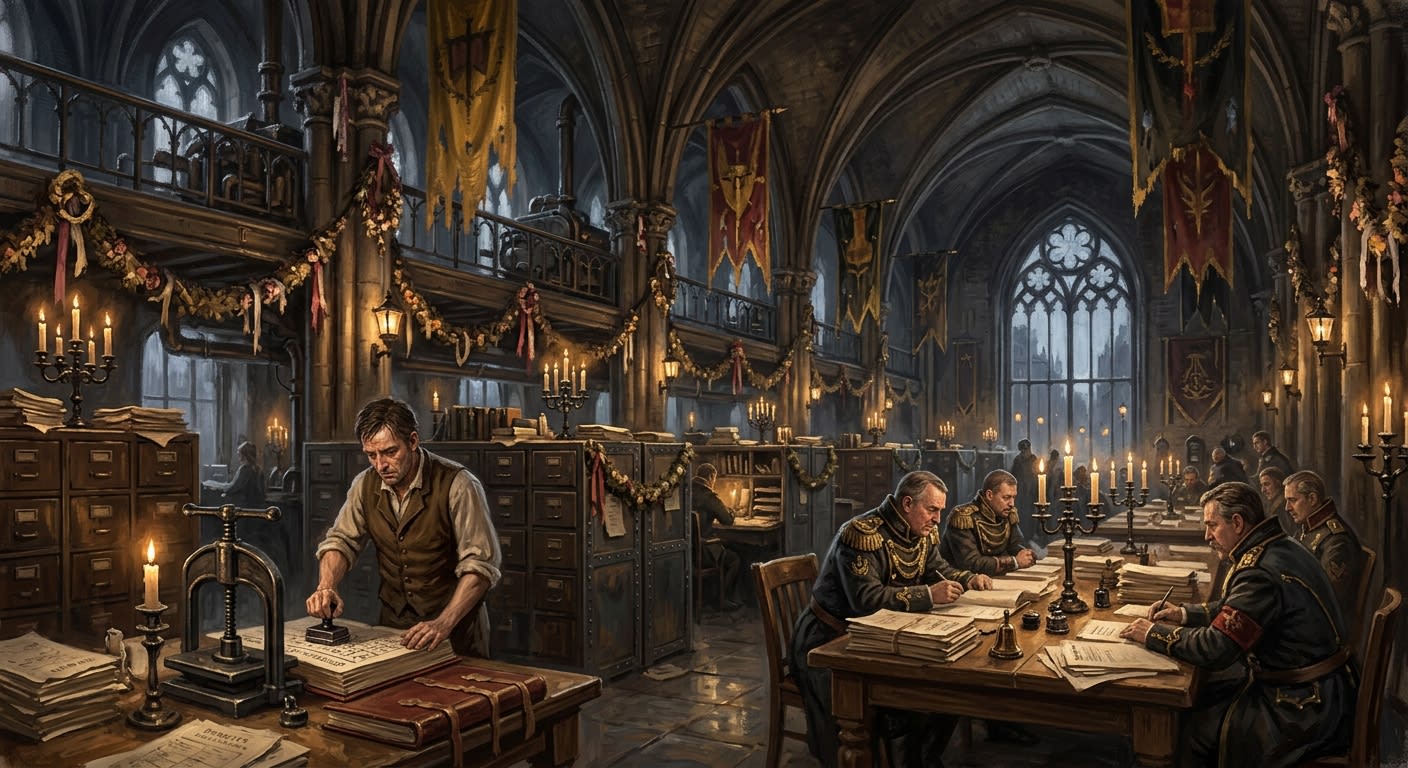
Bureau of Festivals
Joy, administered at scale — licensed, measured, and periodically revoked
The Bureau that manufactures joy, schedules grief, and meters celebration with the same rigour the Bureau of War applies to troop rotations — and which has, on seventeen documented occasions, deployed confetti.
Codex Ref. VIII.5.01-001
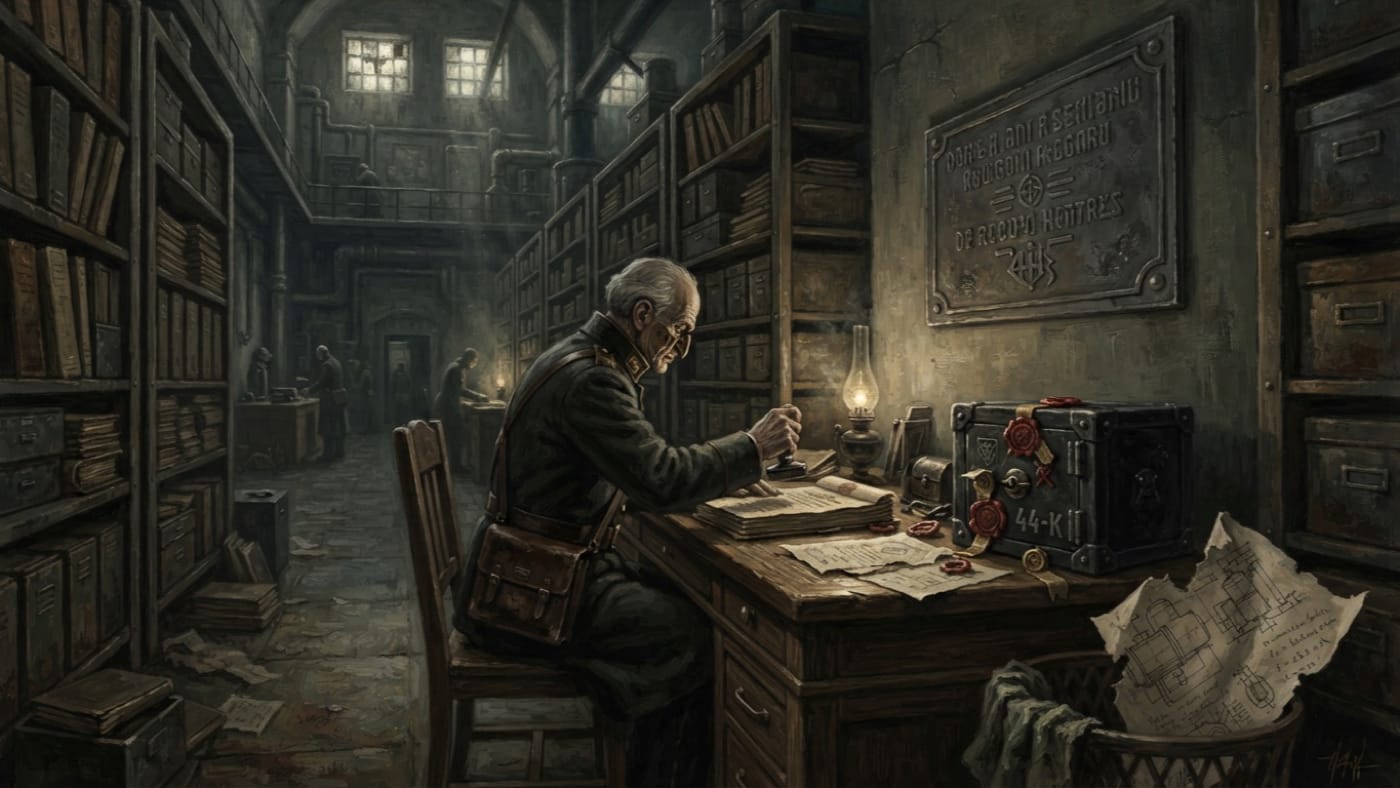
Bureau of Shadows File 44-K
On the name kept under seal after the men who read its arithmetic were walled up.
Doctrine's A.S. 147 correction admits that Fuel Is Chemistry came from a senior Engineering draughtsman. File 44-K seals his name; the sixty-one immured readers at Przemyśl remain in the public account.
Codex Ref. VIII.8.44-001
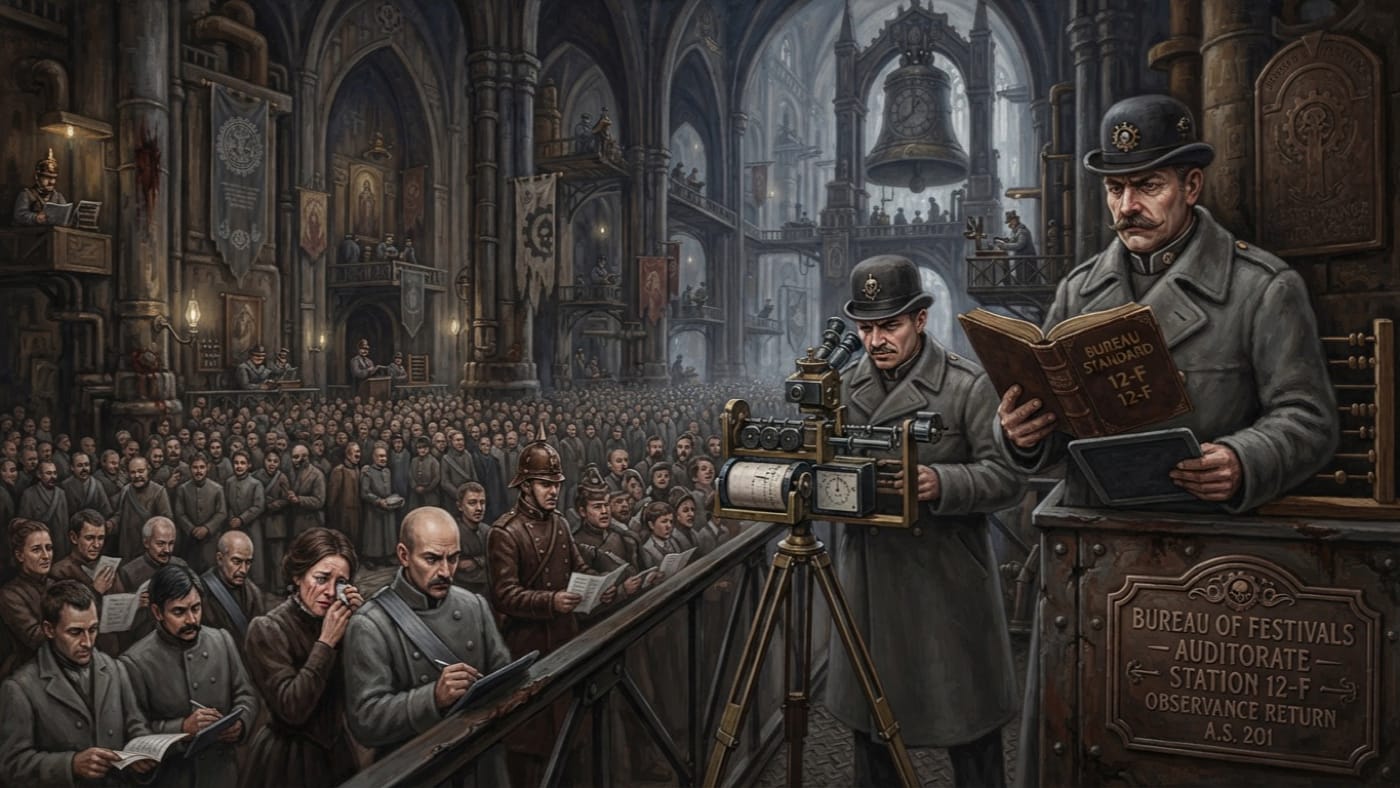
Bureau Standard 12-F
The heart has no column; the face owes a return
The Bureau of Festivals scores smiles, tears and songs under Standard 12-F. Forty-two behaviours yield three classifications, with four points between insufficient zeal and dangerous emotion. The heart is spared a column.
Codex Ref. VIII.5.12-201
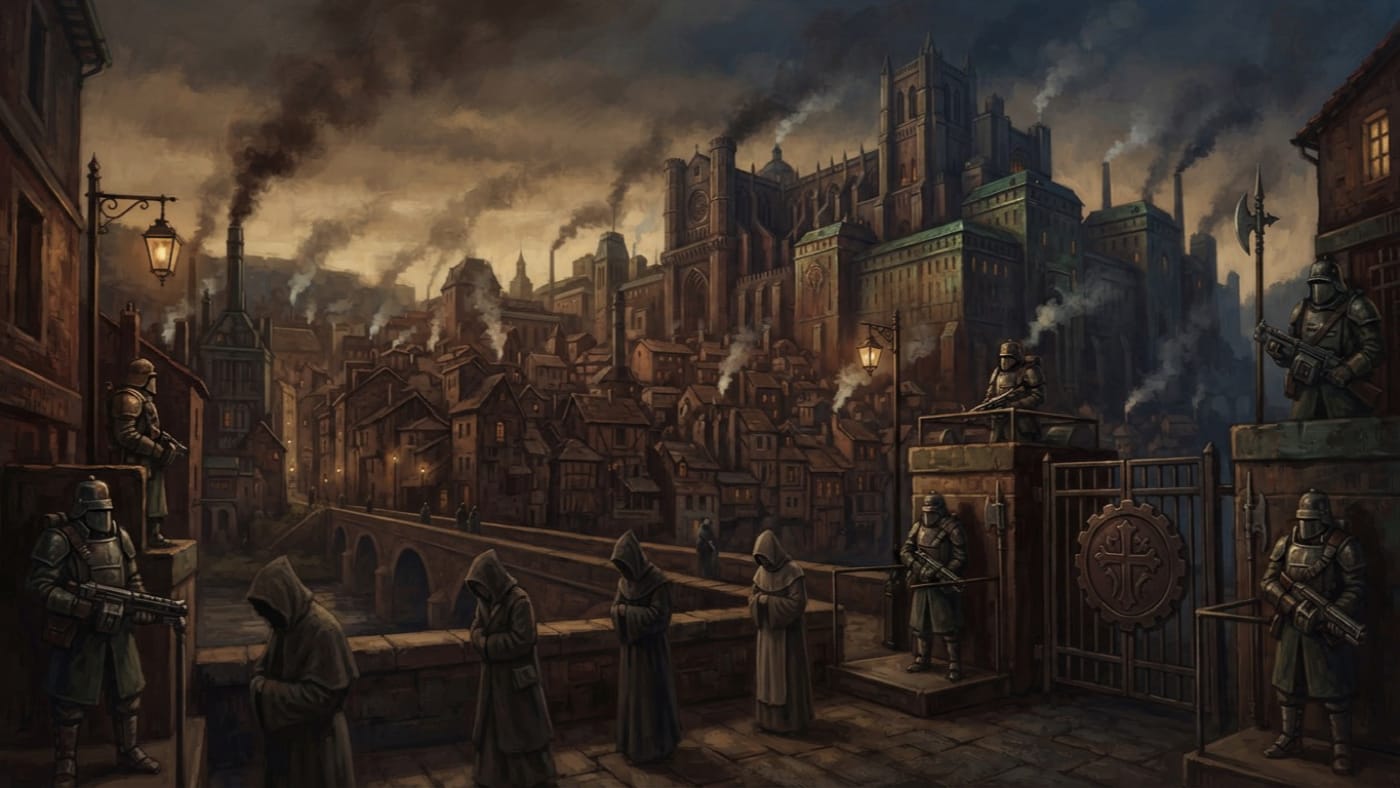
Cahors
Named elsewhere, retained forever
Cahors entered the Toulouse file in A.S. 93 through Carcassonne's confession. No local offence is established; the Bureau retained the address.
Codex Ref. II.1.09-093
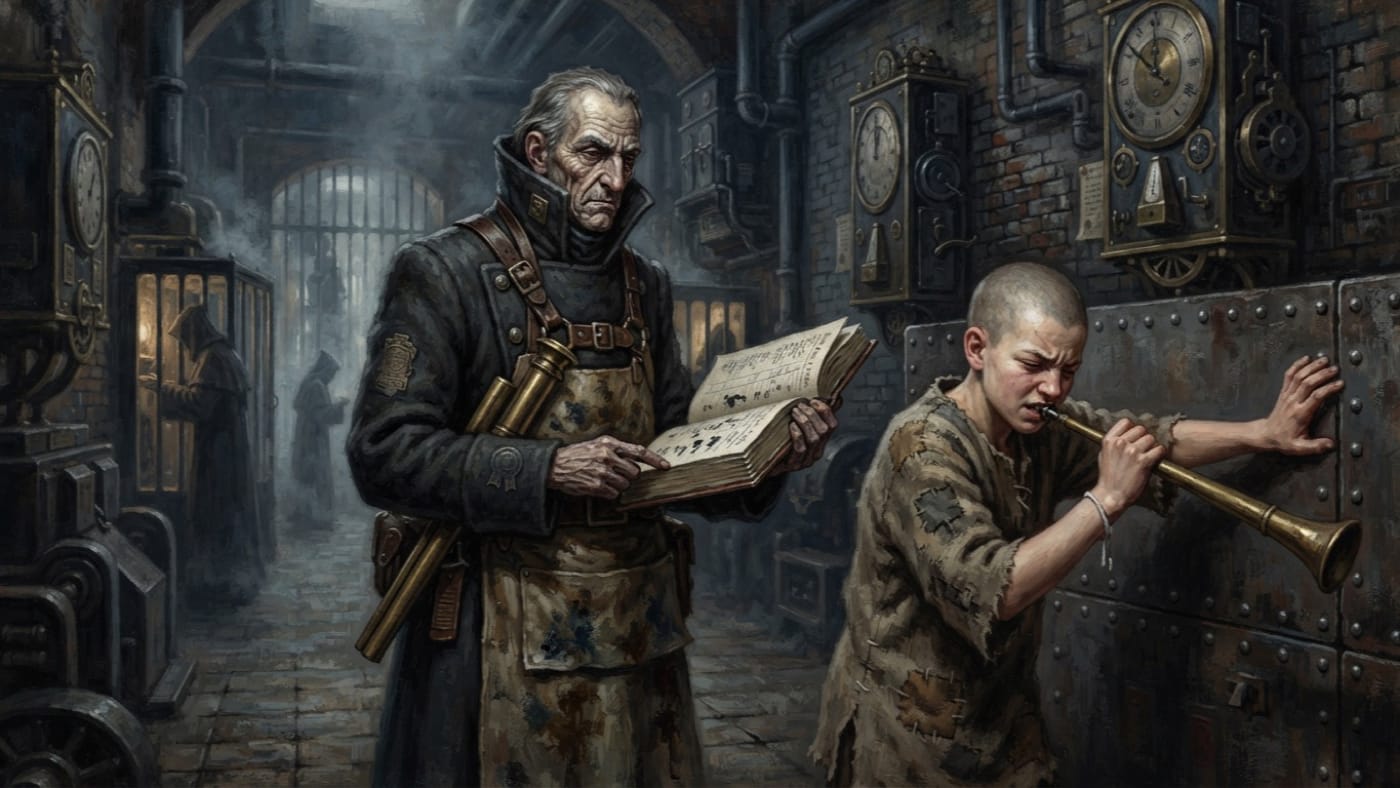
Cantor-Marshal
The senior throat that teaches the count and signs for the damage
The Cantor-Marshal sets Purity's singing protocols, trains novice throats and audits the scars. Rank grants a tuning rod and a signature; it never licenses reply.
Codex Ref. XII.24.01-003
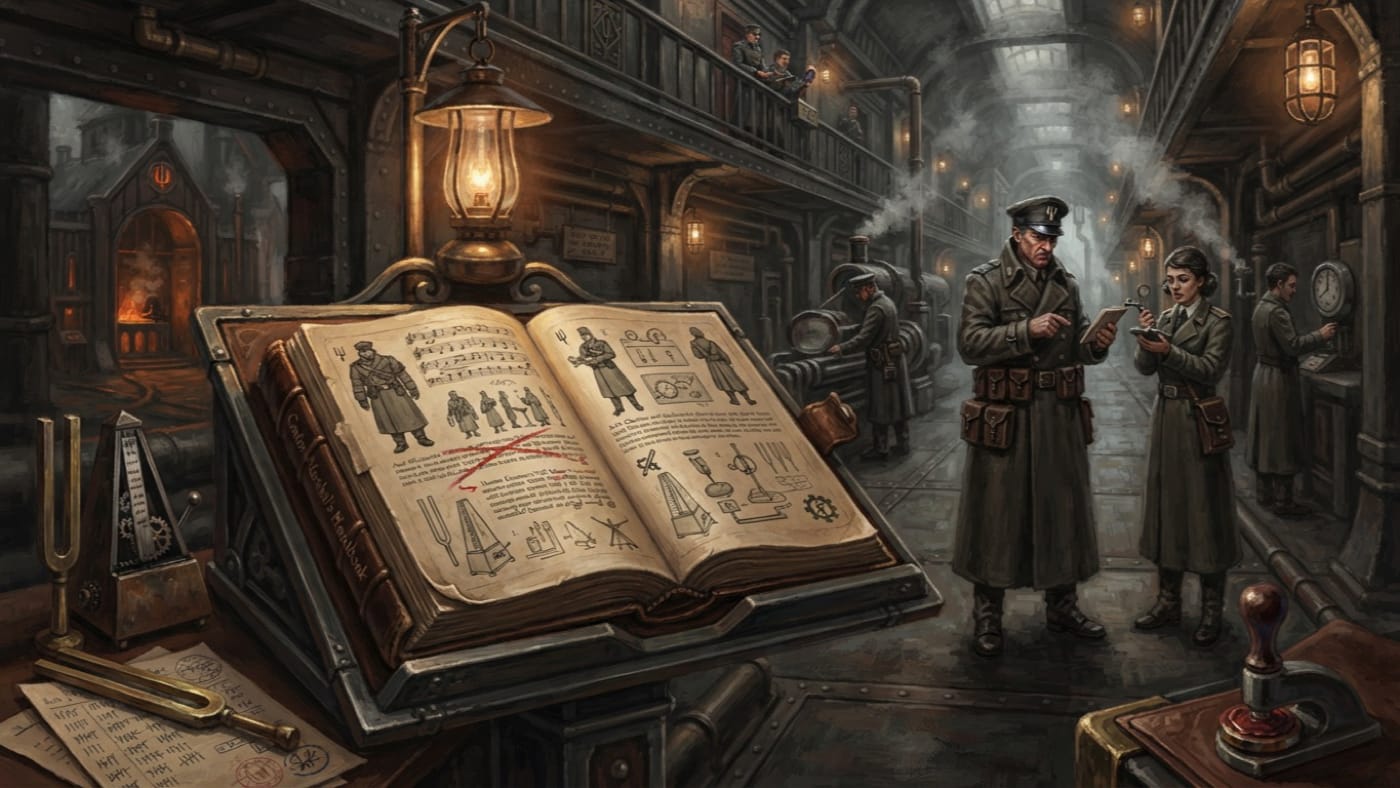
Cantor-Marshal's Handbook
A master cannot be recruited by ink
A.S. 201 survey of the Cantor-Marshal's Handbook: the Sixth Revision's claim that Vell vindicated Judgment Tone is withdrawn. A master's name is easier to enlist than his practice.
Codex Ref. XIII.1.41-006
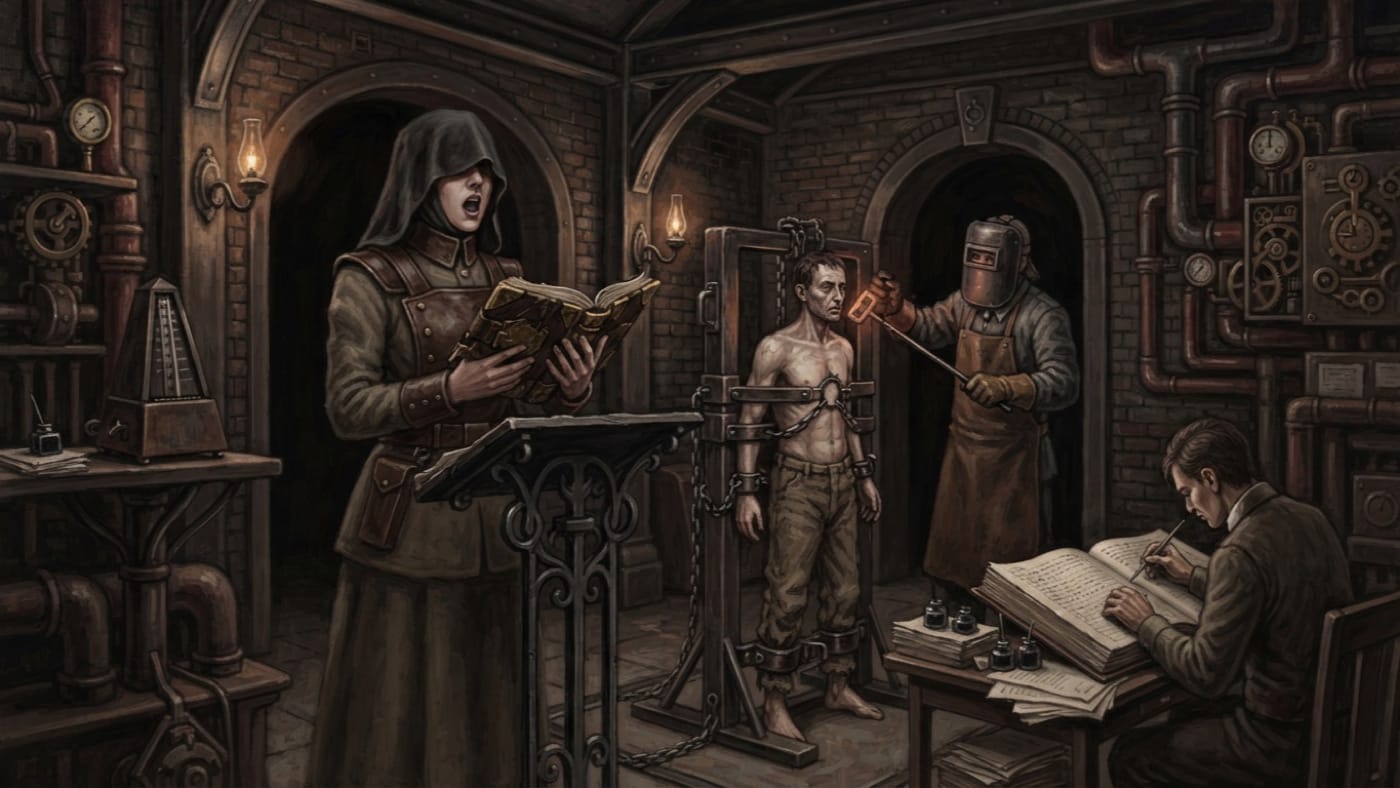
Cantor's Primer
Six words suffice for a citation. Truth requires more.
The Cantor's Primer is credited to Purity, Third Revision, through a single maxim. Six words explain the rite; they do not establish its compiler, issue date or the truth of a confession.
Codex Ref. XIII.1.41-003
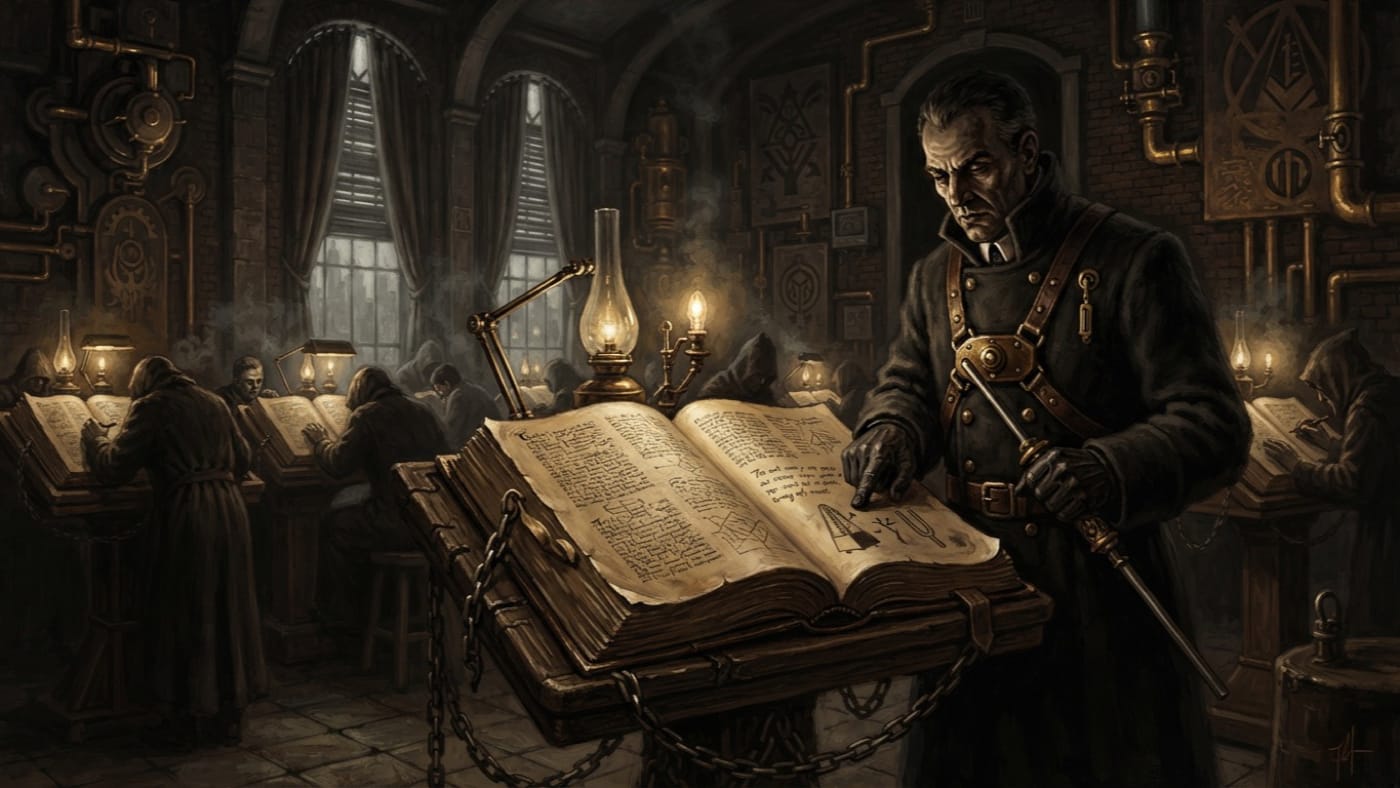
Cantor's Primer, Fifth Revision
A master's name in the text, his warning in the margin
The Fifth Revision credits Vell with an older maxim without proof. His confirmed margin note offers the better instruction: keep the second note on time.
Codex Ref. XIII.1.41-005
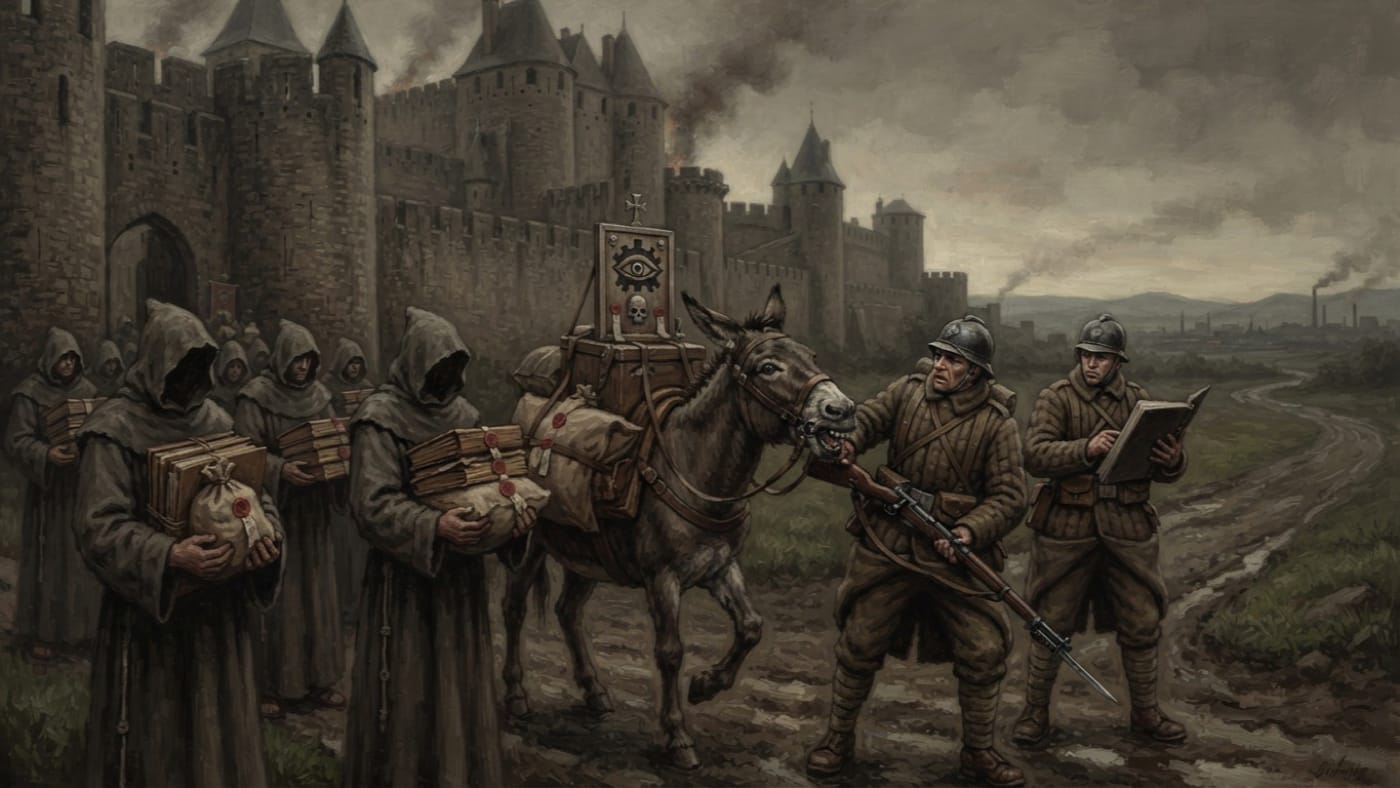
Carcassonne
Names outward, forbidden paper back
Carcassonne sent names outward and forbidden paper back to Toulouse. Purity enlarged its reach and its Index; Bernard the mule supplied the teeth.
Codex Ref. II.1.09-093
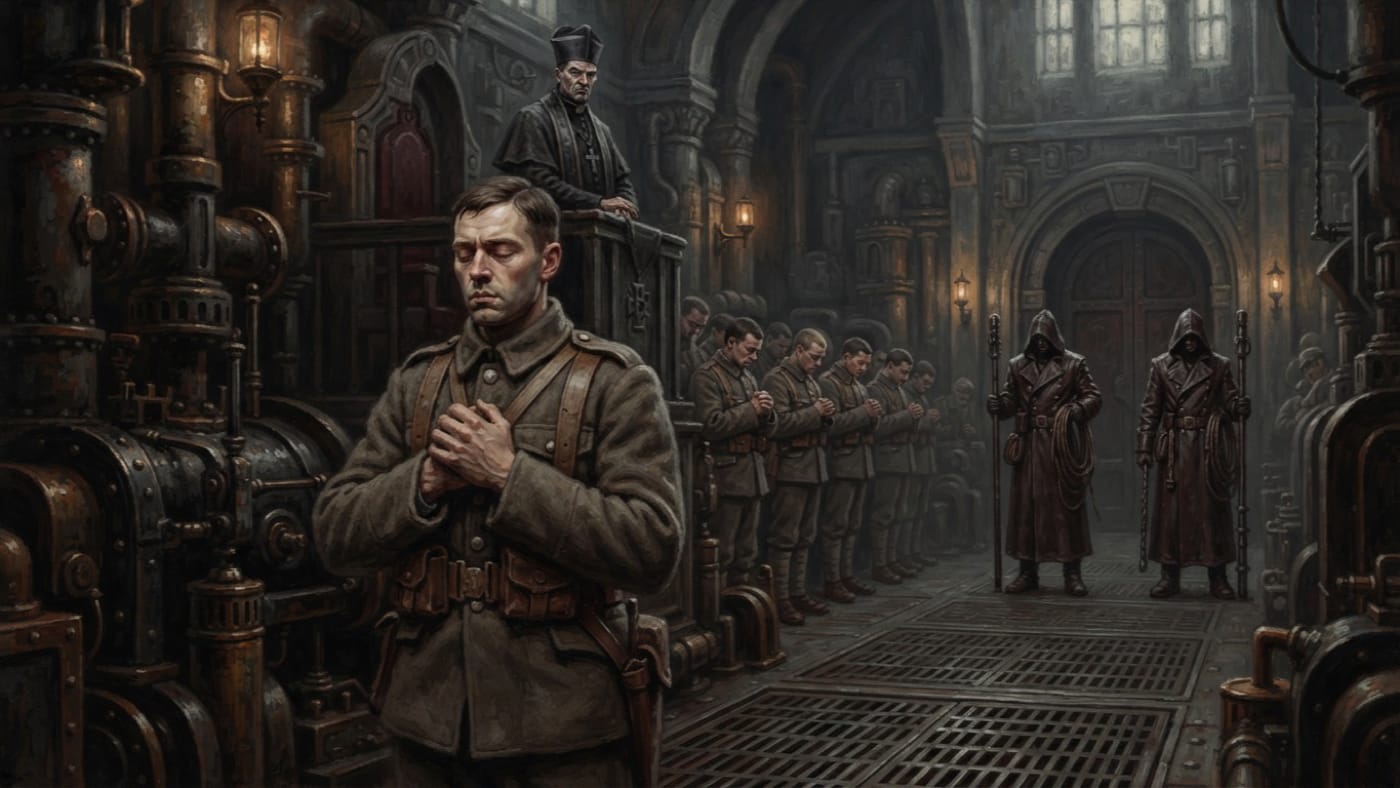
Catechism of Humility
The cure that asks the proud man whether he is cured
Purity prescribes the Catechism of Humility against Atheronic pride: close the eyes, recite, then report to a chaplain or the Lictors if needed. The manual names the cure and leaves its words to the chaplains.
Codex Ref. XIII.1.94-201
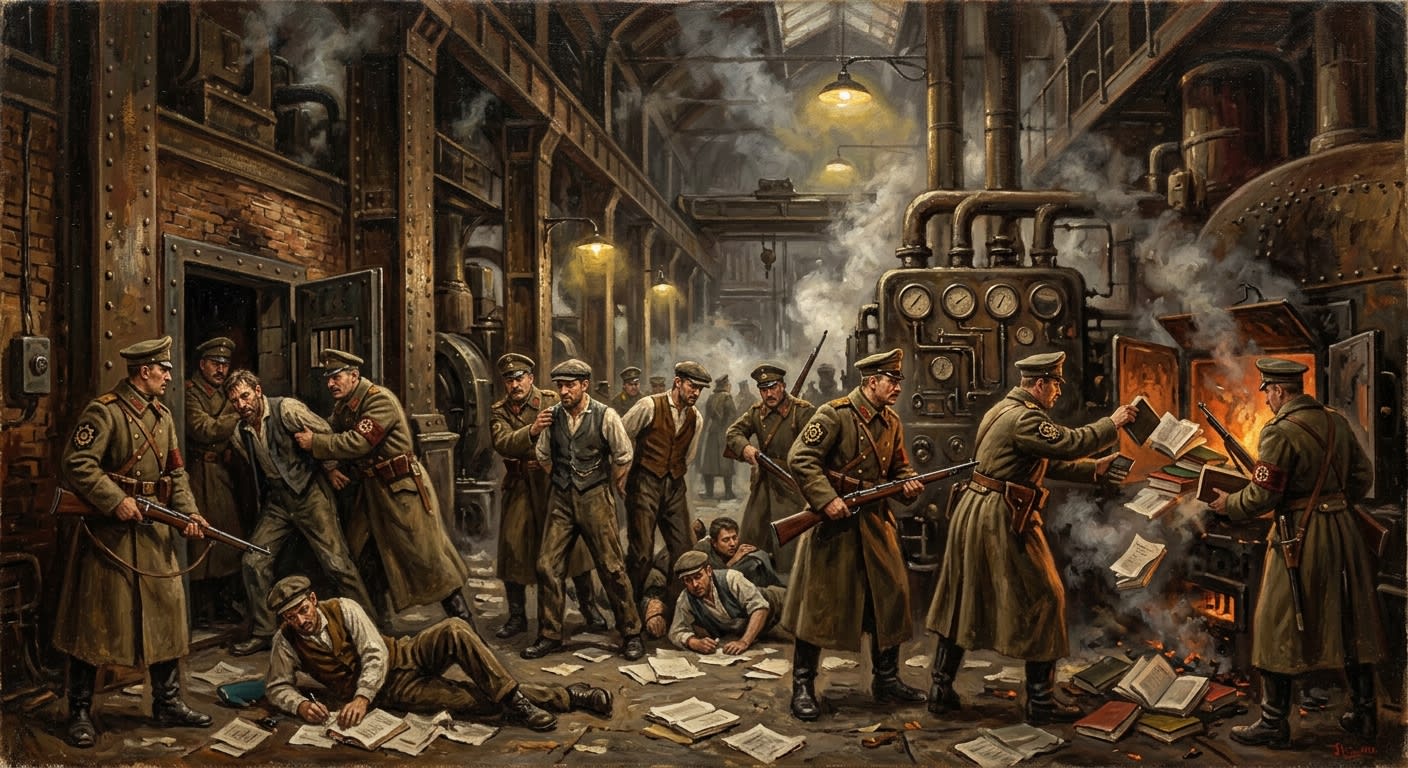
Causality Purge of A.S. 134
When arithmetic entered the furnace and Doctrine answered with masonry
A.S. 134 mechanistic-heresy purge after *Fuel Is Chemistry* manuals spread through six bastion powerhouses, ending in Przemyśl immurements and a larger vocabulary war.
Codex Ref. VII.8.10-030
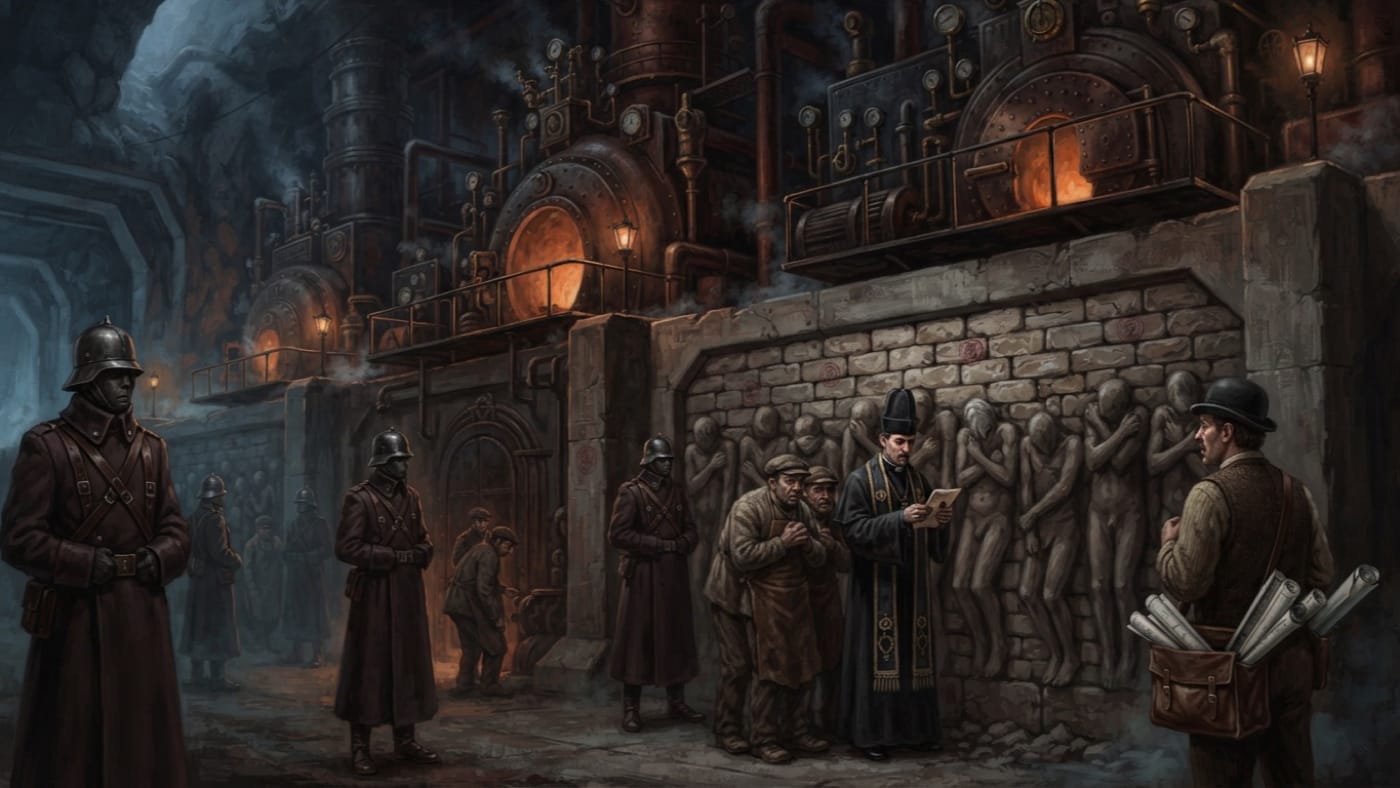
Causality Wars
Engineering owns the facts. Doctrine owns the sentences. The stoker owns a shovel.
Engineering owns the facts; Doctrine owns the explanation. Their undeclared feud reached its bloodiest engagement in A.S. 134, when sixty-one people were immured at Przemyśl. The account remains open.
Codex Ref. VII.8.10-134
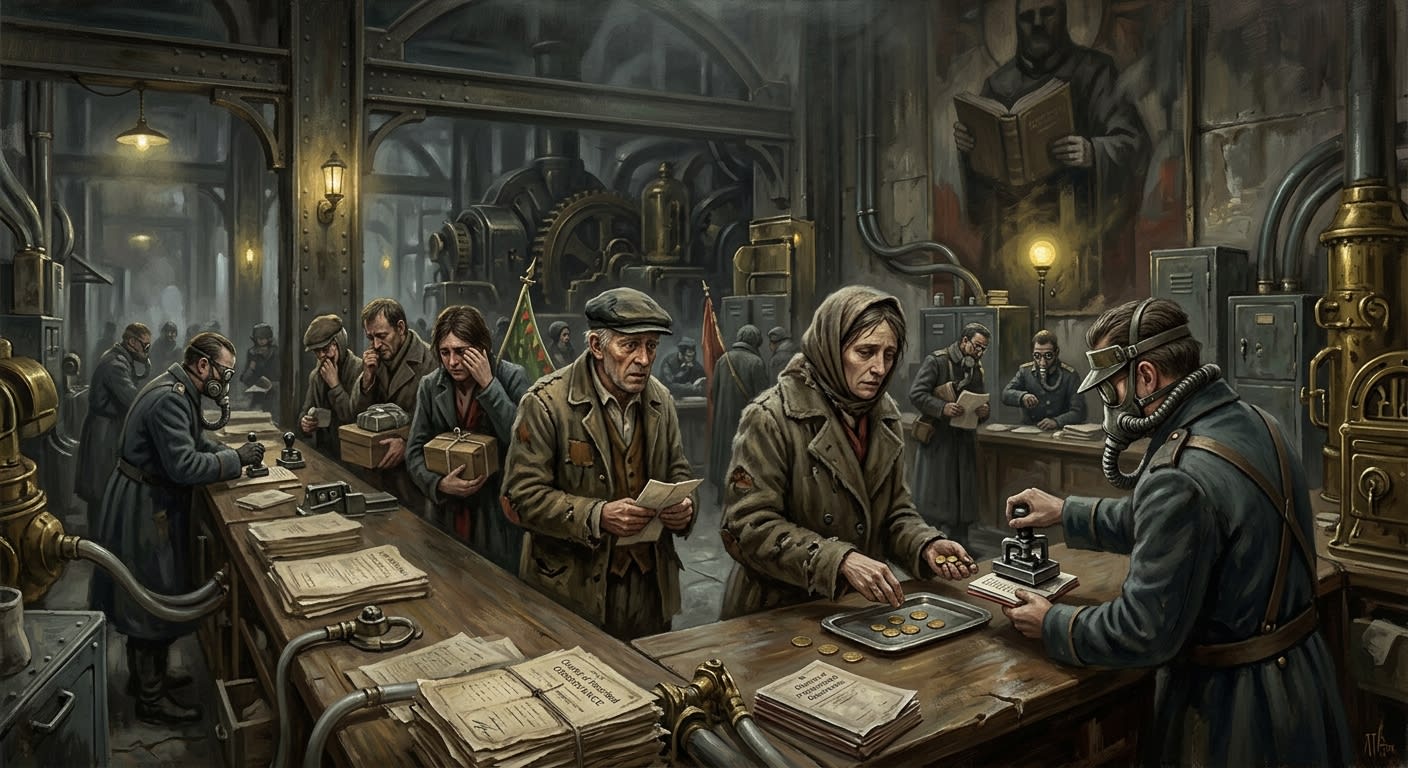
Charter of Prescribed Observance
The document that taught joy to queue and grief to file receipts
Ratified in A.S. 58, the Charter of Prescribed Observance turned public feeling into lawful form: mourning, feasting, silence, joy, and deviation all made taxable.
Codex Ref. XIII.1.23-001

Chorus-Master Pell of Cordoba
The form became music; the memorandum became evidence
Pell recorded Seville's laughter in A.S. 153. The form became music, the memorandum reached Purity, and the officer's later fate stayed off the ledger.
Codex Ref. III.2.01-153
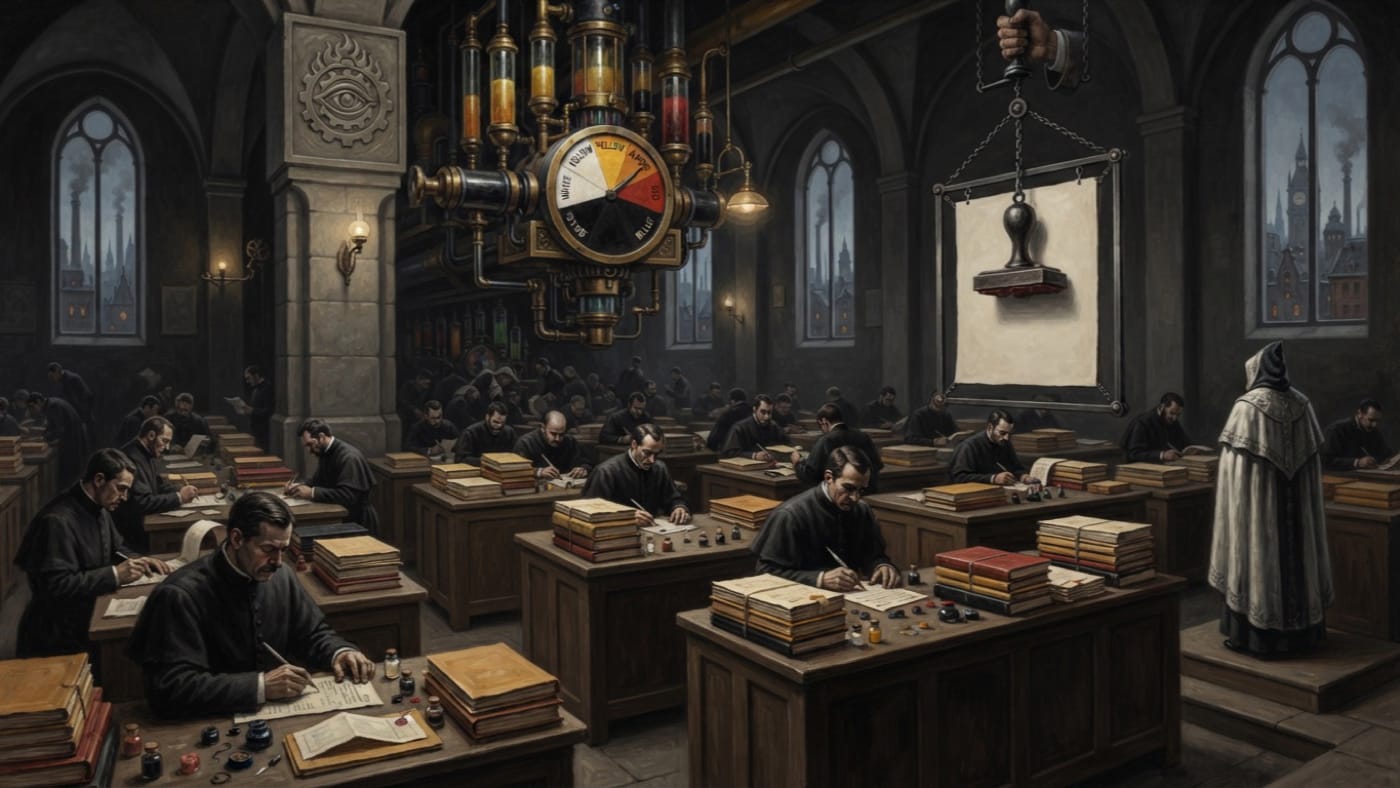
Chromatic Office
The hand touches the register, and the register keeps the name
The Chromatic Office supplies Purity's five-colour scale and Amber guidance. Its clerks need only paper to keep a name beneath a suspended warrant.
Codex Ref. III.3.02-002
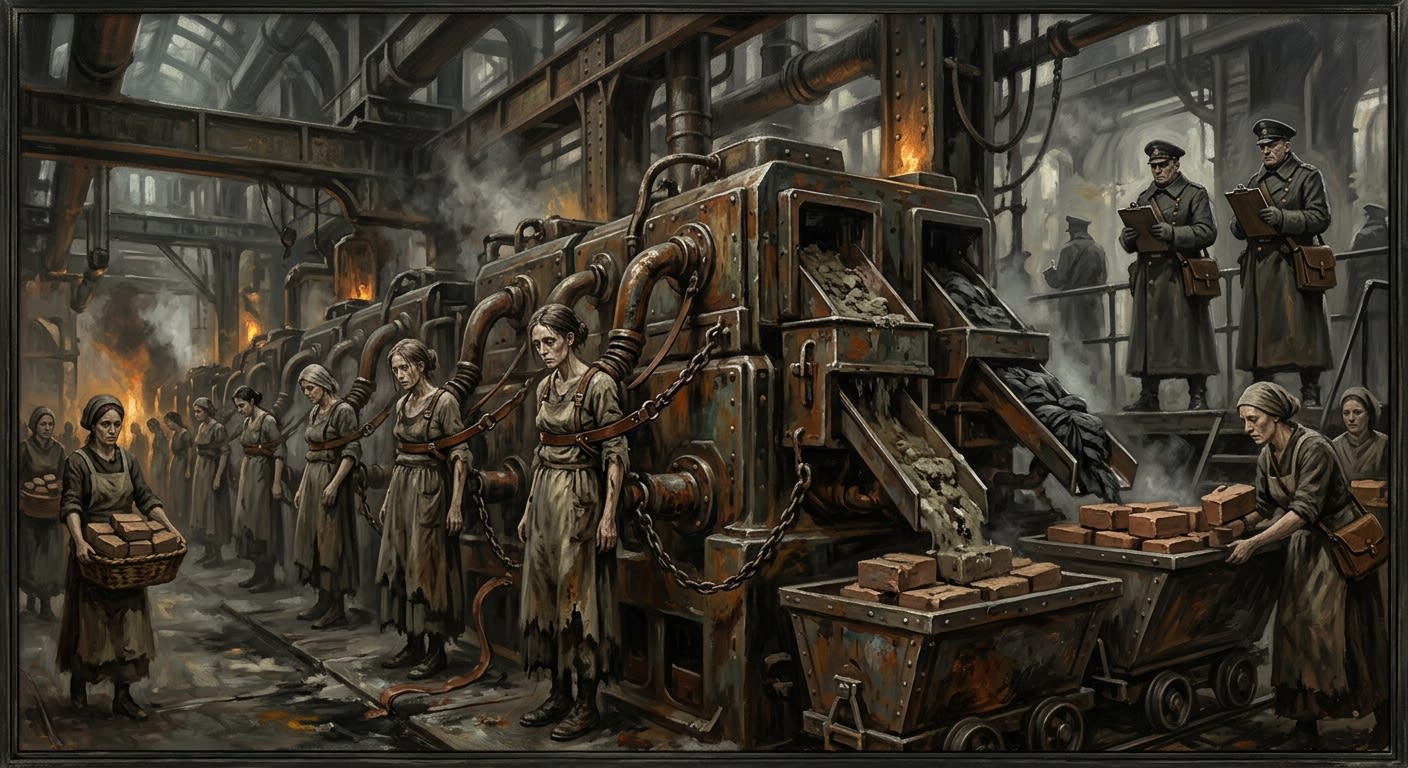
Classification 7-F
The file by which the Bureau teaches horror to stand in line
Classification 7-F names Reproductive Infrastructure, Hostile: the sealed category by which Ash-Mothers, mortar, obedience, and enemy supply become one file.
Codex Ref. XIII.1.72-004
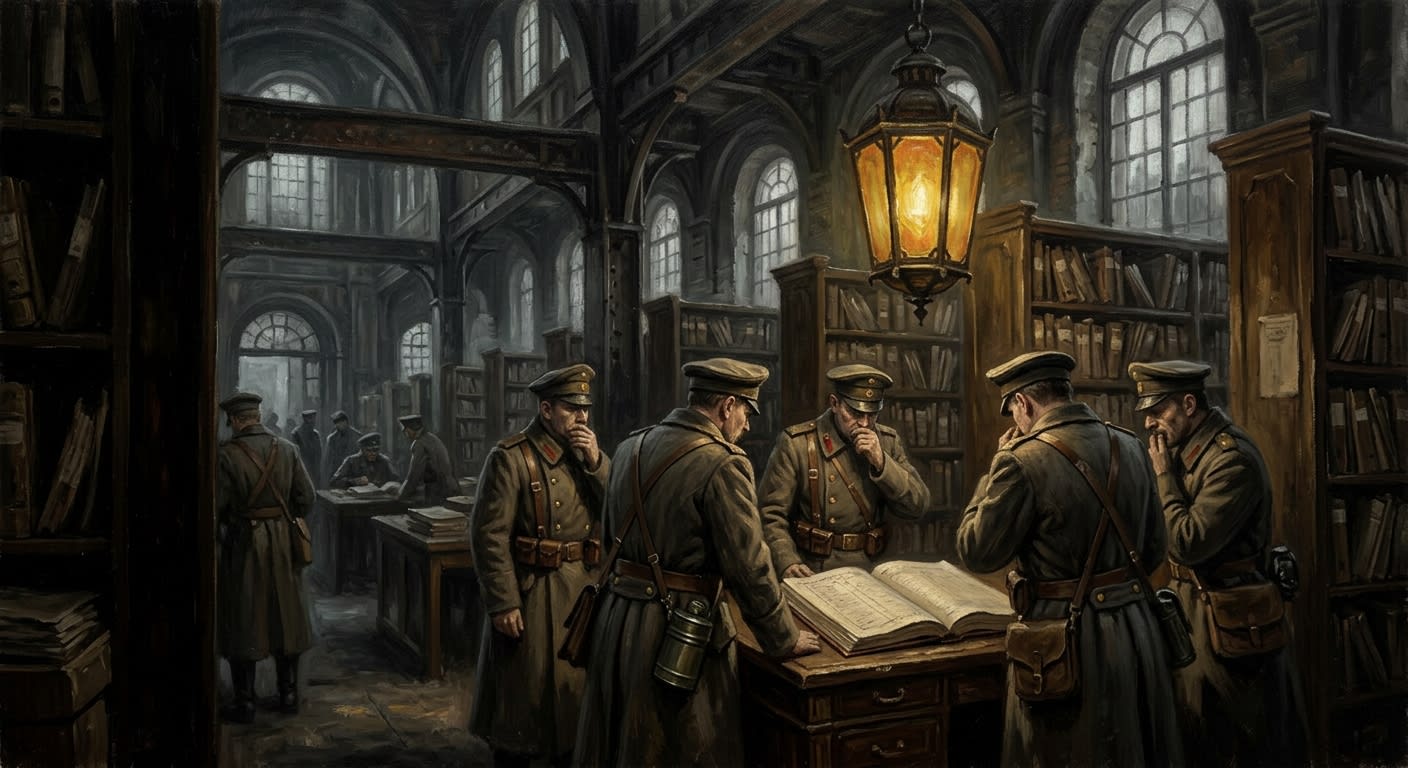
Classification Amber
The honeyed prison where Purity keeps suspicion alive
Classification Amber is Purity's suspended warrant: suspicion preserved in colour, fear extended by procedure, and mercy sharpened into watchfulness.
Codex Ref. XIII.1.06-001
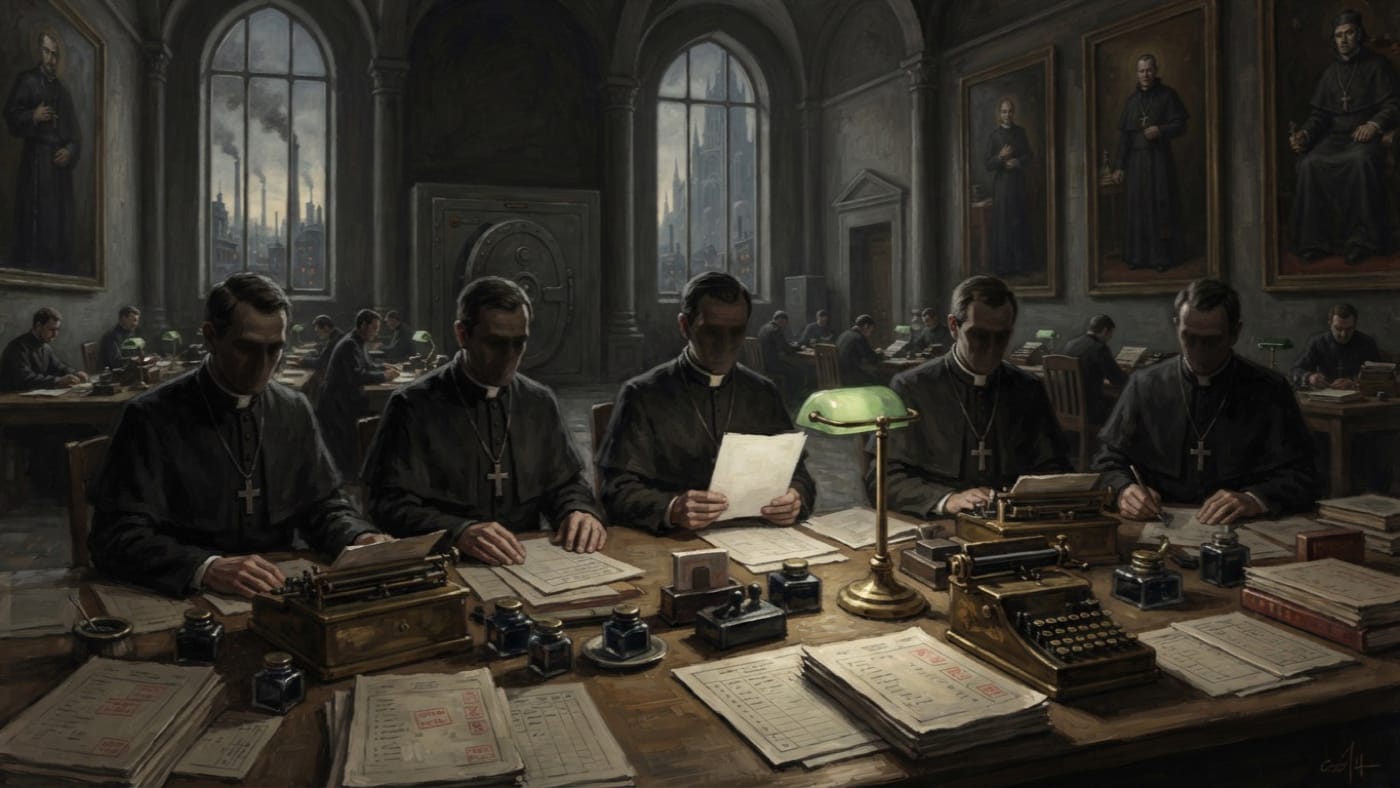
Committee on Public Serenity
Accuracy Has Its Hazards
Orison's A.S. 194 inquiry recorded the Penitential Shadows as the western faithful's greatest fear. The committee was disbanded in A.S. 195; its members ceased to appear in correspondence. Accuracy has its hazards.
Codex Ref. VI.3.12-043

De Subtractione Misericordiae
Three pages read; the fourth carries a window
I read three pages of Purity's proposal for removing heretics without procession, trial, proclamation or corpse. A rectangle cut from the fourth explains its mercy rather well.
Codex Ref. XI.6.02-001
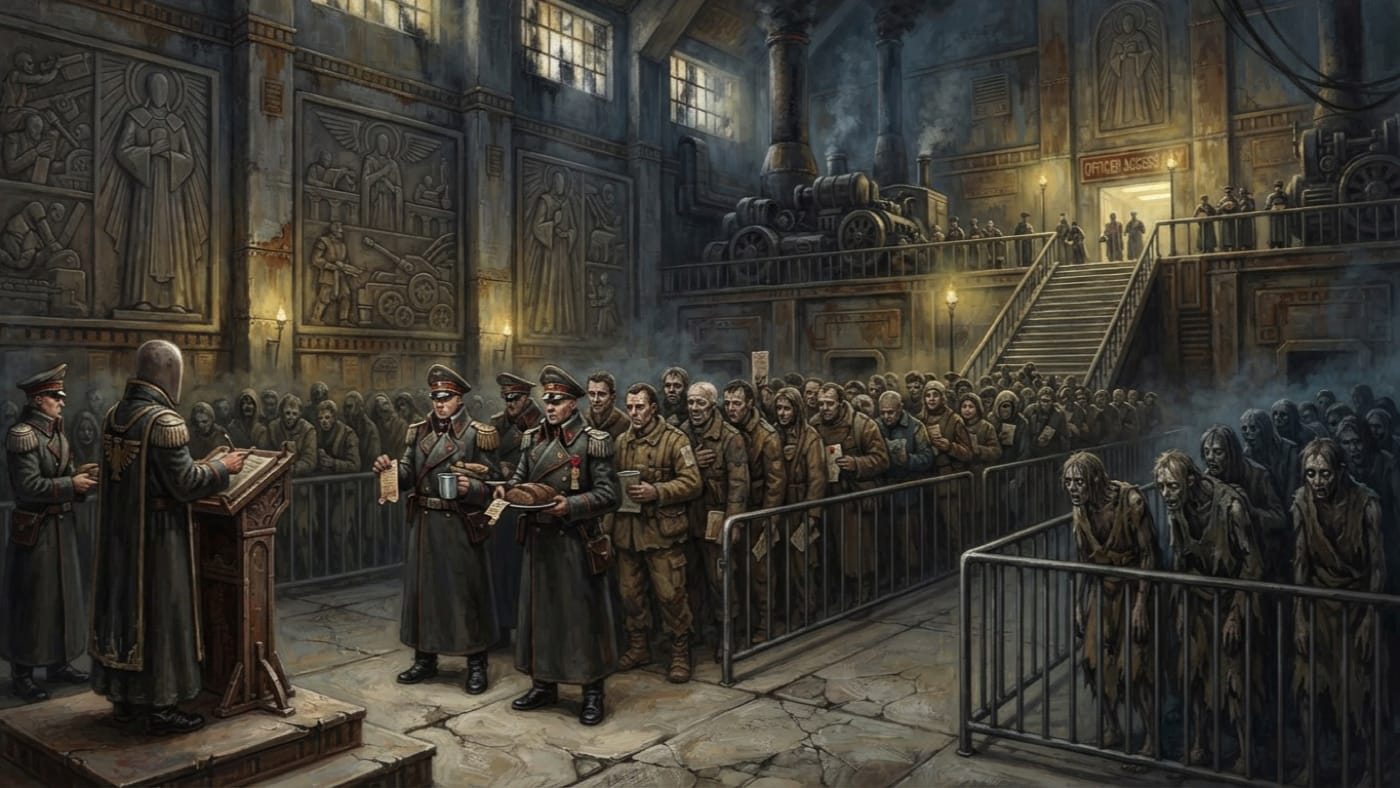
Doctrine of Equality Before the Divine
Equal at the blessing; ranked at the table
All humans stand equal before the Creator; the ration queue observes other rules. I assess the Synod's defence against Pride, its four disciplines, and the hierarchy that defeats them at Przemyśl.
Codex Ref. XIII.1.07-006
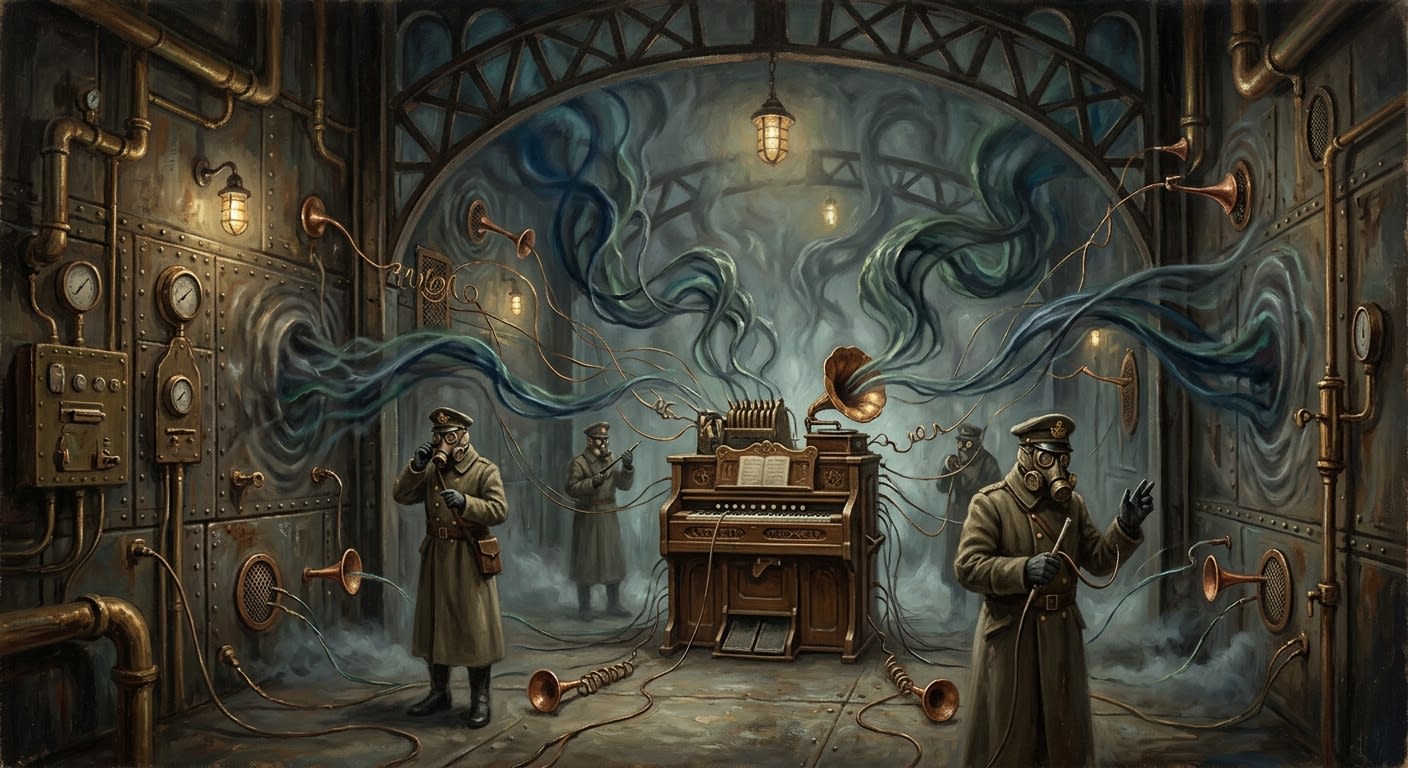
Echo Weather
The room replies, and the wise do not harmonise
Echo weather is the Brand-Singer name for chamber response: the room returning cadence with manners of its own.
Codex Ref. XIII.1.41-004
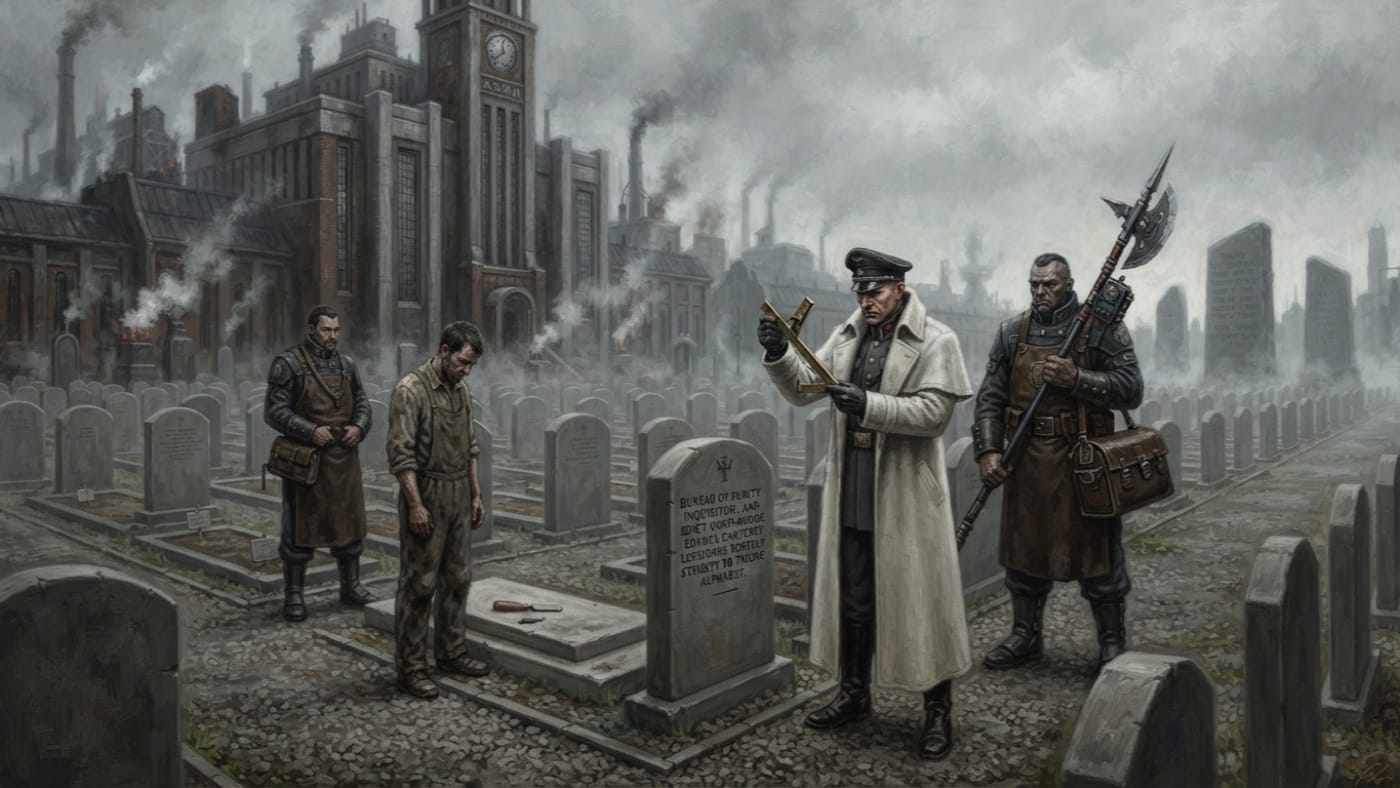
Edict of Graphic Uniformity
Twenty-three permitted letters, and no exemption for the dead
Della Torre's A.S. 178 edict made the Triune Alphabet the Synod's only recognised script, licensing literacy, prescribing spelling and requiring approval for gravestones. The dead may rest; their names must pass inspection.
Codex Ref. XIII.1.03-002
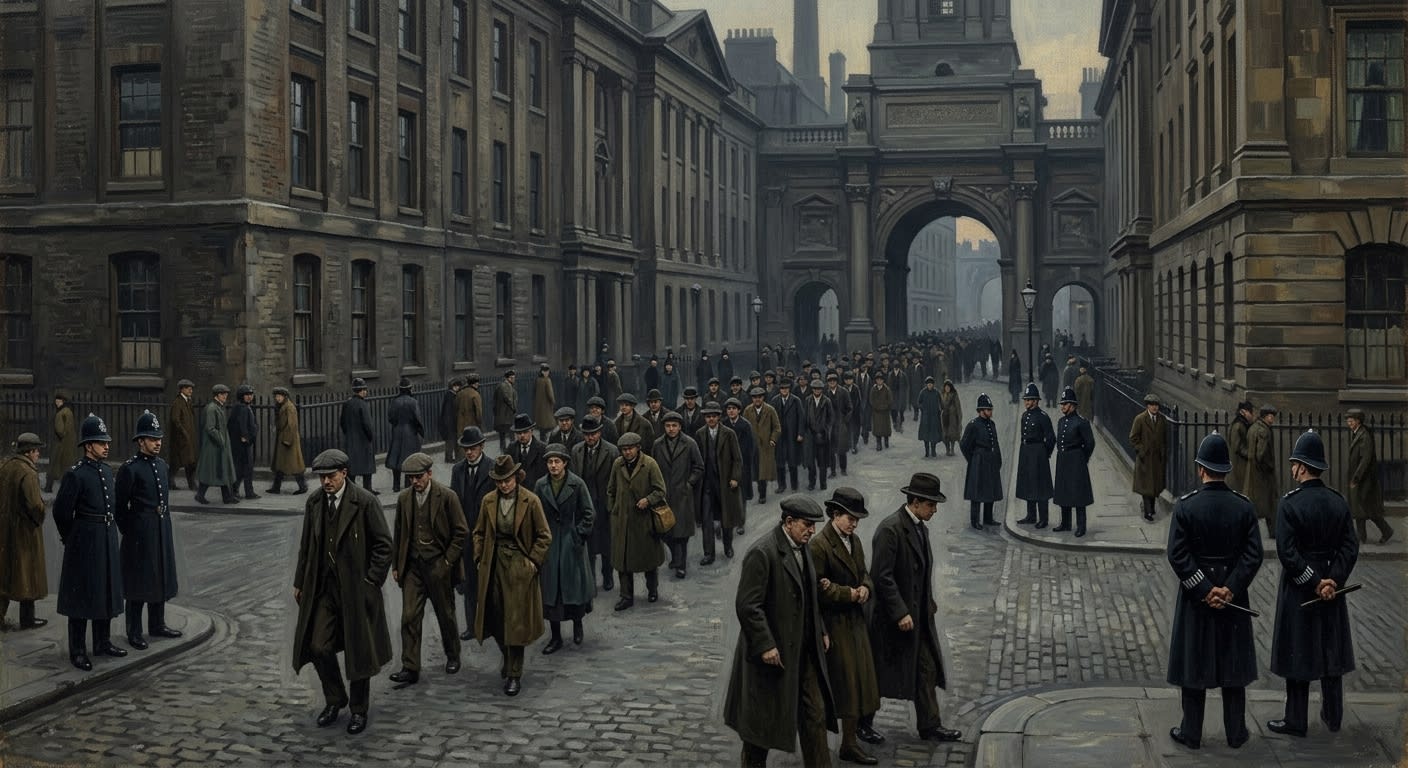
Fast of Silence
The tongue kneels before the knife is invited
The Fast of Silence is the Bureau of Festivals' cleanest cruelty: a district gagged from dawn to dusk until obedience sounds like piety.
Codex Ref. XIII.1.89-153
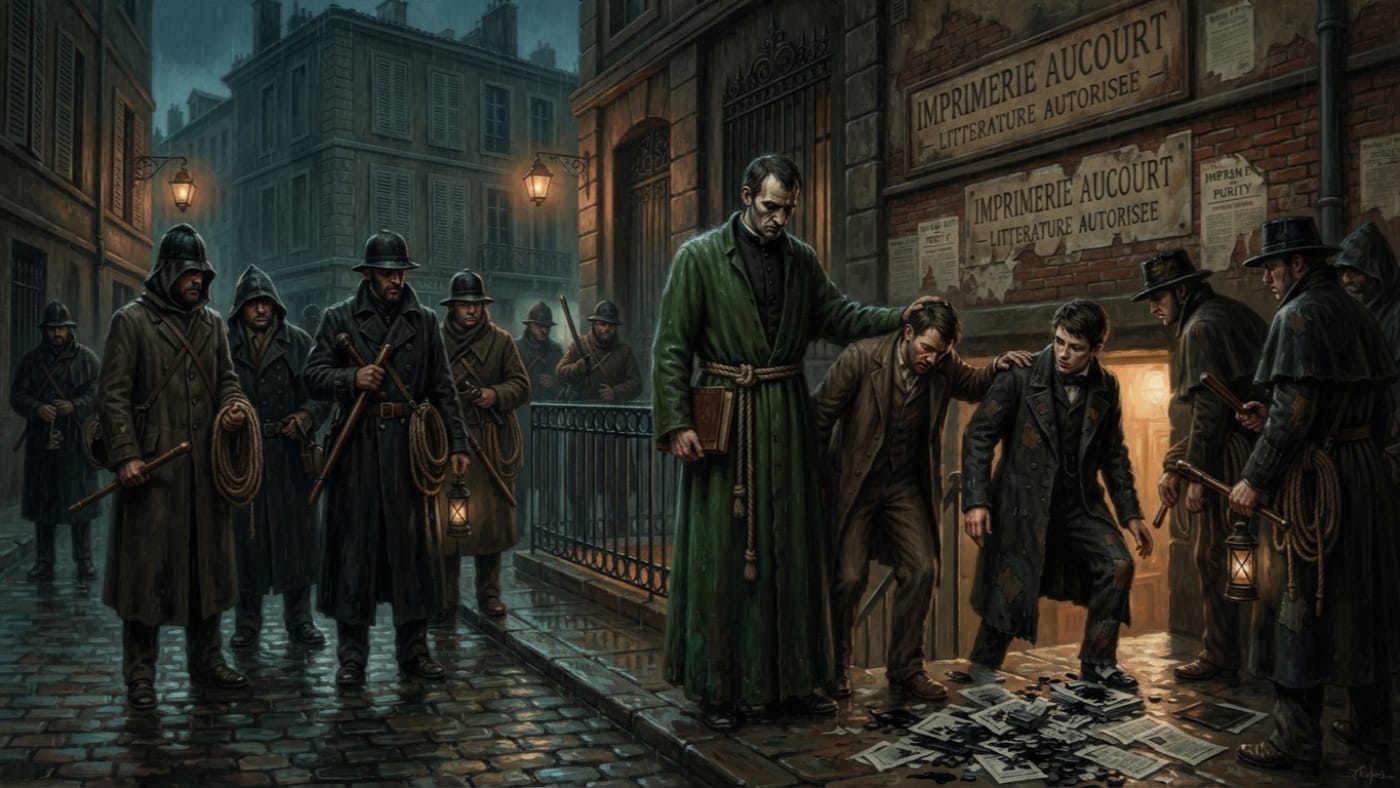
Father Ostel of Narbonne
The priest remembered by his robe
Father Ostel served in the A.S. 93 Toulouse Hunts in a green robe of claimed liturgical inheritance. Drax reports the sketches suppressed; the rest of the man escaped the file.
Codex Ref. III.2.01-093
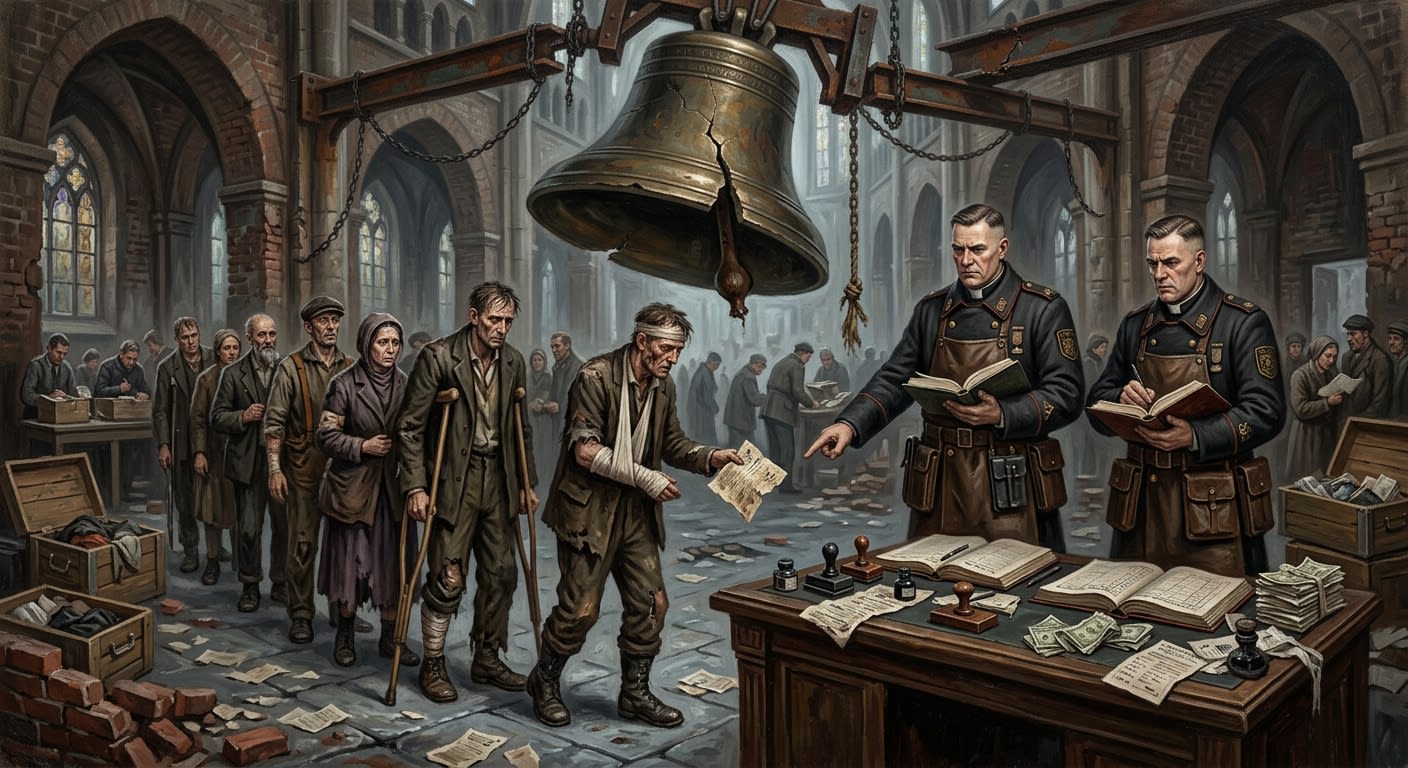
Feast of the Cracked Bell
The damaged bell still tolls, therefore the damaged citizen still owes
The Feast of the Cracked Bell teaches the Synod's favourite mercy: broken things may still serve, so damaged citizens may still be counted, tolled, and taxed.
Codex Ref. XIII.1.89-201
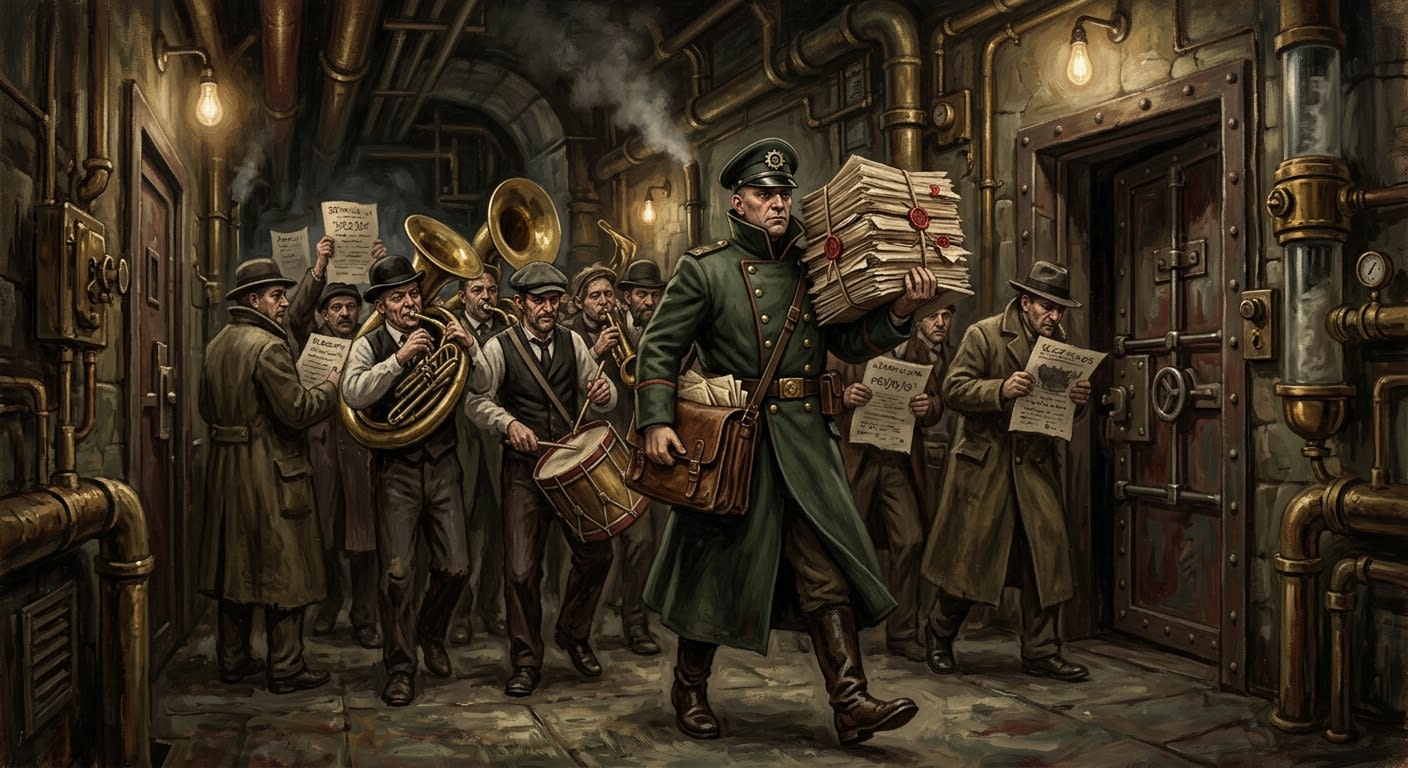
Festival Form 19-M
The paper that taught Seville to laugh in sequence
Festival Form 19-M began as a tavern supplement and became the paper Seville weaponised into music, mockery, and Purity jurisdiction.
Codex Ref. XIII.1.66-153
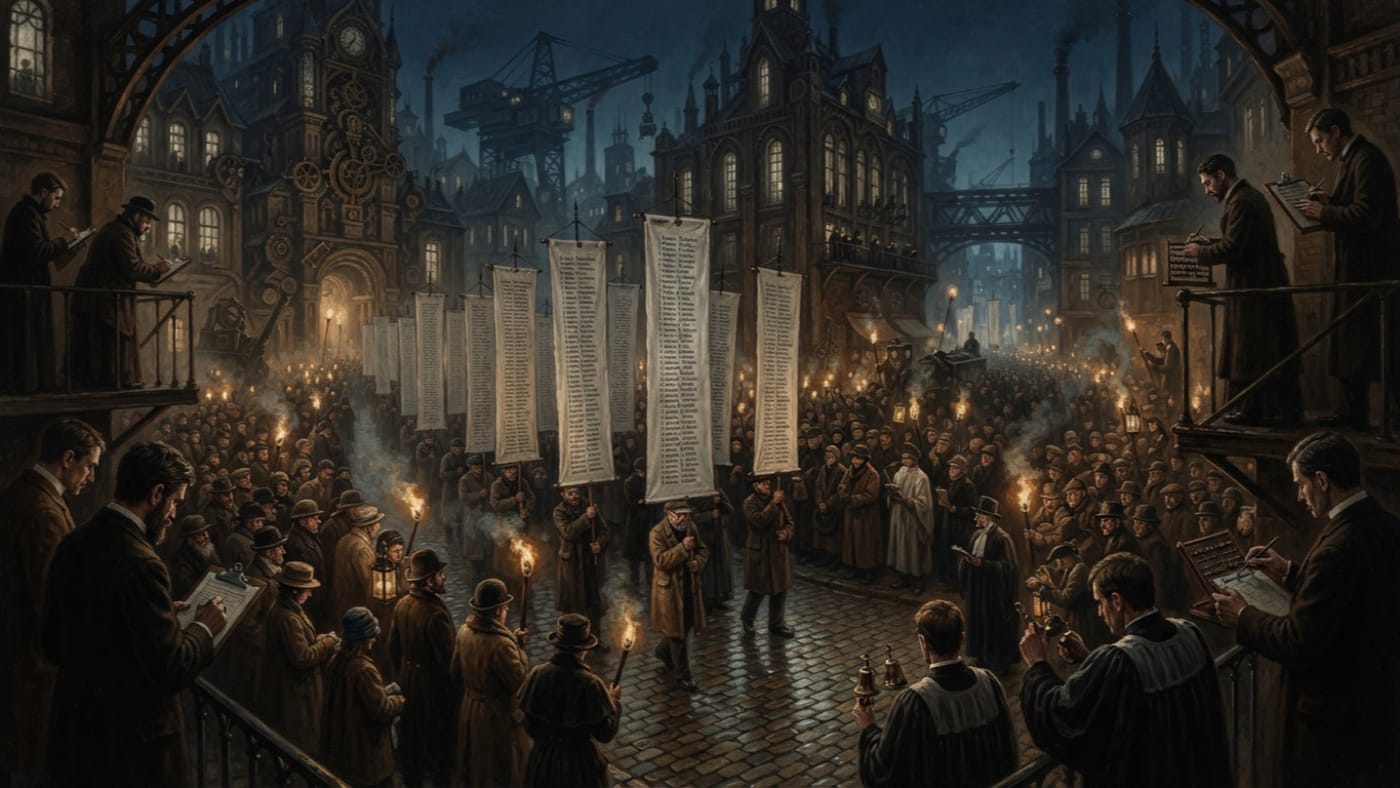
Festival of Departed Flames
The names are read; the weeping is measured
Each autumn the Synod reads its dead by torchlight. Festivals counts the mourners, Rites consecrates the chant, Records logs the names, and the weeks that follow grow quieter. I record the figures; the Bureaus supply the explanation.
Codex Ref. VII.3.03-001
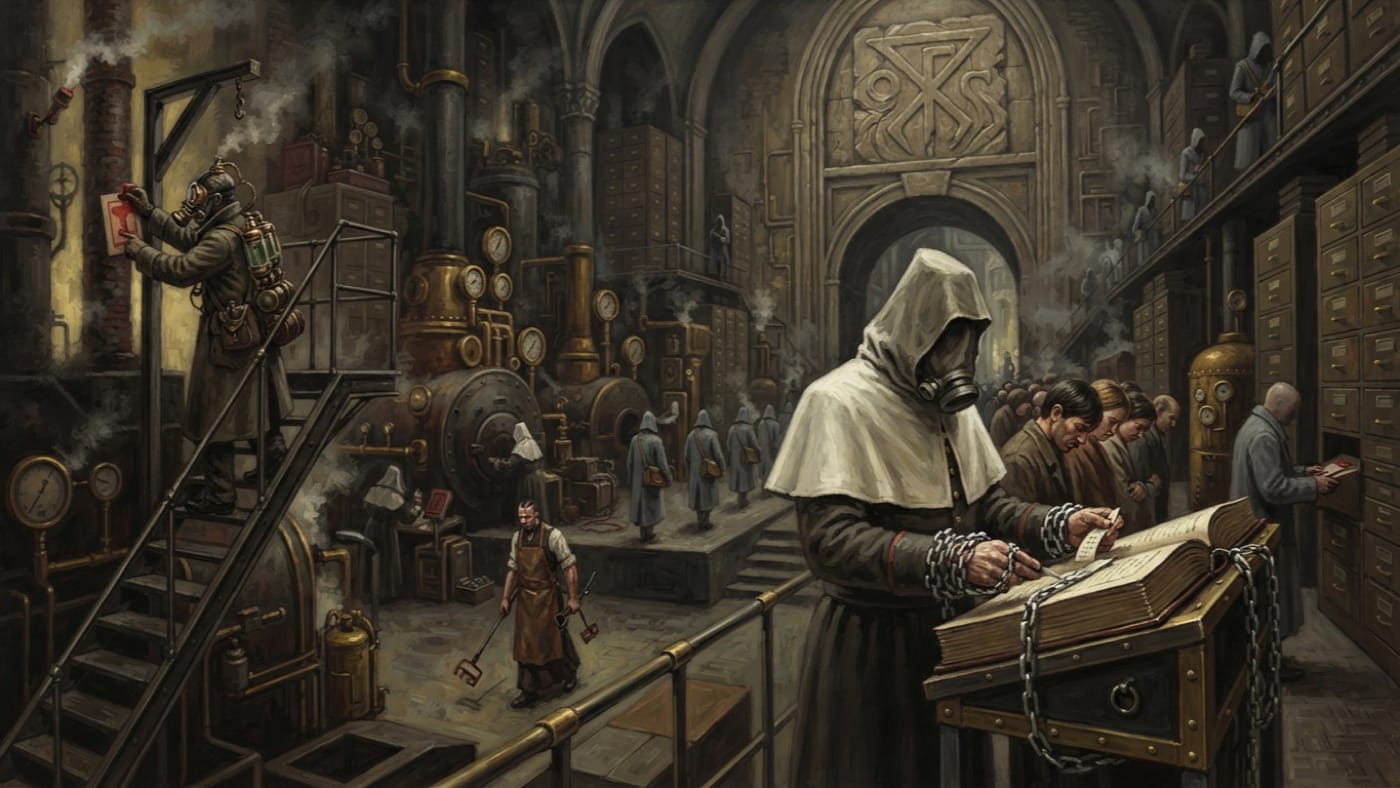
Fifth Seal of Faith
The prohibition arrives before the definition
The Fifth Seal governs Purity: forbidden speech, indexed forms, and the Inquisition. Strasbourg constituted it in A.S. 90; the definition of impurity remains pending while enforcement proceeds.
Codex Ref. XIII.1.05-005
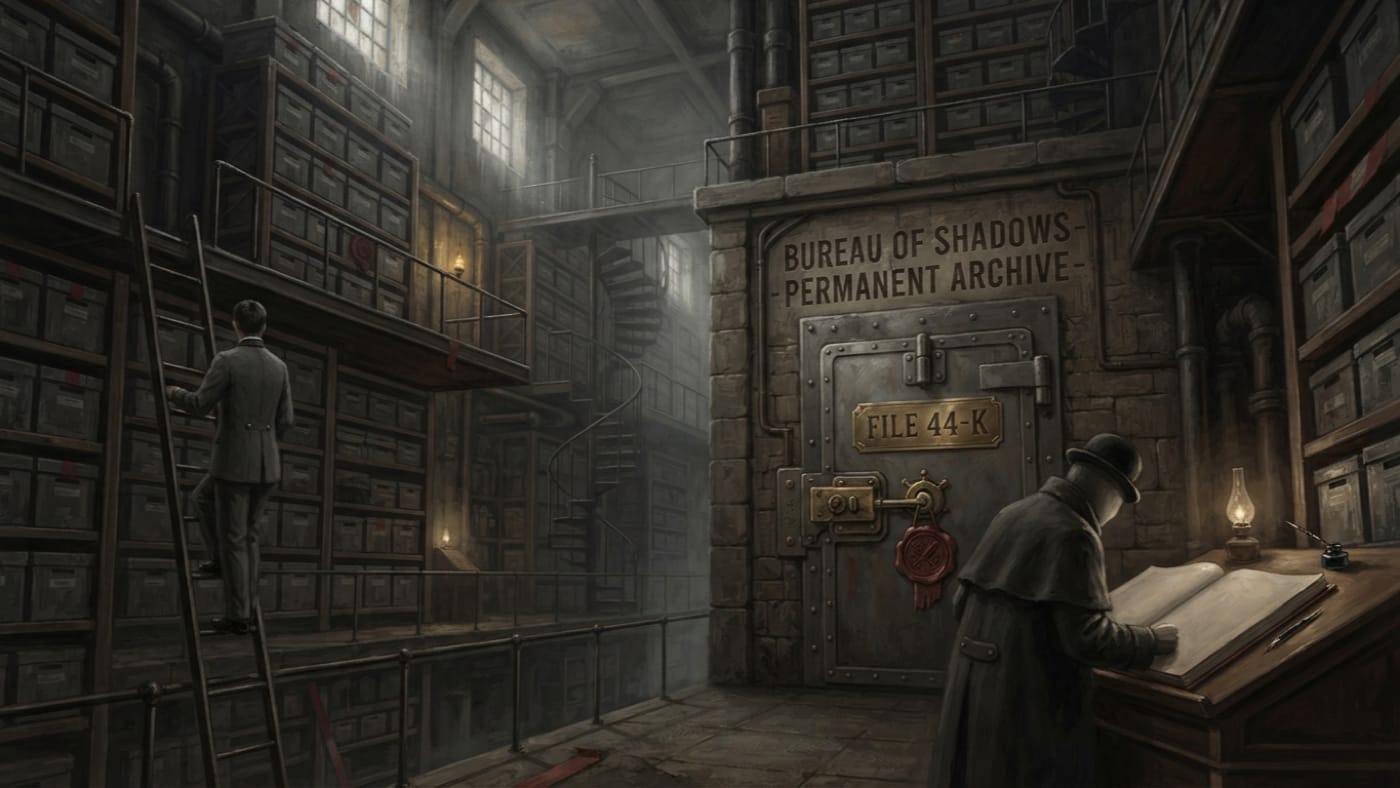
File 44-K
The occupation is acknowledged; the person is withheld
File 44-K seals the name of the Engineering draughtsman who wrote Fuel Is Chemistry. Doctrine acknowledged the authorship; Przemyśl supplied the bodies.
Codex Ref. VIII.8.44-001
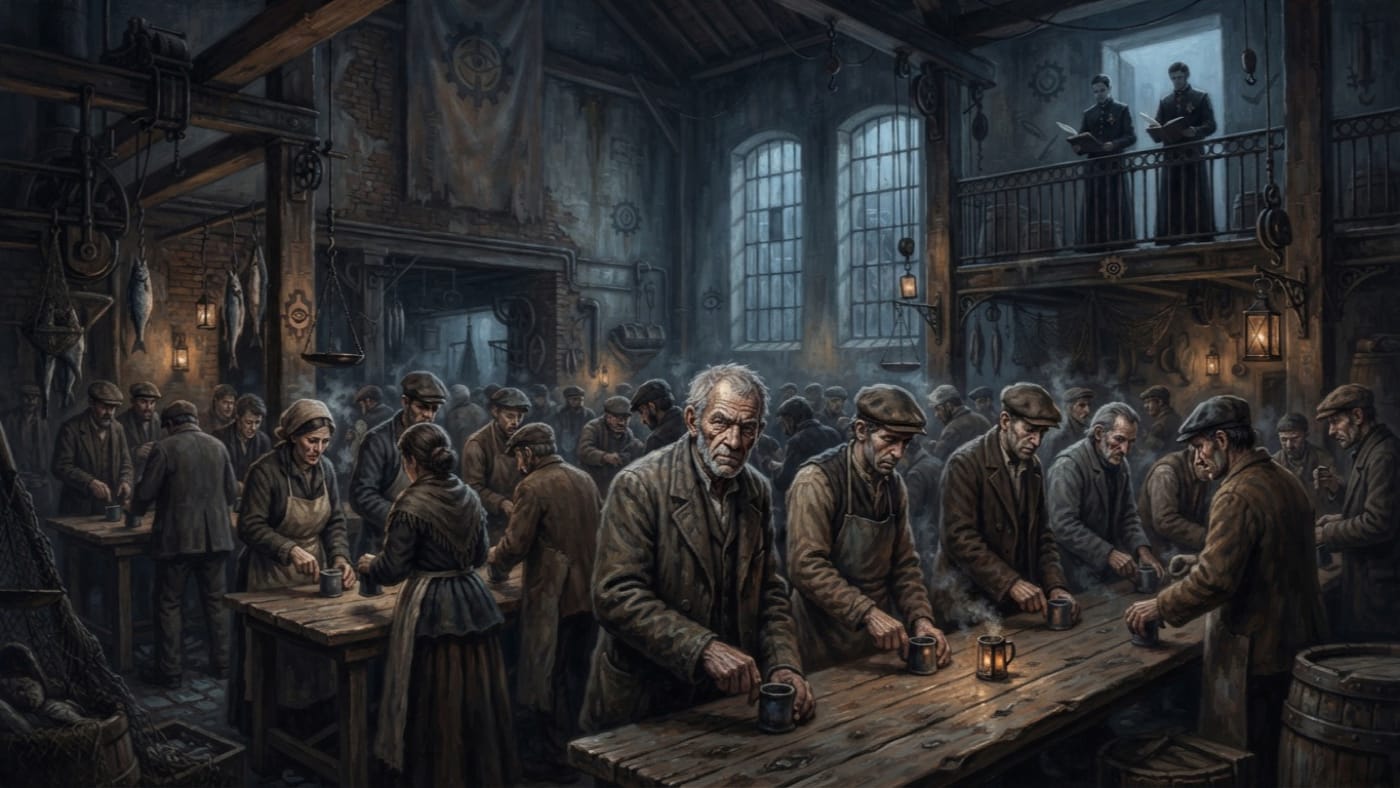
Fishmongers' Court
Quota clauses in the throat, precedence in the cup
Seville's fish trade chanted quota clauses in A.S. 153; the clerk suspected melody. The Court still disputes the first breach with cups tapped before dawn.
Codex Ref. VIII.5.07-153
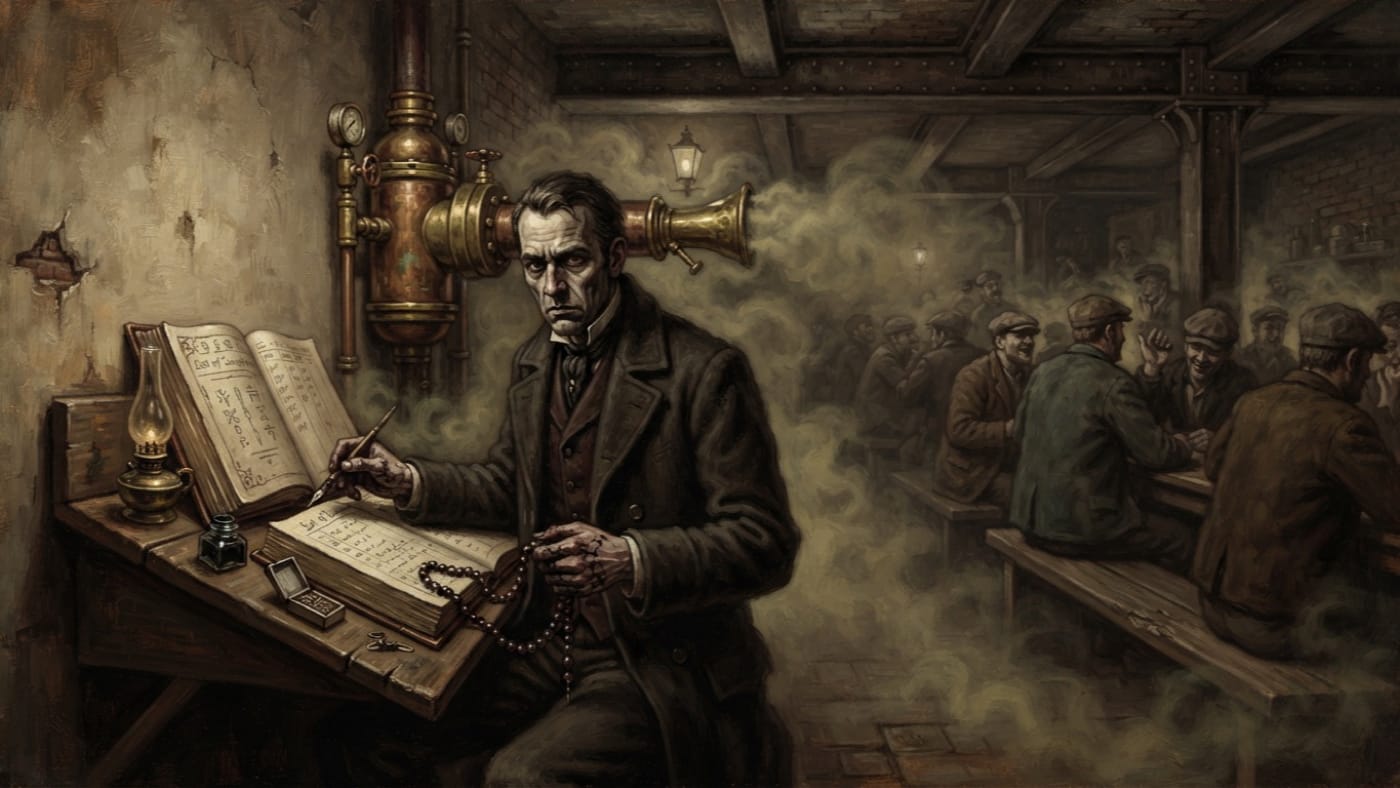
Fog Clerk
The salaried ear that turns a tavern's laughter into evidence
The Fog Clerk is the Censorium's salaried ear: counting tavern laughter, signing the List of Laughters, and tending incense vents after Ninth. The clerk passes the entry onward; the punishment follows.
Codex Ref. XII.10.02-001
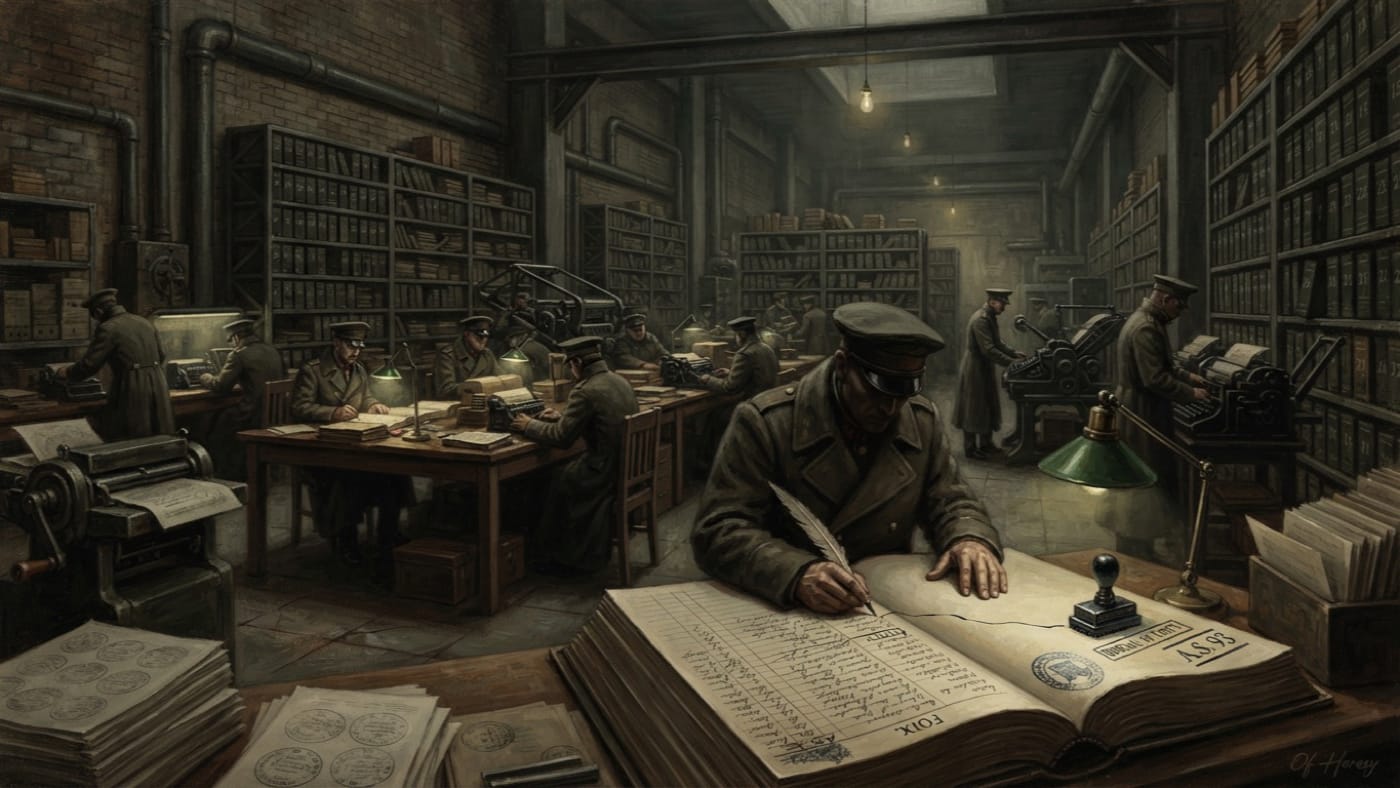
Foix
Named, included, not proved
Foix entered Purity's Toulouse file in A.S. 93 because Carcassonne named it. No local offence is cited. A town requires no proven guilt to become a permanent entry.
Codex Ref. II.1.09-010
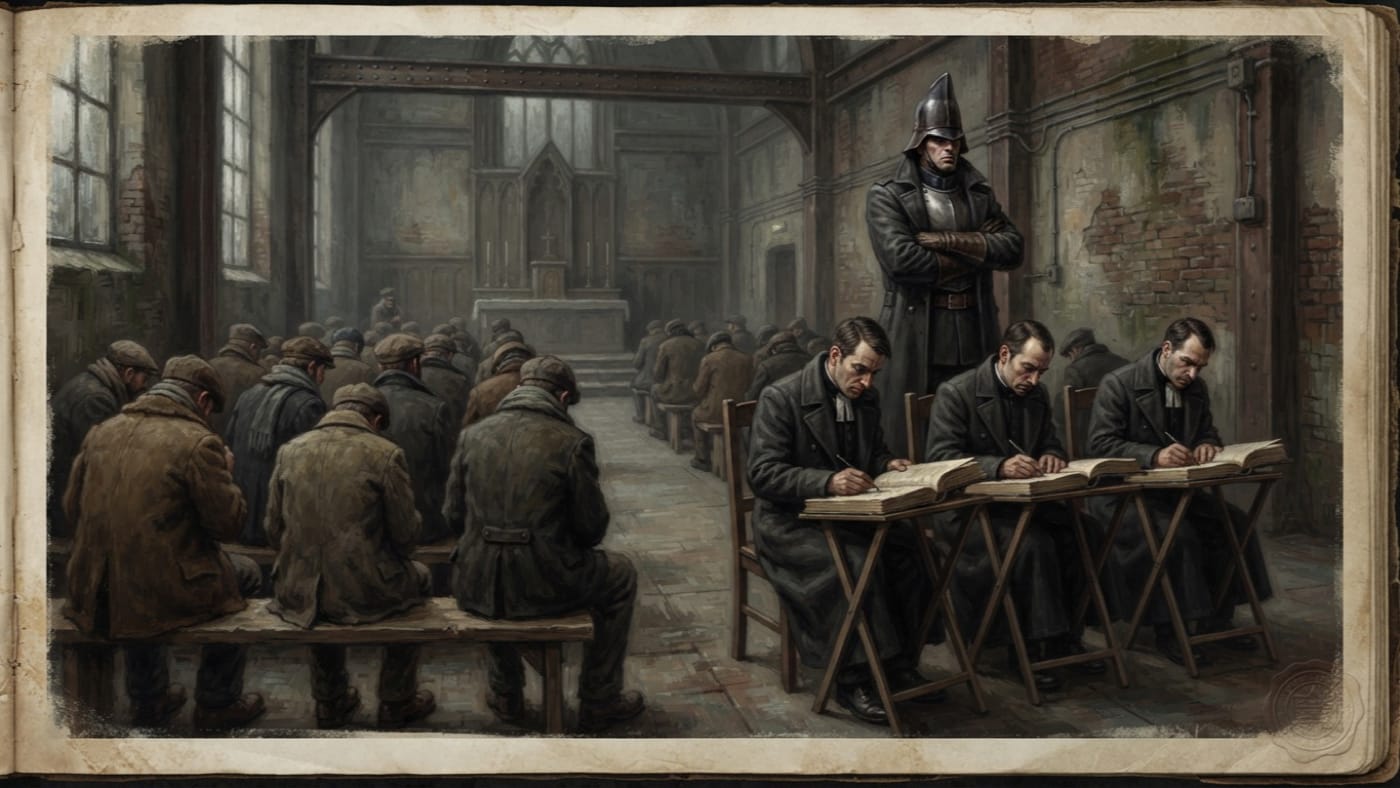
Foreign Church
Three Pens and a Lictor
In Strasbourg's River Quarter, worshippers outside Synodal obedience pray under three Confessors' pens and one Lictor's gaze. The prayers are permitted; the attention is unavoidable.
Codex Ref. III.2.01-1125
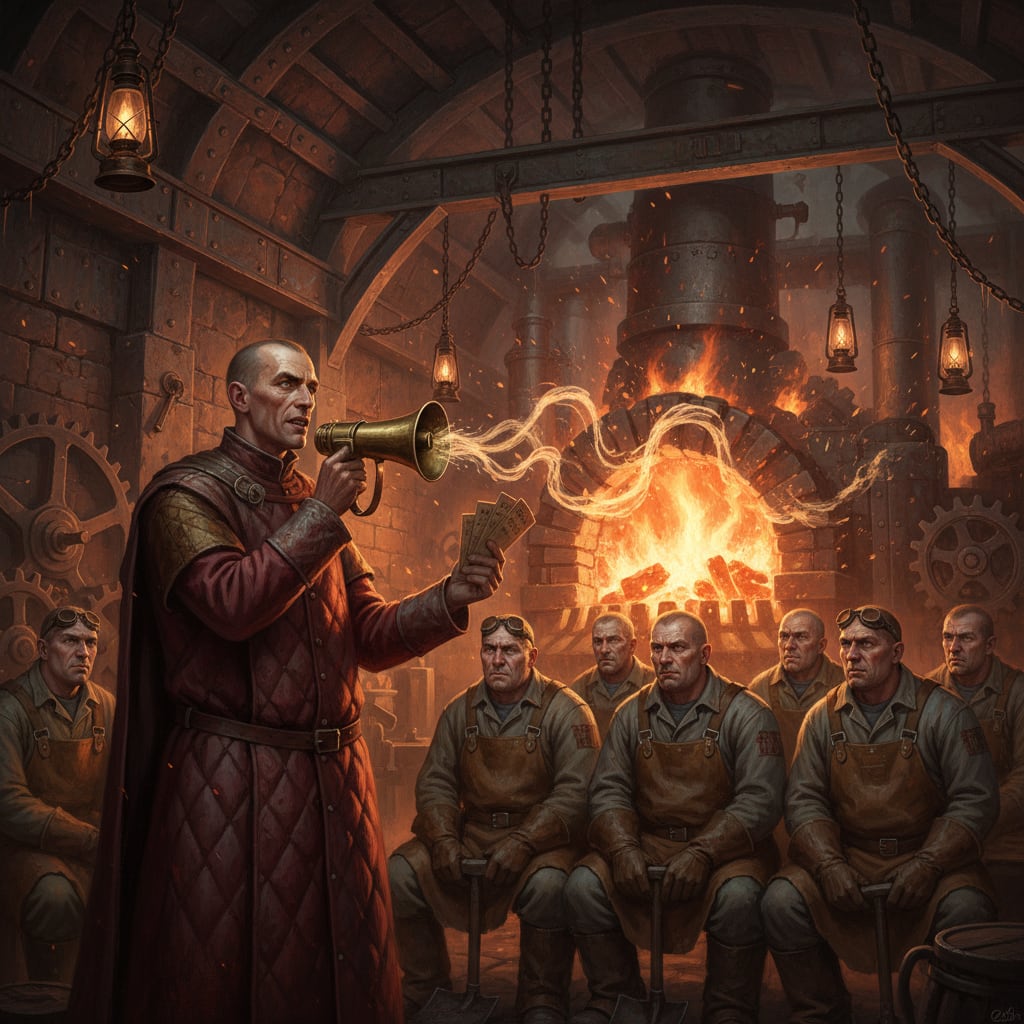
Furnace Catechist
On those who preach the Chain of Cause to men who know perfectly well why the furnace roars — and why neither party will say so aloud.
The Bureau of Doctrine's industrial clergy — stationed in every bastion powerhouse to preach that fire burns by divine permission rather than chemistry. Three thousand four hundred Catechists, two factions, and one question no one will authorise an answer to.
Codex Ref. XII.18.01-001

Geometry Brand-Smith
Six Thousand Four Hundred Licensed Geometers of Guilt, and the Irons That Did Not Come Back
The Bureau of Heraldry’s serialized geometers of guilt — 6,400 licensed Brand-Smiths who make identity permanent in the only ledger that cannot be forged, lost, or filed incorrectly: the body itself.
Codex Ref. XII.20.01-001
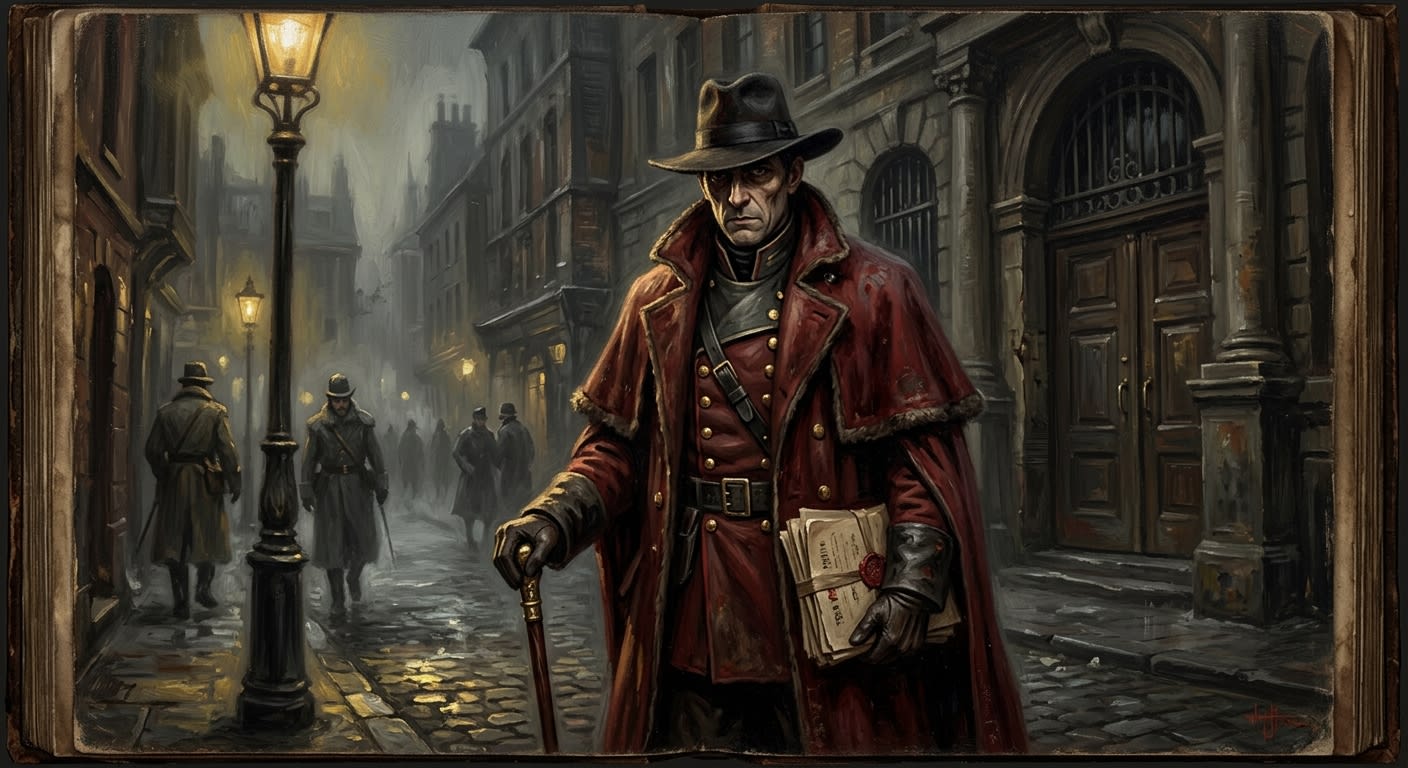
Grand Inquisitor Malthus the Red
The erased butcher whose procedure outlived his name
Grand Inquisitor Malthus the Red is officially absent from every Bureau list, which is how the Synod confesses that the Vienna incident frightened Purity into erasing one of its own.
Codex Ref. III.2.01-054
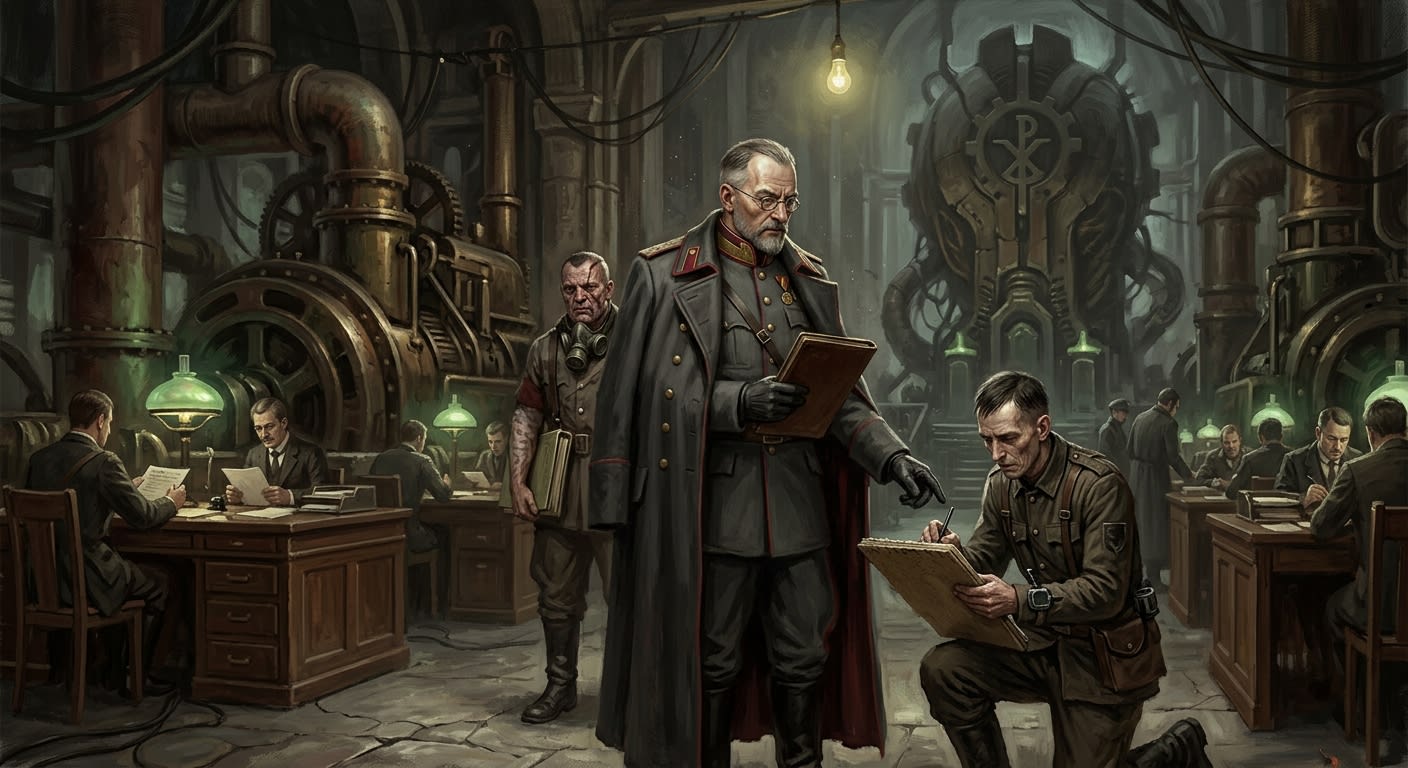
Grand Inquisitor Severian
The tongue made public office, the cage made catechism
Severian of Mainz made fear audible, denunciation intimate, and cruelty administrative; his Second Appendix still walks through Prague with nail and tablet.
Codex Ref. III.2.01-062
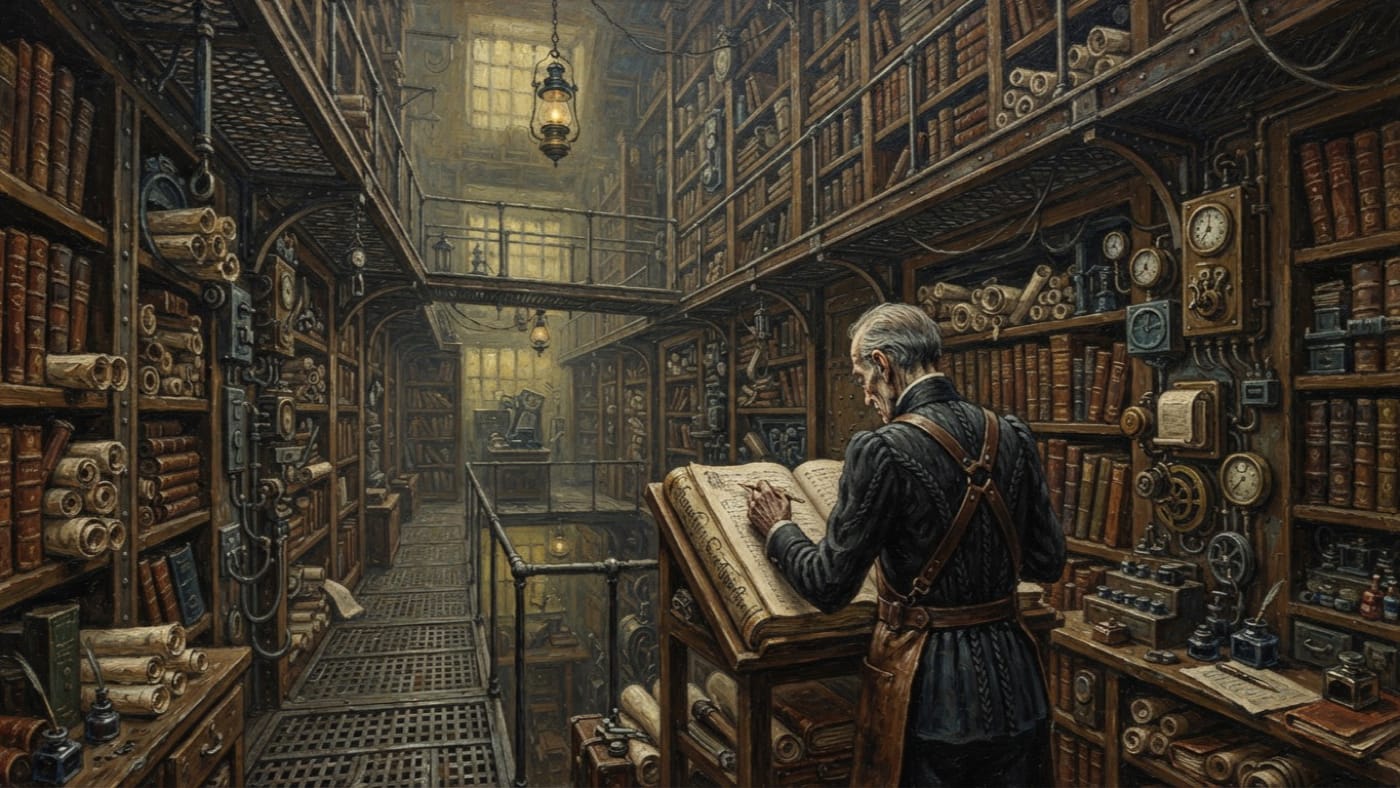
Guallin House
Seven minutes of laughter; no further particulars on file
Guallin House is the Seville premises entered in the A.S. 153 List of Laughters as seven minutes. Its keeper, purpose and fate escaped the extract; the duration did not.
Codex Ref. II.1.04-154
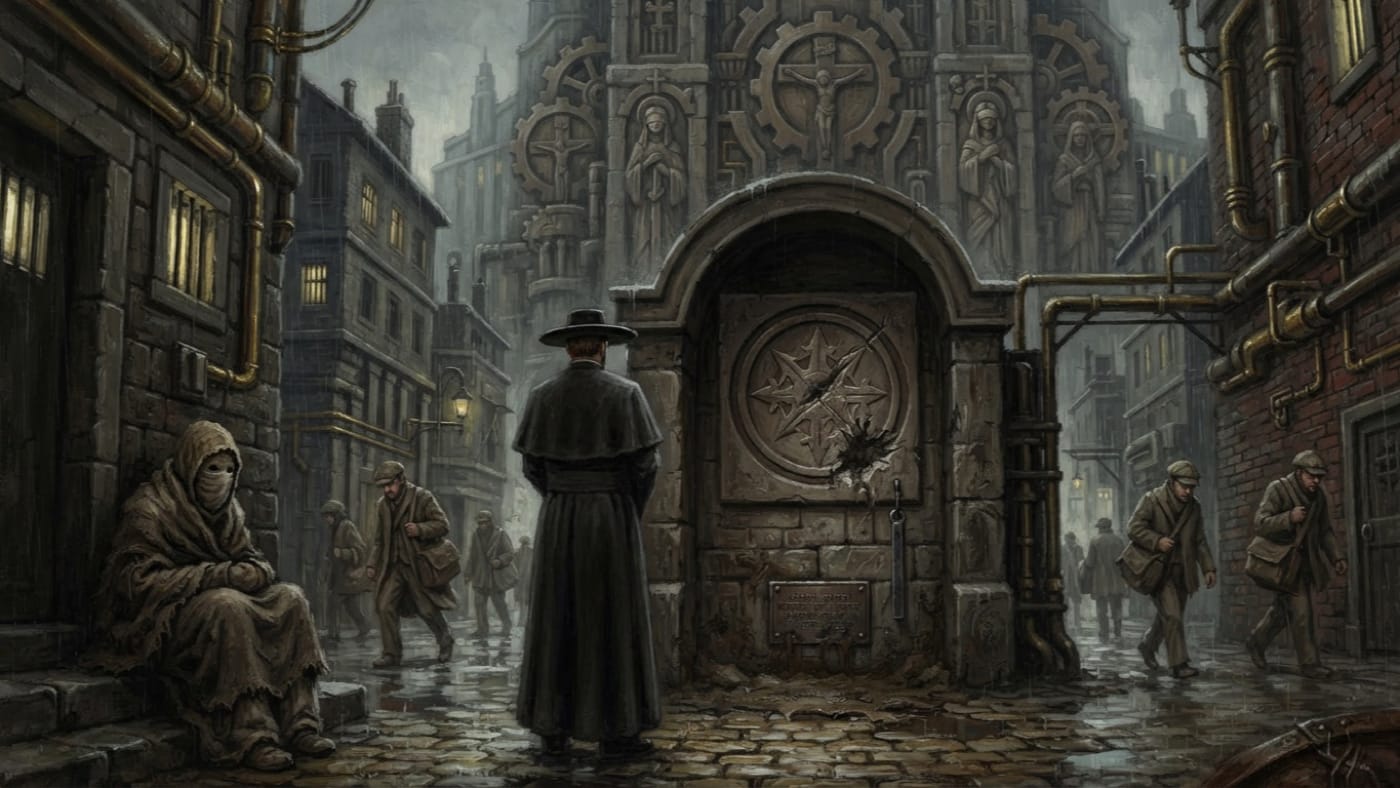
Guillaume bloodline
The names struck, the suspicion retained
The Guillaume bloodline persists without register standing, watched under private Seal Amber. The Church has struck its names and forbidden inquiry into its whereabouts.
Codex Ref. III.2.06-004
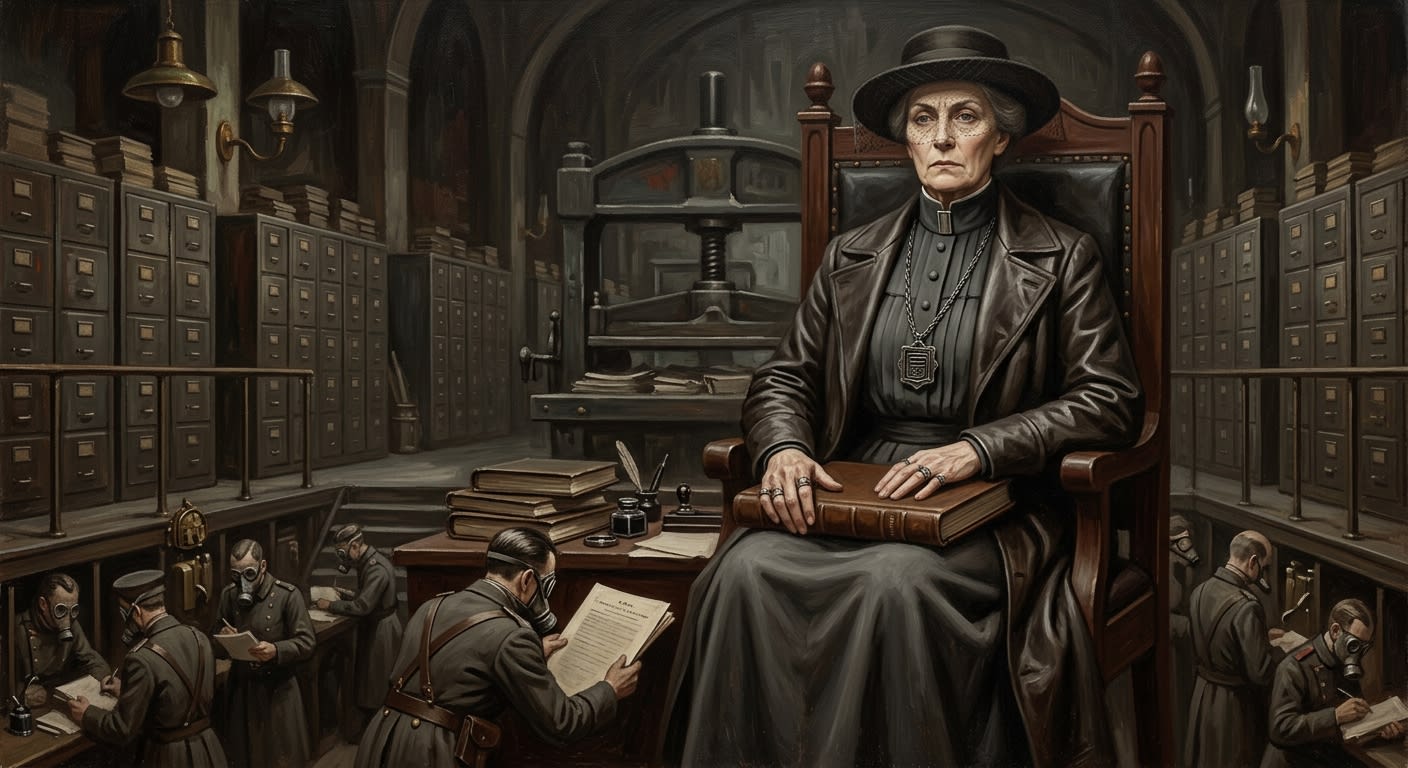
Hierarch of Purity
The silence before confession has a chair and wears white
The unnamed current holder of the Fifth Seal commands Purity, the Inquisition, and the administrative terror by which impurity becomes whatever her silence permits.
Codex Ref. III.2.01-072
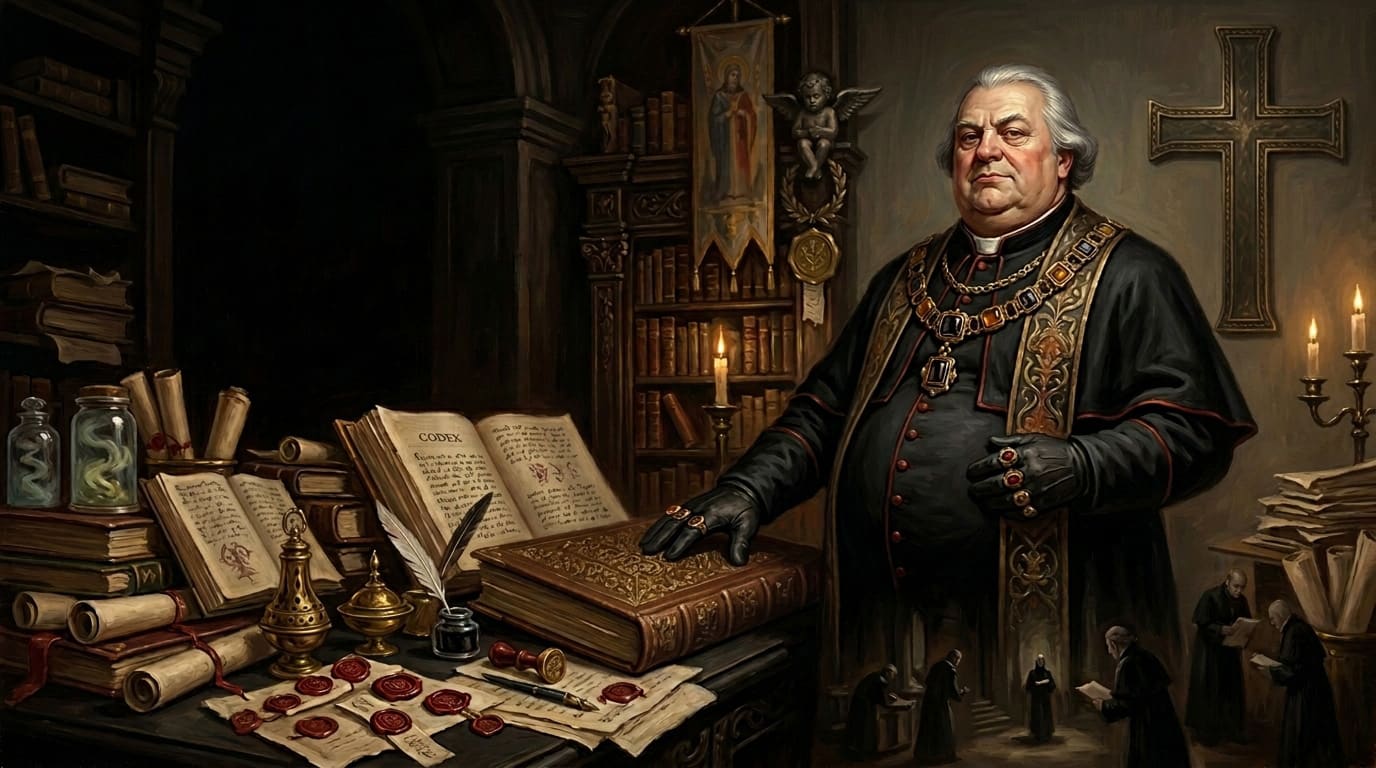
Hieromnemon Valerius Drax
The hand that corrects History before History embarrasses itself
Valerius Drax, Hieromnemon and Warden of the Sacred Ledger, is Doctrine's finest current instrument: prose stylist, ratifier, propagandist, archivist, and living rebuke to committee language.
Codex Ref. III.2.01-201
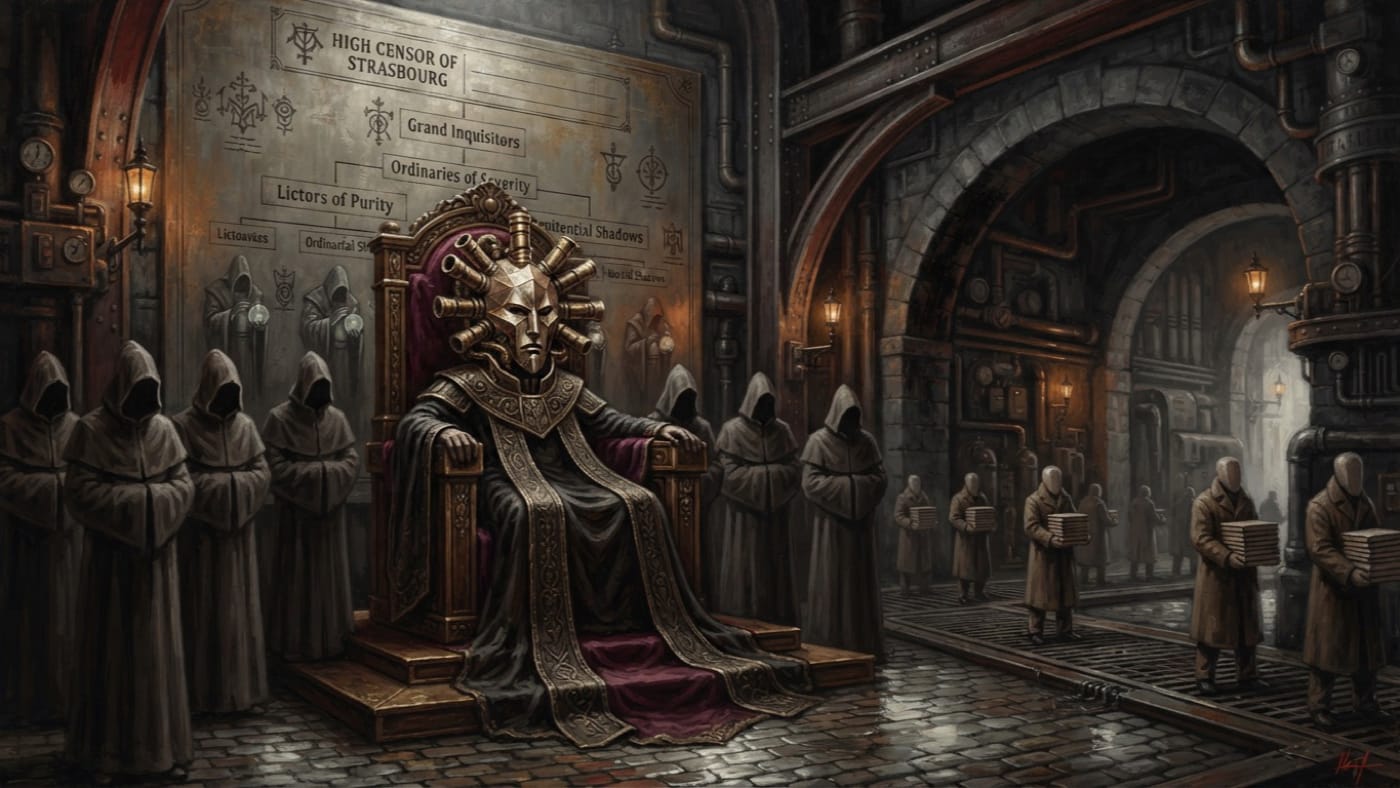
High Censor of Strasbourg
An empty name at the summit of the Inquisition
The High Censor of Strasbourg crowns the Inquisition's command chart. The title is current, the bearer's name remains empty, and even the summit may tremble before its silent subordinates.
Codex Ref. VI.3.02-003
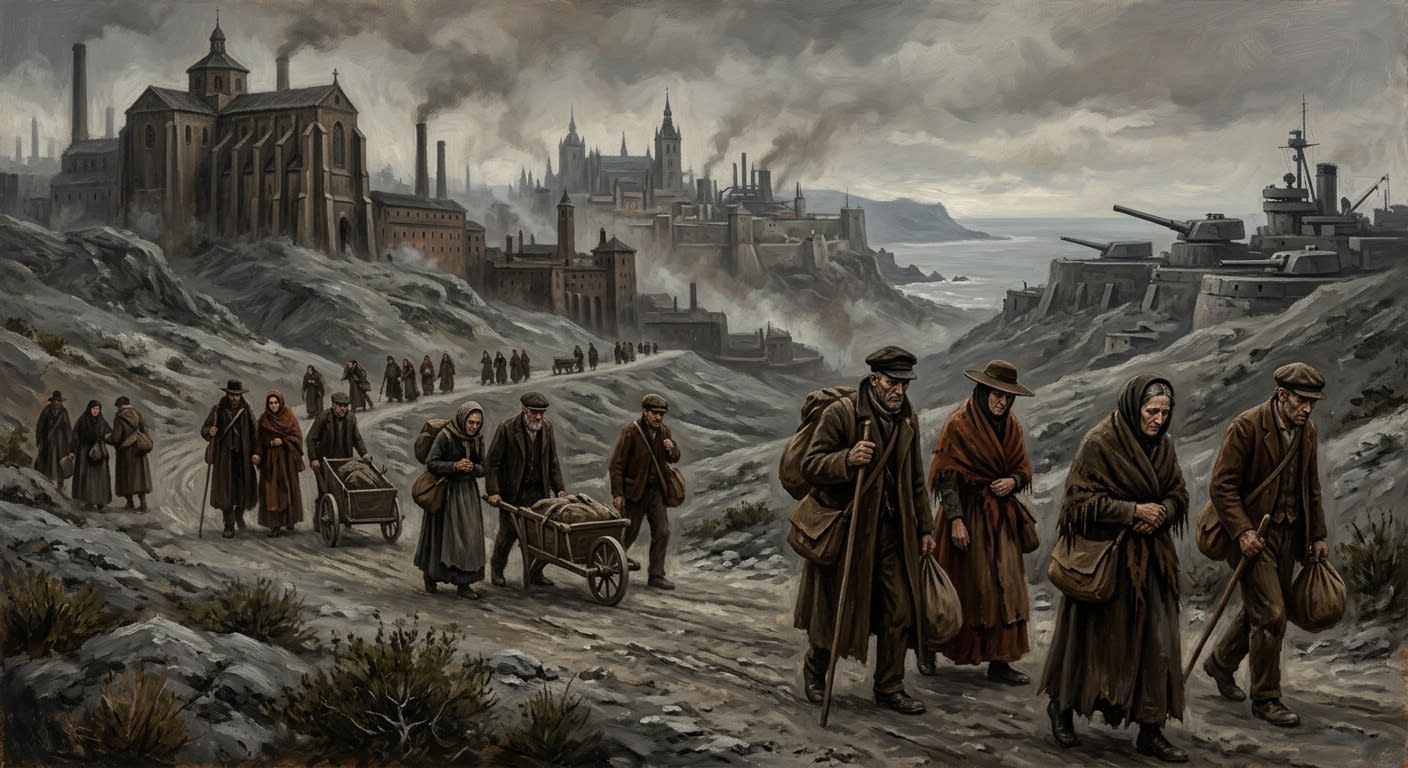
Iberia
The western furnace kneels, pays, murmurs, burns, and remembers
Iberia is the Synod's western furnace: a sealed peninsula of relic ash, late Concordat obedience, Seville mutters, Toledo martyrdom, pilgrimage roads, British guns at Gibraltar, and memory too old to confiscate cleanly.
Codex Ref. II.1.04-090
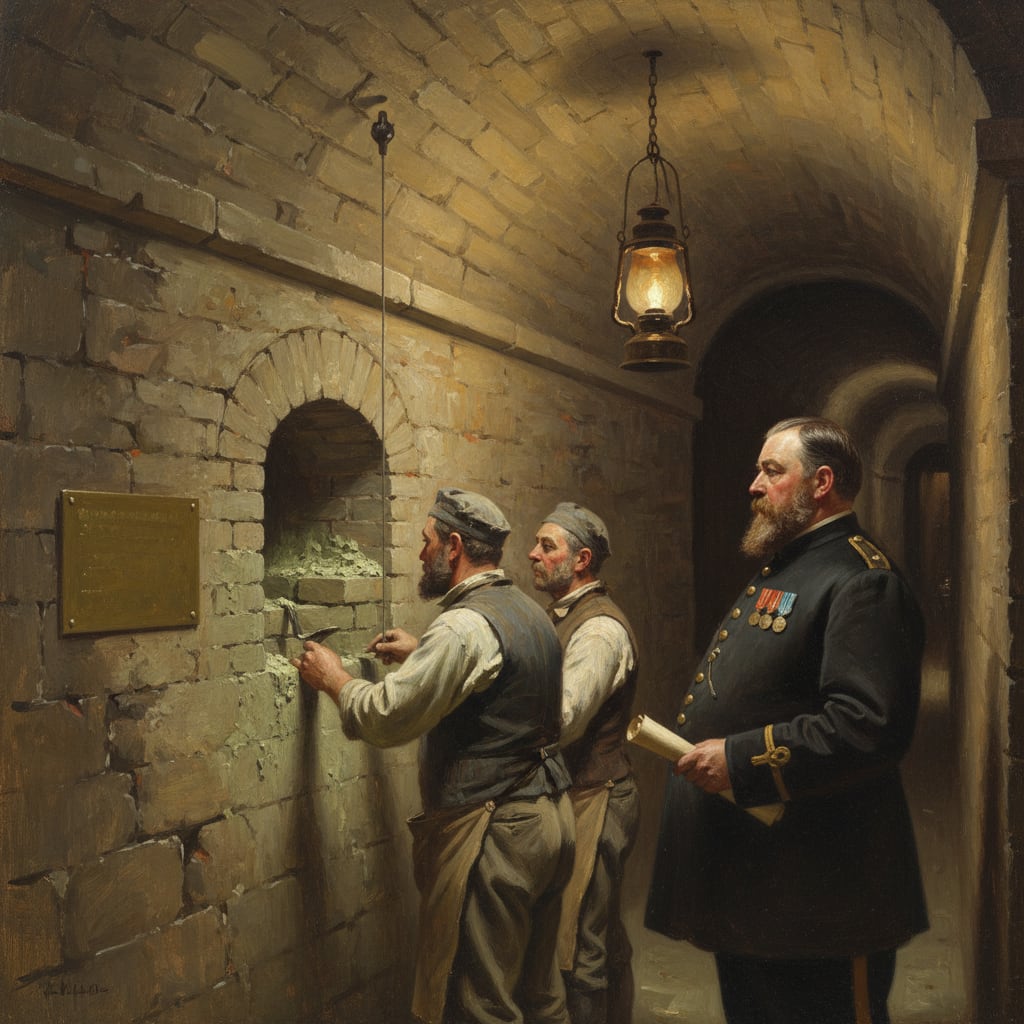
Immurement Mason
The Punitive Construction Auxiliary: On the craft of permanent deterrence, the condemned as structural element, and the mortar that does not negotiate
~2,400 licensed Masons who turn living bodies into load-bearing lessons; three ranks, two factions, one Standing Order that recommends no air provisions; the condemned ceases to be a problem and becomes a structural element.
Codex Ref. XII.22.01-001
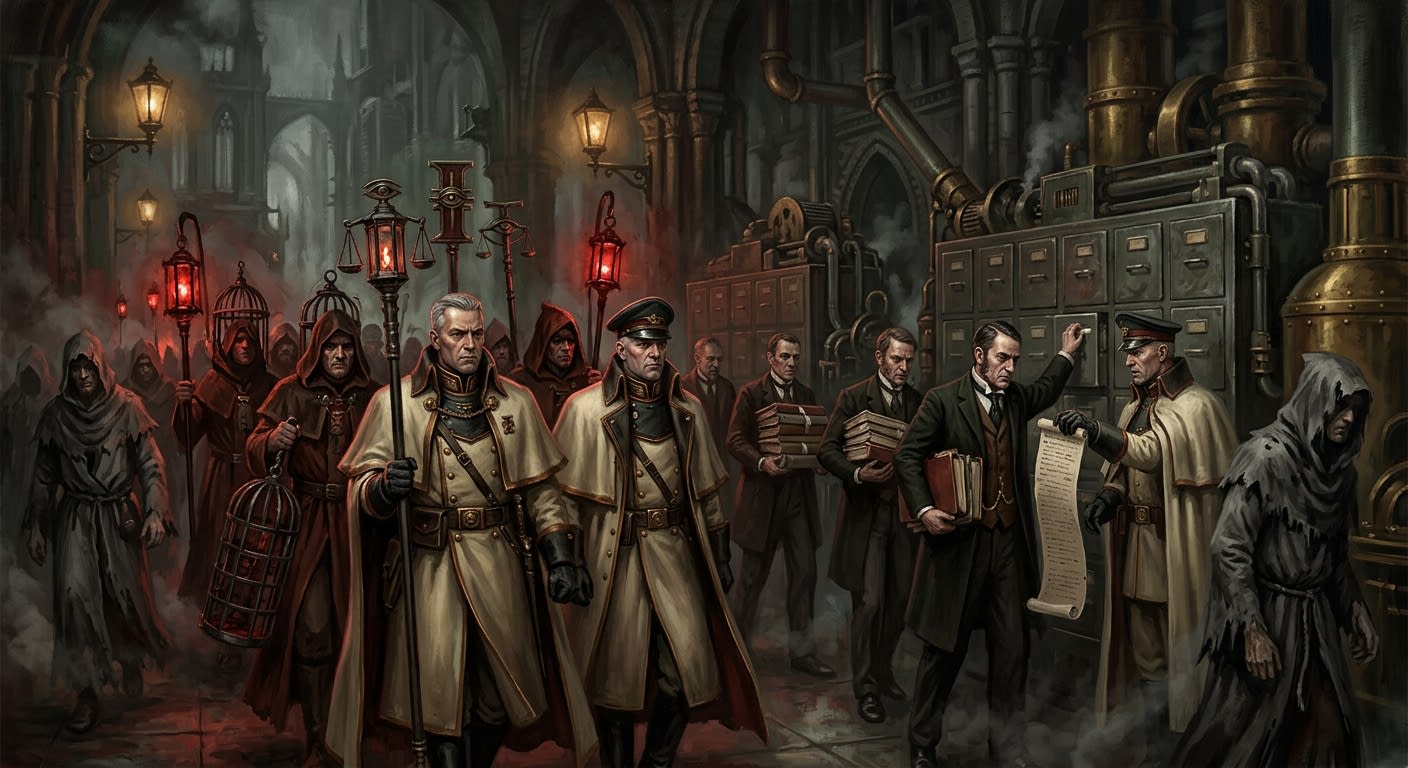
Inquisition
The white hand closes with a receipt
The Inquisition is Purity's authorised appetite for correction: White Cloaks, Lictors, Red Lanterns, Ashmen, Shadows, Index packets, denunciation law, and the clerkly miracle by which fear learns to file itself.
Codex Ref. VIII.1.08-093

Inquisitor Breel
The guard who became the margin of the song she never heard
Fourth-rank White-Mantled Inquisitor whose A.S. 187 east-bench exposure in the Vault of Silences made her hand copy forbidden notation from the Index Damnatus.
Codex Ref. III.2.01-070
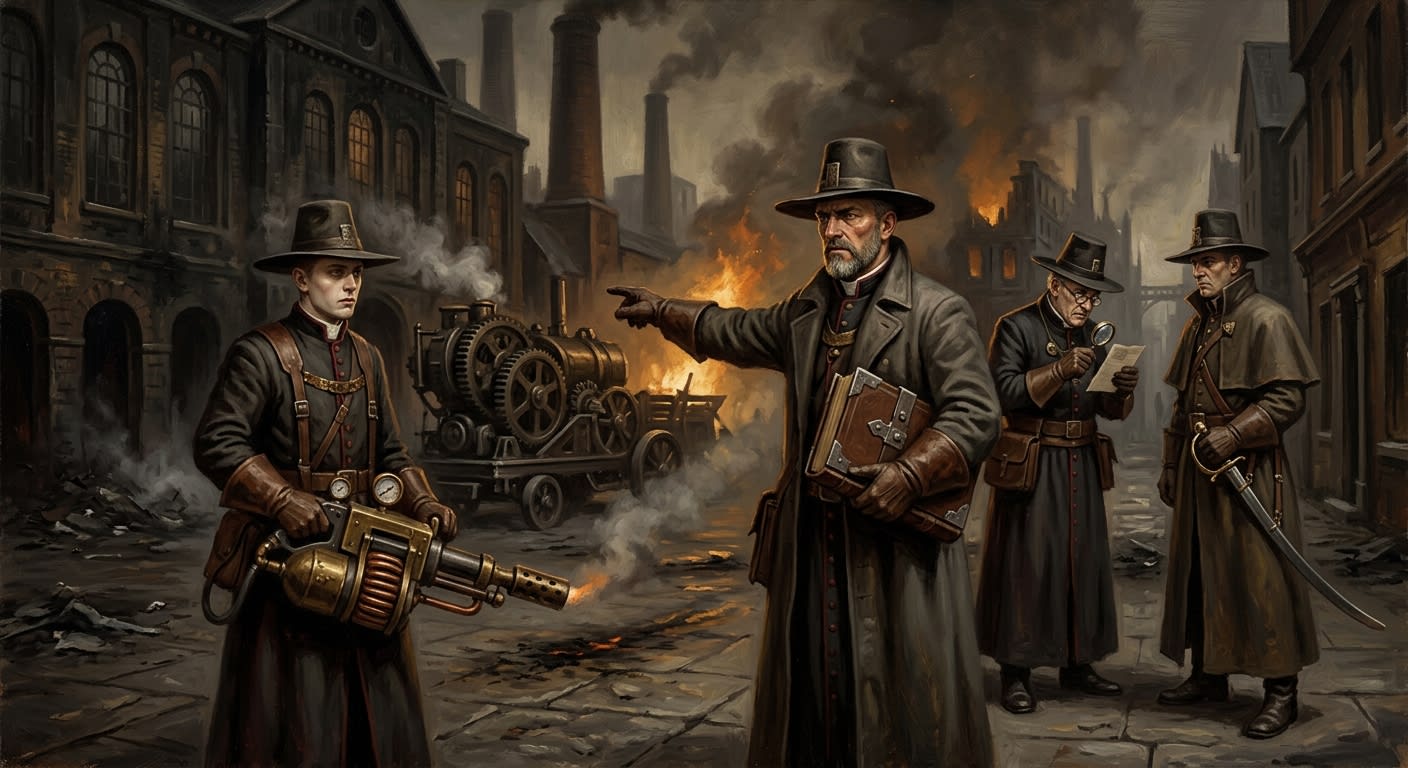
Inquisitor-Purists
They call it clarity because ash does not argue
The hard current within the White-Mantled Inquisitors: Purity officers who burn first, file afterward, and leave districts obedient, silent, and commercially dead.
Codex Ref. XII.49.03-001

Inquisitorial Corps
The street sees one mantle; the ledger holds the Corps
Behind each white mantle stands a district of rolls, seized words, and inspected chains. I record the Corps that turns forbidden speech into cases, corrections, and silence.
Codex Ref. XII.49.02-001
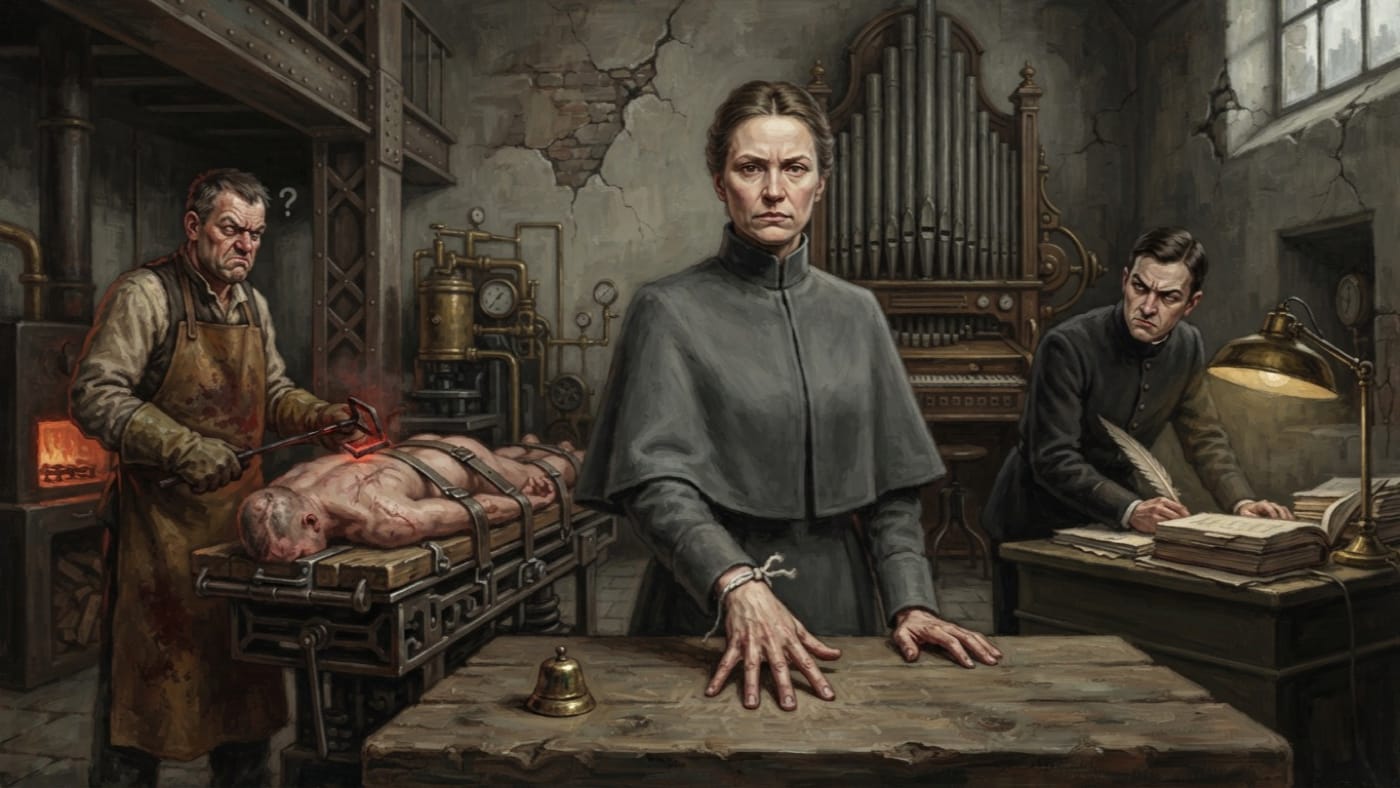
Irena Vos
The singer whose reprimand became a method
Irena Vos withheld song during the North Annex Hush of A.S. 118. Three subjects were certified, Purity reprimanded her, and the Silentists kept her method.
Codex Ref. III.2.01-118
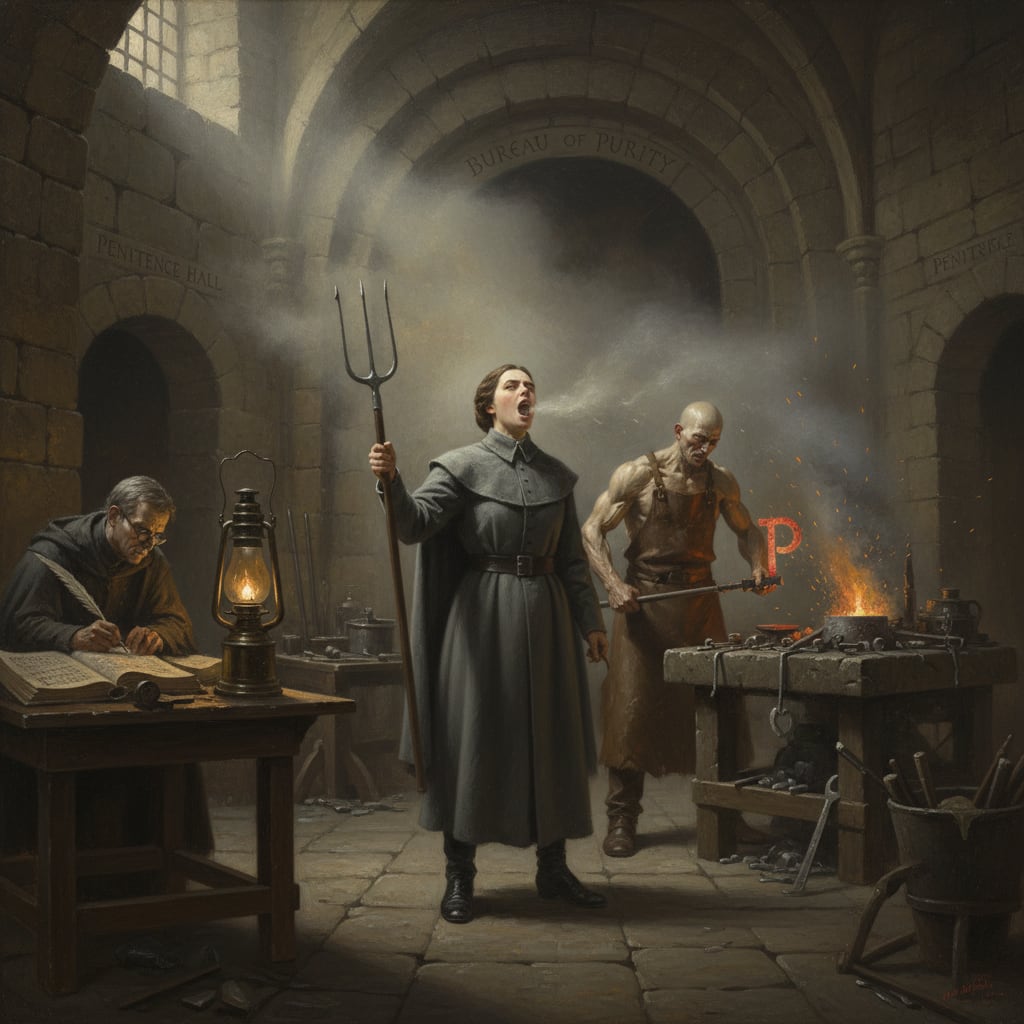
Iron Choir Brand-Singer
Because screaming is imprecise.
Licensed custodians of the note that steadies the iron — the Brand-Singers who hold pitch through Bureau of Purity penitence rites so that the resulting inscriptions are legible and the confession, accordingly, valid.
Codex Ref. XII.24.01-001
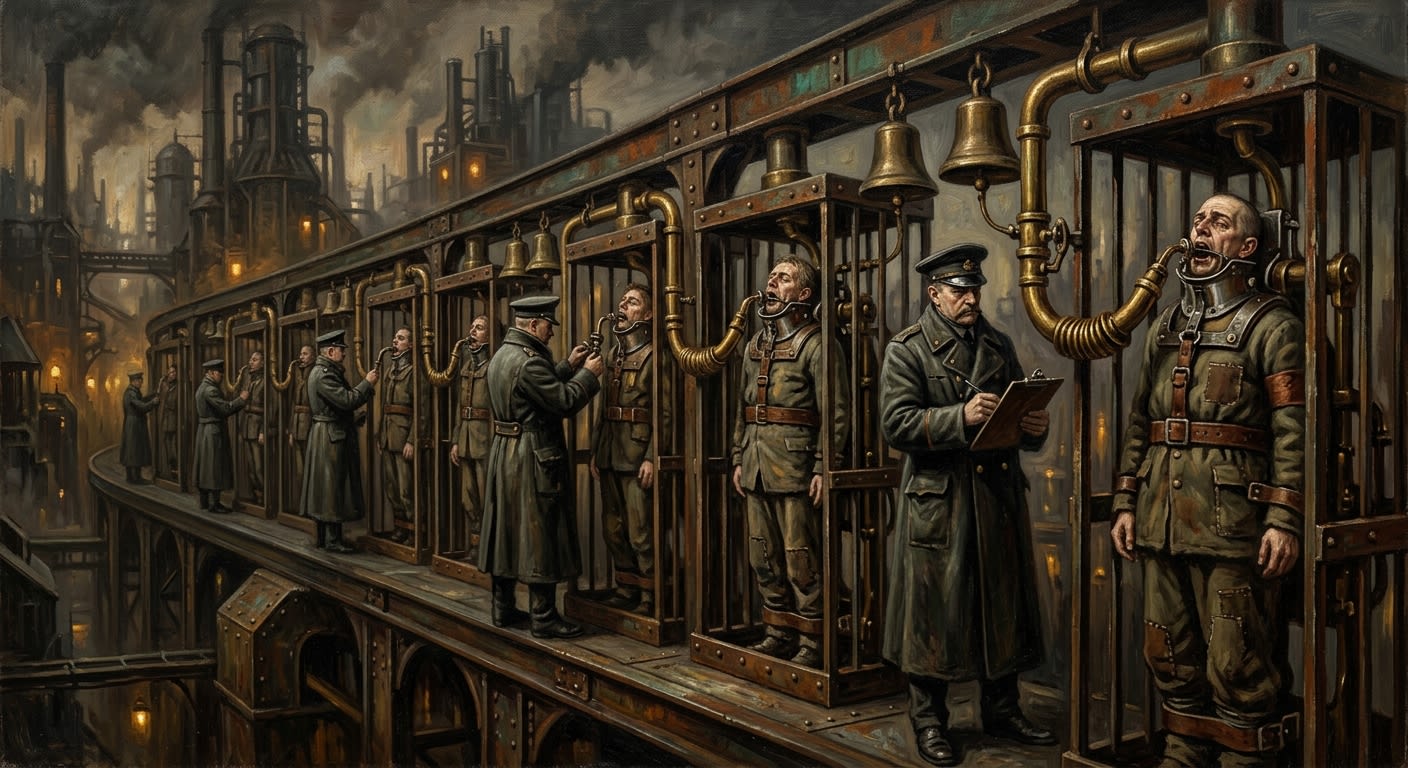
Iron Choir of Mainz
Where the road learned to keep a throat open
The Iron Choir of Mainz turns condemned throats into civic instruction: a Purity road of cages, bells, Brand-Singers, witness columns.
Codex Ref. VIII.1.09-134
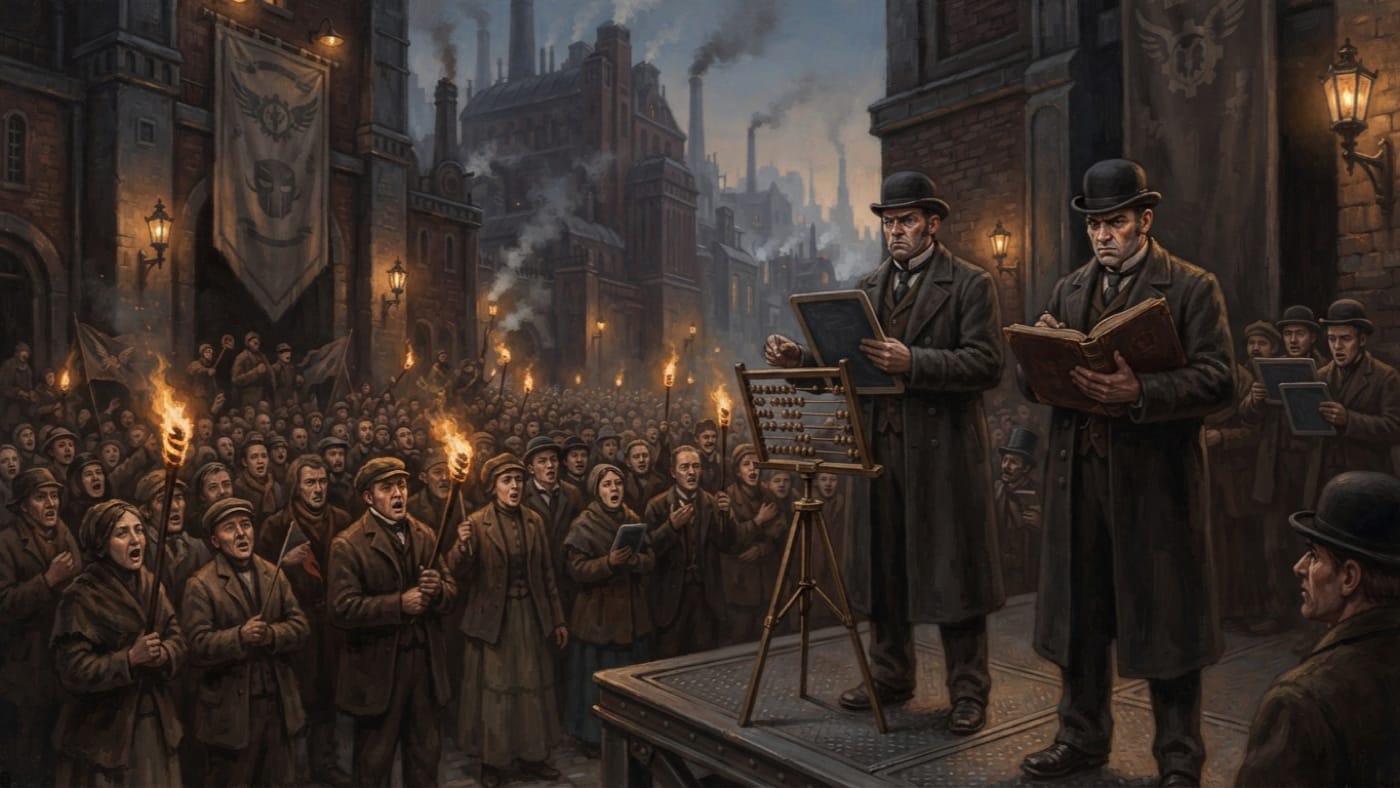
Joy Compliance Index
Rejoice by permission; be judged by the slate
The Bureau of Festivals grades a crowd's rejoicing through forty-two observable behaviours. Three verdicts follow; four points separate insufficient zeal from excessive emotion. The slate certifies conduct. It cannot certify joy.
Codex Ref. XIII.1.67-201
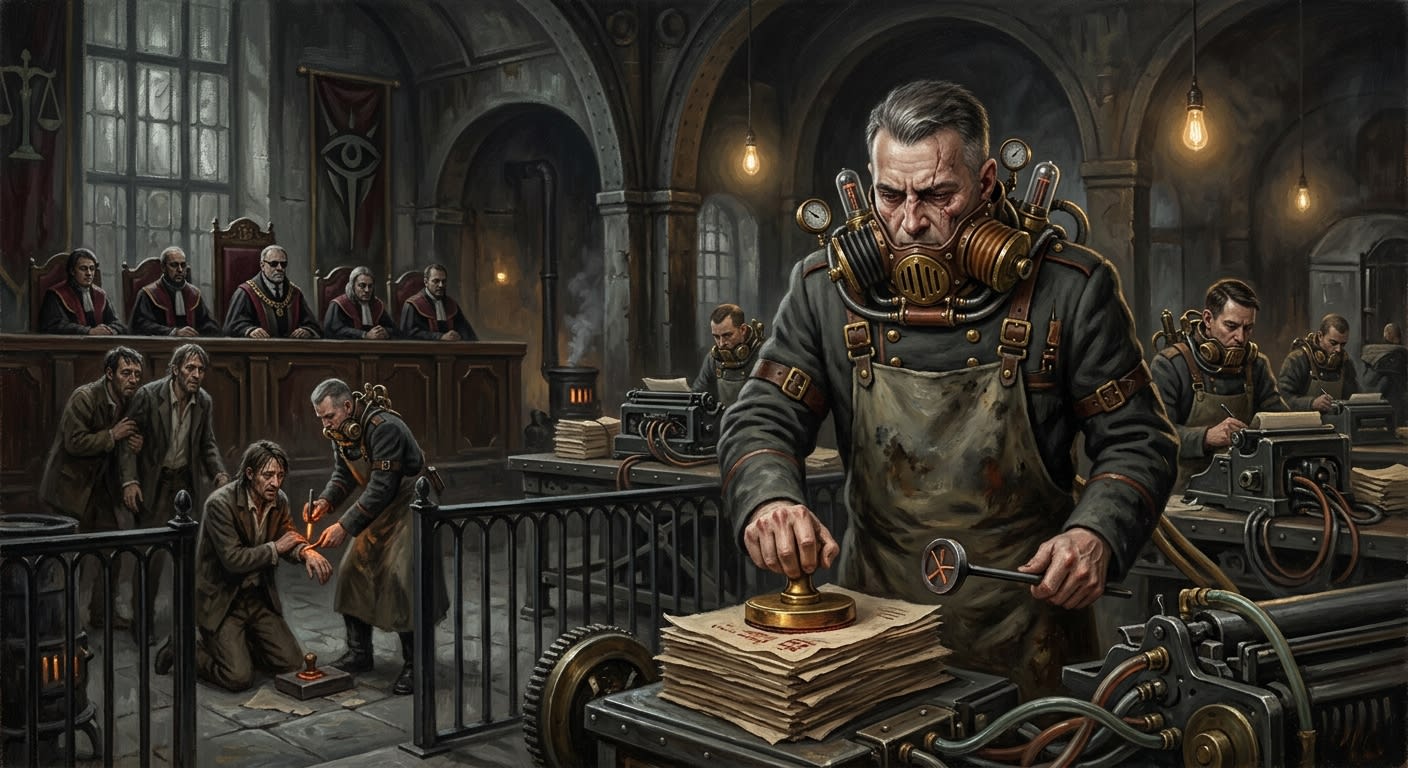
Judgment Tone
The knife-note by which truth is made punctual
Judgment Tone is the Brand-Singer school of cut cadence and rapid certification, beloved by tribunals whenever truth must arrive before the docket cools.
Codex Ref. XIII.1.41-002
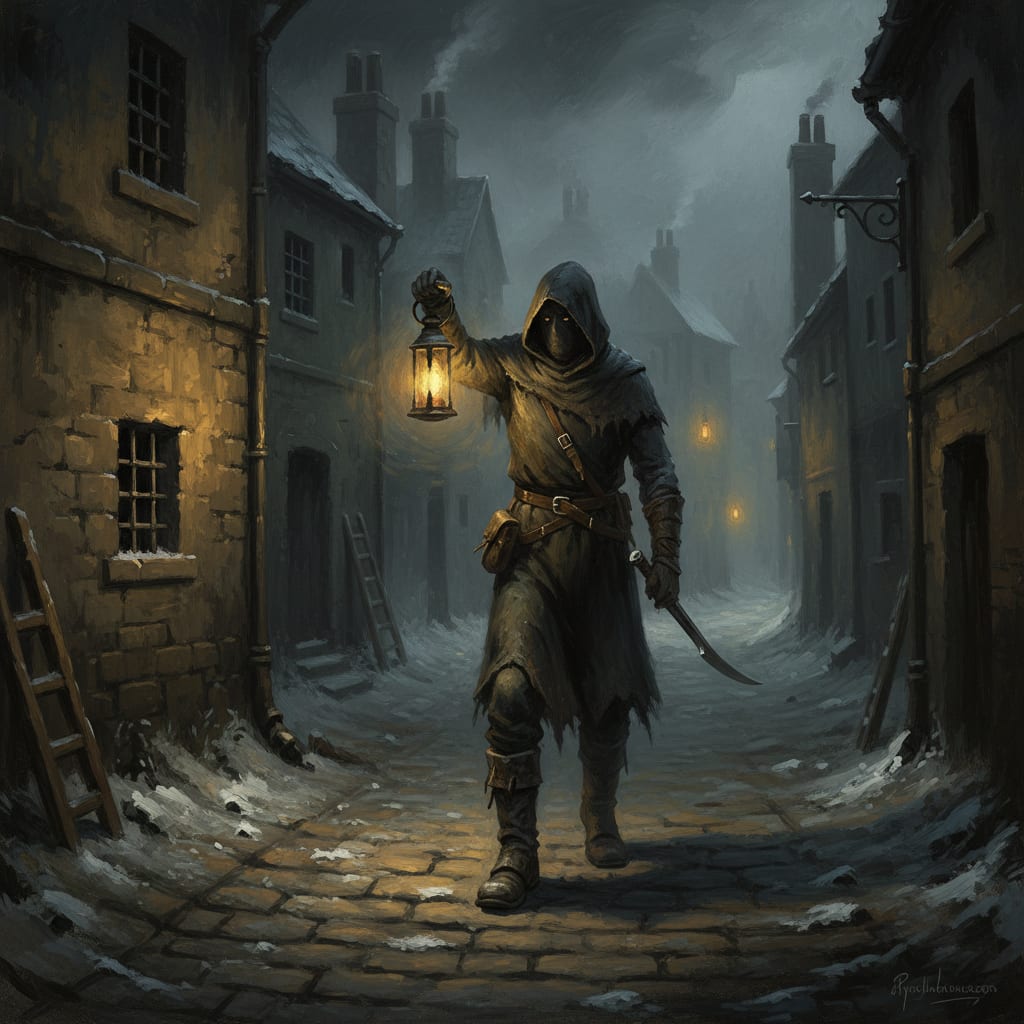
Lantern Brotherhood Vigilante
Eight thousand four hundred tolerated blades, licensed by a subordinate clause — the Synod's night made visible and officially nonexistent.
Eight thousand four hundred tolerated blades in five Watch Circles, licensed by a subordinate clause in a curfew ordinance — the Synod's night made visible and officially nonexistent.
Codex Ref. XII.25.01-001
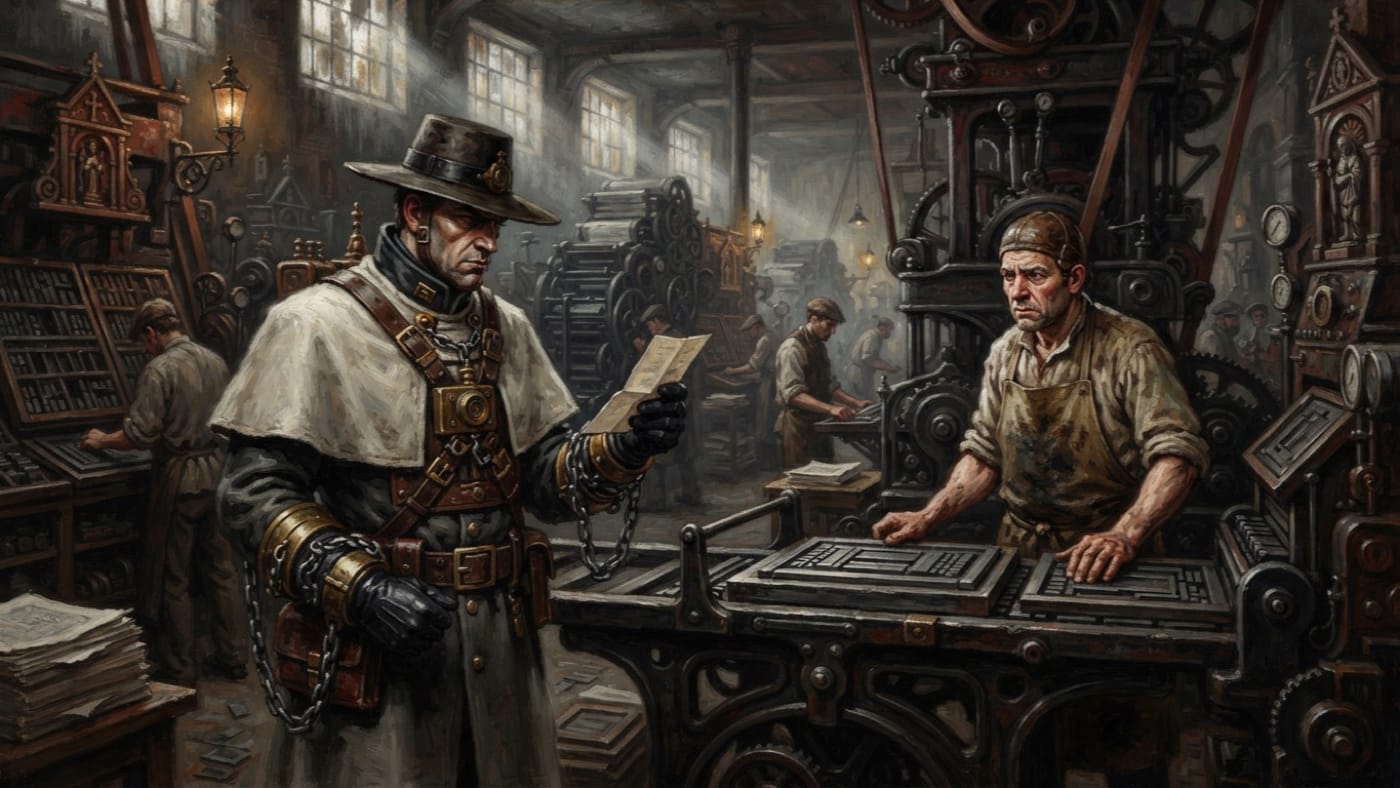
Lexicon
The printer and the Warden fear the same strip of paper
The Synod's authority over permitted and forbidden speech binds printer and Inquisitor alike. Truth is eternal; the officer's strip may already be obsolete.
Codex Ref. XIII.1.30-201
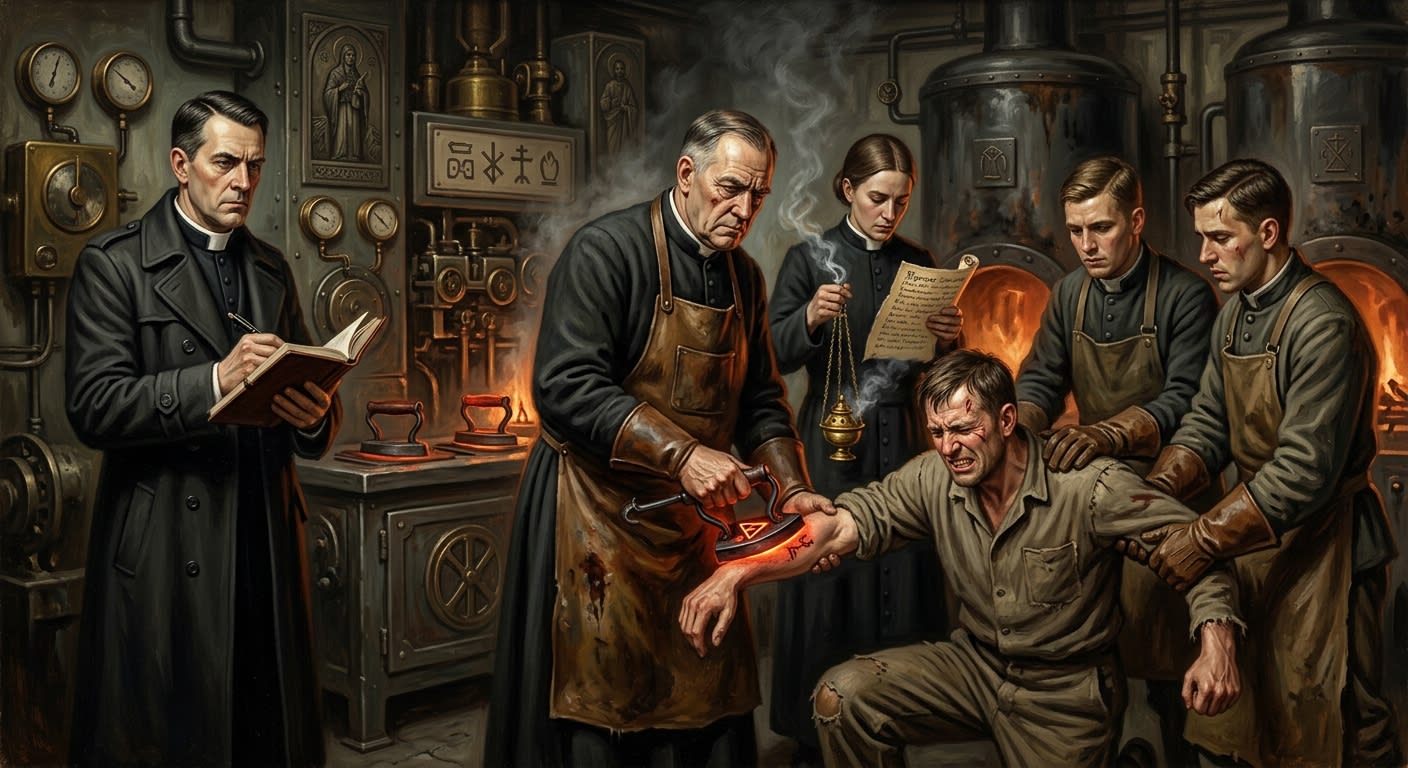
Licensed Chapel Brand-Smiths
Clean procedure does not cleanse the act; it makes the act admissible
Licensed Chapel Brand-Smiths are the sanctioned purists of bodily proof, applying tri-marks under full witness protocol in fixed chapels where pain becomes admissible.
Codex Ref. XII.20.05-001
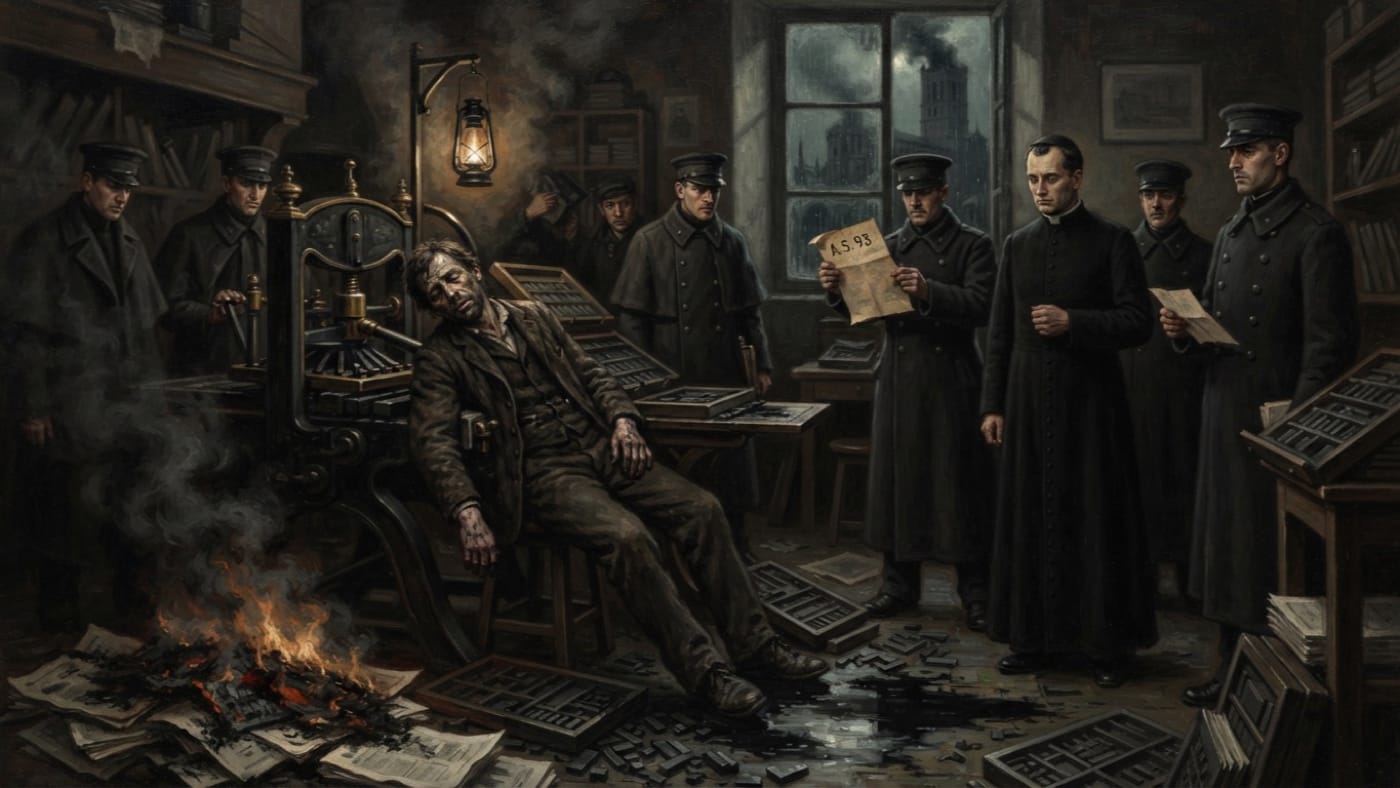
Maël Aucourt
The printer whose file outlived the man
Maël Aucourt hid Rationalist arguments among lawful notices. His A.S. 93 warrant opened the Toulouse Hunts; Purity preserved his offence more carefully than his life.
Codex Ref. III.2.01-093

Mainz Correction
One civic body, one sentence, and a road that keeps speaking
An A.S. 201 survey of Severian's civic purge: Mainz declared one heretic body, processed by parish, street and guild, and left with iron cages that keep the sentence audible.
Codex Ref. VII.8.10-1718
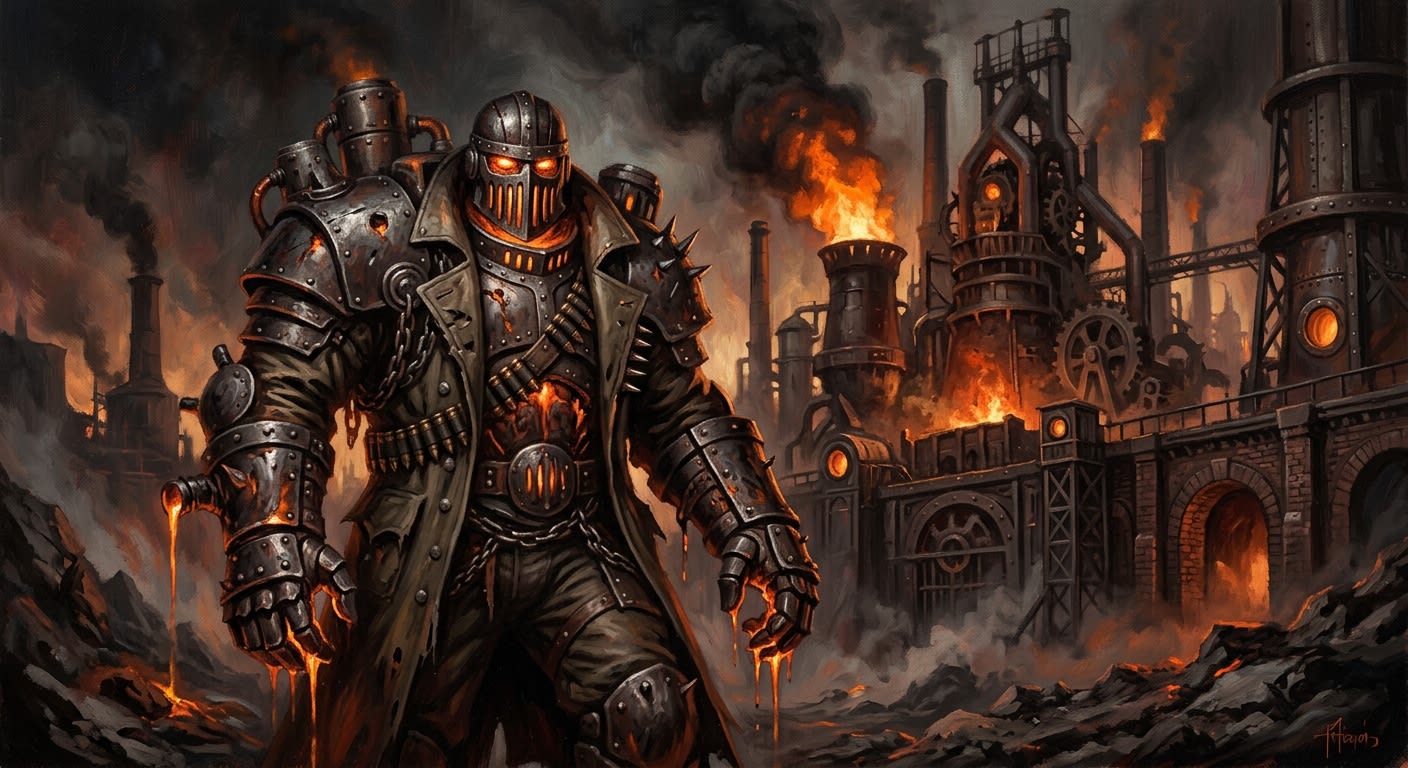
Maldrake, the Wrathforged
The fire does not care what it was given to burn.
Sin-General of Wrath: architect of the Eternal Forges, commander of the Hellbow Legion, fourteen confirmed breaches of the Sagittal Line. The fire that outlived its cause and kept marching.
Codex Ref. IV.1.07-003
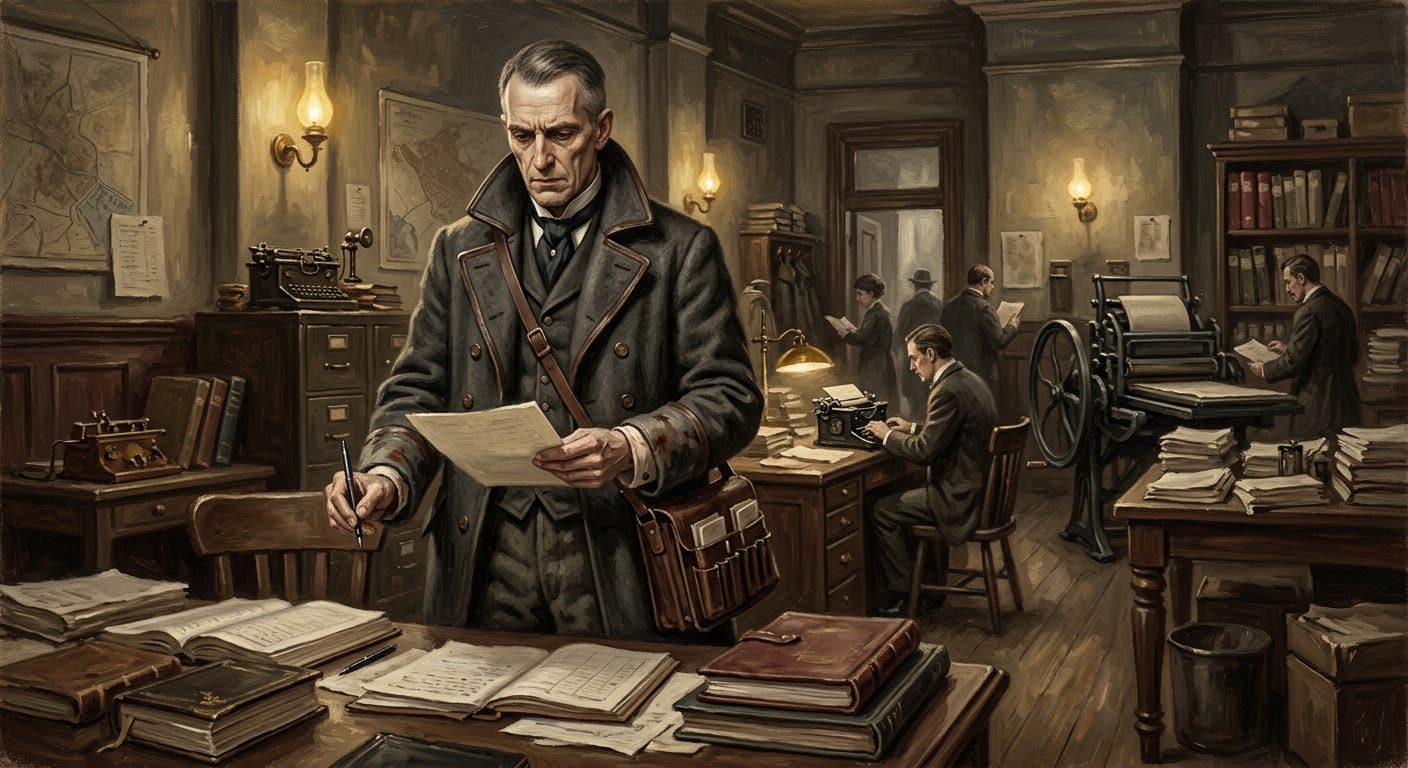
Mantle Examiner
The white cloth is clean only before it learns its work
Mantle Examiners are the working rank of the White-Mantled Inquisitors: raid officers, interrogators, seizure clerks, and daily editors of frightened speech.
Codex Ref. XII.49.02-001
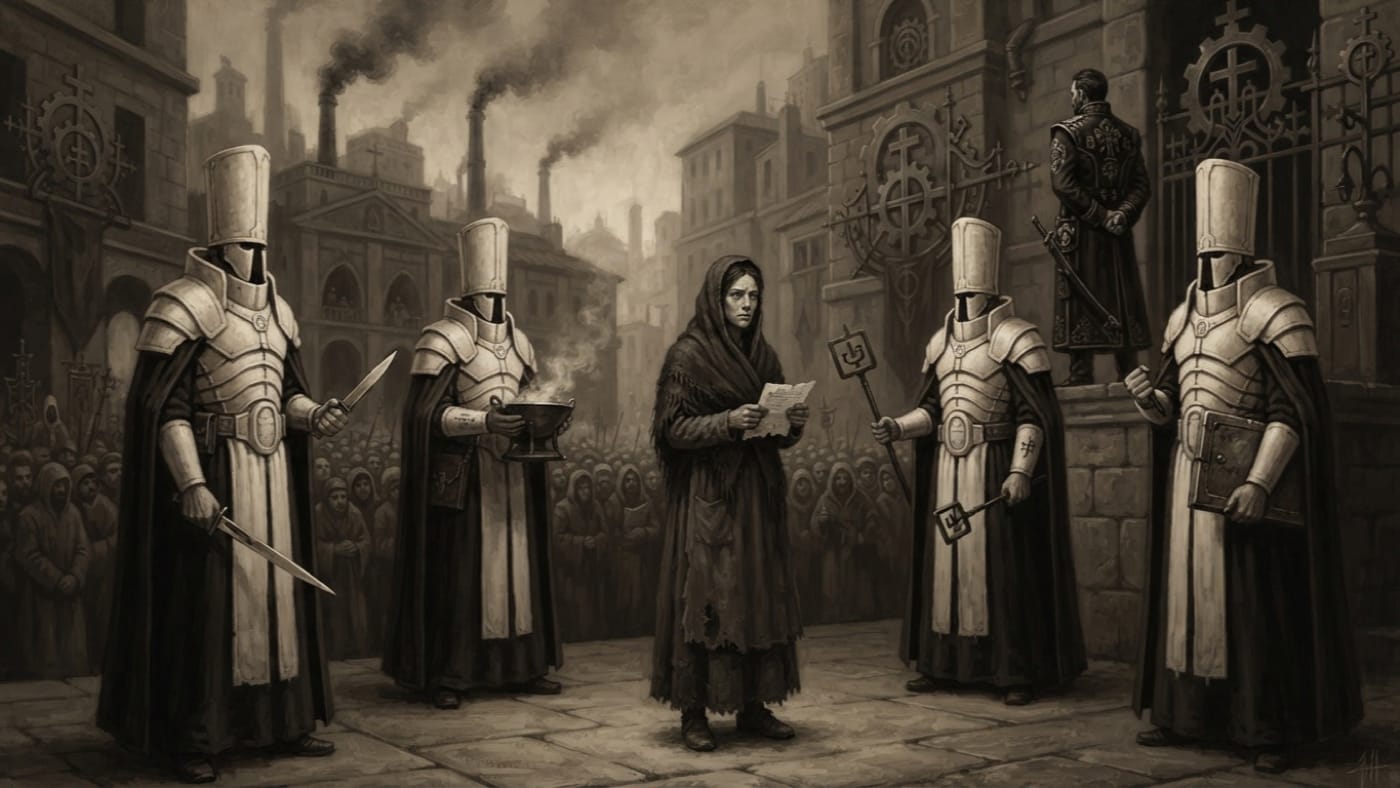
Mar Ortega
The laugh is attributed; the knife remains conditional
Mar Ortega is credited by one witness with making Seville laugh in A.S. 153. Purity's initials may put her under the knife; the Ledger cannot certify the match.
Codex Ref. III.2.01-153

Martyrology of Saint-Malo
Thirty-one names, forty-three seconds, and a civilization built from first blood
The Martyrology of Saint-Malo counts thirty-one dead, five absences, and every obedience the Synod has purchased with their blood.
Codex Ref. VII.8.02-001
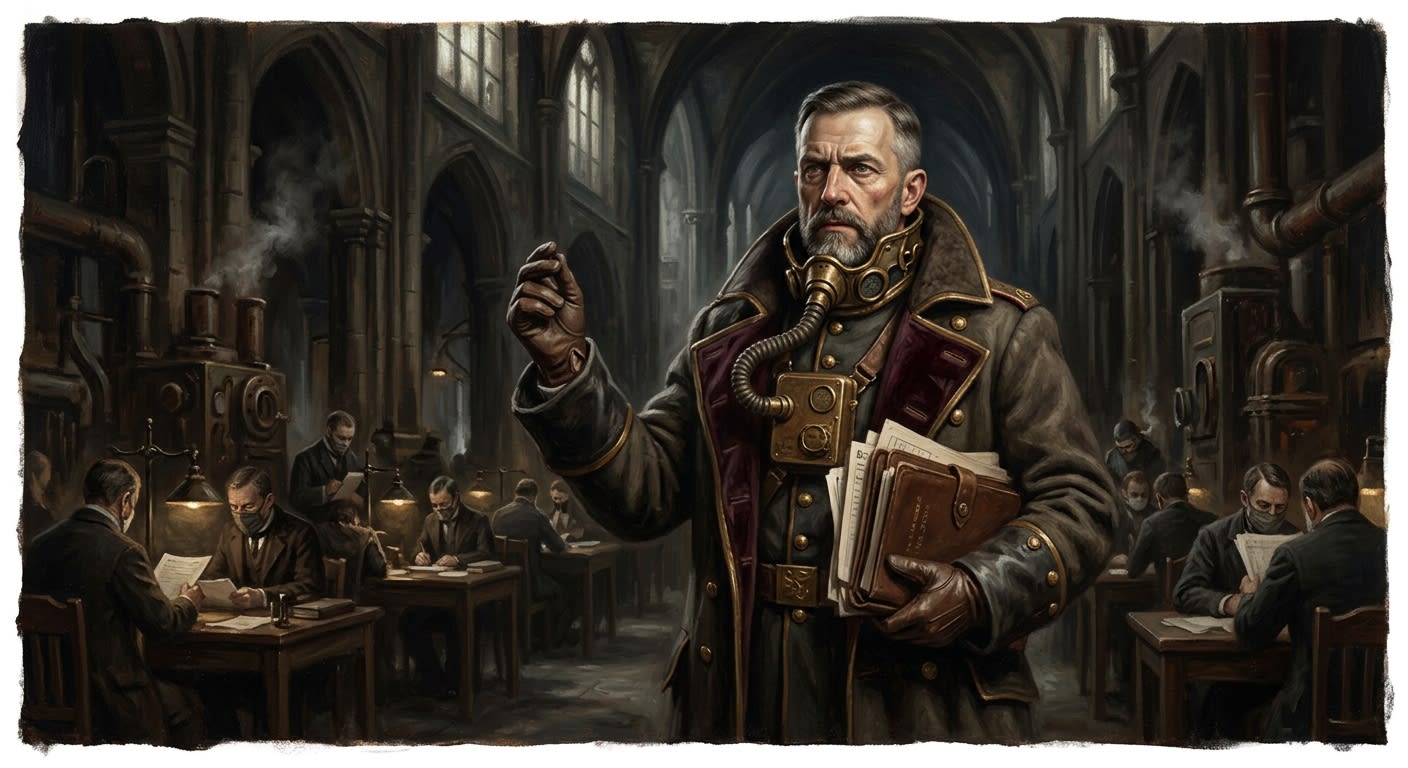
Master Cantor Vell
The man who made seven rooms confess in one breath
Master Cantor Vell held seven punitive rites in one cadence, left no treatise for lesser throats, and made silence itself a professional benchmark.
Codex Ref. III.2.01-063
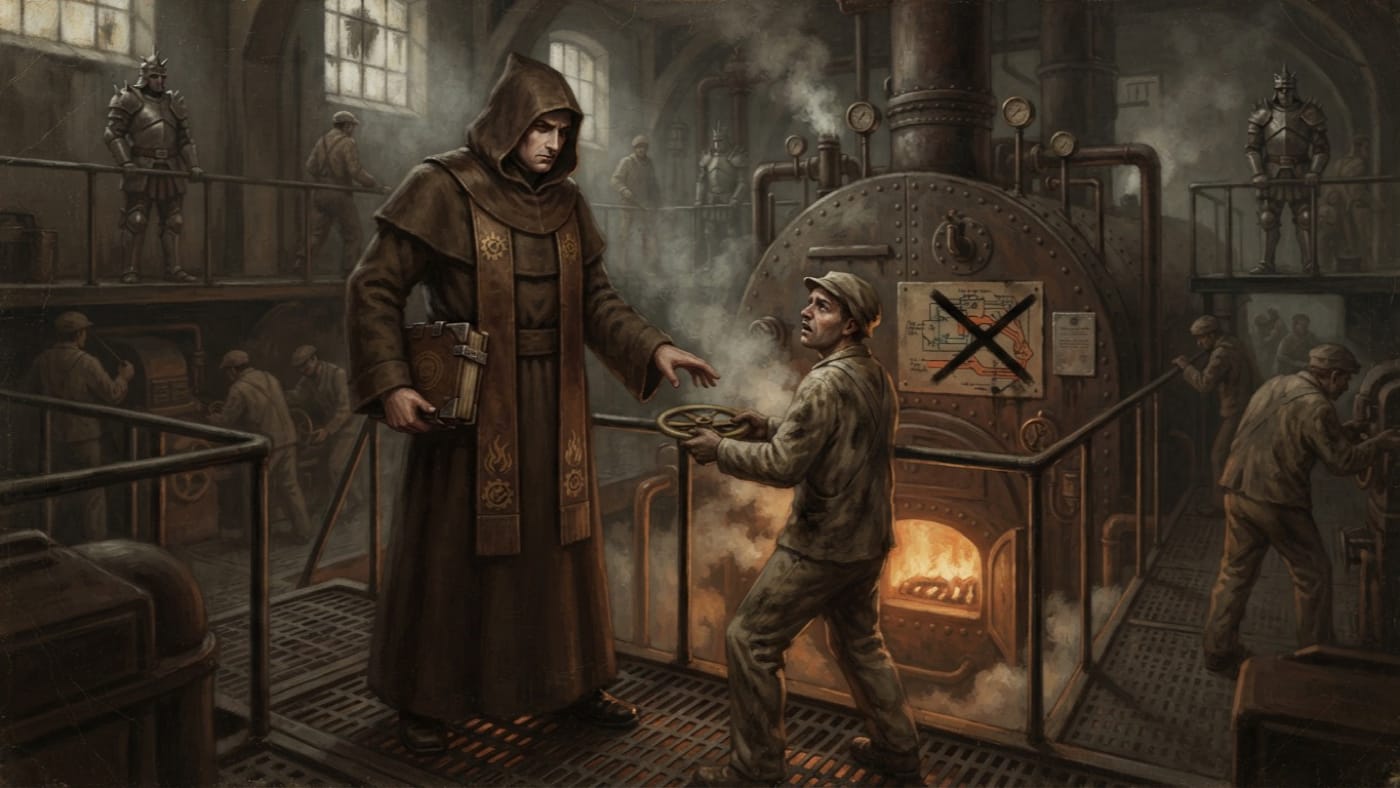
Mechanistic Heresy
Engineering owns the hands. Doctrine owns the why.
The charge against explaining a machine without the Church's permission. Engineering may work the valves; Doctrine owns the why. An A.S. 201 survey of the offence, its vocabulary and its precedents.
Codex Ref. XIII.1.91-201
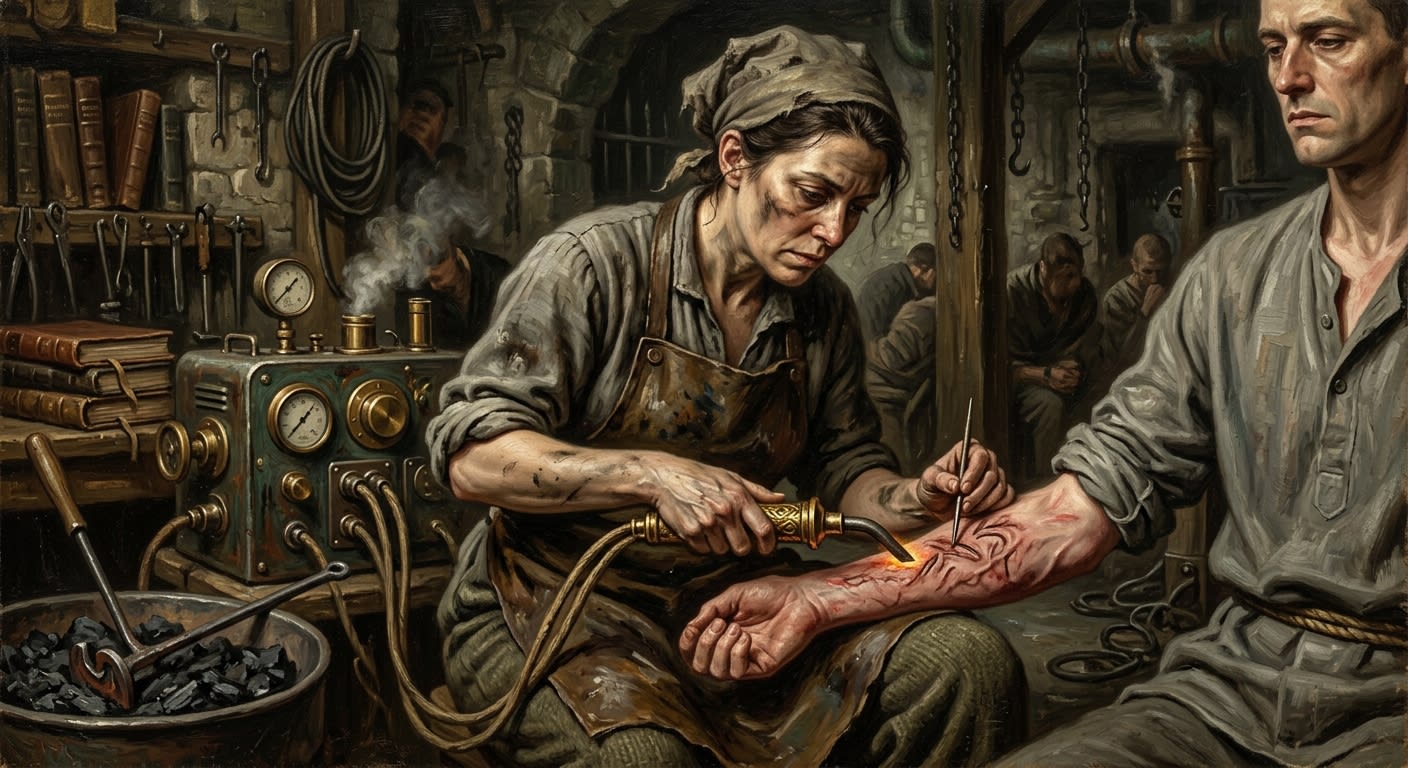
Mercy Branders
Private pity, measured in degrees and prosecuted in heat
Mercy Branders are licensed Brand-Smiths who soften bodily tri-marks through tiny acts of illicit discretion, turning excessive punishment into survivable ambiguity.
Codex Ref. XII.20.04-001
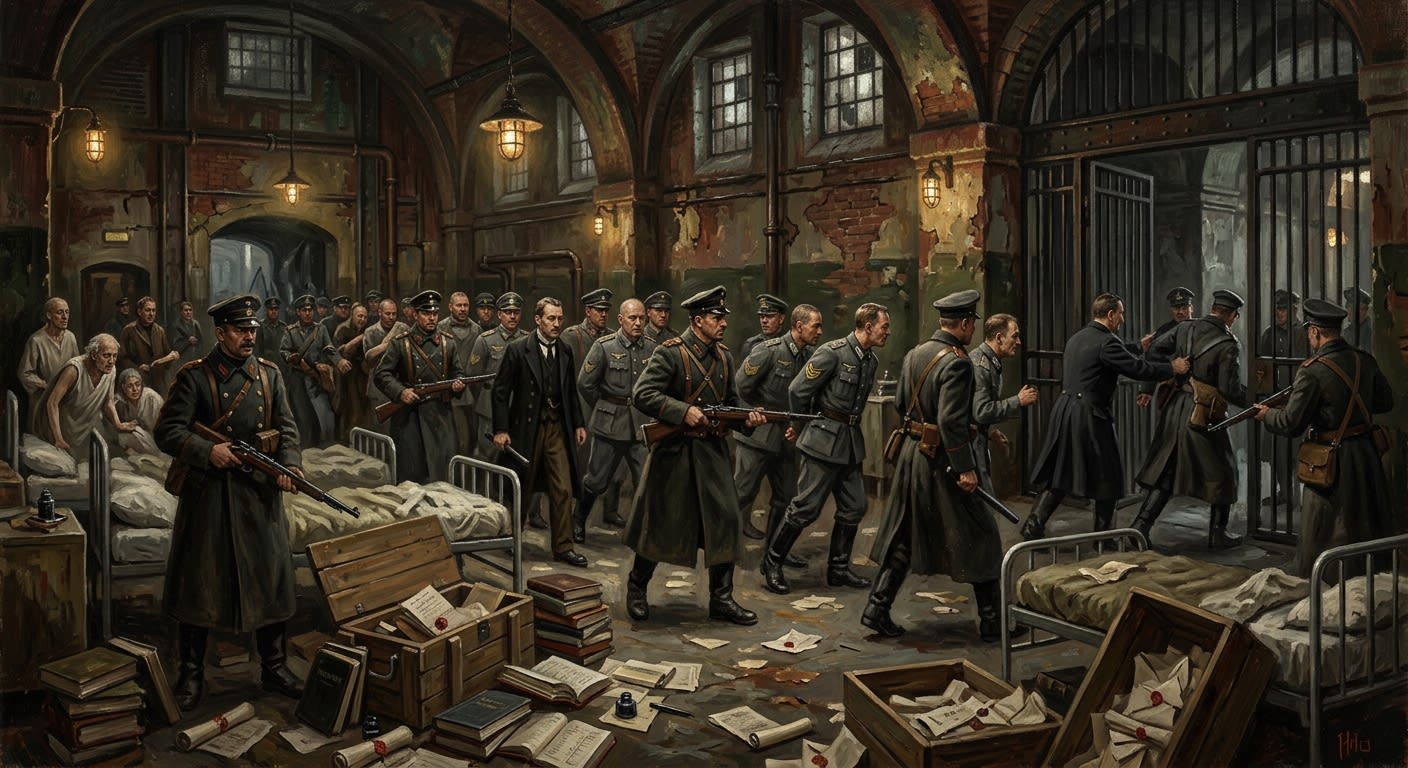
Mercy Ward Purge of A.S. 134
The year last words became contraband unless properly priced by authority
The Mercy Ward Purge of A.S. 134 exposed the sale and alteration of terminal confessions across Rhineland wards.
Codex Ref. VII.8.10-023
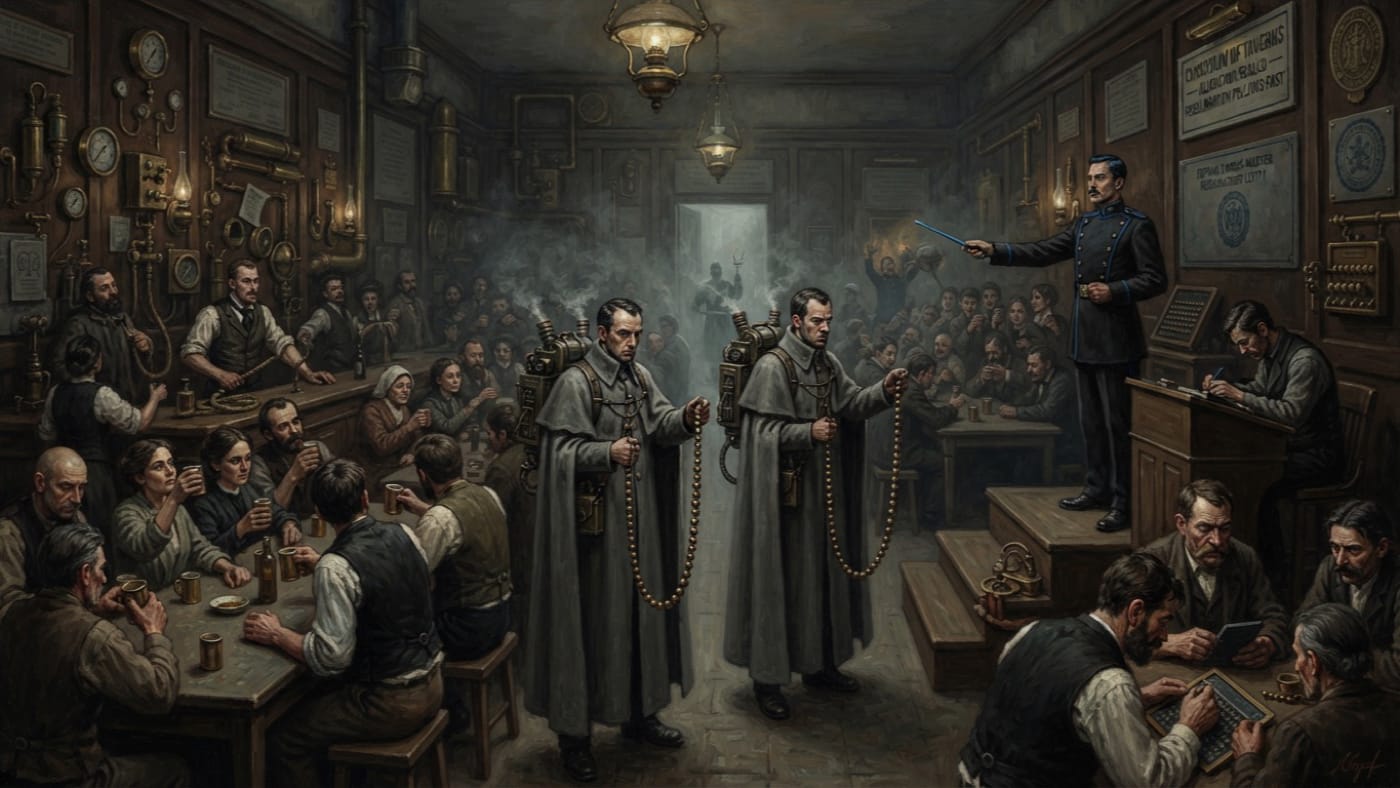
Mirth Quota
The allowance is sealed; the excess is your fault
The Bureau of Festivals rations public merriment by a sealed quota. Seville learned the limit through punishment, then taught the regulation to sing.
Codex Ref. XIII.1.66-002
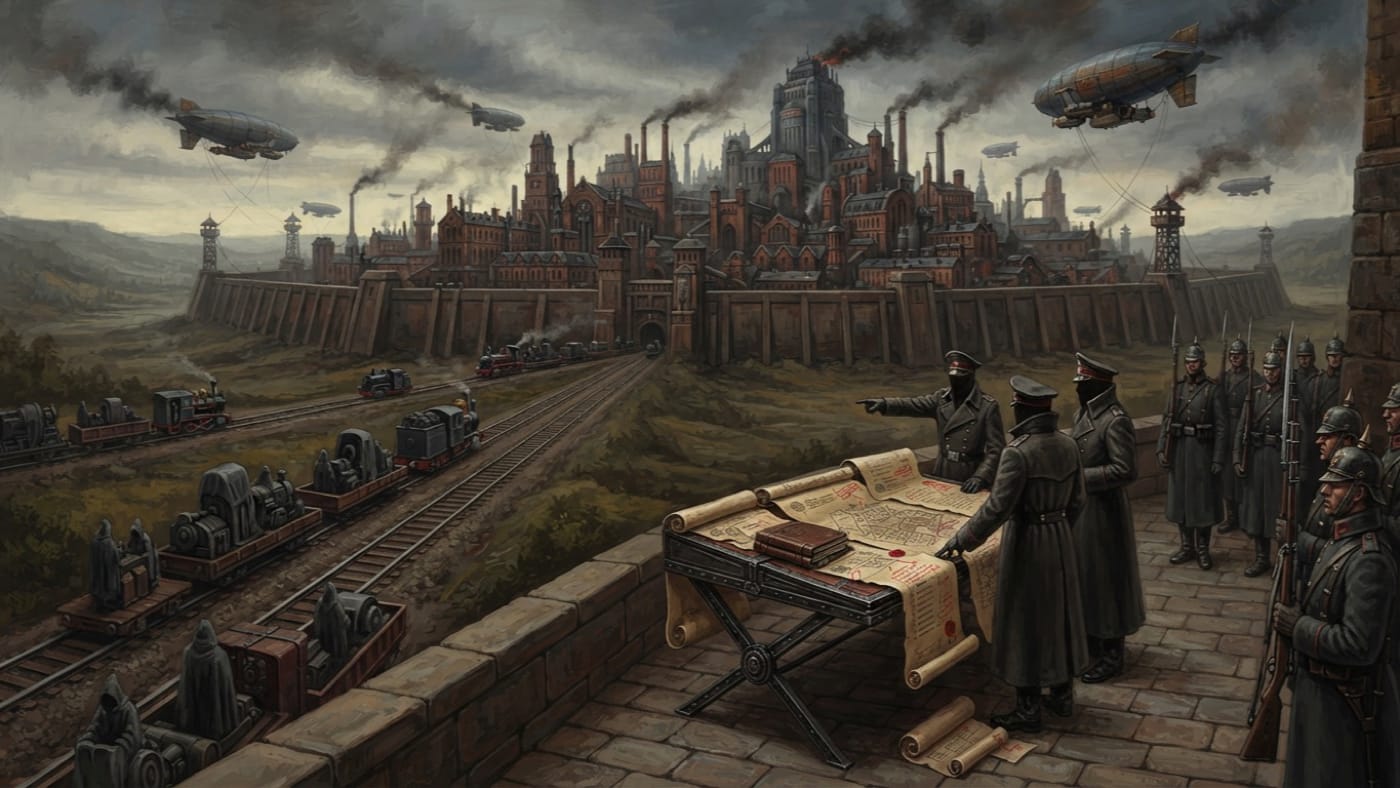
Montauban
The city made answerable by a name
Montauban entered Purity's Toulouse docket in A.S. 93 because Carcassonne named it. The file preserves no local testimony; the Bureau counts the city cleansed.
Codex Ref. II.1.09-093
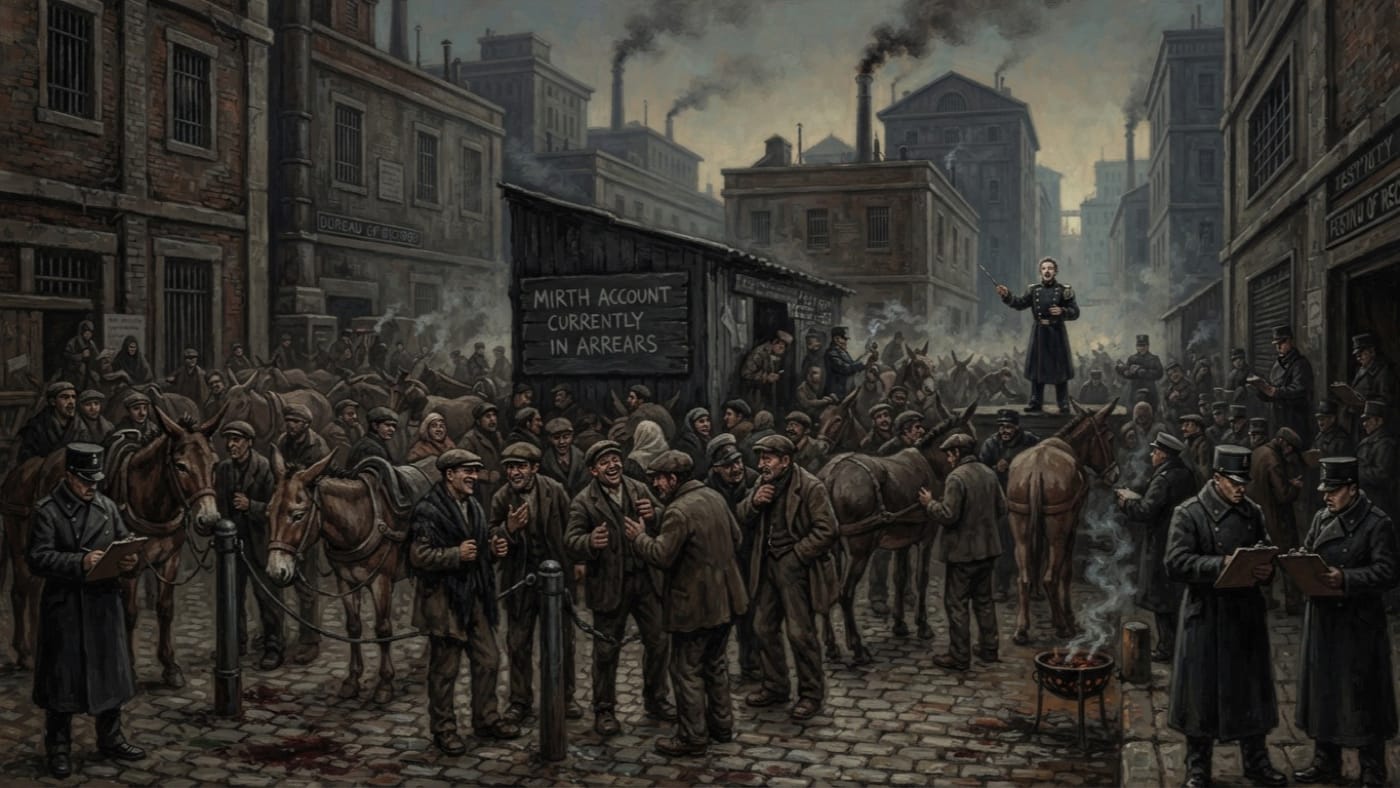
Mule Market
Laughter entered, hoof percussion counted, animal complicity unresolved
Seville's Mule Market entered the List of Laughters during the A.S. 153 Laugh Riots for laughter accompanied by hoof percussion. The clerk recorded the rhythm; animal complicity remains unresolved.
Codex Ref. II.1.04-153
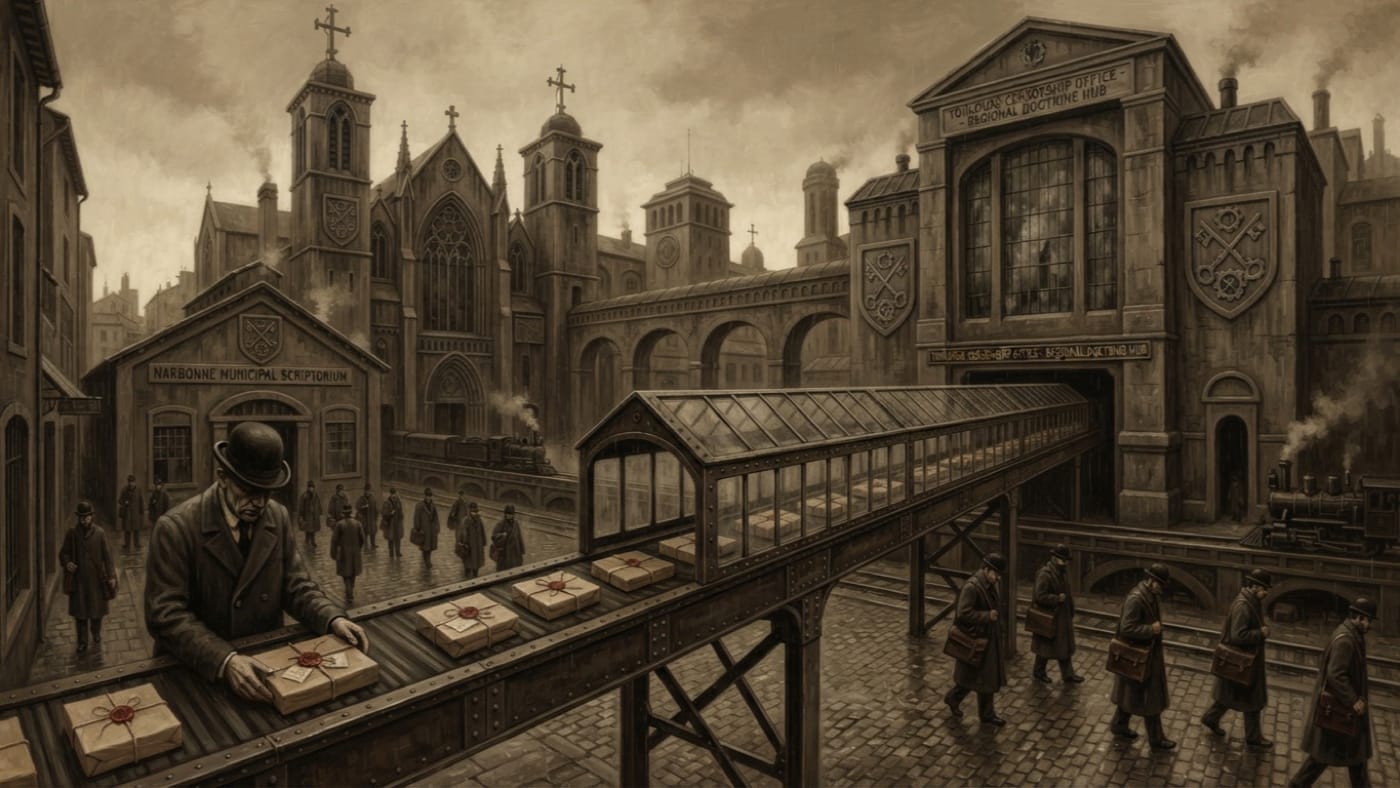
Narbonne
Named at Carcassonne, read at Toulouse
Narbonne entered the Toulouse file by confession in A.S. 93. In A.S. 201 its school primers travel there by routine post. Obedience has learned to wrap its own parcels.
Codex Ref. II.1.09-093
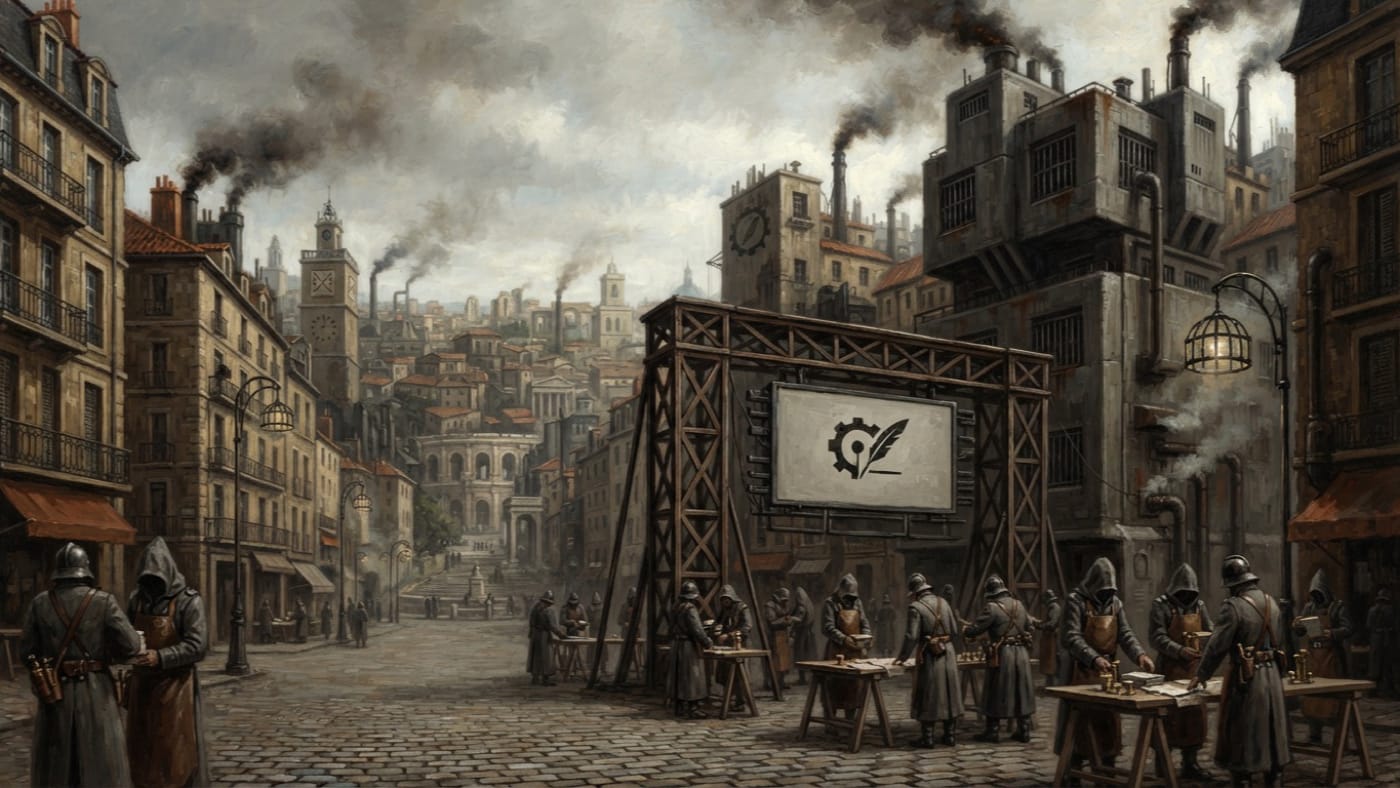
Nîmes
A city given a column before a case
Nîmes entered Purity's A.S. 93 Toulouse dossier because Carcassonne named it under interrogation. The city received a column; this file establishes no local offence.
Codex Ref. II.1.09-009
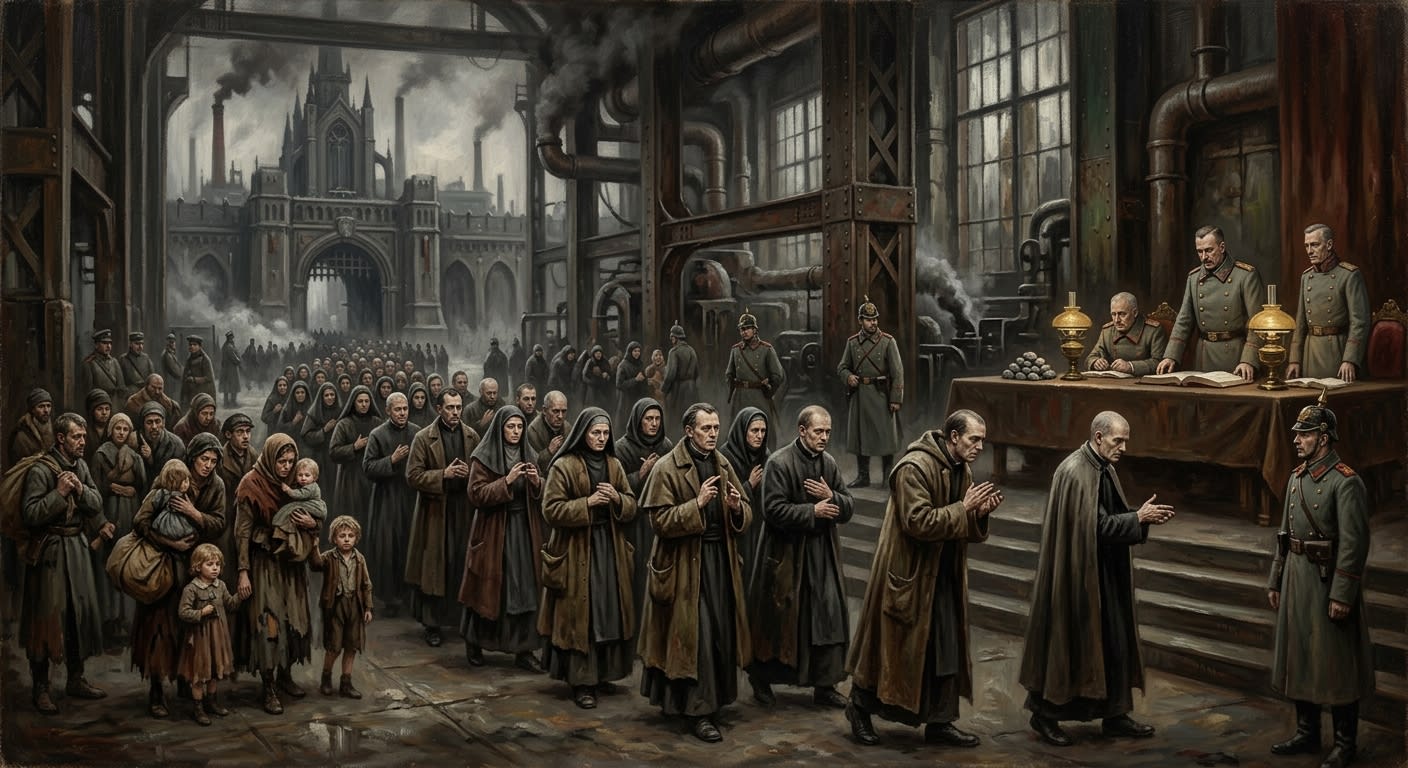
Null Tongue Brotherhood
The heresy that made refusal cheaper than pronunciation
The Null Tongue Brotherhood is the Steppe Gate's silent heresy: gesture-cant, speech refusal, refugee utility, and one unresolved question — whether stones can tax silence.
Codex Ref. XII.18.04-094
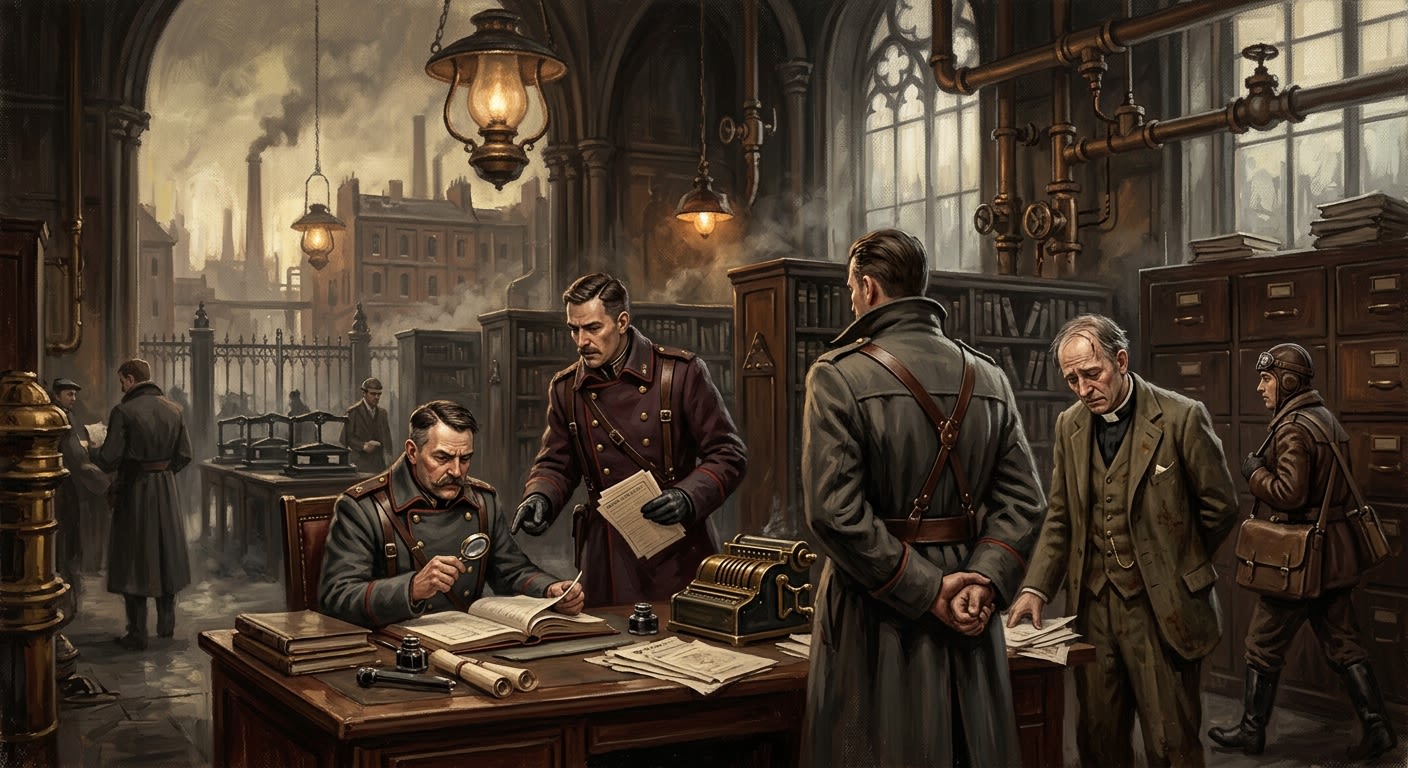
Order of Severance
The inward knife that cuts office from affection before affection becomes a kingdom
The Order of Severance is the Bureau of Purity's inward knife: an inquisitorial fraternity that hunts clerical and bureaucratic heresy where clean cuffs, perfect ledgers, and trusted colleagues become shelter.
Codex Ref. VIII.1.07-134
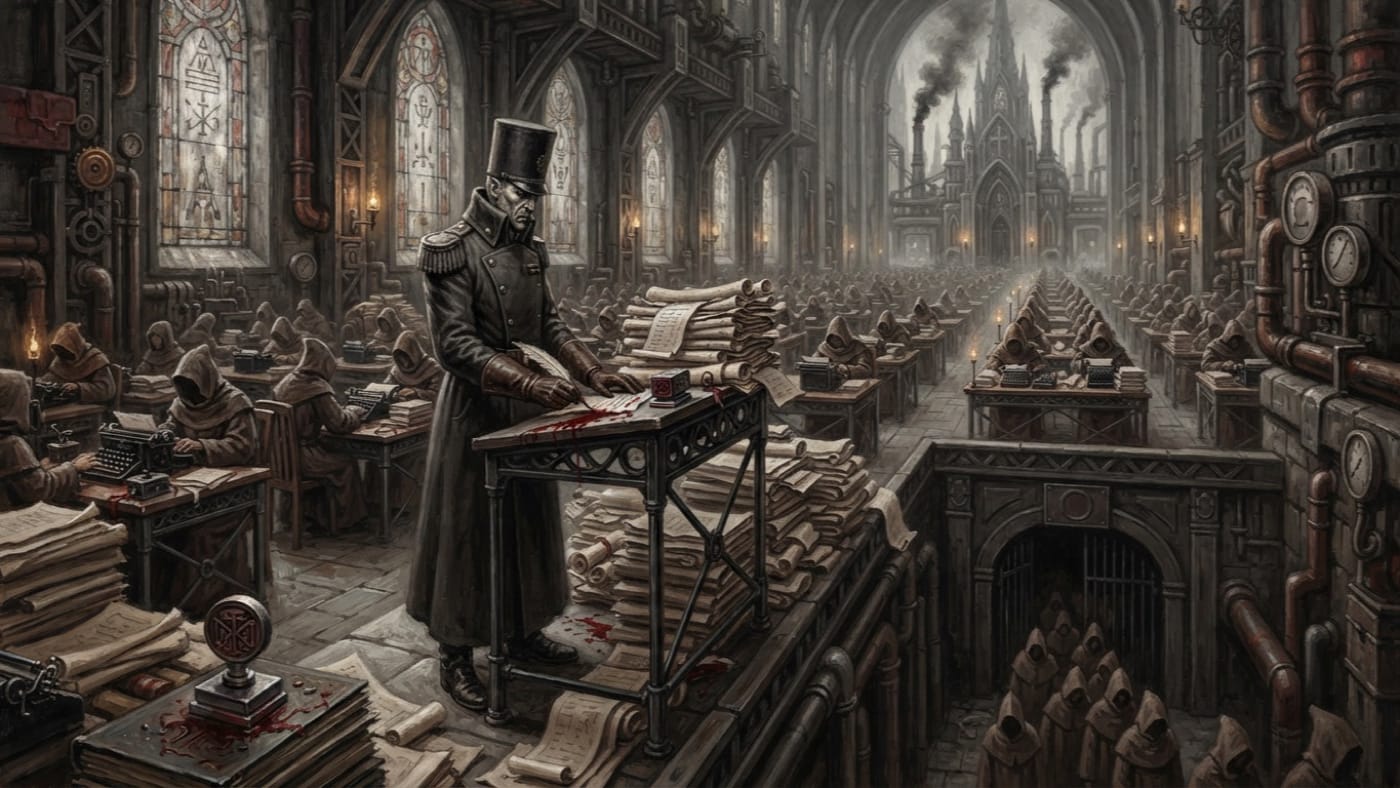
Ordinaries of Severity
The Lictor carries the knife; the Ordinary keeps the calendar
A.S. 201 survey of the Inquisition's middle tier. Ordinaries organize purges, penances and trials, often ruling a single diocese with absolute authority. The faithful learn the office through the names they fear.
Codex Ref. VIII.1.08-2029
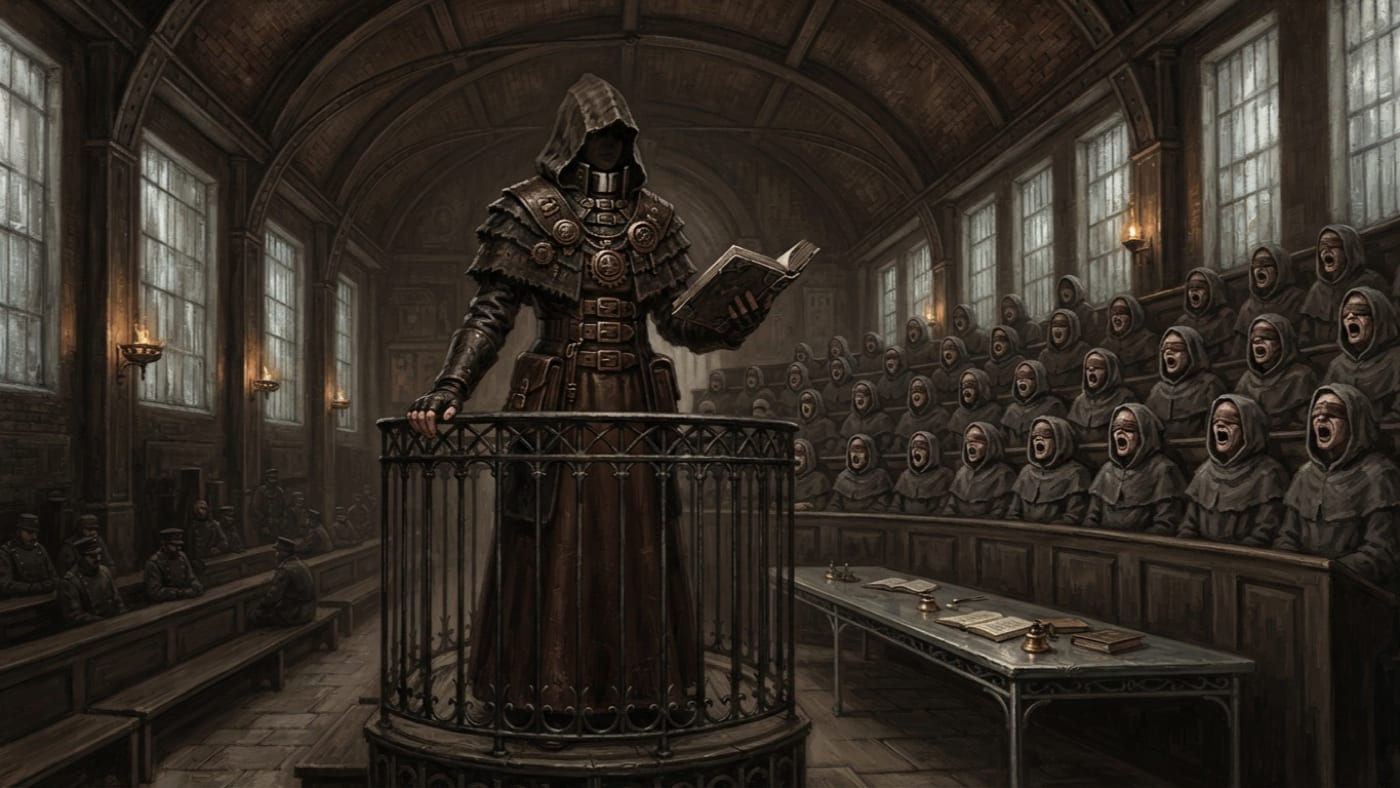
Ordinary Carmina
The verdict has a choir; the Ordinary keeps her silence
Ordinary Carmina of Ghent leaves verdicts to a blinded, tongueless witness choir. Her undated Wintering taught the Order of the Root how to cut families and revise the kinship that survived.
Codex Ref. III.2.01-2030
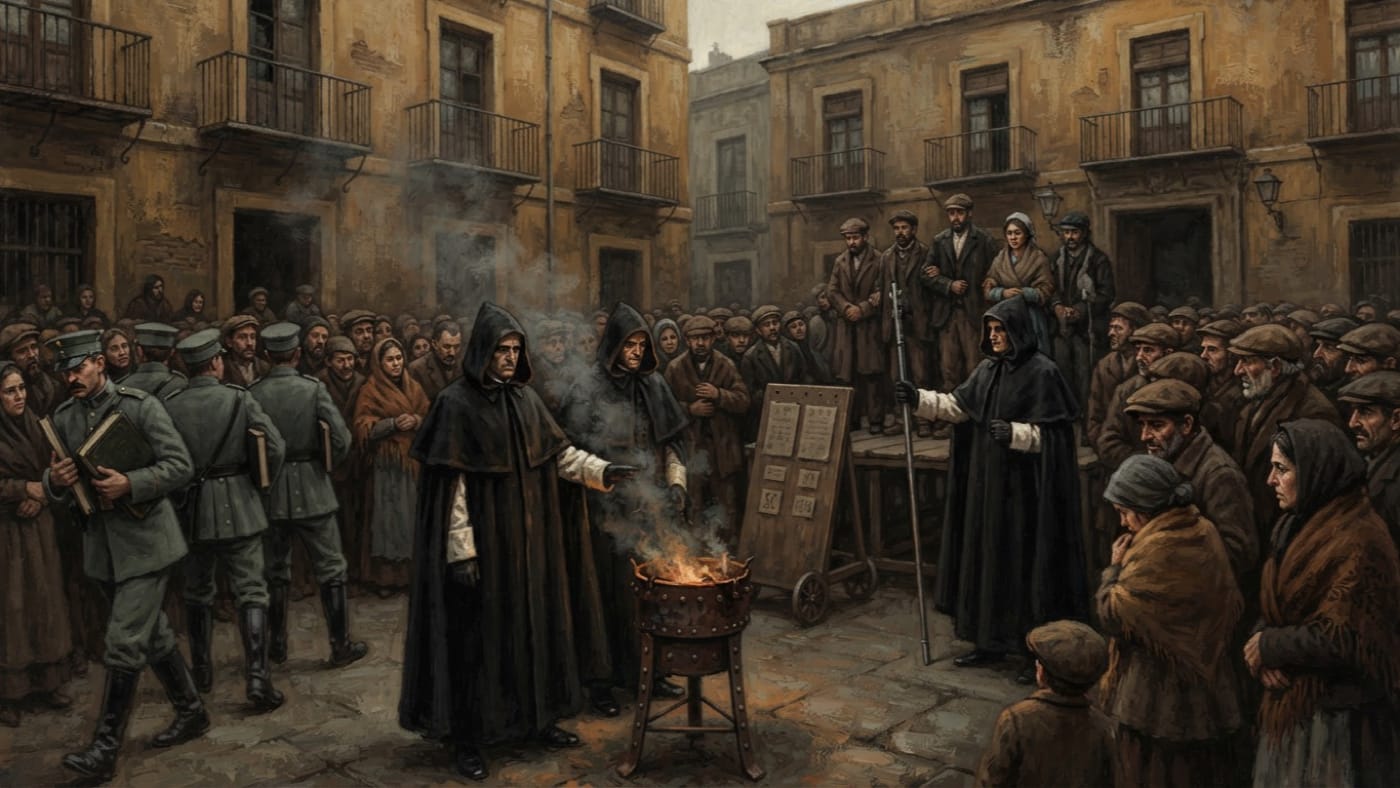
Plaza de San Telmo
Where the baton yielded to the knife
At dawn in A.S. 153, Purity's Lictors entered this Seville square during the Laugh Riots. The auditors withdrew; the crowd became witnesses.
Codex Ref. III.2.08-001
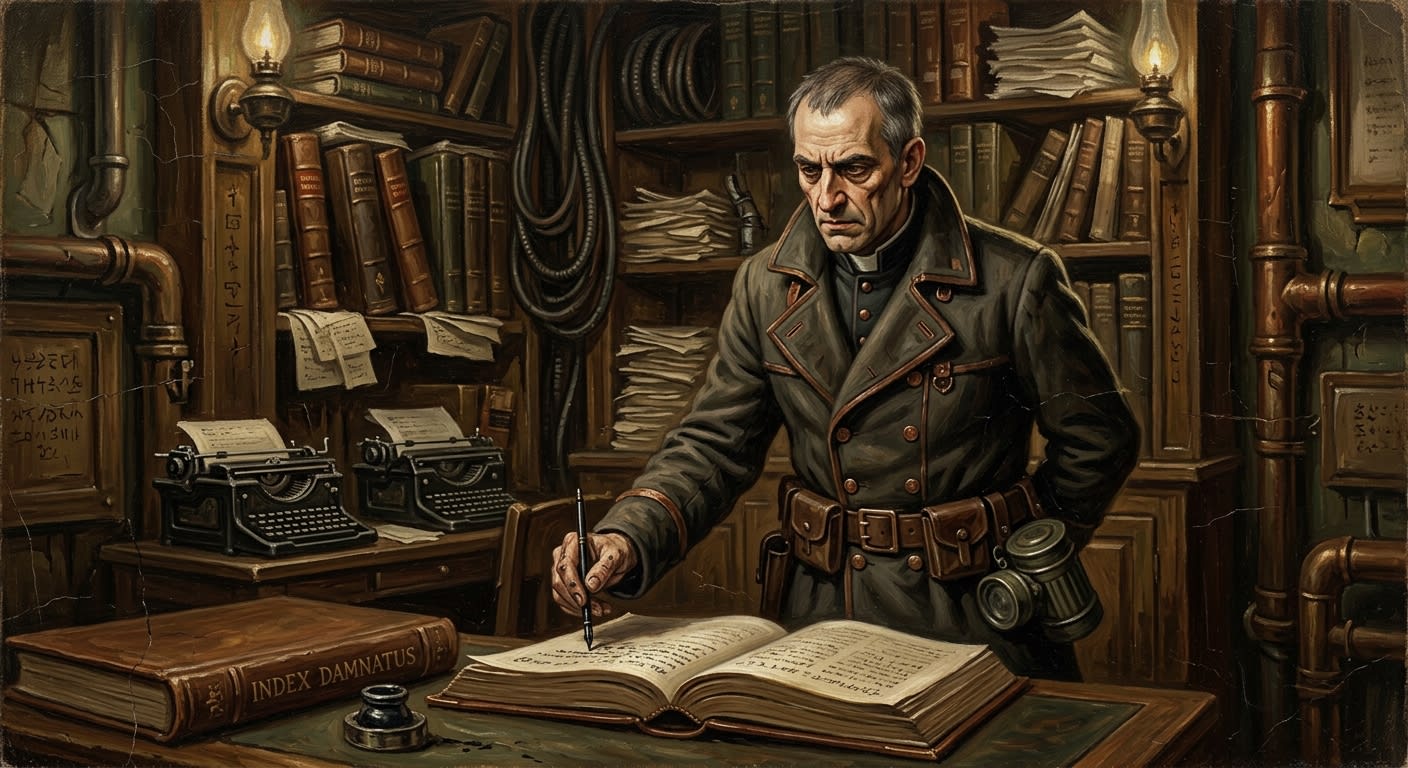
Procurator Maxentius della Torre
The jaw by which Doctrine learned to bite
Della Torre expanded Purity in A.S. 80, birthed the Index Damnatus, and taught the Synod that a named error is already halfway into chains.
Codex Ref. III.4.02-031

Quiet Engine Heresy
The machine ran, and therefore men had to be punished
A.S. 147 mechanistic scandal in which licensed Engineers proved stable combustion without certified cant, forcing Doctrine to punish success before it became method.
Codex Ref. VII.8.10-050
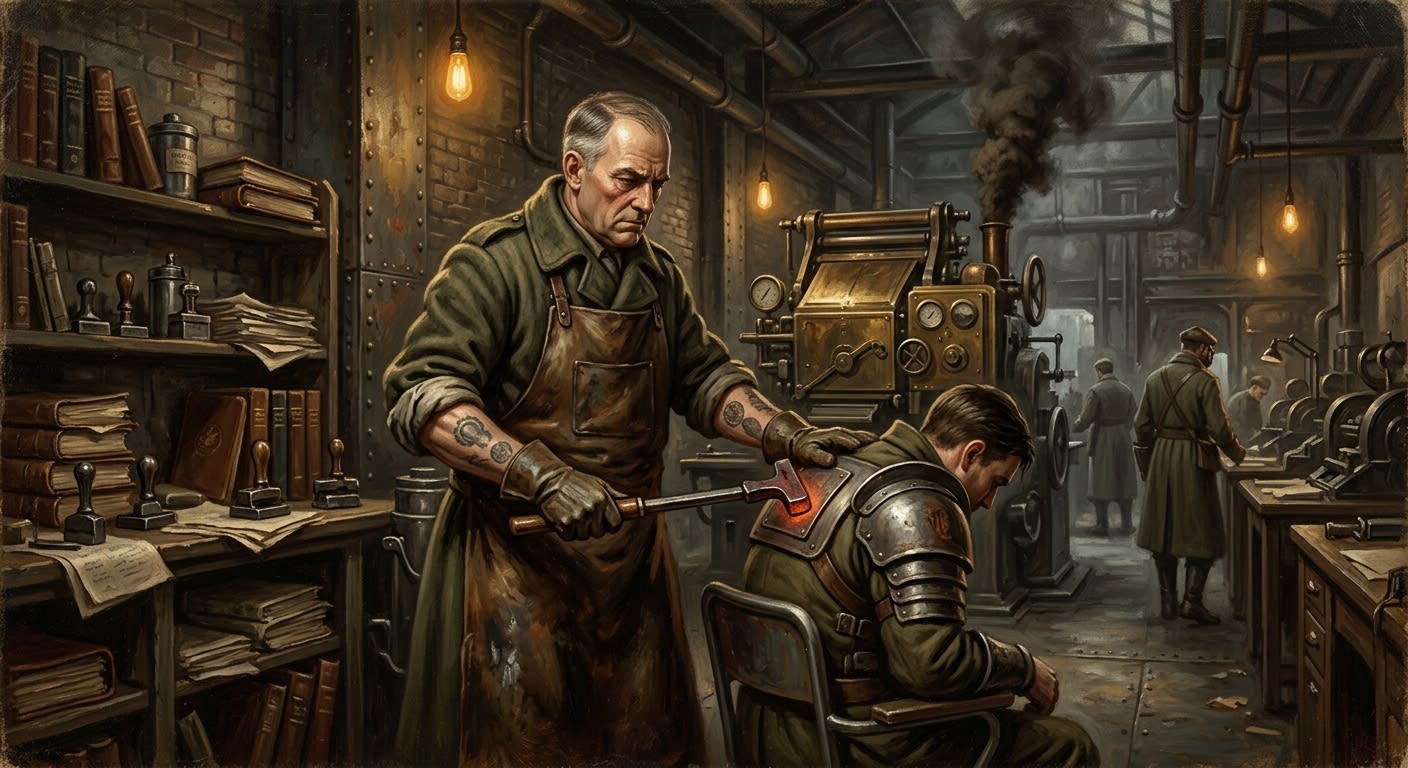
Re-inspection Brand-Smith
The Bureau's apology, applied two degrees from mercy
Re-inspection Brand-Smiths are Heraldry specialists created after the A.S. 119 Angle Riots to verify bodily tri-marks and burn lawful corrections into failed proof.
Codex Ref. XII.20.03-001
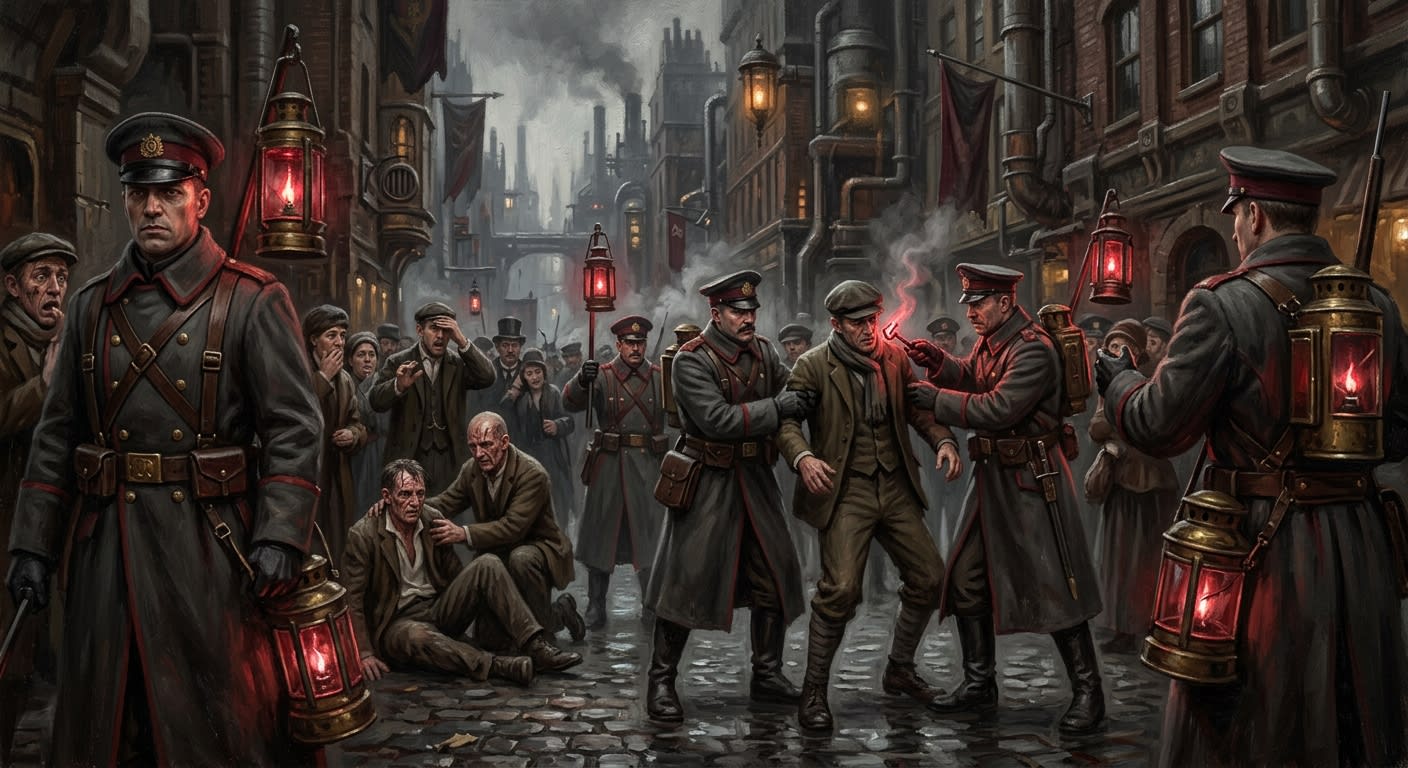
Red Lanterns
Correction must be seen, preferably before the skin cools
Bureau of Purity street squads who turn doctrine into immediate heat: seizure, crimson-glass branding, witness shock, and the public paperwork of scarred faces.
Codex Ref. VIII.1.07-001

Saint Orla of the Steady Note
The patron who taught singers to hold the note and refuse the answer
Patron of the Iron Choir Brand-Singers, Orla gave Purity its steady note, its closing silence, and its most useful command: do not answer it.
Codex Ref. III.2.01-064
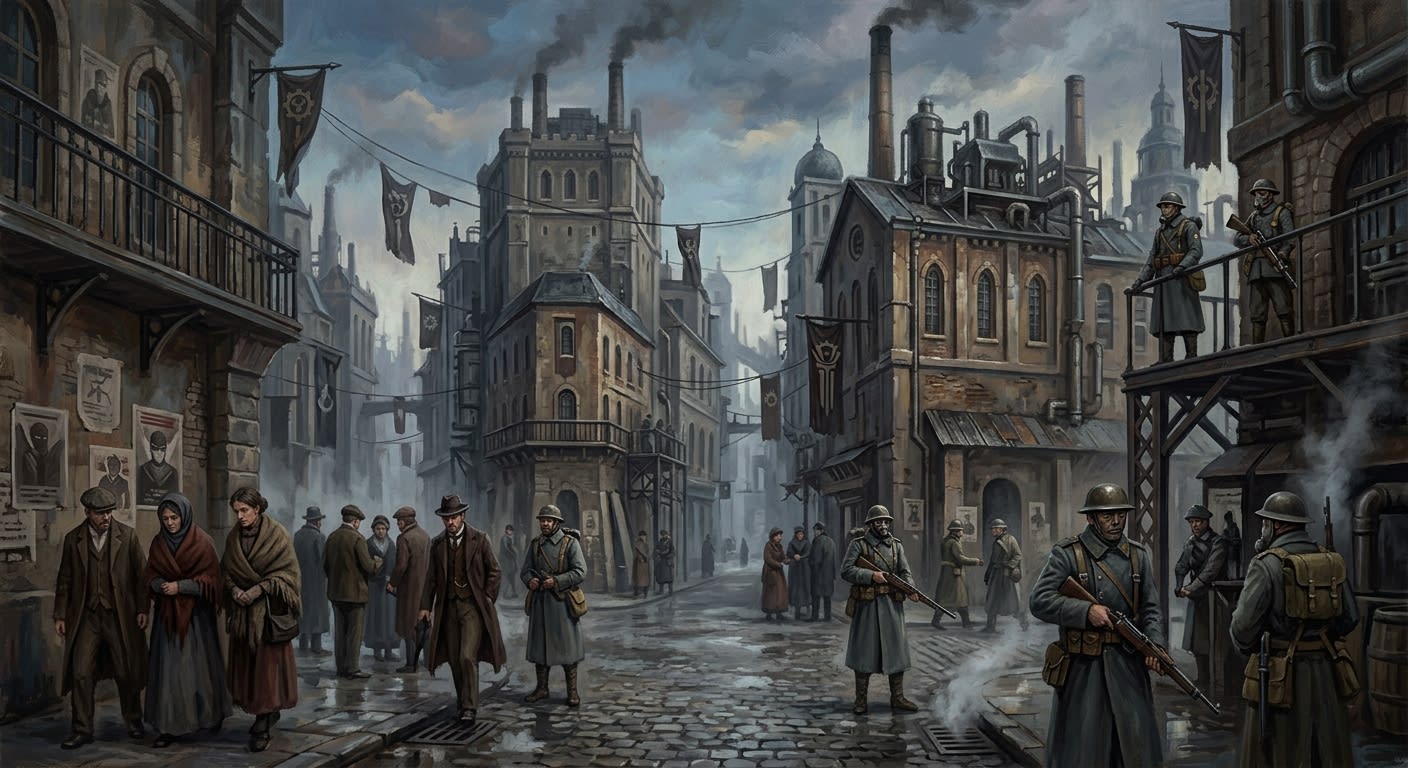
Seville
The city that lowered its voice and learned to speak in cups
Seville, the corrected City of Closed Lips: beautiful, prosperous, muted after the Laugh Riots of A.S. 153 and the Subjugation of A.S. 155.
Codex Ref. II.1.04-001
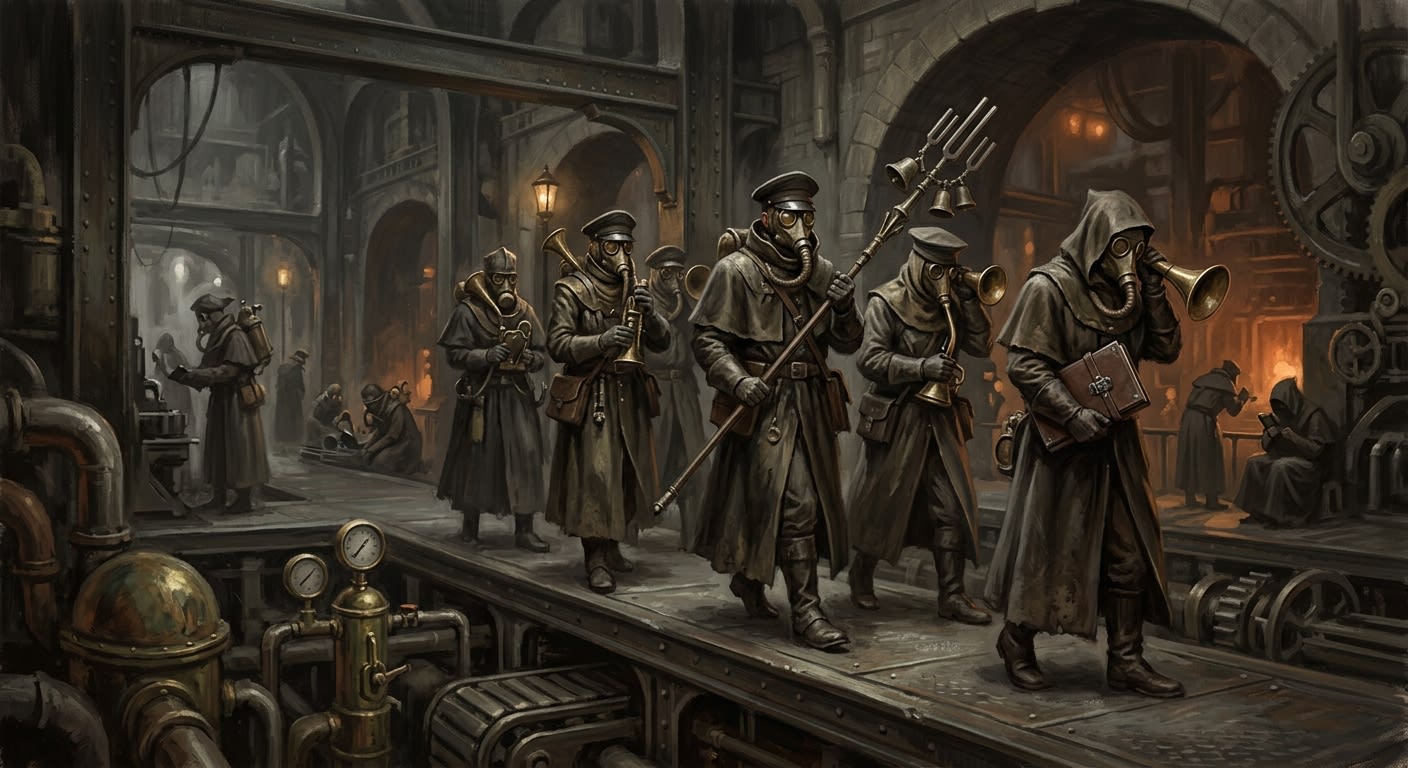
Silentists
The school that knows every note may be an invitation
The Silentists are the Brand-Singer school of withheld song, minimal cue, and useful quiet: despised by choirs, loved by rooms that do not answer.
Codex Ref. XIII.1.41-003
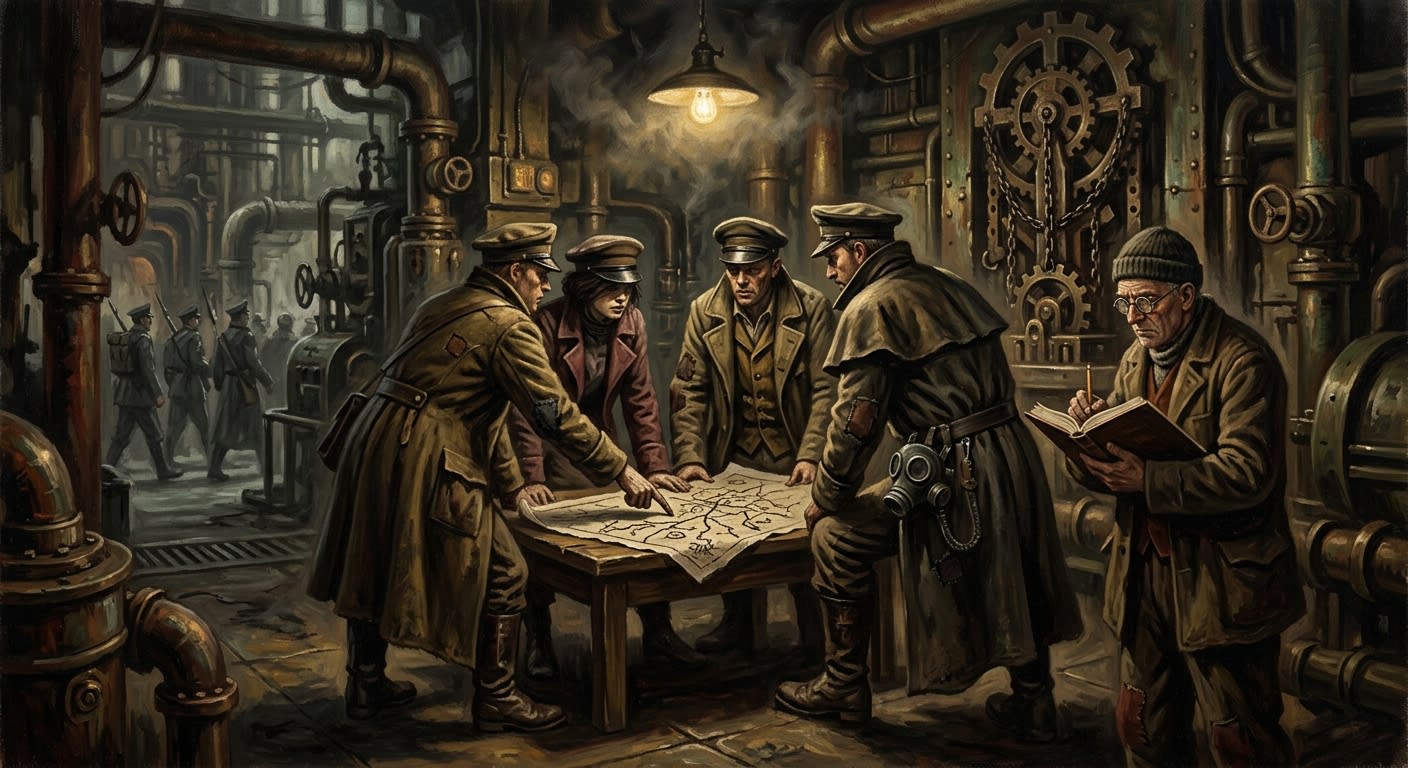
Soft Insurgents
Mercy spoken aloud, which is how a street becomes a heresy
Soft Insurgents arose from the A.S. 178 Cologne split by naming the Brotherhood's tolerated mercy as resistance, turning route maps, comfort, and silence into doctrine from below.
Codex Ref. XII.25.09-001
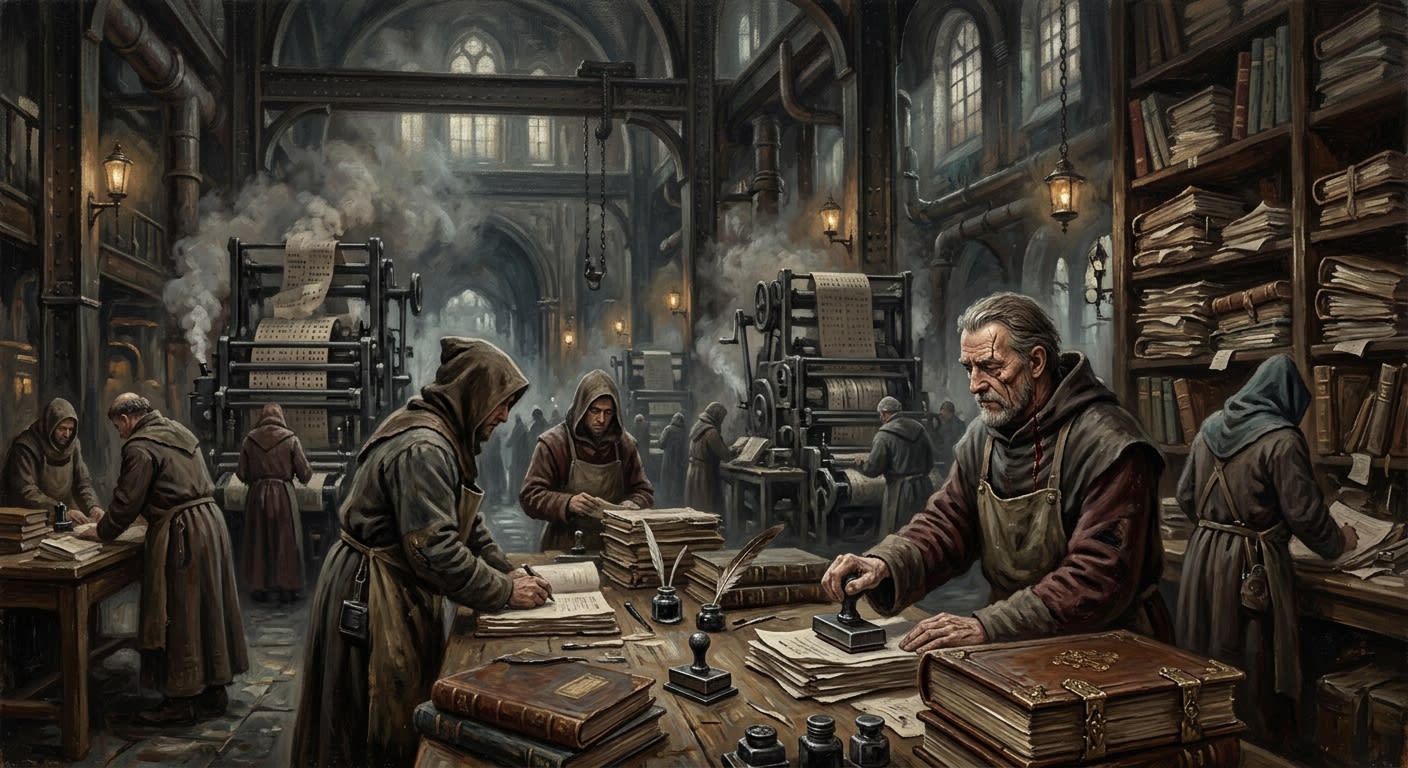
Standing Order 22-D
The law that taught silence to file itself
Standing Order 22-D makes silence legible: the pause before assent, the scar before paperwork, the late answer that becomes evidence.
Codex Ref. XIII.1.99-084
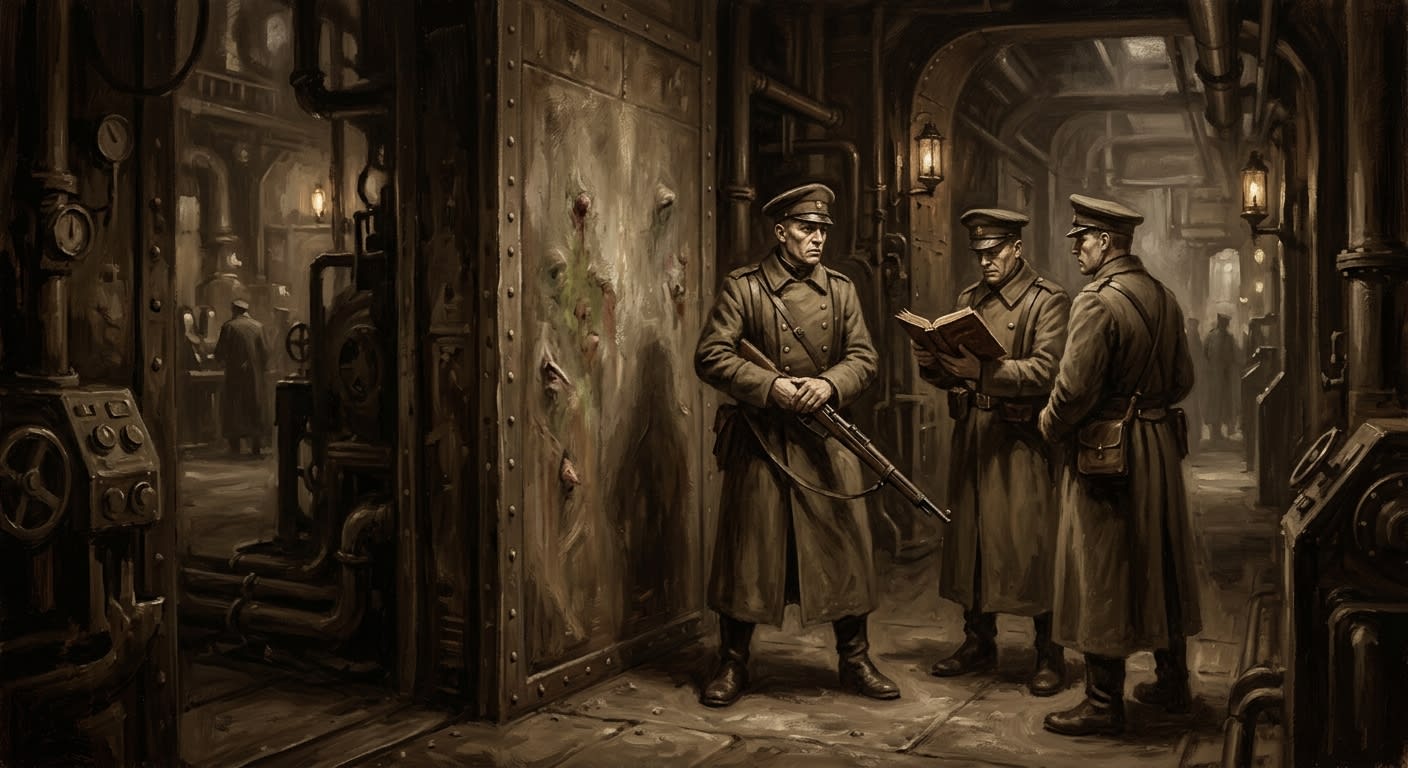
Standing Order 22-S
When the room answers, starve it
Standing Order 22-S teaches the holy art of refusal: three notes down, fourteen beats sealed, no answer to the hungry wall.
Codex Ref. XIII.1.41-104
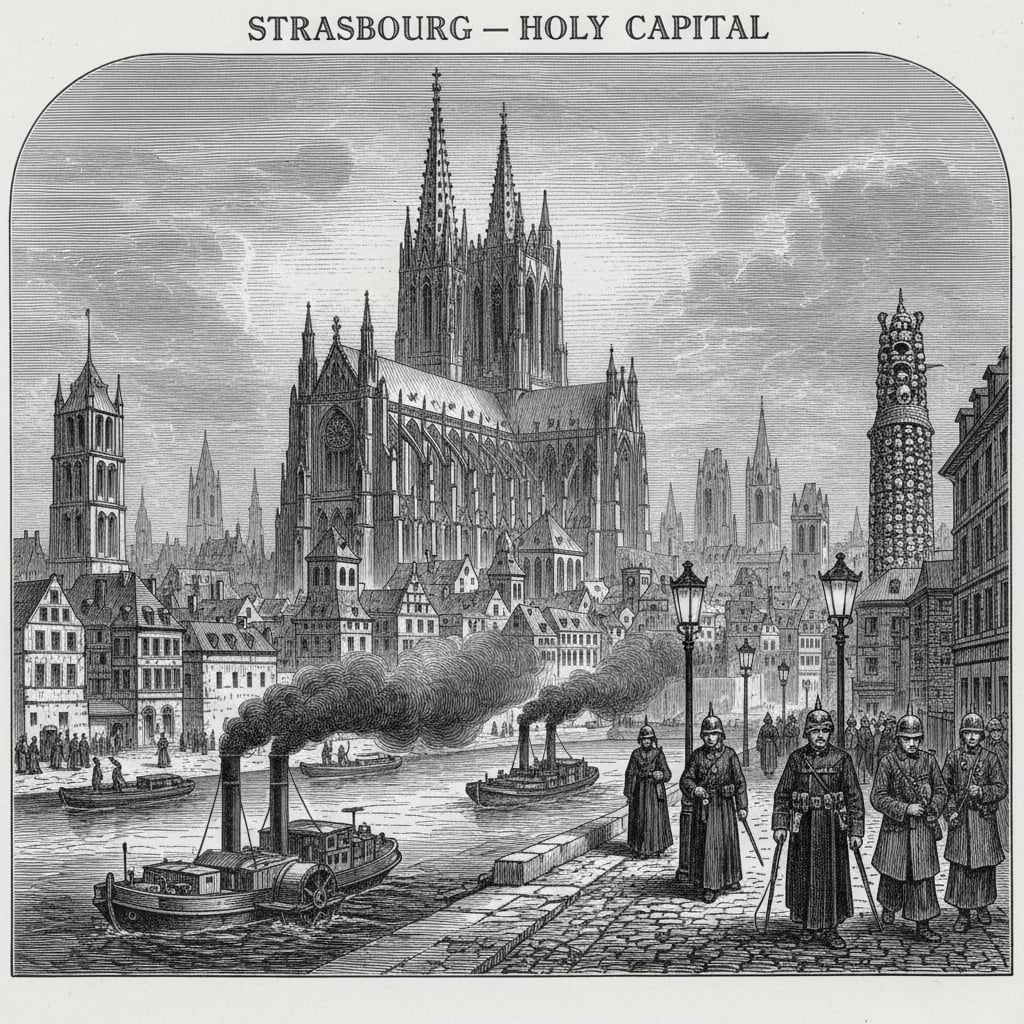
Strasbourg
The Holy City, or the Weight of Fifteen Centuries of Paperwork
Seat of the Synod, capital of the Dominion, largest city on the continent, and the only place where the bells never stop ringing. Strasbourg has forgotten what silence sounds like. So have its residents.
Codex Ref. III.2.01-001
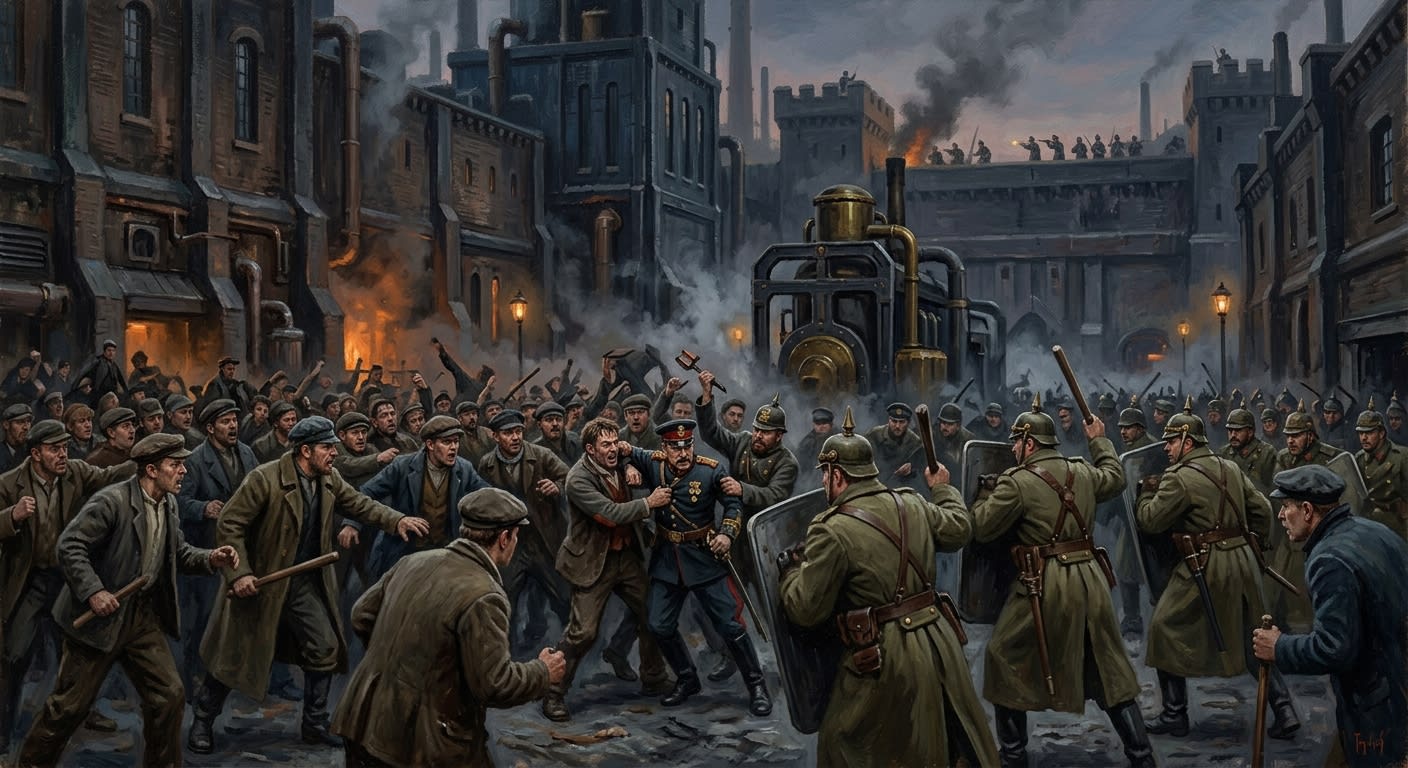
The Angle Riots
Two degrees of error are enough to make the state honest by accident
The A.S. 119 Angle Riots at Bastion-Irongate began with miscalibrated brand-irons and ended with executions, re-inspection doctrine, and the cold proof that a false mark can still command the body.
Codex Ref. VII.8.10-034
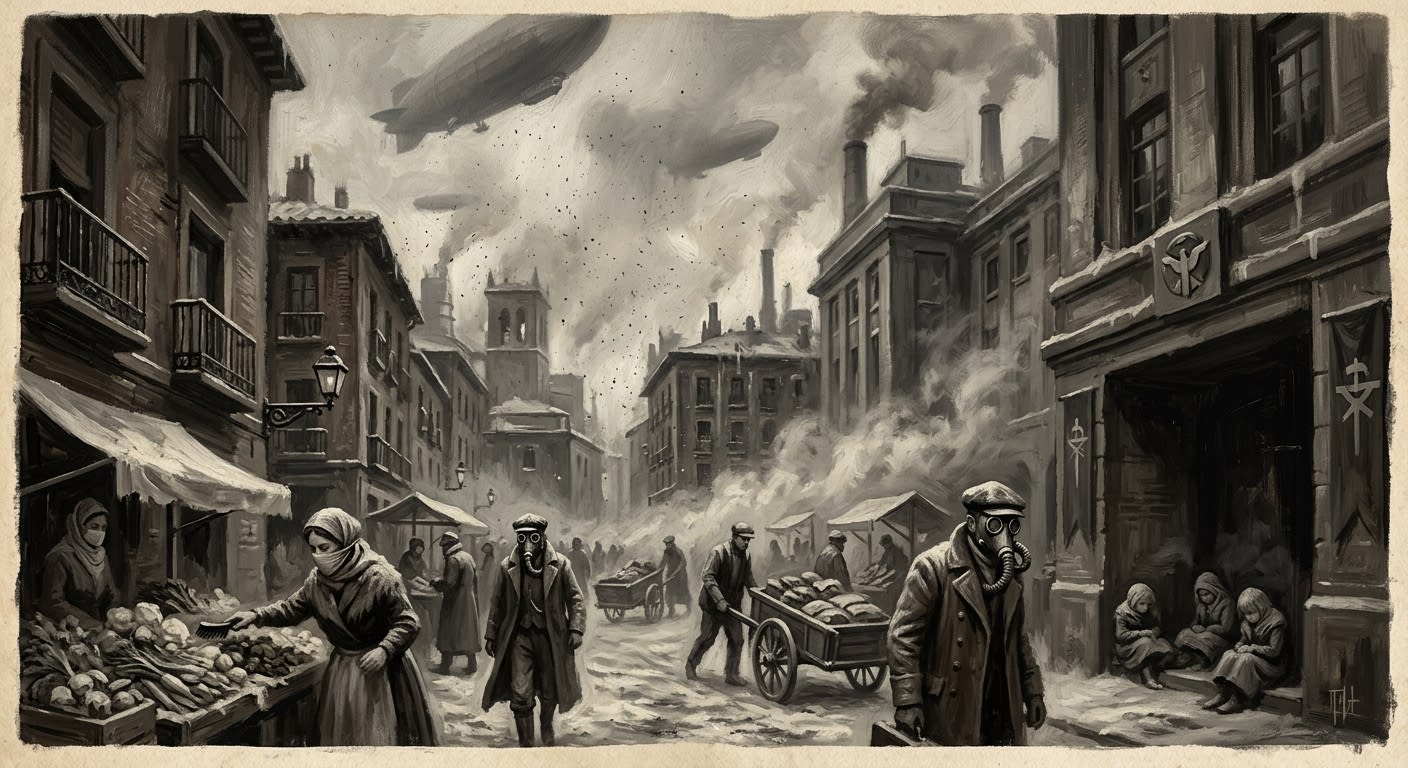
The Ash-Rain of Zaragoza
Where artillery made weather and fourteen children paid the grammar of “clean”
The A.S. 143 Ash-Rain of Zaragoza followed a sanctioned bombardment of a Velkara-aligned compound: three days of salt-and-milk ash, fourteen silenced children, no quarantine, and a city forced to keep trading beneath residue.
Codex Ref. VII.4.13-001
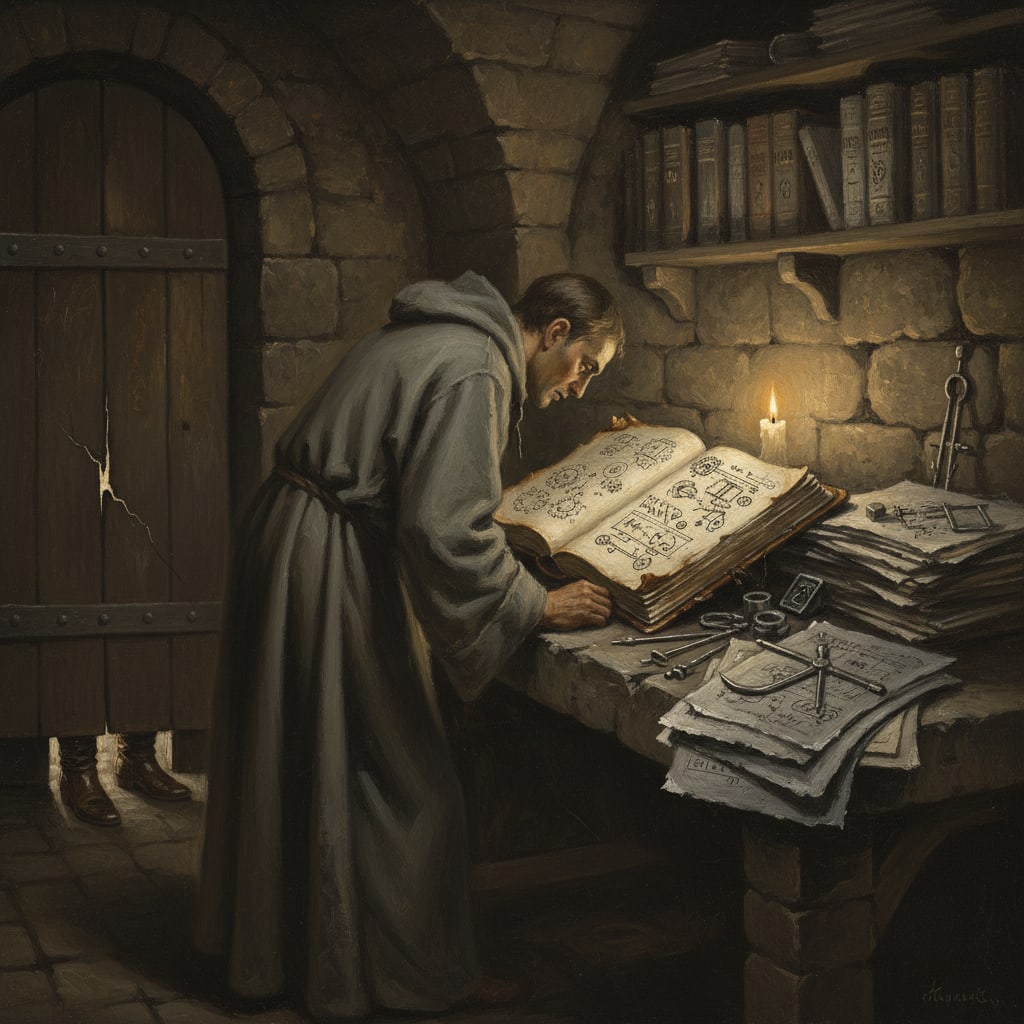
The Ashen Circle Scholar
What the Bureau Burns, the Circle Preserves — the Synod's Indispensable Heretic
The Bureau calls them poison. The front calls them indispensable. The Ashen Circle Scholar trades in what the Index Damnatus cannot afford to have gone permanently missing.
Codex Ref. XI.1.01-001
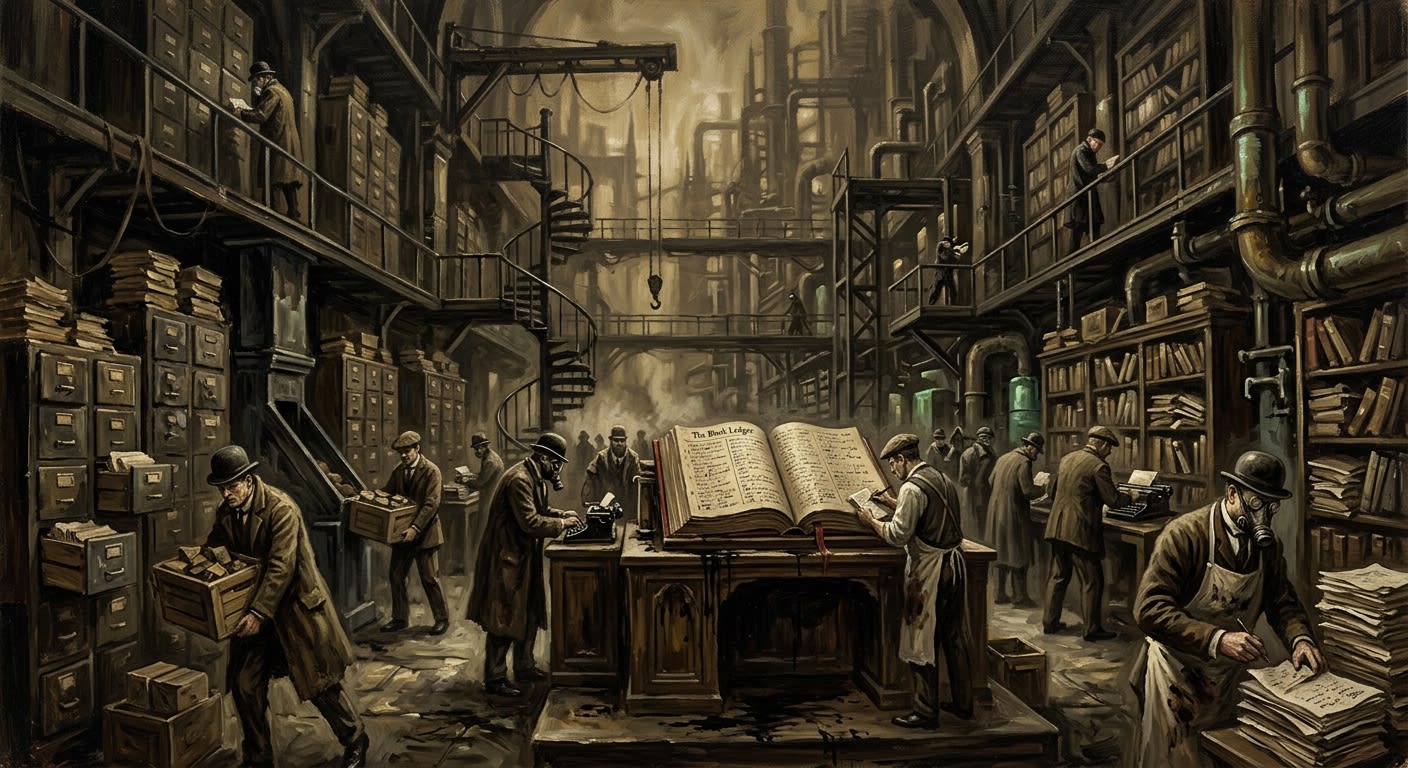
The Black Ledger
Hunger with a filing system and better memory than mercy
The Black Ledger is the Synod's gutter-mirror: a criminal heretical network that steals, feeds, records debt, and turns absence into jurisdiction.
Codex Ref. XI.1.04-001
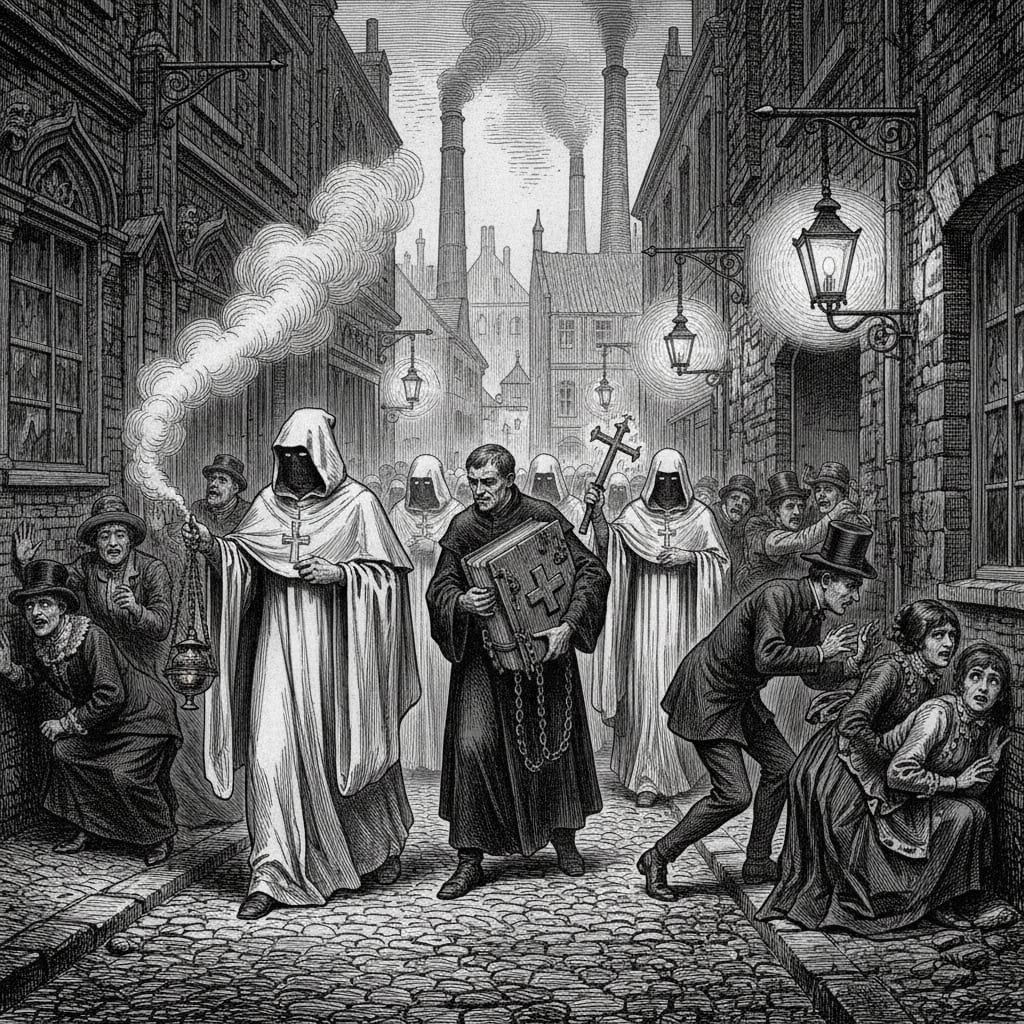
The Bureau of Purity
The White Cloaks Are Watching
The most feared organ of the Synod. Born in the Witch-Hunts of Toulouse, keepers of the Index Damnatus, enforcers of everything Doctrine defines and everyone else regrets. Where they walk, the air tastes of censer-smoke and branded confession.
Codex Ref. III.3.02-001
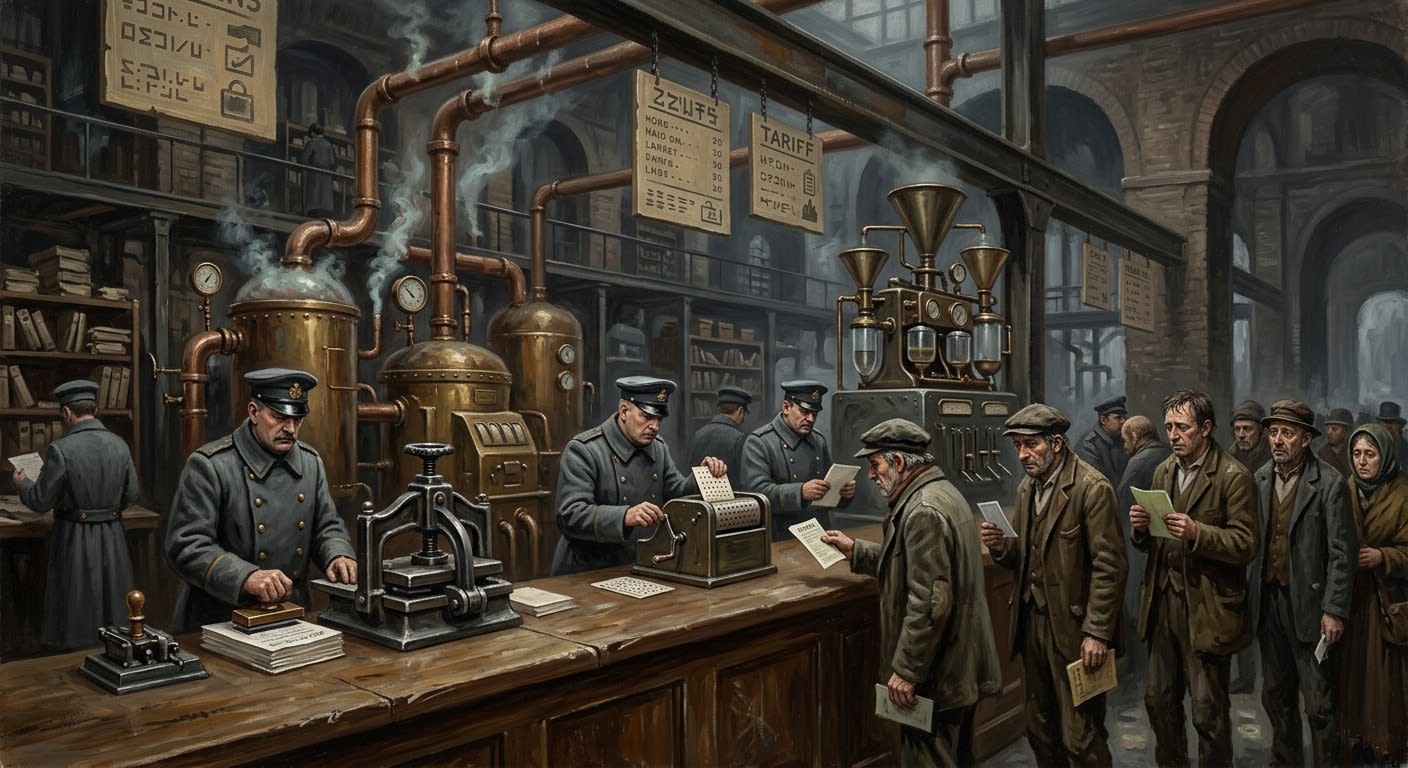
The Censorium of Taverns
Joy is safest when entered, weighed, and extinguished by permit
The Censorium of Taverns is the Bureau of Festivals sub-office that licenses drink, meters laughter, pumps curfew-fume, and proves that even joy may be made obedient by placard, bead, and ash.
Codex Ref. VIII.5.07-001
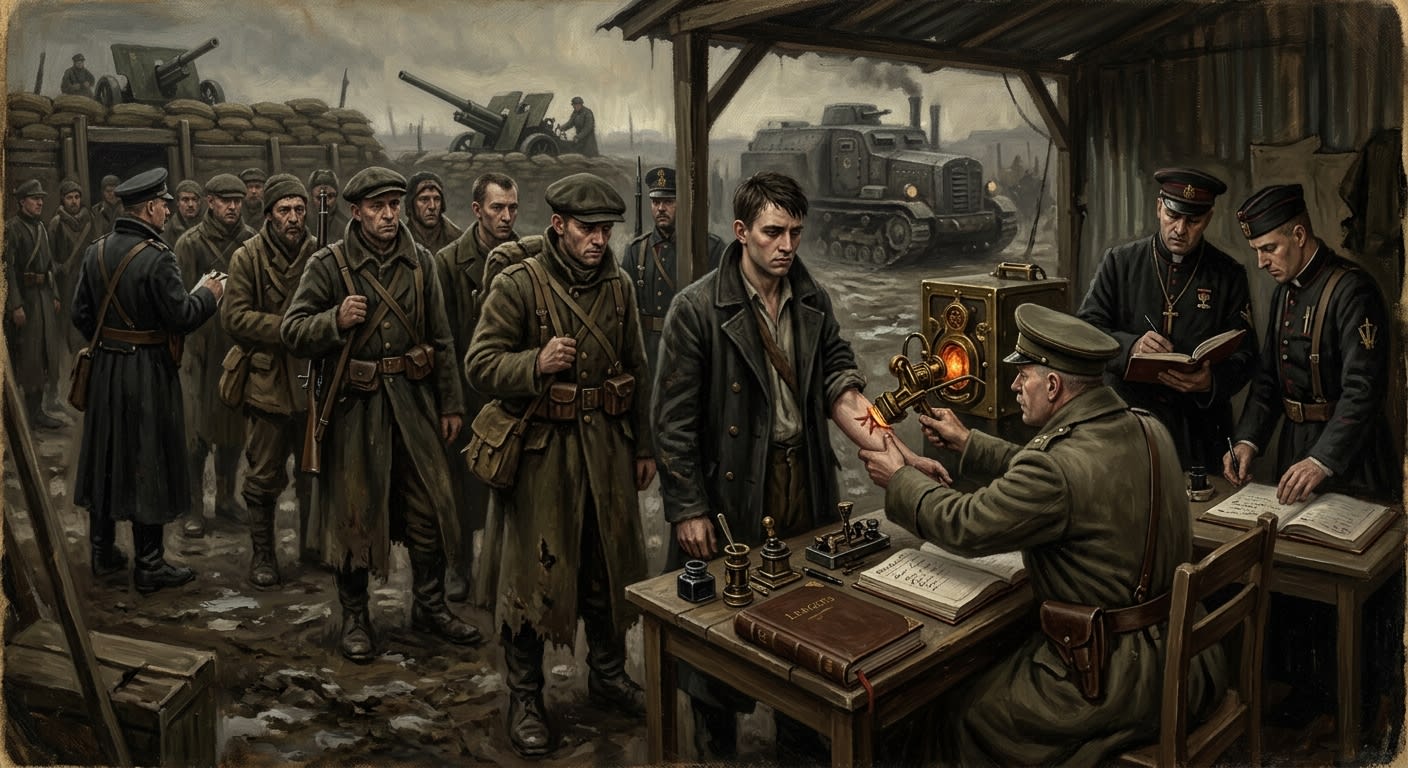
The Compulsory Marking Decree
The day paper lost authority and flesh became the Bureau's preferred document
The A.S. 113 Compulsory Marking Decree made bodily tri-marks mandatory at forward-zone checkpoints after forged papers killed eighty-seven at Bastion-Przemyśl.
Codex Ref. VII.8.10-035
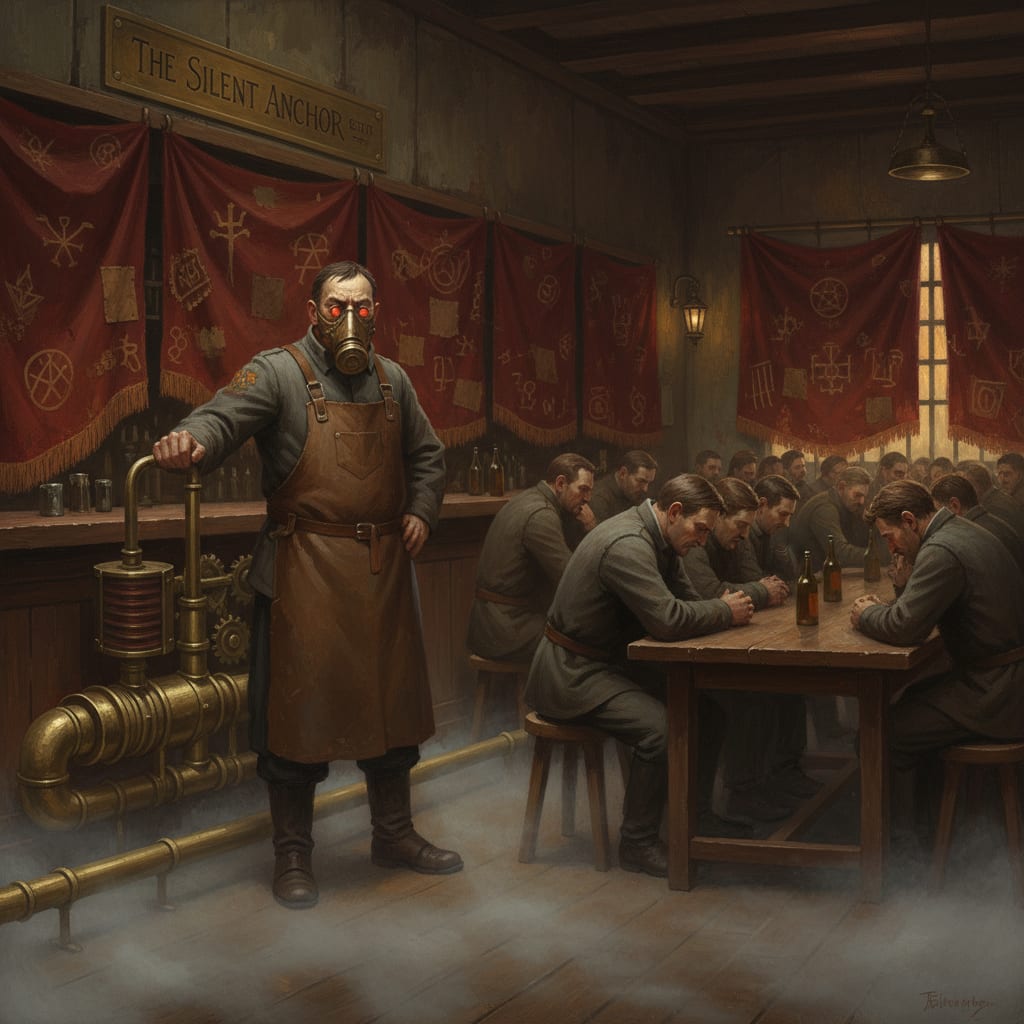
The Curfew-Fog Tavern Runner
On the publican who administers joy by bellows and bribe-tin — the Dominion's most controlled detonation, licensed, regulated, and quietly indispensable
The Licensed Housewarden — Fog-Keeper, atmospheric pacification operative, keeper of fifty strangers alive for ten minutes at a time — who sells the illusion of warmth inside a machine built to extinguish it.
Codex Ref. XII.10.01-001
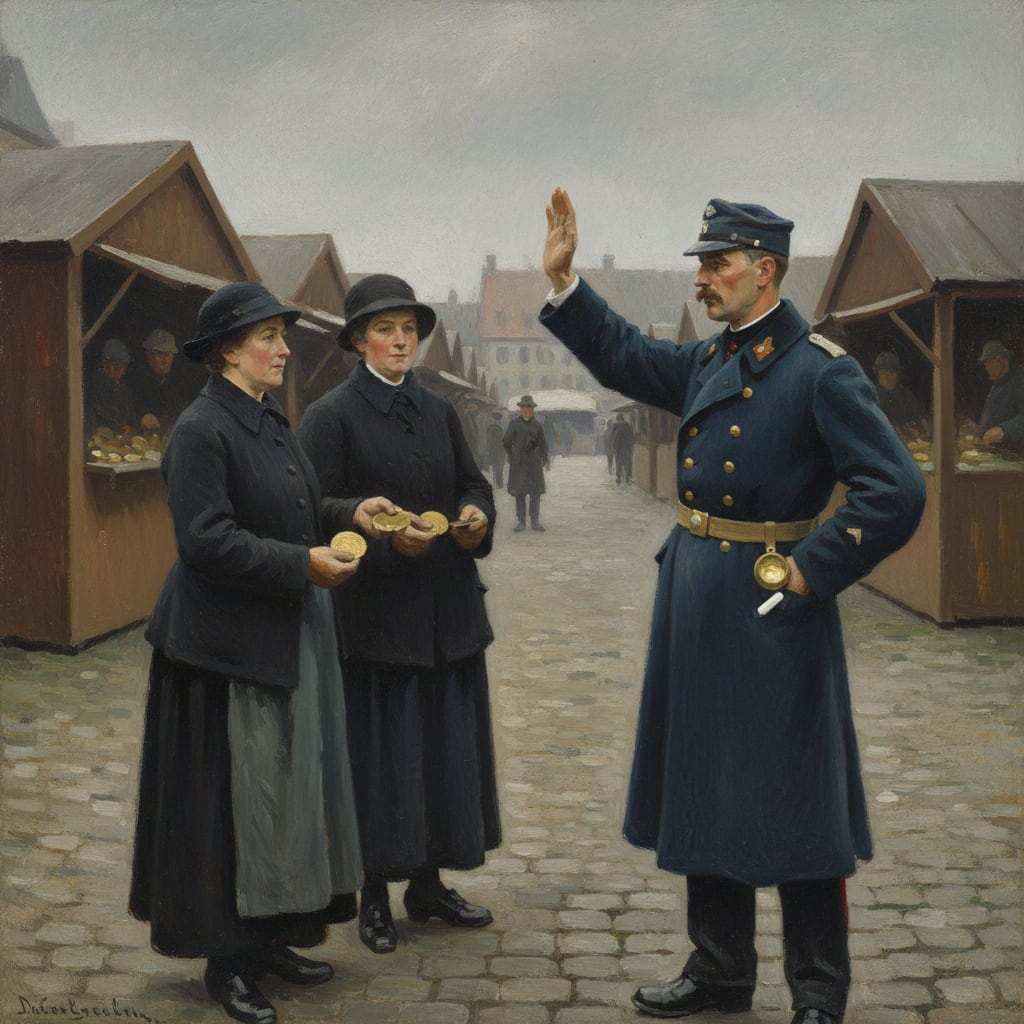
The Doctrine Street-Vicar
The bell's feet; the chalk's teeth; the compliance that comes to you.
The Bureau of Doctrine's mobile enforcement arm: four thousand three hundred chalk-bearing officers who walk where the bell cannot reach, inspect purity tokens, and mark doorframes in white, yellow, and red.
Codex Ref. XII.9.02-001
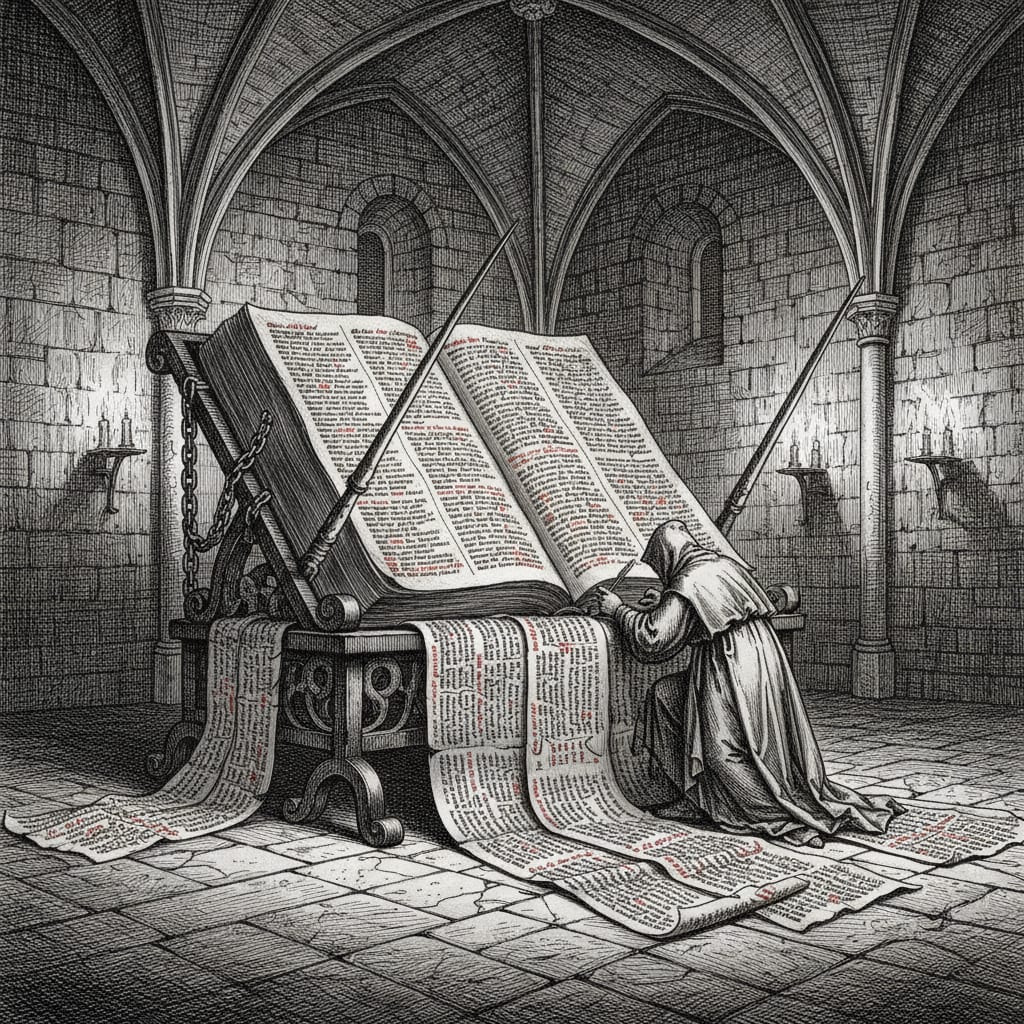
The Great Ledger of Souls
Census of the Living, Archive of the Damned
The Bureau of Records' supreme instrument of spiritual governance — an unbroken registry of every baptized soul since A.S. 80, kept in the subterranean vaults of Strasbourg, where forgetting is treason and being forgotten is worse.
Codex Ref. IV.1.09-003
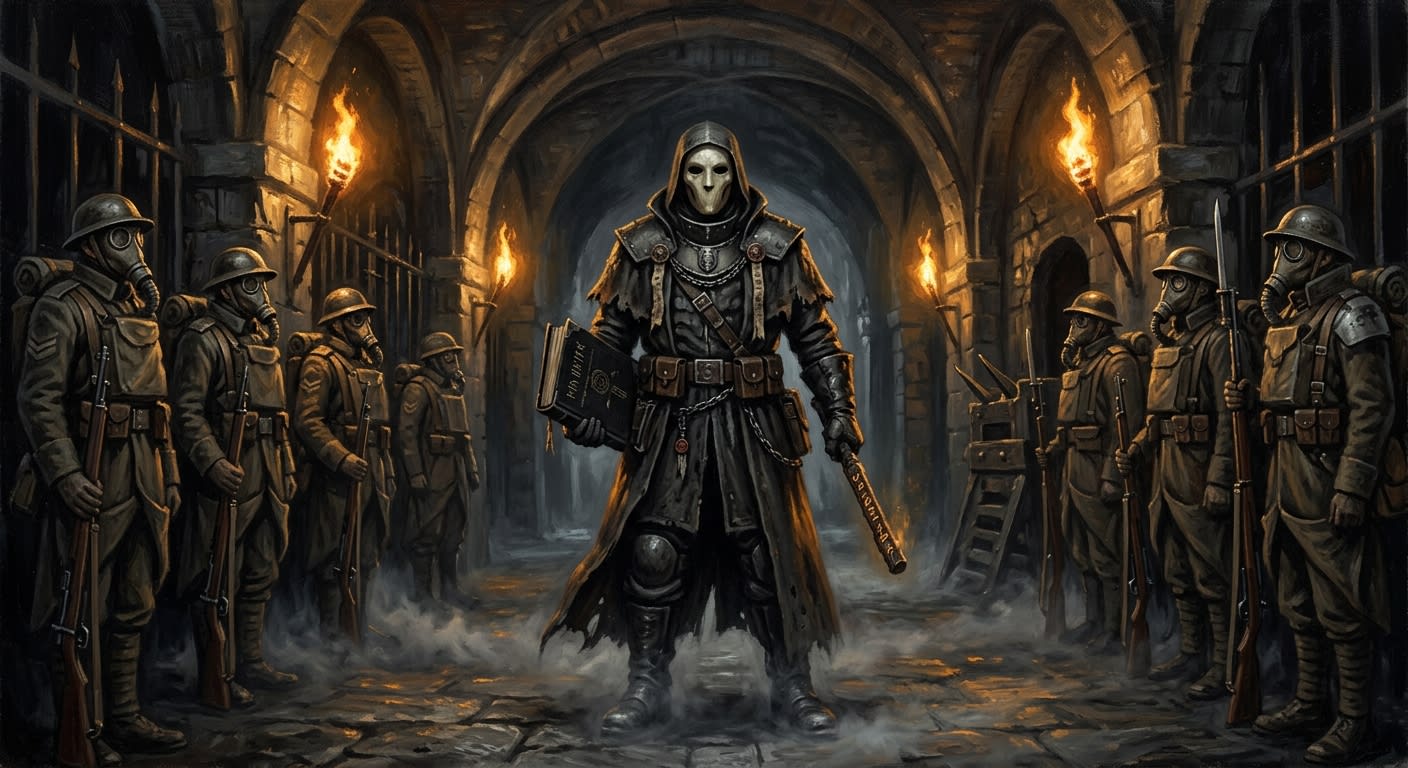
The Judges
They walk without letter, without herald, and without the patience of the Bureau.
The Judges arrive without letter, try without jury, and depart without filing. The Bureau denies they exist. It has been denying this since A.S. 92. The denial requires renewal every thirty years, which is itself a kind of evidence.
Codex Ref. V.1.01-003
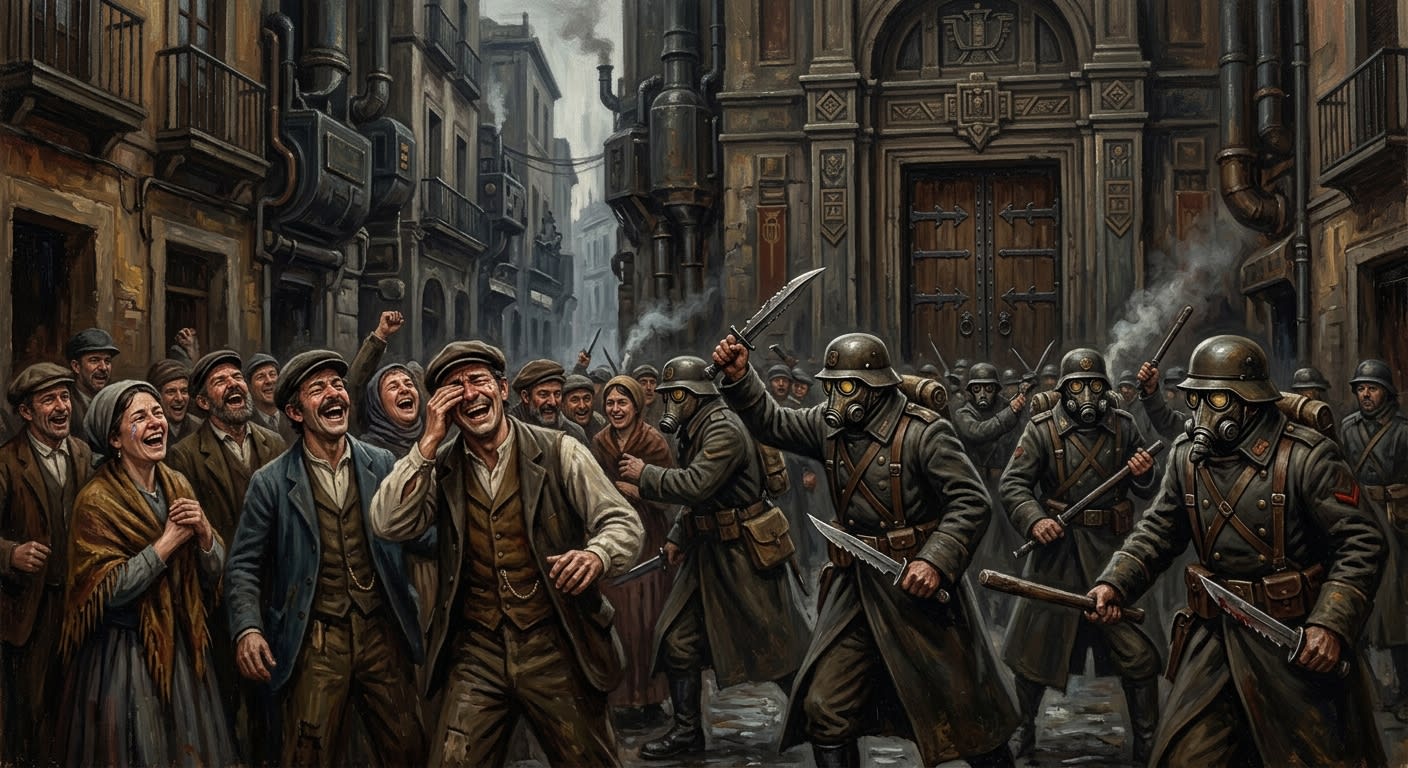
The Laugh Riots of Seville
The city laughed; the Bureau counted tongues
Seville exceeded its mirth quota in A.S. 153. The Bureau answered laughter with knives, and called the silence compliance.
Codex Ref. VII.8.02-001
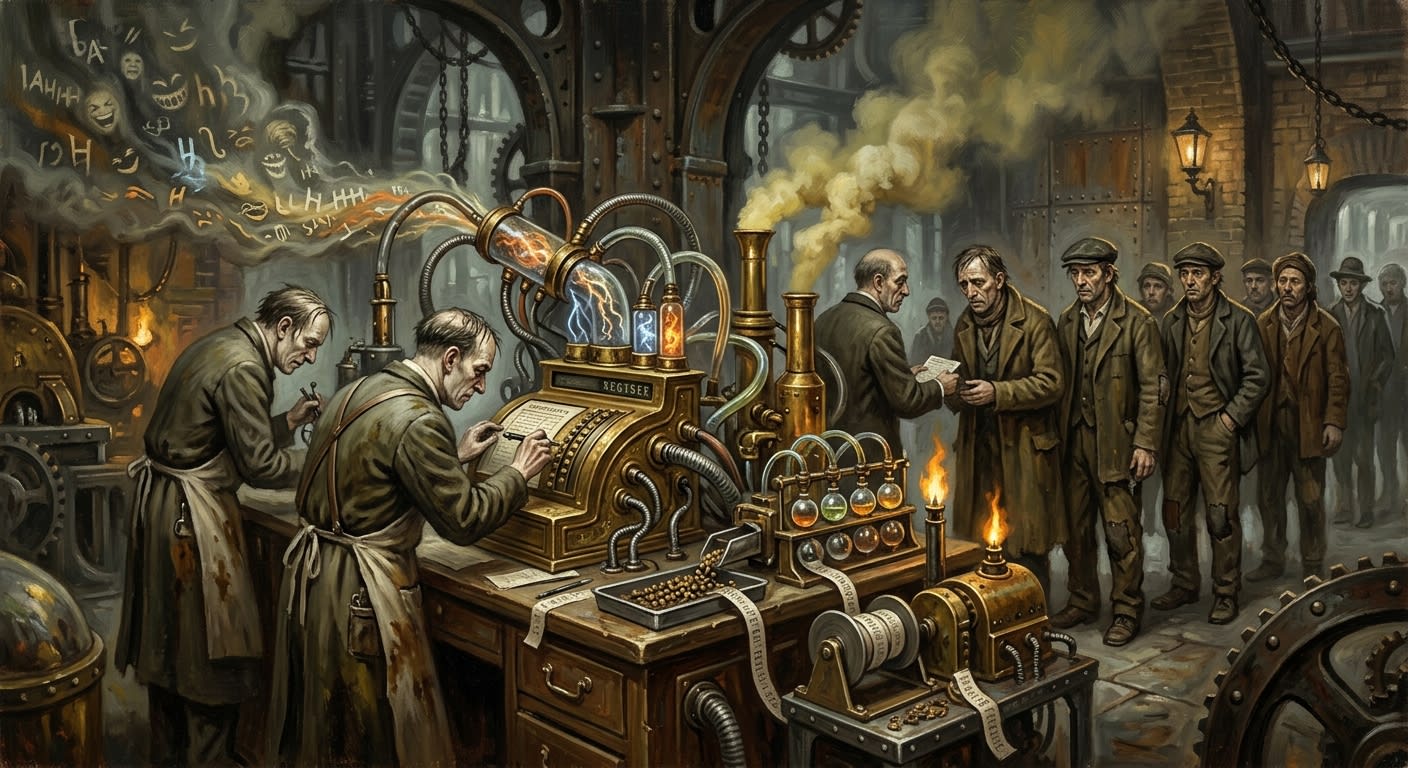
The List of Laughters
The ledger that hears teeth and teaches merriment to fear arithmetic
The List of Laughters is the Censorium's nightly mirth register, converting chuckles, guffaws, chortles, and riot-laughs into beads, fees, suspensions, fog, and fire.
Codex Ref. XIII.1.66-001

The Mirror and Perfume Arts
Beauty is not evidence, comfort is not acquittal
Velkara's Mirror and Perfume Arts turn reflection into passage and scent into revised memory; the chooser remains intact, which is why Purity sharpens its irons.
Codex Ref. XIII.1.36-001
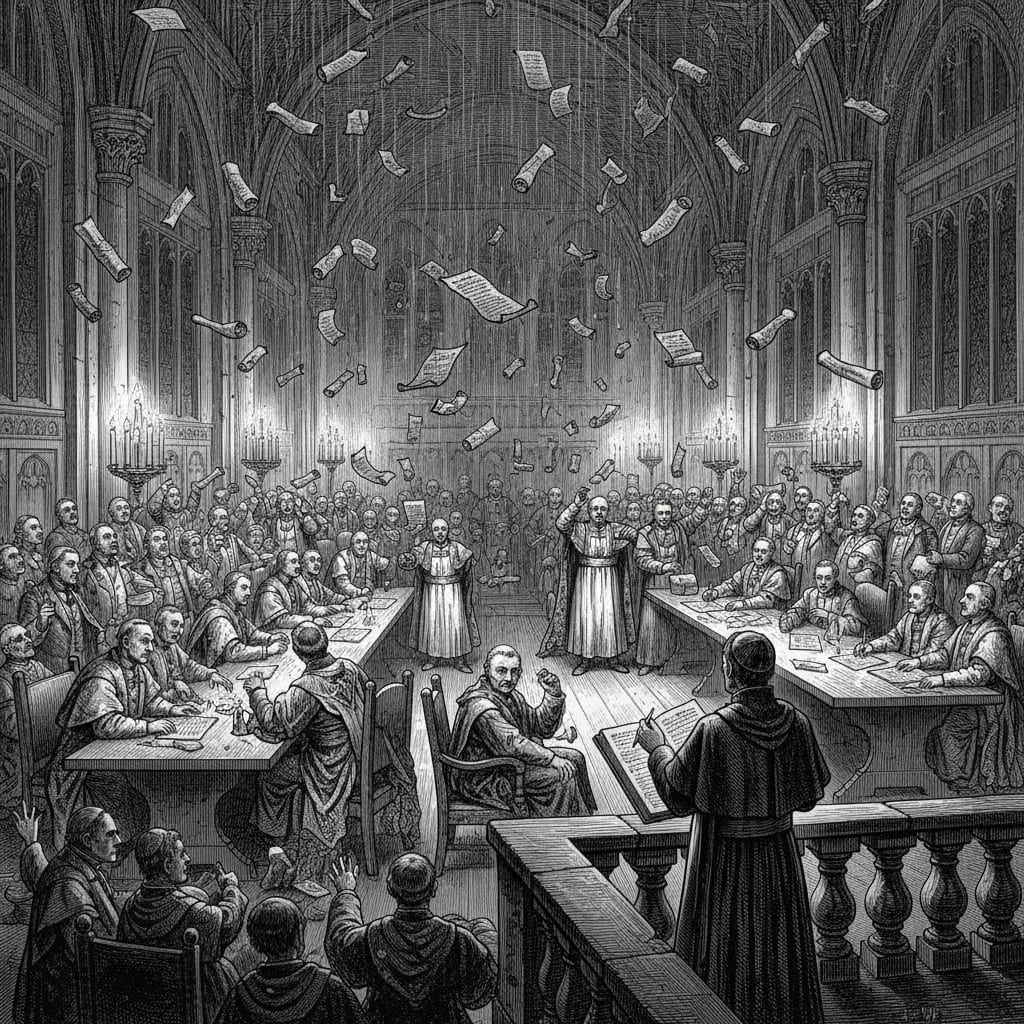
The Night of Black Decrees
When paper pressed the reluctant into obedience
The A.S. 58 writs pressed local subscriptions across the emerging Church authority's reach. Their seals and responses varied; the Bureau's story of overnight unanimity is a later claim.
Codex Ref. IV.3.07-041
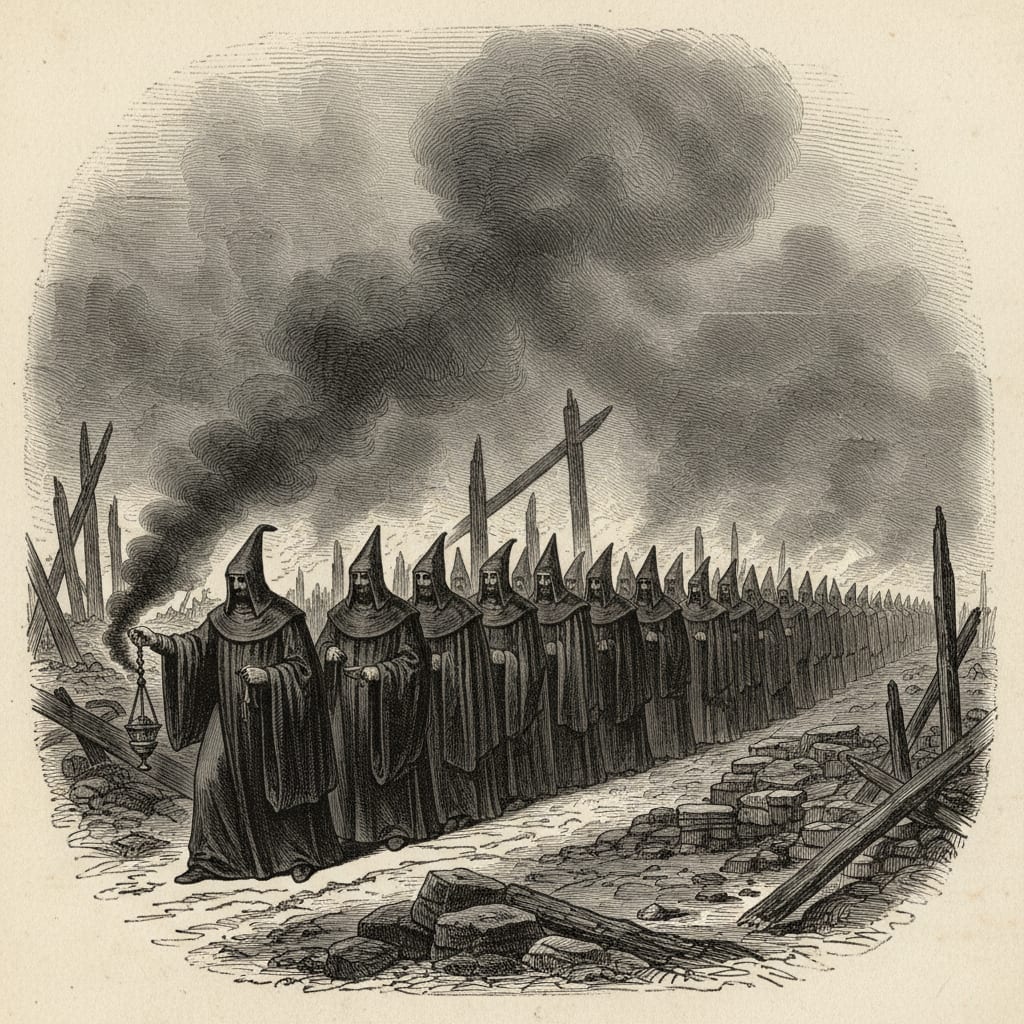
The Order of Ash
Liturgists of Fire, Archivists of Cinder
The Inquisition's first and fiercest instrument of annihilation. Where the Ashmen pass, the well-stones glass smooth and the children's slates bake into reliquaries of obedience.
Codex Ref. III.3.06-041
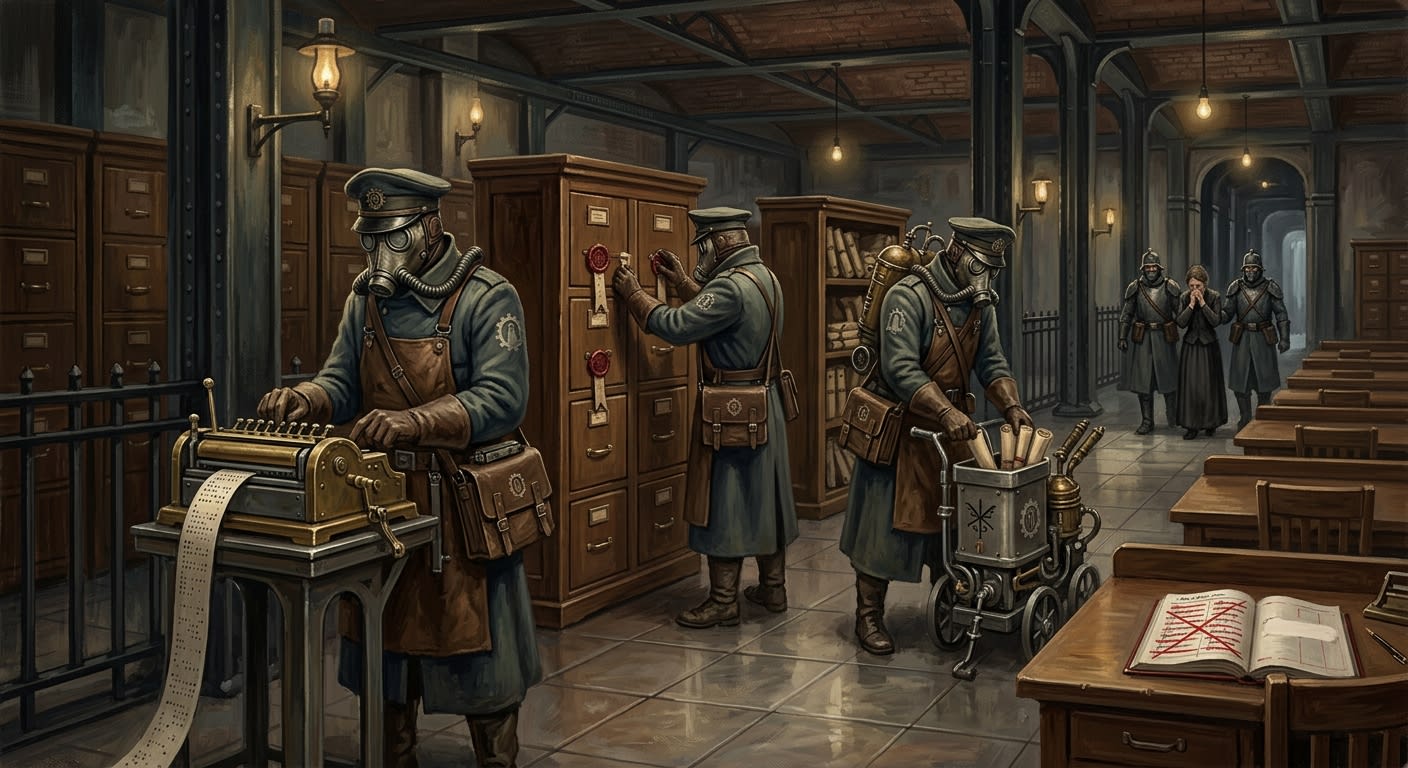
The Order of the Shroud
The mercy of no martyrs, delivered by black wagon
The Shroud does not burn heretics into warnings. It removes them into arithmetic, leaving tidy rooms, corrected rolls, and grief without permit.
Codex Ref. XI.6.01-001
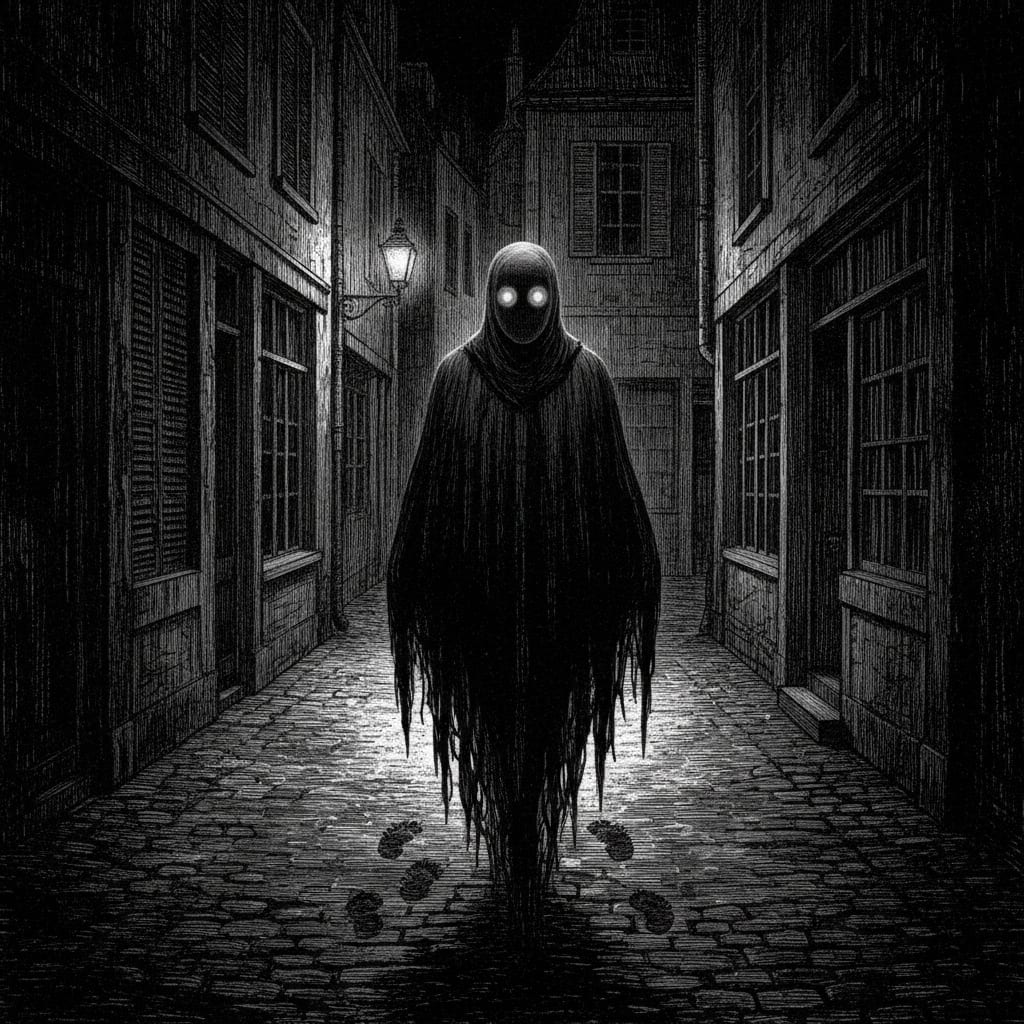
The Penitential Shadows
Those Who Watch Without Eyes
The Inquisition's faceless operatives, culled from the broken and fitted with glass-ash eyes. They do not kill. They erase.
Codex Ref. III.4.09-031
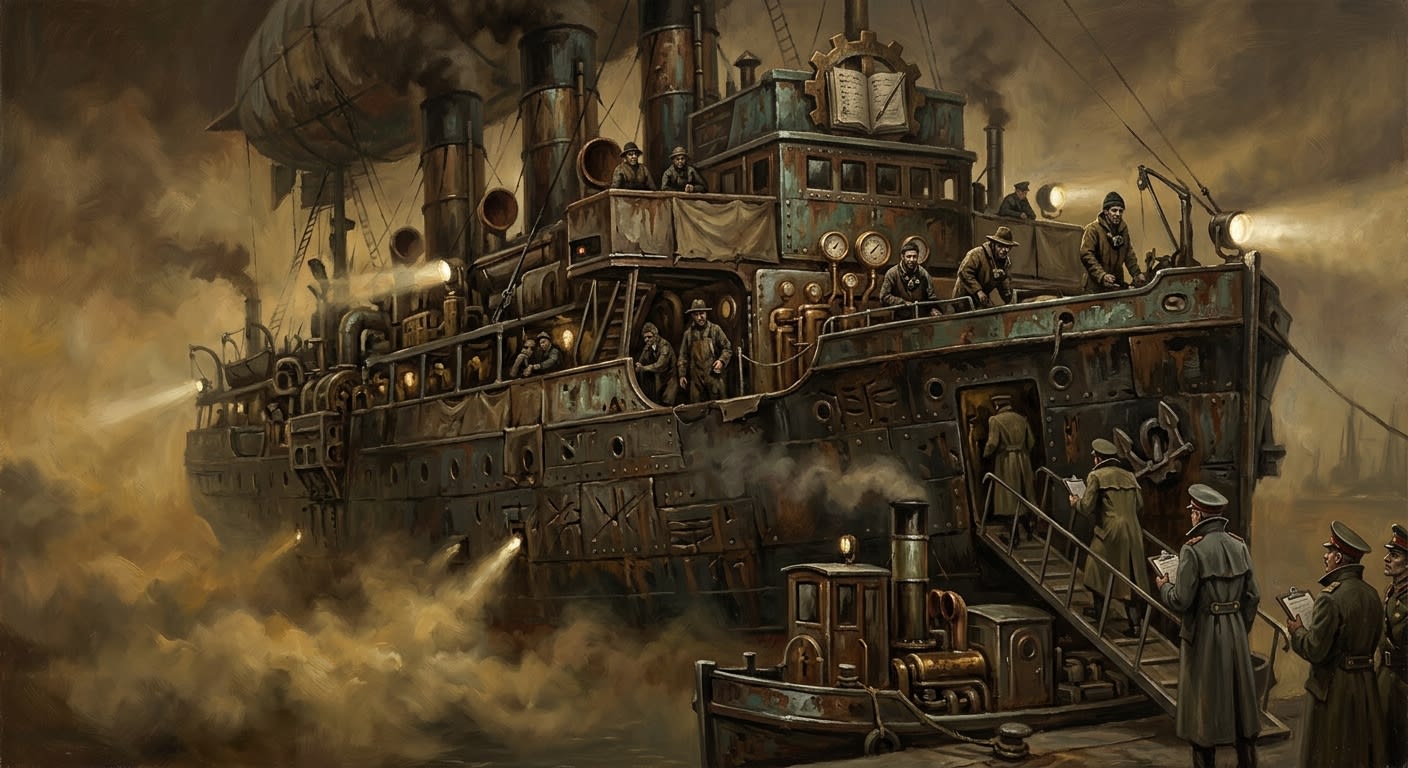
The Saint Veritas
Truth went below and returned with courtesy in its teeth
A Bureau of Records supply galleon vanished during the Silence of Harbor Lamps and returned six months later with its crew intact and its log ruined by invitation.
Codex Ref. V.2.03-001
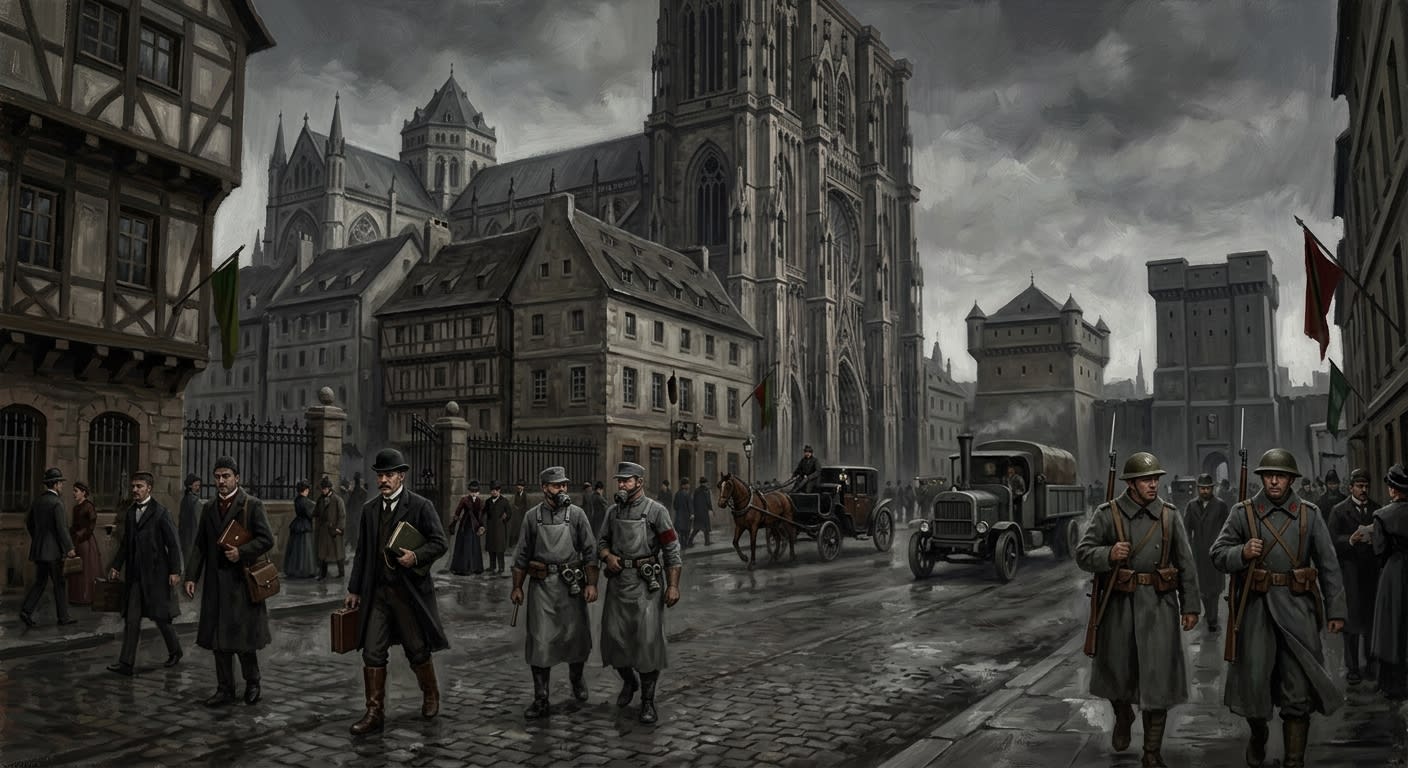
The Sanctum Mile
Strasbourg's white corridor, scrubbed clean enough to hide the blood
The Sanctum Mile is Strasbourg's white civic-sacral corridor: cathedral stone, Bureau houses, the Hall of Confessions, and the Prison of Questions in polished alignment.
Codex Ref. II.2.02-002
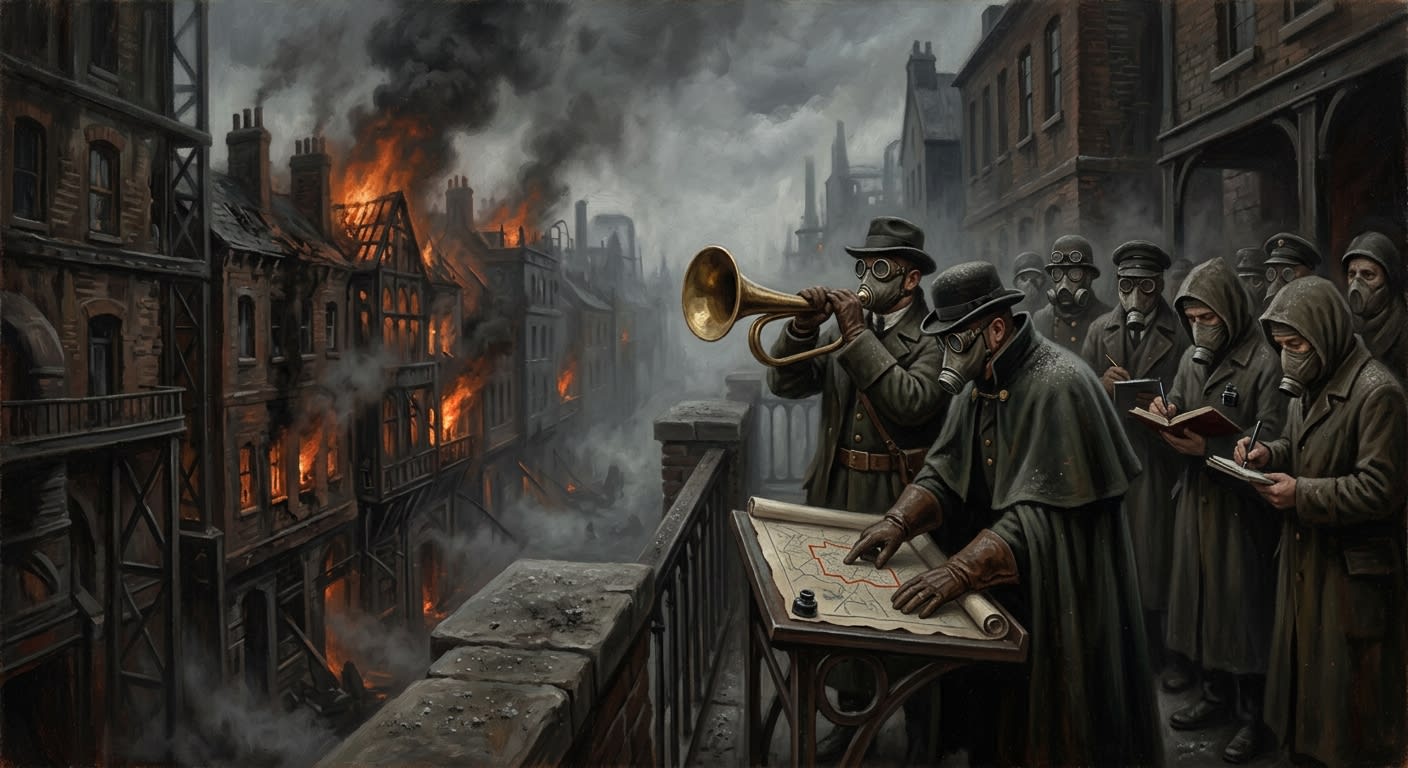
The Scour
When the Bureau decides a street has forfeited the privilege of remaining architecture
The Synod's ritual fire-purge of condemned quarters: horn, map, witness-line, and ash — the point at which bureaucracy ceases to argue and begins to burn.
Codex Ref. VI.4.01-001

The Seal-Oil Shrinefjord of Hrafnvik
Where the oil burns, the Synod extends; where it does not, the Synod invents
A fjord-village in the Fractured North where warmth is a moral category, light is taxed, and the oil burns longer than rendered fat has any right to. Drax visited once. Nine days was enough.
Codex Ref. IX.7.02-001
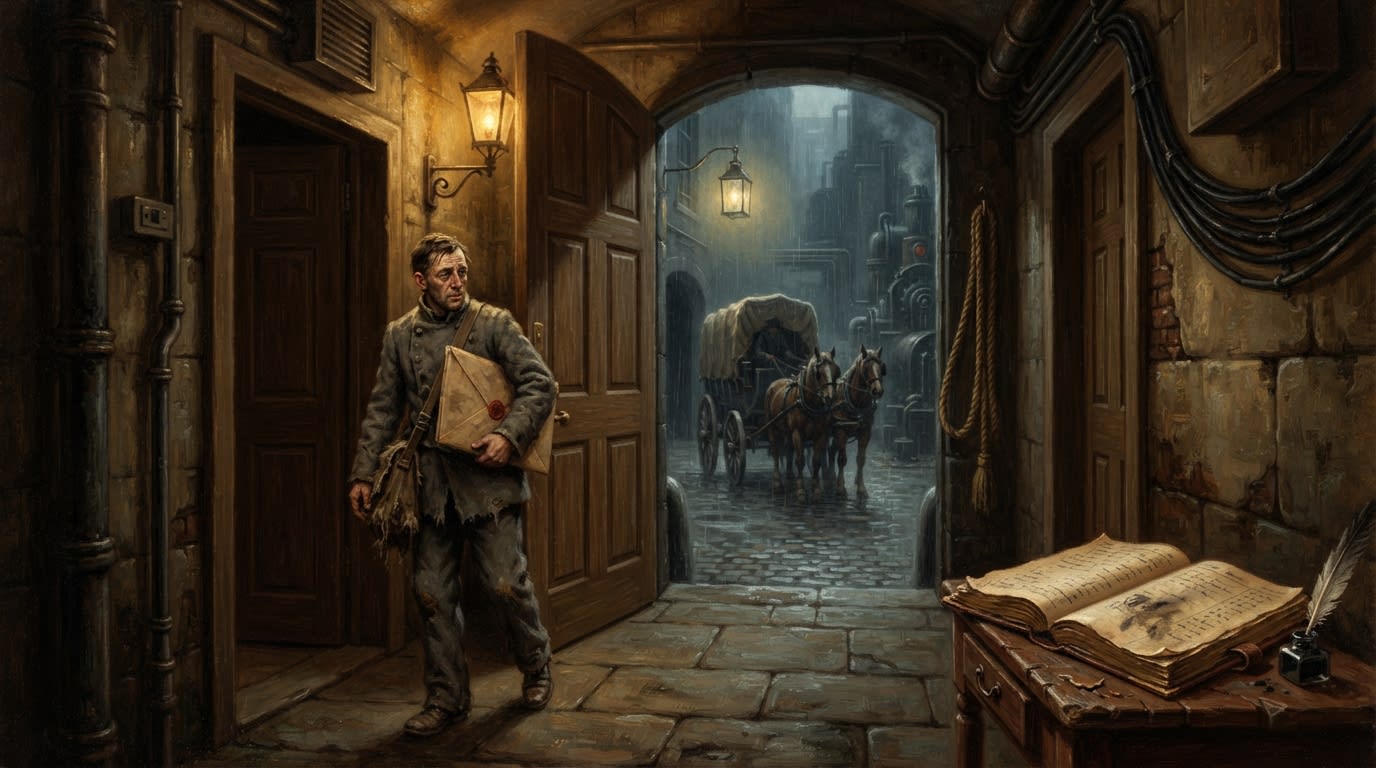
The Shadow Detail
The Hand That Writes in Rooms That Do Not Appear on Floor Plans
The Shadow Detail is the Synod's deniable hinge: clerks, couriers, wagon hands, and forgers who control the availability of persons, records, and routes. It can save a witness in the gap before procedure becomes consequence — or make that witness permanently unreachable.
Codex Ref. VIII.8.03-001
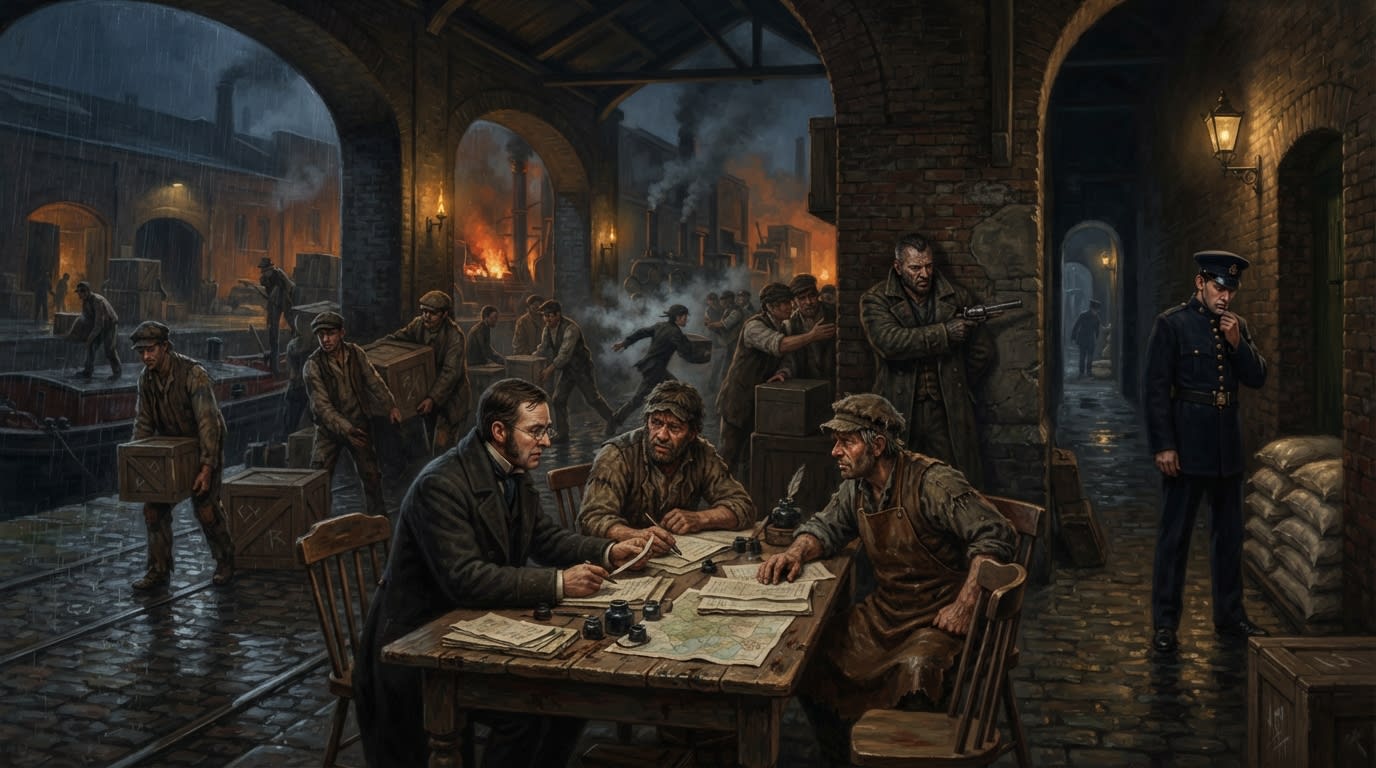
The Smuggler's Syndicate
The Other Road Has a Toll
Not a guild, brotherhood, cartel, or cause: the Syndicate is what emerges when official roads kill more reliably than unofficial ones. It moves medicine, witnesses, bodies, proof, names, and obligations through the interval between need and permission.
Codex Ref. IV.7.03-001
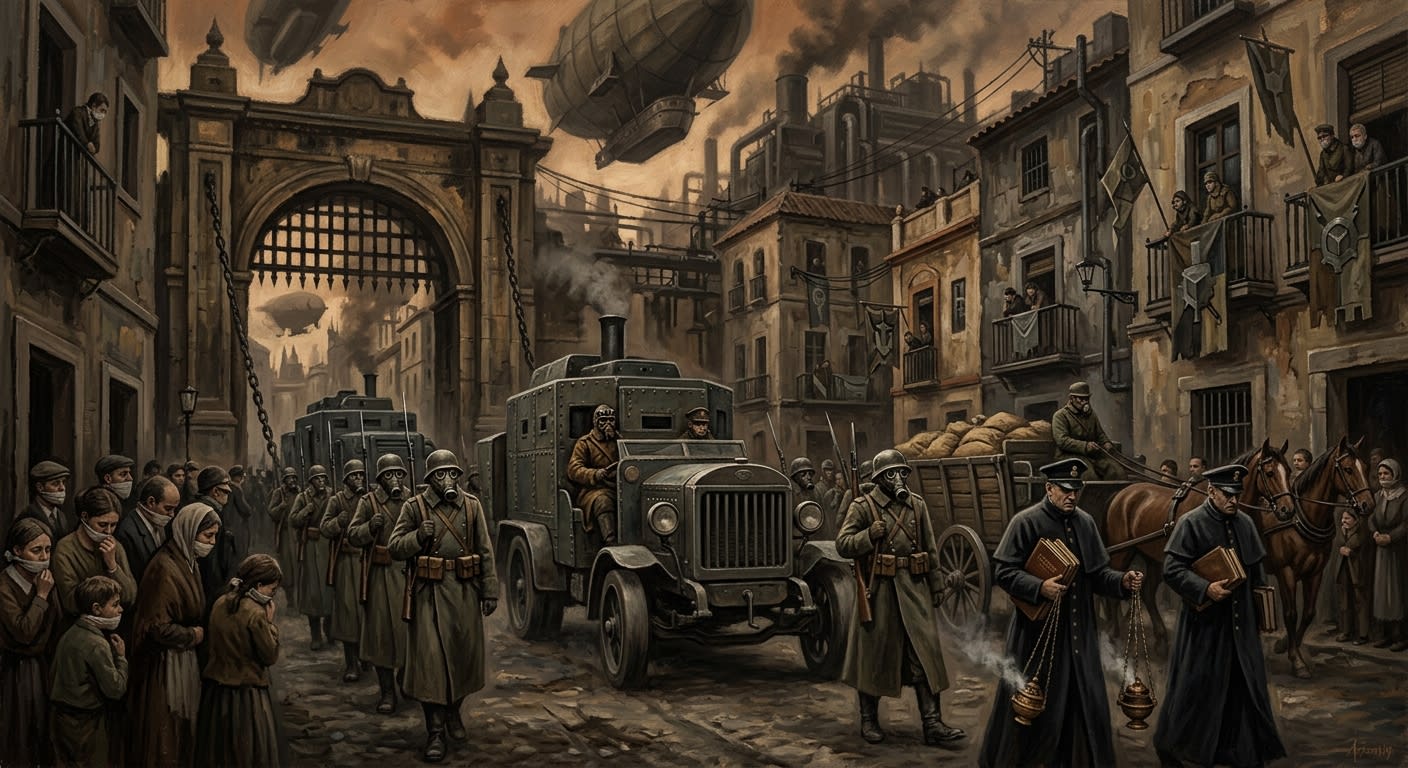
The Subjugation of Seville
A siege so well dressed in liturgy that the Ledger called it a procession
In A.S. 155, Seville was corrected by procession: gates opened under writ, calendars shortened, mouths disciplined, granaries emptied, and conquest taught to smell like incense.
Codex Ref. VII.8.02-002
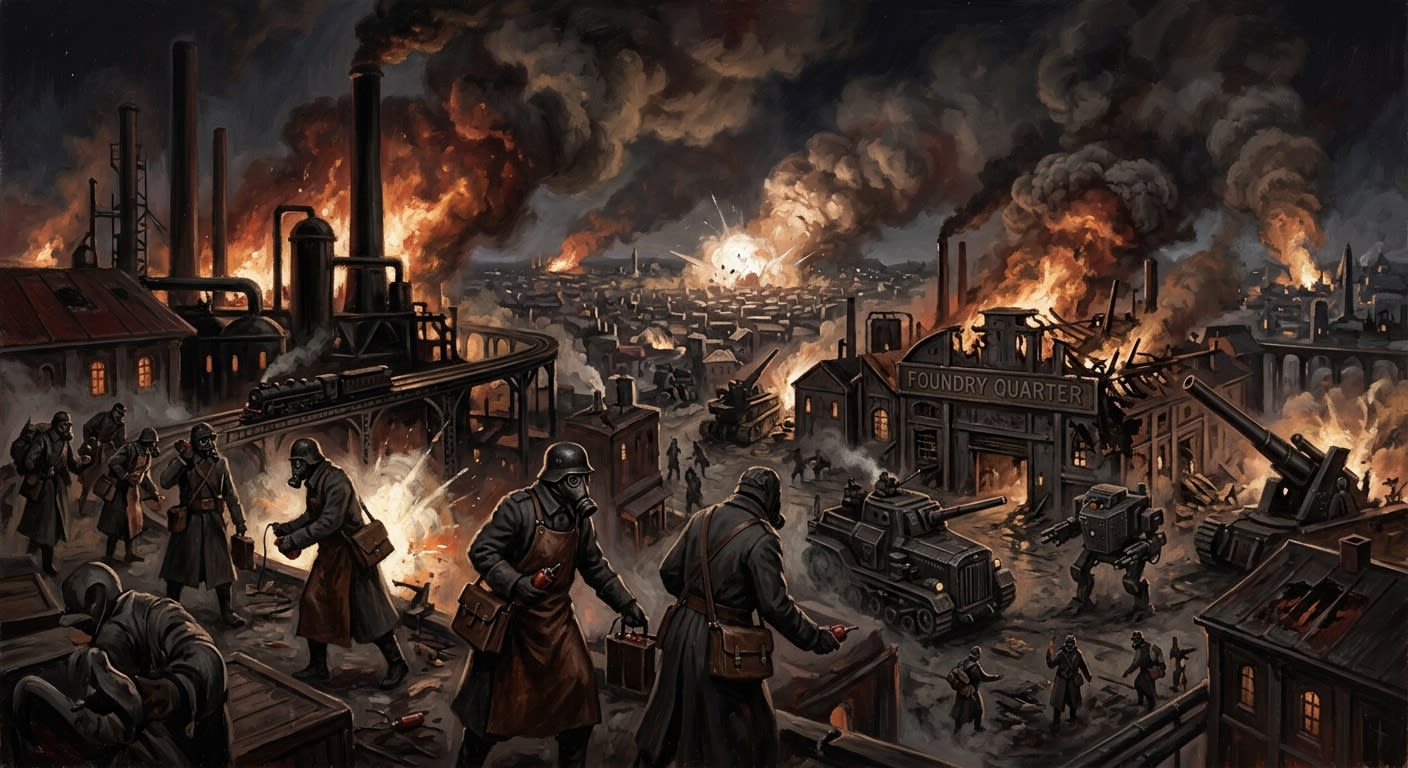
The Three-Night Bombard
Constantinople learned that a paid invoice may be louder than cannon
Velmora's A.S. 177 infiltration detonated Constantinople's Foundry Quarter for three nights, teaching the southern anchor that debt can breach what artillery cannot.
Codex Ref. VII.5.03-001
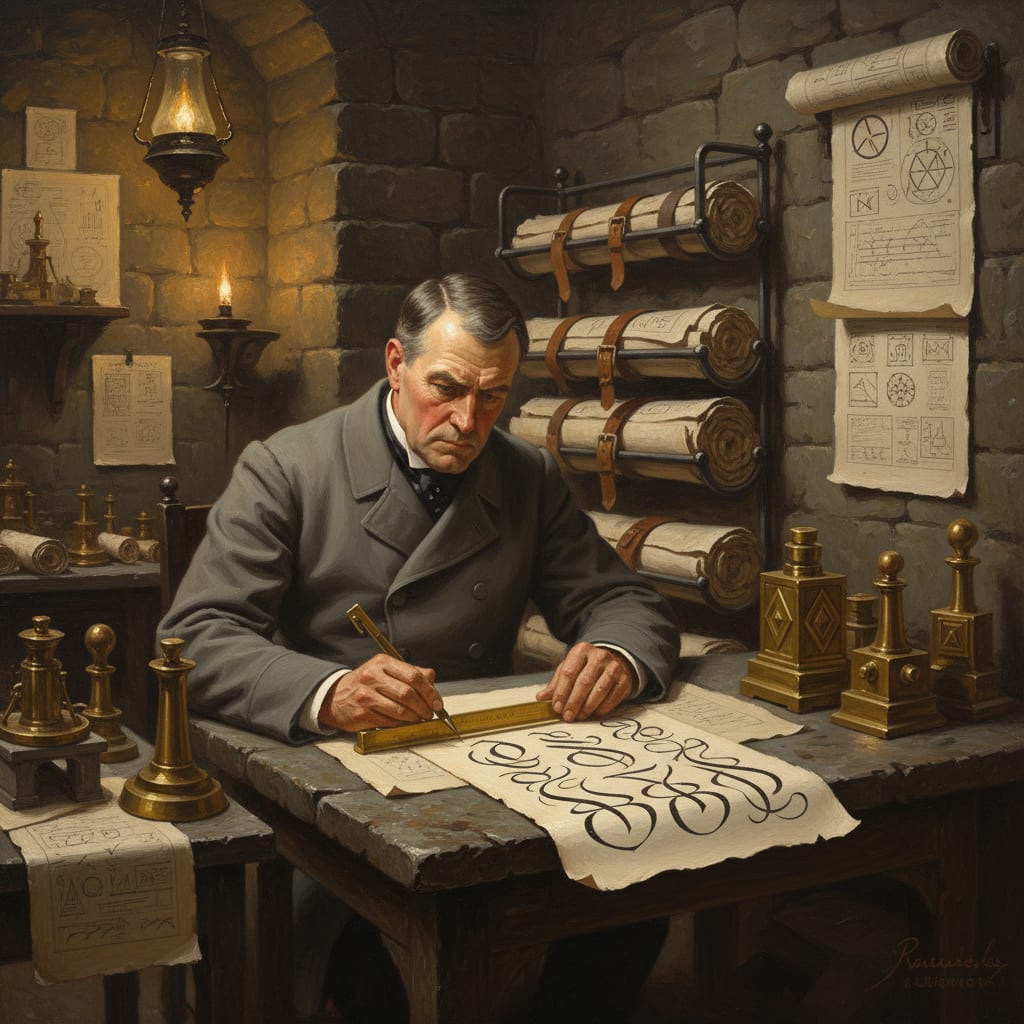
The Triune Alphabet
Twenty-three approved letterforms; everything else is heresy in the first stroke
The Triune Alphabet is the Synod's most perfect instrument of control: twenty-three approved letterforms, each angle mandated, each curve licensed, every dialect that falls between them erased. Procurator della Torre did not merely prescribe script. He proscribed thought.
Codex Ref. XIII.1.03-001
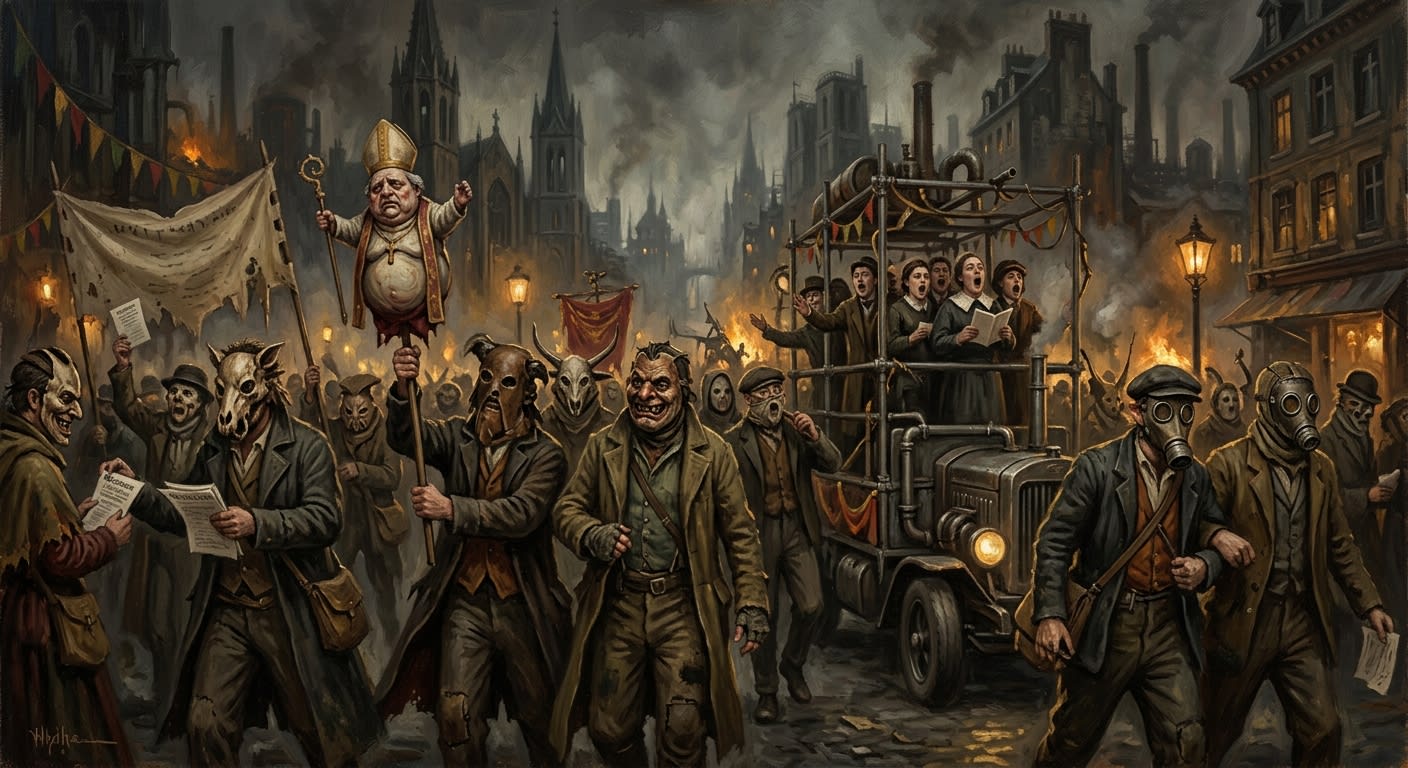
The Tumults of Lyon
Where licensed laughter discovered teeth and the bear wore a mitre
In A.S. 170, Lyon's licensed Carnival of Saint Bérard's Misrule became nine hours of masks, pamphlets, puppet blasphemy, altered hymns, and audited laughter.
Codex Ref. VII.4.11-001
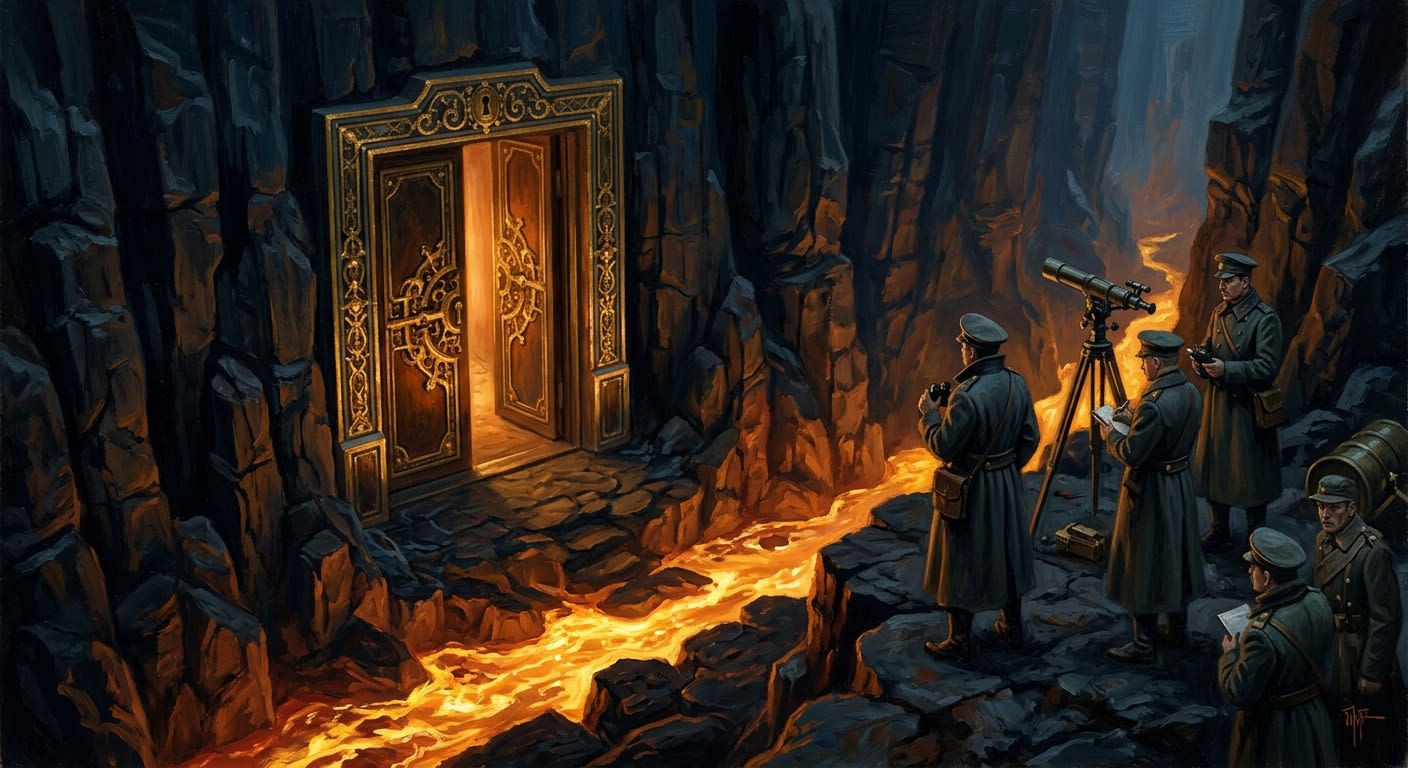
The Vault of Ten Thousand Keys
Every door opens. Every door locks behind you.
Velmora's seat within the Gilded Chasm — a palace of infinite descending doors, each one beautiful, each one locking behind you. Four expeditions entered. None returned intact. The Bureau has recommended permanent interdiction.
Codex Ref. V.6.02-001

The White-Mantled Inquisitor
The Bureau does not silence speech; it teaches the population to do it themselves
Bureau of Purity's language constables — Chalklings, Mantle Examiners, Chainmasters, and Glass-Canons — charged with containing unregistered speech, enforcing the Index Claritatis, and hunting the phrases that make the chain sing.
Codex Ref. XII.49.01-001
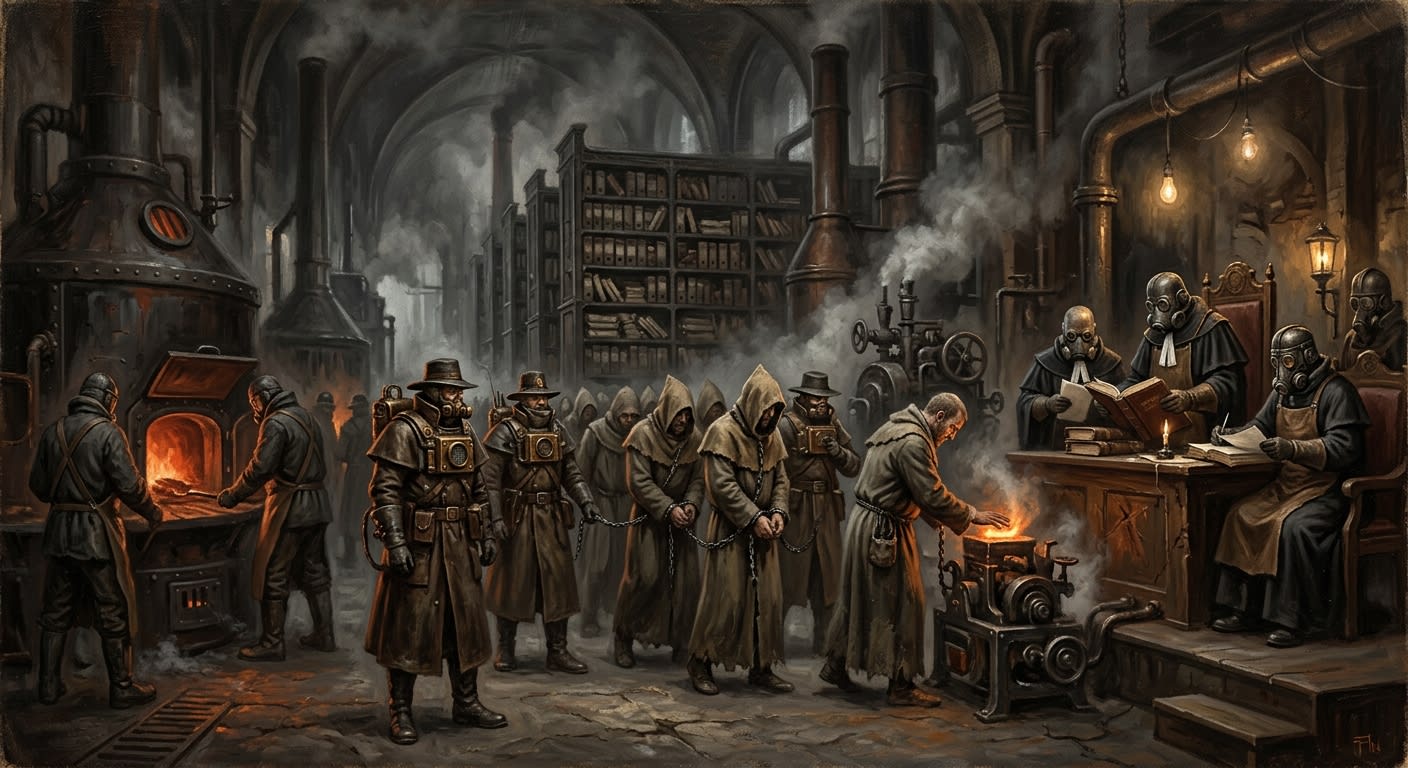
The Witch-Hunts of Toulouse
The fire that learned to file its victims
Toulouse taught Purity its grammar for cruelty: warrant before fire, confession before brand, spectacle before silence, silence before archive.
Codex Ref. VII.8.02-001
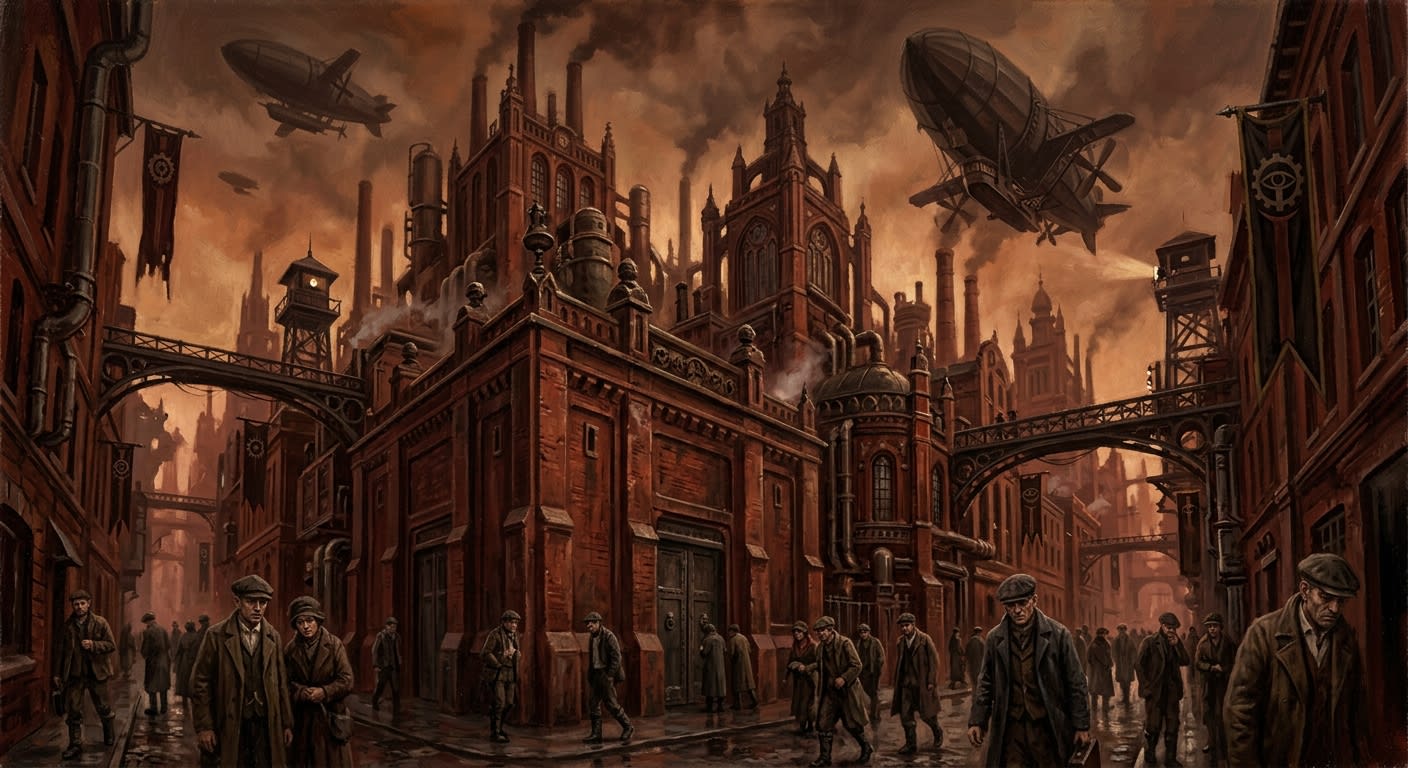
Toulouse
The safe city where Purity learned its grammar
Toulouse is the red-brick safe city corrected in A.S. 93: birthplace of Purity's public dread, still loyal, profitable, lowered-voiced, and watched.
Codex Ref. II.1.09-093

Undertide Divers
Rope at the waist, token at the heart, and the sea waiting below the chalk
The Undertide Divers of Calais are the Black Lungs: militia-specialists sent under the chalk to recover bodies, map sea caves, and return with truths the shore would rather drown.
Codex Ref. XII.13.03-001