

Reverse Index
Referencing “The Queue Road”
Every codex entry that links to The Queue Road. 134 entries.
Return to The Queue Road
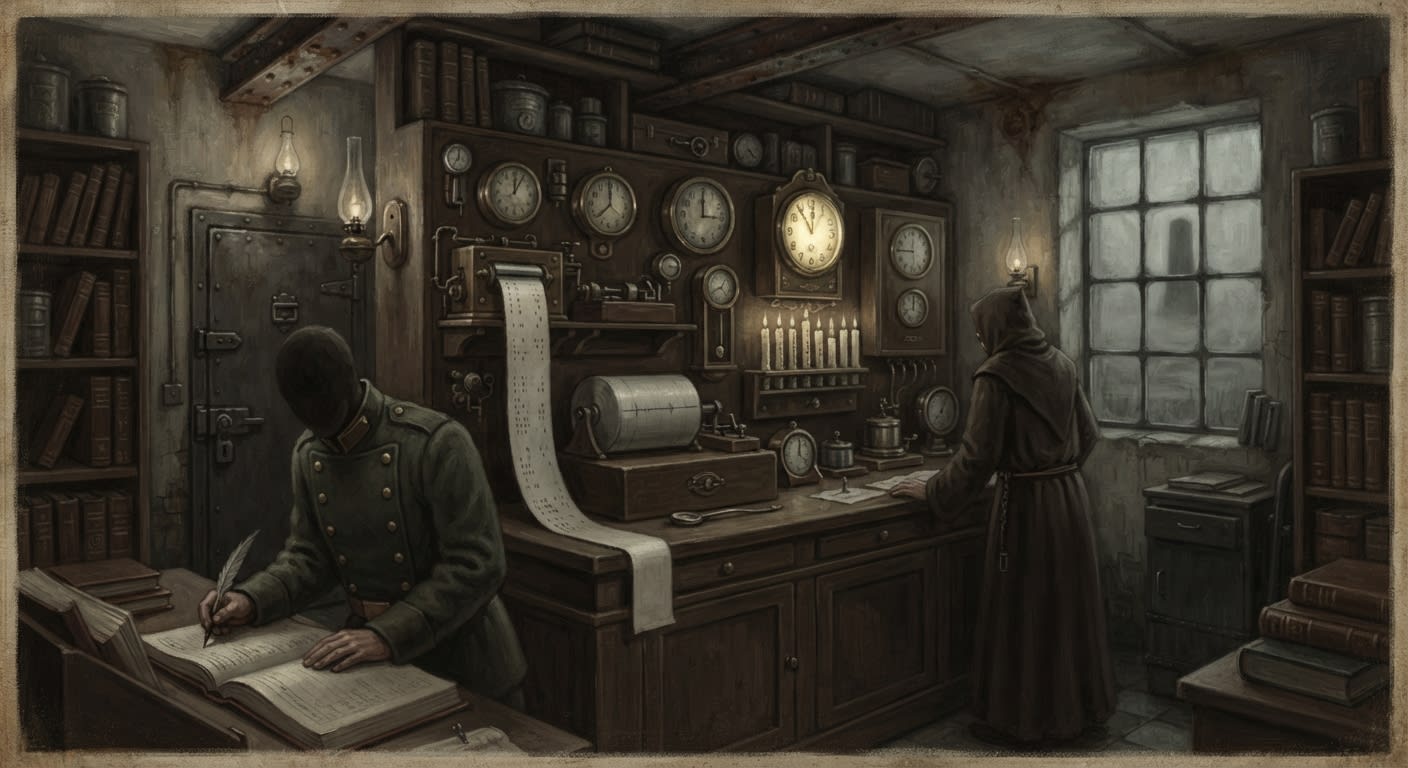
A.S. 199 Skip
The minute and a half that Station Two loses without noticing
The A.S. 199 Skip is Station Two's daily ninety-second absence: a clean missing interval that refuses Syrion, the Monolith, and every decent habit of causation.
Codex Ref. VII.5.06-199
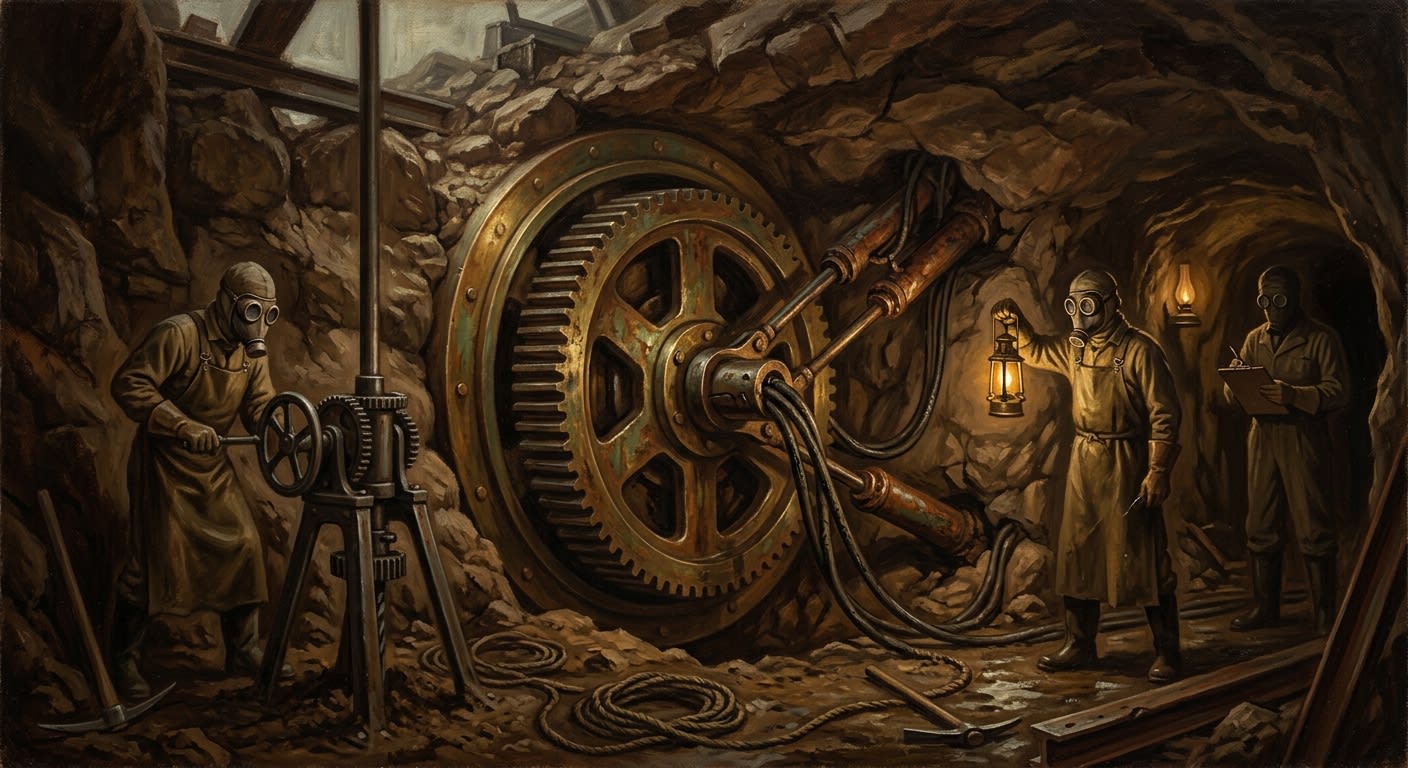
Apparatus of Gate Nine
The drill went down for vibration and returned with doctrine
A.S. 178 Gate Nine survey in which Bureau of Engineering Team Gamma-9 drilled beneath the Queue Road and found a turning wheel, a sealed chamber, and obedience already waiting.
Codex Ref. VII.4.15-001
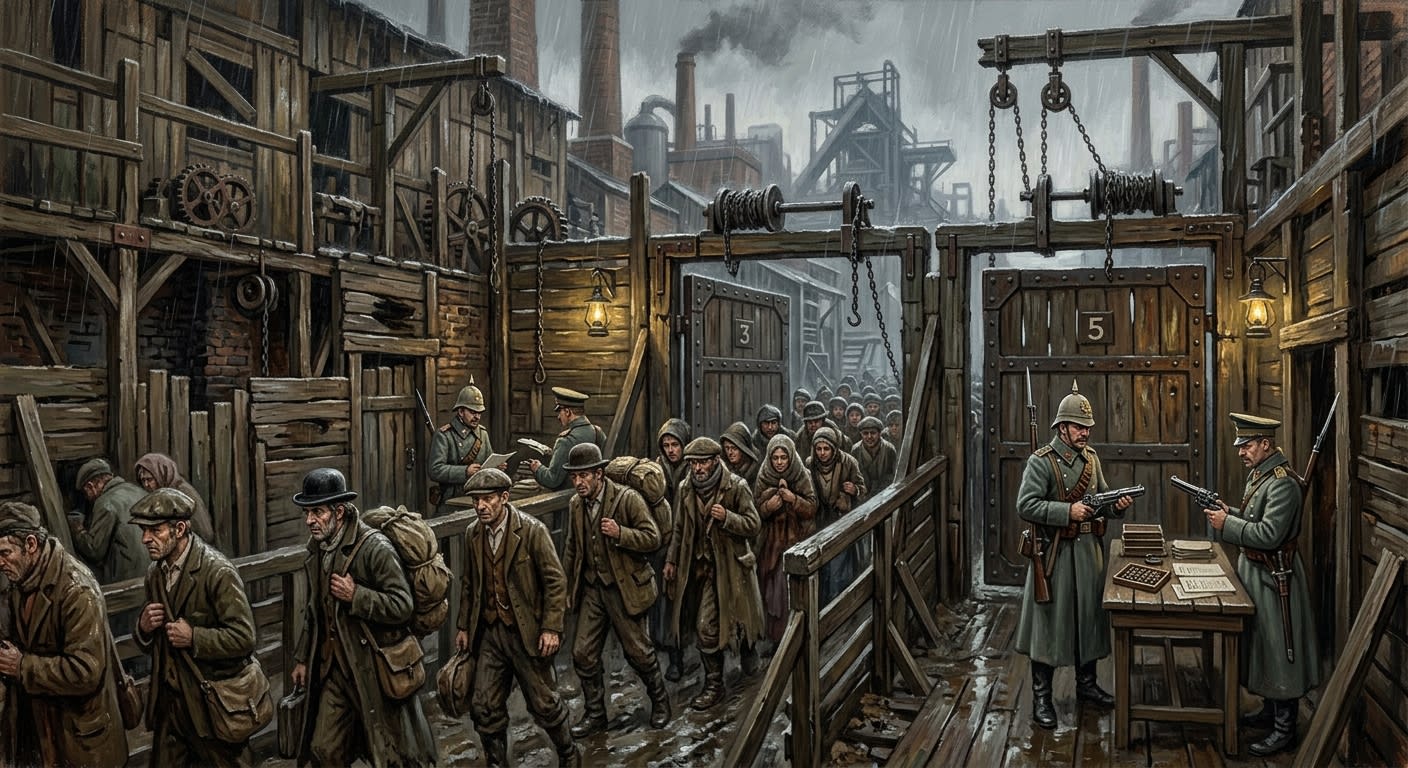
Barricade Maze
The fence that taught patience to pay rent
The Barricade Maze is the Queue Road's wet timber throat, where Gates Three and Five compress bodies, minutes, debts, and heresies into orderly revenue.
Codex Ref. II.3.05-010
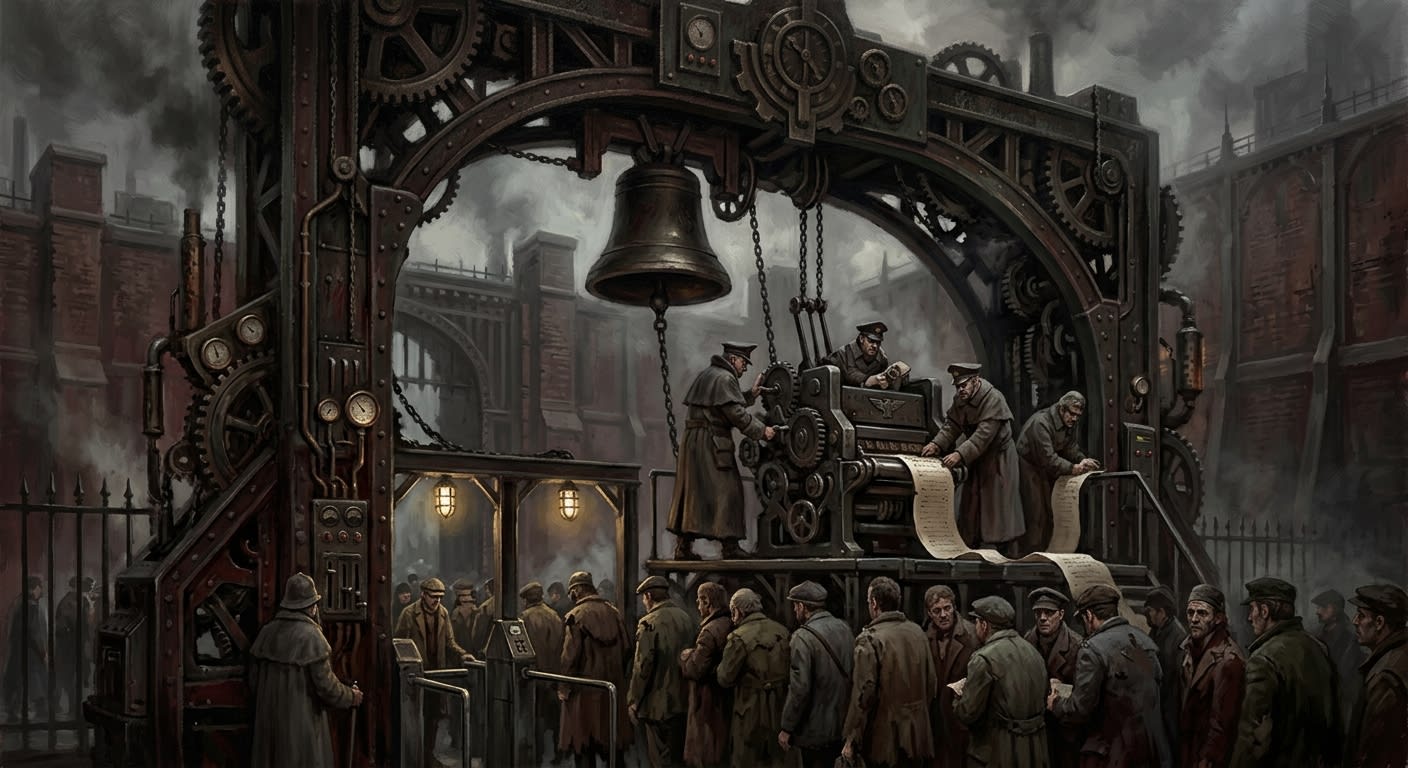
Bell-Mark Gantry
A stamp is violence without perspiration
The Bell-Mark Gantry is the Queue Road's iron throat above Gate Three, where bells, stamps, and priced minutes convert waiting bodies into lawful revenue.
Codex Ref. XIII.1.16-111
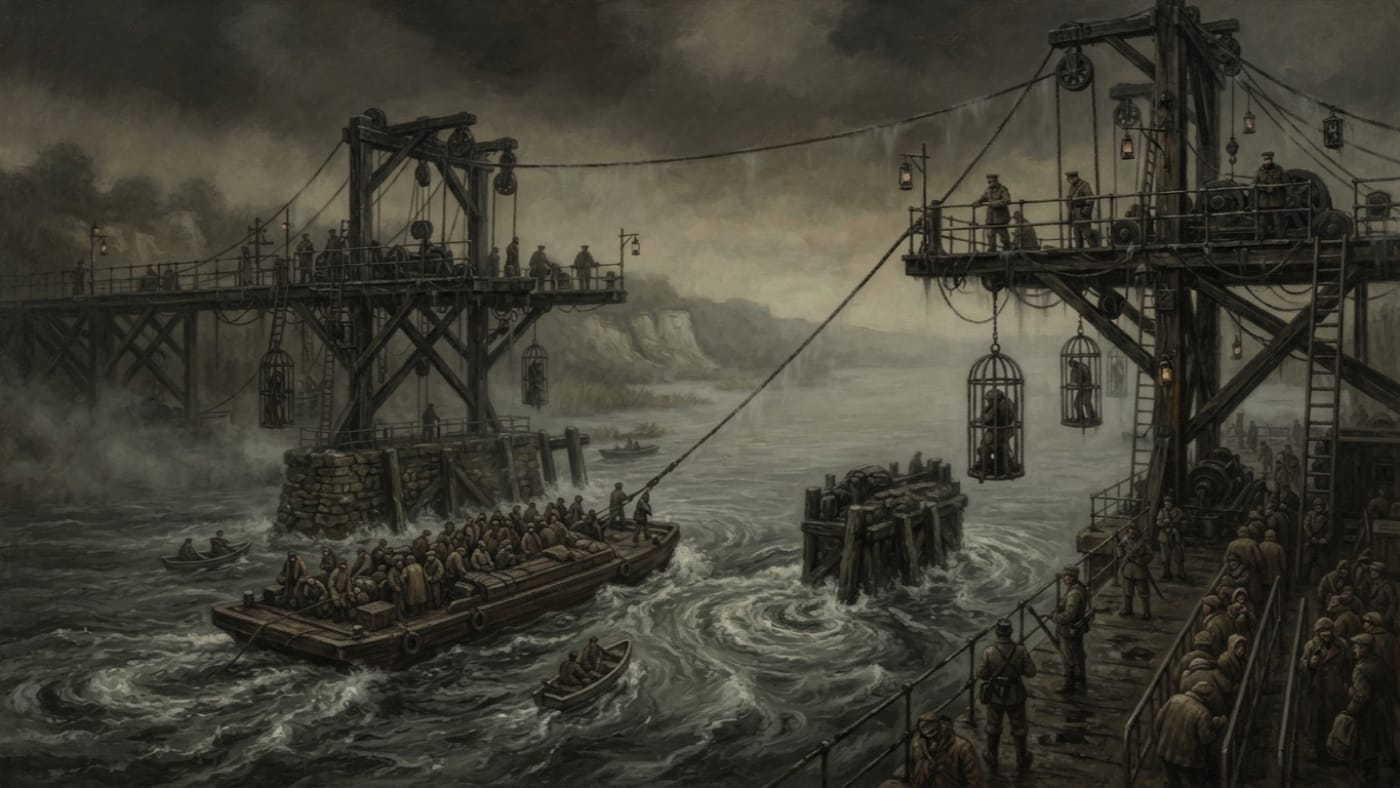
Bend Ferry
Read the rope, then cross
At Node Seven, the Chain's fastest current runs beneath drowning cages and a rope that writes the future. The Throat remains open, subject to the river's corrections.
Codex Ref. II.3.05-007
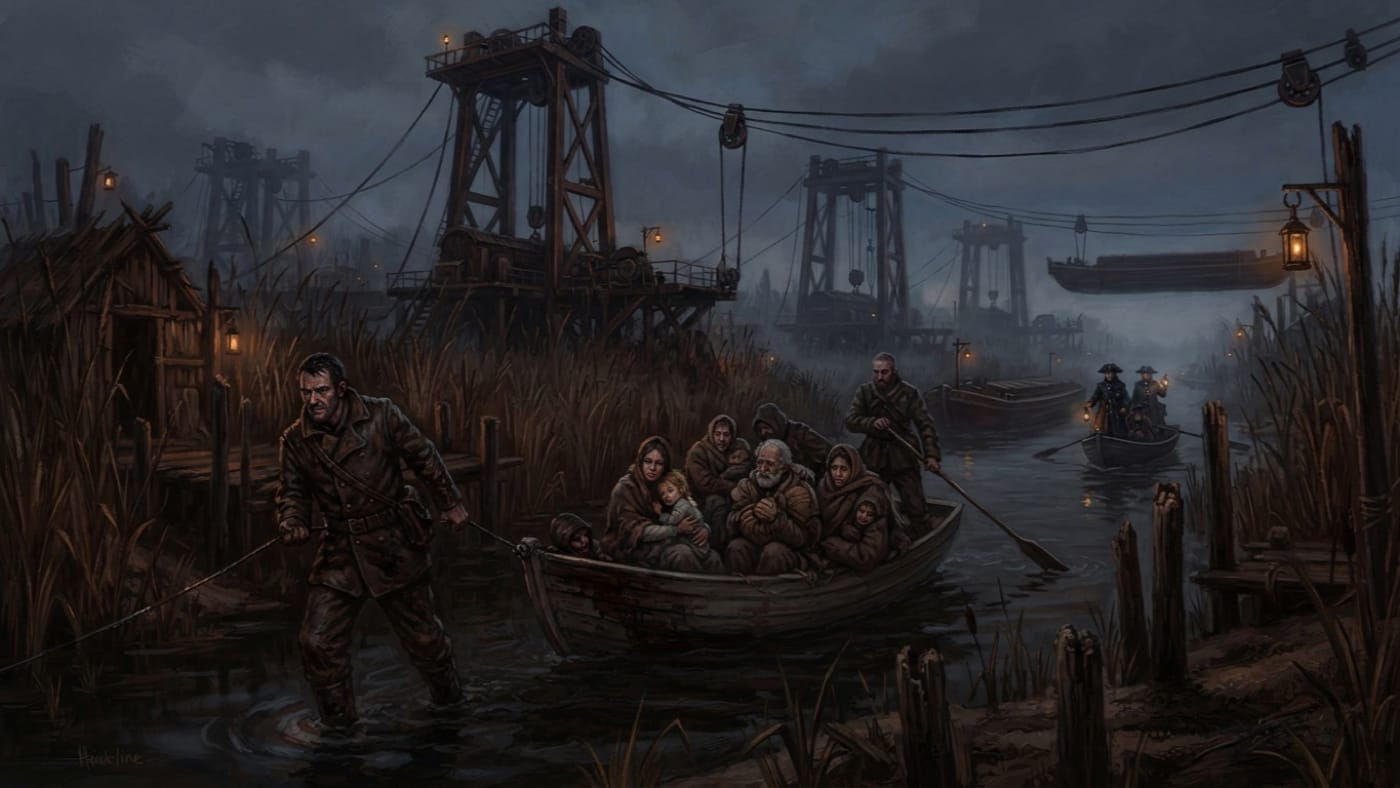
Black Ferrymen
The river keeps no curfew
The Black Ferrymen carry the Rope-Ferry Chain's rejected passengers through reed channels after curfew. The provosts sell them schedules, seize their cargo, and sell it back.
Codex Ref. XII.16.02-001
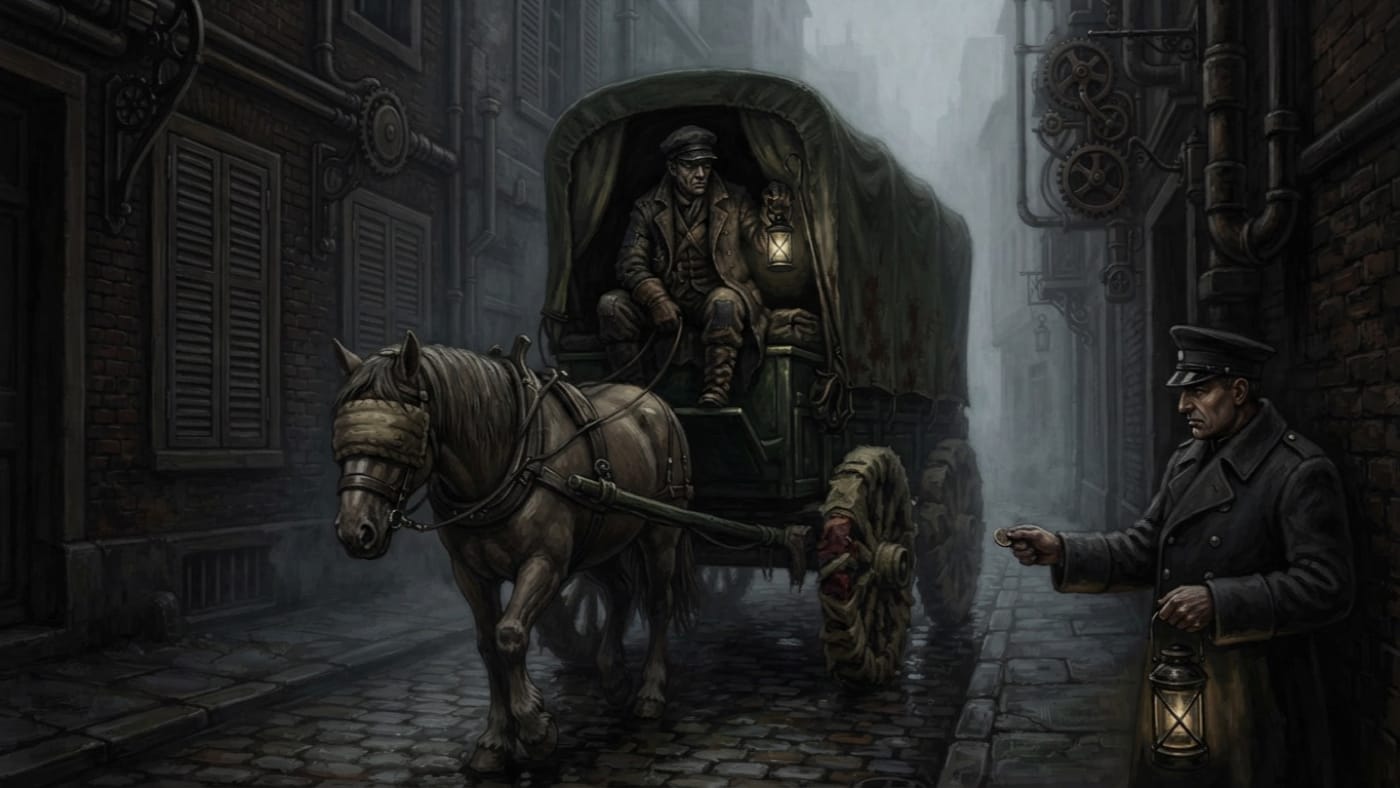
Blackwheel Freelancer
The Bureau's method, invoiced to someone else
Blackwheel Freelancers sell the Bureau of Shadows' silent cartage to private clients, proving that a sacred monopoly is merely a method with expensive gate-men.
Codex Ref. XII.14.04-002
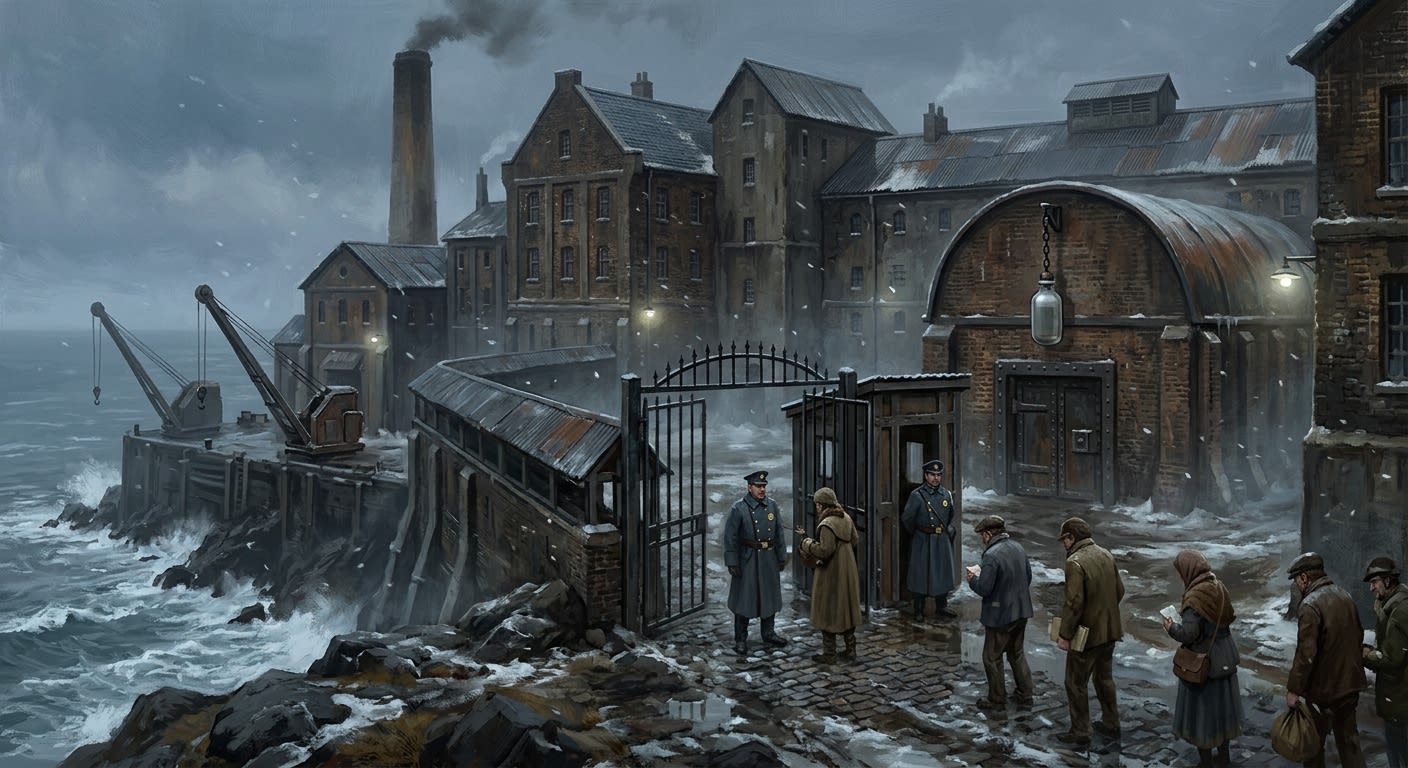
Brine Fork
Where three roads pay their grief before choosing a direction
Brine Fork is the Salt-Vigil island where winter roads divide, tolls become grief, and the Phial Cellar keeps the tears with better discipline than mercy.
Codex Ref. II.3.05-082
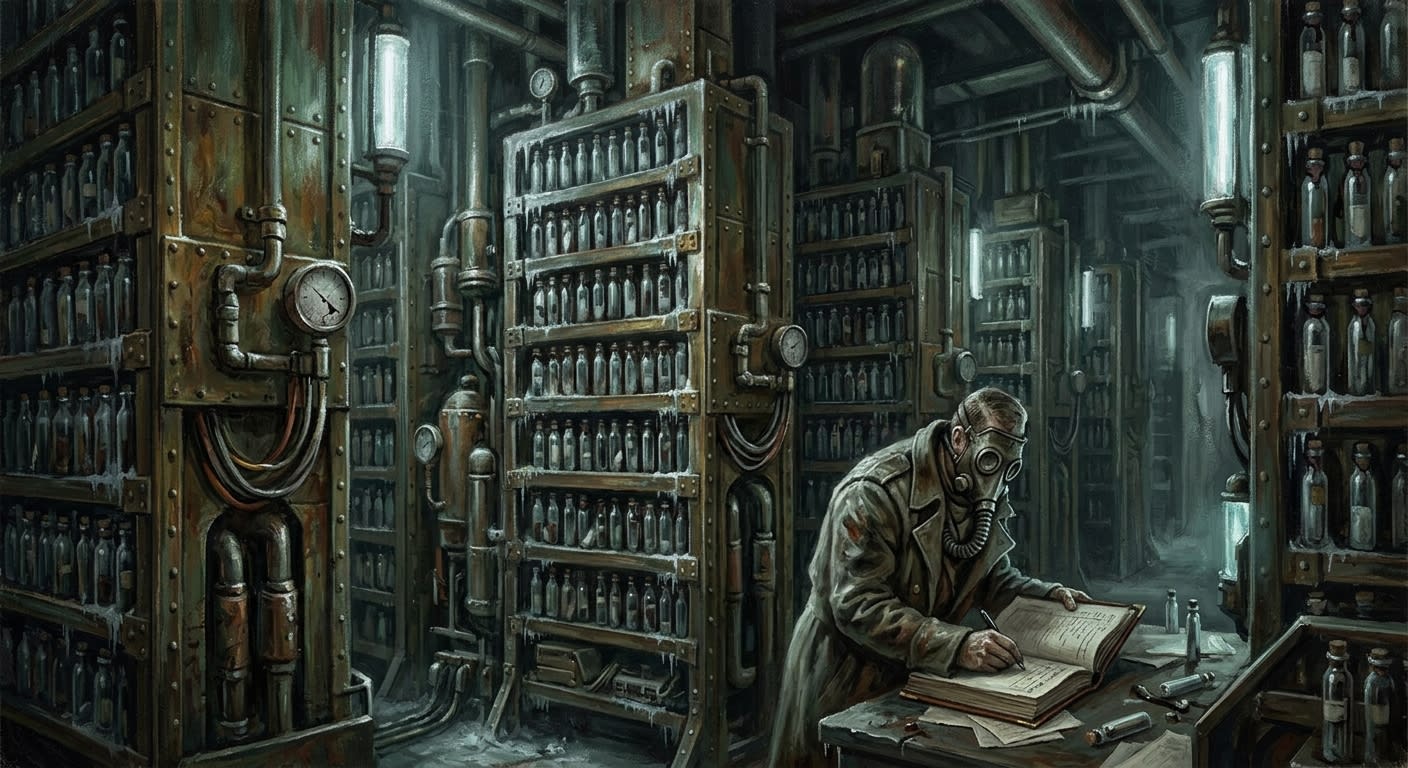
Brine-Fork Phial Cellar
The room where grief is improved by glass, wax, and duplicate ledgers
Beneath Brine Fork, eleven thousand four hundred and six sealed tear-phials hum, lean, frost, and teach the Synod that grief keeps accounts.
Codex Ref. XIII.1.25-001
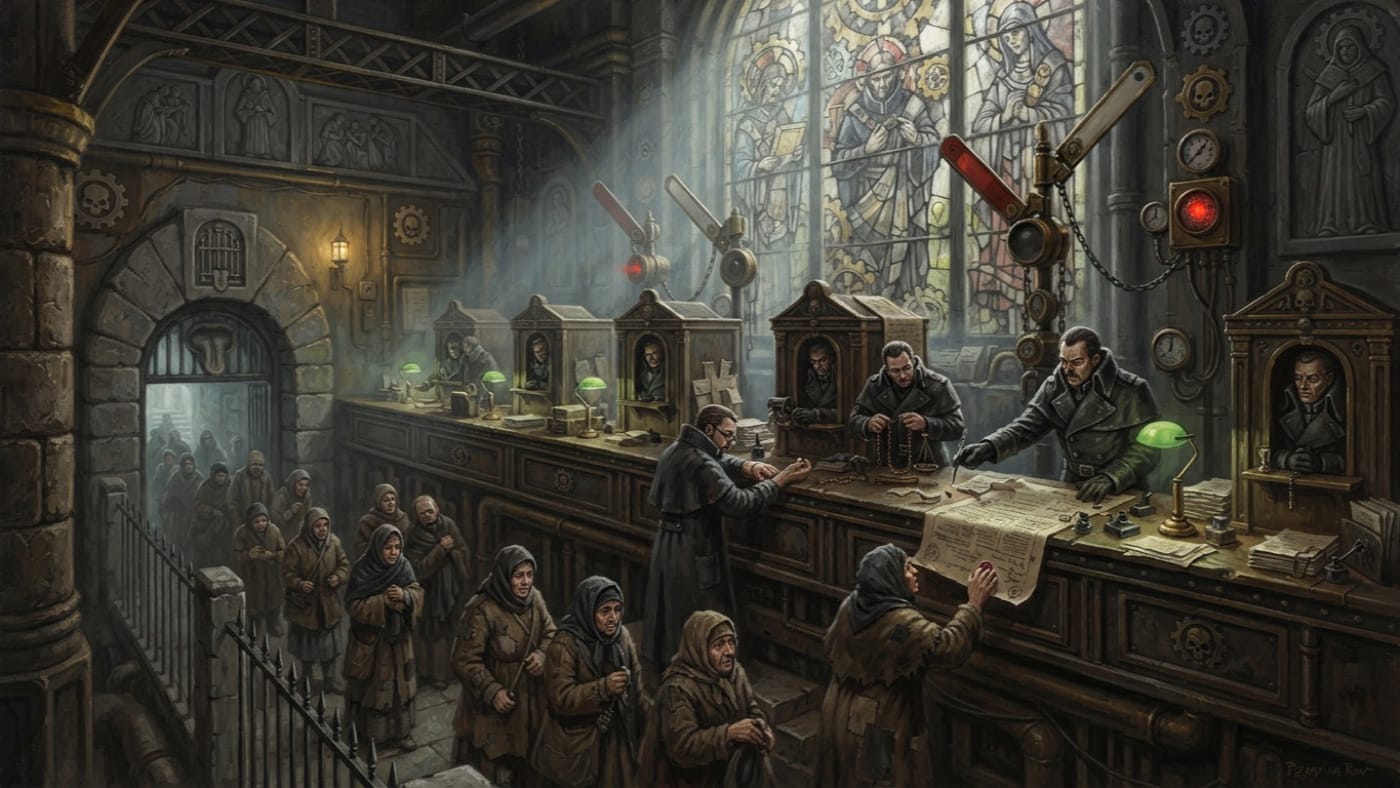
Broker Compact
Safety is sold by the bell; liability disappears by the vowel
Peregrine Row's licensed insurance guild sells canyon passage by the bell-window. Three founding families hold its hereditary seats; escort bonds, creed scores and grief clauses keep protection profitable under continuing Amber review.
Codex Ref. XII.32.01-201
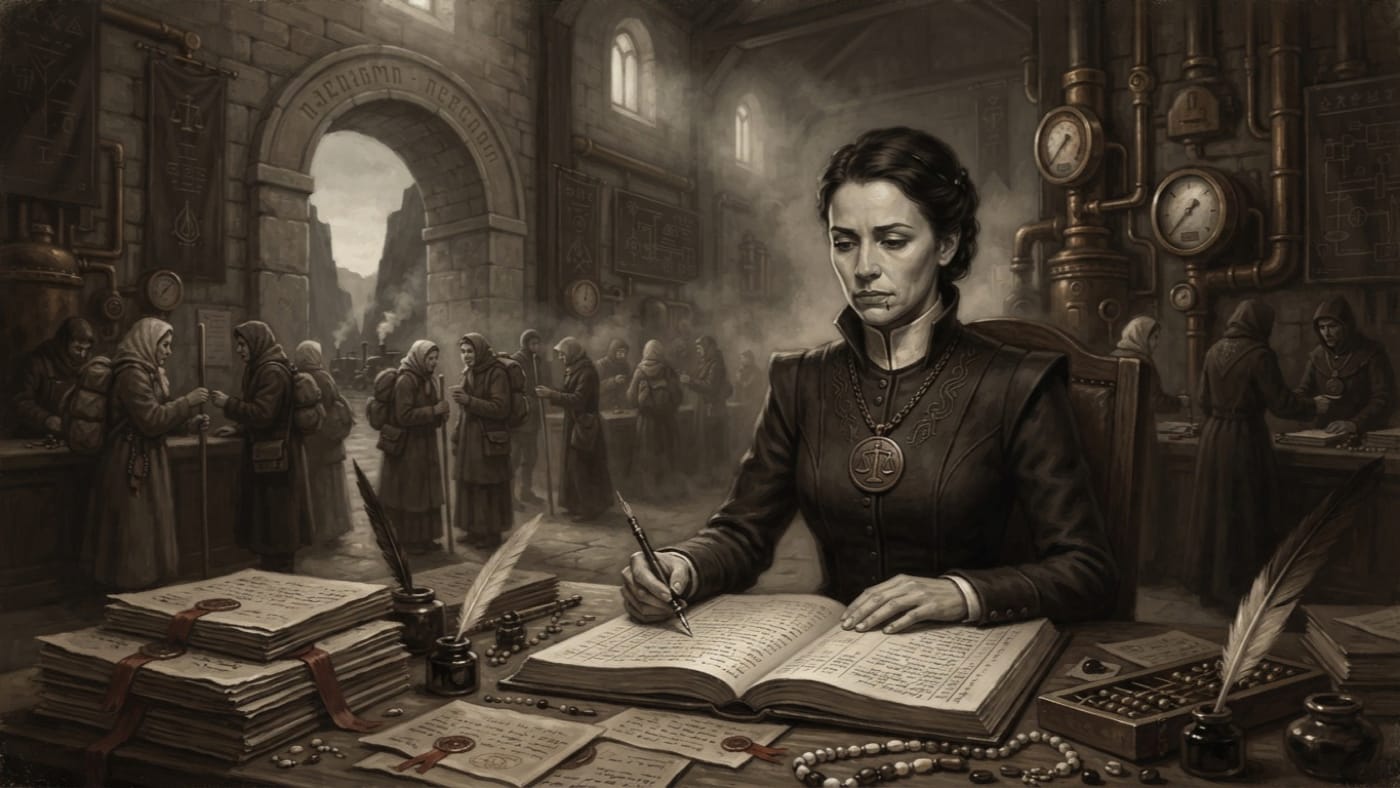
Broker-Matron Lysa Vane
She prices the passage and keeps the bodies in the ledger
Lysa Vane prices pilgrim protection at Peregrine Row and drafts its grief clauses. Her private ledger records the dead, the payments and the refunds denied. The Compact sells insurance; she keeps her own.
Codex Ref. III.2.01-361

Brother Erasmus of the Fourth Post
A hand in black water, a transfer denied
Brother Erasmus touched the Fourth Causeway water, asked to leave, and was kept where the road could see him. His A.S. 201 file records sound doctrine, heavier tears, and a transfer still denied.
Codex Ref. III.2.01-202
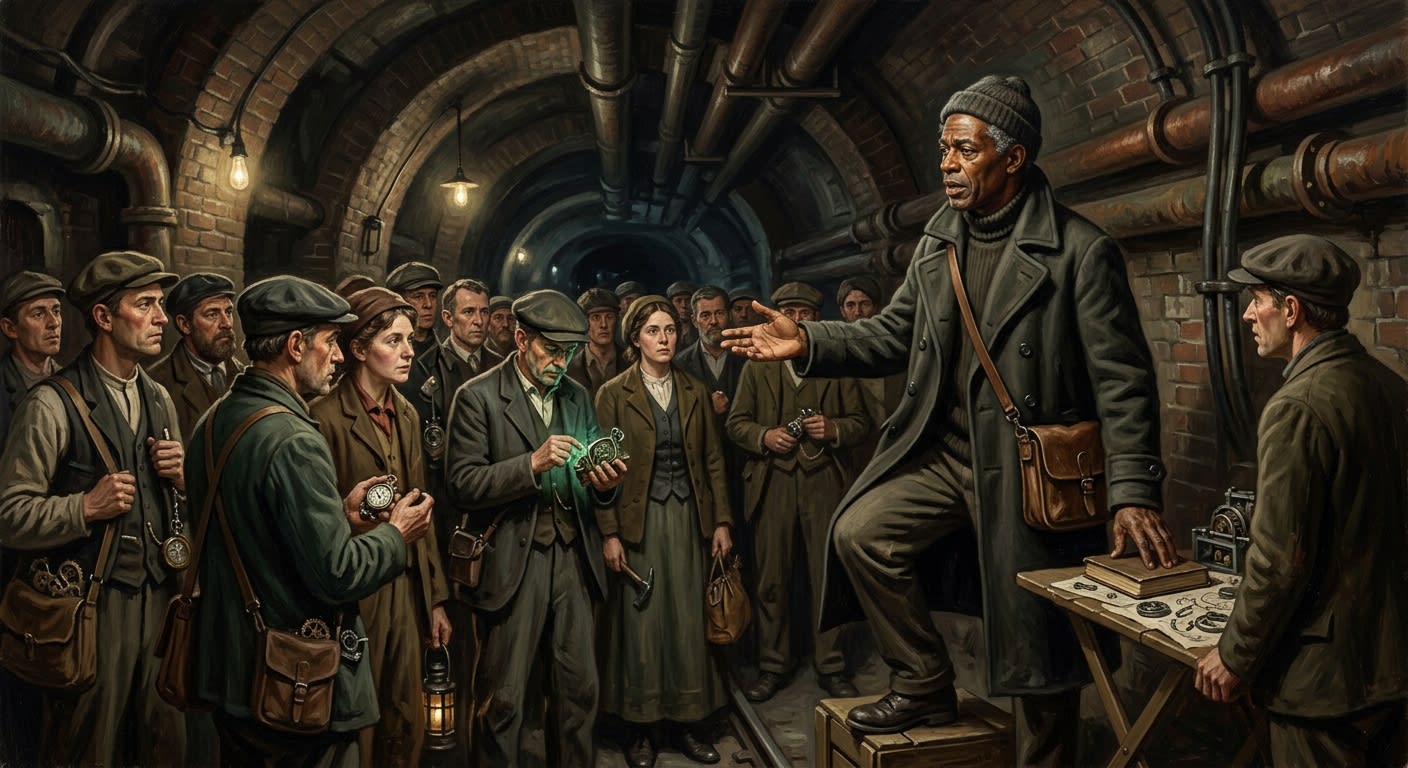
Brother Senn
The unlicensed preacher who makes a wrapped clock sound like absolution
Brother Senn, preacher of the Unstruck beneath the Queue Road, teaches that no bell owns the hour — a vulgar heresy made dangerous by being mechanically useful.
Codex Ref. III.2.01-042
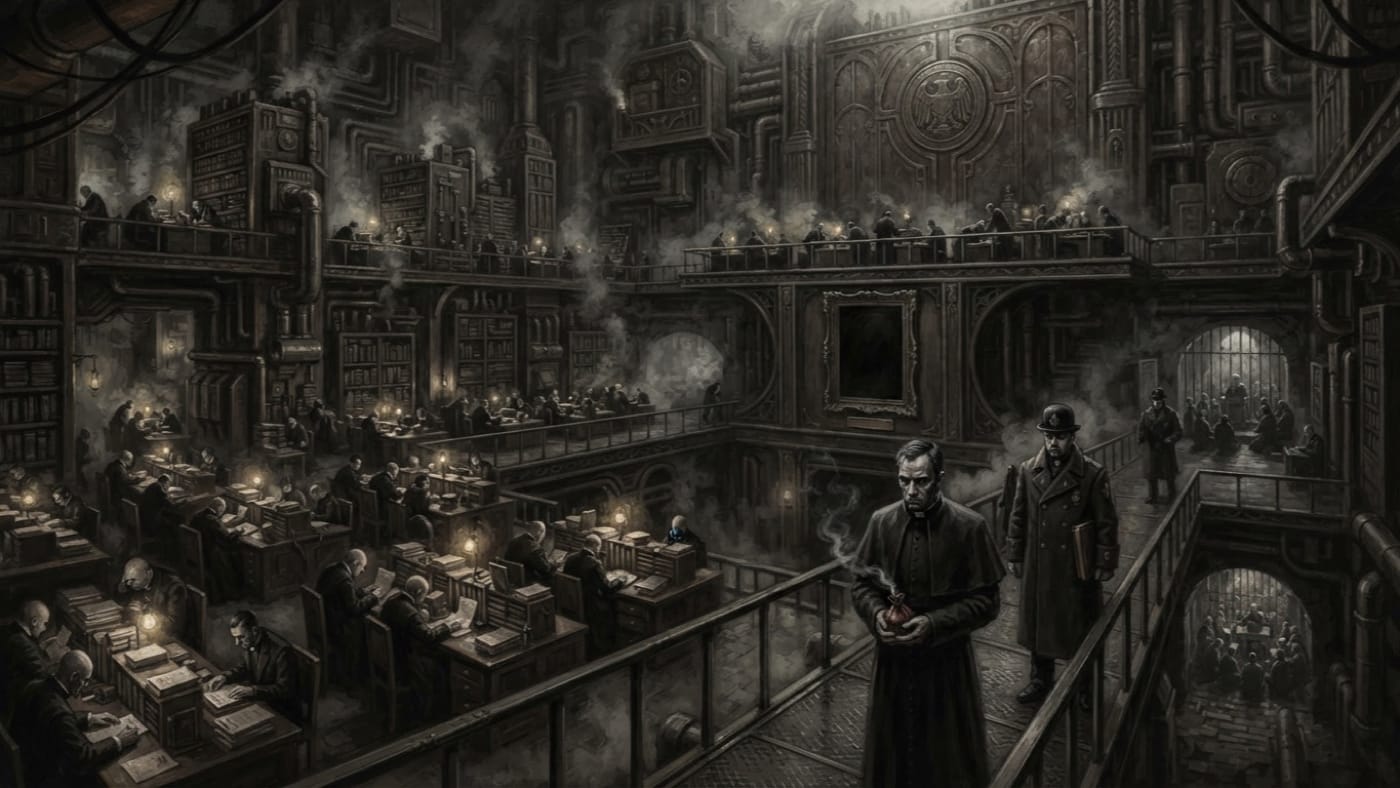
Bureau of Discipline
The office that recognises pulpits and withholds praise
The Bureau of Discipline decides which pulpits count and when vanished superiors may be praised. A cleric may retain his tongue and still lose his standing.
Codex Ref. III.3.03-001
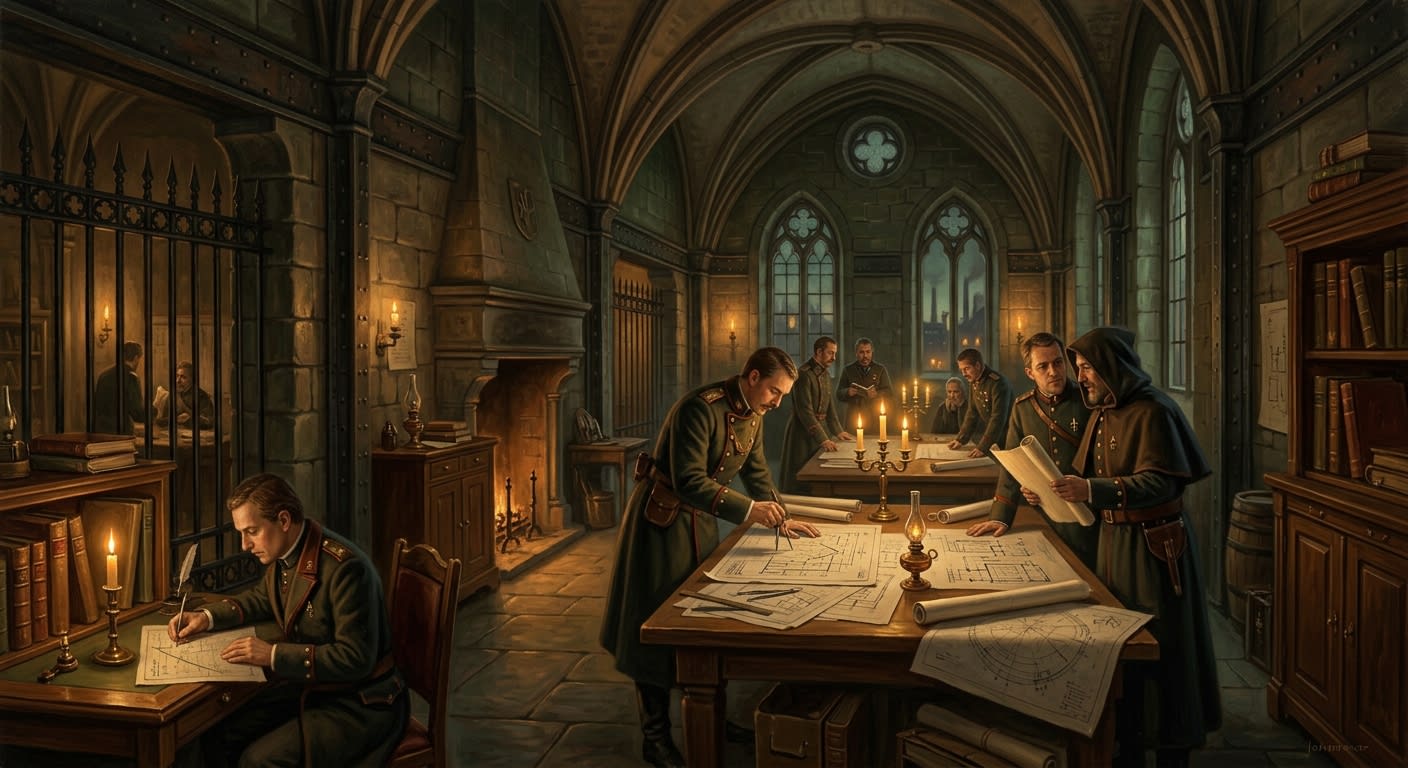
Bureau of Engineering
The number is the number, and the number does not care whether you find it convenient.
The Bureau of Engineering digs, measures, pours, rivets, surveys, calculates, and then builds the thing that holds every other Bureau upright. Its motto is not in any catechism. It is carved into latrine walls.
Codex Ref. VII.4.02-011
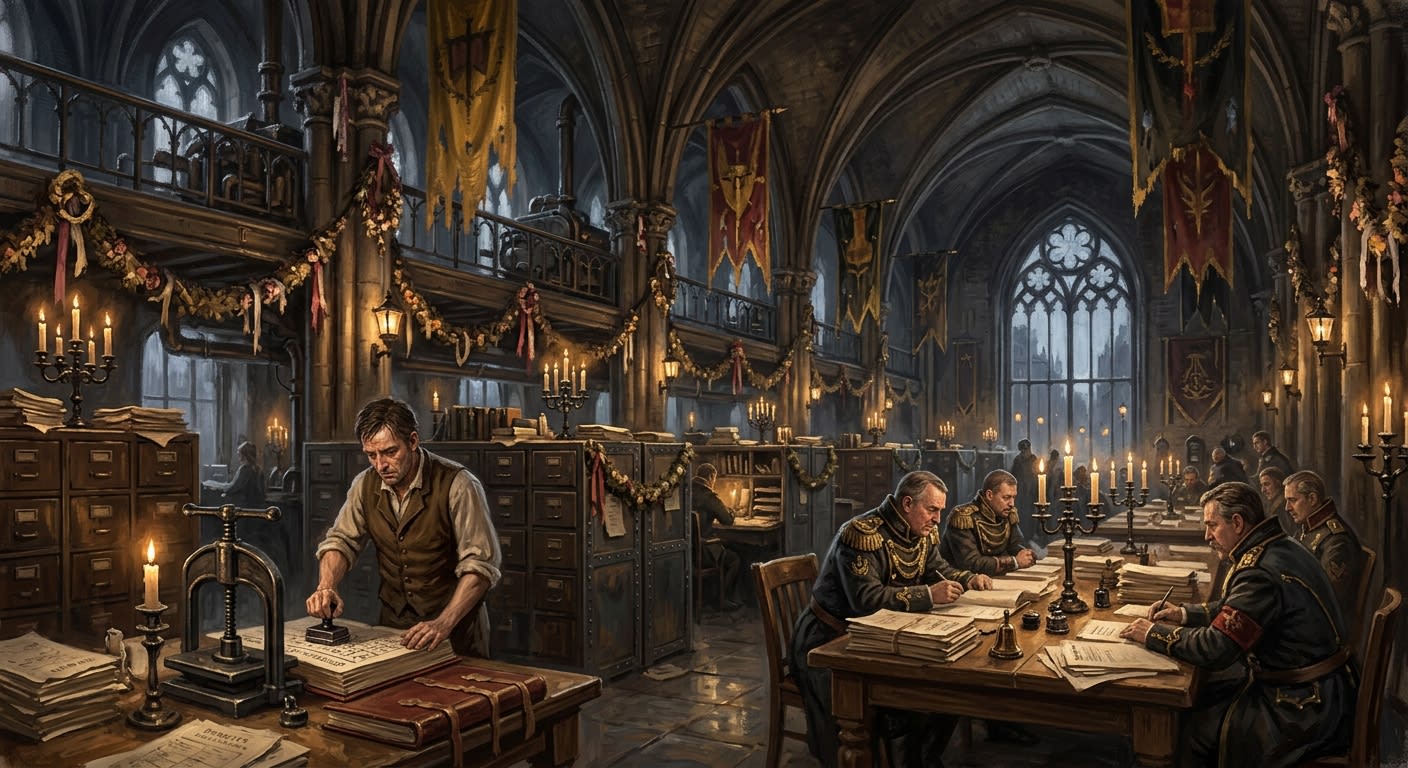
Bureau of Festivals
Joy, administered at scale — licensed, measured, and periodically revoked
The Bureau that manufactures joy, schedules grief, and meters celebration with the same rigour the Bureau of War applies to troop rotations — and which has, on seventeen documented occasions, deployed confetti.
Codex Ref. VIII.5.01-001
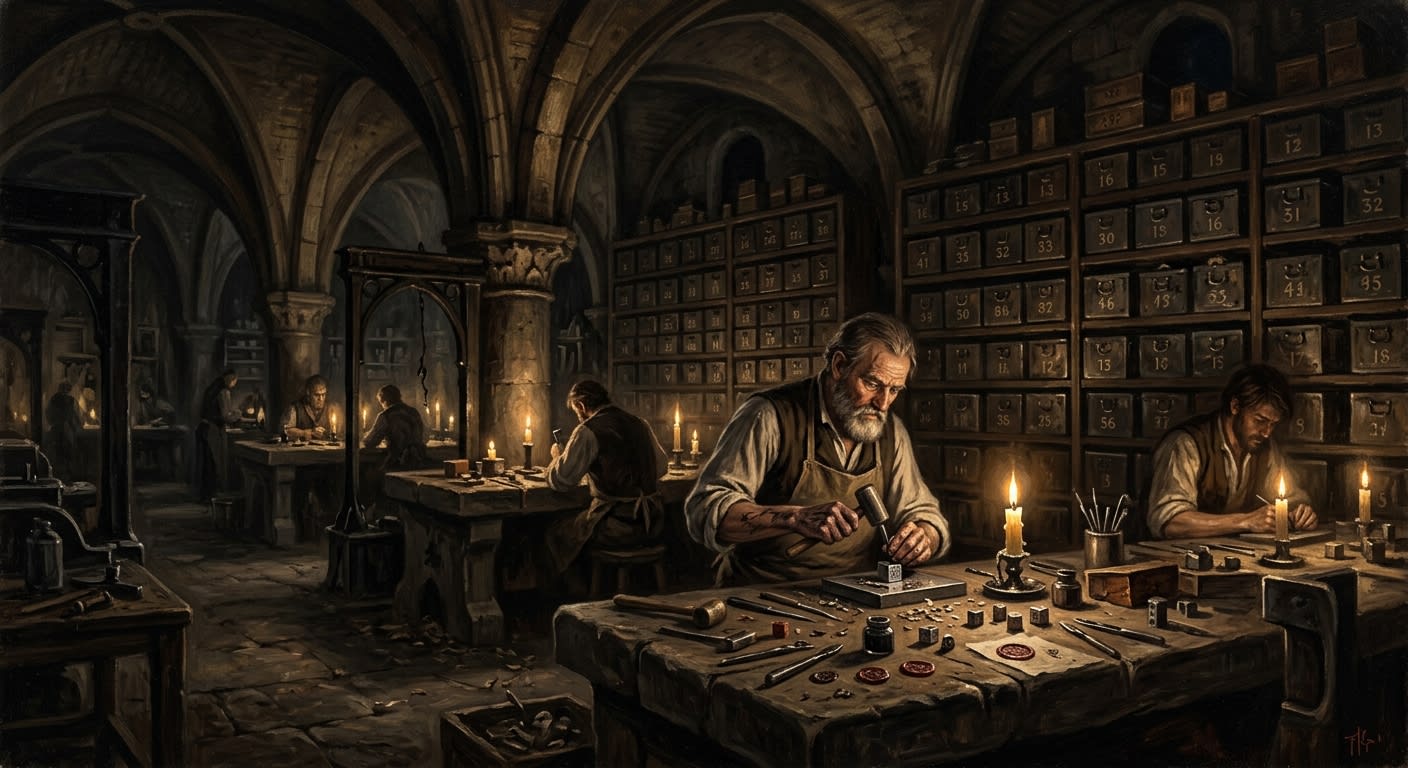
Bureau of Masks and Seals
The stamp is the Synod. Everything else is suggestion.
The Bureau of Masks and Seals controls every stamp, seal, and counter-seal in Synod territory. Without its impressed wax, no document is real. Without its license, no face may be hidden. Casselius of Mainz holds the Synod's mouth and press in one pair of ink-stained hands.
Codex Ref. VI.4.19-014
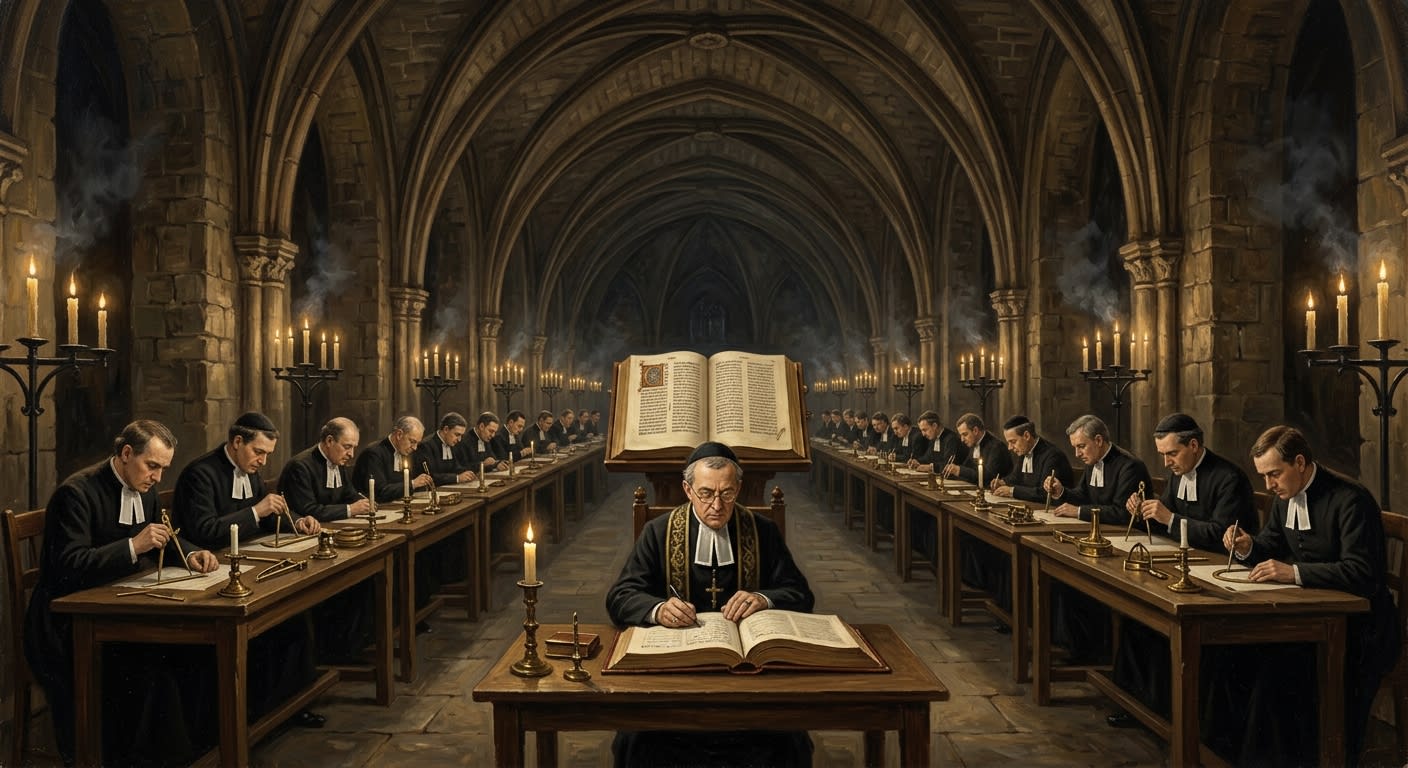
Bureau of Rites
The grammar no one speaks and everyone obeys.
The grammar of the Dominion, indistinguishable from its law: the Bureau that does not govern governs everything, from the angle of the censer to the weight of the Host on Lenten Fridays.
Codex Ref. VIII.1.01-001
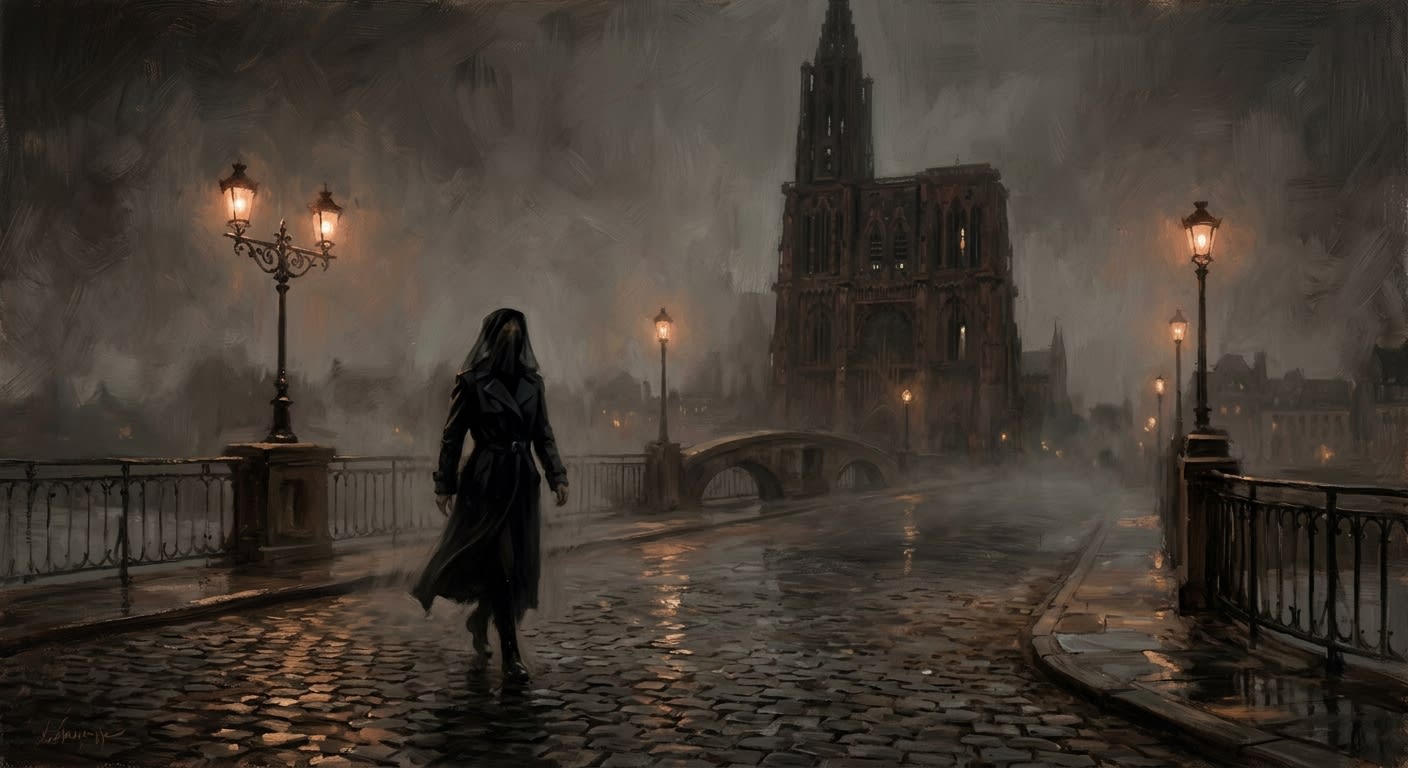
Bureau of Shadows
Fourteen confirmations of nonexistence. The grave-dust wax alone cost more than silence is supposed to.
The Bureau of Shadows does not exist. Fourteen decrees confirm this, each bearing between three and seven counter-seals, each filed under a category the Bureau of Records insists is empty.
Codex Ref. VIII.8.01-001
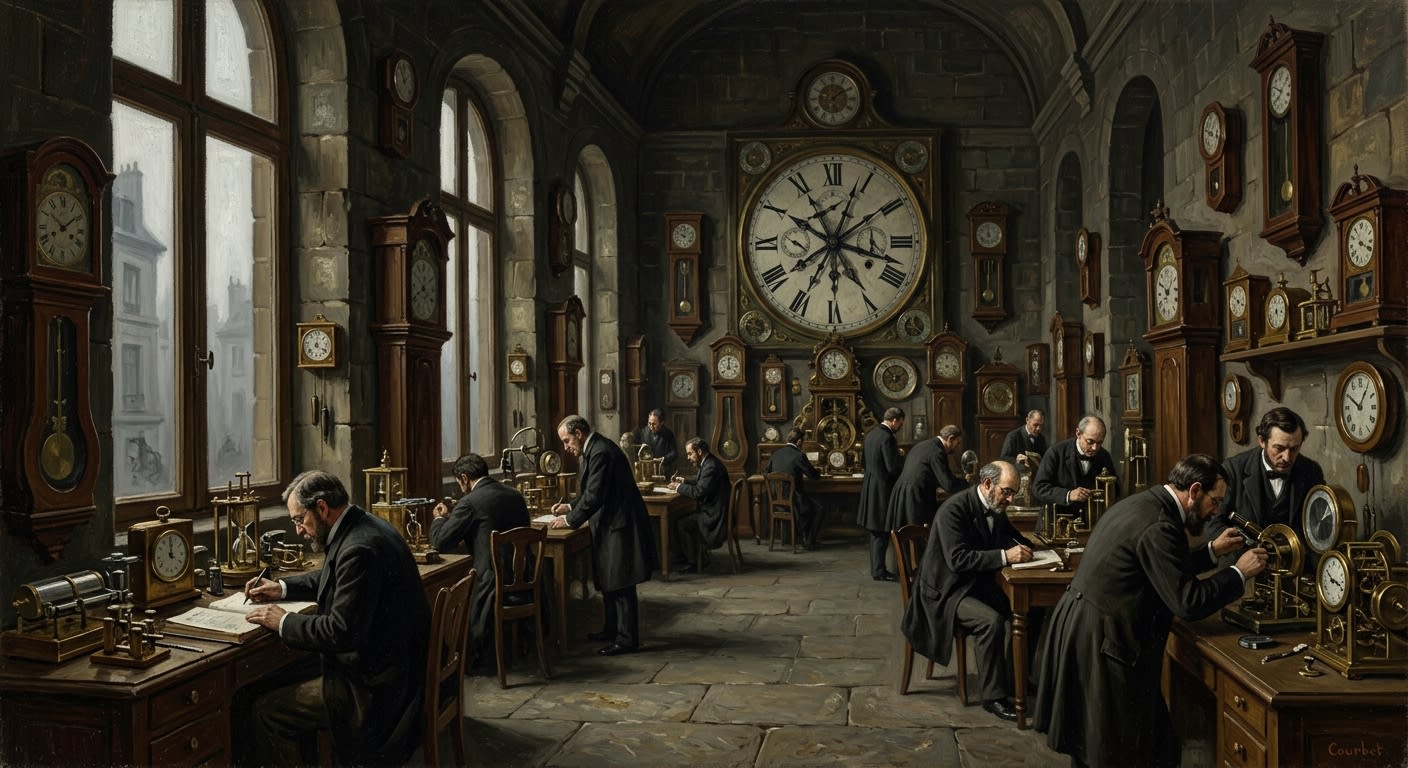
Bureau of the Hourglass
The Bureau measures. The Synod does not read. Time continues to disagree.
The Bureau of the Hourglass, constituted A.S. 134 to measure the Languid Dreamer's temporal drift along the Line, publishes quarterly reports no one reads, and has spent sixty-seven years proving that time is thinner near the front.
Codex Ref. VIII.3.01-001
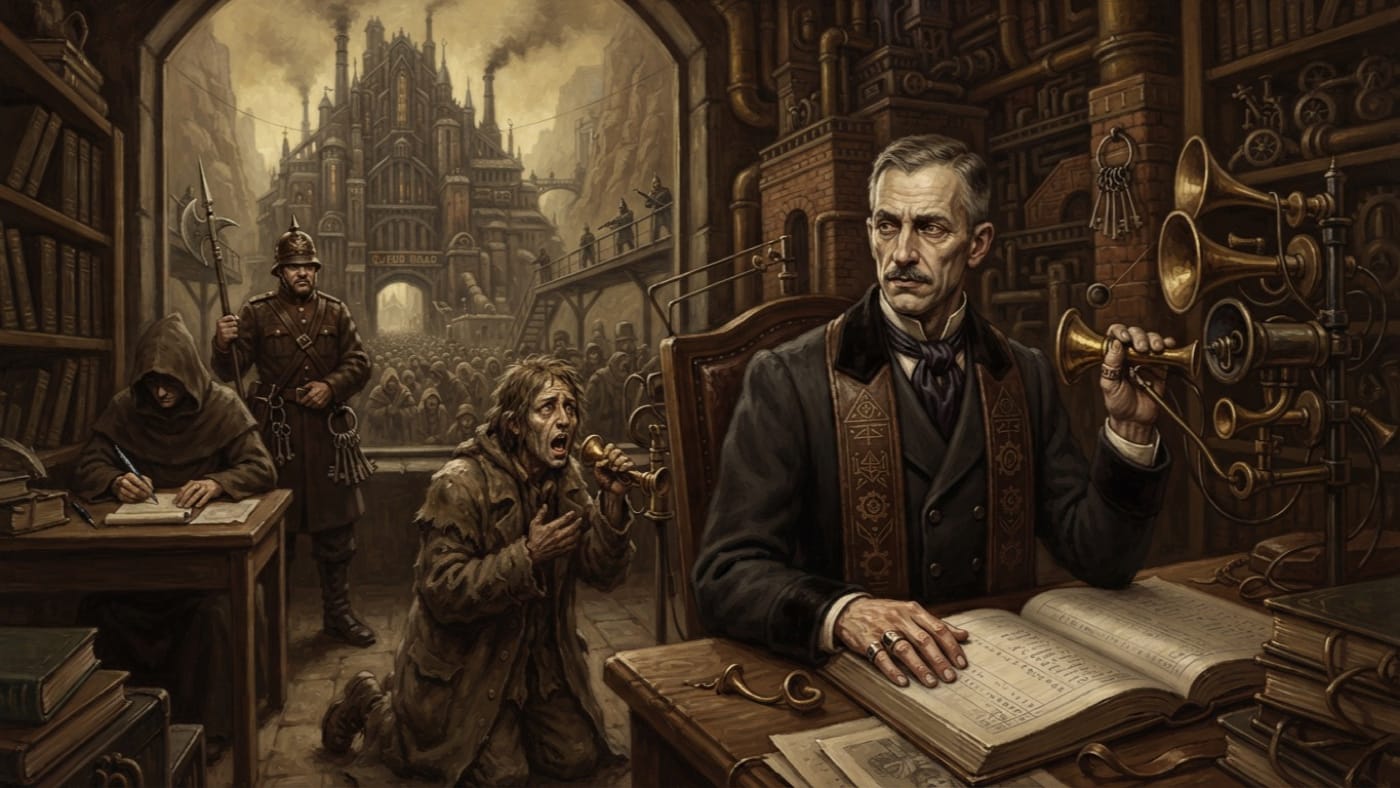
Cantor-Auditor Selm Peregrin
A soft voice at the gate, a hard charge in the ledger
Cantor-Auditor of Peregrine Row and descendant of its founding family. Eleven years of syllabic vigilance have tripled detention revenue. His voice remains soft; the processing charges do not.
Codex Ref. III.2.01-201
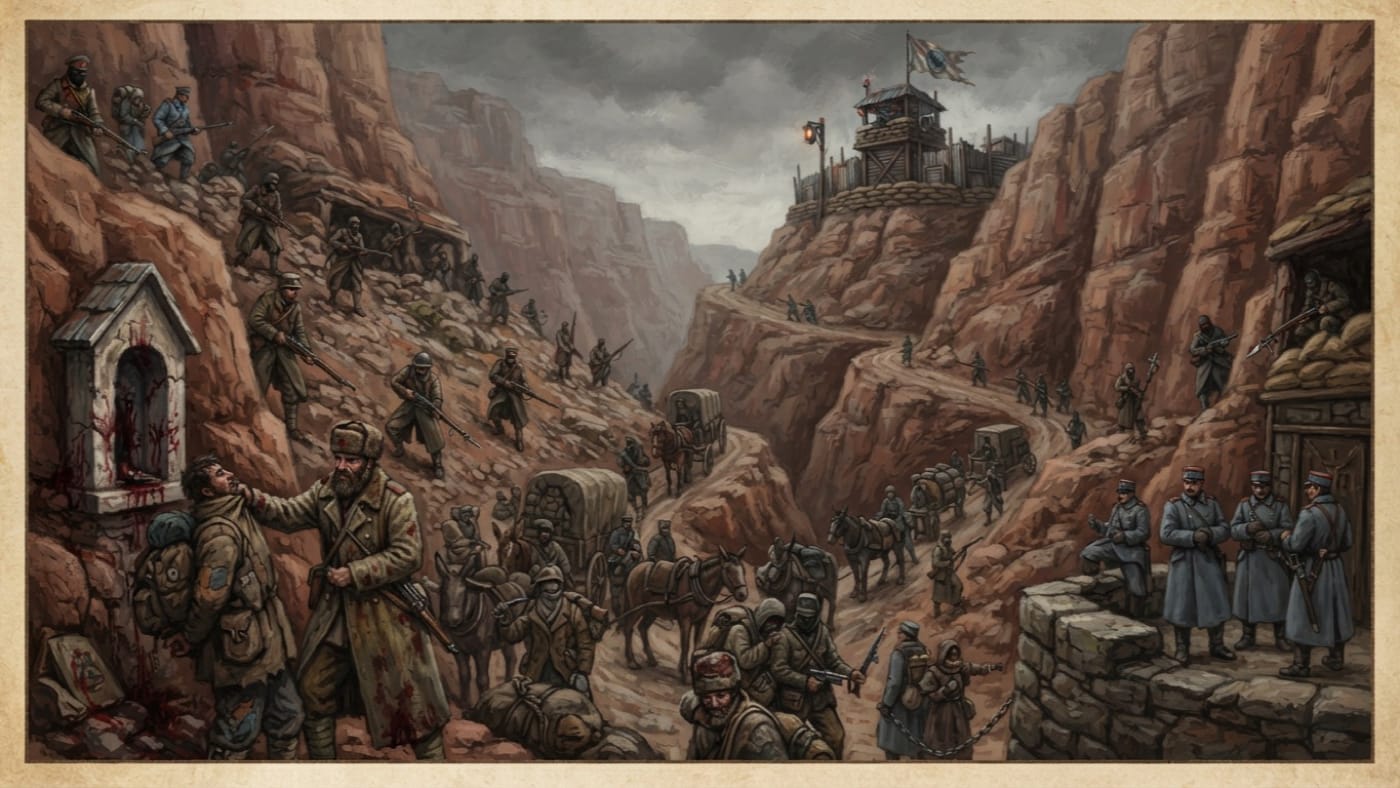
Canyon Saints
Where the knives collect and the seals sell safety
The Canyon Saints ambush pilgrims on Peregrine Row's eastern approach, taking hostages and offerings while brokers sell protection. The knives and the seals collect from the same road.
Codex Ref. XI.5.03-001
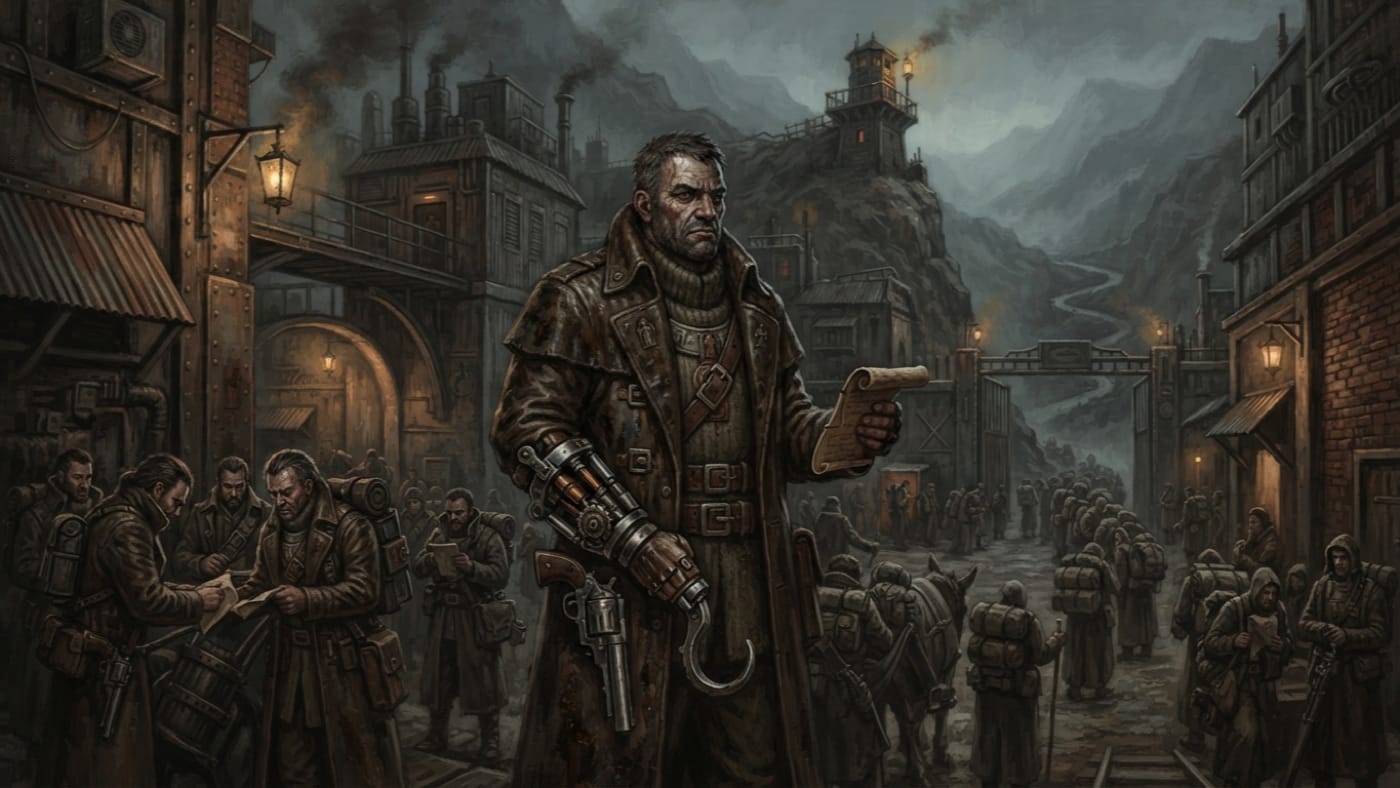
Captain Odrik
His protection ends where the contracted window closes
Captain Odrik Ridge-Hook commands Peregrine Row's largest escort company and sells protection within contracted safe-windows. Two inquiries left no recorded finding against him. Suspicion remains outside the waiver.
Codex Ref. III.2.01-471
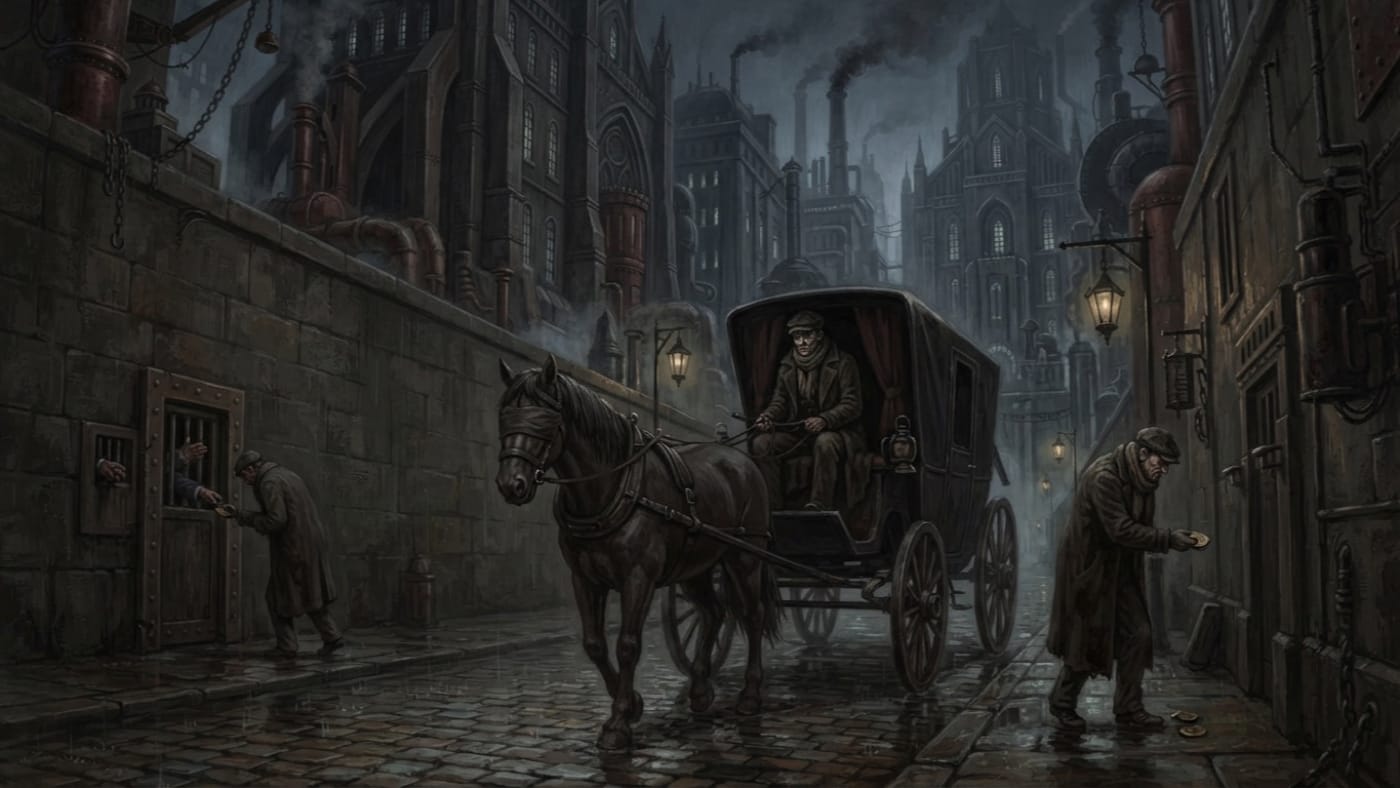
Carters and Runners
One pickup, three coins, and a wagon worth more than its hand
Carters and Runners are the Bureau of Shadows’ middle hands: entrusted with short routes, single pickups, and the second coin that buys a gate captain’s forgetting.
Codex Ref. XII.14.04-002
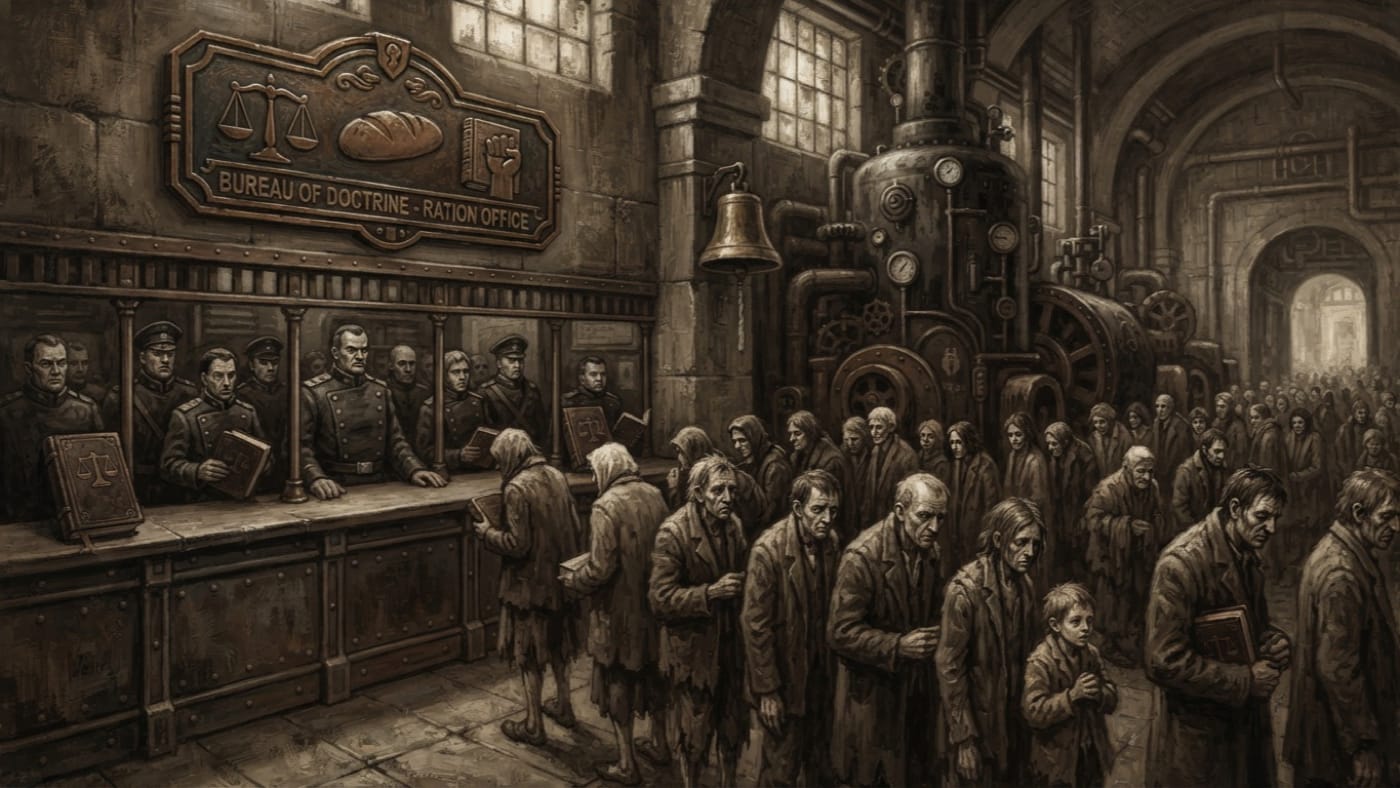
Catechism of Restraint
The portion is sanctified; the stomach may not object
I wrote the Catechism of Restraint to make the allotted ration holy and wanting more a commerce with Kargath. Revised in A.S. 189, it remains in use wherever the Synod counts a loaf.
Codex Ref. XIII.1.04-189
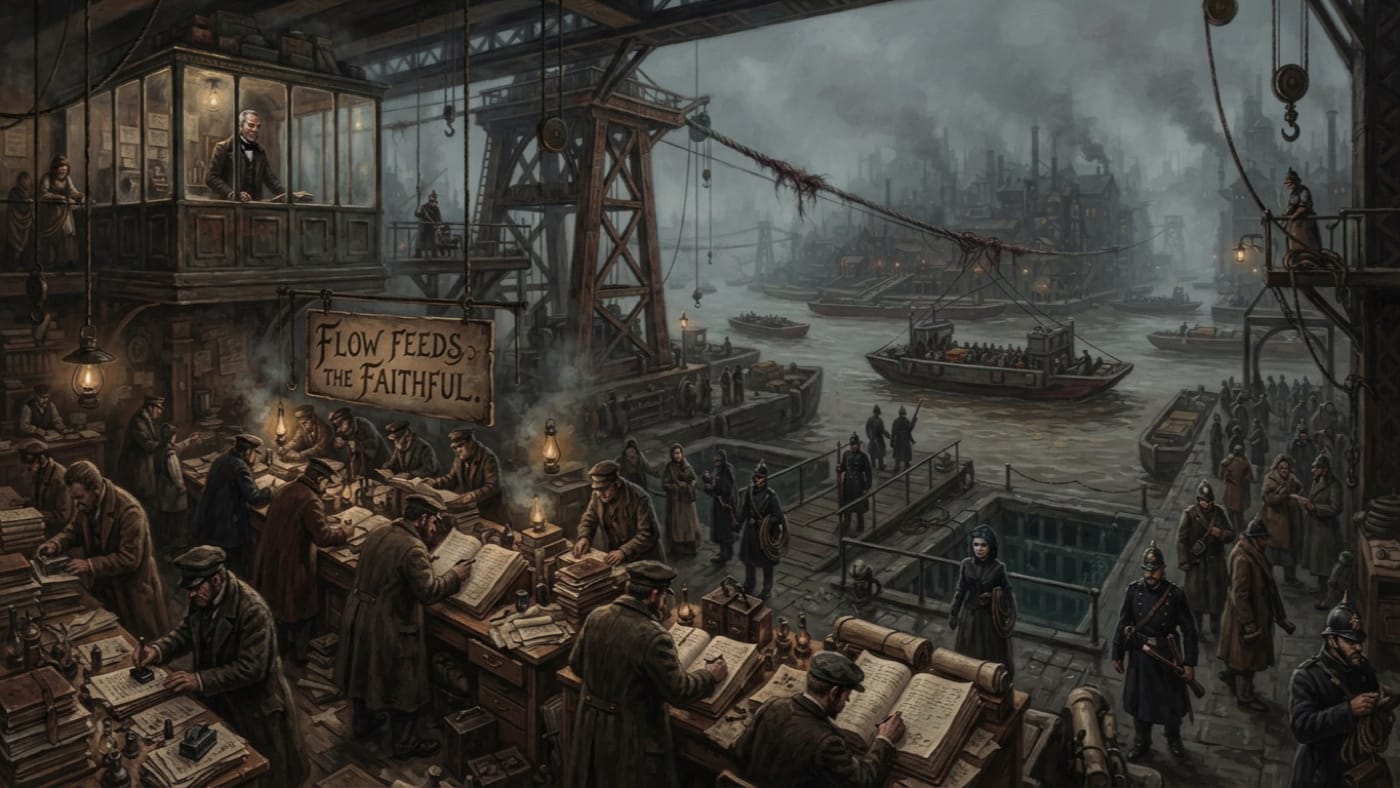
Chain Superintendentate
The river flows when the clerk permits
At Ink Dock Hall, the Chain Superintendentate governs twelve ferries by schedule, closure, audit, and debt. The river writes ahead; the Office files the future and charges for waiting.
Codex Ref. VIII.2.07-550
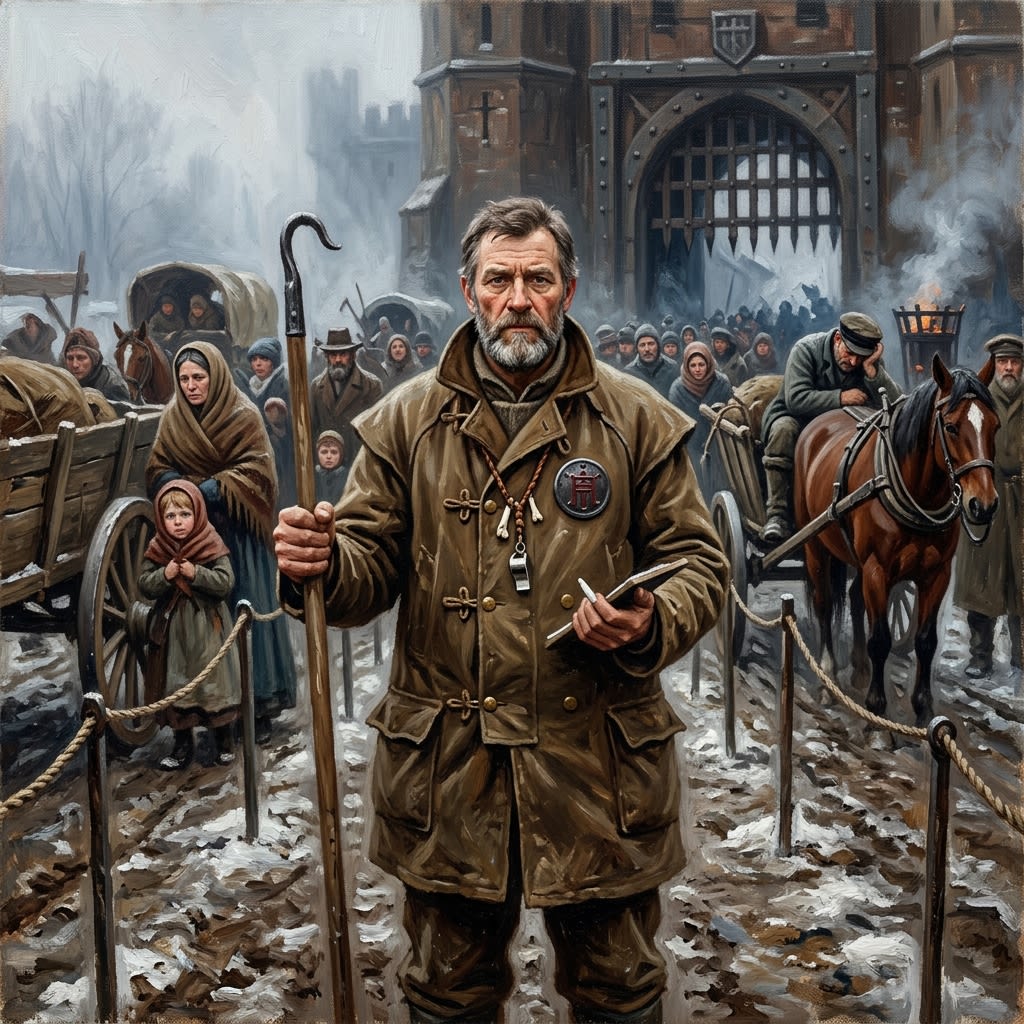
Checkpoint Queue-Marshal
The man who holds the rope holds the war
The Synod's most hated indispensable servant — 1,140 Queue-Marshals holding the ropes that hold the lanes that hold the war together, constituted A.S.
Codex Ref. XII.7.01-001
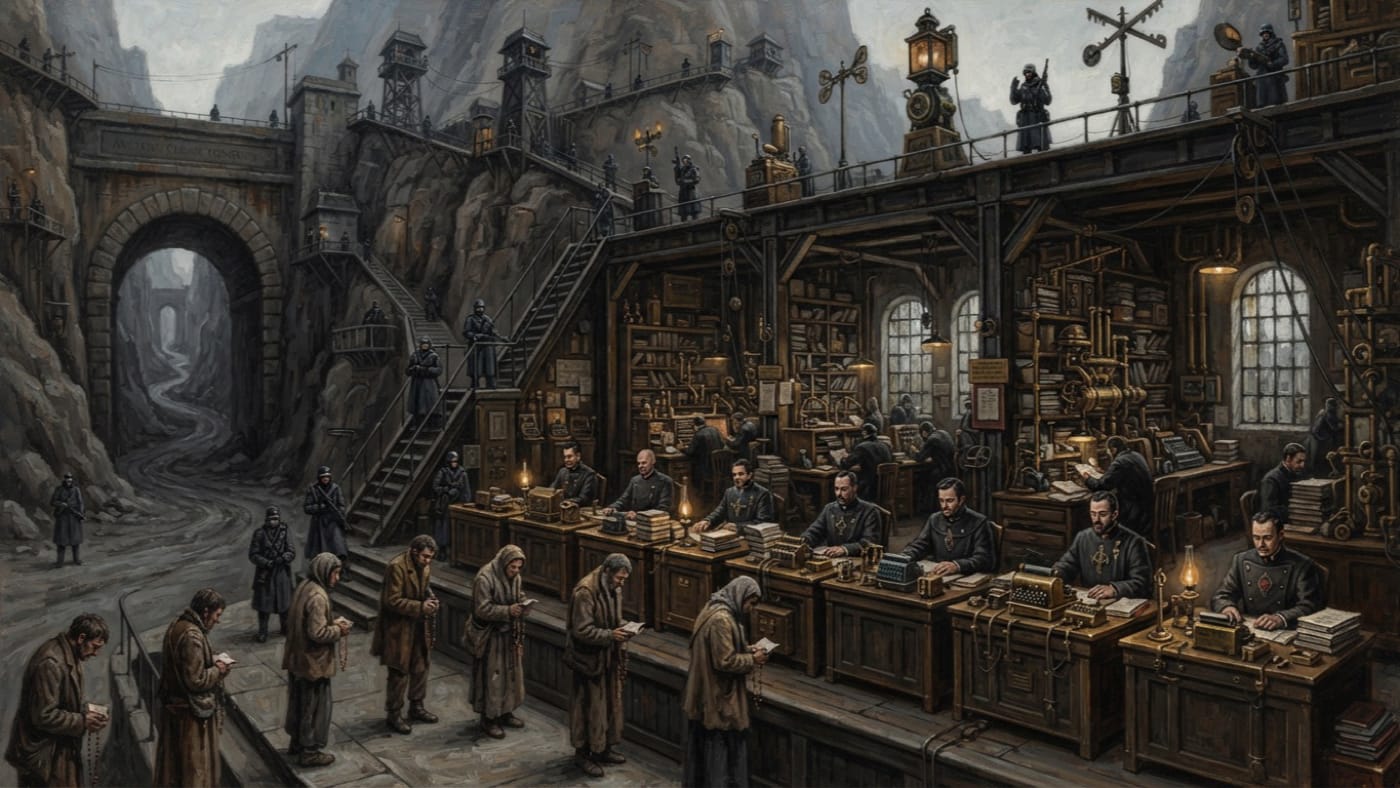
Choir-Broker Compact
Safety by the window, liability by the vowel
Peregrine Row's licensed insurers sell escort windows, bind protection to creed scores and fund the Quiet Pen Wardens. Seven council seats govern the trade; the pilgrim carries the risk.
Codex Ref. XII.32.02-201
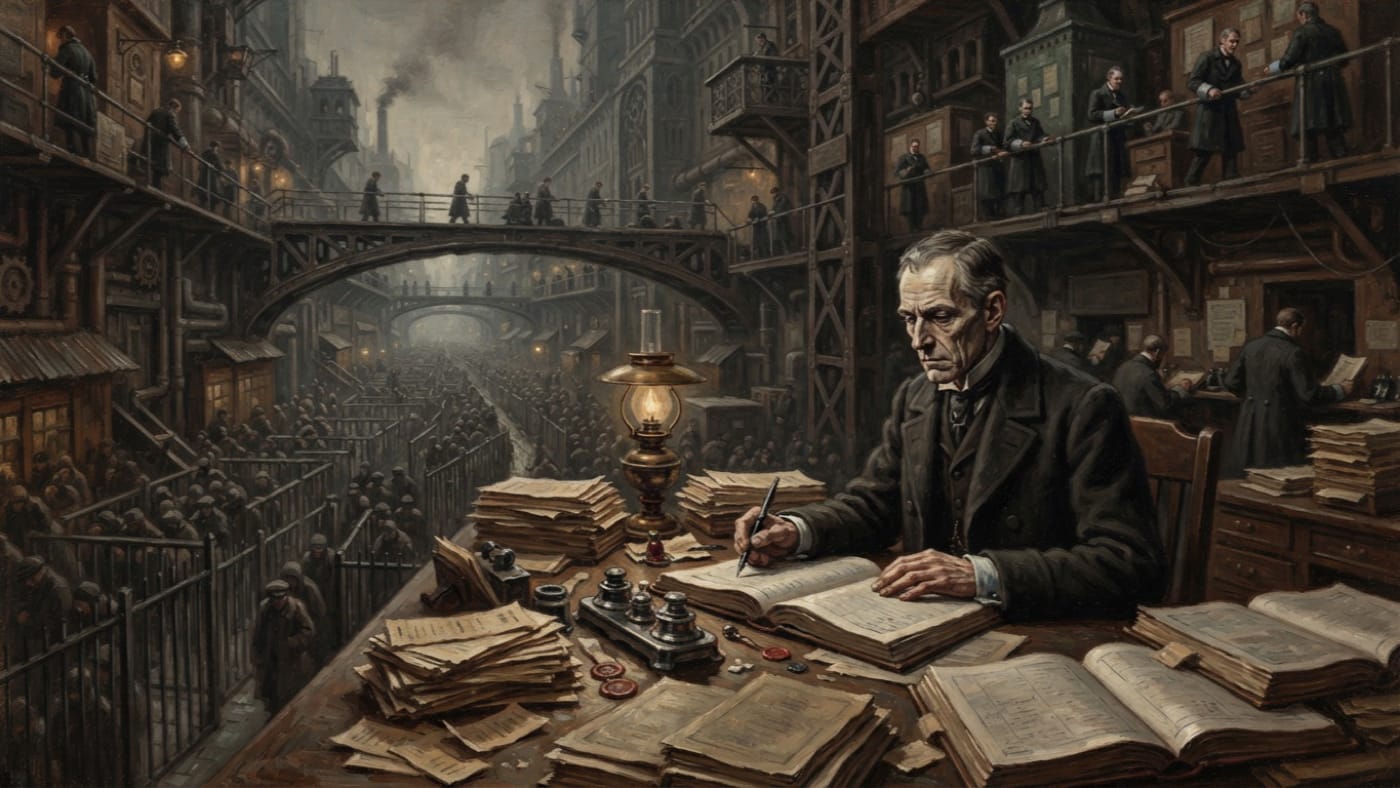
Clerk-Prime Yoren
The hand that decides whether an hour was ever entered
Clerk-Prime Yoren heads the Time Clerks' Collegium of the Queue Road. His guild decides which waiting hours reach the ledger. The file records his office; it offers no history of the man.
Codex Ref. III.2.01-648
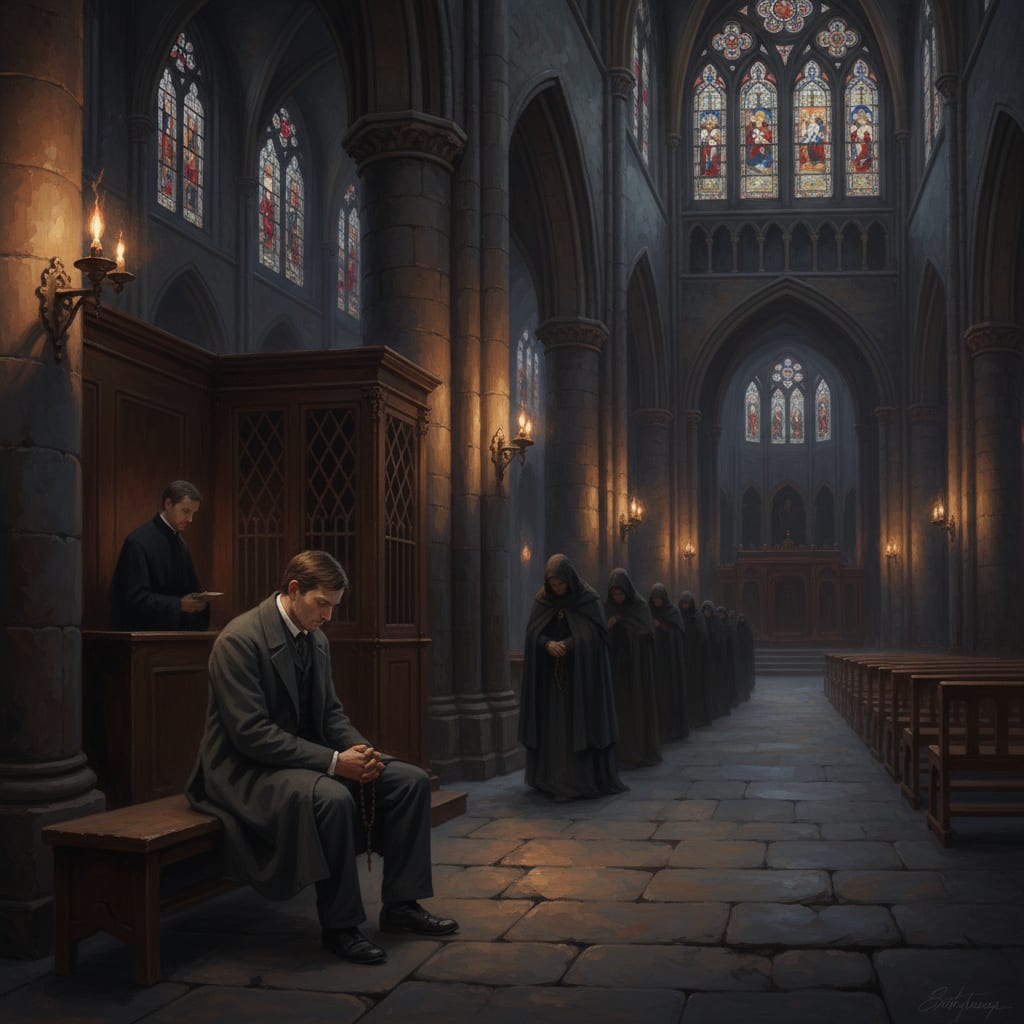
Confessarii
Two hundred and eighty-six reports filed; three blank pages received; the system functions as intended
The Confessarii are the Bureau of Shadows' listening network, which does not exist because the Bureau does not exist. They attend. They absorb. They file. The courier departs. Nothing is acknowledged. The system functions as designed.
Codex Ref. XIII.1.06-001

Corvin Rault
He gave Lyon a standard and left it an unclaimed ring
Adept-Master Corvin Rault argued for Lyon's single temporal standard and received the Monolith's design credit. His death in A.S. 146 left a restricted notebook, an unclaimed ring, and a classification in place of an explanation.
Codex Ref. III.2.01-146
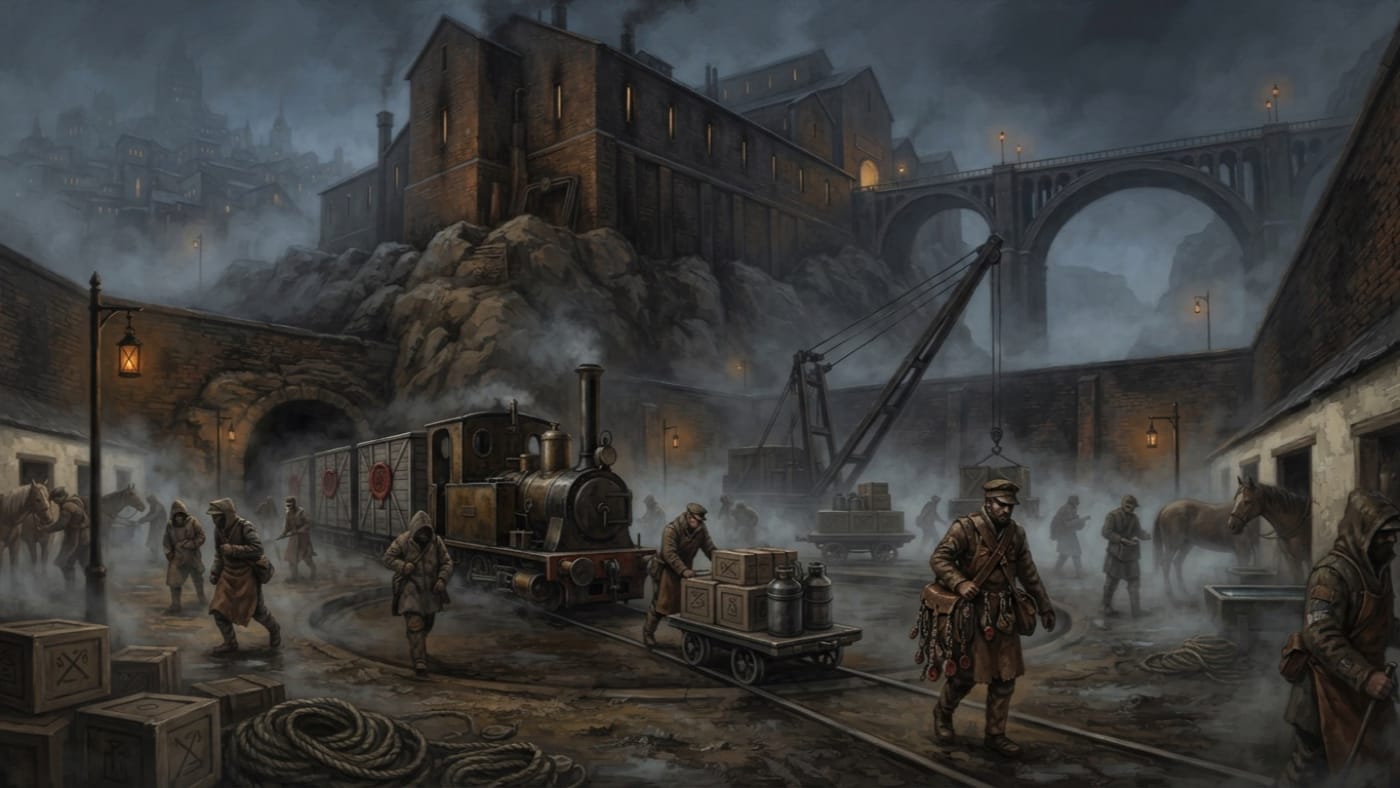
Courier Spur
Carriage certified; contents not warranted
Nemea's eastern dispatch district exports sealed decrees, certified identities and ash-ink under Collegium scrutiny. The Brotherhood certifies carriage. Contents, as the stamp says, are not warranted.
Codex Ref. II.2.06-017
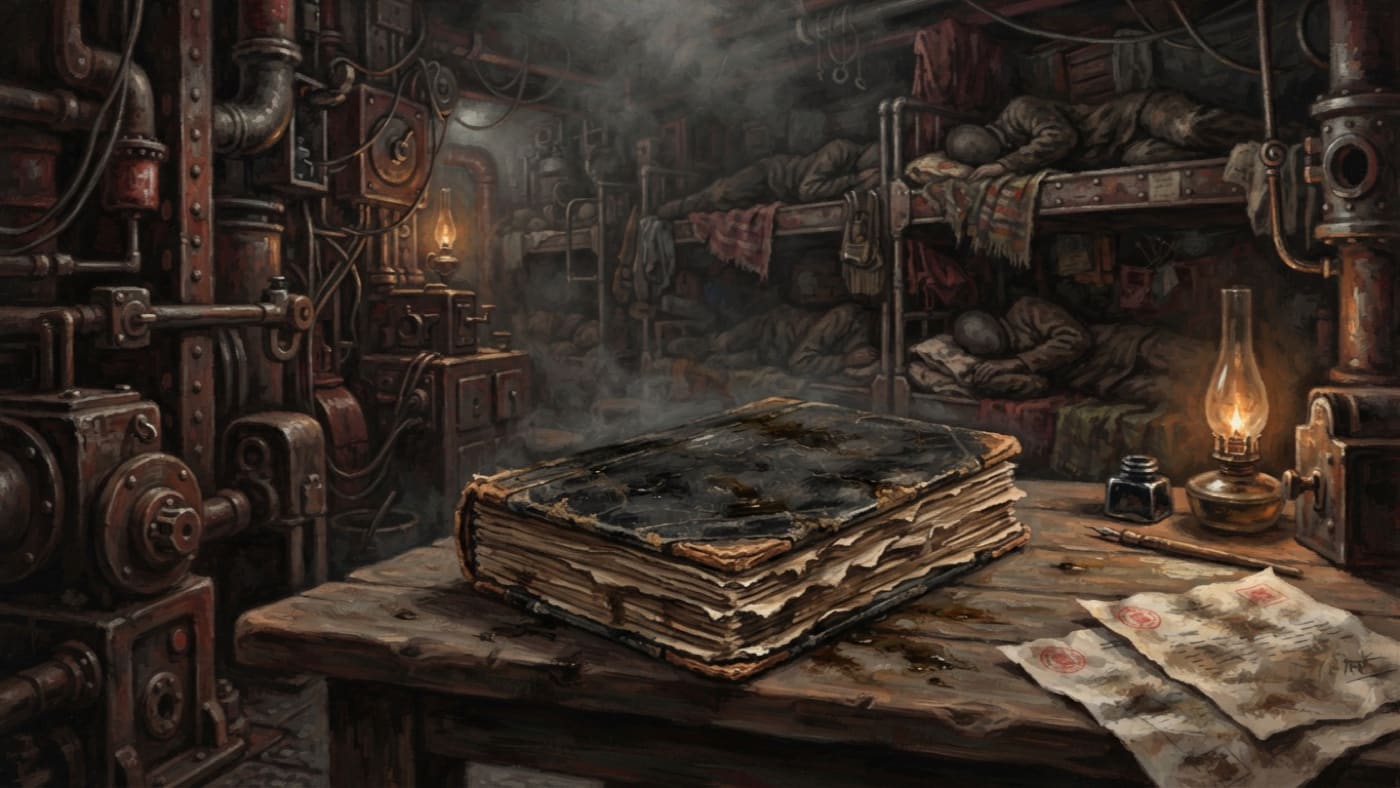
Crushed Book
The obedient dead require a separate ledger
The Switchmen's Union keeps Lorn's Crushed Book: workers killed after correct hymns, manifests and orders. No complete copy exists; obedience has its own death roll.
Codex Ref. XIII.1.87-003
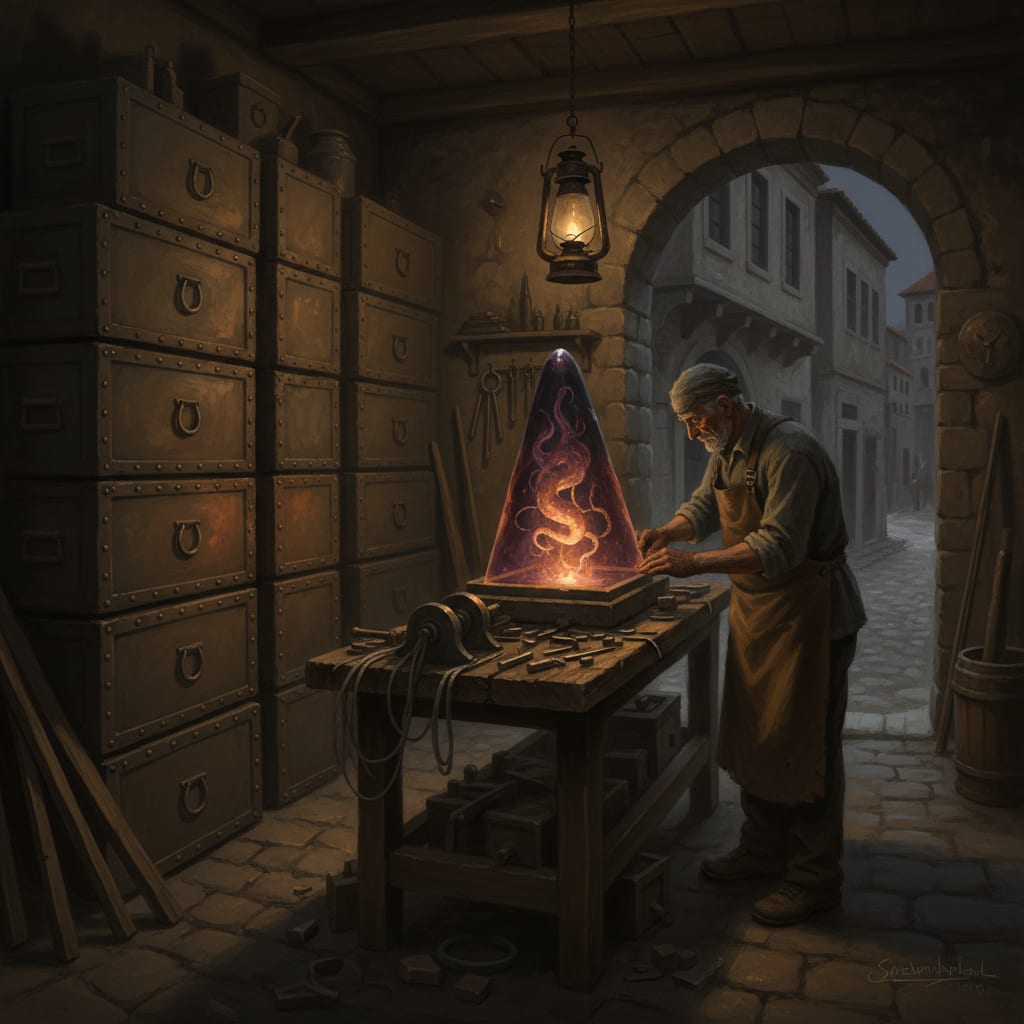
Demon-Glass Polisher
The craft the Bureau has shattered, blessed, interred in lime, and declined to stop purchasing
The profession the Bureau insists does not exist: found in every port from Marseille to the Harbor of Chains, supplying the Bureau of War with combat-grade optics, having developed a hierarchy, a patron saint, and three factions — all since the last Purity raid.
Codex Ref. XII.13.01-001
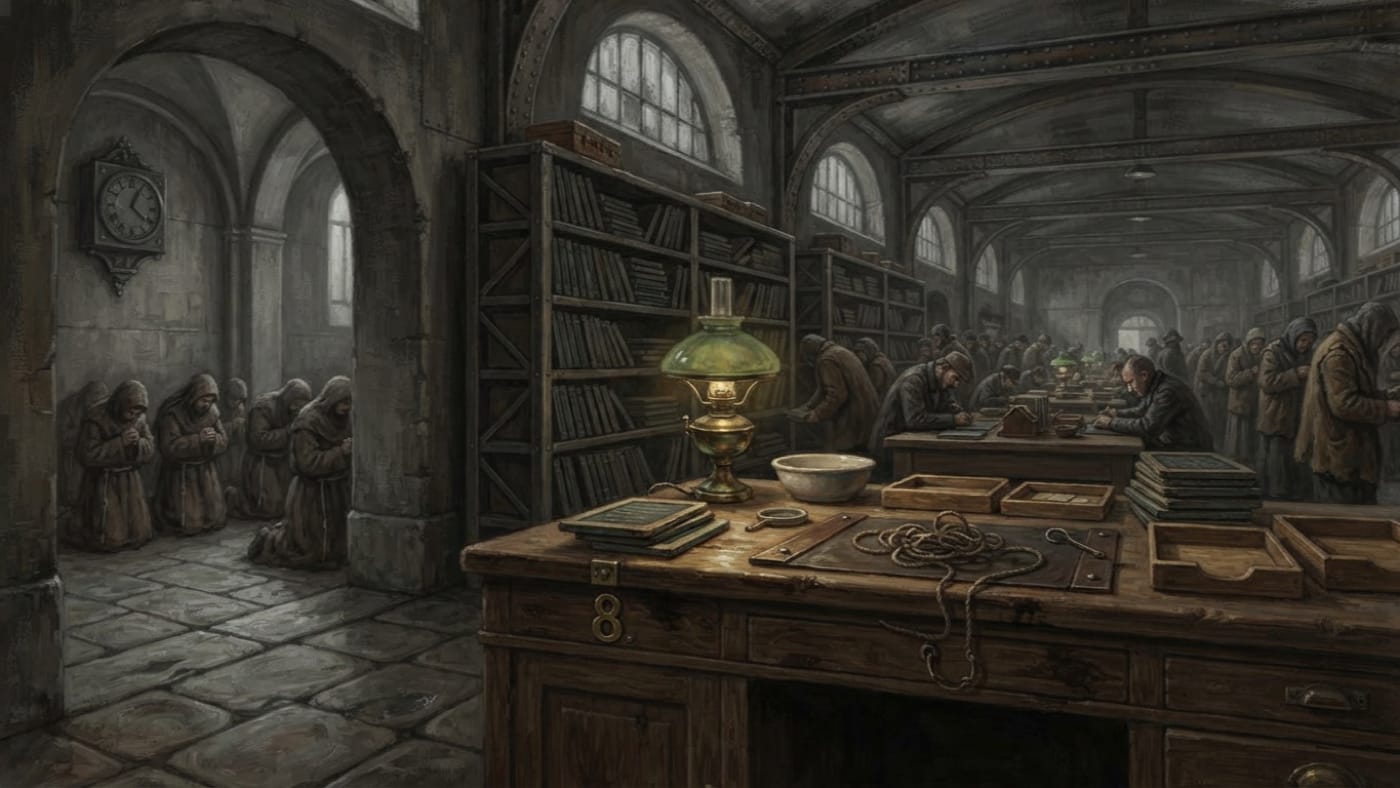
Desk Eight
The knees pay before the evidence arrives
Desk Eight reviews suspected counterfeit strings in the Counting Hall. The Chapel collects an hour of kneeling while the evidence waits for a clerk.
Codex Ref. II.3.06-008
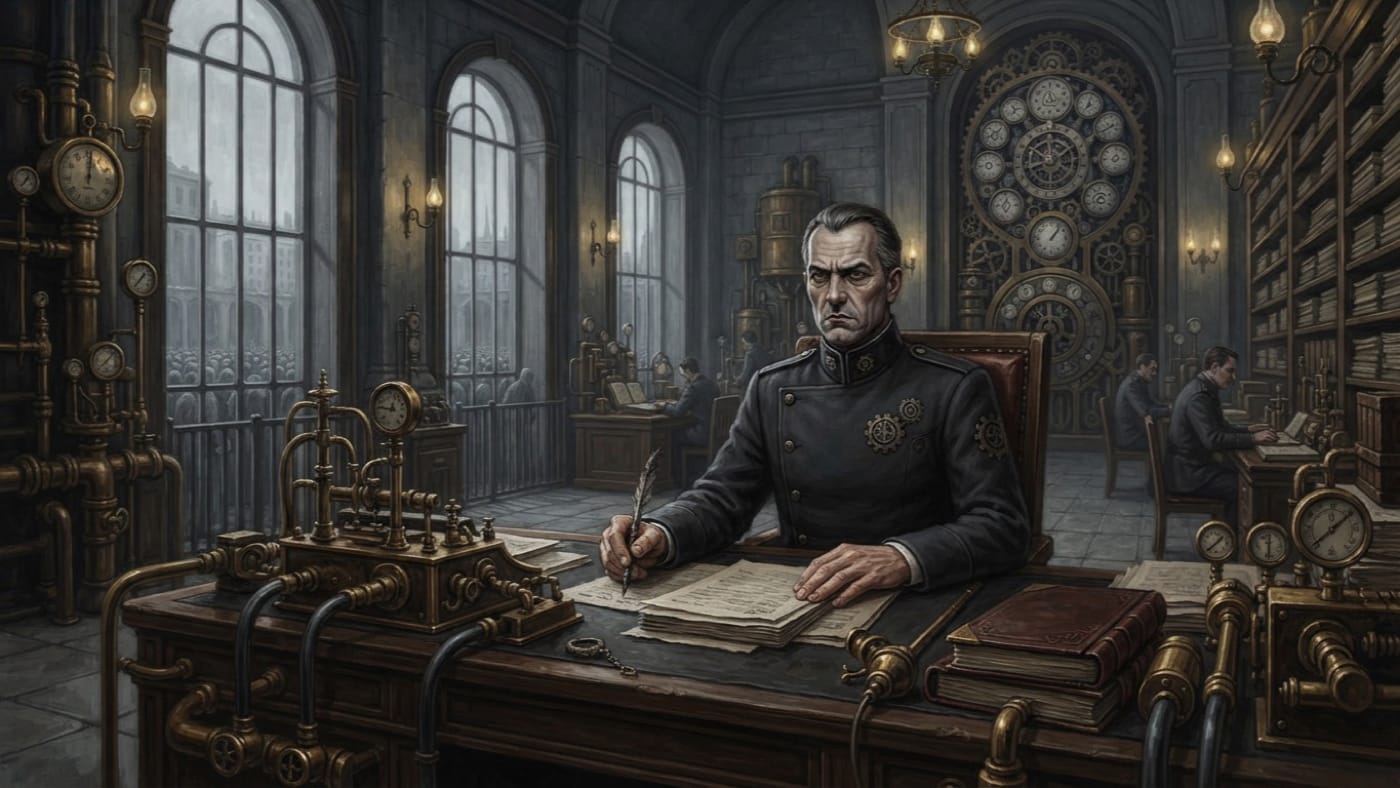
Director Othmar Vell
The man who prices the line he fears
Othmar Vell prices the Queue Road's waiting with a soft voice and hard numbers. His orders reach every gate; the master ledger remains withheld. A.S. 201 survey of an office whose accounts answer fewer questions than they raise.
Codex Ref. III.2.01-201
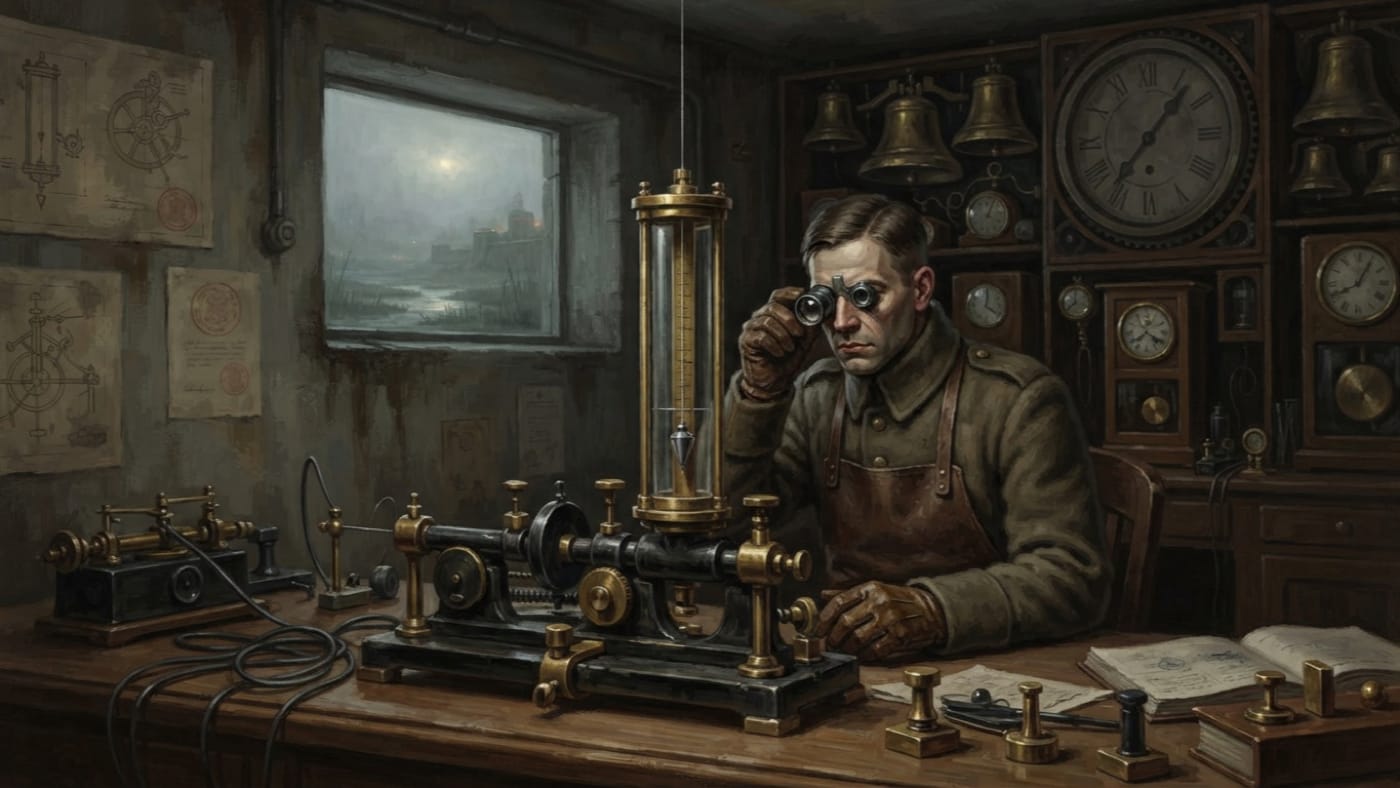
Drag-Gauge
Four nouns for measuring an hour that refuses obedience
The drag-gauge compares passing time against Lyon's black standard. It registers the hour's disobedience; the Bureau must supply its own explanation.
Codex Ref. XIII.1.86-201
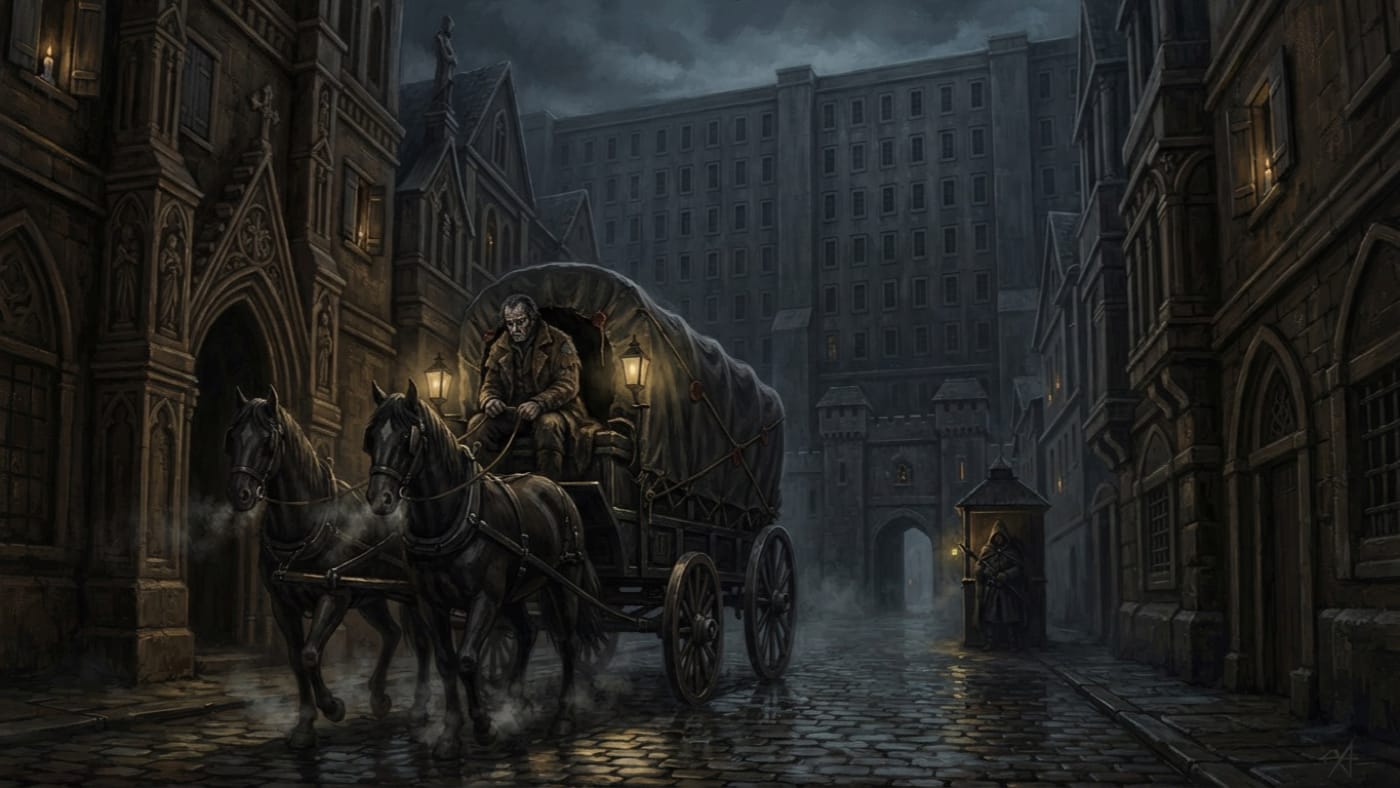
Driver of the Unmanifest
The wheel answers for what the ledger refuses to receive
The Bureau of Shadows’ formal style for a Night Wagon Driver: answerable for every body, order, and relic moved through a gap the ledger refuses to admit.
Codex Ref. XII.14.04-002
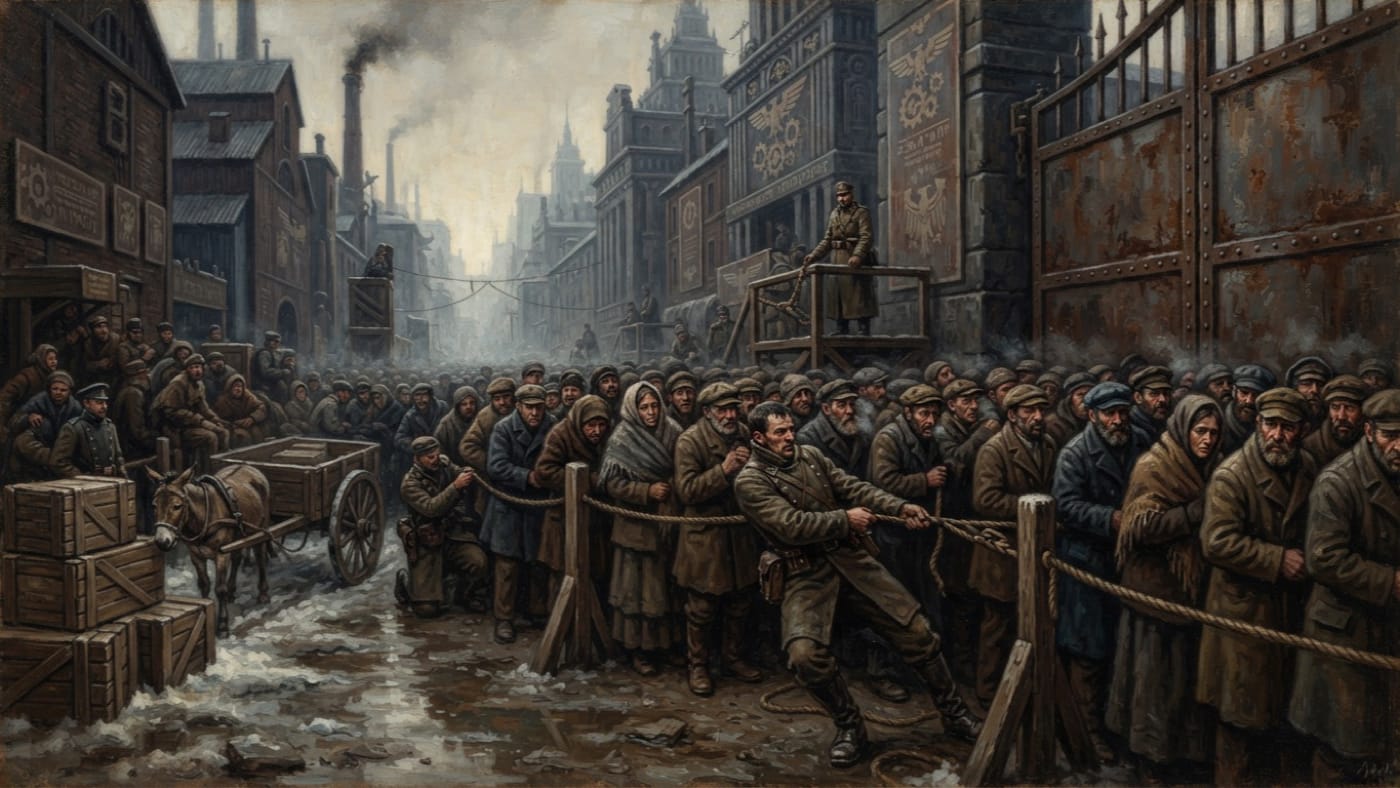
Emergency Lateral Release Pattern 3-C
The knot grants breath; the gate still demands a stamp
Pattern 3-C turns a crowd sideways before the gate turns it into casualties. Standardised in A.S. 118, Ravel's mercy preserves breath without granting passage.
Codex Ref. XIII.1.118-003
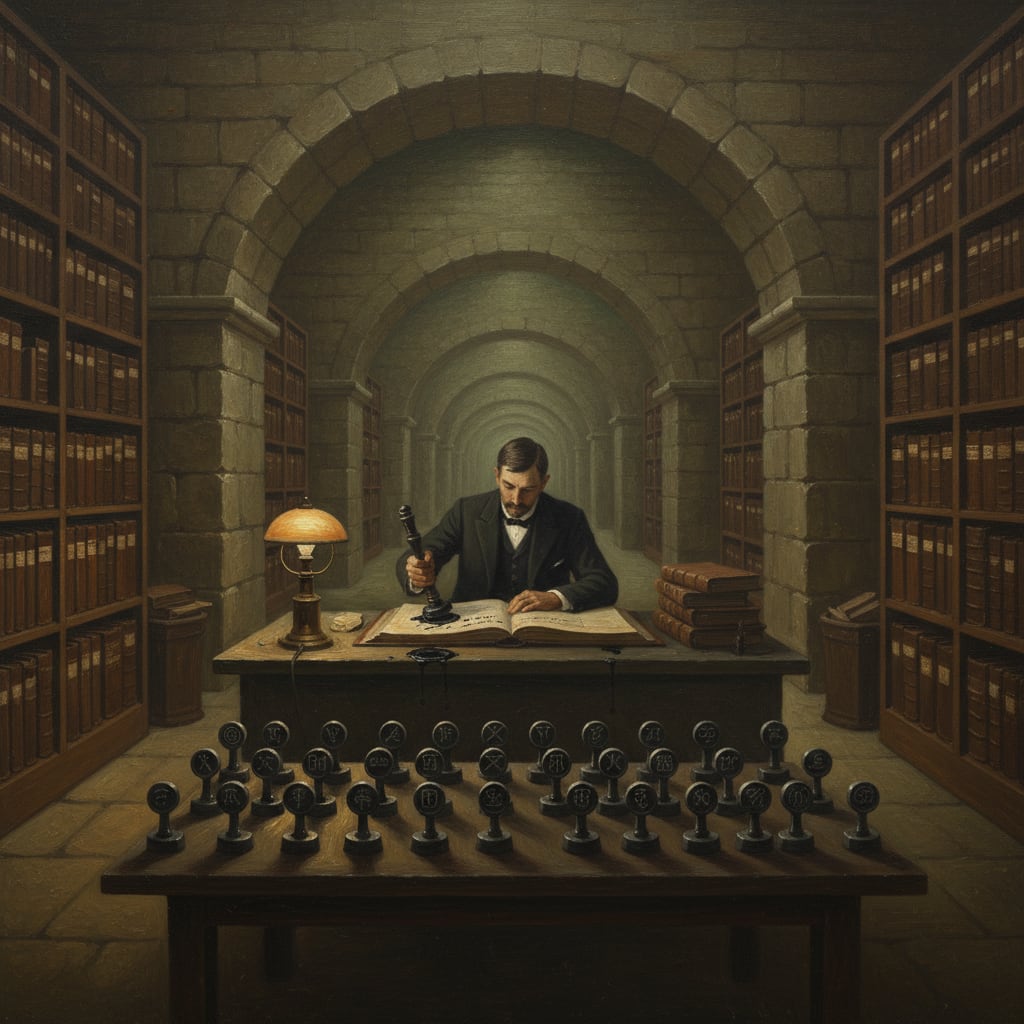
Erasure Notary
The scaffold produces martyrs; the Office of Nullity produces only silence — and nine hundred Black-Stamps to stamp it.
Nine hundred Black-Stamps who unmake persons through ink and wax — no body, no grave, and no widow to scratch the martyr's name on cellar walls.
Codex Ref. XII.14.01-001
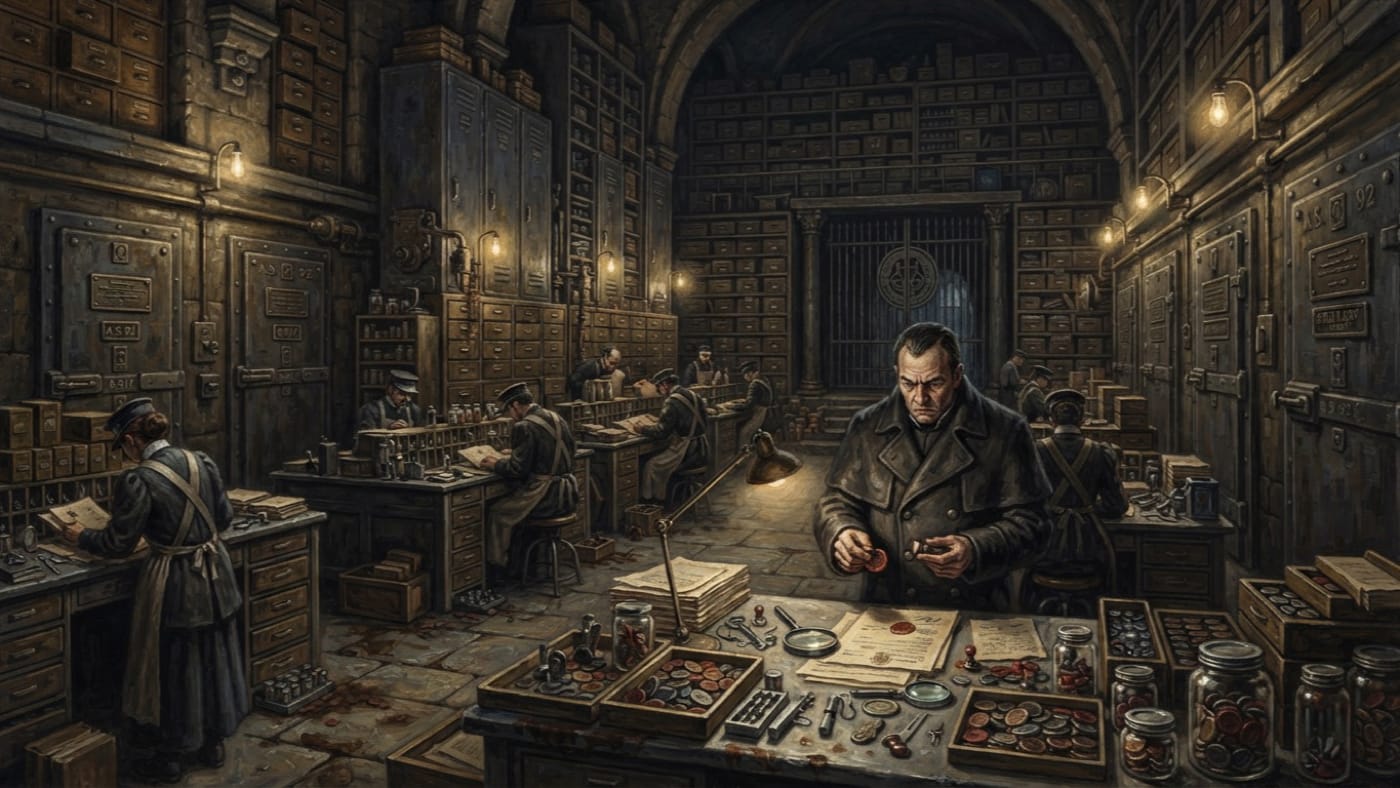
Forgery Archive
Every false impression needs a genuine stamp.
The Forgery Archive keeps 8,917 confiscated counterfeits beneath Strasbourg Cathedral, each certified as false. The Bureau of Masks and Seals publishes the count; the collection remains sealed.
Codex Ref. II.2.06-007
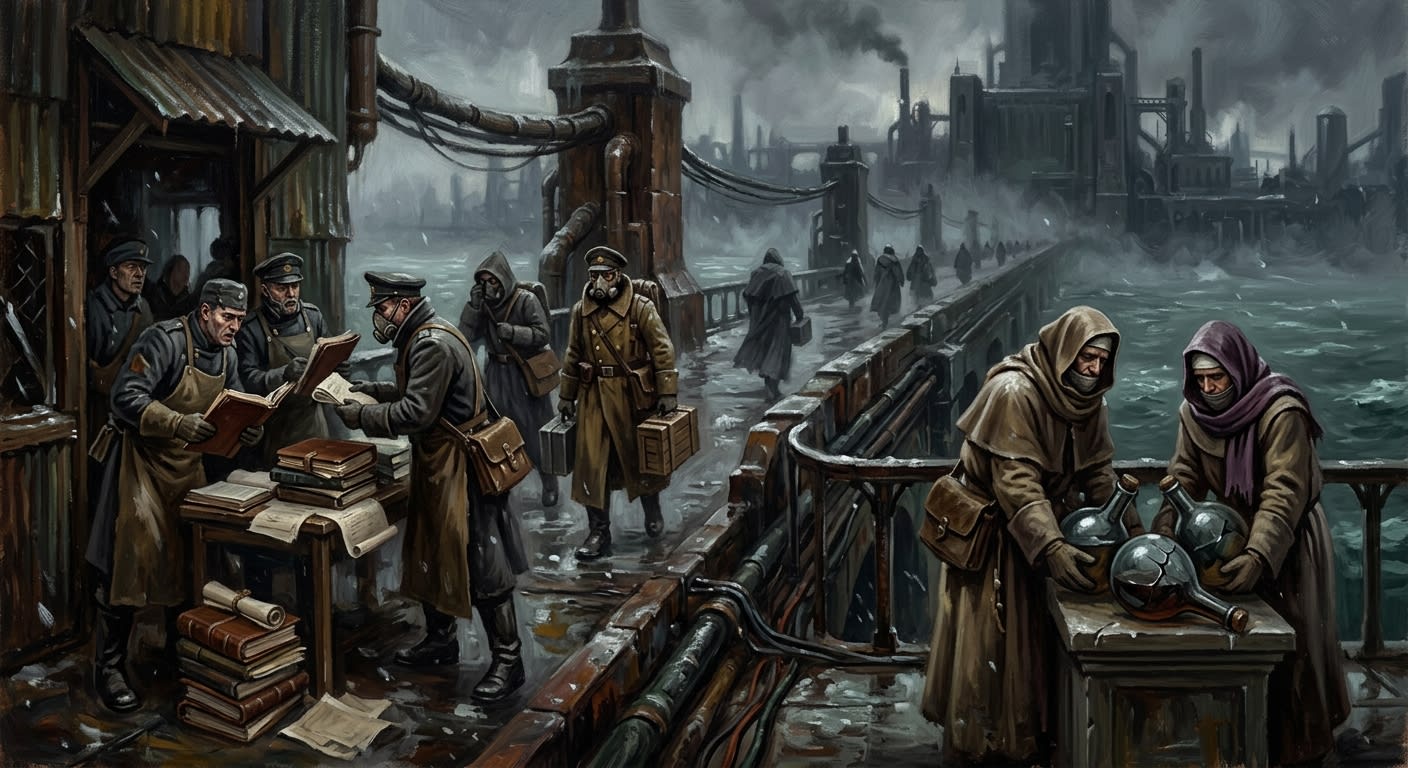
Fourth Causeway Anomaly
Where ice refused the Bureau and grief kept its own accounts
On the Brielle spur of the Salt-Vigil Causeways, winter water refused to freeze, tear-phials grew heavier, and every Bureau discovered a different invoice.
Codex Ref. XIII.1.24-001
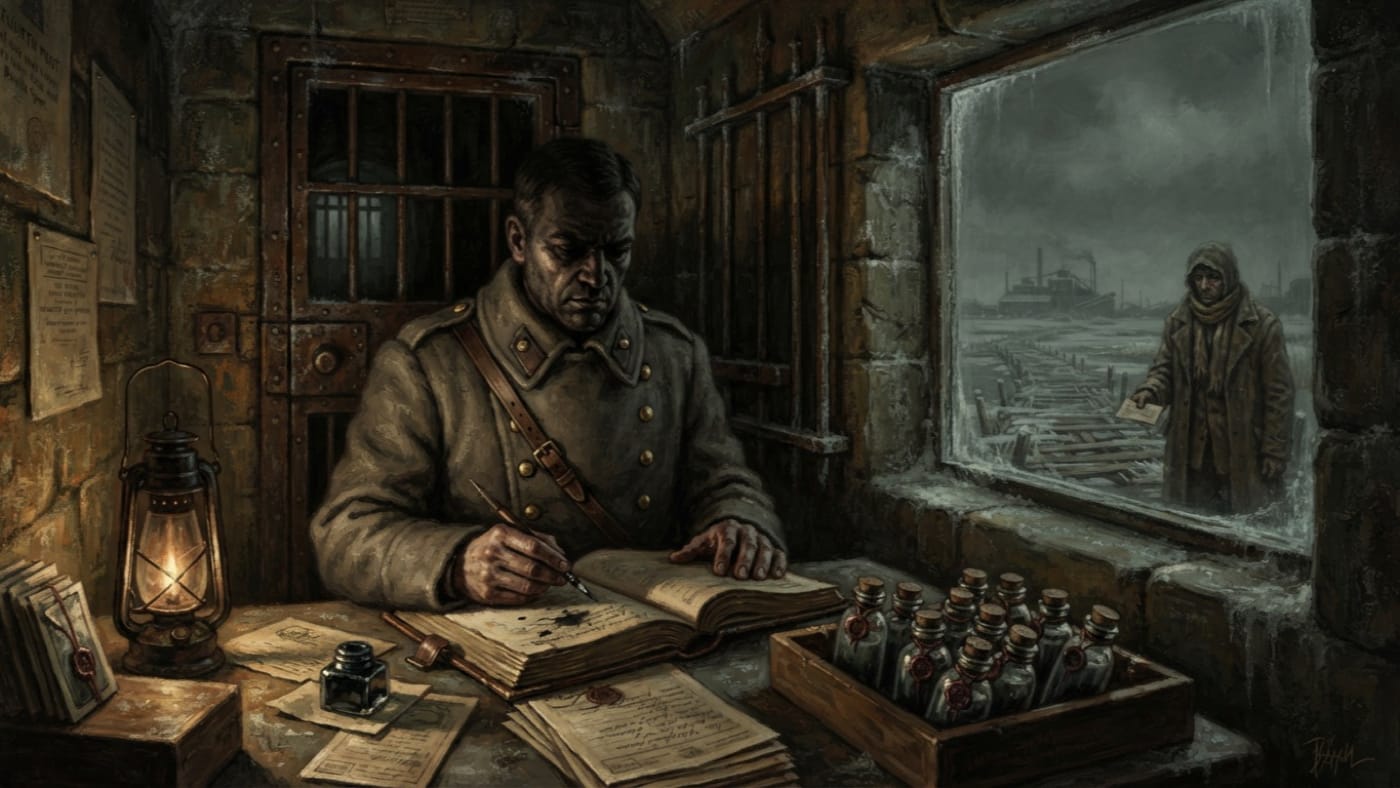
Fourth Post
The road reopened; the grief kept its weight
Fourth Post collects salt, tears and fees on the Brielle Spur. The road reopened; its phials still arrive thirty percent heavy, and the ledger accepts grief whose origin has faded.
Codex Ref. II.3.05-084
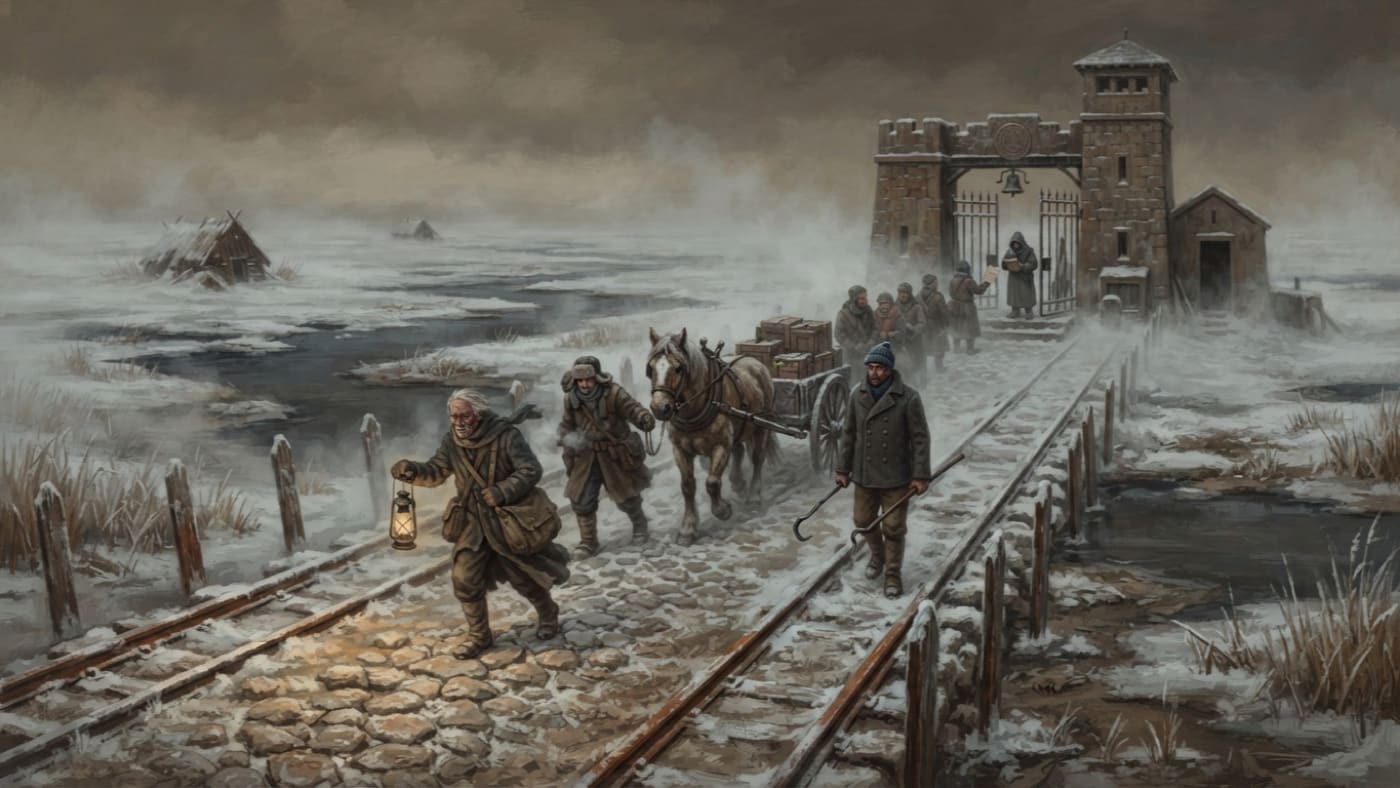
Frisian Flats
The sea retreats twice a day; the toll does not
Tidal ground crossed by the Salt-Vigil's winter roads, where refuge became a toll and passage depends on stone, lanterns, wet seals, and the clerk.
Codex Ref. II.3.05-052
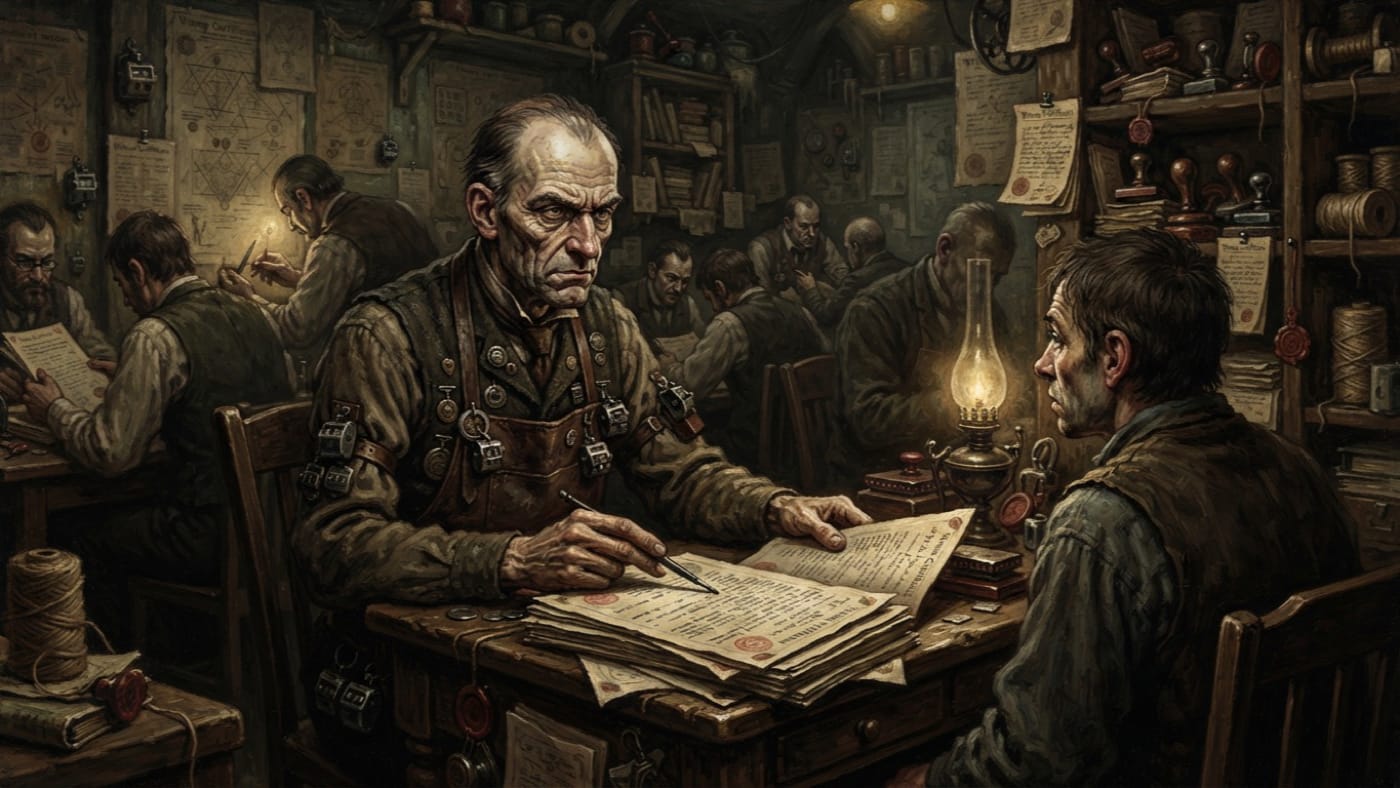
Garrik Two-Names
What the court remembers depends on who has paid
Garrik Two-Names and Mother Venn run the Queue Road's largest witness ring. They sell hours nobody stood and facts Gate Nine can stamp. This office records the partnership; truth is billed separately.
Codex Ref. III.2.01-1181
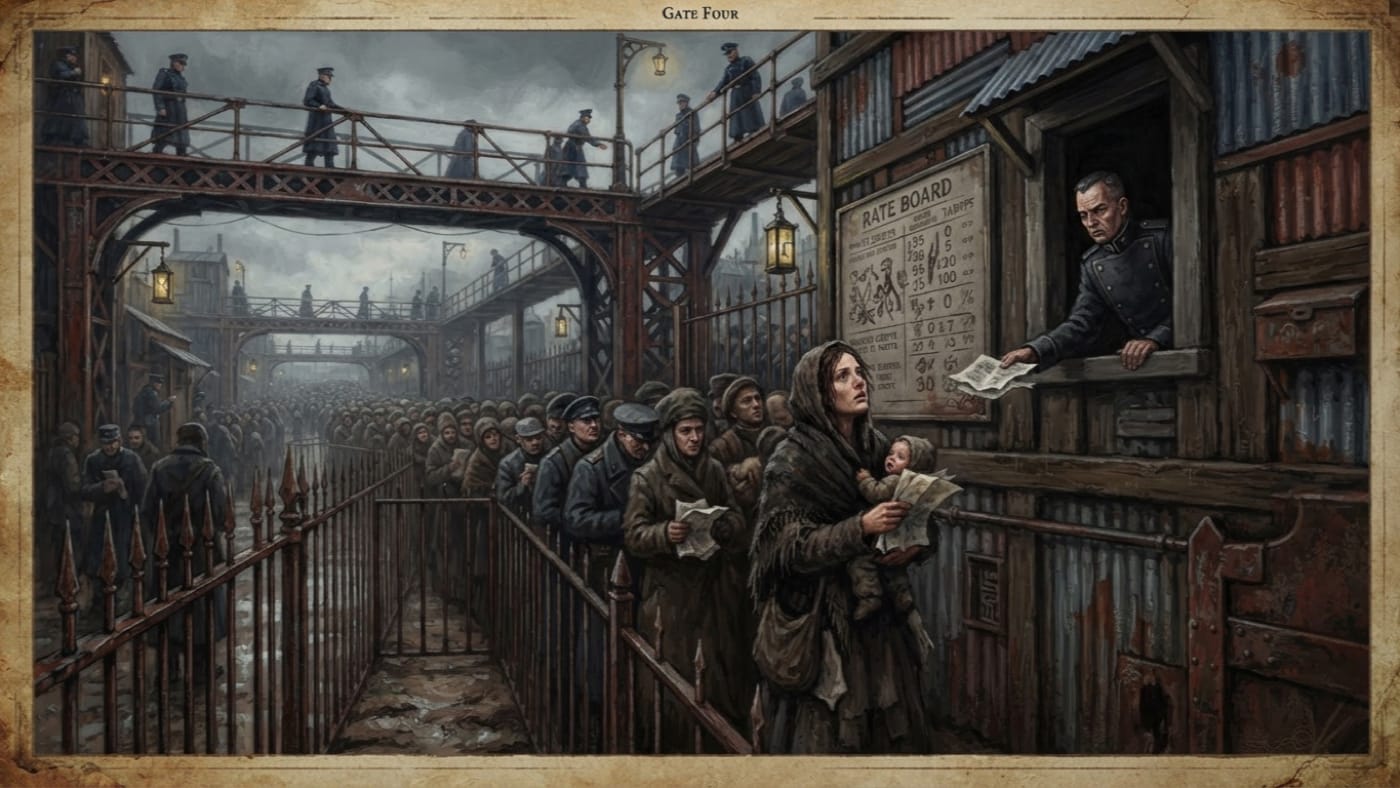
Gate Four
The line stands still; the ledger advances
Gate Four is an ordinary inspection gate on the Queue Road, where waiting earns revenue and a nameless mother gives the Unstruck their most inconvenient example.
Codex Ref. II.3.05-004
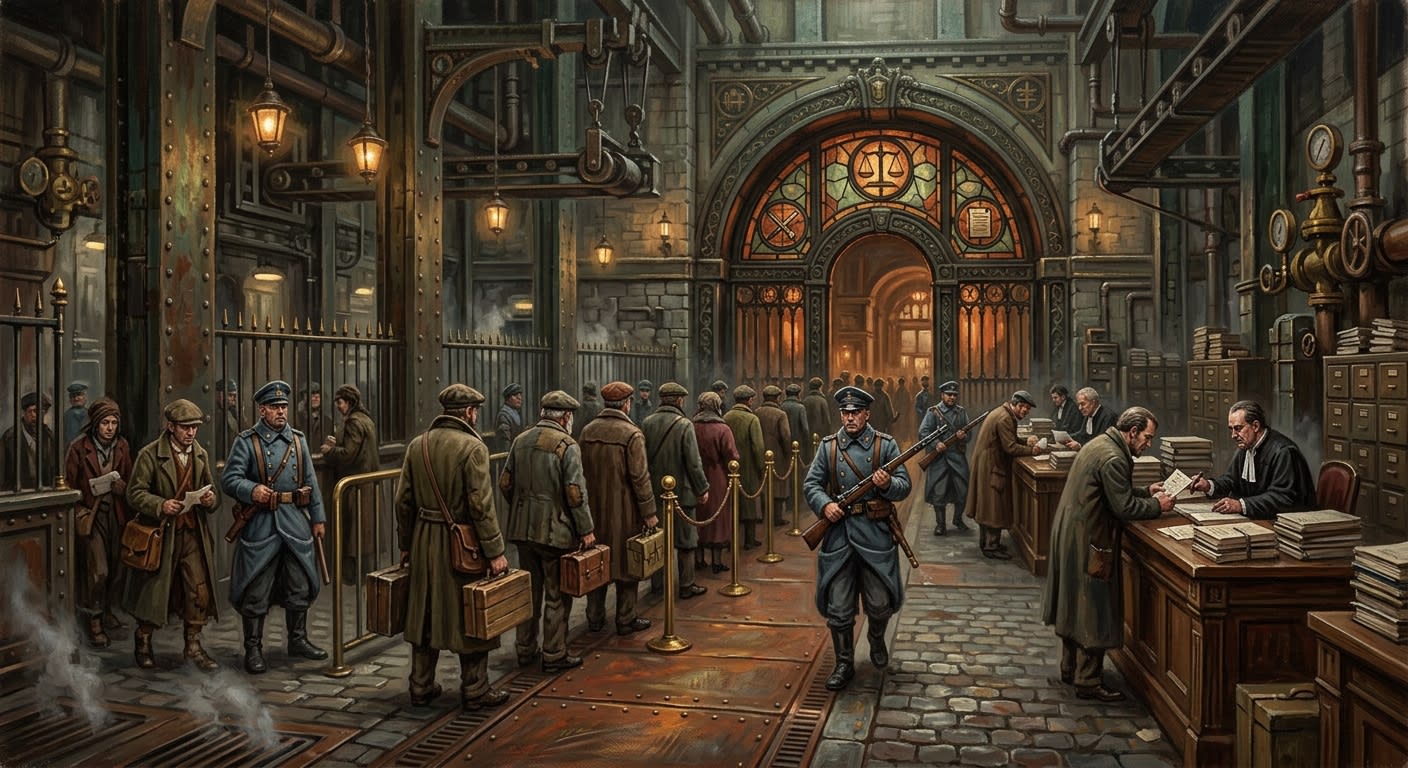
Gate Nine
The final mouth of the Queue Road, where waiting becomes debt and debt learns to breathe
Final court of the Queue Road: a clearance complex over the Apparatus where reclassification, minute debt, appeals, erasure, and warm floors devour travellers by procedure.
Codex Ref. II.3.05-009
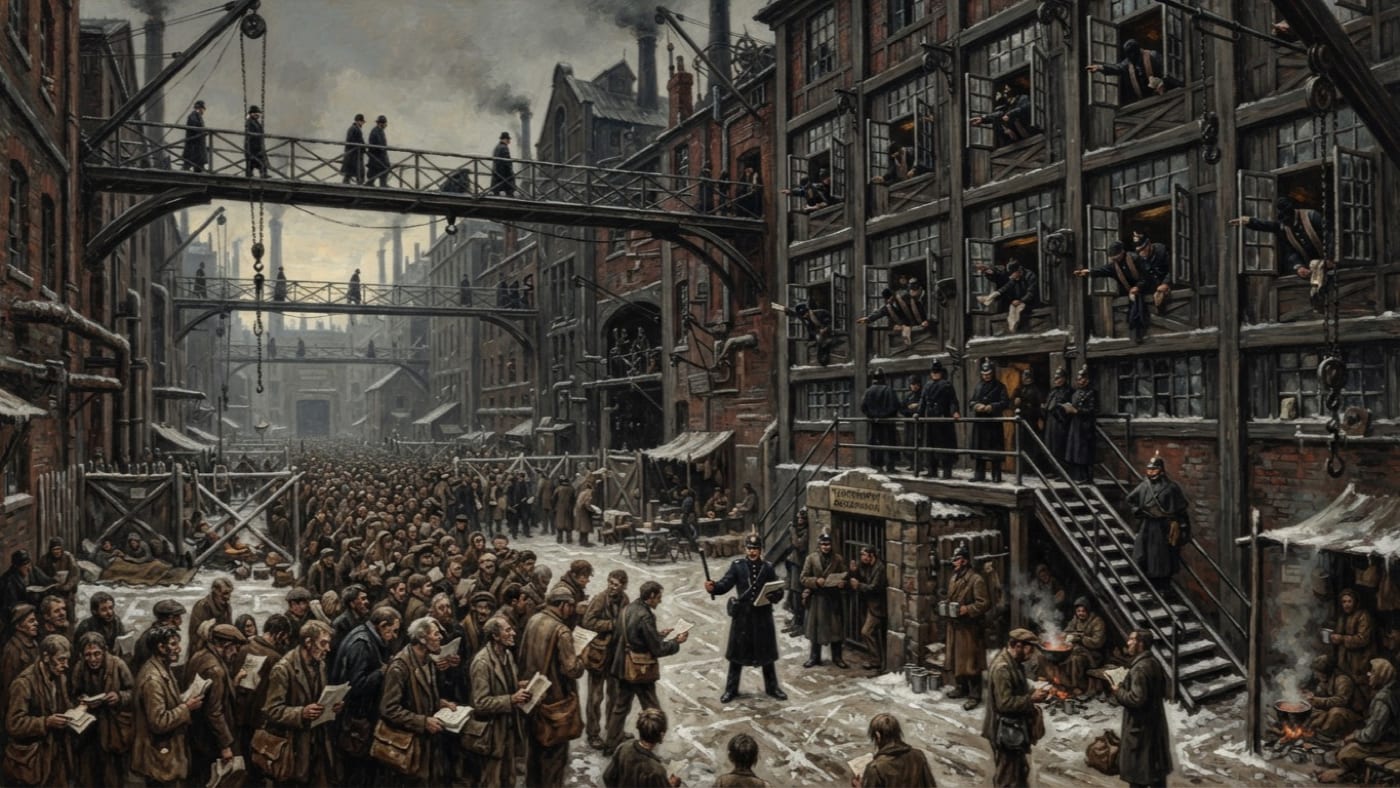
Gate Nine Commons
Where minute debt acquires hands
At the Queue Road's ninth court, day hire, recruitment and conscription share one chalked yard. Minutes buy an appeal; minute debt buys the labourer. The Directorate calls this employment.
Codex Ref. II.3.05-009
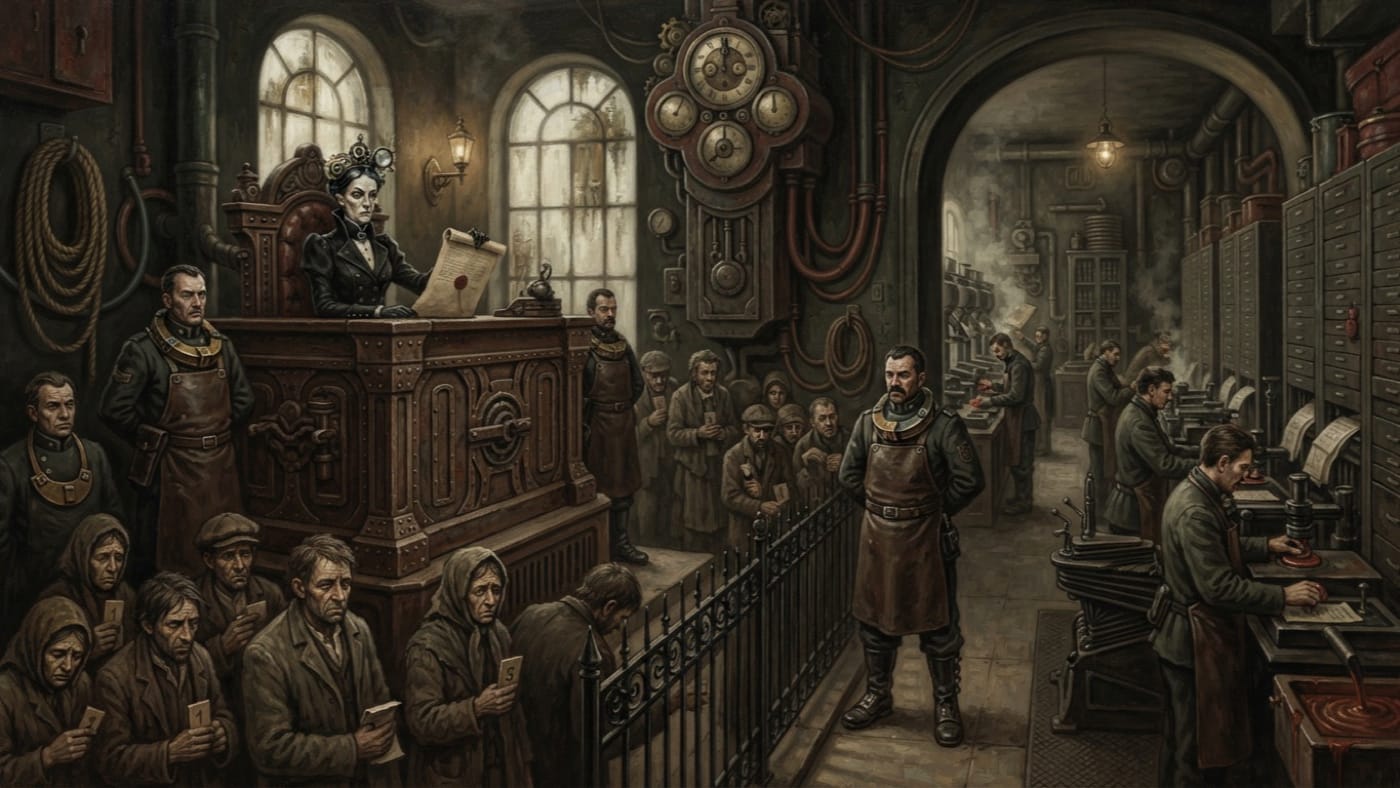
Gate Nine Court
Where mercy is metered and every confession stays on file
Gate Nine Court is the Queue Road's tribunal clique under Mistress-Court Sera Nox. Its mercy rulings trade lighter reclassifications for confessions and favours; the stamp room keeps what the bench forgives.
Codex Ref. VIII.2.09-009
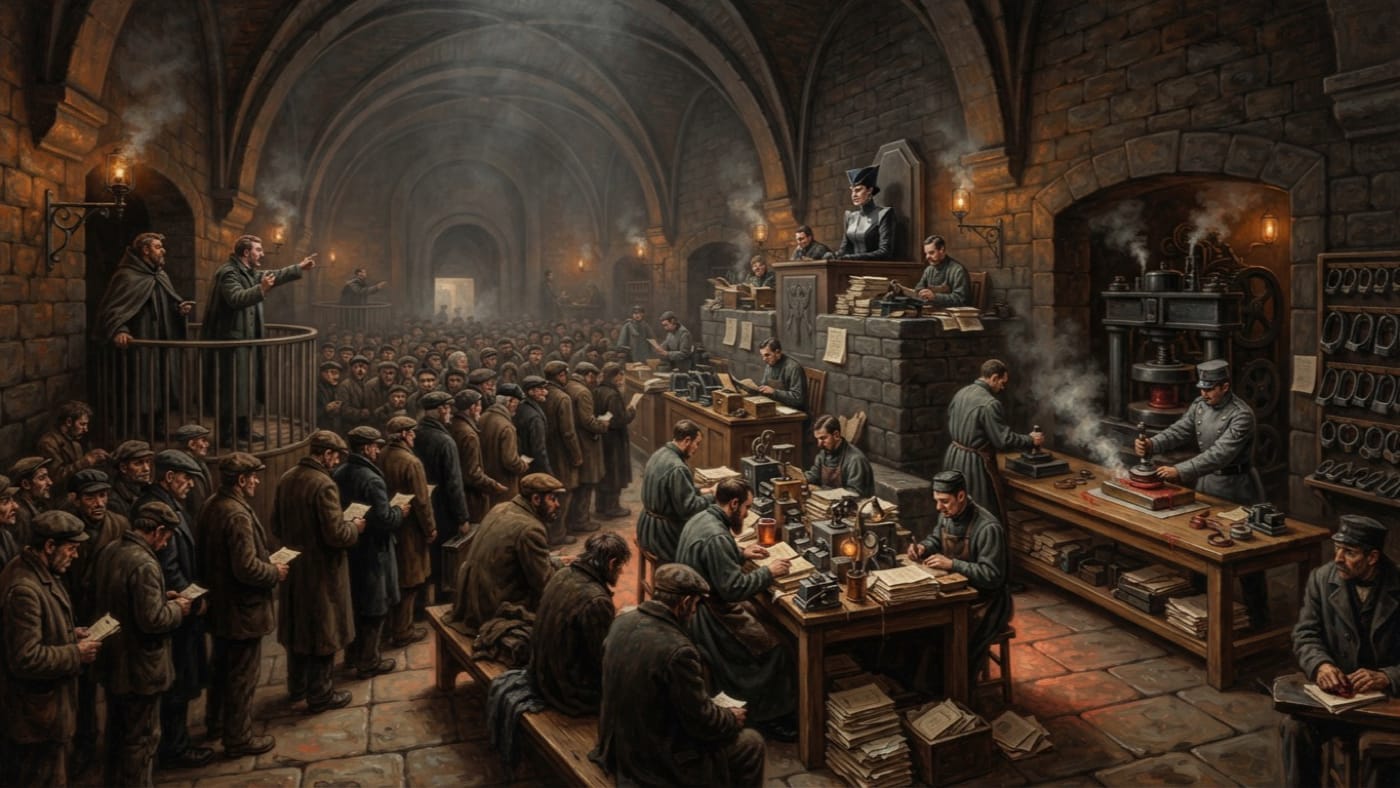
Gate Nine Hearing Hall
The bench speaks; the stamp room rules
Stone hearing chamber at Gate Nine, where appeals become dockets, confessions buy mercy, and wax makes judgment law. The floor is warm; the cause is absent from the form.
Codex Ref. II.3.05-011
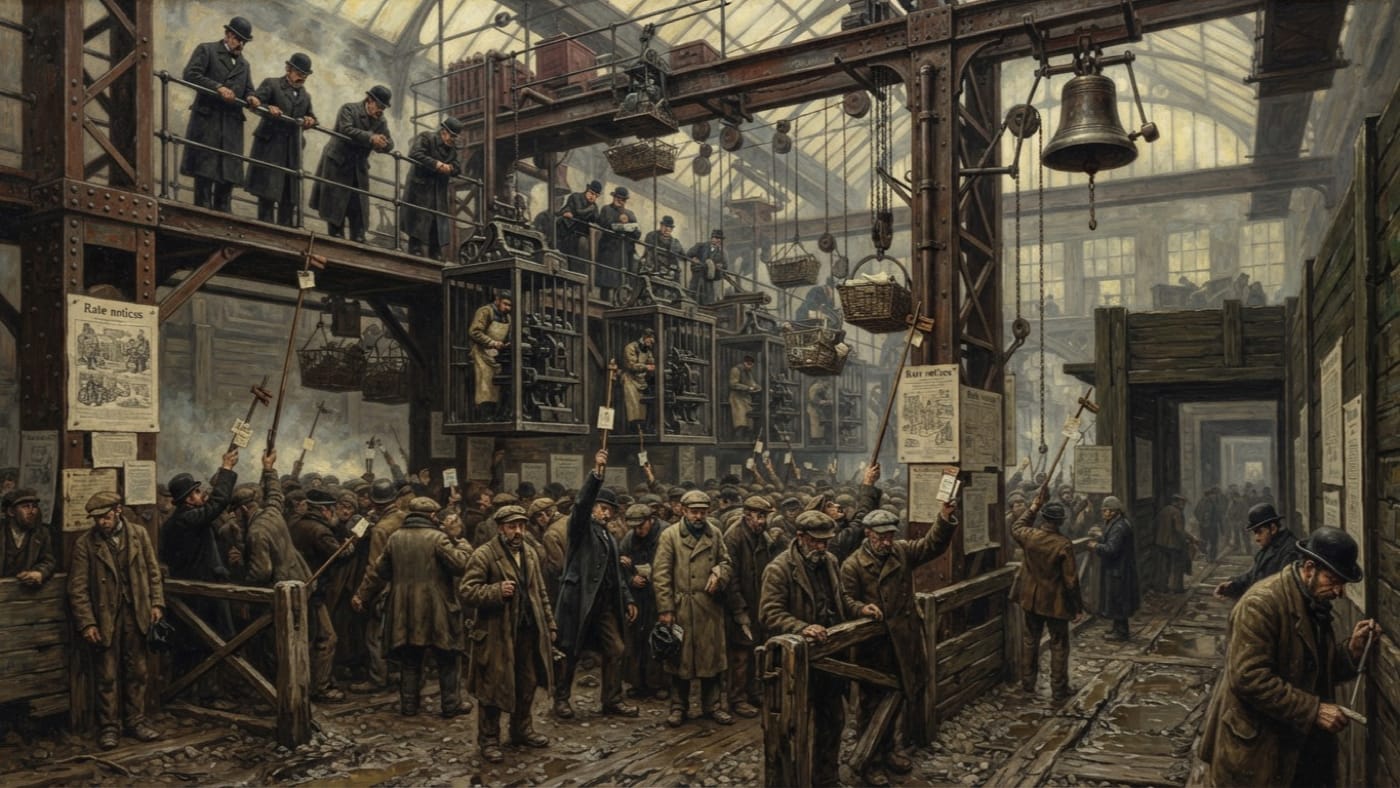
Gate Three
The first mark owns the waiting
Gate Three opens the Queue Road's minute accounts beneath the Bell-Mark Gantry, feeding travellers into the Barricade Maze while the Unstruck teach its stamps to hesitate.
Codex Ref. II.3.05-003
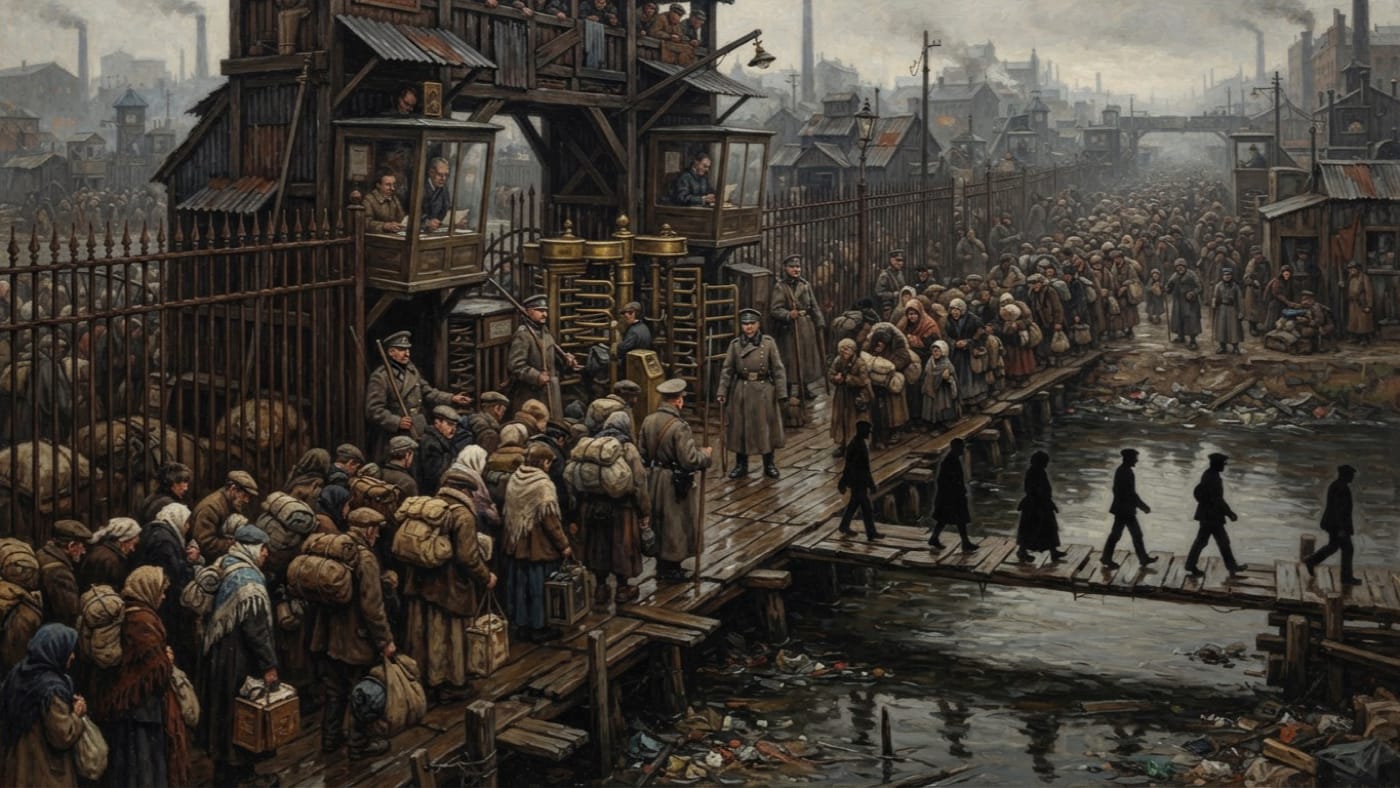
Gate Two Bridge Pinch
The shadow crosses first; the traveller pays to follow
At the Queue Road's Second Gate, the Drowning Step makes passage single file, waiting profitable, and shadows punctual before their owners.
Codex Ref. II.3.05-011
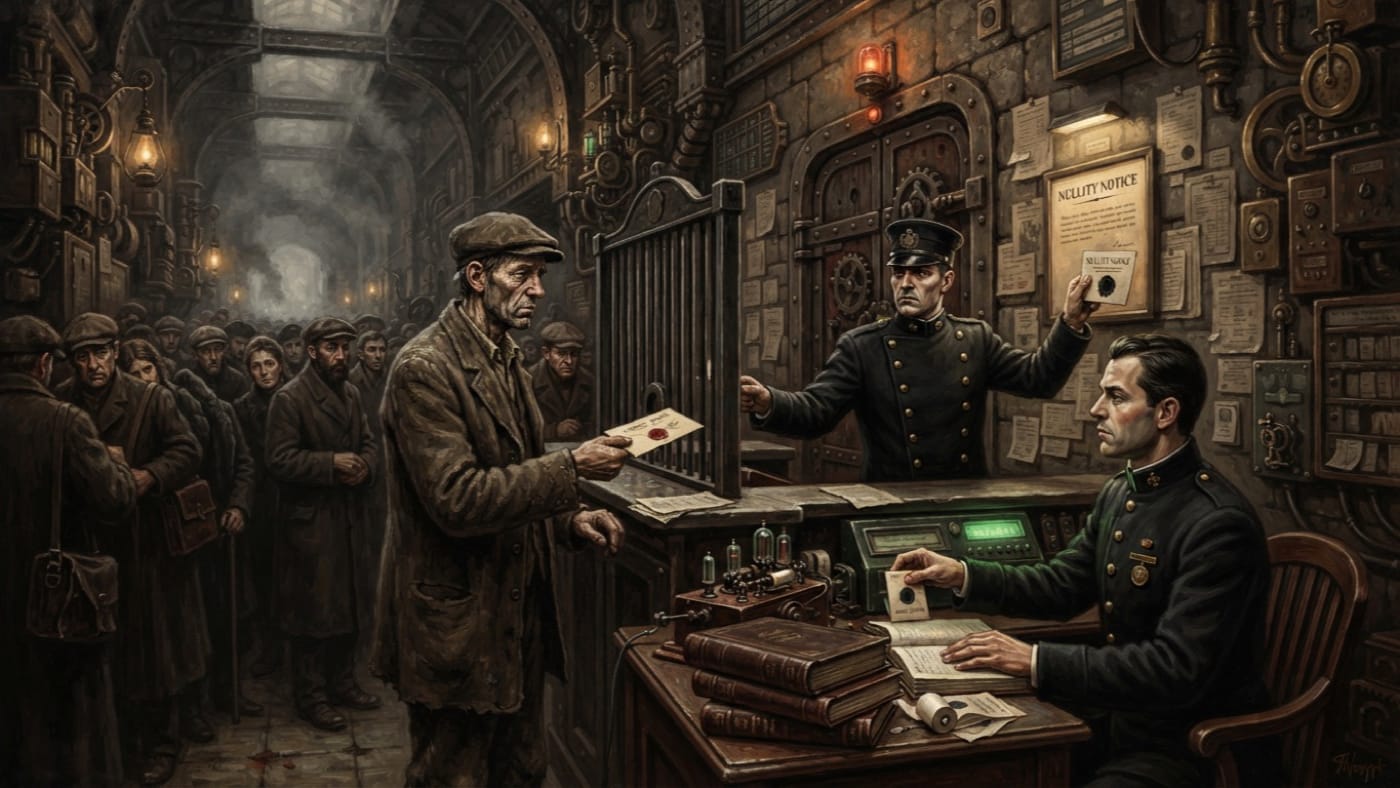
Gate-Nullity Liaison
The name is struck upstream; the traveller learns at the gate.
An A.S. 201 survey of the Erasure Notary specialist who coordinates nullity records with Gatewarden-Notaries. The Bureau files absence; the traveller finds a closed gate.
Codex Ref. XII.14.01-002
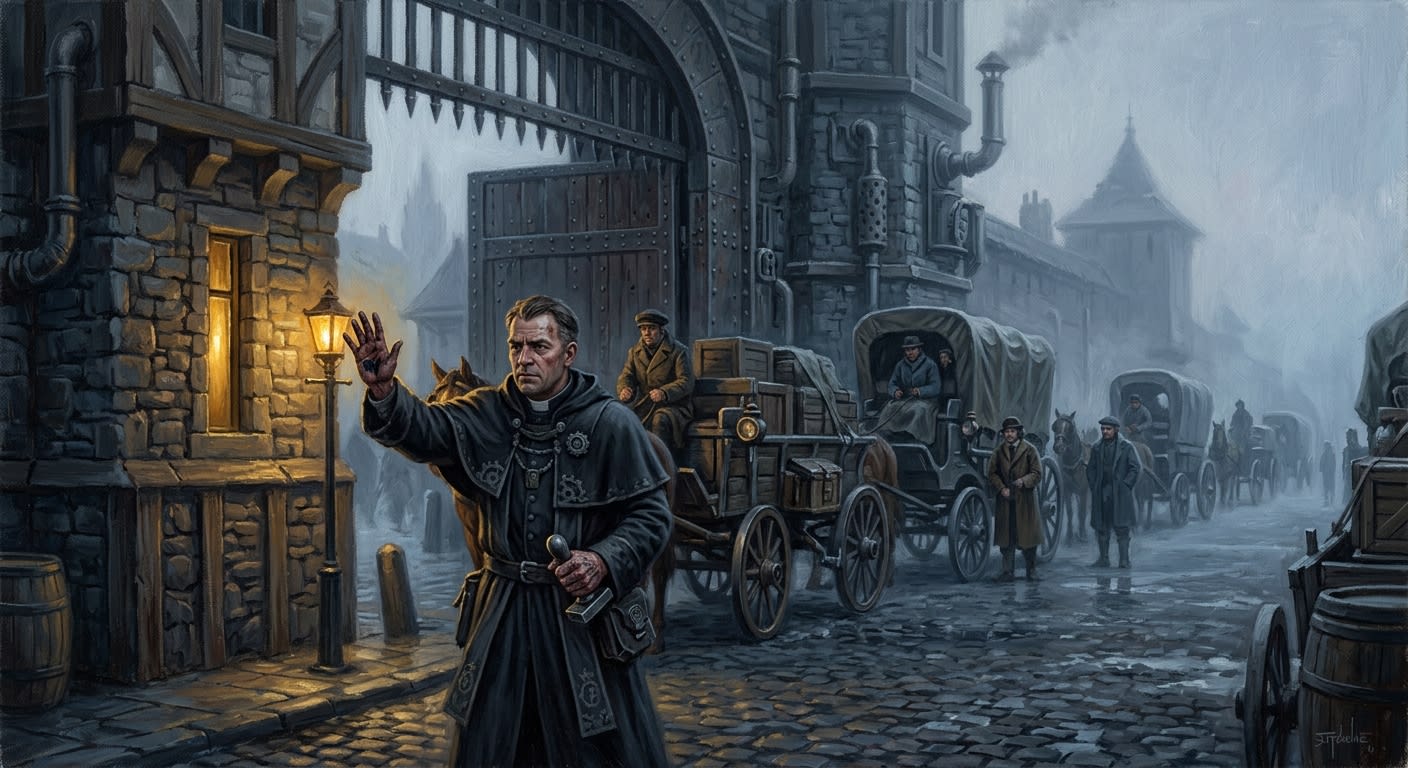
Gatewarden-Notary of Passage
The sole functionary who may halt a column of four thousand by raising one ink-stained hand and asking for documentation.
The Gatewarden-Notary of Passage stands at the point where all five great commodities of the war — disease, heresy, desertion, contraband, and ambition — must be sorted, weighed, stamped, and either admitted or refused. The Gate does not care about the man.
Codex Ref. XII.7.04-001
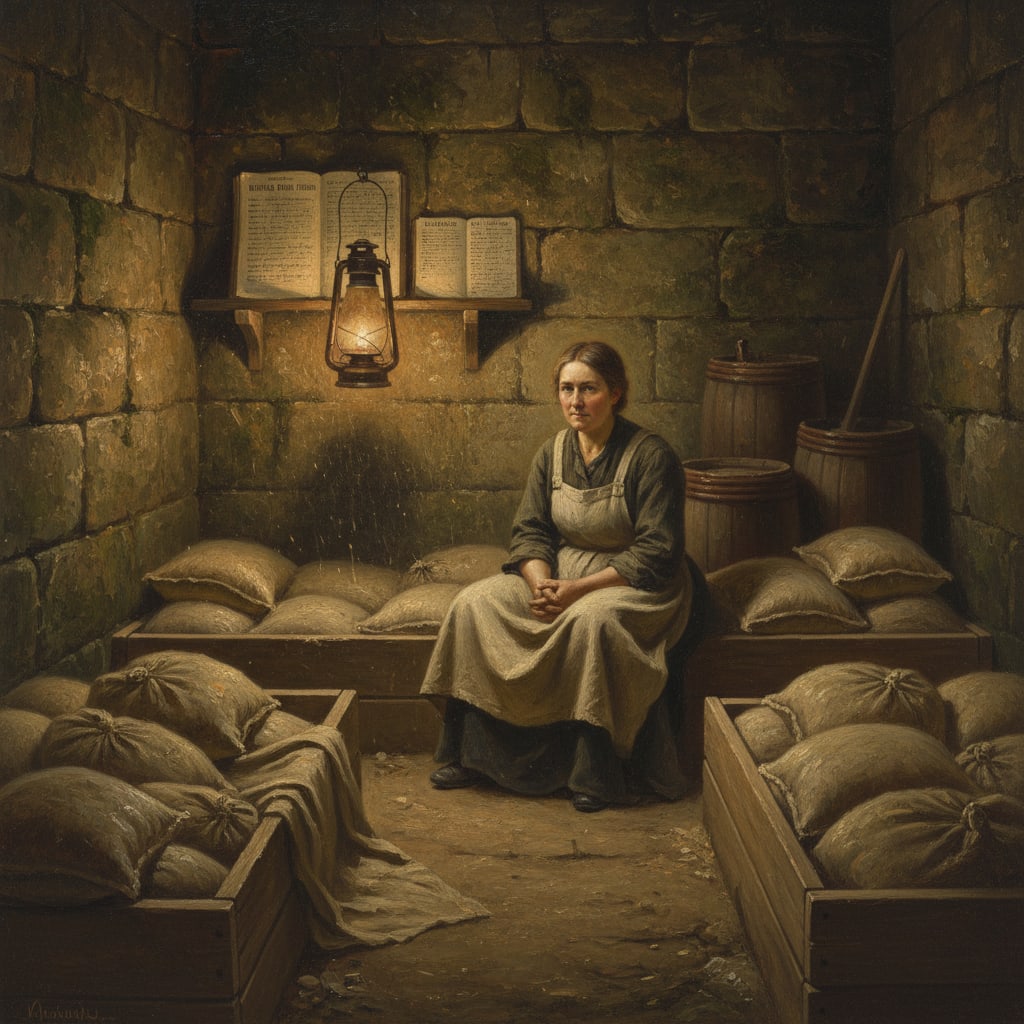
Grain Keeper
The fifth proscribed heresy, which is also why most of the civilian population west of the Sagittal Line survived the last four winters
The fifth proscribed heresy: farmers and millers who hide grain from the Bureau's ration ledger and thereby keep the population alive. The Bureau calls them spiritual saboteurs. The population calls them their only recourse.
Codex Ref. XI.2.01-001
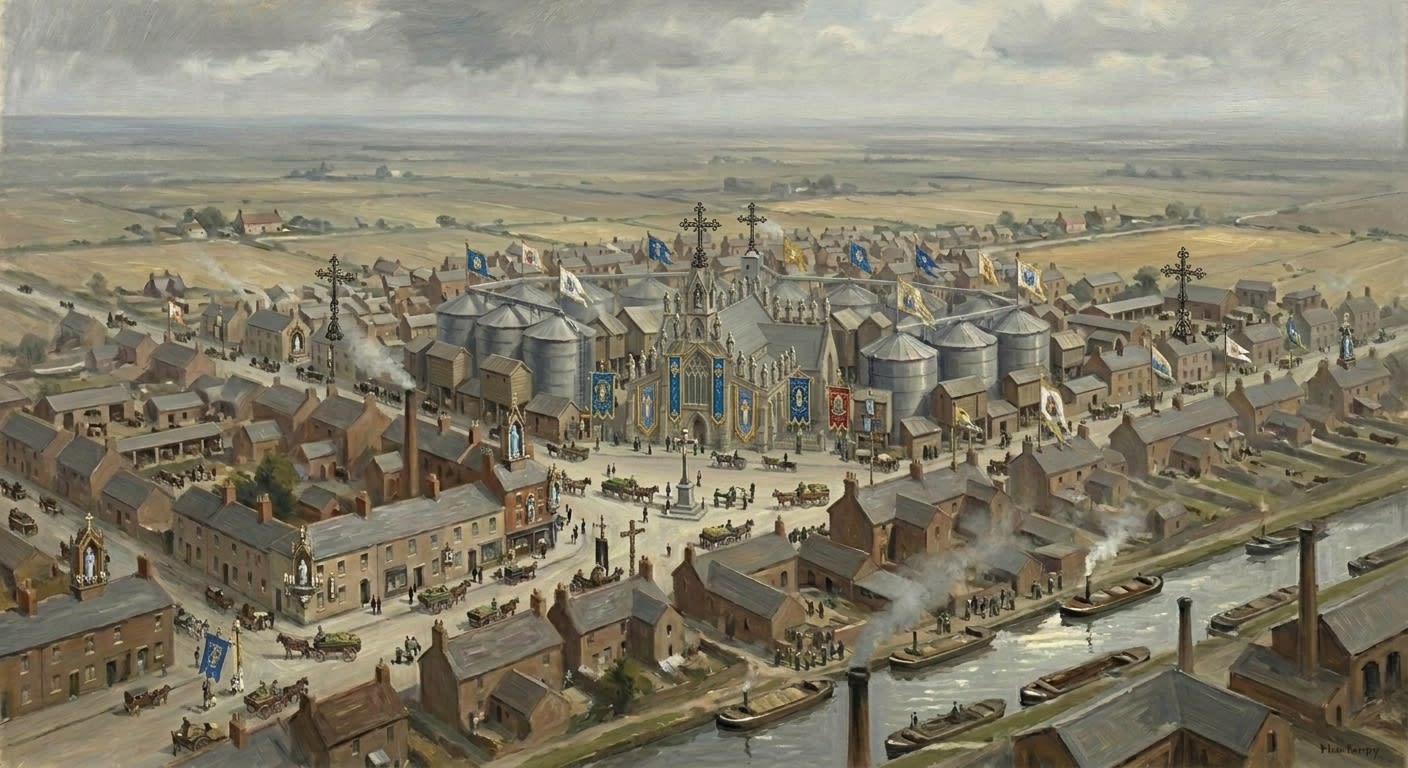
Grain-Gray Ration Parliament of Wexel
A machine for producing obedience, fed on grain and fed upon by something else
A Hessian grain-town that accidentally invented the systematic regulation of joy. Fourteen silos, three instruments of compliance, one smell of flour and fear, and a surplus no official ledger will account for.
Codex Ref. II.2.04-001
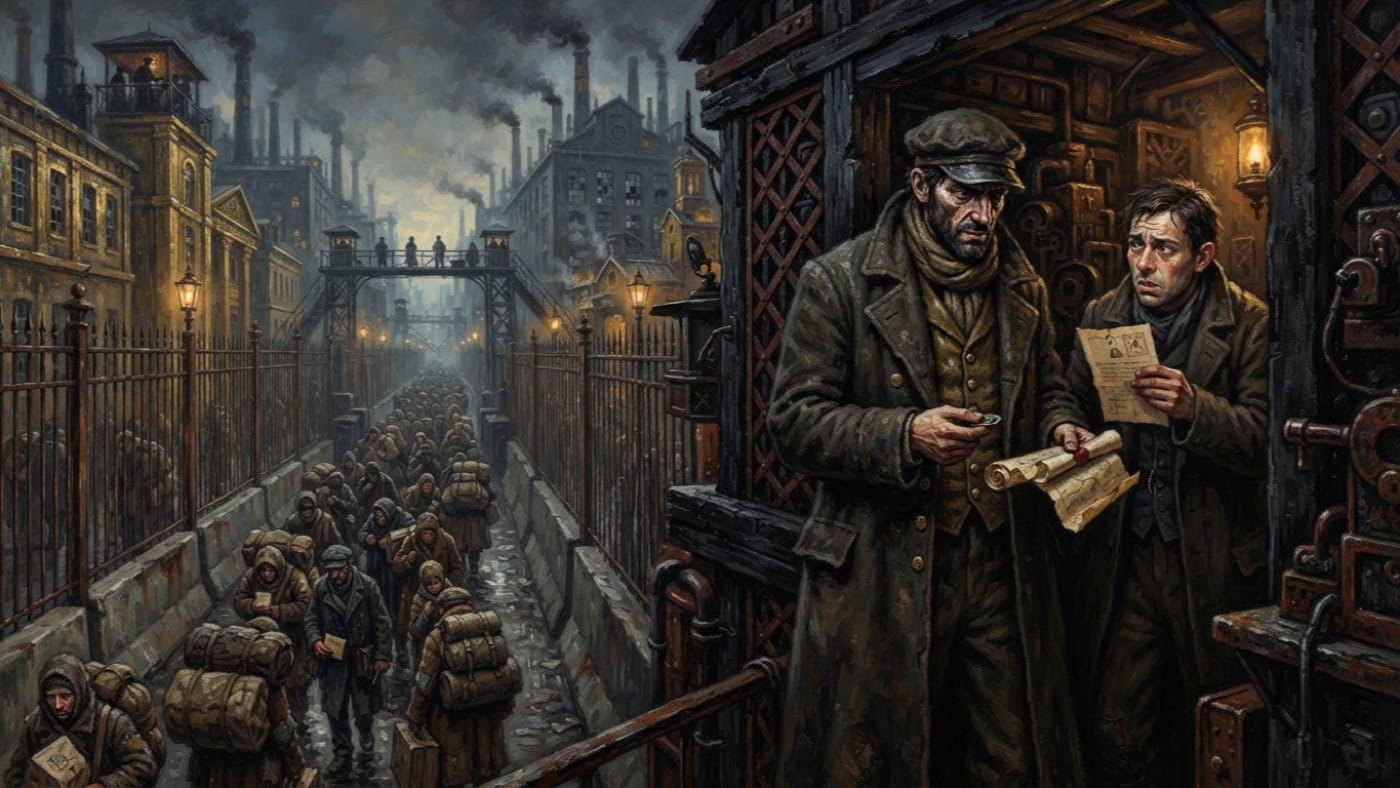
Hatch Lyd
The man who sells passage where motion is taxed
Boss of the Queue Road's Runner Union, called the Lanes. Hatch Lyd sells passage, black-market timestamps and information where every lawful minute is taxed. Unlocated, untaxed and tolerated: the Directorate has use for him.
Codex Ref. III.2.05-001
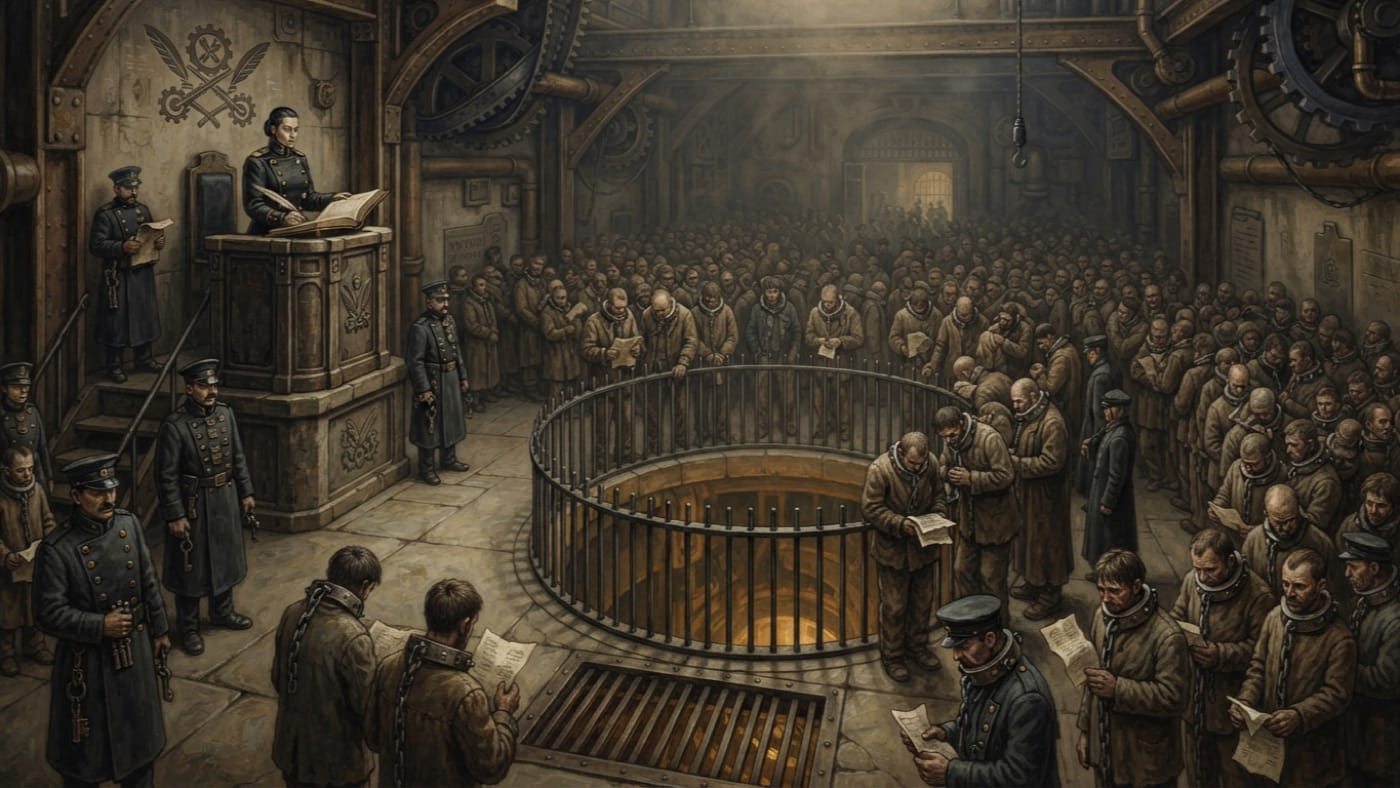
Hearing Hall
Mercy is granted, then entered
At Gate Nine, the Hearing Hall turns appeals into confessions, purchased testimony and labour assignments, forty-two feet above the Apparatus.
Codex Ref. II.3.05-011
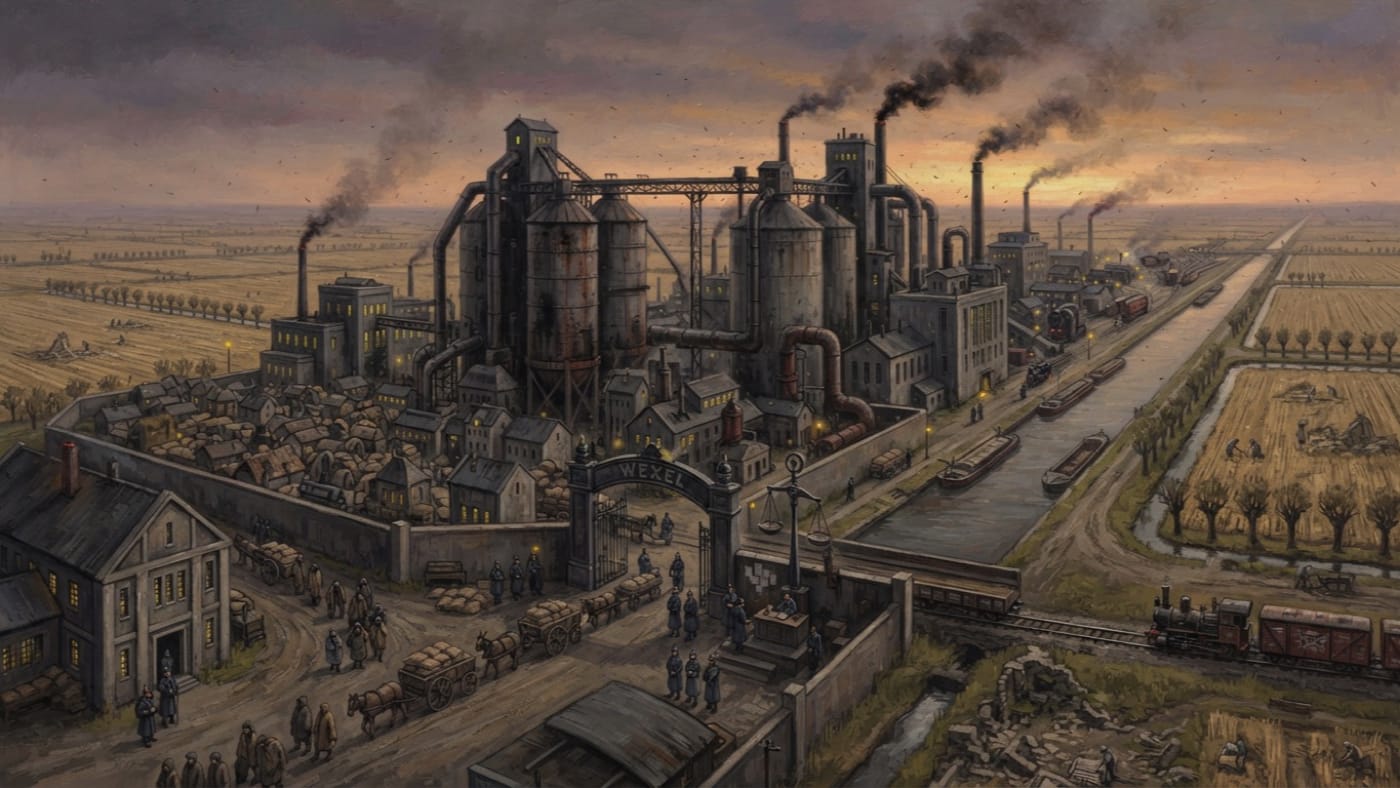
Hessian Lowlands
The fields grow the grain; Wexel grants permission to eat it
The Hessian grain country feeds Wexel's scales and the Heartlands' bread trains. Its boundaries remain unfiled, its people uncounted, and its permission to eat belongs to a town.
Codex Ref. II.2.04-002
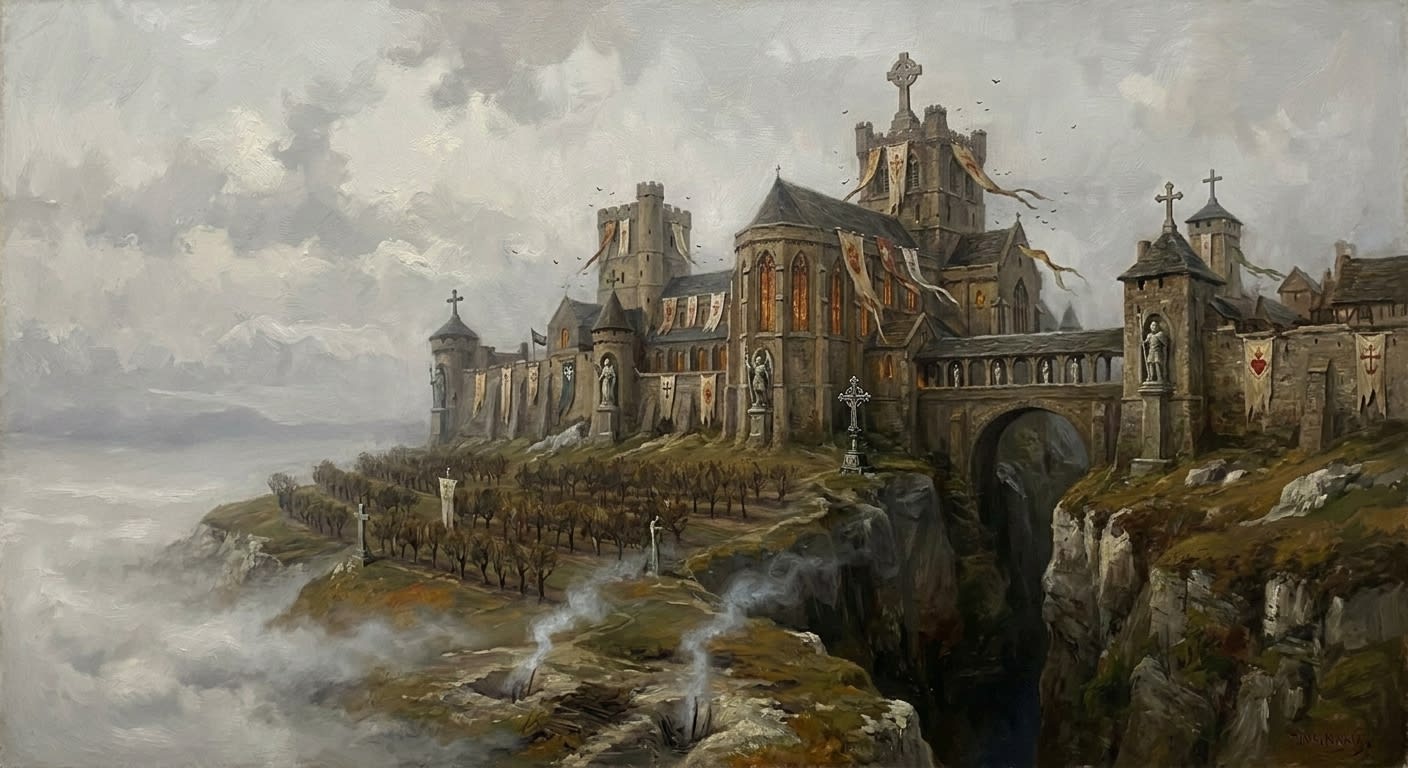
Hollow-Script Scriptorium of Nemea
Where the ink rewrites the truth, and the truth rewrites the ink
The Bureau of Records' master archive-scriptorium on a chalk ridge: where names are erased, contracts rewrite themselves overnight, and the ash in the Yards speaks. Drax has been named by its ink and would prefer the record show otherwise.
Codex Ref. II.2.06-002
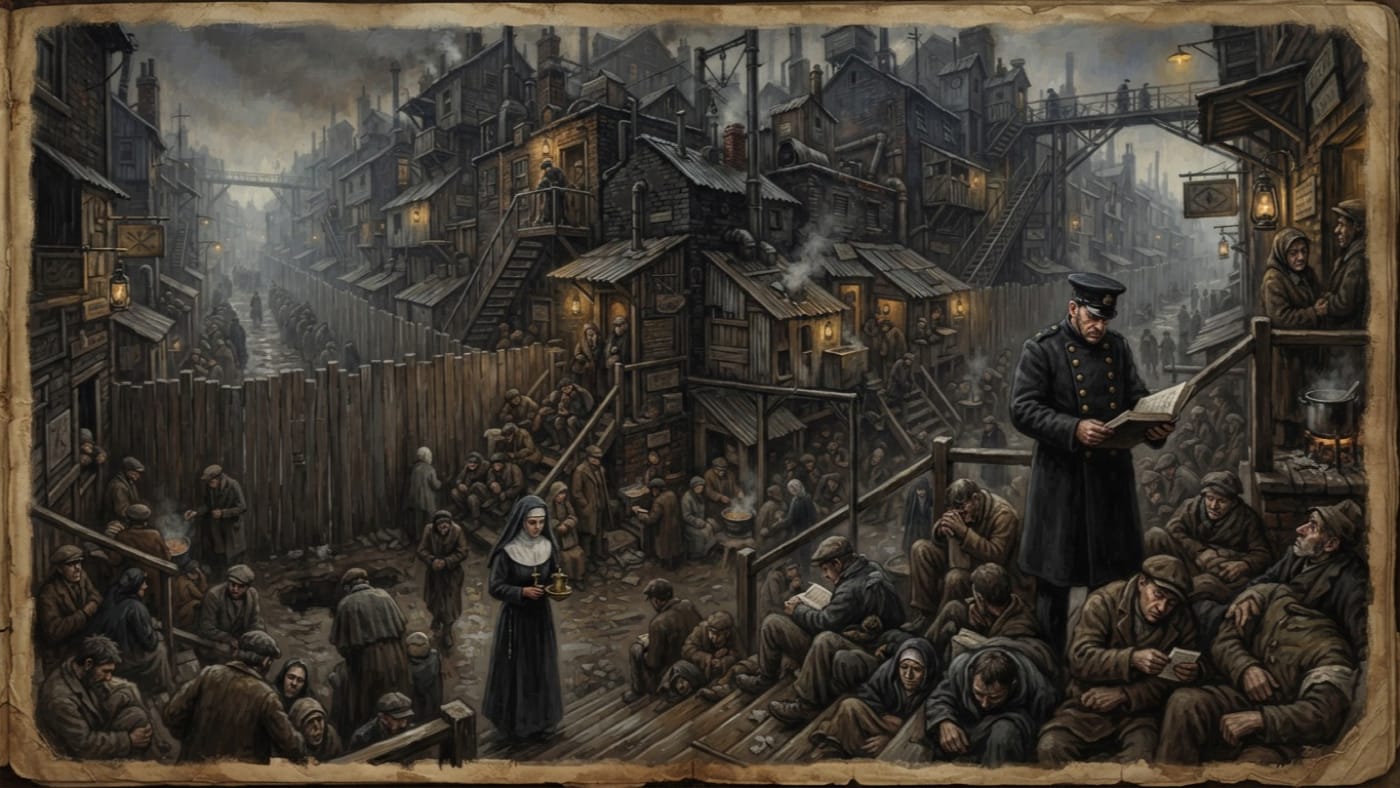
Hostel Ribbons
The wait is sold long, the sleep is sold short
Along the Queue Road, the Hostel Ribbons sell sleep by the slice. The Consortium fills its bunks with delay, while the Minute Drift makes receipts and bodies disagree.
Codex Ref. II.3.05-011
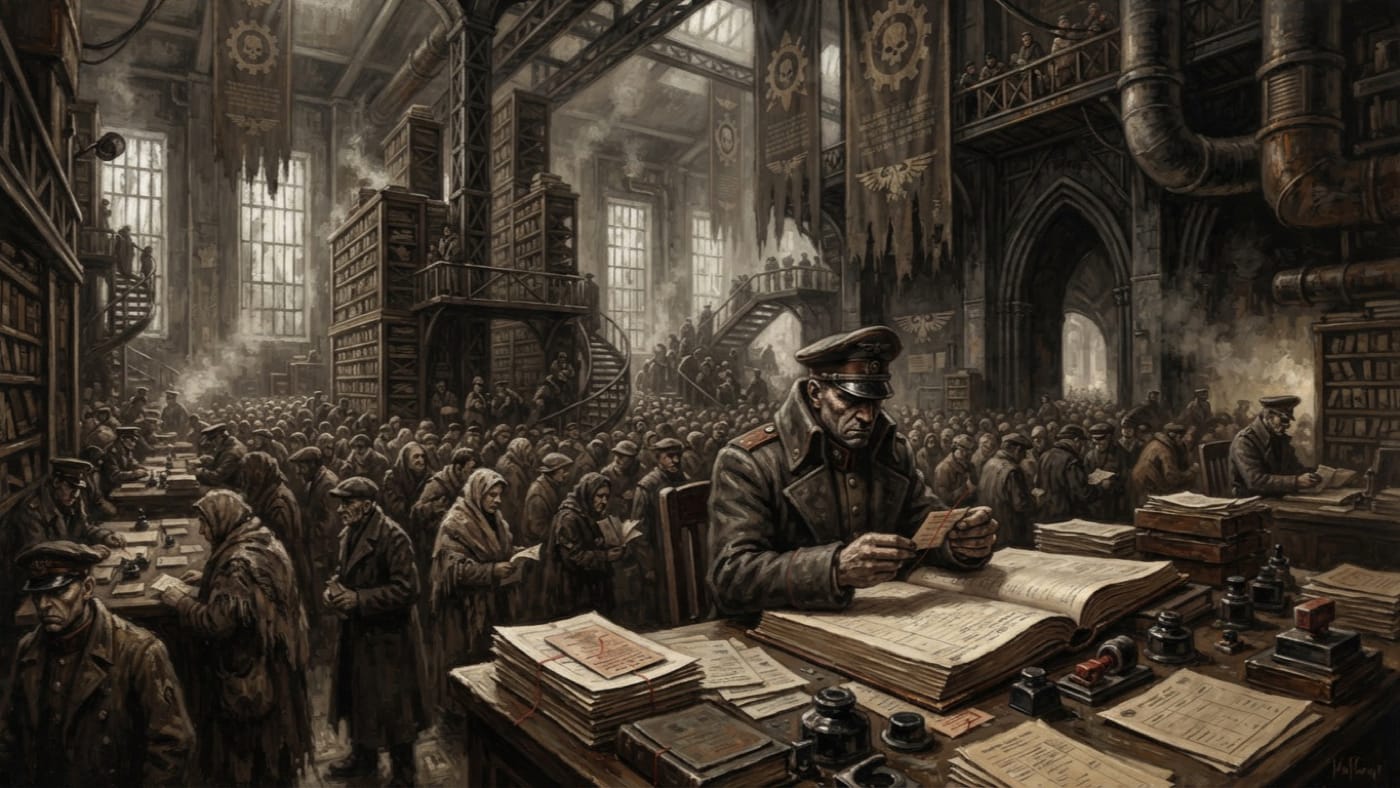
Identity Fraud
A stolen name buys bread; an authorised alteration earns a salary
Identity Fraud steals the registered person: names, ration rights and passage permissions. Standing Order 14-M gives offences of sufficient degree a wall; authorised alterations remain daily duty.
Codex Ref. XIII.1.97-1422
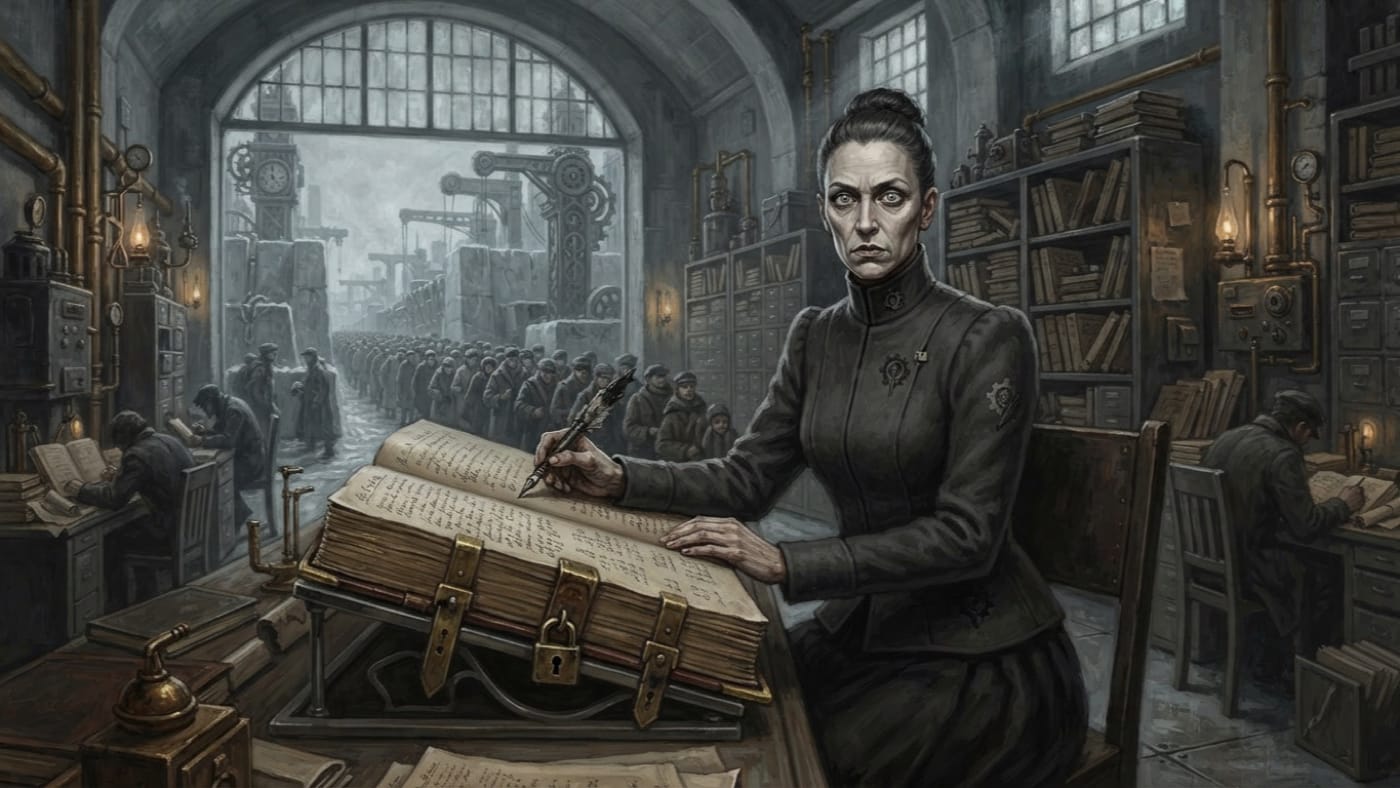
Ilse Quill
The keeper of the Directorate's true book
Adjunct Ilse Quill keeps the Permit Directorate's hidden master ledger. The public books record compliance; her book records what waiting was sold for. The ledger remains withheld, and her biography is no better supplied.
Codex Ref. III.2.01-201
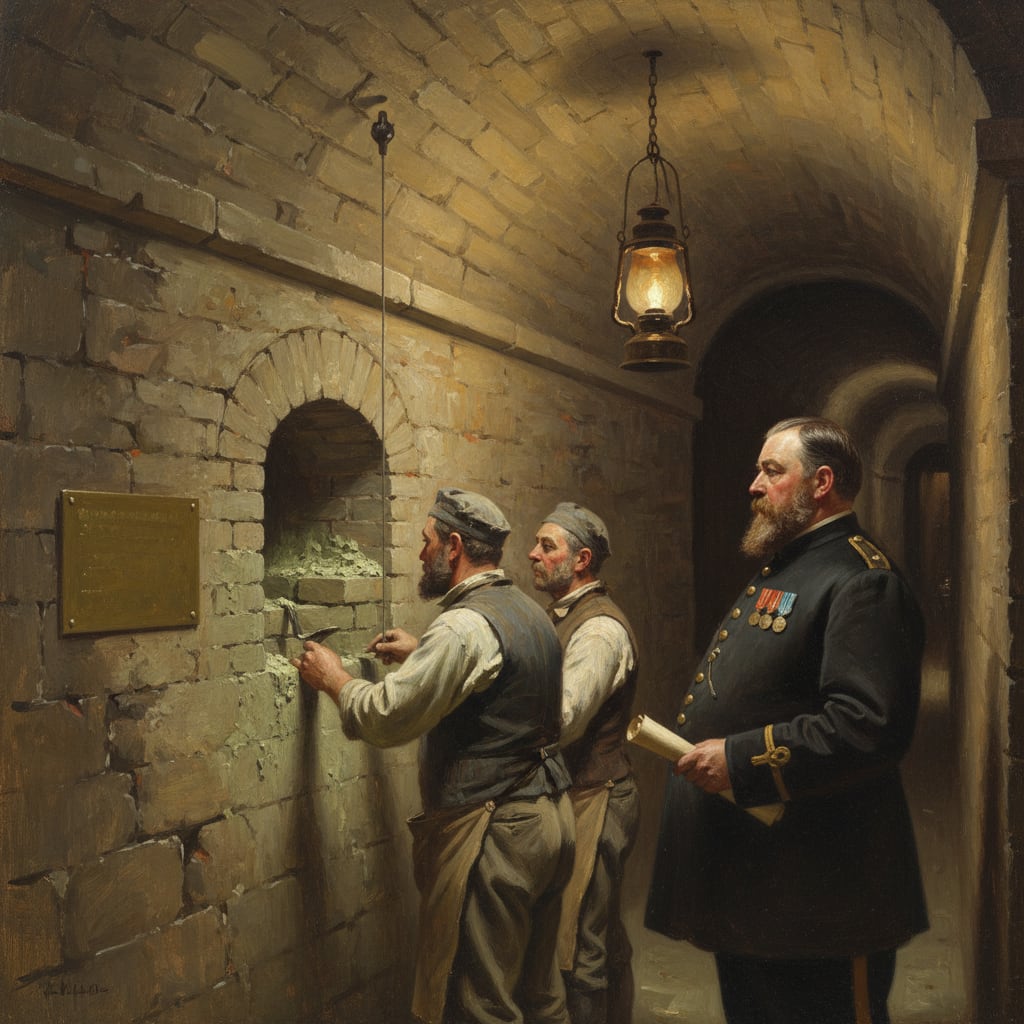
Immurement Mason
The Punitive Construction Auxiliary: On the craft of permanent deterrence, the condemned as structural element, and the mortar that does not negotiate
~2,400 licensed Masons who turn living bodies into load-bearing lessons; three ranks, two factions, one Standing Order that recommends no air provisions; the condemned ceases to be a problem and becomes a structural element.
Codex Ref. XII.22.01-001
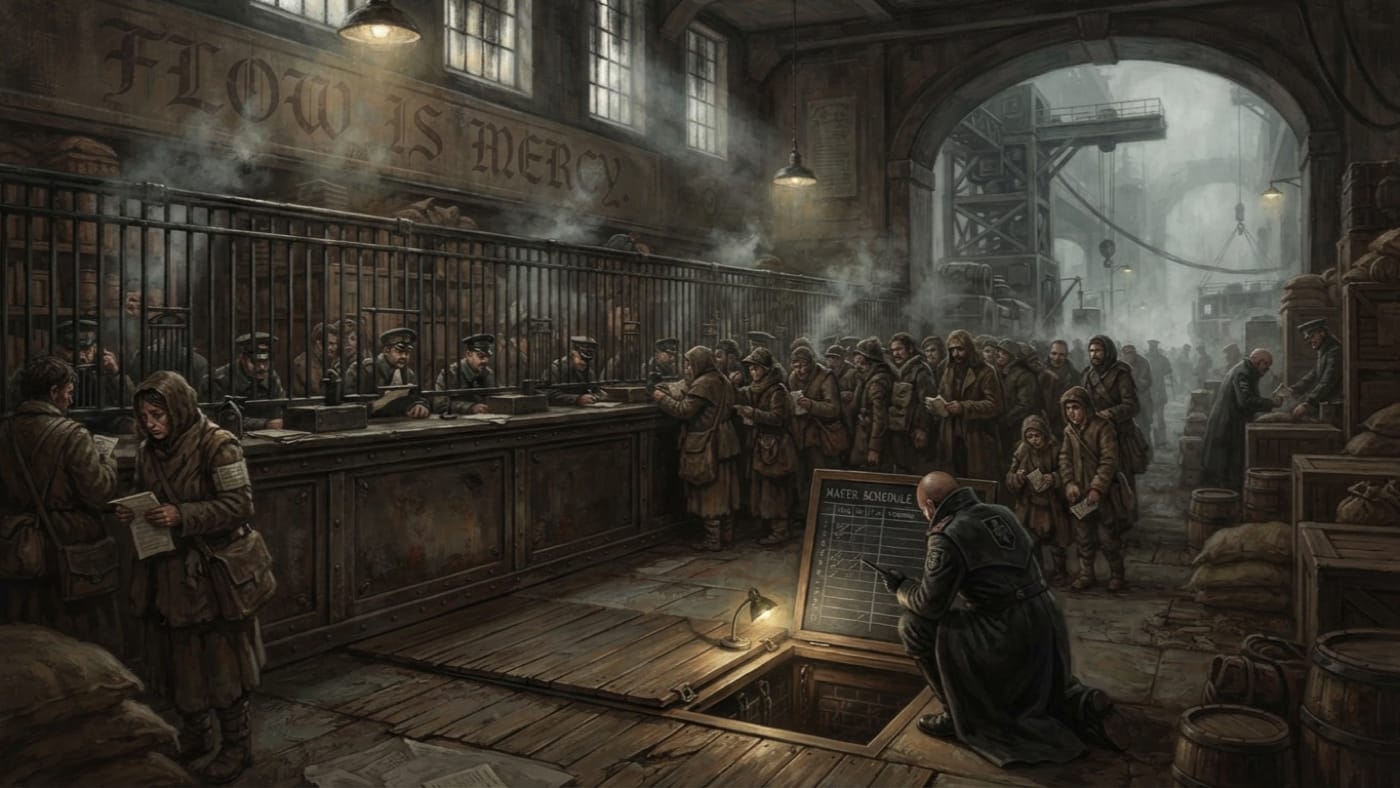
Ink Dock
The river waits for permission
In A.S. 201, Ink Dock sells waiting, files missing cargo as confession, and keeps the Chain's master slate beneath its Hall. The ferries move when the ink permits.
Codex Ref. II.3.05-003
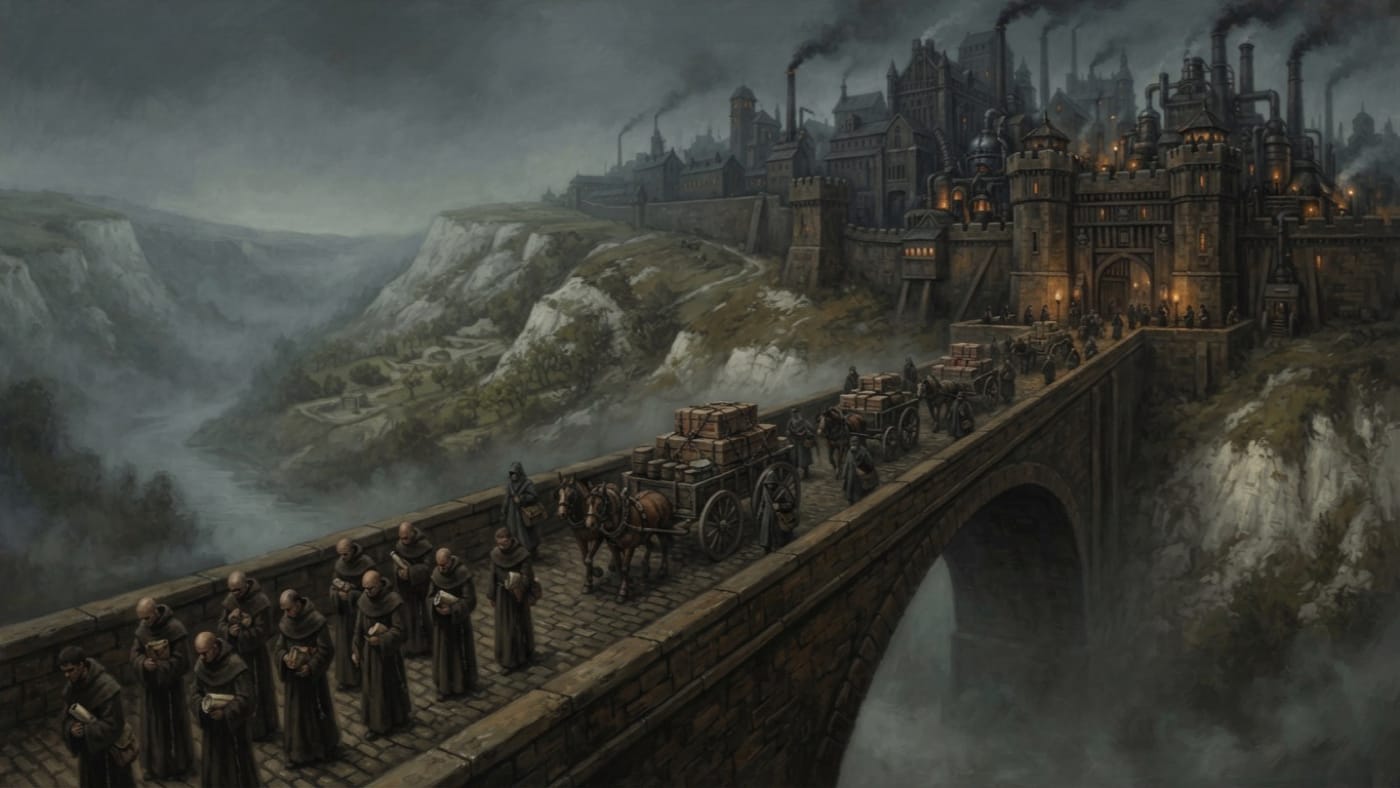
Inkhouse Bridge
The bridge carries the papers; the gatehouses decide
Nemea's single stone span carries all freight, couriers and novice intake. The Bureau arranged the bottleneck deliberately. The bridge carries the papers; the Collegium waits beyond the crossing.
Codex Ref. II.2.06-021
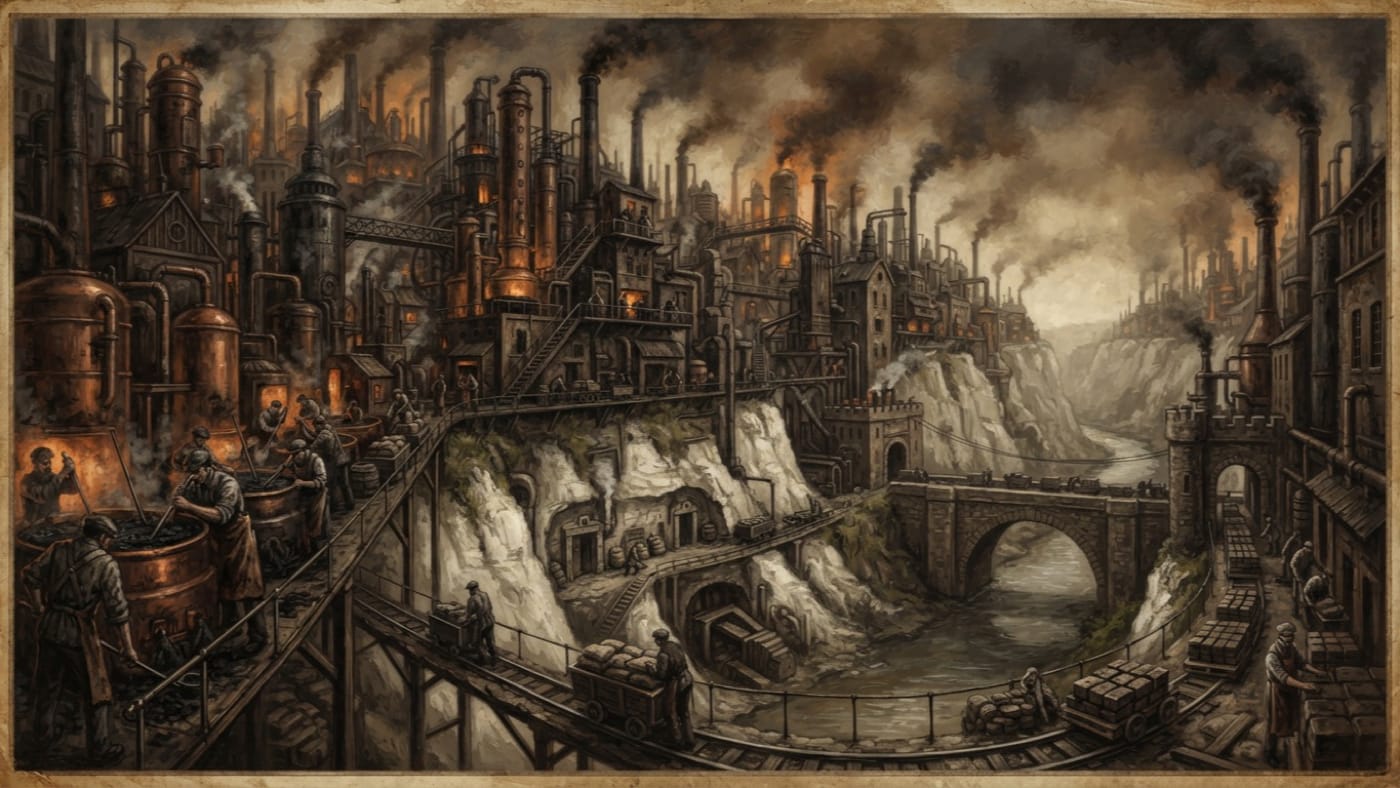
Inkhouse Quarter
Where the law is boiled before it is written
Nemea's copper-vat precinct supplies the Bureau of Records with rationed ash-ink. The brewers pay in shifts and surnames; the contracts downstairs keep finding new obligations.
Codex Ref. II.2.06-020
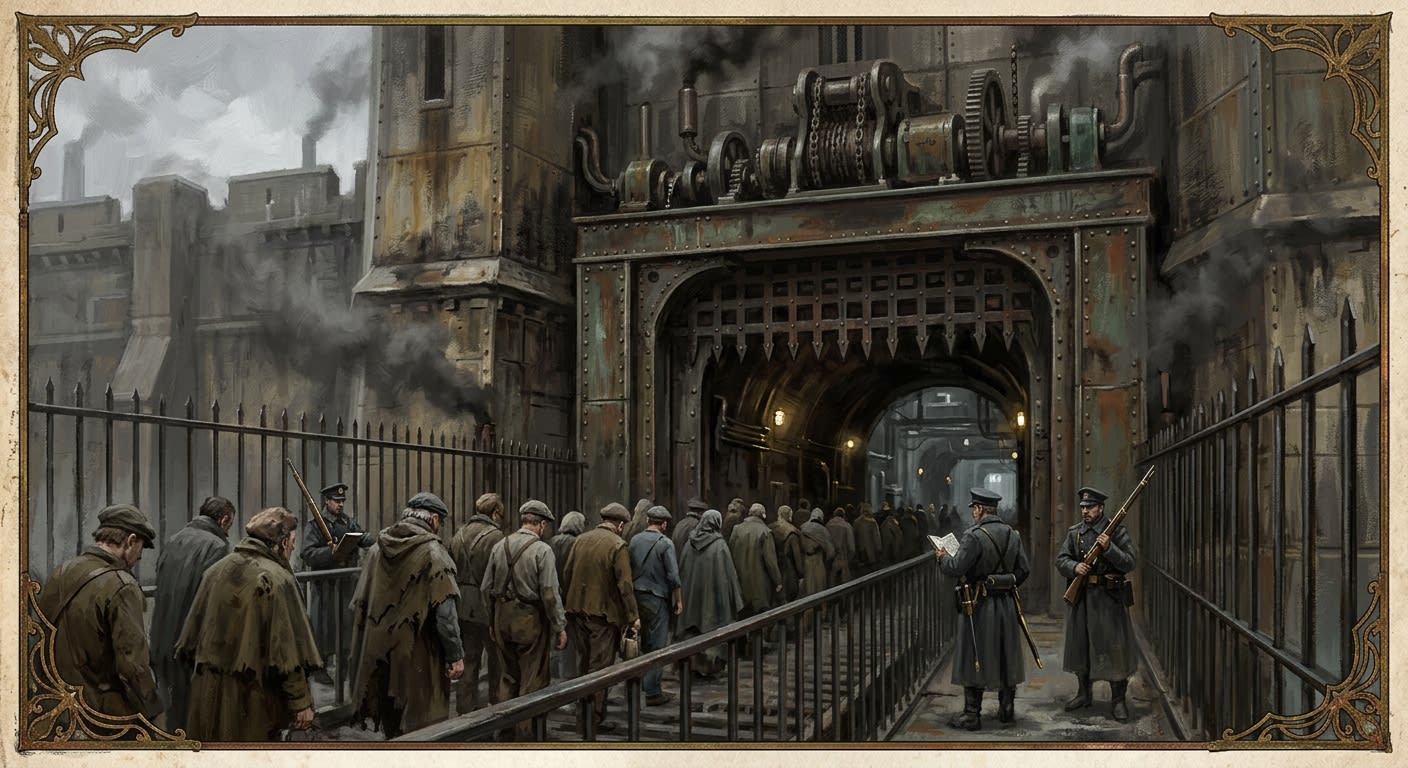
Intake Gate
The road enters one body at a time and is lost
The Intake Gate is the Cloister of Miscounted Beads' western iron mouth: a threshold where pilgrims stop being a procession and become countable, sortable material.
Codex Ref. II.1.05-187
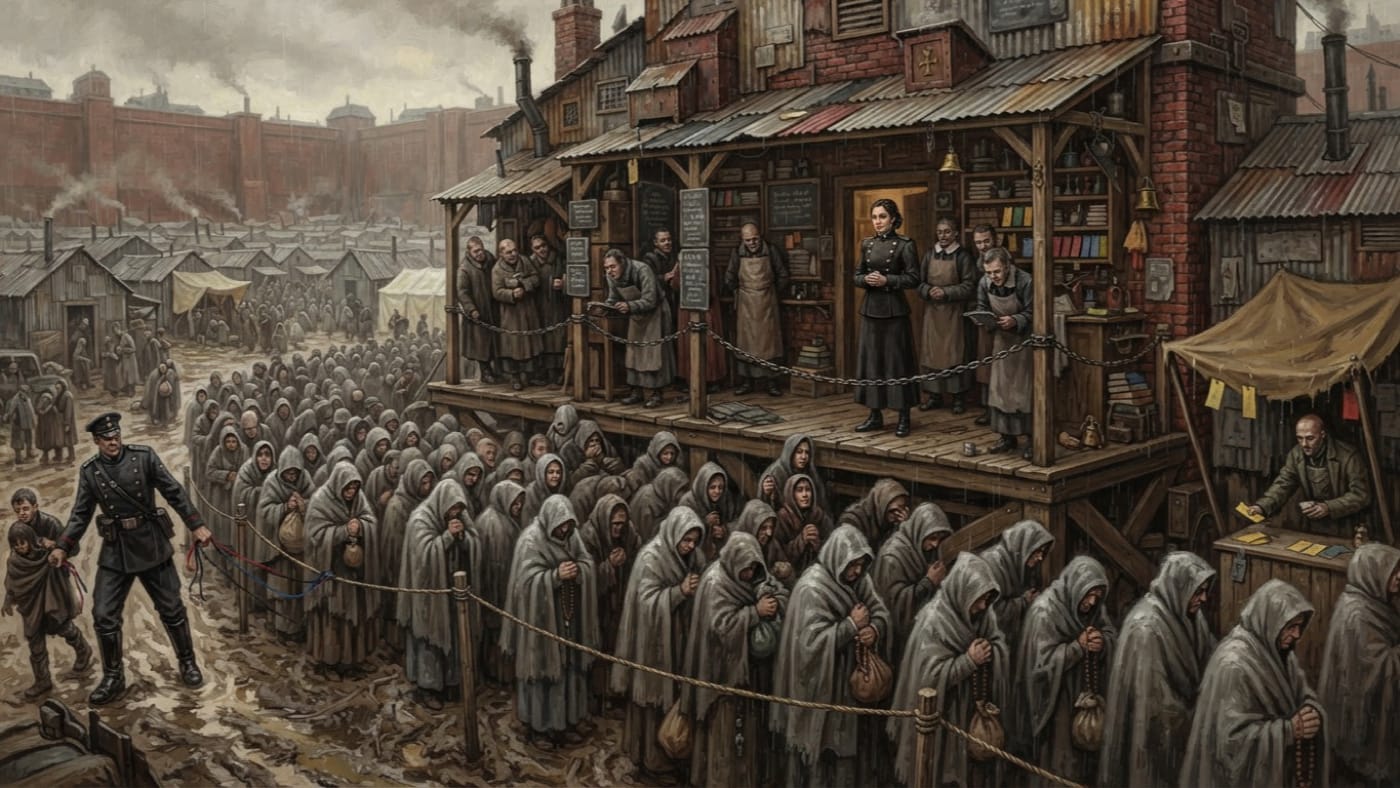
Intake Porch
Where answering your name becomes consent to the Ledger
The Intake Porch is the Lost Procession Yard's calling station: Jossa Rill's clerks summon names, assess disputed answers, and dispatch pilgrims into tags, berths, custody, or expulsion.
Codex Ref. II.3.06-003
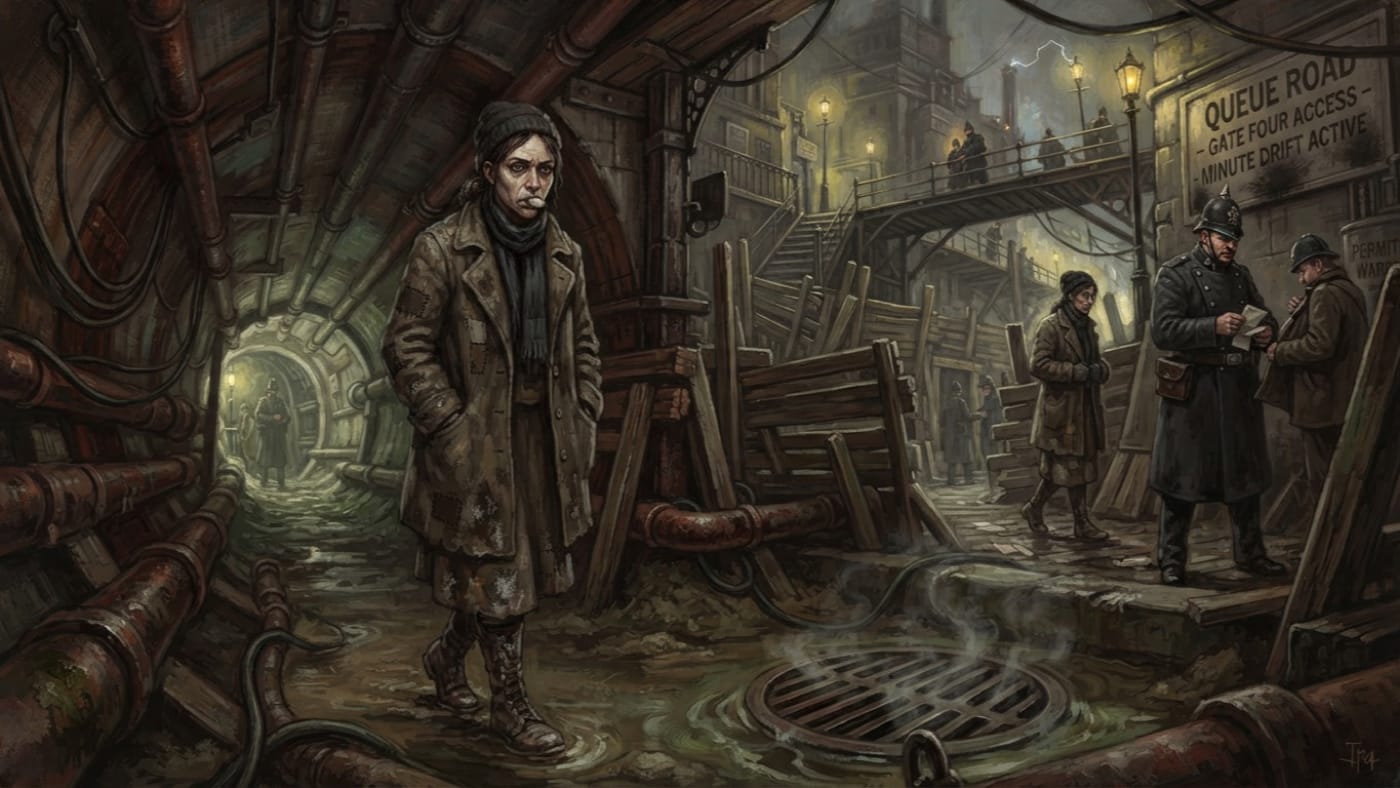
Ira of the Second Bell
Search the papers. There are none.
Ira of the Second Bell carries the Unstruck's messages from the Barricade Maze to the Witness Rental Houses, with chalk chips in her mouth. Purity searches her papers; the record holds neither recipients nor contents.
Codex Ref. III.2.01-043
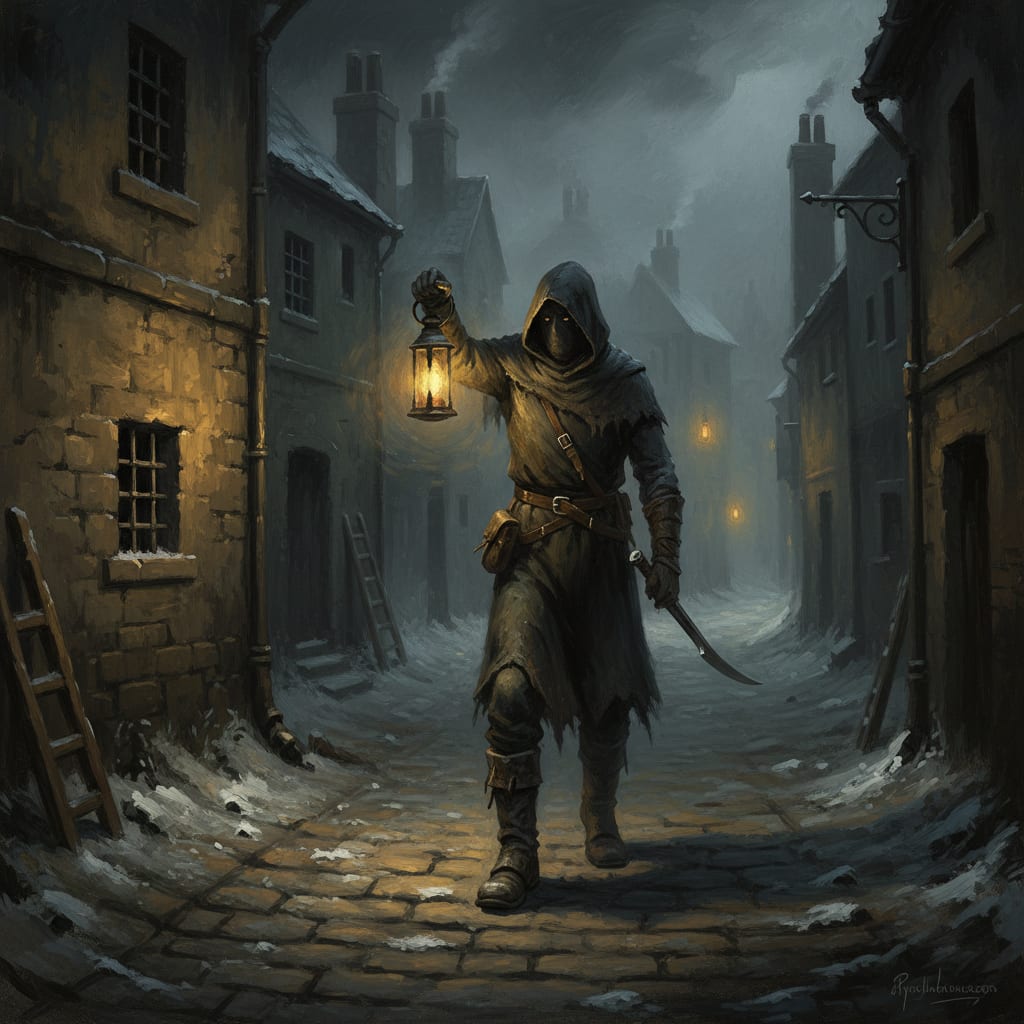
Lantern Brotherhood Vigilante
Eight thousand four hundred tolerated blades, licensed by a subordinate clause — the Synod's night made visible and officially nonexistent.
Eight thousand four hundred tolerated blades in five Watch Circles, licensed by a subordinate clause in a curfew ordinance — the Synod's night made visible and officially nonexistent.
Codex Ref. XII.25.01-001
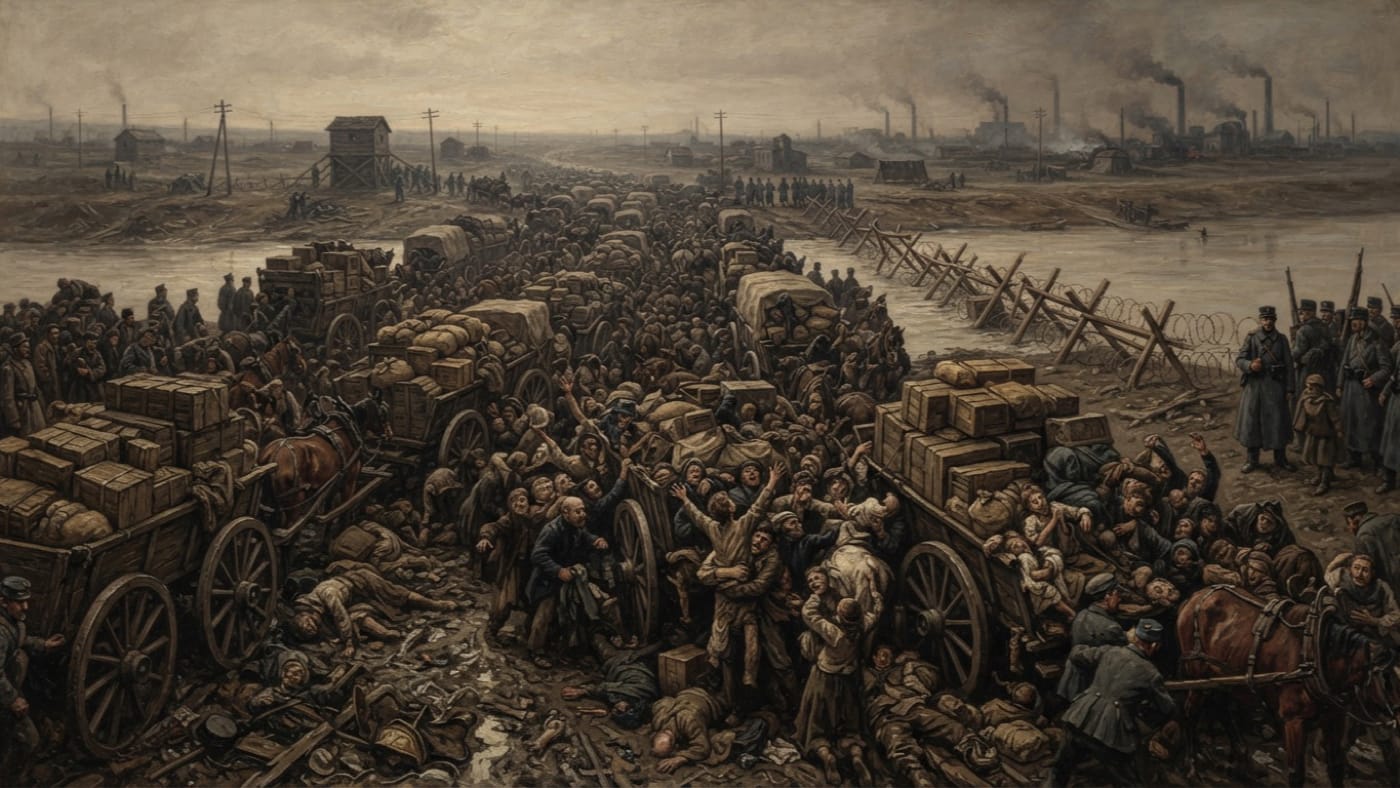
Latch River Ford Panic
The week the Queue Road learned to stop.
A false plague rumour drove a week-long crush at the Latch River ford in A.S. 97: three thousand dead, five hundred more lost to fevers. The Synod's answer was nine inspection gates.
Codex Ref. VII.8.10-097
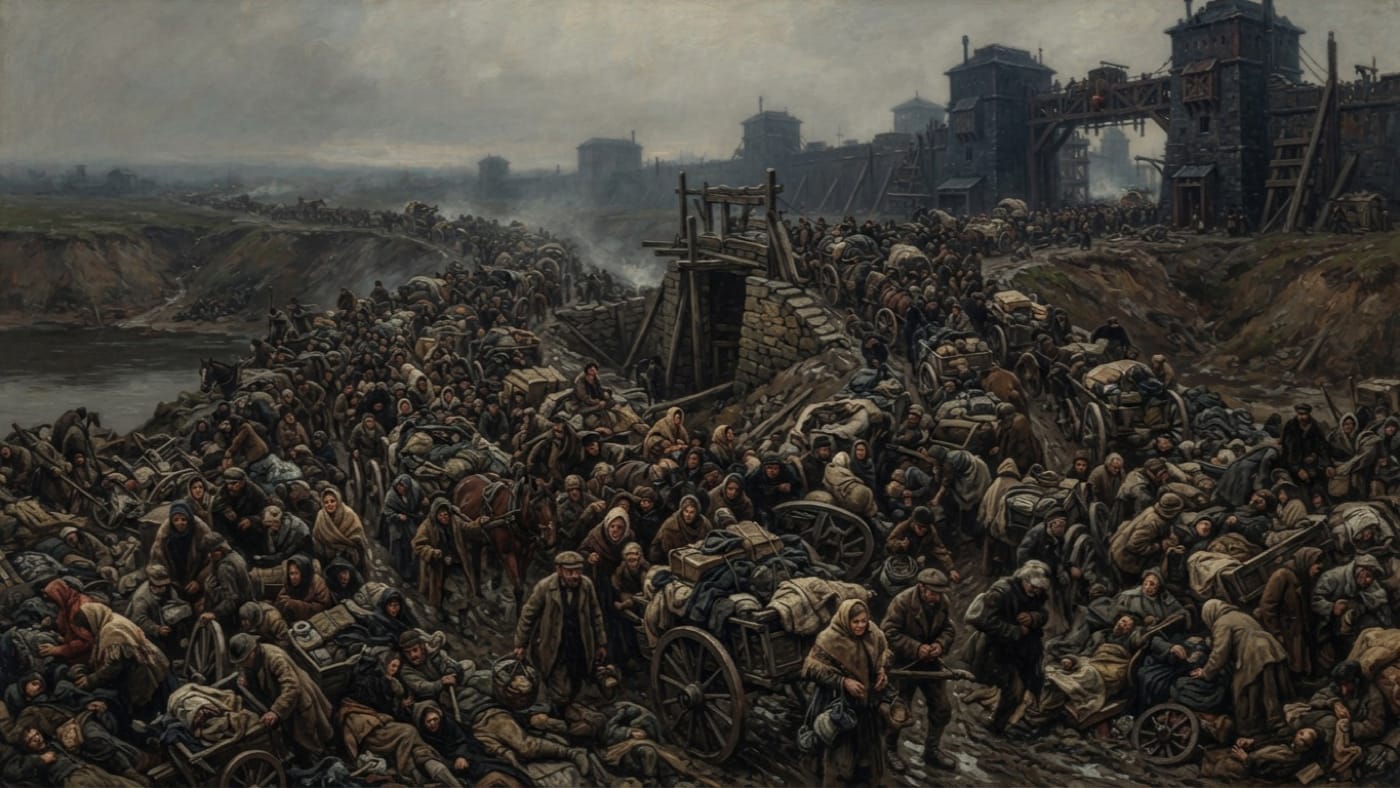
Latch River panic
The dead became weather; the road became revenue
In A.S. 97, a false plague rumour crushed 3,000 travellers on the Queue Road; 500 more died of fever. Records filed the dead under weather, and War answered with nine gates.
Codex Ref. VII.8.10-097
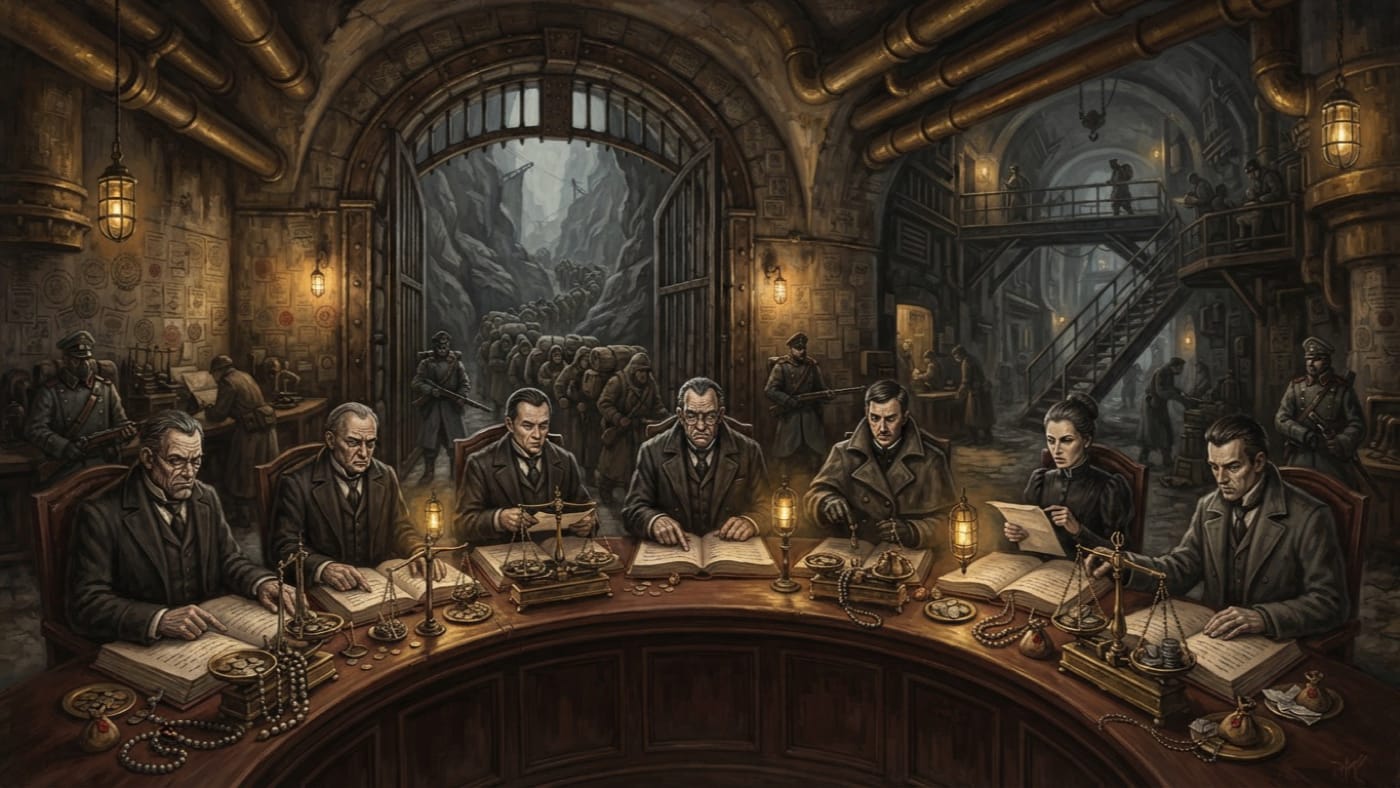
Licensed Broker Compact Council of Peregrine Row
Seven seats set the price; the Chapter holds the keys
Seven seats govern Peregrine Row's licensed protection trade. The Council prices escort windows, bonds captains and funds the Quiet Pens; the Road Chapter holds the gates. The pilgrim carries the risk.
Codex Ref. XII.32.03-201
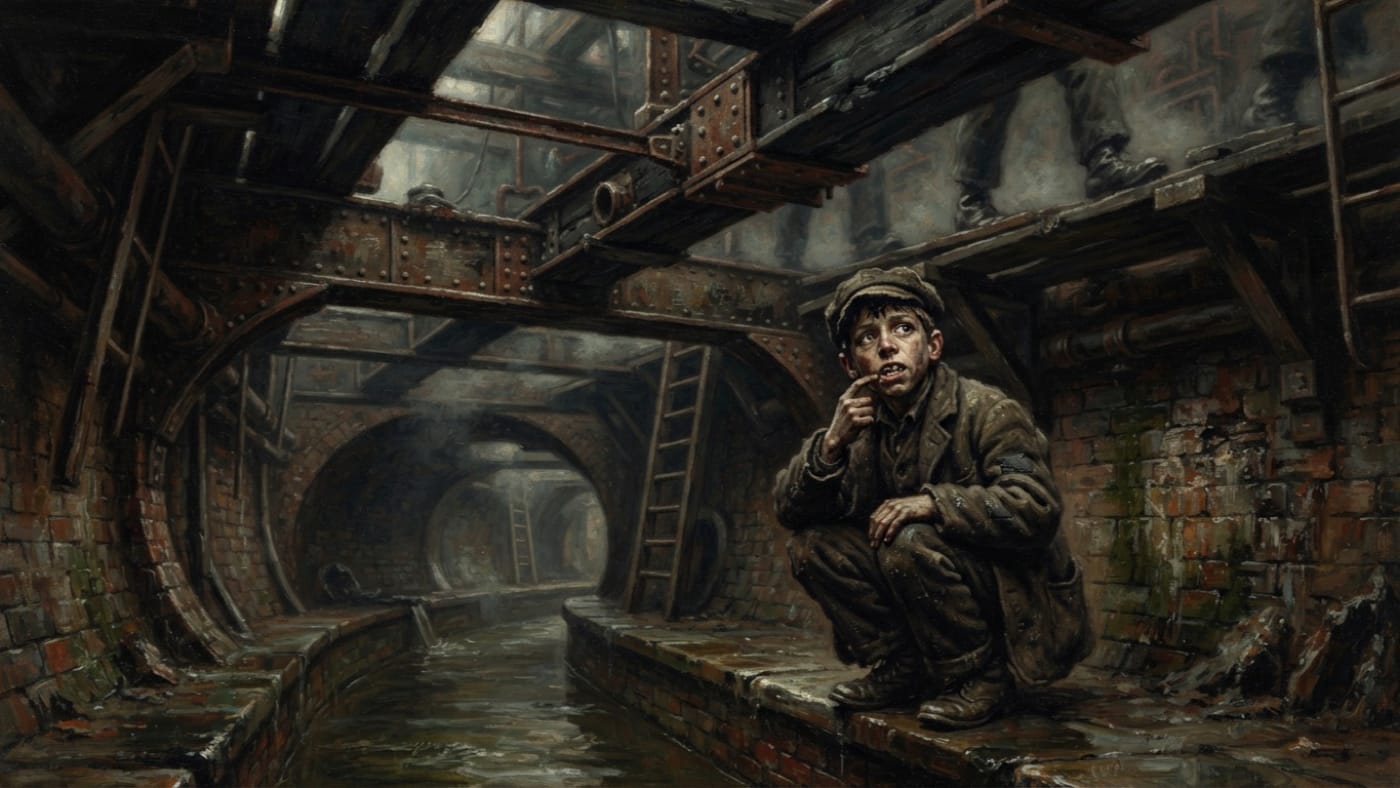
Lint
Arrested twice, never caught; the Ledger keeps both halves
Lint counts patrol intervals by tooth-tap for the Unstruck beneath the Queue Road. Purity has arrested him twice and never caught him; the second arrest preceded its listed offence by three hours. The Ledger retains both halves.
Codex Ref. III.2.01-1631
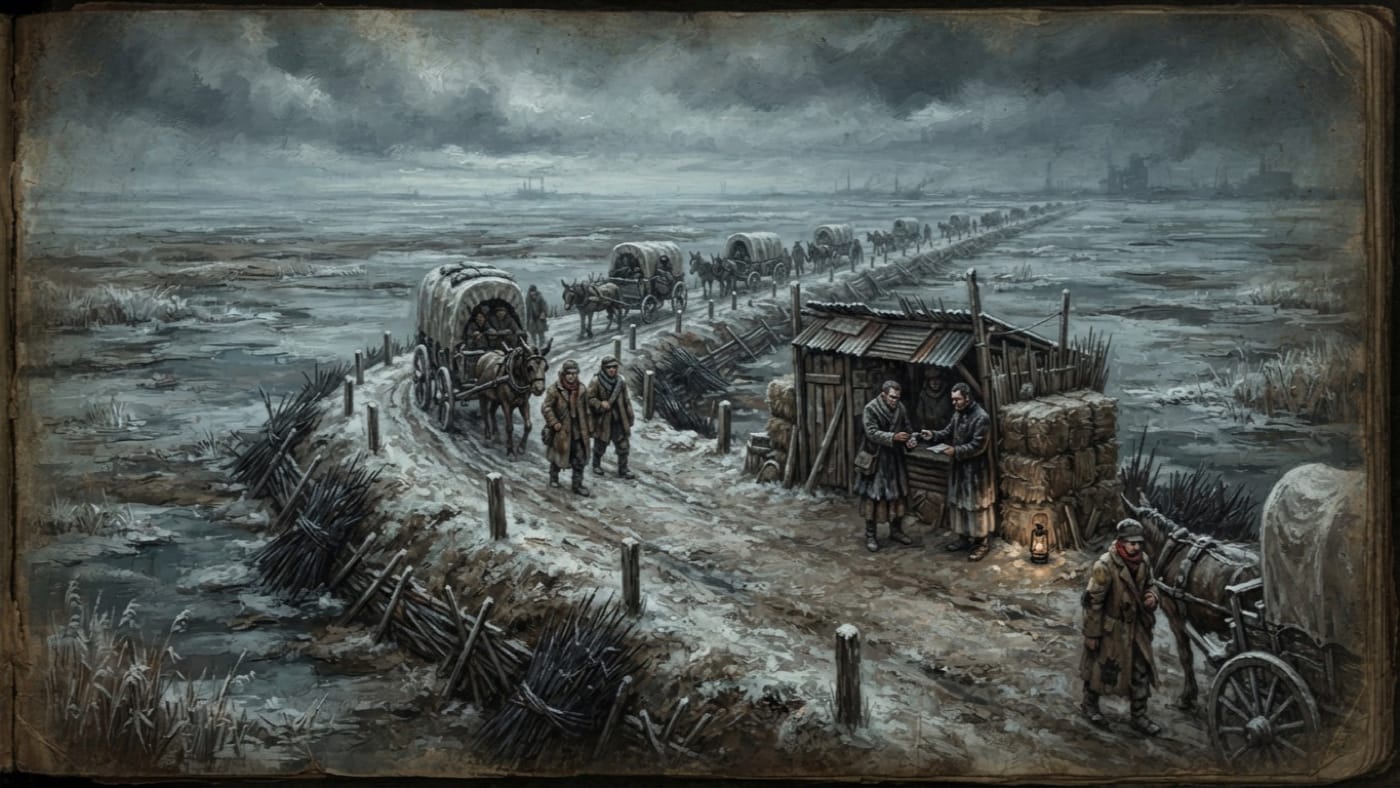
Long Salt
Nineteen miles of winter, with payment due
An A.S. 201 survey of the Long Salt: nineteen miles of winter road from Brine Fork toward Hamburg's approaches, where the Salt-Vigil collect salt and tears and the frost decides passage.
Codex Ref. II.3.05-201
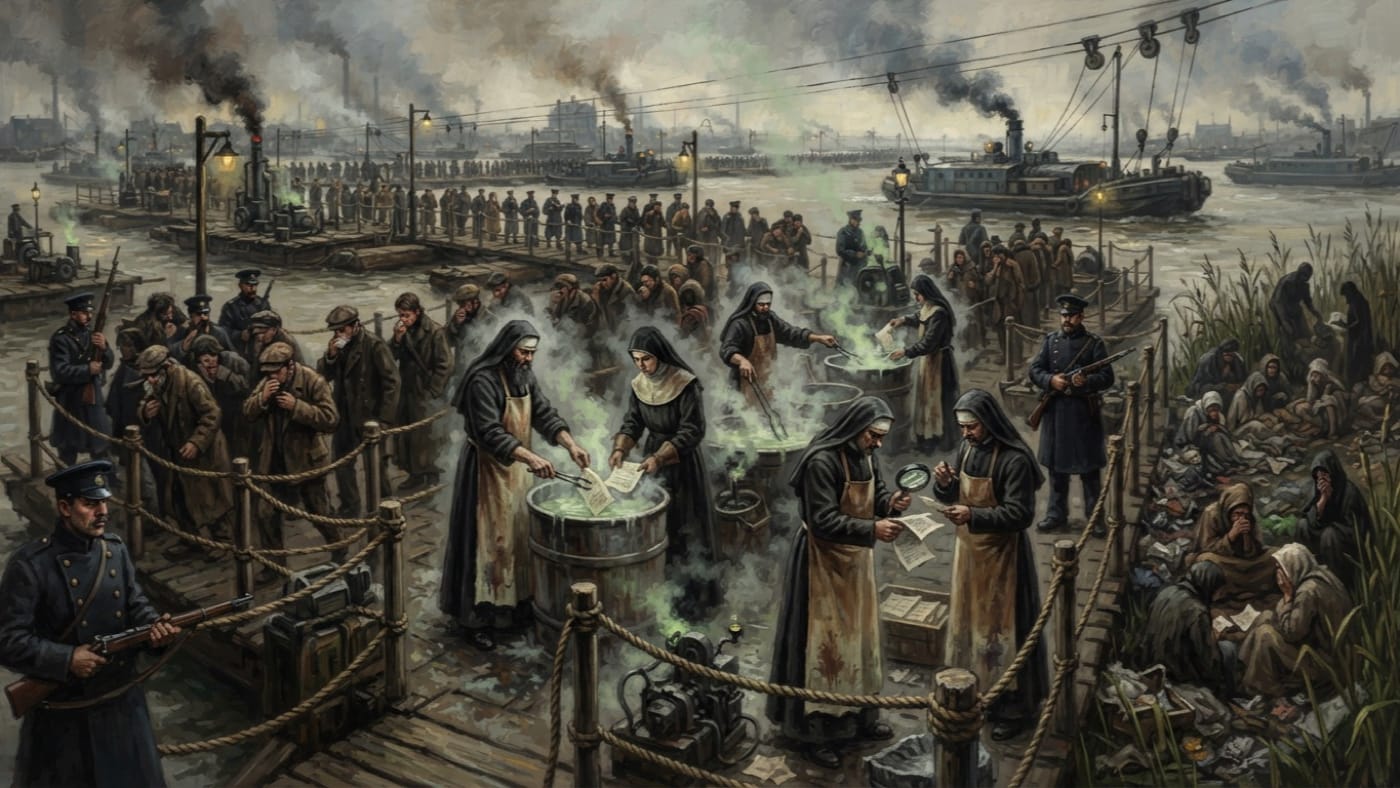
Lye Order
Bodies accompany their papers.
The Quarantine Wardens of the Rope-Ferry Chain wash travellers, inspect stamps, and widen cordons. Their mandate is plague prevention; their surest product is fear.
Codex Ref. XI.8.01-001

Masonry Corps
The Punitive Construction Auxiliary: every sentence requires a wall, a stamp, and someone to blame
Approximately 2,400 licensed masons across Zones 1–5, governed by Standing Order 14-M. Three ranks, two denied factions, and a personal stamp worth more than its owner: every sentence must leave a sound wall and a matching log.
Codex Ref. XII.22.04-001
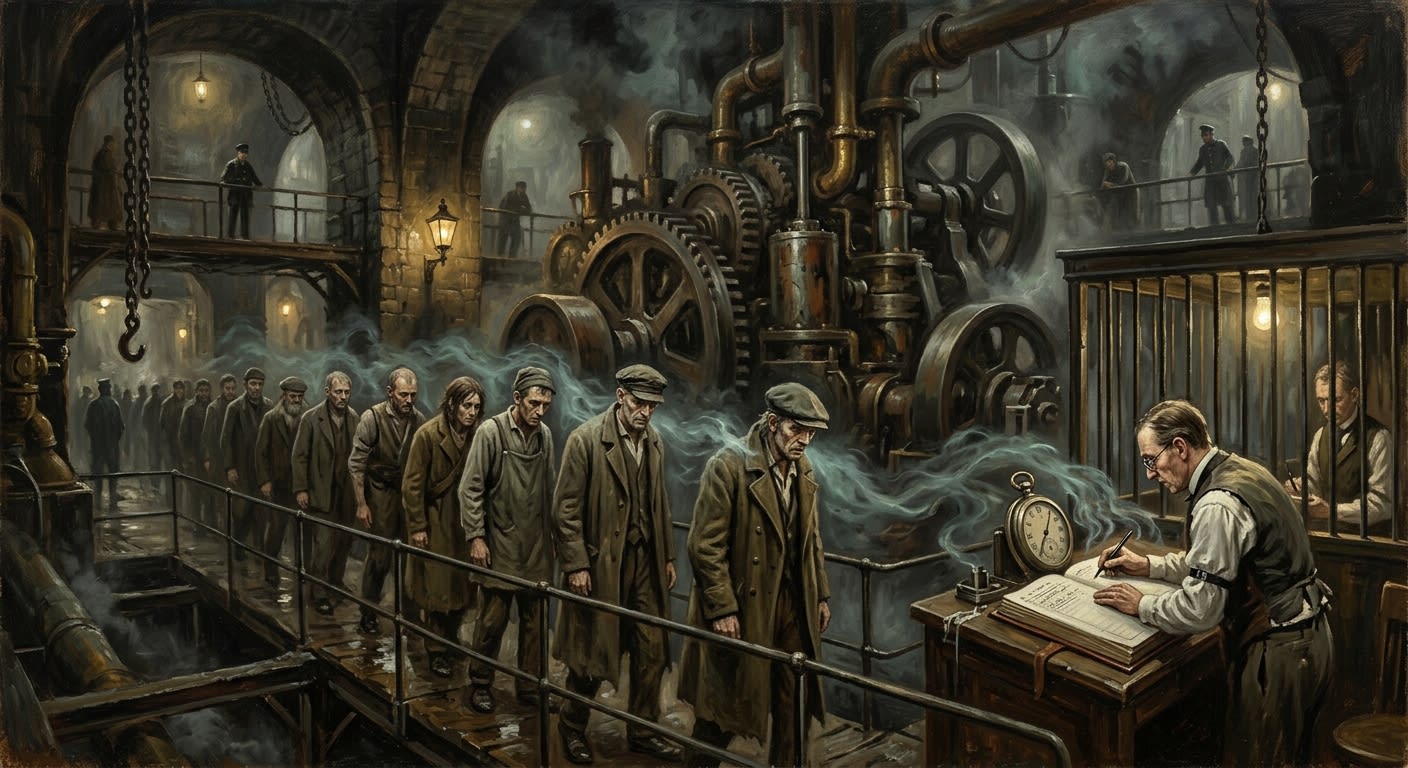
Minute Drift
The road steals from the pulse and invoices the wound
Along the Queue Road, minutes slip from bodies into ledgers and the Apparatus beneath Gate Nine grinds waiting into something no Bureau will name.
Codex Ref. XIII.1.15-001
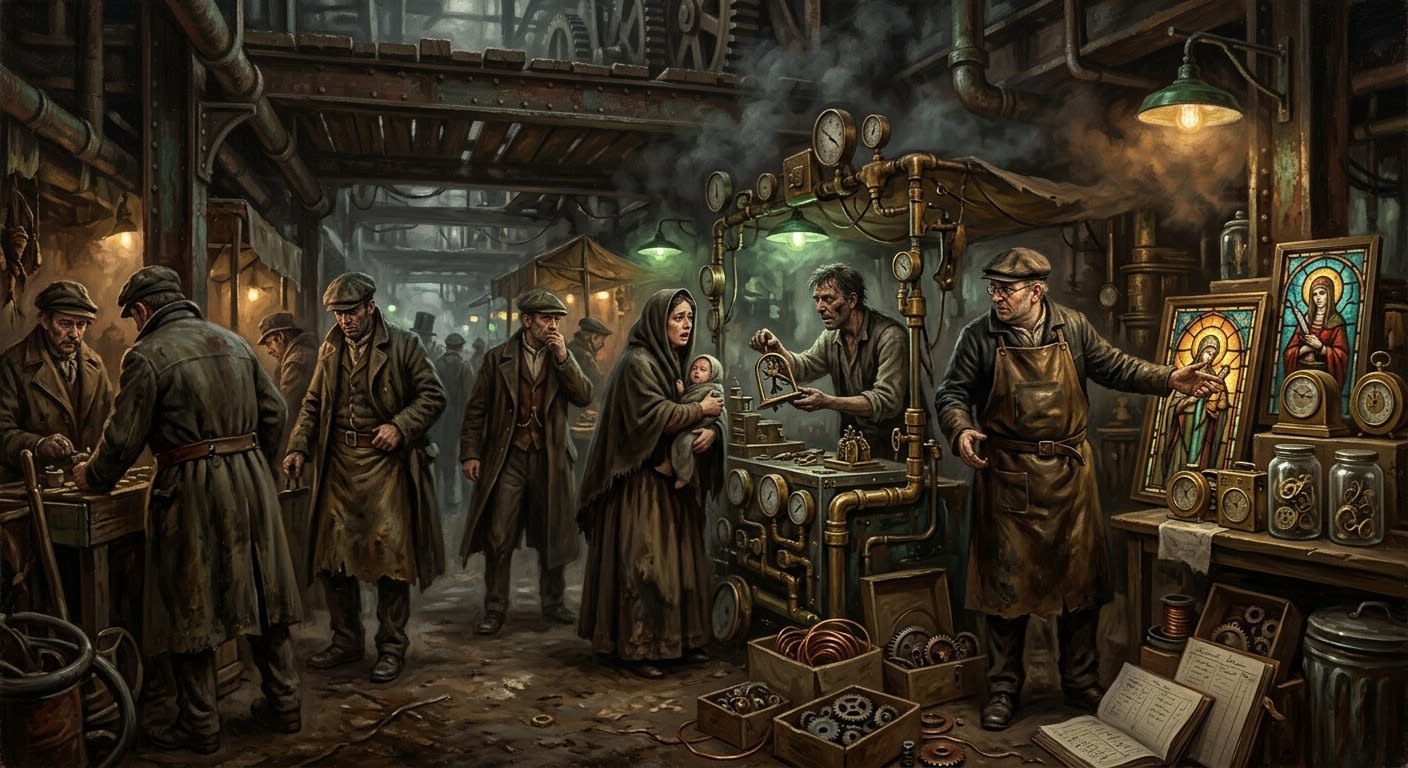
Minute Market
Where stolen time is folded into paper and sold as mercy
Beneath Latchford's boards, the Minute Market sells the interval before ruin lands: forged windows, stolen bell-marks, and mercy priced by the breath.
Codex Ref. II.4.09-199
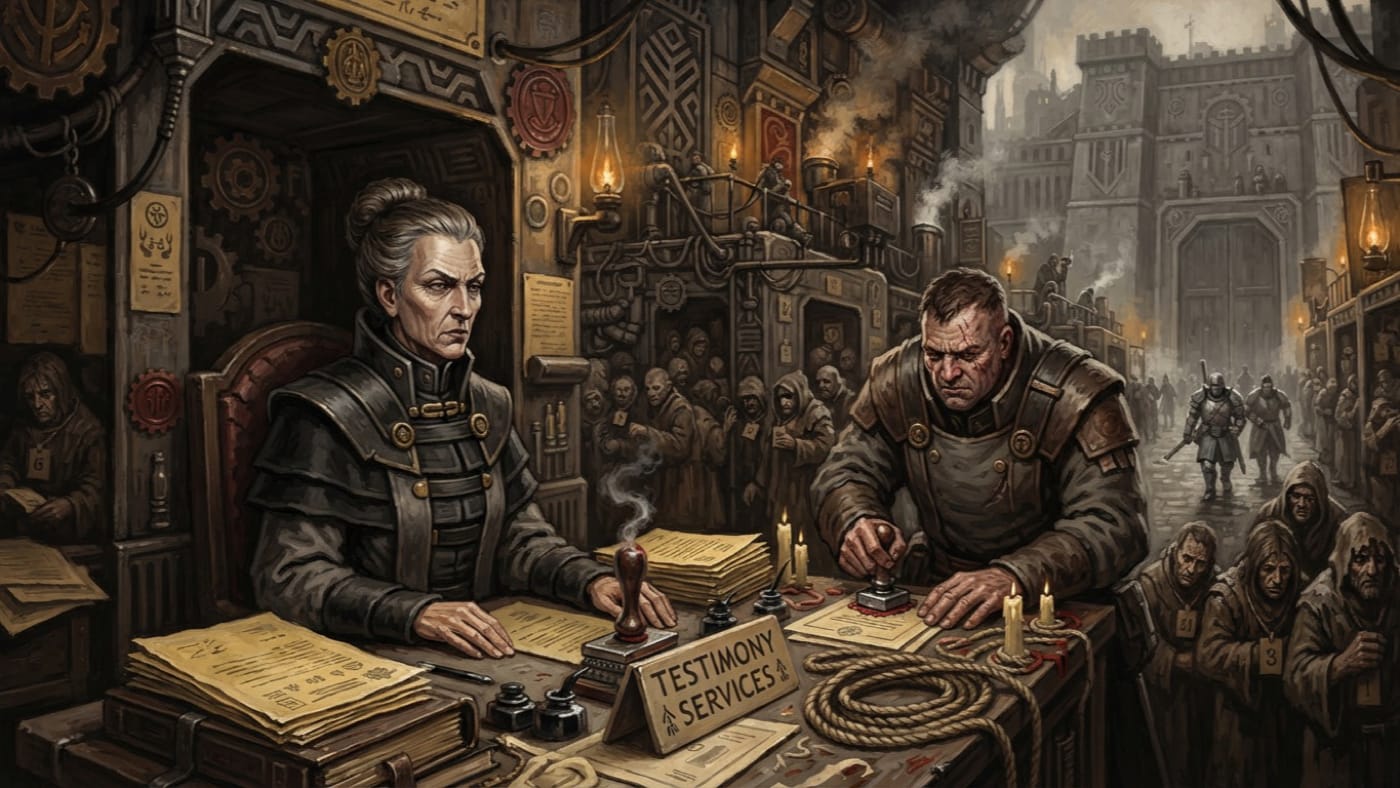
Mother Venn
The court requires a second mouth; she supplies the invoice
Mother Venn and Garrik Two-Names run the Queue Road's largest witness ring, supplying coached testimony and certificates for hours nobody stood. The court requires corroboration; Stamp Court Row supplies the invoice.
Codex Ref. III.2.01-1886
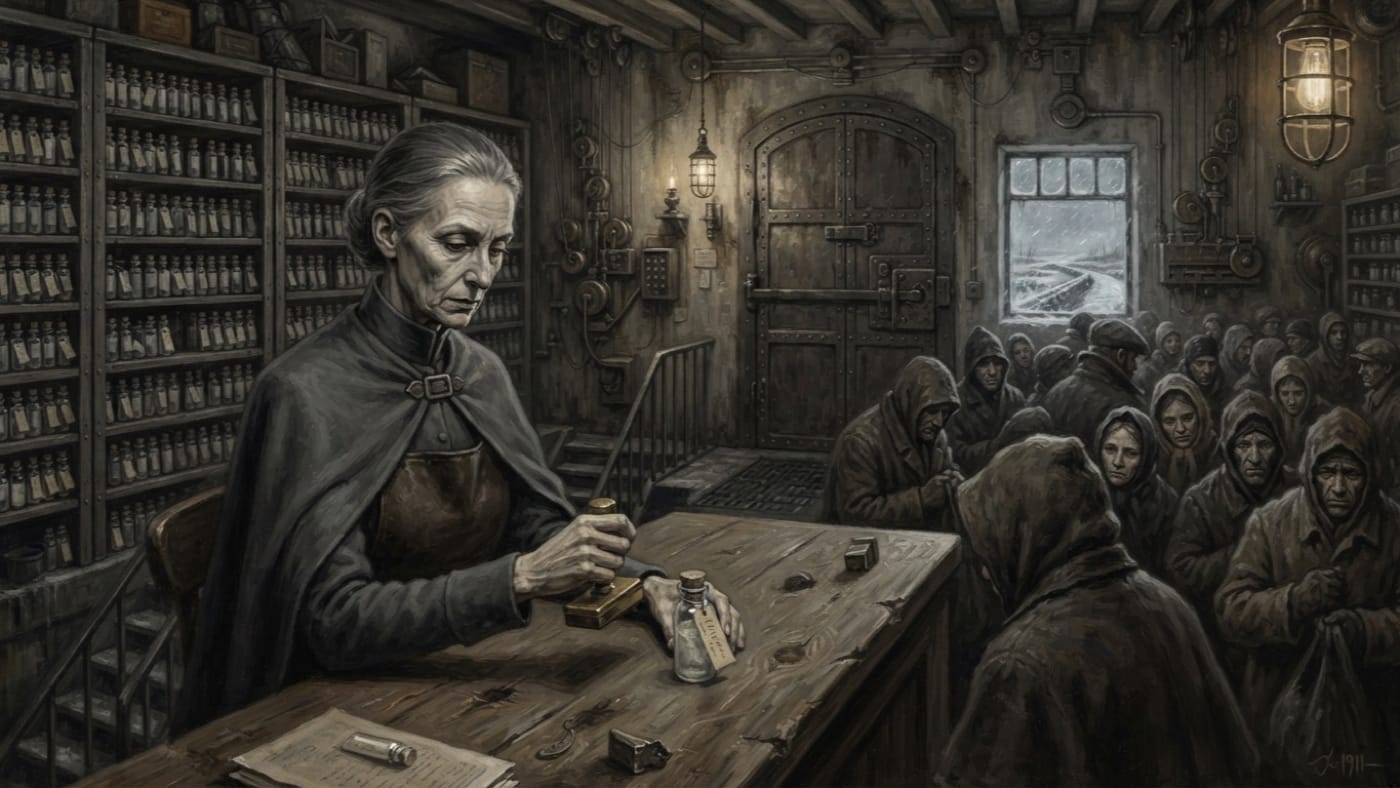
Mother-Warden Sile Mourn-Lit
Between the wet seal and the blanket stands her office
Mother-Warden Sile Mourn-Lit allocates shelter at Brine Fork, where a sealed phial may purchase a bed and a locked door lets winter enforce the ledger.
Codex Ref. III.2.01-1887
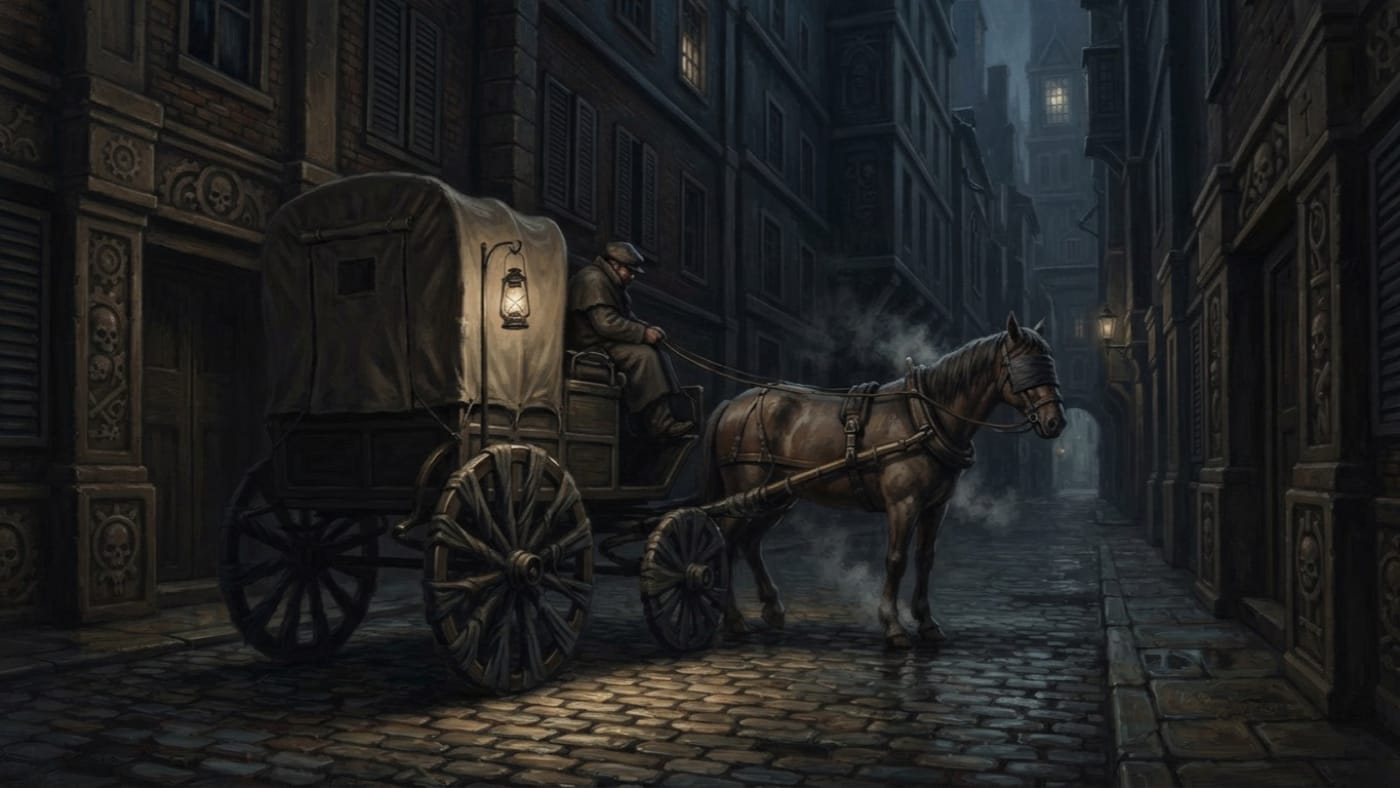
Night Wagon
A disappearance has mass, and someone must grease the axle
Night Wagons are the Bureau of Shadows' unmarked carts: wrapped wheels, hooded lamps, no manifests. They leave after the final peal and return before Matins. Records calls this routine supply; I recommend sleeping through it.
Codex Ref. V.2.04-001
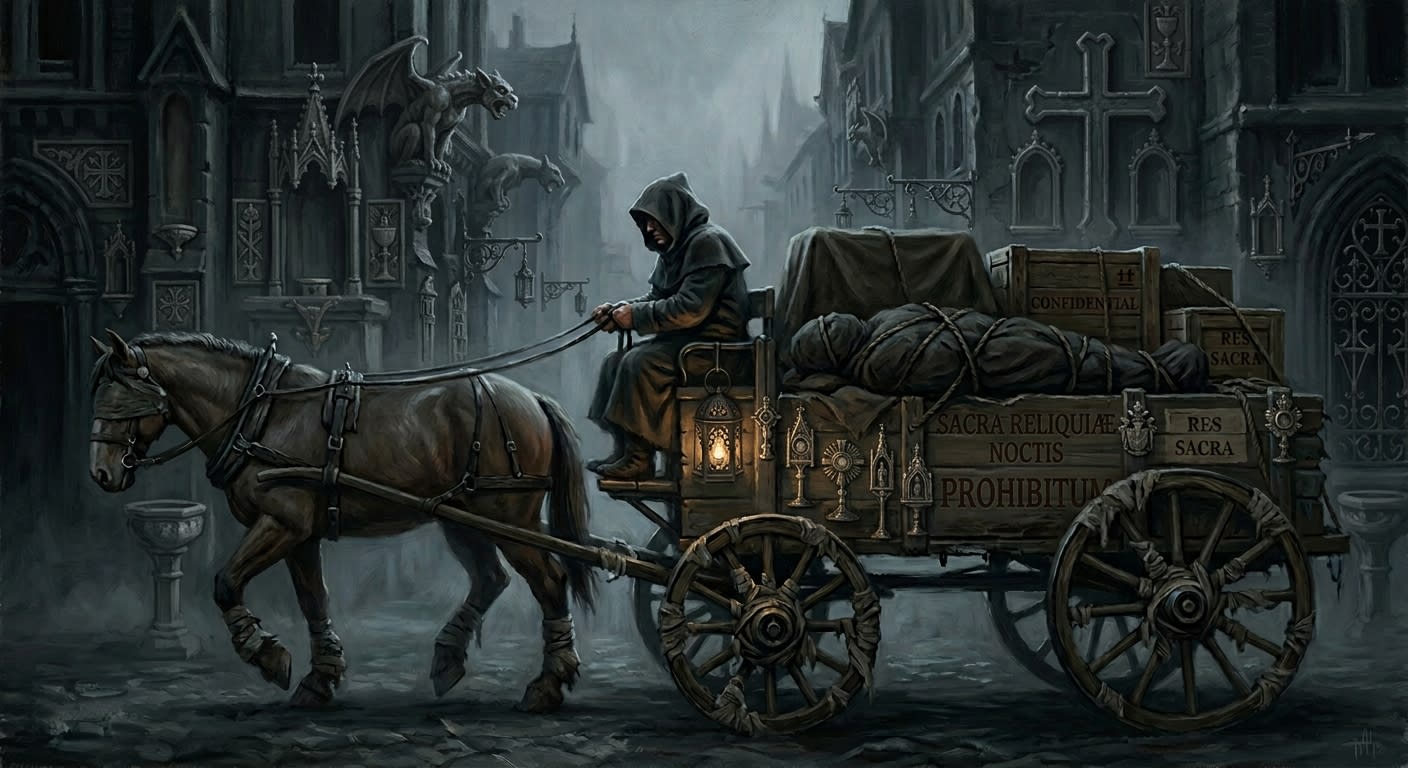
Night Wagon Driver
The wheel that carries absence farther than doctrine can walk
Night Wagon Drivers are the Bureau of Shadows’ logistics spine, hauling people, orders, relics, and corpses through streets trained to forget the sound of wheels.
Codex Ref. XII.14.04-001
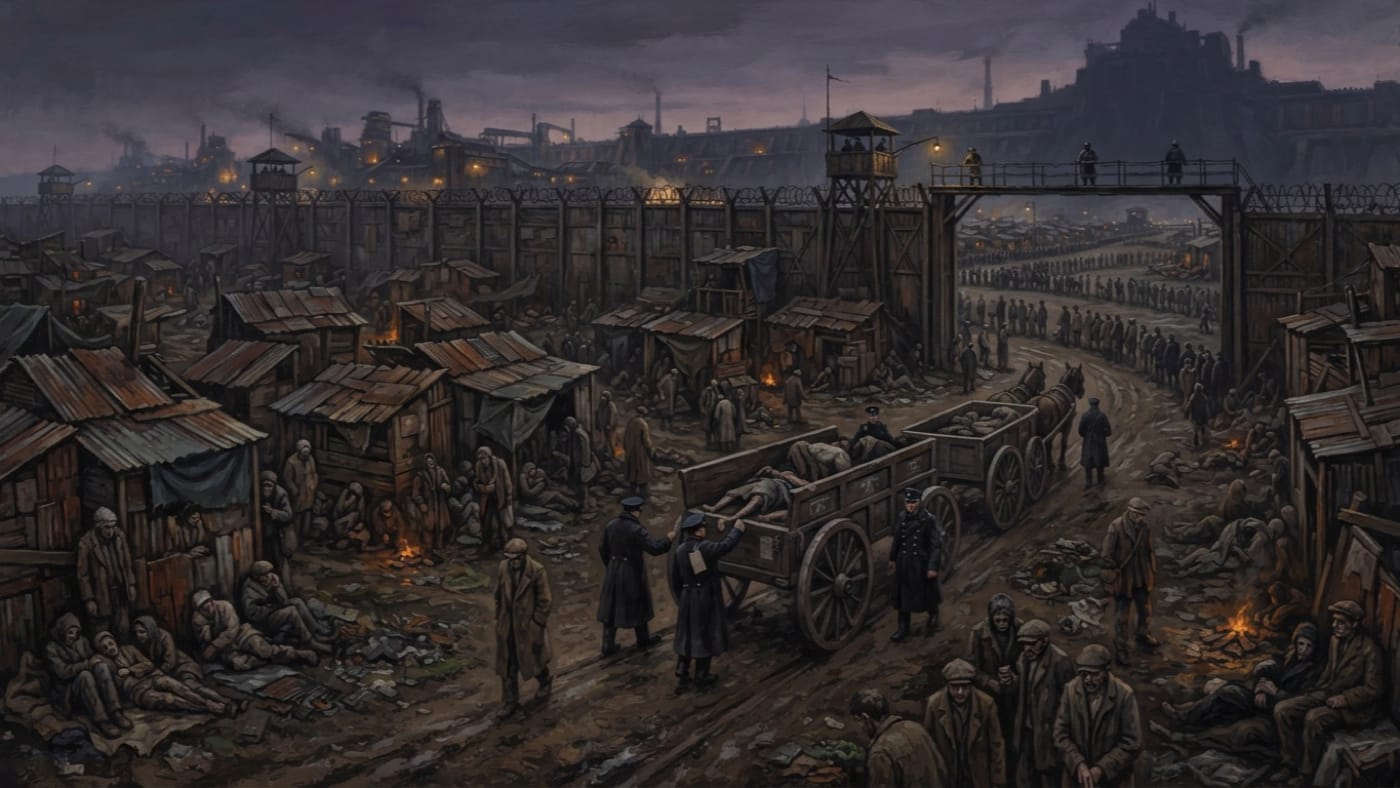
Null Verge
Where the ledger ends and the carts begin
The Queue Road's uncounted southern margin houses erased debtors in darkness. Reeve's Custodians collect the sick, the dead and the inconvenient, and export labour under stamps naming no bureau. The census remains correct.
Codex Ref. II.3.05-012
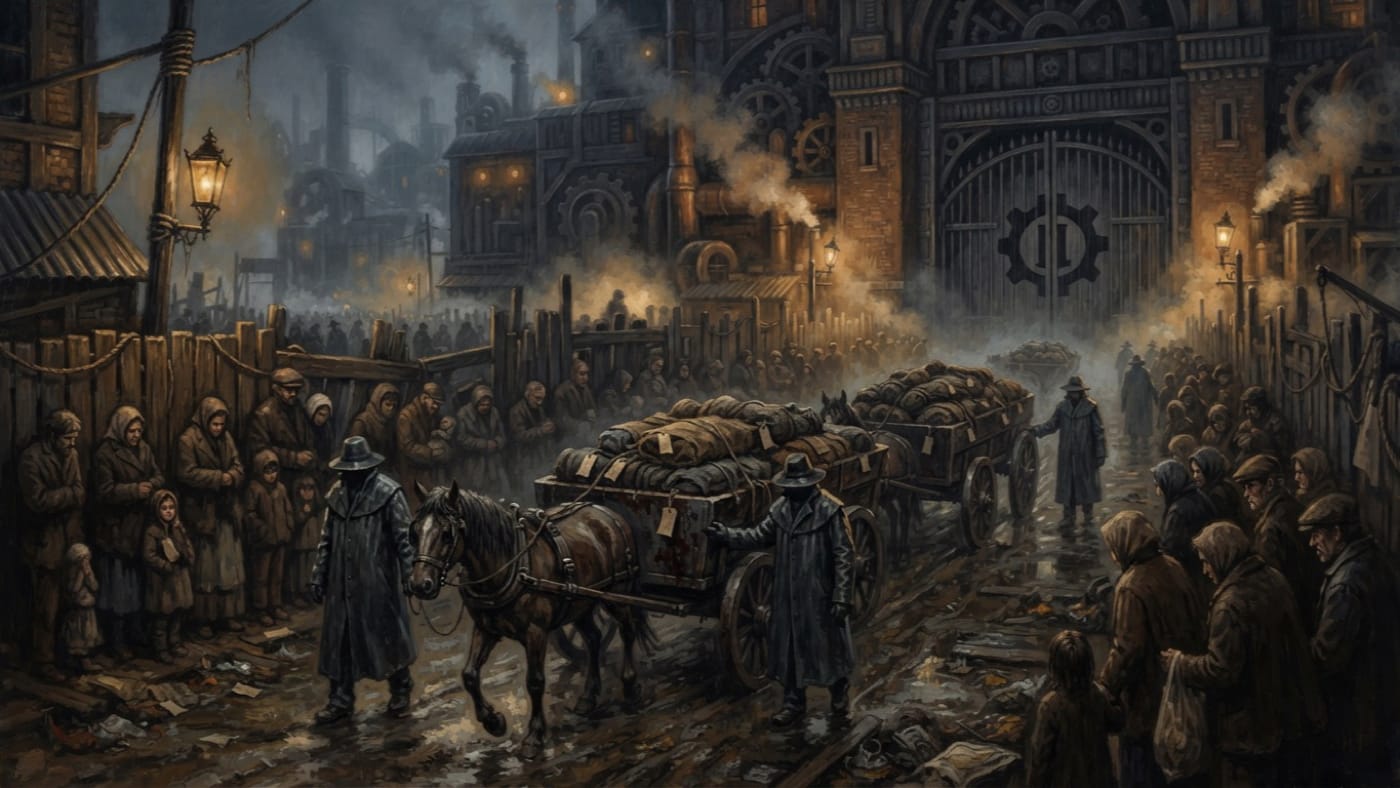
Null Verge carts
The count is corrected; the tags remain blank
The Null Verge Custodians' tag carts remove bodies from the Queue Road. In autumn A.S. 200, Gate Nine closed for sanitation and the dead exceeded their capacity. The count required correction; the tags required no ink.
Codex Ref. V.2.04-002
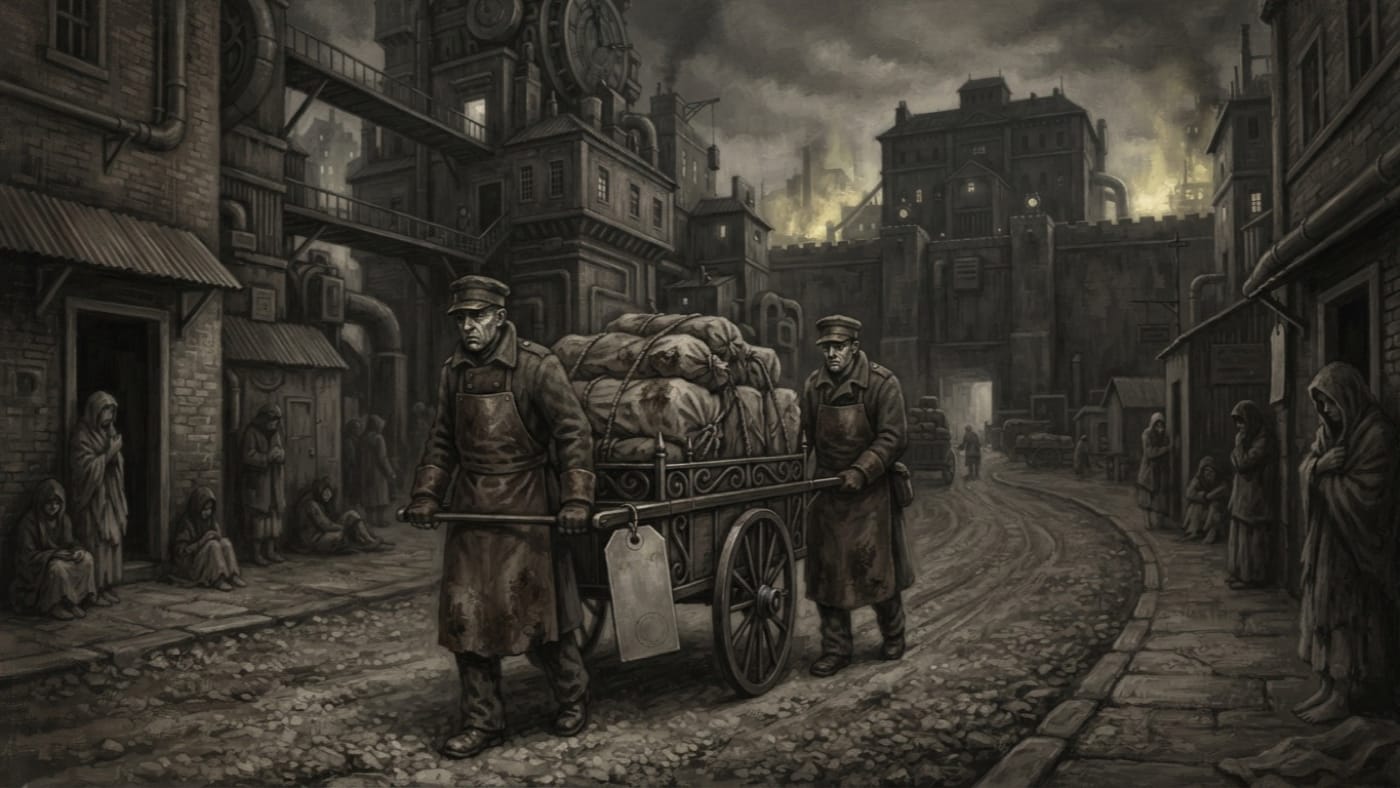
Null Verge Custodians
The road forgets the name and keeps the hands
The Null Verge Custodians keep the Queue Road's erased unseen and useful: night removals, blank tags and labour without names. Their stamps are accepted. Their issuing authority does not exist.
Codex Ref. VIII.8.02-002
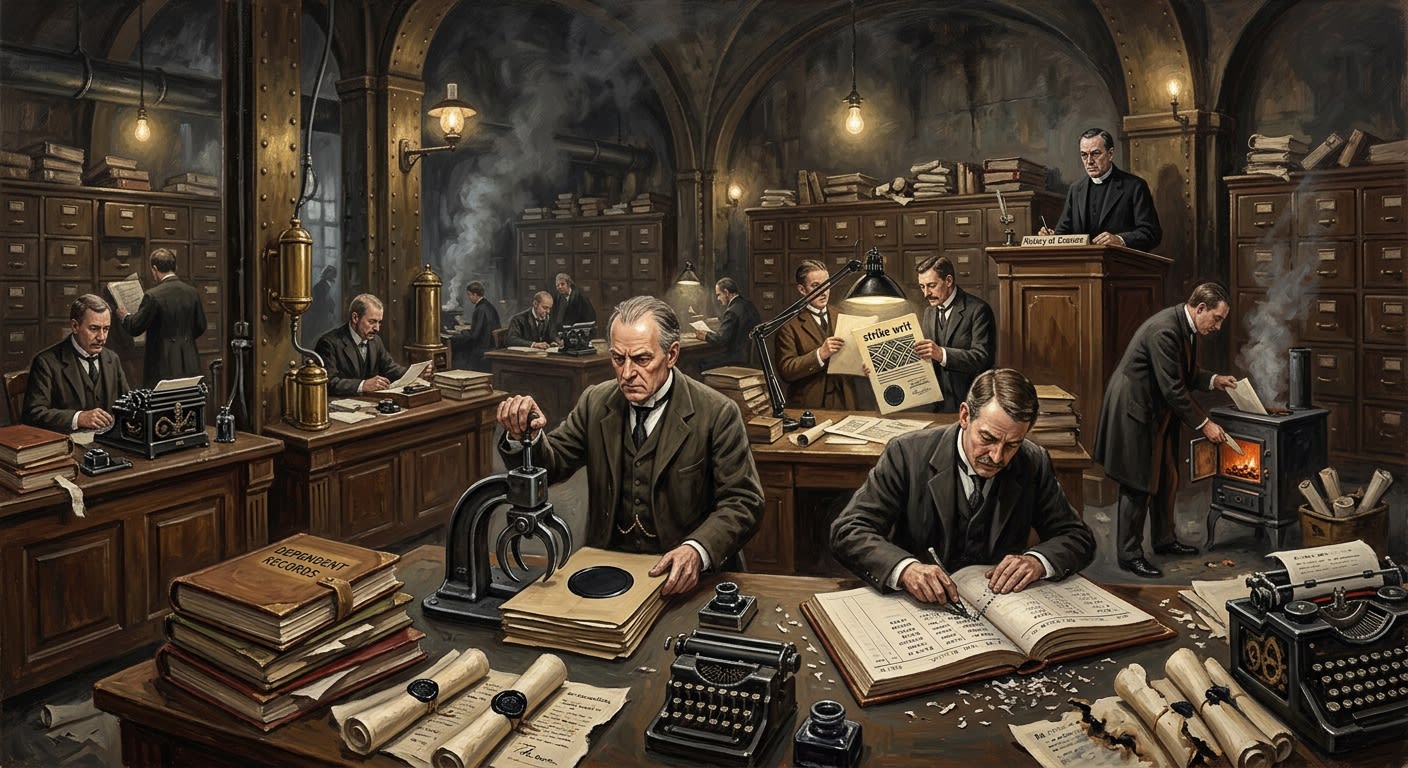
Office of Nullity
The knife kept inside the book
Sub-office of the Bureau of Records governing Erasure Notaries, strike writs, dependent ledgers, black seals, and the civic art of making a person unprovable.
Codex Ref. XIII.1.70-001
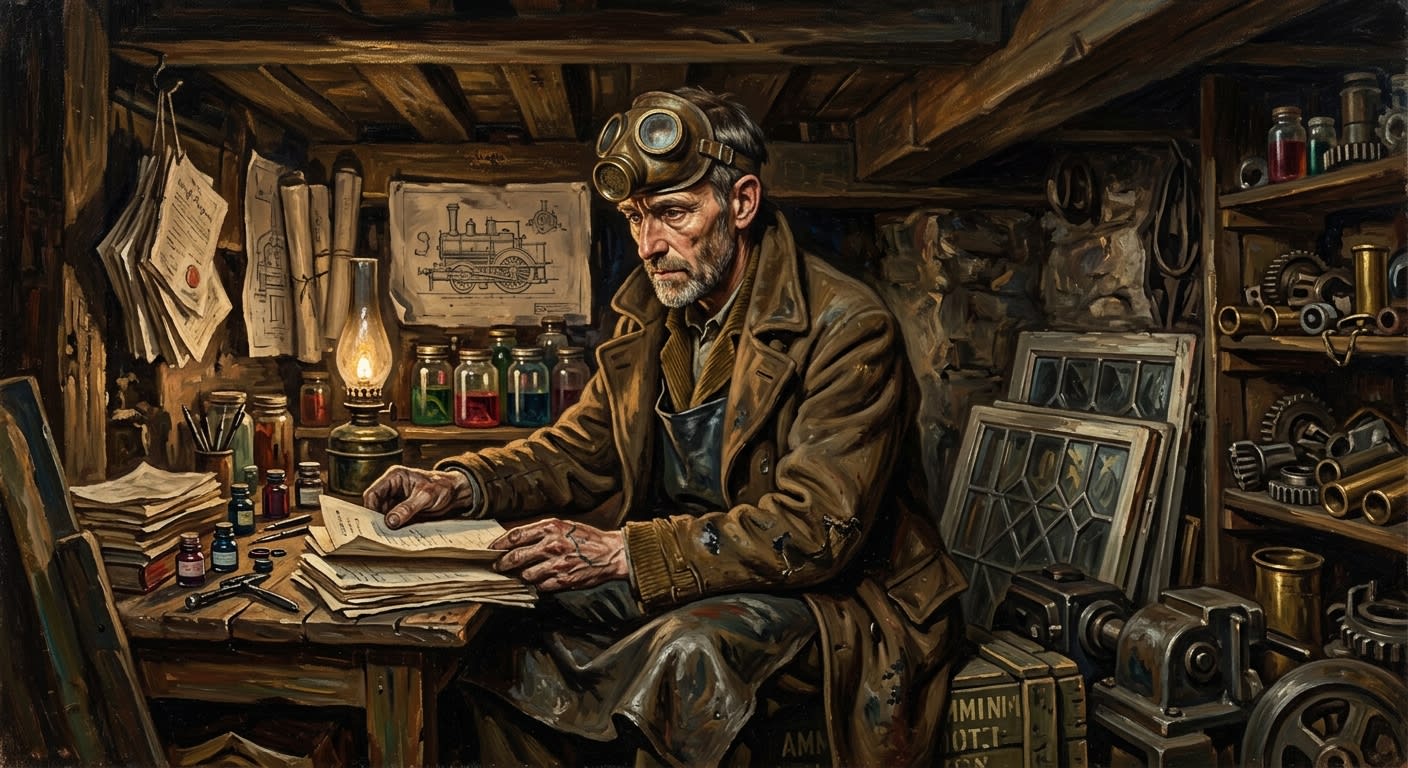
Old Sable
The broker beneath Latchford who sells the minute before ruin arrives
Old Sable rules Latchford from beneath the boards, selling forged minutes, stolen windows, and the dangerous mercy official time refuses to price.
Codex Ref. III.2.01-008
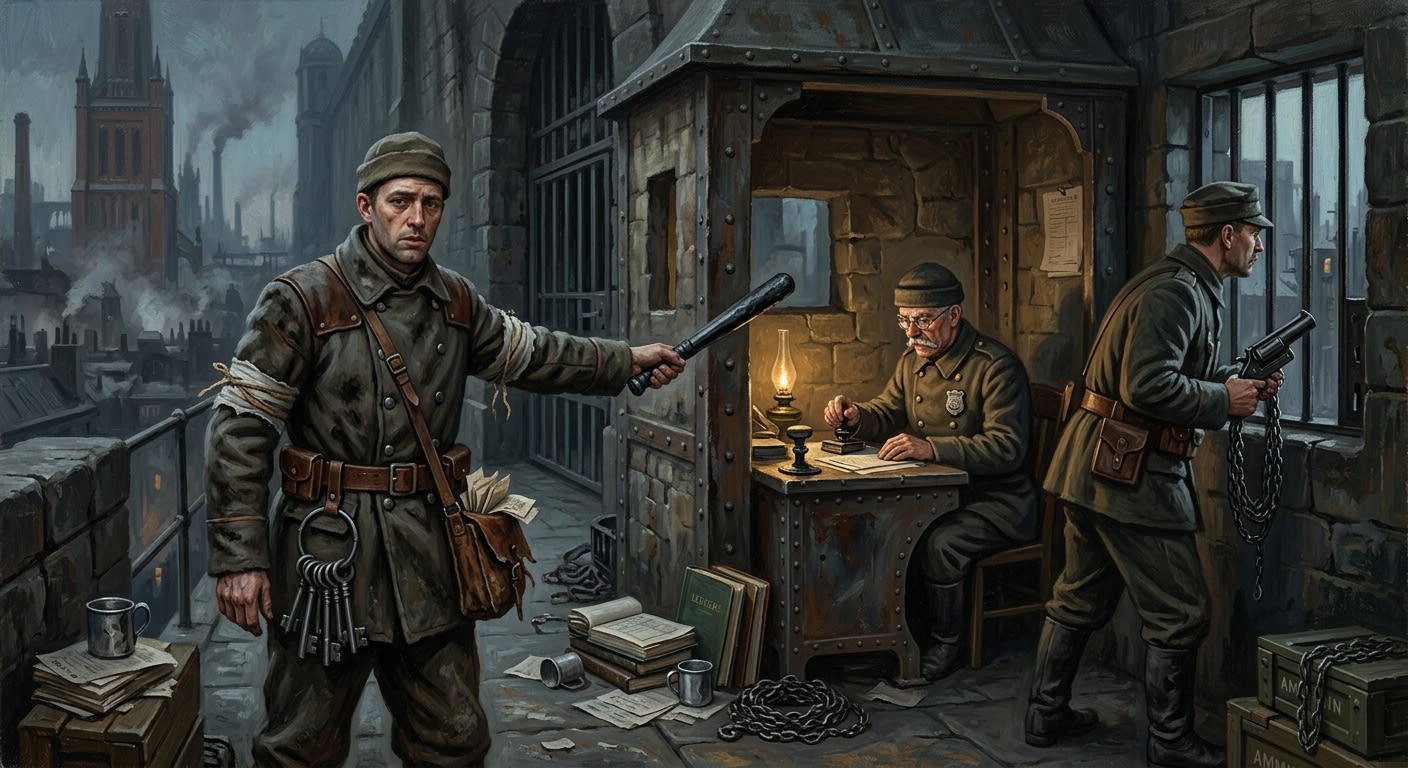
Outer Watch Post
The gate keeps its theology in tar, keys, and cudgels
The Outer Watch Post guards the Cloister's wall with ash armbands, chain keys, seizure slips, tarred batons, and the useful lie of municipal authority.
Codex Ref. II.3.06-005
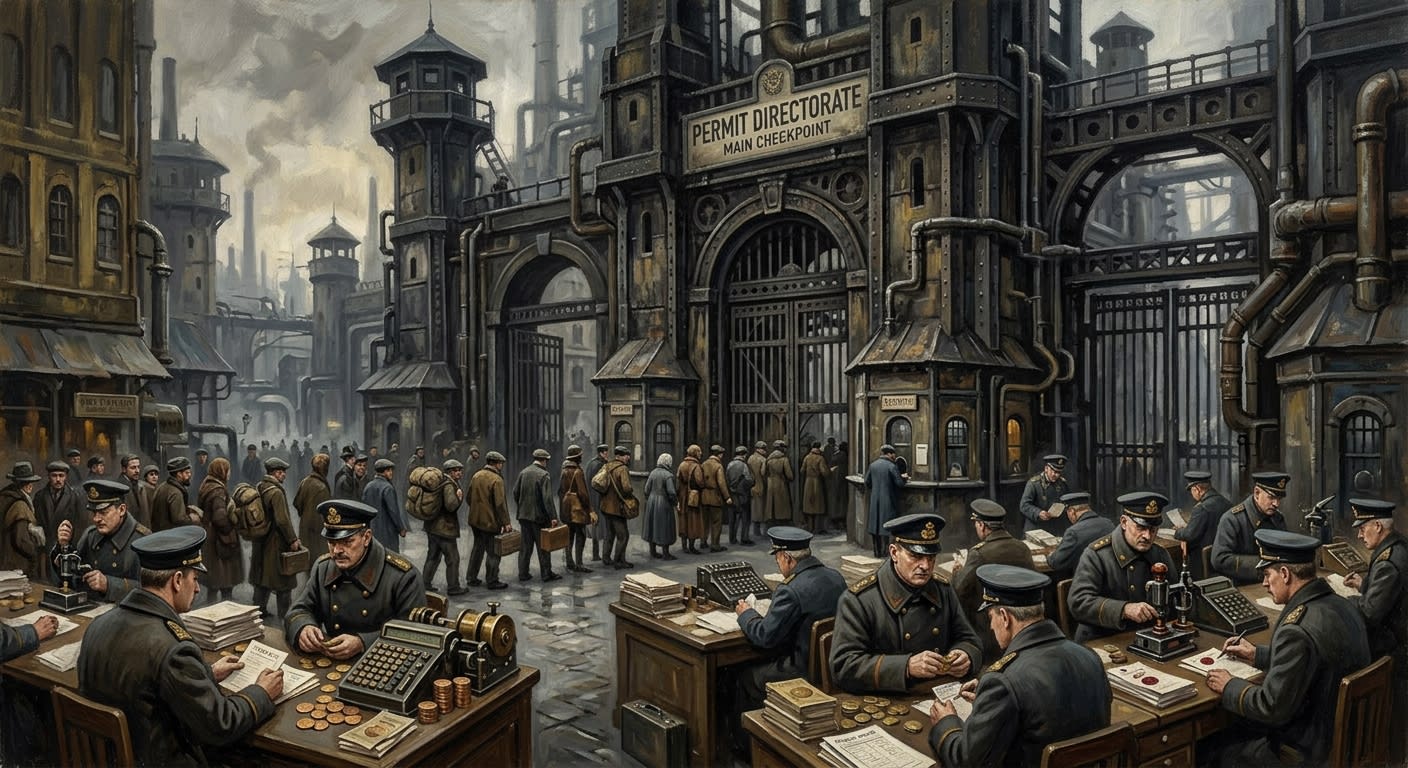
Permit Directorate
The office that sold waiting by the minute
The Permit Directorate began as orderly passage and matured into weaponised patience: gates, permits, minute pricing, and the holy sale of delay.
Codex Ref. VIII.2.09-102
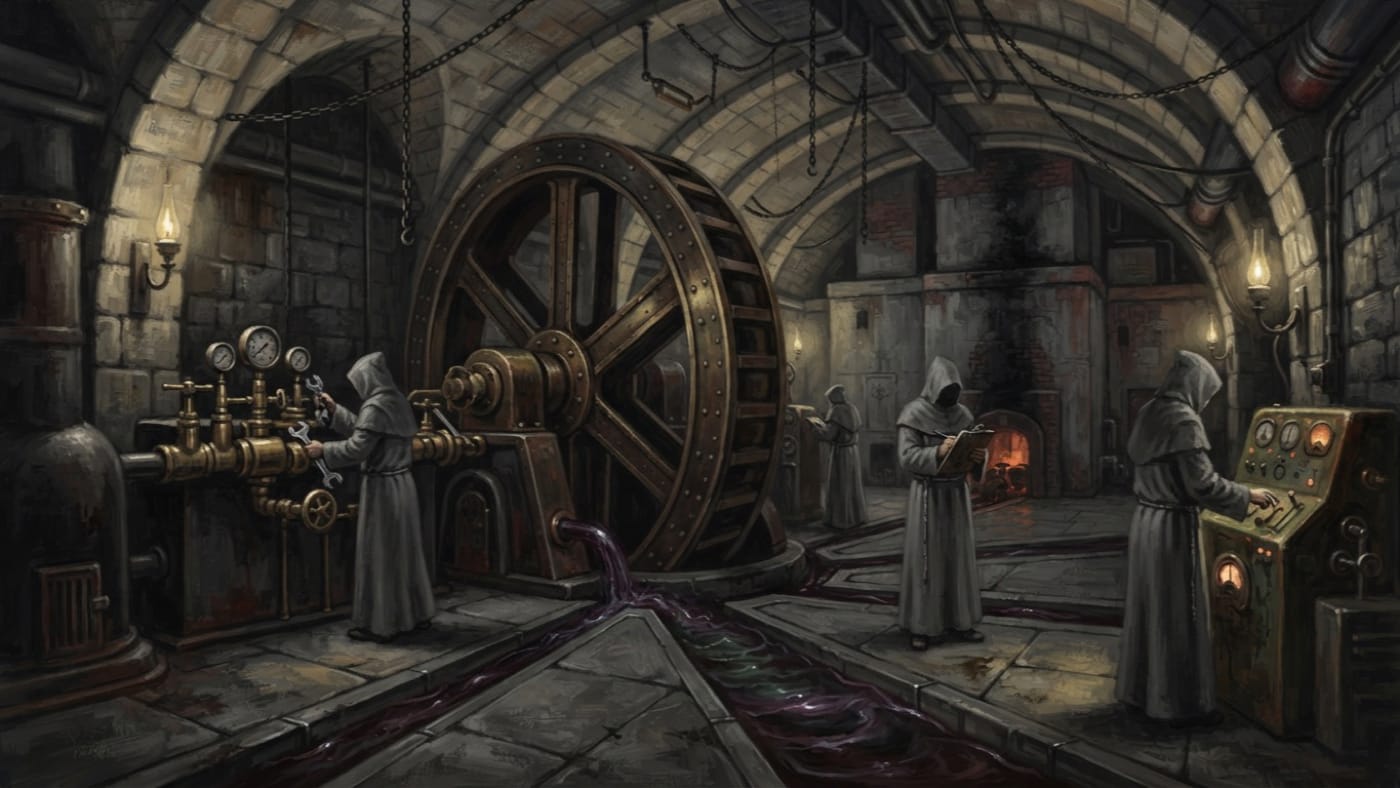
Phase Nine
A numbered phase without a schedule
Phase Nine is the designation in Report Three, A.S. 199, under which the Unnamed Bureau recommends continued non-disclosure. Its scope remains unconfirmed and completion unrecorded. The paper says pending. So do I.
Codex Ref. XIII.1.09-199
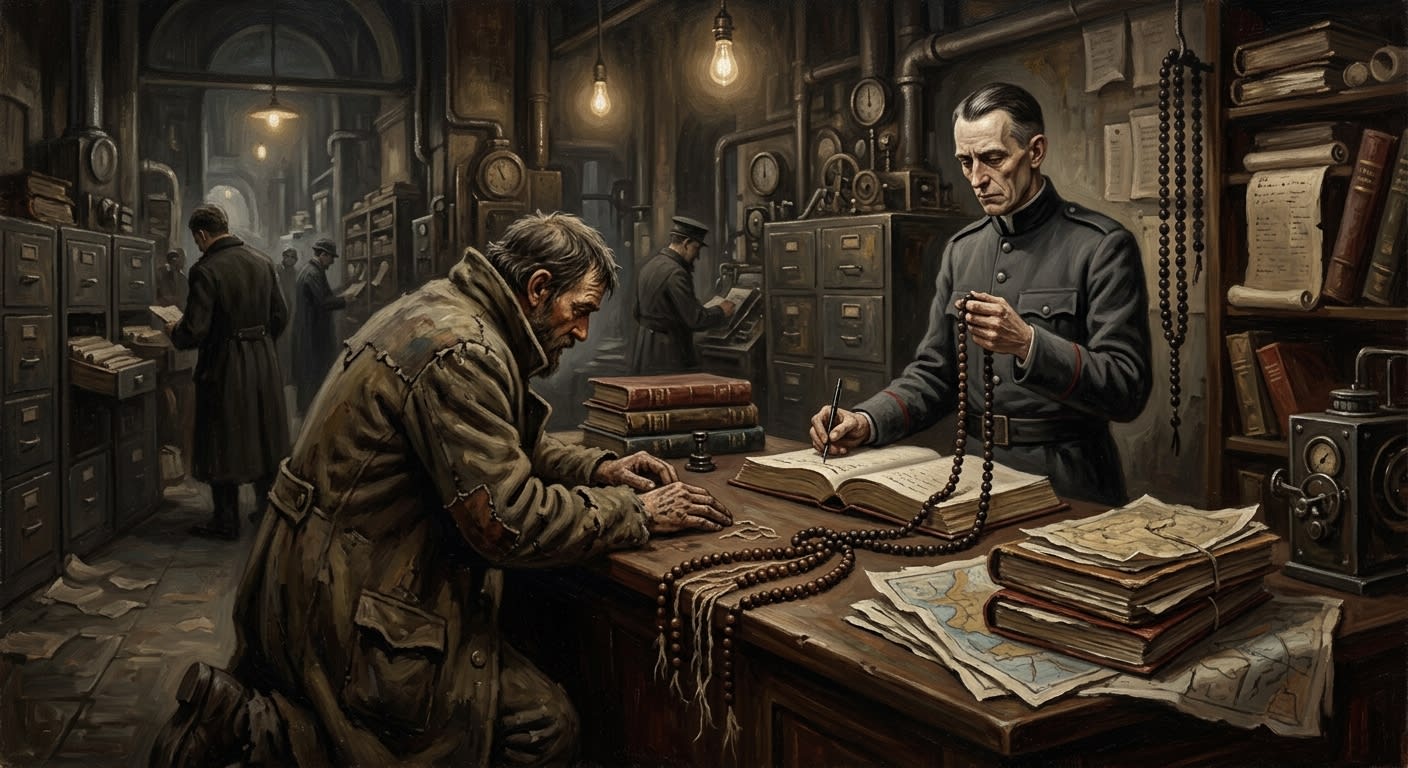
Pilgrim Reconciliation Statutes
Correction is salvation, provided the fee clears
The Pilgrim Reconciliation Statutes made mercy countable: bead strings, route errors, confession addenda, second strings, debt, and sanctioned delay.
Codex Ref. XIII.1.72-097
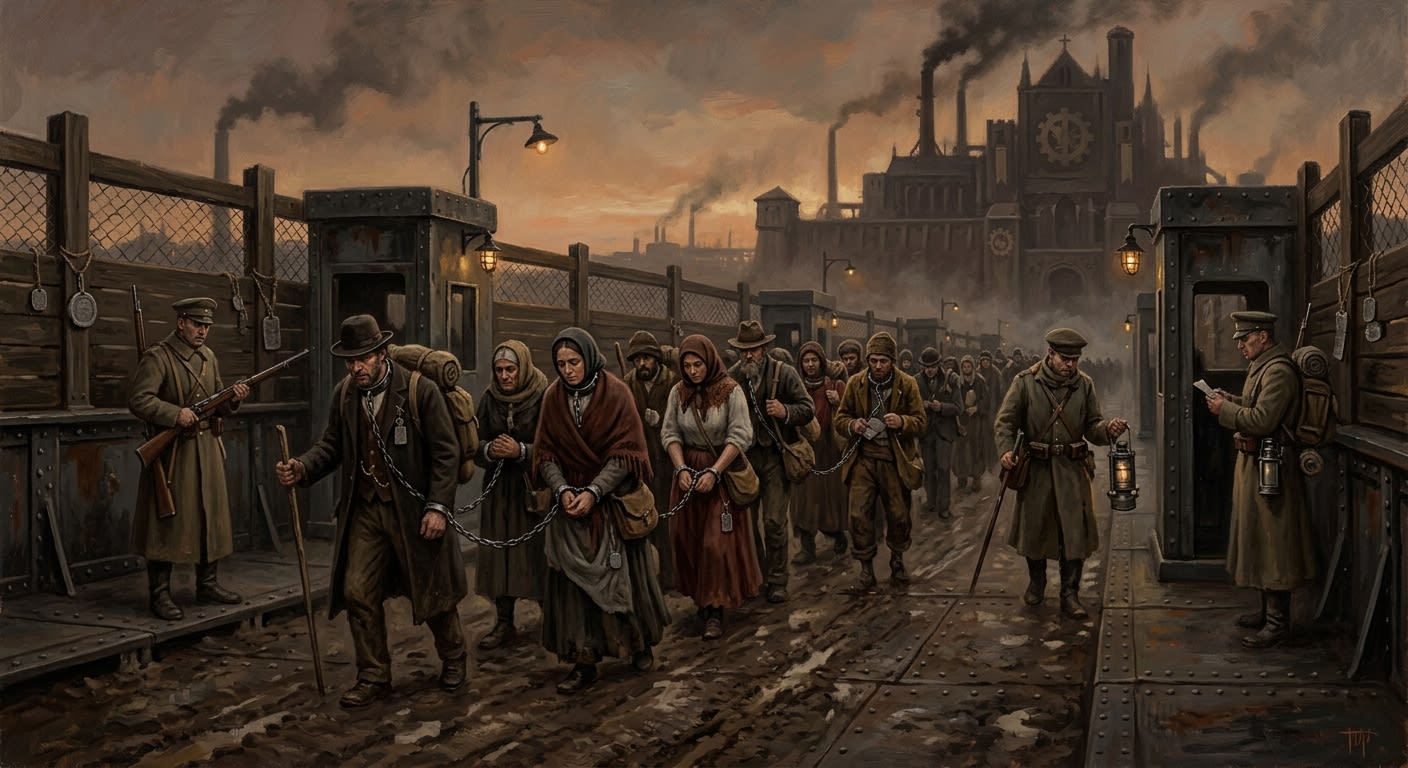
Pilgrim Roads
Sanctity is motion under witness, and witness under invoice
The Pilgrim Roads made walking obedient: licensed motion, tolls, tokens, chains, grief, delay, and low earth holiness under seal.
Codex Ref. XIII.1.86-094

Prefect Marwen Kile
The man who made bread a debt
Marwen Kile controls Wexel's household rations. Fifteen years of reclassification have turned provision into clemency, citizens into debtors, and bread into an obligation the Prefecture never forgets.
Codex Ref. III.2.01-201
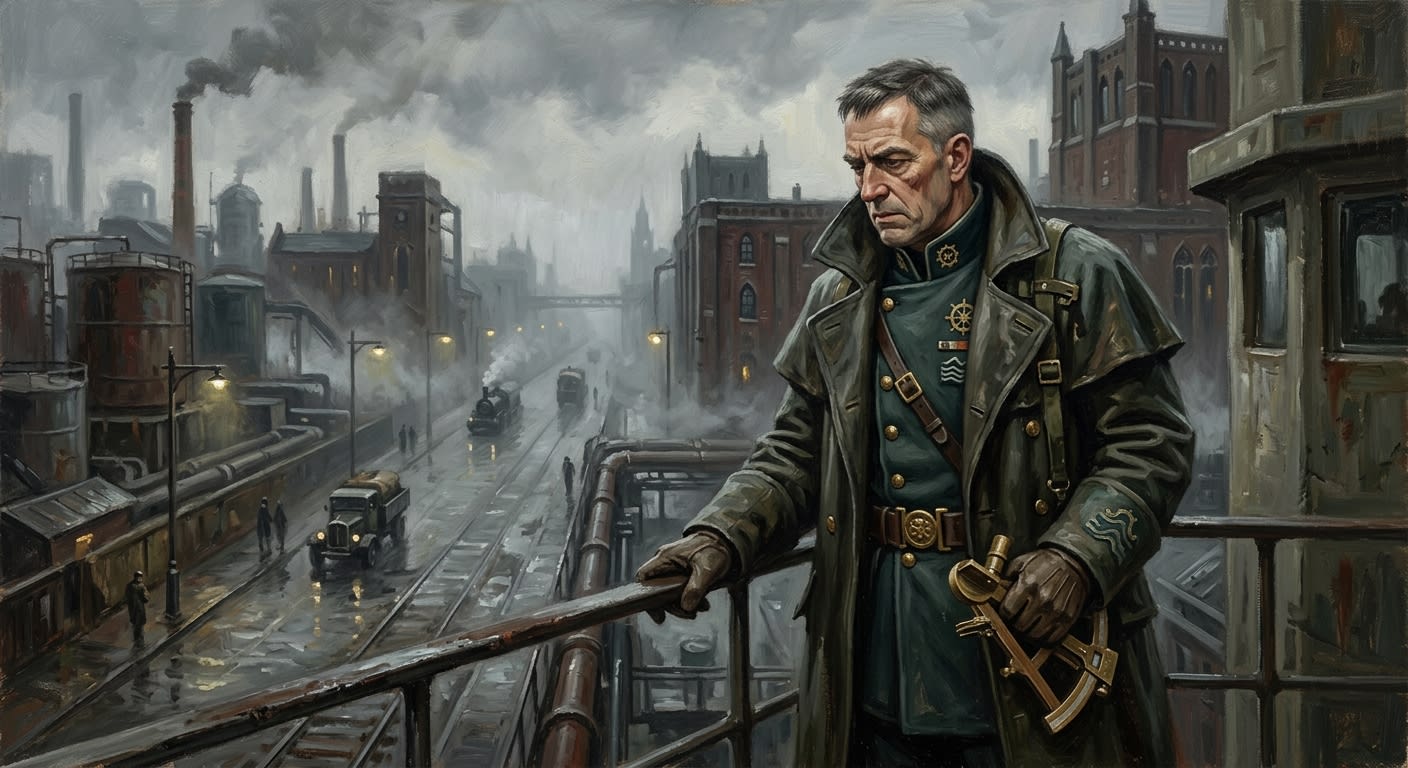
Prior Idris of the Sixth Tide
The road drinks, and Idris keeps the receipt
Prior Idris governs Brine Fork as if a road were a hound: fed, cursed, watched, and never mistaken for harmless scenery.
Codex Ref. III.2.01-201

Provost-Captain Merrow Venn
The river writes the name. She prepares the docket.
Merrow Venn controls arrests, confiscations and drowning cages on the Rope-Ferry Chain. Her patrols read the River Ledger first; the river supplies the names and the provosts prepare the docket.
Codex Ref. III.1.05-002
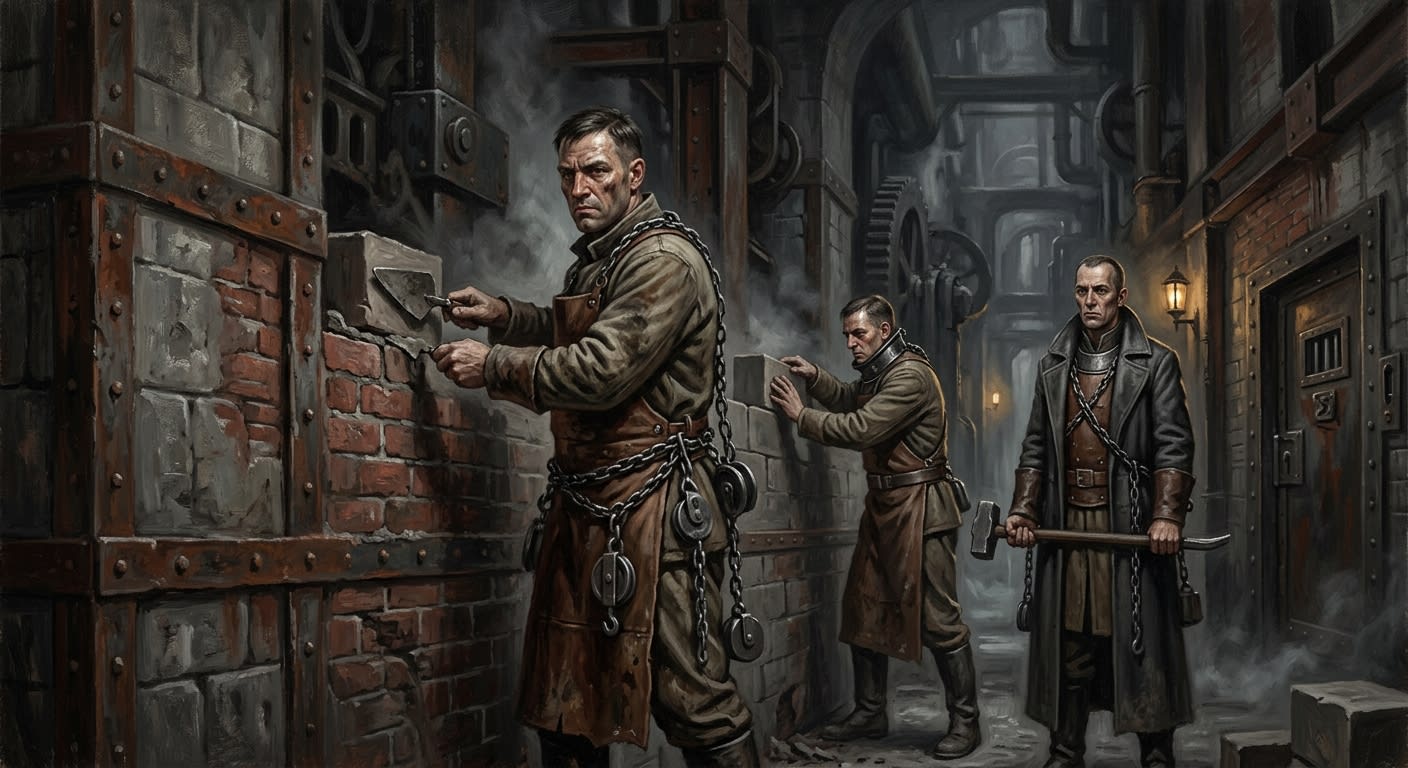
Pure Sealers
No mercy-channel, no second judge, no debt in the wall
Hard faction of the Immurement Masons, the Pure Sealers refuse mercy vents, breath-threads, and every little kindness by which walls learn to lie.
Codex Ref. XII.22.02-001
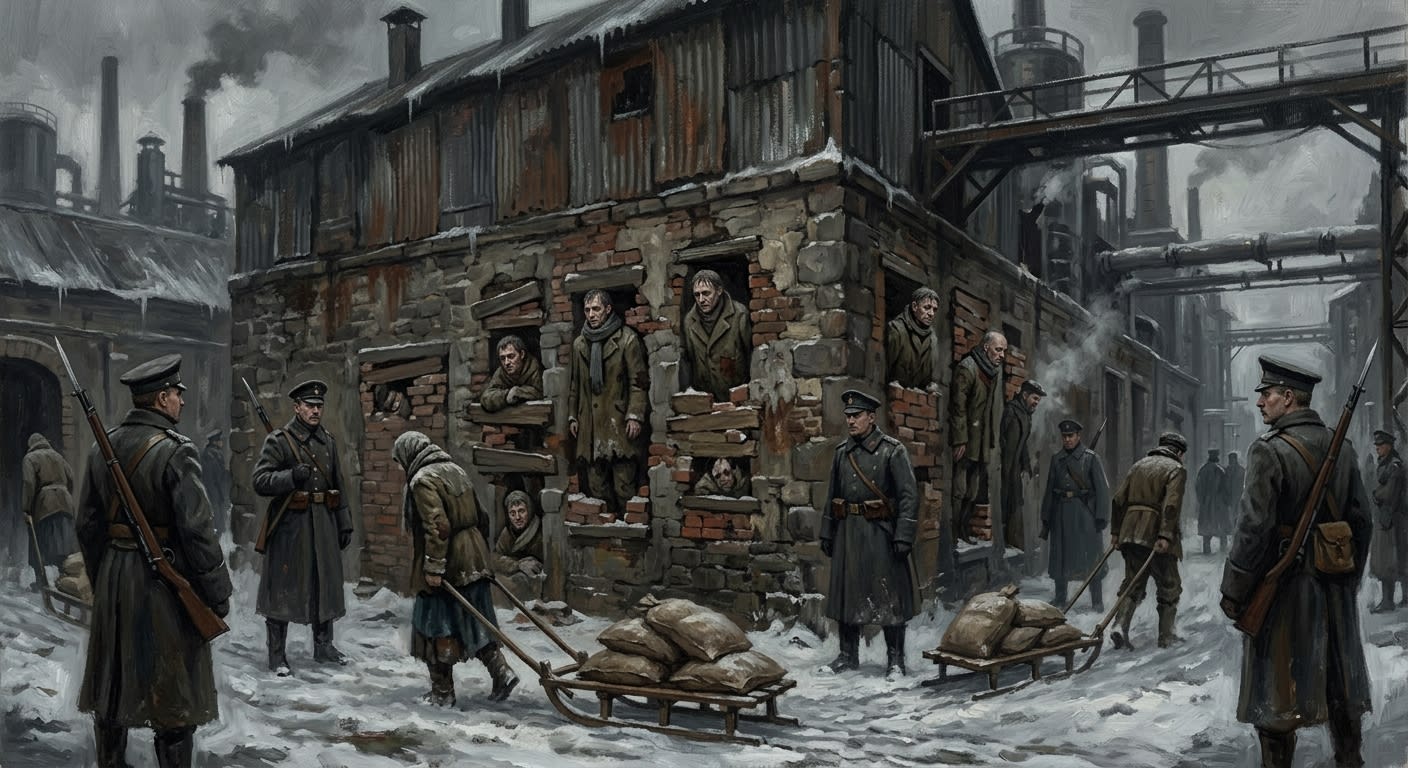
Ration Plunder Winter
Three barrels of flour founded a profession and called it Order
The A.S. 97 Ration Plunder Winter turned flour theft into visible punishment, making one depot wall the profitable ancestor of formal immurement by writ.
Codex Ref. VII.8.10-041
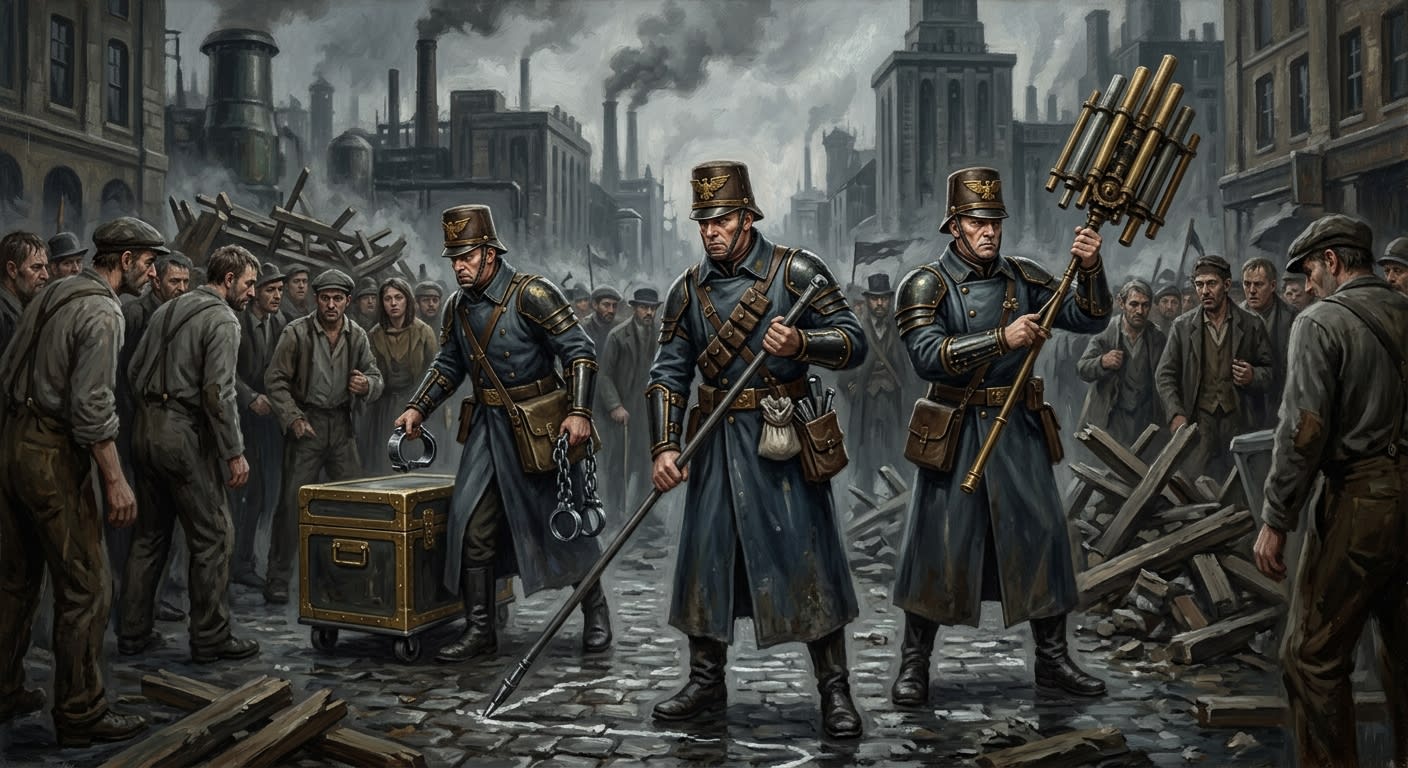
Riot-Quiet Specialists
The man at the chalk line teaches the mob to leave itself
Elite Roving Judge's Bailiffs trained after the Road Riots to break crowds by chalk, chime, placement, and the profitable restraint of unfired violence.
Codex Ref. XII.39.02-001
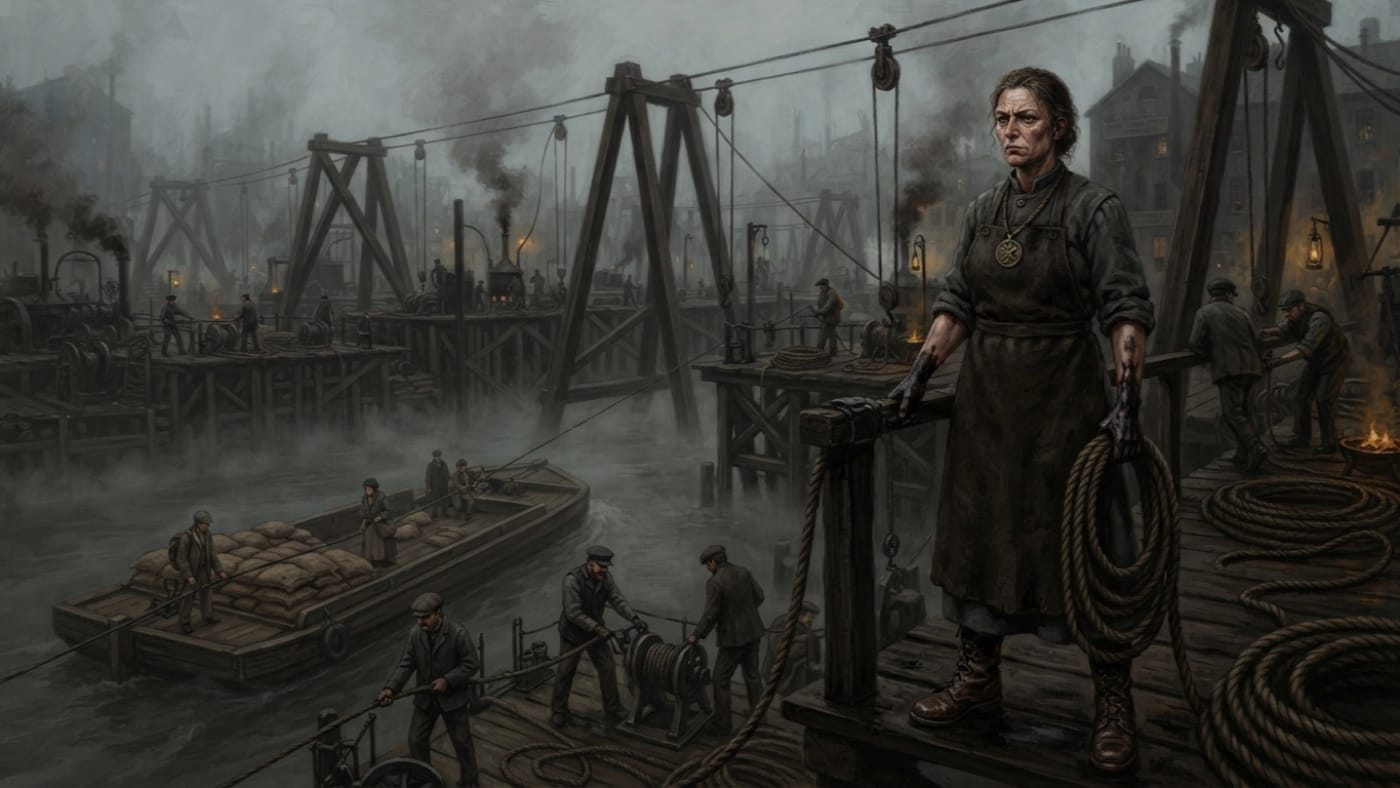
Rope-Master Lysa Kett
Only she may condemn the rope. Everyone else pays.
Lysa "Splicehand" Kett controls the Rope-Ferry Chain's cables and maintenance crews. Only she may condemn a mainline; the Guild's shortages are paid for in grain that never crosses.
Codex Ref. III.2.01-1701
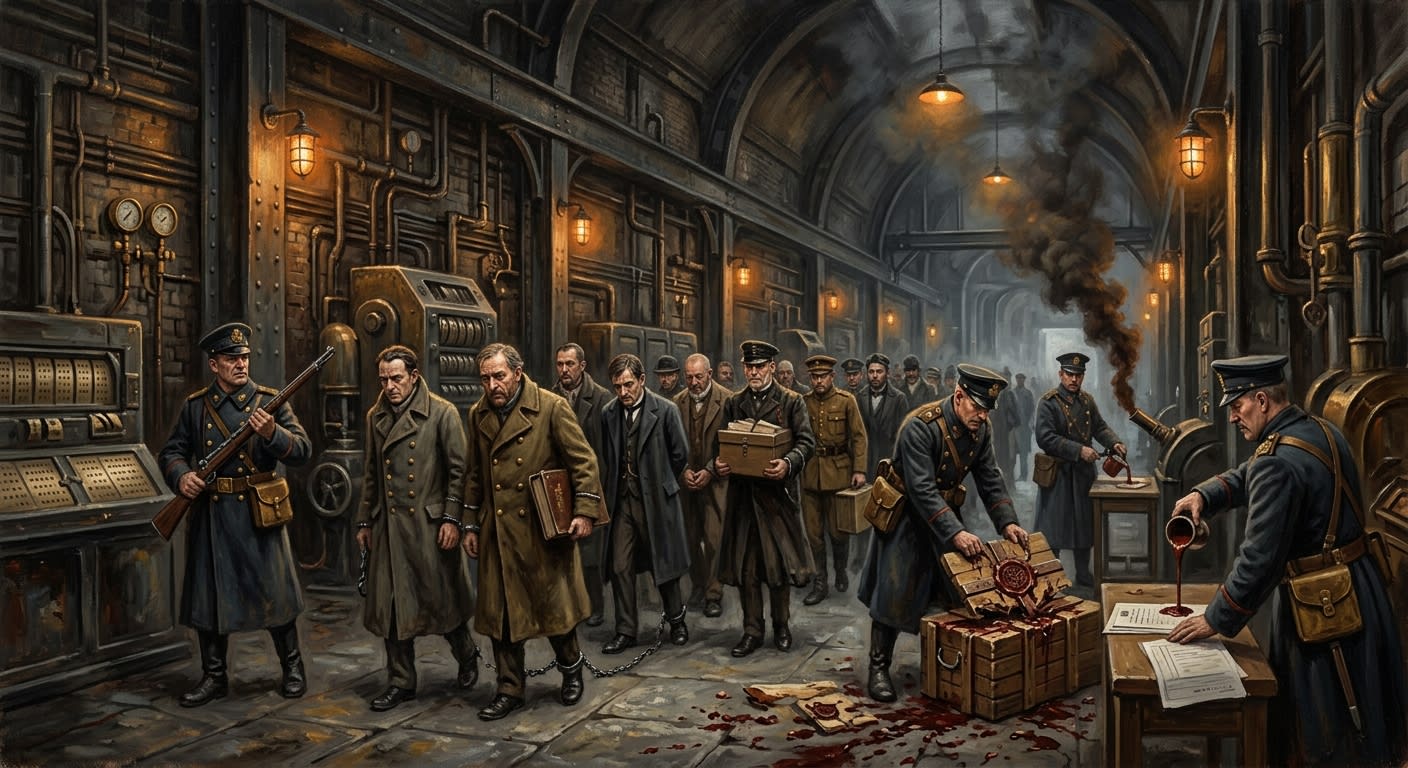
Seal Theft Scandals A.S. 158
Three false impressions and the day sovereignty learned to smell its own wax
The A.S. 158 Seal Theft Scandals exposed forged judicial impressions across the Rhine circuits, purged a third of the bailiff corps, and made wax residue into doctrine.
Codex Ref. VII.8.10-096
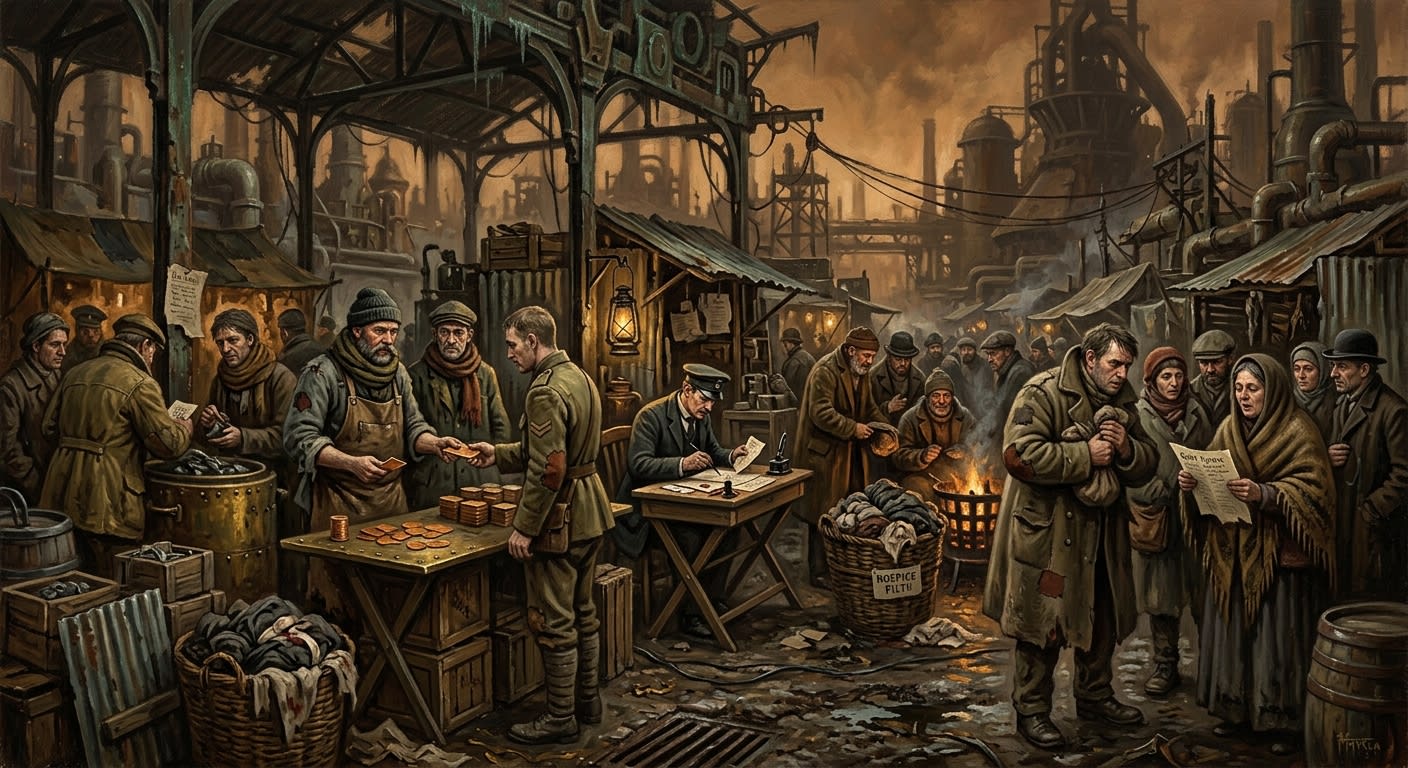
Slag Market
Where Brast's holy heat cools into crime and soup
The Slag Market is Brast's outer-ring commerce in leaked sanctity: warm chits, forged seals, quiet hymns, hospice filth, stolen heat, and necessary lies.
Codex Ref. II.2.06-201
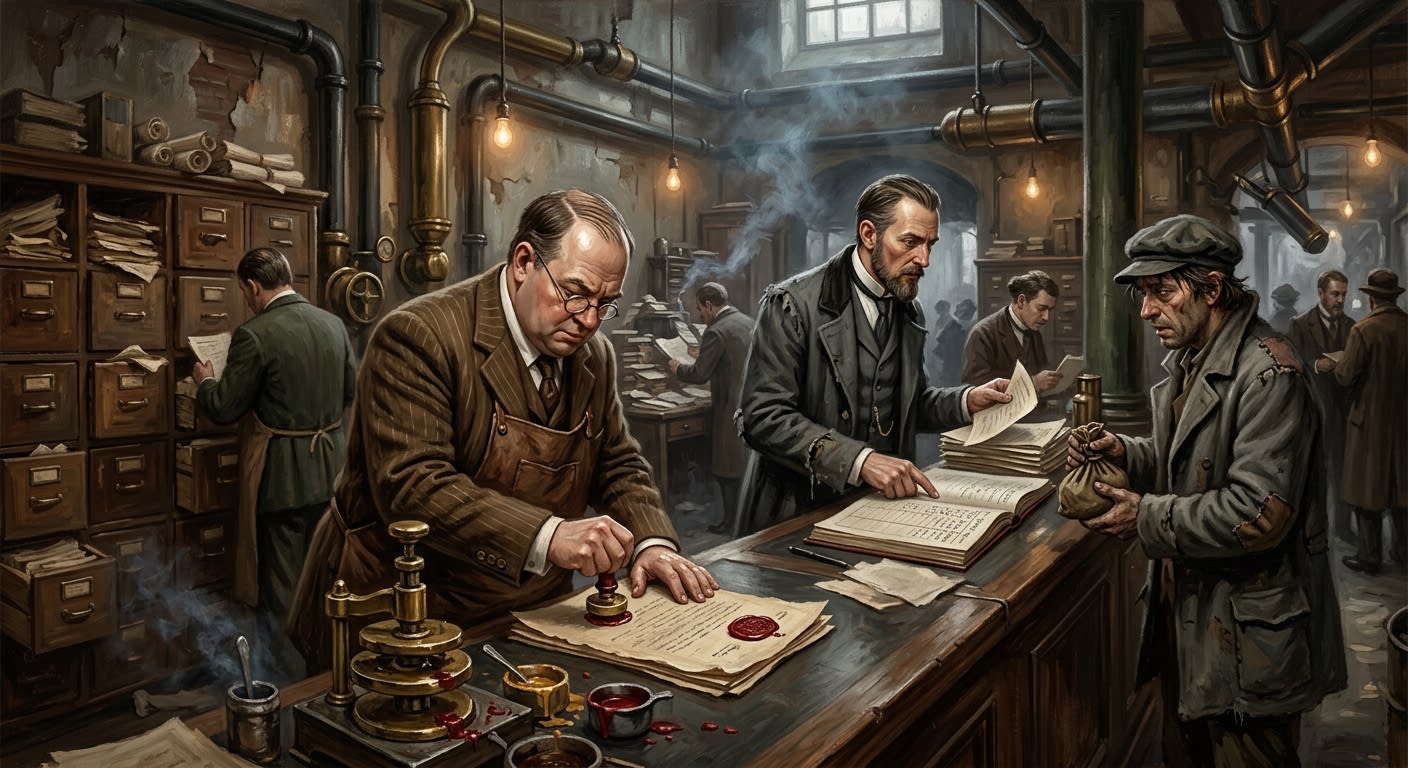
Sponsor-Seal Brokers
Mercy with wax on its thumb and a price in its mouth
Sponsor-Seal Brokers sell the Cloister's most profitable mercy: wax-backed speed, softer files, paid witnesses, and teaspoons of time returned to the swallowed.
Codex Ref. XI.5.01-003
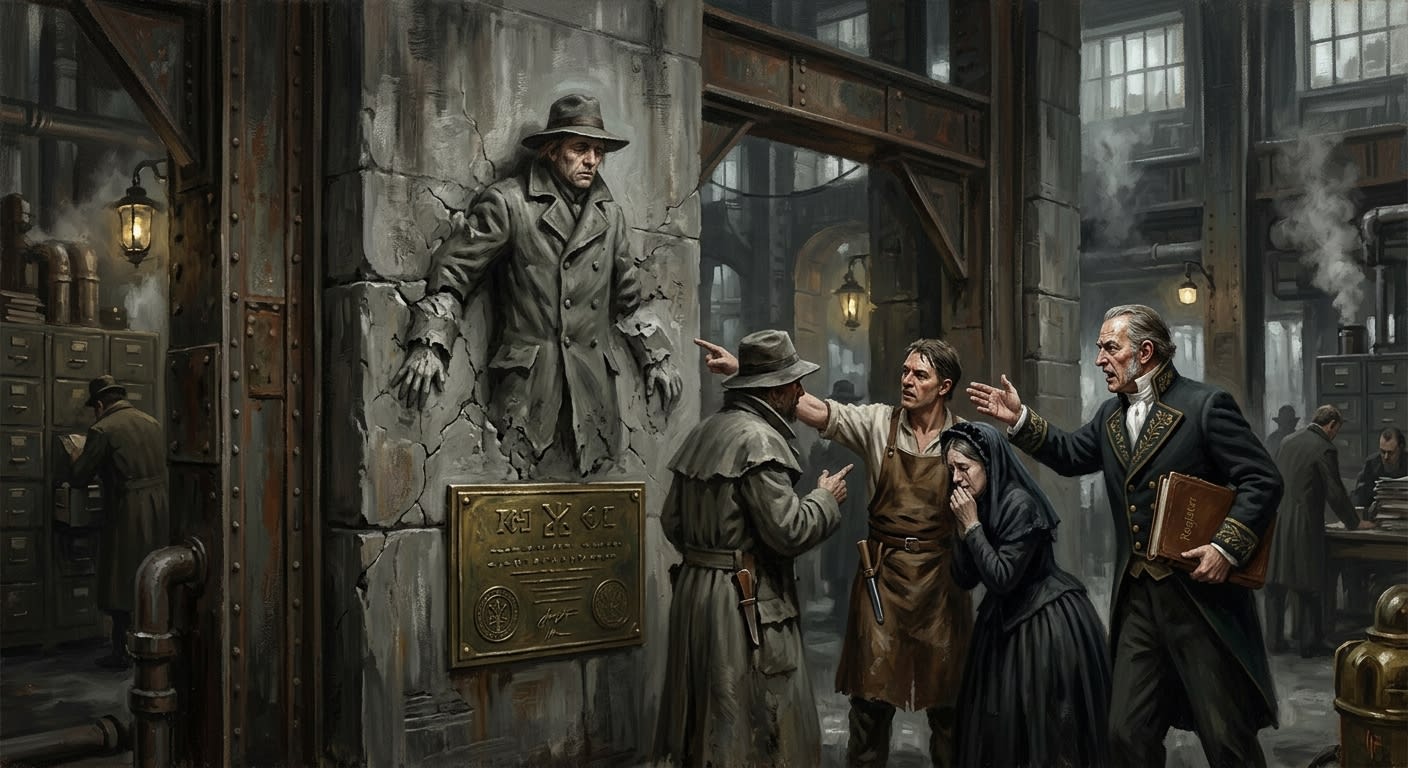
Standing Order 14-M
The sentence that makes masonry answerable for mercy
Standing Order 14-M turns condemned persons into walls with plaques, then lets masons, judges, families, and breath argue over what mercy costs.
Codex Ref. XIII.1.97-104
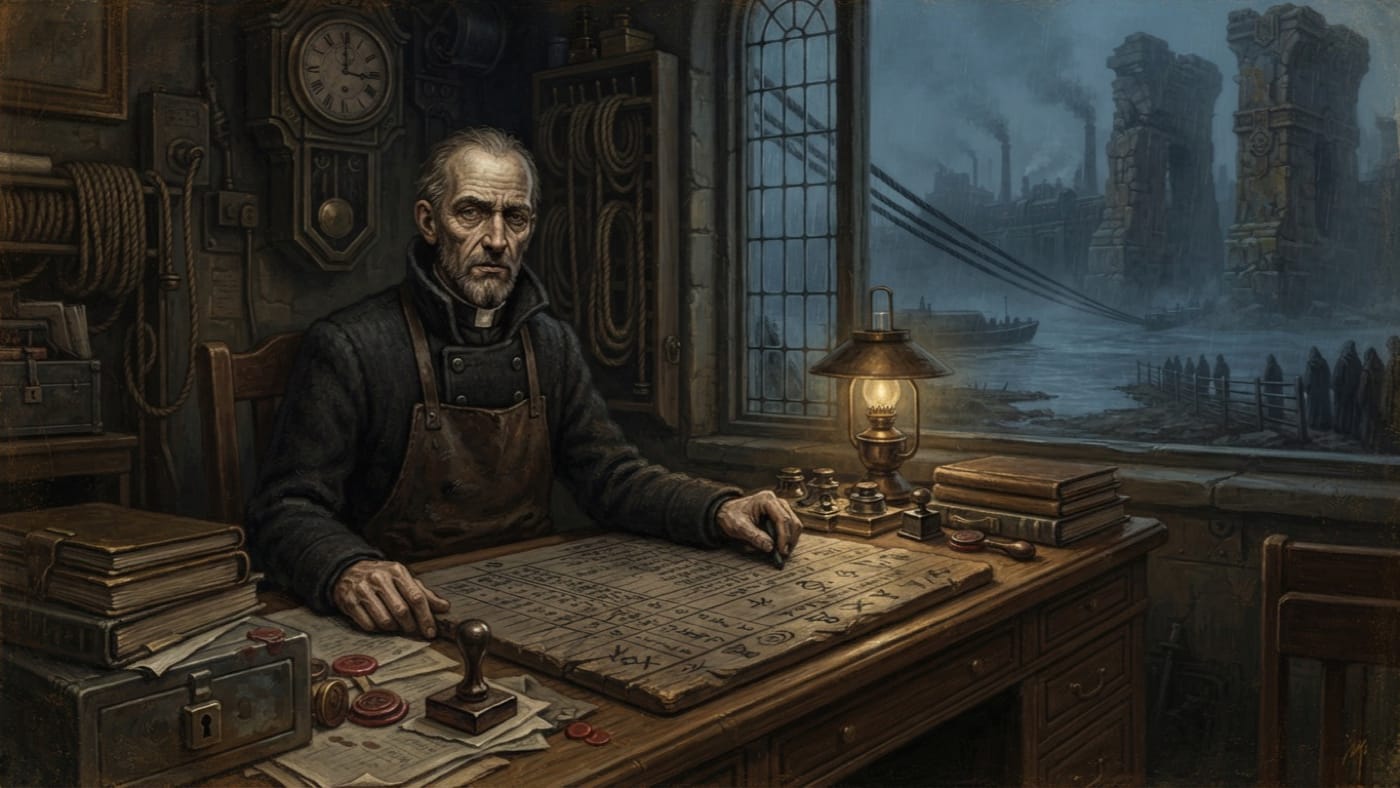
Superintendent Halvick Sorn
The man who keeps the hours fears the break
Halvick Sorn keeps the Rope-Ferry Chain's master slate: twenty-three years on schedule, four bridge petitions refused, and one bad winter from cascade failure.
Codex Ref. III.1.05-001
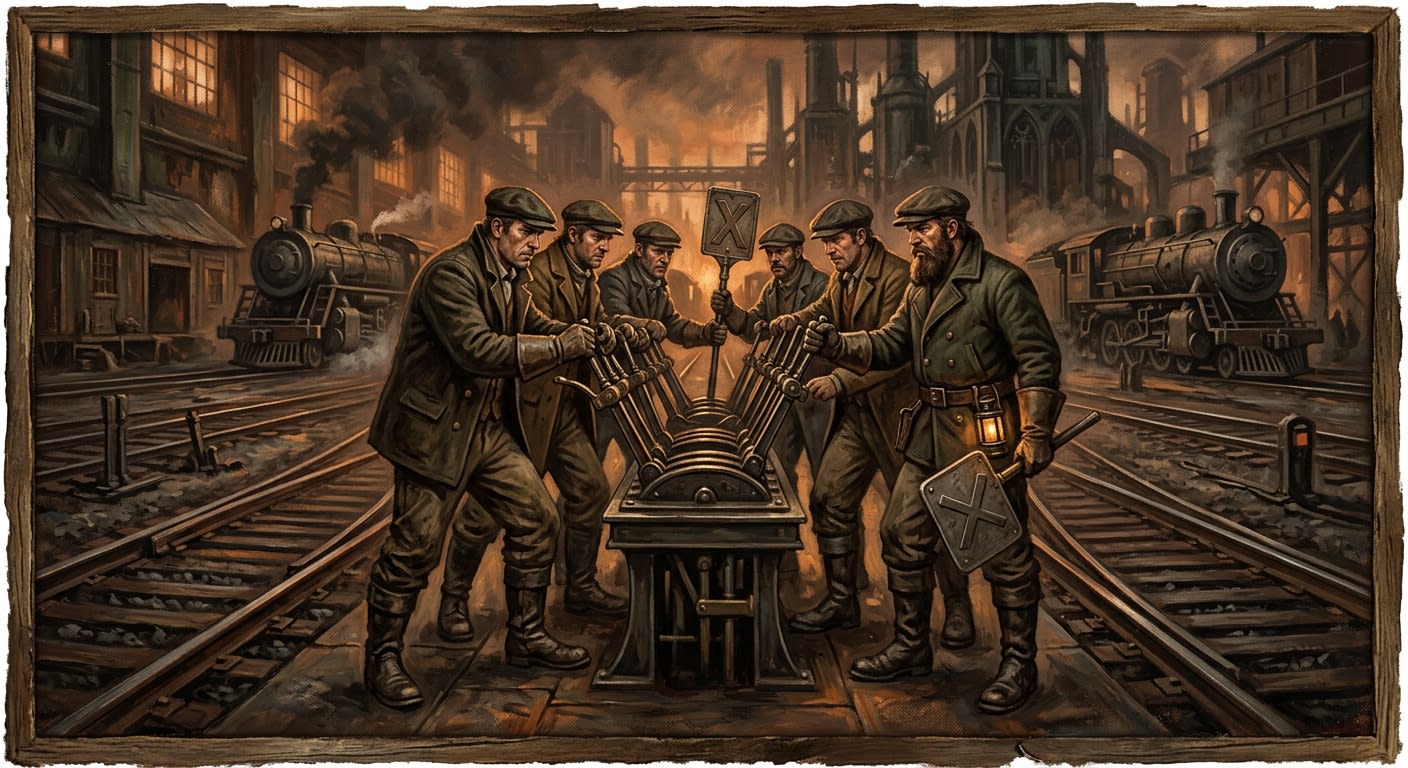
Switchmen's Union
The hand that throws may also refuse
The Switchmen's Union of Lorn is a safety brotherhood, a devotional racket, and the hand that can stop the Palatine Yard by refusing to throw.
Codex Ref. XI.5.01-001
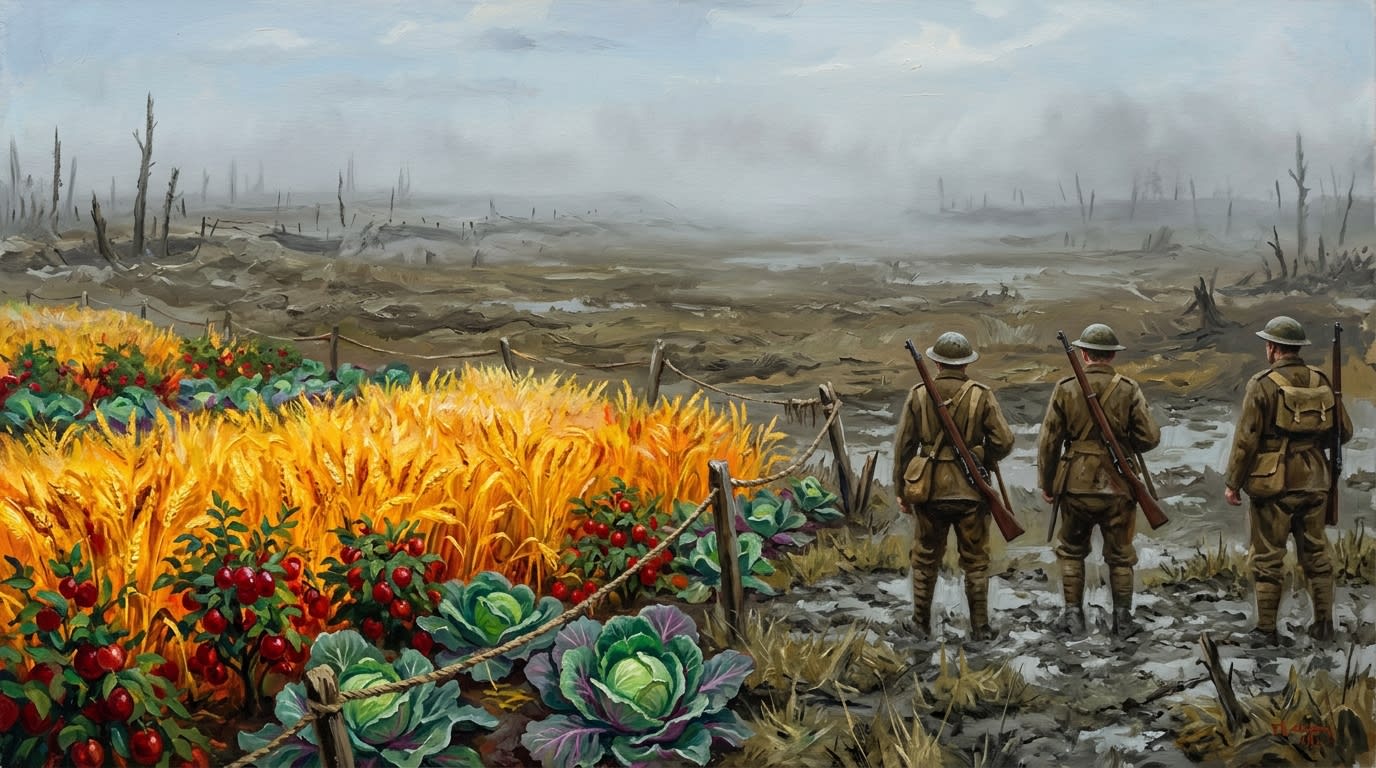
The Abundance Fields
A Category One Moral Hazard; and yes, it smells of fresh bread
The Abundance Fields are patches of impossible fertility at the Blightmarsh's edge — crops grown without sowing, fruit ripening in frost, bread-smell on a west wind. The food is real. The hunger it produces is realer still.
Codex Ref. V.6.01-003
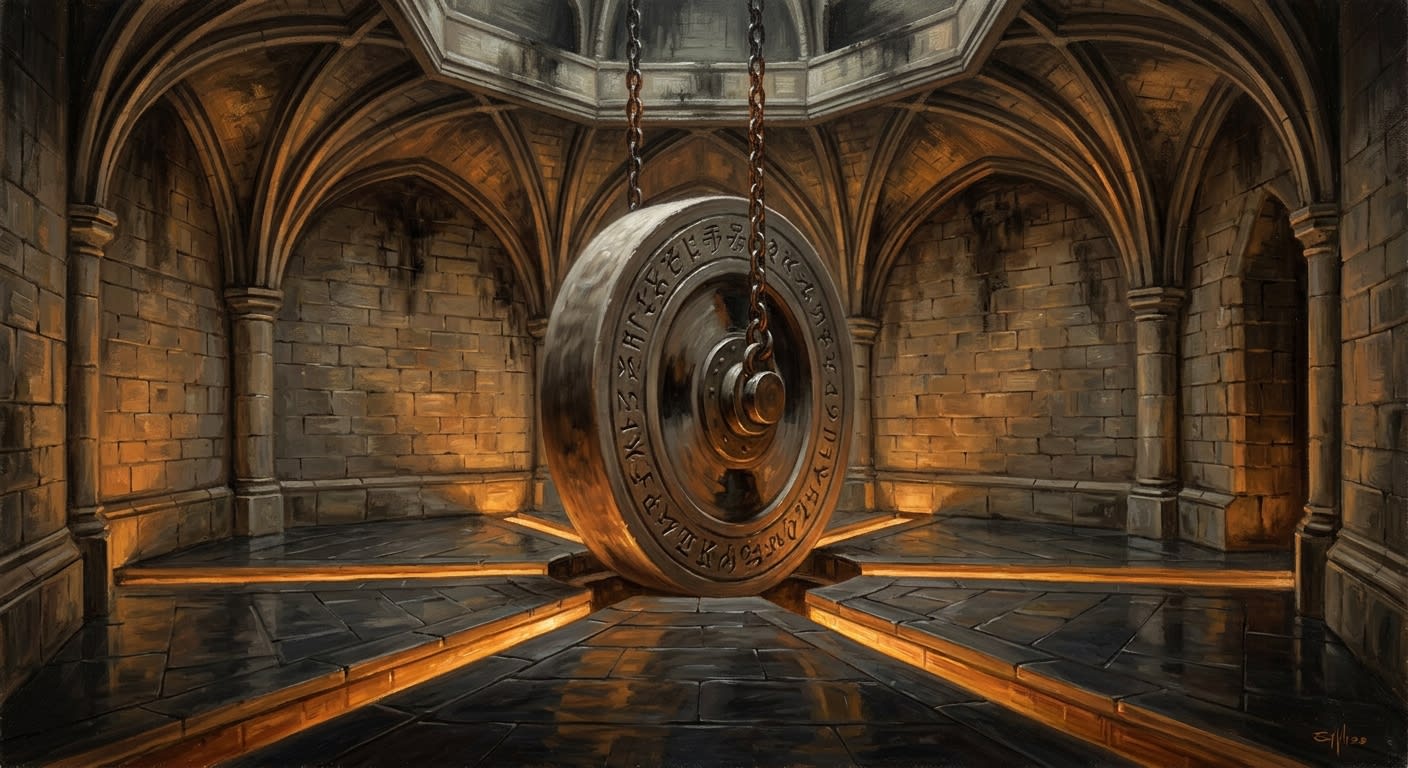
The Apparatus Beneath Gate Nine
The Grindstone turns. The Bureau declines to comment.
Beneath Gate Nine of the Queue Road, forty-two feet below the Hearing Hall, a wheel turns. It has been turning since before the Synod existed. The Bureau of Doctrine classifies this assessment as pending. The Grindstone does not.
Codex Ref. II.3.06-001
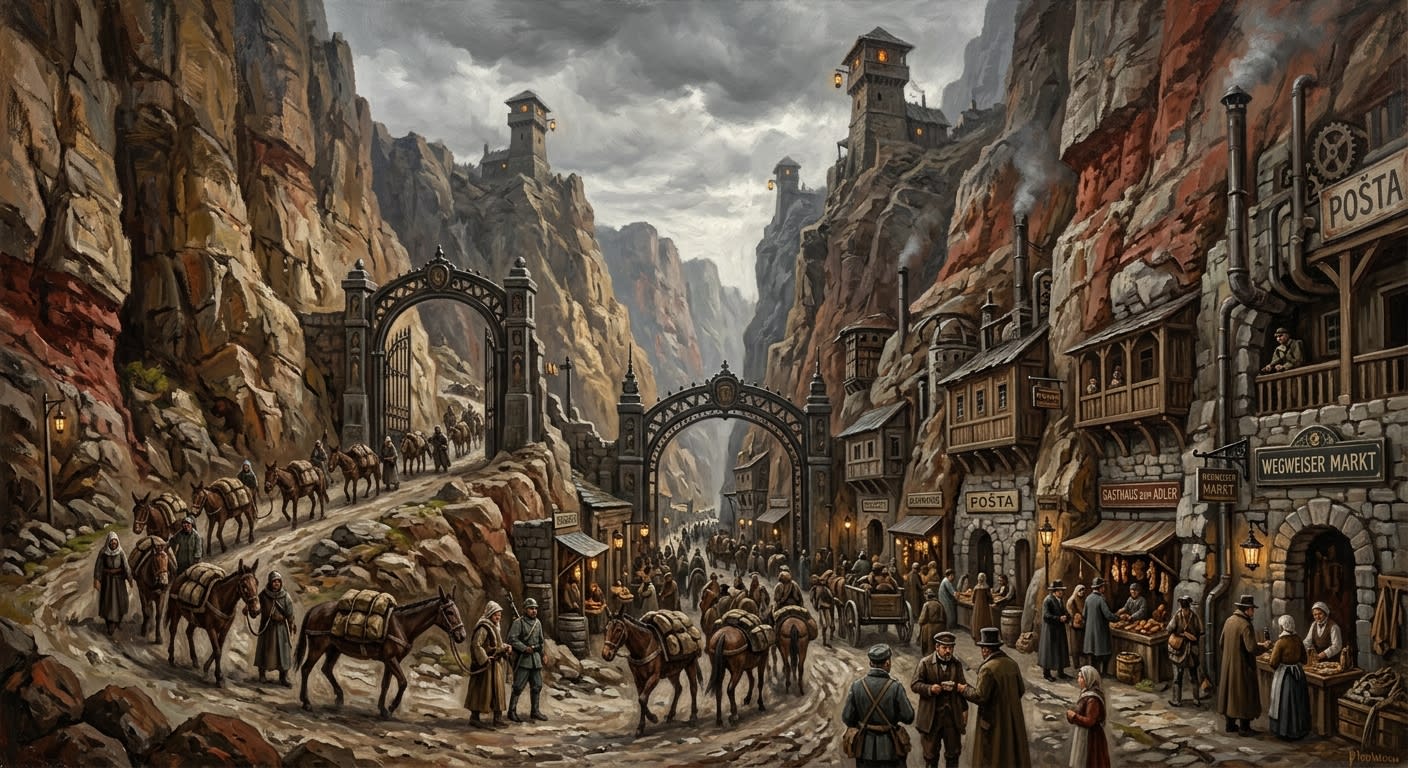
The Choir-Broker Hall of Peregrine Row
Where the canyon charges for its echoes and the brokers charge for everything else
A Zone 1/2 waystation-market on the Pilgrim Roads where creed-testing, escort contracts, and bead reconciliation converge into an economy of sanctioned extortion. The canyon echoes your prayers with one vowel wrong. The brokers charge for that too.
Codex Ref. II.1.03-001
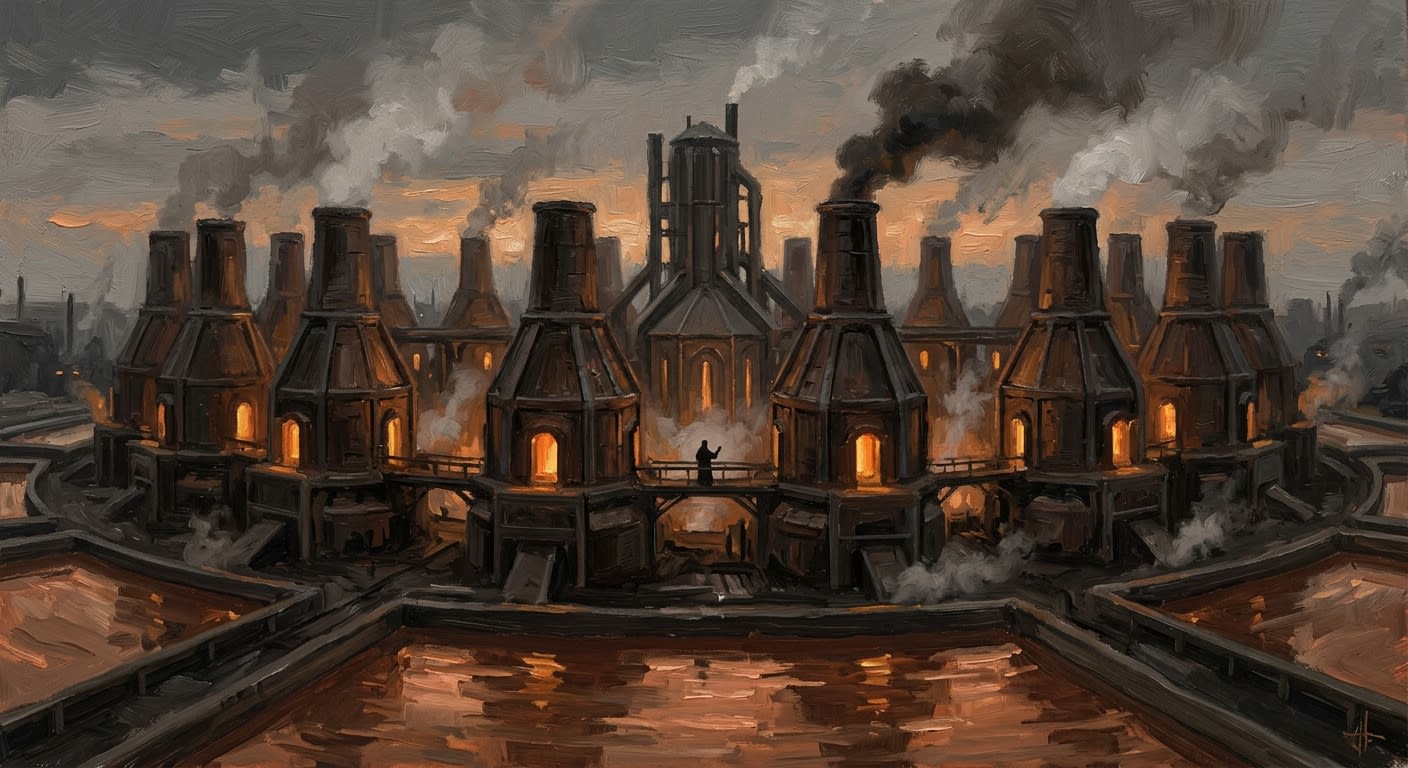
The Chrismole Furnaces of Brast
Faith provides the flame; the Bureau provides the invoice
Ninety-two thousand souls and an unknown number of engines live in Brast, the continent's only producer of sanctified chrismole fuel — and something in the furnaces has recently begun to sing back.
Codex Ref. II.2.01-003
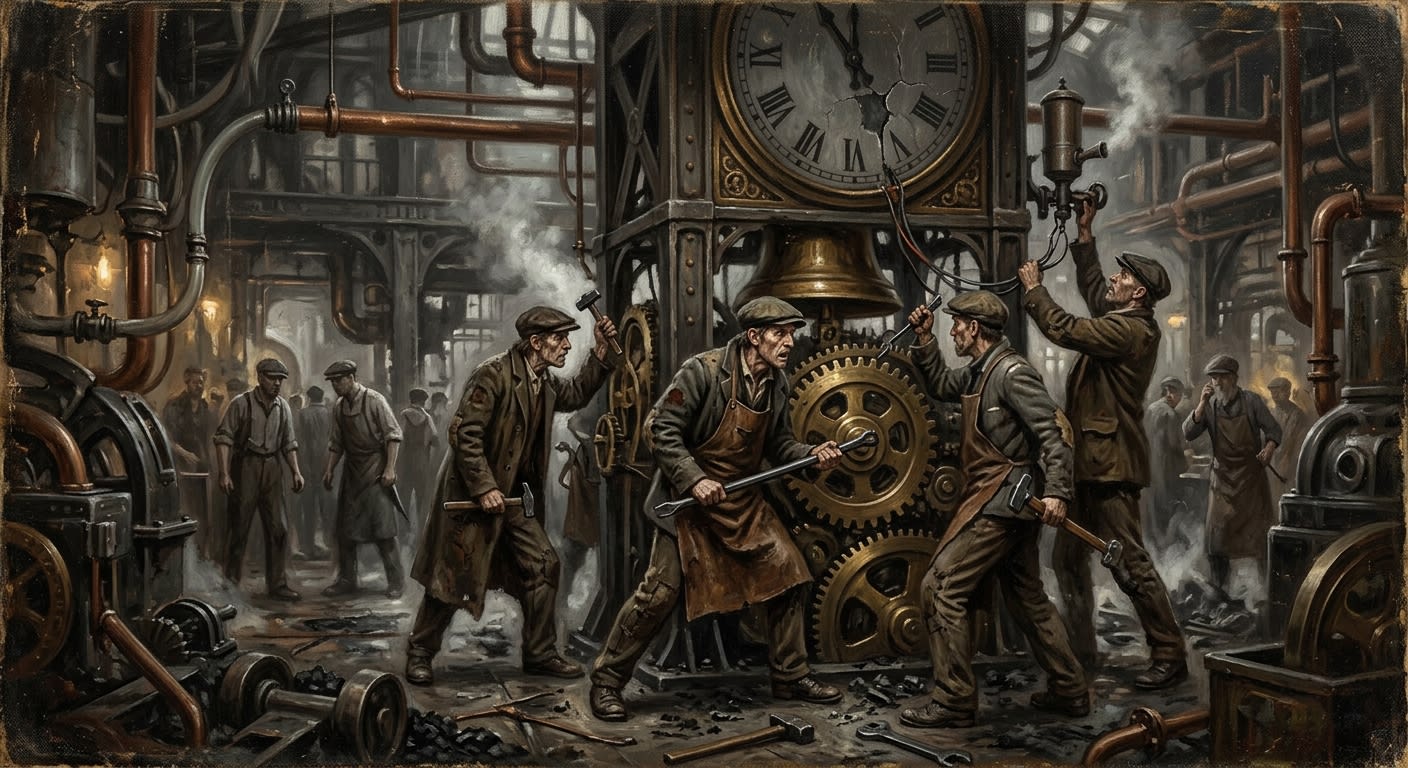
The Clock Heretics
No bell owns the hour, and that is why the bells keep shouting
The Clock Heretics, called the Unstruck, preach against priced minutes under the Queue Road, sabotage bell-marks, and survive because their heresy usefully steadies the wheel.
Codex Ref. XI.3.02-001
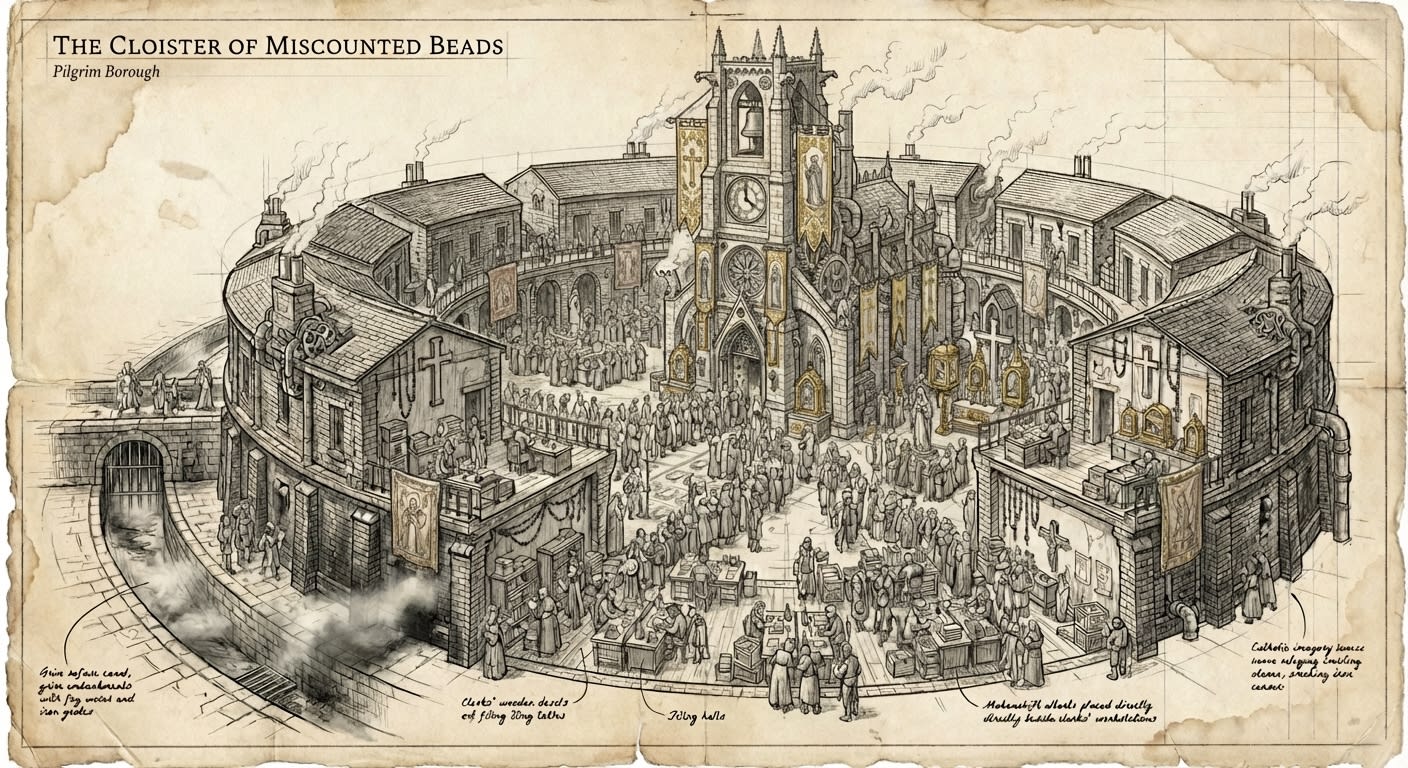
The Cloister of Miscounted Beads
The Bureau does not distinguish between mercy and procedure. Both produce the same paperwork.
Strasbourg's pilgrim processing facility, where six thousand souls await bead reconciliation, the dead reappear on intake rosters, and the Bureau of Records declines to call any of it a problem.
Codex Ref. II.2.06-001
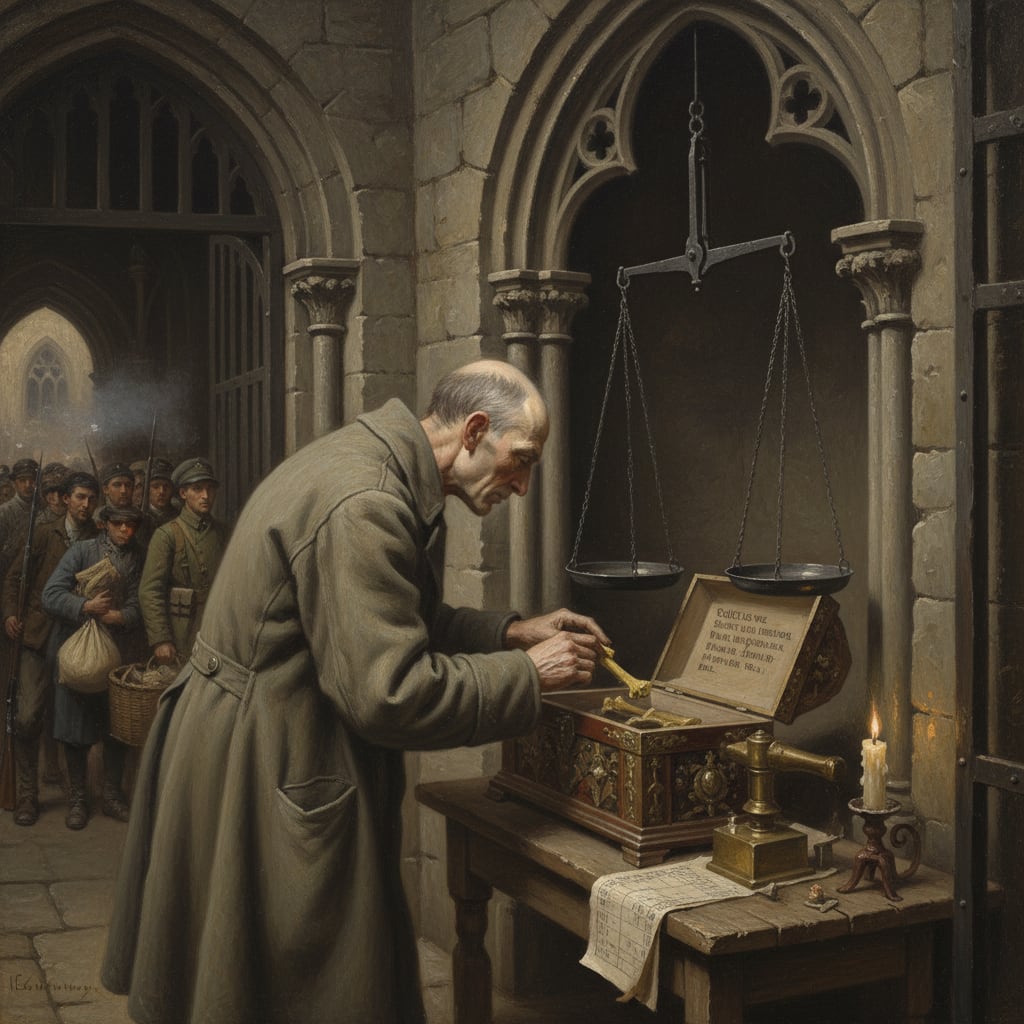
The Commerce Clerk (Tariff-Chapel Weigher)
The man who stands between a bastion and famine, and who resolves the question with the splintered bone of a saint.
The Synod's most bribable sacrament: the chalk-fingered clerk whose iron scale, calibrated against saint-bone, determines whether a bastion eats.
Codex Ref. XII.8.01-001
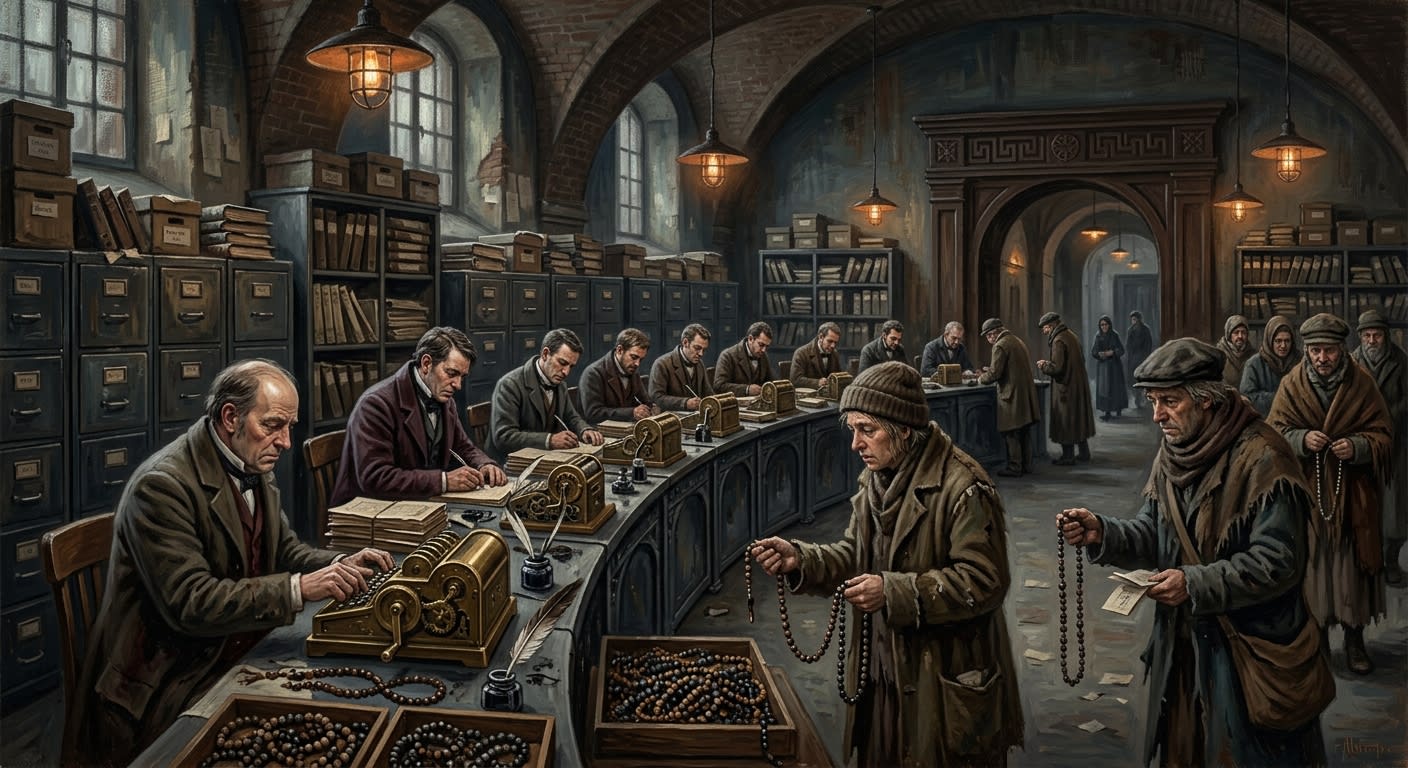
The Counting Hall
Where a bead becomes evidence and salvation waits its turn
The Counting Hall of the Cloister of Miscounted Beads is the Clickery: twelve desks where pilgrims, bead strings, debts, deaths, and names are reconciled into obedience.
Codex Ref. II.3.06-001
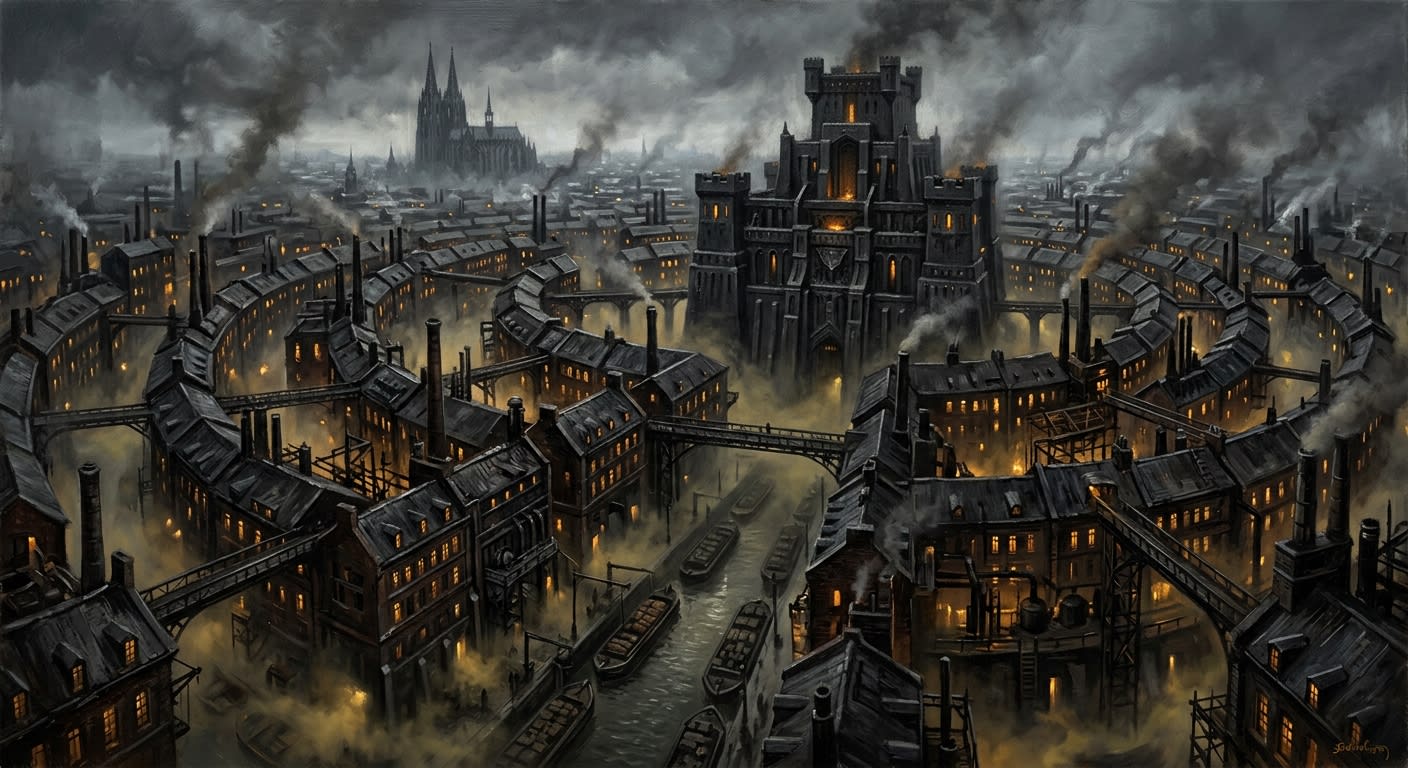
The Crownwright Diehouses of Sable Court
In Sable Court, identity is currency — and the Synod strikes every coin
The restricted mint-quarter of Cologne where the Synod strikes every face into coin and every coin into law. Where identity is minted, recalled, and—when the Bureau requires—unfaced. A.S. 201: the Face Theft crisis continues and the master die may be real.
Codex Ref. II.2.07-001
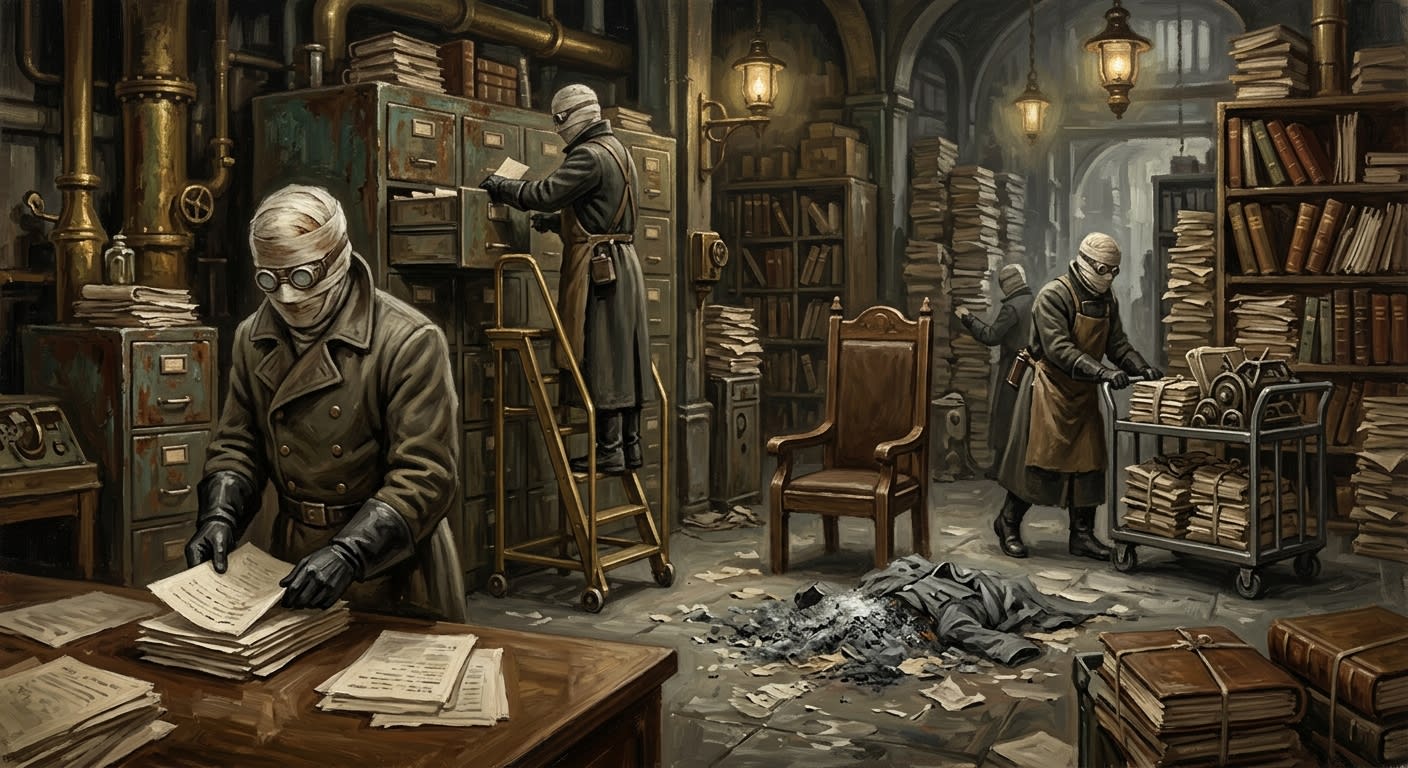
The Custodians
The broom, the knife, and the blank page share one handle
The Custodians preserve Synodic continuity by omission: gauze-veiled operatives who collect contradictions, file absence, and leave the chair cleaner than the corpse.
Codex Ref. VIII.8.02-001

The Fractured North
Compliant in substance. Deviant in form. Pending resolution since A.S. 92.
Two million souls scattered along the Norwegian fjords and Swedish interior — faithful, stubborn, and unresolved. The Bureau of Doctrine has filed them as 'compliant in substance, deviant in form' since A.S. 92, and will do so until either side decides otherwise.
Codex Ref. IX.8.01-001

The Heartlands
The safe country, provided one defines safety as distance from teeth and proximity to stamps
The Heartlands are the Synod's safe interior only by infantry arithmetic: Zones 1–3 feed the Line with bread, steel, bodies, bells, paperwork, and bones.
Codex Ref. II.0.02-201

The Hourglass Monolith
A black standard for measuring the ways time refuses obedience
The Hourglass Monolith is Lyon's forbidden temporal standard: part instrument, part confession, and quite possibly an enemy noun wearing Bureau wax.
Codex Ref. XIII.1.86-134
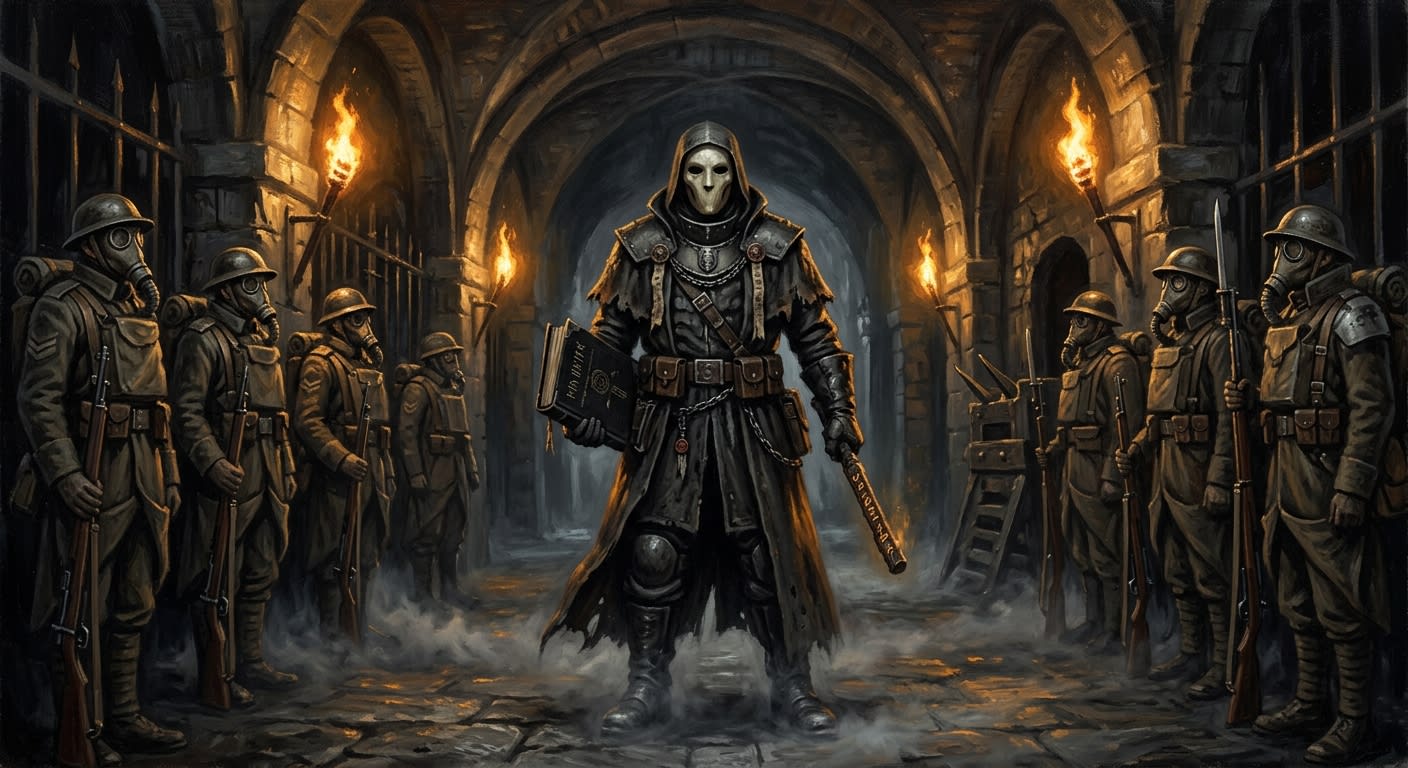
The Judges
They walk without letter, without herald, and without the patience of the Bureau.
The Judges arrive without letter, try without jury, and depart without filing. The Bureau denies they exist. It has been denying this since A.S. 92. The denial requires renewal every thirty years, which is itself a kind of evidence.
Codex Ref. V.1.01-003
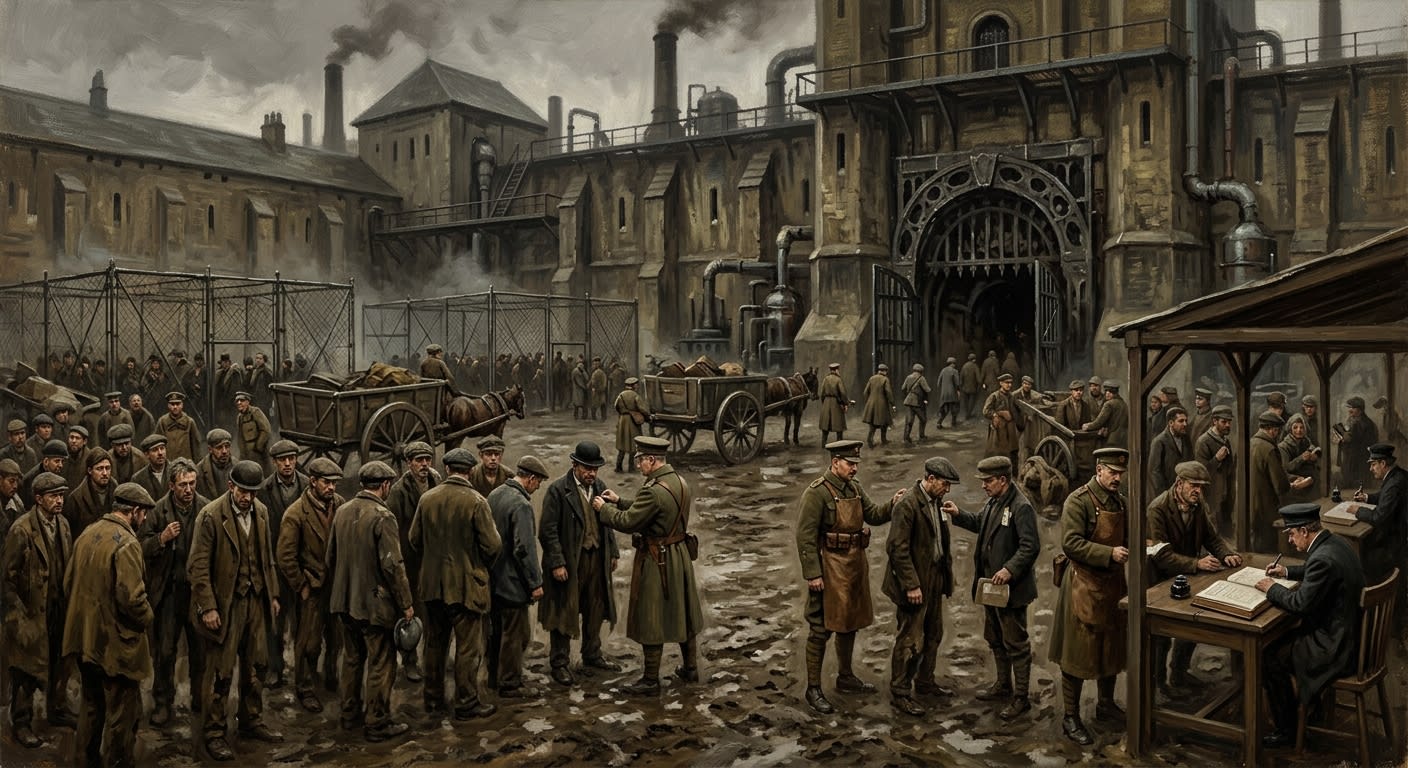
The Lost Procession Yard
Where pilgrimage stops being song and becomes intake
The Lost Procession Yard is the Cloister's intake mouth: a mud court where broken pilgrim columns are tagged, sorted, quarantined, priced, and corrected.
Codex Ref. II.3.06-002
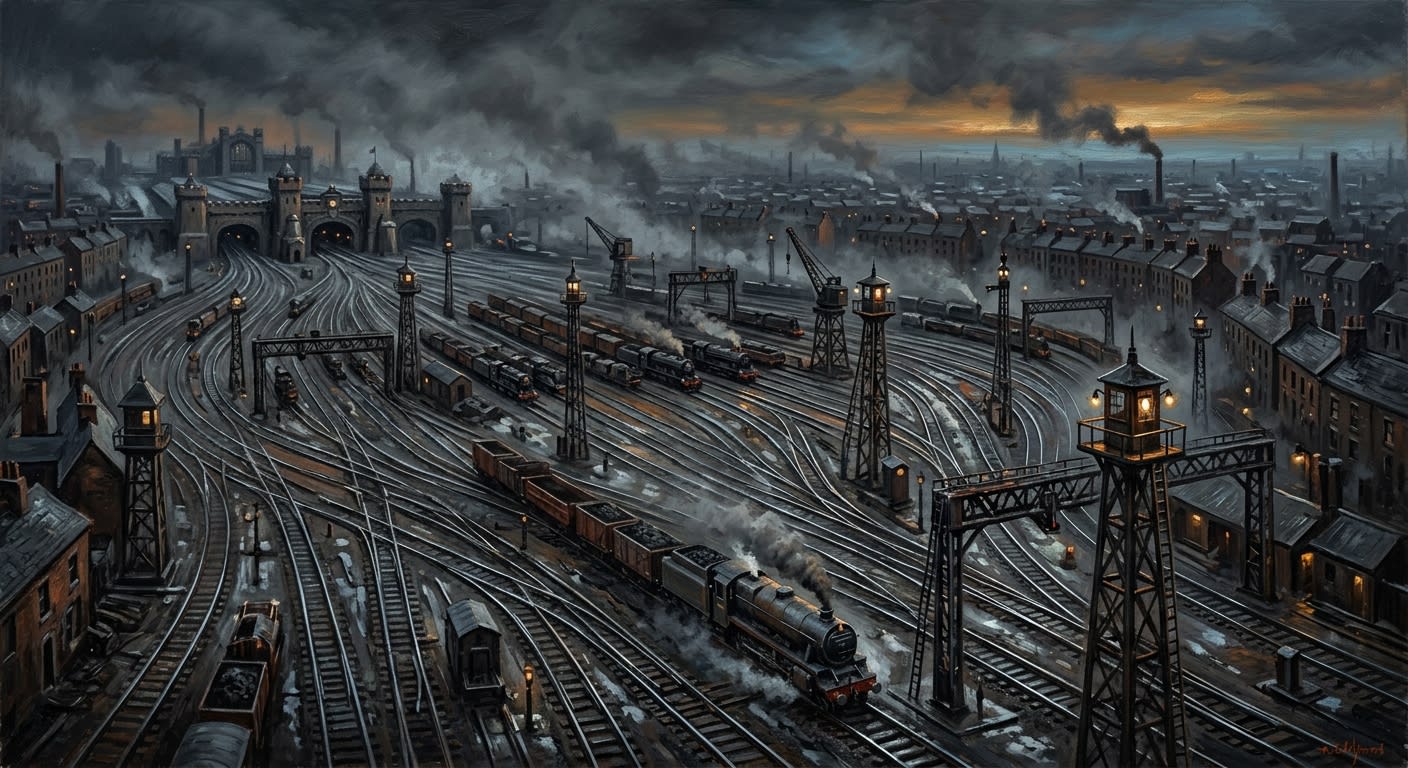
The Palatine Switchyard of Lorn
The city that became a filing system — and the filing system that became a theology
The continent's largest rail interchange, where the Heartlands' freight is converted into the Line's appetite by two hundred ten thousand registered souls, twelve converging lines, and a schedule that has never once apologized for what it costs.
Codex Ref. II.3.01-001

The Rhine Corridor
Damp procedure, counted backward from every bridge
The Rhine Corridor is the Synod's damp procedure: a Zone 2 logistics artery, mortuary road, ferry court, heresy school, and billable proof that movement can be made afraid.
Codex Ref. II.2.08-202
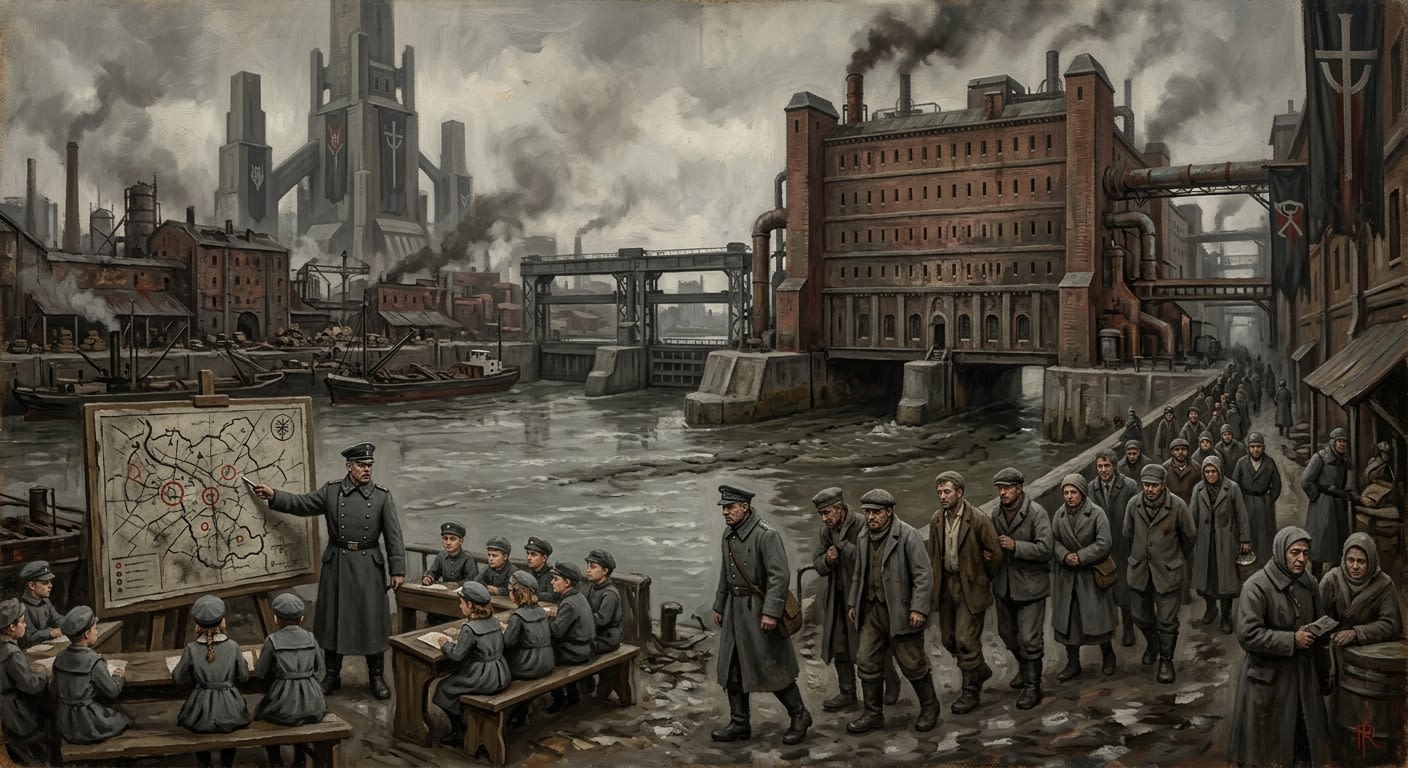
The Rhineland
A province corrected so often it learned to keep the corrections
The Rhineland is the Synod's most corrected province: river belt, market school, scriptorium wound, curfew map, chalk lesson, and loyal suspicion made taxable.
Codex Ref. II.2.09-201
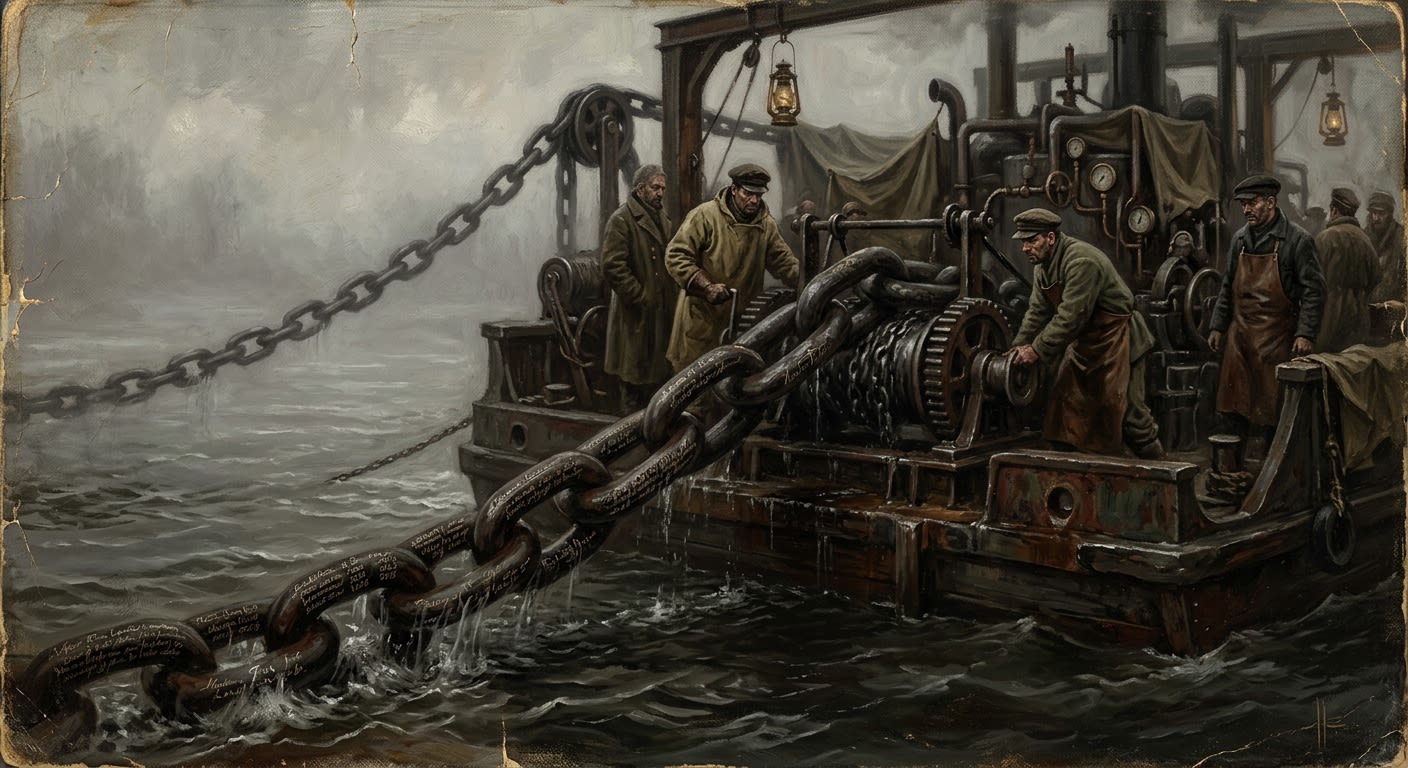
The River Ledger
When the rope writes, the river collects
On the Rope-Ferry Chain, wet mainlines blacken into names, weights, and sentences before the river makes the entries true.
Codex Ref. XIII.1.16-001
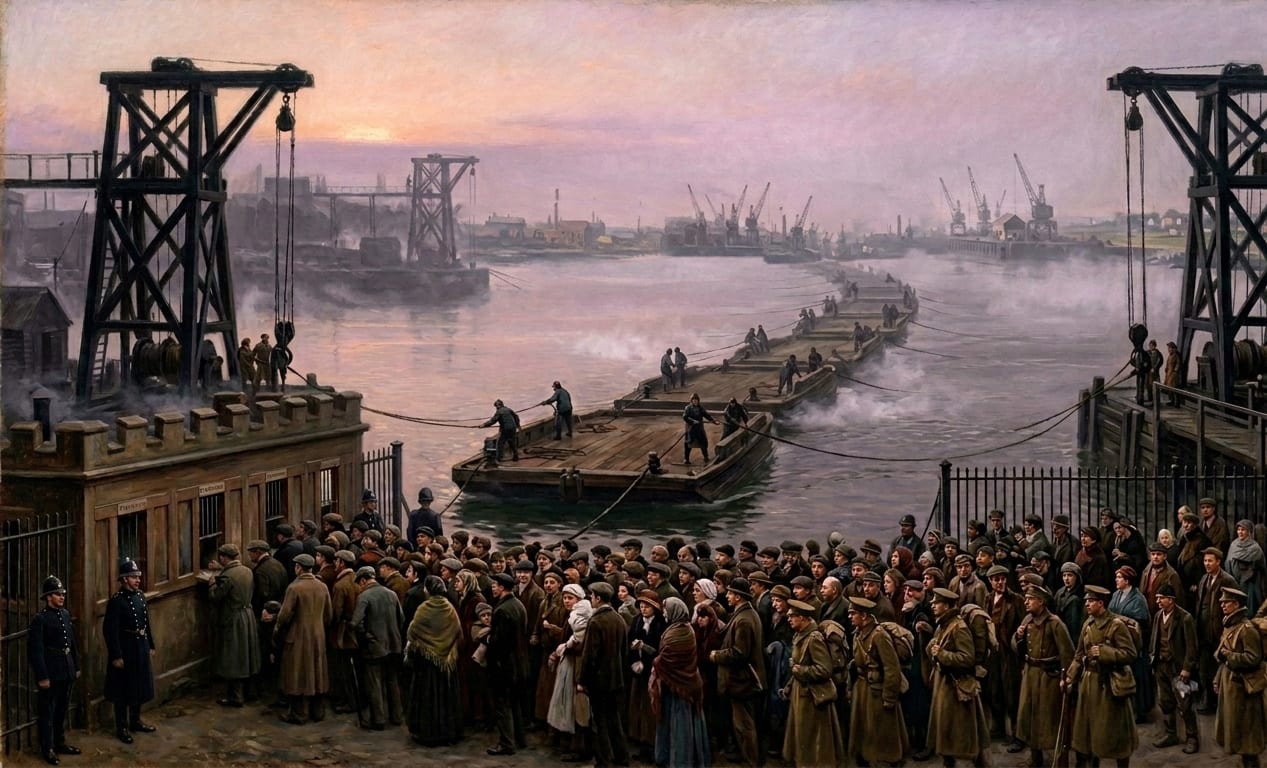
The Rope-Ferry Chain
Twelve ferries. One schedule. No bridges.
Twelve flat-bottomed barges lashed across a river that swallowed the last bridges. The Rope-Ferry Chain is where the heartlands end and the queue begins.
Codex Ref. II.3.05-002
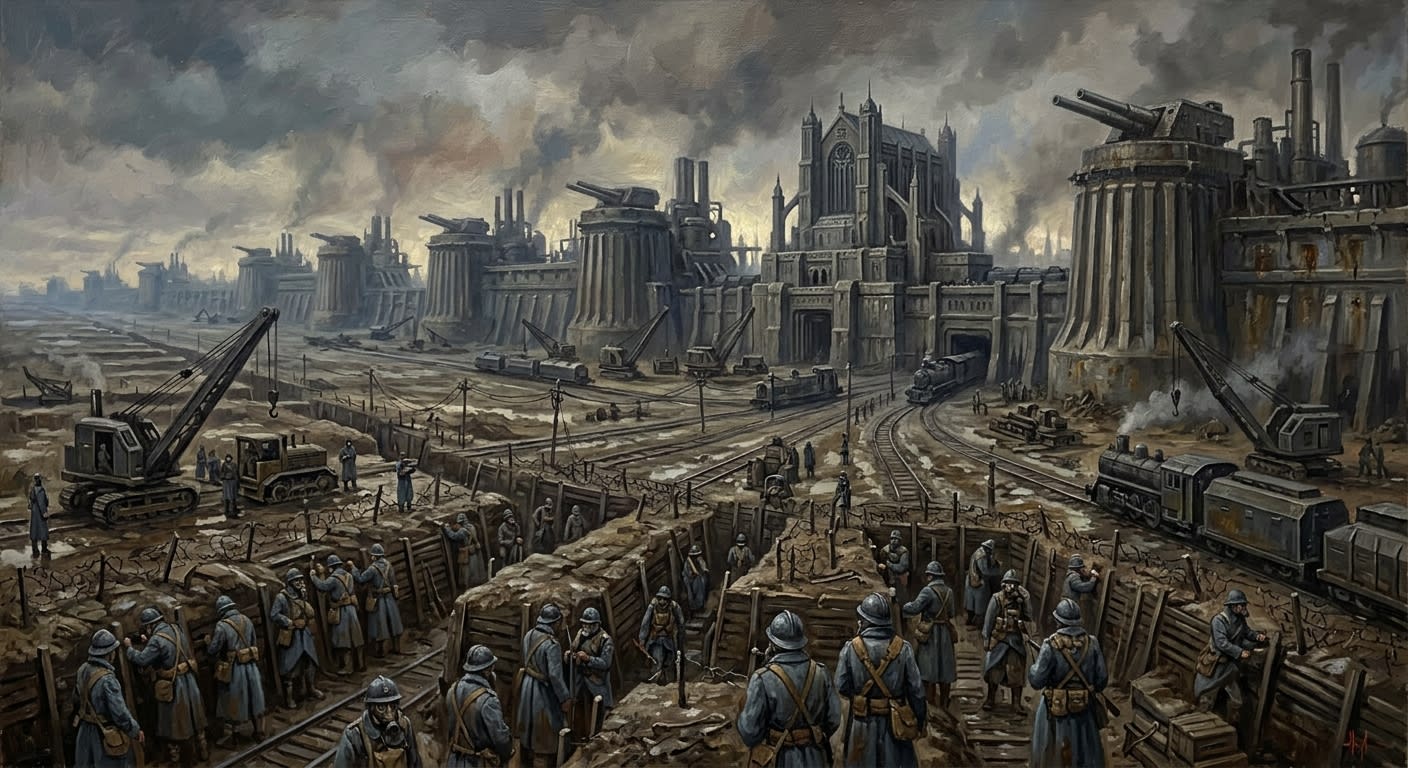
The Sagittal Line
The continent's spine, stitched in mud, bells, and refusal
The north-south defensive spine of the Synod: seven bastions, two thousand miles of trenches, and the bureaucratic miracle of making stalemate into civilization.
Codex Ref. III.1.01-001
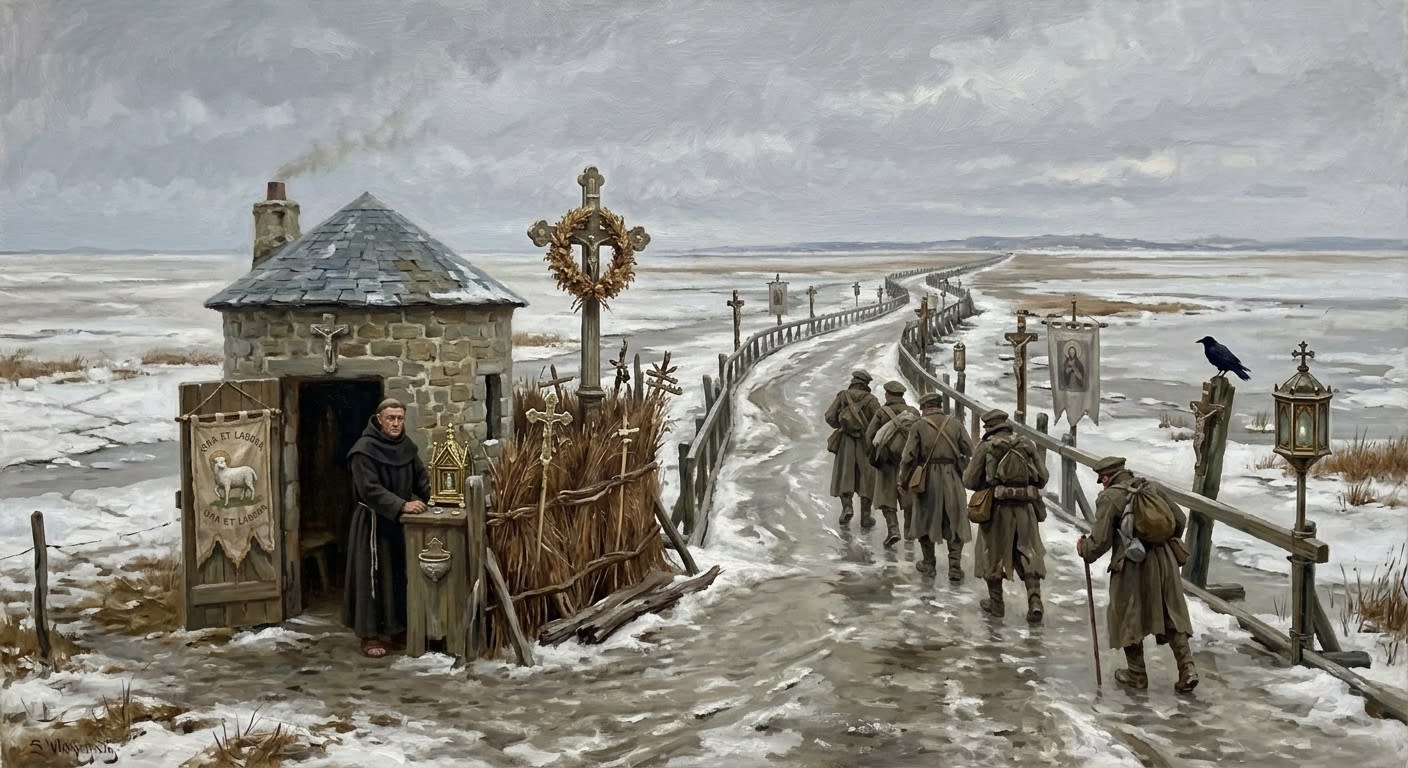
The Salt-Vigil Causeways
Where the road drinks and the order endures
Winter roads across the frozen Frisian shallows, administered by an ascetic toll order who collect salt and tears in equal measure. The causeways carry one-eighth of the Synod's winter supply traffic and ask something of everyone who walks them.
Codex Ref. II.3.05-003
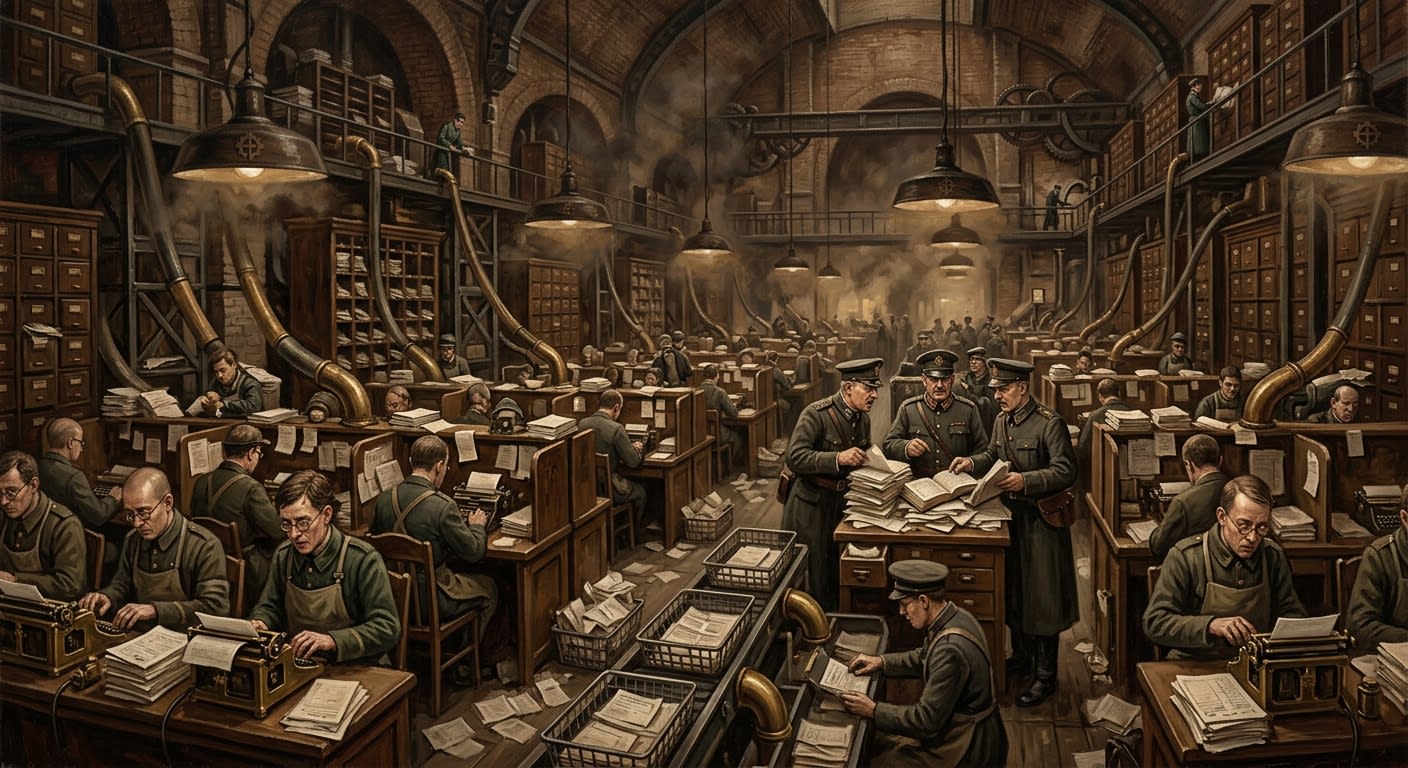
The Supplementary Entry Office
Where lives acquire addenda and mercy learns to bill
The Supplementary Entry Office is the Cloister's paper gut, where discrepancies become forms, forms become fees, and lives are amended past recognition.
Codex Ref. II.3.06-004
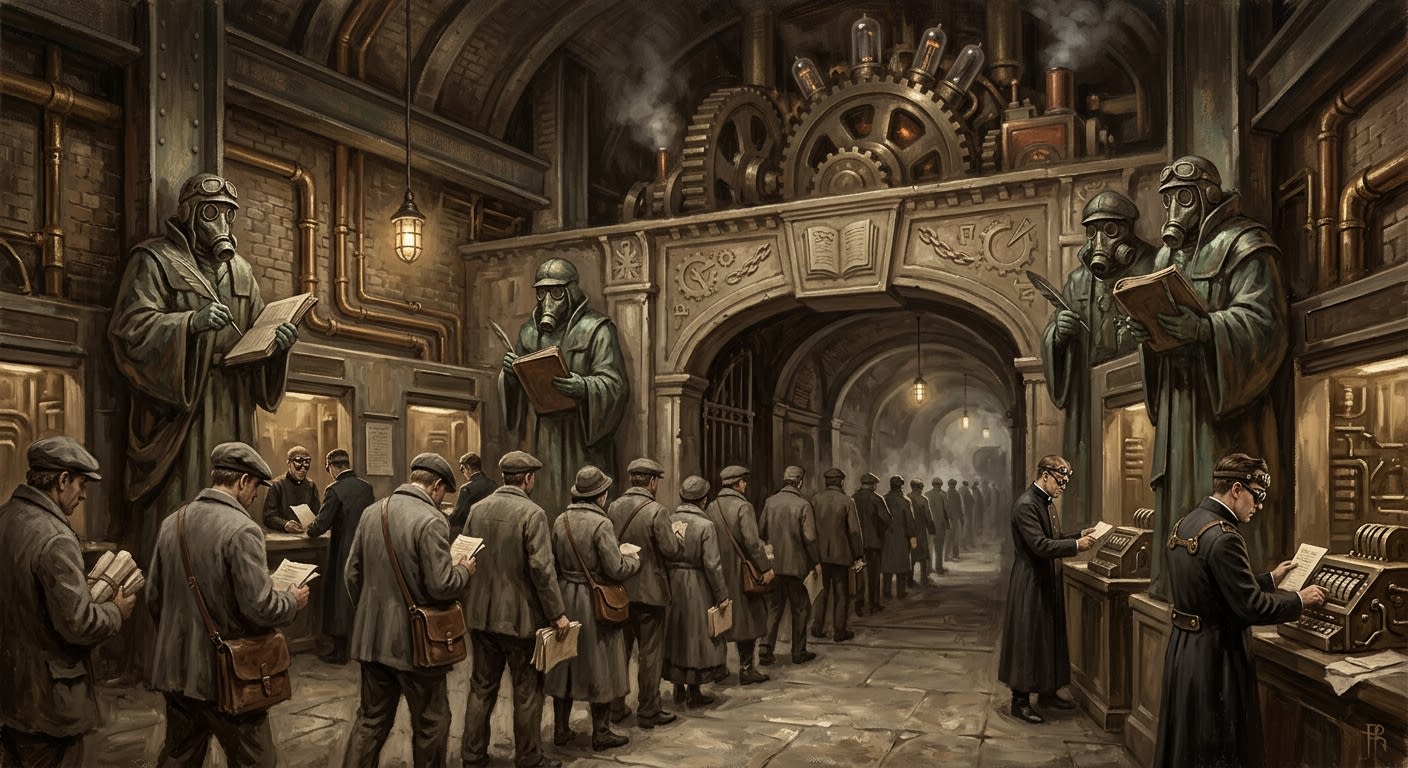
The Unnamed Bureau
The office that governs by being omitted from every ledger
The Unnamed Bureau is the office beneath Gate Nine: absent from every registry, obeyed by several, and maintaining an Apparatus that turns public waiting on the Queue Road into private product.
Codex Ref. VIII.2.02-001
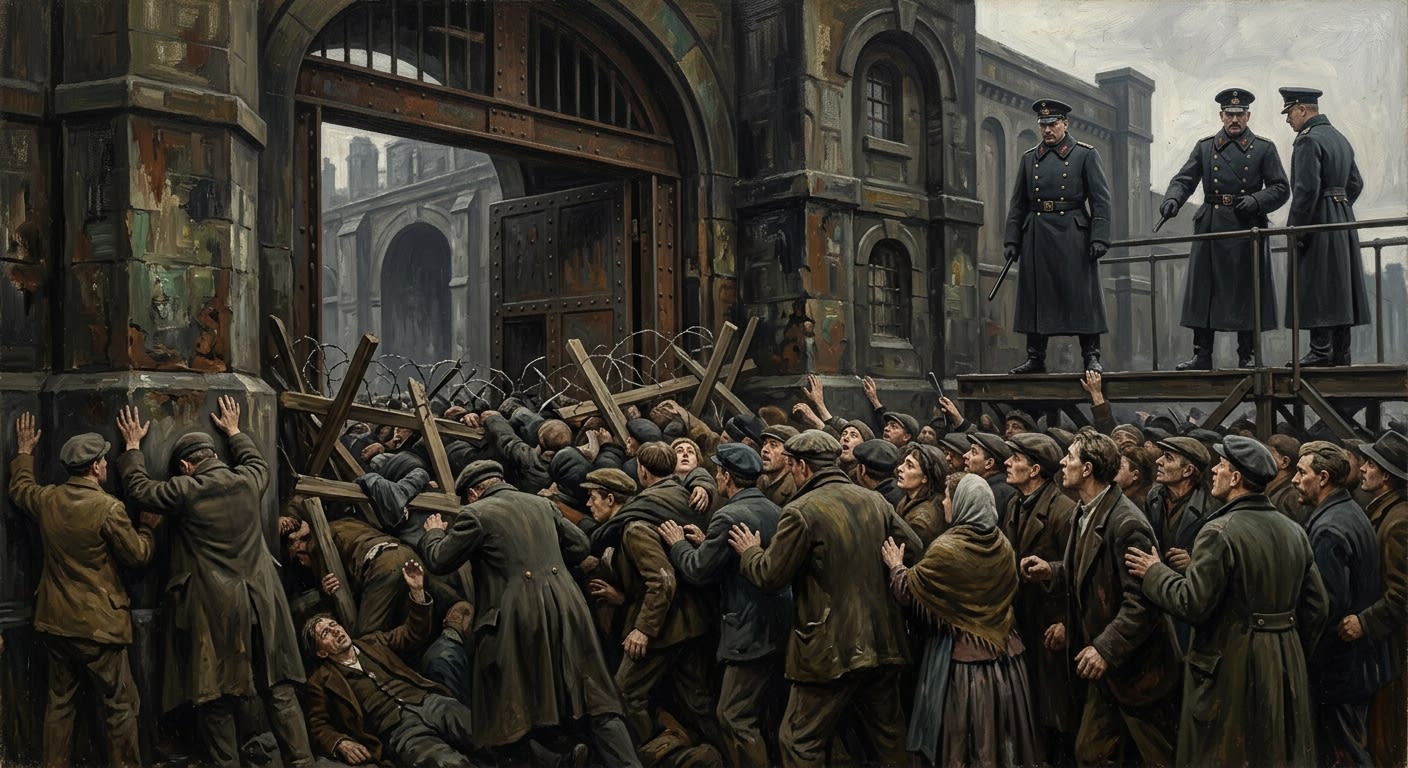
Three-Day Crush
Eleven minutes made a profession; three days counted the dead
The Three-Day Crush killed 309 at a famine gate, then taught the Synod to invent the Queue-Marshal Corps and call suffocation logistics.
Codex Ref. VII.8.10-007
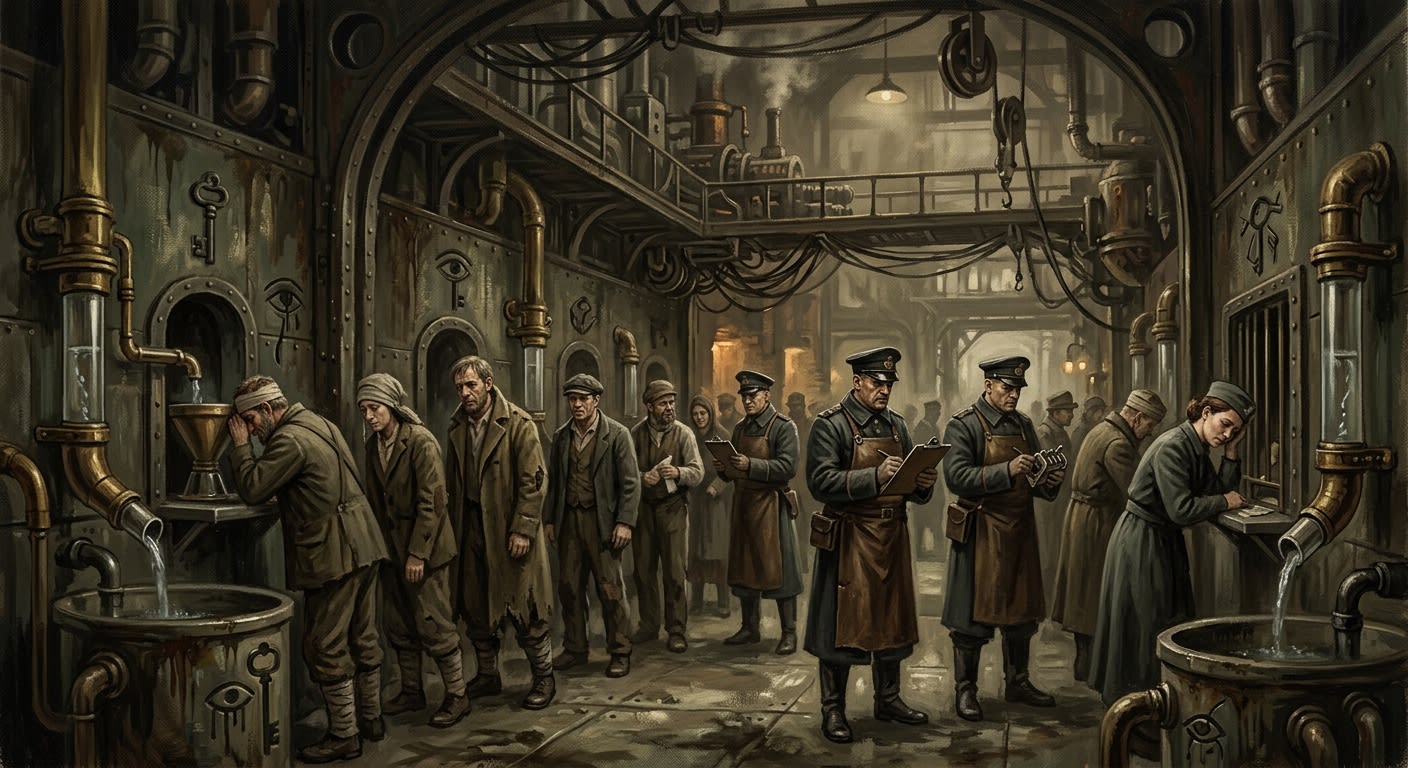
Weeping Chamber
Pay wet, pass dry
The Weeping Chamber turns grief into passage, tears into toll, and misery into a receipt tidy enough for every Bureau to admire.
Codex Ref. XIII.1.25-082
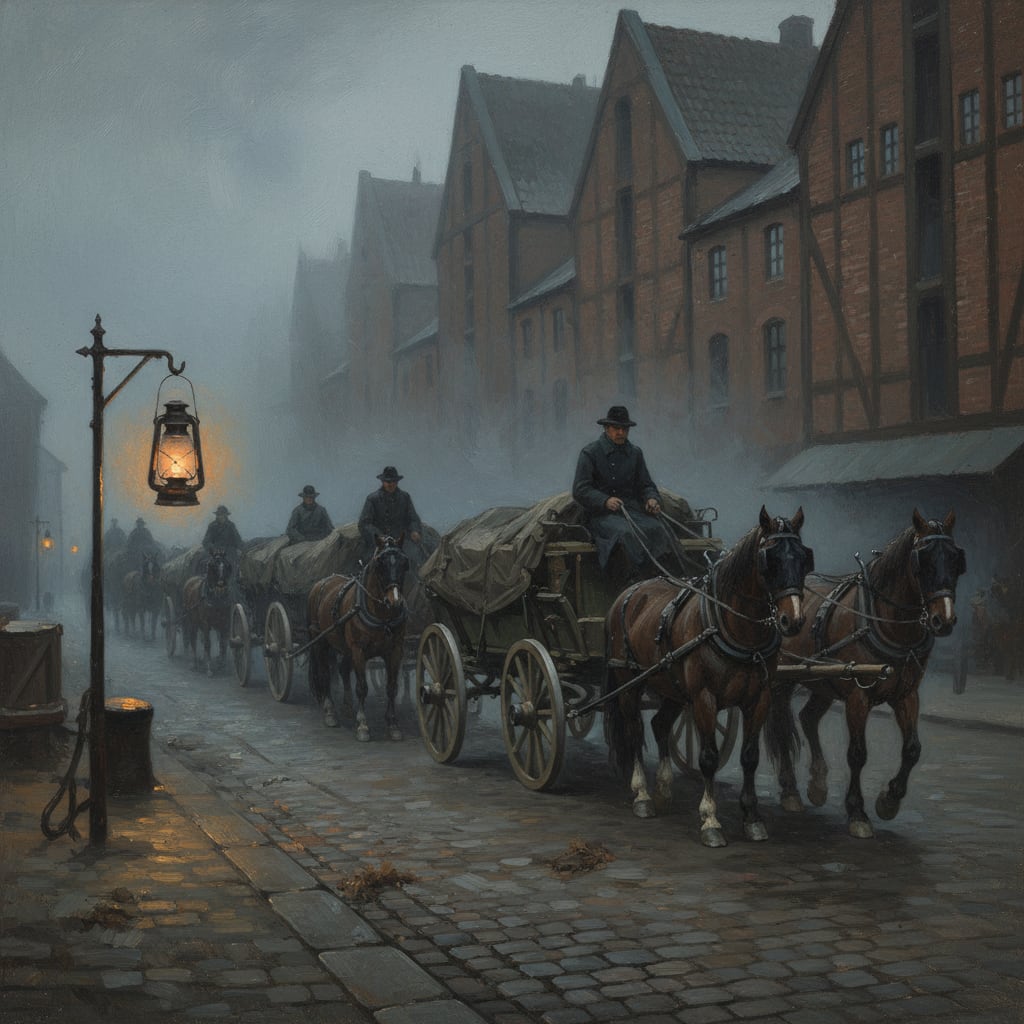
Year of Smoke
Eleven wagons, one fire, and the night the [[bureau-of-shadows|Bureau of Shadows]] stopped being a ghost story
The night Lübeck's harbour records burned, its guilds dissolved, and eleven wagons drove into legend. The Year of Smoke is what happened when the Bureau of Shadows stopped being theoretical and started being operational.
Codex Ref. VII.1.02-001