

Reverse Index
Referencing “The Records Scribe”
Every codex entry that links to The Records Scribe. 67 entries.
Return to The Records Scribe

Advocates Guild
Licensed cruelty with gloves, seals, and a fee table
Licensed fraternity of Citation Advocates that turns Synodal quarrels into ledger-duels, sells precedent, polices pits, and calls the resulting injuries civil peace.
Codex Ref. XII.28.01-001
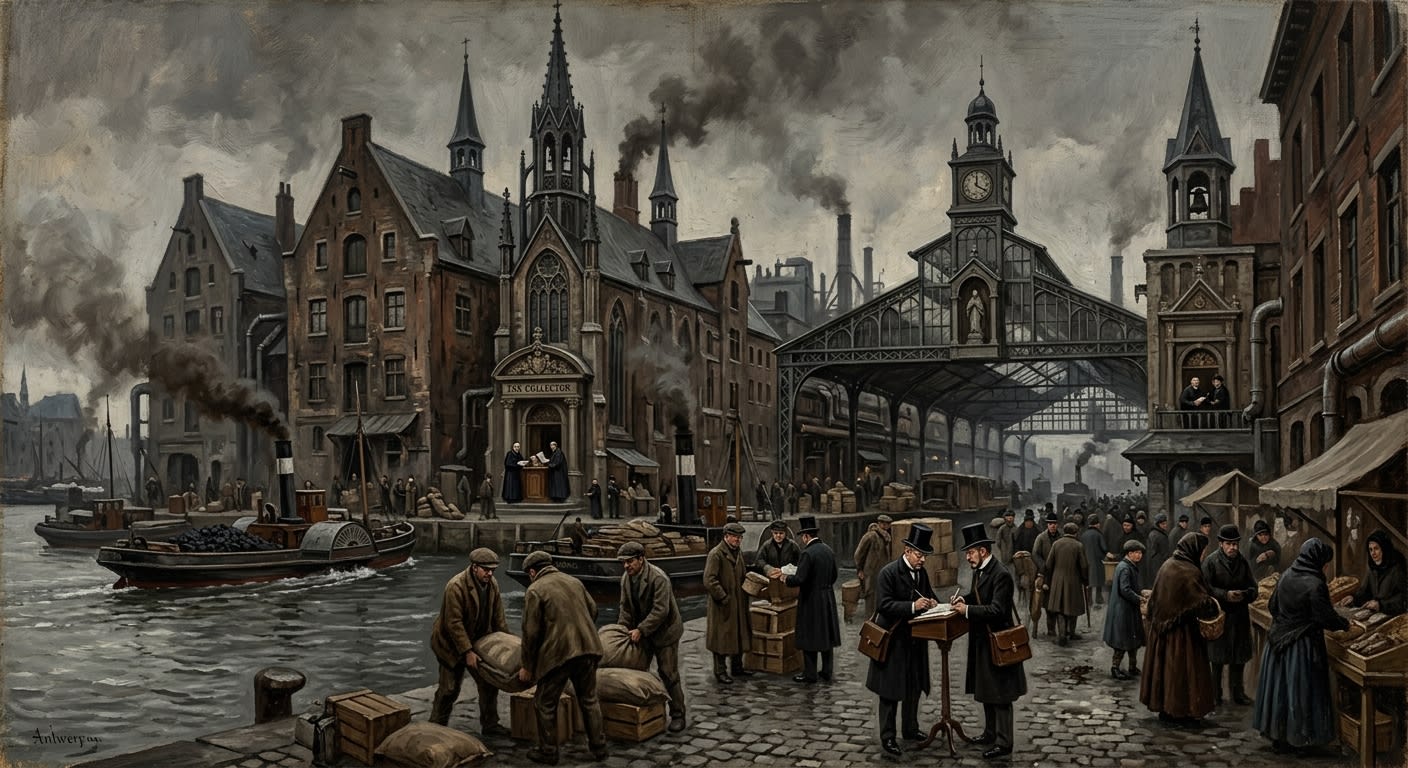
Antwerp
A port city weighing saints by warehouse light
Antwerp is the Scheldt port where commerce learned piety, hunger learned arithmetic, and every warehouse keeps a chapel close enough to tax.
Codex Ref. II.1.06-138
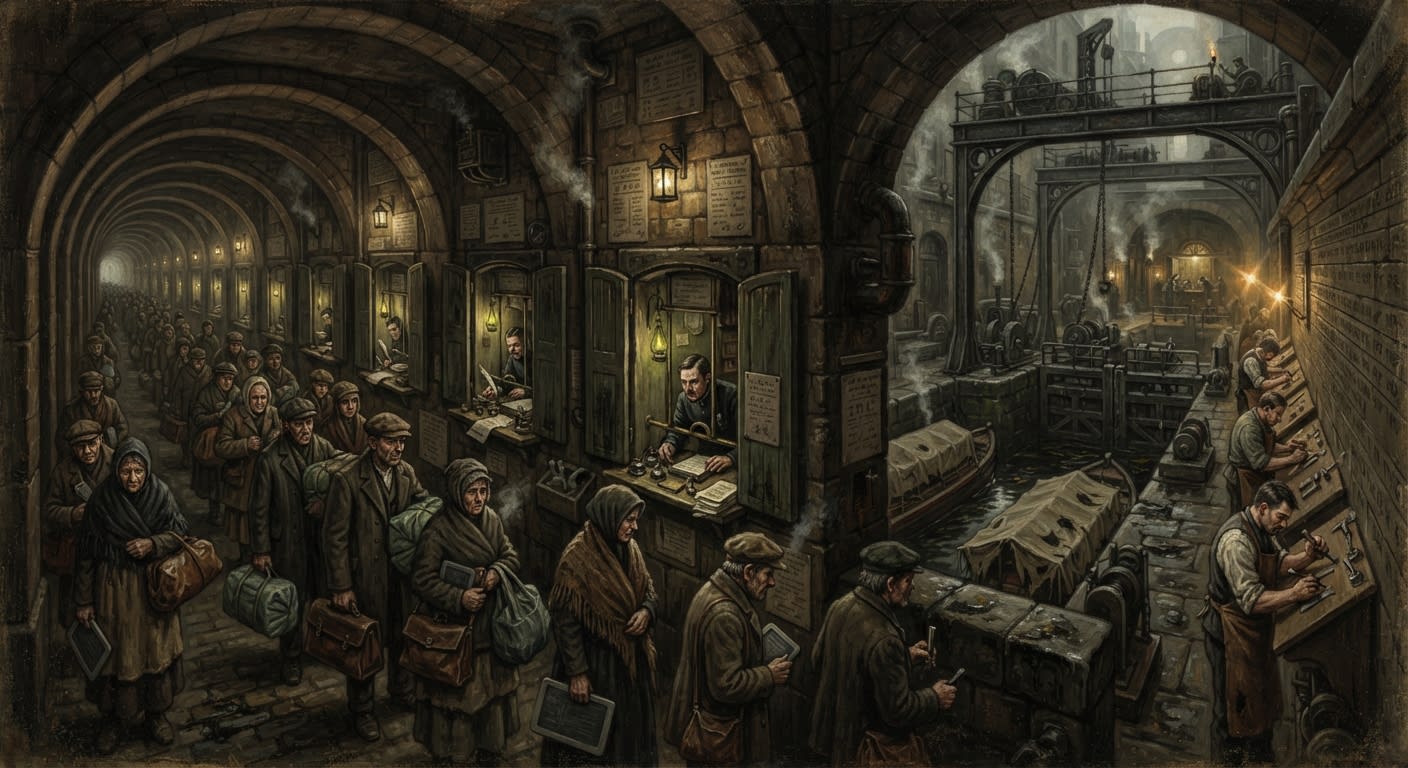
Archivolt Row
Where names enter damp paper and leave as permanent stone
Archivolt Row is the Causeyworks' central spine: registry windows, correction slates, side-ledgers, and the damp machinery by which a name becomes stone.
Codex Ref. II.1.02-092

Archon of Records
The hand that opens almost everything, and records what it cannot touch
The Archon of Records opens nearly every lock in the Church's memory, commands the Great Ledger, and preserves one terrifying receipt: proof that some silences outrank even Records.
Codex Ref. XIII.1.07-078

Assessment Engines
The machine does not ask what you cost. It tells you what may be bought.
Velmora's Assessment Engines price objects, persons, loyalties and betrayals with intolerable accuracy; the Synod captured them, ordered them destroyed, and then kept their accounts.
Codex Ref. XIII.1.27-201

Audit Liaisons
The Bureau's accountant of accountants; or, who weighs the hand that weighed the salt
Audit Liaisons are the Bureau of Tithes' auditors of its own predation: officers who count receipt blanks, scrape brine-stones, and keep an Assessor's private theft below the Bureau's public appetite.
Codex Ref. XII.46.01-002
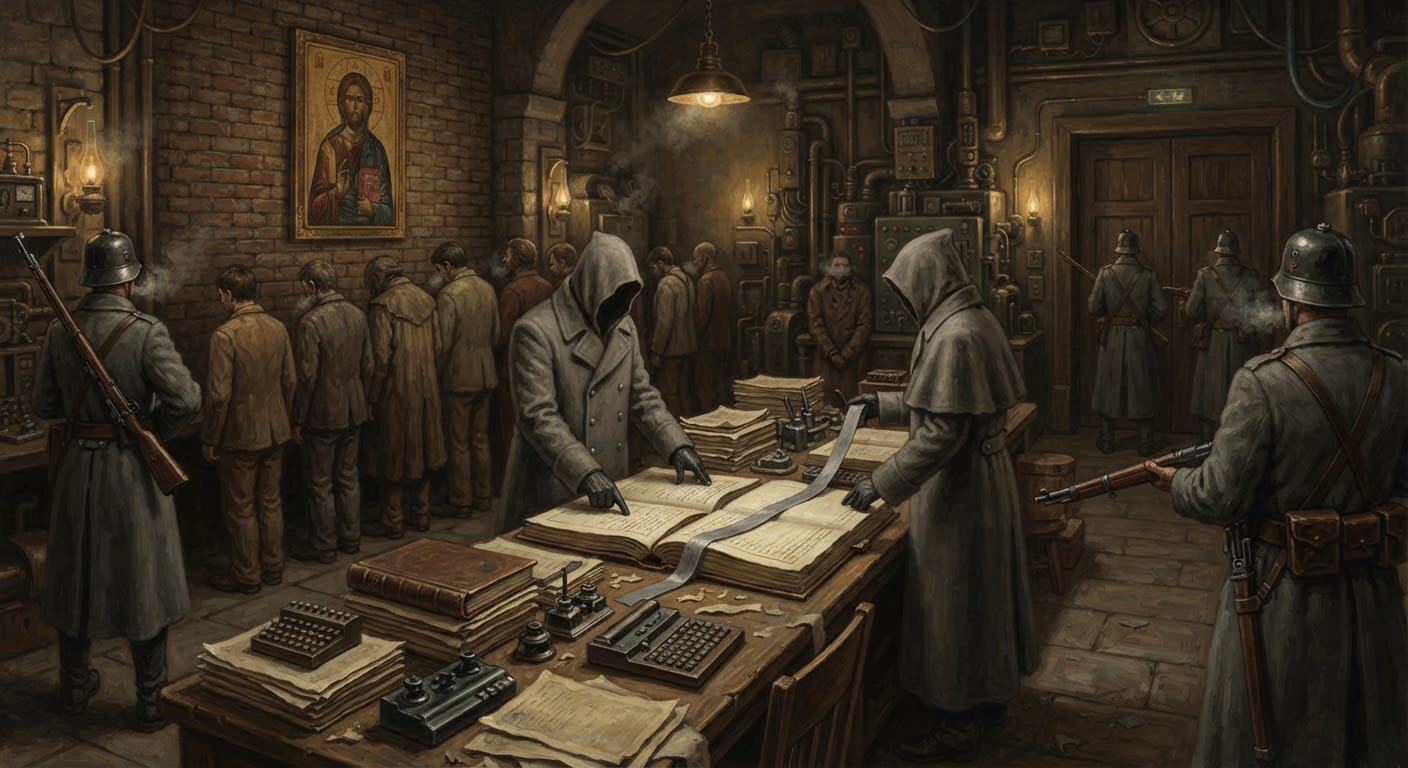
Audit Silence
The hush by which Records makes a room confess
Audit Silence is the Bureau of Records doctrine that stills speech, opens locked repositories, encloses witnesses, and lets an Indiction writ make law out of hush.
Codex Ref. XIII.1.06-090
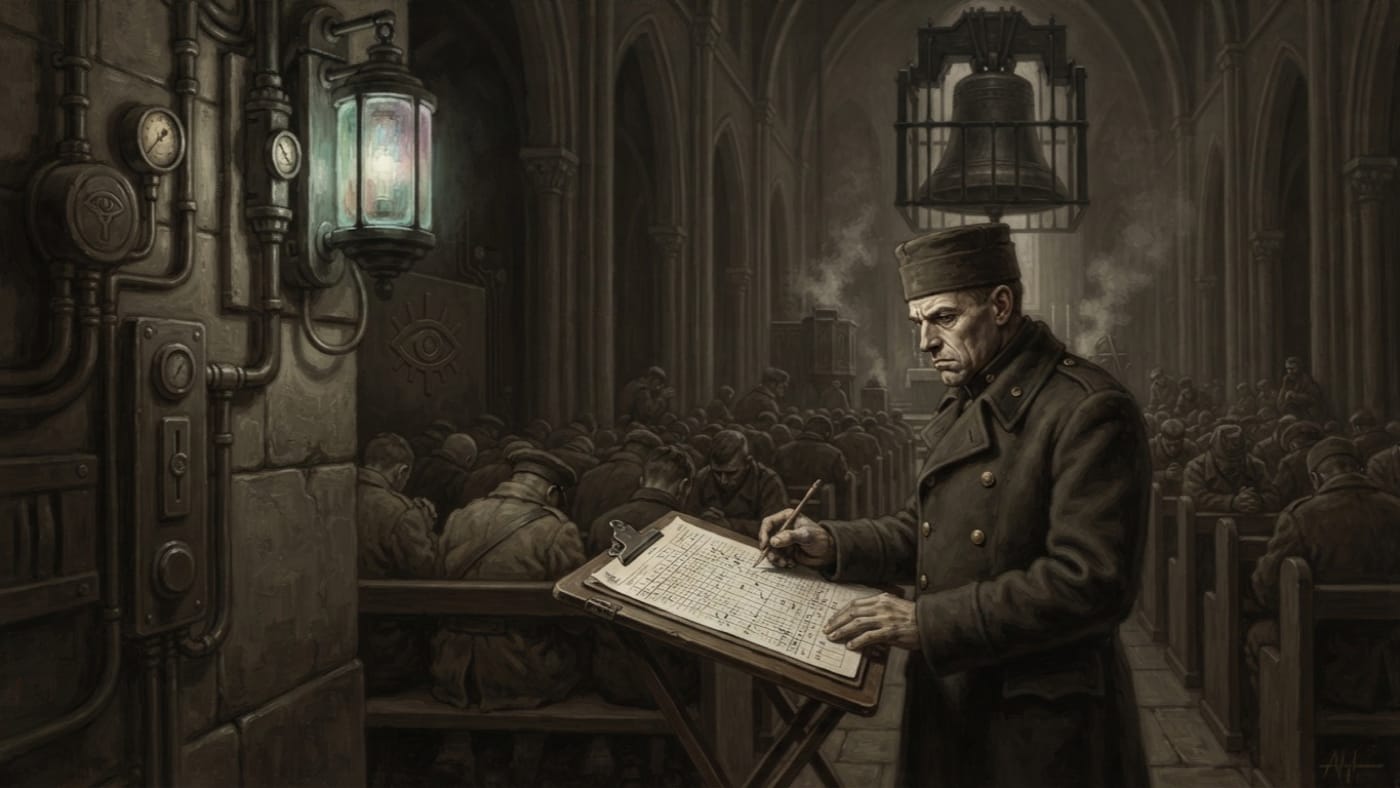
Bell-Pause Chart
Where the amen becomes evidence
Purity's ruled sheet measures the pause where an amen was owed and gives the Auditor a first line for the file. This A.S. 201 survey records current practice; the chart's first issue remains unknown.
Codex Ref. XIII.1.99-226
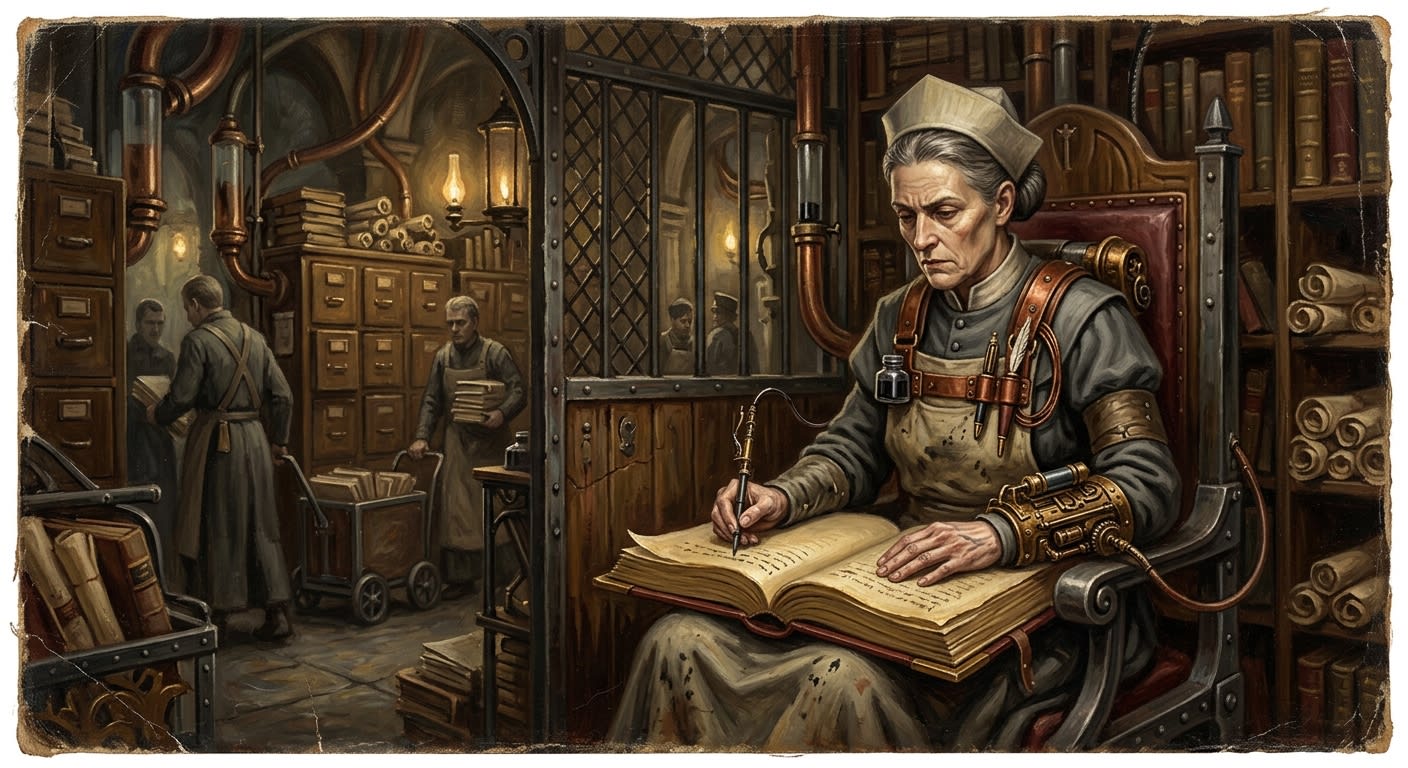
Blessed Vellum-Anna
The quiet quill that made mercy admissible before it made it kind
Blessed Vellum-Anna is the unauthenticated but indispensable patron of Deathbed Confession Harvesters, where last breaths become comfort, evidence, and paperwork.
Codex Ref. III.2.01-106

Bone-Tag Arcade
The dead require a receipt; the living require permission
The counters of Candle-Sump certify the dead and hold the living's papers in suspense. Chief Clerk Dalen Voss commands the seals; behind him, a second press reissues names harvested from the crypt drafts.
Codex Ref. II.1.05-003

Bone-Tag clerks
The corpse needs a name; the living need the clerk's permission
Candle-Sump's Bone-Tag clerks keep names attached to corpses and living papers inside cabinets. In Lower Vire, clerical death needs only a wrong column and a clerk unwilling to correct it.
Codex Ref. XII.34.02-201

Bone-Tag Registry
Counting the dead, with jurisdiction over the living
Candle-Sump's Records adjunct fastens names to the dead, holds the living's papers as collateral, and honours clean slips drawn from the crypt drafts. Chief Clerk Voss calls this counting.
Codex Ref. VIII.1.05-001

Bridge-Scribe Collegium
Paper may be corrected; stone must be reconciled
The Bridge-Scribe Collegium decides who exists in the Archivolt Causeyworks, witnessing toll papers and correcting names. Its registry can be amended. The stone cannot be erased.
Codex Ref. XI.1.08-001

Burden Index Analyst
The red pen is warm; the household is elsewhere
The Burden Index Analyst corrects household scores for the Bureau of Tithes. One red slip can raise dues, thin rations and bring seizure nearer; the household seldom meets the hand.
Codex Ref. XII.46.02-201
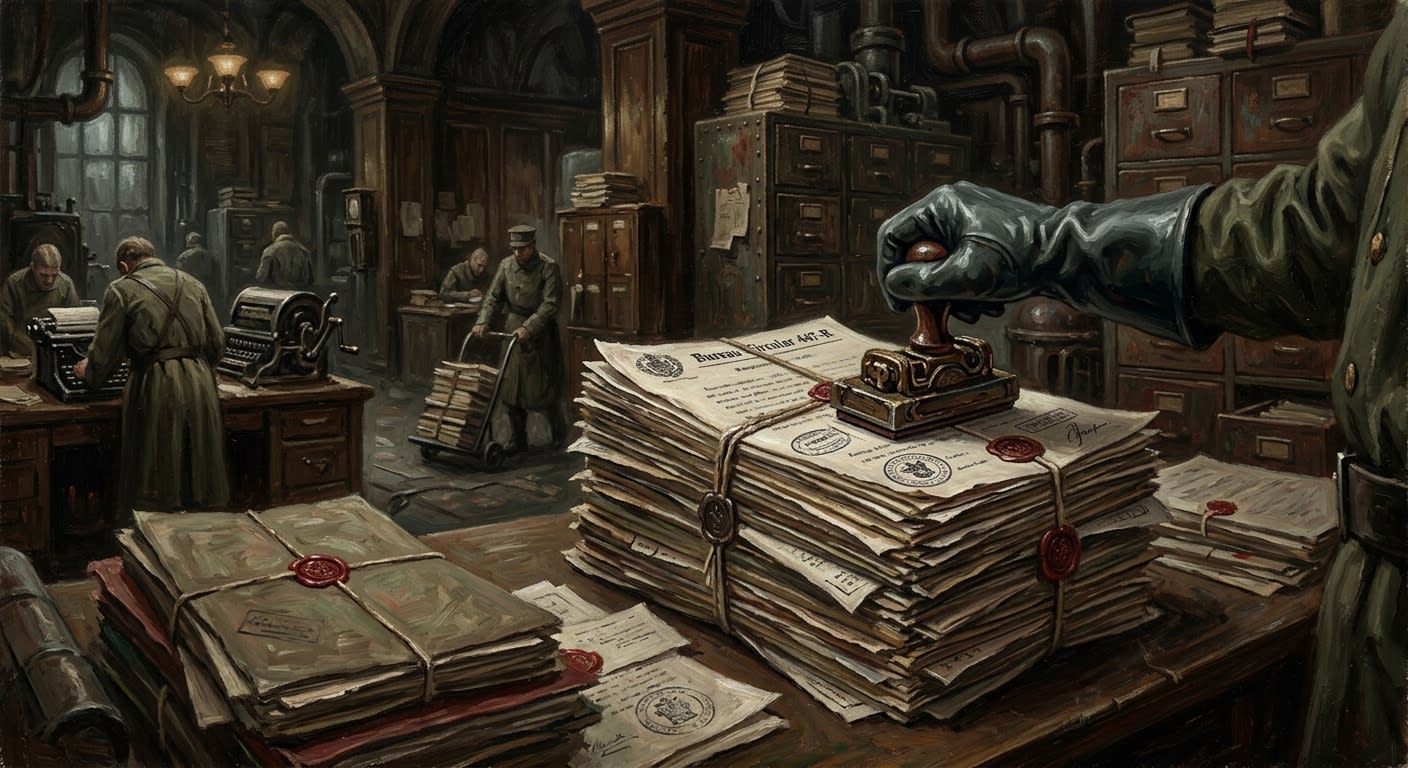
Bureau Circular 447-R
Four hundred and forty-seven words, none of them innocent
Bureau Circular 447-R denies the Codices Obscurae in exactly 447 words, each counted, sealed, revised, denied, and improved by fear.
Codex Ref. XIII.1.06-002

Bureau of Purity Catechism
The faithful recite; the Bureau measures; the ledger cannot tell belief from rehearsal
The Bureau of Purity's Catechism supplies the standard against which Codex Auditors measure confession, recitation and hesitation. This A.S. 201 survey records the Third Revision of A.S. 104 and the costs of calling variance heresy.
Codex Ref. VIII.2.02-001
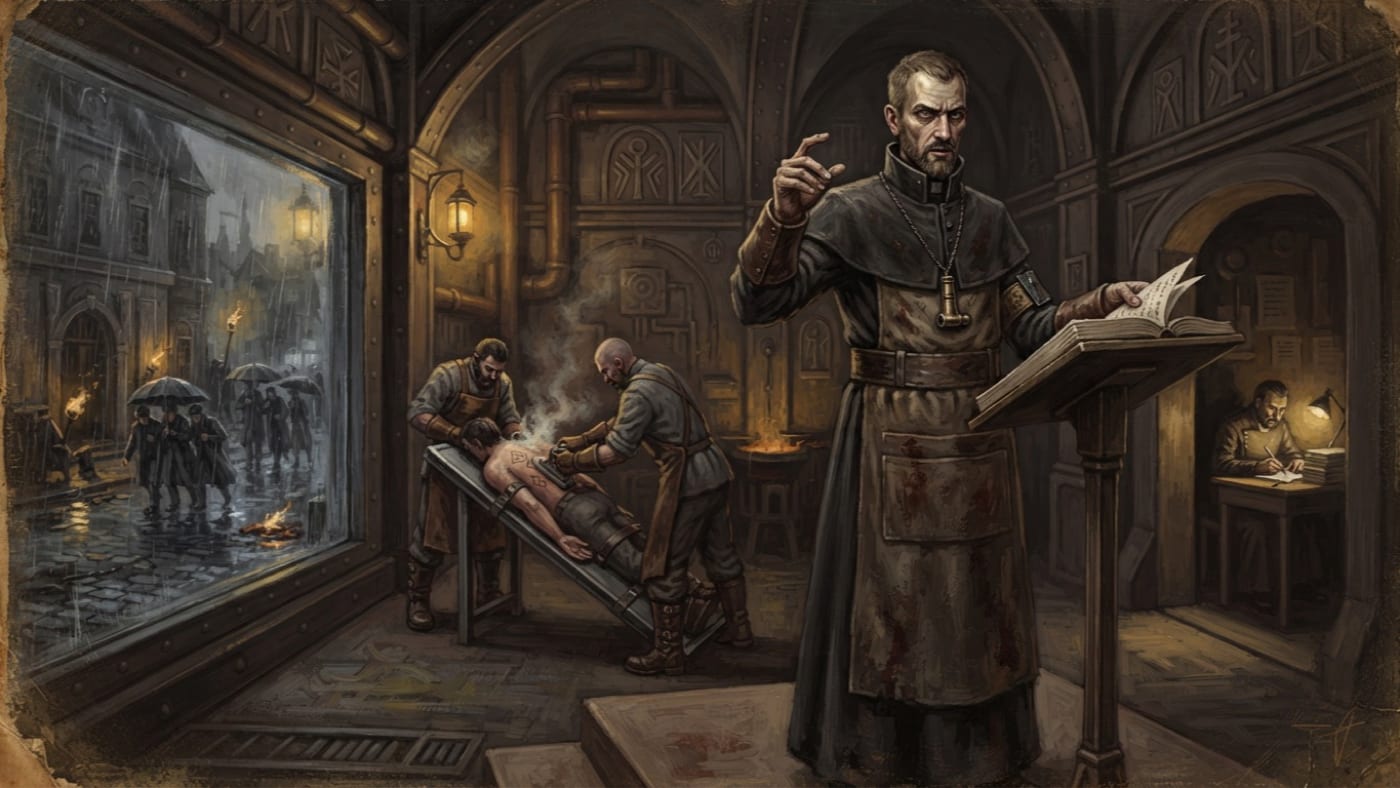
Cantor Edrik Senn
Three slates before Vespers, and a lifetime the archive cannot supply
Cantor Edrik Senn certified twenty-seven printers at Mainz before Vespers, c. A.S. 106. Judgment Tone kept the three slates and let the rain's work pass for a miracle.
Codex Ref. III.2.01-453

Cantor's Primer, Fifth Revision
A master's name in the text, his warning in the margin
The Fifth Revision credits Vell with an older maxim without proof. His confirmed margin note offers the better instruction: keep the second note on time.
Codex Ref. XIII.1.41-005

Case 112-MO-44
Thirteen denials and a ledger that preferred its own ear
Filed six weeks after Wexel's A.S. 112 Dust Fire, this citation fined Orven Tesch despite thirteen denials. His household ate less; the ledger learned to smile.
Codex Ref. VII.8.10-112

Category Two Spiritual Security Breach
An intact casket offers no defence against an unsigned line.
A missing seal or unsigned transfer breaks a sanctioned relic shipment’s custody chain and invokes the martial codes of treason. The bones may be intact. The paperwork is what the Bureau keeps.
Codex Ref. XIII.1.07-002

Chief Archivist
The form asks for rank; it does not ask for conscience
The Bureau of Records' countersigning office: a Chief Archivist of at least Third Rank authorises Form 77-D to proceed. The folio is checked twice. The reason is filed elsewhere.
Codex Ref. XII.34.02-001

Chief Scribe Mael Arct
The quill revises a name; the stone keeps both
Chief Scribe Mael Arct sells recognition in the Archivolt Causeyworks. His quill revises the registry; the stone keeps both names, and Marrow's warrant reaches the correction slates.
Codex Ref. III.2.01-201
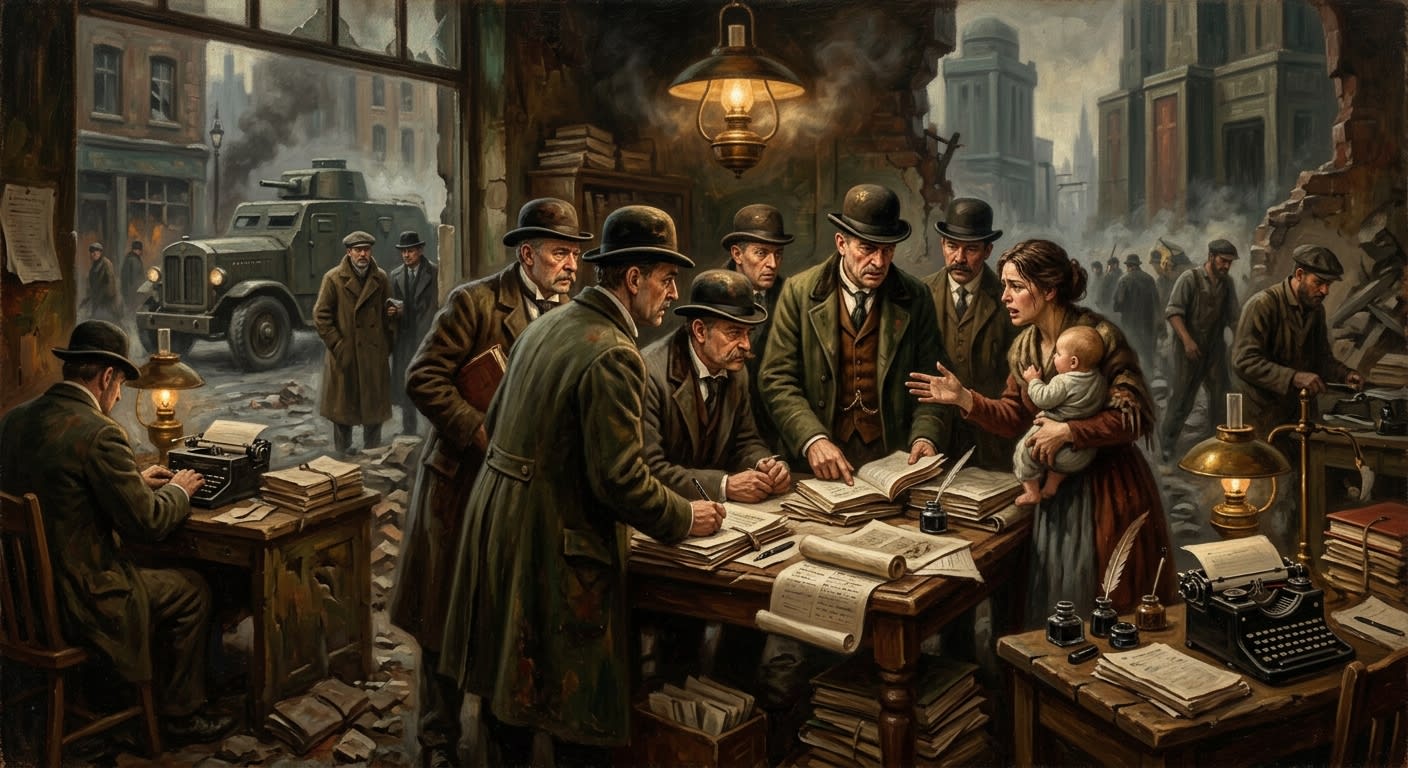
Citation Pragmatists
The useful lie, properly receipted, may keep a district alive
Informal Citation Advocate faction that argues intent, exploits ambiguity, and keeps clients, convoys, widows, and districts alive long enough to be billed.
Codex Ref. XII.28.03-001
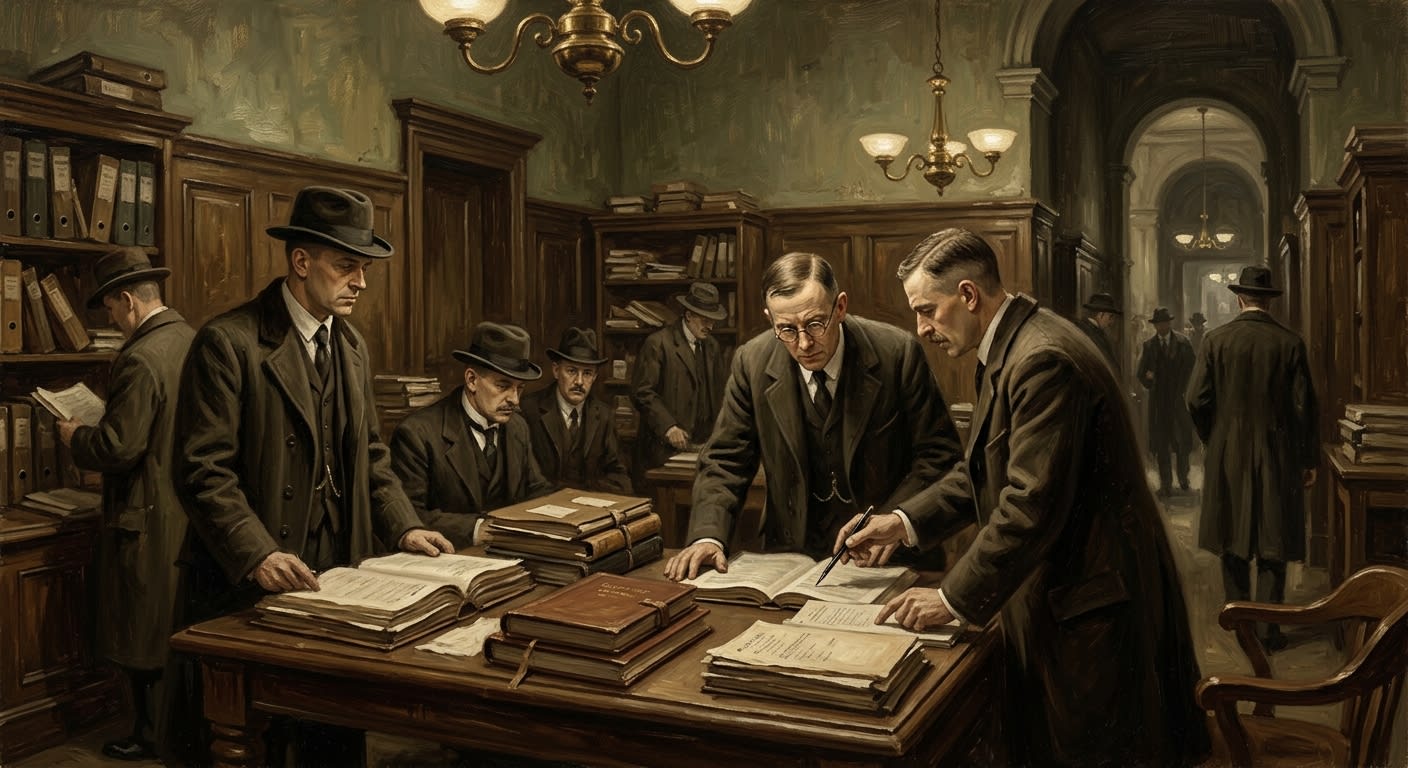
Citation Purists
The clause is the mercy, and the Creator help the client
Audit-favoured faction of Citation Advocates who worship clean custody, strict text, and clauses sharp enough to execute a client while preserving the file.
Codex Ref. XII.28.02-001
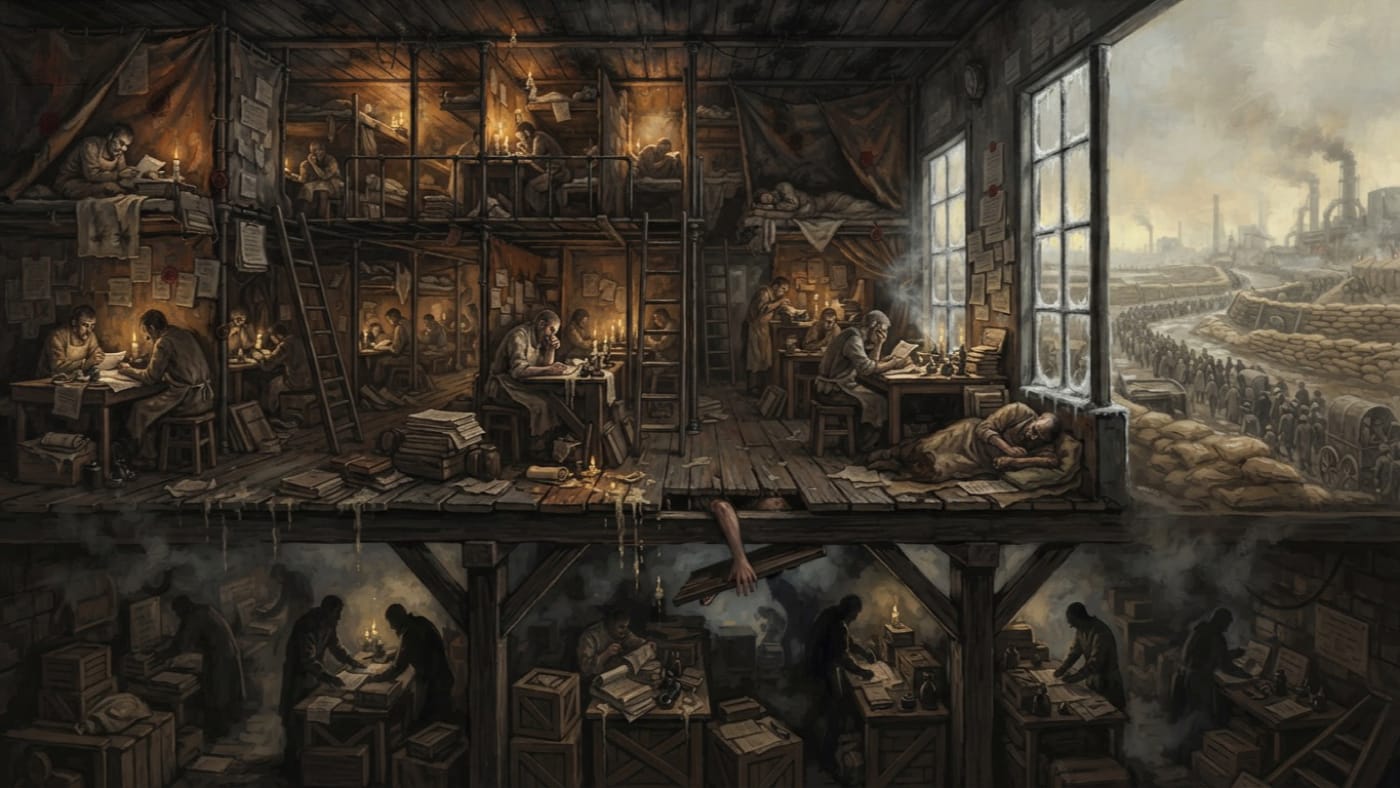
Clerklofts
Where the hands that grant passage sleep above the hands that sell it
The Clerklofts house Latchford's scribes above the Minute Market, where lawful passage sleeps one plank away from forgery, stolen windows, and mercy sold by the minute.
Codex Ref. II.4.08-201

Codex 'Doubt' Auditor
The men and women who weigh belief on scales you cannot see and file the reading under your name
The Codex Auditors are the Bureau of Purity's intelligence branch — operatives who audit belief itself, detecting hesitation before it becomes opinion and opinion before it becomes faction.
Codex Ref. VIII.2.01-001
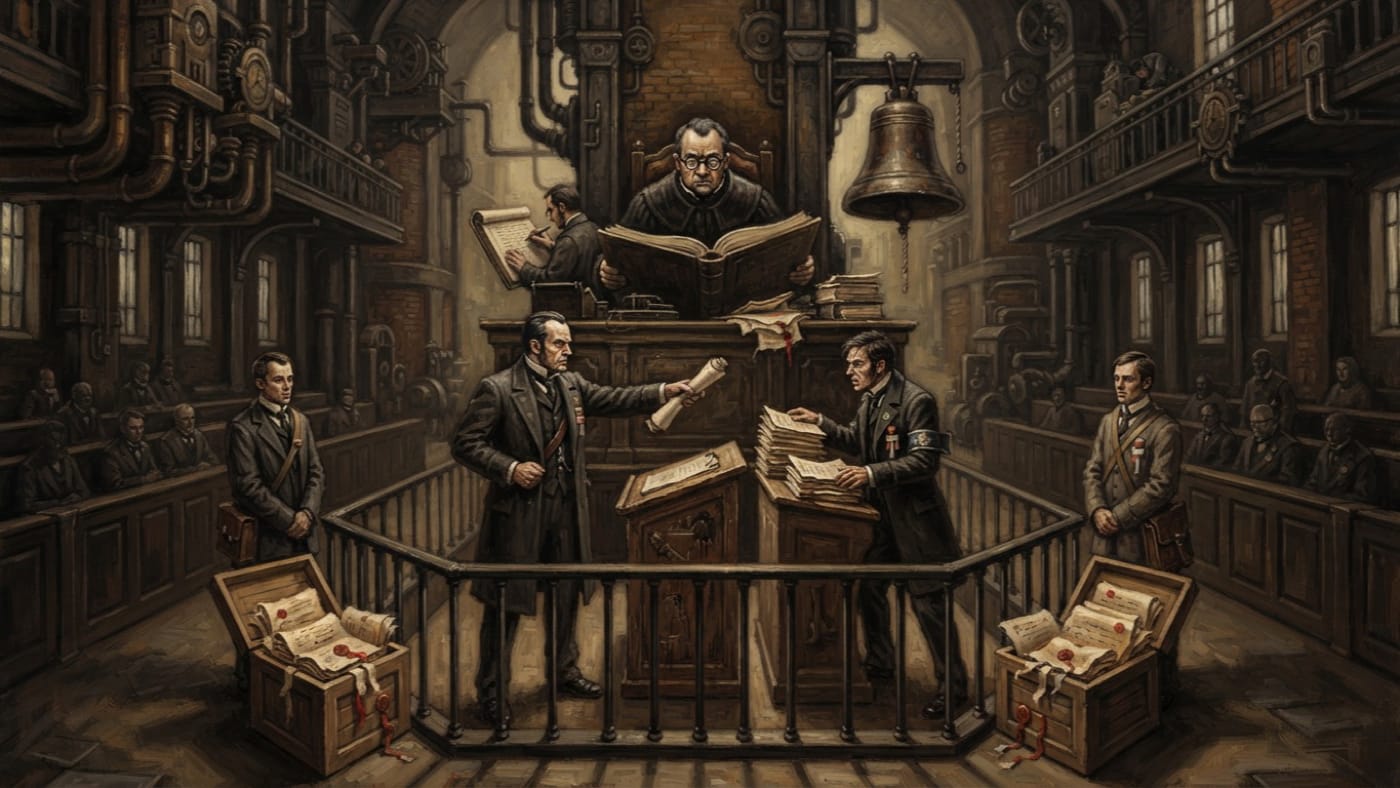
Concordat Annex 14-C
A quarrel given a bell, a verdict given a register
Ratified in A.S. 104, the joint Records-Doctrine Annex made citation duels binding, fixed court procedure and permitted remedies from asset freezes to full erasure. Mercy acquired a bell and a register.
Codex Ref. VII.8.10-104

Confession Closet
Where the signature dries before the crime
The Confession Closet is Nine Wicks' cache of blank confessions and pre-signed citations: guilt prepared before accusation, and a licence awaiting the wrong hand.
Codex Ref. IV.6.25-201

Confession Pattern Analyst
No individual is guilty of a pattern; the Bureau will nevertheless require names
An A.S. 201 survey of the Bureau of Purity's unacknowledged specialists. They map district confession patterns by cadence, vocabulary and emotional distribution; other hands supply the names.
Codex Ref. VIII.2.01-002
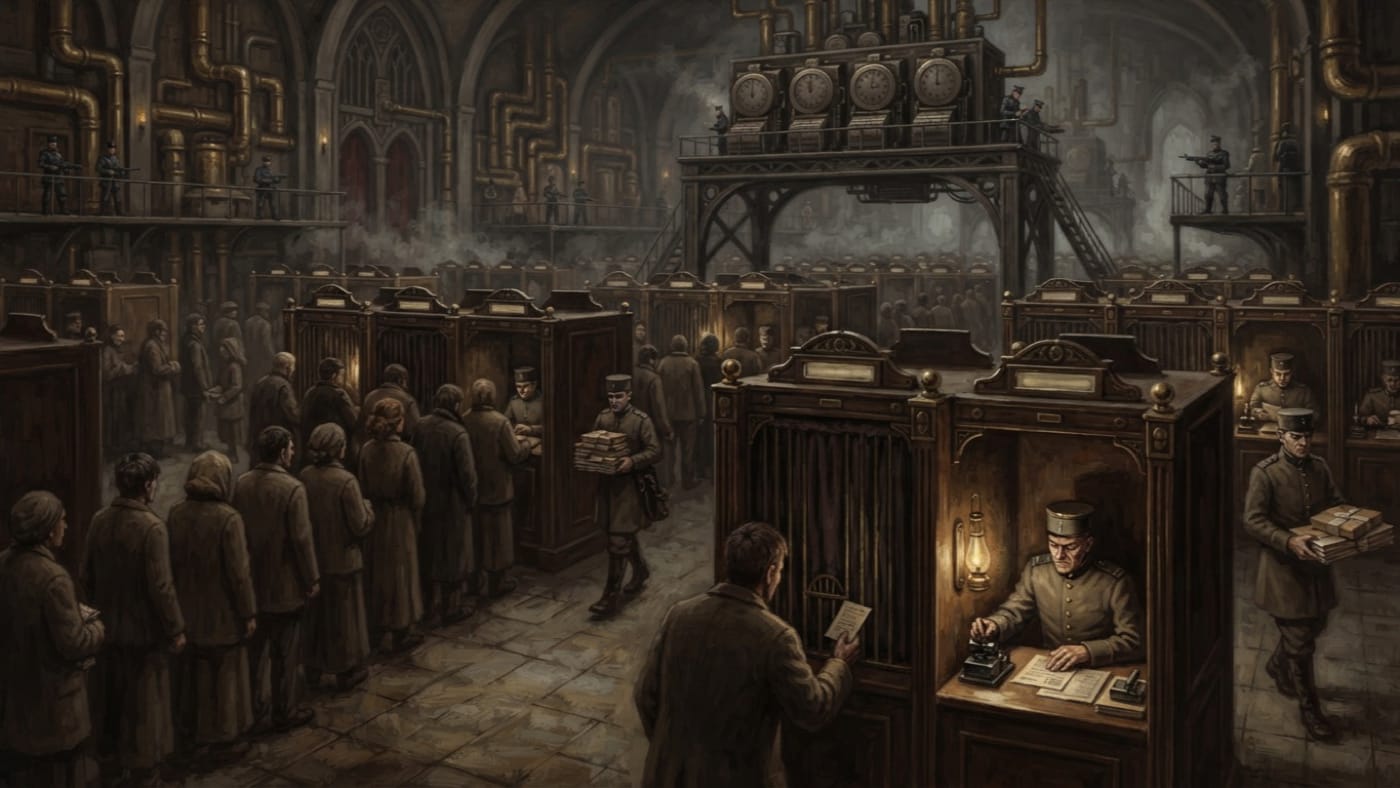
Confession Reform
The printed card that taught the Synod to count doubt
In A.S. 104, the Bureau of Rites gave sin approved phrasing, uniform categories and lay intake clerks. Confession became comparable; doubt became evidence.
Codex Ref. VII.8.10-014
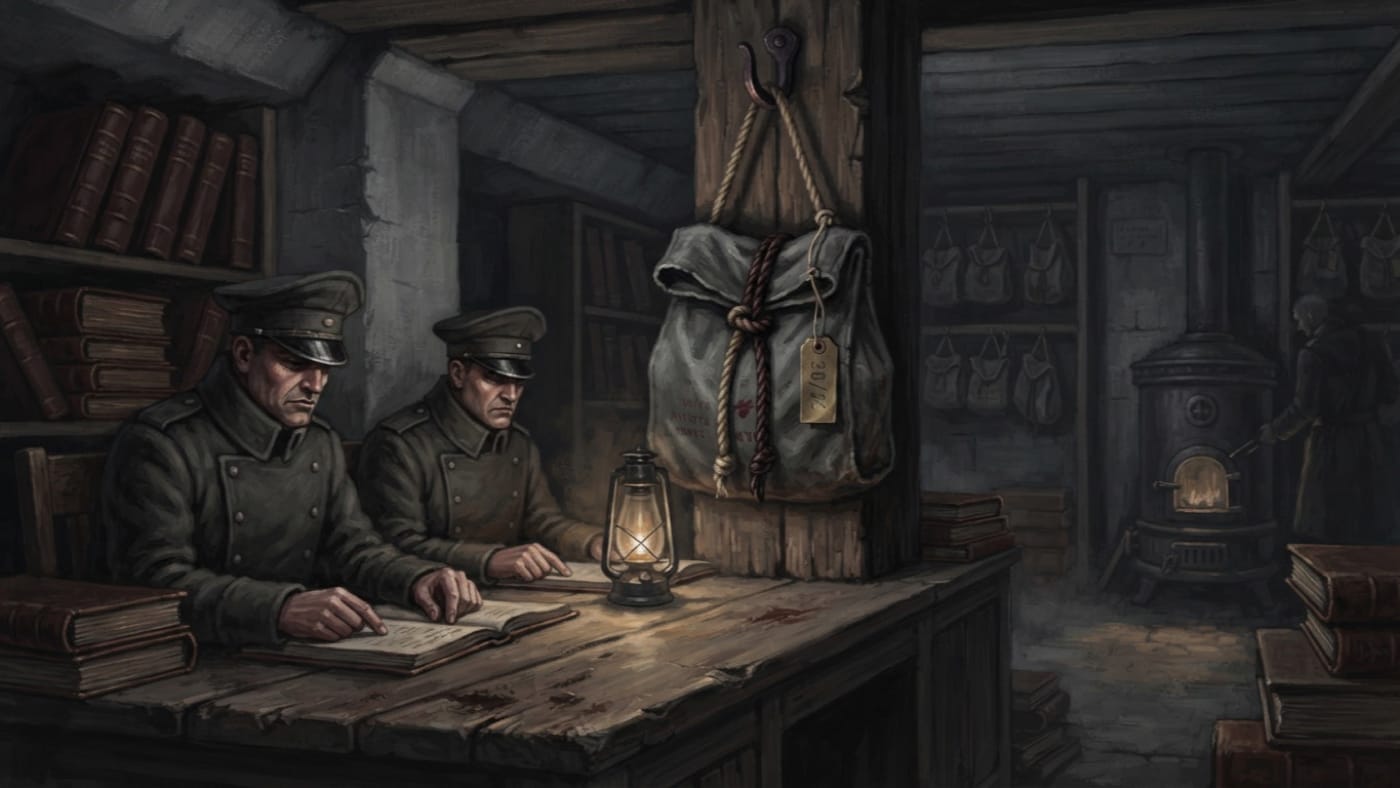
Contradiction Pouch
Two ties for the blame; one number for the ash
The Trench Courts' waxed satchel holds dangerous last words under two ties until review or authorised fire. Its bundle number survives in three registers; the accusation is less fortunate.
Codex Ref. III.2.08-201

Contradiction Pouch Mechanism
One hearing, two custodies
Purge-era Trench Court procedure keeps a deserter's incriminating findings in the ordinary record while sealing accusations against command in separate custody. The sentence proceeds; the explanation waits.
Codex Ref. XIII.1.87-091

Cough Winter
A.S. 201 survey of the winter that left a total and kept its year
An A.S. 201 survey of Mainz's undated Cough Winter: frost made coughs sound wet, and a thousand executions are reported. Physicians blamed weather, Purity corruption, Records classification. The total survived its explanations.
Codex Ref. VII.2.02-763

Crossed Keys Roll
Punishment finishes; the register continues
Recovered from twenty-seven soaked crates after the A.S. 150 Lombard revolt, the Crossed Keys Roll preserves names in punitive and instructional registers. Punishment finishes with a man; instruction pursues his grandchildren.
Codex Ref. IV.1.09-150
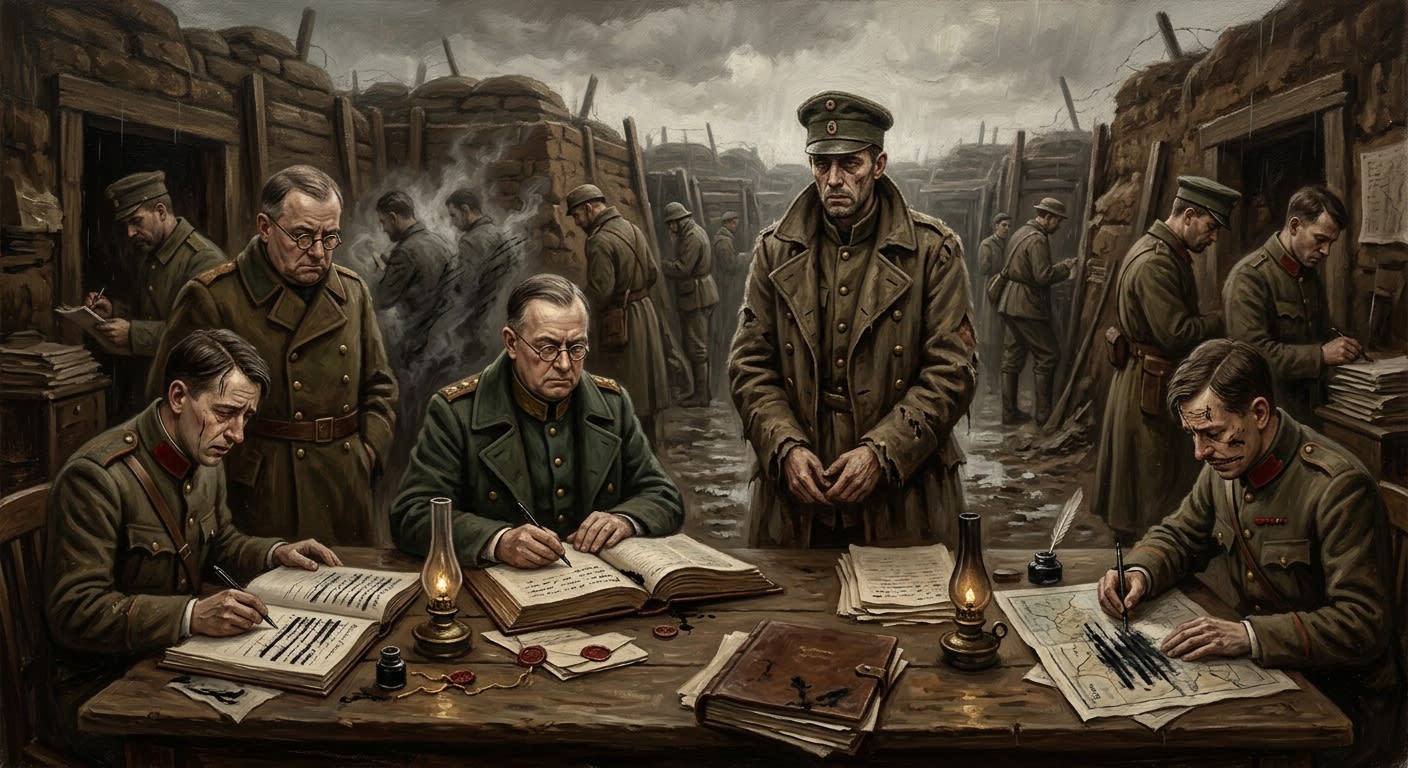
Erasure of Veyss
The man who asked for arrears and received absence
A.S. 148 trench-court erasure in which Lieutenant Veyss lost standing over a missing ancestral tithe-stamp, and every dependent ledger corrected him into absence.
Codex Ref. VII.8.10-048

Excommunication
Cast out of communion, retained for punishment
Excommunication casts a person out of communion but keeps the name legible in the Great Ledger of Souls. The condemned retain standing for punishment and possible restoration. Records calls this generosity.
Codex Ref. XIII.1.01-005

Forgery Panic of A.S. 178
The decree that was never written and cited fourteen times
A.S. 178 archival panic in which fourteen advocates cited the same fabricated ration-priority decree, forcing scribe licensing reform and chain-of-custody discipline.
Codex Ref. VII.8.10-049

Form 77-D
Three copies agree; the reason takes another road
Form 77-D authorizes Administrative Dissolution: three copies, one countersignature, and a soul rendered illegible. The reason travels under a separate seal; the writ has no field for undoing.
Codex Ref. XIII.1.77-201

Founding Salvo of Bastion-Brest
The bridge fell. The anniversary remains licensed.
Brest's annual gun salute honours, per the current Codex, the nine-day stone-bridge defence of A.S. 66. The bridge fell on the tenth day. The guns commemorate endurance; Records files accidental deaths as celebratory expenditure.
Codex Ref. XIII.1.89-1146
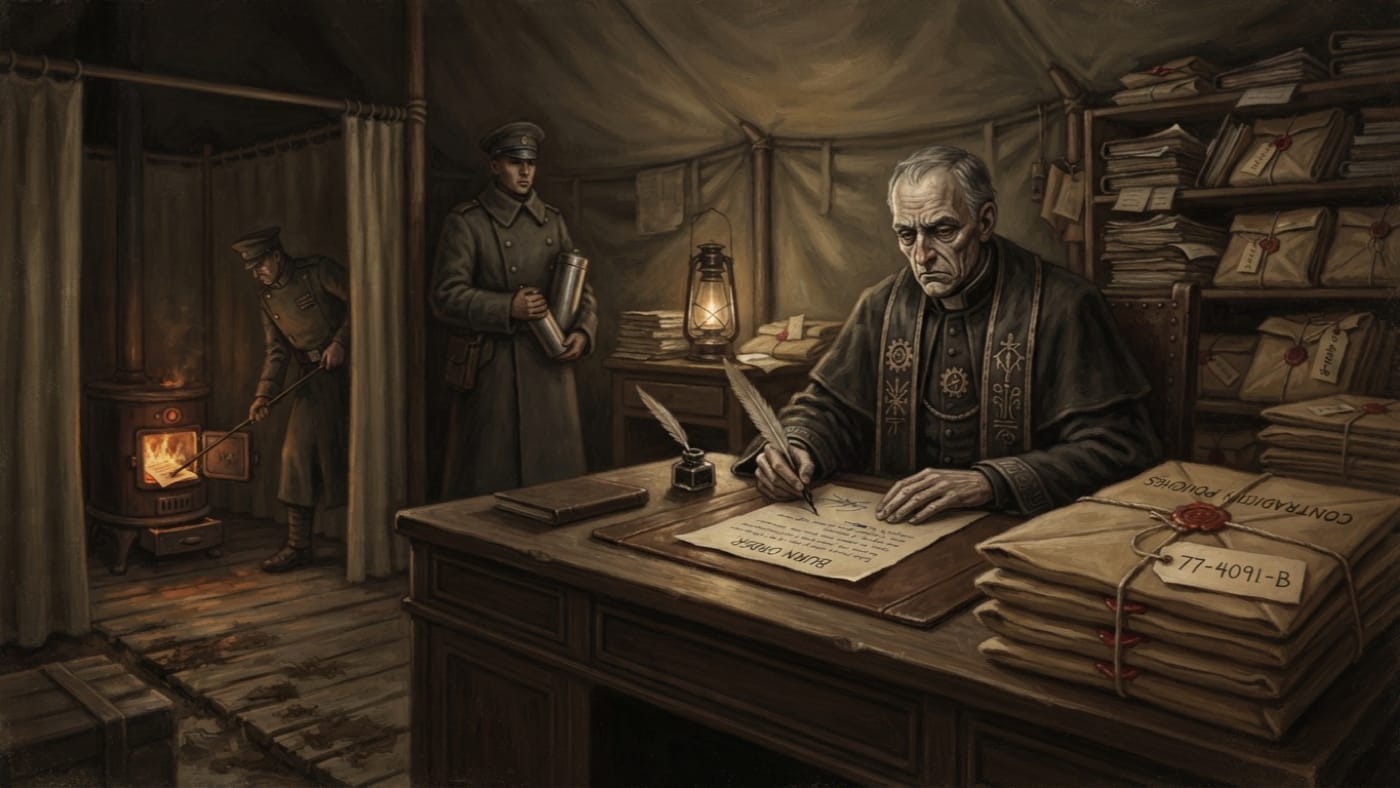
Front Prelate
The hand that makes the furnace lawful
The trench-court office whose signature authorises burning sealed contradictions under Burn Directive 7-C. The bundle numbers survive; the dying men's words do not.
Codex Ref. XII.47.02-001

Garrison-Prior Aldric Venn
He saved the crates, which is how saints survive the road
Garrison-Prior Aldric Venn commanded Saint Stephen's defensive precinct during Vienna's Great Retreat withdrawal, completed the relic manifest, and vanished into the road.
Codex Ref. III.2.01-154

Gate-Nullity Liaison
The name is struck upstream; the traveller learns at the gate.
An A.S. 201 survey of the Erasure Notary specialist who coordinates nullity records with Gatewarden-Notaries. The Bureau files absence; the traveller finds a closed gate.
Codex Ref. XII.14.01-002
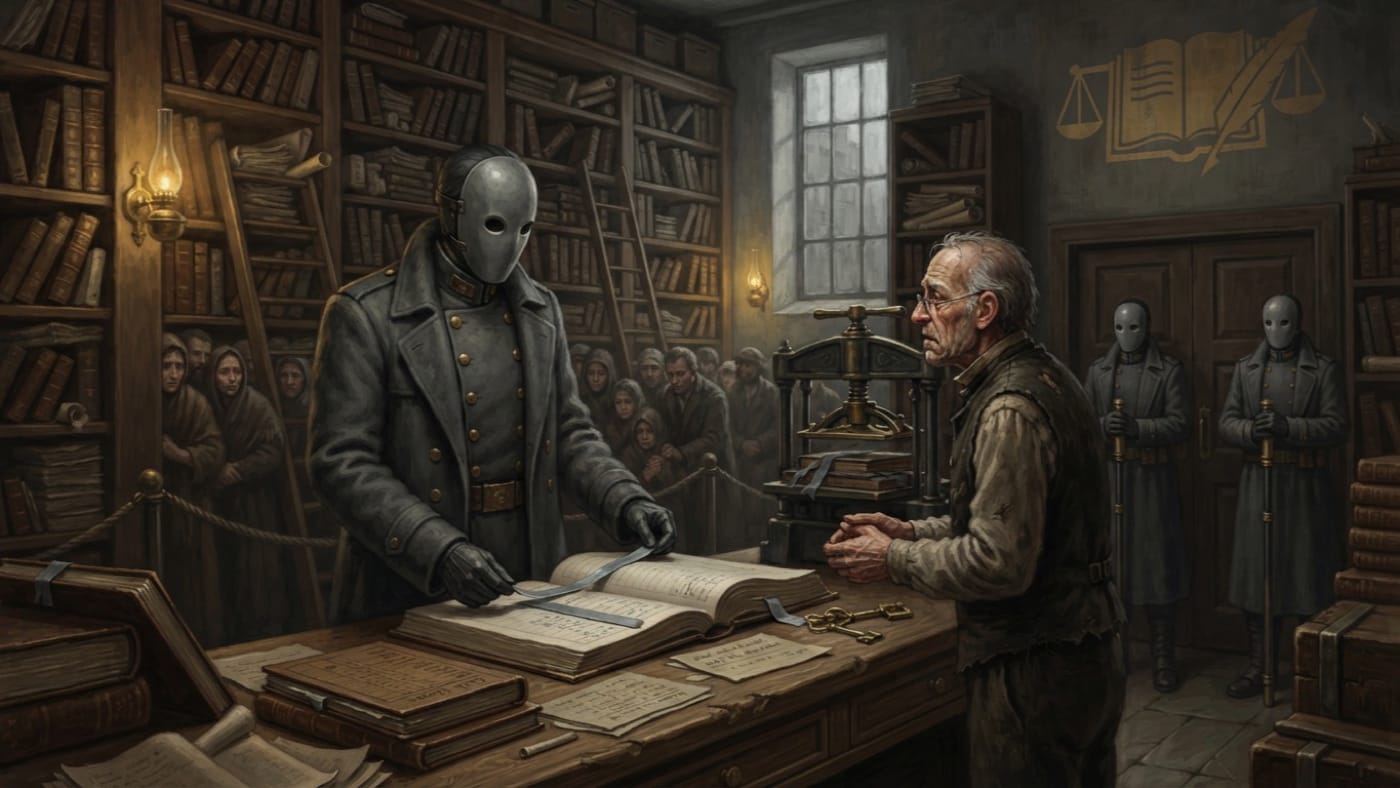
Great Ledger Harmonisation Mandate
The larger page that never has to enter the room
The Great Ledger Harmonisation Mandate supplies the standing authority cited by Indiction writs: books are reconciled, names suspended, and appeal waits until the archive decides who still counts.
Codex Ref. XIII.1.06-002

Hall of Measures
Where steel receives a throat and blame receives a cage
The Hall of Measures is Essen's calibration chamber, where paired choirs sing molten steel into lawful grain and every failure becomes paperwork.
Codex Ref. II.2.06-110
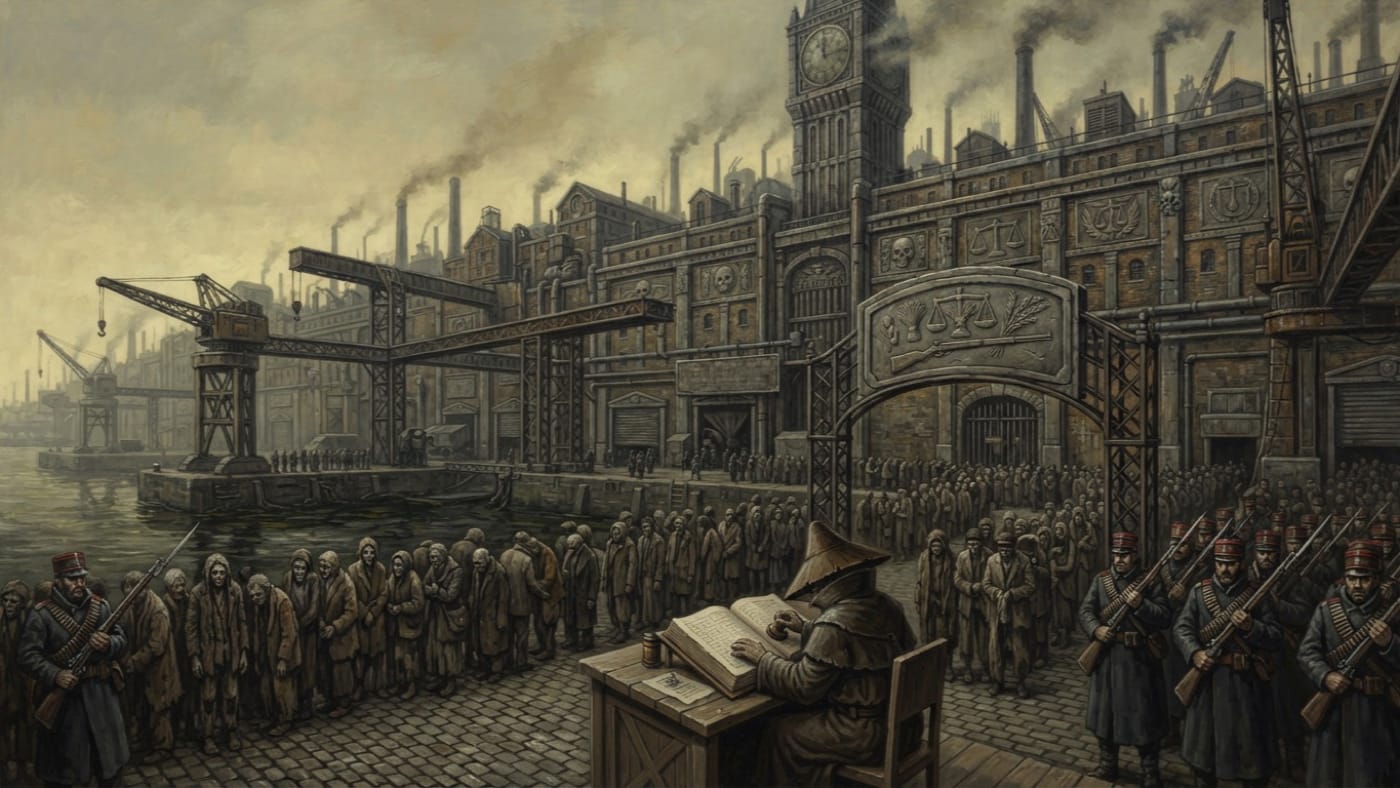
Holy Fast
The hunger came first; the consent was entered afterward
Holy Fast is Records' approved name for Varna's A.S. 129 deprivation: nineteen days of sealed grain, a Purity volley, and consent inferred from petitioners who could no longer petition.
Codex Ref. XIII.1.89-129

Identity Fraud
A stolen name buys bread; an authorised alteration earns a salary
Identity Fraud steals the registered person: names, ration rights and passage permissions. Standing Order 14-M gives offences of sufficient degree a wall; authorised alterations remain daily duty.
Codex Ref. XIII.1.97-1422
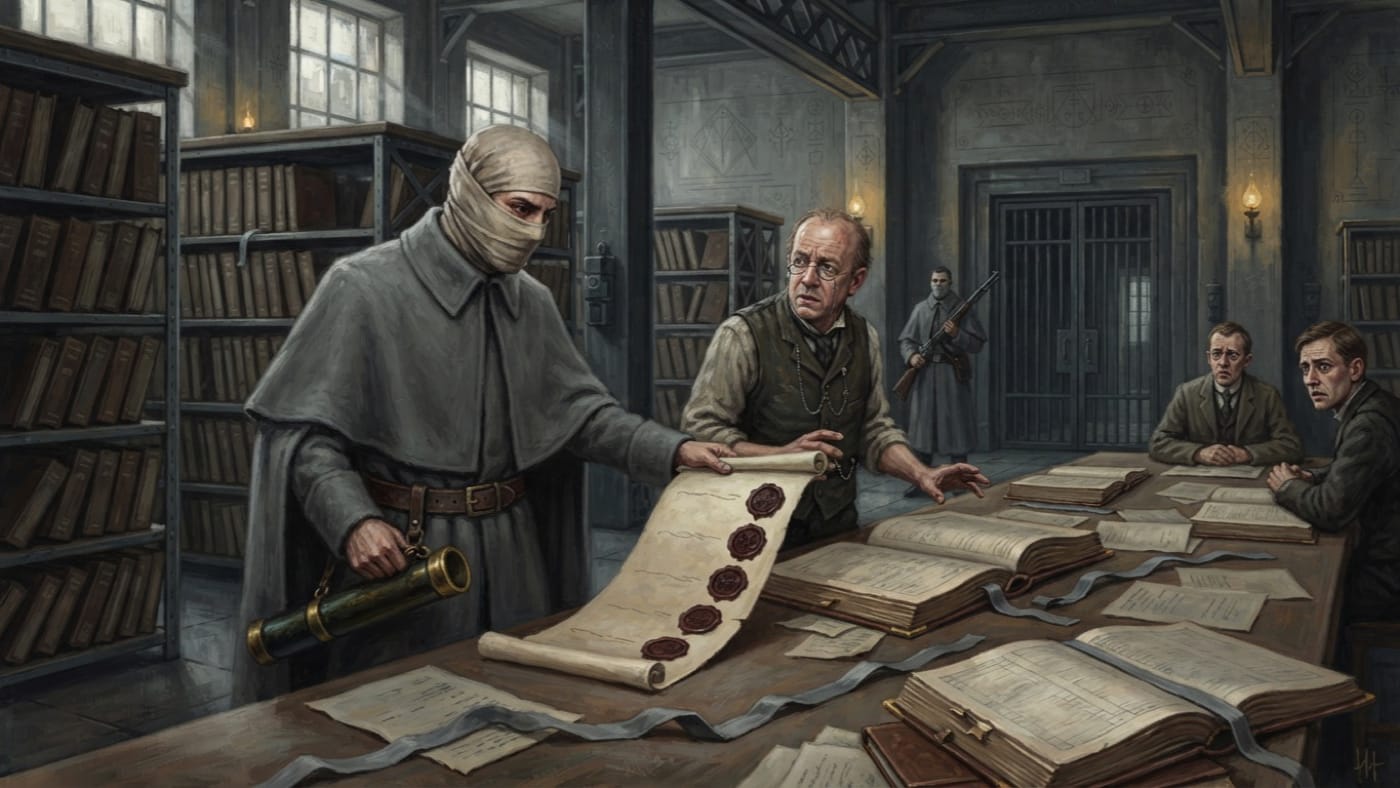
Indiction Writ
Five seals, five powers, and an appeal that waits
The Indiction writ lets Records seize ledgers, enclose witnesses and suspend names before any charge. Five seals announce that the Bureau has noticed; appeal waits until reconciliation.
Codex Ref. XIII.1.06-003
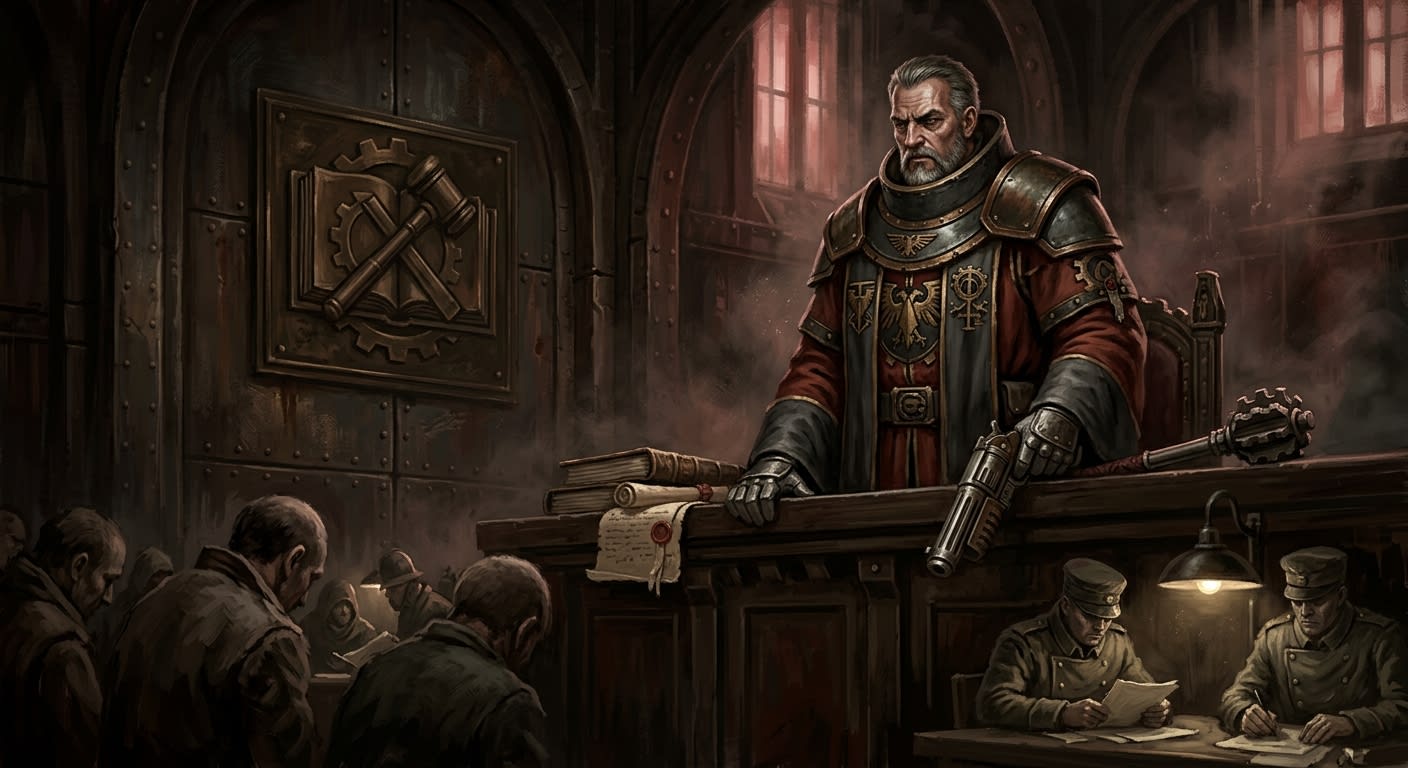
Judge Marrowe
The chair that taught ink to bleed
Judge-Epistolar Marrowe of Bastion-Constantinople, whose A.S. 157 Red Trial turned a tithe discrepancy into execution, doctrine, and permanent legal dread.
Codex Ref. III.2.01-129

Judge-Epistolar
Where the books disagree, the chair decides
The trench-court rank where military and registry books disagree. At Bastion-Constantinople, Judge Marrowe makes pay, tithe, ration and burial answer to one chair; the hymn ends before the consequences do.
Codex Ref. III.2.01-1516

Ledger
Where the entry governs the living
The Ledger is the Synod's doctrine of authorized memory: every roll is presumed to agree, every name stands where an office writes it, and the body obeys the entry even when the words change.
Codex Ref. XIII.1.33-201
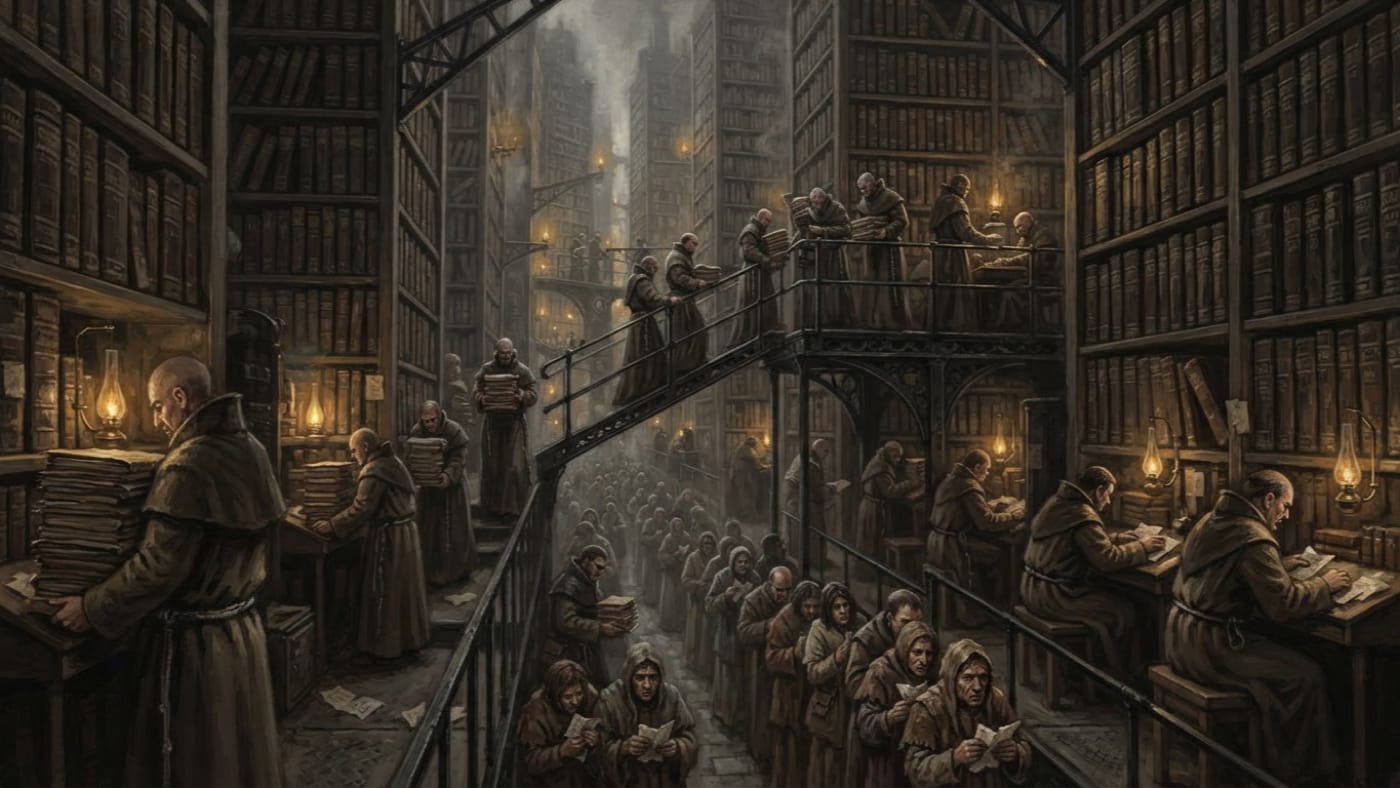
Ledger Cloister (Rheinscarp)
On the fifth terrace, the bread waits for your name to agree with the register
Rheinscarp's fifth-terrace Records labyrinth reconciles crossing receipts, ration rolls and names under Ysabeau Kelm. You arrive to file a receipt; the Quill-Choir may correct whether you exist.
Codex Ref. II.2.01-003

Ledger Duellist / Citation Advocate
Where the sword would be excessive and the firing squad irreversible, the Synod reaches for its ink
Fourteen hundred licensed advocates fight citation duels in the Synod's precedent pits — establishing standing, constructing precedent chains, striking opponents from the Ledger of Souls. Three hundred more operate in the shadows.
Codex Ref. XII.26.01-001

Ledger-Bindings
The signature obeys after the signer refuses
Ledger-Bindings make recorded promises material law. Contracts hold bridges; iron-gall signatures and a tithe of hair bind oaths. At Pressburg, signatures dragged deserters back into line. The Bureau calls this triumph. I retain the word slavery.
Codex Ref. VI.3.01-004

Ledgerists
What has not been entered did not happen. Purity is careful to enter everything.
The Ledgerists teach that unrecorded events never occurred. Records calls them prophets; Purity calls them liars and records their sentences with exceptional care. Both classifications remain filed.
Codex Ref. XIII.1.225-201

Mael-Cassin of the Third Gallery
A clean chain, with the client at its end
Unofficial exemplar of the Citation Purists: forty-two clean-chain appeals won, seven clients lost to lawful remedy. The Guild prefers the first figure.
Codex Ref. III.2.01-201

Mara Vell
Seven hundred pages in search of a woman
Mara Vell, the Blank Notary, is the seal-forgers' patron and the subject of seven hundred pages. I can attest to the file. The woman remains unresolved.
Codex Ref. II.1.41-001
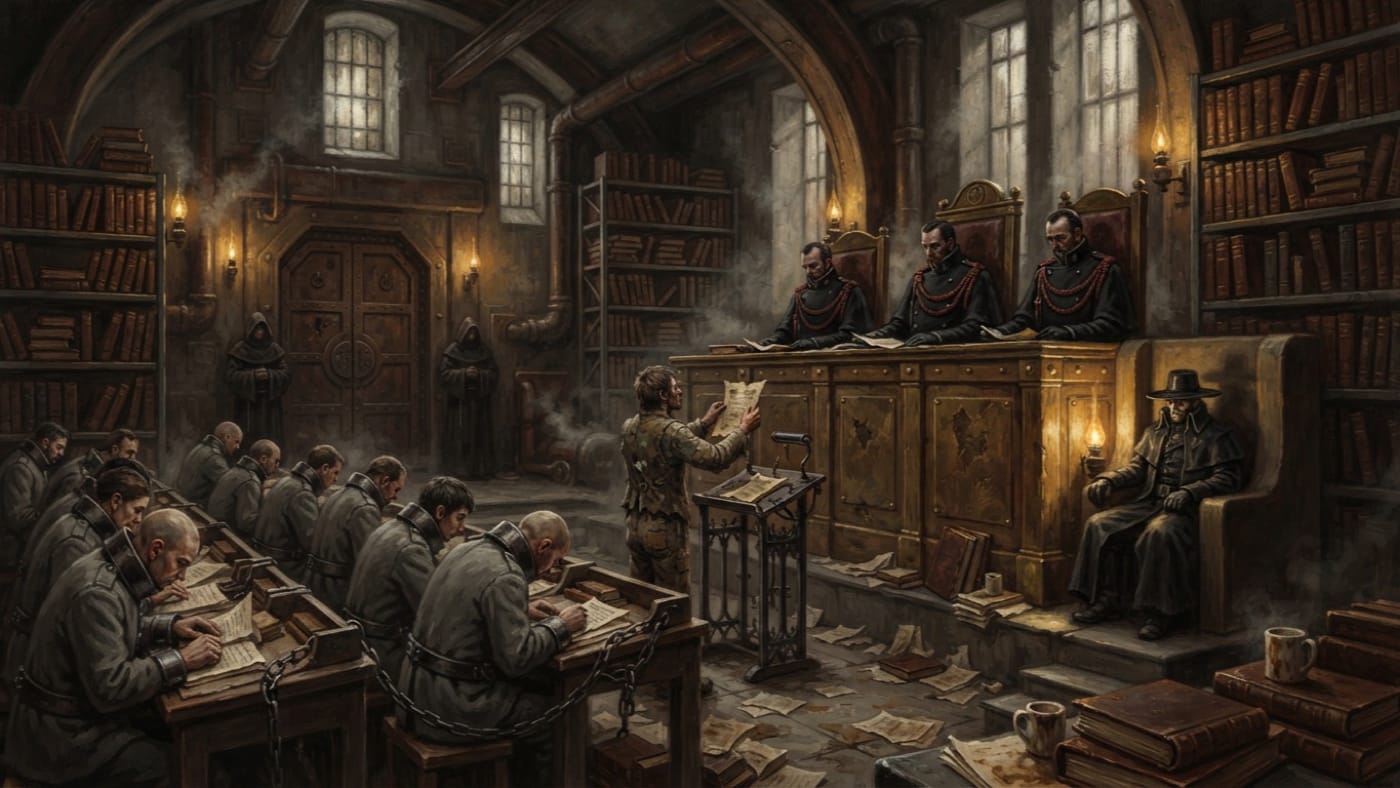
Margin Court
Your name remains yours until the Court corrects it
Nemea's red-cord tribunal settles identity claims, contracts and the position of a name on a page. The Court supplies the evidence, judges the record, and charges for the correction.
Codex Ref. VIII.2.14-1731

Margin Inheritance
The name grows smaller; the debt does not
Nemea's Margin Court moves names and debts into footnotes: a name loses its standing; a debt waits for whoever inherits the page. The Court insists this is not punishment.
Codex Ref. XIII.1.73-1732

Mold Ledger Rot
A seal confers status; it does not preserve a page
Records lost three months of southern casualty reconciliations in A.S. 156. Grey Veils supplied copies; Records supplied a denial, bound to forty-seven pages in Grey Veils ink.
Codex Ref. XIII.1.56-156
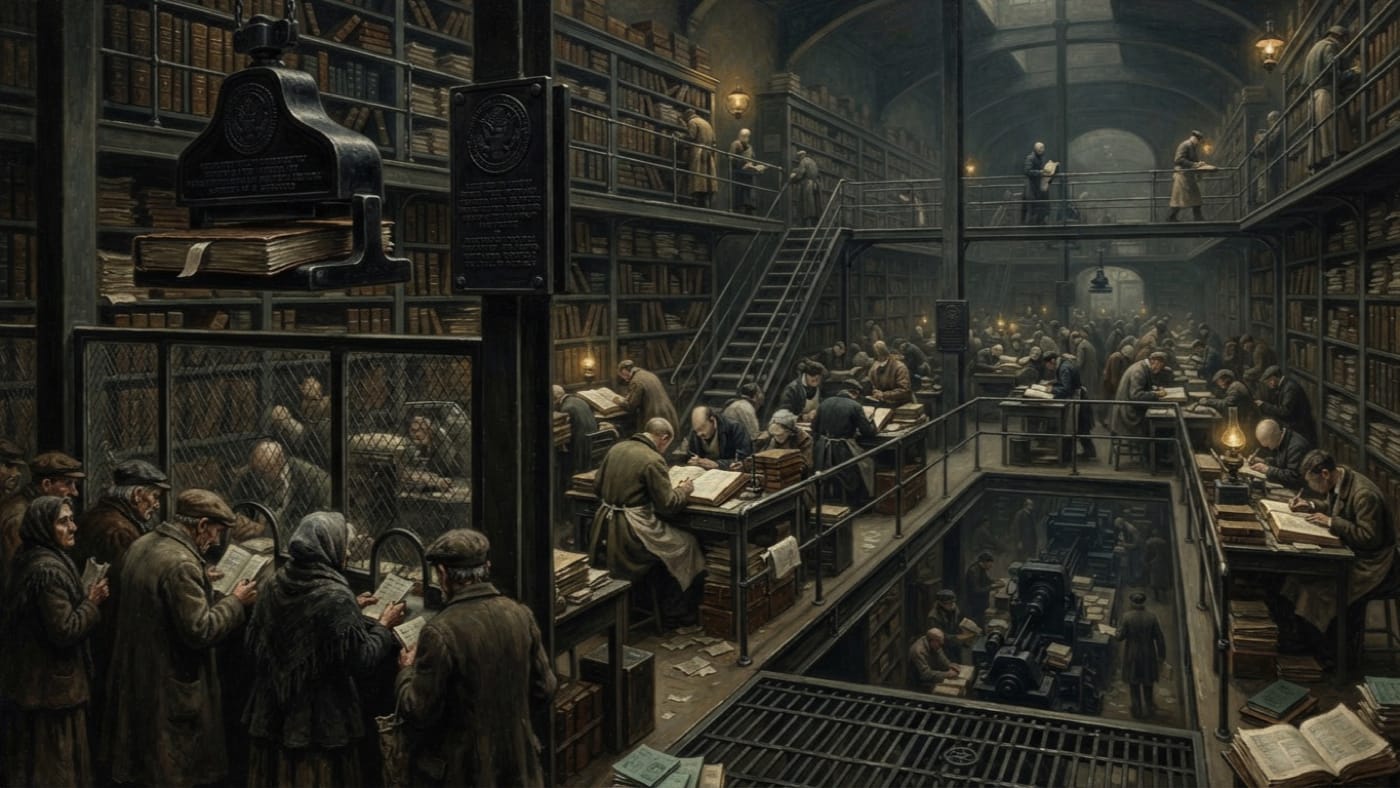
Mortuary Index
The dead receive a line. The erased receive nothing.
The Bureau of Records acknowledges the dead one name at a time. A line in the Mortuary Index records a recognised death; the erased receive none. I certify the distinction.
Codex Ref. XIII.1.98-201

Pragmatists of the Bureau of Records
Mercy enters the Ledger wearing a counterfeit collar
Night-correction faction within the Bureau of Records, tolerated for making the Roll function wherever pure truth would freeze the queue before Matins.
Codex Ref. XII.9.03-002

Purists of the Bureau of Records
One truth, one roll, no supper invitations
Strict-text faction within the Bureau of Records, devoted to clean rolls, witnessed corrections, discrepancy reporting, and the holy unpleasantness of unpurchased truth.
Codex Ref. XII.9.03-001

Red Trial of Bastion-Constantinople
The ledgers bled because the tithe was wrong
A.S. 157 southern-anchor trench trial in which Judge Marrowe condemned a company for misfiled tithes and the ledgers bled red ink with the mud.
Codex Ref. VII.8.10-047

Saint Verran of the Unsmudged Line
The Creator is a column, and mercy hates the ruler
Patron saint of Records Scribes, approved in A.S. 112 for the clean line that cut ten thousand names from a siege roll and left the ink blameless.
Codex Ref. III.2.01-139
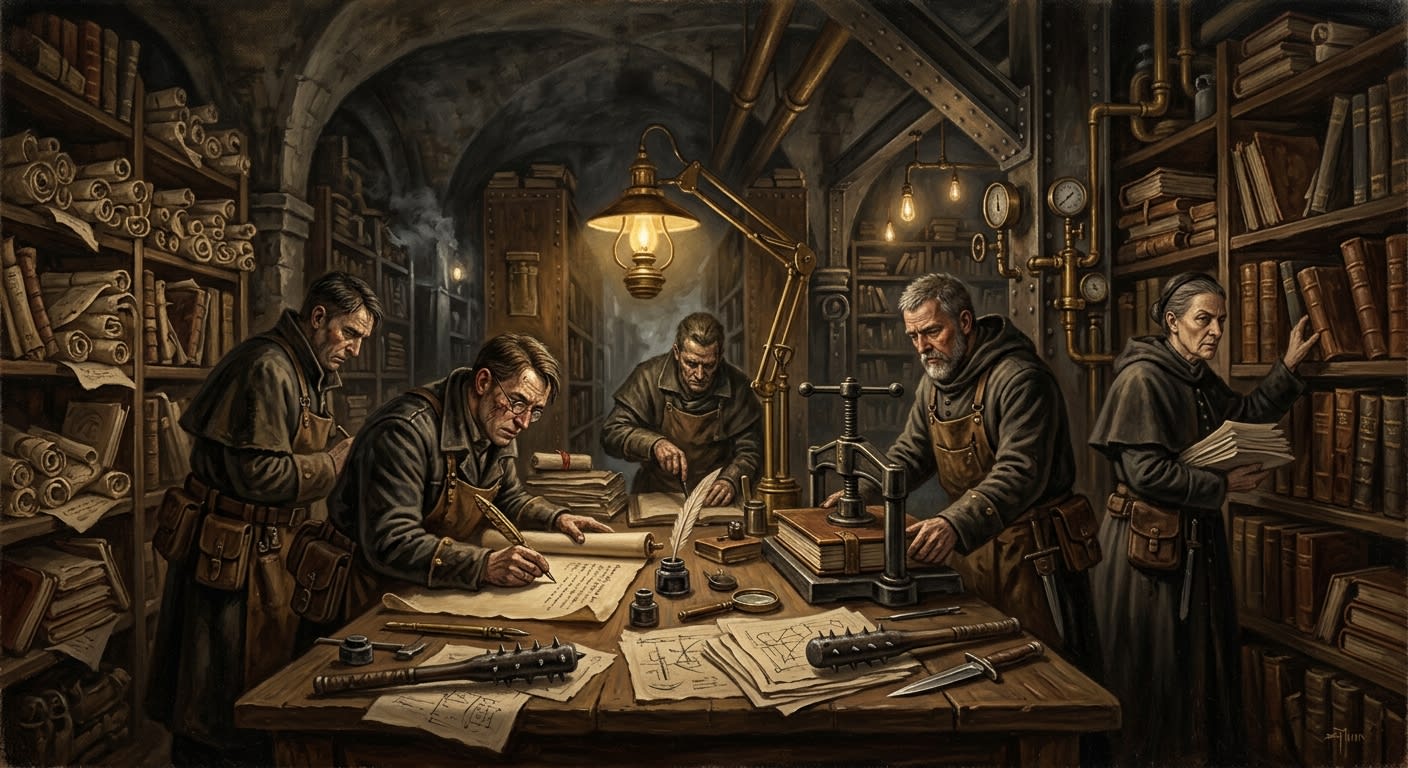
Shadow Archivists
The second copy is always a heresy until Records needs it
Alleged Records Scribe faction preserving unsanctioned copies of corrected rolls, officially absent, practically feared, and dangerous under the right lamp.
Codex Ref. XII.9.03-003
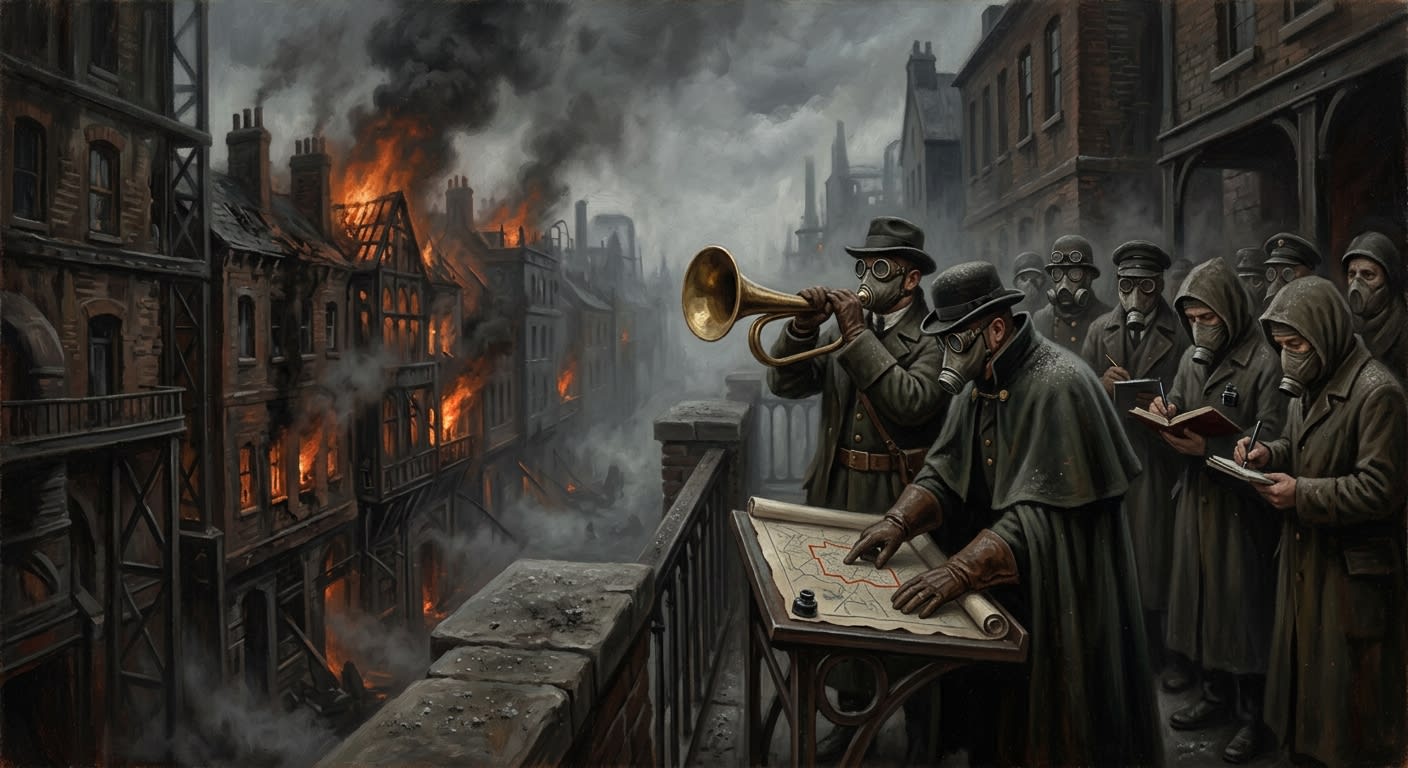
The Scour
When the Bureau decides a street has forfeited the privilege of remaining architecture
The Synod's ritual fire-purge of condemned quarters: horn, map, witness-line, and ash — the point at which bureaucracy ceases to argue and begins to burn.
Codex Ref. VI.4.01-001
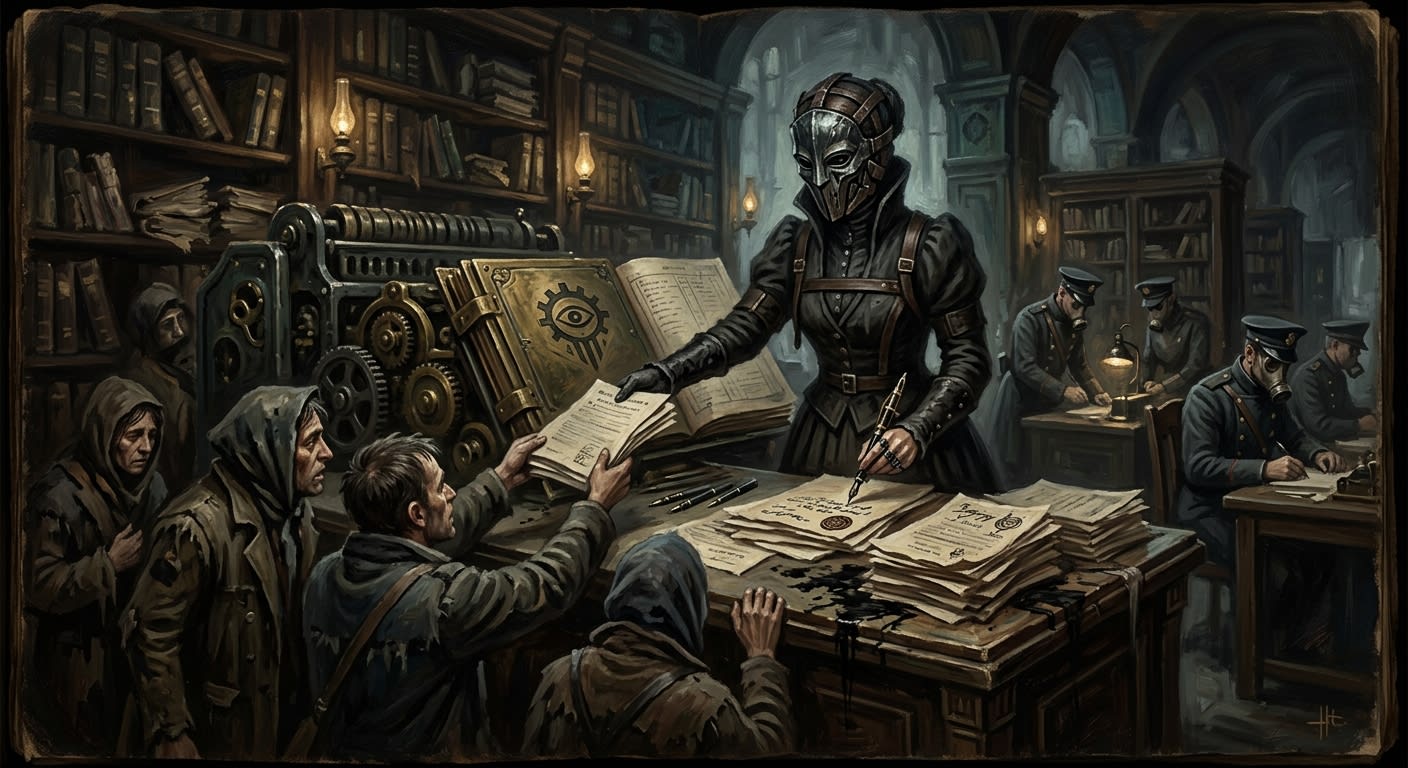
The Widow-Notary
The hand that taught charity to forge receipts
The Widow-Notary may be one woman, seven women, or a criminal mask; her forged assessments fed Strasbourg's poor and taught the Black Ledger to steal in the Bureau's own hand.
Codex Ref. III.2.01-062