

Reverse Index
Referencing “Kanzleiburg”
Every codex entry that links to Kanzleiburg. 81 entries.
Return to Kanzleiburg
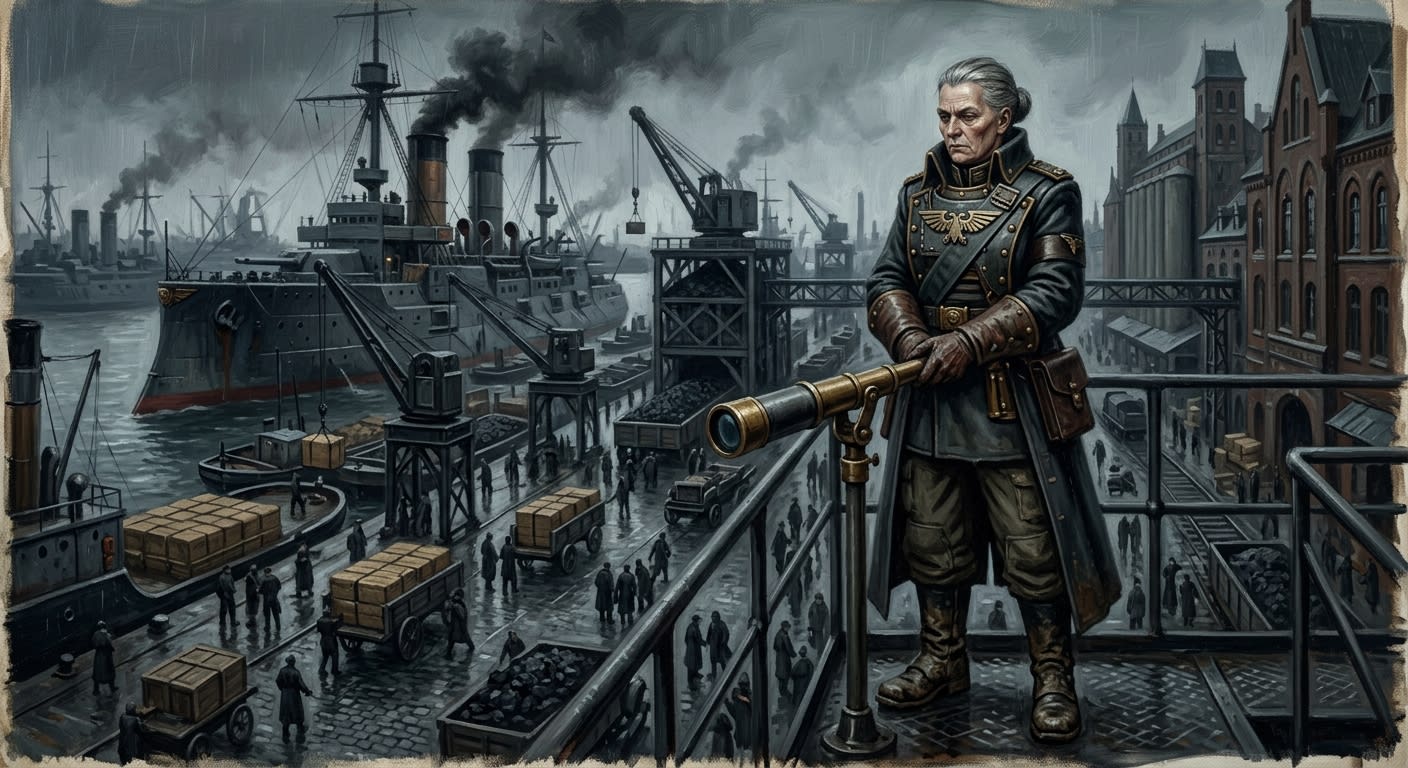
Admiral-Prefect Gerta Halske
The tide table has more mercy than most bishops
Admiral-Prefect Gerta Halske rules Hamburg's wet arithmetic: ships, grain, coal, foreign credit, dock rage, and the northern front's daily refusal to starve.
Codex Ref. III.2.01-151

Admiral-Prefect Halske
Kanzleiburg abbreviates what Hamburg cannot afford to lose
Admiral-Prefect Halske is Kanzleiburg's clipped name for Gerta Halske: the harbour officer whose refusals turn foreign cargo into northern survival.
Codex Ref. III.2.01-152
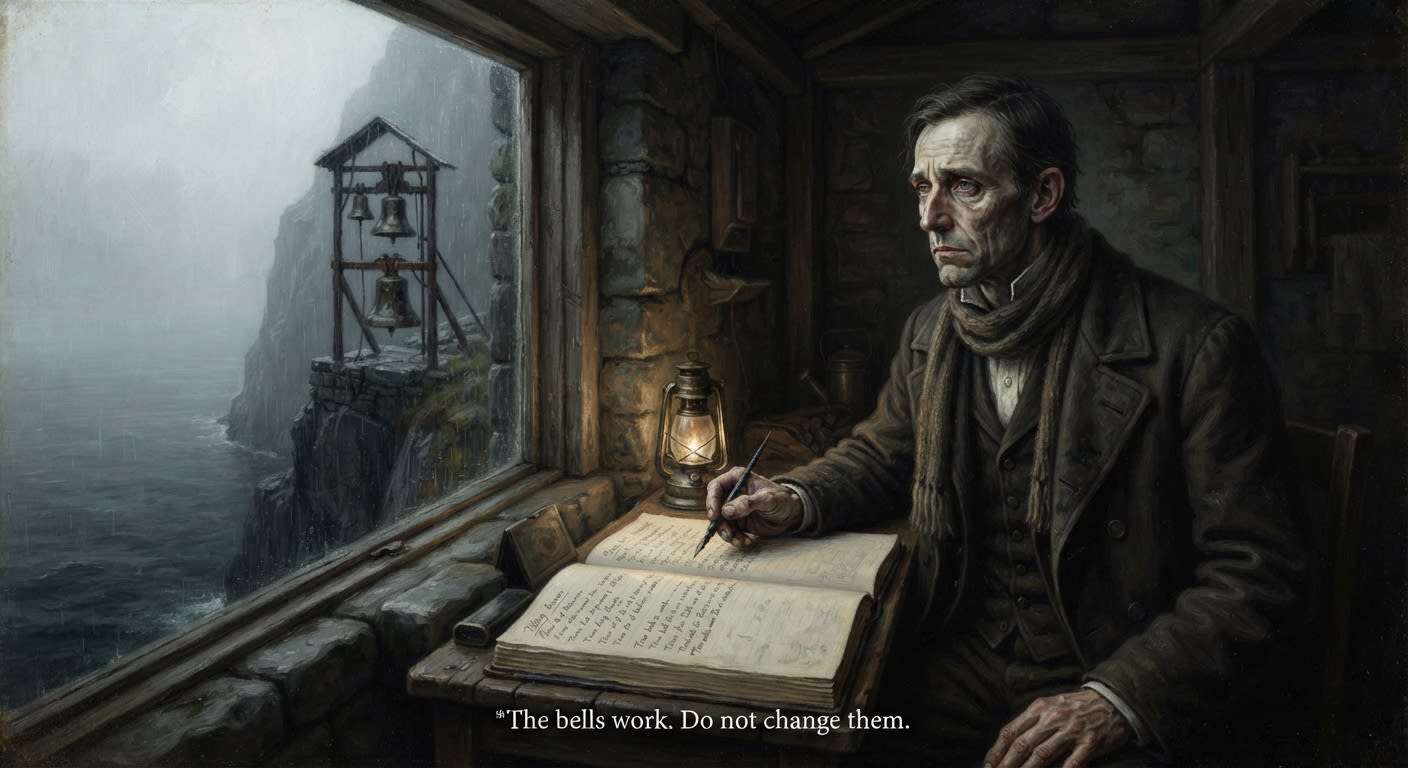
Aldric Moen
Seven words, no handles, and a punishment made of paper
Aldric Moen was sent north to classify the Winter Watch's unlawful bells. He returned with seven words the Bureau could neither refute nor forgive.
Codex Ref. III.2.01-178

Archon
The chair survives the man and charges rent to history
An Archon is less a man than a legal altitude: Bureau sovereign, city master, seal threshold, and chair that lets the Synod replace the occupant while preserving the blame.
Codex Ref. XIII.1.07-090
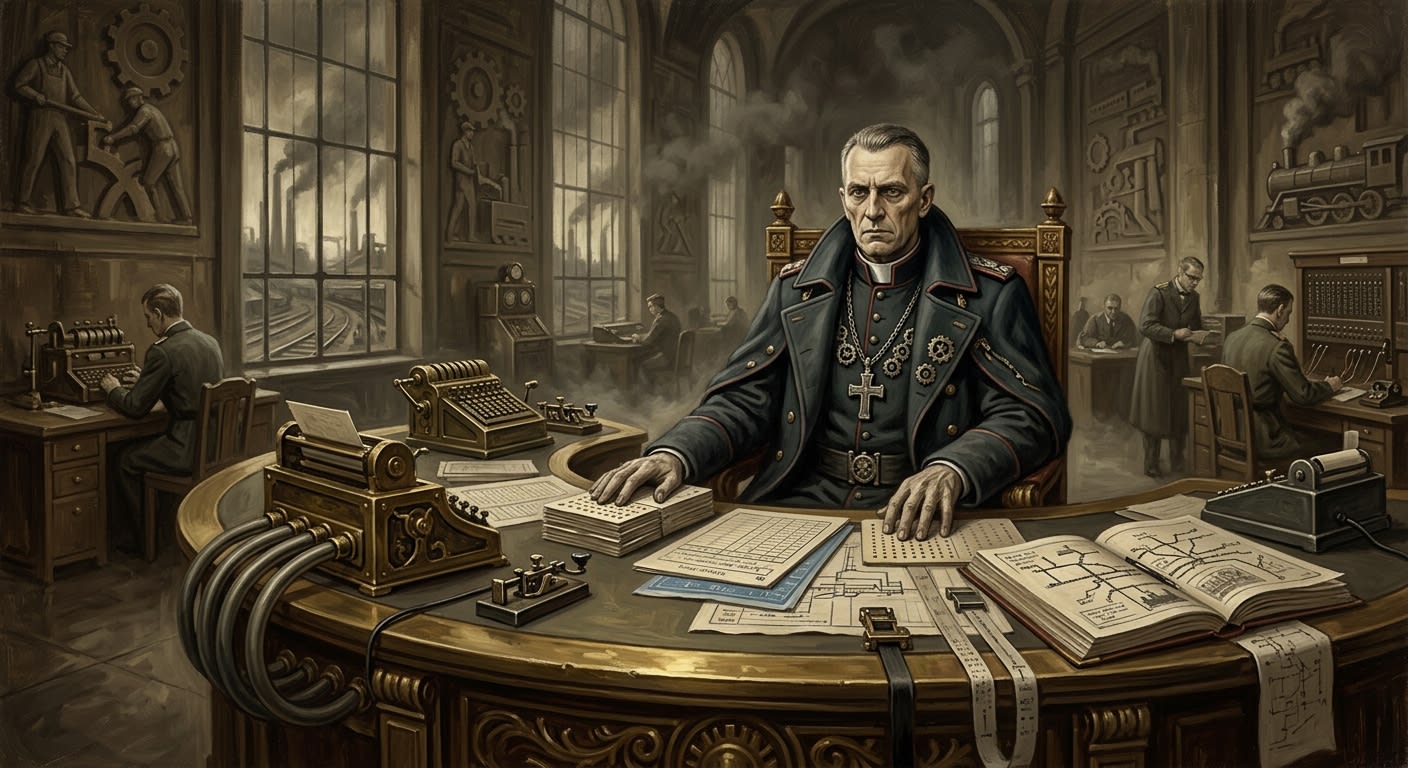
Archon of Kanzleiburg
A nameless man is sometimes the cleanest machinery of State
Nameless by courtesy and terrifying by routing table, the Archon of Kanzleiburg governs northern civil movement, reserves, rail priority, and Hamburg liaison as infrastructure with a pulse.
Codex Ref. III.2.01-151
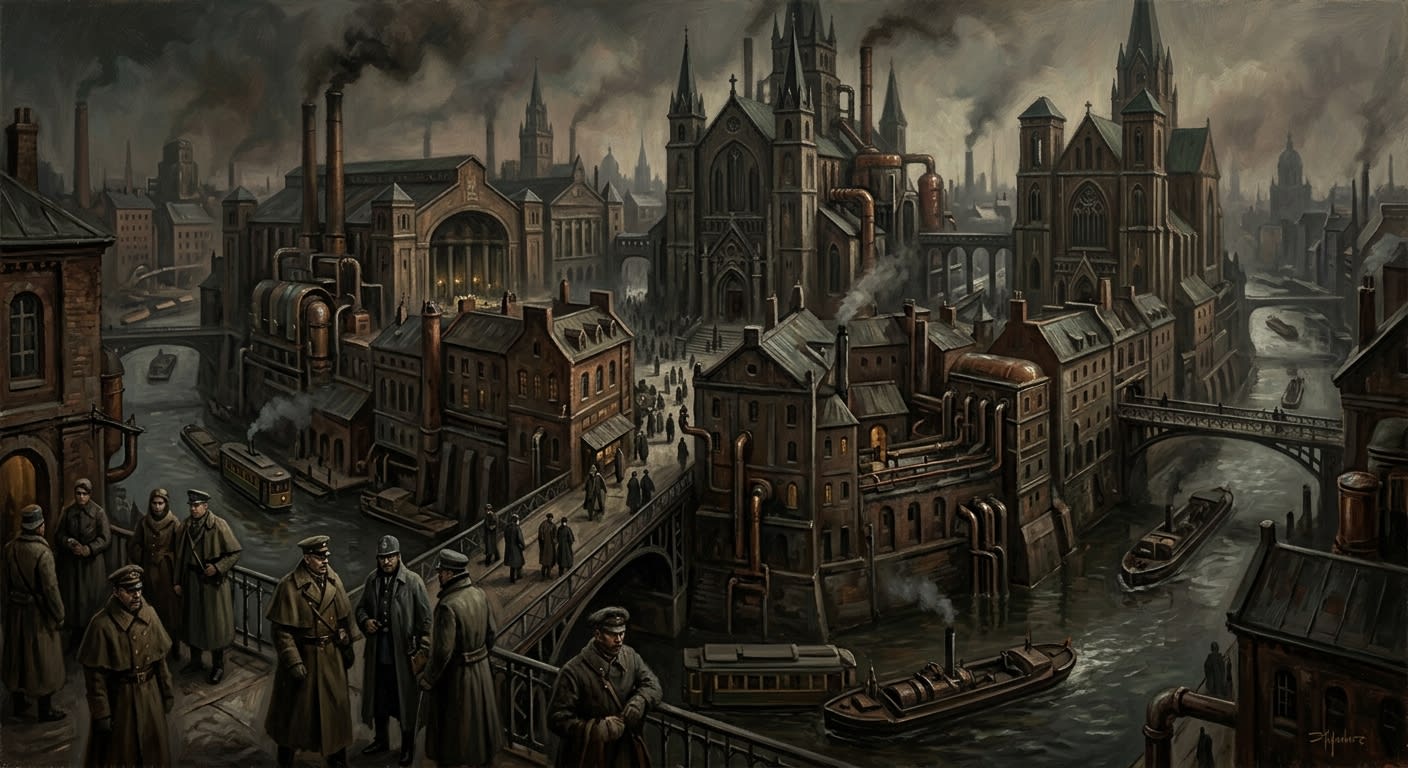
Archonate Isle
The north is not commanded; it is routed until obedience becomes timetable
Administrative island at Kanzleiburg's Spree core, where the Northern Hierarchate, the Archon, Records vaults, War concurrence, and Doctrine's coldest sermon desk make the north move.
Codex Ref. II.4.09-007
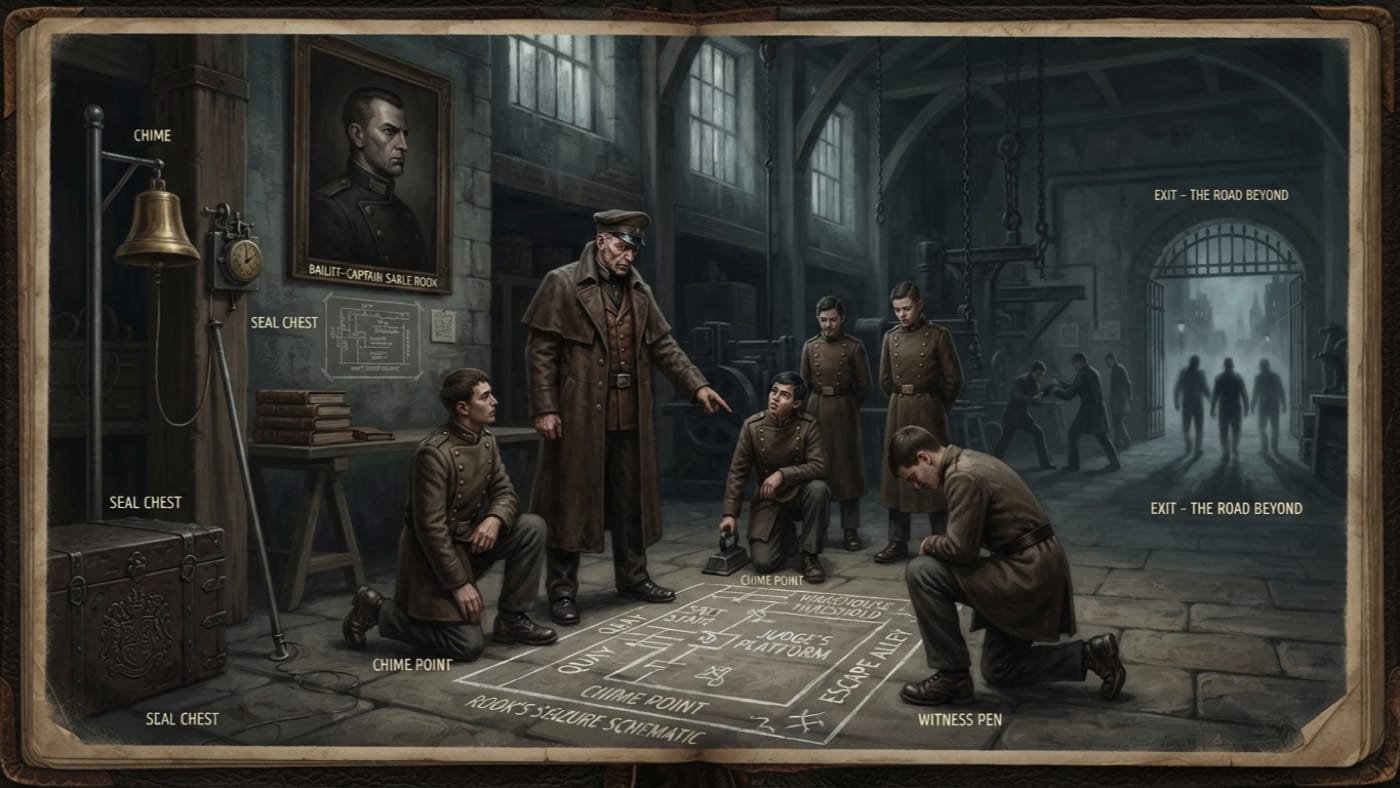
Bailiff Academy
Chalk, chime, seal and chain; the model ends where the missing names begin
The academy teaches chalk, chime, seal and chain. Rook supplies the model; his three missing prisoners remain outside the lesson.
Codex Ref. XII.39.04-193
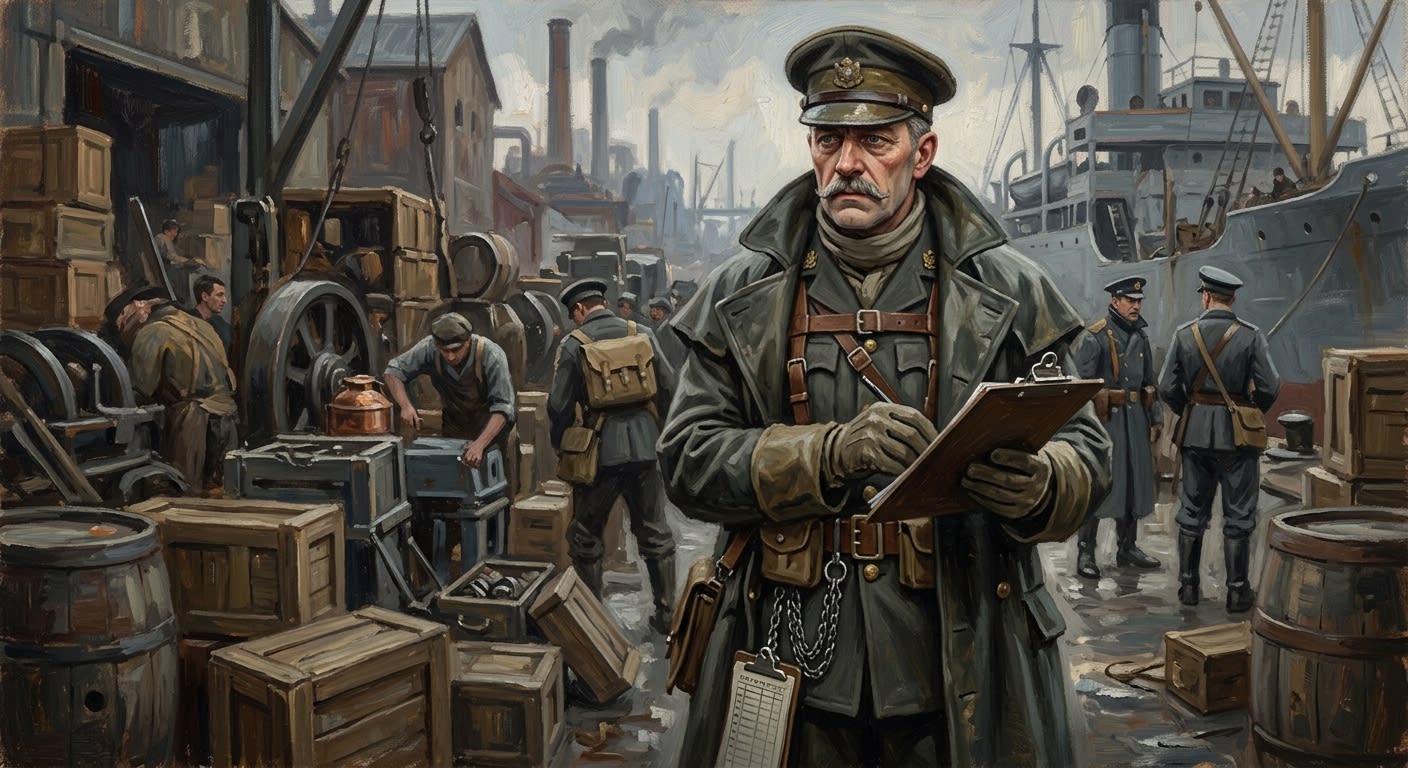
Bailiff-Captain Sable Rook
The chime made law; the chain kept its own arithmetic
Instructional Bailiff-Captain of the Brest port seizure, praised for making riot into inventory and restricted for the three prisoners his chain misplaced.
Codex Ref. III.2.01-142
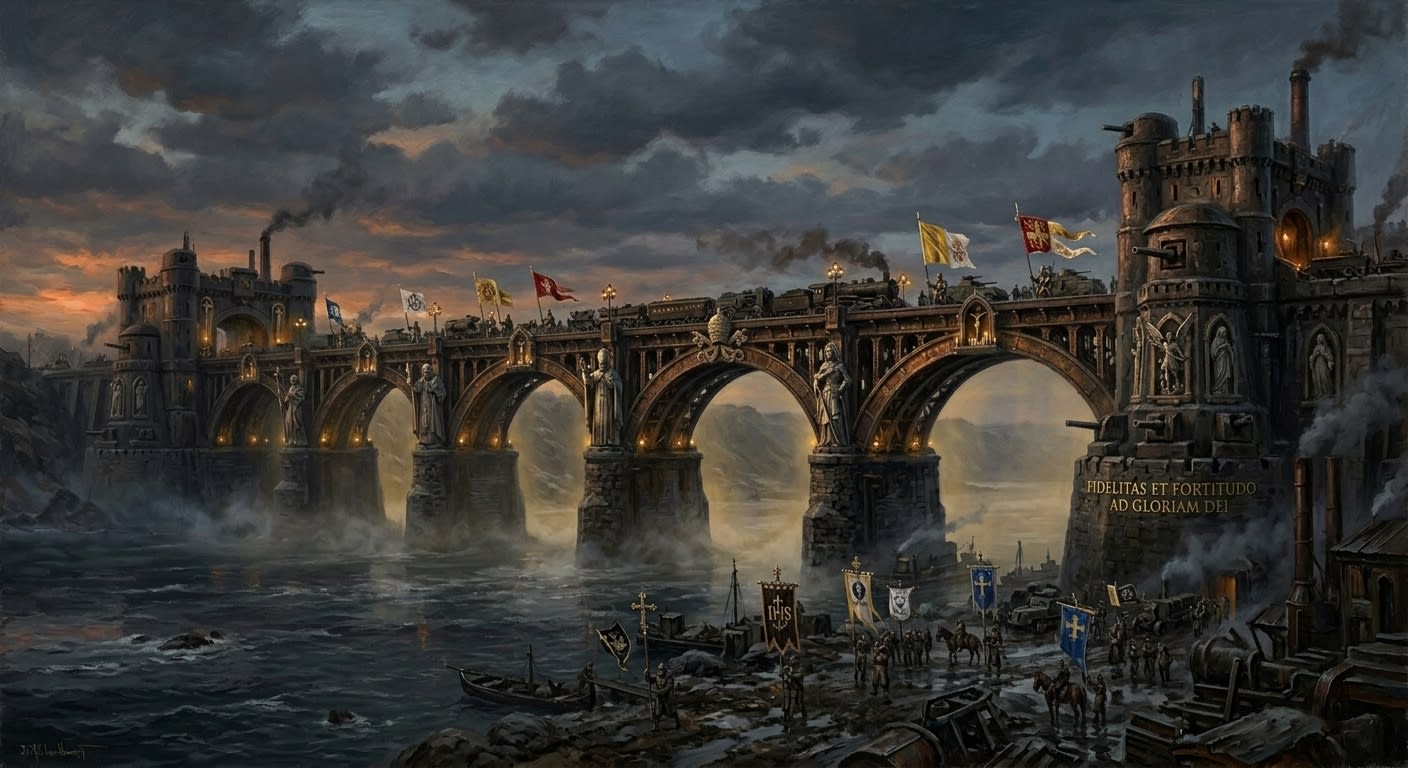
Bastion-Brest
Where the Confession Comes Back
The Brass Ribs of the Bug River crossing — a bridge-fortress of thirty-two brass-ribbed trusses where crossing the span requires a moral audit at gunpoint, confession is currency, and the sins spoken into the booths have, since A.S. 199, begun to come back.
Codex Ref. II.4.07-002
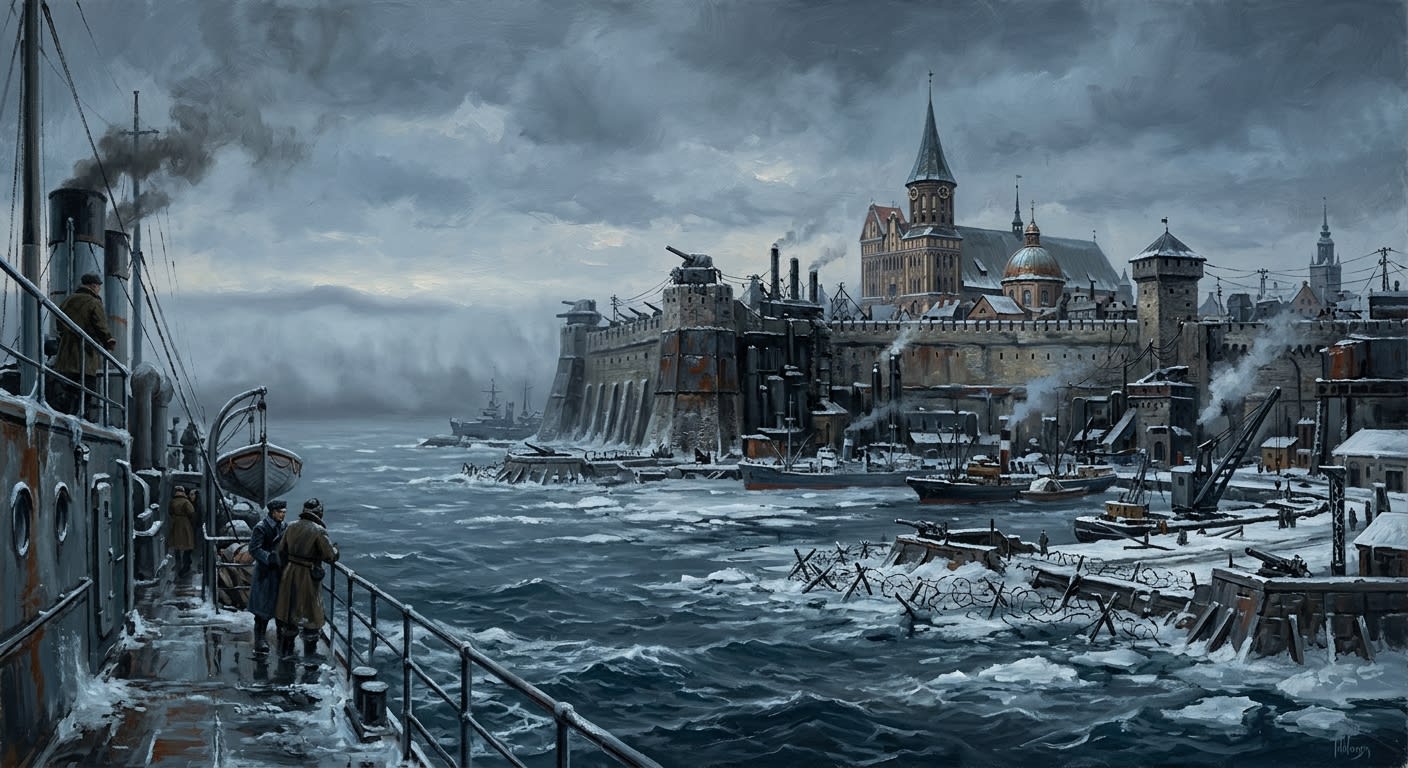
Bastion-Königsberg
The Far Nail, the Last Bell, the Thing the Grey Has Not Yet Chosen to Break
The northern anchor of the Sagittal Line and the loneliest posting on the face of the earth — where the bells answer something that has no name, and the fog has faces, and the garrison holds for reasons the Bureau has spent eleven years declining to investigate.
Codex Ref. II.4.07-001
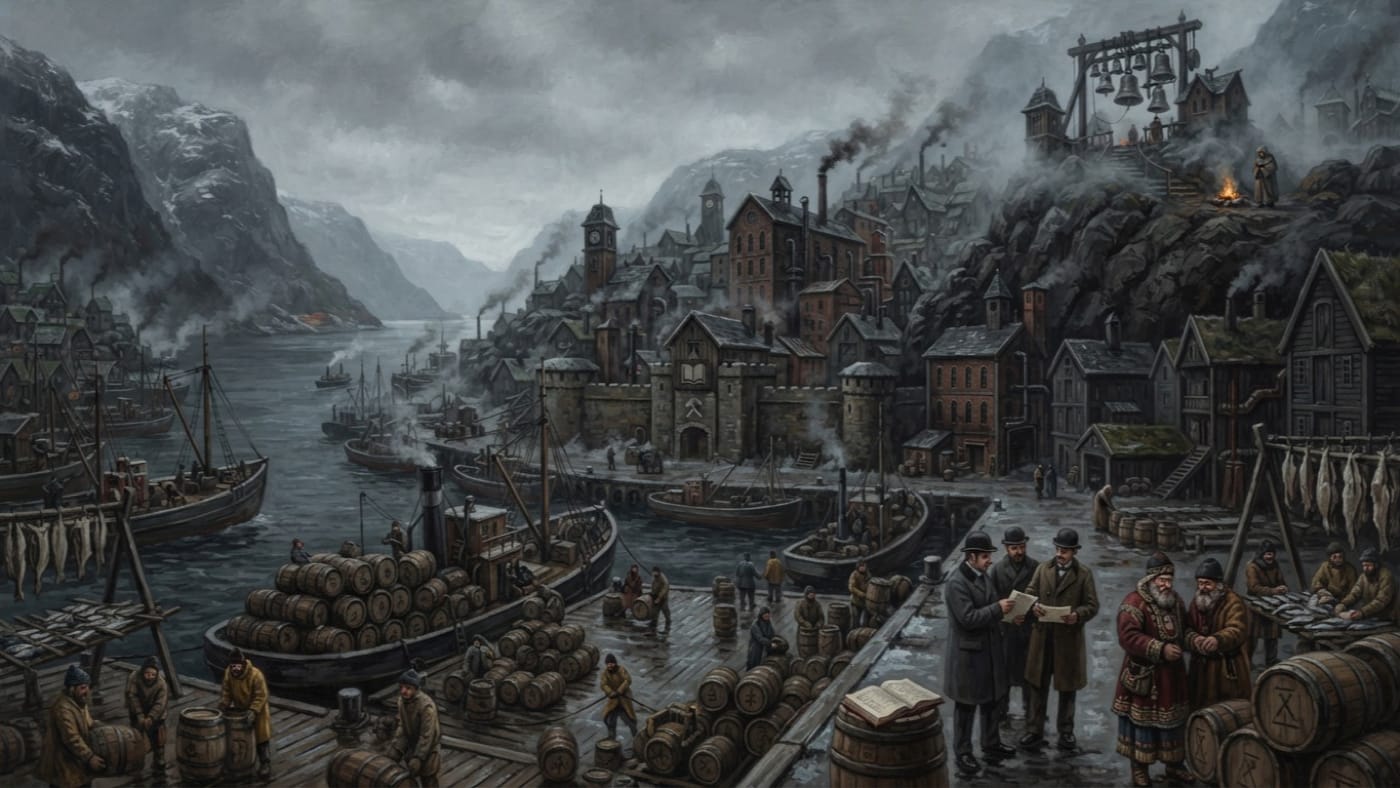
Bergen
Where the Church buys warmth and borrows money
Bergen loads the Fractured North's seal-oil, guarantees the Church's debt, and keeps bells the Bureau cannot improve. Its Prior files reports; its elders govern.
Codex Ref. IX.8.02-001
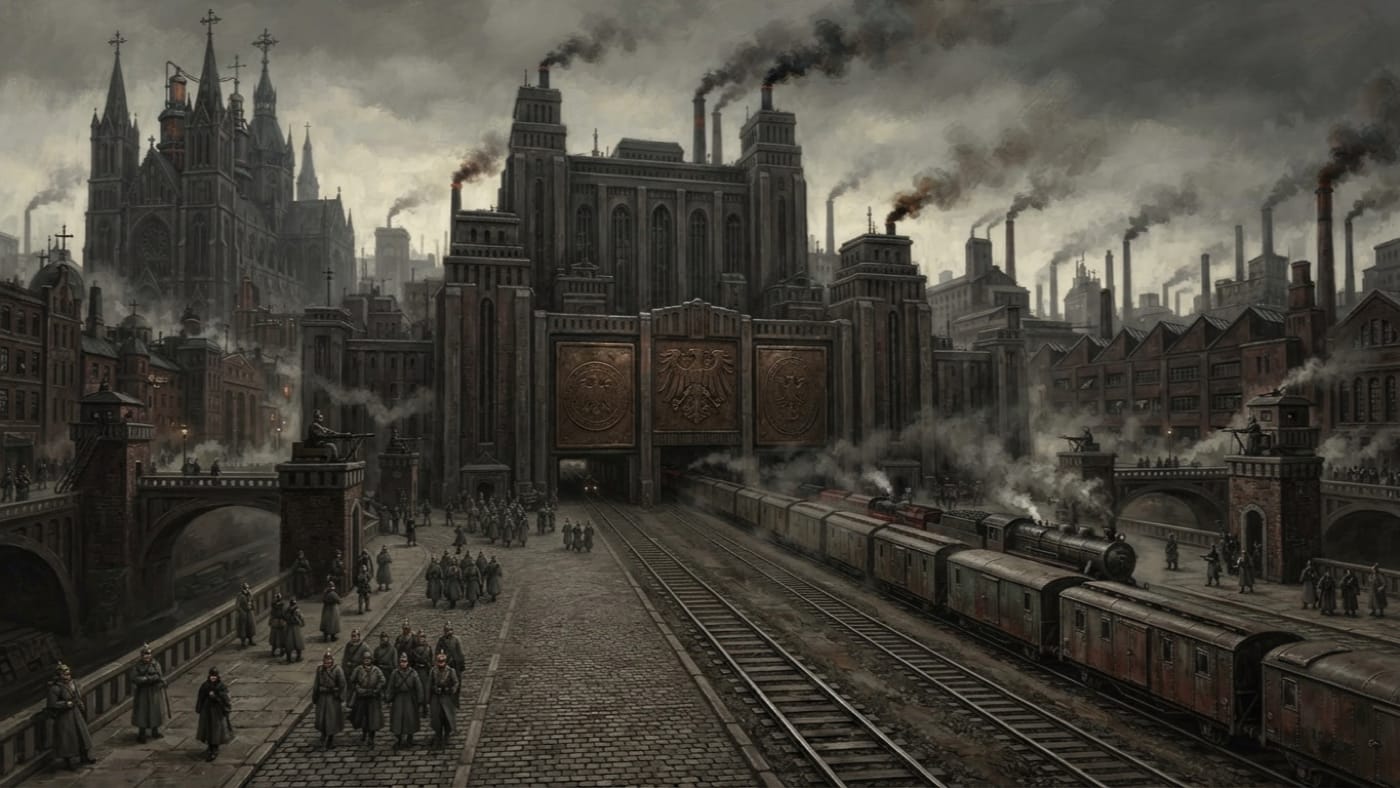
Berlin
The Ledger keeps both names; the city answers to one
Berlin supplied the Northern Garrison sent to famine-struck Hamburg in A.S. 65. Renamed Kanzleiburg in A.S. 95, it remains the same city; the Ledger keeps both names.
Codex Ref. II.4.09-095
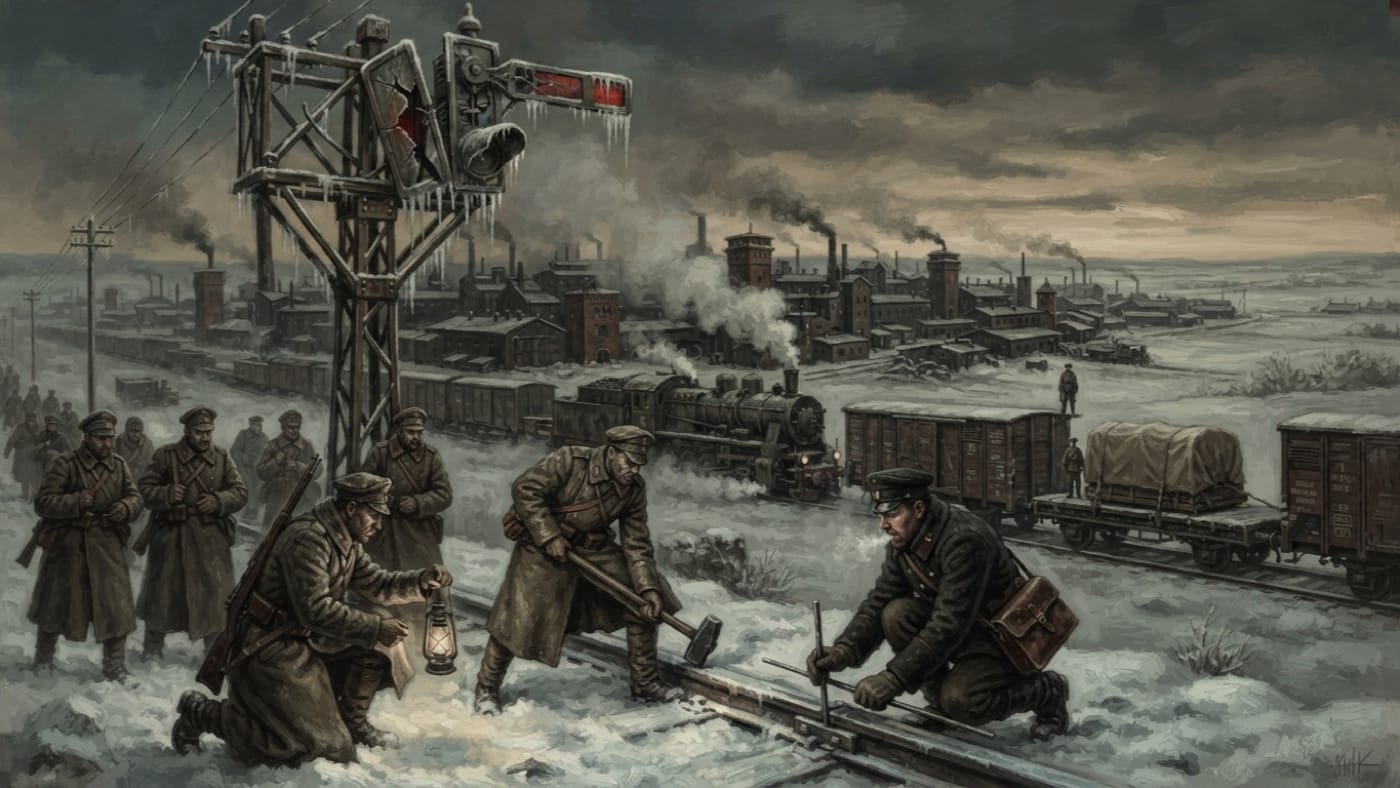
Białystok
Frost cracks the signals; War suspects the delay
Białystok carries Warsaw's military freight toward Königsberg. This commissioned A.S. 201 survey covers winter signal risk, rail damage and extra patrols: frost obeys no timetable.
Codex Ref. II.4.09-250
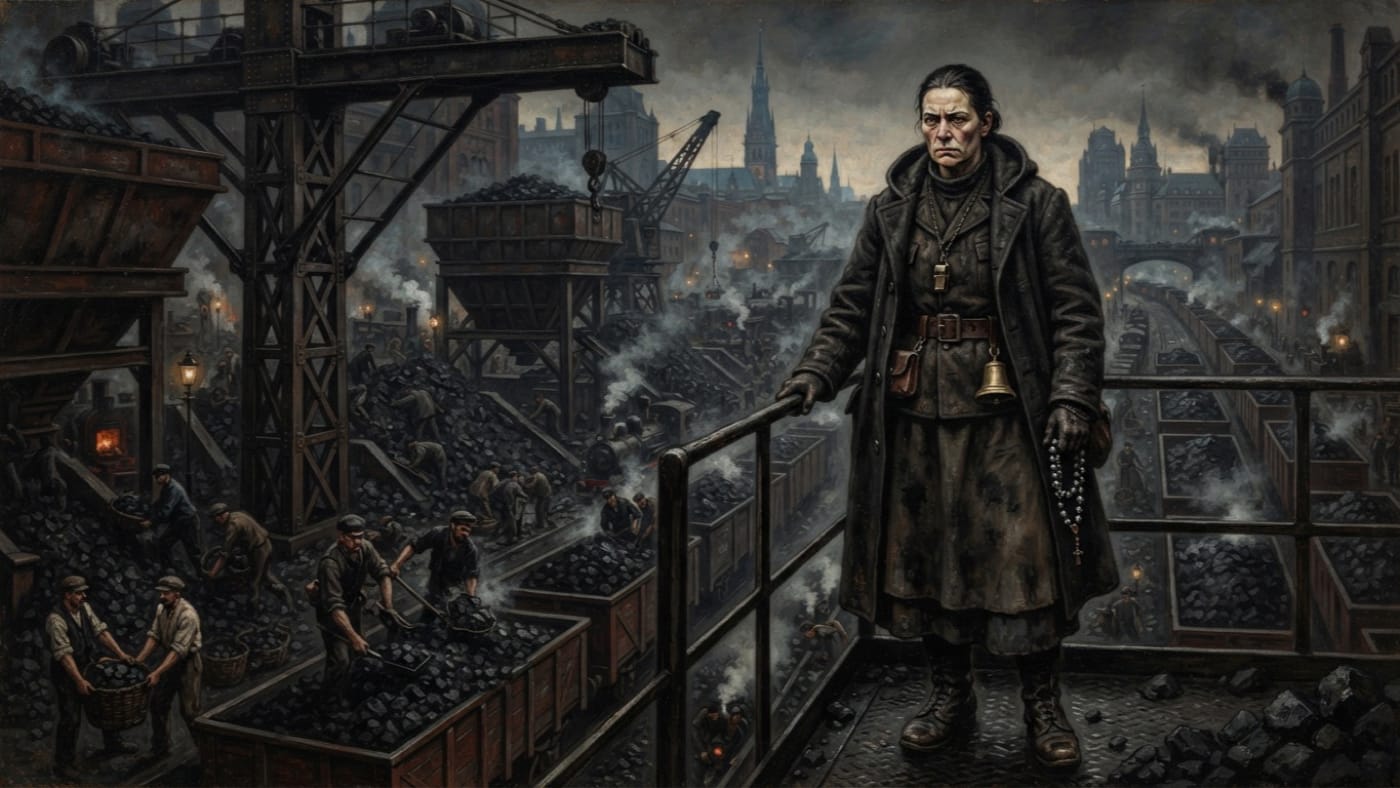
Black Marta Pell
Which dead man should take the extra shift?
Black Marta Pell, registered as Martha Pelmann, commands Hamburg's Coal-Heavers' Union. Her whistle governs the black yards; her questions make the Bureaus account for the men who keep the northern front warm.
Codex Ref. III.2.01-270
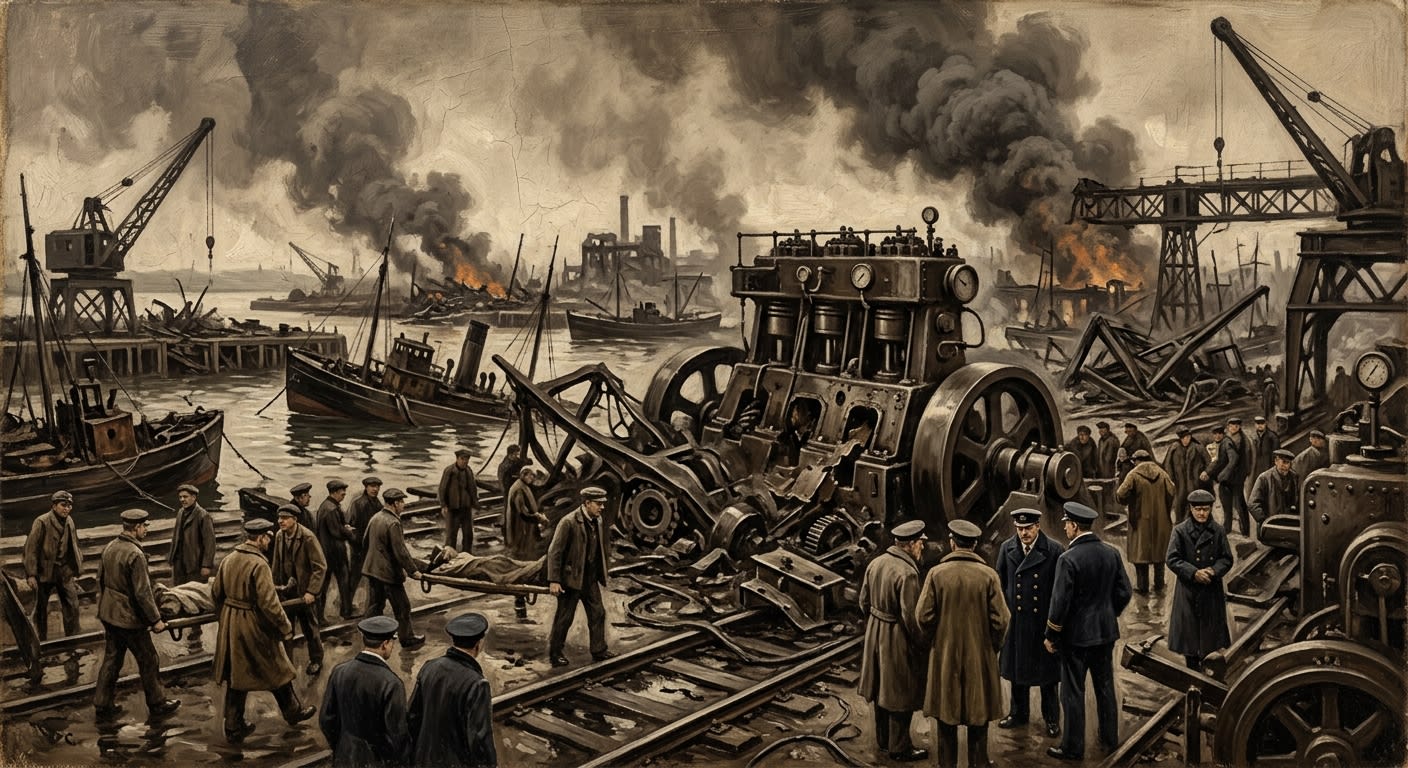
Black Start Catastrophe
Forty-three dead, one wall niche, and a profession born screaming
A.S. 97 Bastion-Brest harbour disaster in which an uncertified black start killed forty-three men, burned half the port, and created the licensed Litany-Engineer vocation.
Codex Ref. VII.8.10-051
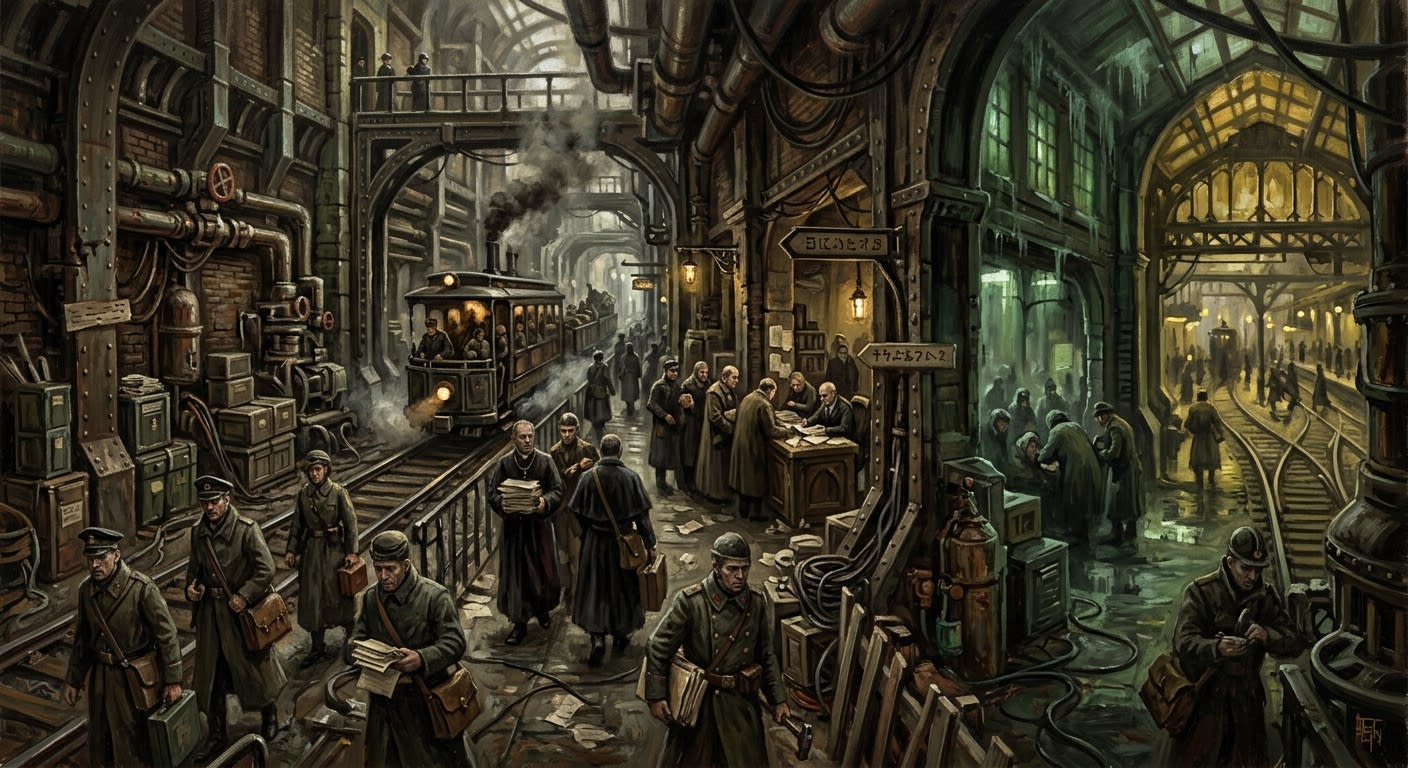
Central Corridor
Motion blurs the screams, which is why the Ledger loves trains
The Central Corridor is the Synod's middle artery: Munich's packed motion, Vienna's holy delay, Bratislava's damp throat, and Budapest's yellow pins.
Codex Ref. II.4.09-201
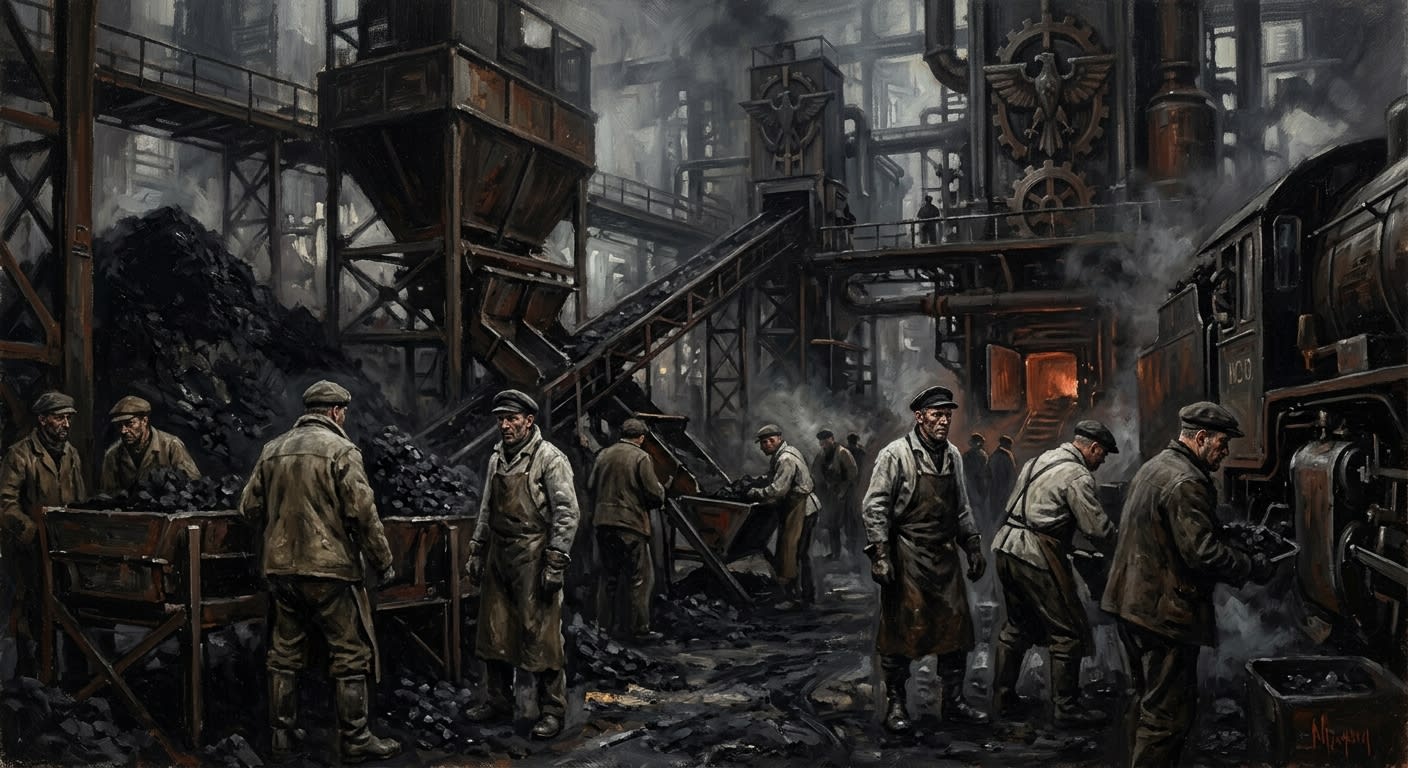
Coal-Heavers' Union
The black yard keeps winter from becoming doctrine
Hamburg's Coal-Heavers' Union rules the black yards, coal chutes, tender feeds, night bunker crews, and the soot-dark arithmetic by which northern bastions survive winter.
Codex Ref. XII.52.03-001
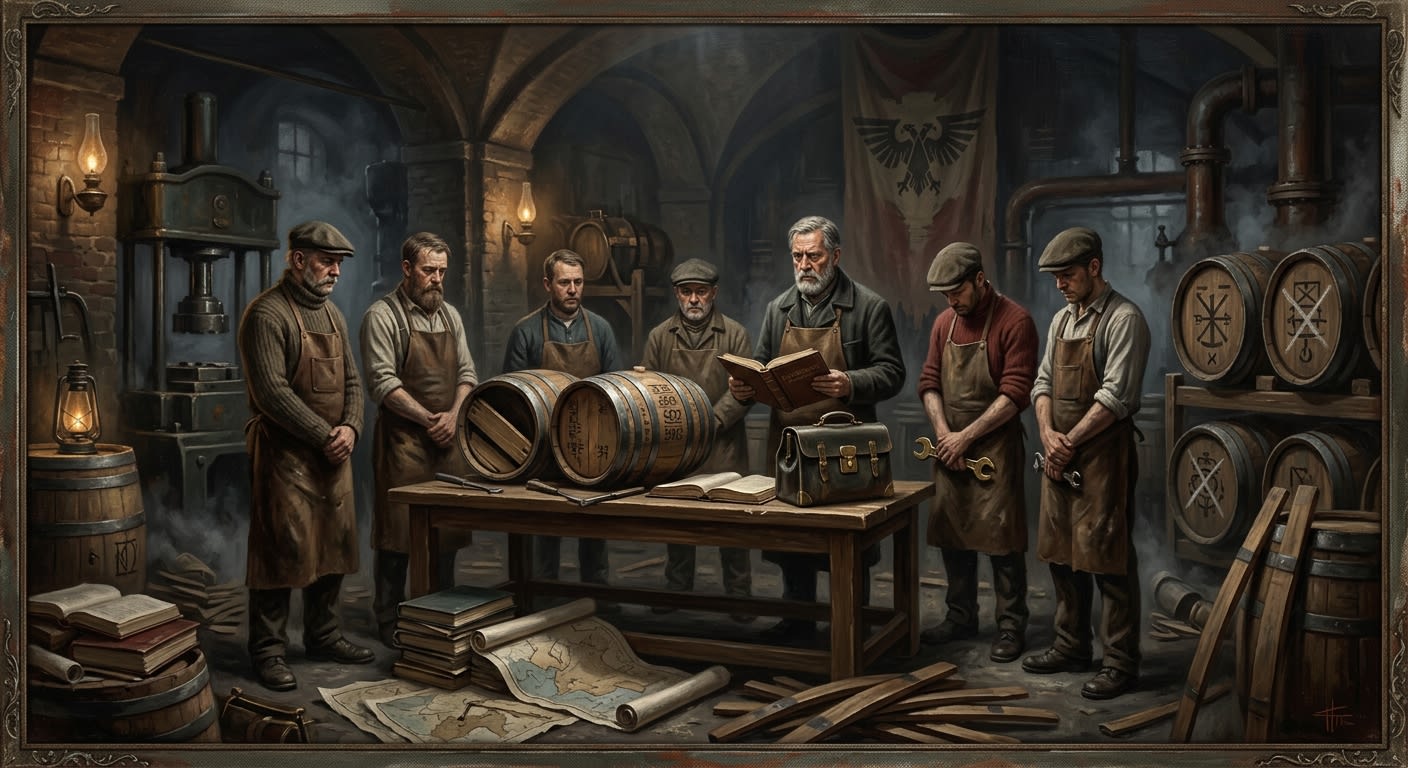
Coopers' Brotherhood of the Blessed Barrel
A barrel is hollow, certified, and treacherous when taught to sing
Dissolved Lübeck cooperage fraternity whose A.S. 180 contemplative silence followed Shadow seizure of hoop codes, false-bottom casks, route songs, and the harbour's loudest useful lies after the Year of Smoke.
Codex Ref. XII.26.04-001
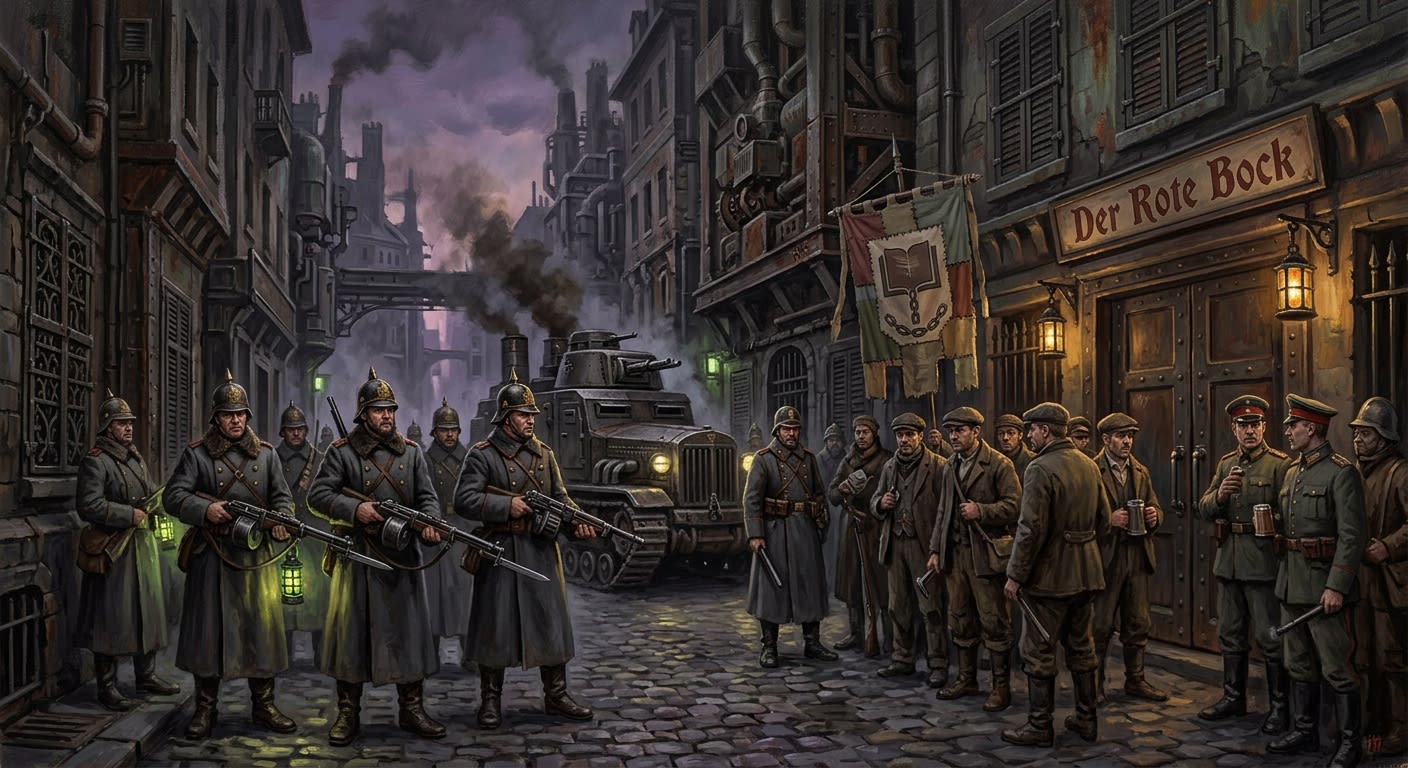
Curfew Standoff of A.S. 140
Beer closed its doors and Purity discovered policy
In A.S. 140, Kanzleiburg's Old City beer-halls obeyed Purity's curfew so completely that the officer corps petitioned, the Archon withdrew enforcement, and obedience became a weapon.
Codex Ref. VII.8.10-140
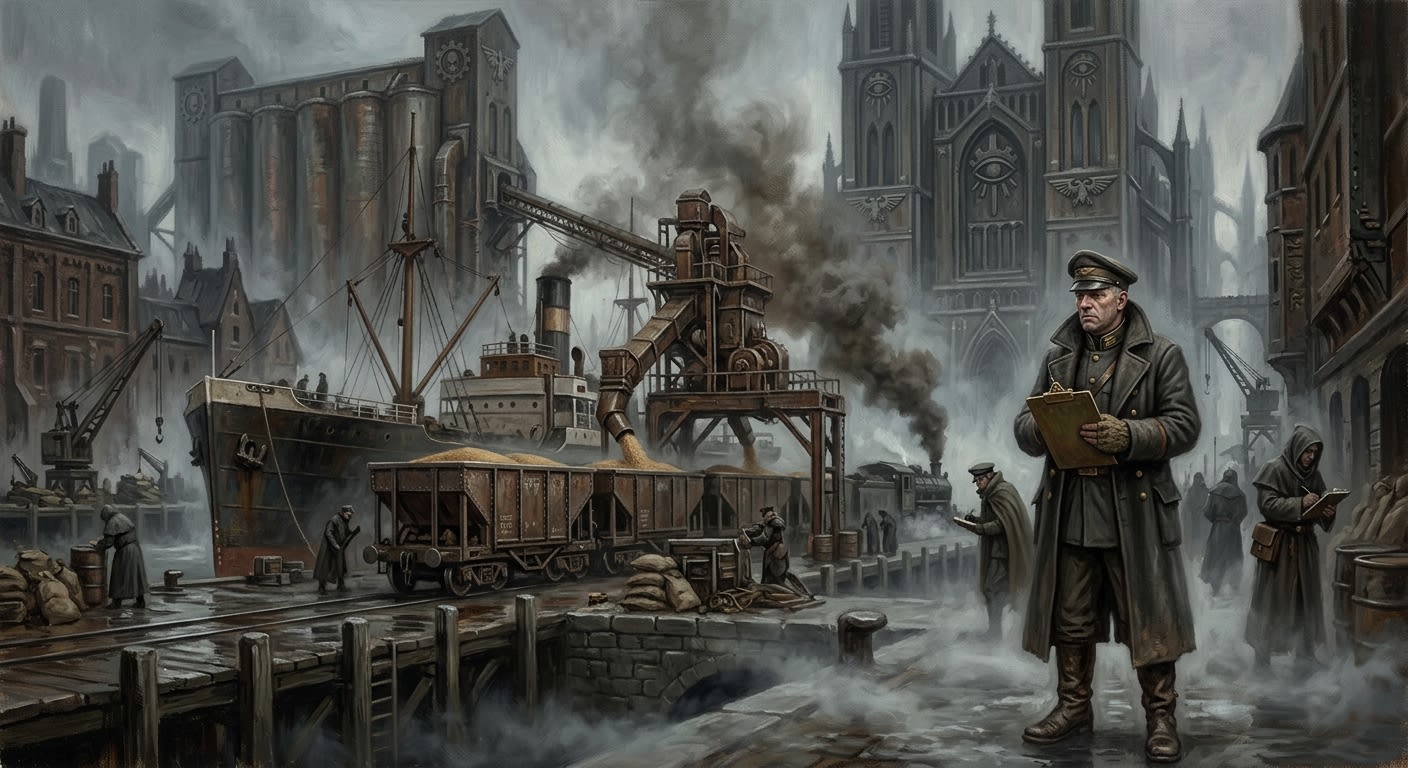
Danzig
The Baltic port that feeds the north and lies with admirable punctuality
Danzig is the Baltic grain mouth of the Northern Corridor: obedient in public, competent in fog, audited forever, and too necessary for Strasbourg to purify without starving itself.
Codex Ref. II.4.09-013
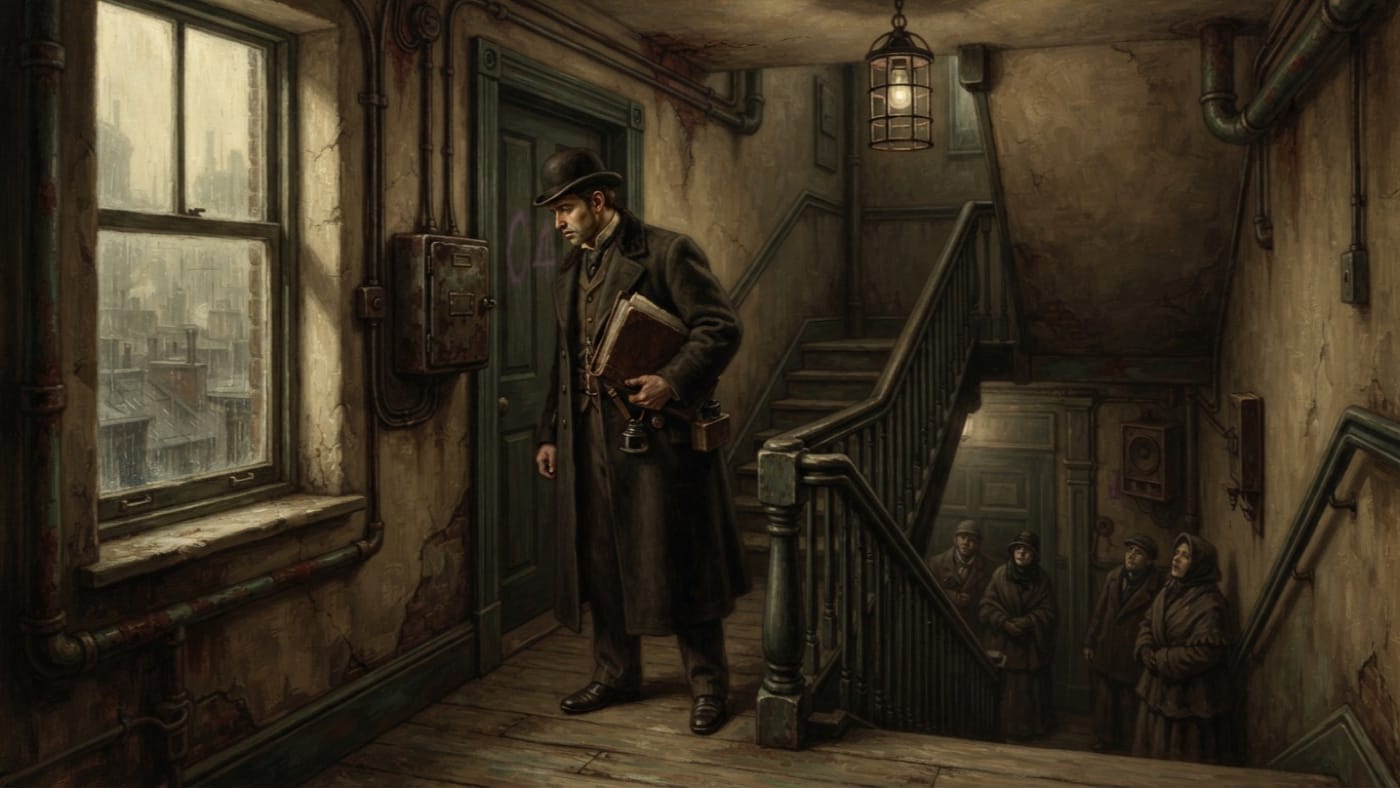
Deadzone
The horn fails; the household answers for it
A deadzone is a place the Sky-Sermon fails to reach. The ledger counts the silence as guilt; perfect attendance may mean something else has begun to broadcast.
Codex Ref. XIII.1.59-201
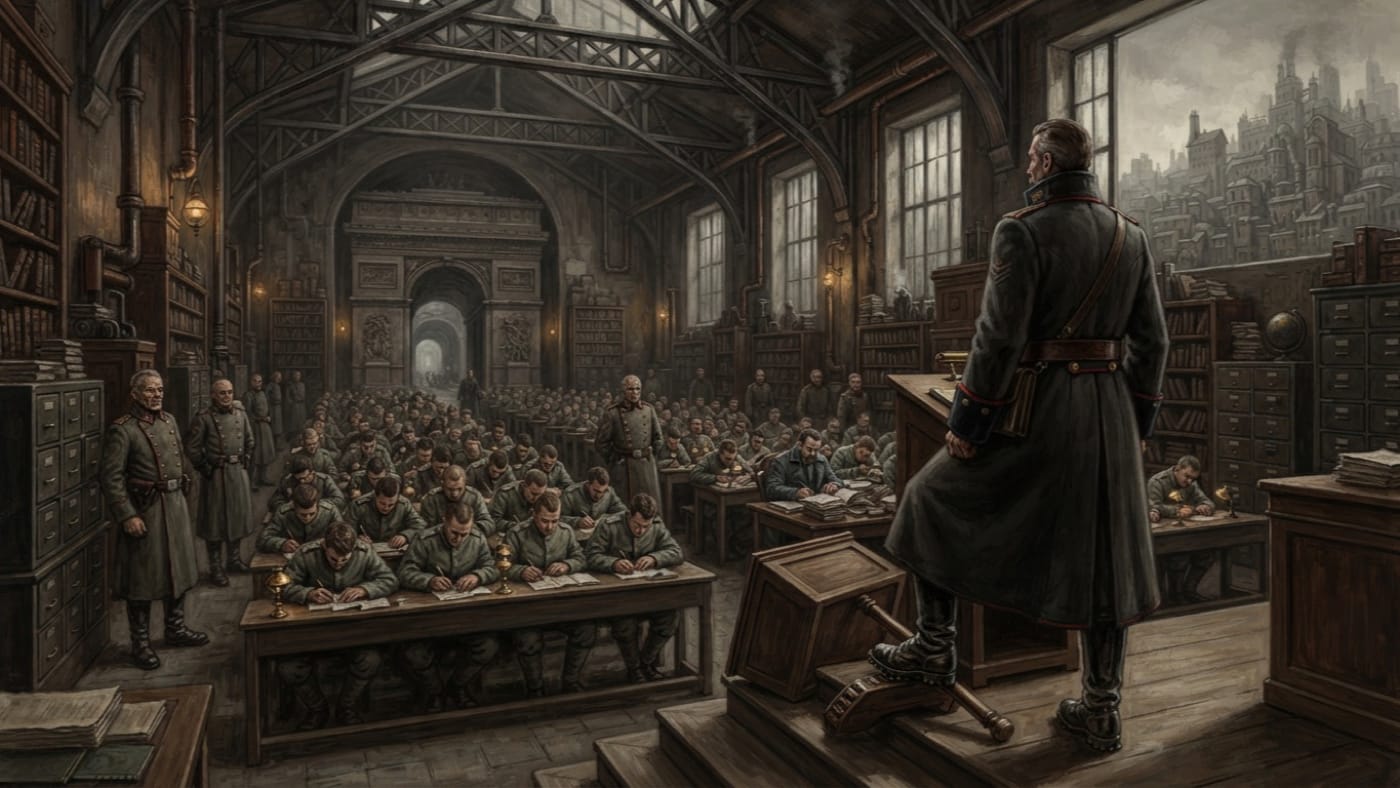
Dean-Marshal
One boot in the lecture hall. The other on the lecturer.
The Dean-Marshal governs the War College under War custody and Doctrine and Records supervision. In this A.S. 201 survey, I find competent administration, borrowed arithmetic and no gratitude for its authors.
Codex Ref. VIII.5.09-001
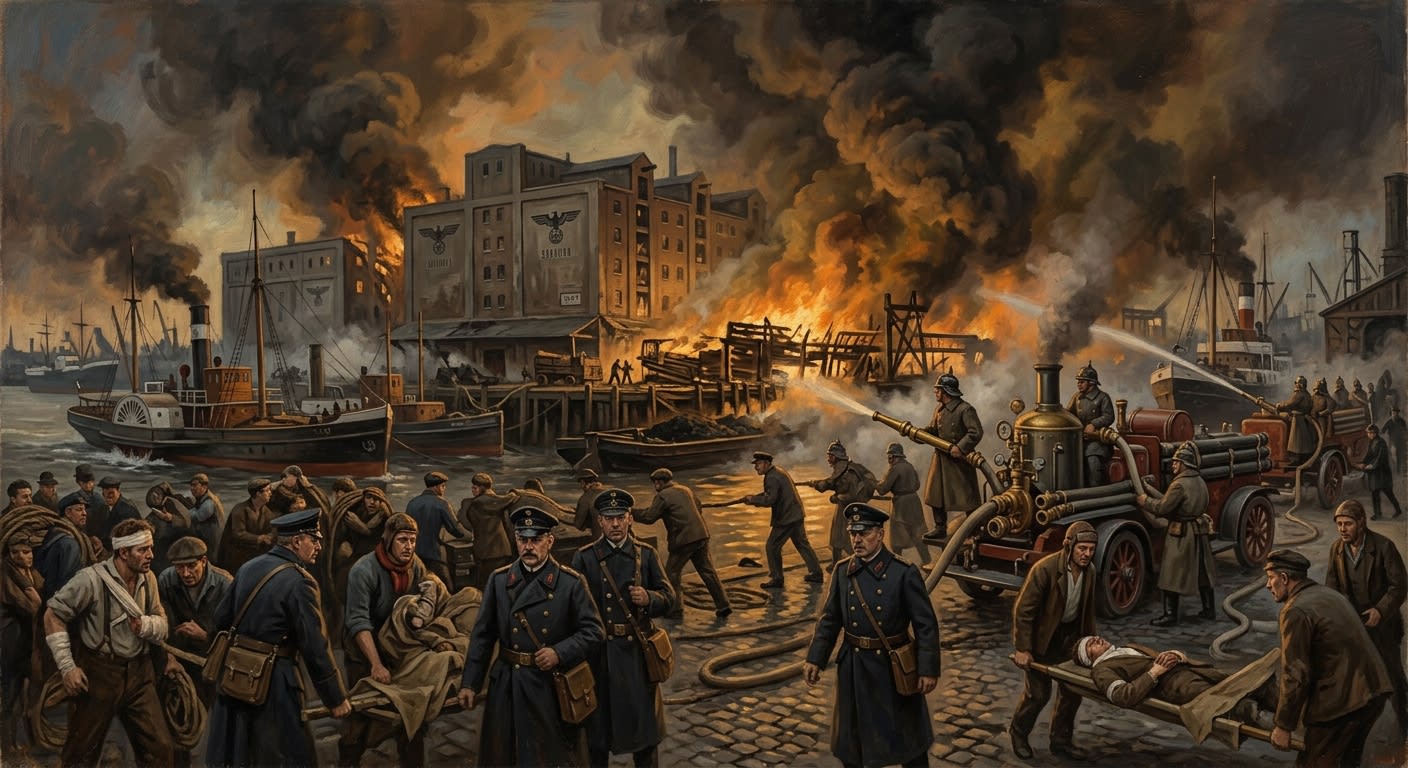
Dock Fire of Hamburg
Four blocks burned because brick was cheaper than obedience until it was not
The A.S. 189 chrismole warehouse fire in Hamburg killed 312, burned four dock blocks, stopped labour for eleven days, and made a seven-per-cent hazard supplement harder to seize than a relic.
Codex Ref. VII.8.10-189
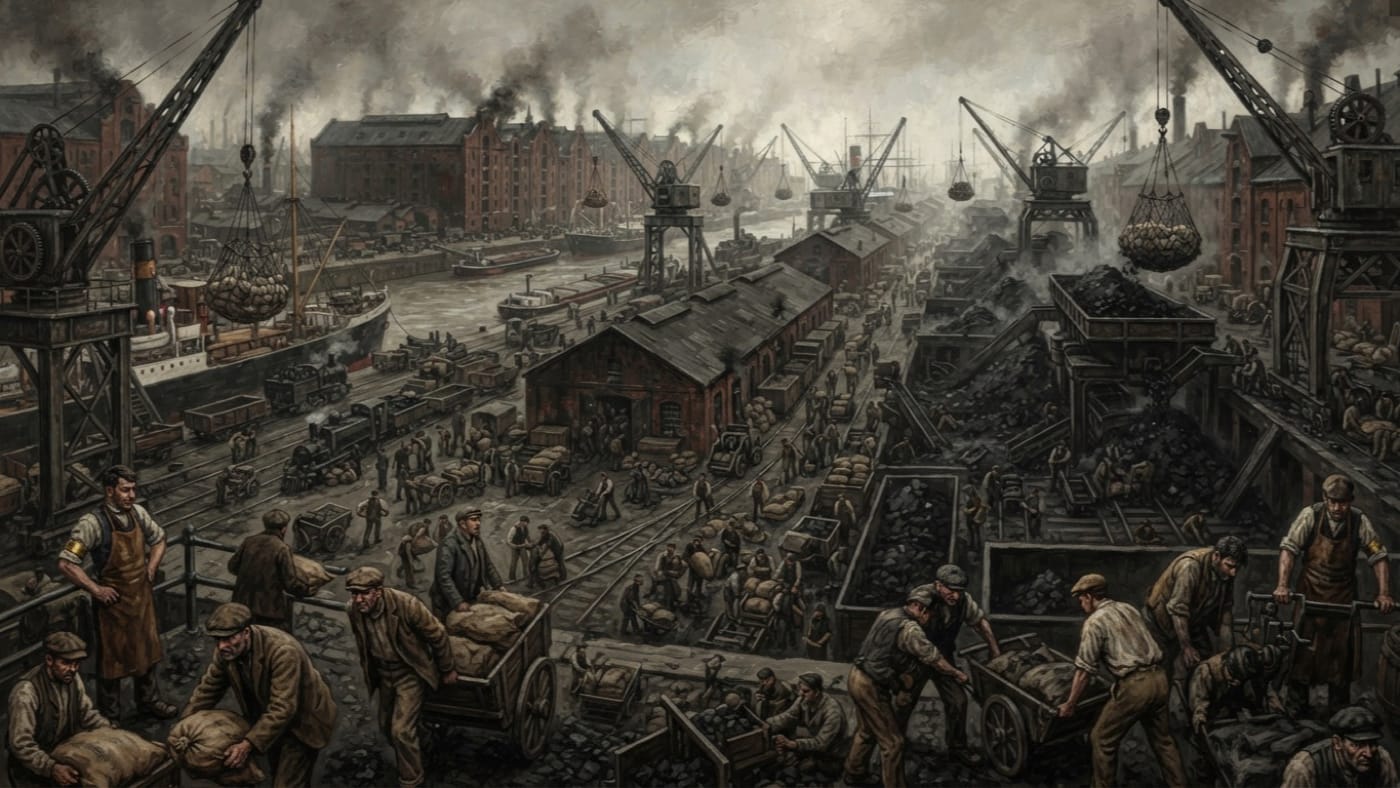
Dock Quarter
Where the northern war waits for the men beneath the crane
Hamburg's western and central Elbe quays turn North Sea cargo into northern-front survival. The Bureaus issue orders; the guilds decide when grain, coal, and military freight actually move.
Codex Ref. II.4.09-006
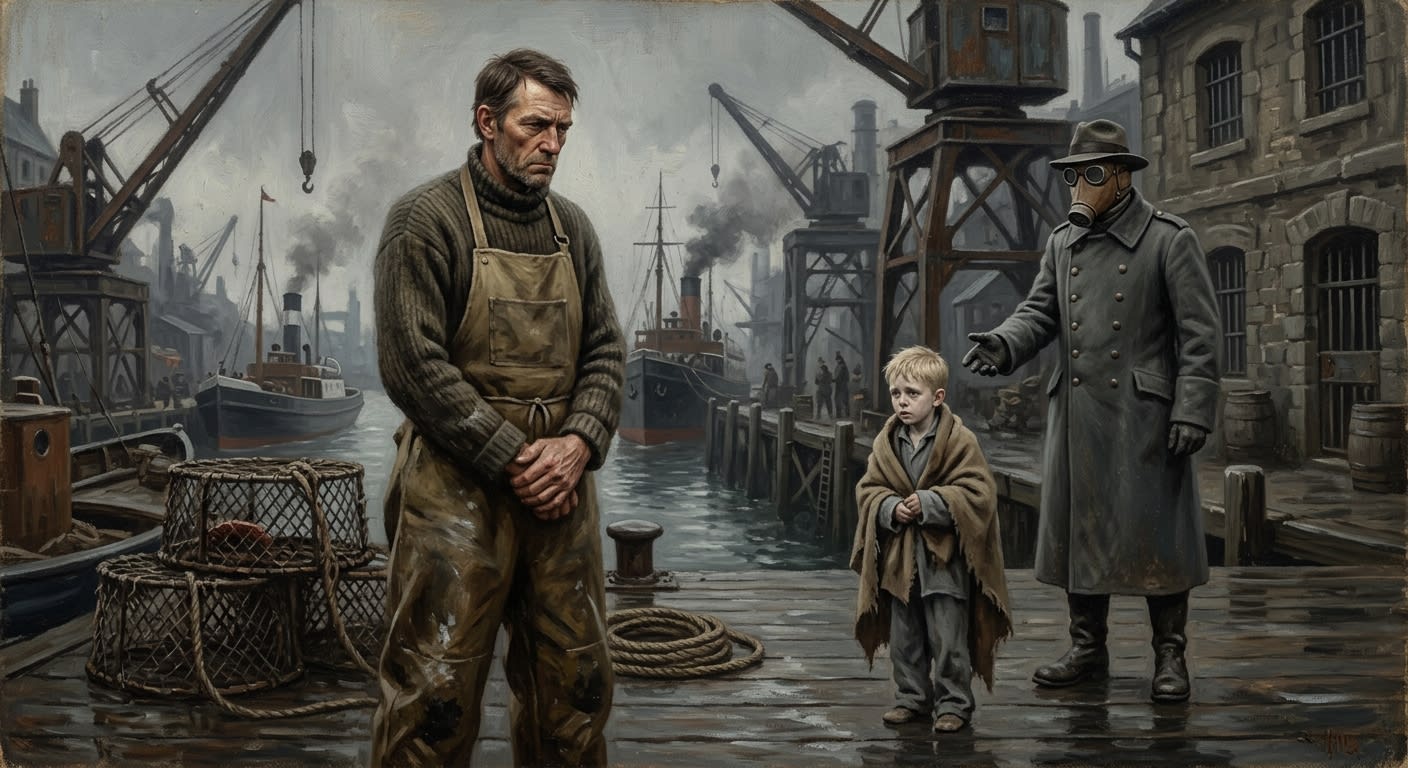
Dreher
A father disputes the archive and the sea pretends to give back what it took
Dreher, fisherman of Bastion-Königsberg's Harbour Quarter, refused the boy returned by the Grey and thereby made fatherhood a legal problem.
Codex Ref. III.2.01-040
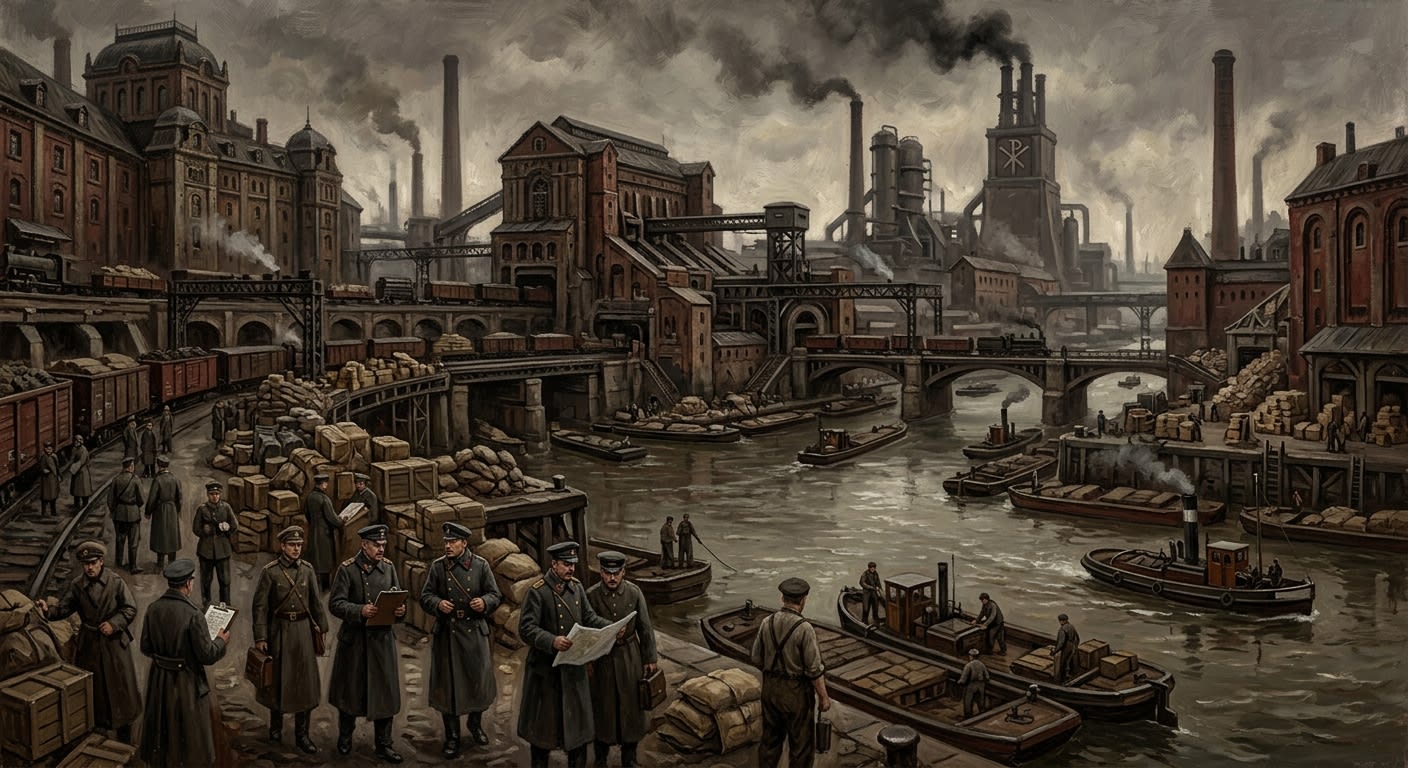
Dresden
The polite overflow basin where delay learns manners
Dresden is the Synod's Elbe side-throat: porcelain, rail yards, transfer rooms, polite stoppages, and every overflow Kanzleiburg prefers to call supplementary.
Codex Ref. II.4.09-201
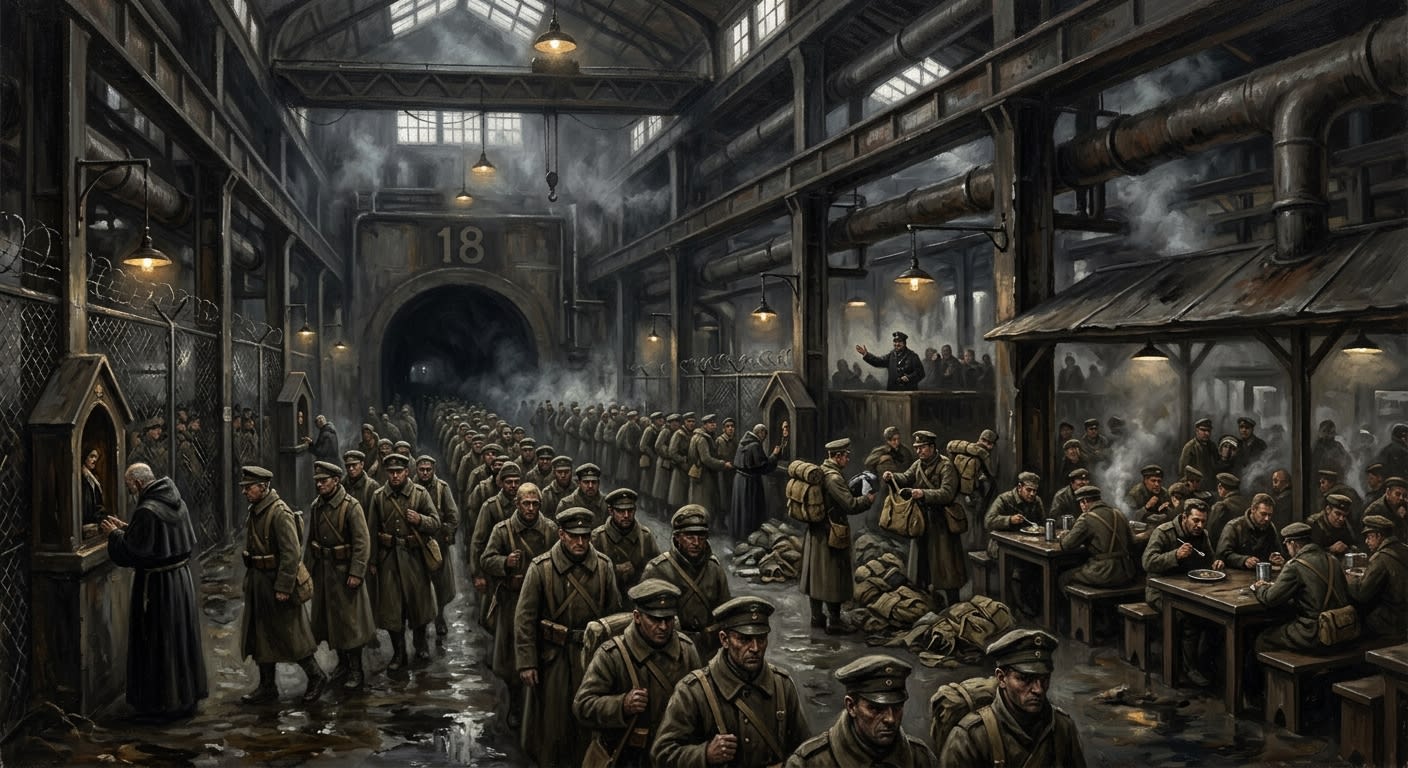
Durchgangskaserne
Munich's barracks of passage, where men are counted before the Line counts them again
Munich's Durchgangskaserne processes forty thousand soldiers a month through intake queues, kit rooms, mess halls, doctrinal briefings, and the last unofficial blessing before Platform Eighteen.
Codex Ref. II.2.06-014
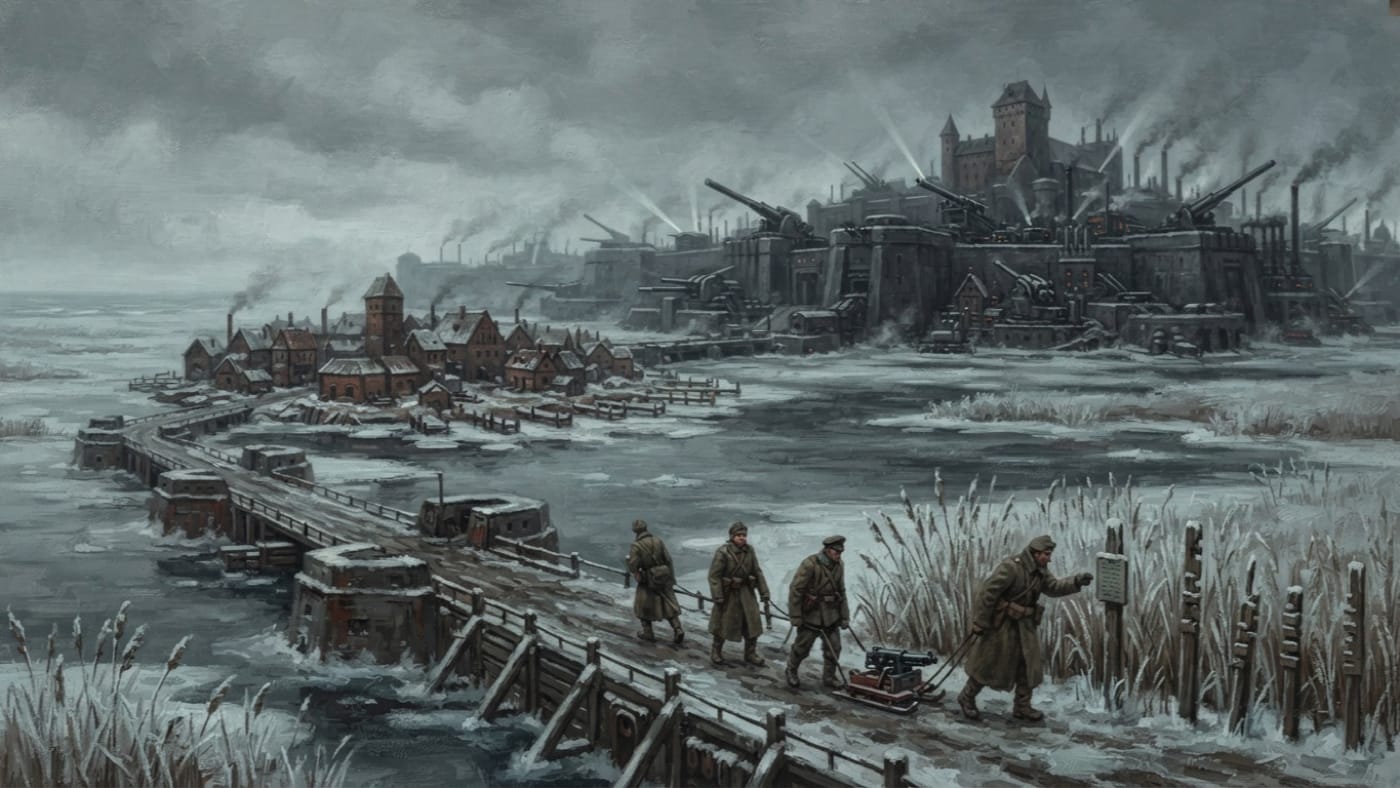
East Prussia
Where the Line Runs Out of Land and the Survey Runs Out of Courage
East Prussia holds the Baltic end of the Sagittal Line: Königsberg, the Masurian maze, and the villages that feed the walls. The Bureau can count its stamps. It has yet to count the region.
Codex Ref. II.4.07-002
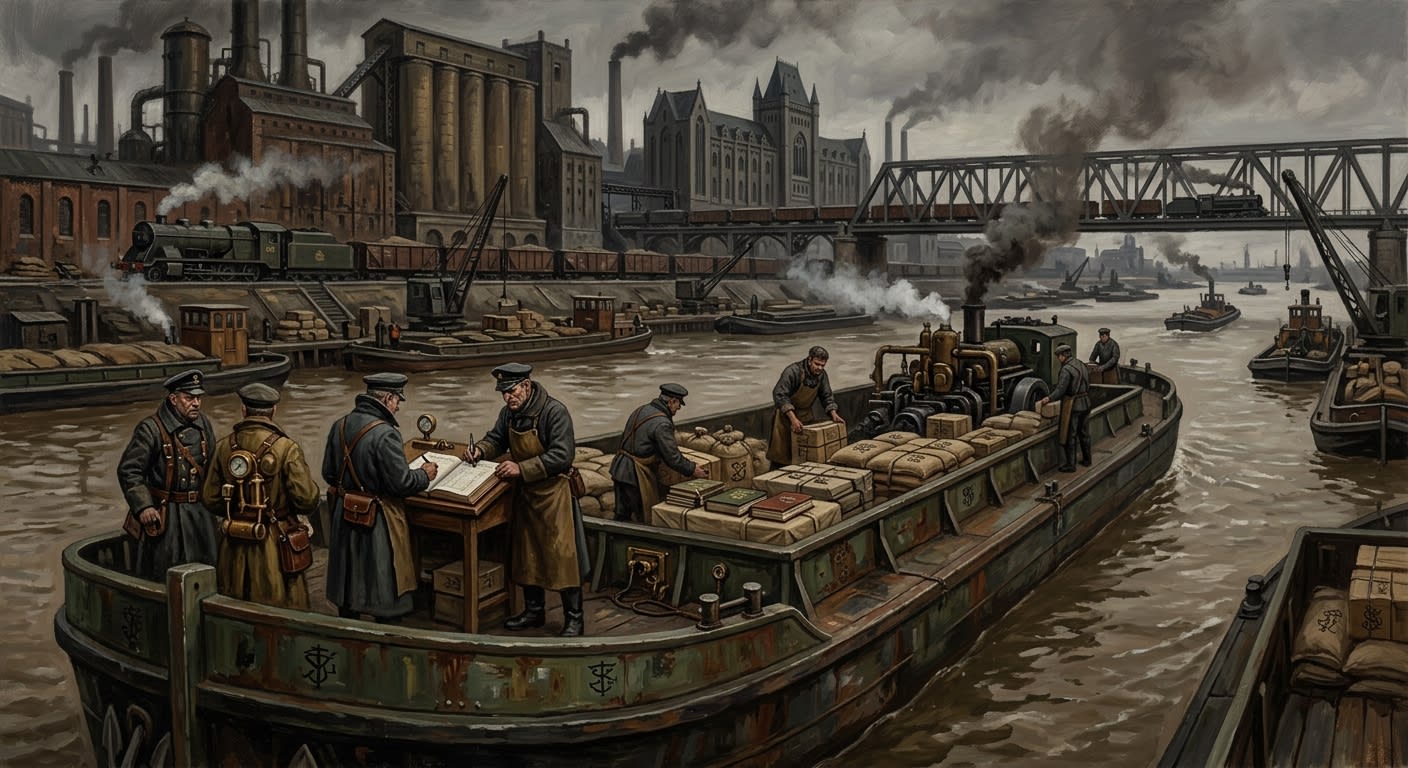
Elbe
The northern river that makes hunger, coal, and failure countable
The Elbe is the northern Synod's wet ledger: barge route, rail supplement, mud-law court, and the river that decides how long the north eats.
Codex Ref. II.4.09-201
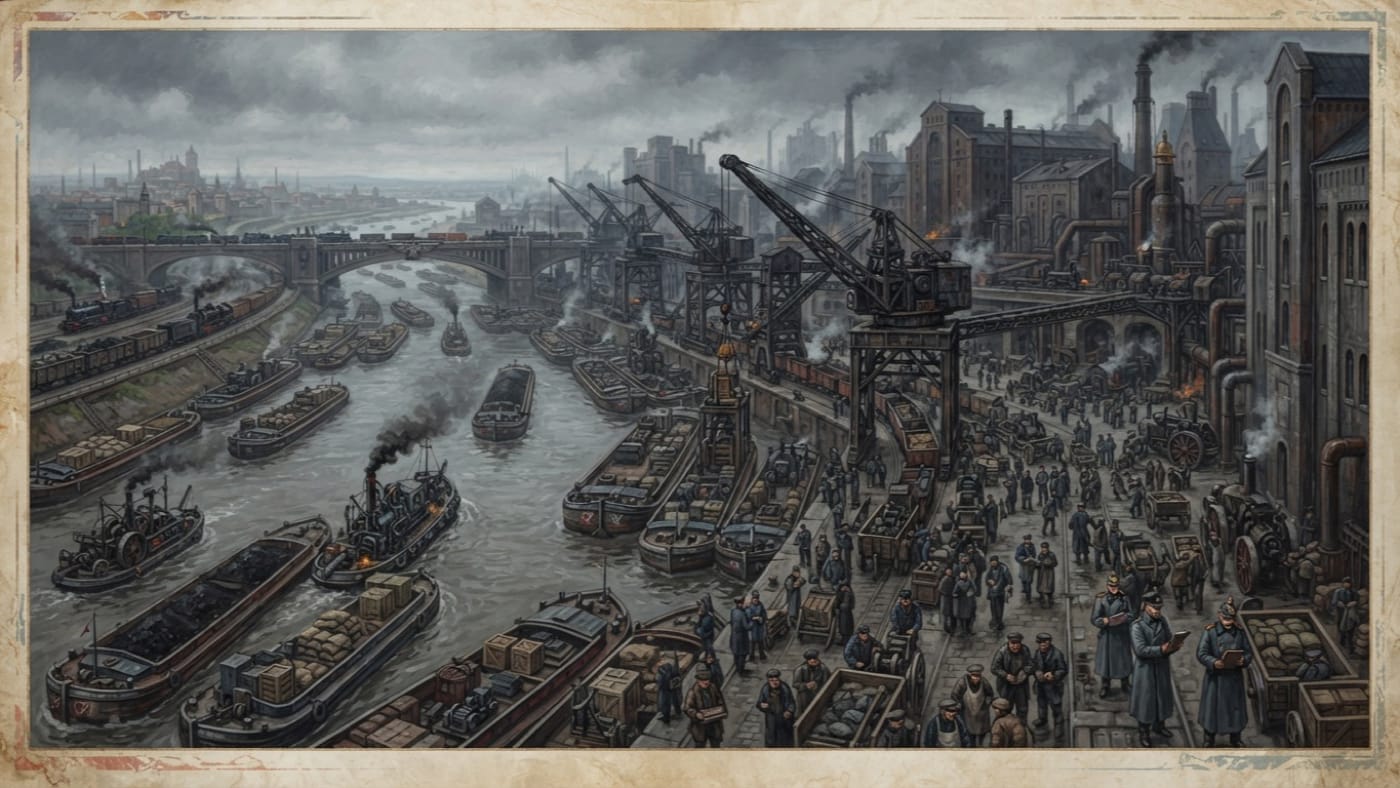
Elbe Barge Network
The river gives the northern front another path and no second mouth
Hamburg's waterborne supply route carries bulk freight to Magdeburg and Dresden for transfer to rail. It stocks winter reserves and relieves the northern corridor when the railway falters; both routes still depend on the same mouth.
Codex Ref. II.3.05-008
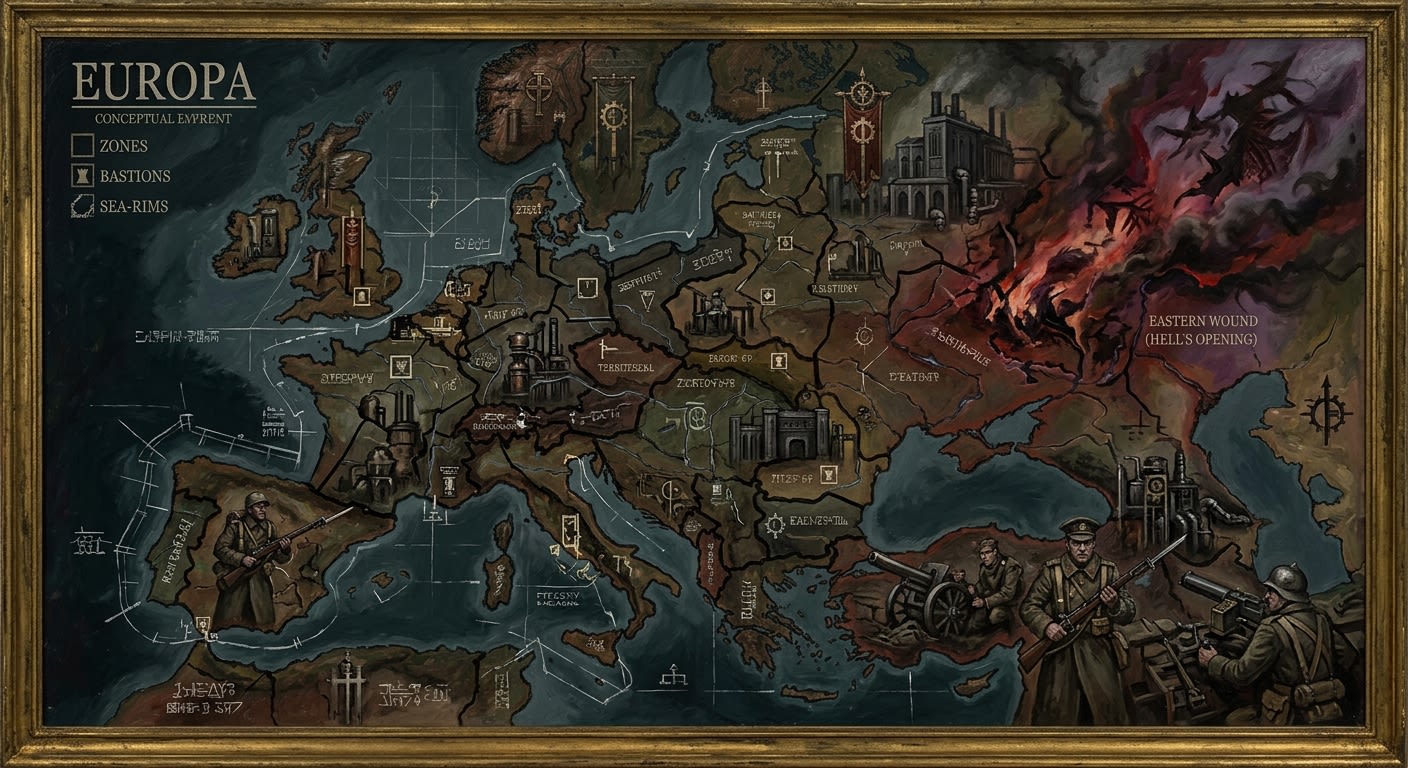
Europa
The continent as filed, wounded, taxed, and made obedient enough
Europa is not whole; it is the continent filed into zones, bastions, sea-rims, independent nuisances, and the eastern wound Hell keeps open.
Codex Ref. II.0.00-201
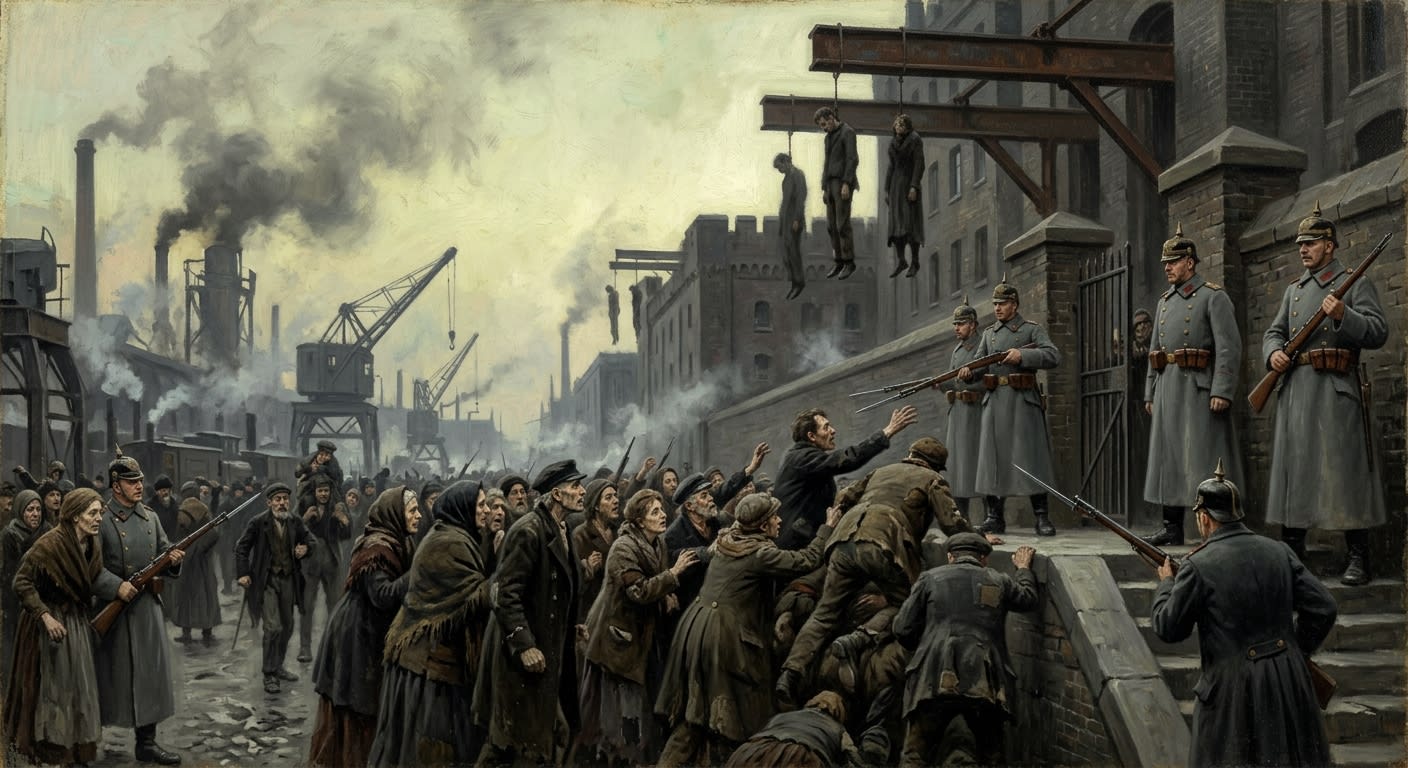
Famine of A.S. 65
Two per cent mercy, measured against an empty sack
The A.S. 65 Hamburg famine and nine-day riot came as the northern throat became indispensable: failed harvests, due tithes, Berlin troops, public hangings, and a two-per-cent mercy too small to eat.
Codex Ref. VII.4.21-065
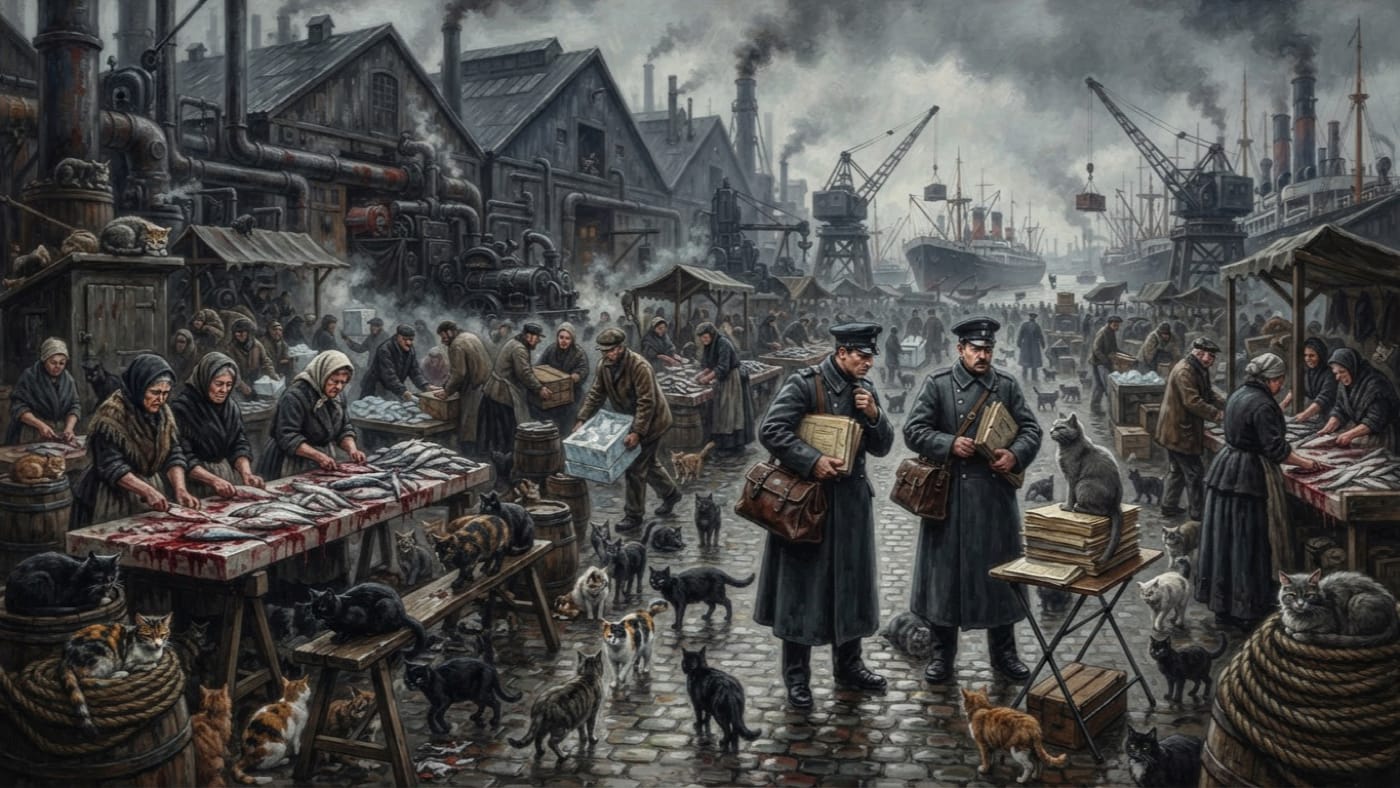
Fishmarket cats
The Ledger can survive one blank line
A.S. 201 survey of Hamburg's Fishmarket cats: ordinary animals, unregistered with Records, estimated by the Hamburg account at forty thousand. A census failed in A.S. 178; their theology remains opaque.
Codex Ref. IV.2.01-001
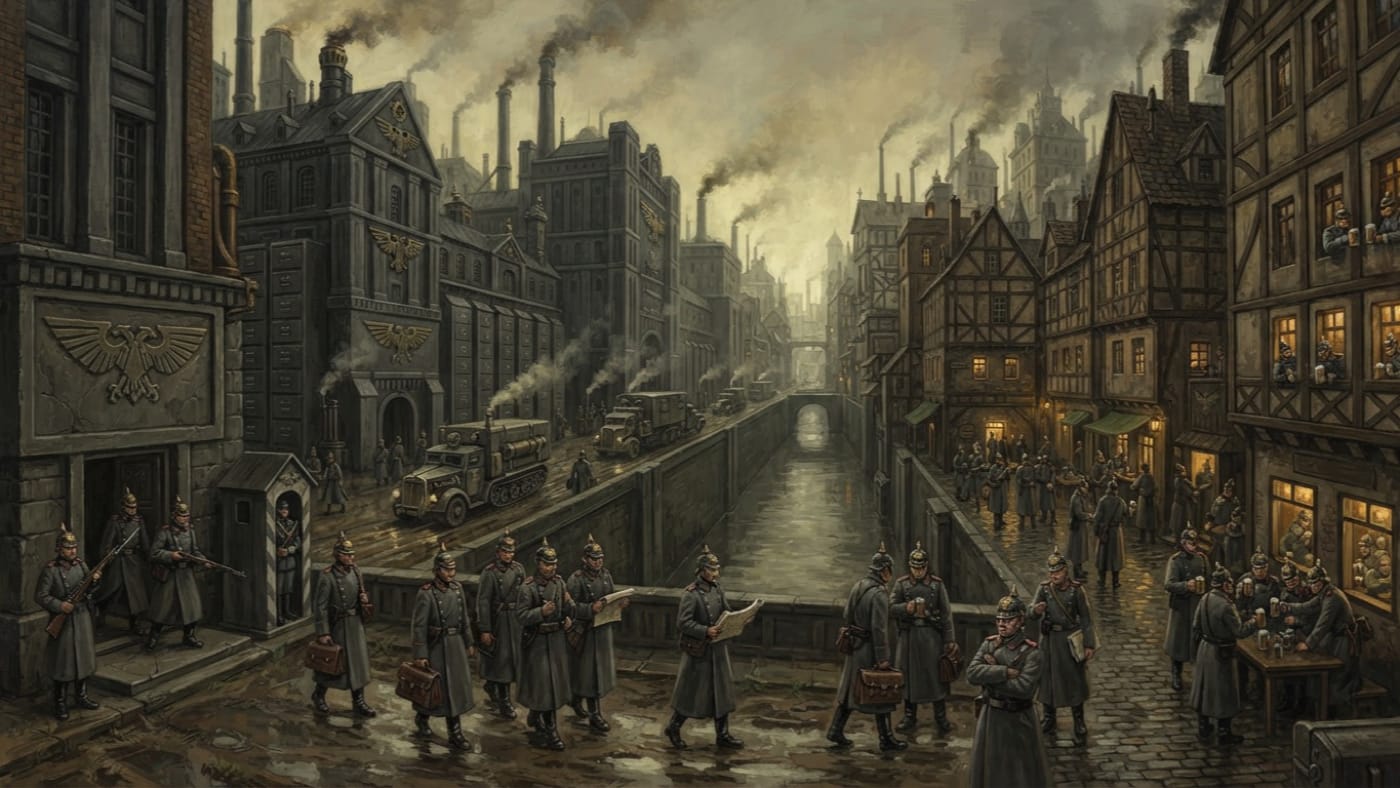
Garrison Quarter
Orders at the desk, reconciliation at the beer-hall
Kanzleiburg's officer district keeps northern command in ink and depends on Old City beer-halls for what regulations cannot settle. In A.S. 140, its petition made enforced sobriety an operational deficiency.
Codex Ref. II.4.09-201
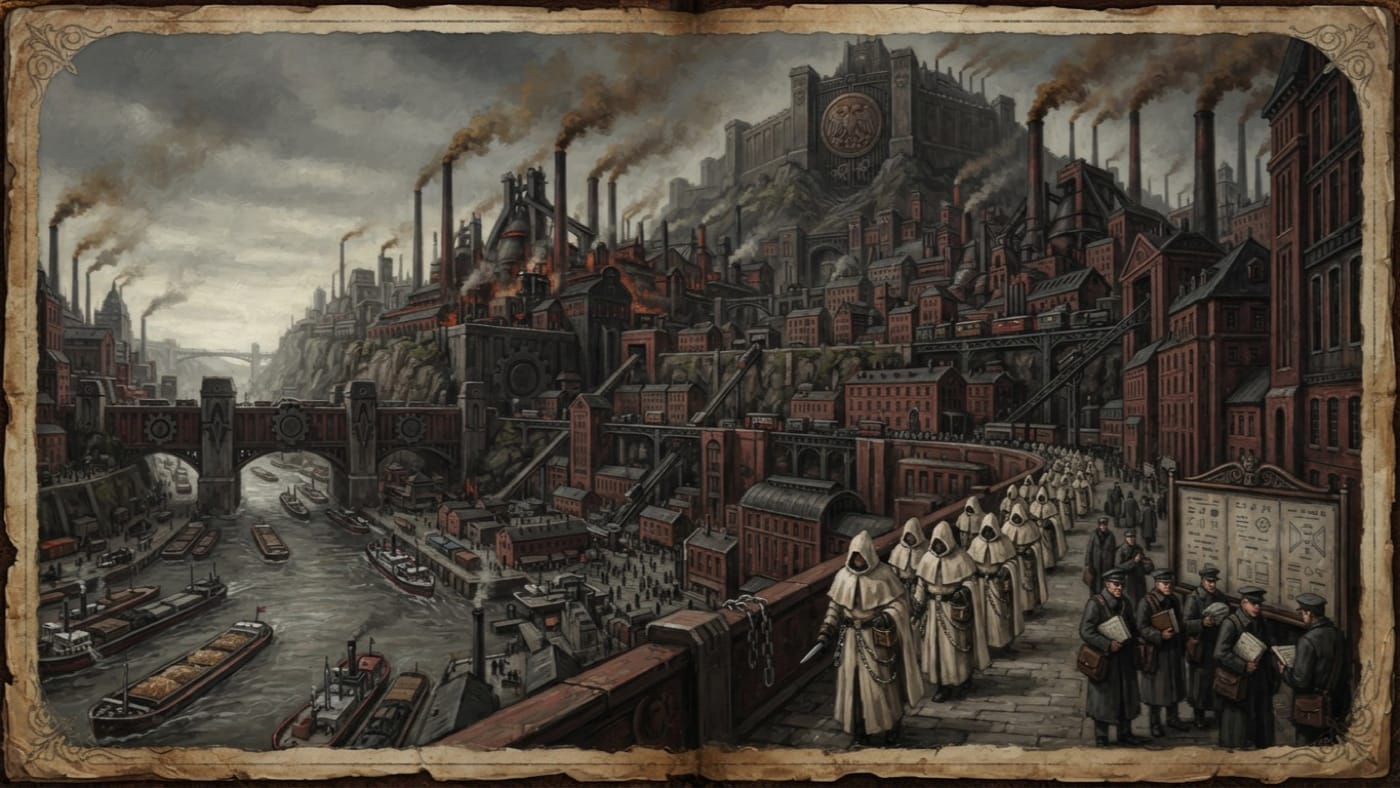
Germania
The Synod's most accurately spelled region
Germania is the Synod's procuratorial heartland: rivers taxed, furnaces singing, presses corrected, and schools teaching words their grandparents have forgotten to miss.
Codex Ref. II.6.02-201
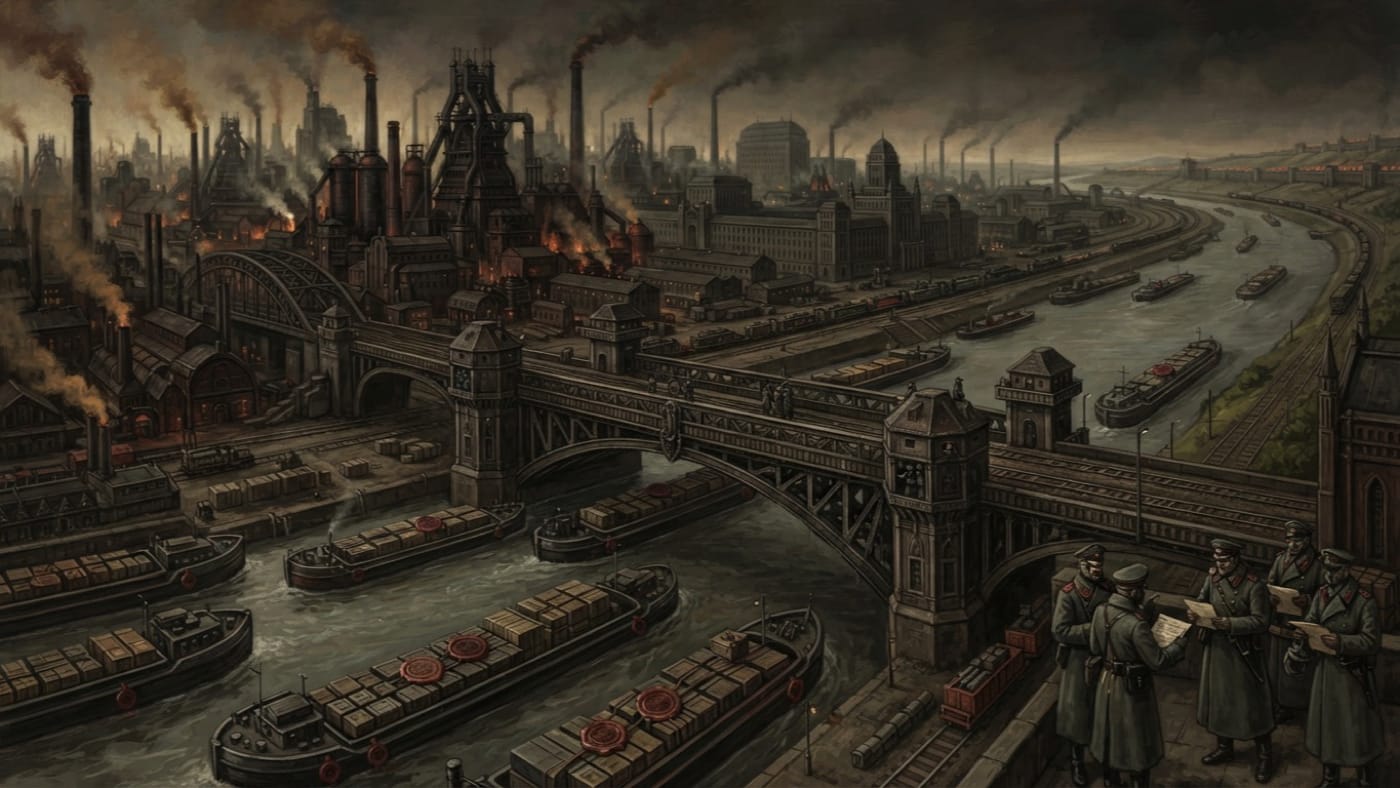
Germany
The heartland that supplies the frontier and answers to several seals
Germany in A.S. 201: the Zone Two heartland of taxed rivers, singing furnaces and military depots. The old borders were erased; the territory still supplies the frontier, and every cargo requires a seal.
Codex Ref. II.6.01-201
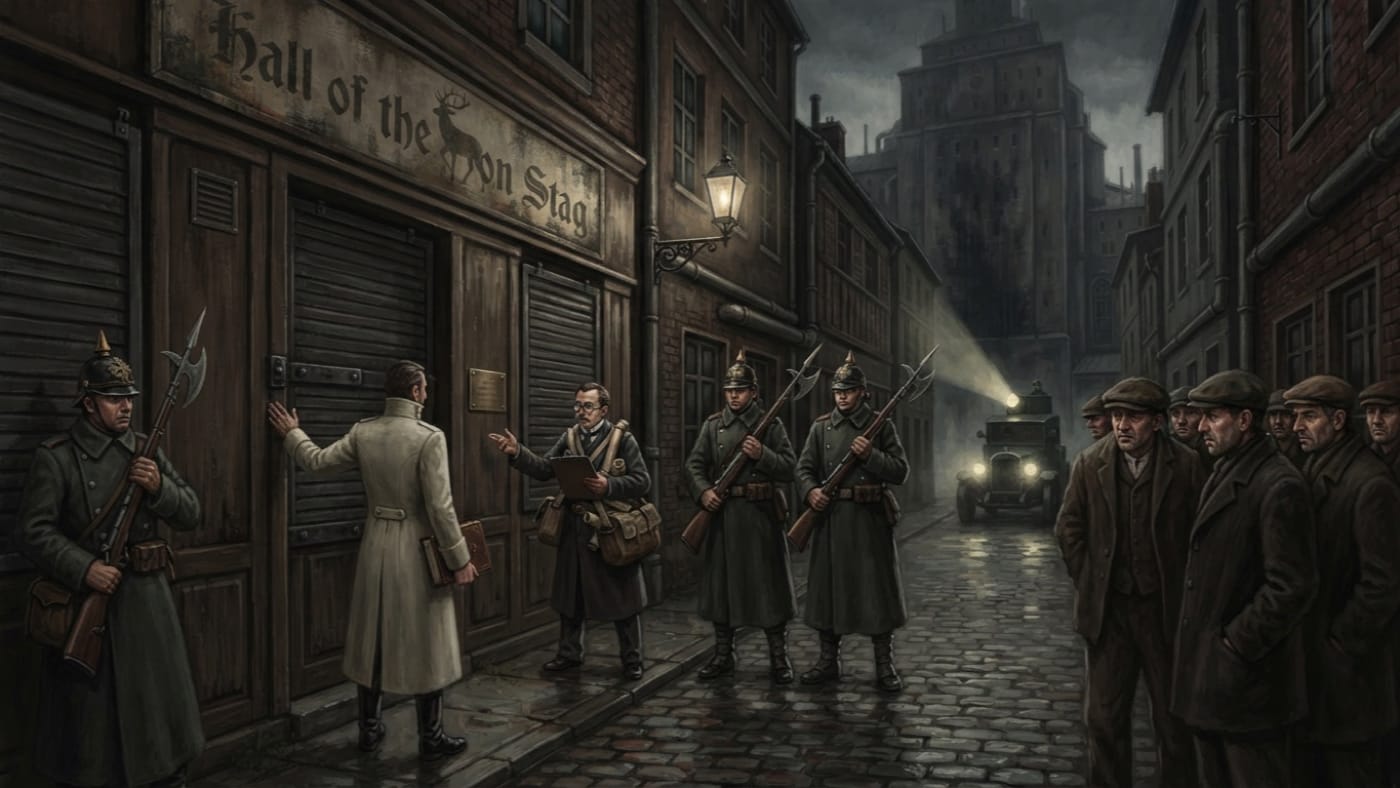
Hall of the Iron Stag
Two hundred and twelve patrons, one inconvenient question
Kanzleiburg's Old City beer-hall held 212 drinking citizens when Purity came in A.S. 140. Its proprietor asked for a fire-safety certificate; its shutters later made obedience an inconvenience the Archon could not ignore.
Codex Ref. II.4.09-140
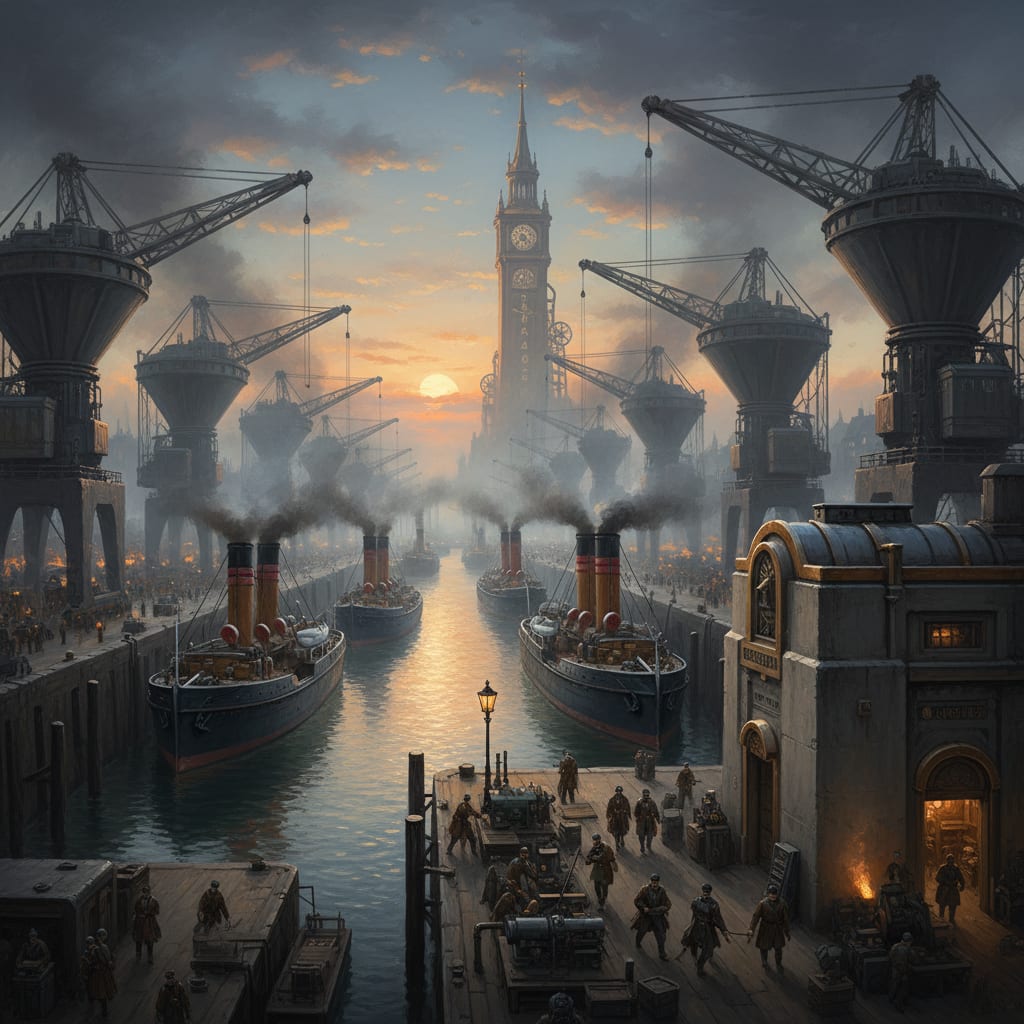
Hamburg
The throat of the northern front — and the hand around it is not the Synod's
The Synod's northern import terminal: nine hundred thousand souls at the Elbe's mouth, processing the grain and coal that keep the northern front from freezing, starving, and dying.
Codex Ref. II.4.09-005
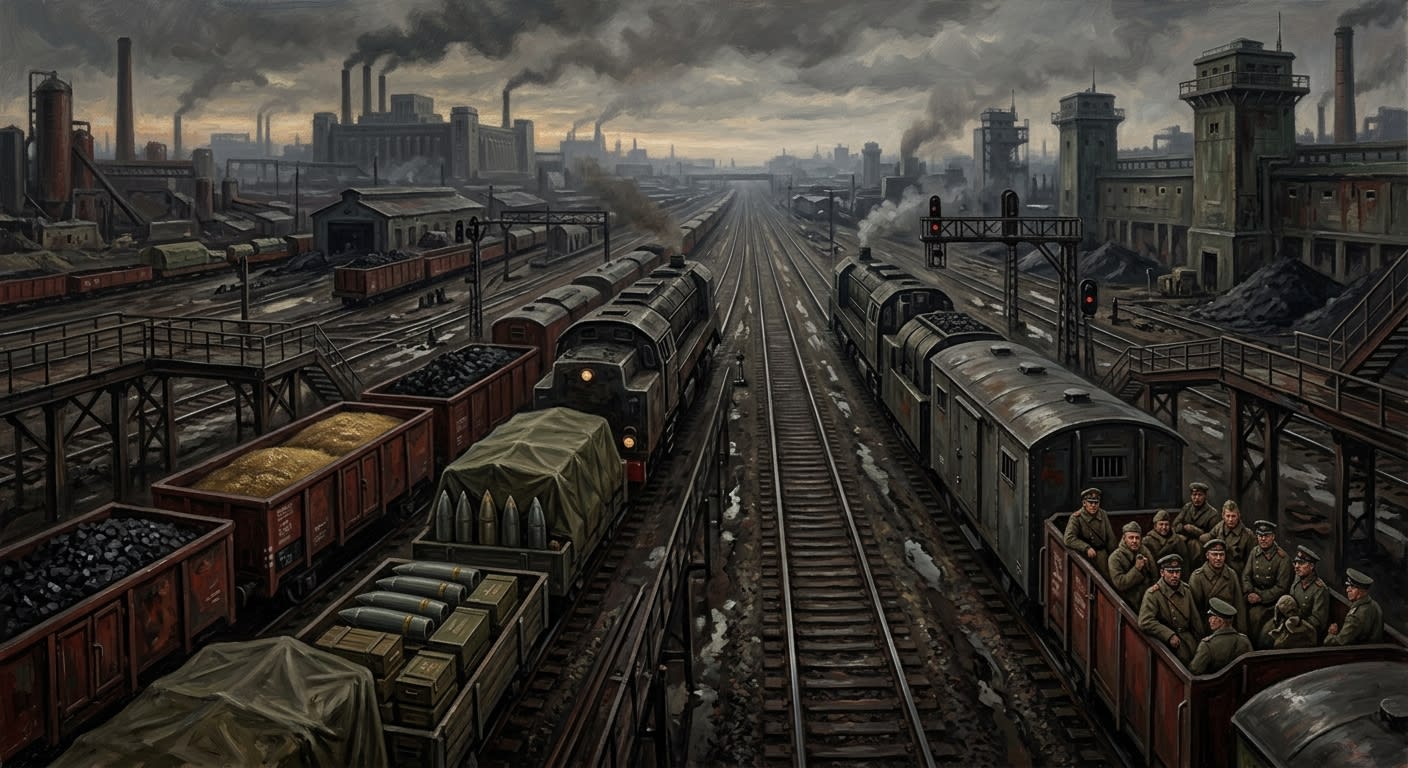
Hamburg-Kanzleiburg Line
The iron throat by which the northern front is fed
The double-tracked 280-kilometre rail throat between Hamburg and Kanzleiburg carries grain, coal, shells, orders, and the northern front's daily permission to continue breathing.
Codex Ref. II.3.05-007
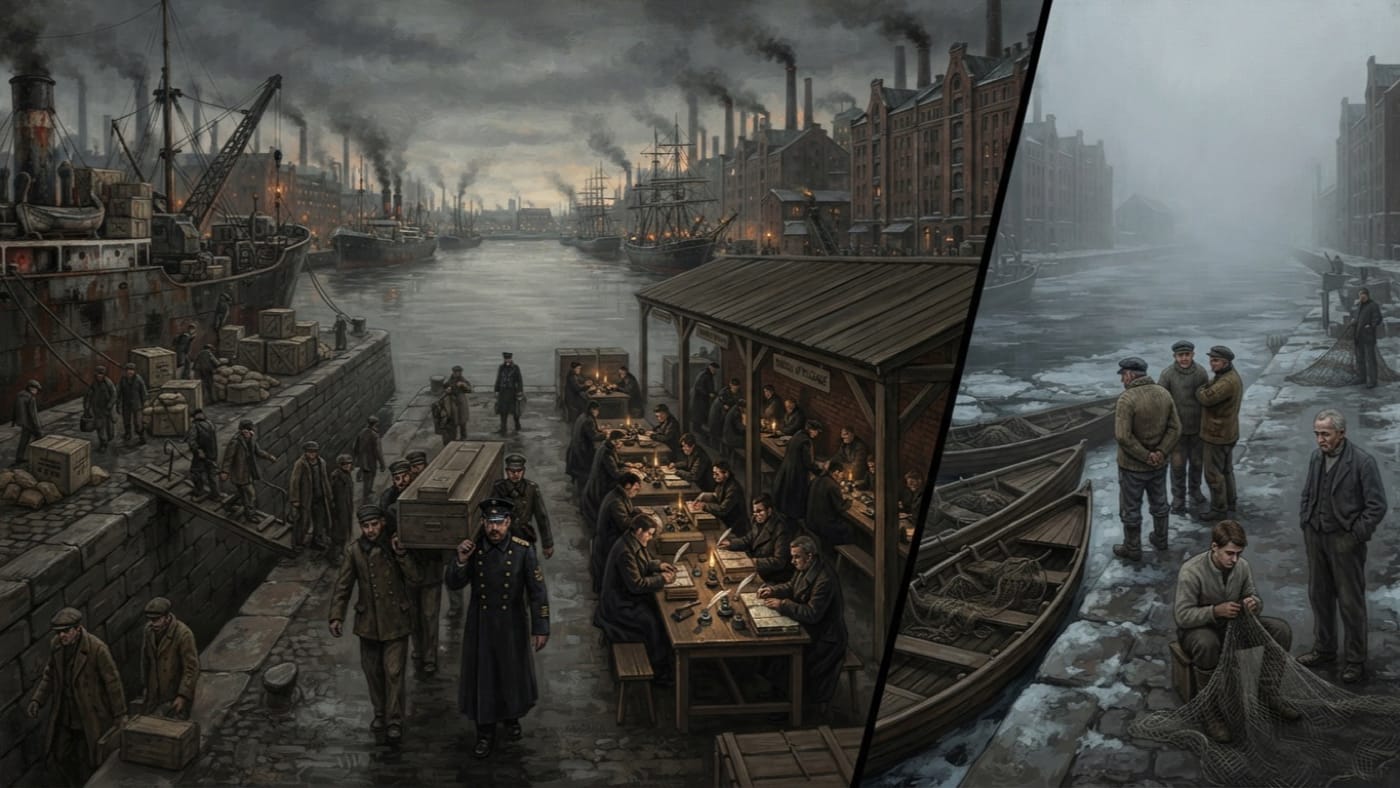
Harbour Quarter (Königsberg)
The clerks count the cargo; the fishermen watch what comes back
Königsberg's old merchant port supplies the northern bastion until winter seals the basin. Passage counts every vessel; the fishermen keep their own reckoning of what the Grey returns.
Codex Ref. II.4.07-201
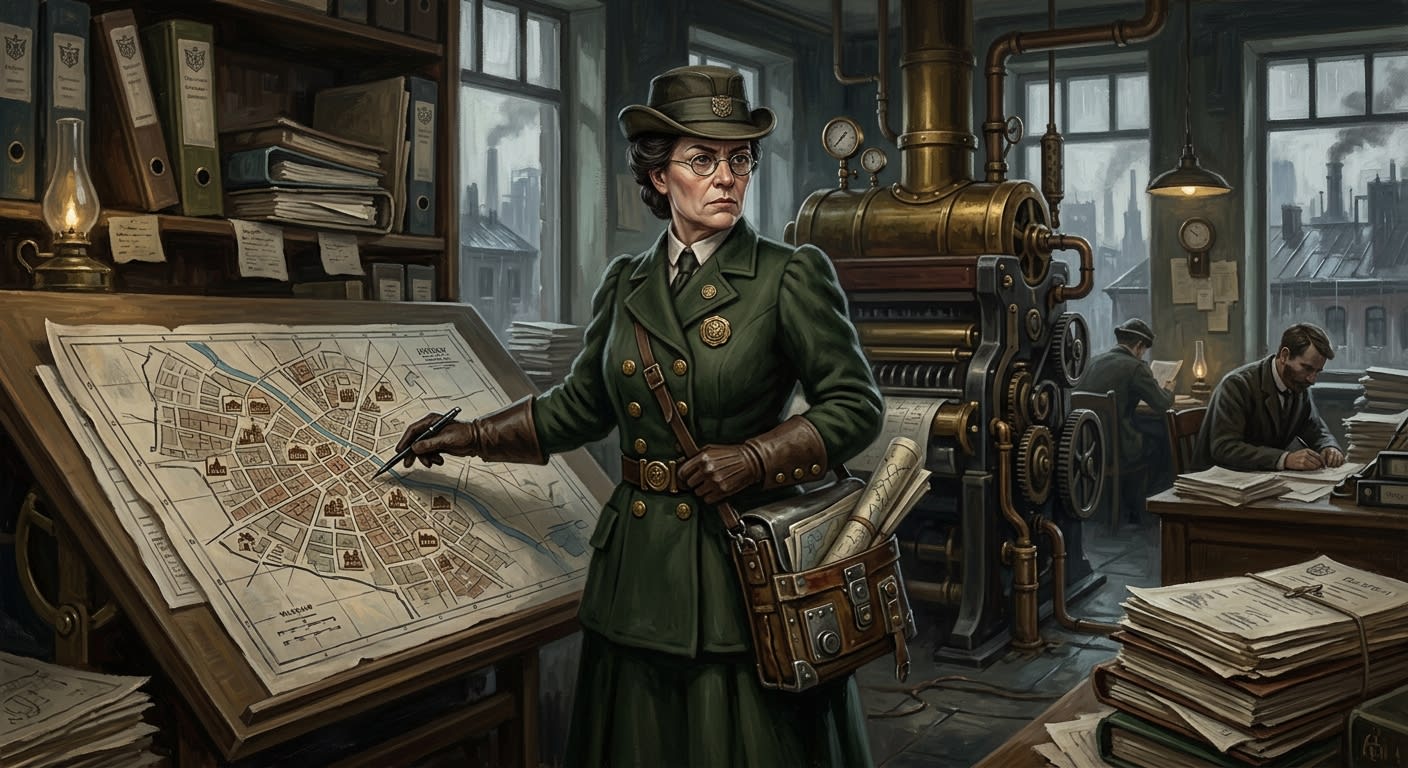
Herta Stoltz
The woman who made refusal resemble arithmetic
Herta Stoltz, Warsaw's Bureau of Settlement Resident-Director, has spent nineteen years declining false readiness, revising Standing Order 14-W/3, and teaching maps to admit bakeries.
Codex Ref. III.2.01-152
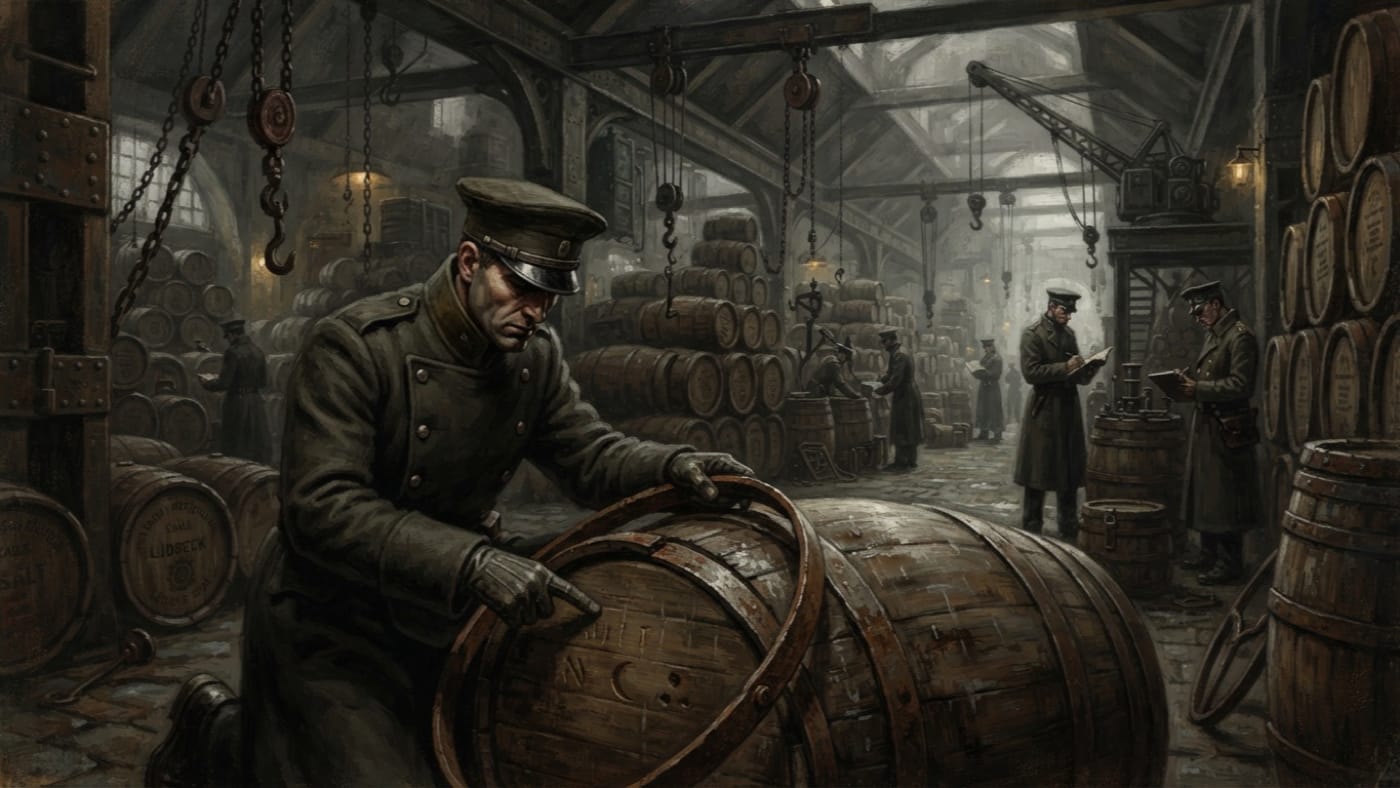
Hoop Codes
The private sign is forbidden; its approved shape is required
Lübeck's coopers wrote route memory beneath barrel hoops. Four meanings are recorded; the full grammar is not. After the Year of Smoke, private signs were prohibited and old shapes acquired respectable inspection names.
Codex Ref. XIII.1.26-004
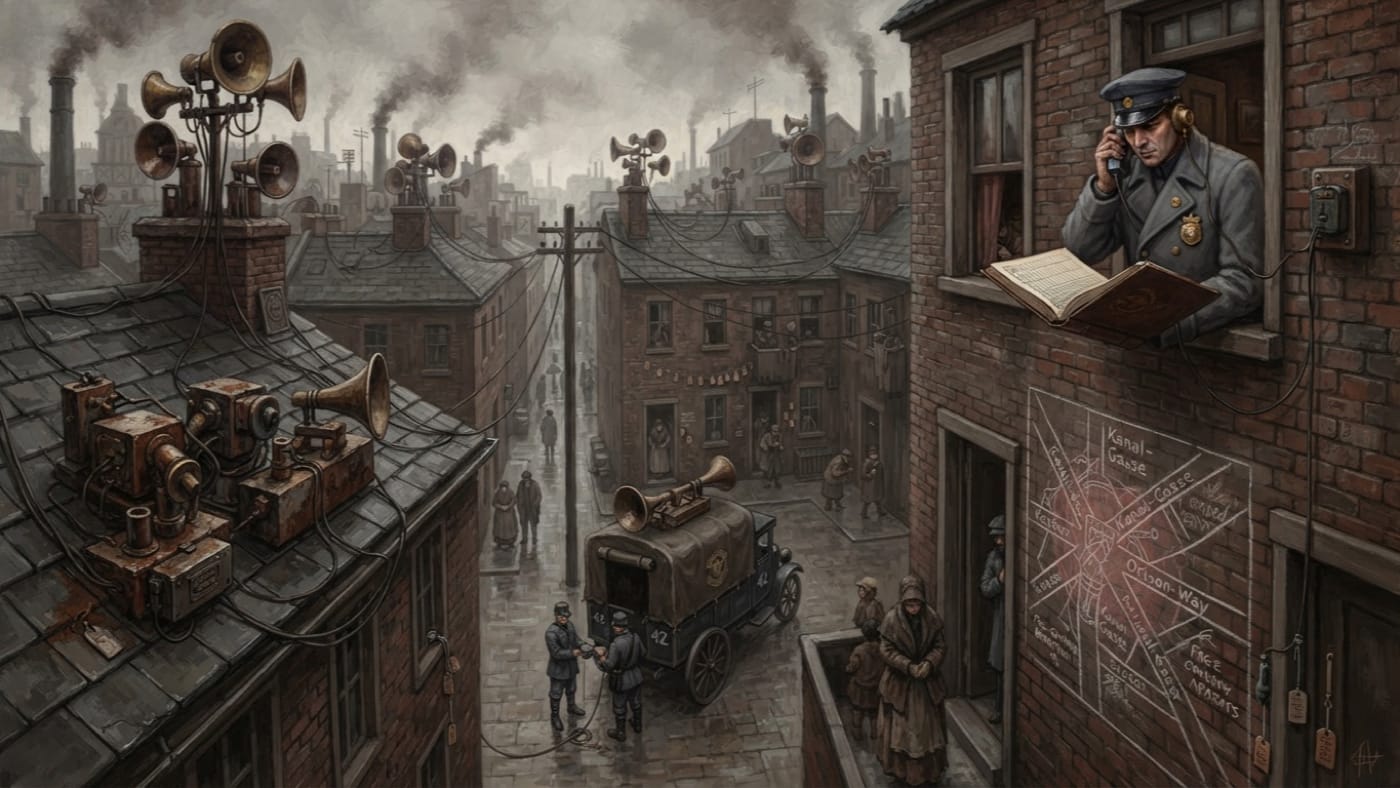
Hornline Reforms
Every district shall hear; every household shall answer
The A.S. 150 reforms made sermon coverage a district obligation, installed rooftop shrines, required temporary relays, and joined reception checks to household rolls. Silence acquired a ledger.
Codex Ref. VII.2.10-150
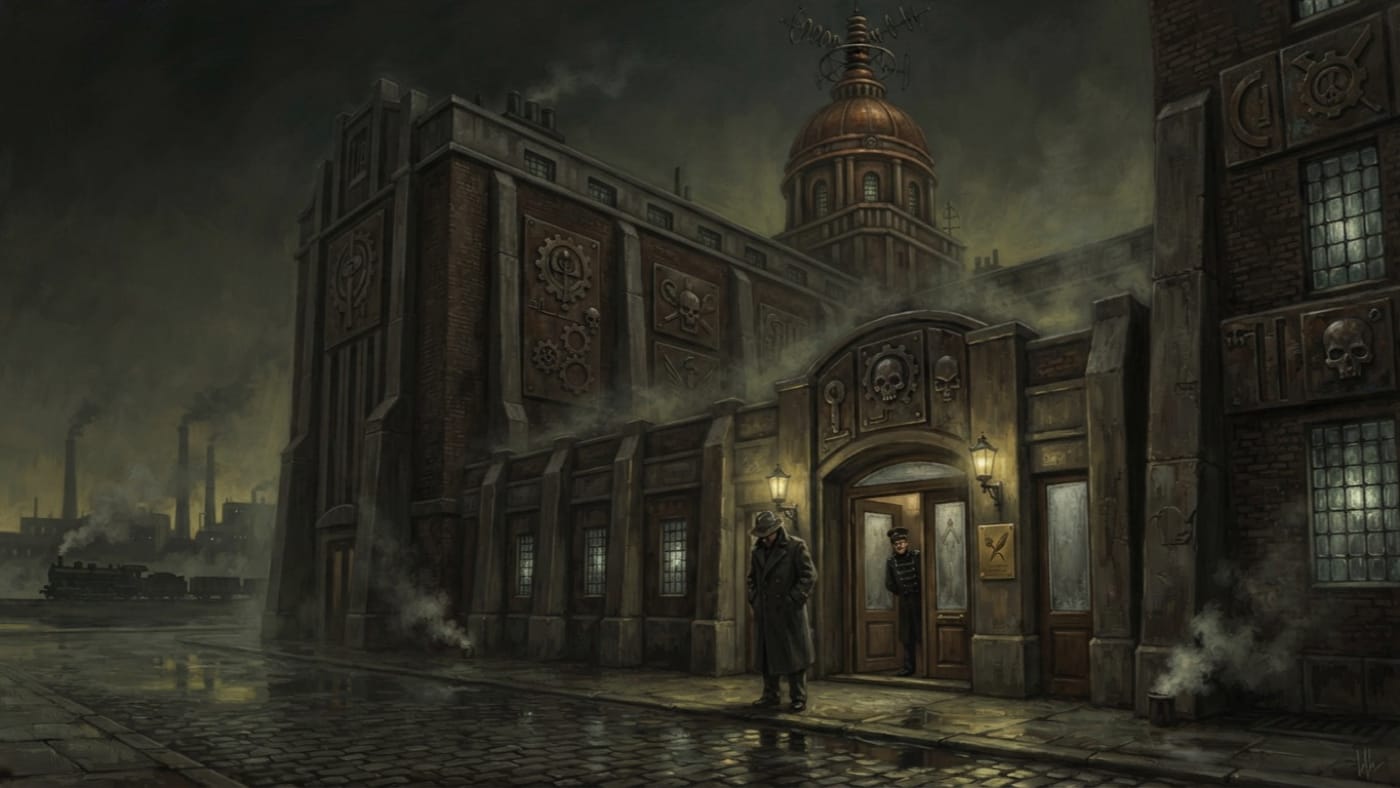
Hotel Sigismundus
Pilgrimage's waiting room on the bank that was supposed to be deaf
Pilgrimage's transit lodge in Warsaw's old city, recalled from my A.S. 197 visit: camphor, candle-wax, mildew, seven additional days, and my hearing of the Breathing on a bank that considered itself deaf.
Codex Ref. II.4.09-197
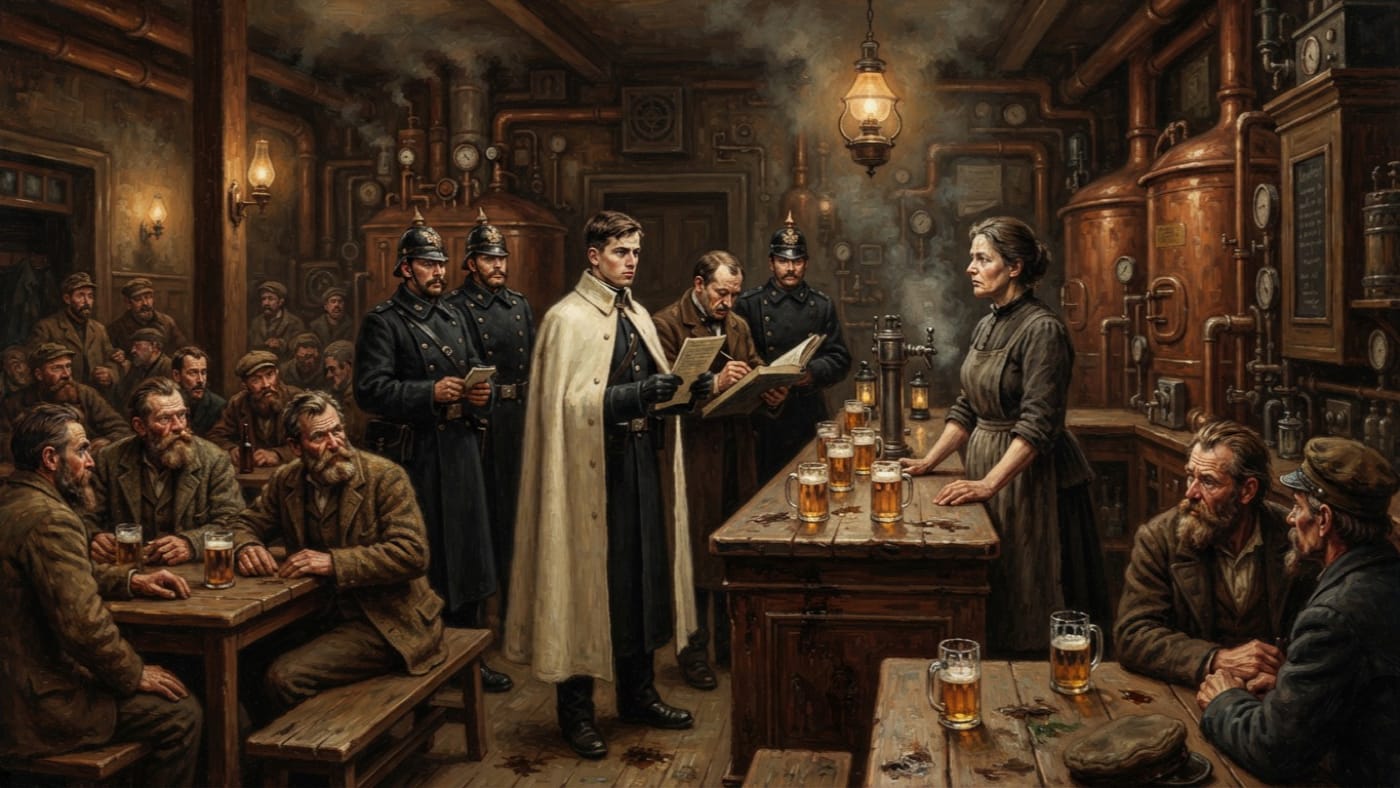
House of Eighteen Steps
Purity brought a curfew; the widow asked who would pay
An Old City beer-hall in Kanzleiburg where, during the A.S. 140 Curfew Standoff, a brewer's widow asked Purity who would pay for unfinished beer. The question survives; the inspectors' answer does not.
Codex Ref. II.3.18-140
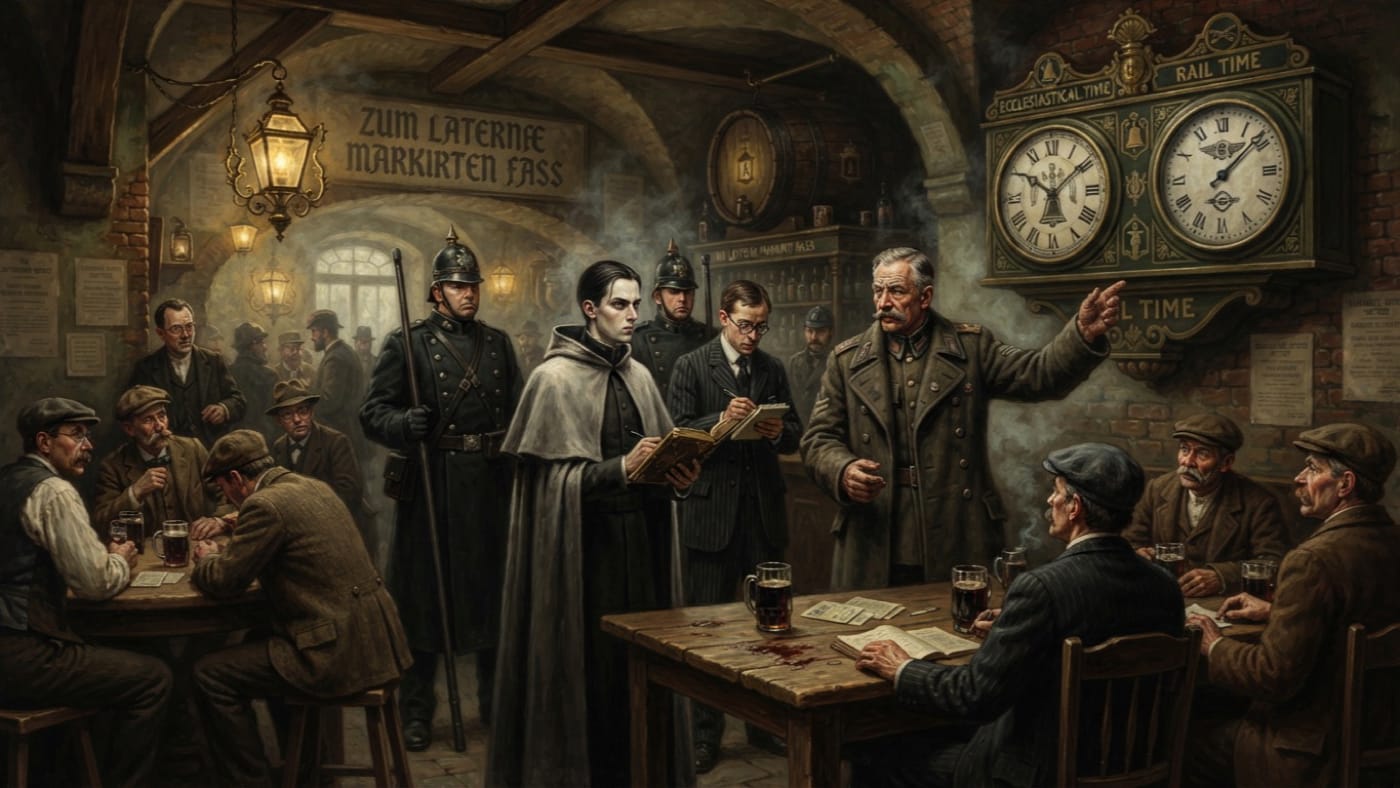
Lantern-Marked Cask
Purity named the hour; a retired major asked whose clock
An Old City beer-hall in Kanzleiburg where a retired major asked Purity which clock governed ninth bell during the A.S. 140 Curfew Standoff. The halls reopened; the question remains unanswered.
Codex Ref. II.3.19-140

Litany of Correct Reception
Seven hours of sound, and no proof of belief
Broadcast for seven hours during the A.S. 149 Quiet Quarter clearing, this Orison litany survives as a title and an attendance return. Its text is missing; the rifles are documented.
Codex Ref. VI.6.05-149
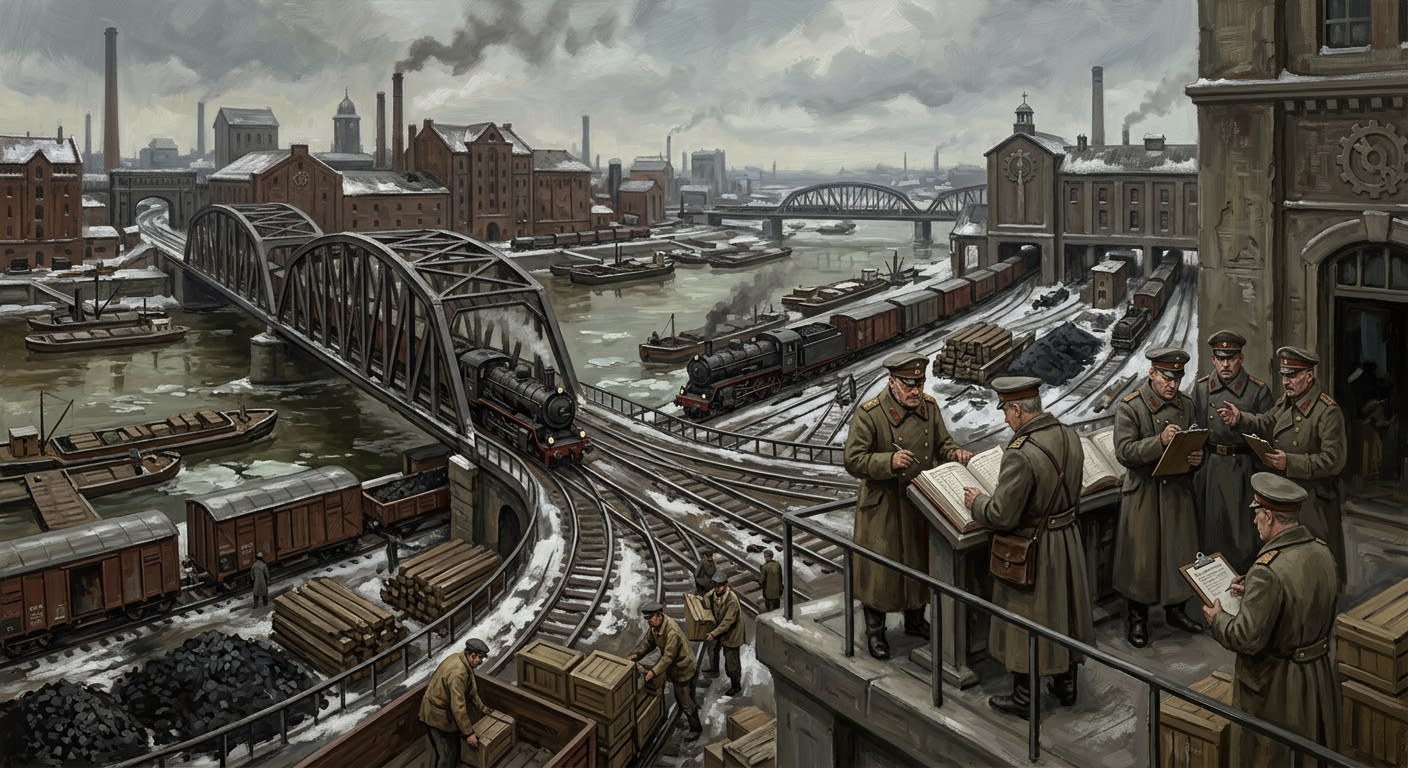
Magdeburg
Where wet cargo becomes northern survival
Magdeburg is the Elbe transfer hinge no one praises until the rail throat chokes: damp ledgers, bridge limits, winter tables, and cargo made obedient.
Codex Ref. II.2.07-096
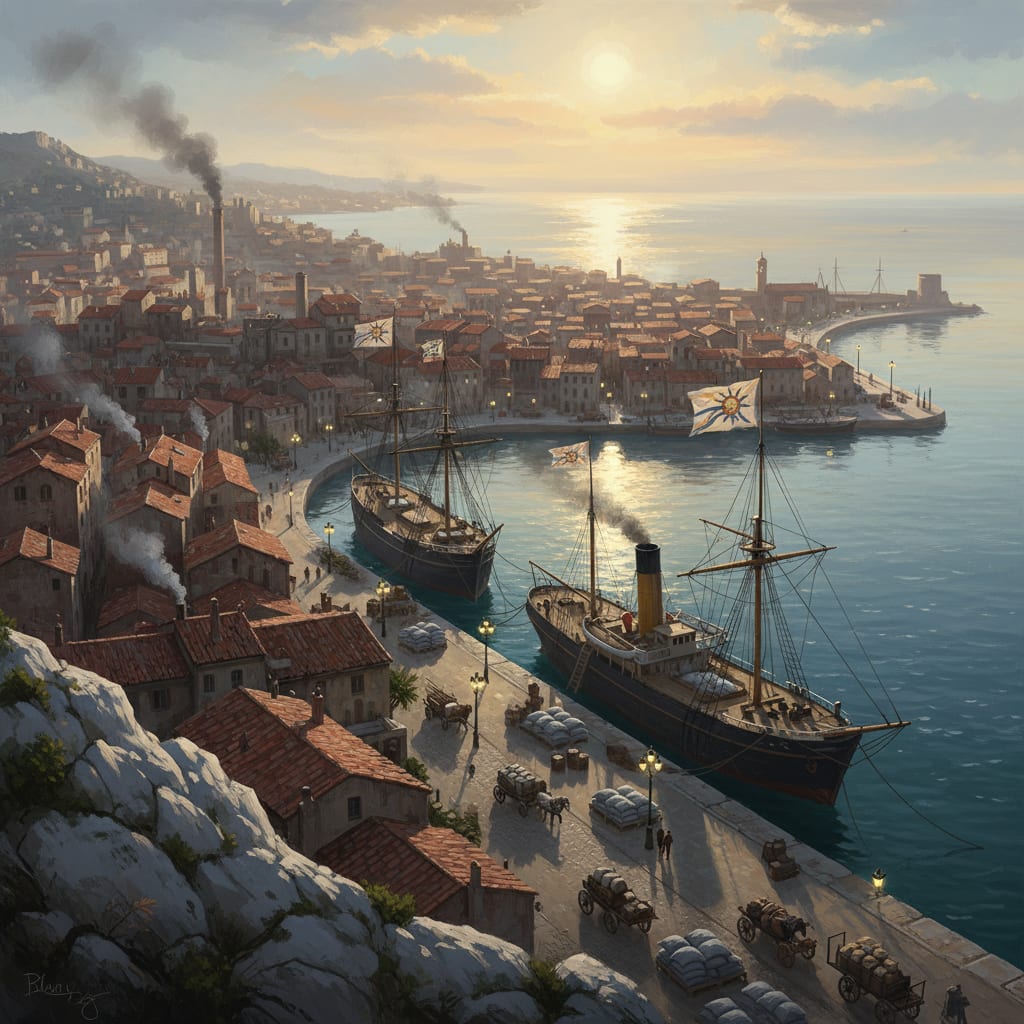
Marseille
Salt, pilgrims, and a territorial dispute the [[bureau-of-records|Bureau of Records]] has declined to arbitrate
The Synod's southern mouth — 650,000 souls between limestone and salt water, two competing Bureaus sharing a harbour they cannot agree on.
Codex Ref. II.4.09-012
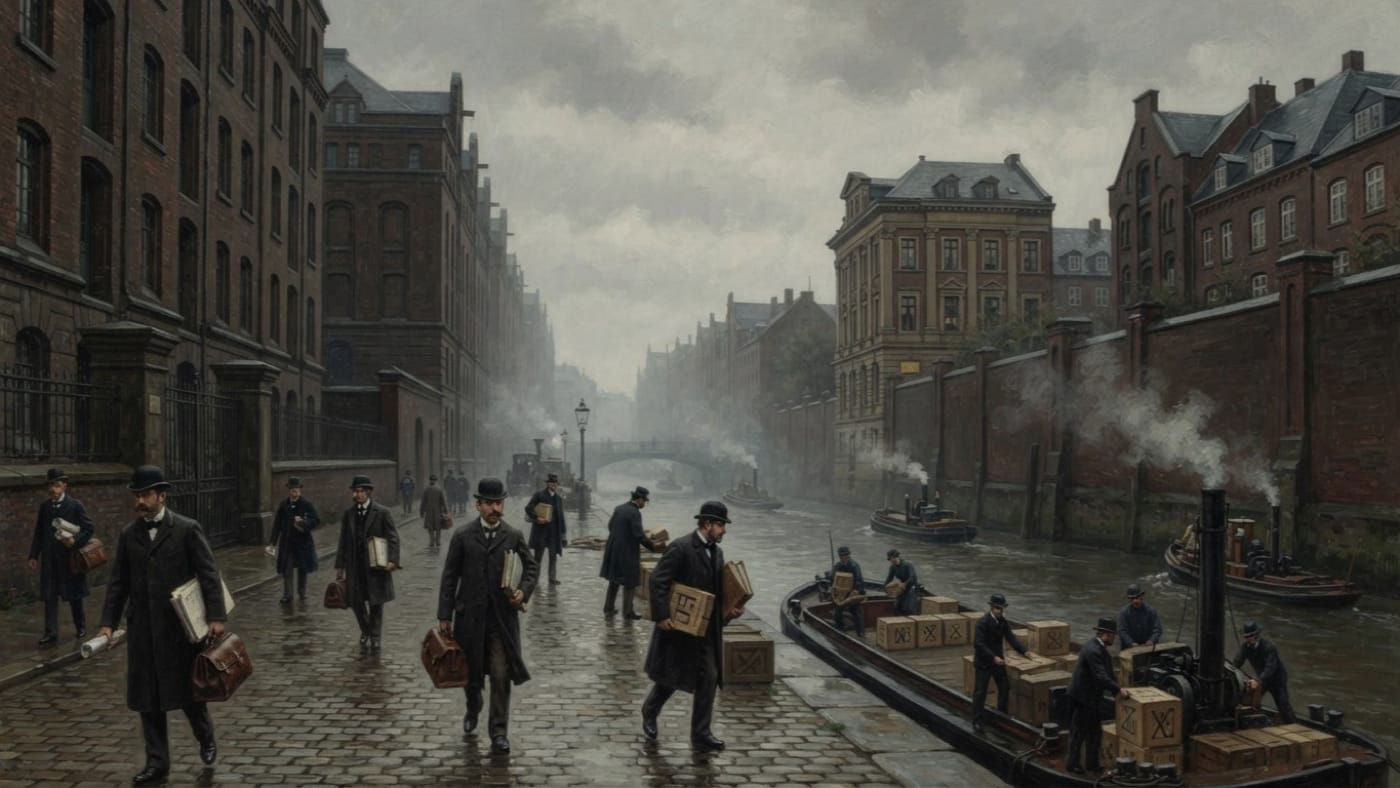
Merchant Quarter
Where the Synod has to knock
Hamburg's Merchant Quarter houses Dutch credit, British grain contracts and foreign factors behind respectable walls. The Synod governs by inspection and feeds its northern front by accepting the terms.
Codex Ref. II.4.09-007

Metric Saturation Syndrome
The holy arithmetic enters the skull and finds office space
Internal medical classification for Auditors gone to numbers: the service deformation by which citizens become compliance probabilities before they remain human.
Codex Ref. XIII.1.83-001
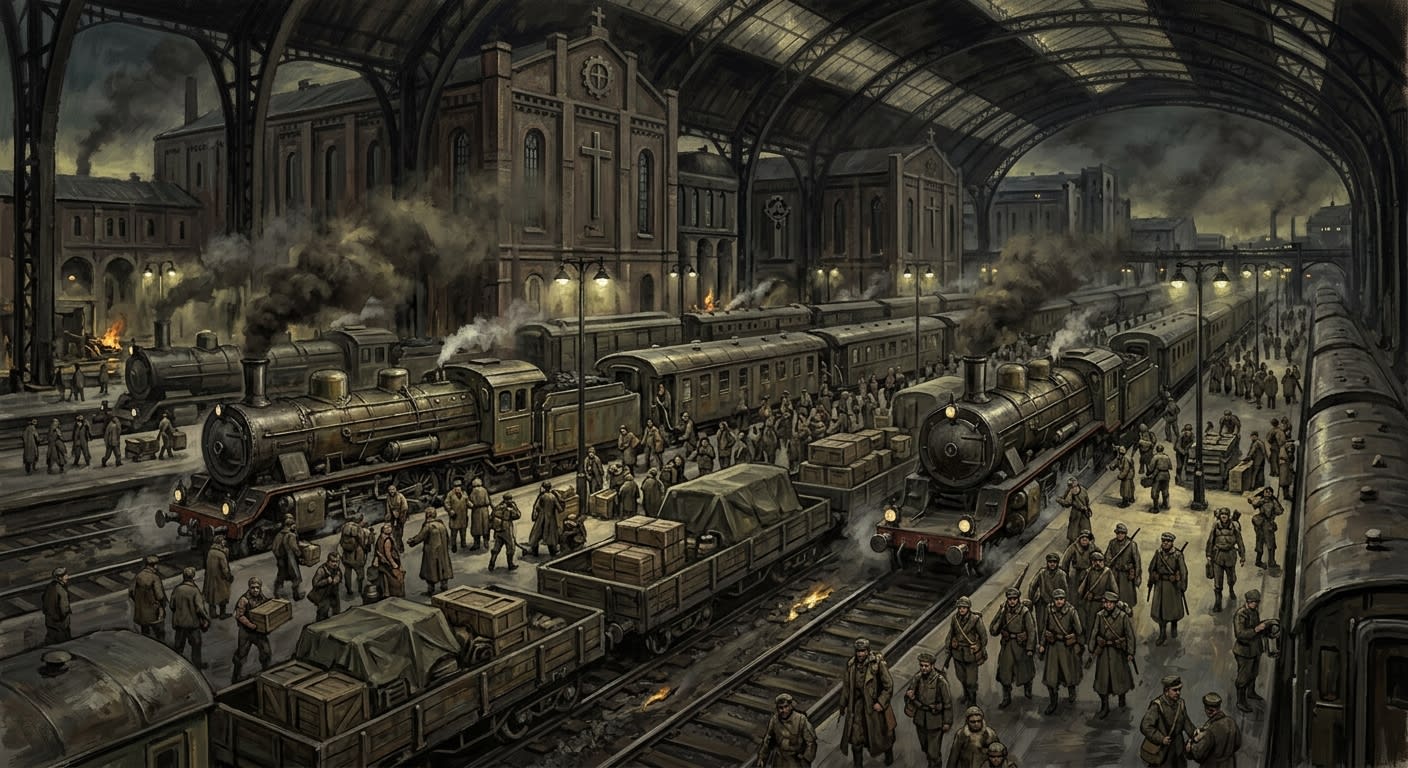
Münchner Kreuzbahnhof
Munich's iron jaw, chewing the west into eastbound obedience
Munich's Cross-Station is the Synod's second-largest rail complex: fourteen public platforms, sixty trains daily, ninety in surge, and eleven thousand workers feeding the eastern war.
Codex Ref. II.4.09-012
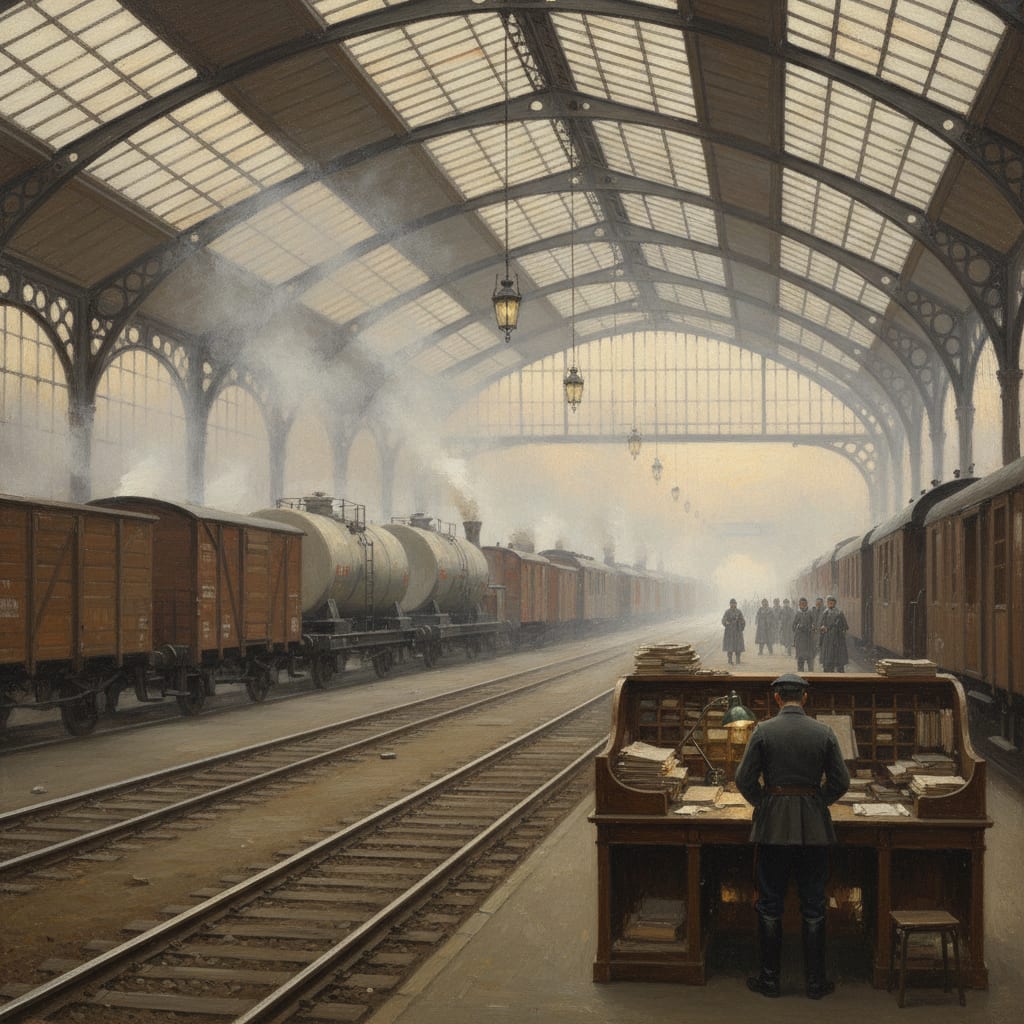
Munich
The last comfortable city; or, where the war becomes a number before it becomes a wound
The Synod's central logistics hub and the last city where the war is an abstraction. Seven hundred thousand souls administer the machinery of a conflict they will not fight. Munich pays its tithes, fills its quotas, and resents everything.
Codex Ref. II.4.09-008
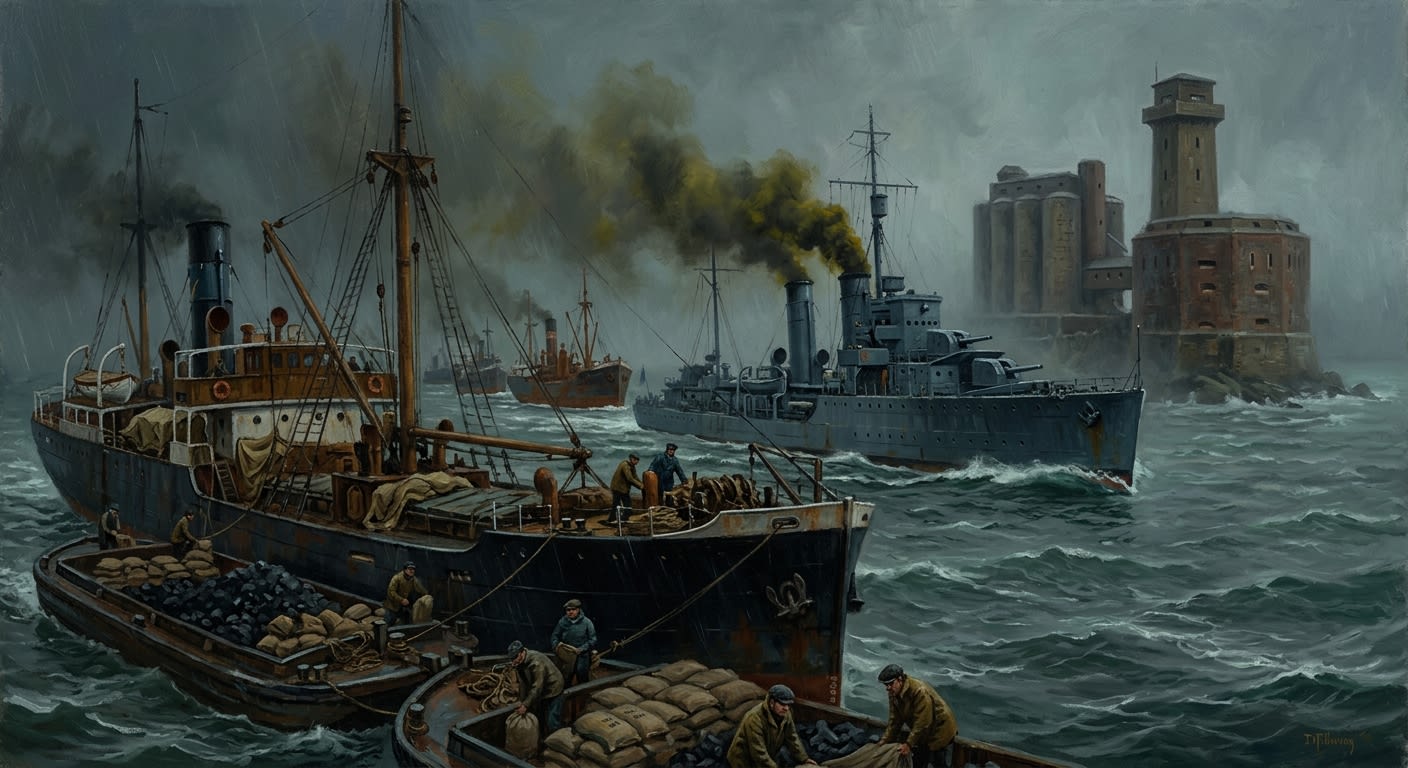
North Sea
The wet border that feeds the Line and refuses the Ledger
The North Sea is the Synod's least obedient frontier: a maritime supply basin of grain, coal, fish, fog, foreign credit, reluctant allies, and weather that accepts no stamp.
Codex Ref. II.4.09-201
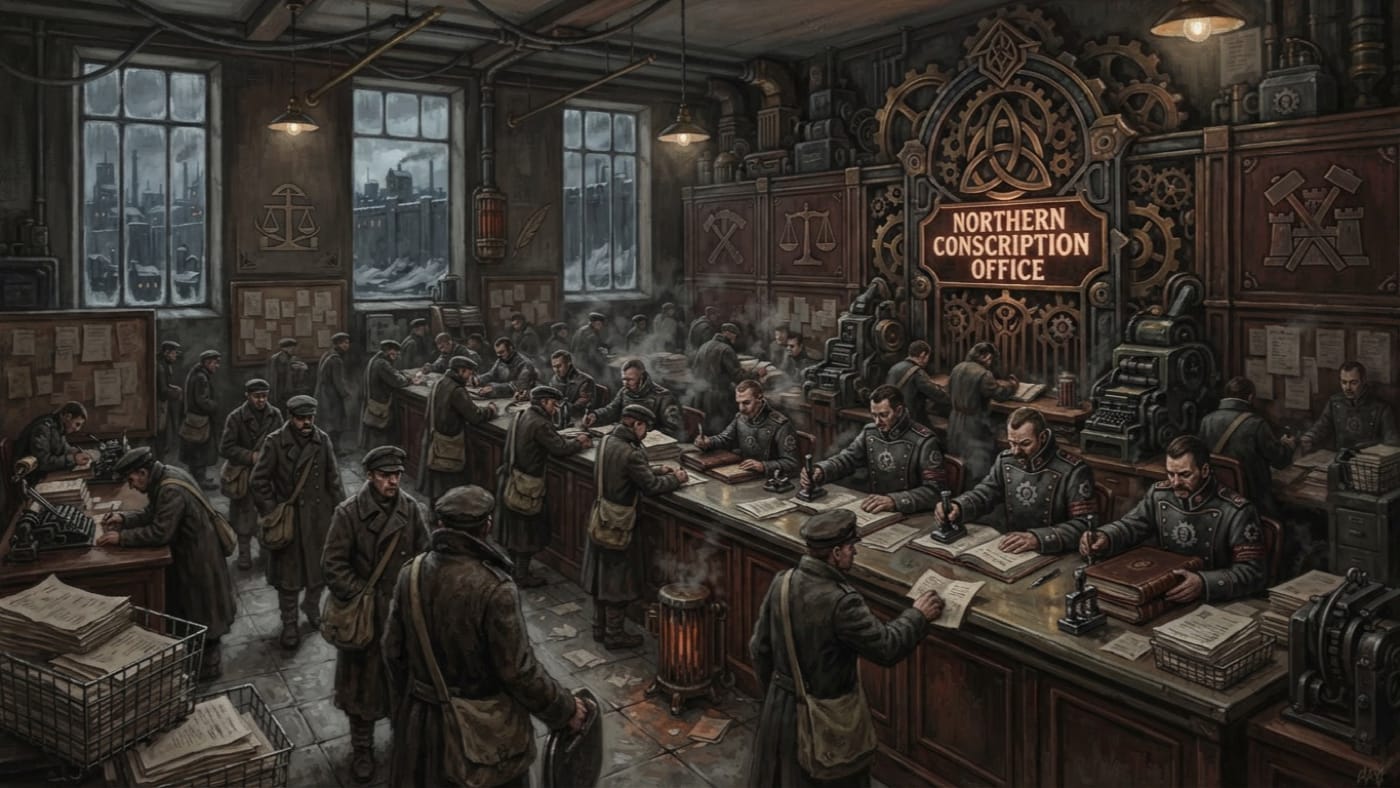
Northern Conscription Office
Every man volunteered. Every man was assigned.
The Northern Conscription Office receives Königsberg's conscripts and reconciles them against losses. Conscription claims the desk; War signs the briefing. Every assigned man is entered as a volunteer.
Codex Ref. III.4.07-1943

Northern Corridor
The long throat by which Hamburg becomes Brest's bread and Königsberg's coal
The Northern Corridor is the Synod's long supply throat: Hamburg sea-cargo, Kanzleiburg sequence, Warsaw yards, British grain, Dutch credit, Prussian clocks, and bread for the northern bastions.
Codex Ref. II.4.09-095
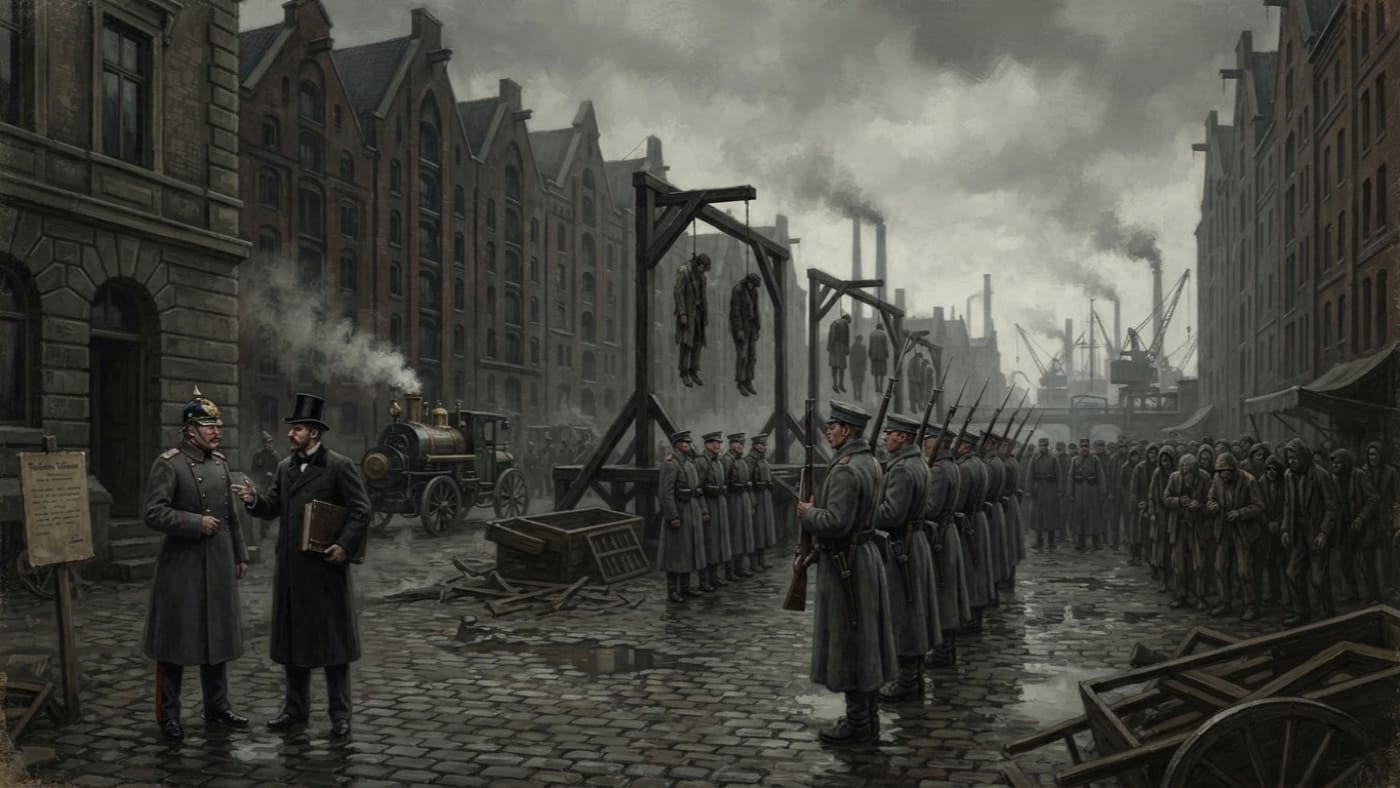
Northern Garrison
A hungry port received soldiers
Hamburg's harvest failed; the Northern Garrison came from Berlin. The A.S. 65 record preserves nine days of riot, hangings and a levy cut that expired after one quarter.
Codex Ref. VIII.5.07-065
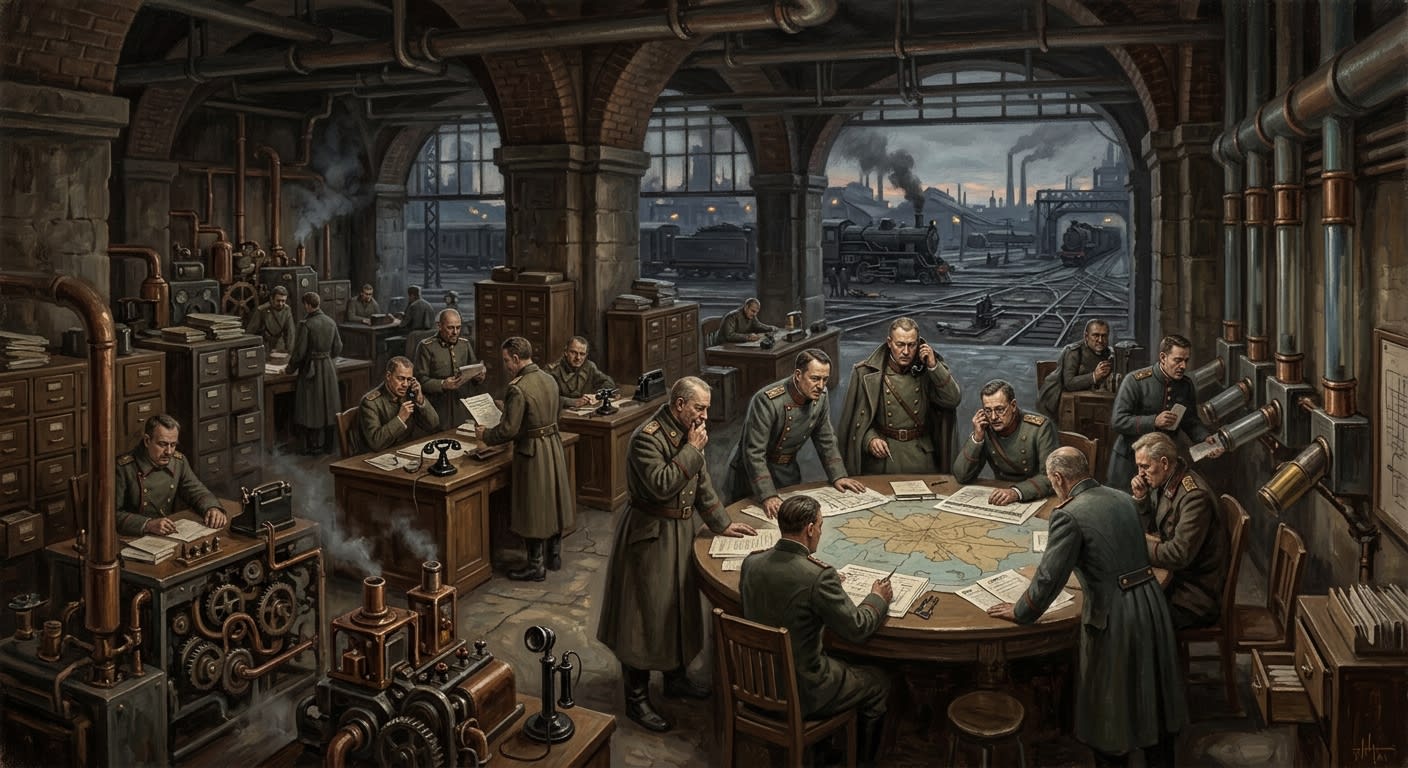
Northern Hierarchate
Where the north is made punctual enough to survive
Seated at Kanzleiburg in A.S. 95, the Northern Hierarchate turns Prussian machinery, rail priority, reserve depots, and inter-Bureau quarrels into survival for the Baltic-Carpathian front.
Codex Ref. VIII.7.01-095
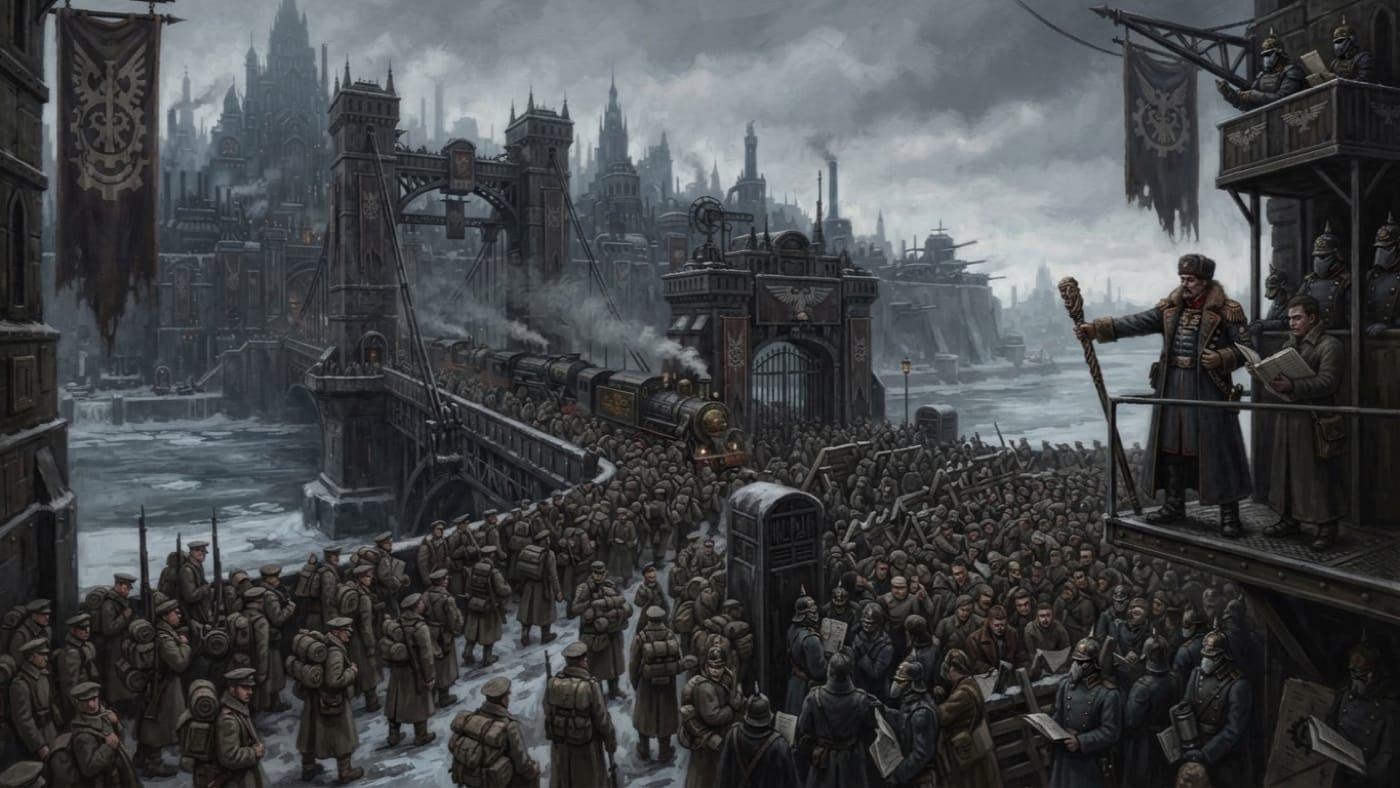
Northern Levy
Papers Complete, Movement Incomplete
The A.S. 201 return of Brest's northern replacements: lowland sons sent through Warsaw, columns arriving short and late, and valid orders awaiting the bridge's permission to cross.
Codex Ref. VII.8.10-201
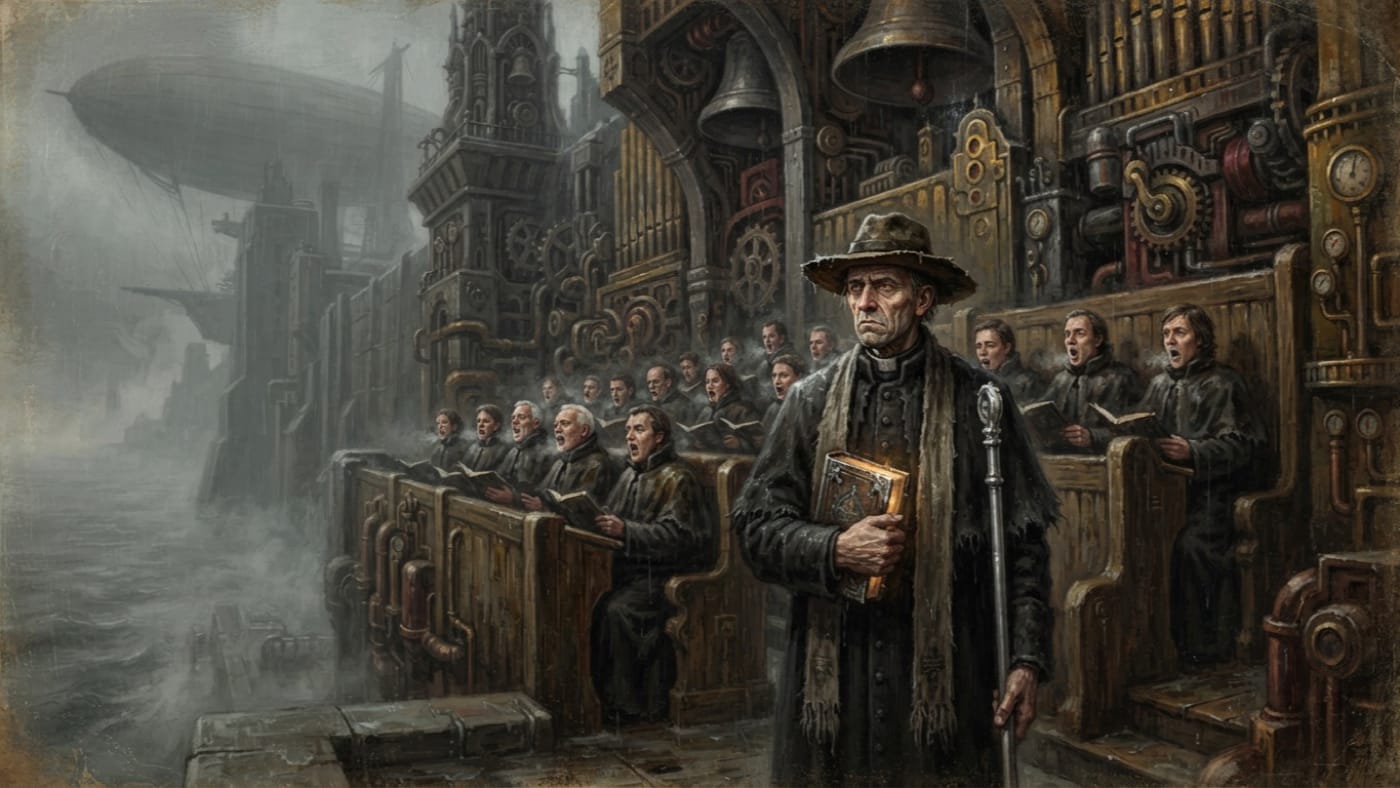
Northern Liturgical Inspector
A promotion denied because the Choir still needed its priest
The Northern Liturgical Inspector appears in Grau's personnel review as a promotion denied by operational necessity. The Bureau recorded a title; Königsberg kept its priest.
Codex Ref. XIII.1.57-201
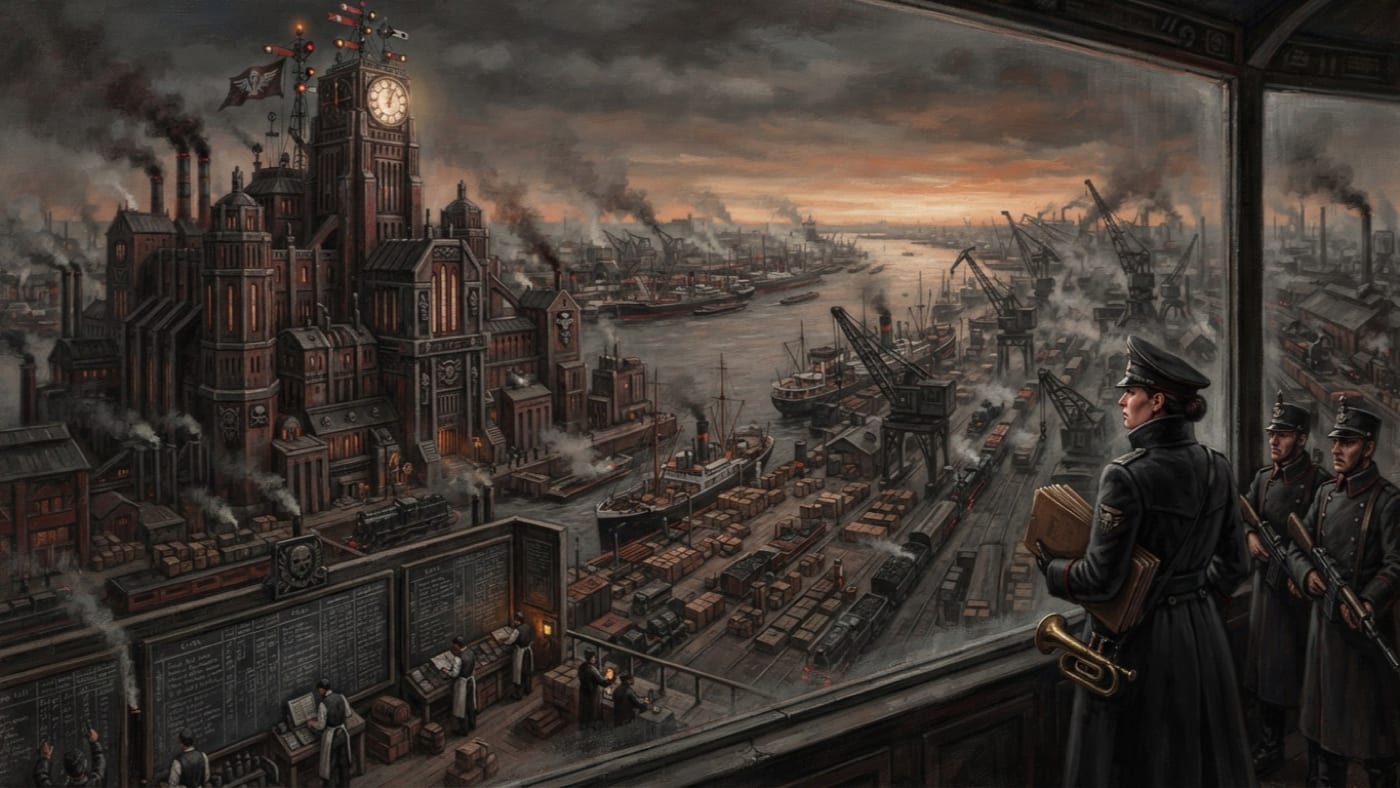
Northern Maritime Chapterhouse
The tide has a schedule; the Synod has objections
Hamburg's senior Synod installation orders berths, war cargo and foreign-factor schedules under Admiral-Prefect Gerta Halske. It can command the harbour boards; it cannot command the ships to come.
Codex Ref. II.4.09-006
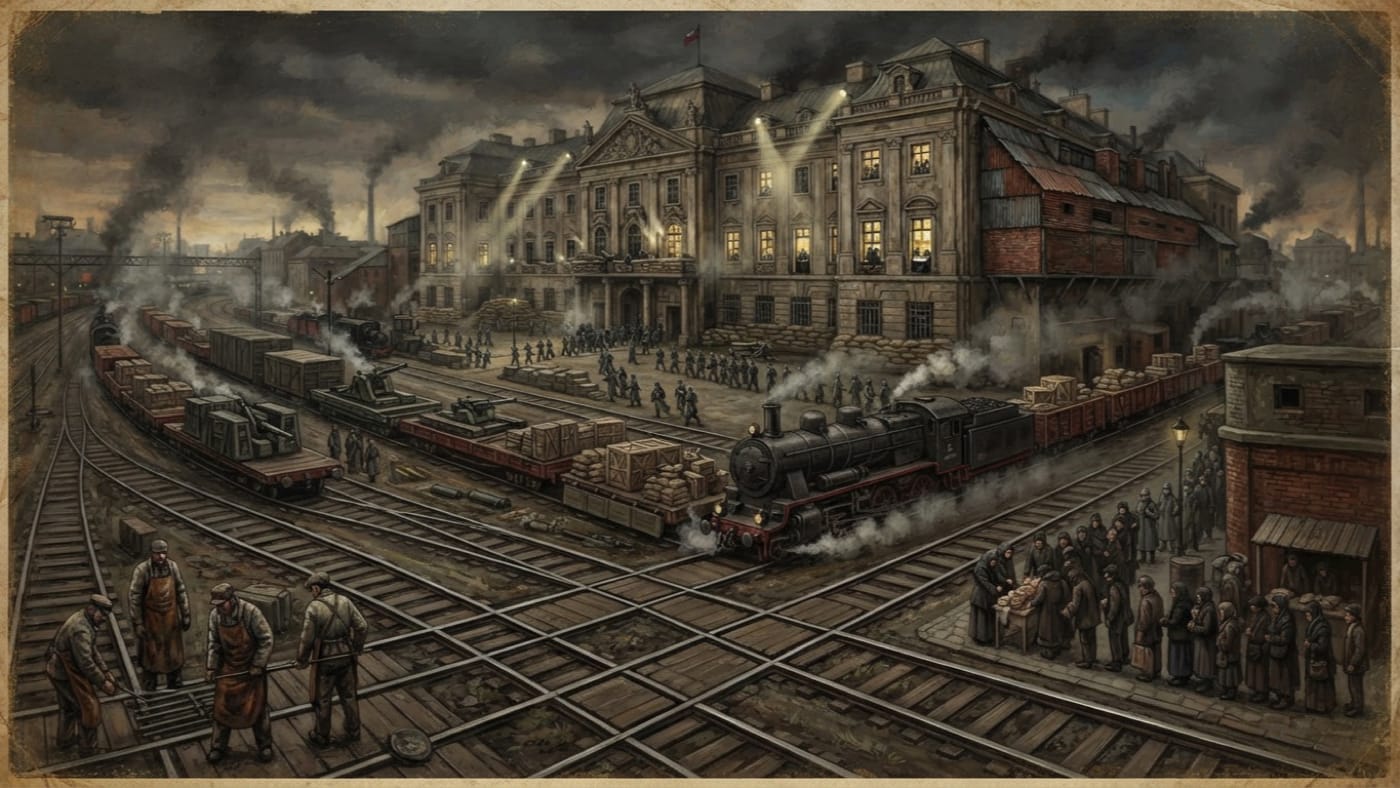
Northern Theater Logistics Command
The palace writes the order; the railway waits for bread
Northern Theater Logistics Command works from an old Polish palace in Warsaw, serving the routes to Brest and Königsberg. Orders are plentiful; coal, sound rail and bread decide what moves.
Codex Ref. VIII.7.05-201
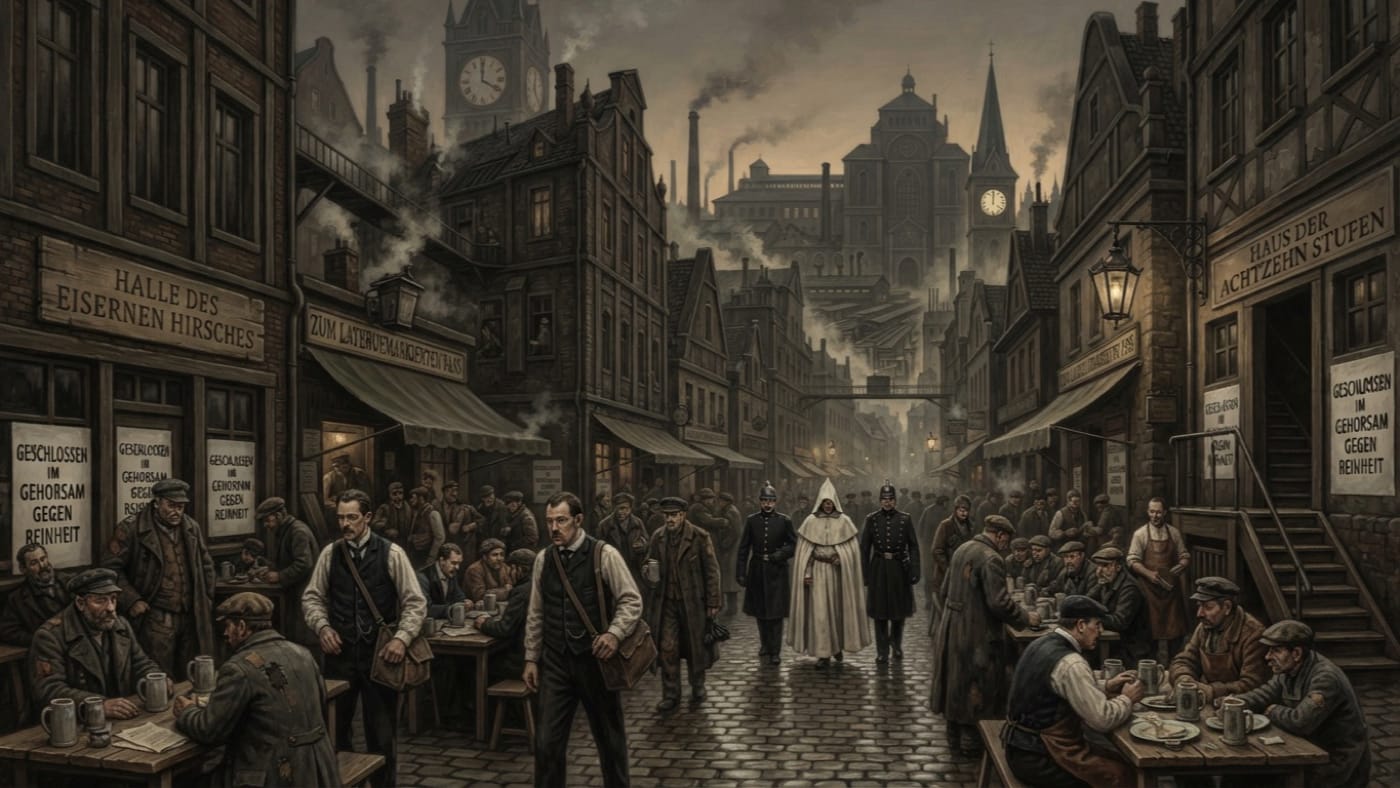
Old City of Kanzleiburg
Where the north settles what its offices cannot
Kanzleiburg's inherited residential quarter keeps veterans, clerks and brewers at common tables. In A.S. 140, Purity discovered what closing those tables cost the north.
Codex Ref. II.4.10-201
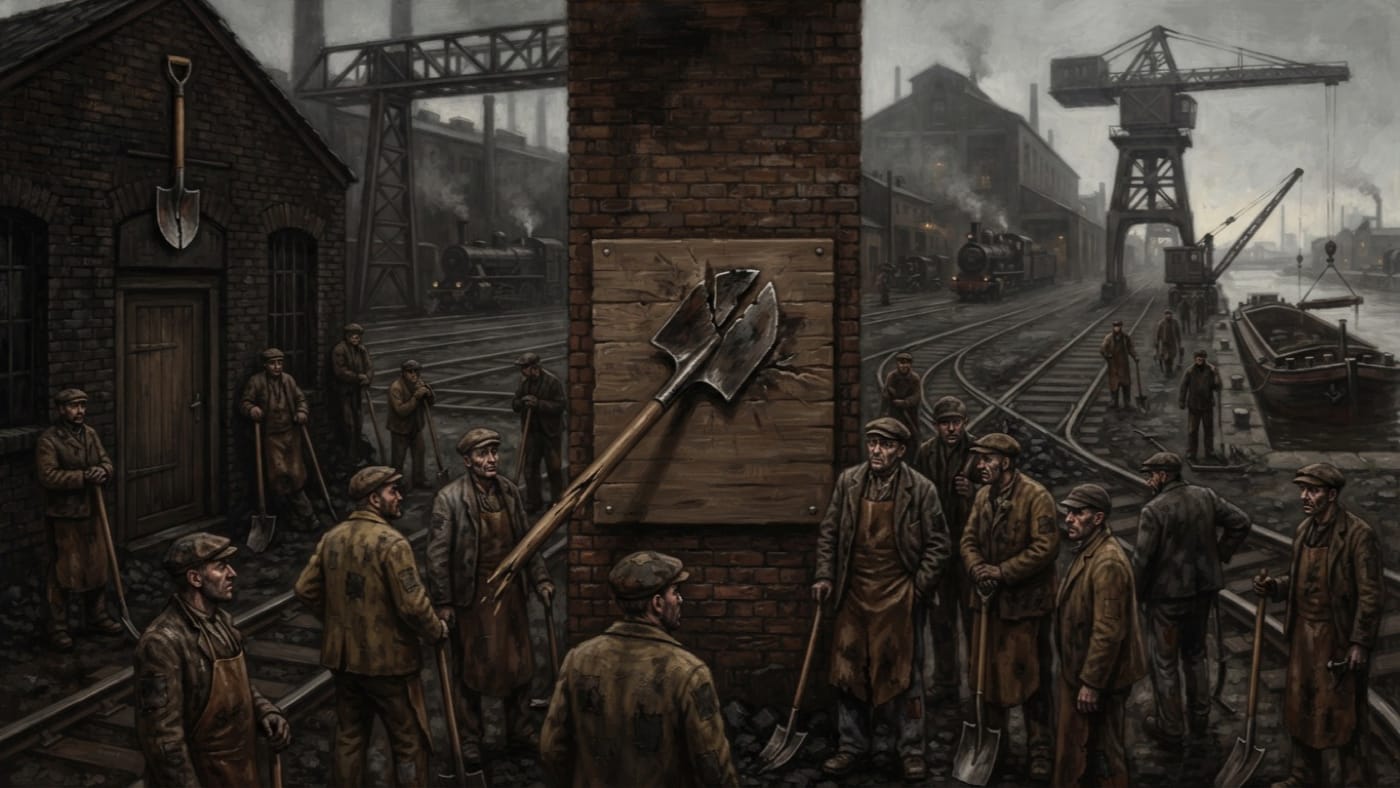
Old Krebb
One blow, two entries, and a shovel above the door
Old Krebb split his shovel against a War notice board during Hamburg's A.S. 189 stoppage. Records calls it vandalism; the Union calls it commentary. The blade survives where the biography does not.
Codex Ref. III.2.01-189
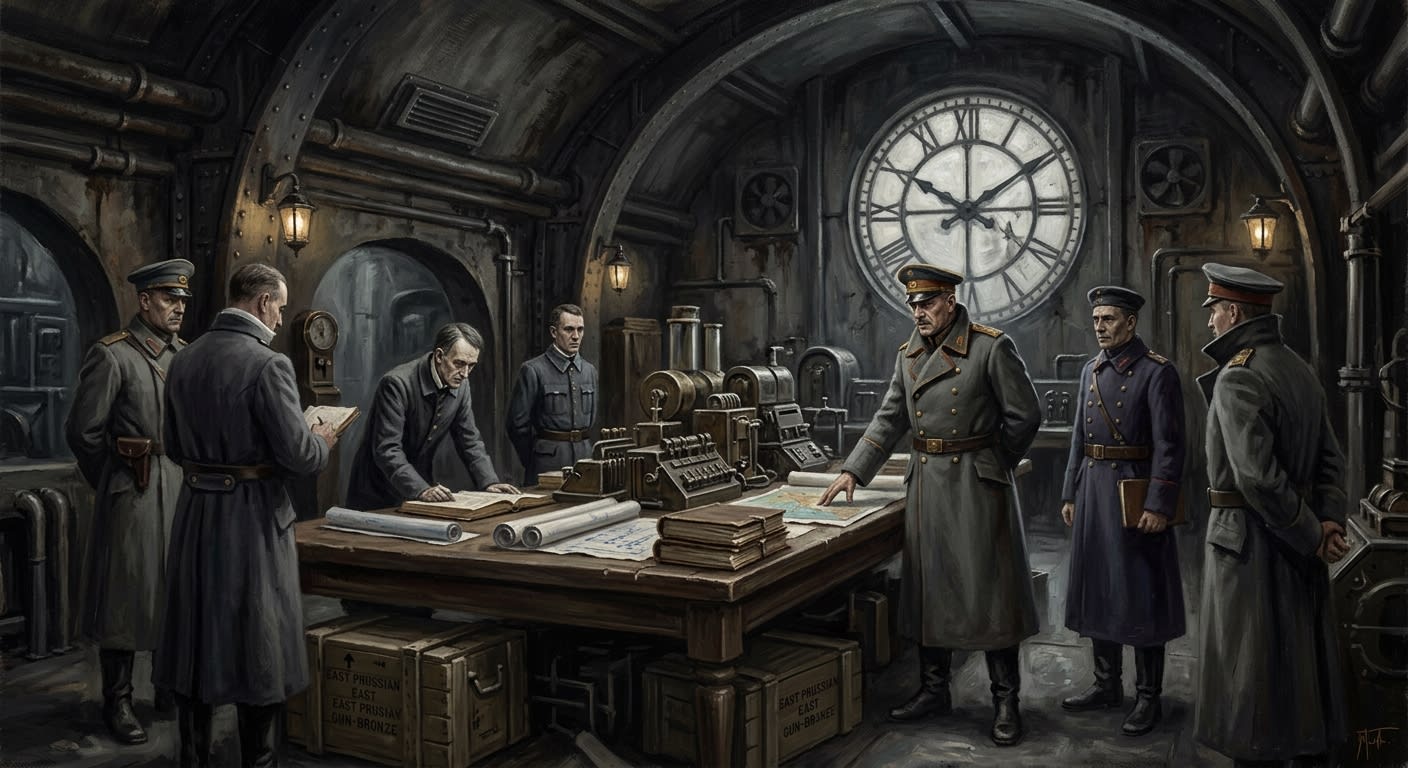
Prussia
The state died; the timetable kept breathing
Prussia is the dissolved northern kingdom that survived as method: rail clocks, cold clerks, officer corridors, East Prussian gun-bronze, and the north's habit of arriving.
Codex Ref. II.4.09-095
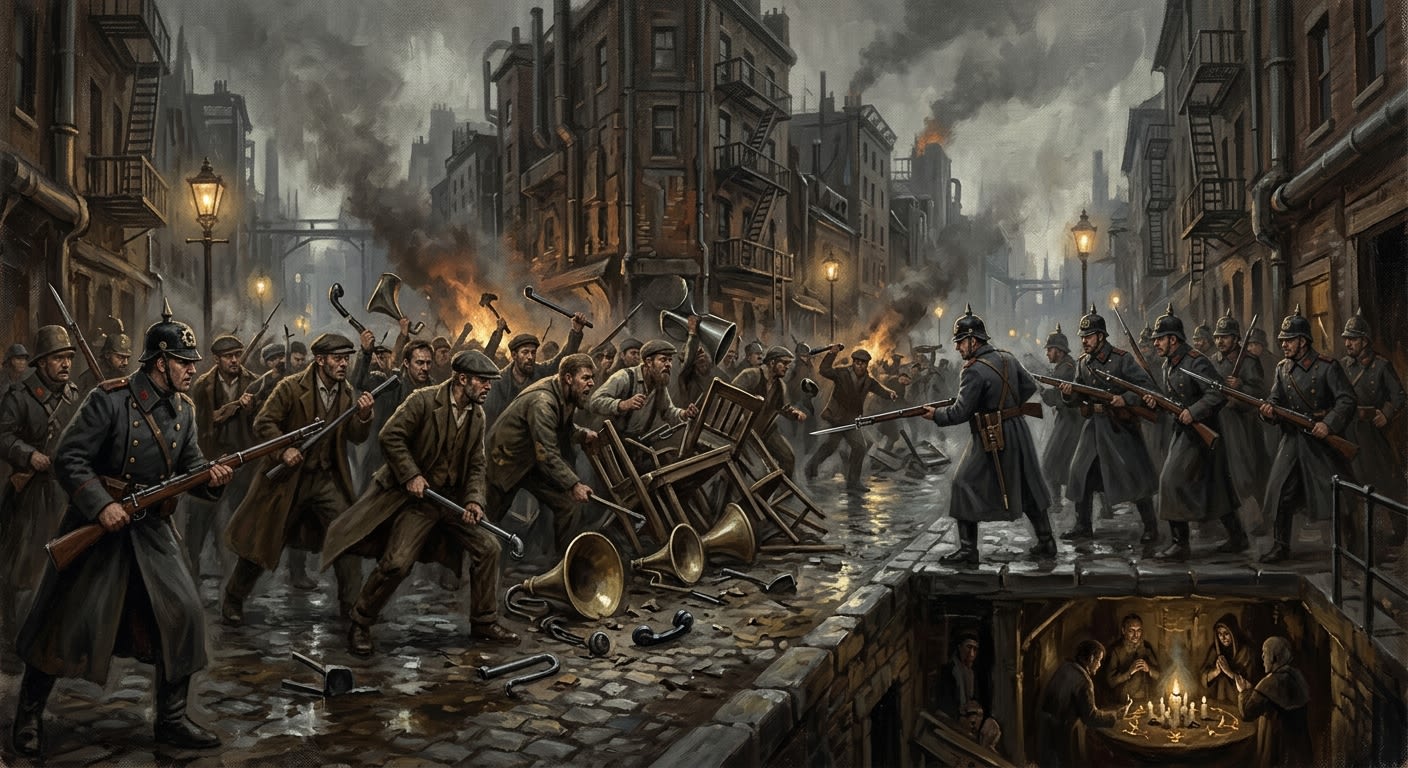
Quiet Quarter Revolt
The district that missed the sermon until silence learned to organise
A.S. 149 deadzone rising in lower Kanzleiburg, where failed horns, broken receivers, Silent Godless cells, and cellar rites forced the Hornline Reforms.
Codex Ref. VII.8.10-149

Rail-Confessor Corps
Absolution cut to fit the departure bell
The Rail-Confessor Corps gives Warsaw's rail crews eleven seconds of blessing, ninety seconds of confession, and just enough mercy to depart before the wheels become sovereign.
Codex Ref. VIII.1.05-001
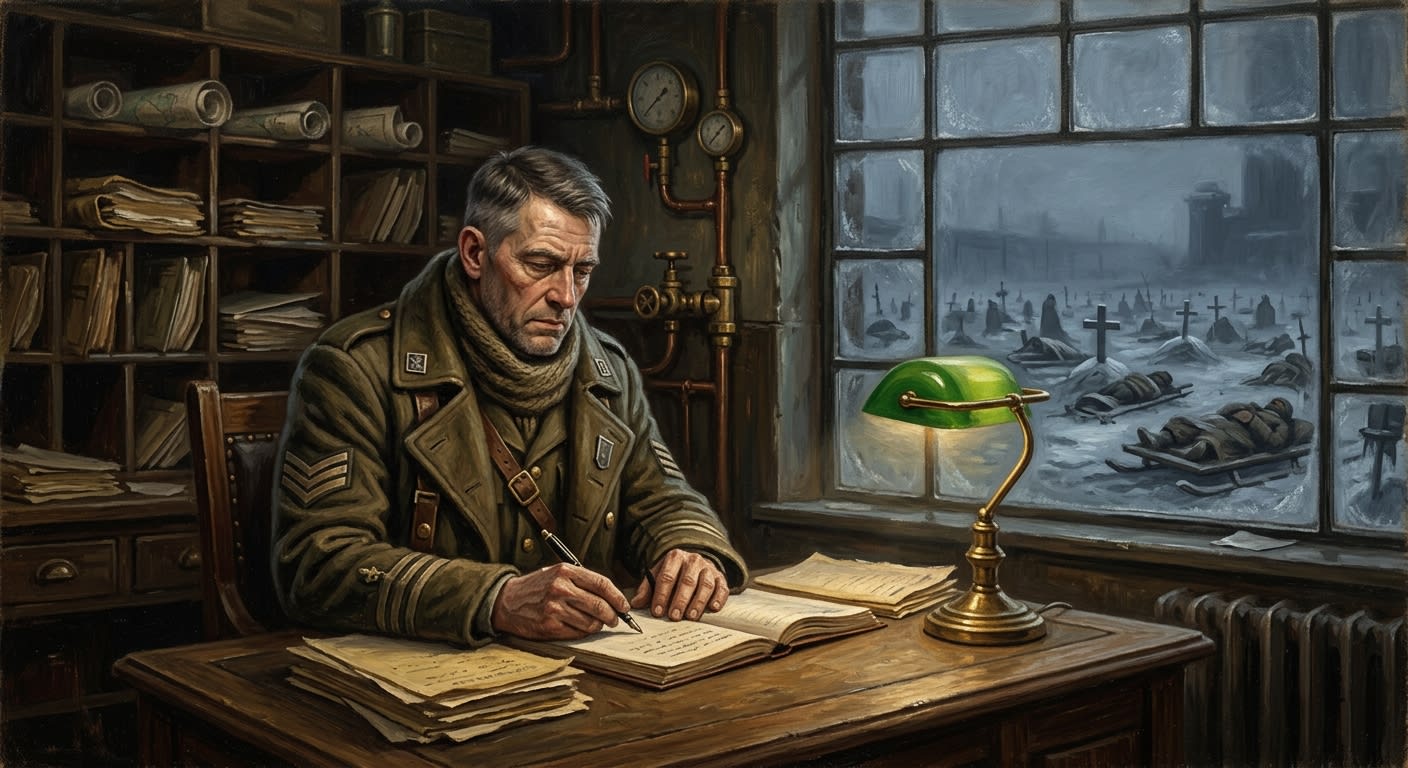
Sergeant First Class Halder
He records the angle of dead men before anyone may call it doctrine
Sergeant First Class Halder keeps Bastion-Königsberg's Frost Yards, filing sober displacement reports when corpses turn northeast and the cold refuses decay.
Codex Ref. III.2.01-038
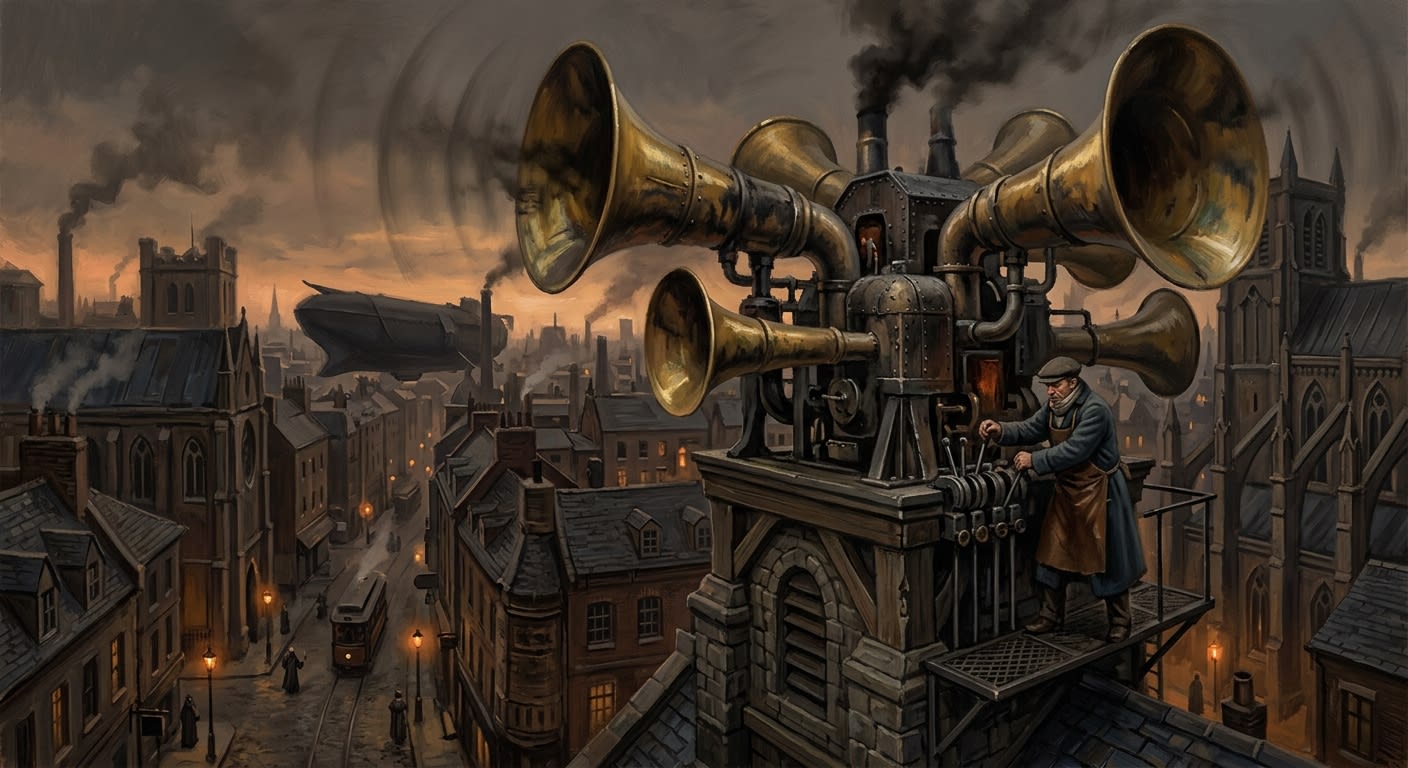
Sermon-horns
The brass throat by which doctrine stops asking politely
Sermon-horns make authorised language arrive with enough brass force that absence must explain itself, from rooftop shrines to Vigil Ark gondolas.
Codex Ref. XIII.1.96-092
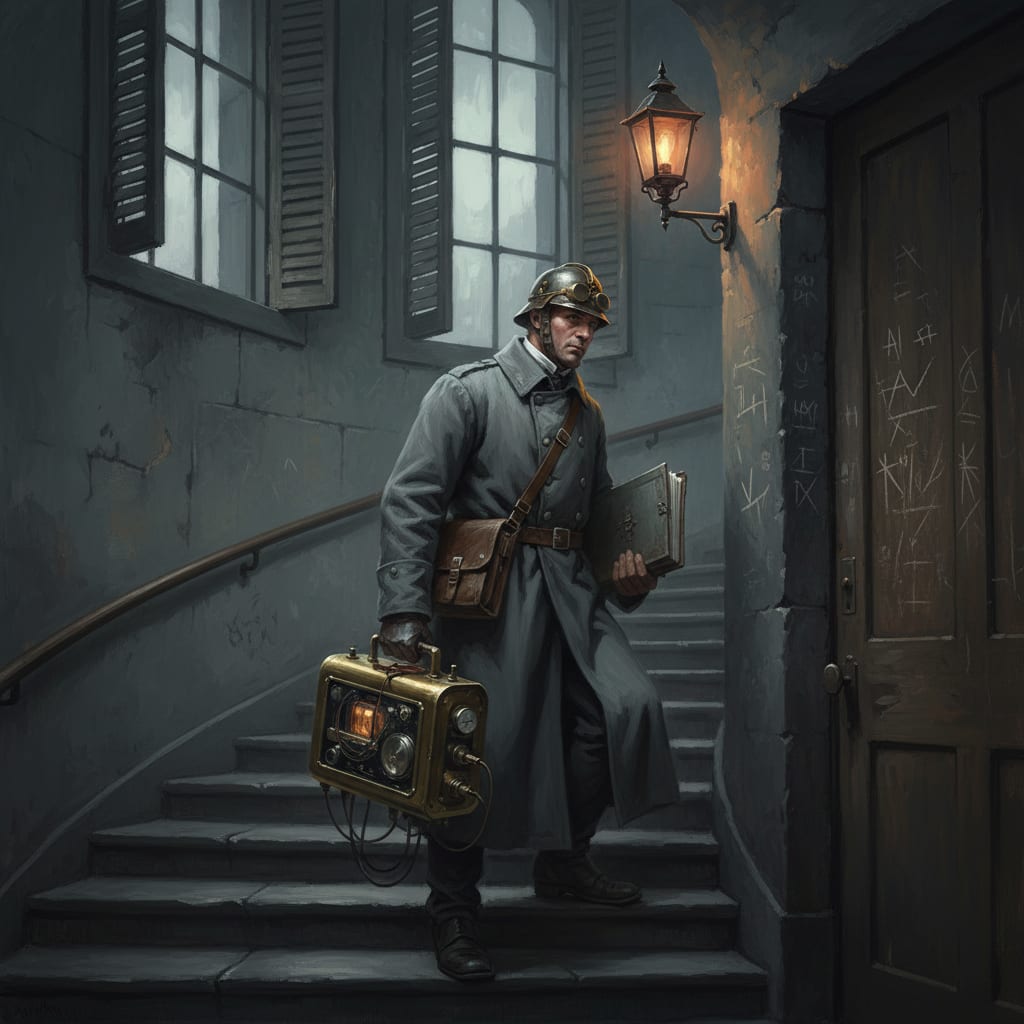
Sky-Sermon Attendance Auditor
Attendance is allegiance; the Choir Rate is its catechism
The Synod does not require belief. It requires attendance. The Sky-Sermon Attendance Auditor counts the windows, calculates the Choir Rate, and brands the neighbourhoods that fall short of ninety-two percent.
Codex Ref. XII.45.01-001
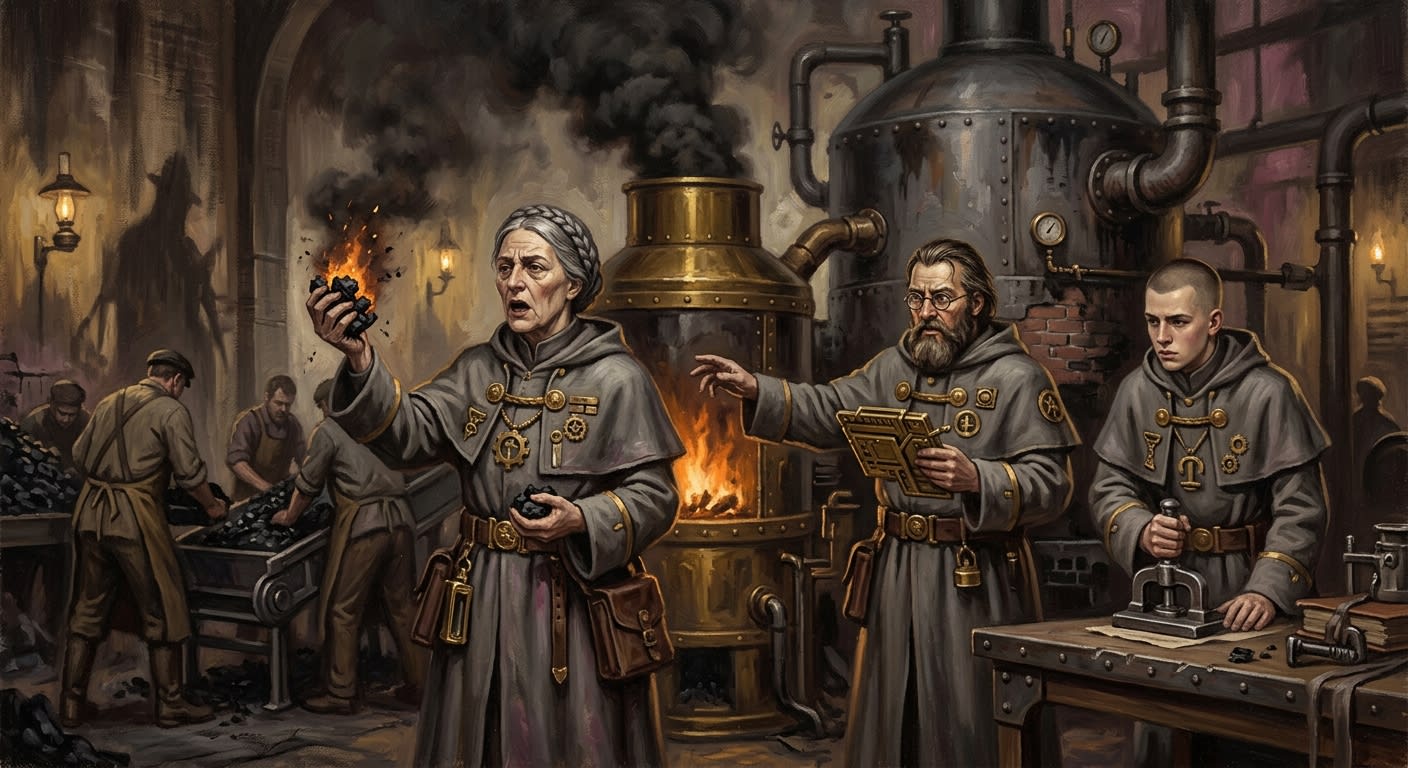
Standing Order 14-E
Sing before spark, or let the wall receive you
Standing Order 14-E is the smoke-written law of ignition: sing before spark, witness before load, seal before claim.
Codex Ref. XIII.1.14-097
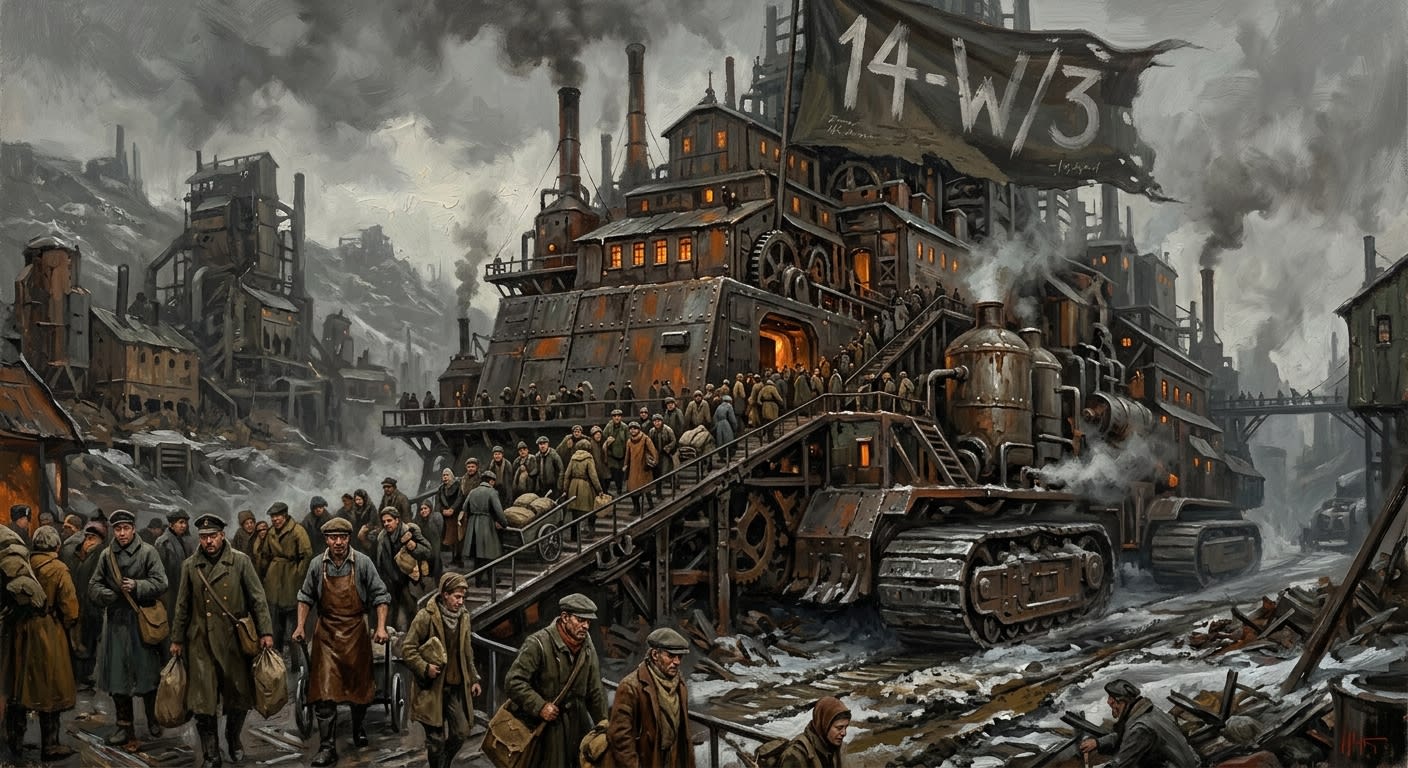
Standing Order 14-W/3
The evacuation order that discovered bakeries
Standing Order 14-W/3 ordered Warsaw to become movable in A.S. 95; a century later, the city remains larger, louder, and better fed by its own disobedience than by Settlement arithmetic.
Codex Ref. XIII.1.87-095
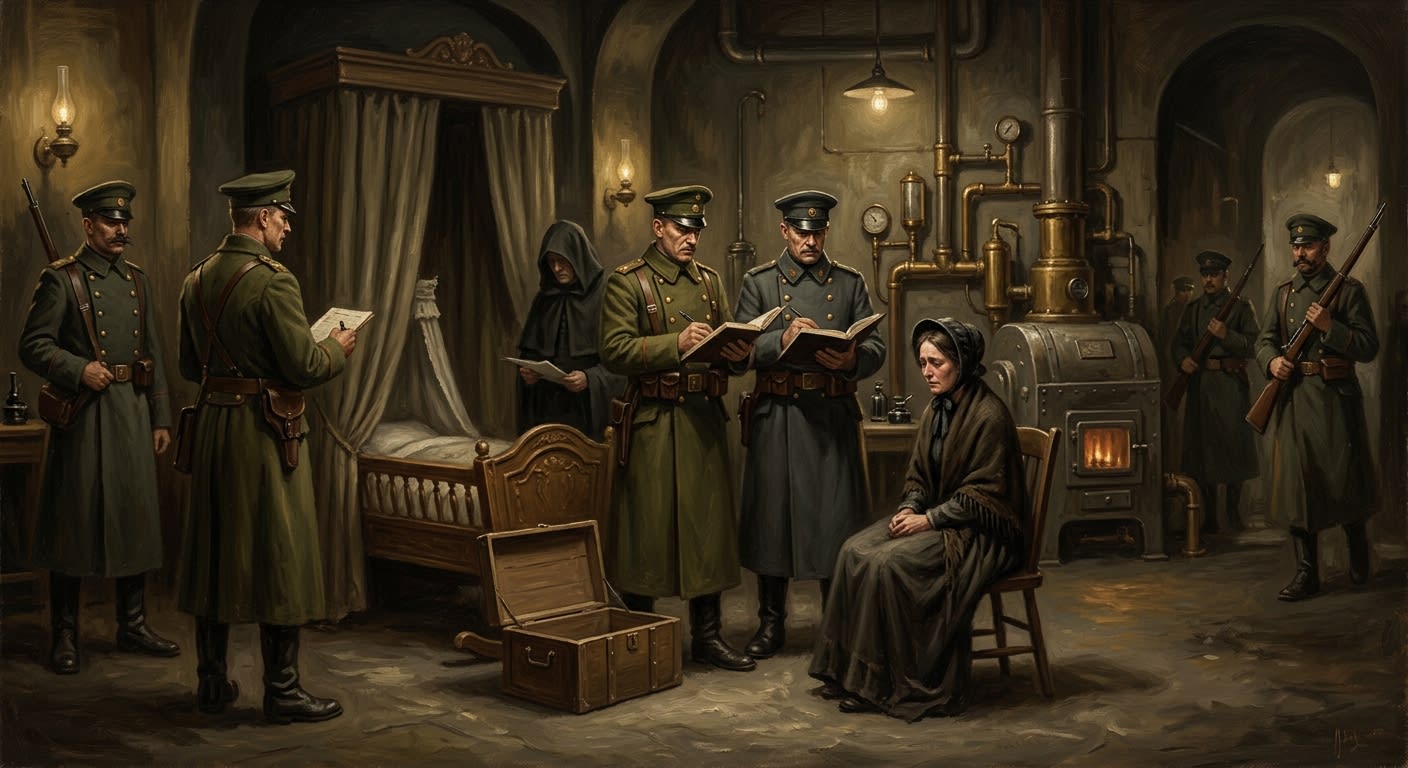
Standing Order 34-PK
The cradle confesses when the Ledger is hungry
Standing Order 34-PK makes the hidden cradle confess: missing infants become stolen soldiers, and a mother’s silence becomes evidence.
Codex Ref. XIII.1.34-158

The Fractured North
Compliant in substance. Deviant in form. Pending resolution since A.S. 92.
Two million souls scattered along the Norwegian fjords and Swedish interior — faithful, stubborn, and unresolved. The Bureau of Doctrine has filed them as 'compliant in substance, deviant in form' since A.S. 92, and will do so until either side decides otherwise.
Codex Ref. IX.8.01-001

The Heartlands
The safe country, provided one defines safety as distance from teeth and proximity to stamps
The Heartlands are the Synod's safe interior only by infantry arithmetic: Zones 1–3 feed the Line with bread, steel, bodies, bells, paperwork, and bones.
Codex Ref. II.0.02-201
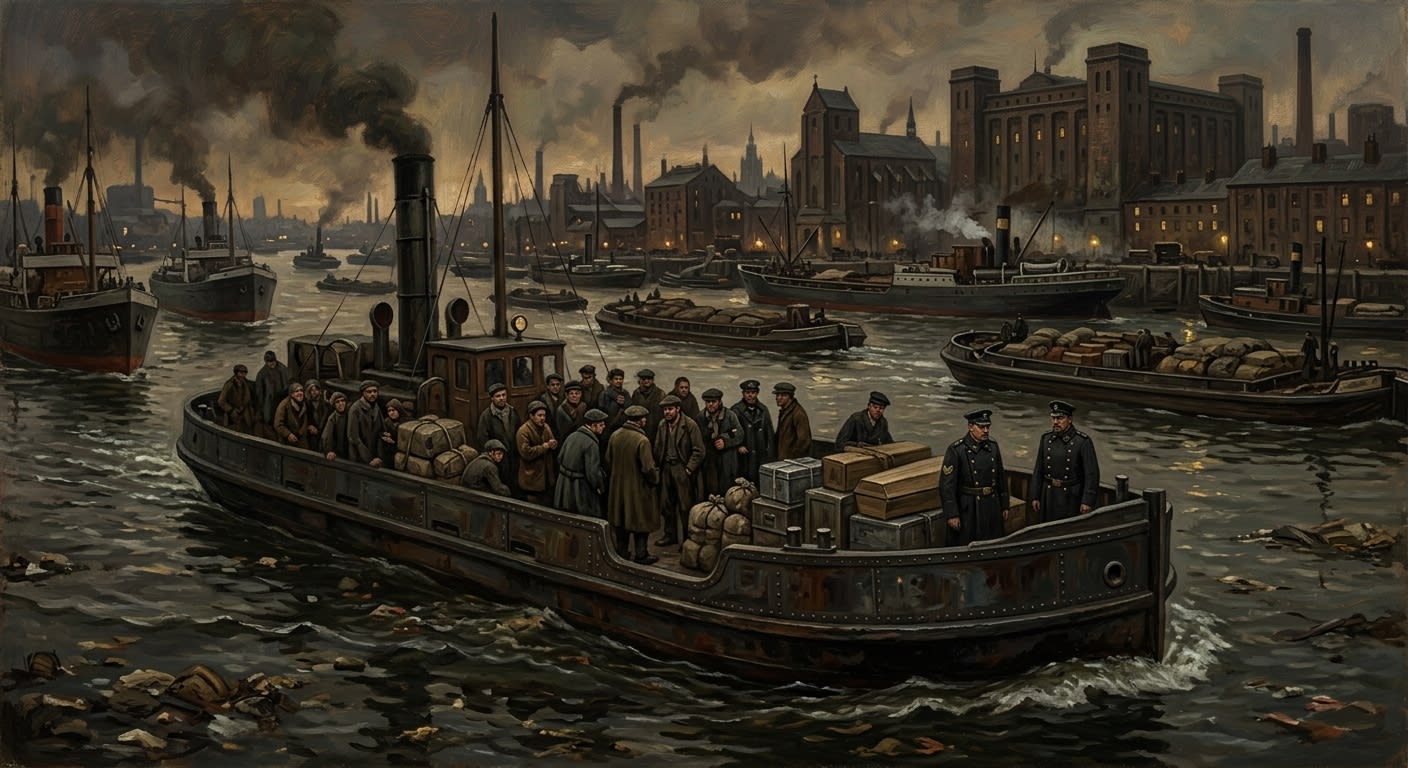
The Rhine
The wet jurisdiction by which the heartlands pretend to be orderly
The Rhine is the Synod's wet jurisdiction: artery, tithe-chain, pilgrim road, corpse carrier, ferry court, and profitable rebuke to every office built too near the bank.
Codex Ref. II.2.08-201
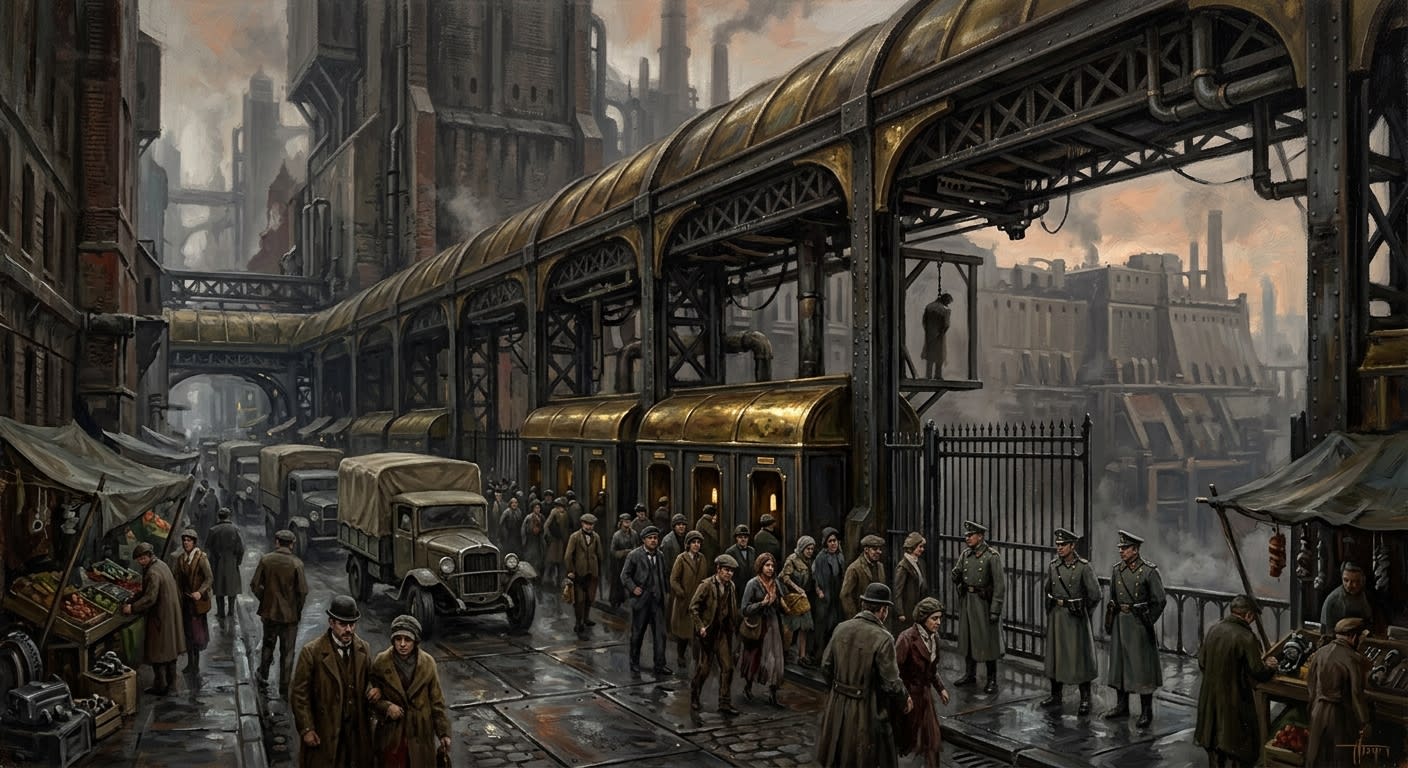
The Ribwalk
Brest’s bridge market, where every crossing learns to confess
The Ribwalk is Bastion-Brest’s upper bridge-deck: market street, convoy throat, gallows approach, curfew funnel, and brass skin above confession booths.
Codex Ref. II.4.08-201
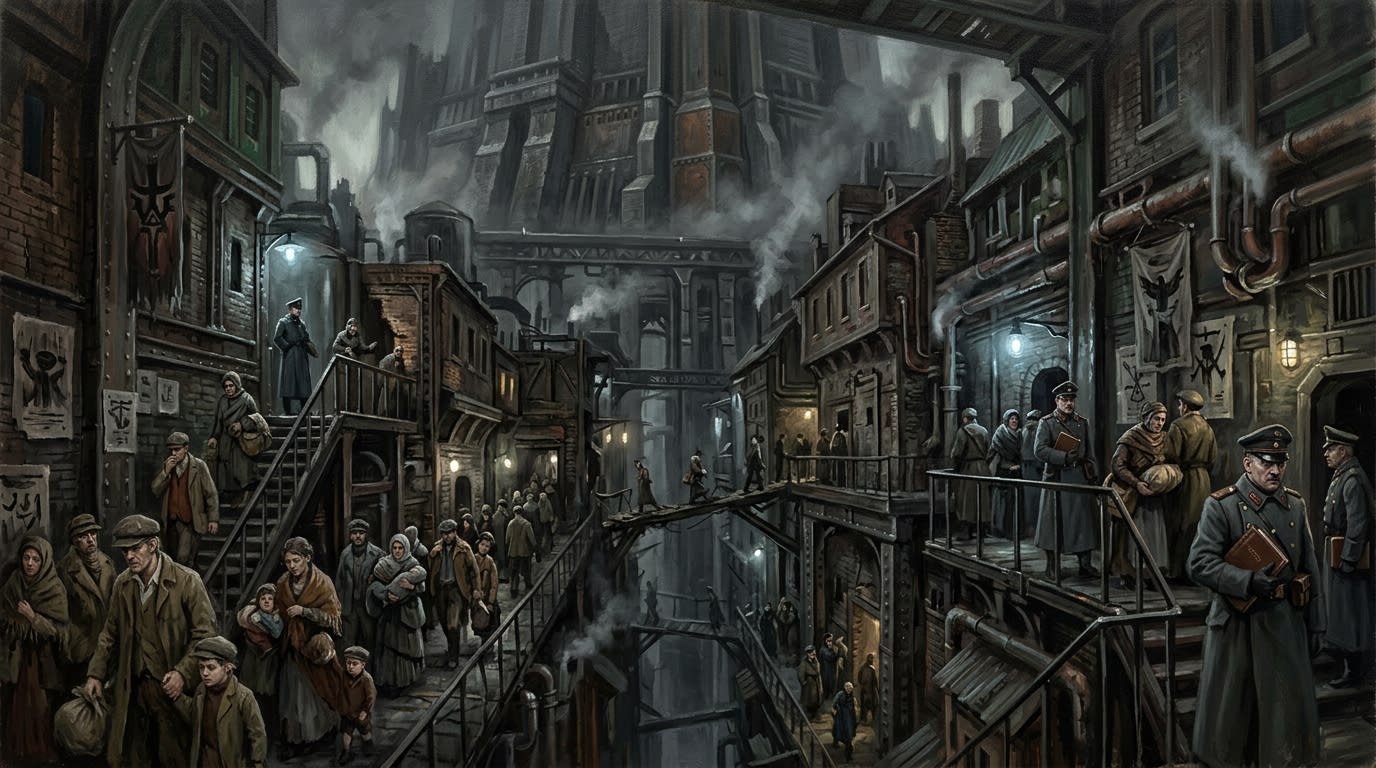
The Warrens of Königsberg
Laughter under the northern guns
The Warrens of Königsberg are the civilian quarter the fortress needs, mocks, watches, and refuses to admit it cannot spare.
Codex Ref. II.4.07-067
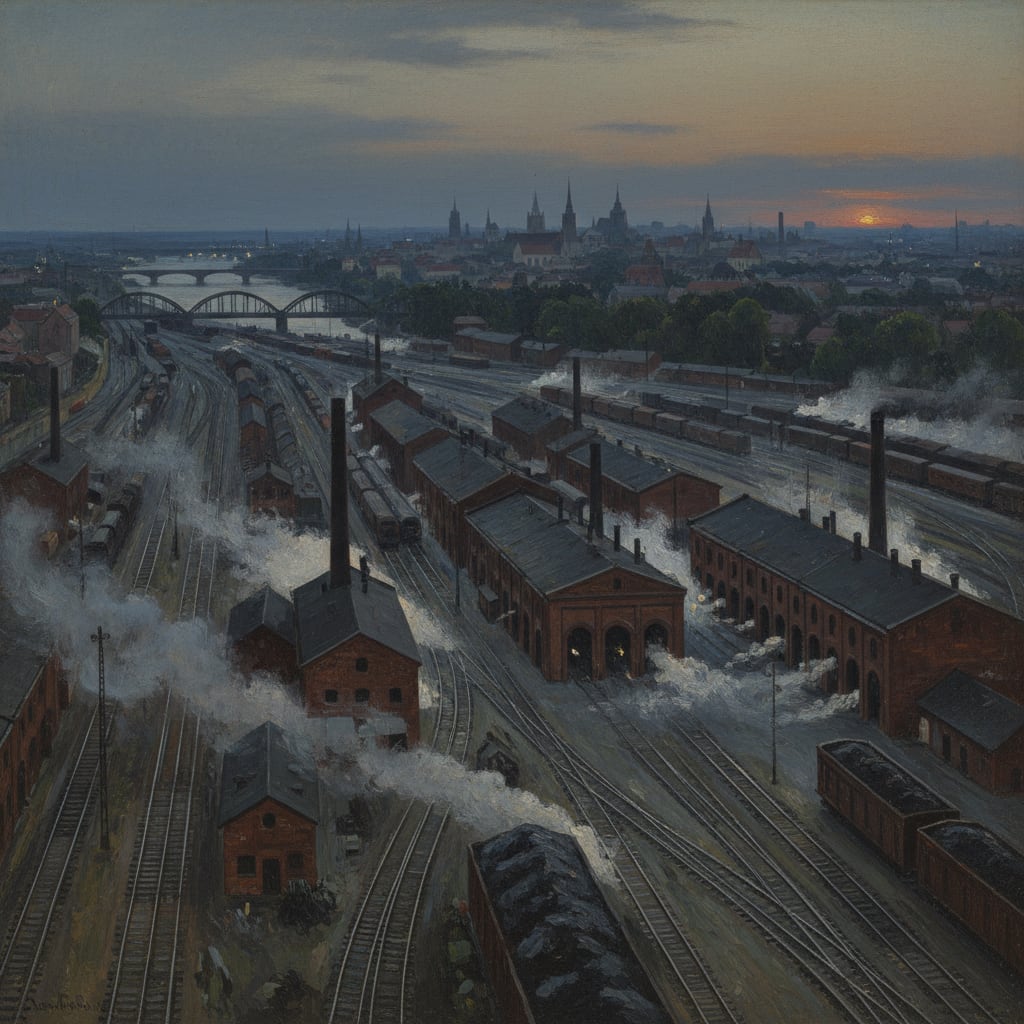
Warsaw
The city the Bureau told to leave, and the bakeries it opened in reply
The Synod's forward staging city on the Vistula — Zone Three, Northern Corridor, entry 14-W. 160 km from the Sagittal Line; close enough to hear the front on clear nights. The Bureau told it to leave in A.S. 95. It has grown by a quarter-million souls since.
Codex Ref. II.4.09-007
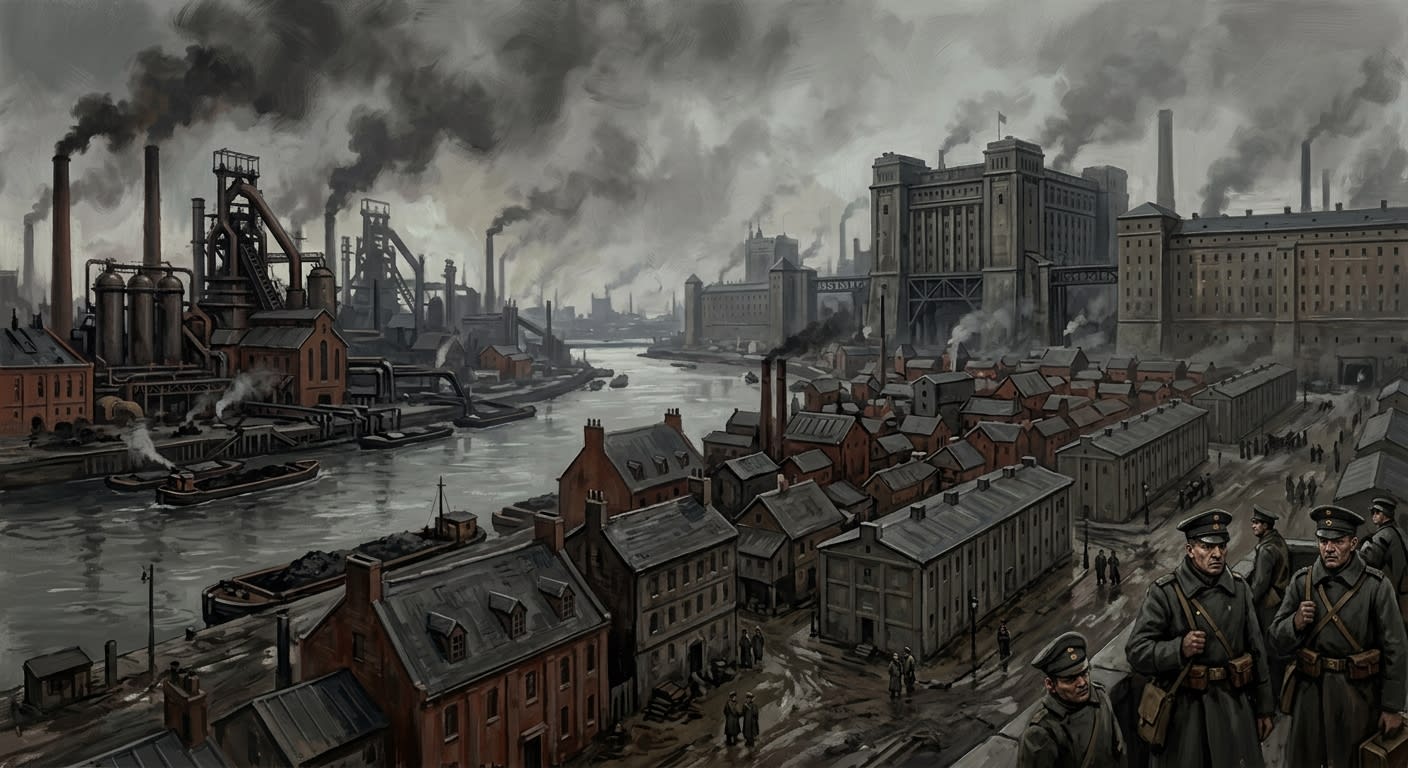
Zone 2
The throat where empire learns to speak in smoke
Zone 2 is the Synod's central throat: Strasbourg's field of authority, Rhine wealth, furnace obedience, catechism-barracks, and useful smoke.
Codex Ref. II.0.04-201
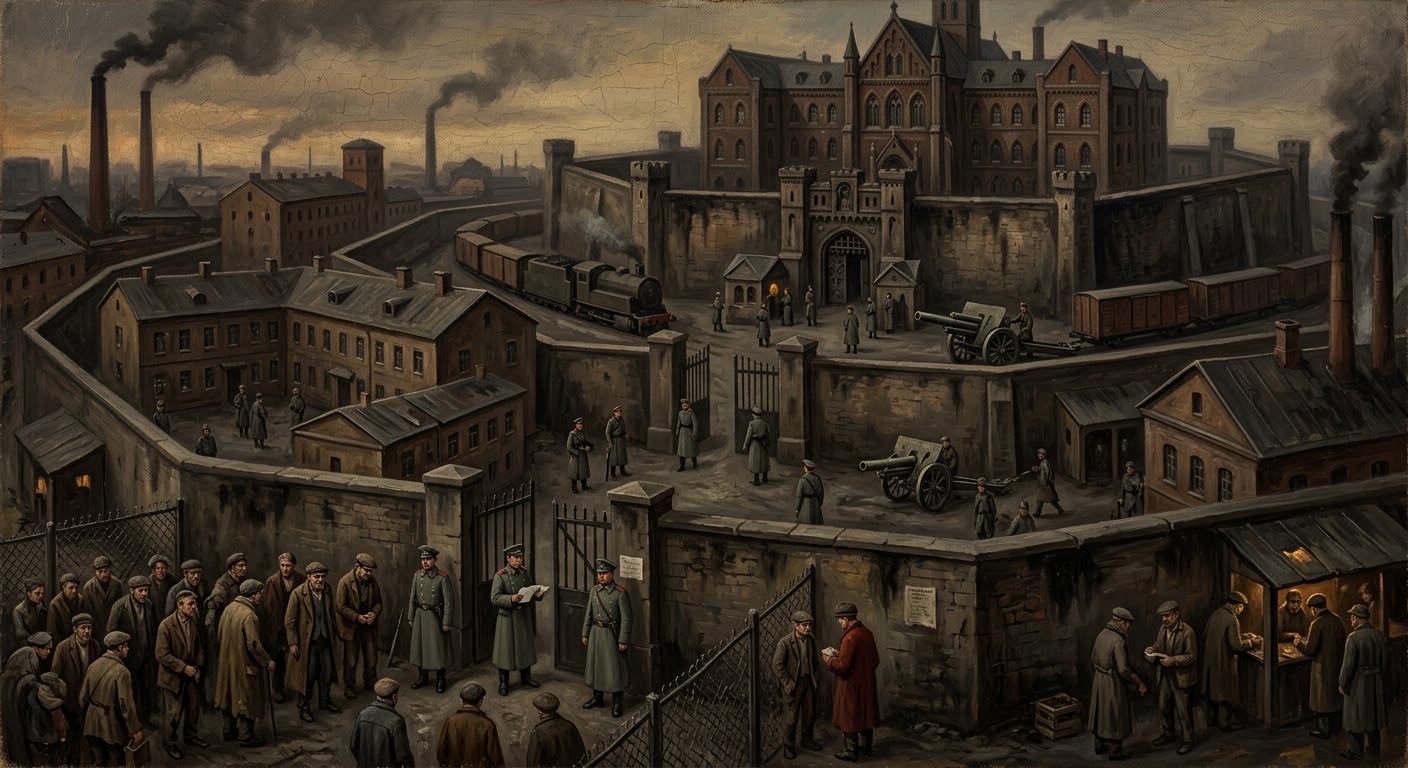
Zones 1 through 5
Five lawful pressures between invoice and mud
Zones 1 through 5 are graded permissions for bread, sons, movement, fear, artillery, and the state’s appetite.
Codex Ref. XIII.1.00-201