

Reverse Index
Referencing “Budapest”
Every codex entry that links to Budapest. 91 entries.
Return to Budapest
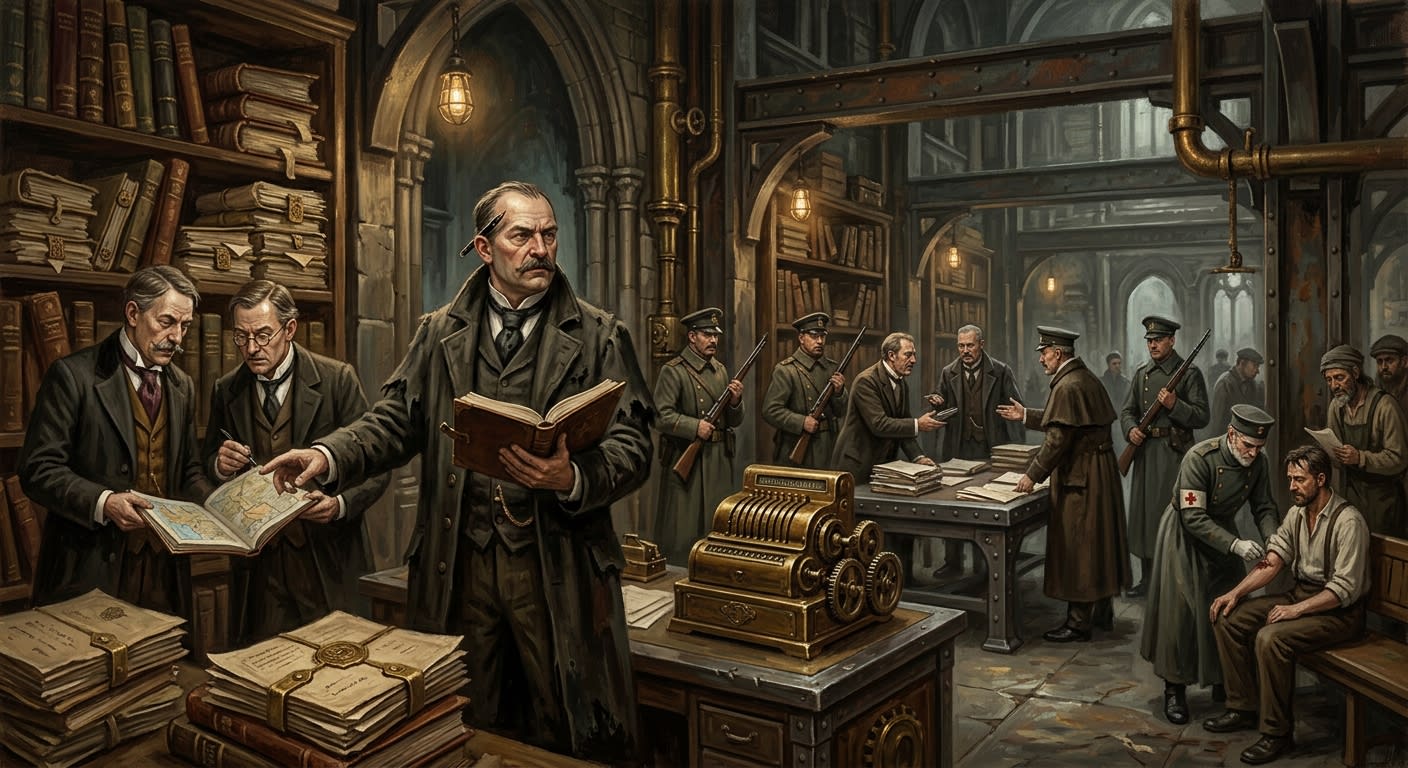
Advocates Guild
Licensed cruelty with gloves, seals, and a fee table
Licensed fraternity of Citation Advocates that turns Synodal quarrels into ledger-duels, sells precedent, polices pits, and calls the resulting injuries civil peace.
Codex Ref. XII.28.01-001
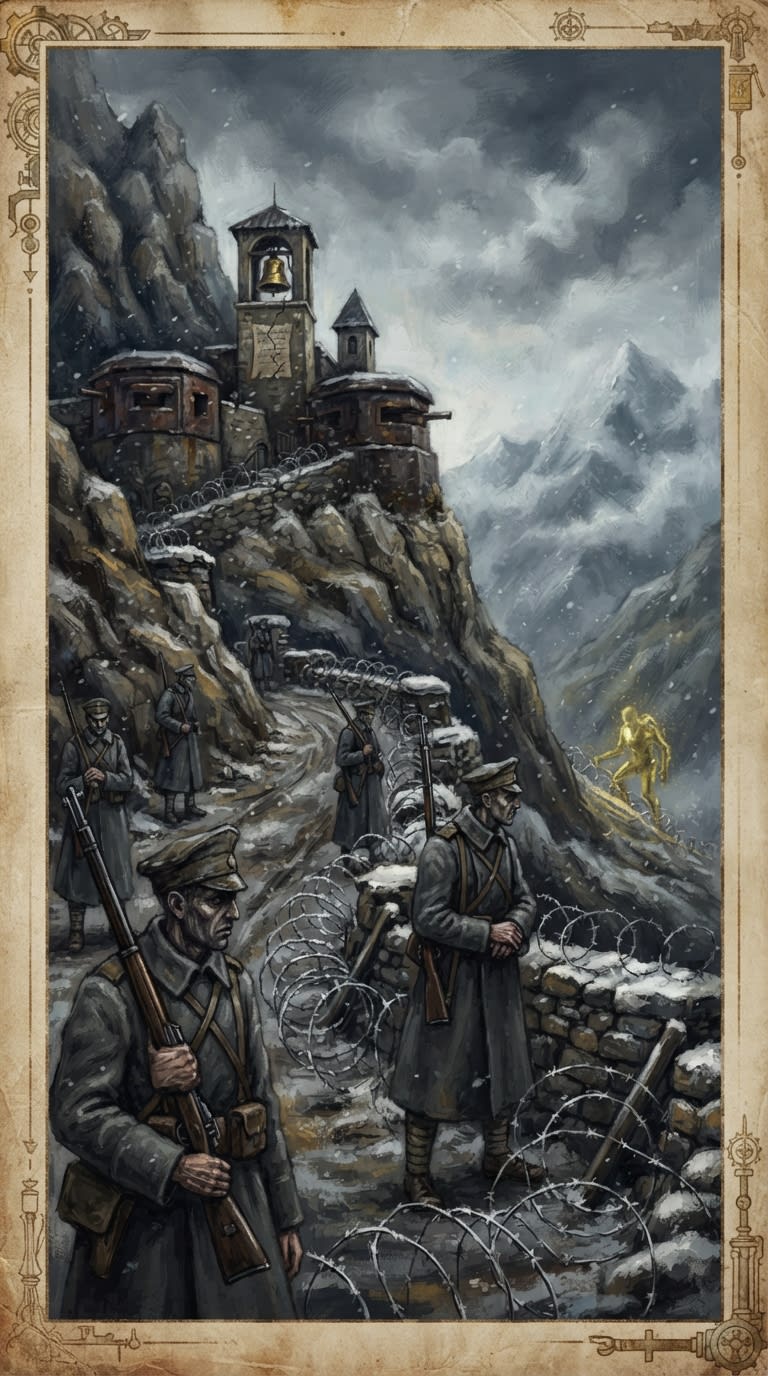
Alpine Watch
The pass holds while the pay chest lies
The Alpine Watch keeps Sibiu's mountain passes with rifles, wire, snow, and empty pockets. Velmora does not storm them. She lets their wages do the climbing.
Codex Ref. VIII.5.04-201
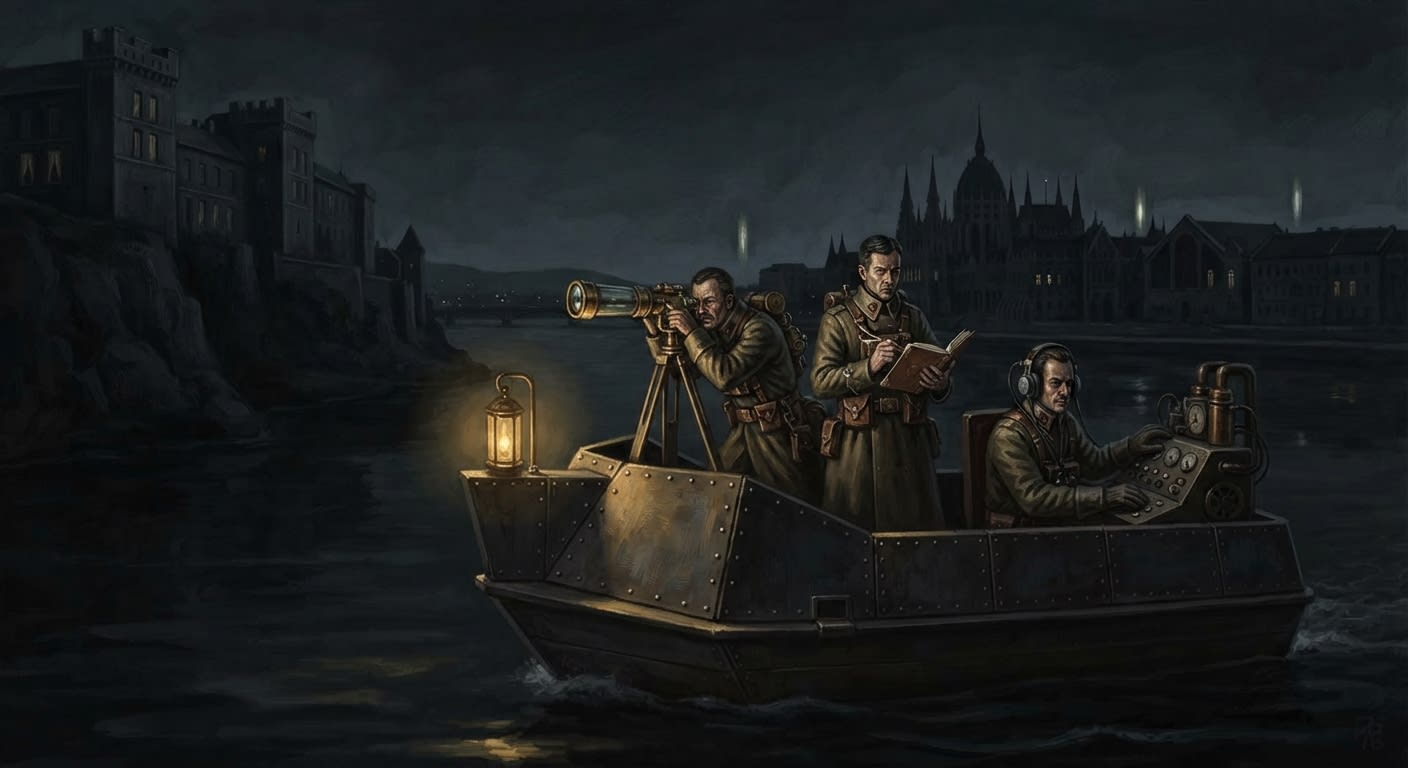
Annual Confirmation of Vacuity
One boat, three passes, and a city officially not answering
The Annual Confirmation of Vacuity is the yearly rite by which Pest remains legally Vacated: three river passes, five admissible measurements, no landing, and no occupancy category.
Codex Ref. XIII.1.88-201
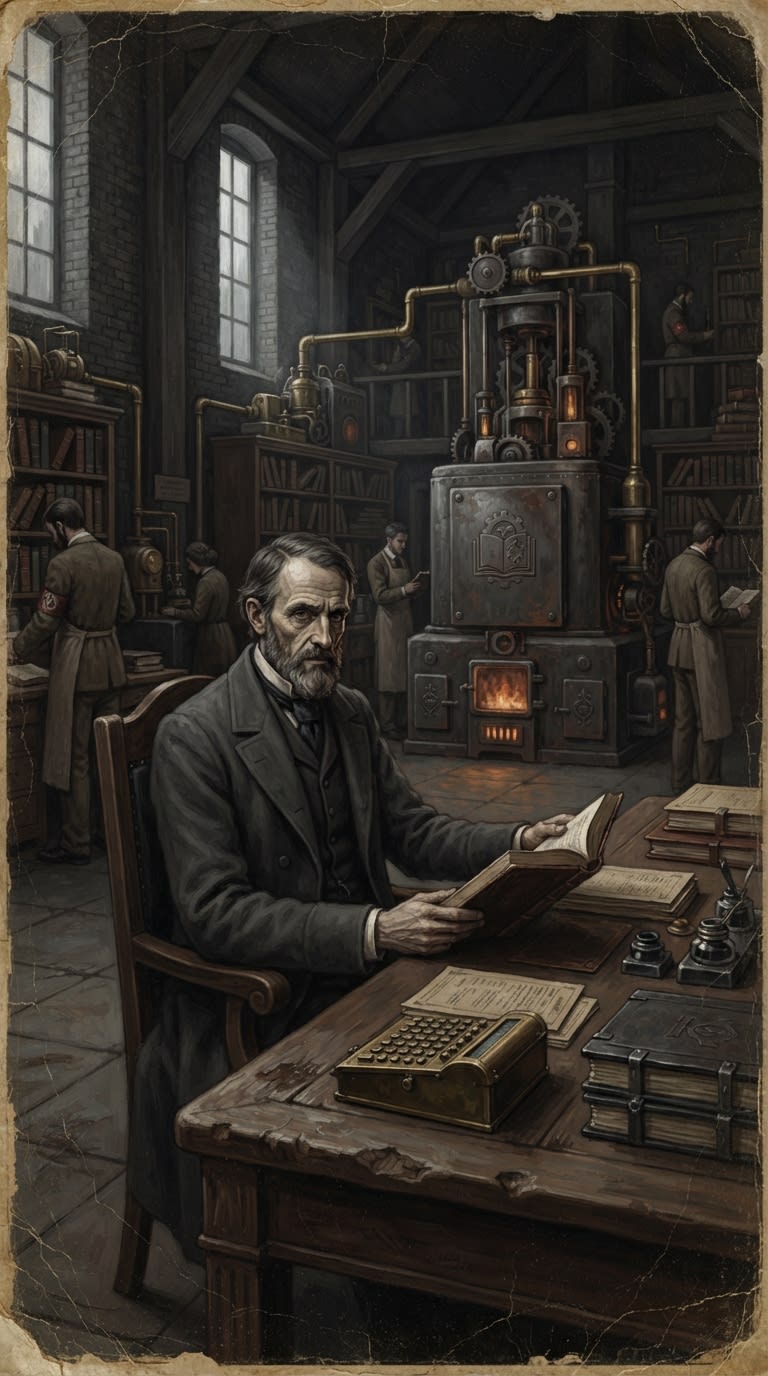
Aristotle
The pagan who lent the Church its knife
Aristotle gave the Church no doctrine, no obedience, and no permission. Unfortunately for him, he did leave behind a very useful machine for arguing.
Codex Ref. III.2.01-073
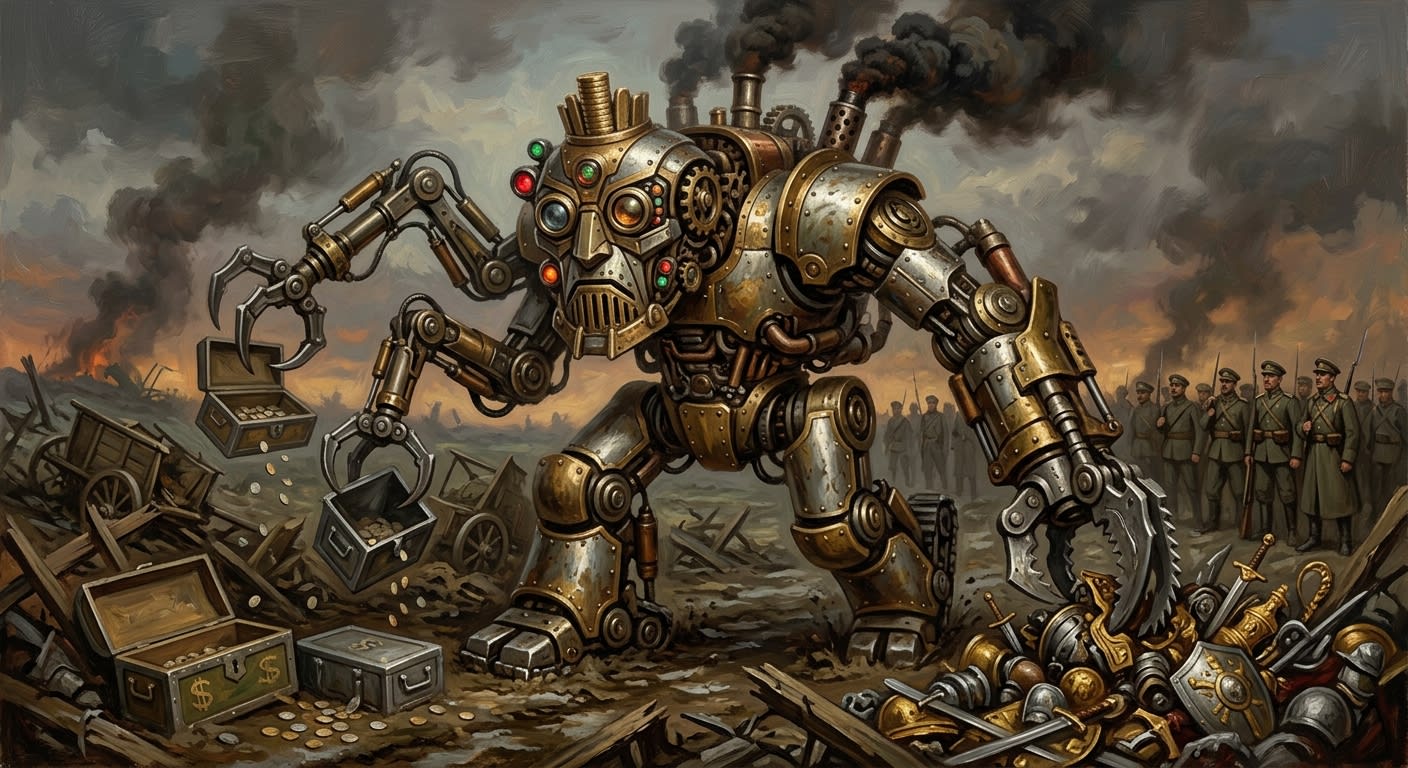
Avarice Engine
A walking treasury with foreclosure for feet
The Avarice Engine is Velmora's walking treasury: a gold-and-silver war-golem that crushes ownership, appraises courage, and leaves pay-chests empty.
Codex Ref. XIII.1.27-190
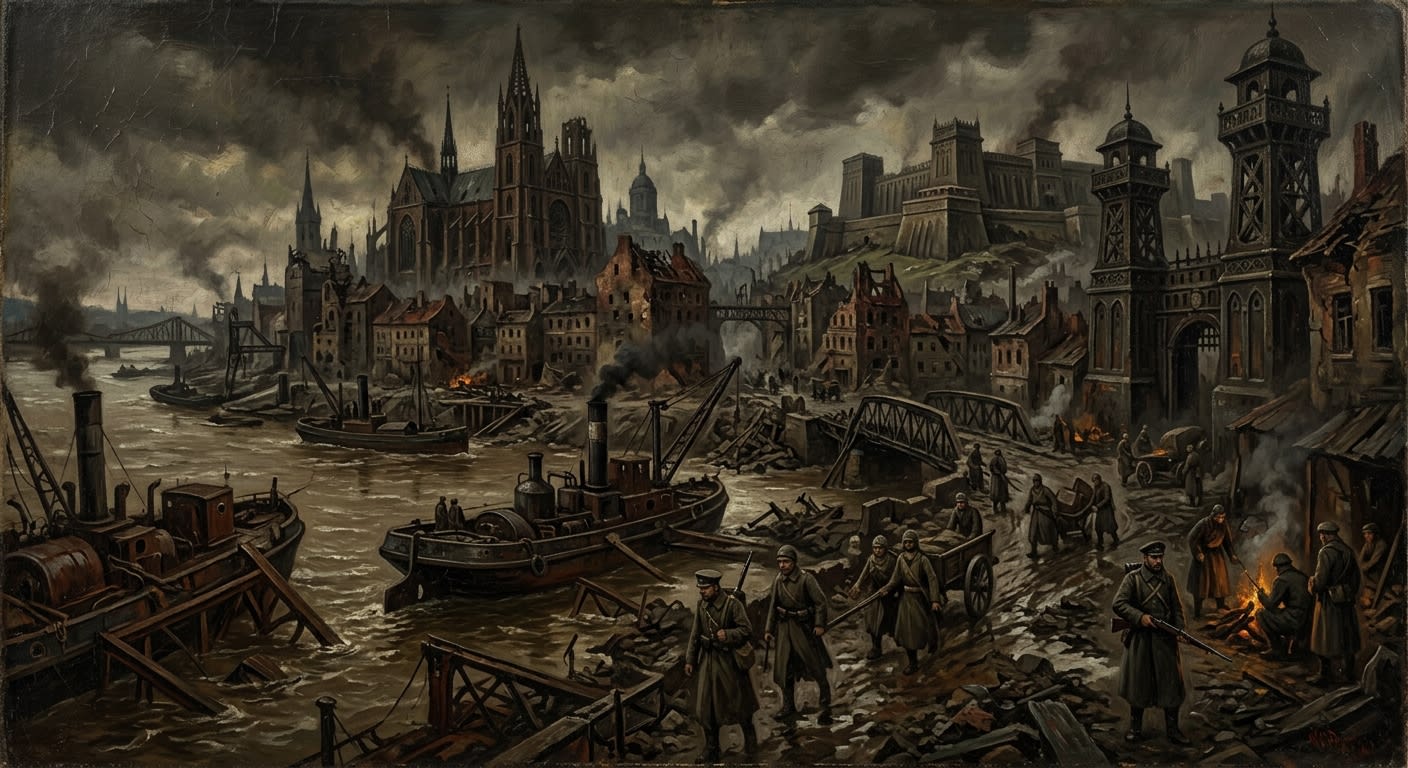
Belgrade
The city the river refused to bury, and therefore made taxable
Belgrade, ruined-contested confluence city where Shattered Courts perfume met Maldrake's Wrath, the Danube turned in A.S. 120, and sanctity became an armed hazard.
Codex Ref. II.5.06-120
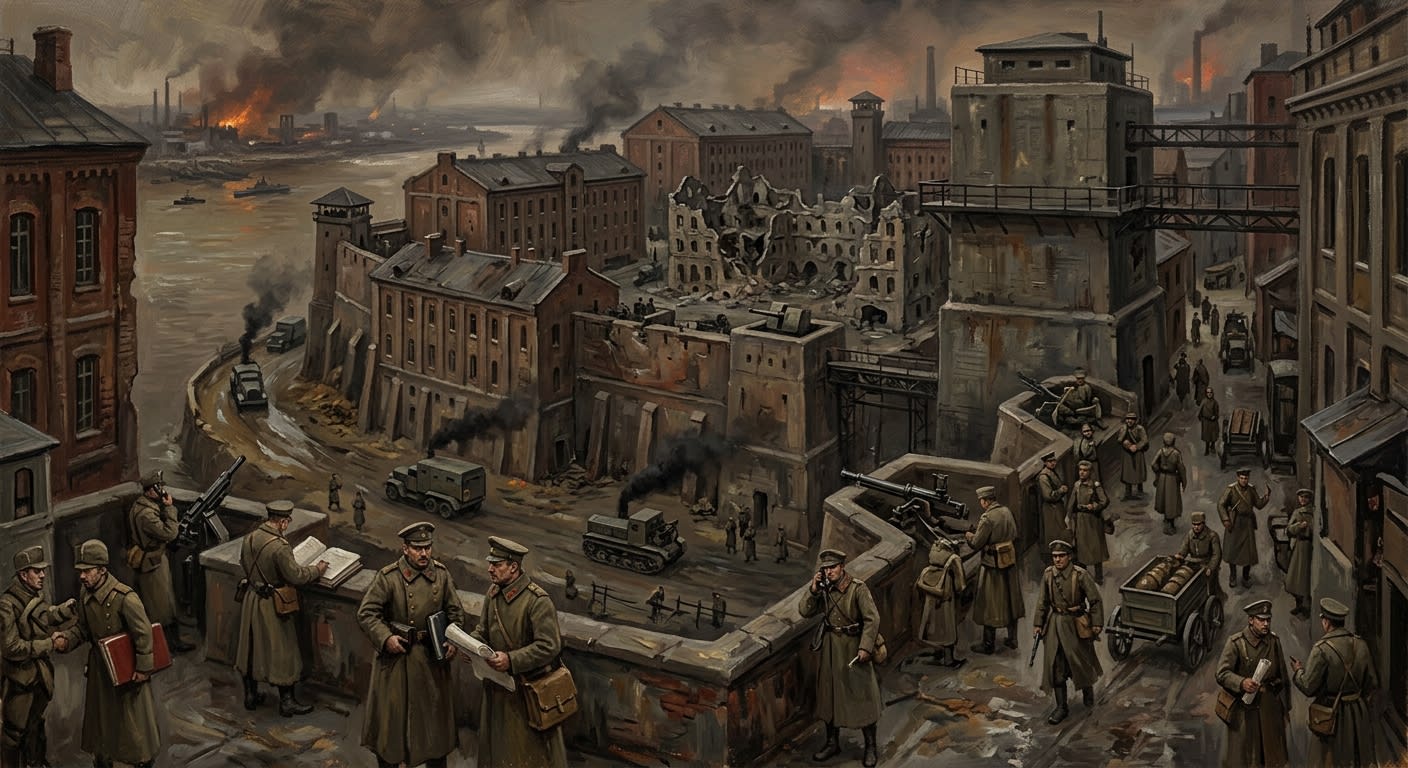
Belgrade Courts
Where miracle became evidence and silence learned to testify
The Belgrade Courts are the judicial-military scar around Velkara's Shattered Courts, where Maldrake burned, the Danube turned, and silence acquired paperwork.
Codex Ref. II.5.06-121

Bran corridor
The road is held. The accounts are under review.
The Bran corridor guards a northeastern approach to Bastion-Sibiu. An Alpine Watch battalion holds the road while Velmora's credit reaches the villages behind it. The corridor is held. The accounts remain under review.
Codex Ref. II.4.08-066
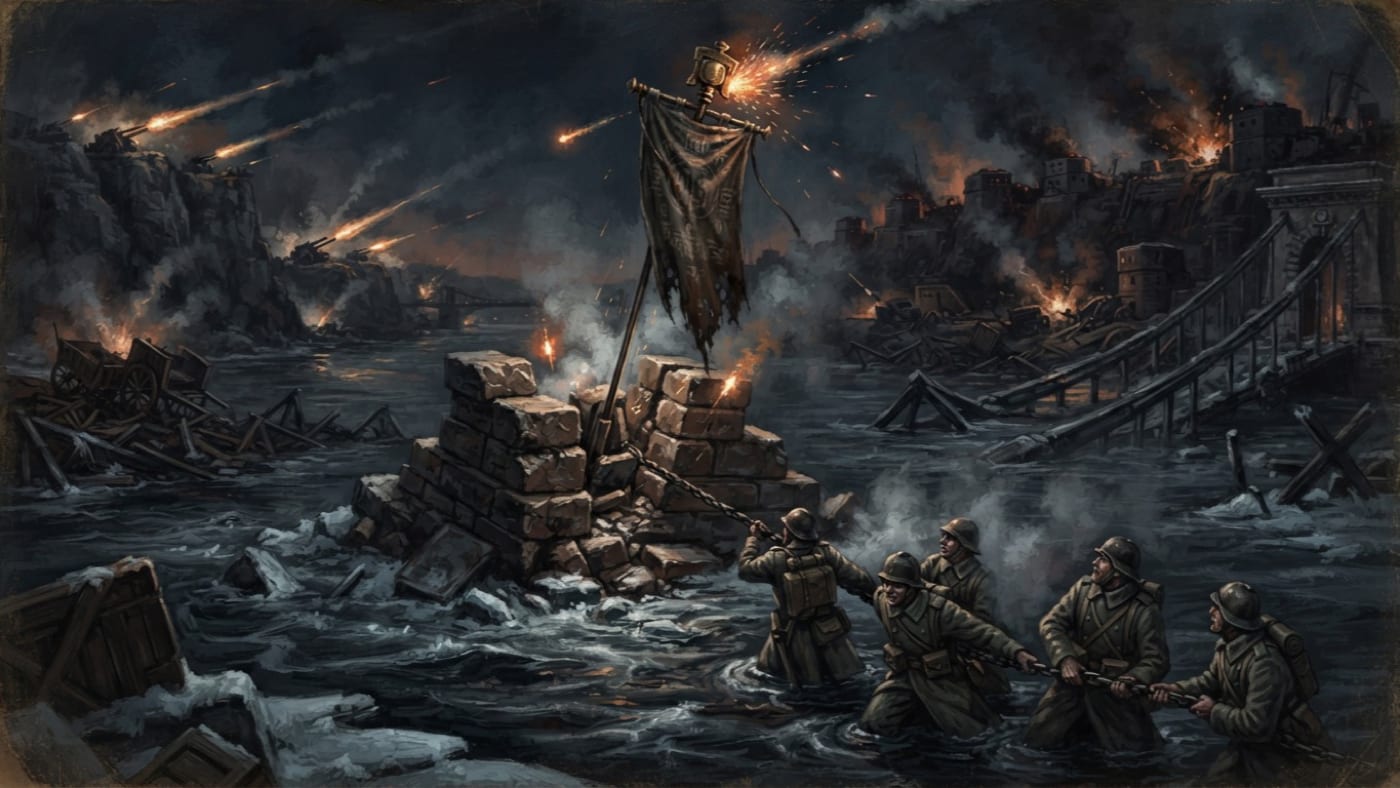
Brass-Lipped Banner of the Sixth Levy
Lorn climbed; the socket held; Providence received the Sign
At the Chain-Pier Ruin in A.S. 172, the Sixth Levy's banner stood unattended under fire for ninety seconds. Lorn climbed; the socket held; Providence received the Sign.
Codex Ref. VII.5.01-003
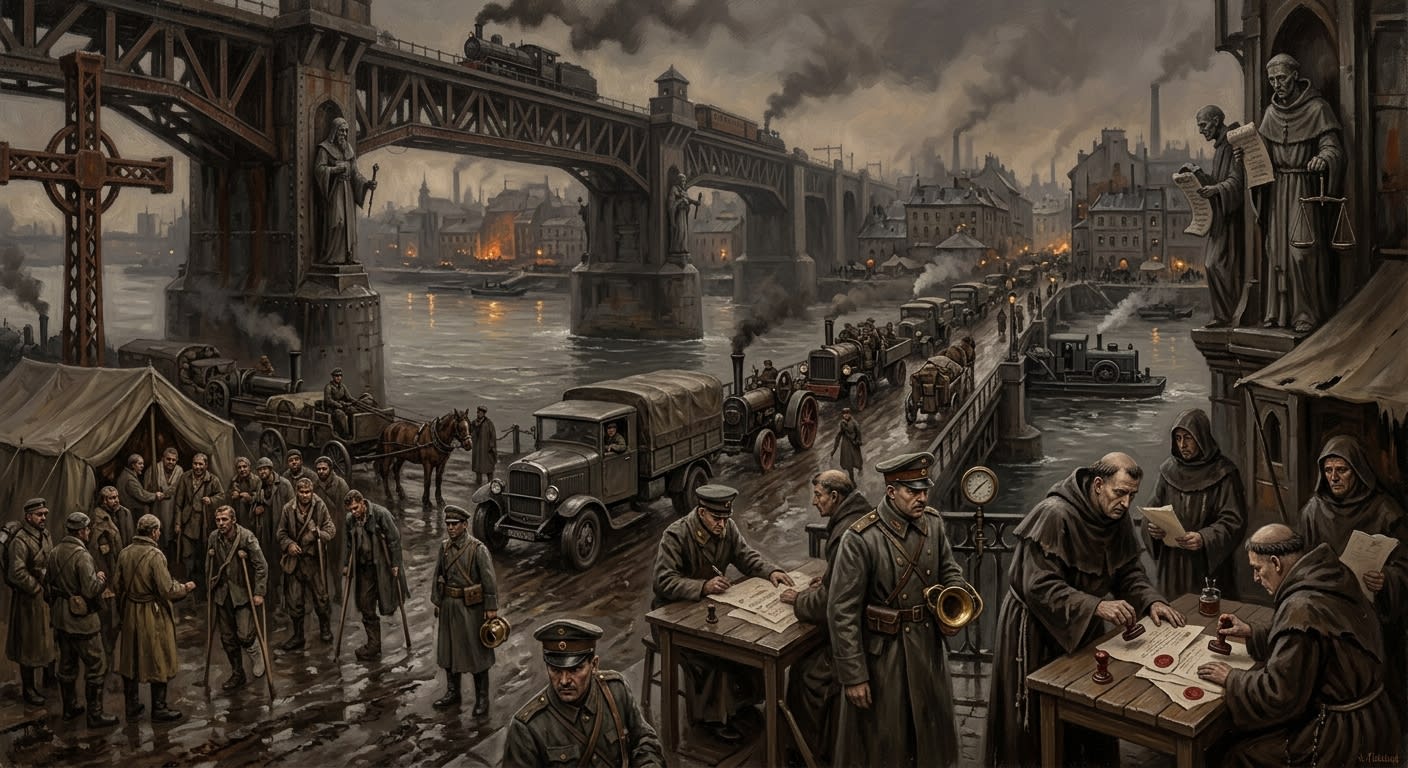
Bratislava
The throat between ruin, command, and the next inspection
Bratislava is the Central Corridor's damp throat: a Zone 3 Danube crossing where convoys, writs, wounded men, and official impatience are slowed into usefulness.
Codex Ref. II.4.09-011
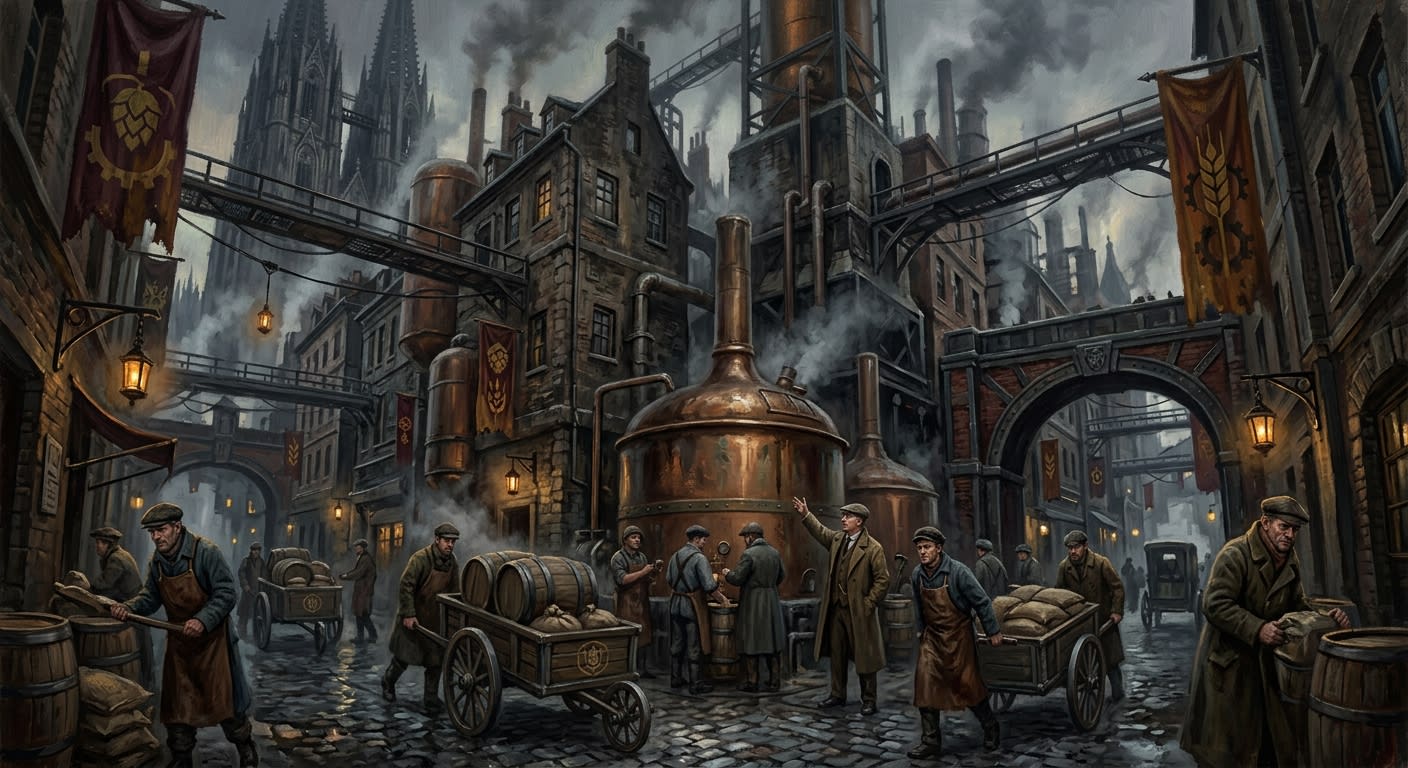
Bräuviertel
The Brewery Quarter older than the stamp and too taxable to condemn
Munich's Bräuviertel is a thirty-seven-block brewery quarter between the Provisorium and the old cathedral precinct: ancient, taxable, doctrinally irritating, and still boiling.
Codex Ref. II.2.06-015
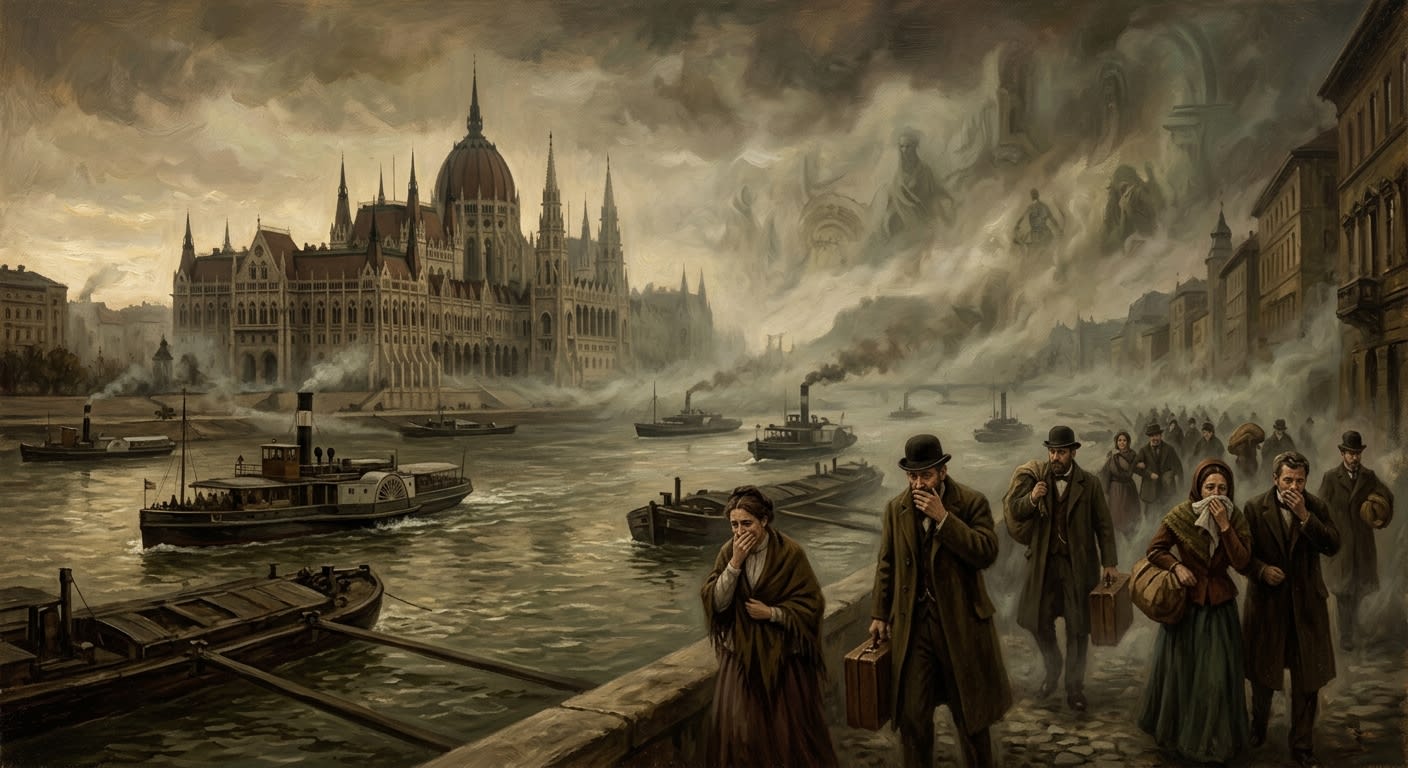
Budapest Perfume Fog
Eleven days of beloved lies before the bank went empty
The A.S. 117 Budapest Perfume Fog carried Velkara's Shattered Courts across both banks, preceding Pest's abandonment by scent, memory, and sealed cowardice.
Codex Ref. VII.4.16-117

Budapest-Irongate Corridor
The road that pays in fuel and settles its accounts in men
The southern feeder route from Budapest to Bastion-Irongate carries blessed freight past nineteen confirmed wound-sites and four probable. Charter houses draw the fuel; their crews settle the human account.
Codex Ref. II.4.09-369
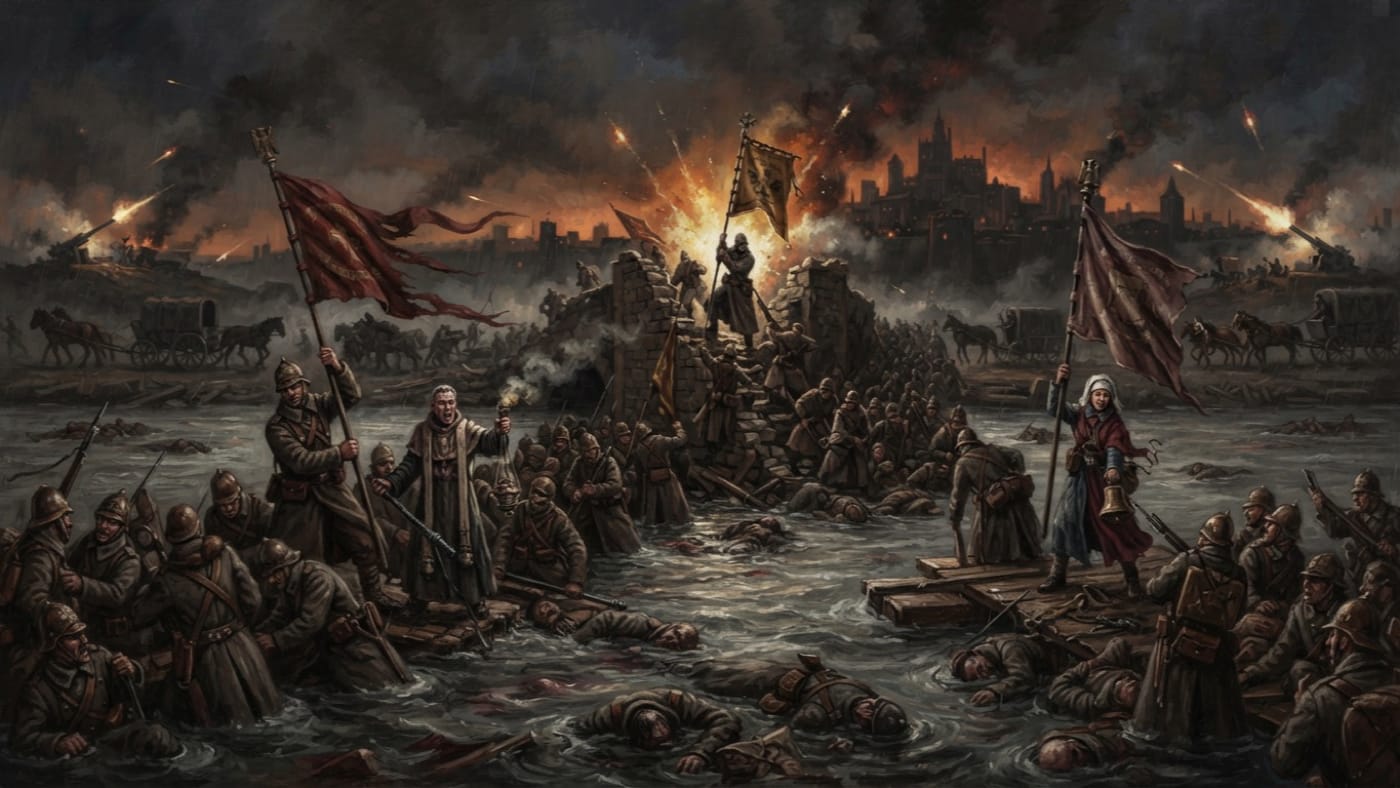
Bureau doctrine
The cloth creates the formation; the ledger decides who was carried
War teaches men to follow cloth, cadence and calibrated powder. Doctrine decides what carried them across the Danube; Records decides what their families may claim.
Codex Ref. III.2.07-042
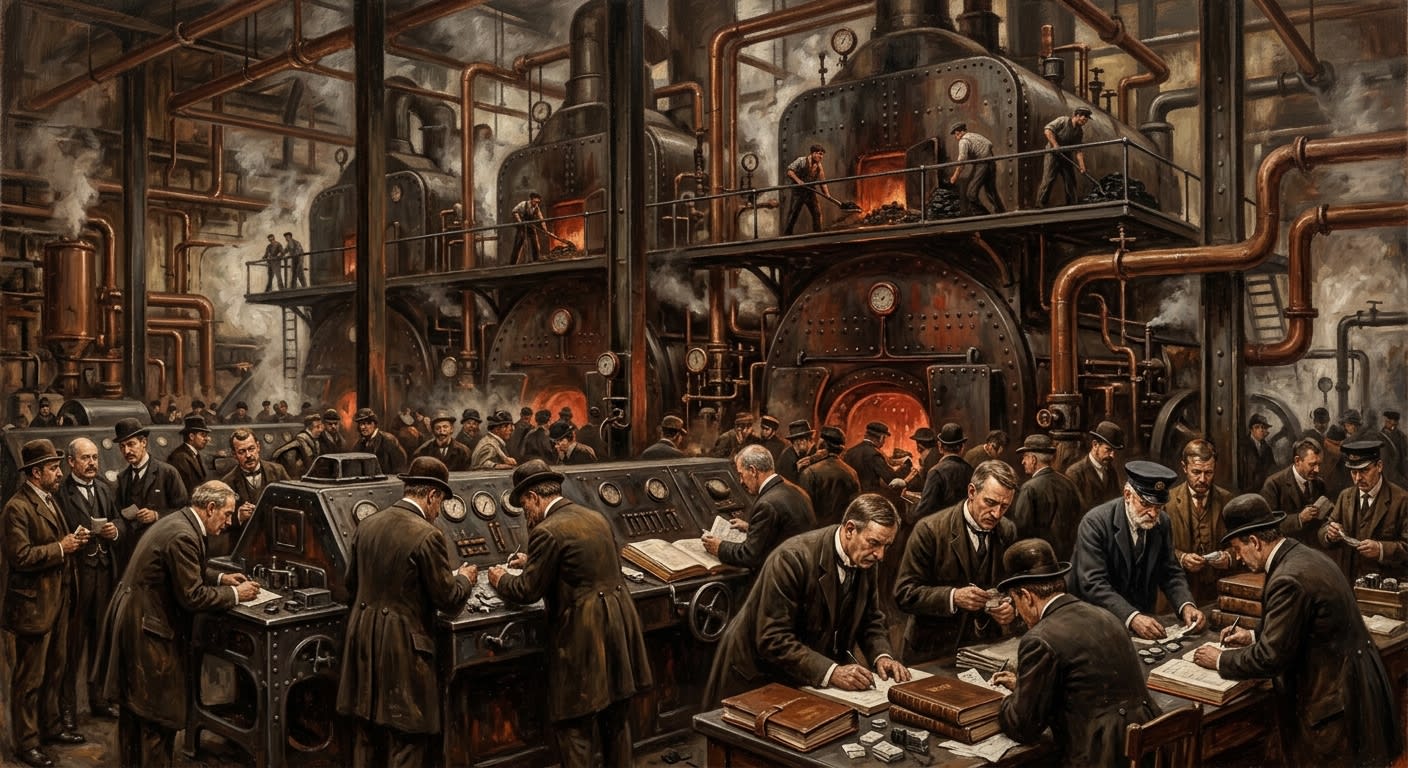
Bureau of Engines & Furnaces
The furnace burns because it must, and someone must invoice the flame
The Bureau of Engines & Furnaces governs the Synod's hot machinery: fuel allowances, furnace discipline, wound-site yield, pressure systems, and every boiler too useful to condemn.
Codex Ref. VIII.2.02-001
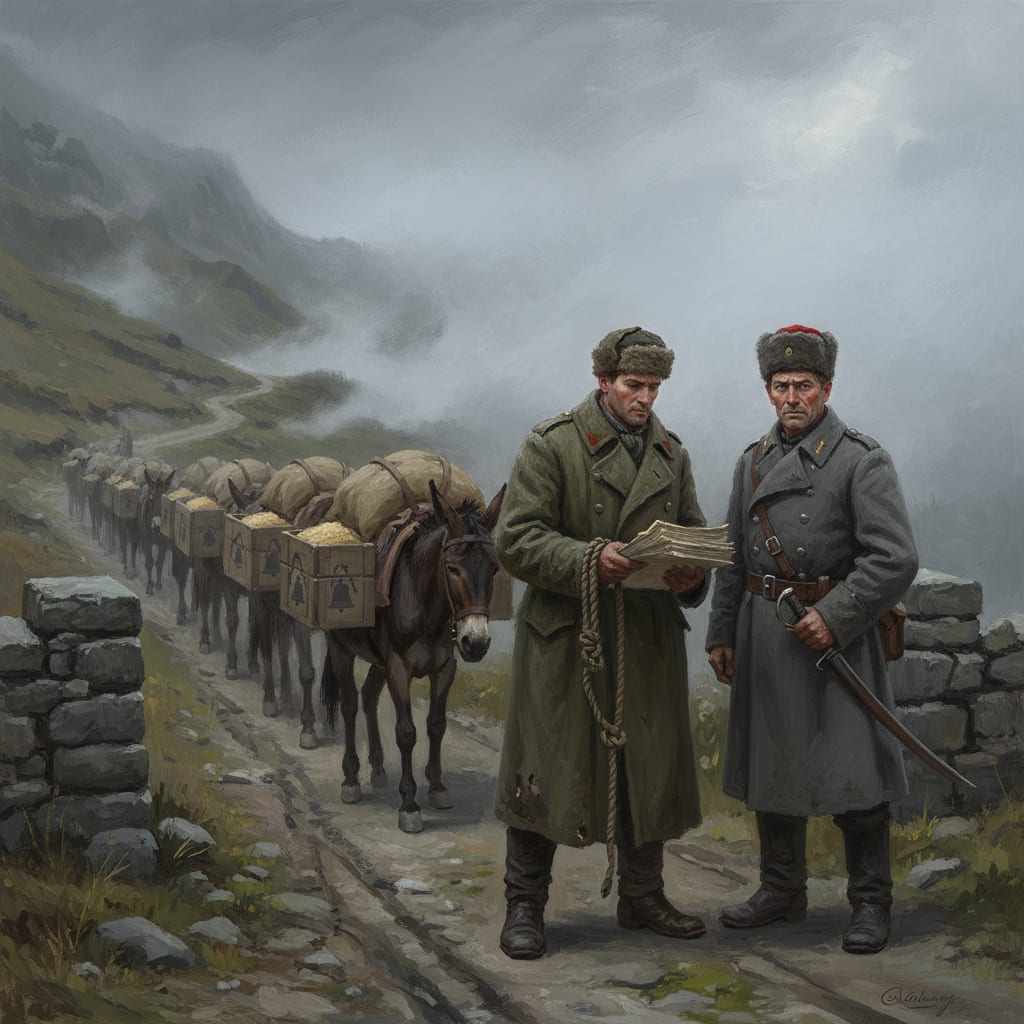
Caravan Factor
The Synod's confession that geography is ungovernable, licensed and taxed accordingly
The Caravan Factor occupies the gap between the Bureau's filed route-plan and the road's actual condition — part cartographer, part accountant, part diplomat, and part criminal, though the Synod prefers not to use the last term in official correspondence.
Codex Ref. XII.6.01-001
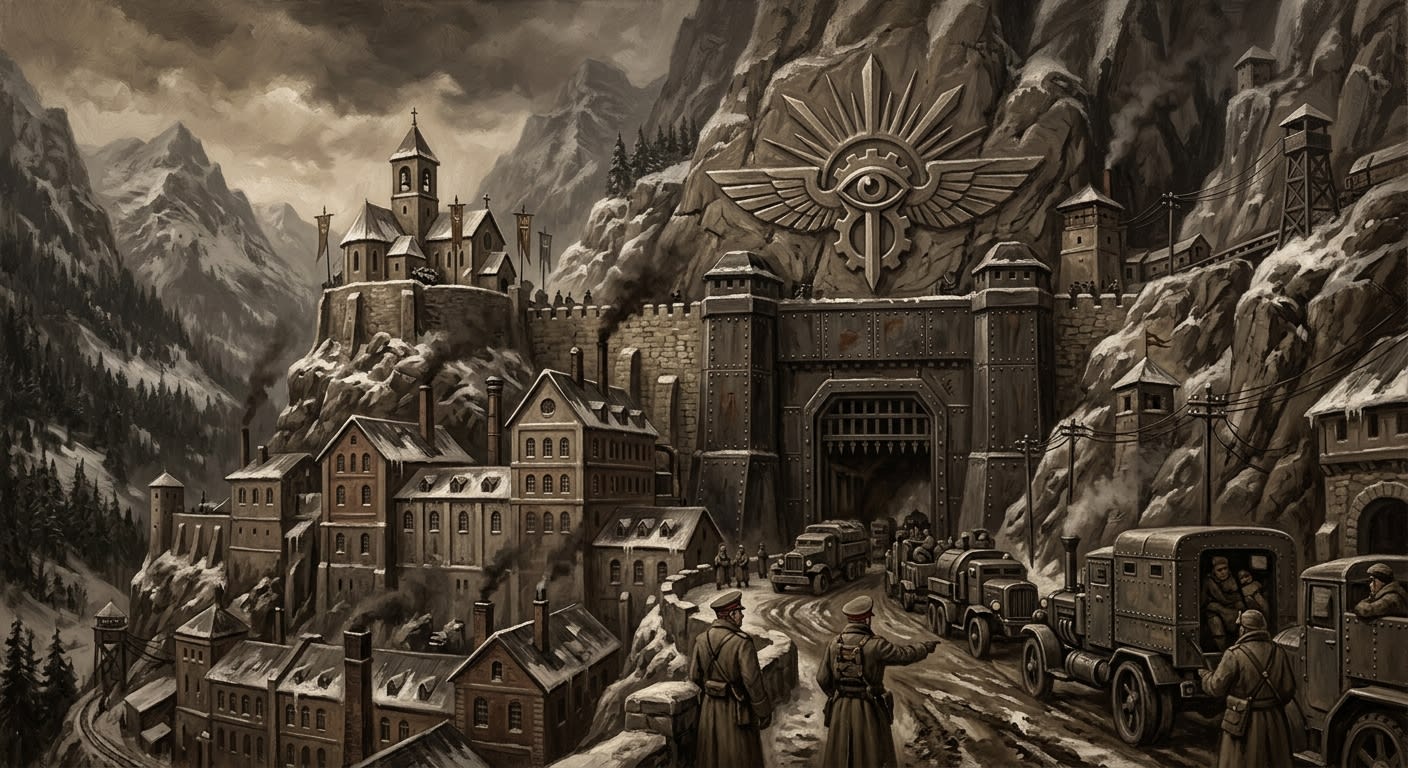
Carpathian Gates
Where the mountain learned to close its teeth
Mountain hinge of the middle Line: passes, locks, shrines, snow-voices, and Harrowglass terror between Bastion-Przemyśl and the Carpathian spine.
Codex Ref. II.4.08-065
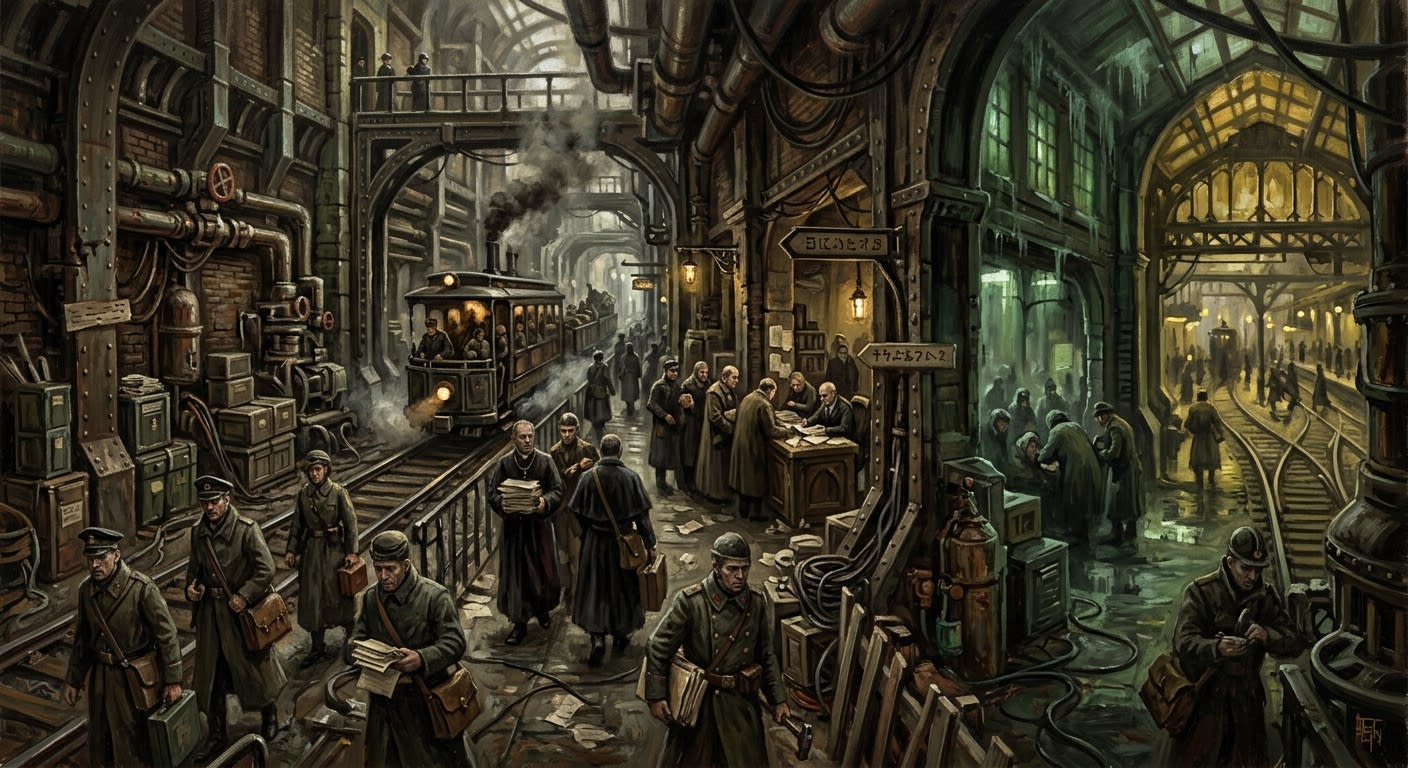
Central Corridor
Motion blurs the screams, which is why the Ledger loves trains
The Central Corridor is the Synod's middle artery: Munich's packed motion, Vienna's holy delay, Bratislava's damp throat, and Budapest's yellow pins.
Codex Ref. II.4.09-201

Central Corridor Command
Where a yellow pin decides who eats
The Bureau of War's logistics authority in Budapest's former Royal Palace, directing Central Corridor convoys to the forward bastions. Green moves, red is lost, and yellow requires decisions.
Codex Ref. VIII.7.04-201
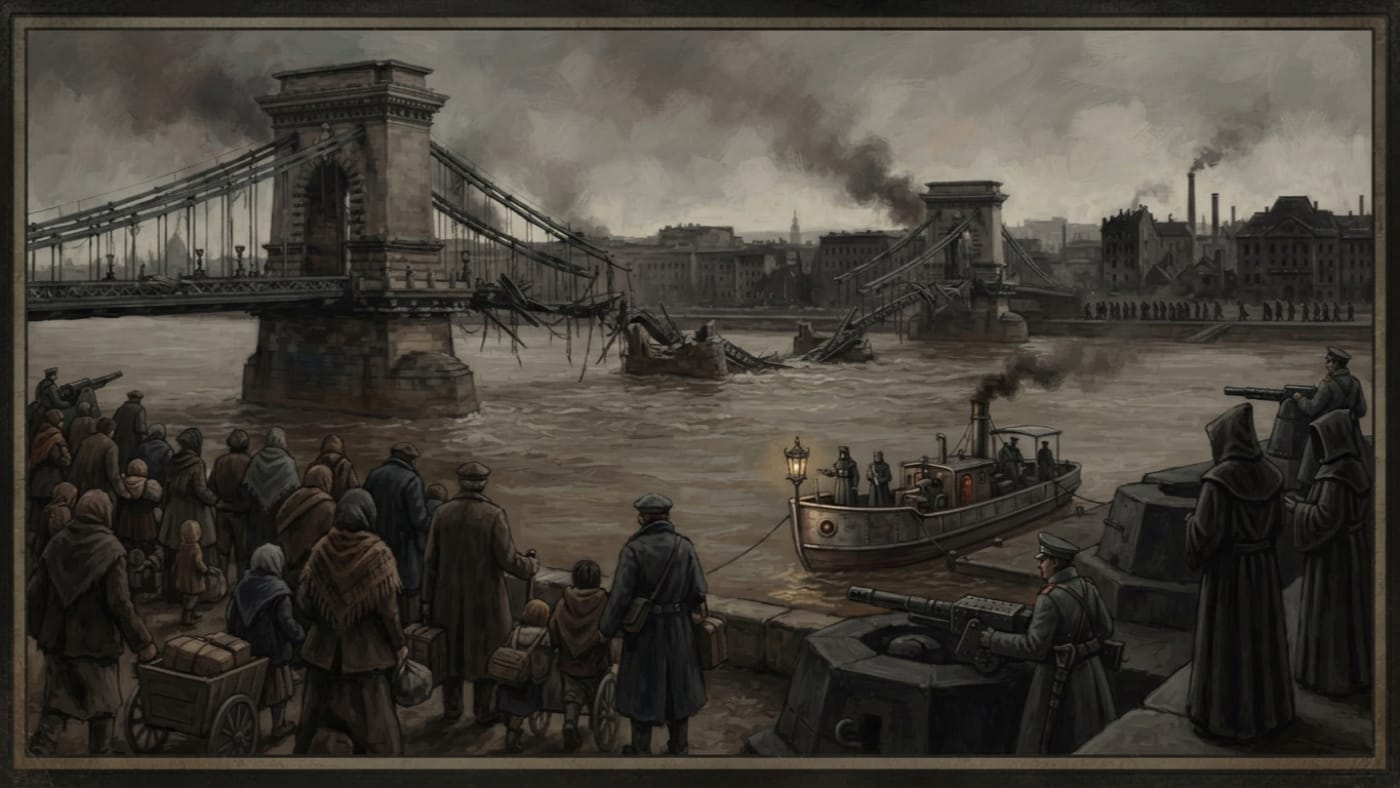
Chain Bridge
The crossing destroyed, the destination still pending
Budapest's last bridge held six hours after detonation in A.S. 122. Eight hundred refugees were crossing; the bridge is destroyed, their destination pending. Broken piers remain between Buda and Vacated Pest.
Codex Ref. II.4.09-122
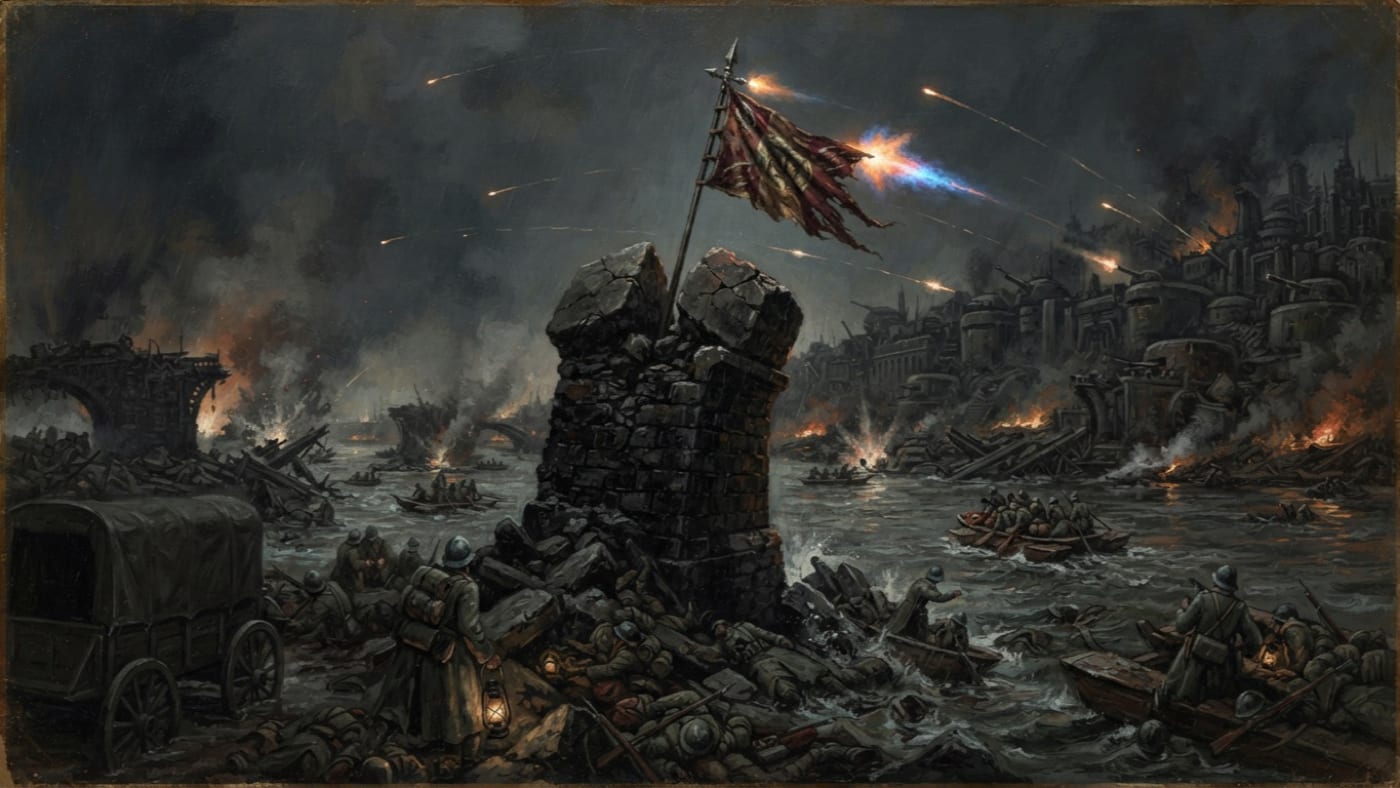
Chain-Pier Ruin
Ninety seconds upright; two explanations on file
Ruined Danubian passage used in A.S. 172, where Lorn of Metz's banner stood unattended for ninety seconds: Doctrine cites Sign One; veterans cite the weighted socket. The stones offer no opinion.
Codex Ref. II.3.05-172
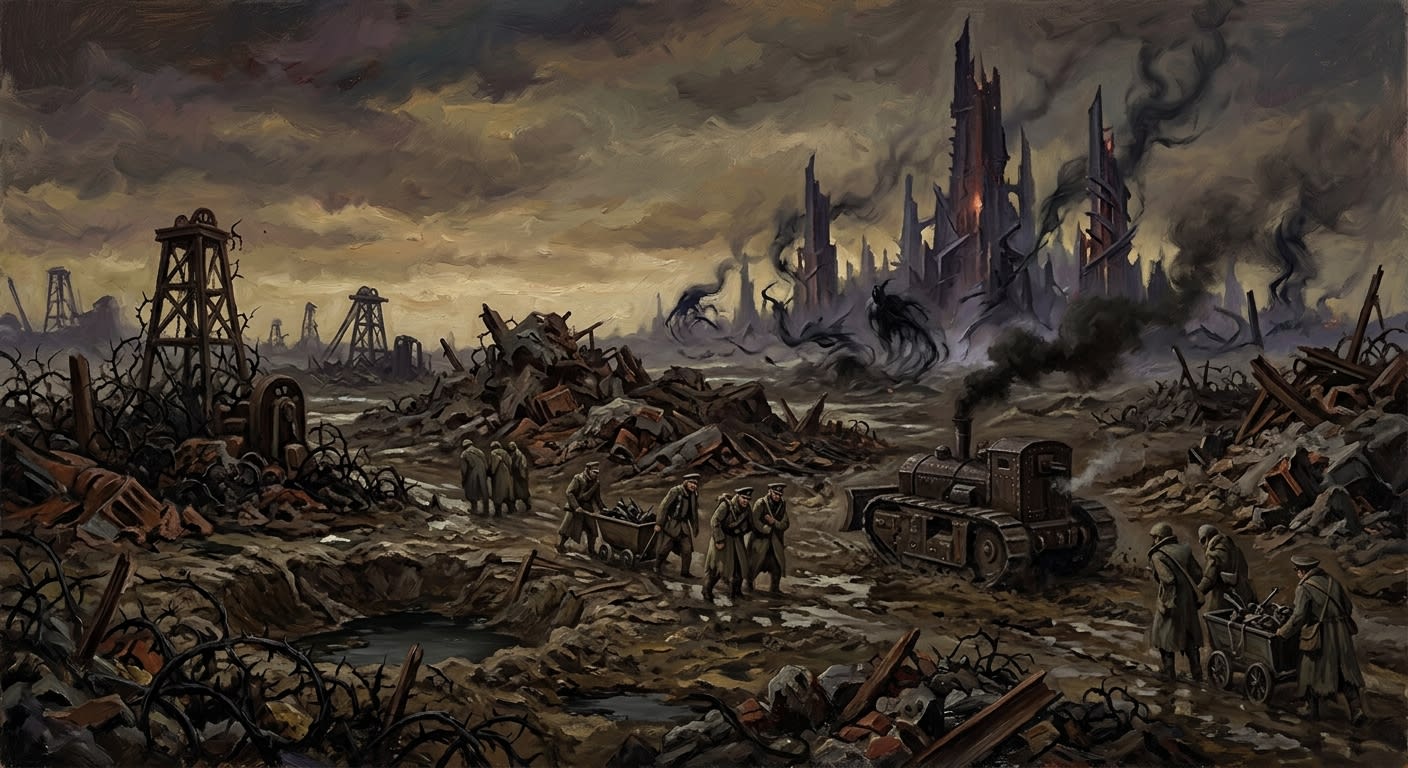
Charnel Lands
Where geography continues after mercy has been denied
The Charnel Lands are Zone 6, the demonic territories east of the Sagittal Line: geography made hostile to custody, with wilderness and cemetery both demoted to inadequate clerkly metaphors.
Codex Ref. II.6.06-001

Charter Baron Gruhl
The man who made forty-one deaths balance
Charter Baron Gruhl held seven Budapest-Irongate wound-sites, lost forty-one workers in one season, filed them as fuel-adjacent assets, and retired with a pension.
Codex Ref. III.2.01-149
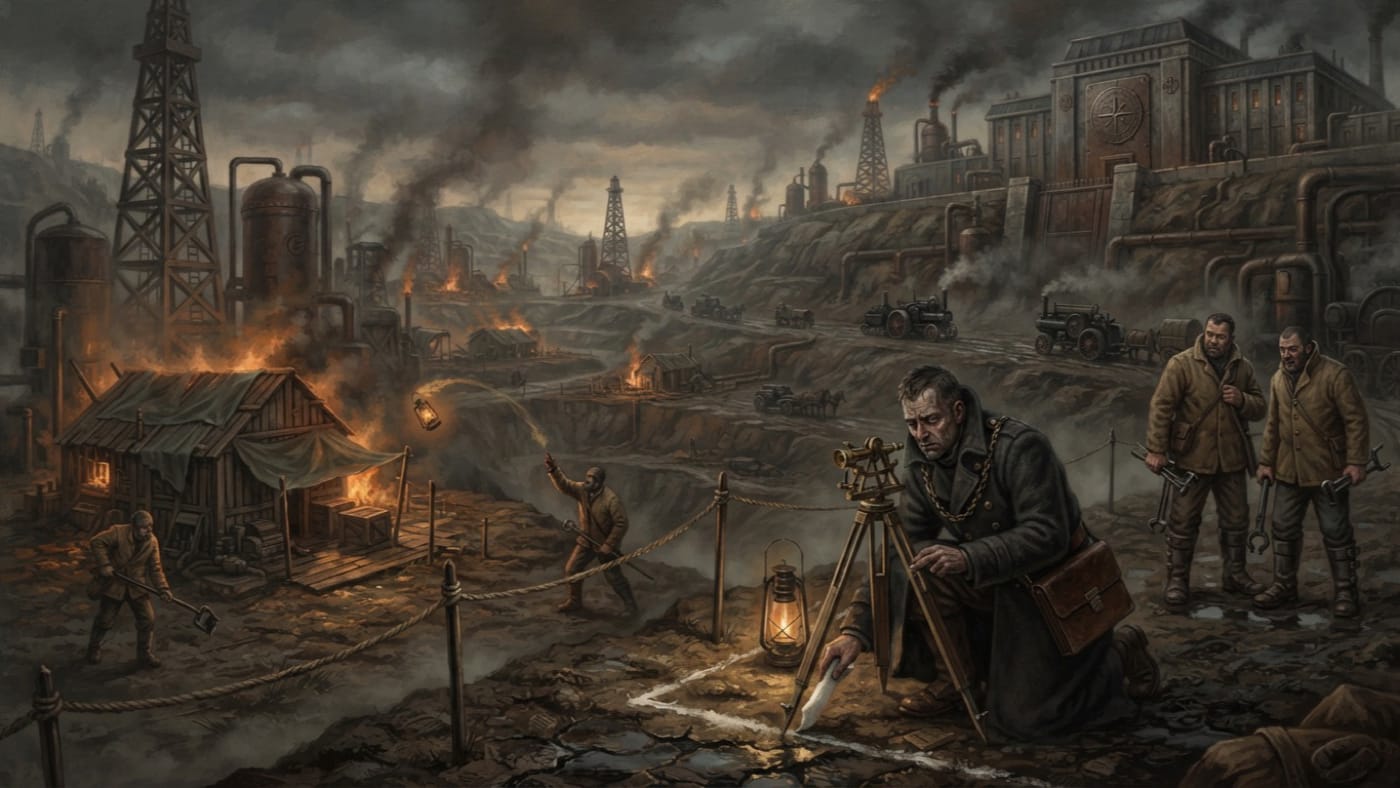
Charter Wars
The houses settled; the crews kept paying
Licensed extraction houses bribed Judges, burned rival pits and killed survey scribes over wound-site rights. The A.S. 167 amendment settled the Charter Wars; the houses continued by filing complaints.
Codex Ref. VII.8.10-167
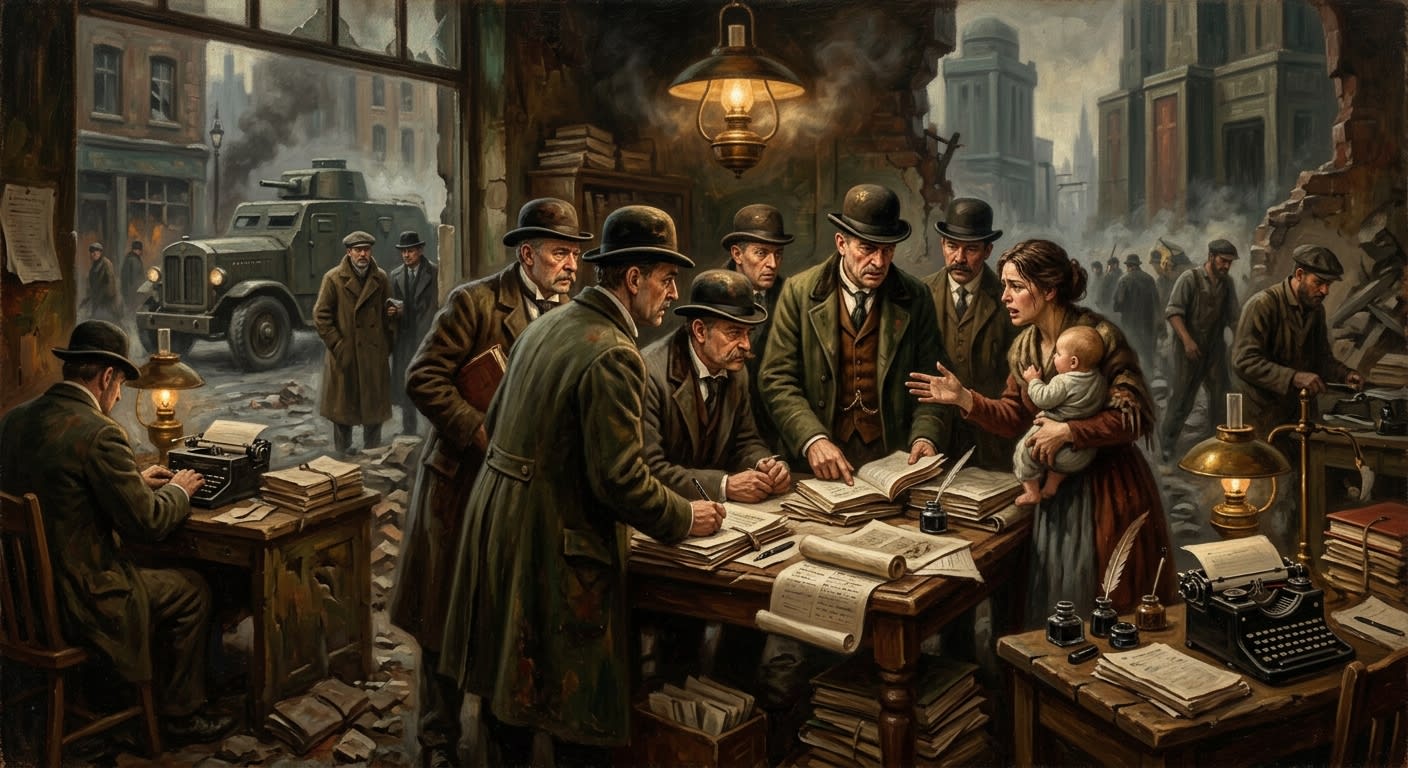
Citation Pragmatists
The useful lie, properly receipted, may keep a district alive
Informal Citation Advocate faction that argues intent, exploits ambiguity, and keeps clients, convoys, widows, and districts alive long enough to be billed.
Codex Ref. XII.28.03-001
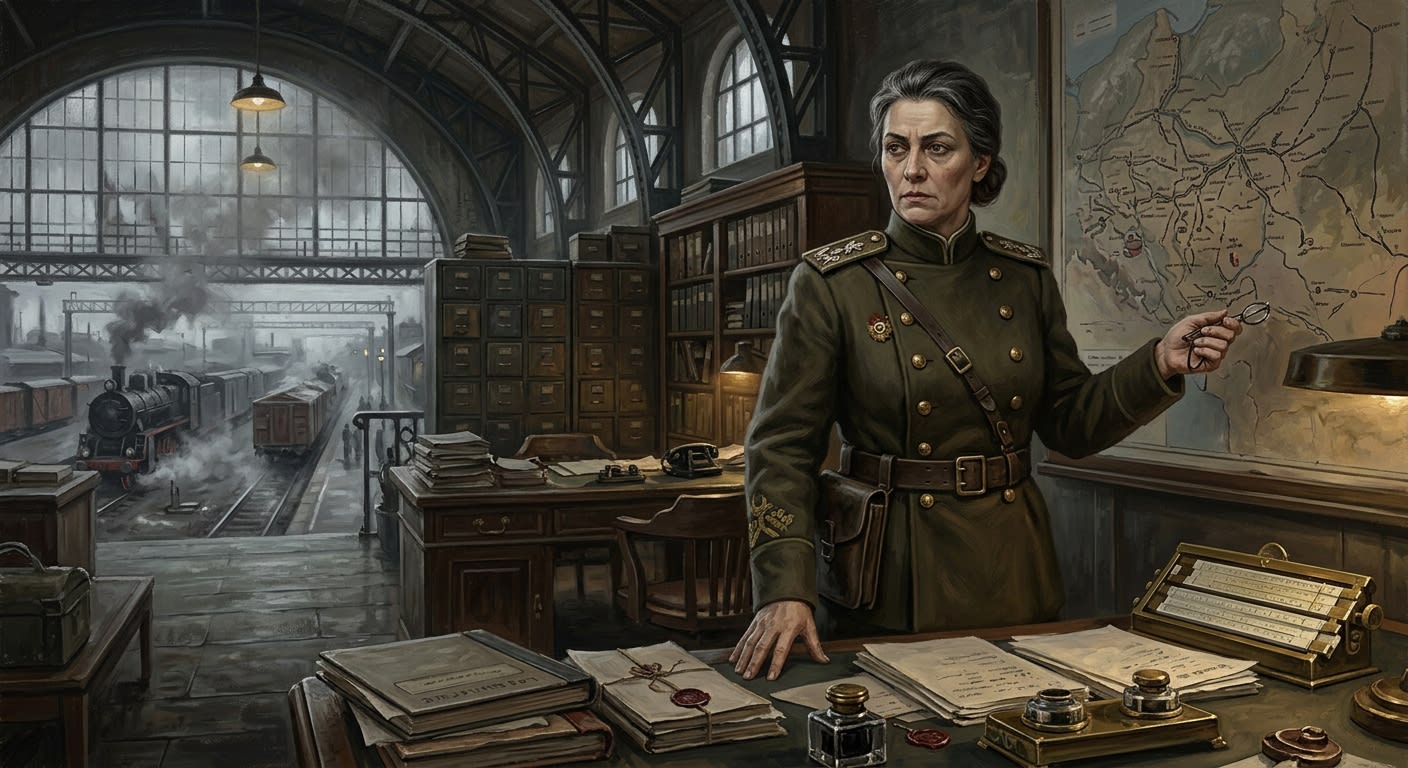
Colonel-Prefect Anya Dzhurova
Competence, exiled to the only city that deserved it
Colonel-Prefect Anya Dzhurova commands Sofia with Bulgarian clarity, punished for correct logistics arithmetic and retained because the trains still run.
Codex Ref. III.2.01-150

Convoy Escort Corps
The bastion must eat tomorrow.
Bastion-Sibiu's largest command escorts grain, wages and manifests along three roads under Velmora's pressure. The Corps guards the wagons; three Bureaus decide whether the cargo may enter.
Codex Ref. VIII.5.04-002
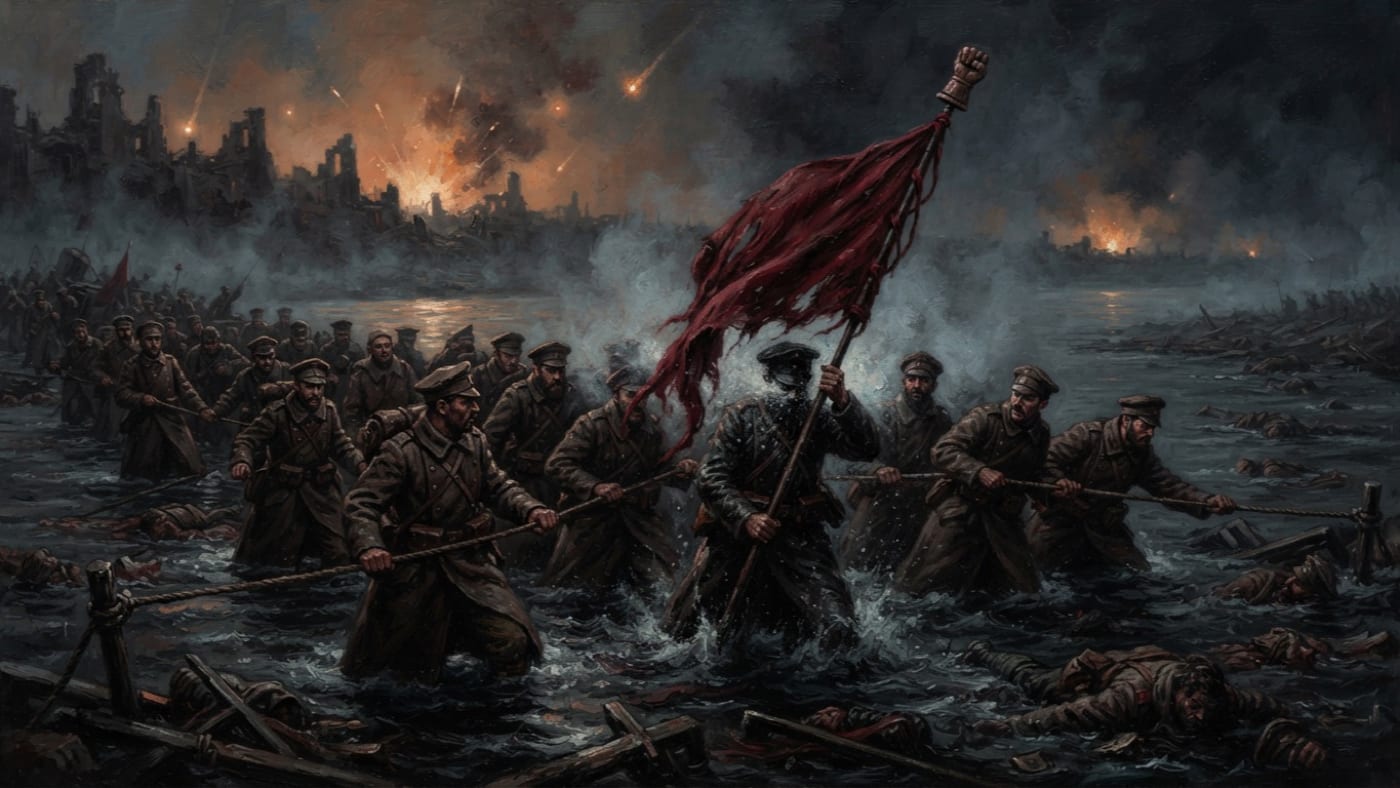
Crimson Pennant of Saint Marcellus
The cloth survived; the address remains blank
Crimson campaign standard carried through Saint Hadrien's Ford in A.S. 172. The pennant survived the Night of the Three Bridges; its bearer and later custody remain unrecorded.
Codex Ref. III.2.04-172
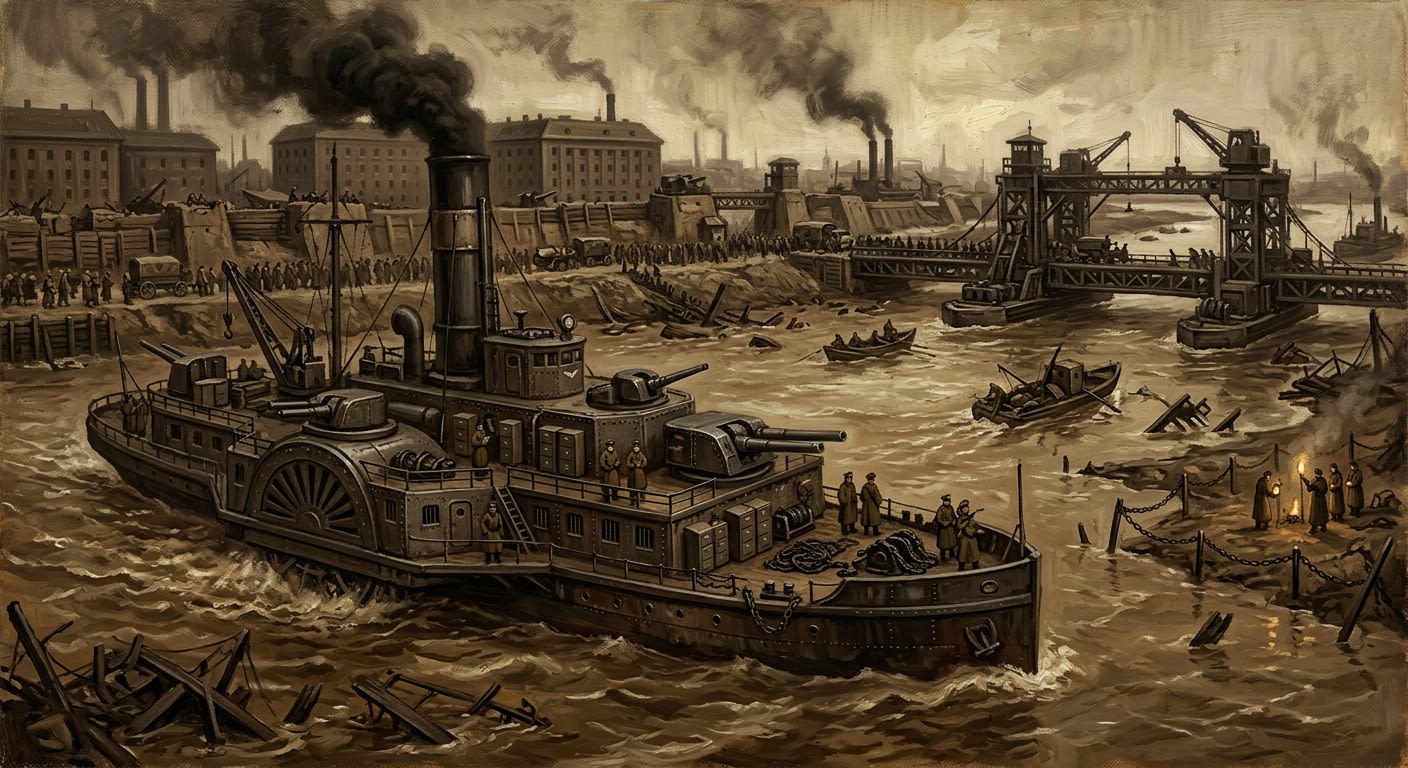
Danube
A moving jurisdiction, interrupted by Hell
The Danube is the Synod's brown moving jurisdiction: road, border, weapon, archive, tariff, grave, miracle-site, and contested throat of Irongate.
Codex Ref. II.4.09-034
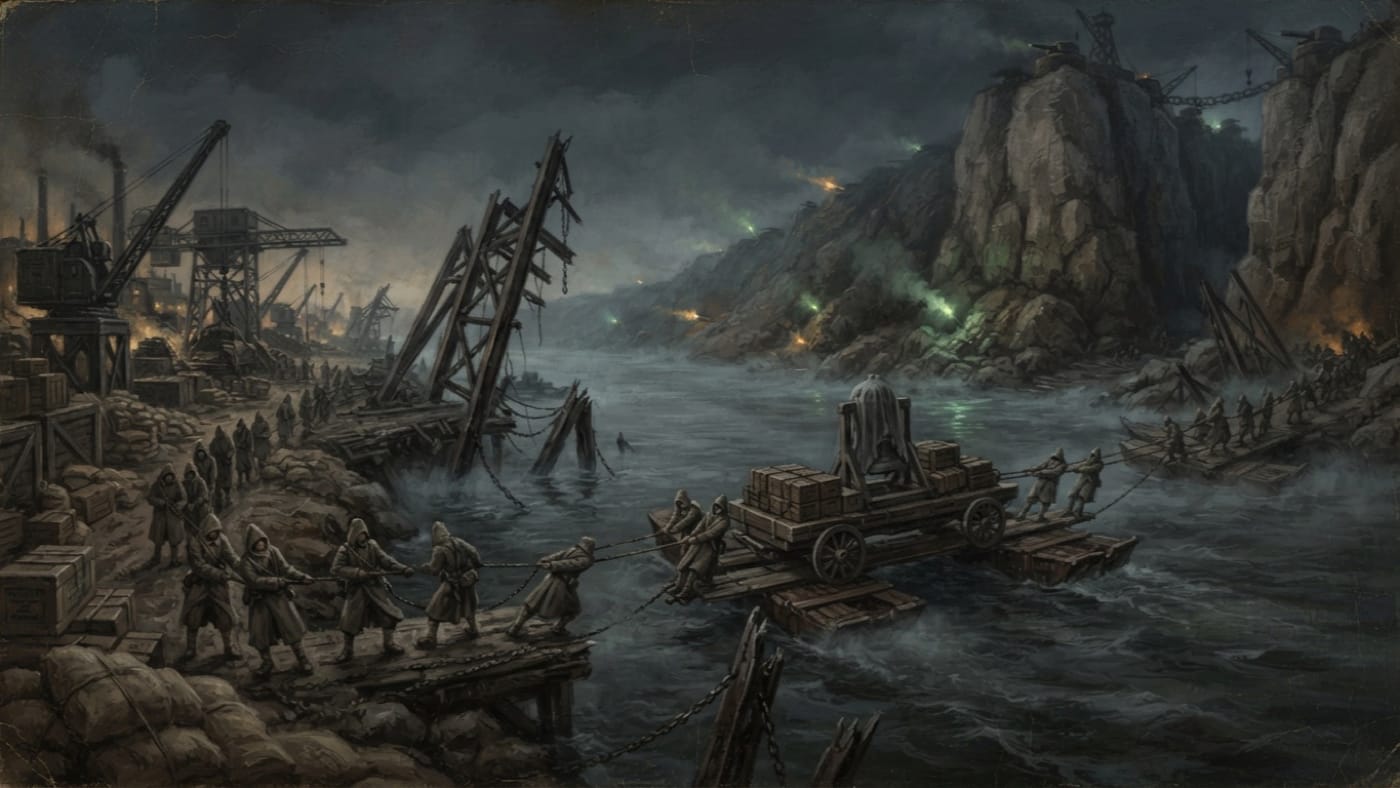
Danubian forward corridor
The grain arrives; the river keeps the difference
Between Budapest and Bastion-Irongate, the Synod moves grain, cartridges and bells through ruined crossings. The cargo is counted; the river keeps the difference.
Codex Ref. II.4.09-172
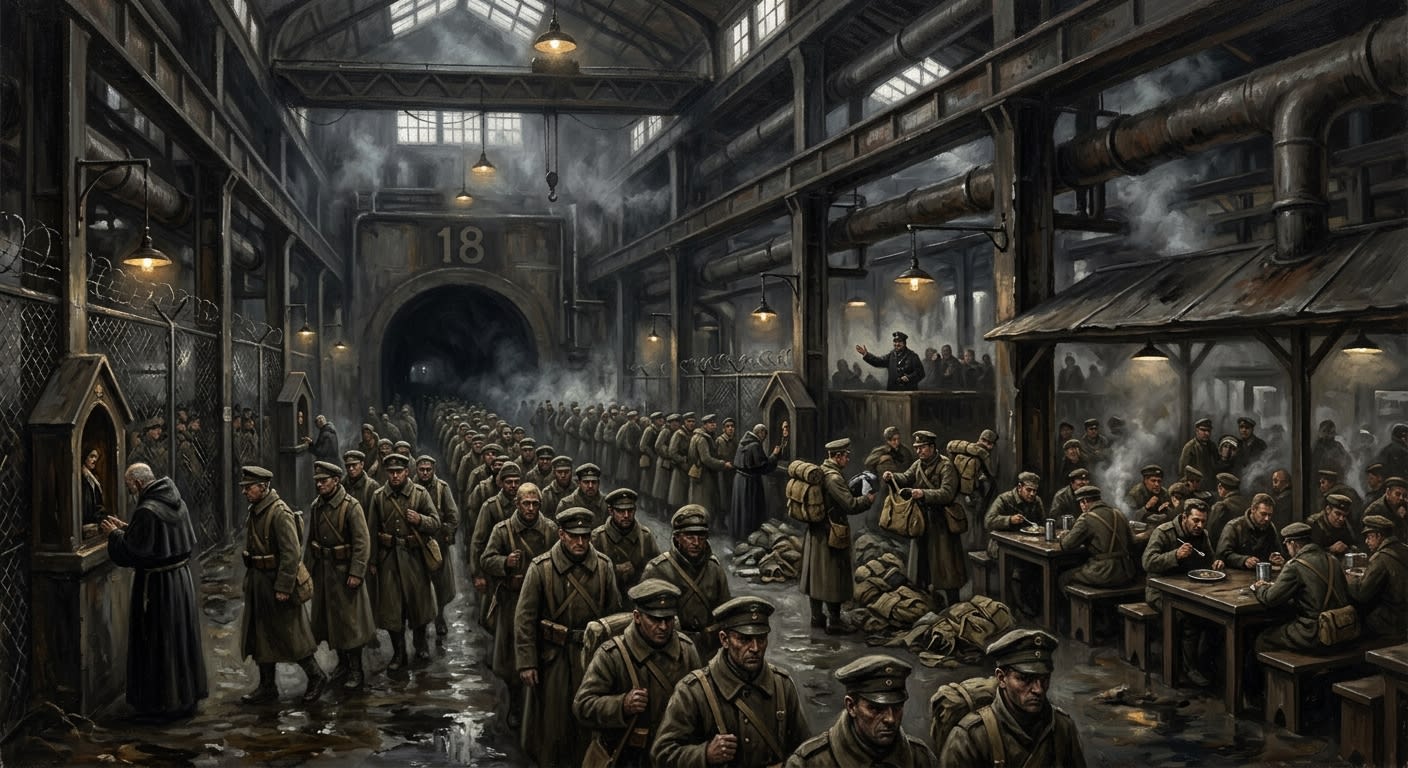
Durchgangskaserne
Munich's barracks of passage, where men are counted before the Line counts them again
Munich's Durchgangskaserne processes forty thousand soldiers a month through intake queues, kit rooms, mess halls, doctrinal briefings, and the last unofficial blessing before Platform Eighteen.
Codex Ref. II.2.06-014
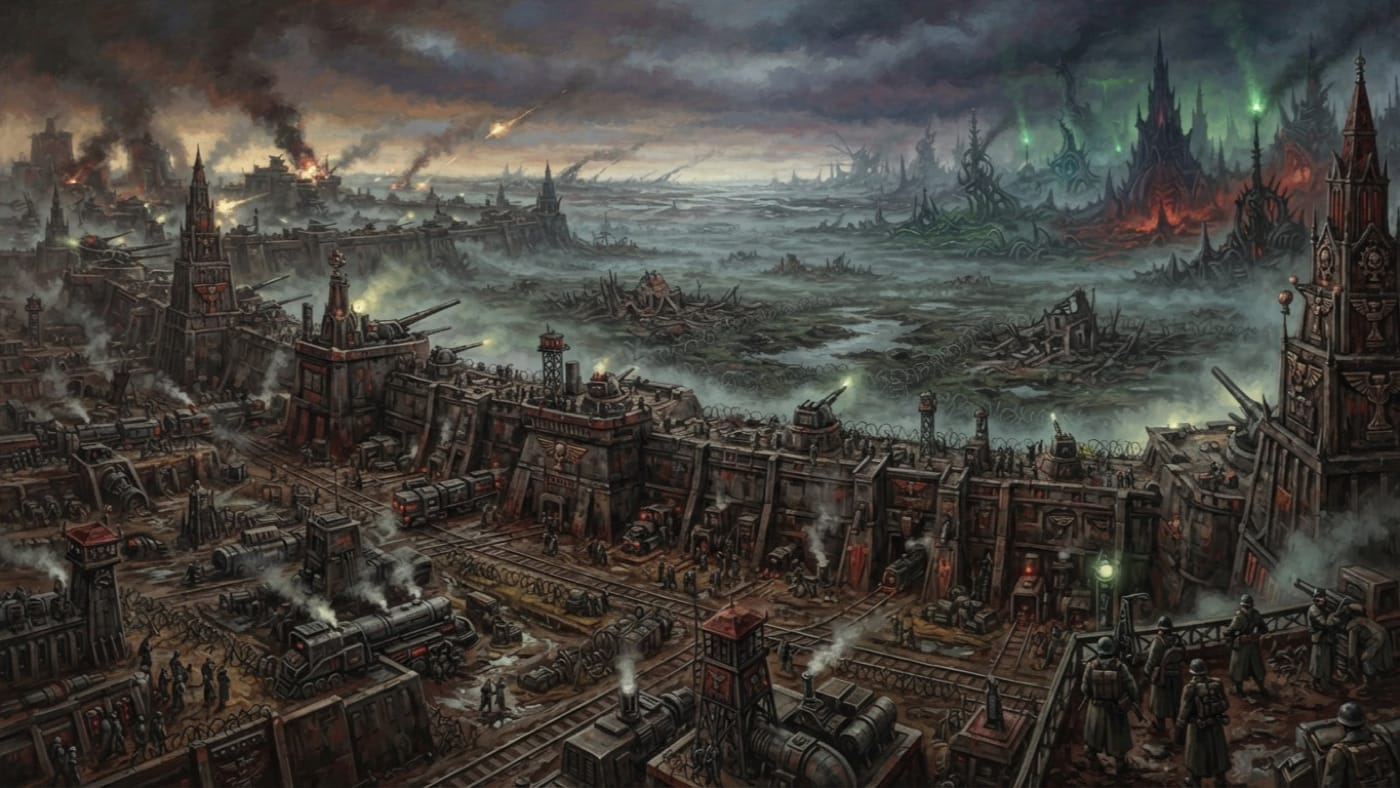
Eastern Theatre
A province has a governor to blame. The Eastern Theatre has an inbox.
The eastern war's unchartered heading: the Sagittal Line, contested strip, fallen lands and supporting rear. Drax surveys the front in A.S. 201; the reports have desks, but the Theatre has no commander.
Codex Ref. II.4.13-201
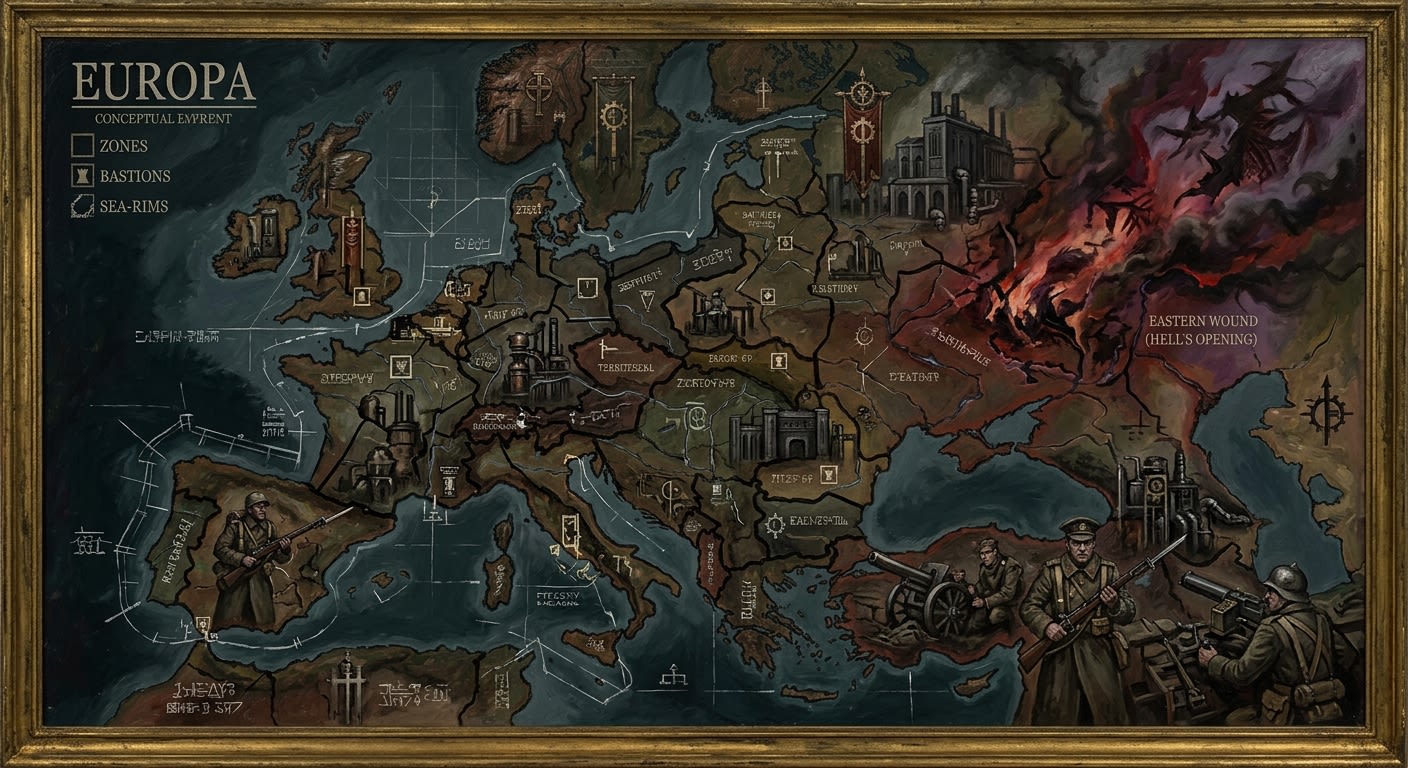
Europa
The continent as filed, wounded, taxed, and made obedient enough
Europa is not whole; it is the continent filed into zones, bastions, sea-rims, independent nuisances, and the eastern wound Hell keeps open.
Codex Ref. II.0.00-201

Europe
The wounded continent, held together by rails, bells, hunger, and denial
Europe is the wounded continent: Synod west, Charnel east, Line between, and every road, harbour, cradle, ration card, bell, and grave bent toward survival.
Codex Ref. II.0.01-201
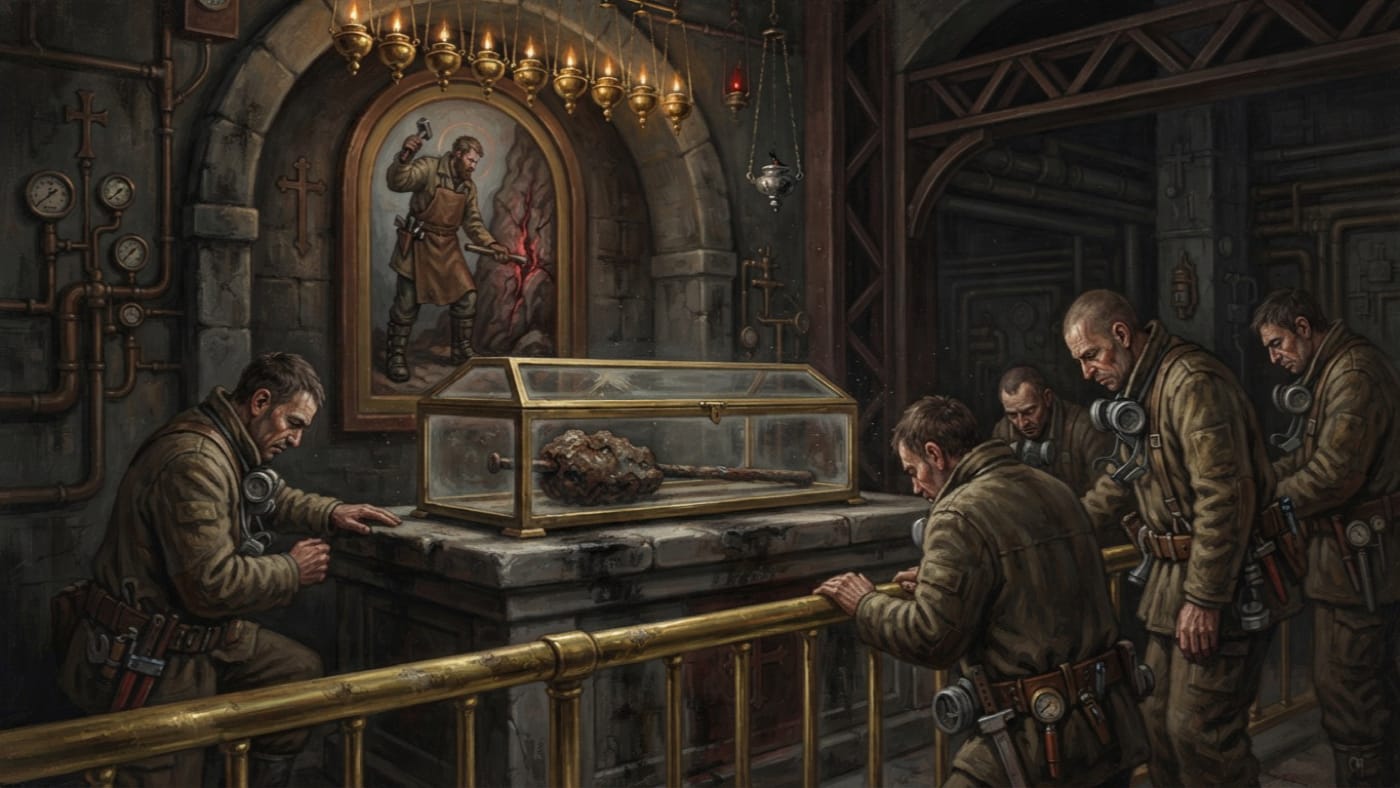
Extraction Chapel
The plug rests under glass; its age remains an argument
Budapest's Extraction Chapel holds Saint Orren's provisionally authenticated iron plug in a sealed case. Prospectors come for a patron who bought nine hours; Relics keeps the dating dispute open.
Codex Ref. II.3.12-112
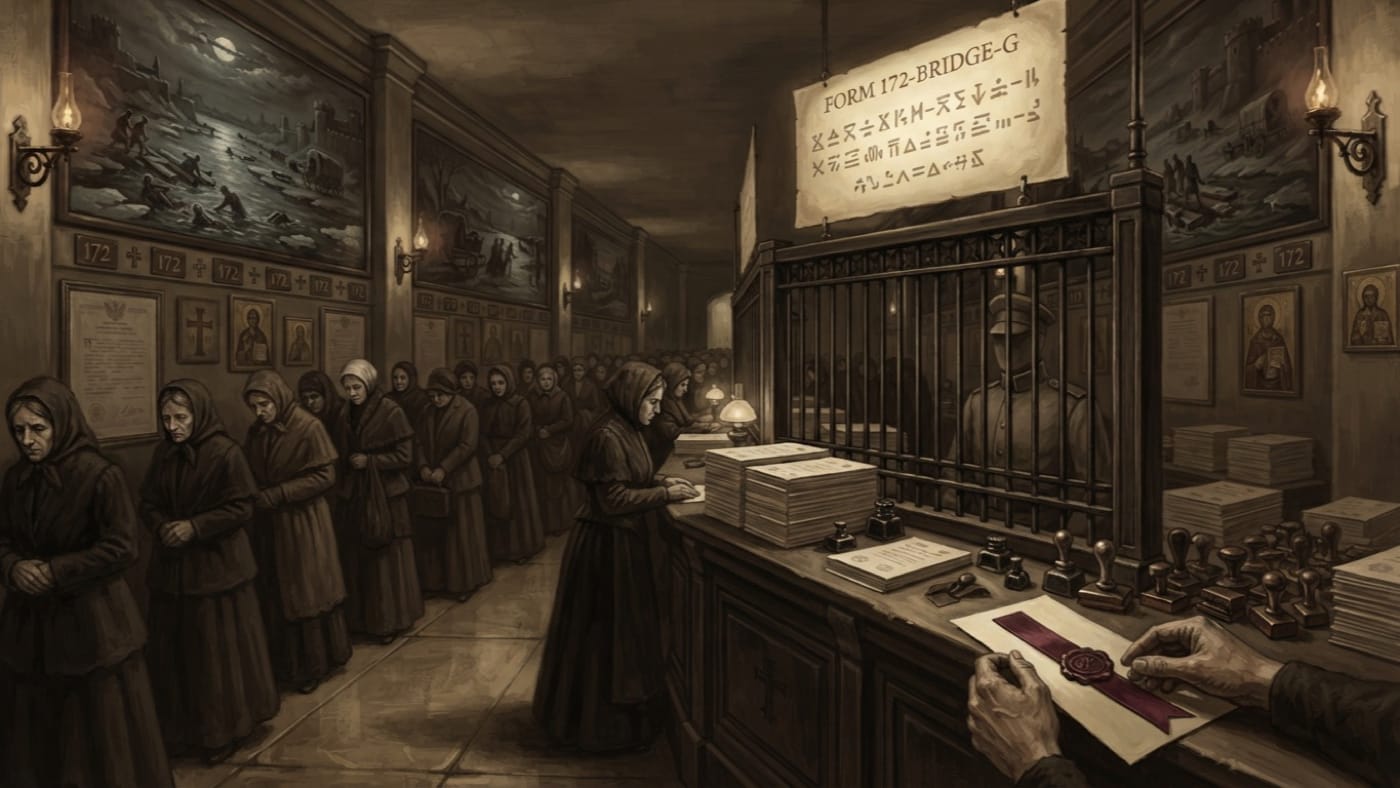
Form 172-Bridge-G
Permission is cheaper than coin
In this A.S. 201 survey, I examine Form 172-Bridge-G: families may apply for commemorative ribbon in lieu of pension after Records' roll revision. Permission is a remarkably economical gift.
Codex Ref. XIII.1.172-201
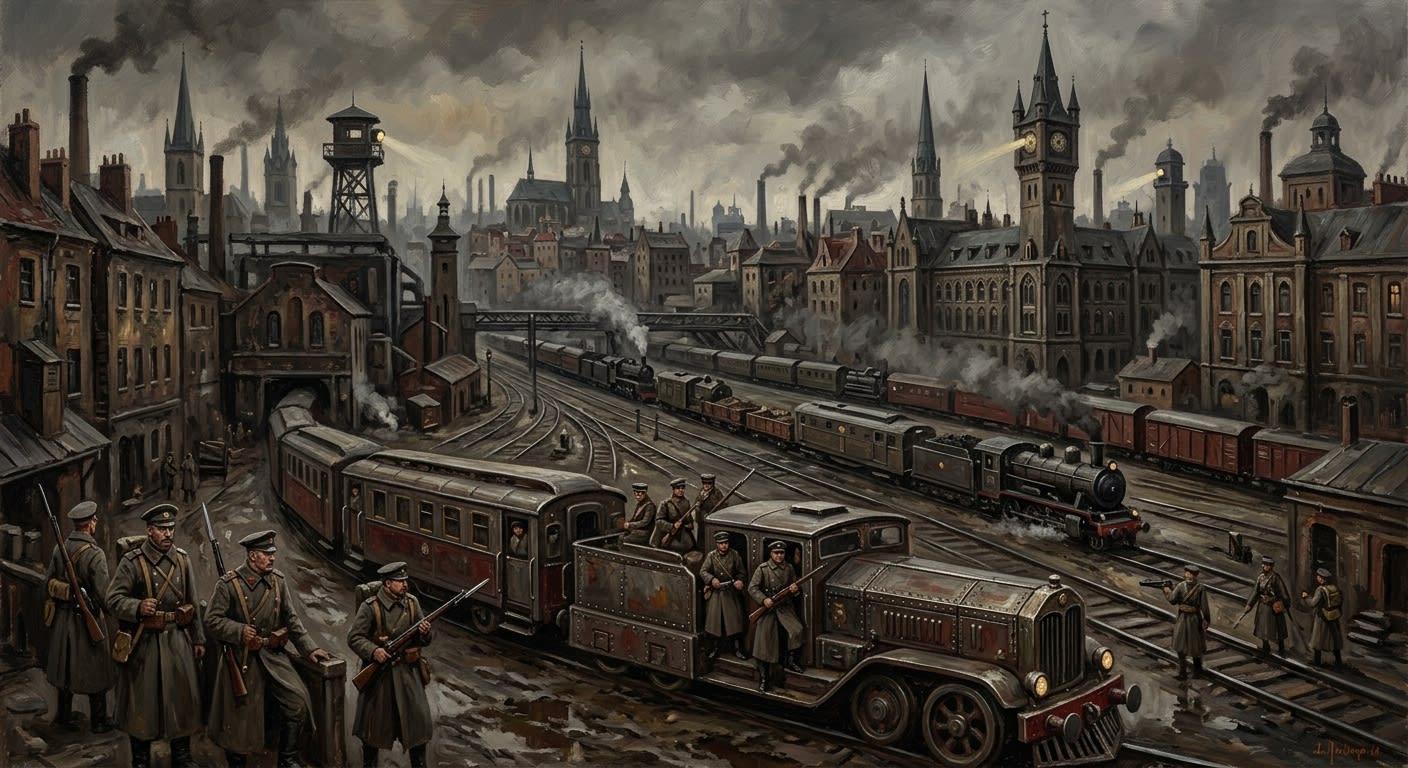
Forward Heartlands
The held breath behind the gunline
Zone 3 is the Synod's forward heart: Prague's corrected beauty, Bratislava's damp throat, Budapest's divided engine, Warsaw's teeth, Sofia's hard face, and every ugly town that keeps the Line fed.
Codex Ref. II.3.00-201
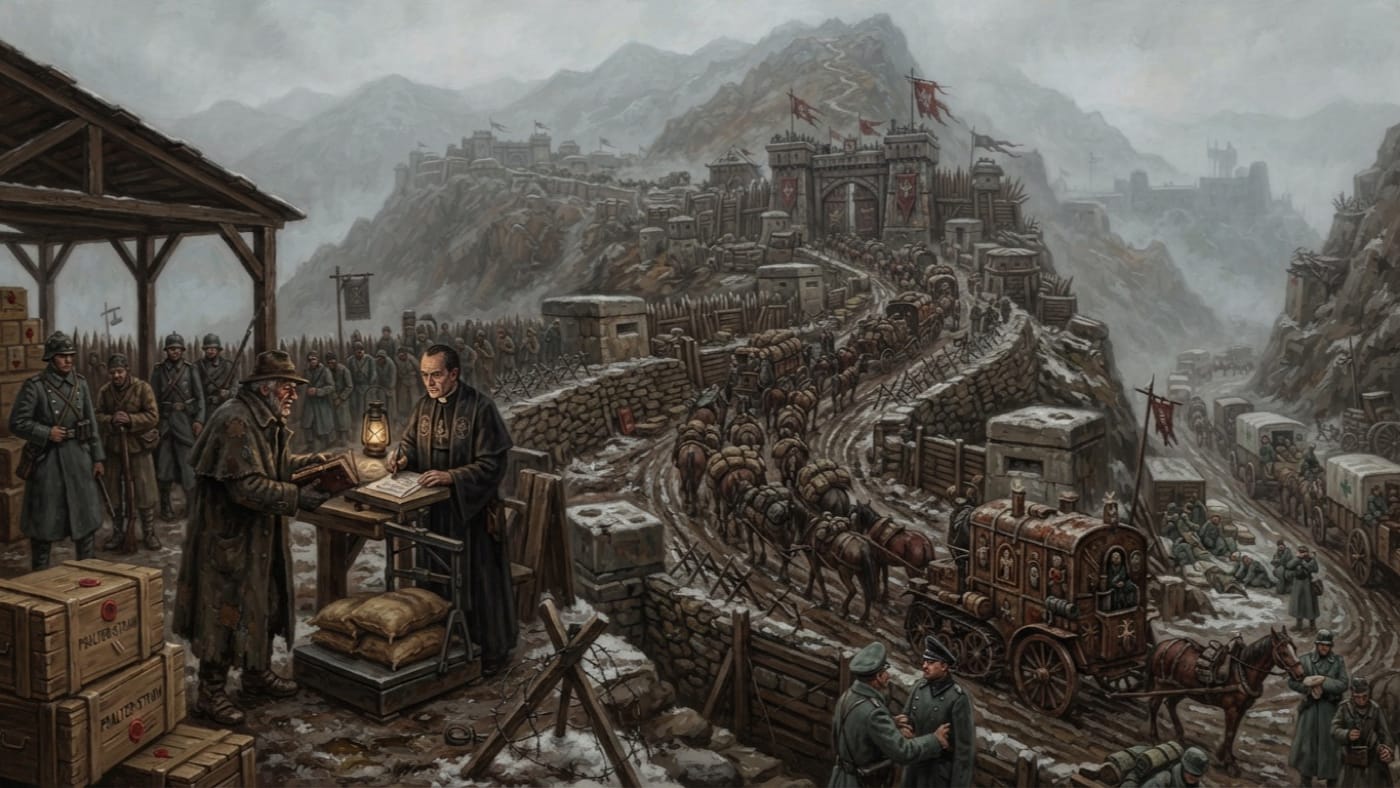
Forward Supply Zone
Where freight becomes evidence and every sack requires a confessor
The Bureau of War defines the Forward Supply Zone as Zones 4–7: bastions, contested ground, Charnel Lands and southern sea lanes. Freight crosses by permit; every loss and every bribe must find a name to answer for it.
Codex Ref. II.4.07-201
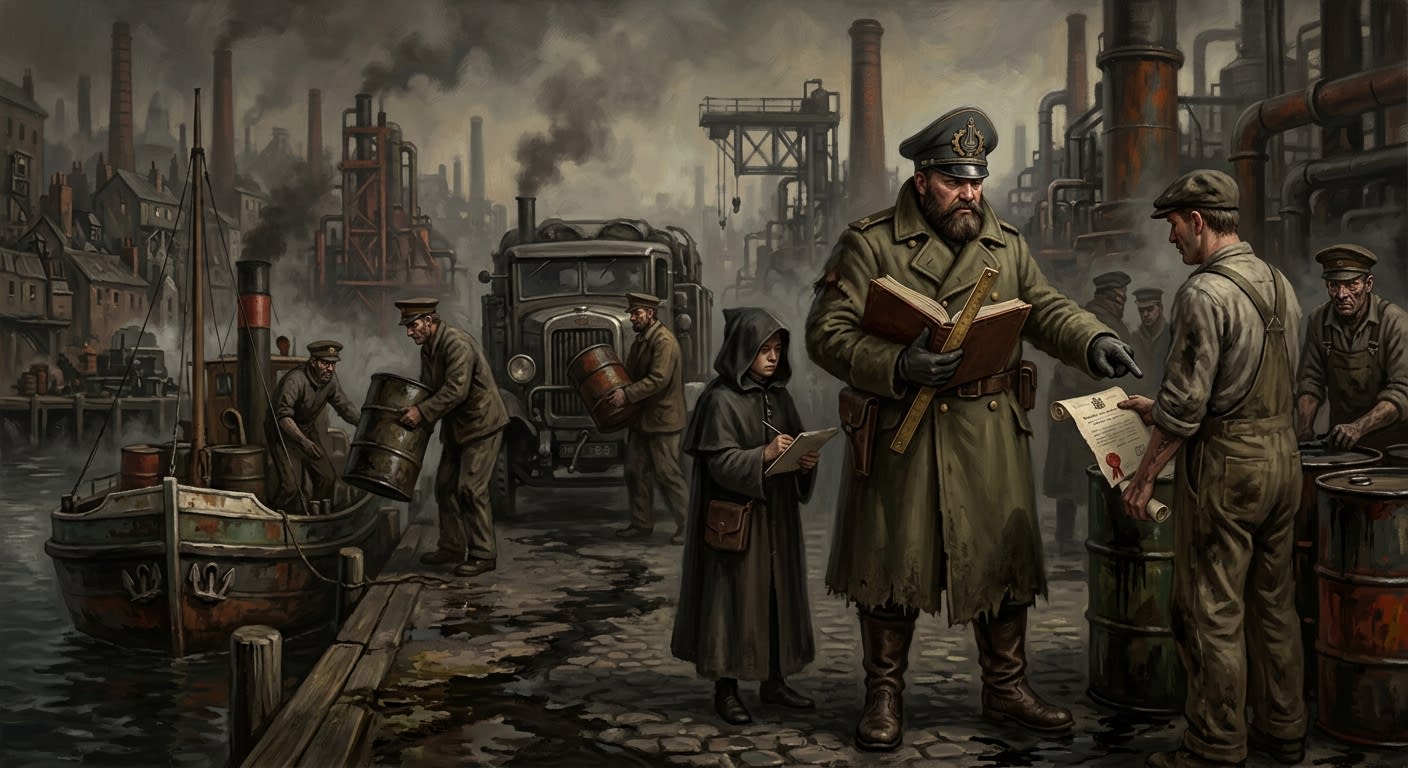
Fuel Monopoly Acts
The statute by which heat learned to kneel before a tariff table
A.S. 112 legal doctrine placing wound-site fuel, drums, charters, workers, accidents, and heat itself beneath Synodal licence and tariff.
Codex Ref. XIII.1.92-112
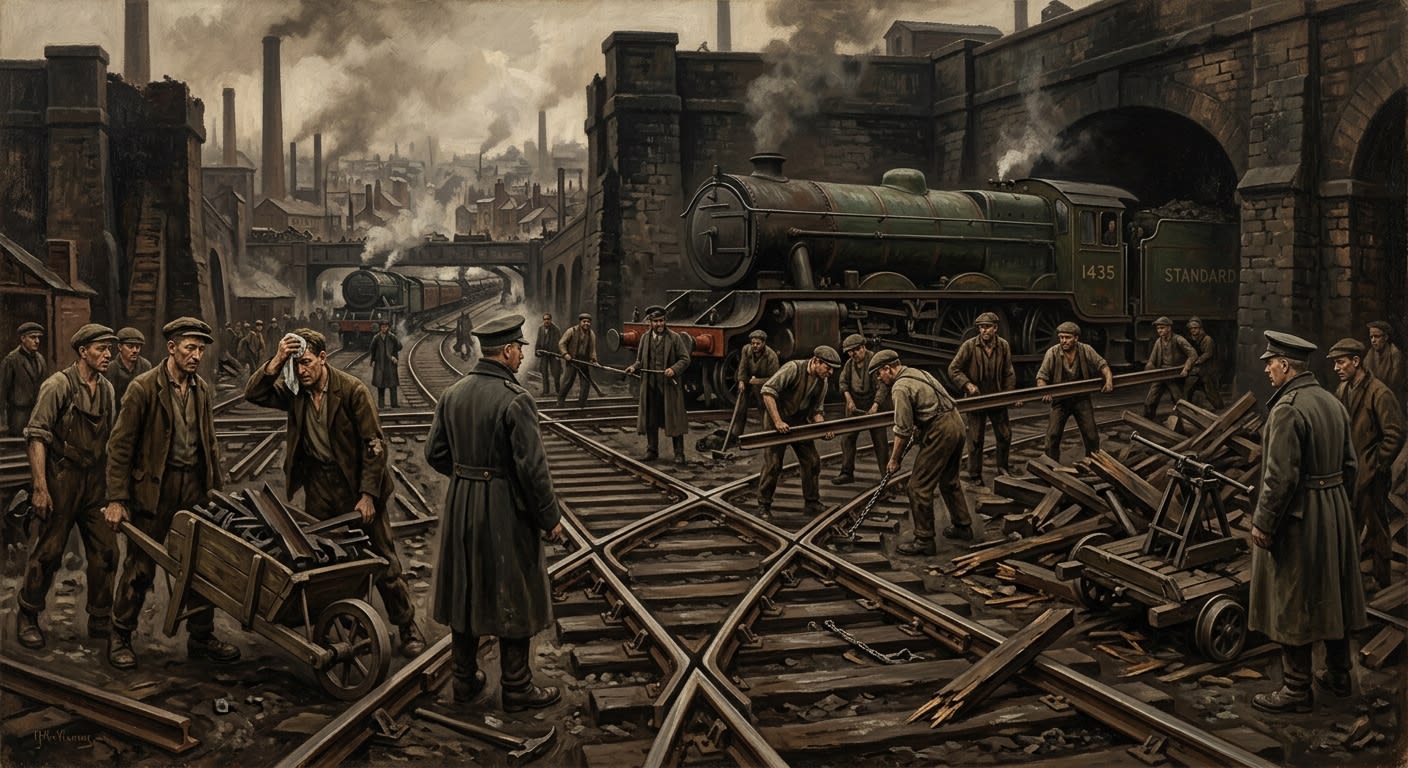
Gauge War
Forty years to agree on the distance between two rails
A.S. 96–136 rail-standardization conflict in which rival gauges starved bastion corridors until Engineering imposed 1,435 millimetres and labour paid in hands, hunger, and four thousand dead.
Codex Ref. VII.2.10-136
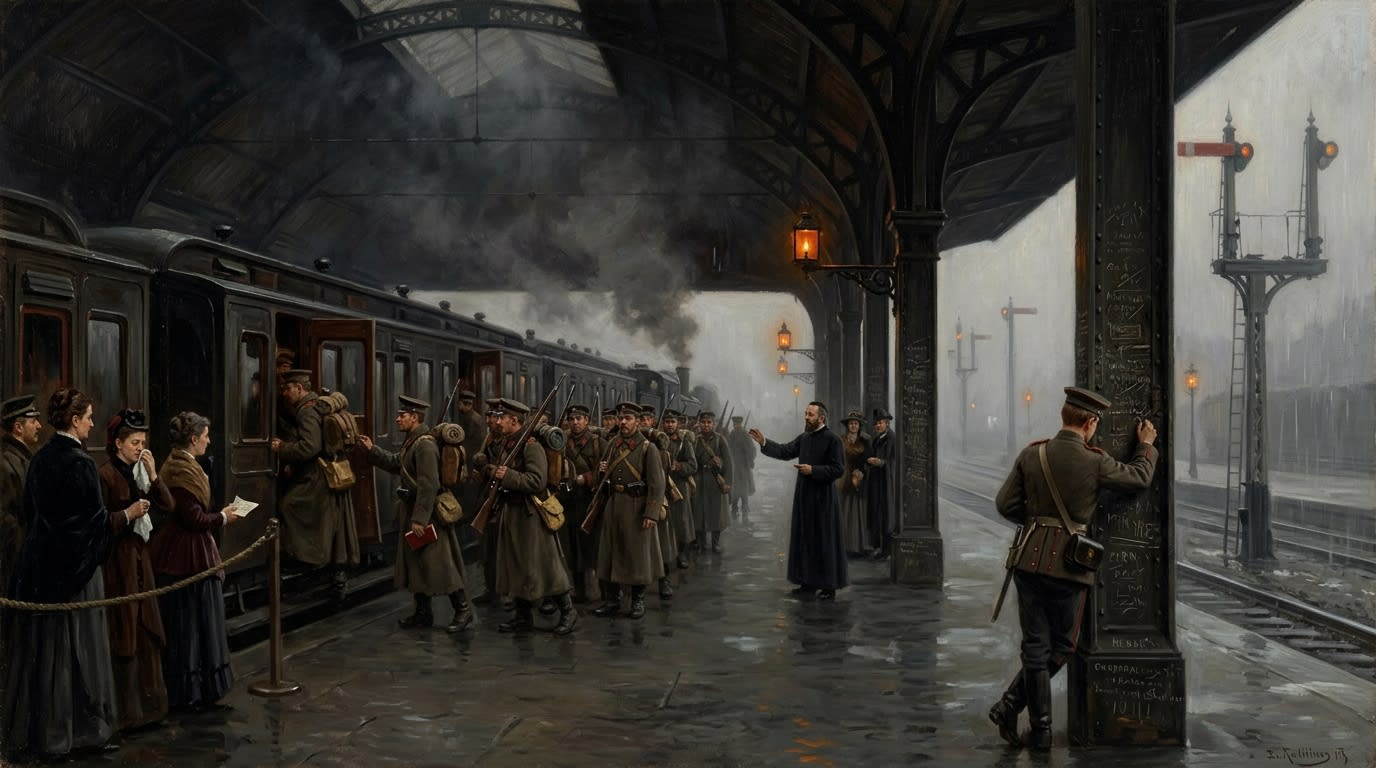
Gleis Achtzehn
The platform where Munich files its sons eastward
Gleis Achtzehn is Munich's eastern military departure spur, a soot-black platform where names return to iron faster than Records can erase them.
Codex Ref. II.2.06-016
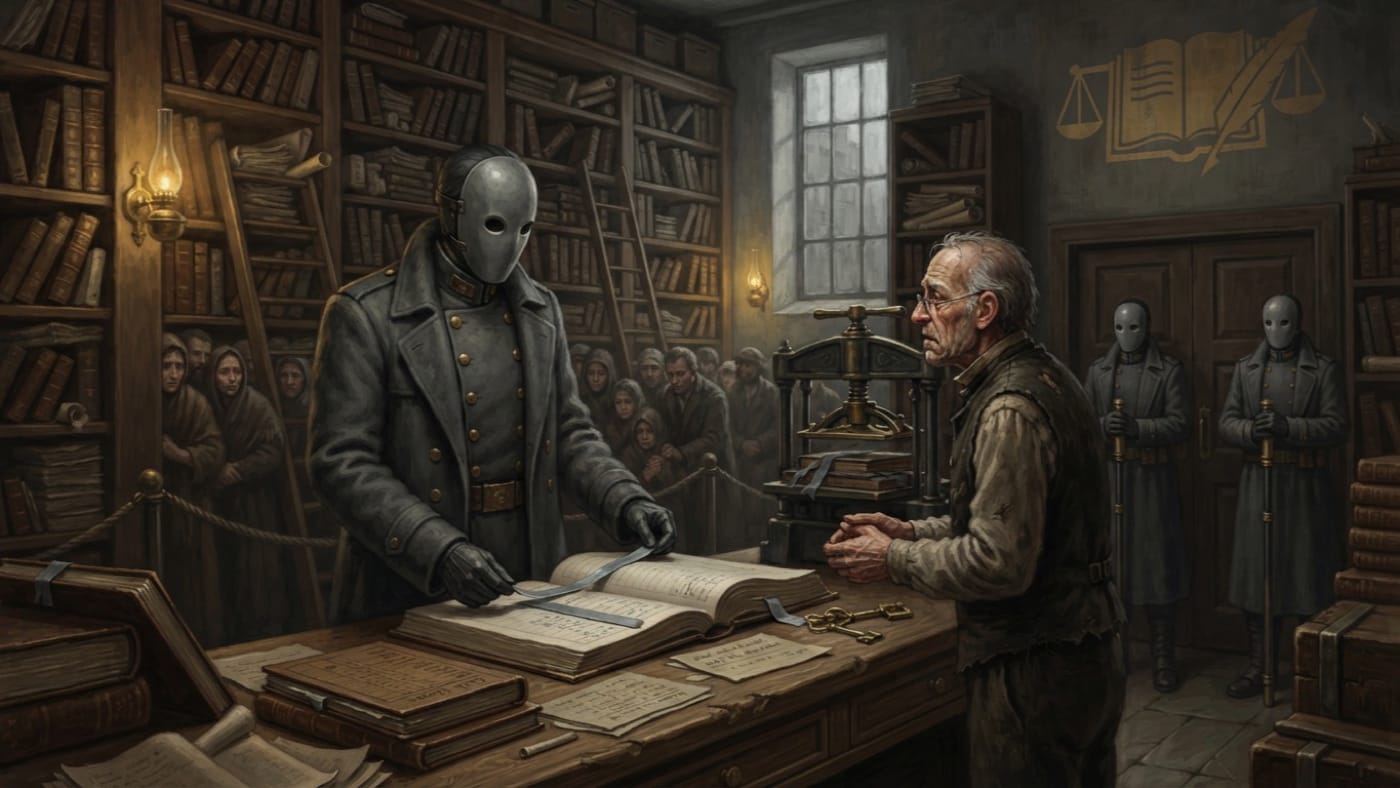
Great Ledger Harmonisation Mandate
The larger page that never has to enter the room
The Great Ledger Harmonisation Mandate supplies the standing authority cited by Indiction writs: books are reconciled, names suspended, and appeal waits until the archive decides who still counts.
Codex Ref. XIII.1.06-002
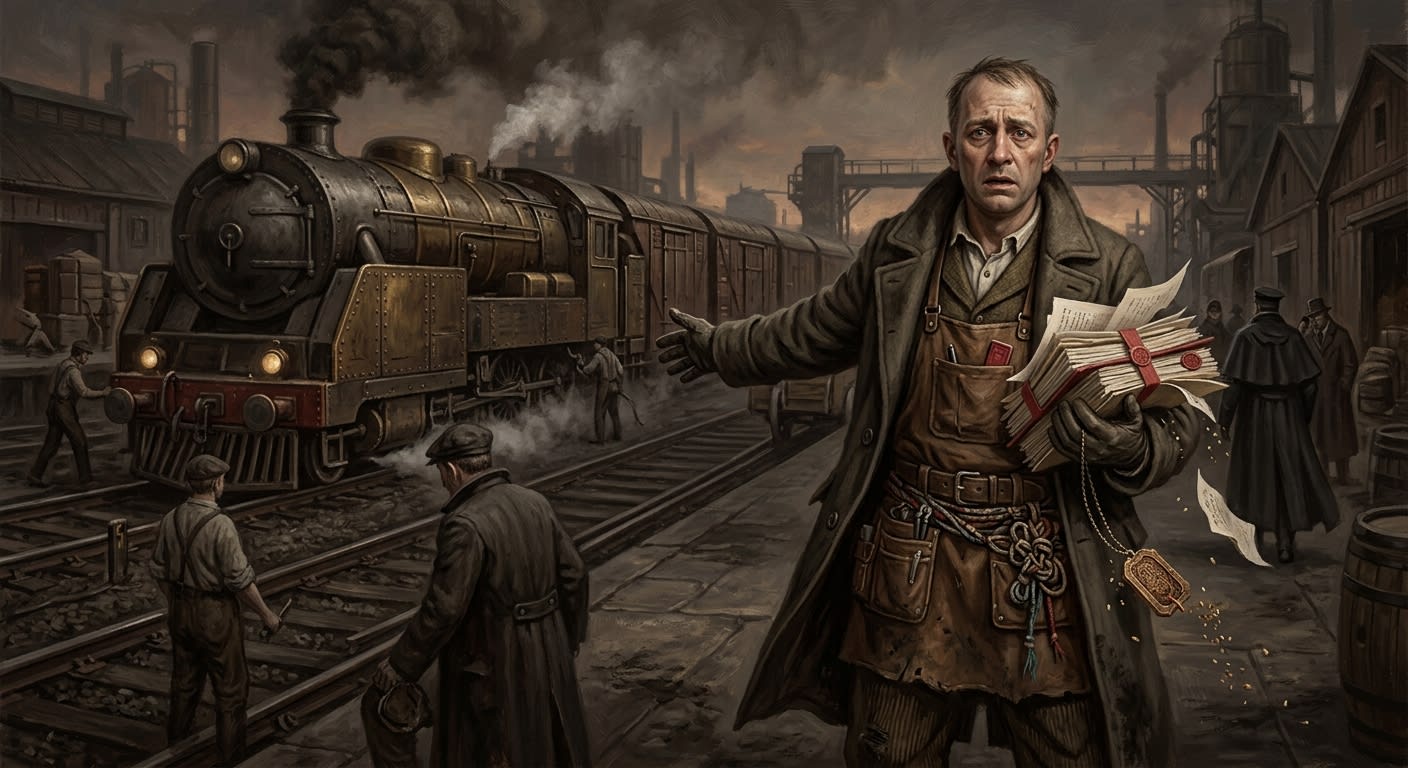
Gruss
The man who bribed vanity, corrected mud, and delivered eleven wagons
Gruss, Licensed Transit Factor 19-C, turned thirty-seven papers, wax, grain, one unspent favour, and a belt of knots into an eleven-wagon miracle at Turda.
Codex Ref. III.2.01-098
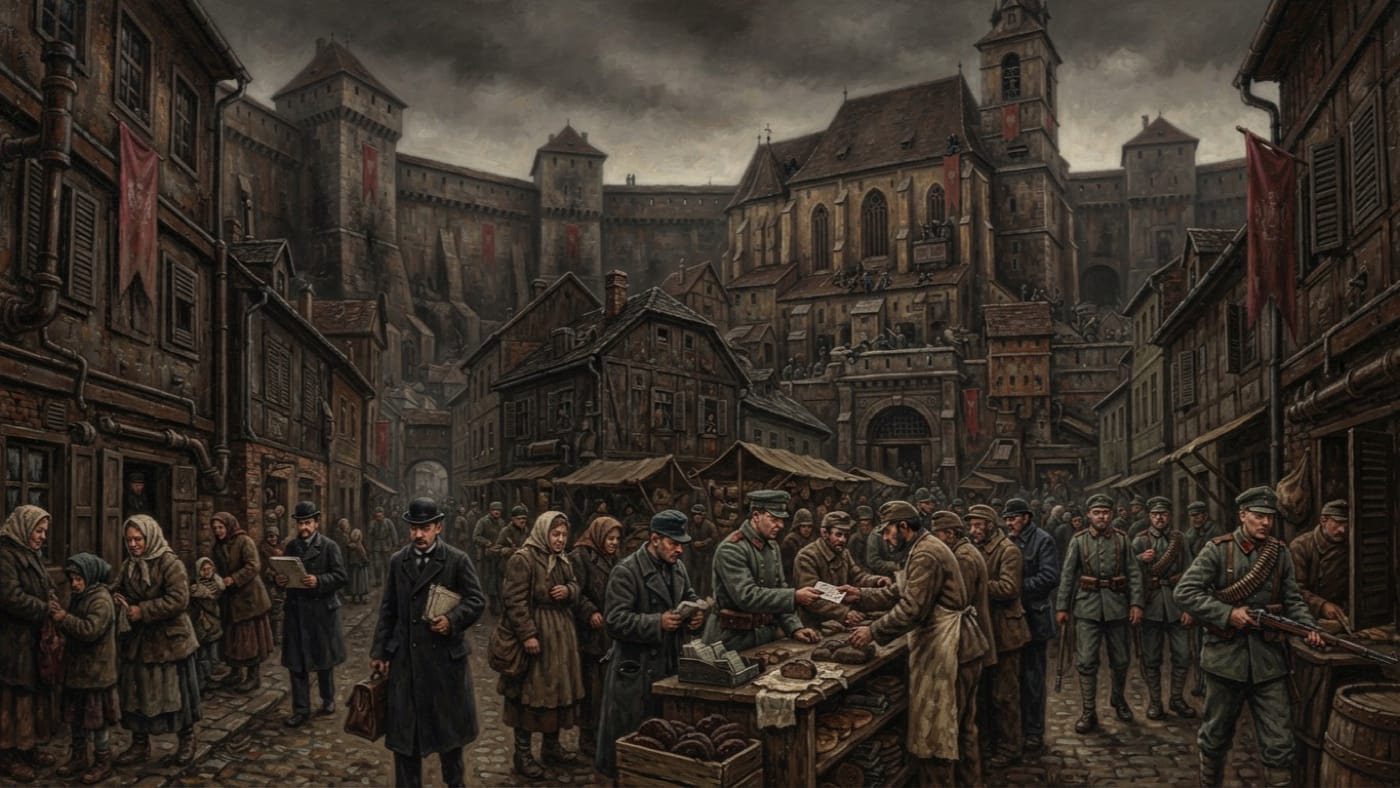
Hermannstadt
The parish is tolerated pending powder.
Hermannstadt survives inside Bastion-Sibiu: three Saxon streets, parish rolls kept in dialect, and a market trading in suspect scrip. The magazines remain full. The Bureau tolerates the grammar.
Codex Ref. II.3.04-201
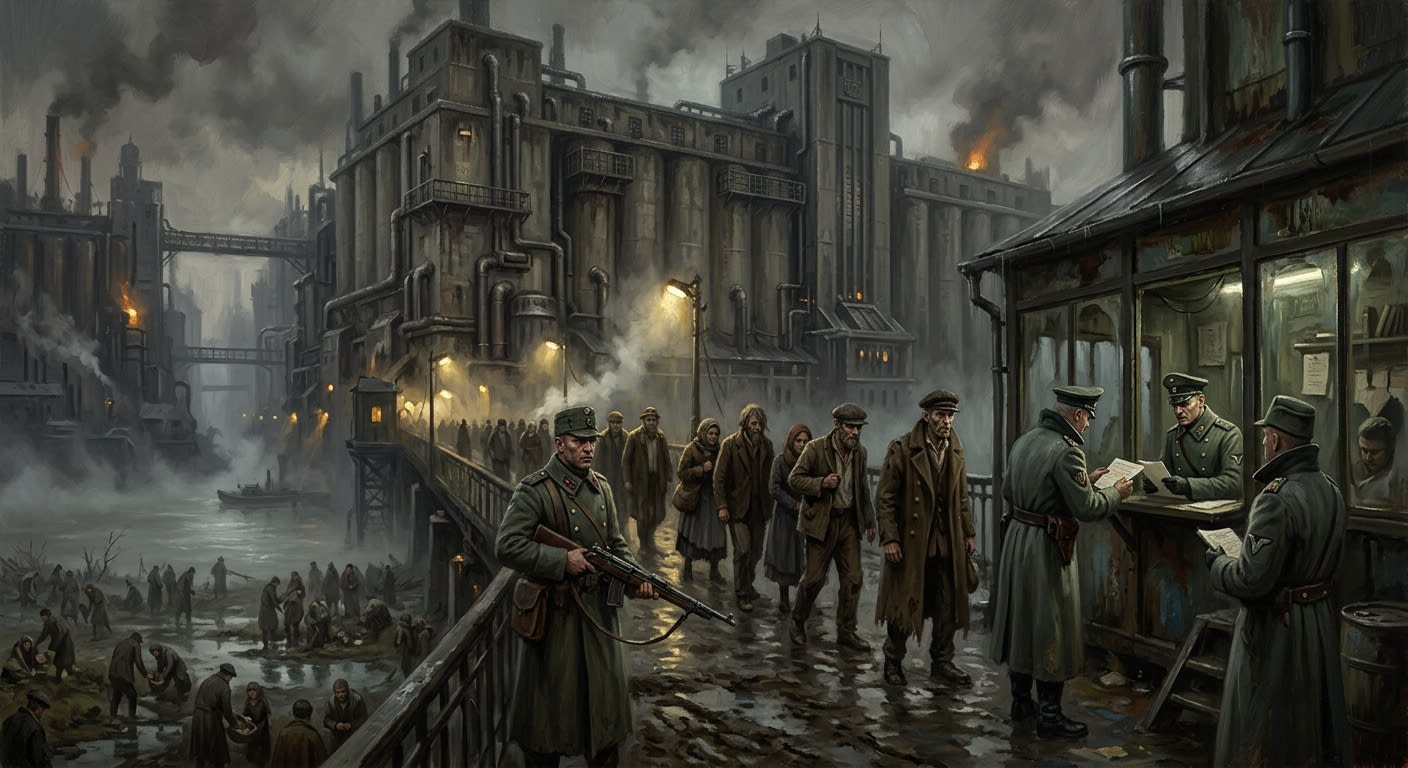
Hungary
The breadbasket that [[hell|Hell]] ate and [[strasbourg|Strasbourg]] filed by the slice
Hungary is the old grain kingdom remade into Budapest's held bank, Pest's visible absence, Blightmarsh hunger, southern corridor necessity, refugee memory, and every office's damp-fingered embarrassment.
Codex Ref. II.4.09-045
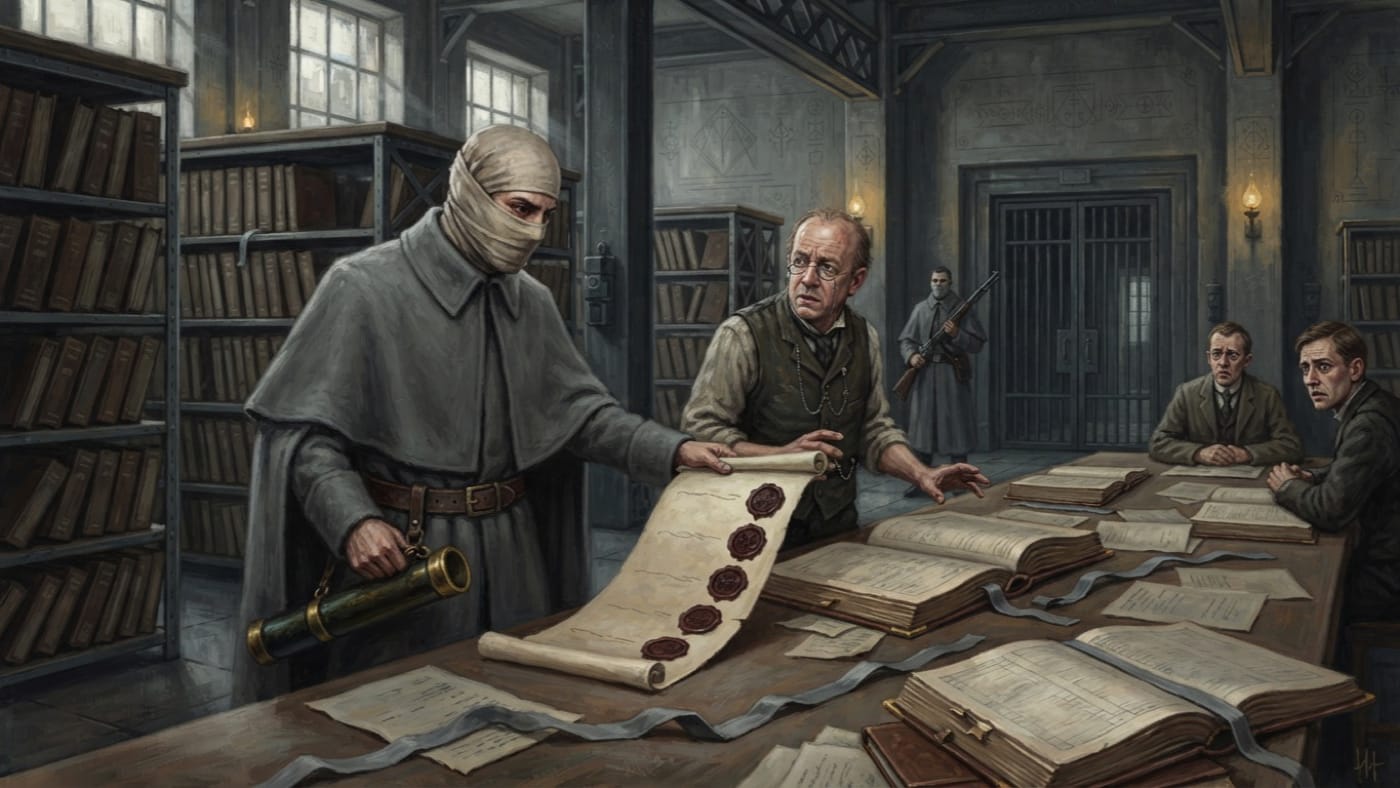
Indiction Writ
Five seals, five powers, and an appeal that waits
The Indiction writ lets Records seize ledgers, enclose witnesses and suspend names before any charge. Five seals announce that the Bureau has noticed; appeal waits until reconciliation.
Codex Ref. XIII.1.06-003
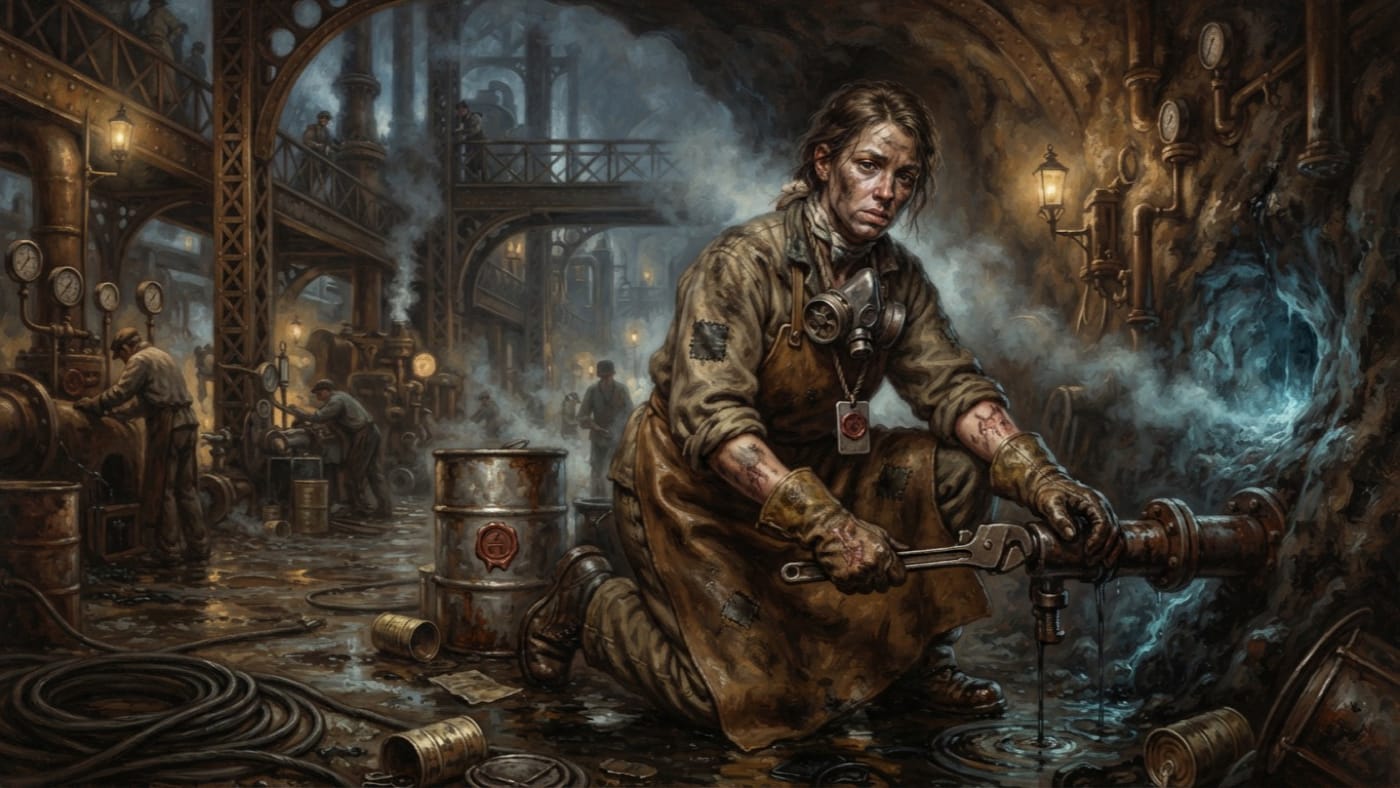
Injured Laborers’ Provision of A.S. 160
The wound is Synodal; the wages belong to someone else
The A.S. 160 provision covers injured Bureau employees and excludes charter-house prospectors. Seven petitions bearing Saint Orren's name sought correction; all seven were filed. The payroll decides whose wounds count.
Codex Ref. XIII.1.93-160
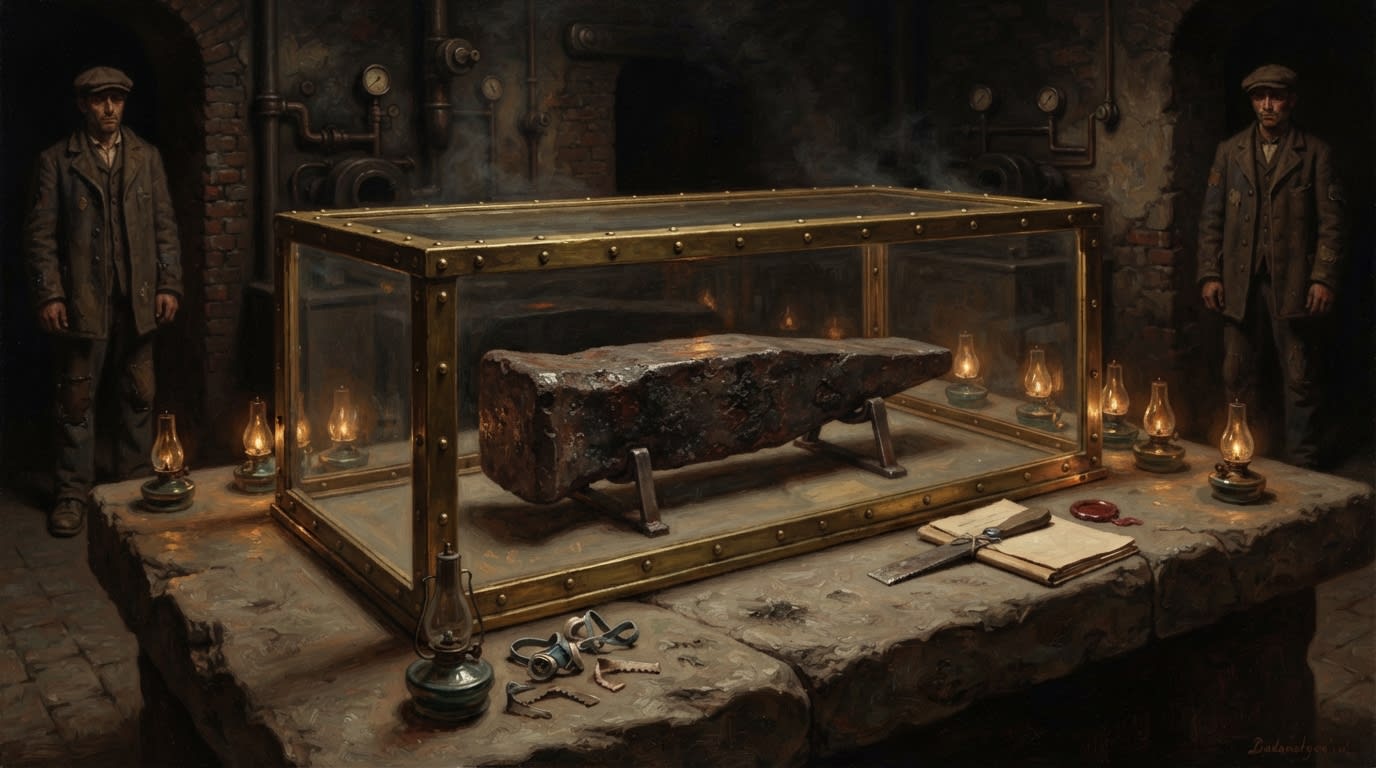
Iron Plug
The iron survives; its pedigree is a petition
R-0447-BP, the iron plug attributed to Saint Orren, rests under glass in Budapest. Nine hours are doctrine; the relic's identity remains provisional.
Codex Ref. III.2.04-447
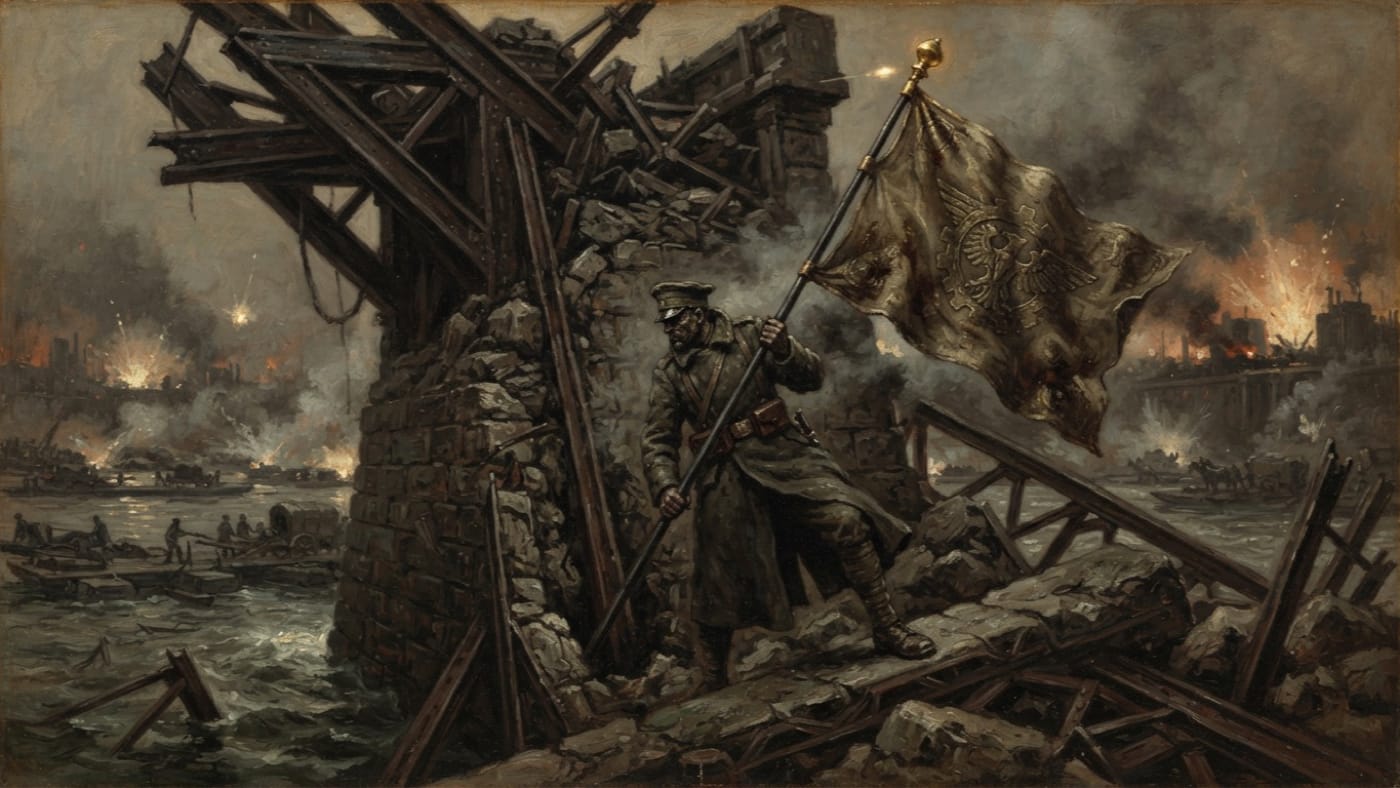
Lorn of Metz
Ninety seconds of standing cloth, and a bearer left out of the miracle
Lorn of Metz fixed the Brass-Lipped Banner at the Chain-Pier Ruin in A.S. 172. Doctrine retained ninety seconds of miracle; the Ledger retained the bearer.
Codex Ref. III.2.01-172
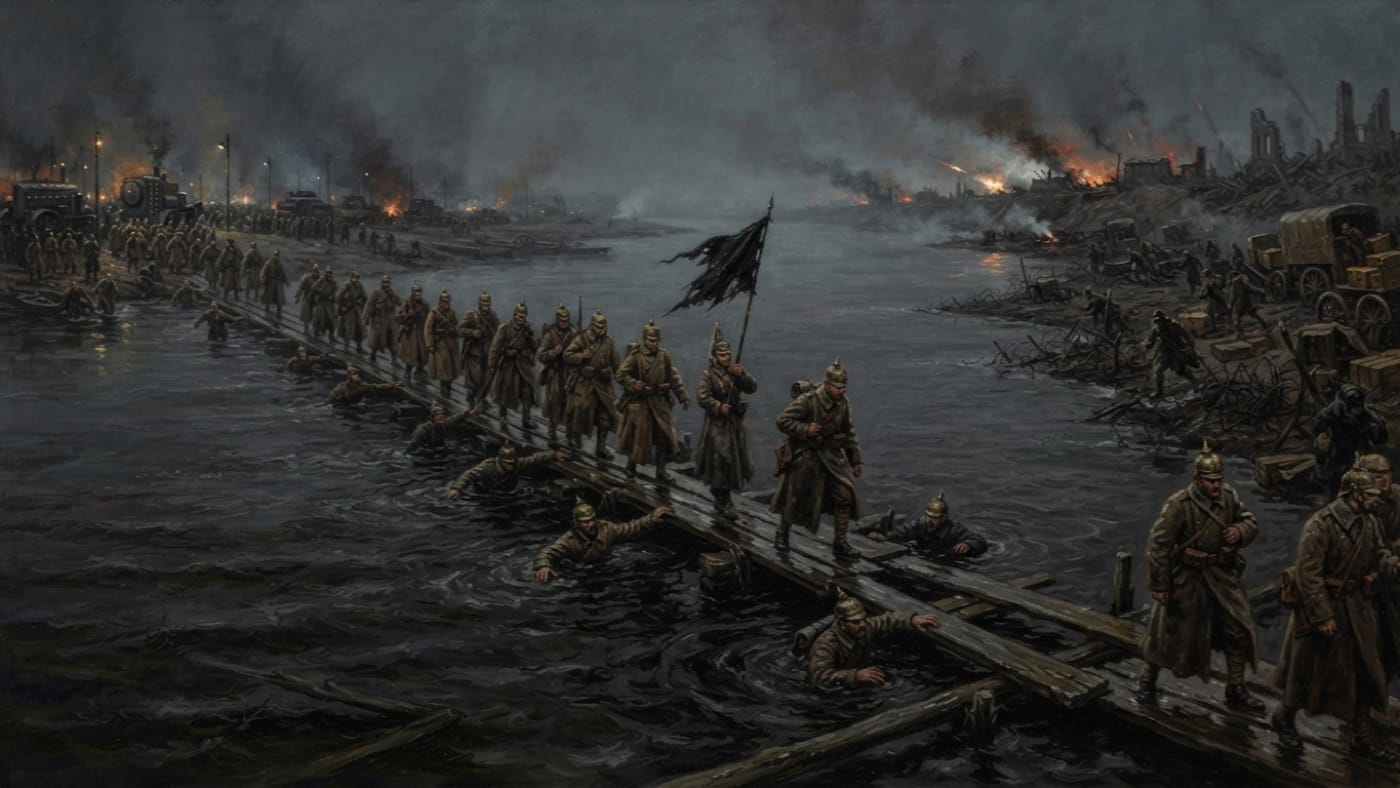
Mark Seven
The floor was taken on faith; the dead were entered by column
A drowned Danube pontoon used in A.S. 172: its returning soldiers furnished Sign Two, while its dead received no separate subtotal.
Codex Ref. II.4.09-007
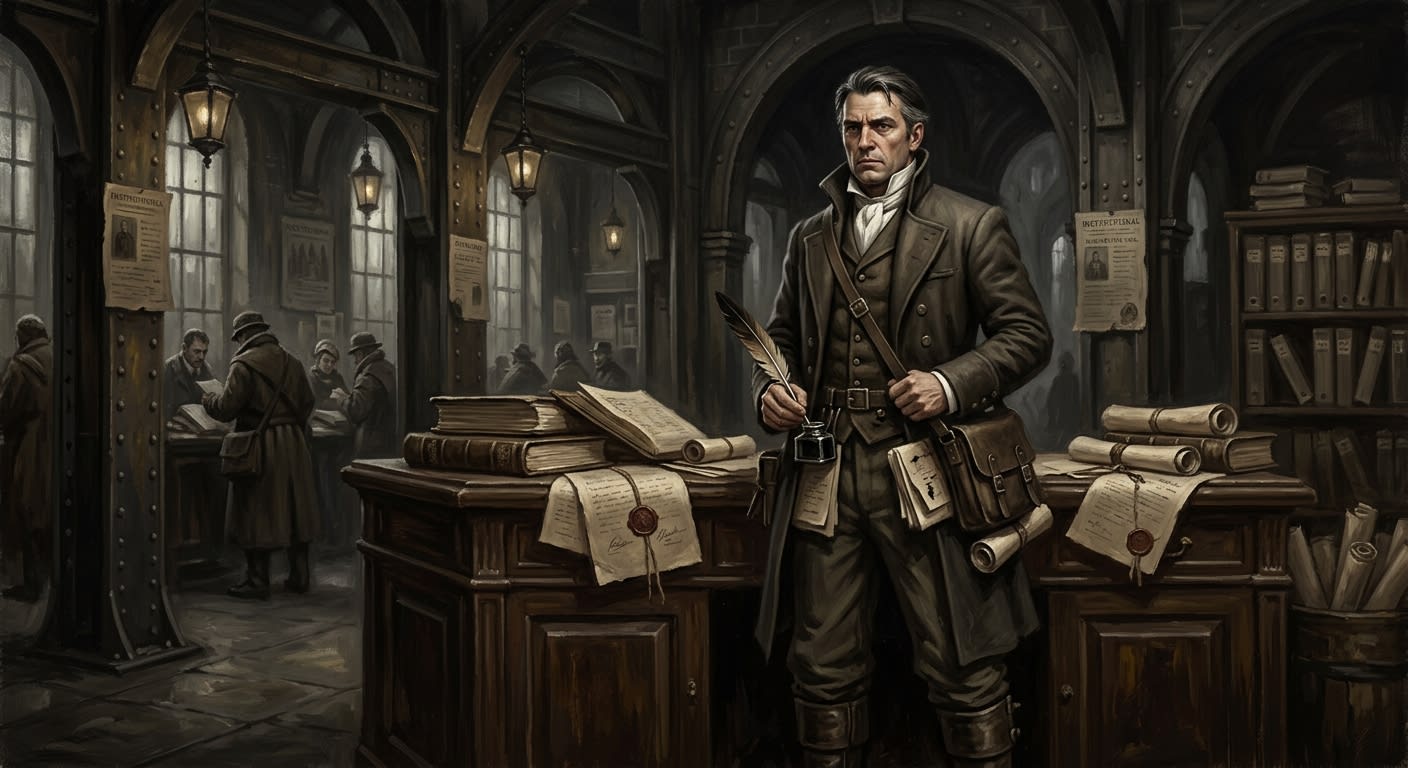
Marrow-Quill of Cologne
The advocate who taught grammar to leave bodies hungry
Cologne Citation Advocate and Ledger Duellist whose week of three duels struck a rival household from standing, bread, gates, contracts, and consecrated earth.
Codex Ref. III.2.01-128
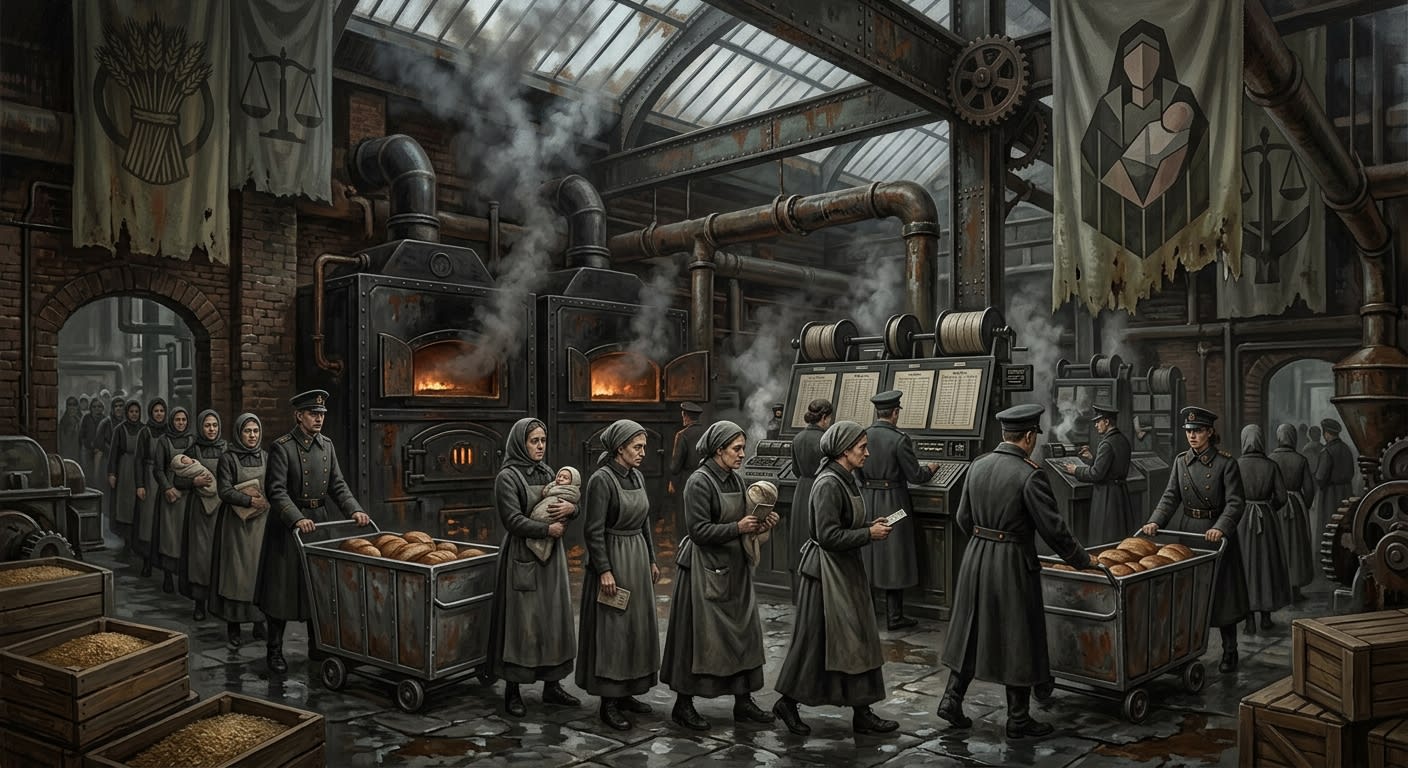
Mothers of Plenty
The queue kept warm, the cradle kept counted
The Mothers of Plenty govern bread and birth as one obedient system, turning ration queues, pregnancy ledgers, and infants not yet weaned into instruments of state continuity.
Codex Ref. XII.6.05-001
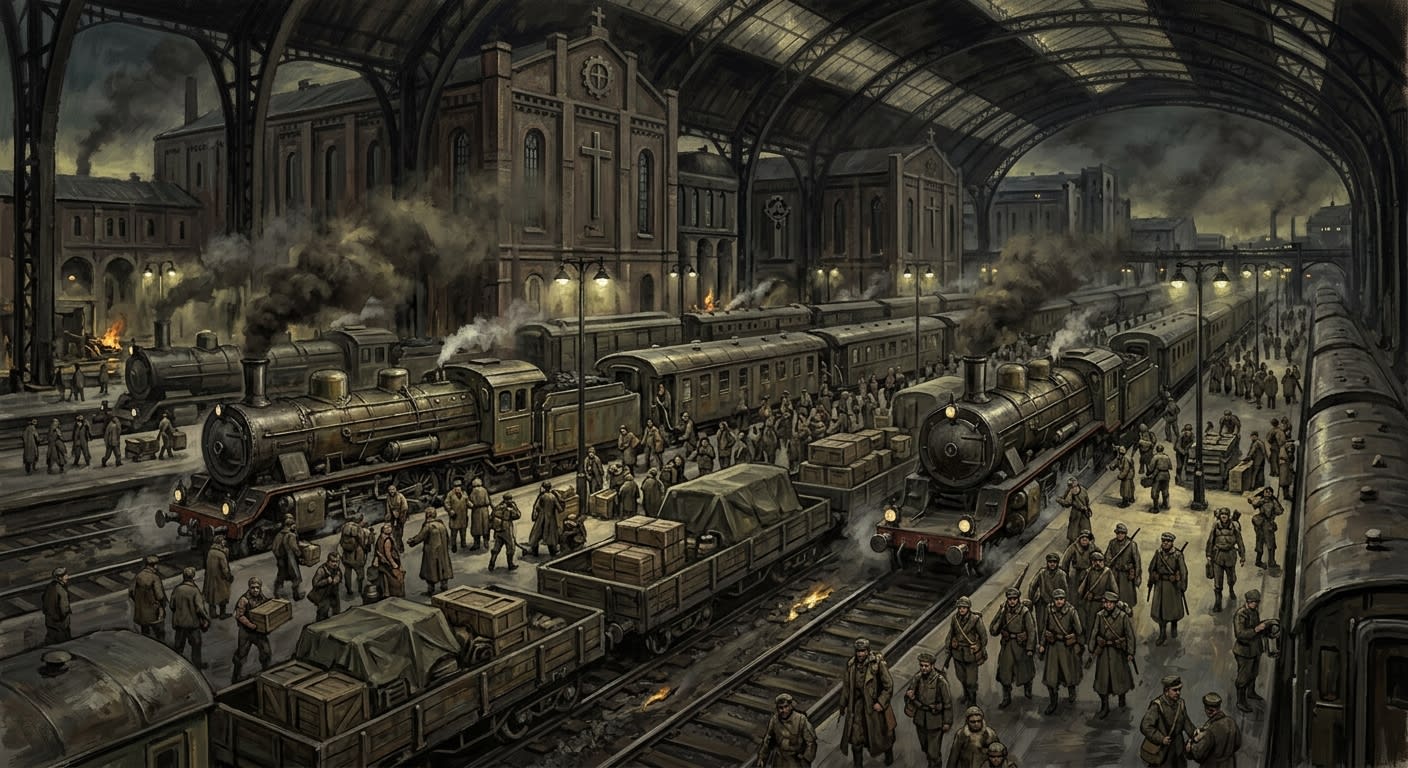
Münchner Kreuzbahnhof
Munich's iron jaw, chewing the west into eastbound obedience
Munich's Cross-Station is the Synod's second-largest rail complex: fourteen public platforms, sixty trains daily, ninety in surge, and eleven thousand workers feeding the eastern war.
Codex Ref. II.4.09-012
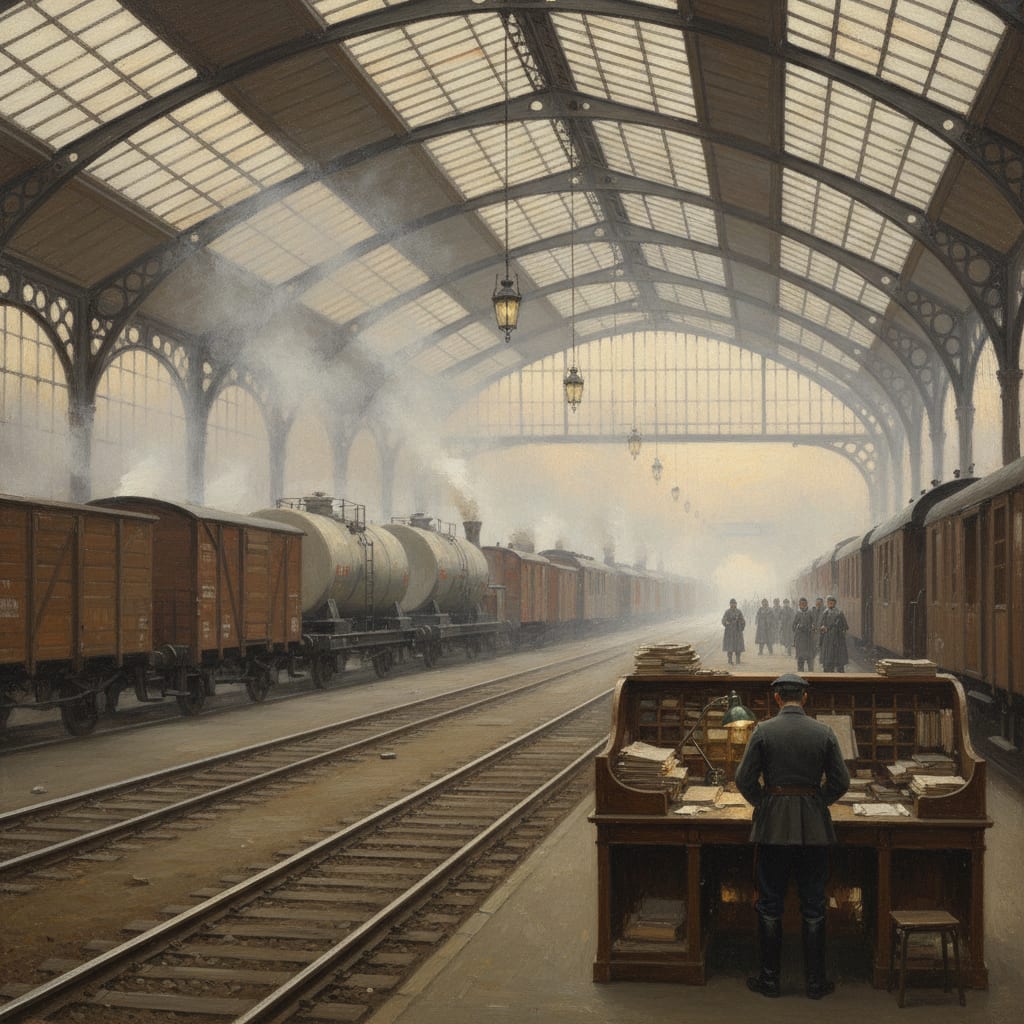
Munich
The last comfortable city; or, where the war becomes a number before it becomes a wound
The Synod's central logistics hub and the last city where the war is an abstraction. Seven hundred thousand souls administer the machinery of a conflict they will not fight. Munich pays its tithes, fills its quotas, and resents everything.
Codex Ref. II.4.09-008
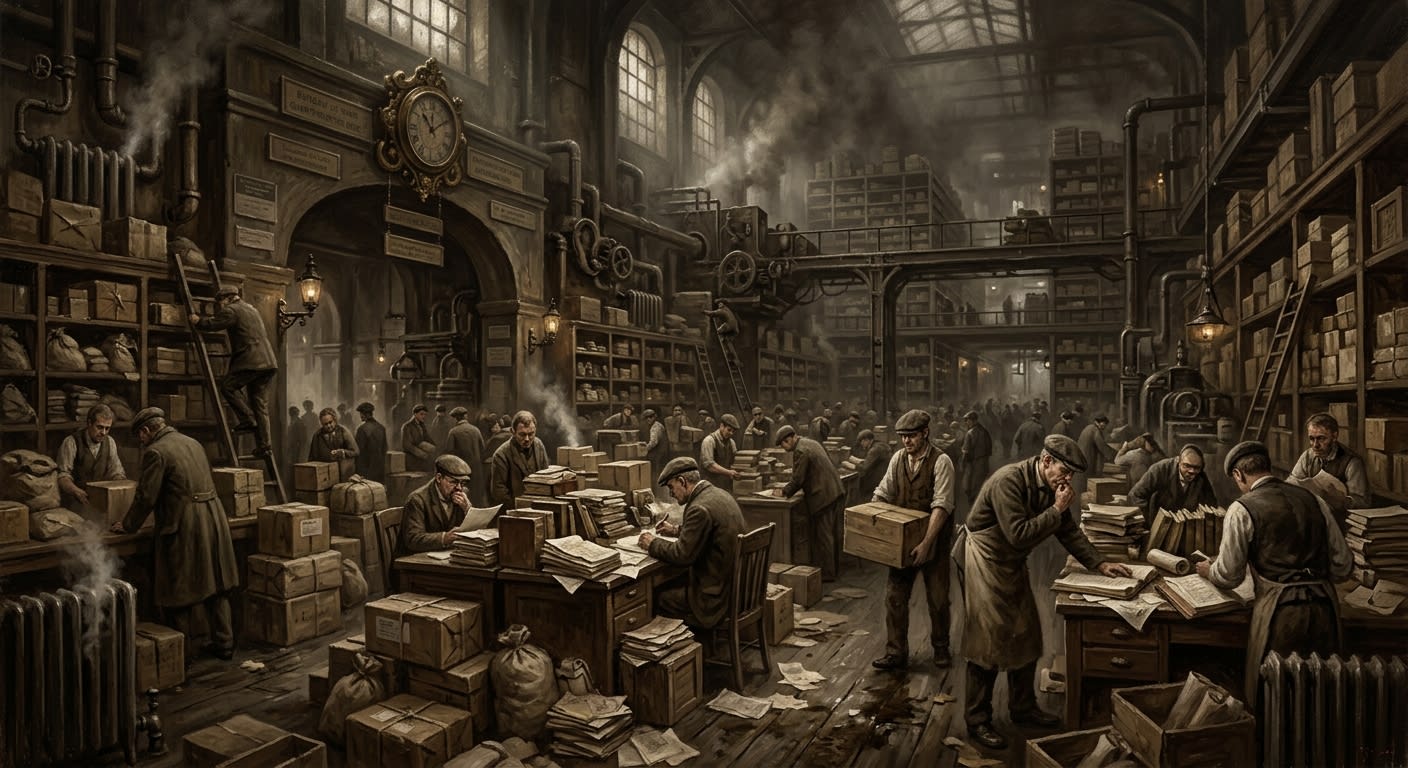
Munich Provisorium
The temporary warehouse complex that learned to digest a city
The Provisorium is Munich's vast Bureau of War quartermaster depot: 412 storage facilities, 14,000 tons a week, three incompatible inventories, and lungs the paperwork declines to notice.
Codex Ref. II.2.01-013
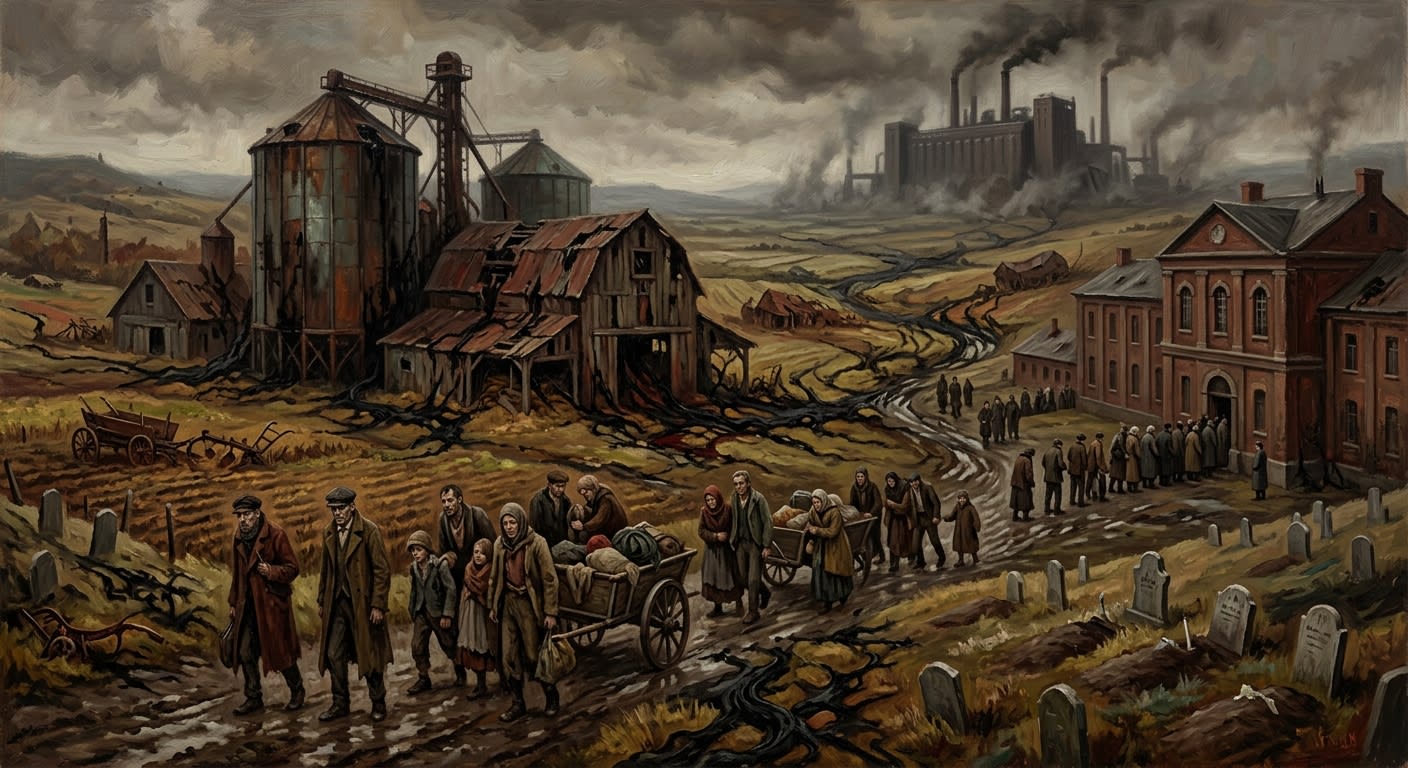
Pannonia
The bread basin that learned appetite
Pannonia was the basin that fed empires before Kargath taught its barns to hunger, its graves to want, and its maps to rot into accusation.
Codex Ref. II.4.09-045
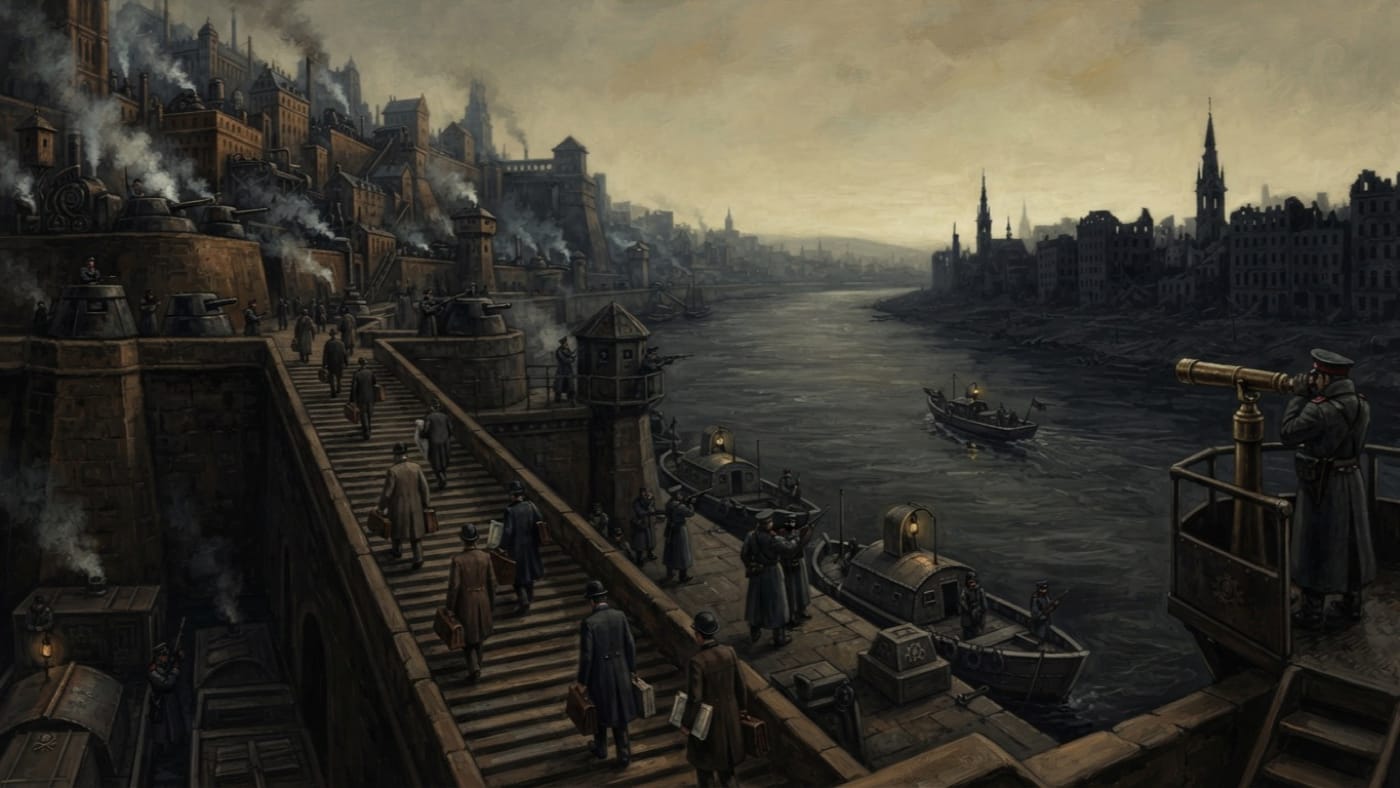
Pastoral Directive 88-E/BUDAPEST
The Church advises the neck; the river keeps its mirror
Pastoral Directive 88-E/BUDAPEST advises Budapest's quay clerks to face west. Pest remains Vacated, and eleven documented crossing attempts make the view a pastoral concern.
Codex Ref. XIII.1.88-201
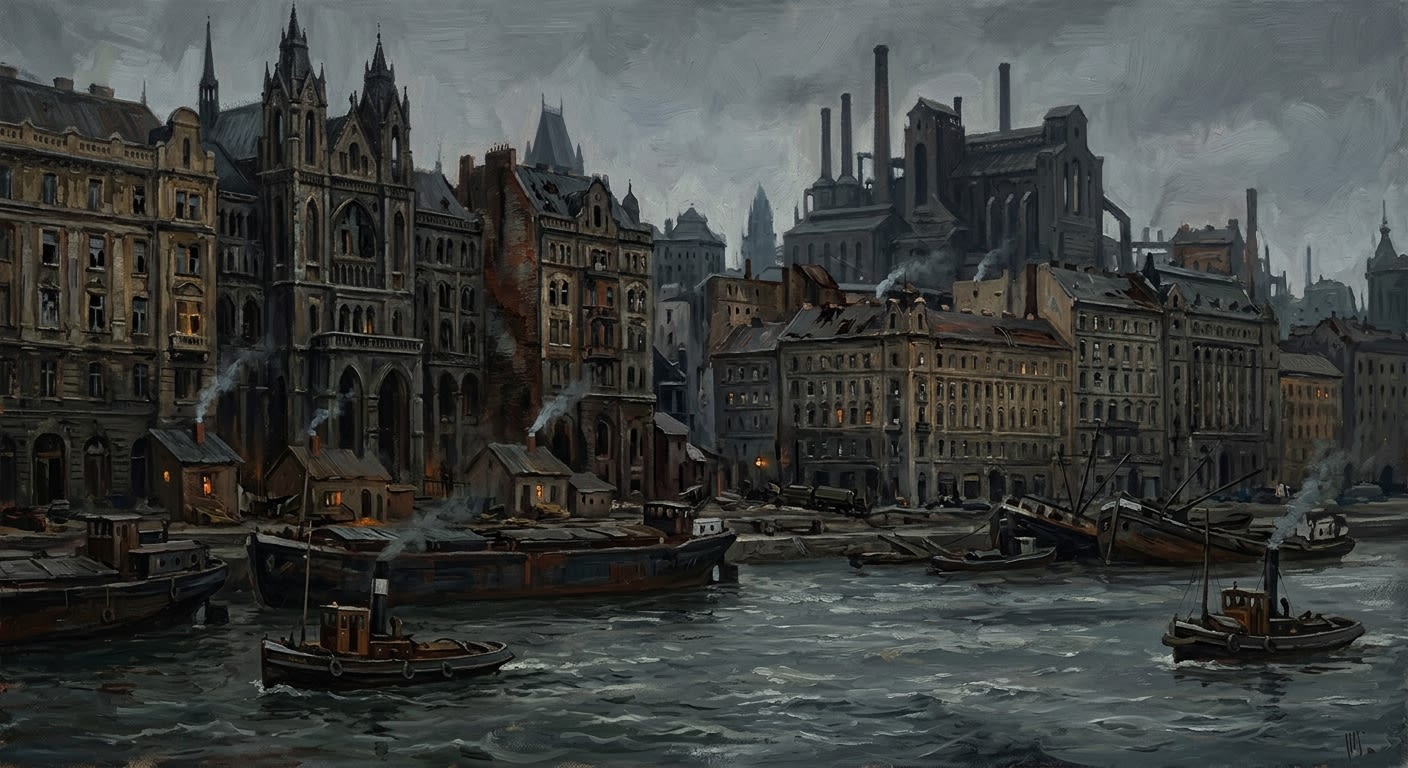
Pest, Abandoned Bank
The empty city that keeps answering without being called
Pest is the eastern bank of Budapest: declared Vacated in A.S. 120, visible across the Danube, annually confirmed, and inconveniently less empty than doctrine prefers.
Codex Ref. II.4.09-012
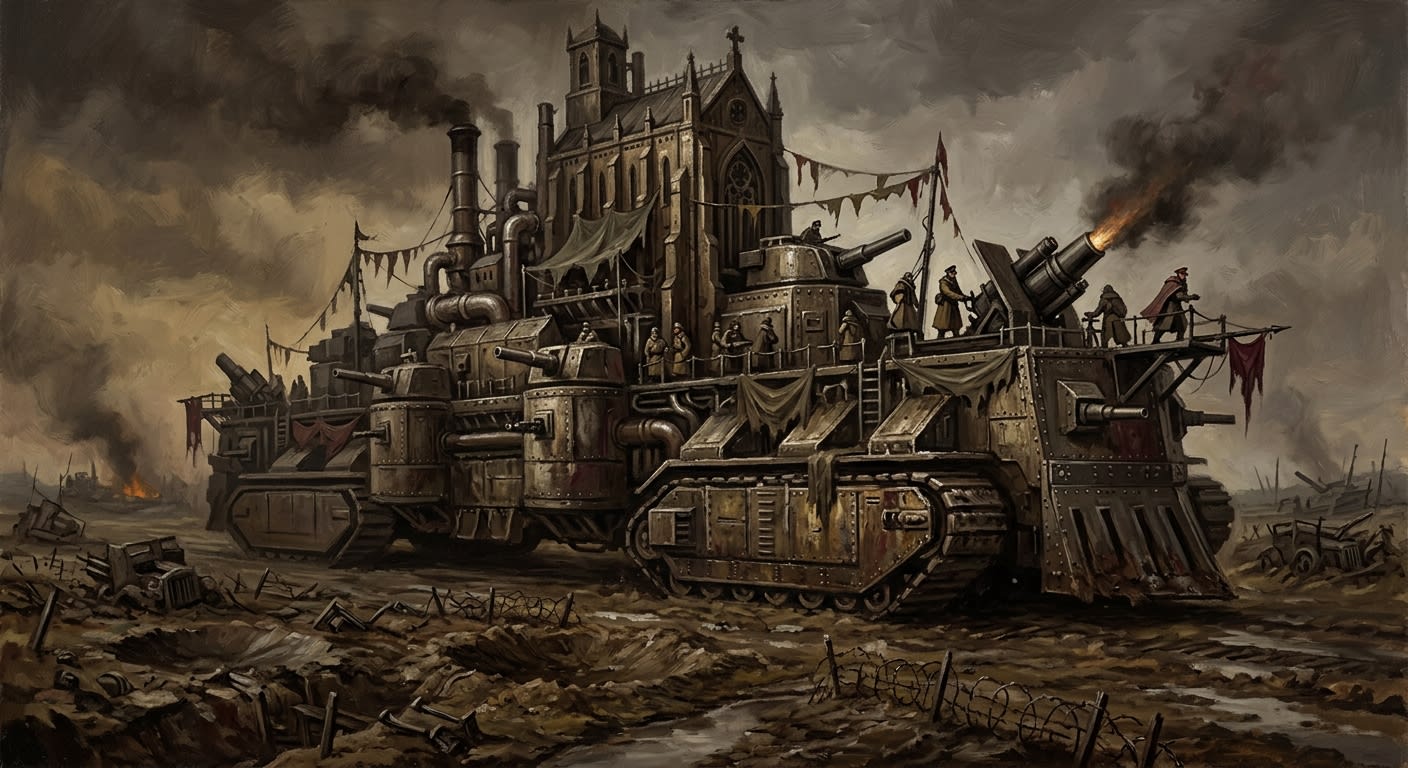
Pilgrim's Ladder
The prototype land-ship that taught artillery to process, pray, and correct crowds by recoil
Prototype diesel shrine-artillery land-ship commissioned in A.S. 110, source of the Processional Arsenal and every later sermon delivered by mortar.
Codex Ref. XIII.1.34-002
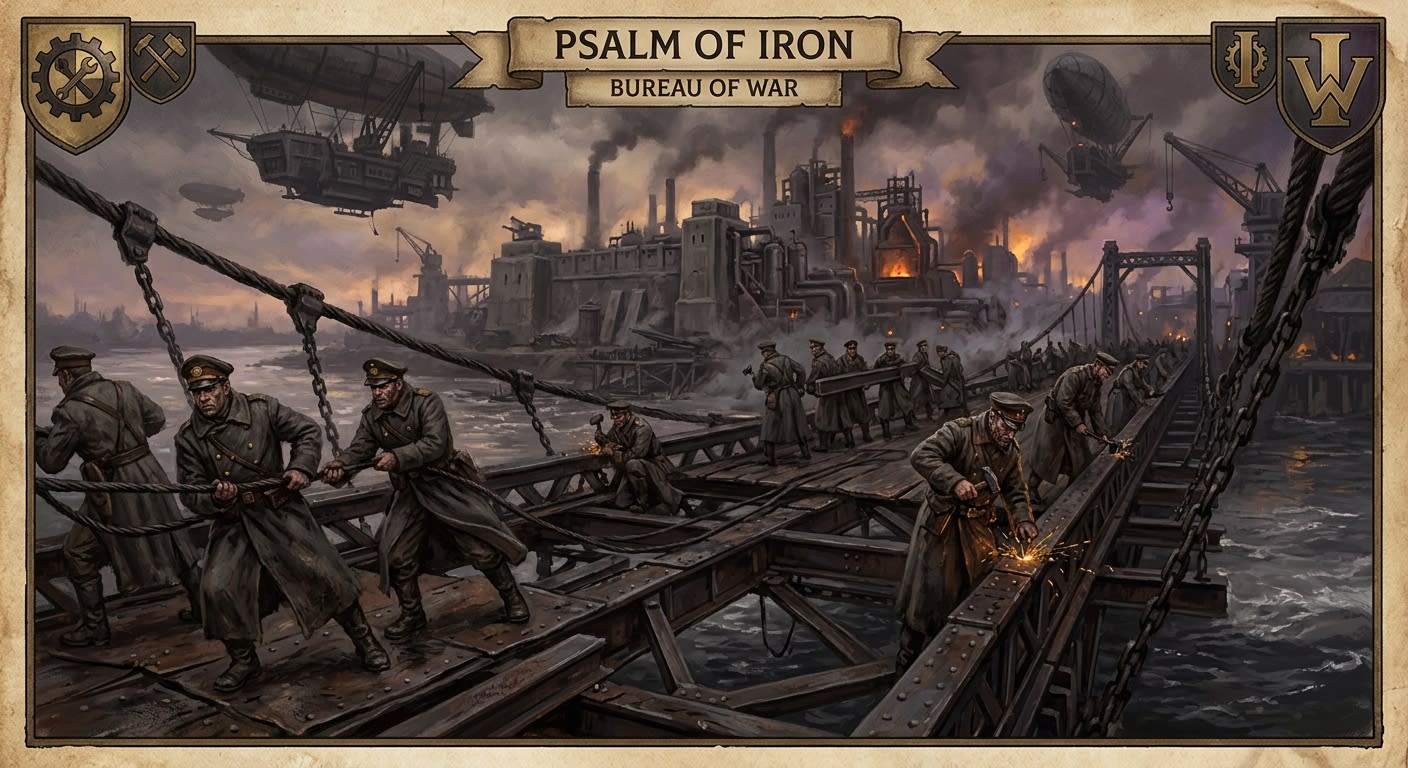
Psalm of Iron
Sing it softly and it curdles; sing it under fire and men cross
The Bureau of War's ugly, useful crossing-psalm turns breath into bridgework, teaching men to keep moving after timber, officers, and mouths fail.
Codex Ref. XIII.1.96-172
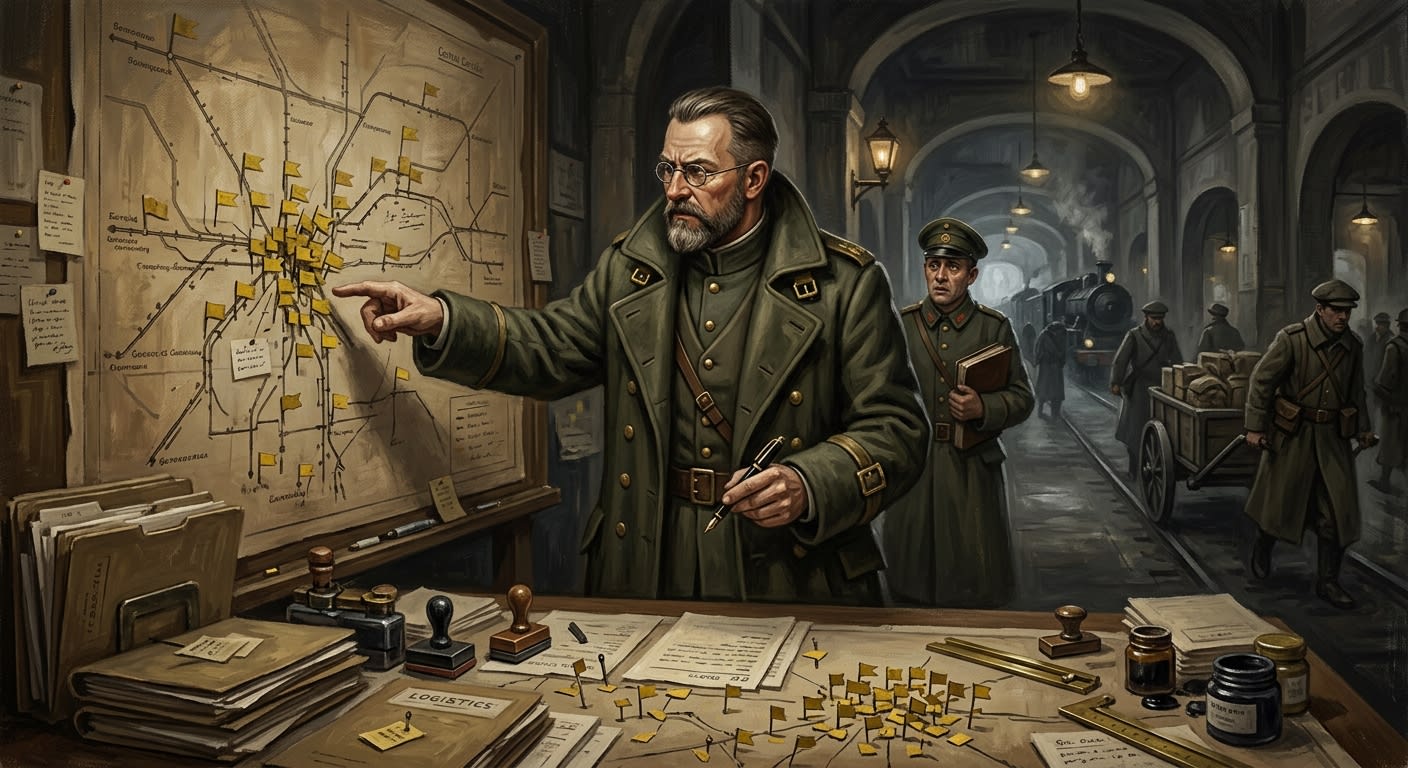
Quartermaster-General Hofer
The man who hates yellow more honestly than cowards love red
Quartermaster-General Hofer keeps Budapest's Central Corridor moving by deciding which yellow pin deserves wheels, escort, fuel, or burial in ink.
Codex Ref. III.2.01-151
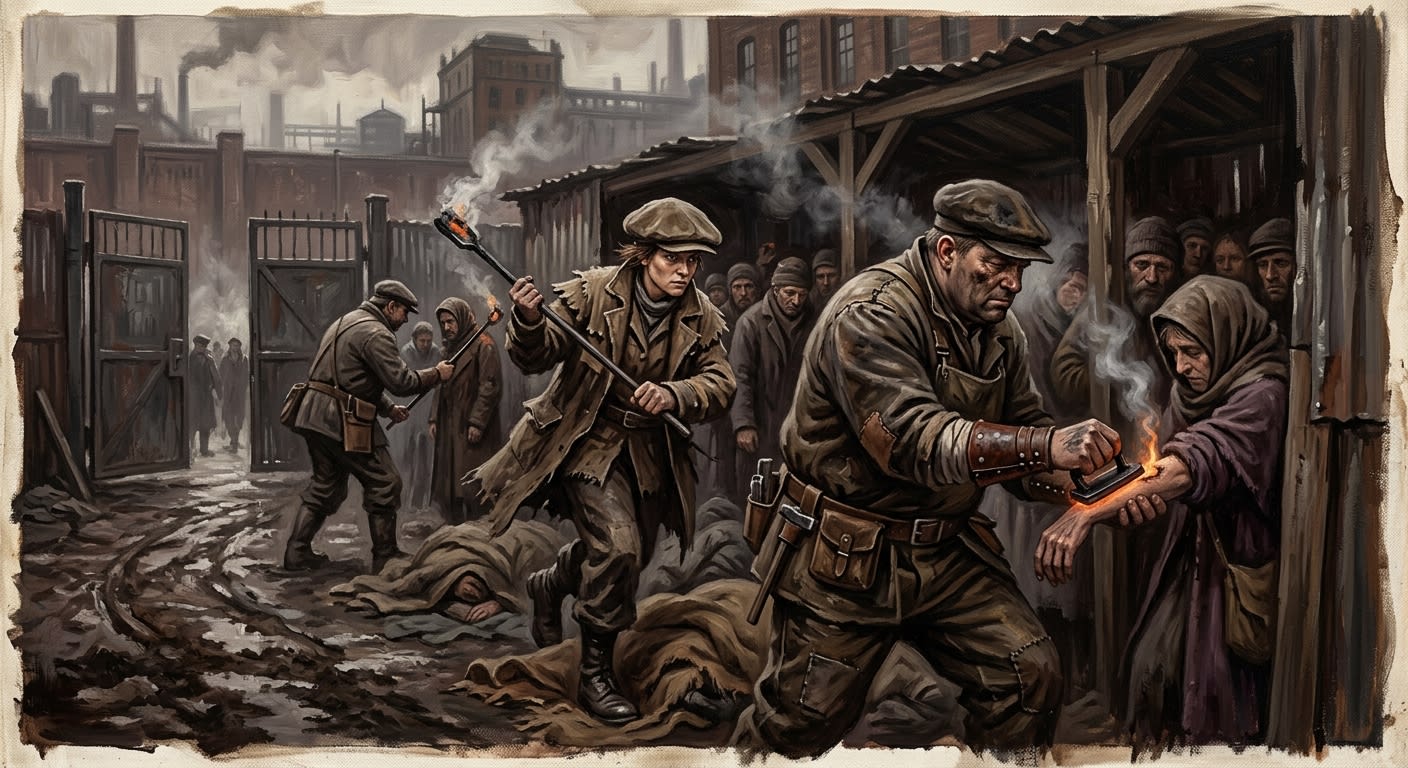
Quick Burners
Haste, under shelling, becomes a form of grammar
Quick Burners are accelerated field Brand-Smiths who mark bodies in queues, sheds, gates, and mud before ceremony can strangle movement.
Codex Ref. XII.20.06-001

Receipt-Procession Pageant Captain
The Bureau does not celebrate. It enumerates. The ribbon is the proof.
The Bureau of Festivals does not employ artists. It employs accountants in bright sashes, charged with converting municipal celebration into municipal enumeration — the wrist-ribbon is the key, and joy rot is the wages.
Codex Ref. XII.33.01-001
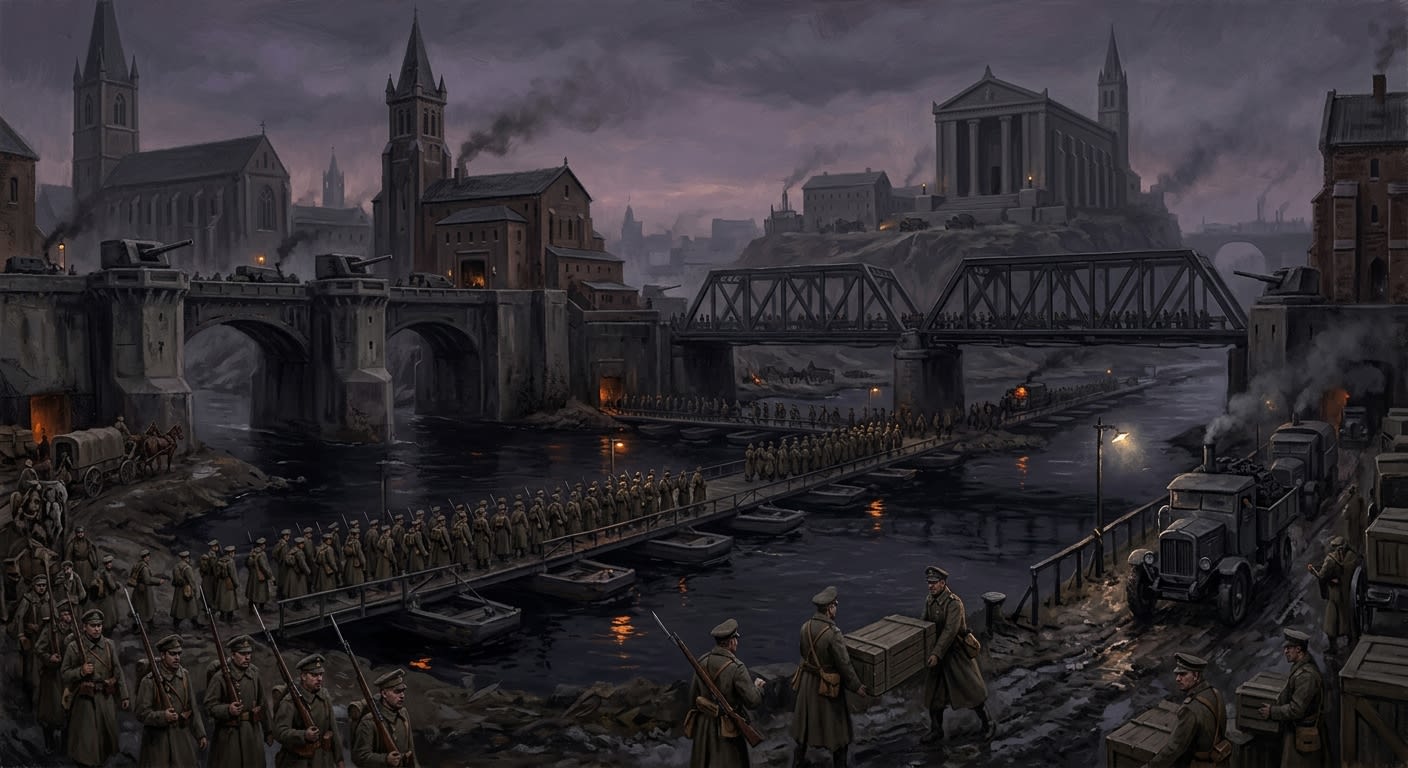
Saint Hadrien's Ford
The river-crossing where biography drowned and doctrine learned to wade
Saint Hadrien's Ford is the Danubian crossing where an old river saint became military property, and black water learned to invoice courage.
Codex Ref. II.4.09-172

Saint Kelm the Measurer
The road does not grant miracles; it grants margins
Unratified patron of Caravan Factors, Kelm measures loss, lies, wheels, sacks, and roads with such usefulness that Strasbourg denies him while taxing his candles.
Codex Ref. III.2.01-097
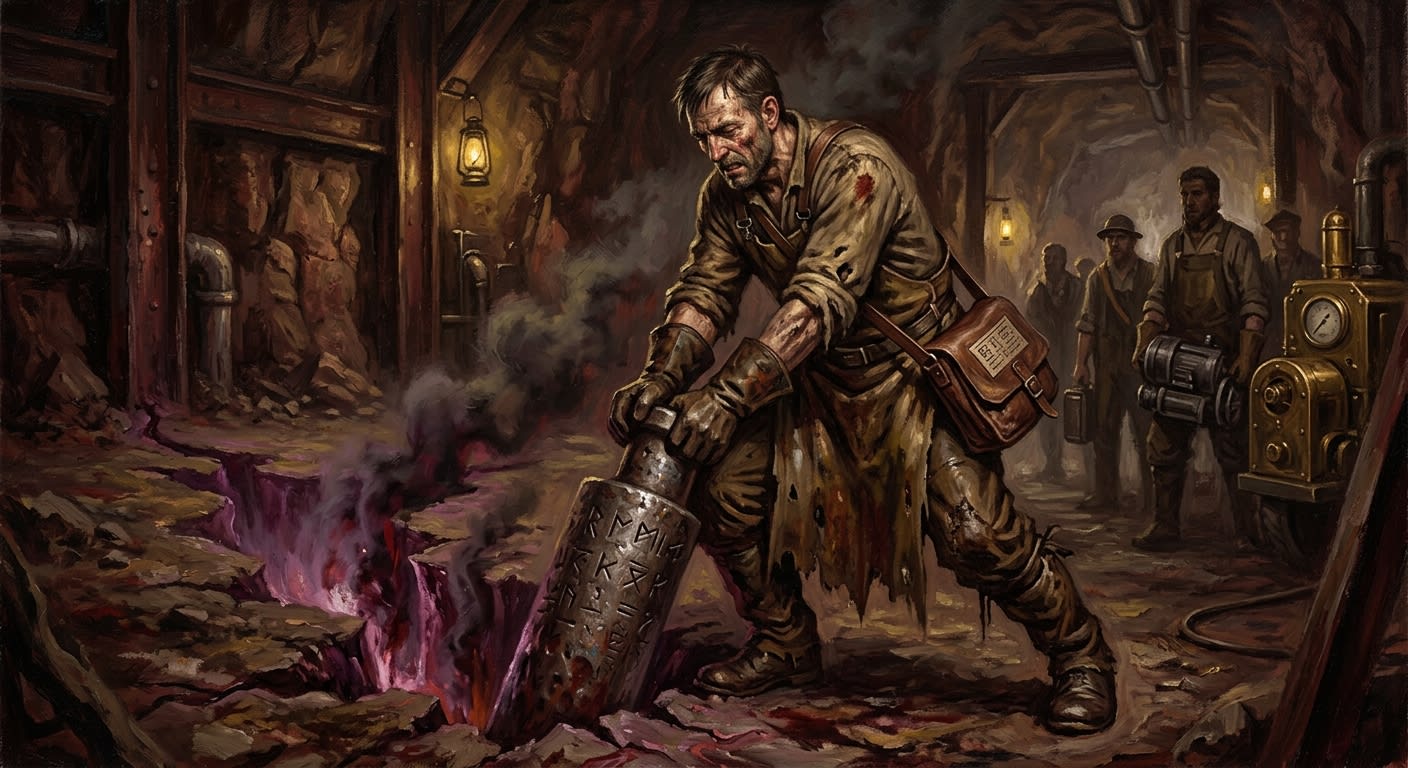
Saint Orren of the Iron Plug
Nine hours is a miracle when Hell keeps the clock
Patron saint of Wound-Site Prospectors, remembered for driving an iron plug into a demon-seep rupture, holding the wound nine hours, and vanishing when it reopened.
Codex Ref. III.2.01-148
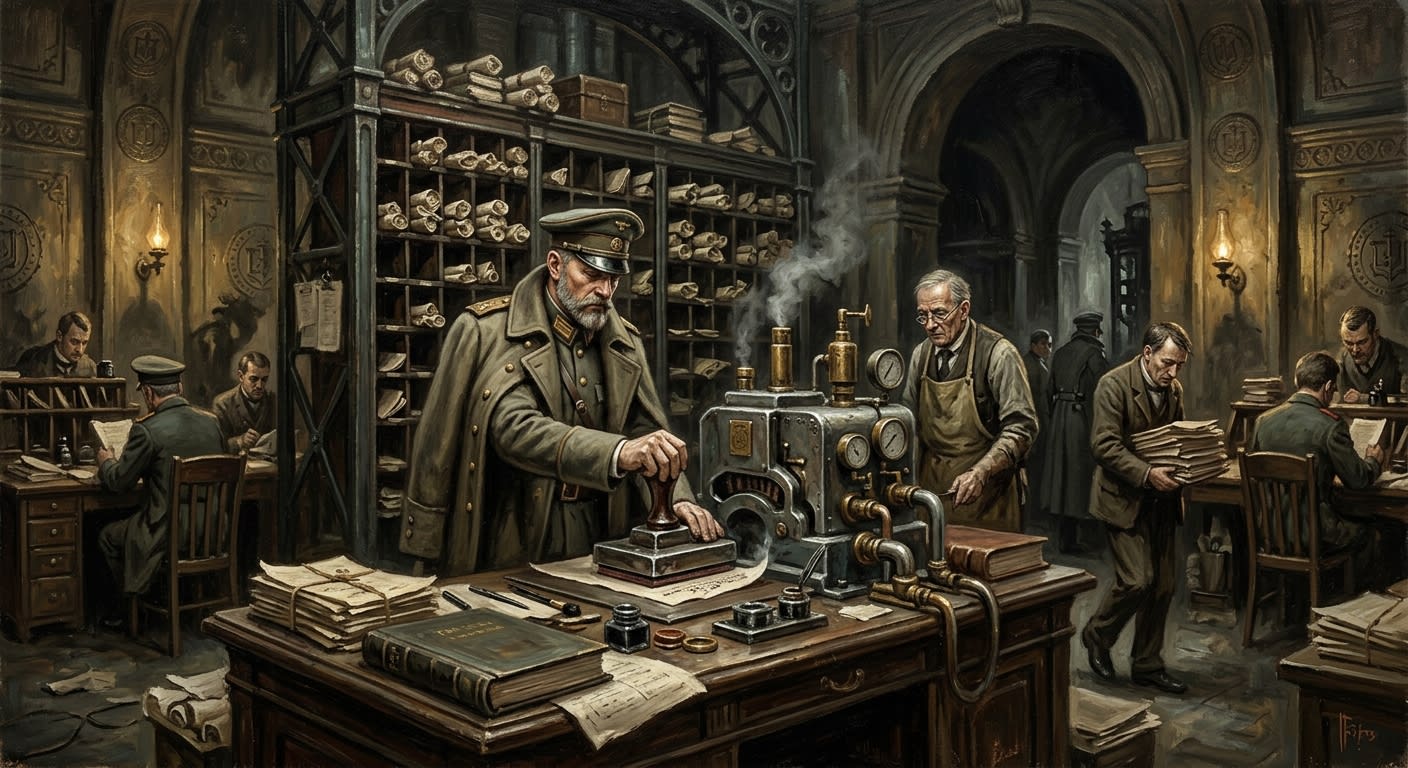
Seal Standardisation Edict
The law that taught rubber to confess and plumbers to keep two ledgers
The Seal Standardisation Edict answered Shipka's Unhymn with hymn-gaskets: a successful law, which means it created an office around the scar.
Codex Ref. XIII.1.92-164
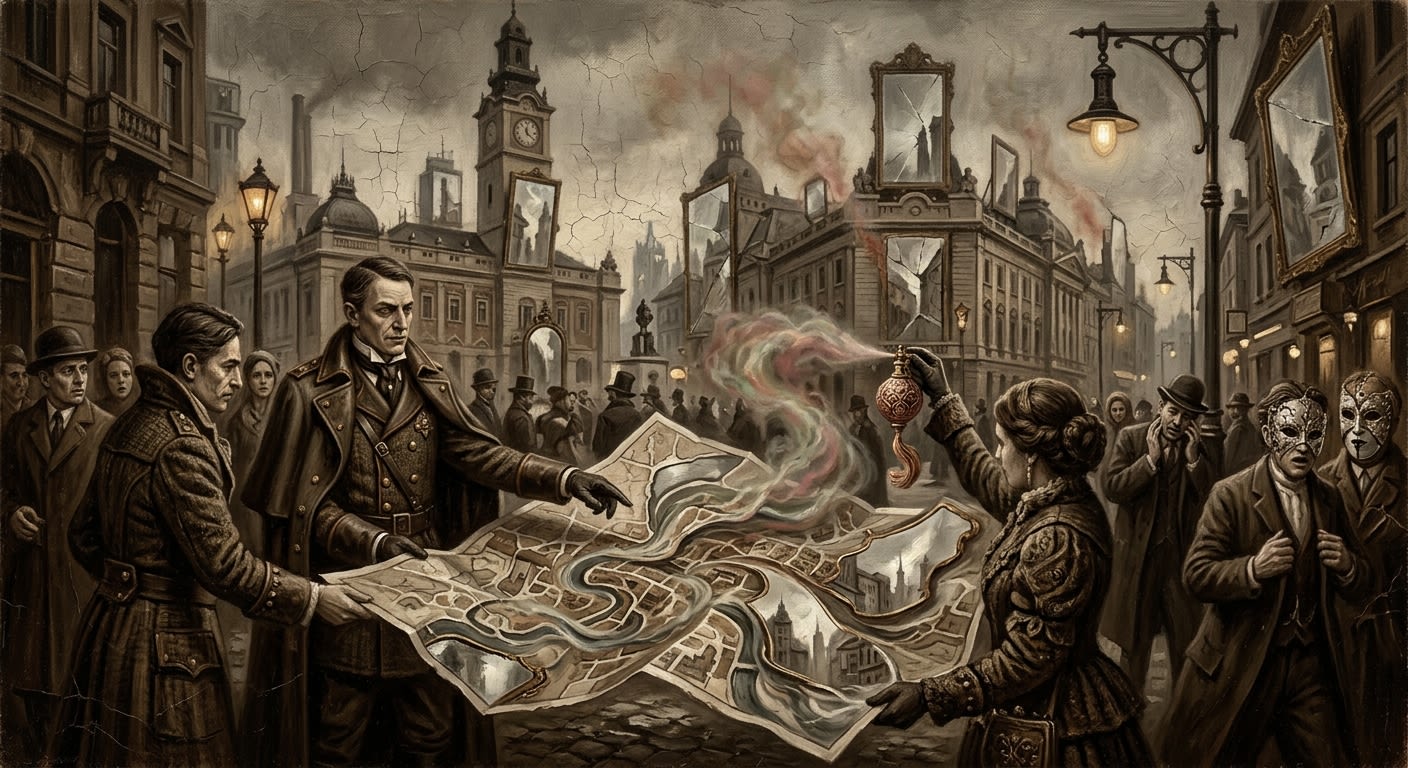
Shattered Courts
A palace that wears Belgrade like perfume wears a throat
Velkara's Shattered Courts occupy Belgrade by mirror, perfume, appetite, and refusal: a hostile palace that cannot be mapped without flattering it.
Codex Ref. II.5.06-117
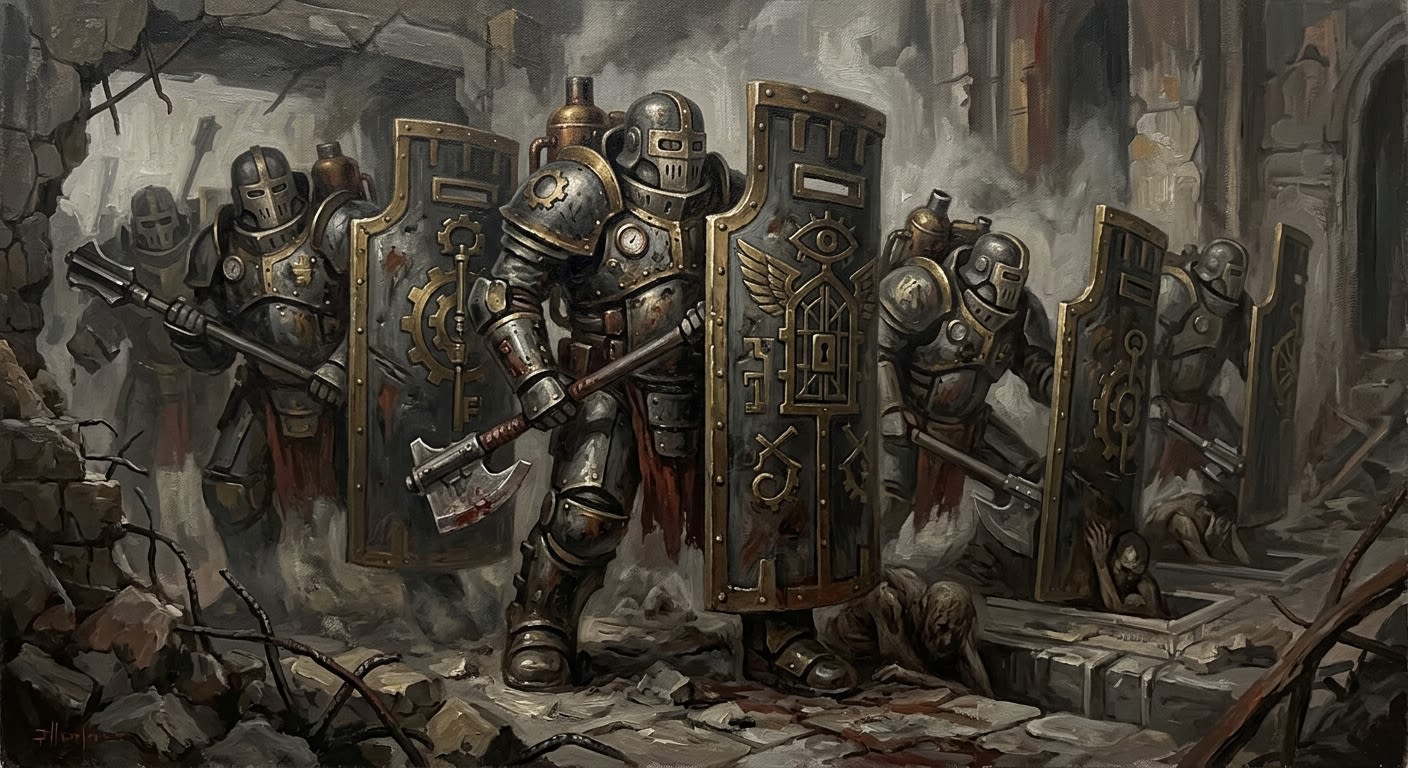
Shield Paladins
Men instructed to become wall until the wall believes them
Covenant heavy infantry trained for breach reception, line denial, emergency causeways, and the sacred absurdity of turning frightened men into architecture.
Codex Ref. VIII.5.06-001
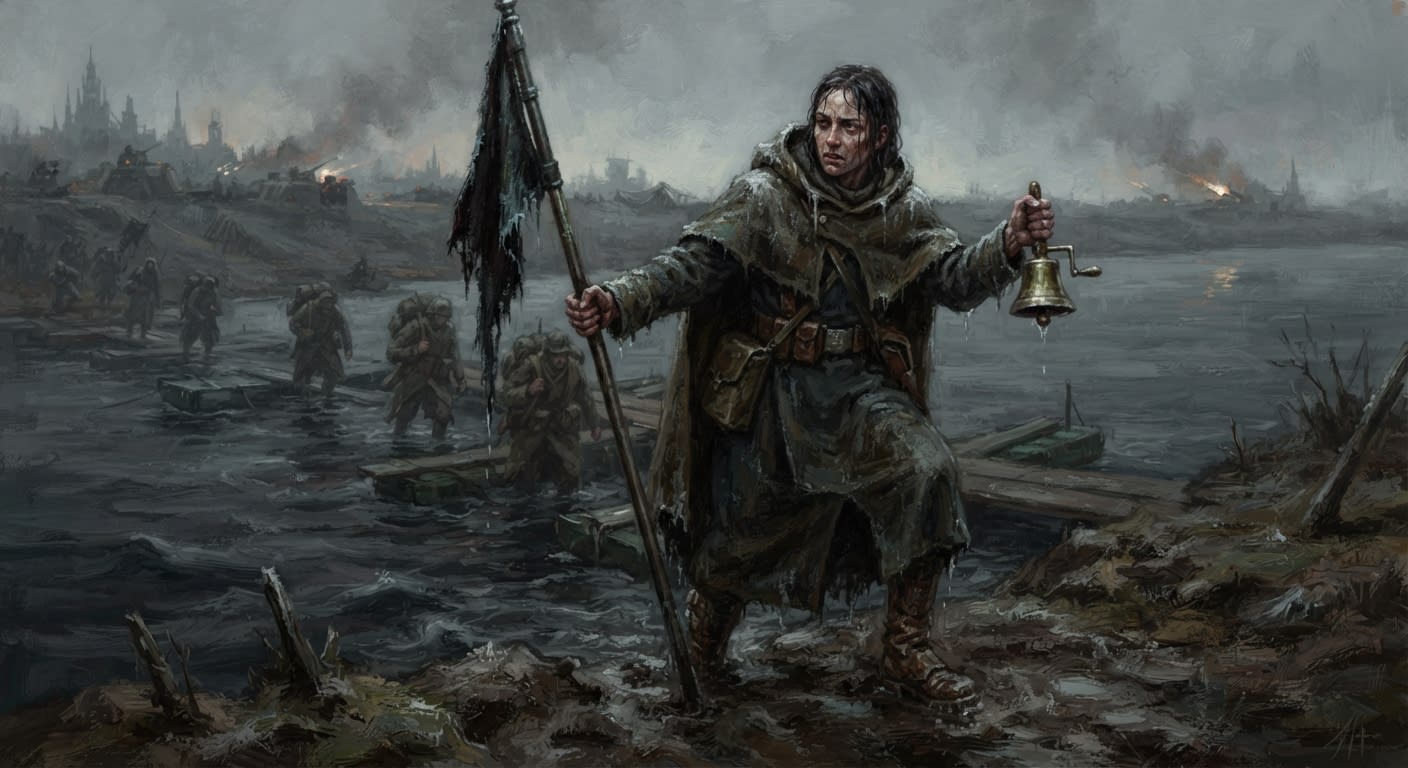
Sister-Vexillator Anje Rusk
The cloth stood, the bell rang, and Records misplaced the woman
Anje Rusk is certified at Mark Seven by one standard, one frozen bell, and one conspicuous absence from every useful casualty column.
Codex Ref. III.2.01-172
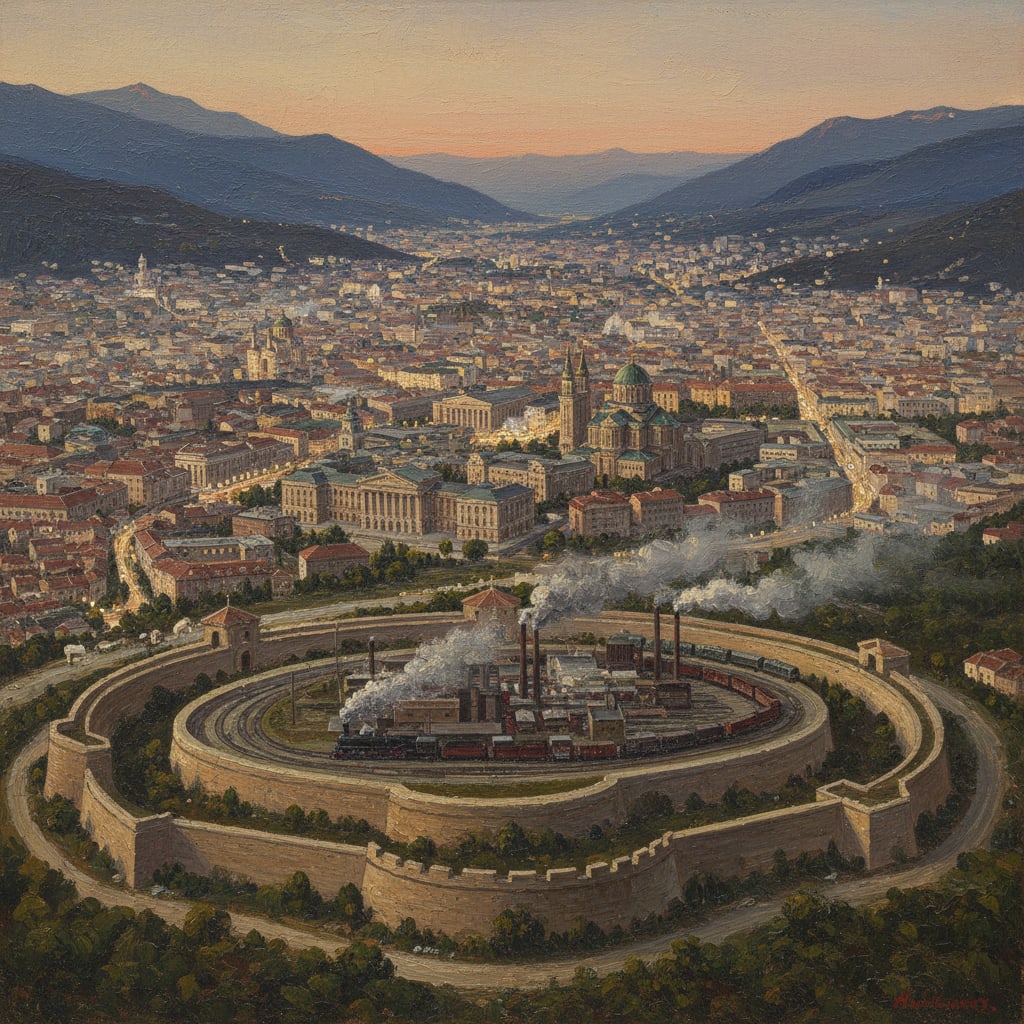
Sofia
Acceptable losses: total — and yet, here we are
Category Three Urban Holding between Irongate and Shipka. Classified expendable in extremis. Its council's objection cabinet is seven feet tall. Adhuc Stamus.
Codex Ref. II.4.09-011
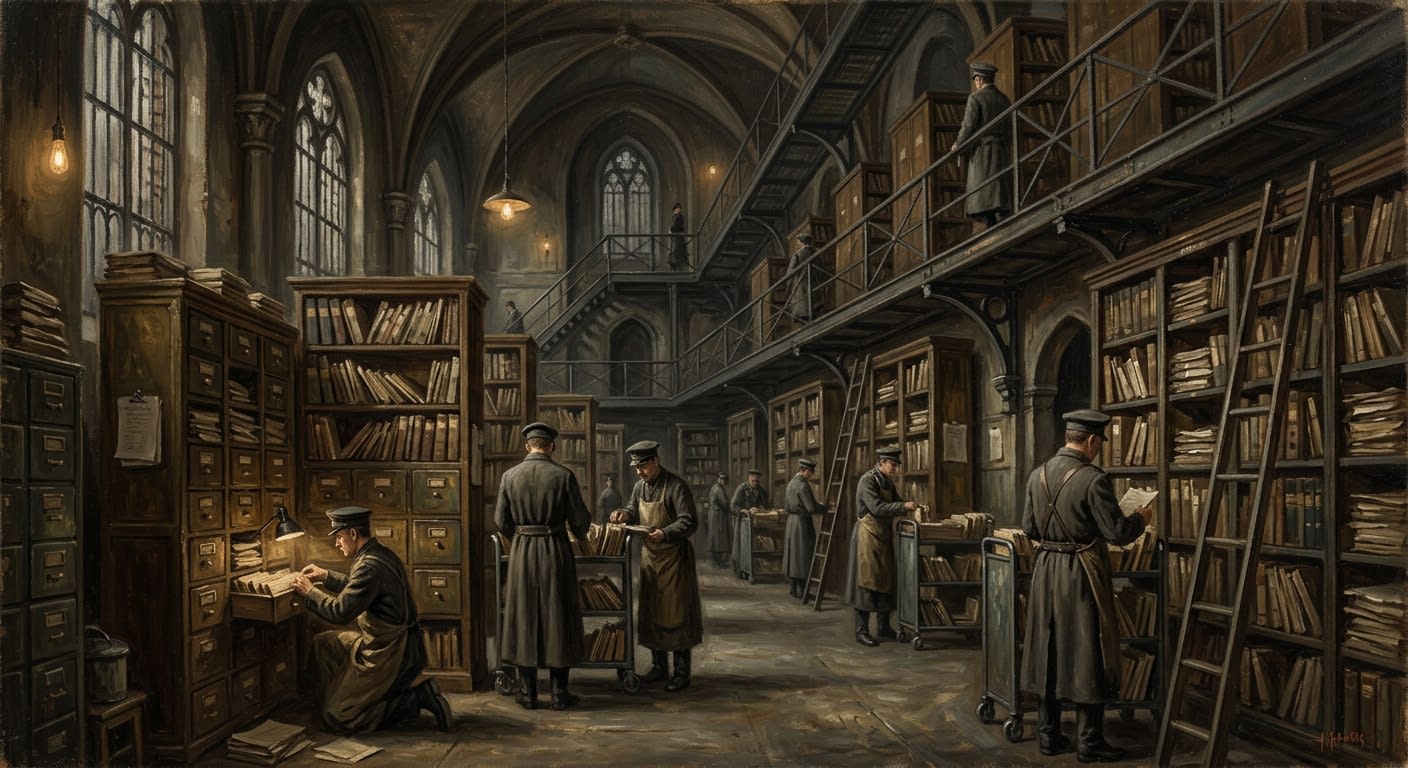
Sofia Filing Annex
A seminary gutted, shelved, and made merciful by neglect
The Sofia Filing Annex is a converted seminary where the Bureau of Records stores southern personnel files, impossible dates, and people too useful to diagnose.
Codex Ref. II.4.09-012
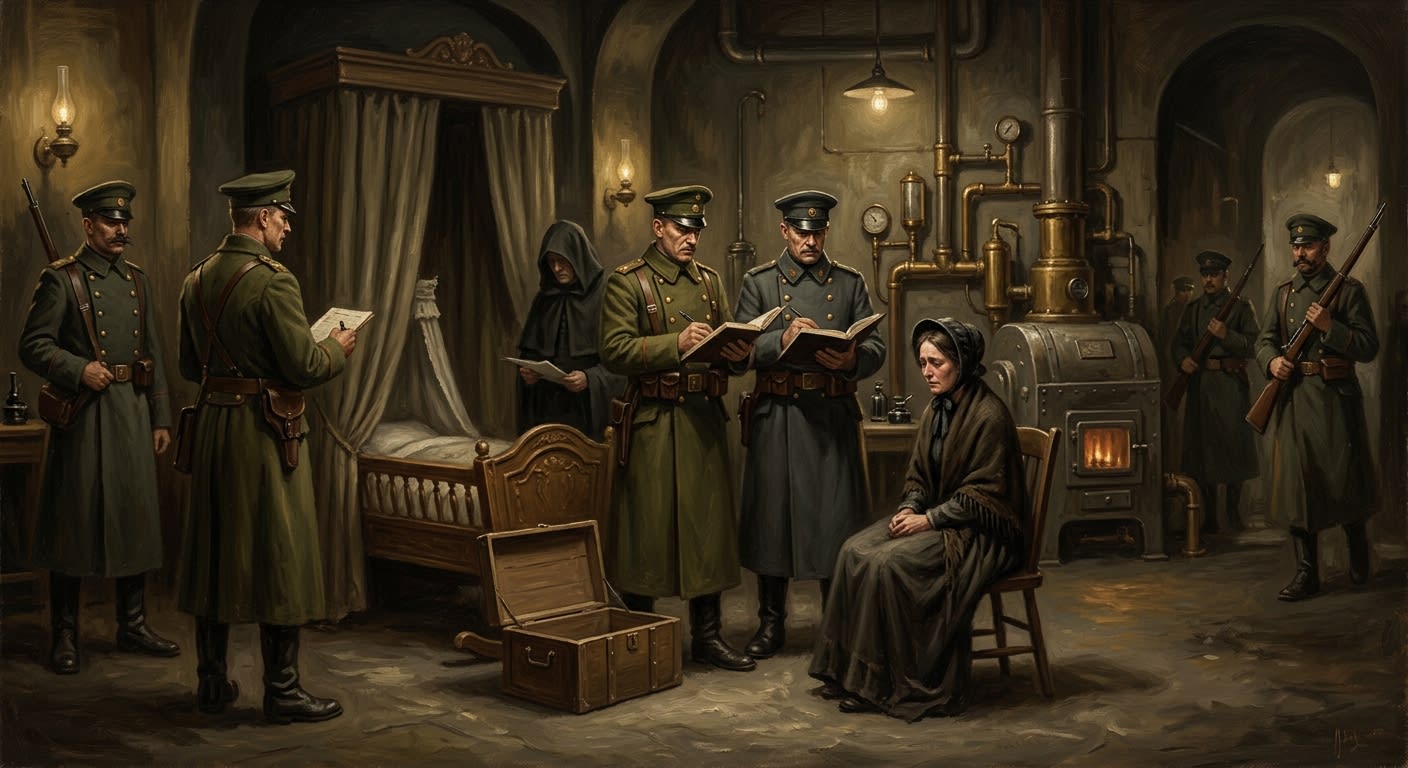
Standing Order 34-PK
The cradle confesses when the Ledger is hungry
Standing Order 34-PK makes the hidden cradle confess: missing infants become stolen soldiers, and a mother’s silence becomes evidence.
Codex Ref. XIII.1.34-158
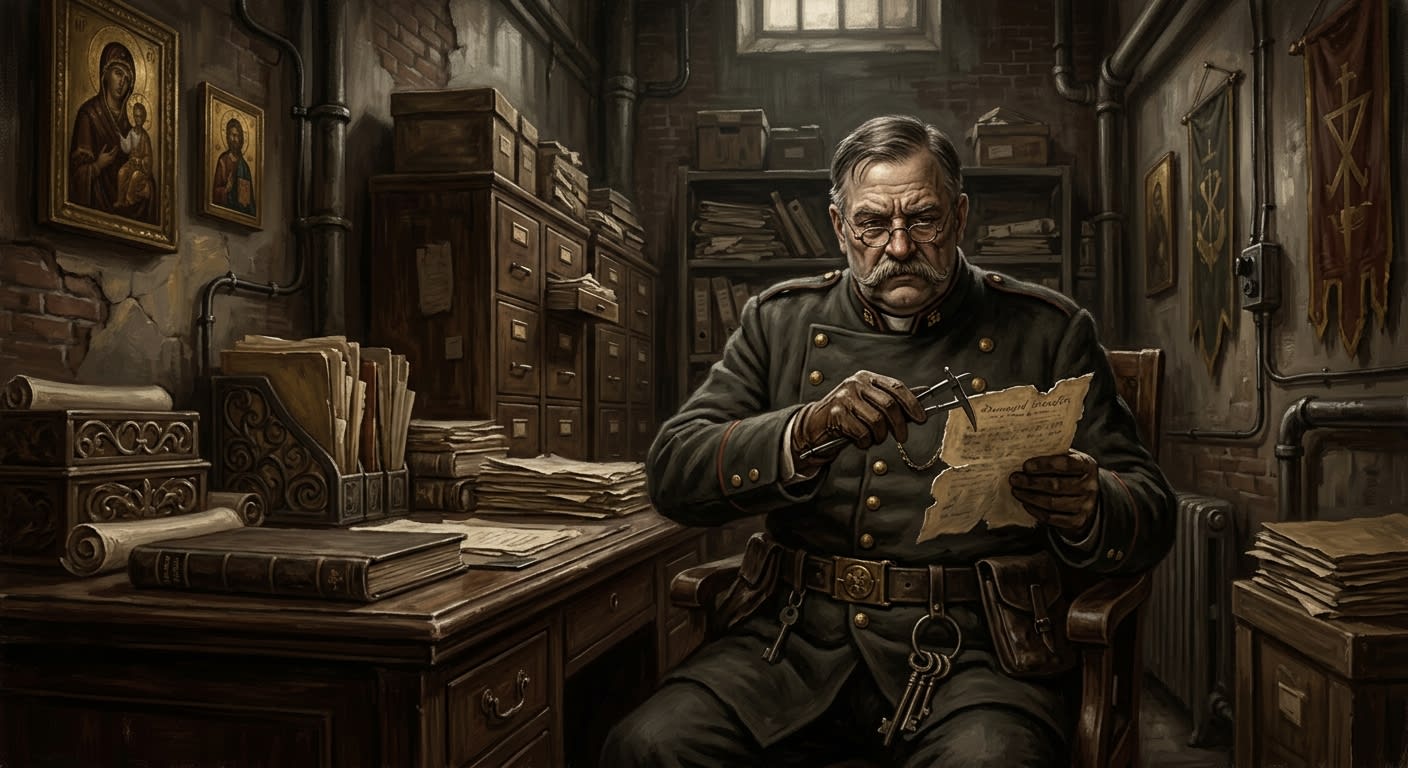
Superintendent Horvath
Mercy disguised as custody, filed under acceptable output
Superintendent Horvath keeps the Sofia Filing Annex running by treating damaged transfers as records worth preserving, which is almost mercy and therefore suspicious.
Codex Ref. III.2.01-151

The Heartlands
The safe country, provided one defines safety as distance from teeth and proximity to stamps
The Heartlands are the Synod's safe interior only by infantry arithmetic: Zones 1–3 feed the Line with bread, steel, bodies, bells, paperwork, and bones.
Codex Ref. II.0.02-201
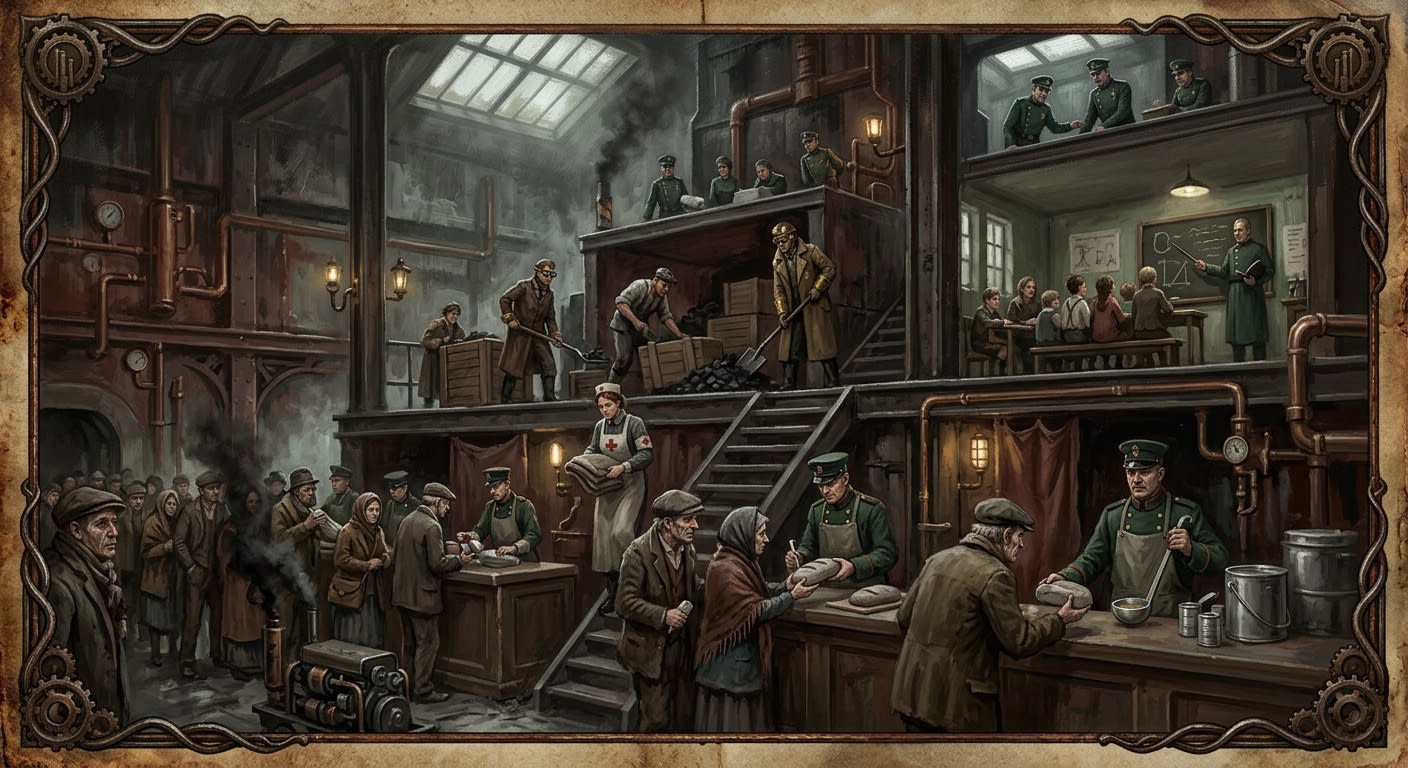
The Hierarchy of Need
Hunger is the sermon Kargath learned to serve hot
Kargath's cults do not begin with horns, but with bread. The Bureau calls their five stations a hierarchy. The hungry call them provision.
Codex Ref. IX.2.01-001
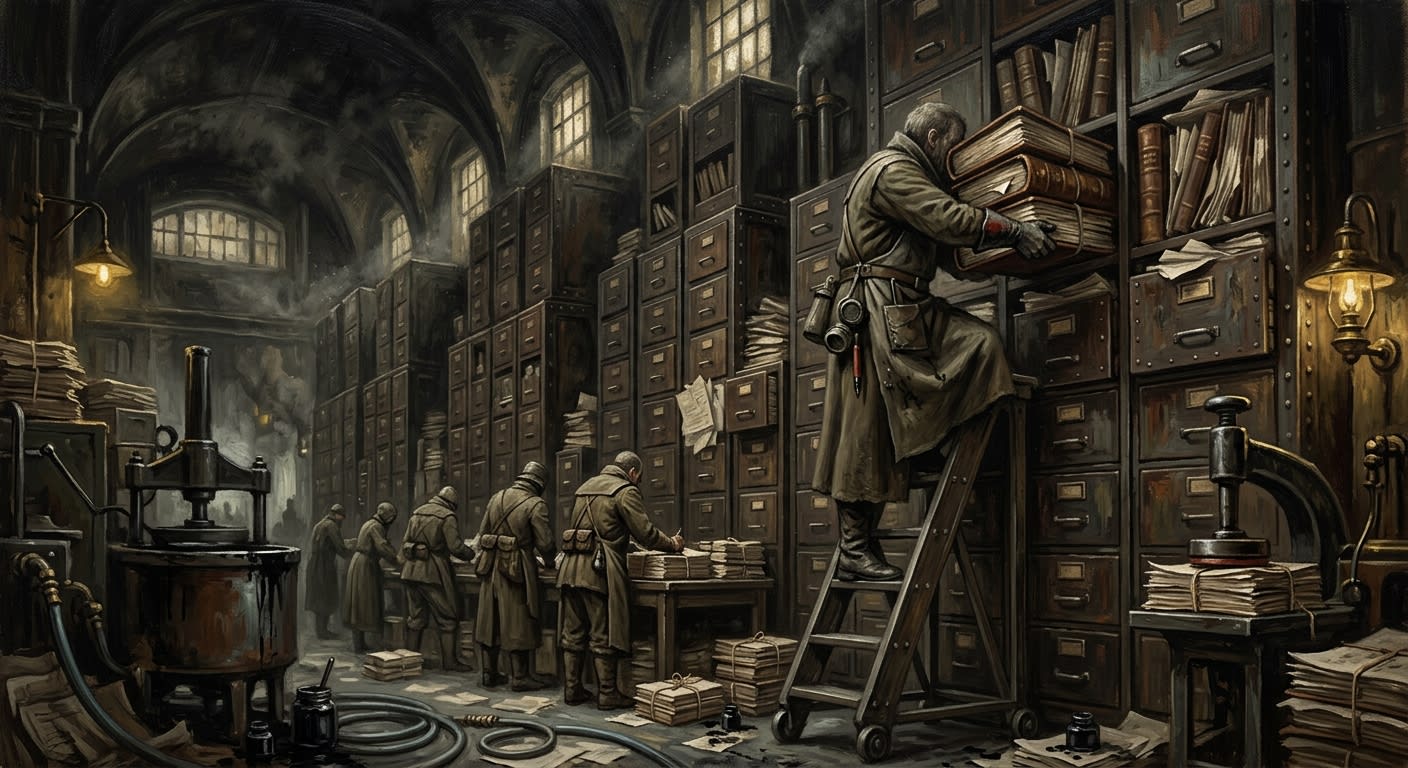
The Ledgers of Self
Identity, accepted provisionally until the next contradiction
At Bastion-Irongate the self is filed in triplicate, because Morwen steals what is unfastened and Strasbourg fastens with ink.
Codex Ref. XIII.1.01-002
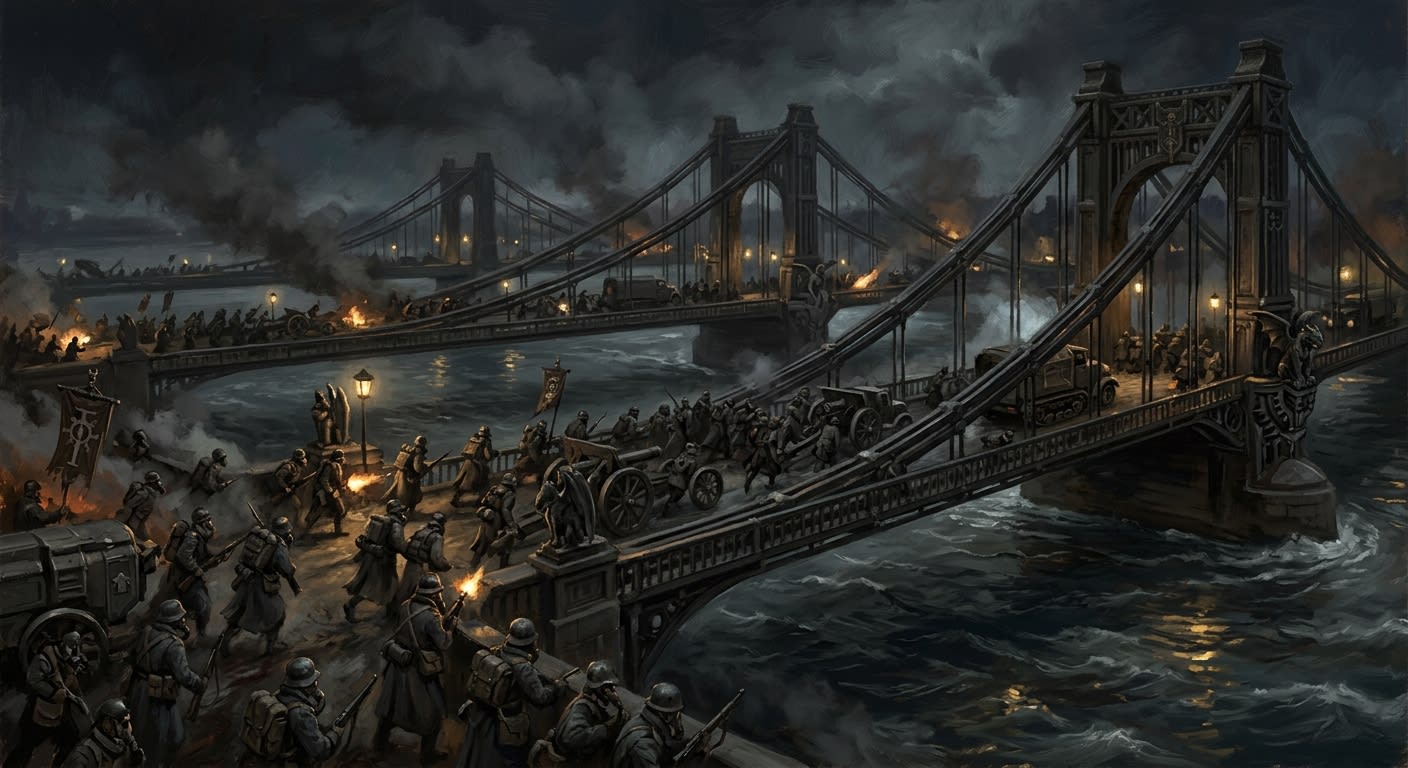
The Night of the Three Bridges
The men did not swim; the Bureau found cheaper grammar
Three Danubian crossings in seven minutes gave War its favourite miracle and Records its favourite arithmetic: fewer casualties, more glory.
Codex Ref. VII.5.01-002
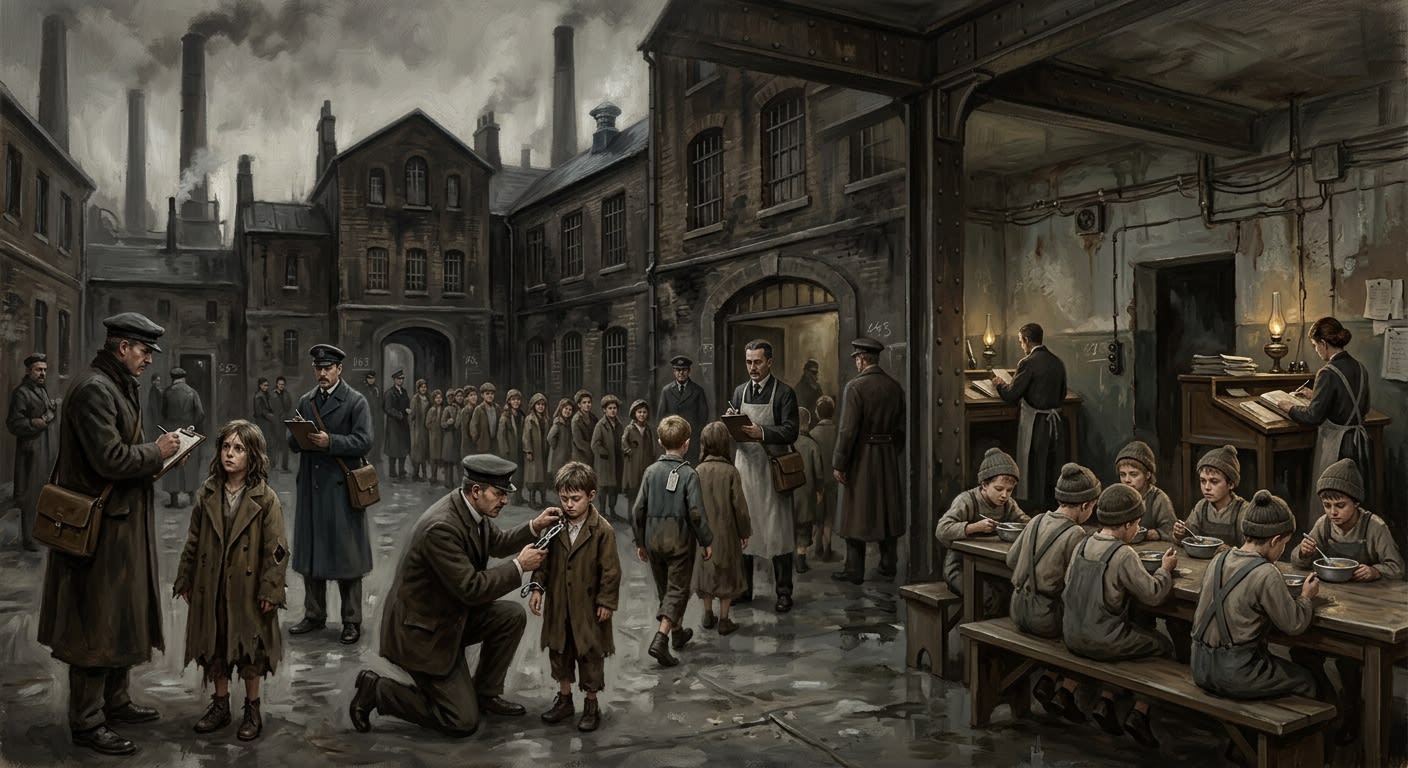
The Orphanarium
Mercy with hinges, locks, soup, and a tag cabinet
The Orphanarium receives children without acceptable custody and returns registered minors: washed, renamed, tagged, fed, placed, and corrected until Mercy can invoice itself.
Codex Ref. II.2.06-005
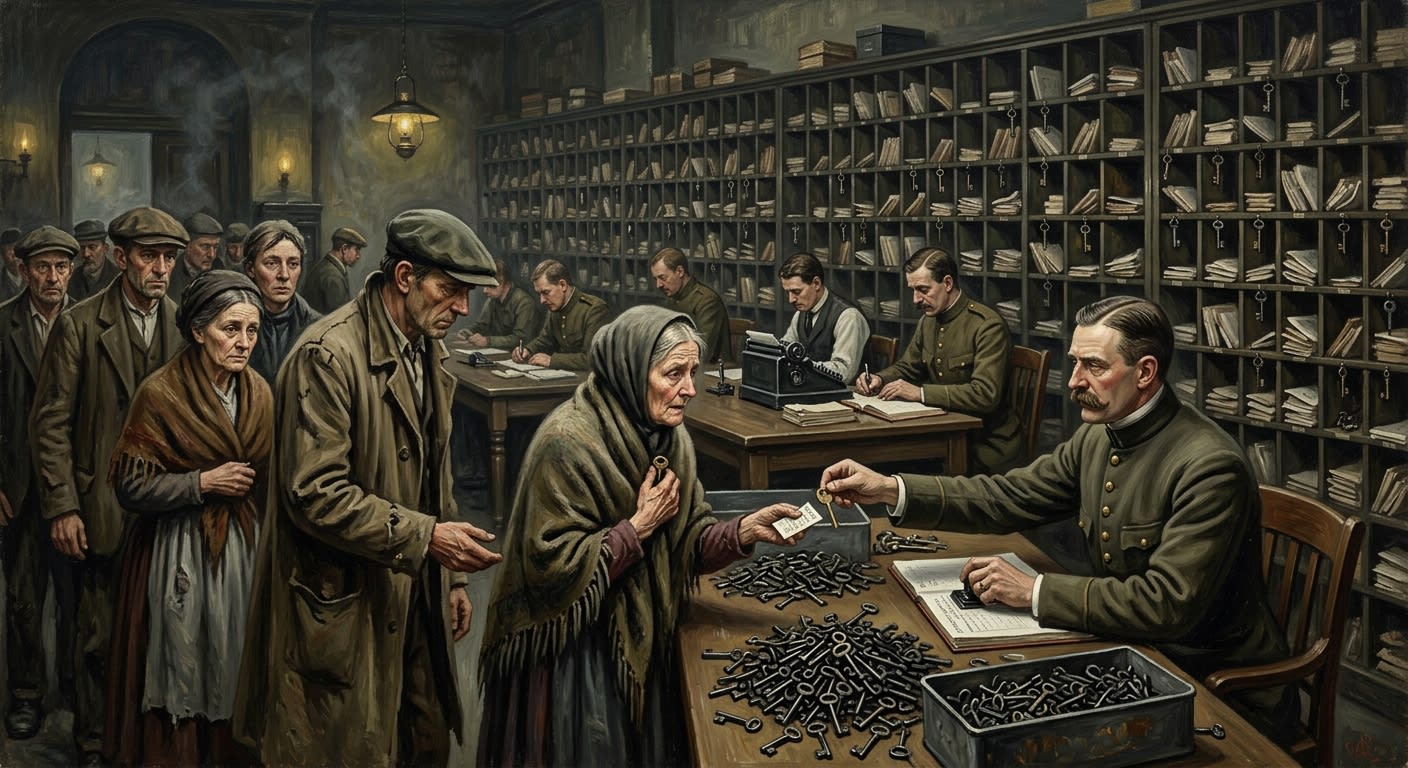
The Ten Thousand Keys
Hell with a good interest rate receives repeat custom
Velmora's Ten Thousand Keys turn relief into obligation, obligation into worship, and every warm little key into a receipt Hell can collect.
Codex Ref. XI.5.01-002
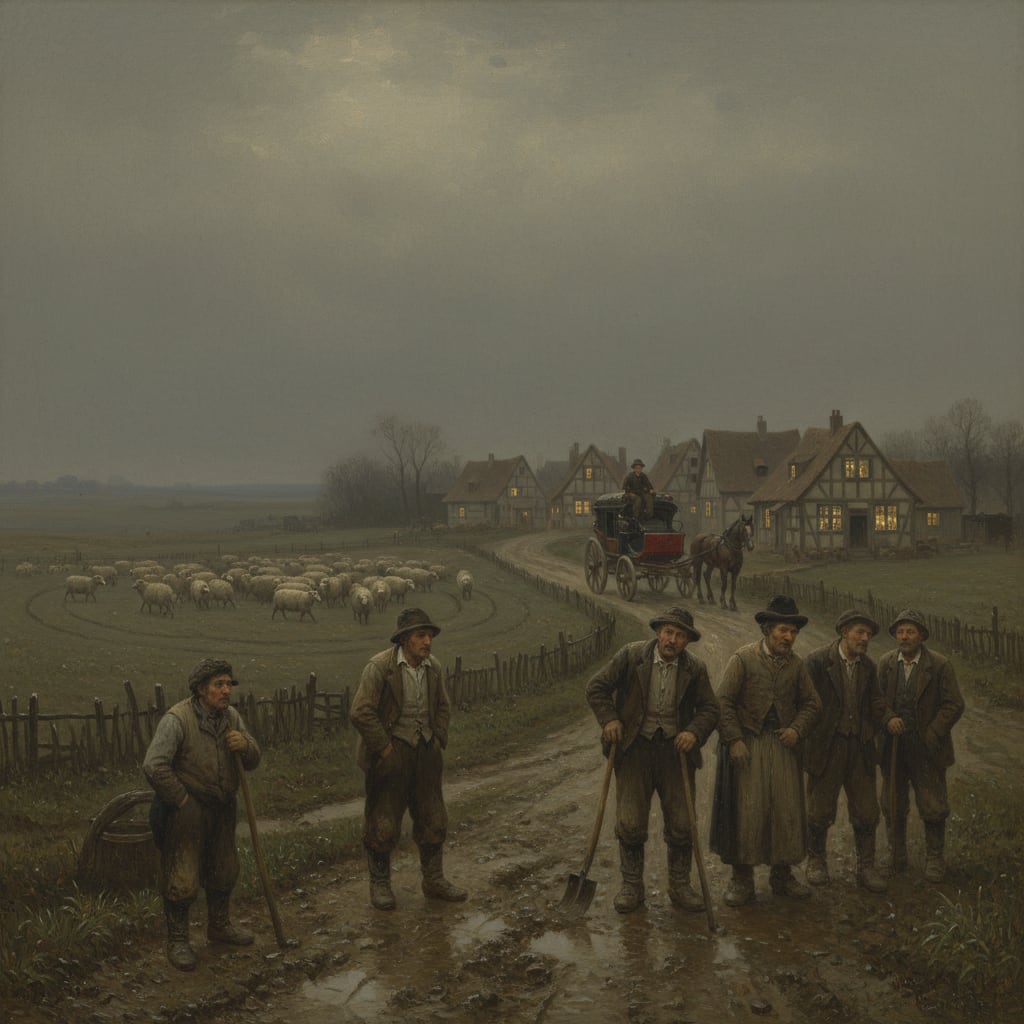
The Year Without Dawn
The Bureau's Second Portent: forty days without sun, seventeen explanations without facts, and one Province without tongues.
A.S. 32: forty days without the sun, children born grey-eyed and voiceless, the Rationalists publishing seventeen treatises to explain a volcano no one could find. The Bureau's Second Providential Portent.
Codex Ref. VII.4.01-001
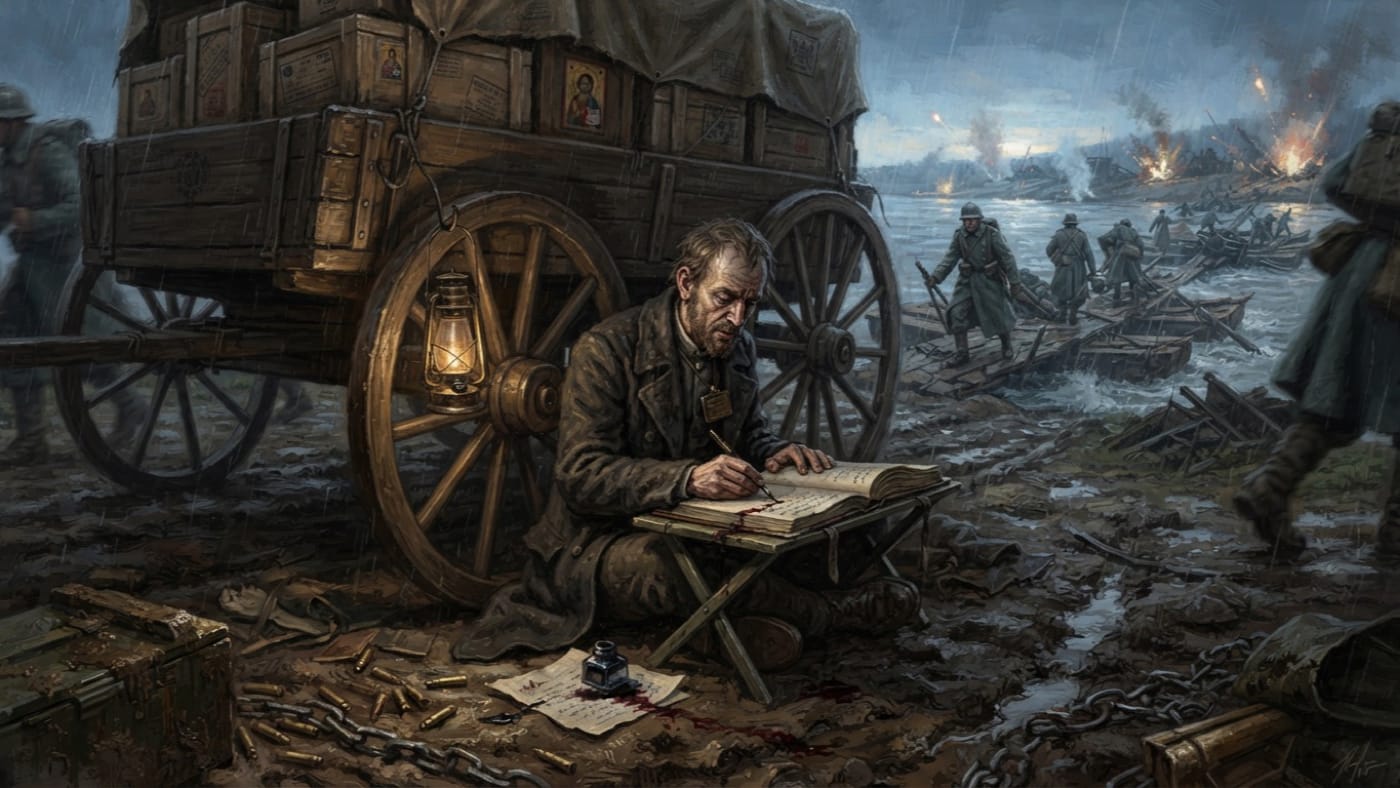
Tribune-Clerk Othmar Vey
He wrote the sentence; the offices supplied Providence
Othmar Vey wrote the A.S. 172 Danube report; War made it a miracle of locomotion. The file preserves his sentence, while his intentions and later fate remain beyond the Ledger's account.
Codex Ref. III.2.01-172
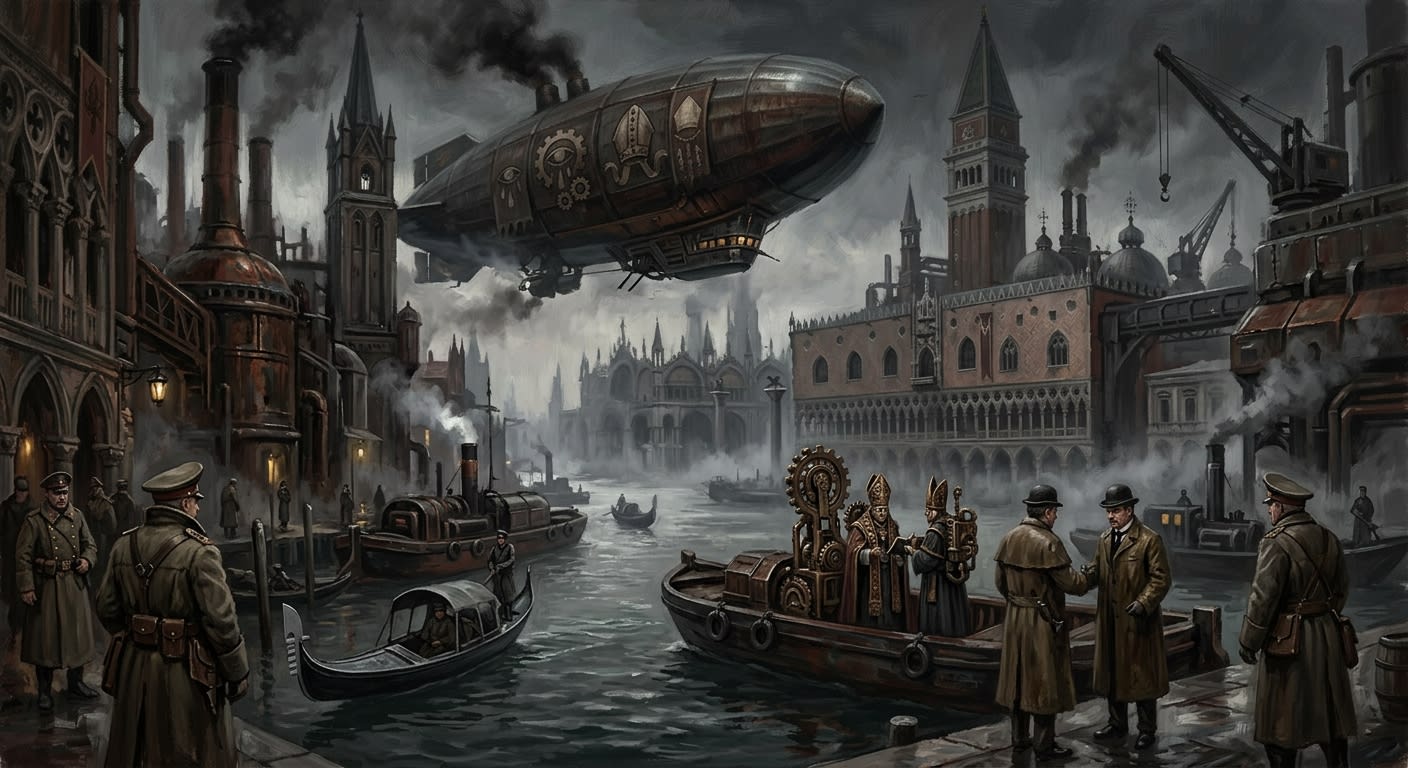
Venice
The city that obeys by tide and invoices by fog
Venice is loyal, wealthy, damp, evasive, and necessary: an Adriatic city the Synod owns by writ and must still ask politely by tide.
Codex Ref. II.4.09-201
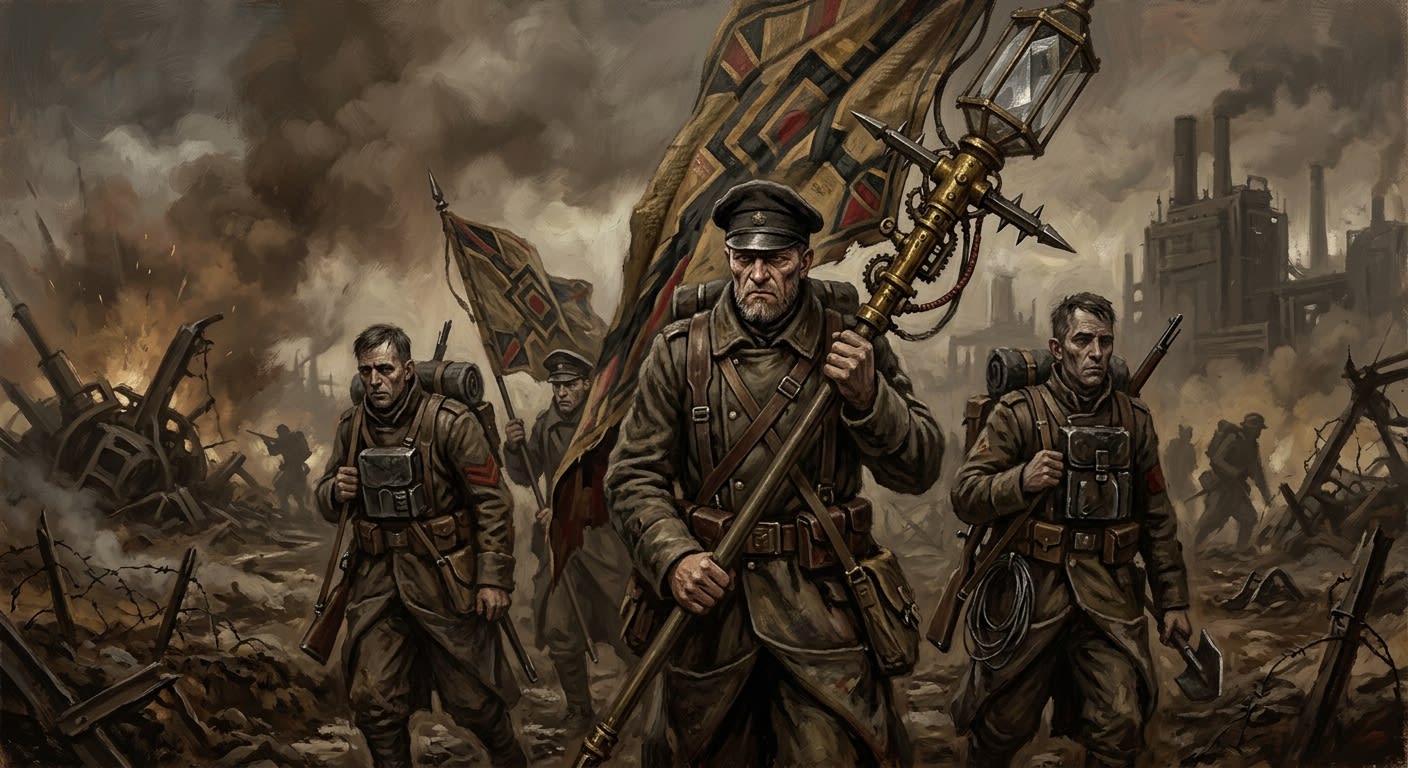
Vexillators
Keep the cloth upright, or permit panic to govern
Bureau of War standard-bearers and visible formation anchors whose sanctioned cloth turns panic into geometry when officers, drums, and voices fail.
Codex Ref. VIII.5.07-001
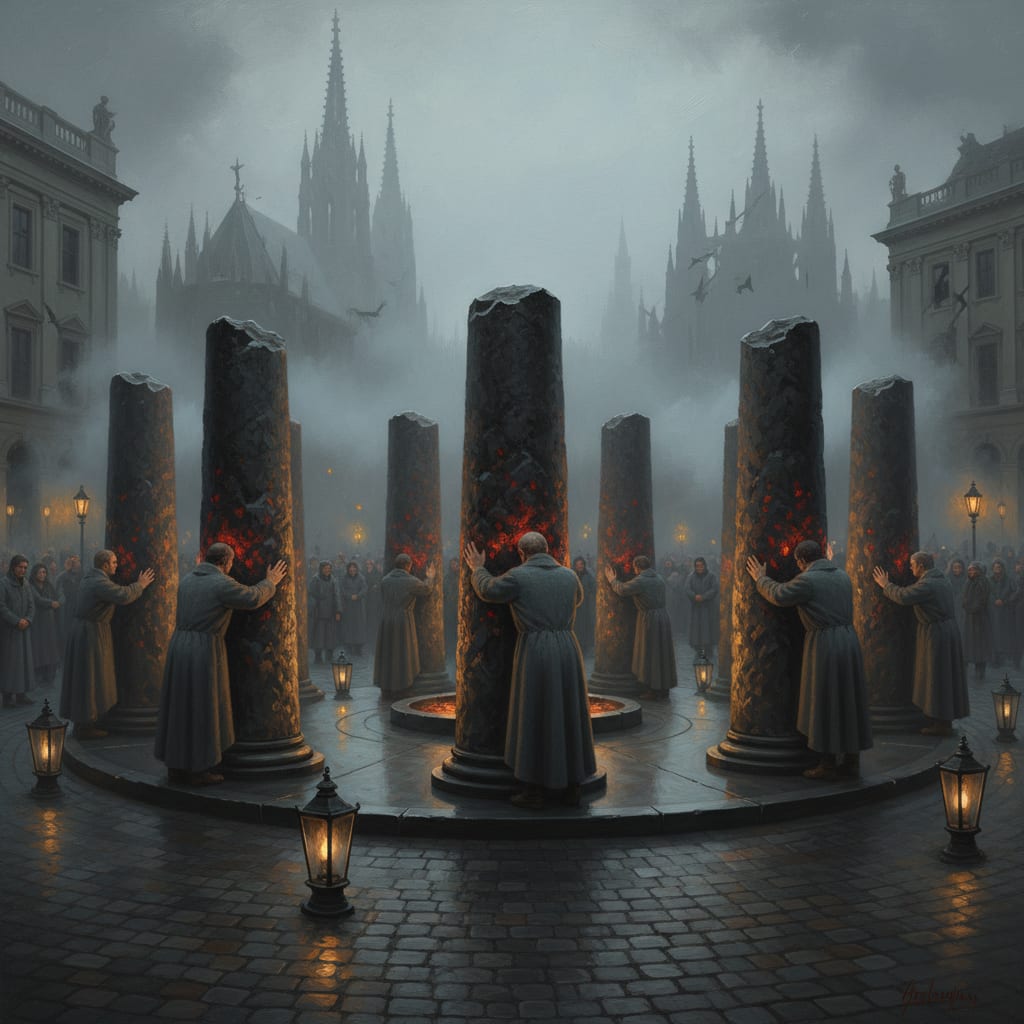
Vienna, the Shrine-Ruins
Three deaths, one gift shop, and a pen that has not dried in forty years
Three times ruined and once reclaimed. Vienna is the Synod's finest shrine and its most honest monument: the Rationalist capital, the Great Retreat's wound.
Codex Ref. II.4.09-010
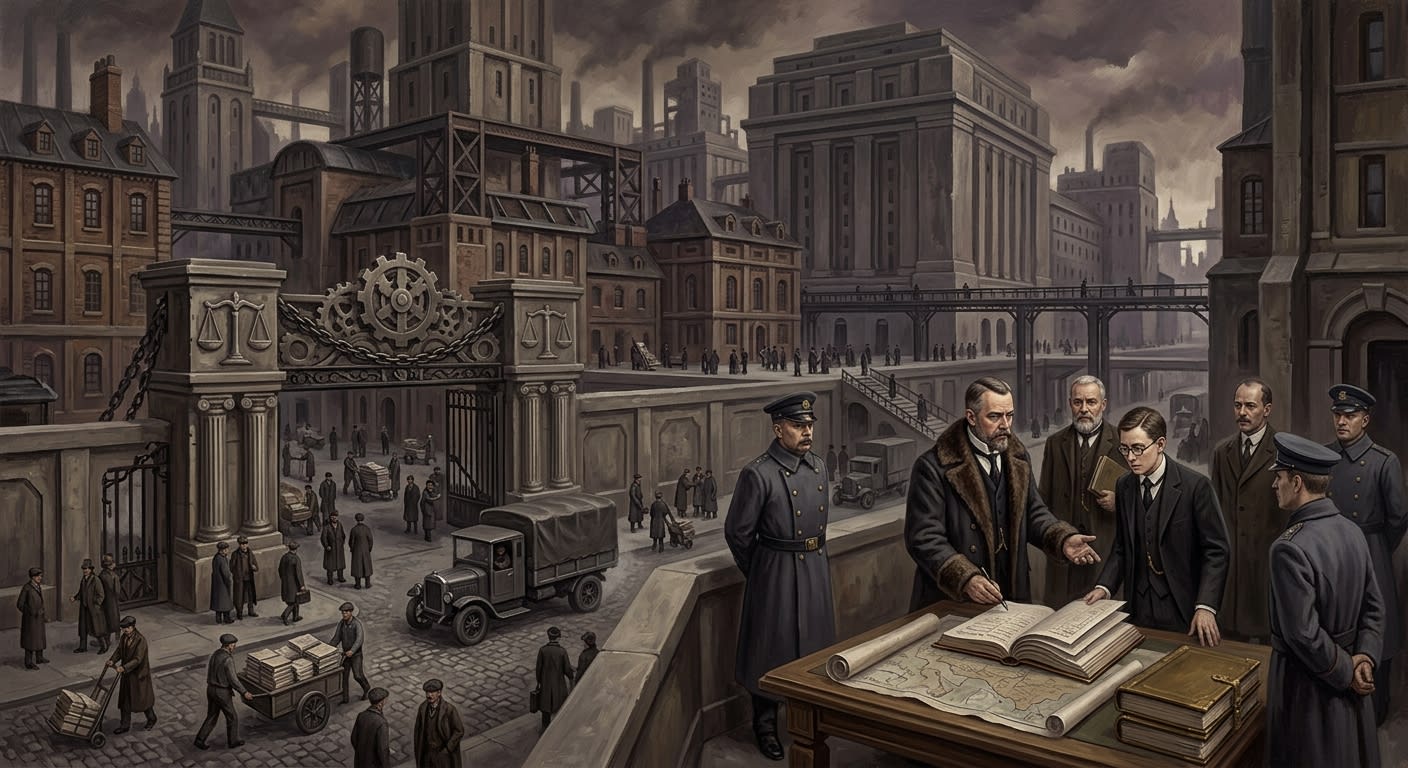
Wallachia
Fair prices are how Hell asks for a signature
Wallachia did not fall by trumpet and fire. It borrowed, signed, refinanced, and became Velmora's creditor province pointed at Sibiu.
Codex Ref. II.6.06-006
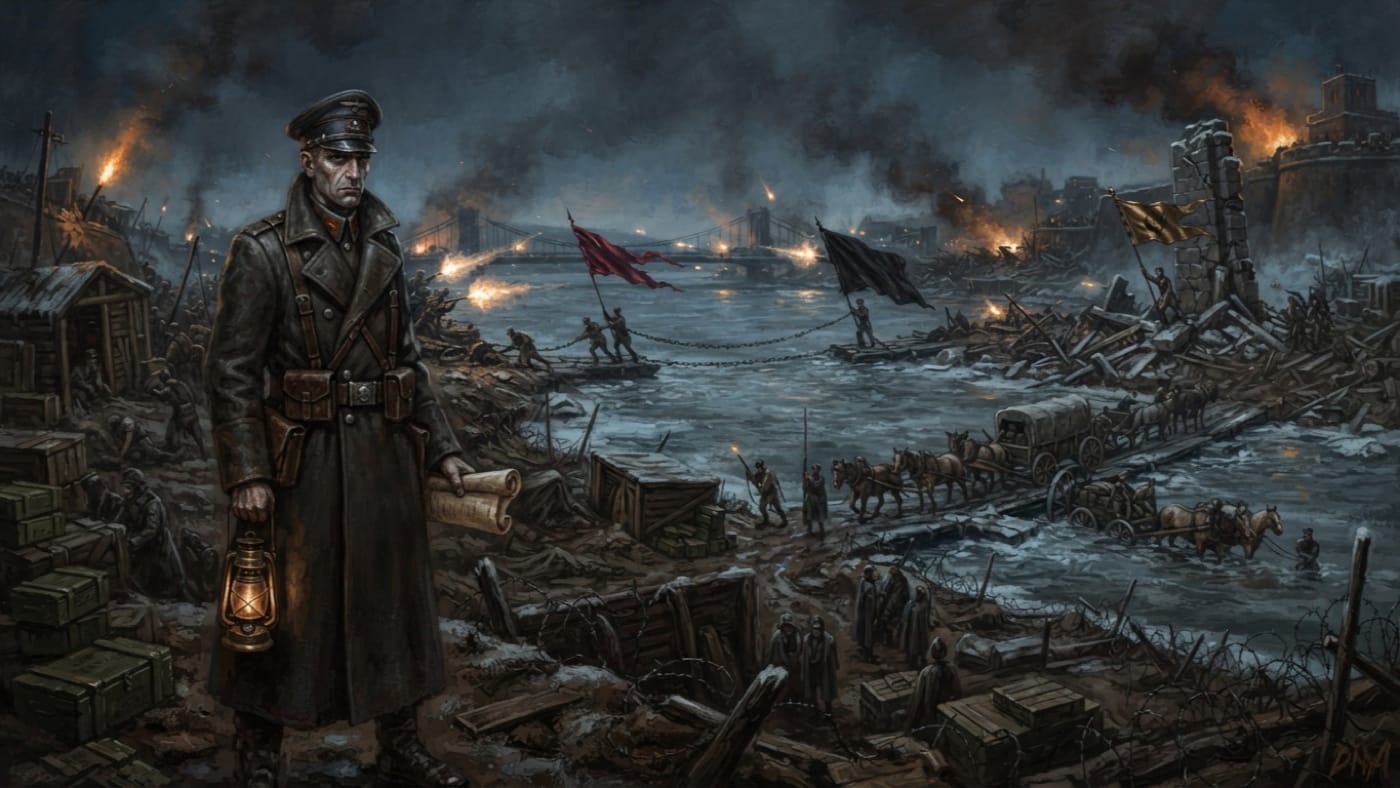
Warden-Submarshal Calev Rohn
Three crossings, one order, and a ledger improved afterward
Rohn ordered three crossings at once on the Danube in A.S. 172. Forty-seven supply wagons crossed; 4,200 men were removed from formation. The Bureaus improved the arithmetic afterward.
Codex Ref. III.2.01-172
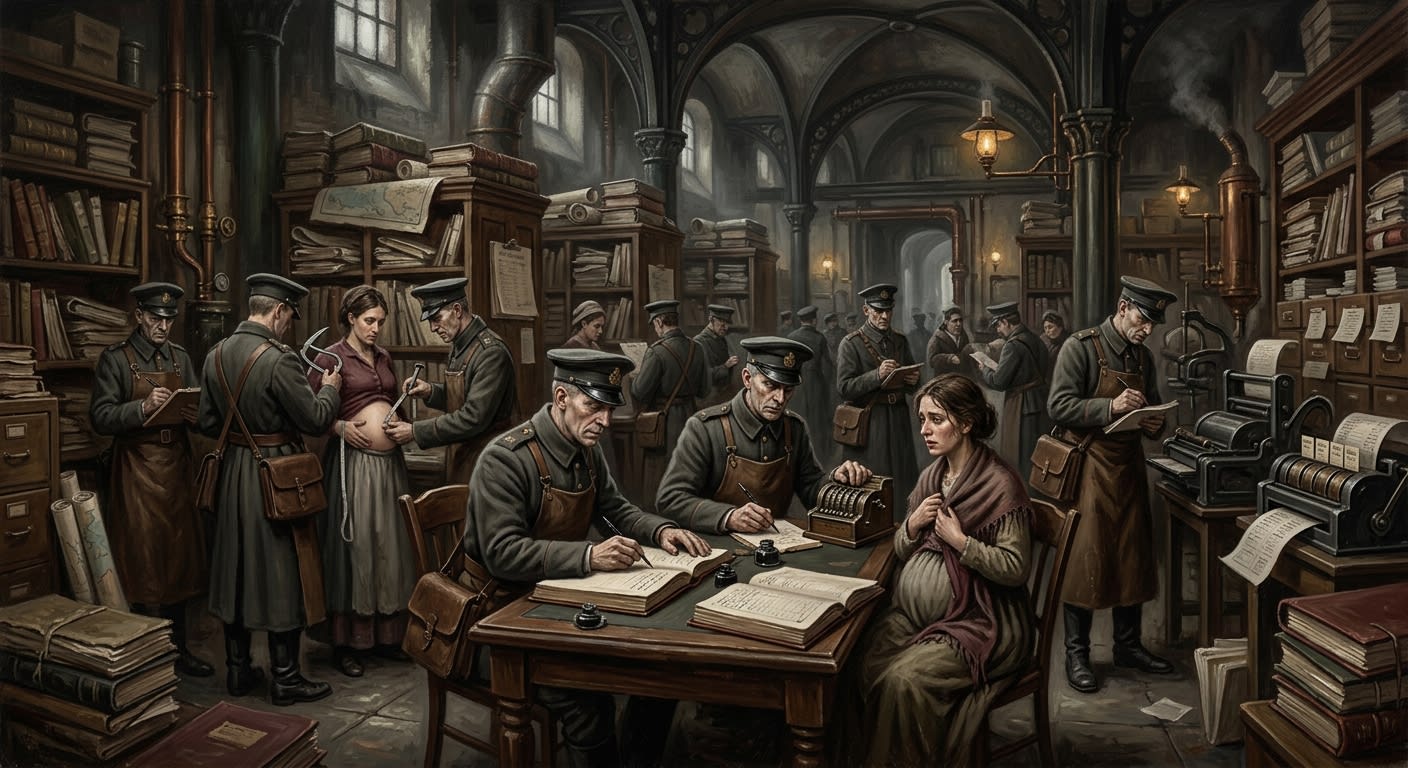
Womb Registrars
The cradle has a visitor, and she has already priced the child
Womb Registrars are Bureau of Records parish deputies who turn pregnancy into ledger matter: notice, name control, midwife compliance, and tithe projection before first breath becomes evasion.
Codex Ref. XII.9.04-001
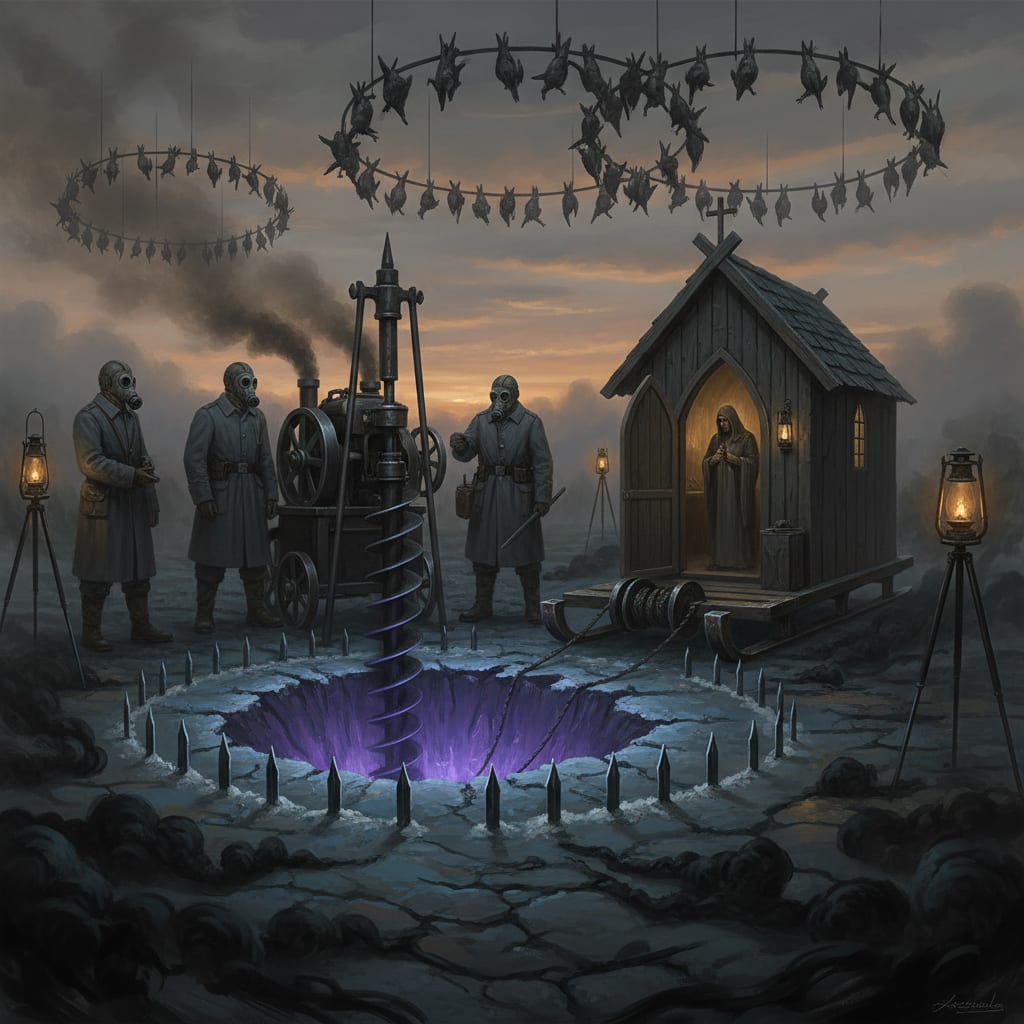
Wound-Site Prospector
The earth seeps; the drums breathe; the Bureau explains neither, and taxes both
The licensed harvesters of demon-seep from wound-sites — chartered by the Bureau of Tithes, destroyed by the work, and collectively silent on the one event that explains everything. The drums breathe at night.
Codex Ref. XII.50.01-001
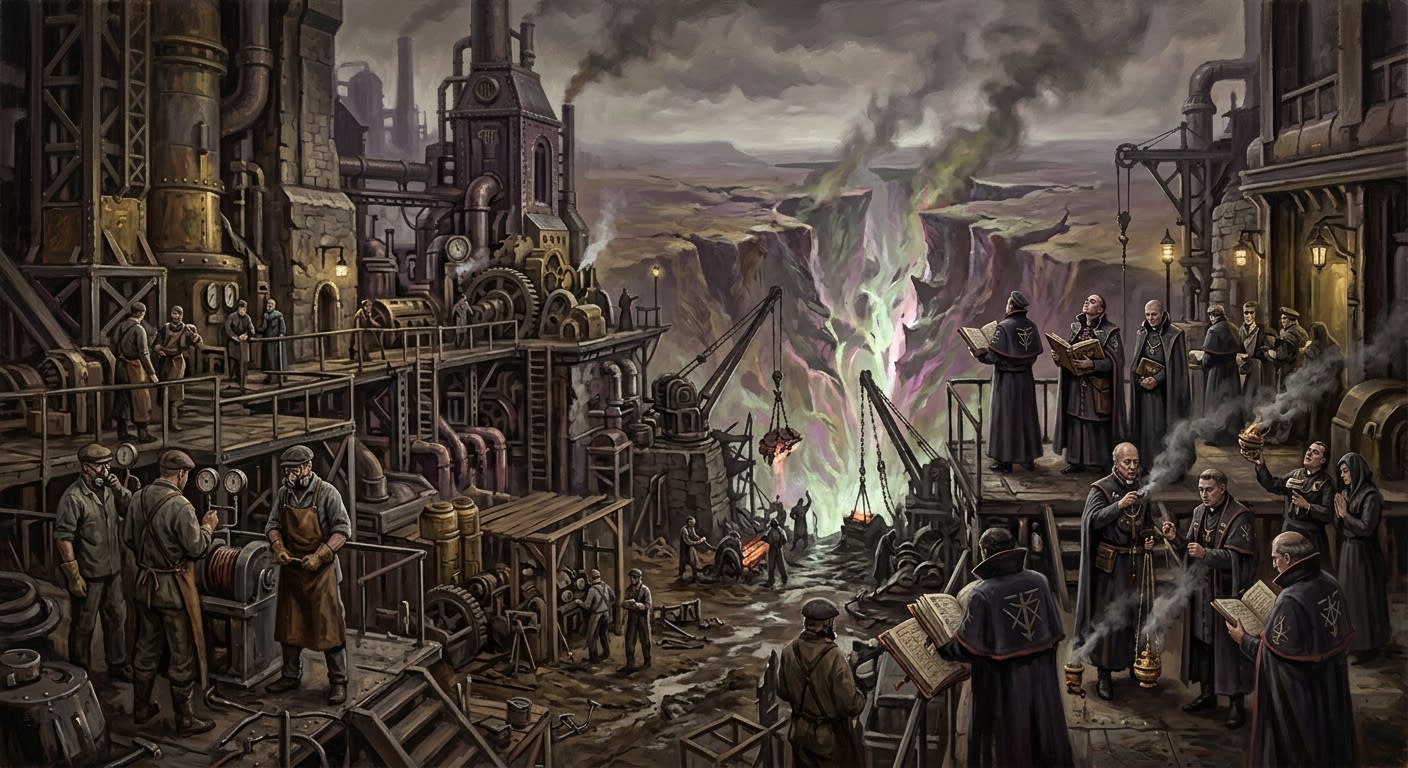
Wound-Sites
Where Creation filed an exception and the Bureau charged admission
Wound-Sites are Creation's open injuries: measured, taxed, exploited, prayed over, and officially caused by the Lie unless useful evidence says otherwise.
Codex Ref. XIII.1.29-001
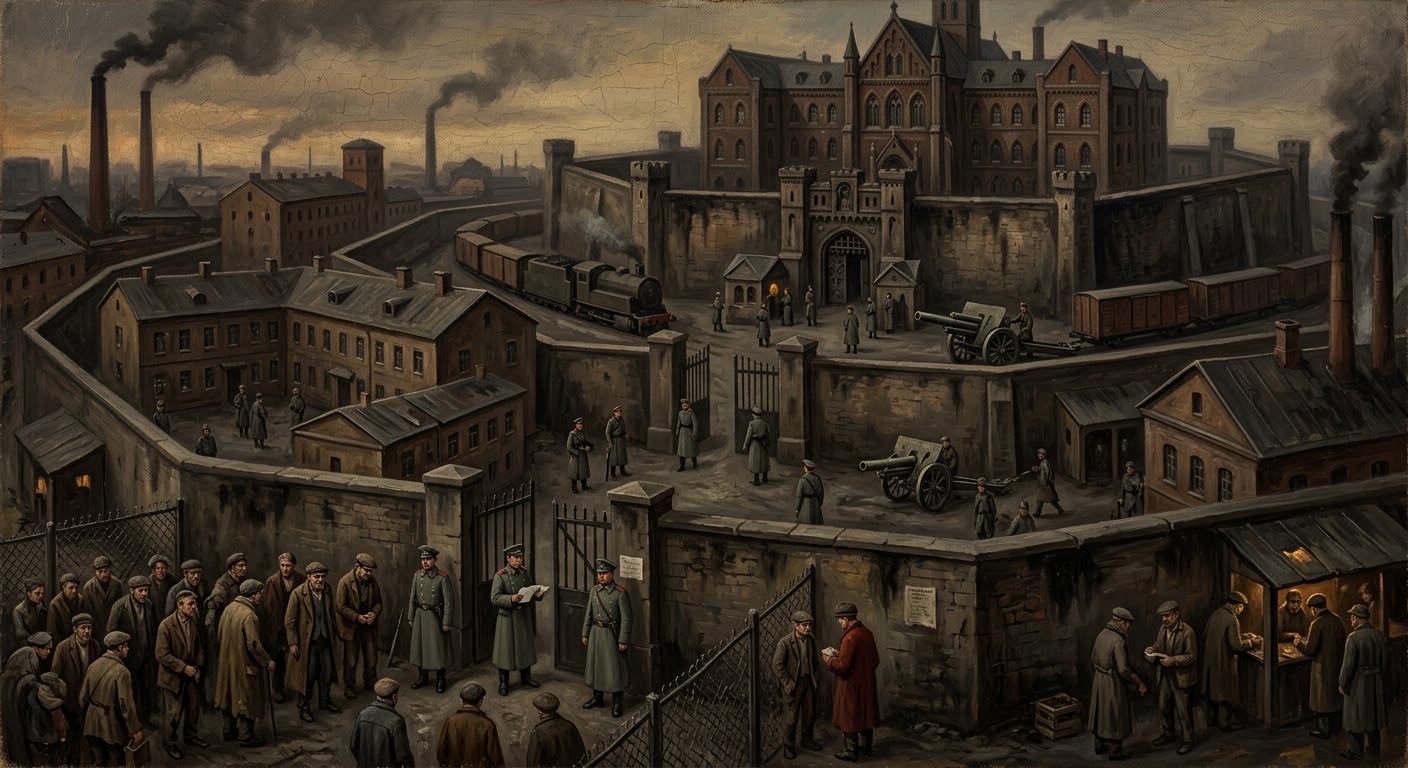
Zones 1 through 5
Five lawful pressures between invoice and mud
Zones 1 through 5 are graded permissions for bread, sons, movement, fear, artillery, and the state’s appetite.
Codex Ref. XIII.1.00-201