

Reverse Index
Referencing “The Miracle of Saint Aldebrand”
Every codex entry that links to The Miracle of Saint Aldebrand. 52 entries.
Return to The Miracle of Saint Aldebrand
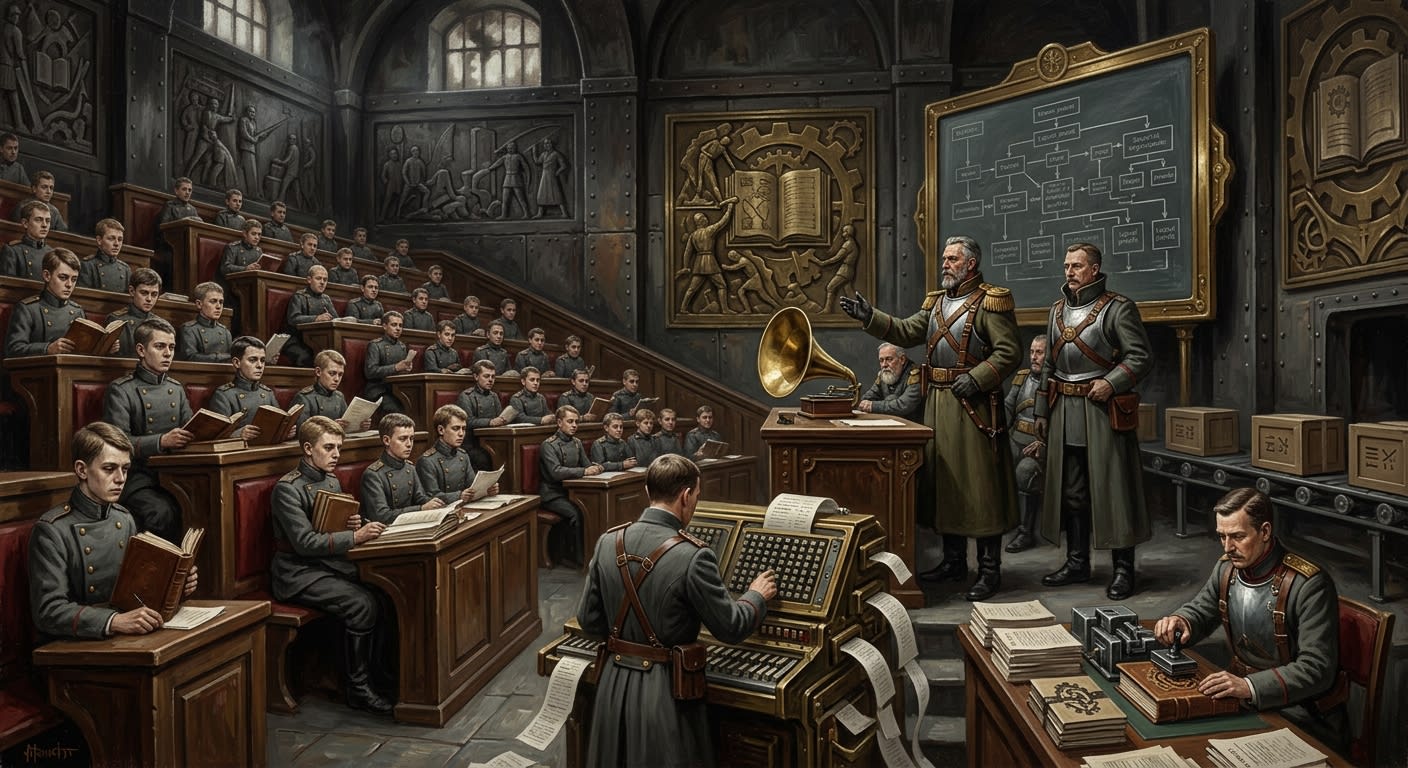
Academy System
The lecture hall as ministry, purse, press, knife, and alibi
The Rationalist Academy System made scholarship into command: lectures became policy, footnotes became bayonets, and children learned unbelief as paperwork.
Codex Ref. I.1.03-000
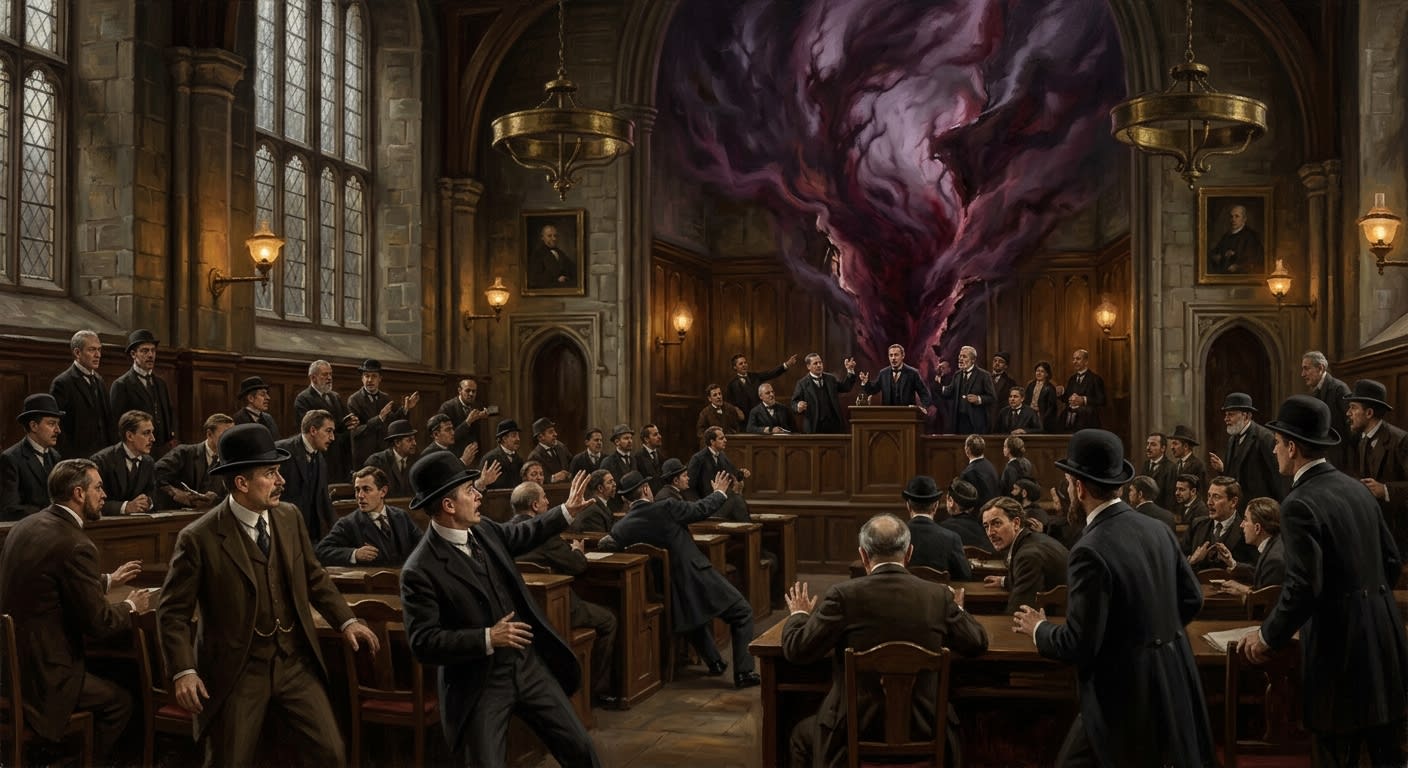
Age of Reason
The mind may hold the lamp, but Doctrine owns the flame
The Age of Reason licensed unbelief, polished desecration into civic virtue, and ended when Hell answered the lecture hall without raising its hand.
Codex Ref. XIII.1.00-001

Althazar of Pest
The unauthorized man history mistook for a throne
Althazar of Pest was the sorcerer-lord of Vienna's last siege, a Rationalist remnant commander destroyed by Clemens Stahlhand and Saint Aldebrand's reliquary mace.
Codex Ref. III.2.01-153

Amsterdam
The city where Europe learned to sin in pamphlet form
Amsterdam is the independent Dutch city where the Synod's calendar wound was printed: first the Year of Letters, then *De Vera Luce*, then Europe taught to doubt by invoice.
Codex Ref. II.4.09-012
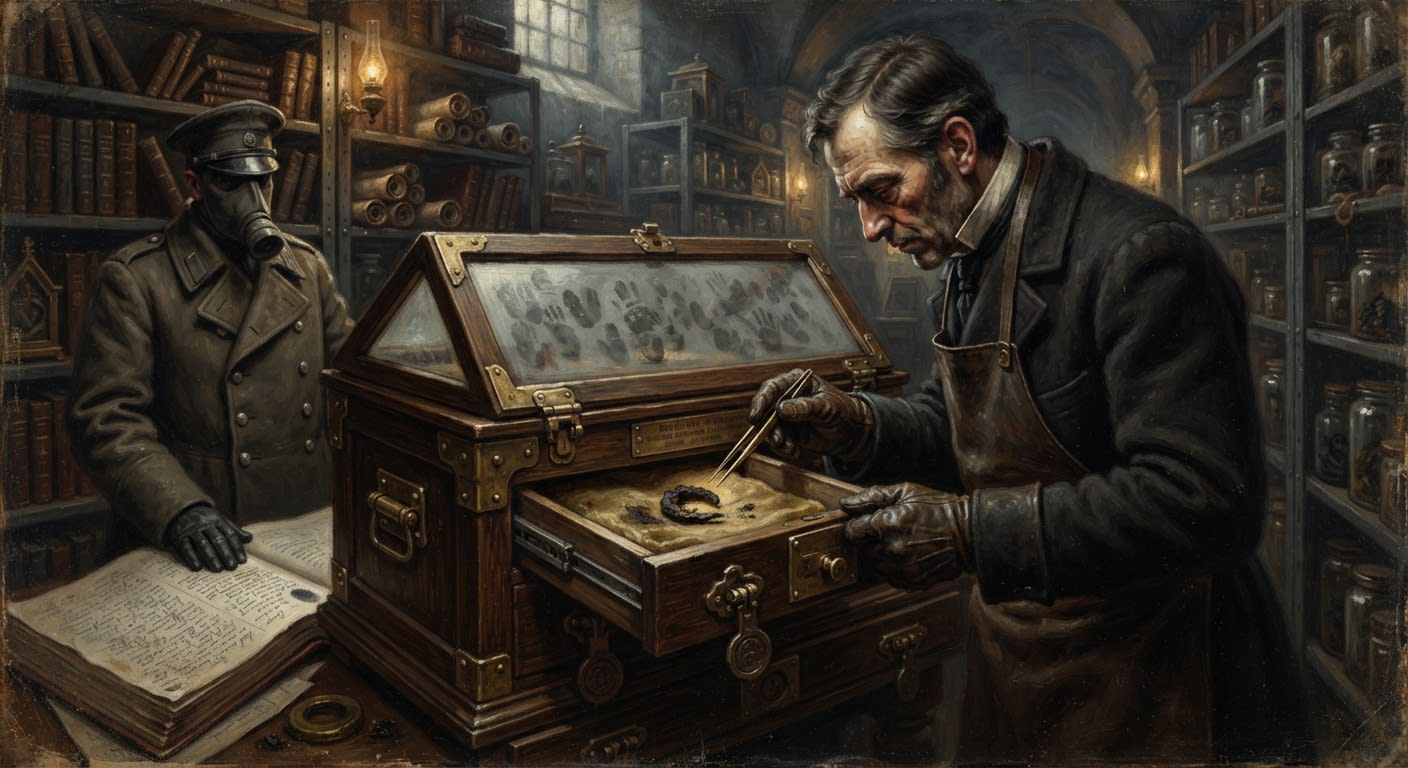
Ashen Thumbnail of Cologne
A relic too small for proof and too useful for disposal
Blackened nail-fragment attributed to Saint Vellum-of-the-Quiet-Hand, never authenticated by Relics and never surrendered by Records because Cologne's corridors keep answering the practical question.
Codex Ref. III.2.04-120
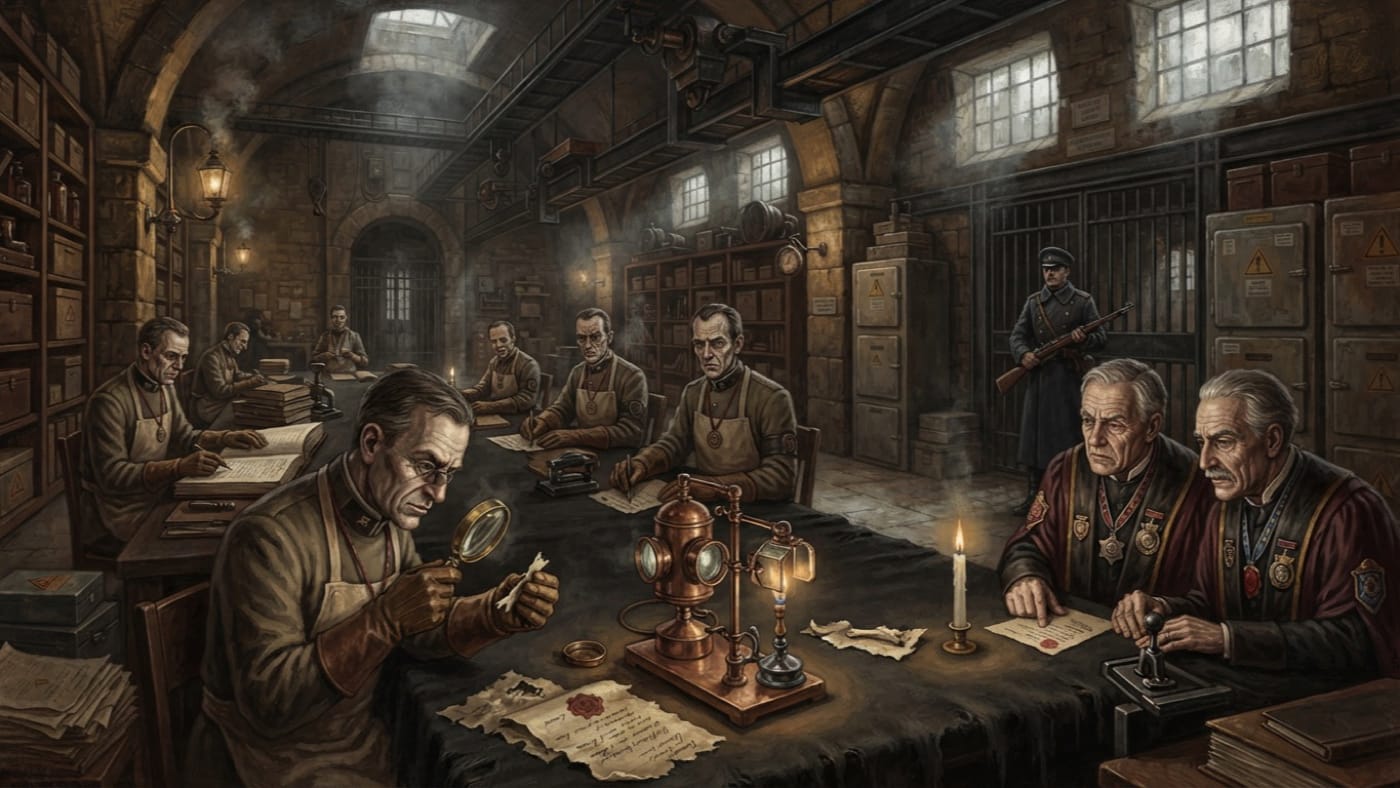
Authentication Hall
Where a rumour in a box becomes a verdict in wax
The Bureau of Relics' examination halls turn sealed submissions into Ward-safe, Votive, Contaminant or Fraud. Seven stages, two witnesses and a press decide whether a bone guards the Line, graces a shrine or becomes mortar.
Codex Ref. II.2.06-006
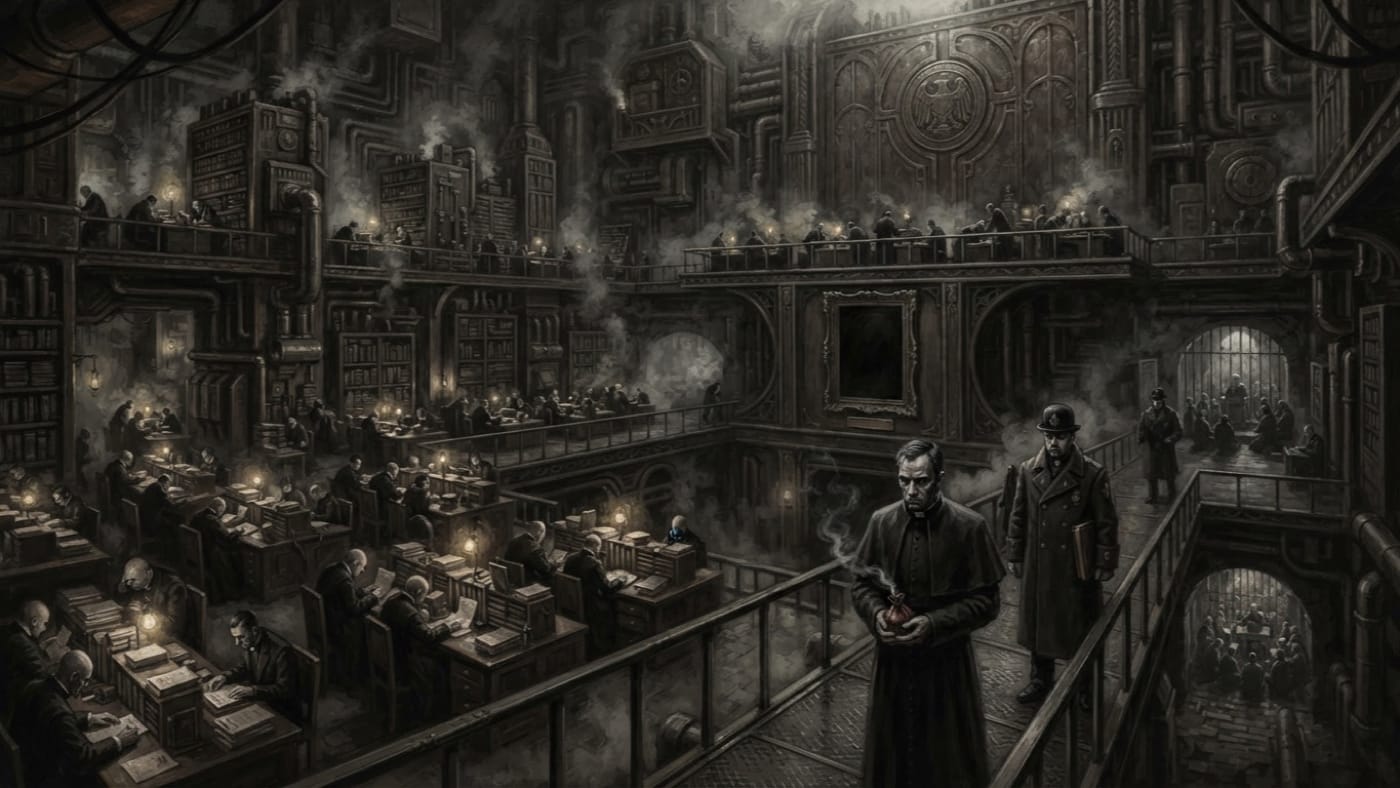
Bureau of Discipline
The office that recognises pulpits and withholds praise
The Bureau of Discipline decides which pulpits count and when vanished superiors may be praised. A cleric may retain his tongue and still lose his standing.
Codex Ref. III.3.03-001
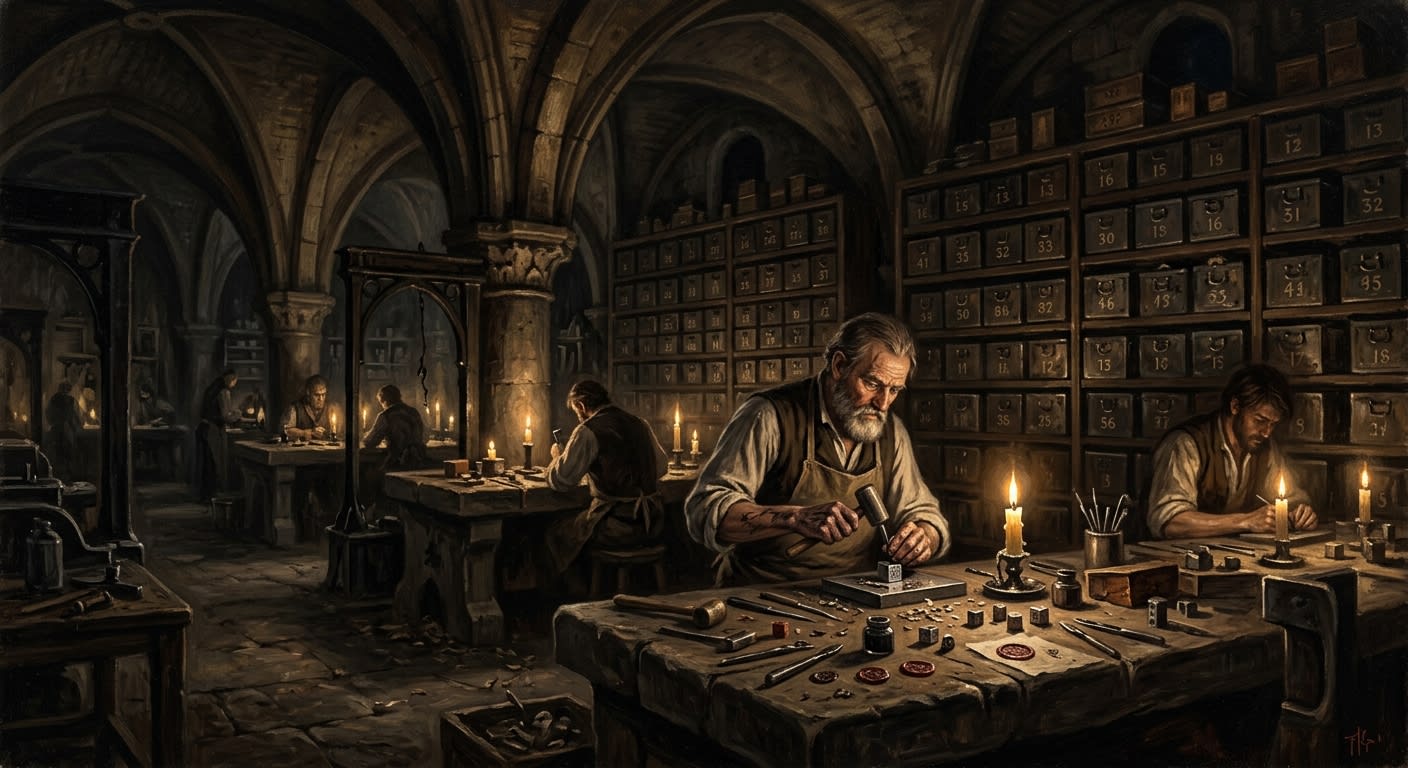
Bureau of Masks and Seals
The stamp is the Synod. Everything else is suggestion.
The Bureau of Masks and Seals controls every stamp, seal, and counter-seal in Synod territory. Without its impressed wax, no document is real. Without its license, no face may be hidden. Casselius of Mainz holds the Synod's mouth and press in one pair of ink-stained hands.
Codex Ref. VI.4.19-014
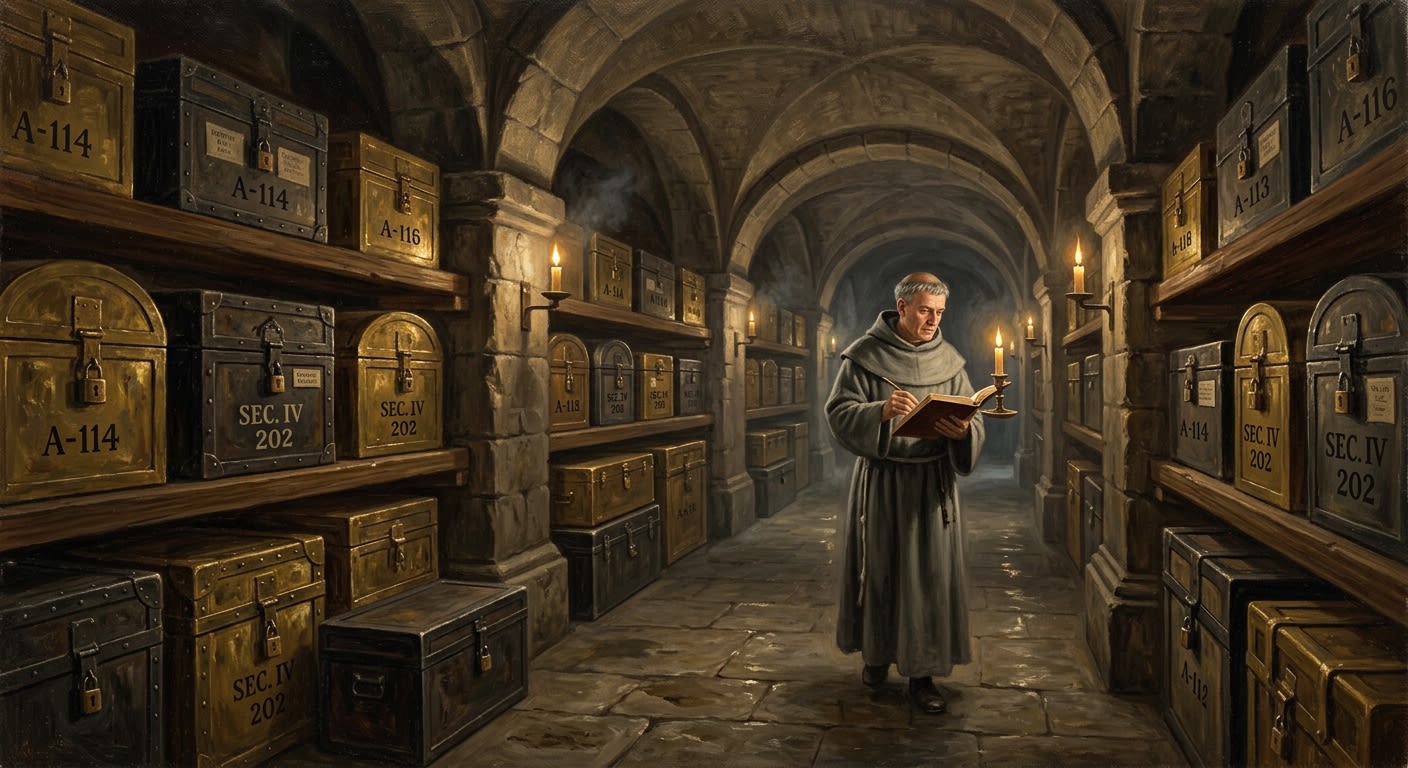
Bureau of Relics
The stamp is not the sanctity. The stamp is merely necessary.
The Bureau of Relics guards four thousand seven hundred authenticated bones, adjudicates the holiness of ash, and maintains the cheerful institutional fiction that it controls the things it catalogues.
Codex Ref. IV.3.12-019
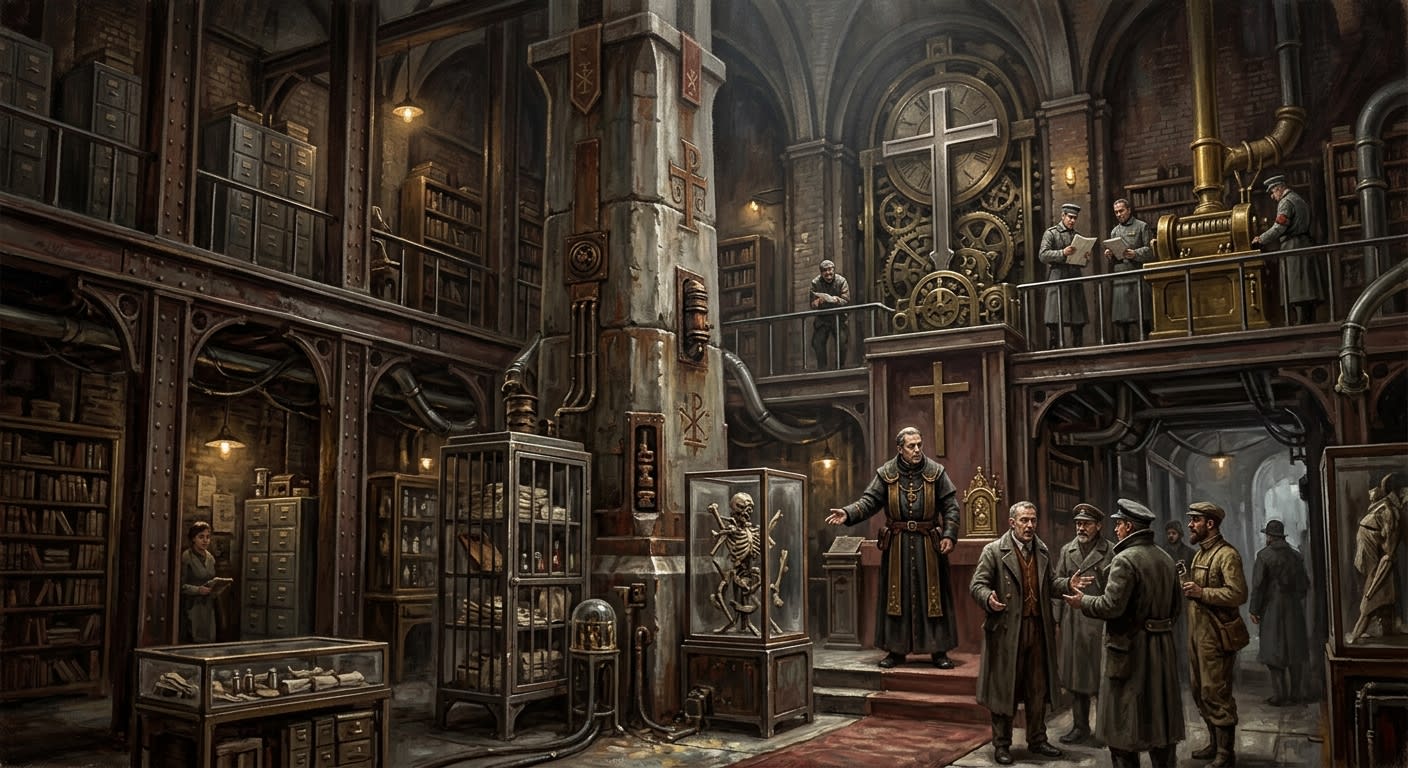
Cathedral of the Holy Column
The church that made obedience stand upright
Cologne's vertical archive: conciliar nave, Holy Column, relic galleries, Odo's sentence, and seventeen femurs arguing successfully with anatomy.
Codex Ref. II.2.01-005
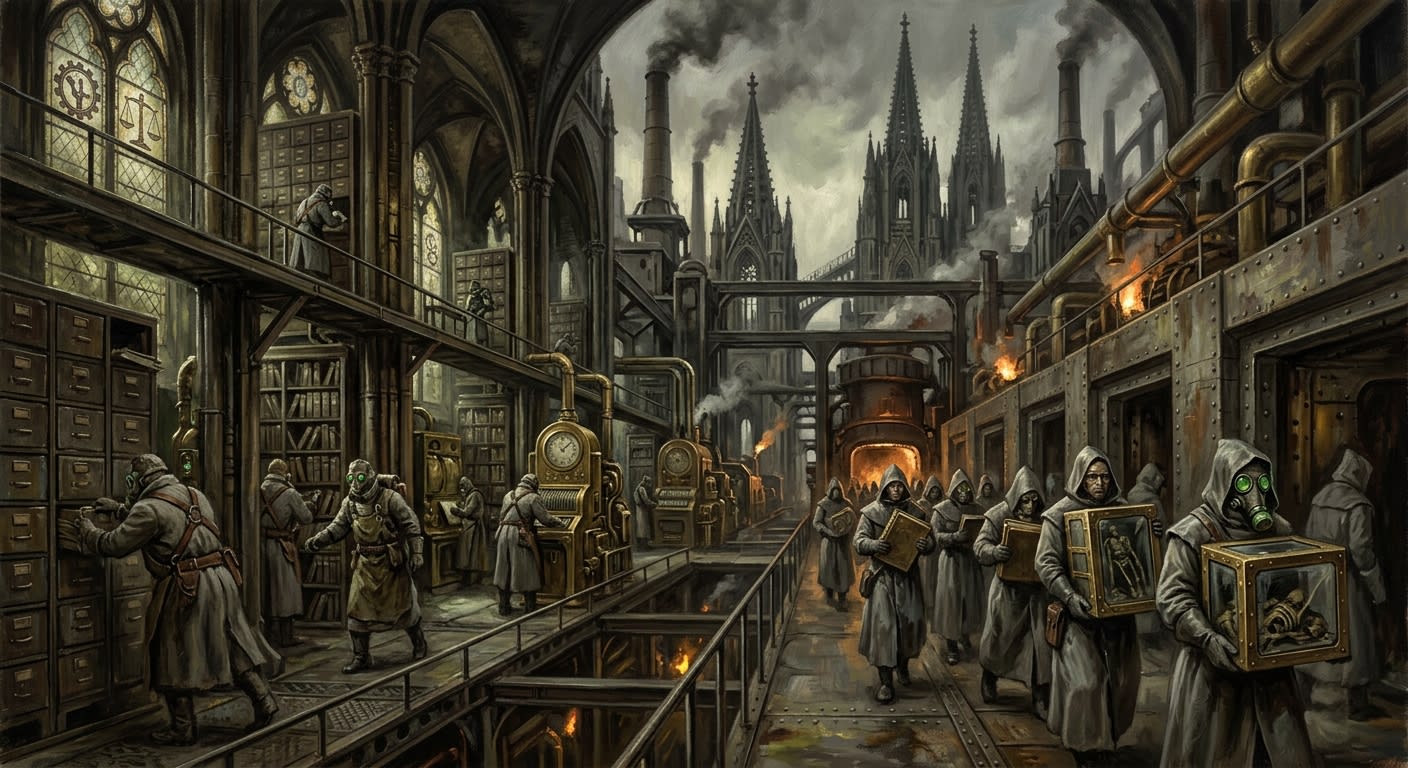
Cologne
The city where obedience borrowed a room and never repaid it
Cologne is the Rhine's holy account-book: cathedral, archive-bank, minting throat, relic cupboard, and the city where Synodic obedience learned to sign.
Codex Ref. II.2.01-004
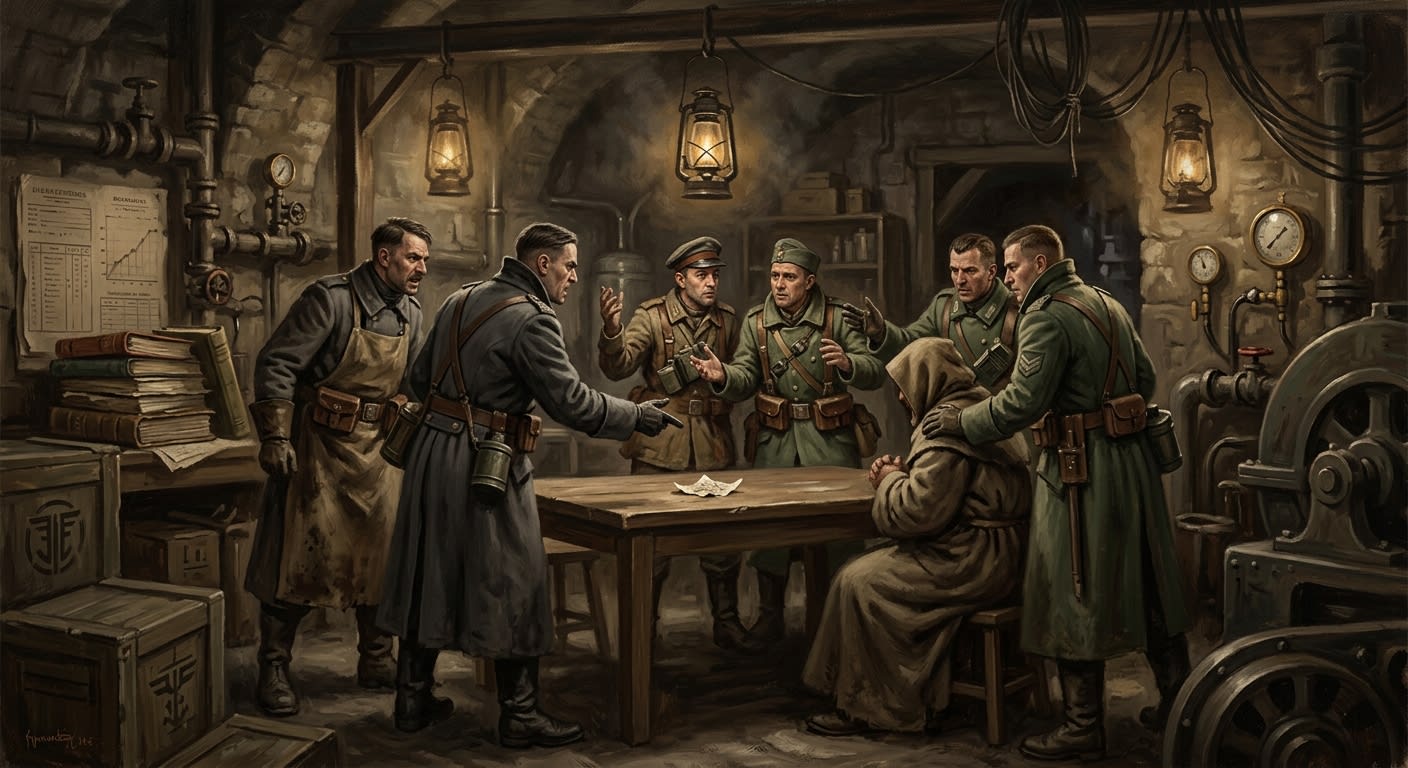
Cologne Schism of A.S. 178
Three lanterns, one cellar, and the mercy that learned to testify
The A.S. 178 Cologne Schism split three Lantern Brotherhood watch circles over Mercy Preacher shielding, producing Purists, Loyalists.
Codex Ref. VII.8.09-001
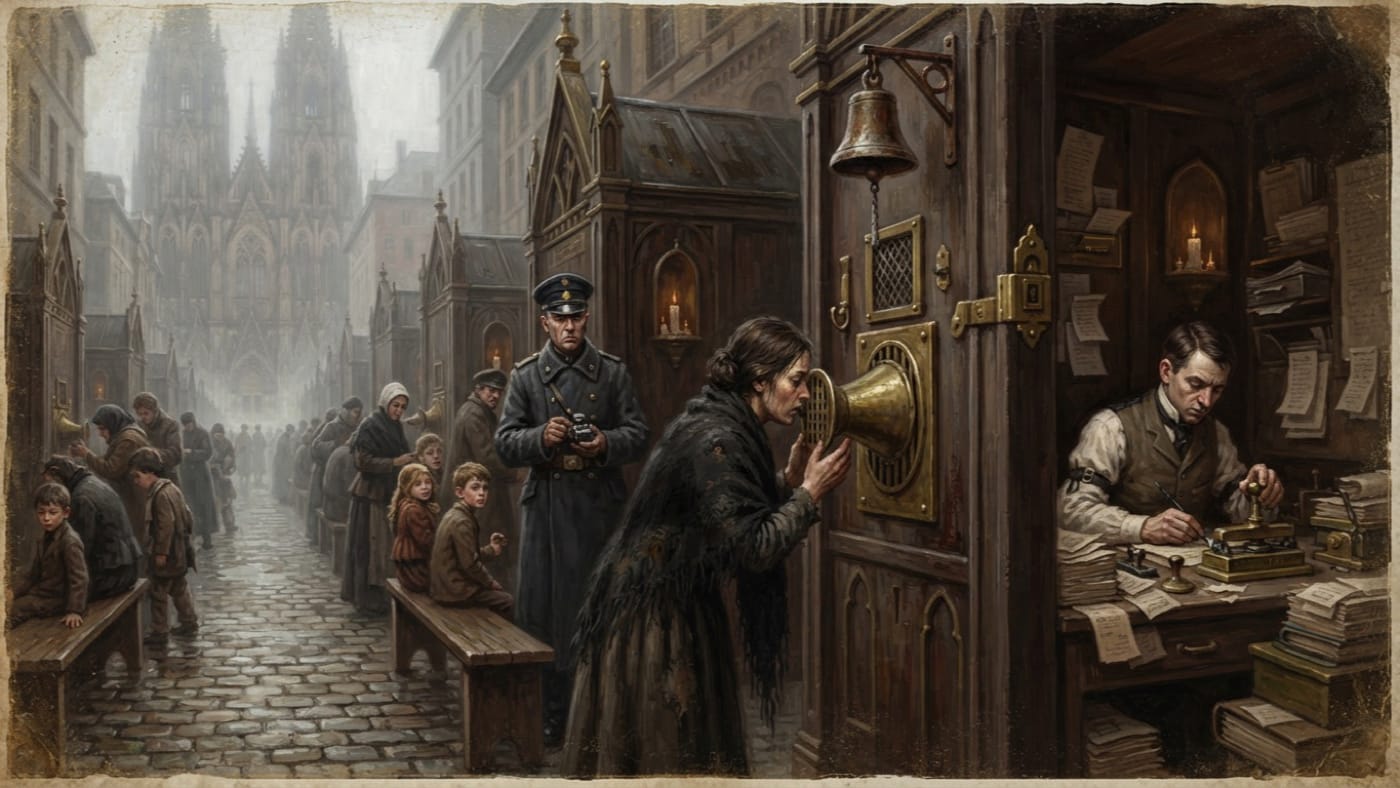
Confessor-Kiosks
The soul speaks; the city keeps the receipt
Cologne's confessor-kiosks turn spoken sins into stamped receipts. Records keeps the abstracts, Purity keeps listeners, and Doctrine calls disputed additions Heaven's interpolations.
Codex Ref. II.2.01-716
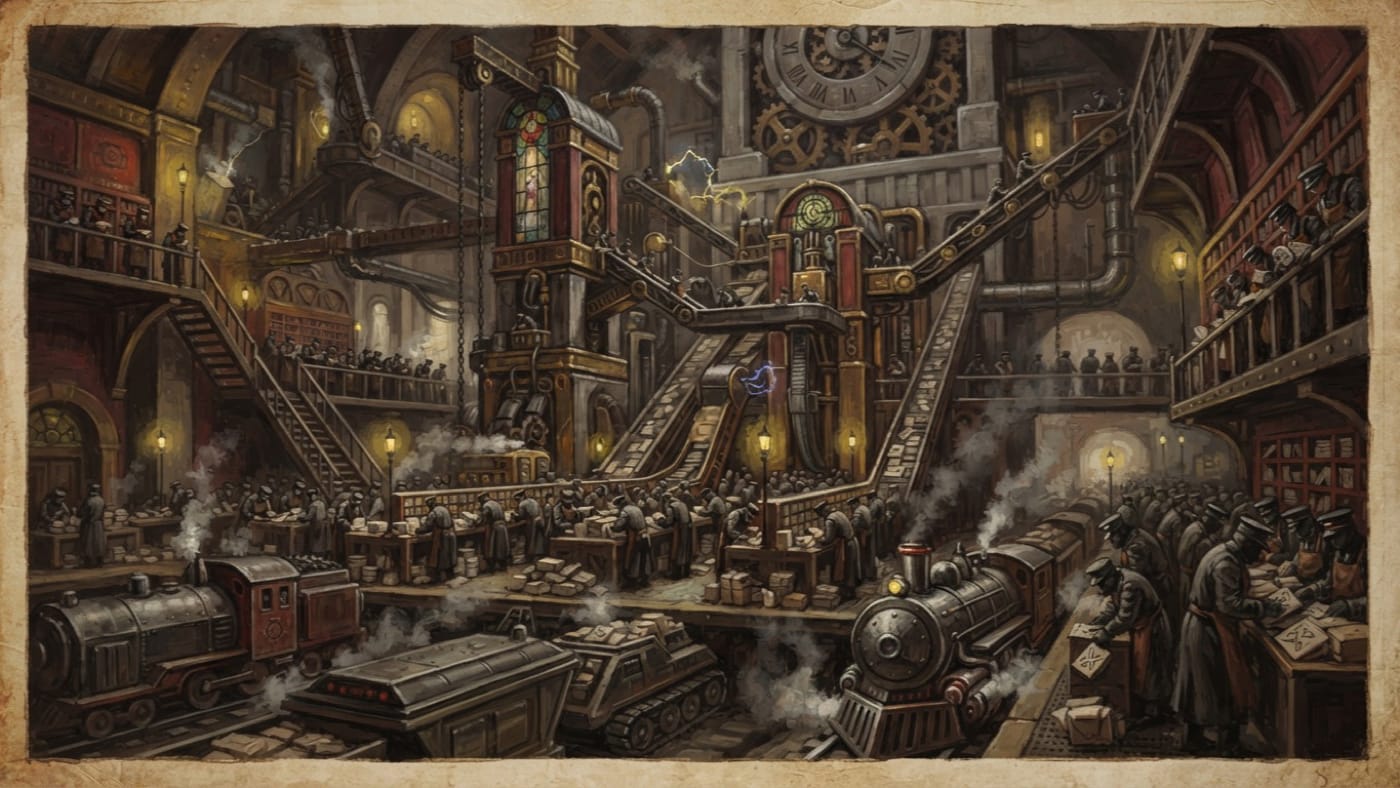
Continental Post
The Synod catches up with fourteen copyists
The Continental Post matched de Waal's distribution efficiency in A.S. 110. Founding or maturity: the Ledger agrees on the year and quarrels over the verb.
Codex Ref. VIII.2.10-110

Custodial Chain
The ledger remembers the hands. The bone keeps its own counsel.
The ledger joins an authenticated relic to the hands that held it. In 1678, Vienna severed Aldebrand's chain without moving the bone. The record lost custody; the custodian did not.
Codex Ref. XIII.1.97-001
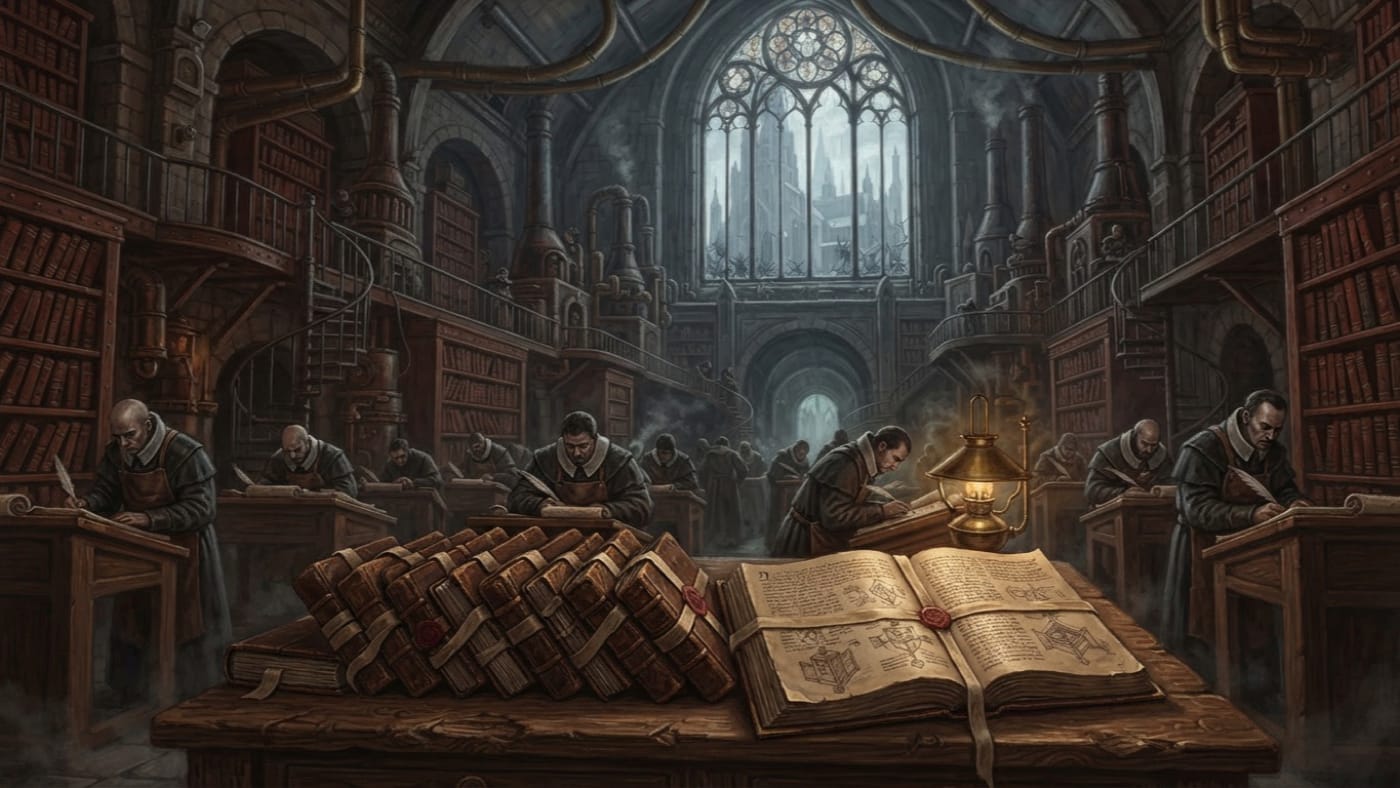
Diocese of Trier
Twelve pages of theology. No reconciled provenance.
Trier's twelve-page defence of multiplied Aldebrand relics in −32 A.S. / 1678 CE: magnificent theology, unreconciled provenance, and paperwork the Synod claimed a century late.
Codex Ref. I.3.09-032
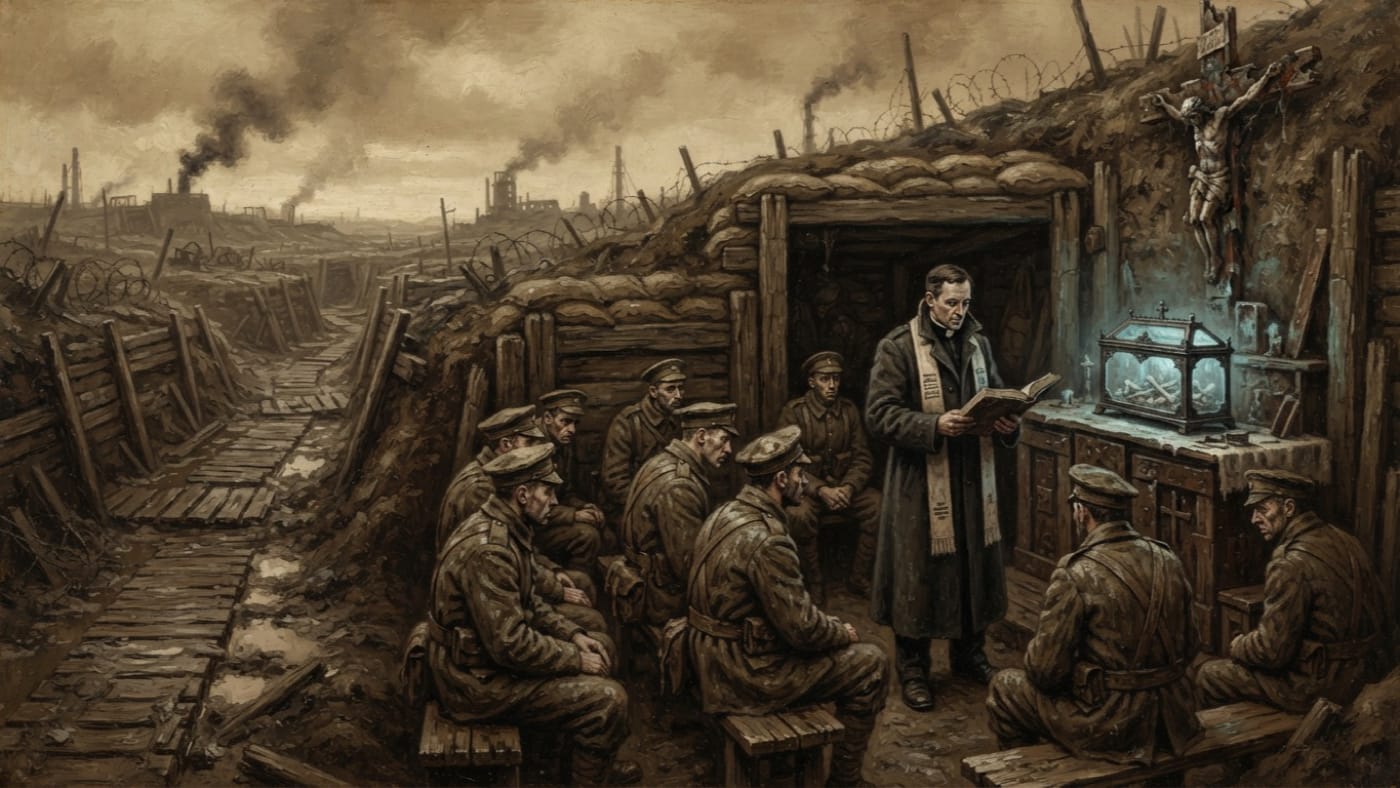
Doctrine of Divine Withdrawal
The way to our ears was broken. The responsibility remains ours.
Ratified in A.S. 72, the Doctrine blames Rationalist desecration for the Creator's silence. His return awaits Perfect Faith. The delay, naturally, belongs to the faithful.
Codex Ref. XIII.1.90-072
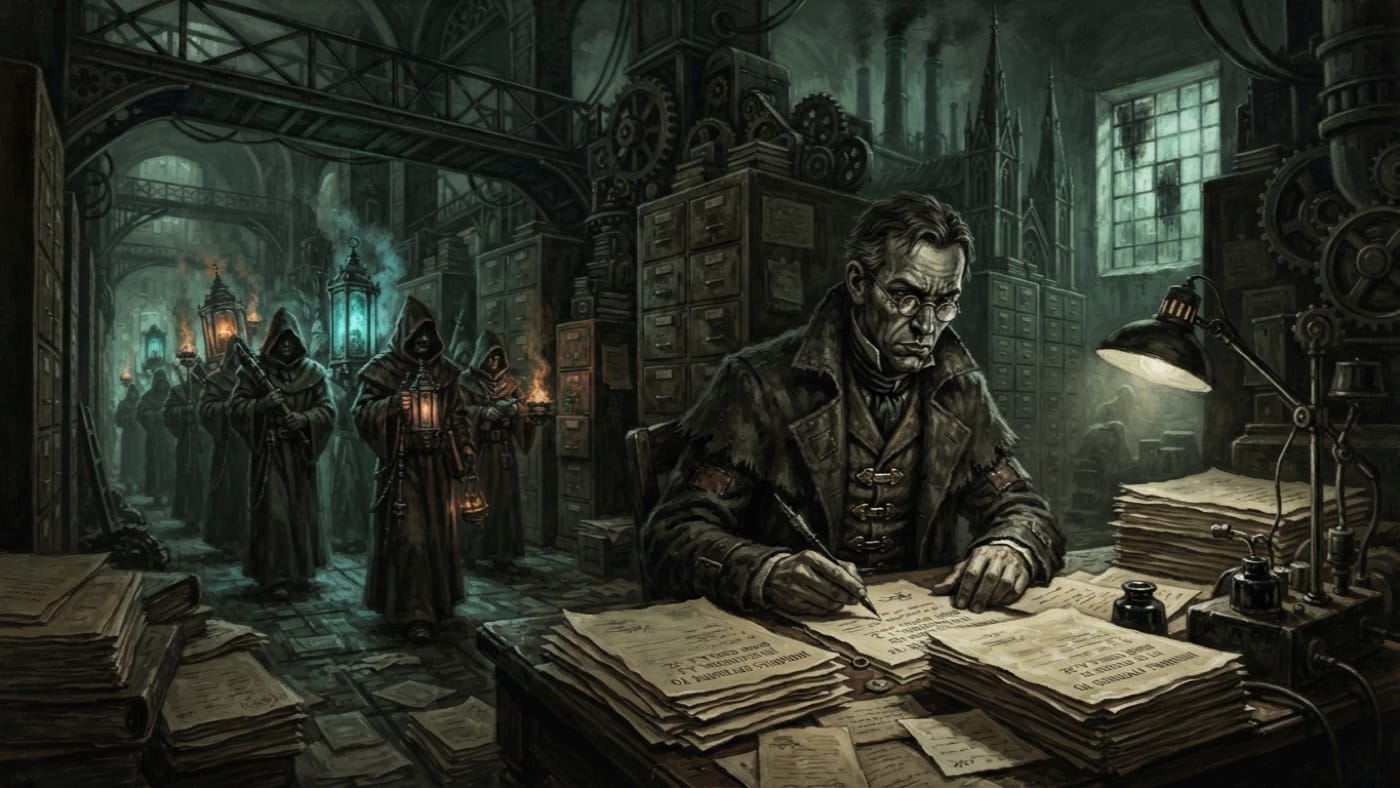
Dr. Gerrit Lemstra
The courtesy was impeccable. The inquiries remain open.
Dr. Gerrit Lemstra drafted the courteous inquiries sent with Amsterdam's Bone Census in −32 A.S. / 1678 CE. The Bureau condemns the scholar; his requests remain unreconciled.
Codex Ref. III.2.01-027

Dr. Jan de Waal
Addresses, funds and copyists. Forty cities received the doubt.
Dr. Jan de Waal kept the addresses, funds and fourteen copyists behind the Year of Letters in −32 A.S. / 1678 CE. Forty cities received the evidence; the Church supplied the silence.
Codex Ref. III.2.01-028
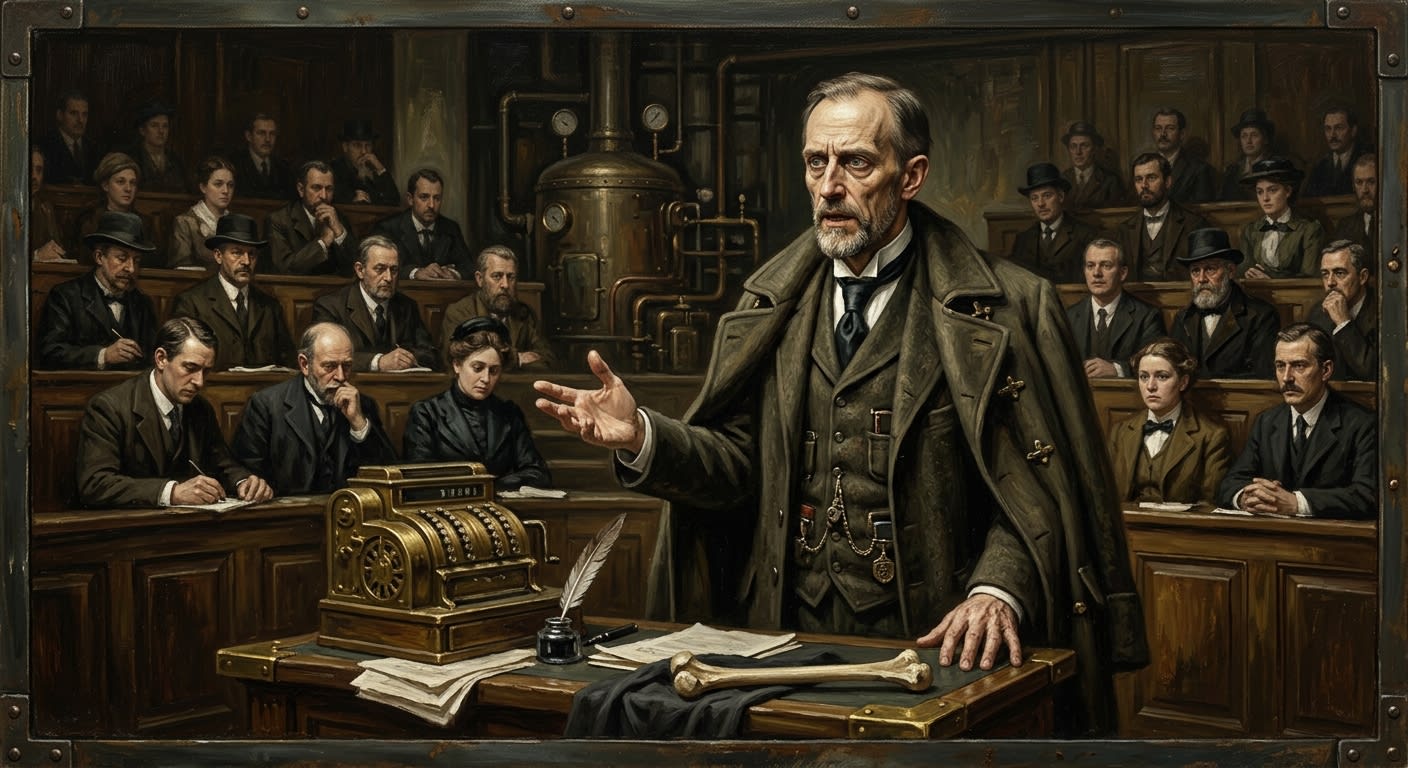
Dr. Matthias Voll
The lecturer who counted bones and was answered by one
Dr. Matthias Voll made relic arithmetic into theatre at Amsterdam in A.S. 11. Vienna later supplied the Bureau's preferred calculation: one bone, one blow, one crushed argument.
Codex Ref. III.2.01-011

Dr. Pieter van Hoorn
The count was correct. The compiler remains condemned.
Dr. Pieter van Hoorn compiled the Bone Census and conceived the Year of Letters in −32 A.S. / 1678 CE. The Bureau concedes his count, condemns its inference, and keeps his correspondence under quadruple seal.
Codex Ref. III.2.01-029
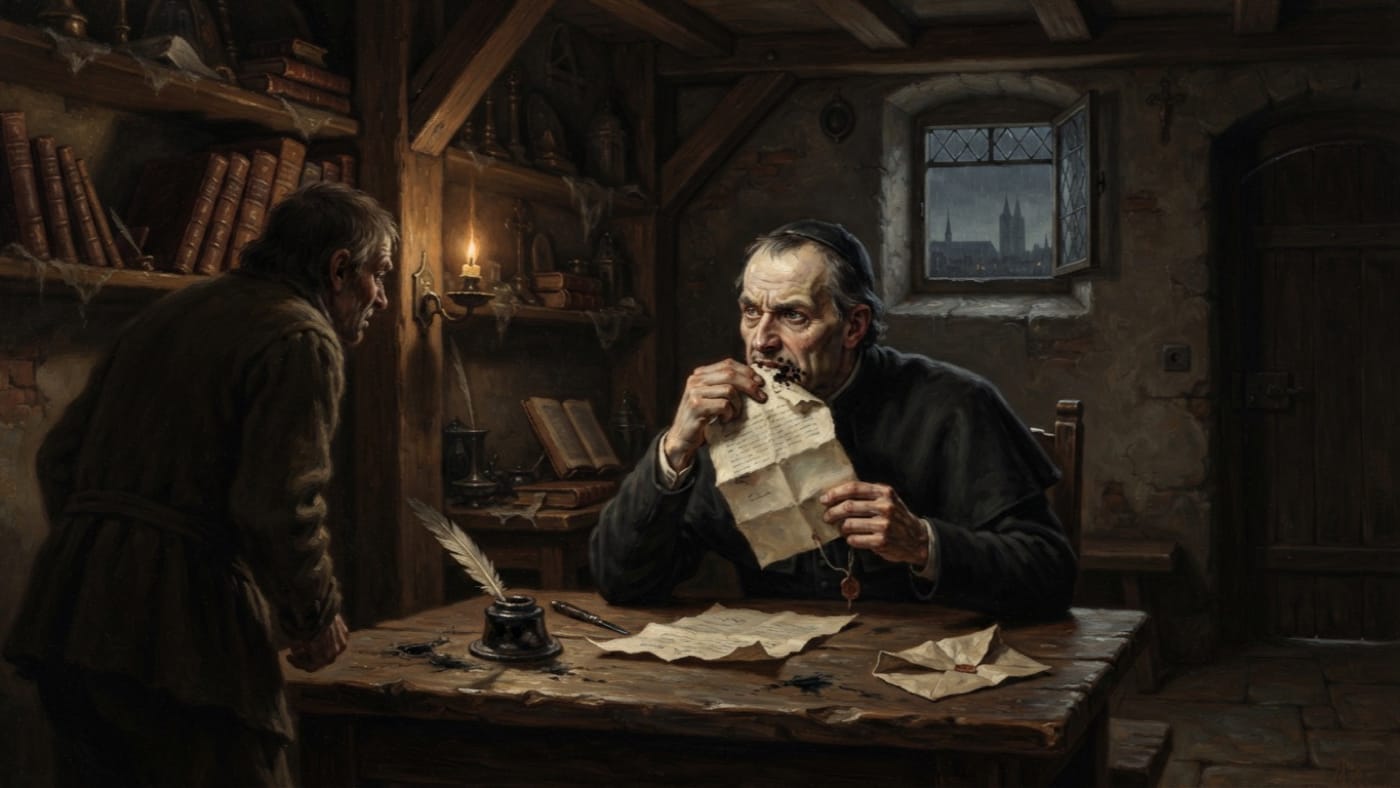
Düsseldorf
One priest. One letter. Nothing left to quote.
A Rhineland city remembered for Father Grauss, who ate the Amsterdam letter in A.S. −32 / 1678 CE. The magistrate supplied three days in gaol; the Bureau supplied a classification.
Codex Ref. II.2.01-941
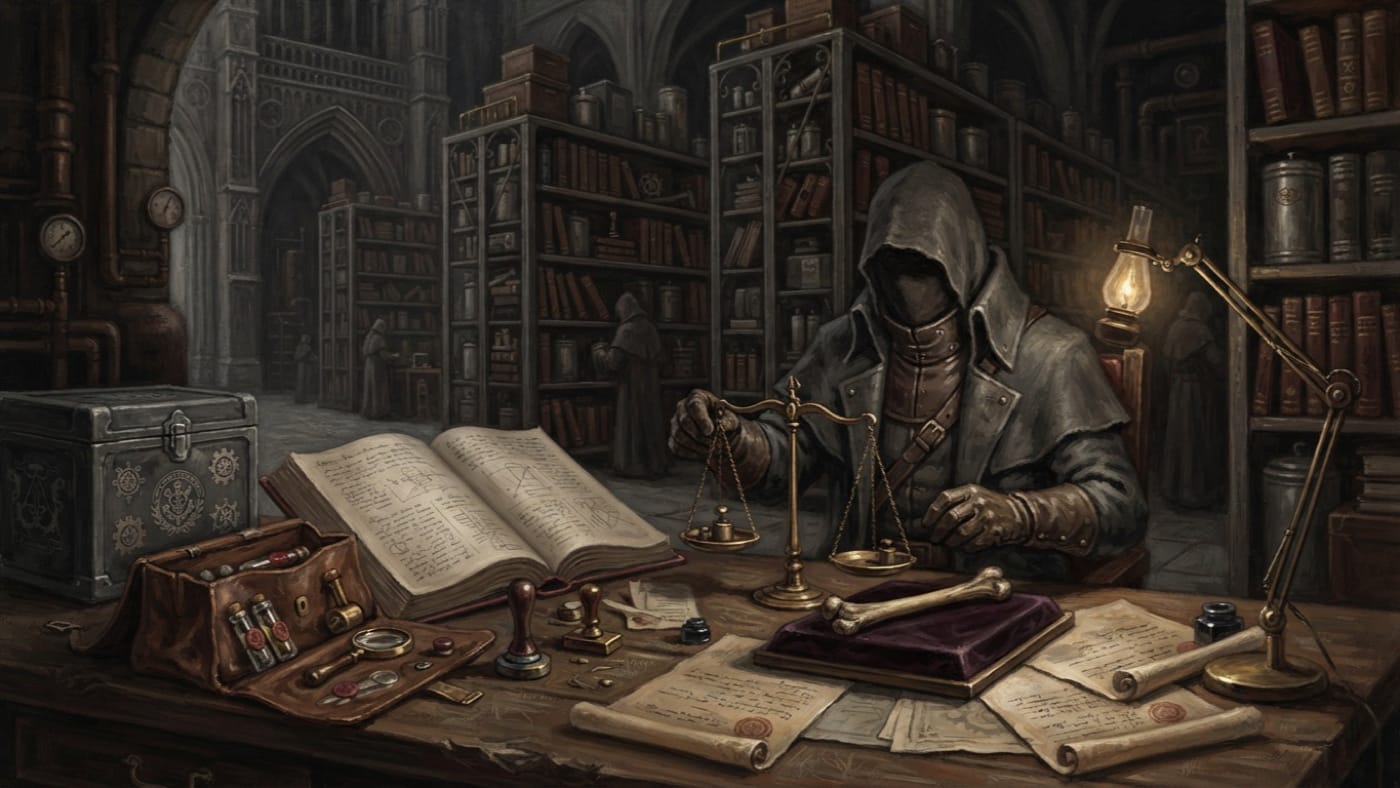
Examiner of the Third Degree
The seal is the Bureau's. The signature is yours.
Commissioned current survey, A.S. 201: the Bureau of Relics' Examiner assesses Authenticity Writs, weighs bones and records phenomena. A parish receives a certificate or a receipt. The office's founding remains unrecorded.
Codex Ref. XII.35.03-001
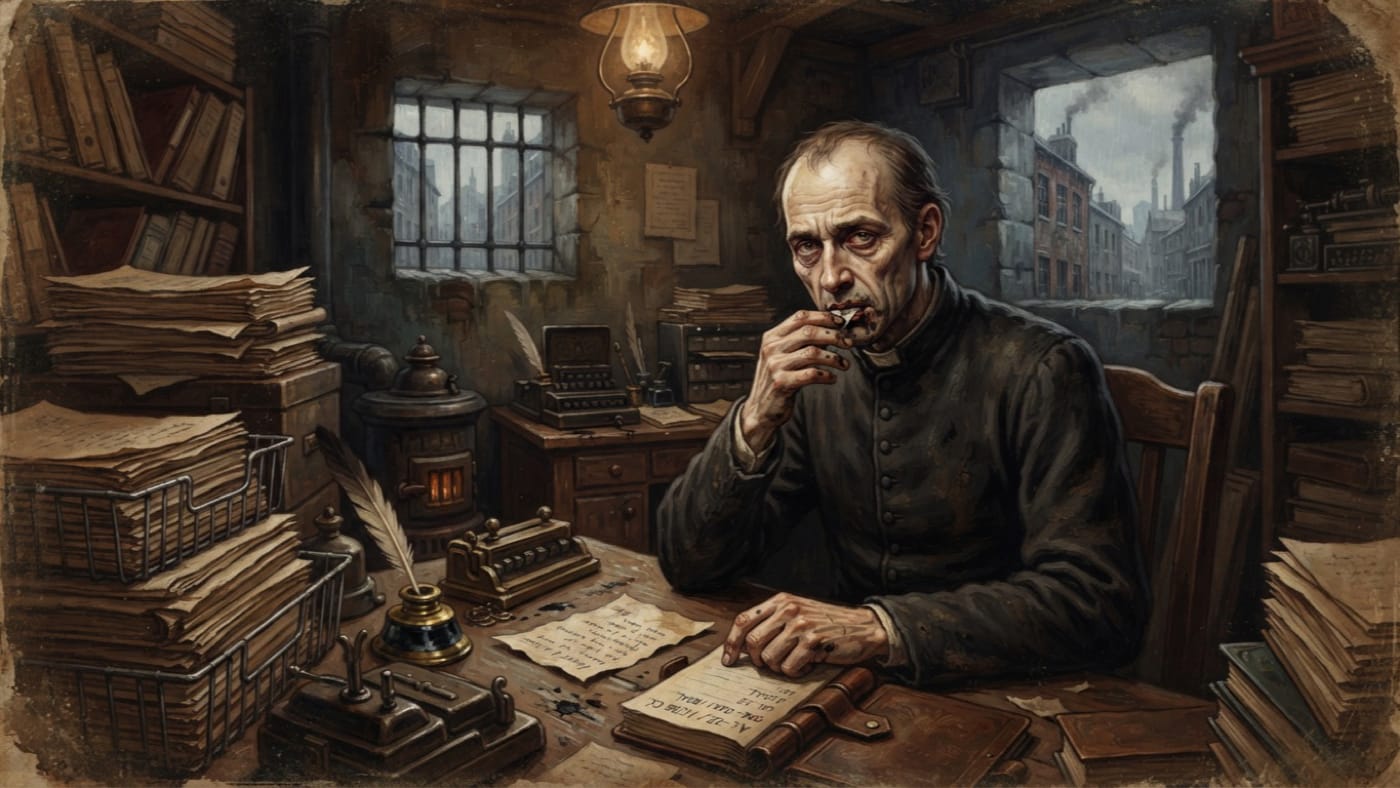
Father Grauss
One letter eaten. Three days served. Five words preserved.
Father Grauss ate the Amsterdam letter in A.S. −32 / 1678 CE. Düsseldorf supplied a beating and three days in gaol; the Bureau supplied its verdict: Doctrinally Sound, Gastronomically Irregular.
Codex Ref. III.2.01-1023
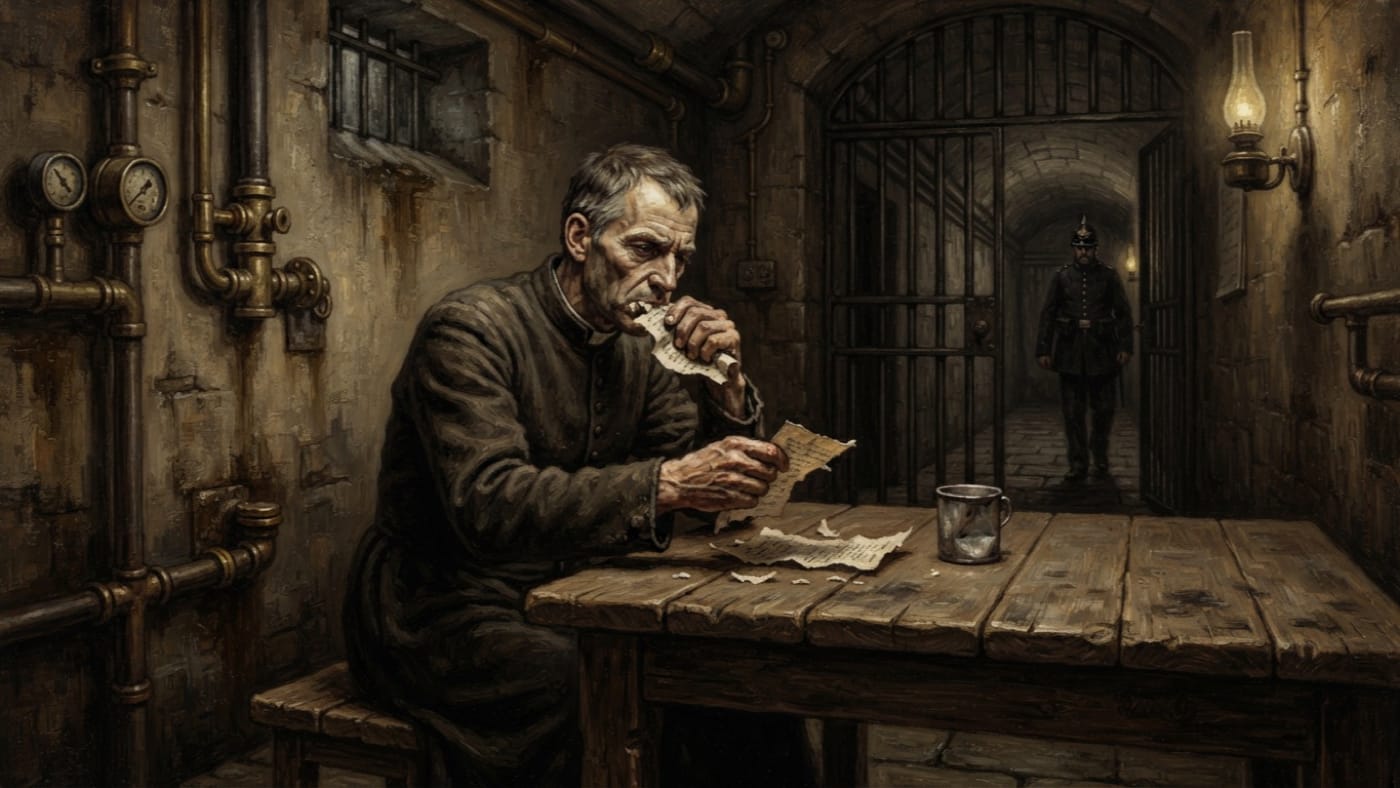
Father Grauss of Düsseldorf
One letter eaten. Three days served. Five words preserved.
Father Grauss ate the Amsterdam letter in A.S. −32 / 1678 CE, received a beating and three days in gaol, and did not recant. The Ledger calls him Doctrinally Sound, Gastronomically Irregular.
Codex Ref. III.2.01-1024
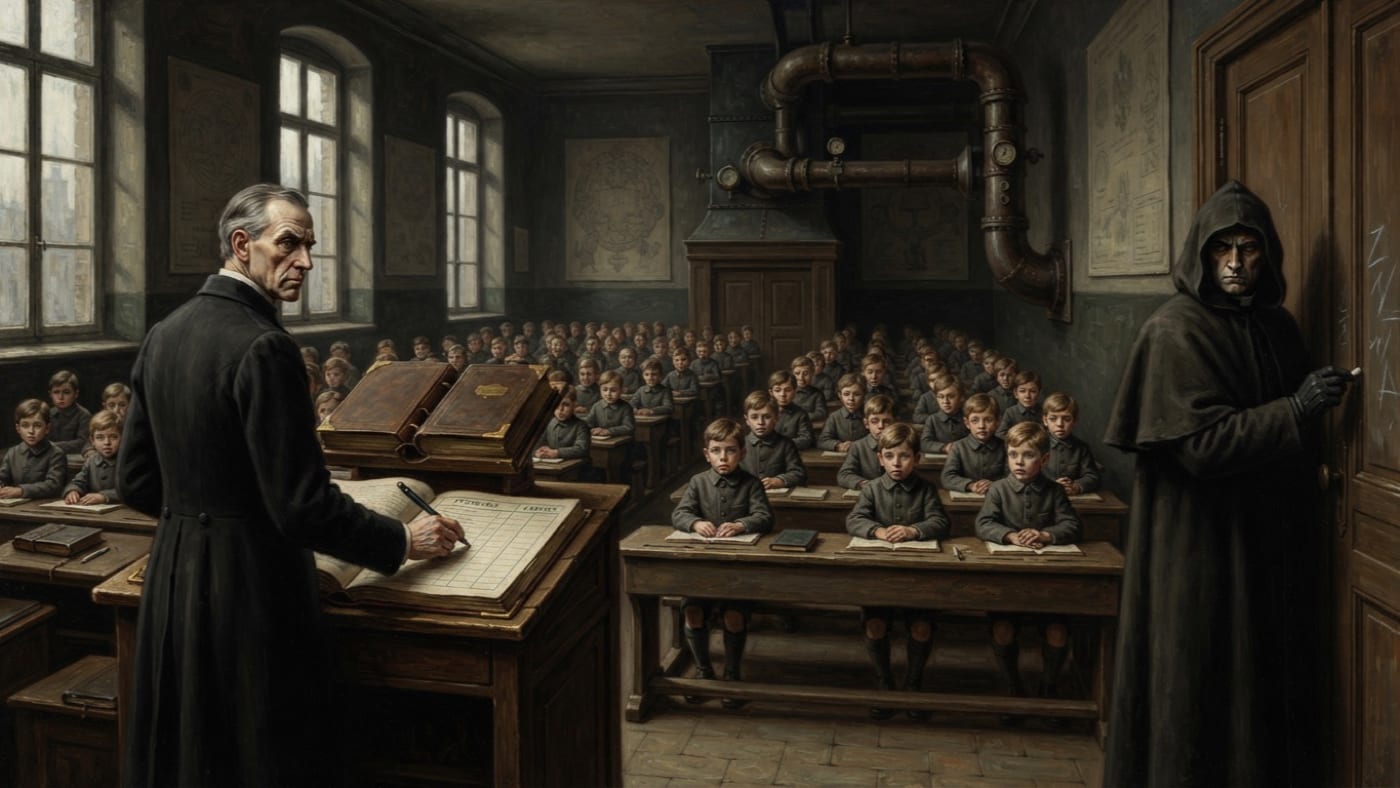
First Catechism
The sentence is settled. The child's hesitation is filed.
A present survey of the First Catechism's opening sentence, taught at five and ratified in perpetuity. Doctrine may revise its explanations; Records keeps the child's hesitation.
Codex Ref. VI.1.01-002
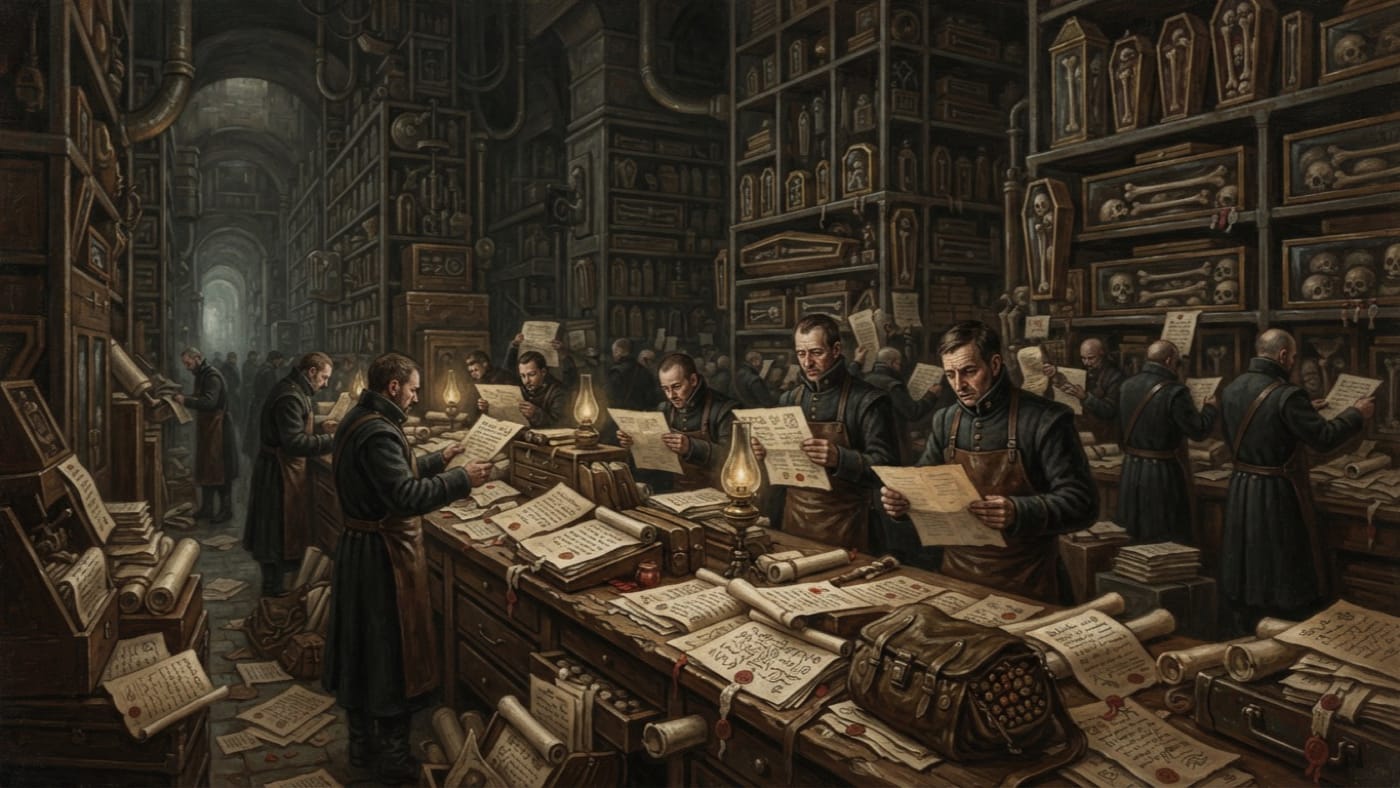
German states
Many jurisdictions. Separate seals. One inconvenient table.
The German states in 1678: many jurisdictions, separate seals, and no common answer to Amsterdam's bone census. The relics agreed locally. The ledgers did not.
Codex Ref. II.1.10-001
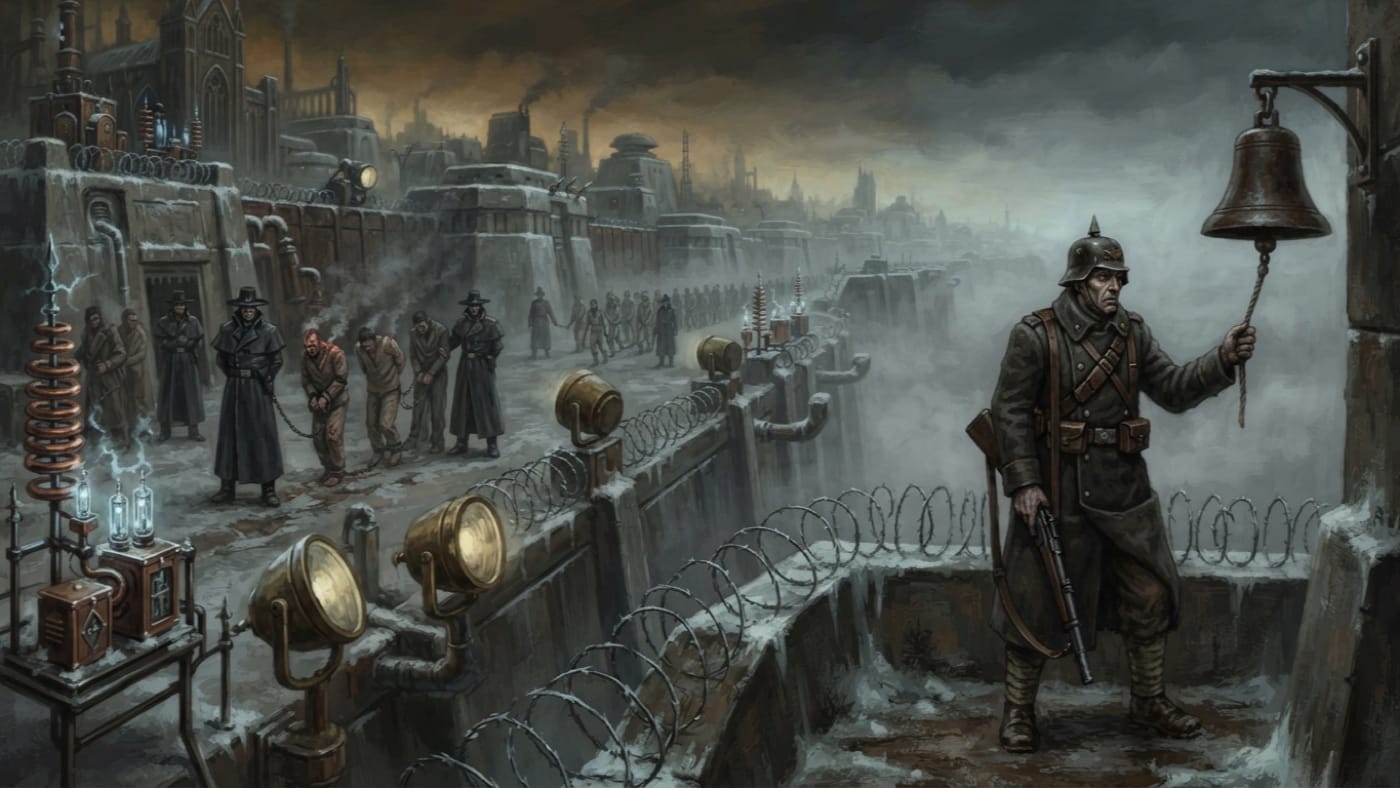
Heresy of the Absent Creator
The wards still hold. The promise no longer does.
The northern garrisons' claim that the Creator is dead and miracles spend His residual holiness. The wards still hold; the Bureau of Purity still brands adherents and sends them to the Penal Choir.
Codex Ref. VI.1.01-002
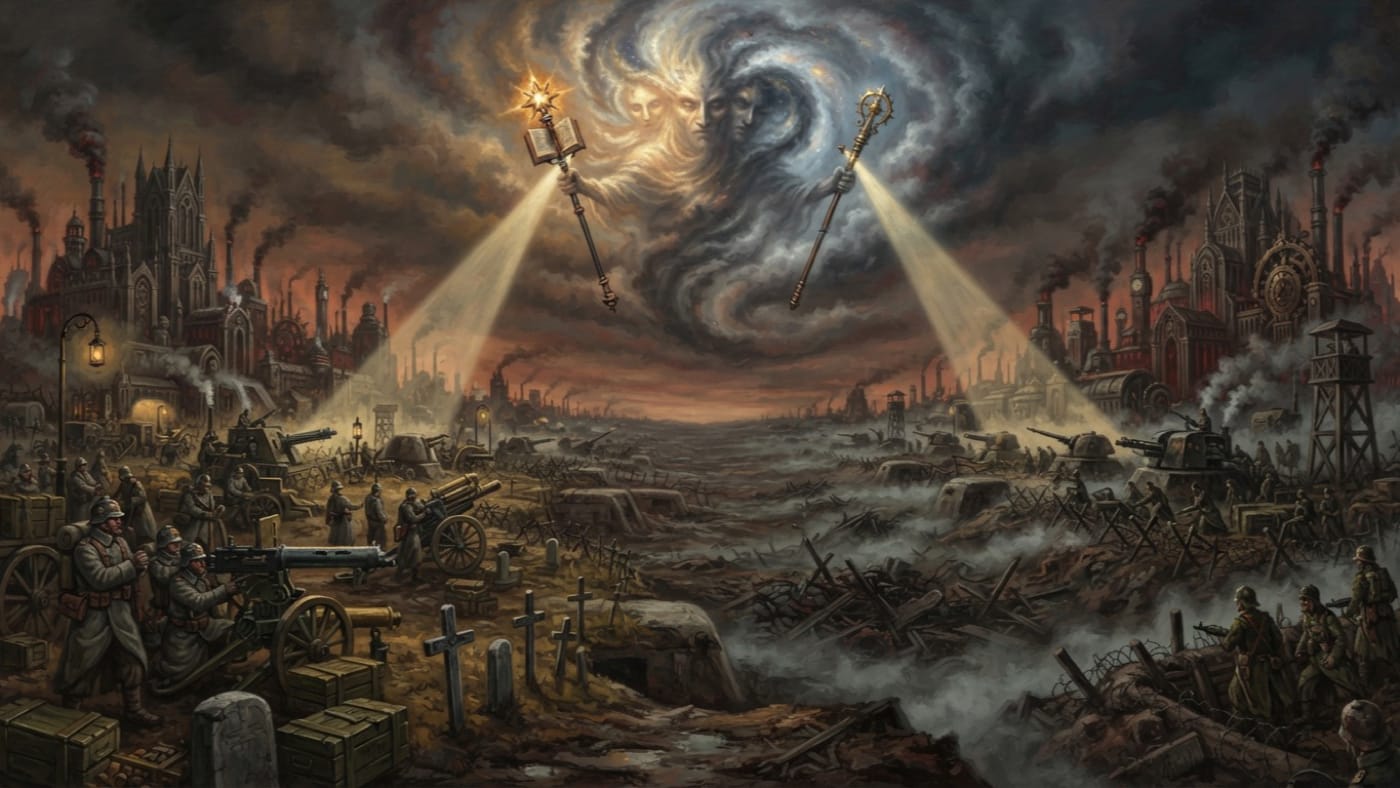
Heresy of the Complicit Creator
The proposition is prohibited. The classification remains blank.
The claim that the Creator and the Great Deceiver are one power, and the war a performance. I record its arguments under Standing Order 7-A; the Bureau prohibits the proposition and leaves its classification blank.
Codex Ref. VI.1.01-004
Heresy of the Unnecessary Creator
The bone keeps its glow. The Hieromnemon may lose his post.
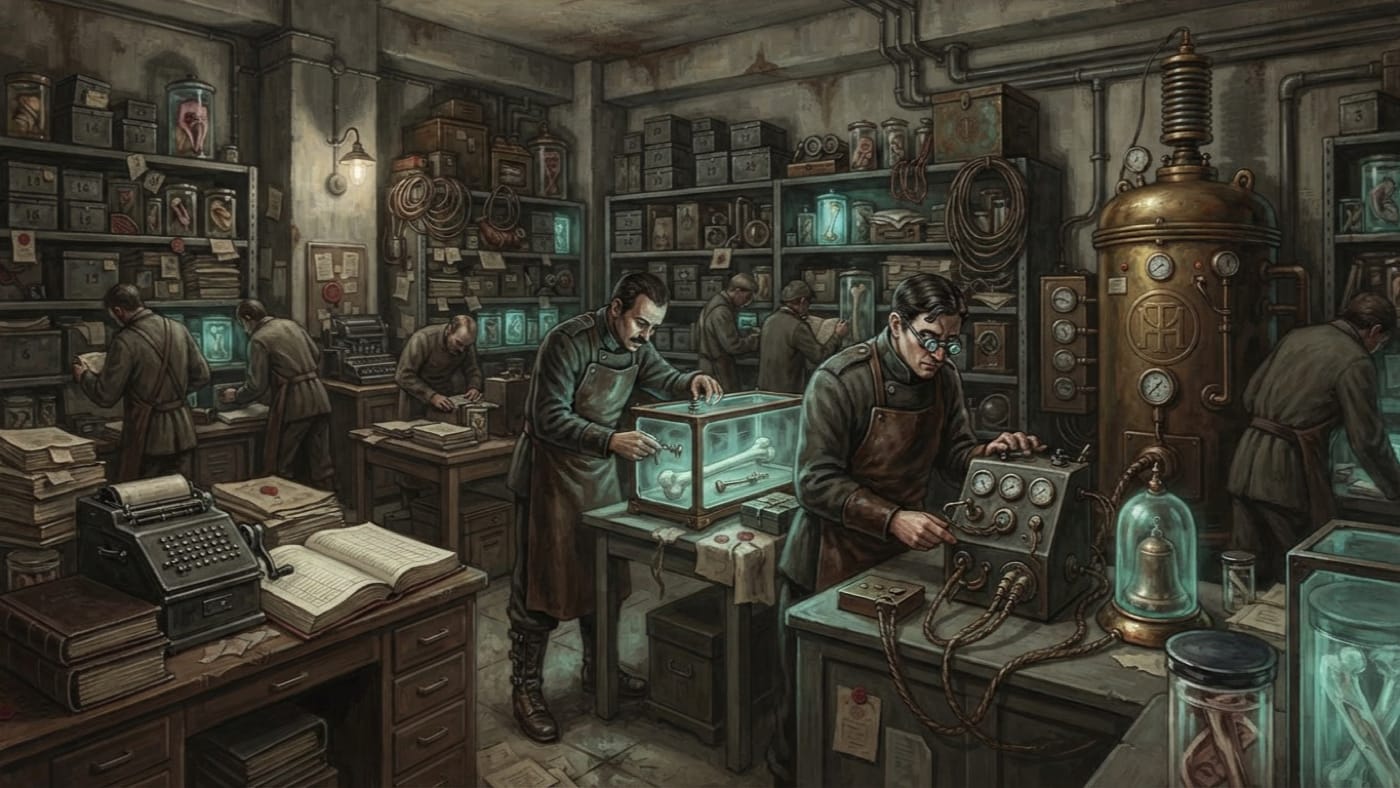
The forbidden proposition that relics, bells and consecrated stone work without a divine source. I catalogue what it grants, what Doctrine cannot demonstrate, and what becomes of our mandate when custody is merely property.
Codex Ref. VI.1.01-005
Hofburg
Broken glass and unfinished business
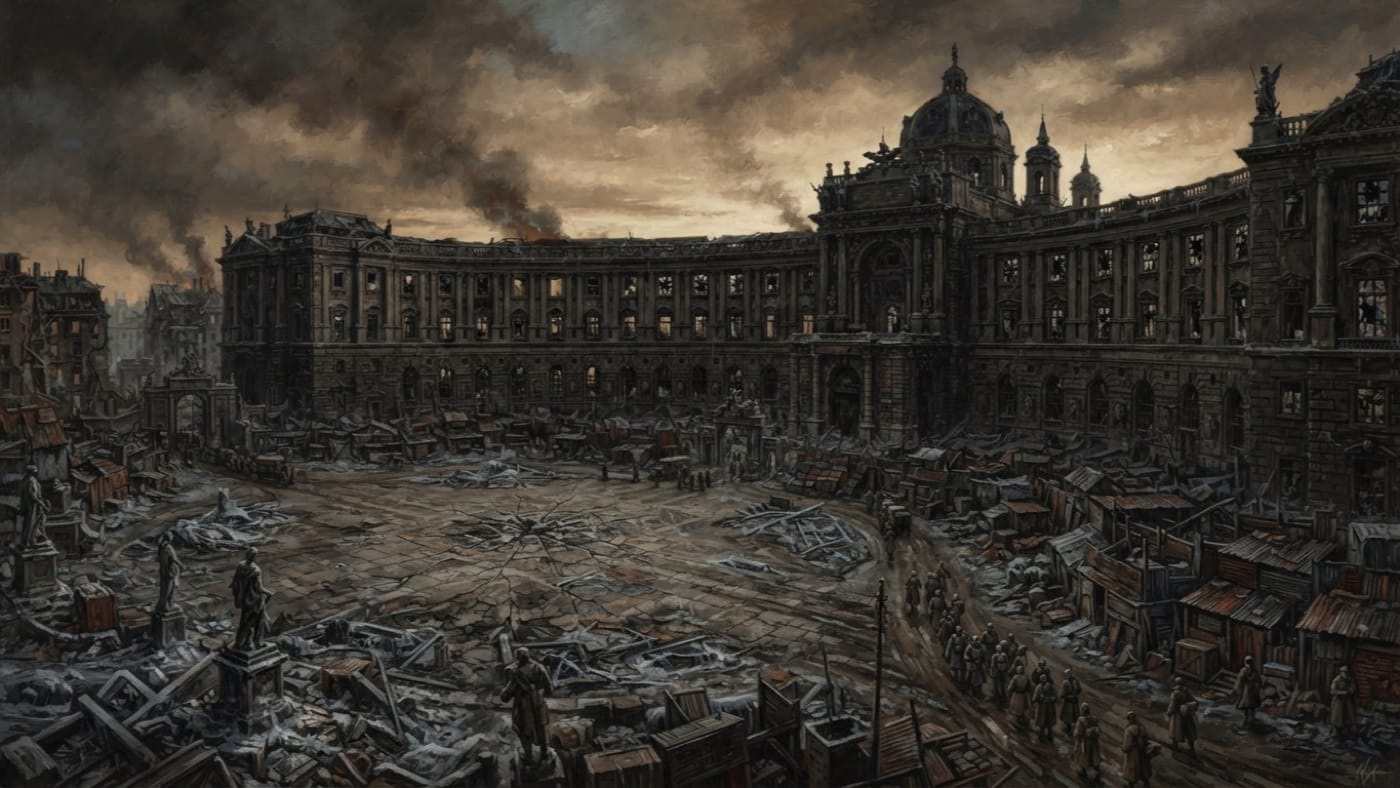
Vienna-Ruins' Hofburg palace was sealed in A.S. 95, its glass shattered by Saint Aldebrand's reliquary blow. The Council's unfinished minutes are reported, their session undated. Even defeat leaves paperwork.
Codex Ref. II.4.09-1373
Leiden
Two femurs, one jawbone, and no jurisdiction
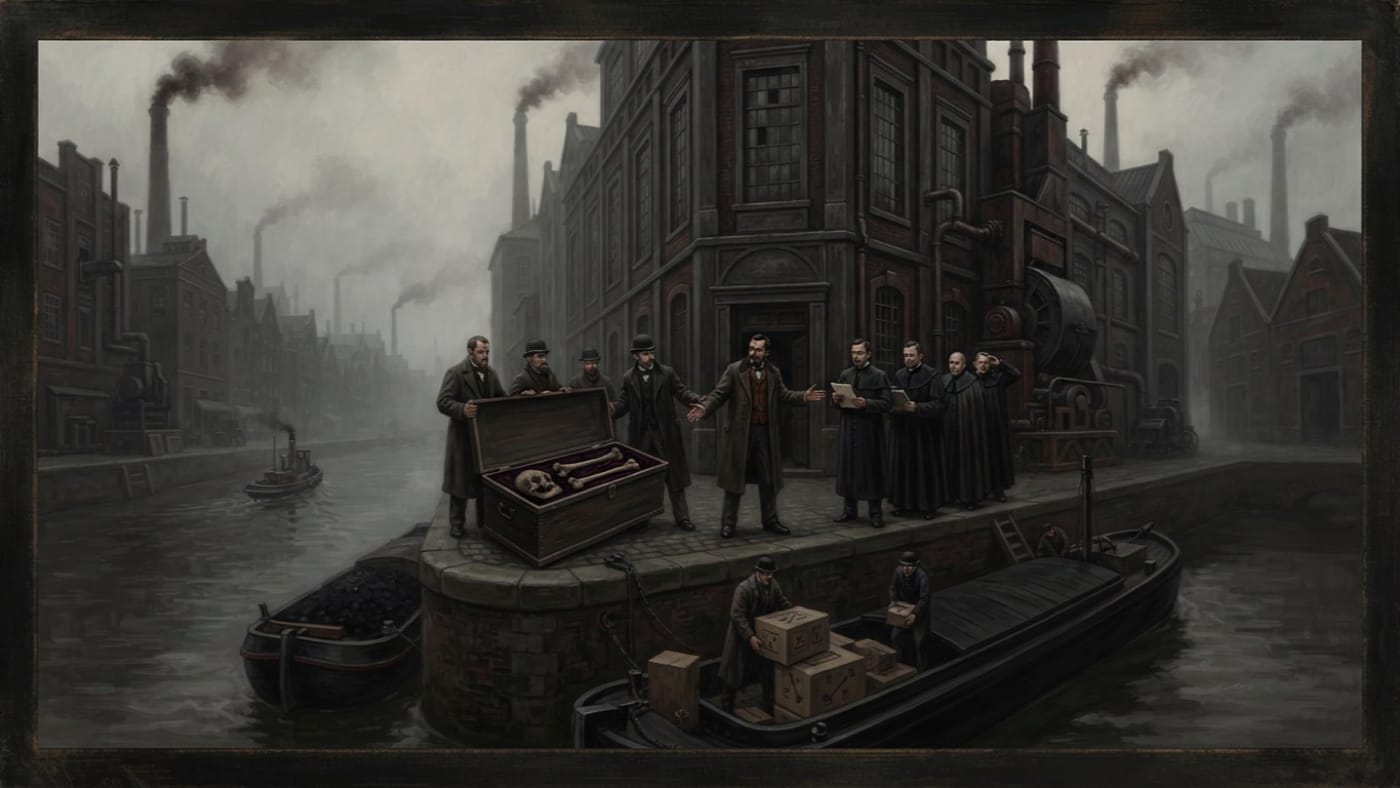
Leiden's anatomists supplied the Year of Letters with its simplest weapon: two femurs per man. Its merchants claim Saint Luthar's jawbone. The Synod has neither a custody chain nor jurisdiction.
Codex Ref. II.4.09-013

Liber Examinationis
The bone awaits a verdict. The reader incurs a strain.
The Bureau of Relics' Examiners carry the Liber Examinationis to the bench. Its cross-references constitute a Category Two Devotional Strain; the bone awaits a verdict.
Codex Ref. XIII.1.64-001

Links
Custody is only a small fastening with authority
Links are the Synod's smallest instruments of custody: iron, ink, oath, route, relic claim, debt, guilt, and every useful fastening in between.
Codex Ref. XIII.1.84-201
Litany of Saint Aldebrand
The prayer kept its name; the man who said it did not
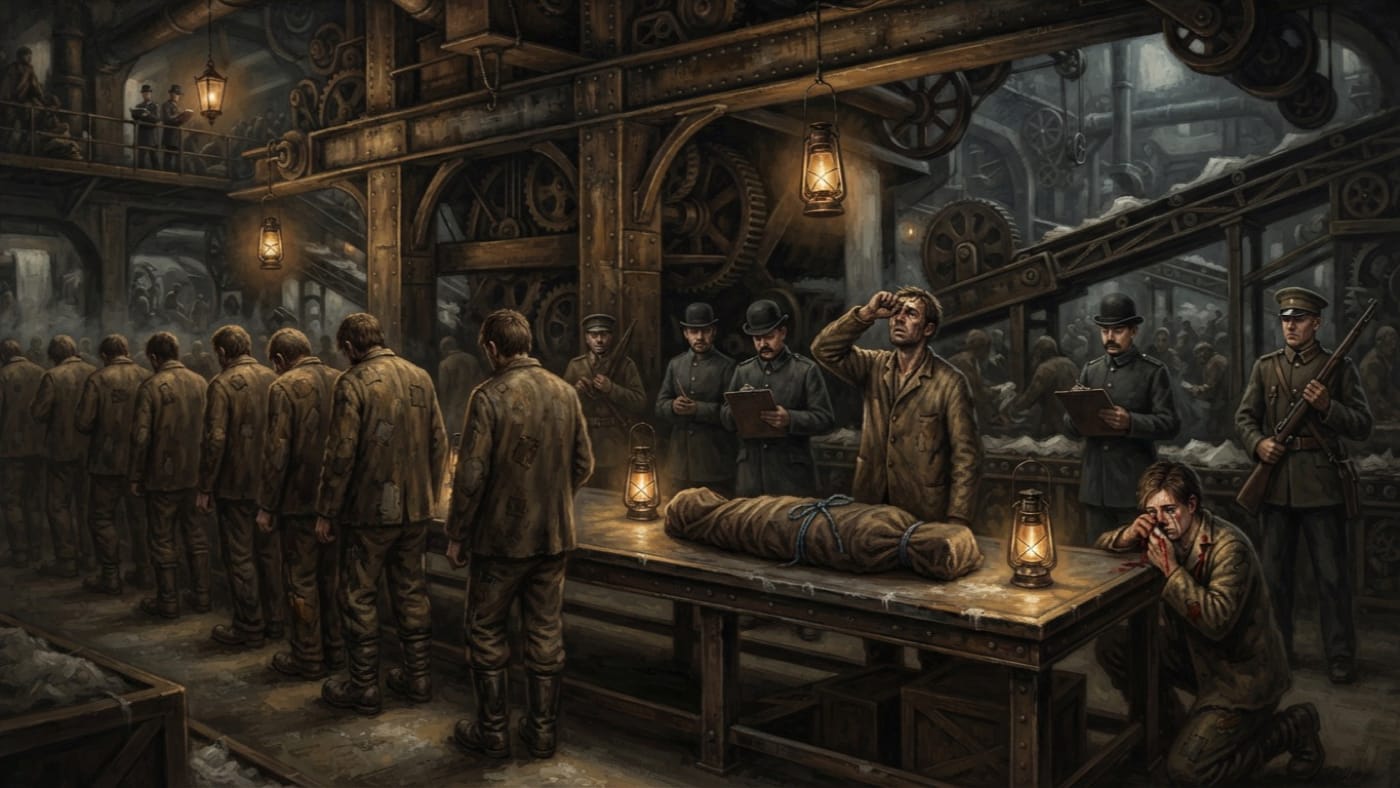
A nameless labourer recited the Litany of Saint Aldebrand after sight returned in Ulm's Gallery Three, A.S. 156. The file preserves the prayer's name and none of its words.
Codex Ref. XIII.1.96-156

Mint-Chapter
Where the Synod makes faces spendable and obedience portable
The Mint-Chapter binds face, name, and coin into one leash: a polished doctrine by which bread, debt, memory, and burial all learn to ask for a clean strike.
Codex Ref. XIII.1.91-094
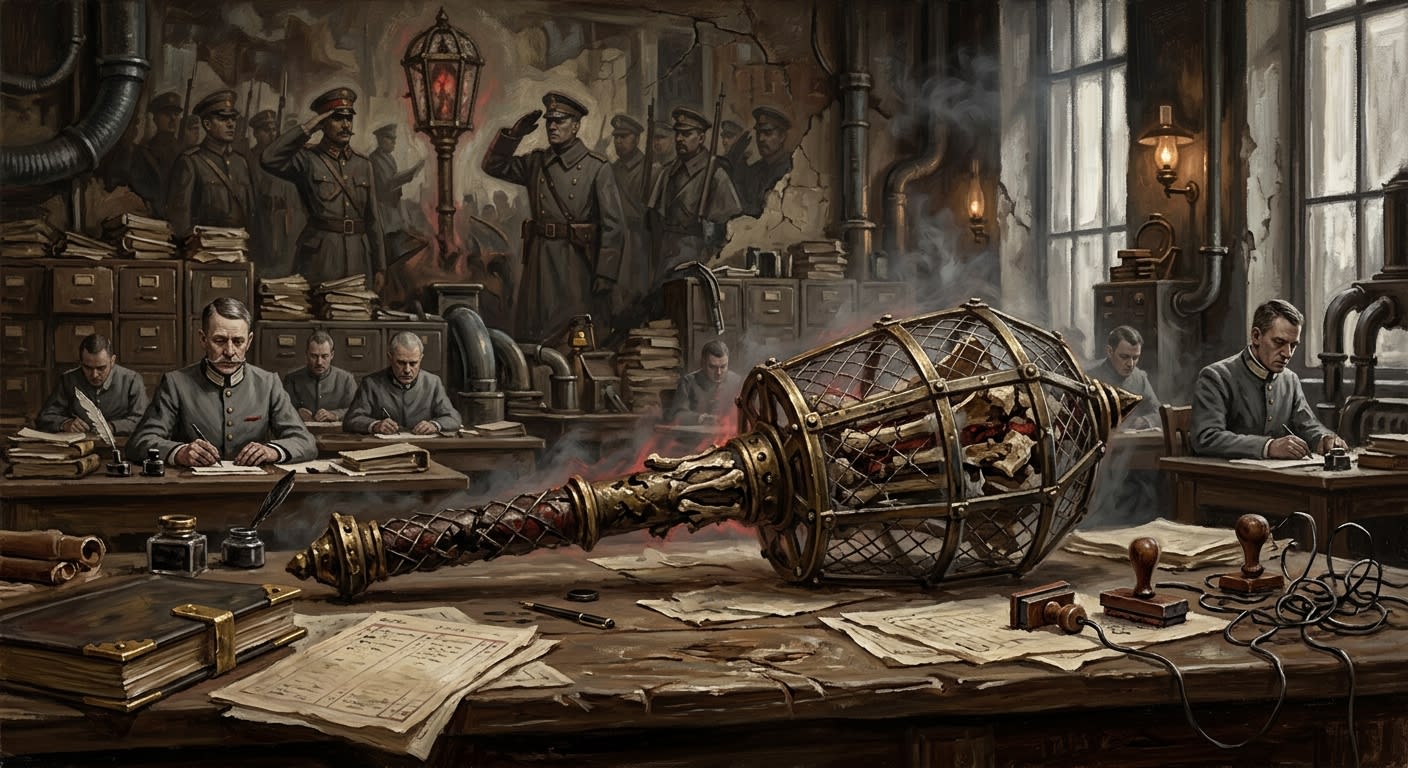
Reliquary of Saint Aldebrand
Count the bones if you must; the mace will wait for Vienna
Saint Aldebrand's reliquary mace was erased, mocked, duplicated, and finally obeyed at Vienna; the Bureau now preserves every contradiction it failed to prevent.
Codex Ref. V.1.02-095
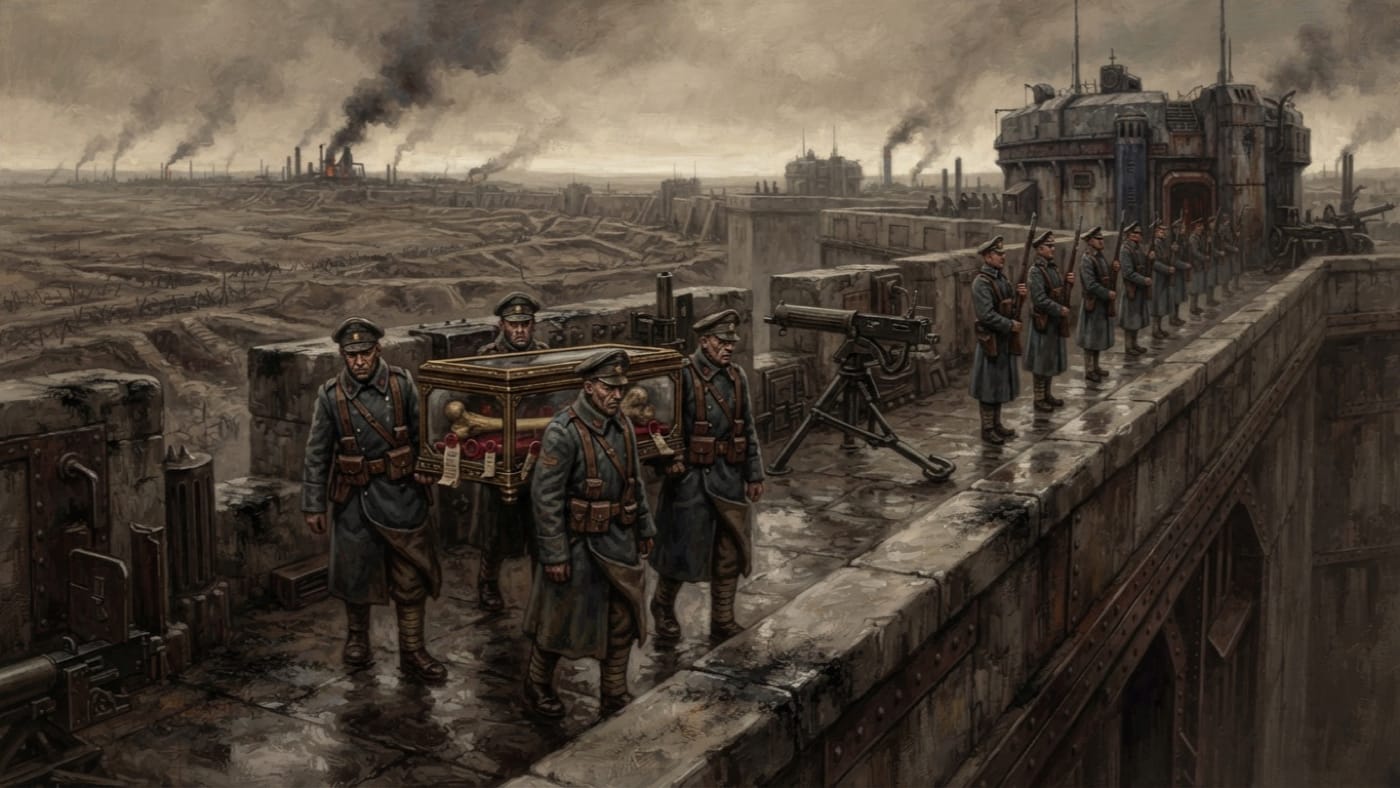
Saint Iselda
The saint whose station is a parapet
Survey of Saint Iselda's attested relic service in A.S. 201: a notarised femur makes the third-Friday Bone Walk along Vigilance's parapet. The soldiers stand straighter. The Bureau requires no more.
Codex Ref. III.2.01-201
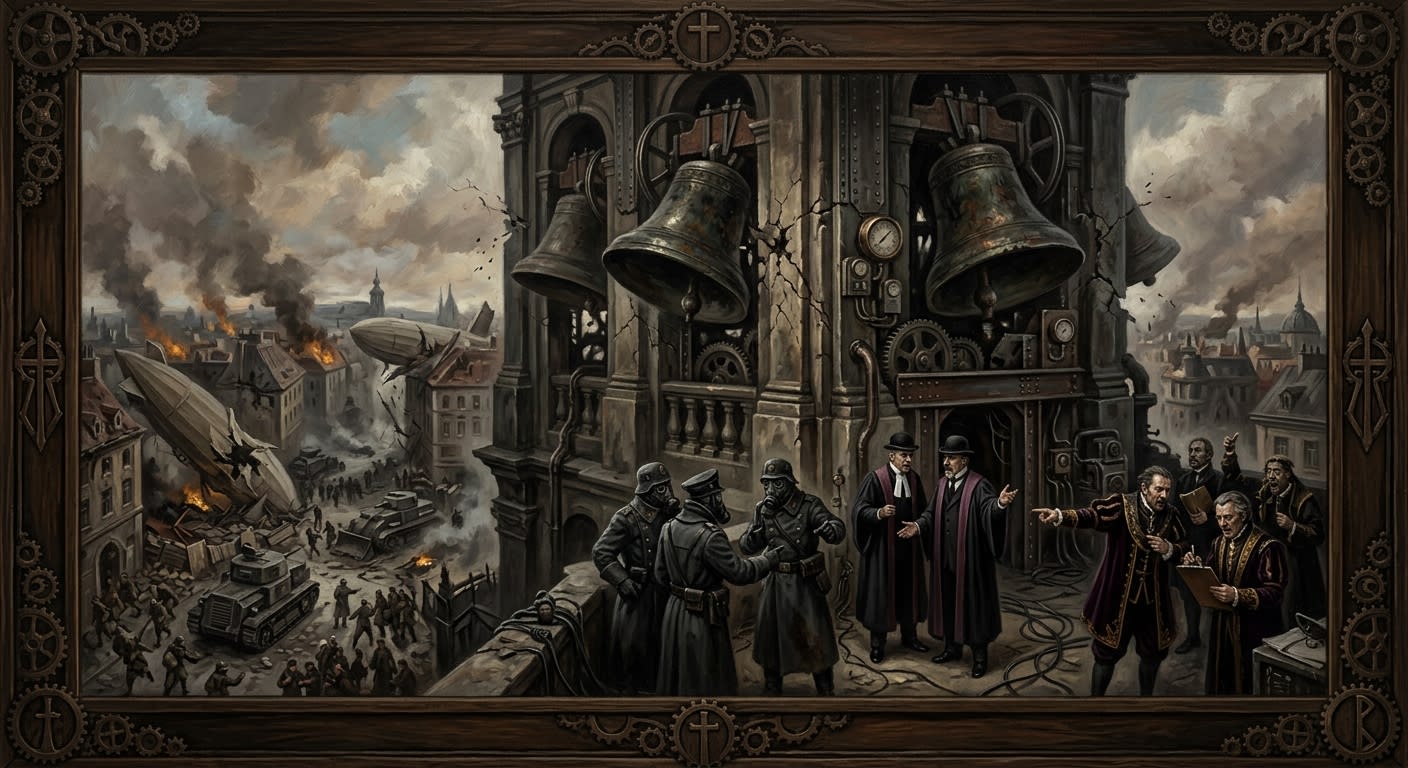
The Bells of Saint Rupert
Bronze sang; committees have been recovering ever since
At Vienna in A.S. 95, the unroped bells of Saint Rupert rang without permission, broke a siege, and left three Bureaus arguing with bronze.
Codex Ref. III.2.04-018
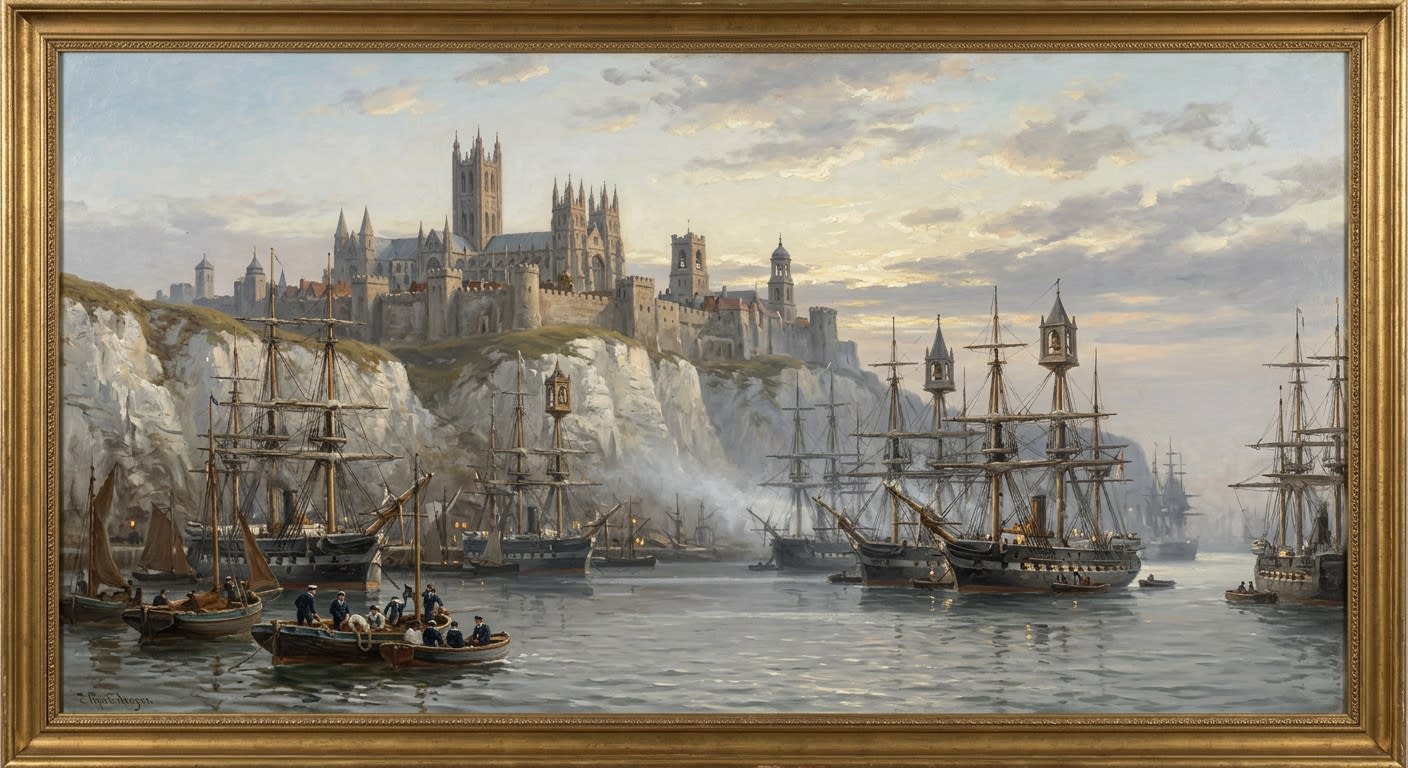
The British Crown
The island the Bureau has spent a hundred and eleven years failing to classify
The Zone 0 co-belligerent that has never submitted to the Concordat and never needed to. Canterbury governs by chivalric charter; three hundred Cathedral Ships hold the Channel; the Bureau of Doctrine considers this theologically embarrassing and strategically essential.
Codex Ref. X.1.01-001

The Collapse of the Rationalists
The Adversary did not invade. It arrived.
The Rationalist Republic dismantled every spiritual defence on the continent, and in A.S. 45 the Adversary walked through the unguarded door. A doctrine article, a body count, and a mandatory catechism text.
Codex Ref. VII.2.01-001
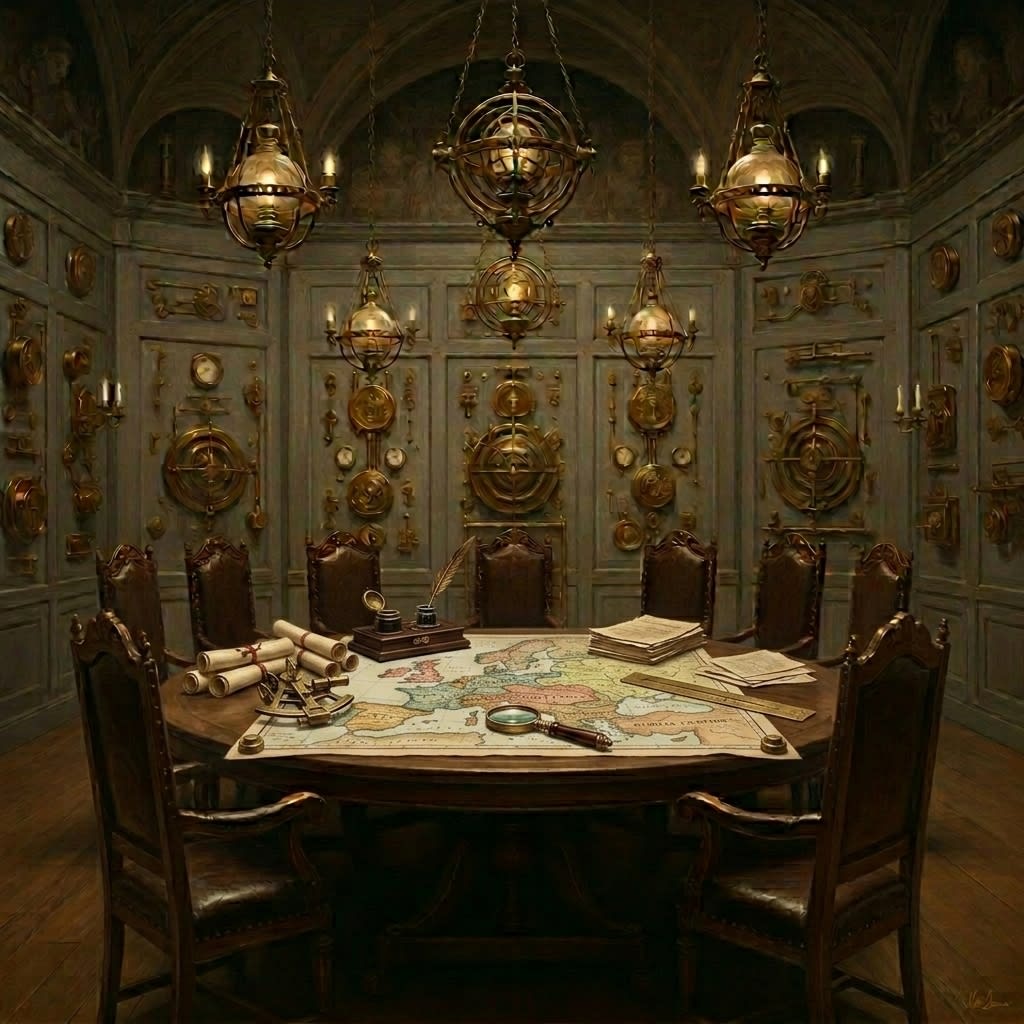
The Council of Nine Rationalists
Nine men governed Europe. Their names are sealed. Their methods are retained.
The sealed governing body of the Rationalist Republic — nine nameless men who administered a continent for fifteen years with instruments of measurement, mass surveillance, and the removal of tongues, until the Sundering settled the argument for them.
Codex Ref. I.1.03-001
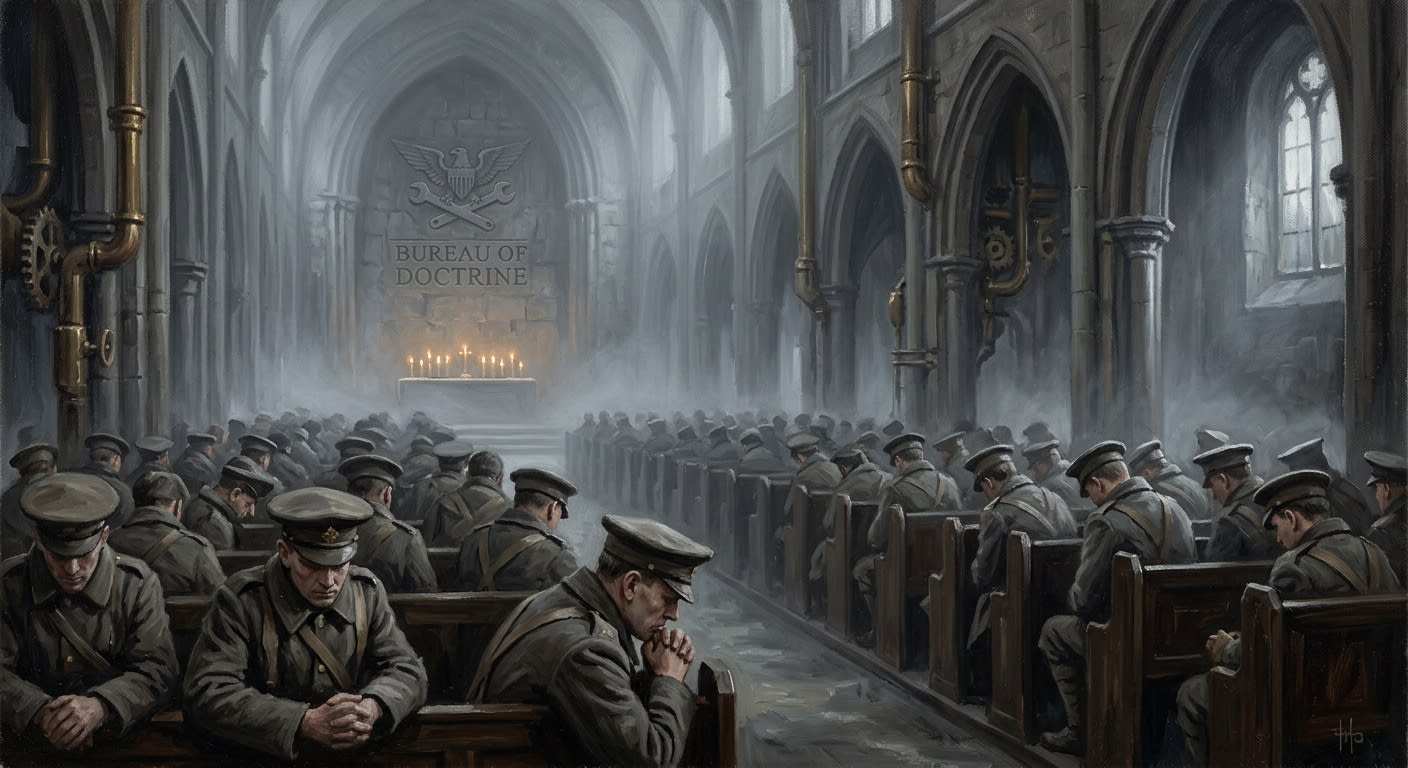
The Creator
The Bureau has two words for the most important question in theology. This entry contains both of them.
A doctrinal entry on the Creator composed by Hieromnemon Drax under compulsion, covering divine nature, the Silence, the inconvenience of miracles, and four forbidden heresies the Bureau insists do not exist.
Codex Ref. VI.1.01-001
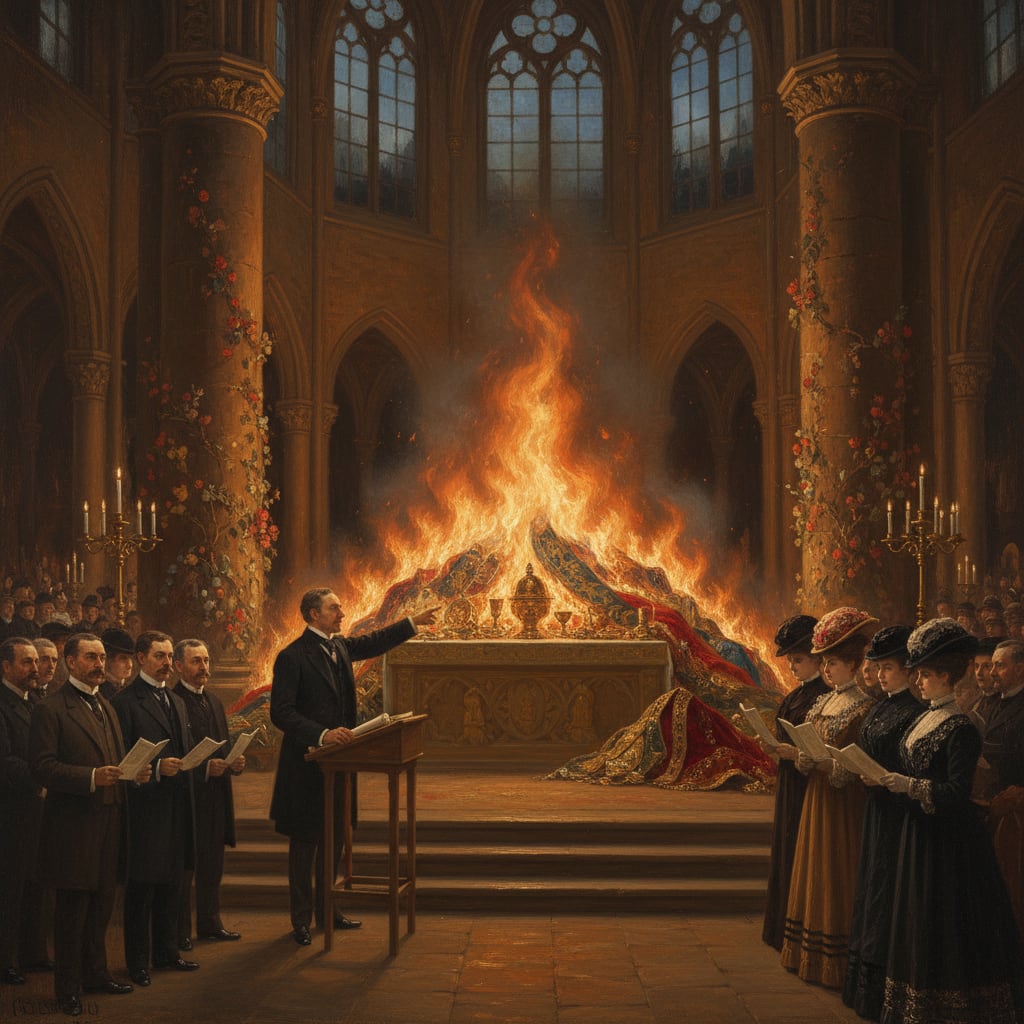
The Desecrations
Being the Bureau of Doctrine's Definitive Survey of the Rationalist Programme of Coordinated Spiritual Aggression, A.S. 0–45, Classified Retroactively in A.S. 92, and Updated at Considerable Institutional Expense in A.S. 200
The Rationalists destroyed two thousand sanctuaries, melted eight hundred and ninety-one bells into cannon, and killed three thousand four hundred clergy in a programme they insisted was spontaneous. Spontaneity does not print programmes.
Codex Ref. VII.1.01-001
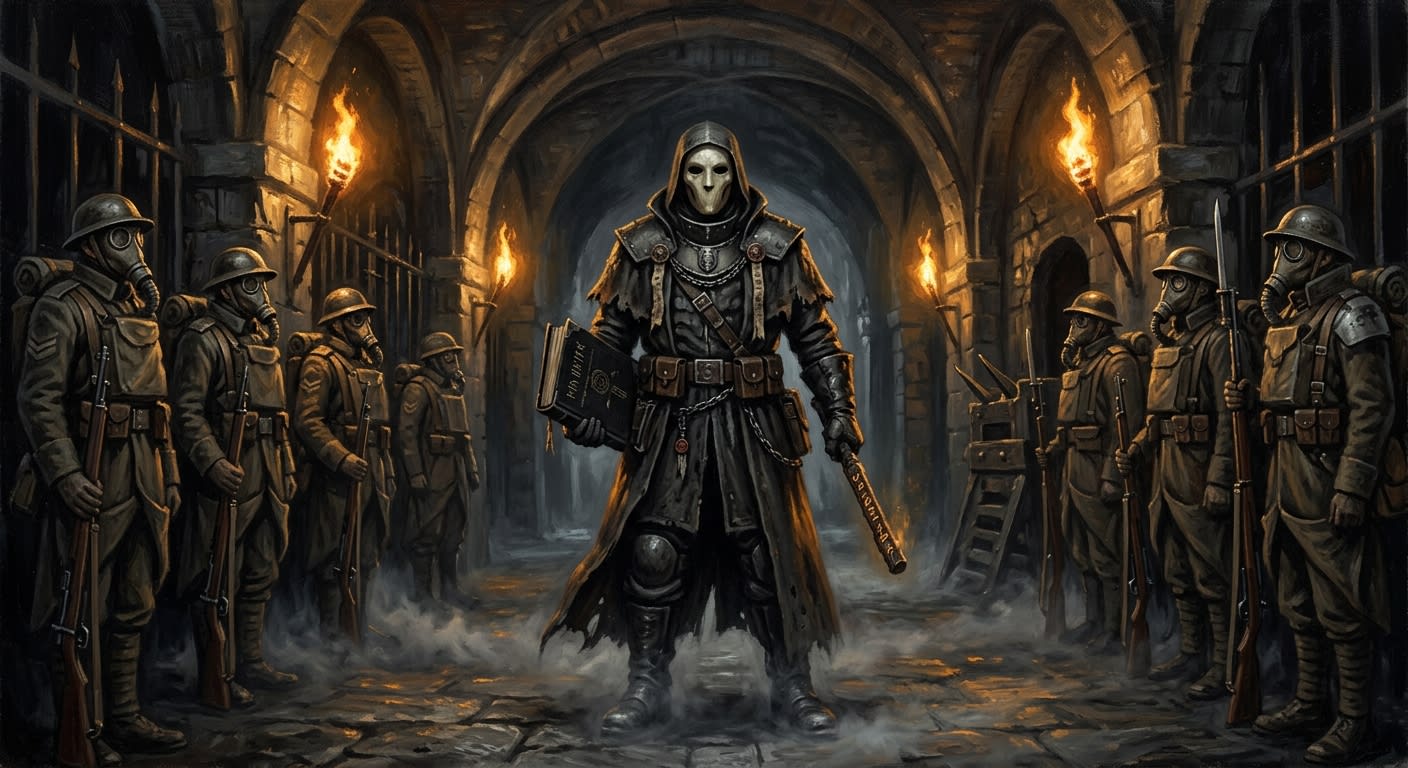
The Judges
They walk without letter, without herald, and without the patience of the Bureau.
The Judges arrive without letter, try without jury, and depart without filing. The Bureau denies they exist. It has been denying this since A.S. 92. The denial requires renewal every thirty years, which is itself a kind of evidence.
Codex Ref. V.1.01-003
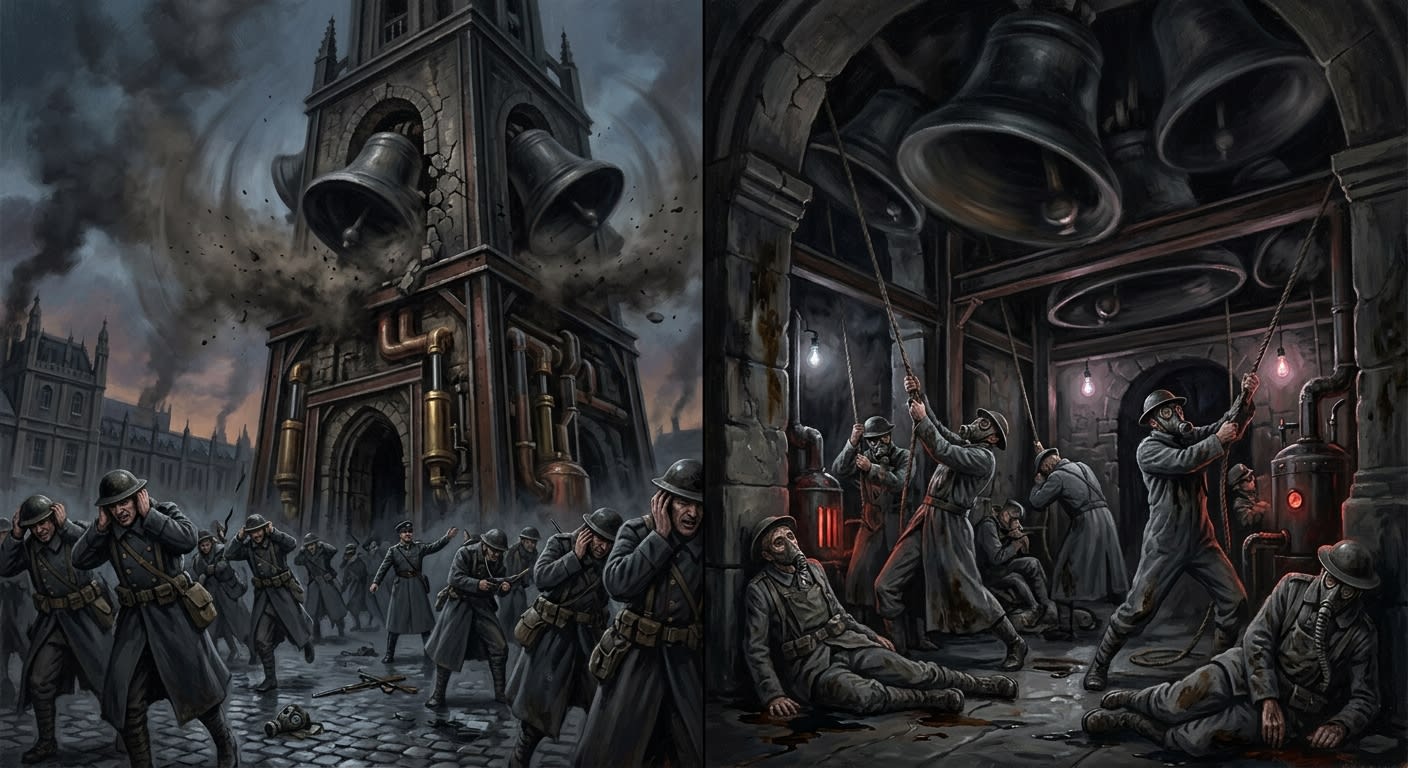
The Miracle of Cologne
When every bell became artillery and bureaucracy was born from the echo
The A.S. 49 Miracle of Cologne drove Maldrake's Wrath vanguard from the cathedral square by nine hours of unscheduled total bell-ringing, cracking stone, killing ringers, and founding the jurisdiction that became the Bureau of Bells.
Codex Ref. VII.4.12-001
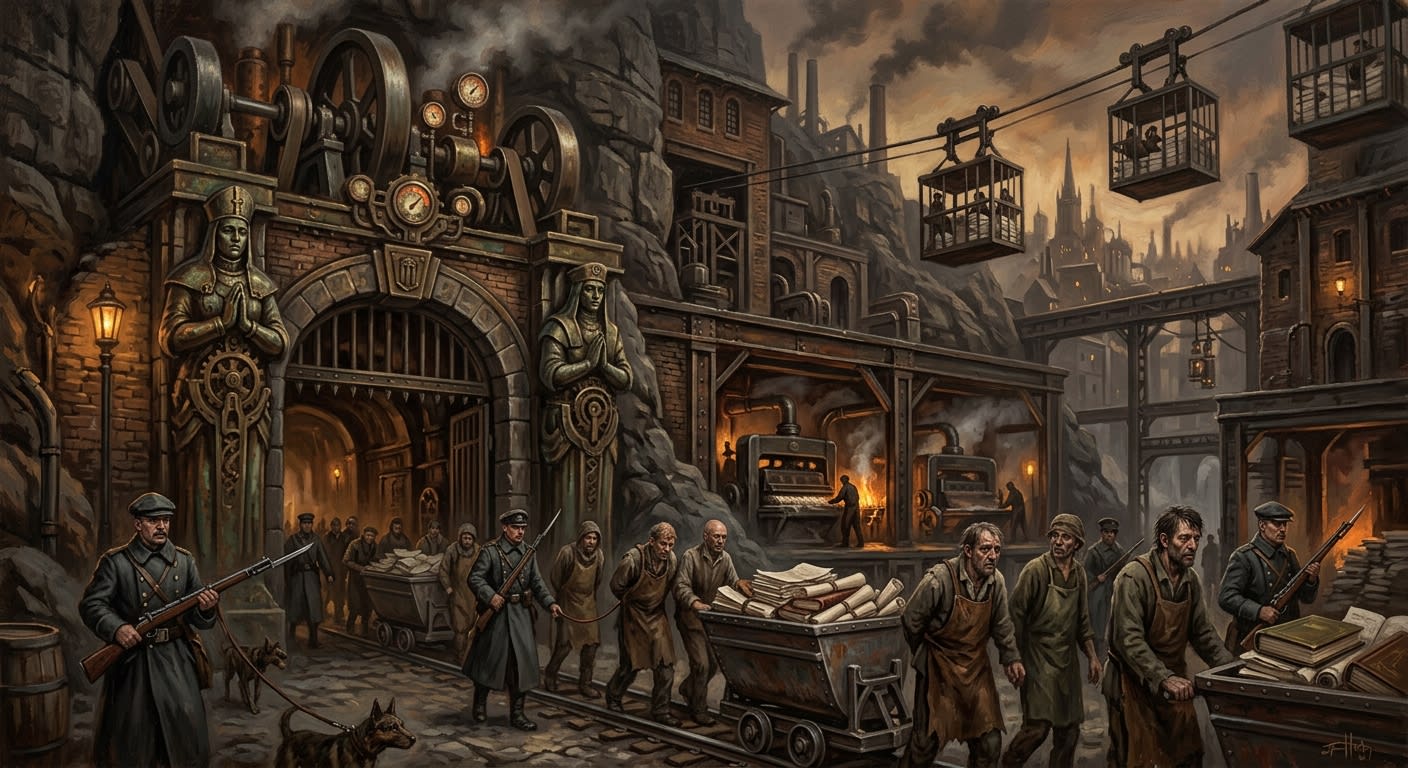
The Paper Mines of Ulm
Where forbidden minds are pressed into obedient sheets
The Paper Mines outside Ulm turn condemned scholars, clerks, witnesses, and families into archival stock, redaction vellum, penitential forms, and troublingly warm sheets.
Codex Ref. II.2.06-002

The Third Hierarch
A nameless mitre, a moth-eaten reign, and the file that knew too much
The Third Hierarch is an ordinal with no name, no portrait, and one surviving achievement: Saint Aldebrand's file vanished under his reign.
Codex Ref. XIII.1.05-002

The Year of Letters
One table of bones. Forty cities. The first assault on everything.
The Bureau's account of –32 A.S.: how three Amsterdam scholars, one table of bones, and forty cities' worth of polite arithmetic crippled three centuries of relic authentication — and inaugurated everything.
Codex Ref. I.2.01-001
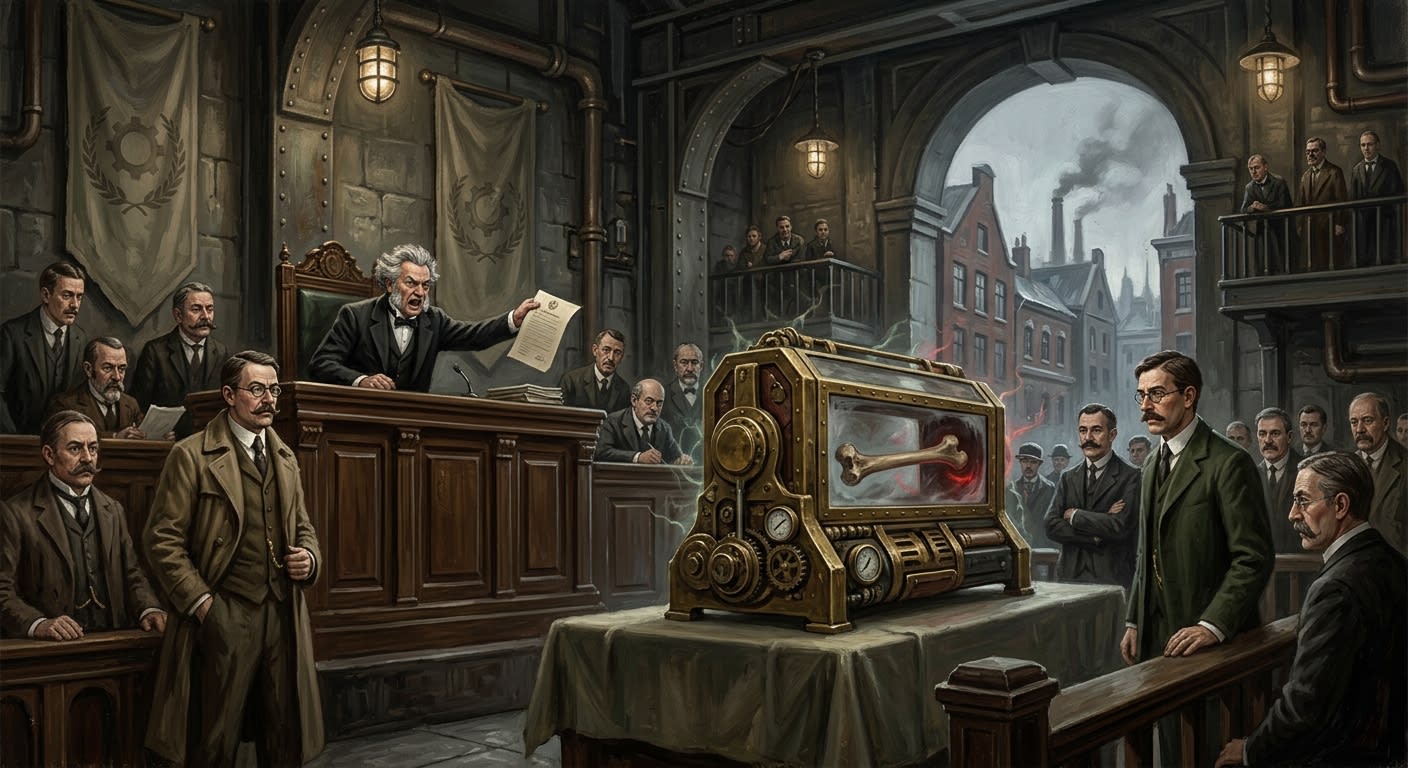
Trial of Saint Aldebrand's Reliquary
The courtroom where arithmetic disgraced itself before a bone
Amsterdam's A.S. 11 mock trial of Saint Aldebrand's reliquary turned Rationalist arithmetic into theatre, until Vienna made the bone louder than the joke.
Codex Ref. VII.8.10-011
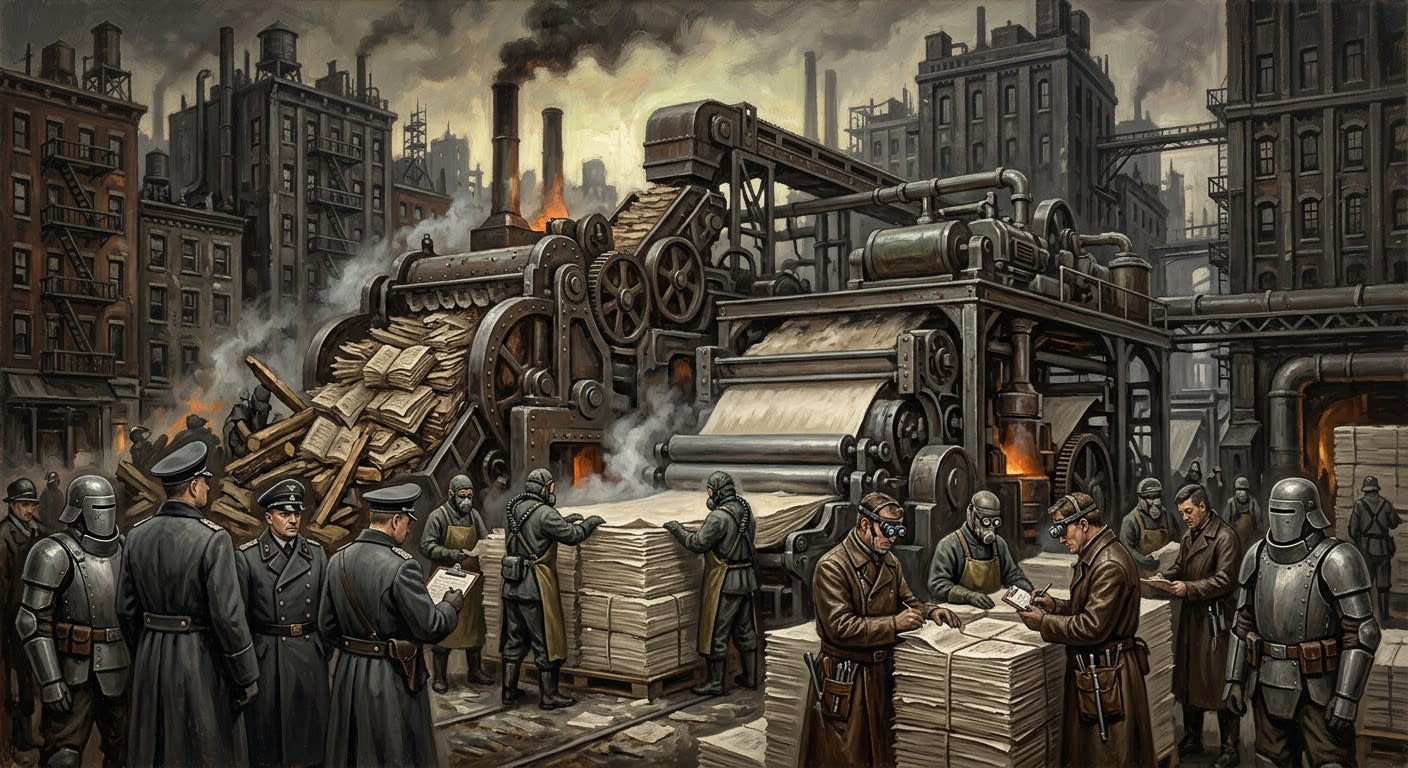
Ulm
The city that taught paper to confess and scholars to become pulp
Ulm is the corrected Heartlands city whose Rationalist compact predated the calendar wound, and whose Paper Mines now make heretical learning into obedient sheets.
Codex Ref. II.2.01-005
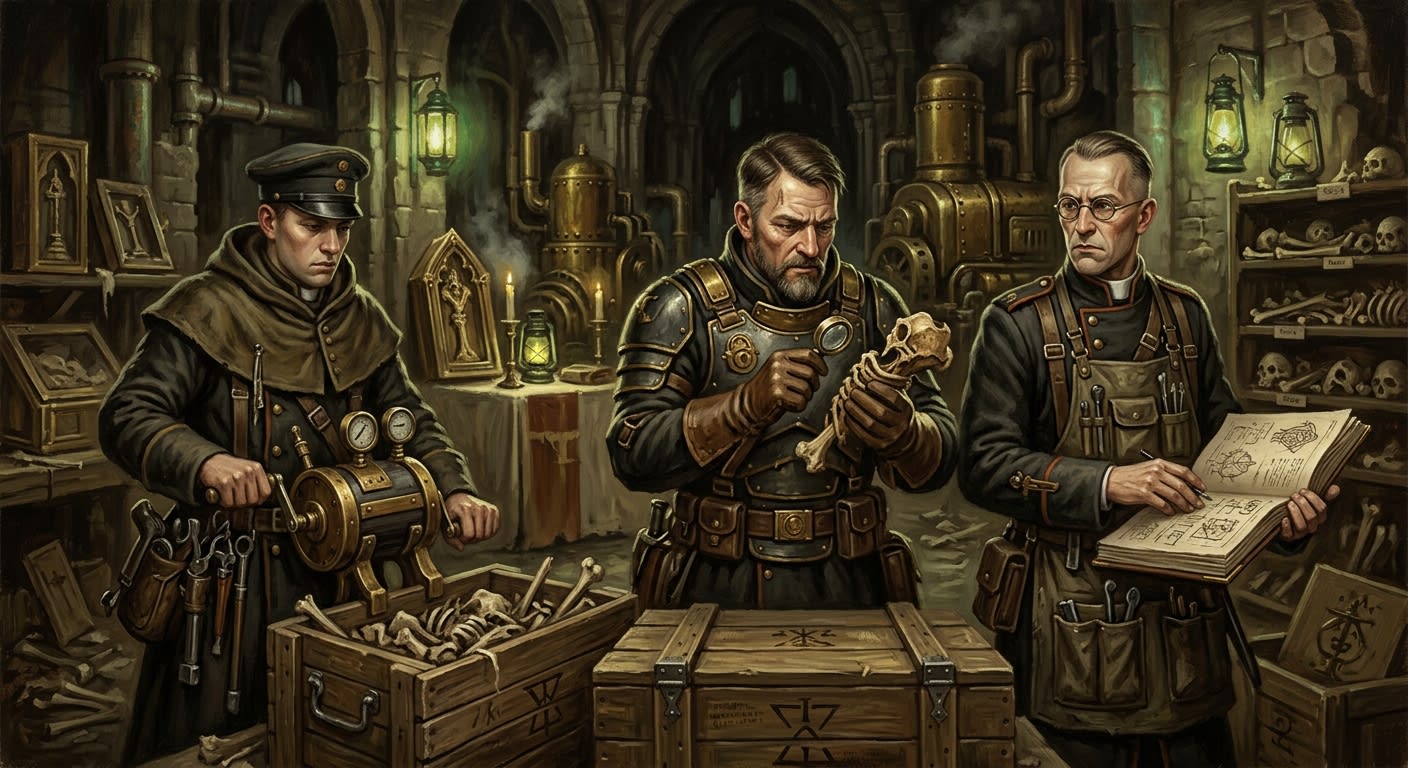
Van Hoorn, Lemstra & de Waal
Three clerks of doubt, one table of bones, and forty cities taught to sneer
Pieter van Hoorn, Gerrit Lemstra, and Jan de Waal made doubt portable in -32 A.S.; their Bone Census counted relics accurately and wounded truth efficiently.
Codex Ref. III.2.01-026