

Reverse Index
Referencing “Sigil Inspector”
Every codex entry that links to Sigil Inspector. 41 entries.
Return to Sigil Inspector
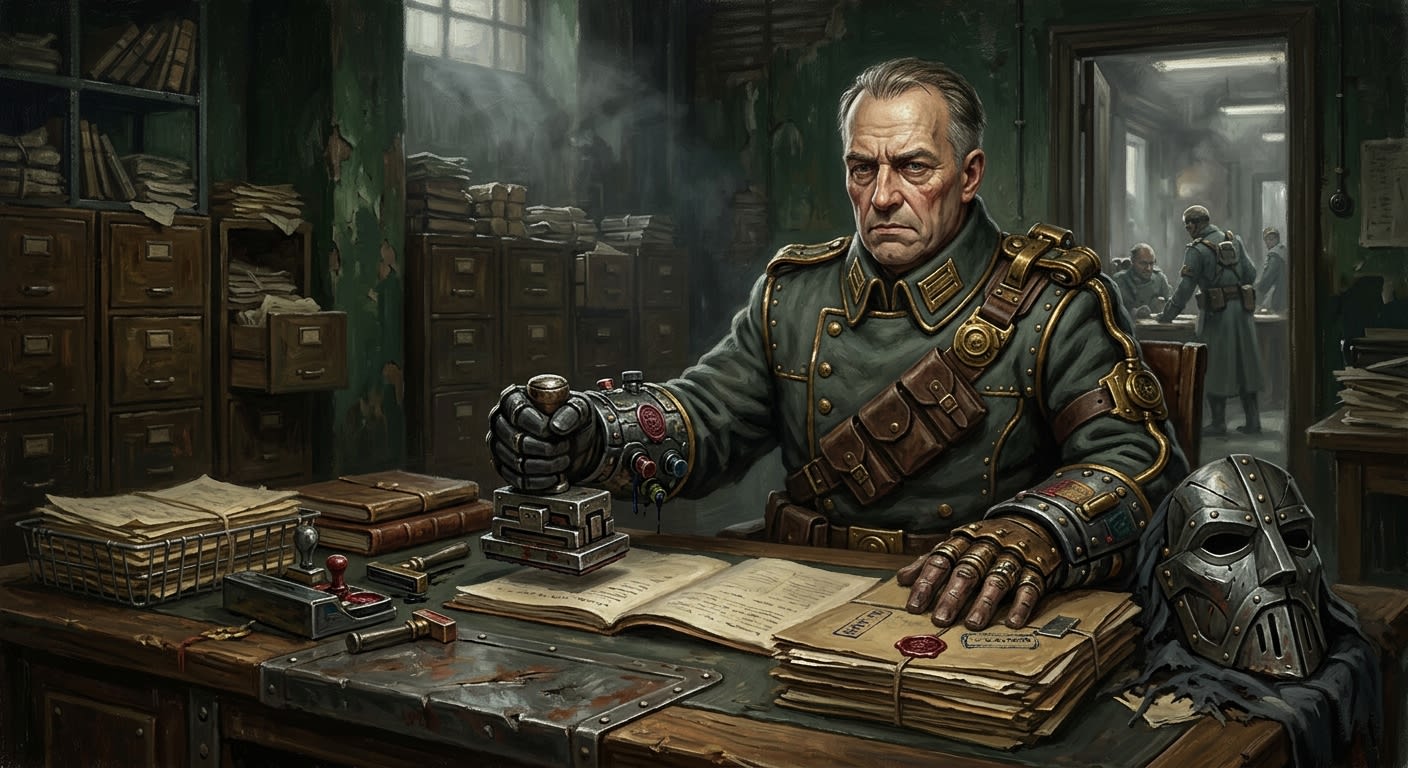
Archon Casselius of Mainz
The man who hears treason in hardware and measures it correctly
Casselius of Mainz holds Heraldry and Masks and Seals in personal union, deciding what may be seen, stamped, licensed, and punished.
Codex Ref. III.2.01-017
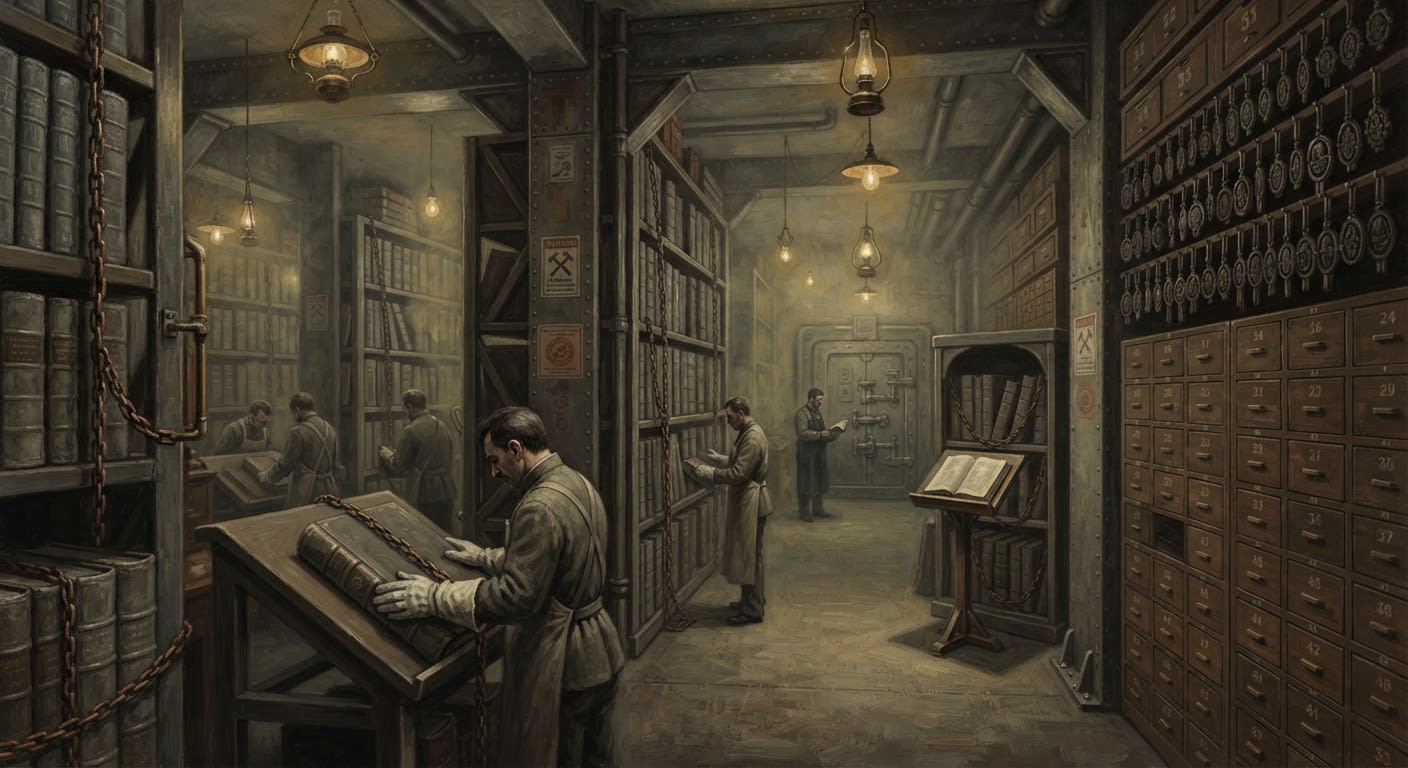
Armorial Vault
Where symbols are chained until they become law
The Armorial Vault is the chained body beneath Strasbourg where registered symbols become legal facts, false marks are preserved for prosecution, and colour learns to fear drawers.
Codex Ref. II.1.04-007
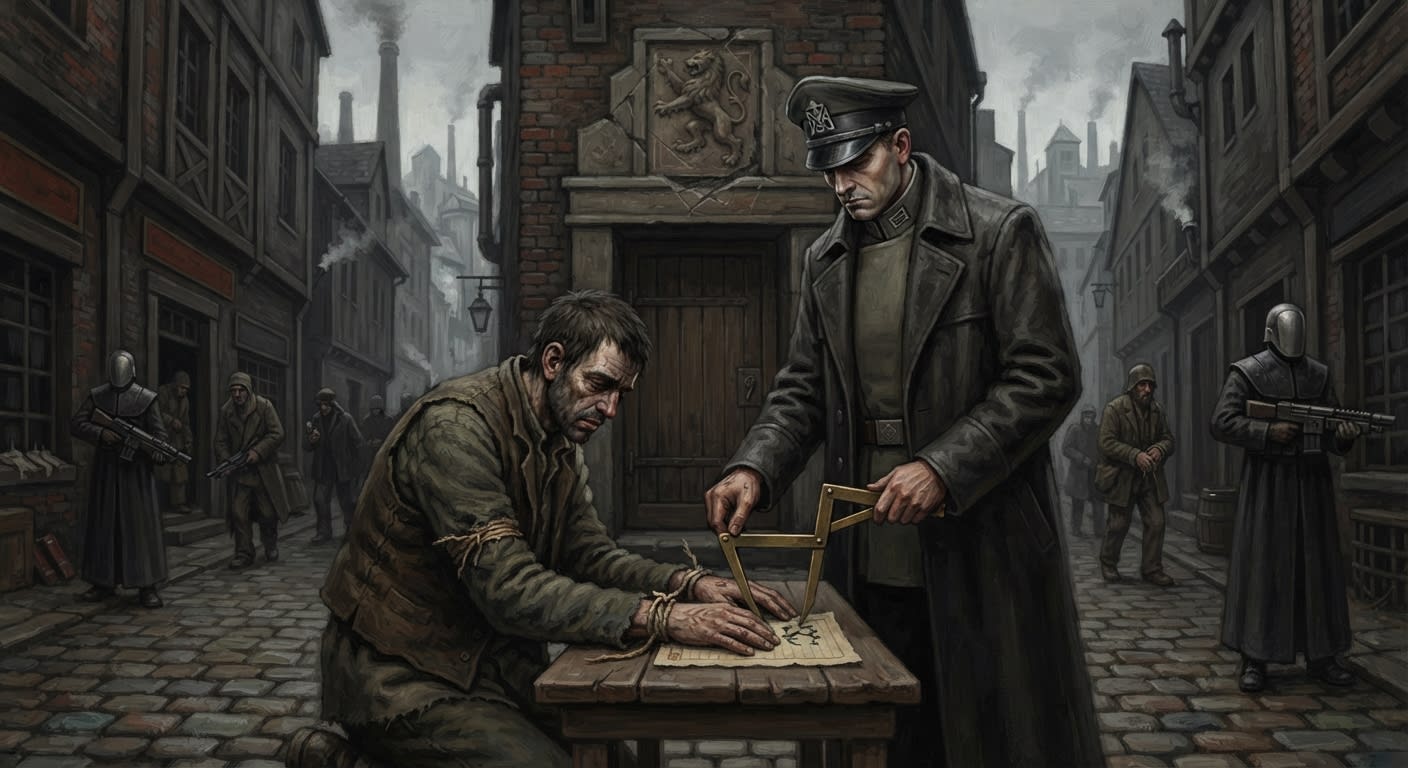
Augsburg
The city corrected first by blade, then by gauge
Augsburg is known to the Codex by what the Synod removed from it: beasts from its guildhalls, vermillion from a dyer, and doubt from three condemned hands.
Codex Ref. II.2.09-182
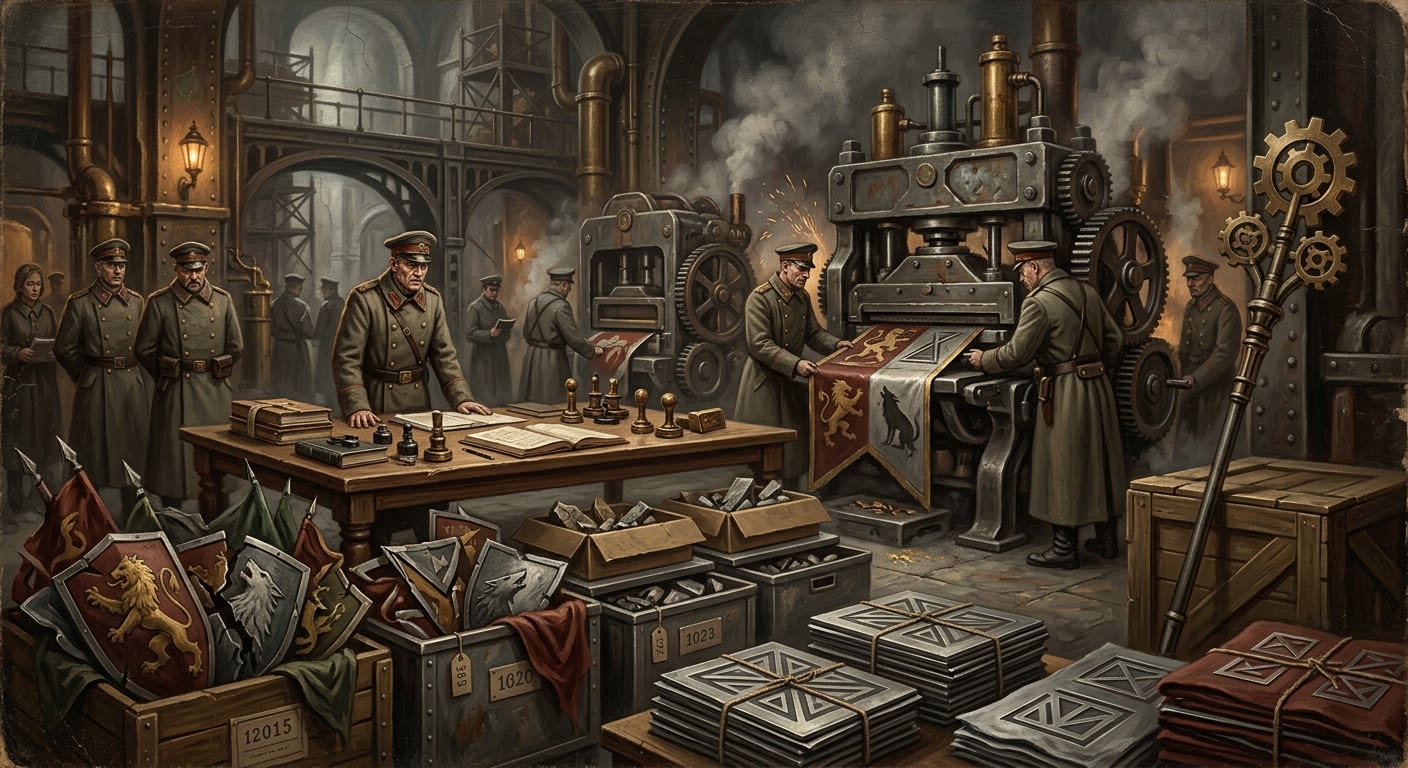
Beast Proscription
When Heraldry put the animal kingdom under seal
The Beast Proscription of A.S. 108 reclassified Europe's animal crests after the Crimson Gate Riot, turning lions into geometry and wolves into evidence.
Codex Ref. VII.8.10-033
Beaune
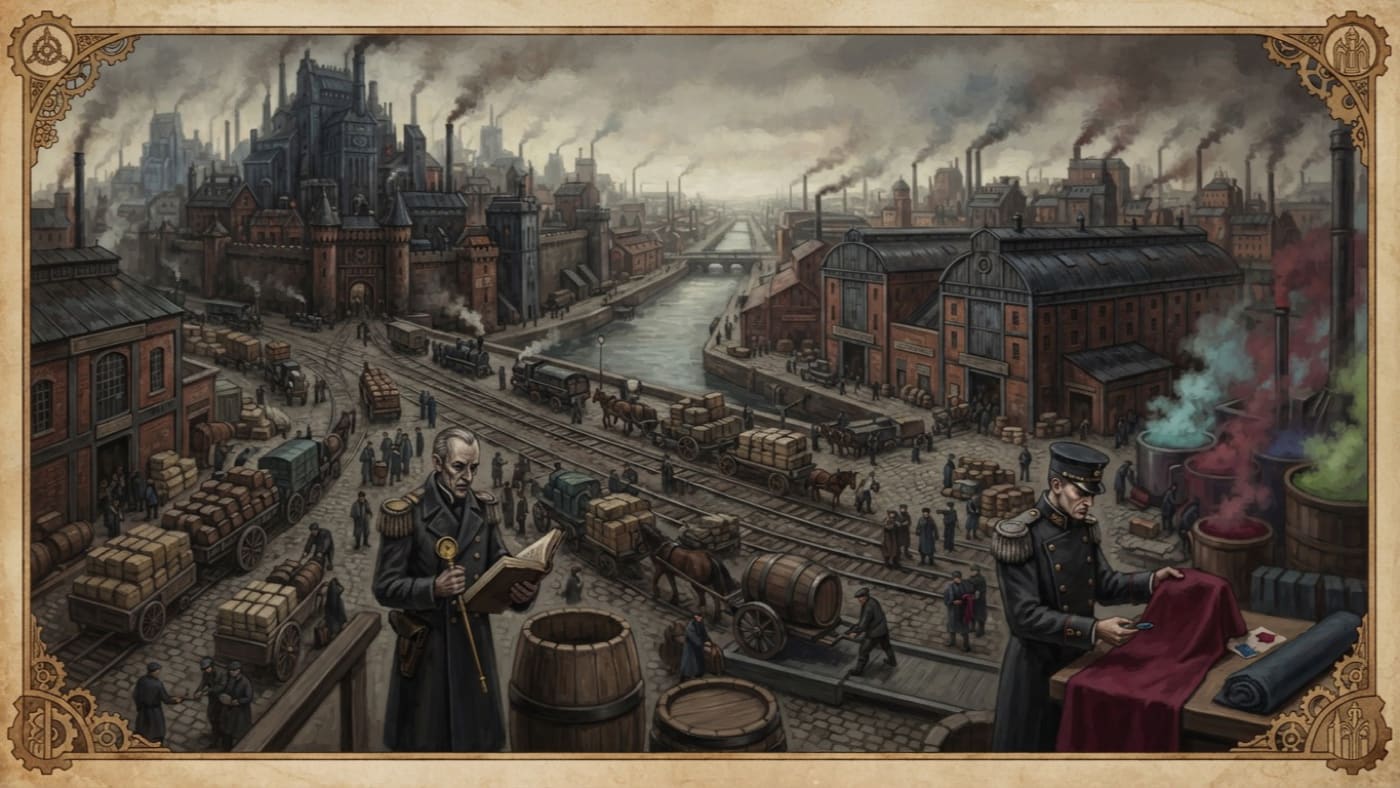
Count the casks, check the swatch, knock on the barrel
Beaune sends Burgundy's wine toward the Rhône. Tithes gauges its casks, the Chancellery watches its dyes, and Shadows remembers a barrel that held no wine.
Codex Ref. II.1.12-201
Carnival of the Triune Knot
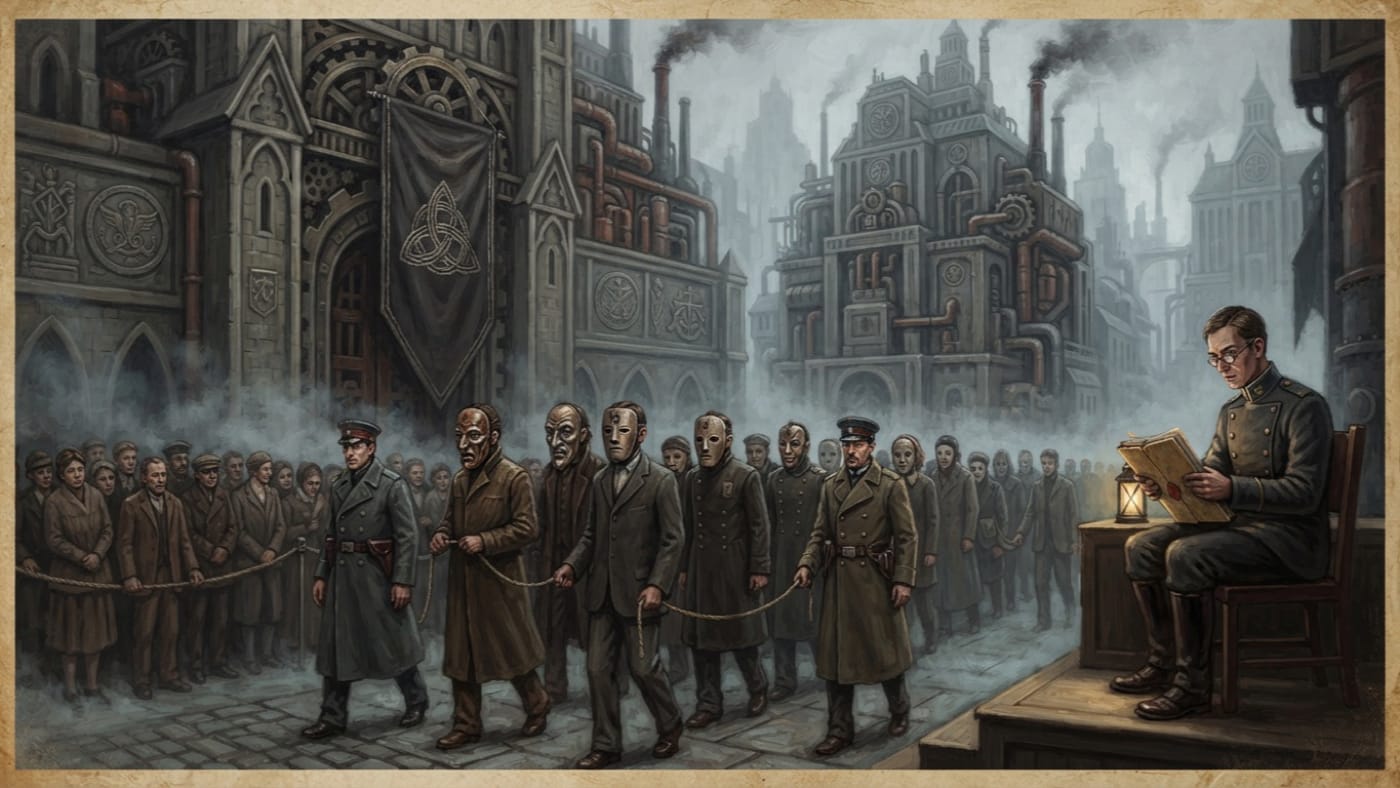
The face may be hidden. The number remains.
The Carnival of the Triune Knot requires a licensed masked procession. Every face may be hidden; every mask remains numbered, stamped and measured. The wearer may withdraw a countenance. The Registry keeps the number.
Codex Ref. XIII.1.89-484
Chalkling
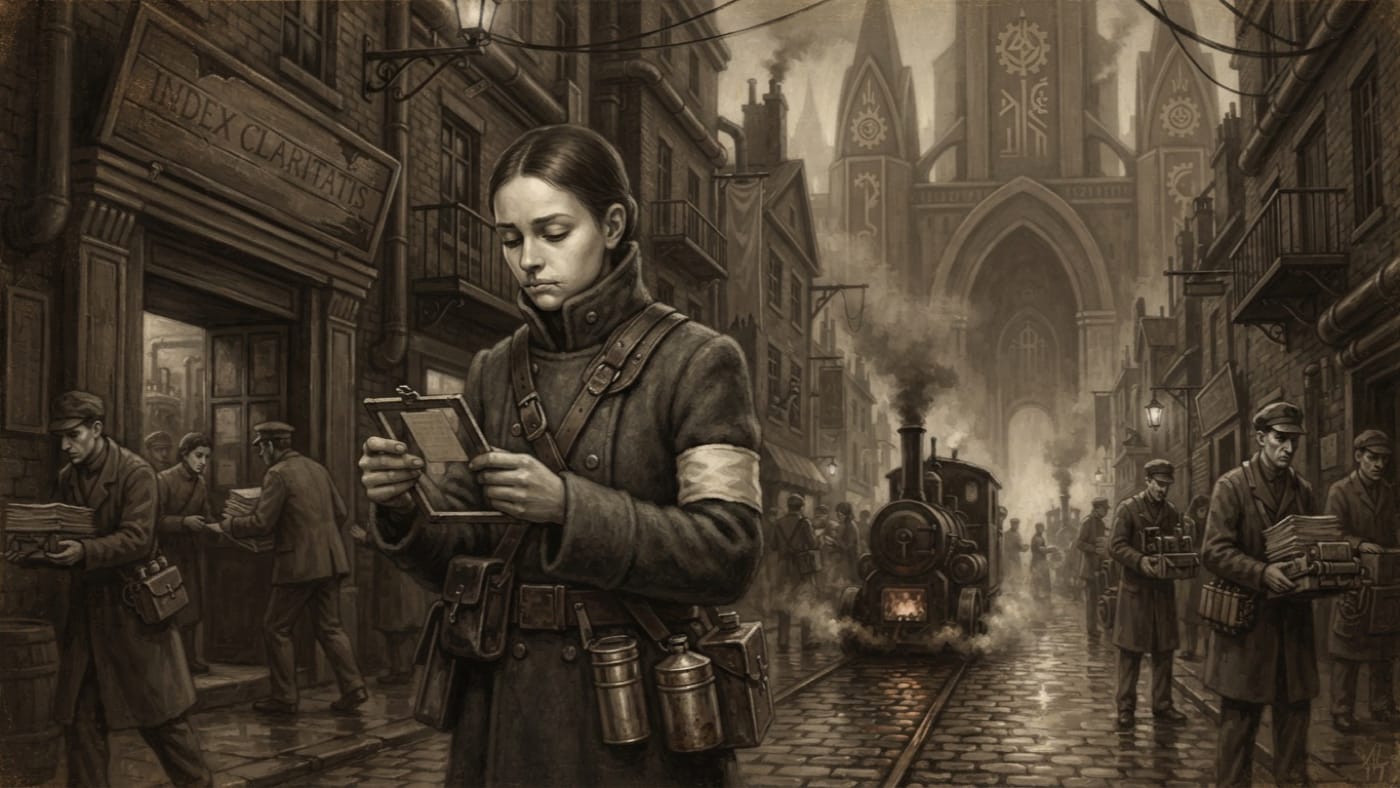
The junior carries the ear; the Examiner owns the voice
Chalklings are the entry rank of the White-Mantled Inquisitors: sign-checkers, errand carriers, and listening ears taught to remember forbidden words without saying them.
Codex Ref. XII.49.02-001

Chancellery of Colors
No hue is innocent after public display
Heraldry sub-body that licenses the Synod's colours, issues quarterly swatch sets, and converts pigment drift into jurisdiction.
Codex Ref. VIII.1.03-004
Chancellery of Permitted Animals
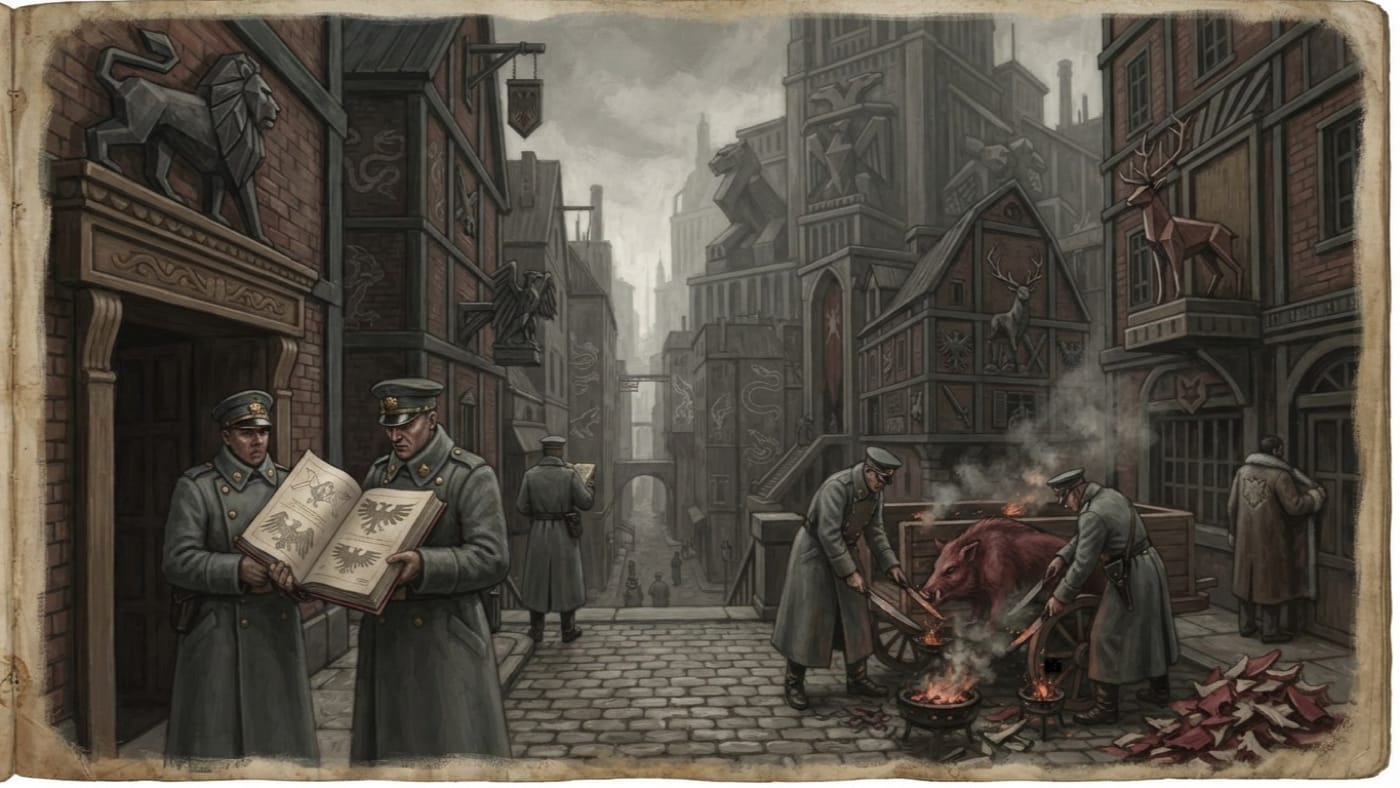
The family borrows its beast on terms
Heraldry's Chancellery decides which beasts may appear on lawful crests. Lions, eagles and stags survive as geometry; wolves and serpents are erased. The bear remains under review.
Codex Ref. VIII.1.03-005
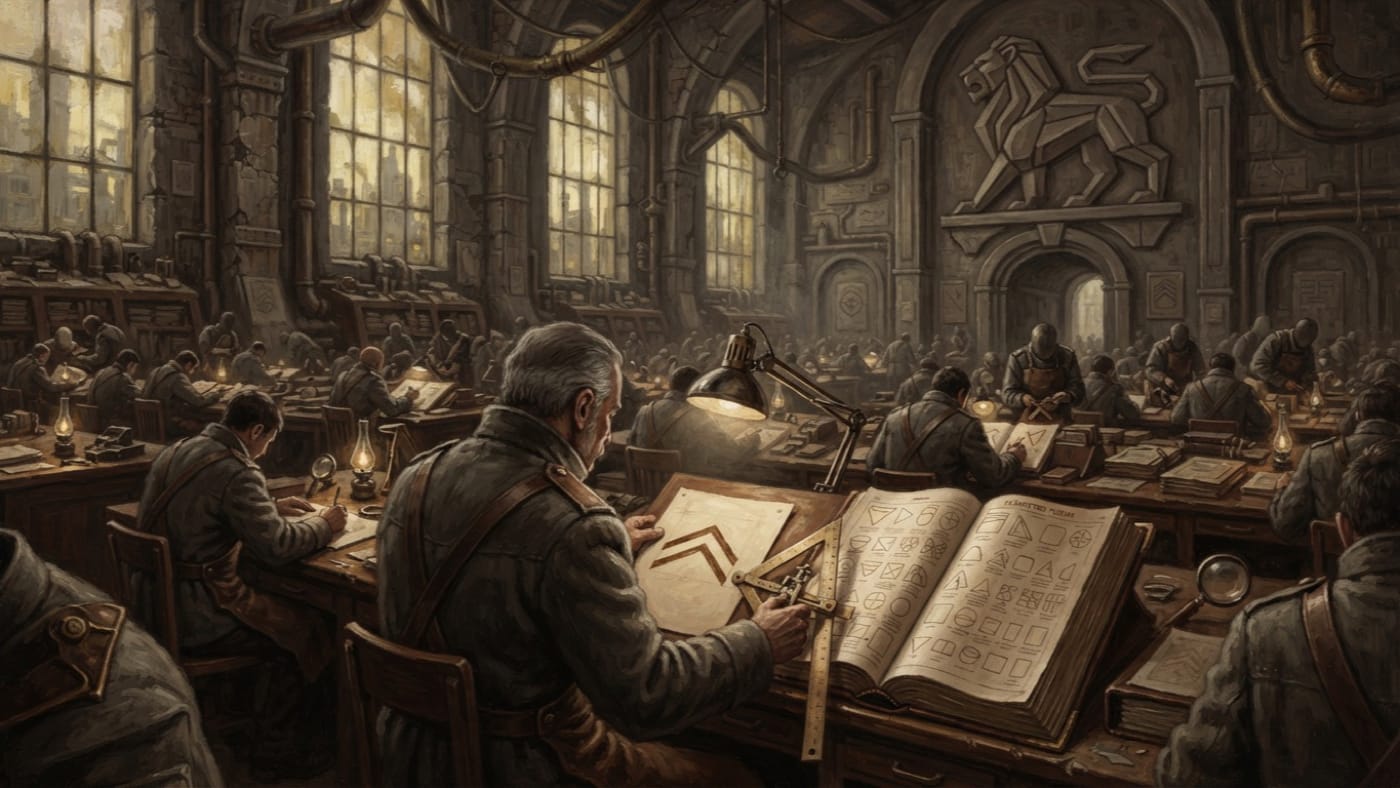
Chancellery of Permitted Forms
Even a corner must petition for absolution
Heraldry's geometry office licenses every bend, circle and corner before display. A lawful shape still requires the right surface, occasion and Armorial entry.
Codex Ref. VIII.1.03-006
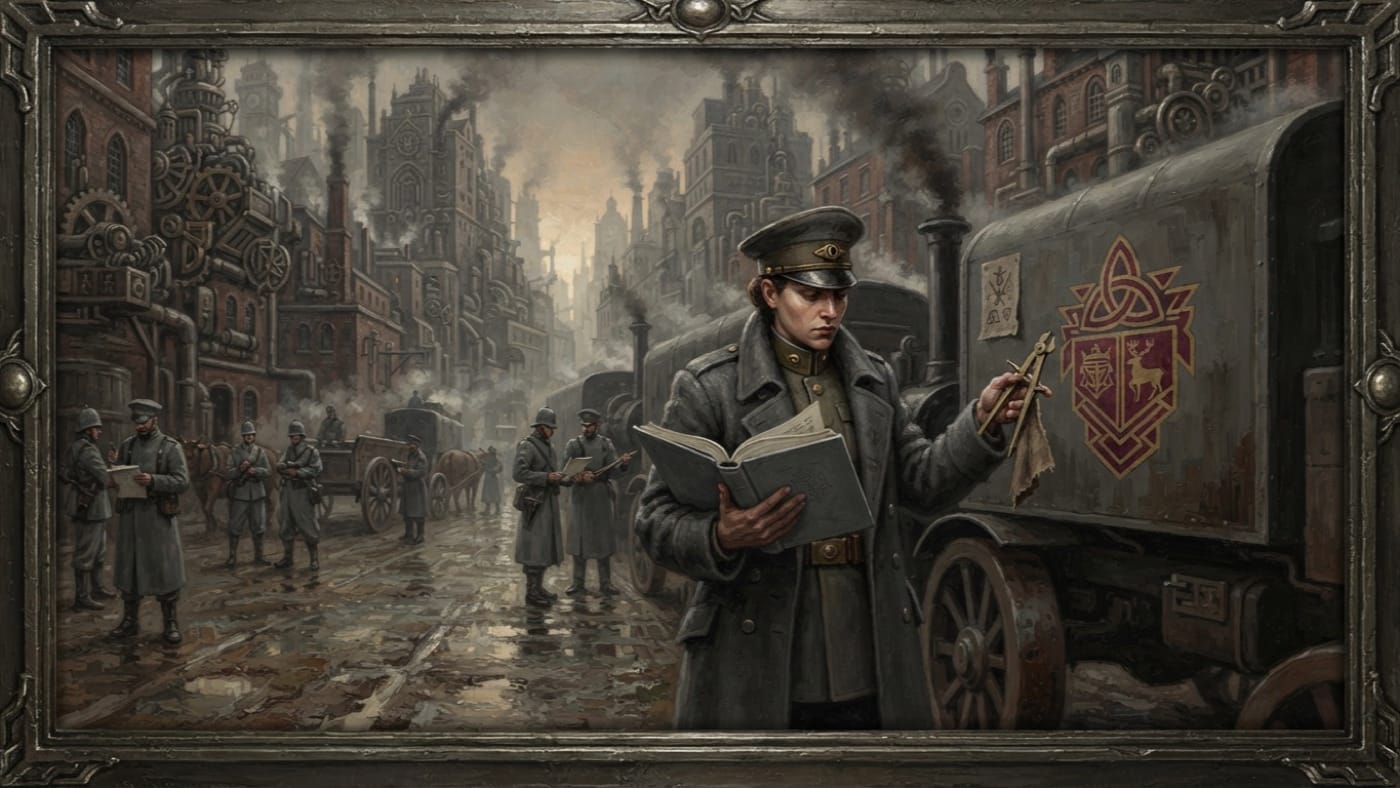
Chromarch Codex
The law arrives late and remains binding
The Chromarch Codex teaches Sigil Inspectors what loyalty may look like: permitted symbols, colours and geometries, corrected quarterly and binding before the district receives its copy.
Codex Ref. VIII.1.03-003
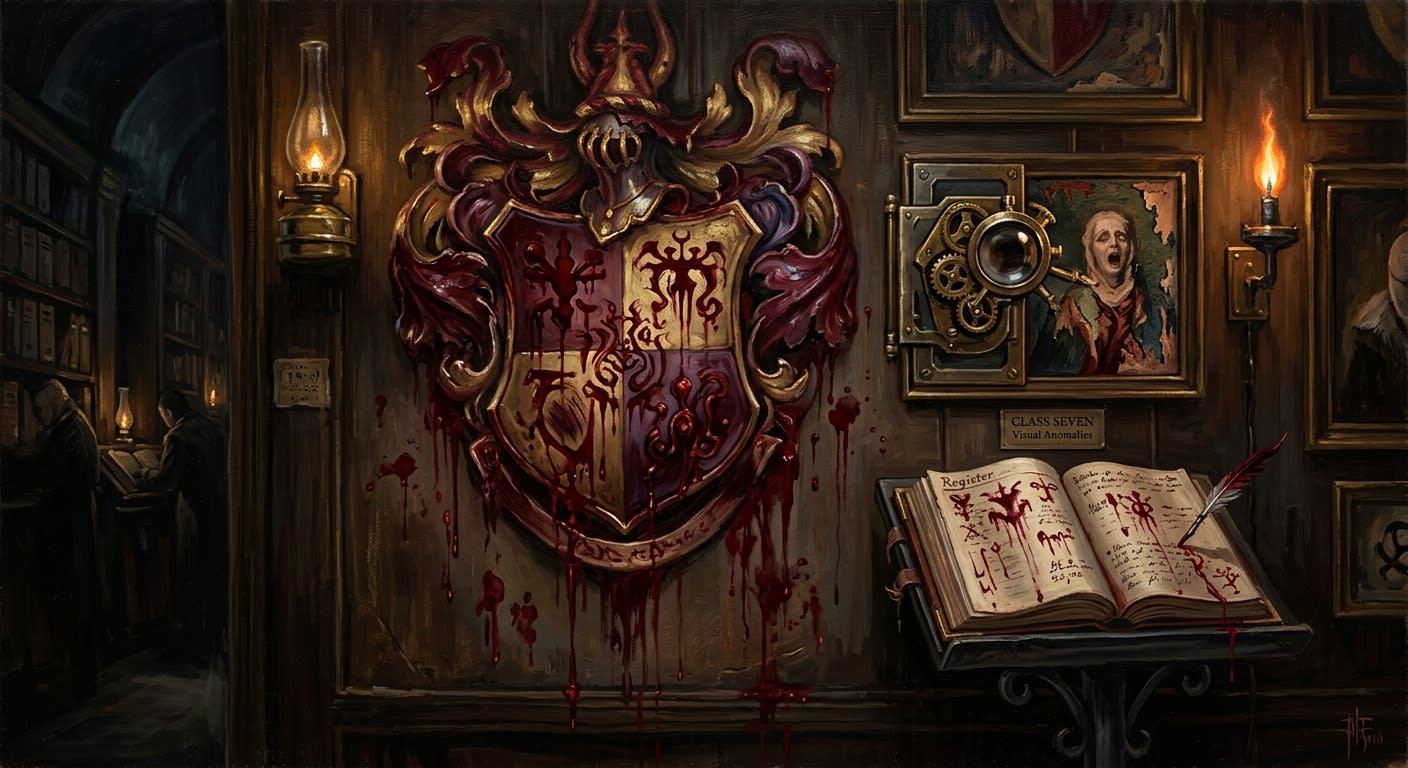
Class Seven Visual Anomalies
If the paint sings, leave the wall to the Creator
Heraldry’s red-ink doctrine for marks that move, sing, sweat, restore themselves, enter dreams, and teach the Inspector why courage needs a leash.
Codex Ref. XIII.1.83-001
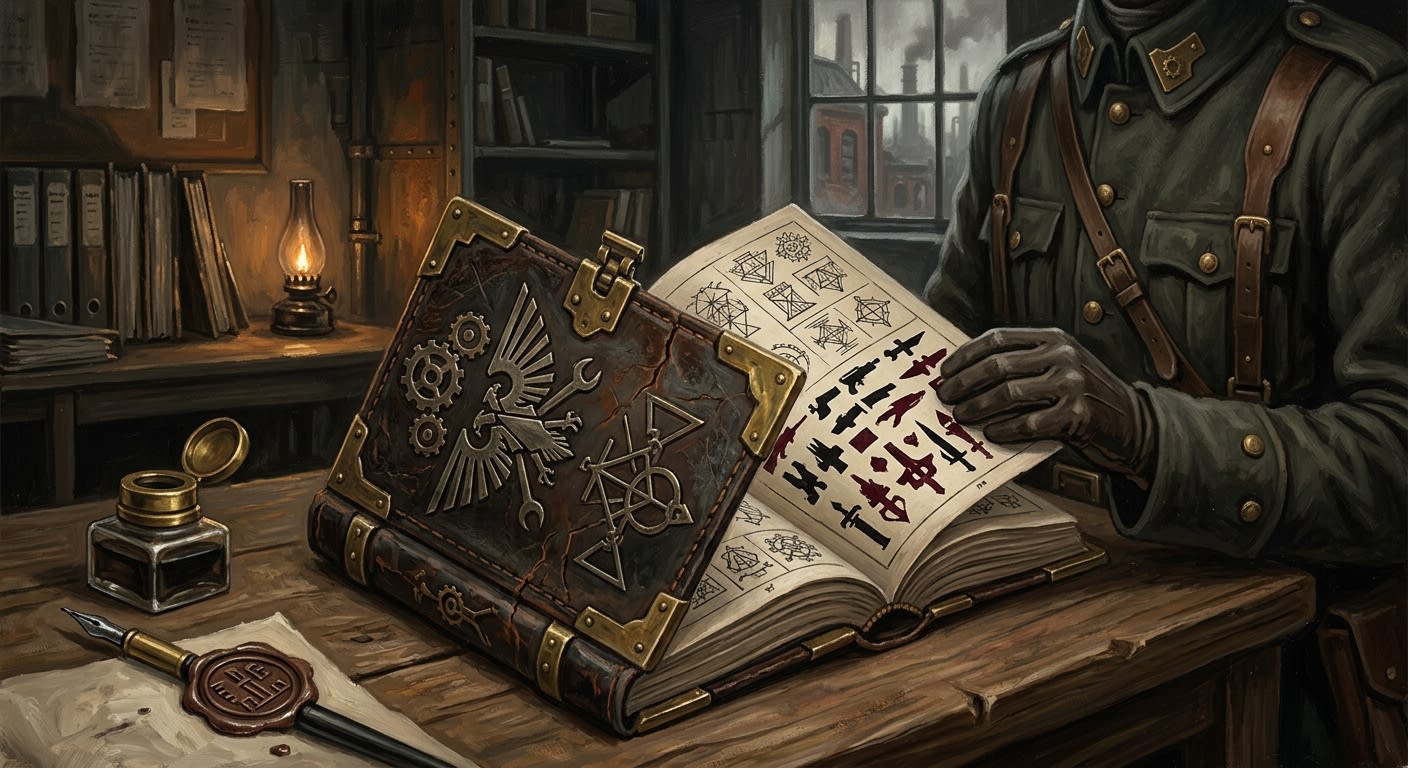
Codex of Permitted Symbols
The little book that makes walls guilty
Pocket abridgement of the Armorial carried by Sigil Inspectors, where lawful shapes are licensed, colours are weaponised, and mercy is a counterfeit edition.
Codex Ref. XIII.1.82-001
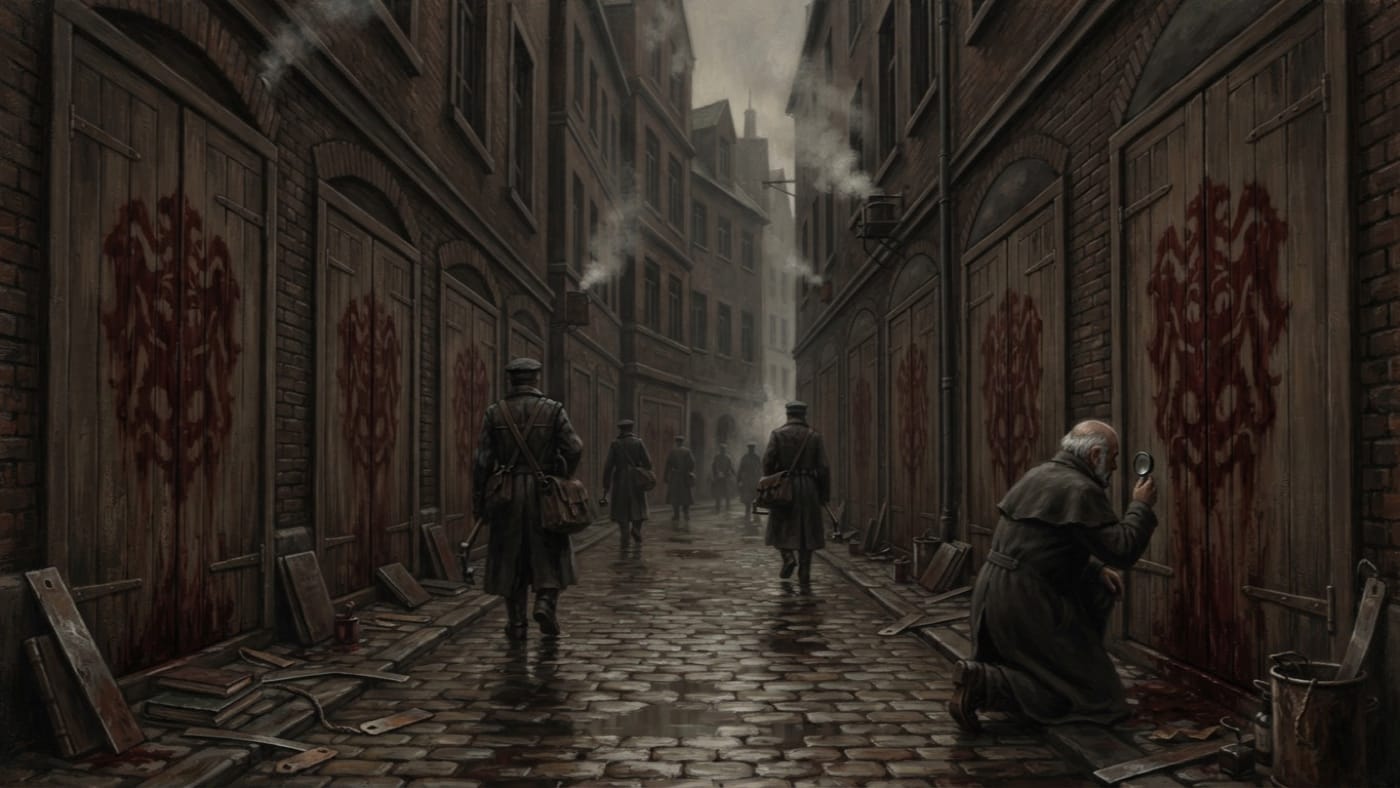
Cologne Stain
The crest vanished; the stains outlasted the paperwork
In A.S. 197, three hundred Cologne doors bore a crest that returned after sixty scrapes. It vanished on the fourth day; the stains remained. Heraldry filed the incident as resolved.
Codex Ref. VII.8.10-197

Crimson Boar of Saxony
The picture that outlived its guild and earned a sentence
A dead Saxon guild's red boar returned on convoy banners at Essen in A.S. 106. Eighty-seven died. Heraldry condemned the device by name in A.S. 108 and kept a banner to teach Inspectors what to scrape.
Codex Ref. XIII.1.82-002
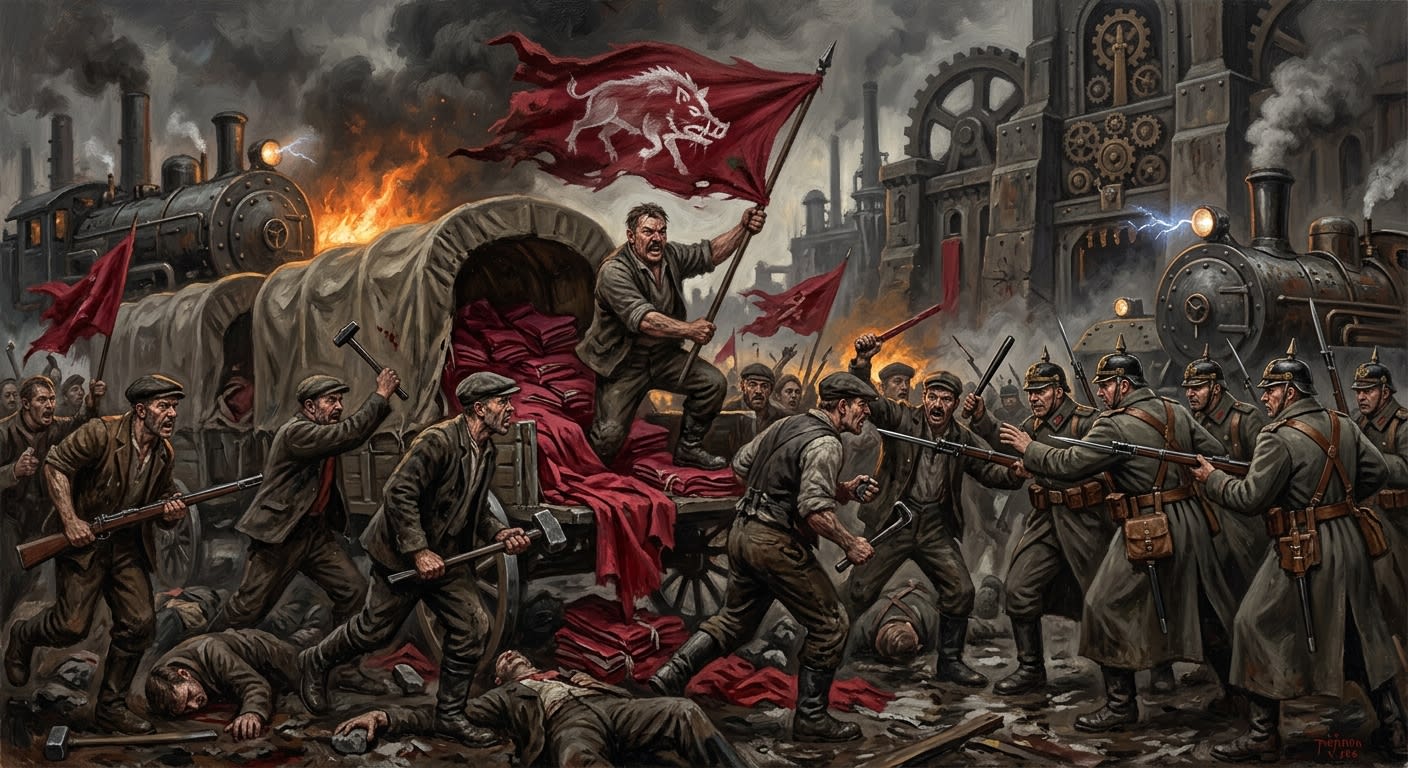
Crimson Gate Riot
Eighty-seven dead because a painted boar remembered too well
A.S. 106 Essen gate riot in which the crimson boar of a dead Saxon guild turned convoy cloth into command, killing eighty-seven and birthing the Beast Proscription.
Codex Ref. VII.8.10-033
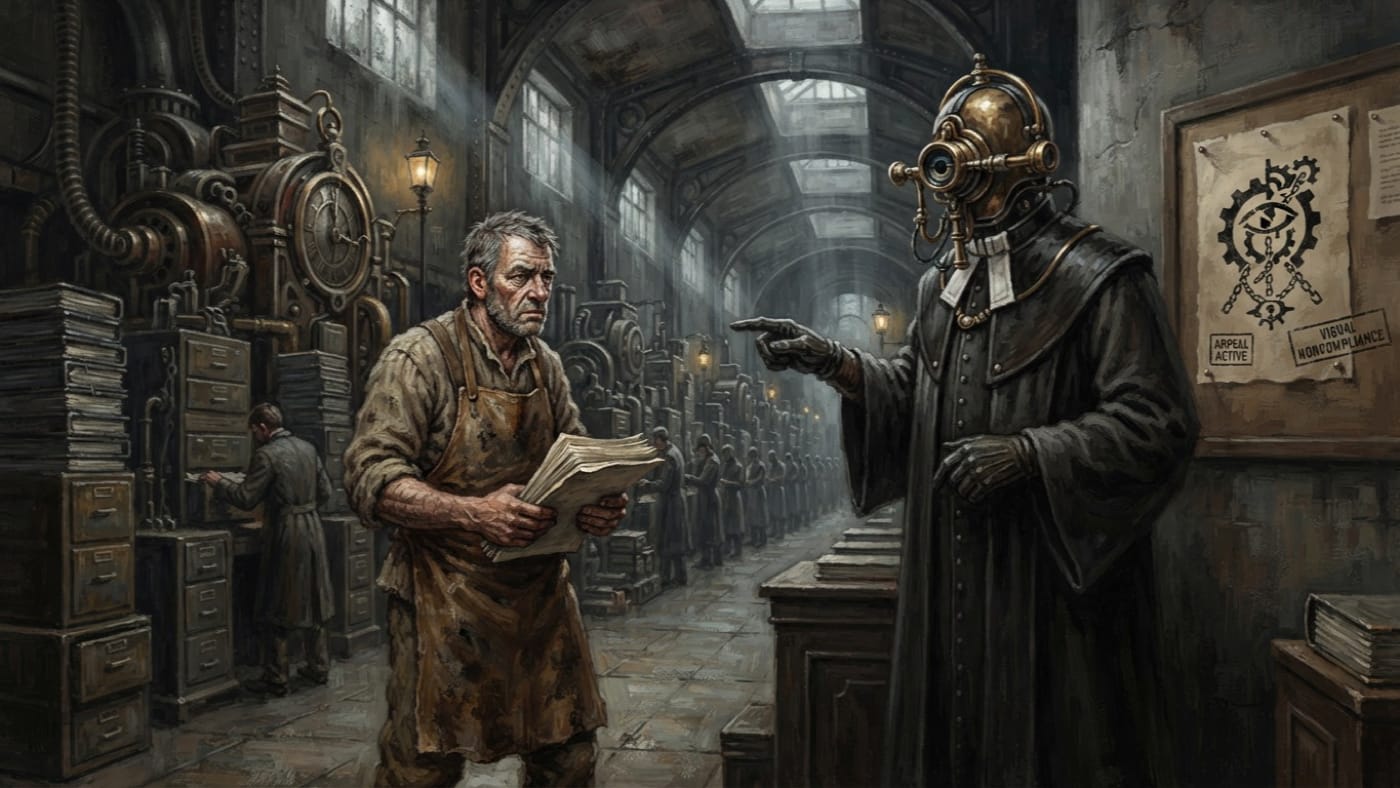
Ewald Fenn
The cooper whose doorbell became doctrine
Ewald Fenn, cooper of Mainz, lost a doorbell to Casselius and appealed a stamp he could not read. The Bureau calls this visual noncompliance; his appeal remains active.
Codex Ref. III.2.01-201
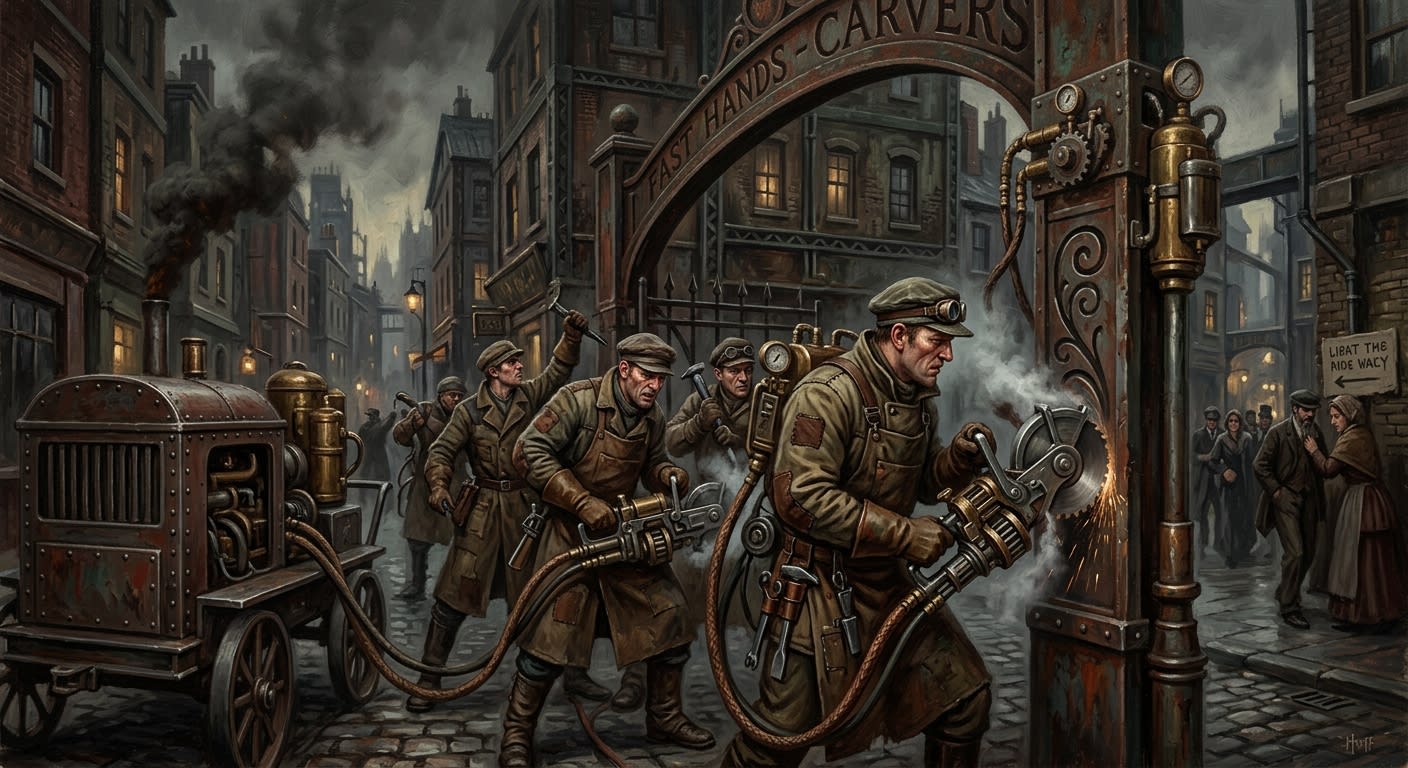
Fast Hands, Gate-Carvers
The marked door before dusk is the state admitting it was late
Fast Hands are the accelerated-compliance faction within the Gate-Carver trade, cutting thresholds quickly enough to legalise streets before hunger, riot, or Purity arrives.
Codex Ref. XII.19.02-002
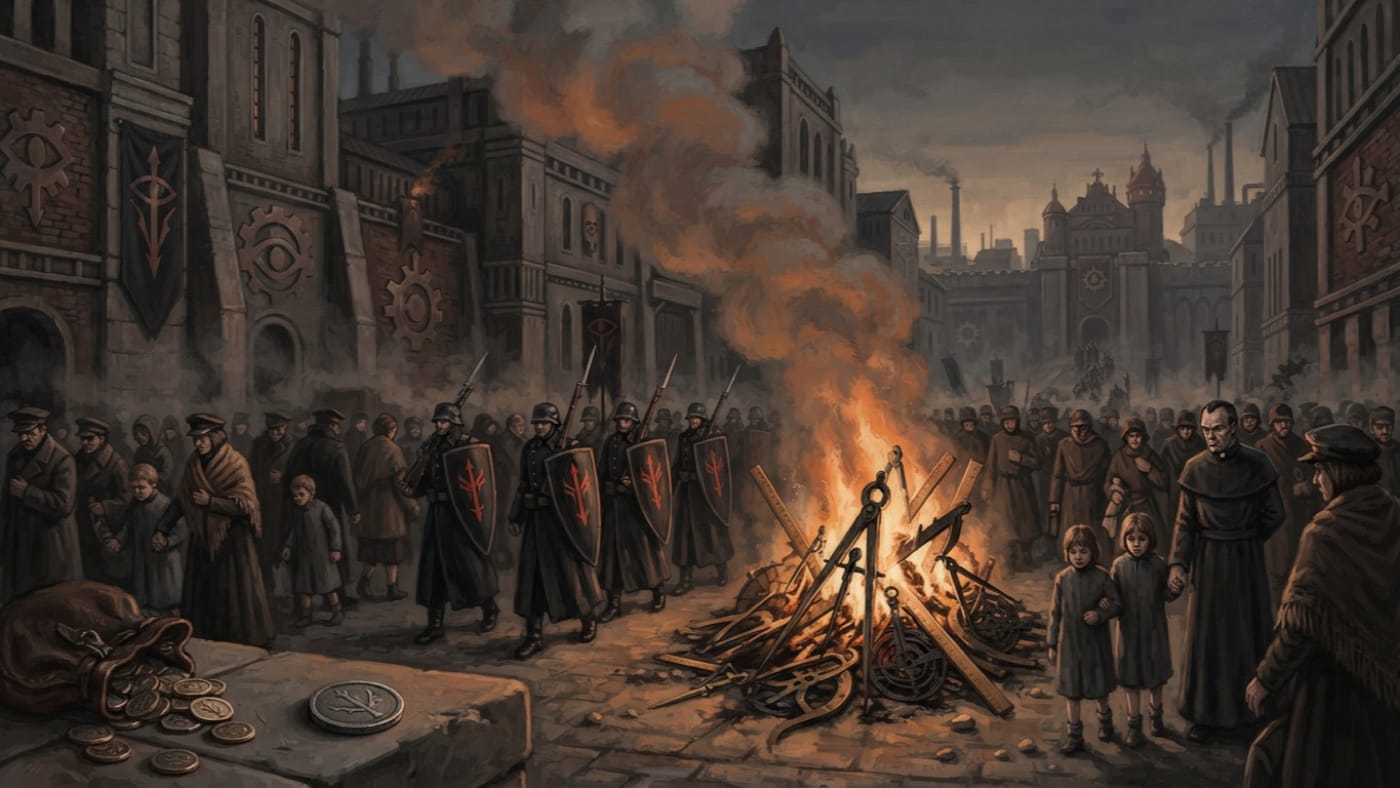
Flaming Sword
Permission has weight, and obedience has smoke
The Flaming Sword carries Synodal authority on coinage and lends its name to Strasbourg's burning of Rationalist instruments. I record its public uses; the emblem's origin remains unproved.
Codex Ref. XIII.1.03-001
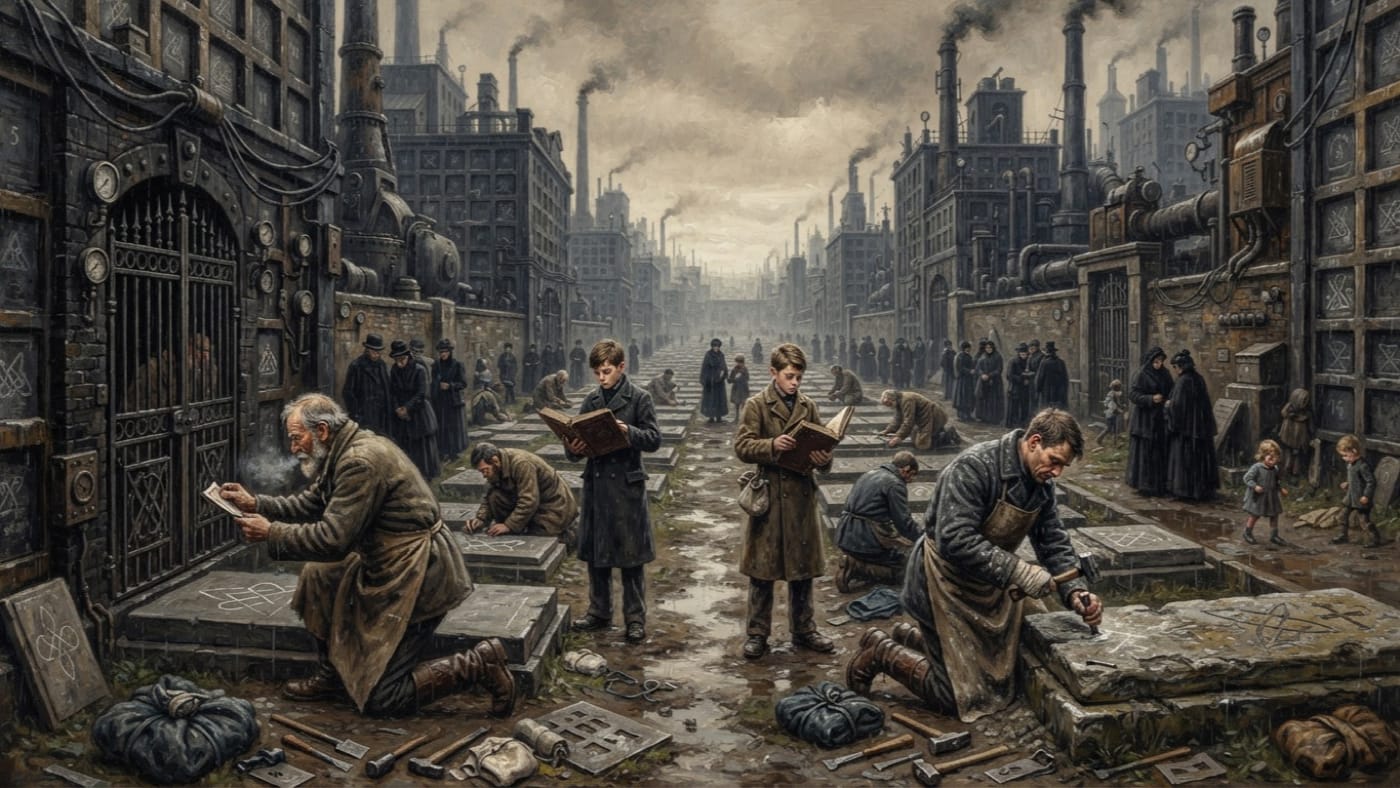
Grave-Sealers
Stone remembers; the Registry demands a copy
Current survey, A.S. 201: Grave-Sealers are the Gate-Carver faction that cuts and registers burial thresholds. Their slabs are legible to Heraldry; the dead are less obliging.
Codex Ref. XII.19.02-003
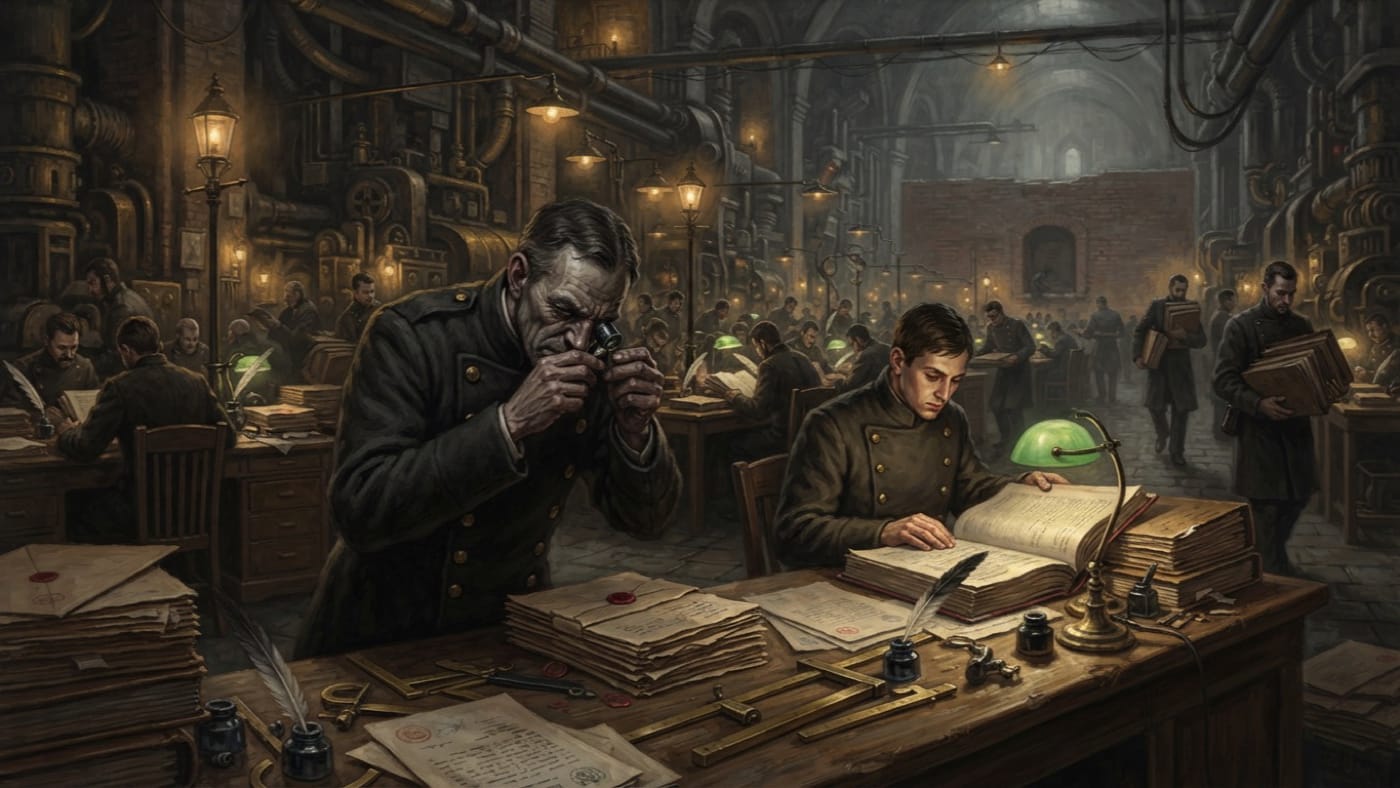
Great Audit Purge
Forty-seven clearances voided; one maker unresolved
In A.S. 188, one flawed counterfeit die cost Strasbourg forty-seven convoy clearances, two hundred and fourteen livelihoods, and eleven immurements. The Bureau closed the batch. The forger remained unfound.
Codex Ref. VII.8.12-001
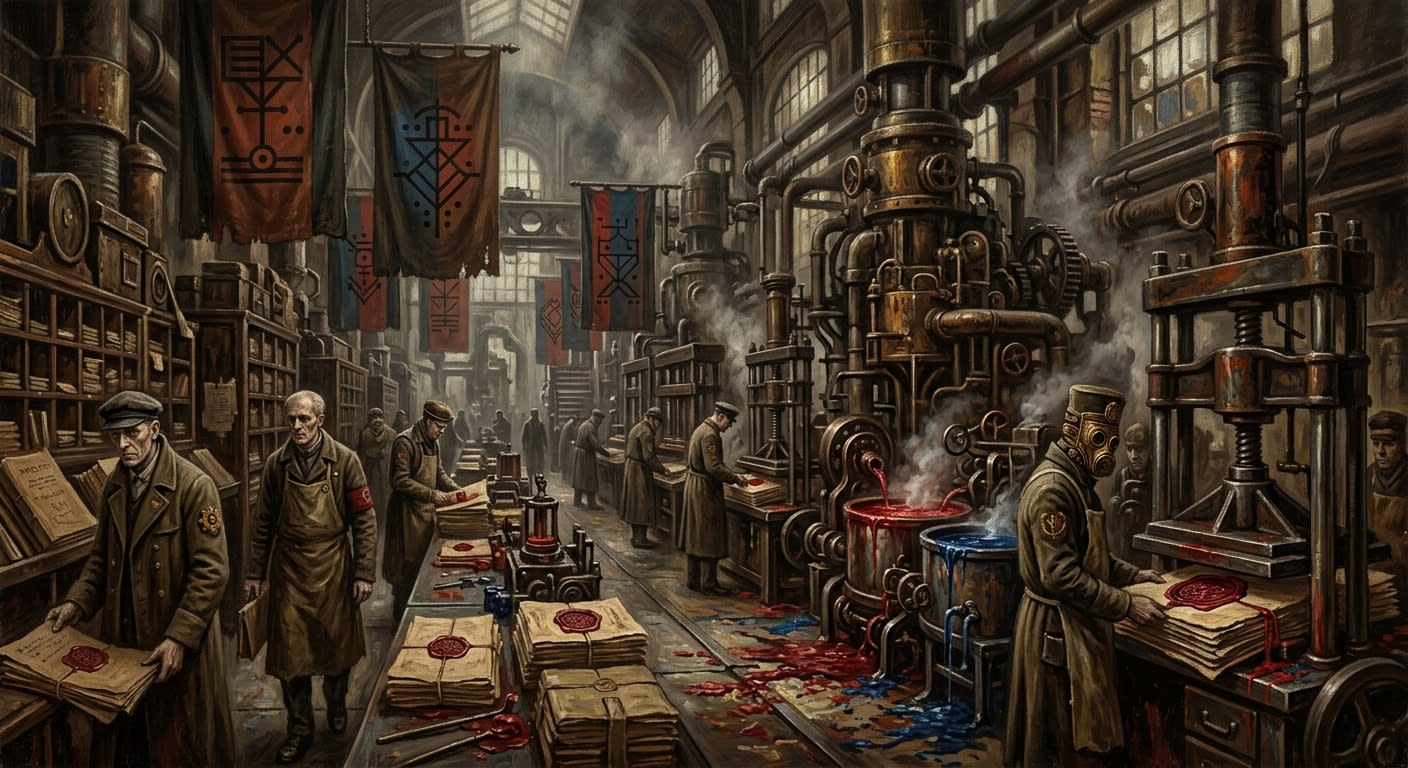
Hall of Seals
Where wax learns to rule and colour awaits sentence
The Hall of Seals is Strasbourg's low clean engine of visual law, where Heraldry and Masks and Seals ration colour, custody dies, and make wax sovereign.
Codex Ref. II.1.04-002
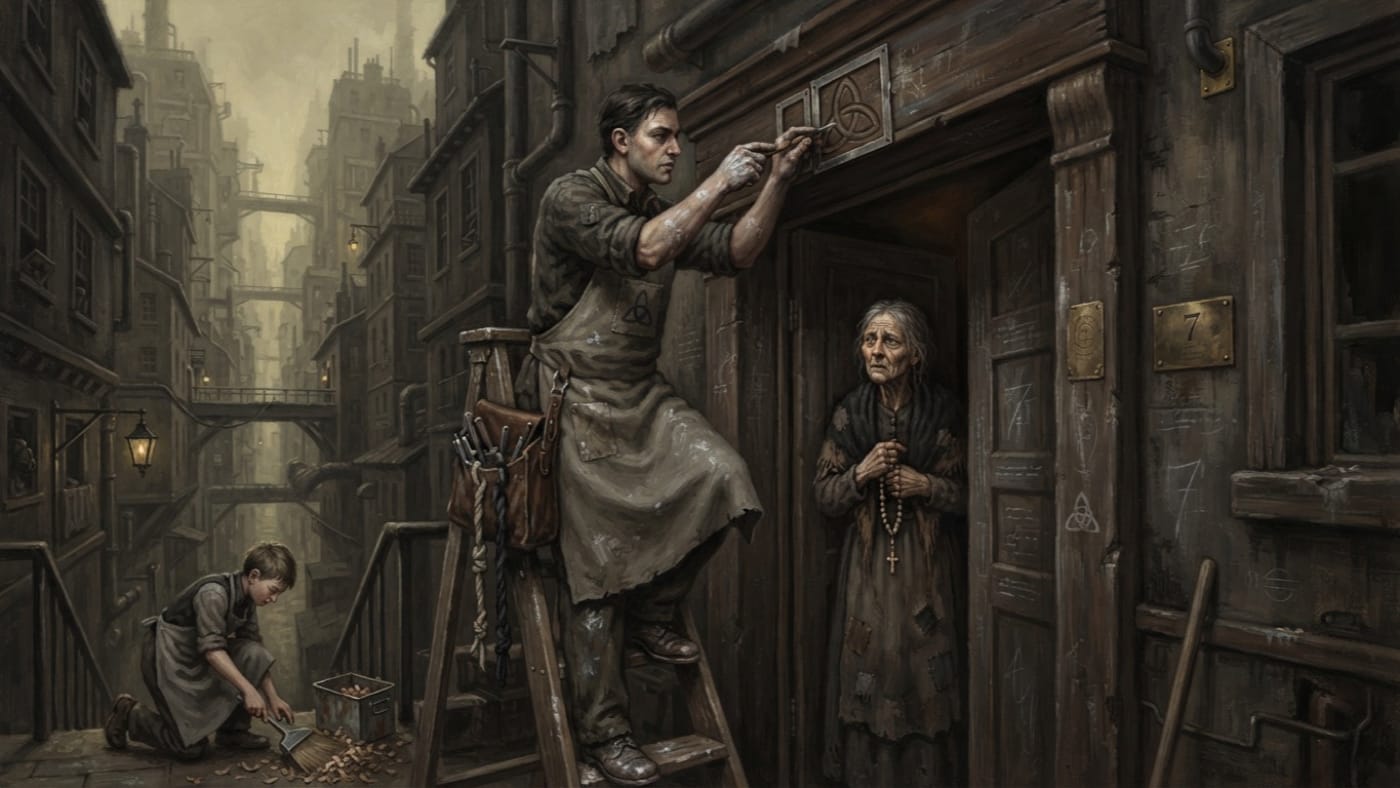
House-Knotters
Name the living; let the Registry read it
Current survey, A.S. 201: House-Knotters are the Gate-Carver faction that cuts and registers household thresholds. Families pay for protection; the Registry receives a legible address.
Codex Ref. XII.19.02-004
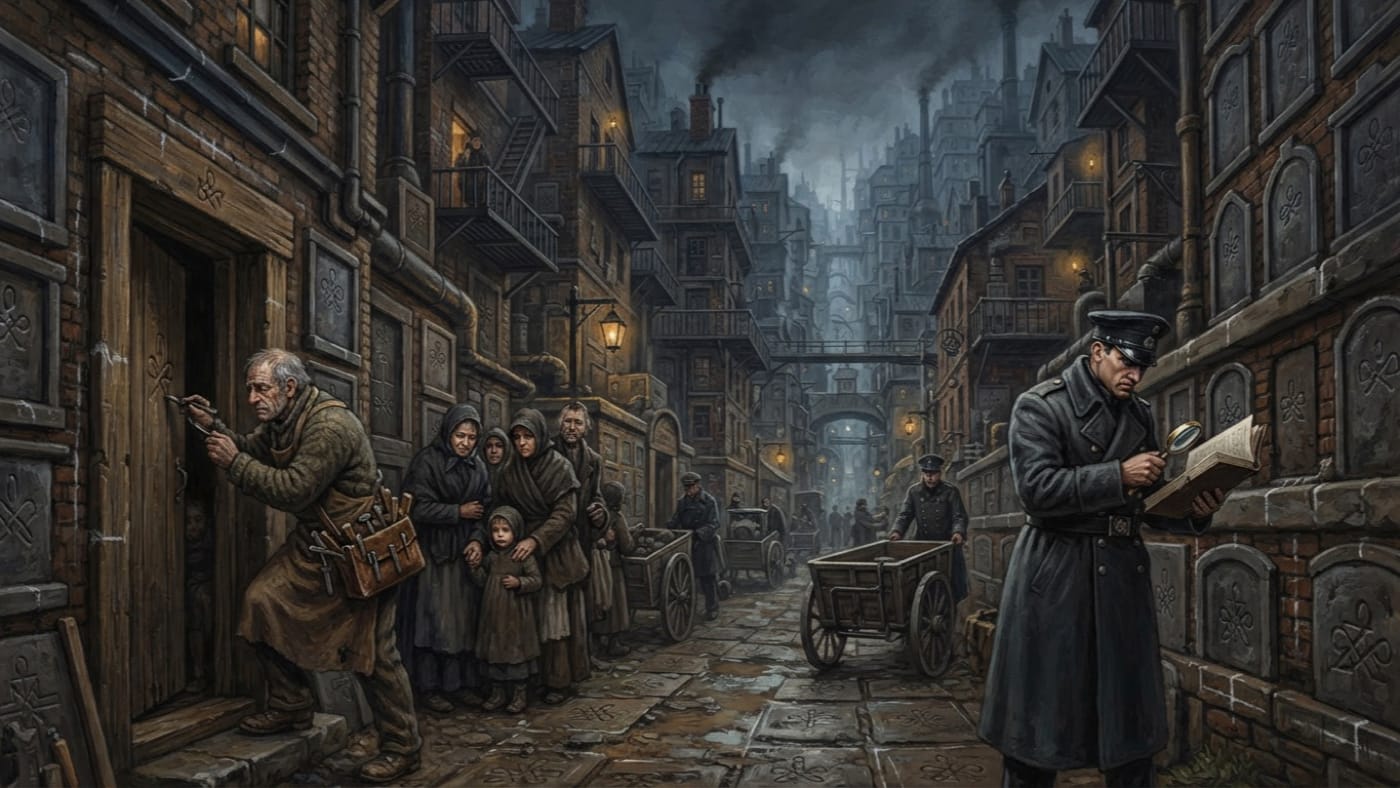
Housing and Burial Codes
A roof and a grave remain yours while the marks agree
The Housing and Burial Codes bind roofs and graves to the same ledger. A valid Triune Knot makes a household legible; a failed mark makes its stone available for confiscation.
Codex Ref. XIII.1.07-014
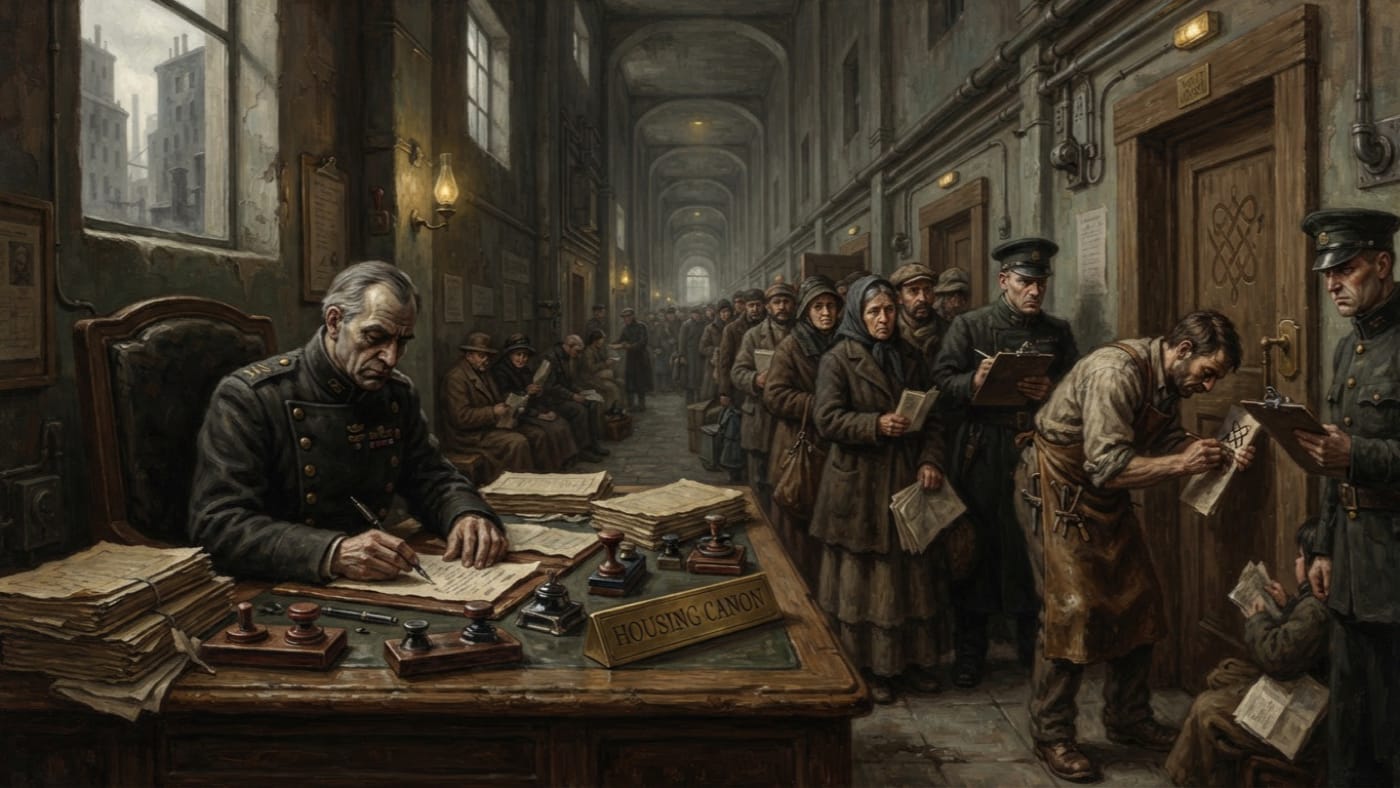
Housing Canon
Praise on the day, fines at month's end
The Bastion Housing Canon balances lawful households against marked thresholds, praising the carver who prevents today's riot and fining both haste and delay when the monthly tables arrive.
Codex Ref. XII.19.03-001
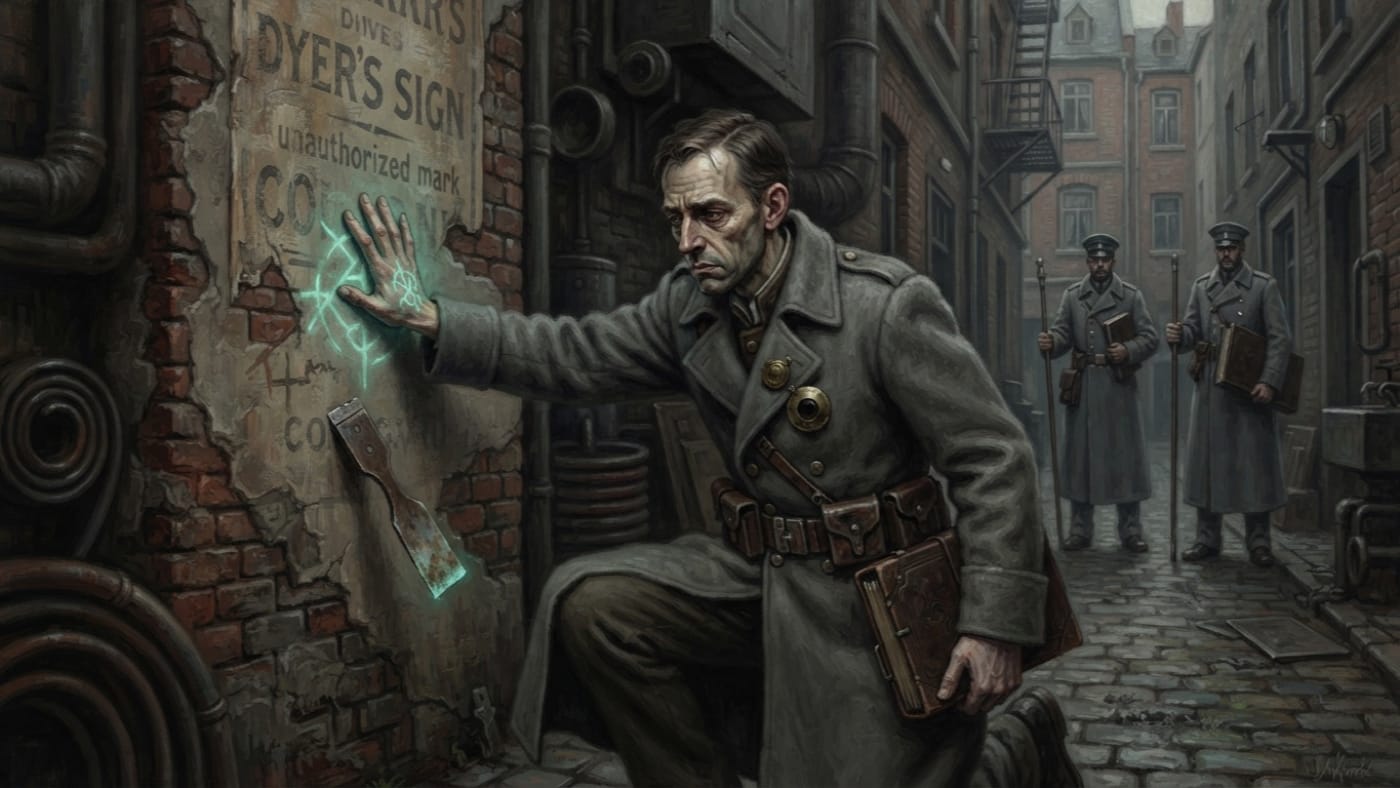
Inspector Marn
The inspector whose hand became a surface
Inspector Marn survives in Report 44-K: his blade began copying a sign onto his palm. The Bureau took the wall and filed the household as evidence; his subsequent condition remains unentered.
Codex Ref. III.2.01-044
Inspectorate
A decree is ink, and ink needs legs
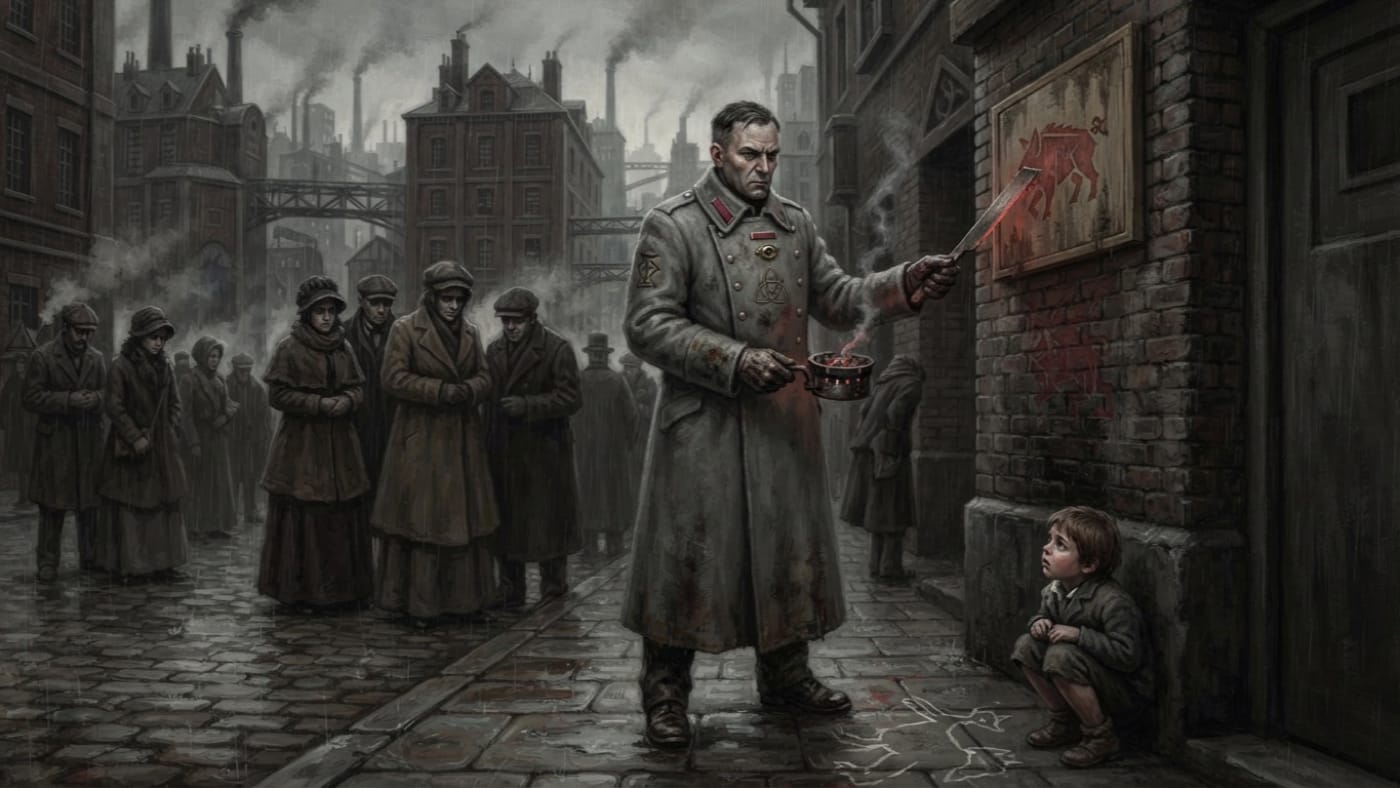
The Inspectorate of Visual Compliance carries Heraldry's judgments into the street. Its licensed examiners measure a crest, issue a citation, and heat the blade; even a child's chalk animal must answer to the register.
Codex Ref. VIII.1.03-002
Lintel Pogroms of Cologne
Fourteen perfect Knots, three sealed niches, and a Registry to count the tools
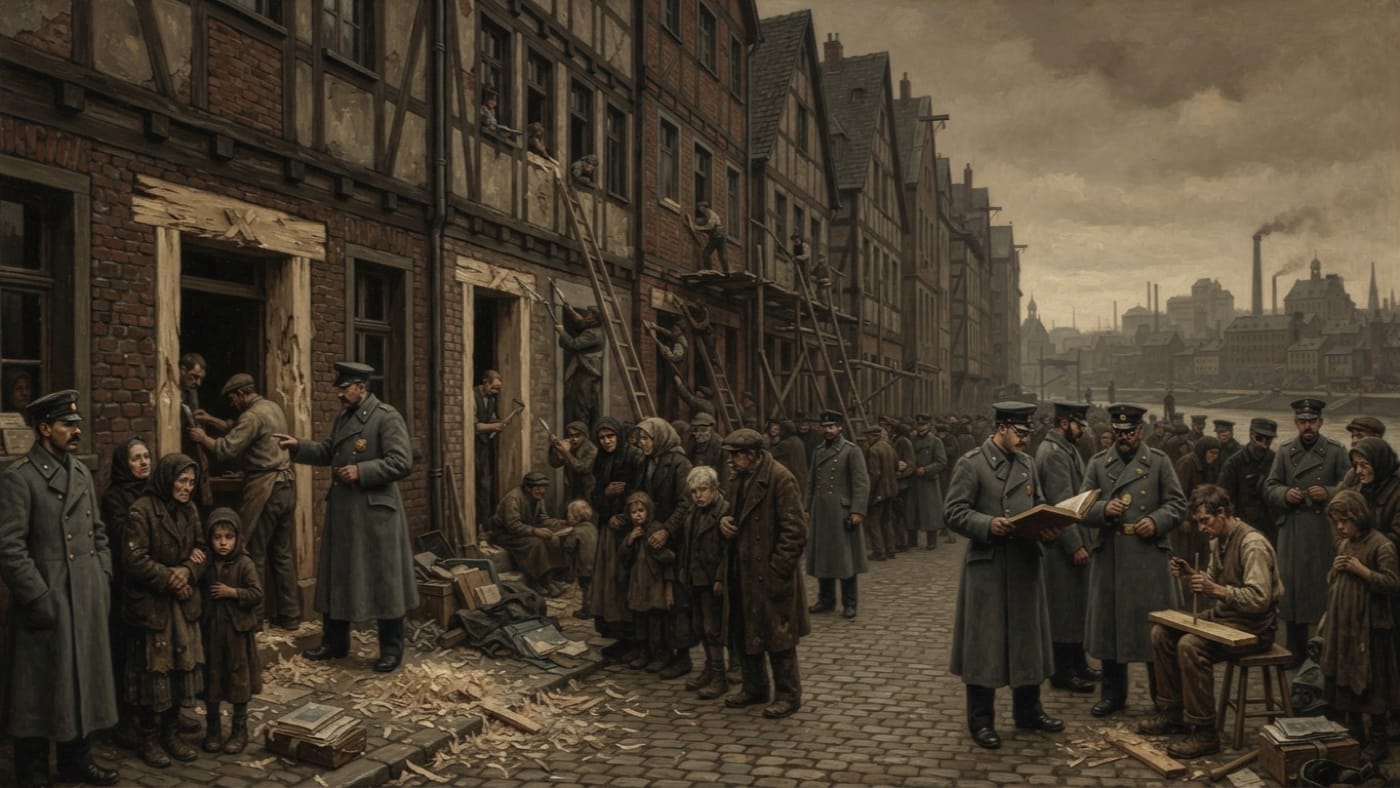
In A.S. 112, fourteen perfect false Knots cost Cologne's river quarter its lawful thresholds, three carvers their air, and Heraldry the trouble of founding the Knotwright Registry.
Codex Ref. VII.8.10-112
Mainz chime-mark affair
Three marks, six pages, and an appeal still waiting
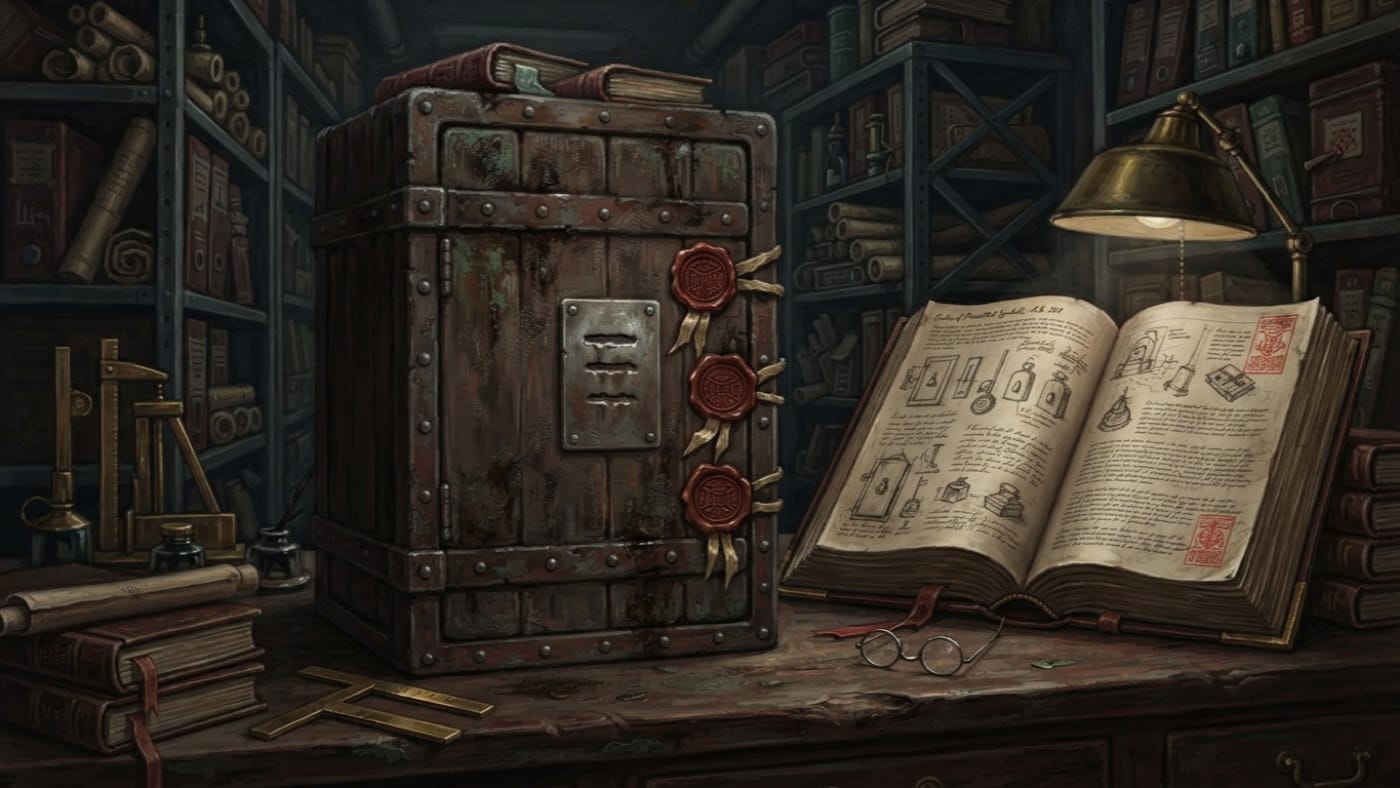
At the A.S. 201 survey, Fenn's doorbell remains under three seals and his appeal stays active. Casselius made three descending marks a case; the Codex made one paragraph six pages.
Codex Ref. VII.8.10-201

Metric Saturation Syndrome
The holy arithmetic enters the skull and finds office space
Internal medical classification for Auditors gone to numbers: the service deformation by which citizens become compliance probabilities before they remain human.
Codex Ref. XIII.1.83-001
Night of Masks
Even delight must show its wax
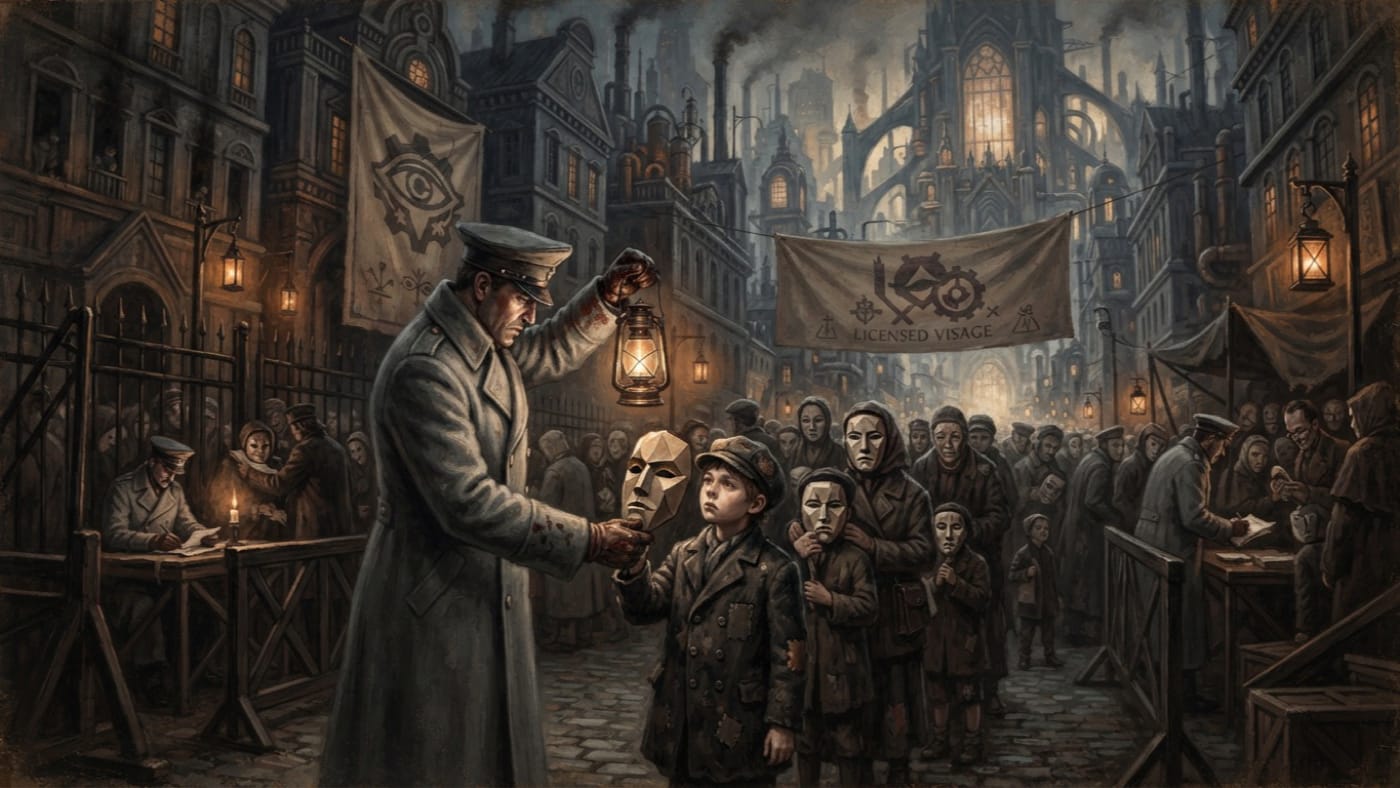
On the eve of the Feast of the Sealed Door, the Synod licenses its carnival faces. Heraldry approves the design; Inspectors demand the wax. Even a child must learn to show permission.
Codex Ref. XIII.1.89-1919
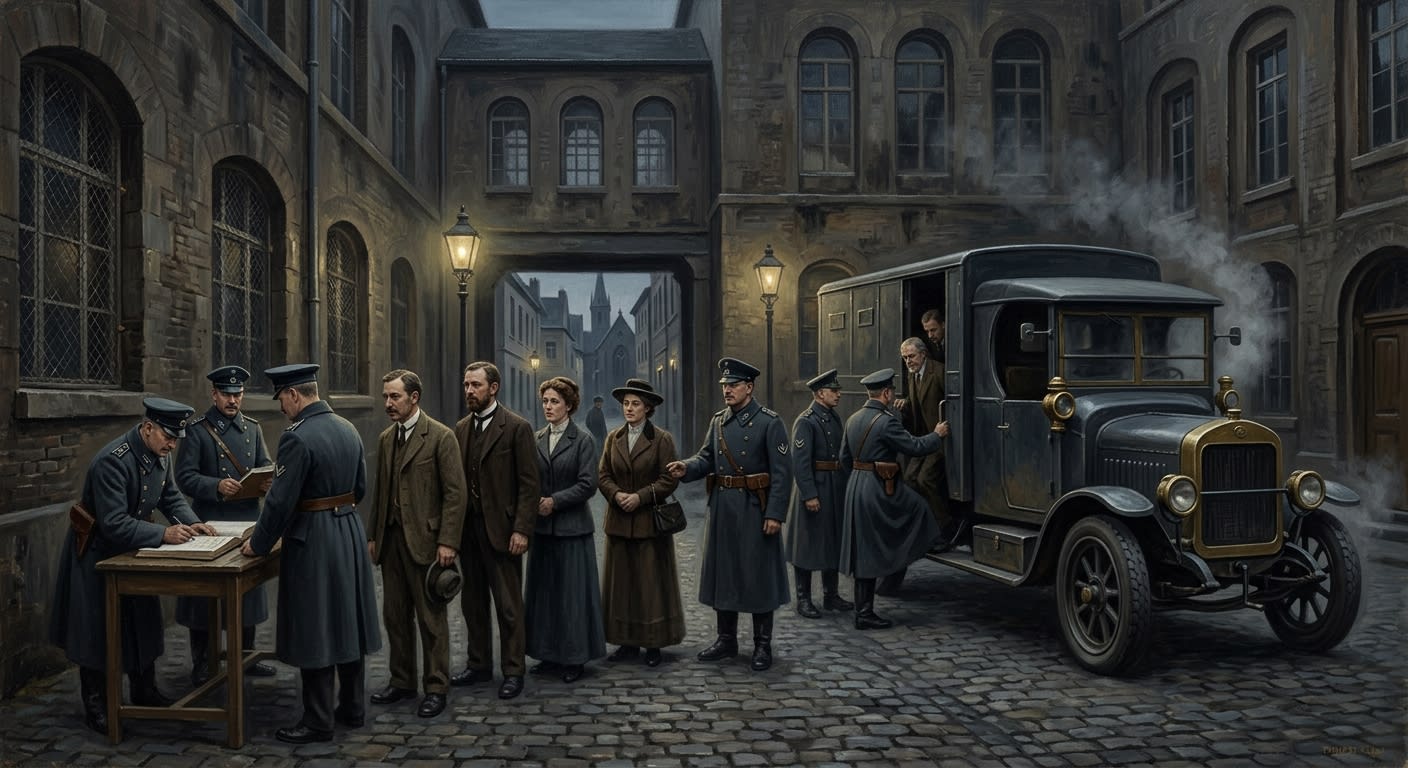
Quiet Purges of A.S. 112
The year absence learned to sign the payroll
The A.S. 112 Rhineland removals of 411 teachers, choirmasters, and Street-Vicars proved Purity could correct without spectacle.
Codex Ref. VII.8.10-010
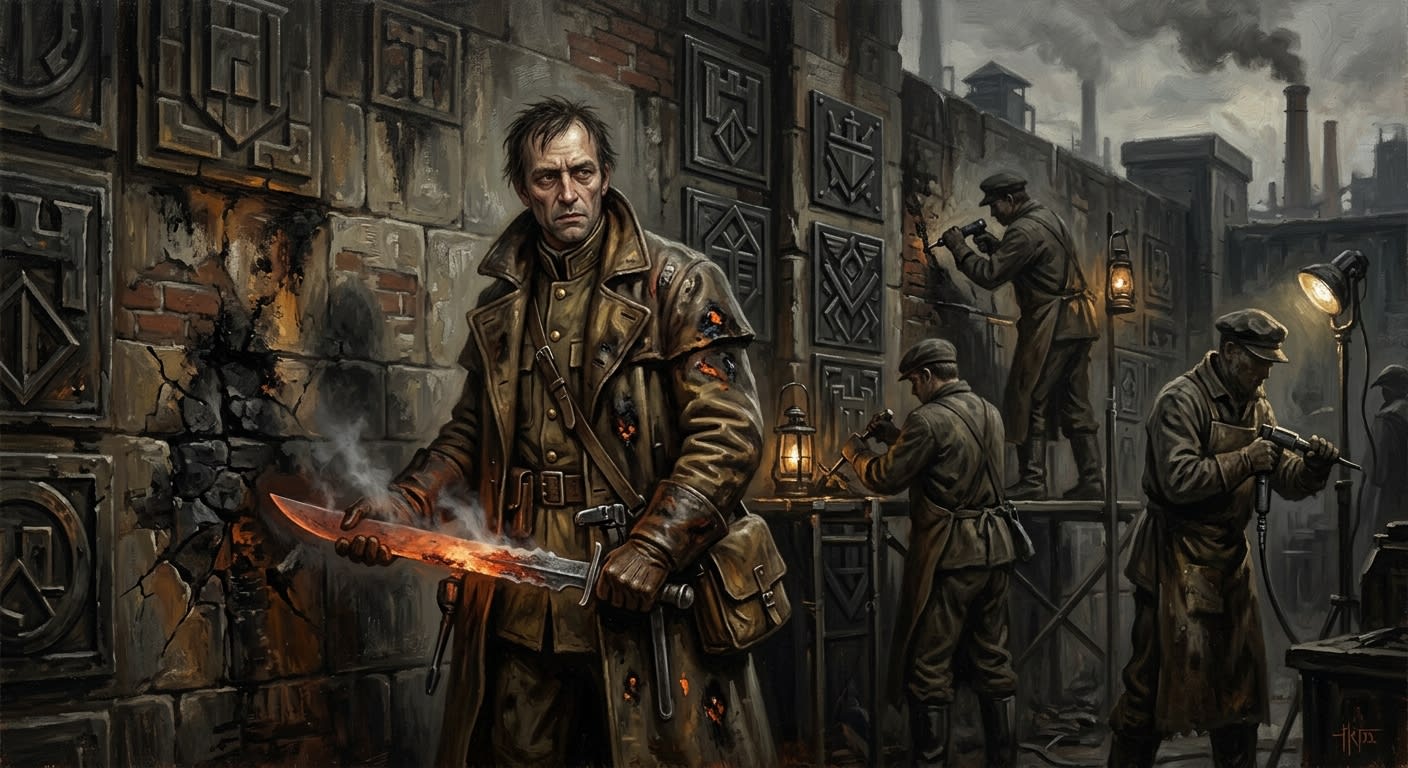
Saint Verral of the Clean Field
The hot blade is kinder than the singing wall
Doubtful patron of Sigil Inspectors and field scrapers, useful because his hot blade gives Heraldry a saint for every wall that must be made obedient.
Codex Ref. III.2.01-144

Seal-Forger, Counterfeiter
The Synod's confession, pressed in unauthorised wax
The seal-forger is the Synod's shadow — pressing wax into survival where the Bureau presses wax into doctrine. Eleven immurements signed, six thousand fed, and the woman who may never have existed.
Codex Ref. XII.41.01-001
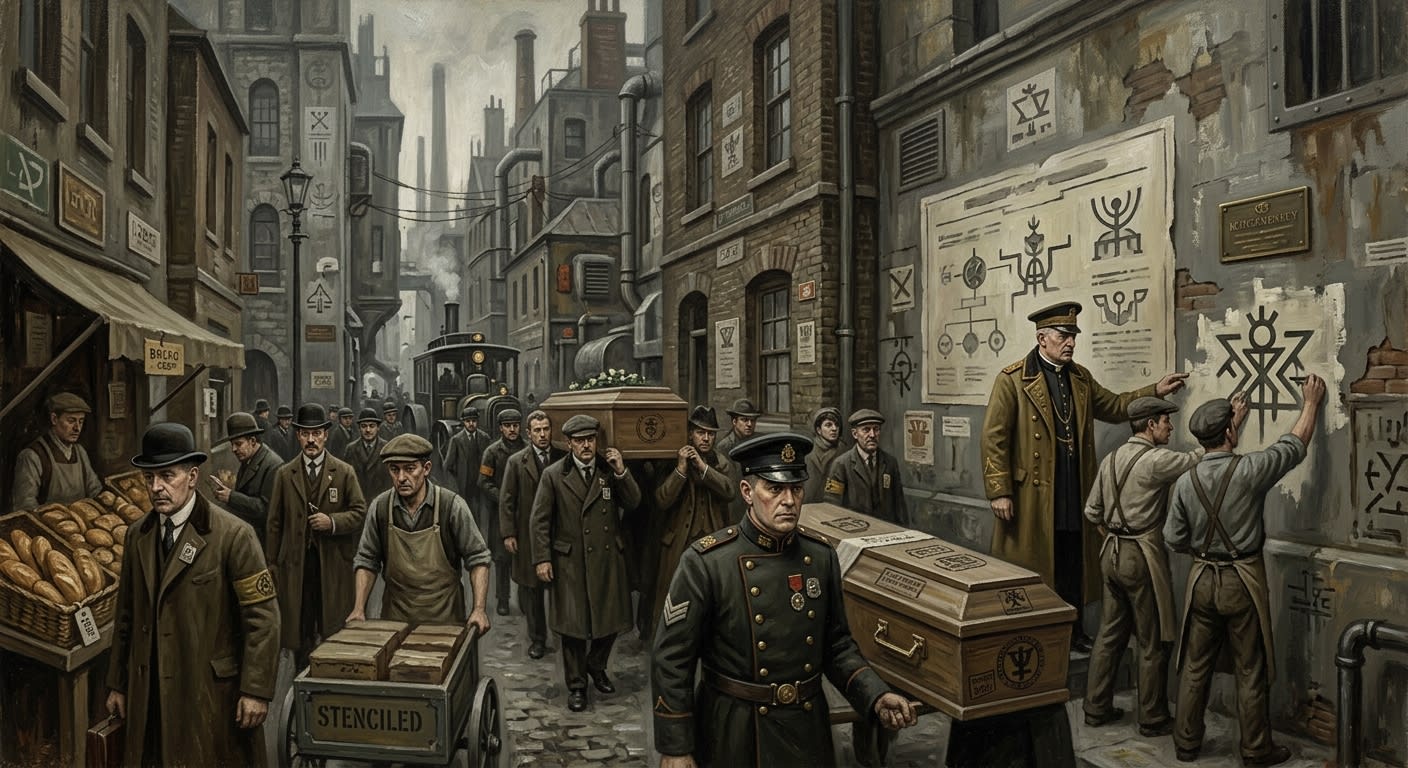
Standing Order 14-C
Every surface shall confess before speech begins
Standing Order 14-C teaches walls, bread, badges, coffins, and brows to confess: no lawful surface remains visually unclaimed.
Codex Ref. XIII.1.14-090
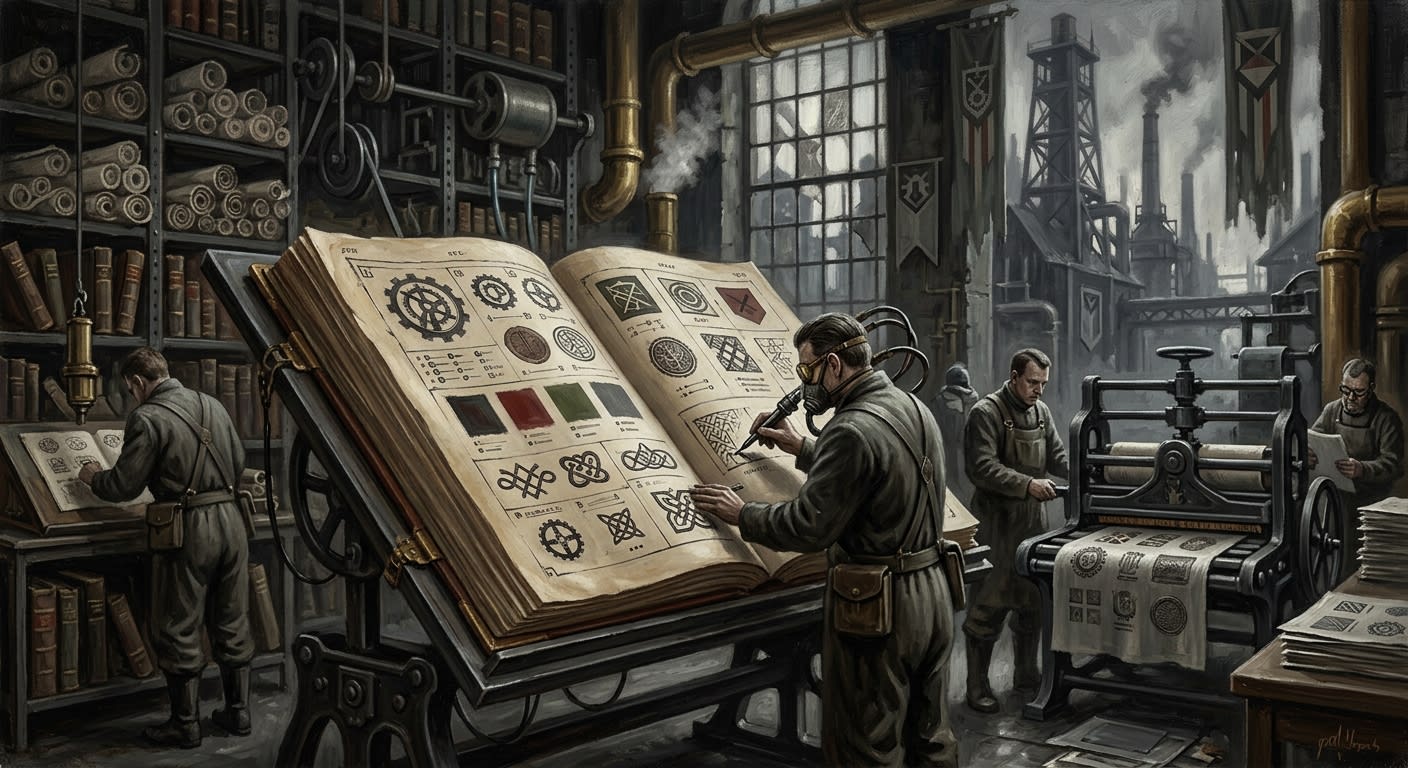
The Armorial of the Faithful
The book by which even colors learn obedience
The Armorial teaches every banner, crest, seal, colour, knot, and shop sign in the Synod the first virtue of a surface: obedience.
Codex Ref. VIII.1.03-002

The Bureau of Heraldry
The grammar of loyalty, measured in ink and iron
The Bureau of Heraldry controls what the Synod is permitted to look like. Every crest is a sentence. Every unregistered symbol is a rebellion not yet named.
Codex Ref. VIII.1.03-001
The Knotwright Registry
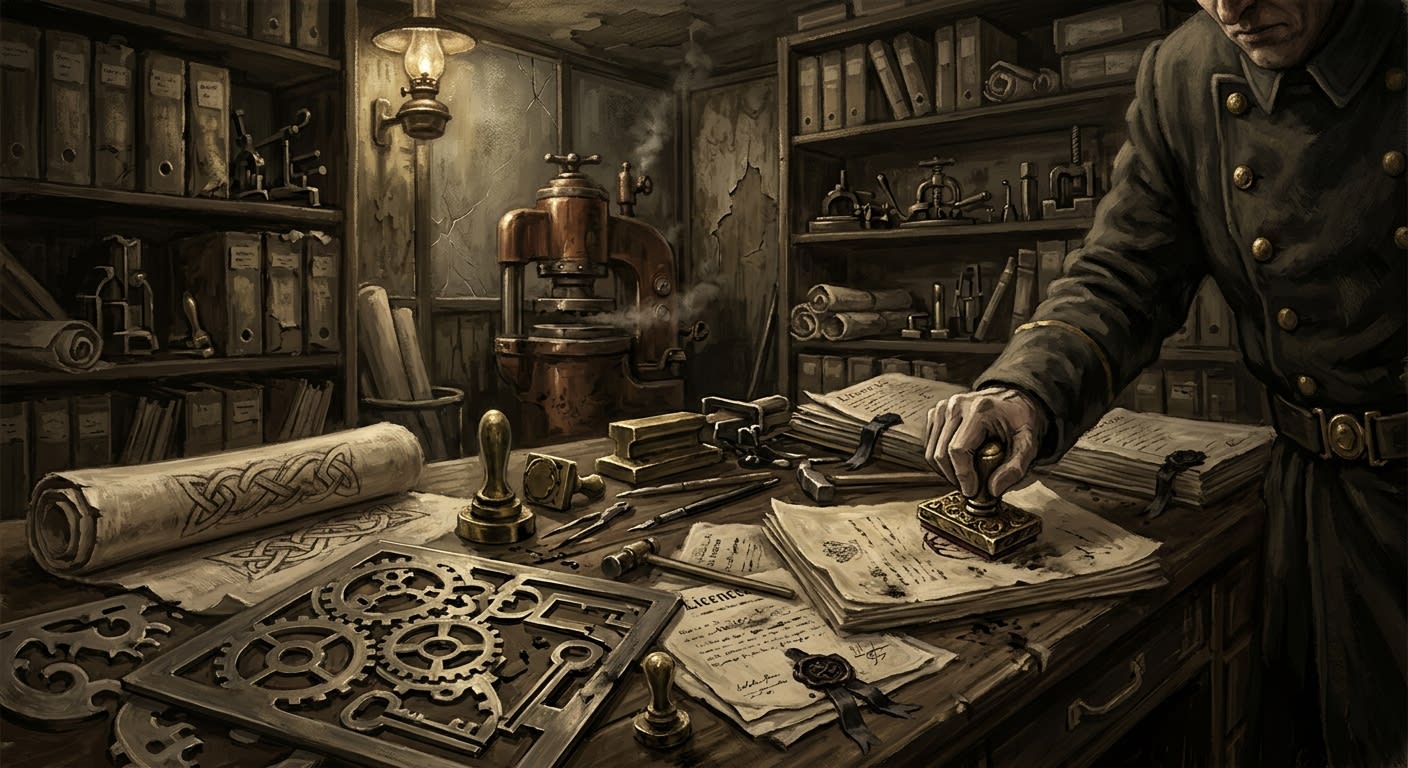
Where every lawful threshold becomes a number, and every number becomes a leash
The Knotwright Registry is Heraldry's A.S. 112 tool-custody office for Gate-Carvers, where stencils, punches, rubbings, licences, and trembling hands become evidence.
Codex Ref. VIII.1.03-002
The Lintel Pogroms
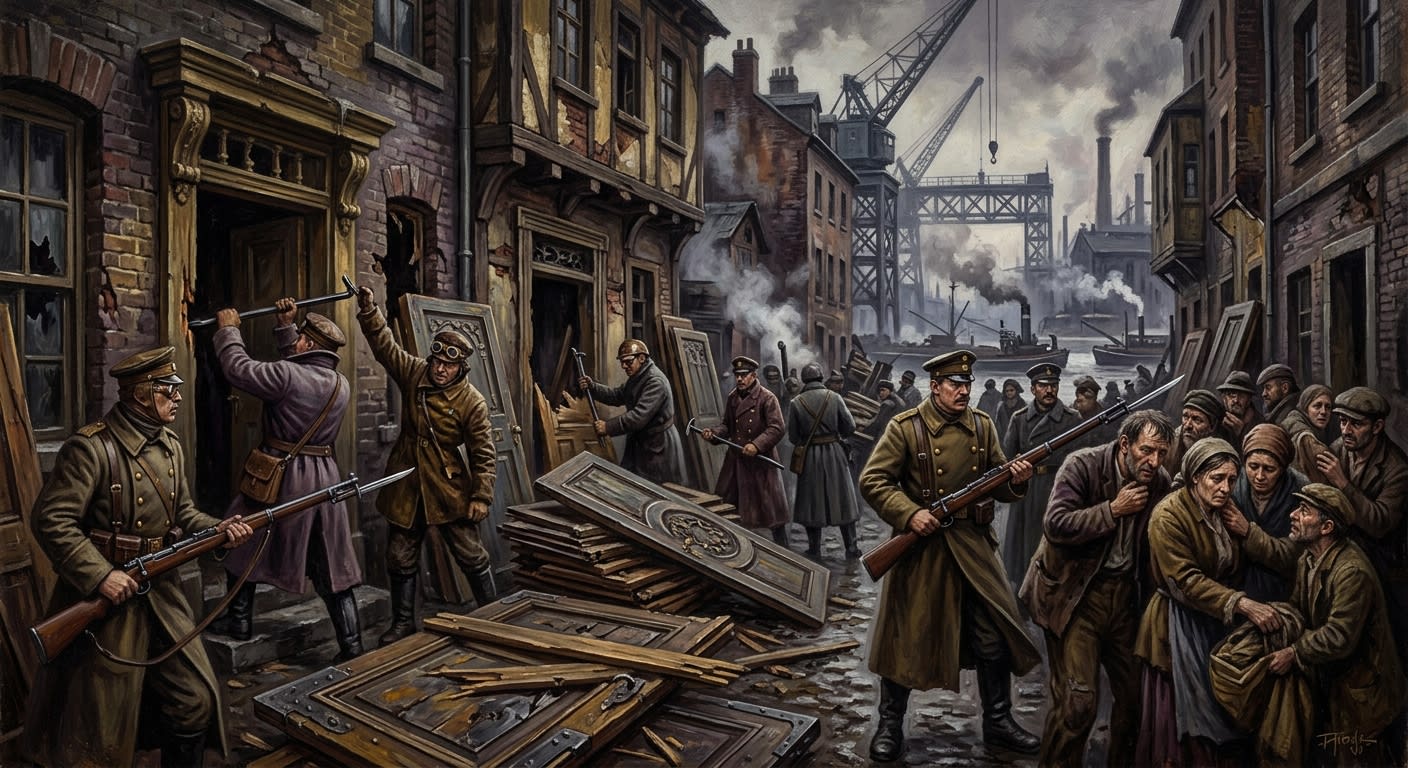
When fourteen correct doors made a district homeless
The A.S. 112 Lintel Pogroms stripped Cologne's river-quarter doors after fourteen perfect false Knots exposed stolen stencils, counterfeit punches, hidden bodies, and a trembling hand fit for a wall.
Codex Ref. VII.8.10-112

Theobald of Worms
The man who taught Europe to confess by angle
First Archon of the Bureau of Heraldry, Theobald of Worms standardised the Triune Knot and made the visible world legible, taxable, and prosecutable.
Codex Ref. III.2.01-119
Triune Knot
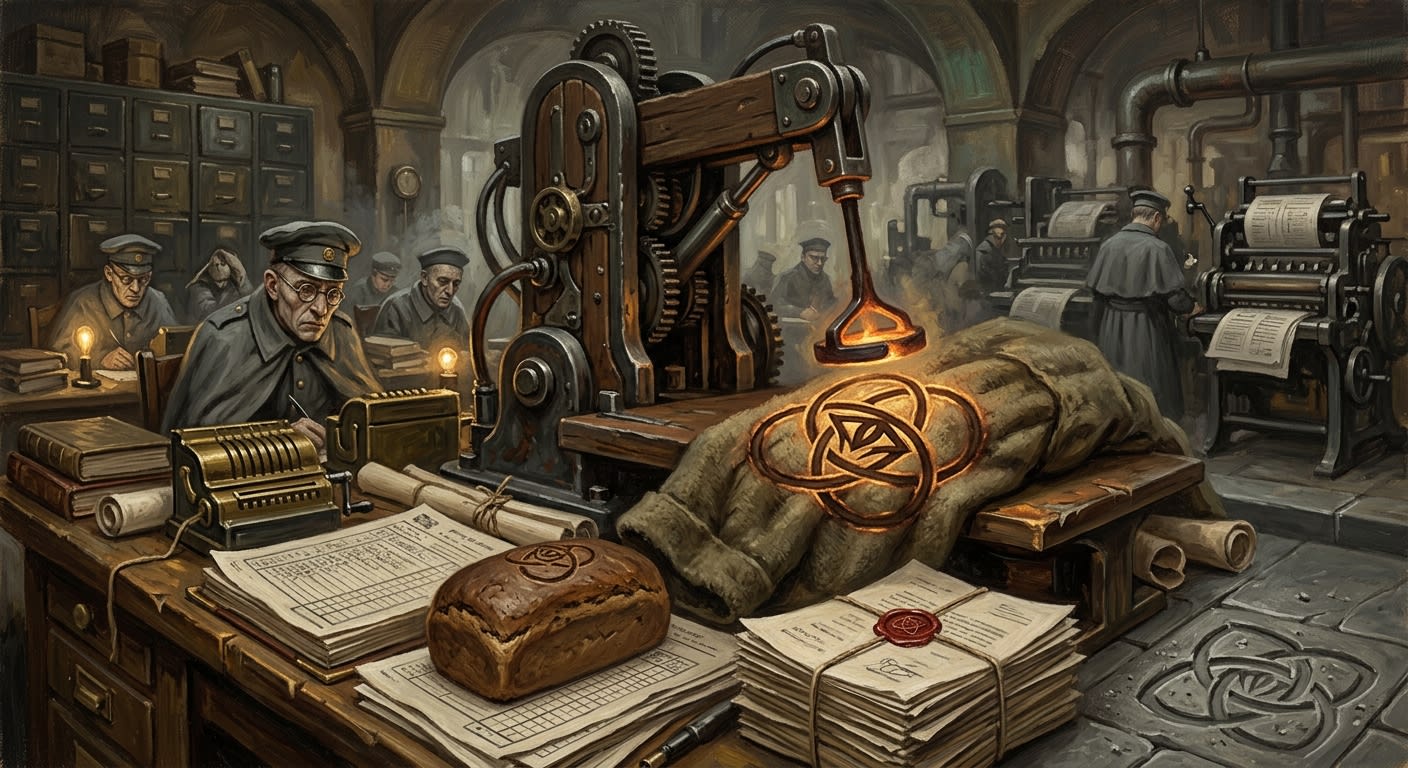
Three loops, one law, and every door accounted for
Universal Synodal binding mark standardised under Theobald of Worms, by which doors, papers, bread, flesh, and graves become readable to law.
Codex Ref. XIII.1.03-002