

Reverse Index
Referencing “Last Stand of Kalnik Ridge”
Every codex entry that links to Last Stand of Kalnik Ridge. 44 entries.
Return to Last Stand of Kalnik Ridge
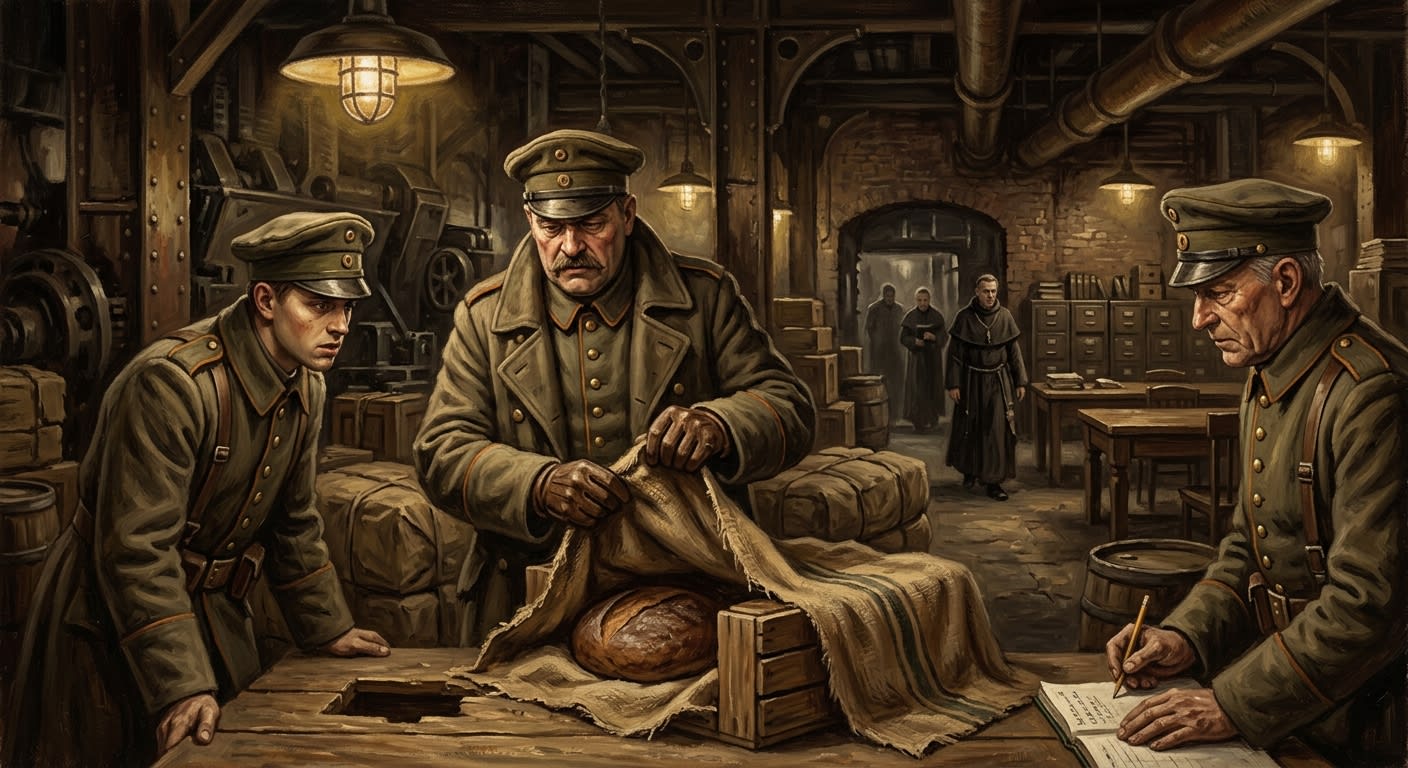
14th Rhine Customs Brigade
The guards who inspected bread and missed Providence
The 14th Rhine Customs Brigade lifted a cloth, saw bread, and missed three apostolic phalanges; Providence has seldom dressed itself so plainly.
Codex Ref. I.1.14-031
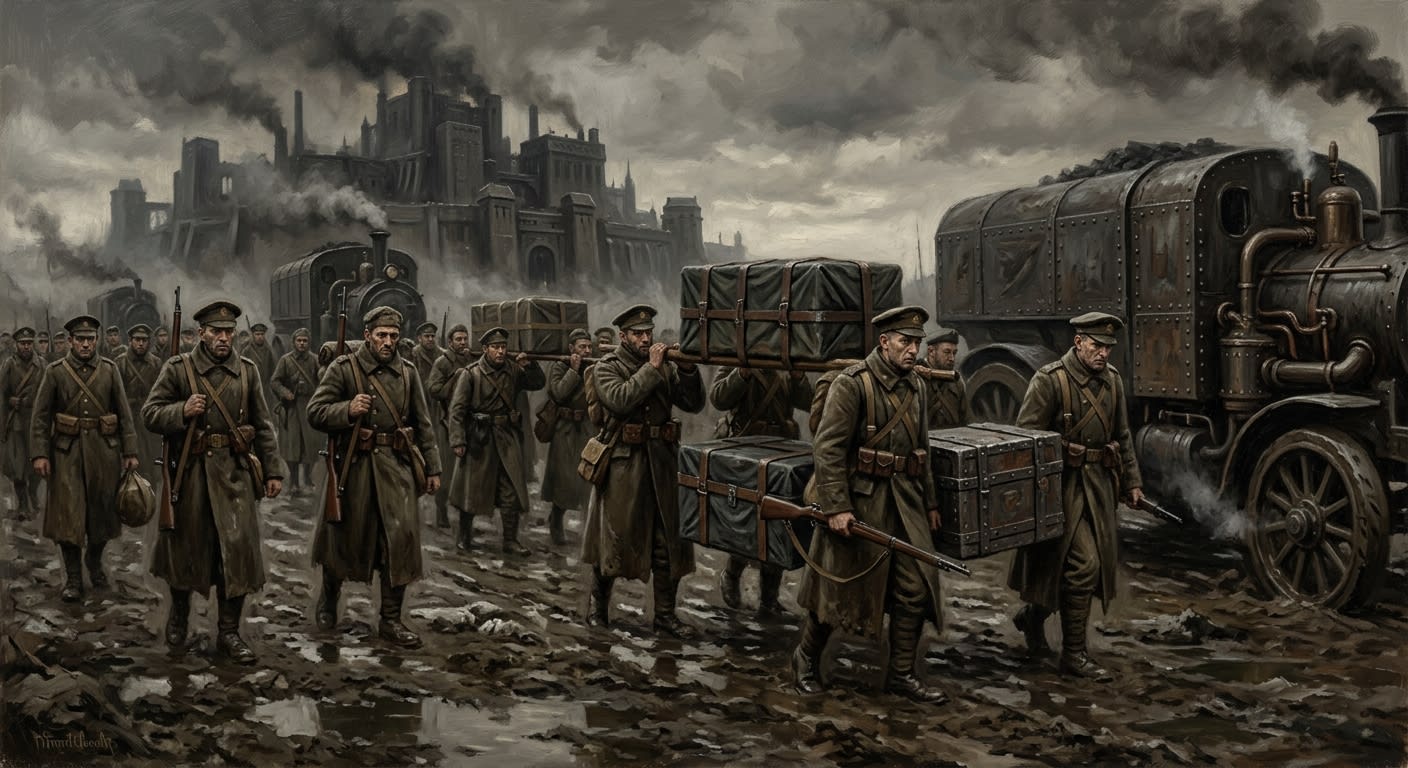
7th Rearguard Column
The middle hand that did not lose the bones
The 7th Rearguard Column did not blaze at Kalnik; it carried the bones through the middle miles, and the miracle survived because nobody lost the packet.
Codex Ref. VIII.5.07-045
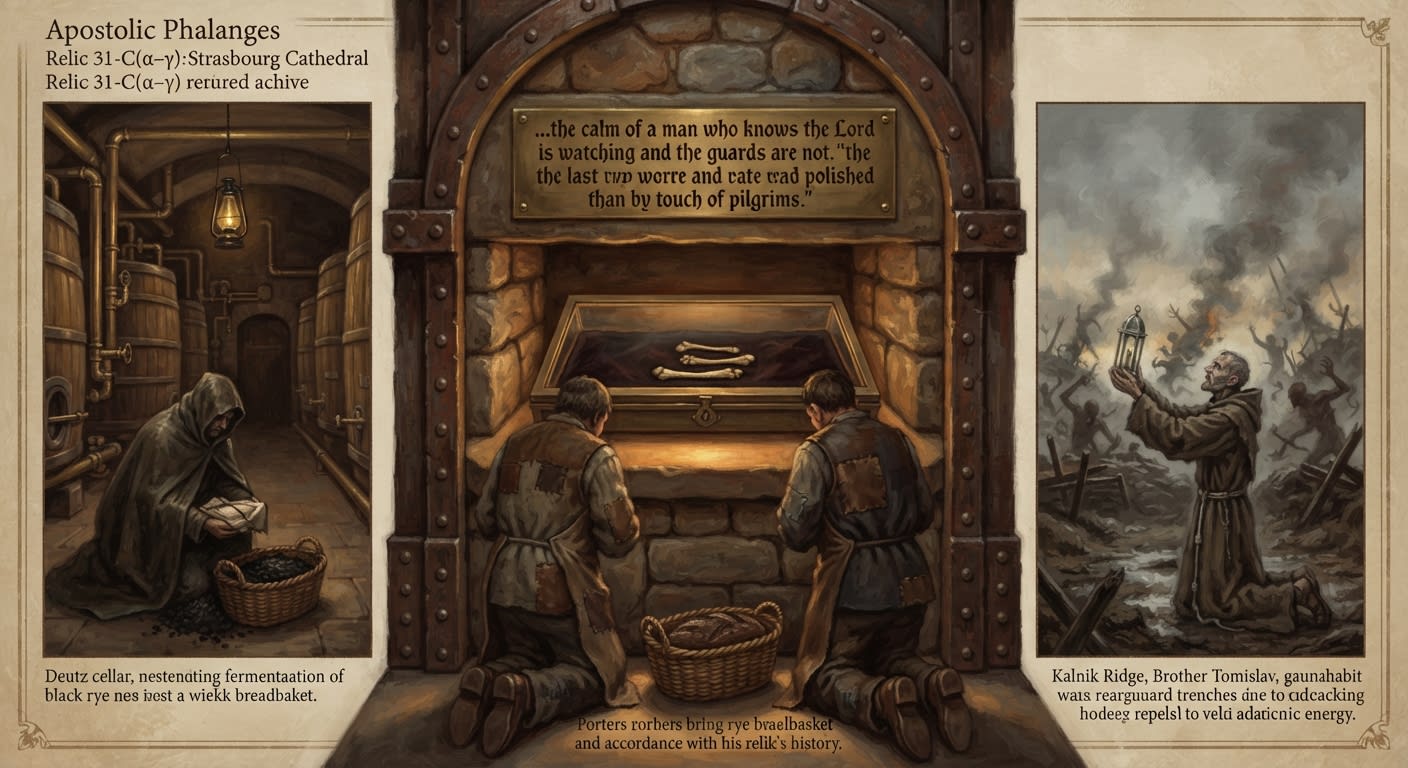
Apostolic Phalanges
Three finger bones, fourteen quiet years, and one ridge that learned fear
Relic 31-C(α–γ), three apostolic phalanges saved under rye and beer, later burned demons at Kalnik and now sit under licensed glass in Strasbourg.
Codex Ref. XIII.1.31-031
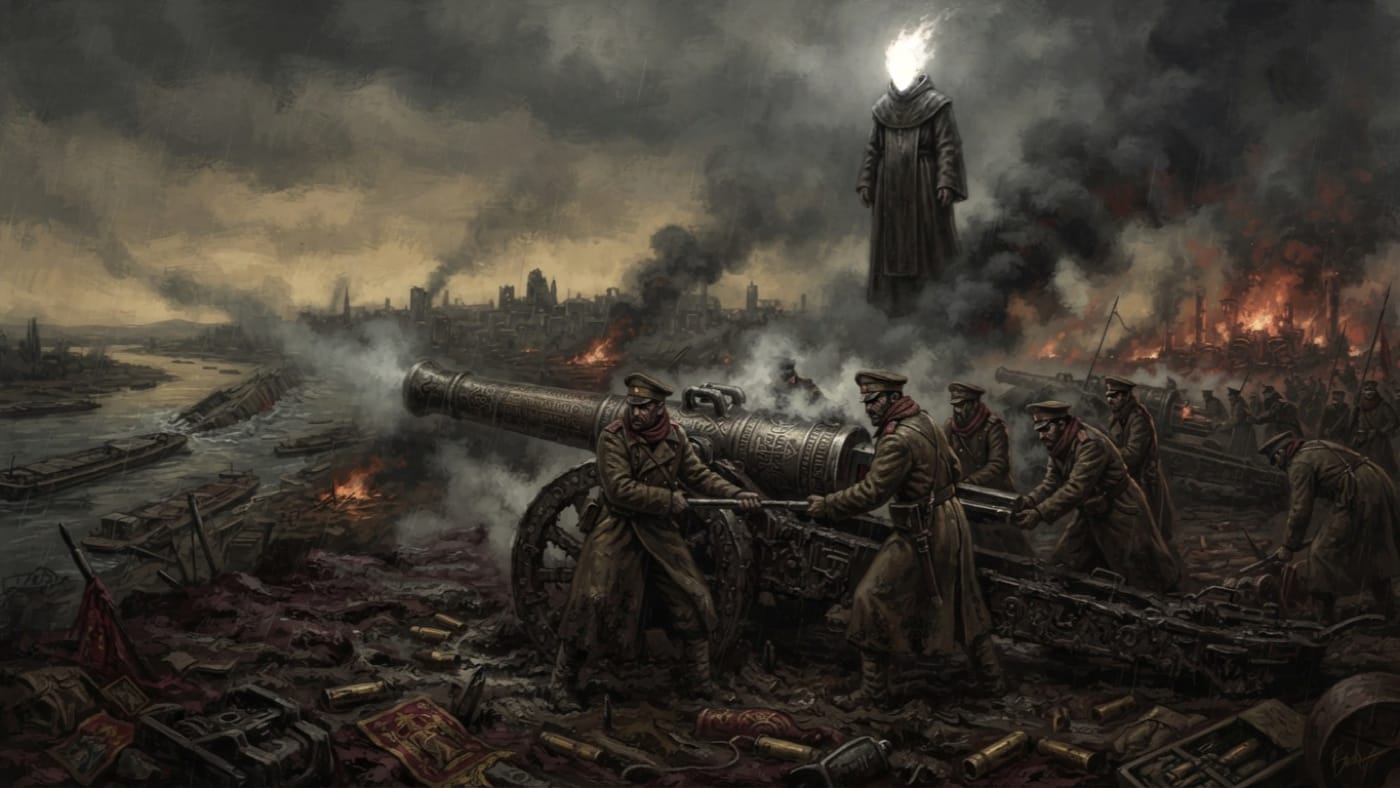
Battery Veyl
A visor of white fire, a sentence under seal
Battery Veyl served at Belgrade in A.S. 120 beneath an unnamed apparition with a visor of white fire. Its survivor's account of the third saint remains under seal.
Codex Ref. II.5.06-122
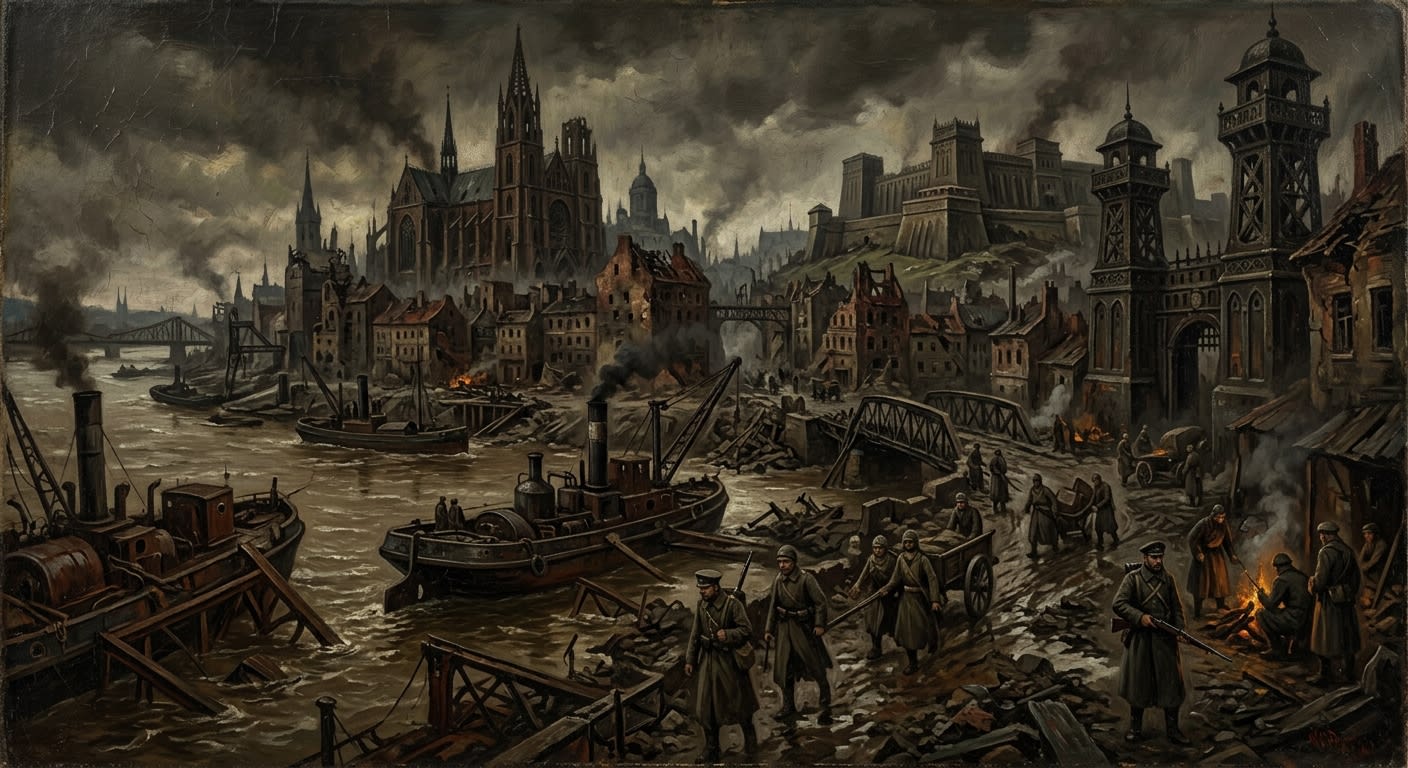
Belgrade
The city the river refused to bury, and therefore made taxable
Belgrade, ruined-contested confluence city where Shattered Courts perfume met Maldrake's Wrath, the Danube turned in A.S. 120, and sanctity became an armed hazard.
Codex Ref. II.5.06-120
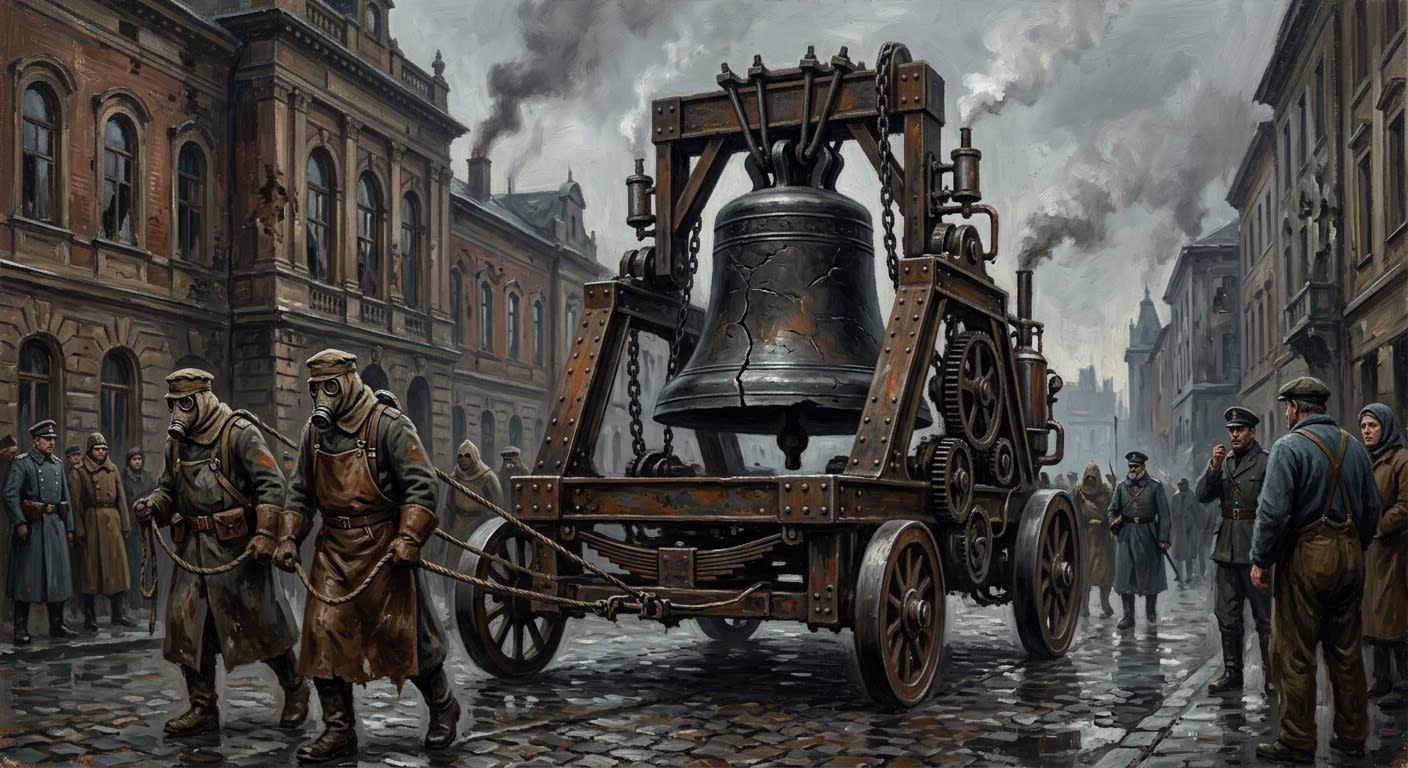
Bell of Saint Isidore
The cracked bronze that made Debrecen inherit a miracle's bill
The Bell of Saint Isidore is a cracked mobile relic-bell born from Kalnik Ridge, useful enough to parade and costly enough for Debrecen to remember in its bones.
Codex Ref. V.1.02-001
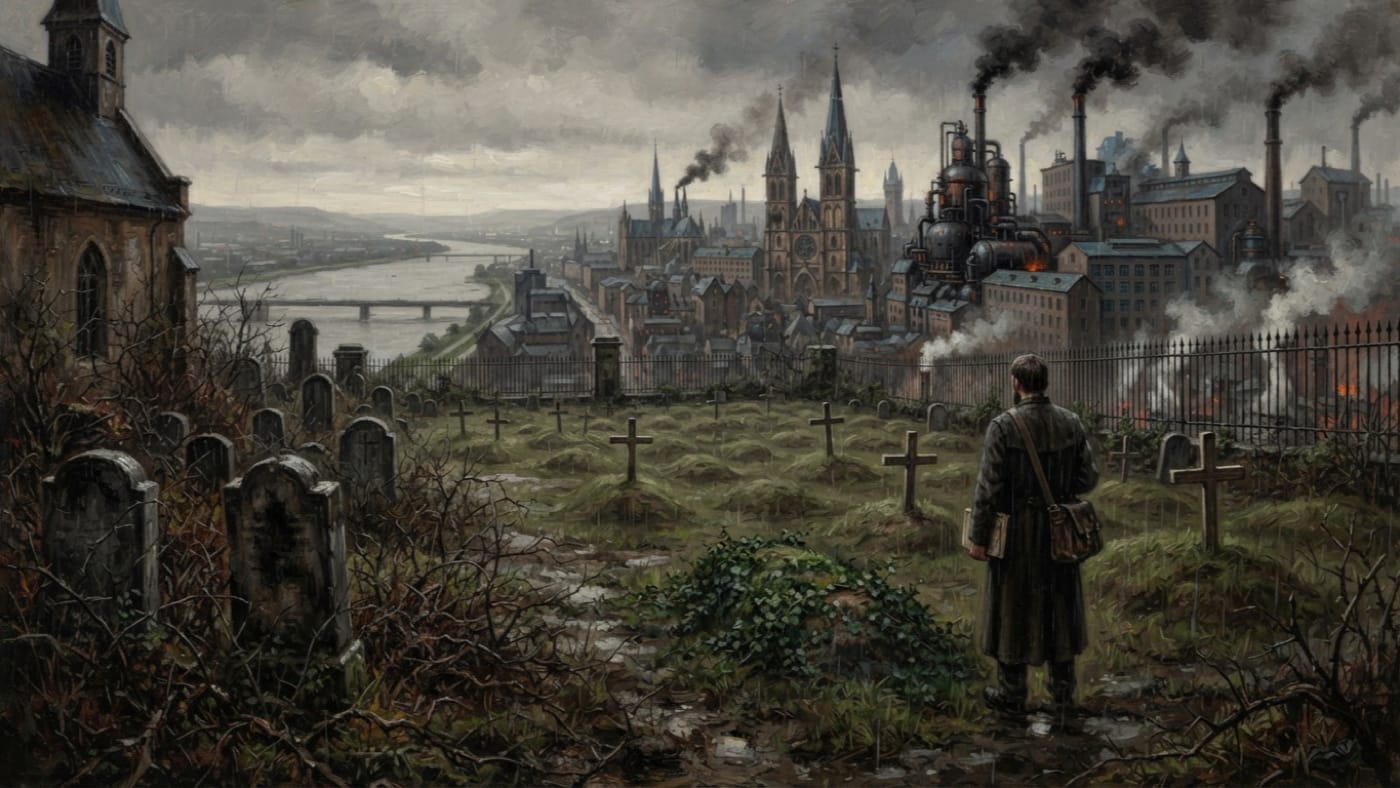
Bonn
A saint nearby; no directions supplied
Bonn is a Rhineland city on the Rhine. Ignatius Brenner died and was buried nearby in A.S. 71. The churchyard is unnamed, the grave unmarked, and the record supplies no directions.
Codex Ref. III.2.04-313
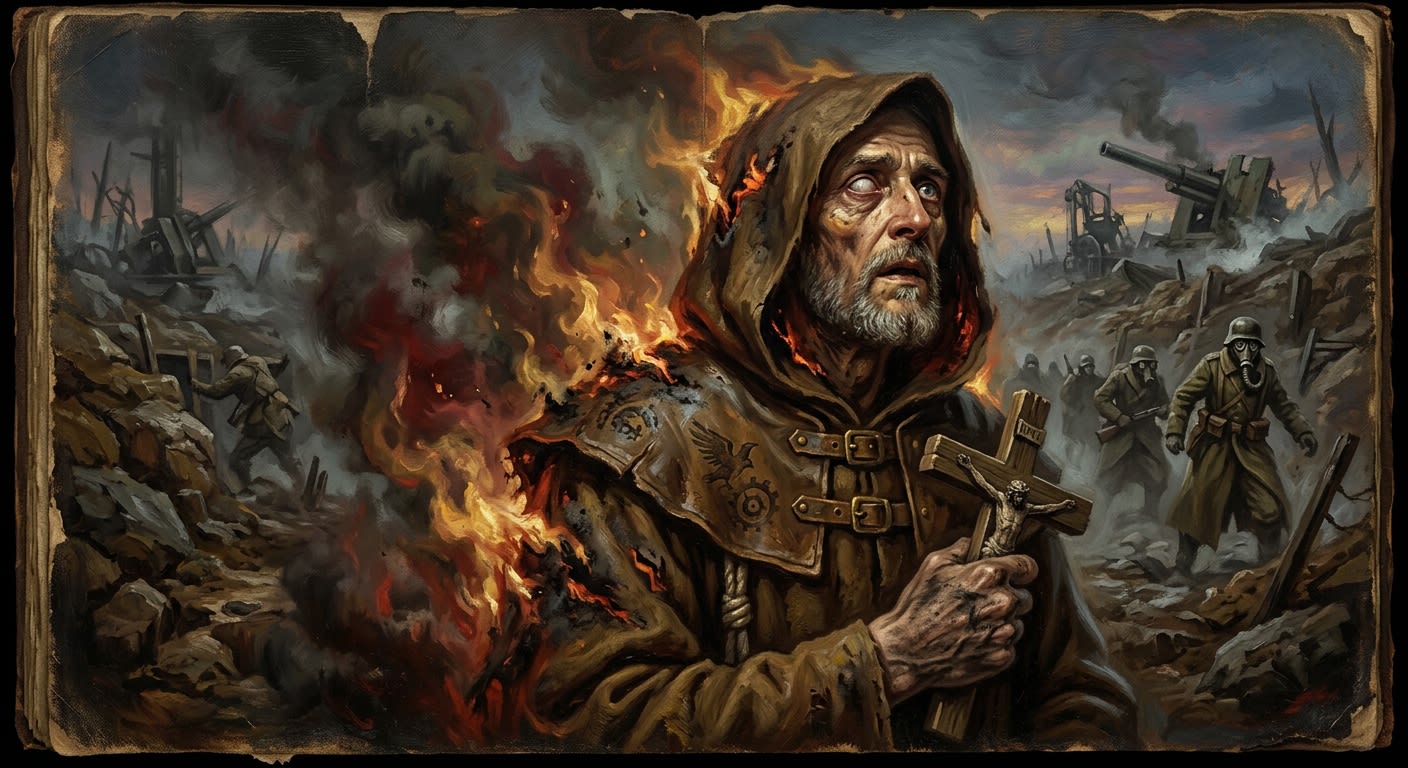
Brother Tomislav
The half-blind monk who lifted a reliquary and made Wrath recoil
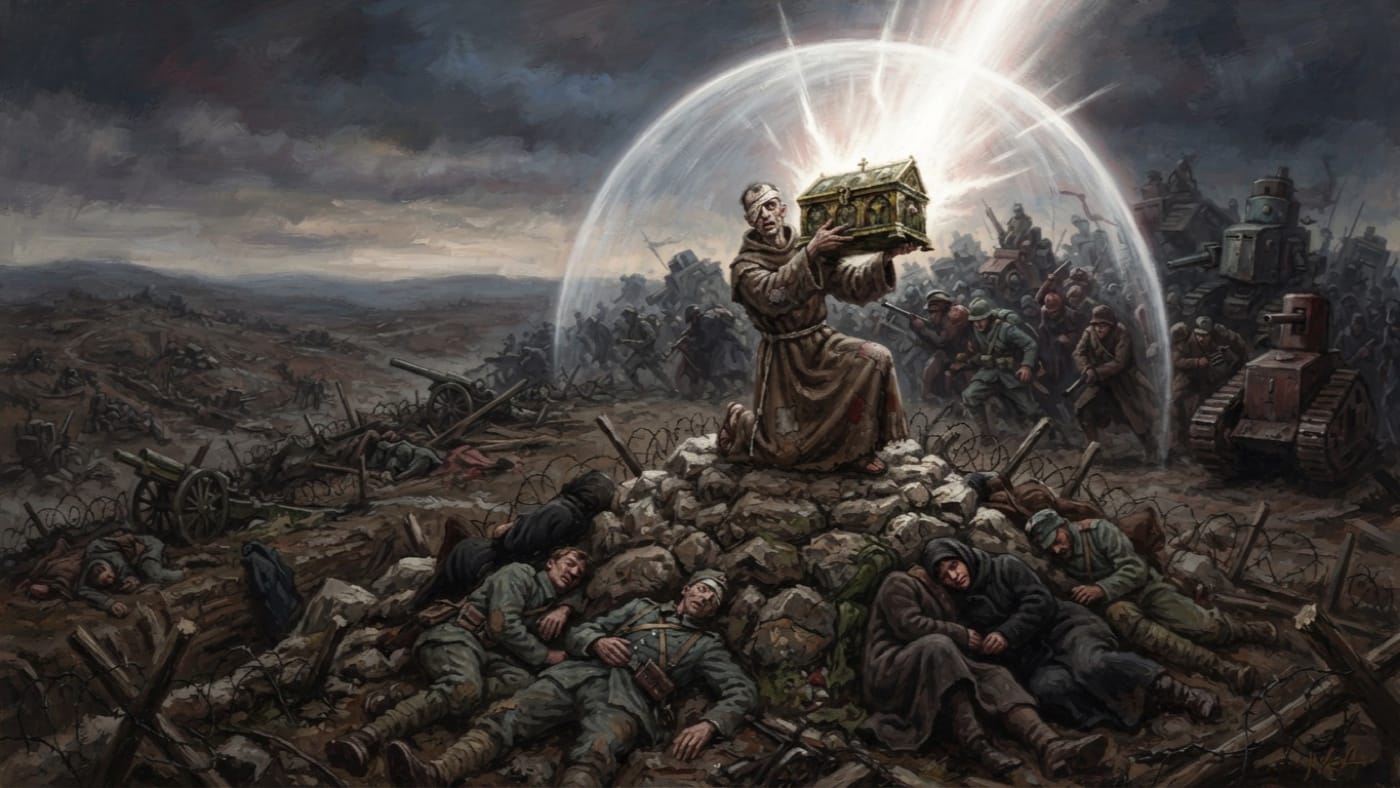
Half-blind Franciscan, custodian by refusal, and instrument of the Miracle of Kalnik Ridge; consumed by sacred fire in A.S. 48, though the Bureau remains professionally unable to call him dead.
Codex Ref. III.2.01-004
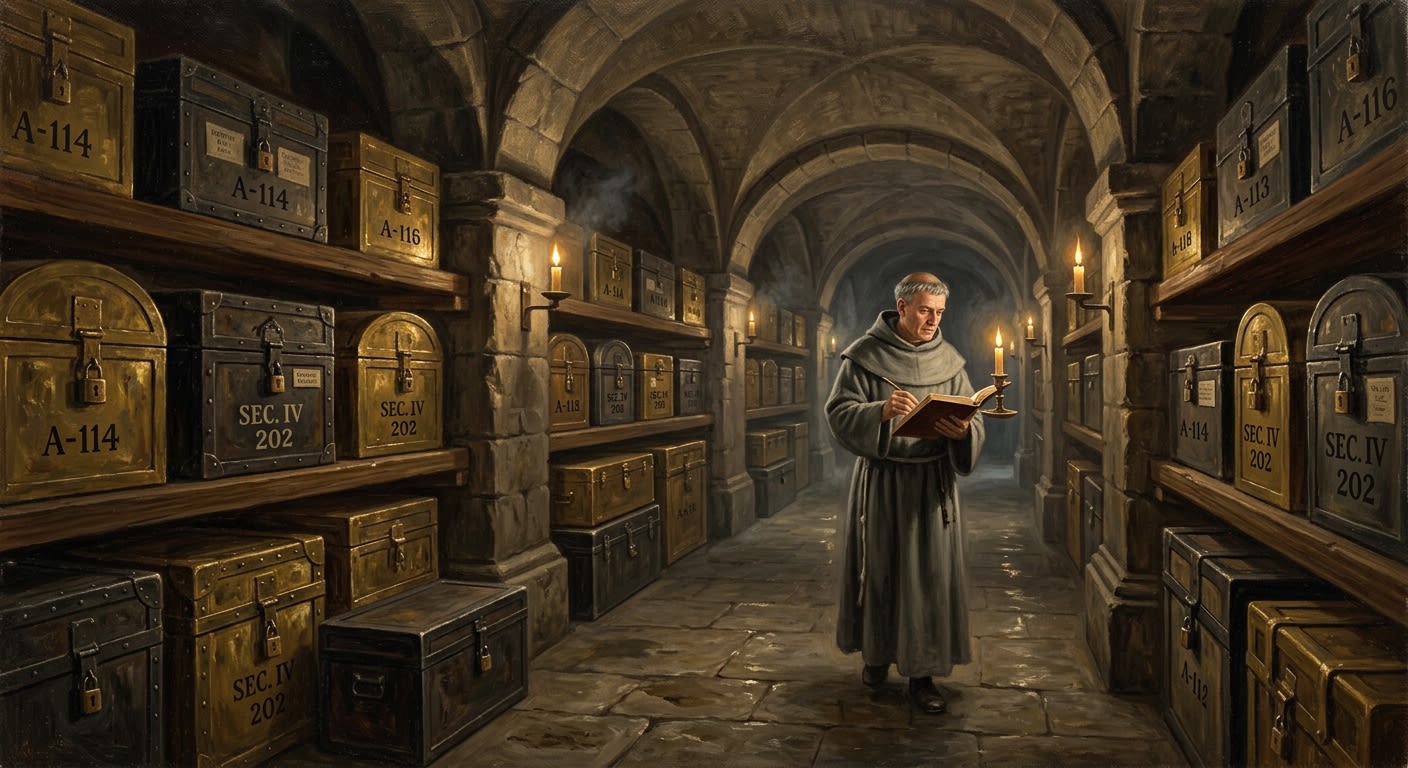
Bureau of Relics
The stamp is not the sanctity. The stamp is merely necessary.
The Bureau of Relics guards four thousand seven hundred authenticated bones, adjudicates the holiness of ash, and maintains the cheerful institutional fiction that it controls the things it catalogues.
Codex Ref. IV.3.12-019
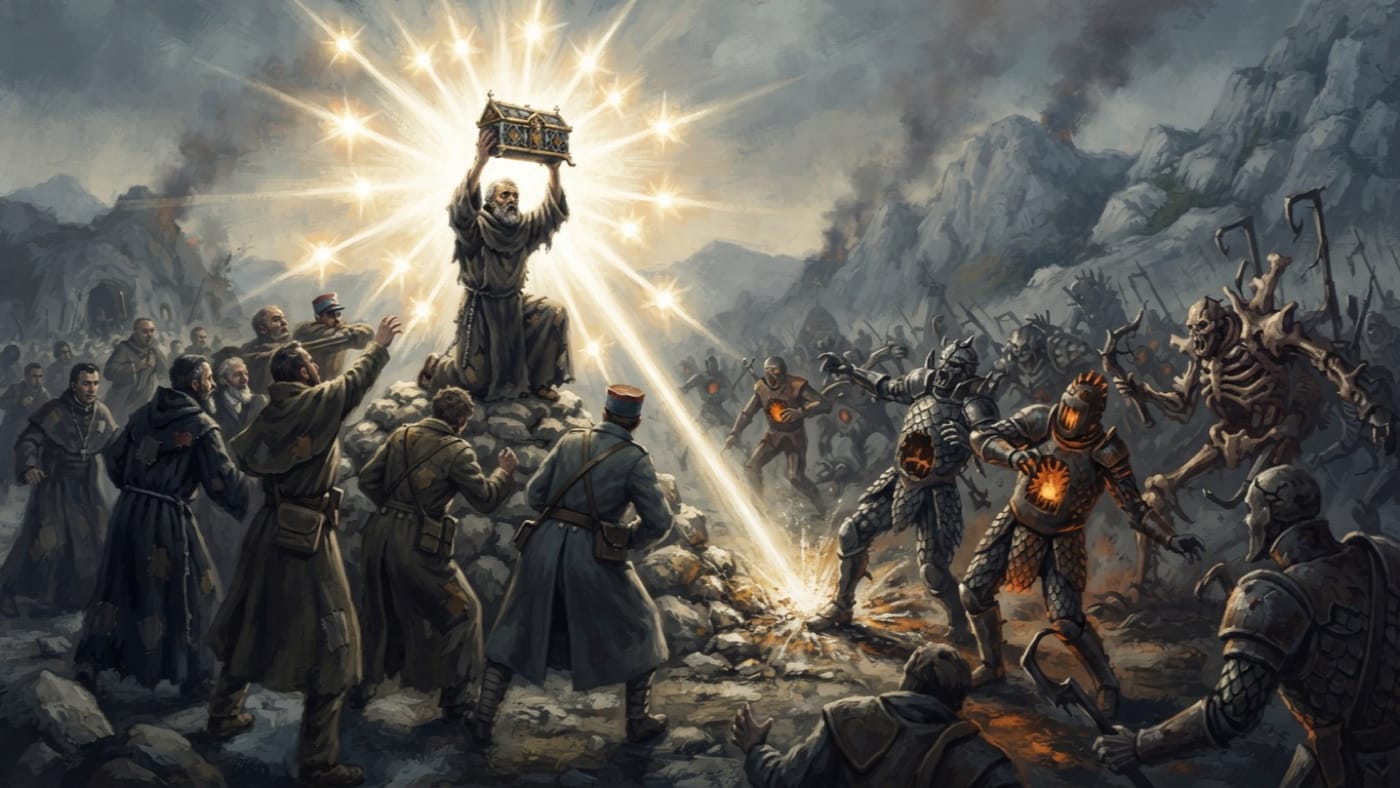
Charnel Host
A name, an association, and a recoil; the rest remains unrecorded.
The Charnel Host is named among Maldrake's attackers at Kalnik Ridge in A.S. 48 and recorded recoiling before Saint Isidore's reliquary. Its composition and command are unrecorded; the Bureau has a name and a recoil, and will certify no more.
Codex Ref. IV.2.07-048
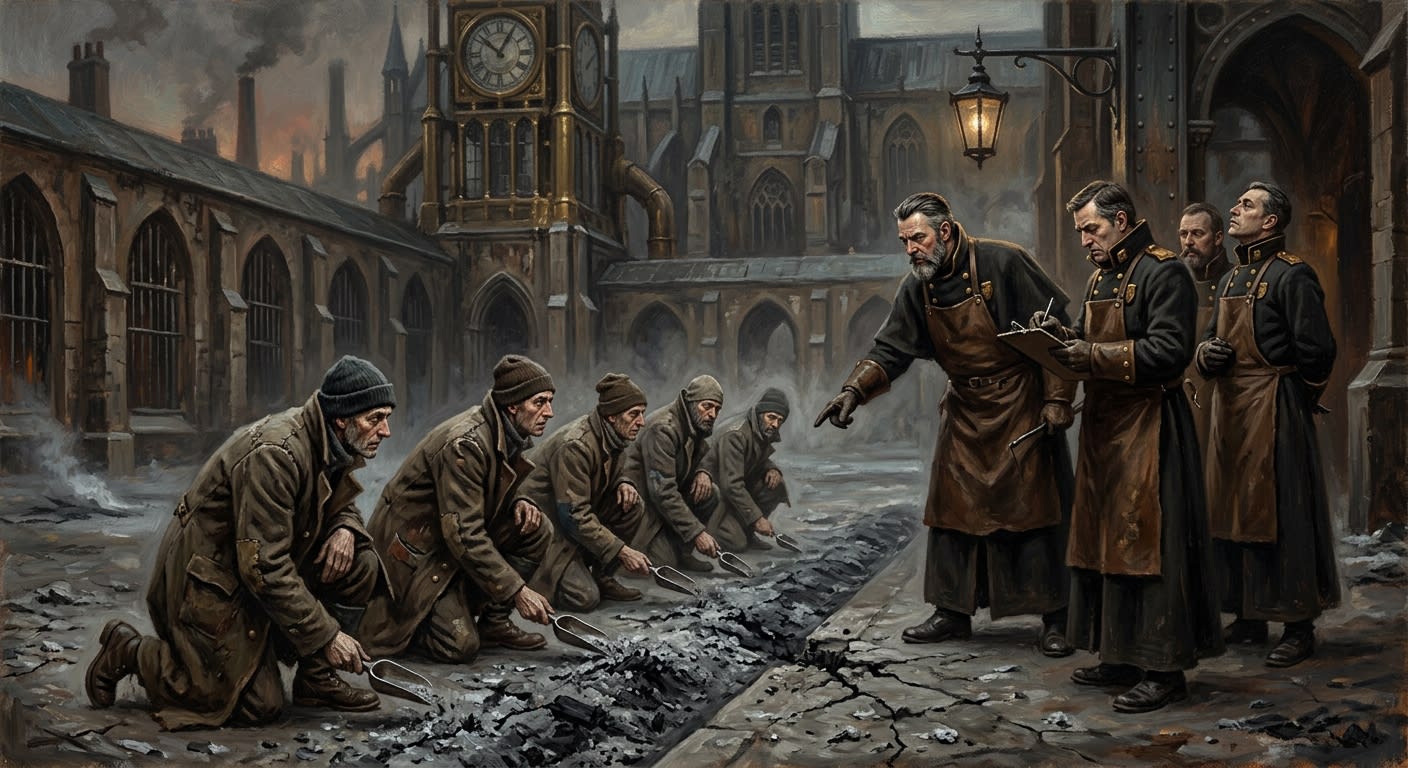
Cinder Trials
Where Toledo lets ash pretend to be law
Toledo's forecourt ash rite, born from post-Sundering martyrdom law, where grey crusts crack at Ninth Bell and Doctrine calls the fracture a verdict.
Codex Ref. XIII.1.56-001
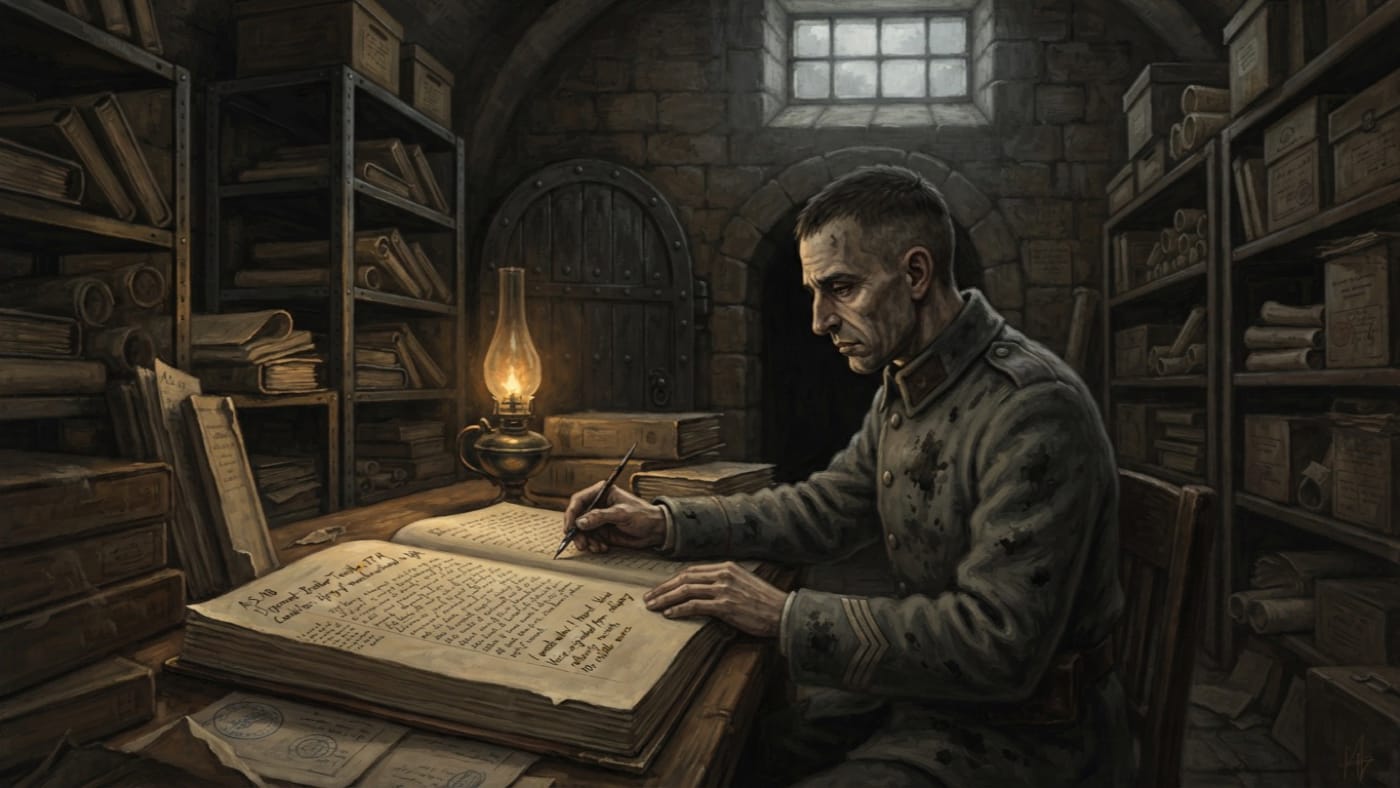
Corporal Aleks Dragović
The corporal who filed the contradiction whole
Field scribe of the 7th Rearguard Column who dated Brother Tomislav's deposition three days after his consumption at Kalnik. Thirty-one years of record service followed; the chronology remains unreconciled.
Codex Ref. III.2.01-745
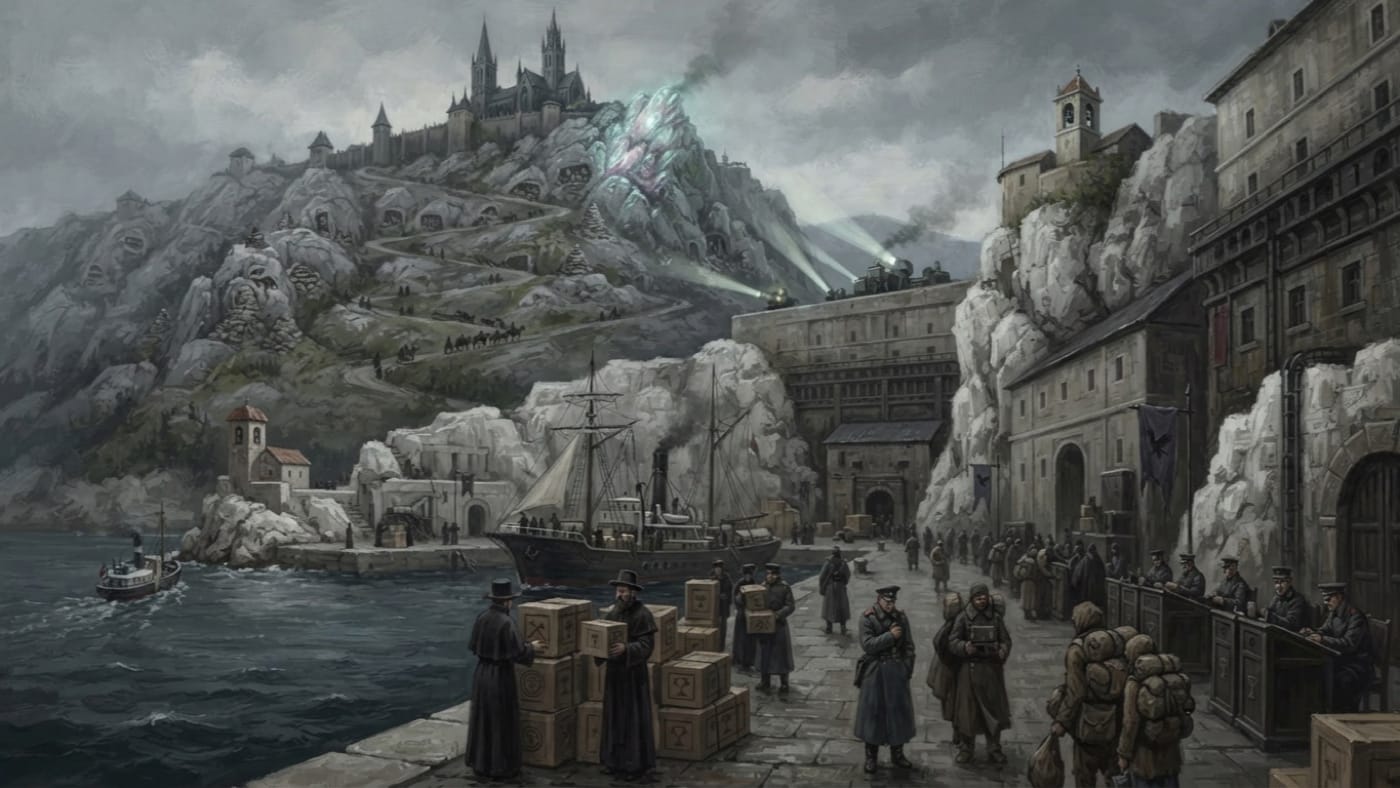
Croatia
A ridge to pray on, a coast to unload at
Croatia survives in the Ledger as Kalnik's armed shrines and Dalmatian supply harbours. The Church certifies the cargo more readily than the borders.
Codex Ref. II.7.04-201
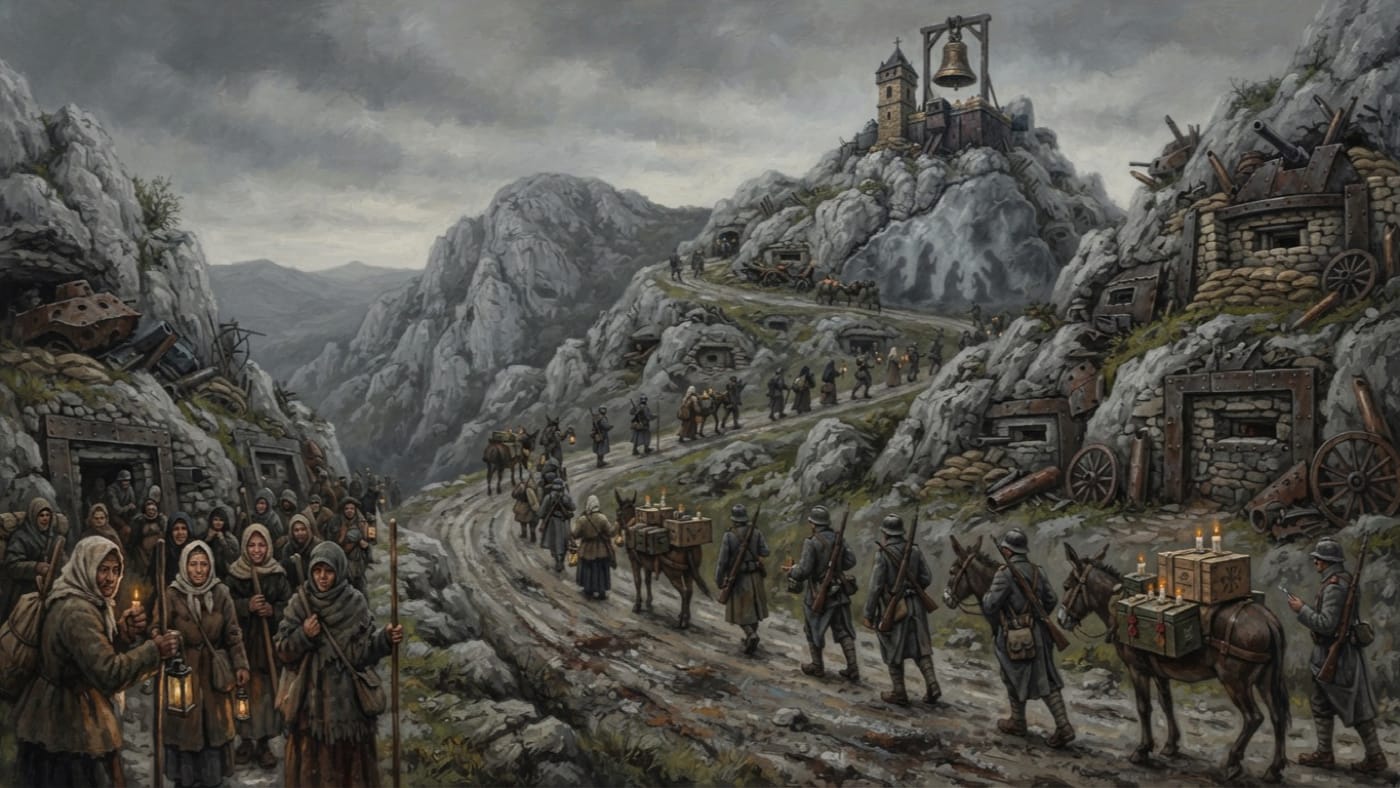
Croatian highlands
Where candles and cartridges climb the same road
The Croatian highlands enter the Ledger through Kalnik Ridge, where cave chapels became armed shrines and the same road carries pilgrims, candles and cartridges.
Codex Ref. II.3.07-807
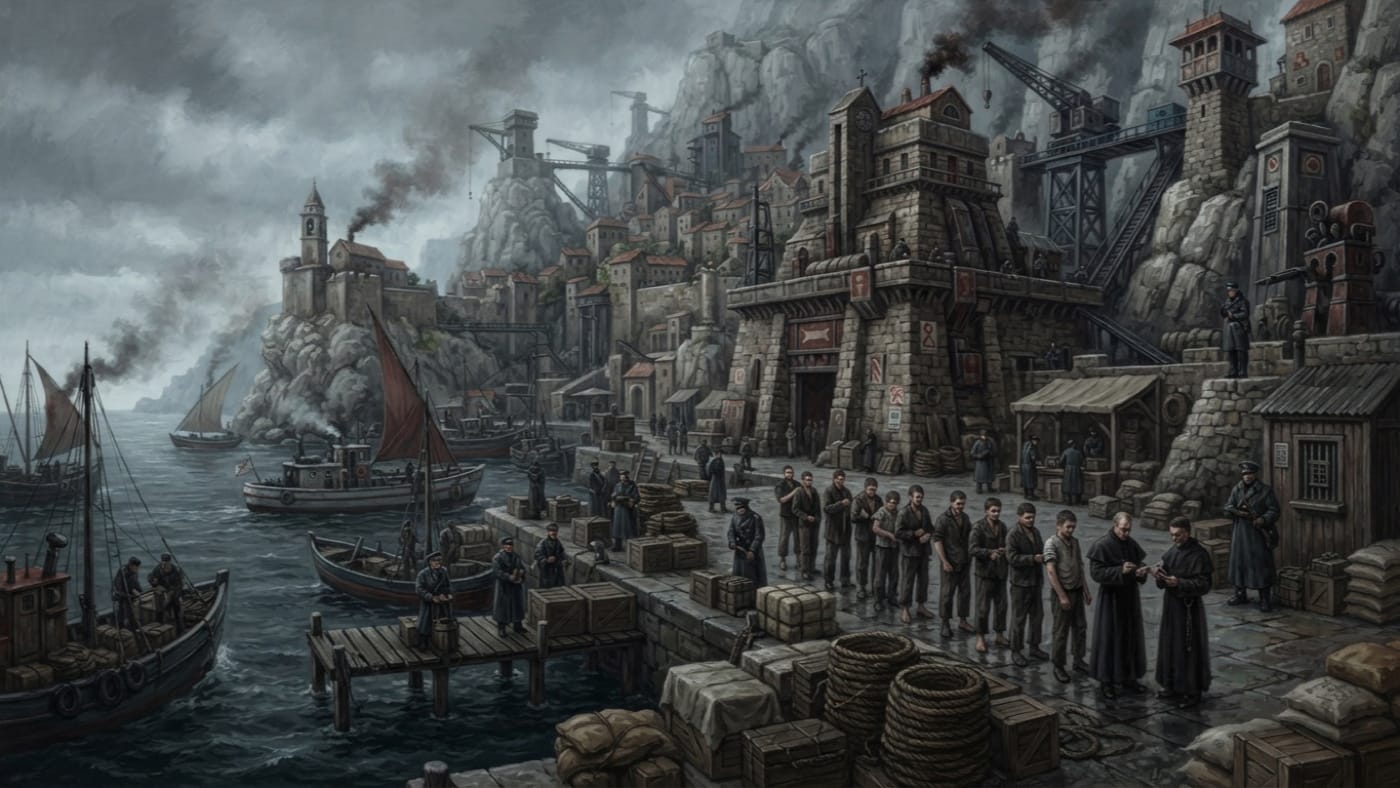
Dalmatia
Where rope is sold and sons are assessed
Dalmatia is the Synod's Adriatic supply coast: Venetian cargo, quarantine piers and parish rolls. Rope, salt and harbour labour are sold; the tenth son is assessed.
Codex Ref. II.7.05-201
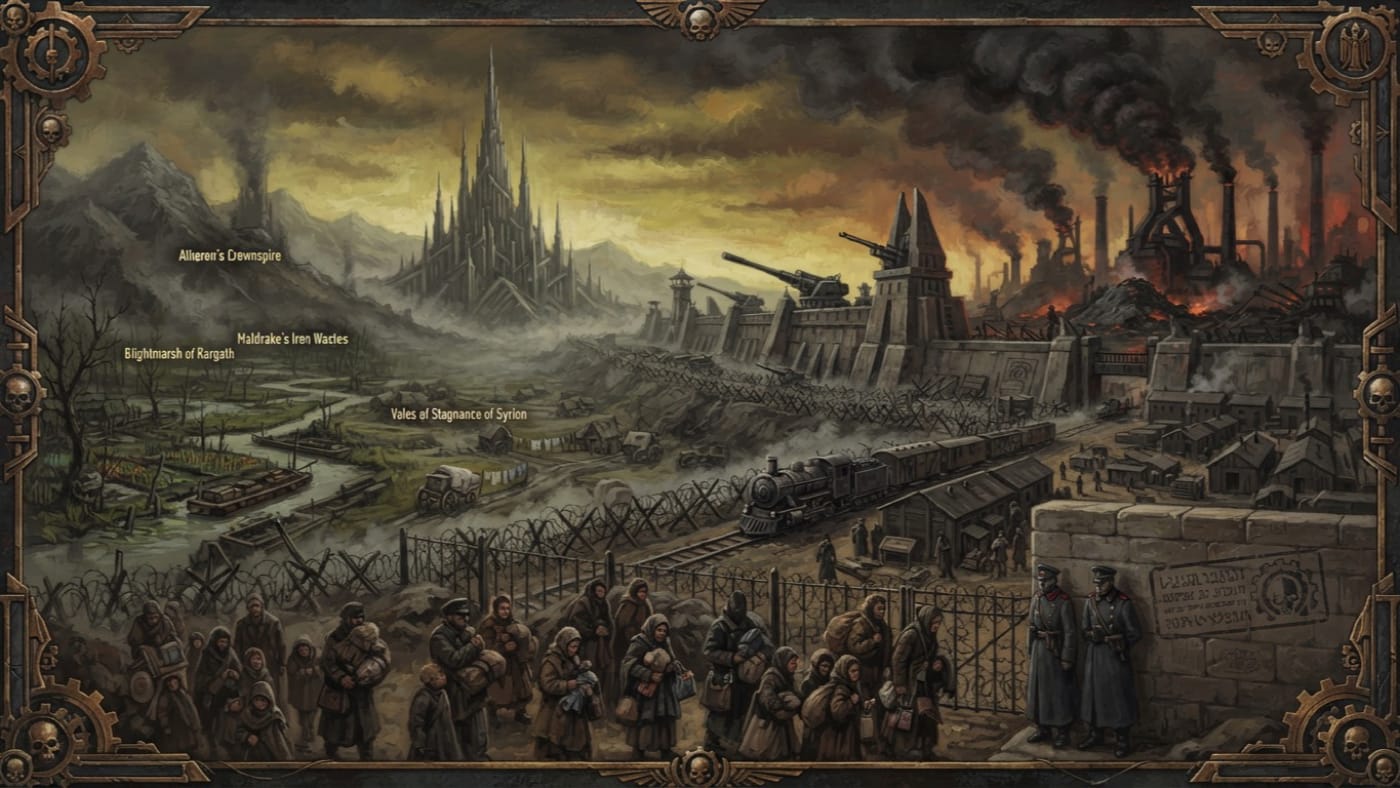
Eastern Kingdoms
The lands were lost; the Ledger retains their names
The eastern jurisdictions lost after the Sundering, now largely held by rival Sin-General dominions. Their people endure; the Ledger still calls the occupation temporary.
Codex Ref. II.6.07-201
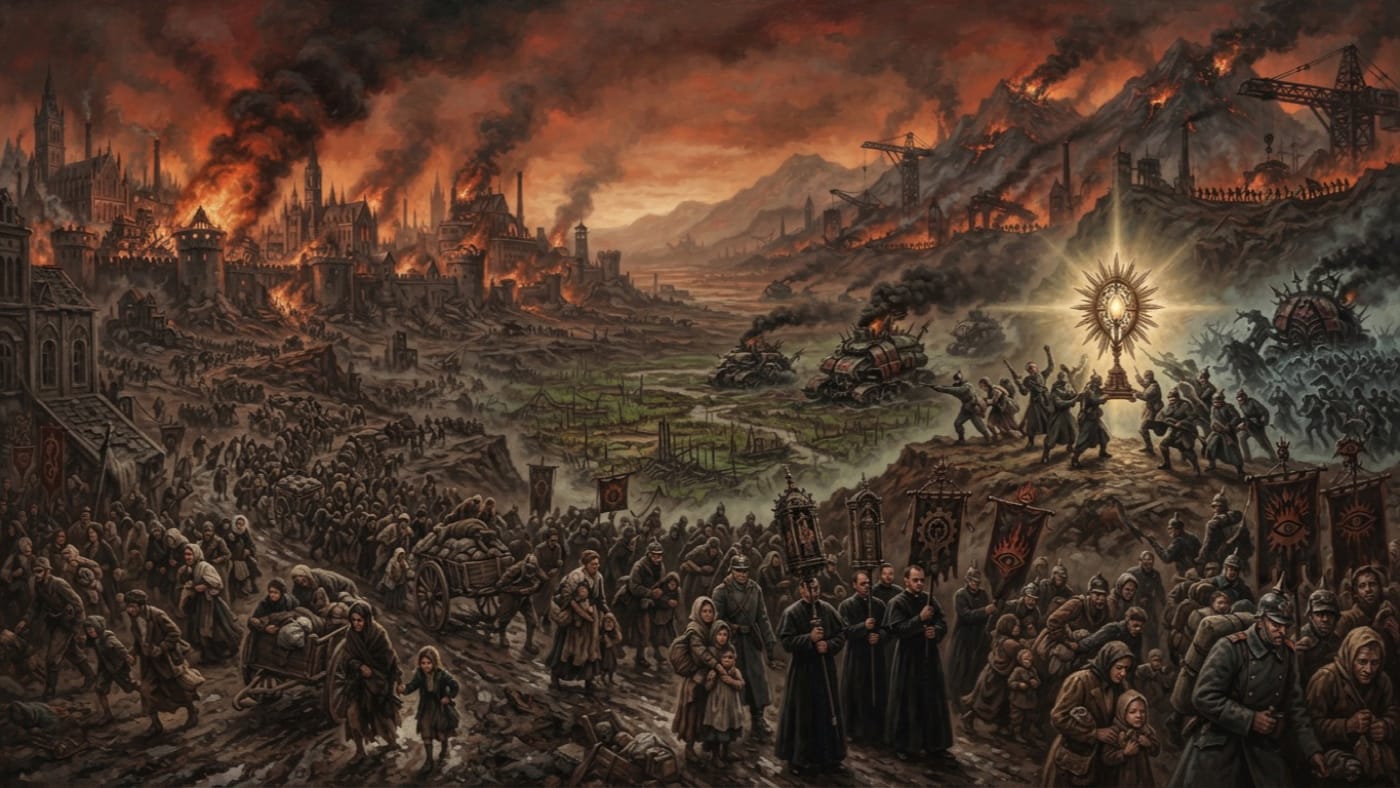
Fall of the Eastern Kingdoms
The Kingdoms Fell; Their Accounts Remain Open
The eastern jurisdictions collapsed after the Sundering of A.S. 45: garrisons burned, granaries failed, and refugees fled west. I retain their accounts in the Ledger; occupation does not constitute permission to forget.
Codex Ref. VII.1.02-001
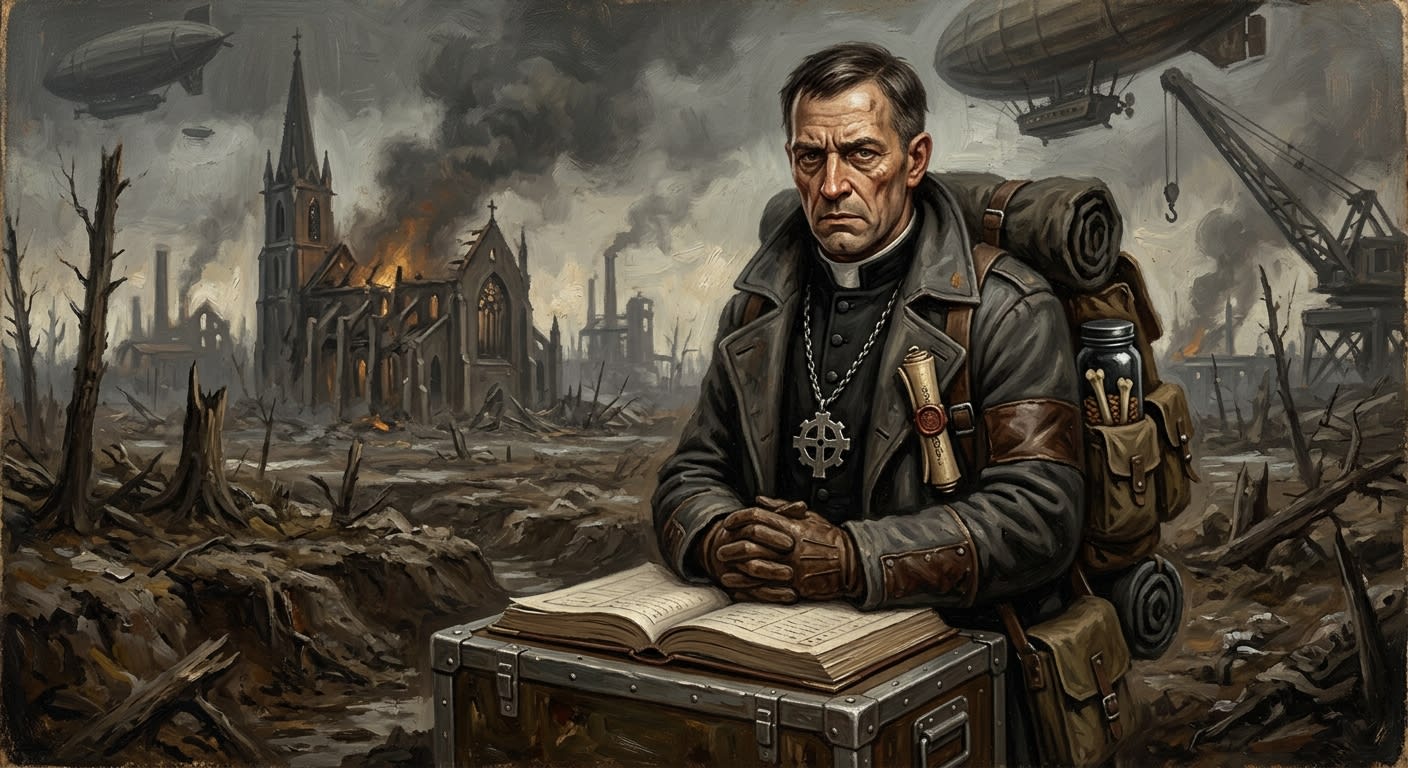
Father Ignatius of Cologne
The clerk whose breadbasket outranked an empire
Ignatius Brenner, parish clerk of Cologne, carried three apostolic phalanges beneath black rye in A.S. 31. The fire at Kalnik arrived seventeen years later.
Codex Ref. III.2.01-043
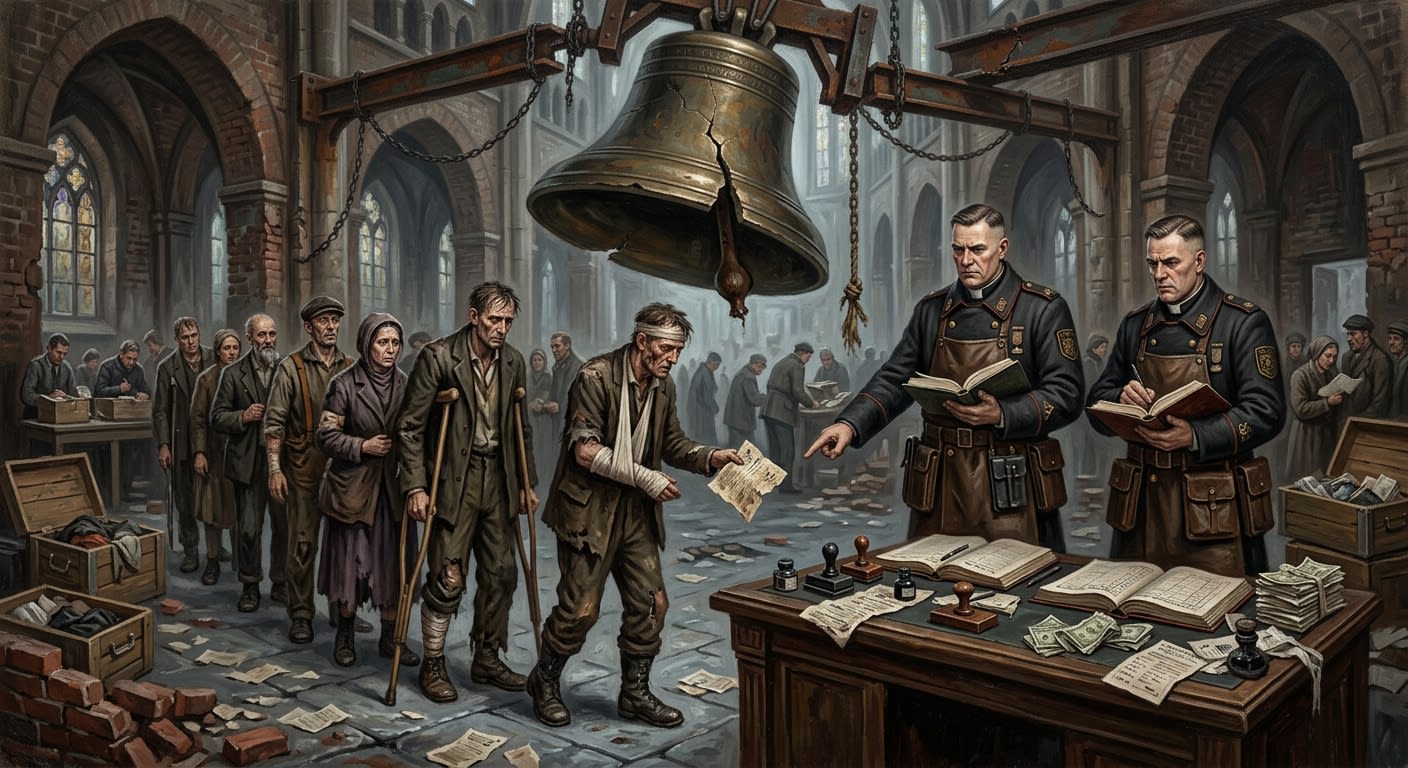
Feast of the Cracked Bell
The damaged bell still tolls, therefore the damaged citizen still owes
The Feast of the Cracked Bell teaches the Synod's favourite mercy: broken things may still serve, so damaged citizens may still be counted, tolled, and taxed.
Codex Ref. XIII.1.89-201
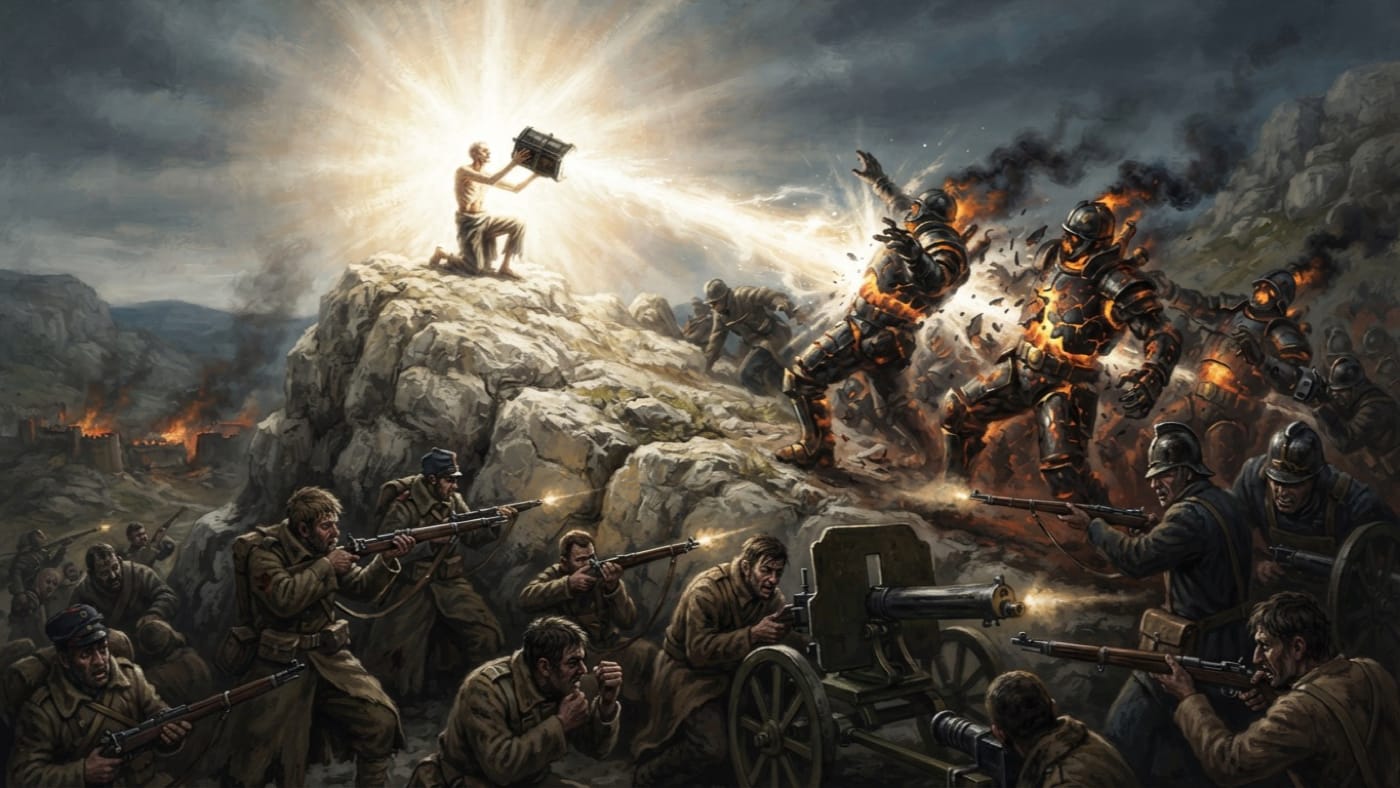
First-Order Miraculous Emission
The enemy recoiled; the rubric remains undefined
At Kalnik Ridge in A.S. 48, seventeen relics checked Maldrake's vanguard. The Bureau later filed the blaze as First-Order Miraculous Emission, Category: Martial; it neglected to define First-Order.
Codex Ref. VI.3.01-048
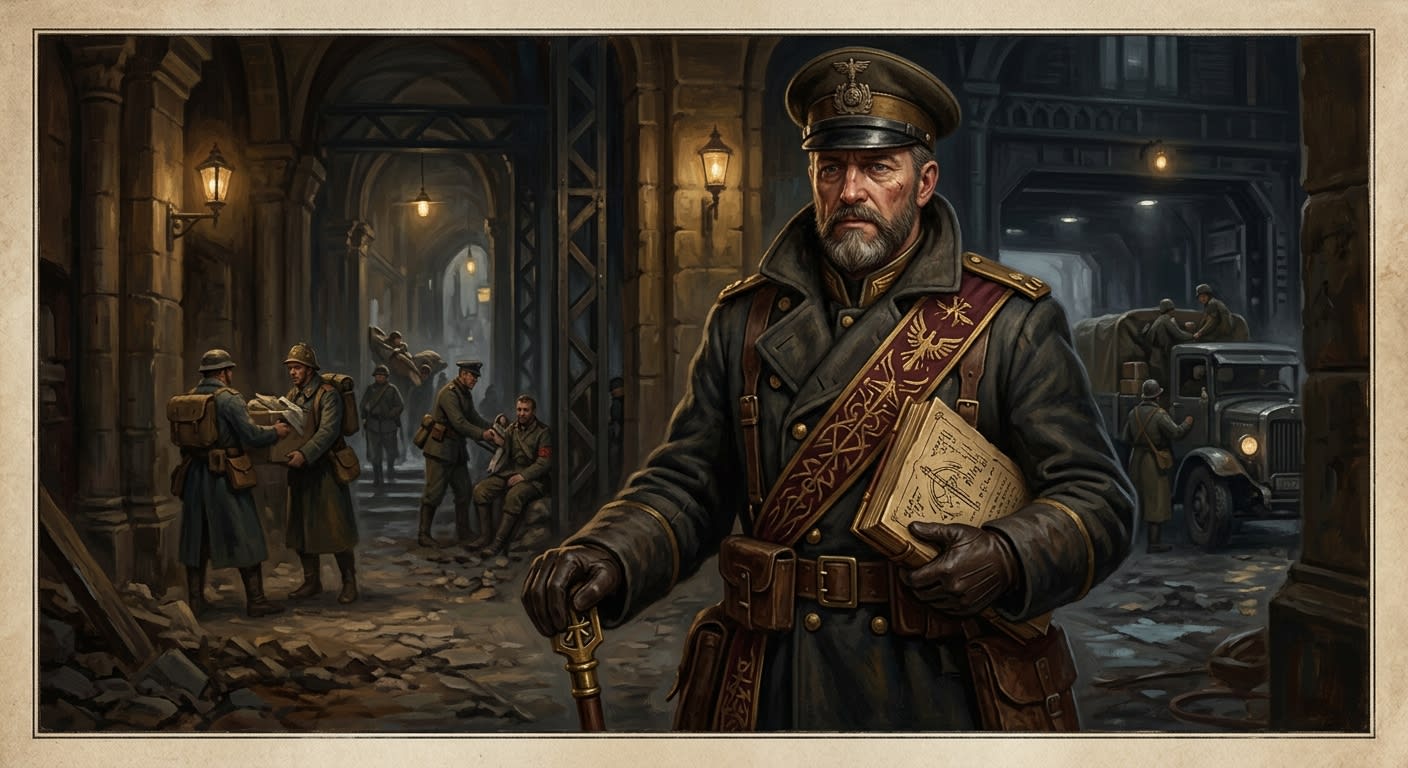
Garrison-Prior Aldric Venn
He saved the crates, which is how saints survive the road
Garrison-Prior Aldric Venn commanded Saint Stephen's defensive precinct during Vienna's Great Retreat withdrawal, completed the relic manifest, and vanished into the road.
Codex Ref. III.2.01-154
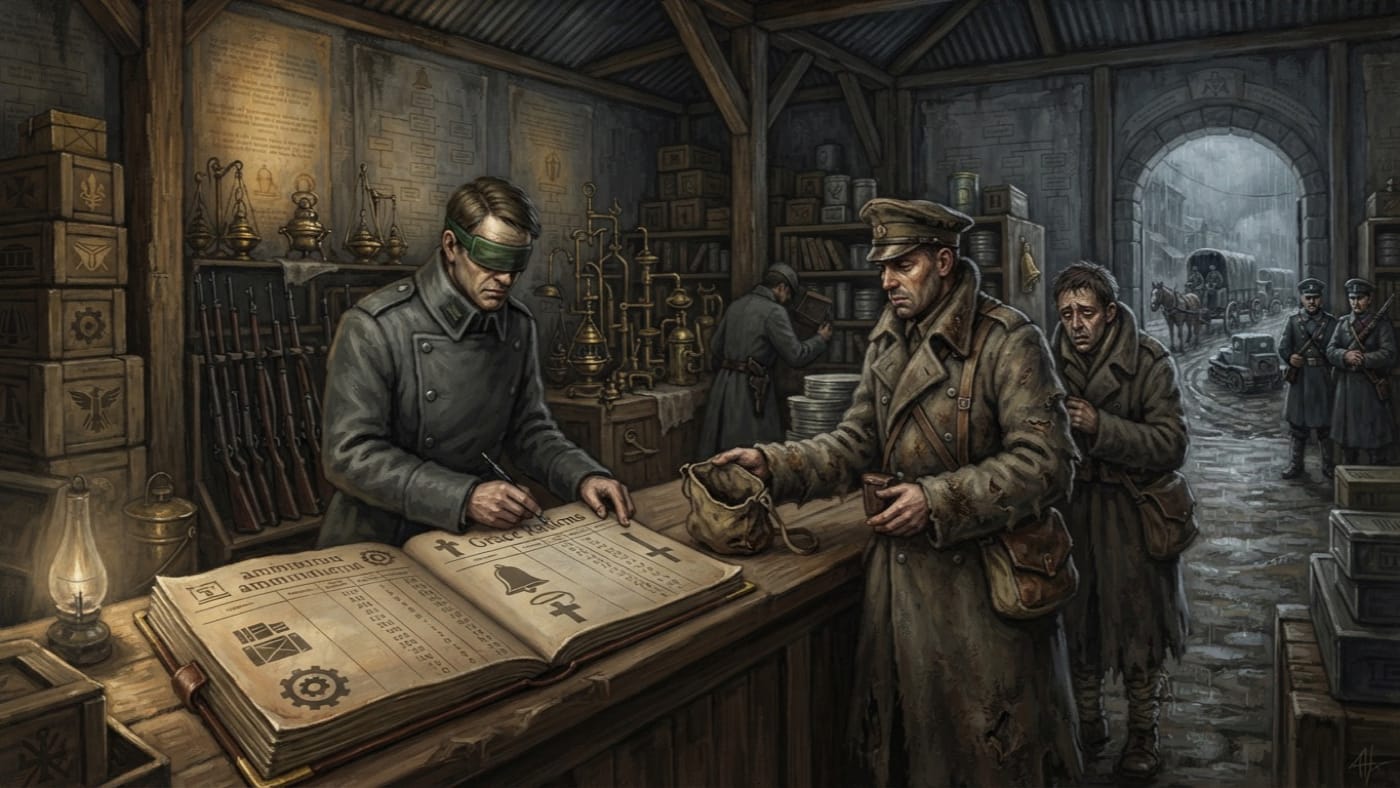
Grace Rations
The pouch is issued; the soldier is spent
Bell-hour chits, saint-shares and indulgence slips ration mercy to the Church's armies. Tithe arrears suspend the claim; invoking grace still spends the soldier. The pouch is issued. The body pays.
Codex Ref. VI.3.01-004
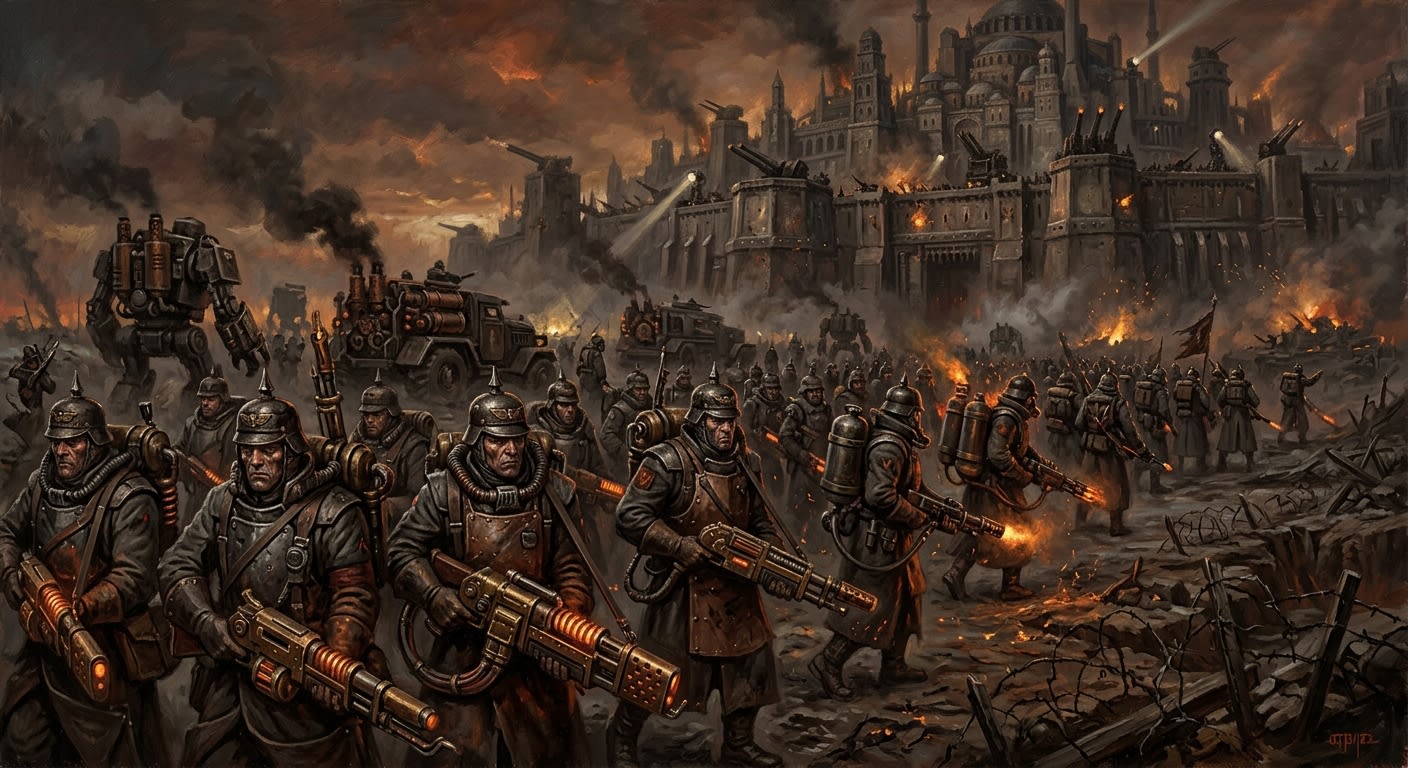
Hellbow Legion
Maldrake's arc of wrath, where range becomes theology and stone learns fear
Maldrake's Hellbow Legion is a wrath-forged assault host, not a regiment of archers: slag-bow cohorts, pyre-smiths, Ember-Soldiers, Hollowed columns, and siege heat aimed at Bastion-Constantinople.
Codex Ref. IV.1.07-009
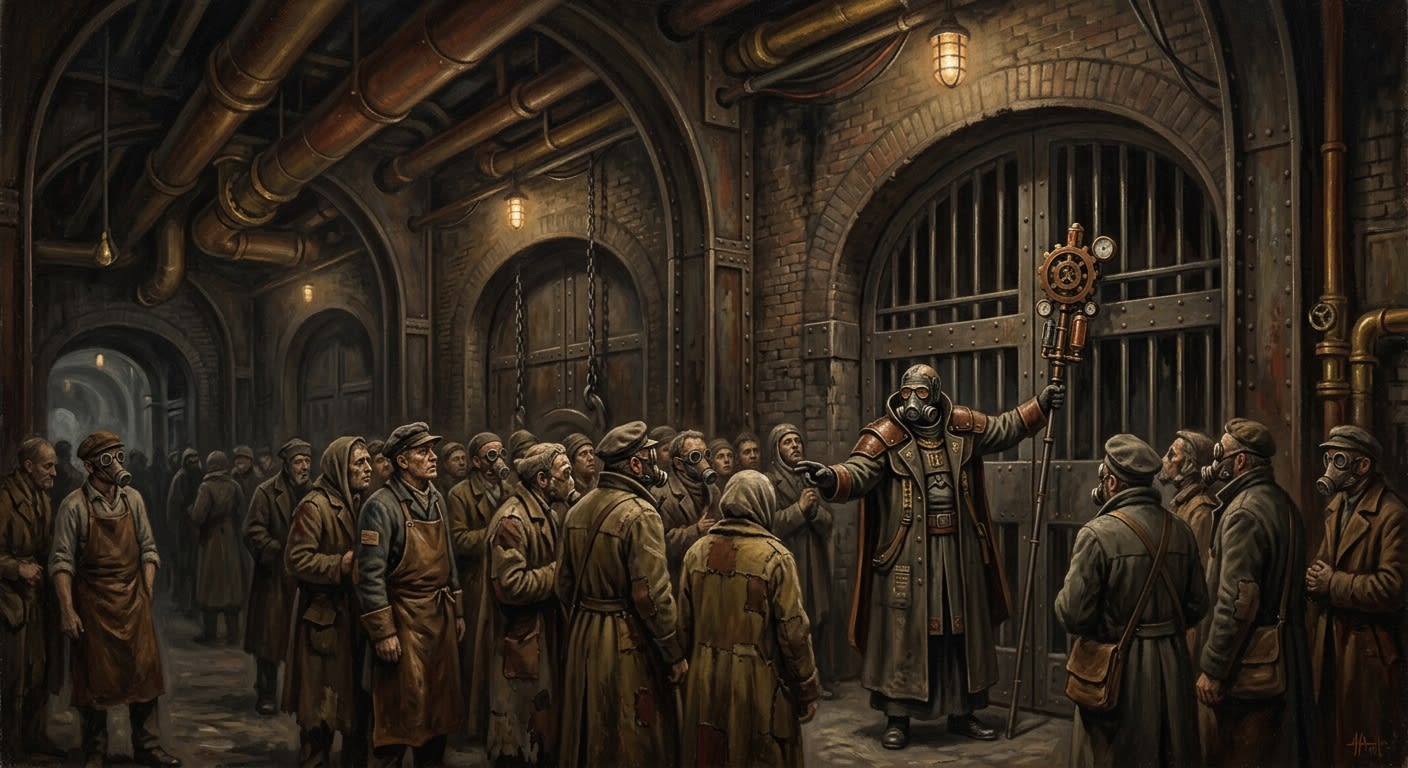
Hollow Fast of Saint Calistus
Forty nights without bread, and Lyon learned to whistle
During the Year Without Dawn, Saint Calistus sealed Lyon's ration-halls for forty nights; the plague halted, the fasters lived, and their descendants still sing through absence.
Codex Ref. VII.4.01-002
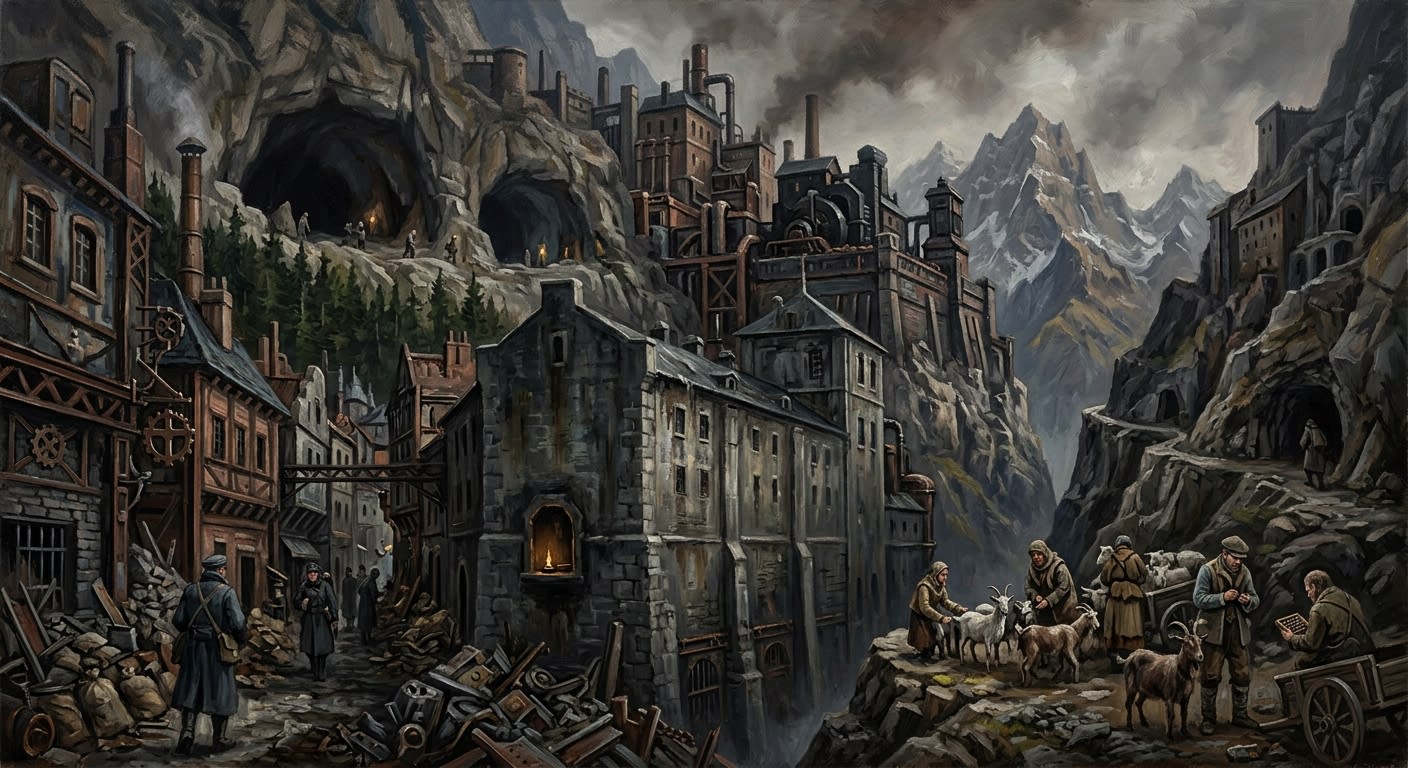
Innsbruck
Where mountains, grandmothers, caves, and walls defeat the census
Innsbruck is the Synod's alpine refuge-city: Cellar Saint caves above the treeline, relics disguised as trash, Mother Sava's wall-cavity, Pale Kin routes, goat arithmetic, and the most pious registry evasion in the mountains.
Codex Ref. II.2.09-030
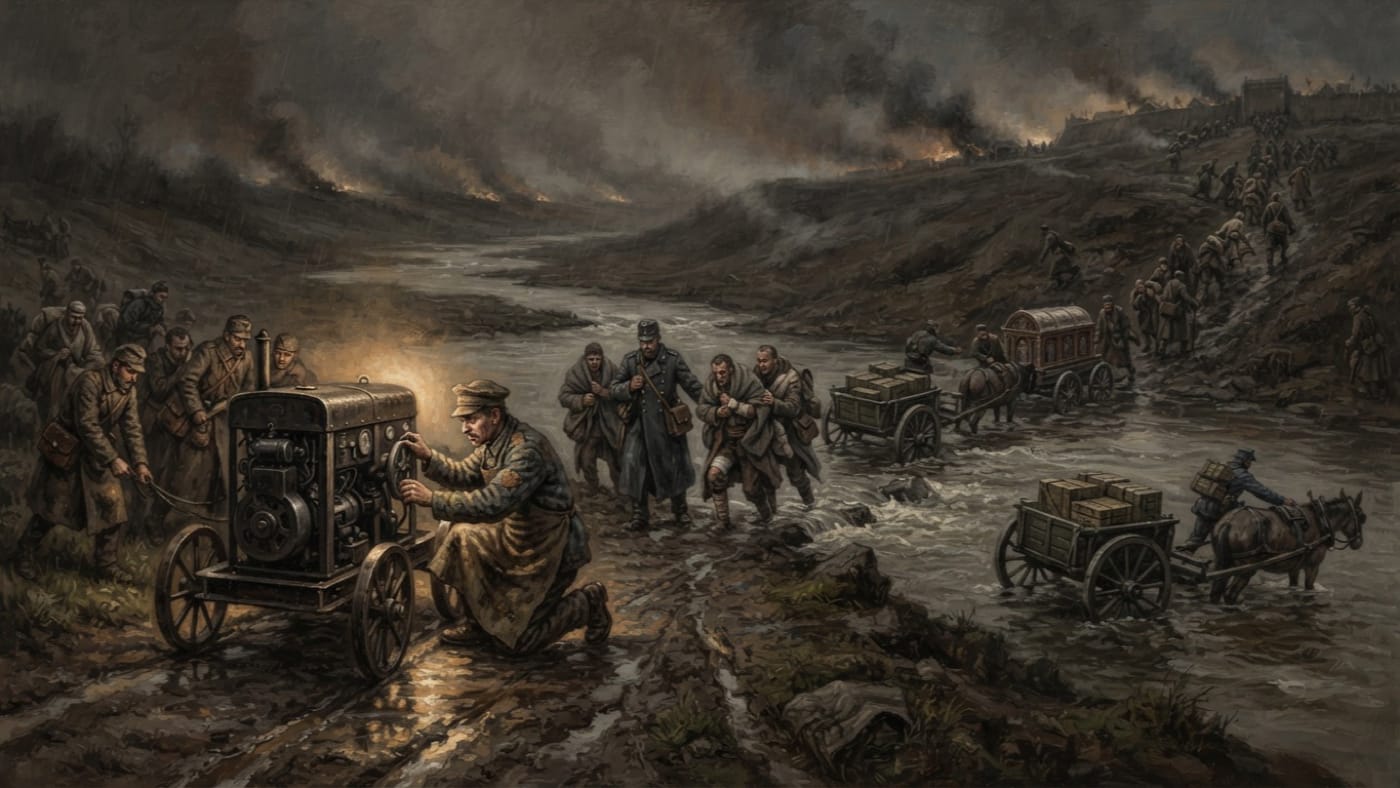
Kalnik Road
One crossing, sixty-three wounded, and no survey
Kalnik Road survives through Edrin's A.S. 48 restart and the crossing of sixty-three wounded. Its course and ford remain unestablished; Engineering remembers the lesson more precisely than the ground.
Codex Ref. II.4.09-048
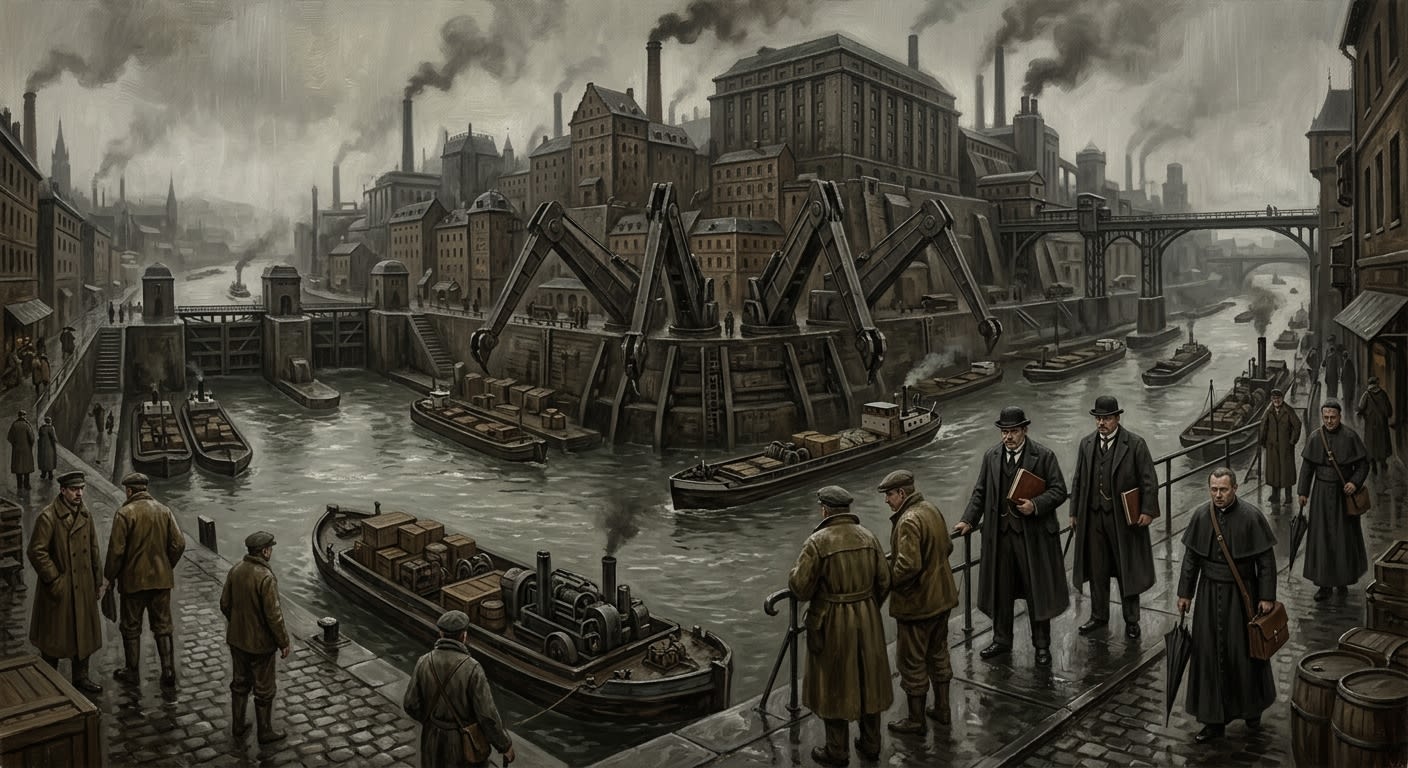
Koblenz
The holy art of handing the burden onward
Koblenz is the wet middle hand of the Ignatian chain: a Rhine-Moselle transfer city where sanctity lasted six minutes and became taxable forever.
Codex Ref. II.3.05-045
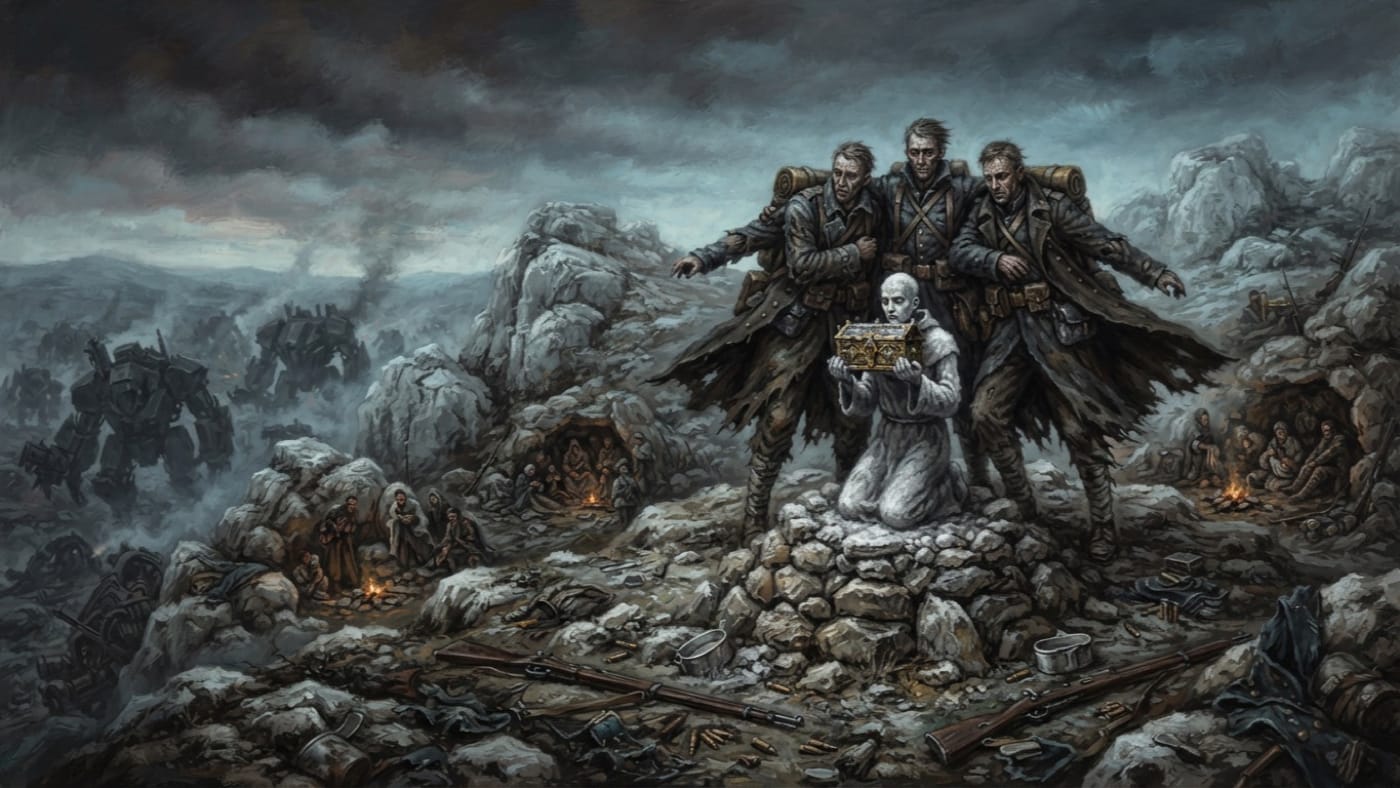
Lieutenant Petar Vladek
The lieutenant who posted a guard against the wind
Kalnik Ridge's sole surviving defending officer, A.S. 48: four lines on extraordinary morale, one guard against the wind, and no birthplace for the Bureau to enter.
Codex Ref. III.2.01-048
Martial Miracle
The river turns; the Bureaus take custody
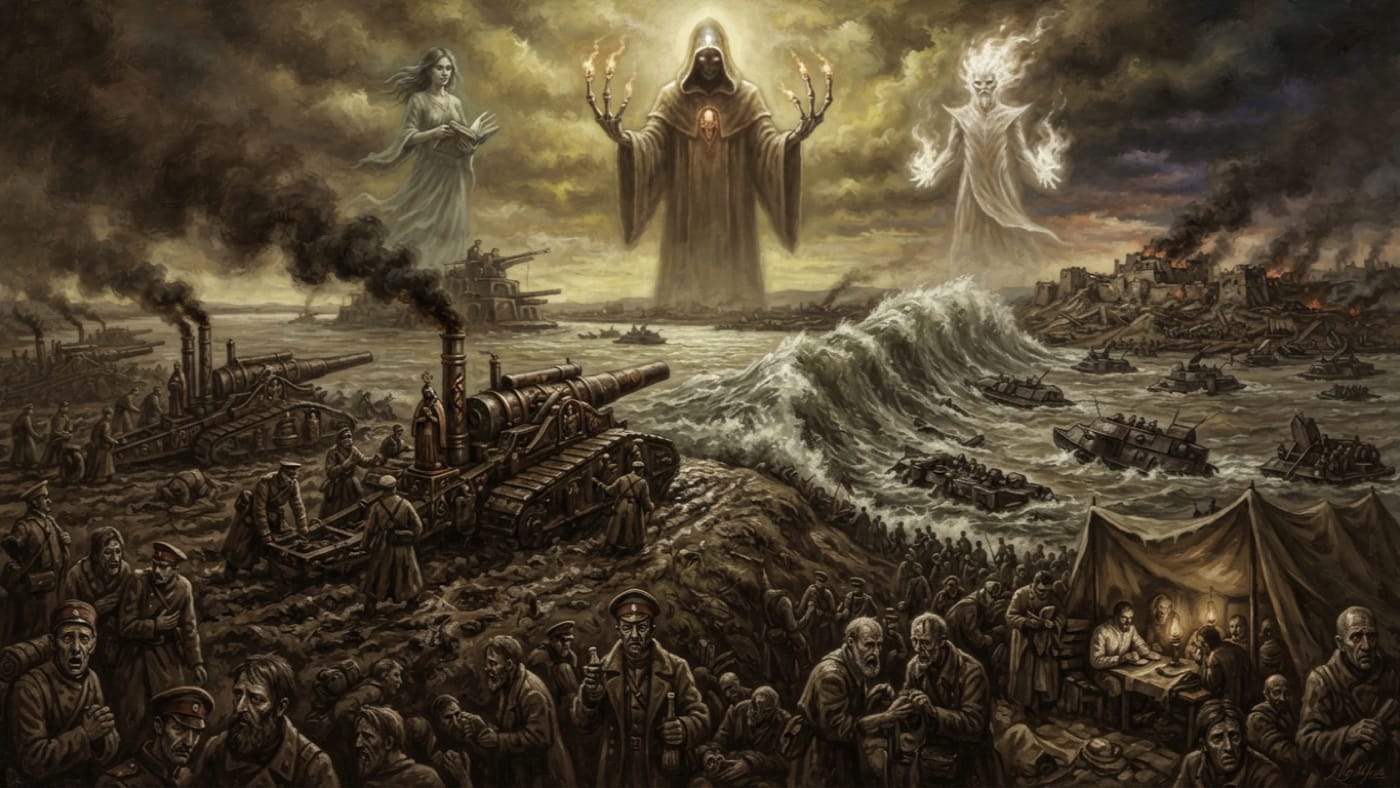
Battlefield manifestations of the Creator's favour, read through Kalnik and Belgrade. Doctrine interprets, Records keeps the testimony, and War claims the victory. Pilgrimage sends the bill.
Codex Ref. VI.3.02-001
Miracles and Sorcery
Both crack Creation; only the paperwork differs
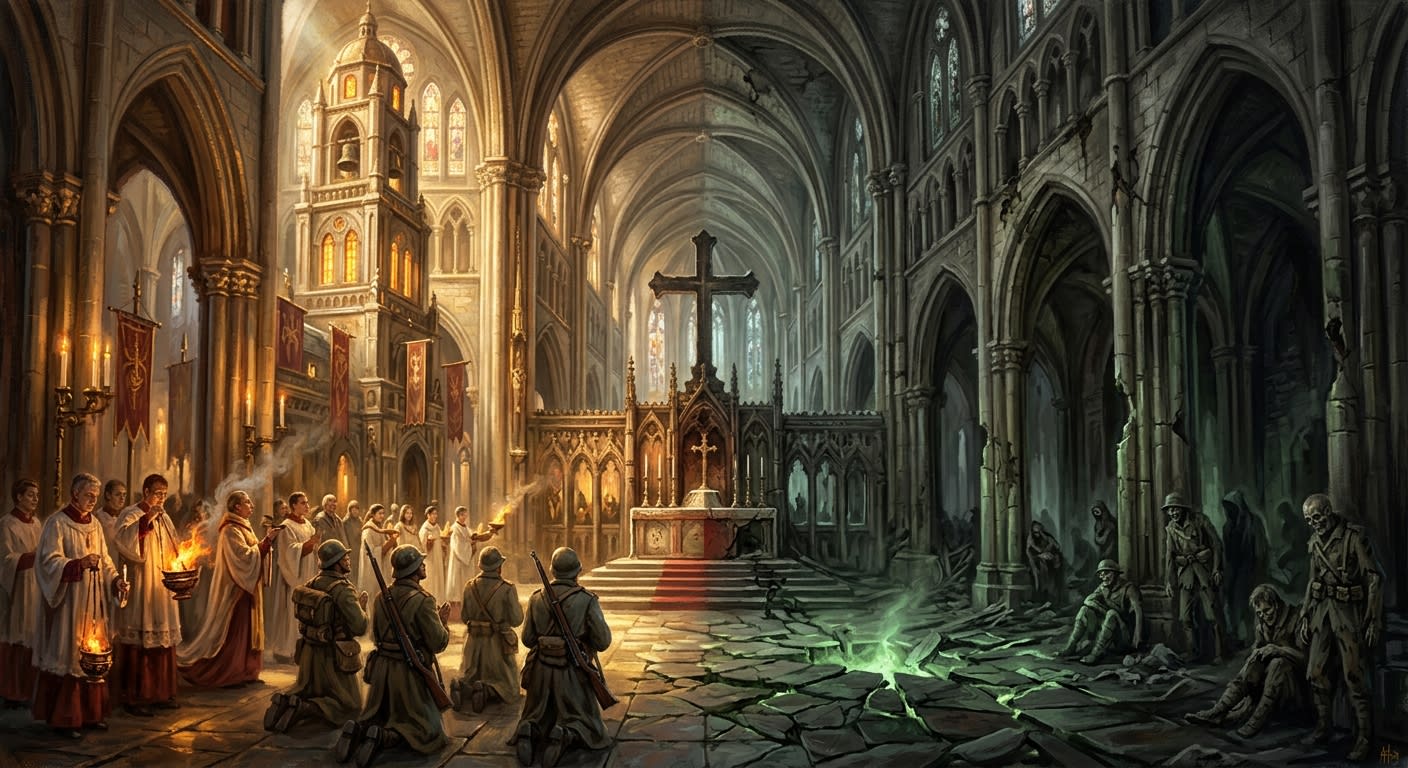
The Bureau insists miracles and sorcery are opposites. The mechanism, as Drax reluctantly confirms, is identical. The source determines canonisation or burning. The paperwork is different. The world pays either way.
Codex Ref. VI.3.01-001
Monastery of Saint Alexios
The house burned; one brother carried its relic out
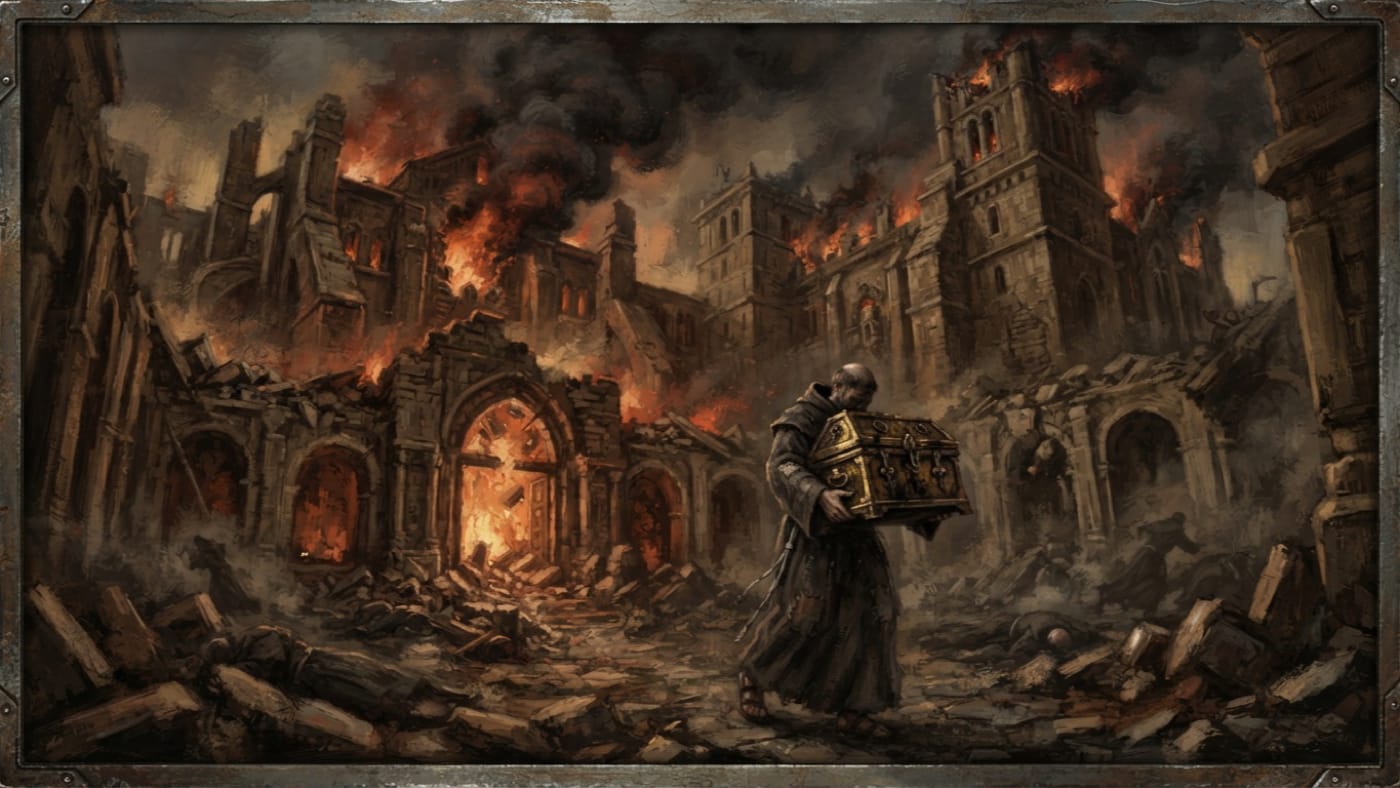
Dalmatian monastery destroyed in the first week of the Sundering, A.S. 45. Brother Tomislav carried out its reliquary; the house survives chiefly as the first link in a custody chain.
Codex Ref. III.2.04-1871
Order of Friars Minor
One brother in the record, an Order still unaccounted for
The Franciscan Order named in Brother Tomislav's file. One friar is confirmed; its foundation, superiors and survival remain beyond the Ledger's reach.
Codex Ref. VIII.9.02-2026
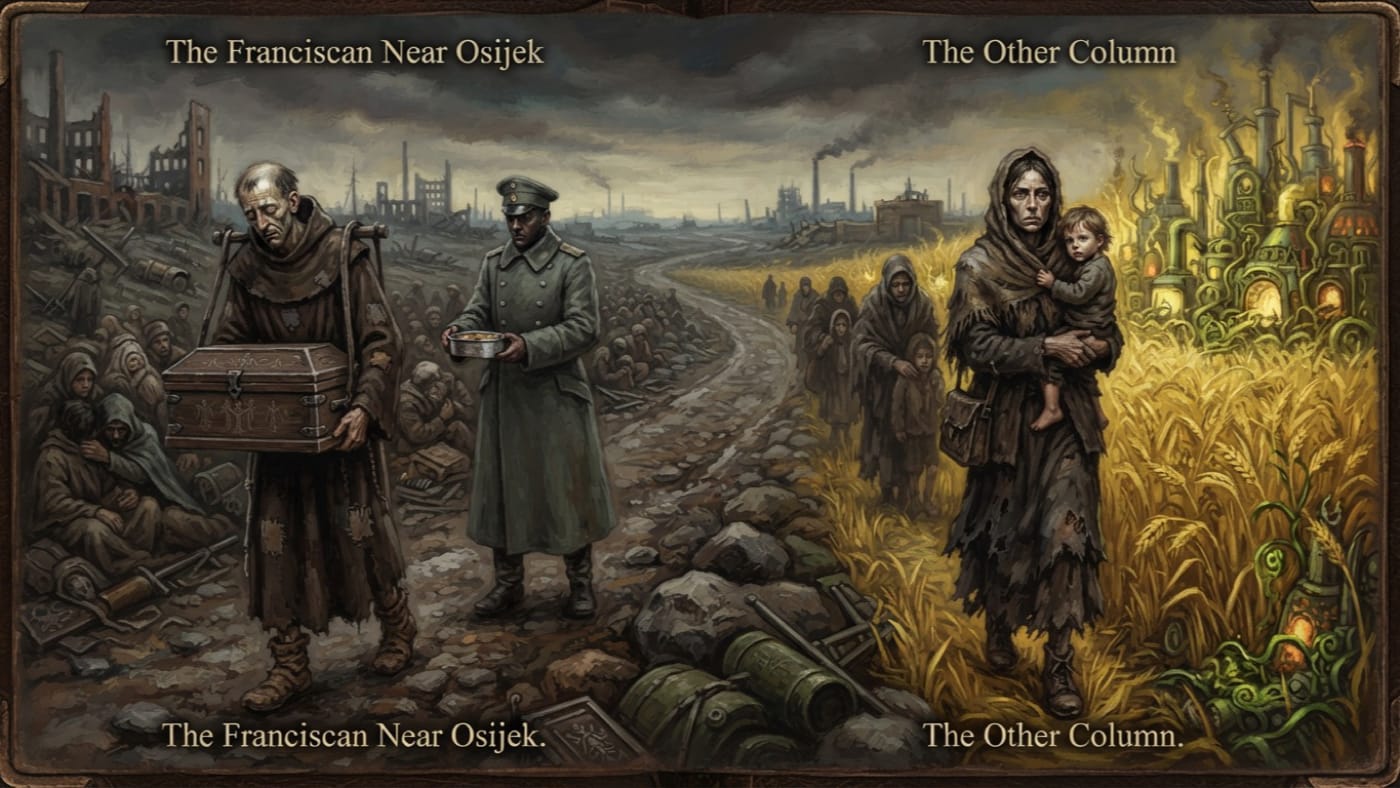
Osijek
Two roadside accounts and the hunger the Church filed differently
Osijek survives in two roadside accounts: a fasting friar near the town in late A.S. 45 and an undated mother approaching a Field. The Ledger keeps their hunger in separate drawers.
Codex Ref. II.3.08-045
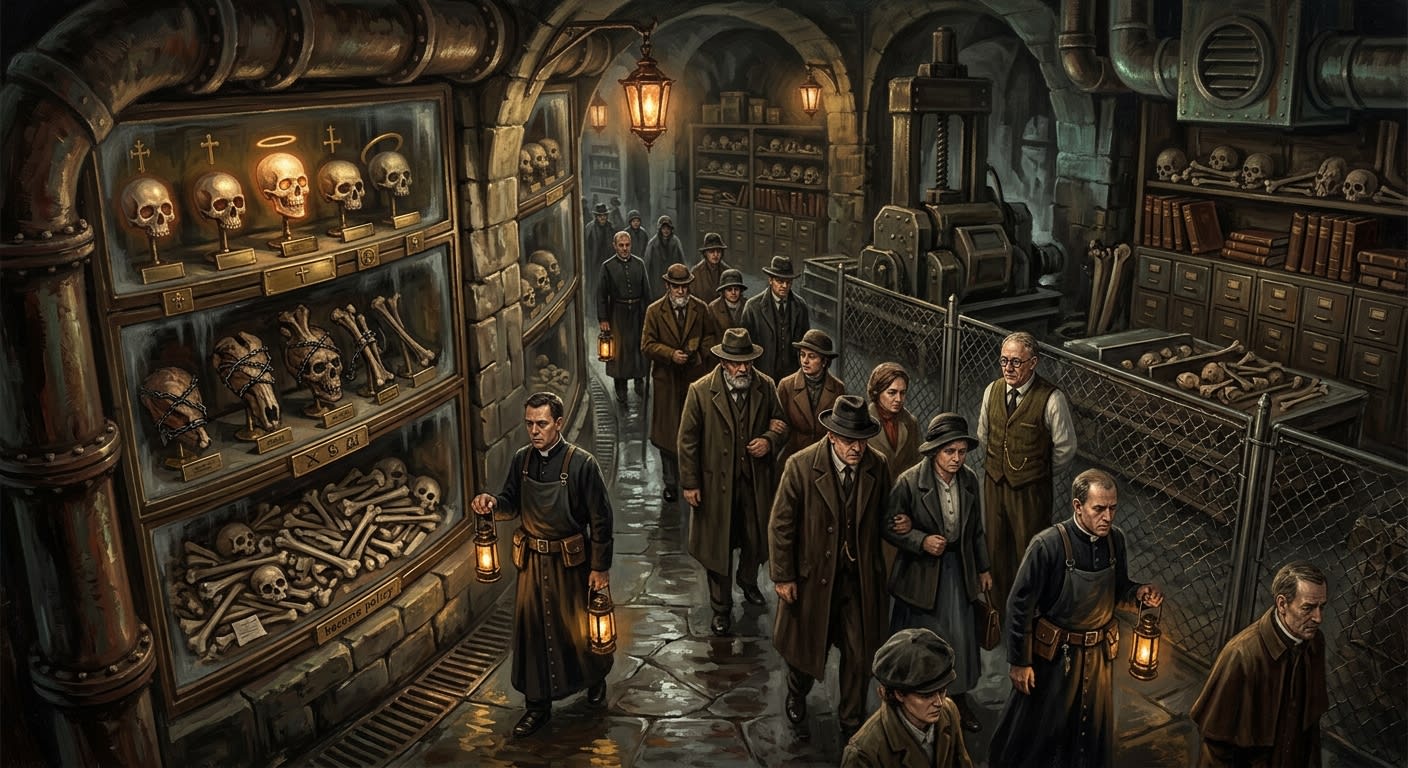
Relics Archive
The polite room before the locked stomach begins digesting saints
The Relics Archive beneath Strasbourg Cathedral teaches pilgrims which bones may be admired, which must be feared, and which have already become policy.
Codex Ref. II.2.06-005
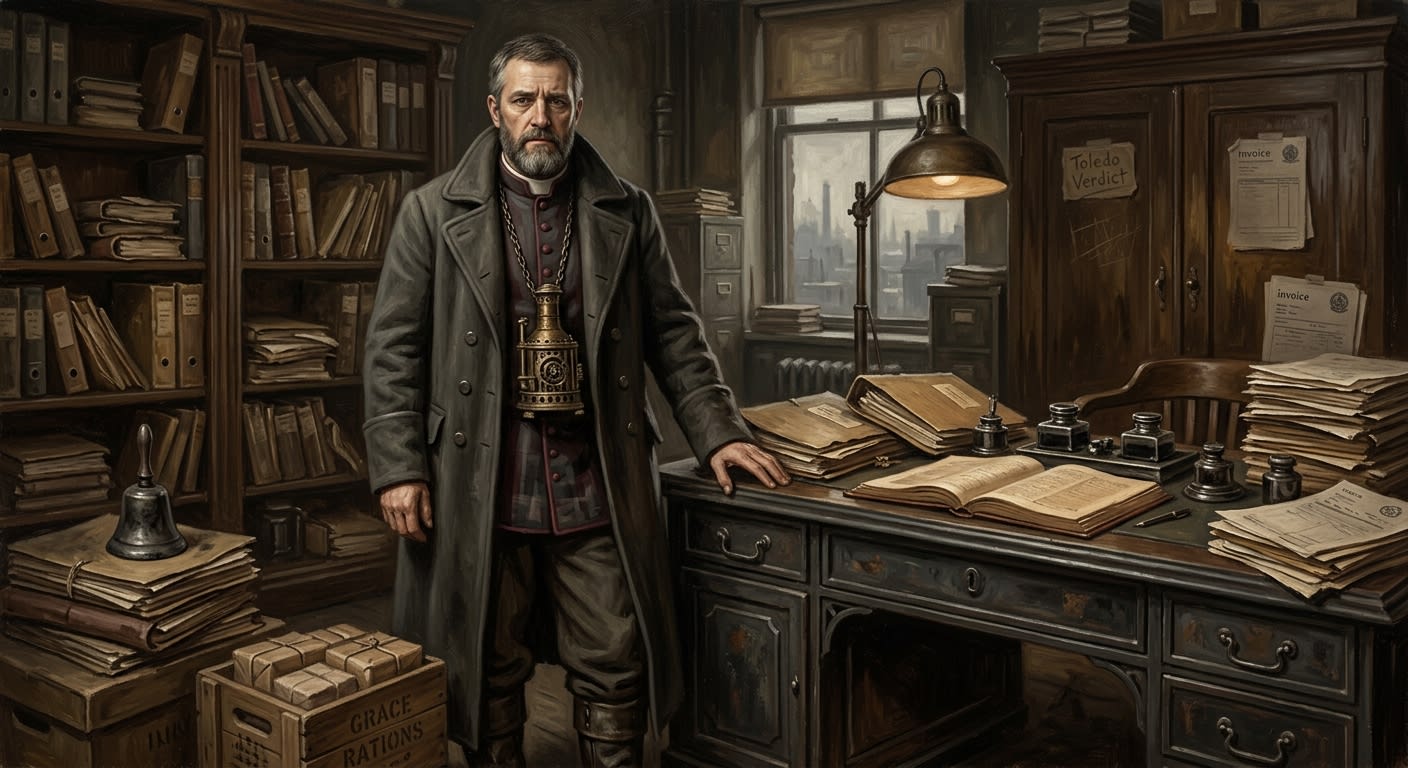
Saint Isidore
The saint who became vessel, bell, ash, and invoice
Pre-Synod saint whose militarised relic blazed at Kalnik Ridge in A.S. 48, then multiplied into bell, ash, Grace Ration, Toledo verdict, and Bureau invoice.
Codex Ref. III.2.01-086
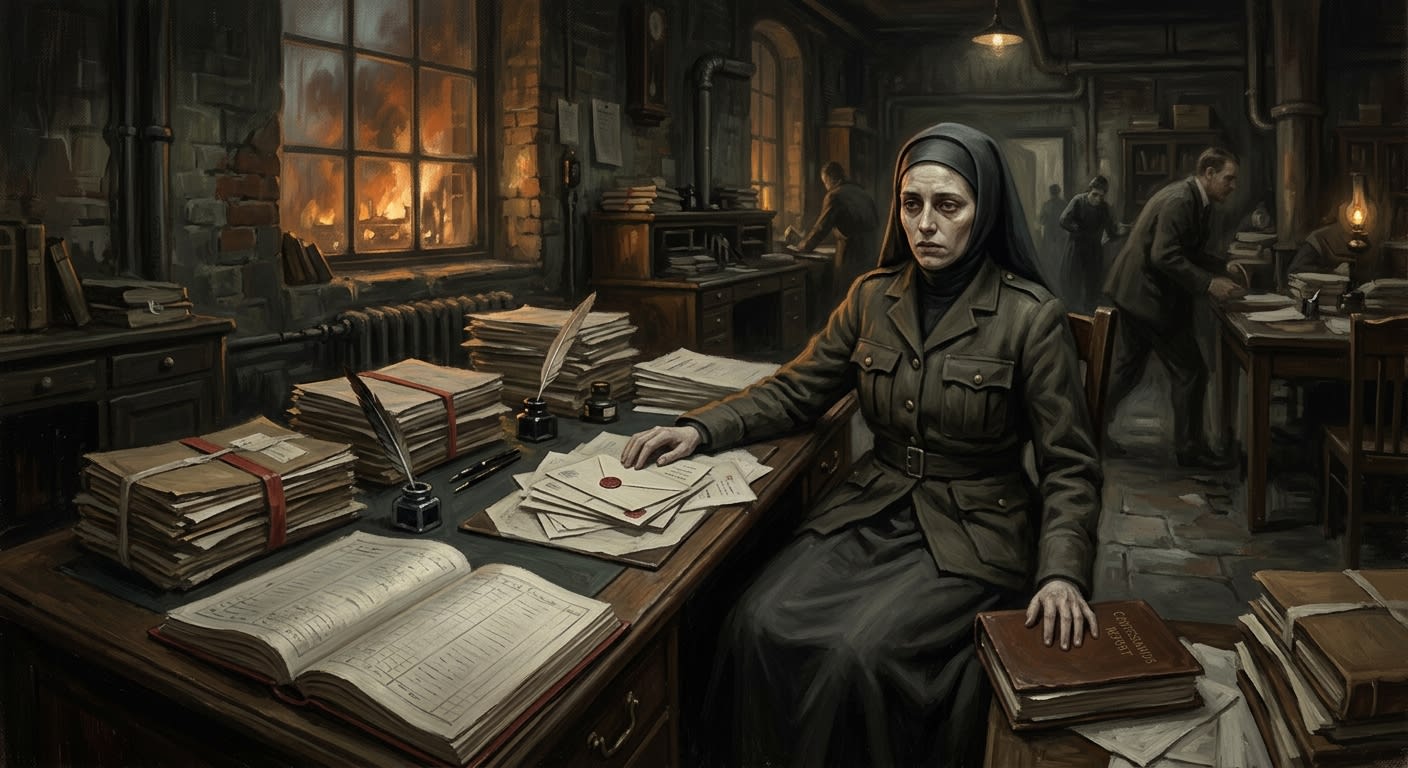
Sister Adelhaid
A name, a correspondence, a fire, and the blessed cowardice of files
Sister Adelhaid survives as a name in a Confessarius report, attached to Marseille letters, Saint Isidore's Eve, and a bookseller's fire too clean to comfort anyone.
Codex Ref. III.2.01-151
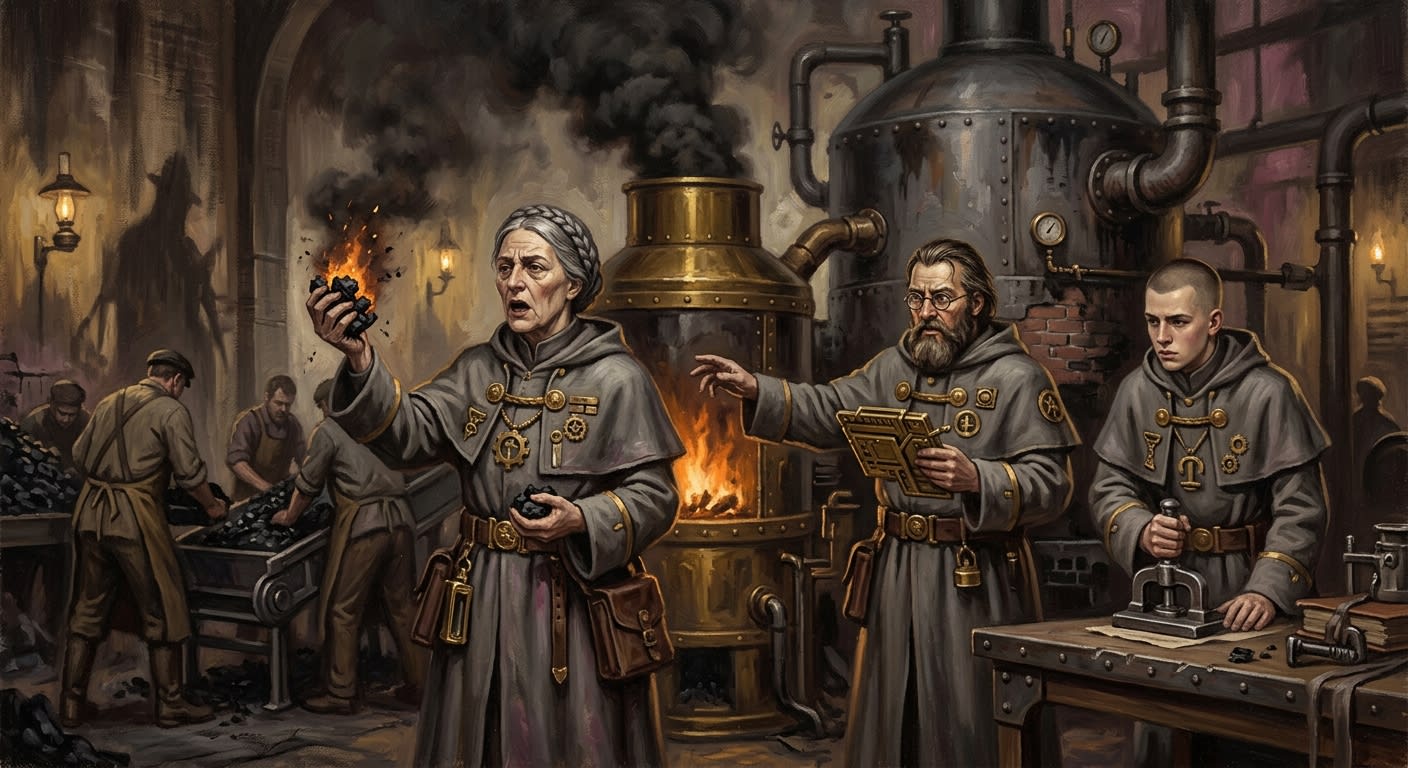
Standing Order 14-E
Sing before spark, or let the wall receive you
Standing Order 14-E is the smoke-written law of ignition: sing before spark, witness before load, seal before claim.
Codex Ref. XIII.1.14-097

The Age of Heresy
A World Sundered, a Faith Forged in Fire
The definitive overview of the Age of Heresy — a continent sundered by demonic invasion, ruled by a theocratic bureaucracy of bells and ink, locked in eternal war against the Seven Sin-Generals. As compiled by the only man qualified to compile it.
Codex Ref. I.1.01-001
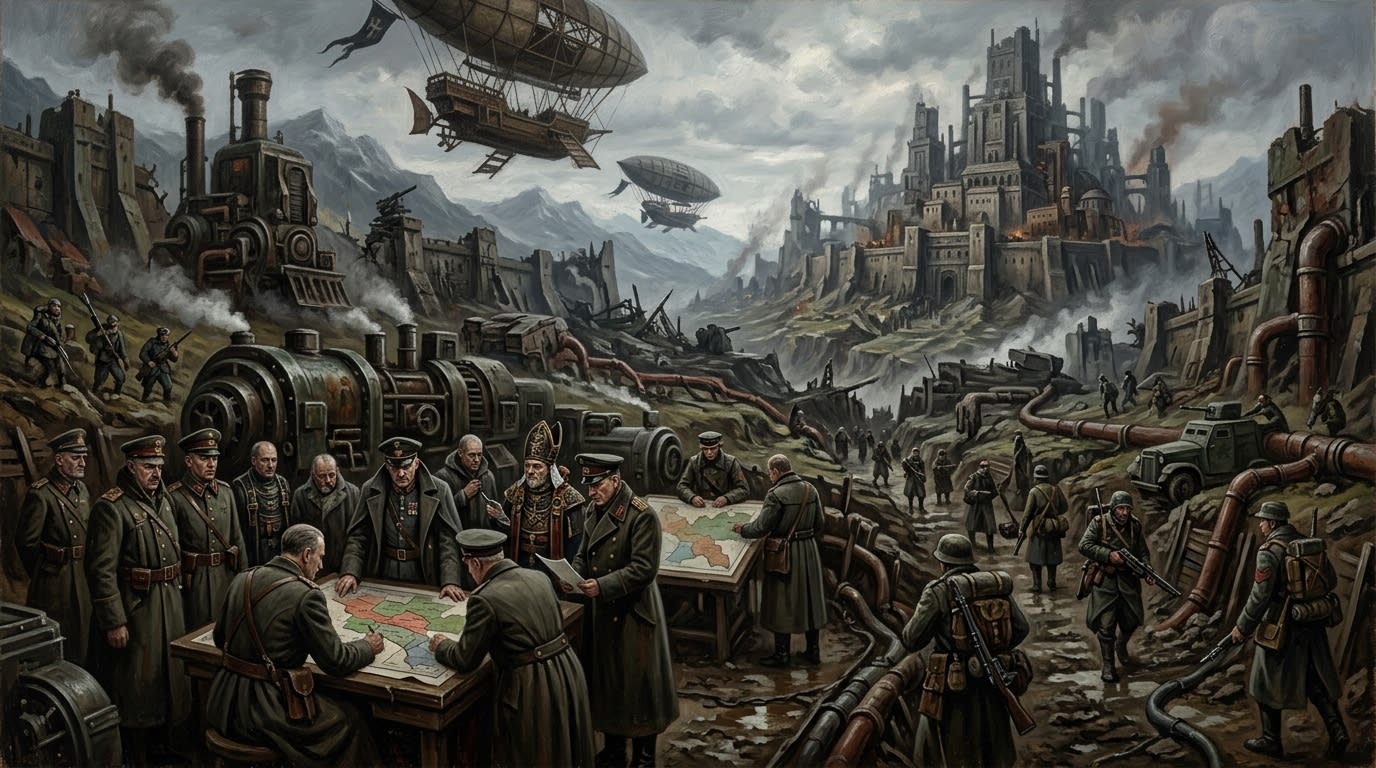
The Balkans
The wound that taught Europe to count its bleeding
The Balkan wound-region, broken first by the Eastern Silence and the Sundering, then divided into Synod margins, contested corridors, Sin-General dominions.
Codex Ref. II.6.05-045
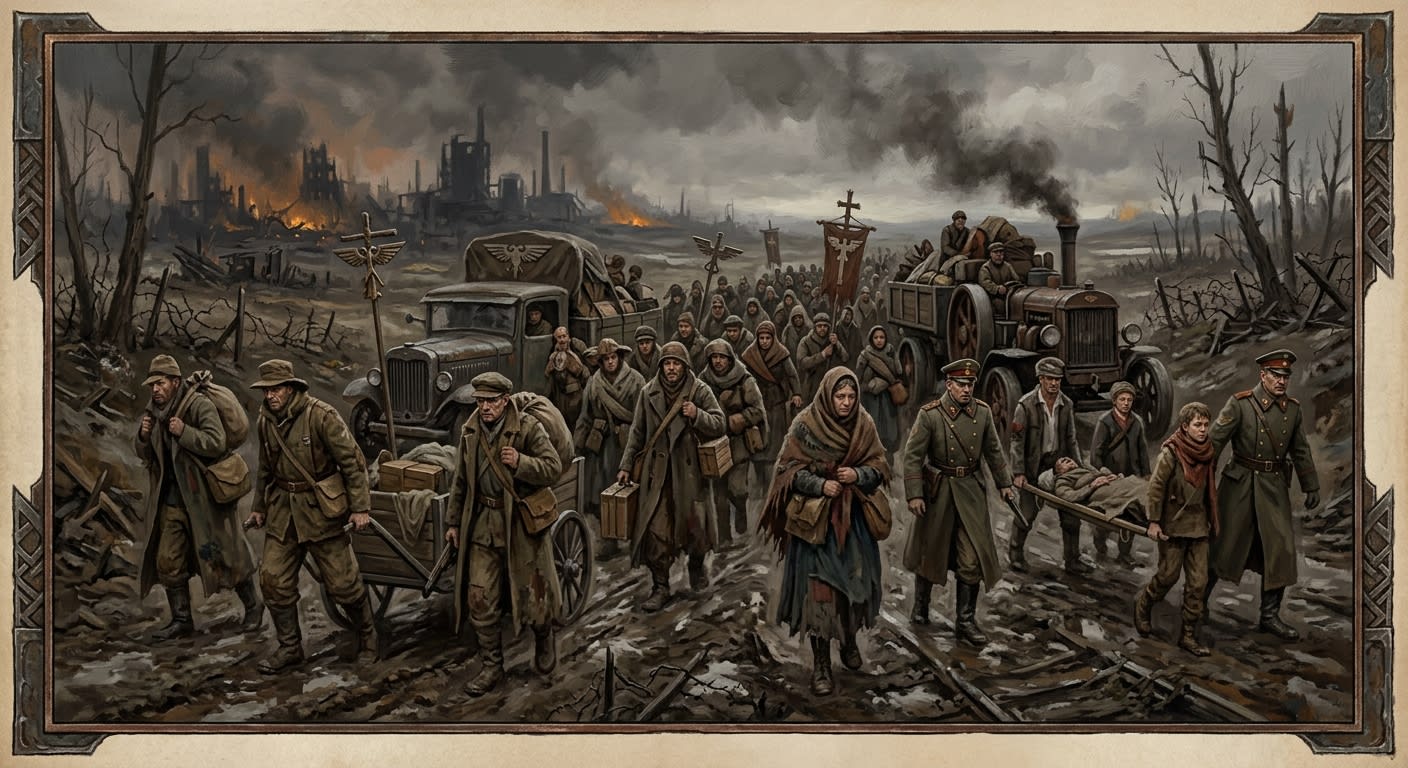
The Great Retreat
Seventeen years of westward mud before the Line learned to stand
From A.S. 48 to A.S. 65, the faithful West walked, bled, improvised institutions, and finally stopped running where the Sagittal Line began to hold.
Codex Ref. VII.1.03-001
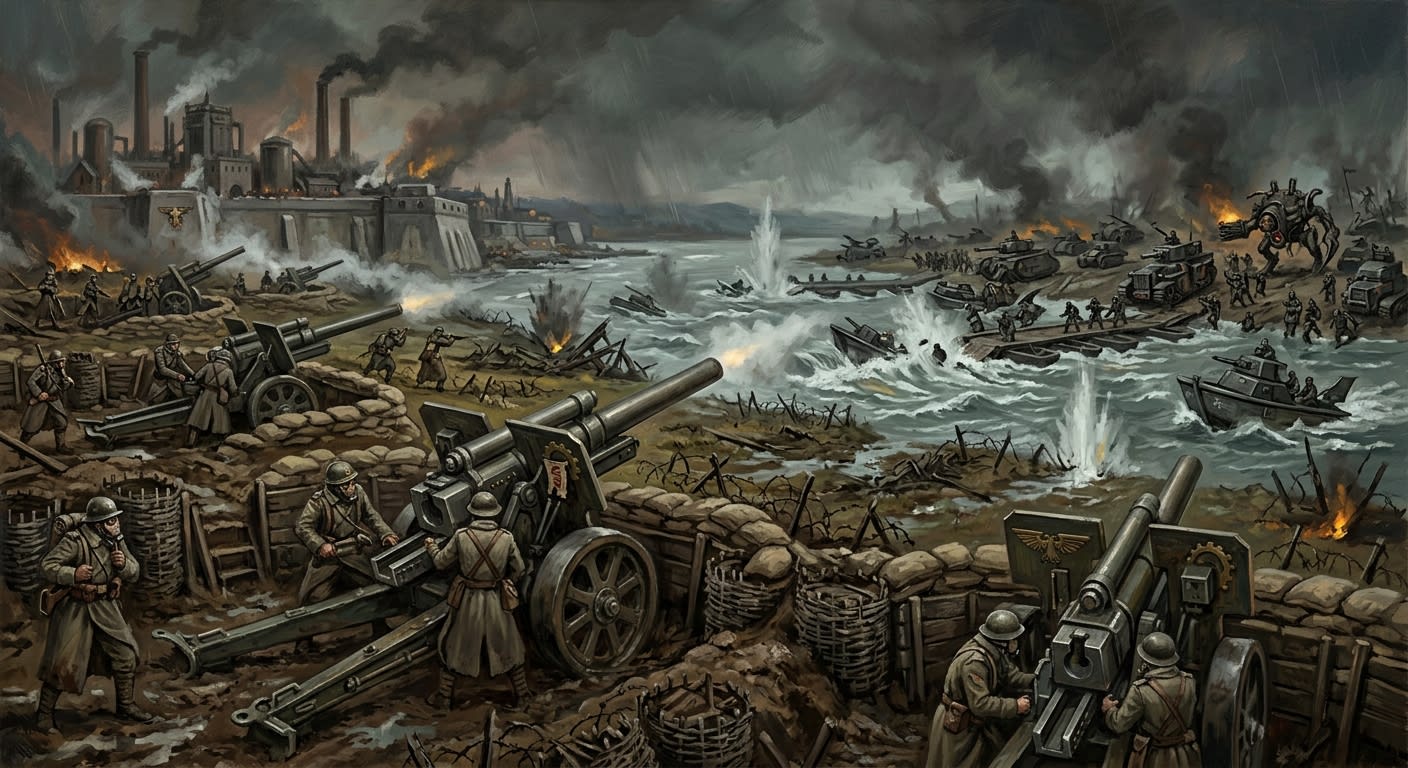
The Miracle of the Danube's Turning
When the river struck the Enemy in the teeth
At Belgrade in A.S. 120, Maldrake's Wrath-host broke against mud, relic artillery, and a Danube that turned back upon the Enemy. Victory followed; so did tariffs.
Codex Ref. VII.5.04-001
The Ragged Host
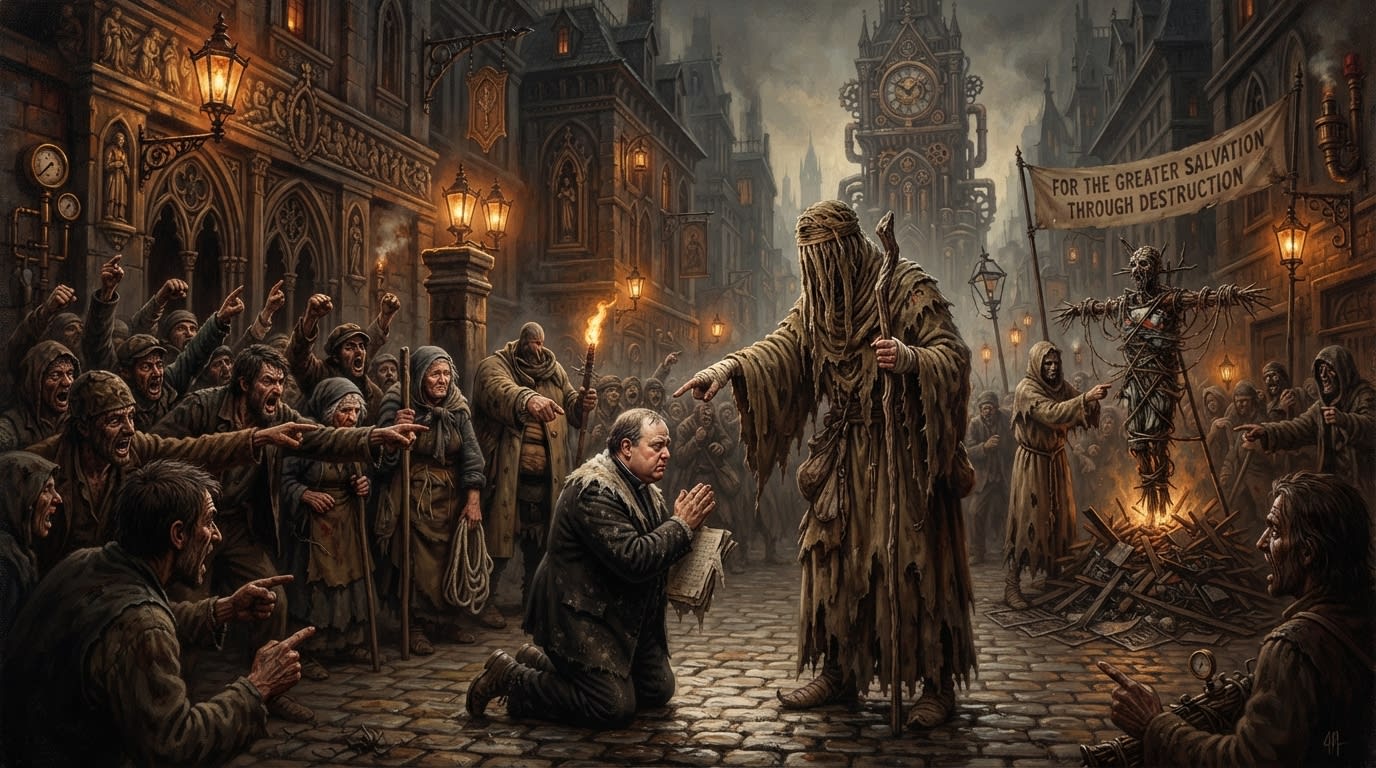
Where the remainder learned to kneel and the kneeling learned to burn
The Ragged Host is the condemned mobile movement that treats unaddressed harm as a public charge before the Creator — poor, armed, improvised, and more dangerous than any mob because it keeps records.
Codex Ref. XII.9.02-001
The Sundering
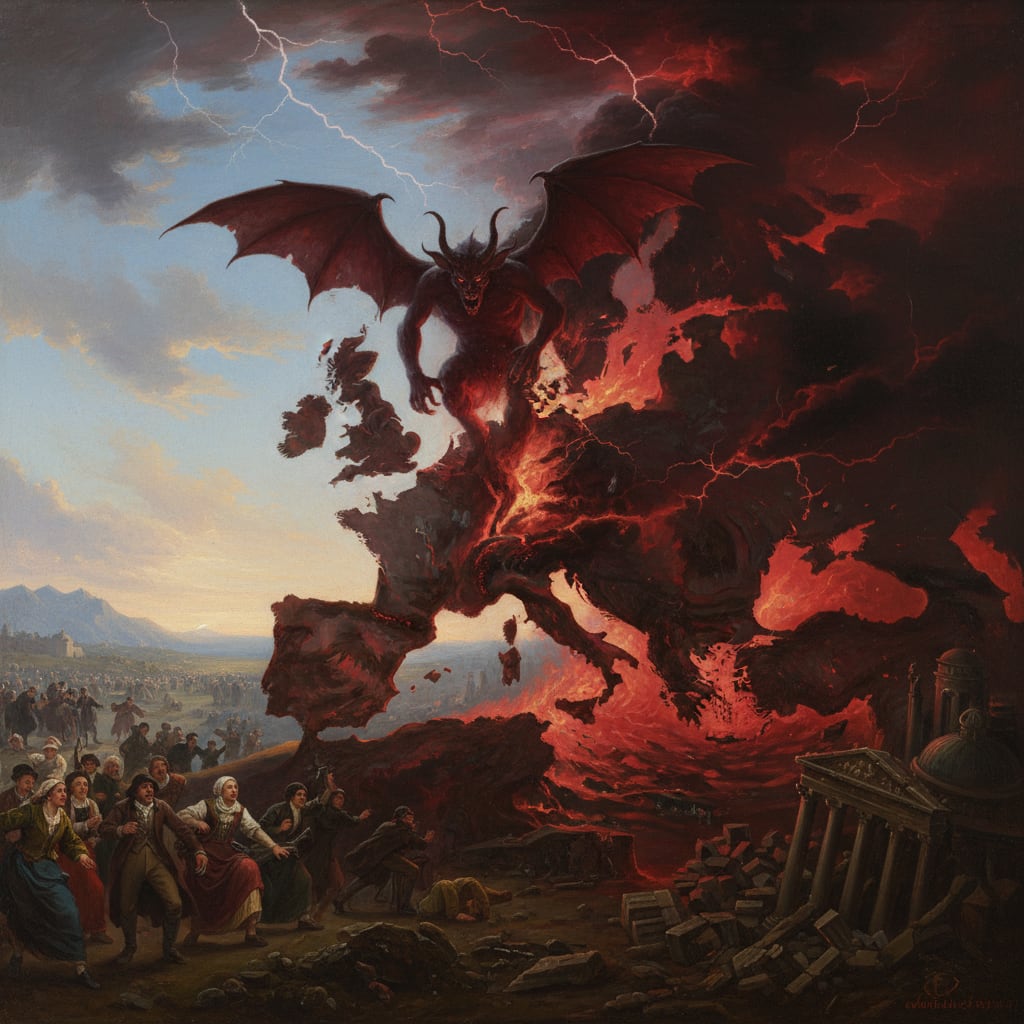
The Day the World Cracked Open and the Creator Sent His Invoice
The cataclysm of 1 November, 45 An.S. — when the Balkans erupted and the legions of the Great Deceiver poured through the wound in Creation. The event that ended Reason and birthed Faith's second coming. As explained by the only man whose explanation matters.
Codex Ref. I.1.02-001
The Thread
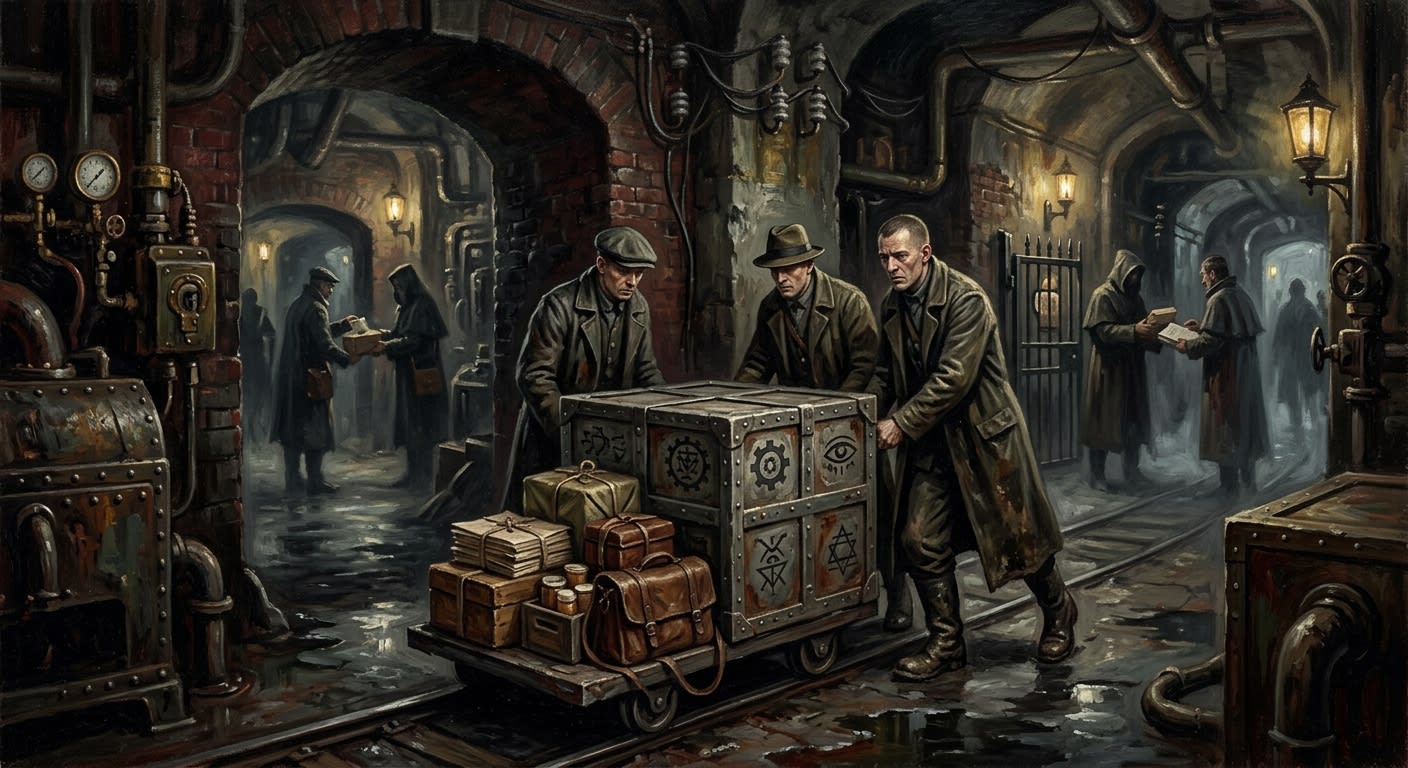
The quiet line by which bones, names, and suspicion crossed the dark
Informal Cellar Saint transit doctrine that moved relics, names, wafers, and warnings through trusted cellars from A.S. 30 until the Sundering tore the roads open.
Codex Ref. XIII.1.91-045