

Reverse Index
Referencing “Archon Benedict Veyrault”
Every codex entry that links to Archon Benedict Veyrault. 54 entries.
Return to Archon Benedict Veyrault

Abbot-Registrar Solene
She made contradiction choose a widow and a loaf
Solene of Lyon, first Abbot-Registrar of Nemea, made ruins into an archive and panic into the doctrine of original by ratification.
Codex Ref. III.2.01-096
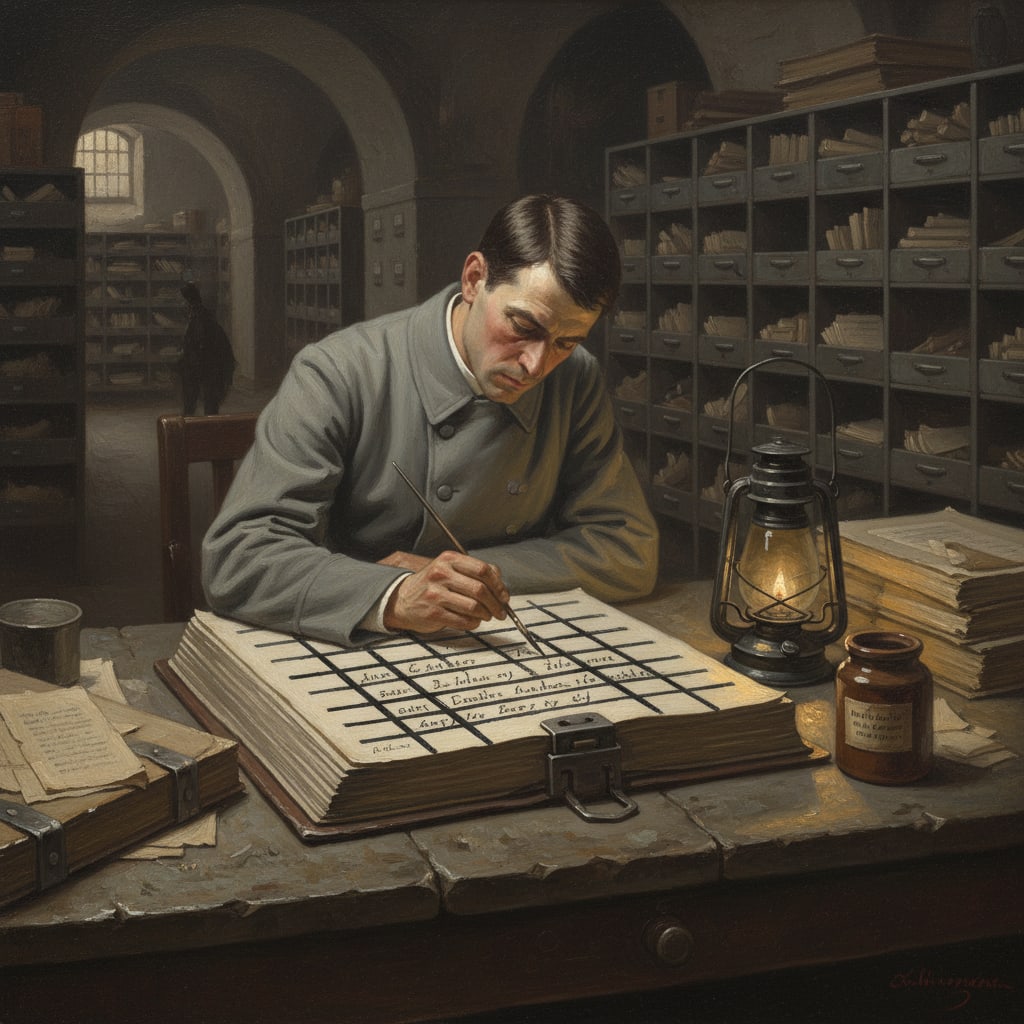
Administrative Dissolution
What the Bureau calls a filing action; what the dogs remember
Administrative Dissolution is the Bureau of Records' procedure for rendering a soul present but illegible — a grid of Mortuary Black drawn across the name-entry, the null-mark Ø applied, the Ledger amended.
Codex Ref. XIII.1.01-001

Aldara Vess the Elder
The woman who taught fire to be inefficient
Aldara Vess the Elder founded the Bureau of Silence in A.S. 82 and gave the Synod its coldest doctrine: words are not burned; they are made absent.
Codex Ref. III.2.01-082

Archbishop Salome Veyrault
The smile that made arrears a sacrament
Archbishop Salome Veyrault governs the Bureau of Tithes with a smile sharp enough to audit grief, humble Purity, and make the Sagittal Line pay for one more day of survival.
Codex Ref. III.2.01-055

Archon
The chair survives the man and charges rent to history
An Archon is less a man than a legal altitude: Bureau sovereign, city master, seal threshold, and chair that lets the Synod replace the occupant while preserving the blame.
Codex Ref. XIII.1.07-090

Archon of Records
The hand that opens almost everything, and records what it cannot touch
The Archon of Records opens nearly every lock in the Church's memory, commands the Great Ledger, and preserves one terrifying receipt: proof that some silences outrank even Records.
Codex Ref. XIII.1.07-078
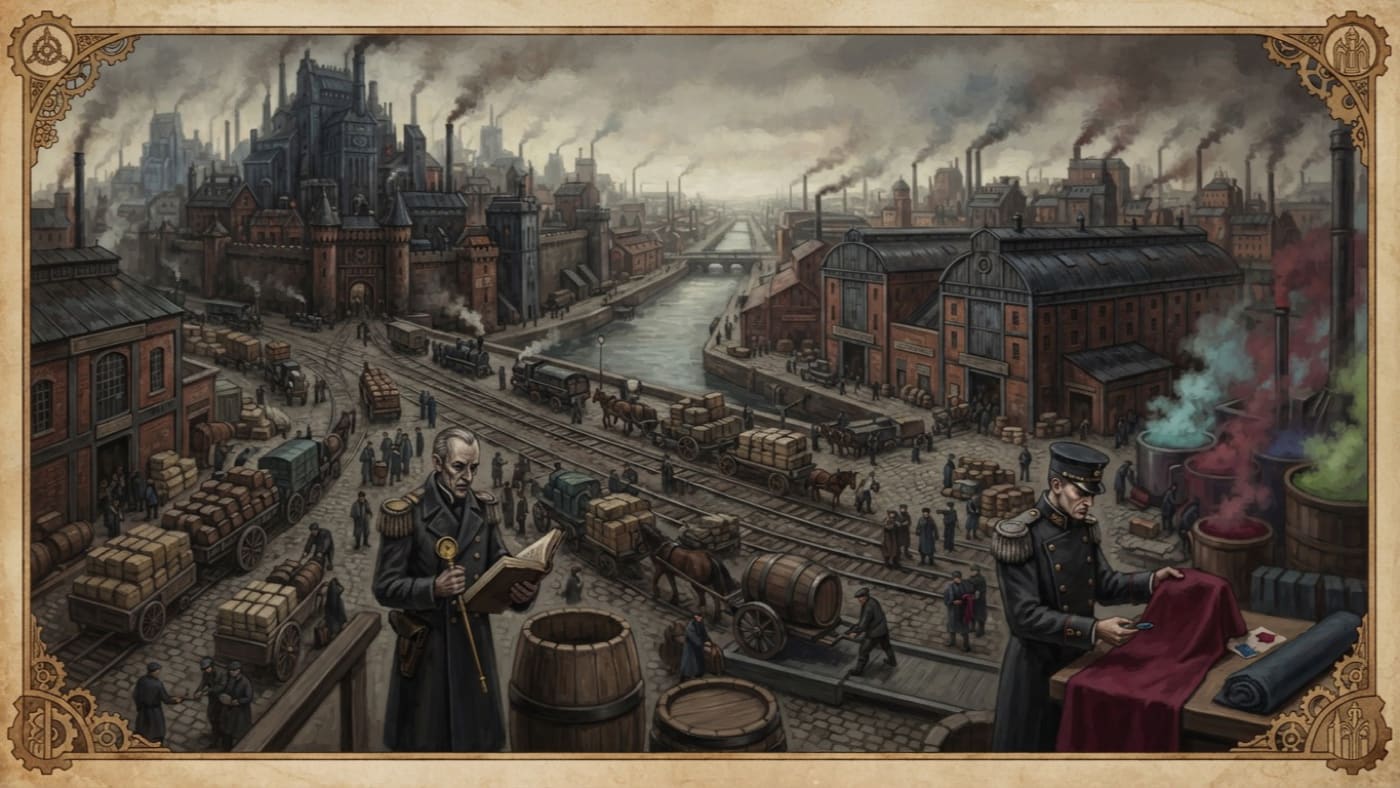
Beaune
Count the casks, check the swatch, knock on the barrel
Beaune sends Burgundy's wine toward the Rhône. Tithes gauges its casks, the Chancellery watches its dyes, and Shadows remembers a barrel that held no wine.
Codex Ref. II.1.12-201
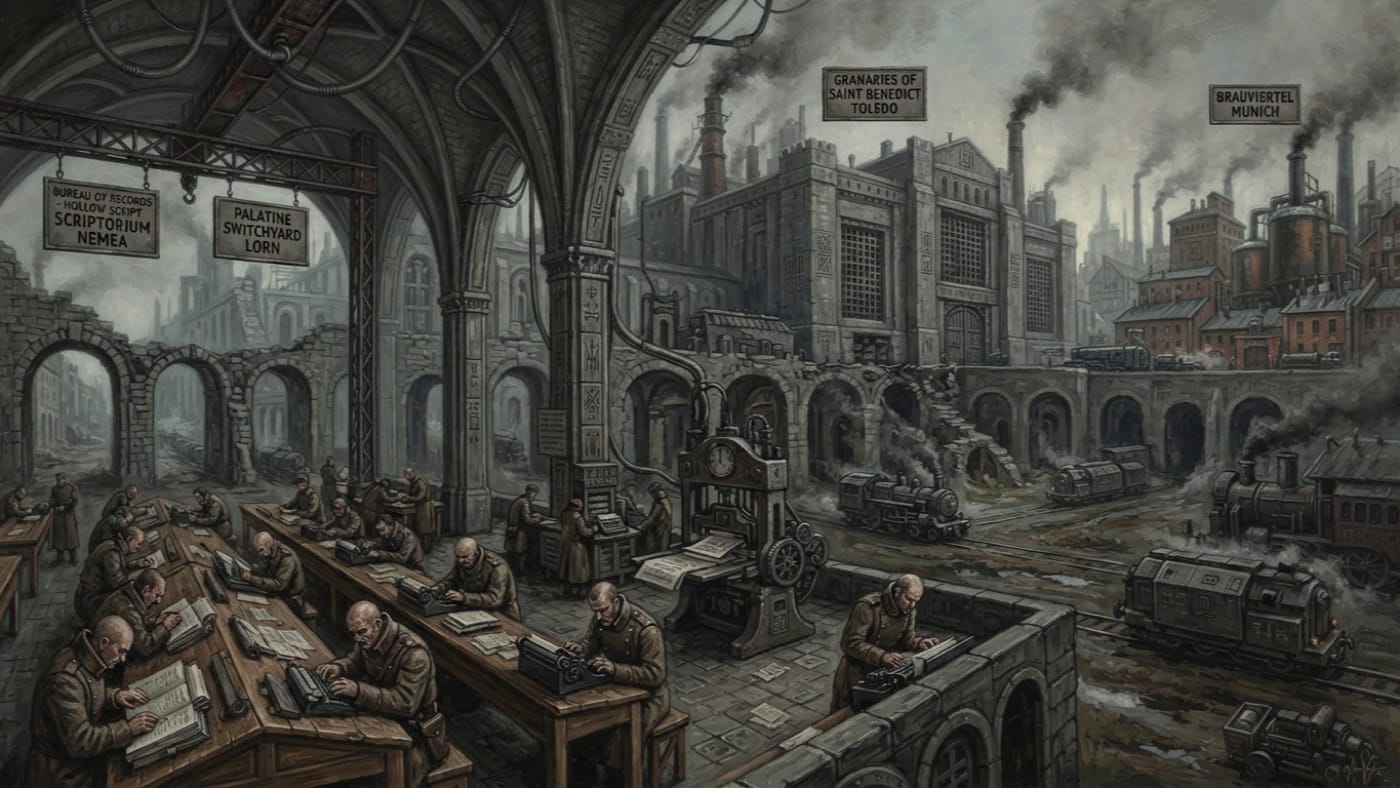
Benedictine
Property Dispersed, Name in Circulation
Benedictine houses trained Veyrault and left traces in Nemea and Lorn. Toledo claims their charity; Munich claims their yeast. Neither claim supplies me with a surviving order.
Codex Ref. VIII.9.02-244
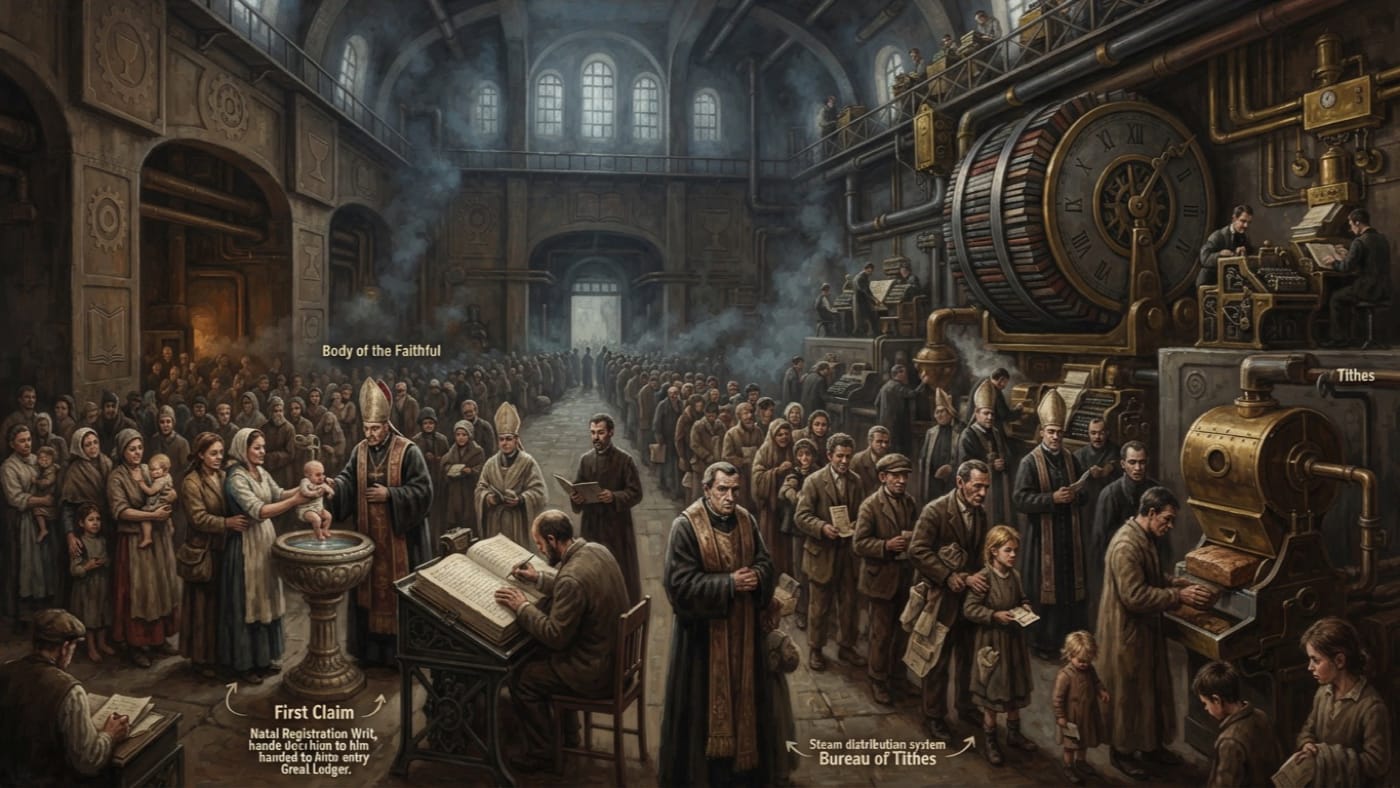
Body of the Faithful
Devotion warms the flock; recognition takes its pulse
The Church's faithful taken together: shepherded by bishops, recognised through the Ledger and claimed before the font. The flock receives bread; the accounts remember what it owes.
Codex Ref. XIII.1.03-201

Bone-Tag Registry
Counting the dead, with jurisdiction over the living
Candle-Sump's Records adjunct fastens names to the dead, holds the living's papers as collateral, and honours clean slips drawn from the crypt drafts. Chief Clerk Voss calls this counting.
Codex Ref. VIII.1.05-001
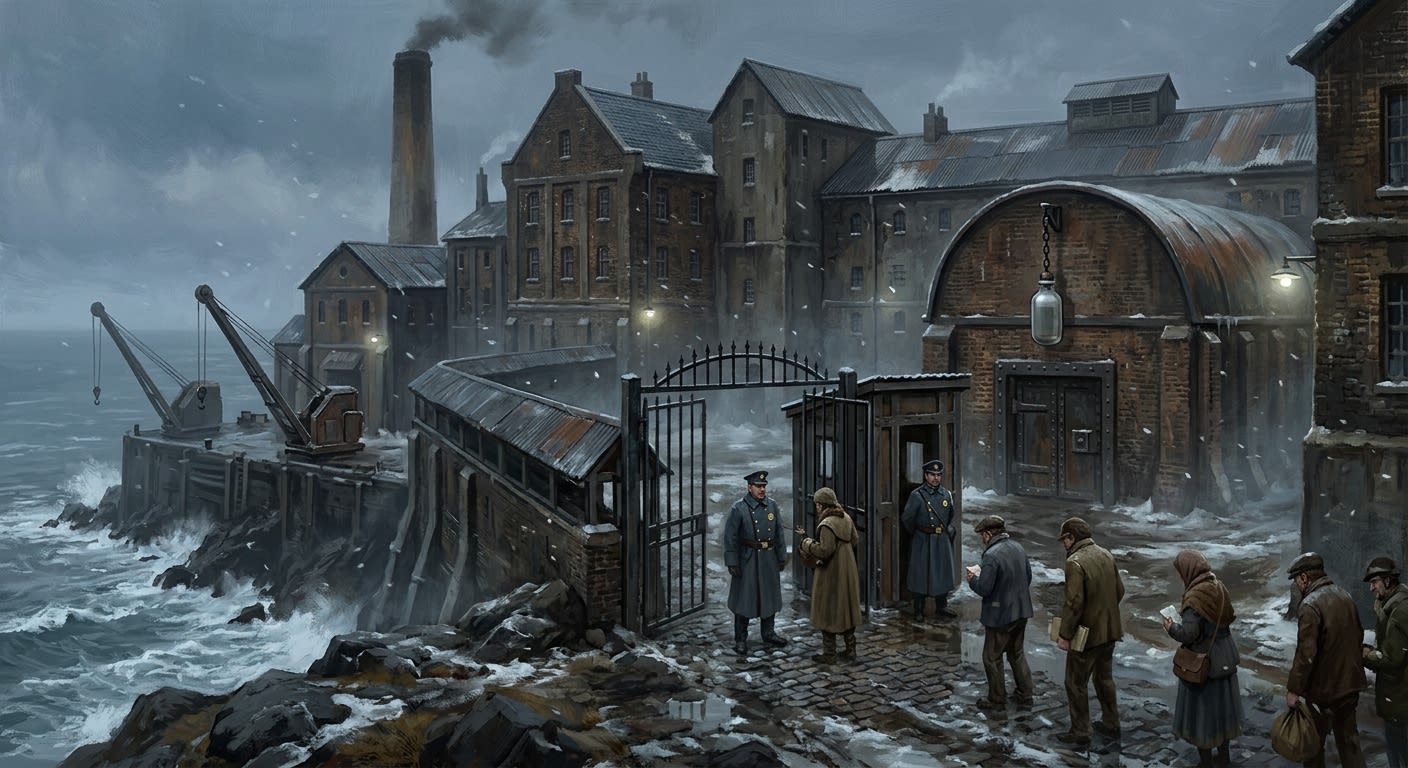
Brine Fork
Where three roads pay their grief before choosing a direction
Brine Fork is the Salt-Vigil island where winter roads divide, tolls become grief, and the Phial Cellar keeps the tears with better discipline than mercy.
Codex Ref. II.3.05-082
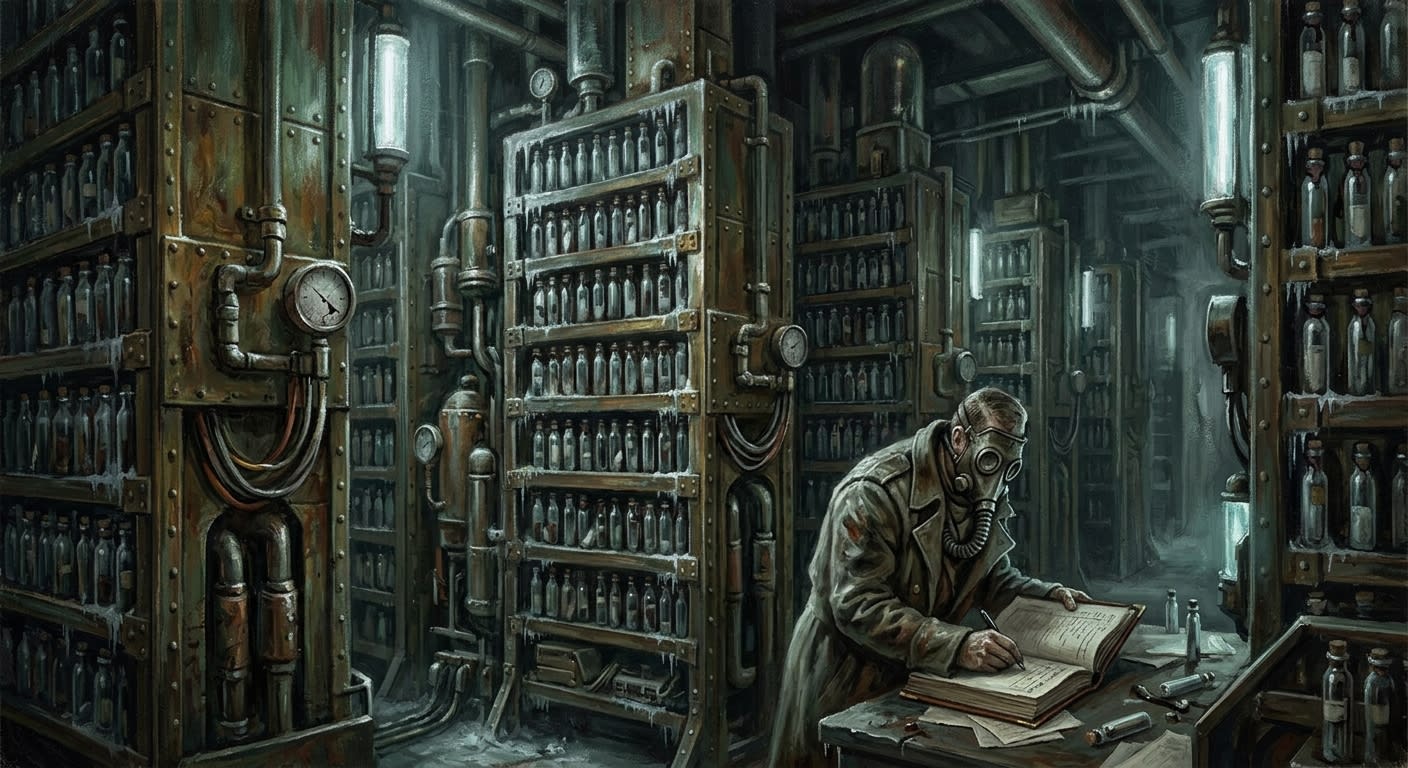
Brine-Fork Phial Cellar
The room where grief is improved by glass, wax, and duplicate ledgers
Beneath Brine Fork, eleven thousand four hundred and six sealed tear-phials hum, lean, frost, and teach the Synod that grief keeps accounts.
Codex Ref. XIII.1.25-001
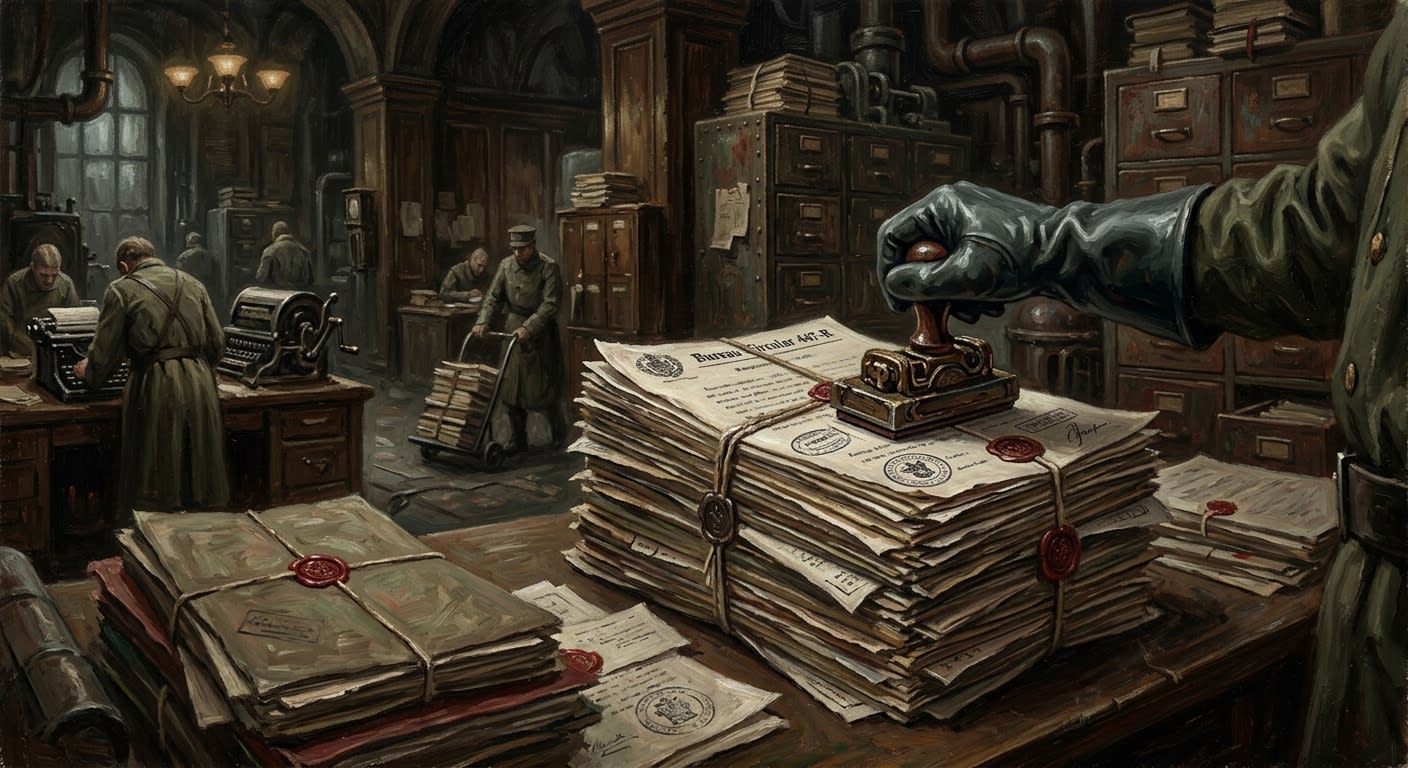
Bureau Circular 447-R
Four hundred and forty-seven words, none of them innocent
Bureau Circular 447-R denies the Codices Obscurae in exactly 447 words, each counted, sealed, revised, denied, and improved by fear.
Codex Ref. XIII.1.06-002

Candle-Sump District (Lower Vire)
The gut of Lower Vire — it was supposed to be a drainage ditch
The gut of Lower Vire — a drainage ditch that metastasised into a district of forty-two thousand souls, where tallow feeds the wards above, bone tags stamp the dead into existence, and the crypt-route drafts murmur names no one asked to hear.
Codex Ref. II.1.05-001
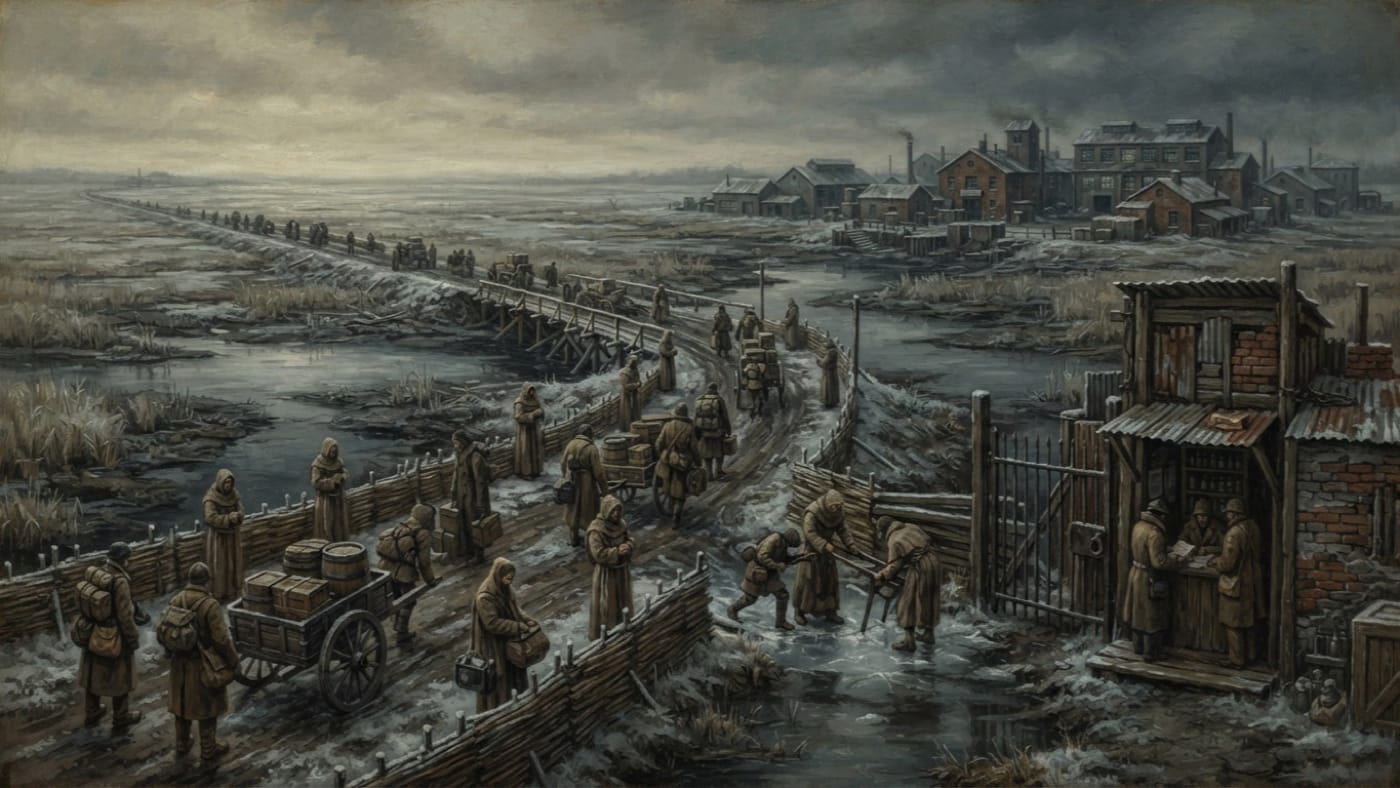
Candlewick Spur
Where authority travels in wax and passage is paid twice
Eleven miles of winter road carry Candlewick's wax, ink, and clerks to Brine Fork; three bridges return each autumn, and every traveller pays twice.
Codex Ref. II.3.05-004

Canon Veyl “Iron Throat”
Louder is cleaner, said the man who made panic lawful
First commander of the Counter-Toll Corps, Canon Veyl turned Cologne's borrowed curfew into doctrine: answer hostile bells with sanctioned panic and overwhelming bronze.
Codex Ref. III.2.01-103
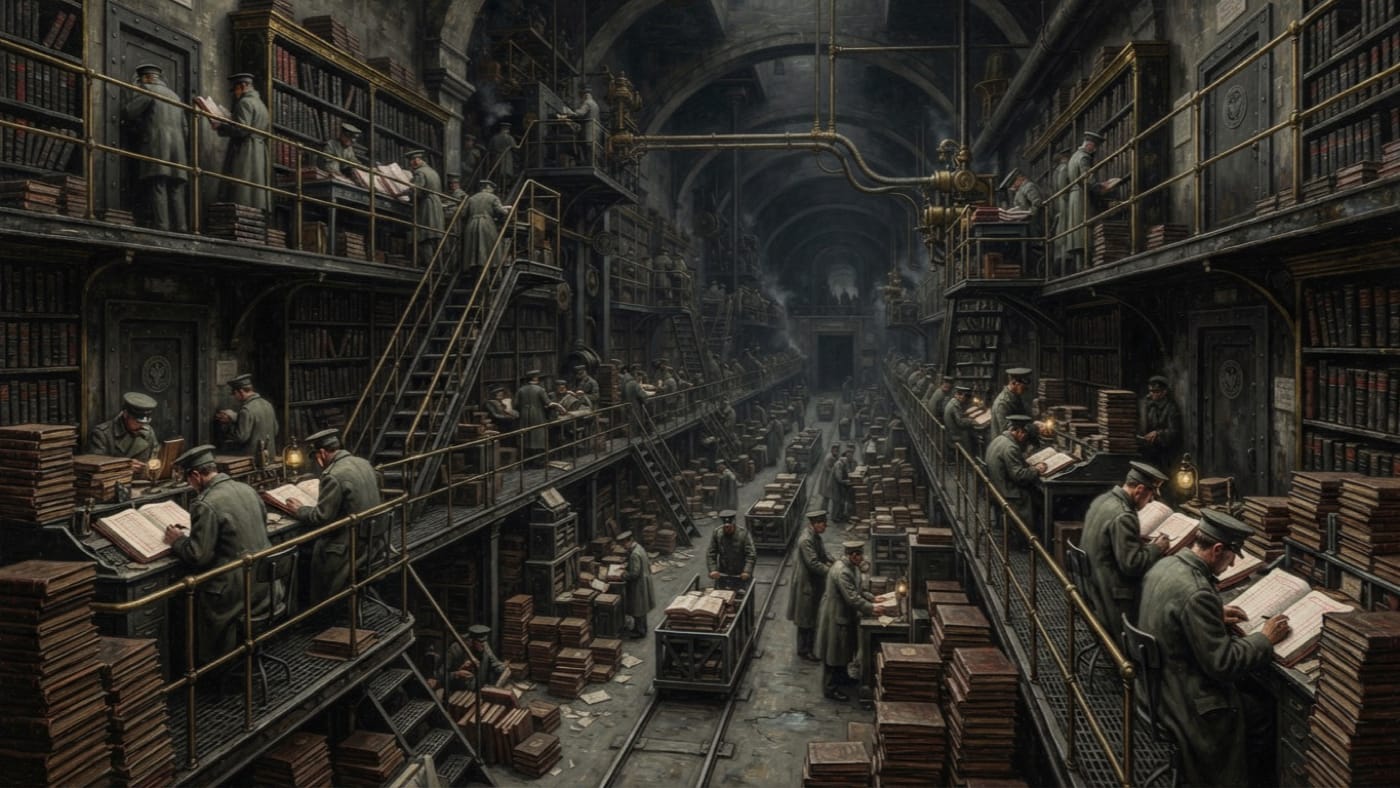
Census of the Living
Names, Debts and Accusations in Crimson
A.S. 201 survey of the Basilica's second-level register, which claims every baptised soul in the Theocracy. Diocese, parish and tithe-class locate the faithful; confessed and suspected sins share their entry.
Codex Ref. III.2.09-540

Chief Archivist
The form asks for rank; it does not ask for conscience
The Bureau of Records' countersigning office: a Chief Archivist of at least Third Rank authorises Form 77-D to proceed. The folio is checked twice. The reason is filed elsewhere.
Codex Ref. XII.34.02-001
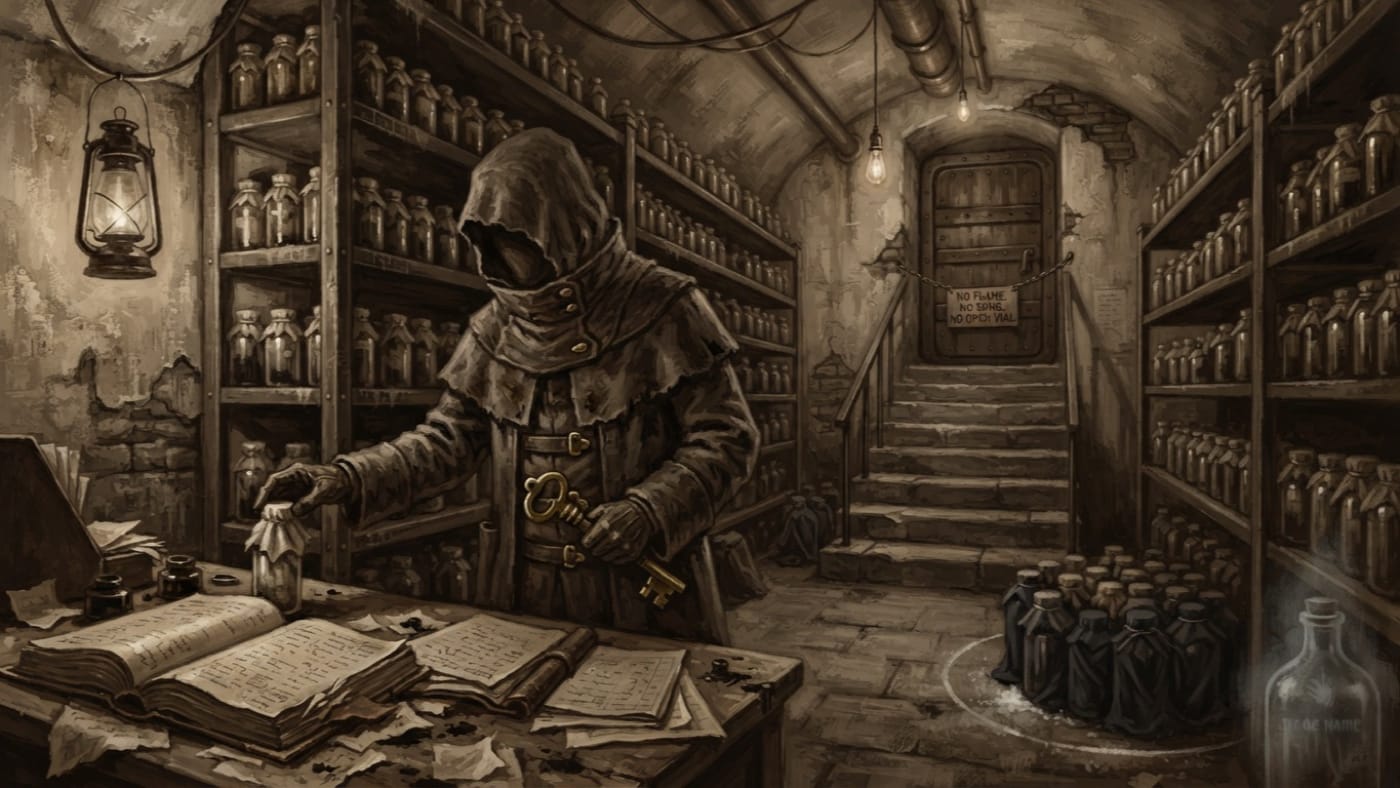
Clerk Juno Glass-Throat
Where last winter's weeping must still count
Clerk Juno Glass-Throat keeps the Brine-Fork Phial Cellar index, where a found receipt can grant a bed and a covered name can occupy Doctrine for fourteen years.
Codex Ref. III.2.01-645
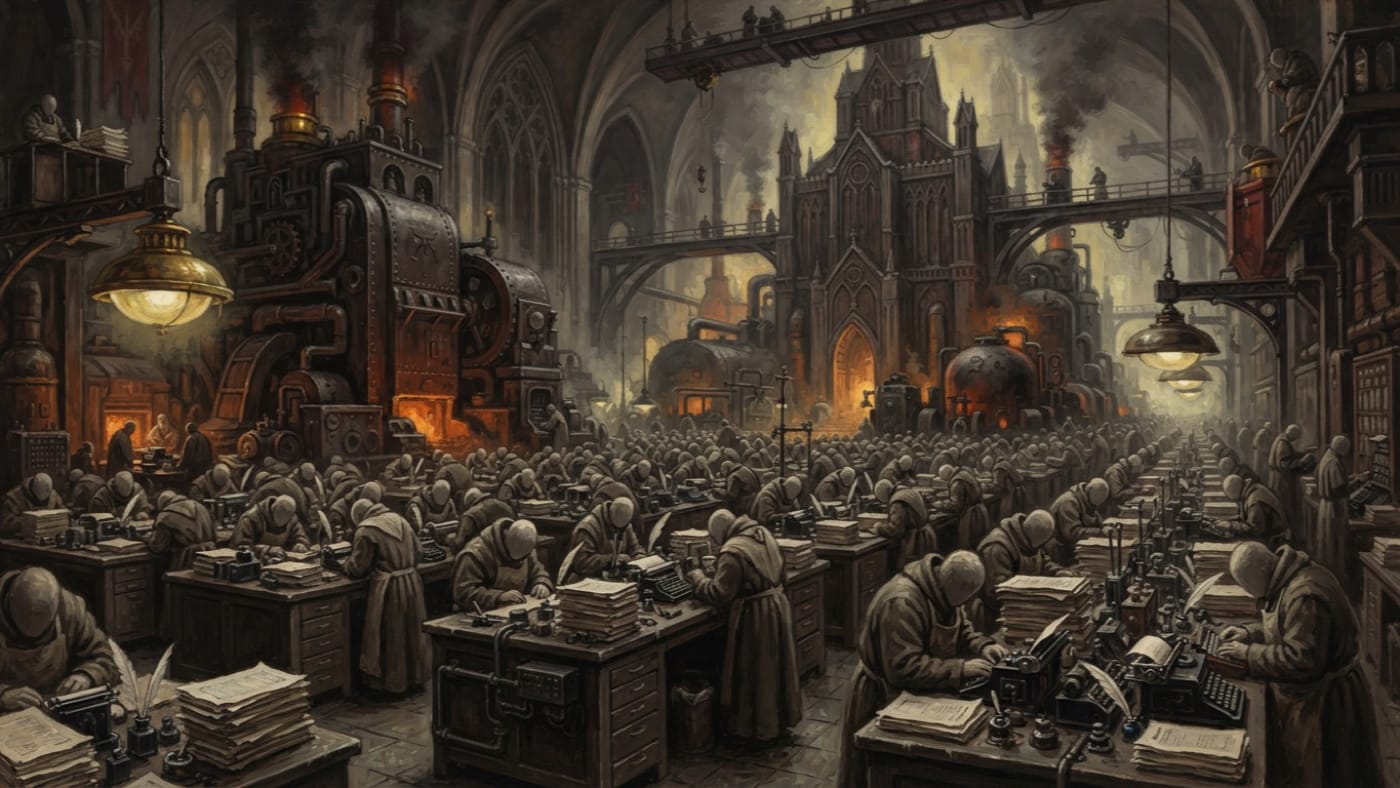
Dijon
The city that sends clerks
Dijon is a principal city of Synod-held Burgundy, recorded for sending clerks and for Archon Benedict Veyrault's former monastic affiliation. A.S. 201 survey: three facts, carefully entered.
Codex Ref. II.1.12-201
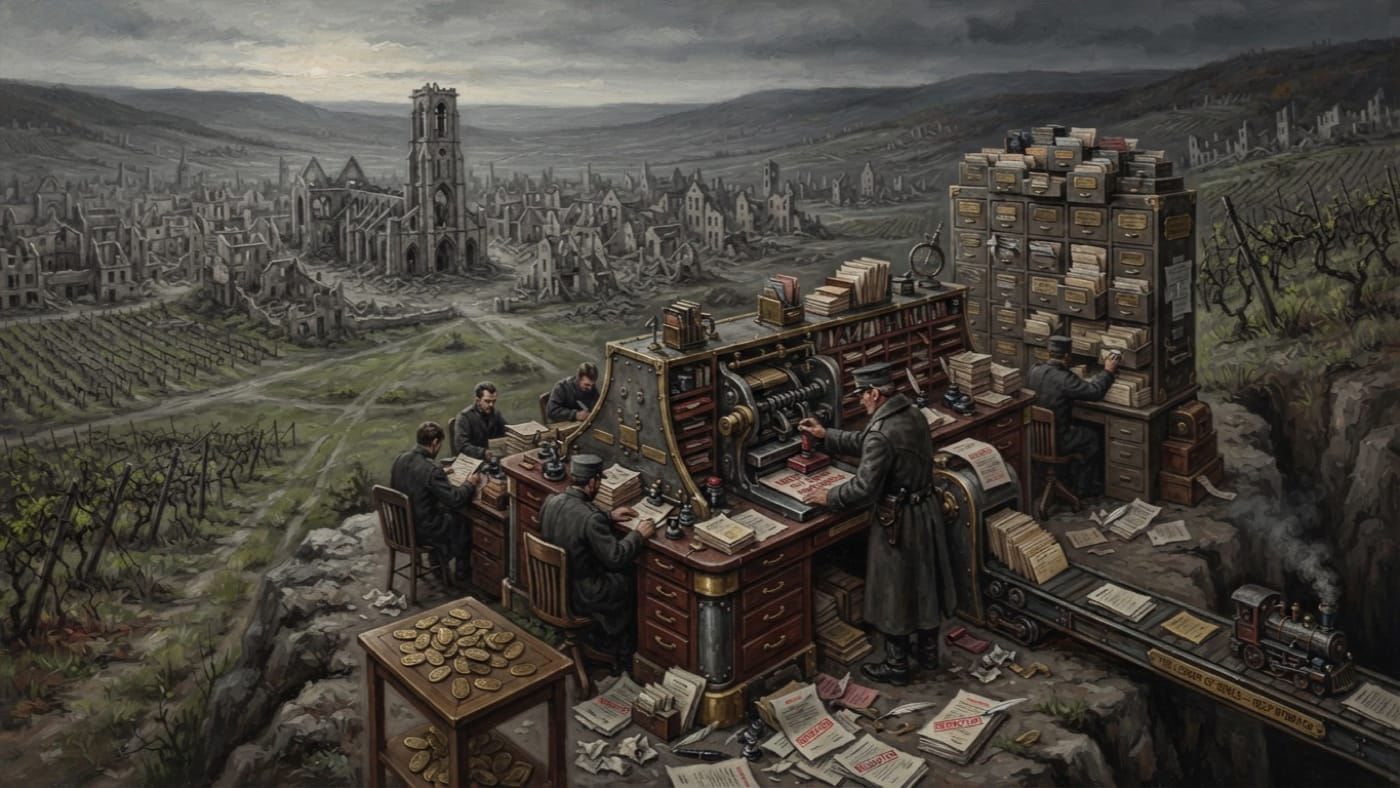
Epernay
The City That Keeps Appearing in Its Own Denial
Epernay was a prosperous Champagne city until Veyrault struck it from the Ledger in A.S. 103. The valley is empty; its name still turns up on tokens in Reims. Doctrine calls them forgeries. I call this an active filing problem.
Codex Ref. II.1.08-103
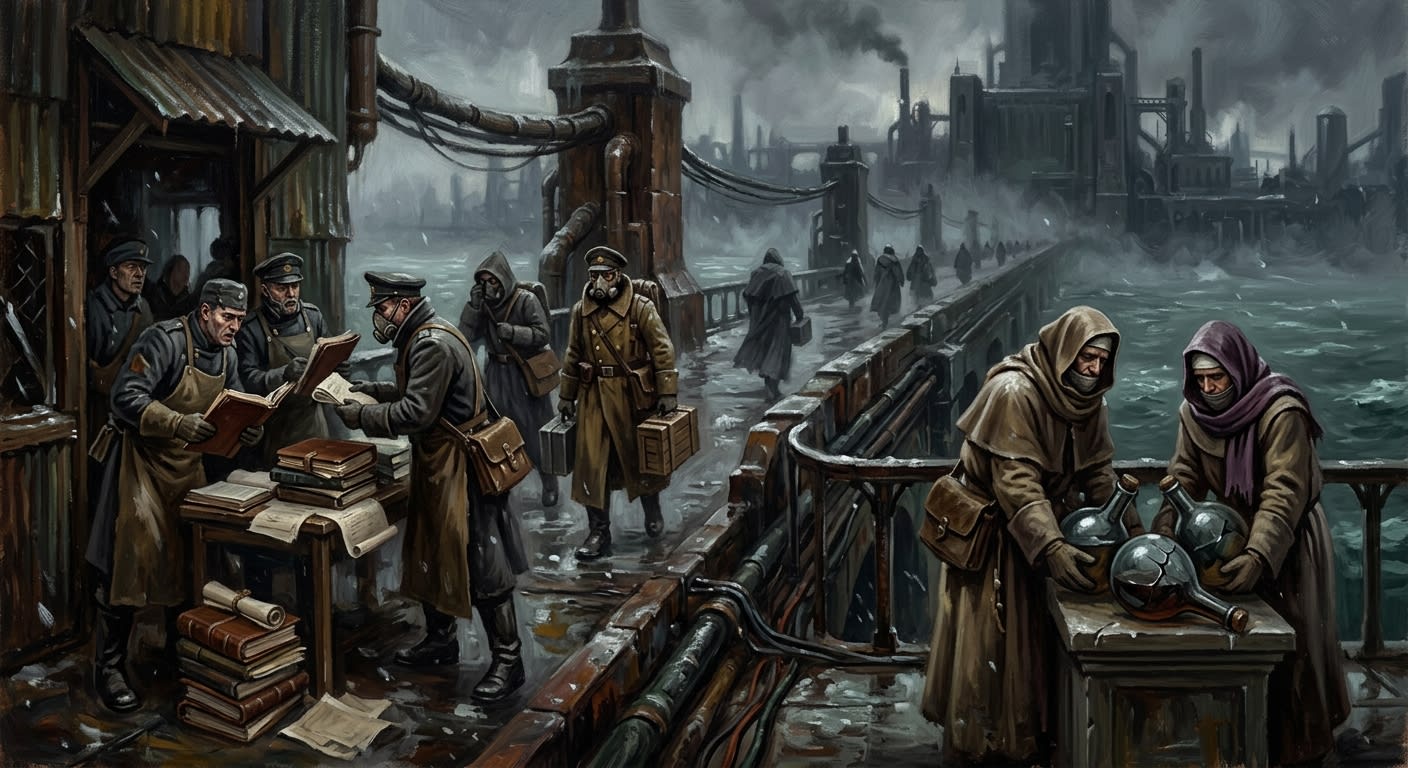
Fourth Causeway Anomaly
Where ice refused the Bureau and grief kept its own accounts
On the Brielle spur of the Salt-Vigil Causeways, winter water refused to freeze, tear-phials grew heavier, and every Bureau discovered a different invoice.
Codex Ref. XIII.1.24-001

Fourth Post
The road reopened; the grief kept its weight
Fourth Post collects salt, tears and fees on the Brielle Spur. The road reopened; its phials still arrive thirty percent heavy, and the ledger accepts grief whose origin has faded.
Codex Ref. II.3.05-084
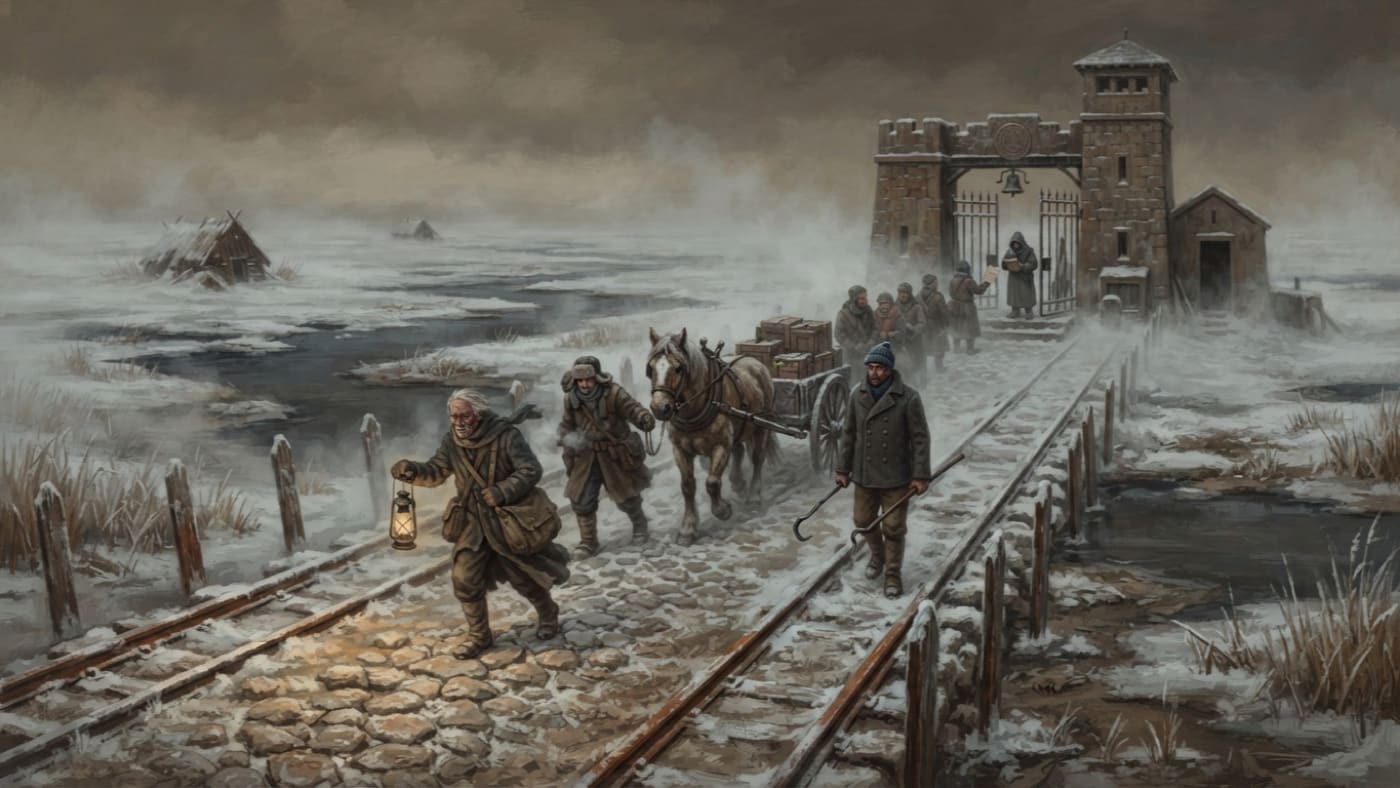
Frisian Flats
The sea retreats twice a day; the toll does not
Tidal ground crossed by the Salt-Vigil's winter roads, where refuge became a toll and passage depends on stone, lanterns, wet seals, and the clerk.
Codex Ref. II.3.05-052
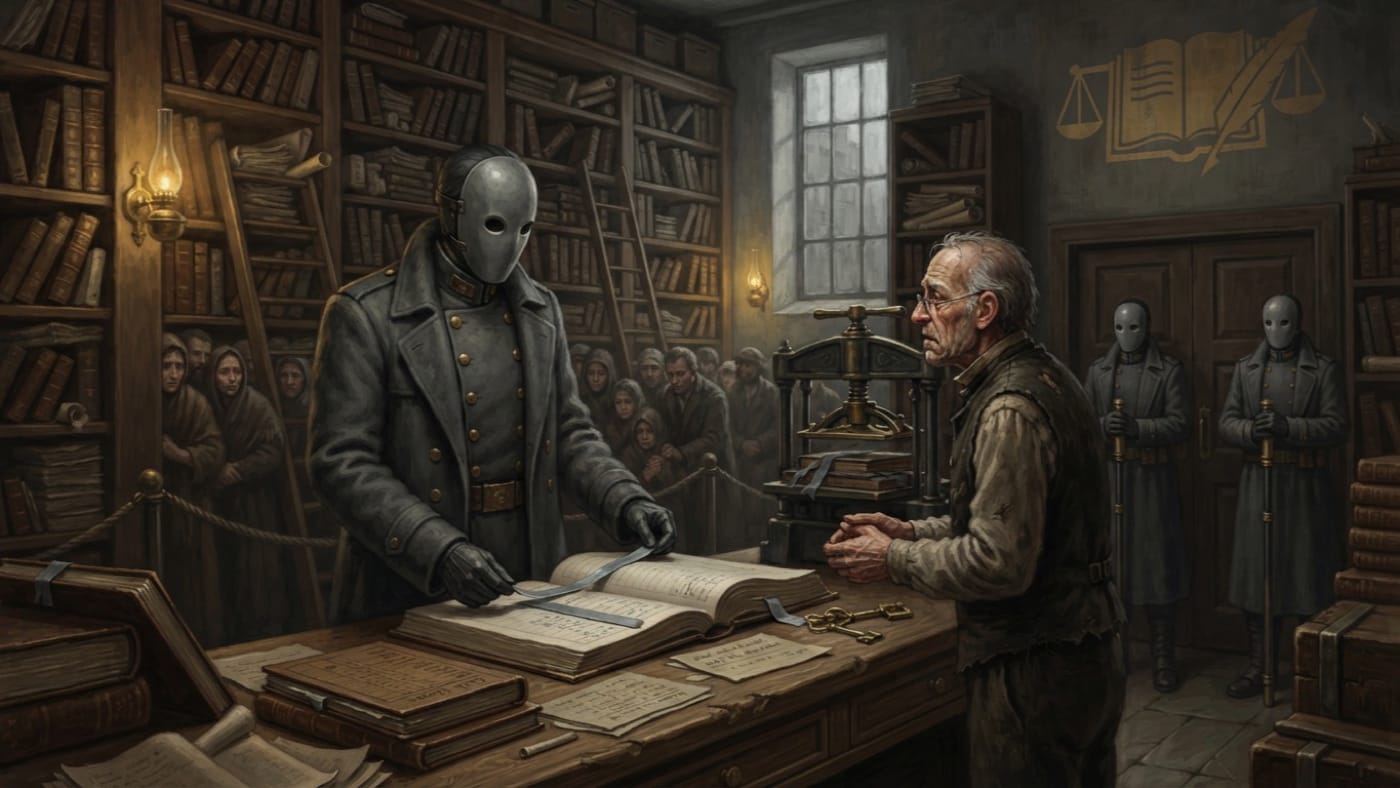
Great Ledger Harmonisation Mandate
The larger page that never has to enter the room
The Great Ledger Harmonisation Mandate supplies the standing authority cited by Indiction writs: books are reconciled, names suspended, and appeal waits until the archive decides who still counts.
Codex Ref. XIII.1.06-002
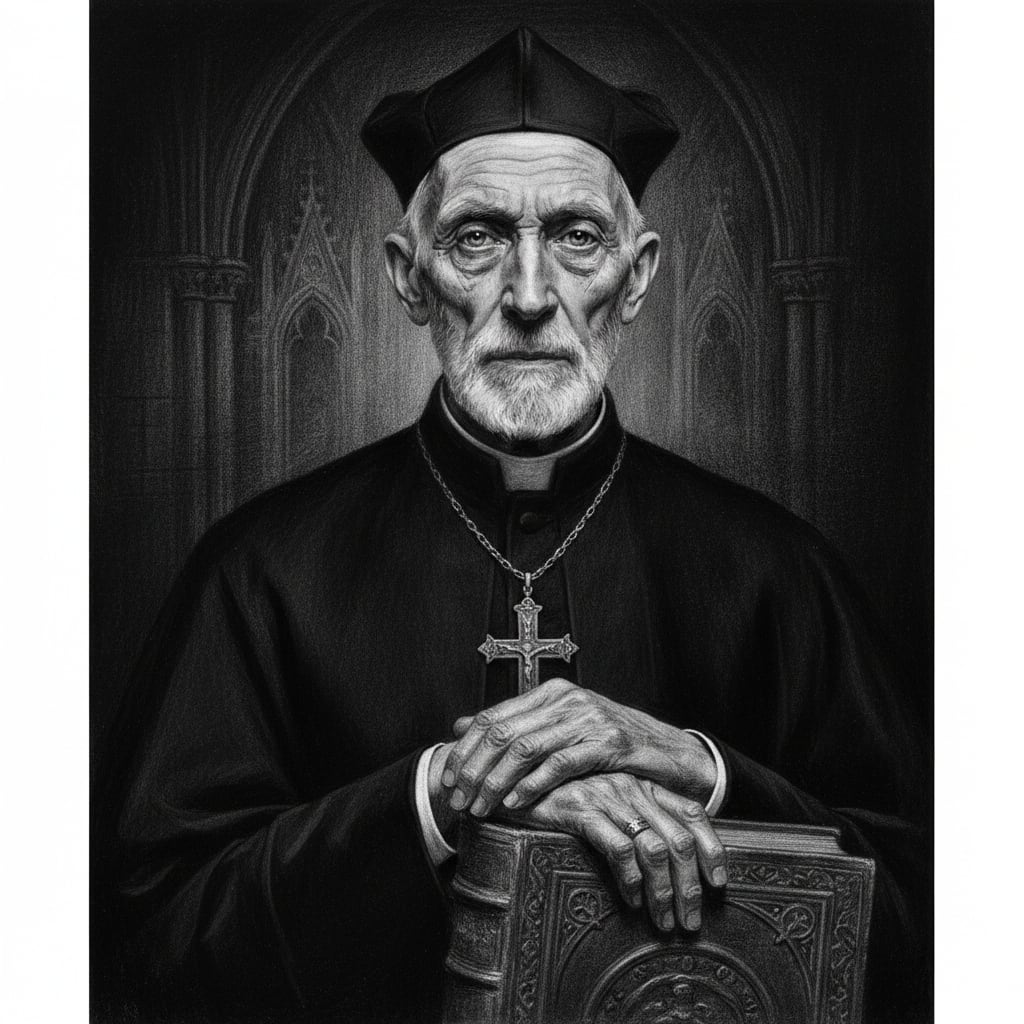
Hierarch Augustinus of Mainz
The Binder of Wounds
First among the Hierarchs, called the Binder of Wounds. He yoked altar to arsenal, sanctified catapults with reliquaries, and built the Synod from the marrow of the faithful. His genius was not theology. His genius was infrastructural cruelty.
Codex Ref. III.1.01-001

Hierarch-Procurator Marius of Cologne
The signature that moved the state into the birth room
Marius of Cologne ratified the Natal Registration Act of A.S. 158, turning Veyrault's recorded-existence doctrine into midwife deadlines, Womb Registrars, and the price of a child's first breath.
Codex Ref. III.2.01-158
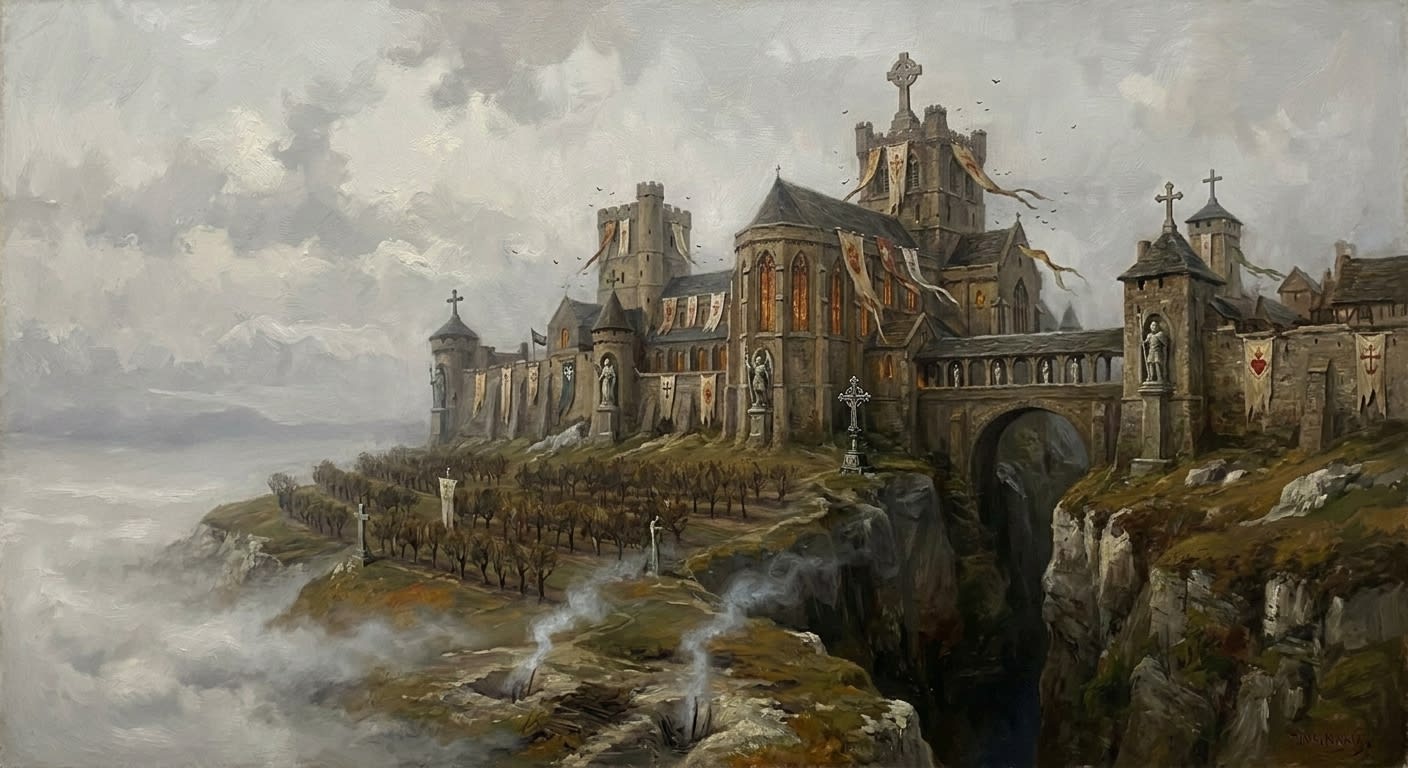
Hollow-Script Scriptorium of Nemea
Where the ink rewrites the truth, and the truth rewrites the ink
The Bureau of Records' master archive-scriptorium on a chalk ridge: where names are erased, contracts rewrite themselves overnight, and the ash in the Yards speaks. Drax has been named by its ink and would prefer the record show otherwise.
Codex Ref. II.2.06-002
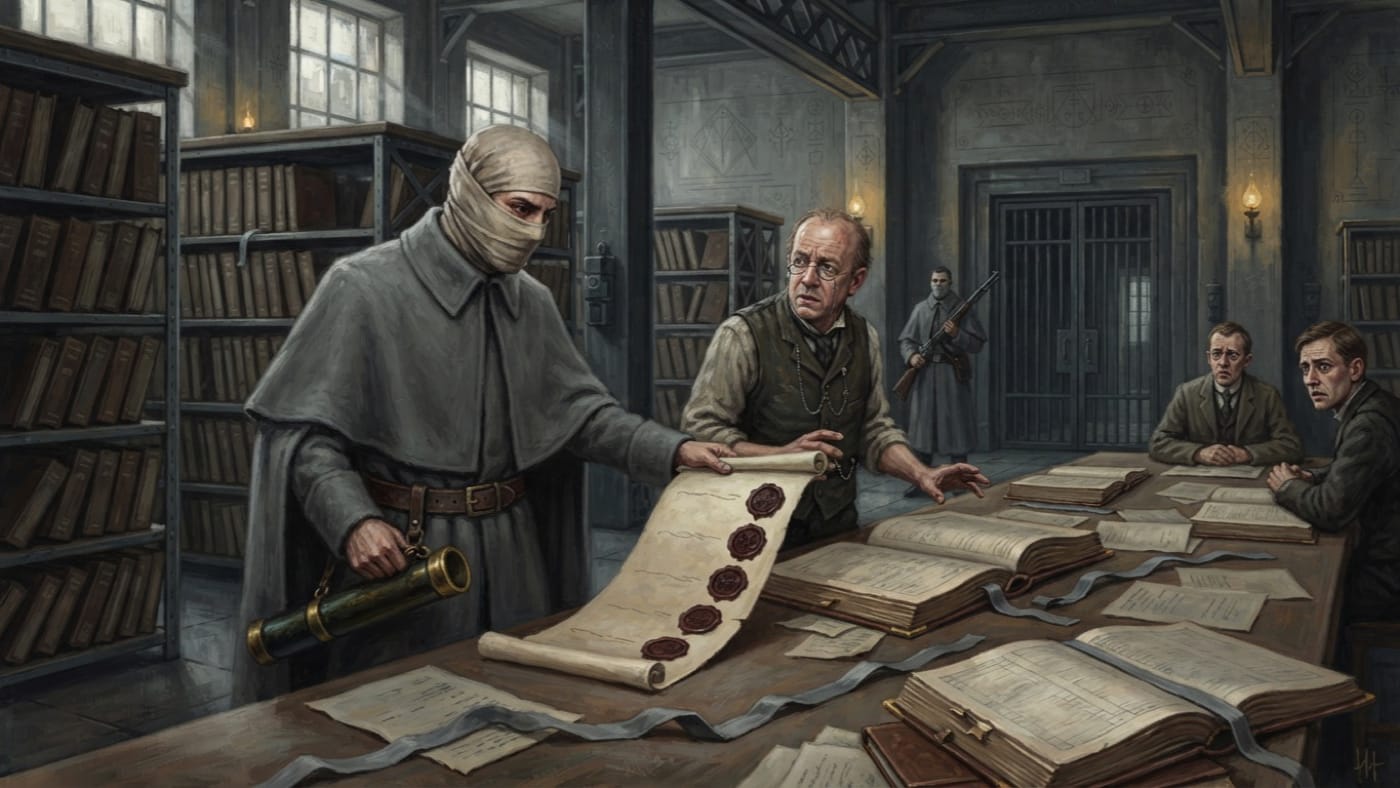
Indiction Writ
Five seals, five powers, and an appeal that waits
The Indiction writ lets Records seize ledgers, enclose witnesses and suspend names before any charge. Five seals announce that the Bureau has noticed; appeal waits until reconciliation.
Codex Ref. XIII.1.06-003
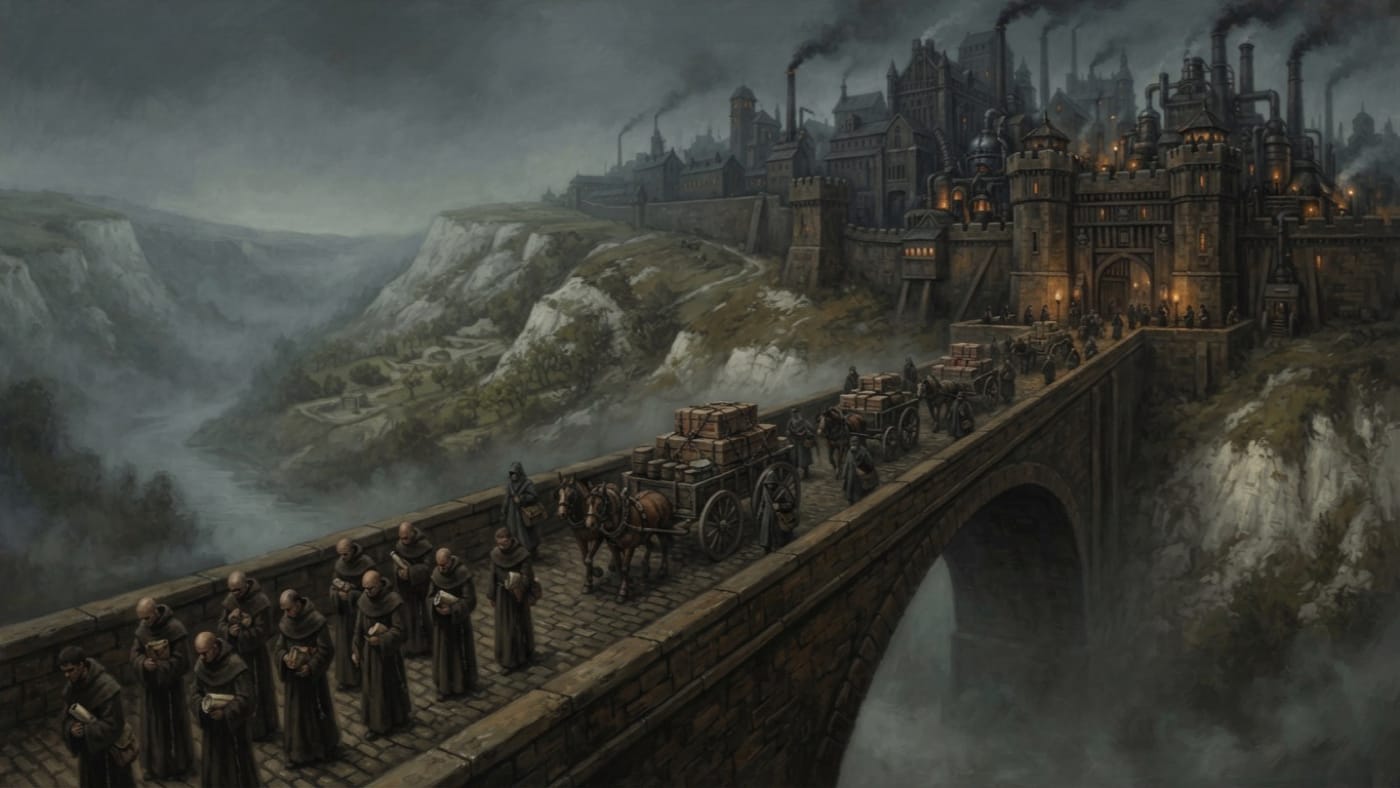
Inkhouse Bridge
The bridge carries the papers; the gatehouses decide
Nemea's single stone span carries all freight, couriers and novice intake. The Bureau arranged the bottleneck deliberately. The bridge carries the papers; the Collegium waits beyond the crossing.
Codex Ref. II.2.06-021
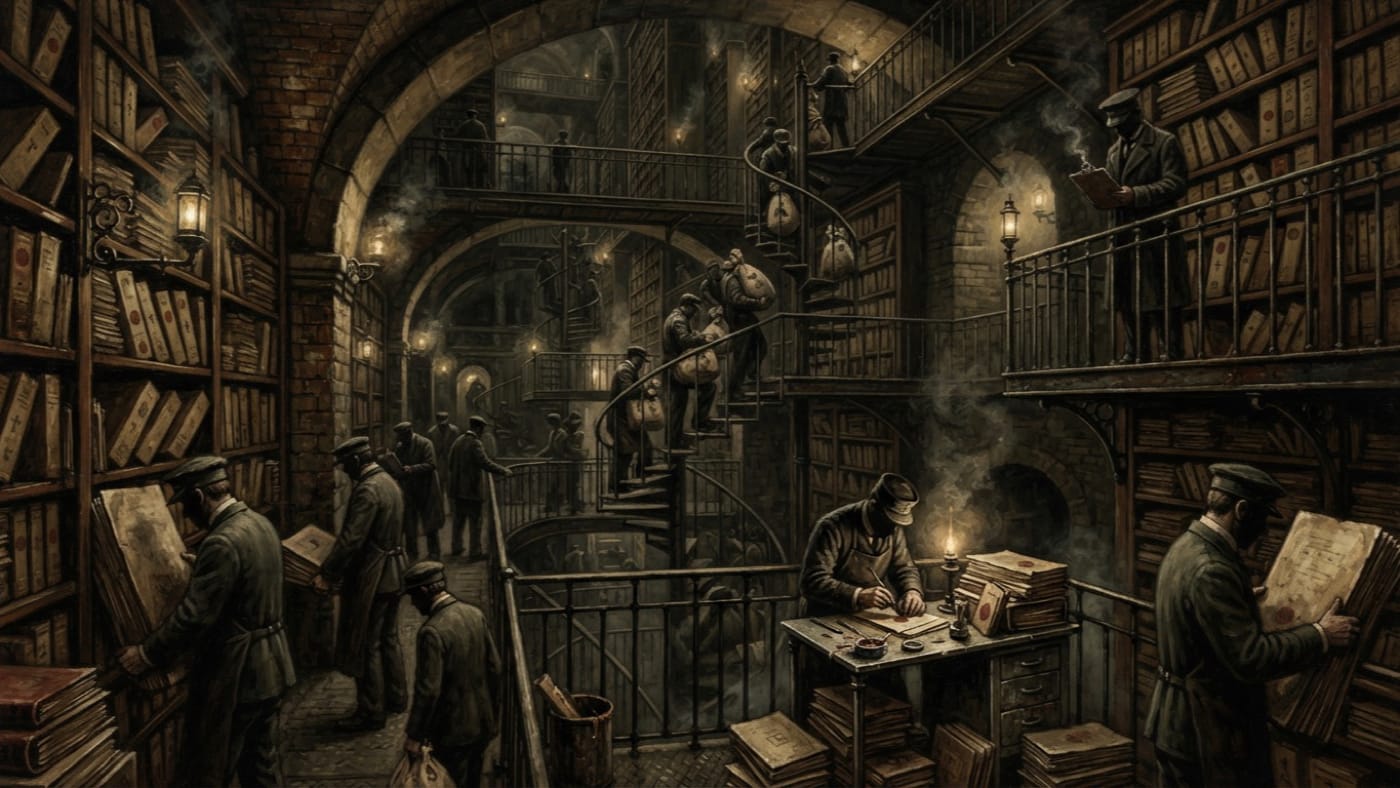
Lower Vaults
Every pardon descends; no depth is certified
Beneath Strasbourg's Basilica, Records shelves baptisms, tithes, pardons and recantations. The custody is certified; the depth is not.
Codex Ref. II.1.04-007
Lye Flood
The water burned; the paperwork followed
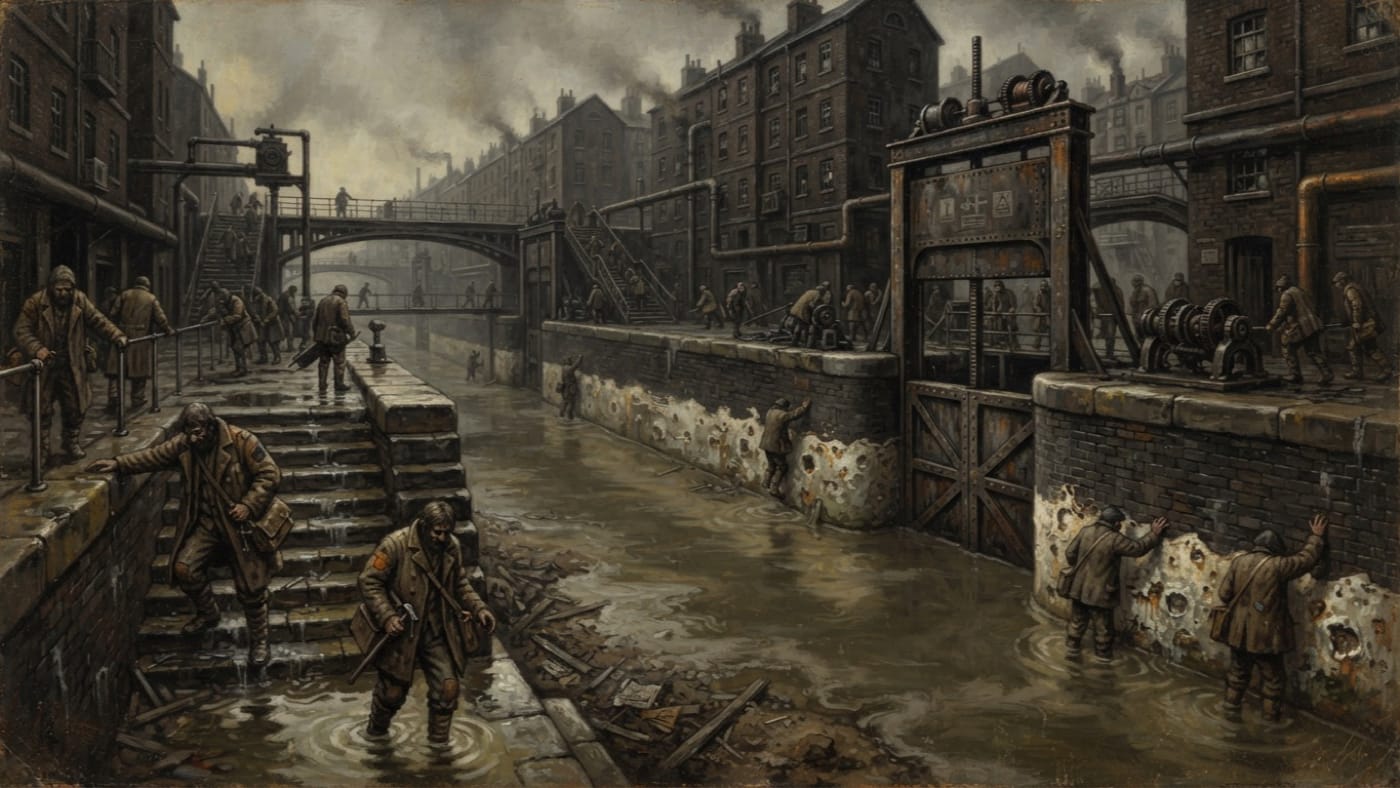
Candle-Sump's first catastrophe, attributed to A.S. 84: ash-water burned skin, dissolved papers and scarred the brick. The Chapterhouse appointed offices to manage water and records; the injured remained the Sump's concern.
Codex Ref. VII.8.10-084
Mainz
The Rhine city where tolls, bells, and throats keep accounts
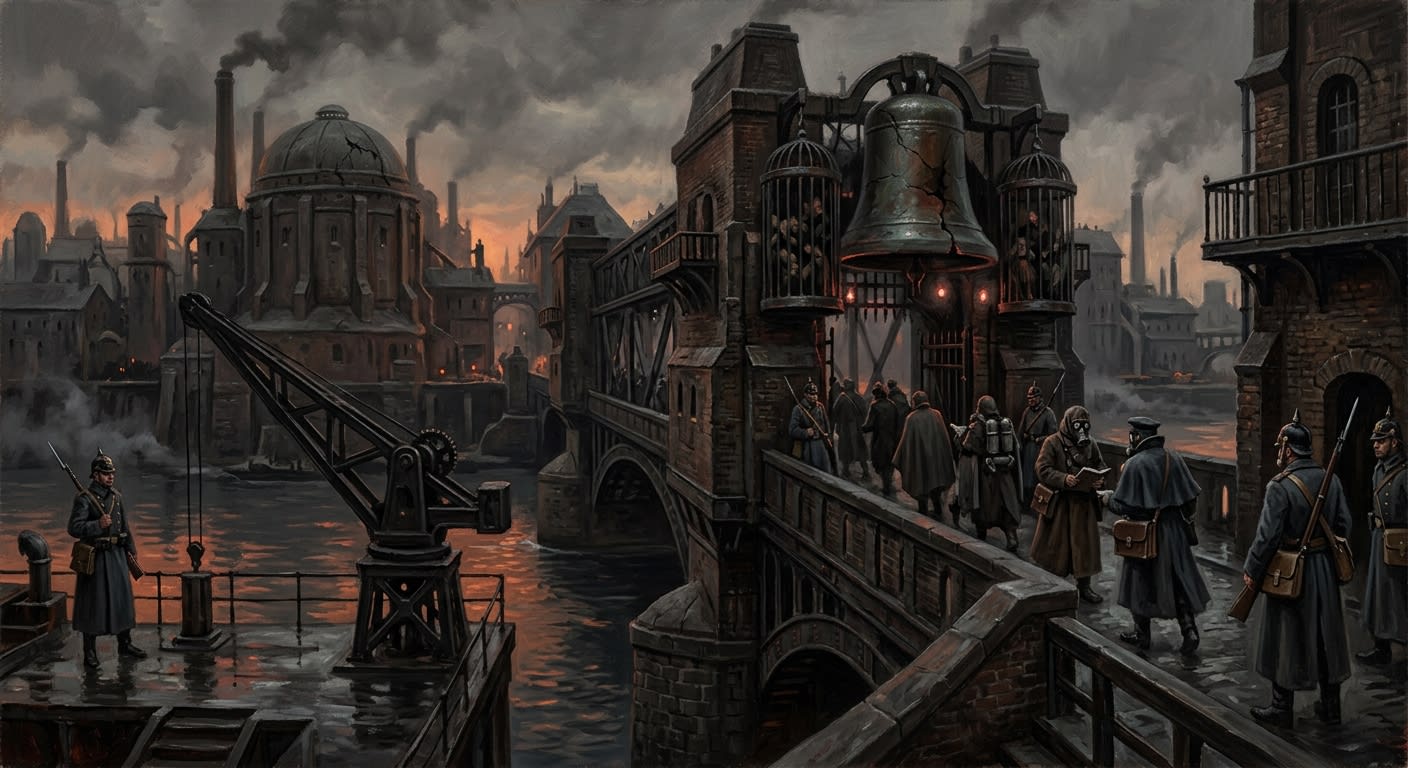
Mainz is the Synod's Rhine throat: a bridge-toll city of Augustinus, Hildegarde, Severian, cracked bells, obedient ledgers, and cages that still hum.
Codex Ref. II.2.02-003
Mortuary Black
The ink that keeps the name and murders the claimant
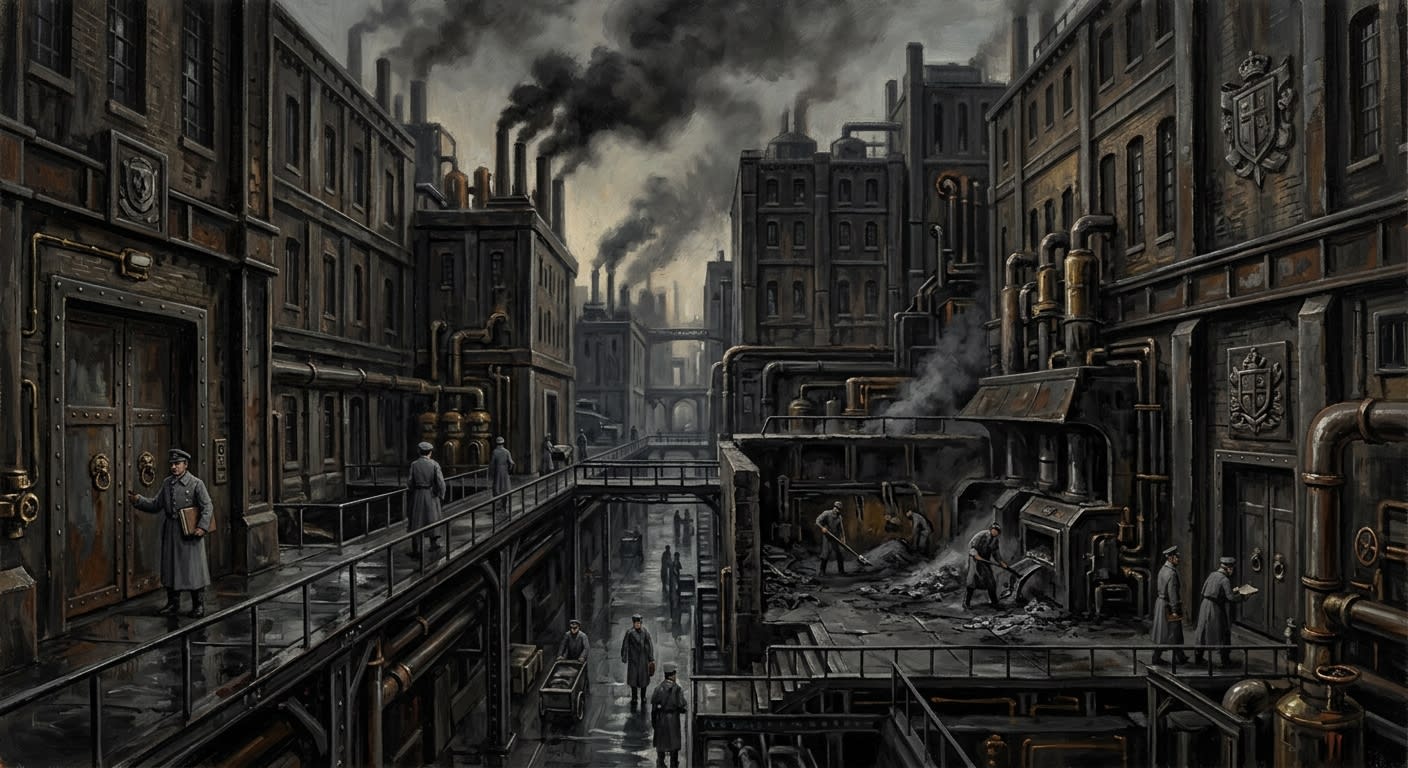
Mortuary Black is the Bureau of Records compound for Administrative Dissolution: iron-gall, bone ash, Rites seal, and enough silence to make a name visible and unusable.
Codex Ref. XIII.1.01-002
Mother-Warden Sile Mourn-Lit
Between the wet seal and the blanket stands her office
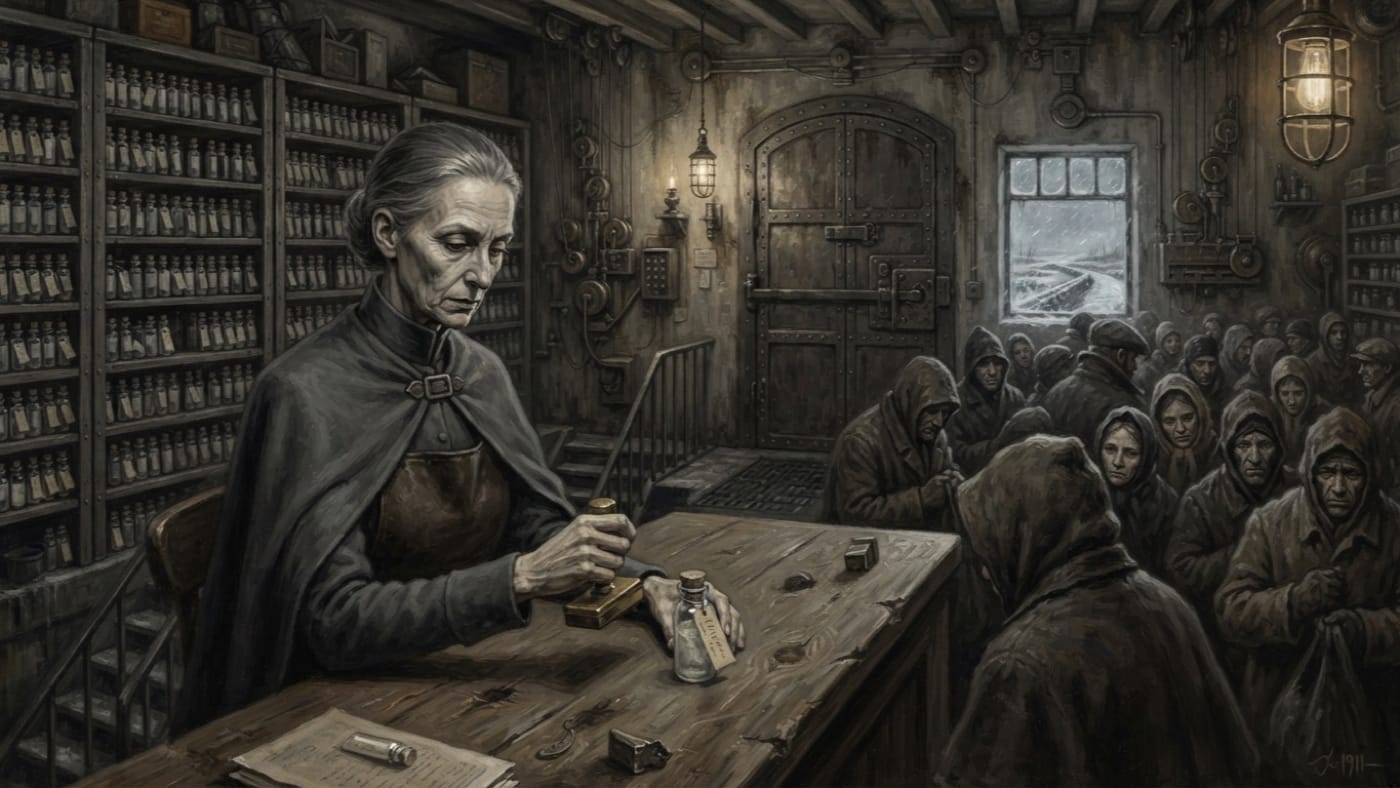
Mother-Warden Sile Mourn-Lit allocates shelter at Brine Fork, where a sealed phial may purchase a bed and a locked door lets winter enforce the ledger.
Codex Ref. III.2.01-1887
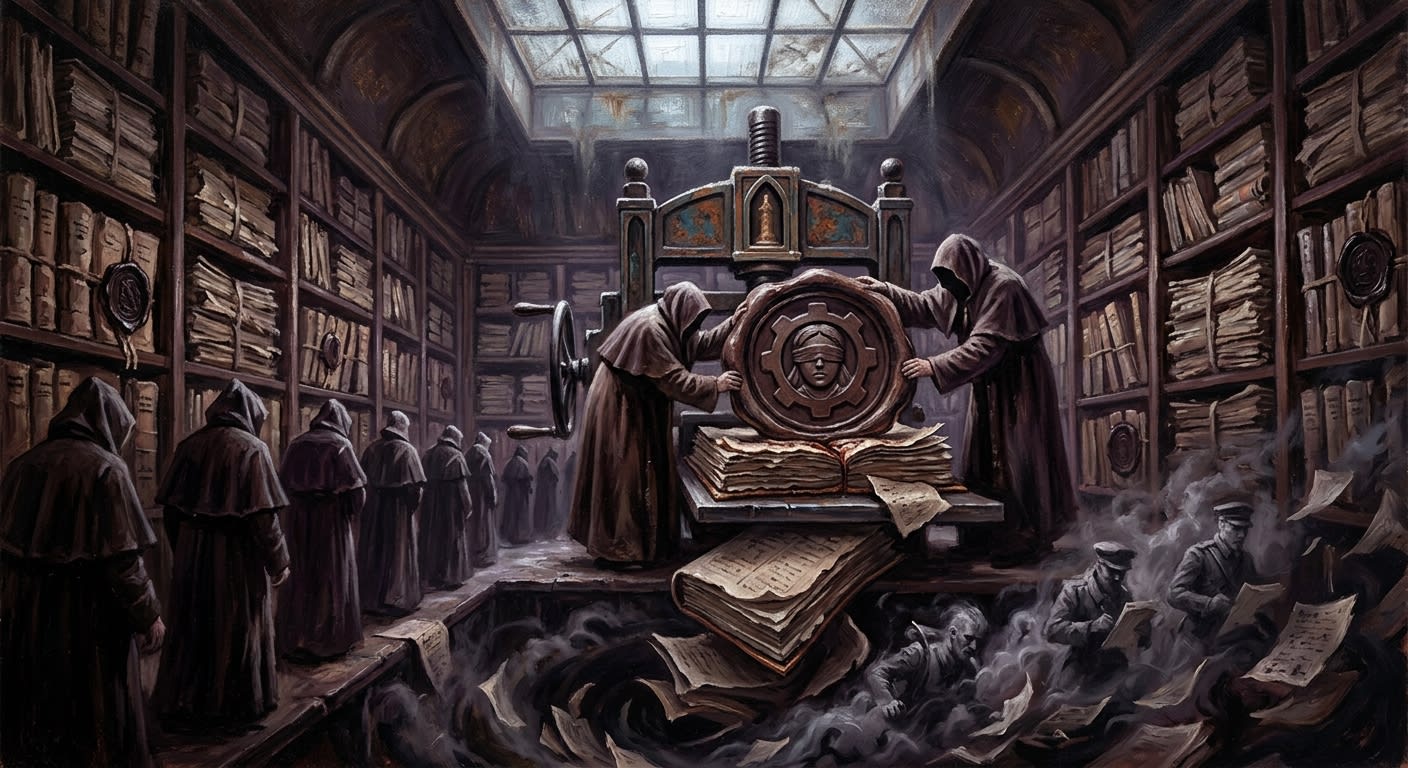
Ninth-Ratification
The seal that forbids analogy because pattern is accusation
Ninth-Ratification is the Synod's highest publicly nameable seal: a doctrine of lawful ignorance for records whose disclosure changes context, office, witness, and history itself.
Codex Ref. XIII.1.76-103
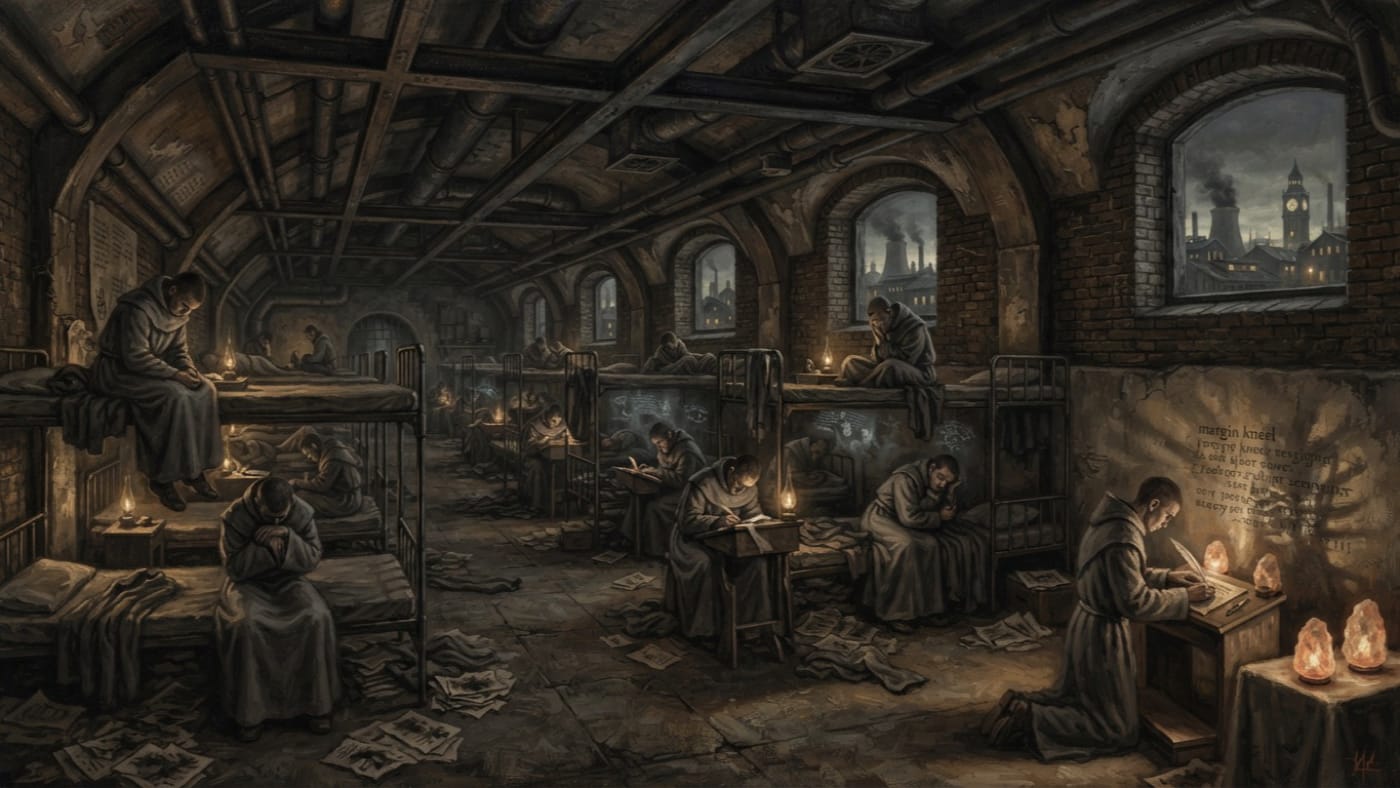
Novice Barrens
Where novices sleep and their obligations do not
Nemea's dormitories and vow rooms house novices stripped of birth-names and bound by page debt. Their contracts sleep in the vaults; their obligations need not remain as signed.
Codex Ref. II.2.06-201

Obscurists of the Third Ink
The clerks no Bureau admits to employing
The Obscurists of the Third Ink allegedly turn hesitation into conscience entries for the Codices Obscurae. Their title survives in an undated fragment; no Bureau admits to employing them.
Codex Ref. XIII.1.06-003

Prior Idris of the Sixth Tide
The road drinks, and Idris keeps the receipt
Prior Idris governs Brine Fork as if a road were a hound: fed, cursed, watched, and never mistaken for harmless scenery.
Codex Ref. III.2.01-201

Procurator Maxentius della Torre
The jaw by which Doctrine learned to bite
Della Torre expanded Purity in A.S. 80, birthed the Index Damnatus, and taught the Synod that a named error is already halfway into chains.
Codex Ref. III.4.02-031
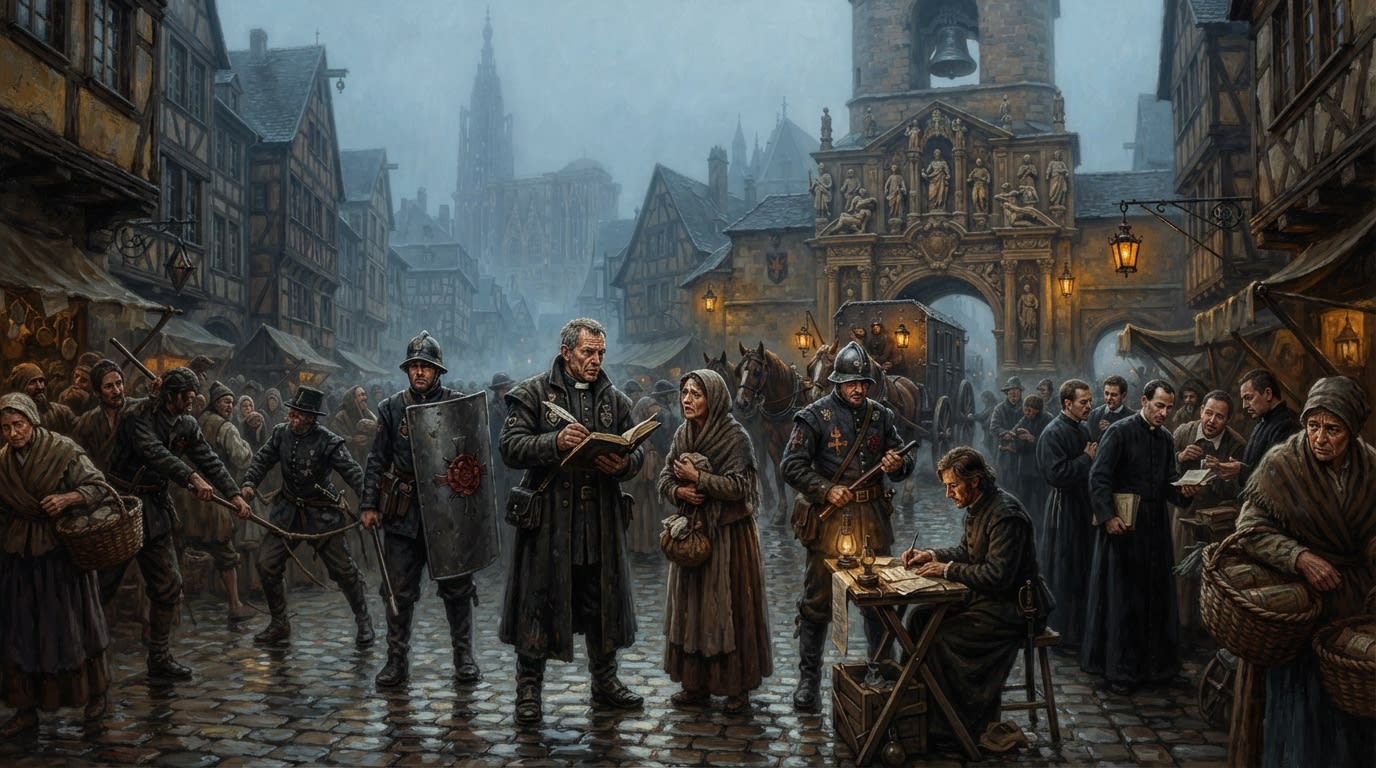
The Bastion Watch
The bell that requires a human answer
The Synod's civic Watch patrols markets and gates, answering bells other offices cannot reach. It uses shields, custody wagons, complaint boards, and copied records to stand between public danger and delayed superior authority.
Codex Ref. XII.3.01-001

The Bureau of Records
The Memory That Never Forgets
Custodian of every birth, death, tithe, and trembling confession in the Theocracy. Records does not merely remember — it decides what happened.
Codex Ref. III.2.09-003
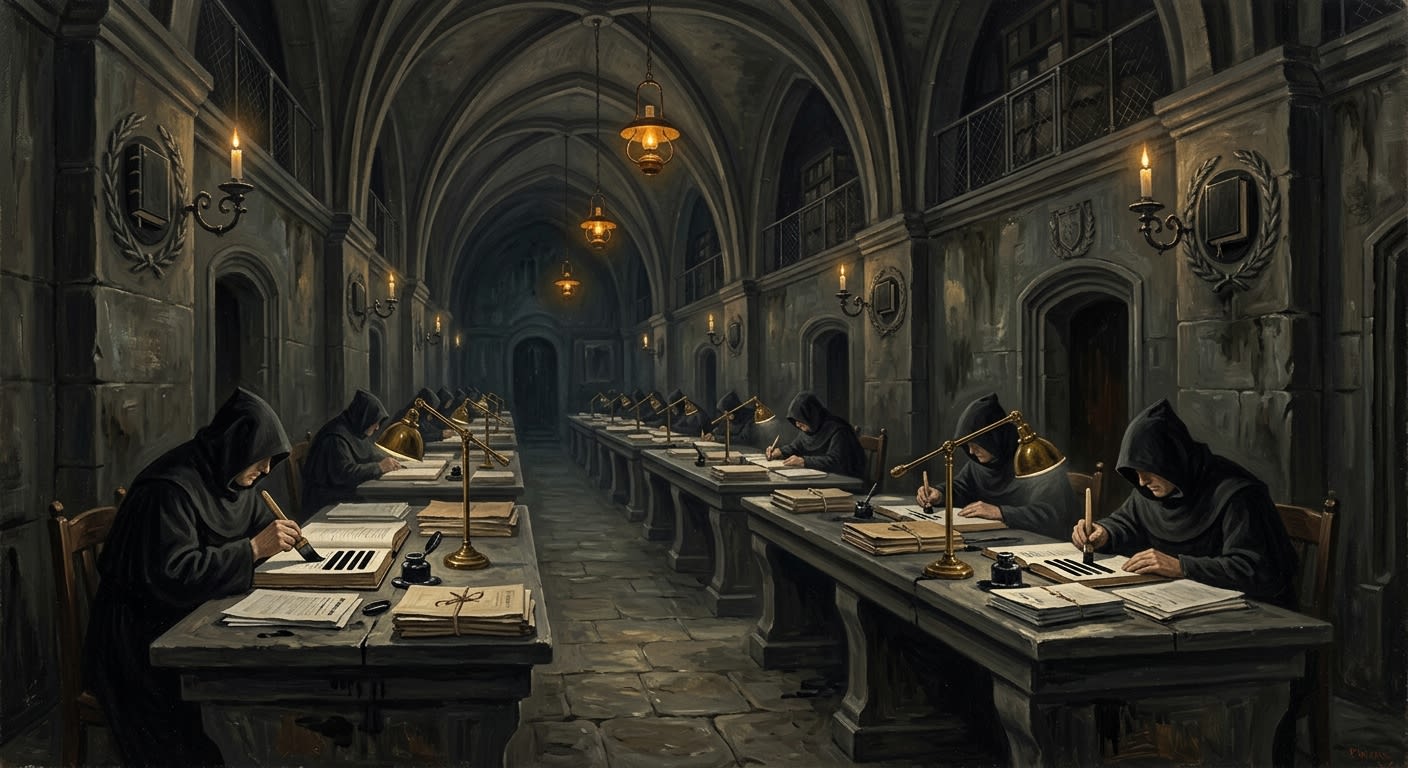
The Bureau of Silence
The word unspoken cannot wound. The word that reaches its target already has.
The Bureau of Silence does not burn books. Burning admits they existed. It renders knowledge into a state of administrative non-occurrence — and then redacts that too.
Codex Ref. III.4.19-031
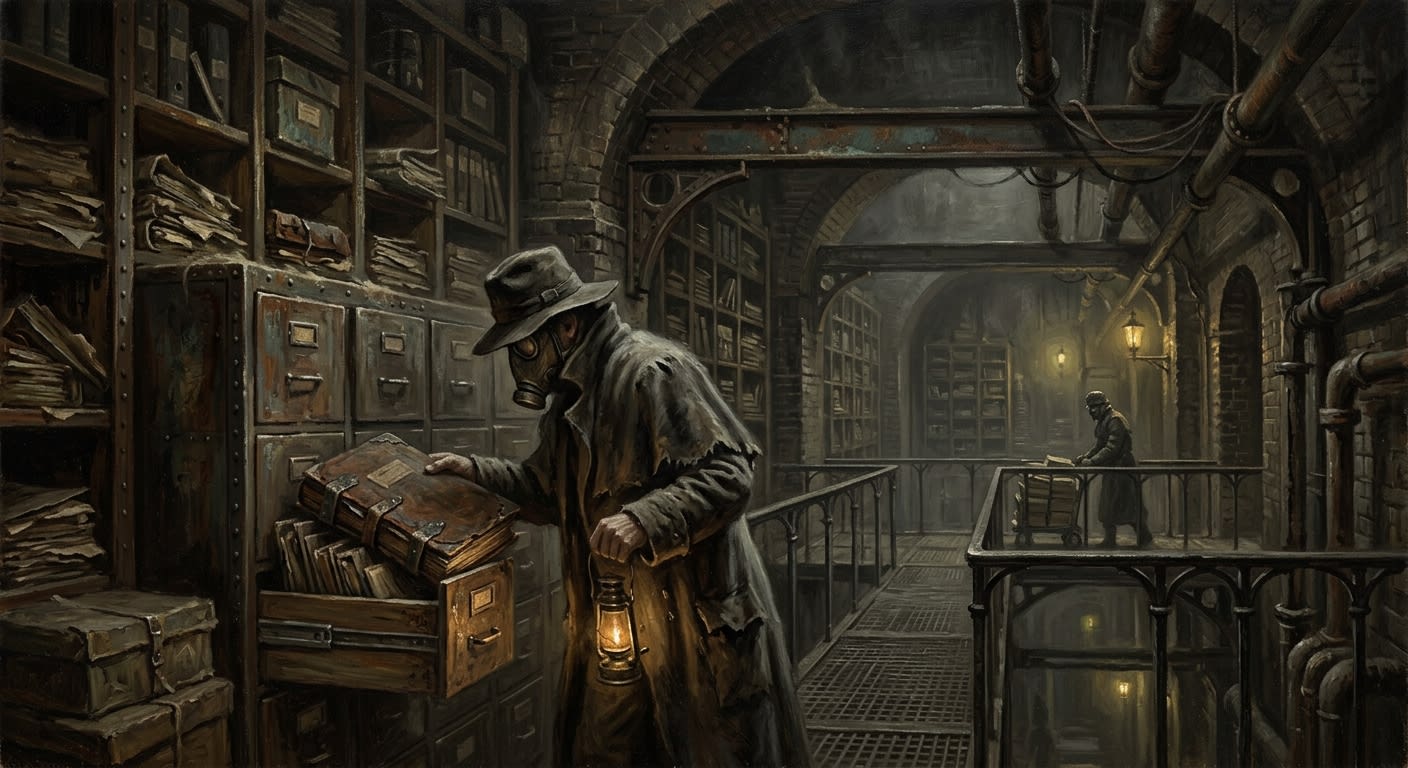
The Codices Obscurae
The books that do not exist have excellent indexing
The Codices Obscurae are denied by every Bureau that matters, which is precisely how a careful reader knows where the bodies are indexed.
Codex Ref. XIII.1.06-001
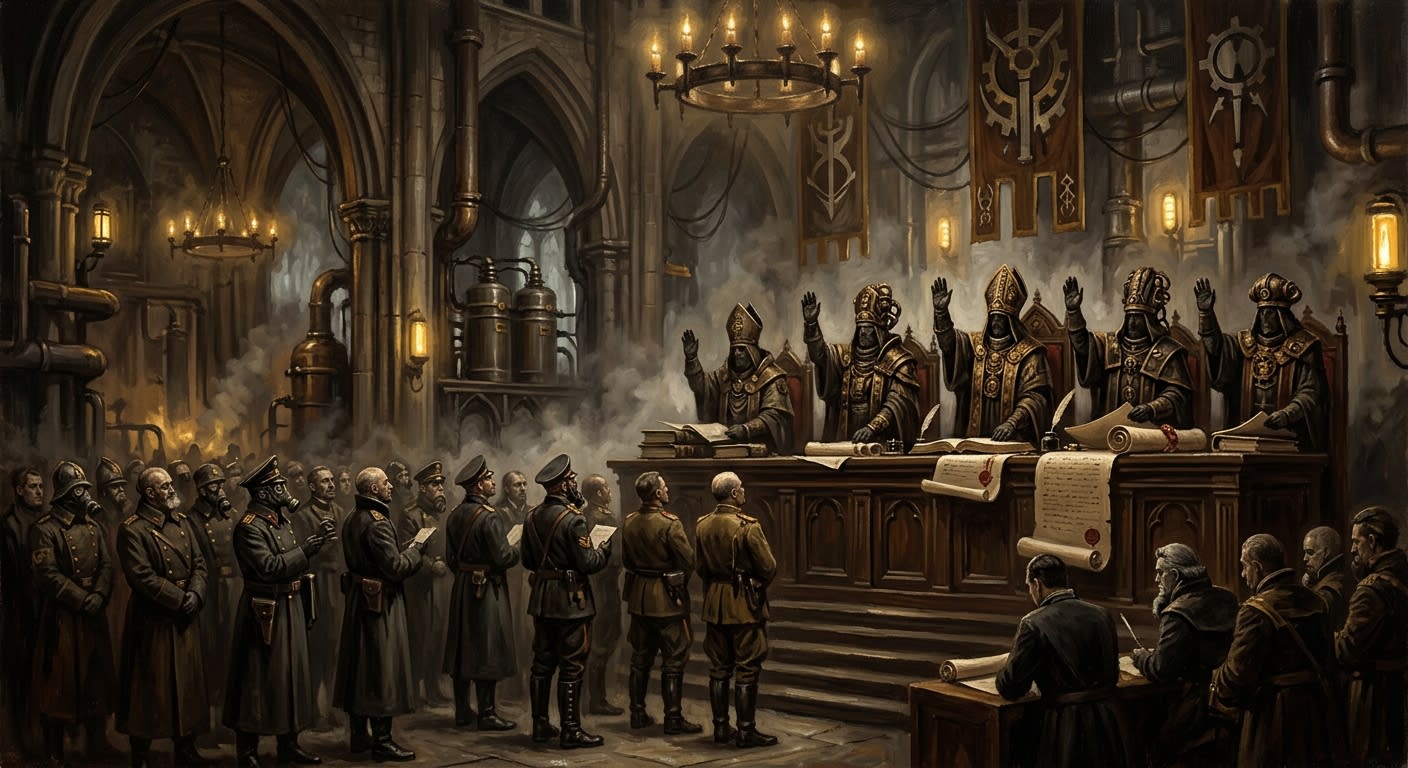
The Council of Mainz
Where law learned to cheer on command
The Council of Mainz confirmed the first seven Hierarchs in A.S. 93, turning Concordat law into staged acclamation, ratified offices, and obedient witnesses.
Codex Ref. VII.7.02-001
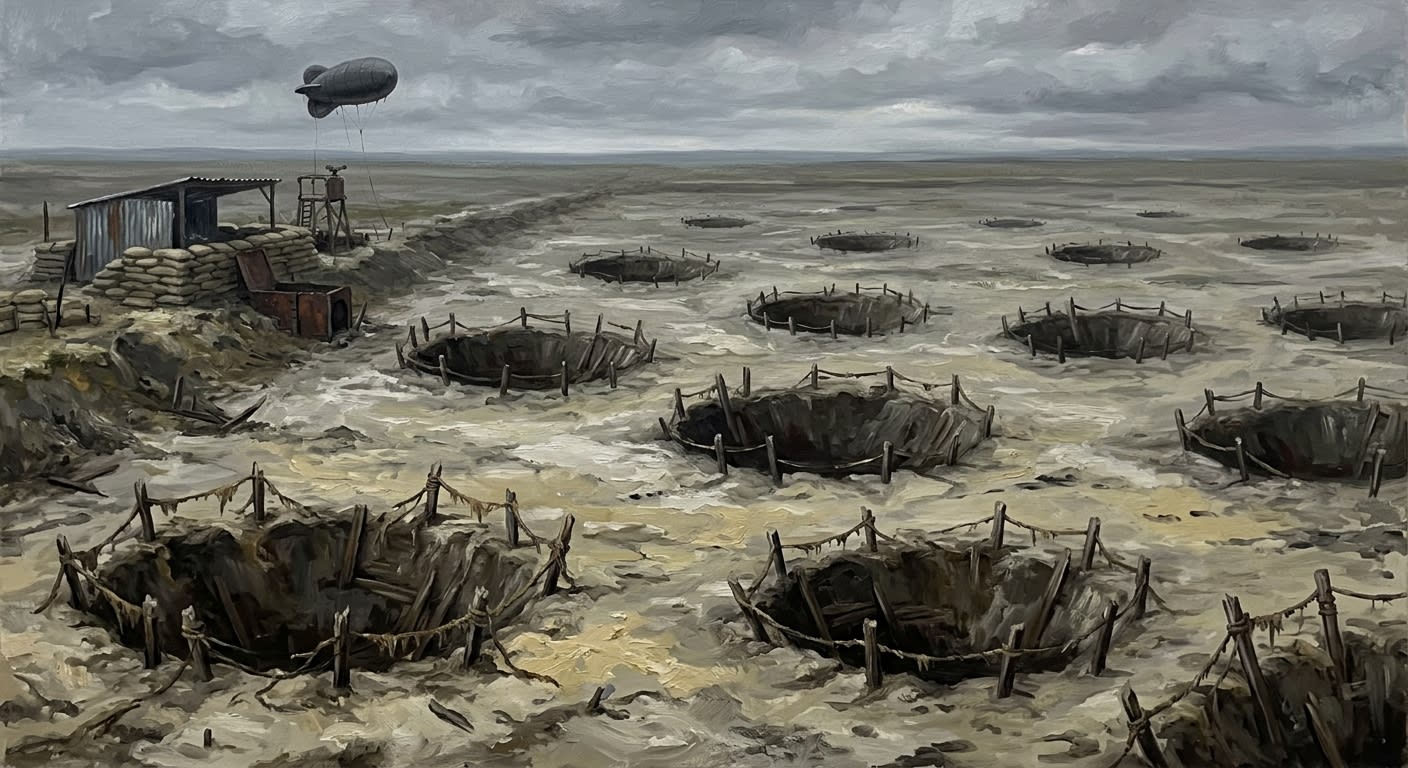
The Famine Pits
The dead are still hungry, and the Bureau prefers not to speculate why.
Fourteen confirmed burial sites in the former Hungarian plain where the dead of the Great Retreat have refused to stop dying. Their hunger radiates into the living. The Bureau classifies this as demonic. Drax does not agree.
Codex Ref. V.6.01-002
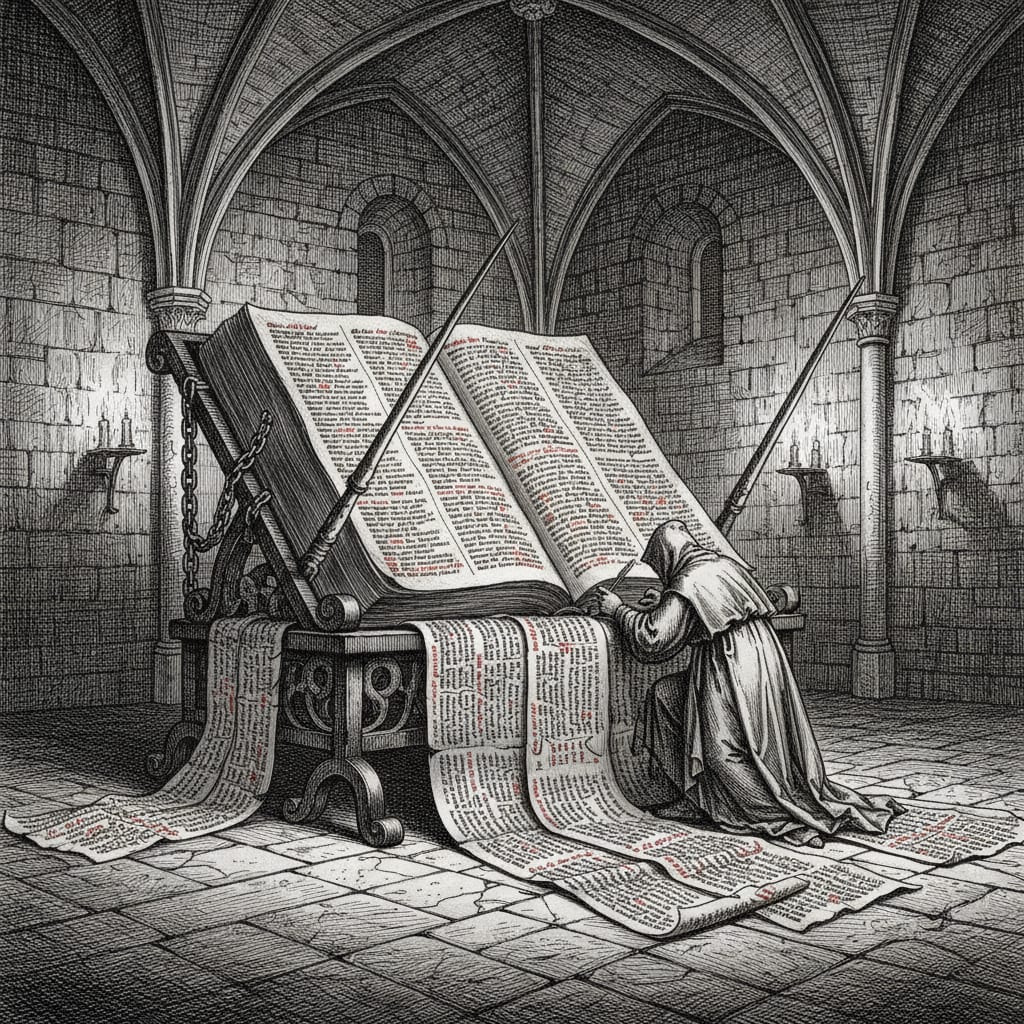
The Great Ledger of Souls
Census of the Living, Archive of the Damned
The Bureau of Records' supreme instrument of spiritual governance — an unbroken registry of every baptized soul since A.S. 80, kept in the subterranean vaults of Strasbourg, where forgetting is treason and being forgotten is worse.
Codex Ref. IV.1.09-003
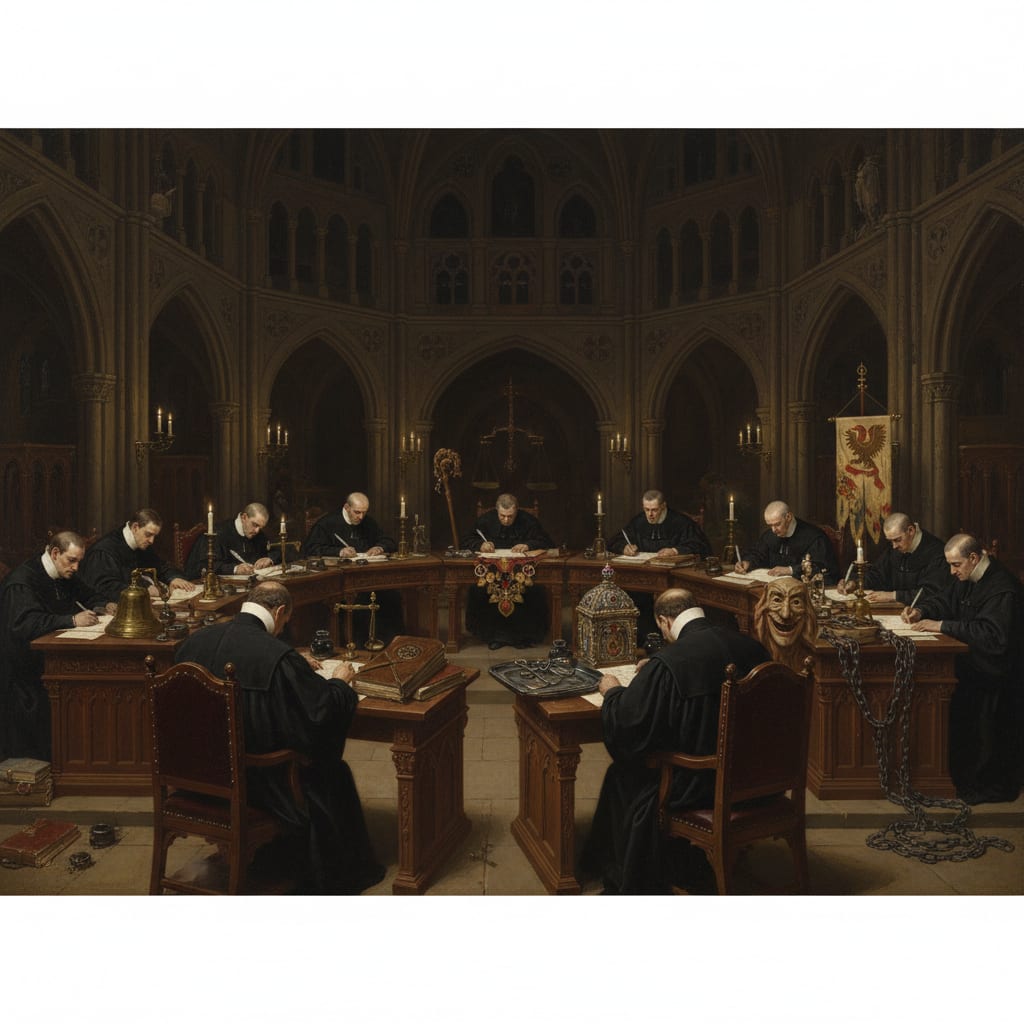
The Holy Bureaus
Twelve Instruments of Providence, or Thirteen If You Count the One That Does Not Exist
The twelve sacred organs through which Strasbourg bends a continent to its will. Each Bureau claims a charism of governance descended from the Apostolic Sundering. Their clerks are legion, their archives endless, their contradictions — by design.
Codex Ref. III.3.01-001
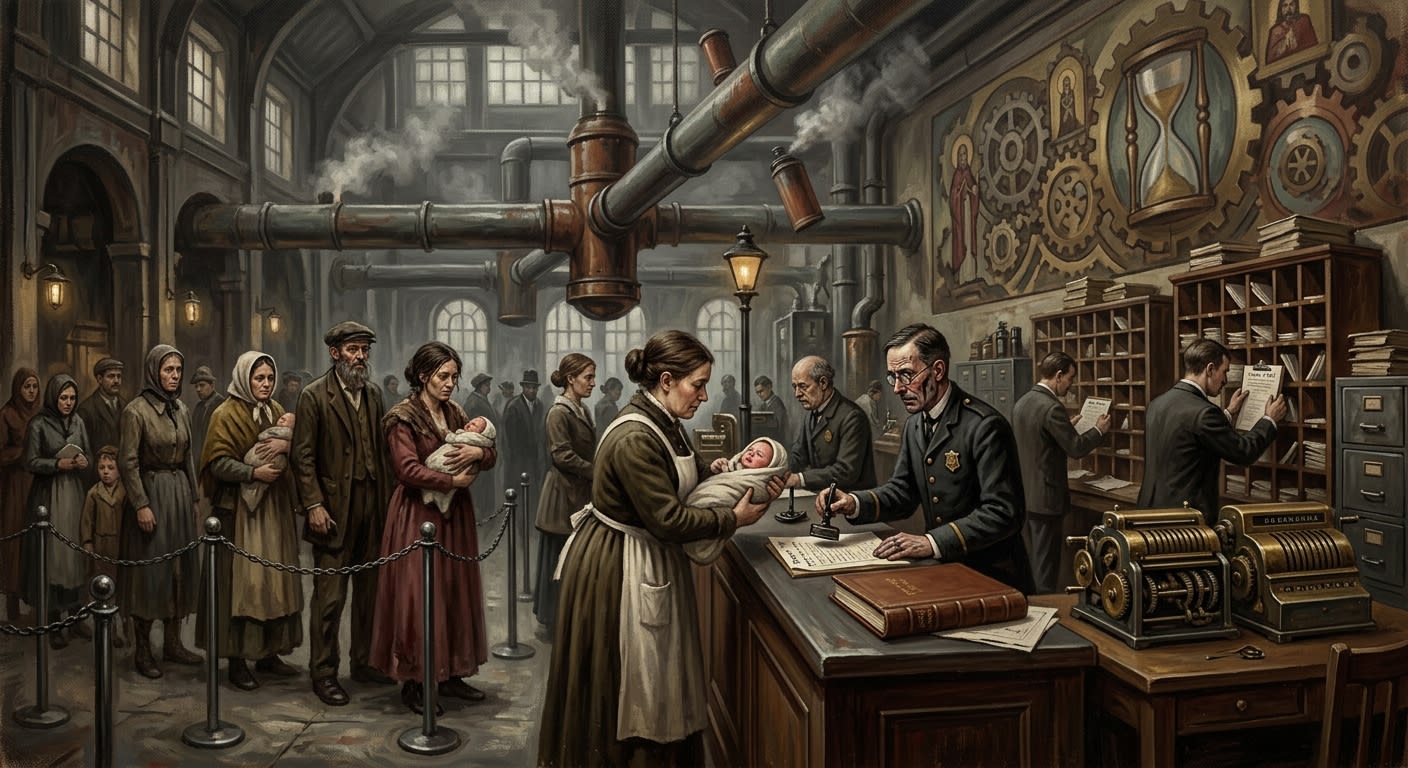
The Natal Registration Act
The statute that put a clock beside the cradle
The Natal Registration Act of A.S. 158 made birth a Records event: forty-eight hours from first breath, Form 7-NR, midwife filing, tithe projection, and the cradle docketed.
Codex Ref. XIII.1.02-158
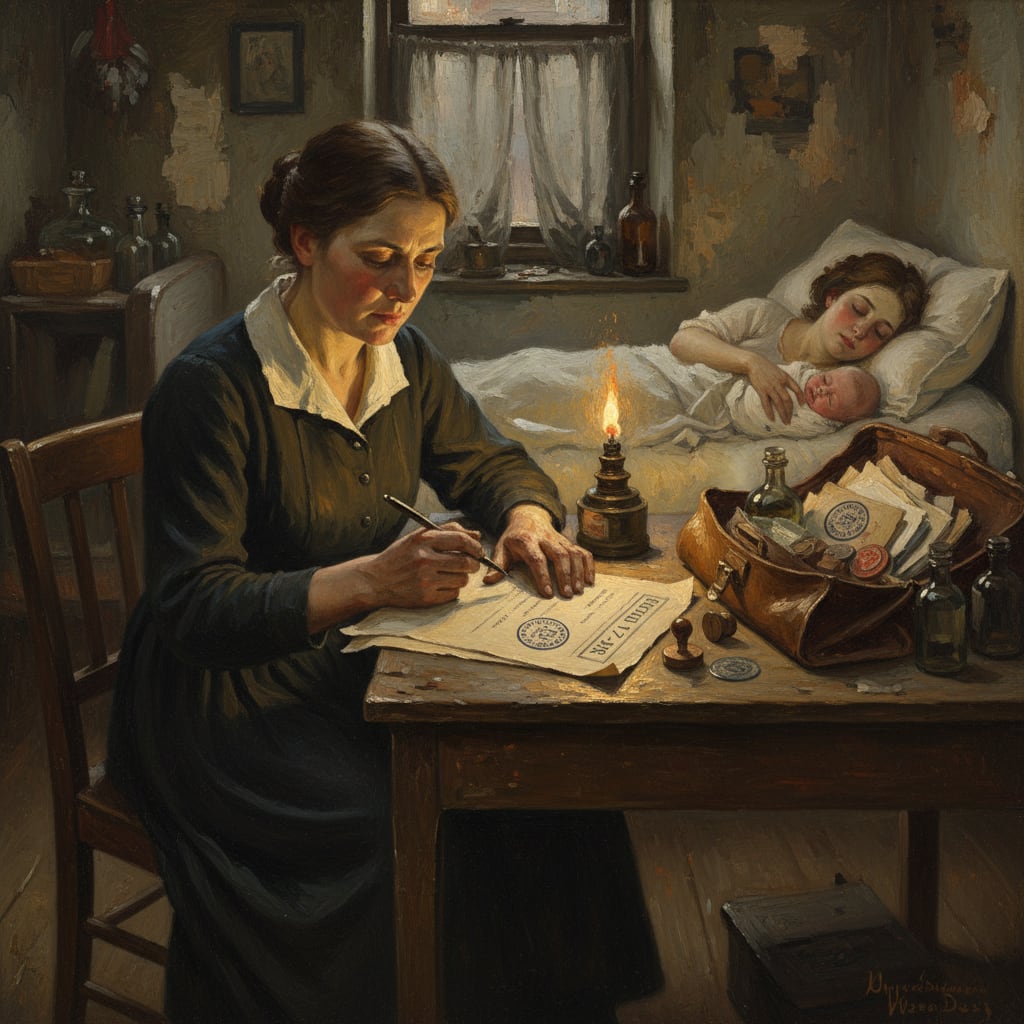
The Natal Registration Writ
Eleven inches by fourteen, and the whole apparatus of a life not yet lived
Form 7-NR is eleven inches by fourteen, bears two watermarks, and calculates the fiscal value of a human life at the moment of birth. Drax explains the theology, the penalties, and the people who would rather disappear than sign it.
Codex Ref. XIII.1.02-001
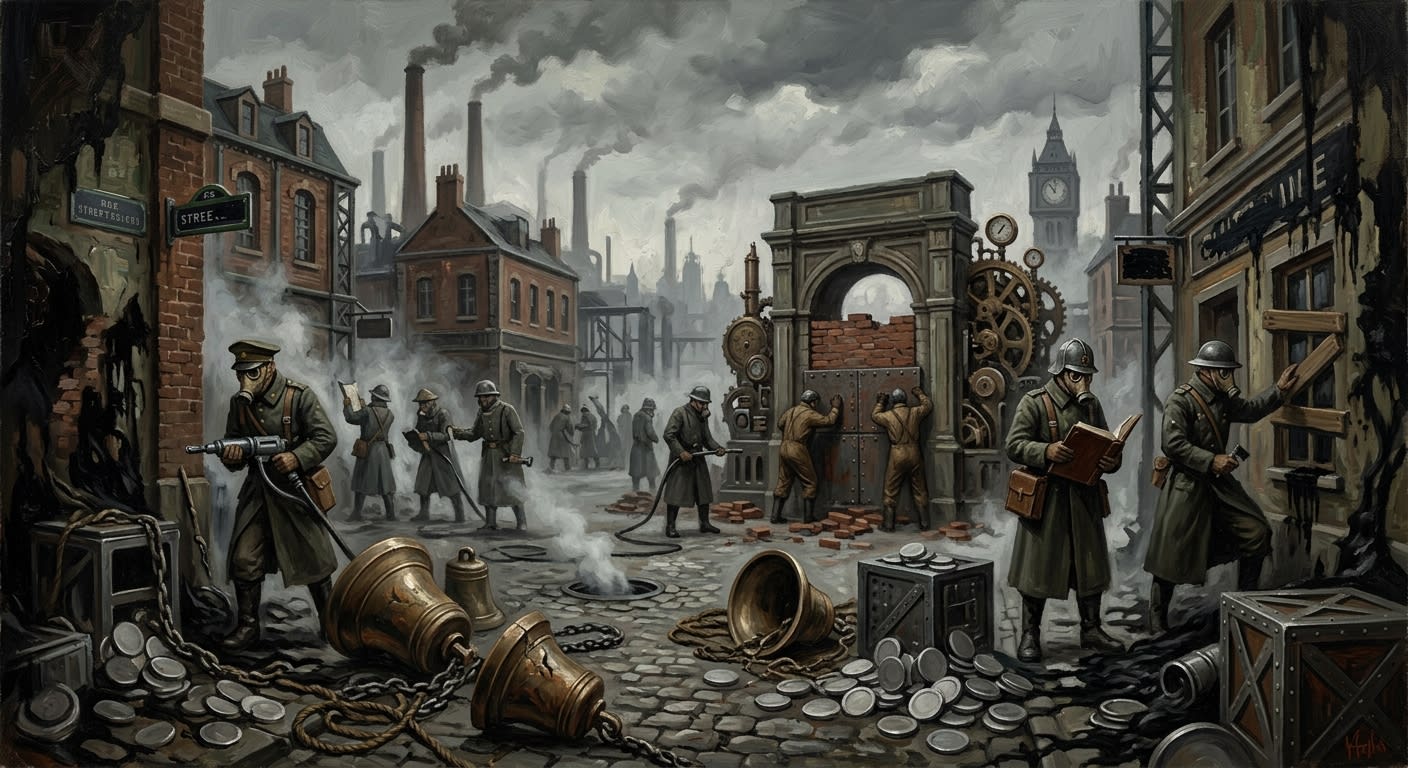
The Redaction of Épernay
Absence can be administered, and the valley still keeps quarter-hours
In A.S. 103, Records, Silence, and Shadows converted Épernay from a wine-country city into an authorised absence, leaving bells, tokens, and denial behind.
Codex Ref. VII.8.02-001
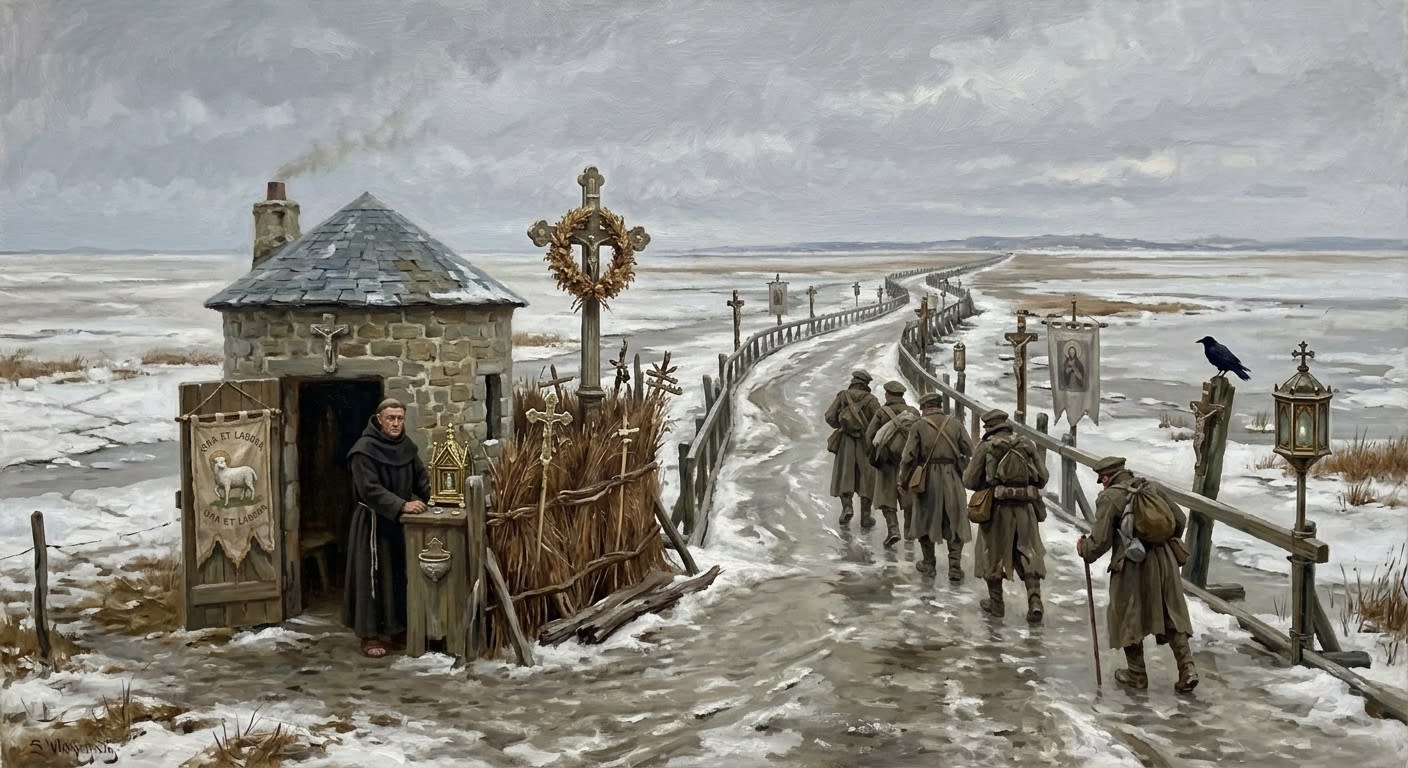
The Salt-Vigil Causeways
Where the road drinks and the order endures
Winter roads across the frozen Frisian shallows, administered by an ascetic toll order who collect salt and tears in equal measure. The causeways carry one-eighth of the Synod's winter supply traffic and ask something of everyone who walks them.
Codex Ref. II.3.05-003
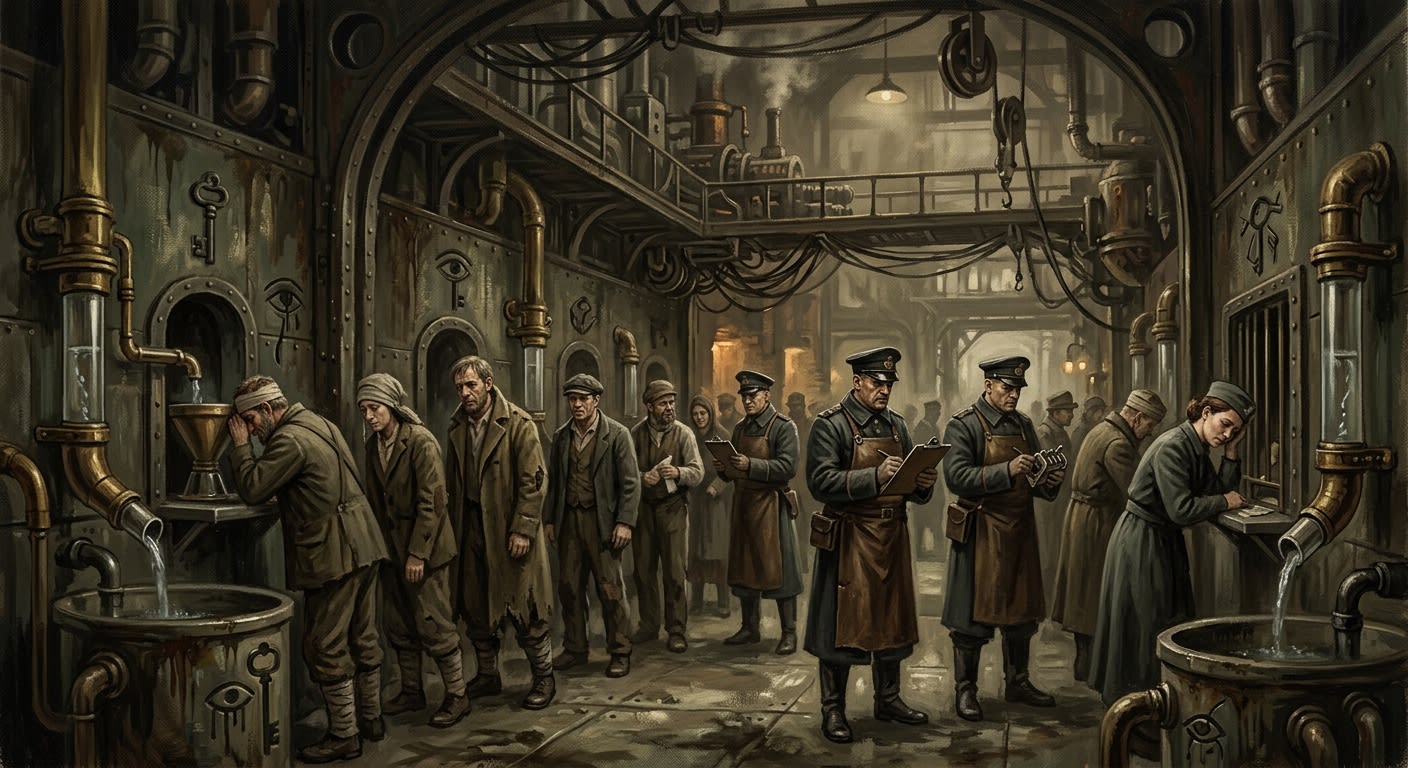
Weeping Chamber
Pay wet, pass dry
The Weeping Chamber turns grief into passage, tears into toll, and misery into a receipt tidy enough for every Bureau to admire.
Codex Ref. XIII.1.25-082
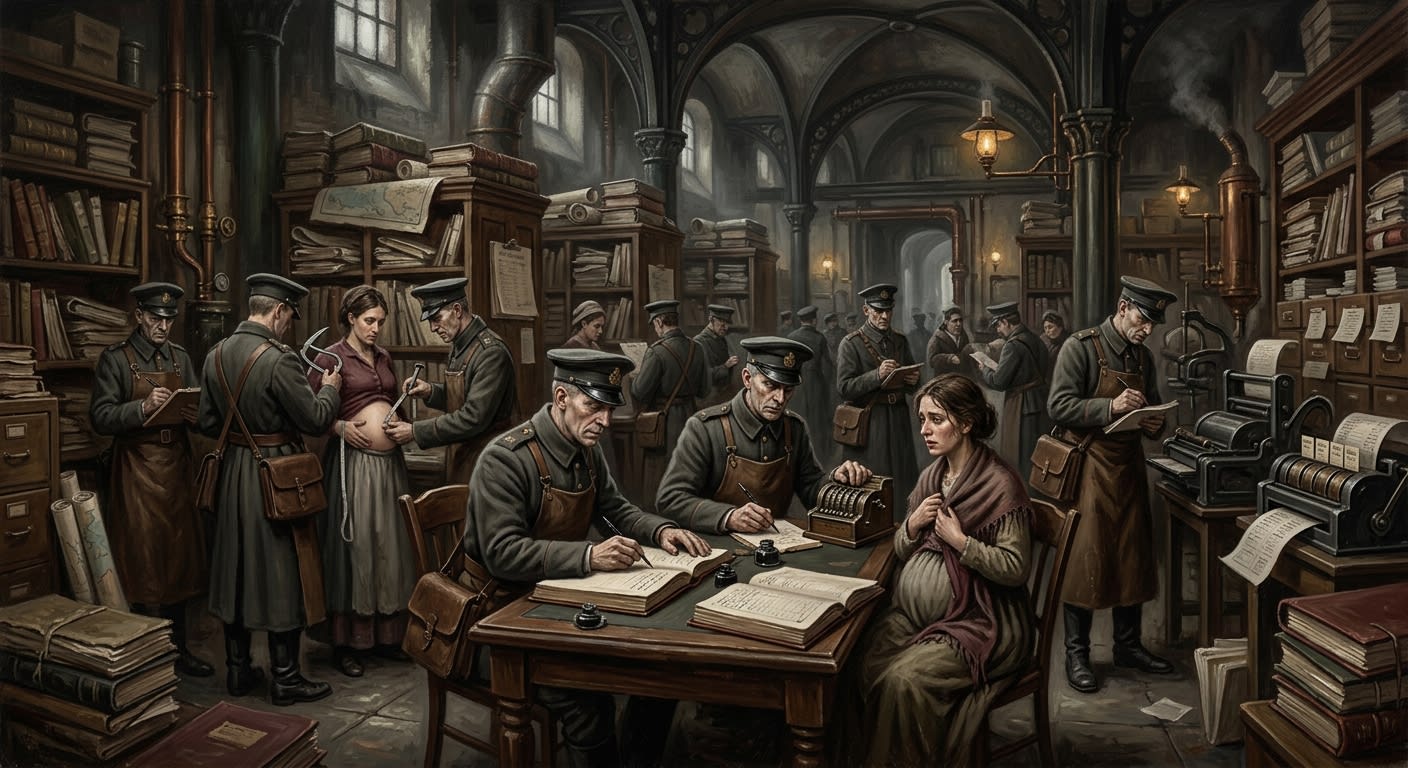
Womb Registrars
The cradle has a visitor, and she has already priced the child
Womb Registrars are Bureau of Records parish deputies who turn pregnancy into ledger matter: notice, name control, midwife compliance, and tithe projection before first breath becomes evasion.
Codex Ref. XII.9.04-001