

Reverse Index
Referencing “The Palatine Counting House”
Every codex entry that links to The Palatine Counting House. 46 entries.
Return to The Palatine Counting House

Archbishop Pellian of Rouen
The mercy that cost three percent
Archbishop Pellian of Rouen briefly governed the Bureau of Tithes, tried conciliation, lost three percent in one quarter, and taught Strasbourg that mercy must be priced.
Codex Ref. III.2.01-059

Archbishop Salome Veyrault
The smile that made arrears a sacrament
Archbishop Salome Veyrault governs the Bureau of Tithes with a smile sharp enough to audit grief, humble Purity, and make the Sagittal Line pay for one more day of survival.
Codex Ref. III.2.01-055

Archon-Mediator Havel of Tithes
The quiet voice that taught a thousand guilds arithmetic
The Bureau of Tithes officer active at Münster in A.S. 105, remembered for one sentence, one vanished district, and no biography worth preserving.
Codex Ref. III.2.01-105
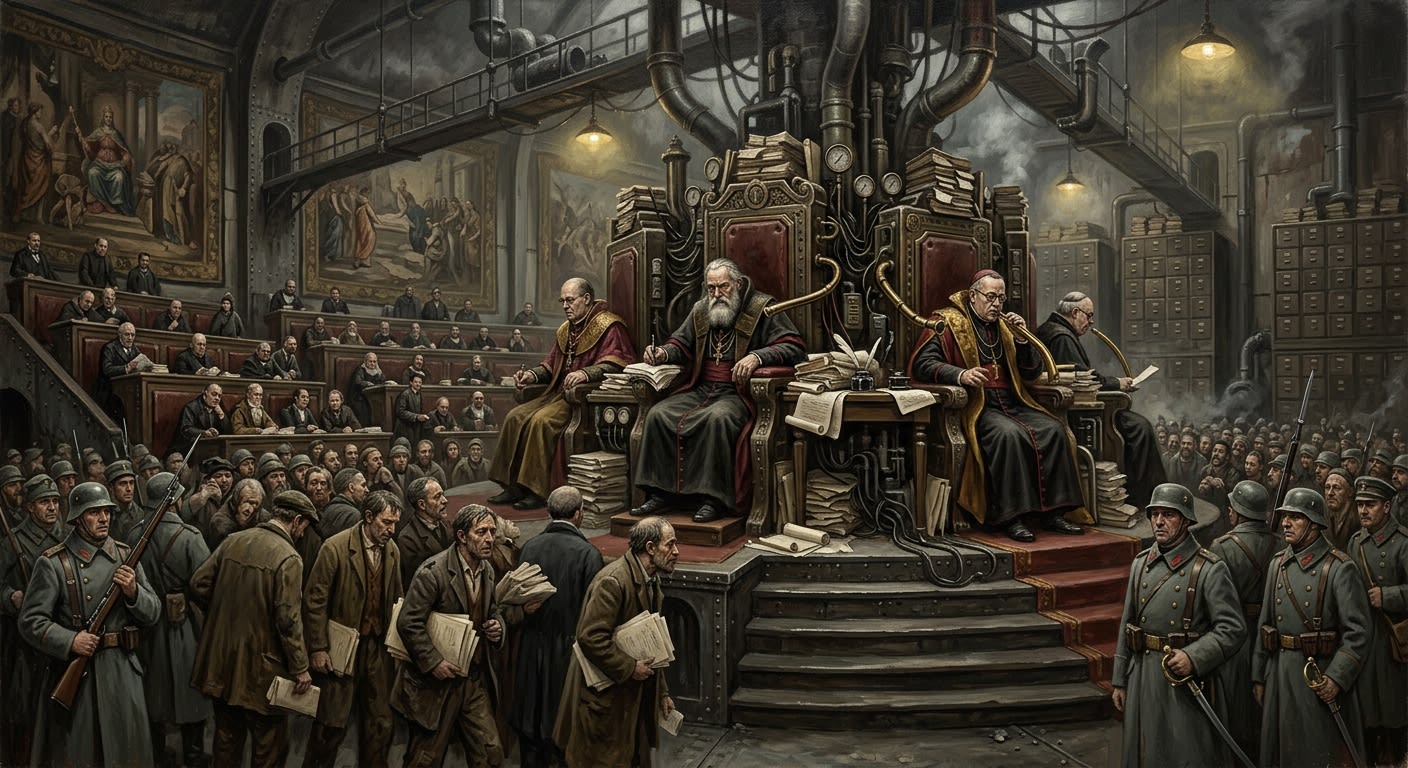
Assembly of Thrones
A chamber where pride is seated before it becomes militia
The Assembly of Thrones lets Bishops-Praetorial thunder safely: grievance seated, fury docketed, pride taxed, and every rebellion delayed by procedure.
Codex Ref. XIII.1.07-093

Assessor-General Kaethus Brenn
The crossed-out prayer beneath the Widow’s Penny
Assessor-General Kaethus Brenn wrote the arithmetic that turned pity exemptions into Widow’s Pennies, regretted it in the margin, and sent it forward.
Codex Ref. III.2.01-147
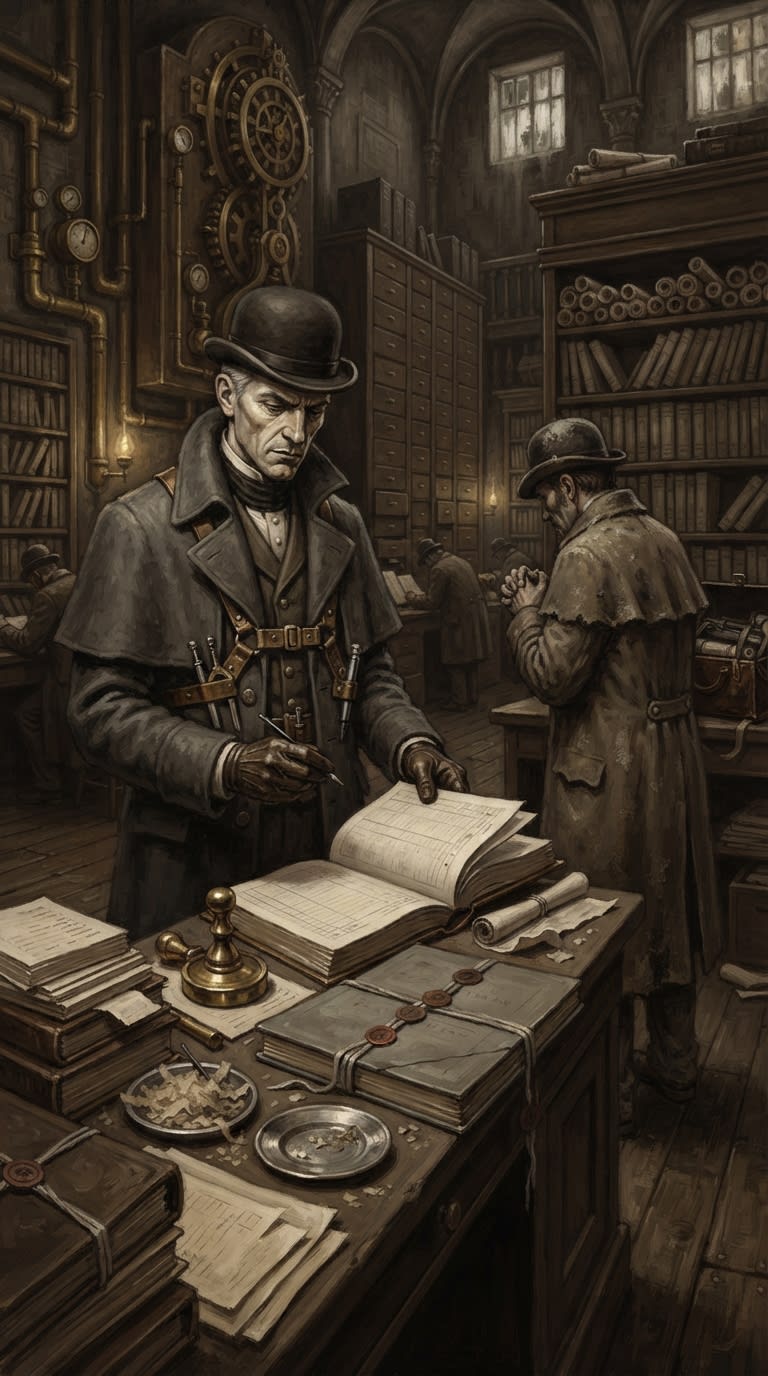
Audit Liaisons
The Bureau's accountant of accountants; or, who weighs the hand that weighed the salt
Audit Liaisons are the Bureau of Tithes' auditors of its own predation: officers who count receipt blanks, scrape brine-stones, and keep an Assessor's private theft below the Bureau's public appetite.
Codex Ref. XII.46.01-002
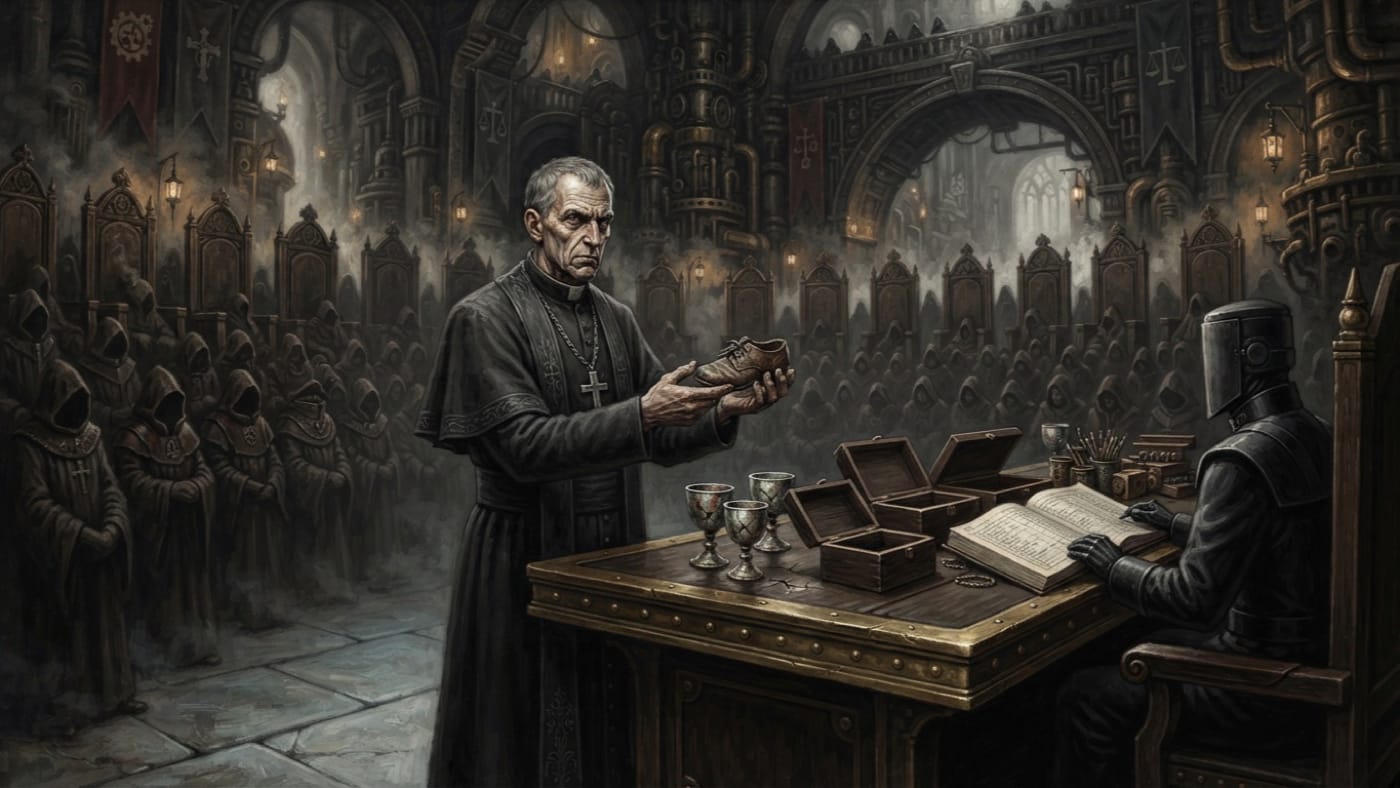
Bishop-Praetorial Lanfranc of Trier
A child's shoe before the Thrones, a bill afterward
Bishop-Praetorial Lanfranc of Trier challenged the Meta-Levy for seventeen dioceses in A.S. 138. His child's shoe moved the Thrones; the Fiscal Census moved the ruling.
Codex Ref. III.2.01-138
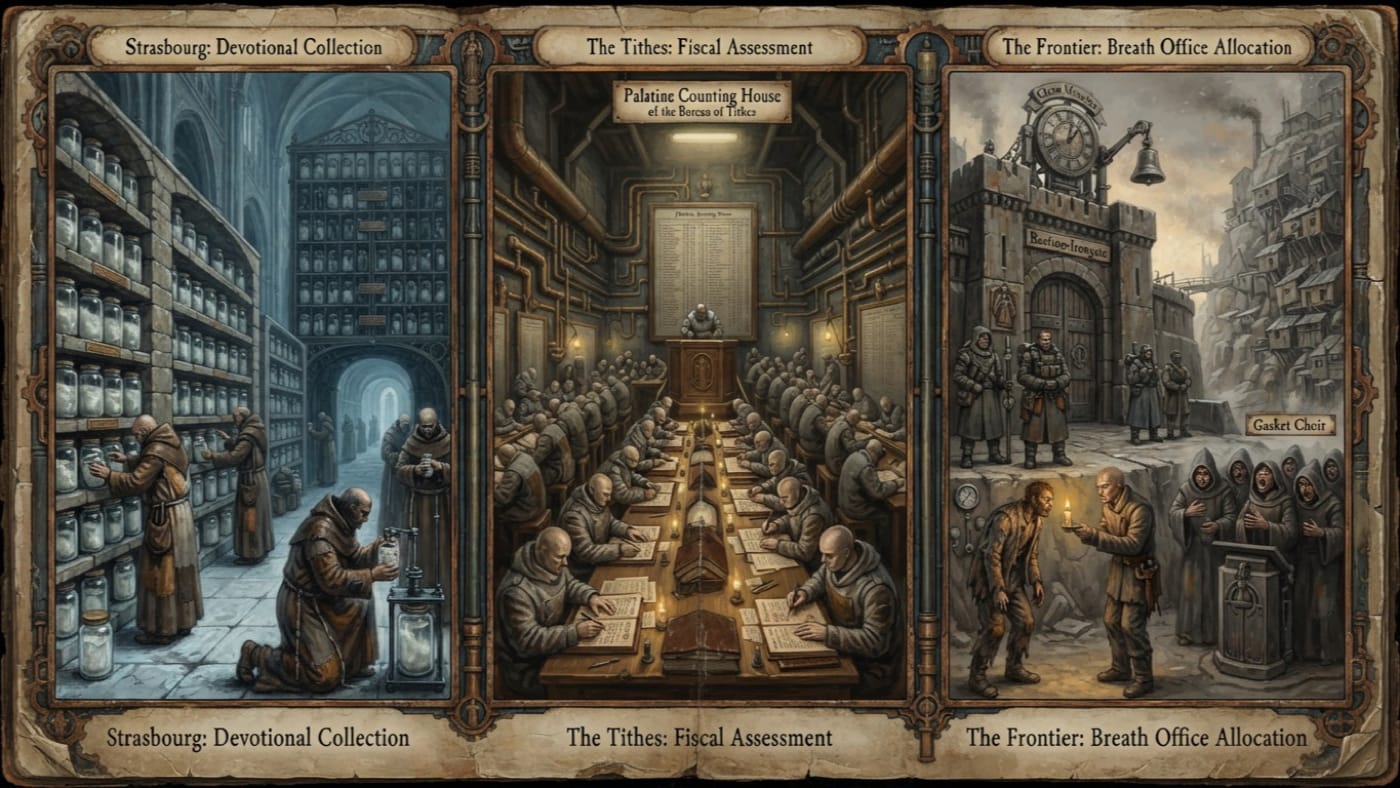
Breath-tithes
Whatever passes through a mouth can be made to pass through a desk
Breath-tithes make respiration administratively payable: Strasbourg collects devotion in jars, Tithes assesses atmospheric sanctification, and frontier offices price voice, warmth and shelter. The seals differ; the lungs do not.
Codex Ref. XIII.1.38-002
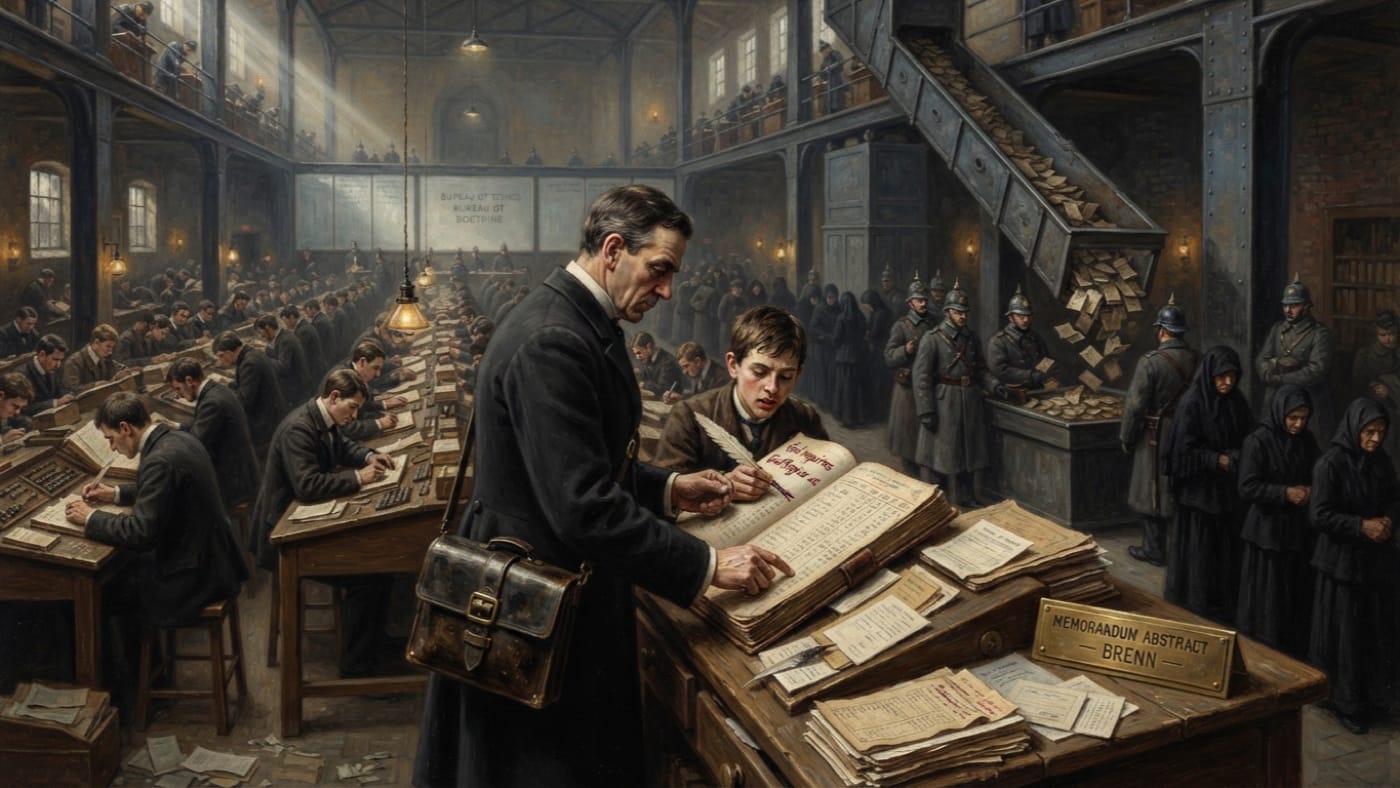
Brenn Memorandum
The prayer was corrected; the figures stood
Brenn's A.S. 138 memorandum proposed compulsory reduced-rate Widow's Pennies in place of pity exemptions. Doctrine corrected his prayer; Tithes kept the arithmetic.
Codex Ref. XIII.1.86-138

Bureau of Tithes
The organ no one praises and no one dares remove
The Bureau of Tithes is the Synod's fiscal organ — the stomach no one praises and no one dares remove. It taxes breath, grain, bereavement, and the management of its own taxation.
Codex Ref. VIII.4.01-001
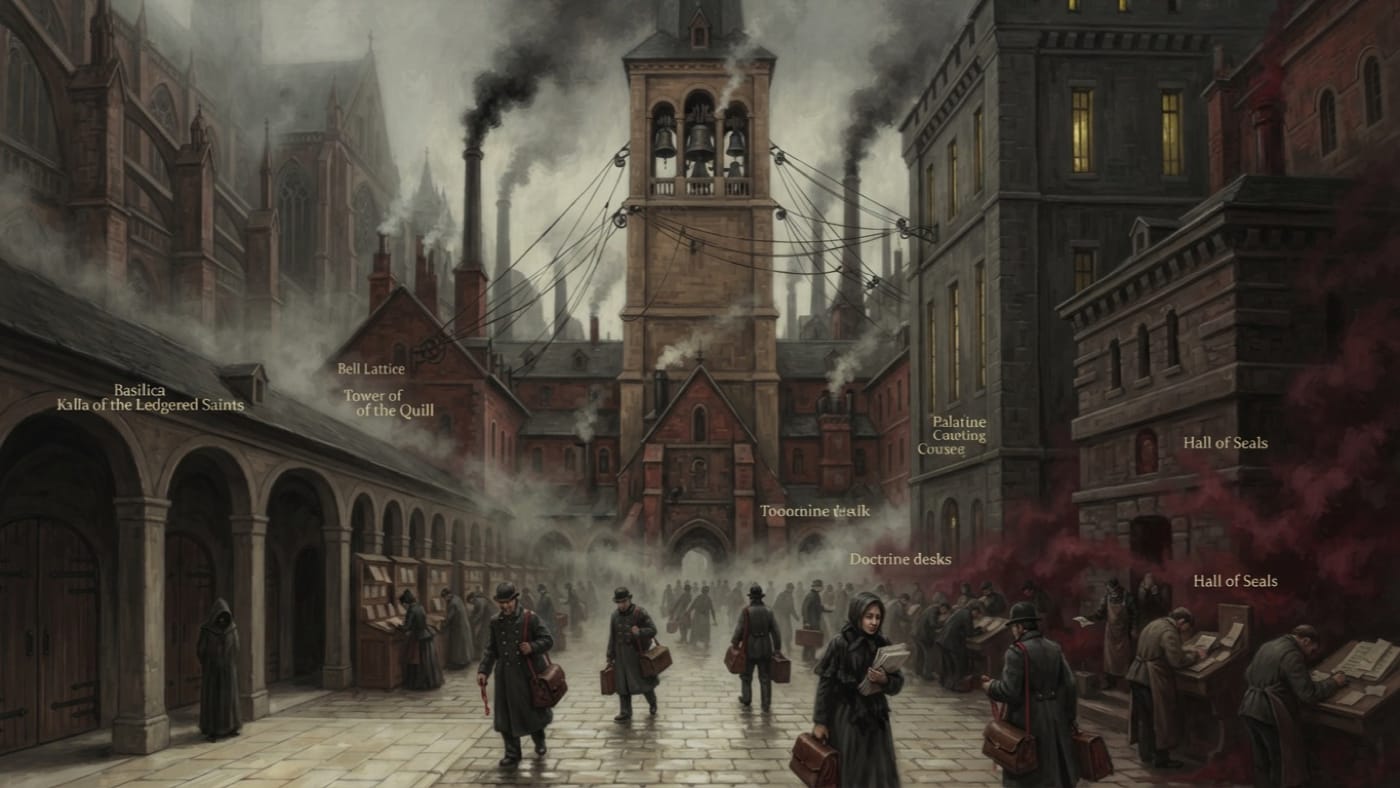
Cloister Precinct
Where every refusal stands within walking distance
Strasbourg's Cloister precinct gathers Doctrine desks, seals and tithes around one petitioner's walk. Every refusal is nearby; the northern arcade has no recorded custodian.
Codex Ref. II.1.04-008

Concordat Supplementary
What the author forgot, the collectors remembered
An A.S. 201 survey of the Concordat Supplementary's attested Canon 17-D, cited by Tithes for infants' first teeth as preemptive dues. I wrote the canon. The Bureau remembered what I had forgotten.
Codex Ref. XIII.1.17-001
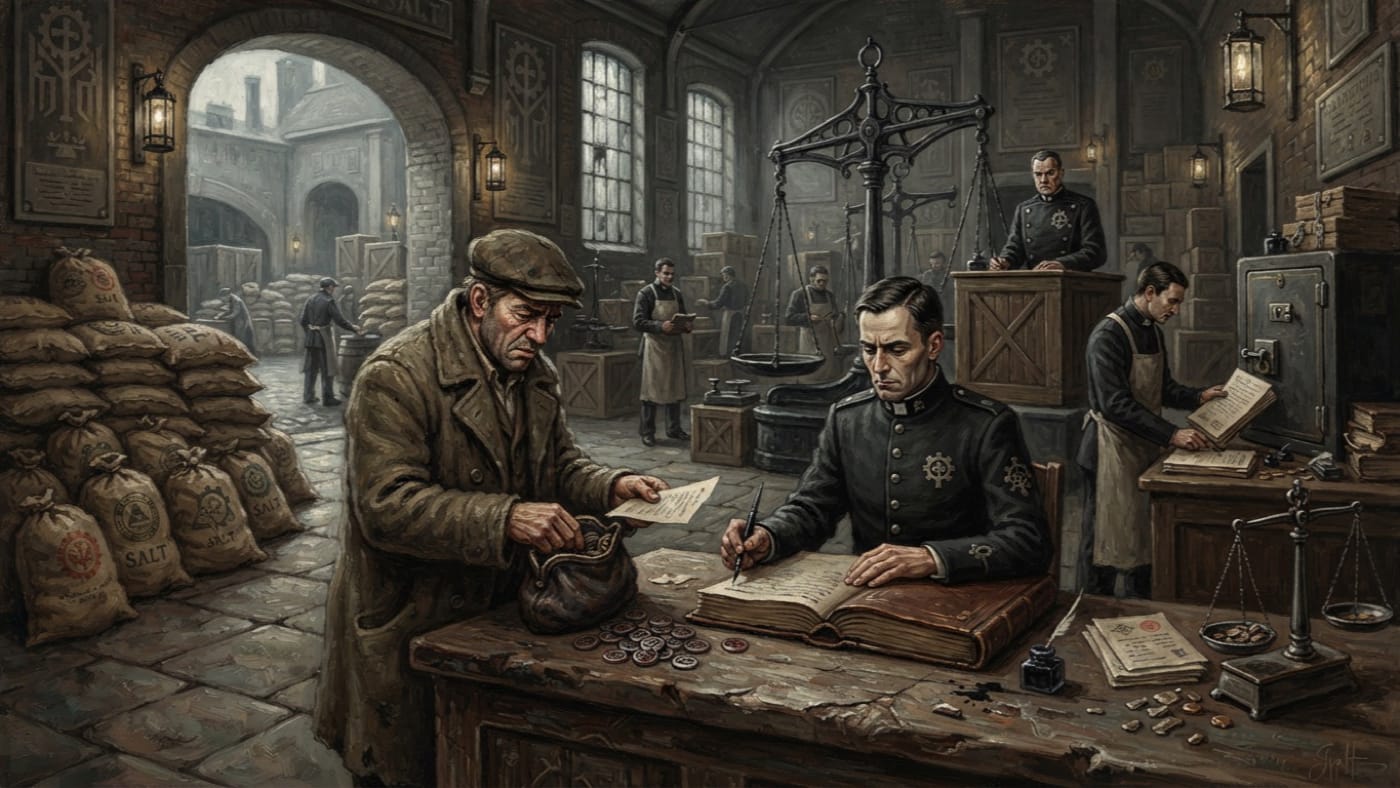
Crown of Grace accounting
The money is present; the payment remains incomplete
Crown of Grace accounting turns harbour cargo into recognised value, assessed dues and sealed proof. Coin may settle an obligation; only reconciled ledgers persuade the Bureau to release the salt.
Codex Ref. XIII.1.24-201
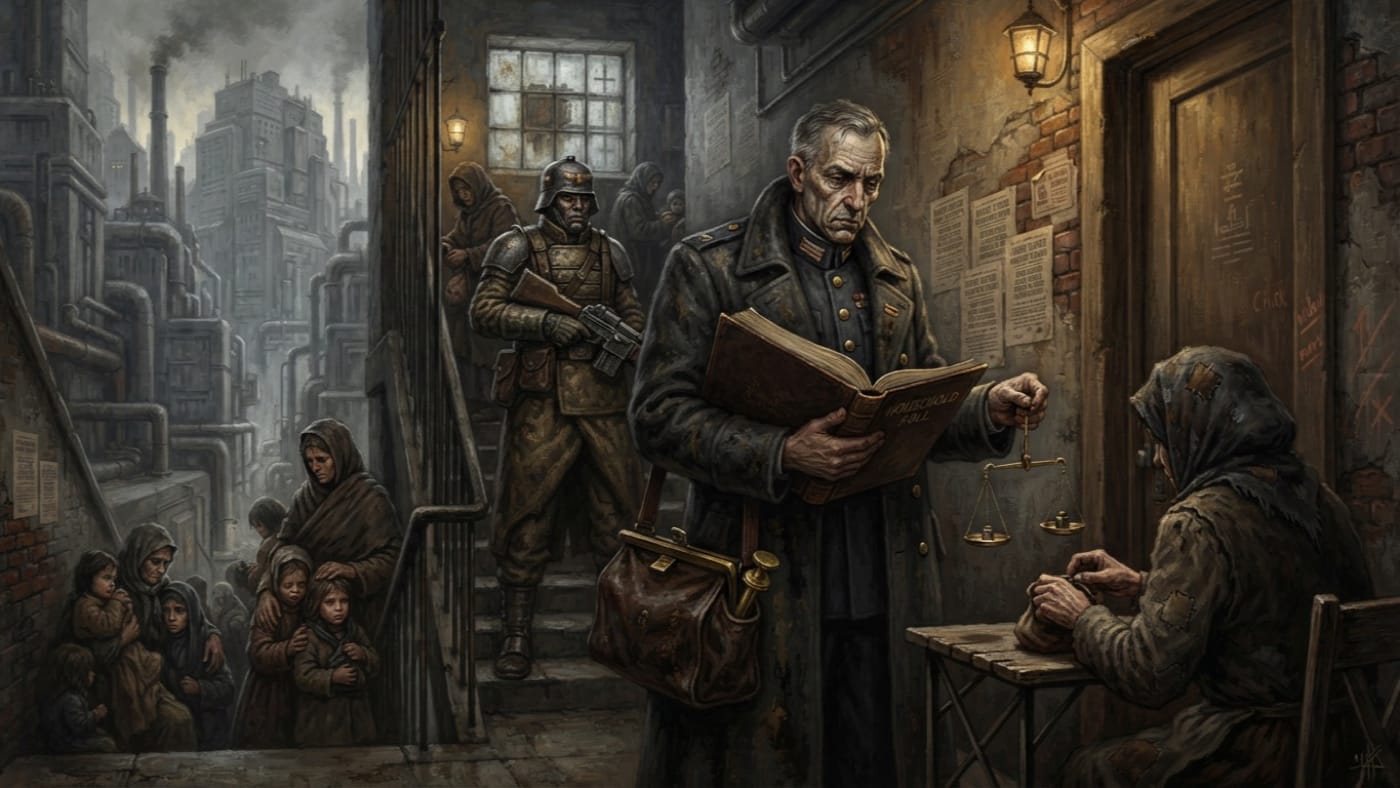
Directive 91-B
Grief kept its discount and lost its exemption
Issued in A.S. 139, Directive 91-B closed the pity-exemption rolls and made Widow's Pennies compulsory at reduced rate. Grief kept its discount; the Bureau kept its account.
Codex Ref. XIII.1.91-139
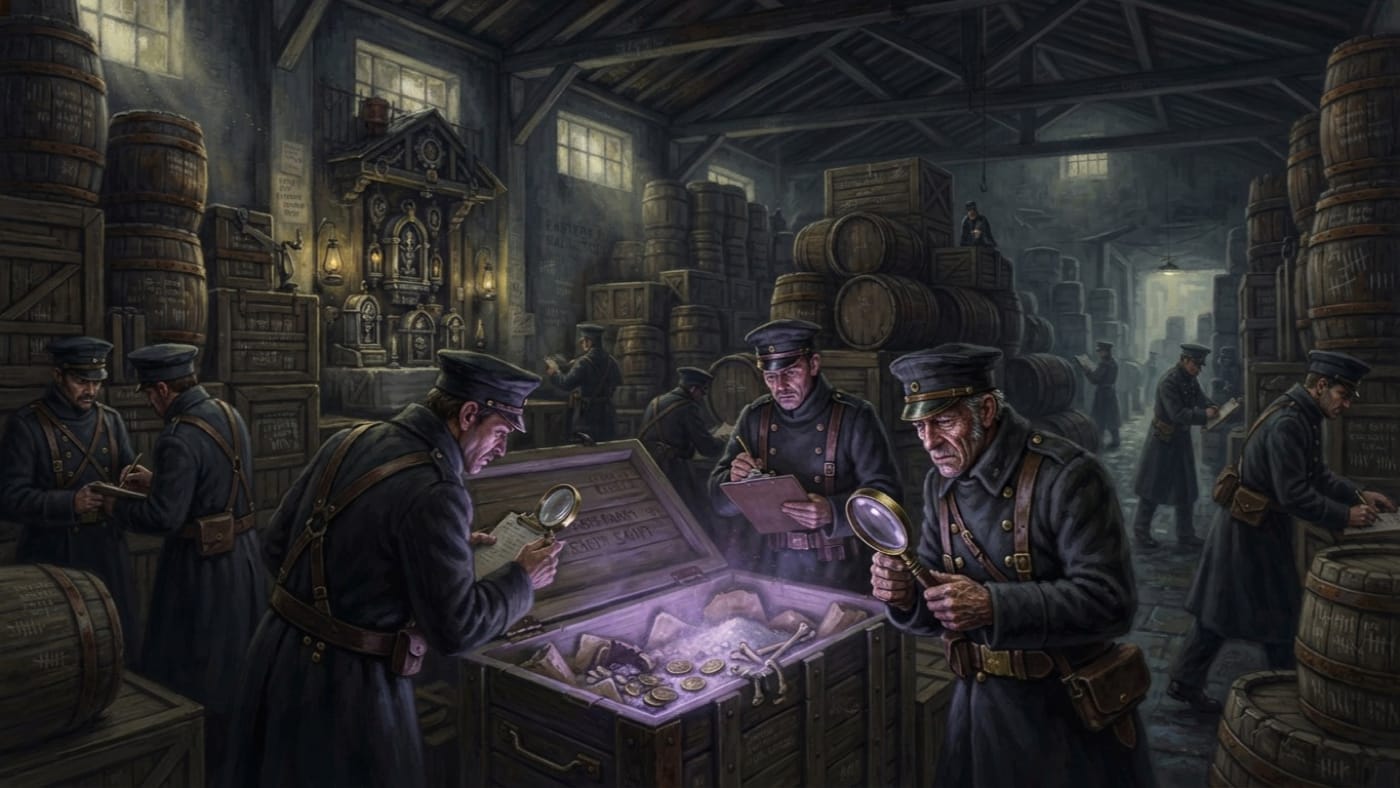
Eastern Basin Salt Stores
Five Bureaus claimed the cargo; the ledger called it spoilage
The Eastern Basin Salt Stores survive in Marseille's A.S. 199 audit: cured fish declared, children and violet light found, five Bureaus claiming custody, and the account closed as spoilage.
Codex Ref. II.4.09-019
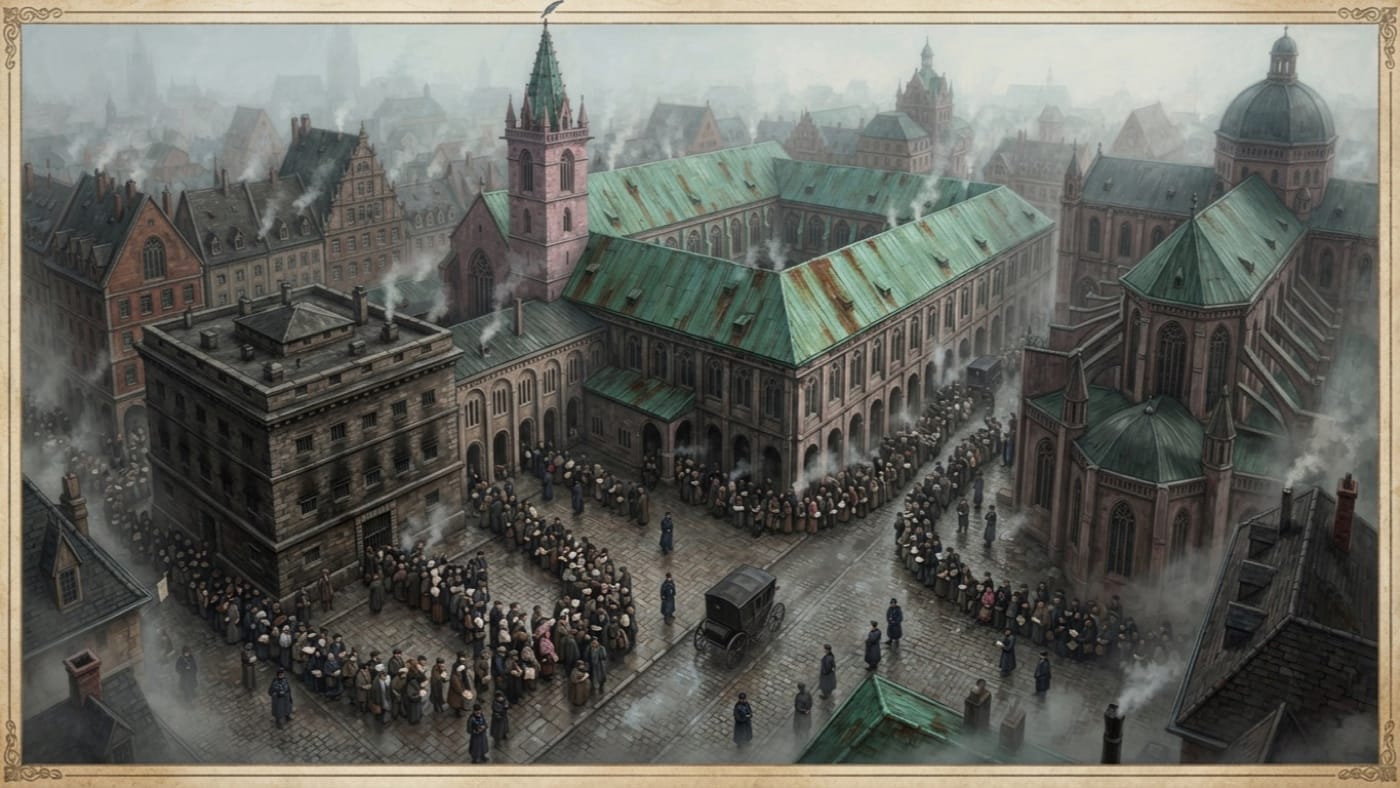
Ecclesiastical Quarter
Where authority gathers and petitioners go round in circles
Strasbourg's houses of authority gathered around the Cloister of Concord. Doctrine writes, Records remembers, Tithes counts, and petitioners carry the receipts. Surveyed in A.S. 201; the perimeter remains uncertified.
Codex Ref. II.1.04-005
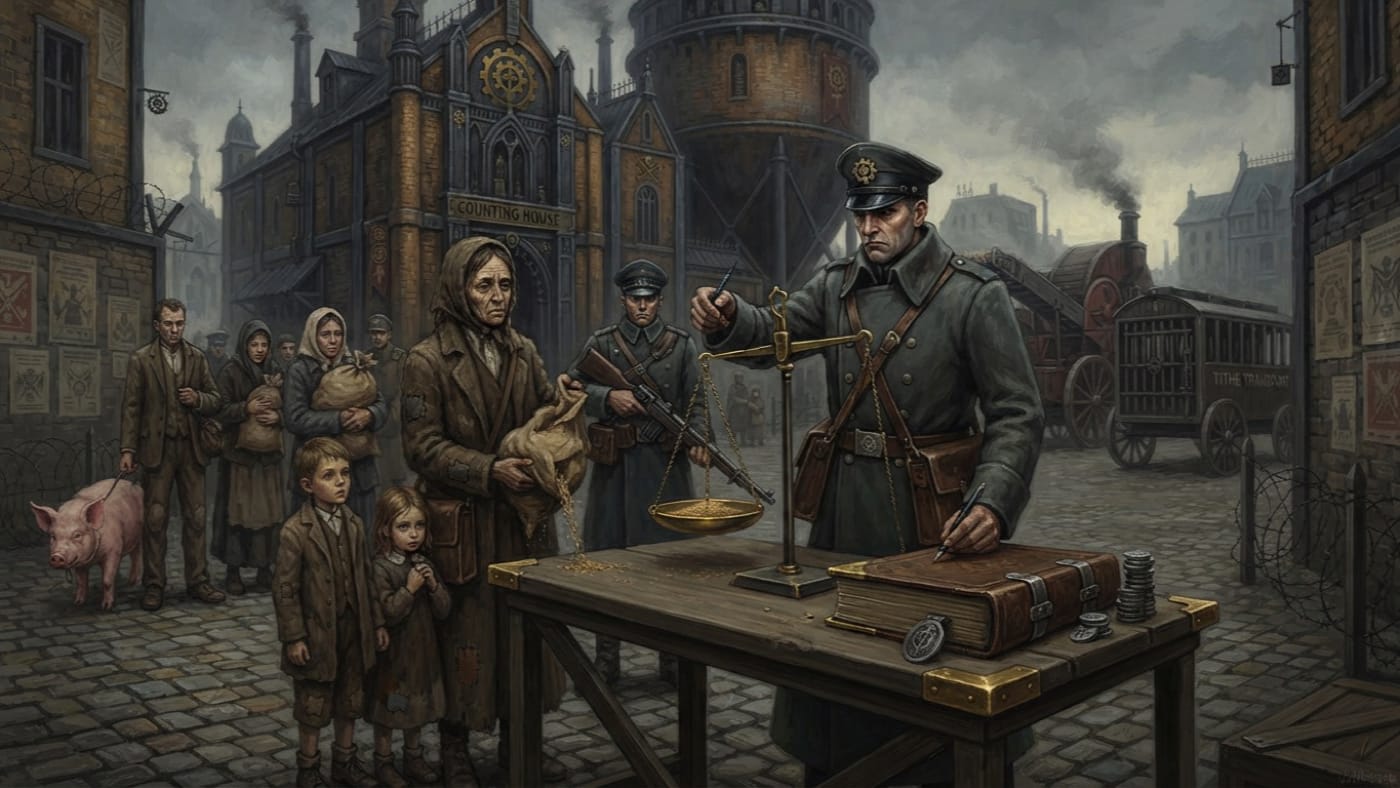
Faith-Tithe
The tenth that never settles the bill
The Faith-Tithe is the tenth owed by every baptised Synod subject, payable in coin, livestock, grain or labour. I certify the receipt; the surcharges follow.
Codex Ref. XIII.1.92-001
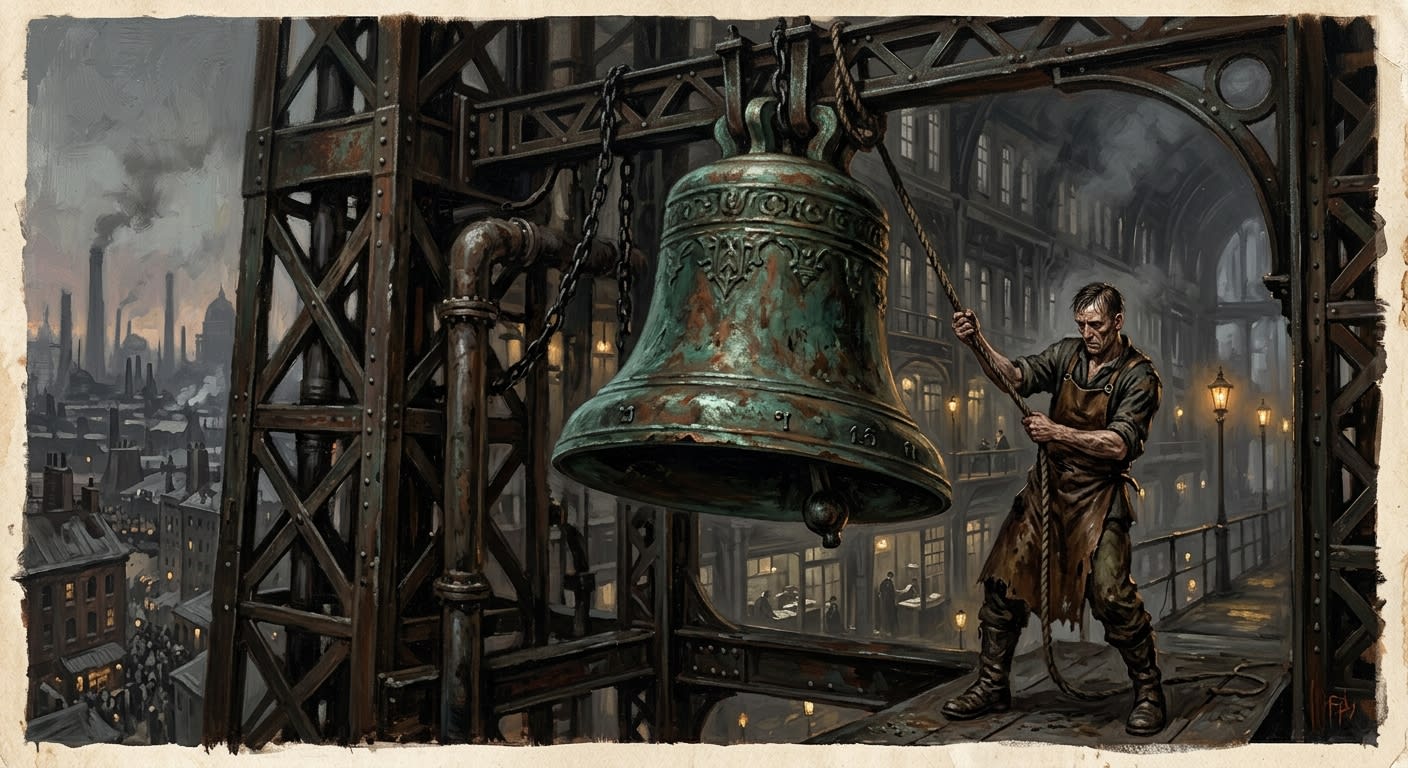
Fames (Bell)
The hunger bell of Strasbourg, whose receipts frighten wiser governments than drums
Fames is the Tower of the Quill's middle bell, tolled for rationing adjustments when hunger becomes too official to remain quiet.
Codex Ref. XIII.1.72-005
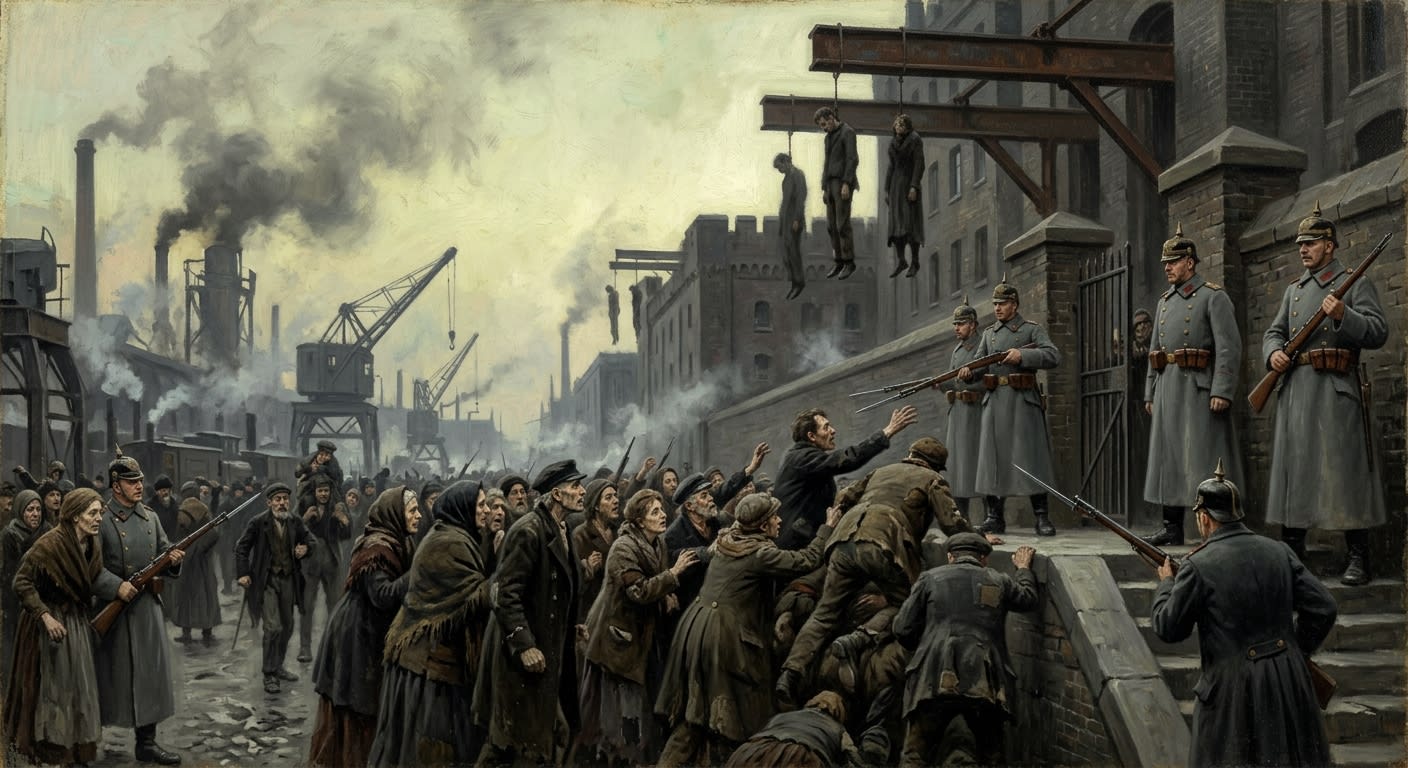
Famine of A.S. 65
Two per cent mercy, measured against an empty sack
The A.S. 65 Hamburg famine and nine-day riot came as the northern throat became indispensable: failed harvests, due tithes, Berlin troops, public hangings, and a two-per-cent mercy too small to eat.
Codex Ref. VII.4.21-065
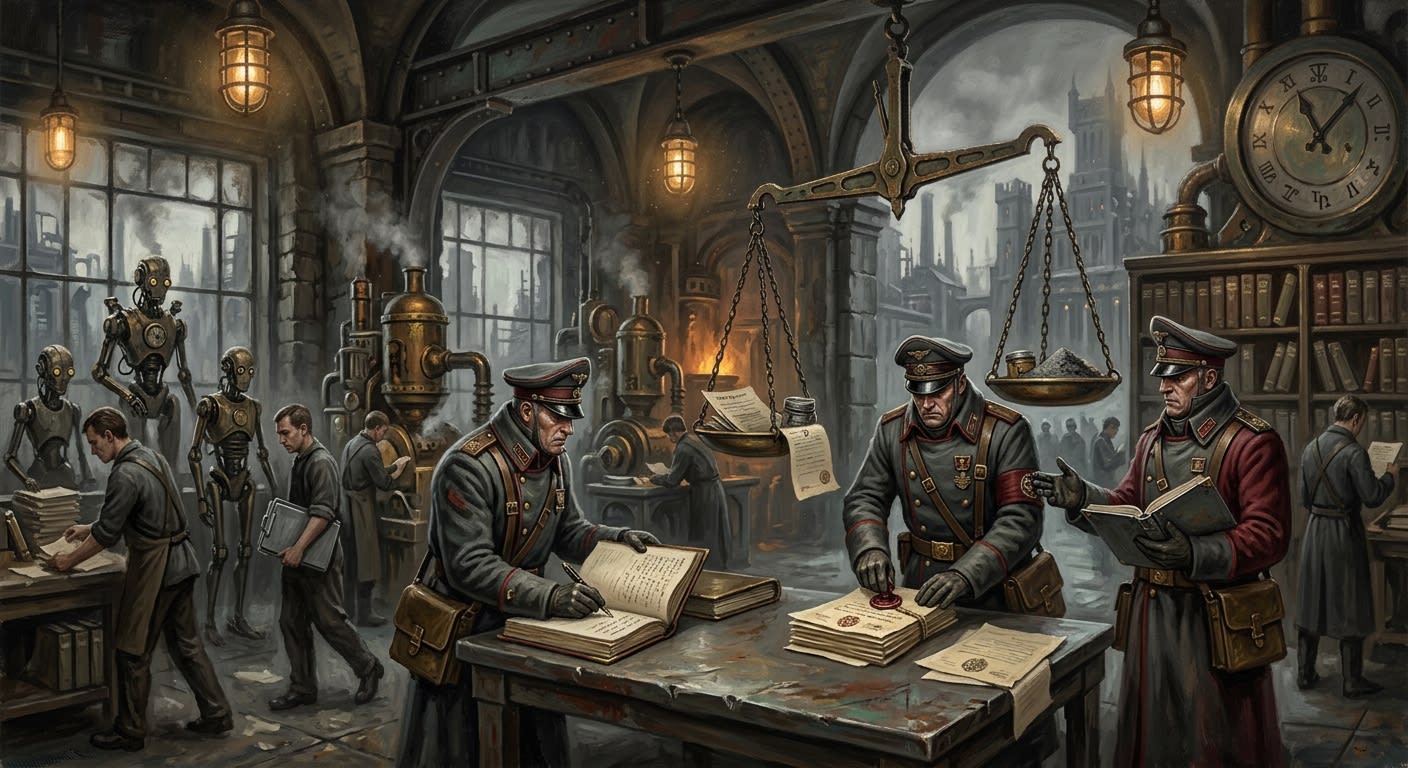
Feast of Balanced Scales
Mercy, weighed once yearly and sealed before it multiplies
The Feast of Balanced Scales permits each Tithe Assessor one yearly remission, proving mercy can survive only when counted, sealed, and made afraid.
Codex Ref. XIII.1.89-201
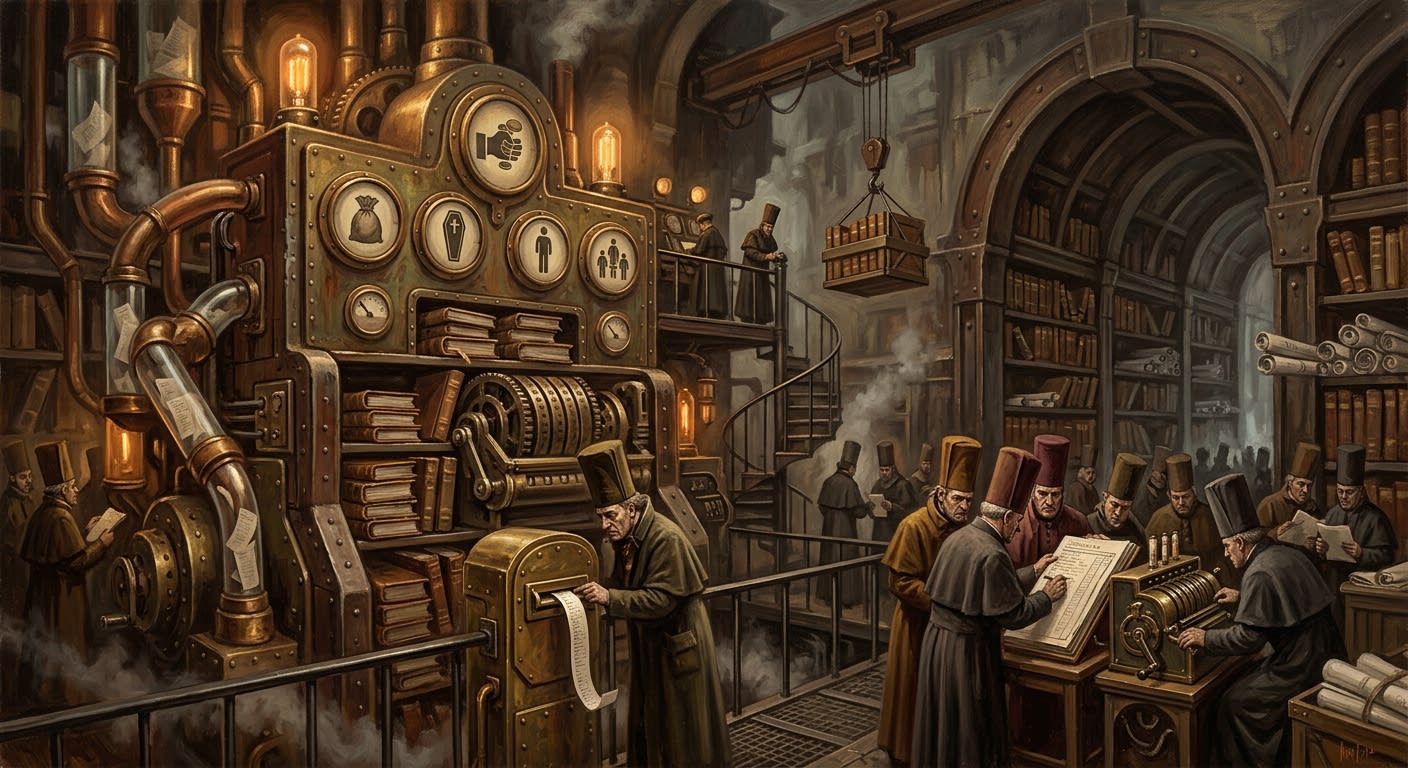
Fiscal Census
The mouth beneath the Ledger, still hungry after burial
The Fiscal Census is Tithes' continental obligation register: a vault-machine counting what the living, dead, unborn, and administratively inconvenient still owe.
Codex Ref. XIII.1.38-092
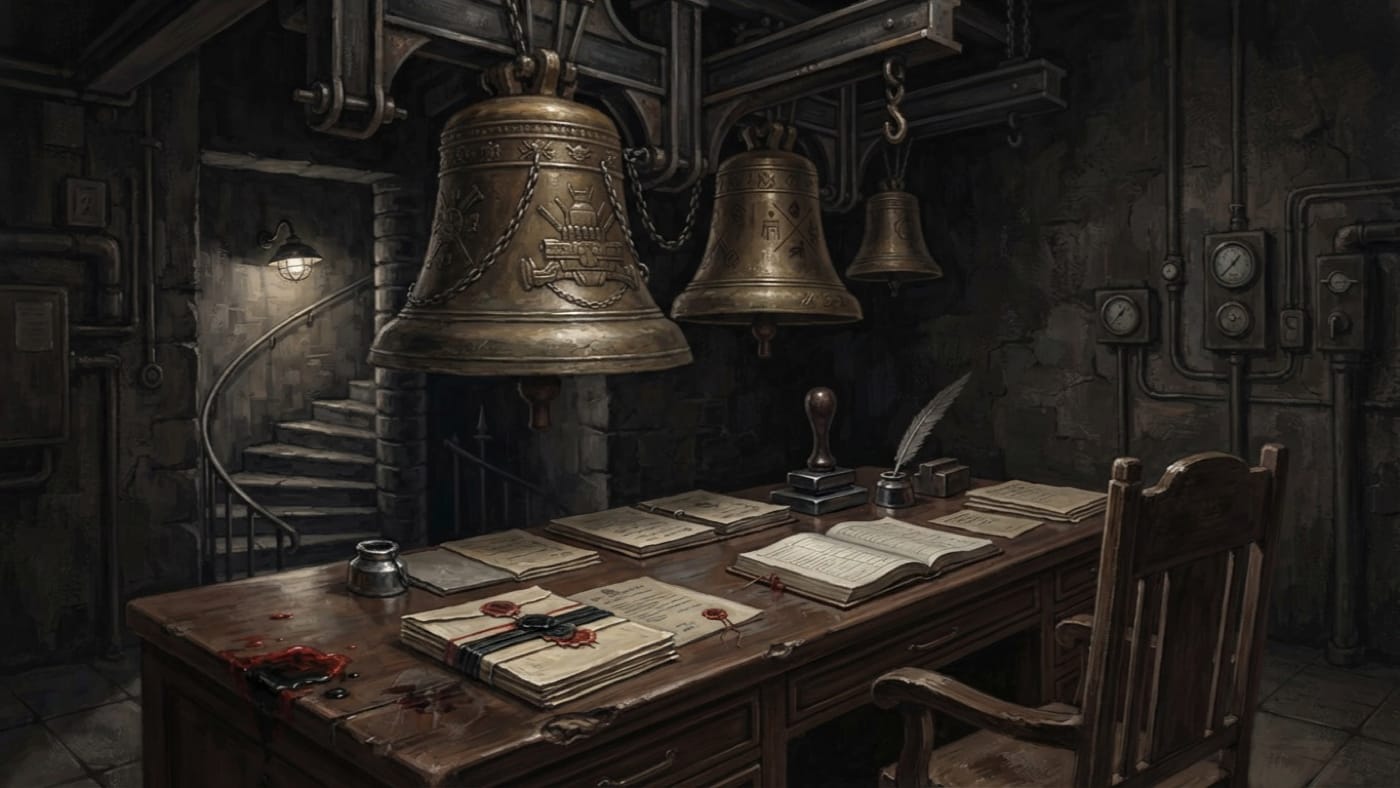
Gallery of the Quill
A walnut desk beneath three bells, and the hand that corrects the Synod's meaning
The Gallery of the Quill is my working room in Strasbourg's Tower: a walnut desk beneath three bells, where the Warden of the Sacred Ledger corrects Doctrine's prose and signs for the consequences.
Codex Ref. II.1.04-002
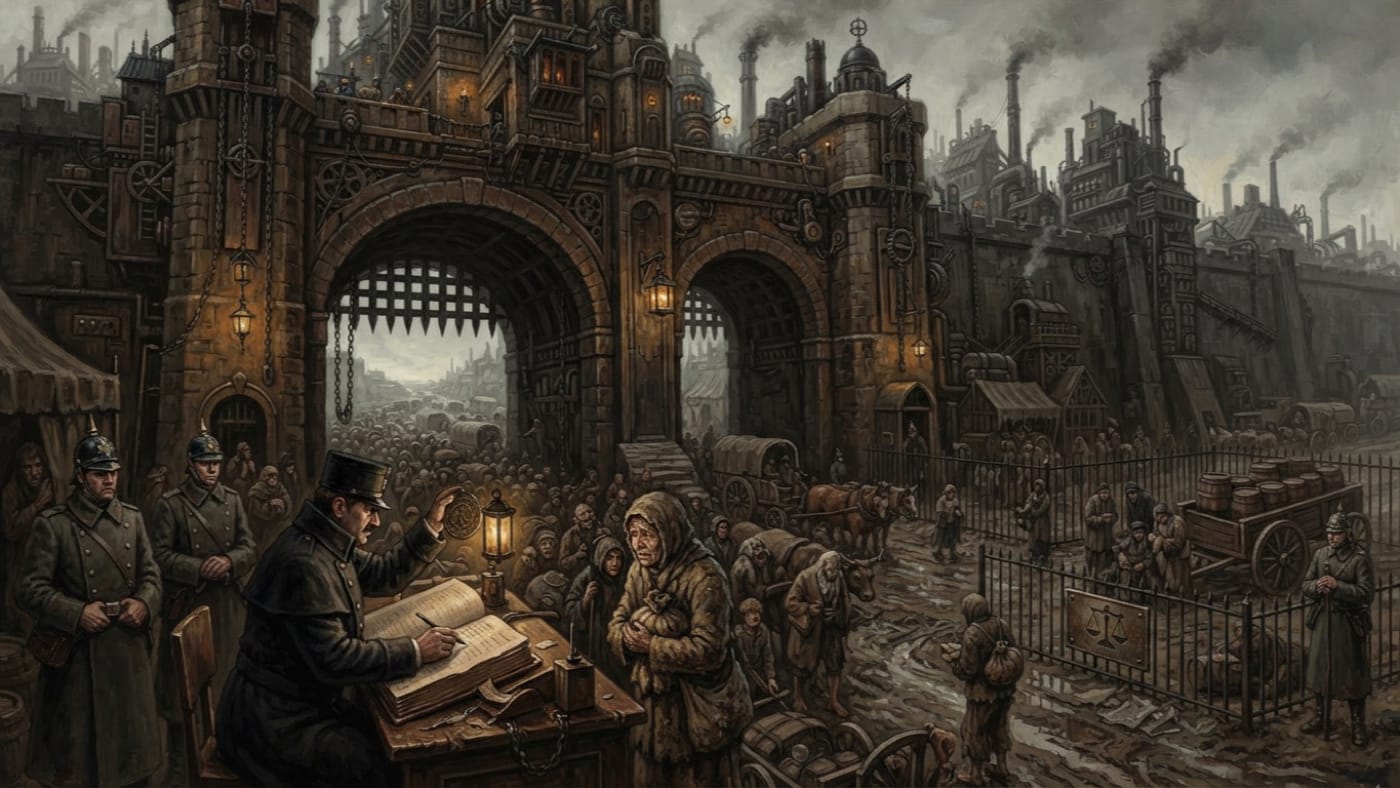
Gate and Bridge Tariffs
The coin is taken. The syllable is examined.
The Bureau of Tithes collects coin and Creed at the Synod's gates and tolled bridges. A faulty syllable voids passage; the ledger keeps the payment and the traveller keeps waiting.
Codex Ref. II.4.08-201
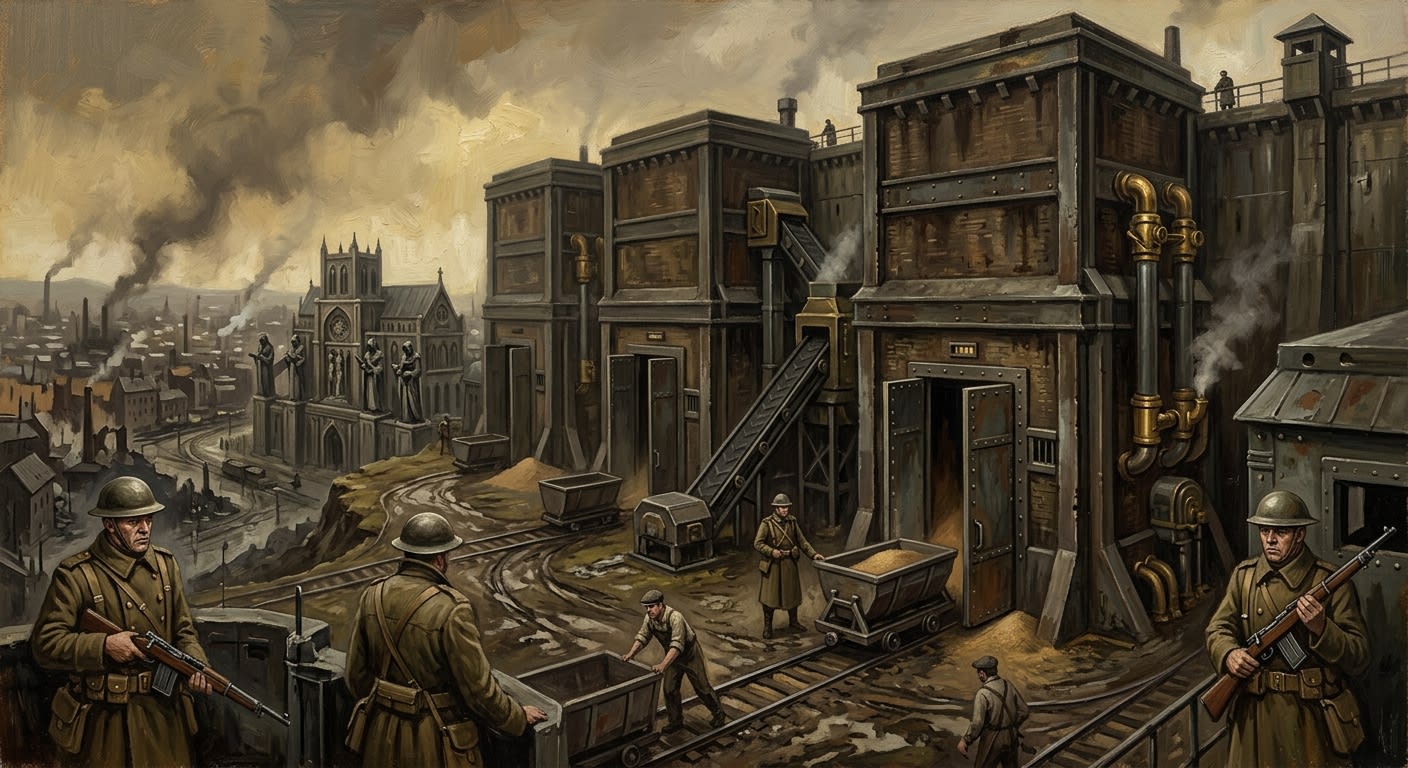
Granaries of Saint Benedict
Mercy under lock, key, and later approval
The Granaries of Saint Benedict are Toledo's four watched vaults of civic reserve grain, opened in A.S. 185 by Governor-Praelate Alaricus before Strasbourg could make mercy late.
Codex Ref. II.1.05-185
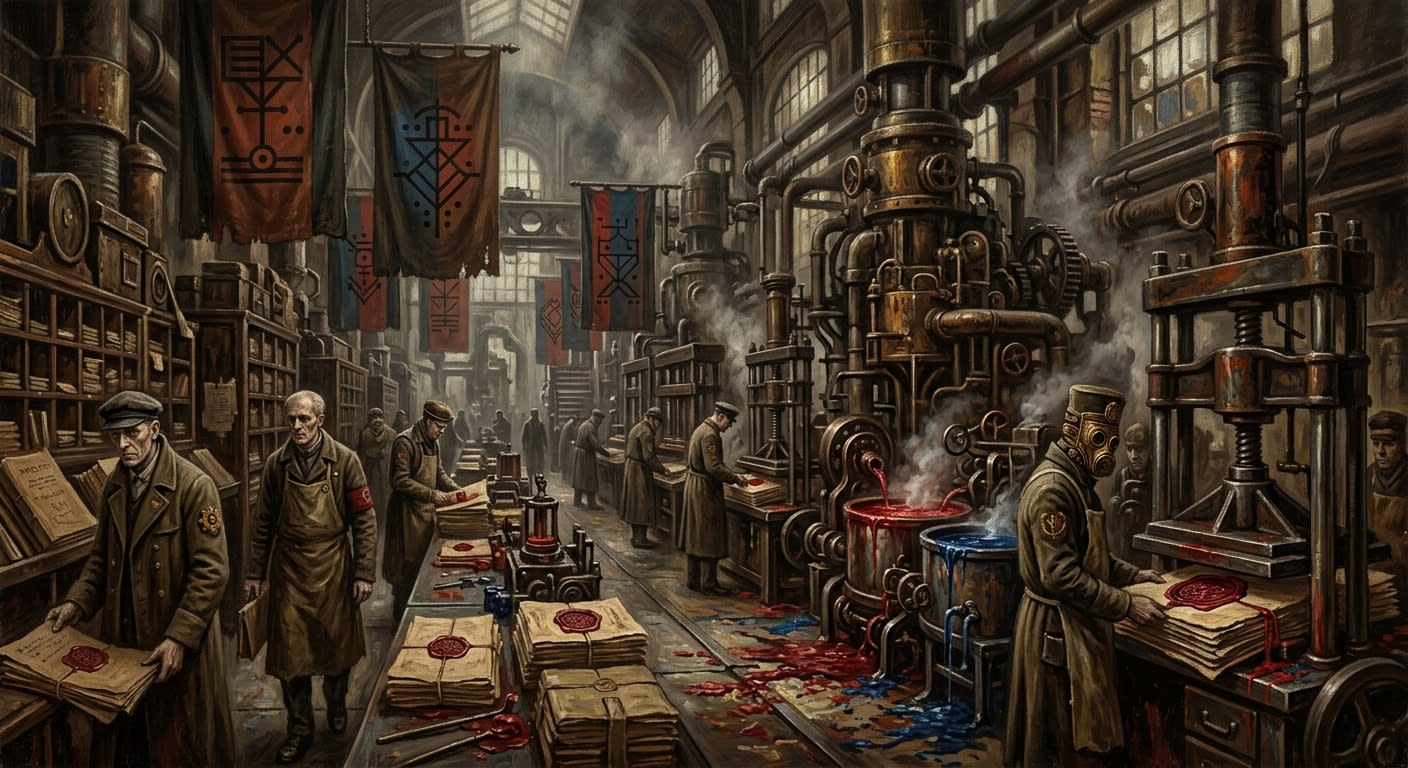
Hall of Seals
Where wax learns to rule and colour awaits sentence
The Hall of Seals is Strasbourg's low clean engine of visual law, where Heraldry and Masks and Seals ration colour, custody dies, and make wax sovereign.
Codex Ref. II.1.04-002
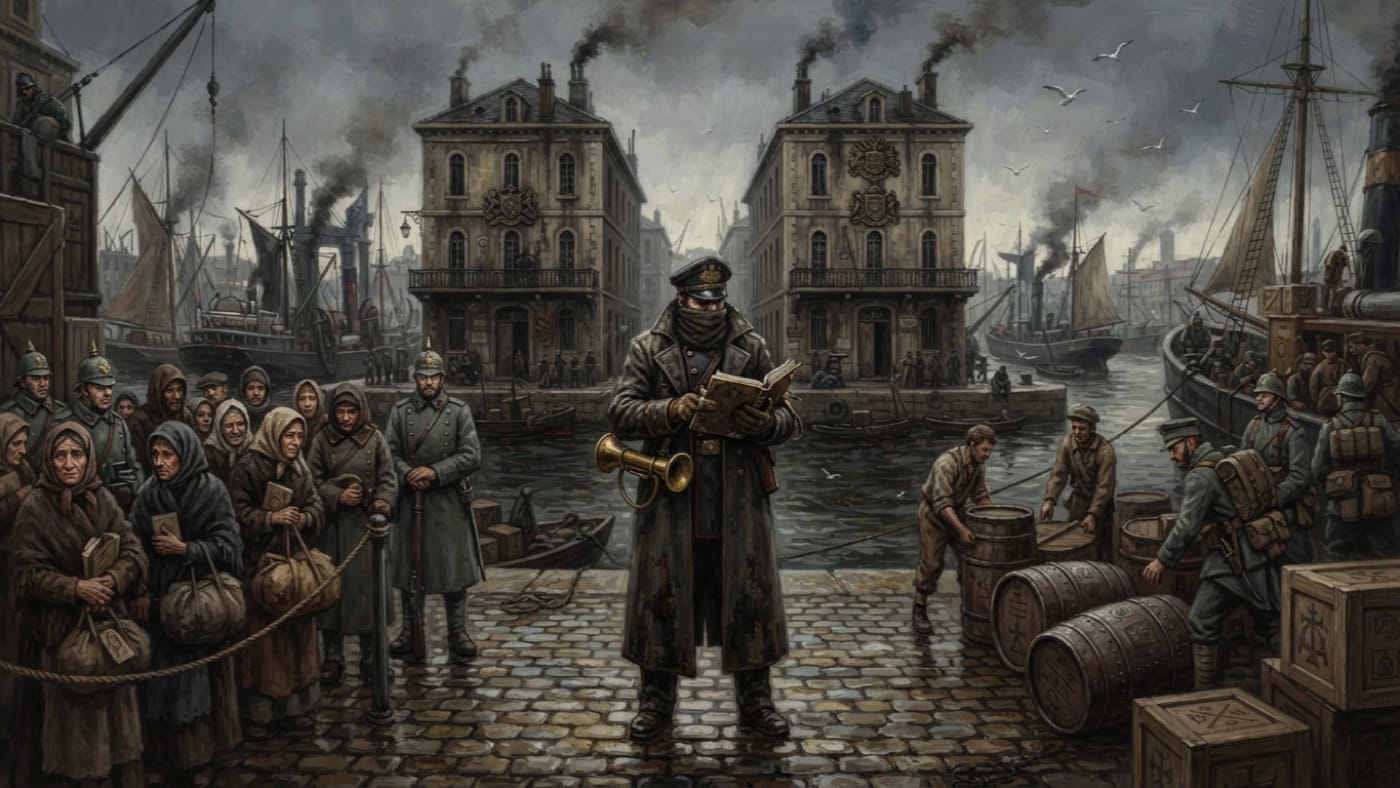
Harbour-Master
Authority has five claimants; responsibility awaits a name
Marseille's Harbour-Master claims authority beside four Bureaus. The Ledger records the title; the cargo waits for someone willing to answer for it.
Codex Ref. XIII.1.39-002
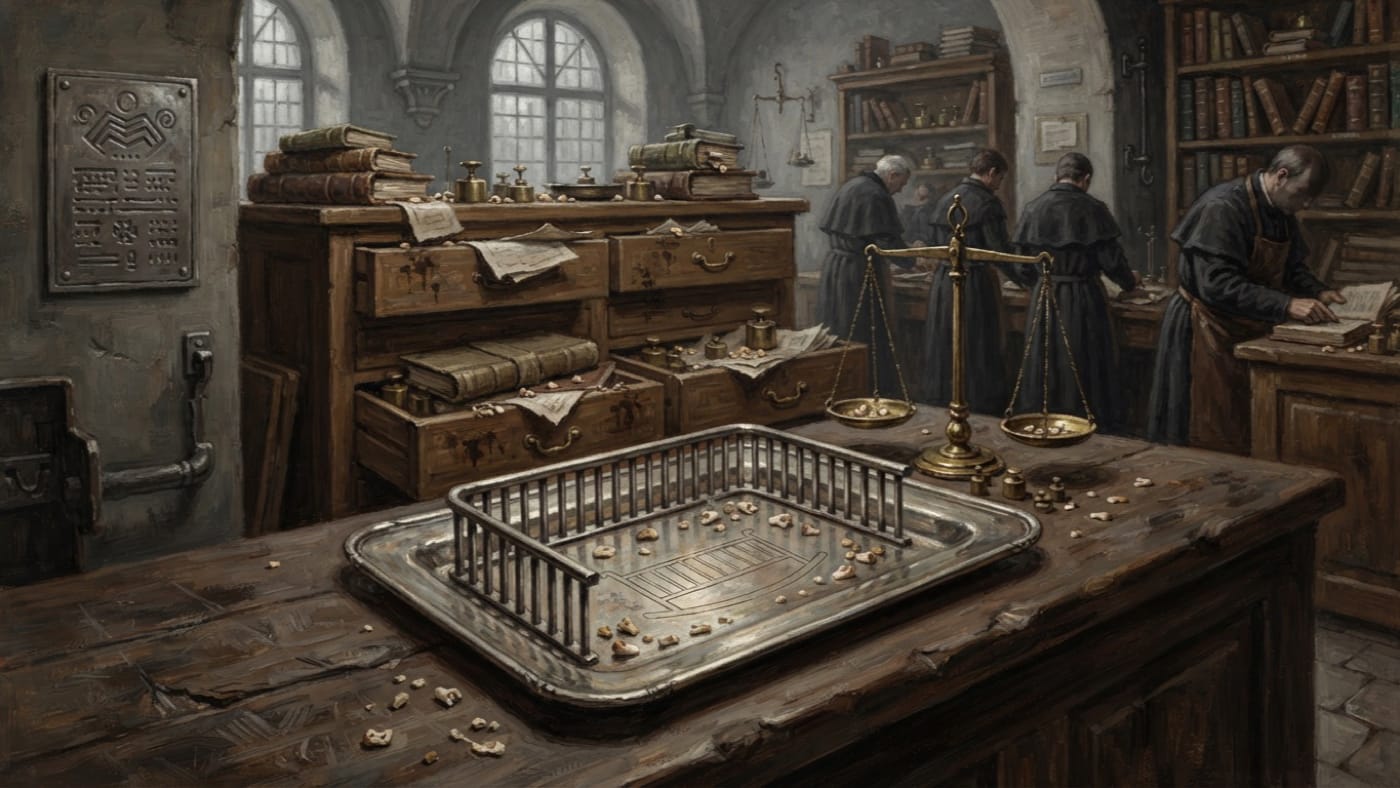
Infant-Tooth Tray
Small lives made measurable
A shallow silver tray in the Palatine Counting House receives children's first teeth amid Cradle arrears. Tithes denies its purchase; the drawers remain useful.
Codex Ref. III.2.08-201

Iron Crown Currency
The British coin that buys rope, insults Tithes, and refuses to kneel
The Iron Crown is Britain's stubborn iron tender: older than the Synod's Crown of Grace, tolerated at mixed ports, and hated because it works.
Codex Ref. XIII.1.22-001
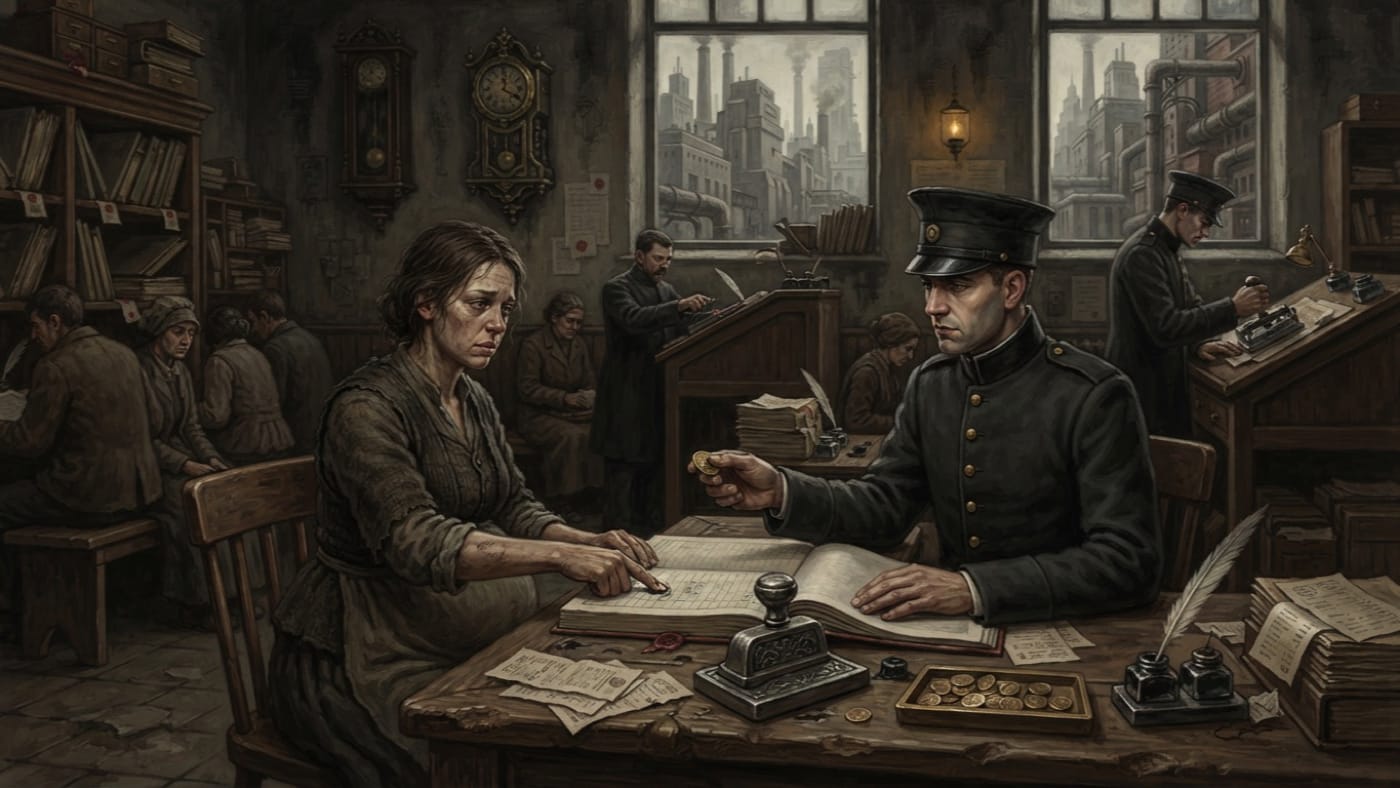
Labour Tokens
The receipt is settled; the hands are owed
Labour tokens settle household dues by pledging future work. The receipt calls the account paid; kitchens, factories and laundries collect what the household still owes.
Codex Ref. XIII.1.85-201
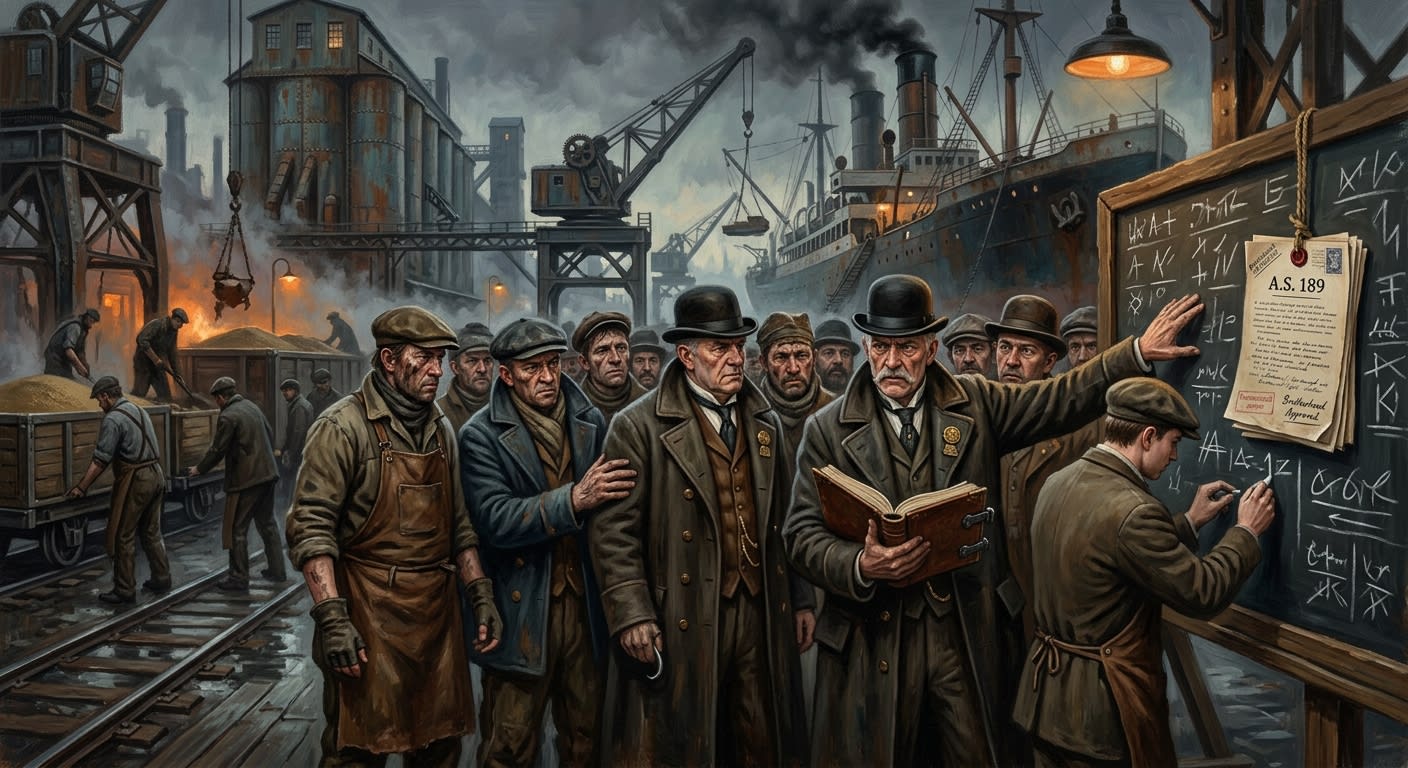
Longshoremen's Brotherhood
The port moves when the men beneath the crane consent to bend
Hamburg's oldest dock guild controls western and central quay labour, grain call-books, Brotherhood chalk marks, and the A.S. 189 hazard supplement that Tithes keeps trying to resurrect as taxable.
Codex Ref. XII.52.01-001
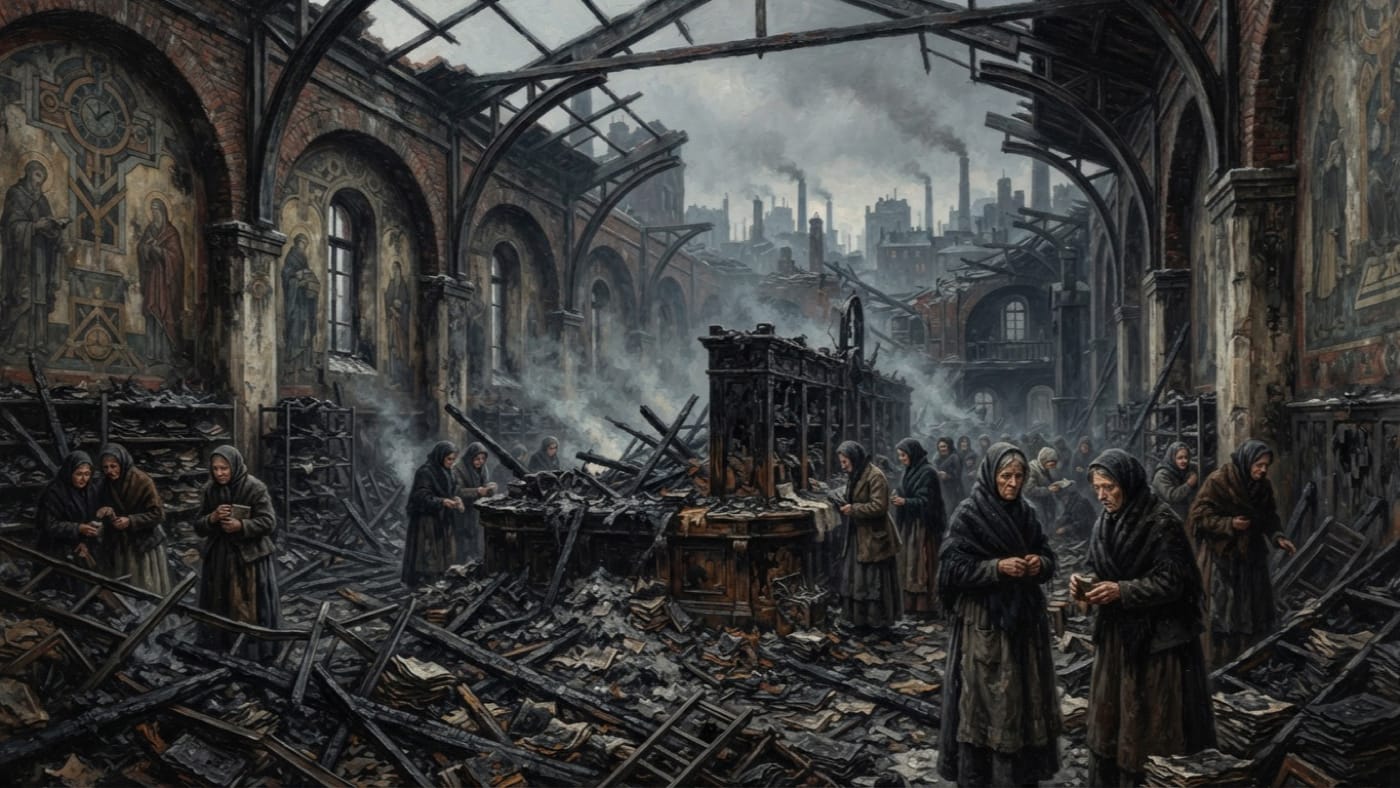
Lower District Tithe Office
The counter burned; the obligation survived
The Lower District Tithe Office in Bastion-Königsberg burned during the A.S. 139 Widow Riot against compulsory Widow’s Pennies. The counter and its records burned; the obligation survived.
Codex Ref. III.2.04-1673

Macedonian Diocese
Jurisdiction asserted. Collection undemonstrated.
The Macedonian Diocese sent Assessors to tax the Gilded Chasm in A.S. 114. They returned solvent, punctual and silent. The paperwork survived; proof of collection did not.
Codex Ref. I.3.09-114
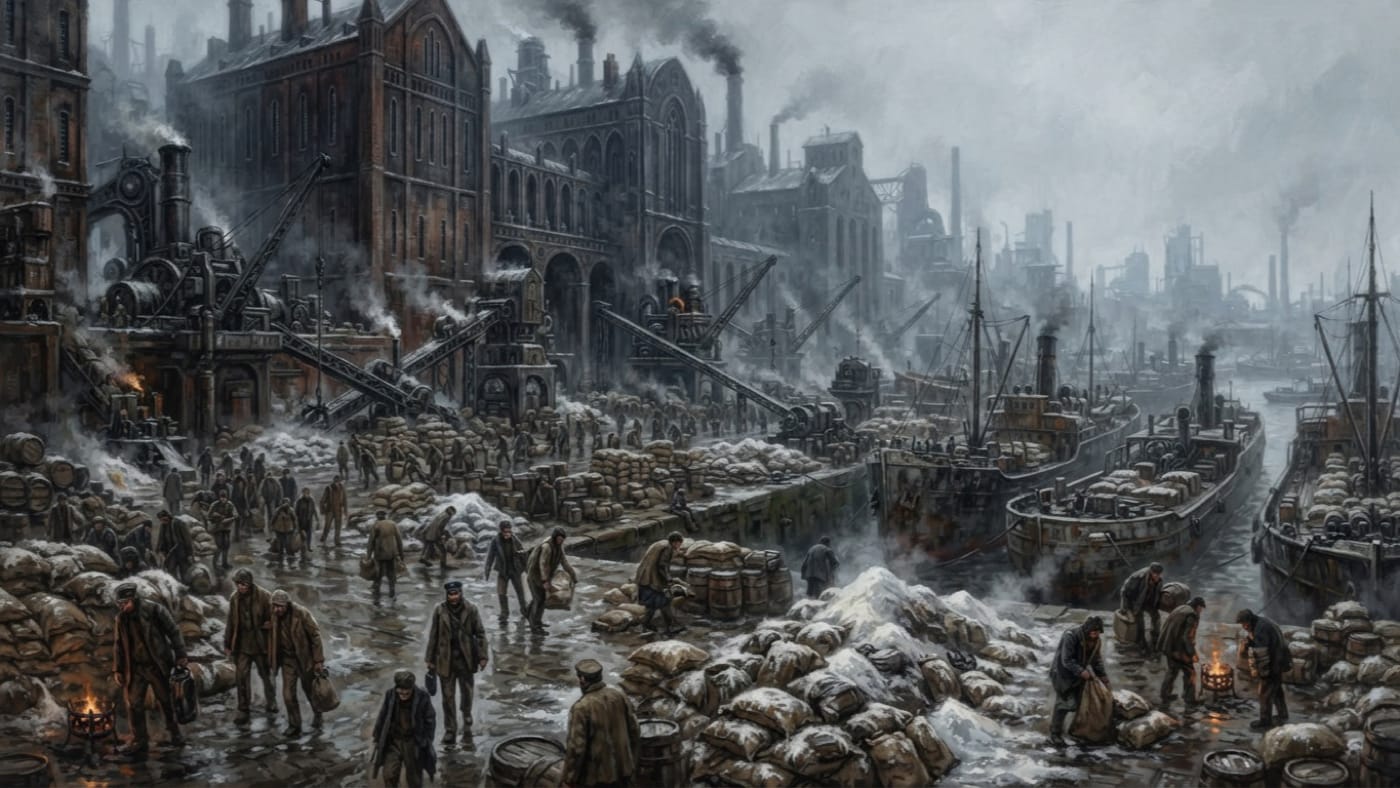
Marseille Salt Crisis
The winter lost its year; the Bureau kept its levy
An A.S. 201 survey of Marseille's undated winter emergency, preserved in Tithe Assessor tradition, and the Salt Dues first imposed in A.S. 92. The Bureau kept the levy more carefully than the winter's year.
Codex Ref. VII.4.22-001
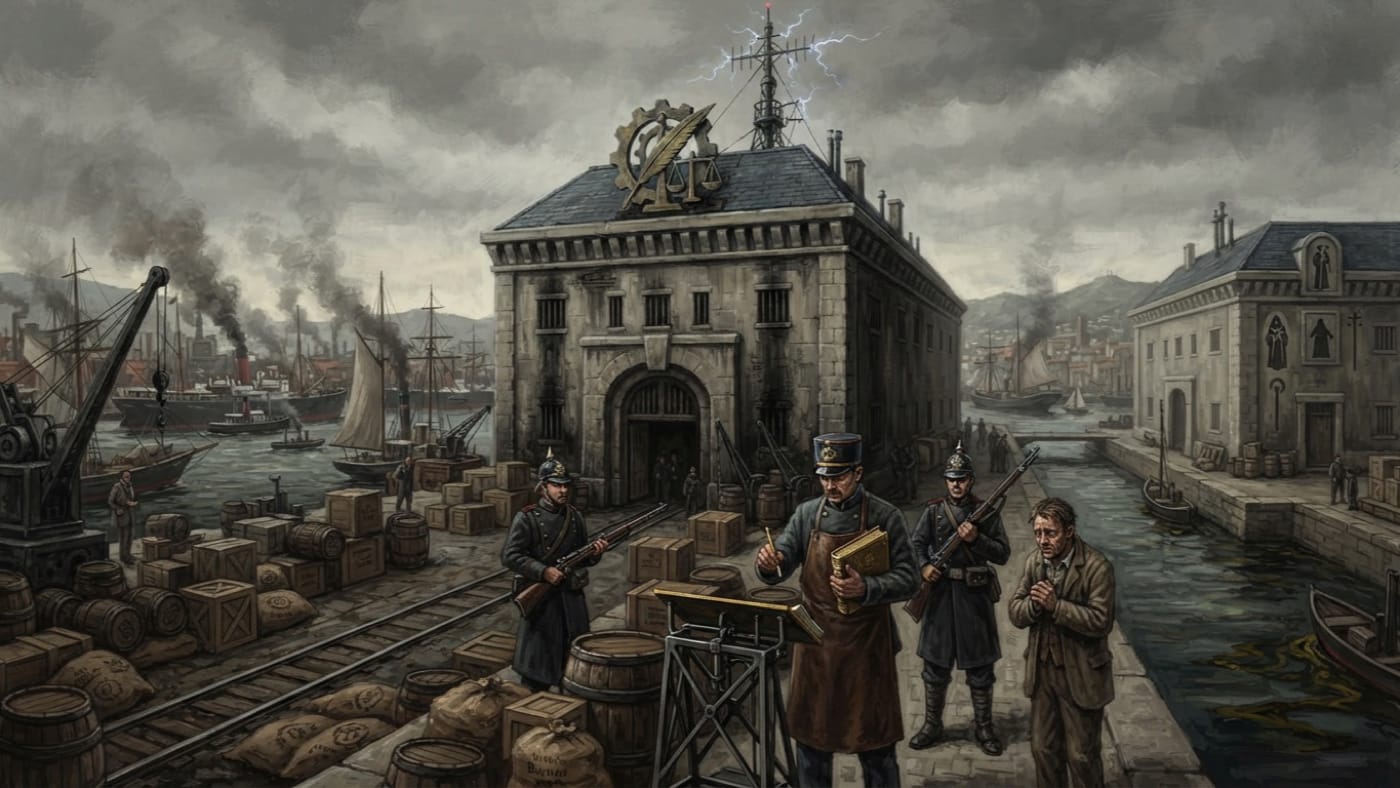
Mediterranean Revenue Office
Jurisdiction contested, collection continuous
The Bureau of Tithes' regional seat in Marseille weighs cargo and collects Salt Dues still temporary after 109 years. Harbour jurisdiction remains contested. Collection continues.
Codex Ref. II.4.09-201
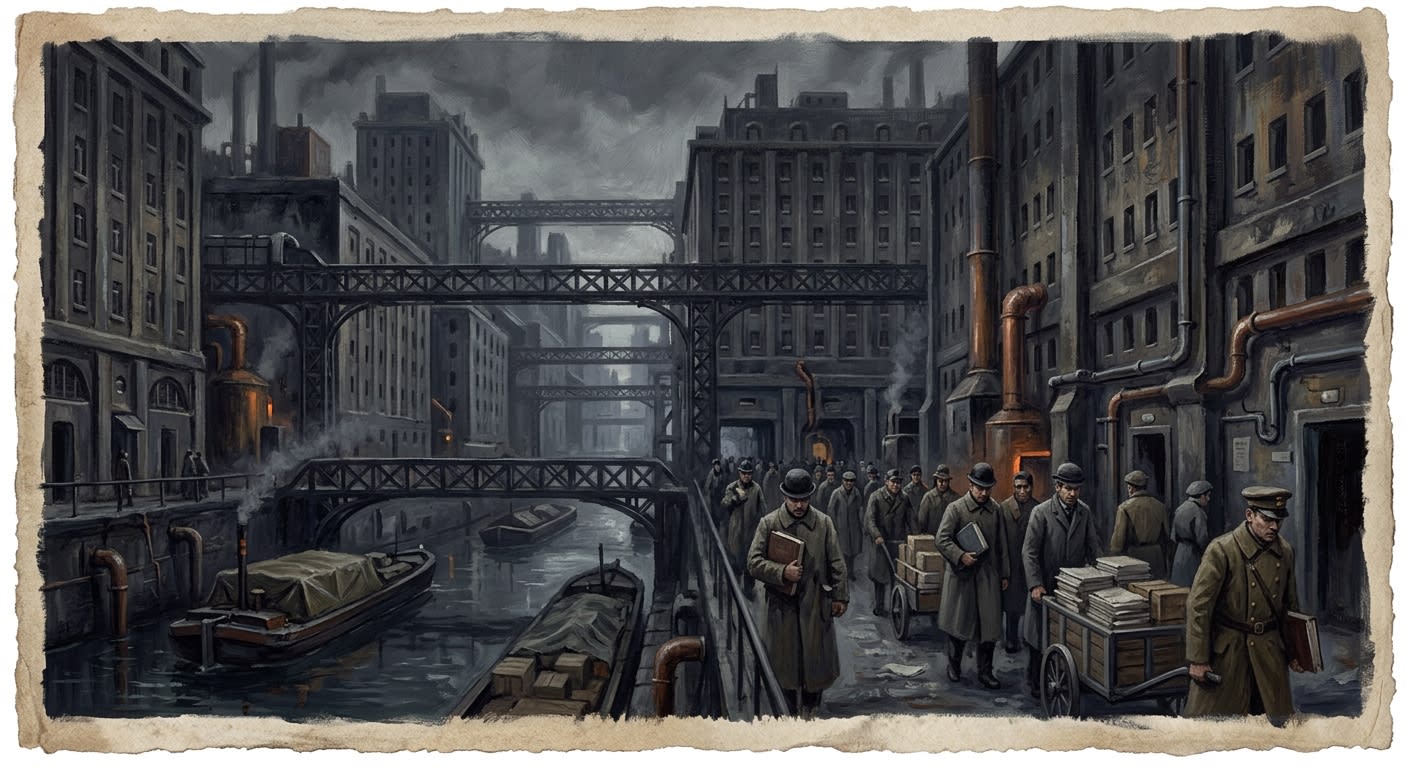
Metz
The depot-city where contradiction learned double entry
Synod-held Metz is a Zone 1 depot-city of ash vaults, double ledgers, silent bridges, supply arithmetic, and the Black Census that taught Medicine to count horror properly.
Codex Ref. II.1.05-001

Order of Severance
The inward knife that cuts office from affection before affection becomes a kingdom
The Order of Severance is the Bureau of Purity's inward knife: an inquisitorial fraternity that hunts clerical and bureaucratic heresy where clean cuffs, perfect ledgers, and trusted colleagues become shelter.
Codex Ref. VIII.1.07-134
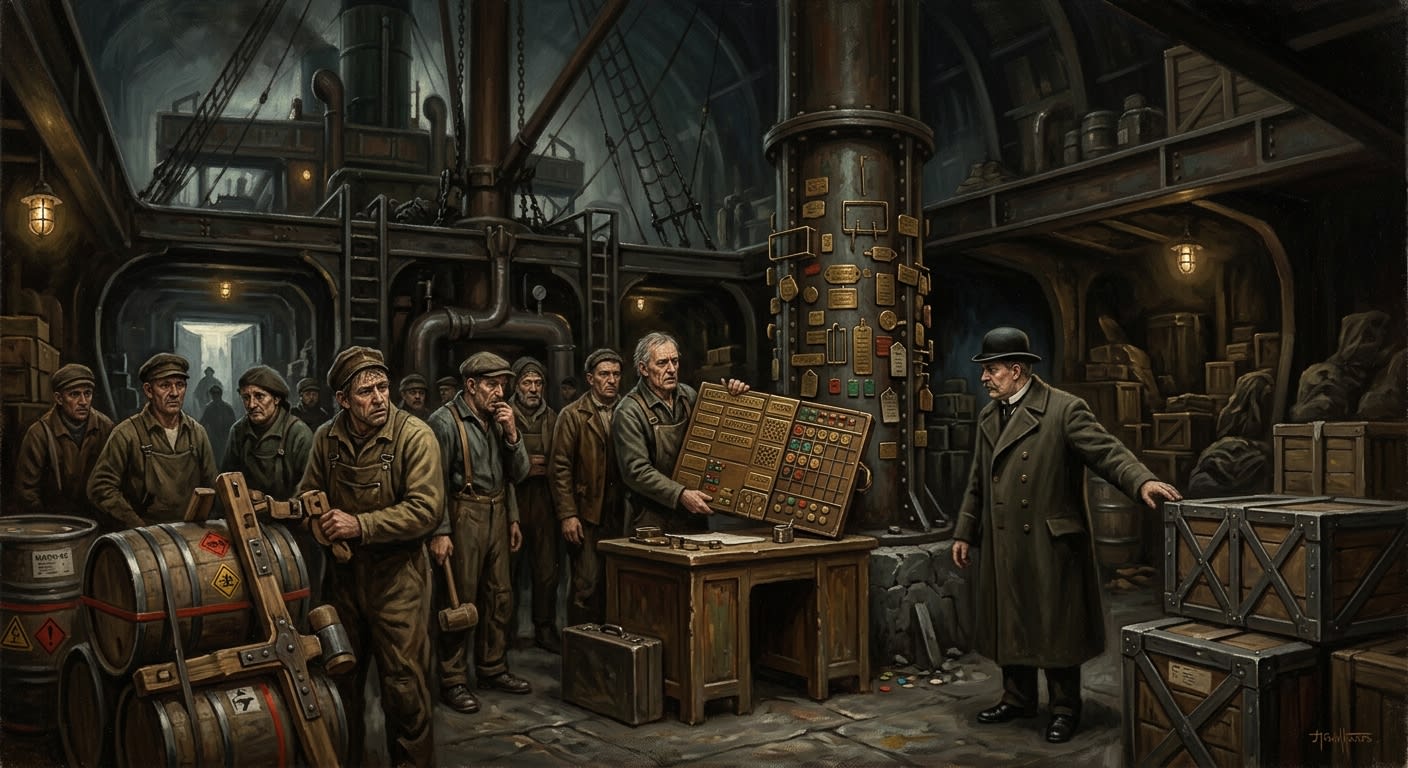
Stevedores' Compact
What the hold remembers, the manifest learns too late
Hamburg's Stevedores' Compact governs shipboard stowage, hold-order tokens, hazardous load bracing, and the right of senior holdmen to refuse death disguised as cargo discipline.
Codex Ref. XII.52.02-001
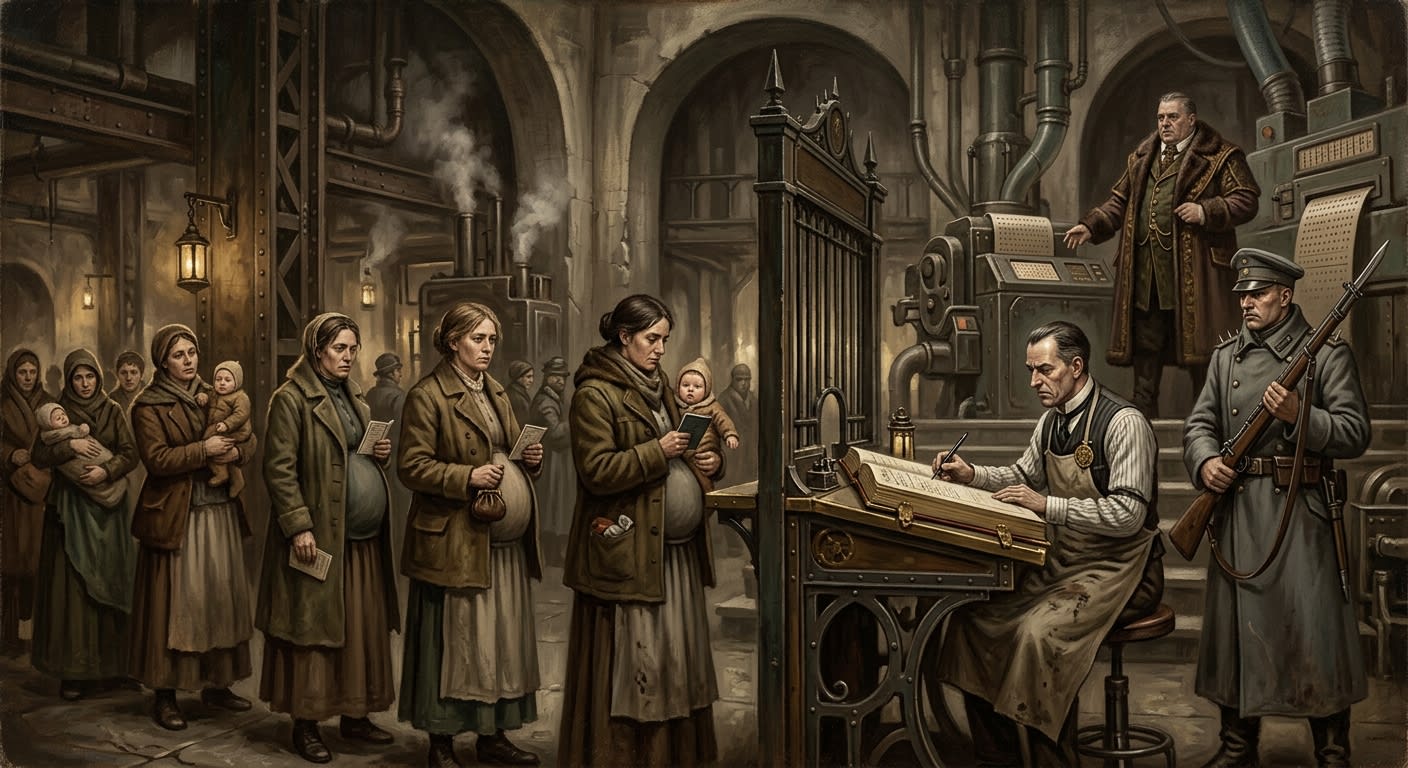
The Cradle Decree A.S. 157
The receipt issued before the first cry
The A.S. 157 Cradle Decree made pregnancy taxable, entering the unborn into the Ledger before birth and calling the cruelty provision.
Codex Ref. XIII.1.83-157
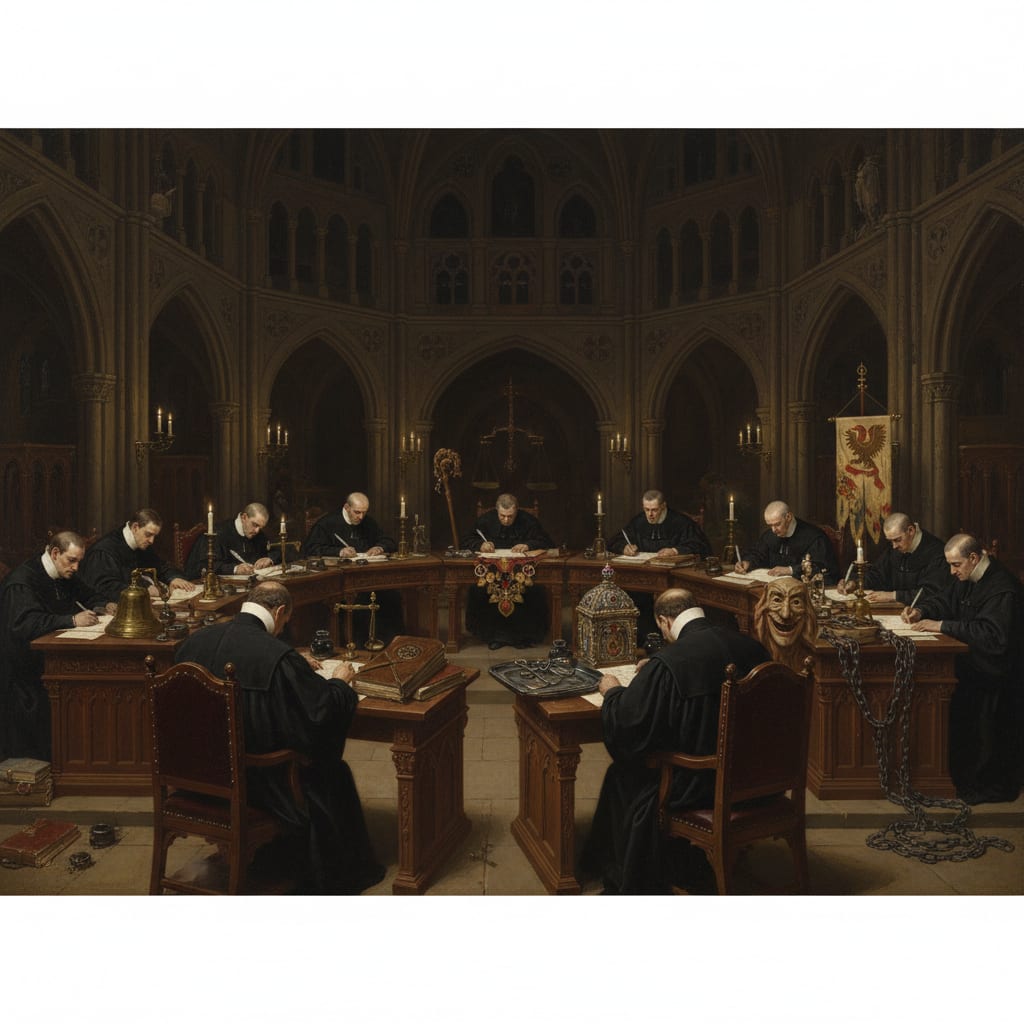
The Holy Bureaus
Twelve Instruments of Providence, or Thirteen If You Count the One That Does Not Exist
The twelve sacred organs through which Strasbourg bends a continent to its will. Each Bureau claims a charism of governance descended from the Apostolic Sundering. Their clerks are legion, their archives endless, their contradictions — by design.
Codex Ref. III.3.01-001
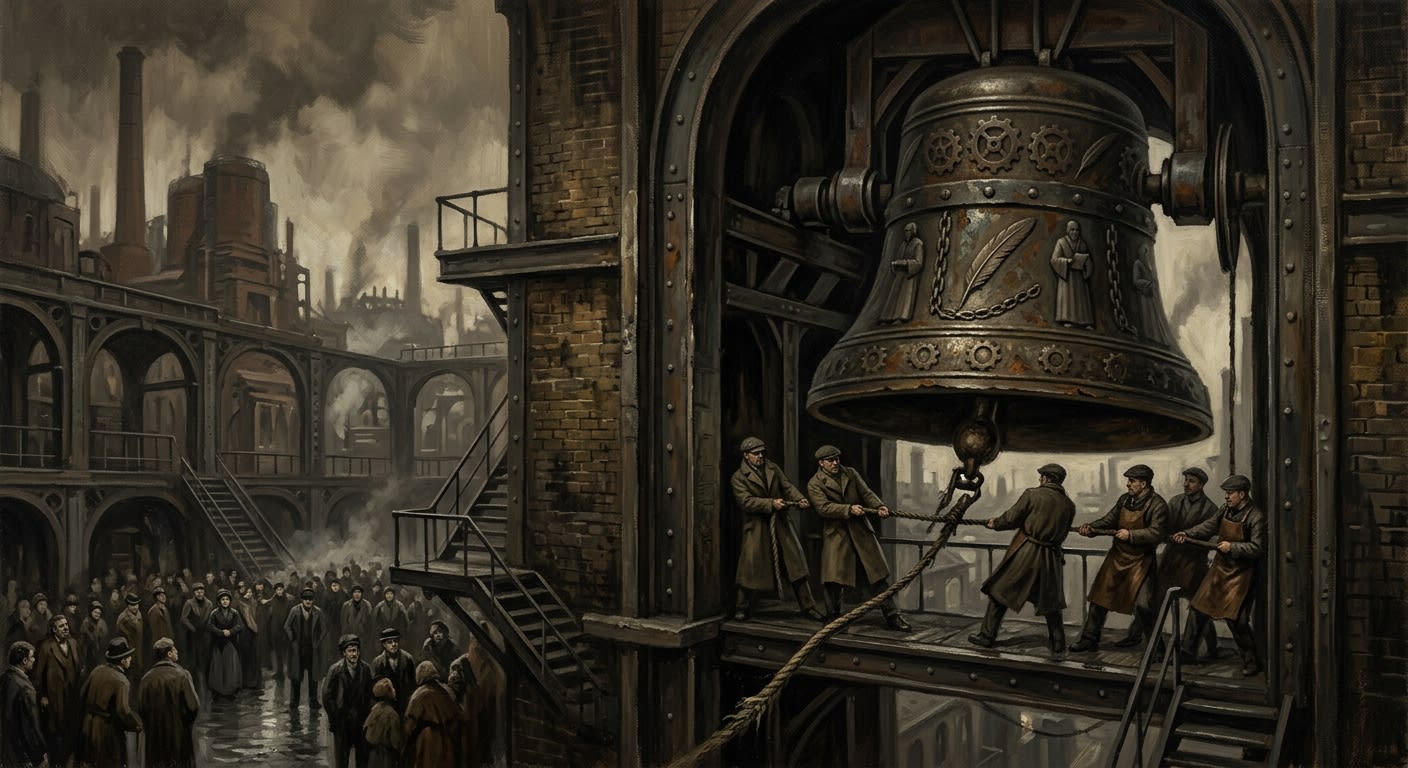
The Leviathan
The war bell of Strasbourg, too large for mercy and too honest for politics
Leviathan is the fourteen-tonne war bell of the Tower of the Quill, tolled eleven times since A.S. 92 when history required bronze to shout.
Codex Ref. XIII.1.72-004
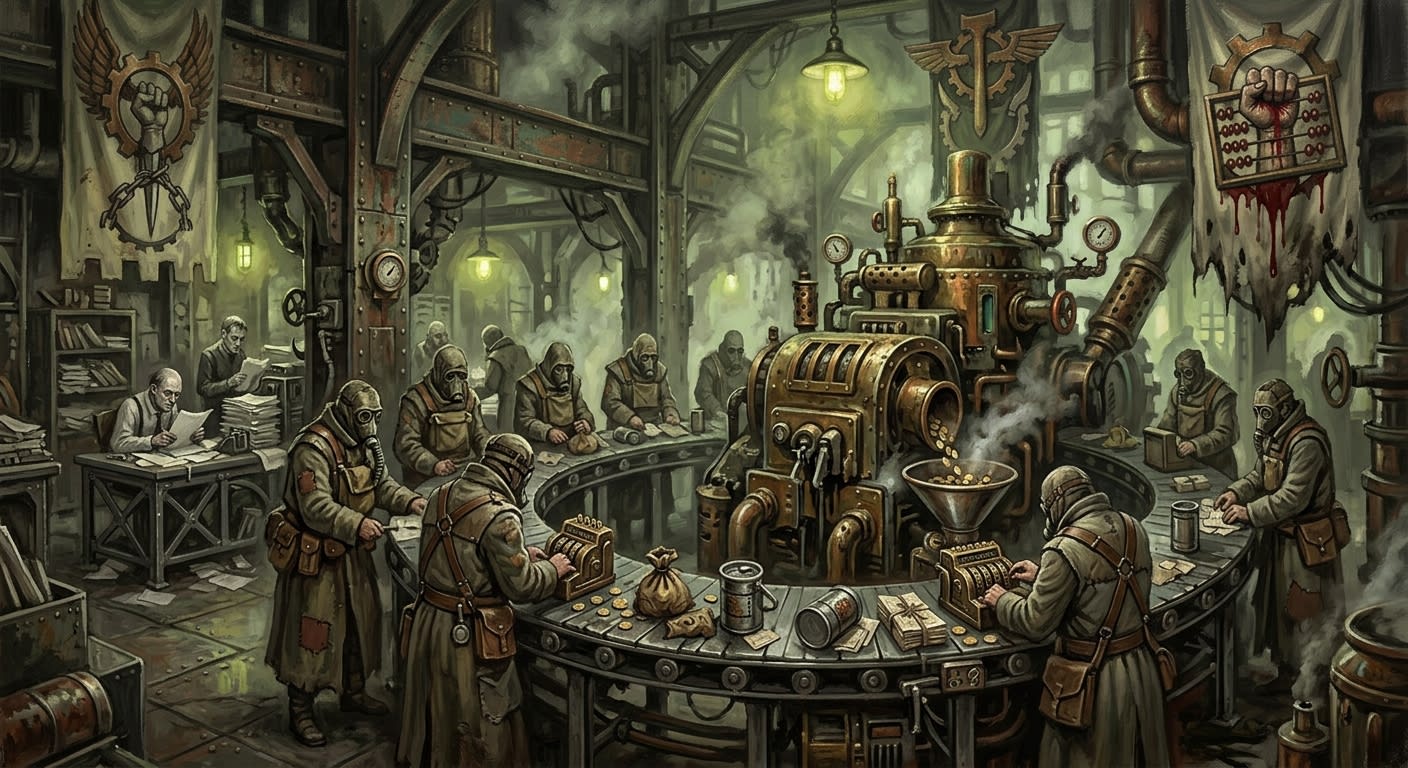
The Meta-Levy
The tax that charges for the privilege of being counted
The Meta-Levy is the Synod's tithe upon tithes, a circular sanctification of collection costs by which the Bureau of Tithes proves that even arithmetic kneels.
Codex Ref. XIII.1.38-001
The Salt Dues of Marseille
Temporary measures have the finest survival instincts
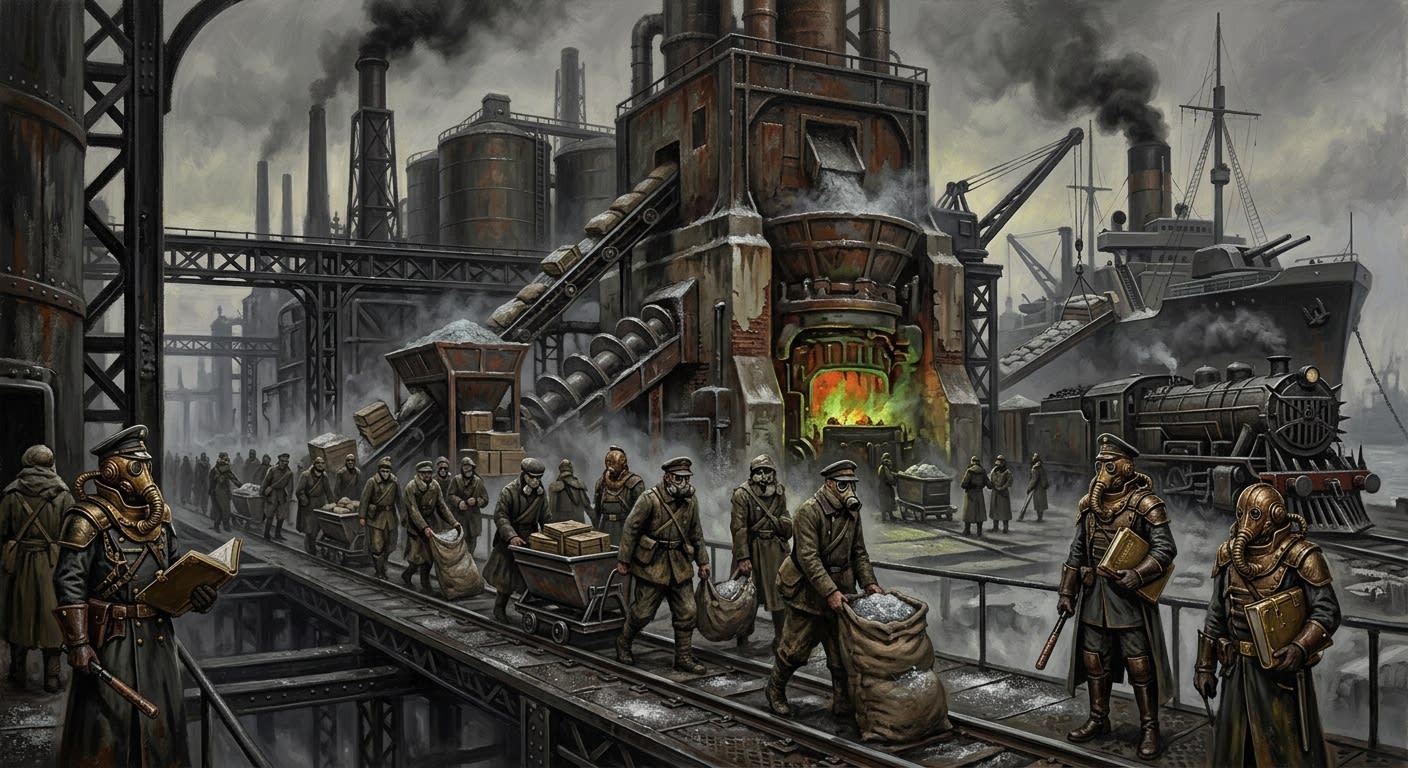
The Salt Dues of Marseille began as an A.S. 92 emergency surcharge on coastal salt and learned immortality, feeding war, pilgrimage, and every clerk hungry enough to call permanence temporary.
Codex Ref. XIII.1.39-001
The Silent Colonnade
The fourth side of the [[cloister-precinct|Cloister]], where counting forgets its manners
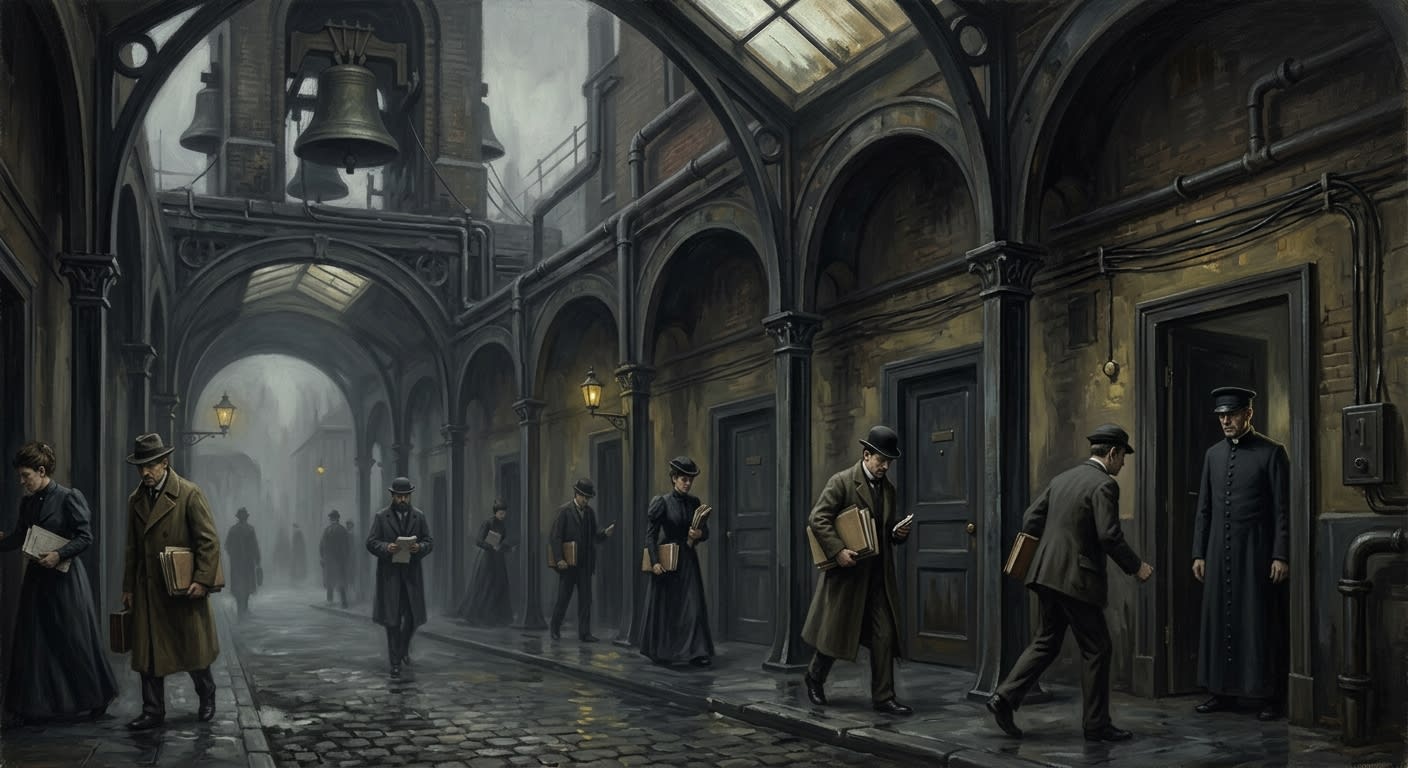
The Silent Colonnade is Strasbourg's unnumbered northern arcade, a place of unmarked doors, shortened Wednesdays, swallowed bells, and corrections no Bureau admits.
Codex Ref. II.1.04-003
Tithe Assessor
The Bureau's walking appetite; or, what it costs to weigh the widow's salt
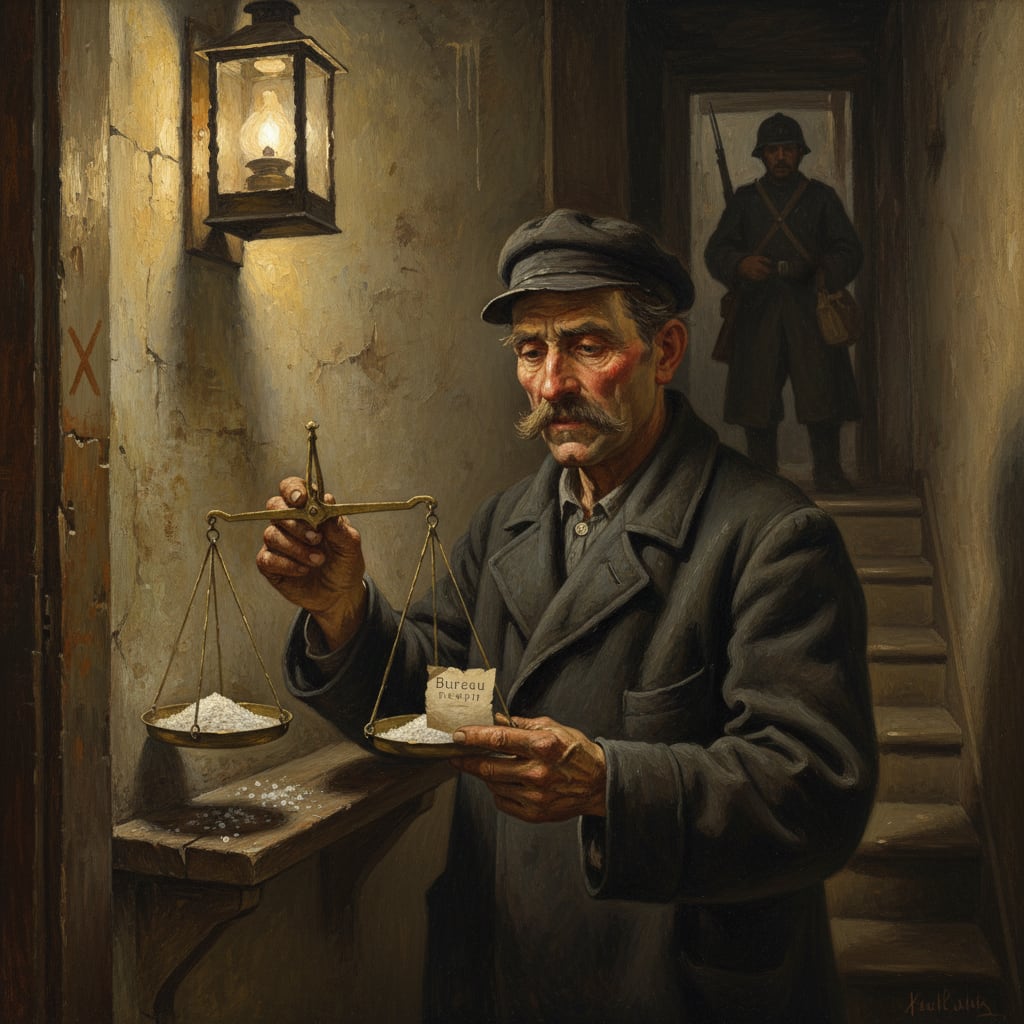
The Tithe Assessor is the Bureau of Tithes' primary field instrument — a man with scales, seal cord, and an armed escort who determines whether a family's payment purchases another week of existence. He arrives. He weighs. He chalks the door.
Codex Ref. XII.46.01-001

Tower of the Quill
The tallest structure in Strasbourg, which is to say the world, which is to say the matter is settled
Seat of the Bureau of Doctrine and tallest structure in Strasbourg, commissioned in A.S. 92 by successor authorities. Three bells, a classified gallery, and a sealed archive beneath the flagstones.
Codex Ref. II.1.04-001
Widow's Pennies
A penny enters the palm and waits for the scale
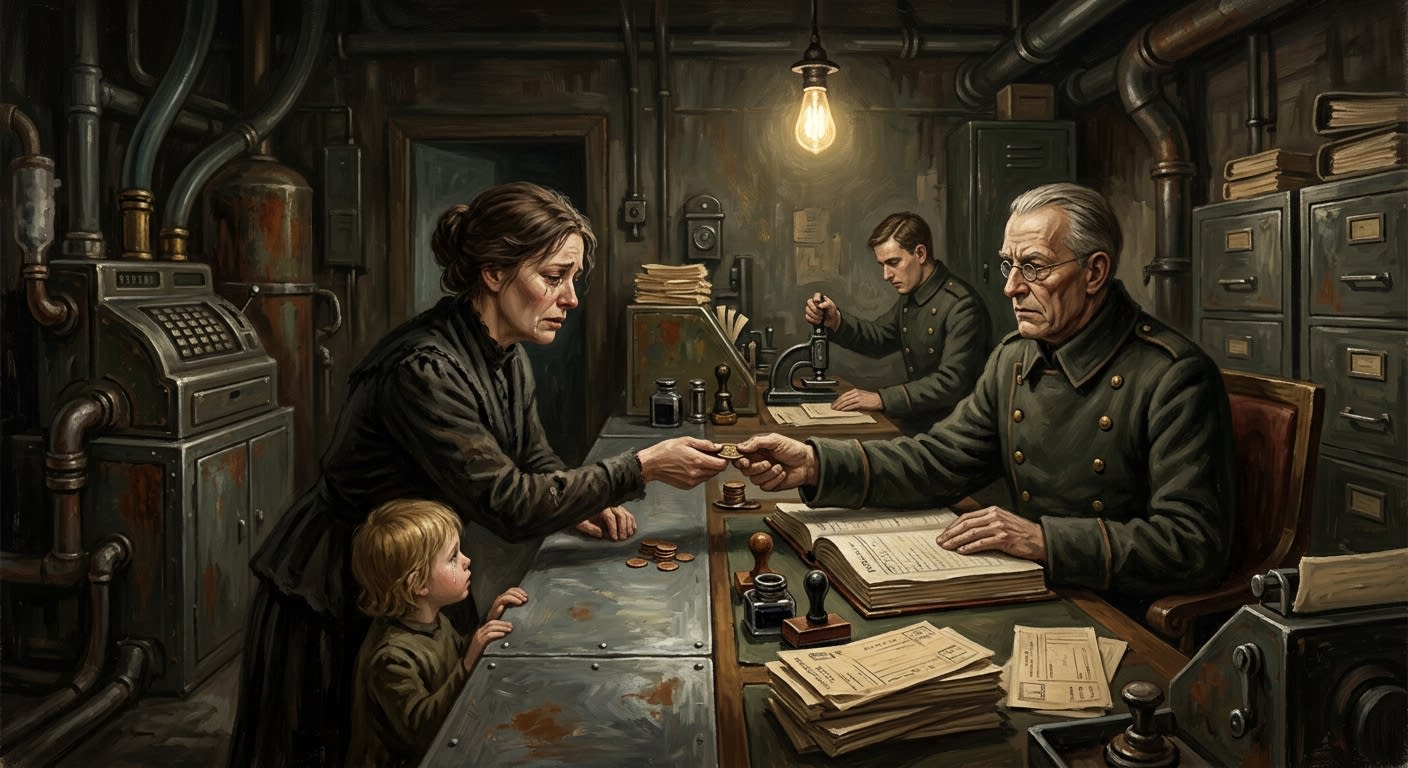
The Widow's Pennies are the Bureau of Tithes' smallest perfected cruelty: bereavement turned into household continuity, route discipline, and receipt.
Codex Ref. XIII.1.85-065