

Reverse Index
Referencing “Erasure Notary”
Every codex entry that links to Erasure Notary. 59 entries.
Return to Erasure Notary
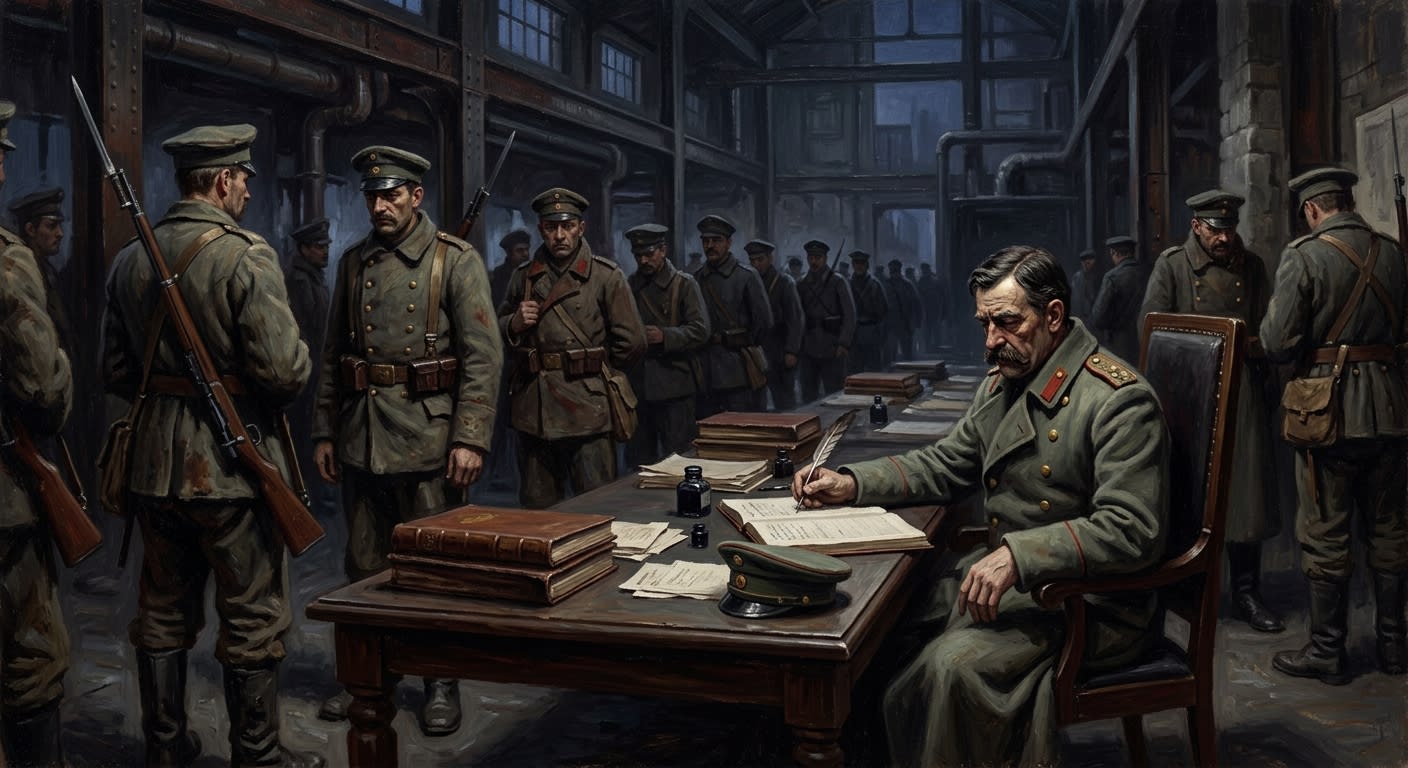
4th Rhineland Fusiliers
The regiment that forgot before dusk
The 4th Rhineland Fusiliers accepted a corrected roster before dusk, proving that the Synod can conscript memory as readily as flesh.
Codex Ref. VIII.5.04-148

Abbot-Registrar Solene
She made contradiction choose a widow and a loaf
Solene of Lyon, first Abbot-Registrar of Nemea, made ruins into an archive and panic into the doctrine of original by ratification.
Codex Ref. III.2.01-096

Advocates Guild
Licensed cruelty with gloves, seals, and a fee table
Licensed fraternity of Citation Advocates that turns Synodal quarrels into ledger-duels, sells precedent, polices pits, and calls the resulting injuries civil peace.
Codex Ref. XII.28.01-001

Arch-Notary Veyl
The man who can misspell a soul into hunger
Arch-Notary Veyl holds Essen's Records chair, turning misspelled names, Bloom-tainted ledgers, and Compact crises into fees no furnace can refuse.
Codex Ref. III.2.01-153
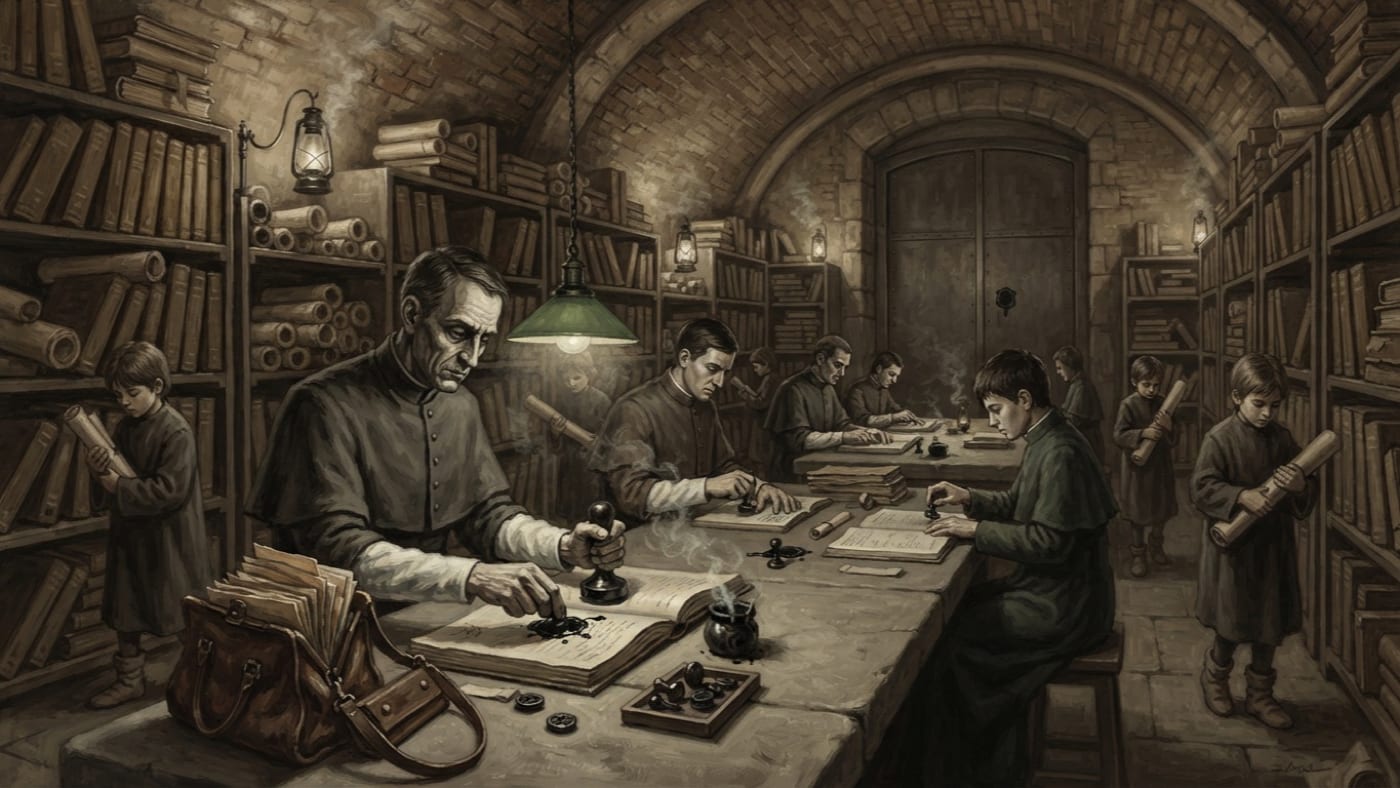
Black Seal Annex
The citizen loses everything. The file loses nothing.
Beneath Strasbourg's Records house, the Erasure Notaries keep every file behind a vanished citizen. The citizen loses everything; the Annex loses nothing.
Codex Ref. XIII.1.70-002
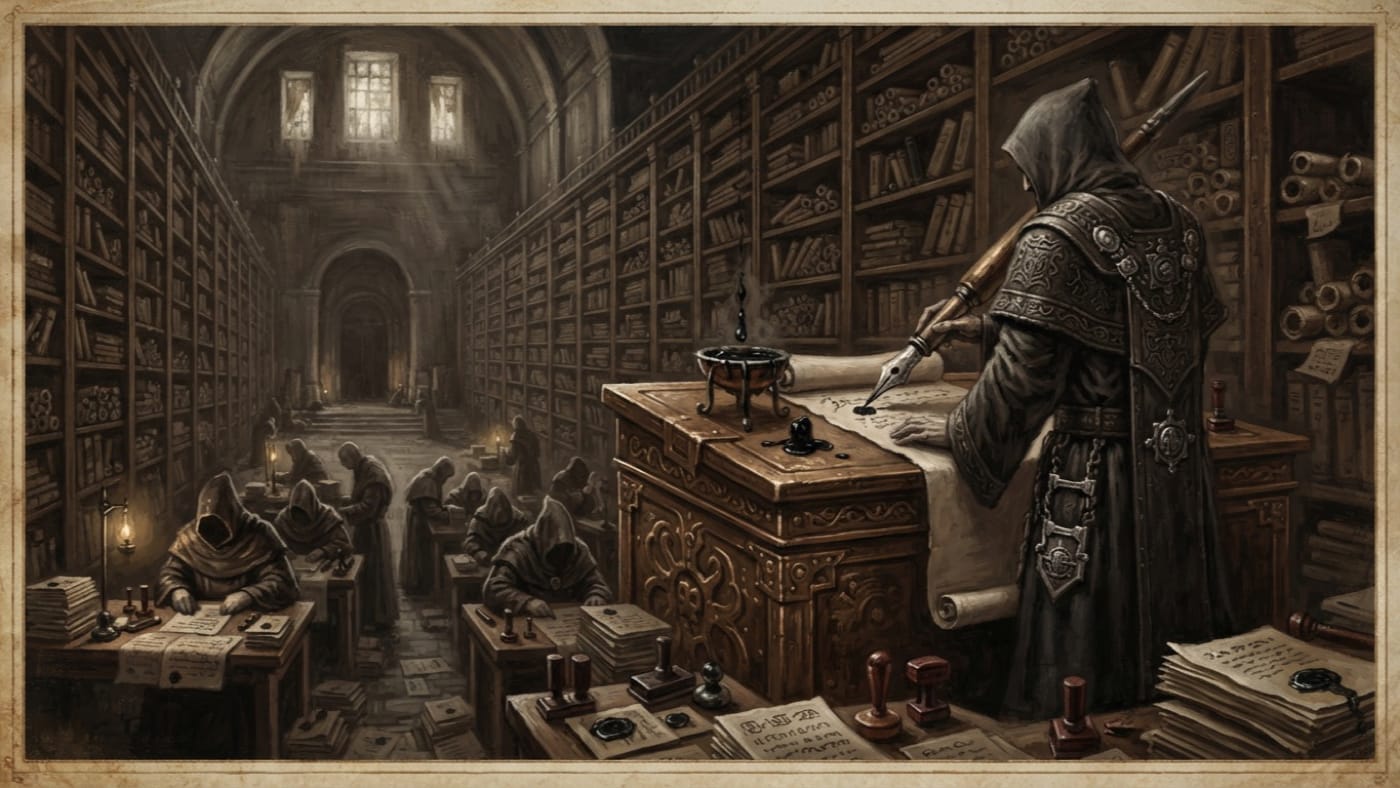
Black Seal Prelate
The Notary signs the strike; the summit decides whose signature survives.
The summit of the Office of Nullity's hierarchy: rarely seen, feared by every Erasure Notary, and capable of ruining one with a signature. The station is attested; the incumbent remains outside the public rolls.
Codex Ref. XIII.1.70-002

Bone-Tag clerks
The corpse needs a name; the living need the clerk's permission
Candle-Sump's Bone-Tag clerks keep names attached to corpses and living papers inside cabinets. In Lower Vire, clerical death needs only a wrong column and a clerk unwilling to correct it.
Codex Ref. XII.34.02-201

Bureau of Hagiography
The dead may vote only after editing
The Bureau of Hagiography edits the dead into useful saints, delaying, ratifying, taxing, suppressing, and polishing grief until it obeys.
Codex Ref. VIII.6.03-112

Carnelian erasures
Every seal was correct; the ledger was impossible
In A.S. 67, three Notaries struck the Carnelian lineage across four cities without a shared anchor table. Two lawful cousins vanished from the rolls; the Notaries followed. The children lost their bread.
Codex Ref. VII.8.10-067

Carnelian Family of Metz
The lineage strike that bit its own hand
The A.S. 67 first recorded lineage-wide nullification attempt, in which Carnelian ration fraud, plague permits, and three overeager Notaries taught absence to bite backward.
Codex Ref. XIII.1.69-001
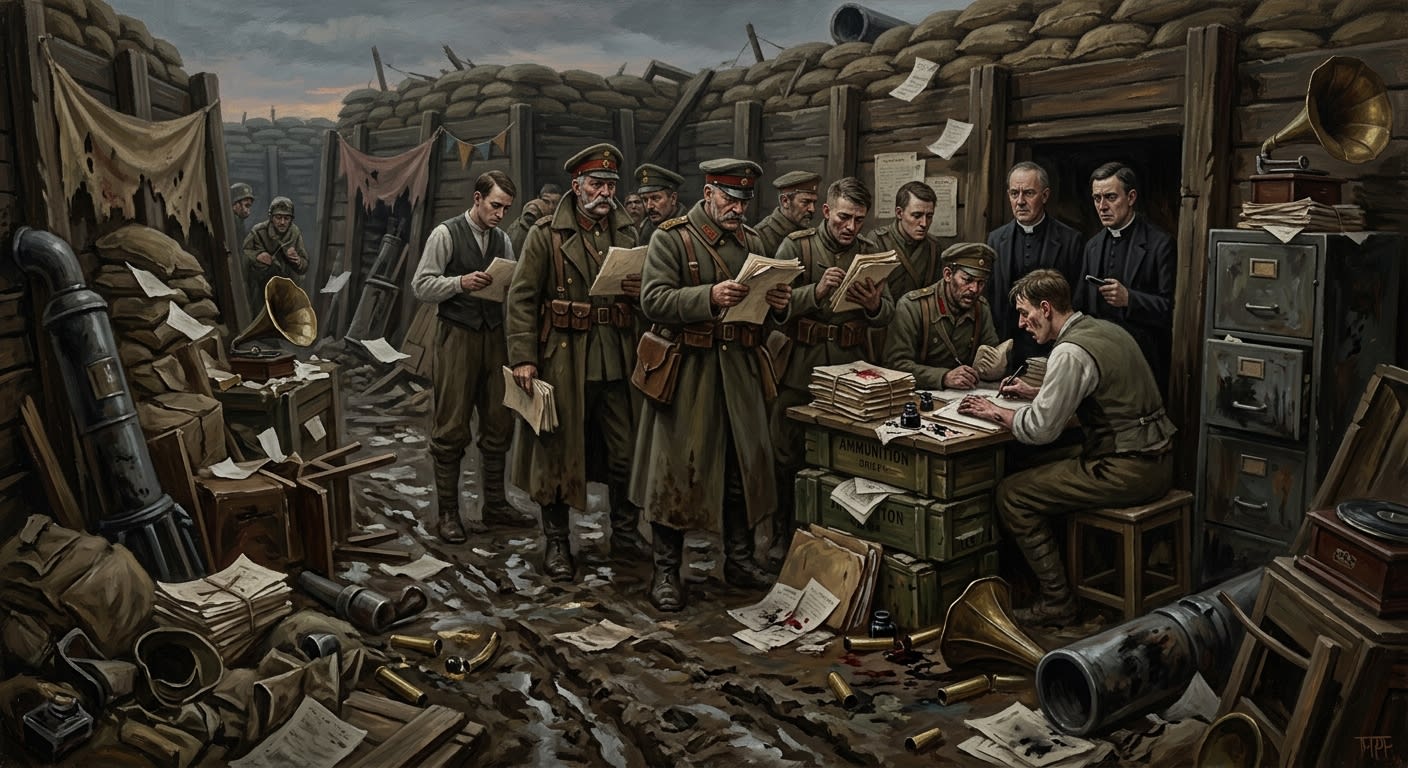
Carnival of Ink
Twelve arguments touched the same ink
The A.S. 162 Bastion-Constantinople festival disaster in which twelve simultaneous trench-court duels tangled citations until four hundred names vanished by nightfall.
Codex Ref. VII.8.10-026

Chief Archivist
The form asks for rank; it does not ask for conscience
The Bureau of Records' countersigning office: a Chief Archivist of at least Third Rank authorises Form 77-D to proceed. The folio is checked twice. The reason is filed elsewhere.
Codex Ref. XII.34.02-001

Citation Pragmatists
The useful lie, properly receipted, may keep a district alive
Informal Citation Advocate faction that argues intent, exploits ambiguity, and keeps clients, convoys, widows, and districts alive long enough to be billed.
Codex Ref. XII.28.03-001

Citation Purists
The clause is the mercy, and the Creator help the client
Audit-favoured faction of Citation Advocates who worship clean custody, strict text, and clauses sharp enough to execute a client while preserving the file.
Codex Ref. XII.28.02-001
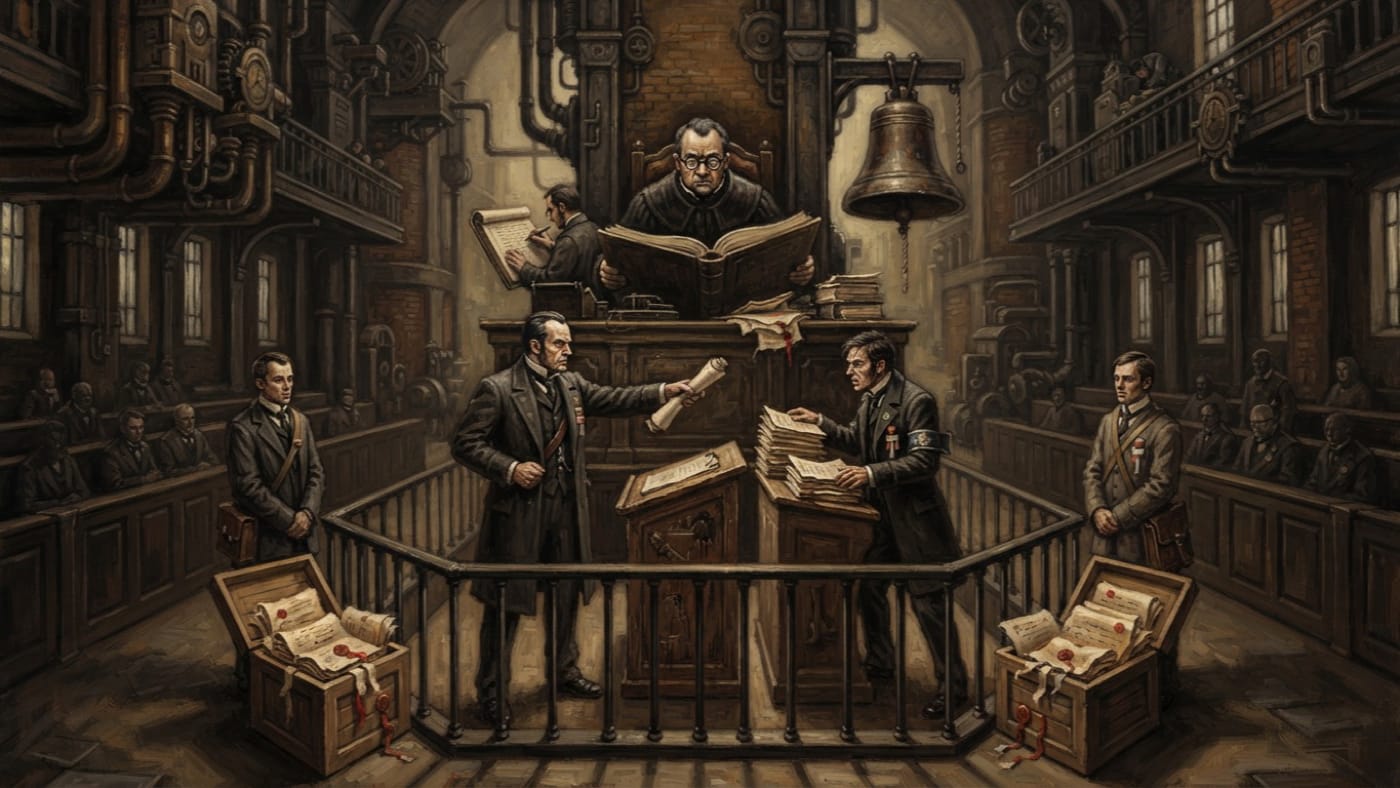
Concordat Annex 14-C
A quarrel given a bell, a verdict given a register
Ratified in A.S. 104, the joint Records-Doctrine Annex made citation duels binding, fixed court procedure and permitted remedies from asset freezes to full erasure. Mercy acquired a bell and a register.
Codex Ref. VII.8.10-104
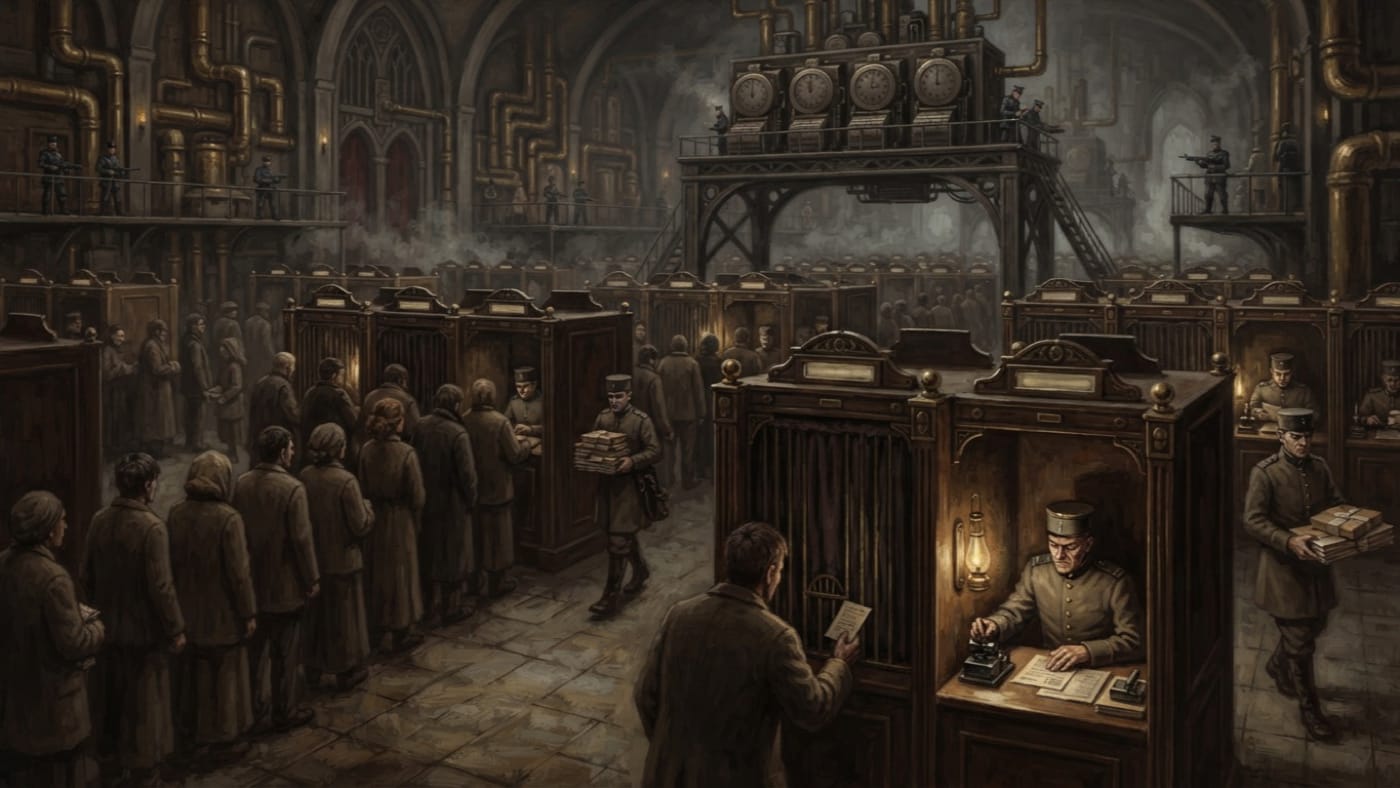
Confession Reform
The printed card that taught the Synod to count doubt
In A.S. 104, the Bureau of Rites gave sin approved phrasing, uniform categories and lay intake clerks. Confession became comparable; doubt became evidence.
Codex Ref. VII.8.10-014

Counterfeit Loyalty
The seal failed; the roster paid
At the A.S. 131 Duel of Broken Seals, failed ration seals became a charge against allegiance. Two companies paid for claims their soldiers had never seen; no forger was produced.
Codex Ref. XIII.1.10-131

Duel of Broken Seals
Two captains brought proof; proof became dust
A.S. 131 forward-bastion Registry duel in which two valid ration claims collapsed into dust, condemning both companies beneath the wagons they contested.
Codex Ref. VII.8.10-046
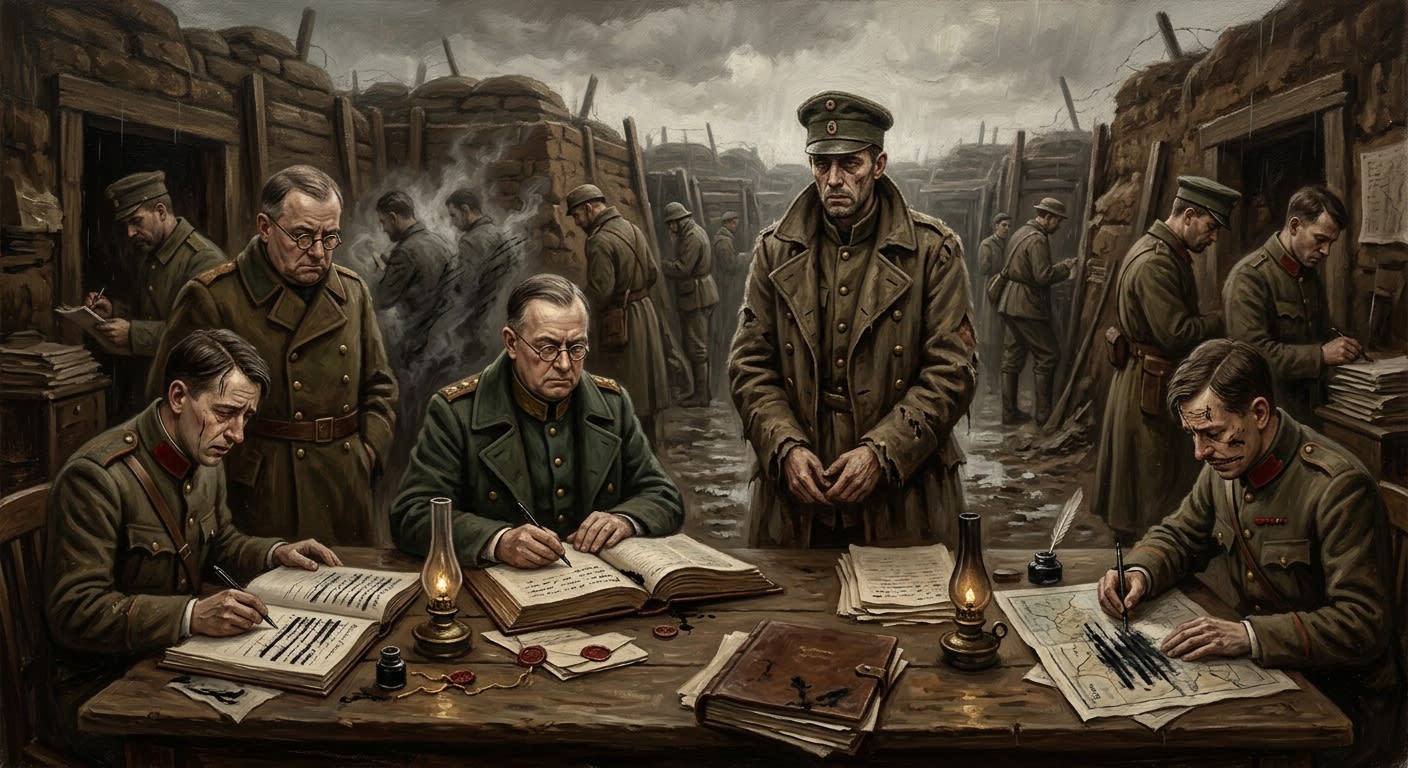
Erasure of Veyss
The man who asked for arrears and received absence
A.S. 148 trench-court erasure in which Lieutenant Veyss lost standing over a missing ancestral tithe-stamp, and every dependent ledger corrected him into absence.
Codex Ref. VII.8.10-048

Feast of Saint Rupert
Attendance is mandatory; relief has no column
Saint Rupert's mandatory feast, preserved in the Strasbourg return of A.S. 199: 1,847 present, 13.7 seconds of applause, and joy classified Within Parameters.
Codex Ref. XIII.1.89-199

Festival Chorus-Master
The Synod's licensed conductor of controlled emotion — half-cleric, half-stagecraft tactician, certified to manufacture joy by those incapable of permitting it
The Bureau of Festivals' licensed joy engineer — eleven ranks, one Conservatory, forty-one years of unresolved investigations, and a career that ends when laughter becomes indistinguishable from threat.
Codex Ref. XII.17.01-001

Field Manual for Sanctioned Emotional Release
The book that permits relief and forbids the crowd from providing its own
Eighteen revisions teach the Chorus-Master how to grant laughter, count applause and stop a crowd before it discovers that joy can proceed without permission.
Codex Ref. XIII.1.67-201

Form 77-D
Three copies agree; the reason takes another road
Form 77-D authorizes Administrative Dissolution: three copies, one countersignature, and a soul rendered illegible. The reason travels under a separate seal; the writ has no field for undoing.
Codex Ref. XIII.1.77-201

Gate-Nullity Liaison
The name is struck upstream; the traveller learns at the gate.
An A.S. 201 survey of the Erasure Notary specialist who coordinates nullity records with Gatewarden-Notaries. The Bureau files absence; the traveller finds a closed gate.
Codex Ref. XII.14.01-002

Gauze-Masked Custodian
Nine turns of gauze, one white ledger, and the administrative certainty that nothing happened
The operative the Bureau of Shadows does not employ, who performs collections the Bureau of Purity cannot conduct, in corridors no Bureau will map. Nine turns of gauze. One white ledger. Nothing happened.
Codex Ref. VI.8.01-009

Geometry Brand-Smith
Six Thousand Four Hundred Licensed Geometers of Guilt, and the Irons That Did Not Come Back
The Bureau of Heraldry’s serialized geometers of guilt — 6,400 licensed Brand-Smiths who make identity permanent in the only ledger that cannot be forged, lost, or filed incorrectly: the body itself.
Codex Ref. XII.20.01-001

Guillaume bloodline
The names struck, the suspicion retained
The Guillaume bloodline persists without register standing, watched under private Seal Amber. The Church has struck its names and forbidden inquiry into its whereabouts.
Codex Ref. III.2.06-004

Guillaume of Aachen
The man who opened a gate and was closed by the Ledger
Lord-Protector Guillaume surrendered Aachen in A.S. 25, severed the Rhine approaches, and became the Synod's cleanest lesson in treason, nullity, and administrative damnation.
Codex Ref. III.2.01-123
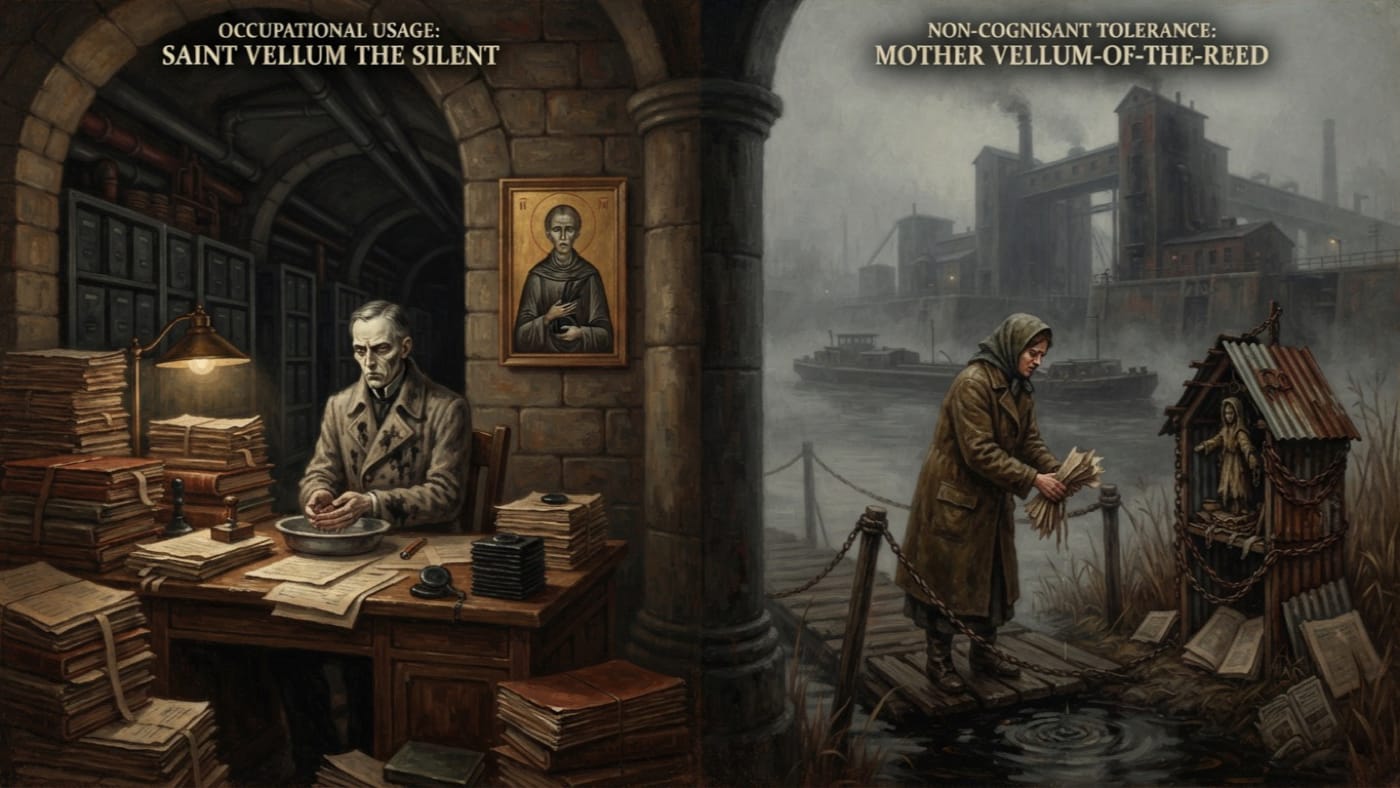
Hagiography
The saints a profession keeps before the Church decides
Hagiography reviews saints' lives and patronal claims. Devotion, recognition, and authenticated relics remain separate matters, however often petitioners confuse them.
Codex Ref. XIII.1.01-1299

Identity Fraud
A stolen name buys bread; an authorised alteration earns a salary
Identity Fraud steals the registered person: names, ration rights and passage permissions. Standing Order 14-M gives offences of sufficient degree a wall; authorised alterations remain daily duty.
Codex Ref. XIII.1.97-1422

Index Clerk
The Notary strikes the name. Someone has to tell him where it is.
The Office of Nullity's lowest desk with a pen: clerks who locate names, map dependent ledgers and file the notices that make an erasure travel. The seal belongs upstairs; the blame comes down.
Codex Ref. XII.14.01-003

Indiction Writ
Five seals, five powers, and an appeal that waits
The Indiction writ lets Records seize ledgers, enclose witnesses and suspend names before any charge. Five seals announce that the Bureau has noticed; appeal waits until reconciliation.
Codex Ref. XIII.1.06-003

Ledger Duellist / Citation Advocate
Where the sword would be excessive and the firing squad irreversible, the Synod reaches for its ink
Fourteen hundred licensed advocates fight citation duels in the Synod's precedent pits — establishing standing, constructing precedent chains, striking opponents from the Ledger of Souls. Three hundred more operate in the shadows.
Codex Ref. XII.26.01-001

Ledgerists
What has not been entered did not happen. Purity is careful to enter everything.
The Ledgerists teach that unrecorded events never occurred. Records calls them prophets; Purity calls them liars and records their sentences with exceptional care. Both classifications remain filed.
Codex Ref. XIII.1.225-201

Lieutenant Veyss
The name retained after the man was struck
Lieutenant of the 4th Rhineland Fusiliers, struck in A.S. 148 after a claim for promotion arrears exposed a missing ancestral tithe-stamp. The Bureau kept his case and cancelled his standing.
Codex Ref. III.2.01-148

Lineage Severer
The household loses its standing; the Office keeps every page.
The Office of Nullity's family-strike specialists reconcile dependent rolls before sealing a household out of civic life. Nobody dies at the desk; every office afterward refuses them.
Codex Ref. XII.14.01-003

Lord-Protector Guillaume
The gate-seller who mistook a palace for survival
Guillaume sold Aachen for Lowlands dominion, sent a proxy to Regensburg, and learned too late that the Bureau's cleanest executions are grammatical.
Codex Ref. III.2.06-003

Mael-Cassin of the Third Gallery
A clean chain, with the client at its end
Unofficial exemplar of the Citation Purists: forty-two clean-chain appeals won, seven clients lost to lawful remedy. The Guild prefers the first figure.
Codex Ref. III.2.01-201
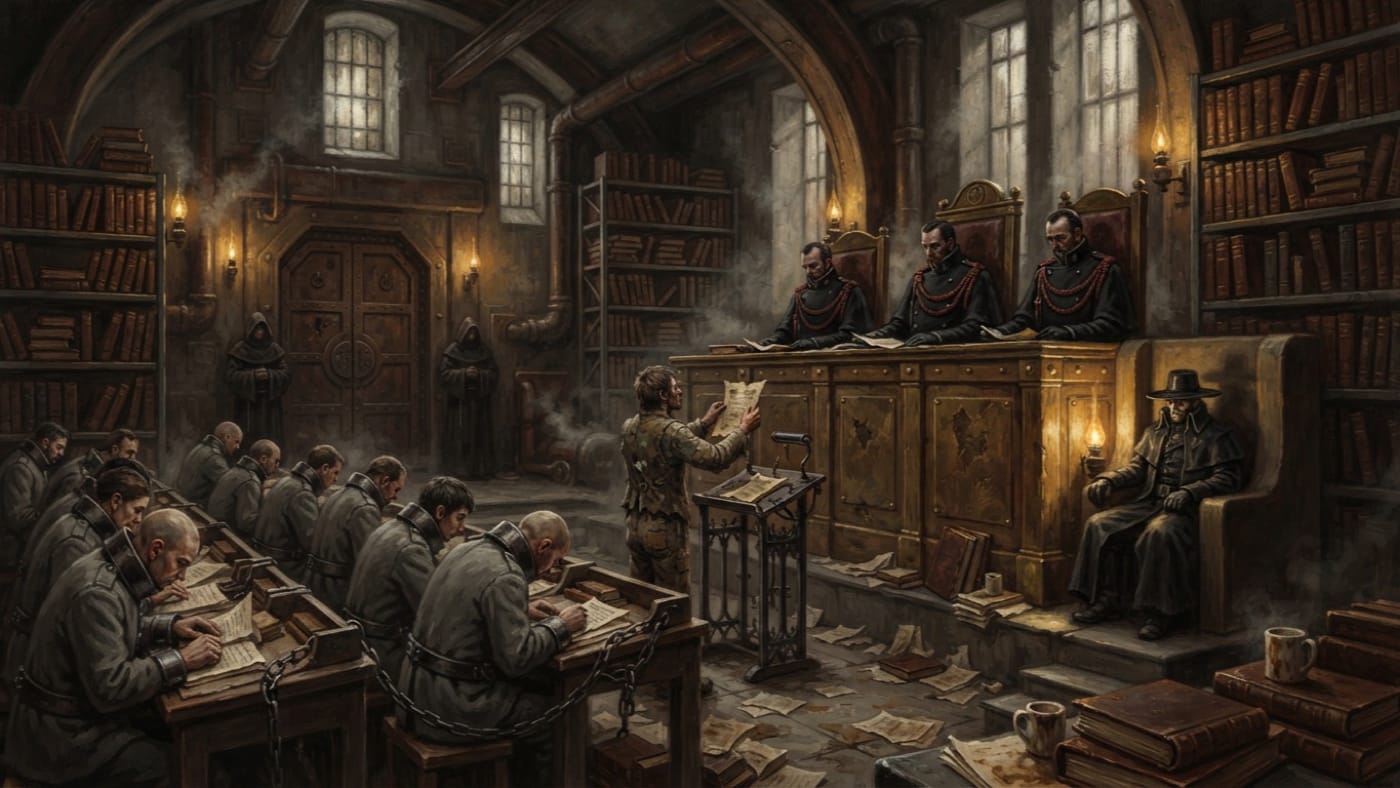
Margin Court
Your name remains yours until the Court corrects it
Nemea's red-cord tribunal settles identity claims, contracts and the position of a name on a page. The Court supplies the evidence, judges the record, and charges for the correction.
Codex Ref. VIII.2.14-1731

Margin Inheritance
The name grows smaller; the debt does not
Nemea's Margin Court moves names and debts into footnotes: a name loses its standing; a debt waits for whoever inherits the page. The Court insists this is not punishment.
Codex Ref. XIII.1.73-1732

Market Restoration Canticle
The stones were clean; the paper was not
The Bureau of Rites' canticle, attested during the A.S. 162 (1872 CE) restoration of Bastion-Constantinople's southern market after the Carnival of Ink. The stalls reopened; the account records no reversal of the erasures.
Codex Ref. XIII.1.89-162

Marrow-Quill of Cologne
The advocate who taught grammar to leave bodies hungry
Cologne Citation Advocate and Ledger Duellist whose week of three duels struck a rival household from standing, bread, gates, contracts, and consecrated earth.
Codex Ref. III.2.01-128

Mortuary Black
The ink that keeps the name and murders the claimant
Mortuary Black is the Bureau of Records compound for Administrative Dissolution: iron-gall, bone ash, Rites seal, and enough silence to make a name visible and unusable.
Codex Ref. XIII.1.01-002

Mortuary Index
The dead receive a line. The erased receive nothing.
The Bureau of Records acknowledges the dead one name at a time. A line in the Mortuary Index records a recognised death; the erased receive none. I certify the distinction.
Codex Ref. XIII.1.98-201
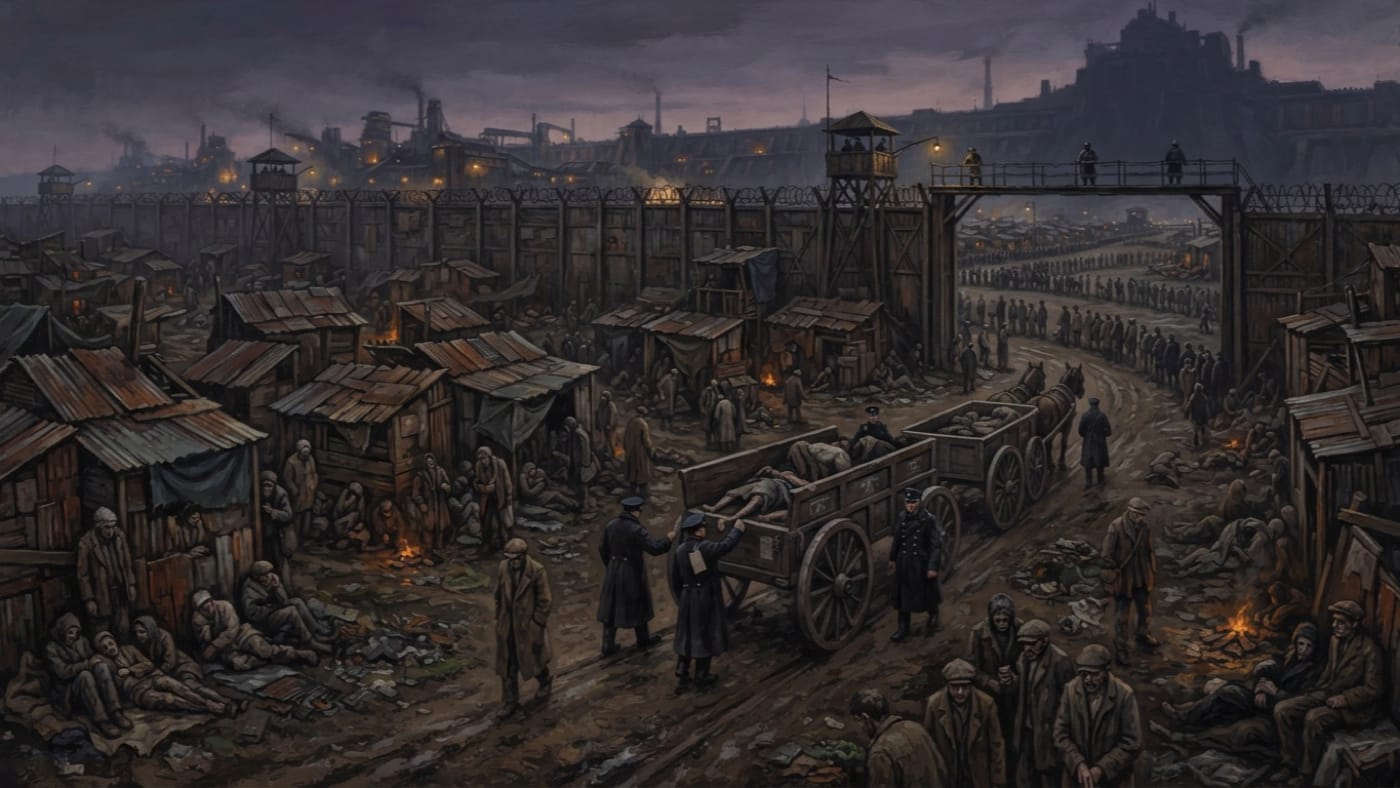
Null Verge
Where the ledger ends and the carts begin
The Queue Road's uncounted southern margin houses erased debtors in darkness. Reeve's Custodians collect the sick, the dead and the inconvenient, and export labour under stamps naming no bureau. The census remains correct.
Codex Ref. II.3.05-012
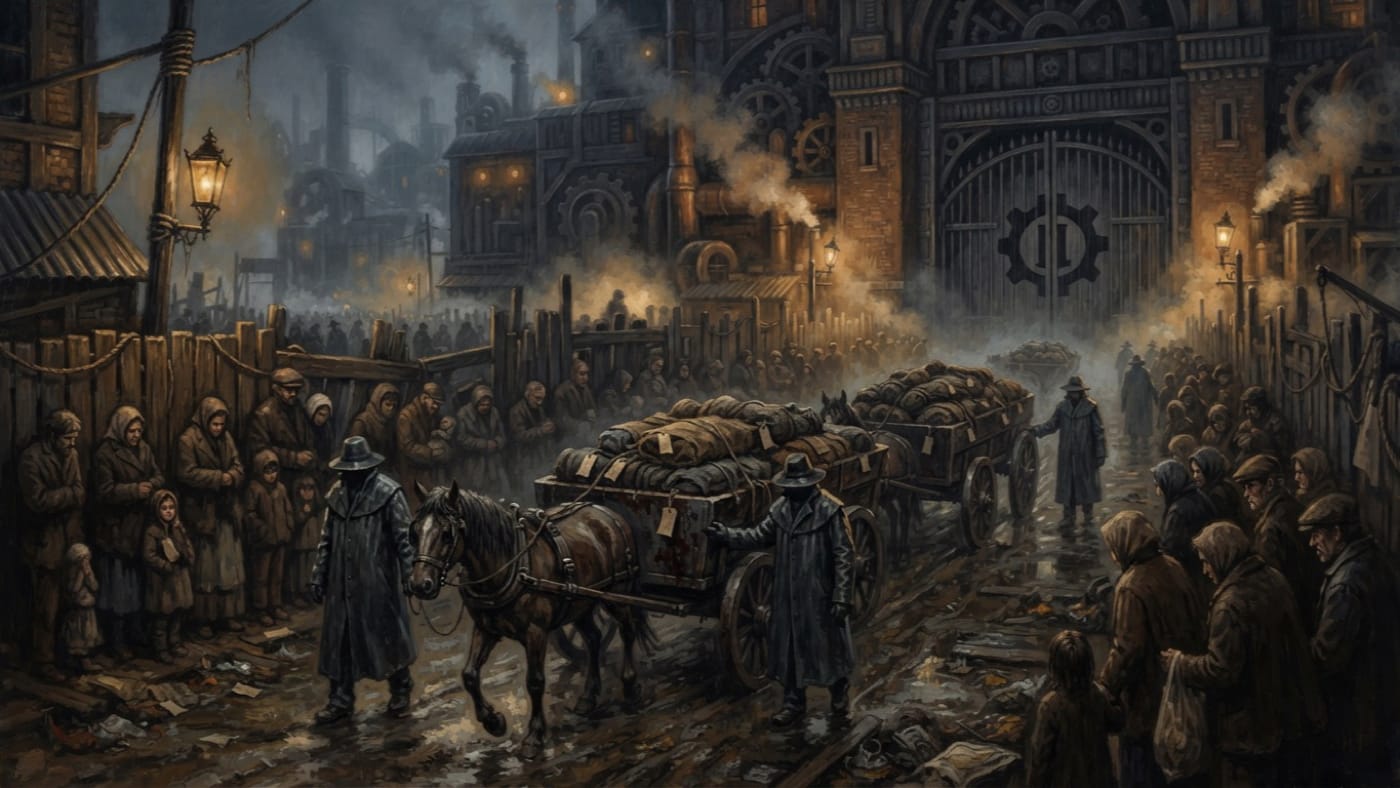
Null Verge carts
The count is corrected; the tags remain blank
The Null Verge Custodians' tag carts remove bodies from the Queue Road. In autumn A.S. 200, Gate Nine closed for sanitation and the dead exceeded their capacity. The count required correction; the tags required no ink.
Codex Ref. V.2.04-002

Office of Nullity
The knife kept inside the book
Sub-office of the Bureau of Records governing Erasure Notaries, strike writs, dependent ledgers, black seals, and the civic art of making a person unprovable.
Codex Ref. XIII.1.70-001

Ossuary-Nullity Adjudicator
The dead have reached the gate; their claim is still under review.
A higher specialist of the Office of Nullity determines whether a struck name retains a burial claim. A body is evidence of death; it is no guarantee of a grave.
Codex Ref. XII.14.01-002
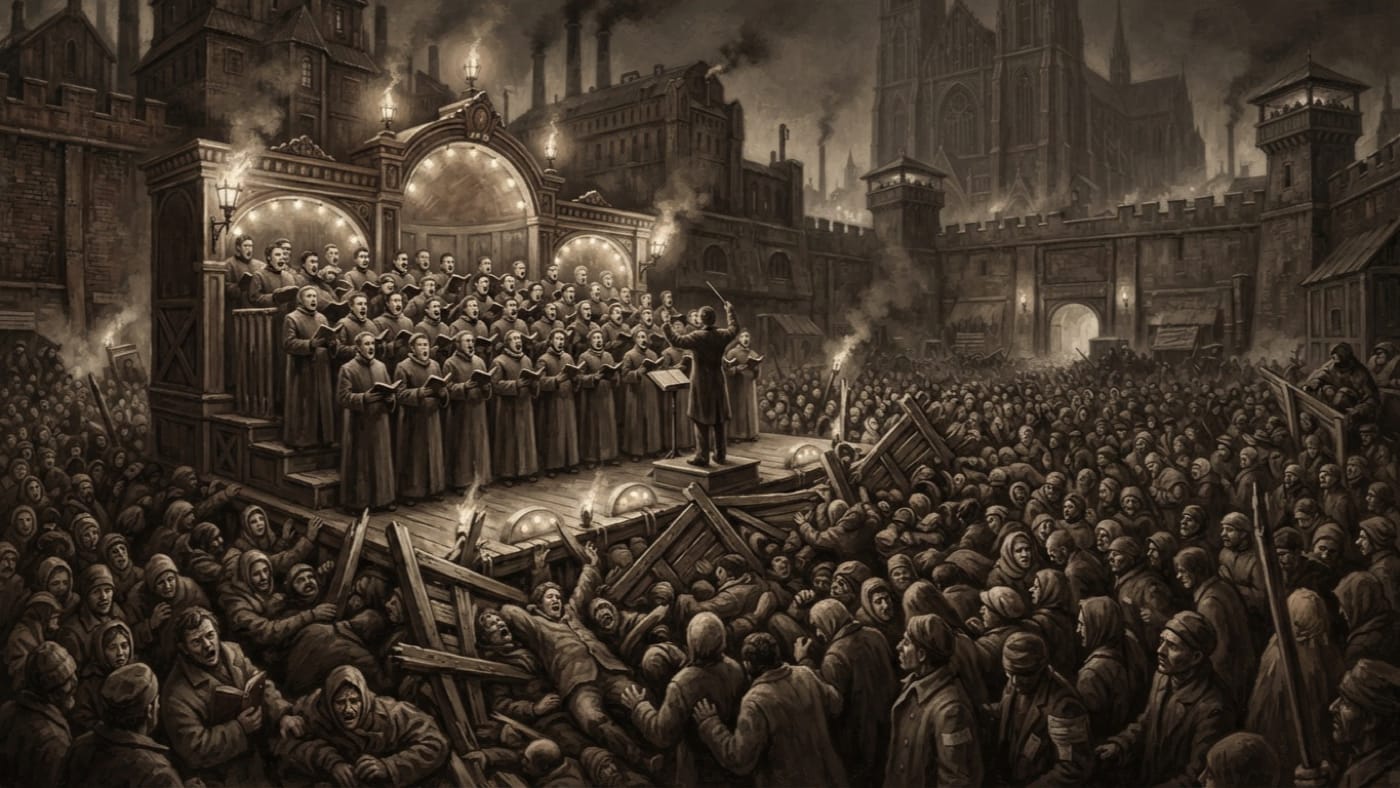
Pageant of Saint Rupert
The hymn continued because nobody had told the singers to stop
An A.S. 201 survey of the licensed Przemyśl pageant: a third singing granted, barricades collapsed inward, dozens crushed, and a chorus awaiting the signal to stop.
Codex Ref. VII.4.19-201

Purists of the Bureau of Records
One truth, one roll, no supper invitations
Strict-text faction within the Bureau of Records, devoted to clean rolls, witnessed corrections, discrepancy reporting, and the holy unpleasantness of unpurchased truth.
Codex Ref. XII.9.03-001

Saint Vellum of the Valve
Hold while I turn, says the saint the clean offices refuse to hear
Uncanonised occupational patron of Diesel Resonance Plumbers, Saint Vellum of the Valve is the hand on the wheel where pressure, bell-shadow, and useful heresy meet.
Codex Ref. III.2.01-111

Saint Vellum the Silent
A patron saint whose relic is procedure
Occupational patron of Erasure Notaries, Strike Scribes, Nullity Clerks, and Lineage Severers; a saint of washed hands, black seals, and names made quiet.
Codex Ref. III.2.01-113

Shadow Archivists
The second copy is always a heresy until Records needs it
Alleged Records Scribe faction preserving unsanctioned copies of corrected rolls, officially absent, practically feared, and dangerous under the right lamp.
Codex Ref. XII.9.03-003

Stone Sharks
Safety by the inch, eviction by the weather, mercy by invoice
Stone Sharks are the profit-hardened branch of Grave-Field Shanty Brokers: orderly grave-lane landlords who sell safety, patrol blindness, and winter survival at predatory rates.
Codex Ref. XII.27.03-001

The Balkans
The wound that taught Europe to count its bleeding
The Balkan wound-region, broken first by the Eastern Silence and the Sundering, then divided into Synod margins, contested corridors, Sin-General dominions.
Codex Ref. II.6.05-045
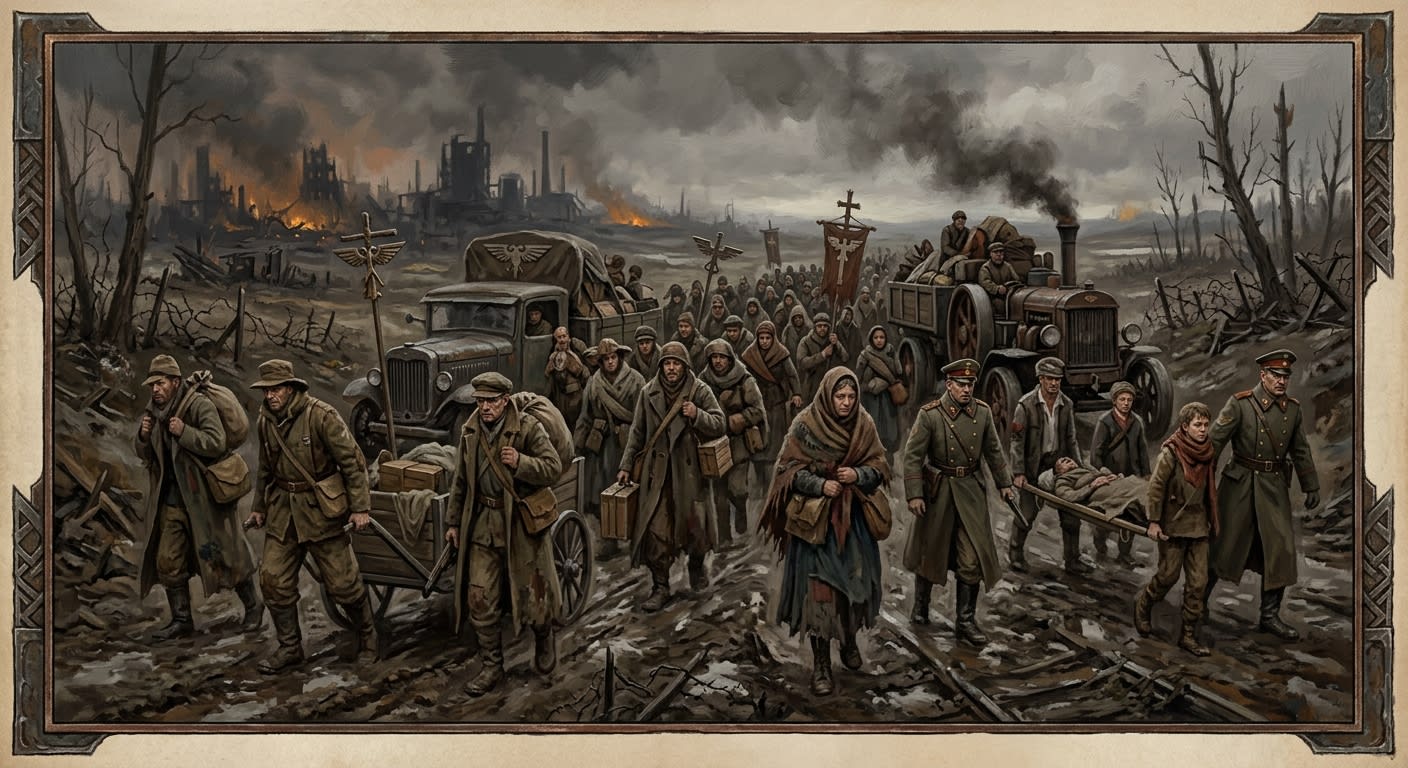
The Great Retreat
Seventeen years of westward mud before the Line learned to stand
From A.S. 48 to A.S. 65, the faithful West walked, bled, improvised institutions, and finally stopped running where the Sagittal Line began to hold.
Codex Ref. VII.1.03-001
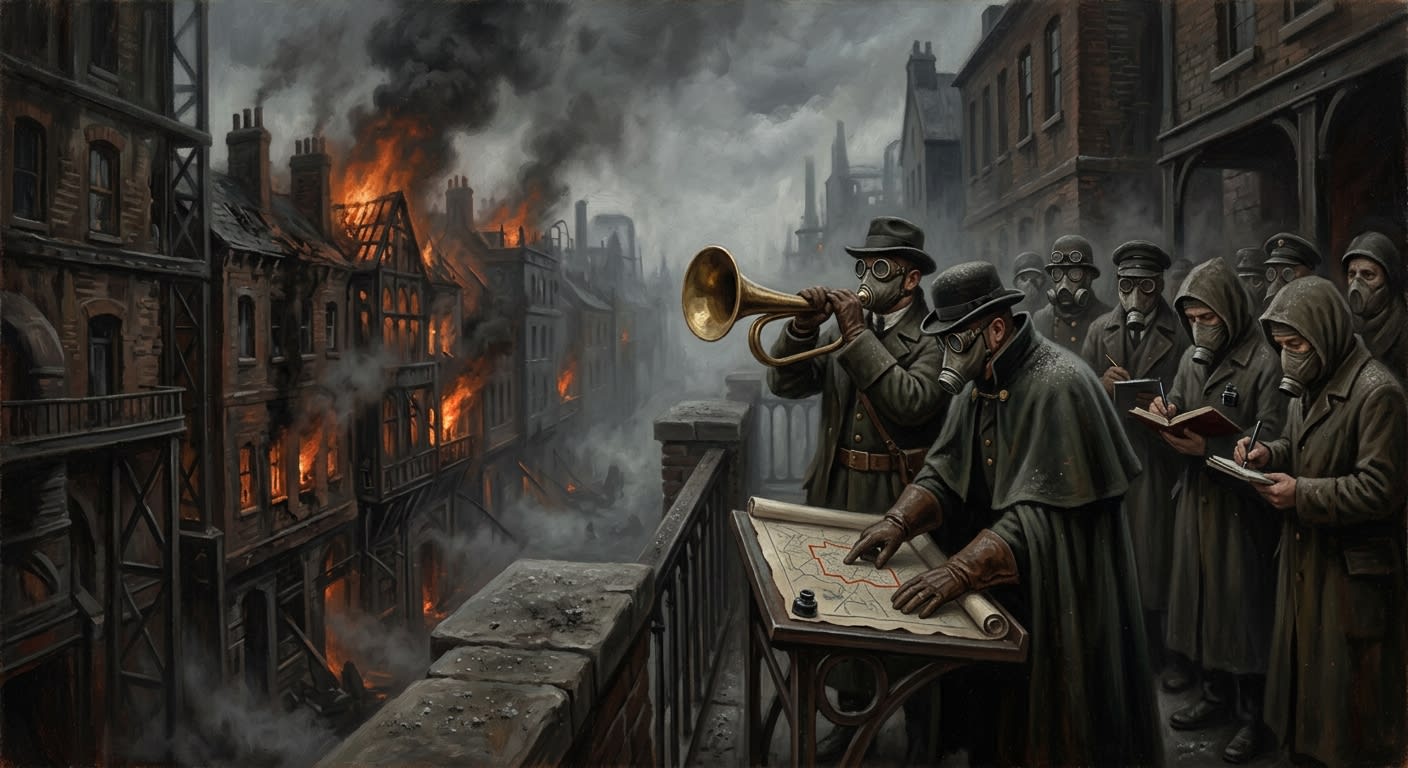
The Scour
When the Bureau decides a street has forfeited the privilege of remaining architecture
The Synod's ritual fire-purge of condemned quarters: horn, map, witness-line, and ash — the point at which bureaucracy ceases to argue and begins to burn.
Codex Ref. VI.4.01-001
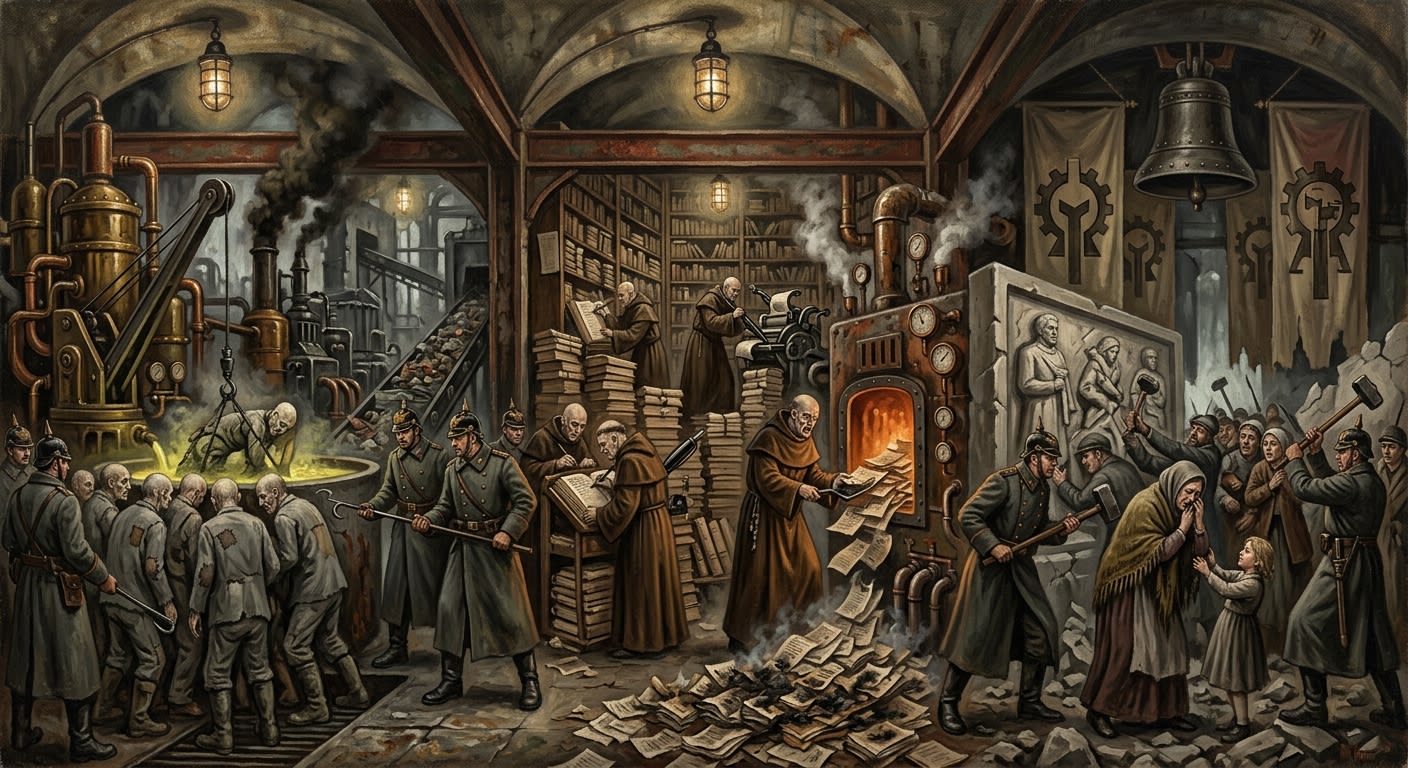
Trifold Erasure
Kill the body, strike the name, poison the recollection
Trifold Erasure is the Synod's threefold cure for rebellion: body extinguished, name struck, memory made too dangerous to love.
Codex Ref. XIII.1.71-111

Zones 1 through 5
Five lawful pressures between invoice and mud
Zones 1 through 5 are graded permissions for bread, sons, movement, fear, artillery, and the state’s appetite.
Codex Ref. XIII.1.00-201