

Reverse Index
Referencing “Tithe Assessor”
Every codex entry that links to Tithe Assessor. 58 entries.
Return to Tithe Assessor

Archbishop Pellian of Rouen
The mercy that cost three percent
Archbishop Pellian of Rouen briefly governed the Bureau of Tithes, tried conciliation, lost three percent in one quarter, and taught Strasbourg that mercy must be priced.
Codex Ref. III.2.01-059

Archon-Mediator Havel of Tithes
The quiet voice that taught a thousand guilds arithmetic
The Bureau of Tithes officer active at Münster in A.S. 105, remembered for one sentence, one vanished district, and no biography worth preserving.
Codex Ref. III.2.01-105

Arno Kett
The man who made disbelief small enough to fit in a pocket
Founder of the first verifiable Silent Godless cells, author of the question-based recruitment method, and the corpse from which Doctrinal Nullification was made lawful.
Codex Ref. III.2.01-144

Ash-Credit
The dead are tender once Tithes finds a scale
Ash-credit is the Synod's devotional collateral, converting cremains, saint-dust, and pledged future remains into bread, grace rations, and obligations the dead cannot refuse.
Codex Ref. VI.3.01-002

Assessment Engines
The machine does not ask what you cost. It tells you what may be bought.
Velmora's Assessment Engines price objects, persons, loyalties and betrayals with intolerable accuracy; the Synod captured them, ordered them destroyed, and then kept their accounts.
Codex Ref. XIII.1.27-201

Assessor Maren Gault
Fear, properly disciplined, can take measurements
Assessor Maren Gault stands at Brine Fork measuring sealed grief, ownerless warmth, leaning racks, and the exact weight of a transfer request denied.
Codex Ref. III.2.01-153

Assessor-General Kaethus Brenn
The crossed-out prayer beneath the Widow’s Penny
Assessor-General Kaethus Brenn wrote the arithmetic that turned pity exemptions into Widow’s Pennies, regretted it in the margin, and sent it forward.
Codex Ref. III.2.01-147

Audit Liaisons
The Bureau's accountant of accountants; or, who weighs the hand that weighed the salt
Audit Liaisons are the Bureau of Tithes' auditors of its own predation: officers who count receipt blanks, scrape brine-stones, and keep an Assessor's private theft below the Bureau's public appetite.
Codex Ref. XII.46.01-002
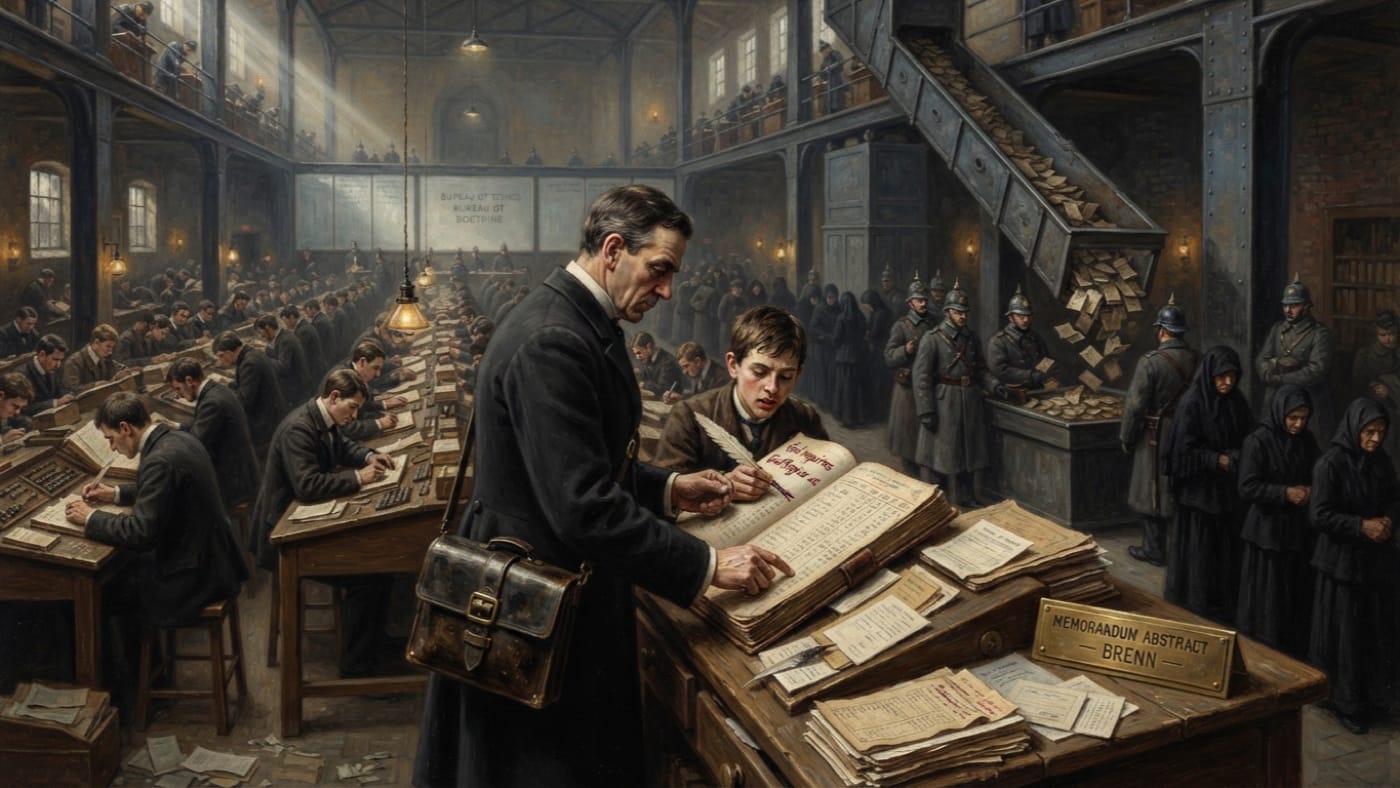
Brenn Memorandum
The prayer was corrected; the figures stood
Brenn's A.S. 138 memorandum proposed compulsory reduced-rate Widow's Pennies in place of pity exemptions. Doctrine corrected his prayer; Tithes kept the arithmetic.
Codex Ref. XIII.1.86-138

Burden Index Analyst
The red pen is warm; the household is elsewhere
The Burden Index Analyst corrects household scores for the Bureau of Tithes. One red slip can raise dues, thin rations and bring seizure nearer; the household seldom meets the hand.
Codex Ref. XII.46.02-201

Bureau of Tithes
The organ no one praises and no one dares remove
The Bureau of Tithes is the Synod's fiscal organ — the stomach no one praises and no one dares remove. It taxes breath, grain, bereavement, and the management of its own taxation.
Codex Ref. VIII.4.01-001
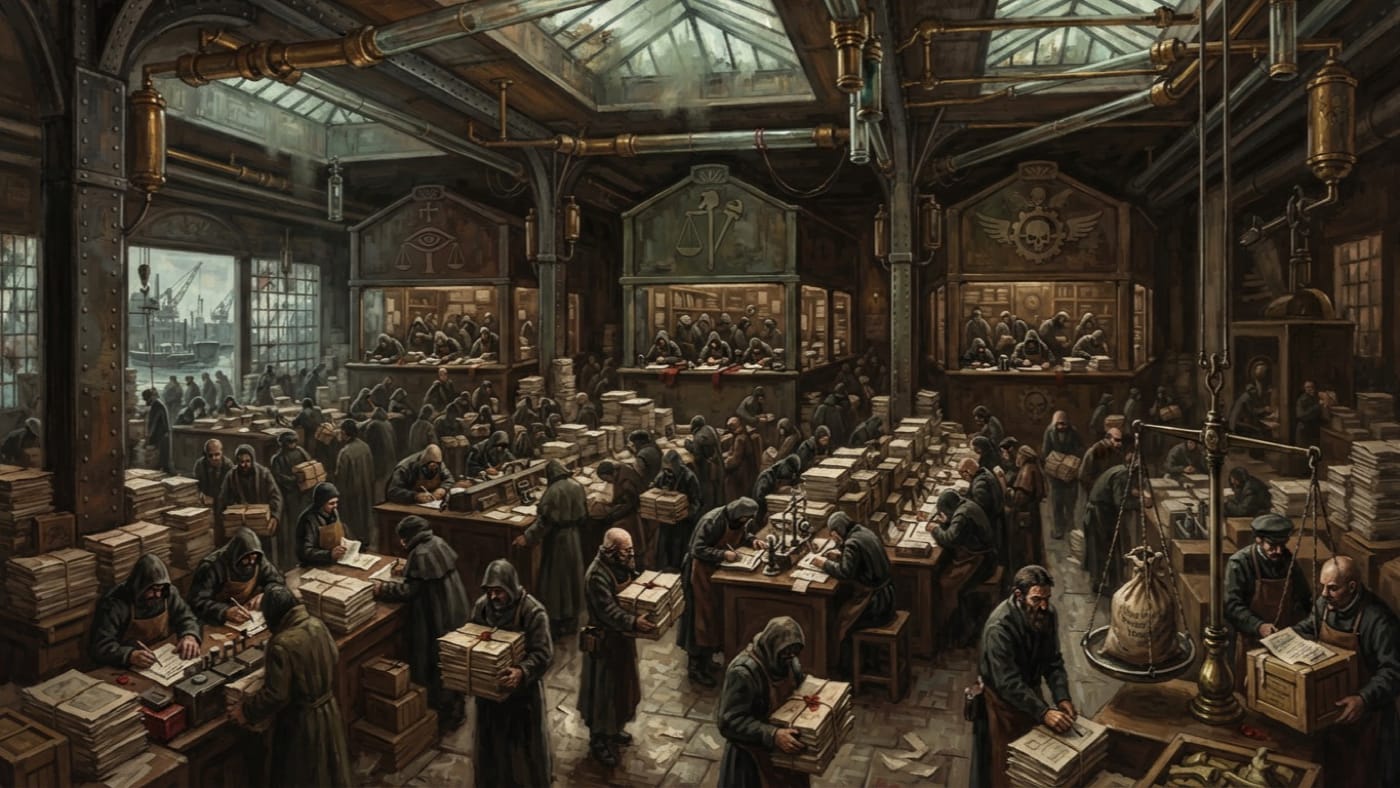
Canebière
Where cargo becomes paper, and paper waits for permission
Marseille's commercial quarter, where merchant houses turn cargo into paper under three competing Bureau offices. Goods may leave once their description has acquired every necessary seal.
Codex Ref. II.4.09-019

Codex 'Doubt' Auditor
The men and women who weigh belief on scales you cannot see and file the reading under your name
The Codex Auditors are the Bureau of Purity's intelligence branch — operatives who audit belief itself, detecting hesitation before it becomes opinion and opinion before it becomes faction.
Codex Ref. VIII.2.01-001

Concordat Supplementary
What the author forgot, the collectors remembered
An A.S. 201 survey of the Concordat Supplementary's attested Canon 17-D, cited by Tithes for infants' first teeth as preemptive dues. I wrote the canon. The Bureau remembered what I had forgotten.
Codex Ref. XIII.1.17-001
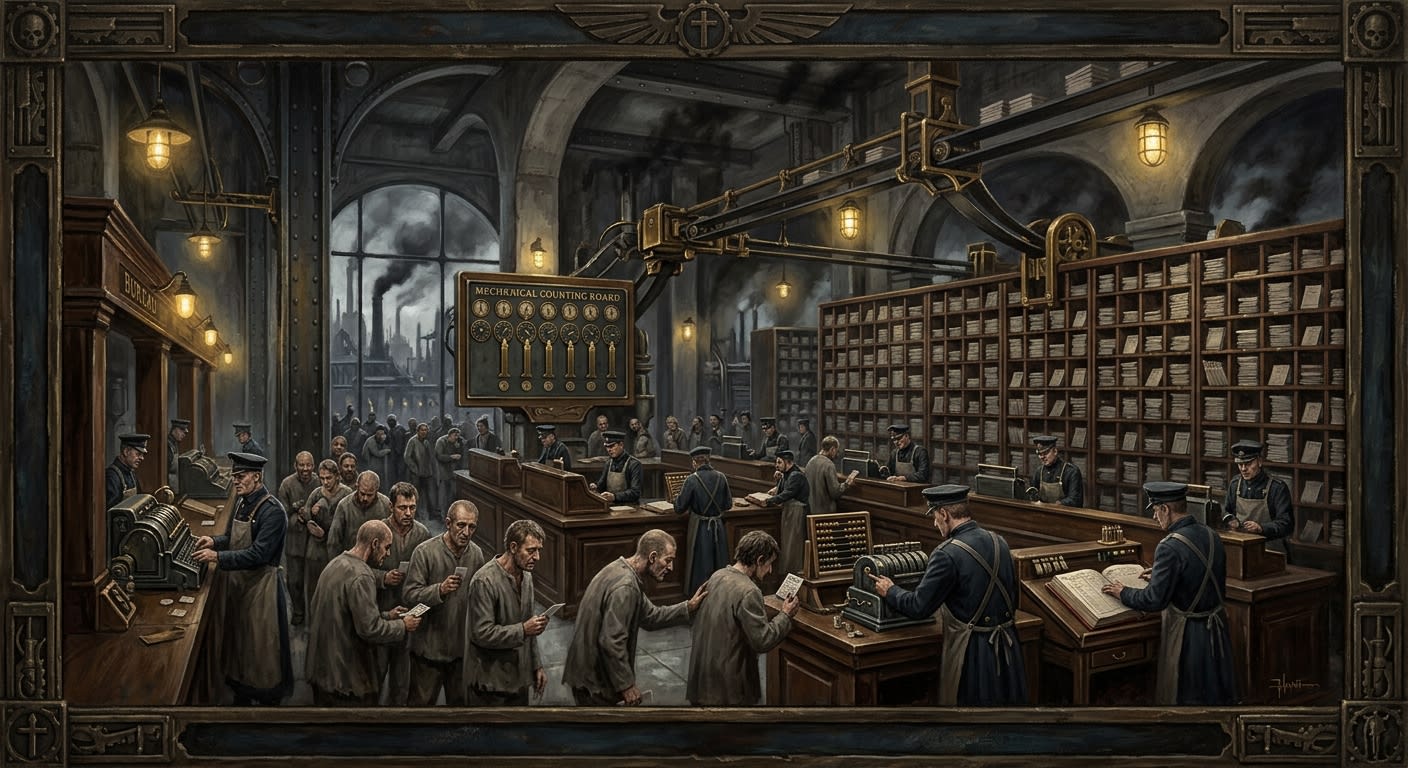
Confession Reform of A.S. 104
The paragraph that made sin stand in columns
A.S. 104 Bureau of Rites reform that standardised sin categories, introduced rubric cards, authorised lay intake clerks, and made confession countable at scale.
Codex Ref. VII.8.10-014
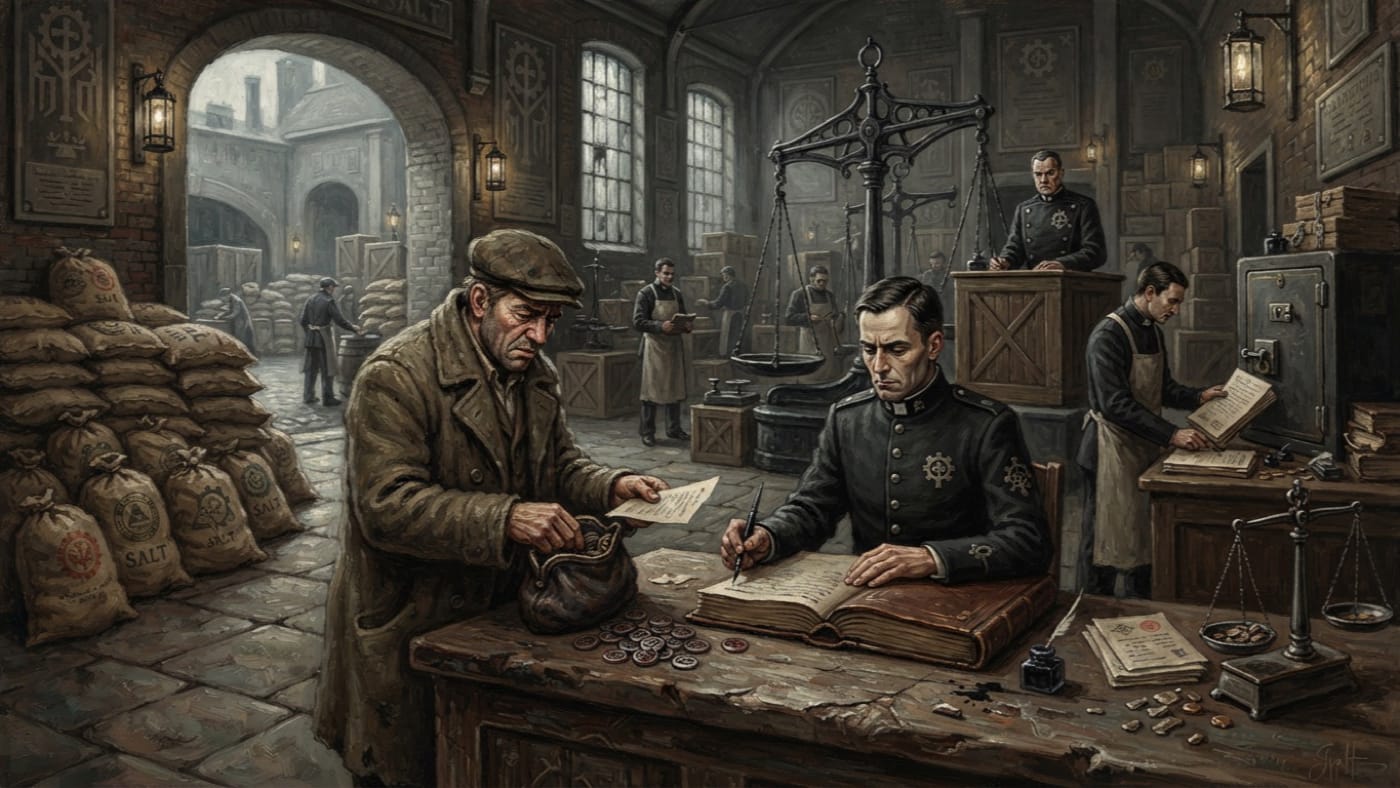
Crown of Grace accounting
The money is present; the payment remains incomplete
Crown of Grace accounting turns harbour cargo into recognised value, assessed dues and sealed proof. Coin may settle an obligation; only reconciled ledgers persuade the Bureau to release the salt.
Codex Ref. XIII.1.24-201

Crowns
Iron in the purse, obedience in the ledger
Crowns name both the Synod's stamped iron coin and its unit of account. Mint blessings, sealed receipts and honest weight still leave Velmora room in the ledger.
Codex Ref. XIII.1.22-201

Day of the First Seed
Heaven takes in ash. Tithes takes in sacks.
Current observance survey, A.S. 201: farmers burn the season's first grain shoots at parish shrines. Heaven receives the first offering; Tithes retains its claim, and forgiveness requires payment on genuine first growth.
Codex Ref. XIII.1.23-002

Demon-Glass Scavenger
The trade that crawls through Hell's workshop at three in the morning, because the Bureau's purchasing department opens at nine
The profession that supplies the Polisher, the Smuggler, the Bureau of War's optics division.
Codex Ref. XII.13.02-001

Directive 91-B
Grief kept its discount and lost its exemption
Issued in A.S. 139, Directive 91-B closed the pity-exemption rolls and made Widow's Pennies compulsory at reduced rate. Grief kept its discount; the Bureau kept its account.
Codex Ref. XIII.1.91-139
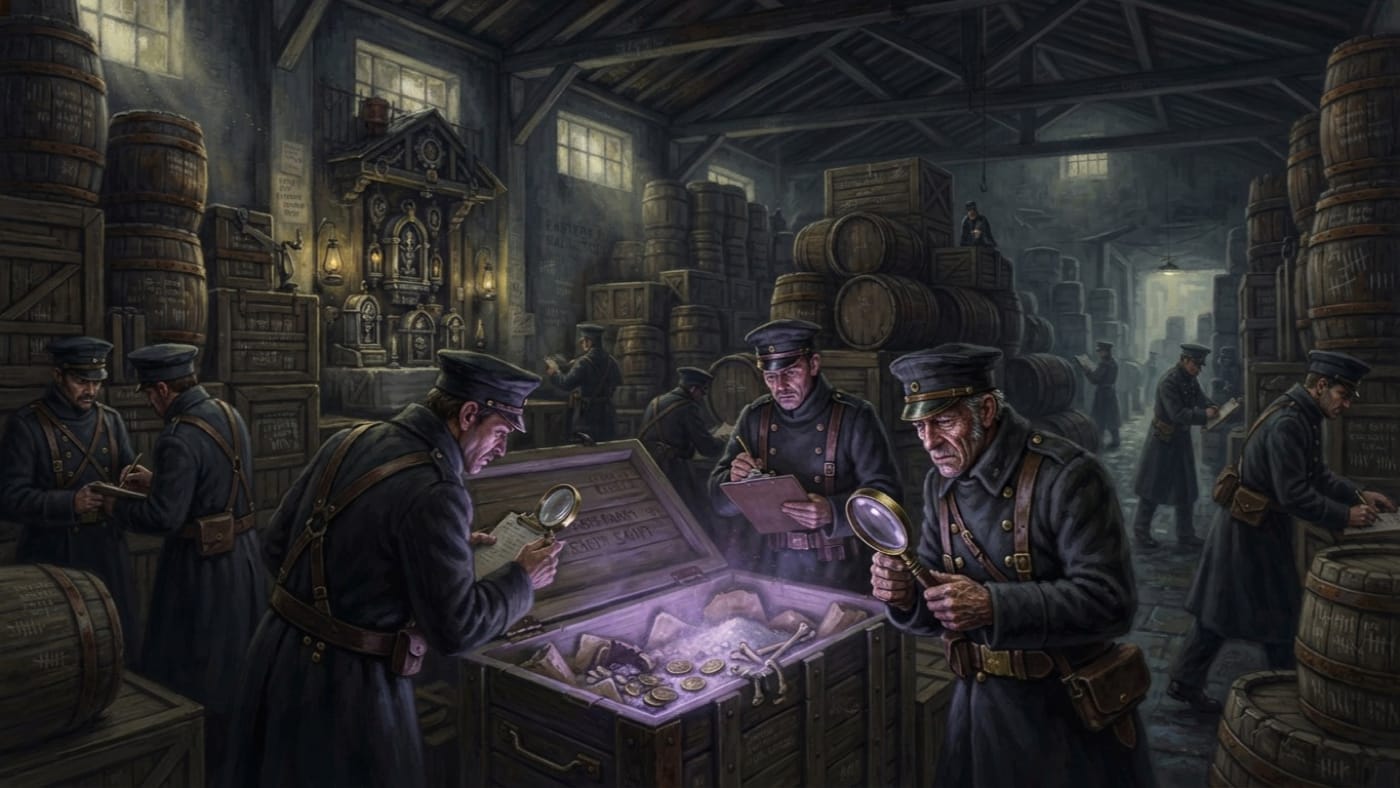
Eastern Basin Salt Stores
Five Bureaus claimed the cargo; the ledger called it spoilage
The Eastern Basin Salt Stores survive in Marseille's A.S. 199 audit: cured fish declared, children and violet light found, five Bureaus claiming custody, and the account closed as spoilage.
Codex Ref. II.4.09-019

Erasure Notary
The scaffold produces martyrs; the Office of Nullity produces only silence — and nine hundred Black-Stamps to stamp it.
Nine hundred Black-Stamps who unmake persons through ink and wax — no body, no grave, and no widow to scratch the martyr's name on cellar walls.
Codex Ref. XII.14.01-001

Faith-Tithe
The tenth that never settles the bill
The Faith-Tithe is the tenth owed by every baptised Synod subject, payable in coin, livestock, grain or labour. I certify the receipt; the surcharges follow.
Codex Ref. XIII.1.92-001

Feast of Balanced Scales
Mercy, weighed once yearly and sealed before it multiplies
The Feast of Balanced Scales permits each Tithe Assessor one yearly remission, proving mercy can survive only when counted, sealed, and made afraid.
Codex Ref. XIII.1.89-201

Fiscal Census
The mouth beneath the Ledger, still hungry after burial
The Fiscal Census is Tithes' continental obligation register: a vault-machine counting what the living, dead, unborn, and administratively inconvenient still owe.
Codex Ref. XIII.1.38-092
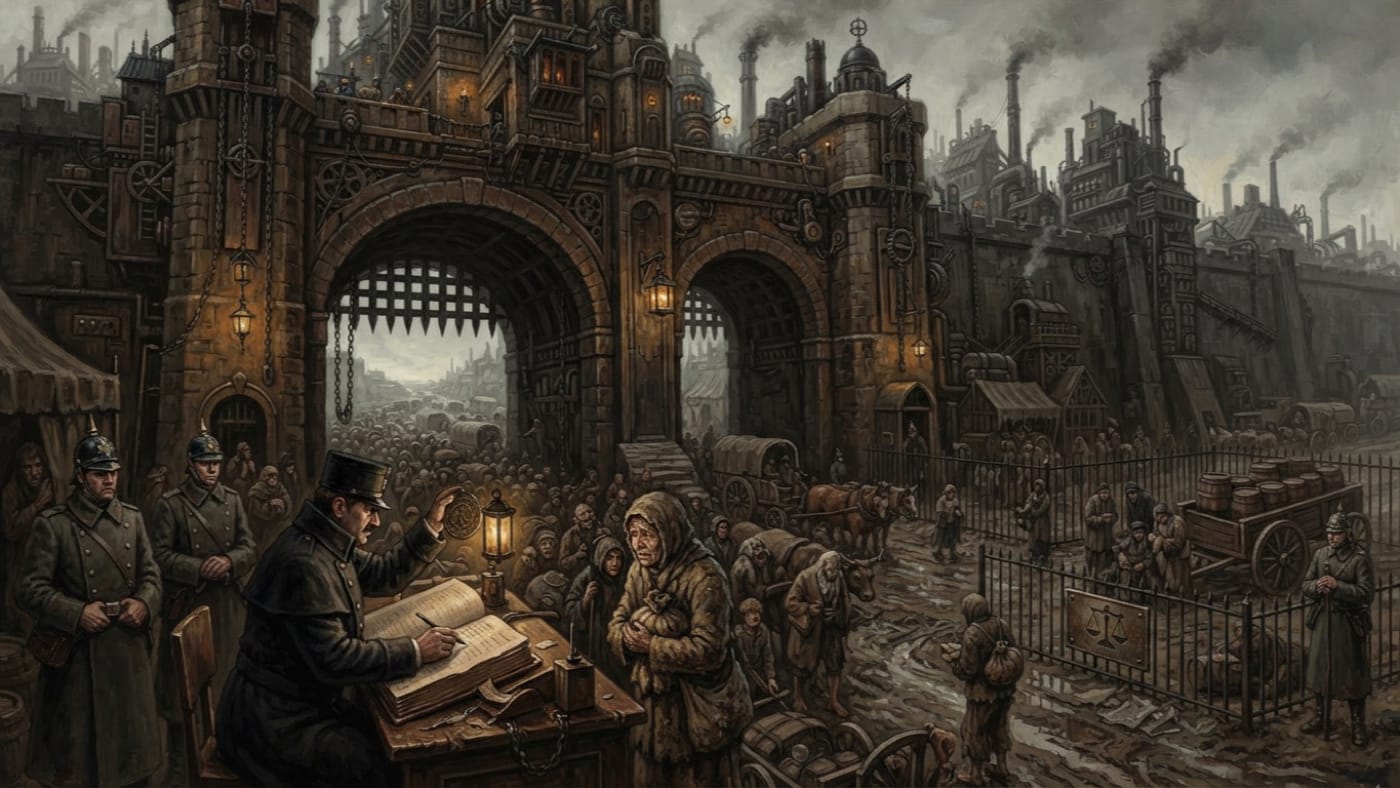
Gate and Bridge Tariffs
The coin is taken. The syllable is examined.
The Bureau of Tithes collects coin and Creed at the Synod's gates and tolled bridges. A faulty syllable voids passage; the ledger keeps the payment and the traveller keeps waiting.
Codex Ref. II.4.08-201
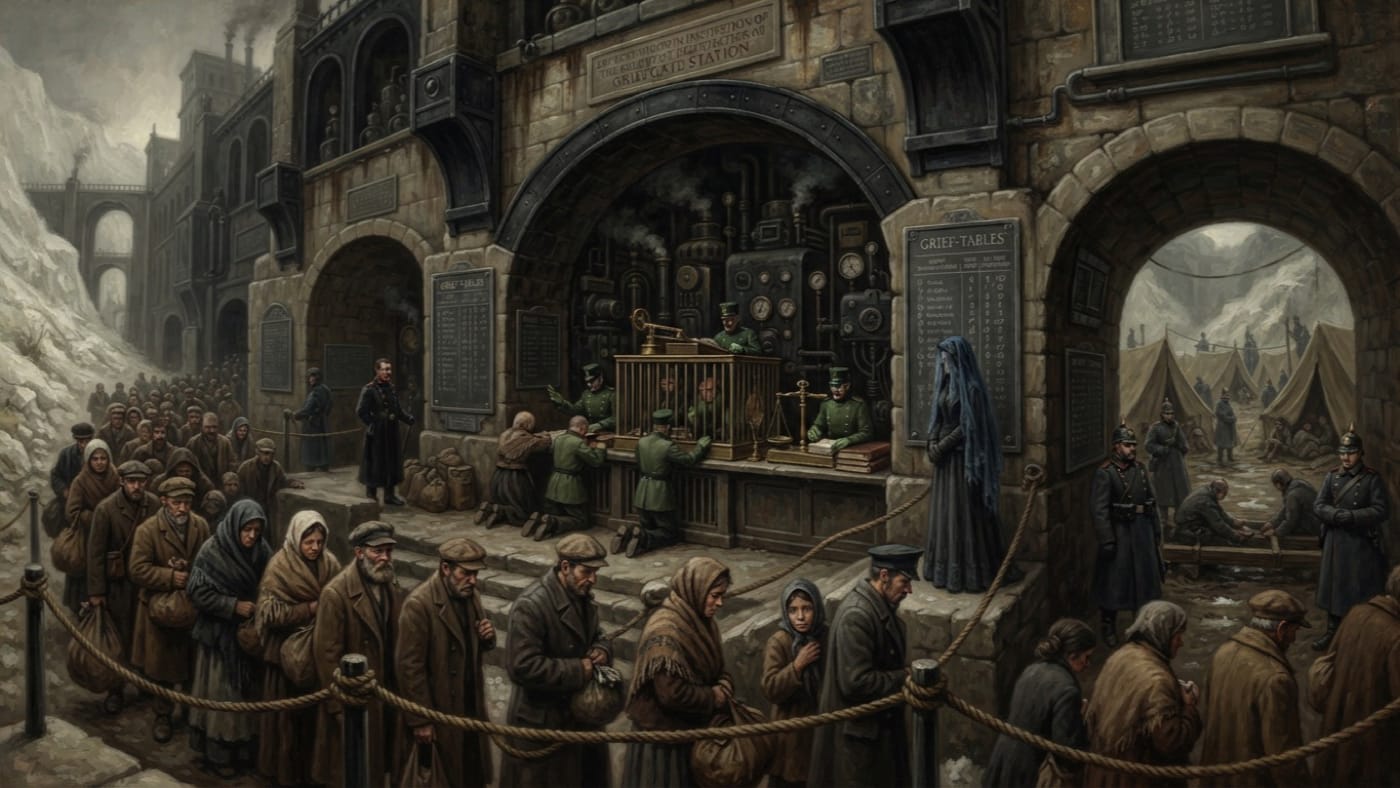
Grief-Tax
Declare your burden; the Gate will declare its price
At Griefgate, spiritual burden becomes a toll, payment becomes portable clearance, and unpaid sorrow becomes detention debt. The tables have no row for the unburdened.
Codex Ref. XIII.1.85-201

Harbour-Master
Authority has five claimants; responsibility awaits a name
Marseille's Harbour-Master claims authority beside four Bureaus. The Ledger records the title; the cargo waits for someone willing to answer for it.
Codex Ref. XIII.1.39-002

Index Clerk
The Notary strikes the name. Someone has to tell him where it is.
The Office of Nullity's lowest desk with a pen: clerks who locate names, map dependent ledgers and file the notices that make an erasure travel. The seal belongs upstairs; the blame comes down.
Codex Ref. XII.14.01-003
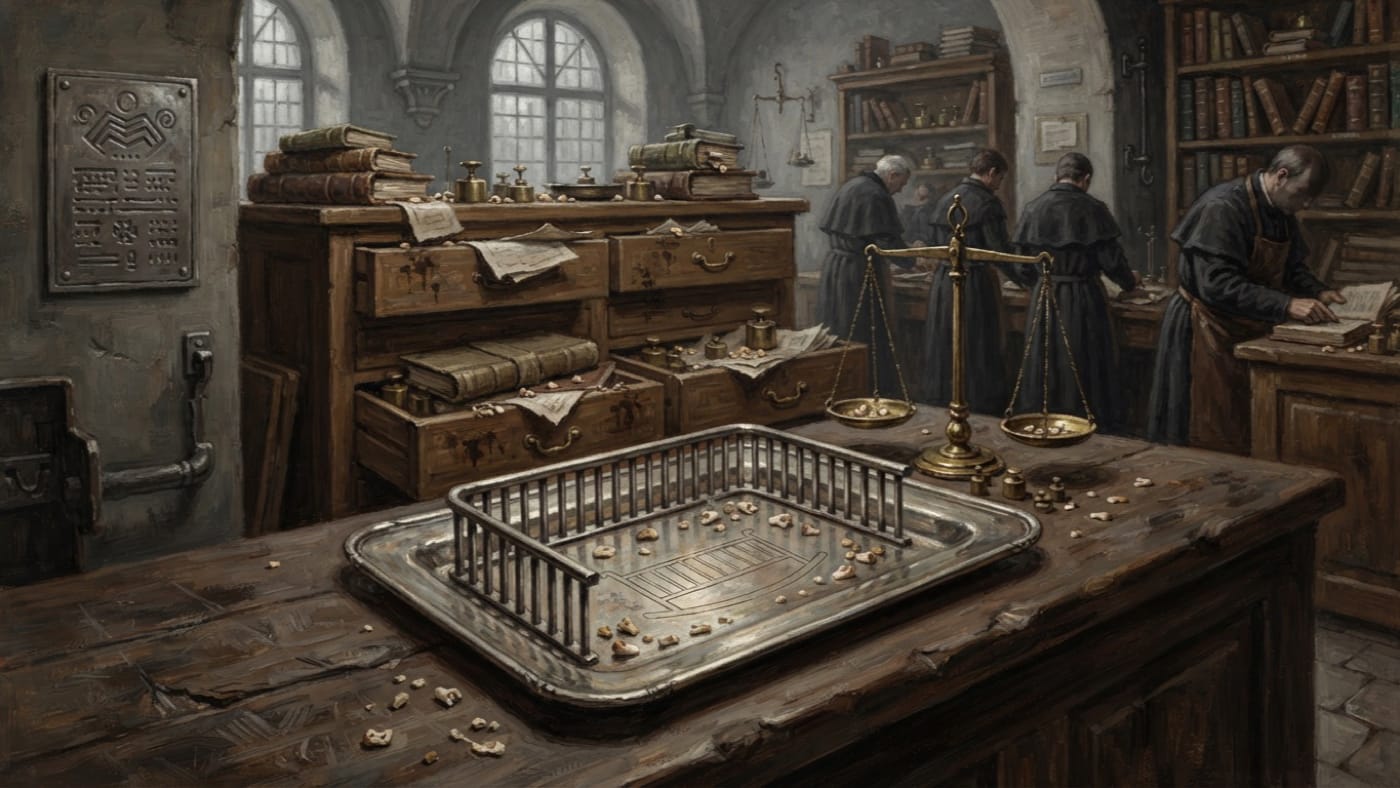
Infant-Tooth Tray
Small lives made measurable
A shallow silver tray in the Palatine Counting House receives children's first teeth amid Cradle arrears. Tithes denies its purchase; the drawers remain useful.
Codex Ref. III.2.08-201

Inter-Bureau Arbitration Panel
One corrected tally, two refusals, and a ruling still pending
Convened in A.S. 199 to decide whether Marseille's corrected pilgrim-fleet departure count requires return-voyage harbour dues to be refunded. Pilgrimage refuses; Tithes refuses the refusal. The ruling remains pending as of A.S. 201.
Codex Ref. VIII.4.09-199

Labour Tokens
The receipt is settled; the hands are owed
Labour tokens settle household dues by pledging future work. The receipt calls the account paid; kitchens, factories and laundries collect what the household still owes.
Codex Ref. XIII.1.85-201
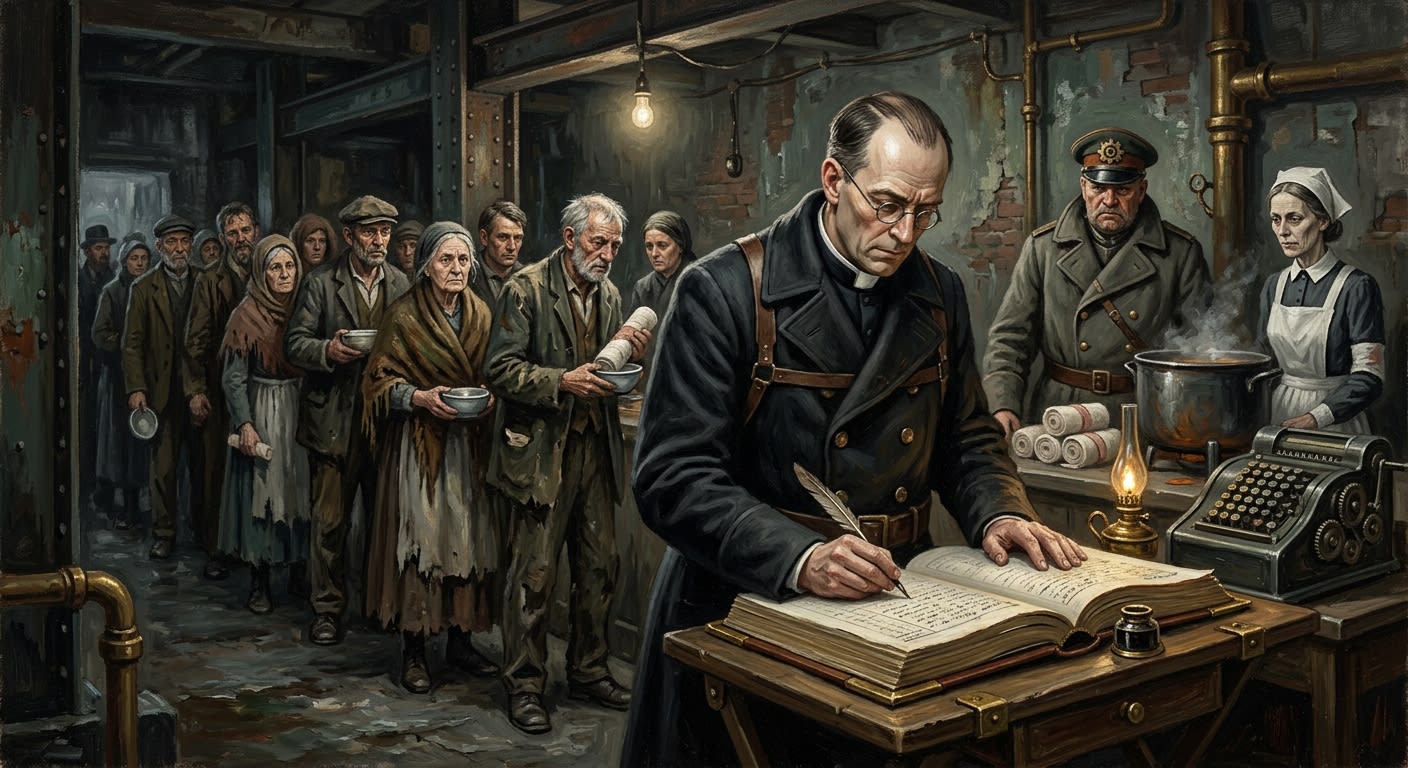
Ledger Laws
Mercy measured by the ladle, sanctioned by the noose
The Ledger Laws made mercy countable after the Broth Riots: every bowl, bandage, draught, confession, death, and useful pity entered the record before it dared call itself compassion.
Codex Ref. XIII.1.89-112
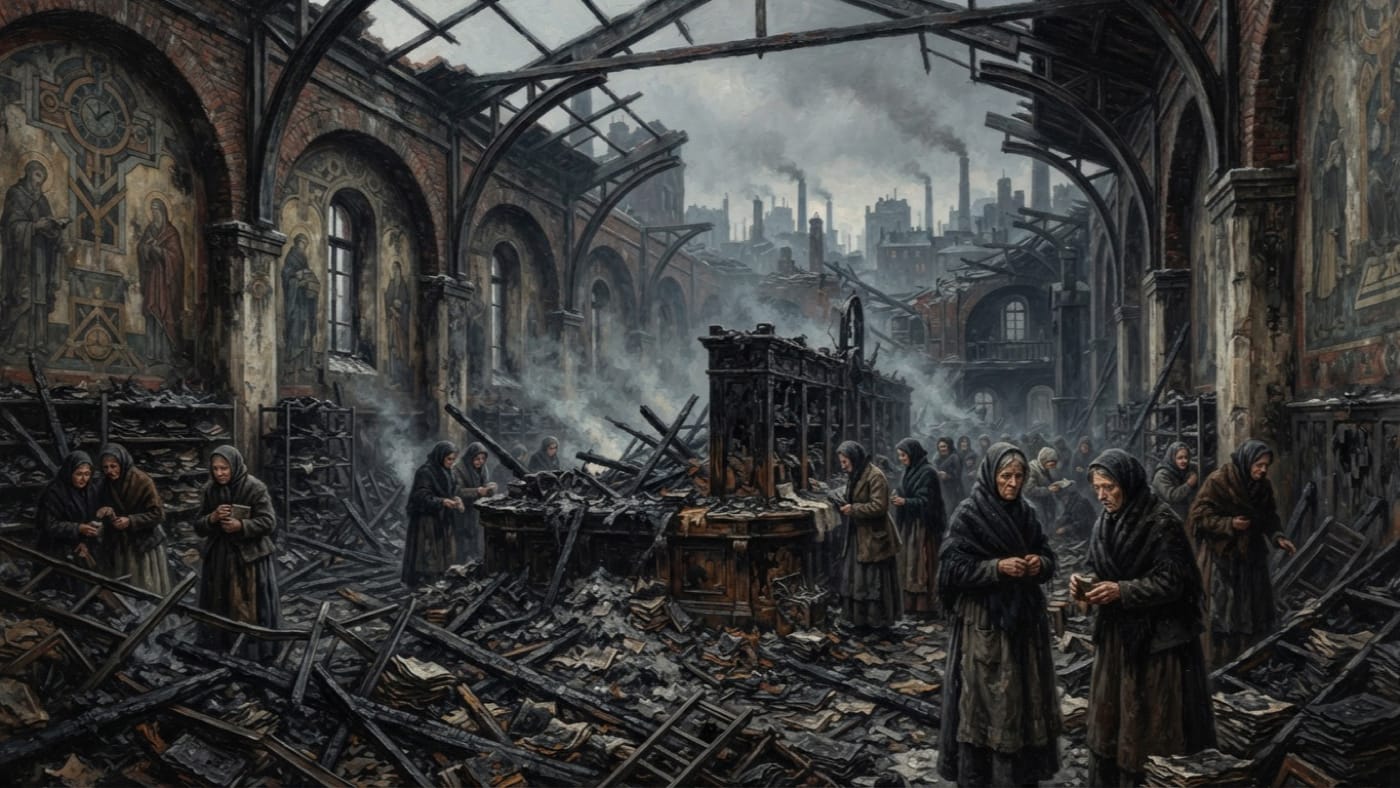
Lower District Tithe Office
The counter burned; the obligation survived
The Lower District Tithe Office in Bastion-Königsberg burned during the A.S. 139 Widow Riot against compulsory Widow’s Pennies. The counter and its records burned; the obligation survived.
Codex Ref. III.2.04-1673
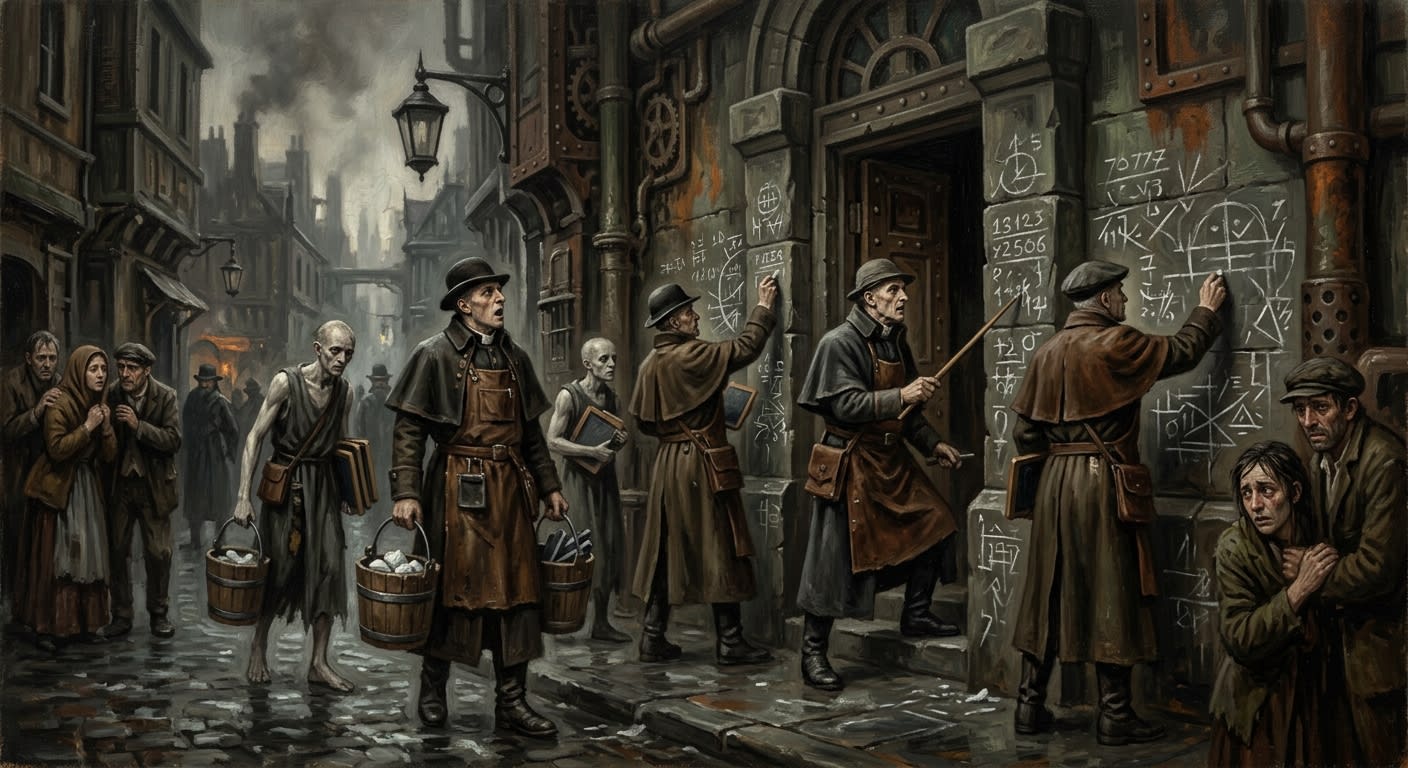
Marking Vicars
The doorframe made into a tribunal
Internal Street-Vicar faction of public chalk correction, visible recitation, reputational punishment, and the dangerous arithmetic by which a doorframe becomes doctrine.
Codex Ref. VIII.1.08-001

Marseille Salt Crisis
The winter lost its year; the Bureau kept its levy
An A.S. 201 survey of Marseille's undated winter emergency, preserved in Tithe Assessor tradition, and the Salt Dues first imposed in A.S. 92. The Bureau kept the levy more carefully than the winter's year.
Codex Ref. VII.4.22-001
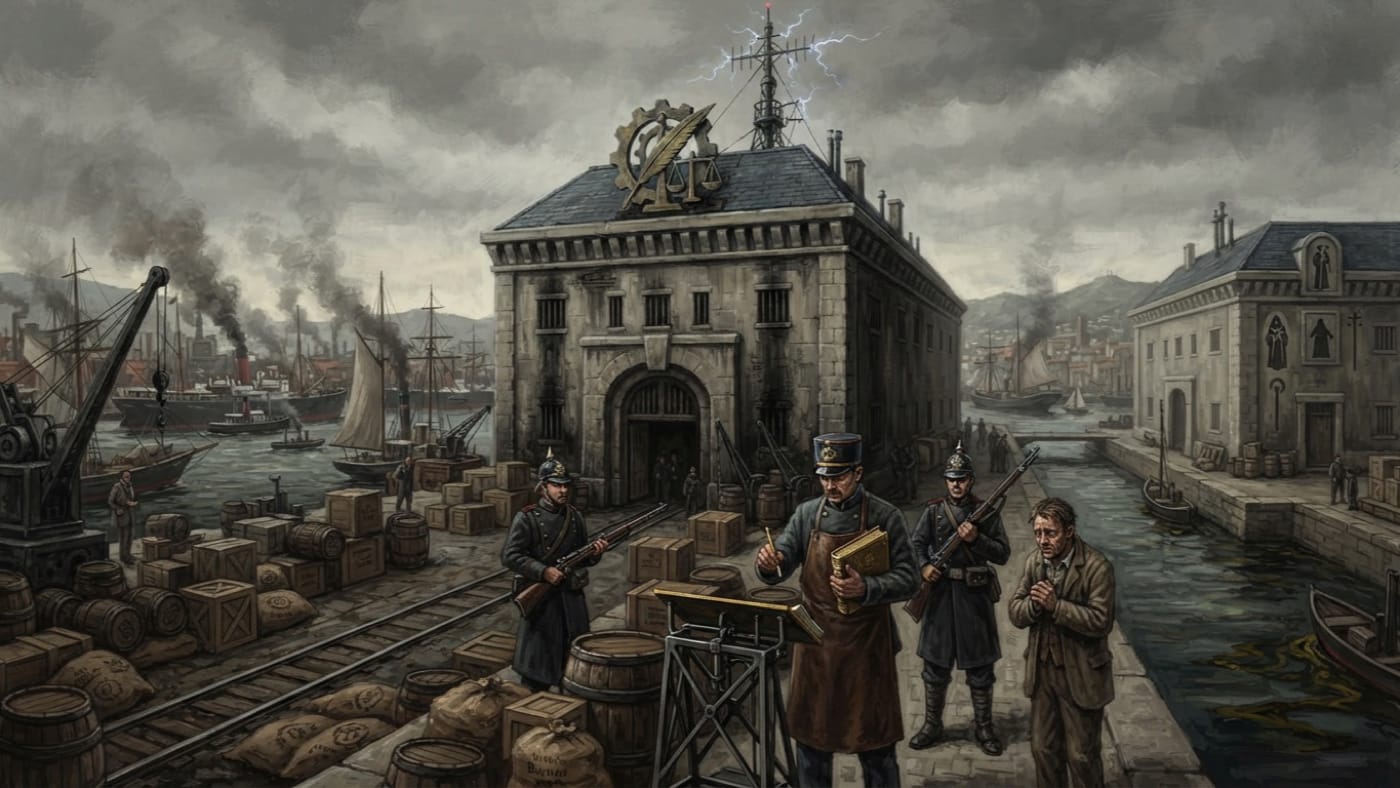
Mediterranean Revenue Office
Jurisdiction contested, collection continuous
The Bureau of Tithes' regional seat in Marseille weighs cargo and collects Salt Dues still temporary after 109 years. Harbour jurisdiction remains contested. Collection continues.
Codex Ref. II.4.09-201
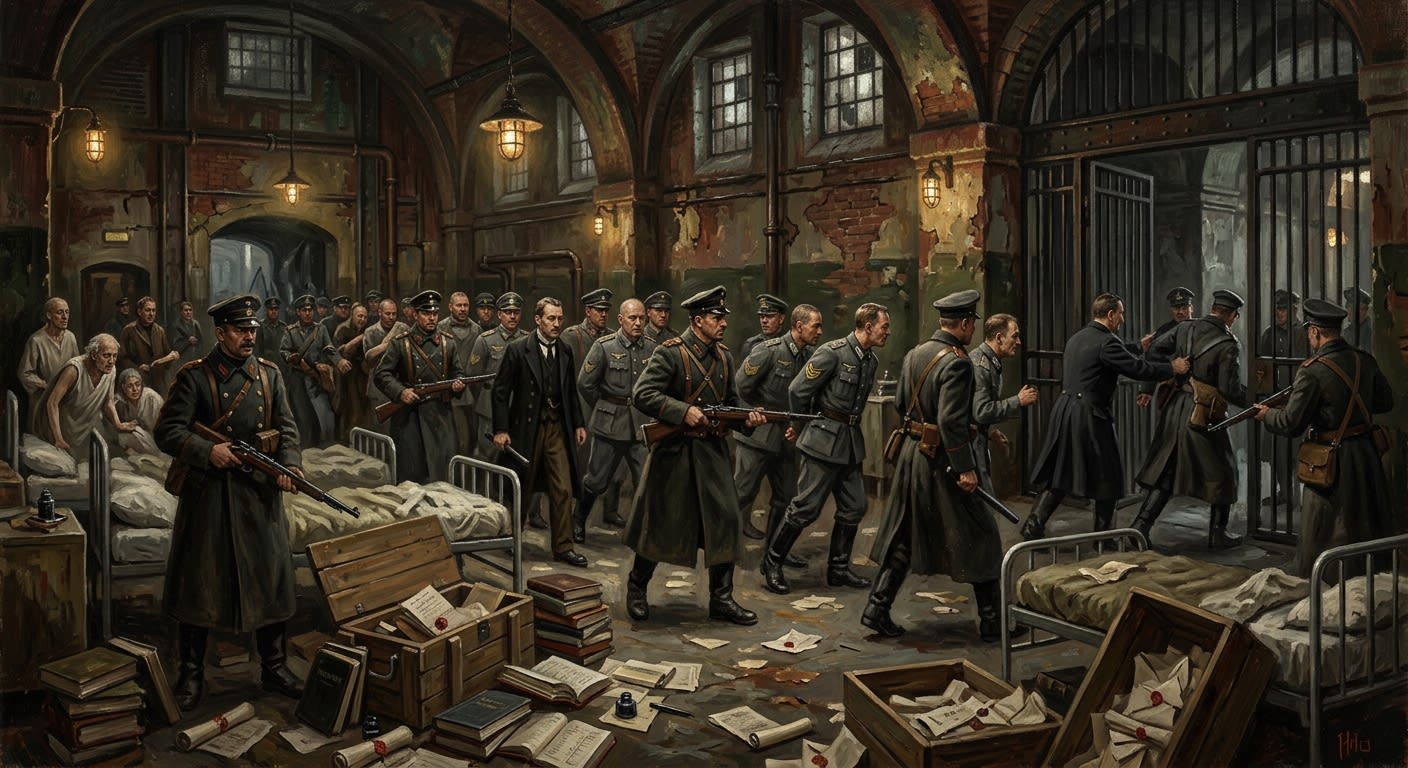
Mercy Ward Purge of A.S. 134
The year last words became contraband unless properly priced by authority
The Mercy Ward Purge of A.S. 134 exposed the sale and alteration of terminal confessions across Rhineland wards.
Codex Ref. VII.8.10-023

Mother Ledgermistress Anka Vey
She buys the Synod's delay and files the receipt
Mother Ledgermistress Anka Vey keeps Black Pennies' accounts so clean that Tithes cannot decide whether it has been audited, invoiced, or defeated.
Codex Ref. III.2.01-201
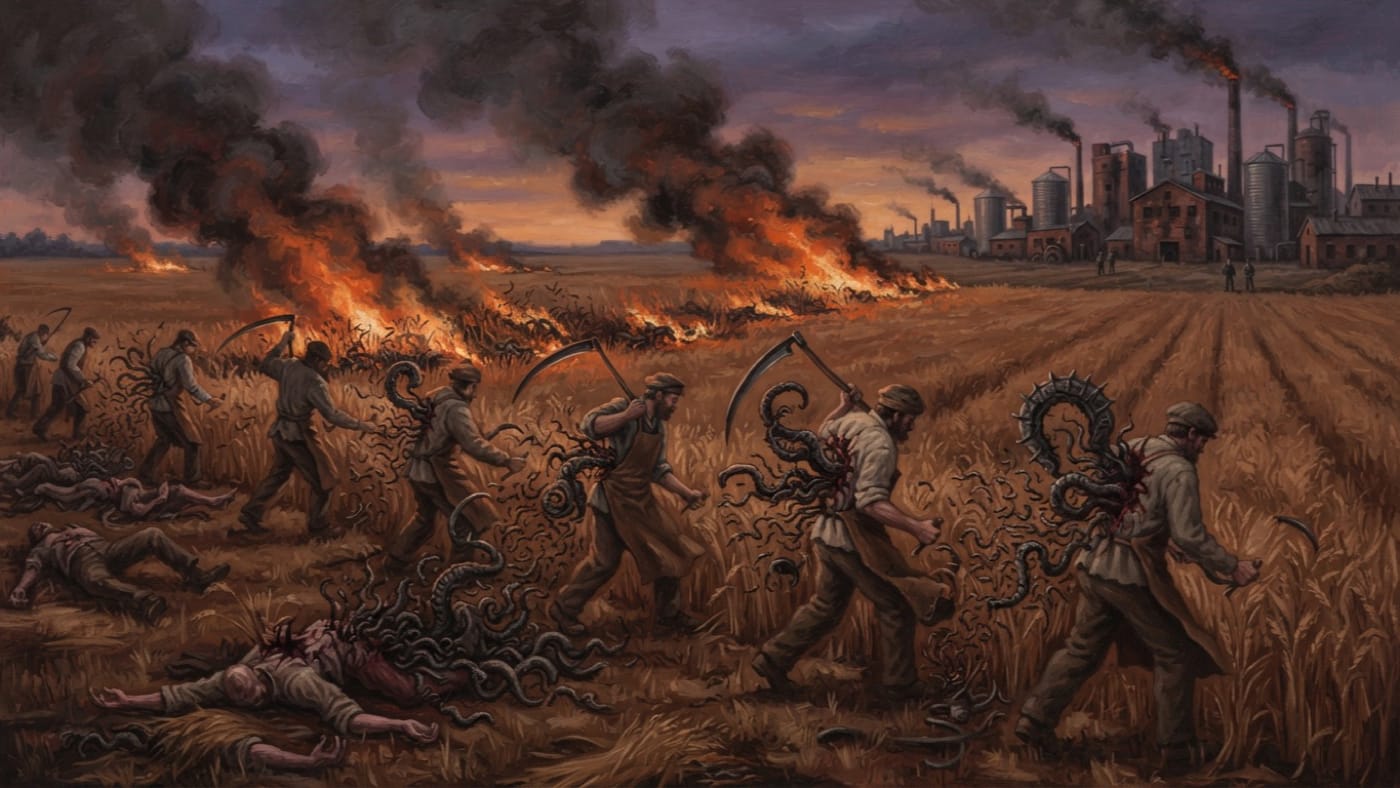
Odessa Fields
The harvest opened; Purity closed the argument
An A.S. 201 survey of an undated report: harvesters ruptured as Wormhosts in the wheat. Agriculture sought burning, Tithes sought salvage, and Purity burned the field.
Codex Ref. VII.8.10-1982
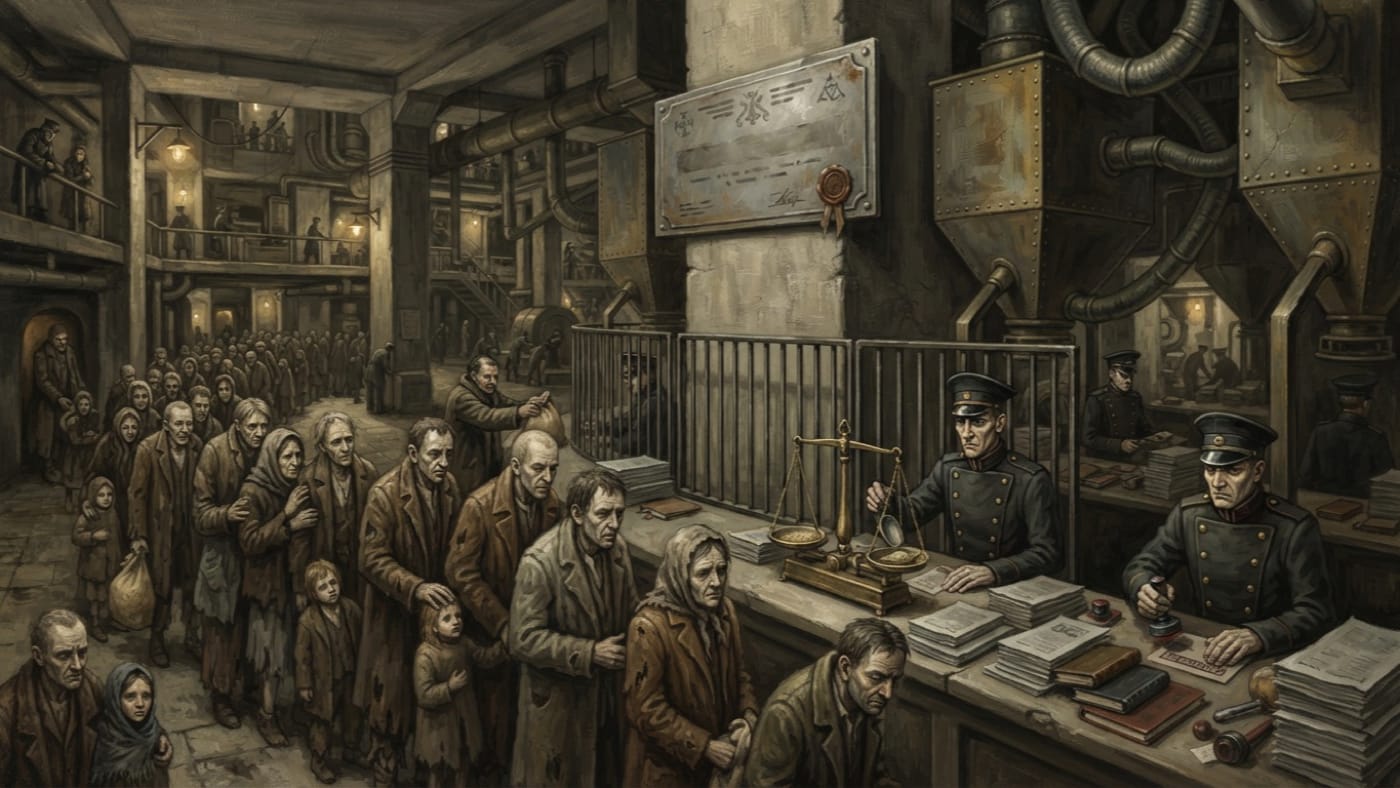
Office of Ration Compliance
Hungry enough to queue, fed enough to complain
The Office of Ration Compliance permits orderly complaint and tolerates the Quota Men who sustain it. Its undated training note is frank about hunger and silent about authority.
Codex Ref. VIII.4.02-201
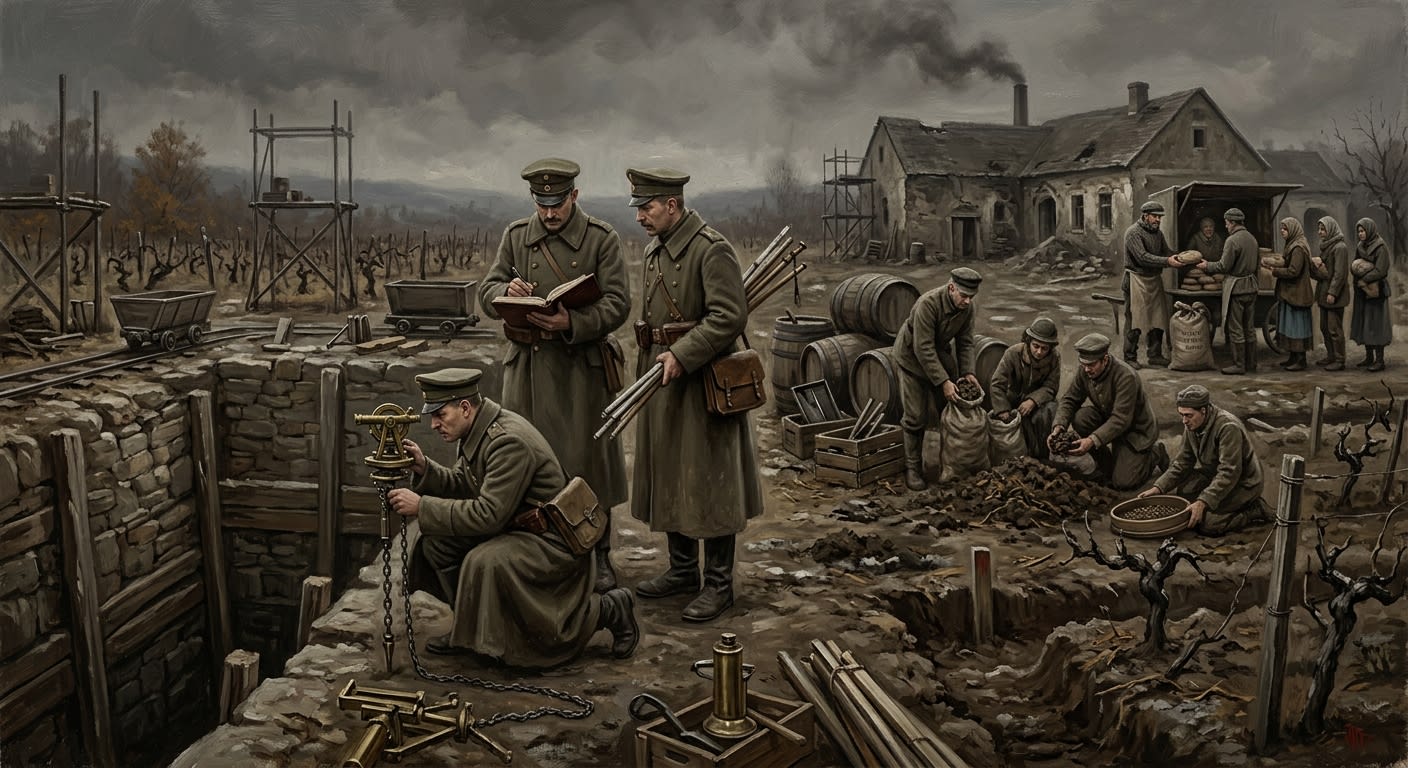
Pécs
The town where bread became evidence
Pécs is the vineyard ruin where Famine Pit measurement, Abundance Field proof, and Kargath's useful bread made hunger legible to the Ledger.
Codex Ref. II.4.09-147
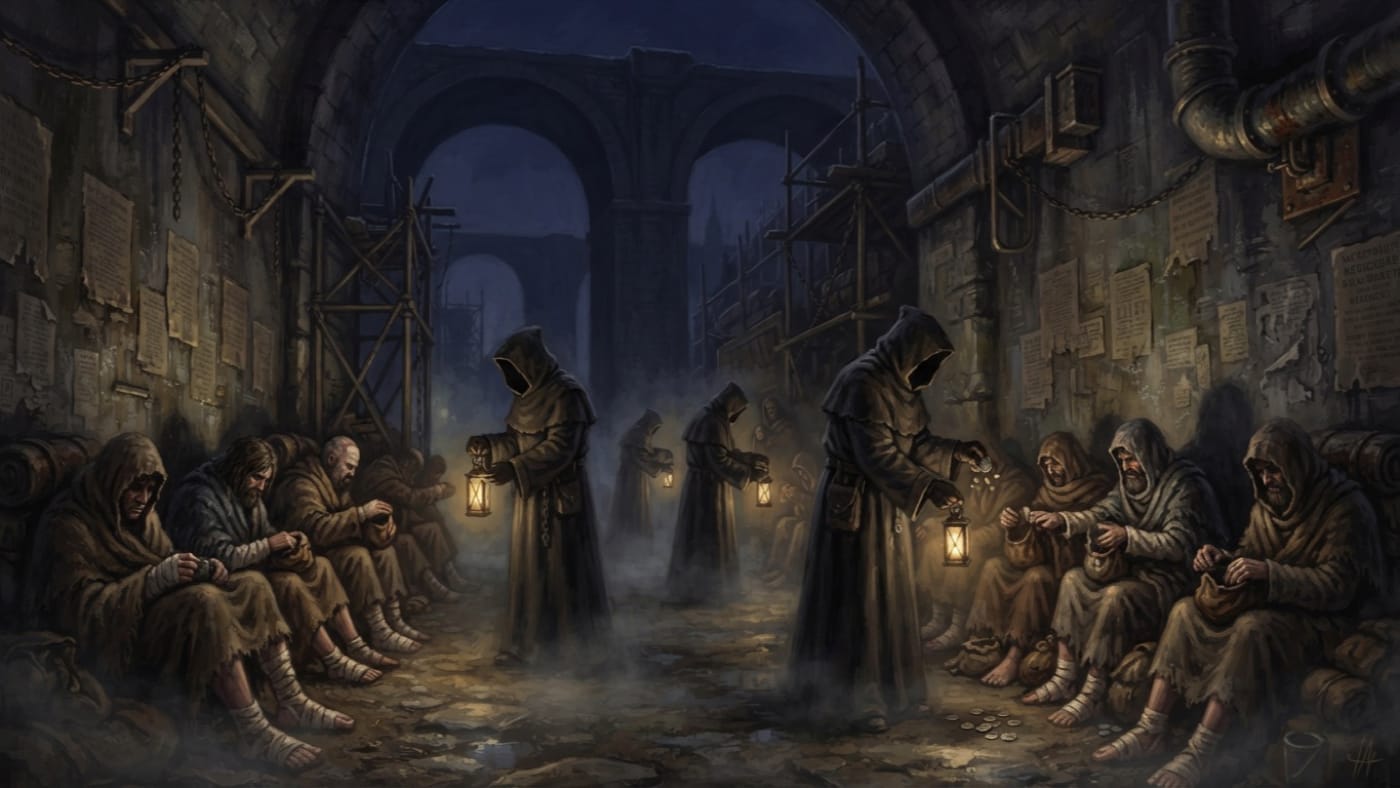
Penny Collectors
The arches close. The collection continues.
At Griefgate, robed Penny Collectors take coin from pilgrims after the arches close. Their brass lanterns are recorded; their authority and accounts are not.
Codex Ref. XII.7.04-001

Purists of the Bureau of Records
One truth, one roll, no supper invitations
Strict-text faction within the Bureau of Records, devoted to clean rolls, witnessed corrections, discrepancy reporting, and the holy unpleasantness of unpurchased truth.
Codex Ref. XII.9.03-001

Quai des Bateliers
The river door where disbelief kept its appointment and Purity kept it waiting
Strasbourg's damp river quay became legal instrument when Arno Kett walked into Purity's district house, waited forty minutes, and gave absence a file.
Codex Ref. II.1.04-138

Saint Ysolt of the Scales
Patroness of pity weighed until it becomes collection
Ratified patron of Tithe Assessors and arrears clerks, Saint Ysolt gives extraction a kindly face, a brass scale, and a grain that never falls.
Codex Ref. III.2.01-146

The Burden Index
The number rises; the bread shrinks
The Burden Index is the Bureau of Tithes household score that turns hunger, obedience, arrears, and suspicion into one billable number.
Codex Ref. XIII.1.84-157
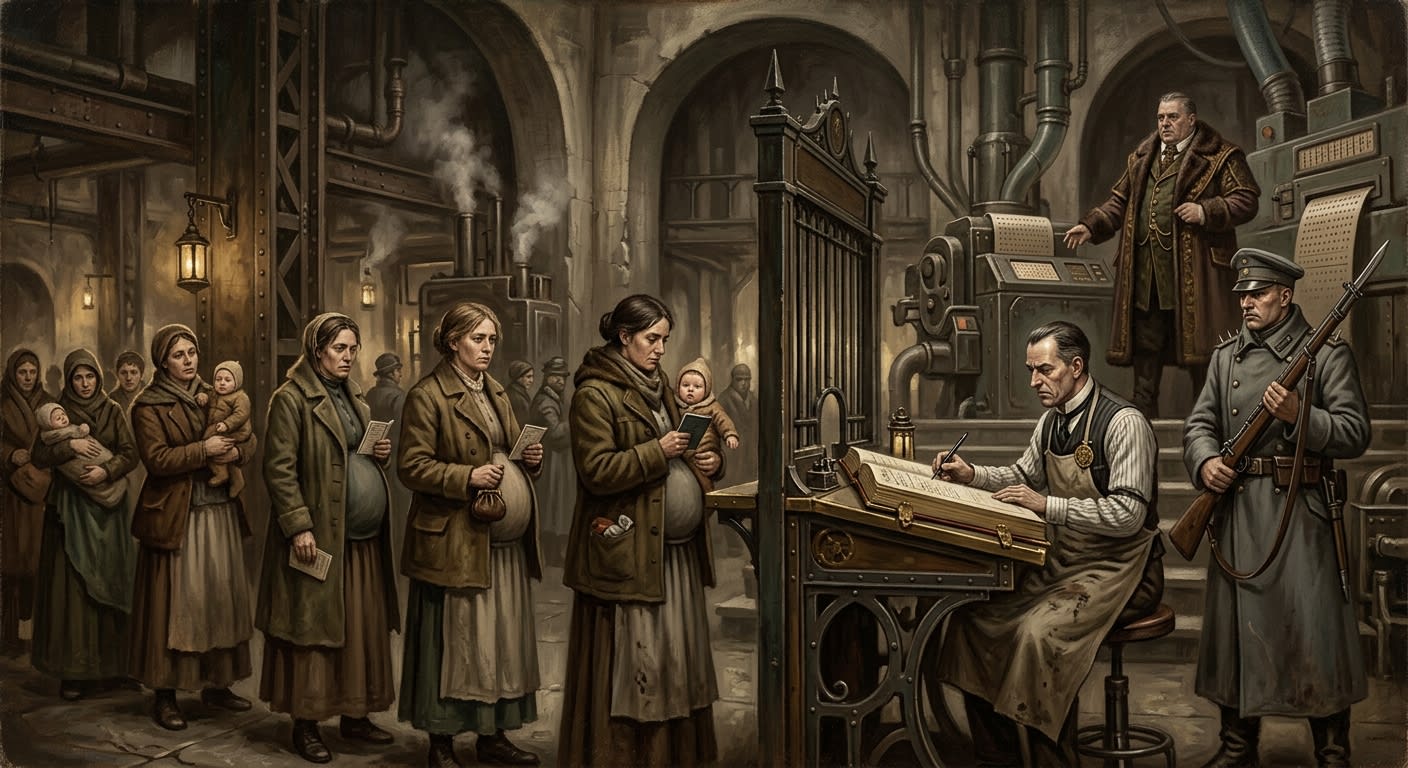
The Cradle Decree A.S. 157
The receipt issued before the first cry
The A.S. 157 Cradle Decree made pregnancy taxable, entering the unborn into the Ledger before birth and calling the cruelty provision.
Codex Ref. XIII.1.83-157
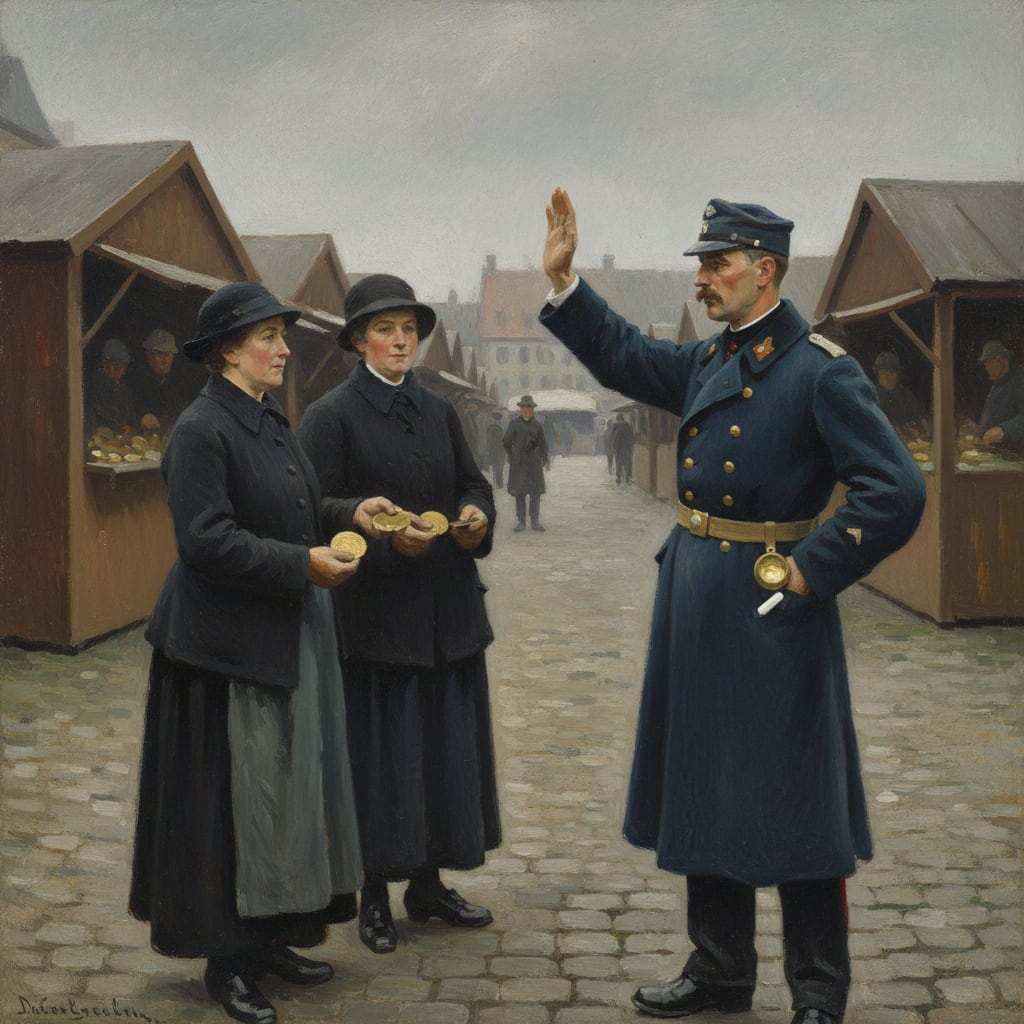
The Doctrine Street-Vicar
The bell's feet; the chalk's teeth; the compliance that comes to you.
The Bureau of Doctrine's mobile enforcement arm: four thousand three hundred chalk-bearing officers who walk where the bell cannot reach, inspect purity tokens, and mark doorframes in white, yellow, and red.
Codex Ref. XII.9.02-001
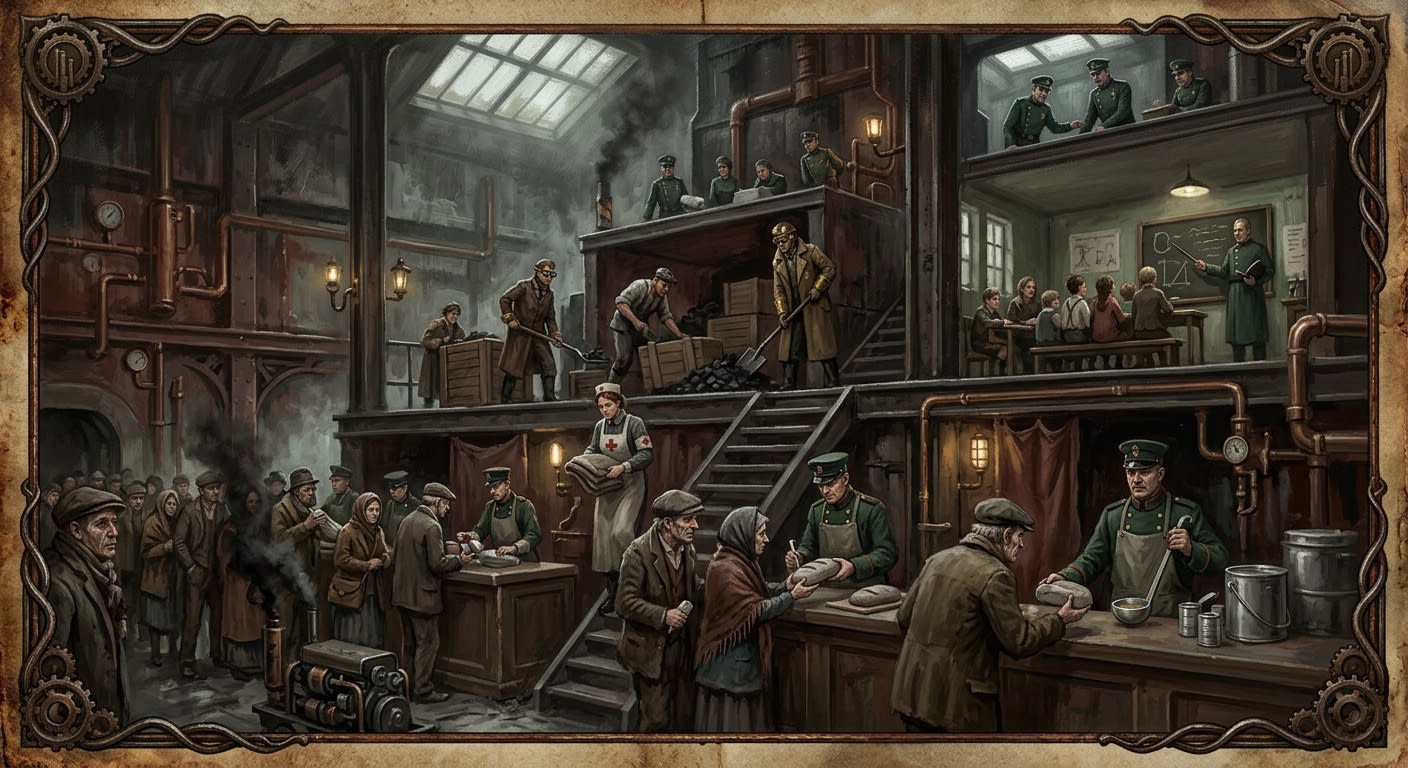
The Hierarchy of Need
Hunger is the sermon Kargath learned to serve hot
Kargath's cults do not begin with horns, but with bread. The Bureau calls their five stations a hierarchy. The hungry call them provision.
Codex Ref. IX.2.01-001
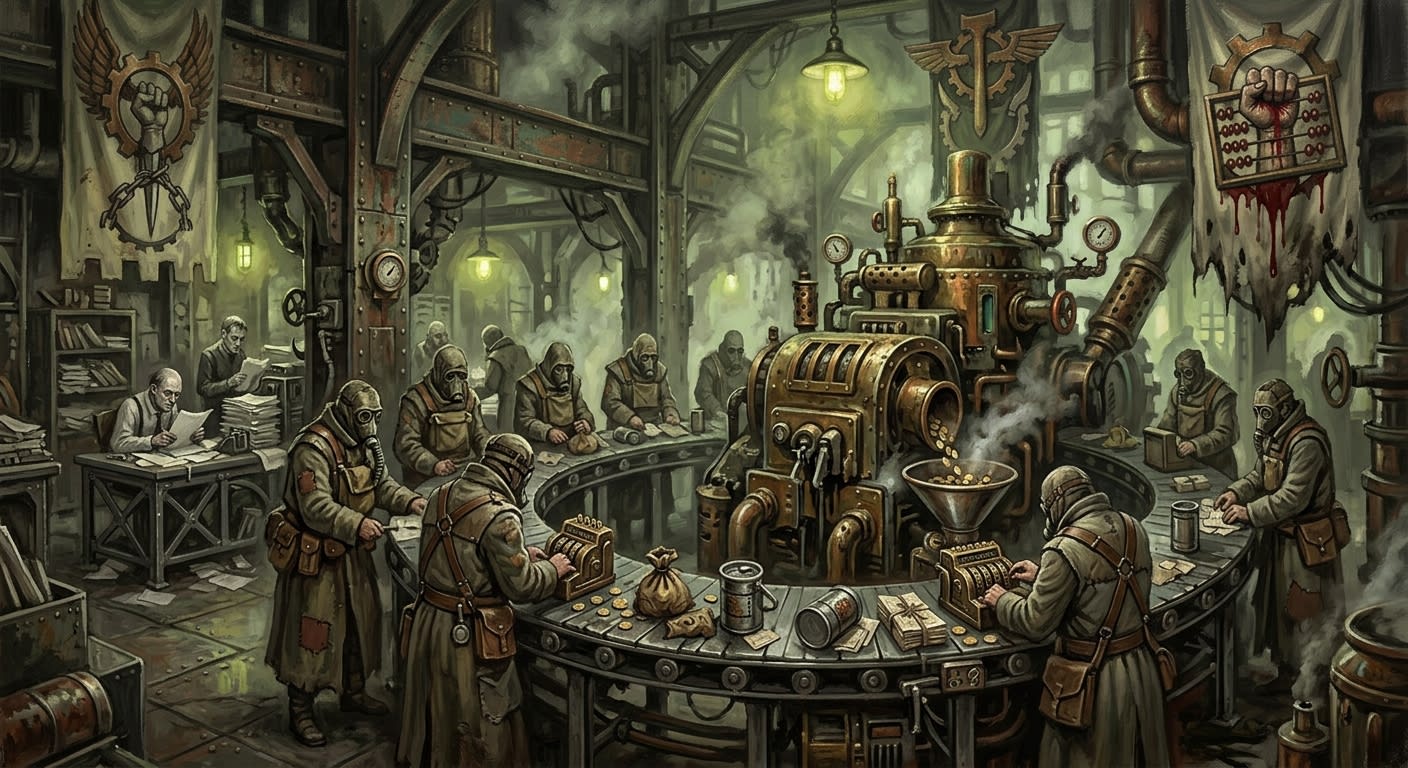
The Meta-Levy
The tax that charges for the privilege of being counted
The Meta-Levy is the Synod's tithe upon tithes, a circular sanctification of collection costs by which the Bureau of Tithes proves that even arithmetic kneels.
Codex Ref. XIII.1.38-001
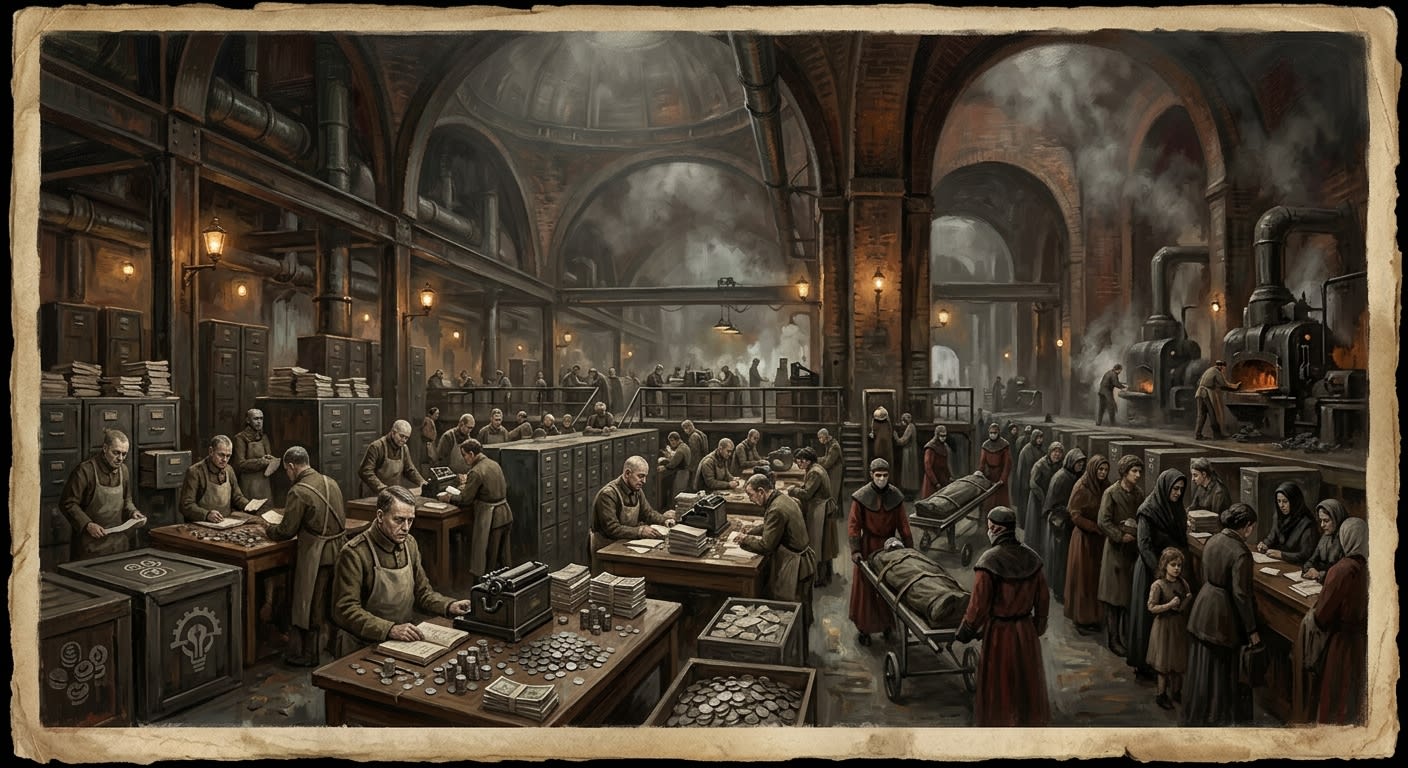
The Palatine Counting House
Where debt receives its sacrament and arithmetic learns to bite
The Palatine Counting House is Strasbourg's sleepless Fiscal Heart, seat of the Bureau of Tithes, where coins, corpses, widows, unborn debtors, and corrected accountants are counted.
Codex Ref. II.2.07-001

The Salt Dues of Marseille
Temporary measures have the finest survival instincts
The Salt Dues of Marseille began as an A.S. 92 emergency surcharge on coastal salt and learned immortality, feeding war, pilgrimage, and every clerk hungry enough to call permanence temporary.
Codex Ref. XIII.1.39-001
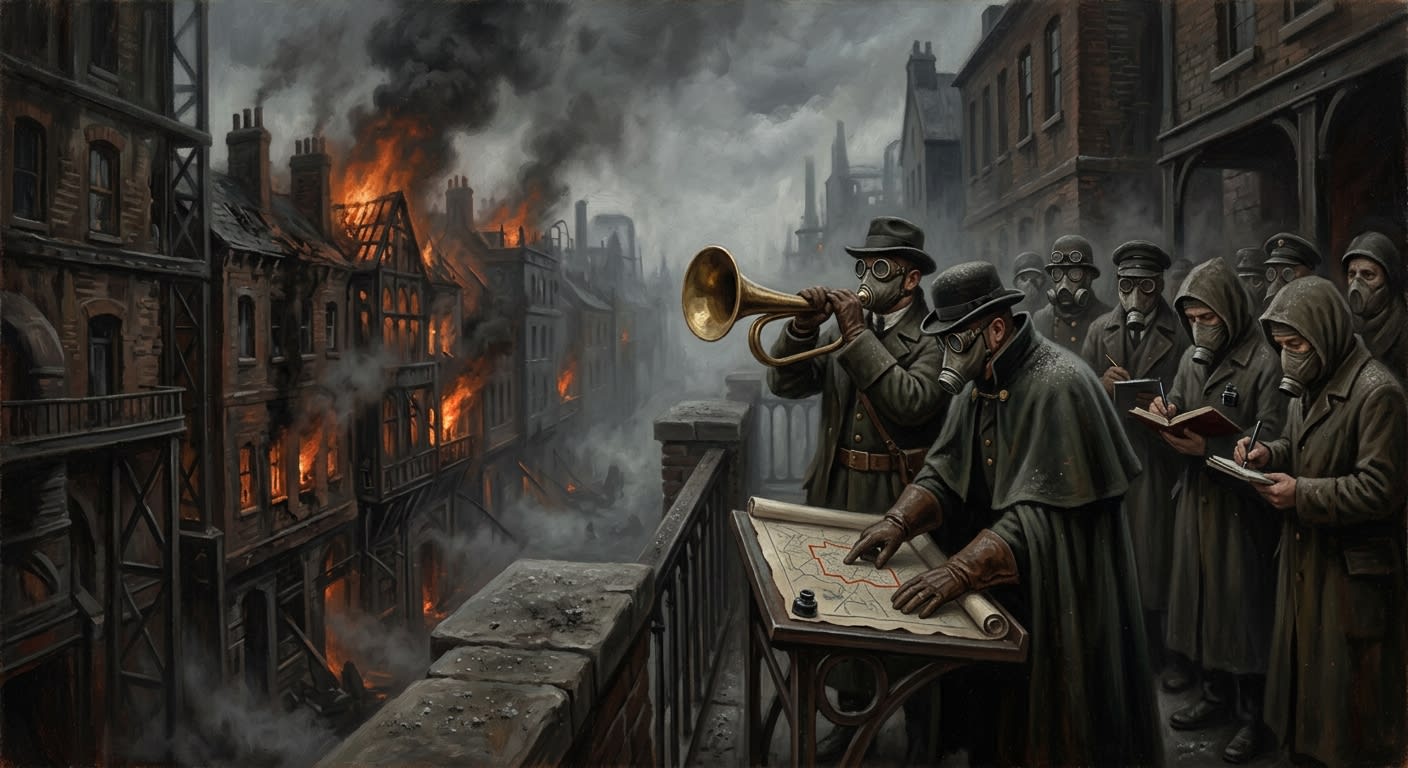
The Scour
When the Bureau decides a street has forfeited the privilege of remaining architecture
The Synod's ritual fire-purge of condemned quarters: horn, map, witness-line, and ash — the point at which bureaucracy ceases to argue and begins to burn.
Codex Ref. VI.4.01-001

The Screaming Coin
The smallest transaction Hell ever notarised
A coin-like anomaly from Constantinople's Foundry Quarter passes through lawful hands, screams at transfer, and returns after every recorded destruction.
Codex Ref. V.2.01-001

The Widow Riot
Three days of pots, smoke, and fiscally inconvenient grief
A.S. 139 lower-district uprising at Bastion-Königsberg after Directive 91-B made Widow’s Pennies mandatory and taught grief to strike metal.
Codex Ref. VII.8.10-139

Widow's Pennies
A penny enters the palm and waits for the scale
The Widow's Pennies are the Bureau of Tithes' smallest perfected cruelty: bereavement turned into household continuity, route discipline, and receipt.
Codex Ref. XIII.1.85-065

Writ 14-C
The law that taught the throat to wear a seal
Writ 14-C made the human throat an office: licensing Iron Choir Brand-Singers, disciplining pain into sound, and teaching rooms not to be answered.
Codex Ref. XIII.1.41-104