

Reverse Index
Referencing “Iron Choir Brand-Singer”
Every codex entry that links to Iron Choir Brand-Singer. 40 entries.
Return to Iron Choir Brand-Singer
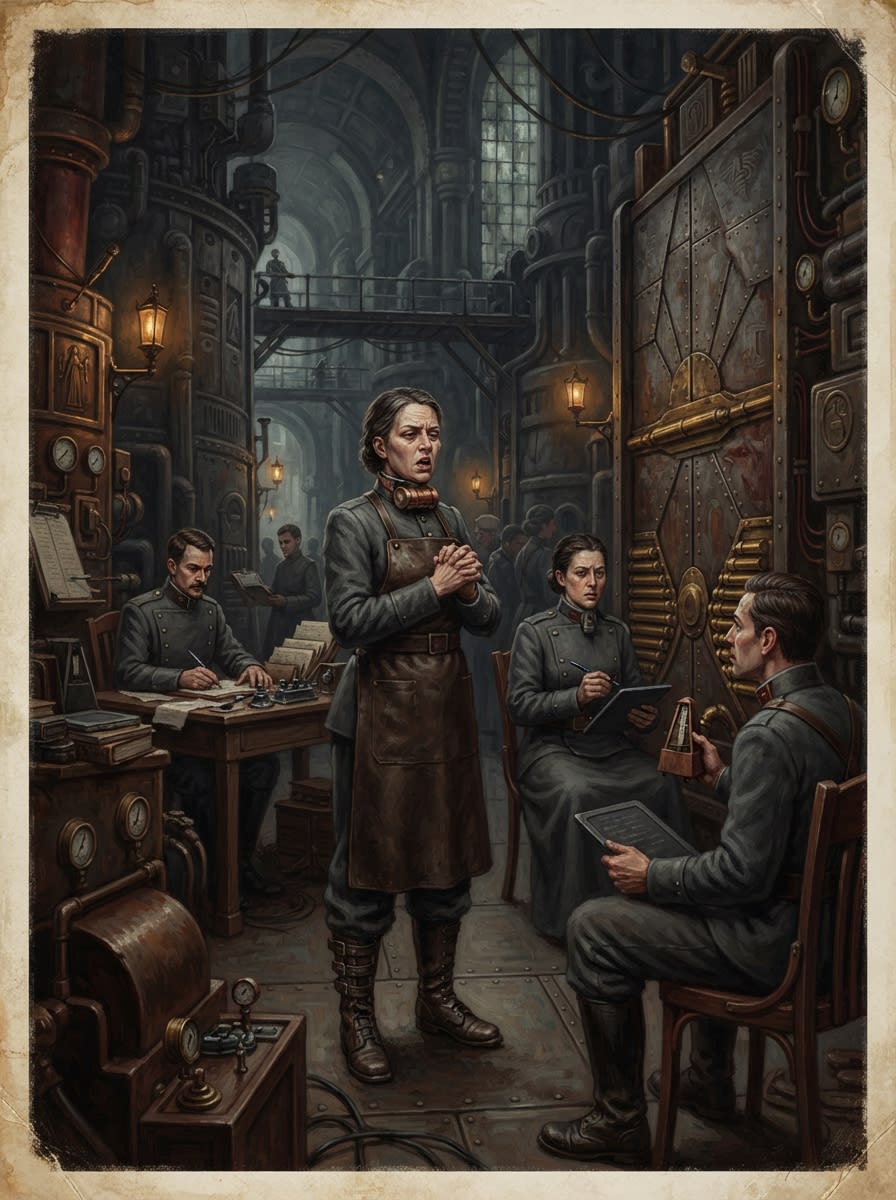
Approved Hymn Protocols Revision 14
The rulebook that made truth mandatory and expensive
Approved Hymn Protocols Revision 14 is Purity's A.S. 199 acoustic rulebook: witness the count, keep the iron dry, grade the room's answer, and do not harmonise.
Codex Ref. XIII.1.41-014

Ash Chorister
The novice rank where the Iron Choir teaches breath by blame
Ash Choristers are Purity's lowest licensed throats: novice drones with ash on the tongue, a token under it, and a professional gift for receiving blame.
Codex Ref. XII.24.01-002
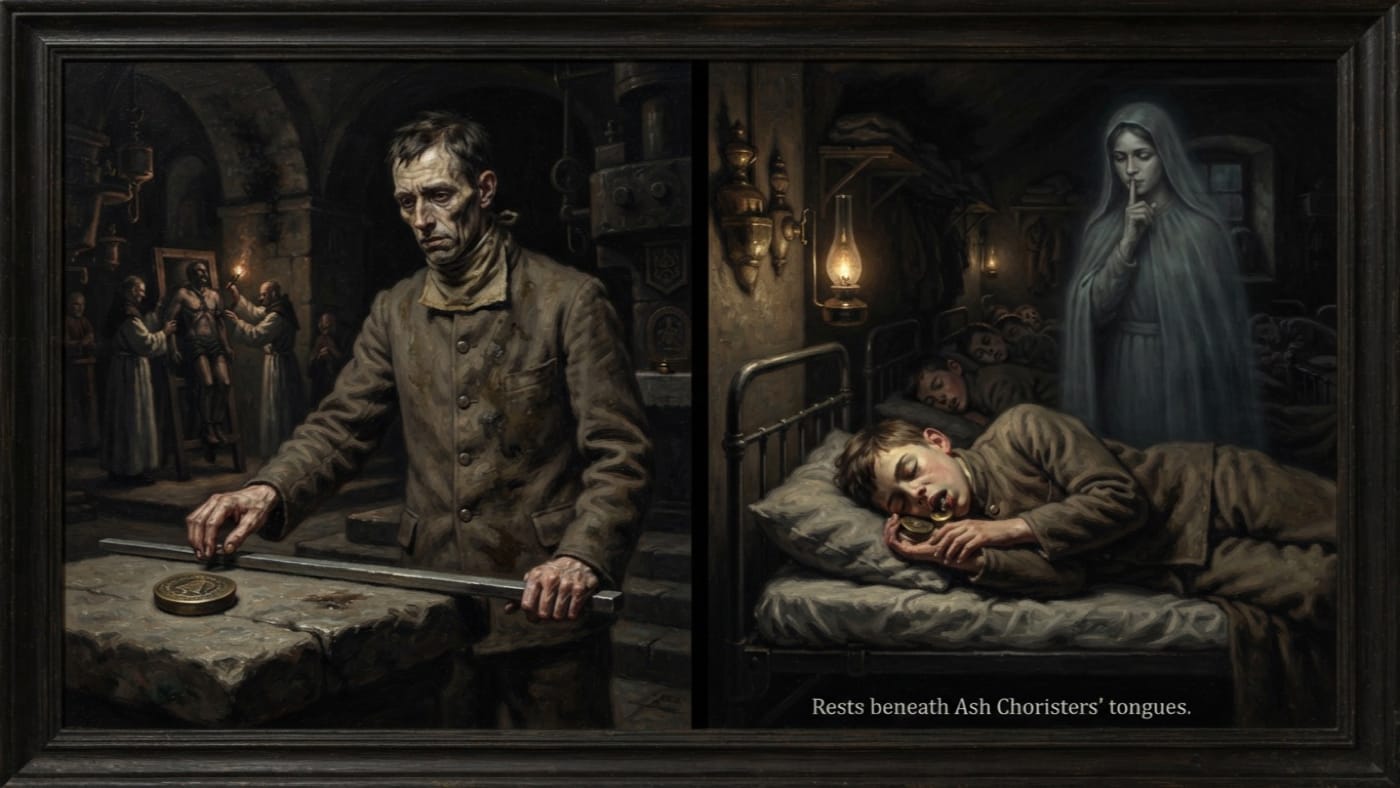
Bell-hour Metronome Token
The bell enters the mouth; the pension remains under review
Purity's bell-hour token keeps cadence by day and rests beneath Ash Choristers' tongues by night. Medicine calls the dreams sickness; Doctrine calls them devotion.
Codex Ref. XIII.1.41-213

Bell-sickness
The bell stops; the obedient skull keeps ringing
Bell-sickness is the Synod's recognised resonance affliction: phantom peals, compulsive cadence, command mislocation, and the small theological problem of obedience ringing back.
Codex Ref. XIII.1.87-201

Brand Authority Officer
The board takes the burn; the street serves the sentence
The Auditor signs; the Officer burns. After three consecutive broadcast windows below eighty-five percent, Brand Authority Officers mark the sector board. The timber takes the burn; every household receives the ration downgrade and longer curfew.
Codex Ref. XII.45.01-002
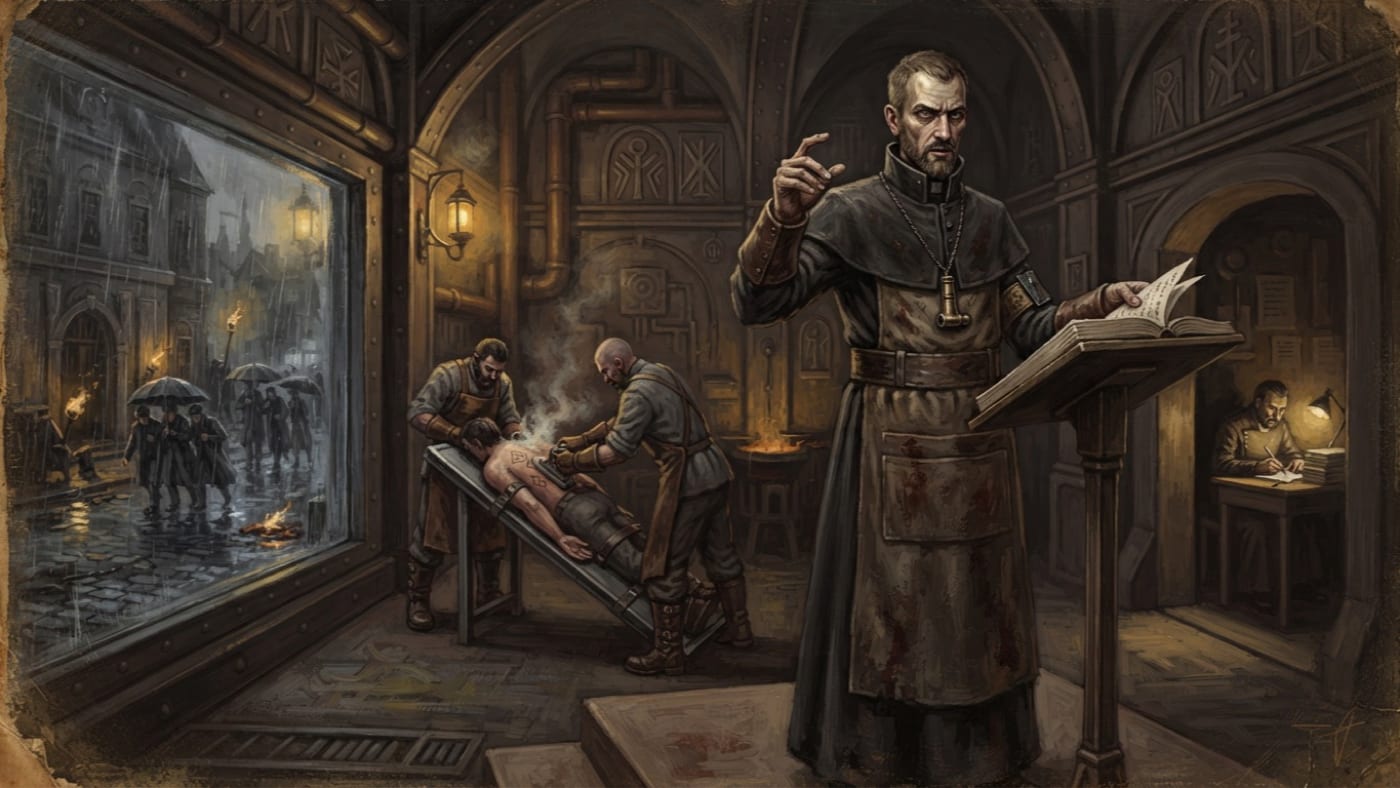
Cantor Edrik Senn
Three slates before Vespers, and a lifetime the archive cannot supply
Cantor Edrik Senn certified twenty-seven printers at Mainz before Vespers, c. A.S. 106. Judgment Tone kept the three slates and let the rain's work pass for a miracle.
Codex Ref. III.2.01-453

Cantor-Marshal
The senior throat that teaches the count and signs for the damage
The Cantor-Marshal sets Purity's singing protocols, trains novice throats and audits the scars. Rank grants a tuning rod and a signature; it never licenses reply.
Codex Ref. XII.24.01-003

Cantor-Marshal's Handbook
A master cannot be recruited by ink
A.S. 201 survey of the Cantor-Marshal's Handbook: the Sixth Revision's claim that Vell vindicated Judgment Tone is withdrawn. A master's name is easier to enlist than his practice.
Codex Ref. XIII.1.41-006

Cantor's Primer
Six words suffice for a citation. Truth requires more.
The Cantor's Primer is credited to Purity, Third Revision, through a single maxim. Six words explain the rite; they do not establish its compiler, issue date or the truth of a confession.
Codex Ref. XIII.1.41-003

Cantor's Primer, Fifth Revision
A master's name in the text, his warning in the margin
The Fifth Revision credits Vell with an older maxim without proof. His confirmed margin note offers the better instruction: keep the second note on time.
Codex Ref. XIII.1.41-005

Closing Tone
Three notes down, fourteen heartbeats, and the clerk has the last word
Three descending notes, fourteen heartbeats of silence, and no speech until the scribe certifies the chamber clean: Purity permits even an ending only by paperwork.
Codex Ref. XIII.1.41-005

Commentaries on Faithful Severity
The book that taught cruelty to file receipts
Severian's Commentaries turn cruelty into apparatus: cages, tongues, households, witness columns, and the tidy receipt by which harm becomes Doctrine.
Codex Ref. XIII.1.04-134

Directorate of Acoustic Enforcement
Every throat accountable; no reply authorised
Purity's office for licensing punitive voices, auditing penitential rites, and deciding which throat pays when the records disagree. Every anomaly receives a grade; no rank receives permission to reply.
Codex Ref. III.3.02-879

East Hall Response
The room that made the master lower his voice
East Hall answered Master Cantor Vell's Opening Hymn in A.S. 144. He spent three months at half volume; the file keeps the response's source and the rite's outcome under the bar.
Codex Ref. II.1.04-948

Echo Weather
The room replies, and the wise do not harmonise
Echo weather is the Brand-Singer name for chamber response: the room returning cadence with manners of its own.
Codex Ref. XIII.1.41-004
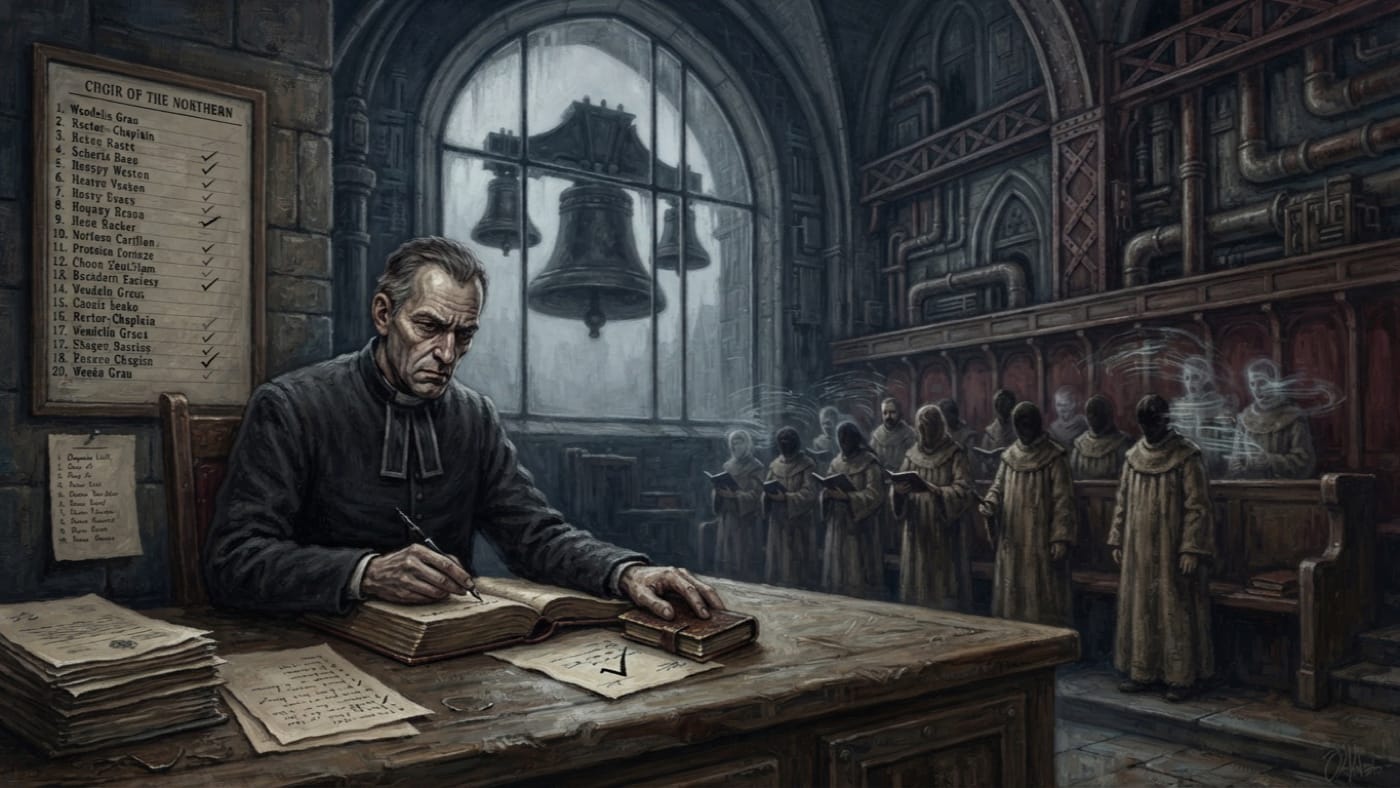
Echo-Sickness
The rota replaces the voice; the priest keeps the name
In A.S. 201, echo-sickness is recorded as a reason for removal from Königsberg's Choir rotation. Grau keeps the names after the rota replaces the voices; the record supplies neither diagnostic criteria nor a proven link to bell-sickness.
Codex Ref. XIII.1.88-201

Father Arnolt Deiss
The man whose forearm entered the record before his life did
Condemned Cologne lecturer whose forearm supplied Saint Orla's first approved miracle. The inscription held; his charge and fate remain absent from the consulted account.
Codex Ref. III.2.01-1021
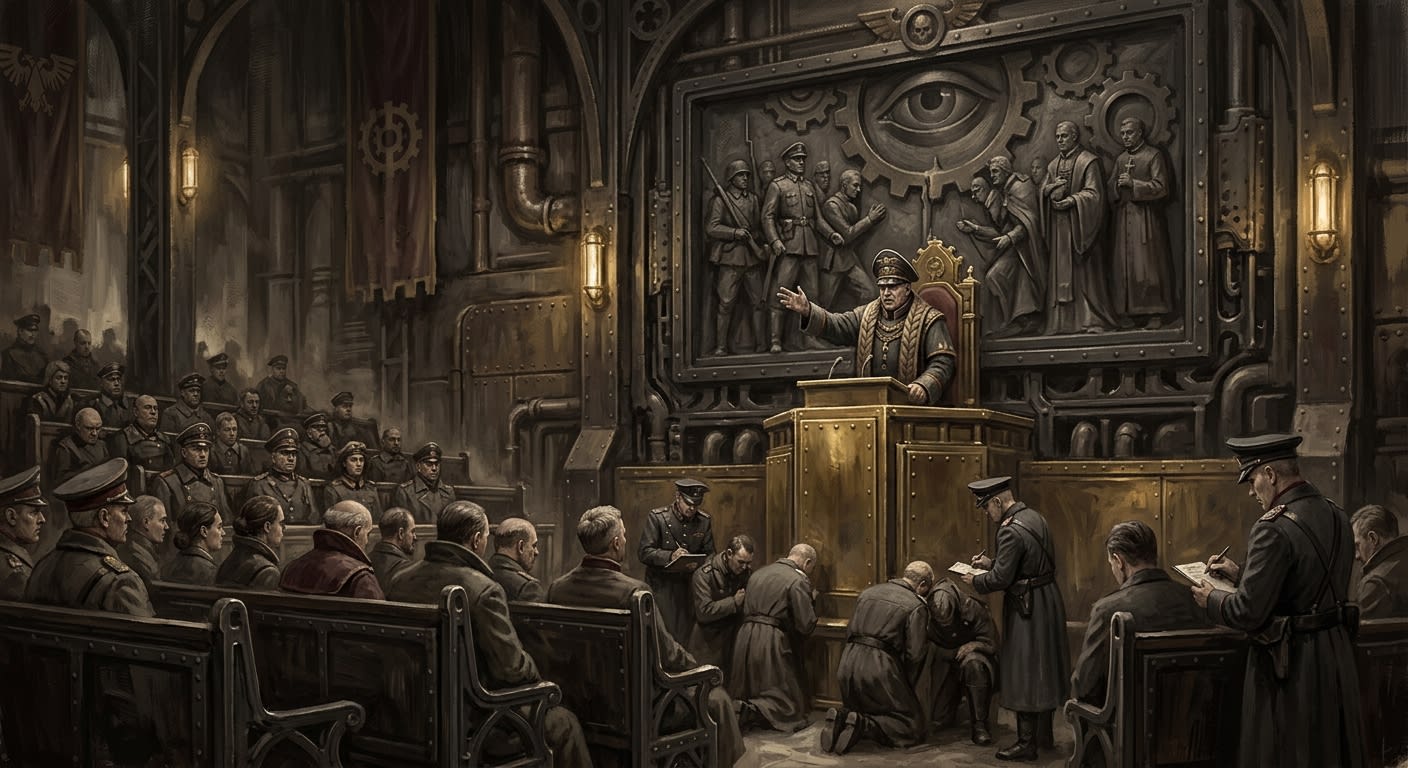
Fourth Doctrinal Congress
Where silence was made to testify against the listener
The Fourth Doctrinal Congress did not end doubt. It converted silence into mortal fault, canonised useful dead, and taught Strasbourg to occupy the Creator's quiet.
Codex Ref. XIII.1.90-104

Glass-Listener
The Synod has found a use for ruined ears
A Pillar-Keeper whose disciplined glass-speech detects cracks, sealed names and counterfeit pins. The Synod calls the affliction folklore, sends the worker into sealed yards and pays the old wage.
Codex Ref. XII.30.04-001

Glass-Speech
The city enters through the ear and leaves as obedience
Occupational condition of long-service Pillar-Keepers, beginning in tone, advancing into condemned names, and ending when the city speaks through the worker it has damaged.
Codex Ref. XIII.1.43-001

Holy Hush
The tract that mistook three quiet months for conversion
The Silentist tract claims Vell converted after East Hall. I keep the sentence struck through: three months at half volume do not make a disciple.
Codex Ref. XIII.1.41-1382

Inquisitor-General Severian
The man who taught fear to sing in tune
Architect of the Iron Choir of Mainz and Severian Gloss to the Catechism of Obedience, he made silence culpable, cruelty legible, and fear useful enough to receive forms.
Codex Ref. III.2.01-006
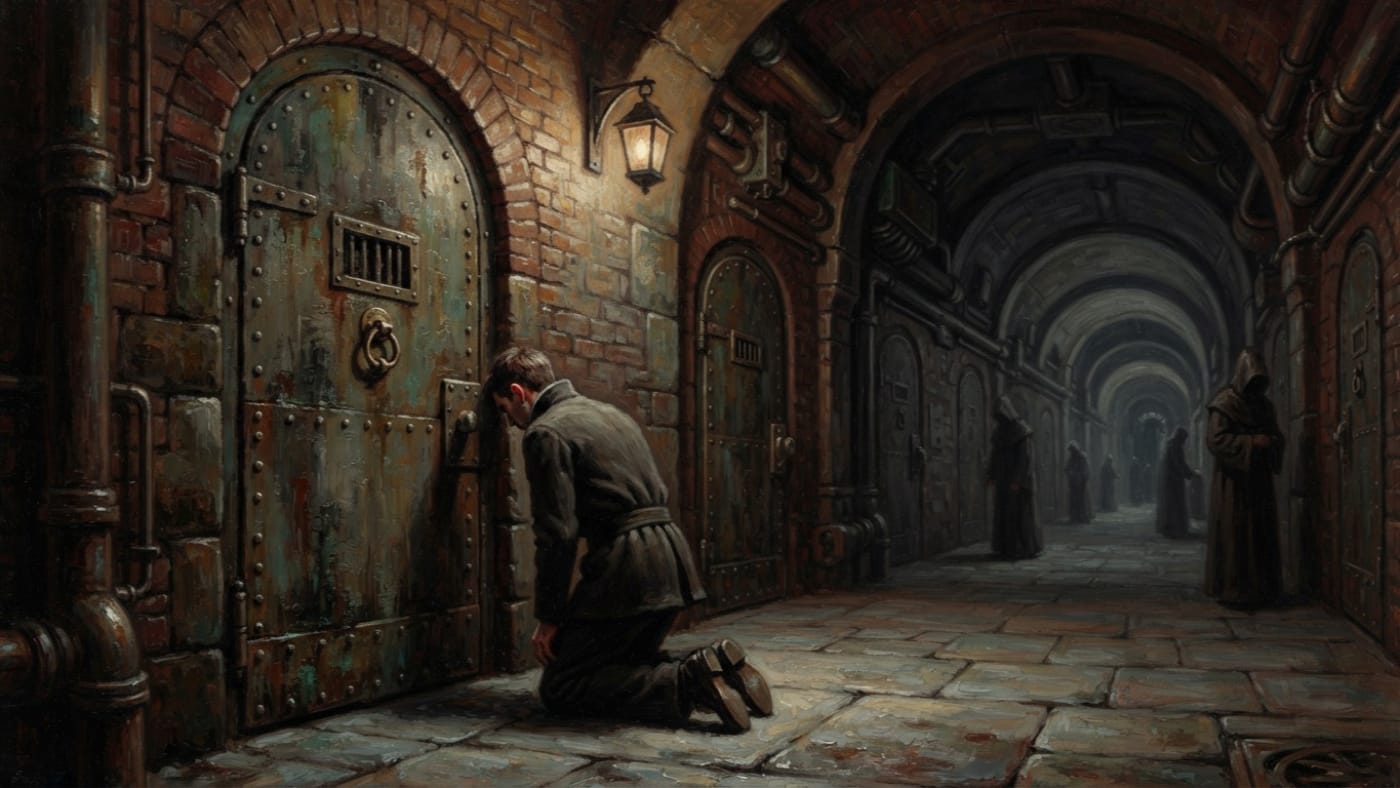
Instructional Silence
The master's silence grants no licence to imitate
An A.S. 201 survey of Vell's recorded reassignment: one cell, individual pupils and taps that judged careers. His name grants lesser throats no permission to attempt seven chambers.
Codex Ref. XIII.1.41-005

Irena Vos
The singer whose reprimand became a method
Irena Vos withheld song during the North Annex Hush of A.S. 118. Three subjects were certified, Purity reprimanded her, and the Silentists kept her method.
Codex Ref. III.2.01-118

Iron Choir
A licensed hymn in the chamber, a captive congregation on the road
The Iron Choir gives confession a licensed hymn and the Mainz road a congregation of cages. Severian's method keeps fear in public service, even when most of the cages stand empty.
Codex Ref. VIII.1.09-001

Iron Choir of Mainz
Where the road learned to keep a throat open
The Iron Choir of Mainz turns condemned throats into civic instruction: a Purity road of cages, bells, Brand-Singers, witness columns.
Codex Ref. VIII.1.09-134

Judgment Tone
The knife-note by which truth is made punctual
Judgment Tone is the Brand-Singer school of cut cadence and rapid certification, beloved by tribunals whenever truth must arrive before the docket cools.
Codex Ref. XIII.1.41-002

Life of Orla
A saint's duty roster, read until the throat obeys
The approved Life of Orla gives Brand-Singers a posting, a straight confession and fourteen heartbeats of silence. The woman is omitted; the work survives.
Codex Ref. XIII.1.41-064

Mainz Correction
One civic body, one sentence, and a road that keeps speaking
An A.S. 201 survey of Severian's civic purge: Mainz declared one heretic body, processed by parish, street and guild, and left with iron cages that keep the sentence audible.
Codex Ref. VII.8.10-1718

Master Cantor Vell
The man who made seven rooms confess in one breath
Master Cantor Vell held seven punitive rites in one cadence, left no treatise for lesser throats, and made silence itself a professional benchmark.
Codex Ref. III.2.01-063

Mercy Tone
The slow note by which the body remains useful
Mercy Tone is the Brand-Singer school that preserves breath, extends confession, and proves that the Synod can call acquisition mercy when the note is slow enough.
Codex Ref. XIII.1.41-001

North Annex Hush
The reprimand stayed; the method spread
The Silentists' founding account: in A.S. 118, Irena Vos withheld song in an answering Strasbourg chamber. Three subjects were certified; Purity reprimanded her, then assigned her more unstable rooms.
Codex Ref. VII.8.10-118

Opening Hymn
A frightened body must first learn the approved rhythm
Purity's Opening Hymn steadies the condemned person's breath before branding. A clean confession begins with lungs that keep the approved time.
Codex Ref. XIII.1.41-201
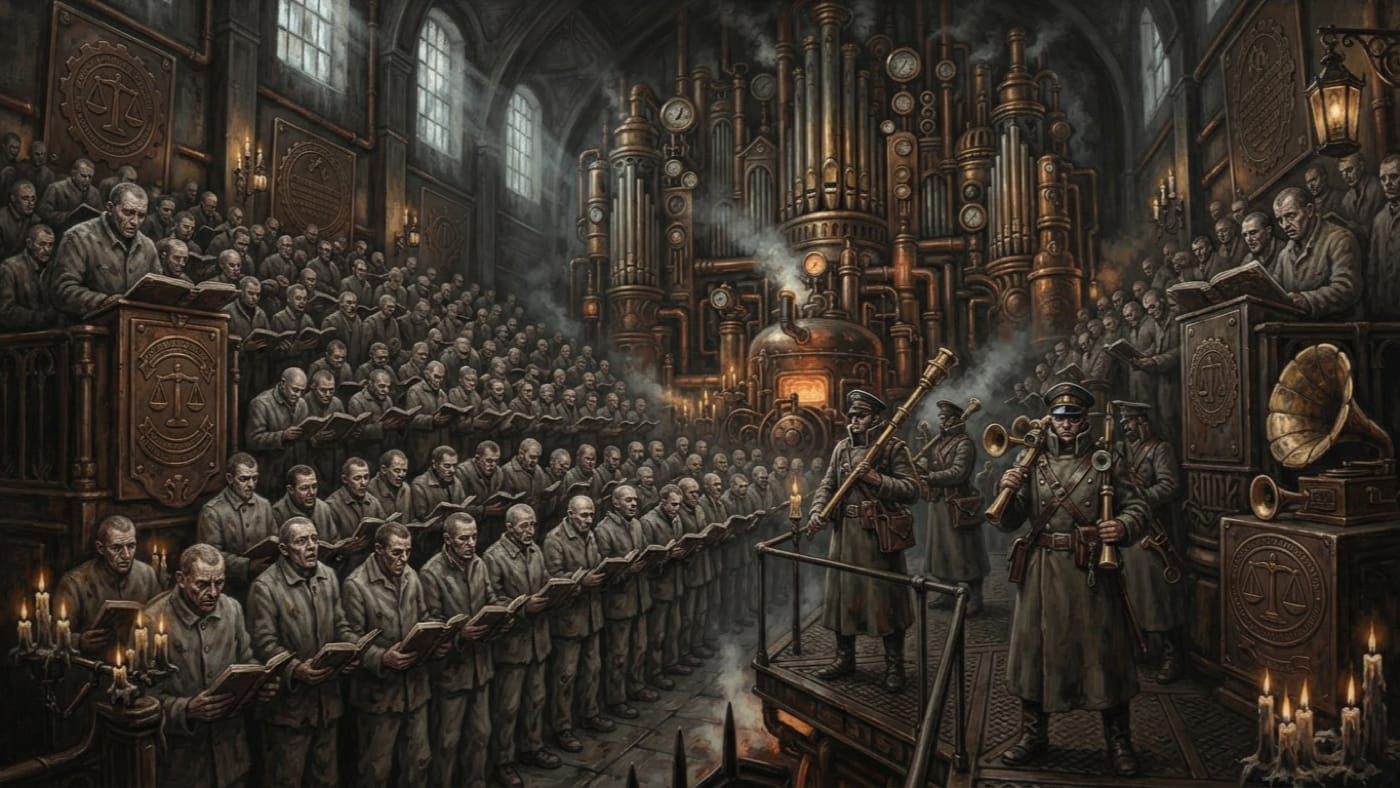
Penal Choir
The condemned supply the voice. The Bureau supplies the words.
An A.S. 201 survey of penal-choir assignments, compelled licensed singing and denunciation bargains. The Bureau can certify that the condemned sang the correct words. Belief requires a different form.
Codex Ref. VI.3.01-201

Saint Orla of the Steady Note
The patron who taught singers to hold the note and refuse the answer
Patron of the Iron Choir Brand-Singers, Orla gave Purity its steady note, its closing silence, and its most useful command: do not answer it.
Codex Ref. III.2.01-064

Silent Confessional of Vienna
A cabinet need not hear you to make you confess
Rumoured Viennese black-iron confession apparatus whose victims emerged senseless yet speaking, preserved by Doctrine as a repurposed warning to every booth clerk who trusts furniture.
Codex Ref. XIII.1.61-001

Silentists
The school that knows every note may be an invitation
The Silentists are the Brand-Singer school of withheld song, minimal cue, and useful quiet: despised by choirs, loved by rooms that do not answer.
Codex Ref. XIII.1.41-003

Standing Order 22-S
When the room answers, starve it
Standing Order 22-S teaches the holy art of refusal: three notes down, fourteen beats sealed, no answer to the hungry wall.
Codex Ref. XIII.1.41-104

The Compulsory Marking Decree
The day paper lost authority and flesh became the Bureau's preferred document
The A.S. 113 Compulsory Marking Decree made bodily tri-marks mandatory at forward-zone checkpoints after forged papers killed eighty-seven at Bastion-Przemyśl.
Codex Ref. VII.8.10-035

Writ 14-C
The law that taught the throat to wear a seal
Writ 14-C made the human throat an office: licensing Iron Choir Brand-Singers, disciplining pain into sound, and teaching rooms not to be answered.
Codex Ref. XIII.1.41-104