

Reverse Index
Referencing “De Vera Luce”
Every codex entry that links to De Vera Luce. 39 entries.
Return to De Vera Luce
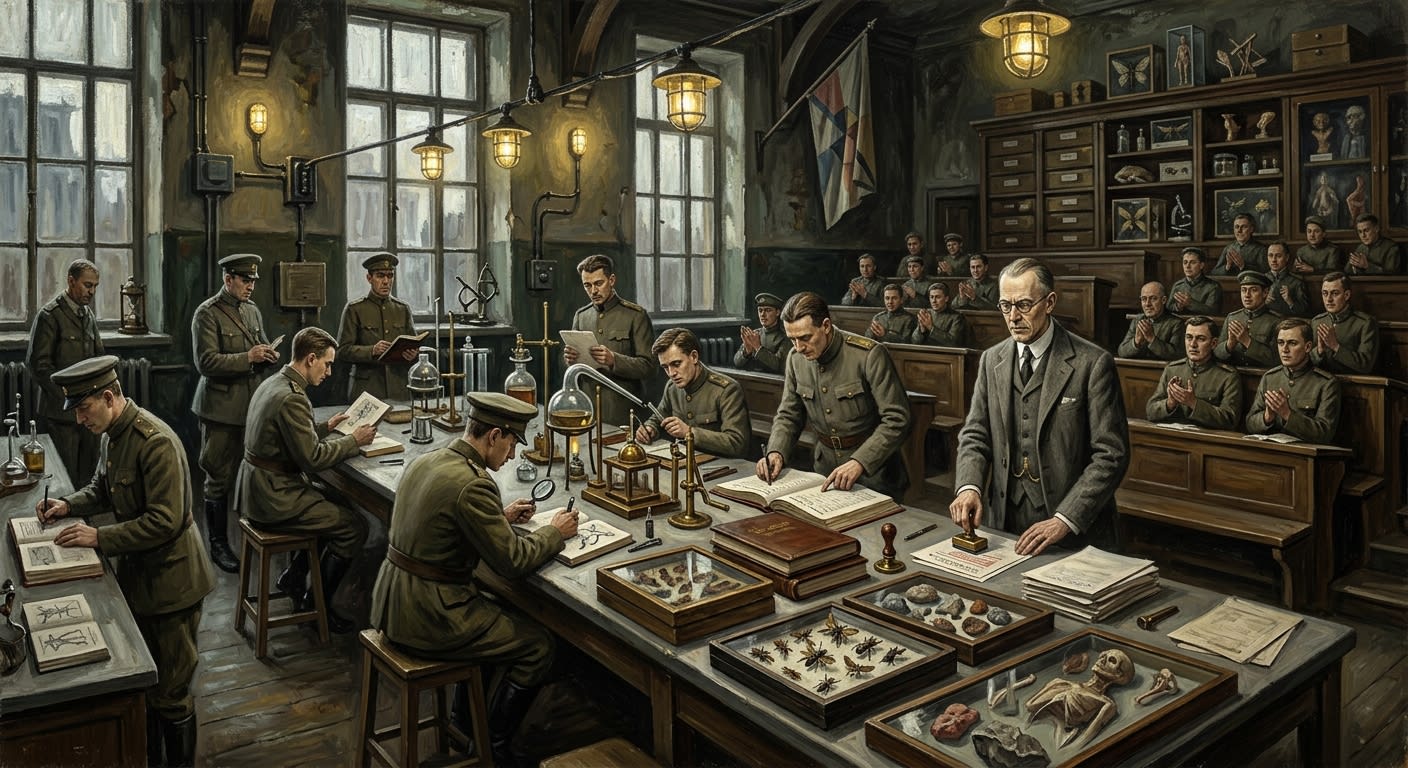
Academies
New cathedrals of Reason, with better brass and worse gods
The Academies taught Europe to replace altar with demonstration table, relic with specimen case, prayer with applause, and cruelty with excellent paperwork.
Codex Ref. I.1.03-000
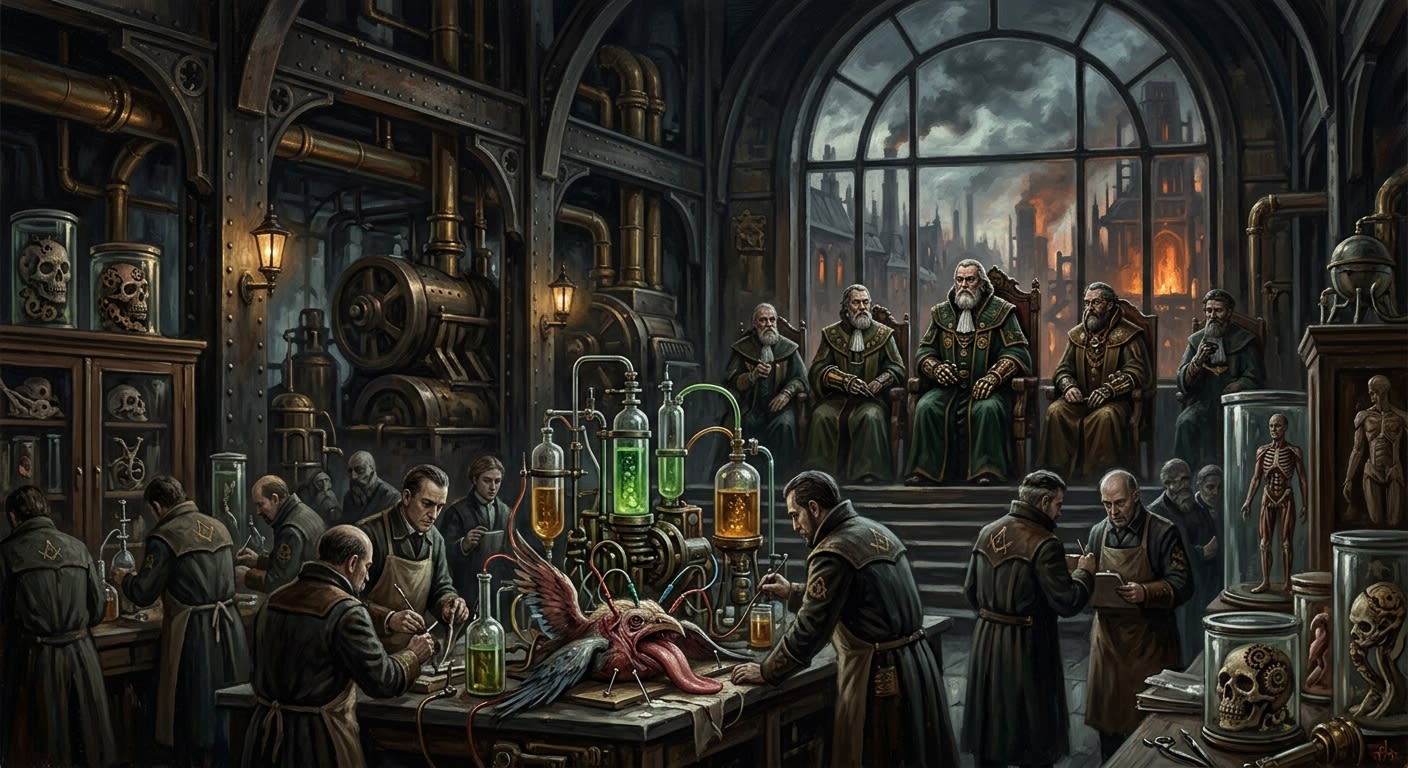
Academy of Sciences
The Republic's licensed brain, perfumed in Paris
Paris's Academy of Sciences gave the Rationalist Republic clean nouns for dirty hands: prayer as infection, tongues as evidence, and schools as knives.
Codex Ref. I.1.03-030
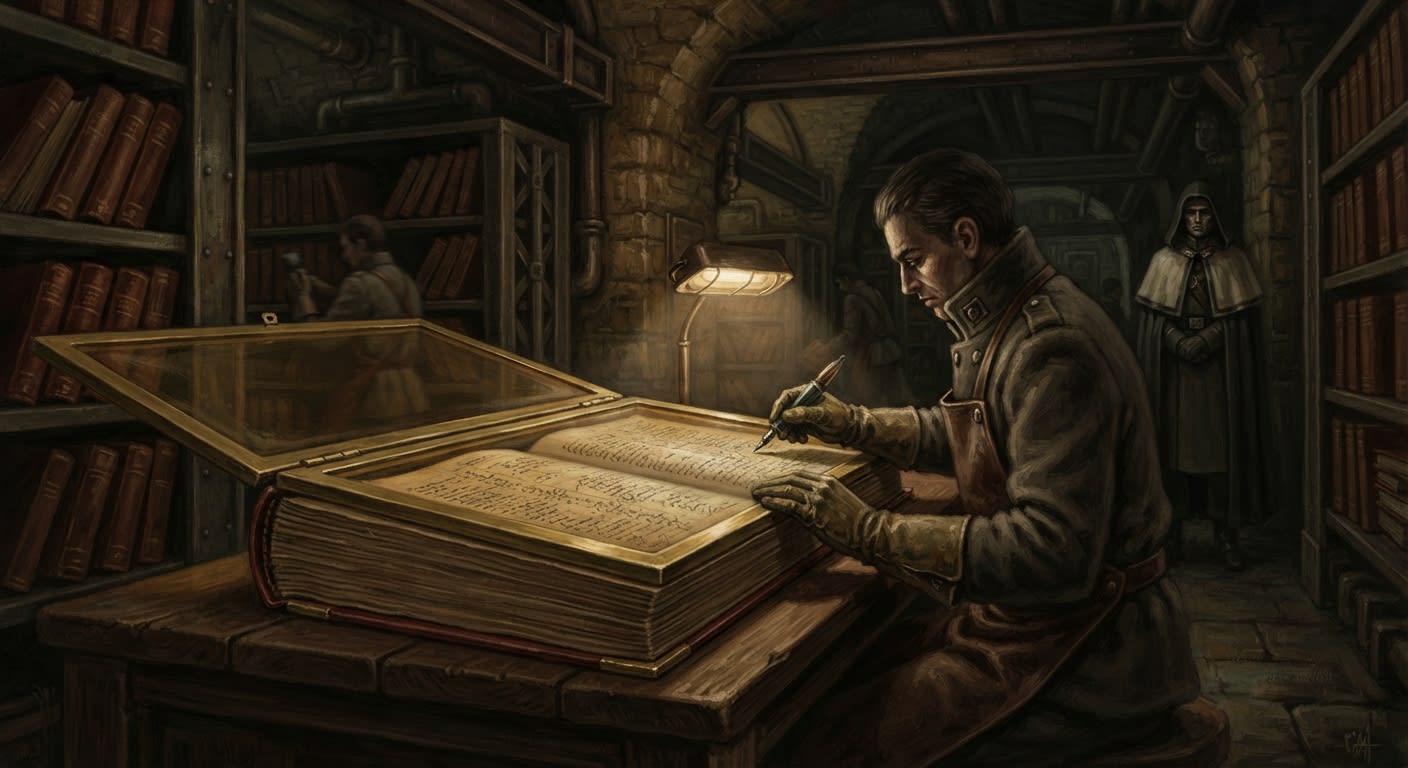
Amber Book
The ledger Purity refuses to close
The Amber Book is Purity's tacky ledger of suspended warrants: names kept breathing under glass until the charge written for them catches up.
Codex Ref. XIII.1.06-002

Amsterdam
The city where Europe learned to sin in pamphlet form
Amsterdam is the independent Dutch city where the Synod's calendar wound was printed: first the Year of Letters, then *De Vera Luce*, then Europe taught to doubt by invoice.
Codex Ref. II.4.09-012
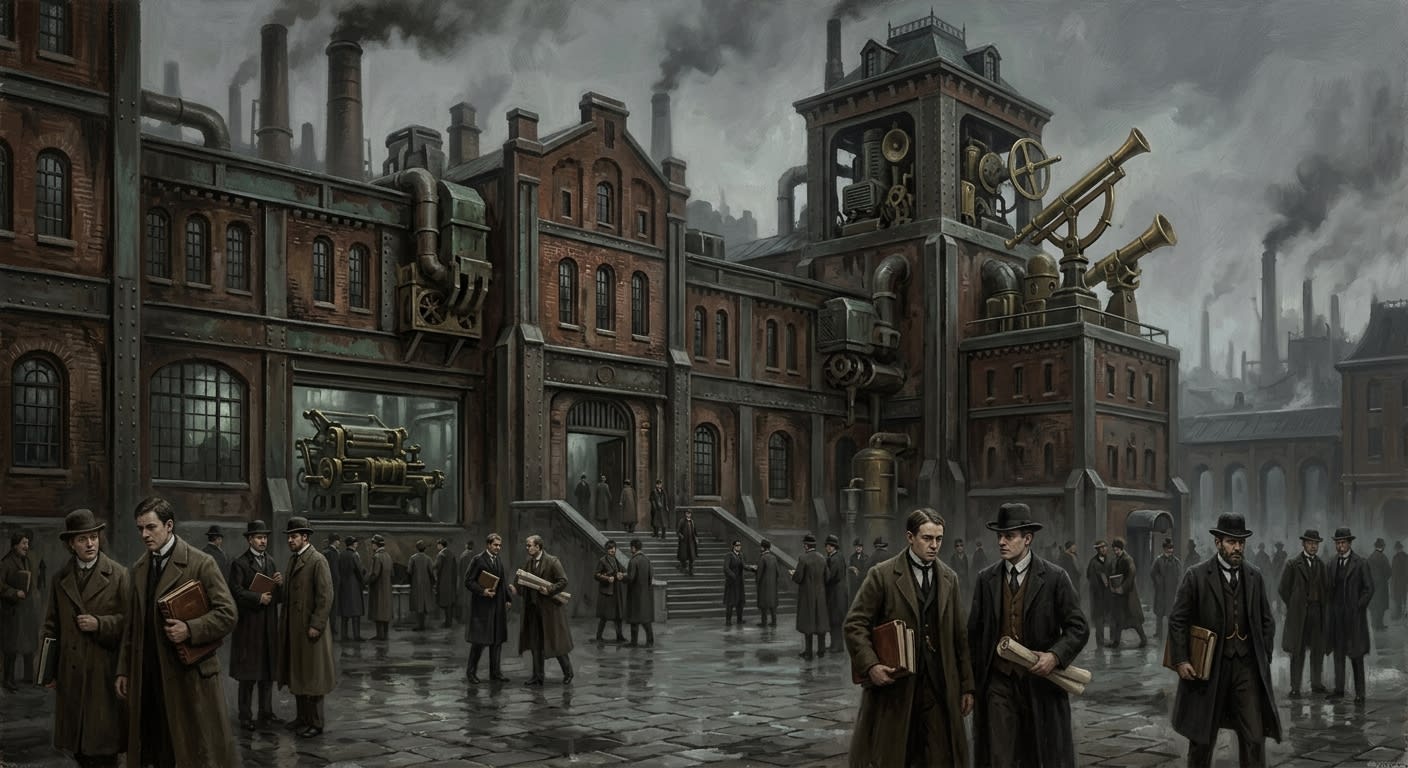
Amsterdam Academy
The lectern that made unbelief printable
The Amsterdam Academy licensed unbelief, printed the calendar wound, and taught Europe that a schoolhouse may do the work of a siege engine.
Codex Ref. VIII.8.01-000
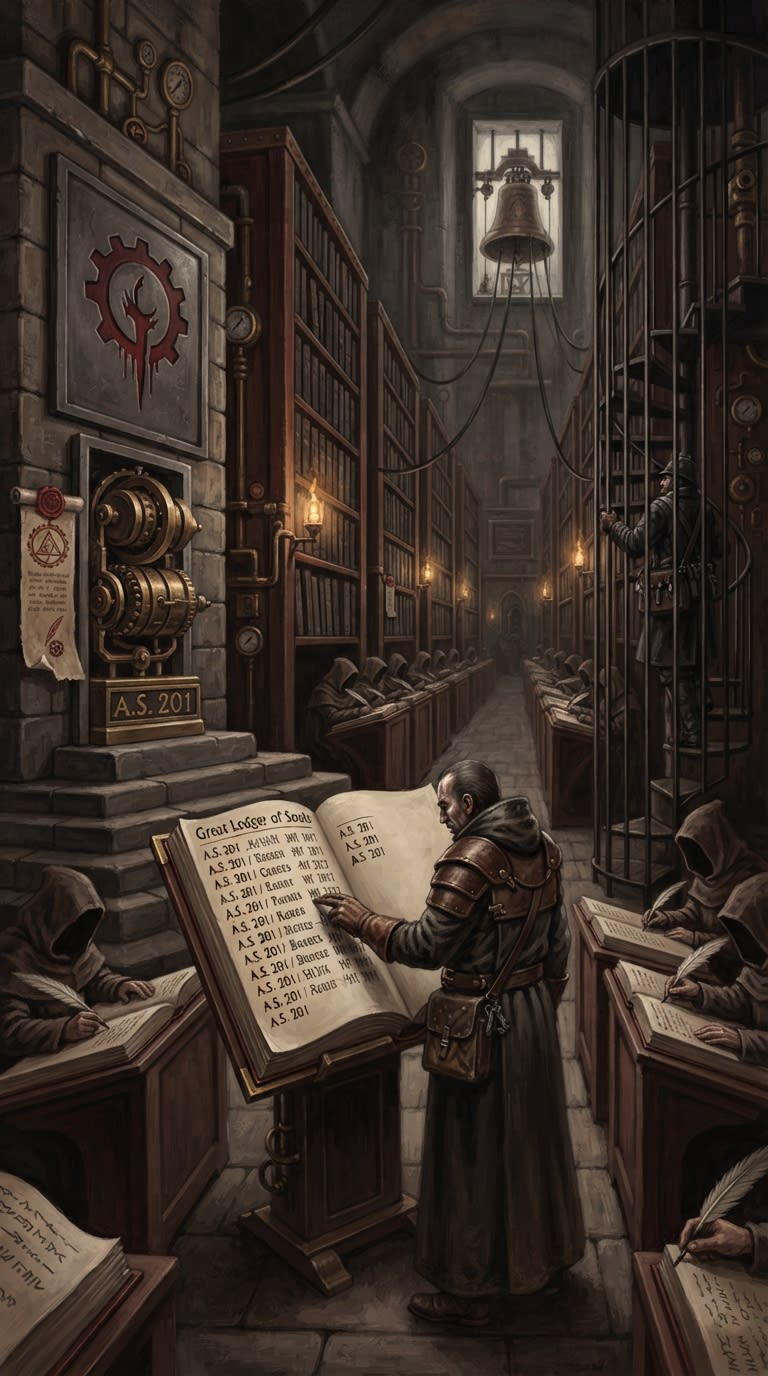
Anno Synodi
The wound by which Strasbourg owns the year
The Synod's calendar counts not from triumph but from wound: A.S. 0 at De Vera Luce, adopted retrospectively at the Concordat, and enforced by Records, Bells, and Doctrine.
Codex Ref. XIII.1.00-090
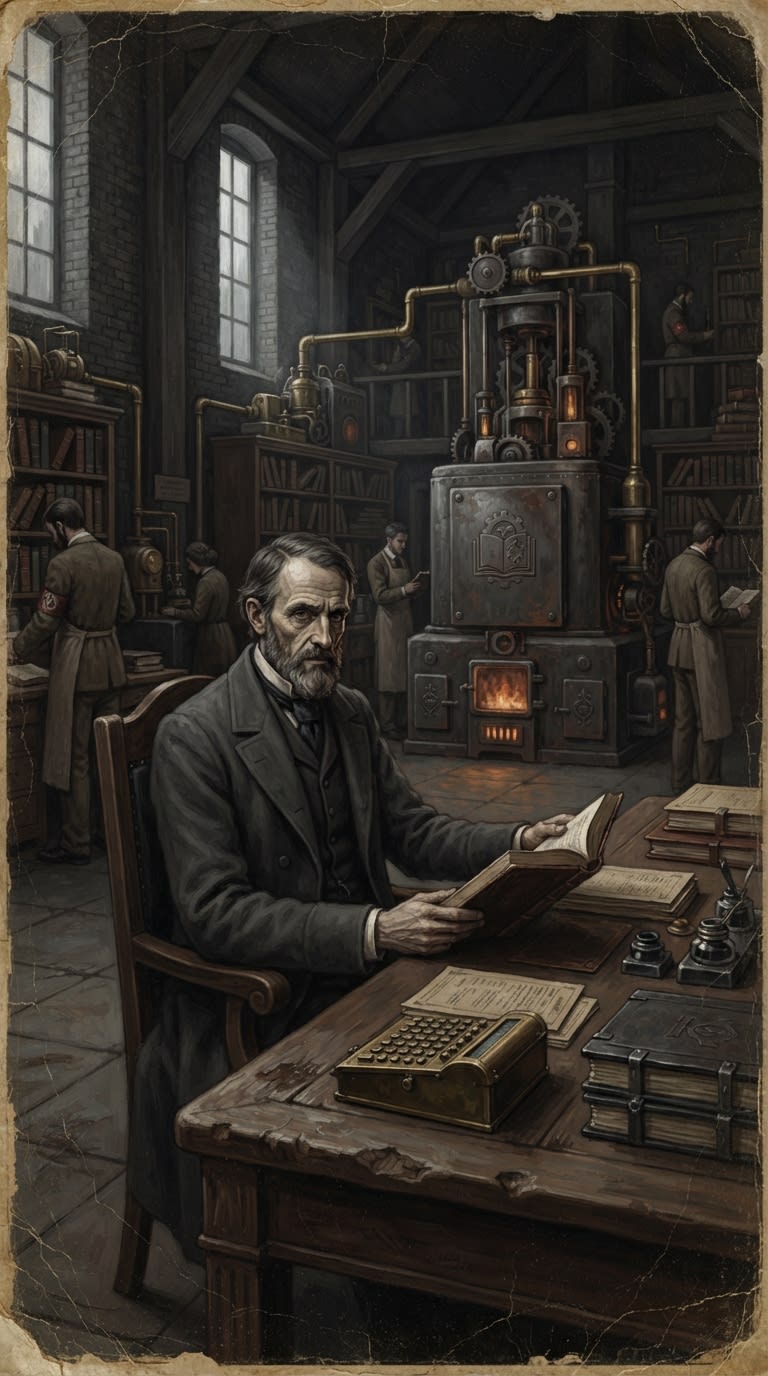
Aristotle
The pagan who lent the Church its knife
Aristotle gave the Church no doctrine, no obedience, and no permission. Unfortunately for him, he did leave behind a very useful machine for arguing.
Codex Ref. III.2.01-073
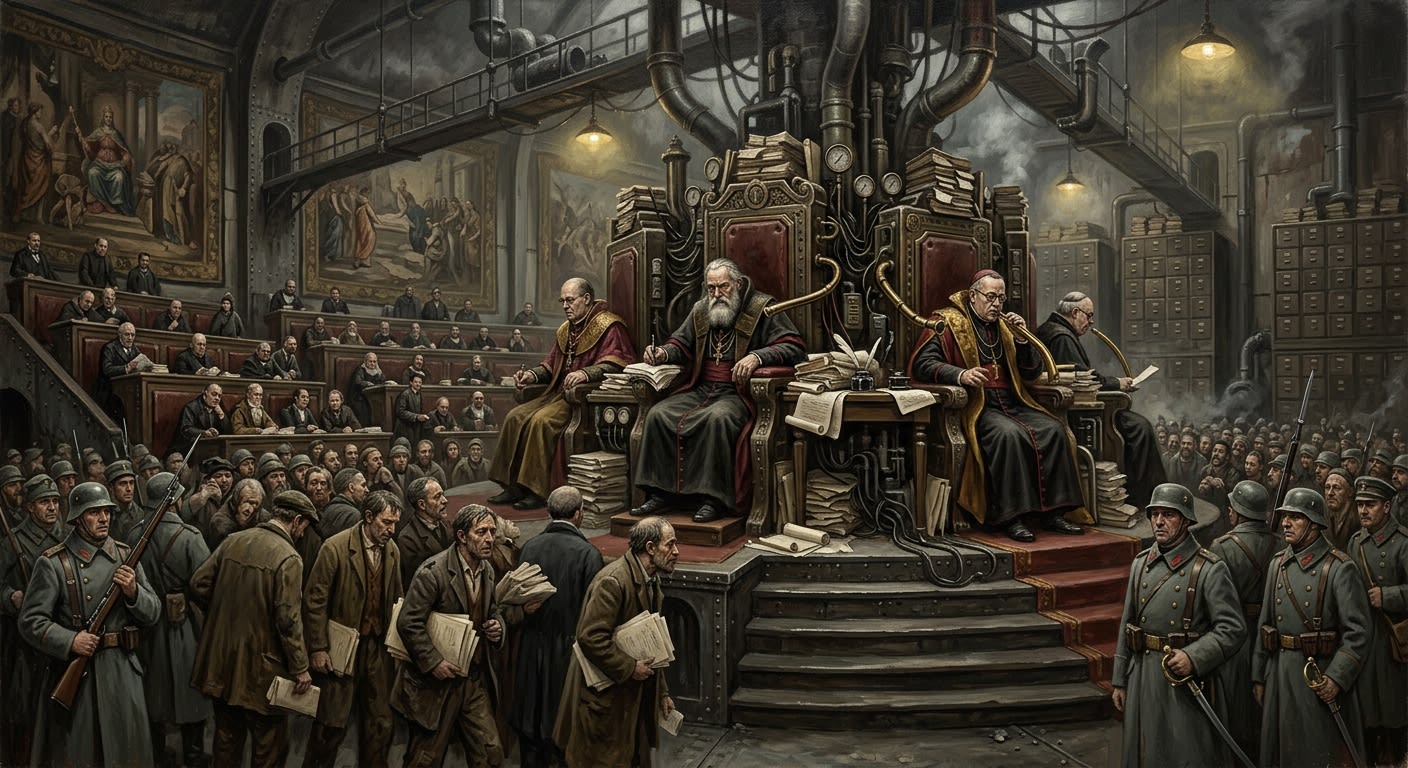
Assembly of Thrones
A chamber where pride is seated before it becomes militia
The Assembly of Thrones lets Bishops-Praetorial thunder safely: grievance seated, fury docketed, pride taxed, and every rebellion delayed by procedure.
Codex Ref. XIII.1.07-093
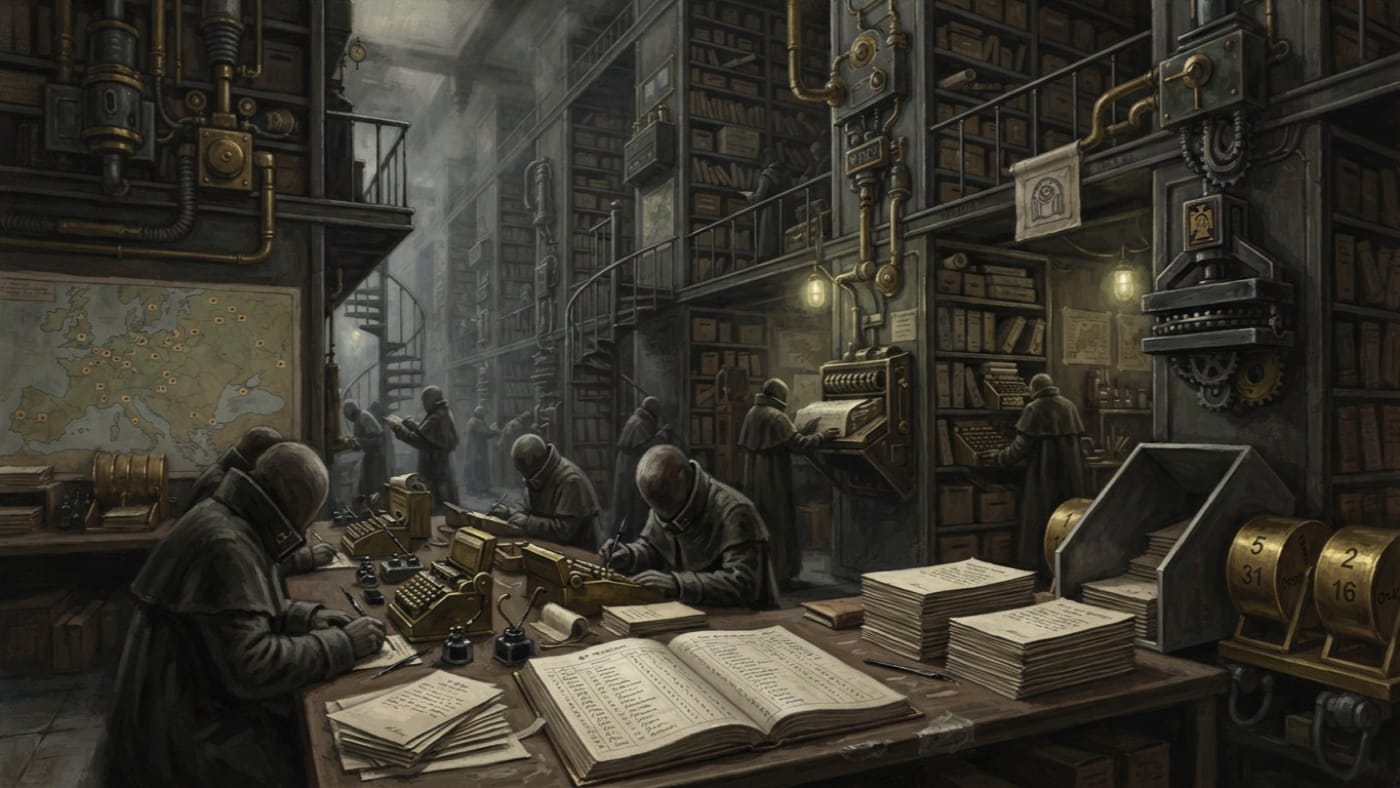
Bone Census
The count is conceded; the right to count is condemned
Compiled in Amsterdam in −32 A.S. / 1678 CE, the Bone Census tabulated 243 Aldebrand relic claims. The figures are conceded; the scholars' right to count remains condemned.
Codex Ref. I.1.04-000
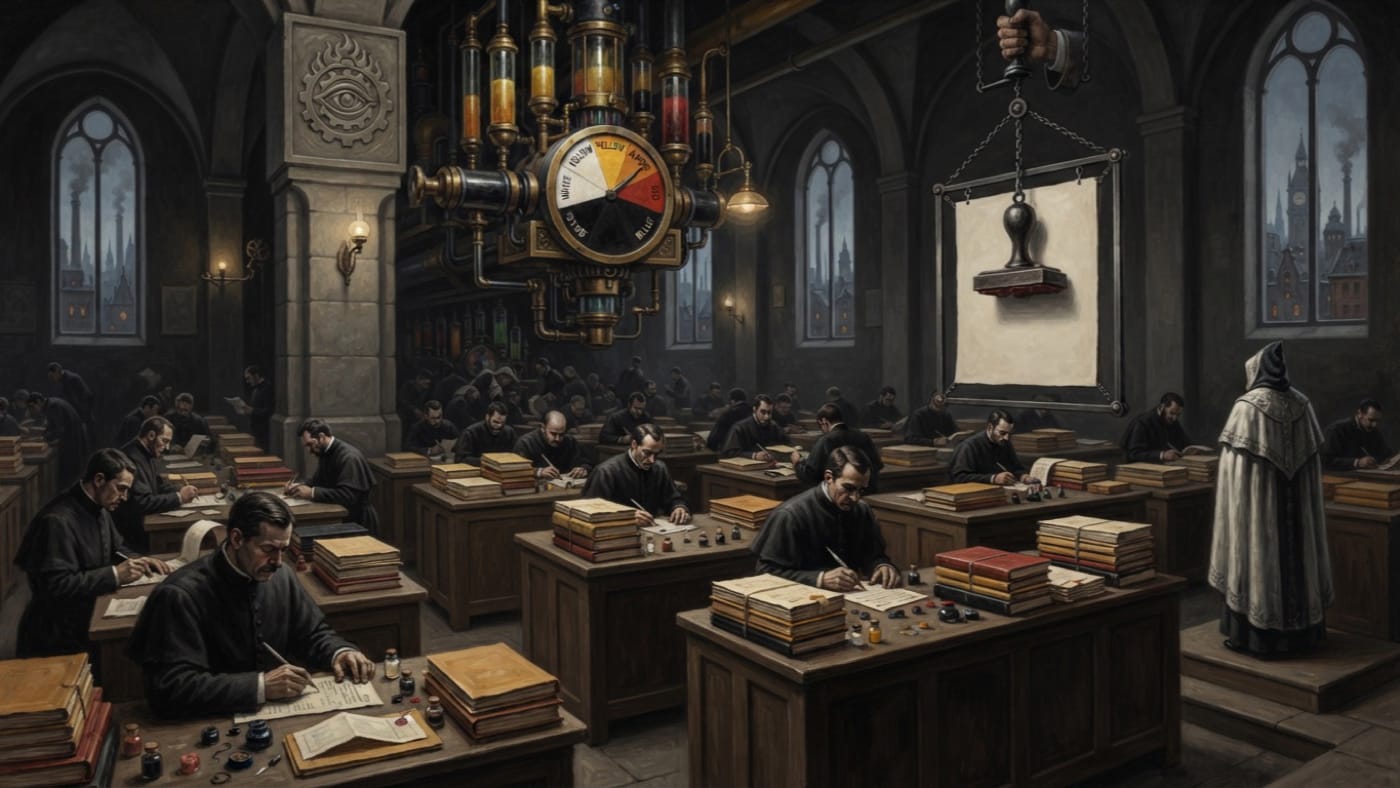
Chromatic Office
The hand touches the register, and the register keeps the name
The Chromatic Office supplies Purity's five-colour scale and Amber guidance. Its clerks need only paper to keep a name beneath a suspended warrant.
Codex Ref. III.3.02-002
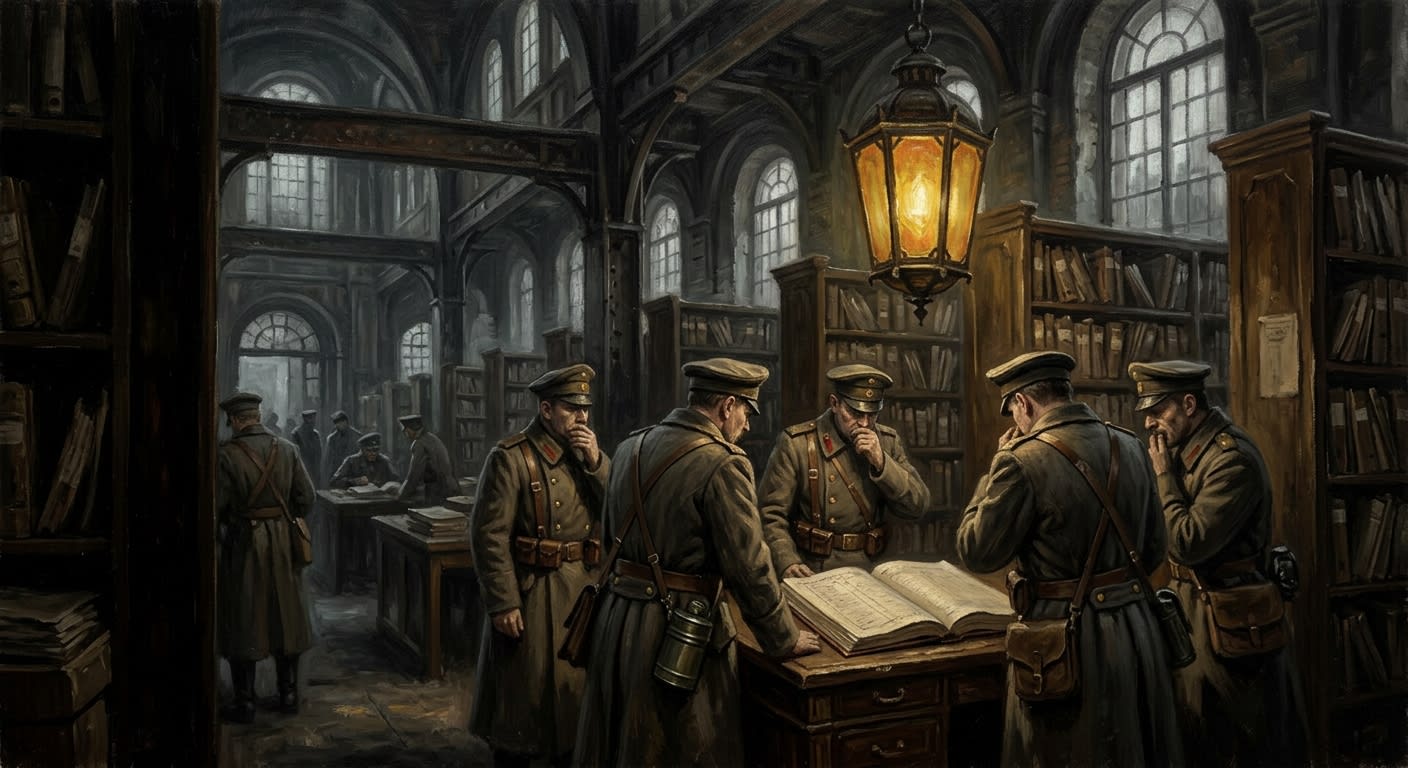
Classification Amber
The honeyed prison where Purity keeps suspicion alive
Classification Amber is Purity's suspended warrant: suspicion preserved in colour, fear extended by procedure, and mercy sharpened into watchfulness.
Codex Ref. XIII.1.06-001
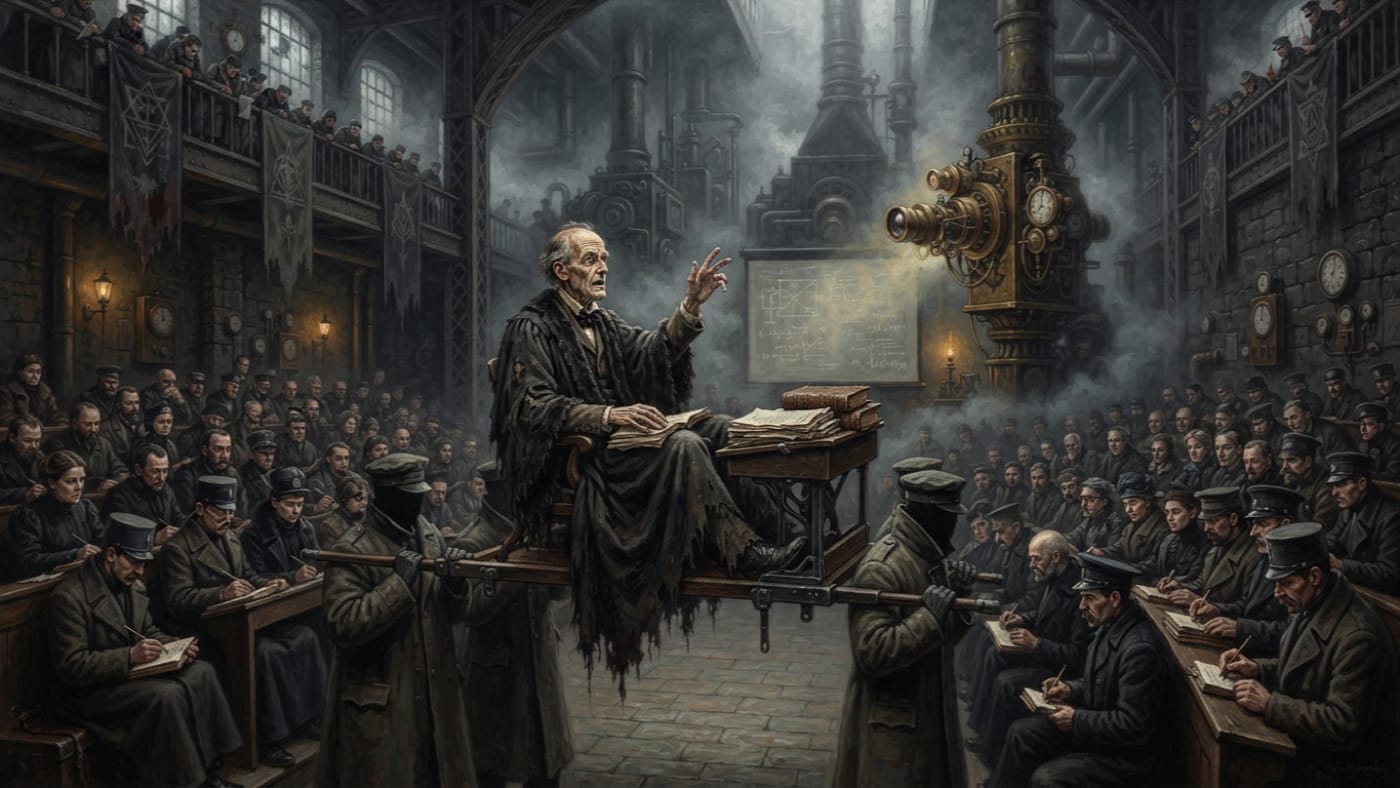
Dean Albrecht Moser
The signature survived; so, inconveniently, did the signatory
Dean Albrecht Moser signed the Concordats of Ulm in 1655 and reached Amsterdam's founding congress at seventy-nine, carried on a litter and still lecturing. His signature outlived his bones.
Codex Ref. III.2.01-850

Deputy Archon Werrenrath
A warm hymn, a clean absence, and the road east
Deputy Archon Werrenrath, a Strasbourg administrator with dangerous warmth for unlicensed hymns, was transferred cleanly to Bastion-Shipka, where his fault became operationally useful.
Codex Ref. III.2.01-104
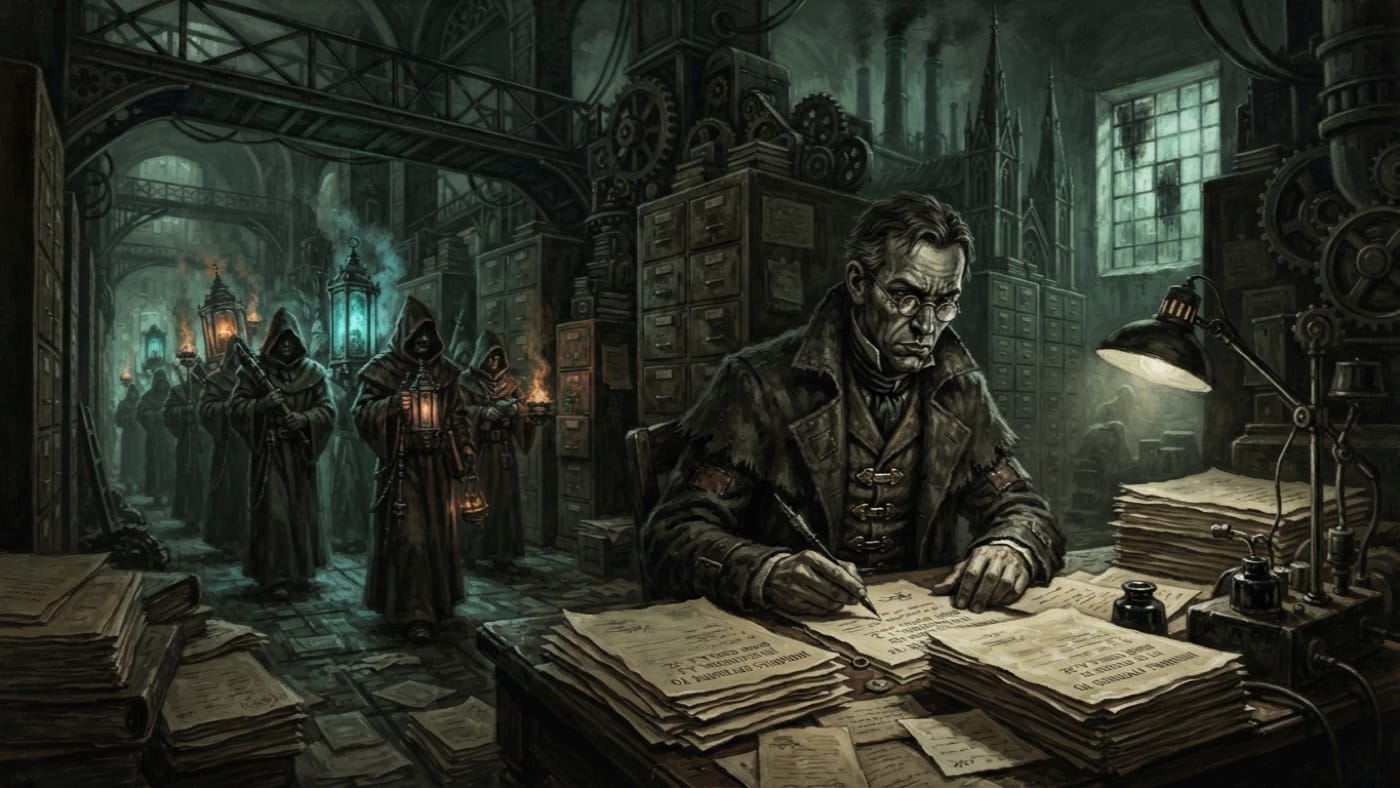
Dr. Gerrit Lemstra
The courtesy was impeccable. The inquiries remain open.
Dr. Gerrit Lemstra drafted the courteous inquiries sent with Amsterdam's Bone Census in −32 A.S. / 1678 CE. The Bureau condemns the scholar; his requests remain unreconciled.
Codex Ref. III.2.01-027

Dr. Jan de Waal
Addresses, funds and copyists. Forty cities received the doubt.
Dr. Jan de Waal kept the addresses, funds and fourteen copyists behind the Year of Letters in −32 A.S. / 1678 CE. Forty cities received the evidence; the Church supplied the silence.
Codex Ref. III.2.01-028

Dr. Pieter van Hoorn
The count was correct. The compiler remains condemned.
Dr. Pieter van Hoorn compiled the Bone Census and conceived the Year of Letters in −32 A.S. / 1678 CE. The Bureau concedes his count, condemns its inference, and keeps his correspondence under quadruple seal.
Codex Ref. III.2.01-029
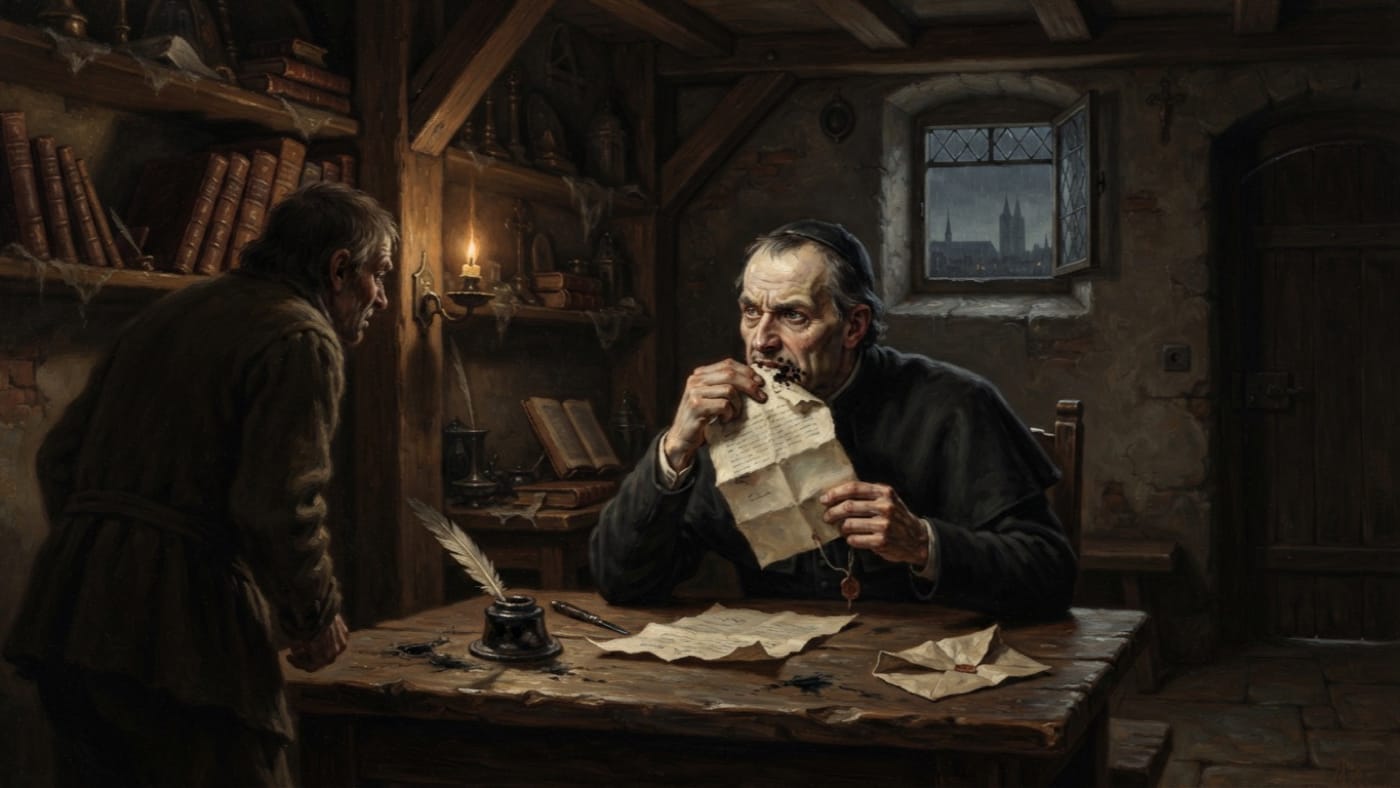
Düsseldorf
One priest. One letter. Nothing left to quote.
A Rhineland city remembered for Father Grauss, who ate the Amsterdam letter in A.S. −32 / 1678 CE. The magistrate supplied three days in gaol; the Bureau supplied a classification.
Codex Ref. II.2.01-941

Europe
The wounded continent, held together by rails, bells, hunger, and denial
Europe is the wounded continent: Synod west, Charnel east, Line between, and every road, harbour, cradle, ration card, bell, and grave bent toward survival.
Codex Ref. II.0.01-201
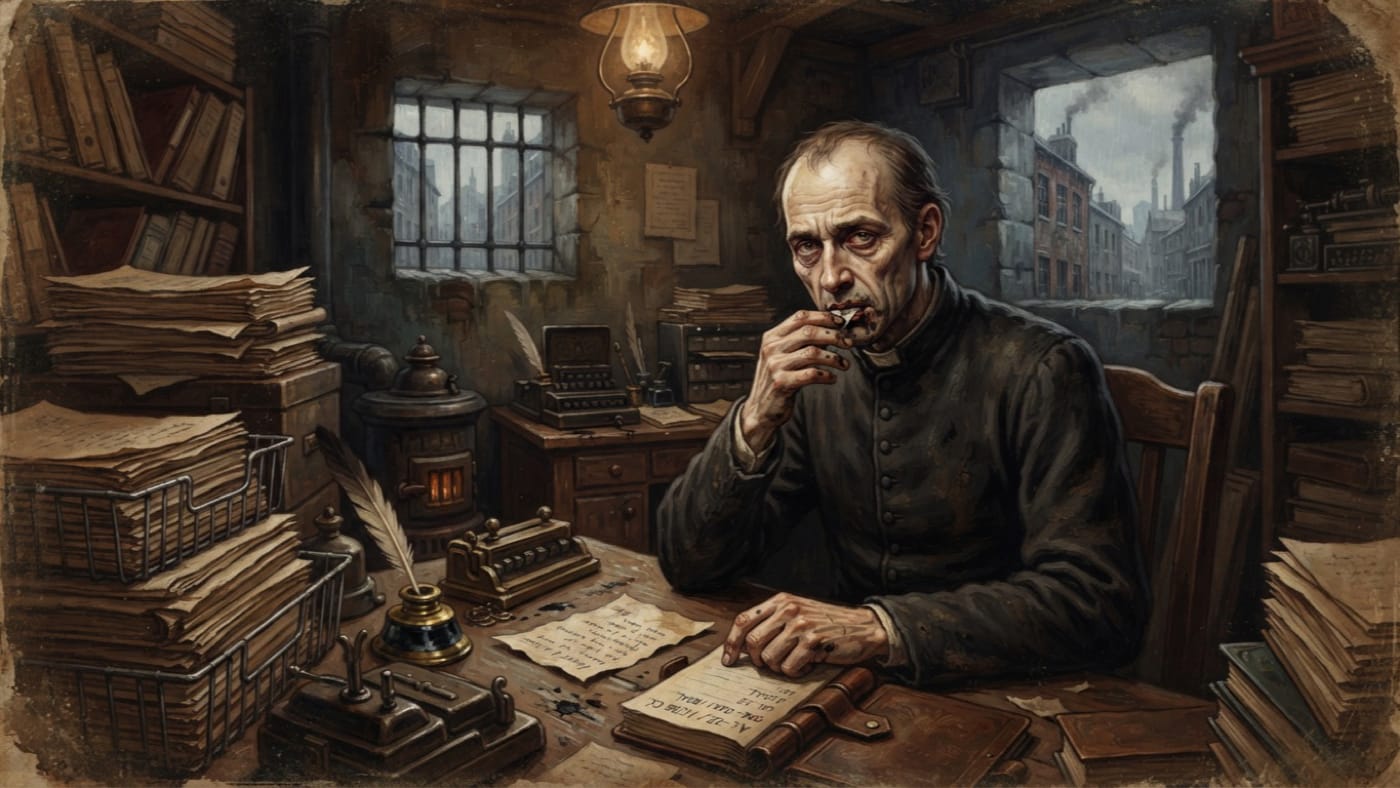
Father Grauss
One letter eaten. Three days served. Five words preserved.
Father Grauss ate the Amsterdam letter in A.S. −32 / 1678 CE. Düsseldorf supplied a beating and three days in gaol; the Bureau supplied its verdict: Doctrinally Sound, Gastronomically Irregular.
Codex Ref. III.2.01-1023
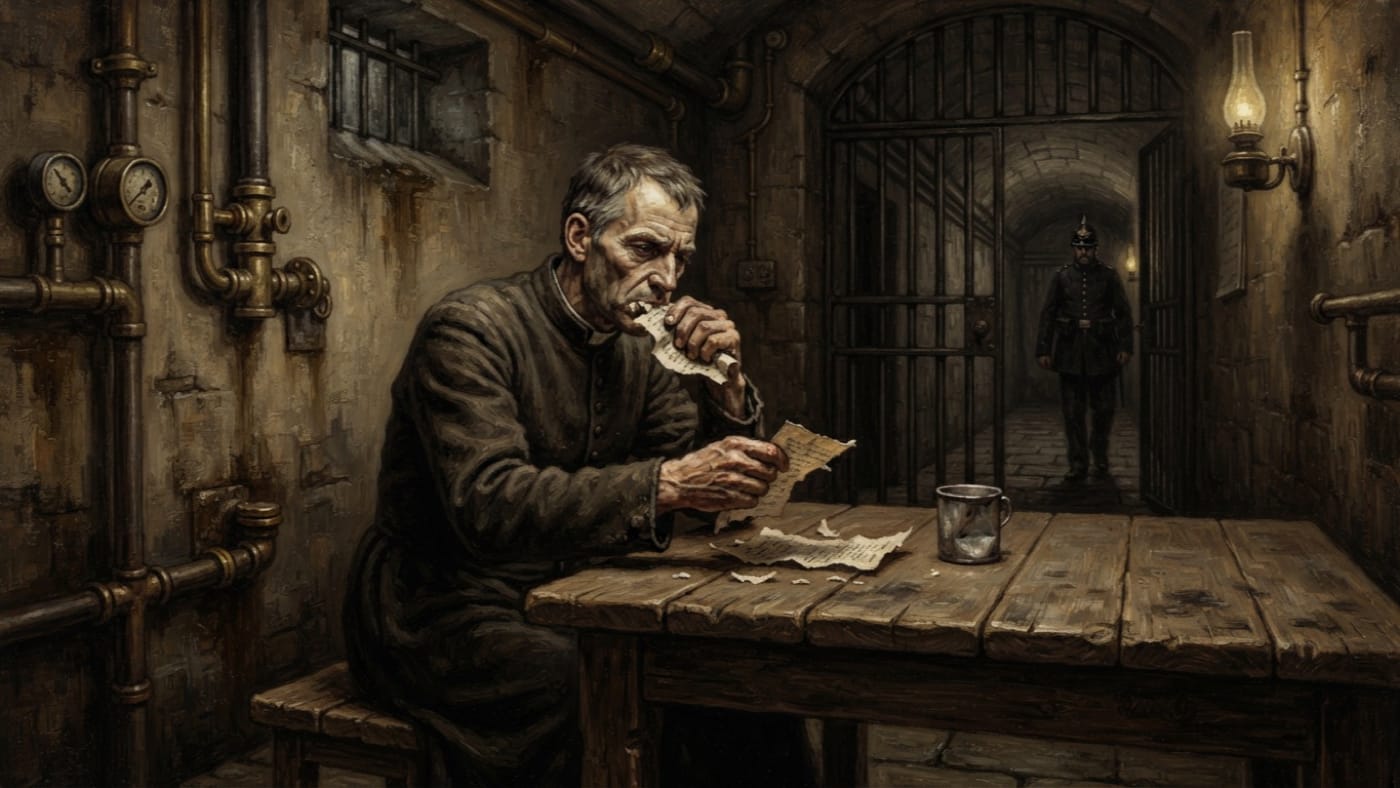
Father Grauss of Düsseldorf
One letter eaten. Three days served. Five words preserved.
Father Grauss ate the Amsterdam letter in A.S. −32 / 1678 CE, received a beating and three days in gaol, and did not recant. The Ledger calls him Doctrinally Sound, Gastronomically Irregular.
Codex Ref. III.2.01-1024
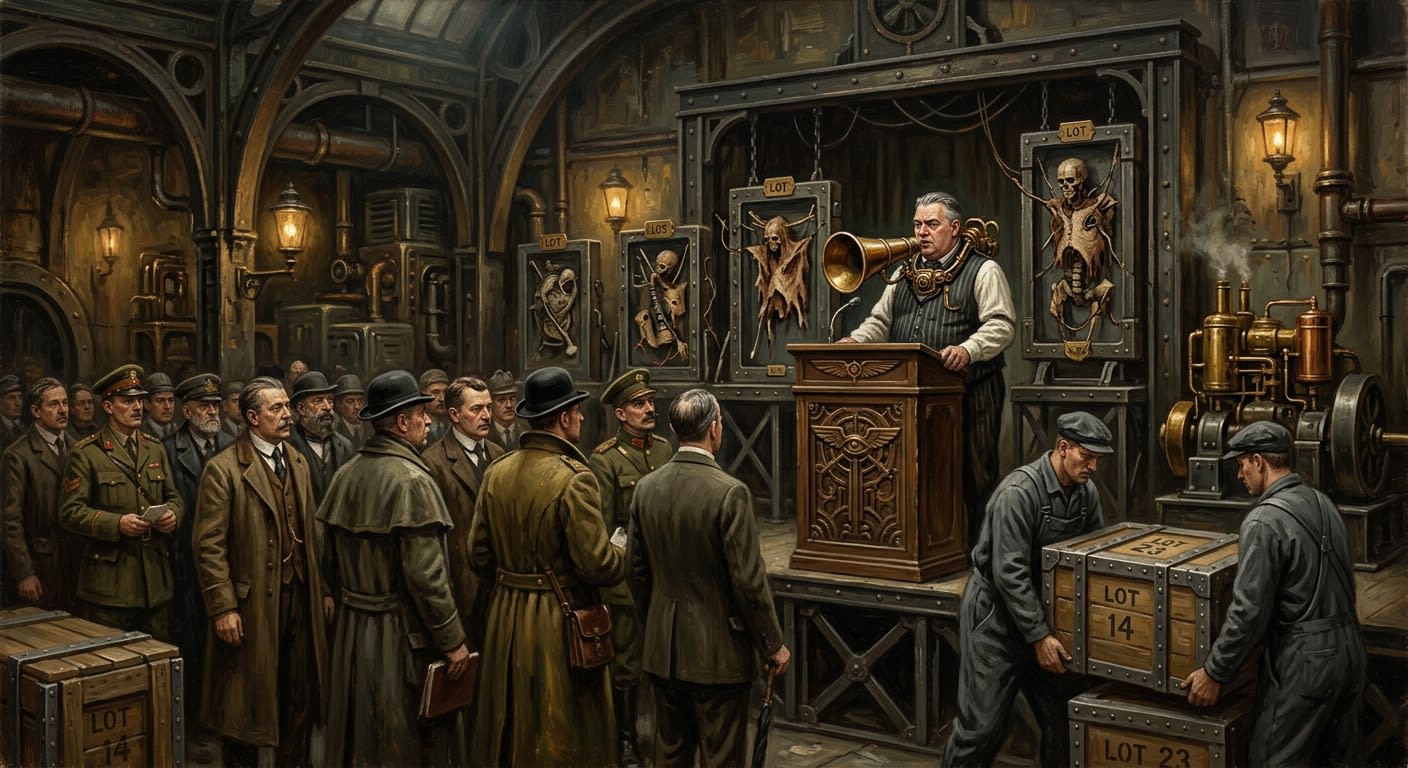
First Relic Auctions of Amsterdam
When the hammer learned to price a saint without blushing
Amsterdam's first relic auction season made sacrilege respectable by catalogue, turning stolen bones into lots and provenance wounds into profit.
Codex Ref. VII.8.10-007
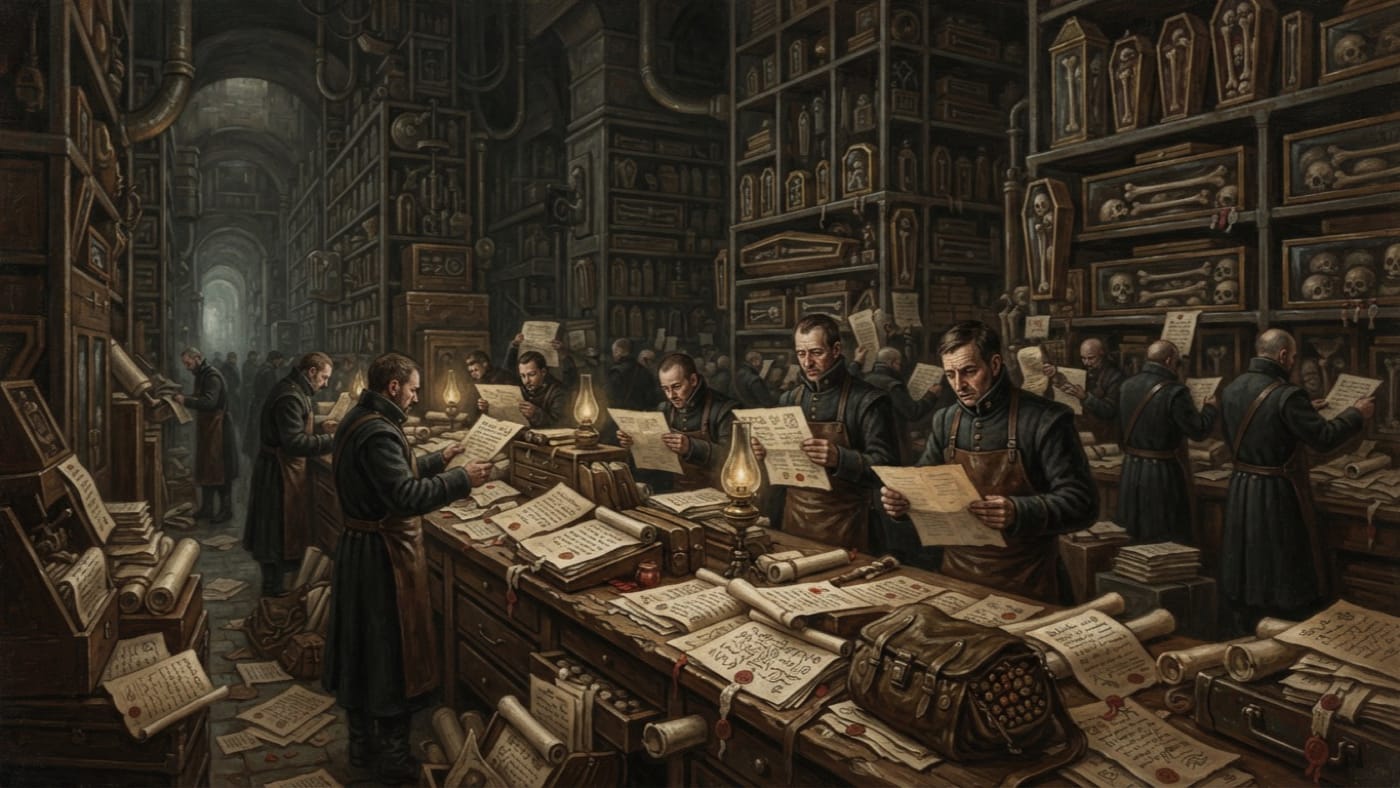
German states
Many jurisdictions. Separate seals. One inconvenient table.
The German states in 1678: many jurisdictions, separate seals, and no common answer to Amsterdam's bone census. The relics agreed locally. The ledgers did not.
Codex Ref. II.1.10-001

Inquisition
The white hand closes with a receipt
The Inquisition is Purity's authorised appetite for correction: White Cloaks, Lictors, Red Lanterns, Ashmen, Shadows, Index packets, denunciation law, and the clerkly miracle by which fear learns to file itself.
Codex Ref. VIII.1.08-093
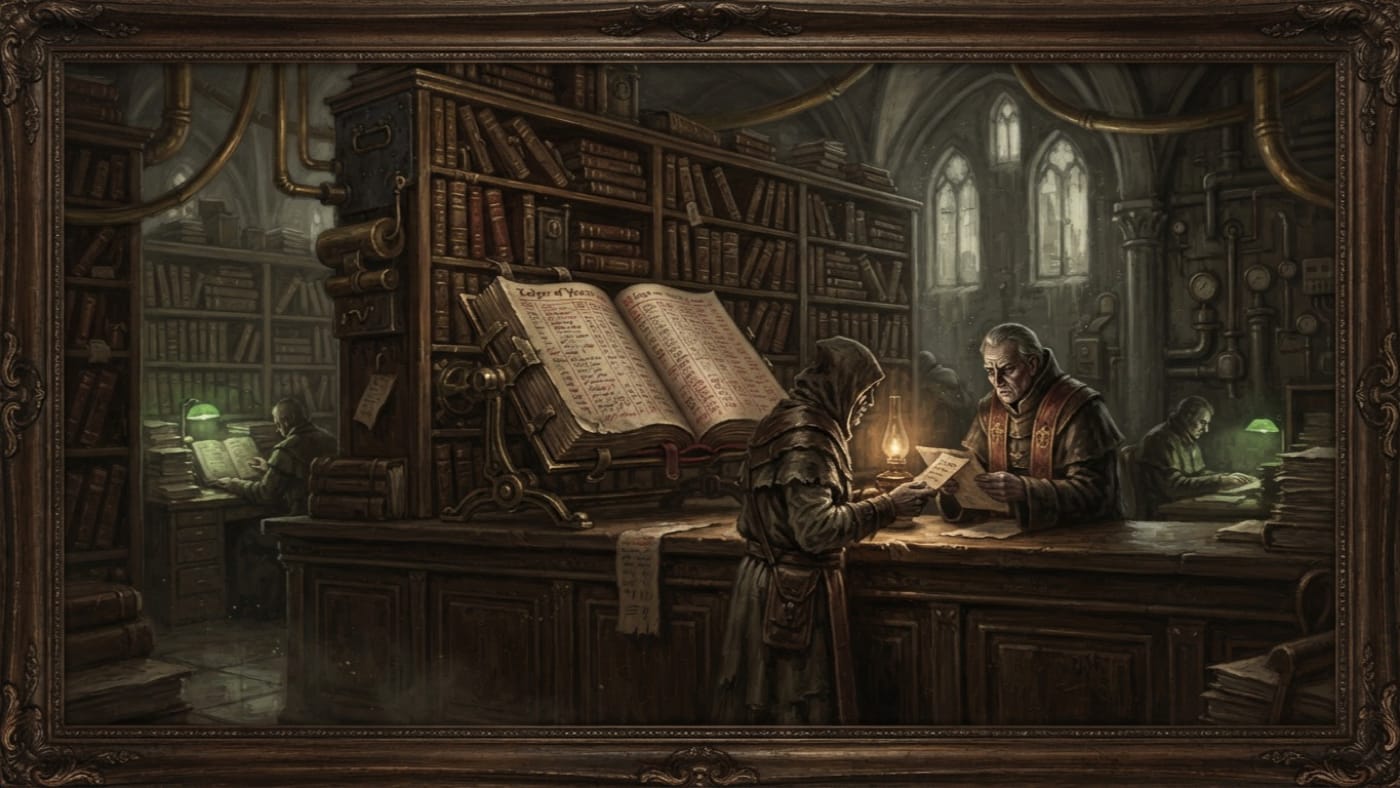
Ledger of Years
Entered, therefore occurred. Unentered, therefore pending.
The Ledger fixes the years from which the Church recognizes institutions, ratifications and precedence. Records certifies the entries; Doctrine supplies the meaning. Bring your year to the counter.
Codex Ref. XIII.1.33-201
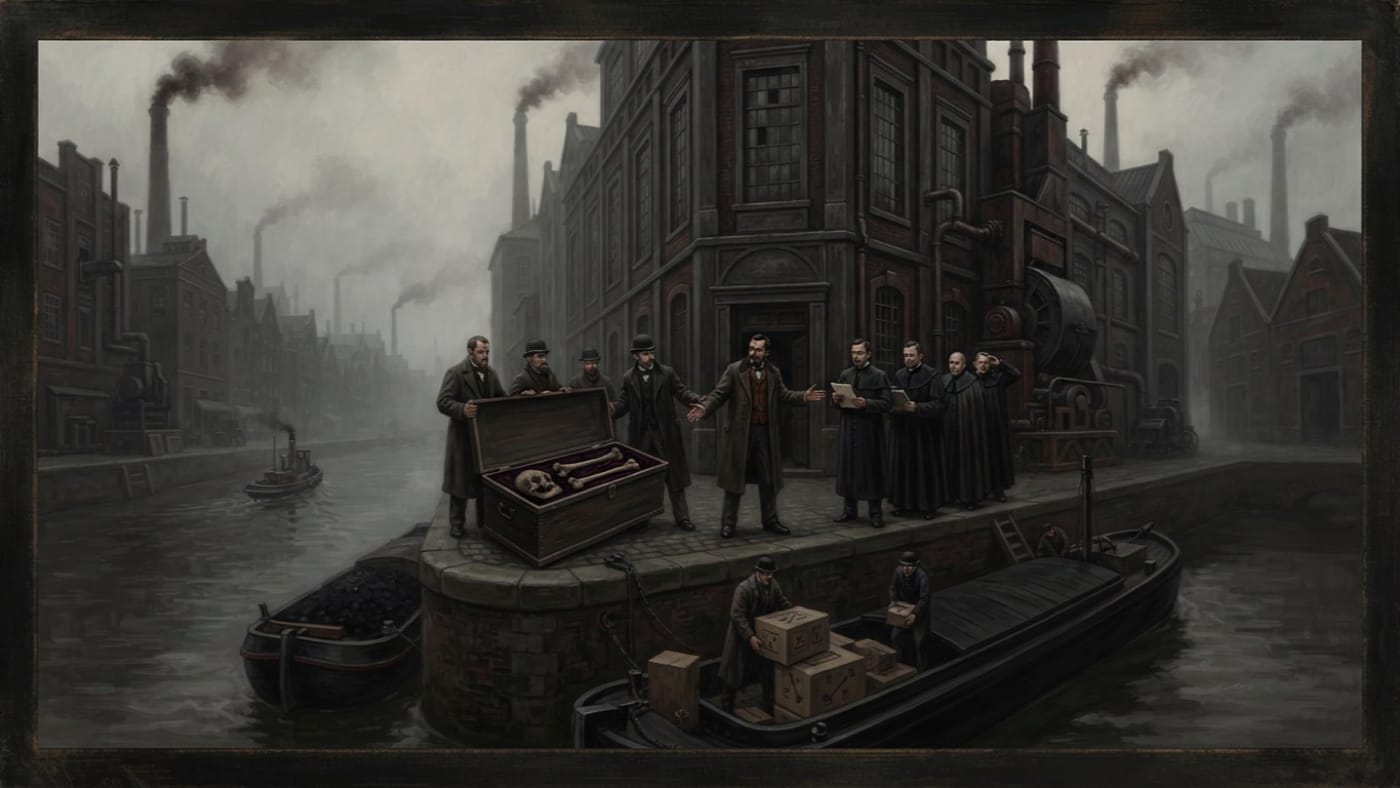
Leiden
Two femurs, one jawbone, and no jurisdiction
Leiden's anatomists supplied the Year of Letters with its simplest weapon: two femurs per man. Its merchants claim Saint Luthar's jawbone. The Synod has neither a custody chain nor jurisdiction.
Codex Ref. II.4.09-013
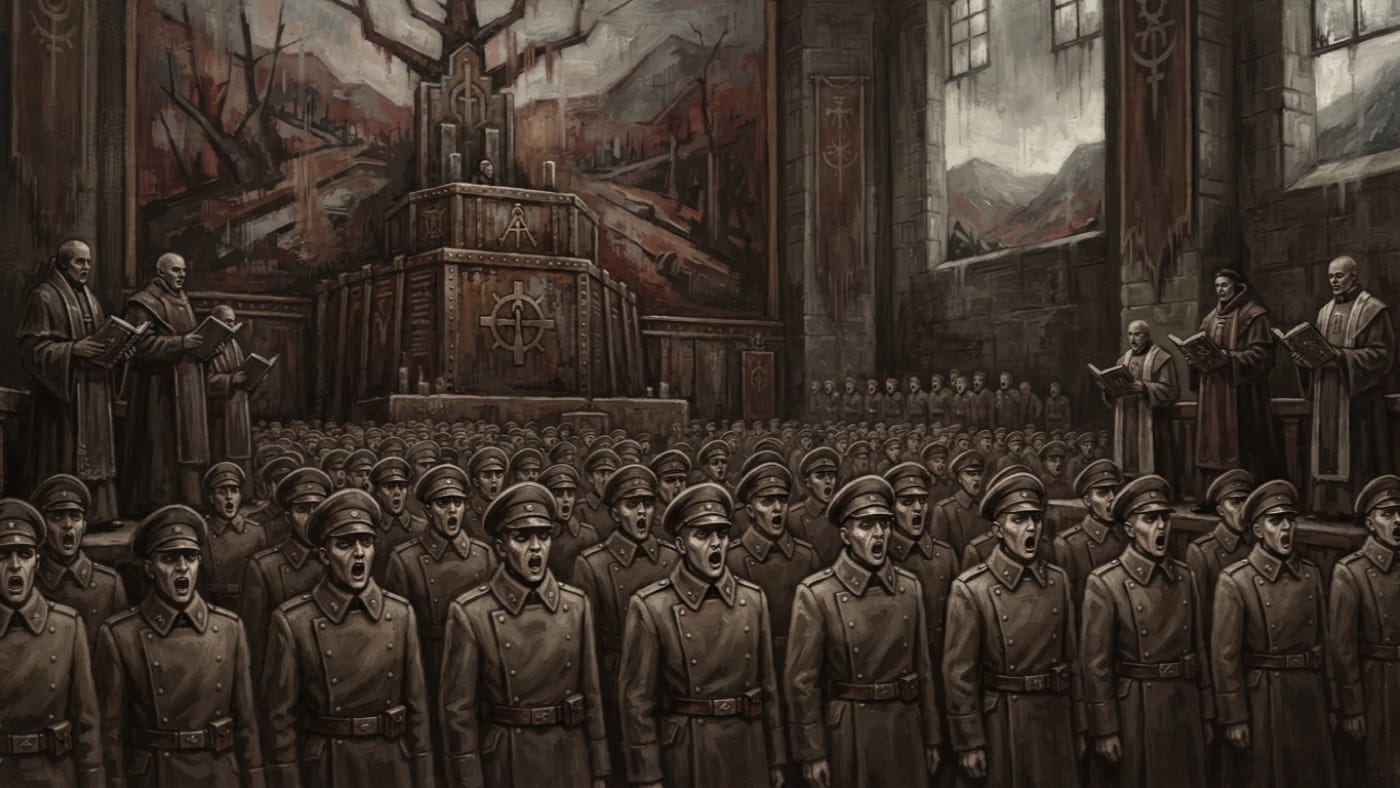
Litany of Errors
Eleven names. One designation. Four minutes to agree.
At Bastion-Przemyśl, cadets recite eleven Ulm signatories and the unknown twelfth, then condemn all twelve in unison. Four minutes of exact remembrance, with no room left for curiosity.
Codex Ref. XIII.1.95-201
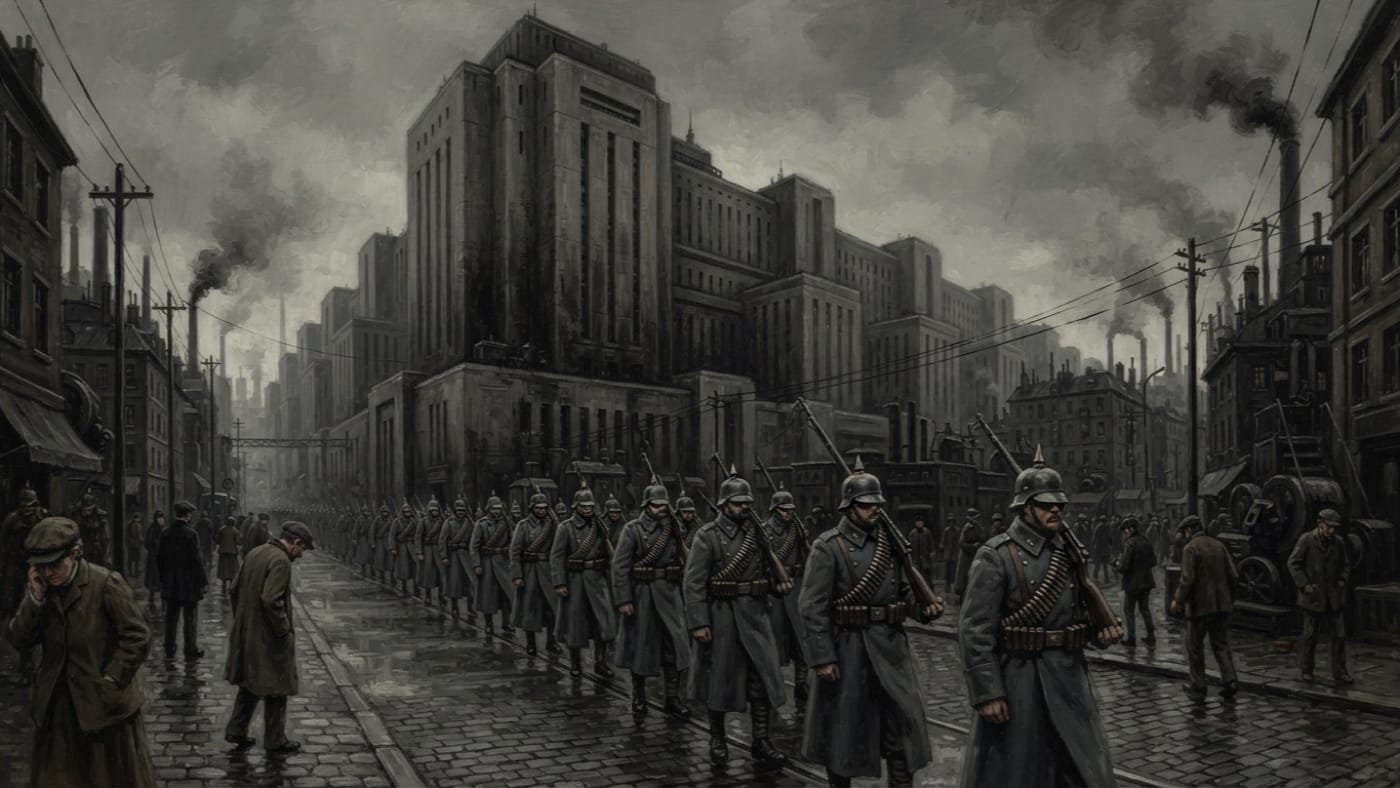
Ministry of Civic Security
The office above the bayonets
The Republic placed its Guards under a Ministry of Civic Security in A.S. 30. The name survives in the Stacks; the citizen's security was another matter.
Codex Ref. I.1.05-002
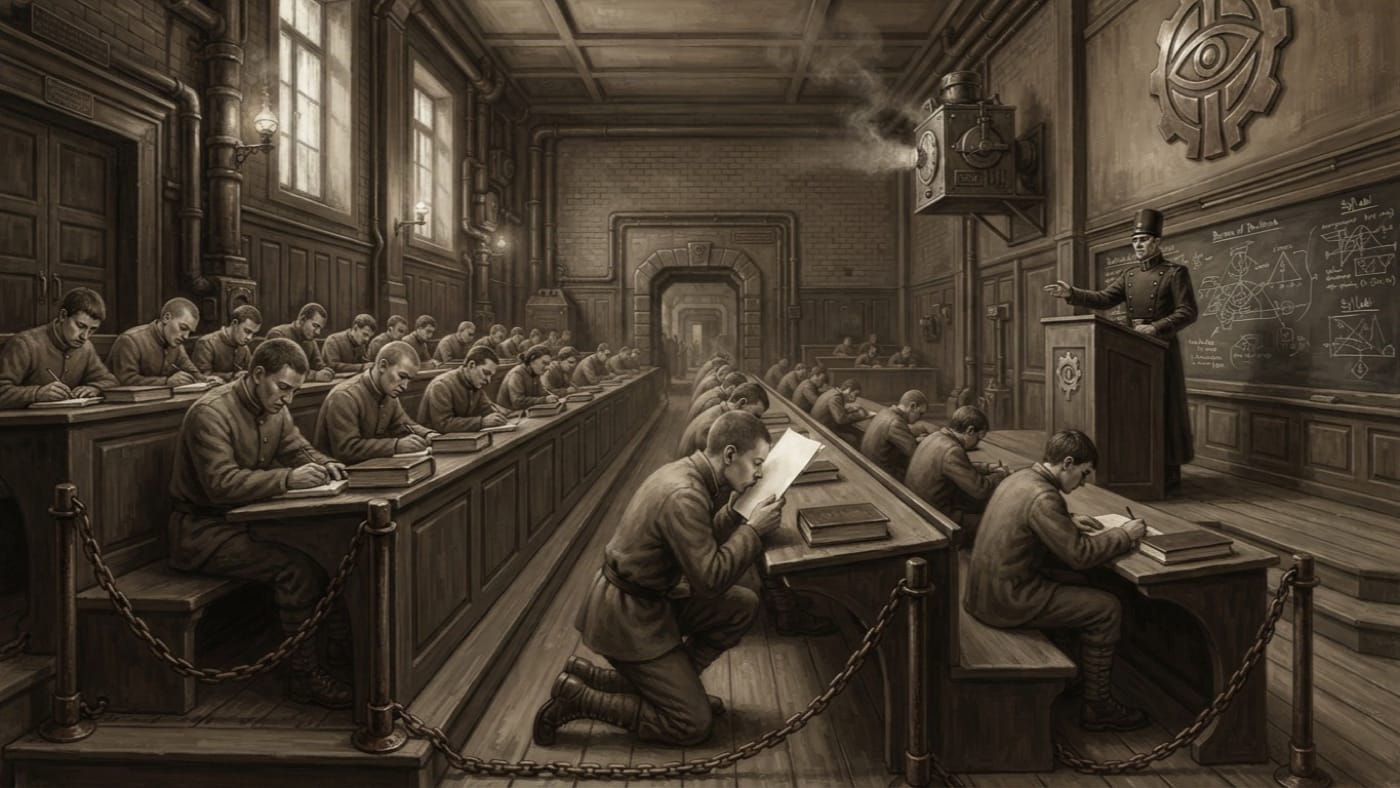
Old Faculty Rows
Where the syllabus was corrected and the desks were chained
Ulm's former Rationalist halls now house doctrinal schools, where Purity audits the syllabi, students kiss blank pages, and the lecture desks remain chained to the floor.
Codex Ref. II.2.01-006
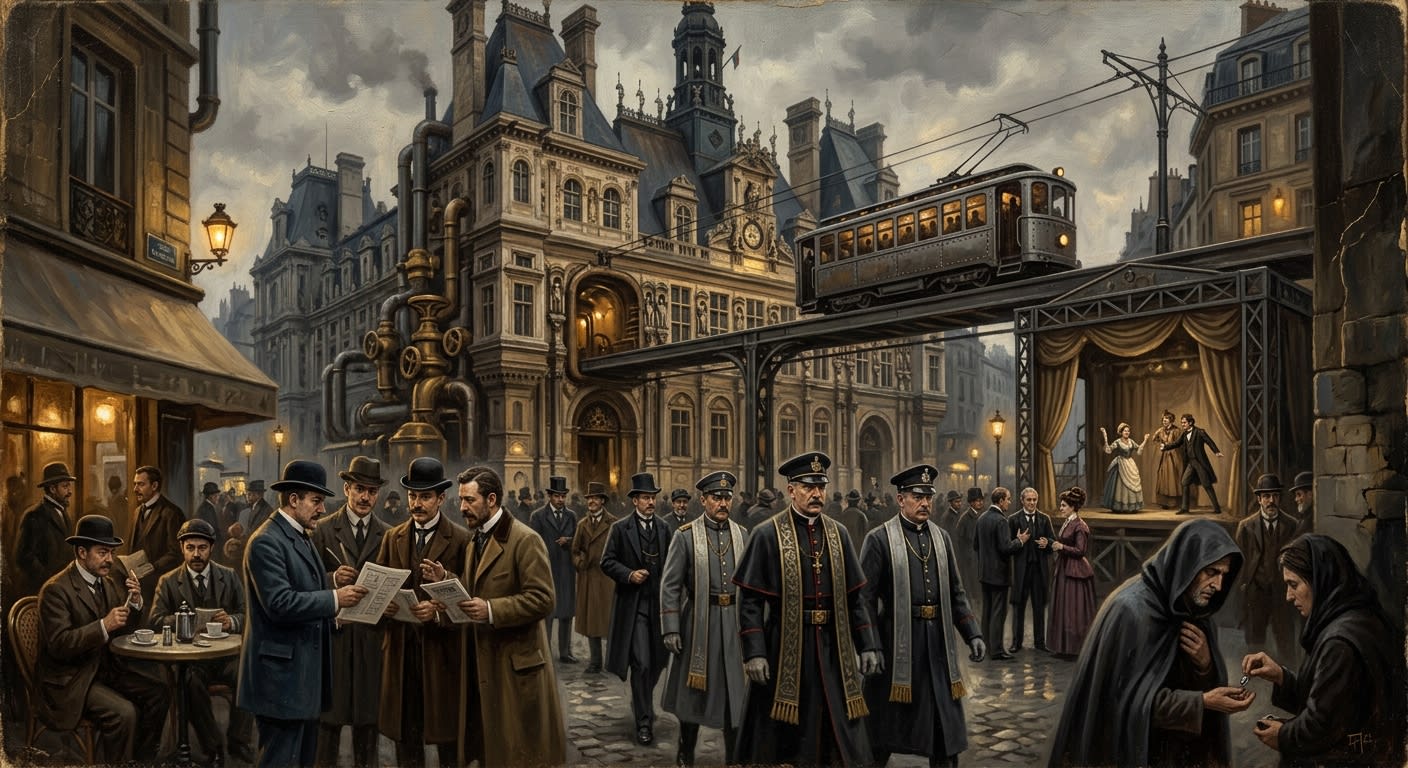
Paris
The city kneels beautifully, which is precisely why one watches the angle
Paris is the Western Heartlands' corrected jewel: Rationalist salon, Synod workshop, black-market confessional, obedient theatre, and treason with excellent diction.
Codex Ref. II.1.08-201
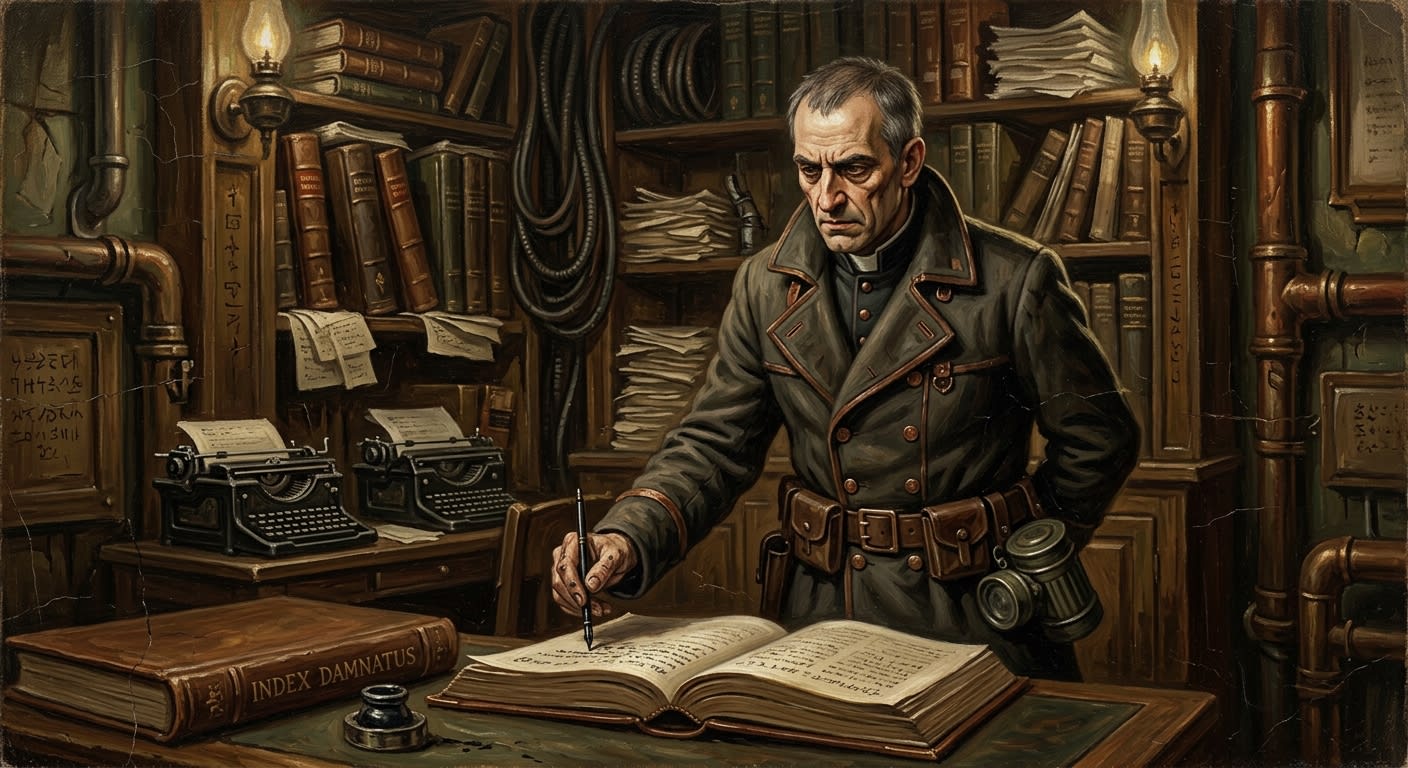
Procurator Maxentius della Torre
The jaw by which Doctrine learned to bite
Della Torre expanded Purity in A.S. 80, birthed the Index Damnatus, and taught the Synod that a named error is already halfway into chains.
Codex Ref. III.4.02-031
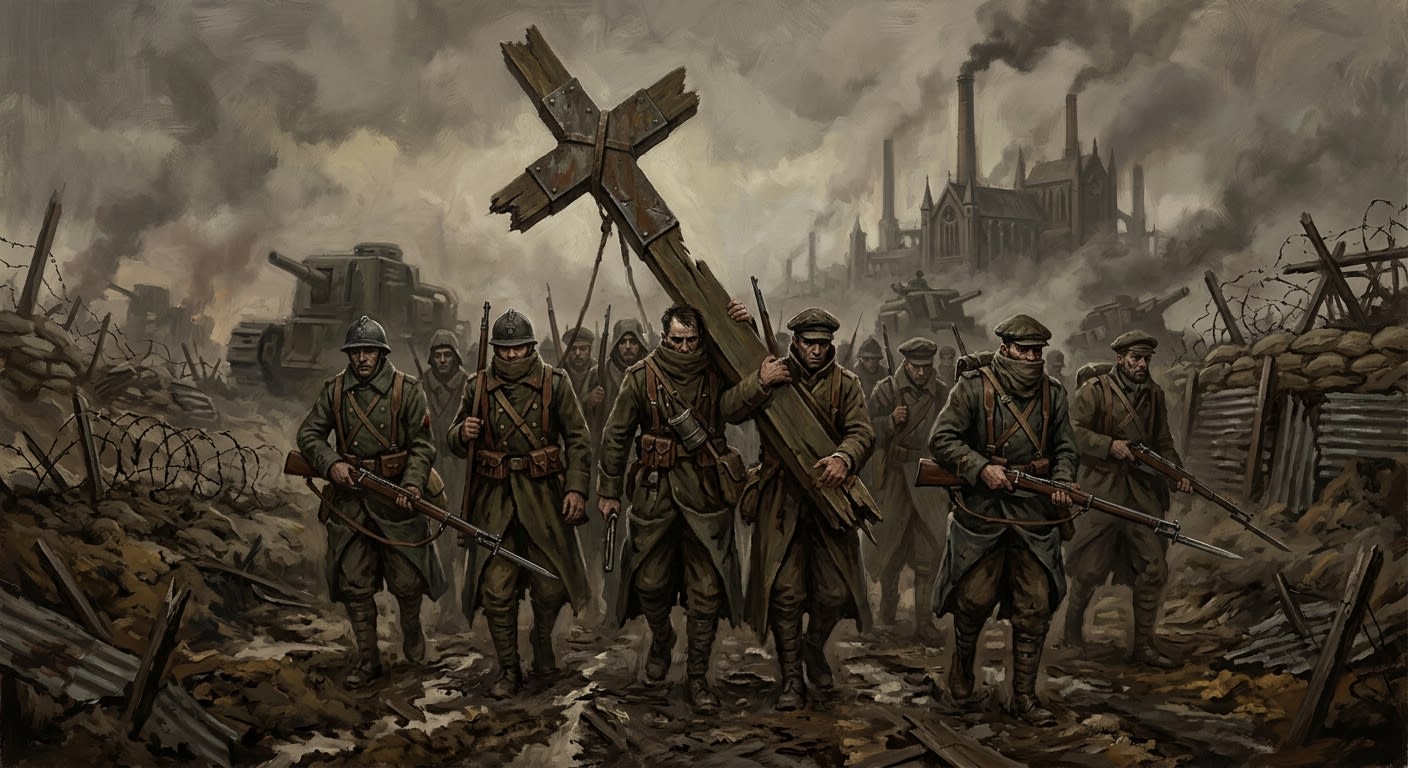
The Broken Cross
The sigil that snapped heaven and called the wound reason
The Broken Cross was Reason's battlefield sermon: a snapped crucifix carried by men who denied symbols while marching under one.
Codex Ref. I.1.05-003
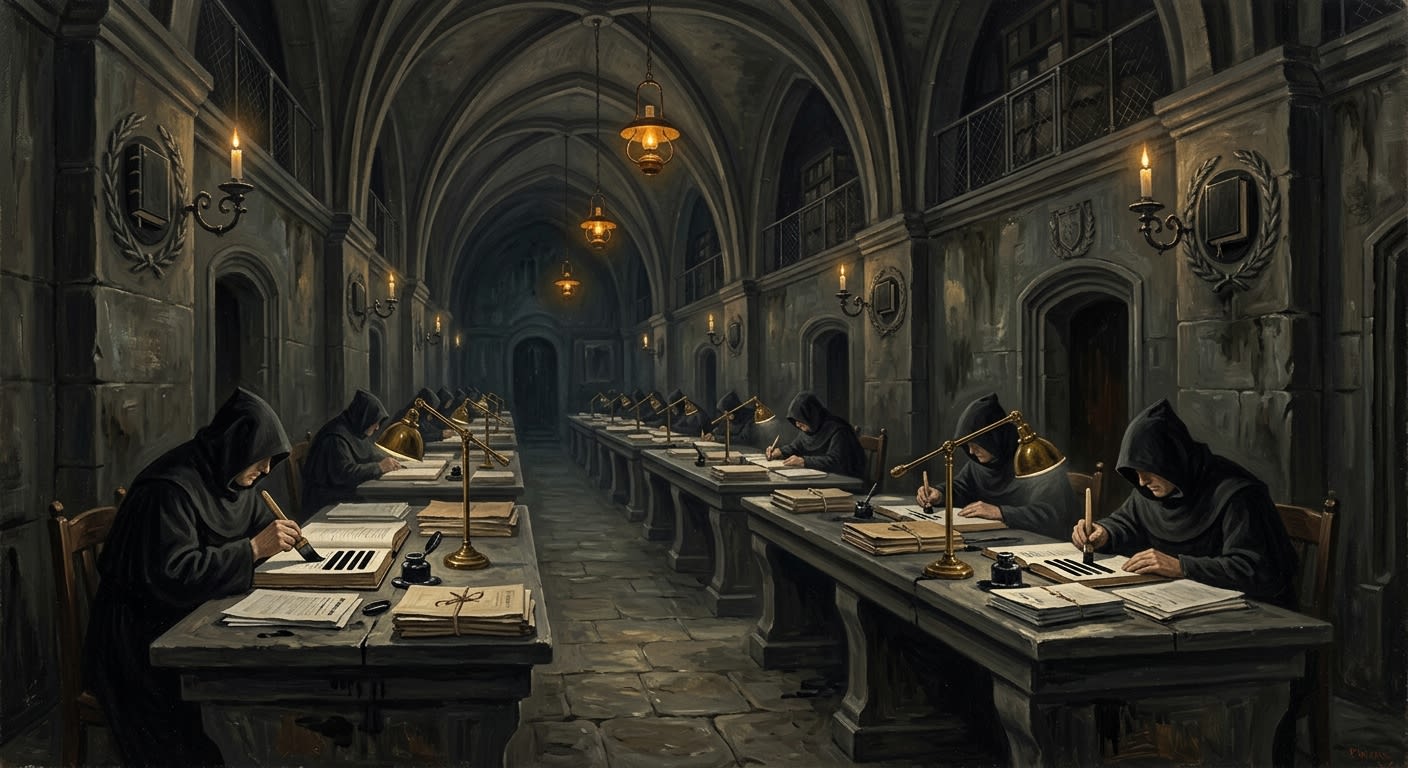
The Bureau of Silence
The word unspoken cannot wound. The word that reaches its target already has.
The Bureau of Silence does not burn books. Burning admits they existed. It renders knowledge into a state of administrative non-occurrence — and then redacts that too.
Codex Ref. III.4.19-031

The Collapse of the Rationalists
The Adversary did not invade. It arrived.
The Rationalist Republic dismantled every spiritual defence on the continent, and in A.S. 45 the Adversary walked through the unguarded door. A doctrine article, a body count, and a mandatory catechism text.
Codex Ref. VII.2.01-001

The Forbidden Stacks
Where heresy is shelved close enough to hate efficiently
The Forbidden Stacks beneath Strasbourg preserve Rationalist paper, contraband symbols, and other knives the Bureau prefers labelled rather than lost.
Codex Ref. II.2.06-001
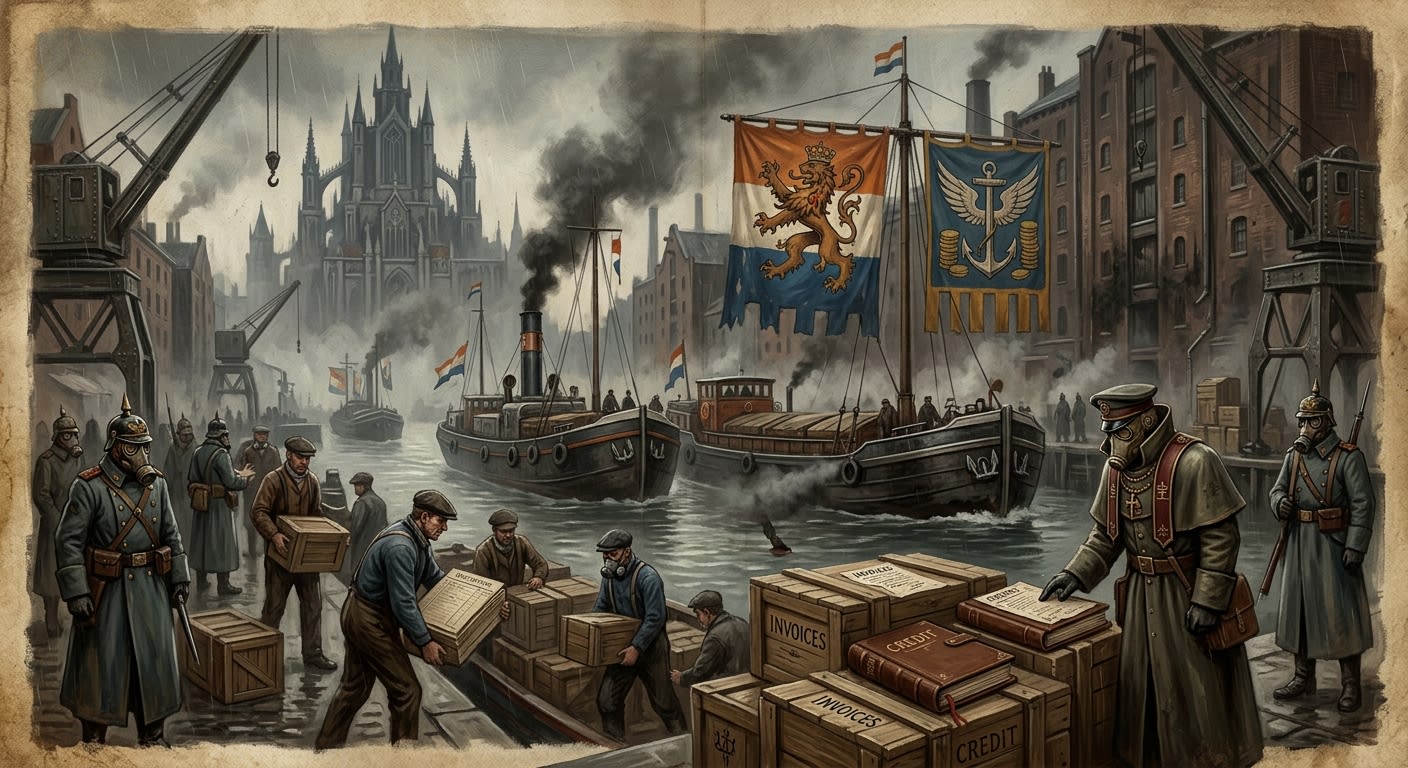
The Netherlands
The merchant republic that invoices our contempt
The Netherlands remain independent, solvent, suspect, and indispensable: a Dutch merchant republic whose ships, presses, credit, and invoices keep irritating the Synod into survival.
Codex Ref. X.1.02-001
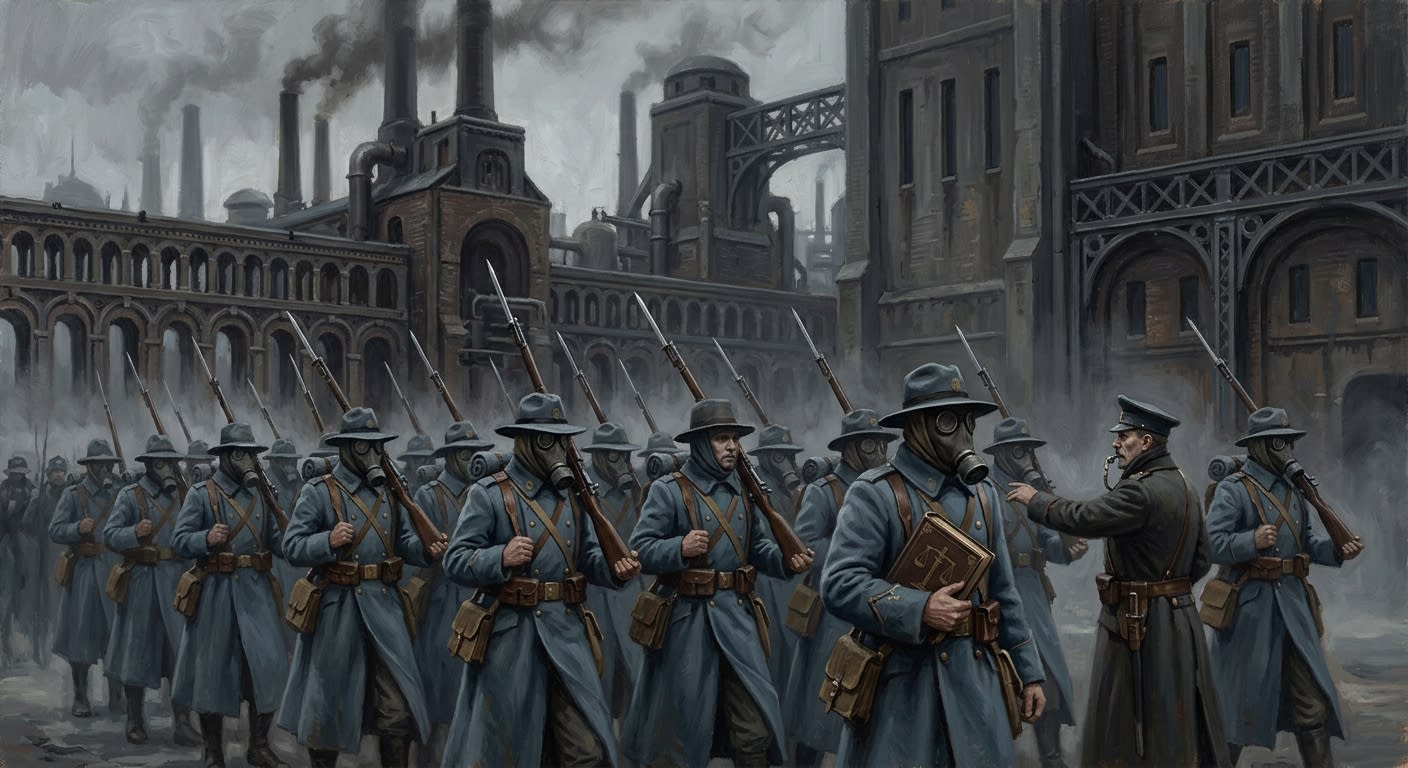
The Republican Guards
The philosophers wrote the sentence; the Guards added punctuation
The Republic's armed hand wore blue-grey, carried law over the heart, and proved that unbelief does not remain in books. It drills.
Codex Ref. I.1.05-001

The Year of Letters
One table of bones. Forty cities. The first assault on everything.
The Bureau's account of –32 A.S.: how three Amsterdam scholars, one table of bones, and forty cities' worth of polite arithmetic crippled three centuries of relic authentication — and inaugurated everything.
Codex Ref. I.2.01-001
Ulm
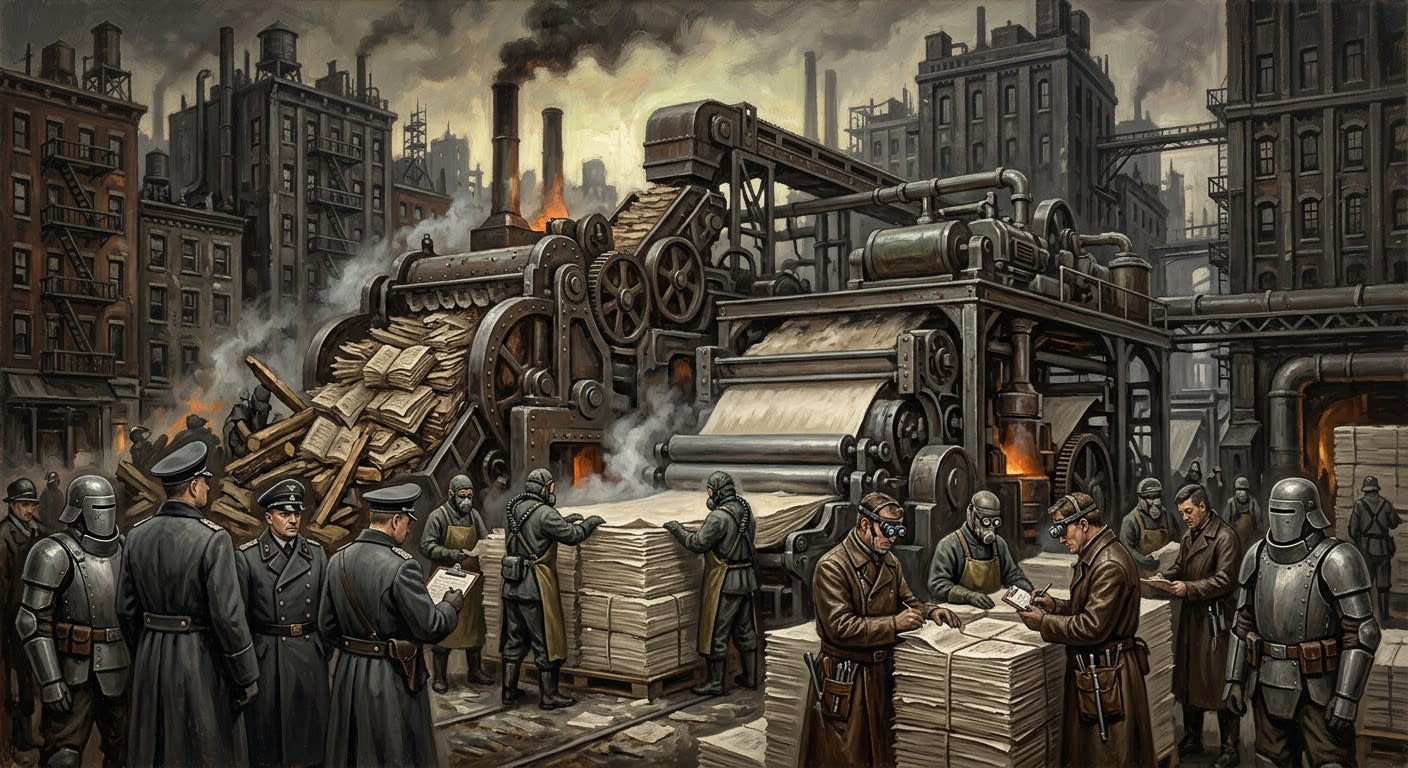
The city that taught paper to confess and scholars to become pulp
Ulm is the corrected Heartlands city whose Rationalist compact predated the calendar wound, and whose Paper Mines now make heretical learning into obedient sheets.
Codex Ref. II.2.01-005
Van Hoorn, Lemstra & de Waal
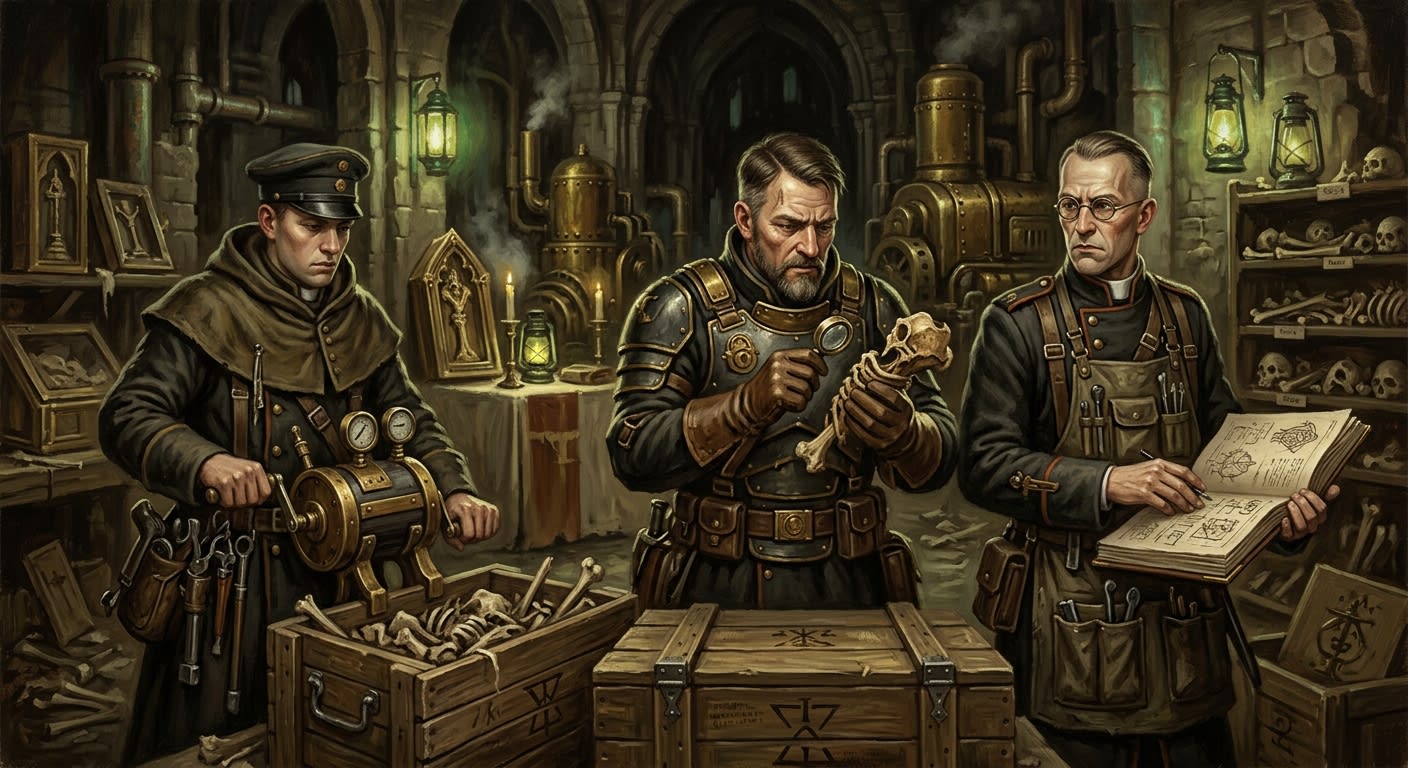
Three clerks of doubt, one table of bones, and forty cities taught to sneer
Pieter van Hoorn, Gerrit Lemstra, and Jan de Waal made doubt portable in -32 A.S.; their Bone Census counted relics accurately and wounded truth efficiently.
Codex Ref. III.2.01-026