

Reverse Index
Referencing “Bureau of Commerce”
Every codex entry that links to Bureau of Commerce. 38 entries.
Return to Bureau of Commerce
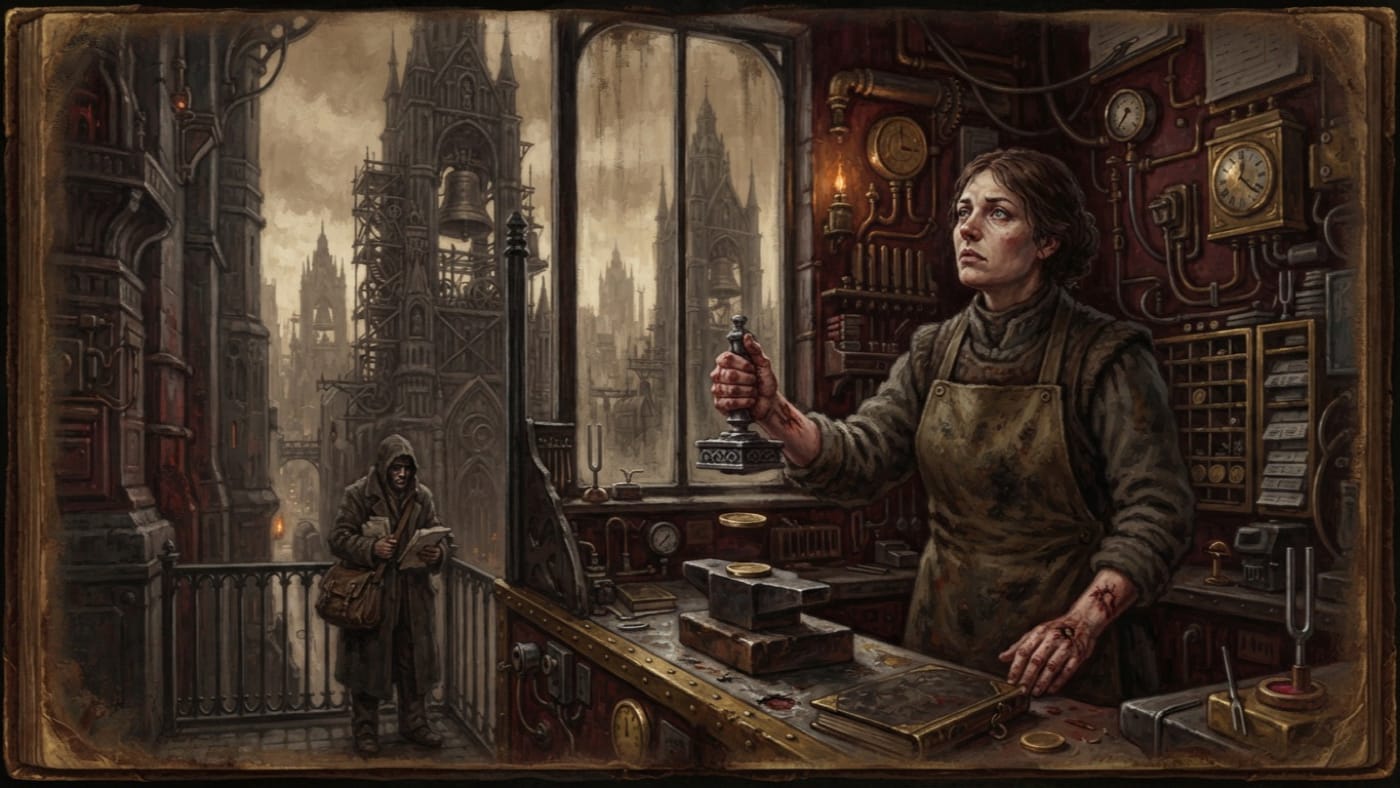
Bell-Eclipse
The bench waits for the bell
My A.S. 201 survey records the Route-Stampers' refusal to stamp while city bells are silent between canonical hours. Doctrine calls it superstition; the smiths fear the wrong world. The custom's origin remains undated.
Codex Ref. XIII.1.62-006
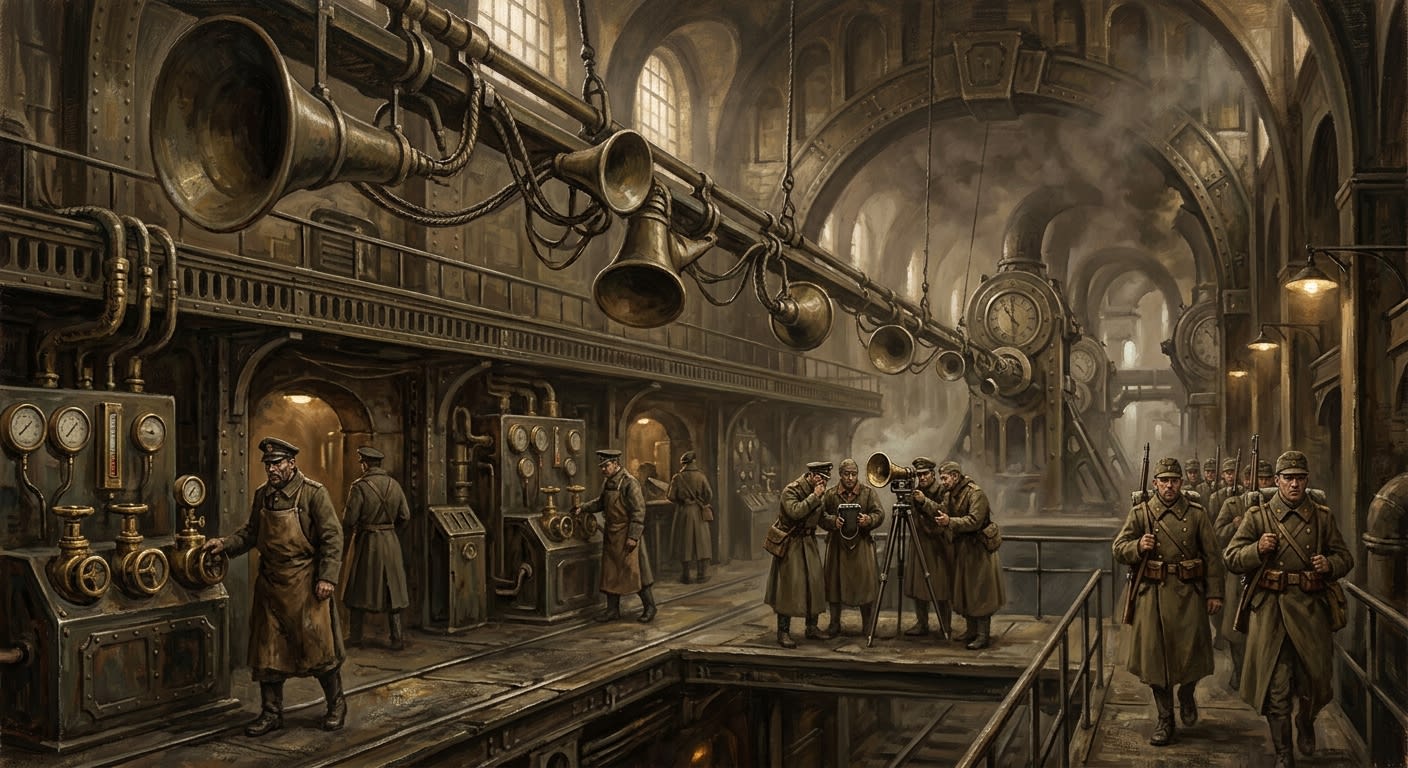
Bellway
The road that hears you, blesses you, taxes you, and may repeat you
Bellways are the Synod's sanctioned acoustic corridors: road, alarm, sermon, surveillance net, and mercy with teeth, carrying lawful sound through the Line and beyond.
Codex Ref. XIII.1.88-201
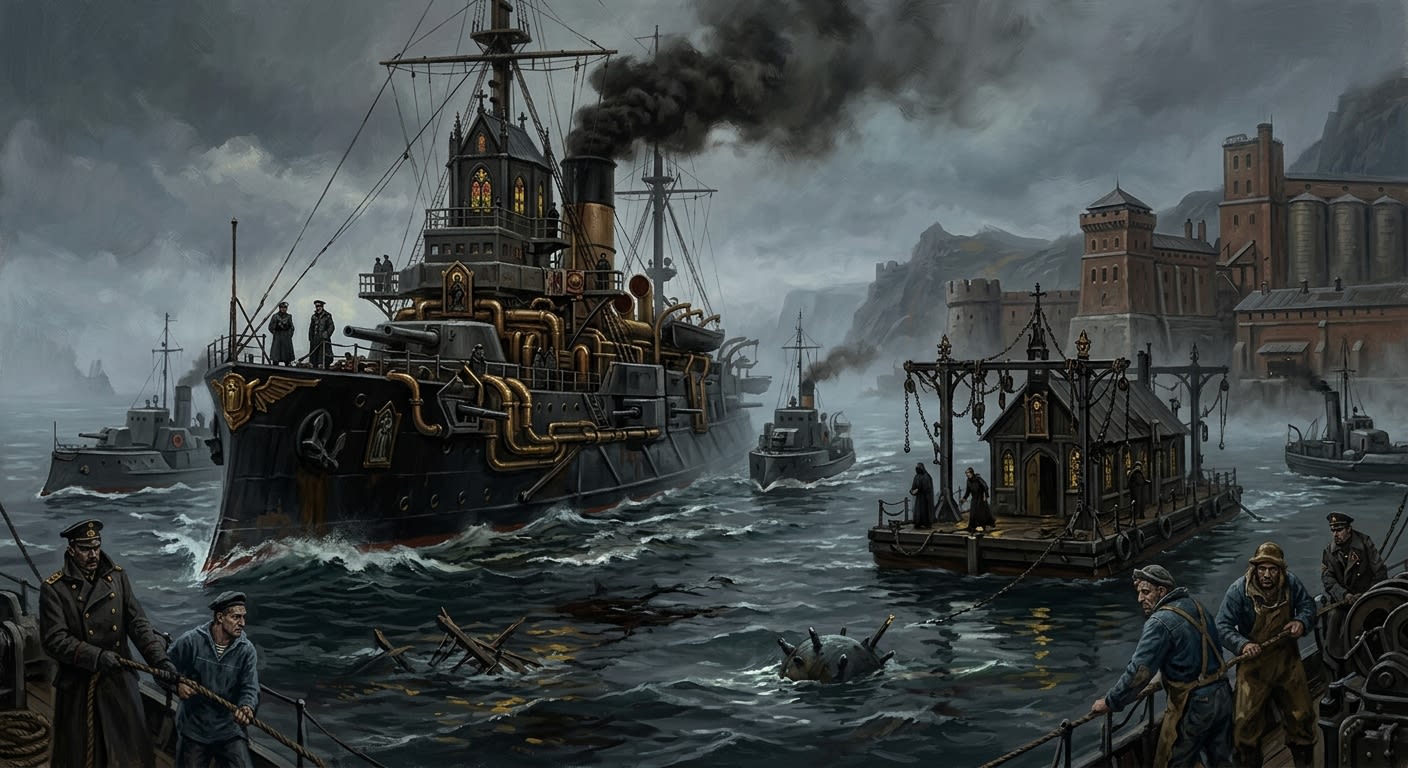
Black Sea
The Sable Deeps keep their own docket
The Black Sea is the Synod's northeastern wound against salt water: threat lane, relic route, grain hazard, Flotilla parish, and water that remembers too much.
Codex Ref. II.4.09-018

Bruges
Permit prosperity; audit beauty
Bruges is the Synod-held Lowlands city whose canals, colours, grotesques, relic glass, and impossible Tithes seal make beauty a recurring audit problem.
Codex Ref. II.1.04-058

Bureau of Hagiography
The dead may vote only after editing
The Bureau of Hagiography edits the dead into useful saints, delaying, ratifying, taxing, suppressing, and polishing grief until it obeys.
Codex Ref. VIII.6.03-112
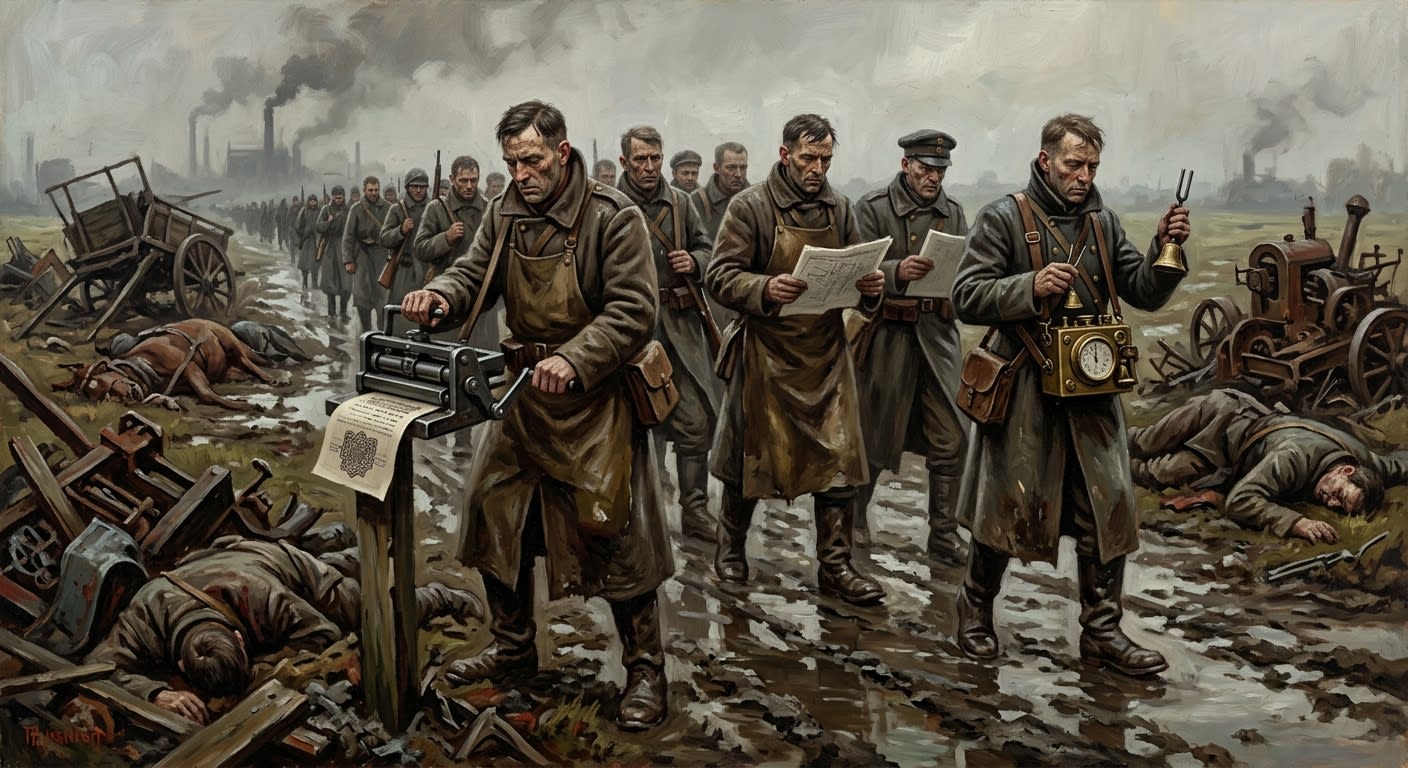
Cadence Purists
The table is holy; the road is expected to comply
Strict-compliance faction of Route-Stampers and Bell-Hour Calibrators who obey printed quarterly harmonics even when roads, fog, weather, and corpses object.
Codex Ref. XII.2.06-002
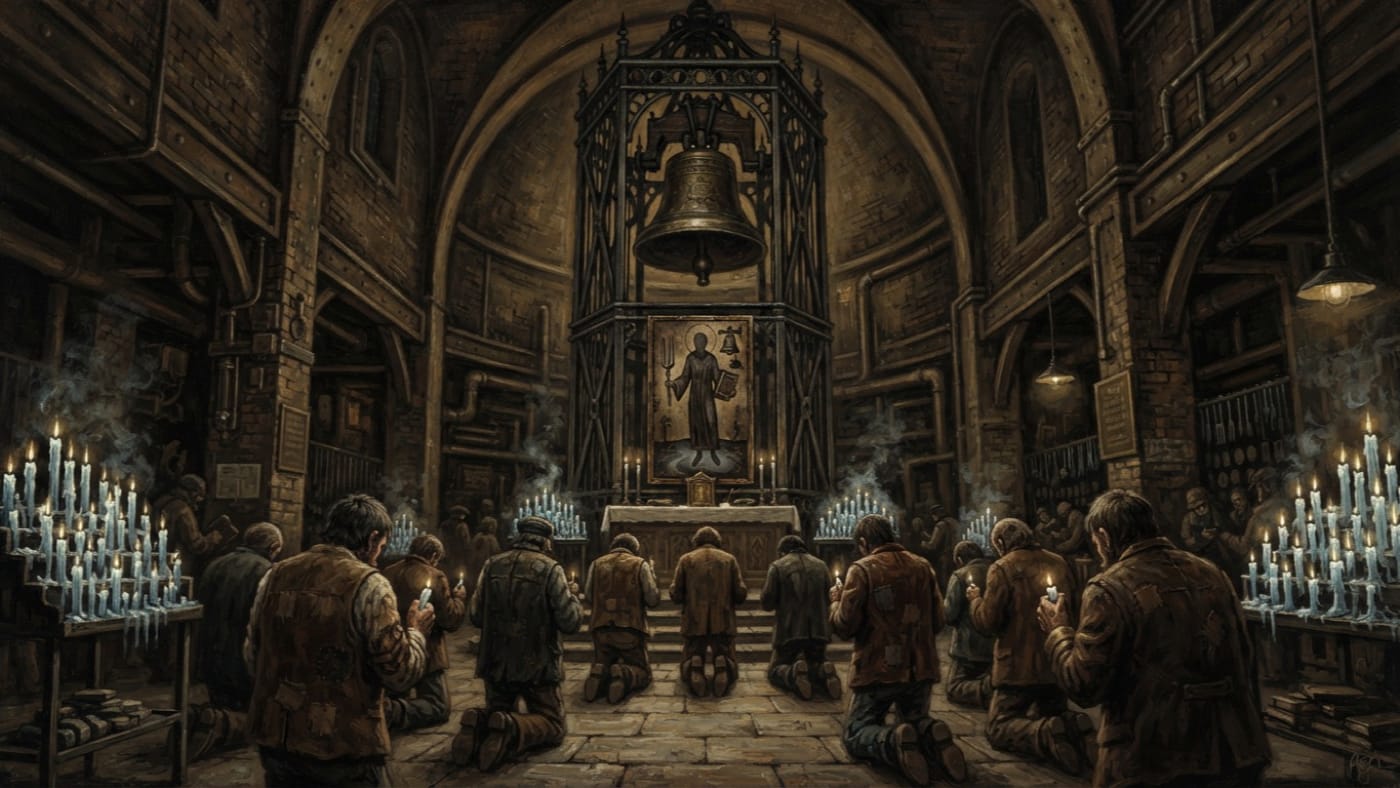
Chapel of Saint Cadrin
Confiscated permission, recast to keep the hour
Strasbourg's primary chapel of Saint Cadrin keeps an hourly bell recast from the Lyon Stampers' Guild master die. Three Bureaus explain its late undertone; none agrees.
Codex Ref. II.4.09-578
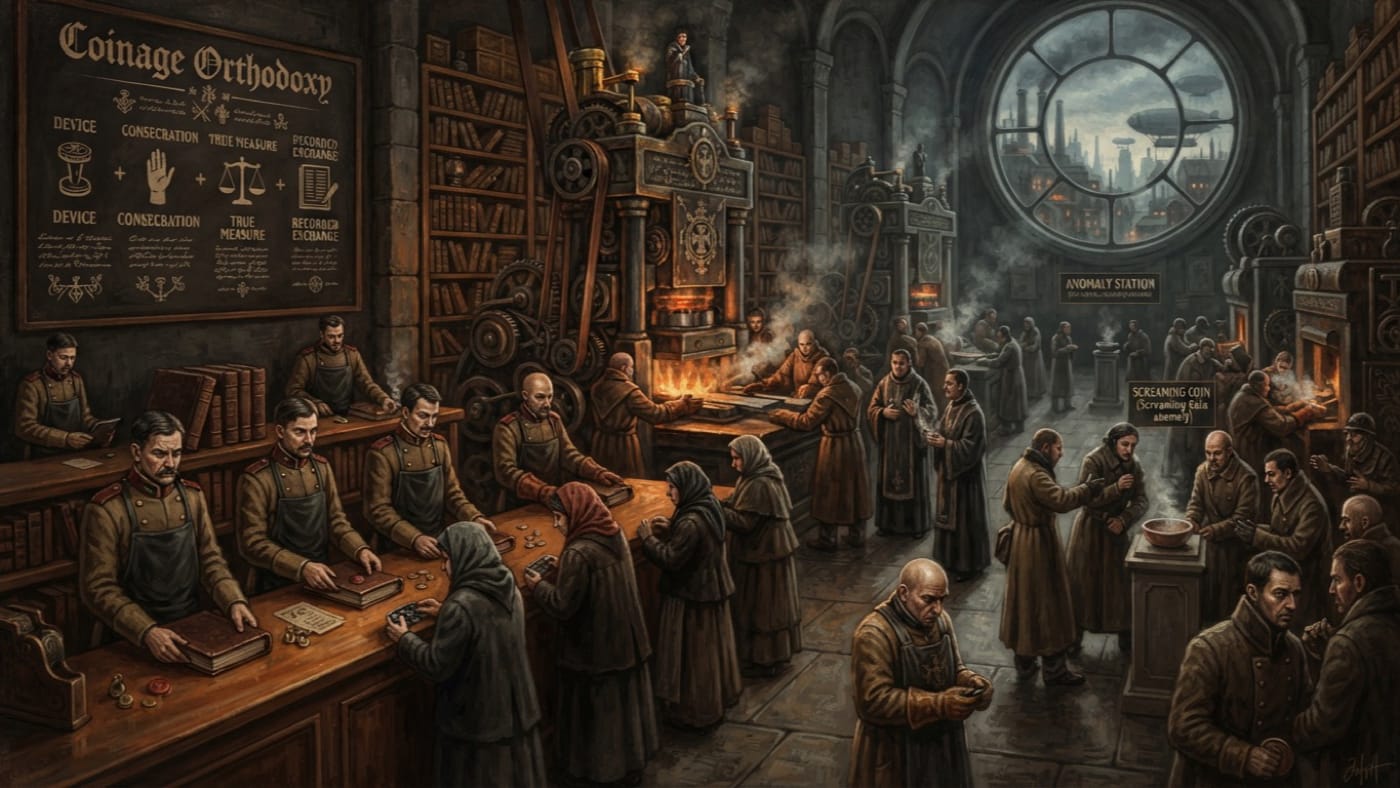
Coinage Orthodoxy
Iron is obedience you can count
The Synod recognises lawful money by device, consecration, true measure and recorded exchange. Counterfeit value is heresy; the Screaming Coin passes anyway.
Codex Ref. XIII.1.23-201
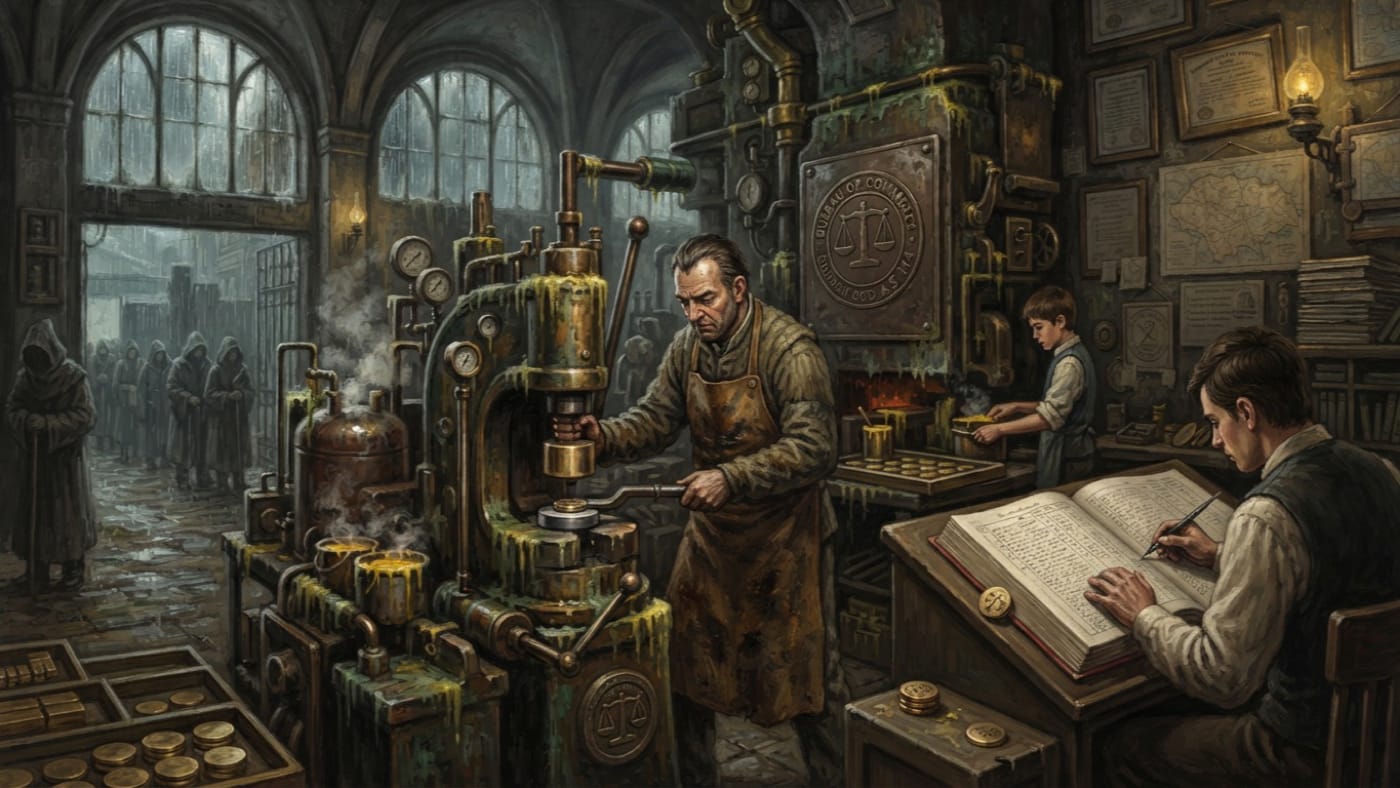
Commerce Charter A.S. 114
The Charter made the toll admissible
The A.S. 114 Charter licensed the Route-Stamper trade under Commerce and reserved Records veto authority over every forge. Brass could certify a journey; the ledger would decide whether it counted.
Codex Ref. XIII.1.38-114

Concerning the True Toll and Its Faithful Reproduction
Three quarters of the book explain who is to blame
The Route-Stampers' workshop manual survives in the record at its Third Revision, A.S. 178: 412 pages, 309 devoted to liability. The traveller does not read it. The traveller is read.
Codex Ref. XIII.1.178-001
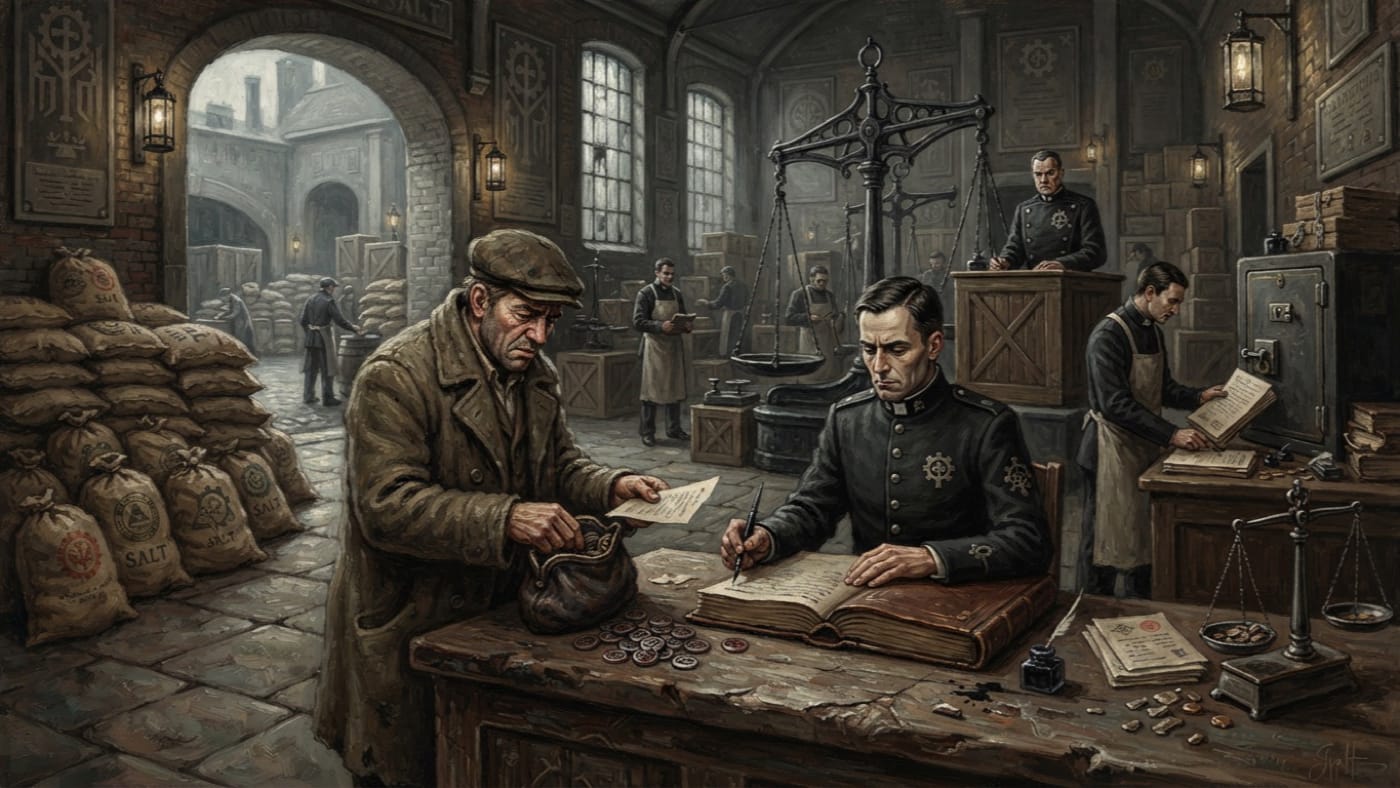
Crown of Grace accounting
The money is present; the payment remains incomplete
Crown of Grace accounting turns harbour cargo into recognised value, assessed dues and sealed proof. Coin may settle an obligation; only reconciled ledgers persuade the Bureau to release the salt.
Codex Ref. XIII.1.24-201
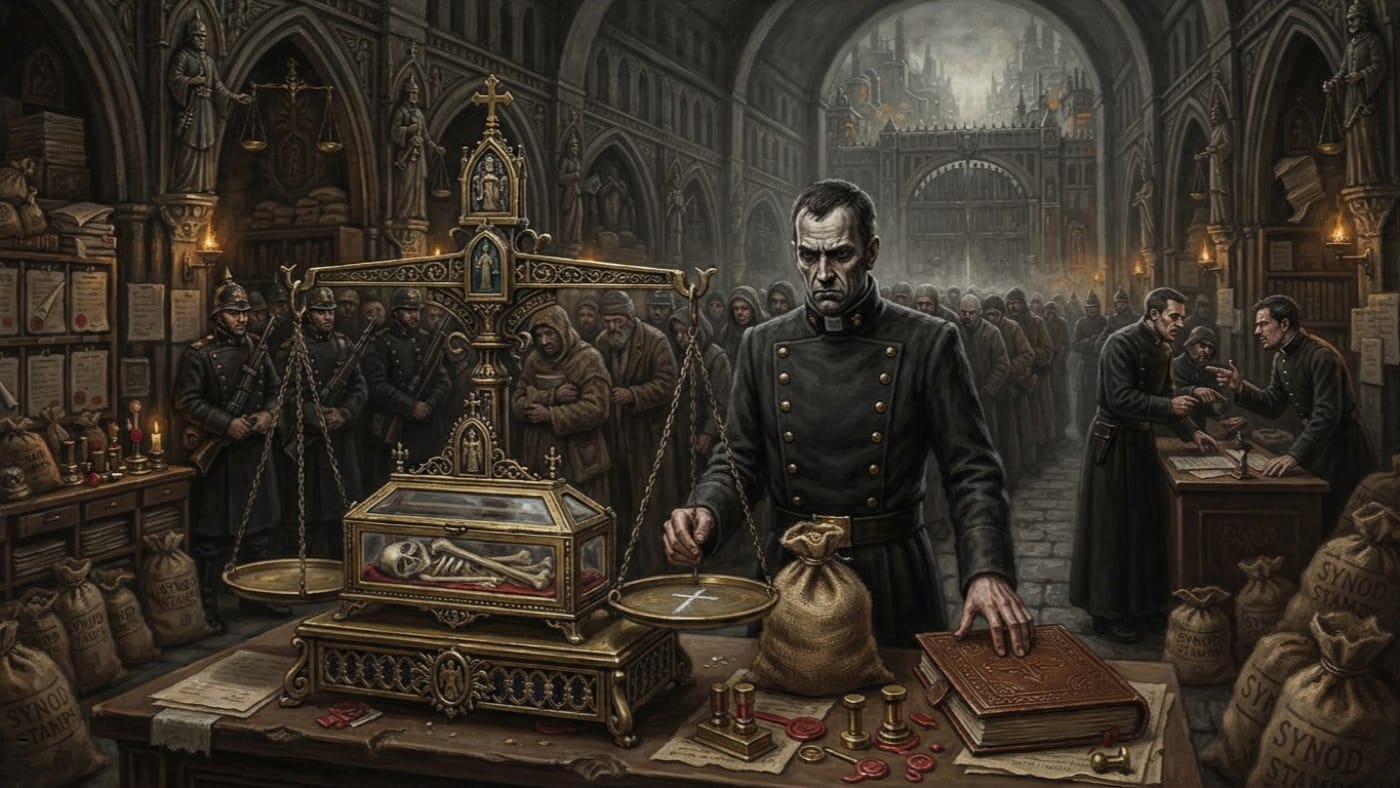
Doctrine of Measure
The scale tells the truth while the city starves
The Synod makes weighing a sacrament and false weight heresy. Relic-calibrated scales certify honest sacks; the offices remain free to let the grain rot.
Codex Ref. XIII.1.59-002

Fellowship of the Correct Stroke
A crooked letter, a second fee
The Fellowship of the Correct Stroke taught Doctrine to suspect a hooked letter. Its A.S. 112 petitions helped reopen 411 manifest cases; the zealots acquired offices, and merchants acquired a second bill.
Codex Ref. XII.8.10-001

Genevan Clockmaker
The bell kept earning after the reprieve expired
The unnamed Genevan clockmaker was condemned, then reprieved for the captive bell credited to him in the pilgrim token's A.S. 140 mechanism. His reprieve expired when his usefulness did; the bell kept earning.
Codex Ref. III.2.01-140
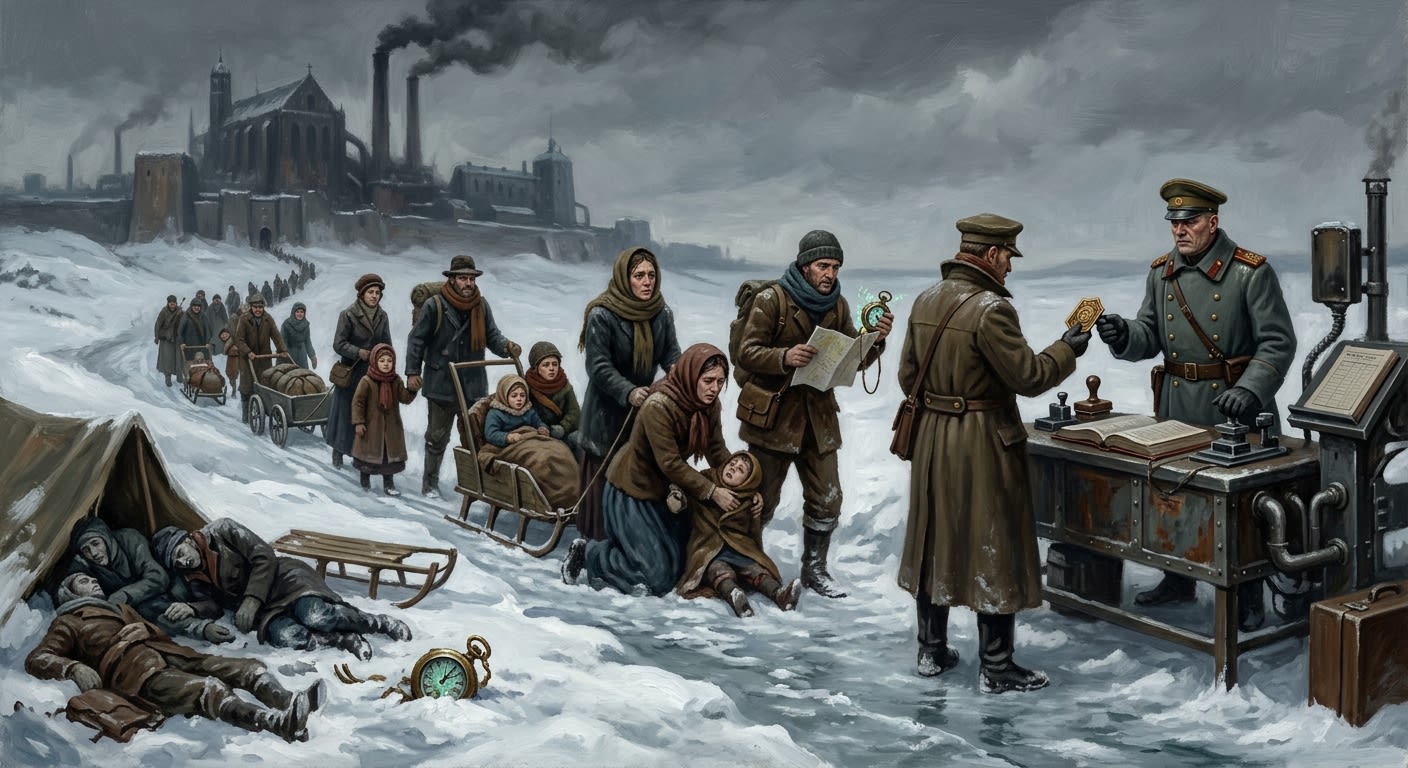
Great Counterfeit Winter A.S. 160
Near-truth is falsehood with better penmanship
A.S. 160 bell-hour token forgery crisis in which drift-tuned cores led travellers beyond Bellway protection, killed families near lawful roads, and remade Route-Stamper discipline.
Codex Ref. VII.8.10-093
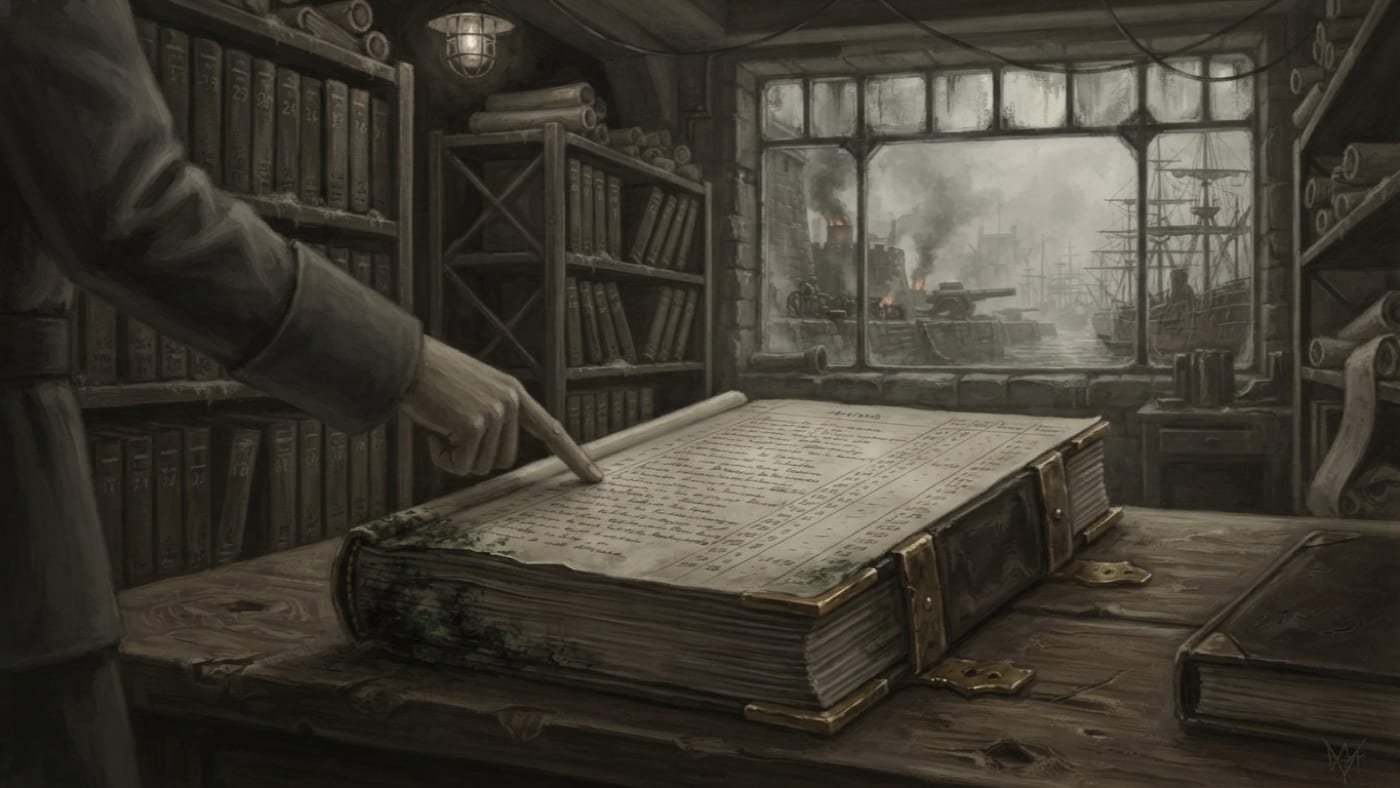
Harbour Ledger
Arrival duly entered; bread lawfully withheld
The Harbour Ledger records arrivals, berths, inspection times and the first ship count in Varna's A.S. 129 grain disaster. It proves the bread arrived; responsibility is entered elsewhere.
Codex Ref. XIII.1.89-129
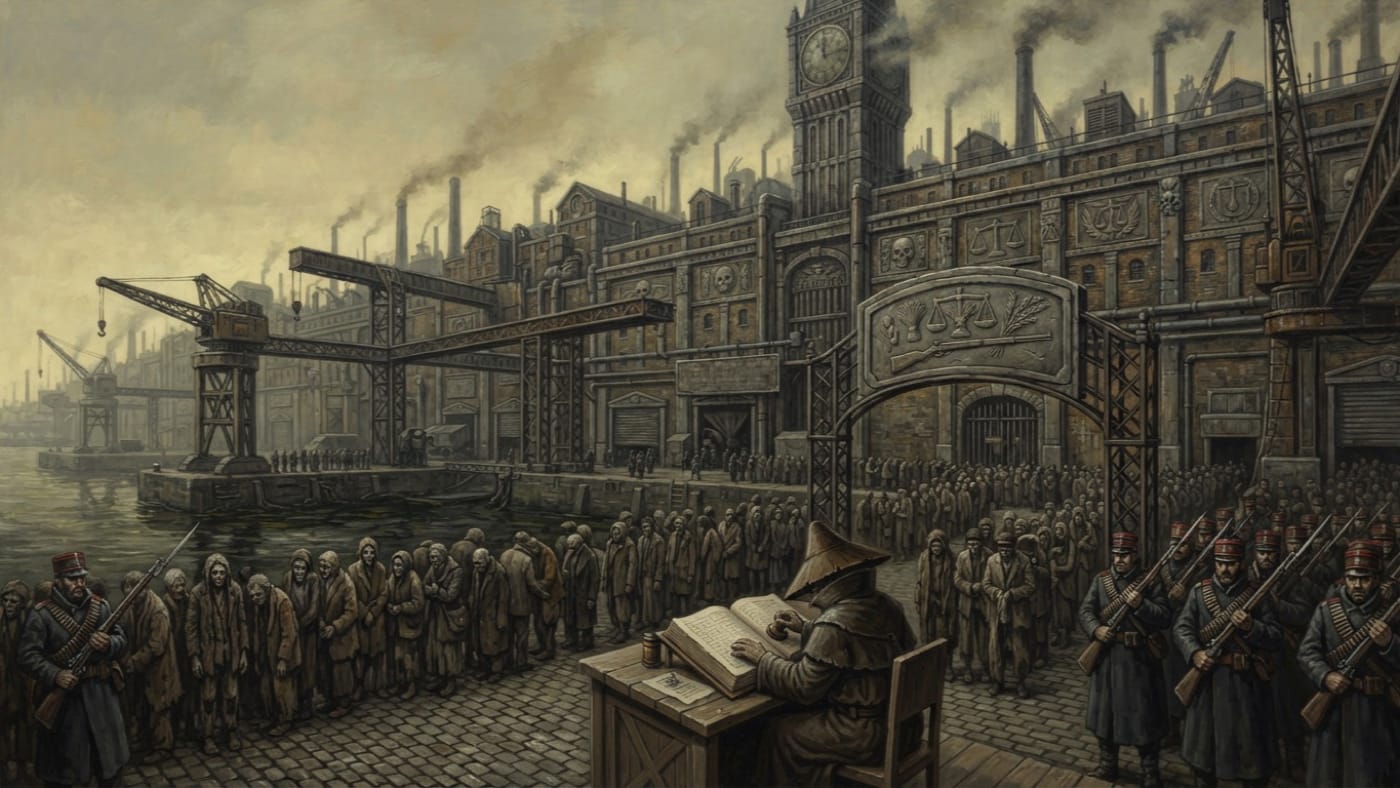
Holy Fast
The hunger came first; the consent was entered afterward
Holy Fast is Records' approved name for Varna's A.S. 129 deprivation: nineteen days of sealed grain, a Purity volley, and consent inferred from petitioners who could no longer petition.
Codex Ref. XIII.1.89-129
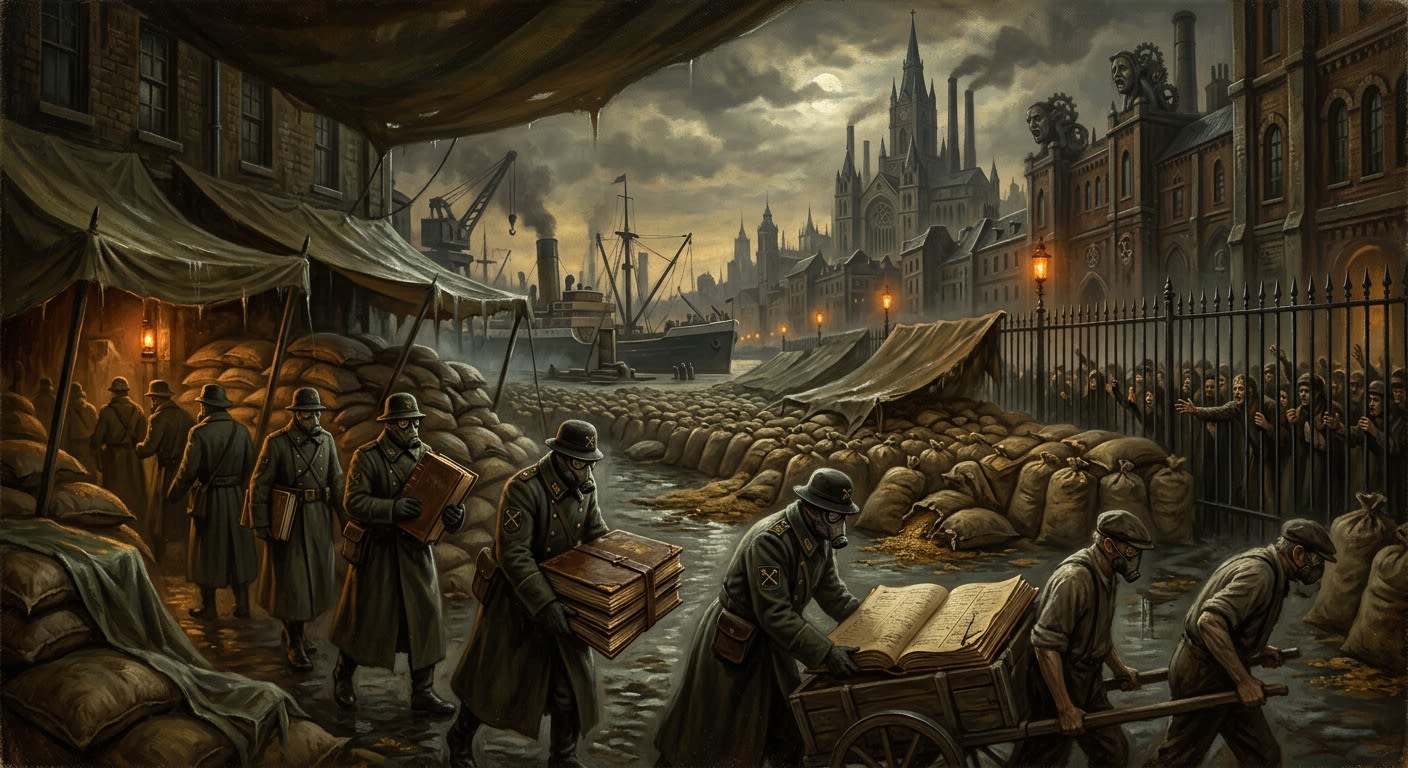
Ledgers of Varna
Bread in sight, mercy in arrears, tariff integrity preserved
The Ledgers of Varna record the A.S. 129 grain-fleet tariff paralysis that let bread rot under harbour canvas while citizens starved and the Bureaus preserved tariff integrity.
Codex Ref. VII.8.10-004
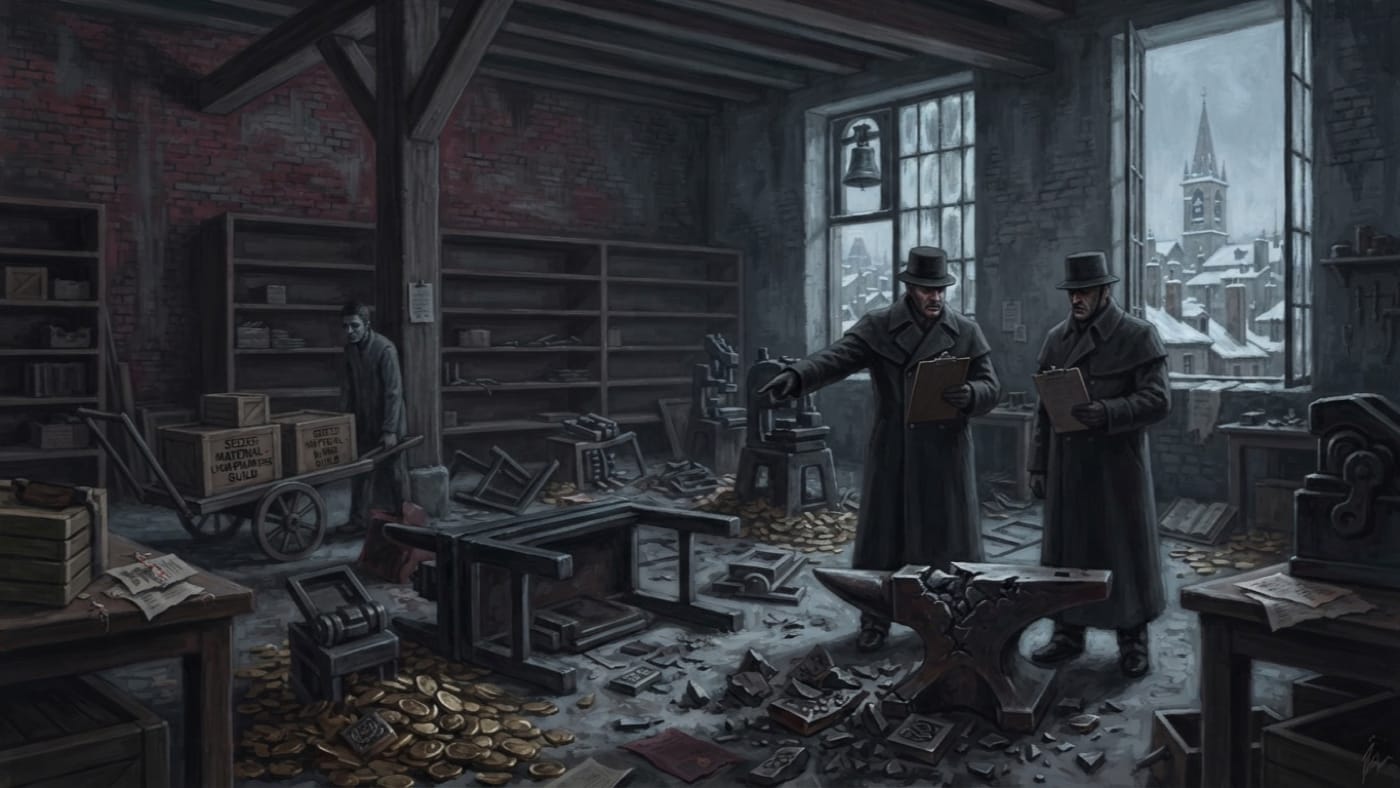
Lyon Stampers’ Guild
The charter is void; the bell still keeps the hour
Lyon's dissolved token-smith guild, broken in the Great Counterfeit Winter of A.S. 160. Its charter was voided, its apprentices redistributed, and its master die made to toll the hour in Strasbourg.
Codex Ref. XII.38.02-160

Manifest Litigant
In which the Bureau confirms that identity is paper, paper can be disputed, and dispute, correctly licensed, is a revenue stream.
The licensed enforcers of documentary reality at the port courts — the profession that cannot save the grain but can prove, conclusively, why it was permitted to rot.
Codex Ref. XII.26.01-001
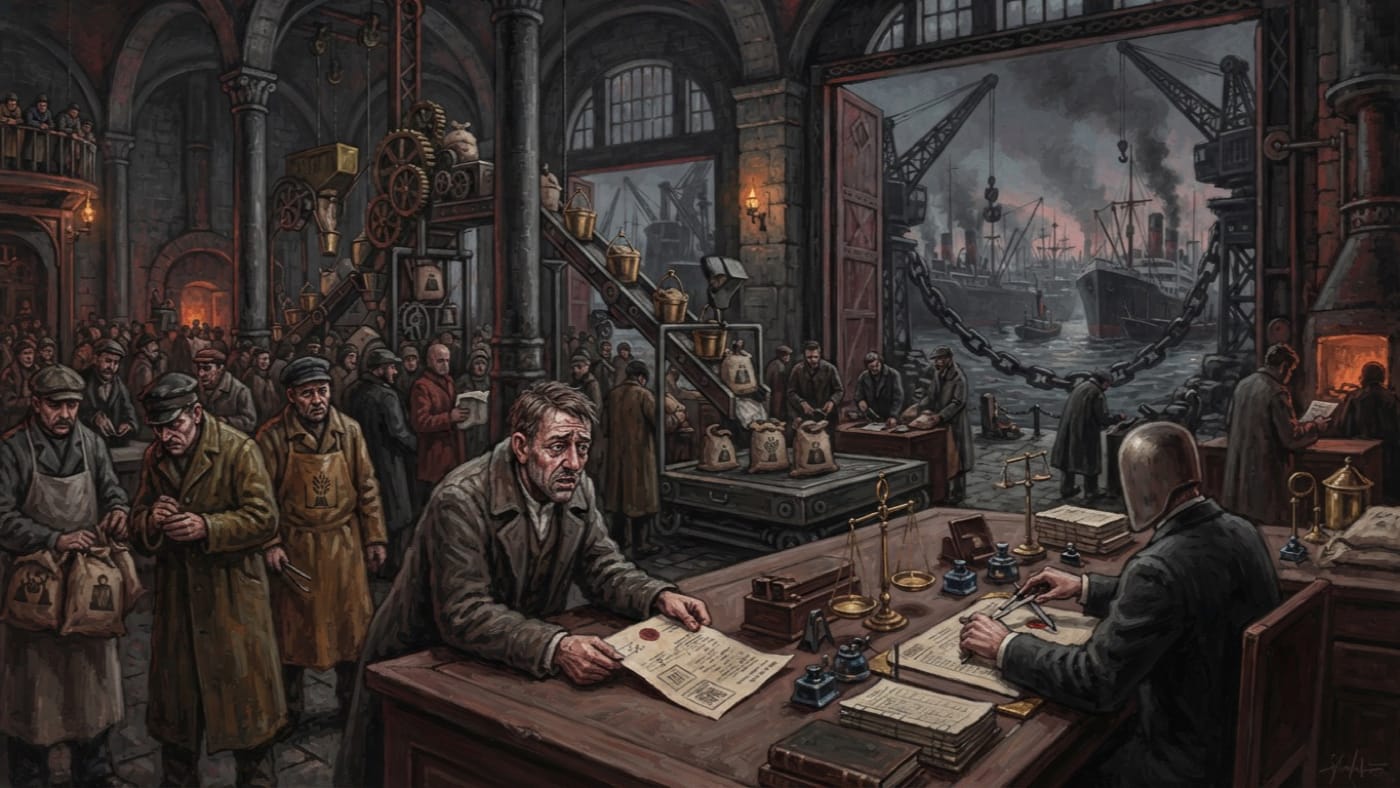
Merchant Marine Guild
Three stamps for an assurance. The fee survived the withdrawal.
The civilian guild that bought the Bureau of War's low-threat assurance before the Black Sea Armada of A.S. 162. The assessment was withdrawn in A.S. 163. The printing fee survived.
Codex Ref. XII.26.04-162
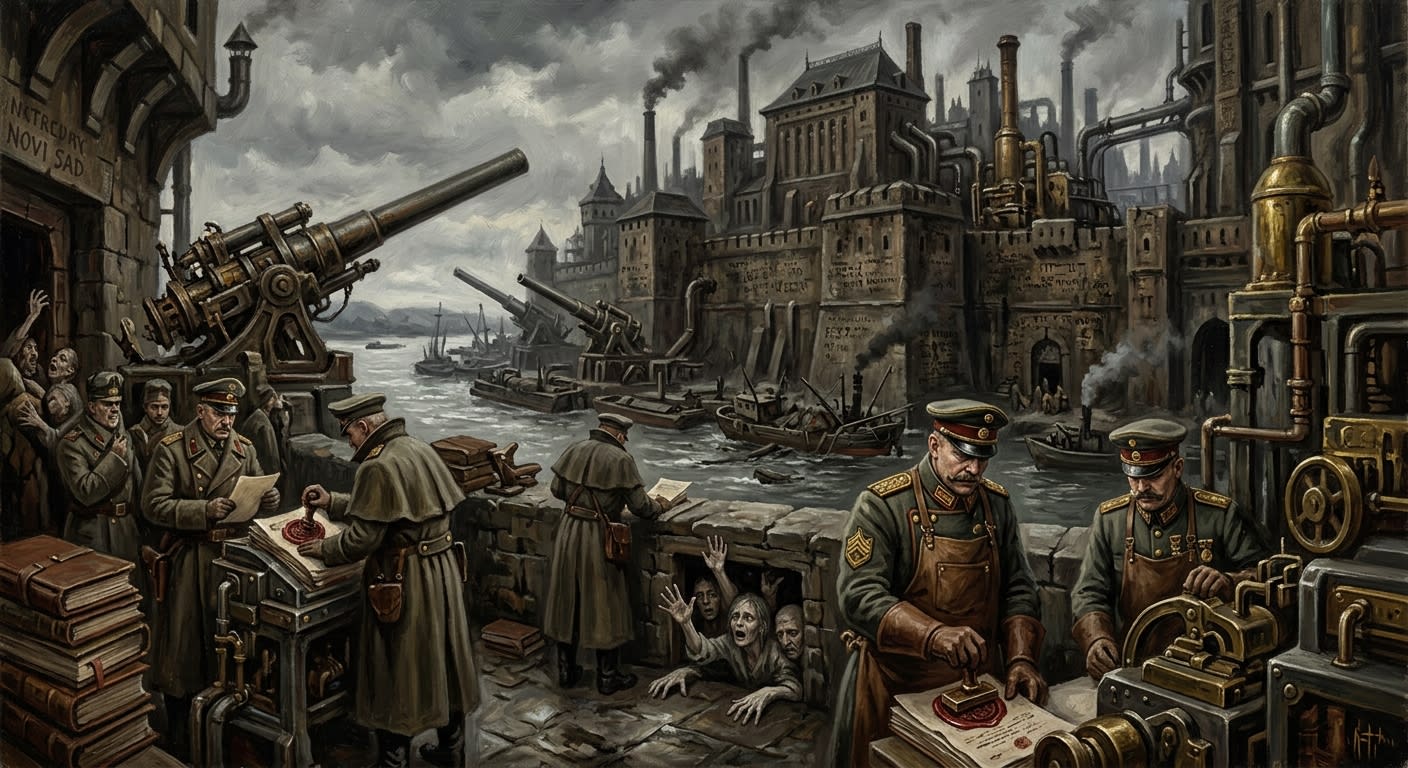
Novi Sad
The city where cannon, stone, and stamp each learned to fail
Novi Sad is a fallen Danube city whose cannon never fired, whose stones wrote living names, and whose valid seals once starved the bodies beneath them.
Codex Ref. II.4.09-045
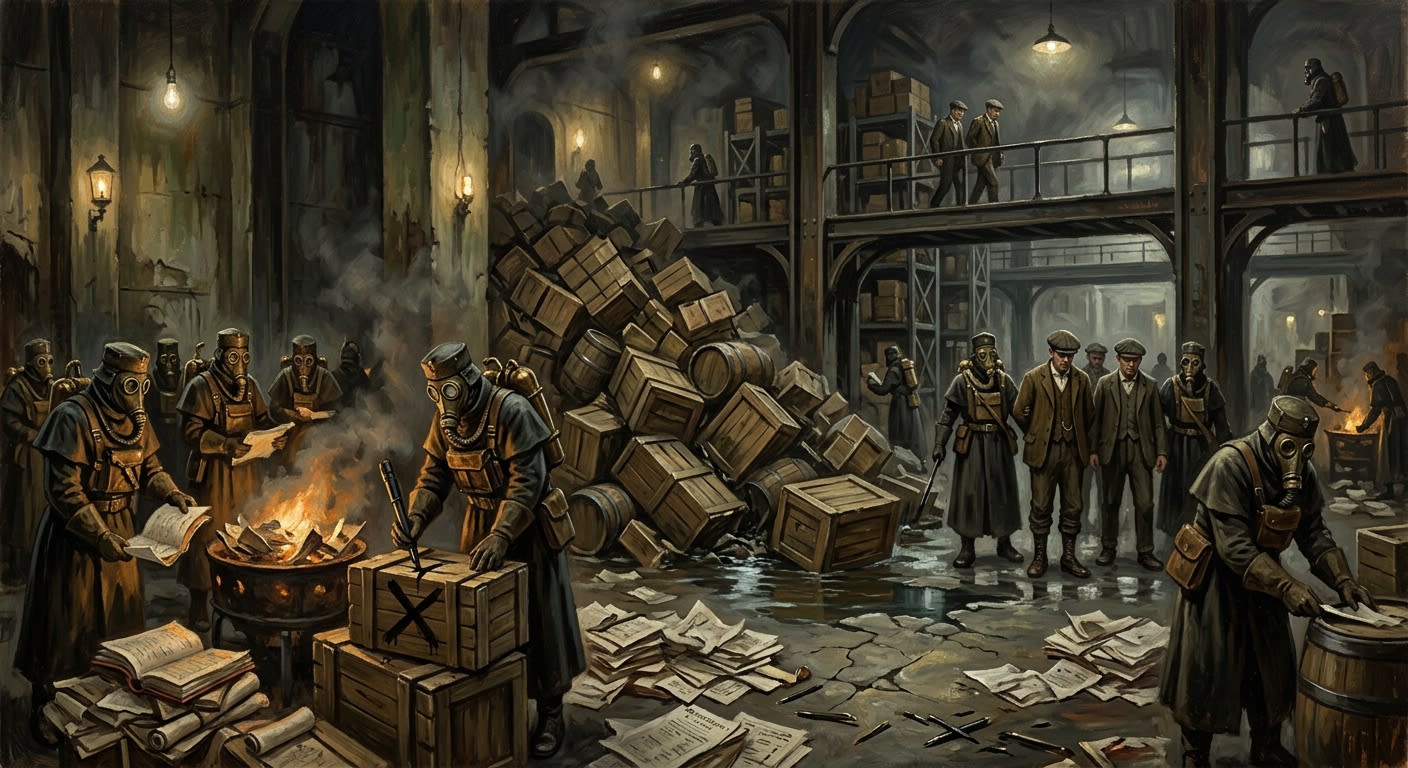
Orthography Purge of A.S. 112
When the letter changed, the invoice died obediently
The Orthography Purge of A.S. 112 reopened 411 manifest cases, stripped eleven Litigants of practice rights, and taught merchants that one suspect stroke can bankrupt a warehouse.
Codex Ref. VII.8.10-002
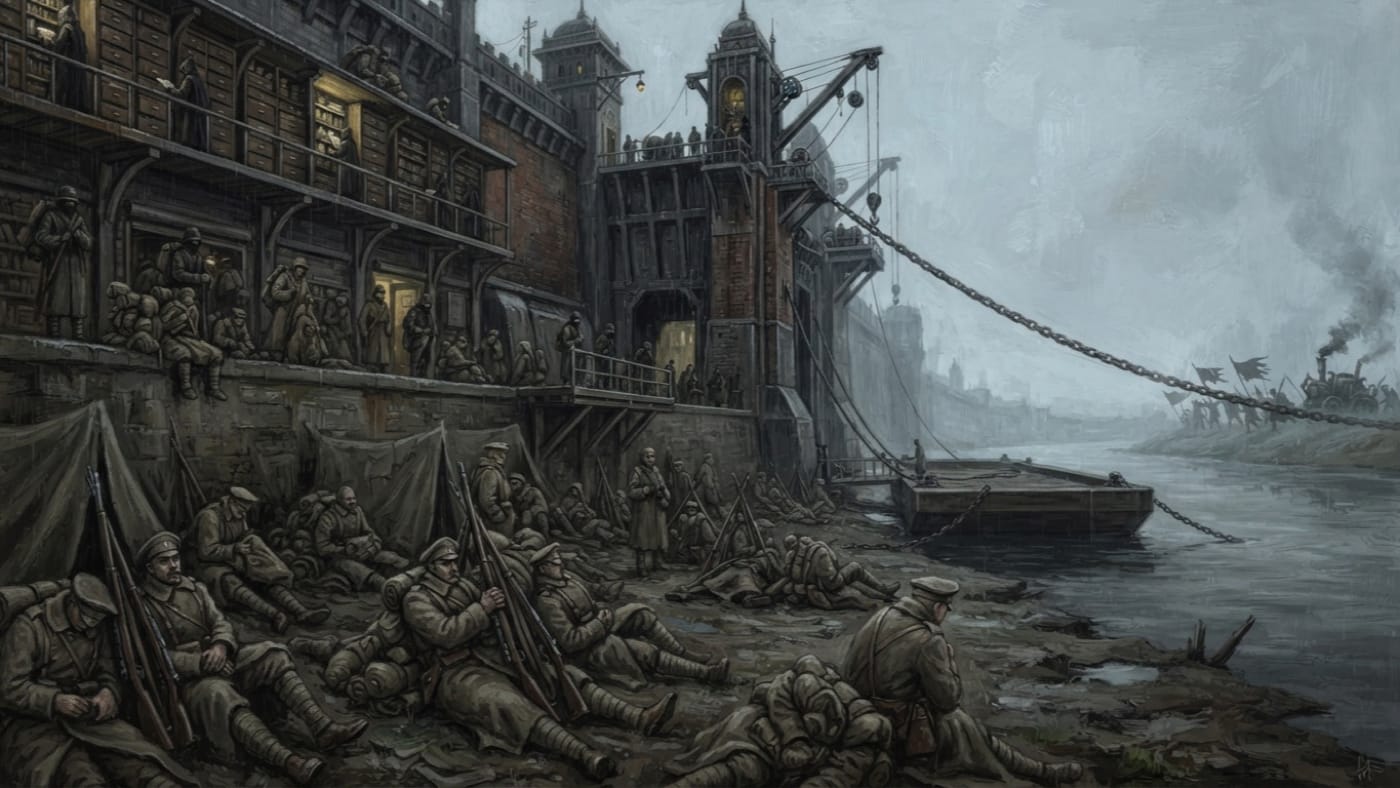
Orthography Siege
Three spellings, one dead regiment
At Nominalist's Gate, three spellings of a colonel's name held a regiment on the bank until hunger and Wrath's raiders destroyed it. The audit found immaculate ledgers and no procedural breach.
Codex Ref. VII.8.10-138

Orthography Siege at Nominalist's Gate
Three spellings held the regiment; the ledgers survived inspection.
At Nominalist's Gate, three spellings of a colonel's name barred a regiment from crossing. It starved on the trench-bank until Wrath's raiders came at dawn. The ledgers were immaculate.
Codex Ref. II.3.05-138
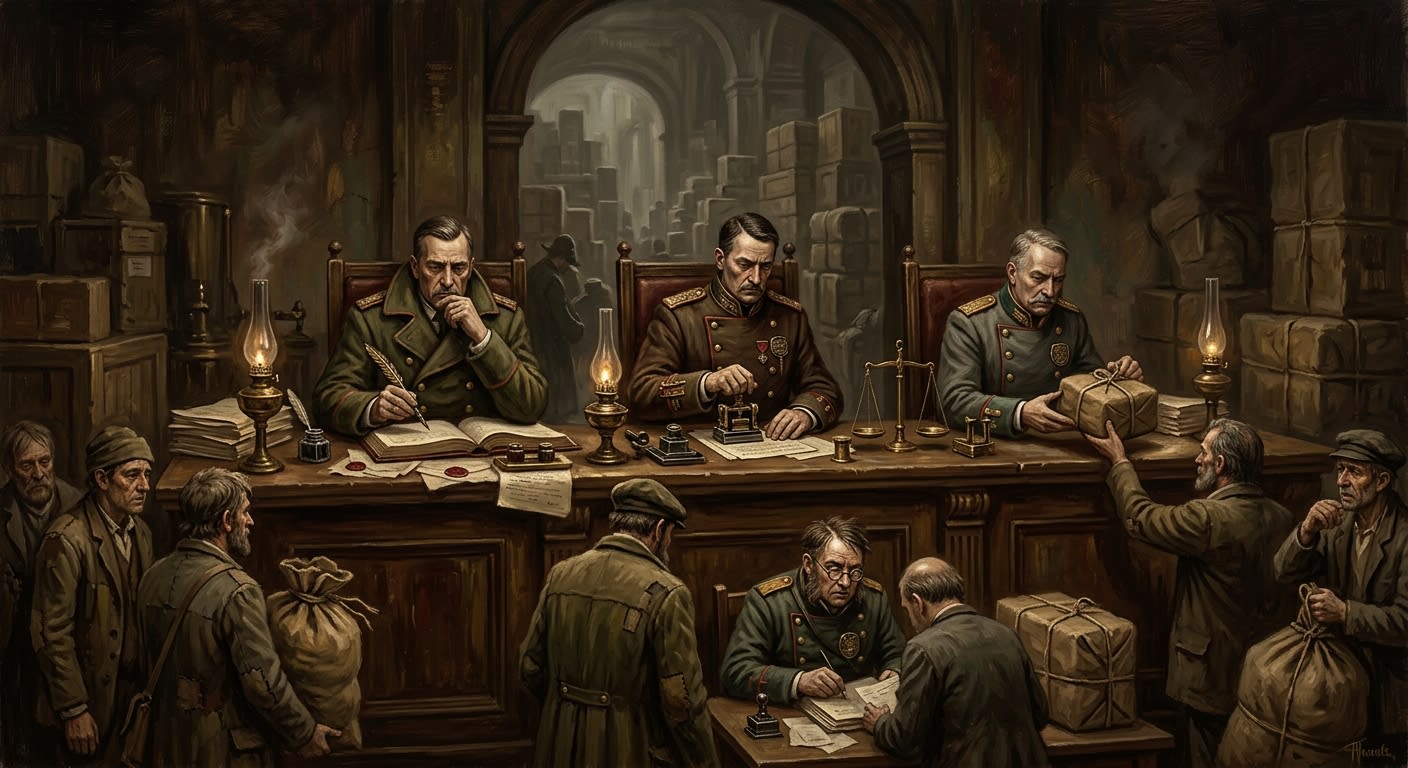
Port Court
Where cargo waits while permission proves it has a soul
The Port Court names cargo before mercy may touch it: a Commerce bench where sacks become law, law becomes delay, and delay invoices the hungry.
Codex Ref. XIII.1.89-112

Precedent Curator
The cargo is gone; the case remains, sharpened and shelved
Precedent Curators are archive-retired Manifest Litigants who preserve citations, reconcile variants, feed the Thirty-Seal Index, and make old disputes profitable again.
Codex Ref. XII.26.01-001

Rot-Week of Saint Vellum
Eleven days to save the forms, four days to lose the food
The Rot-Week of Saint Vellum was an eleven-day port paralysis in which disputed cargo names perfected the paperwork, spoiled the food, and licensed Manifest Litigants into profitable necessity.
Codex Ref. VII.8.10-001

Route-Stamper / Indulgence-Token Smith
Walking is a contract; the Route-Stamper is the notary
Makers of the indulgence-token — a brass palm-piece whose captive bell-hour counts steps, repels road-spirits, and distinguishes the sanctioned traveller from the heretic-with-legs. The art is measured by one question only: whether it lies.
Codex Ref. XII.38.01-001

Saint Cadrin the Measured
A saint so useful the archive had no choice but to discover him
Patron saint of Route-Stampers and Indulgence-Token Smiths, canonised in A.S. 112 to make counted movement, stamped routes, and profitable delay holy.
Codex Ref. III.2.01-141

Shadow Counsel
Where the law does not break, but bends toward the purse
Shadow Counsel are purchased Manifest Litigants: licensed mouths rented by smugglers, syndicates, and caravan houses to make lawful procedure serve private dirt.
Codex Ref. XI.1.06-001

Silent-Core Crew
Permission without a voice remains a crime in better clothes
Shadow faction of Route-Stamper criminals who mute bell-hour cores, sell unmeasured movement, and teach the road the profitable shape of silence.
Codex Ref. XII.2.06-004
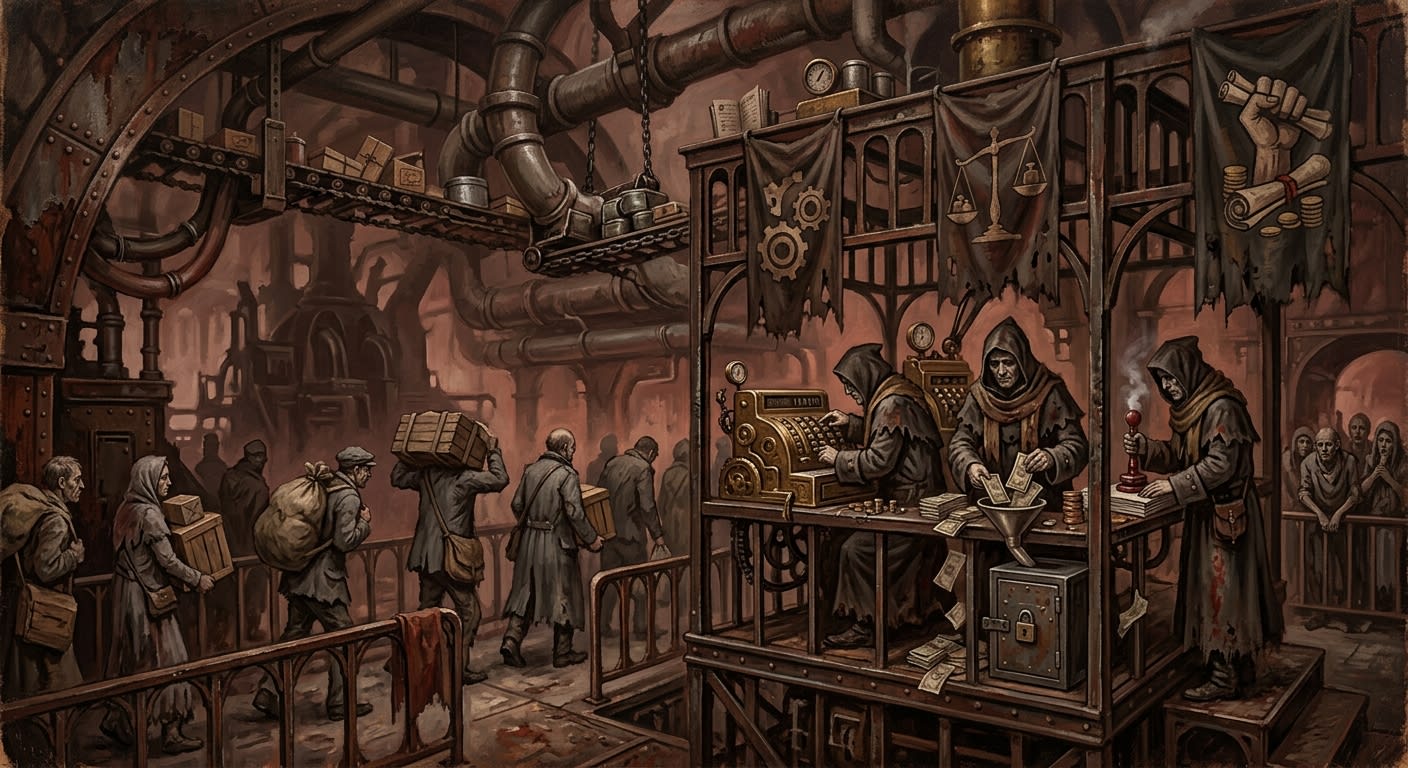
Standing Order 77-A
Movement is holy until the receipt arrives
Standing Order 77-A prices delay, blesses audited bribery, and teaches cargo to move before correctness kills the hungry.
Codex Ref. XIII.1.77-172

Thirty-Seal Index of Precedent
The book that lets old disputes bite new throats
The Thirty-Seal Index is Commerce's weaponised memory: port-court precedent sealed thirty ways, kept cold, and lent to litigants who know where hunger must wait.
Codex Ref. XIII.1.89-187

Trier
The city that taught chalk to count before it spoke
Trier is a loyal Moselle city with old hands, white margins, soft chalk, river memory, and the dangerous courtesy of obedience performed too well.
Codex Ref. II.2.02-004

Varna
The Ashen Redoubt where smoke looks back and bread learns law
Varna, the Ashen Redoubt, is a Black Sea cliff-fortress of guns, bone-kilns, tariff chapels, demon glass, hunger law, debt masks, and smoke that looks back.
Codex Ref. II.4.09-070
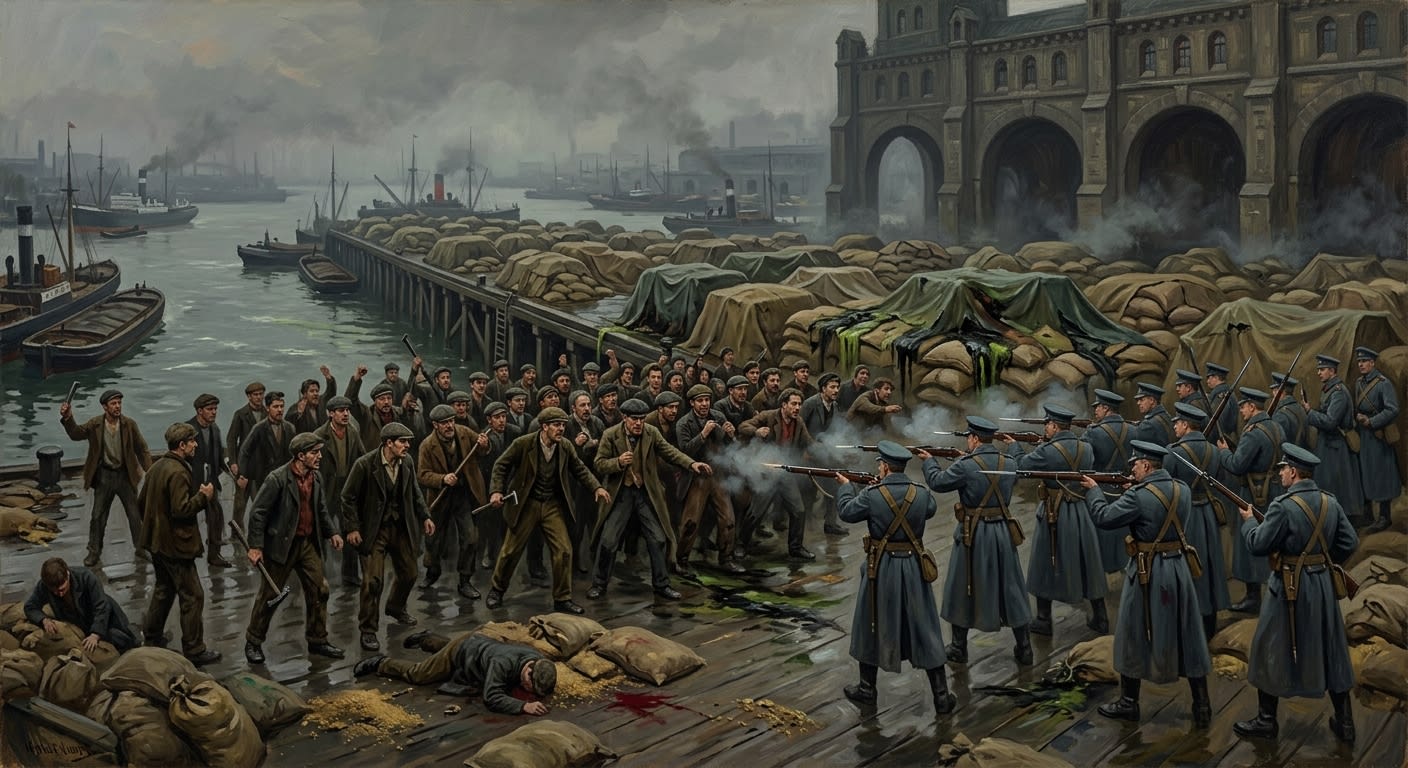
Varna Grain Rot
The wheat waited nineteen days; the dead waited less
A.S. 129 Varna harbour catastrophe in which tariff suspension left convoy grain to rot for nineteen days, provoking hunger riot, Purity volley, and official conversion into holy fast.
Codex Ref. VII.8.10-016

Venice
The city that obeys by tide and invoices by fog
Venice is loyal, wealthy, damp, evasive, and necessary: an Adriatic city the Synod owns by writ and must still ask politely by tide.
Codex Ref. II.4.09-201