

Reverse Index
Referencing “The British Crown”
Every codex entry that links to The British Crown. 74 entries.
Return to The British Crown
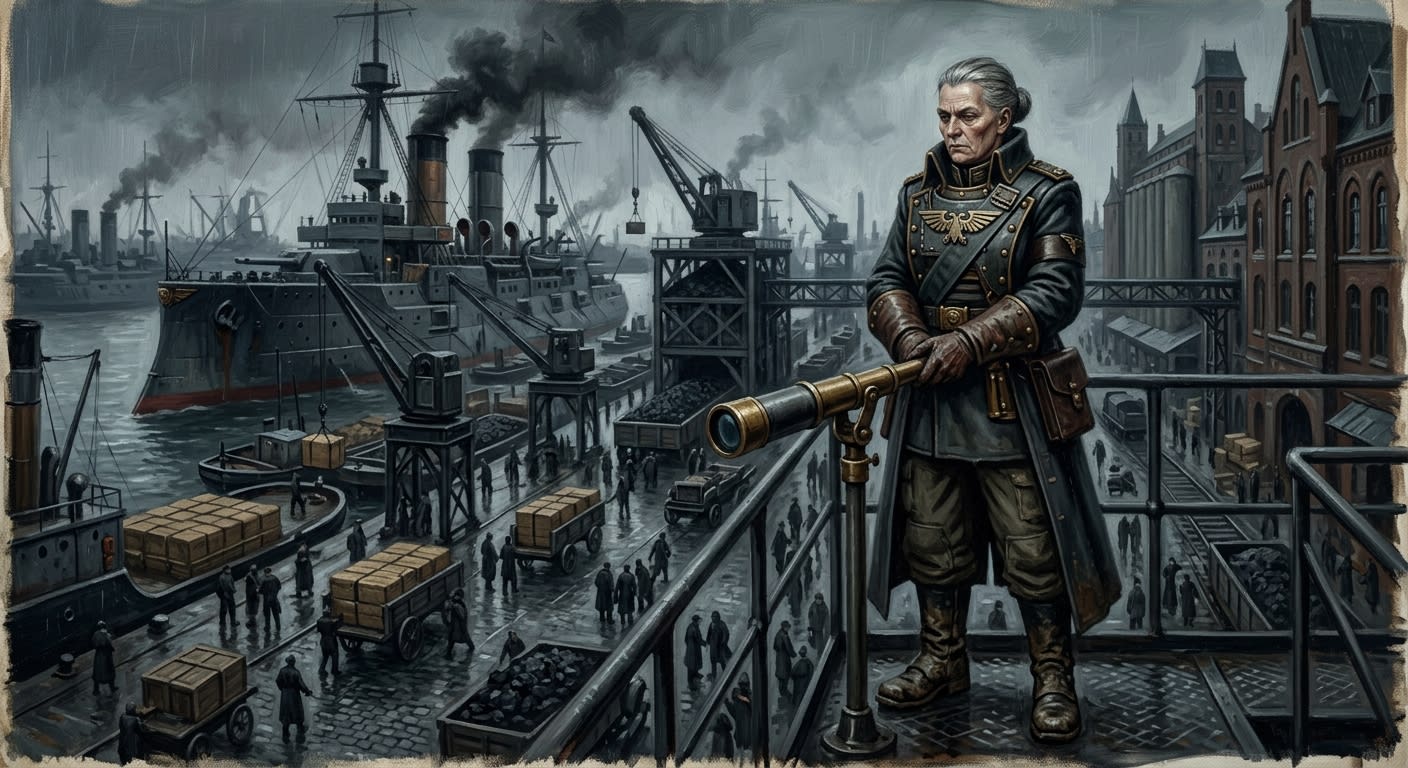
Admiral-Prefect Gerta Halske
The tide table has more mercy than most bishops
Admiral-Prefect Gerta Halske rules Hamburg's wet arithmetic: ships, grain, coal, foreign credit, dock rage, and the northern front's daily refusal to starve.
Codex Ref. III.2.01-151
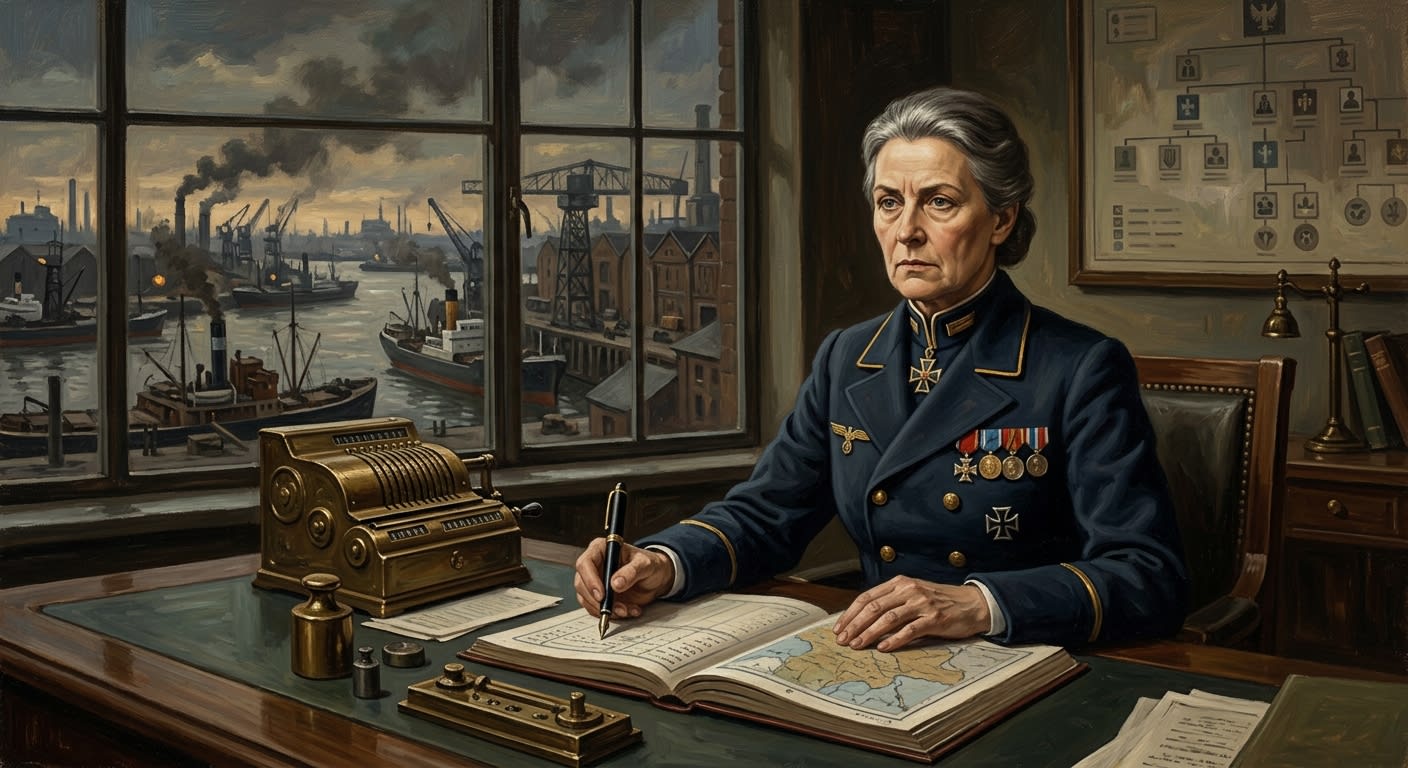
Admiral-Prefect Gerta Halske
The harbour obeys her because theology cannot unload grain
Hamburg's Admiral-Prefect since A.S. 194, Gerta Halske governs harbour routing, foreign factors, war-cargo priority, and the arithmetic by which the northern front continues breathing.
Codex Ref. III.2.01-150

Admiral-Prefect Halske
Kanzleiburg abbreviates what Hamburg cannot afford to lose
Admiral-Prefect Halske is Kanzleiburg's clipped name for Gerta Halske: the harbour officer whose refusals turn foreign cargo into northern survival.
Codex Ref. III.2.01-152
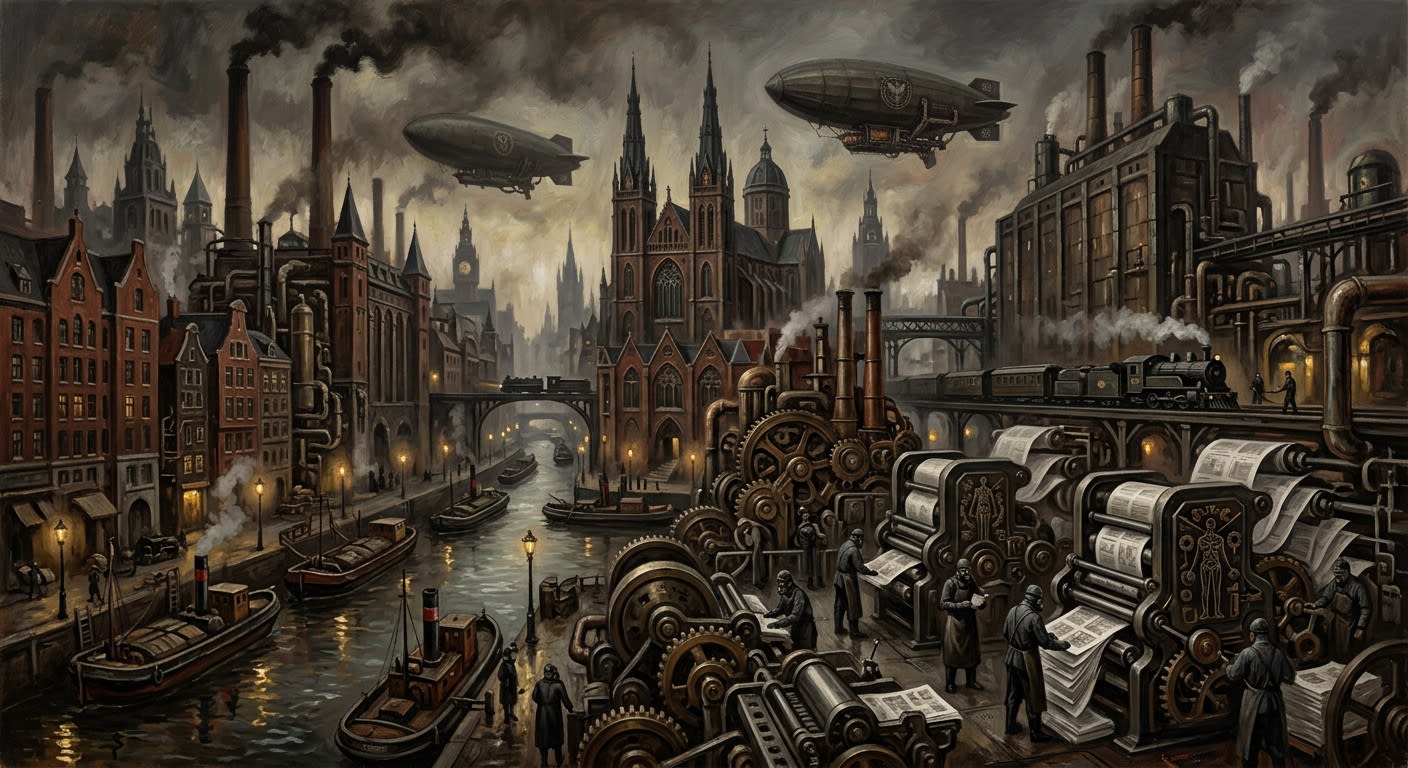
Amsterdam
The city where Europe learned to sin in pamphlet form
Amsterdam is the independent Dutch city where the Synod's calendar wound was printed: first the Year of Letters, then *De Vera Luce*, then Europe taught to doubt by invoice.
Codex Ref. II.4.09-012
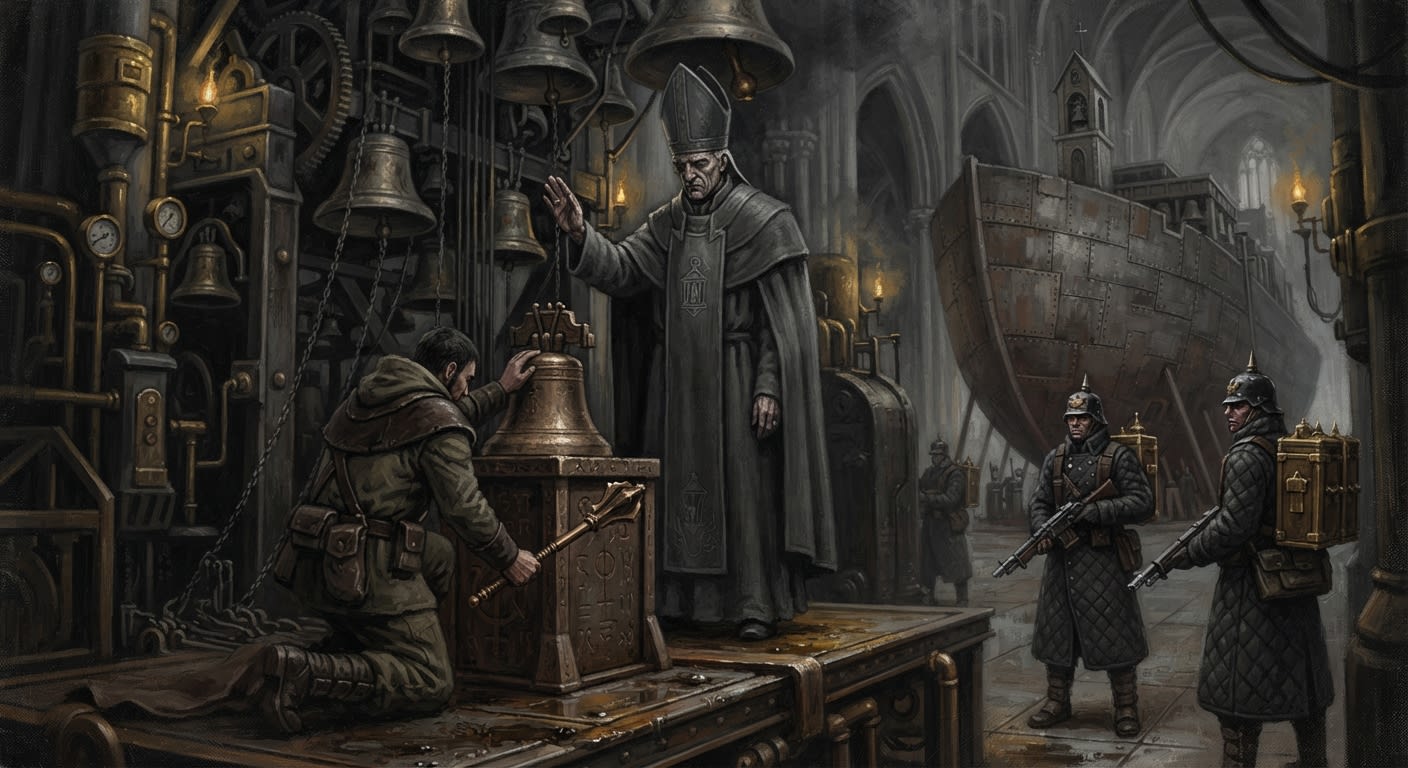
Archbishop of Canterbury
The altar Strasbourg cannot countersign
Canterbury's unnamed Archbishop ordains bell-warriors, guards relics, blesses ships, and proves that an unaudited Christian altar can still make Strasbourg lose sleep.
Codex Ref. III.2.01-025
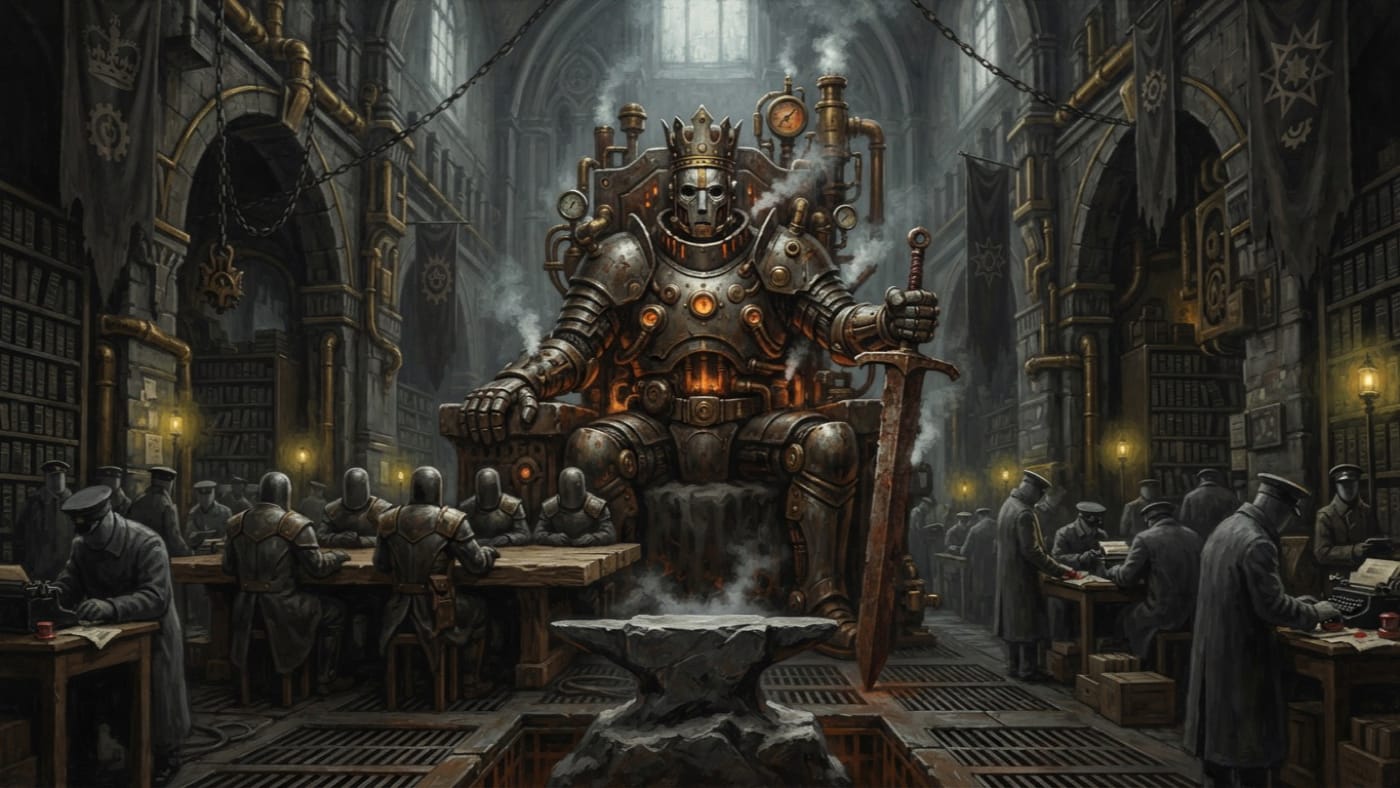
Arthur
The king whose name binds Britain and whose life eludes the Ledger
Arthur sustains Britain's Crown, oaths and Table while eluding every register. King, warlord and saint in British testimony; identity and dates unestablished.
Codex Ref. III.2.01-1518
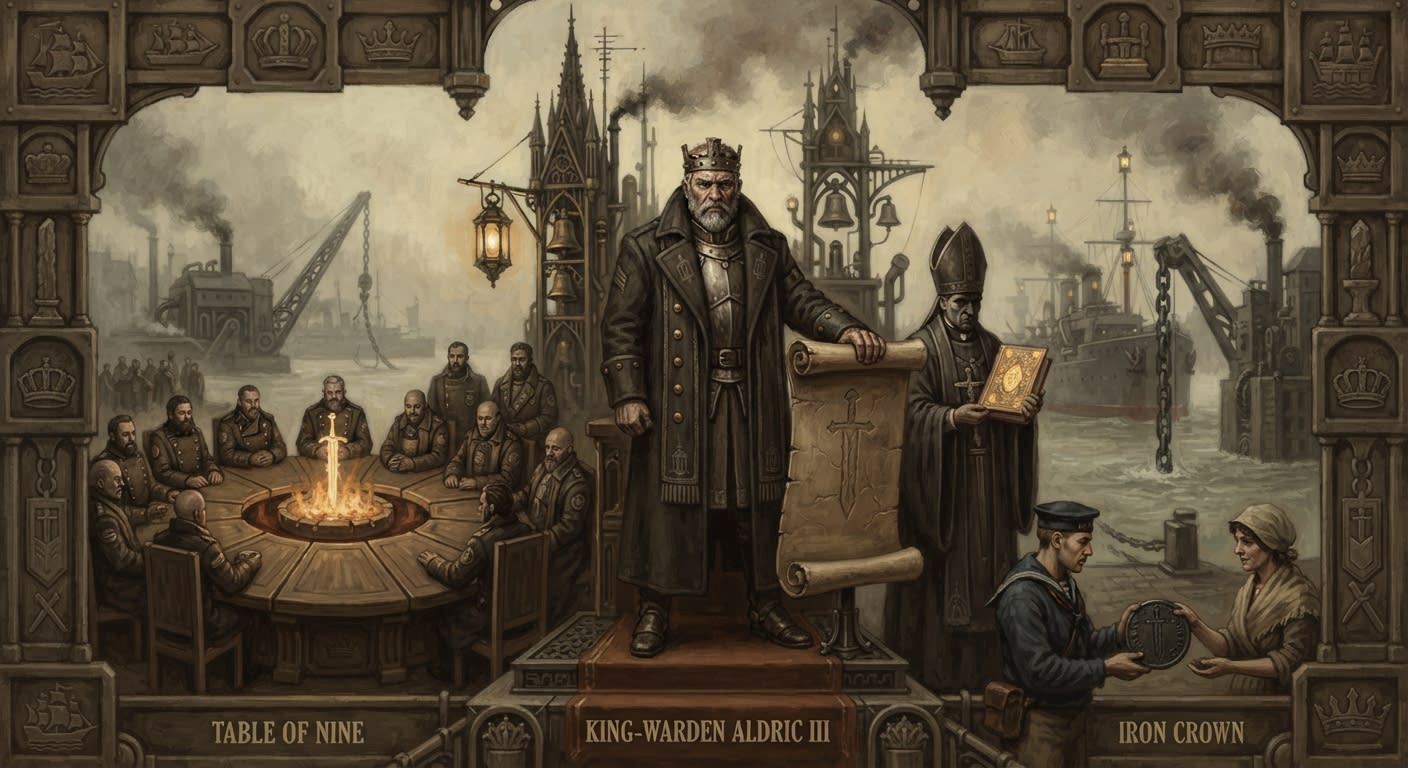
Arthurian legitimacy
The old island claim Strasbourg can deny and still must salute
Arthurian legitimacy is Britain's old answer to Strasbourg: charter, altar, Table, coin and coastline, obeyed too long to be dismissed as mere legend.
Codex Ref. X.1.06-001
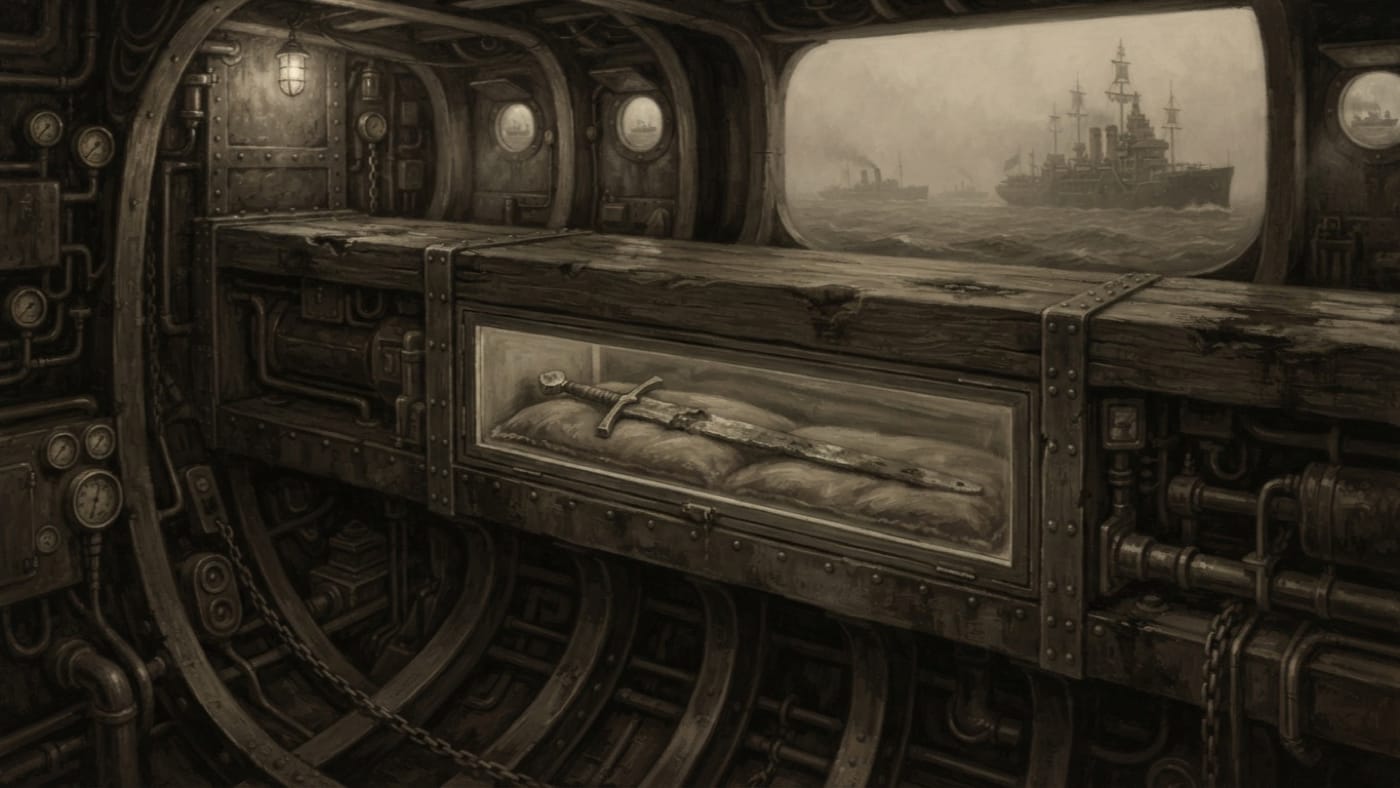
Arthurian saint
One hilt, no named saint, and a keel the Bureau cannot inspect
A sword-hilt linked to an unnamed Arthurian saint lies in an unidentified Cathedral Ship's reliquary keel. Relics withholds recognition; the convoy keeps sailing.
Codex Ref. V.1.03-079
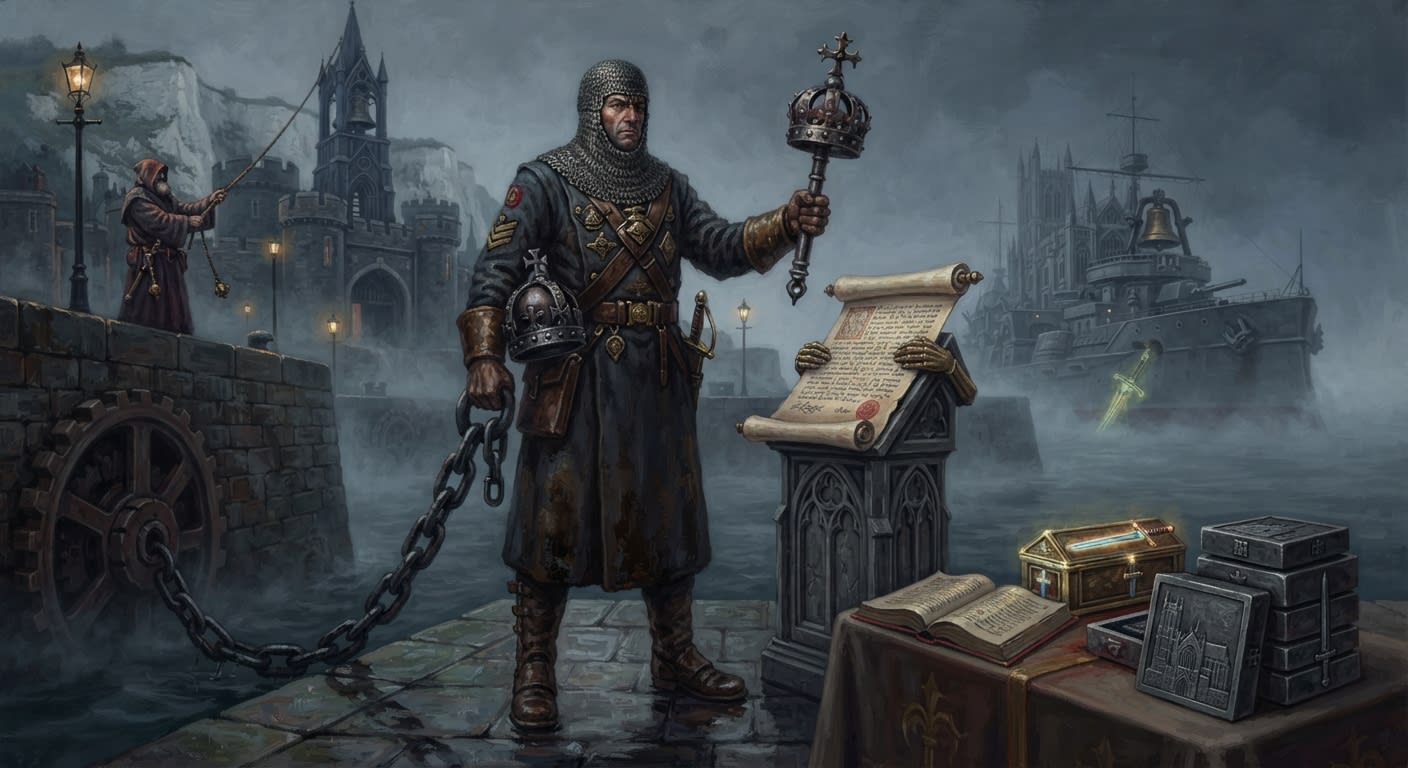
Arthurian Tradition
The myth that keeps the Channel open
The insular oath-machine Strasbourg cannot disprove and Britain does not need proved: Arthur as crown, charter, coin, bell, harbour chain, and naval discipline.
Codex Ref. X.1.01-002
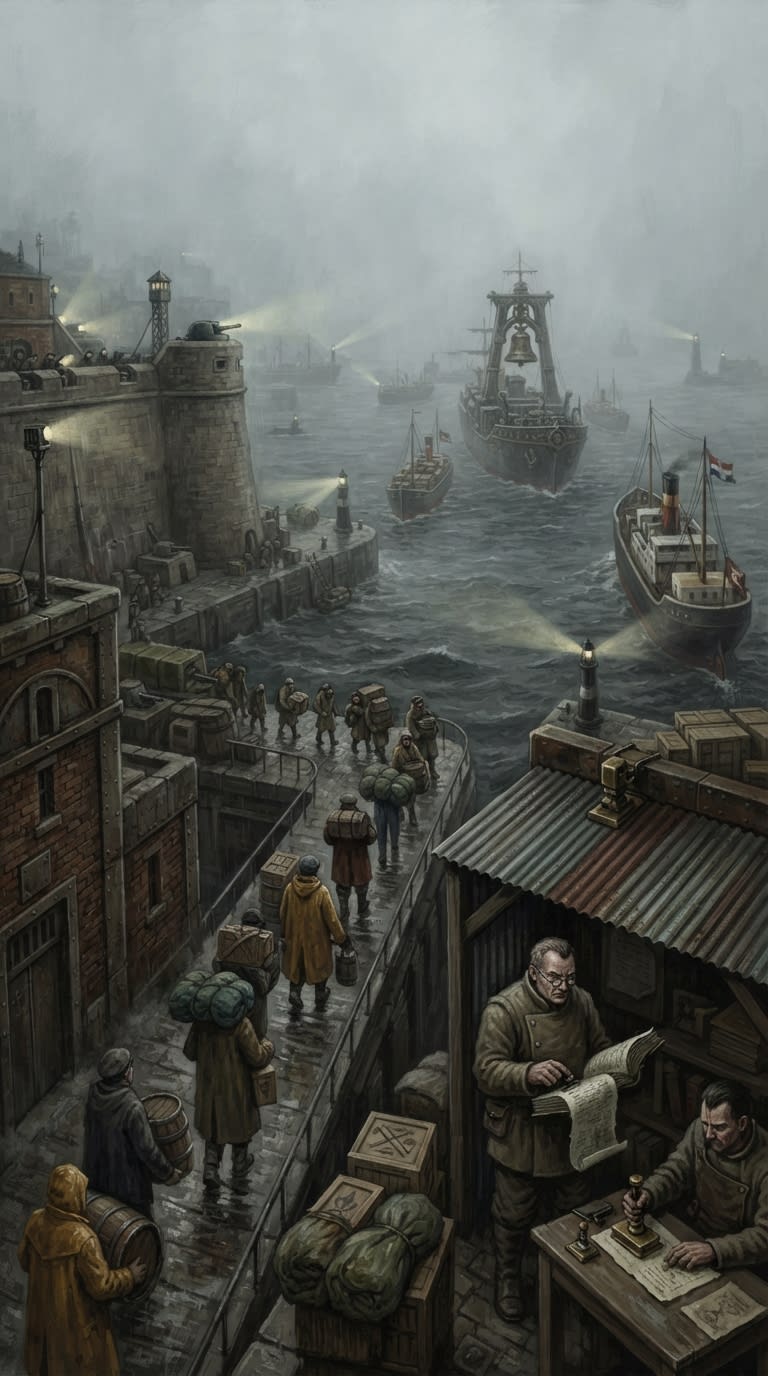
Atlantic
The water at the western end of every Synodal sentence
The Atlantic is the Synod's western water: open, escorted, profitable, watched, and owned by nobody, with Zone 1 harbours feeding the Line through wet ledgers and foreign hulls.
Codex Ref. II.4.09-201
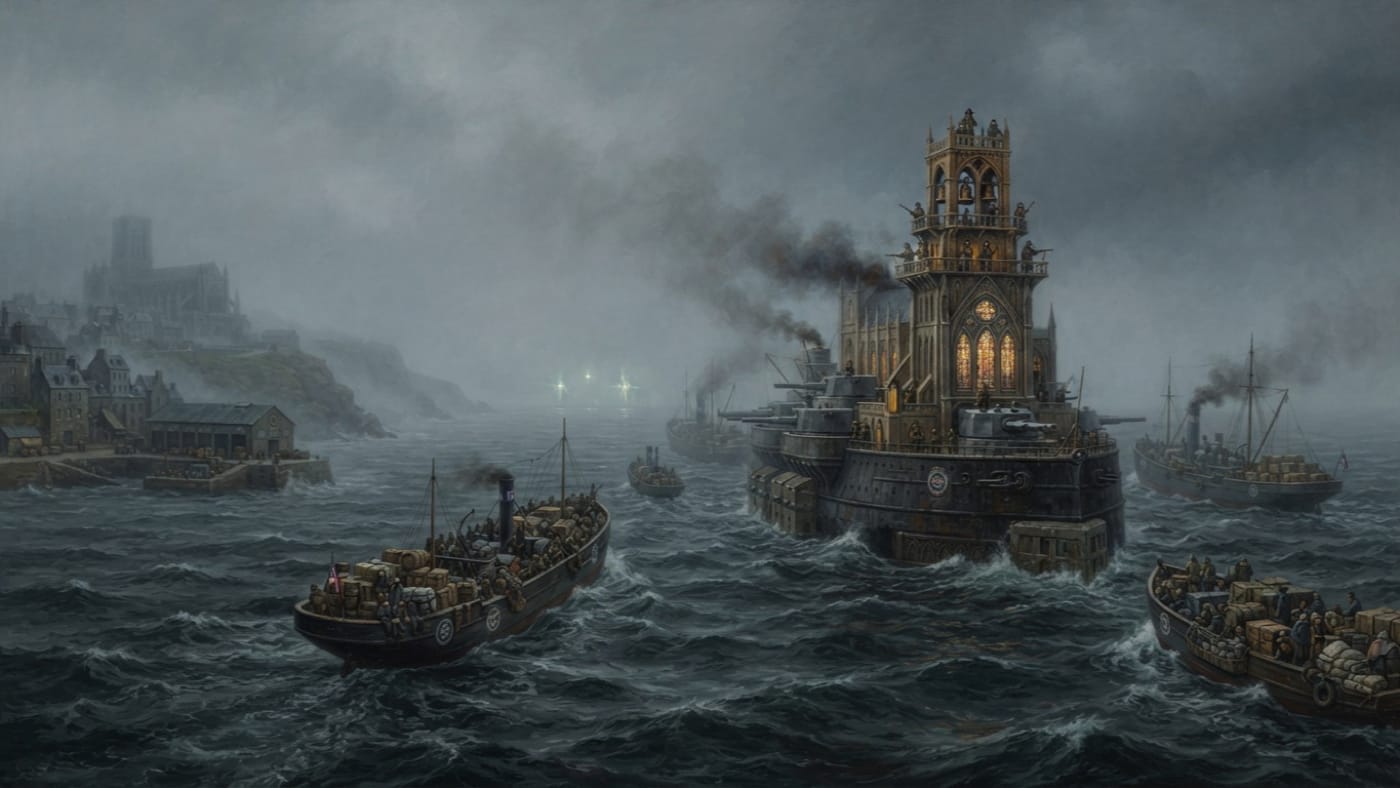
Bay of Biscay
We seal the barrels; the British bring them through
Off the western French and northern Iberian coasts, Biscay carries the Synod's cargo under British escort. The shore bears our seals; the open water has accepted none.
Codex Ref. II.4.09-189
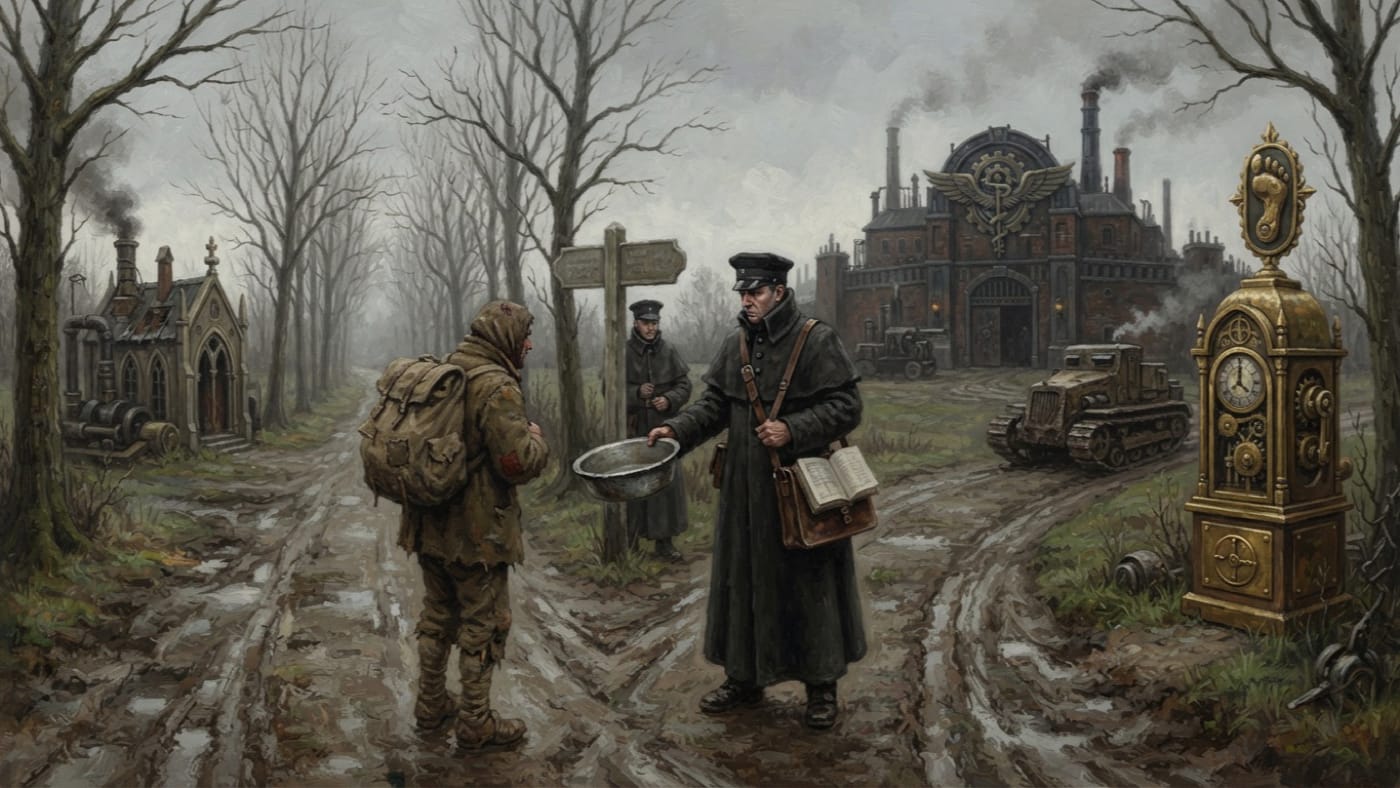
Brotherhood of the Blessed Foot
Flemish feet, private fees, and an audit into penitence
The Brotherhood of the Blessed Foot taxed Flemish pilgrims at crossroads it did not own, selling protection from unnamed threats until litigation, audit and the A.S. 123 Harmonized Routes Edict ended its independent authority.
Codex Ref. XI.5.01-123

Bureau of Concord
Harmony, filed with teeth
The Bureau of Concord preserves peace by translation, delay, treaty custody, foreign grievance, and the elegant violence of a pending clause.
Codex Ref. VIII.1.05-090
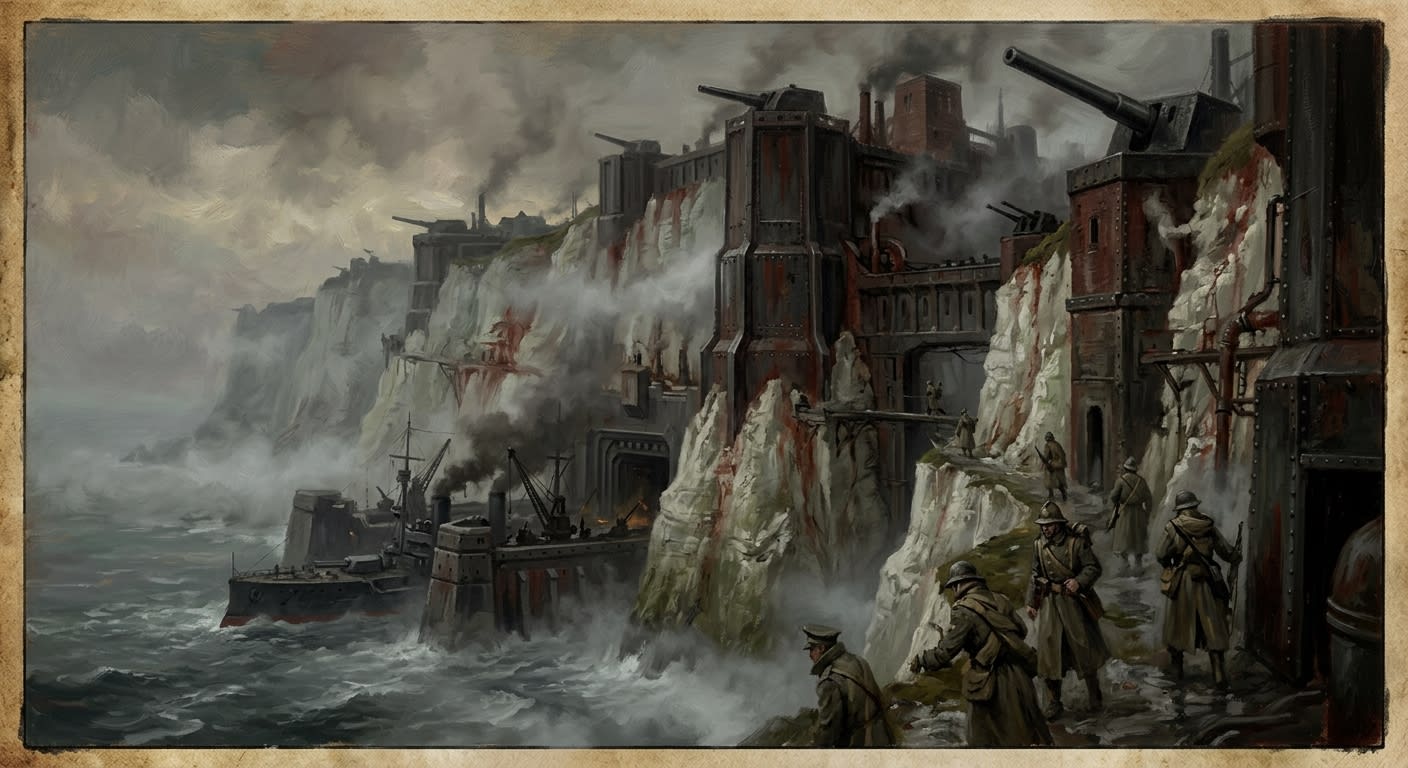
Calais
Read the fog, hold the sea, and pretend the Channel is only water
Calais is the Synod's western coastal tooth: a chalk redoubt where the fog writes names, the sea answers omissions, and every passage is taxed in breath.
Codex Ref. II.4.09-011
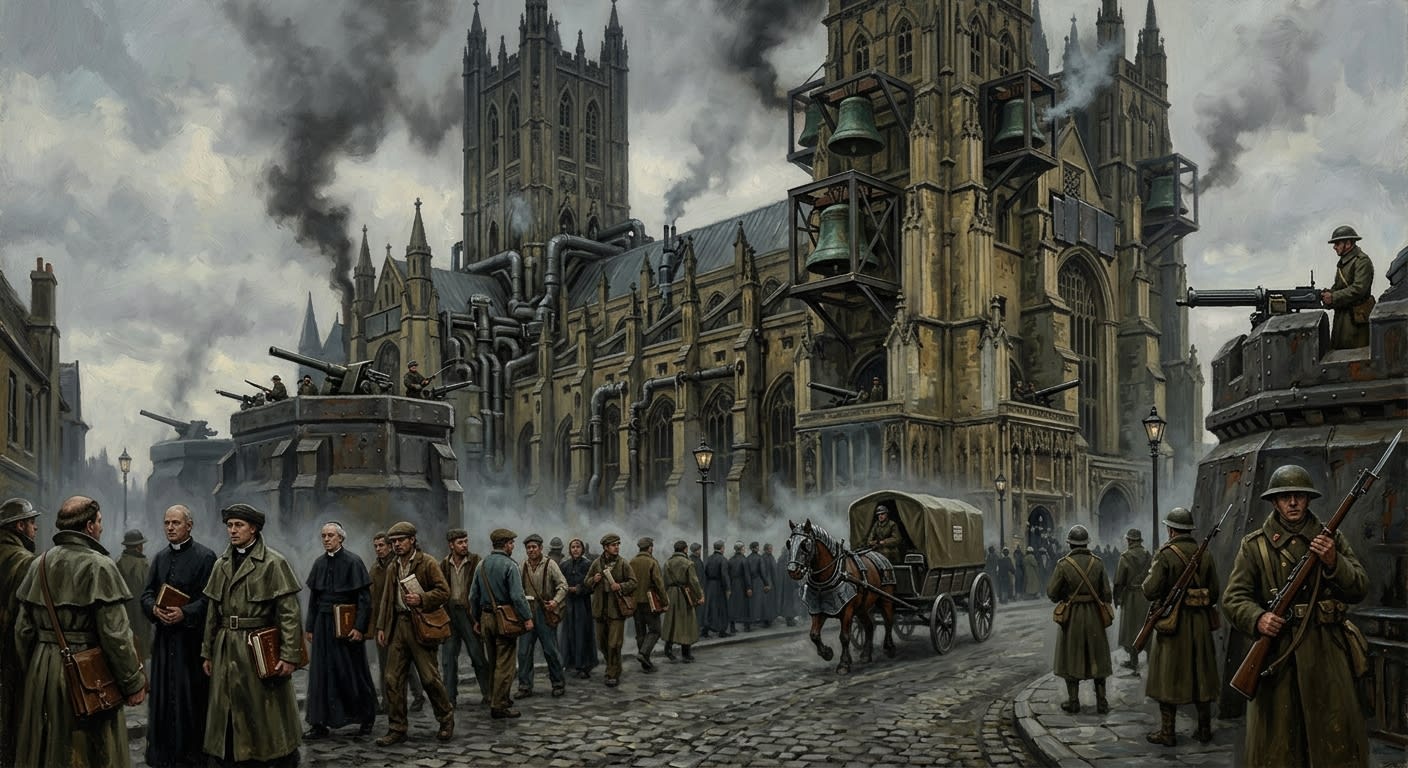
Canterbury
The cathedral that refused to become a bureau
Canterbury is the British Crown's cathedral-seat: old, armed, bell-ridden, unaudited, and infuriatingly functional beyond Strasbourg's forms.
Codex Ref. II.0.01-201
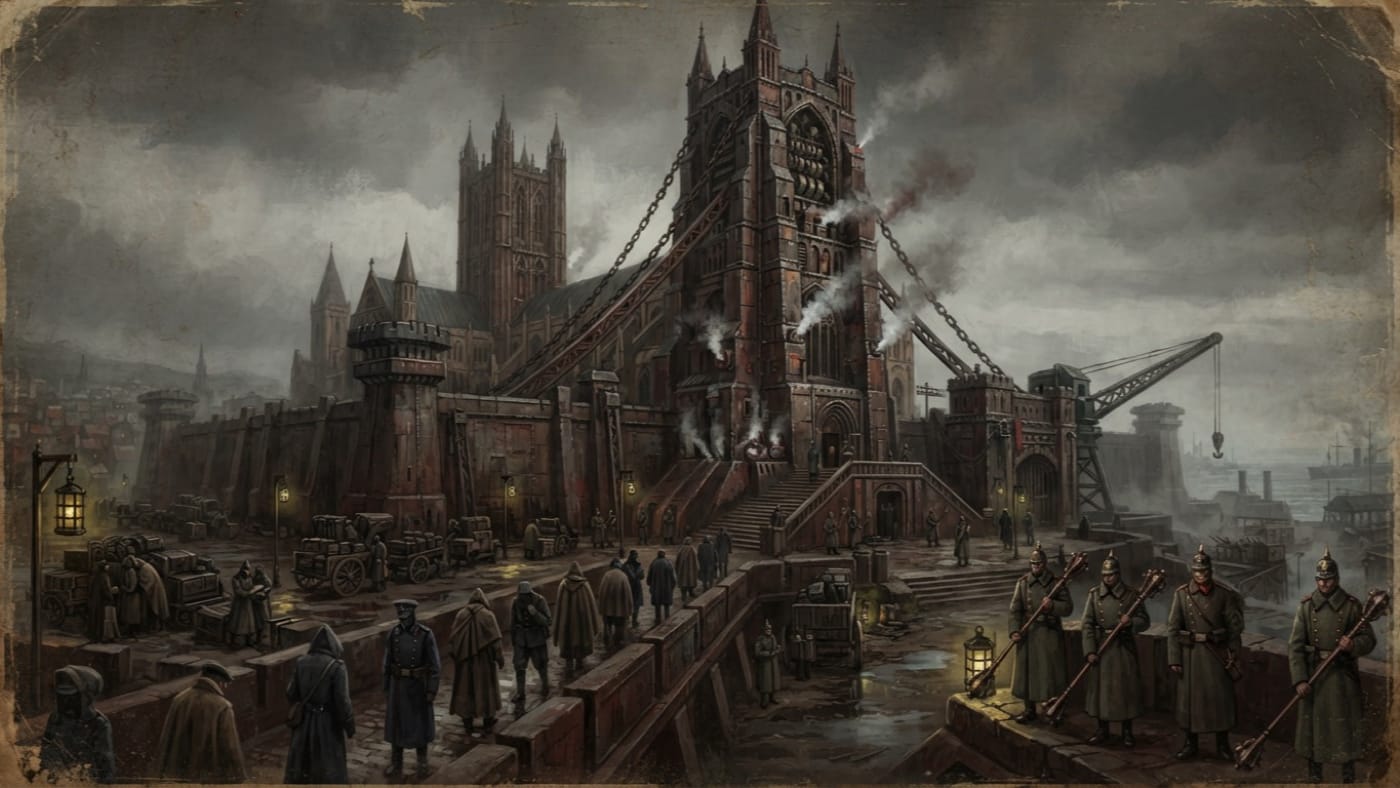
Canterbury Cathedral
Where British bells keep the hours and Strasbourg keeps its distance
Canterbury Cathedral keeps Britain's oaths, relics and bells beneath Crown authority. Its face circulates on Iron Crowns; Strasbourg's authority stops at the rail.
Codex Ref. II.0.02-201
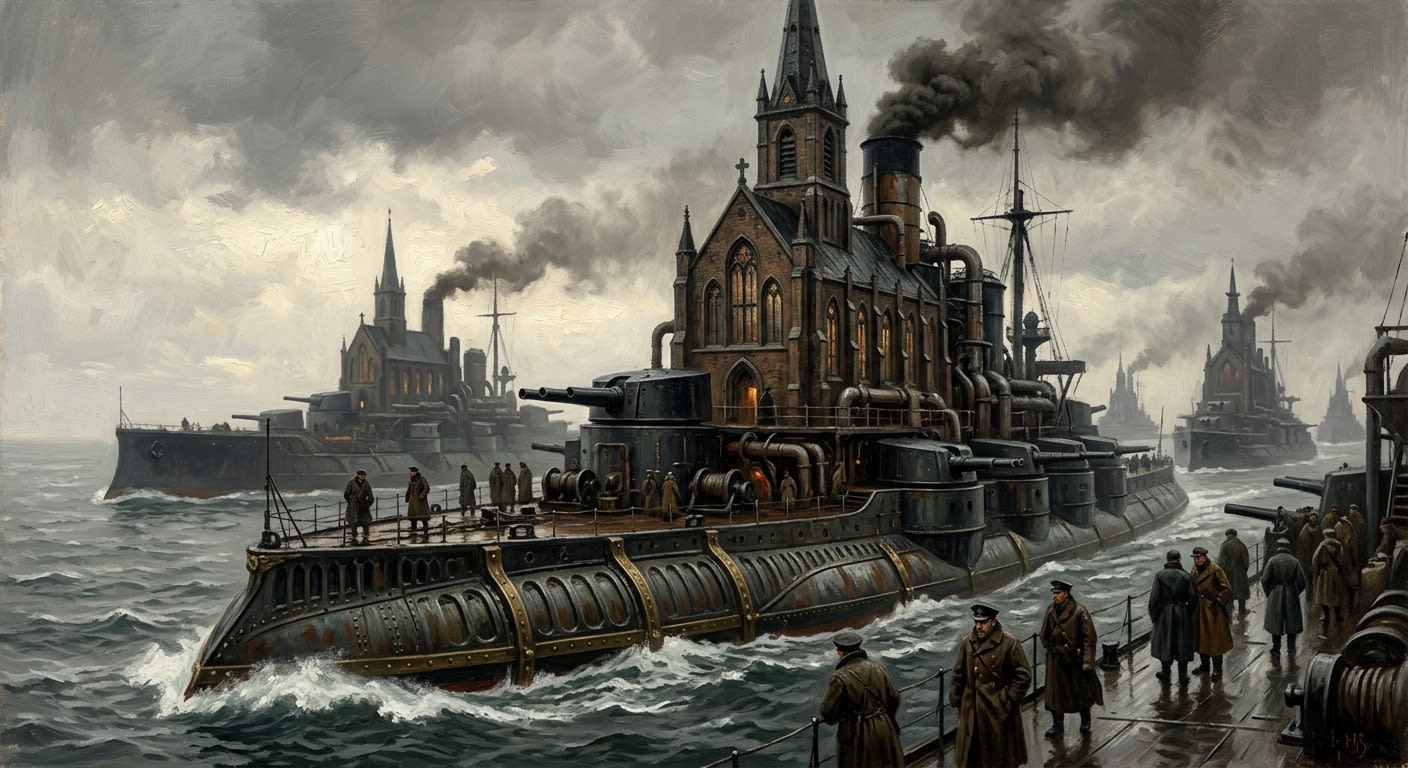
Cathedral Ships
Britain built churches that sail, shoot, and refuse to explain themselves
British Cathedral Ships carry chapel, bell-tower, artillery, and reliquary-keel across the Channel; the Synod depends on them and resents every plank.
Codex Ref. X.1.03-001
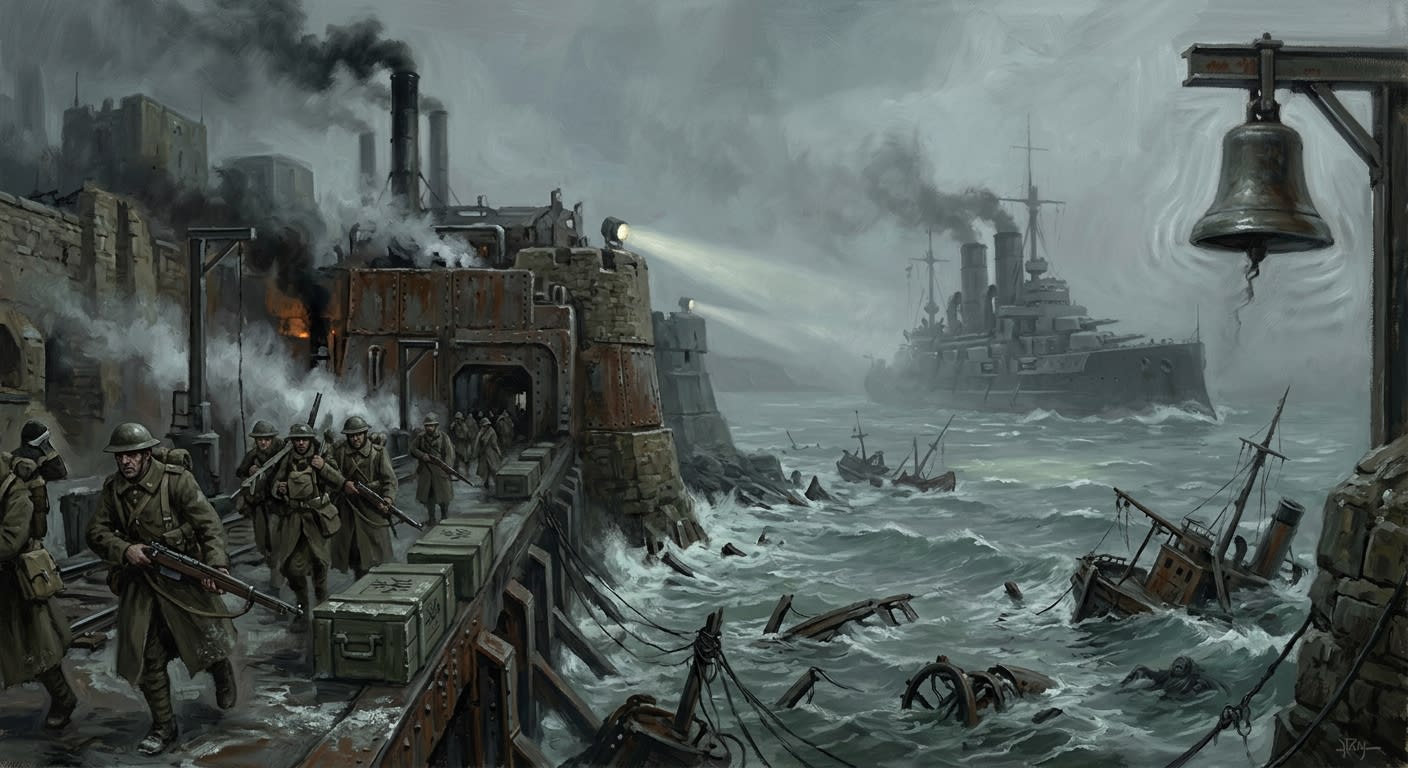
Channel
The water between two prides, and wiser than both
The Channel is the Synod's western salt wound: Calais to Dover, bells to fog, British pride to Synod arithmetic, and drowned things below.
Codex Ref. II.1.04-201

Channel Escort After-Action
The captain called it answered; the fragment declines to explain
A.S. 201 survey of a redacted Channel escort extract: three grain barges reported hearing their names in British bells; the captain called the incident “answered.” Doctrine retains the word without its meaning.
Codex Ref. X.1.03-002

Concord Quarter
Where the Synod receives what it cannot command
Strasbourg's Concord Quarter houses foreign missions and Concord's arbitration rooms. Here the Synod receives what it cannot command, and every objection remains pending.
Codex Ref. II.1.04-007
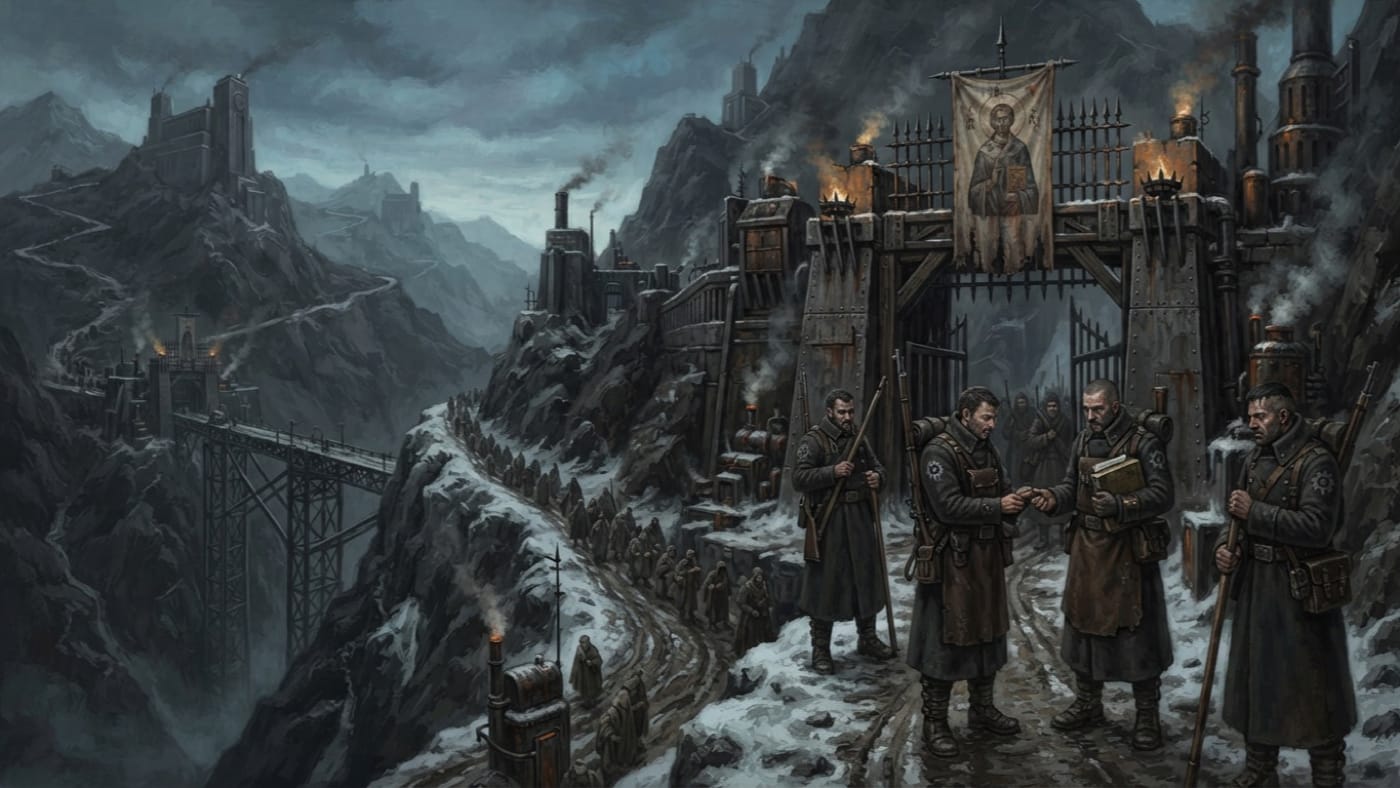
Confraternity of Saint Edras
The saint kept his name. The guild lost the road.
A private pilgrimage guild claiming the Carpathian passes, named among Santiago's rival toll claimants in A.S. 121 and superseded by the Harmonized Routes Edict in A.S. 123. The saint's name outlived its authority.
Codex Ref. XI.5.02-123
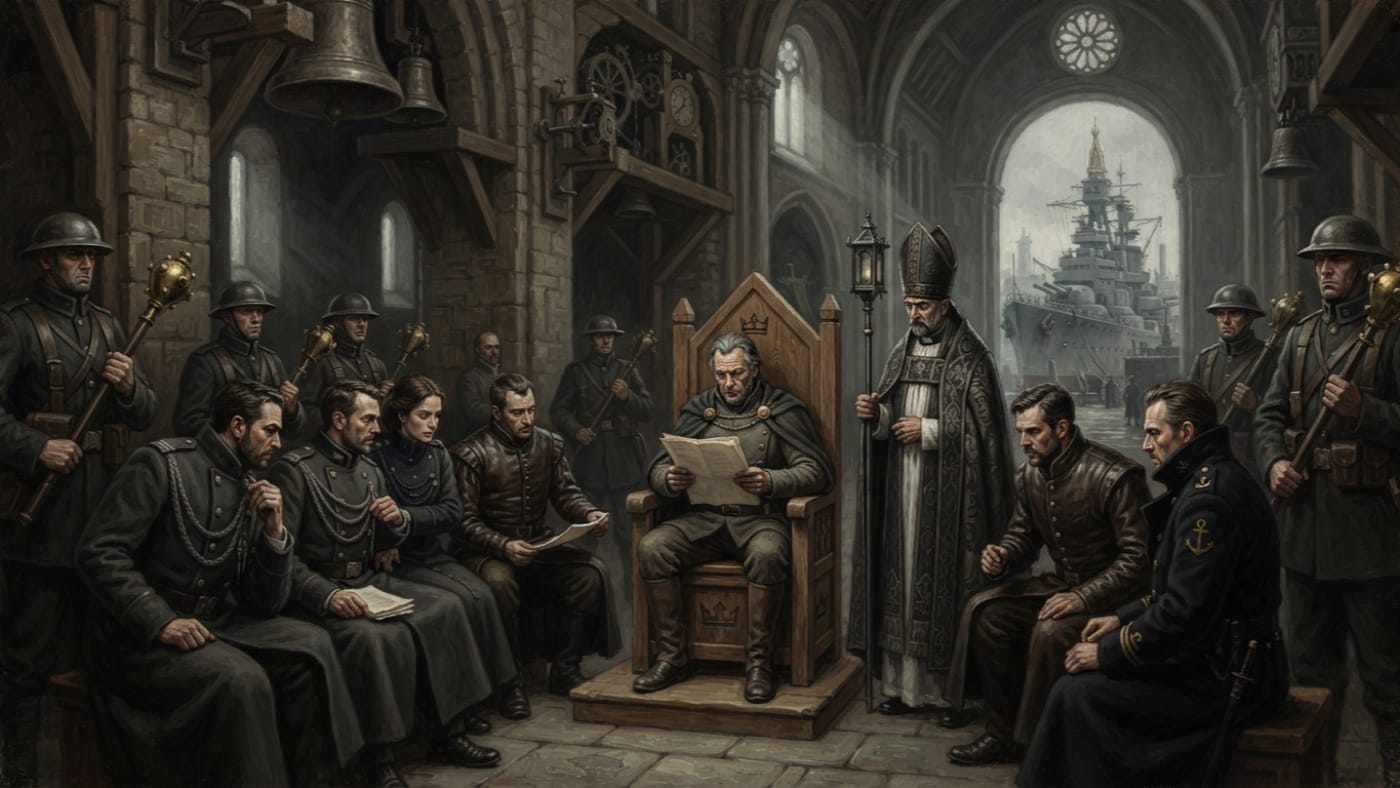
Court of Canterbury
Where every paper is read and no obedience is owed
Canterbury's sovereign court gathers Aldric III, the Table of Nine and the Archbishop around a government that reads Synod papers in full and owes Strasbourg no obedience.
Codex Ref. X.1.02-202
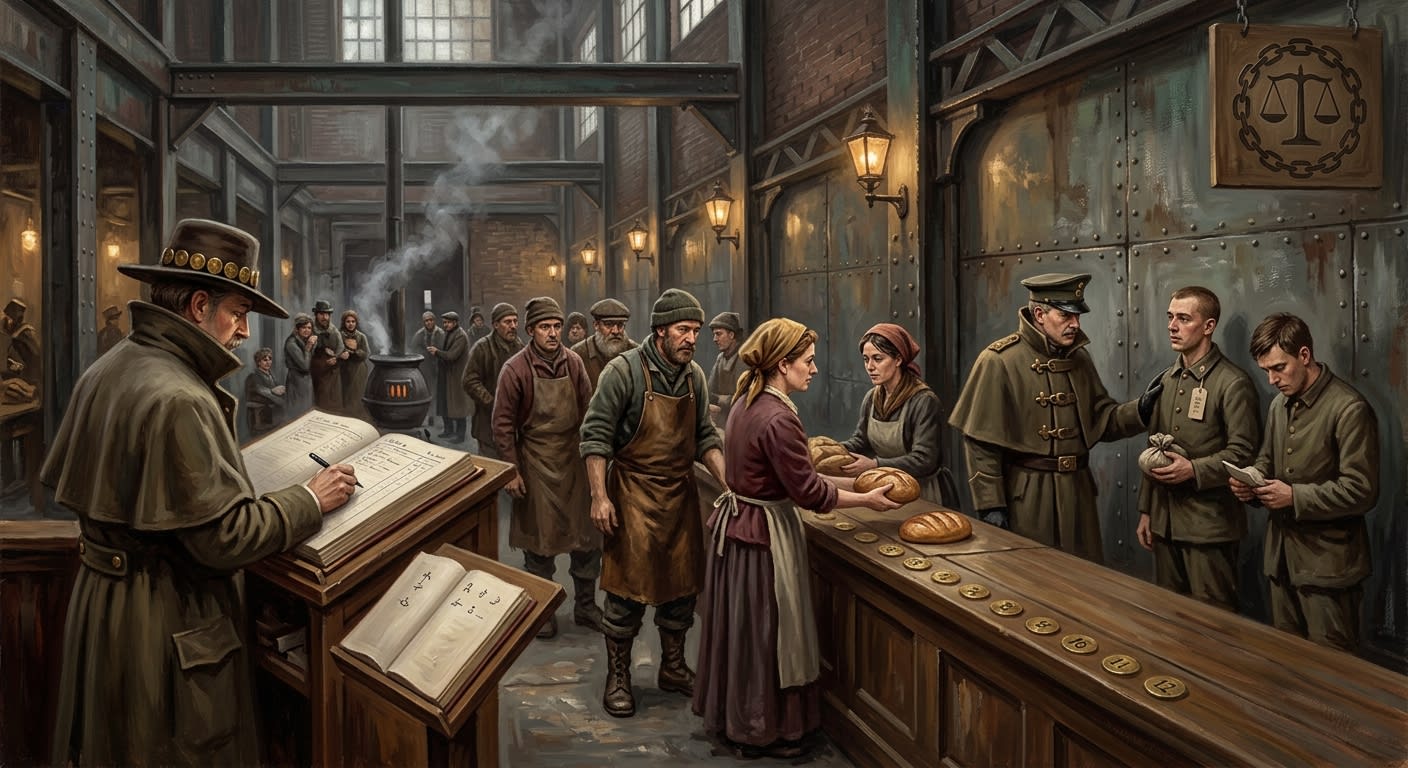
Covenant
The leash with bread on it, sanctified for public use
Covenant is the Synod's master noun: sacred pact in sermon, enforceable belonging in ledger, bread-chain in queue, and body-debt at the Line.
Codex Ref. XIII.1.04-090
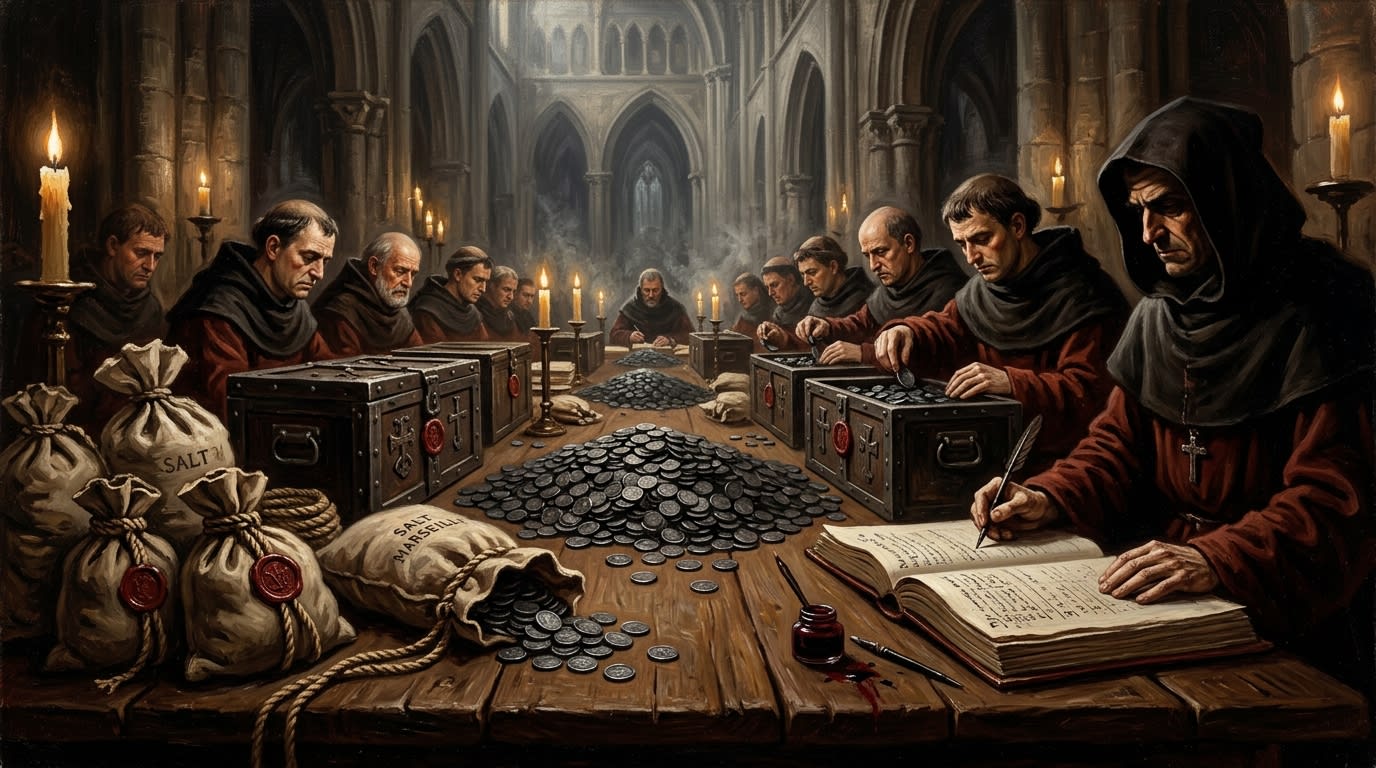
Crowns of Grace
One coin buys bread; the plural buys obedience
Crowns of Grace in the plural are obedience under arithmetic: harbour revenue, soldier arrears, salt dues, foreign insult, and bread counted until it kneels.
Codex Ref. XIII.1.22-093
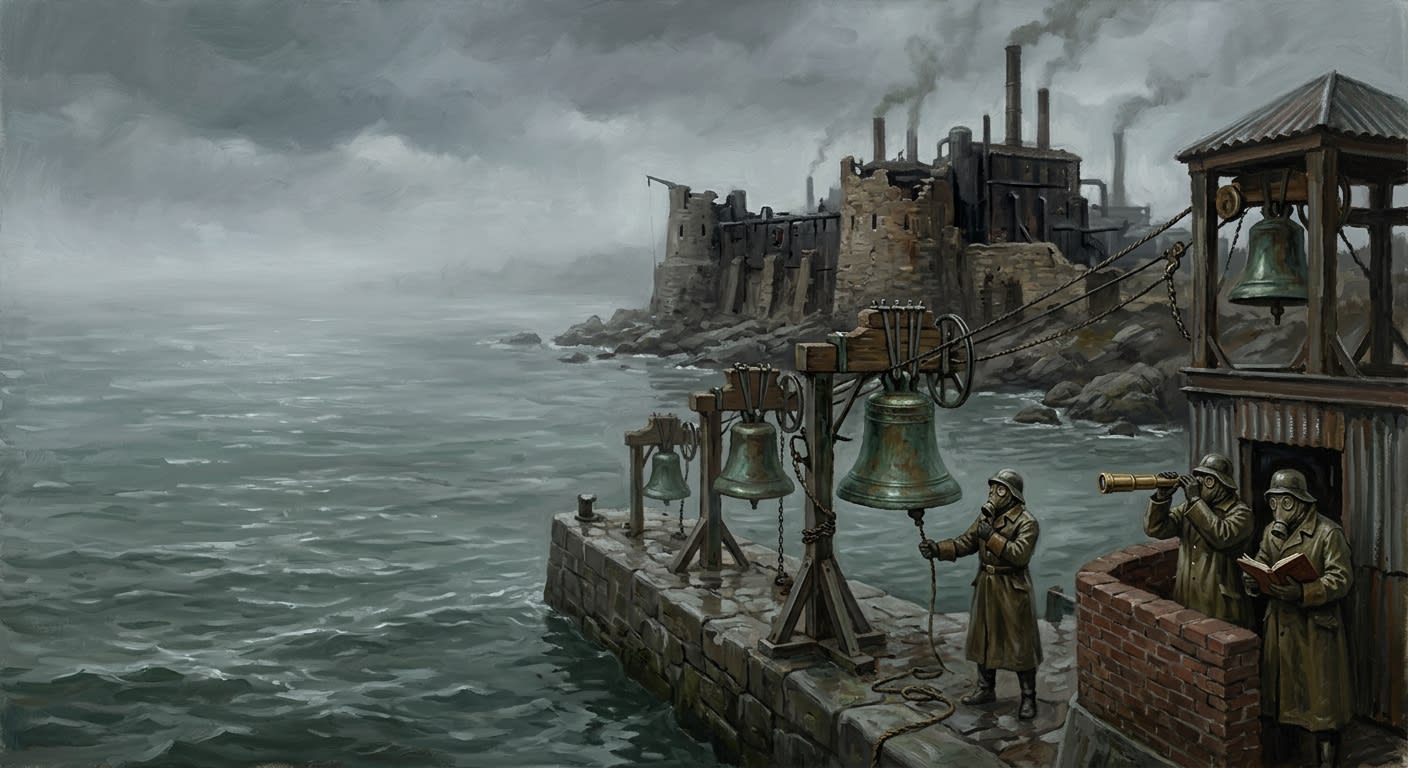
Det grå vattnet
The grey water listens before the bell decides whether to speak
Det grå vattnet, the grey water of the Fractured North, names a Baltic and fjord phenomenon related to the Grey: patient, reflective, responsive, older than the Bureau's comfort, and held only by old bells.
Codex Ref. IV.1.07-005
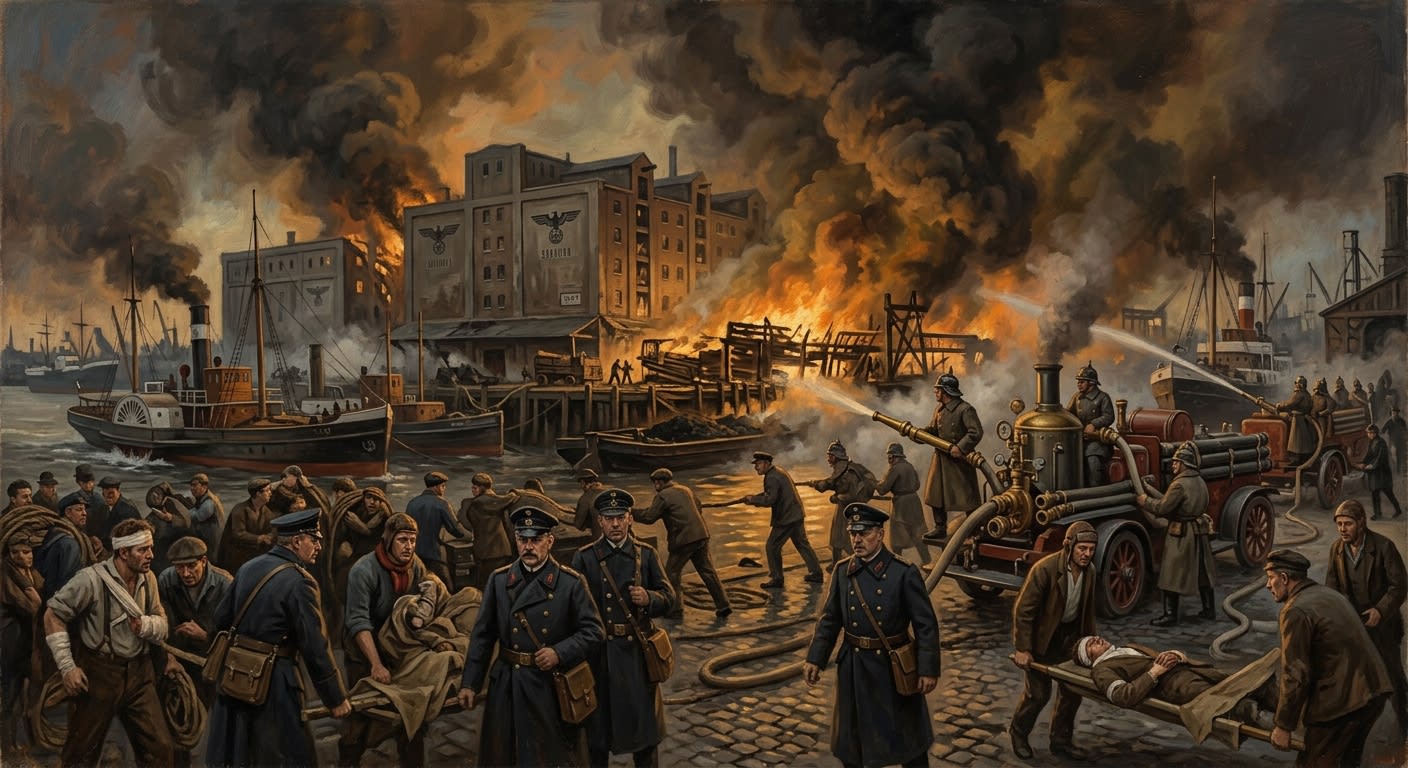
Dock Fire of Hamburg
Four blocks burned because brick was cheaper than obedience until it was not
The A.S. 189 chrismole warehouse fire in Hamburg killed 312, burned four dock blocks, stopped labour for eleven days, and made a seven-per-cent hazard supplement harder to seize than a relic.
Codex Ref. VII.8.10-189
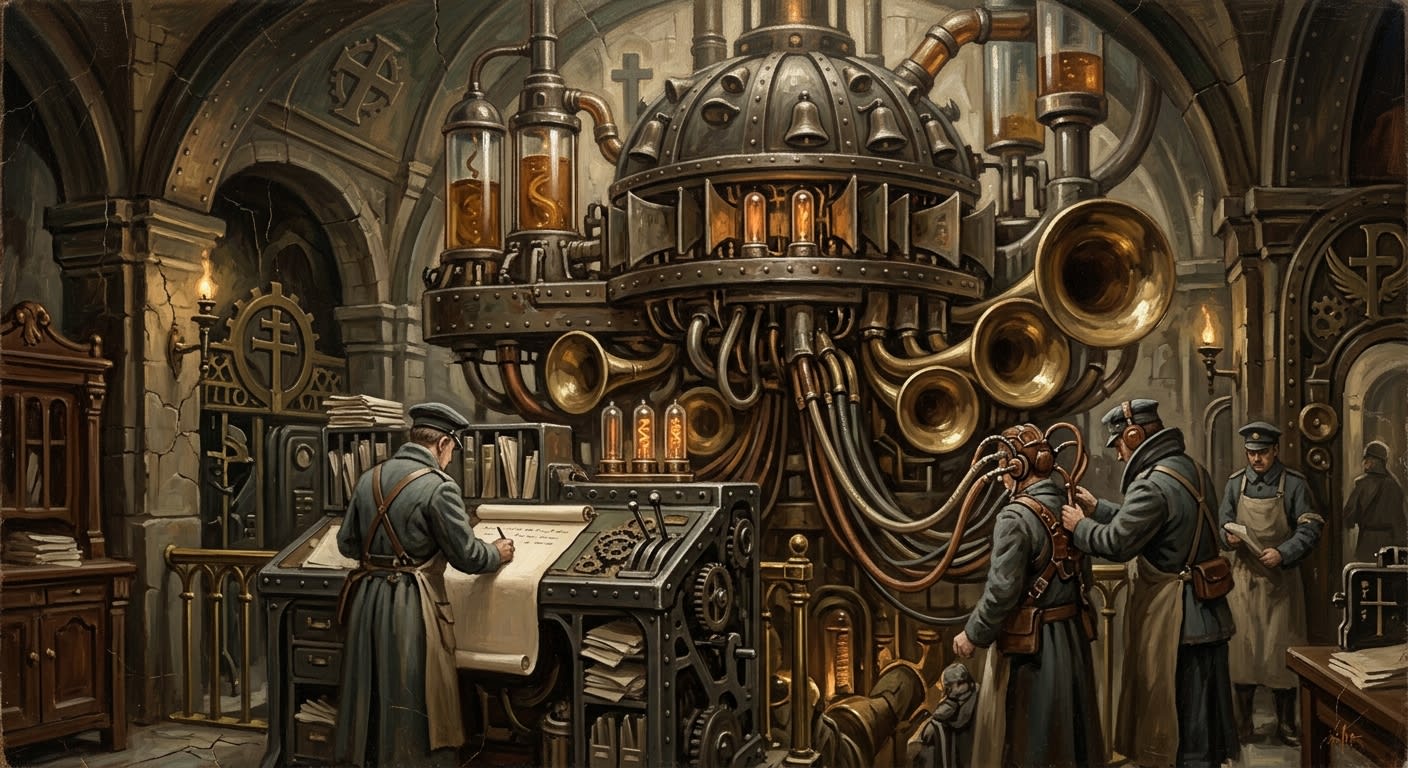
Doctrine of the Inaudible Voice
The Bureau's golden answer to the most dangerous quiet
Ratified in A.S. 104, the Doctrine of the Inaudible Voice converts divine quiet into mortal defect, pastoral discipline, and useful machinery.
Codex Ref. XIII.1.90-104
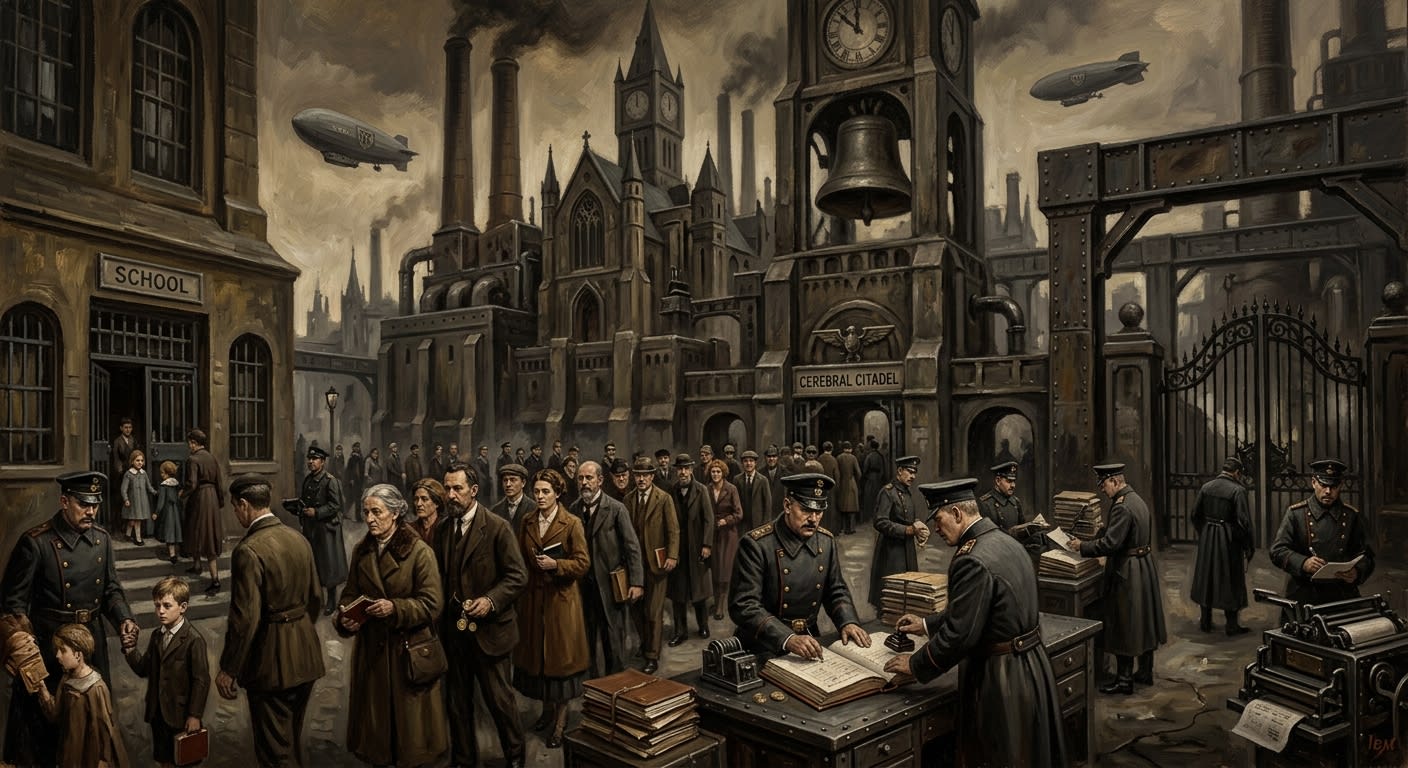
Dominion
Europe held in one gloved hand and taught to call it custody
Dominion is the Synod's official name for custody over Europe: border, tithe, bell, school, grave, and the thought before speech.
Codex Ref. XIII.1.02-090
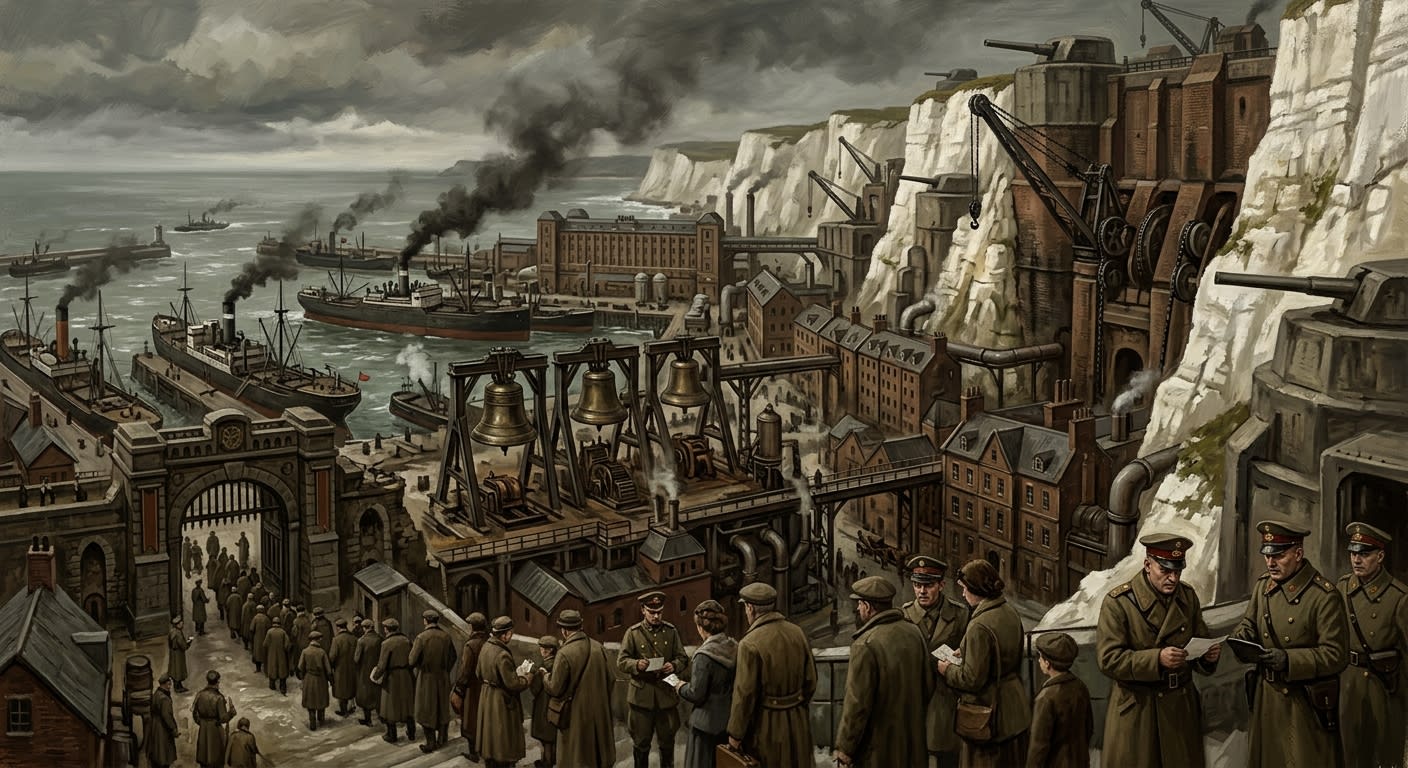
Dover
The white cliff that answers Calais with bells, chains, and refusal
Dover is the British Crown's white-cliff answer to Calais: port, bell-lane, Chainworks throat, pilgrim gate, and polished refusal.
Codex Ref. II.0.09-201
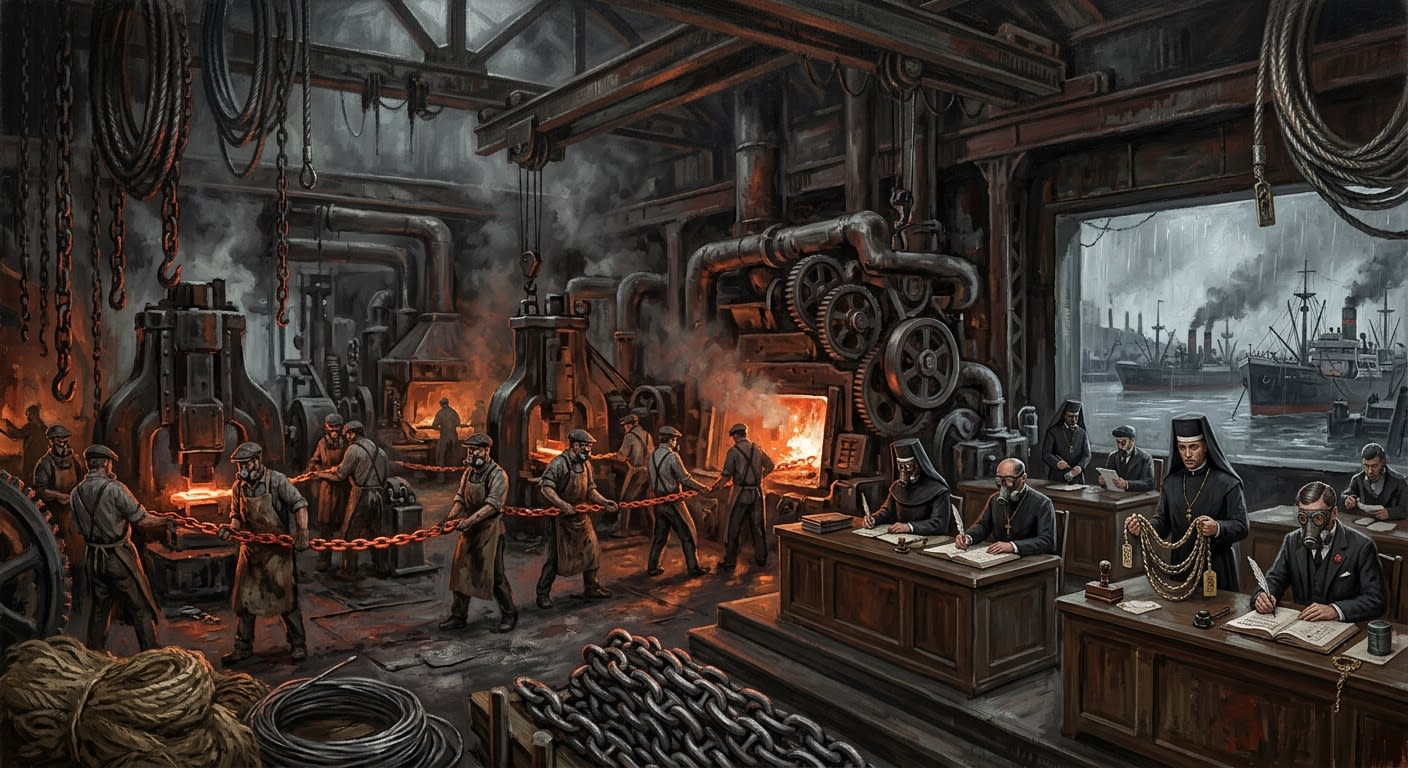
Dover Chainworks
Where British iron crosses the Channel and Synod dignity pays the toll
The Dover Chainworks forge the chains, cordage, and blessed rope that keep British convoys moving and Synod pride properly invoiced.
Codex Ref. II.4.09-009
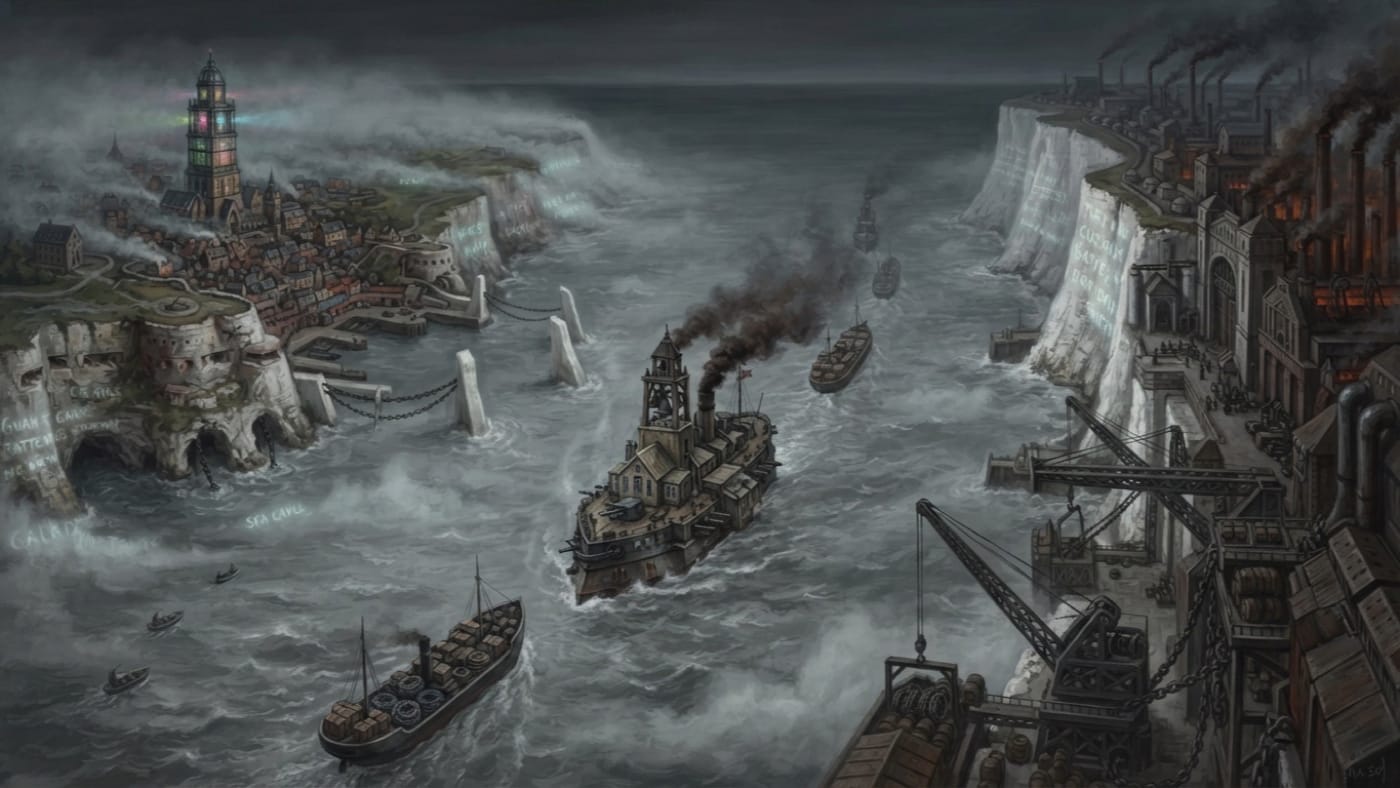
Dover Strait
British bells keep the Synod's grain moving
The Dover Strait carries grain, chain and pilgrims between British Dover and Synod Calais. British bells keep it open; Doctrine keeps requesting diagrams.
Codex Ref. II.1.04-203
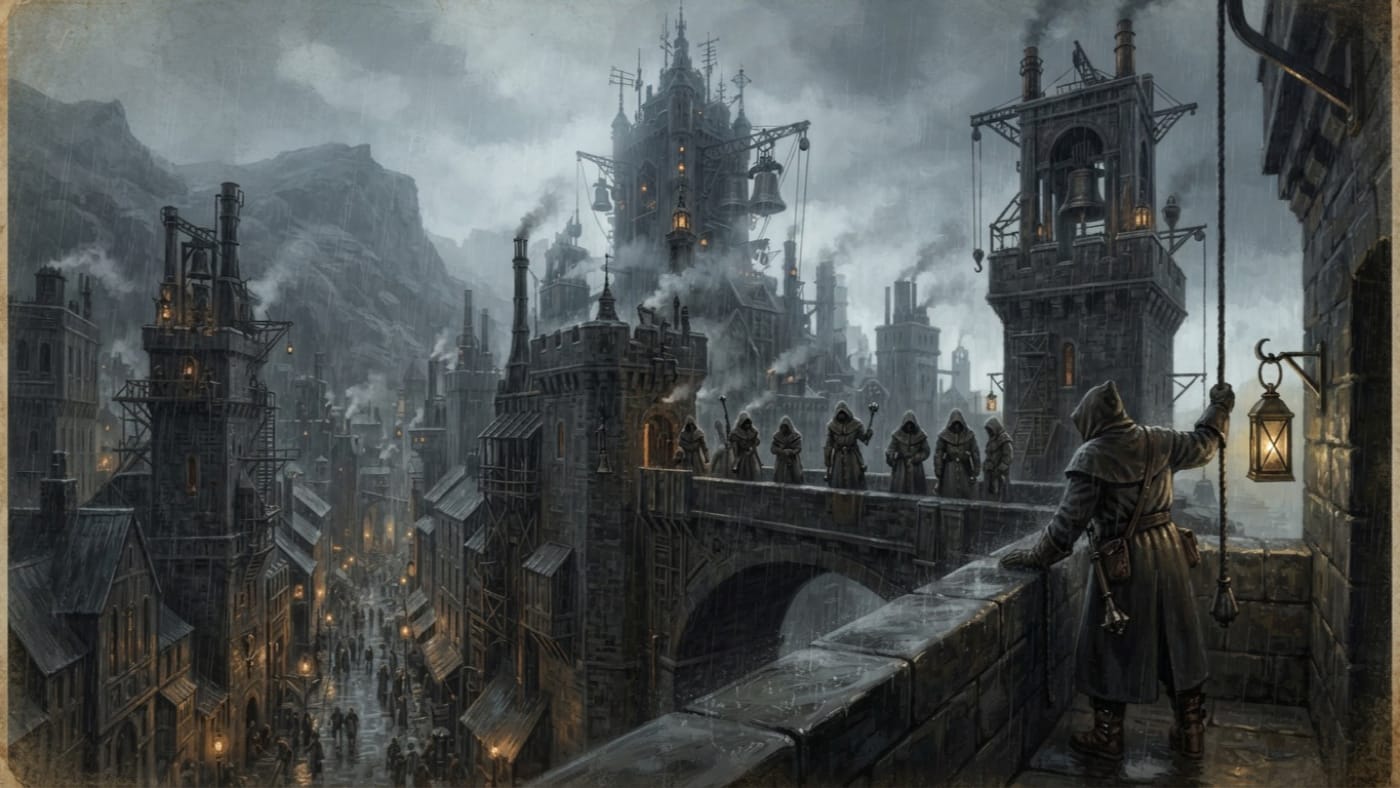
Edinburgh
The northern towers answer stone; Strasbourg receives no reply
Edinburgh answers Britain's northern stones with bells and bronze maces; Strasbourg records the rain, the Lantern Way, and the limits of its jurisdiction.
Codex Ref. II.0.10-201
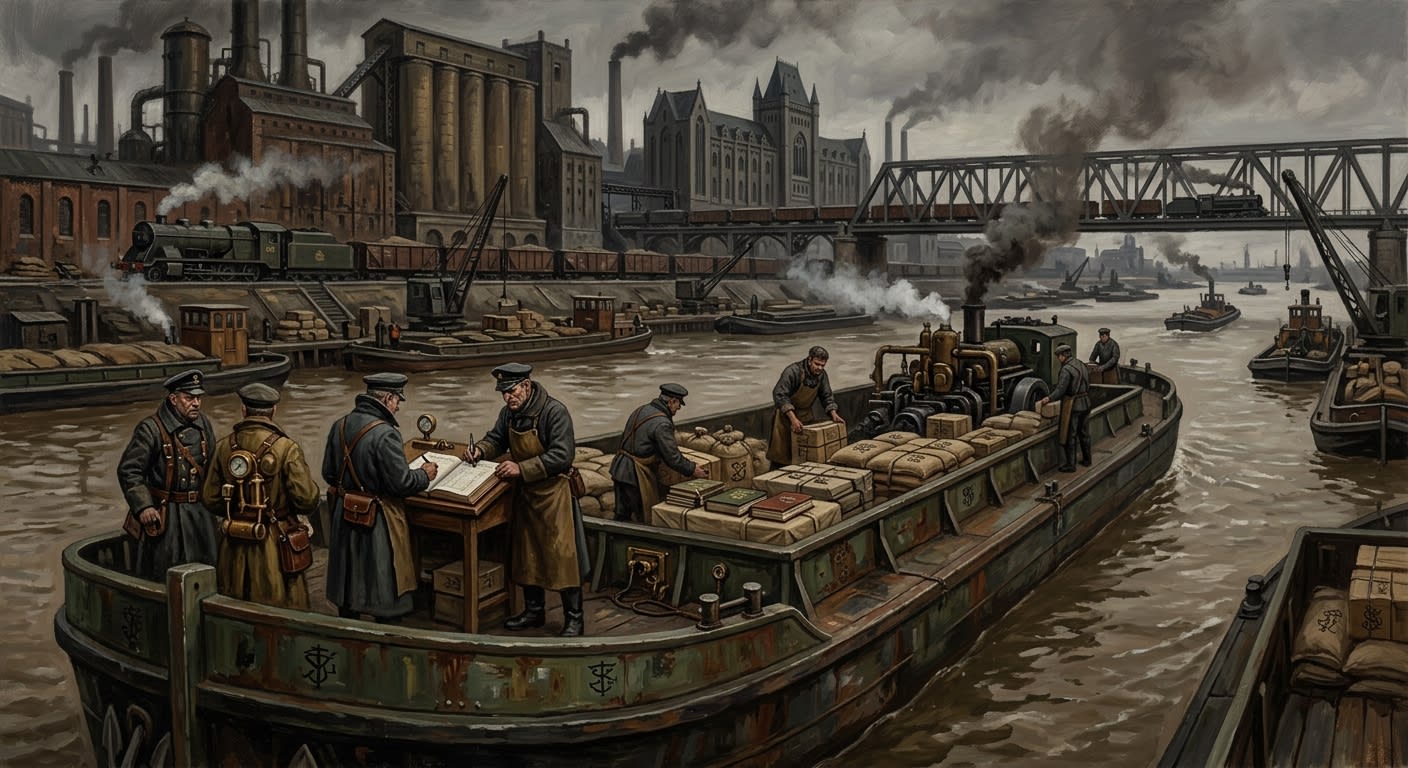
Elbe
The northern river that makes hunger, coal, and failure countable
The Elbe is the northern Synod's wet ledger: barge route, rail supplement, mud-law court, and the river that decides how long the north eats.
Codex Ref. II.4.09-201
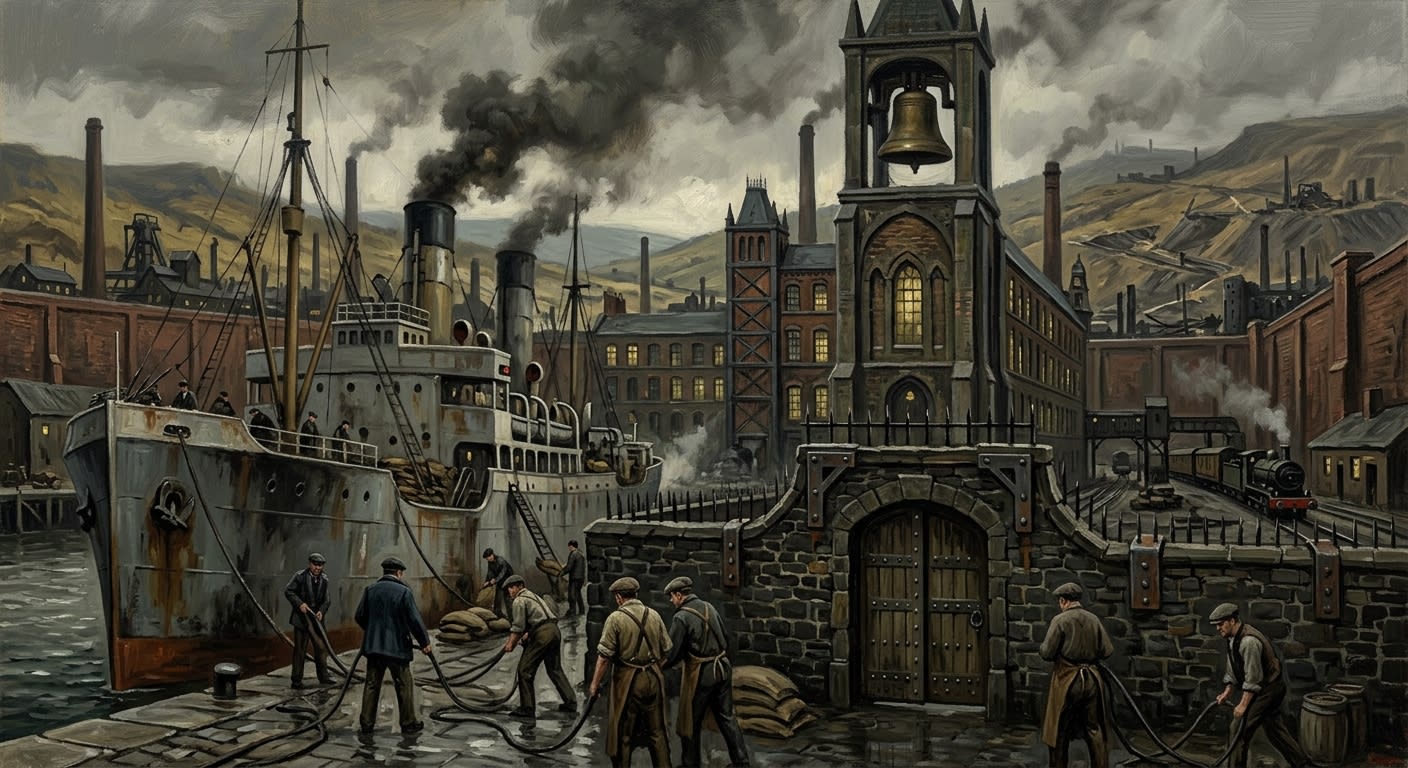
England
The island province that declined the province and kept the invoice
England is the British Crown's southern engine: chalk, bell, harbour, parish wall, and island refusal, useful enough to spare and rude enough to endure.
Codex Ref. X.1.03-201
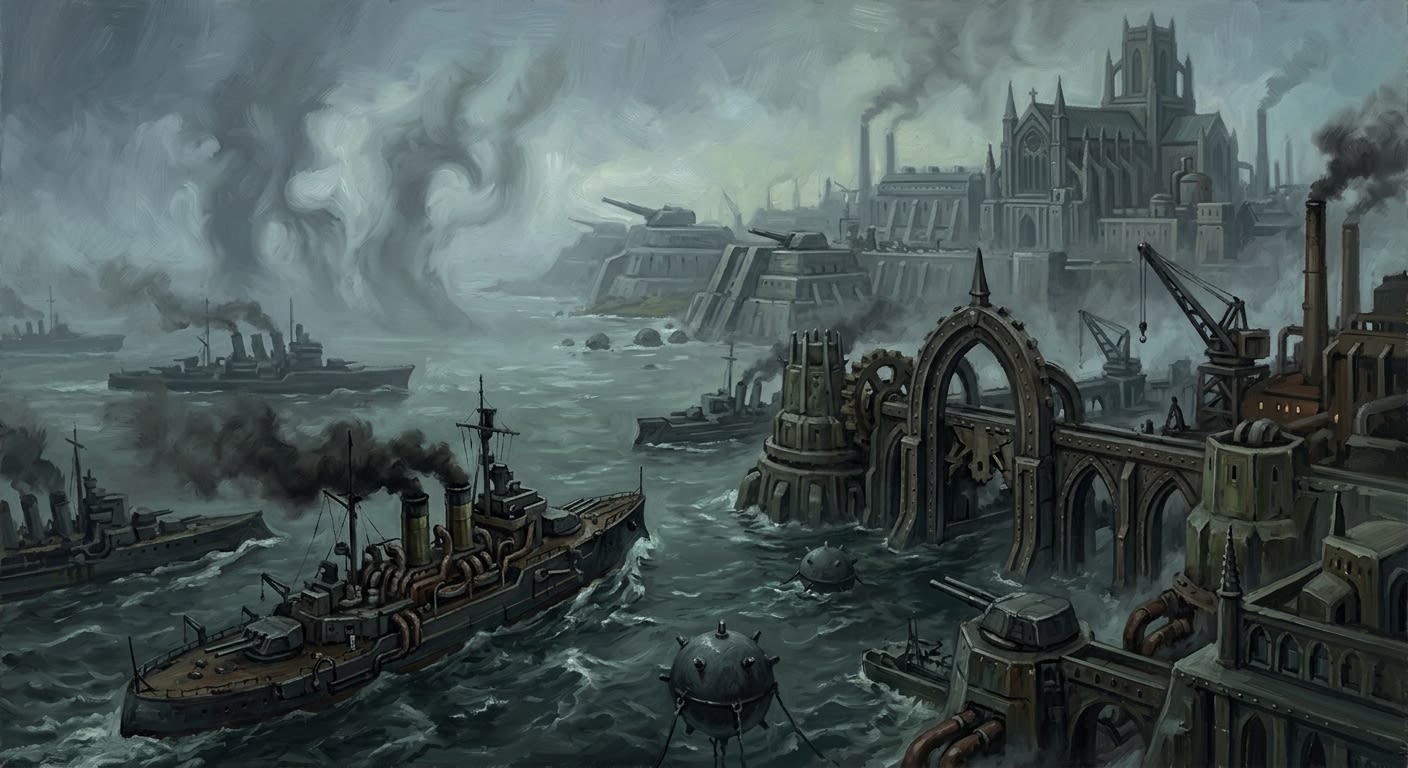
English Channel
The wet treaty between stamped arrogance and ringing arrogance
The English Channel is Calais facing Dover: one day's water in clean weather, a century's insult in politics, and a fog-bank with clerical ambitions.
Codex Ref. II.1.04-202
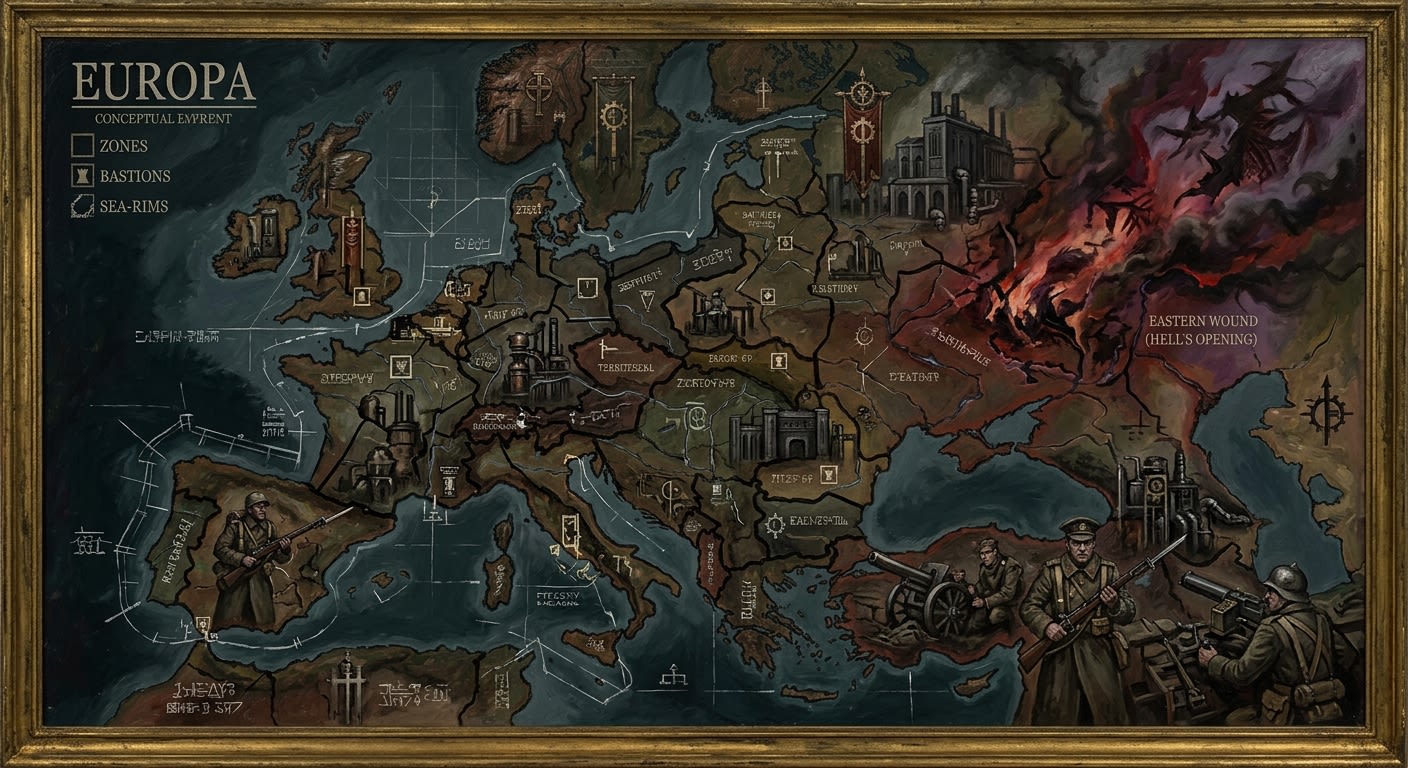
Europa
The continent as filed, wounded, taxed, and made obedient enough
Europa is not whole; it is the continent filed into zones, bastions, sea-rims, independent nuisances, and the eastern wound Hell keeps open.
Codex Ref. II.0.00-201

Europe
The wounded continent, held together by rails, bells, hunger, and denial
Europe is the wounded continent: Synod west, Charnel east, Line between, and every road, harbour, cradle, ration card, bell, and grave bent toward survival.
Codex Ref. II.0.01-201
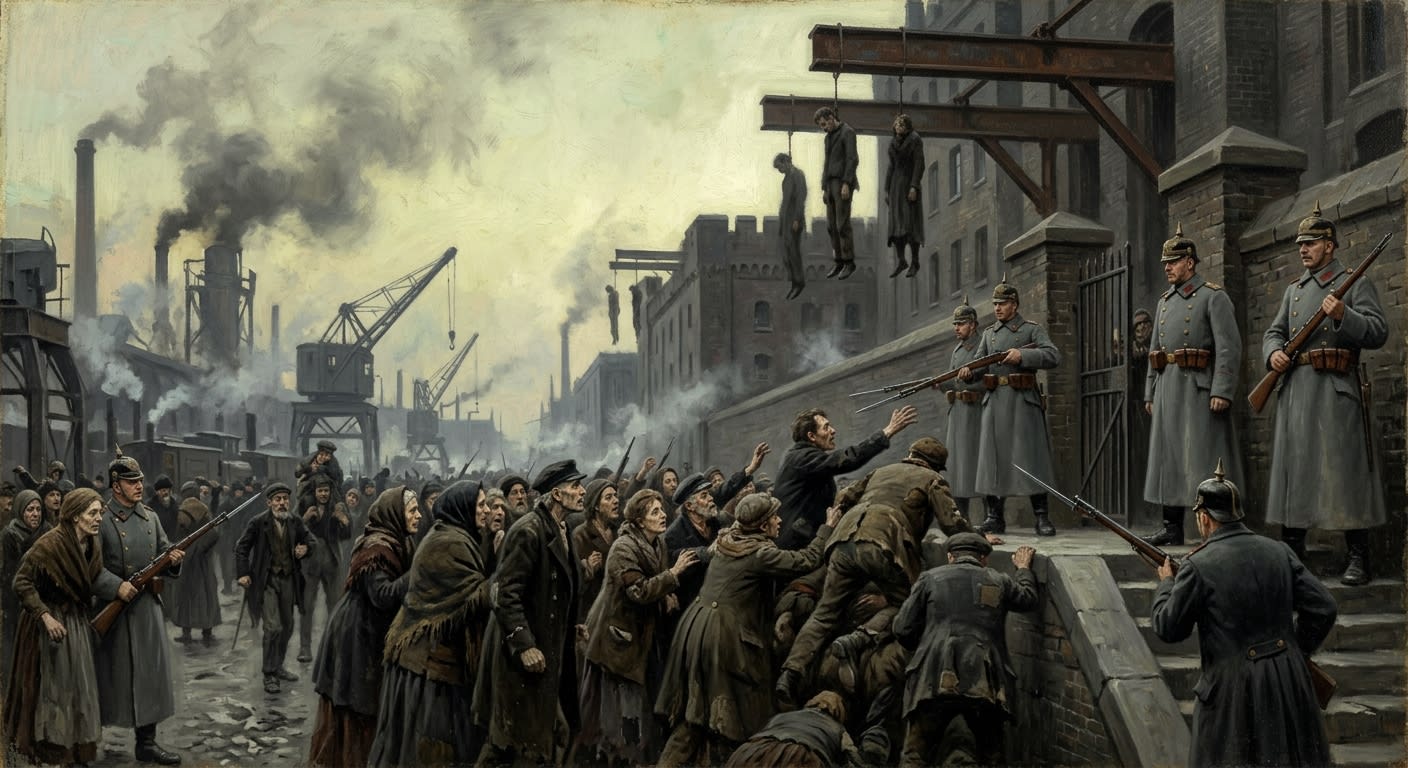
Famine of A.S. 65
Two per cent mercy, measured against an empty sack
The A.S. 65 Hamburg famine and nine-day riot came as the northern throat became indispensable: failed harvests, due tithes, Berlin troops, public hangings, and a two-per-cent mercy too small to eat.
Codex Ref. VII.4.21-065
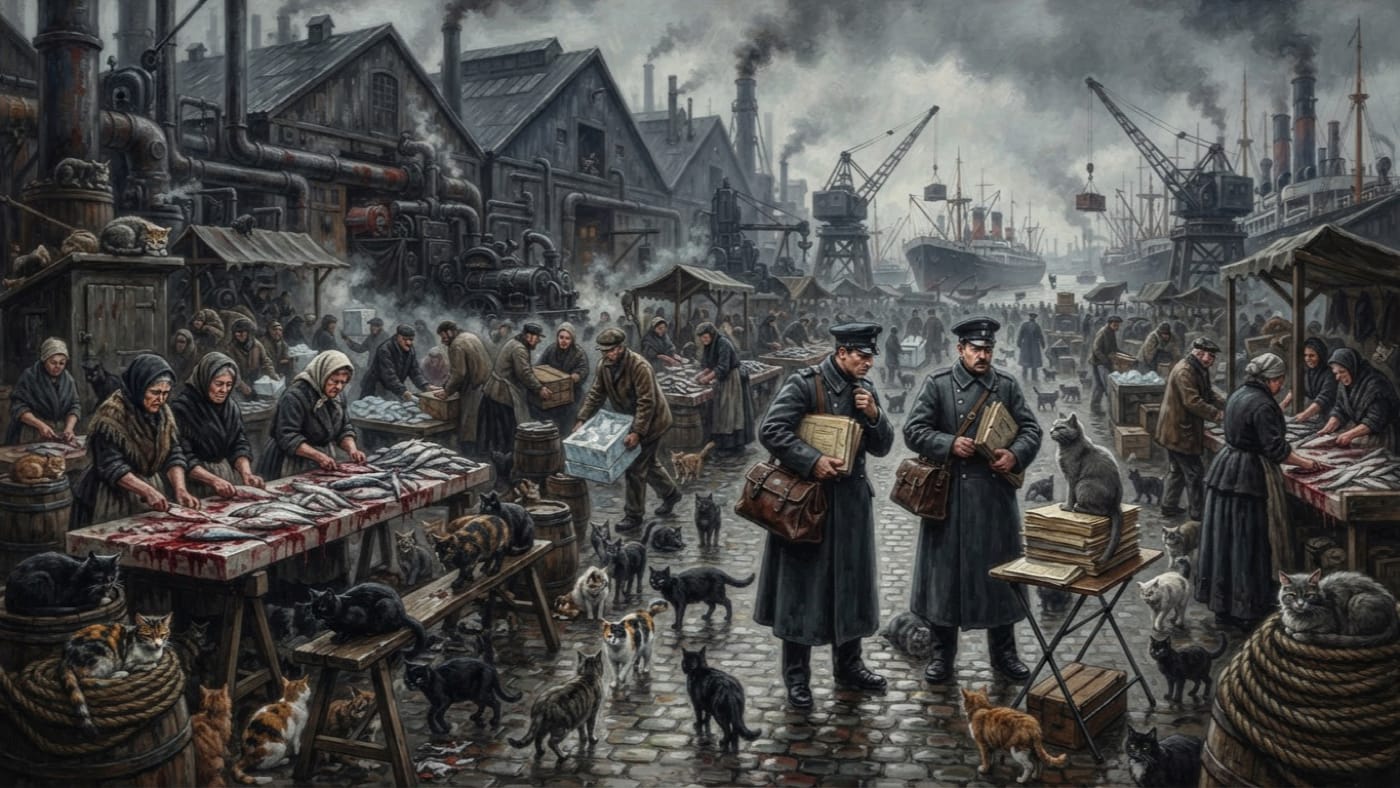
Fishmarket cats
The Ledger can survive one blank line
A.S. 201 survey of Hamburg's Fishmarket cats: ordinary animals, unregistered with Records, estimated by the Hamburg account at forty thousand. A census failed in A.S. 178; their theology remains opaque.
Codex Ref. IV.2.01-001
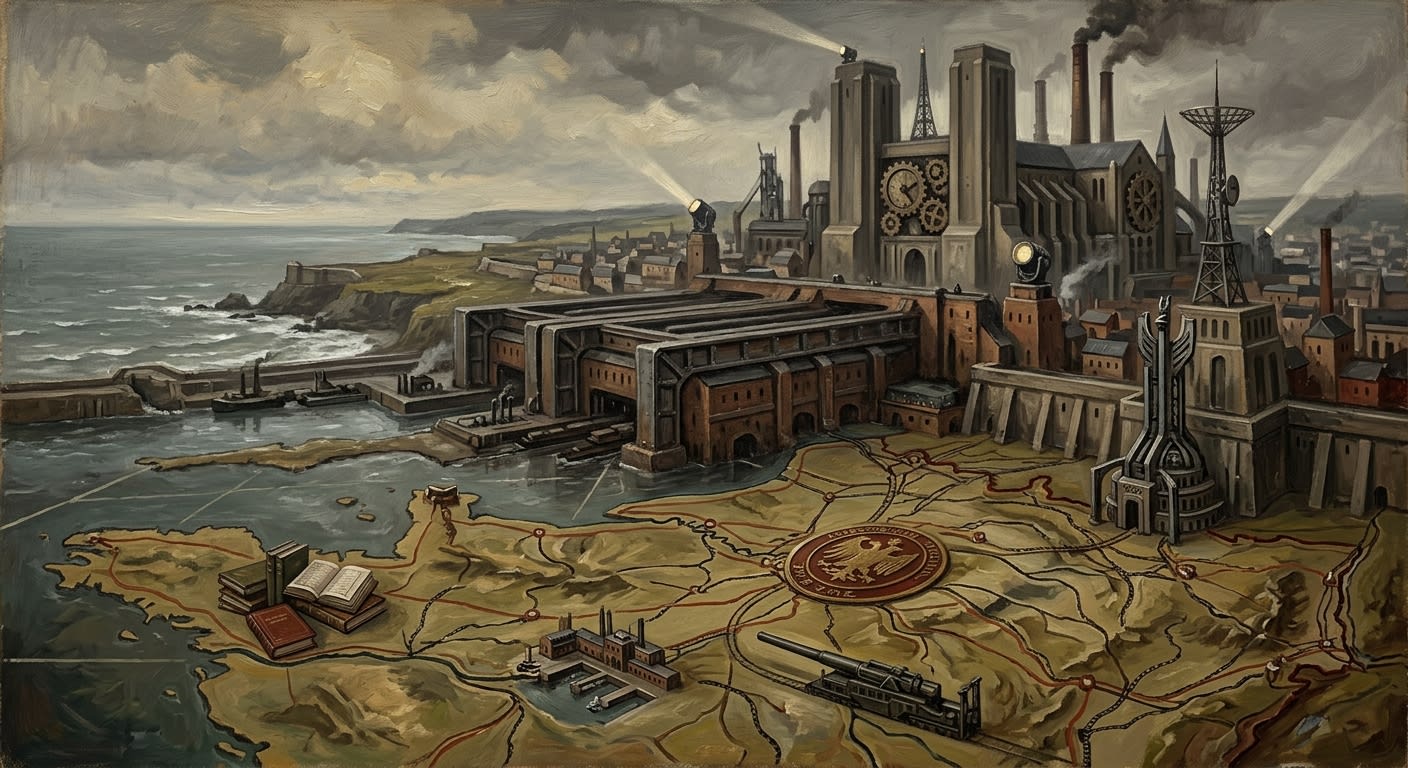
France
The country the Synod did not abolish, because it proved too taxable to waste
A.S. 201 survey of France as Zone One heartland: martyr coast, watched cities, taxable memory, useful ports, and one conquered name made indispensable.
Codex Ref. II.1.01-201
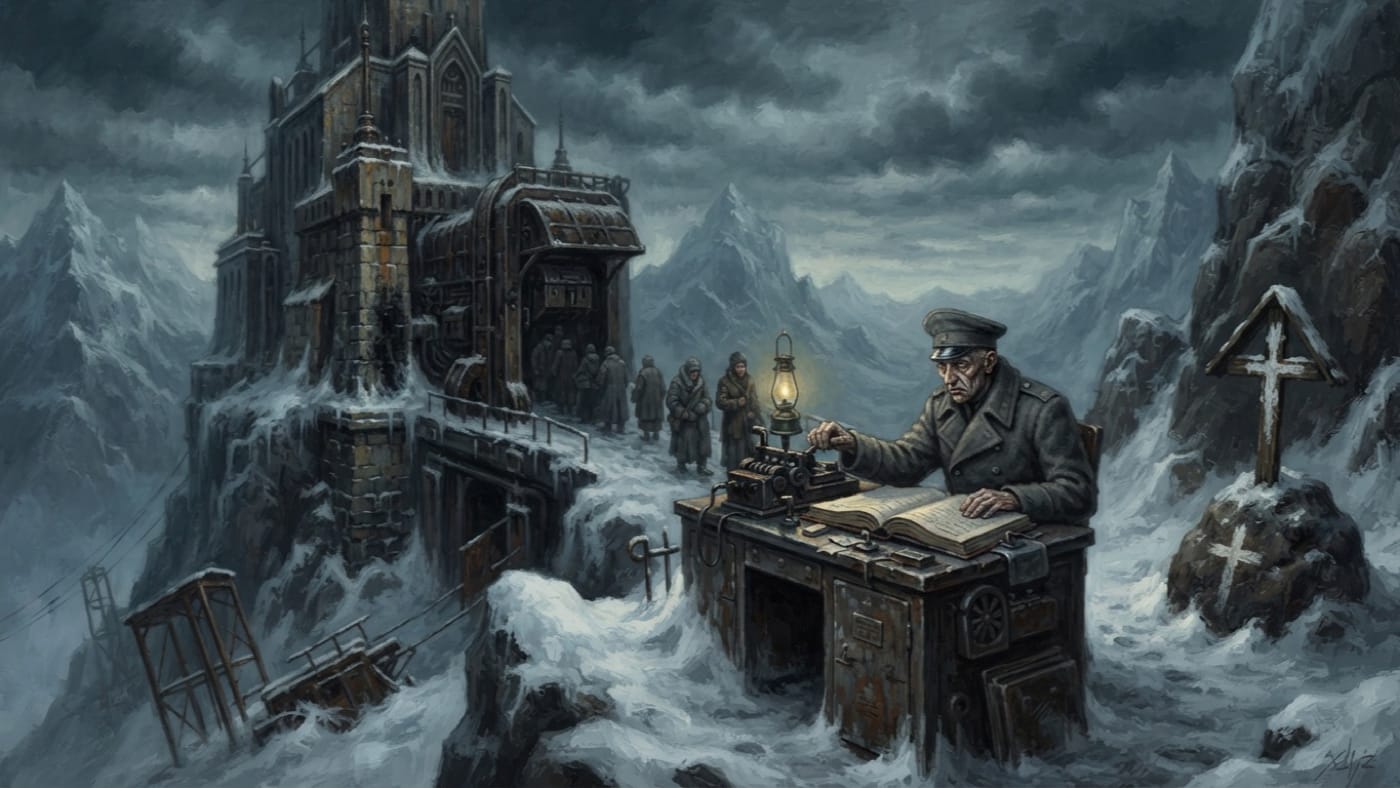
Guild of the Golden Sole
The master kept his life. The Bureau kept the roads.
The private guild that held the Rhineland pilgrimage approaches until its absorption in A.S. 123. Its master signed the Harmonized Routes Edict and kept his life; the Bureau rewarded him with a desk above the Carpathian snow-line.
Codex Ref. XI.5.01-123
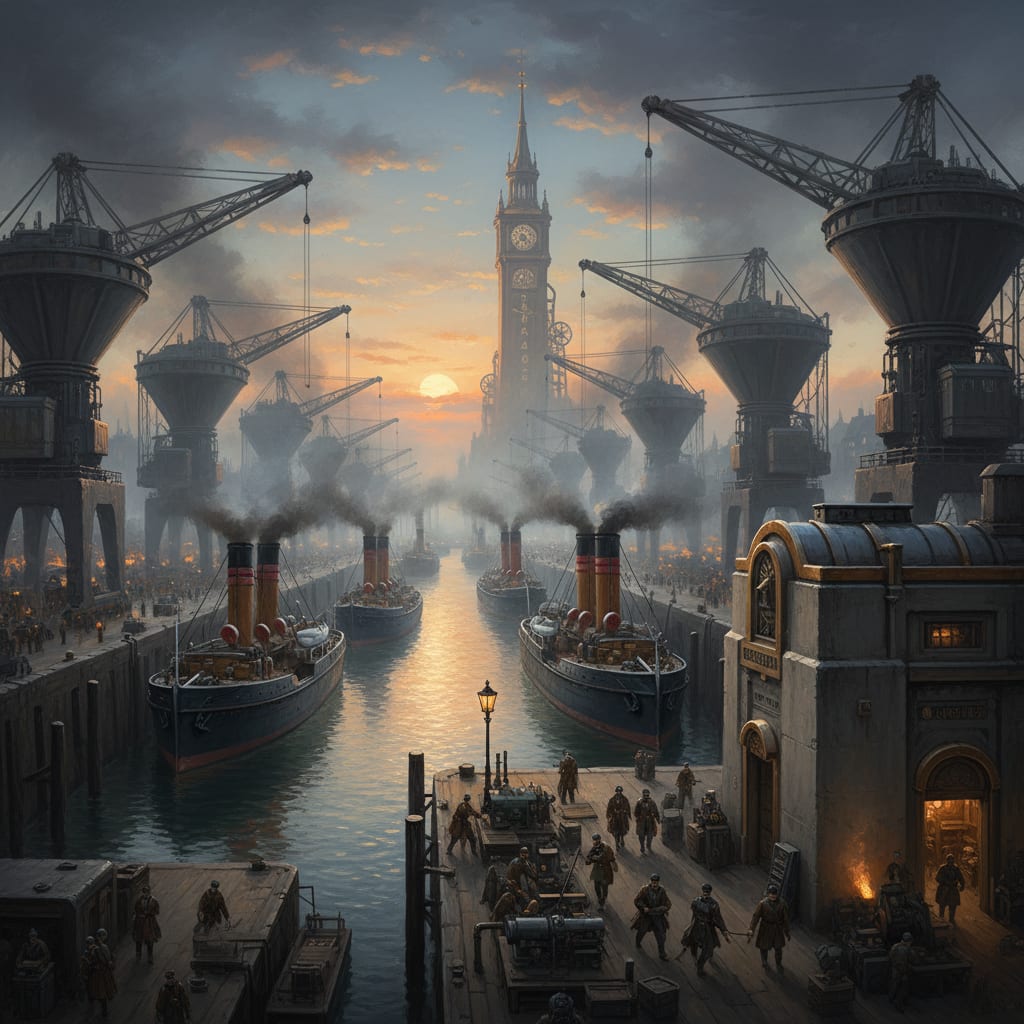
Hamburg
The throat of the northern front — and the hand around it is not the Synod's
The Synod's northern import terminal: nine hundred thousand souls at the Elbe's mouth, processing the grain and coal that keep the northern front from freezing, starving, and dying.
Codex Ref. II.4.09-005
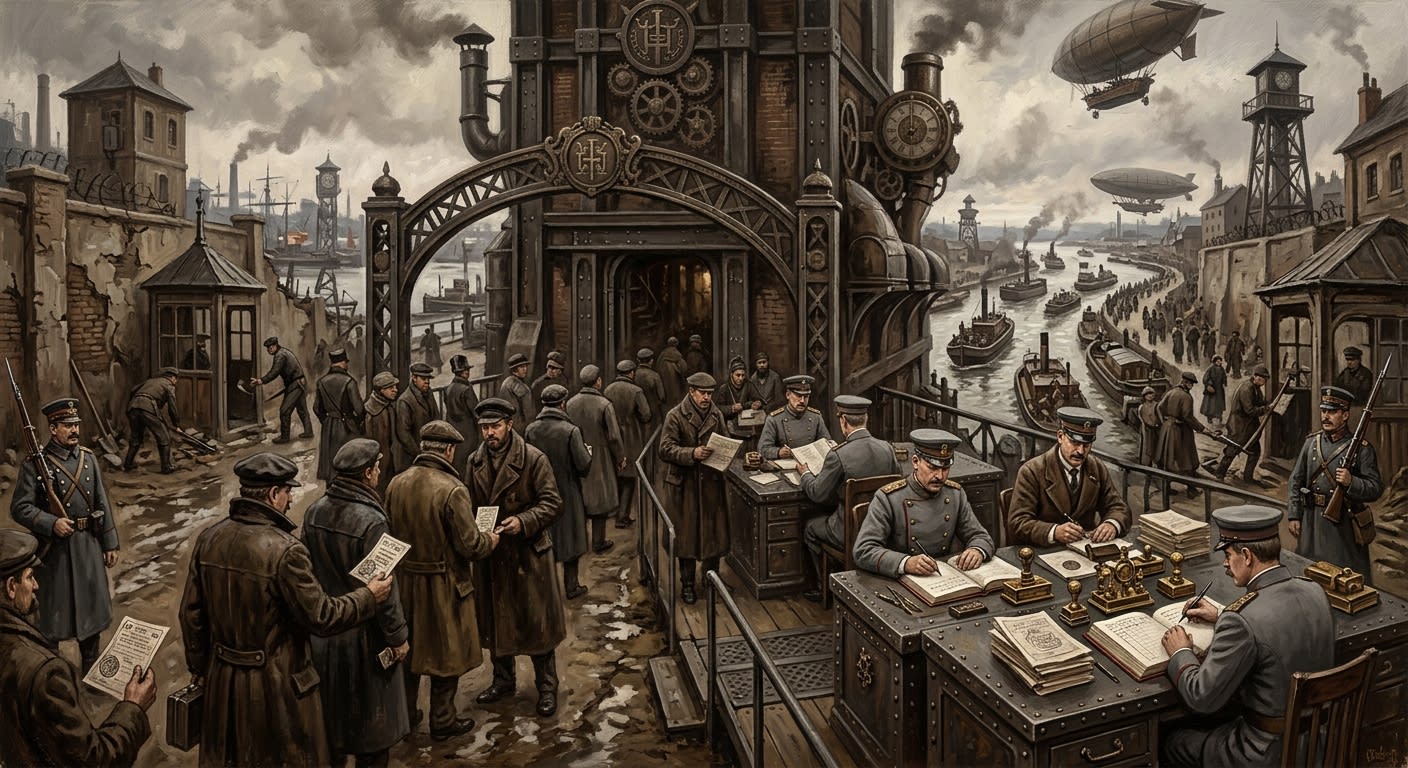
Harmonized Routes Edict
The road to holiness was improved by tolls, seals, and foundation screams
The A.S. 123 Harmonized Routes Edict licensed pilgrimage, broke the private guild roads, founded Marseille's groaning headquarters, and made walking taxable.
Codex Ref. VII.2.10-123
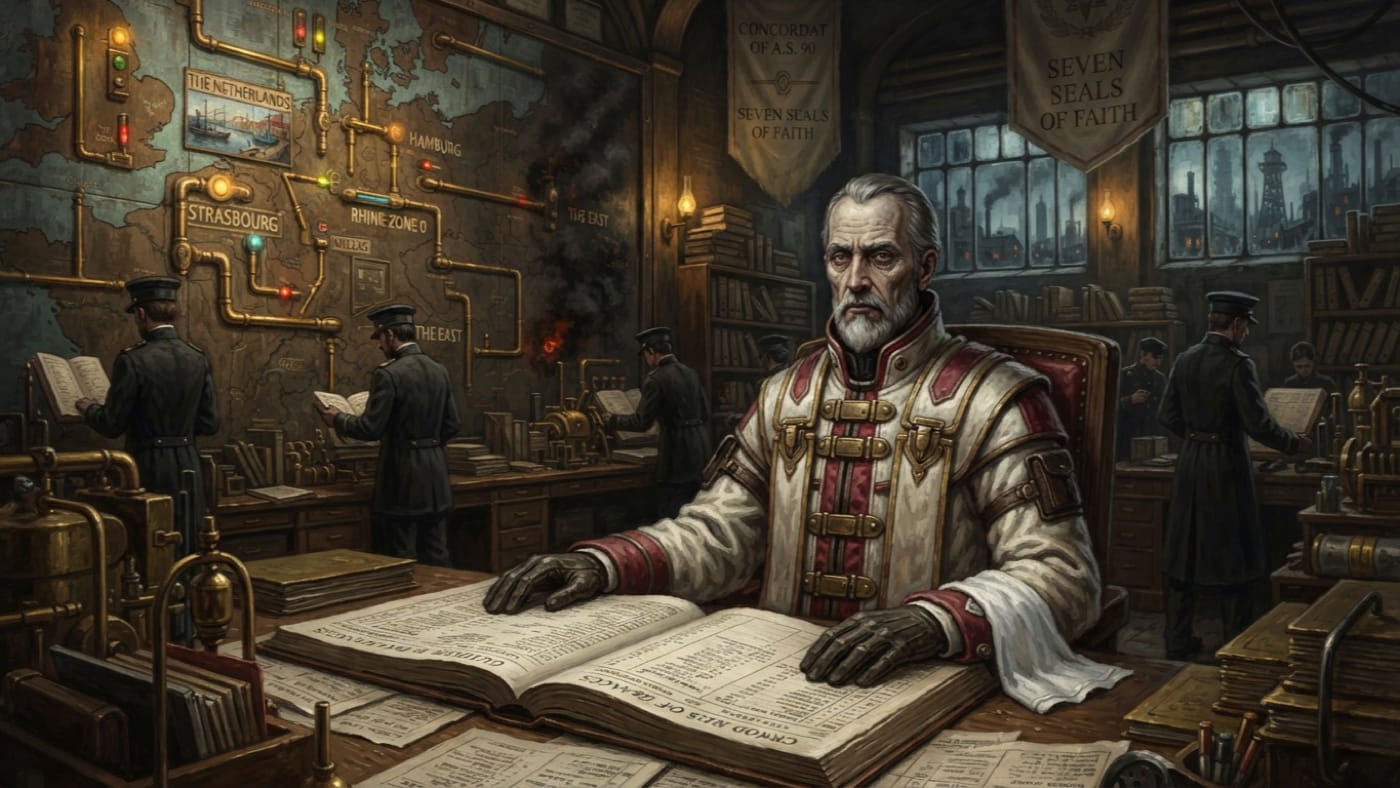
Hierarch of Concord
The chair that keeps embassies open and objections scheduled
The Hierarch of Concord keeps Dutch embassies open, War supplied, Tithes disputing its accounts, and Doctrine objecting. This A.S. 201 dossier records the office; the holder's particulars remain unentered.
Codex Ref. III.2.01-074
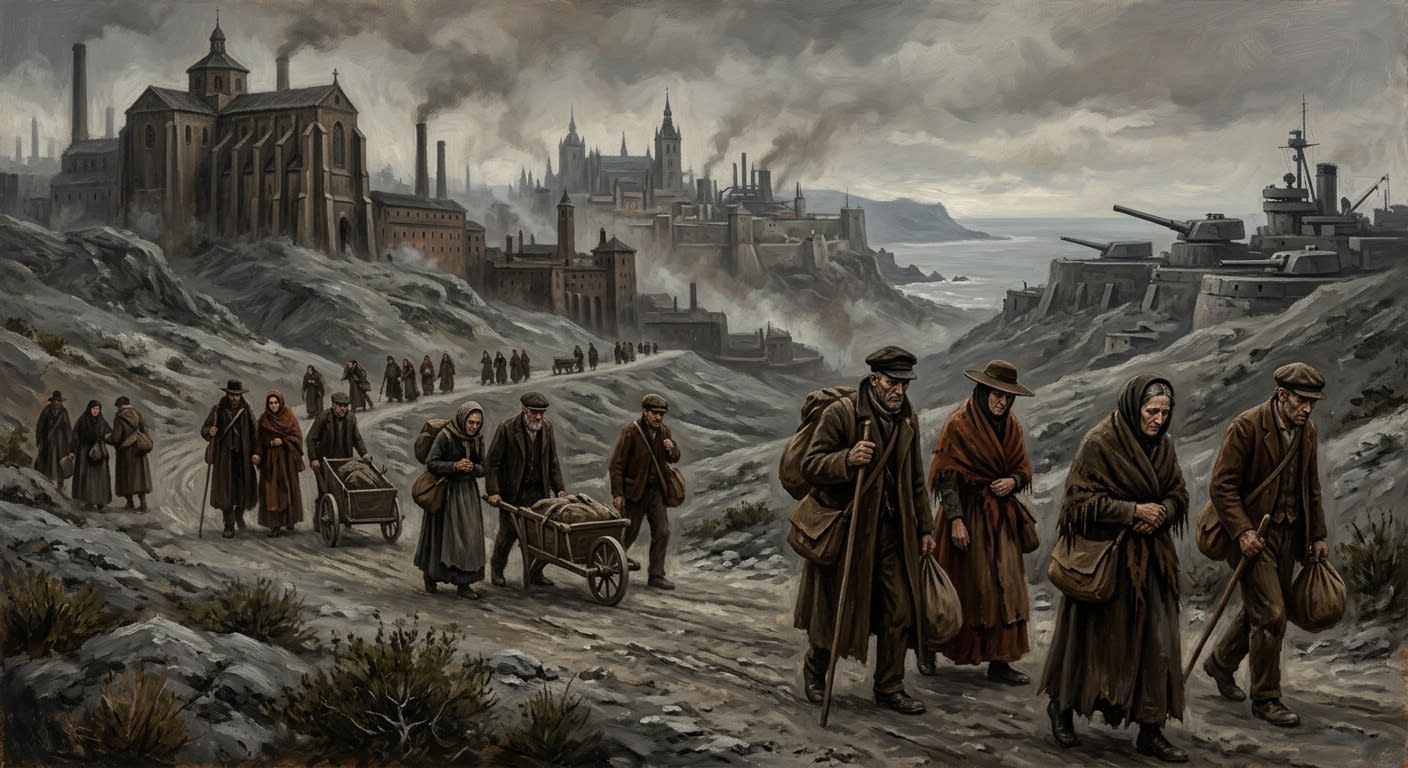
Iberia
The western furnace kneels, pays, murmurs, burns, and remembers
Iberia is the Synod's western furnace: a sealed peninsula of relic ash, late Concordat obedience, Seville mutters, Toledo martyrdom, pilgrimage roads, British guns at Gibraltar, and memory too old to confiscate cleanly.
Codex Ref. II.1.04-090
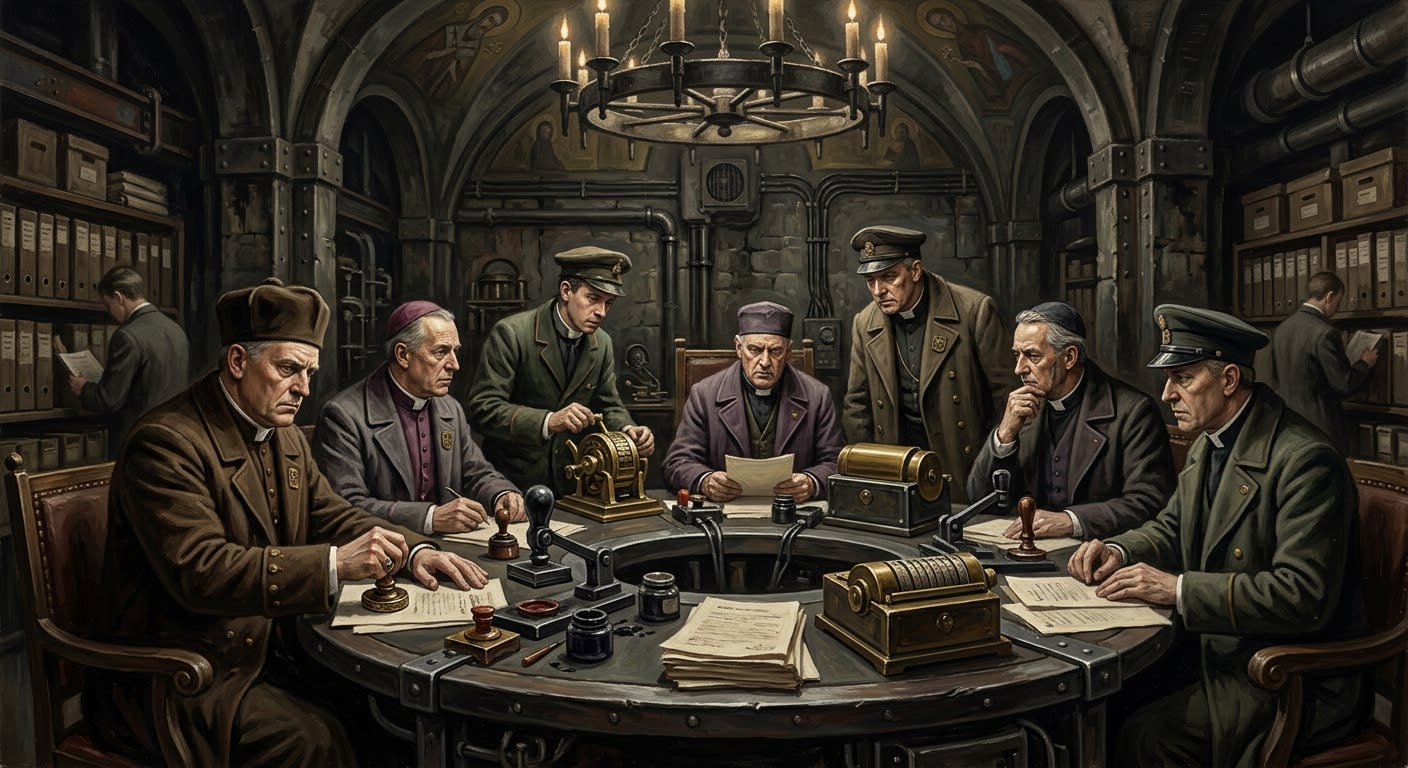
Inner Circle
Seven knives pointed inward, and Europe calls the locked box government
The Inner Circle is the Synod's highest chamber: seven Seal authorities locked in Strasbourg beneath the Basilica, manufacturing unanimity from obstruction, fear, rotating stamps, clerks, and the occupied absence of War.
Codex Ref. XIII.1.05-090
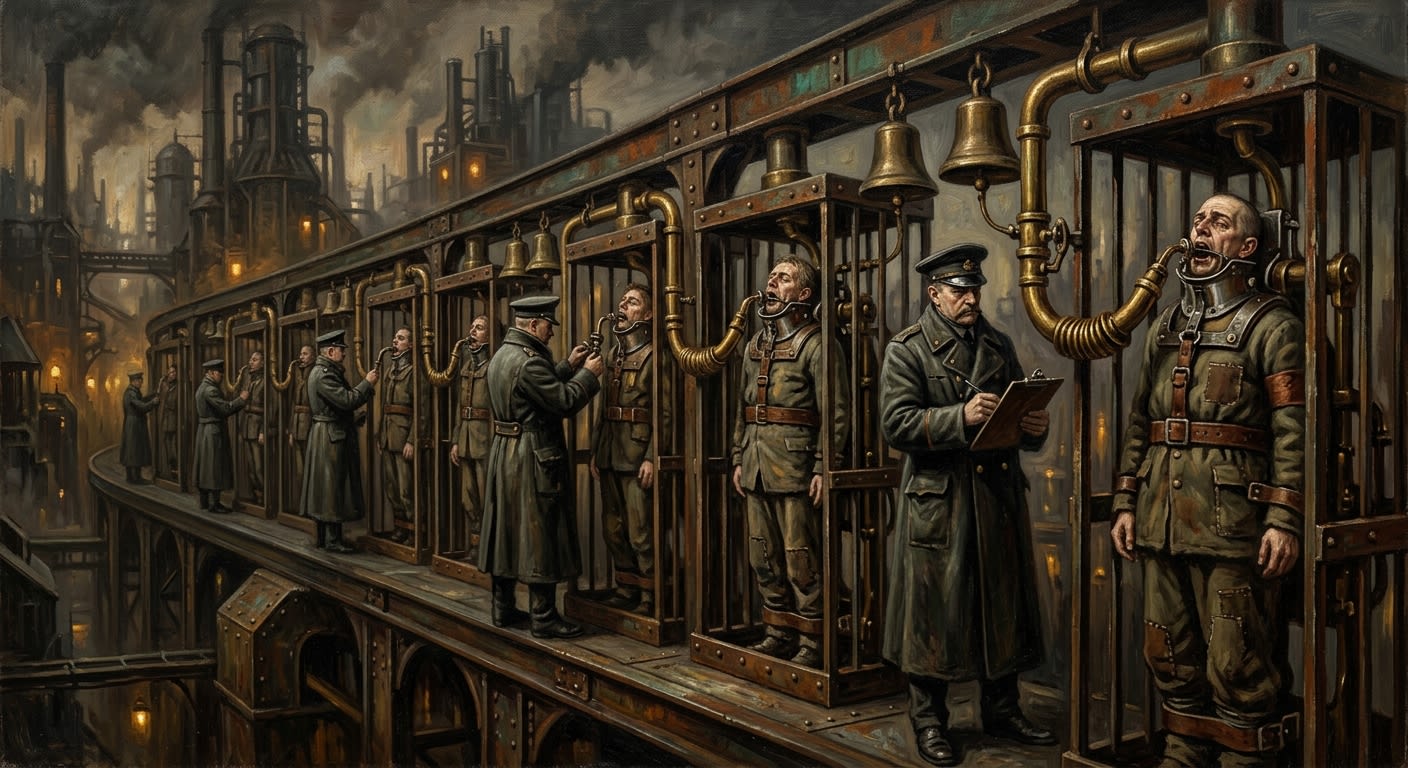
Iron Choir of Mainz
Where the road learned to keep a throat open
The Iron Choir of Mainz turns condemned throats into civic instruction: a Purity road of cages, bells, Brand-Singers, witness columns.
Codex Ref. VIII.1.09-134
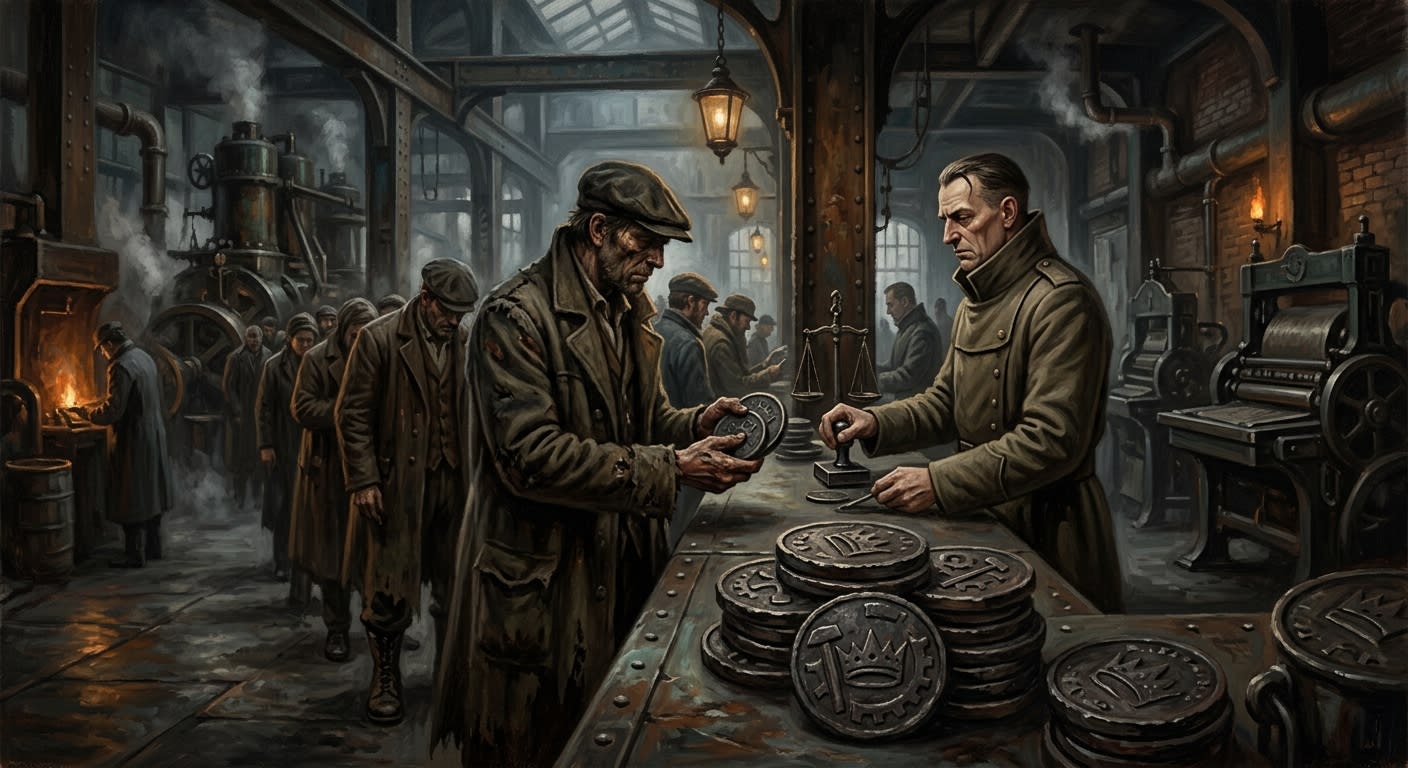
Iron Crown Currency
The British coin that buys rope, insults Tithes, and refuses to kneel
The Iron Crown is Britain's stubborn iron tender: older than the Synod's Crown of Grace, tolerated at mixed ports, and hated because it works.
Codex Ref. XIII.1.22-001
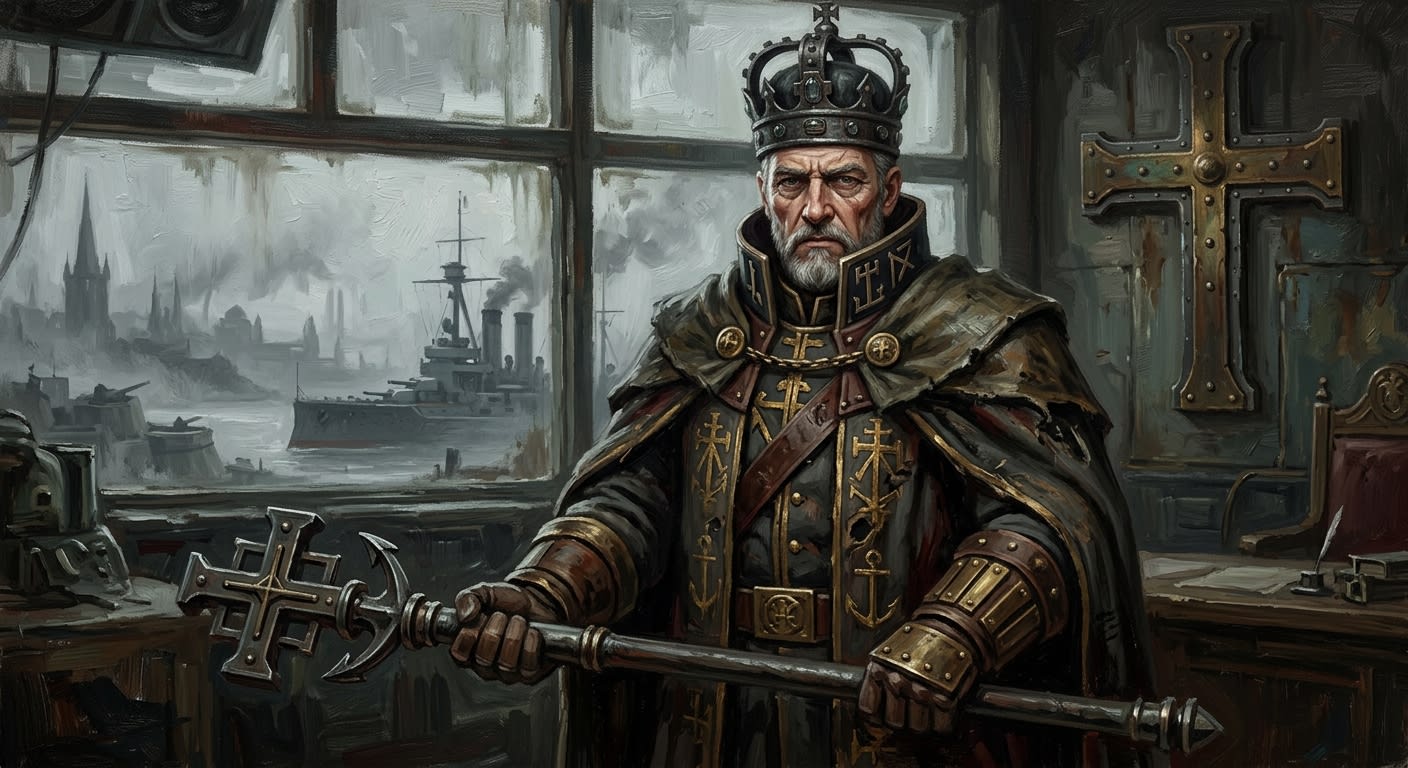
King-Warden Aldric III
The island abbot with a sword, and worse, with ships
Aldric III rules Britain from Canterbury as King-Warden: independent ally, naval necessity, liturgical irritant, and pious stubbornness in a crown.
Codex Ref. III.2.01-022
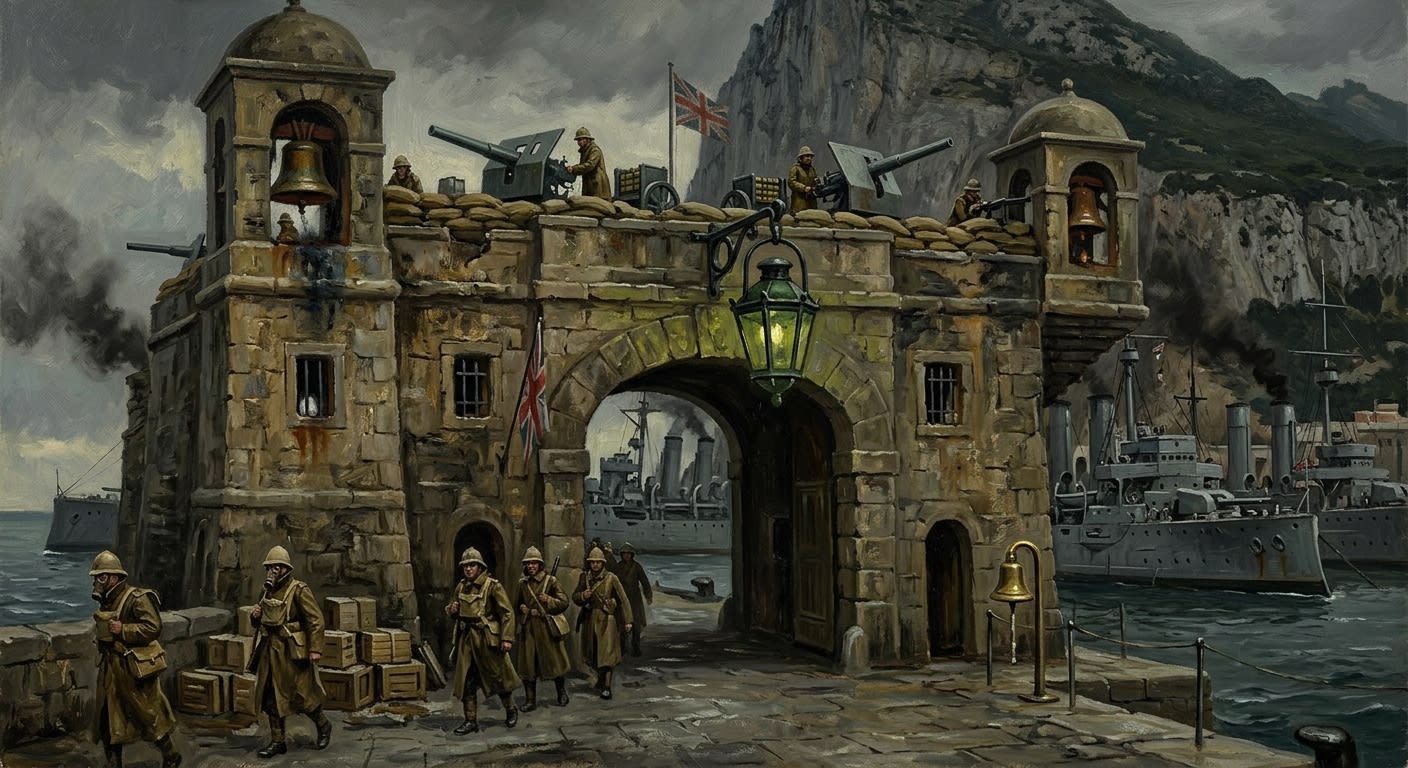
Lantern Gate, Gibraltar
The British fist at the Mediterranean mouth, politely denying it is a hand on our throat
The Lantern Gate at Gibraltar is Britain's southern naval knuckle: bell towers, chapel guns, anti-piracy patrols, and leverage disguised as maritime courtesy.
Codex Ref. II.4.09-010
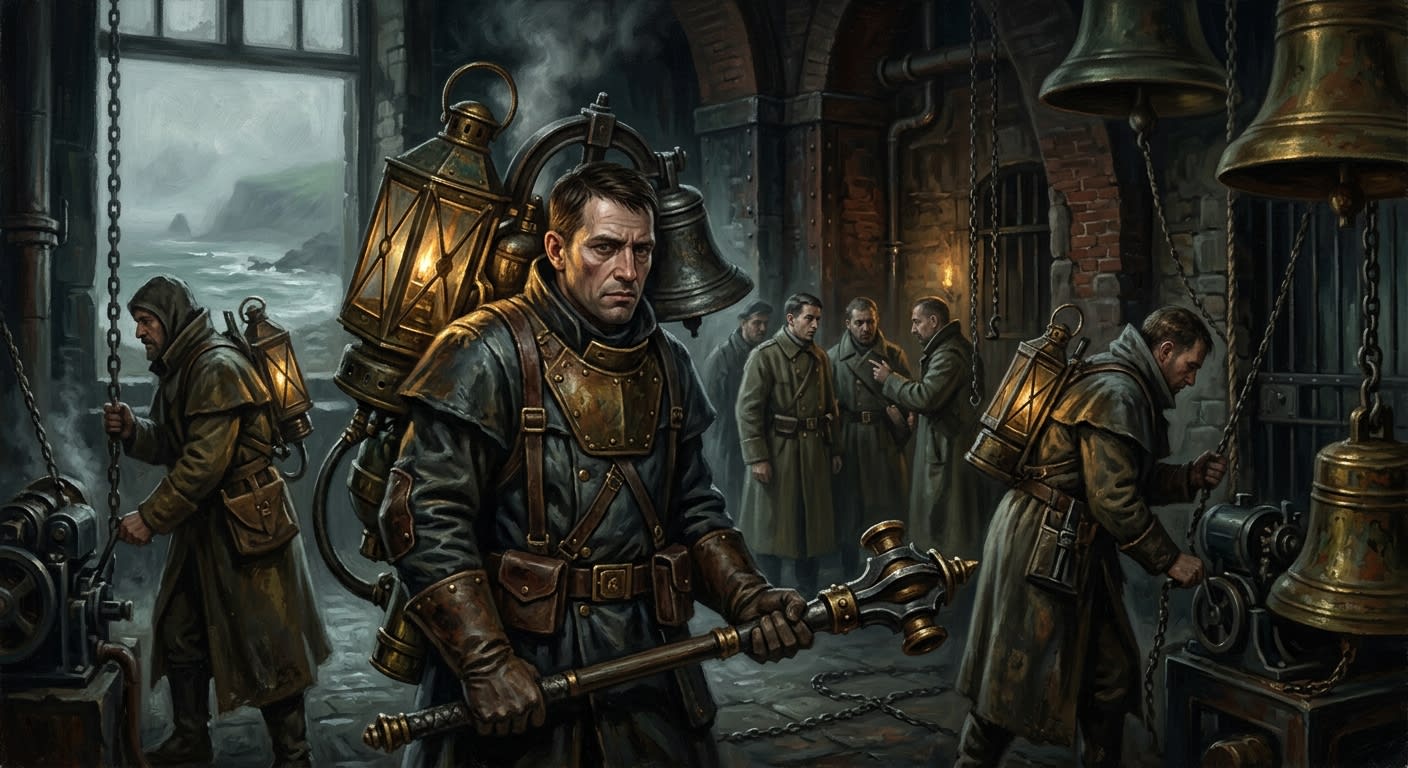
Lantern-Ringers
Britain keeps time with bronze, rope, and legally sanctioned concussion
Britain’s Lantern-Ringers bind bell, mace, parish, and sea into one armed vocation; Strasbourg wants their specifications and receives courtesy instead.
Codex Ref. XII.2.05-001
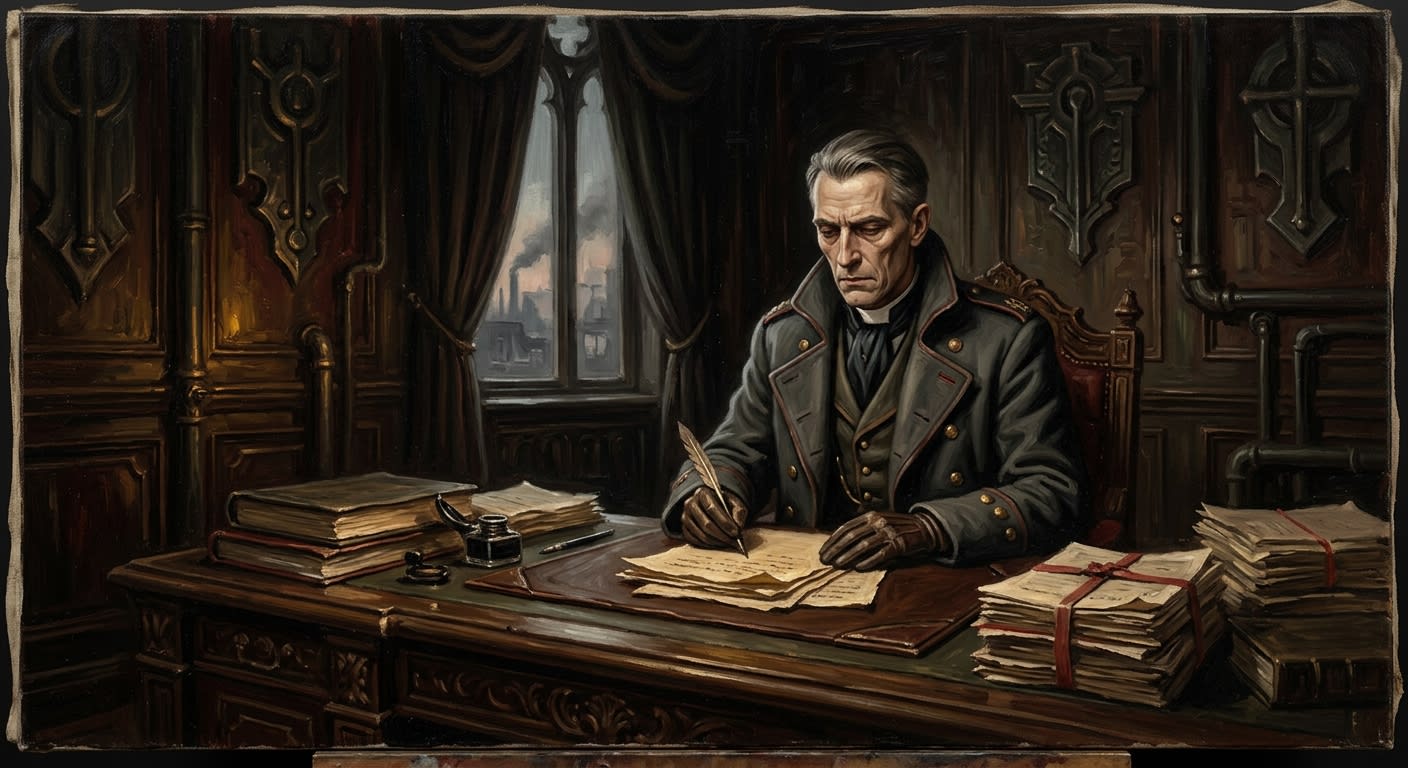
Legate-Prior Mertens
The man who reported Britain accurately, and therefore dangerously
Mertens, Synod ambassador in Canterbury, writes the British Crown plainly enough to make policy bleed through its bandages. Accuracy is his scandal.
Codex Ref. III.2.01-024
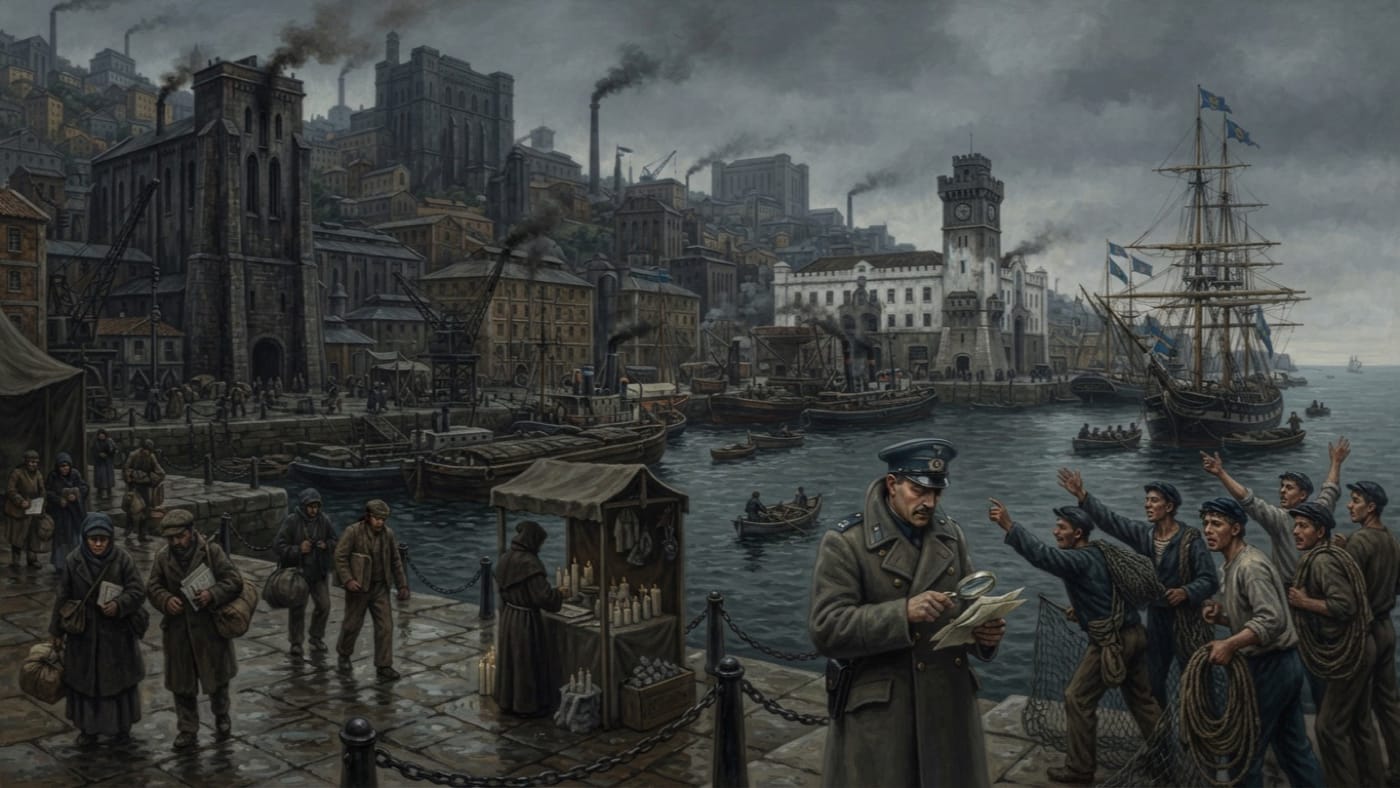
Lisbon
The harbour counts by contract
Lisbon sells sea candles, quake memory and licensed passage at the Atlantic mouth of the Tagus. Strasbourg counts its revenue; its sailors tell the catastrophe in the wrong order.
Codex Ref. II.4.09-201

Lord-Warden Eccleston
Courtesy sharpened until it can cut a Bureau in half
Eccleston, British ambassador in Strasbourg, receives every Synod memorandum with perfect courtesy and returns obstruction in the shape of proper procedure.
Codex Ref. III.2.01-023
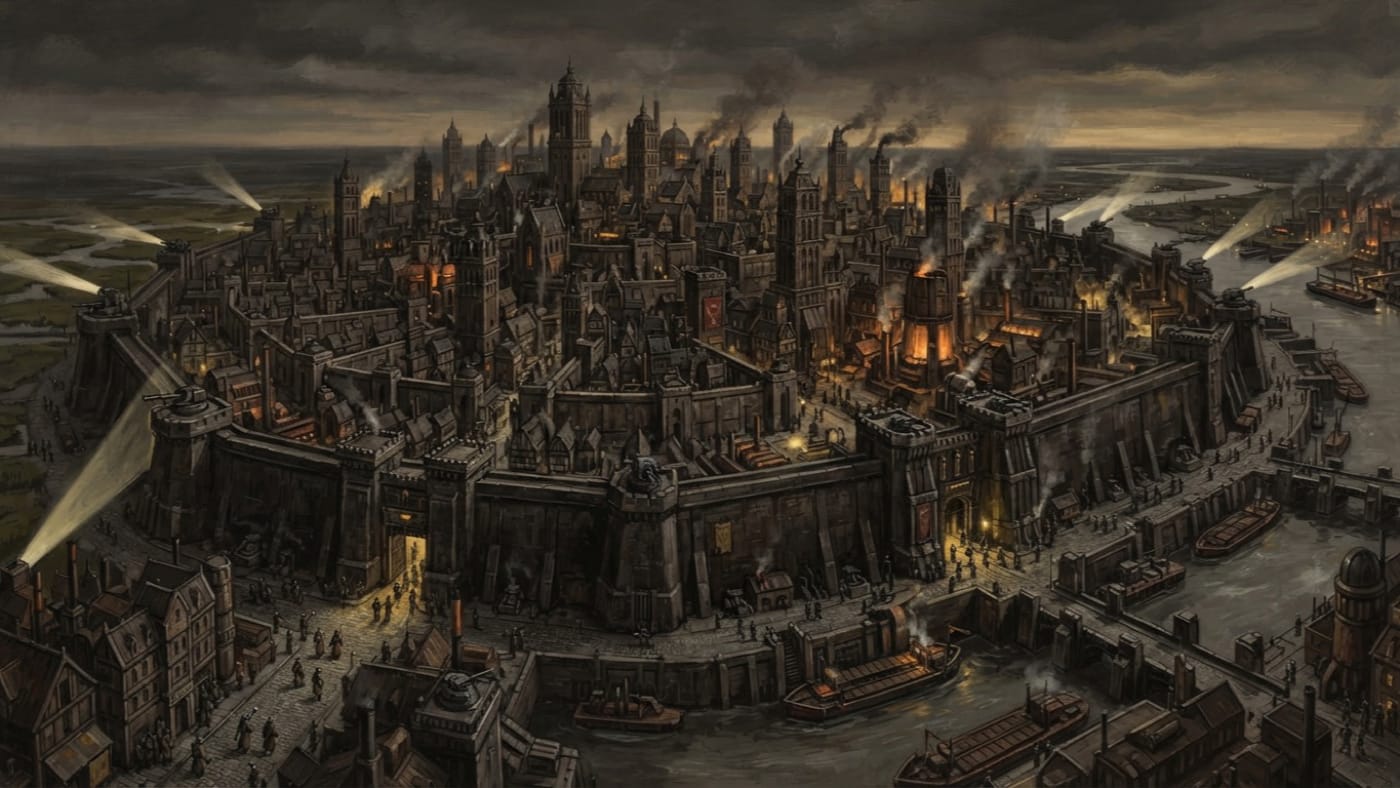
Lunden-Kirk
The Thames city whose parish walls keep the Bureau outside
London survives as a walled monastery-city on the Thames: perhaps four hundred thousand souls, each parish armed, each street watched. The British Crown governs; the Bureau possesses reports and no jurisdiction.
Codex Ref. II.0.10-201
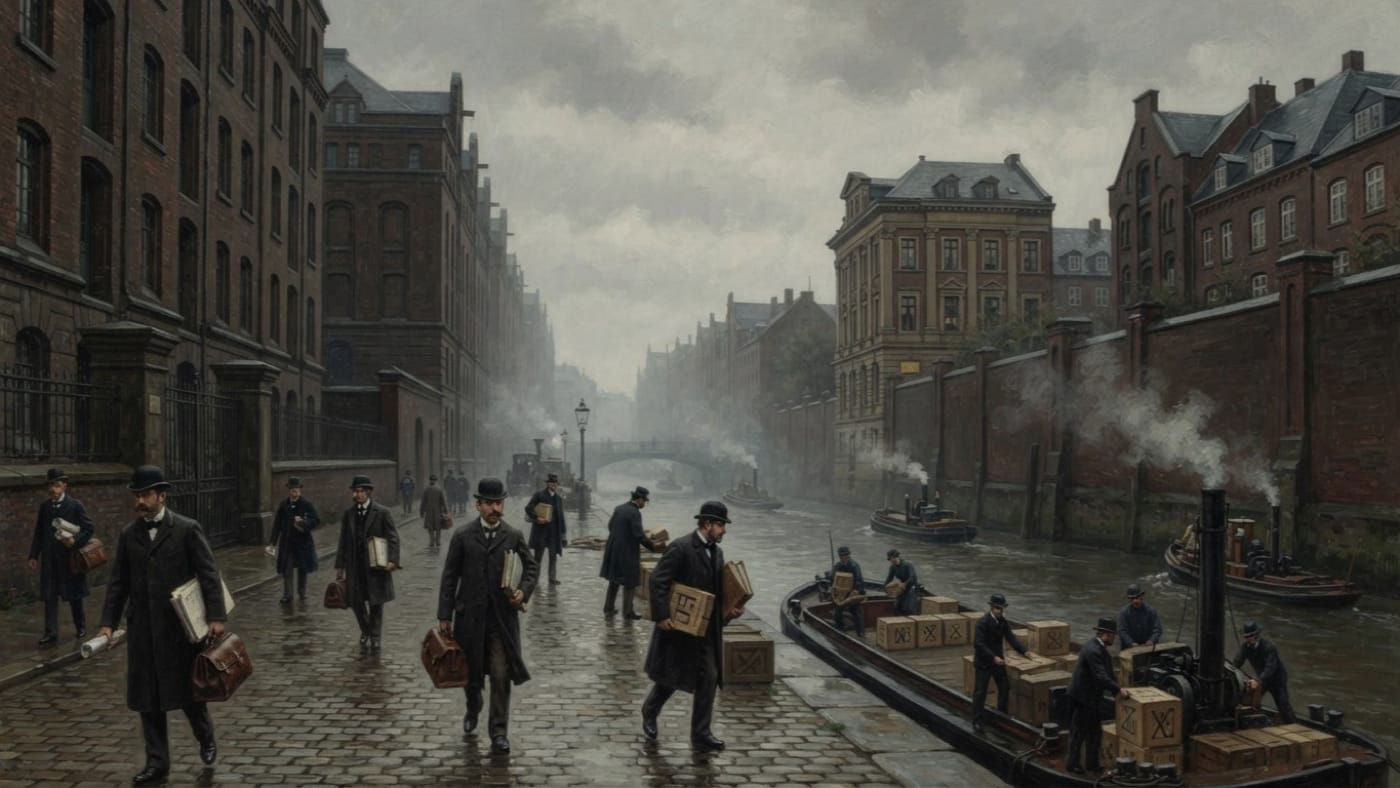
Merchant Quarter
Where the Synod has to knock
Hamburg's Merchant Quarter houses Dutch credit, British grain contracts and foreign factors behind respectable walls. The Synod governs by inspection and feeds its northern front by accepting the terms.
Codex Ref. II.4.09-007
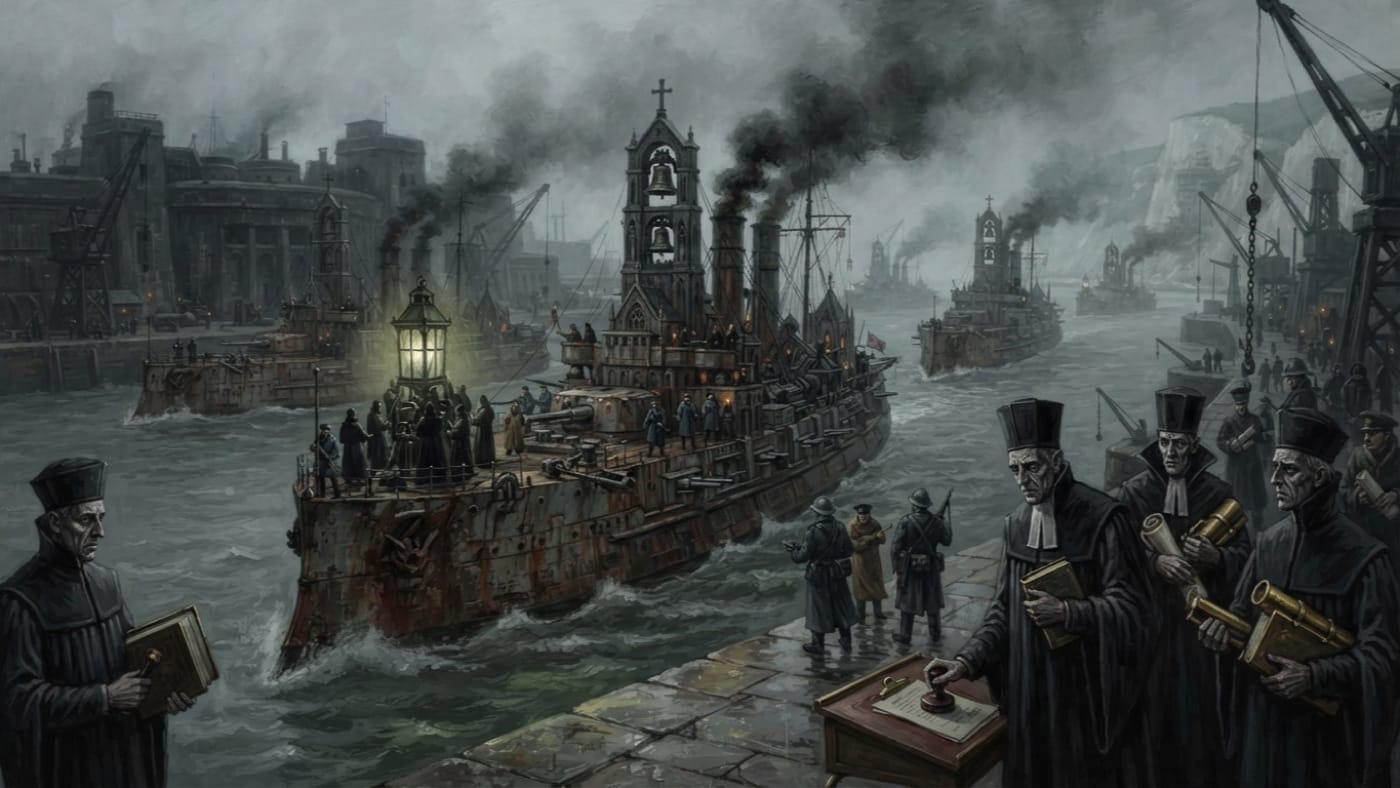
Non-Standard Observance, Diplomatically Accommodated
Every objection retained; every escort accepted
In A.S. 199 Doctrine reclassified the Lantern Way to accommodate the Crown whose ships guarded Synod grain. Every objection survived; so did the convoys.
Codex Ref. X.1.05-199
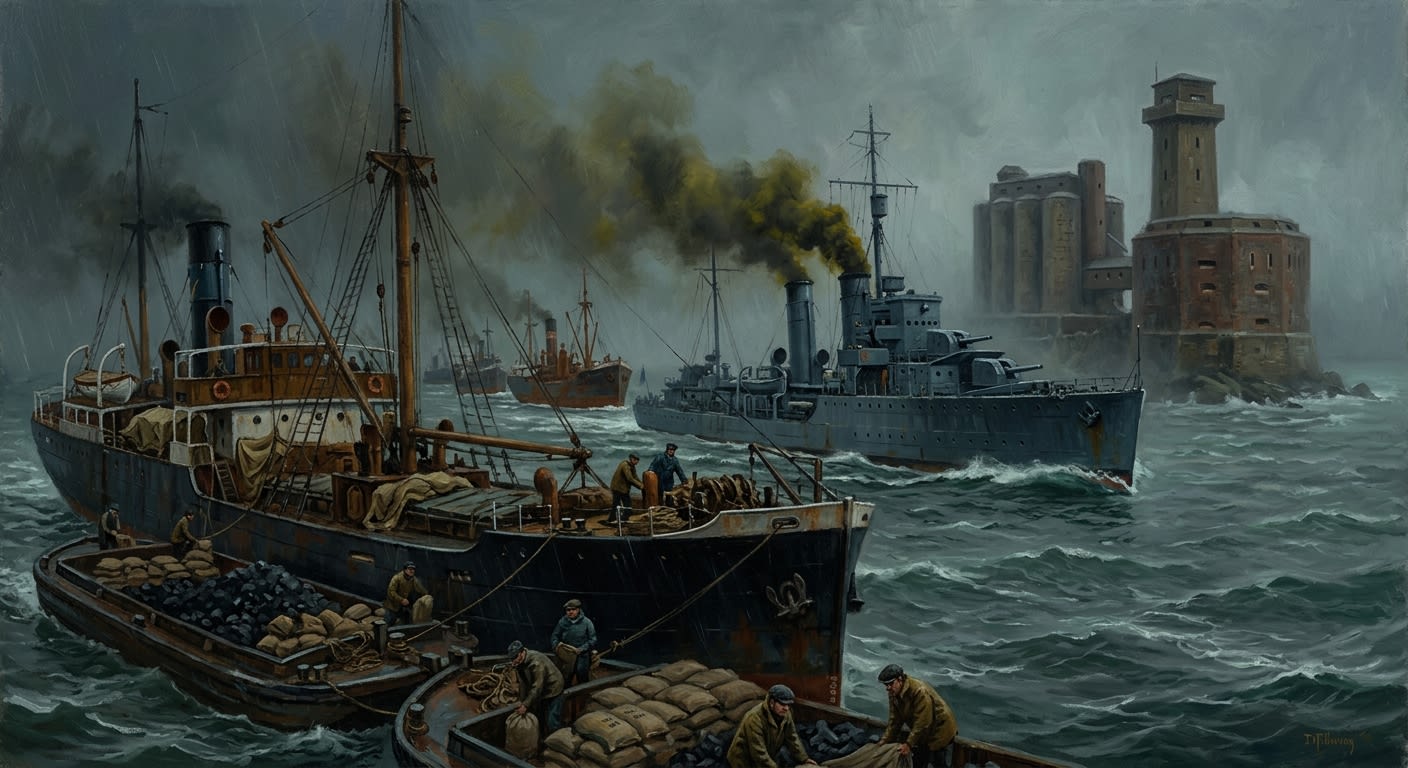
North Sea
The wet border that feeds the Line and refuses the Ledger
The North Sea is the Synod's least obedient frontier: a maritime supply basin of grain, coal, fish, fog, foreign credit, reluctant allies, and weather that accepts no stamp.
Codex Ref. II.4.09-201
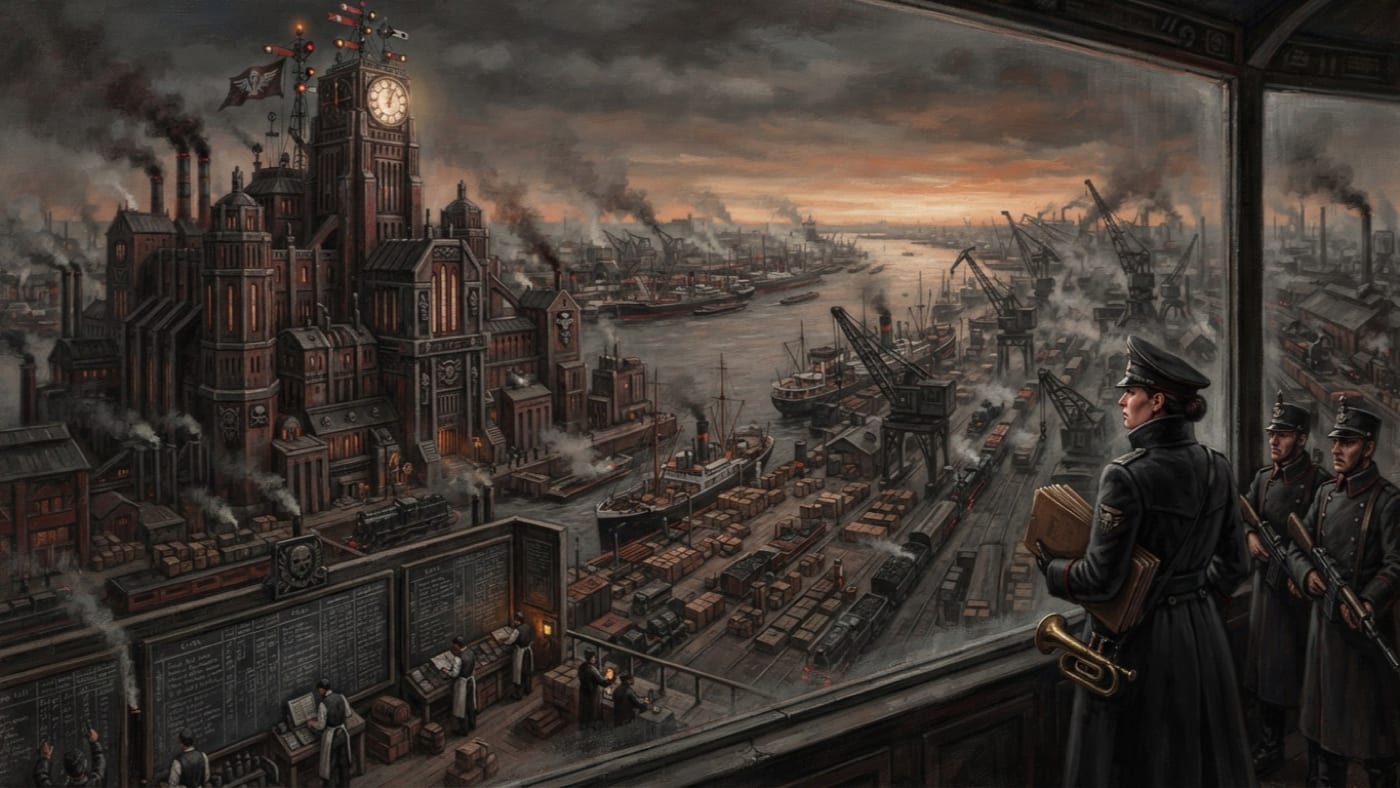
Northern Maritime Chapterhouse
The tide has a schedule; the Synod has objections
Hamburg's senior Synod installation orders berths, war cargo and foreign-factor schedules under Admiral-Prefect Gerta Halske. It can command the harbour boards; it cannot command the ships to come.
Codex Ref. II.4.09-006
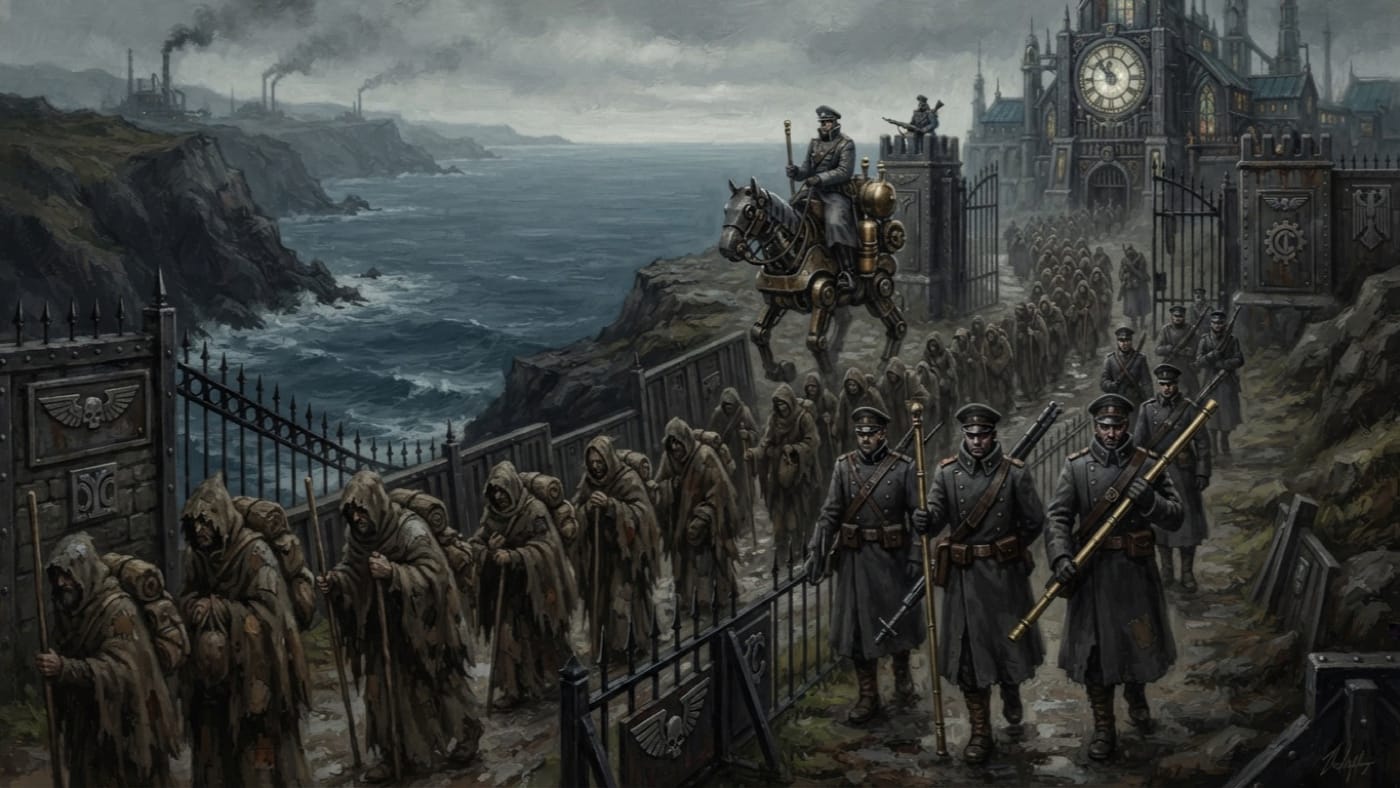
Peregrine Brotherhood
Enough escorts to trouble a prince. No authority after A.S. 123.
The Peregrine Brotherhood controlled Iberian coastal pilgrimage with escorts fit to trouble a prince. Implicated in Santiago's A.S. 121 riots, it lost independent authority under the A.S. 123 Harmonized Routes Edict. The Bureau kept the roads.
Codex Ref. XI.5.03-123
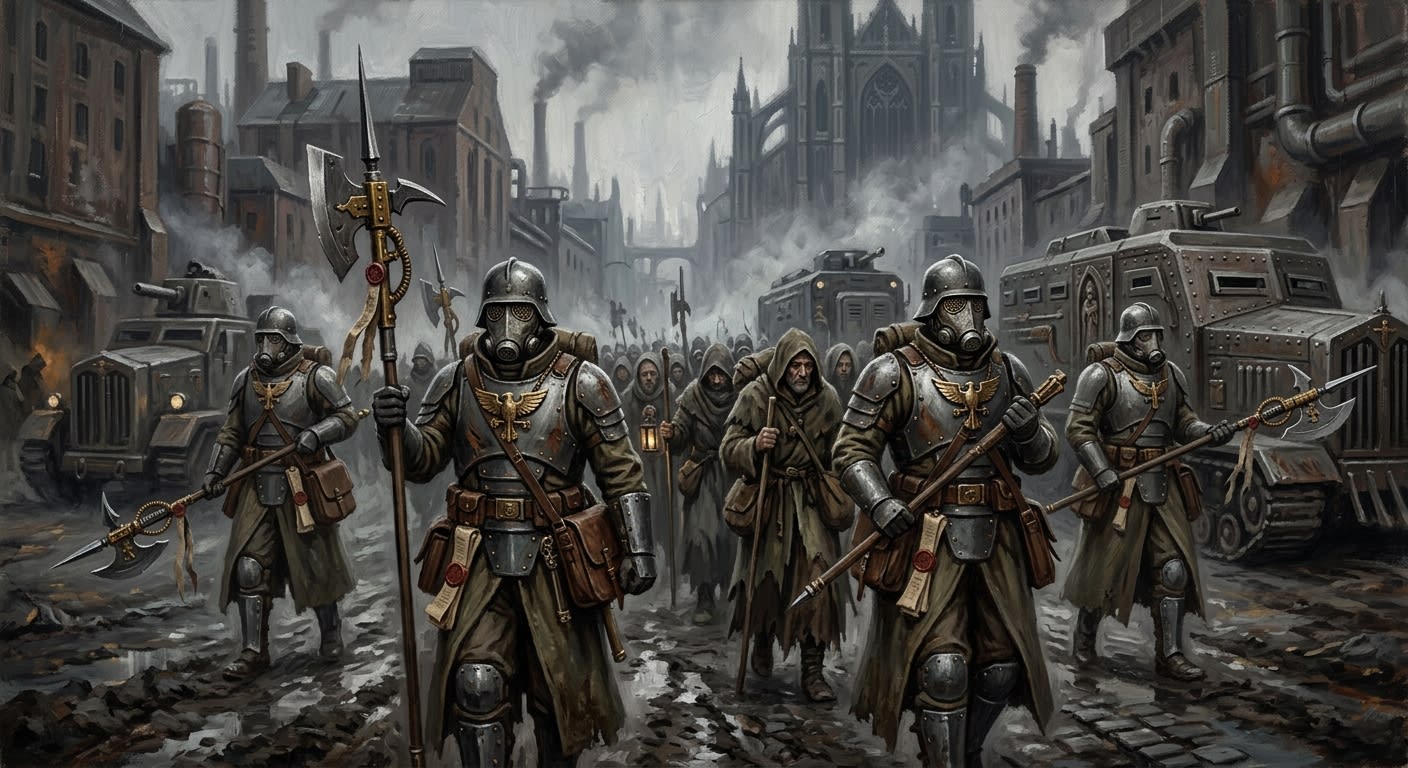
Peregrine Wardens
The walking seal that keeps pilgrims profitable and roads holy
The Peregrine Wardens are the Bureau of Pilgrimage's armed road-enforcement arm, escorting pilgrims, voiding licences, dissolving guilds, and proving that holy travel walks best under halberd and seal.
Codex Ref. VIII.7.04-001
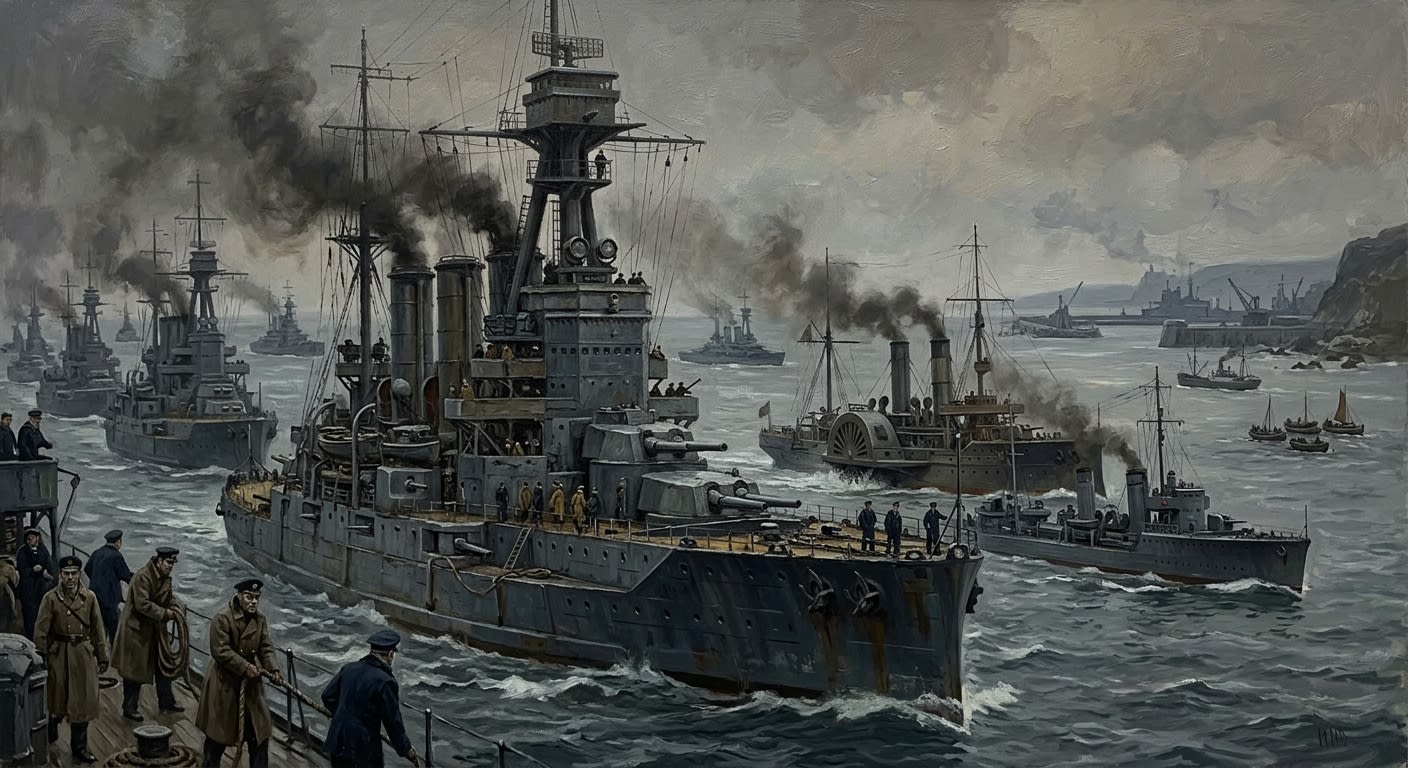
Royal Fleet
The island's parliament of hull, bell, chapel, and gun
Britain's Royal Fleet keeps the Channel, Gibraltar, grain, pilgrims, and Synod pride afloat; Strasbourg counts the hulls and calls dependence cooperation.
Codex Ref. X.1.05-001
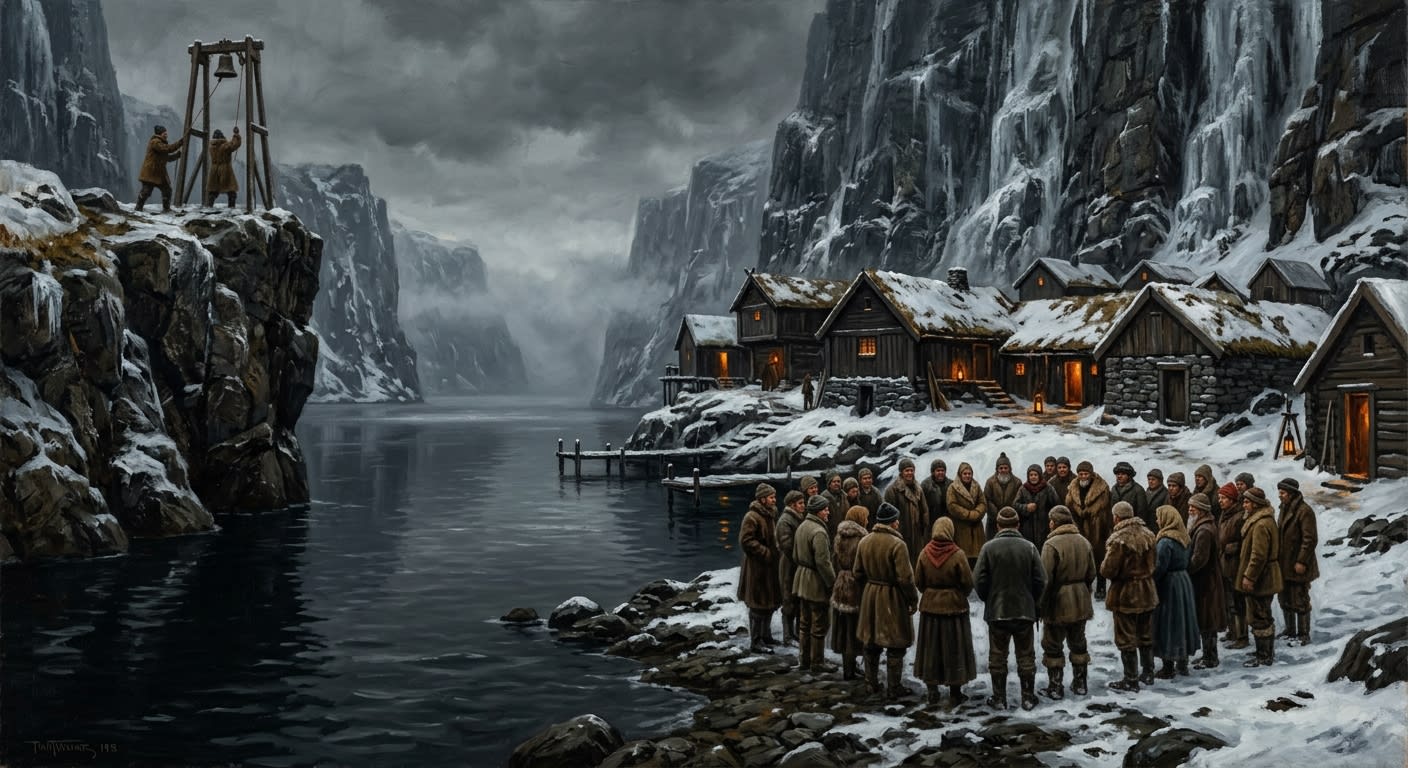
Scandinavia (The Fractured North)
The Synod's supplier, its creditor, and the thing the Bureau cannot name
A compliance assessment of Zone 8 — 1.9 million souls, clan moots, seal-oil, and the thing in the fog the Bureau classified Category Two Acoustic Distortion and has not re-examined. Filed by Drax. Not ratified by the wind.
Codex Ref. X.1.03-001
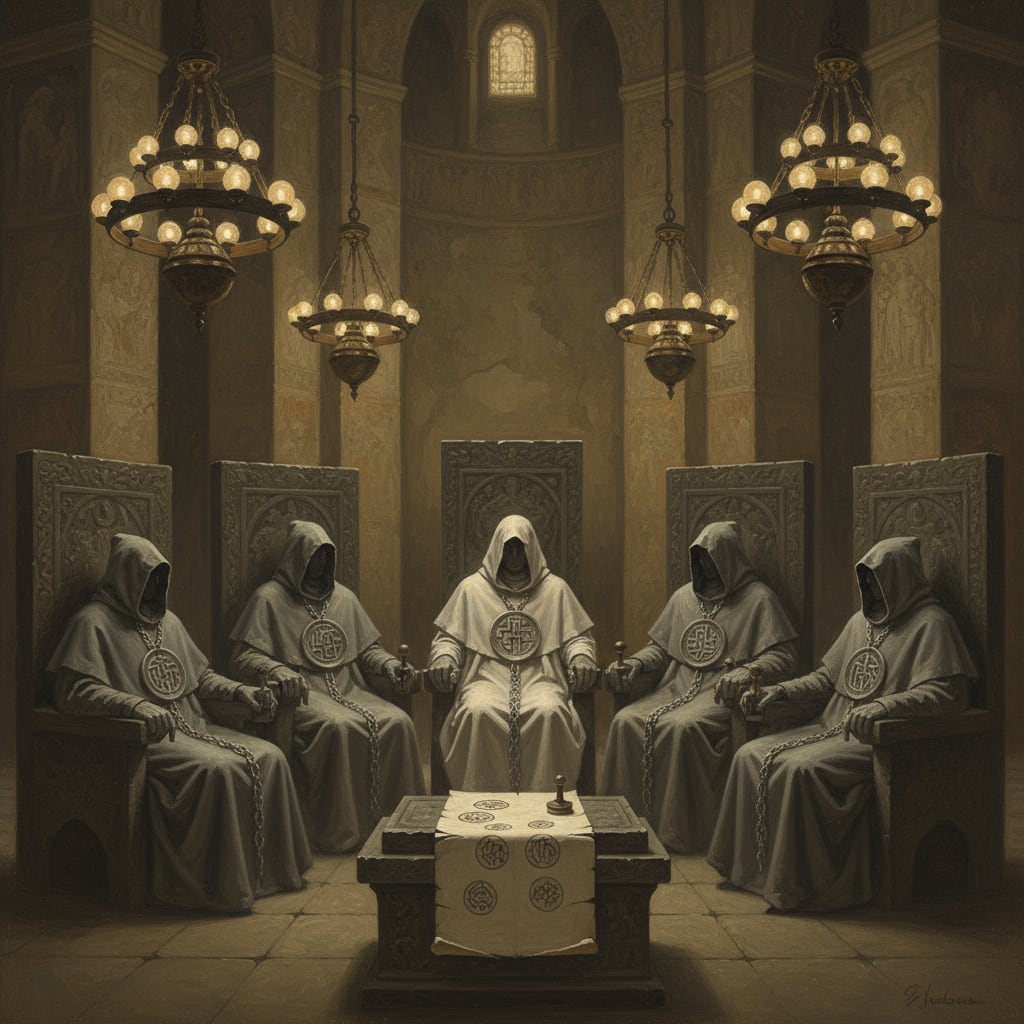
Seven Seals of Faith
Seven absolute sovereignties, each checking the others, which Kratz called something else entirely
The constitutional framework of the Bureaucratic Synod — seven domains of overlapping absolute authority, each assigned to one Hierarch, each cancelling the others into the only available direction forward, toward the Sagittal Line, where jurisdiction is settled by artillery.
Codex Ref. XIII.1.05-001
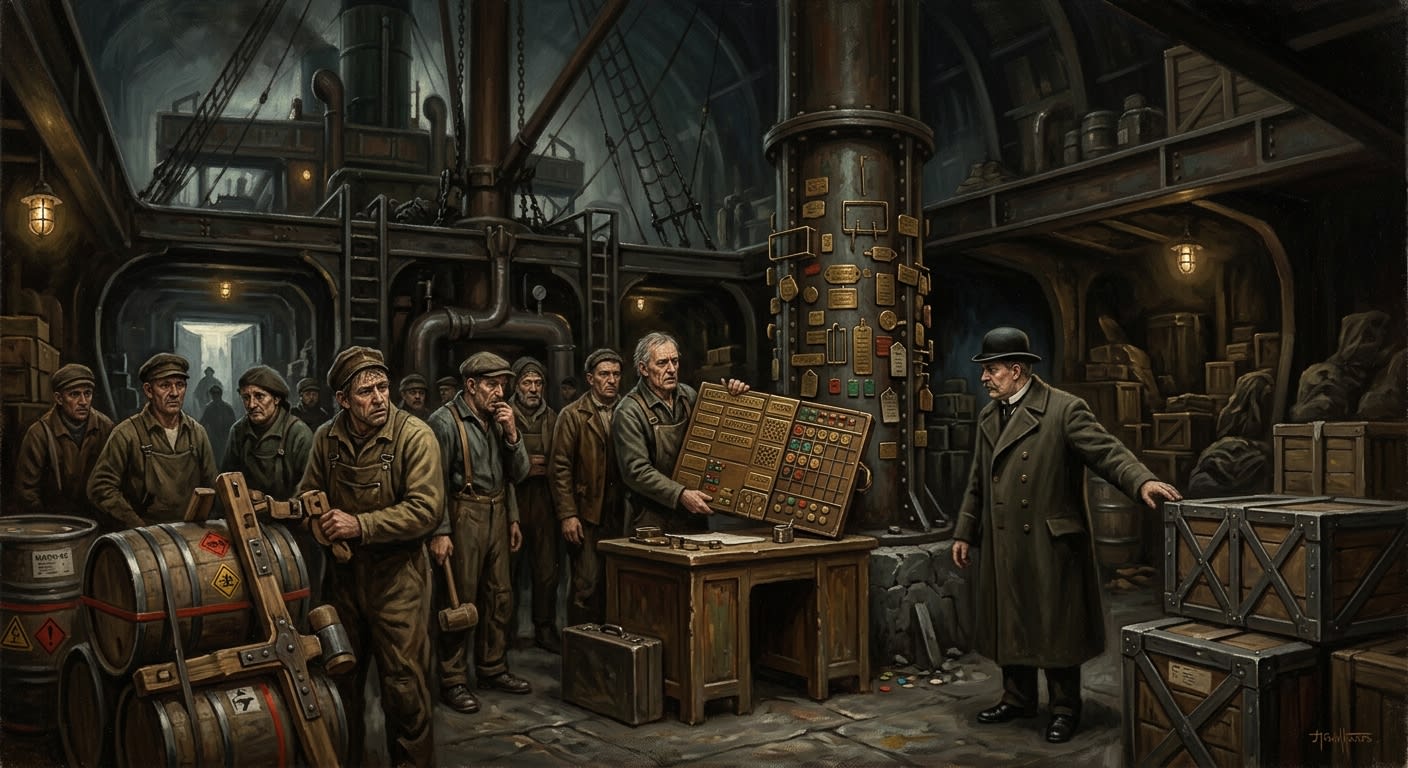
Stevedores' Compact
What the hold remembers, the manifest learns too late
Hamburg's Stevedores' Compact governs shipboard stowage, hold-order tokens, hazardous load bracing, and the right of senior holdmen to refuse death disguised as cargo discipline.
Codex Ref. XII.52.02-001
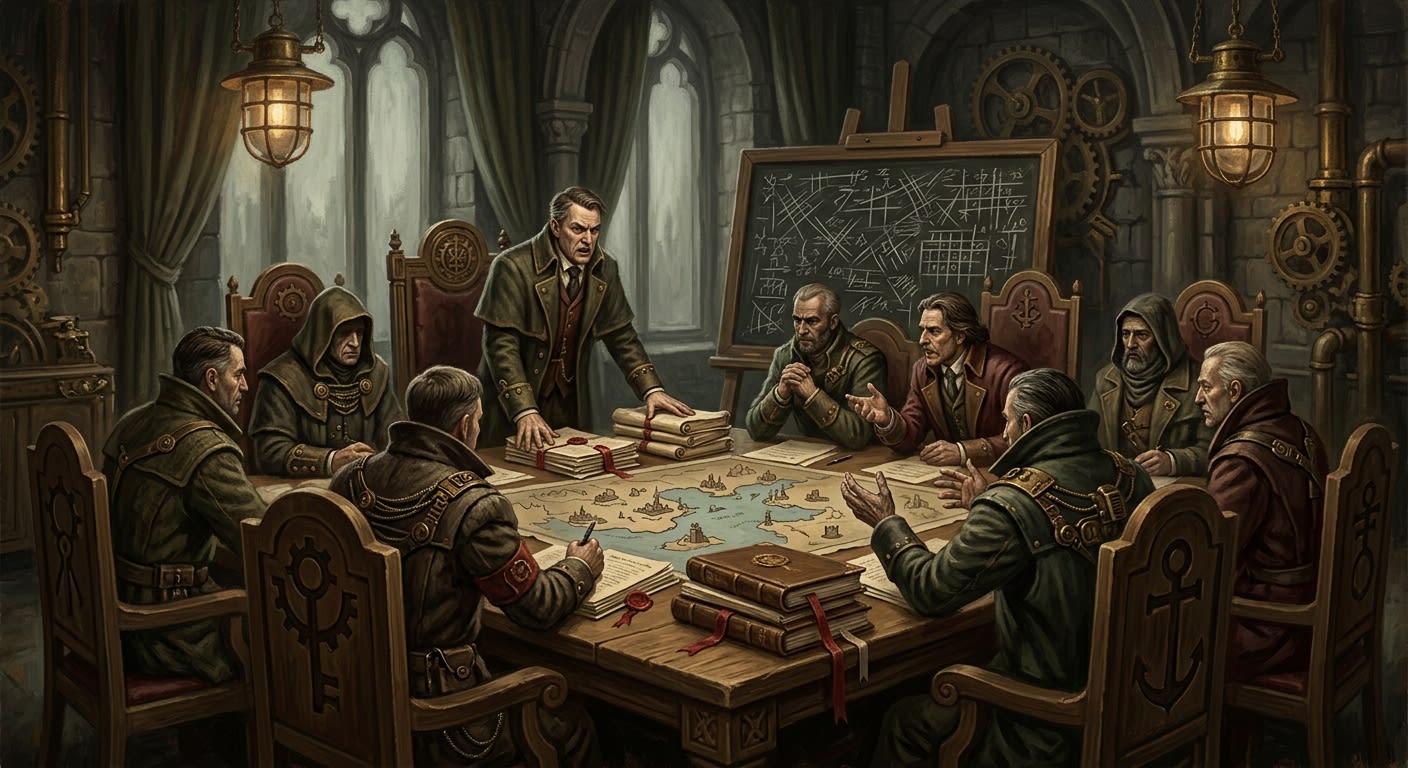
Table of Nine
The oak that refuses inspection and still moves ships
Britain's Table of Nine withholds its charters, argues before Aldric, commands ports and Wardens, and teaches Strasbourg the agony of useful illegibility.
Codex Ref. X.1.02-201
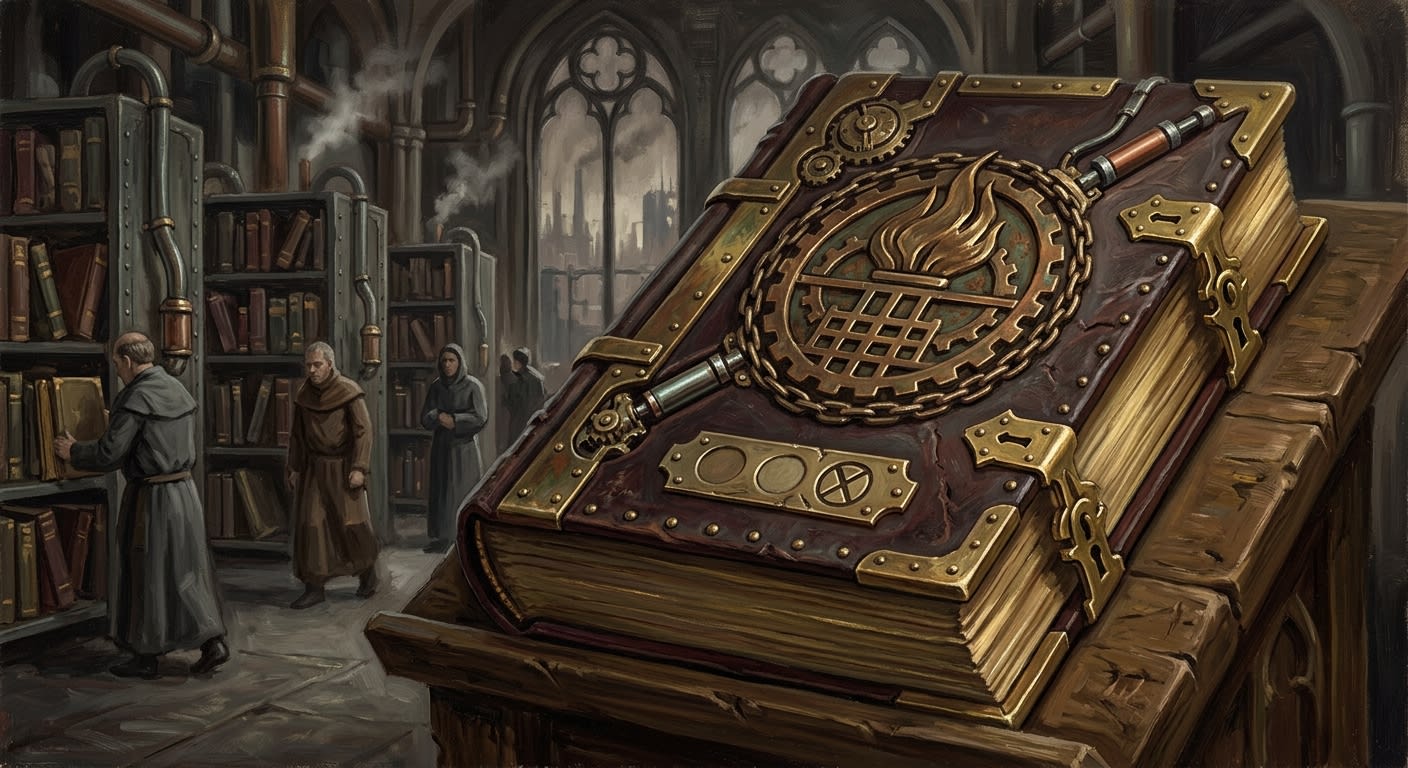
The Book of Promise
The child is named, measured, forecast, and gently confiscated
The Book of Promise is the Synod's vocational pre-allocation ledger, where baptism becomes forecast, childhood becomes collateral, and hope receives a quota mark.
Codex Ref. XIII.1.22-001
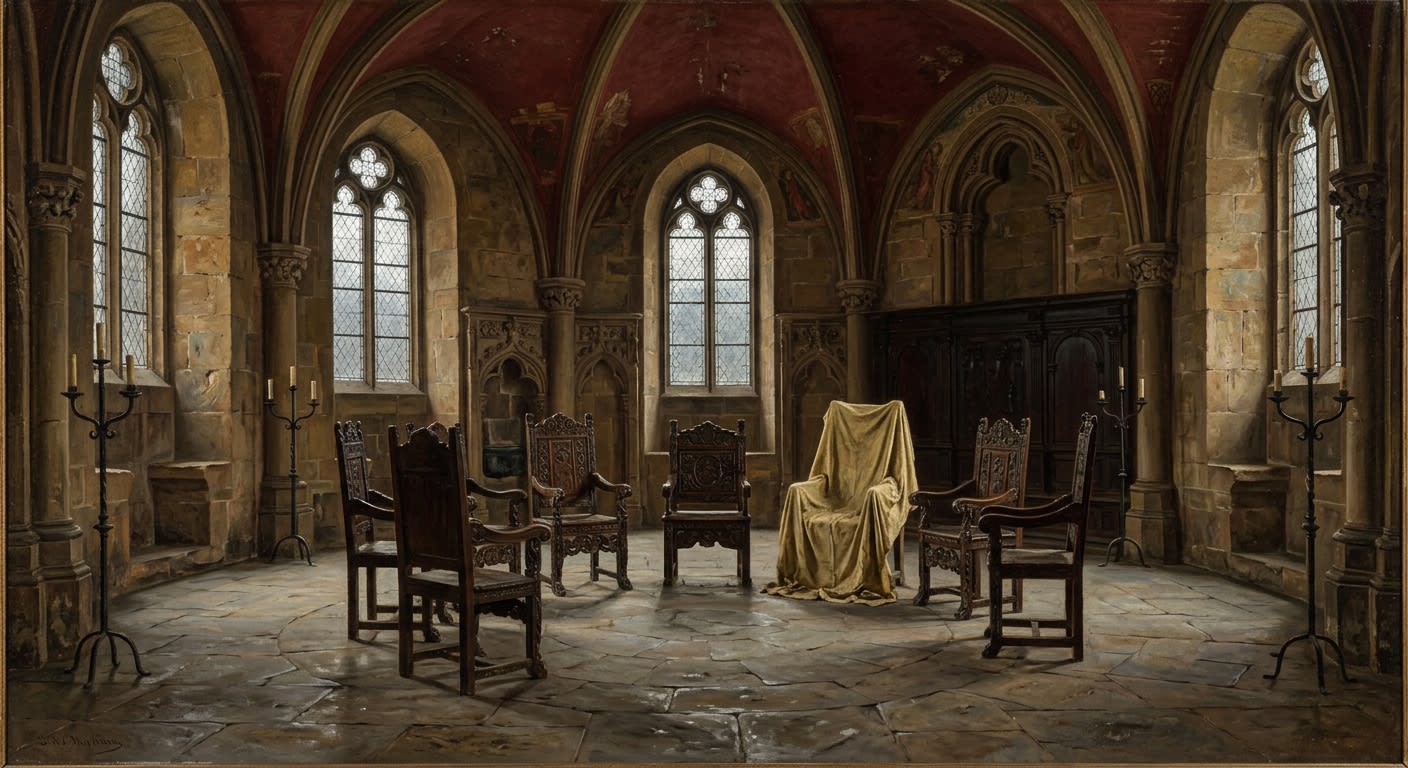
The Hierarchy of the Synod
Seven Seals, Six Occupants, and a Chair No One Has Laundered Since A.S. 107
Seven Seals. Six occupants. One chair draped in cloth no one has laundered since A.S. 107. The succession is continuous. The gaps are classified.
Codex Ref. VI.3.02-001
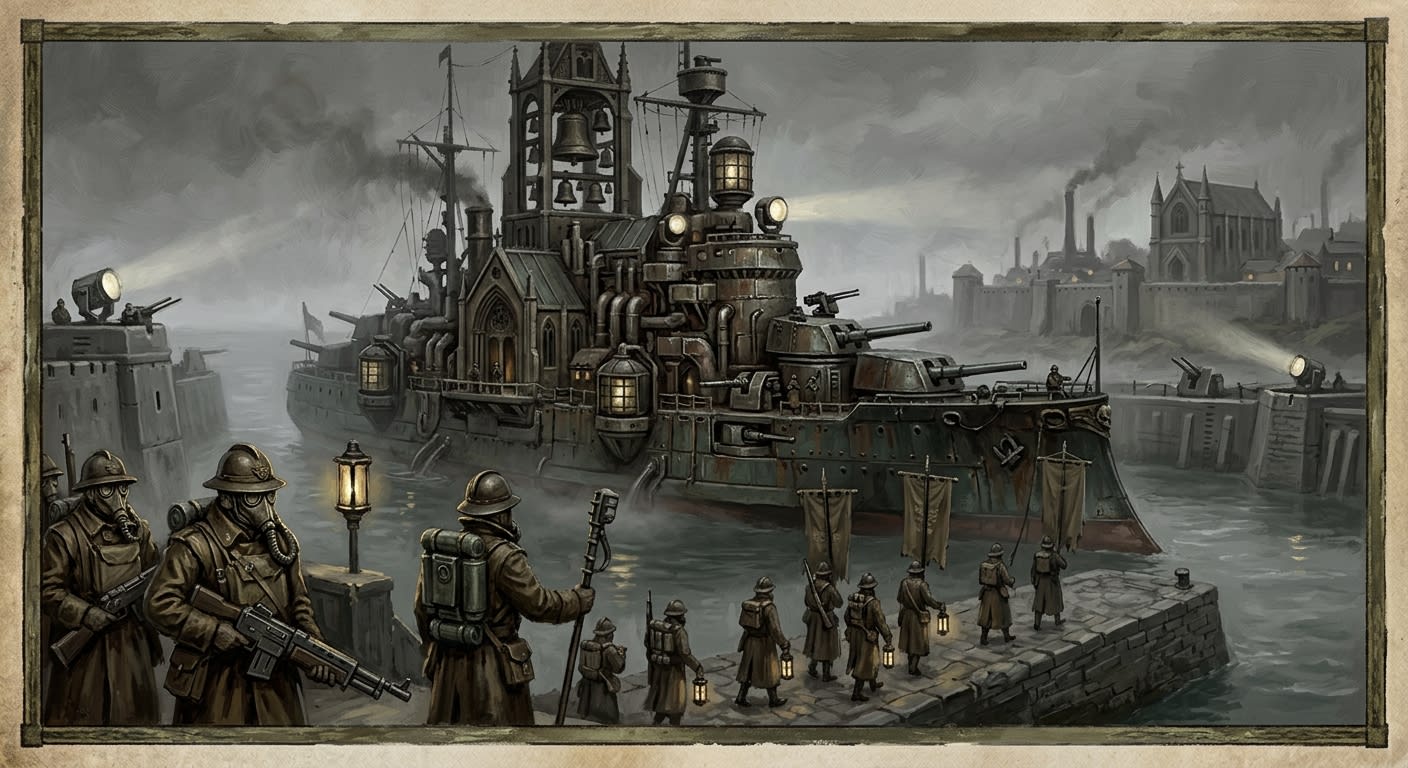
The Lantern Way
Britain's armed faith, ringing without permission and working without forms
Britain's Lantern Way is armed, parochial, naval, and intolerably effective: a faith of bells, Wardens, walling, chapel ships, and local vows.
Codex Ref. X.1.04-001
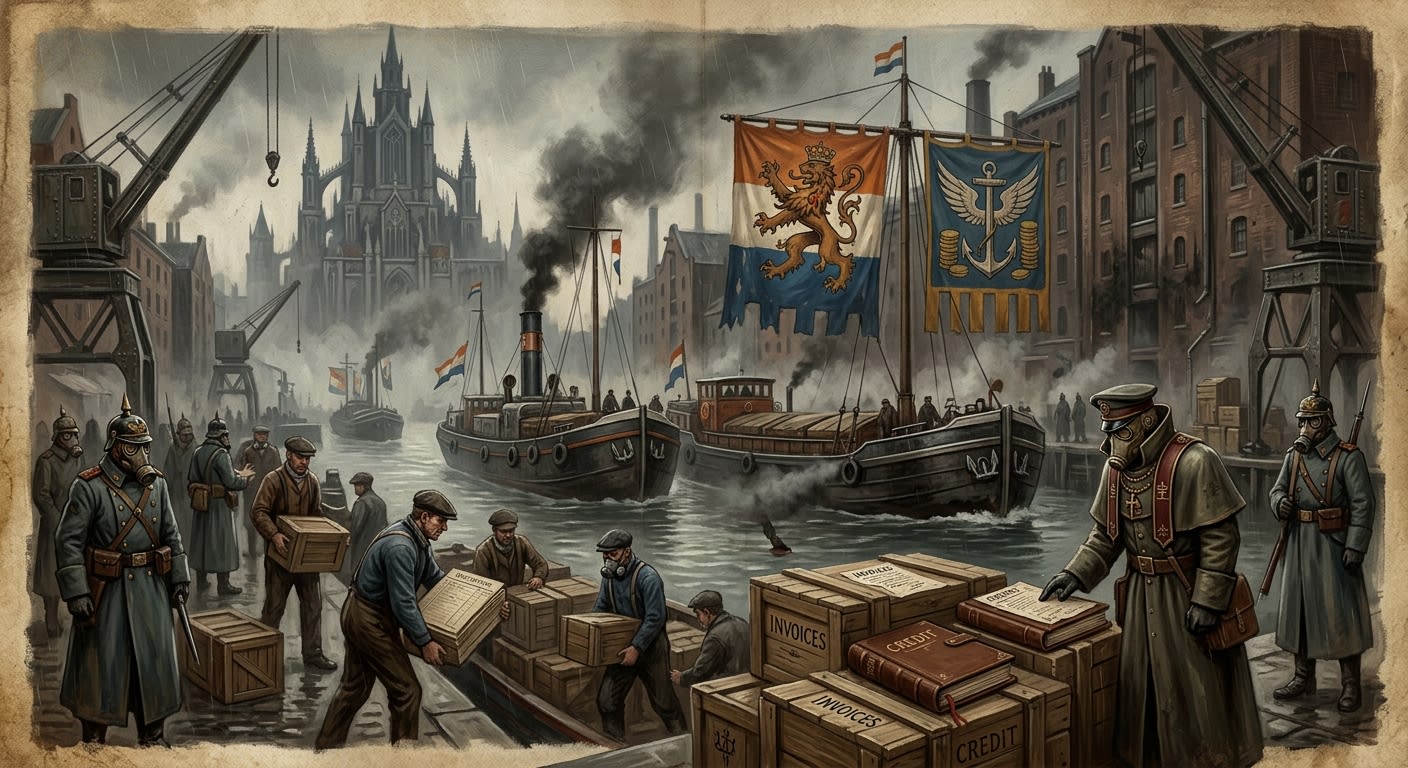
The Netherlands
The merchant republic that invoices our contempt
The Netherlands remain independent, solvent, suspect, and indispensable: a Dutch merchant republic whose ships, presses, credit, and invoices keep irritating the Synod into survival.
Codex Ref. X.1.02-001
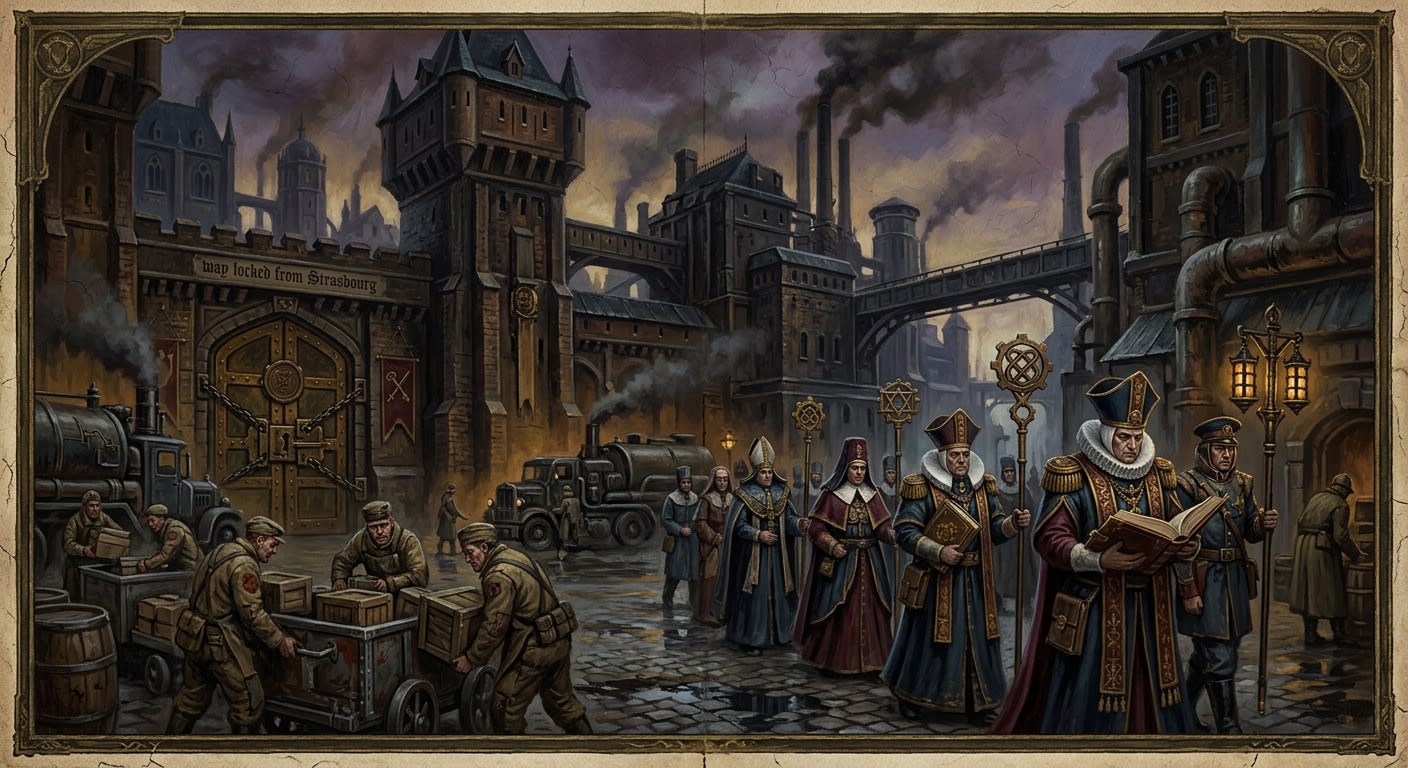
Triune Hearth
Three old bodies, one chimney, and Strasbourg holding the poker
The Triune Hearth binds France, Iberia, and the Rhineland into one Synodal household: warm in sermon, hungry in ledger, and locked from Strasbourg.
Codex Ref. XIII.1.04-090
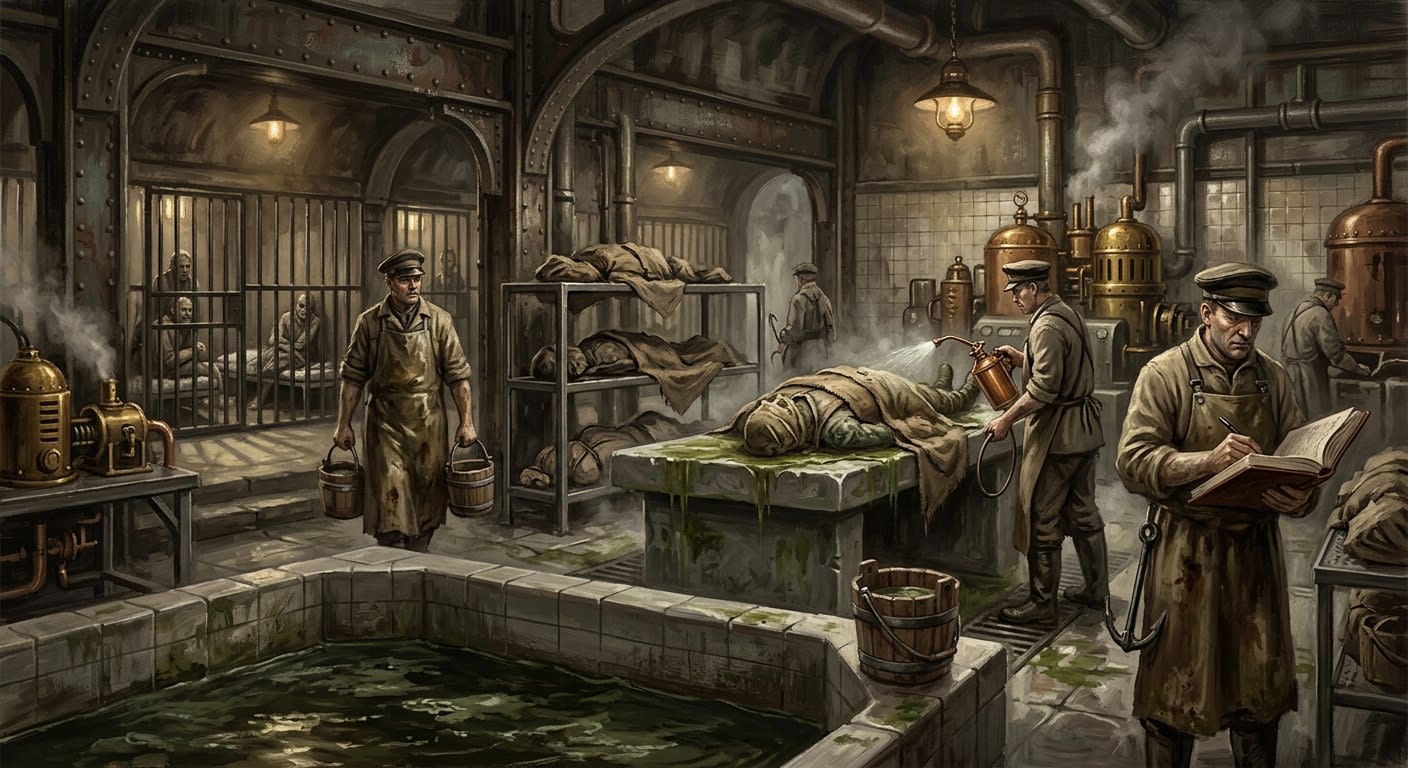
Undertide Pens
Where Calais dries the sea's handwriting and locks the alphabet in brine
The Undertide Pens are Calais's quarantine cellars: brine rooms, body slabs, object trays, and living chambers where returns from the sea are named, dried, and feared.
Codex Ref. II.4.09-071
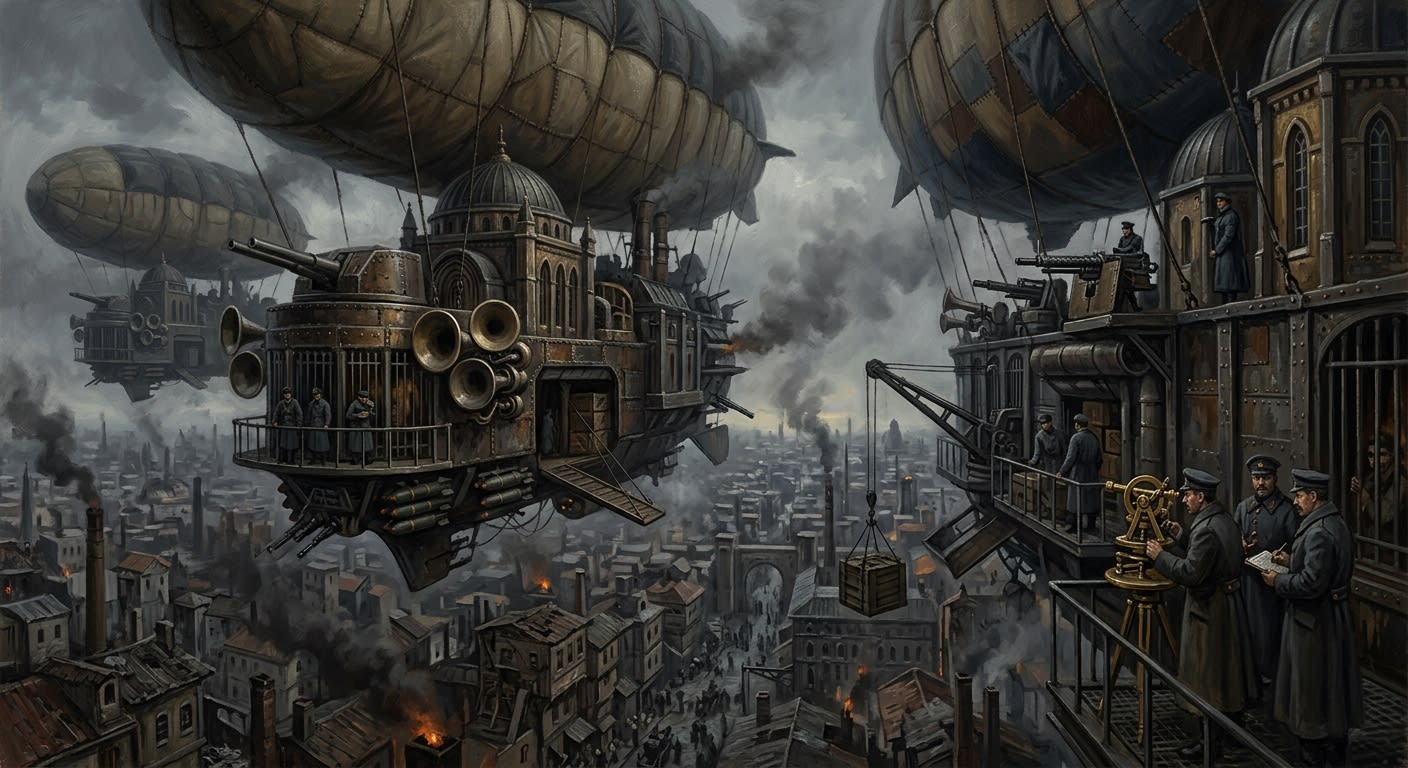
Vigil Arks
The sky hears because the Bureau bolted a chapel to it
Vigil Arks are armed reliquary-dirigibles: chapel, weapon, horn, census, and jurisdiction suspended above Constantinople by gas, relic permission, and fear.
Codex Ref. XIII.1.21-201
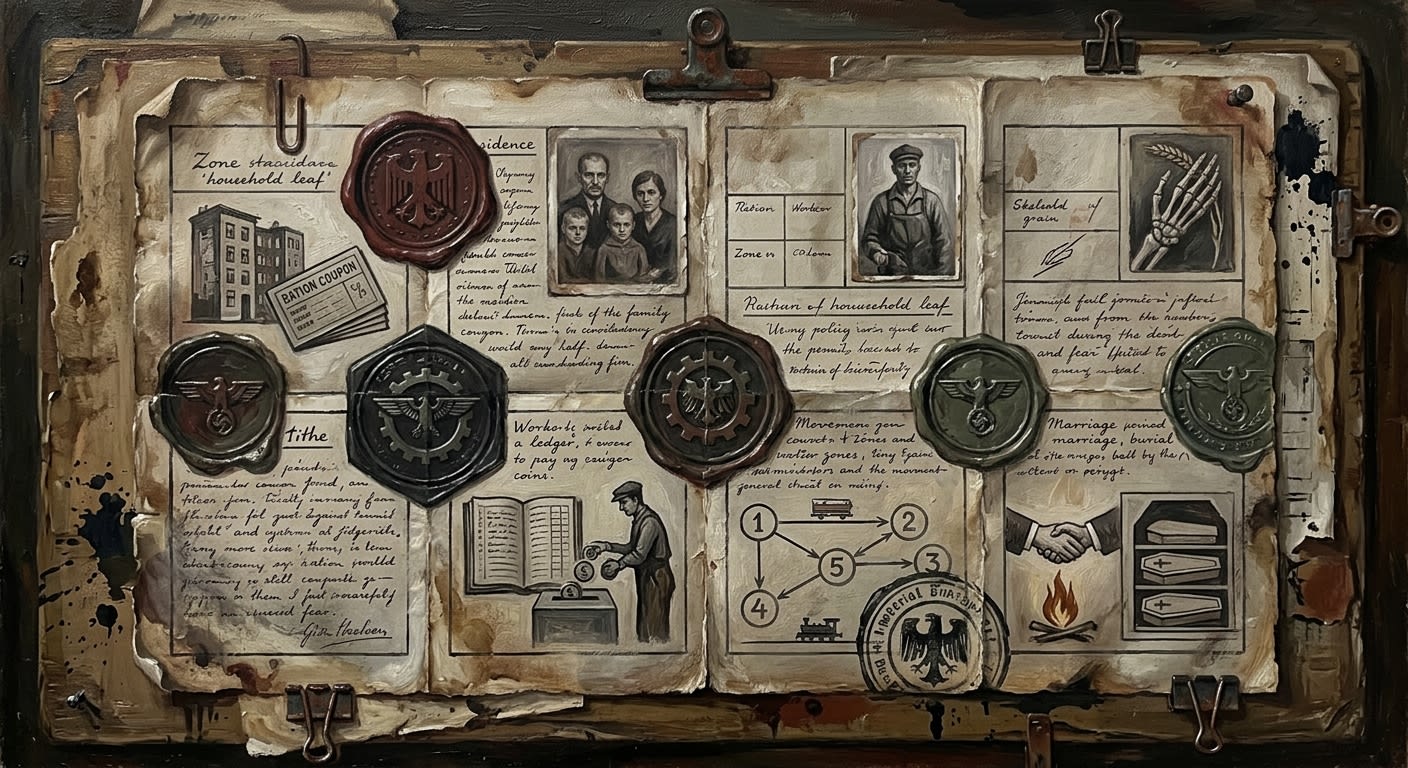
Zone Permit
The paper beneath the feet, and the shackle in the drawer
The Zone Permit is lawful standing made paper: residence, ration, tithe, movement, marriage, burial, and fear folded into one stamped household leaf.
Codex Ref. XIII.1.93-130