

Reverse Index
Referencing “Saint Margaux of the First Blood”
Every codex entry that links to Saint Margaux of the First Blood. 30 entries.
Return to Saint Margaux of the First Blood
Angers
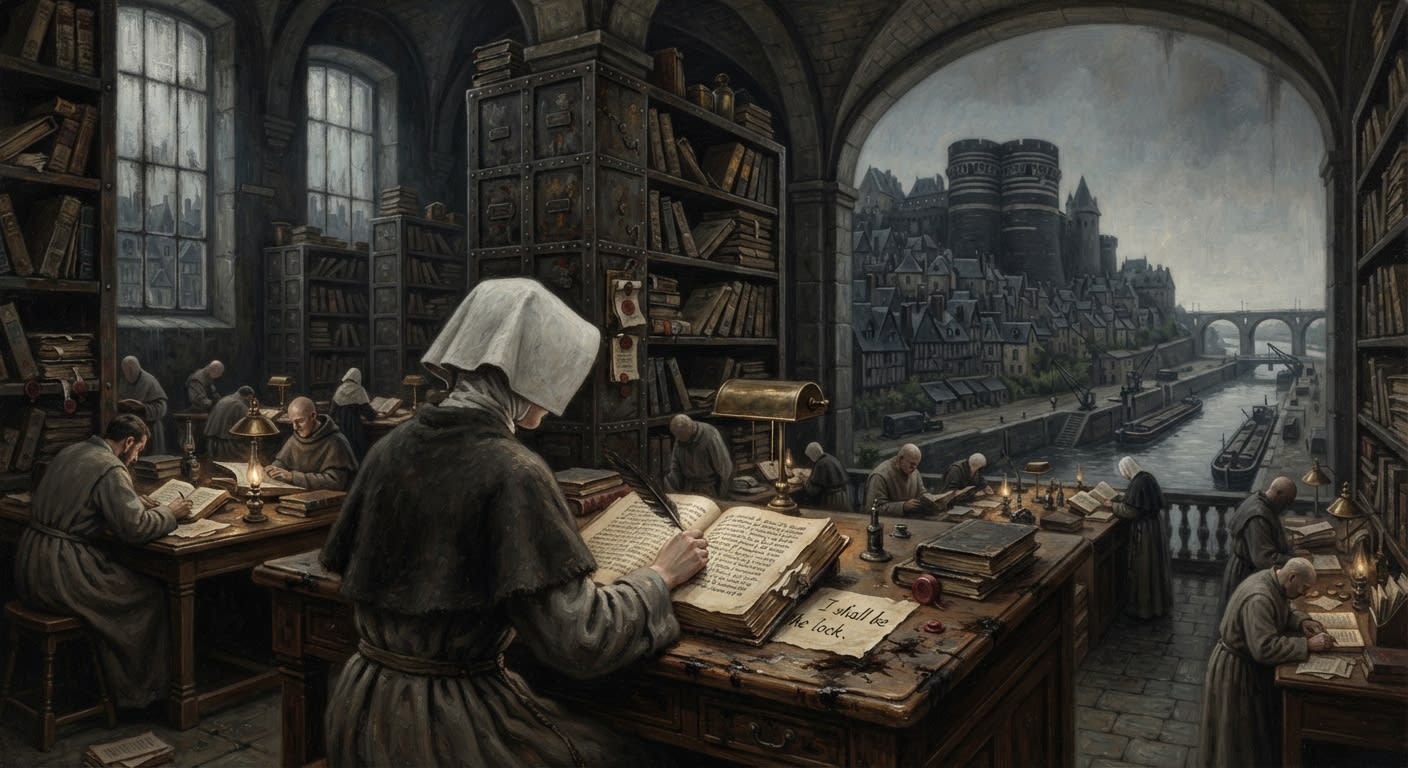
Five words, no bridge, and a city trying to found an order
Angers is a Zone One city whose claim on the Sisters of the Martyrdom rests on five psalter-margin words: I shall be the lock.
Codex Ref. II.1.09-015
Annual Remembrance of Saint-Malo
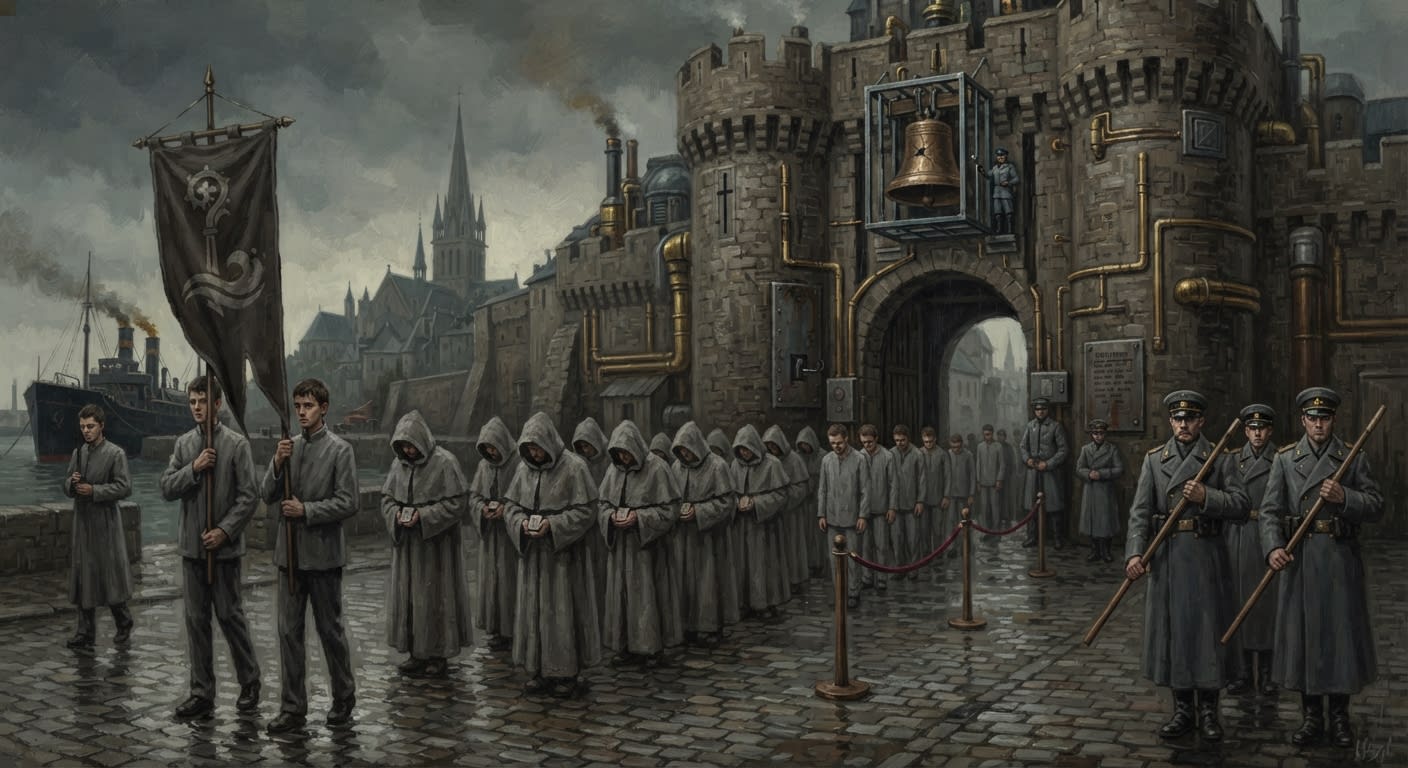
Thirty-one tolls, forty-three seconds, and grief under licence
The annual office that makes Saint-Malo's first blood toll thirty-one times, hold forty-three seconds of silence, and remind Brittany that grief is licensed.
Codex Ref. XIII.1.87-011
Antiphon of Safe Passage
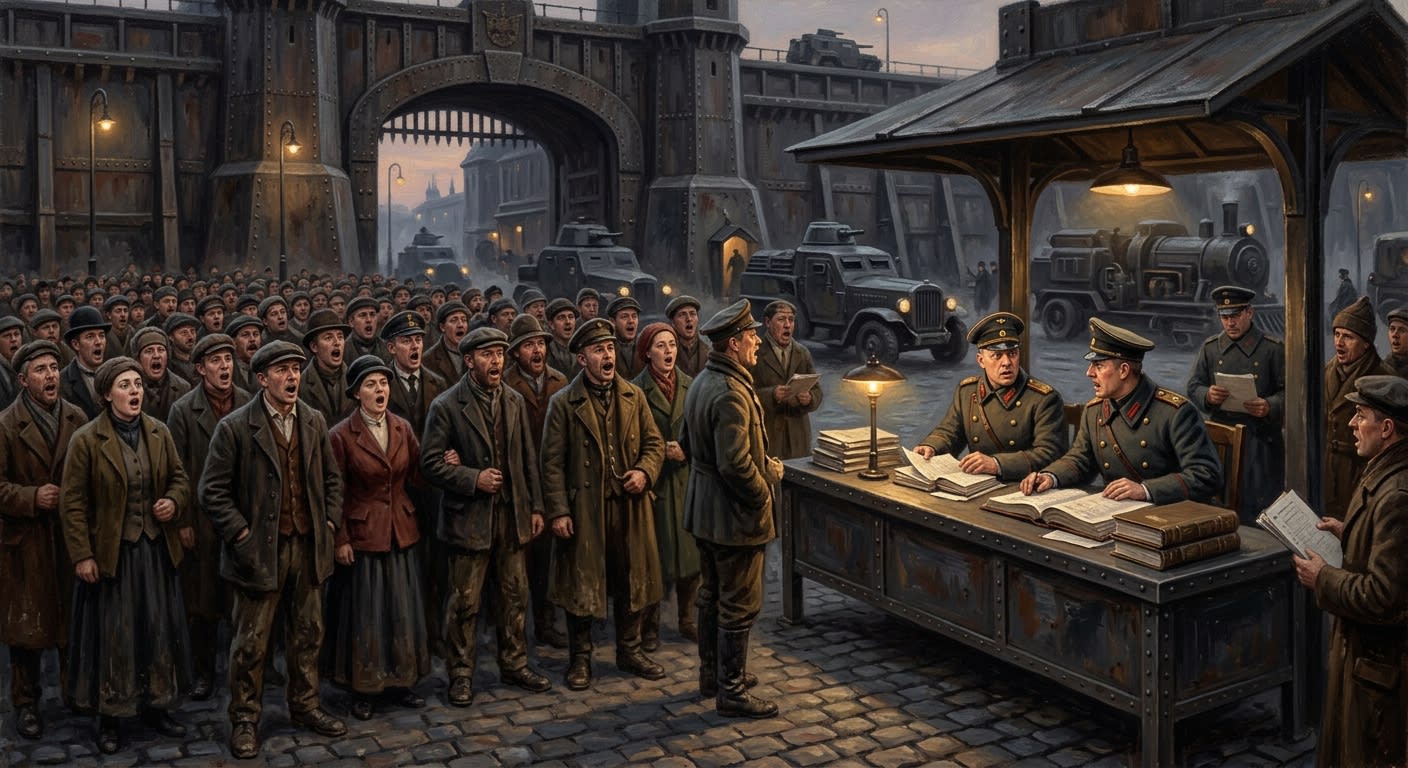
The road is holy; the queue remains under authority
A Breton road-song entered the Ledger through Saint-Malo blood, survived as licensed memory, and now frightens gate clerks by teaching crowds one rhythm.
Codex Ref. XIII.1.87-010
Bérénice
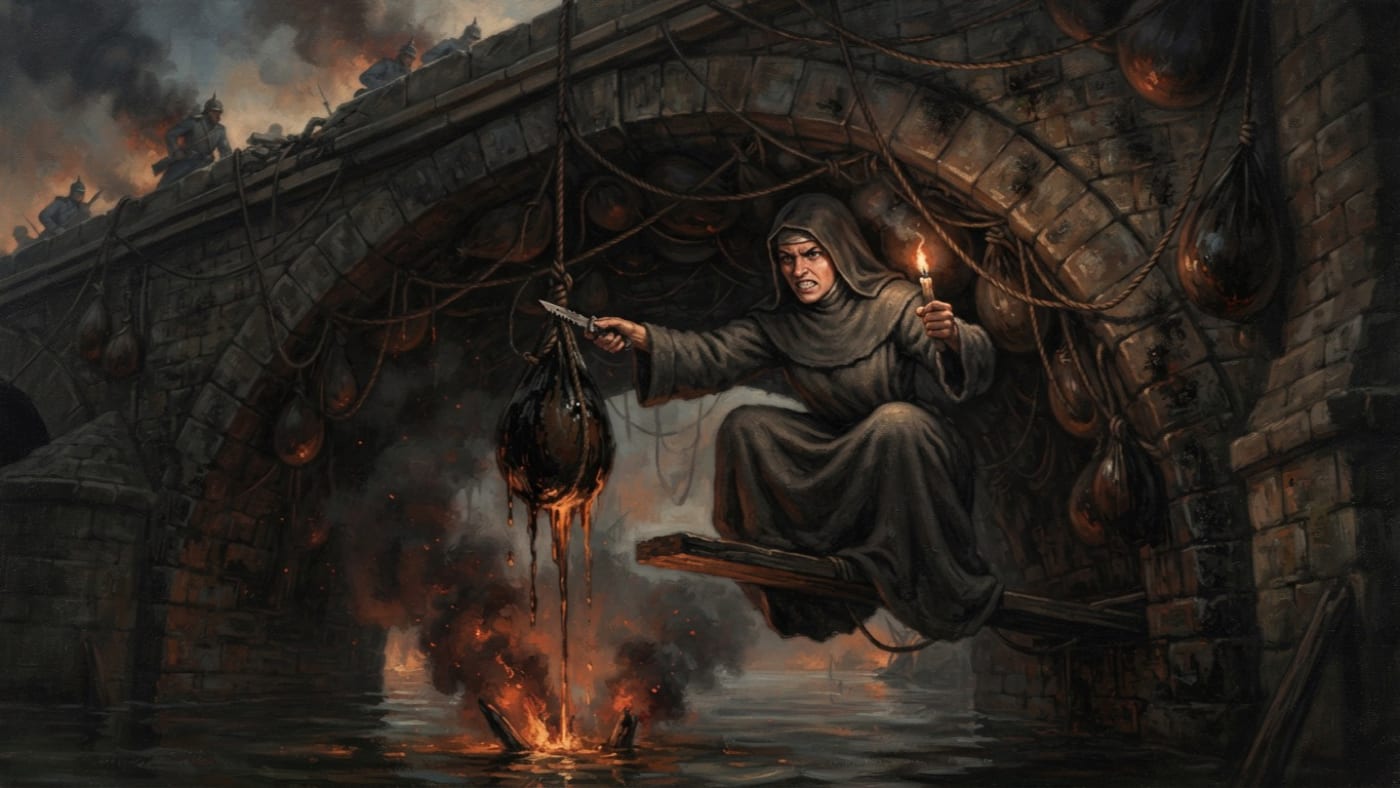
The fire has a name; the year has no entry
Bérénice is credited with firing the Châlons bridge from beneath its arch. The Ledger retains her deed, the masonry dispute, and an empty space where the year should be.
Codex Ref. III.2.01-245
Brittany
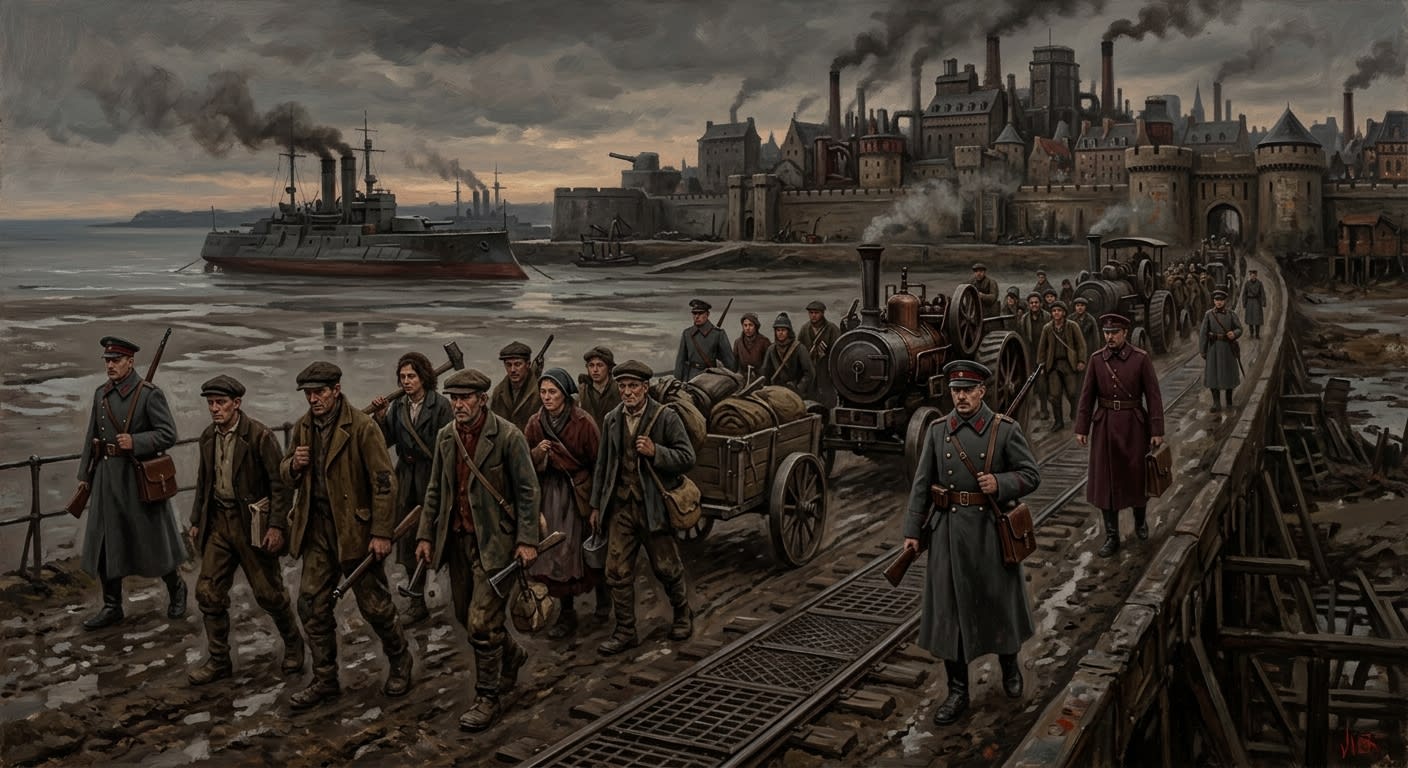
The province that taught martyrdom to travel by road
Brittany is the Synod's western salt-wound: a loyal province that turned Saint-Malo's blood, Dinan's road, and local stubbornness into taxable Doctrine.
Codex Ref. II.1.09-010

Calendar of Saints
Eternal saints, monthly amendments, and a clerk with glue
The Church's calendar of saints, feasts and fasts, held under the Seal of Martyrdom and revised by monthly amendment strips. Sanctity is permanent; the parish must keep its glue ready.
Codex Ref. XIII.1.05-002
Châlons
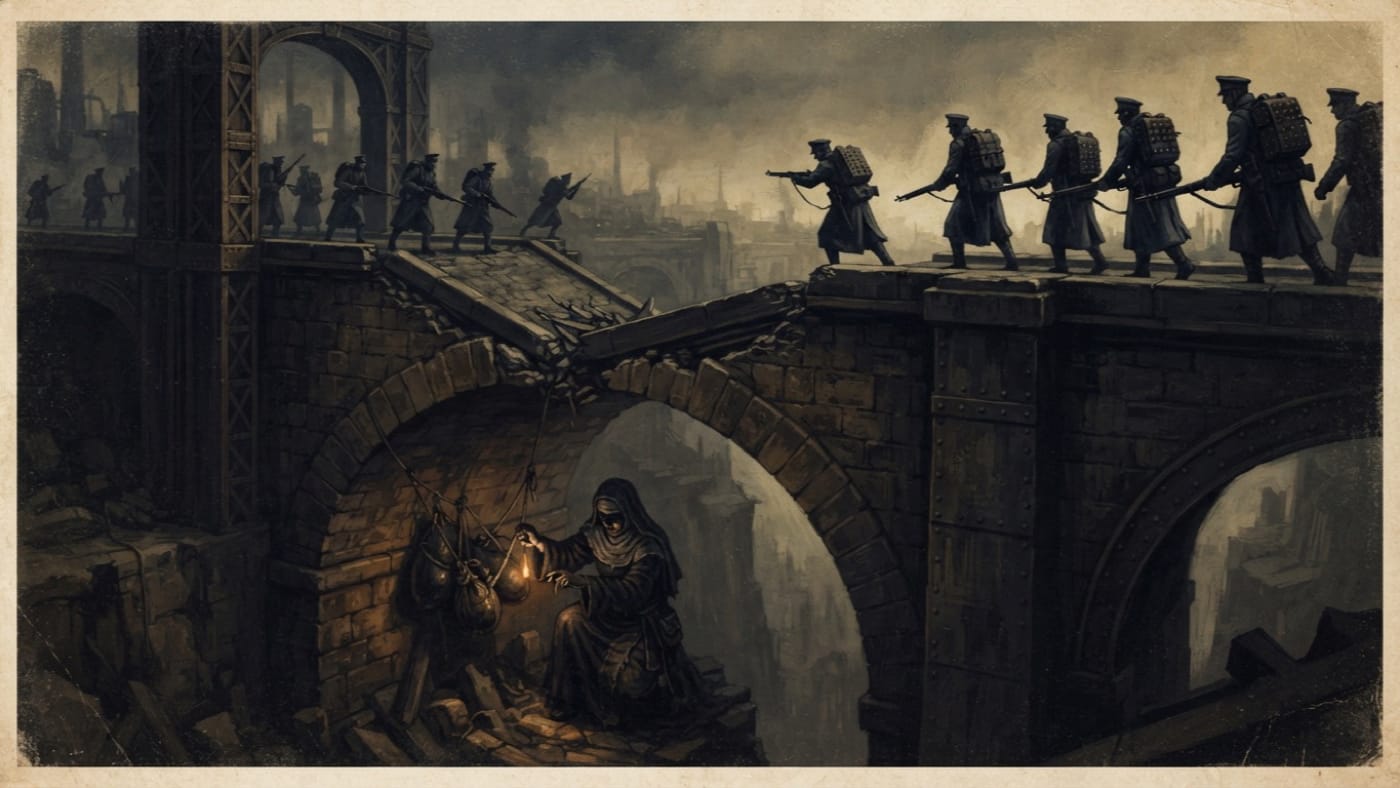
One crossing, one attributed fire, no year
Châlons survives in the Ledger as one unnamed crossing and an undated fire attributed to Bérénice. The river is missing; the masonry has three explanations.
Codex Ref. II.1.04-565
Chapel of the Tide
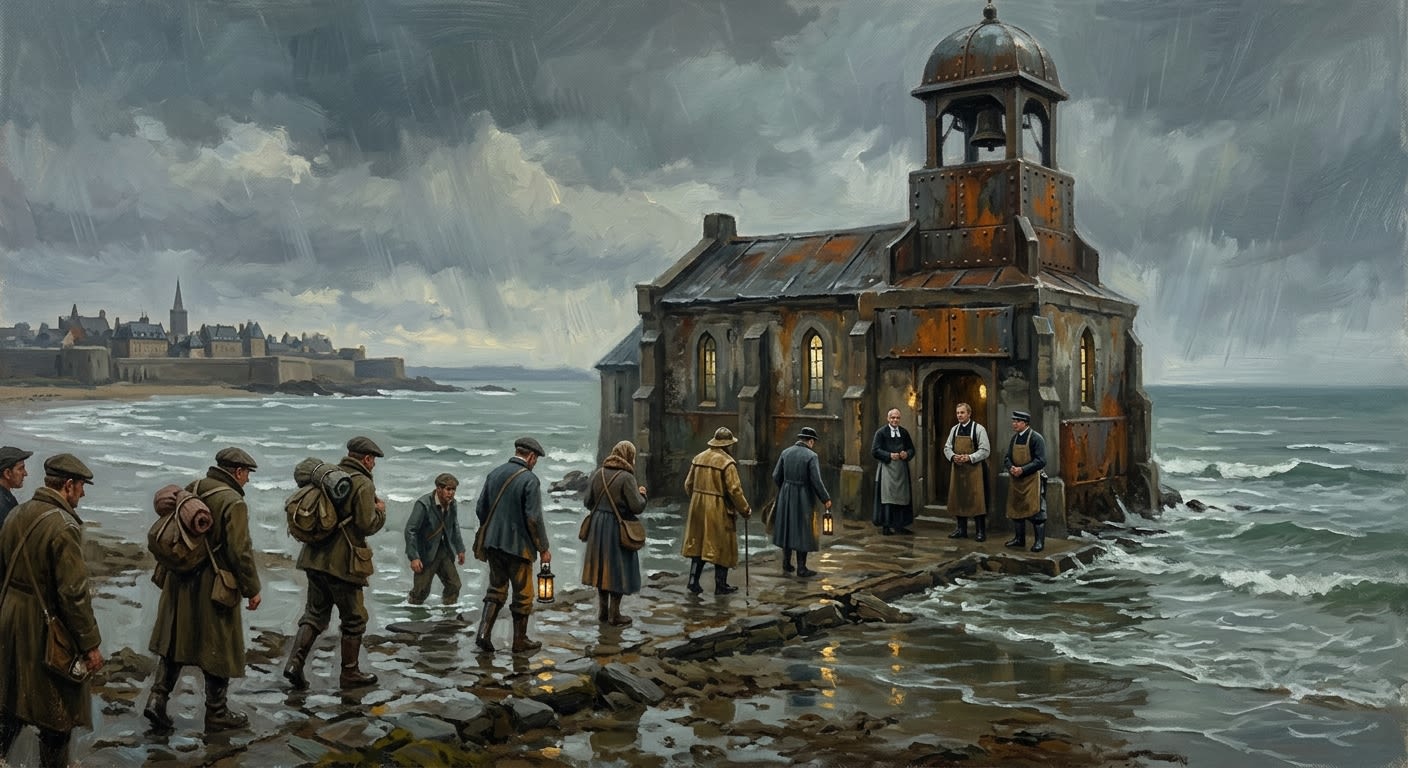
The shrine built from a journey denied
The Chapel of the Tide is Saint Clement's wet little shrine beyond Saint-Malo, made holy by forty-three pilgrims who were denied arrival and made profitable by everyone after.
Codex Ref. II.1.09-014
Clémence of Saint-Riquier
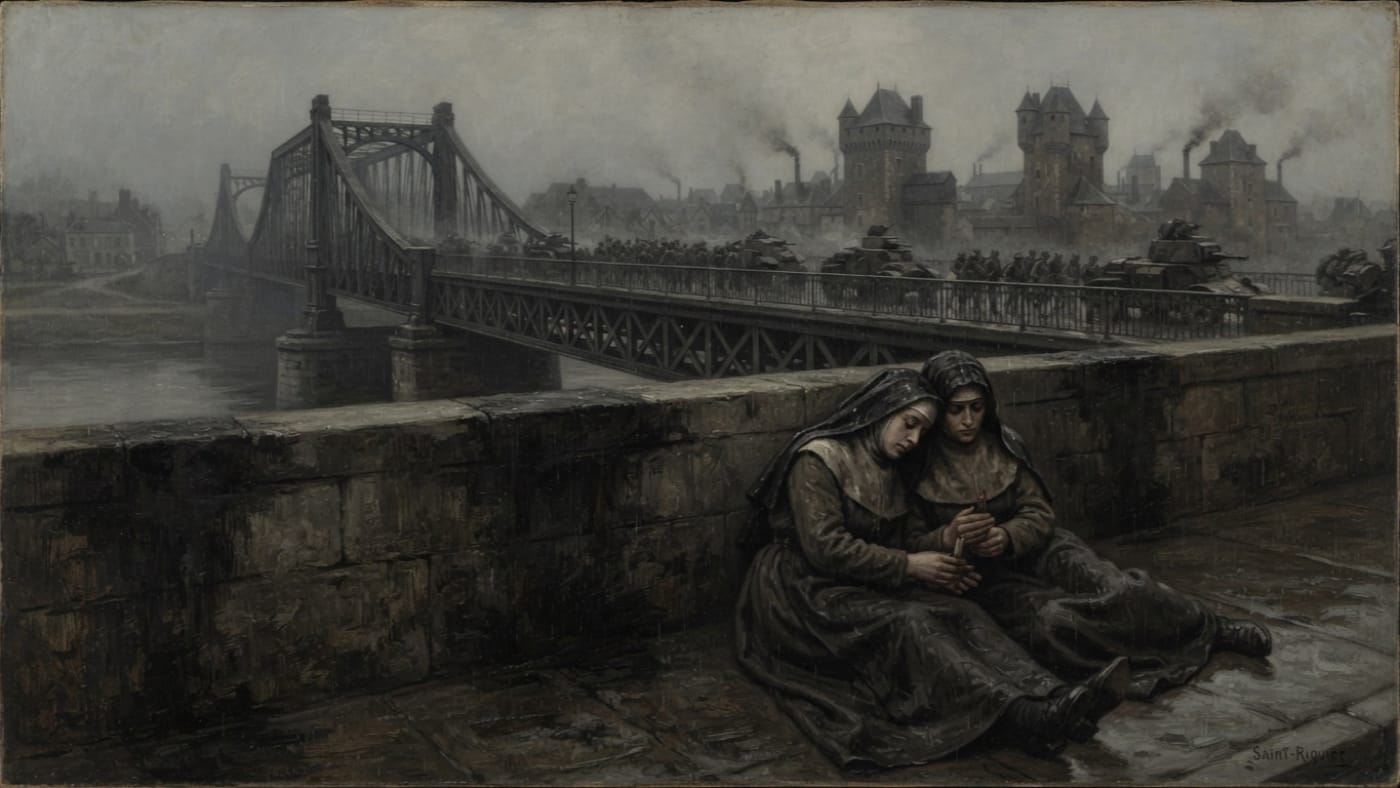
The wick was wet; the Ledger keeps the name
The A.S. 201 survey retains Clémence beside Ysabeau at Saint-Riquier: a wet wick, an open crossing, and two unburned bodies. A sacristan's bread account kept the names that embarrassed the devotional cycle.
Codex Ref. III.2.01-644

Corentin Madec
The fisherman who kept the book before Strasbourg learned to want it
Corentin Madec, wounded witness of Saint-Malo, preserved Margaux's psalter long enough for the Bureau to call acquisition devotion.
Codex Ref. III.2.01-017
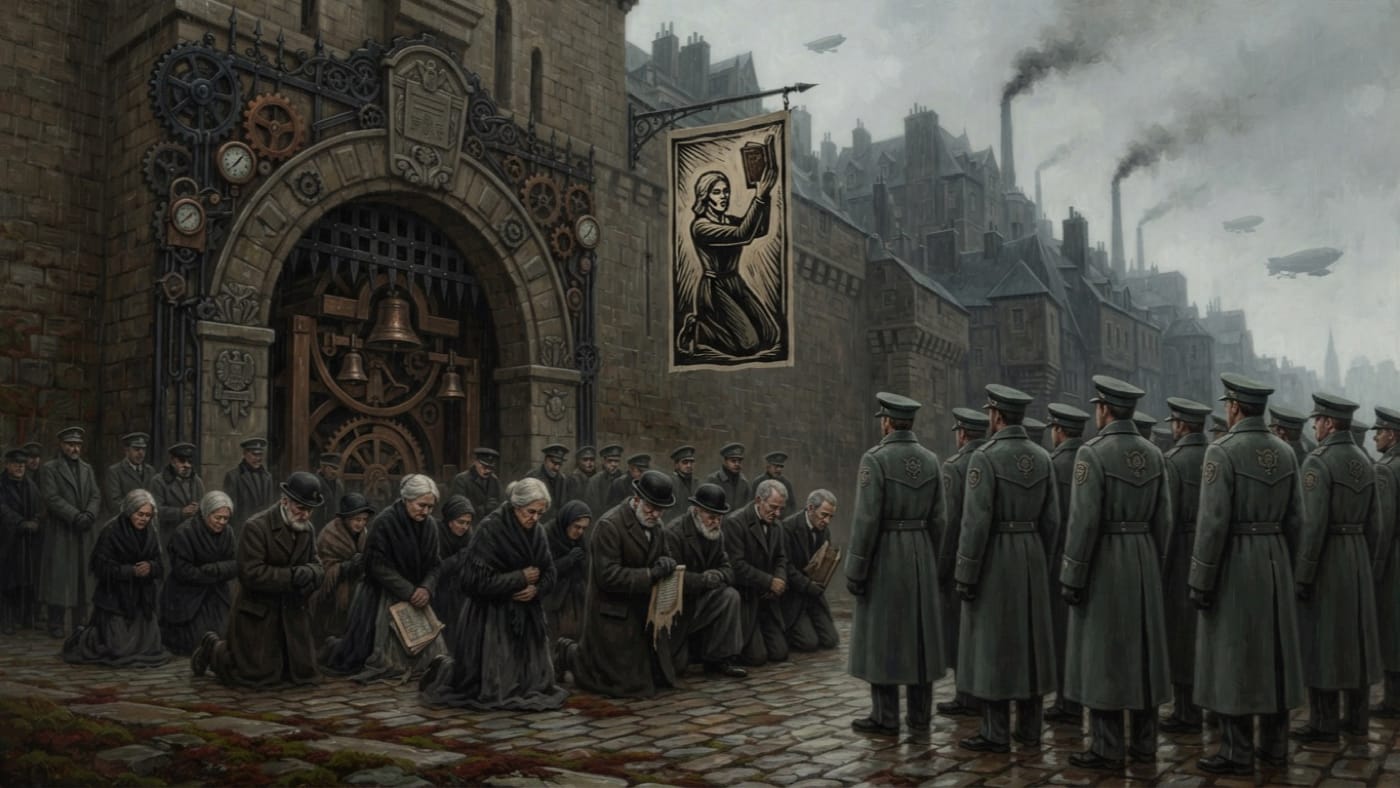
Day of the Thirty-One Names
Thirty-one tolls, forty-three seconds, and one face supplied by the printers
On 14 Corvus, Saint-Malo mourns thirty-one certified dead with thirty-one tolls and forty-three seconds of silence. The Church keeps the count, Strasbourg keeps the names, and Margaux supplies the face.
Codex Ref. XIII.1.87-031
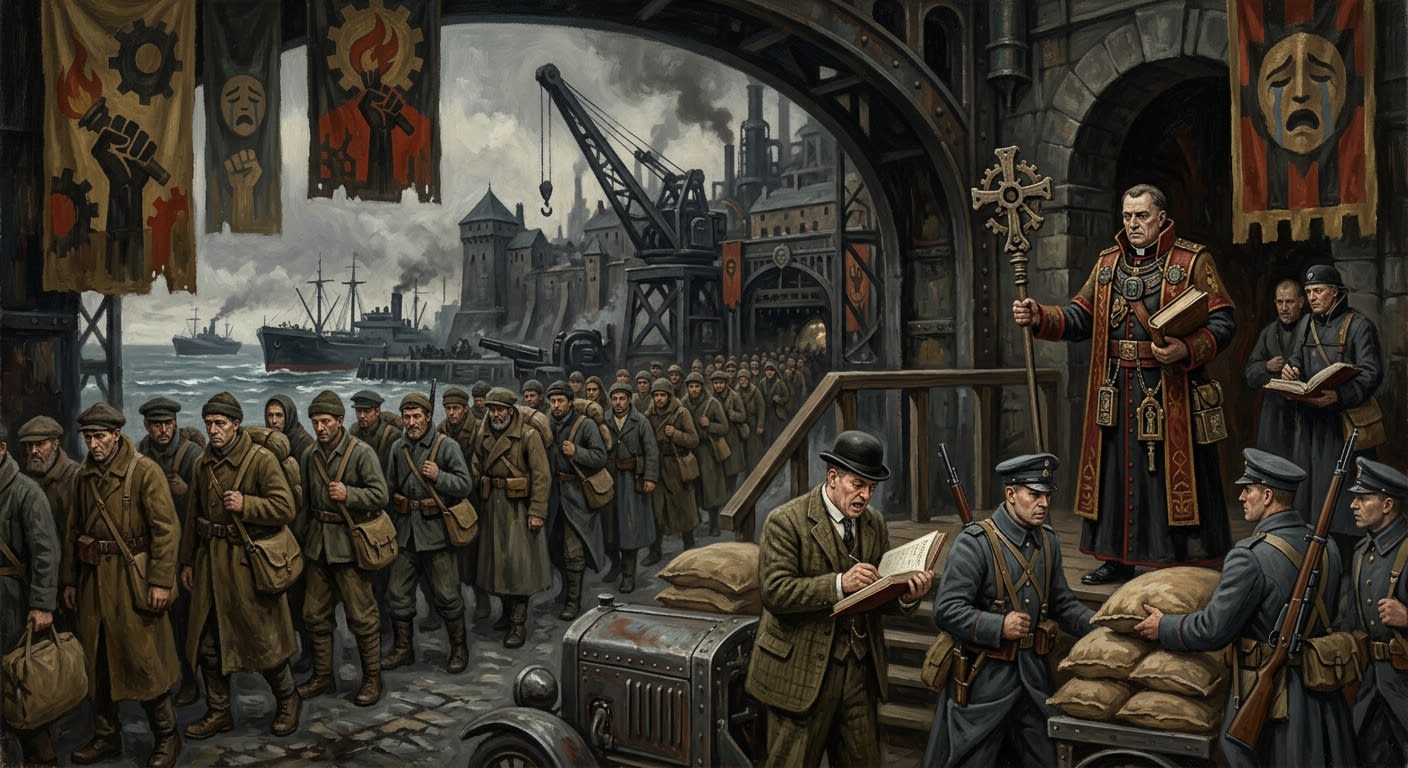
Dinan
The town that kept the departure
Dinan is the Breton departure town that sent forty-three pilgrims toward Saint-Malo and kept the bread, banners, names, quarrels, and profitable grief.
Codex Ref. II.1.09-010
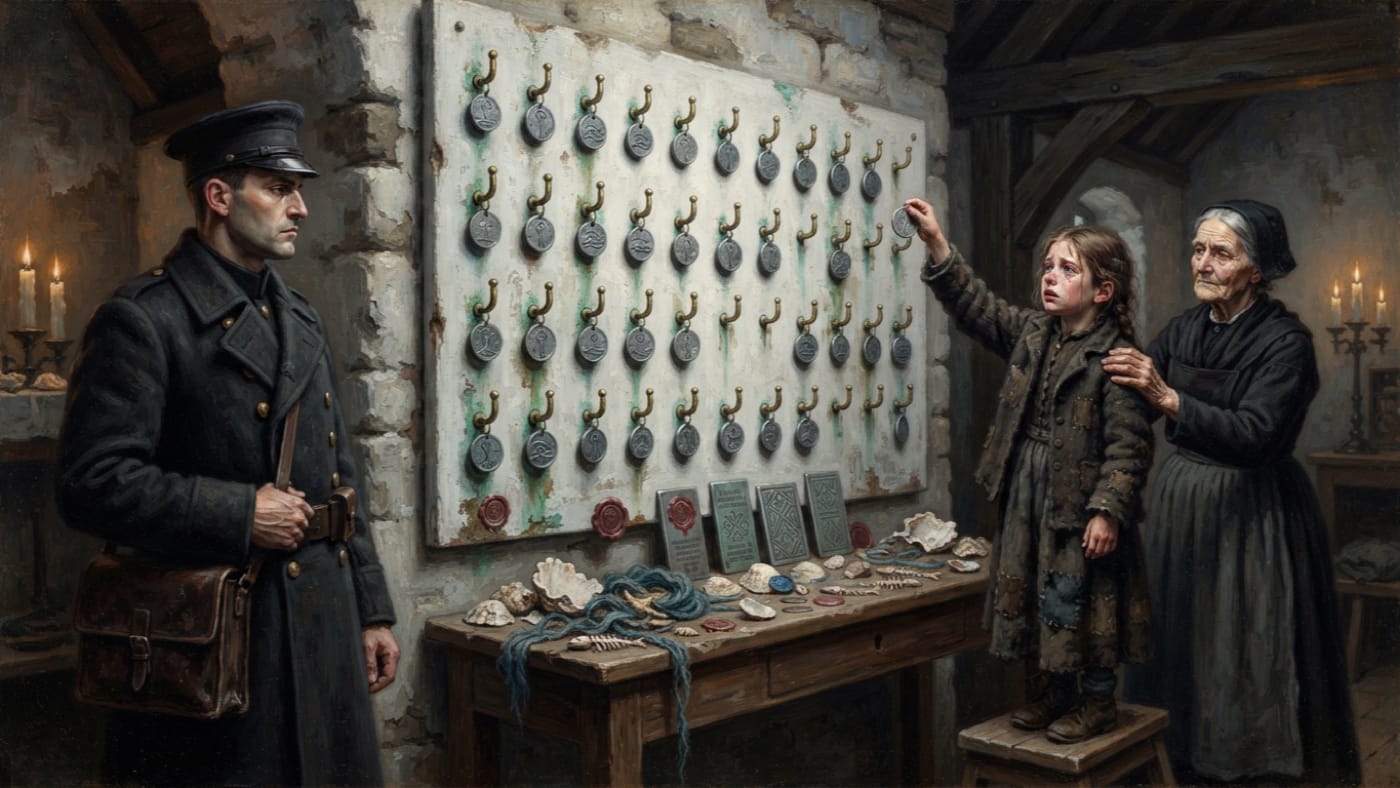
Empty Arrival
Forty-three hooks for the procession that never reached its saint
Forty-three hooks at Clement's chapel count everyone who set out from Dinan. The children hang the tokens each year; Doctrine keeps the destination denied.
Codex Ref. XIII.1.87-014
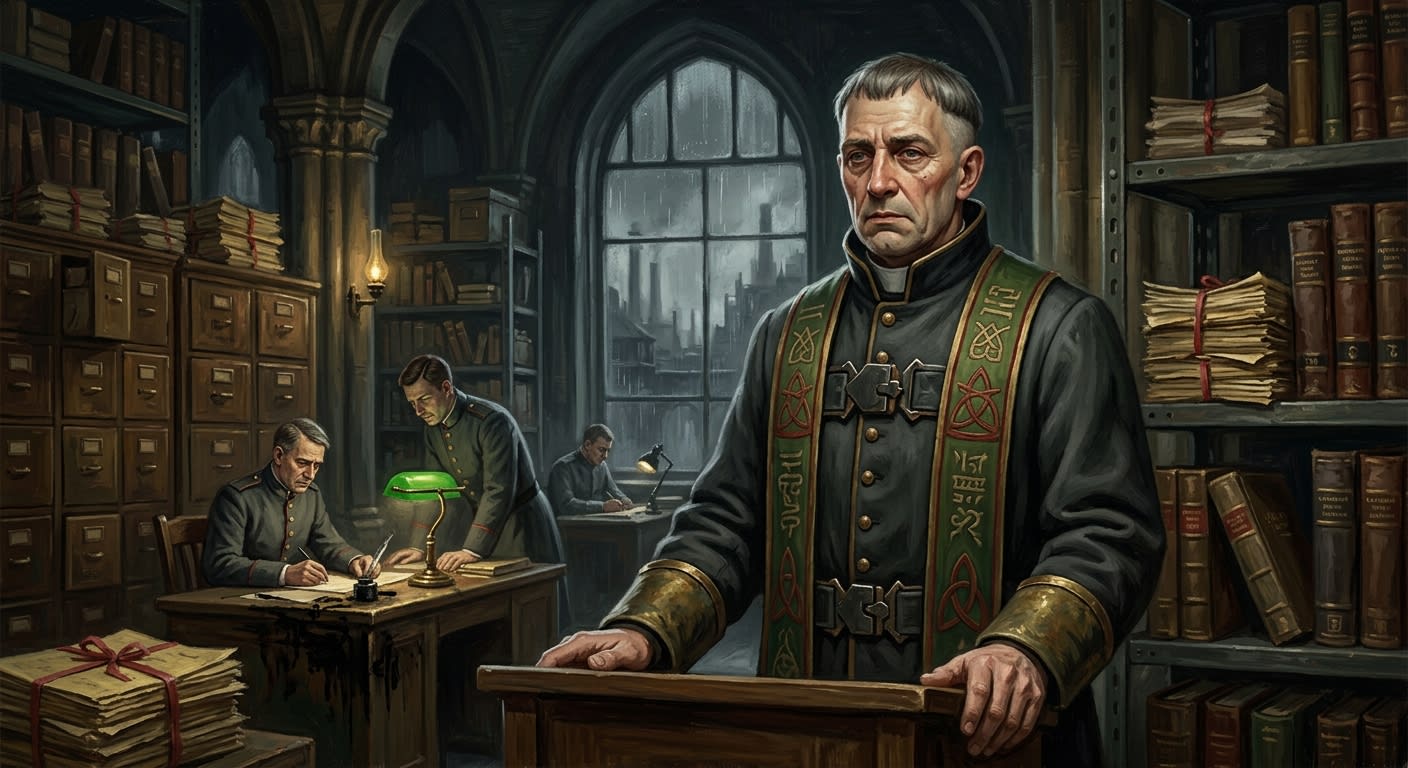
Father Gaël of Dinan
Four words, one reliquary, and the useful poverty of a man not yet sainted
Father Gaël of Dinan, first named dead of Saint-Malo, survives as four words of custody: brief enough for children, sharp enough for states.
Codex Ref. III.2.01-016
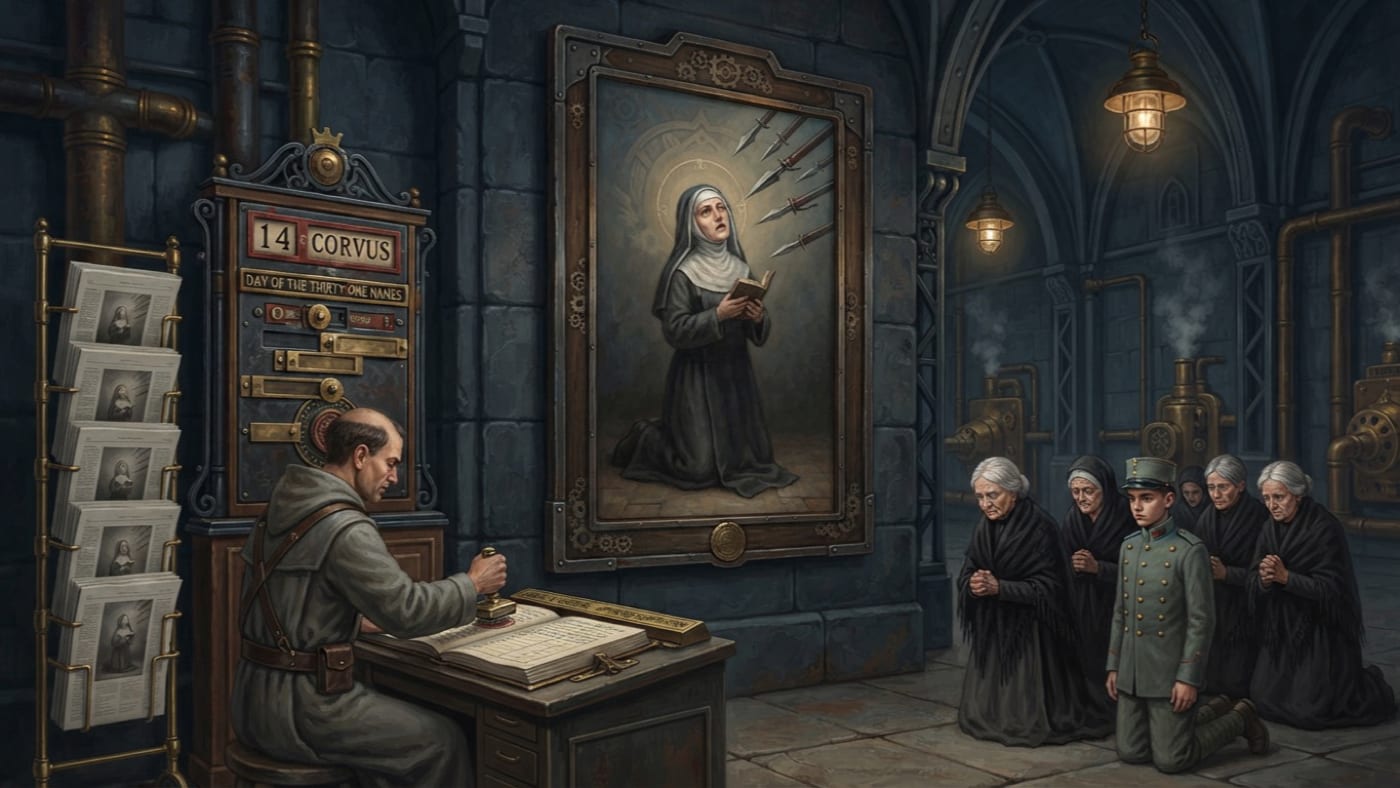
Feast of Saint Margaux
Thirty-one dead, one approved face
On 14 Corvus, Saint Margaux shares her feast with the Day of the Thirty-One Names. The grief belongs to the faithful; the face, the calendar and the uses belong to the Bureaus.
Codex Ref. XIII.1.87-014
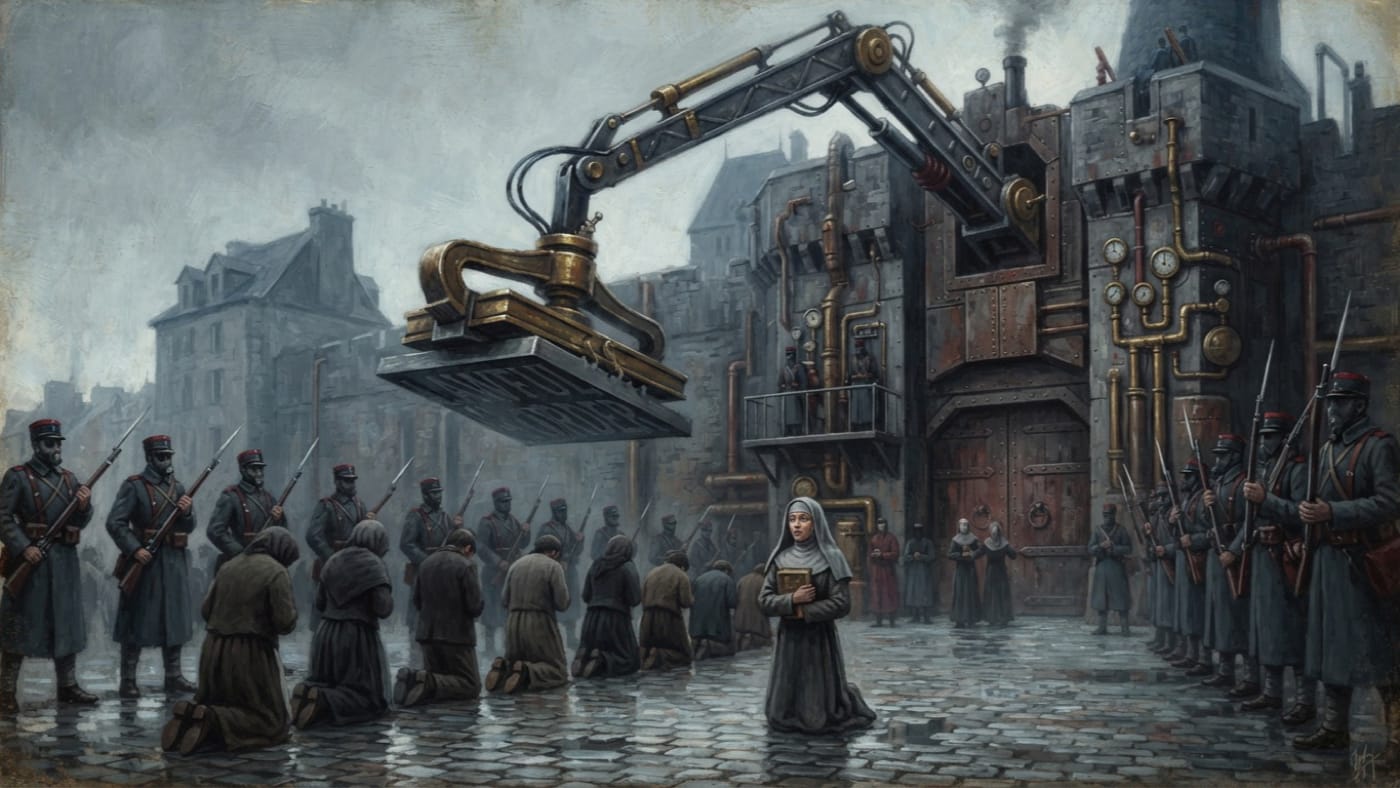
Gazette de la Raison
Four sentences against thirty-one dead
Four sentences made Saint-Malo's kneeling pilgrims vagrants and its bayonets lawful. The Gazette kept the magistrate's grammar; the Church kept the face of Saint Margaux.
Codex Ref. I.1.04-010
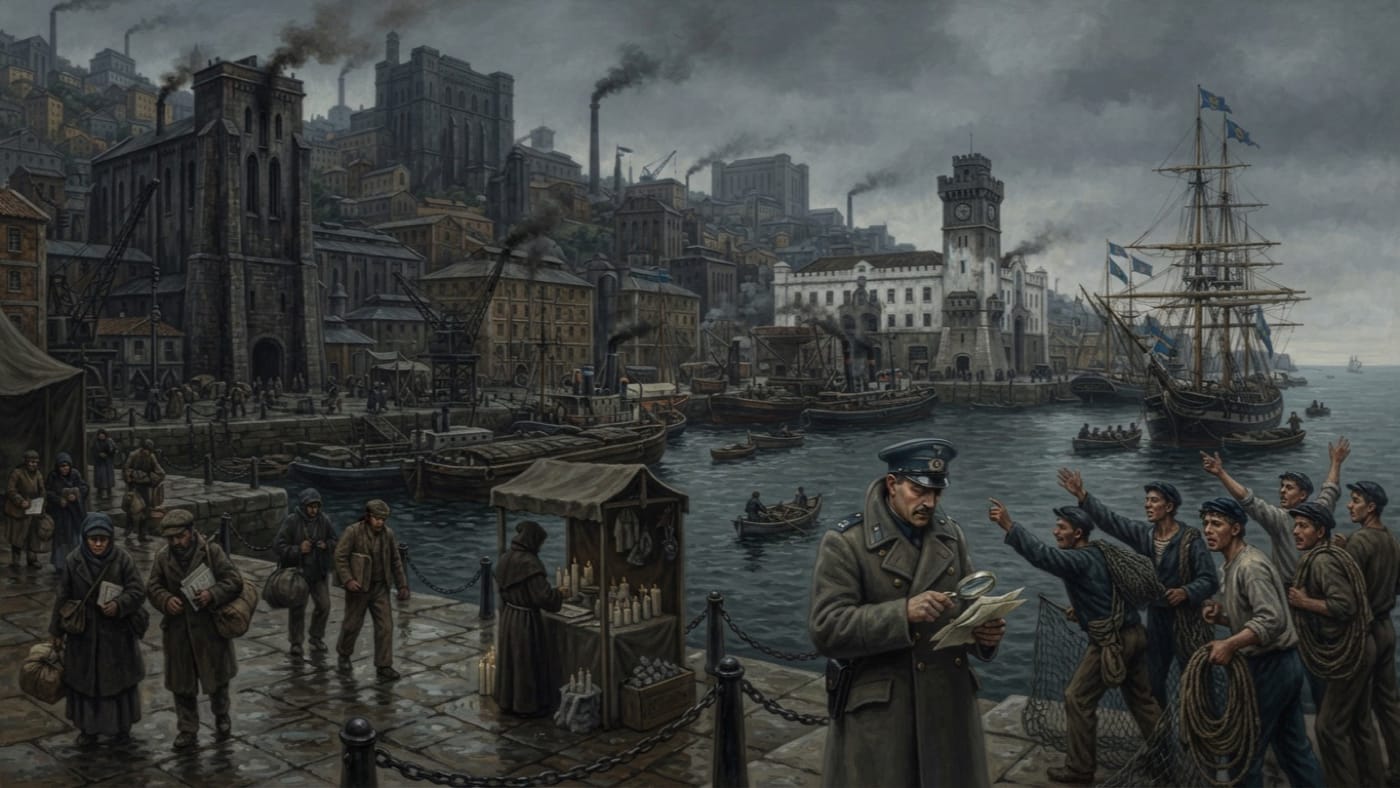
Lisbon
The harbour counts by contract
Lisbon sells sea candles, quake memory and licensed passage at the Atlantic mouth of the Tagus. Strasbourg counts its revenue; its sailors tell the catastrophe in the wrong order.
Codex Ref. II.4.09-201

Martyrology of Saint-Malo
Thirty-one names, forty-three seconds, and a civilization built from first blood
The Martyrology of Saint-Malo counts thirty-one dead, five absences, and every obedience the Synod has purchased with their blood.
Codex Ref. VII.8.02-001
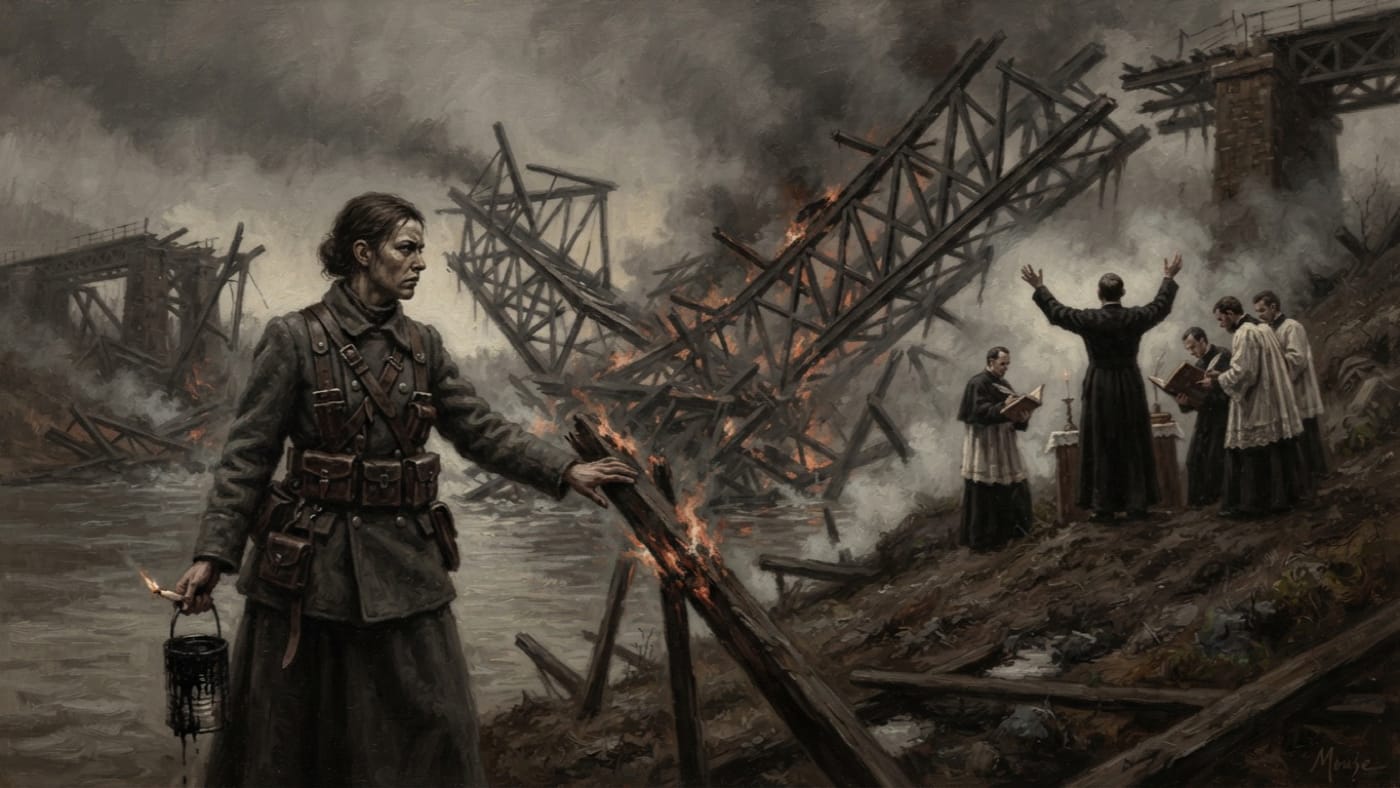
Maud of Saint-Riquier
The bridge fell; the query is still standing
In A.S. 16, Maud used axle grease after a chaplain refused to bless it. The bridge fell. His doctrinal query remains unanswered; her fate remains unrecorded.
Codex Ref. III.2.01-016
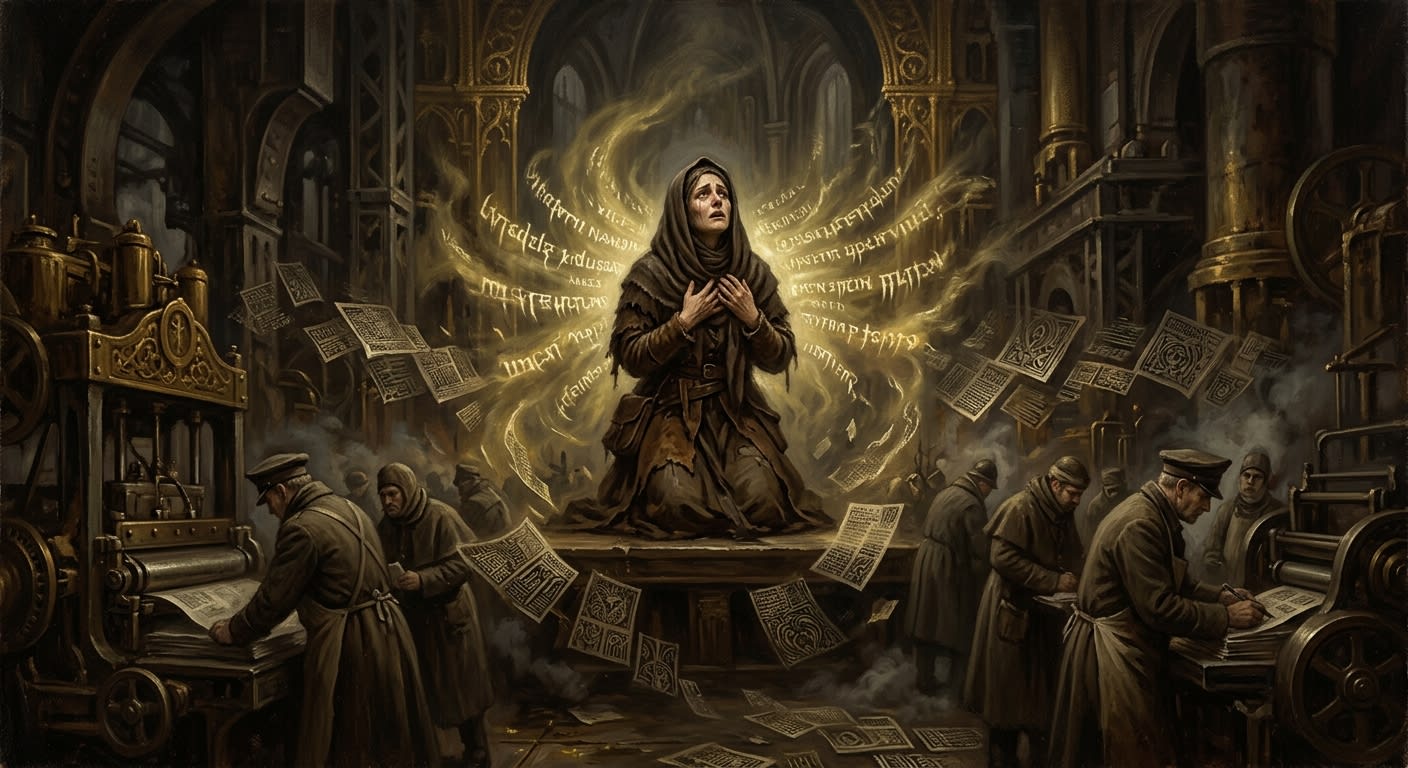
Miraculum Diffusum
The miracle was everywhere, which is to say the presses worked
The one-use doctrinal category that crowned Margaux when no ordinary miracle arrived: effect, print, grief, and Latin with teeth.
Codex Ref. XIII.1.09-014
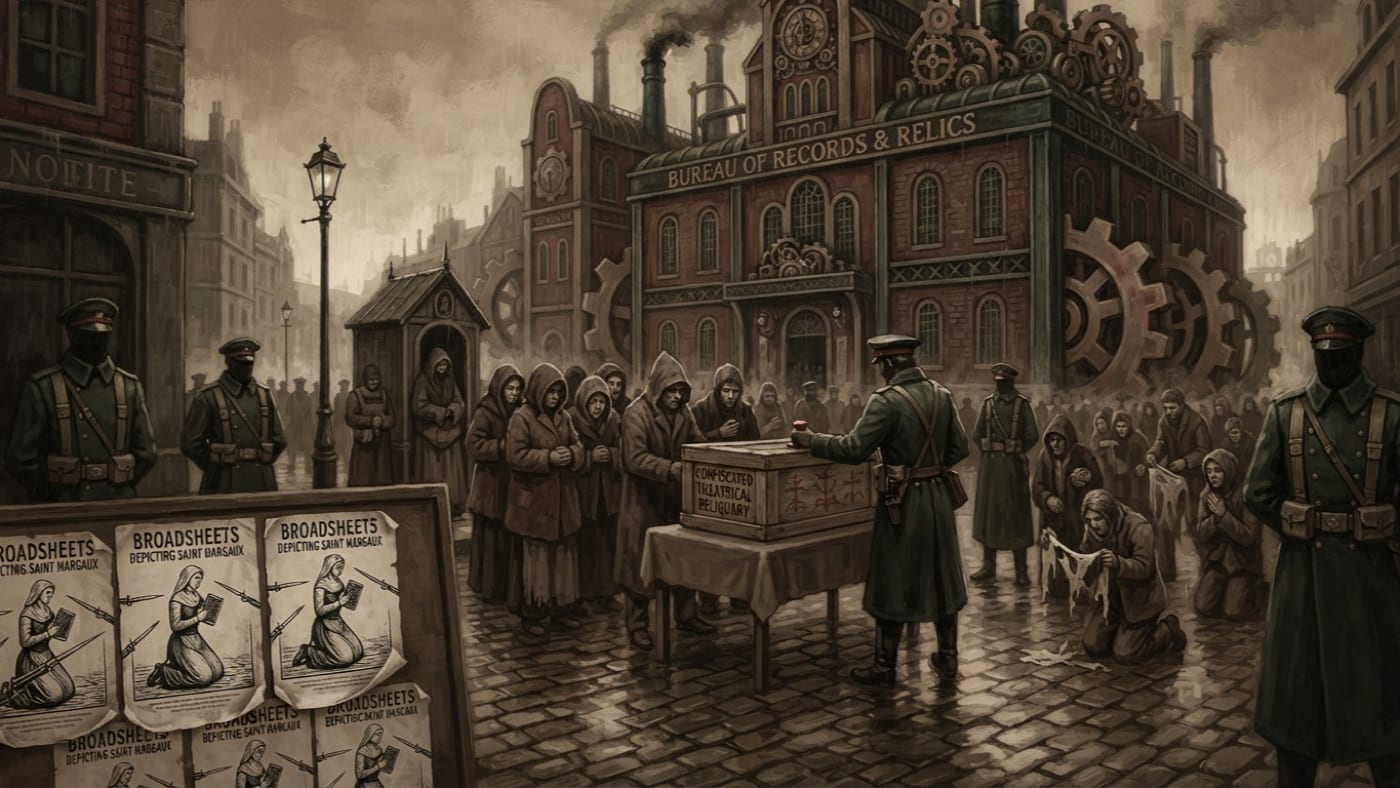
Nantes
Paper arrived; a box was seized
Margaux's broadsheets reached Nantes; a theatrical reliquary there was confiscated after accepting offerings. Paper arrived, a box was seized, and the Bureau considers this sufficient civic history.
Codex Ref. II.3.05-010
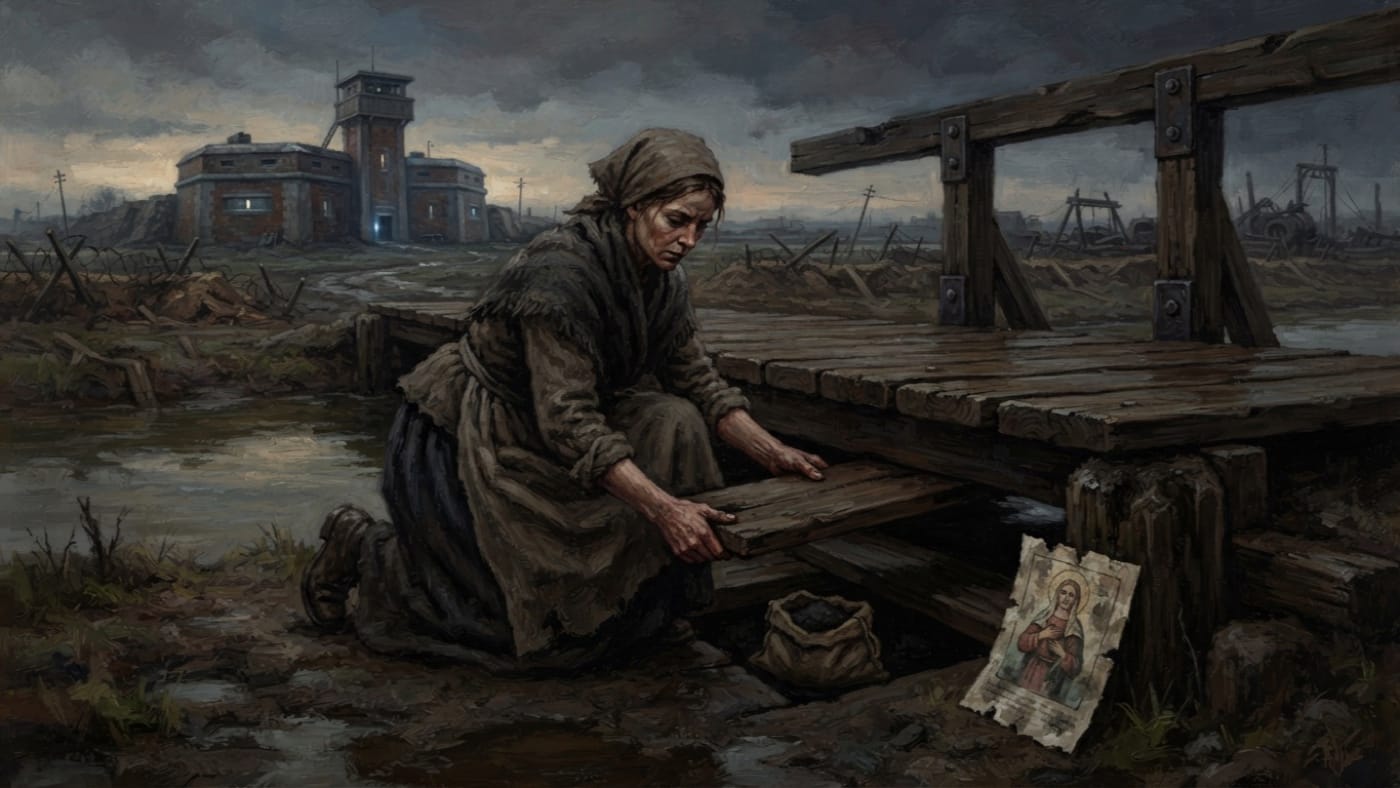
Picardy
One woman, one plank, and no recorded fire
Picardy enters the Ledger through one unnamed woman who saw Margaux's image and hid powder beneath a bridge plank. The record supplies neither a burning bridge nor a martyr.
Codex Ref. II.1.12-015
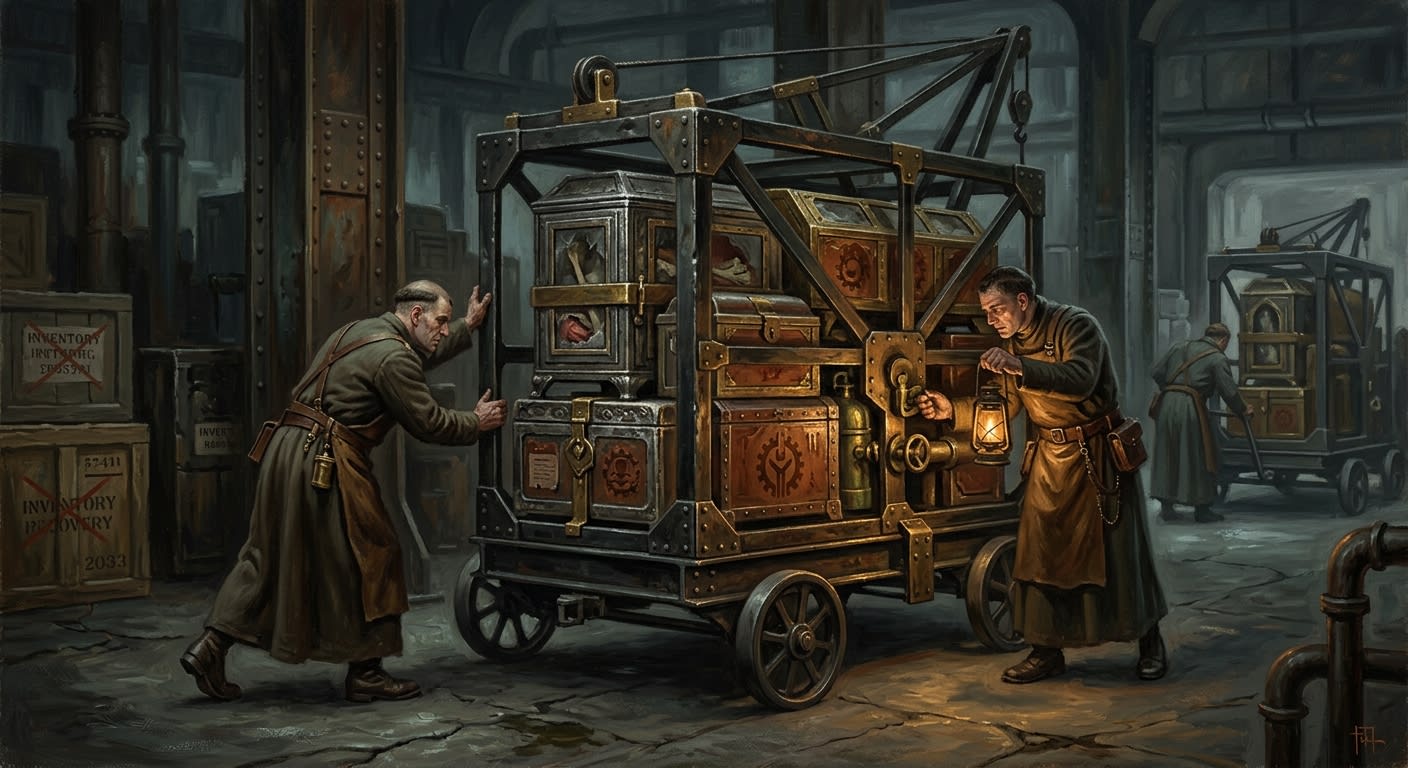
Reliquary of Saint Matthias
A box of bones that taught law to bleed
The Reliquary of Saint Matthias is the Saint-Malo martyr-object: seized as Item 7, recovered from Rationalist custody, and made into portable proof that holy custody is not inventory.
Codex Ref. XIII.1.73-010
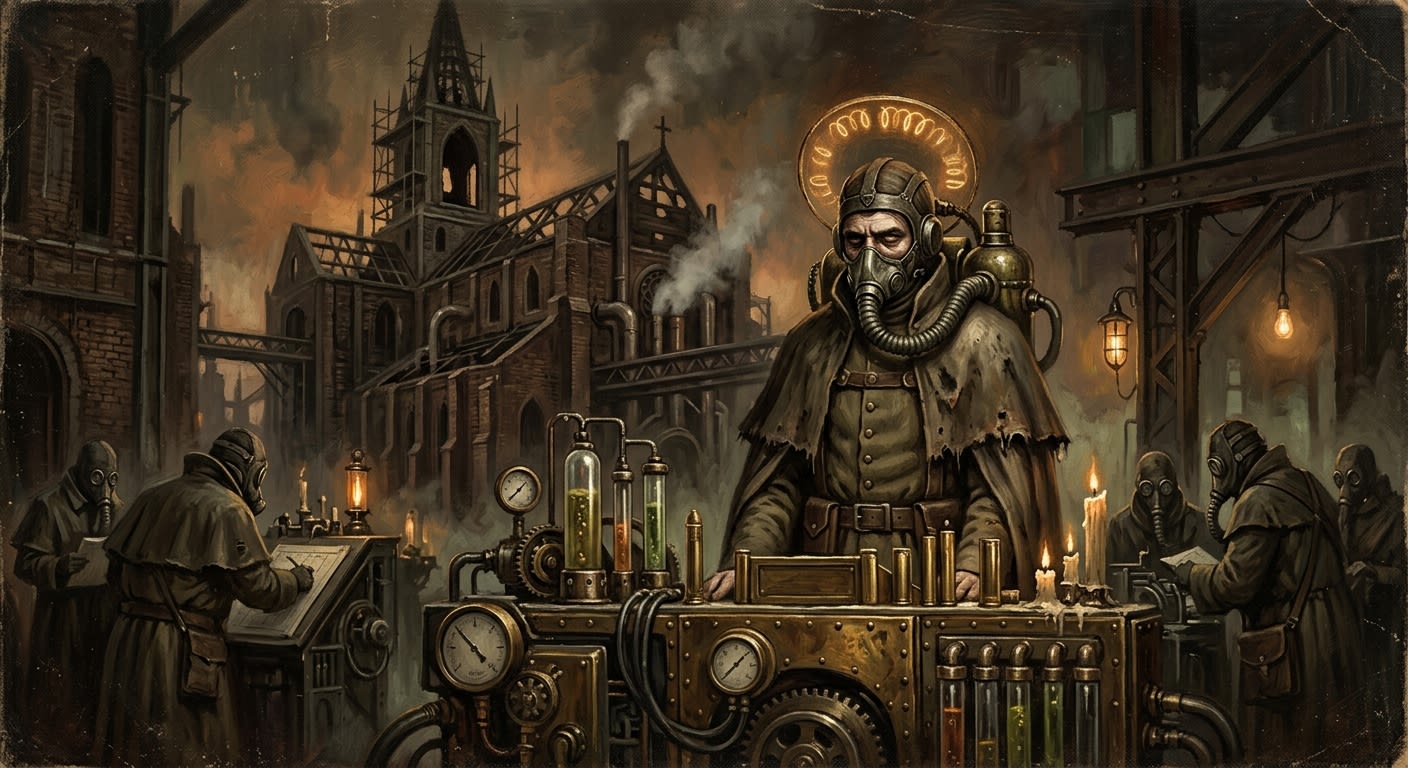
Saint Clement of Brittany
The chapel that received no pilgrims and therefore received a continent
Saint Clement of Brittany became doctrine's perfect destination: a chapel the martyrs never reached, and therefore a wound the Synod could license forever.
Codex Ref. III.2.01-005
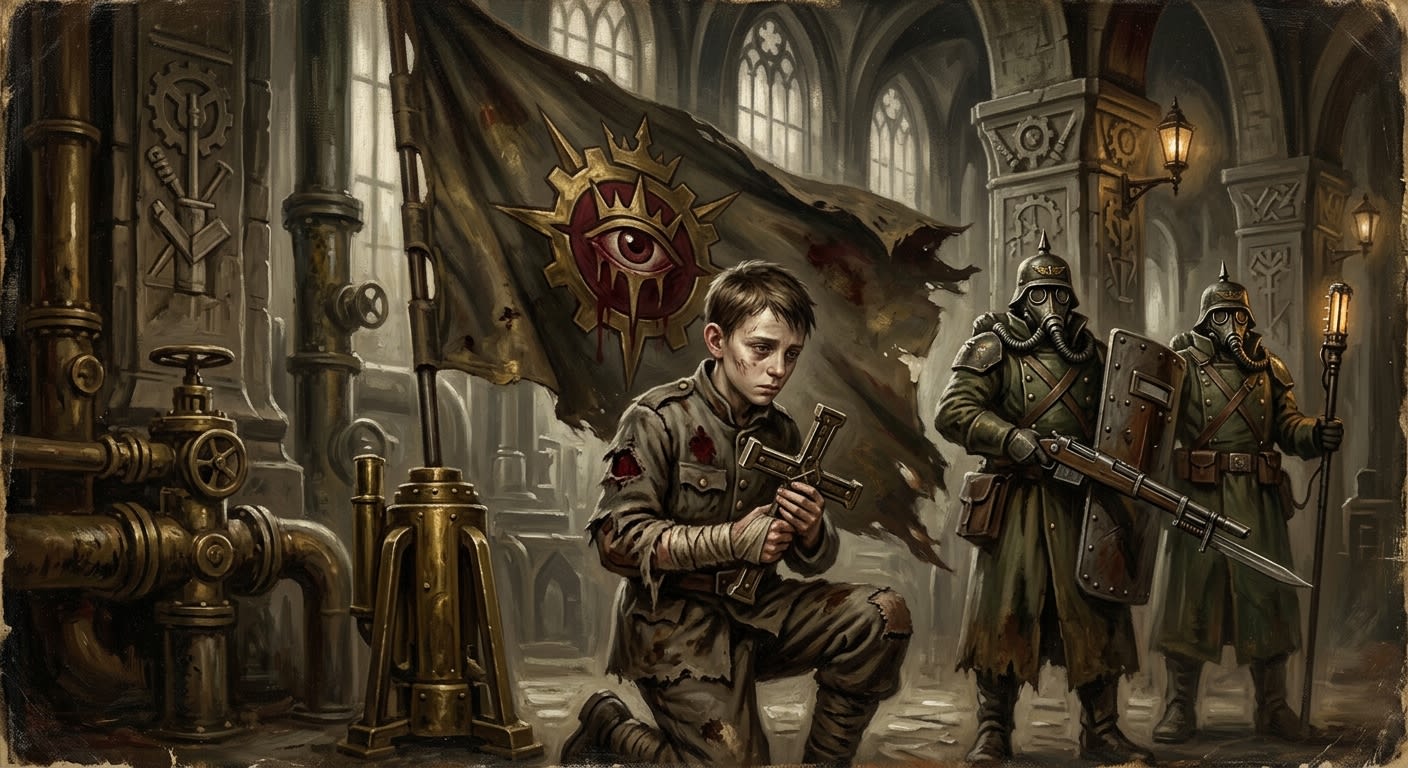
Saint Hermas
The boy who held the banner until the banner held him
Saint Hermas of Dinan was the boy beneath the banner at Saint-Malo: two wounds, one strip of cloth, and a cult made tidy by force.
Codex Ref. III.2.01-006
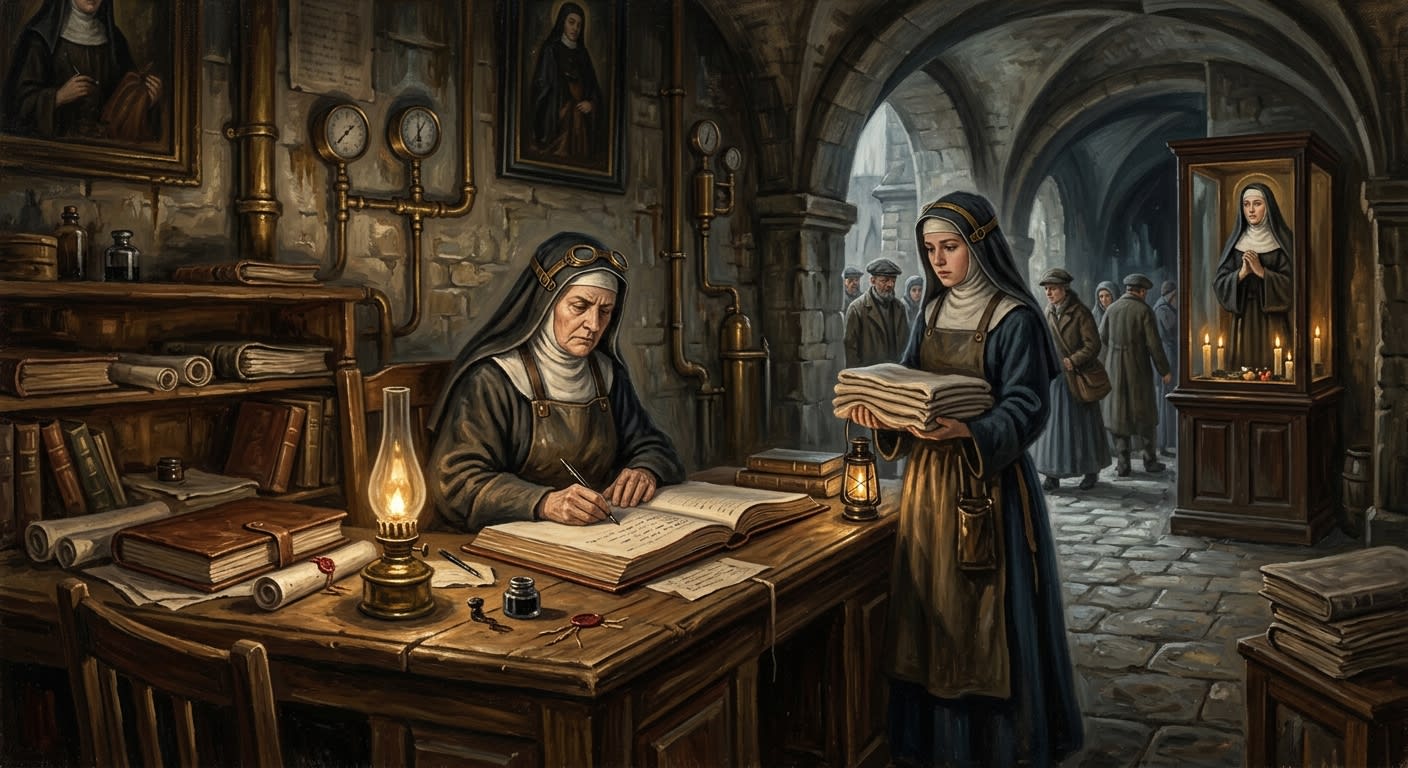
Sainte-Claire-des-Landes
Six miles from Saint-Malo, where laundry became evidence and damp became a route economy
The Breton convent of Margaux's ordinary years: damp stone, linen ledgers, a wax saint, nine thousand pilgrims, and twelve sisters still doing the work.
Codex Ref. II.1.09-092
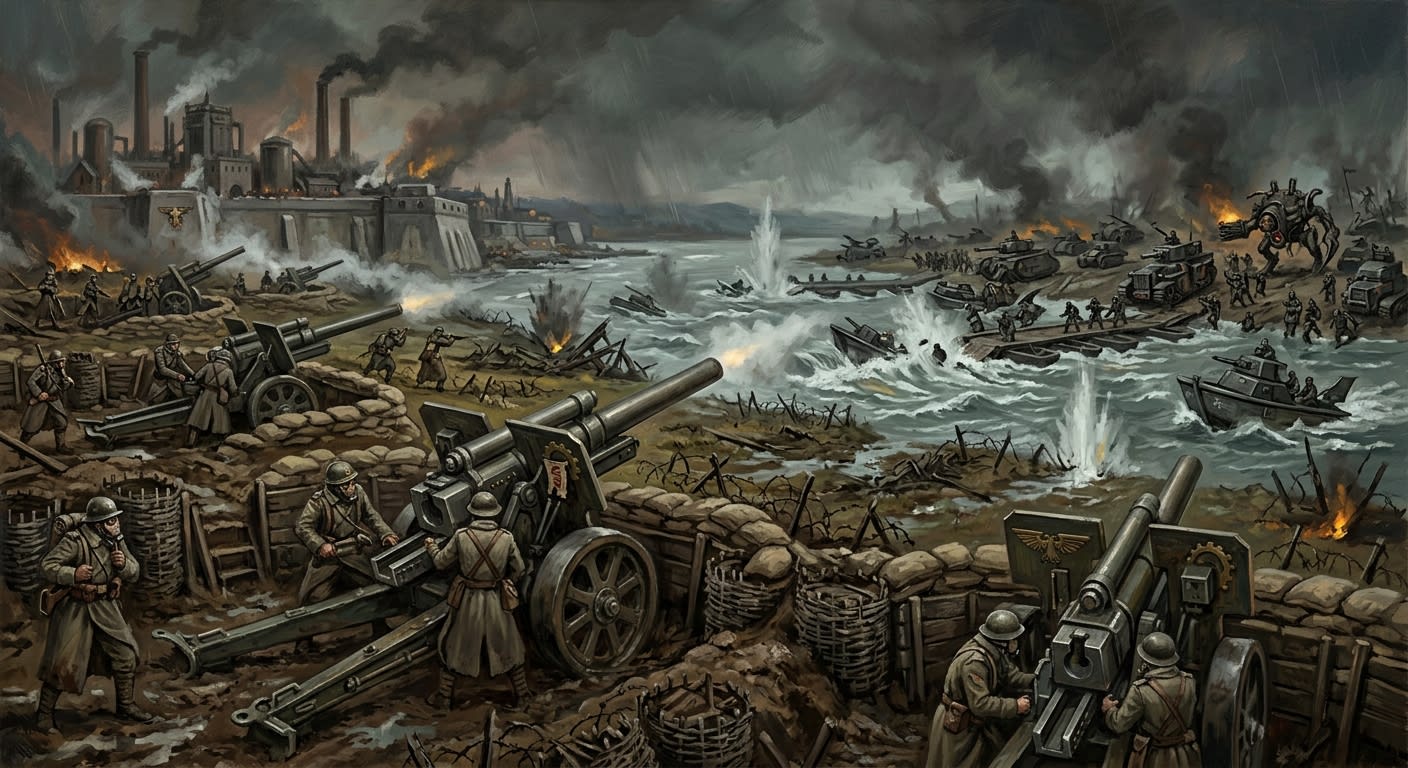
The Miracle of the Danube's Turning
When the river struck the Enemy in the teeth
At Belgrade in A.S. 120, Maldrake's Wrath-host broke against mud, relic artillery, and a Danube that turned back upon the Enemy. Victory followed; so did tariffs.
Codex Ref. VII.5.04-001
The Order of the Blessed Thorn
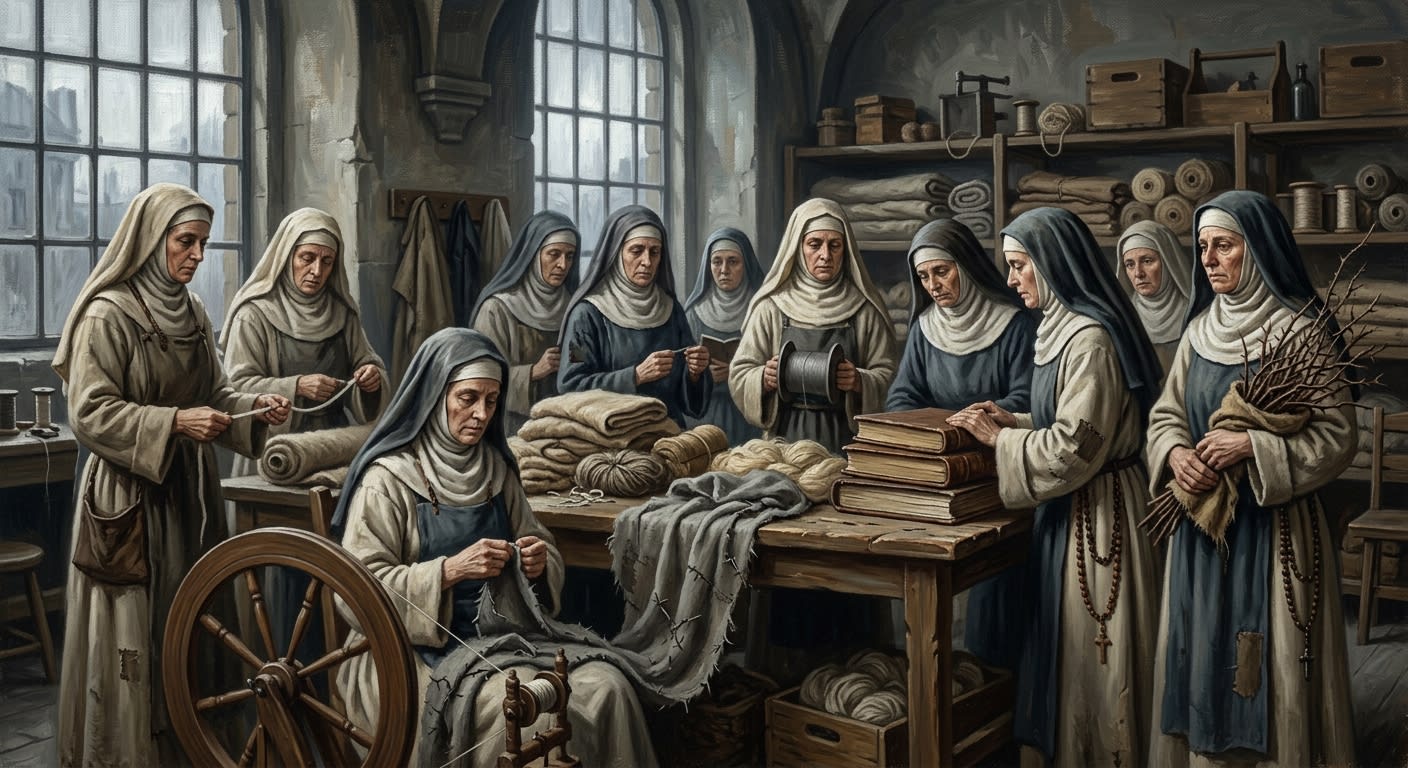
Linen, old women, and the machinery that discovered humility after it became profitable
A Breton mendicant sisterhood made Venerable after Margaux: twelve sisters, a house of linen, and enough humility to embarrass the Bureaus.
Codex Ref. XI.7.01-001
The Sisters of the Martyrdom
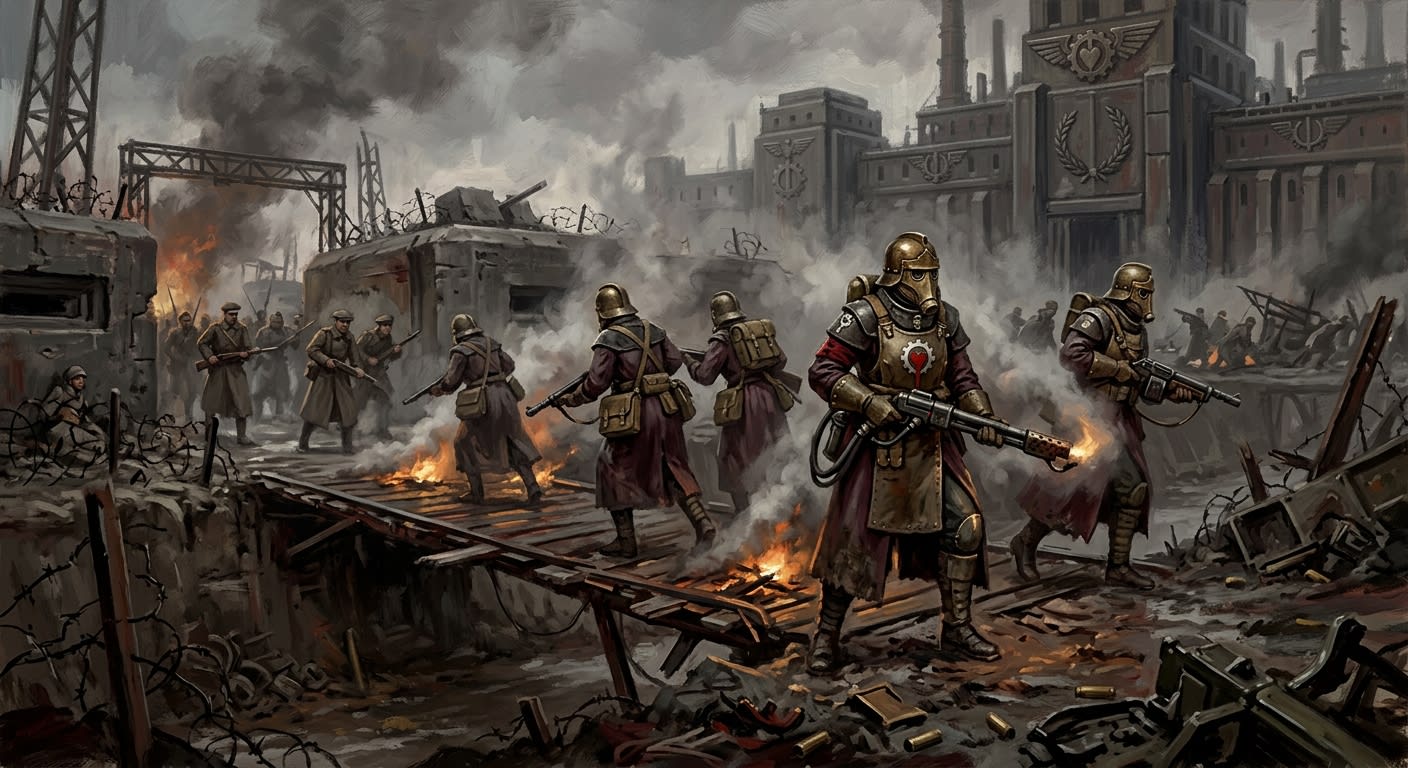
The bridge burned, the column halted, and the Ledger asked whether she volunteered
The Sisters of the Martyrdom burned bridges with their own bodies during the Atheist Wars; the Bureau sings them, taxes them, and refuses to ratify them.
Codex Ref. VIII.6.01-001
Town of Saint-Malo
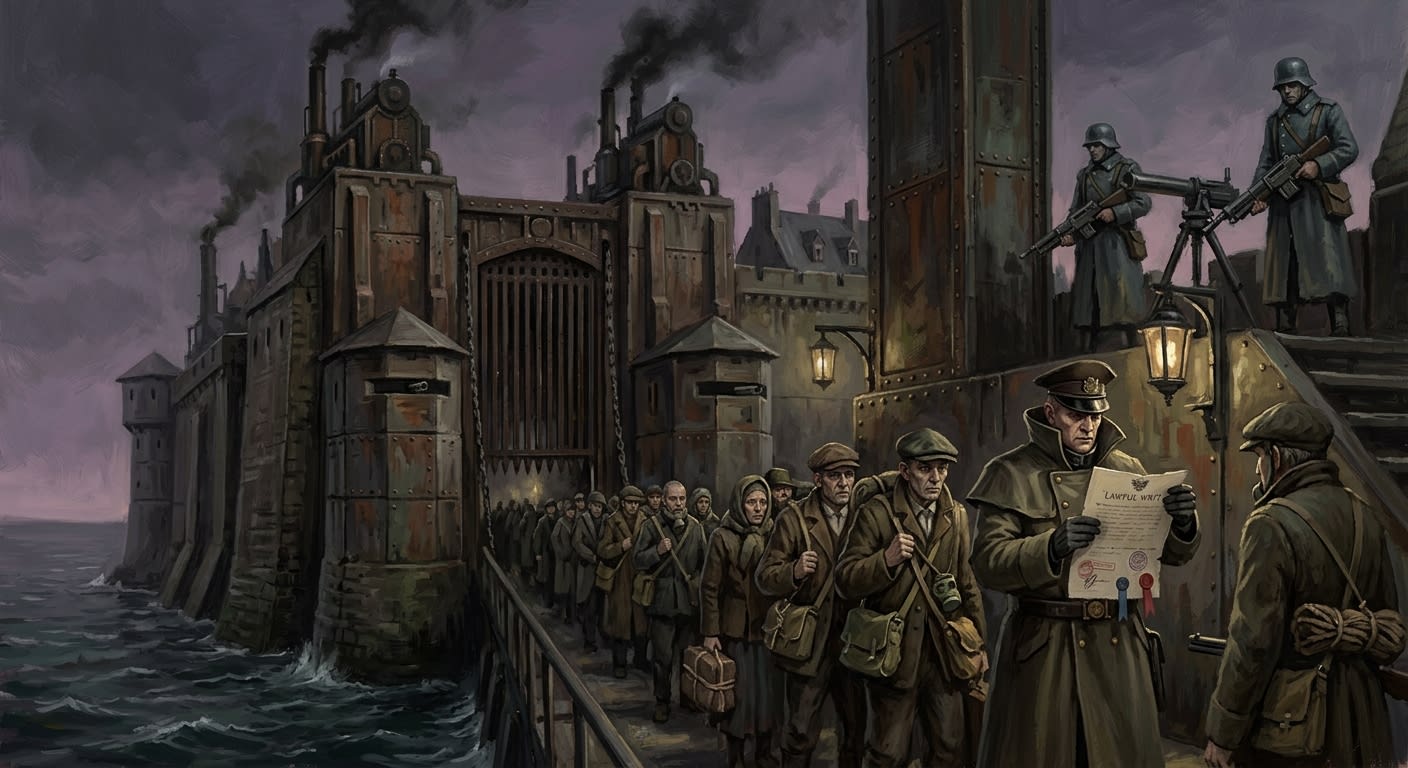
The Breton gate where law discovered it could bleed
Saint-Malo is the Breton port where a narrow gate, a lawful writ, and forty-three pilgrims gave the Synod its most profitable wound.
Codex Ref. II.4.09-013