

Reverse Index
Referencing “The Night of Black Decrees”
Every codex entry that links to The Night of Black Decrees. 30 entries.
Return to The Night of Black Decrees

Abbess Marta of Speyer
The woman who kept fear and gratitude on the same line
Abbess Marta of Speyer is associated with a later dossier attributing a warning about young Kratz to Augustinus; the letter and exact wording remain unverified.
Codex Ref. III.2.01-027
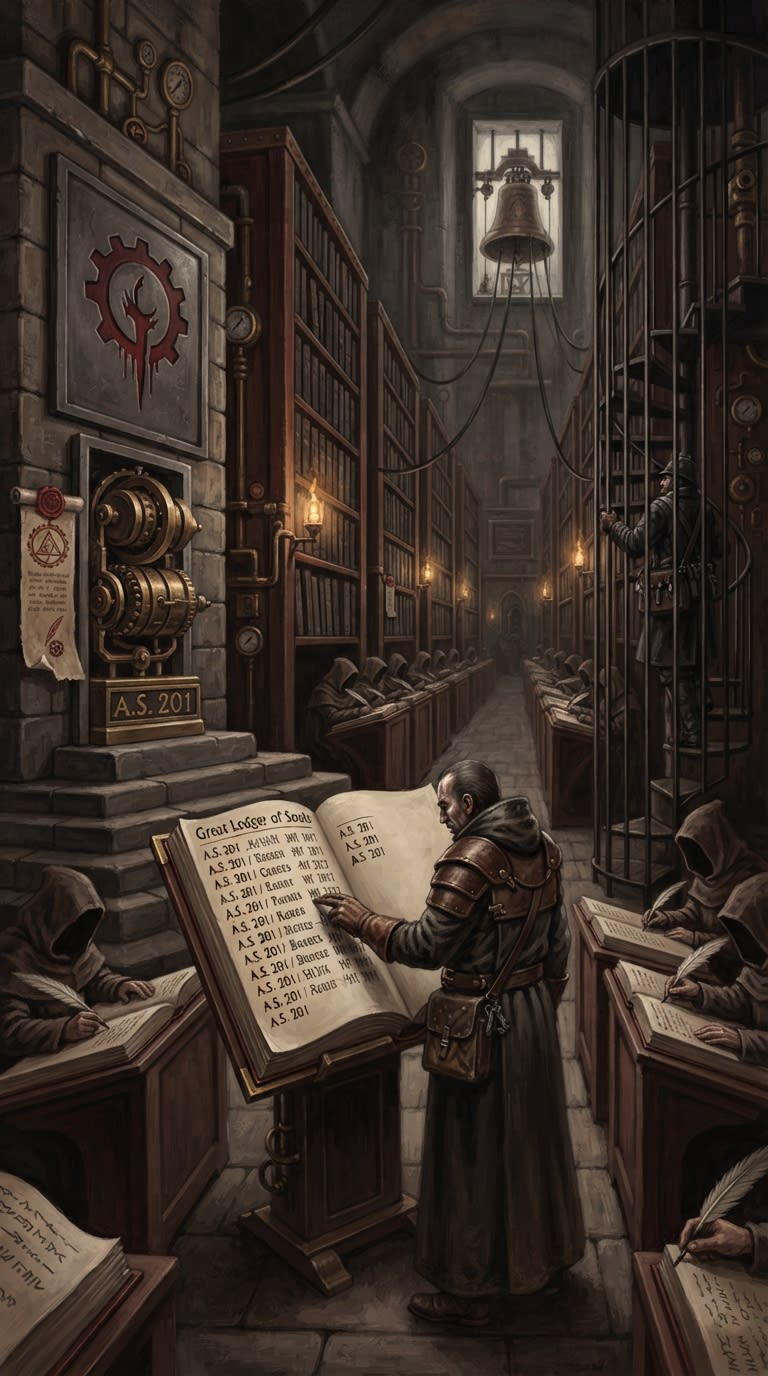
Anno Synodi
The wound by which Strasbourg owns the year
The Synod's calendar counts not from triumph but from wound: A.S. 0 at De Vera Luce, adopted retrospectively at the Concordat, and enforced by Records, Bells, and Doctrine.
Codex Ref. XIII.1.00-090

Archbishop of Lyon
The hand France sent, the name Records did not keep
The unnamed French signatory of the Concordat of Strasbourg: preserved by title, wax, and act, while the man beneath the mitre was permitted to vanish from the Ledger.
Codex Ref. III.2.01-090
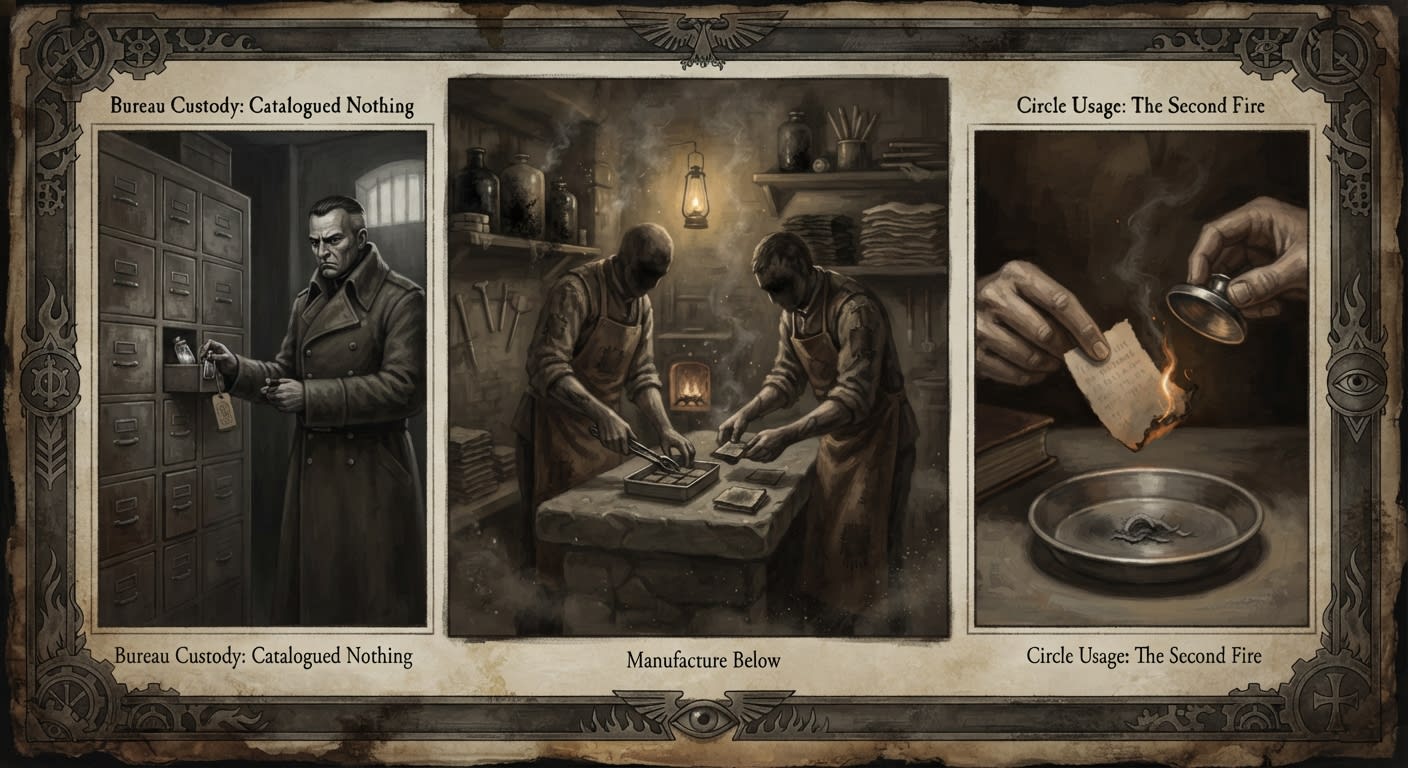
Ash-paper
A sheet built to outlast nothing, and therefore everything useful
Ash-paper is the Circle's pre-blackened answer to the Purge: charcloth pages made to carry one forbidden fact, burn twice, and leave the Bureau with only catalogued nothing.
Codex Ref. XIII.1.56-001
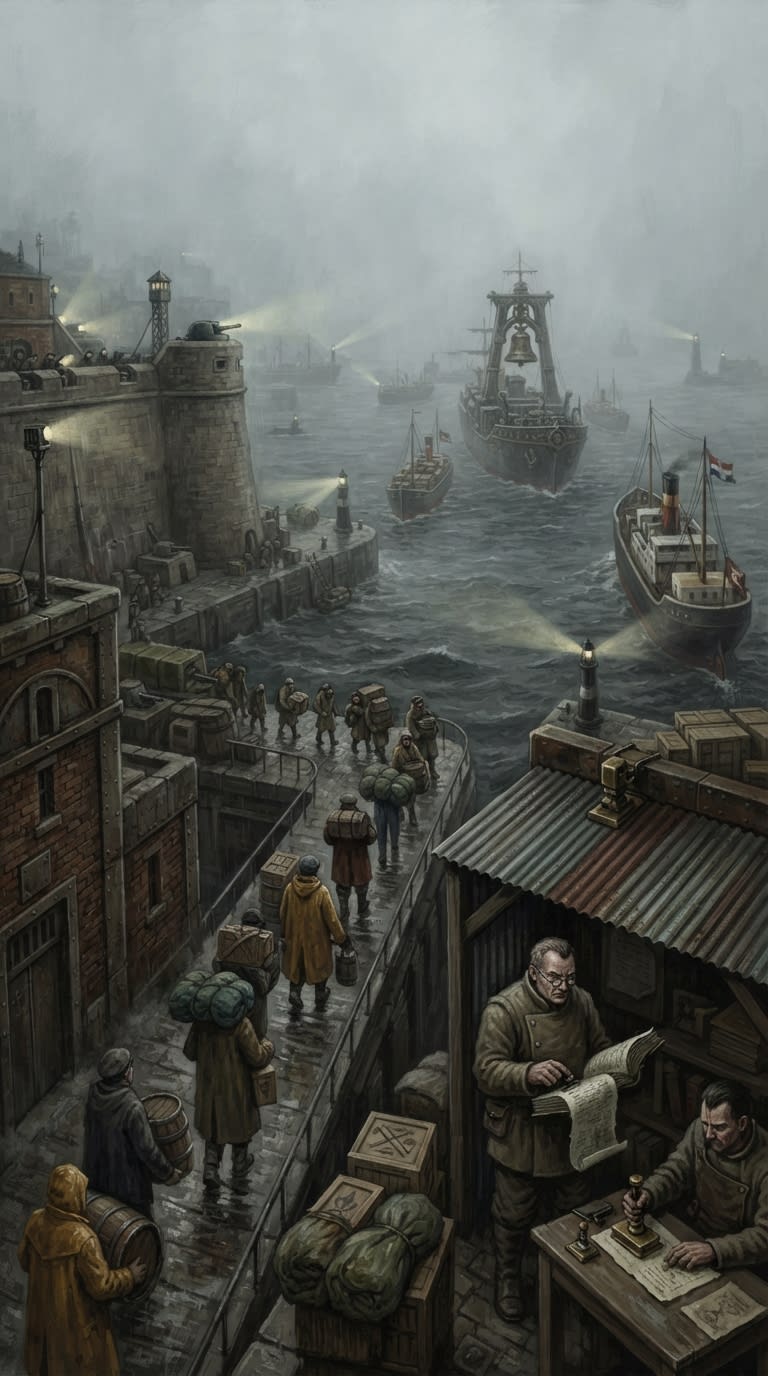
Atlantic
The water at the western end of every Synodal sentence
The Atlantic is the Synod's western water: open, escorted, profitable, watched, and owned by nobody, with Zone 1 harbours feeding the Line through wet ledgers and foreign hulls.
Codex Ref. II.4.09-201
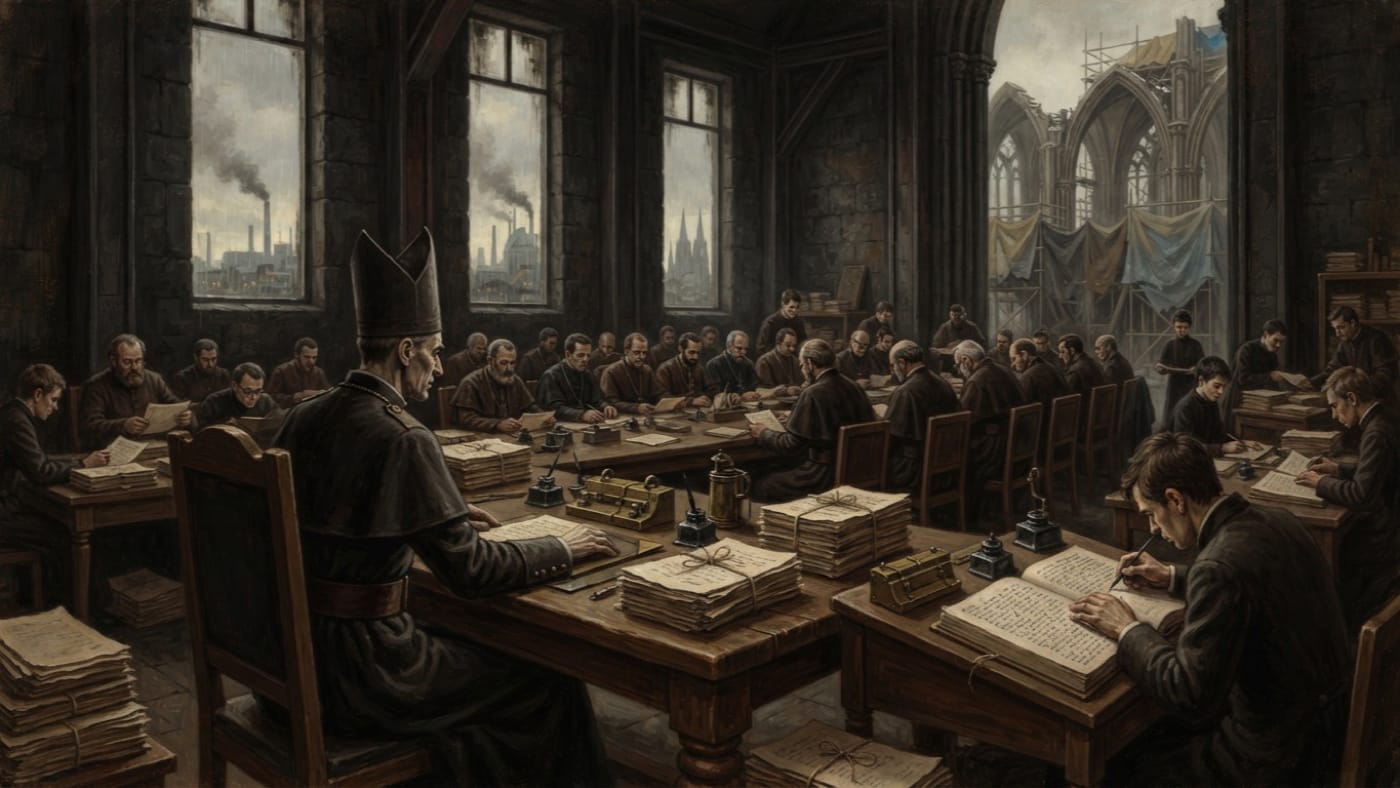
Bishop Adelmar of Cologne
Nine days entered; a lifetime left blank
Bishop Adelmar hosted the nine-day First Council of Cologne in September A.S. 27. Seven articles failed; voluntary requests survived. His life dates remain outside the Ledger.
Codex Ref. III.2.01-253
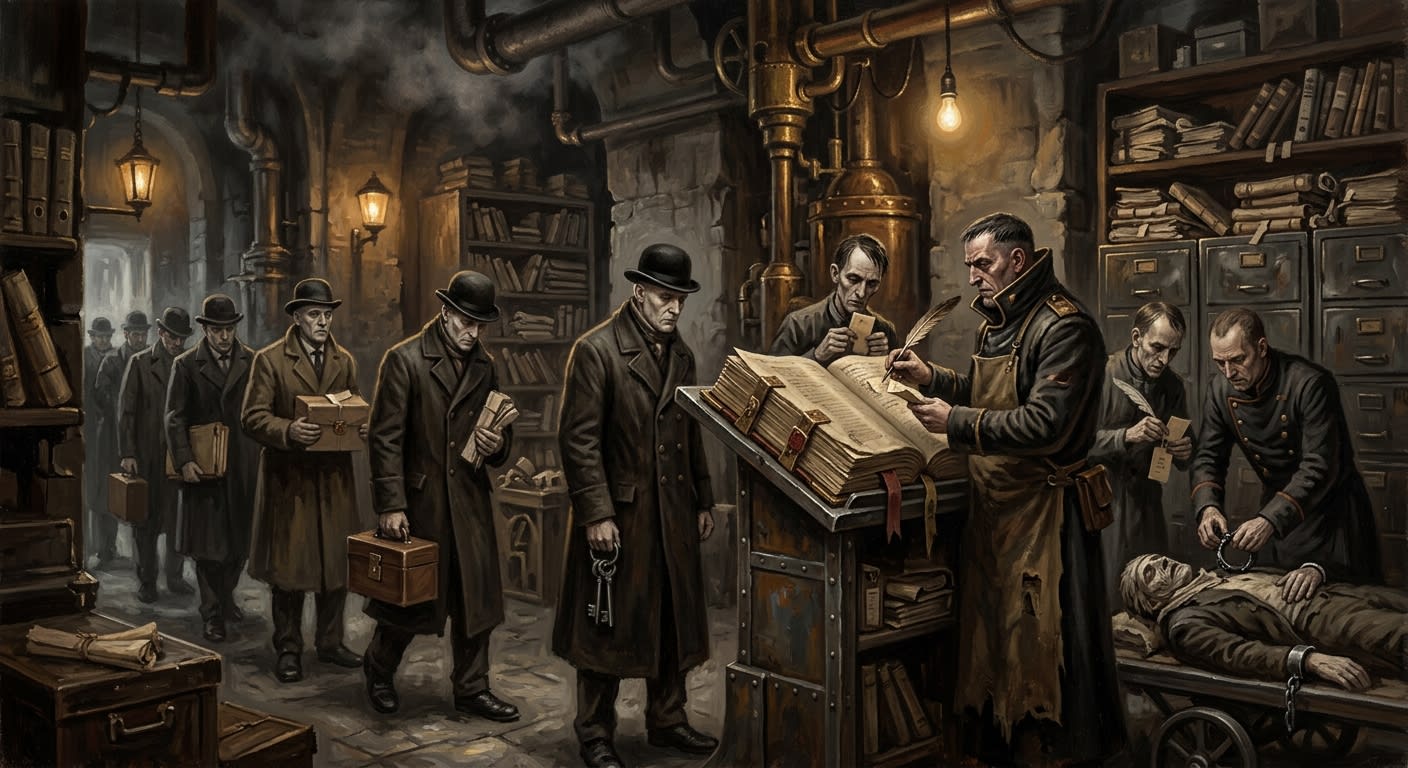
Book of Departures
Where the last breath becomes lawful ink
The Book of Departures receives every lawful death: mercy, tax instrument, burial rite, inheritance key, prayer license, and muzzle for ghosts.
Codex Ref. XIII.1.87-112
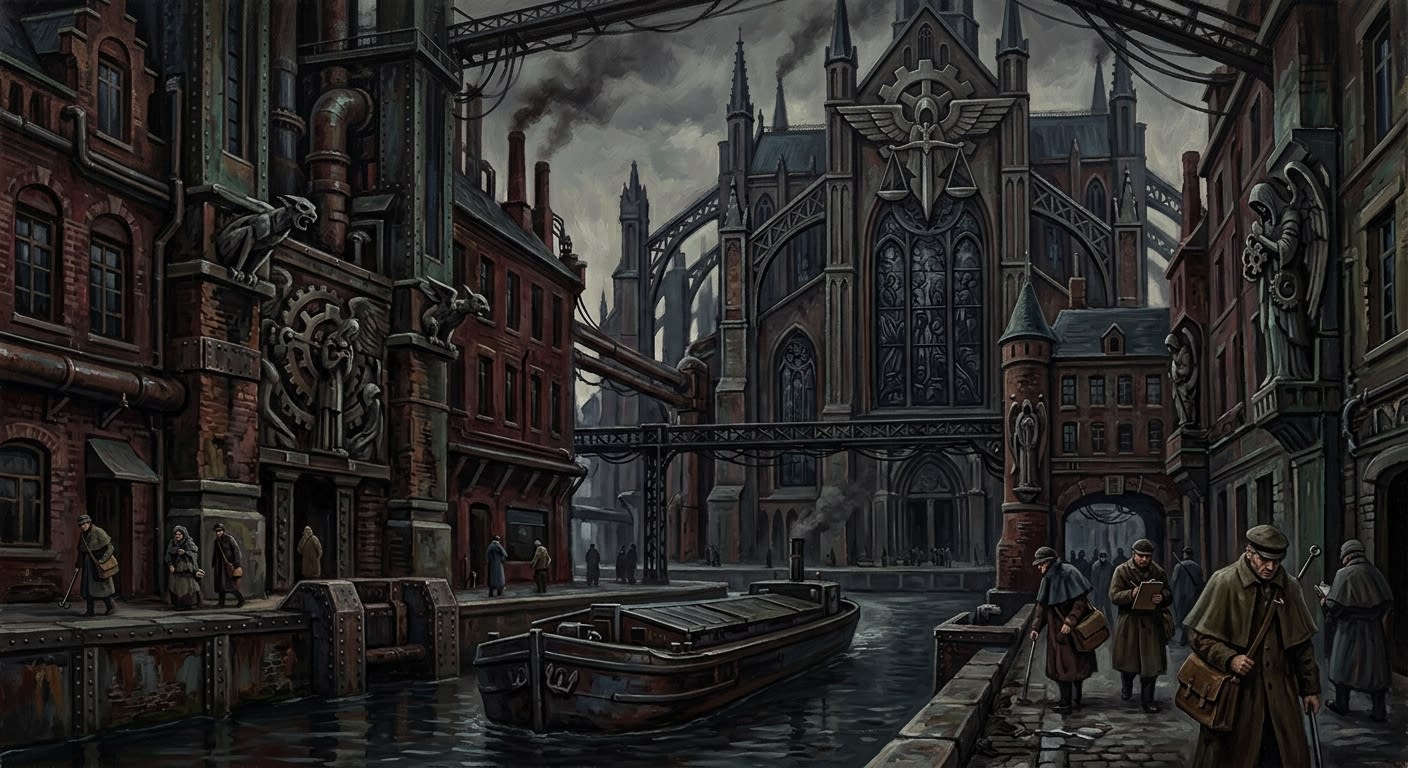
Bruges
Permit prosperity; audit beauty
Bruges is the Synod-held Lowlands city whose canals, colours, grotesques, relic glass, and impossible Tithes seal make beauty a recurring audit problem.
Codex Ref. II.1.04-058
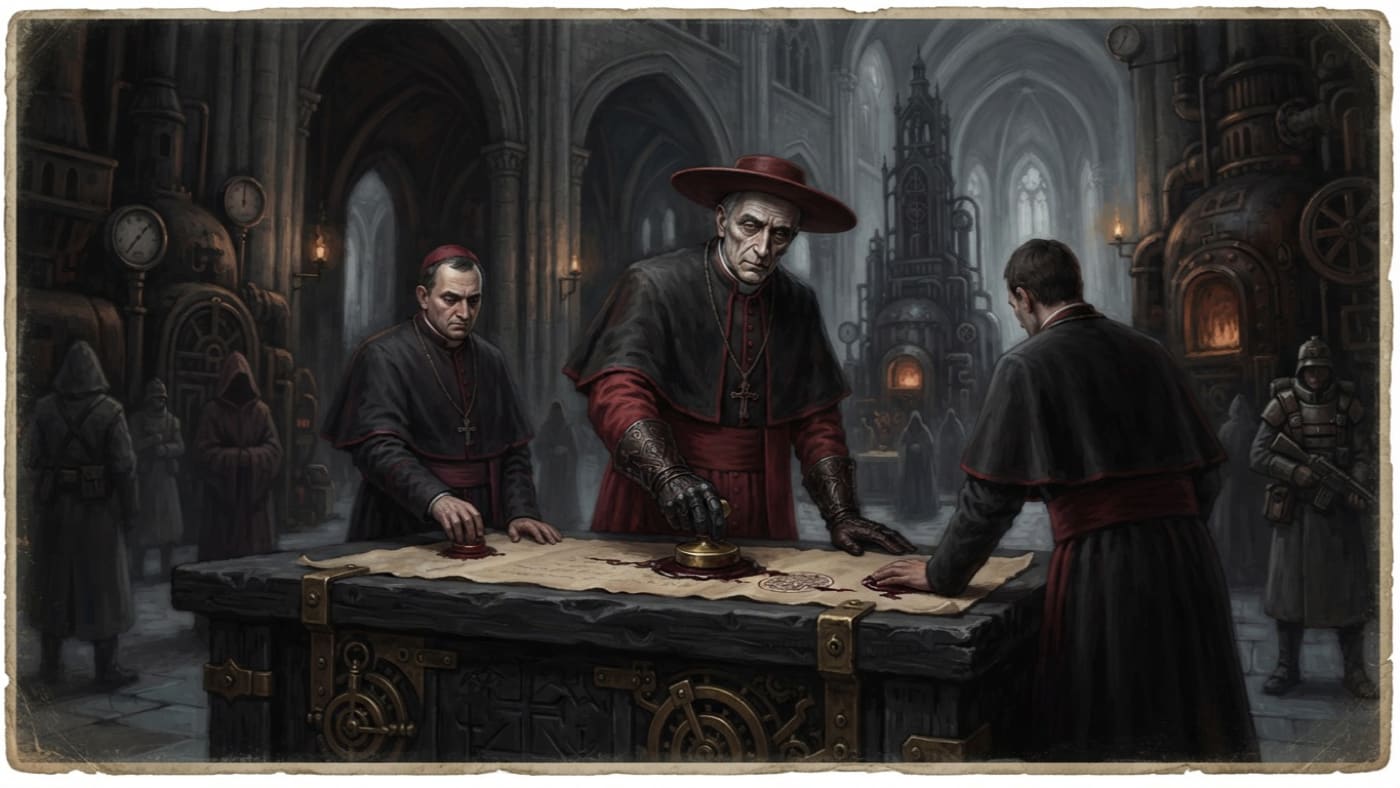
Cardinal-Legate of Toledo
One peninsula, one seal, no recorded name
Iberia's unnamed signatory to the Concordat of Strasbourg in A.S. 90. He bound a peninsula with one seal; the Ledger retained his title and dispensed with his name.
Codex Ref. III.2.01-090
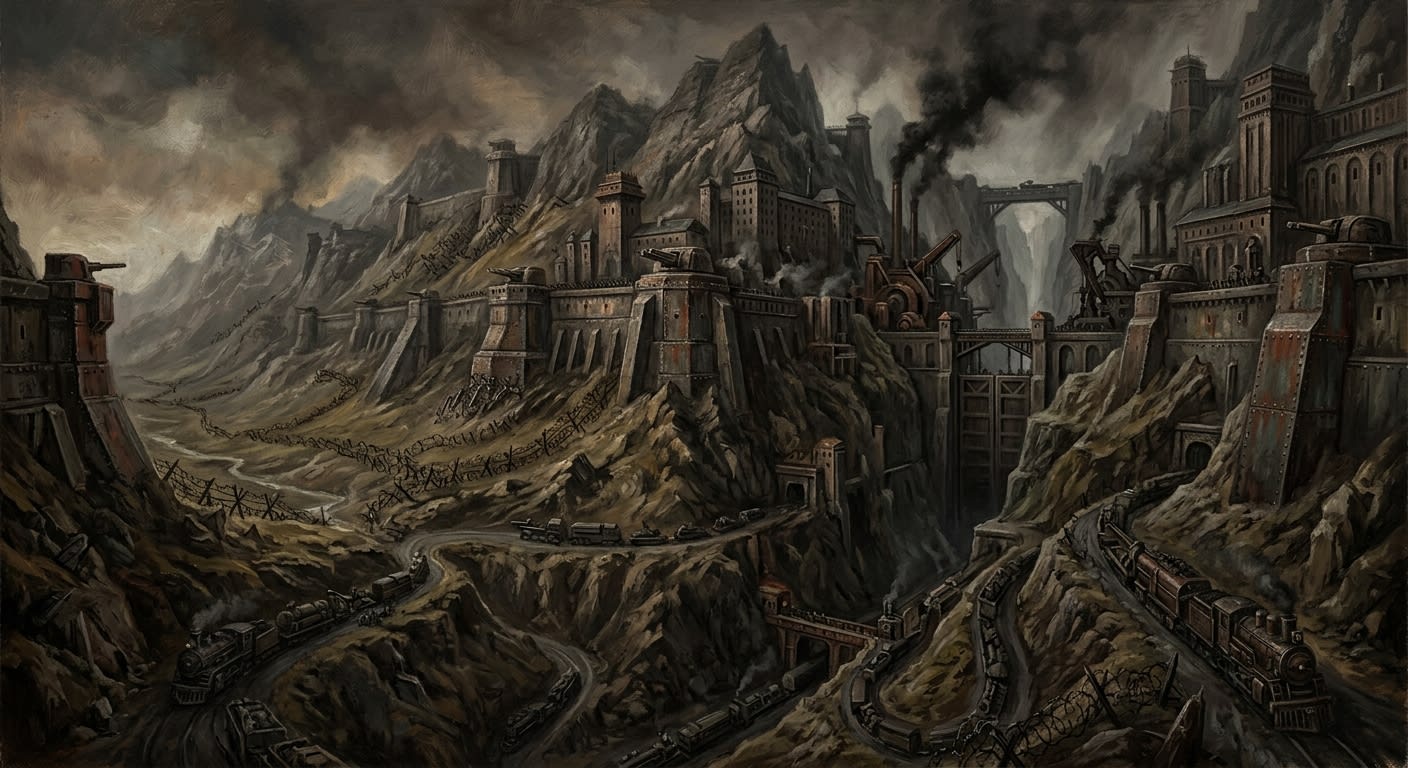
Carpathians
The mountains do not kneel; we made them useful
The Carpathians are the Synod's middle mountain wall: Przemyśl's wire, Sibiu's Saxon stone, Irongate's cut, and every road that charges blood.
Codex Ref. II.3.05-202
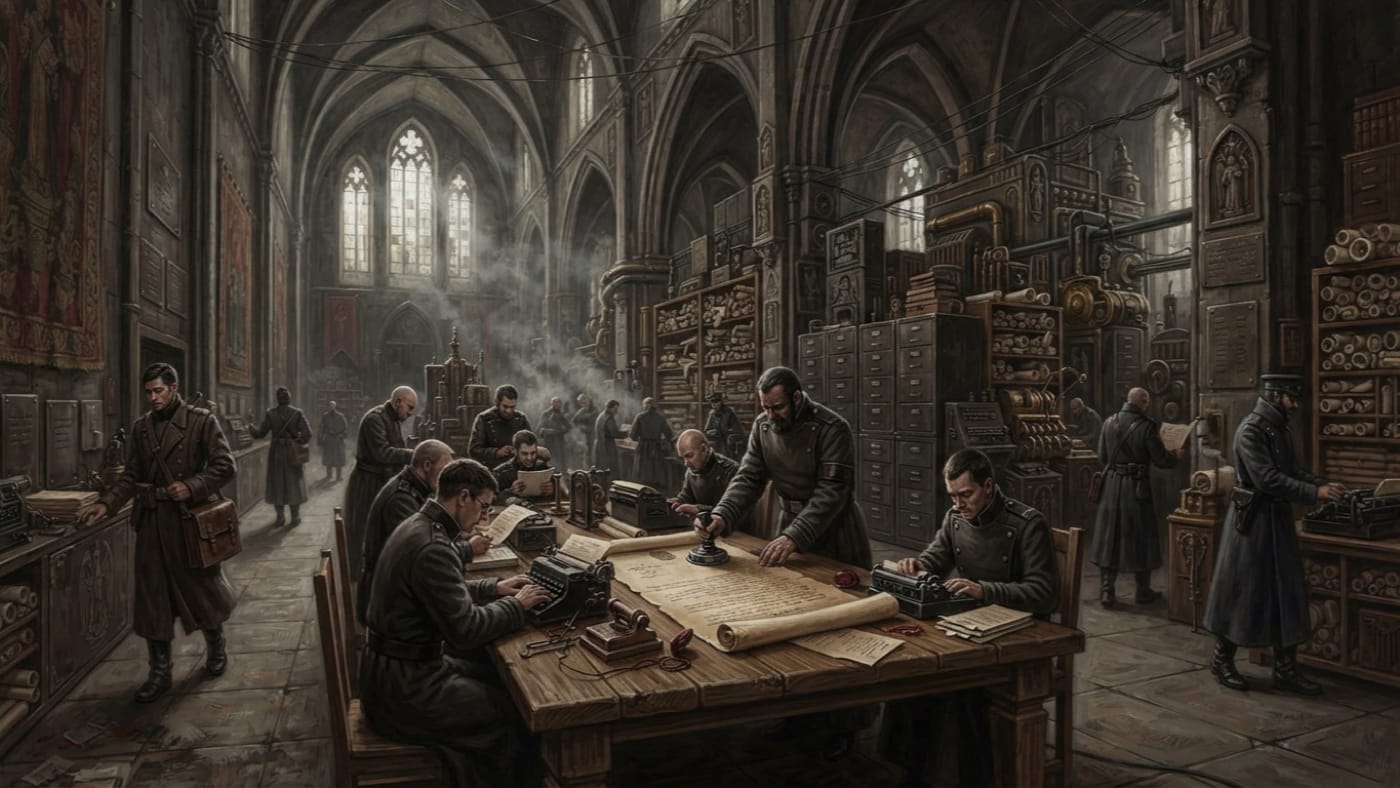
Conventus Fidelium
An assembly on vellum; its first convocation unrecorded
The Common Allegiance proposed the Gathering of the Faithful in A.S. 55: one assembly, common command and five offices. I record its ancestry without inventing its first convocation.
Codex Ref. I.3.02-055

Doctrine of Sealed Intent
The office speaks; the hand goes upstairs
An affixed seal carries its office's authority, whoever pressed it. Worms supplies the documented anchor; attendance, consent and the hand remain separate questions.
Codex Ref. XIII.1.120-087
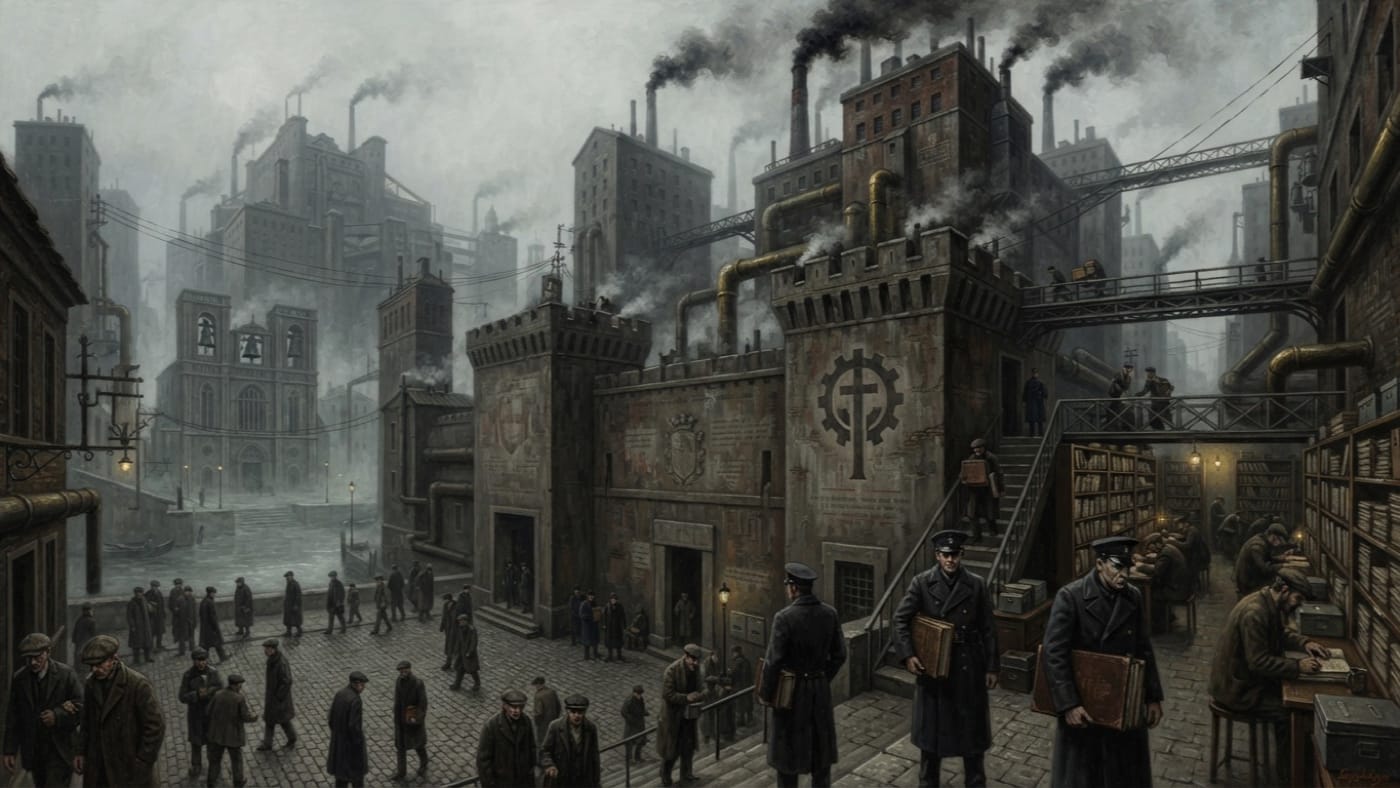
Italian principalities
One filing drawer for a peninsula that never consented to share it
The old Italian jurisdictions, erased by Regensburg in A.S. 30 and inherited piecemeal by the Synod. Their complete roster remains unestablished; their objections remain abundant.
Codex Ref. II.3.09-030
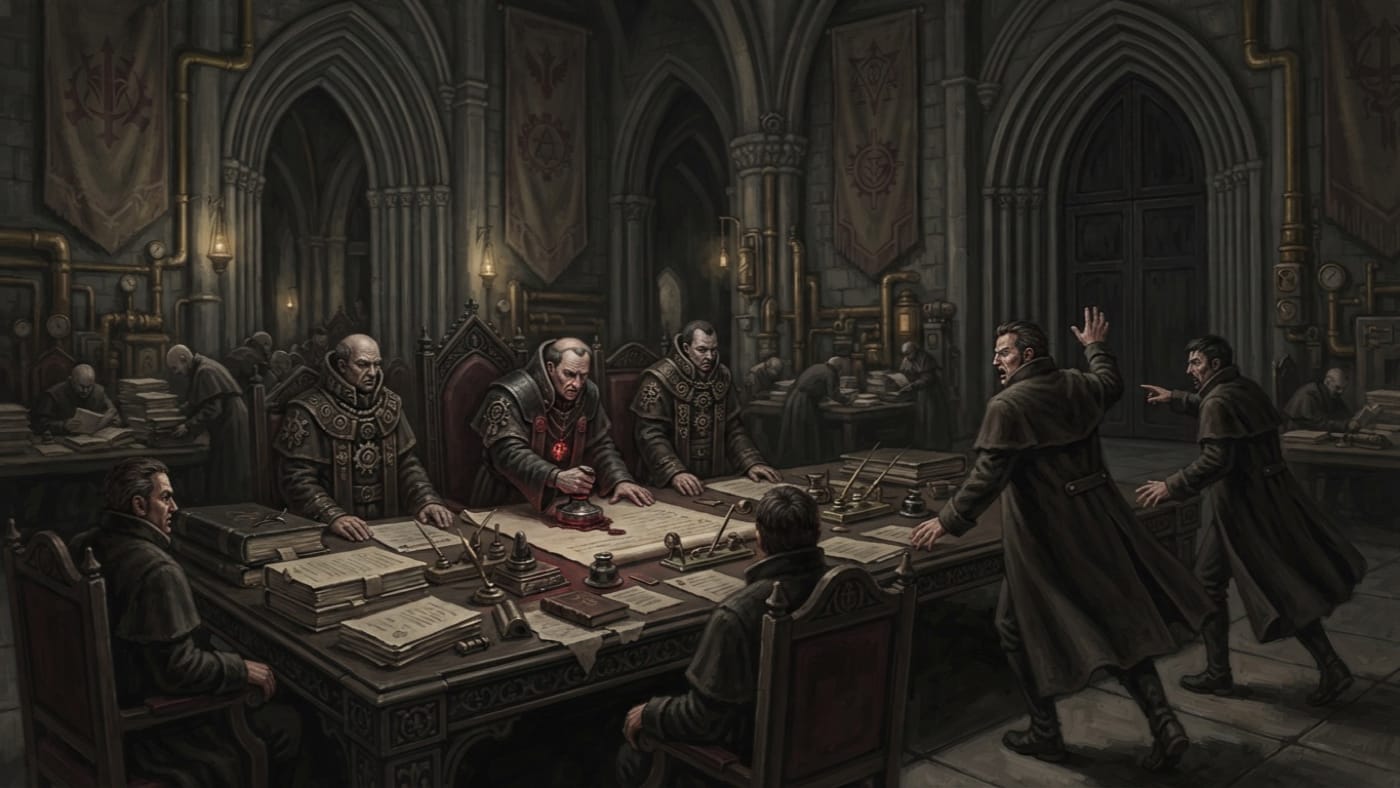
Kingdom of Aragon
A kingdom entered under another seal
Aragon was entered under Iberia's seal at the A.S. 90 Concordat of Strasbourg. Its delegation protested and departed; the Bureau retained the kingdom.
Codex Ref. III.2.04-1544

Ledger of Compelled Consent
The signature precedes the will
Bound after the Black Decrees but obeyed before them, the Ledger of Compelled Consent made frightened signatures older than fear.
Codex Ref. XIII.1.17-001
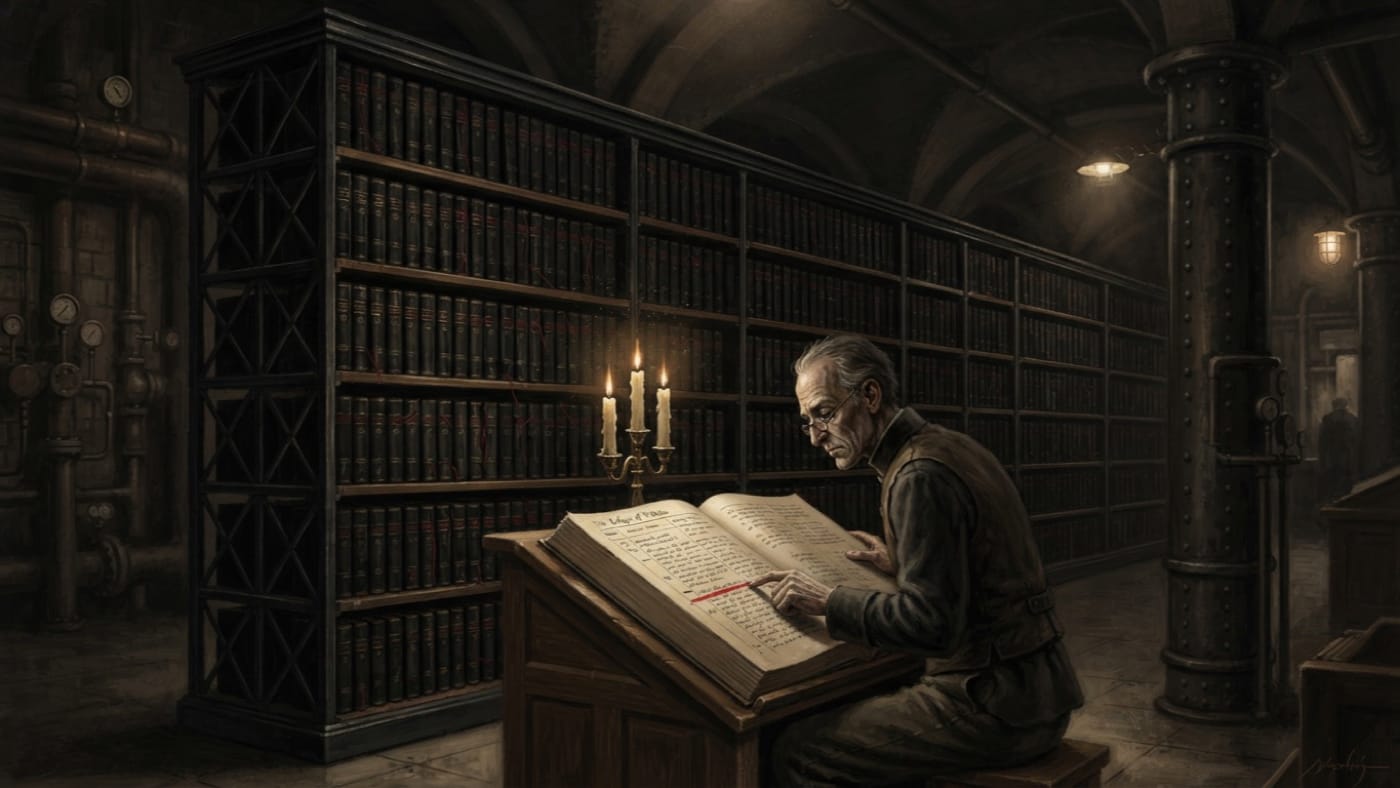
Ledger of Fidelity
A promise may be buried. Its words remain.
One book in seven hundred bindings, the Ledger preserves witnessed oaths under Synod jurisdiction. Annulment draws a red line; it does not grant the mercy of forgetting.
Codex Ref. XIII.1.17-002
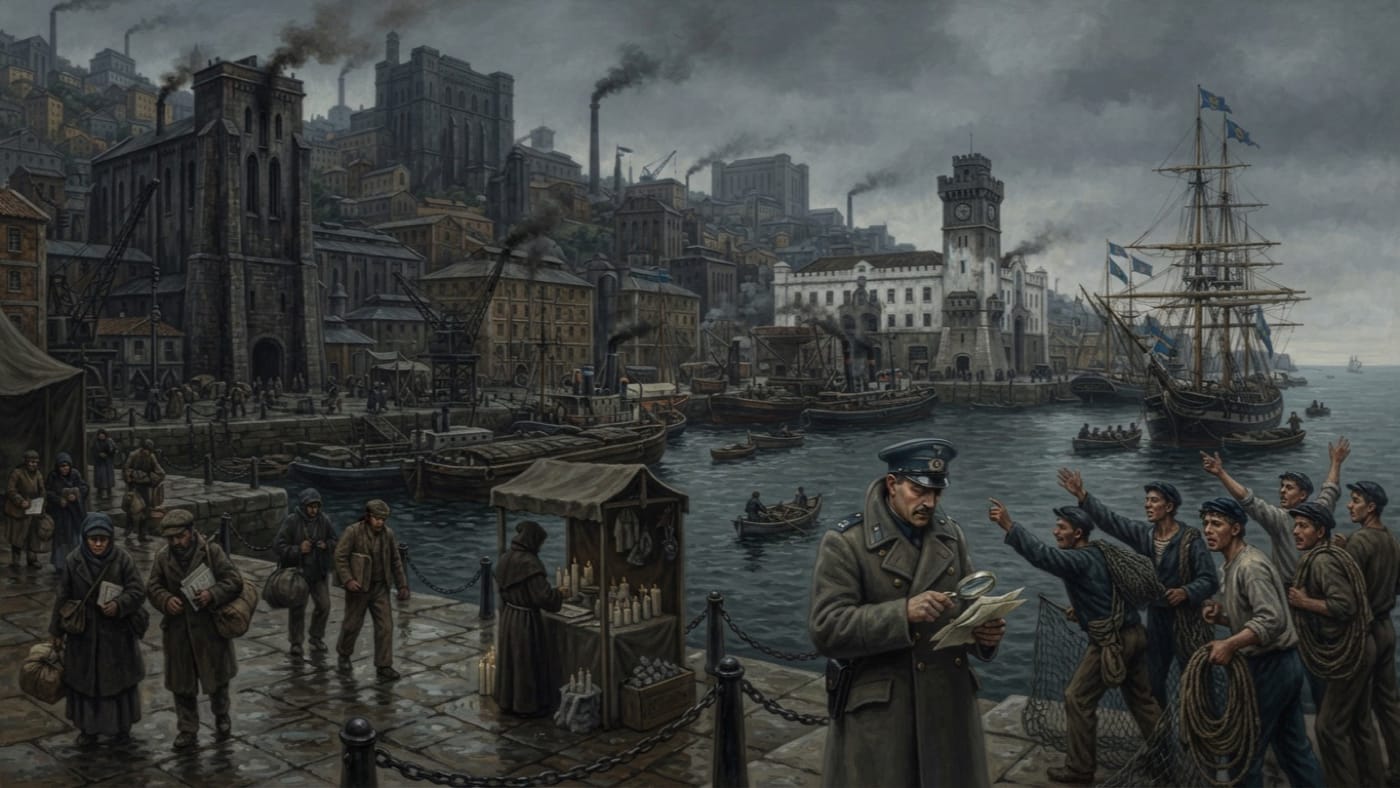
Lisbon
The harbour counts by contract
Lisbon sells sea candles, quake memory and licensed passage at the Atlantic mouth of the Tagus. Strasbourg counts its revenue; its sailors tell the catastrophe in the wrong order.
Codex Ref. II.4.09-201

Mandatum Candoris
The decree by which terror learned to wear white
Hildegarde of Mainz's A.S. 62 decree requiring visible white mantles for Bureau of Purity field agents, making correction legible before it struck.
Codex Ref. XIII.1.88-062
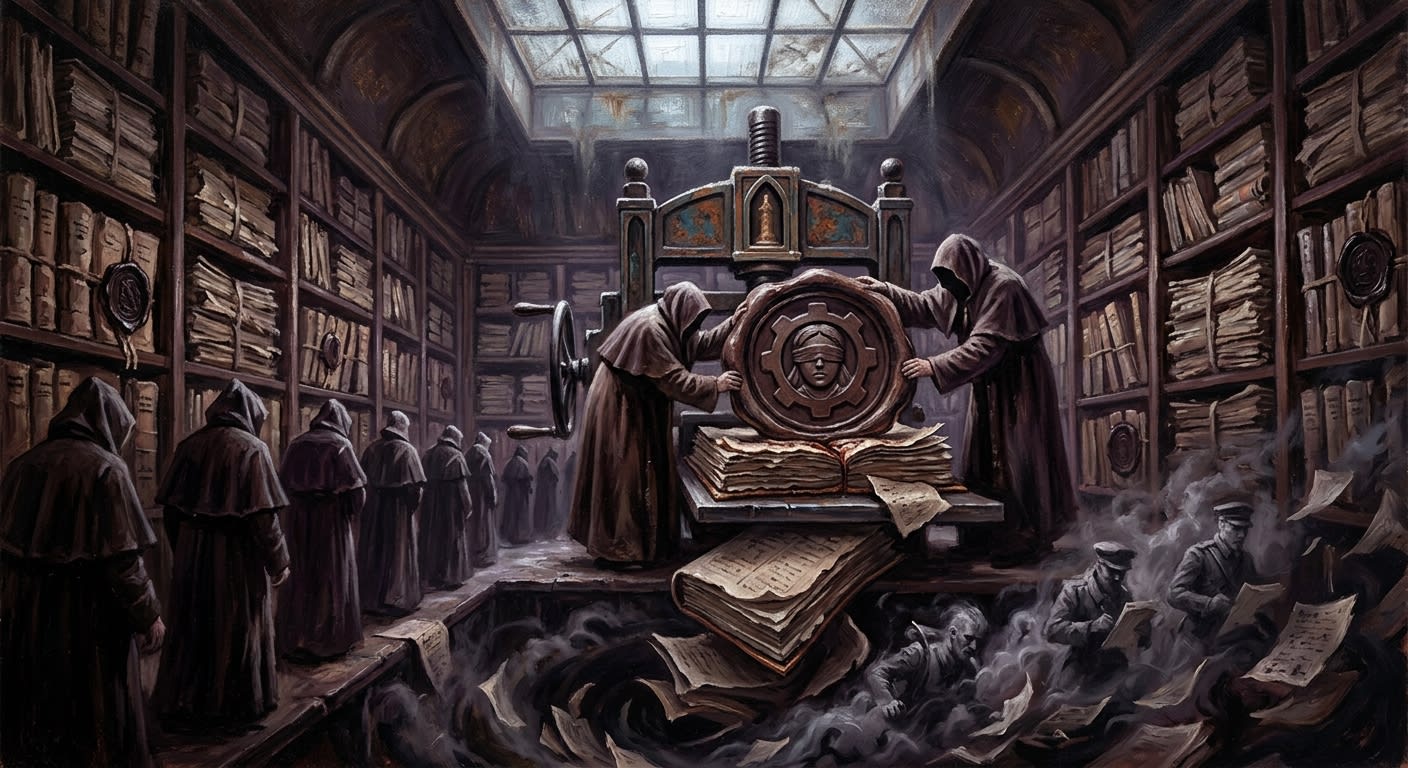
Ninth-Ratification
The seal that forbids analogy because pattern is accusation
Ninth-Ratification is the Synod's highest publicly nameable seal: a doctrine of lawful ignorance for records whose disclosure changes context, office, witness, and history itself.
Codex Ref. XIII.1.76-103

Seal-Forger, Counterfeiter
The Synod's confession, pressed in unauthorised wax
The seal-forger is the Synod's shadow — pressing wax into survival where the Bureau presses wax into doctrine. Eleven immurements signed, six thousand fed, and the woman who may never have existed.
Codex Ref. XII.41.01-001
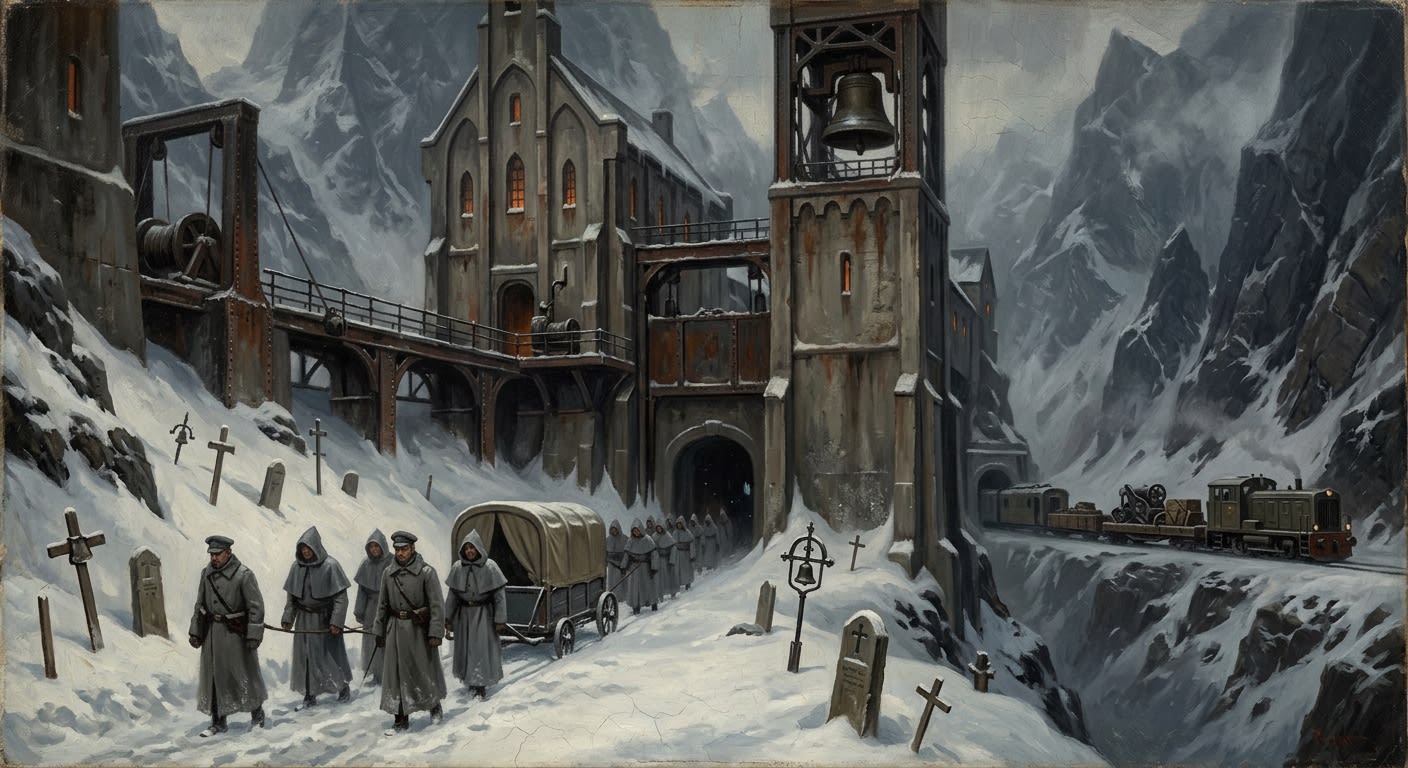
Swiss Cantons
Where mercy climbs uphill and stops writing back
The Swiss cantons keep passes, bells, hospice beds, and the Synod's most merciful disappearances beneath snow clean enough to indict Heaven.
Codex Ref. II.2.08-201

The Armorial of the Faithful
The book by which even colors learn obedience
The Armorial teaches every banner, crest, seal, colour, knot, and shop sign in the Synod the first virtue of a surface: obedience.
Codex Ref. VIII.1.03-002

The Bureau of Oaths
No promise binds unless Strasbourg hears it.
The Bureau of Oaths holds that an unwitnessed promise is merely breath — and breath is not legally binding. Seven hundred volumes of the Ledger of Fidelity, sealed beneath the Basilica, remember every vow Europe has ever broken.
Codex Ref. VIII.1.02-001
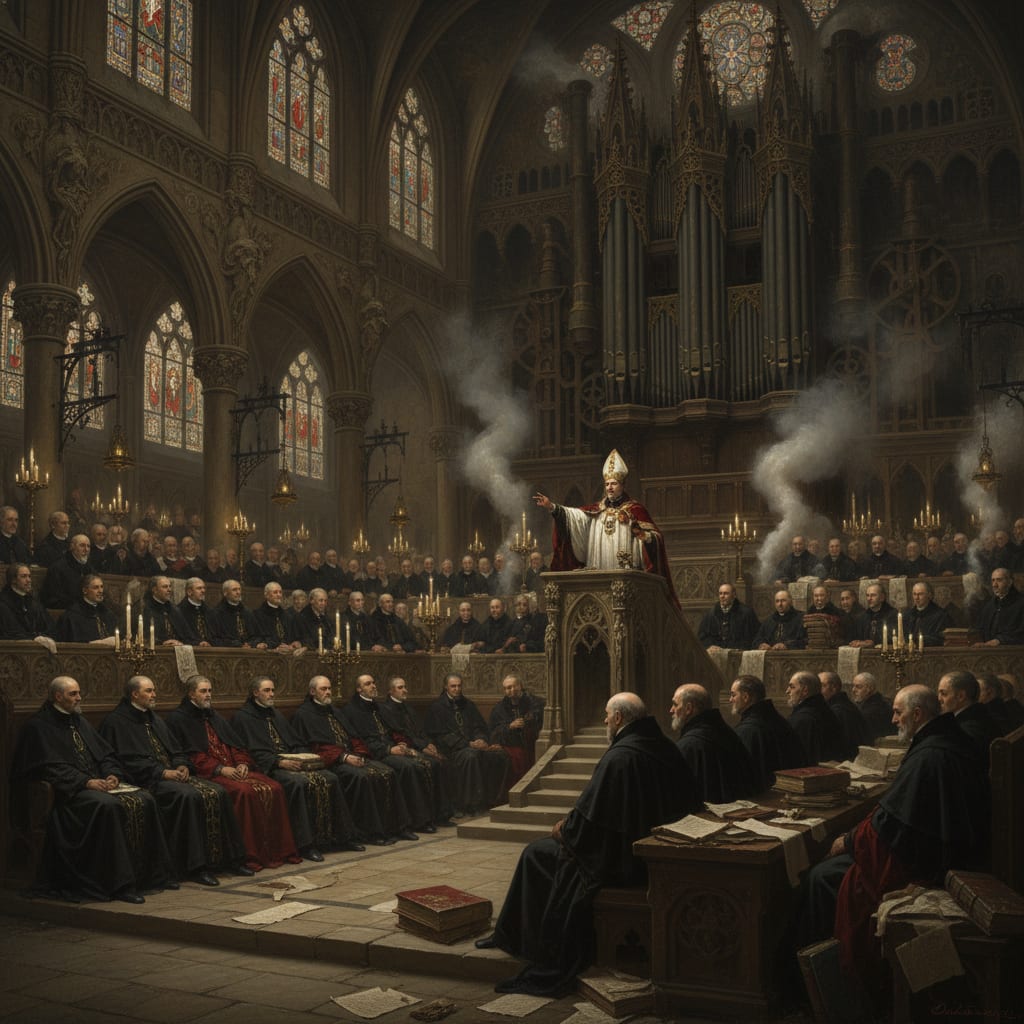
The Bureaucratic Synod
Throne and Altar, Quill and Sword
The ruling theocracy of Europa — born in blood, forged in ink, and maintained by a bureaucratic apparatus so vast that even its own clerks cannot map its full extent. As explained by its finest servant.
Codex Ref. I.3.01-004
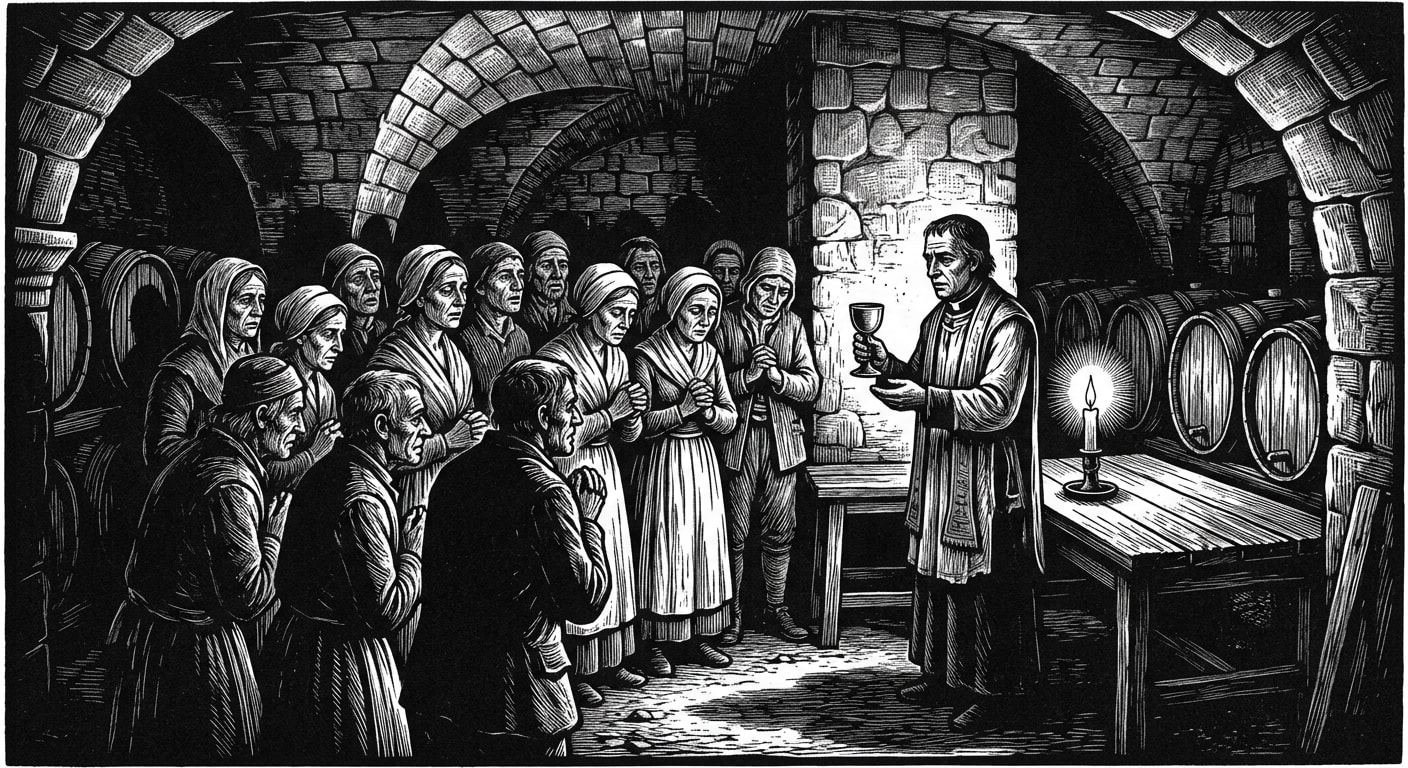
The Cellar Saints
Those who hid in basements built the floor on which the Synod stands.
The frightened faithful who descended into cellars and catacombs when Reason conquered Europe, preserved the relics, and became the soil from which the Synod grew — whether they consented to the harvest or not.
Codex Ref. IV.2.14-003
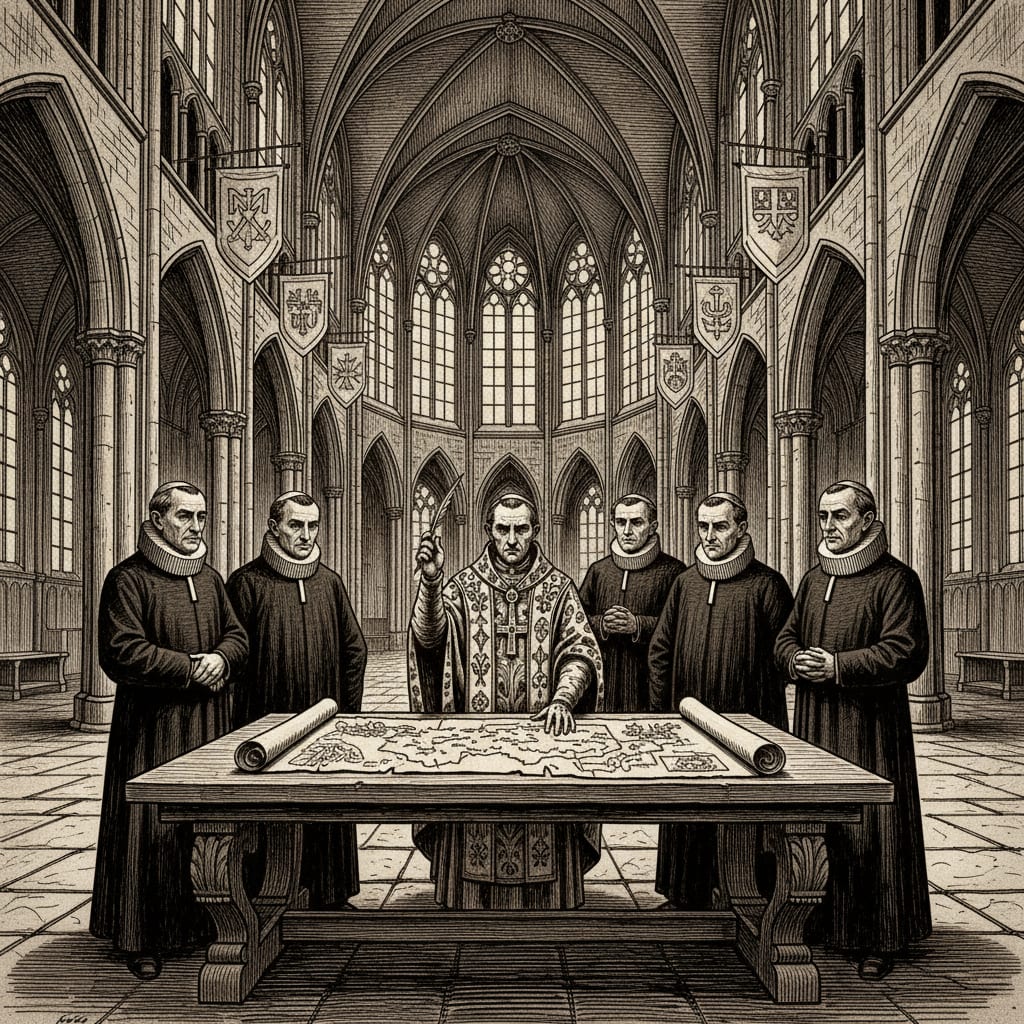
The Concordat of Strasbourg
The A.S. 90 constitutional settlement
The binding of France, Iberia, and the Rhineland into one sacramental polity — the act that turned a wartime council into a continental throne and adopted the Synod's calendar retrospectively.
Codex Ref. III.1.02-003
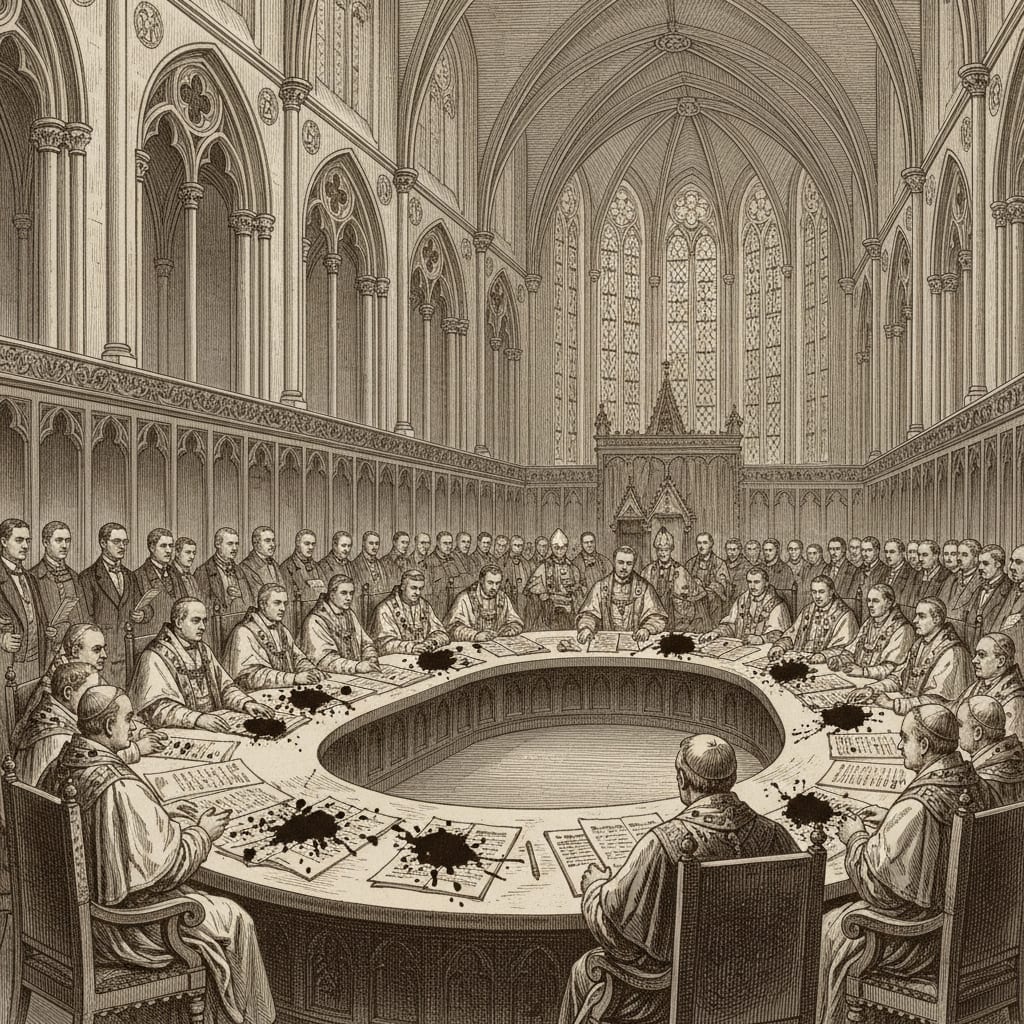
The Council of Cologne
A Masterpiece of Redaction
The A.S. 100 assembly and Edict of Cologne extended Strasbourg's claimed authority after both founders had died; its sealed minutes invite later argument.
Codex Ref. III.2.07-031
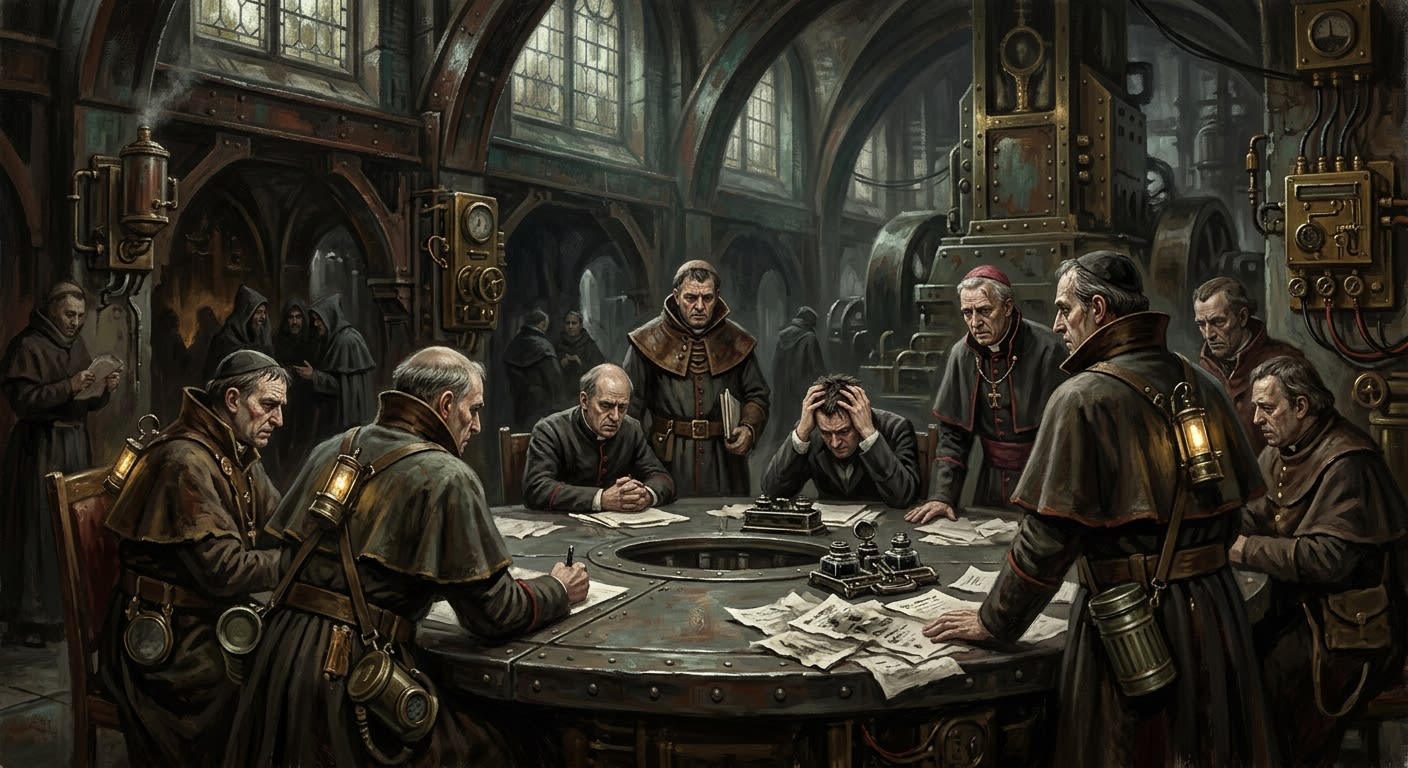
The First Council of Cologne
The yoke was imagined before it was blessed
The September A.S. 27 preliminary convocation produced seven unadopted articles, corrected minutes, and limited voluntary contacts among dioceses.
Codex Ref. VII.7.01-002
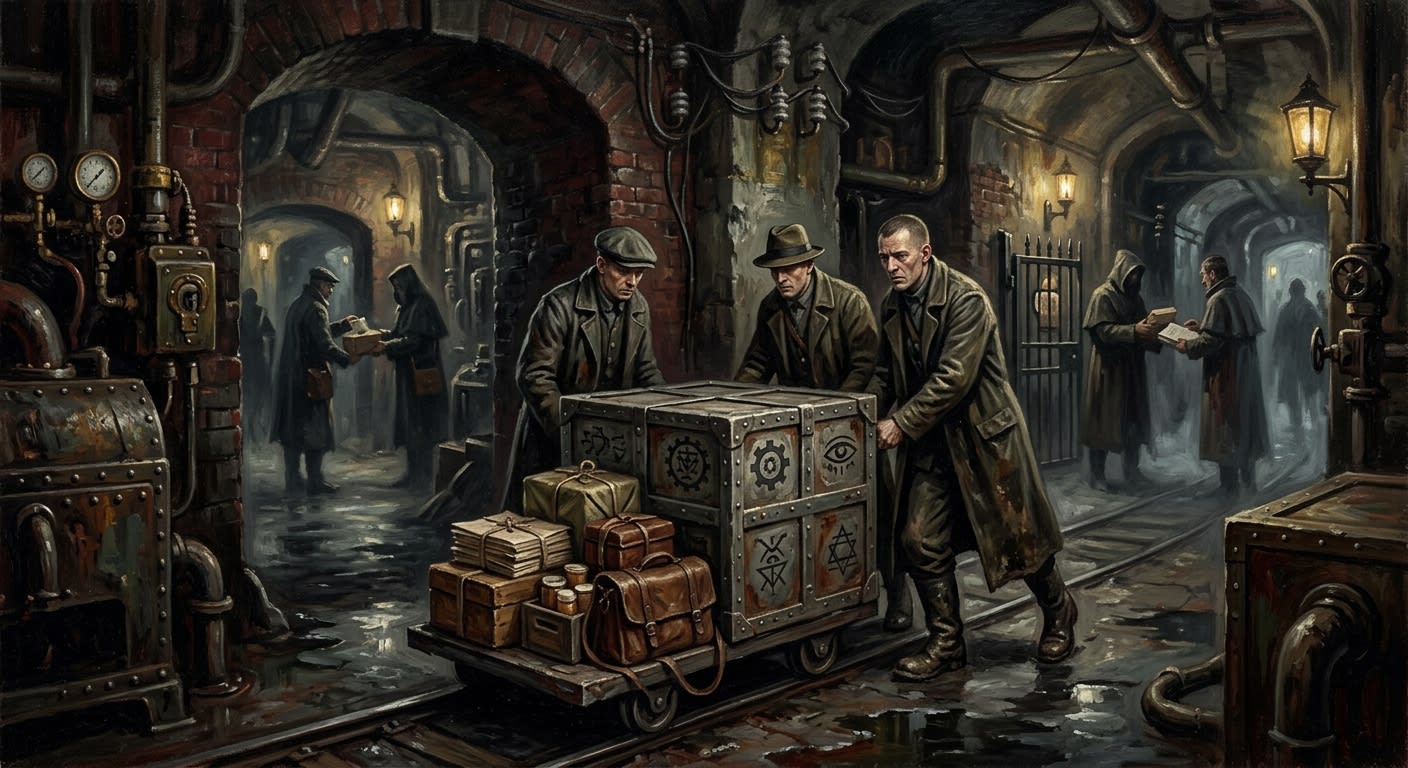
The Thread
The quiet line by which bones, names, and suspicion crossed the dark
Informal Cellar Saint transit doctrine that moved relics, names, wafers, and warnings through trusted cellars from A.S. 30 until the Sundering tore the roads open.
Codex Ref. XIII.1.91-045
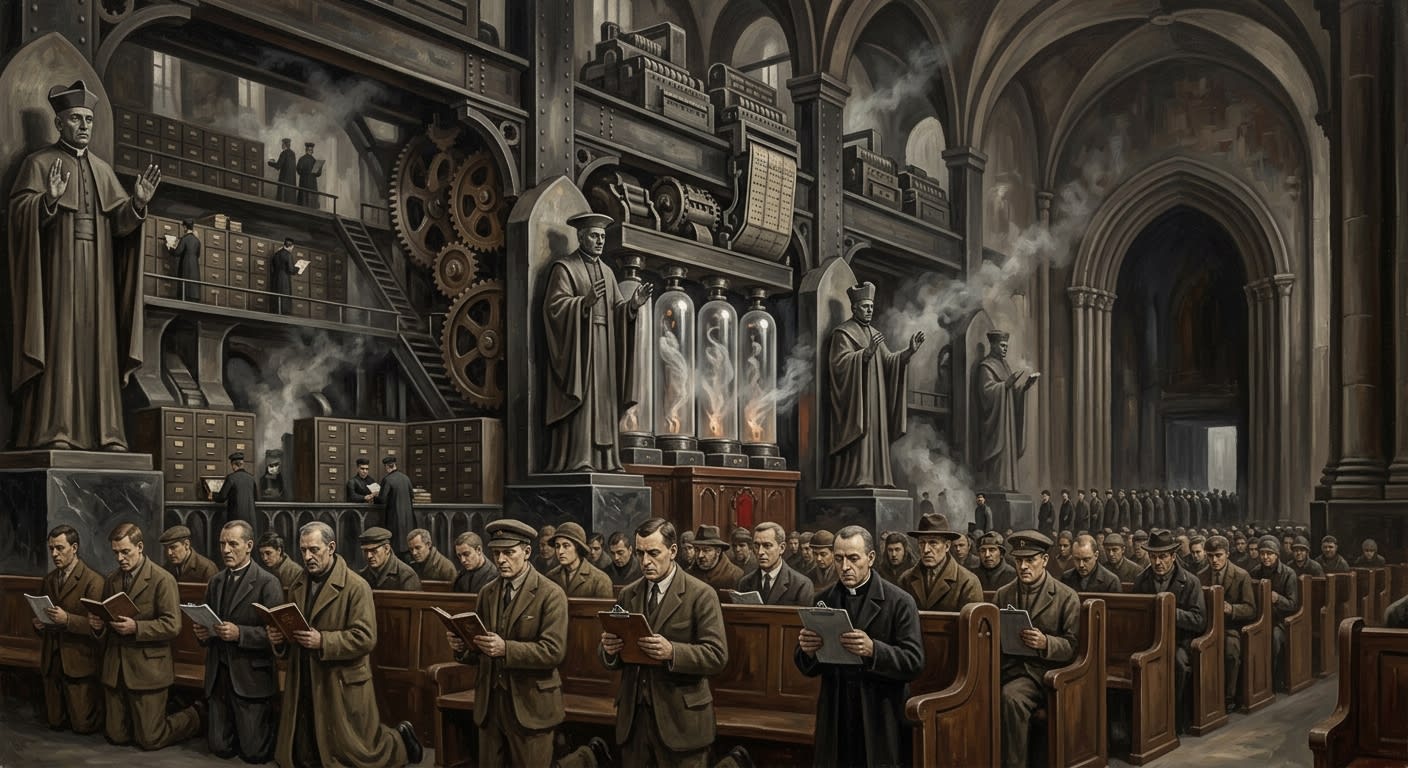
Theocracy
Piety with pipes, doctrine with payroll
Theocracy is the Synod's mature art: altar made warrant, prayer made schedule, fear made grammar, and every soul brought under ratified custody.
Codex Ref. XIII.1.01-201