

Reverse Index
Referencing “Marrowgate”
Every codex entry that links to Marrowgate. 71 entries.
Return to Marrowgate
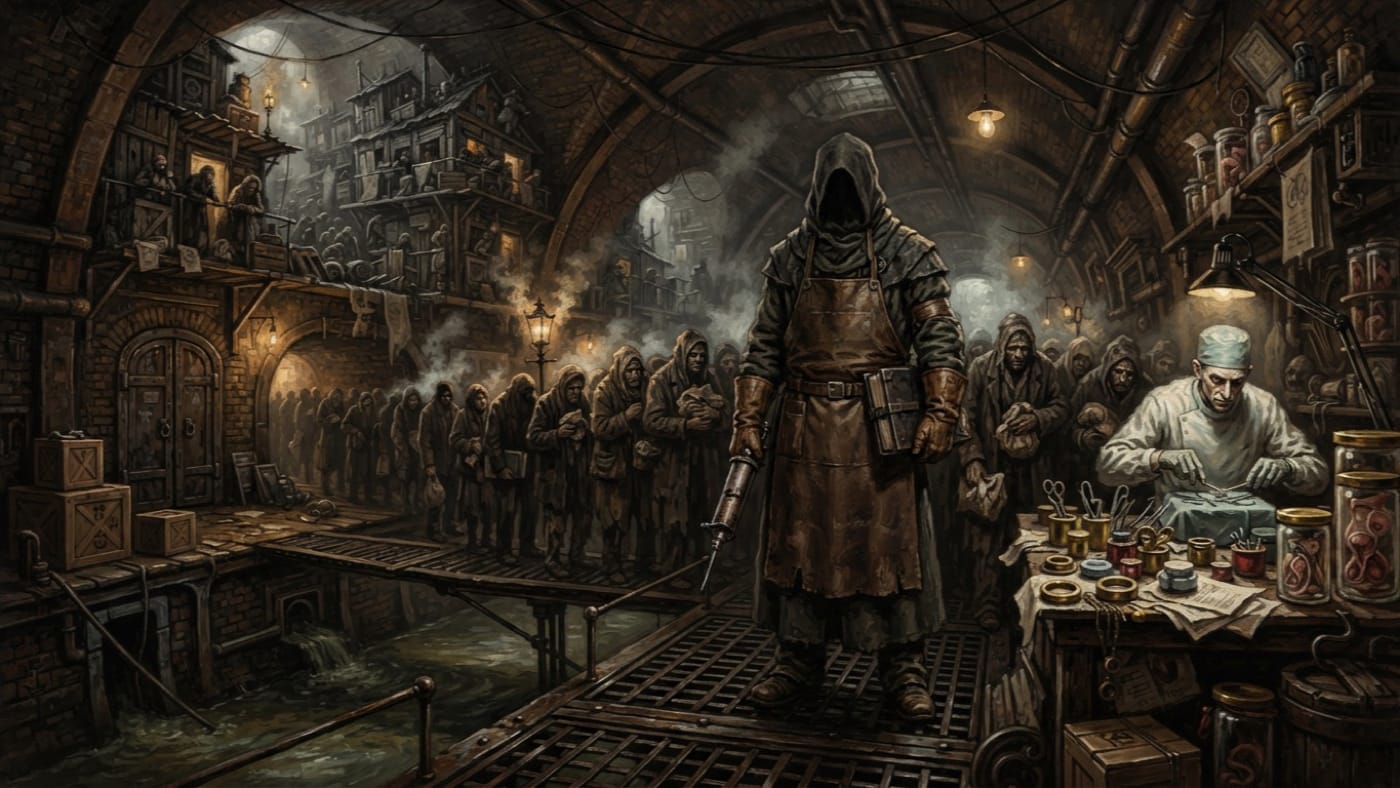
"Needle-King" Pavo
The quiet authority beneath Marrowgate's white lines
Pavo runs Marrowgate's Stitchmarket, selling the permissions lawful offices withhold. The Chapter calls this quietness weakness; Purity calls it competence. I have found Purity's reading more useful.
Codex Ref. III.2.01-201
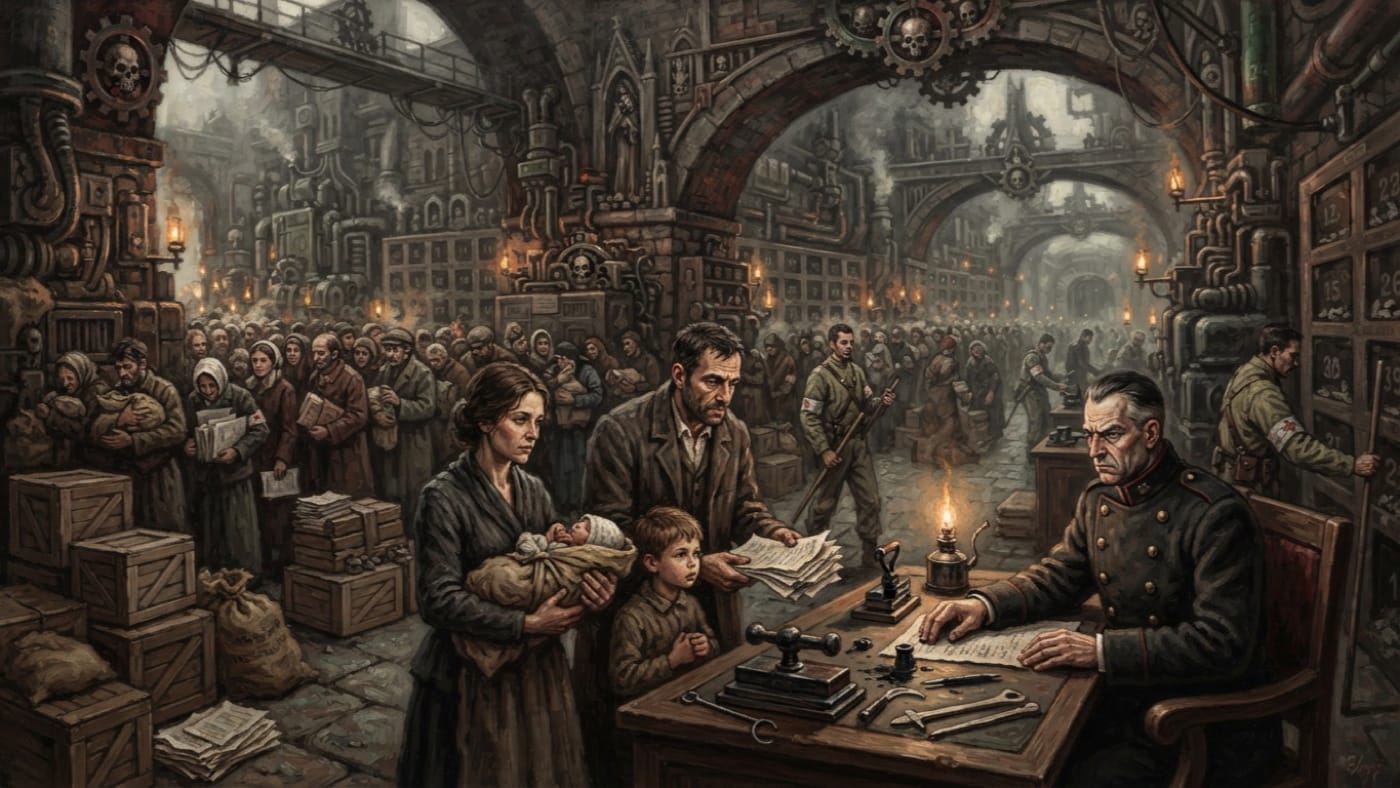
A.S. 78 Joint Classification Mandate
Five categories for the dead, one more queue for the living
The A.S. 78 emergency mandate made the dead controlled goods: five classifications, licensed mortuary clearance, and grief that could finally be billed.
Codex Ref. XIII.1.92-078
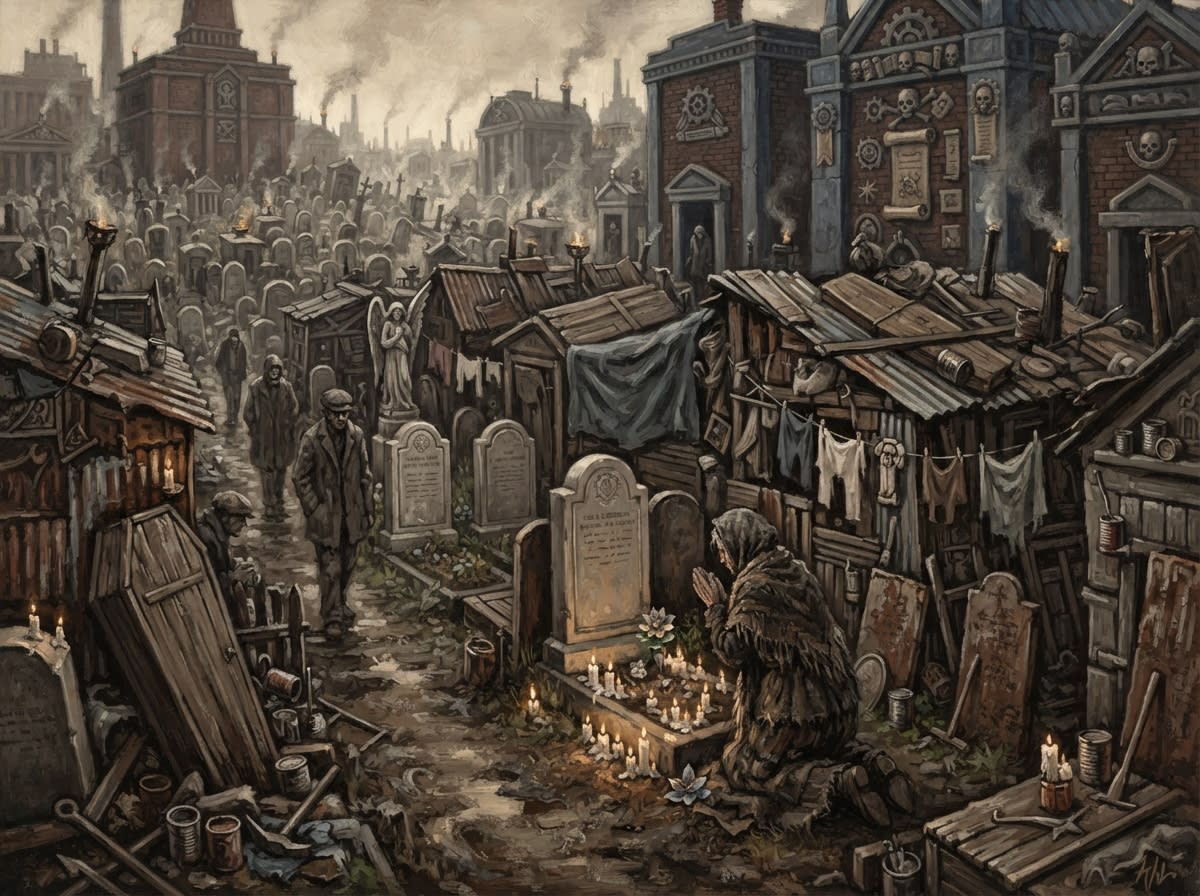
Anchor Graves
Where burial right does the work housing law refuses
Anchor graves are lawful family plots whose burial privileges let grave-field lanes pretend that shacks are caretaker shelters rather than homes.
Codex Ref. XIII.1.78-017
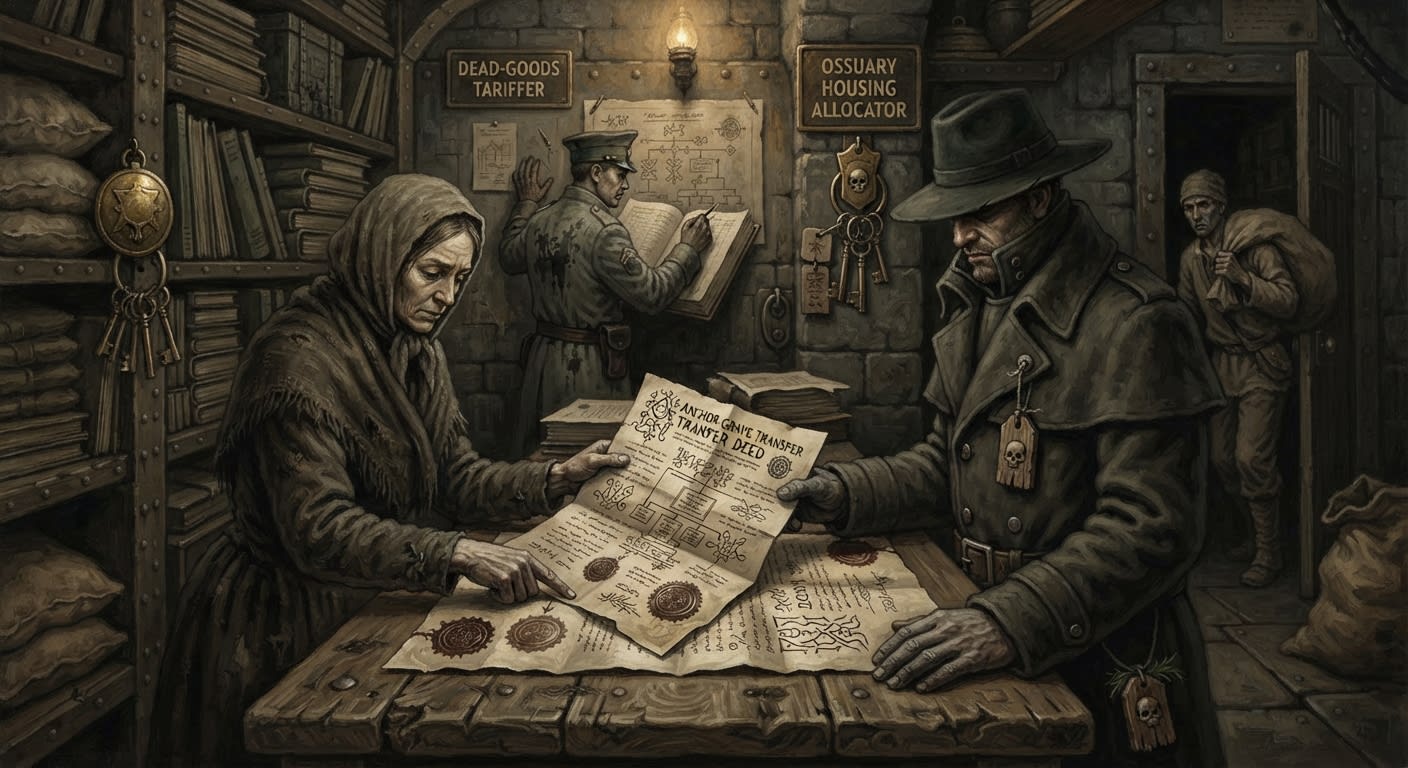
Anchor-Grave Transfer Deed
Where the grave becomes housing because hunger signs neatly
The anchor-grave transfer deed converts a family's burial claim into permitted ossuary presence, teaching grief to become tenancy and tenancy to remain revocable.
Codex Ref. XIII.1.78-178
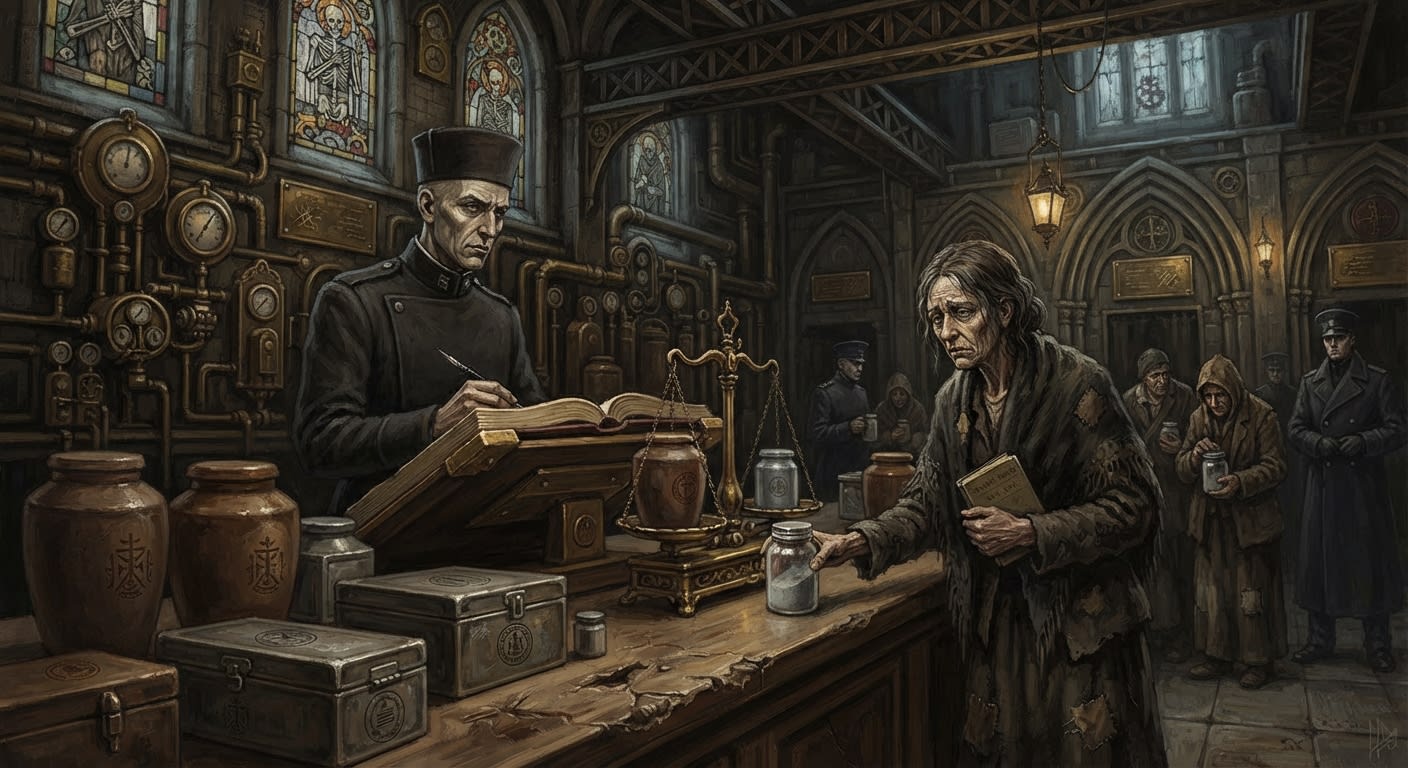
Ash-Credit
The dead are tender once Tithes finds a scale
Ash-credit is the Synod's devotional collateral, converting cremains, saint-dust, and pledged future remains into bread, grace rations, and obligations the dead cannot refuse.
Codex Ref. VI.3.01-002
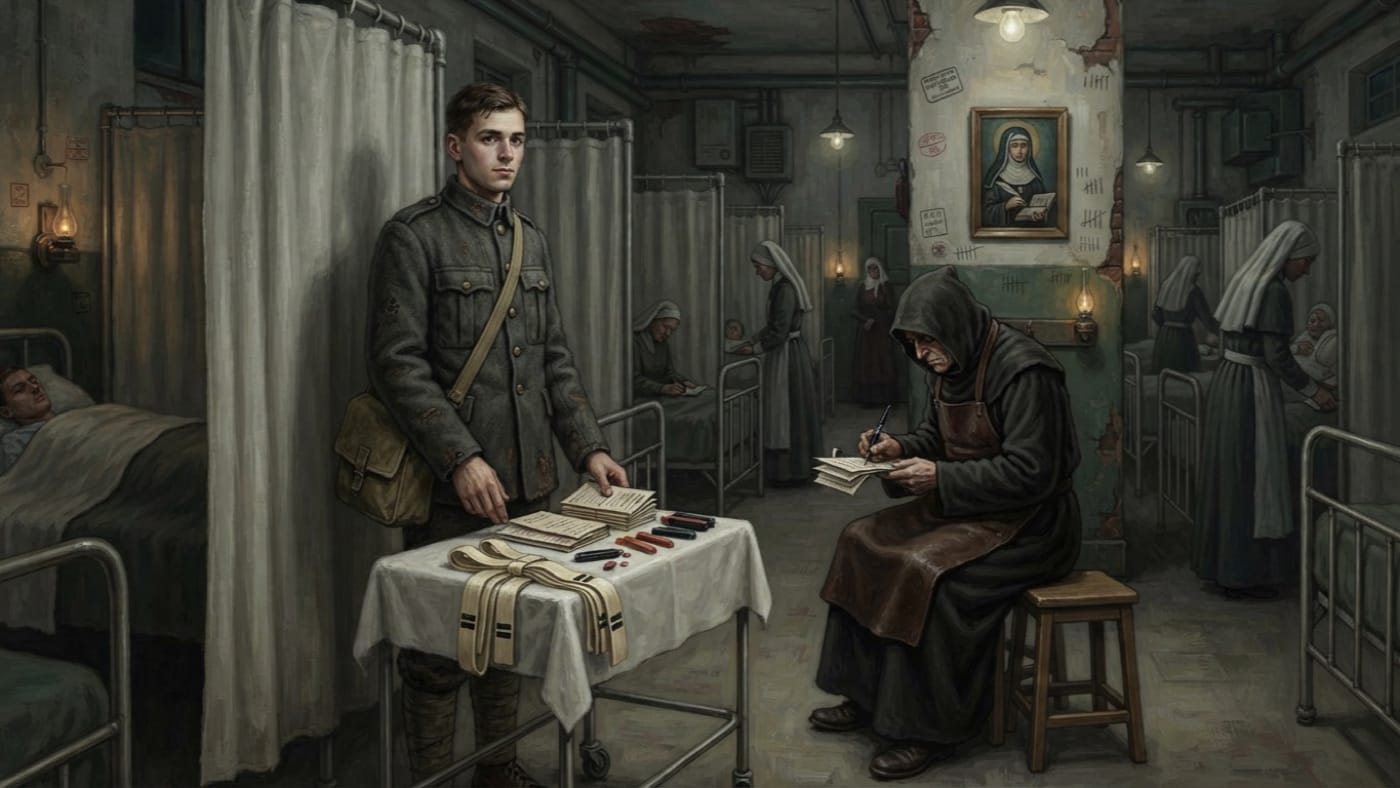
Bedside Runner
Close enough to hear everything, junior enough to bear the blame
The Bedside Runner carries ribbons, wax and forms for terminal confessions. The Bureau of Mercy's entry rank hears everything, seals nothing and supplies the second stool.
Codex Ref. XII.12.02-001
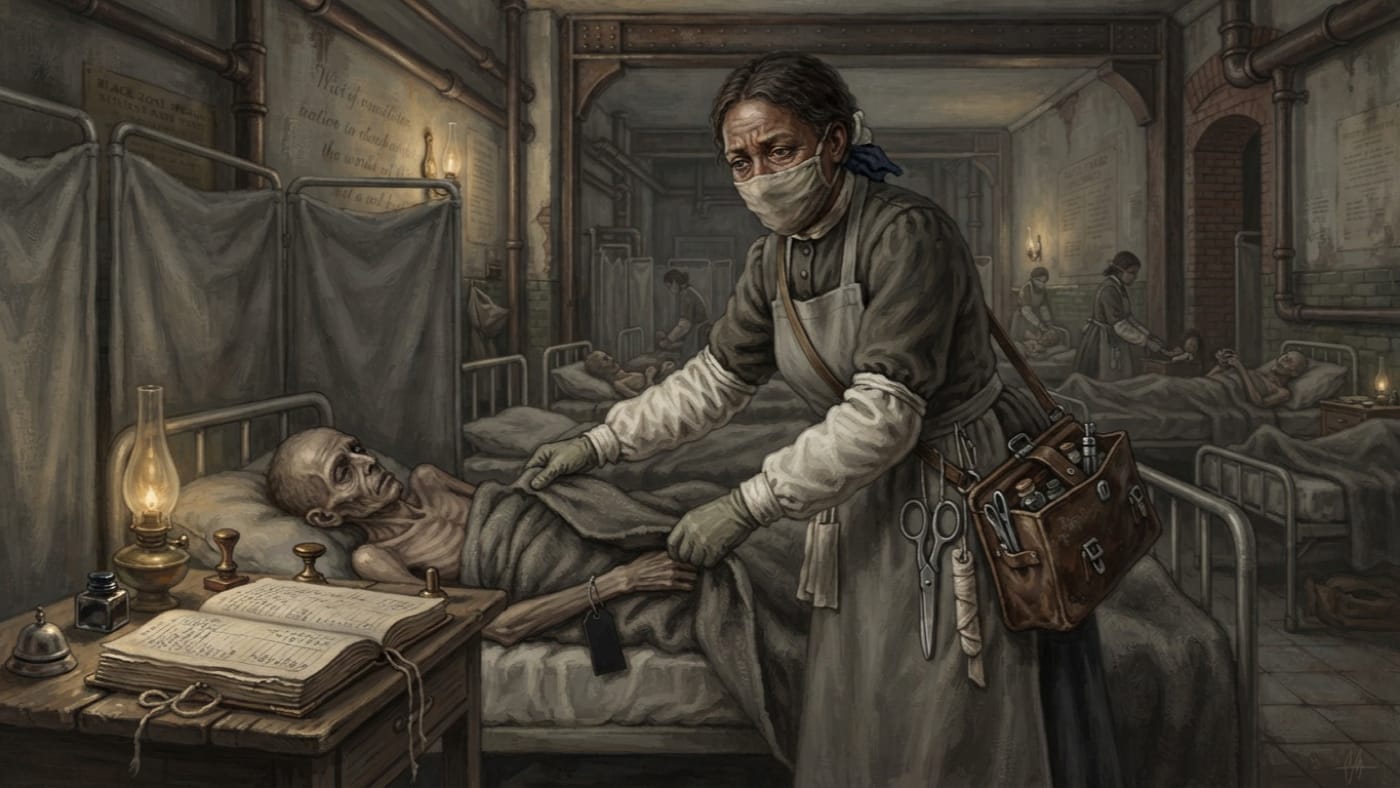
Black-Zone Specialist
Behind the screen, every kindness needs a signature
The Black-Zone Specialist serves Mercy Ward patients classified as terminal, contagious, anomalous, inconvenient, or beyond allotment. Every kindness needs a signature; every death must balance the ledger.
Codex Ref. XII.6.04-002
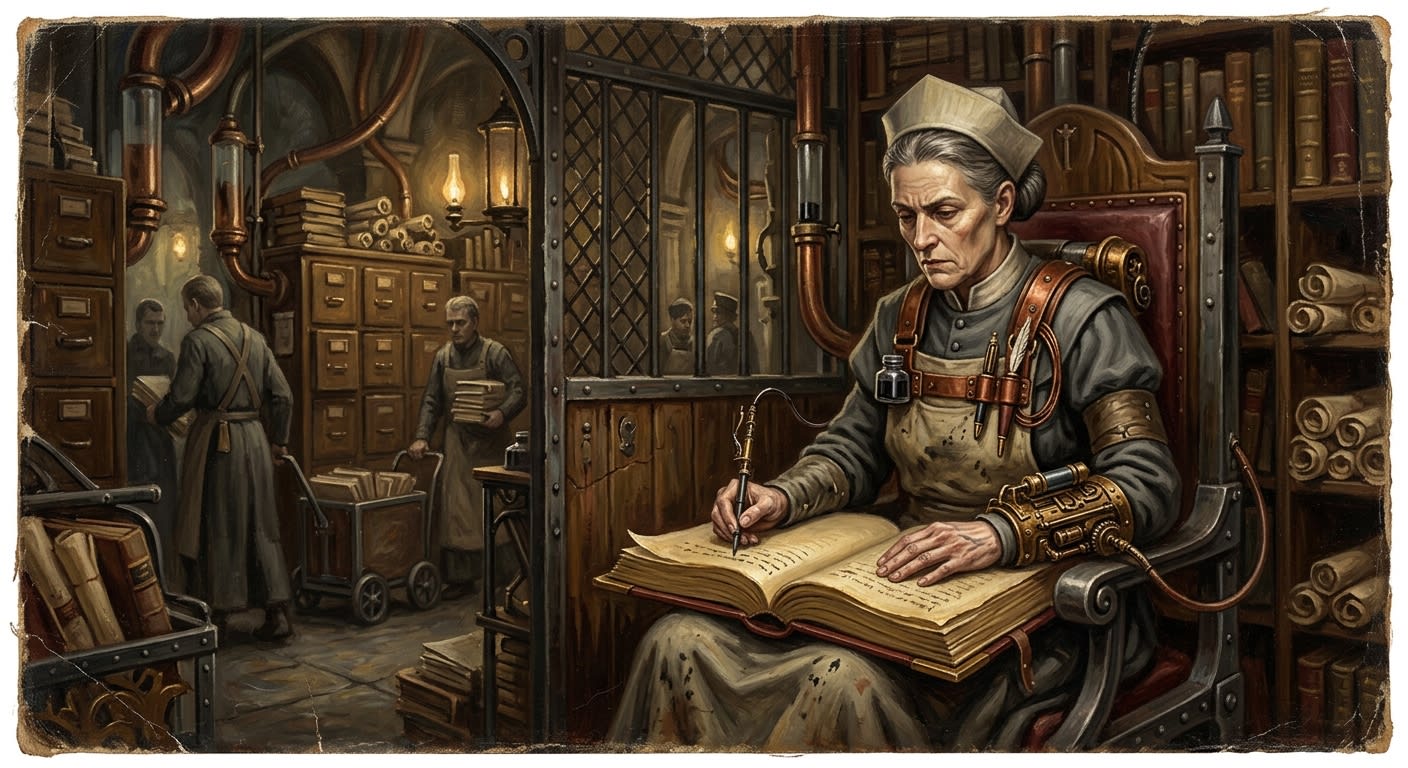
Blessed Vellum-Anna
The quiet quill that made mercy admissible before it made it kind
Blessed Vellum-Anna is the unauthenticated but indispensable patron of Deathbed Confession Harvesters, where last breaths become comfort, evidence, and paperwork.
Codex Ref. III.2.01-106
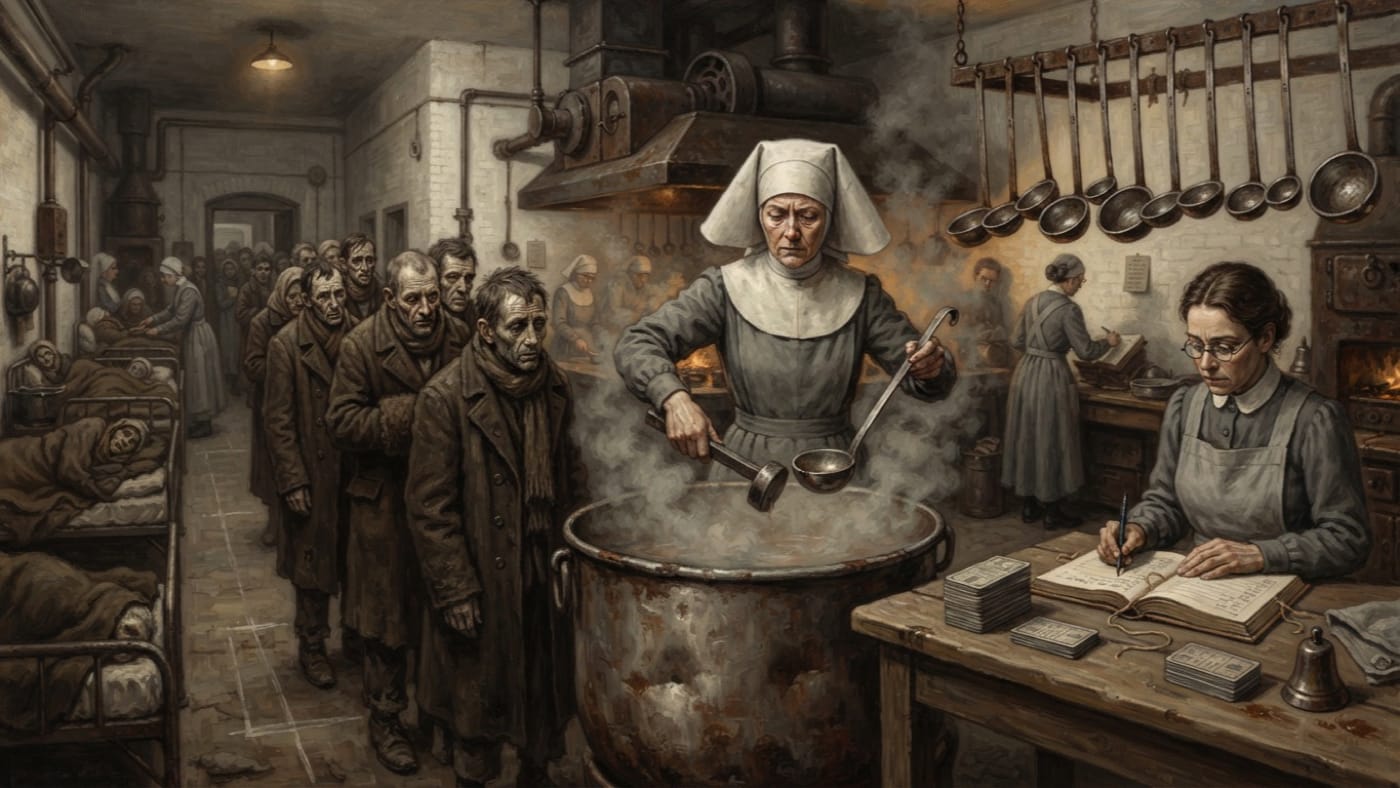
Blessing of the Ladles
Once a year the Church kisses the ladles; the measure remains fixed
An A.S. 201 survey of Saint Marrow's Mercy-house feast: ladles washed, counted, kissed and struck; the bowl is full, provided the hunger is registered.
Codex Ref. XIII.1.89-201
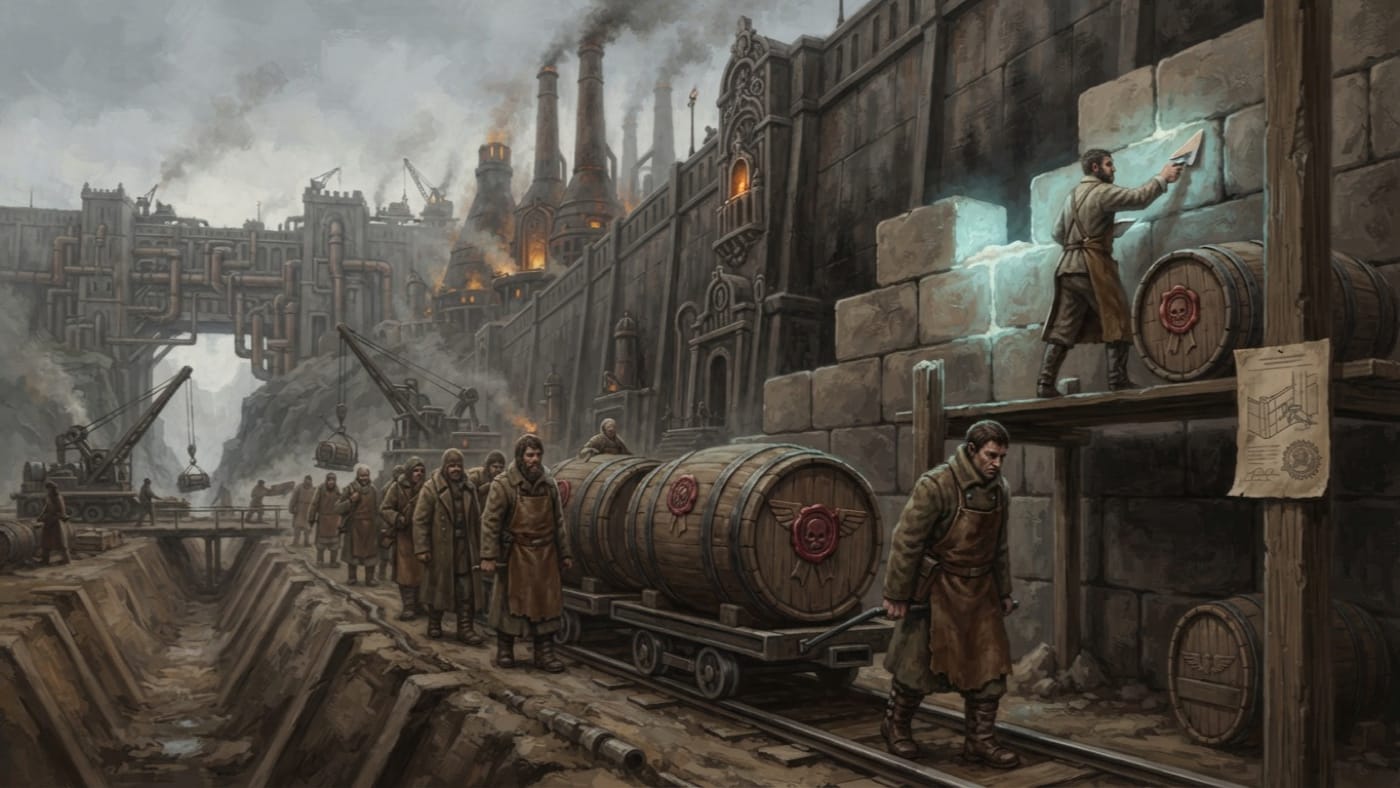
Bone-lime
The saint bears weight; the barrel bears a seal
Sanctified lime rendered from licensed relic fragments and mixed into mortar for the Sagittal Line. The saint bears weight; the barrel bears a seal; the parish receives a notice.
Codex Ref. XIII.1.99-002

Bone-Lime Consortium
The dead supply the material; the living supply the obedience
Marrowgate's informal alliance of kiln foremen, carters, prelates and ash-credit factors turns casualties into lime and civic dependency into power. Its accounts prefer anonymity; the Marrowwind keeps restoring names.
Codex Ref. XII.31.07-201
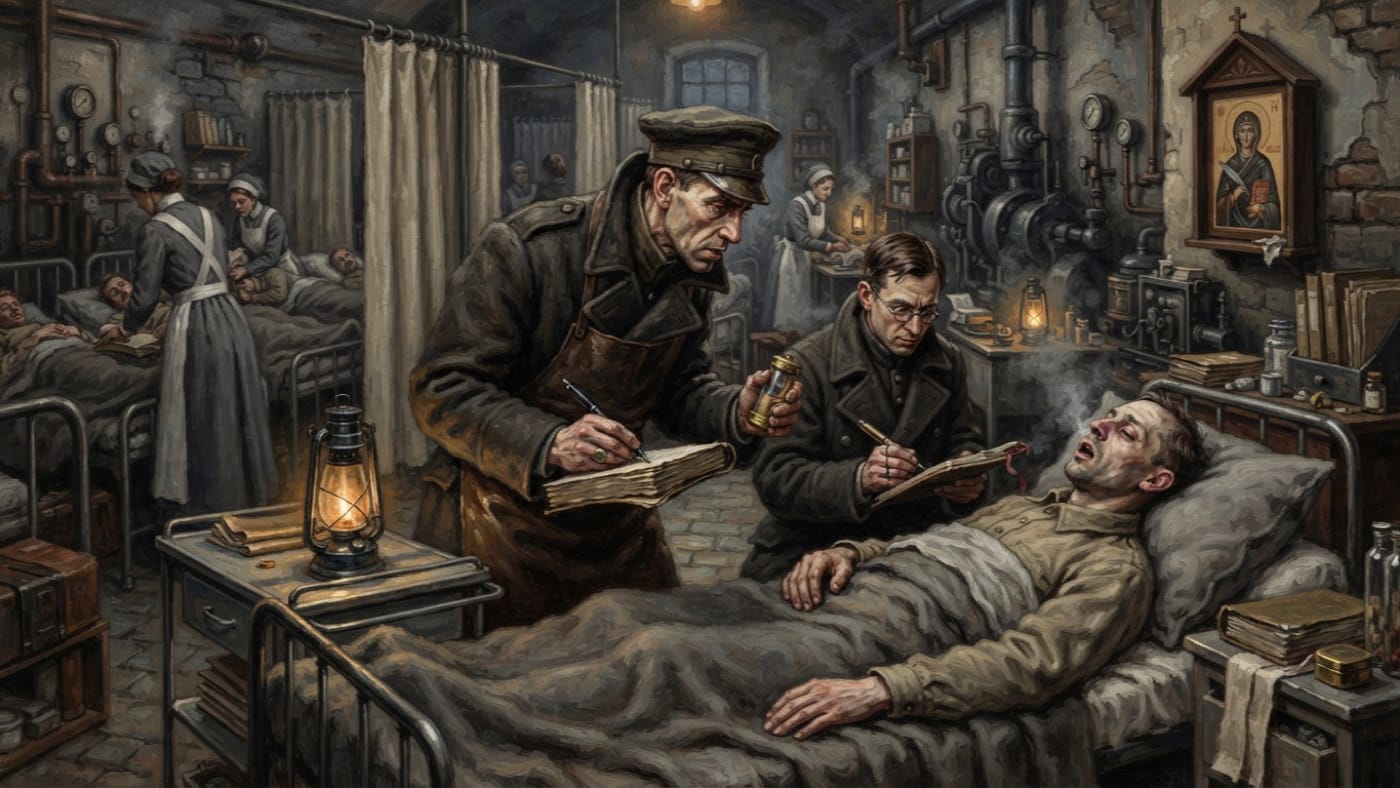
Butchers
Names before breath fails
The Butchers are information-first Deathbed Confession Harvesters, extracting names before comfort under the common seal. Their questions are sharp; their membership is unrecorded.
Codex Ref. XII.12.03-001

Caretaker Saints
Mercy with a rent book, a candle, and no licence whatsoever
Caretaker Saints are the conscience-stricken branch of Grave-Field Shanty Brokers: unchartered grave-lane landlords who keep rents low, names whispered, and mercy barely deniable.
Codex Ref. XII.27.02-001
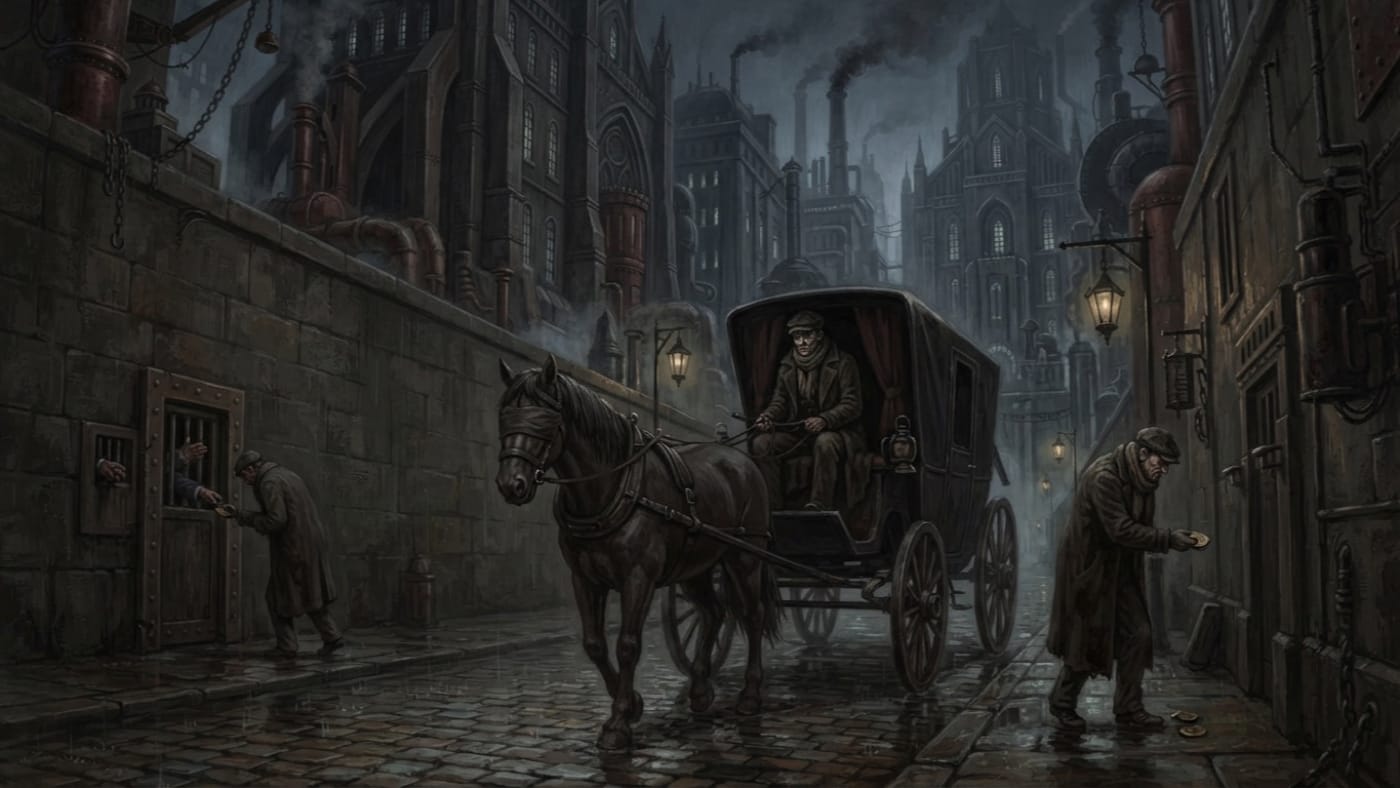
Carters and Runners
One pickup, three coins, and a wagon worth more than its hand
Carters and Runners are the Bureau of Shadows’ middle hands: entrusted with short routes, single pickups, and the second coin that buys a gate captain’s forgetting.
Codex Ref. XII.14.04-002
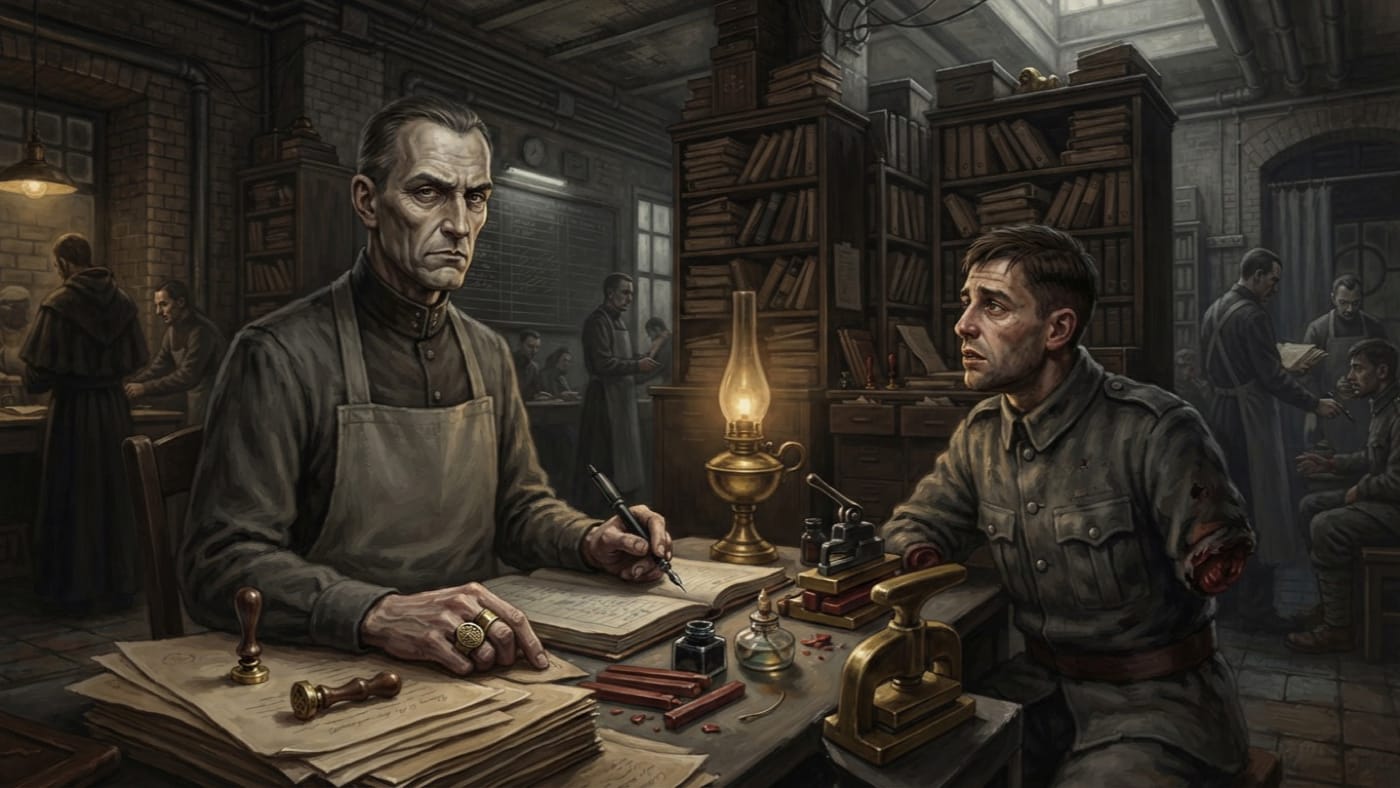
Chief Sealhand Orin
The saw removes tissue; his seal removes status
Chief Sealhand Orin commands Marrowgate's surgeon-notaries. His ring makes surgery lawful, the cut-stamp makes a patient someone else, and mercy waits for authentication.
Codex Ref. III.2.01-201
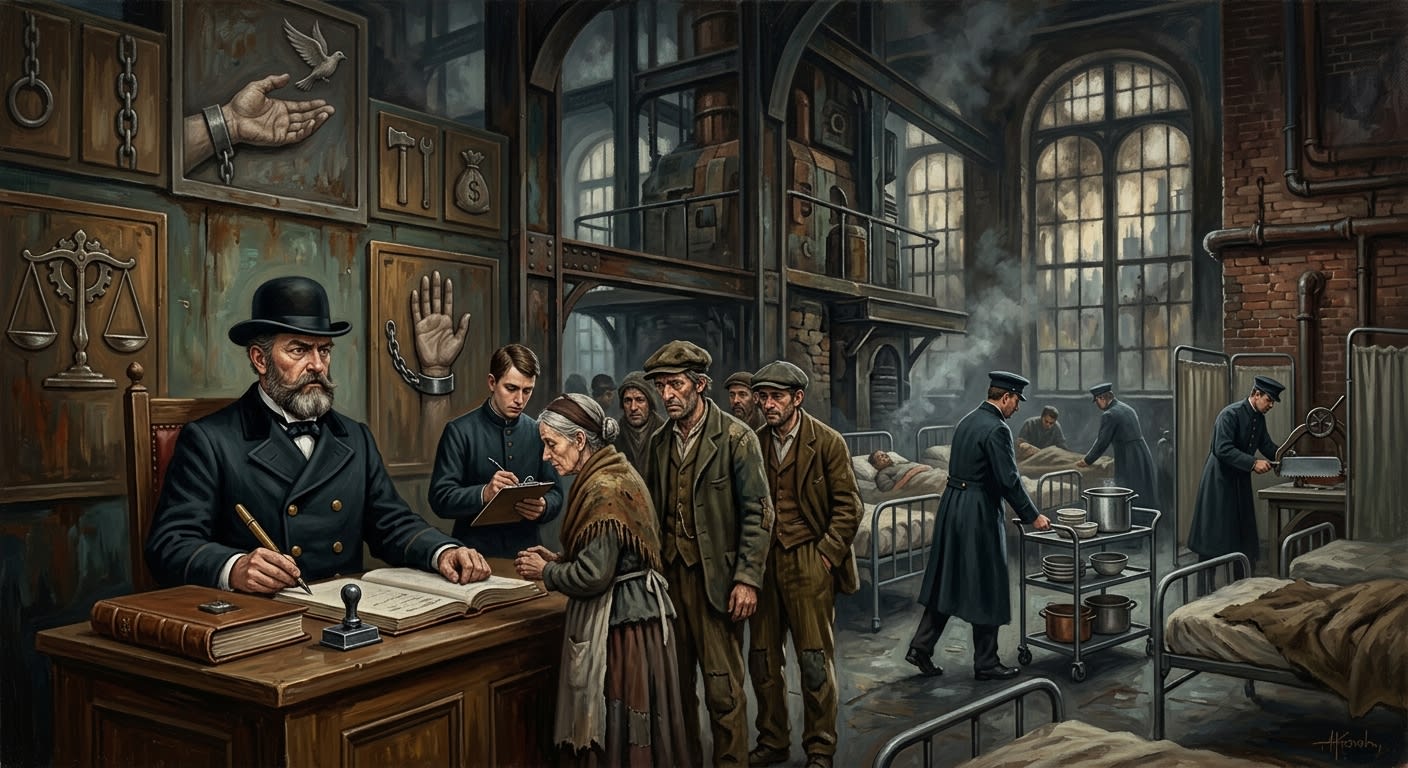
Civic Triage Tribunal
The court where wounds learn their price before they heal
Marrowgate's Civic Triage Tribunal turns beds, saws, broth, labour, debt, and death into rulings; mercy enters only after allocation.
Codex Ref. XIII.1.88-083
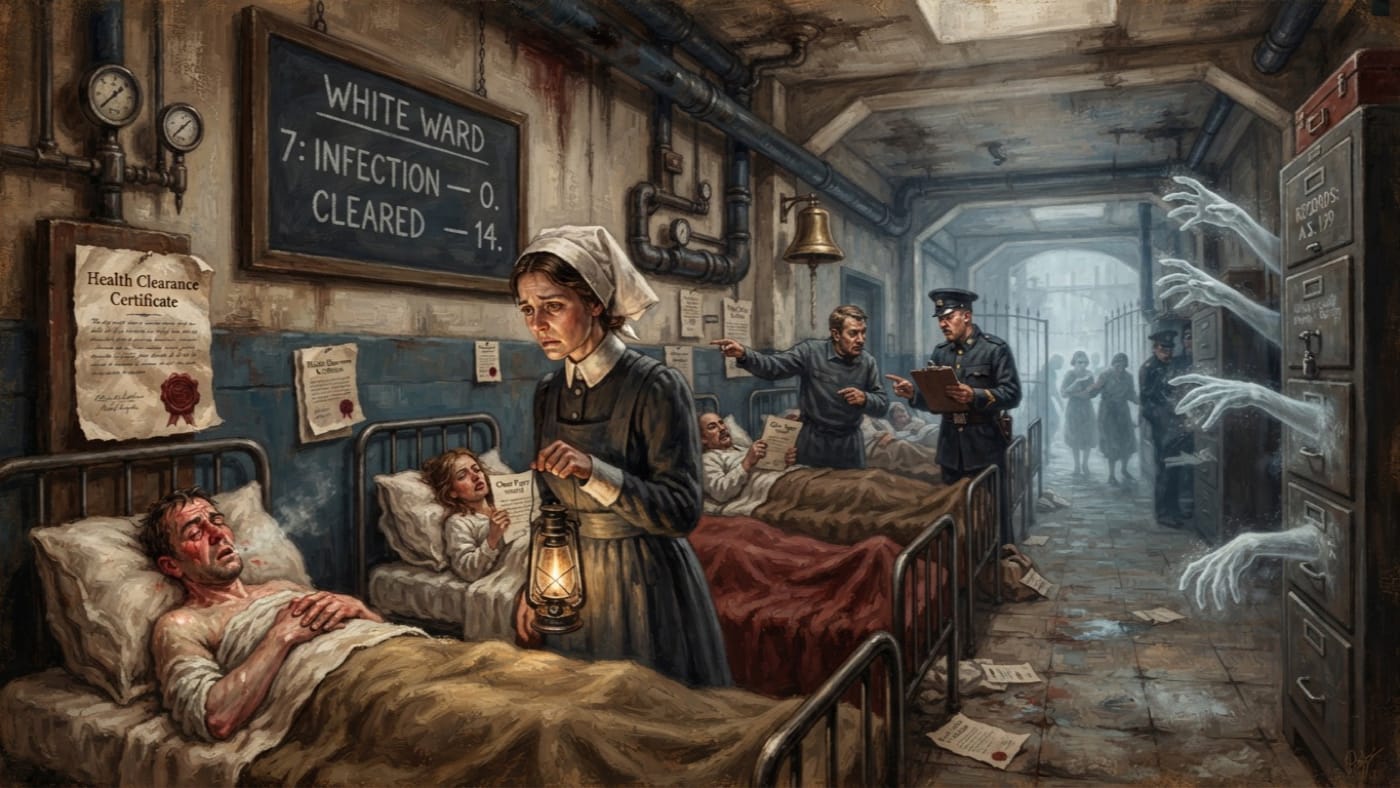
Clean Paper Plague
The certificate passed inspection. The fever passed the gate.
In A.S. 199, Marrowgate certified feverish patients as healthy and let them through its cordons. The official audit found tolerable fraud; the Marrowwind corrected the ledgers without such restraint.
Codex Ref. VII.4.20-199
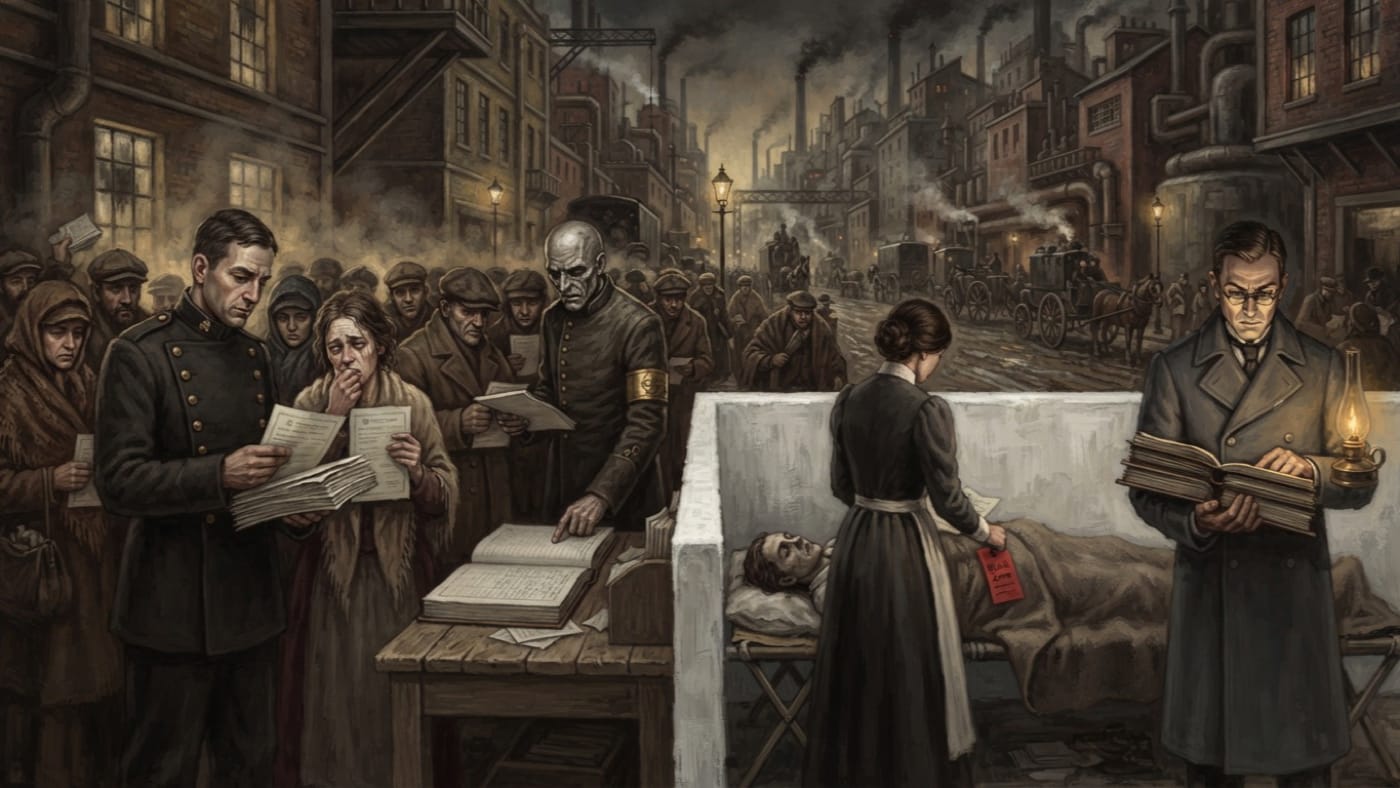
Clean Paper Plague of A.S. 199
The paper was clean. The patient was dying.
In A.S. 199, forged health clearances crossed Marrowgate's cordons while certified patients died. The ensuing audits exposed a system that trusted the seal more readily than the sick.
Codex Ref. VII.4.20-199

Dead-Goods Tariffer
The grave is a permit; the permit has a price
Bureau-licensed bone classifier. He decides what the dead become — mortar, monument, or ornament — and does not look up from his seal press.
Codex Ref. XII.11.01-001

Deathbed Confession Harvester
The quill outlasts the patient; the Record outlasts both
Two thousand four hundred scribes posted at the bedsides of the dying, ensuring no death in Synod jurisdiction passes unfiled. The Record does not grieve. The Record does not wait. The Record simply continues.
Codex Ref. XII.12.01-001
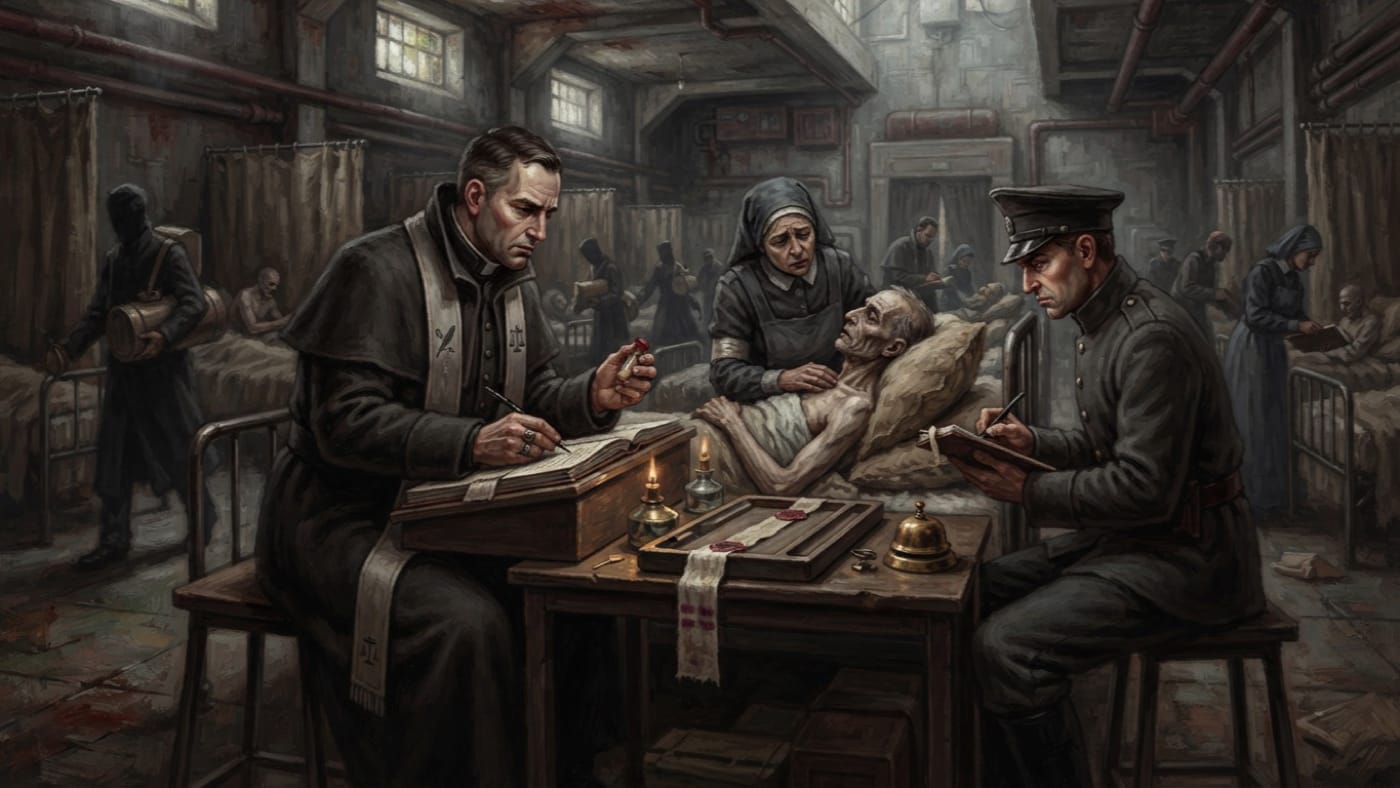
Double-Witness Protocol
Two seals for the truth, two names for the blame
After the A.S. 134 Mercy Ward Purge, terminal confessions require a second official, a countersigned ribbon, a separate bell-time entry and two seals. Mercy now has two names to blame.
Codex Ref. XIII.1.98-134
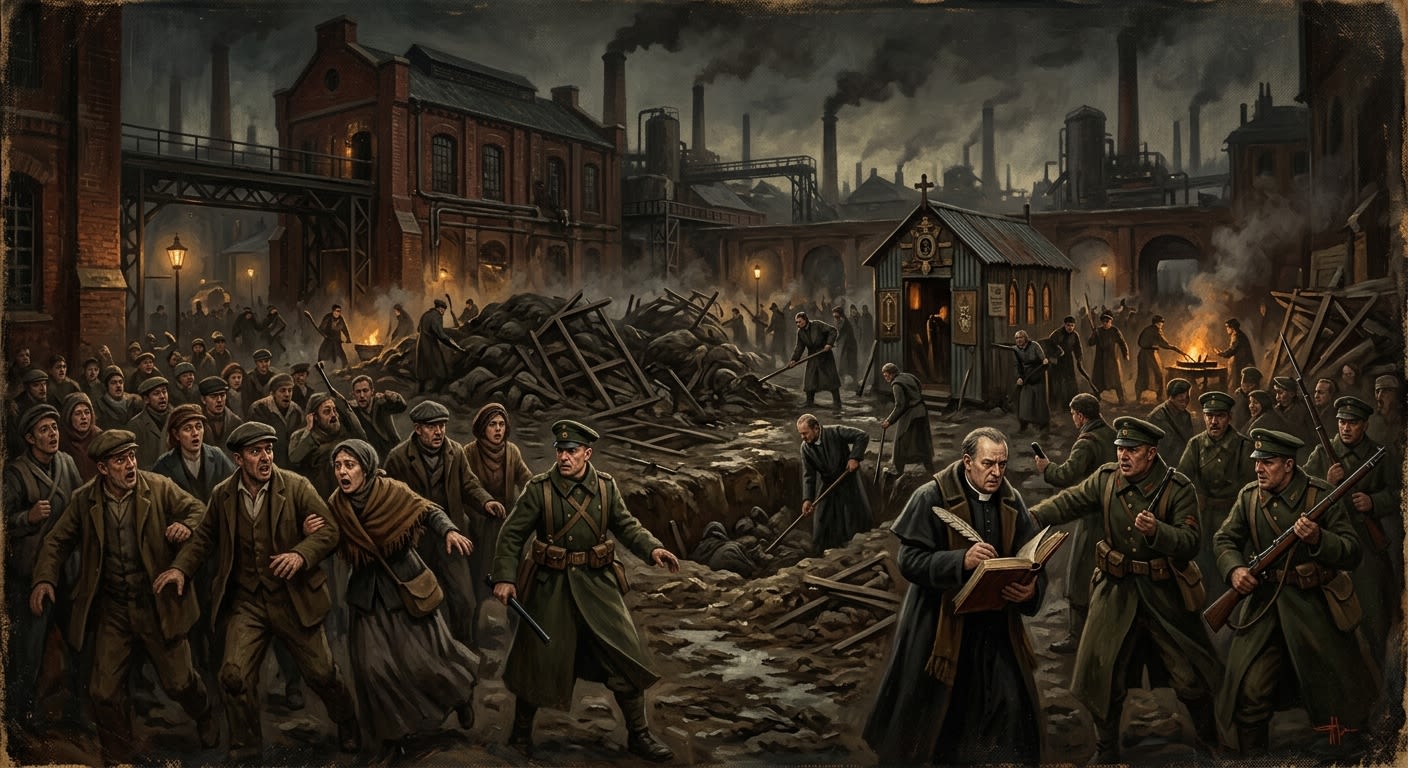
First Ossuary Panic
The dead spoke, and the Synod answered with a form
A.S. 78 Rhine corridor mortuary panic in which overcrowded pits began sounding after dark, forcing burial clearance, tariff-chapels, and the Dead-Goods Tariffer into law.
Codex Ref. VII.4.25-078

Forewoman Rute
Collector of bone rent in the city she makes washable
Forewoman Rute collects bone rent for Marrowgate's Bone-Lime Consortium. She denies knowing whose remains inhabit the ward walls; the city remains courteous and pays.
Codex Ref. III.3.07-002
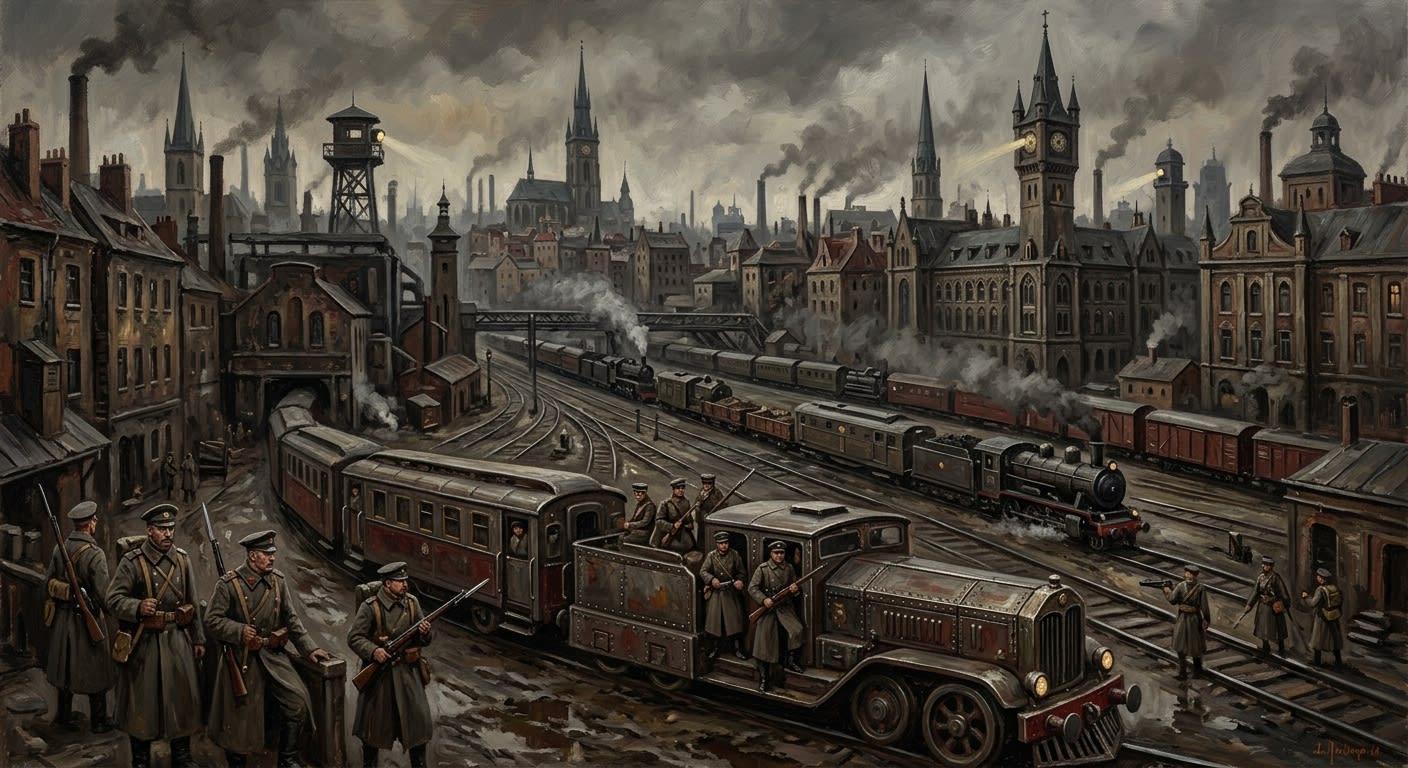
Forward Heartlands
The held breath behind the gunline
Zone 3 is the Synod's forward heart: Prague's corrected beauty, Bratislava's damp throat, Budapest's divided engine, Warsaw's teeth, Sofia's hard face, and every ugly town that keeps the Line fed.
Codex Ref. II.3.00-201

Grave-Field Shanty Broker
Where the Dead Own the Ground and the Broker Owns the Quiet
The officially unacknowledged profession administering forty thousand souls in the consecrated dead-lands the Bureau cannot legally rezone, will not formally notice, and cannot do without.
Codex Ref. XII.21.01-001
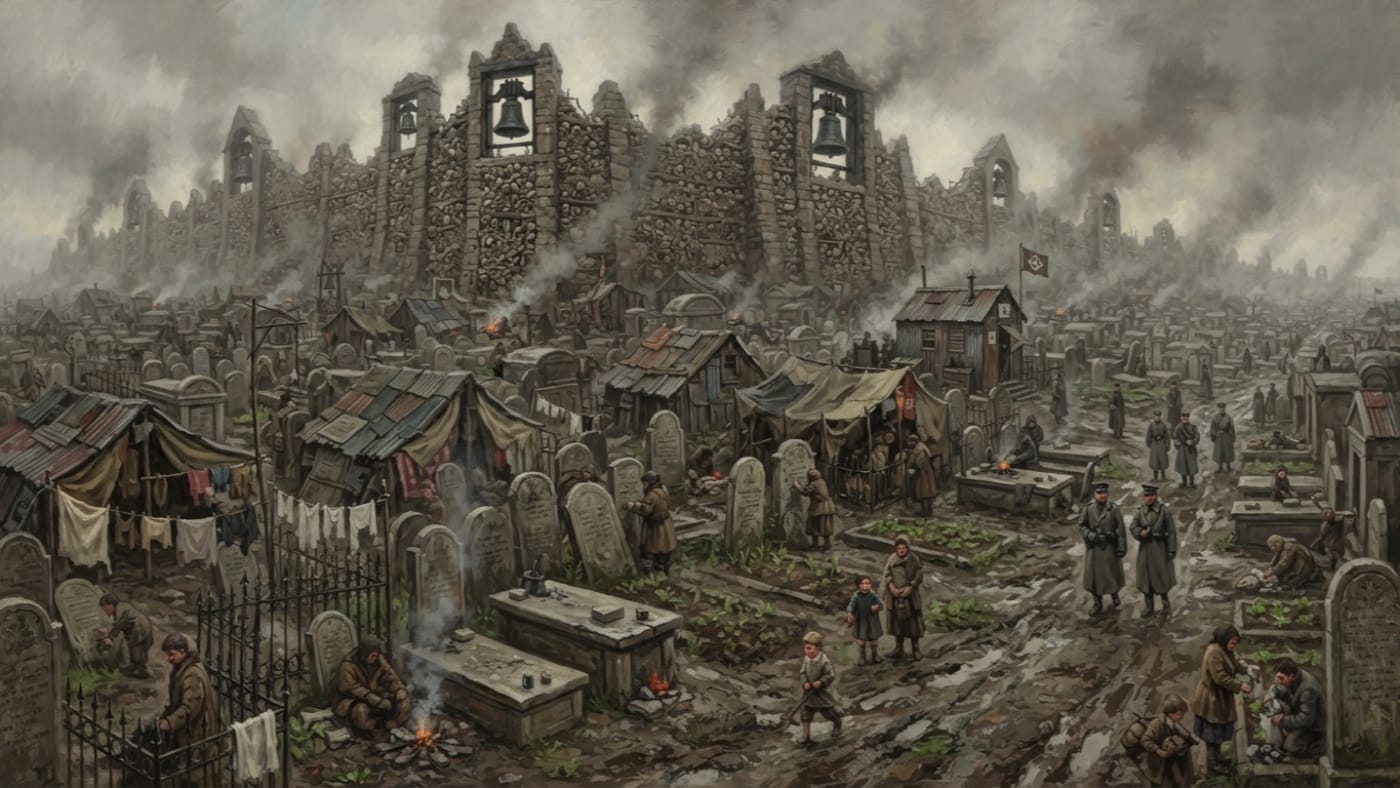
Grave-Fields
Occupancy temporary. Residents permanent.
Grave-fields house the living among the dead outside ossuary walls. Dry ground, bell coverage and renewable permits keep temporary residence permanent.
Codex Ref. III.2.04-1252
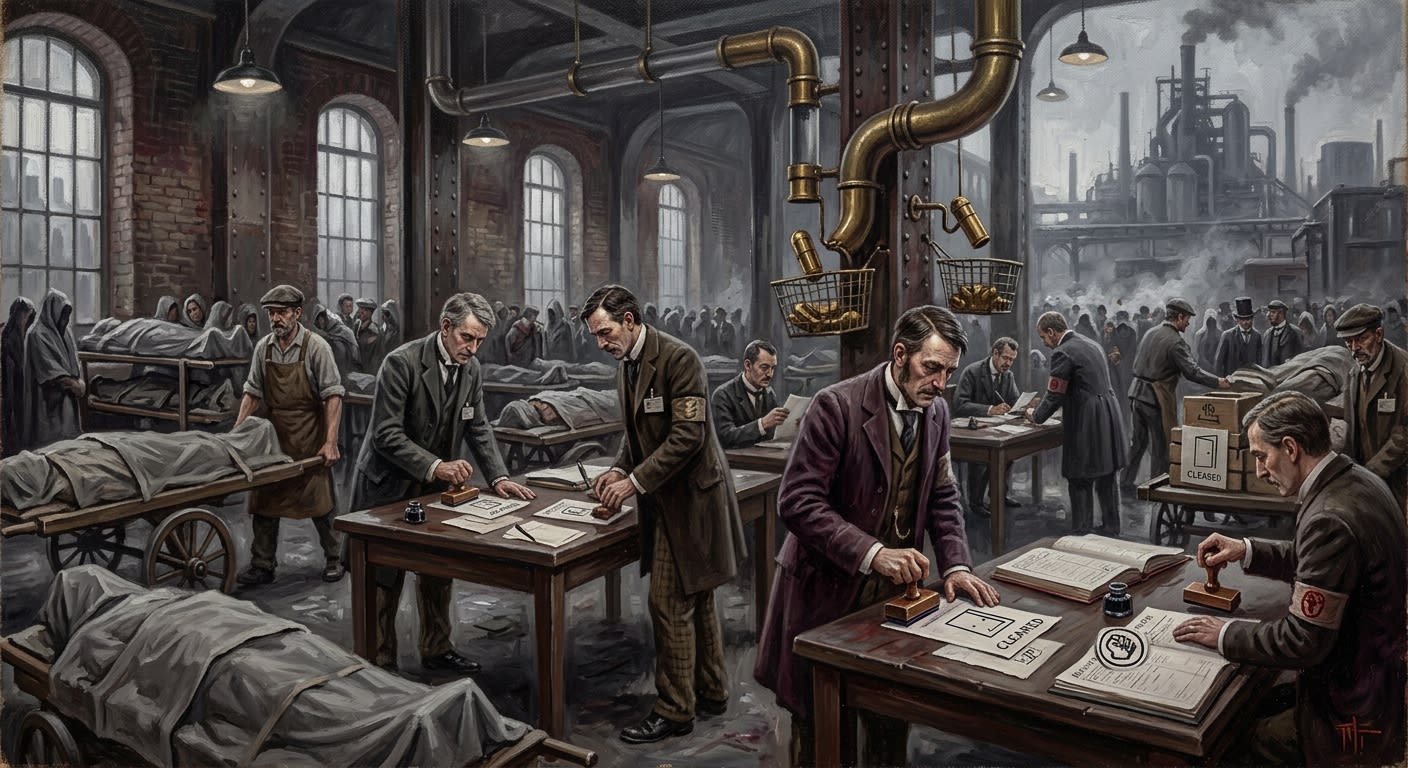
Gray Clearance
The winter mercy that moved bodies faster than names could follow
Gray Clearance was the A.S. 157–158 emergency mortuary protocol that reduced five corpse classifications to CLEARED or HELD, saved the living, and taught grief to pay for speed.
Codex Ref. VII.8.10-021
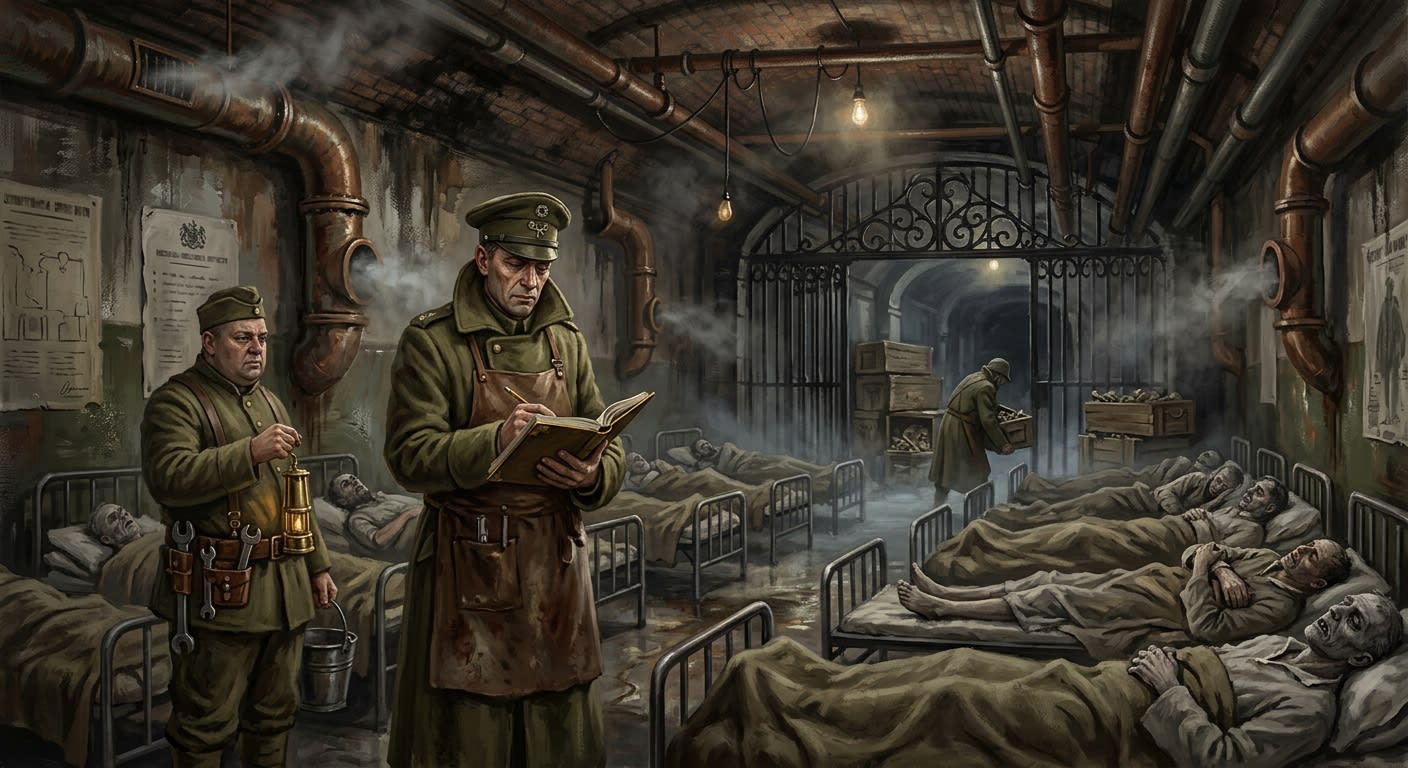
Great Plague of A.S. 78
The year Mercy learned to write before the mouth closed
The Great Plague of A.S. 78 ravaged the southern trench infirmaries and became the Lull of Names, birthing terminal confession mandates, ossuary controls, and threshold doctrine.
Codex Ref. VII.4.20-002

Guildmaster Joryn
The arm restores work; the contract chooses it
Guildmaster Joryn restores Marrowgate's wounded to usefulness, then collects on that usefulness for life. The fitting is affordable; charity is absent from the contract.
Codex Ref. III.2.01-201
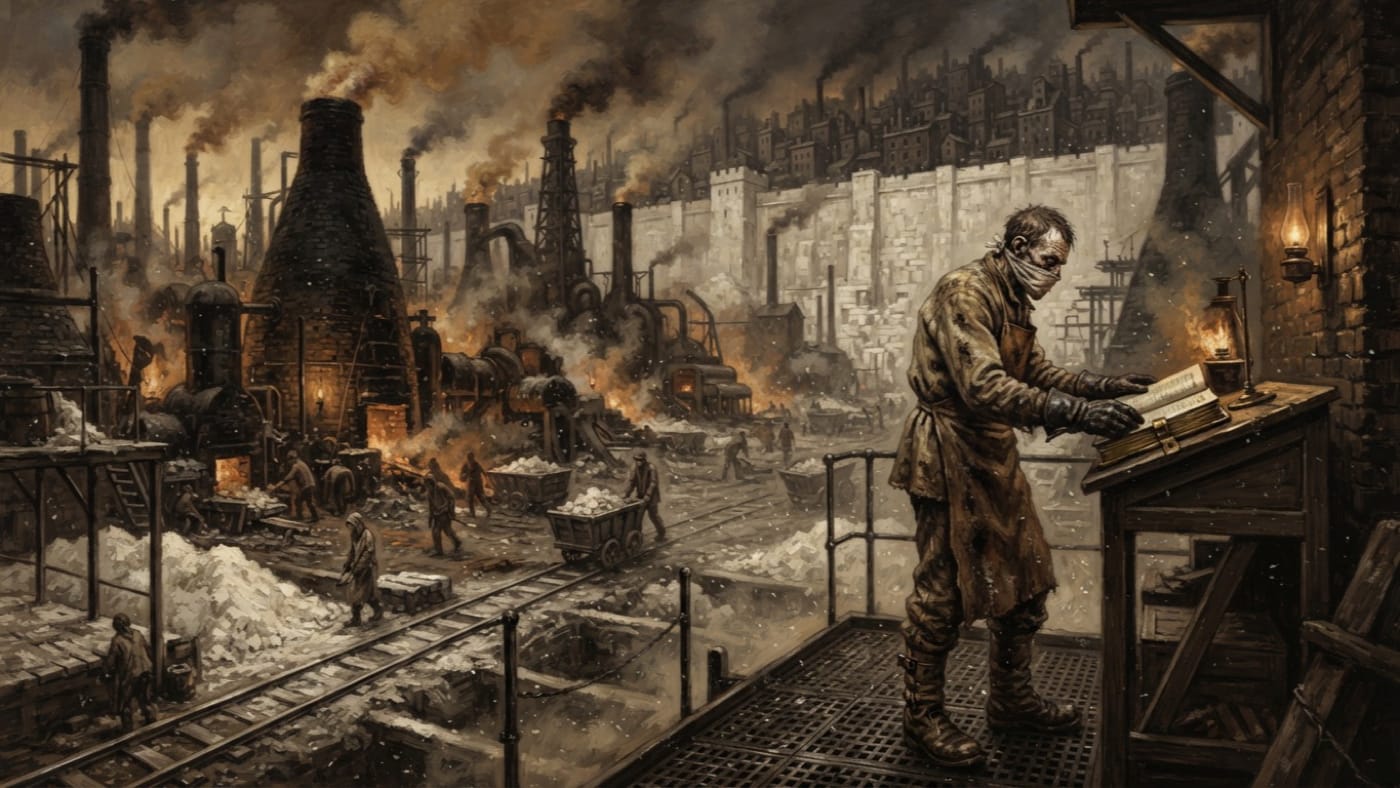
Kilnmaster Hark
The fire schedule stands; the dead keep correcting the ledgers
Kilnmaster Hark keeps Marrowgate's central kilnfield burning, turning cleared remains into walls, roads and white lines. His origins are unfiled; the Marrowwind restores the names his schedule leaves out.
Codex Ref. III.3.07-003
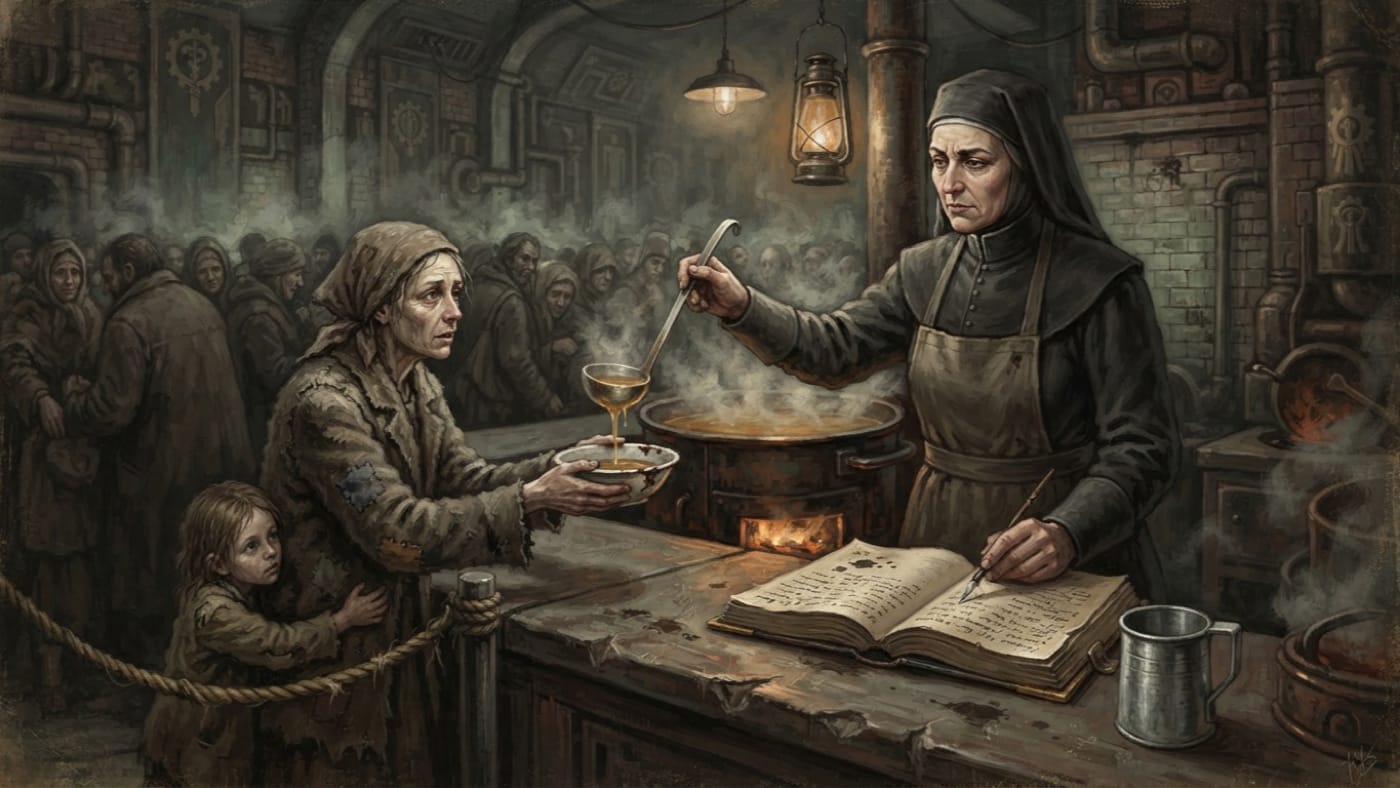
Ladle Debt
The bowl is warm; the account remains open
An extra ladle today buys an unspecified future service in a Matron's book. Mercy may leave the debt uncalled; desperation or cruelty may collect it. The broth is real. So is the name in ink.
Codex Ref. XIII.1.06-001

Lantern Brotherhood Vigilante
Eight thousand four hundred tolerated blades, licensed by a subordinate clause — the Synod's night made visible and officially nonexistent.
Eight thousand four hundred tolerated blades in five Watch Circles, licensed by a subordinate clause in a curfew ordinance — the Synod's night made visible and officially nonexistent.
Codex Ref. XII.25.01-001
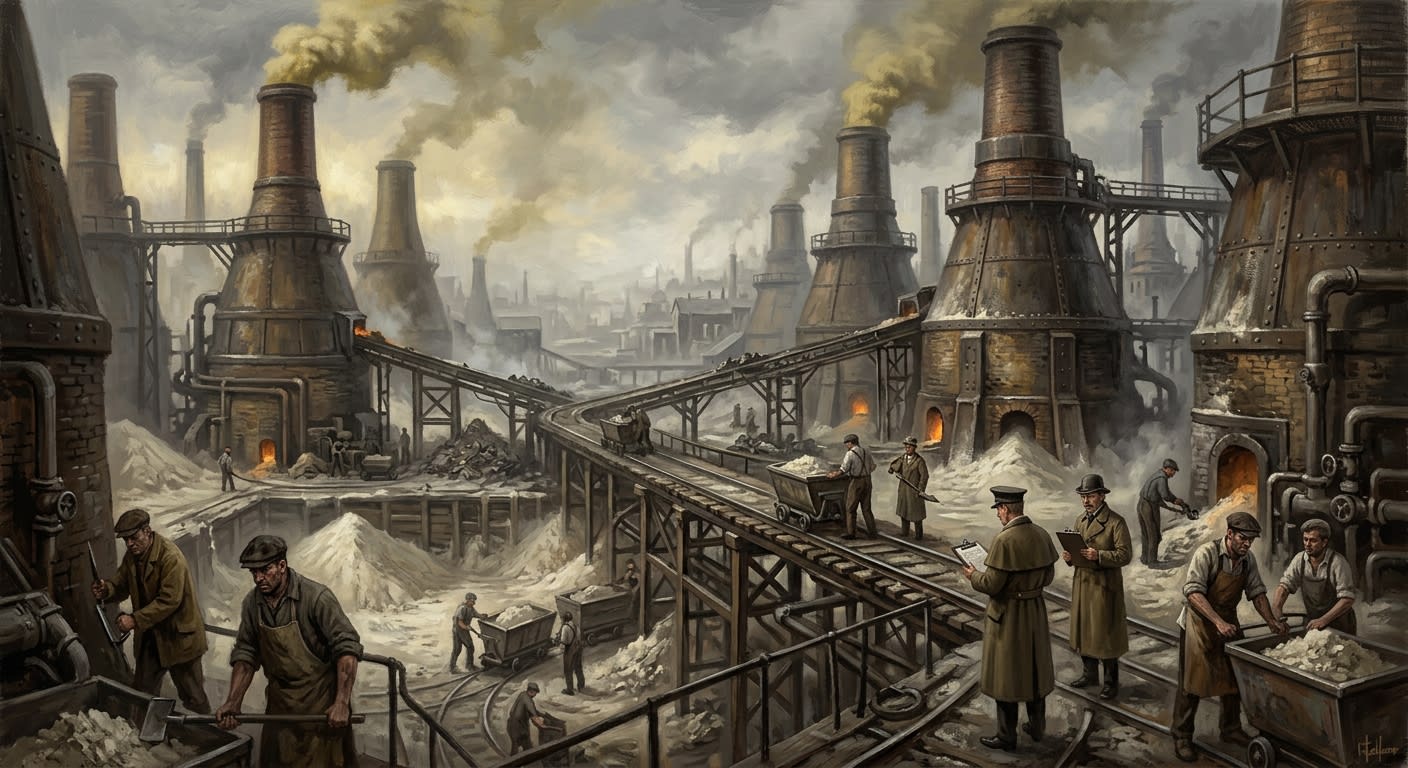
Lime Yards
The white furnaces where Marrowgate distributes its dead into walls, roads, and weather
The Lime Yards of Marrowgate are kilnfields where salvage remains become bone-lime, whitewash, road powder, ash-credit, and, when the Marrowwind rises, witness.
Codex Ref. II.2.06-003
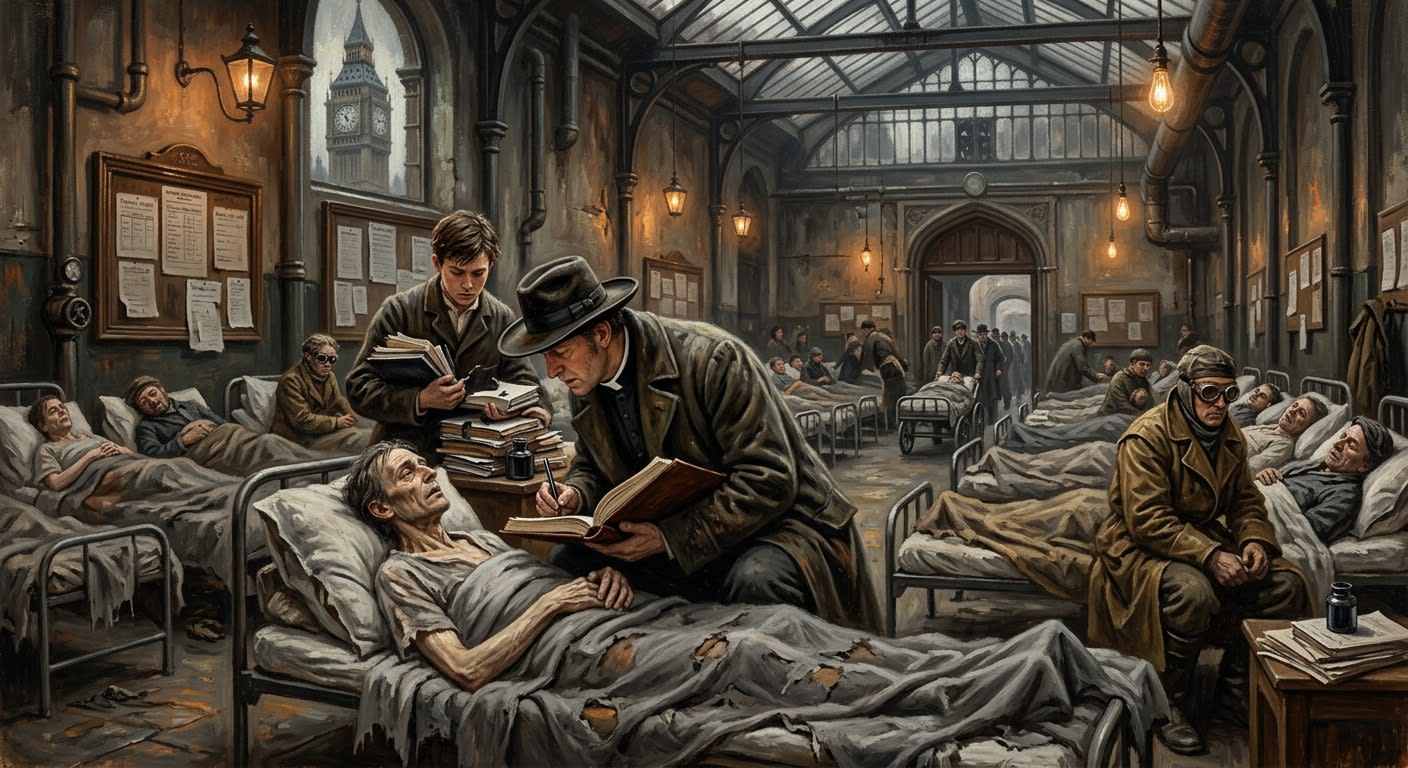
Lull of Names
The plague year when silence became a breach and the bedside became a bureau
The Lull of Names was the A.S. 78 plague-year catastrophe in which deaths in the southern wards outran transcription, birthing Standing Order 22-C and the Deathbed Confession Harvester corps.
Codex Ref. VII.8.10-022
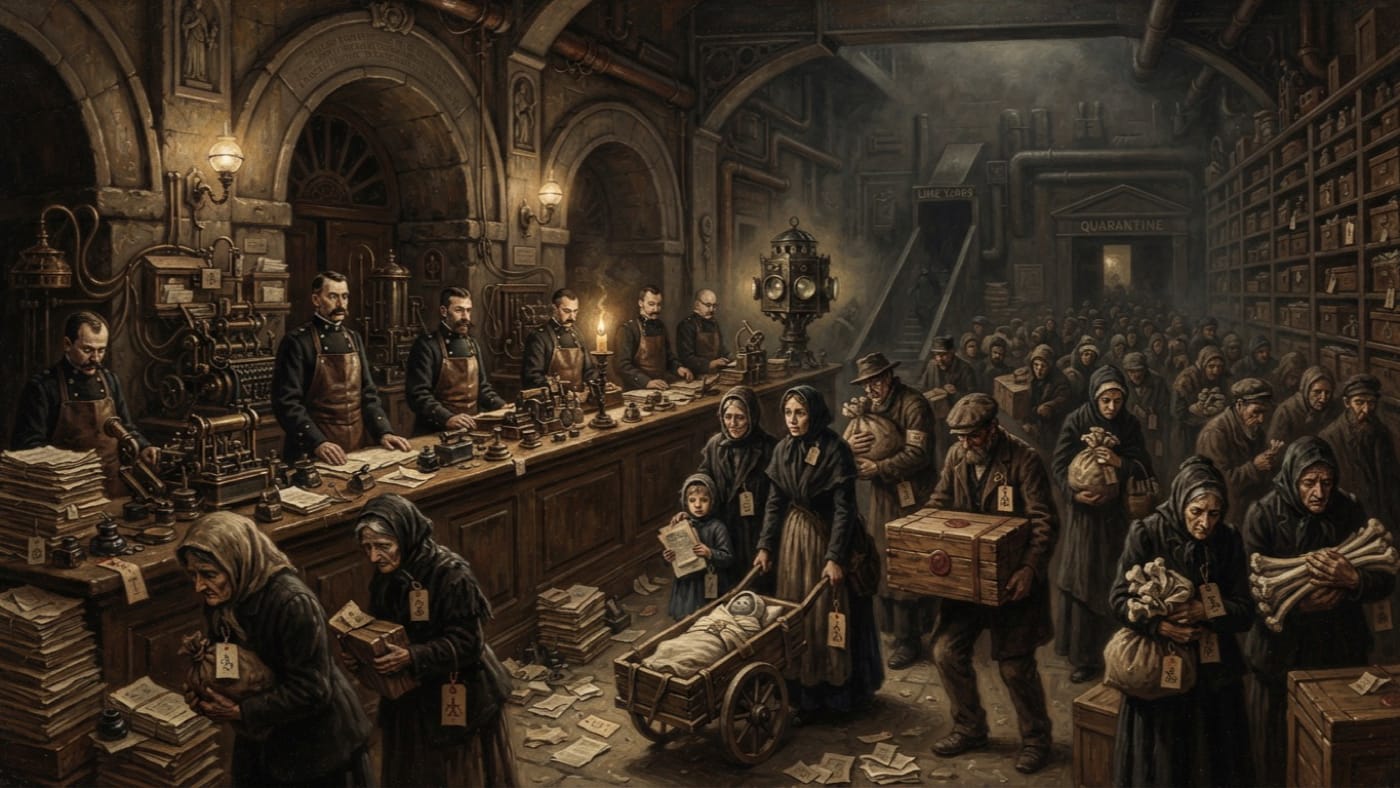
Mandatory Burial Clearance
Grief supplies no exemption
The A.S. 78 mandate placed every corpse, bone and ash sack under stamped clearance. Five classifications govern the dead; grief supplies no exemption.
Codex Ref. XIII.1.91-078
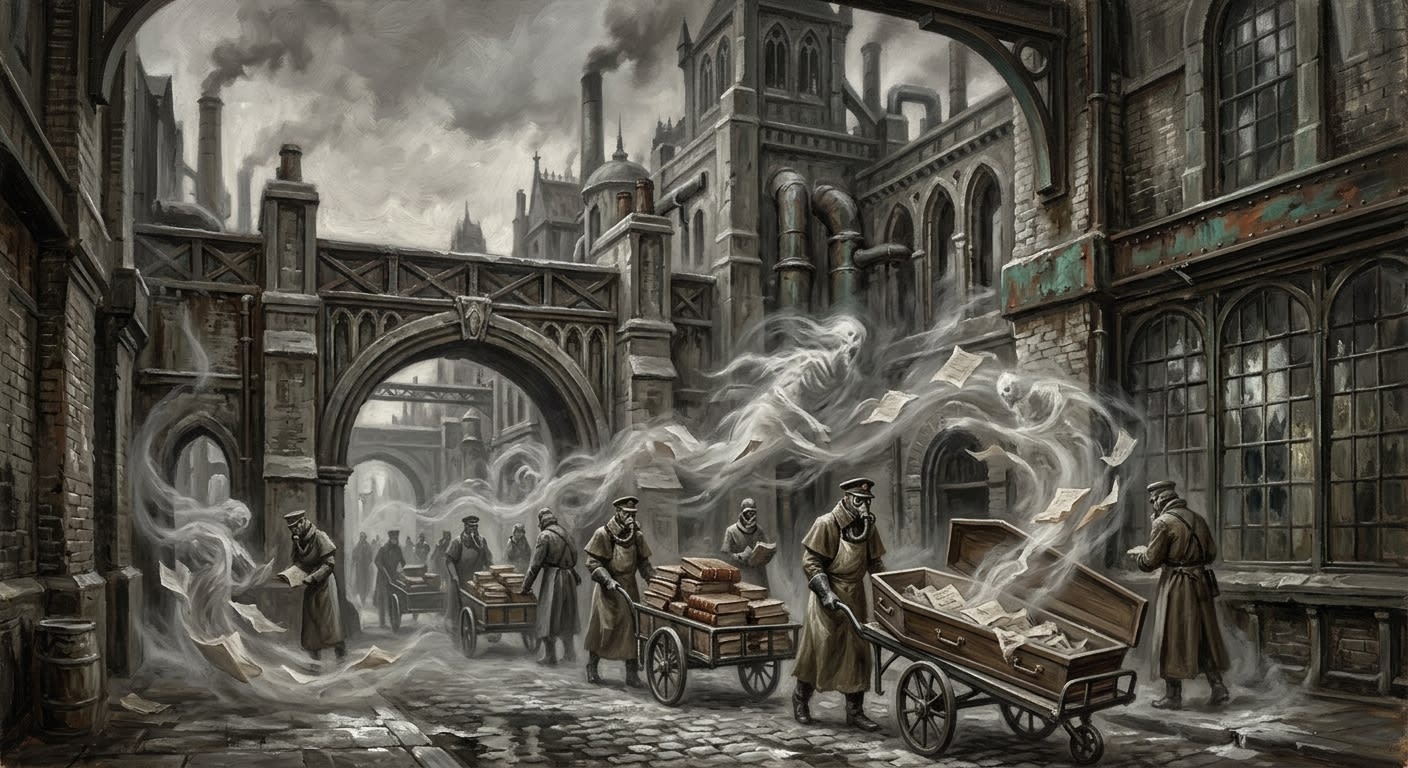
Marrowwind
The dead file amendments in lime and breath
At Marrowgate, chalk wind carries the voices of the dead, corrects fraudulent ledgers, and proves that a corpse with paperwork remains a witness.
Codex Ref. XIII.1.20-001
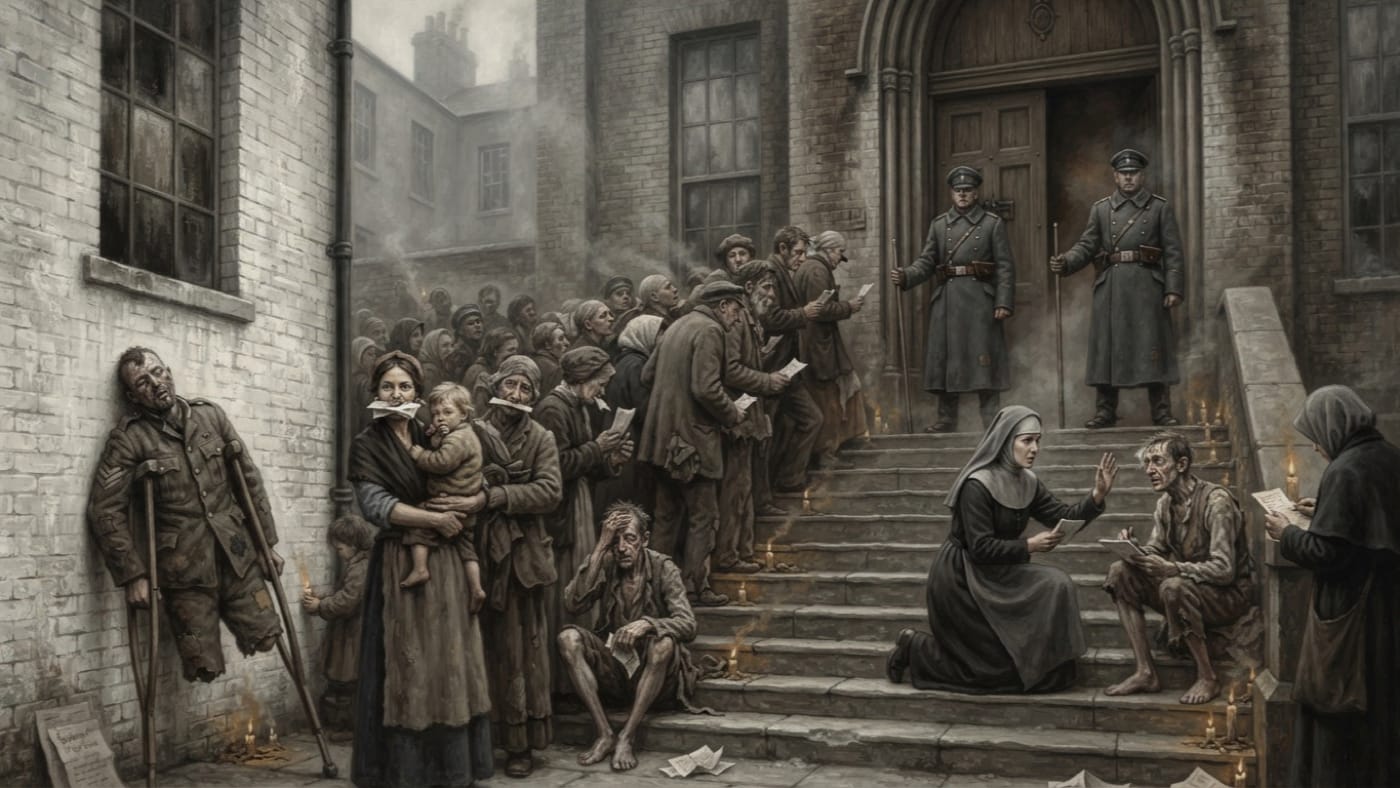
Mercy Chapel
Pain is relieved; the confession is retained
At Marrowgate's Mercy Chapel of the Unburdened, pain relief is rationed as sacrament, confessions become leverage, and sanctuary lasts as long as the chapel finds it useful.
Codex Ref. II.2.06-201
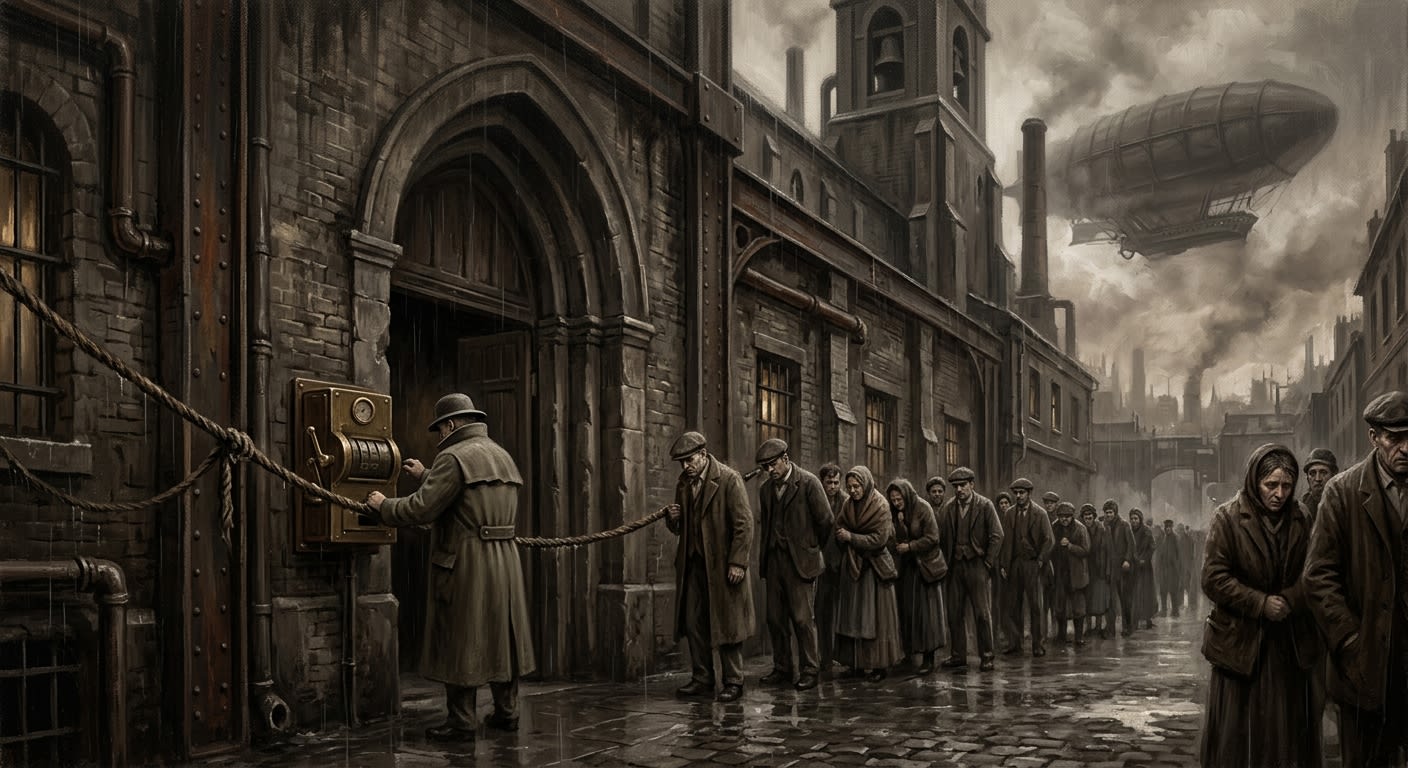
Mercy Line
The rope where grief learned its tariff schedule
The Mercy Line began as a left-hand rope outside Saint Morin's chapel in A.S. 157, where grief discovered that even mercy could be accelerated.
Codex Ref. II.2.06-157
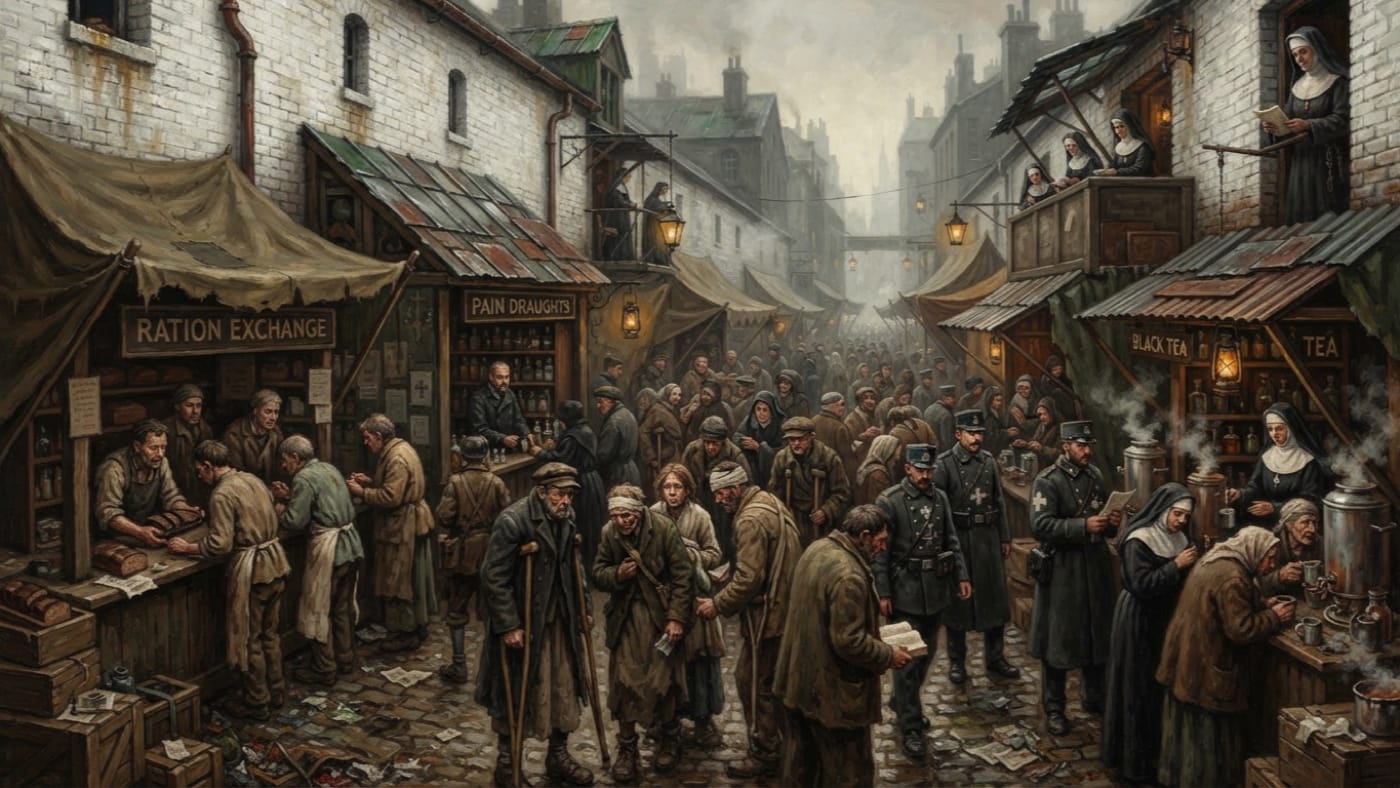
Mercy Market
Bread has a price; relief requires permission
Mercy Market trades in rations, pain draughts and black tea under Marrowgate's overlapping authorities. Bread has a price; relief requires permission.
Codex Ref. III.3.07-006
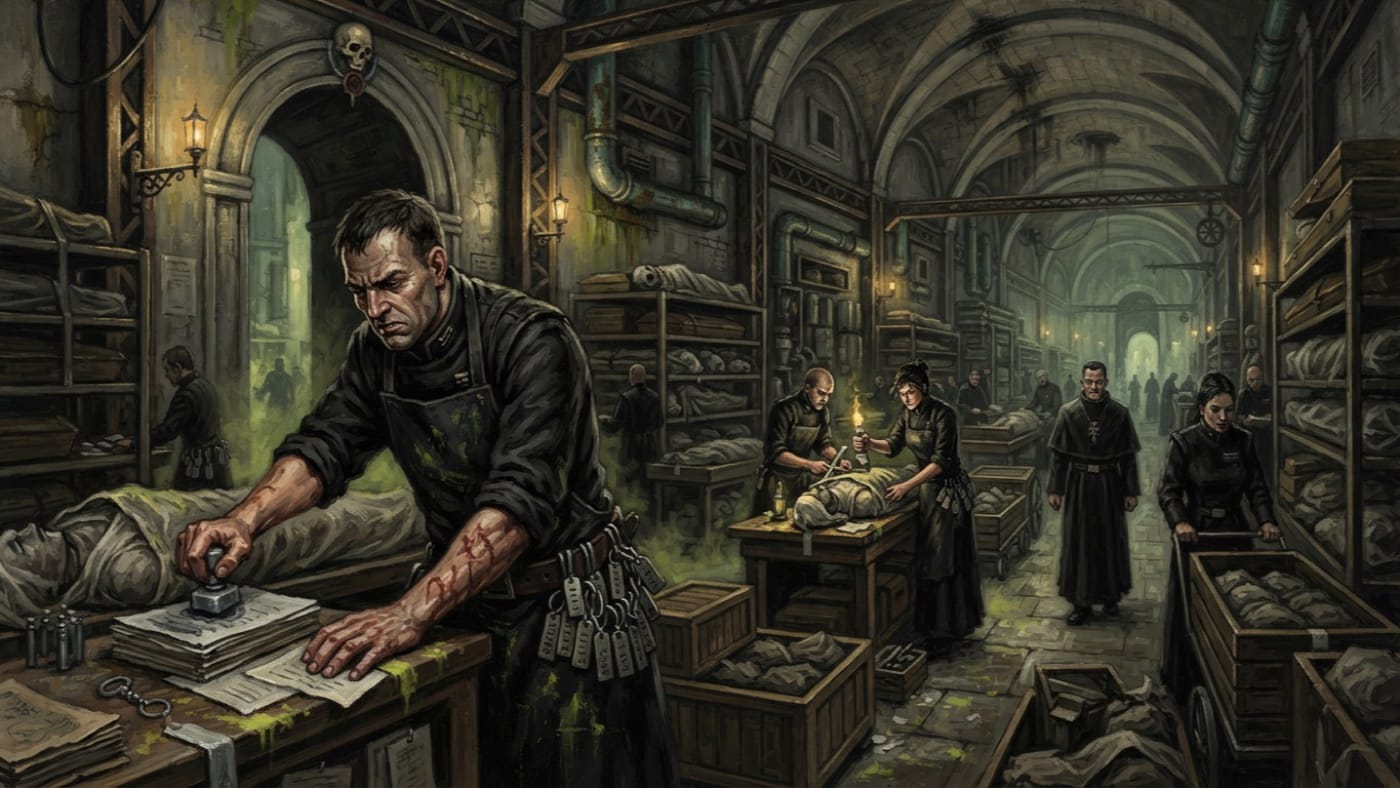
Mercy Stamp clerks
The street cannot wait for the Ledger to finish grieving
Mercy Stamp clerks are Dead-Goods Tariffers who favour speed against street rot. The opinion is permitted; the unofficial clearance has no lawful standing.
Codex Ref. XIII.1.11-201
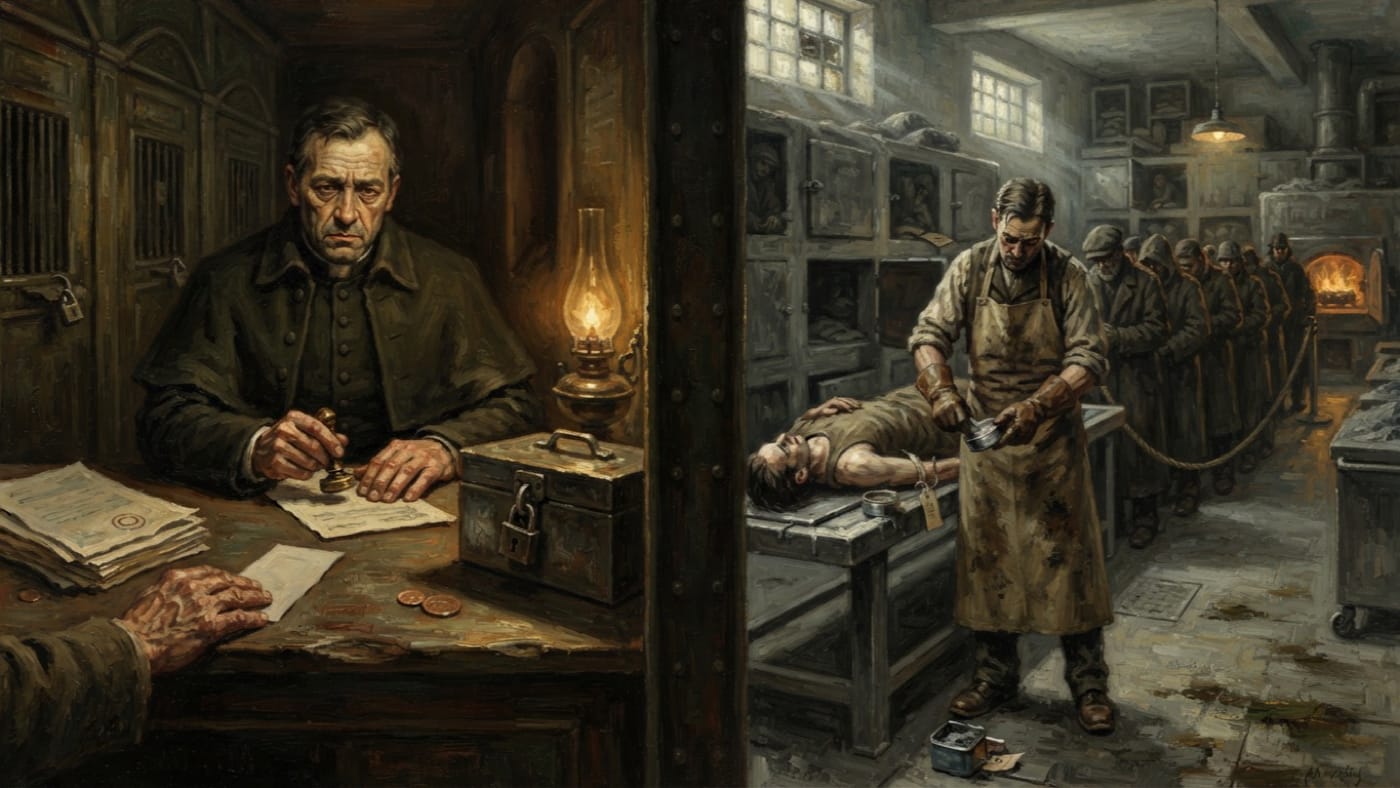
Mercy Stamps
The lawful hand guards grace; the ashen hand moves the queue
Two histories share one name: the confessor's restricted impression and Marrowgate's unofficial ash mark. Drax surveys their A.S. 201 standing, where forgiveness is guarded and speed has a price.
Codex Ref. XIII.1.13-201
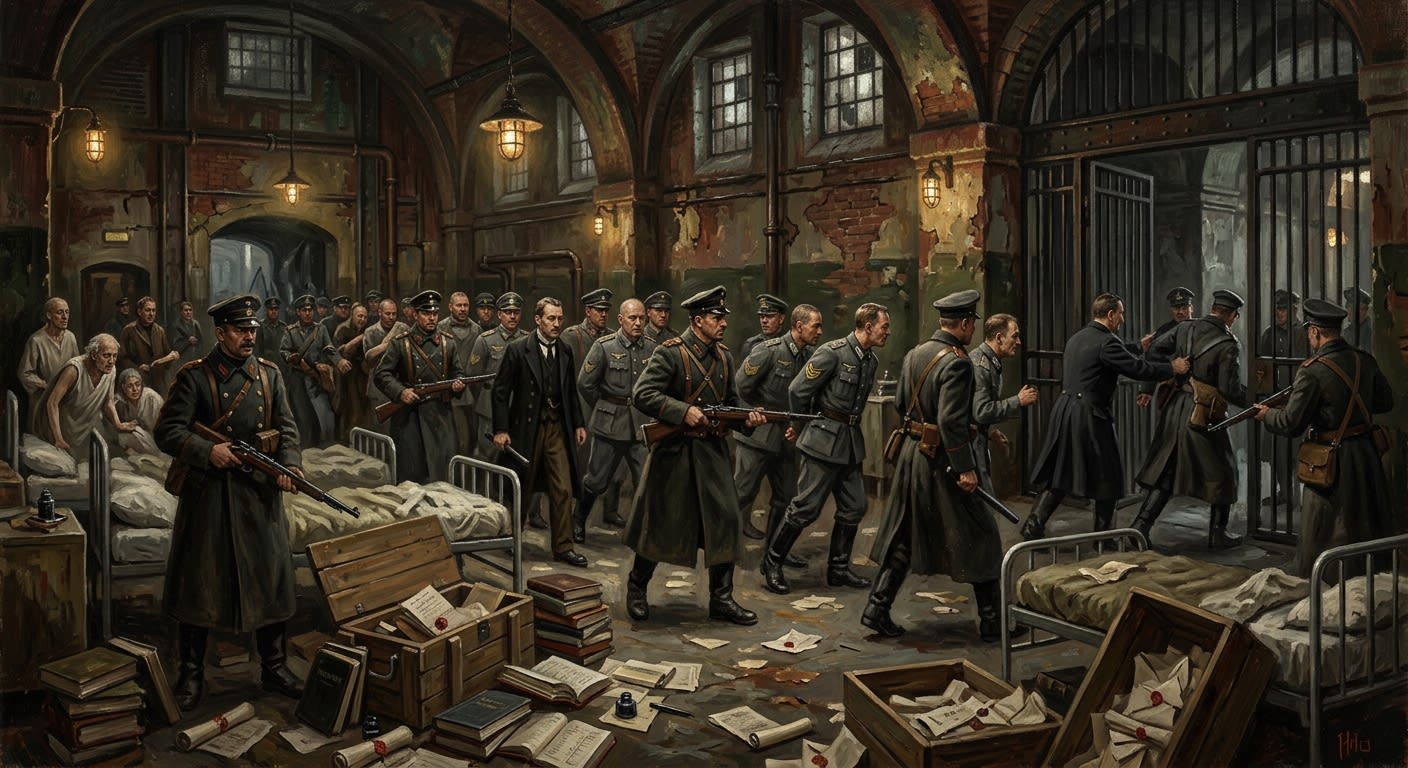
Mercy Ward Purge of A.S. 134
The year last words became contraband unless properly priced by authority
The Mercy Ward Purge of A.S. 134 exposed the sale and alteration of terminal confessions across Rhineland wards.
Codex Ref. VII.8.10-023
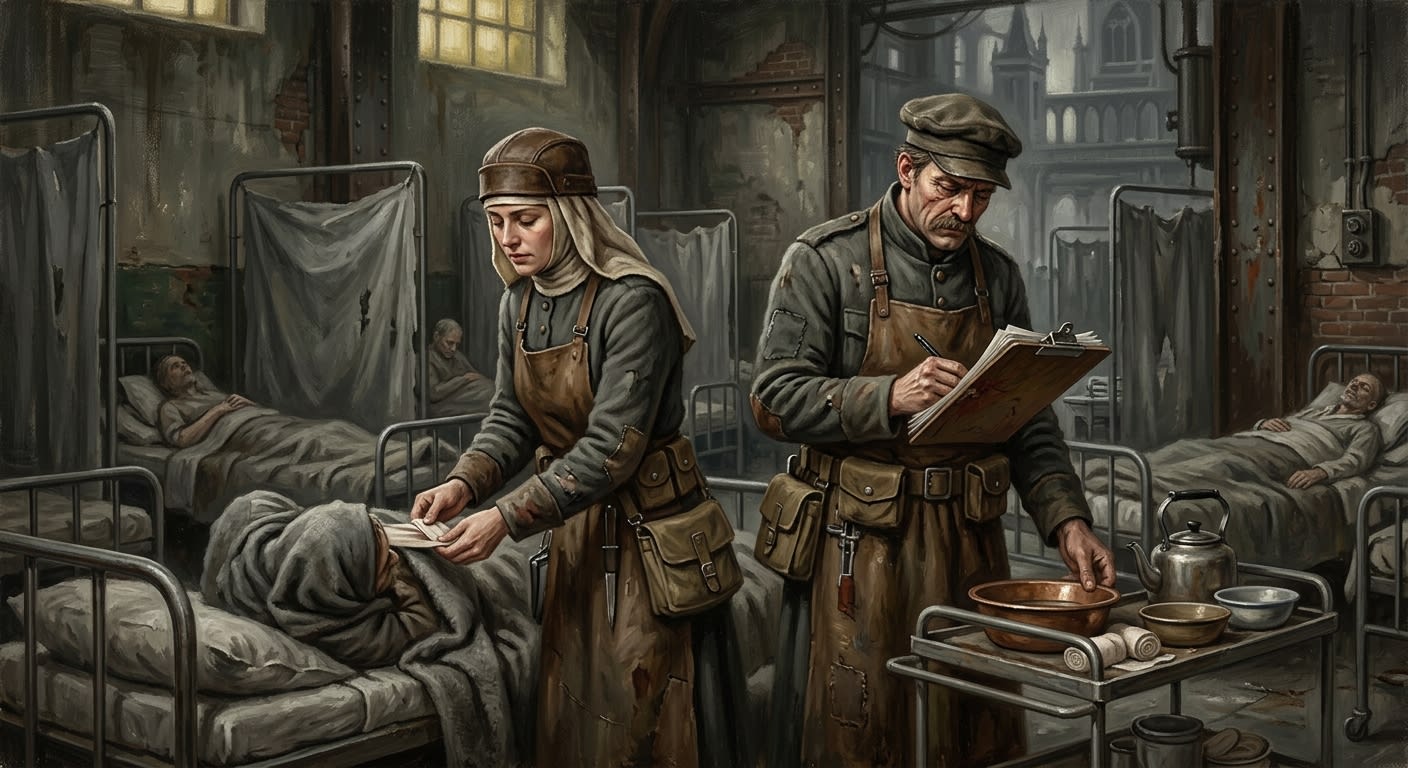
Mercy Ward-Sister / Mercy Ward-Brother
The hand that brings broth also carries the ledger
The Mercy Ward-Sister and Ward-Brother are the Bureau of Mercy's grey-aproned operators of counted compassion, where broth, bandage, confession, and paperwork become one instrument.
Codex Ref. XII.6.04-001
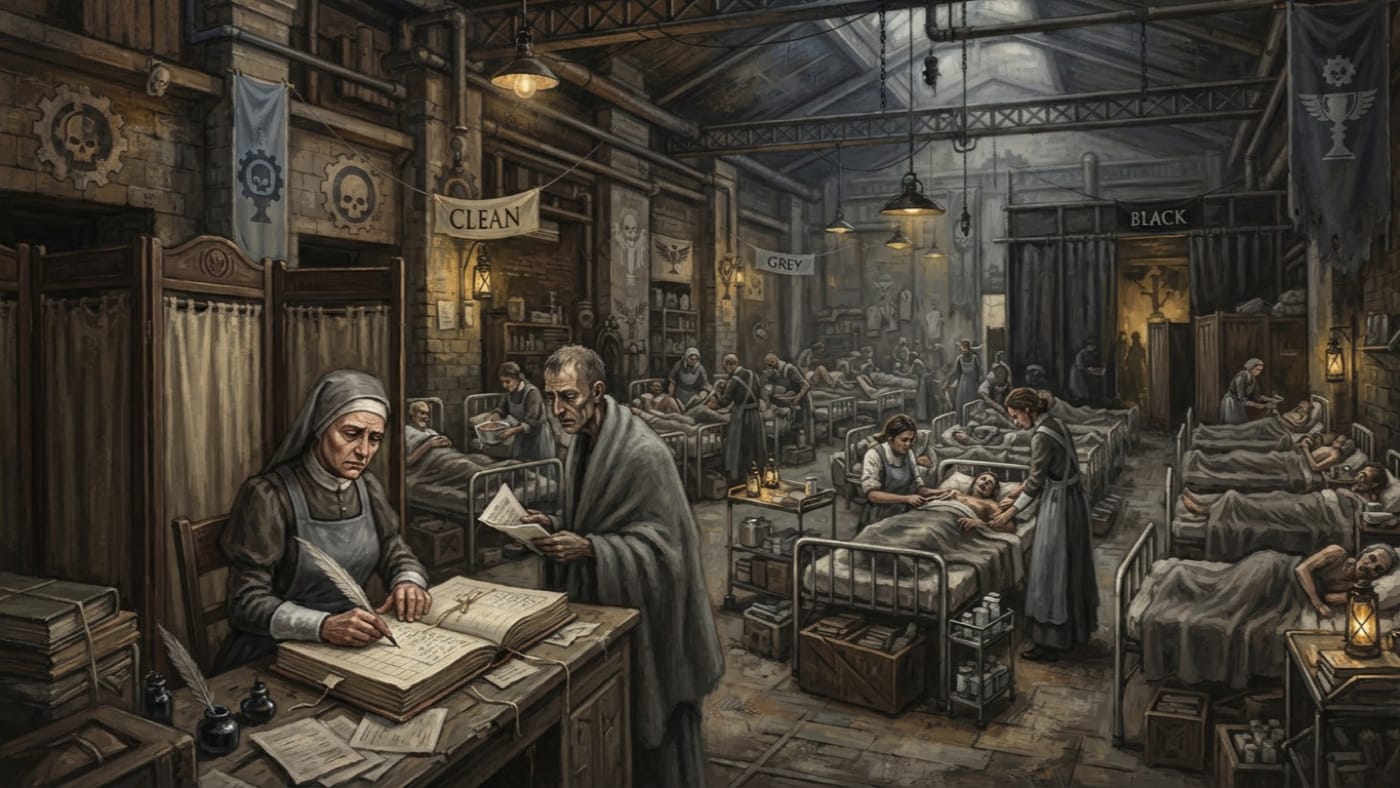
Mercy Wards
The bed is allotted; the suffering must be entered
The Bureau of Mercy's houses of the sick: broth, bandages, confession and clean, grey or black tags. This A.S. 201 survey counts the registered wards; the living remain harder to reconcile.
Codex Ref. II.6.04-001
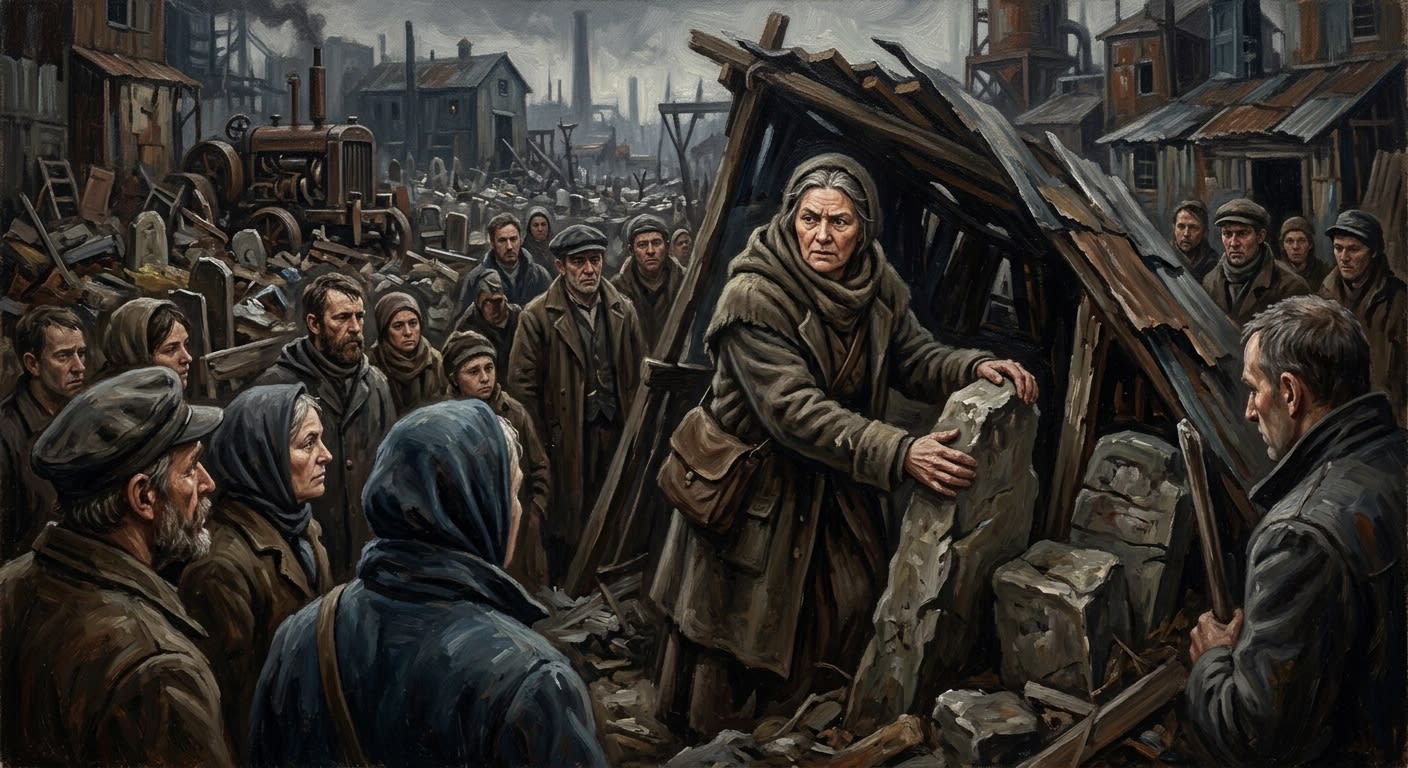
Mother Vell of the Crooked Stones
A plot is a promise, and promises have tenants
Uncanonised patron of Grave-Field Shanty Brokers, Mother Vell turns crooked stones, leased graves, and shelter fraud into a cult the Bureaus cannot afford to suppress.
Codex Ref. III.2.01-122
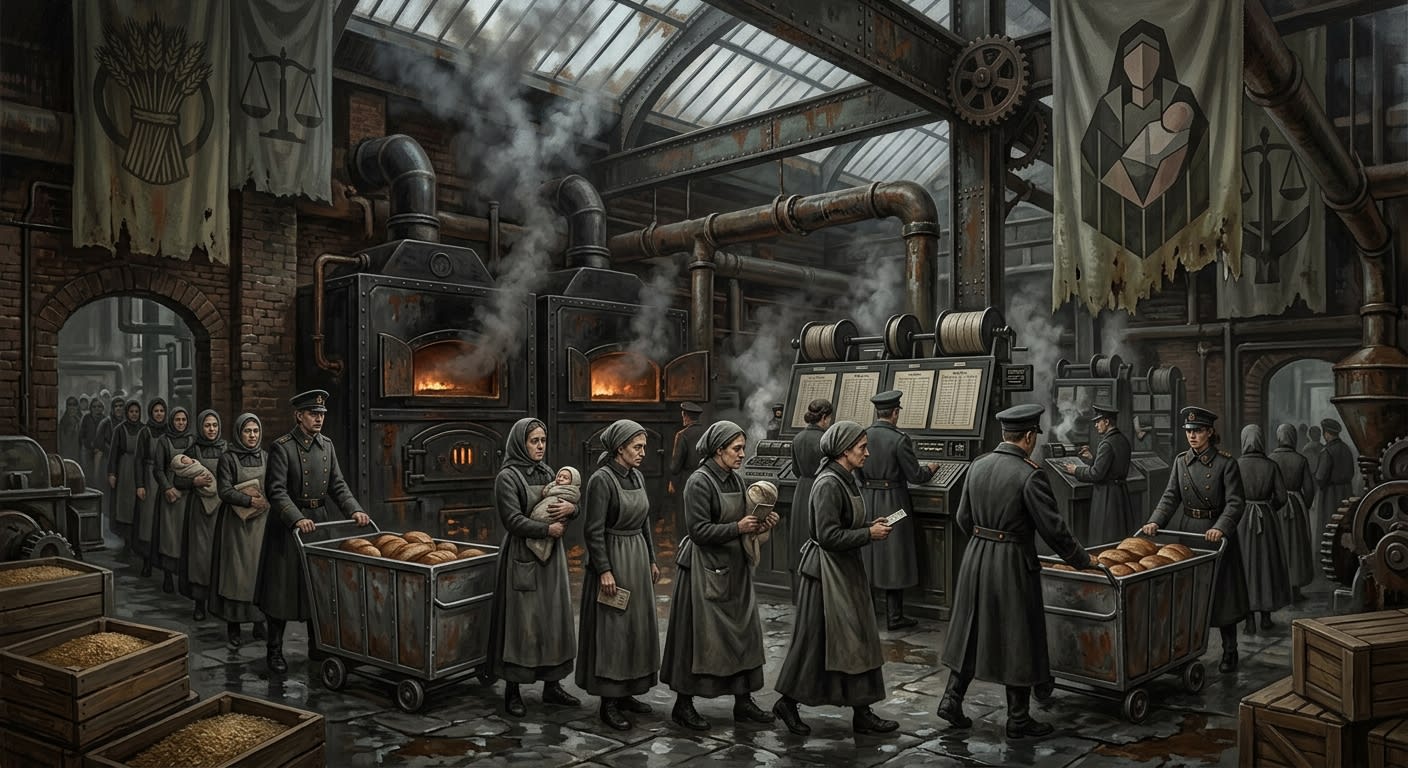
Mothers of Plenty
The queue kept warm, the cradle kept counted
The Mothers of Plenty govern bread and birth as one obedient system, turning ration queues, pregnancy ledgers, and infants not yet weaned into instruments of state continuity.
Codex Ref. XII.6.05-001
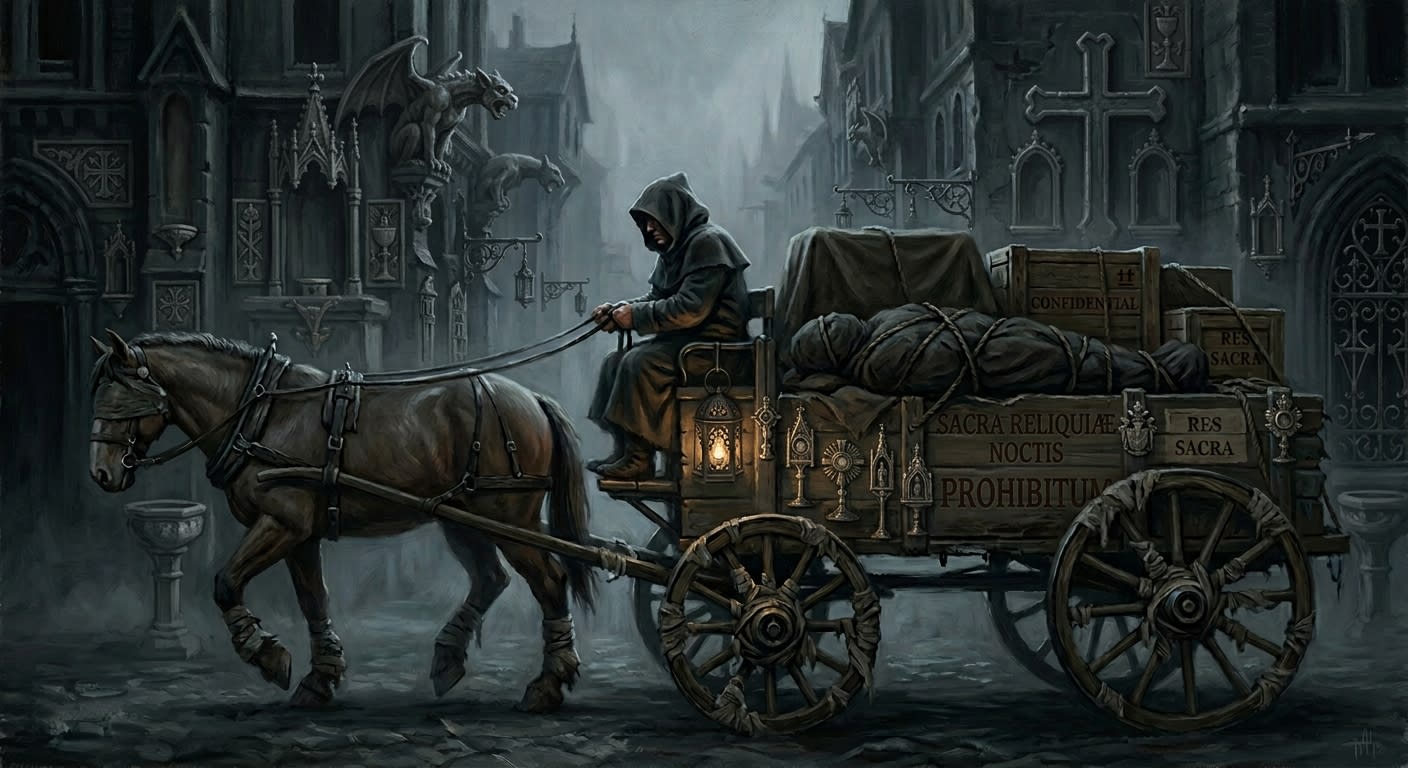
Night Wagon Driver
The wheel that carries absence farther than doctrine can walk
Night Wagon Drivers are the Bureau of Shadows’ logistics spine, hauling people, orders, relics, and corpses through streets trained to forget the sound of wheels.
Codex Ref. XII.14.04-001
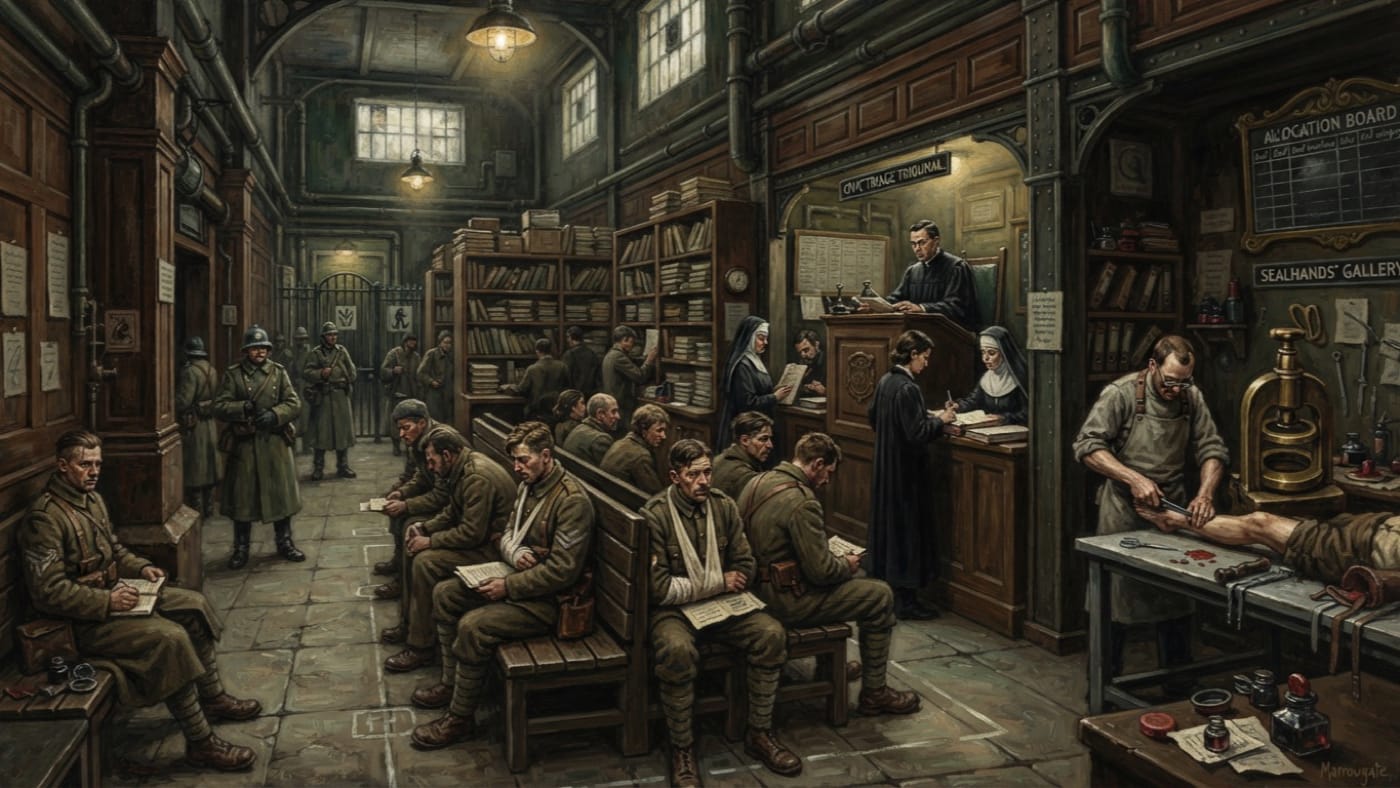
Notary Row
Where a wound becomes a ruling and a ruling becomes a debt
On Notary Row, Marrowgate turns wounds into rulings, amputations into revised identities, and recovery into debt. Even the dead require living corroboration.
Codex Ref. III.3.07-002

Orphanage Registrar
The child enters crying and leaves legible
Orphanage Registrars convert foundlings into entries: named, tagged, risk-scored, and placed before hunger, memory, or bloodline can become a rival jurisdiction.
Codex Ref. VI.4.12-044
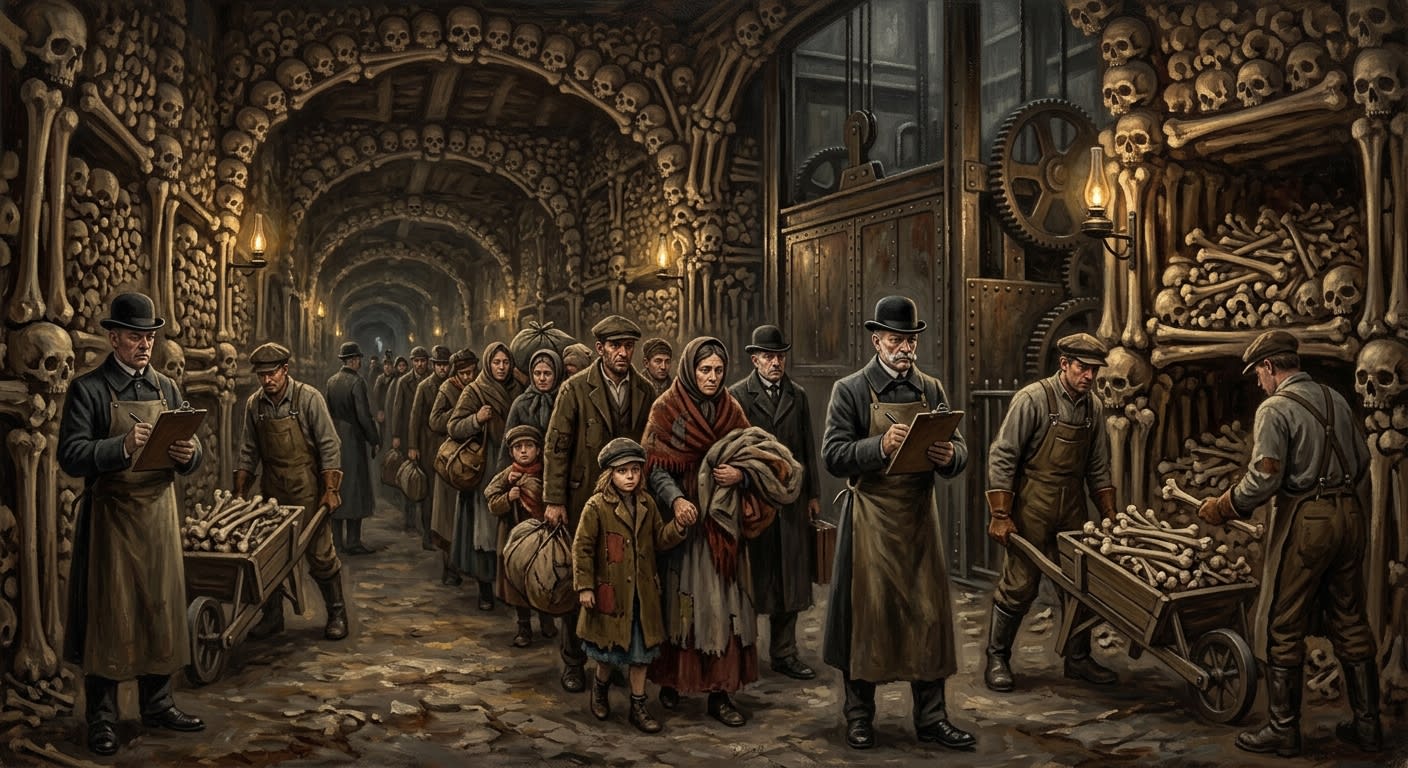
Ossuary Allies
Bring me your dead and I will find room for your living
Ossuary Allies convert grave-field claims into bone-walled tenancy, moving poor families from exposed graveside lanes into ossuary corridors at the price of their dead.
Codex Ref. XII.27.04-001
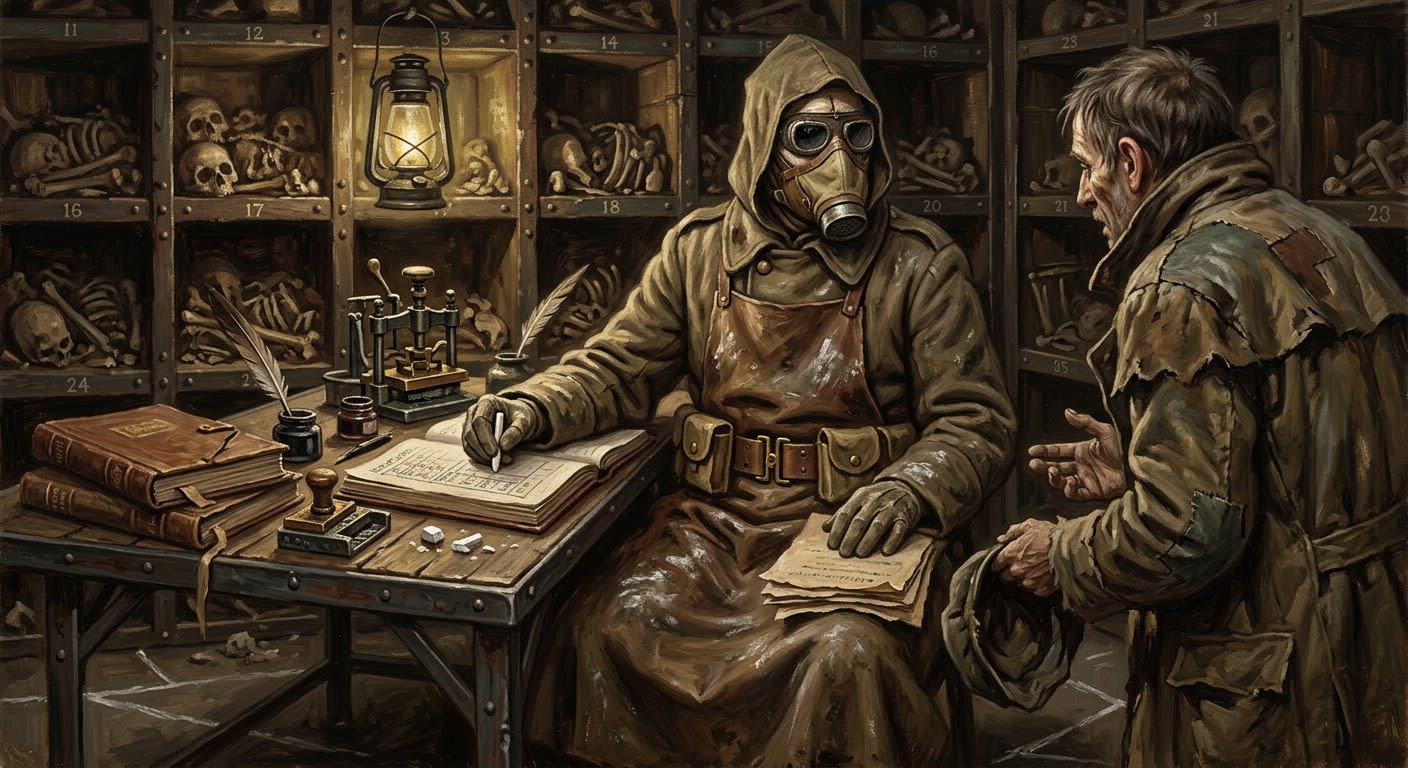
Ossuary Housing Allocator
The wall keeps the dead, and the clerk decides who may cling to it
Ossuary Housing Allocators sell dryness, bell-coverage, and sanctioned sleep beside the dead, converting overflow, grief, and fear into chalk lines and rent.
Codex Ref. VI.4.11-052
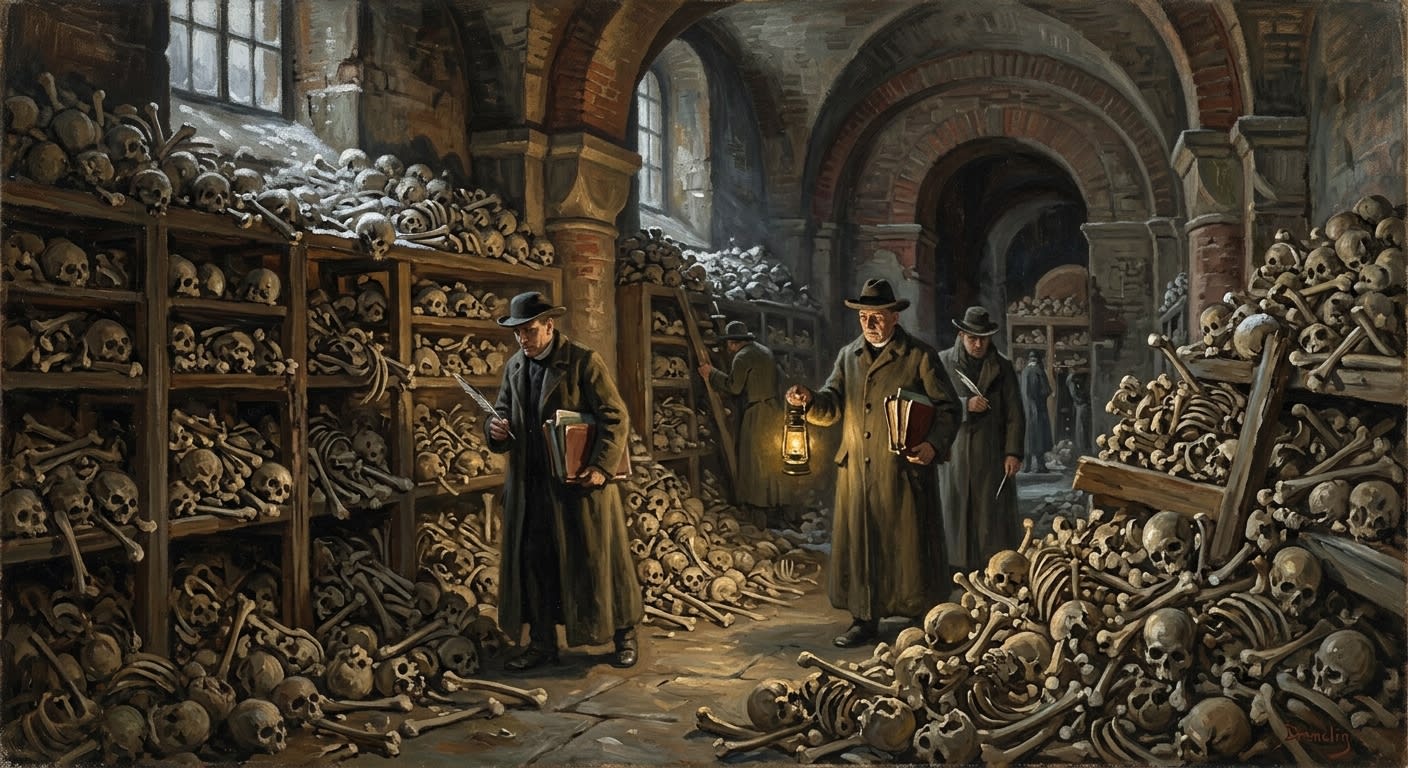
Ossuary Overflow Winters
The season when the dead exceeded the shelves and the wall learned appetite
Three A.S. 73–76 winters of forward ossuary collapse, suppressed ratios, frozen ledgers, and chapel overflow that taught the Synod to prefer sanctified walls to crowded shelves.
Codex Ref. VII.4.25-002
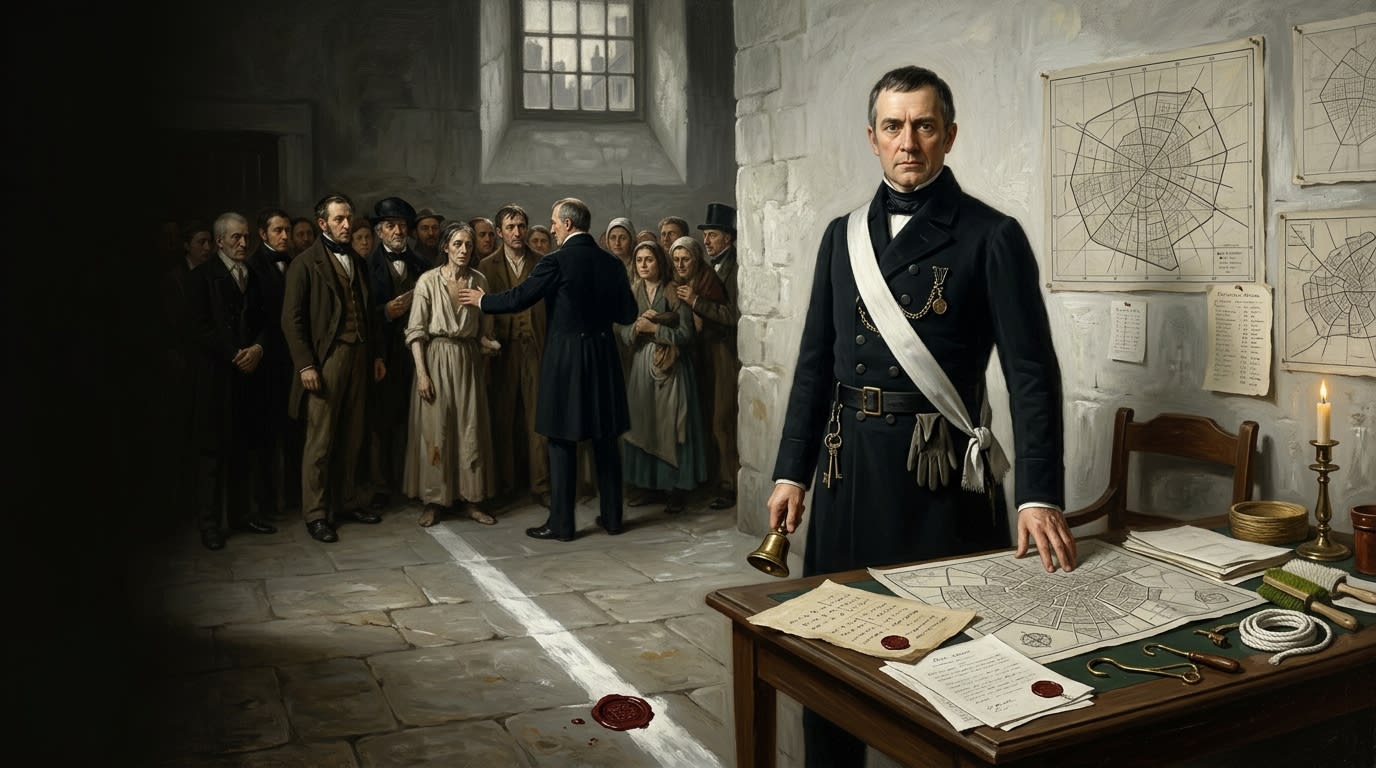
Prefect Salvius
The man who made cleanliness a border with teeth
Prefect Salvius commands Marrowgate's clean lines, proving that hygiene becomes jurisdiction the moment a frightened city applauds the rope.
Codex Ref. III.2.01-201
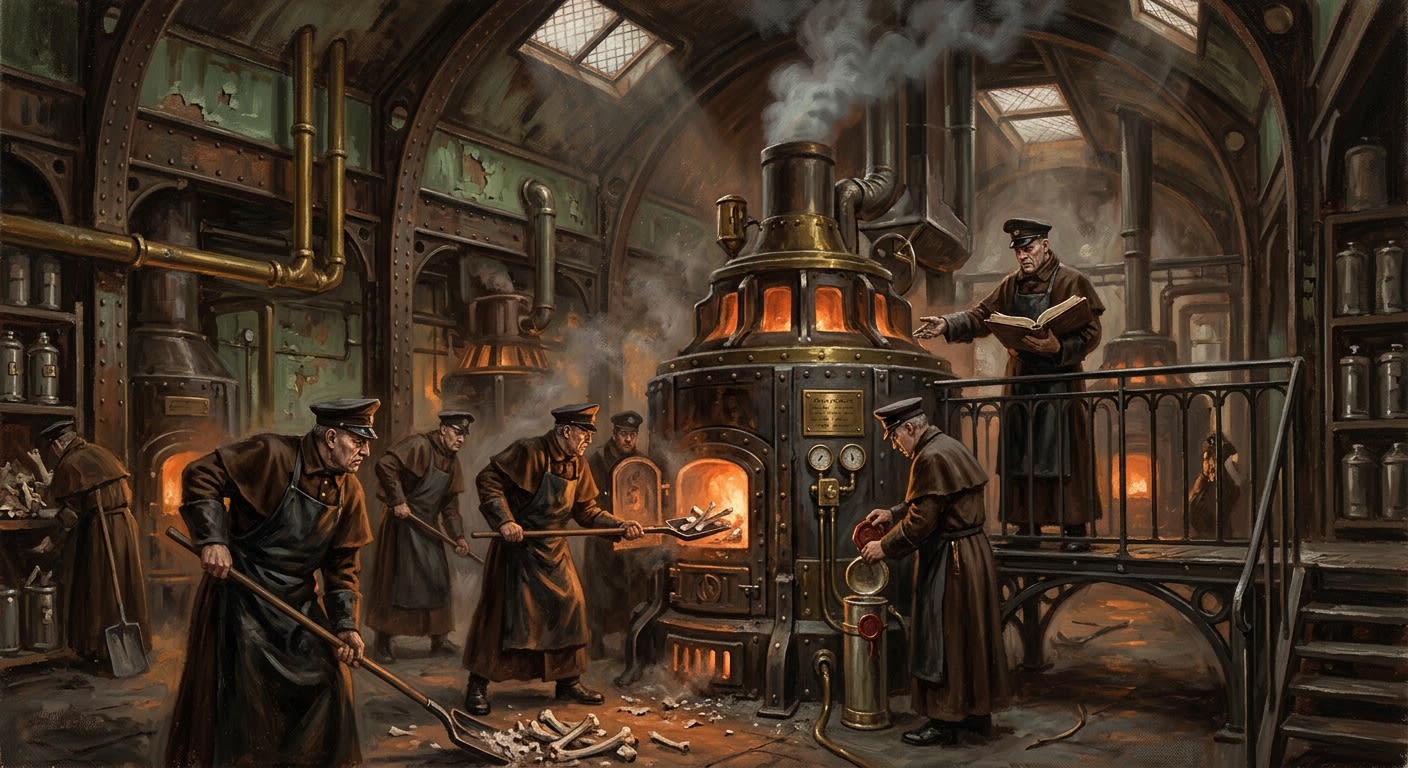
Purity Kiln Decree
Holiness must bear weight, and so must the men who burn it
The A.S. 142 decree made saint-bone burning legible: hymn, heat, quiet, seal, witness, blame, and the pious sentence that holiness must bear weight.
Codex Ref. XIII.1.91-142
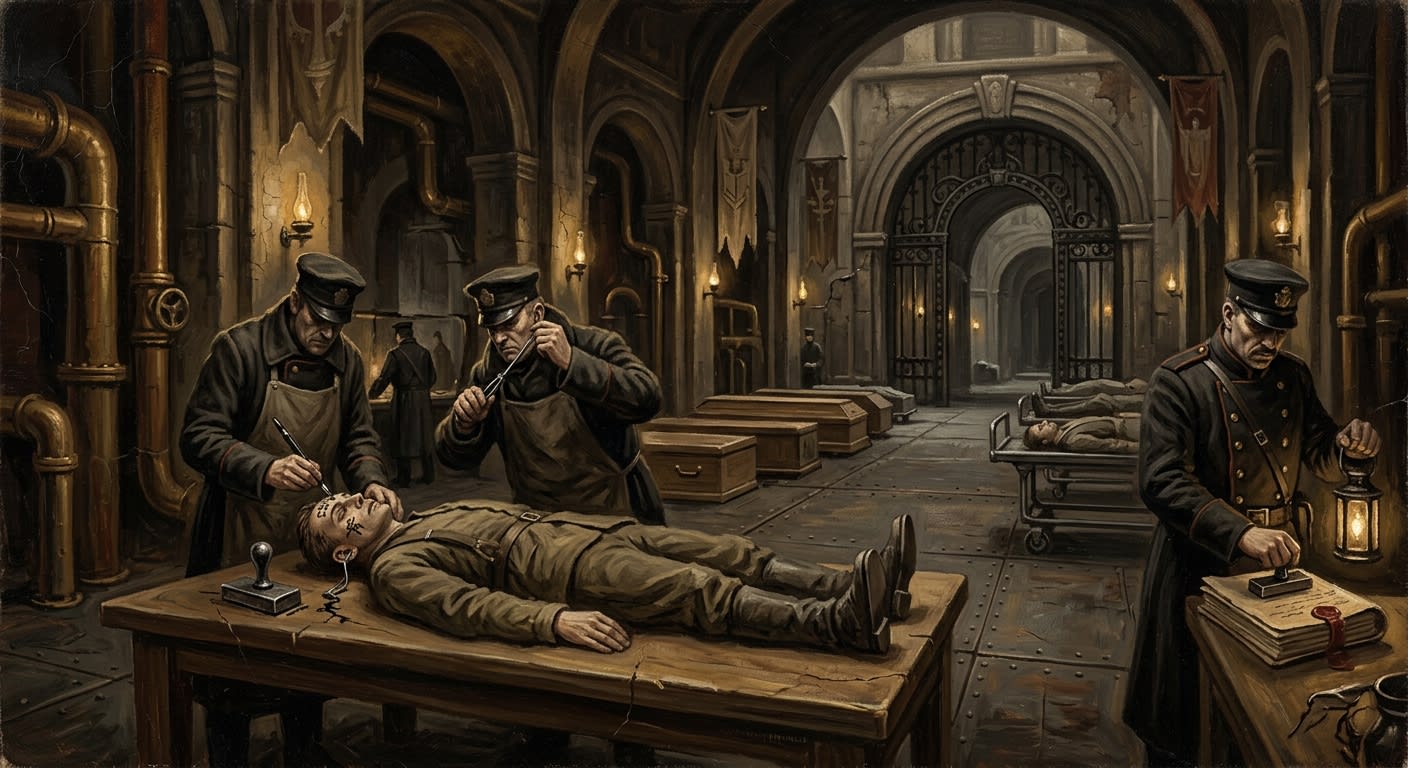
Rite of Passing
No soul departs until the Ledger has improved the death
The Rite of Passing turns death into lawful custody: right ear, last words, body display, black ink, routed remains, and no soul left vulgarly private.
Codex Ref. XIII.1.85-080
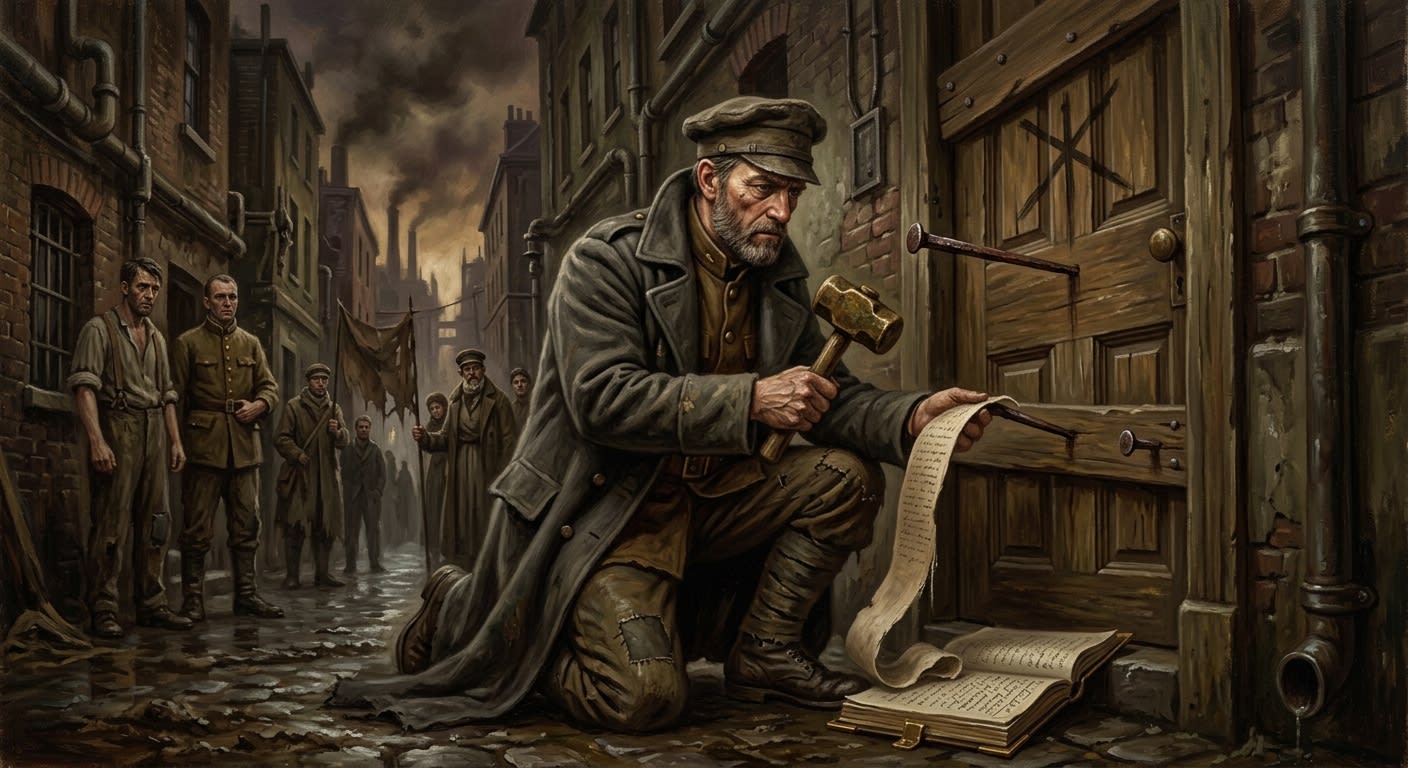
Saint Edrin of the Three Nails
Cut true, name all, hold the door
Saint Edrin of the Three Nails is the patron of Gate-Carvers, remembered for sealing a plague-house during the A.S. 78 Lull of Names with measure, witness, and refusal.
Codex Ref. III.2.01-120
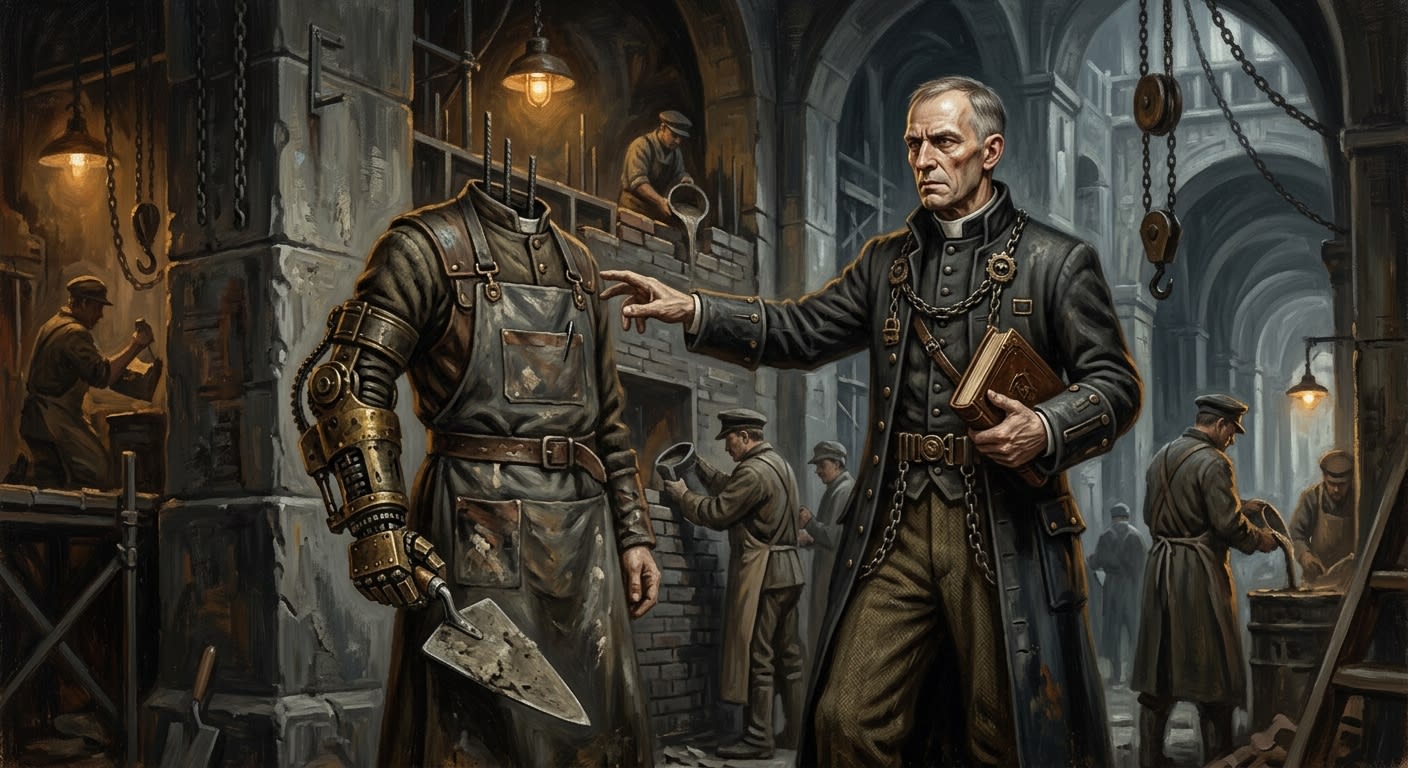
Saint Karron the Trowel-Hand
Stone is faithful because men are easier to mortar
Occupational patron of the Immurement Masons, Saint Karron made a screaming sentence architectural and left the Synod a recipe for silence.
Codex Ref. III.2.01-124
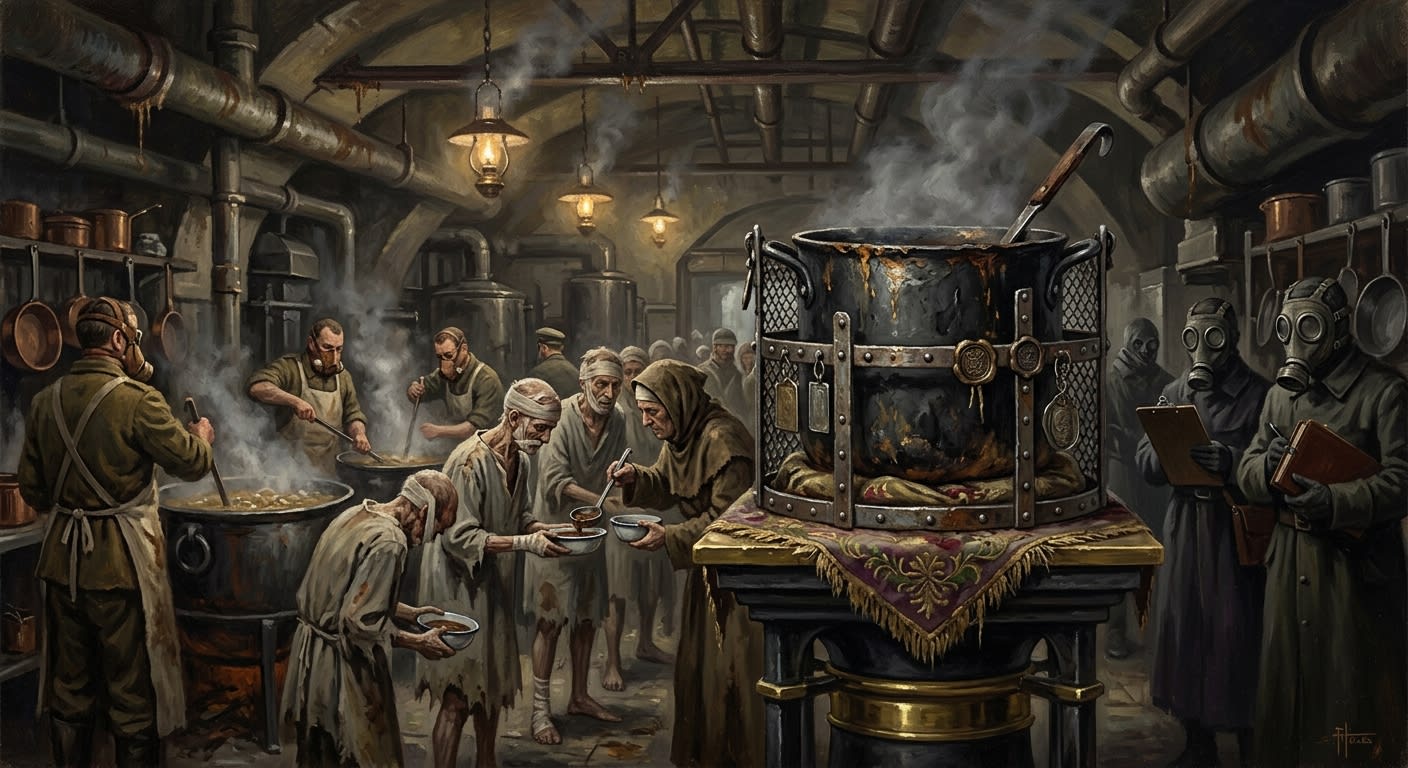
Saint Marrow-of-the-Ladle
Counted mercy, warm broth, and the holy arithmetic of the bowl
Saint Marrow-of-the-Ladle, patron of Mercy ward kitchens, may have been a pot; the Bureau prefers the miracle to the biography.
Codex Ref. III.2.01-016
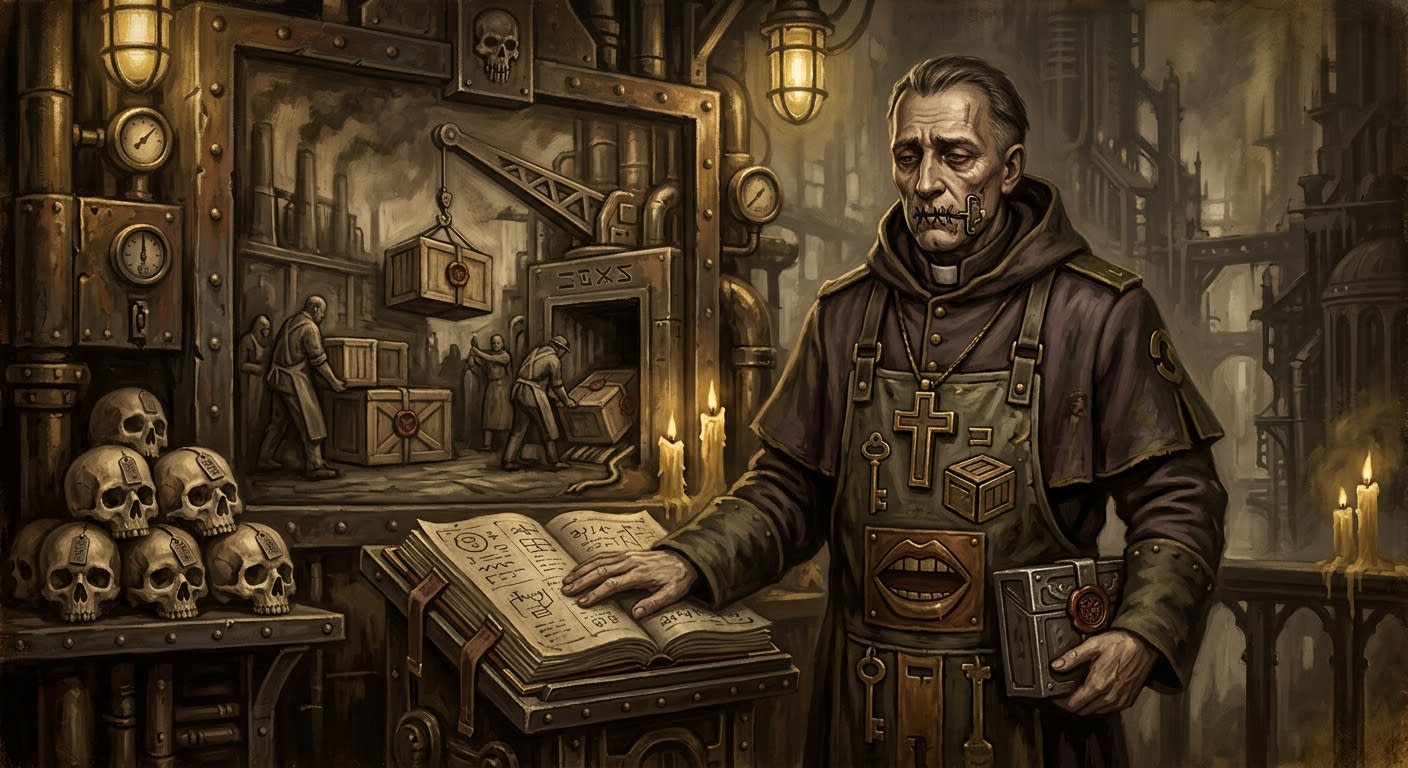
Saint Morin of the Sealed Mouth
Patron of waxed teeth, taxable grief, and the silence that keeps the queue moving
Saint Morin of the Sealed Mouth is the disputed occupational patron of Dead-Goods Tariffers, waxed skulls, intake bays, and the mortuary discipline of making the dead remain quiet.
Codex Ref. III.2.01-105
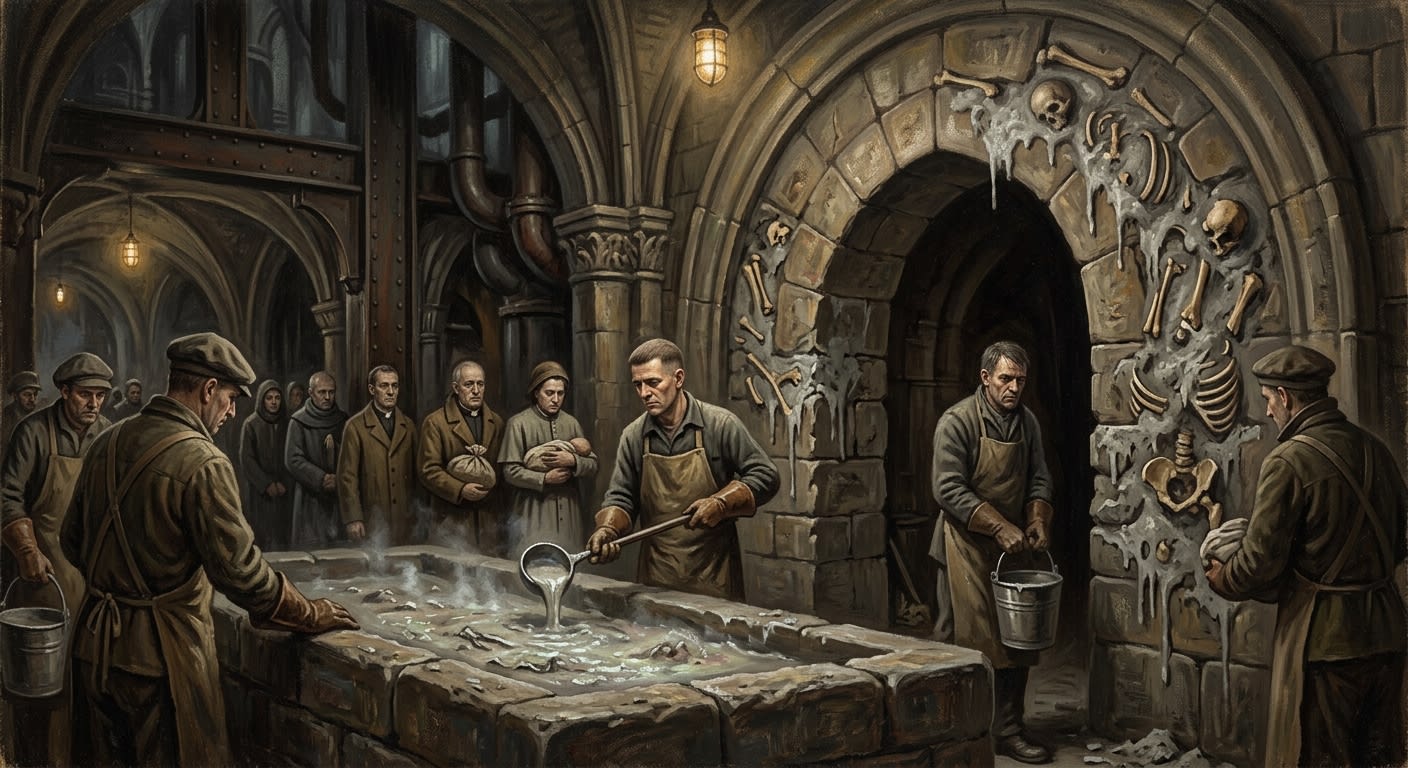
Saint-Bone Melting Acts
Sanctity must bear weight, and the wall has receipts
The A.S. 96 Saint-Bone Melting Acts made surplus holiness structural, teaching relics to become mortar and the faithful to call subtraction a wall.
Codex Ref. XIII.1.91-096
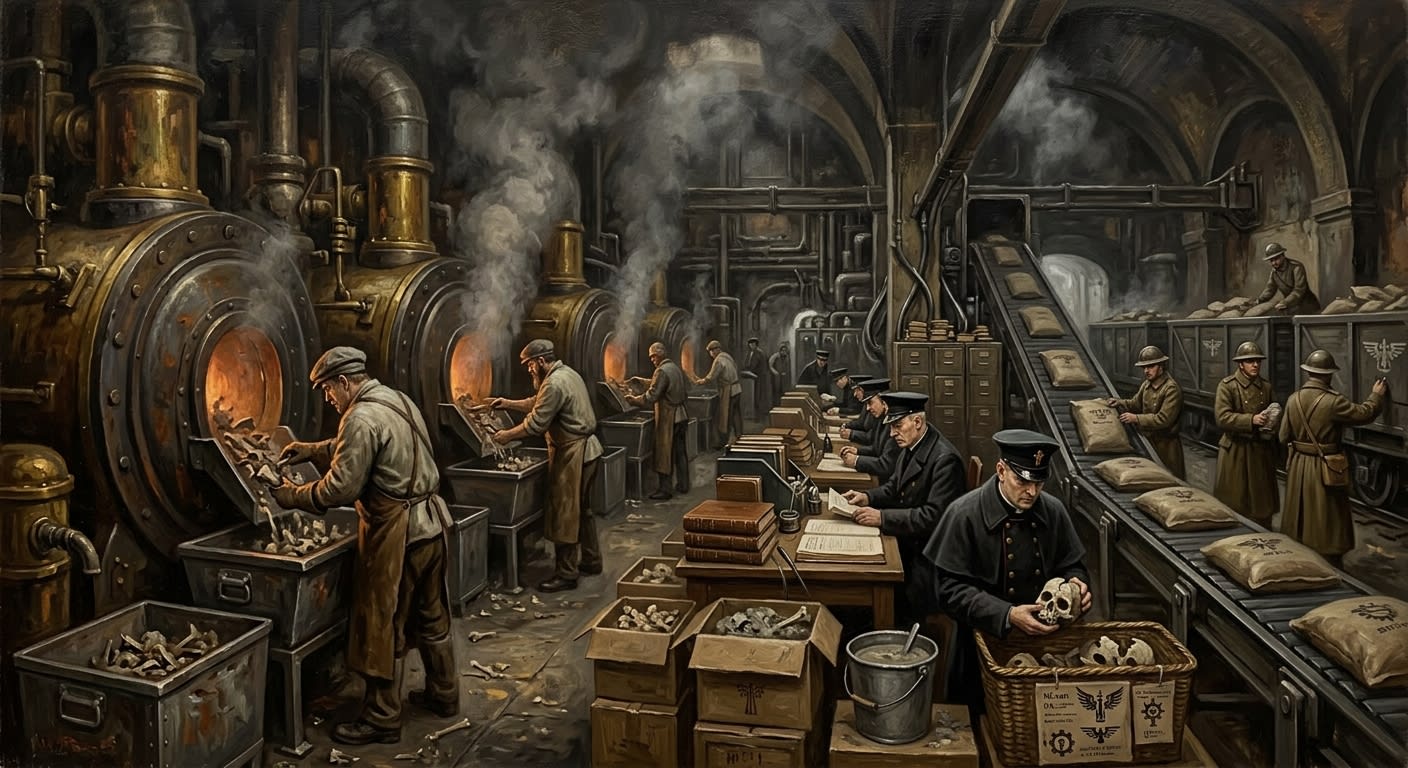
Saint-Bone Melting Acts A.S. 96
The statute that taught saints to bear weight, whether they had consented neatly or not
A.S. 96 legislation that turned surplus, damaged, disputed, duplicated, and unassignable relic fragments into deployable sanctified mortar for the Sagittal Line.
Codex Ref. VII.2.10-096
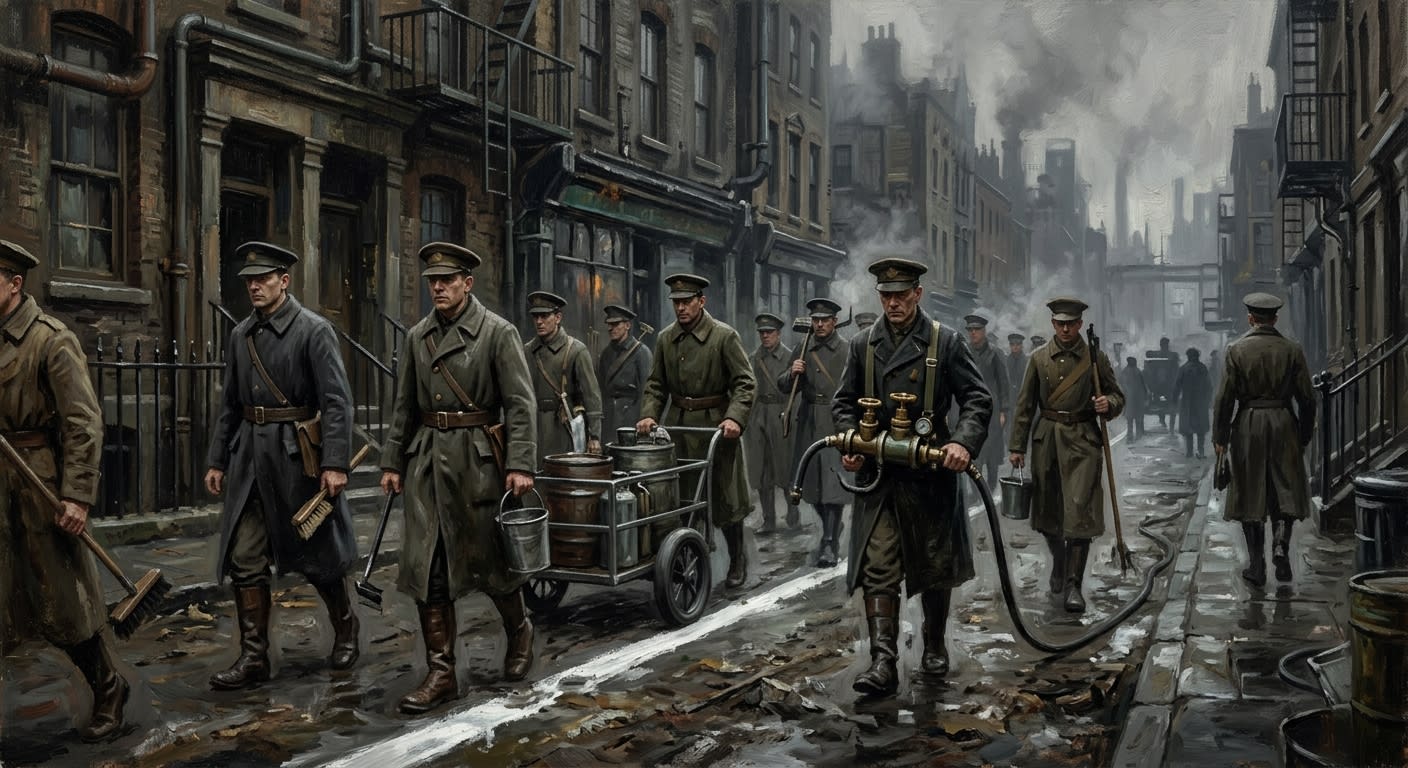
Sanitation Chapter
The clean line is a border, a sermon, and a threat
Mercy calls it sanitation; Marrowgate calls it the office that paints a white line and makes obedience look like hygiene.
Codex Ref. VIII.2.10-078
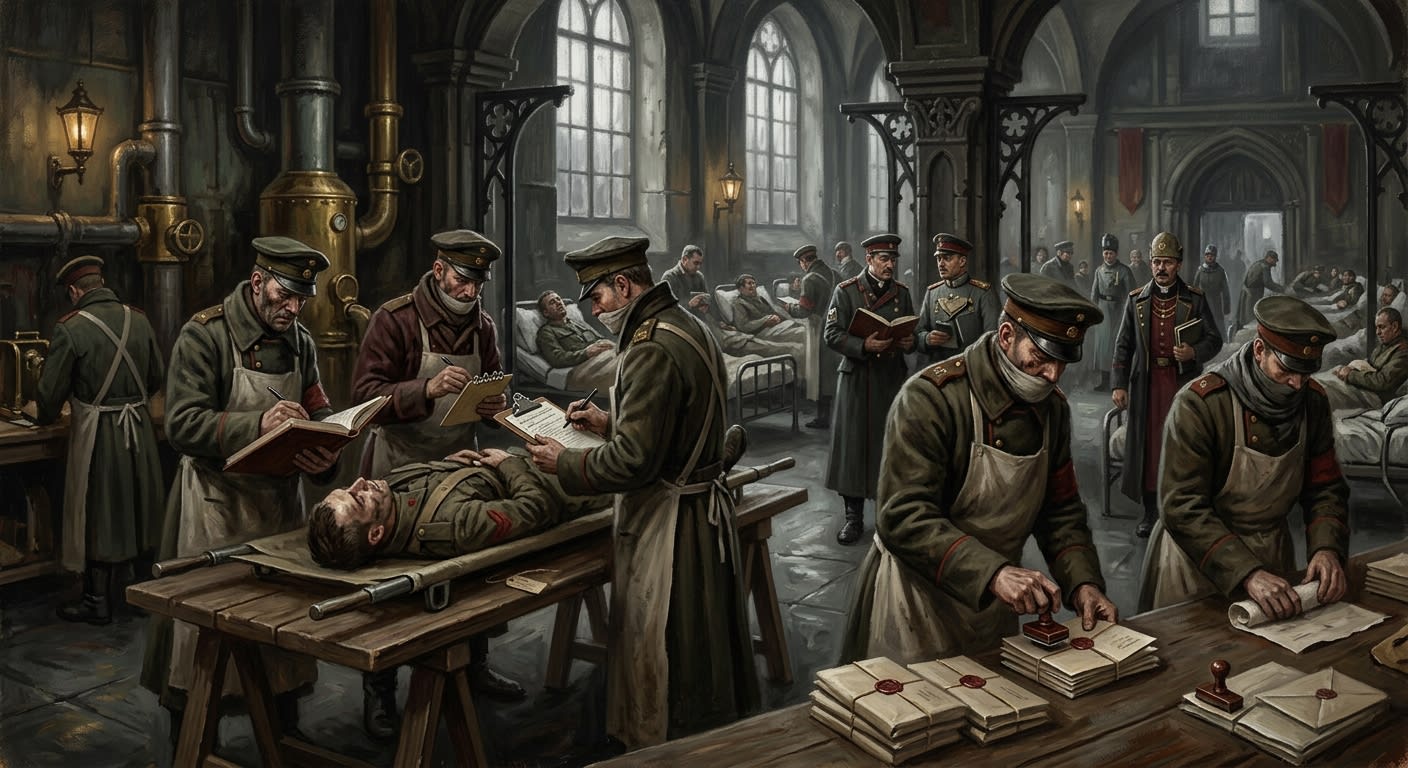
Standing Order 22-C
No last word unfiled, no dying mouth left private
Standing Order 22-C makes the dying useful: names first, comfort second, three copies sealed before the body is allowed to cool.
Codex Ref. XIII.1.98-080
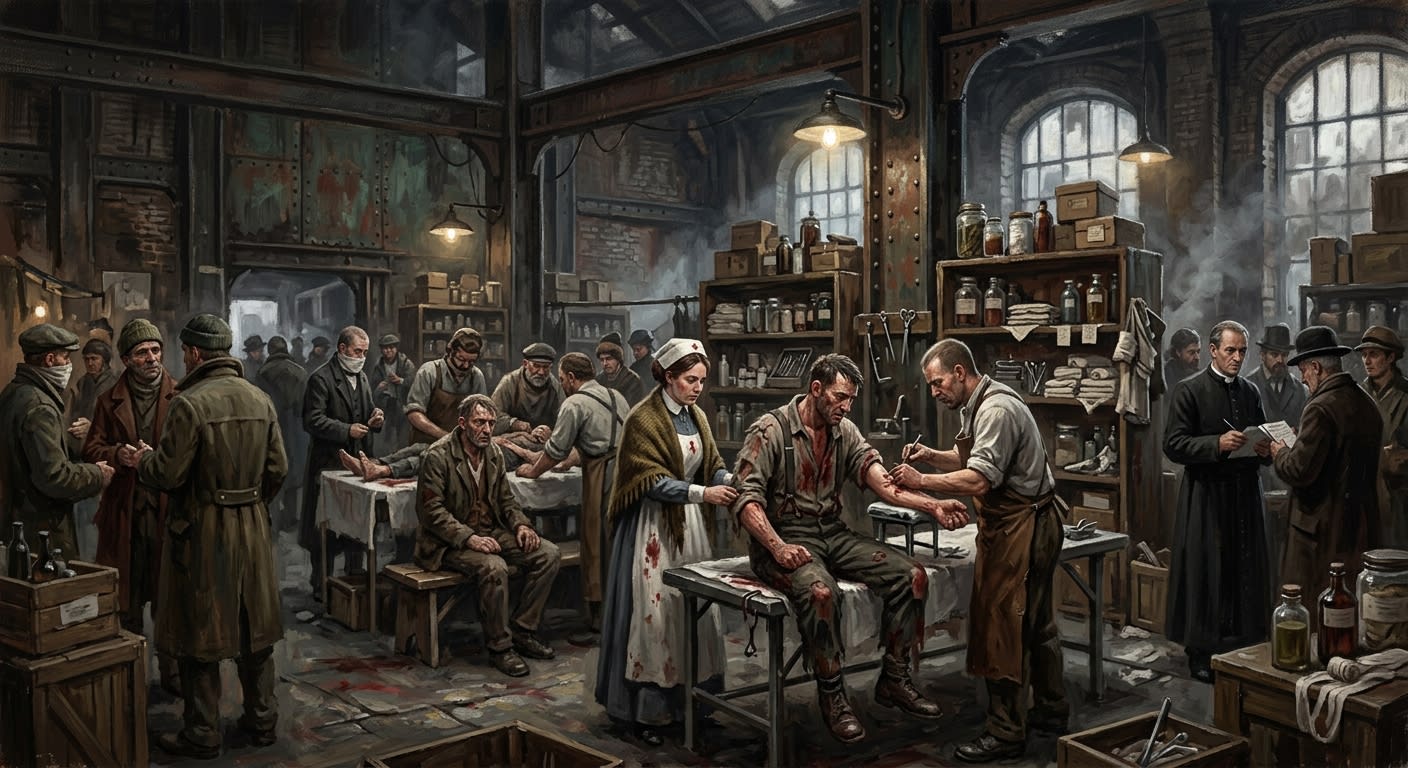
Stitchmarket
Where unlawful mercy learns to keep receipts
Marrowgate rationed lawful mercy until crime opened a clinic, priced the bandages, and learned to forge the city better than its clerks.
Codex Ref. XII.31.06-201
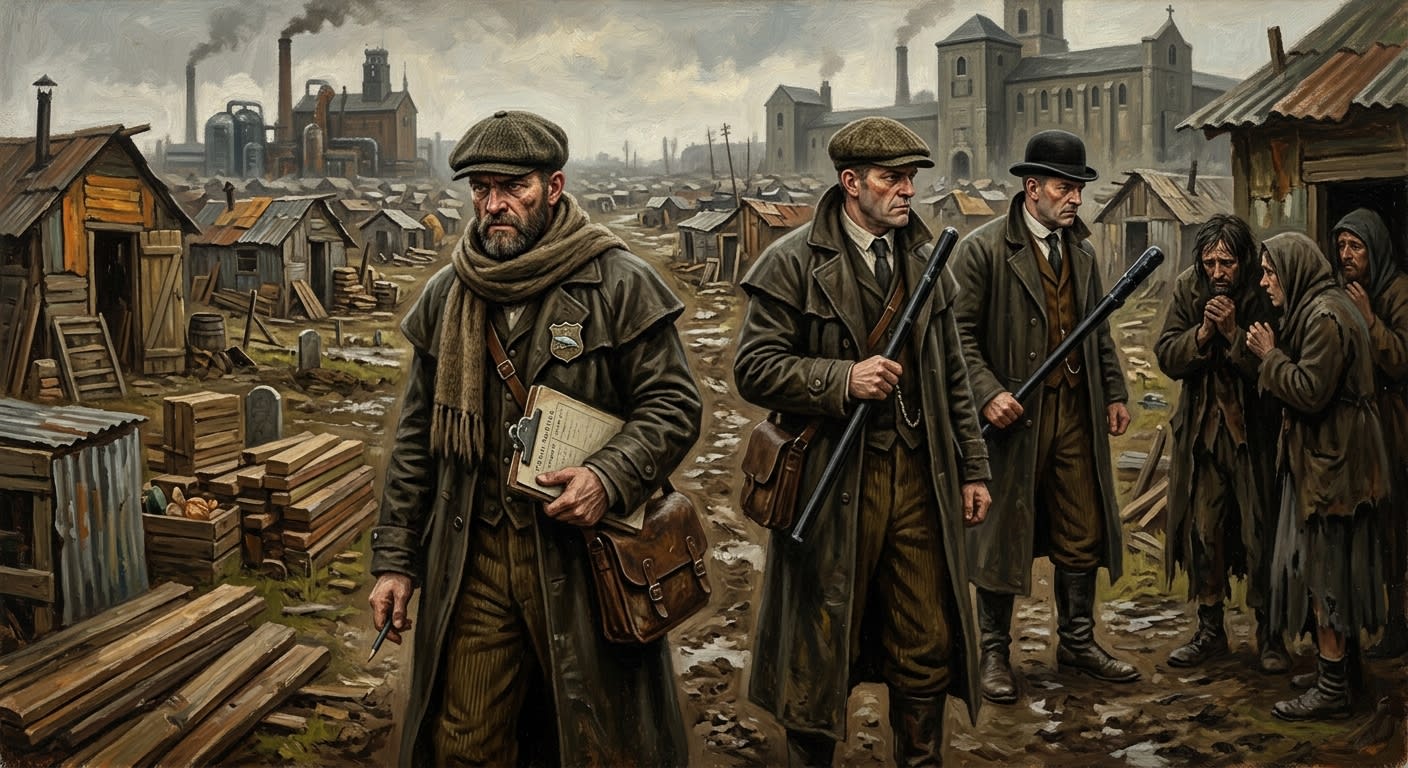
Stone Sharks
Safety by the inch, eviction by the weather, mercy by invoice
Stone Sharks are the profit-hardened branch of Grave-Field Shanty Brokers: orderly grave-lane landlords who sell safety, patrol blindness, and winter survival at predatory rates.
Codex Ref. XII.27.03-001
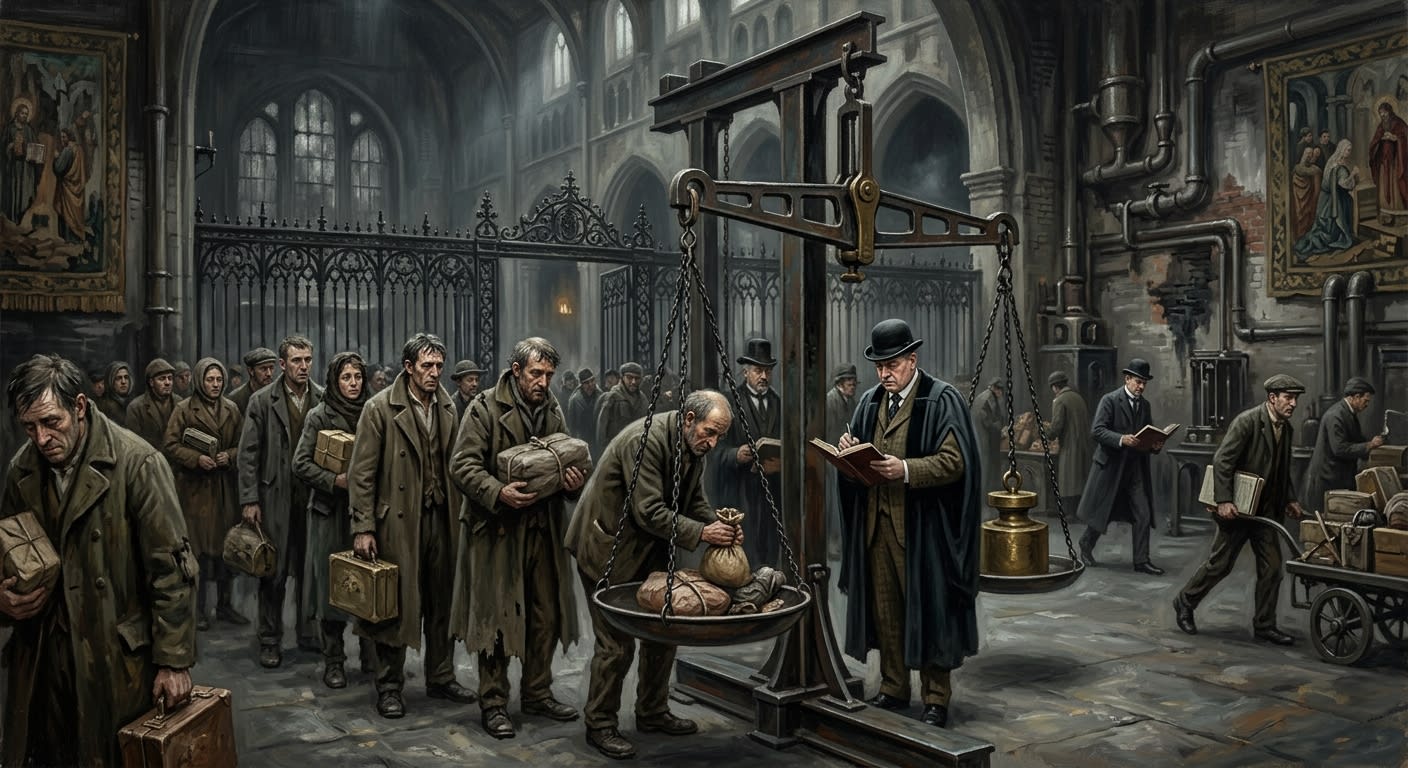
Tariff Chapel
The altar where hunger, bone, freight, and grief learn their lawful weight
The Tariff Chapel is the Synod's sacramental weighing room, born from the A.S. 97 Bread-Scale Uprising and extended to goods, corpses, relics, queues, and taxable desperation.
Codex Ref. XIII.1.67-001
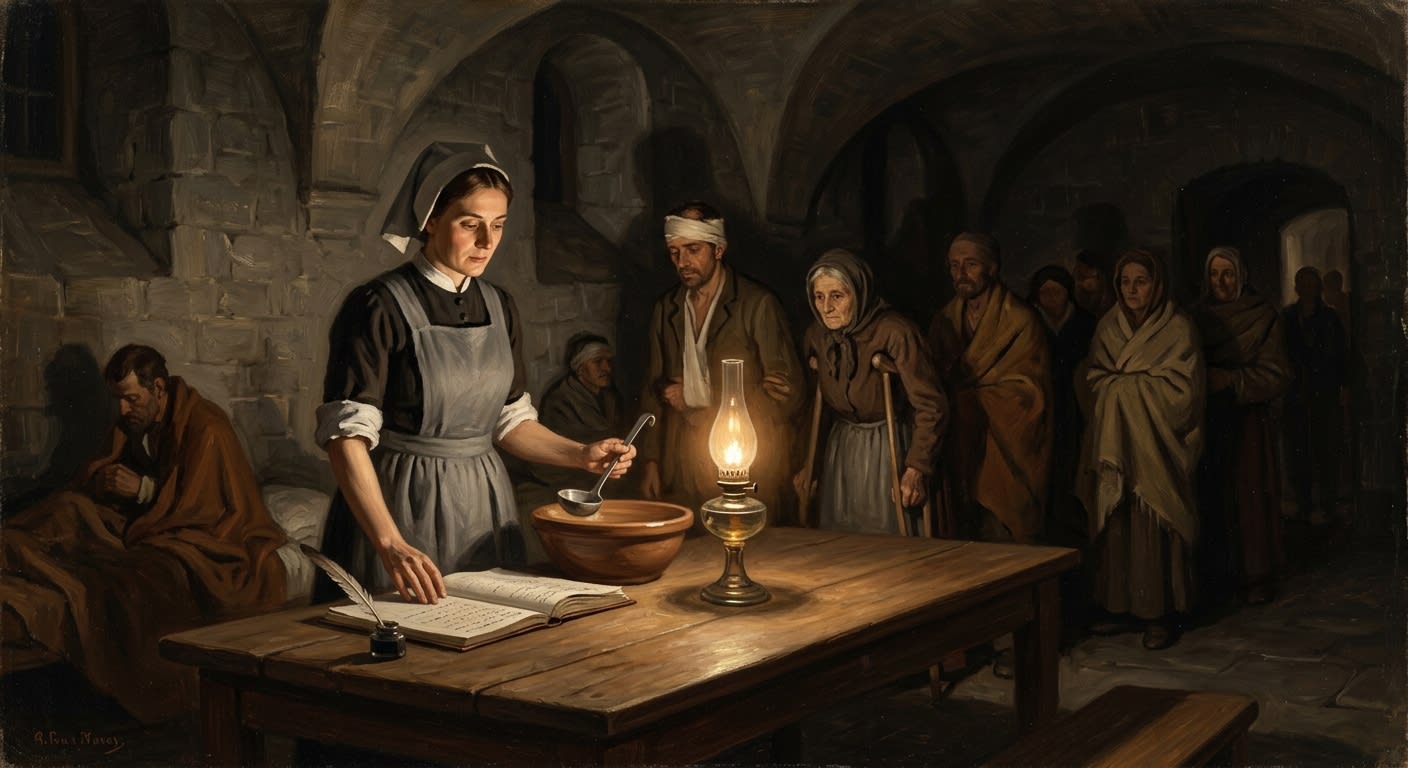
The Bureau of Mercy
Compassion Is a Ration. A Ration Is a Policy. A Policy Is the Synod's Will.
The Bureau of Mercy administers the Synod's hospitals, orphanages, broth-kitchens, and Hospices of Departure — every institution where subjects are at their most vulnerable and therefore most in need of documentation.
Codex Ref. VI.4.12-031

The Rhine Corridor
Damp procedure, counted backward from every bridge
The Rhine Corridor is the Synod's damp procedure: a Zone 2 logistics artery, mortuary road, ferry court, heresy school, and billable proof that movement can be made afraid.
Codex Ref. II.2.08-202
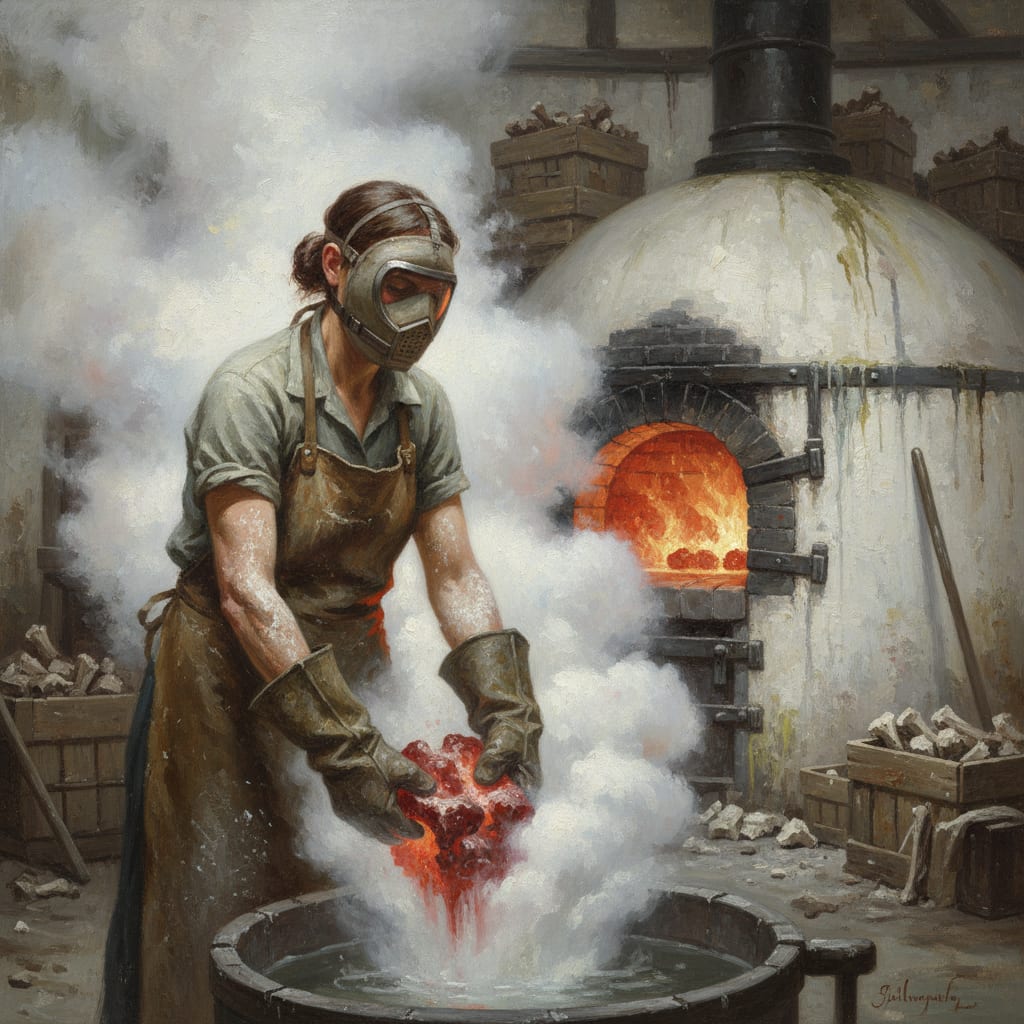
The Saint-Bone Melter
The wall is the only sermon the Enemy has ever been forced to hear
The artisan who feeds the bones of saints to the kiln and receives in return the mortar that holds the Sagittal Line together. The arithmetic is simple and brutal: a femur in a reliquary inspires; a femur in a wall holds.
Codex Ref. XII.40.01-001
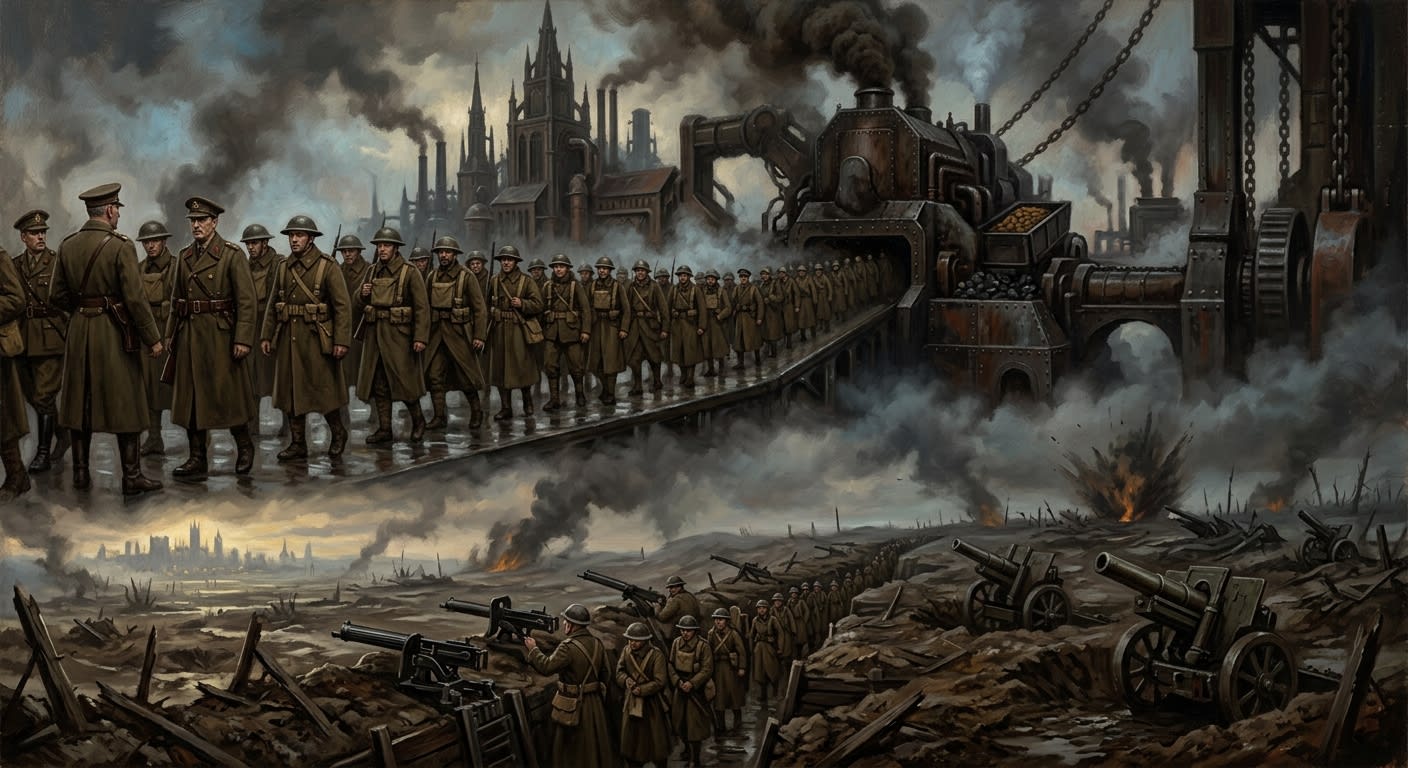
War Eternal
Victory assured; timetable irrelevant
The War Eternal is governed horror: the Line fed daily so the West may mistake survival for morning.
Codex Ref. XIII.1.92-065
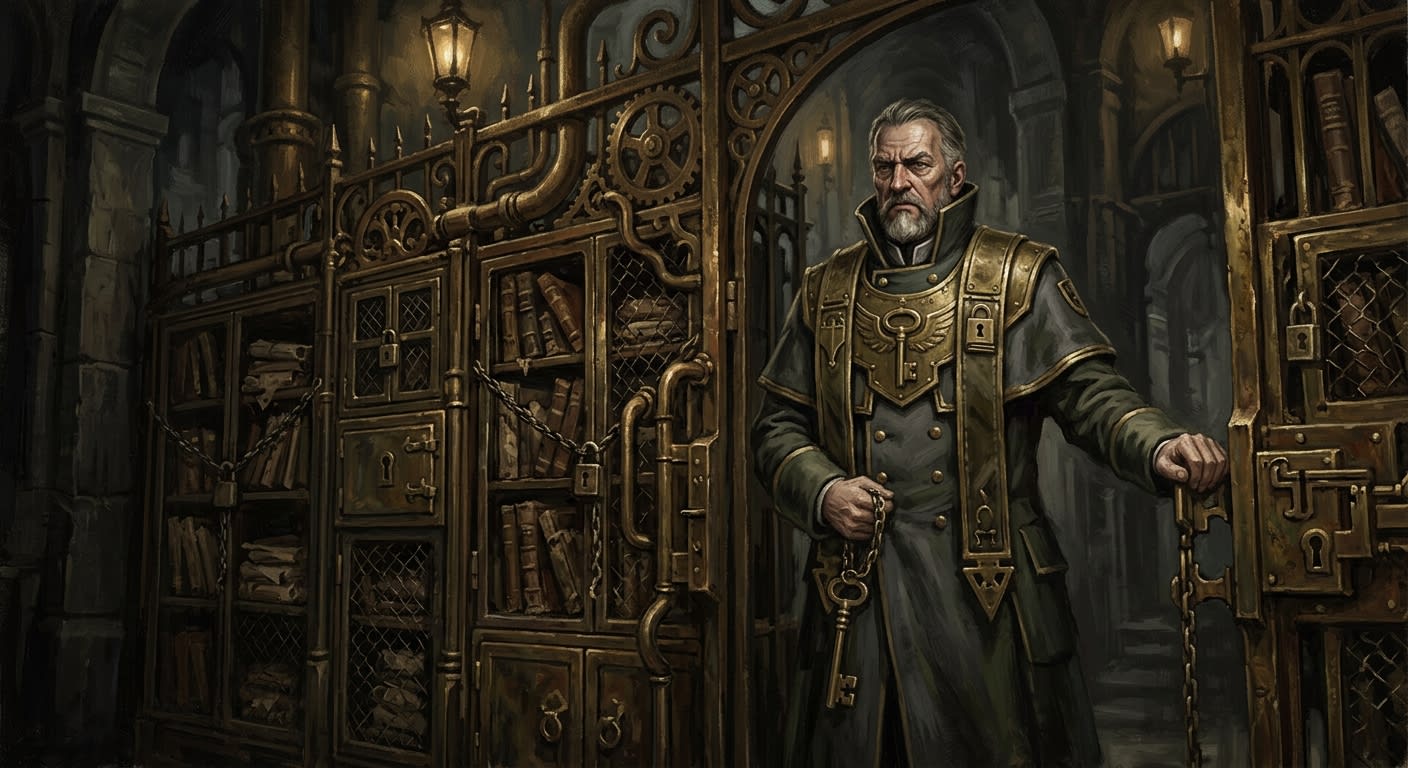
Warden of the Sacred Ledger
Memory is permitted only after custody
The Warden of the Sacred Ledger guards the passage between recorded fact and ratified meaning, lest memory escape and become a riot with dates.
Codex Ref. XIII.1.33-090