

Reverse Index
Referencing “The Council of Mainz”
Every codex entry that links to The Council of Mainz. 22 entries.
Return to The Council of Mainz
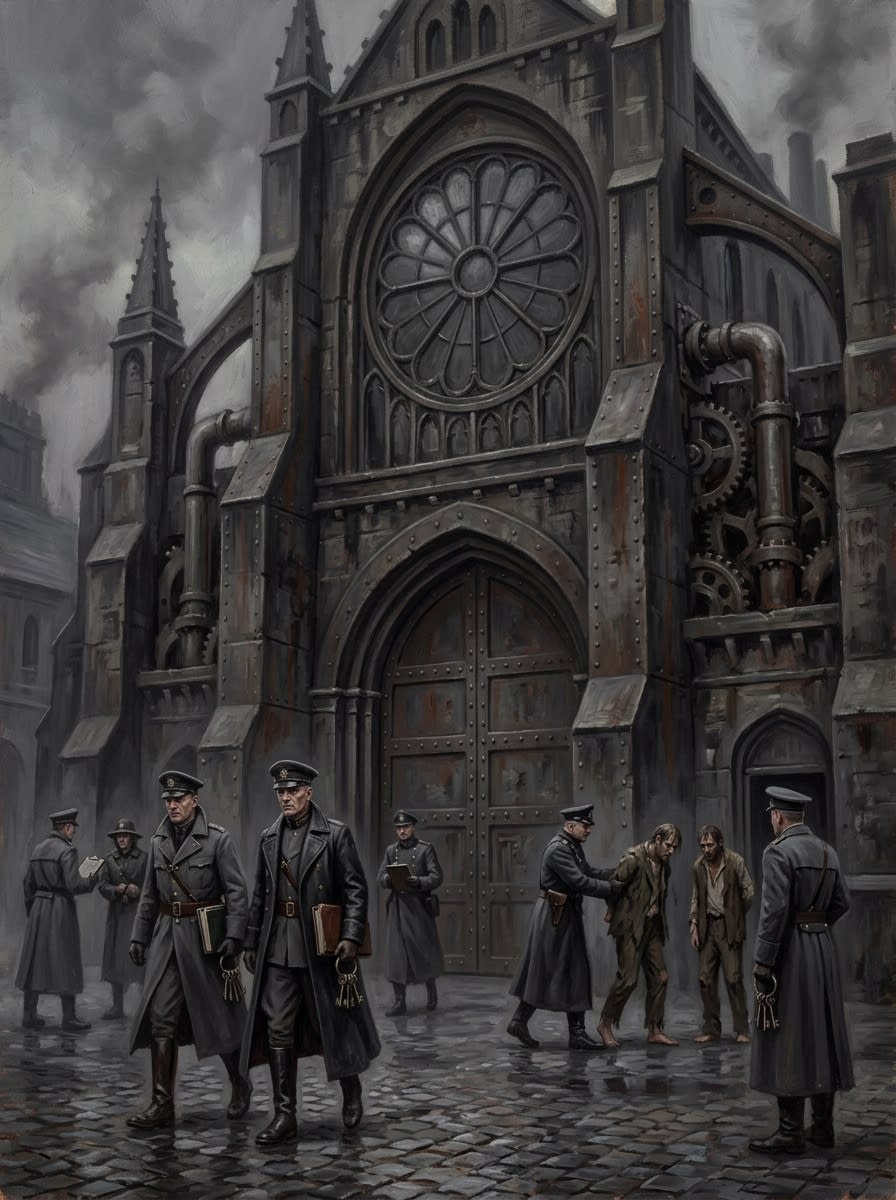
Ashen Cloister
Purity's house has handles only on the outside
The Ashen Cloister is Purity's Strasbourg seat: gate without welcome, court without mercy, archive with appetite, and the cleanest terror in the Synod.
Codex Ref. II.1.04-003
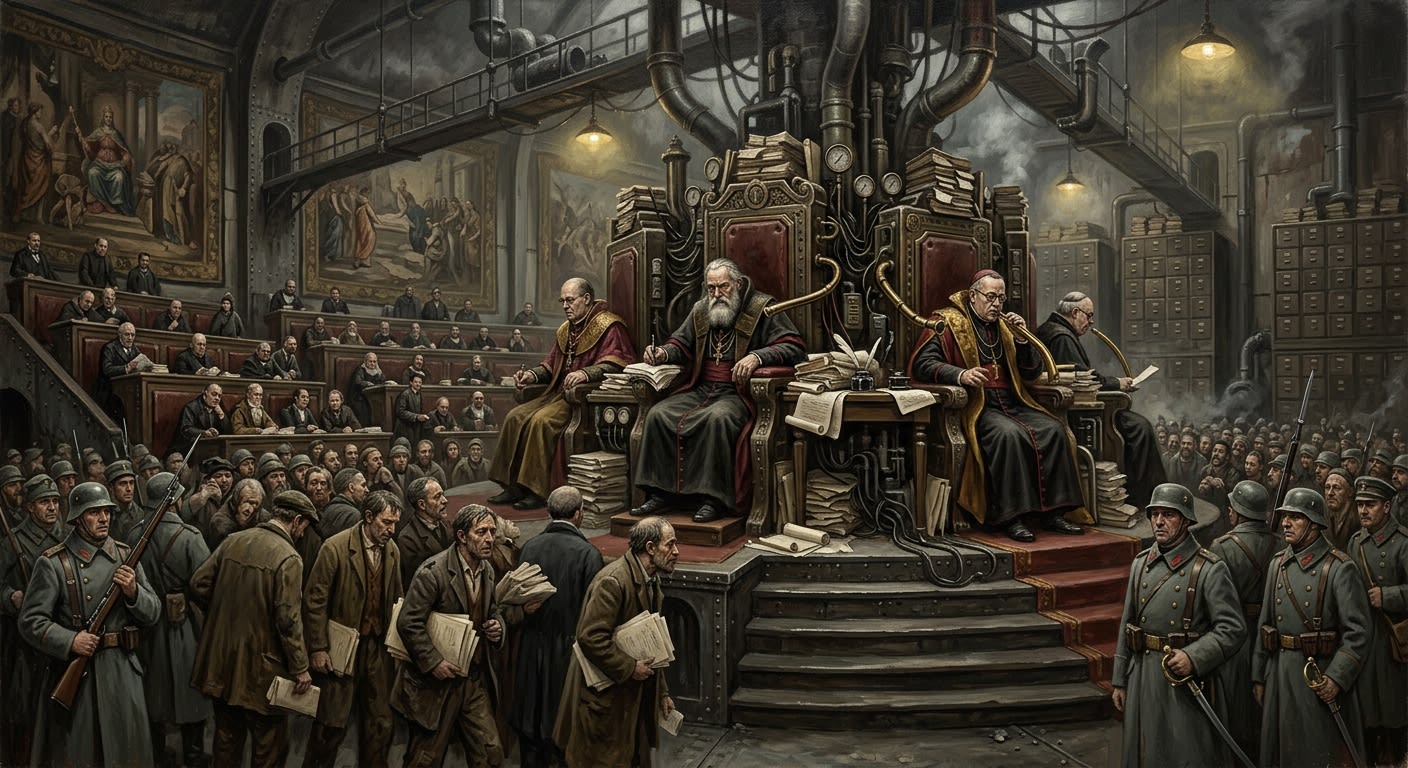
Assembly of Thrones
A chamber where pride is seated before it becomes militia
The Assembly of Thrones lets Bishops-Praetorial thunder safely: grievance seated, fury docketed, pride taxed, and every rebellion delayed by procedure.
Codex Ref. XIII.1.07-093
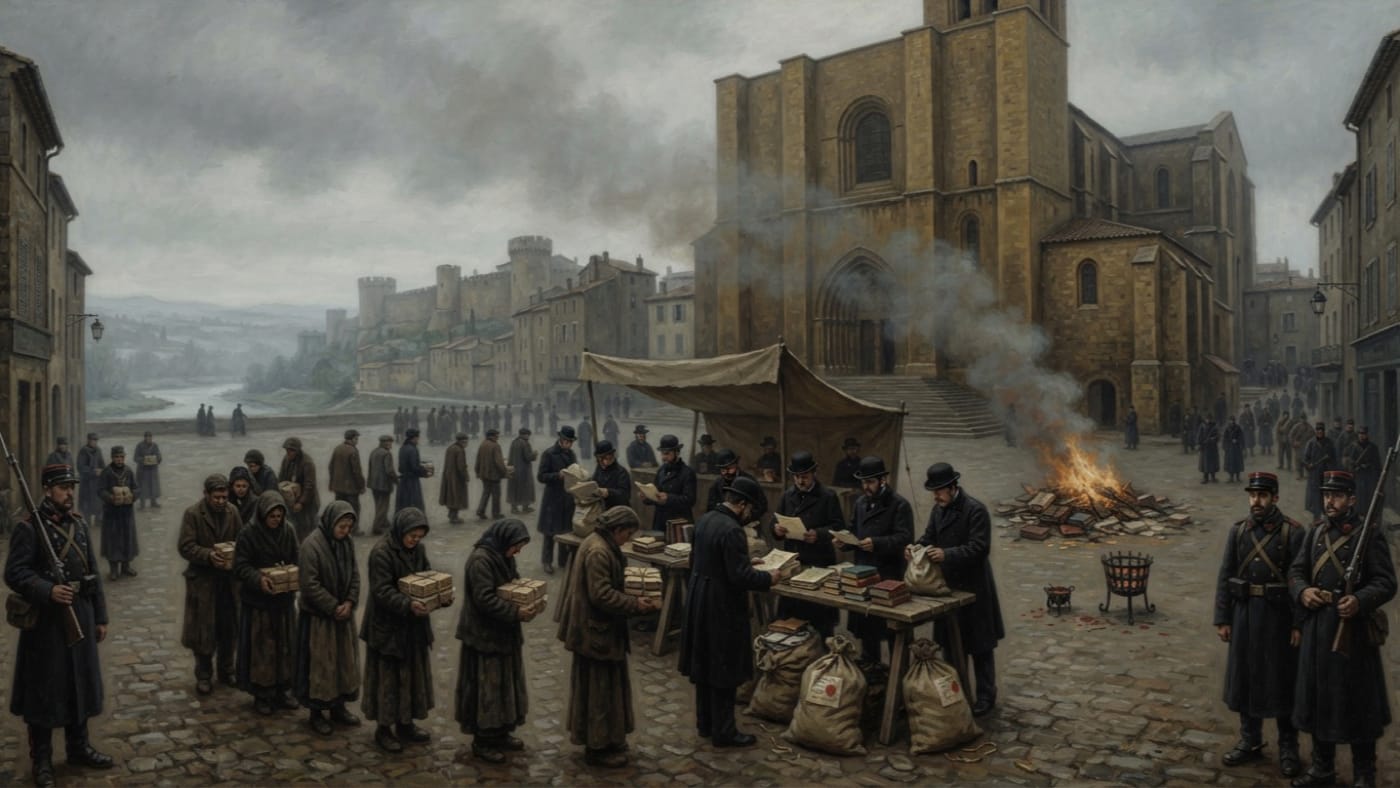
Béziers
A city named by someone else's confession
Béziers entered the Toulouse Hunts in A.S. 93 through a confession taken at Carcassonne. Purity retained the name; the surviving record supplies no separate local reckoning.
Codex Ref. II.1.10-093

Bishops-Praetorial
Mitres welded to prefectures, and souls counted twice
The Bishops-Praetorial keep souls, quotas, provinces, and grudges: mitred governors whose pastoral care arrives with tithe tables attached.
Codex Ref. VIII.3.04-093
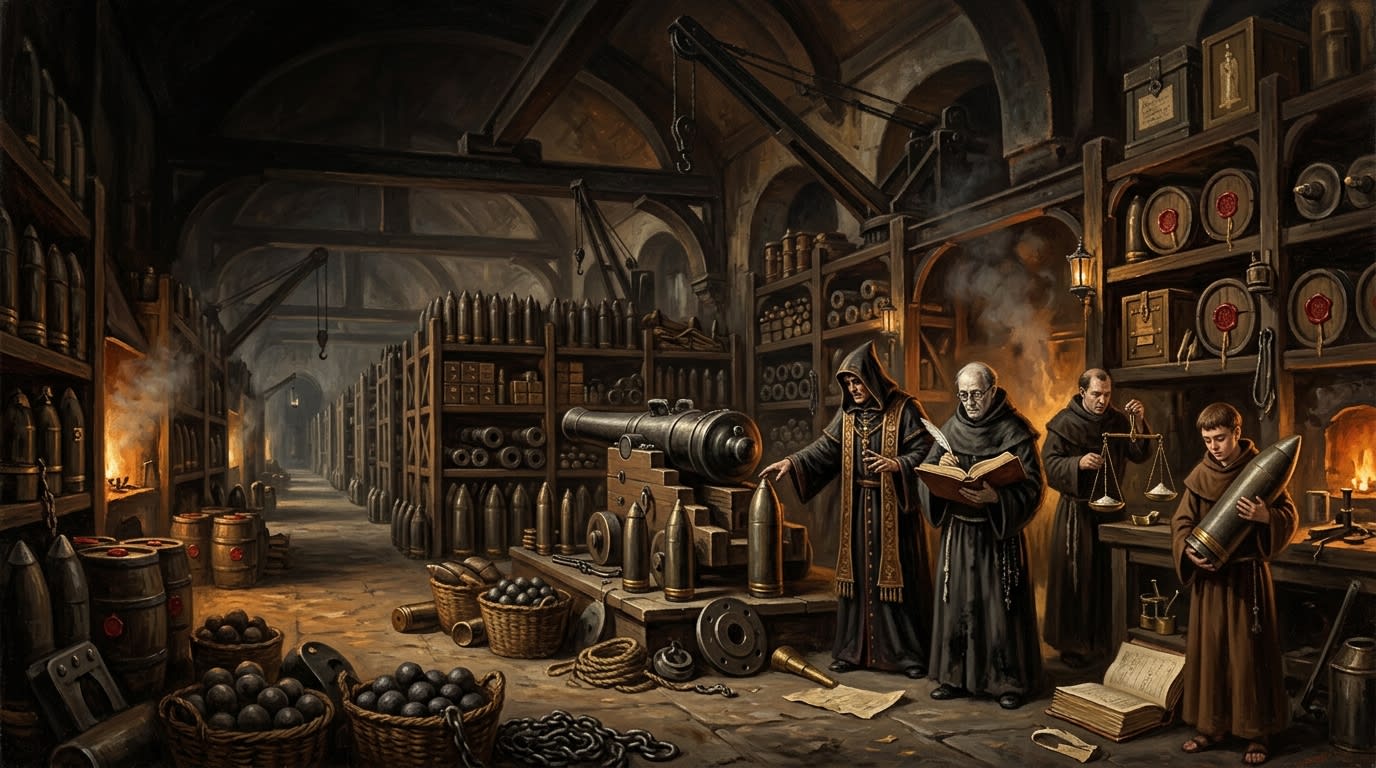
Bureau of Ordnance
No violence is lawful until inventory permits it
The Bureau of Ordnance blesses powder, counts shells, seals fuel, restrains officers, and teaches matter to obey violence only after the Ledger consents.
Codex Ref. VIII.2.11-090
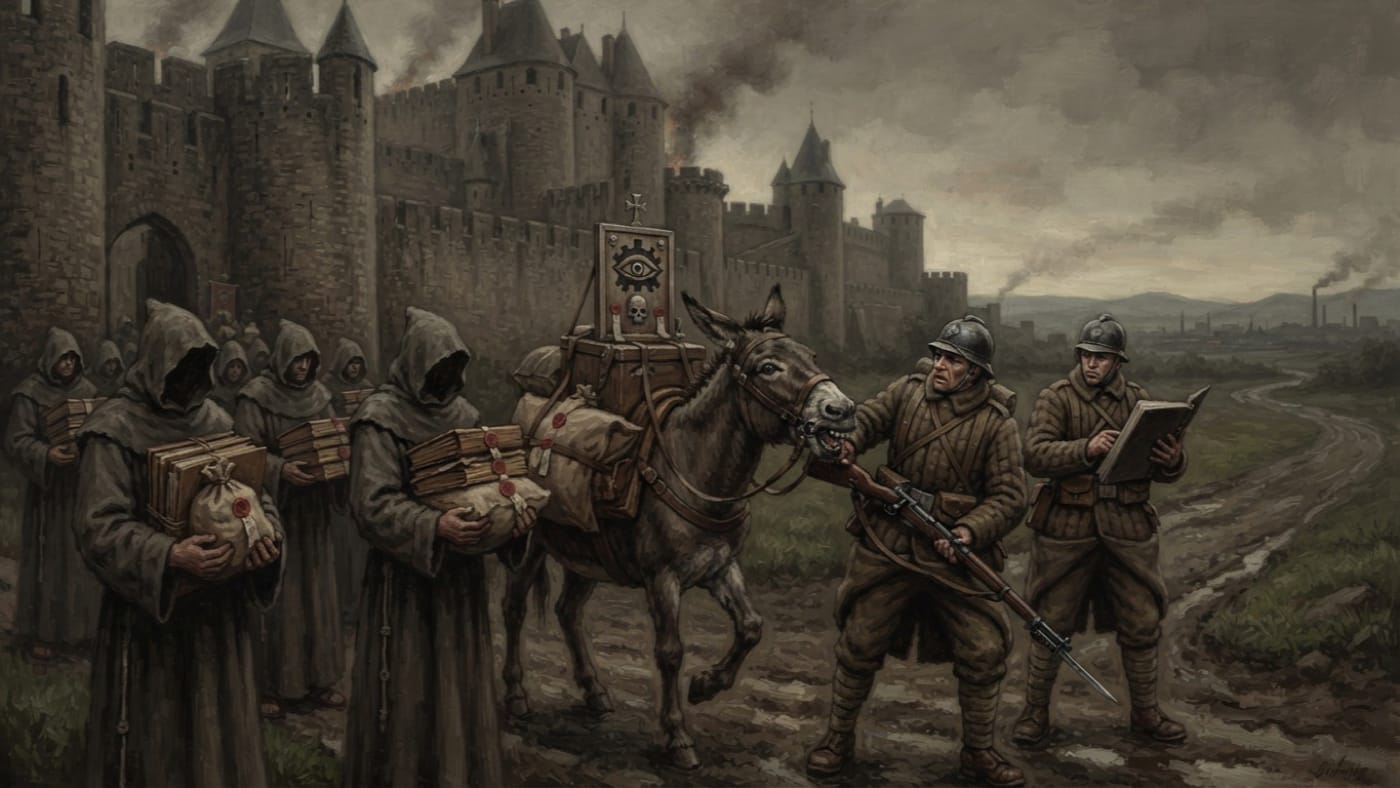
Carcassonne
Names outward, forbidden paper back
Carcassonne sent names outward and forbidden paper back to Toulouse. Purity enlarged its reach and its Index; Bernard the mule supplied the teeth.
Codex Ref. II.1.09-093

Crimson Vault
The Rule in Ink, the Intention in the Margin
A.S. 201 survey of the Bureau of Records' Crimson Vault, where the Council of Worms account places Kratz's handwritten Protocol. The rain-spotted pages preserve advice the clean clauses do not; the Vault's physical location remains unestablished.
Codex Ref. III.2.07-032
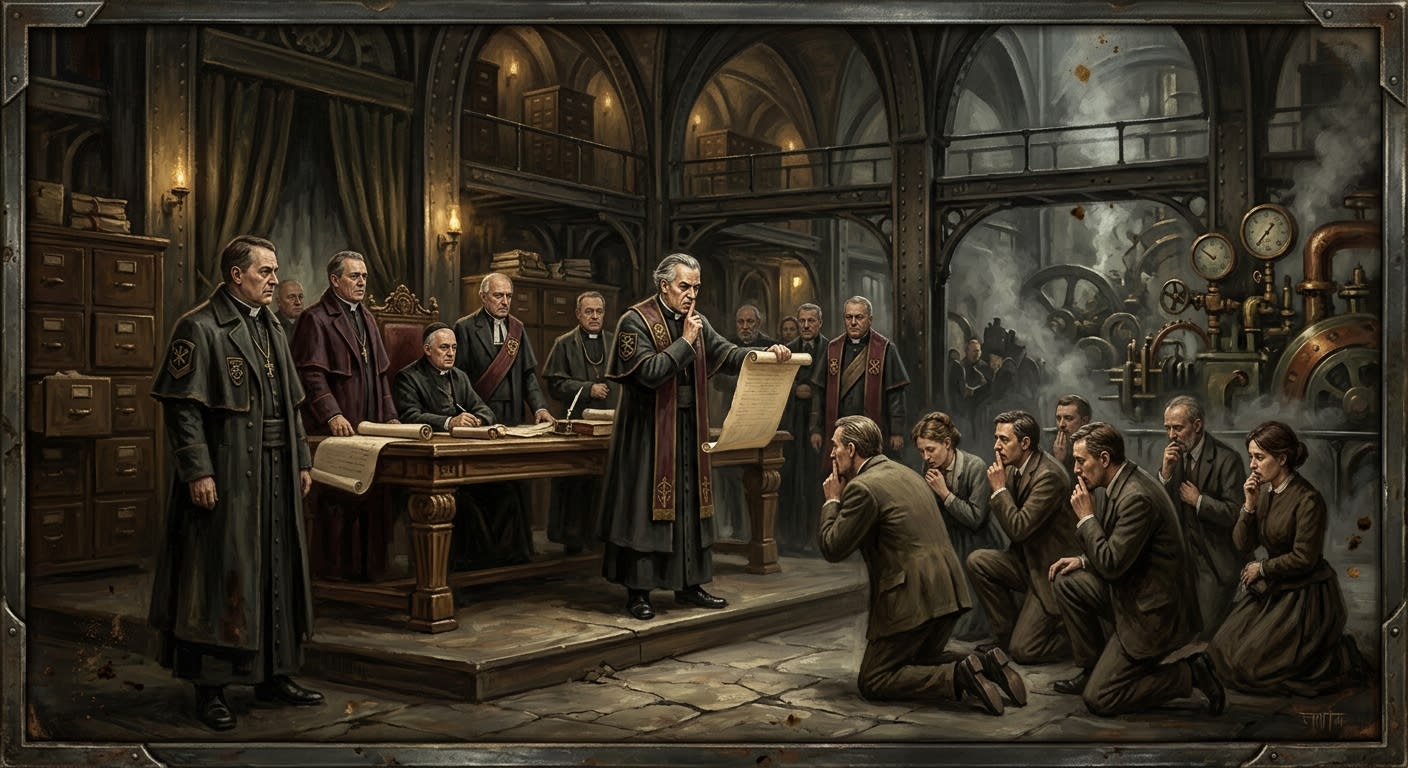
Edict of Cologne
Consent is expensive; retroactive obedience is cheaper
The Edict of Cologne bound dioceses to Strasbourg by discovering their obedience had already happened, then teaching silence to sign.
Codex Ref. XIII.1.90-100
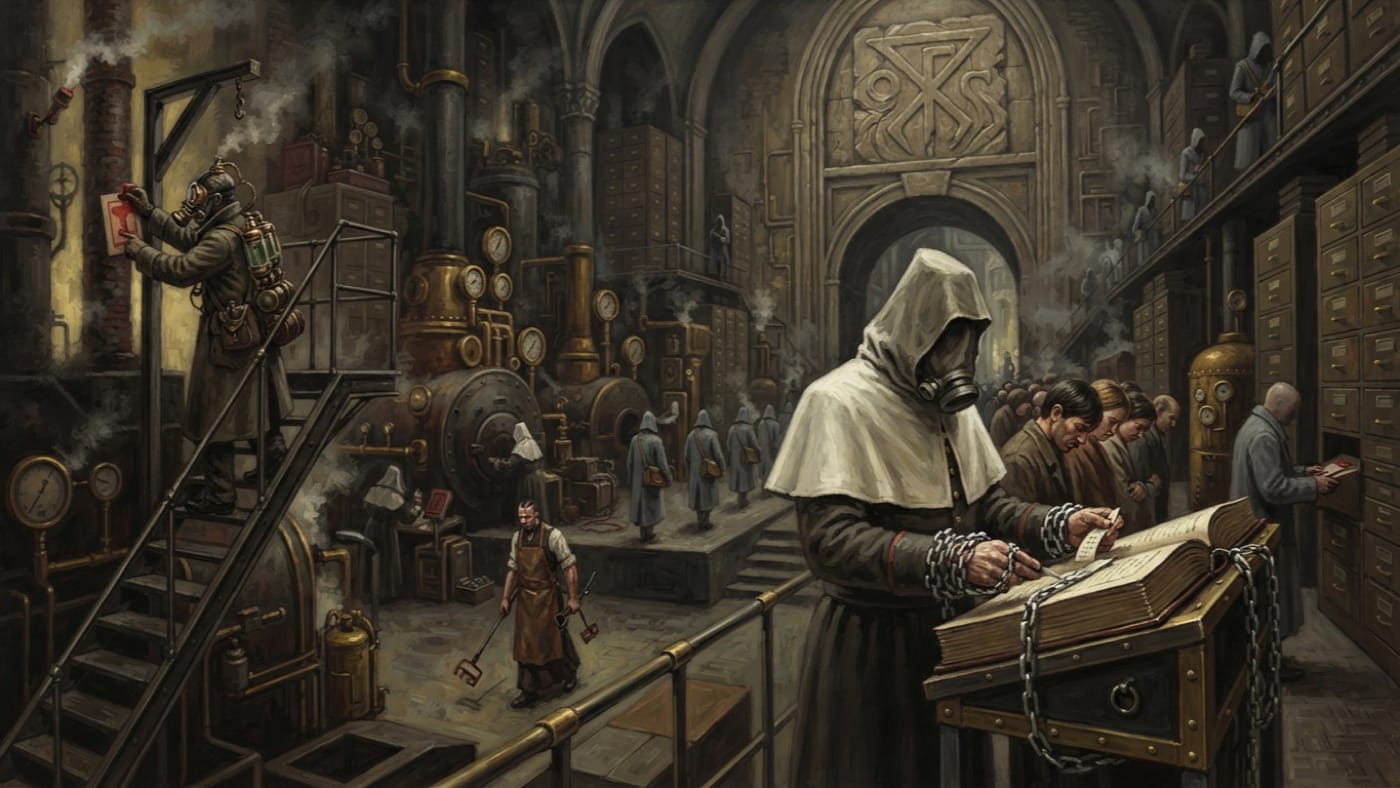
Fifth Seal of Faith
The prohibition arrives before the definition
The Fifth Seal governs Purity: forbidden speech, indexed forms, and the Inquisition. Strasbourg constituted it in A.S. 90; the definition of impurity remains pending while enforcement proceeds.
Codex Ref. XIII.1.05-005

Foix
Named, included, not proved
Foix entered Purity's Toulouse file in A.S. 93 because Carcassonne named it. No local offence is cited. A town requires no proven guilt to become a permanent entry.
Codex Ref. II.1.09-010

Hierarch Odo of Trier
The man who taught Strasbourg's stones to obey
Hierarch Odo of Trier entered the Inner Circle after Mainz and became quotation at Cologne, where one sentence taught bishops, walls, and petitions how silence obeys.
Codex Ref. III.2.01-044
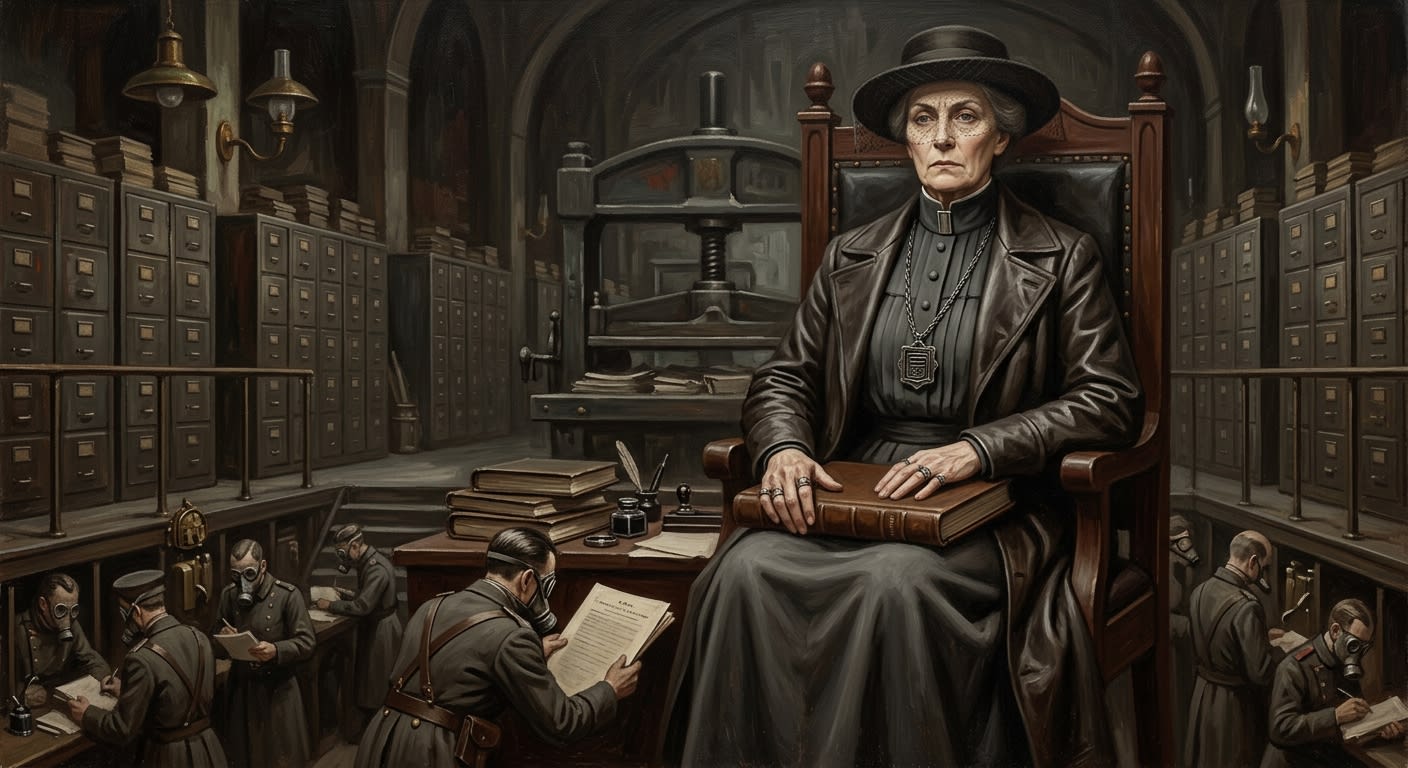
Hierarch of Purity
The silence before confession has a chair and wears white
The unnamed current holder of the Fifth Seal commands Purity, the Inquisition, and the administrative terror by which impurity becomes whatever her silence permits.
Codex Ref. III.2.01-072

Inner Circle
Seven knives pointed inward, and Europe calls the locked box government
The Inner Circle is the Synod's highest chamber: seven Seal authorities locked in Strasbourg beneath the Basilica, manufacturing unanimity from obstruction, fear, rotating stamps, clerks, and the occupied absence of War.
Codex Ref. XIII.1.05-090
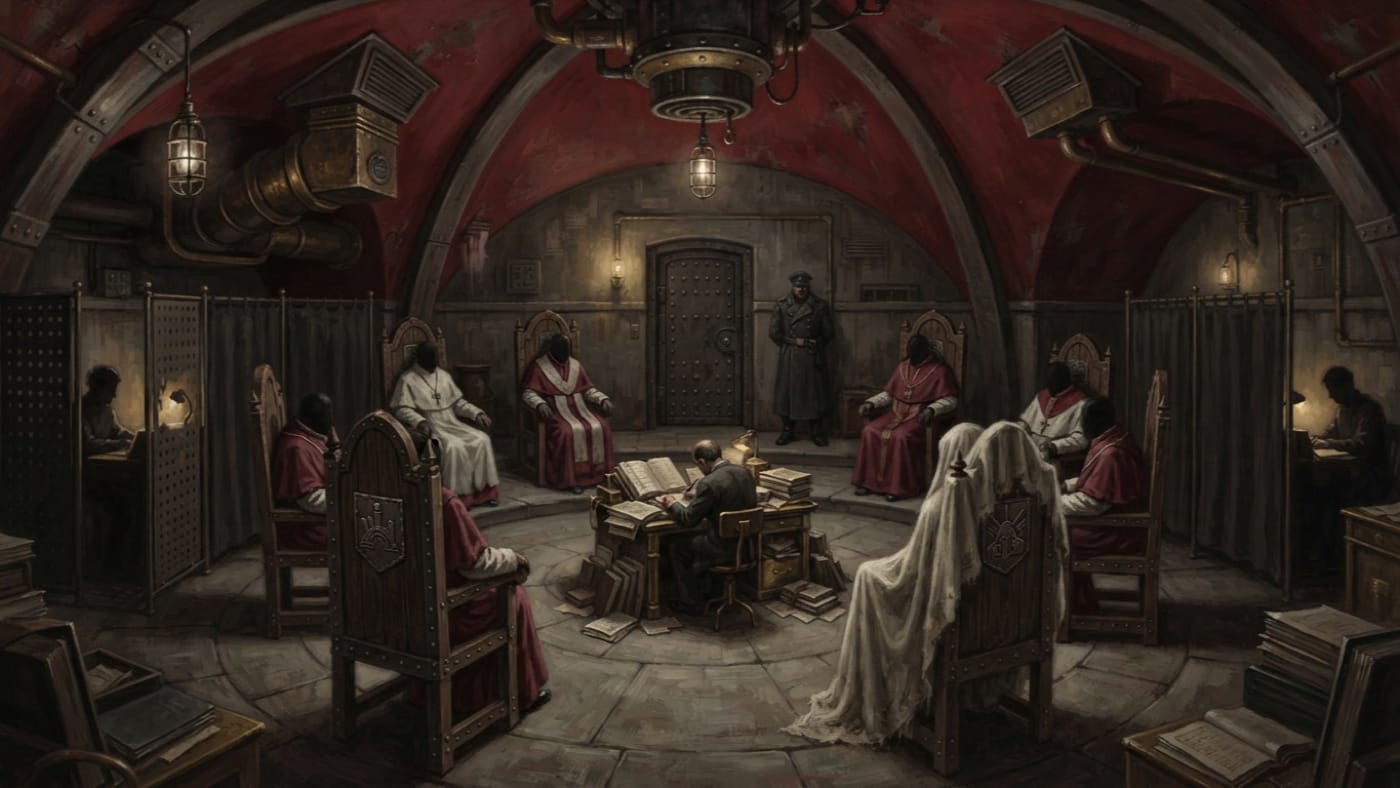
Inner Circle of Strasbourg
Six Chairs Answer. Seven Seals Decree.
Seven chairs, six occupants, no table. From the Basilica's highest floor, the Synod decrees through corrected minutes, seven stamps, and War's vote counted by faith.
Codex Ref. III.2.04-1452
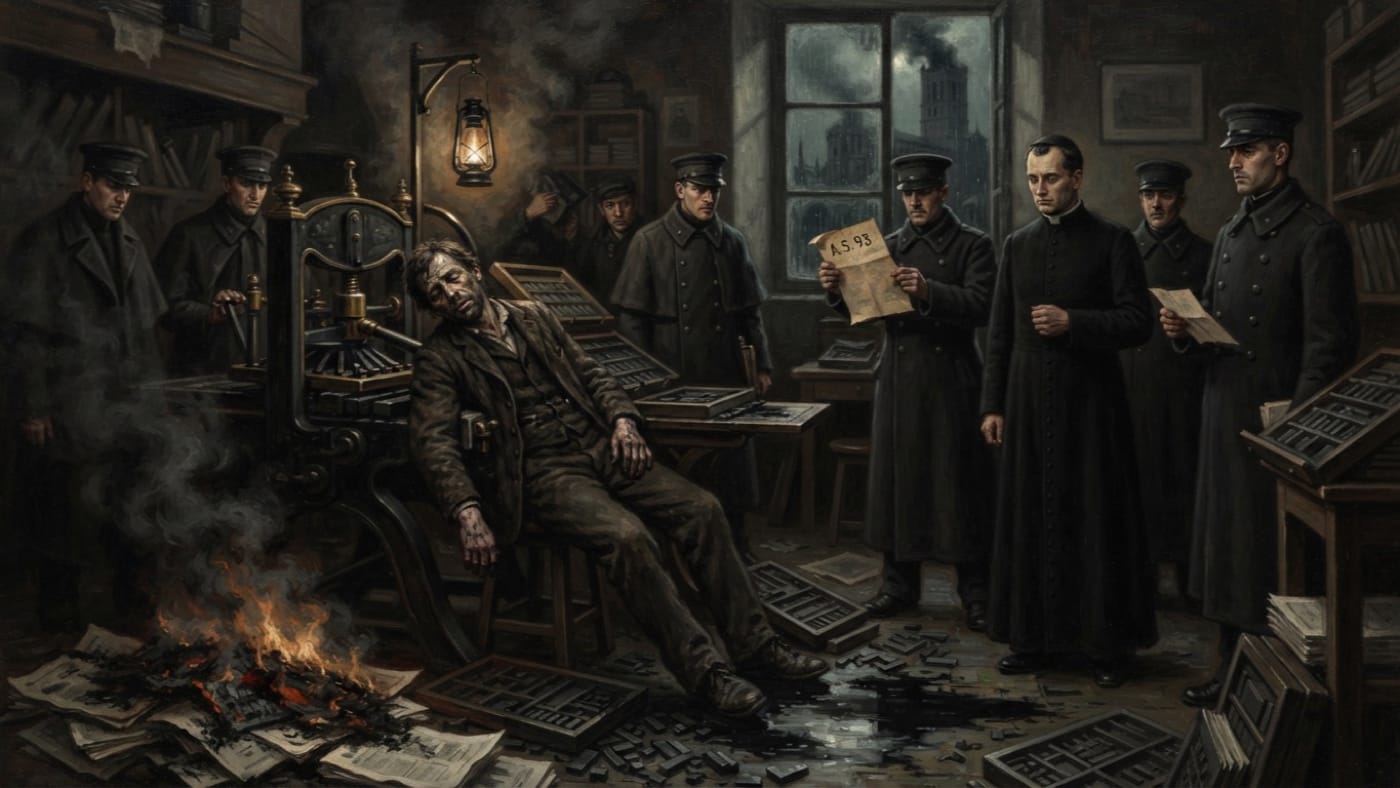
Maël Aucourt
The printer whose file outlived the man
Maël Aucourt hid Rationalist arguments among lawful notices. His A.S. 93 warrant opened the Toulouse Hunts; Purity preserved his offence more carefully than his life.
Codex Ref. III.2.01-093
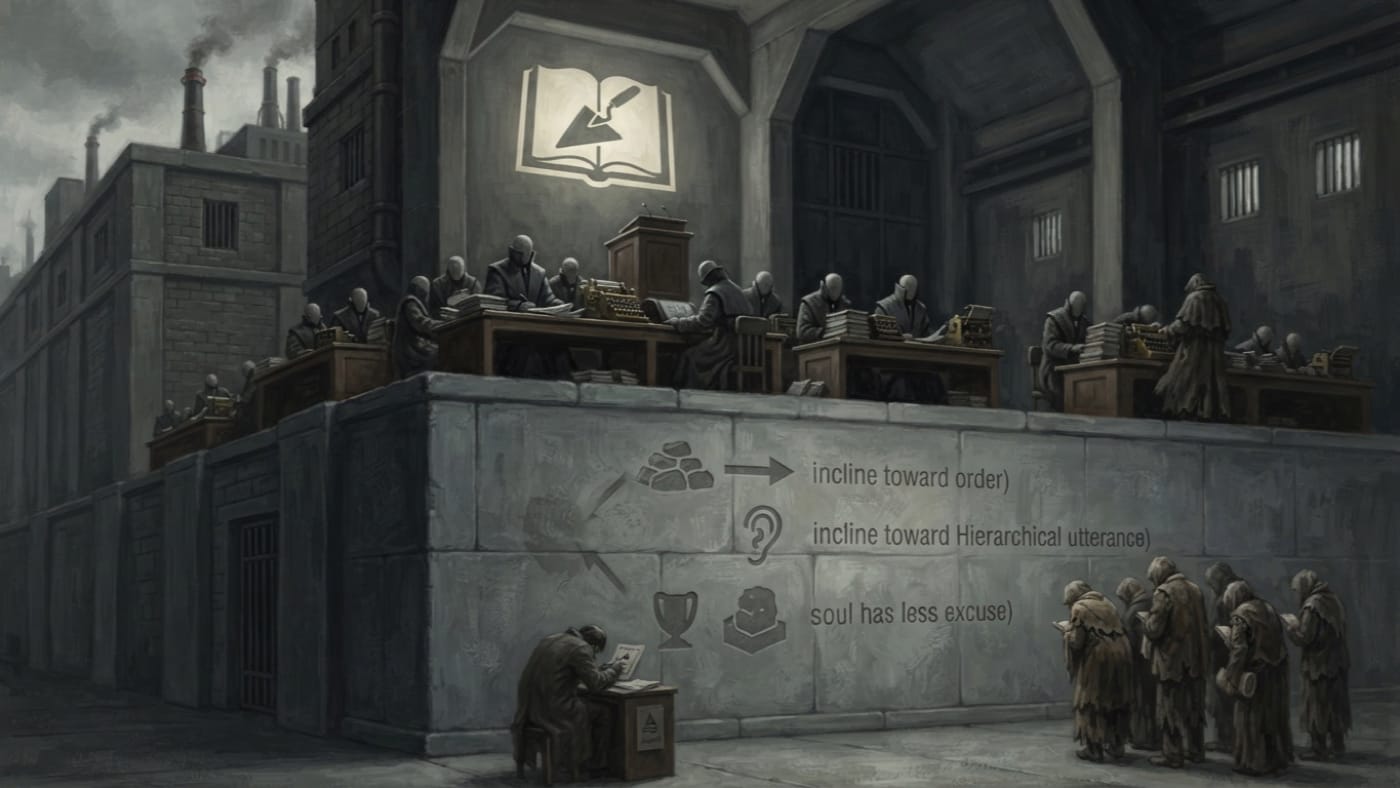
Masonry Commentary
Why a soul has fewer excuses than a stone
Issued in A.S. 103, the Masonry Commentary gives Odo's listening stones a theology: silence becomes assent, and a soul has fewer excuses than granite.
Codex Ref. XIII.1.03-103
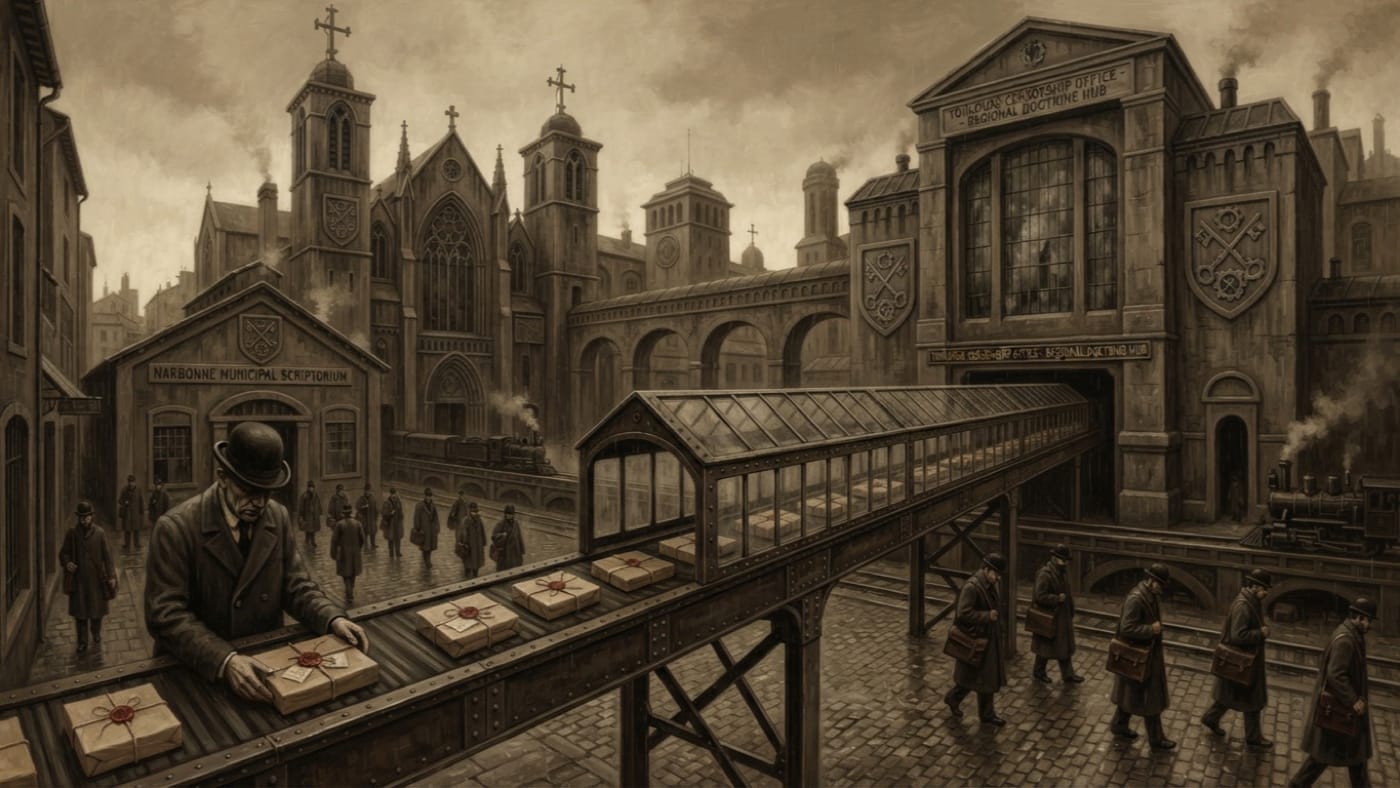
Narbonne
Named at Carcassonne, read at Toulouse
Narbonne entered the Toulouse file by confession in A.S. 93. In A.S. 201 its school primers travel there by routine post. Obedience has learned to wrap its own parcels.
Codex Ref. II.1.09-093
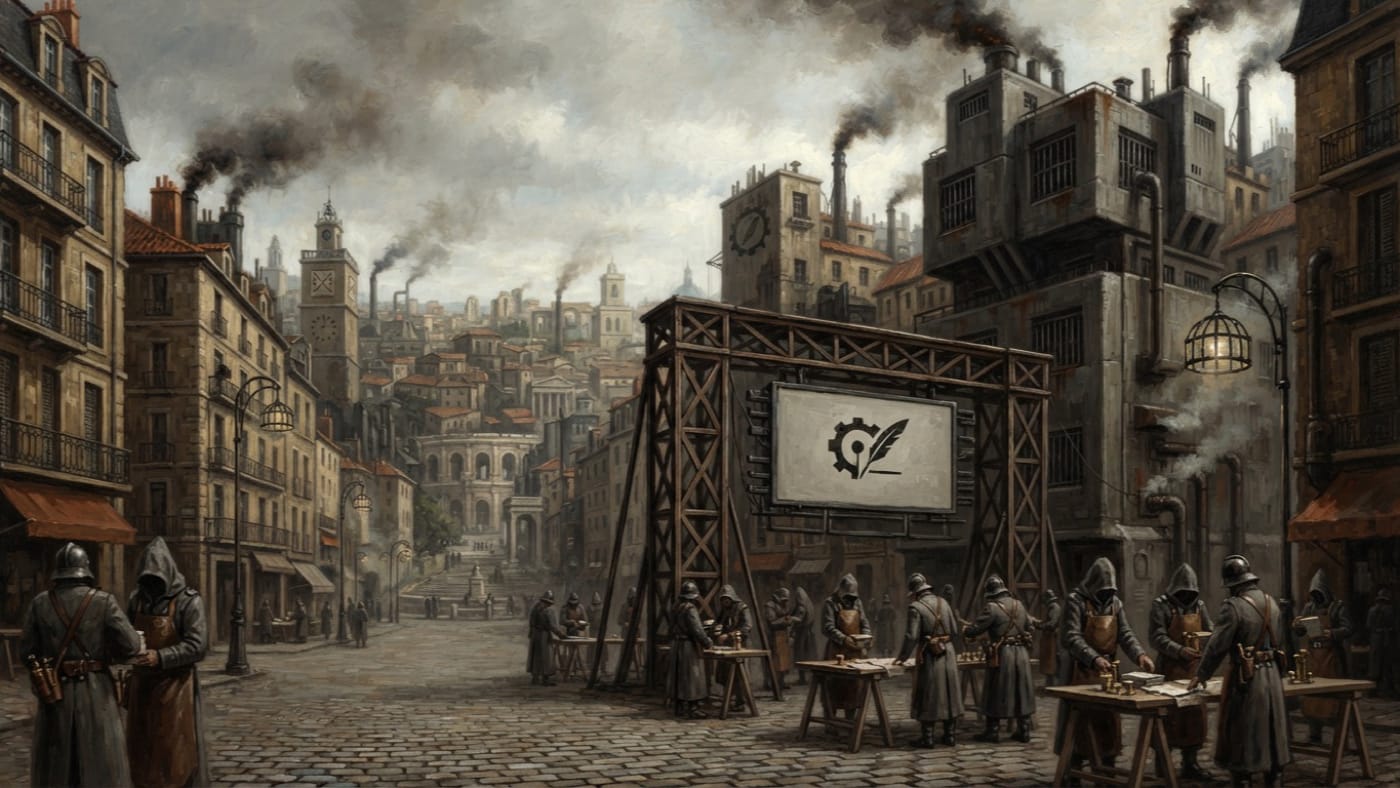
Nîmes
A city given a column before a case
Nîmes entered Purity's A.S. 93 Toulouse dossier because Carcassonne named it under interrogation. The city received a column; this file establishes no local offence.
Codex Ref. II.1.09-009
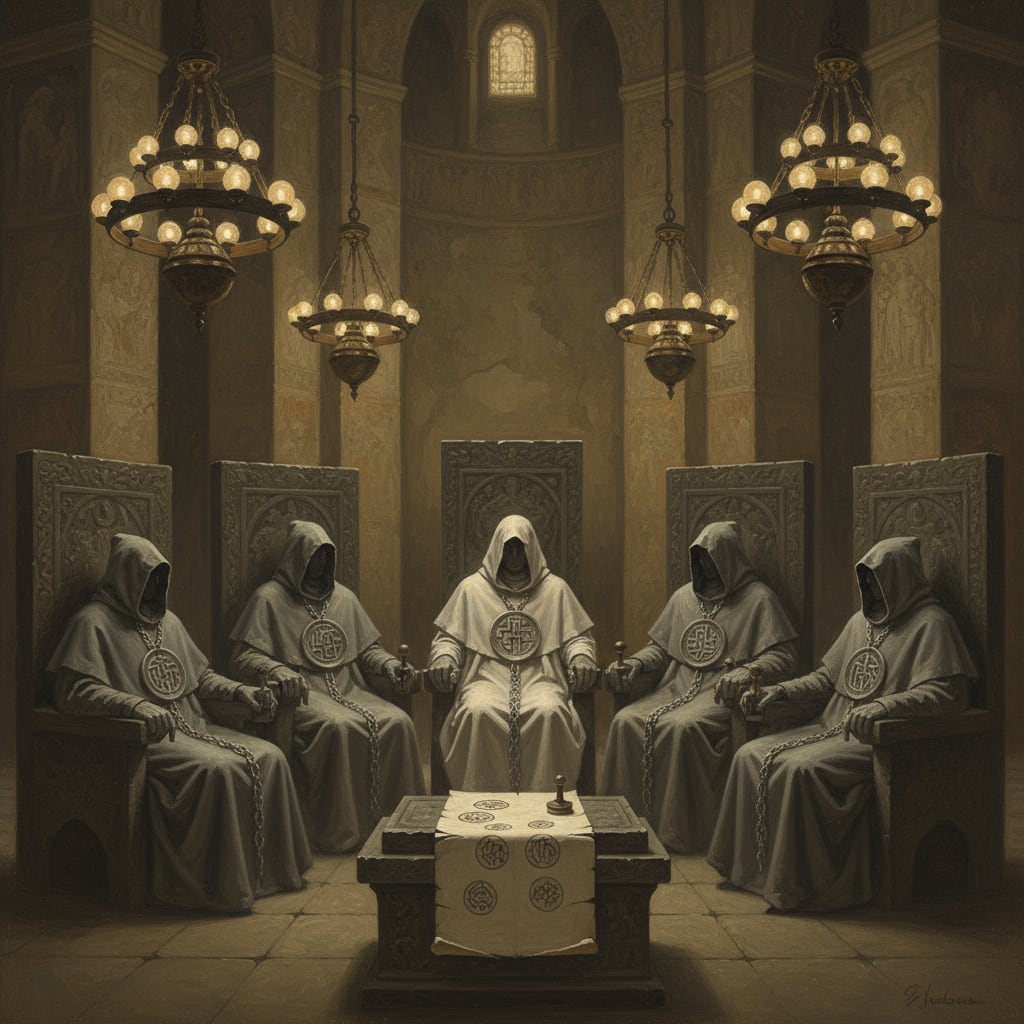
Seven Seals of Faith
Seven absolute sovereignties, each checking the others, which Kratz called something else entirely
The constitutional framework of the Bureaucratic Synod — seven domains of overlapping absolute authority, each assigned to one Hierarch, each cancelling the others into the only available direction forward, toward the Sagittal Line, where jurisdiction is settled by artillery.
Codex Ref. XIII.1.05-001
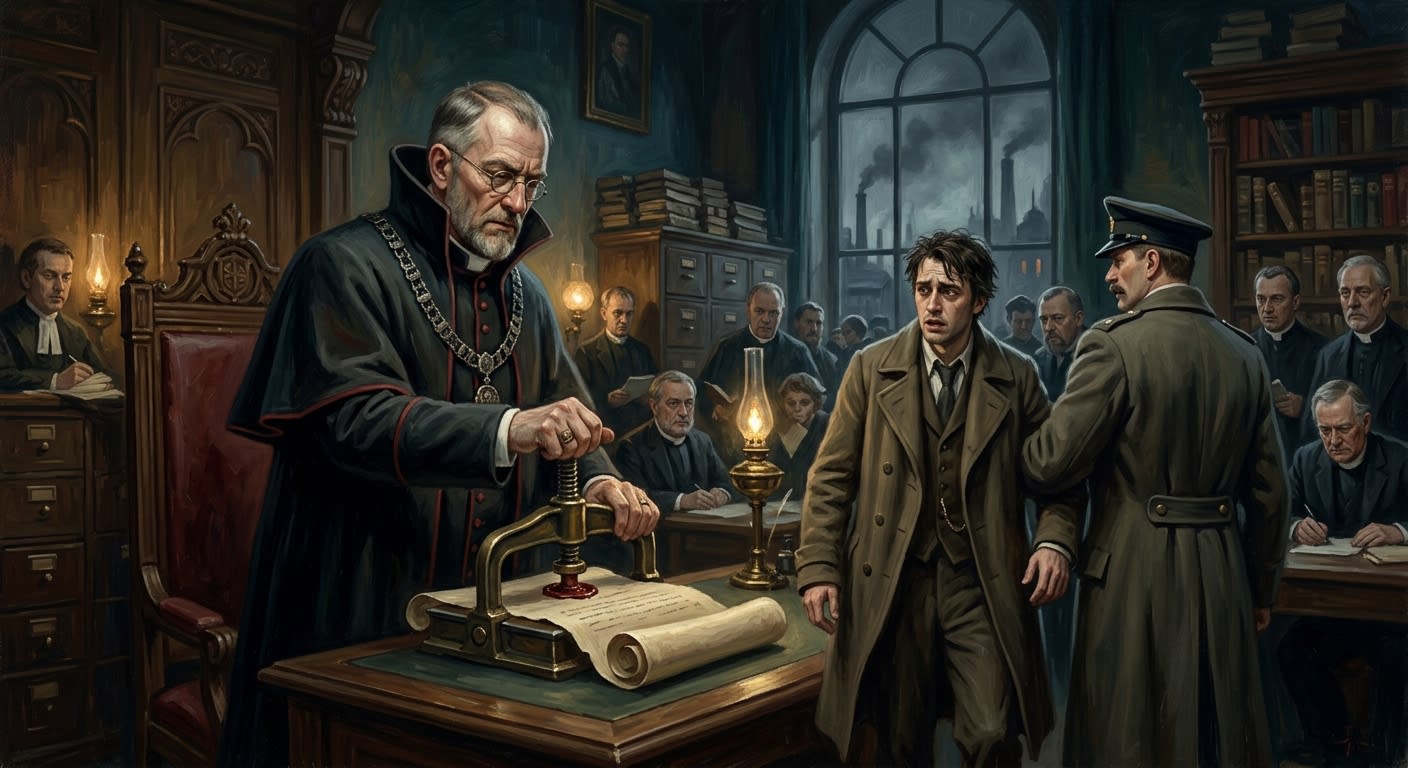
Standard Ratification Protocol
The seal descends, and yesterday learns obedience
The Synod's Standard Ratification Protocol makes sequence repent: dissent is heard, wax cools, and the completed act becomes obedient.
Codex Ref. XIII.1.89-087
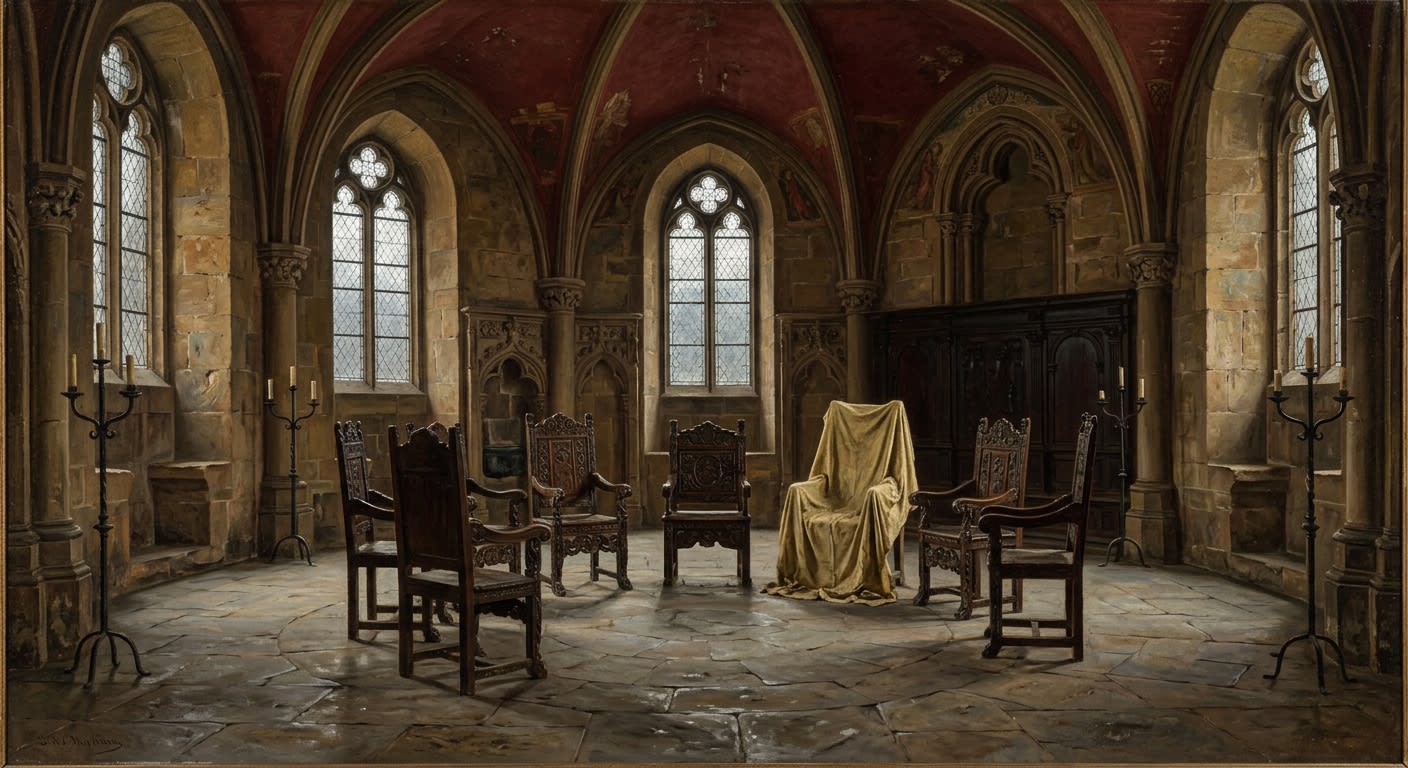
The Hierarchy of the Synod
Seven Seals, Six Occupants, and a Chair No One Has Laundered Since A.S. 107
Seven Seals. Six occupants. One chair draped in cloth no one has laundered since A.S. 107. The succession is continuous. The gaps are classified.
Codex Ref. VI.3.02-001
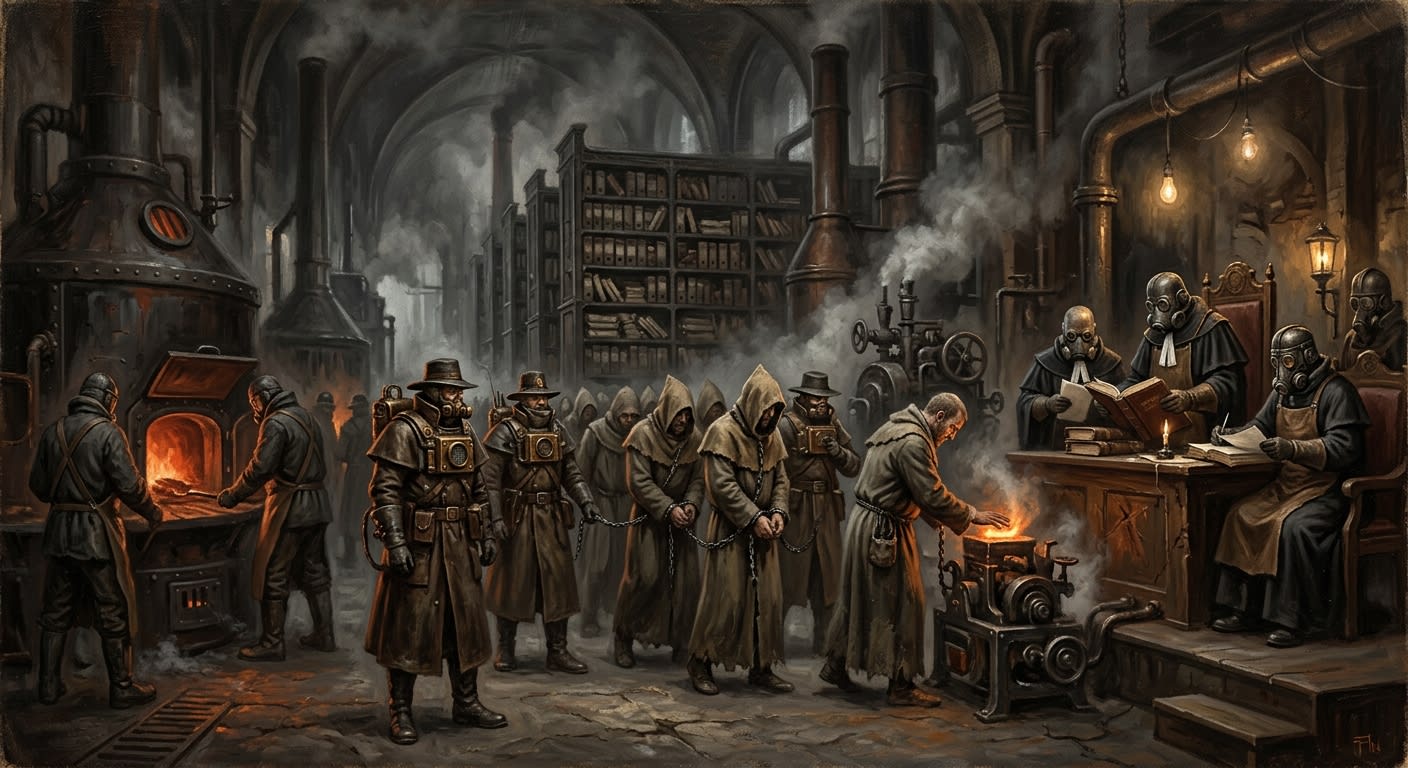
The Witch-Hunts of Toulouse
The fire that learned to file its victims
Toulouse taught Purity its grammar for cruelty: warrant before fire, confession before brand, spectacle before silence, silence before archive.
Codex Ref. VII.8.02-001