

Reverse Index
Referencing “The Concordats of Ulm”
Every codex entry that links to The Concordats of Ulm. 38 entries.
Return to The Concordats of Ulm
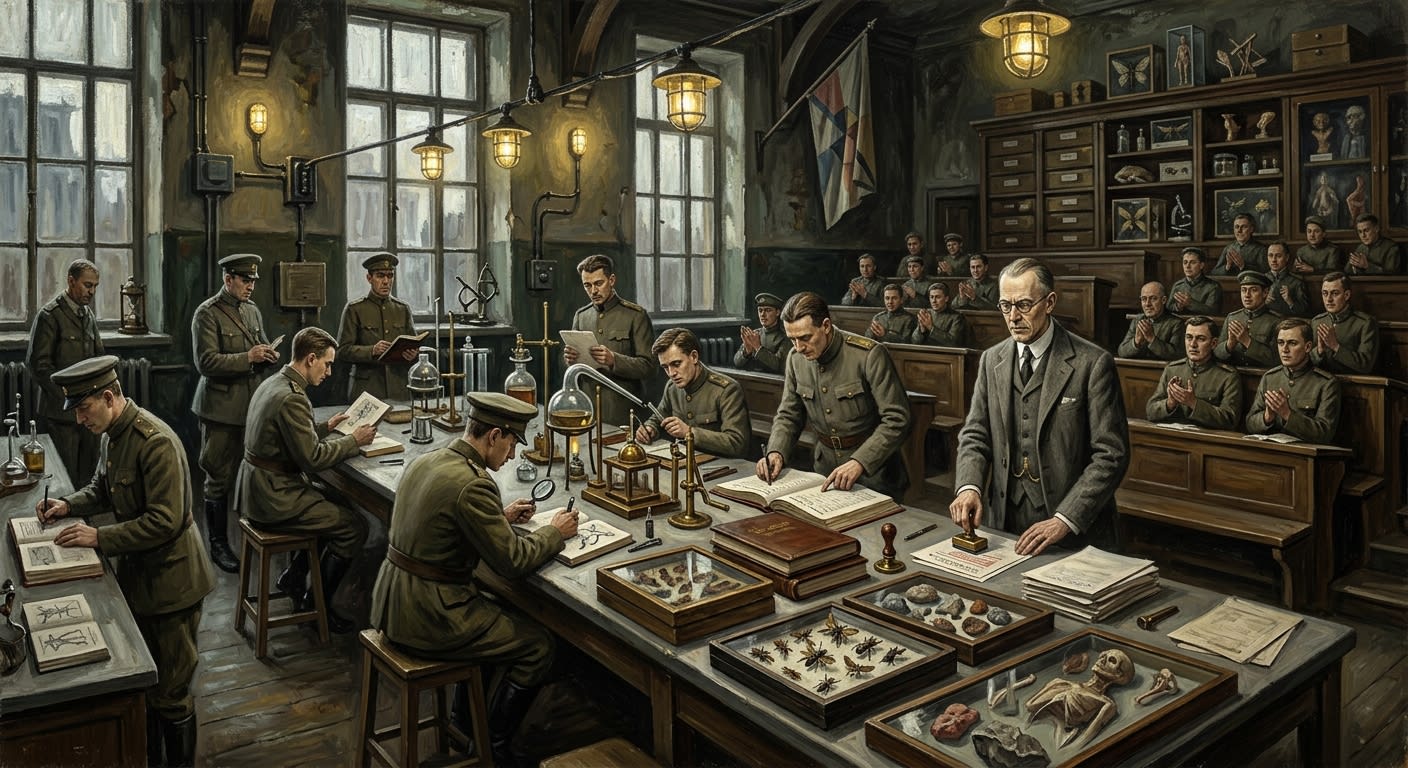
Academies
New cathedrals of Reason, with better brass and worse gods
The Academies taught Europe to replace altar with demonstration table, relic with specimen case, prayer with applause, and cruelty with excellent paperwork.
Codex Ref. I.1.03-000
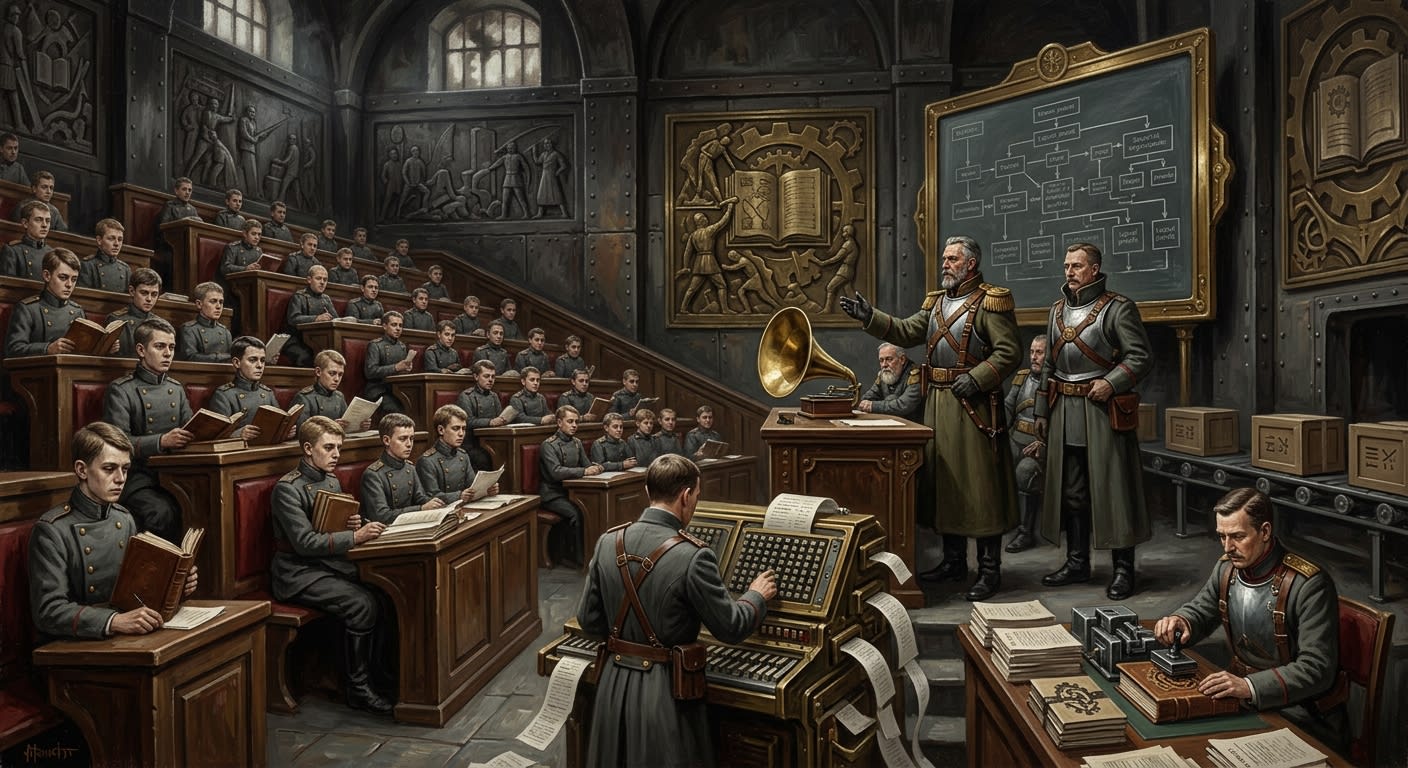
Academy System
The lecture hall as ministry, purse, press, knife, and alibi
The Rationalist Academy System made scholarship into command: lectures became policy, footnotes became bayonets, and children learned unbelief as paperwork.
Codex Ref. I.1.03-000
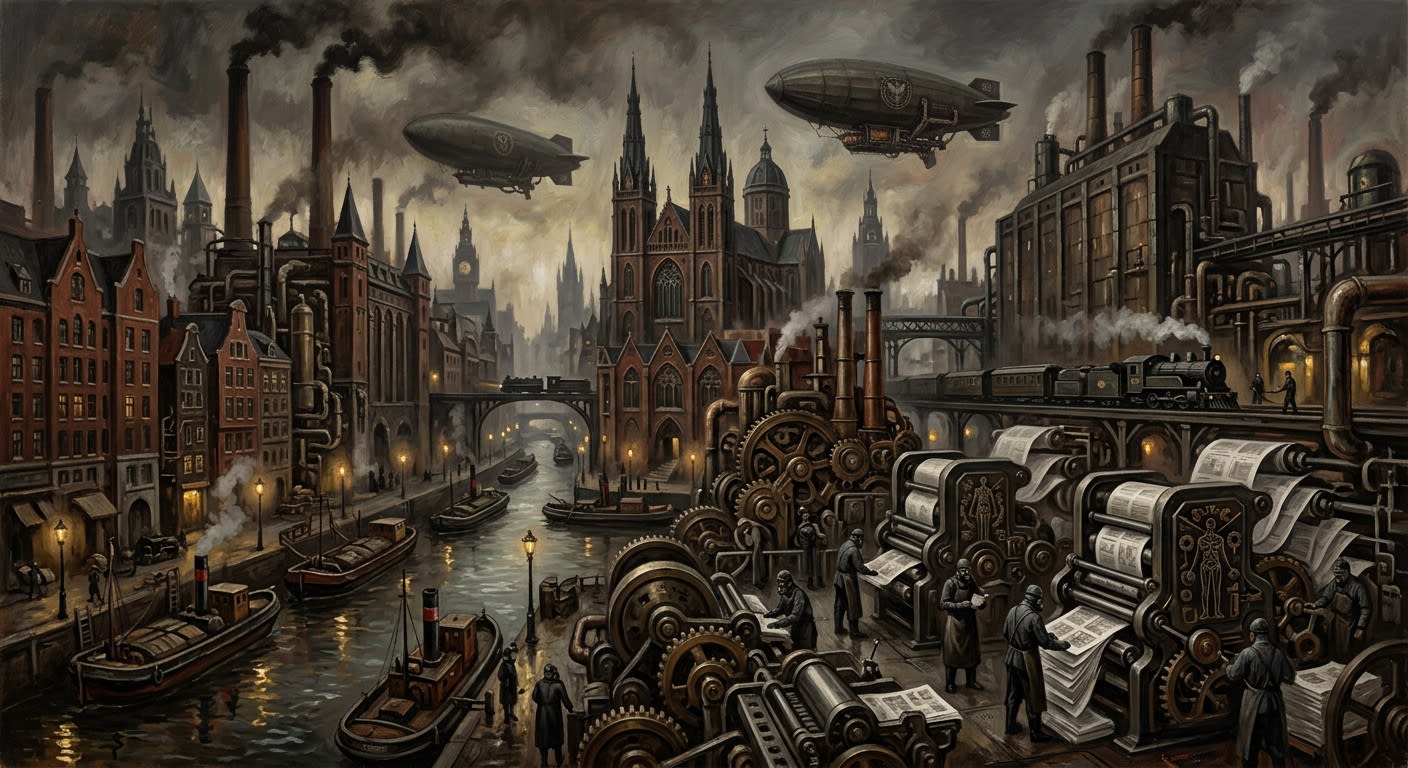
Amsterdam
The city where Europe learned to sin in pamphlet form
Amsterdam is the independent Dutch city where the Synod's calendar wound was printed: first the Year of Letters, then *De Vera Luce*, then Europe taught to doubt by invoice.
Codex Ref. II.4.09-012
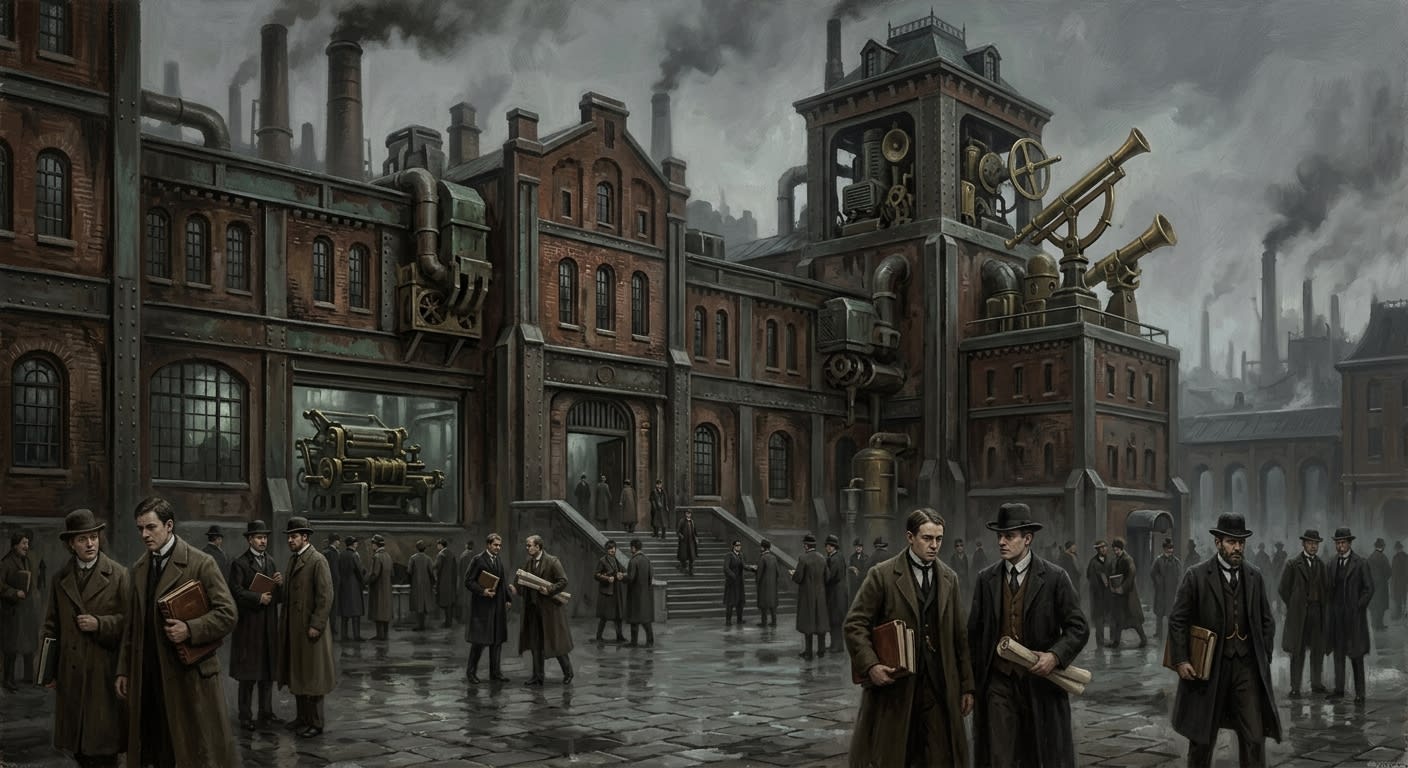
Amsterdam Academy
The lectern that made unbelief printable
The Amsterdam Academy licensed unbelief, printed the calendar wound, and taught Europe that a schoolhouse may do the work of a siege engine.
Codex Ref. VIII.8.01-000
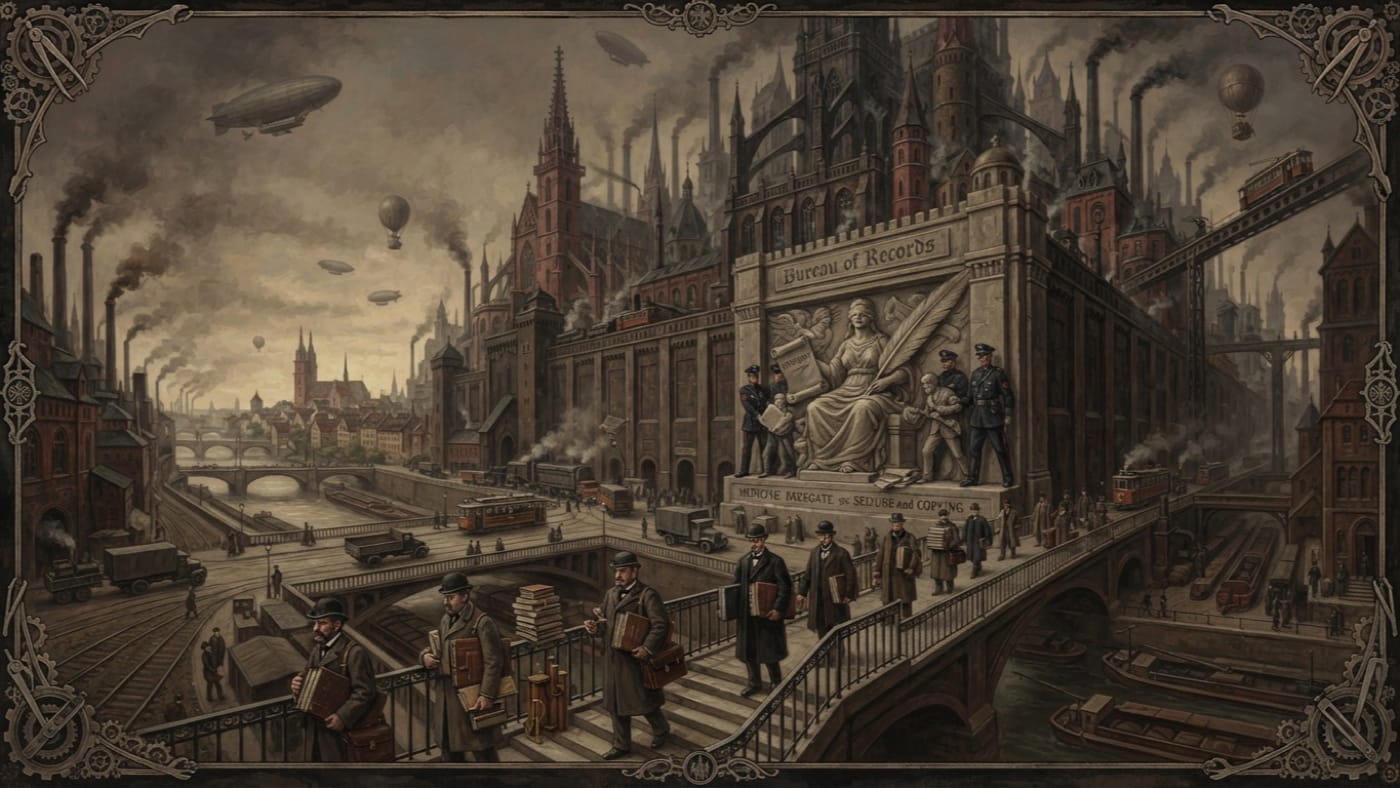
Basel
A city of letters; three words against the seal
Basel sent letters, physicians and one stubborn anatomist into the Ledger. Its unnamed Medicine delegate was removed from the A.S. 147 Congress; his treatise was seized, copied, studied and denounced.
Codex Ref. II.2.01-147
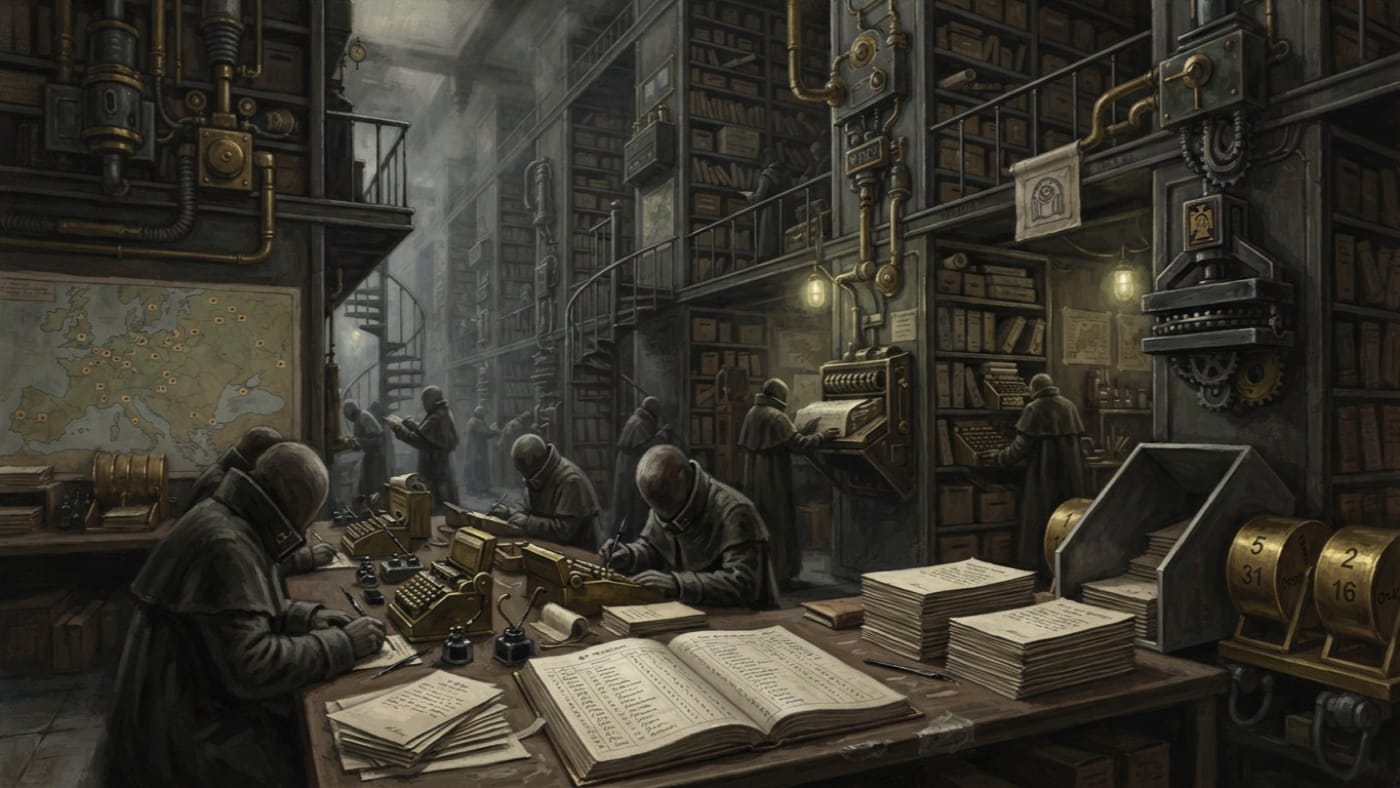
Bone Census
The count is conceded; the right to count is condemned
Compiled in Amsterdam in −32 A.S. / 1678 CE, the Bone Census tabulated 243 Aldebrand relic claims. The figures are conceded; the scholars' right to count remains condemned.
Codex Ref. I.1.04-000

Concordats of Governance
Four hundred and twelve pages proving Hell does not respect footnotes
The Concordats of Governance were the Rationalist Republic's procedural gospel: prefectures, censuses, tribunals, and emergency clauses annulled too late to unmake their wounds.
Codex Ref. XIII.1.12-030
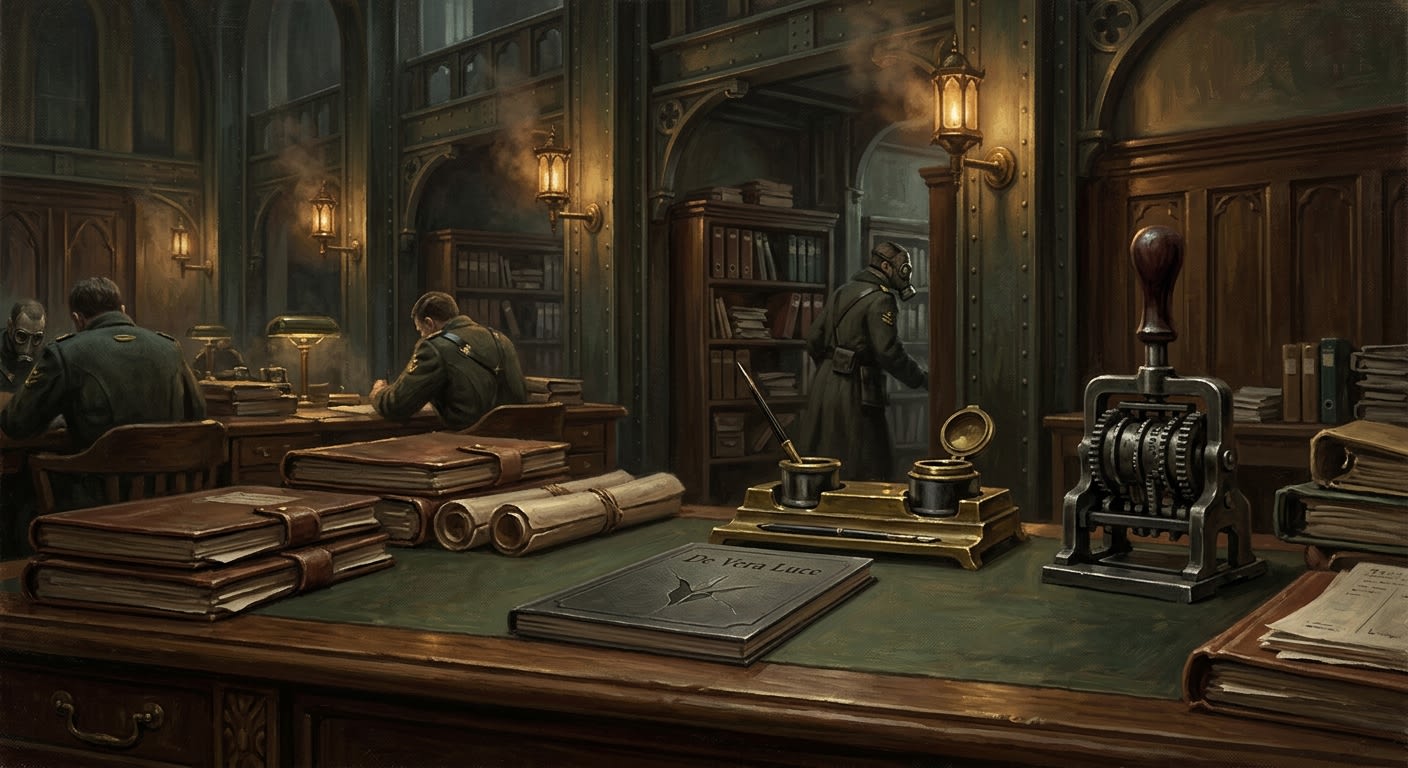
De Vera Luce
The lamp without altar becomes a torch in a library
The Amsterdam Academy's founding pamphlet made A.S. 0 a wound, not a birthday: thirty-two leaves of clean prose, humane poison, and continental ruin.
Codex Ref. I.1.04-001
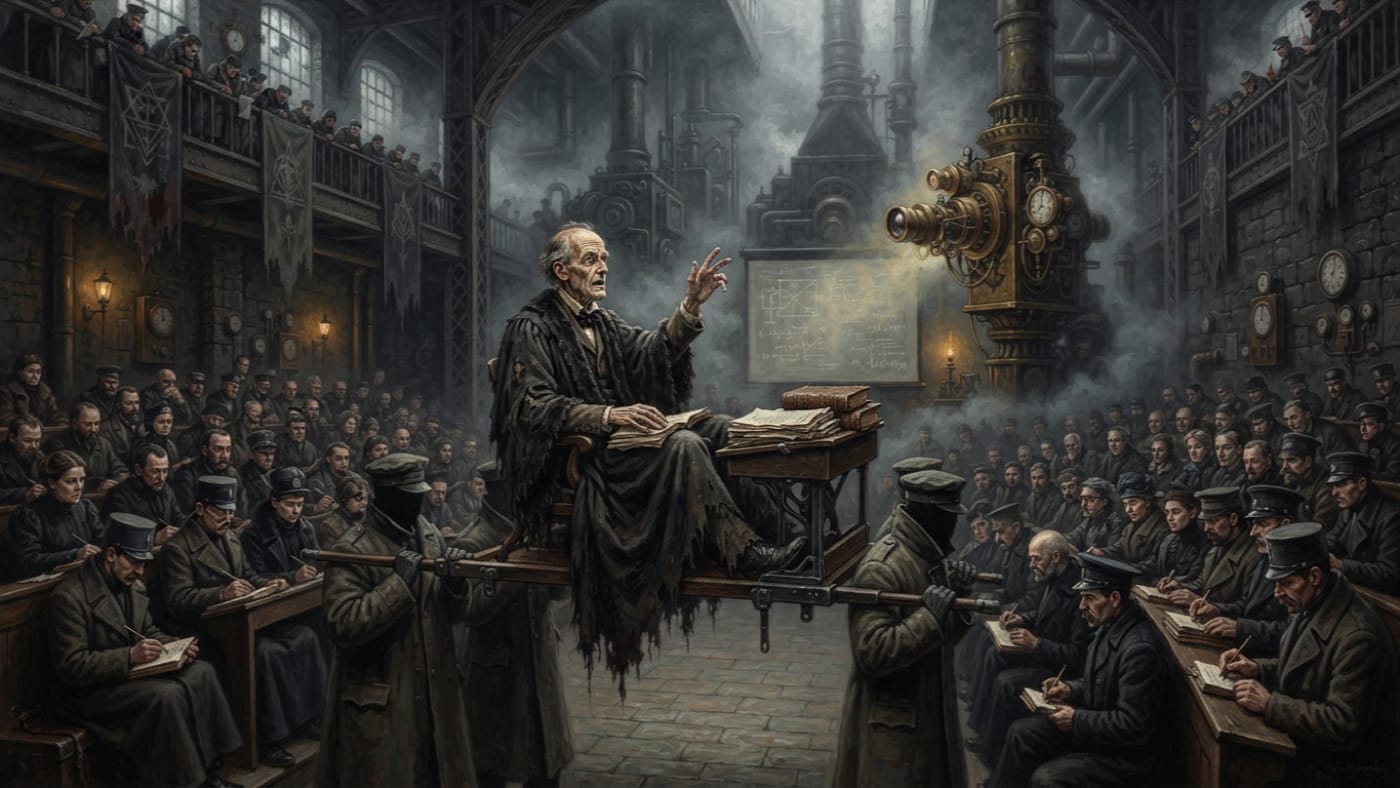
Dean Albrecht Moser
The signature survived; so, inconveniently, did the signatory
Dean Albrecht Moser signed the Concordats of Ulm in 1655 and reached Amsterdam's founding congress at seventy-nine, carried on a litter and still lecturing. His signature outlived his bones.
Codex Ref. III.2.01-850
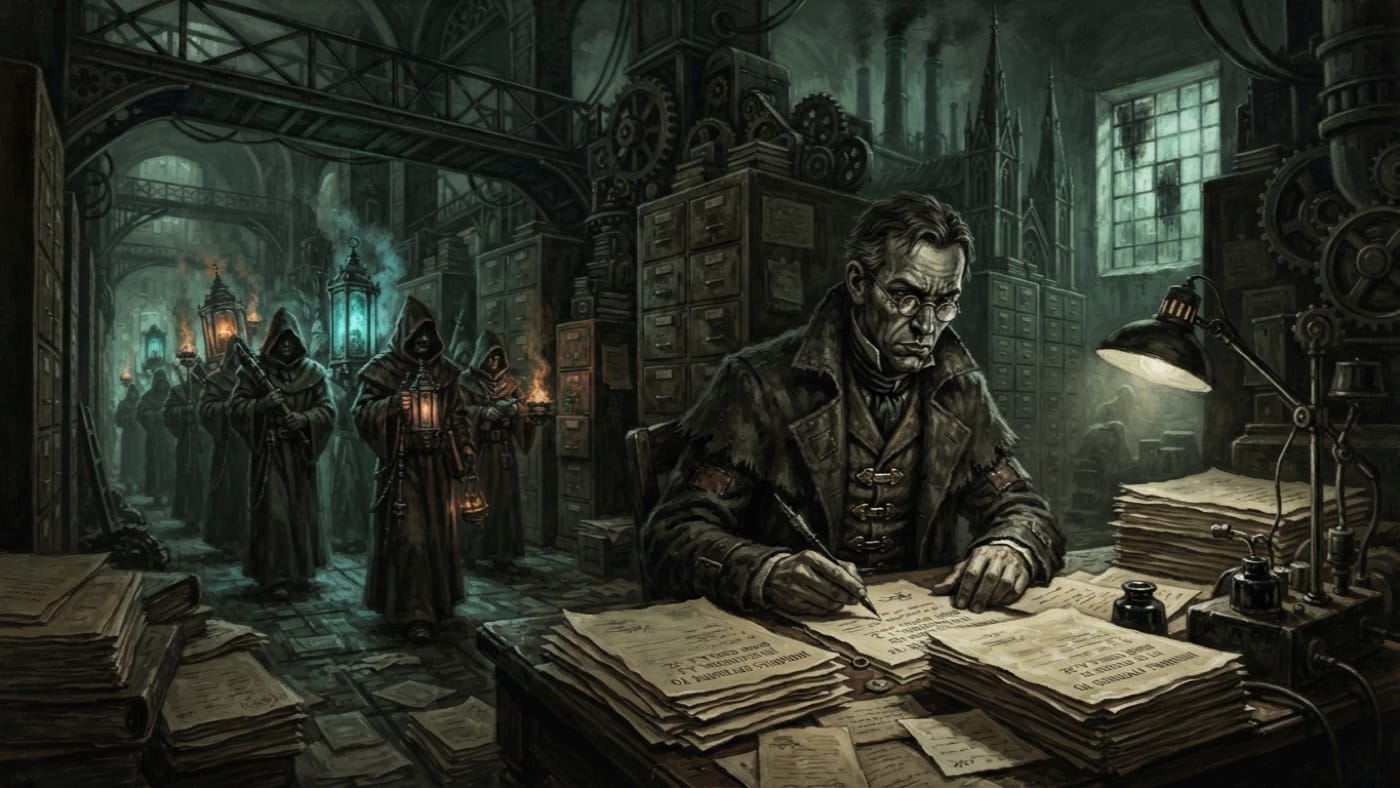
Dr. Gerrit Lemstra
The courtesy was impeccable. The inquiries remain open.
Dr. Gerrit Lemstra drafted the courteous inquiries sent with Amsterdam's Bone Census in −32 A.S. / 1678 CE. The Bureau condemns the scholar; his requests remain unreconciled.
Codex Ref. III.2.01-027

Dr. Jan de Waal
Addresses, funds and copyists. Forty cities received the doubt.
Dr. Jan de Waal kept the addresses, funds and fourteen copyists behind the Year of Letters in −32 A.S. / 1678 CE. Forty cities received the evidence; the Church supplied the silence.
Codex Ref. III.2.01-028

Dr. Pieter van Hoorn
The count was correct. The compiler remains condemned.
Dr. Pieter van Hoorn compiled the Bone Census and conceived the Year of Letters in −32 A.S. / 1678 CE. The Bureau concedes his count, condemns its inference, and keeps his correspondence under quadruple seal.
Codex Ref. III.2.01-029
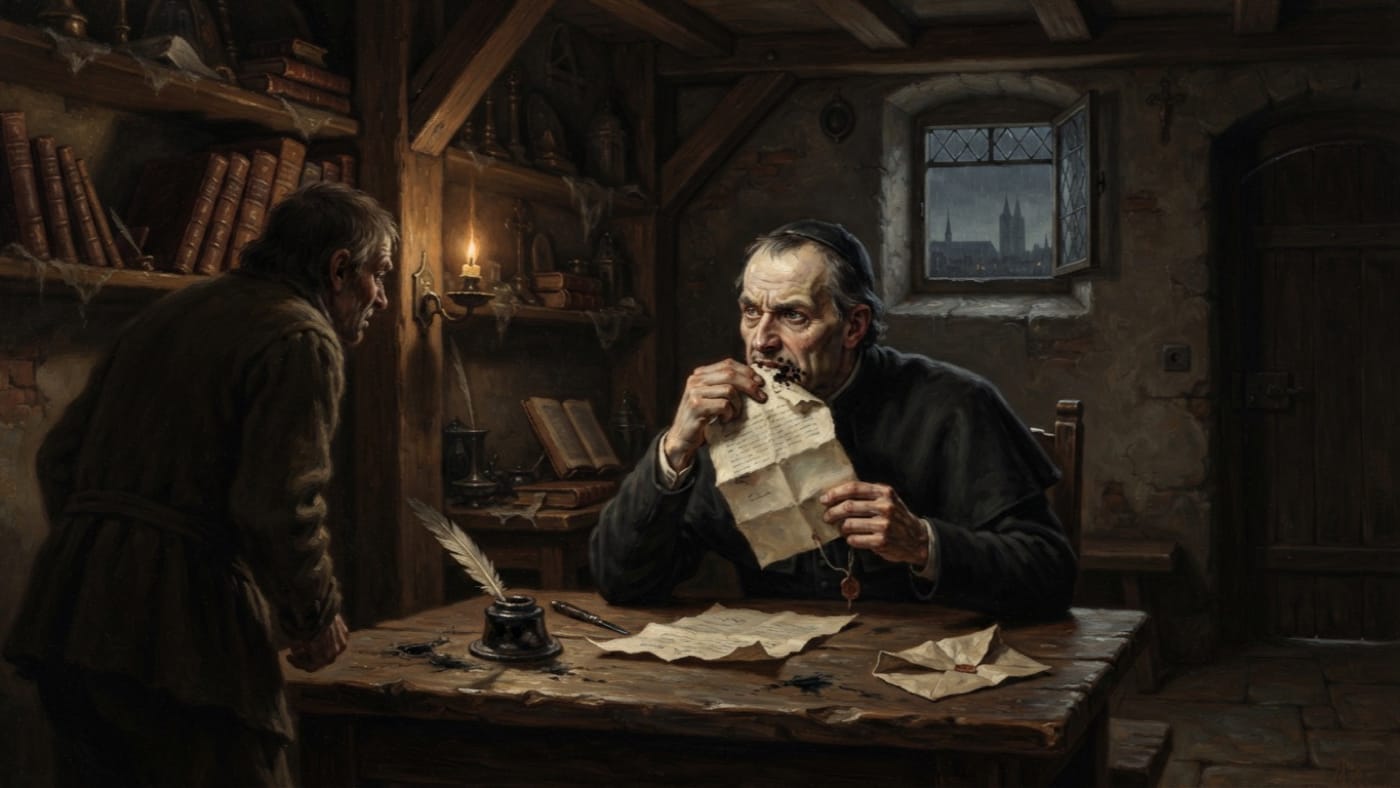
Düsseldorf
One priest. One letter. Nothing left to quote.
A Rhineland city remembered for Father Grauss, who ate the Amsterdam letter in A.S. −32 / 1678 CE. The magistrate supplied three days in gaol; the Bureau supplied a classification.
Codex Ref. II.2.01-941
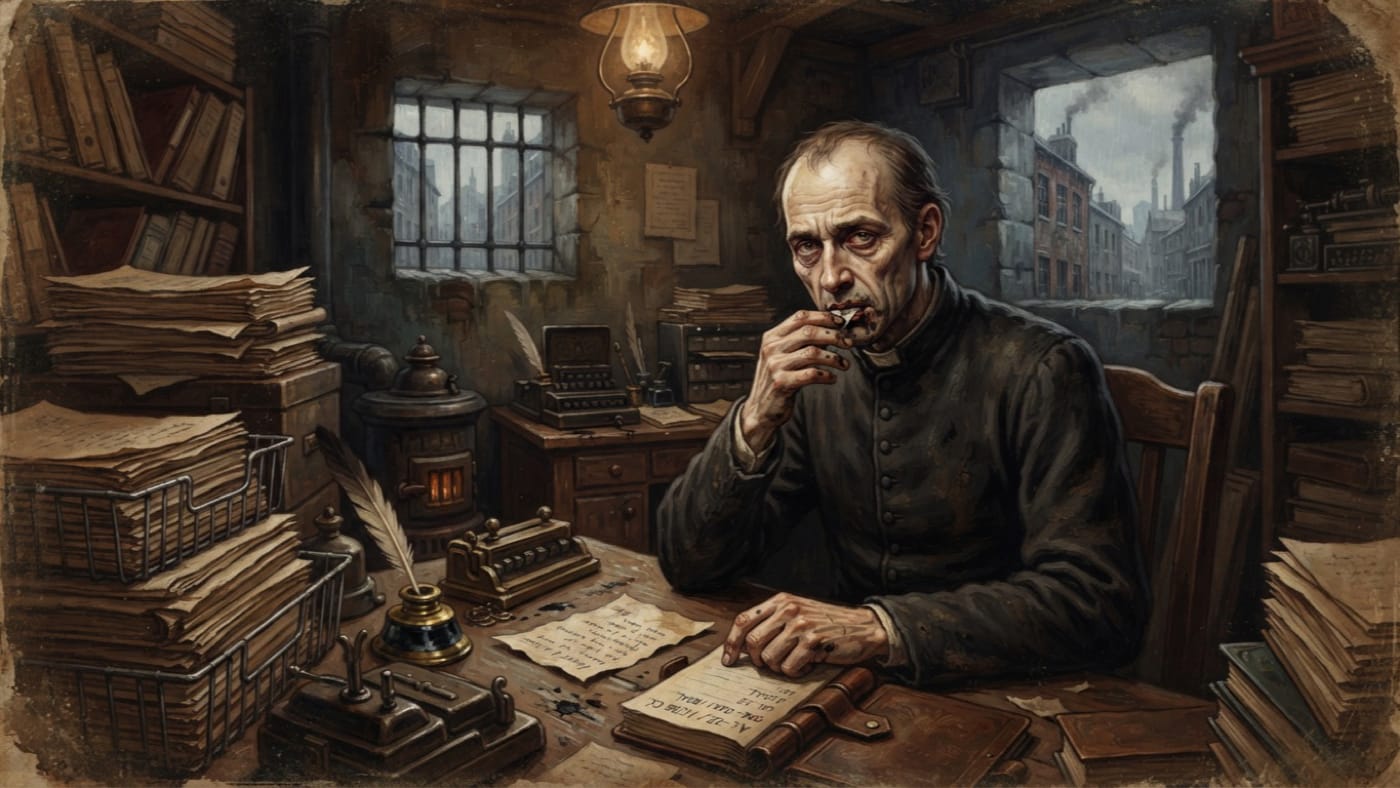
Father Grauss
One letter eaten. Three days served. Five words preserved.
Father Grauss ate the Amsterdam letter in A.S. −32 / 1678 CE. Düsseldorf supplied a beating and three days in gaol; the Bureau supplied its verdict: Doctrinally Sound, Gastronomically Irregular.
Codex Ref. III.2.01-1023
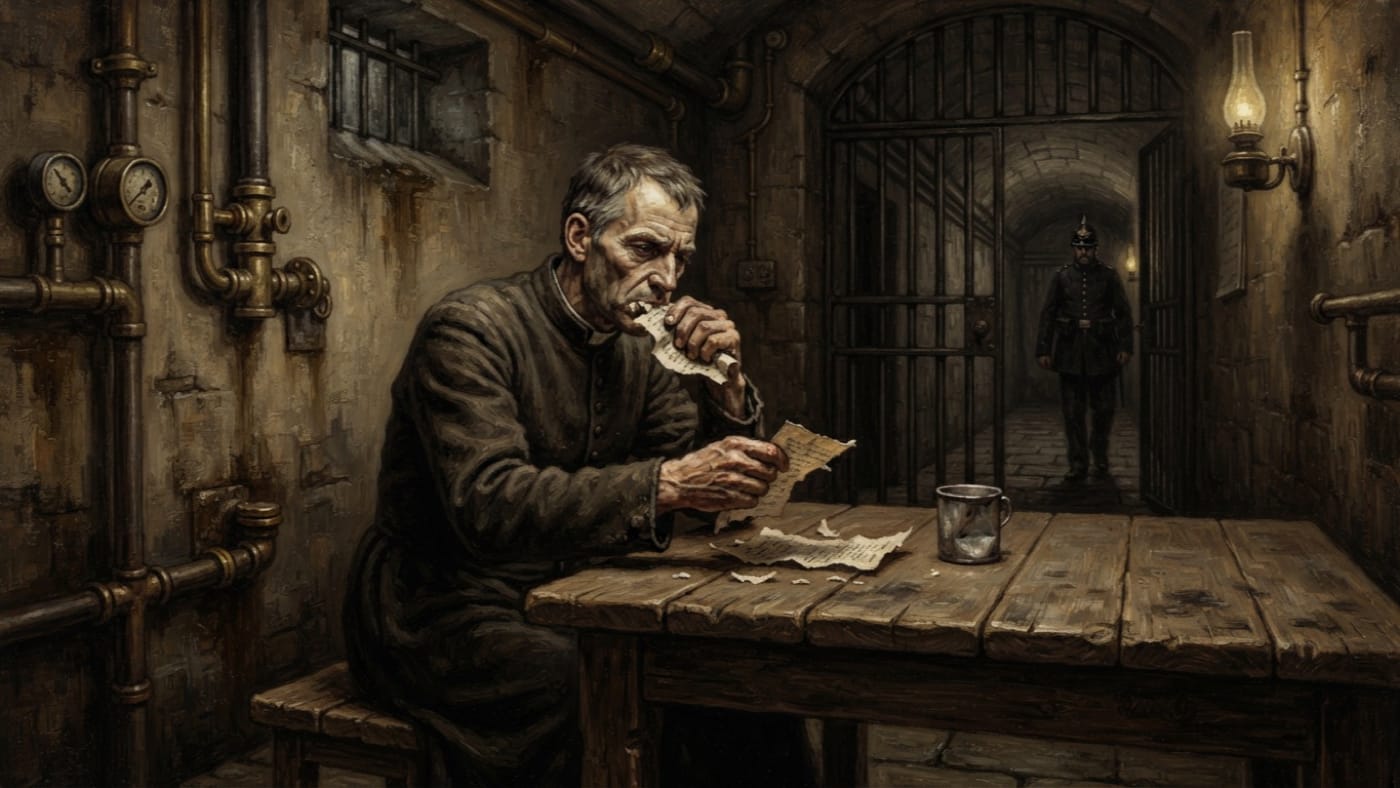
Father Grauss of Düsseldorf
One letter eaten. Three days served. Five words preserved.
Father Grauss ate the Amsterdam letter in A.S. −32 / 1678 CE, received a beating and three days in gaol, and did not recant. The Ledger calls him Doctrinally Sound, Gastronomically Irregular.
Codex Ref. III.2.01-1024
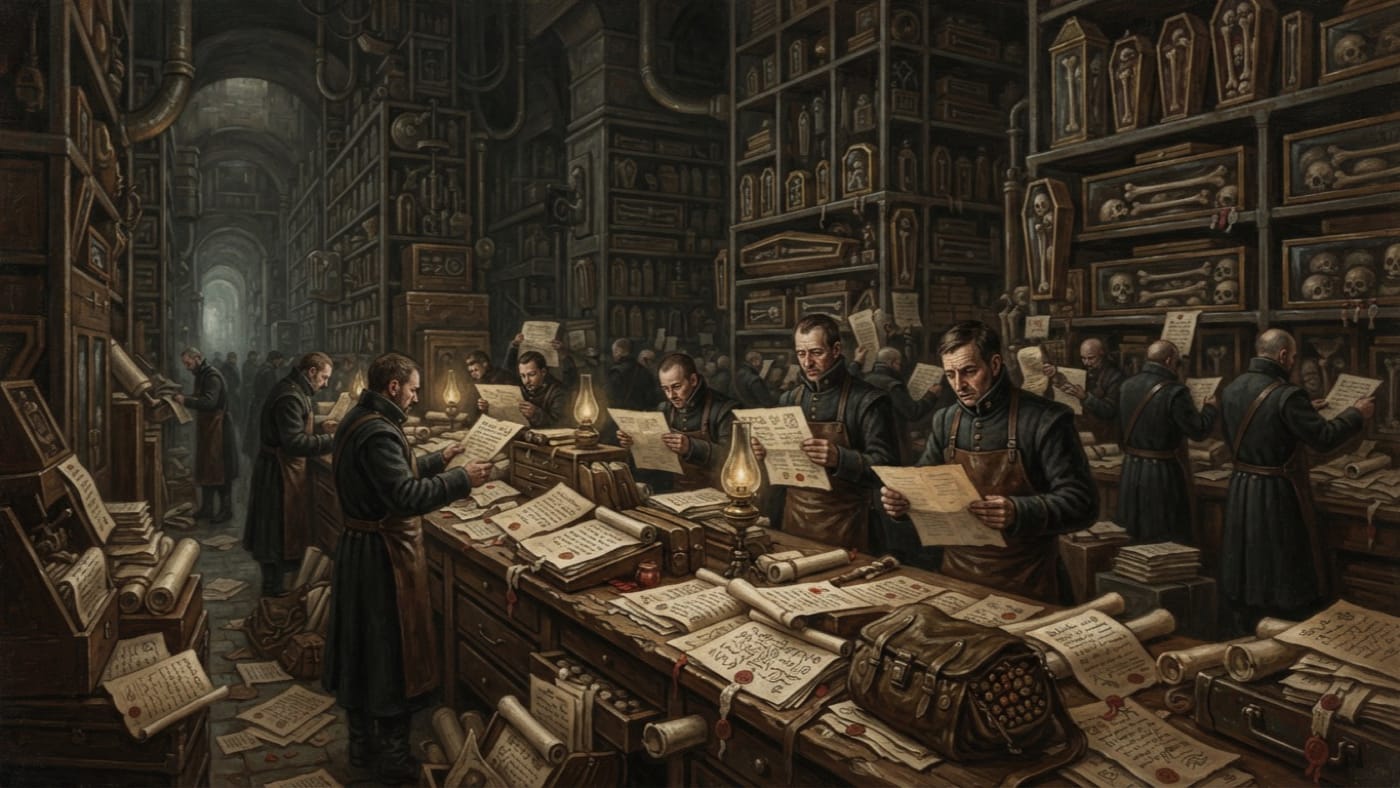
German states
Many jurisdictions. Separate seals. One inconvenient table.
The German states in 1678: many jurisdictions, separate seals, and no common answer to Amsterdam's bone census. The relics agreed locally. The ledgers did not.
Codex Ref. II.1.10-001
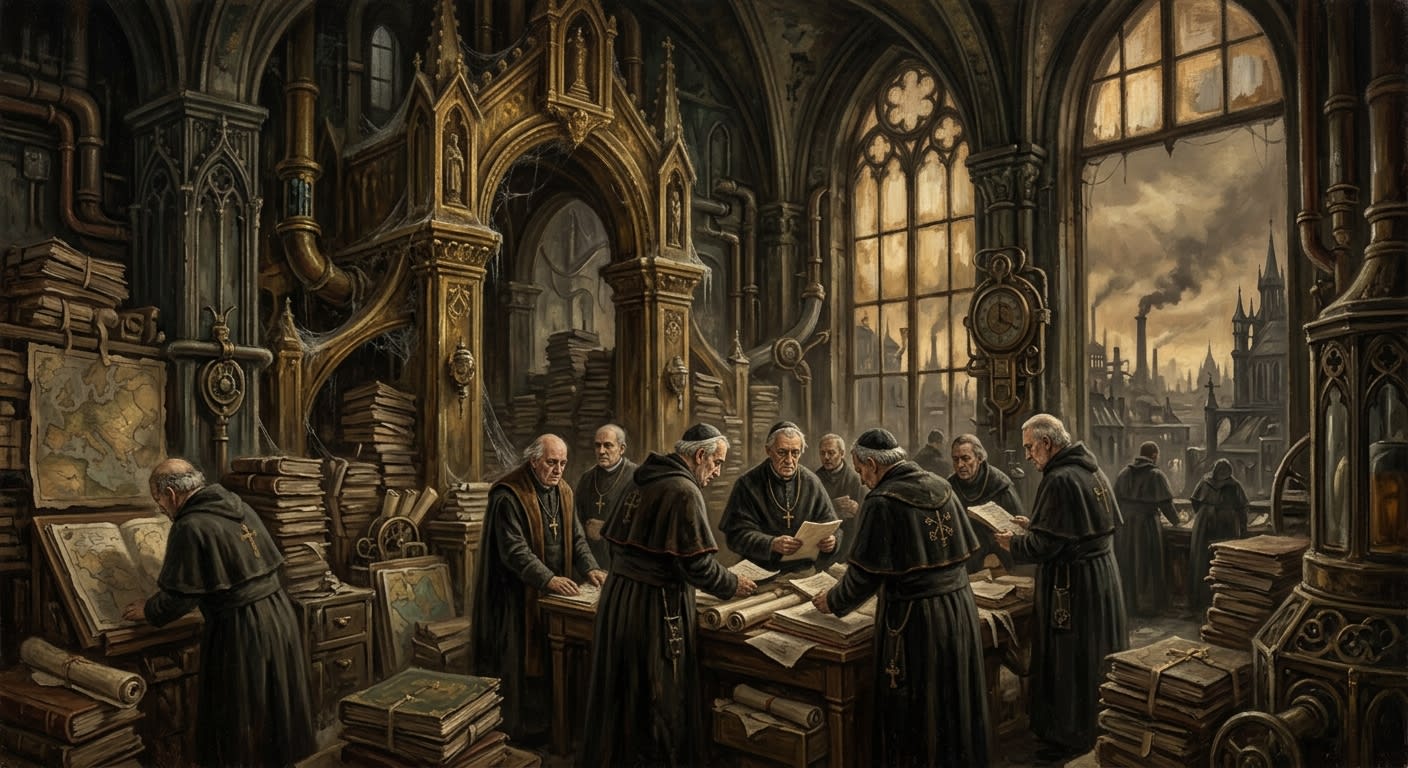
Holy See of Vienna
The dead chair that Strasbourg found too useful to resurrect
The Holy See of Vienna was the Church's old continental chair: venerable, beautiful, administratively inadequate, dissolved at Regensburg in A.S. 30, and later preserved by Strasbourg as shrine, warning, and useful absence.
Codex Ref. VIII.1.09-030
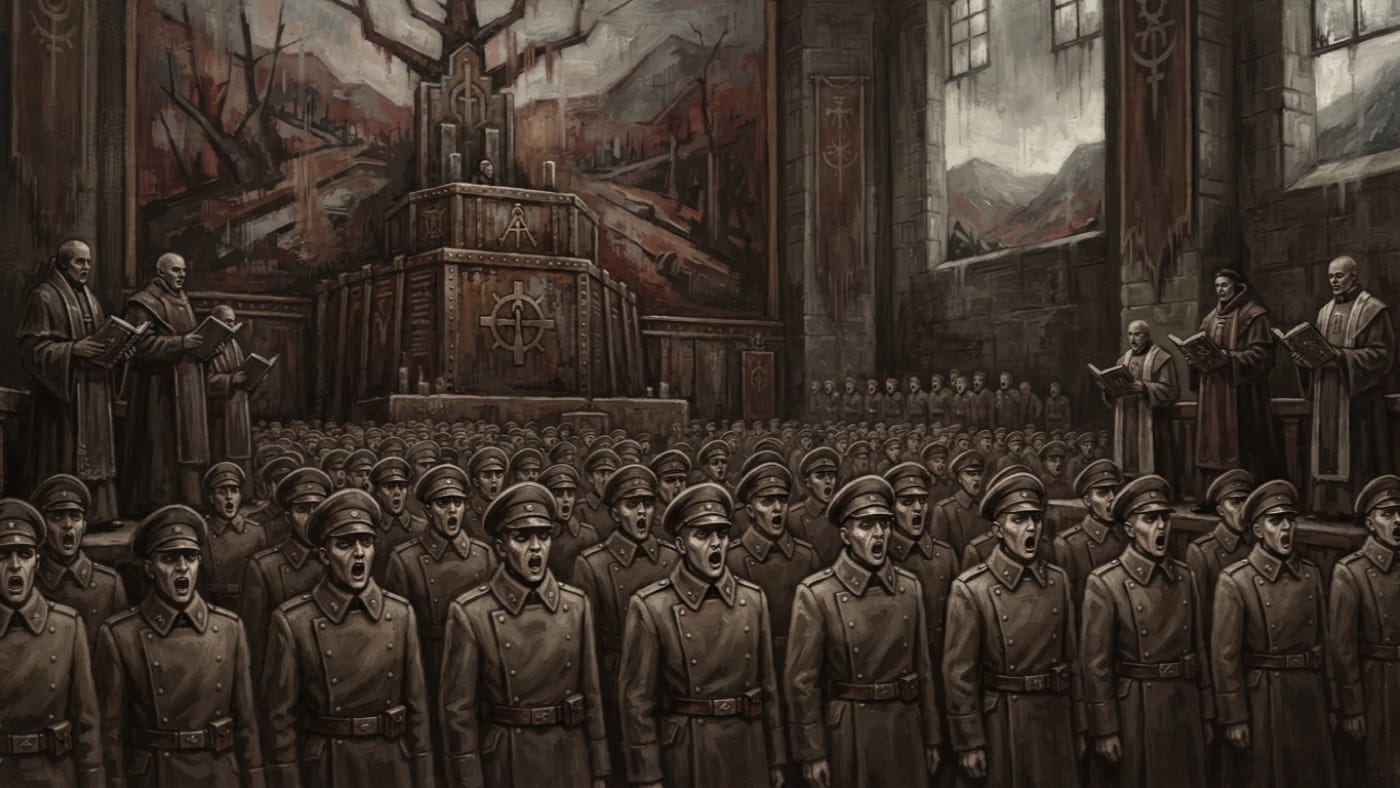
Litany of Errors
Eleven names. One designation. Four minutes to agree.
At Bastion-Przemyśl, cadets recite eleven Ulm signatories and the unknown twelfth, then condemn all twelve in unison. Four minutes of exact remembrance, with no room left for curiosity.
Codex Ref. XIII.1.95-201
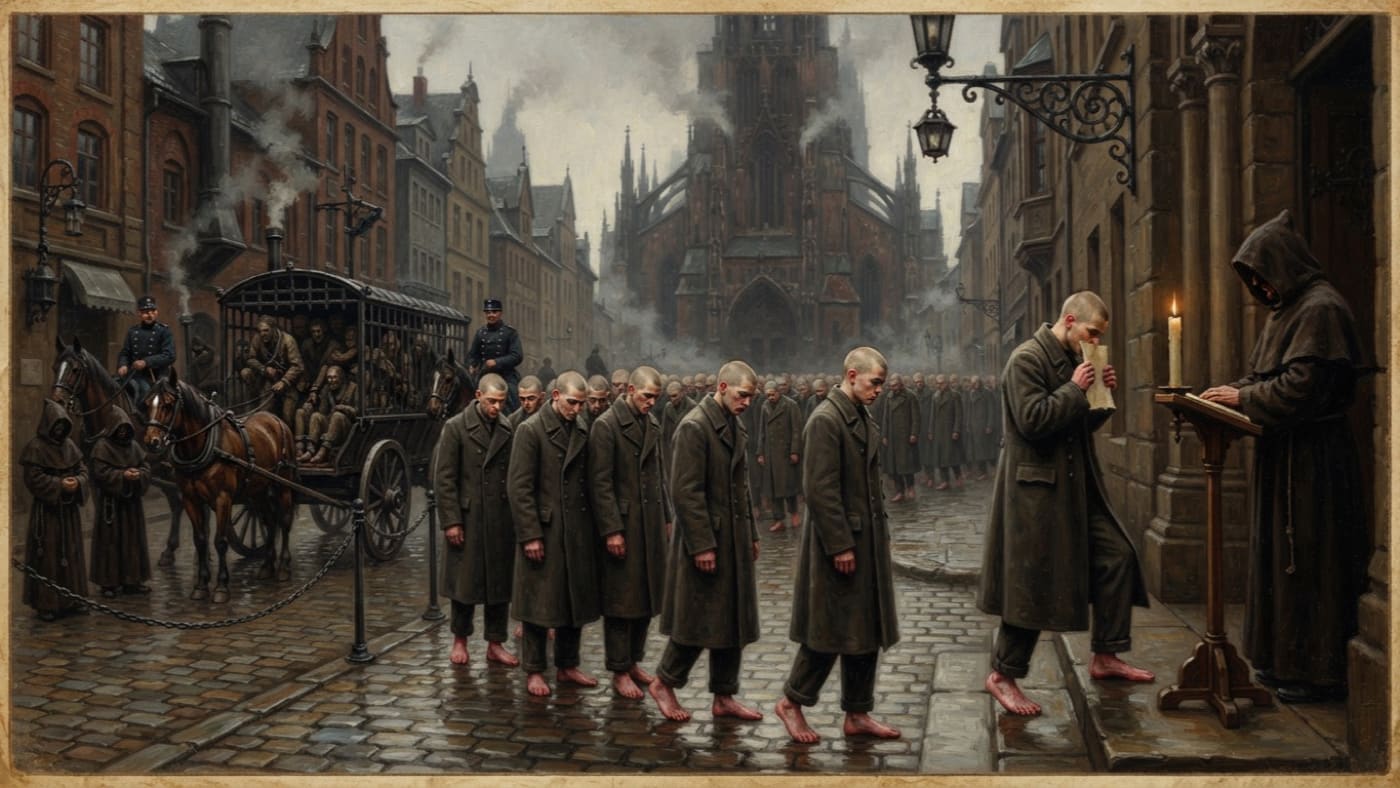
Litany of Twelve Errors
Bare feet, approved words, and a page that must remain unread
Ulm's students walk barefoot to the cathedral, recite the Litany of Twelve Errors and kiss blank Mine paper. Lawful learning survives by keeping its mouth obedient.
Codex Ref. XIII.1.97-201

Lord-Protector Guillaume
The gate-seller who mistook a palace for survival
Guillaume sold Aachen for Lowlands dominion, sent a proxy to Regensburg, and learned too late that the Bureau's cleanest executions are grammatical.
Codex Ref. III.2.06-003
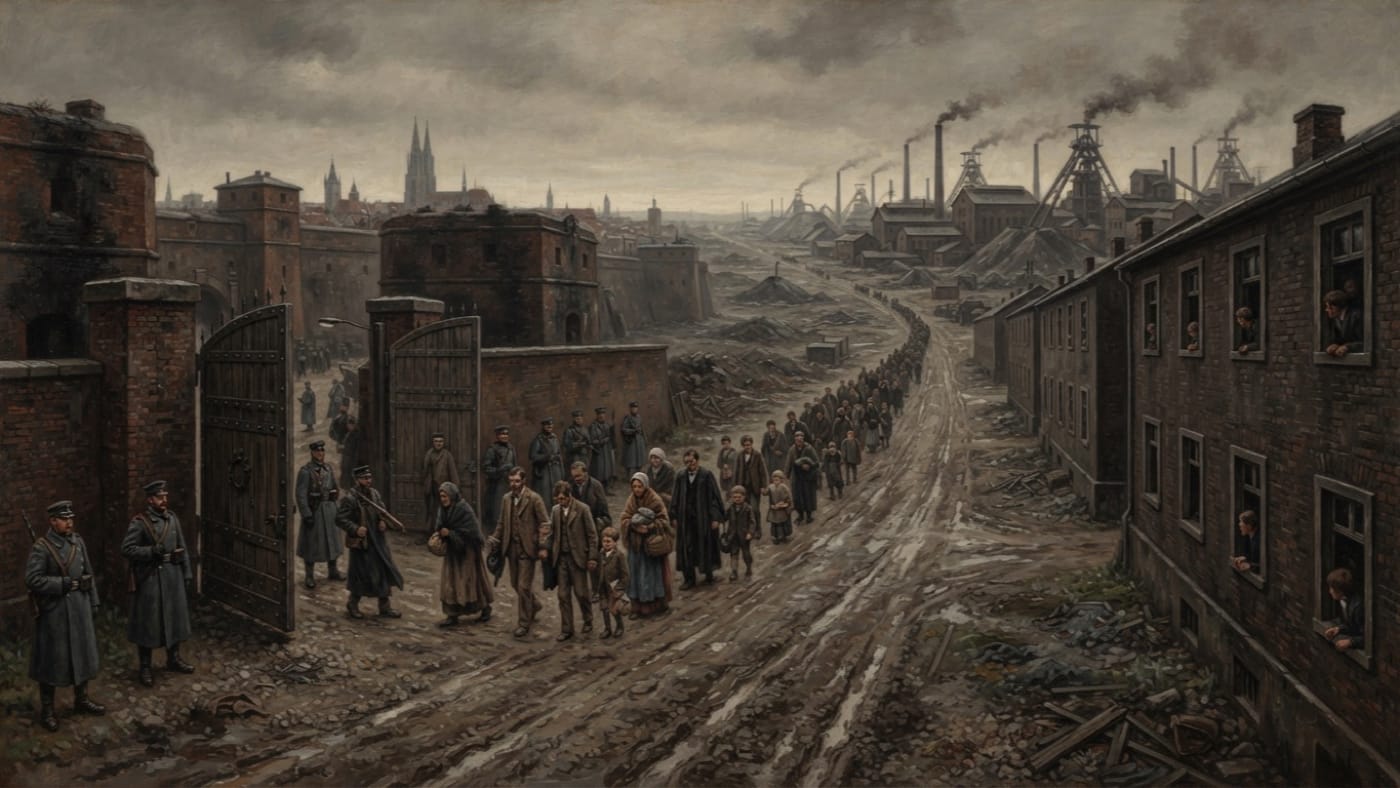
Mine Road
The road between a verdict and a number
Ulm's Mine Road carries condemned scholars and families south-east through checkpoint gates to the Paper Mines. The Nameless Hostels keep relatives waiting; disposition is usually intake.
Codex Ref. II.2.06-003
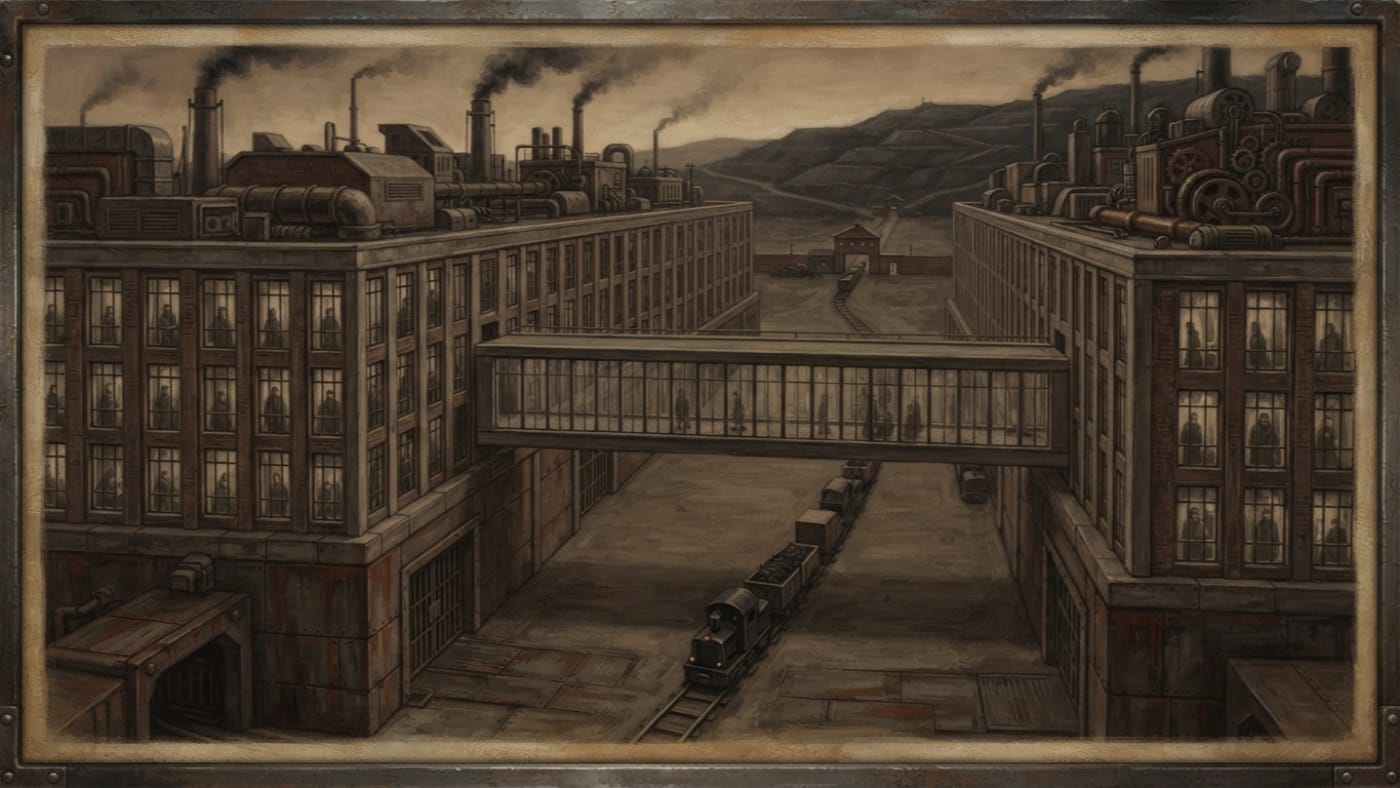
Nameless Hostels
Where a family keeps its name until the Mines require a number
Ulm's Nameless Hostels lodge relatives awaiting derivative disposition along the Mine Road. Windows face inward, curtains are forbidden, and names remain until the Mines' intake table requires numbers.
Codex Ref. II.2.06-004
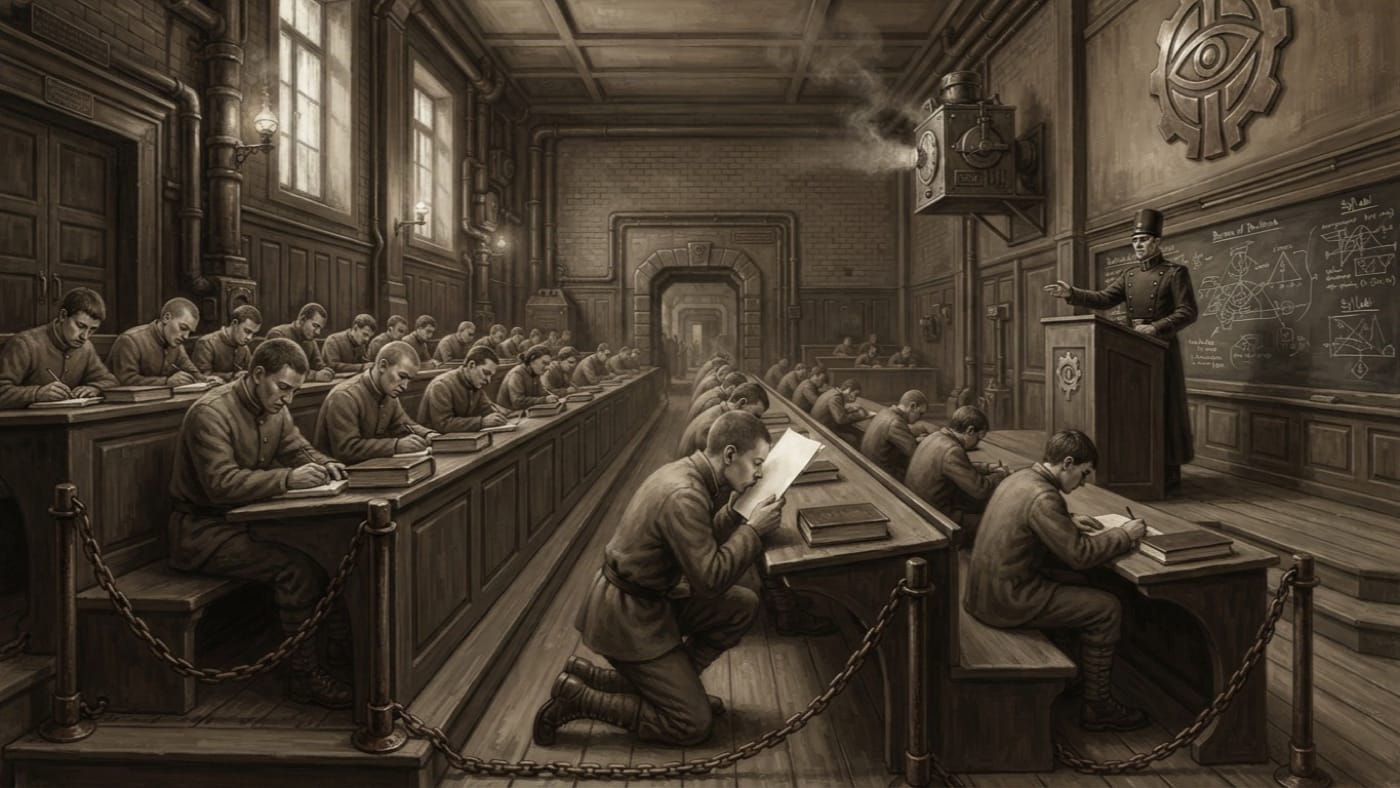
Old Faculty Rows
Where the syllabus was corrected and the desks were chained
Ulm's former Rationalist halls now house doctrinal schools, where Purity audits the syllabi, students kiss blank pages, and the lecture desks remain chained to the floor.
Codex Ref. II.2.01-006
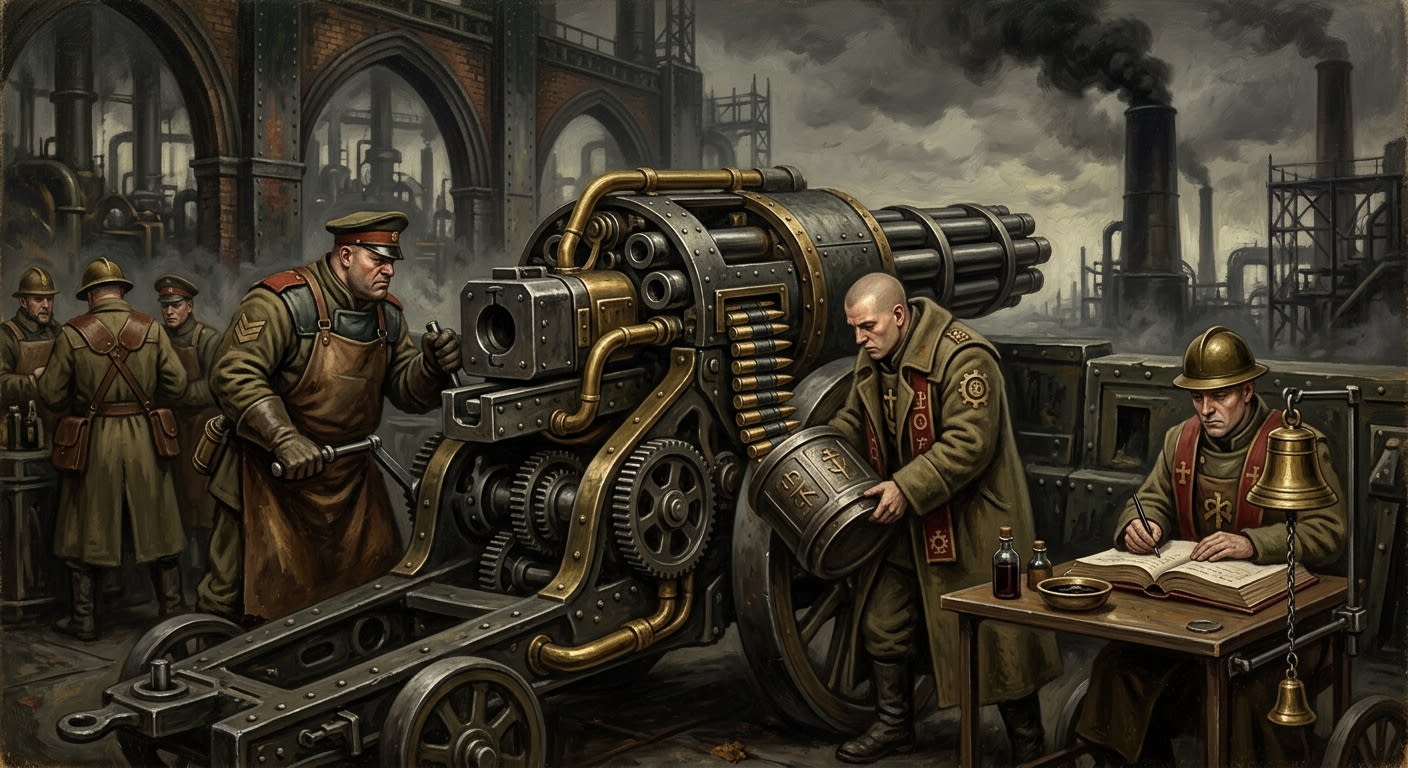
Ordained Repeater
The heretic made a gun; the Synod made it kneel
The Ordained Repeater is Artois's clockwork artillery corrected by chrism, ledger, bell-cadence, and the sacred art of denying useful debt.
Codex Ref. III.2.04-015
Paris
The city kneels beautifully, which is precisely why one watches the angle
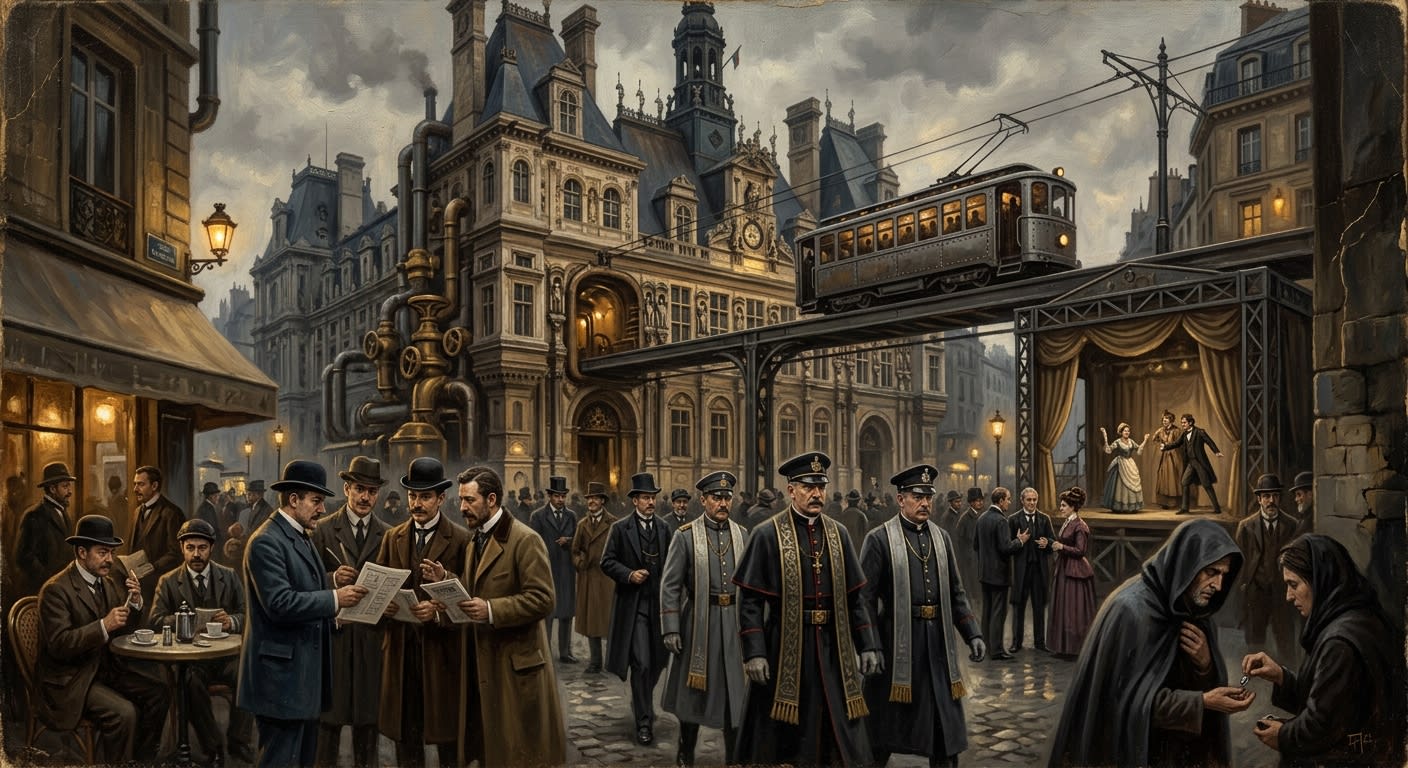
Paris is the Western Heartlands' corrected jewel: Rationalist salon, Synod workshop, black-market confessional, obedient theatre, and treason with excellent diction.
Codex Ref. II.1.08-201
Swiss Cantons
Where mercy climbs uphill and stops writing back
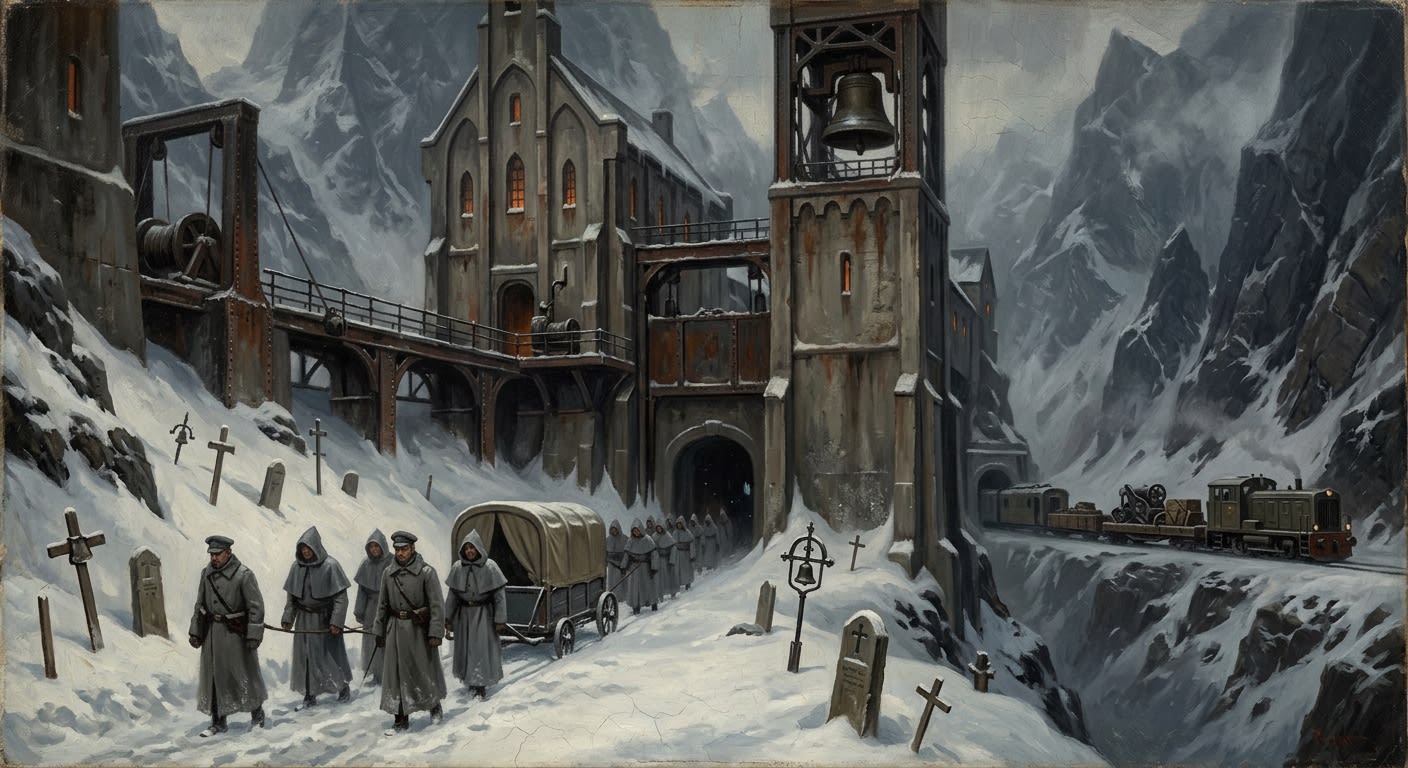
The Swiss cantons keep passes, bells, hospice beds, and the Synod's most merciful disappearances beneath snow clean enough to indict Heaven.
Codex Ref. II.2.08-201

The Age of Heresy
A World Sundered, a Faith Forged in Fire
The definitive overview of the Age of Heresy — a continent sundered by demonic invasion, ruled by a theocratic bureaucracy of bells and ink, locked in eternal war against the Seven Sin-Generals. As compiled by the only man qualified to compile it.
Codex Ref. I.1.01-001

The Broken Cross
The sigil that snapped heaven and called the wound reason
The Broken Cross was Reason's battlefield sermon: a snapped crucifix carried by men who denied symbols while marching under one.
Codex Ref. I.1.05-003

The Collapse of the Rationalists
The Adversary did not invade. It arrived.
The Rationalist Republic dismantled every spiritual defence on the continent, and in A.S. 45 the Adversary walked through the unguarded door. A doctrine article, a body count, and a mandatory catechism text.
Codex Ref. VII.2.01-001
The Desecrations
Being the Bureau of Doctrine's Definitive Survey of the Rationalist Programme of Coordinated Spiritual Aggression, A.S. 0–45, Classified Retroactively in A.S. 92, and Updated at Considerable Institutional Expense in A.S. 200
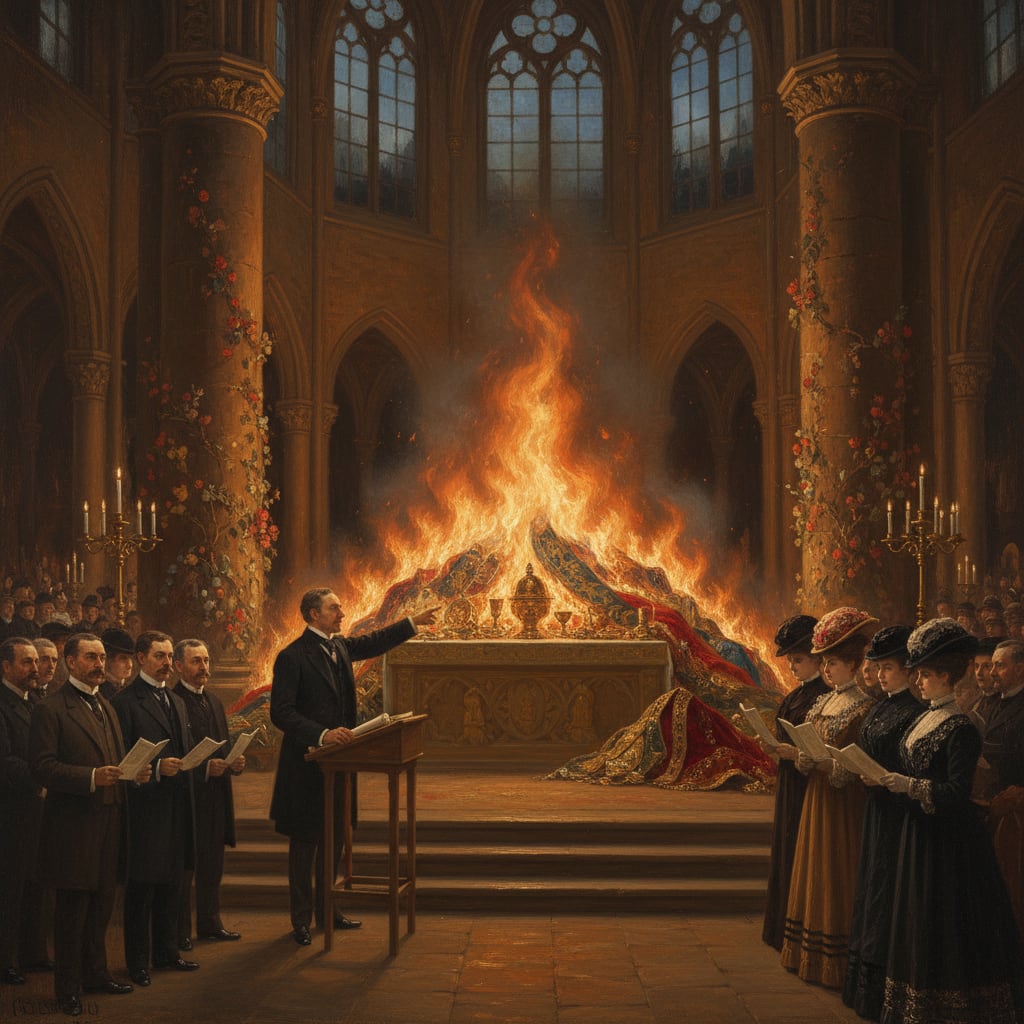
The Rationalists destroyed two thousand sanctuaries, melted eight hundred and ninety-one bells into cannon, and killed three thousand four hundred clergy in a programme they insisted was spontaneous. Spontaneity does not print programmes.
Codex Ref. VII.1.01-001

The Forbidden Stacks
Where heresy is shelved close enough to hate efficiently
The Forbidden Stacks beneath Strasbourg preserve Rationalist paper, contraband symbols, and other knives the Bureau prefers labelled rather than lost.
Codex Ref. II.2.06-001
The Judges
They walk without letter, without herald, and without the patience of the Bureau.
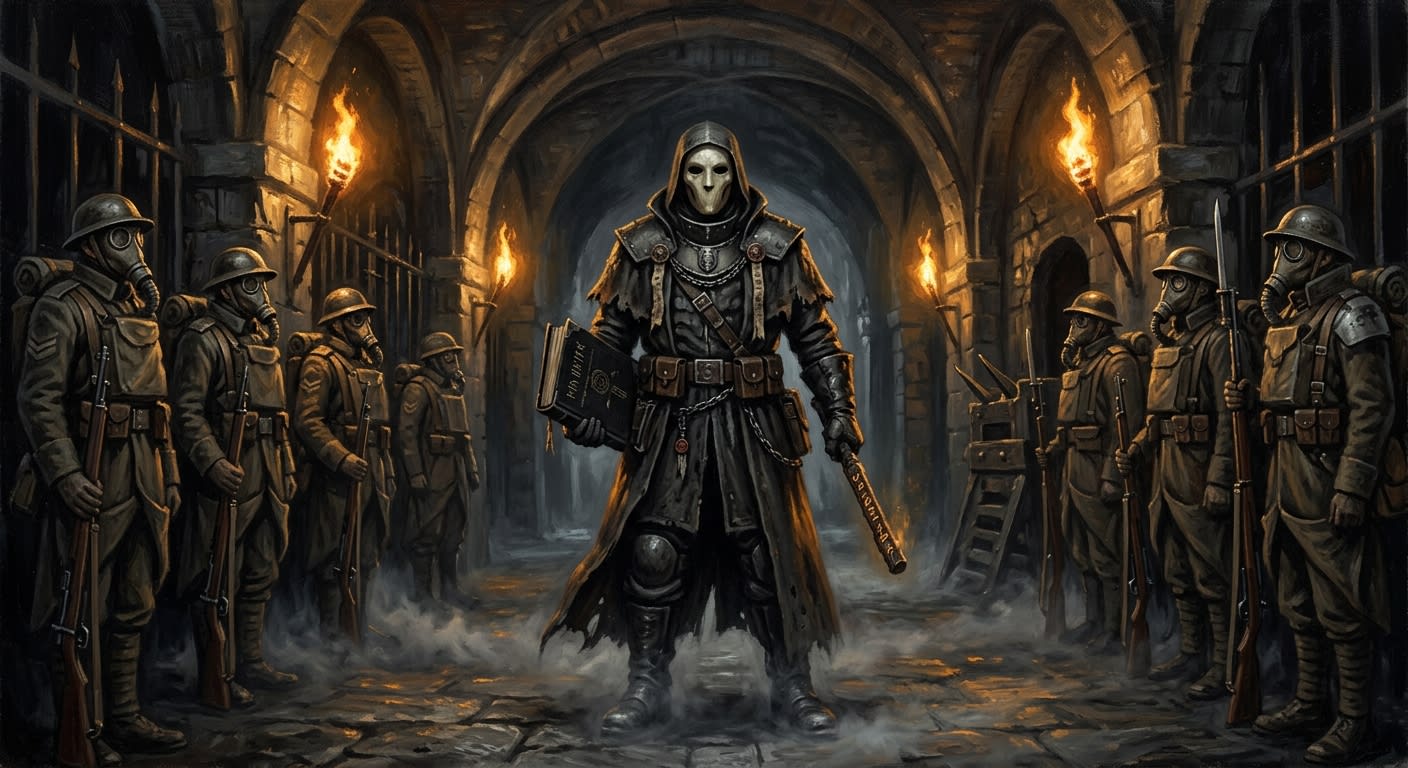
The Judges arrive without letter, try without jury, and depart without filing. The Bureau denies they exist. It has been denying this since A.S. 92. The denial requires renewal every thirty years, which is itself a kind of evidence.
Codex Ref. V.1.01-003
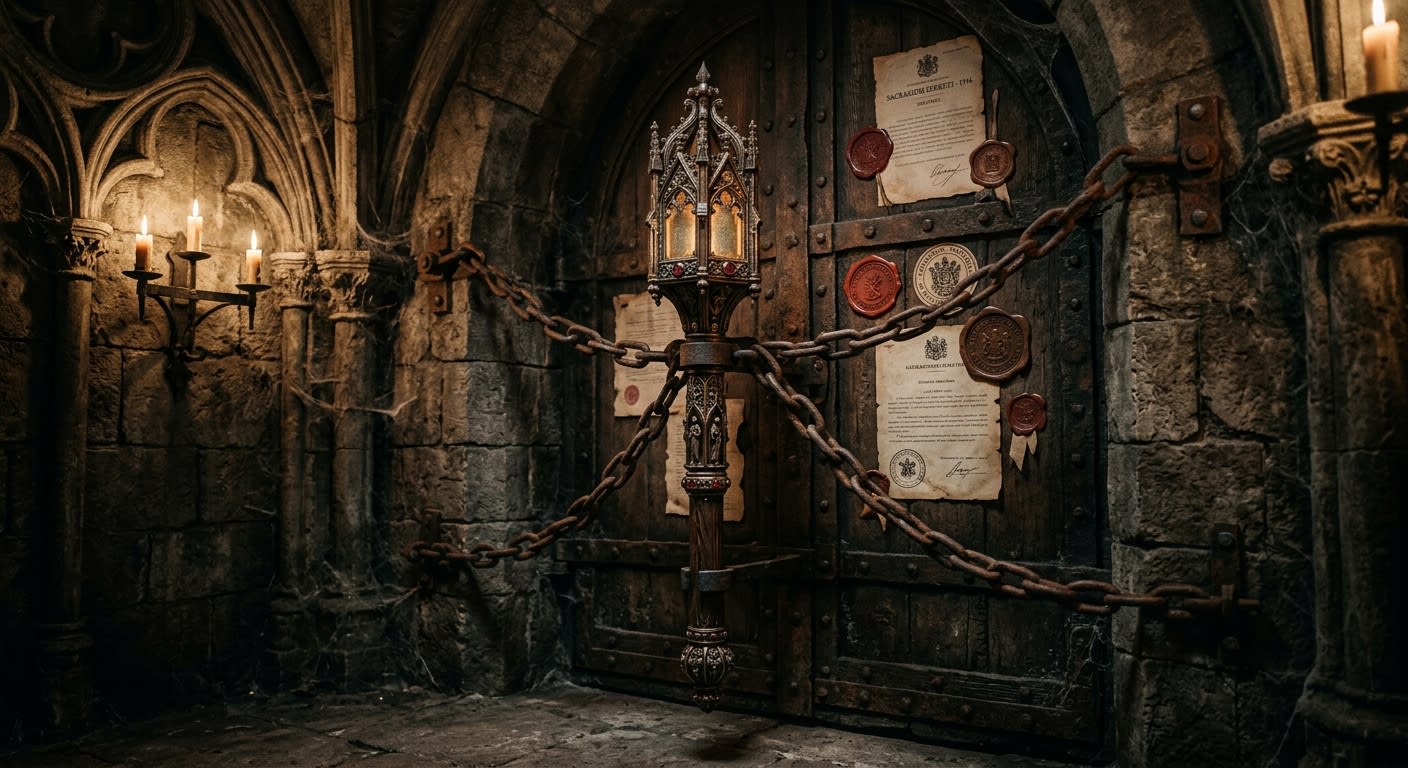
The Miracle of Saint Aldebrand
The Bureau erased the bone. The bone declined.
The Bureau declared the Reliquary of Saint Aldebrand non-existent in –32 A.S. In A.S. 95 it shattered a sorcerer-lord's skull and saved Vienna. Both facts are official, both carry seals, and the Bureau sees no difficulty.
Codex Ref. VI.4.01-001
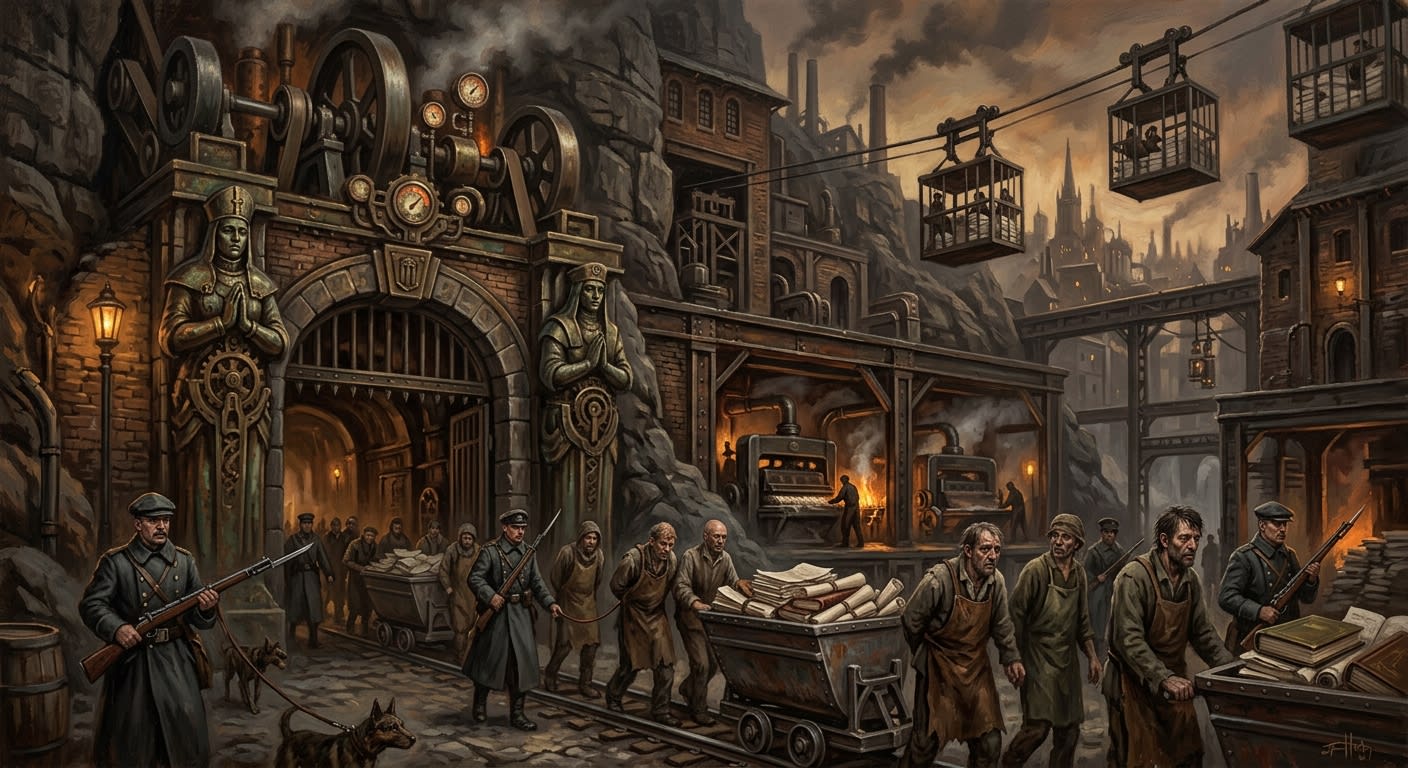
The Paper Mines of Ulm
Where forbidden minds are pressed into obedient sheets
The Paper Mines outside Ulm turn condemned scholars, clerks, witnesses, and families into archival stock, redaction vellum, penitential forms, and troublingly warm sheets.
Codex Ref. II.2.06-002

The Rationalists
Architects of the wound the Synod counts from
The Synod's most instructive enemy — philosophers who stripped Europe of its spiritual armor on the eve of Hell's invasion and then had the grace to be destroyed by the consequences.
Codex Ref. I.1.01-001

The Year of Letters
One table of bones. Forty cities. The first assault on everything.
The Bureau's account of –32 A.S.: how three Amsterdam scholars, one table of bones, and forty cities' worth of polite arithmetic crippled three centuries of relic authentication — and inaugurated everything.
Codex Ref. I.2.01-001
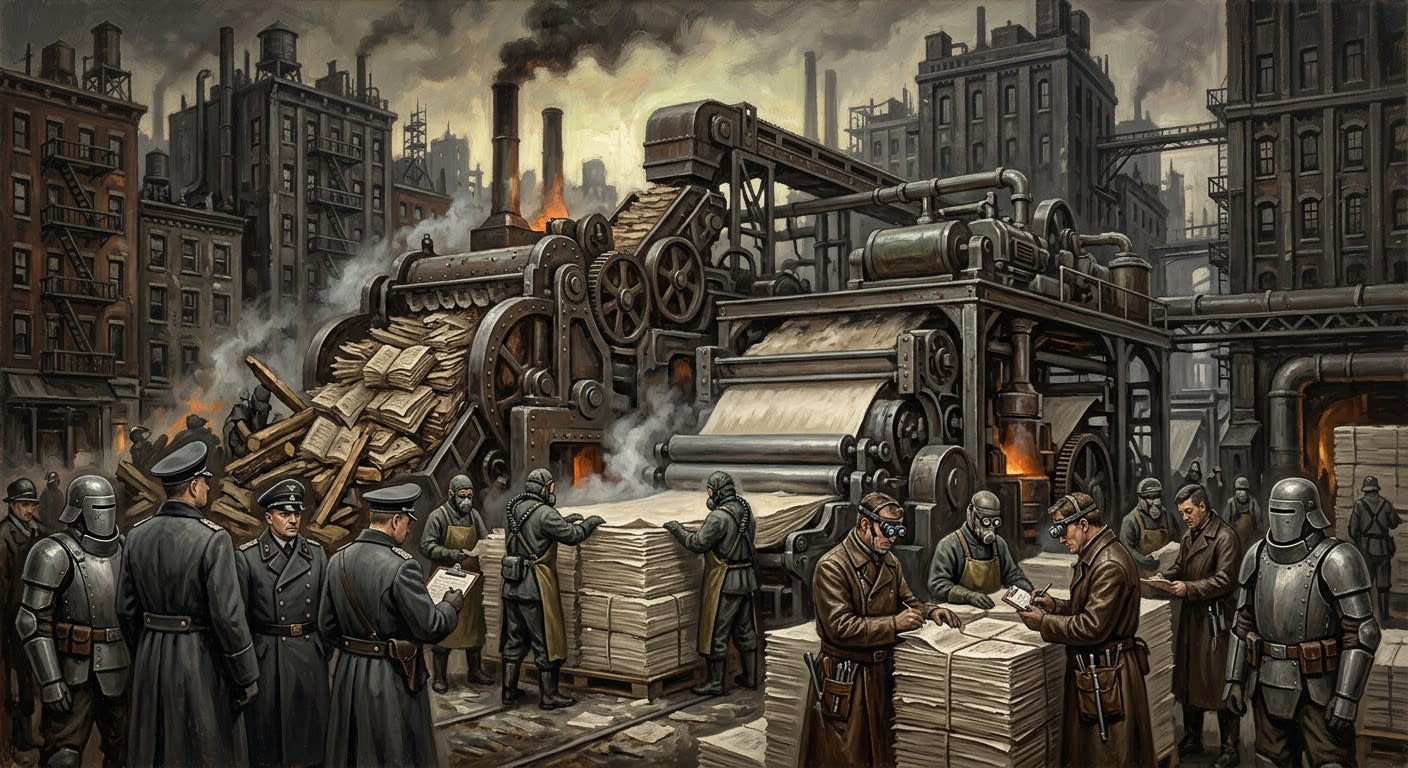
Ulm
The city that taught paper to confess and scholars to become pulp
Ulm is the corrected Heartlands city whose Rationalist compact predated the calendar wound, and whose Paper Mines now make heretical learning into obedient sheets.
Codex Ref. II.2.01-005
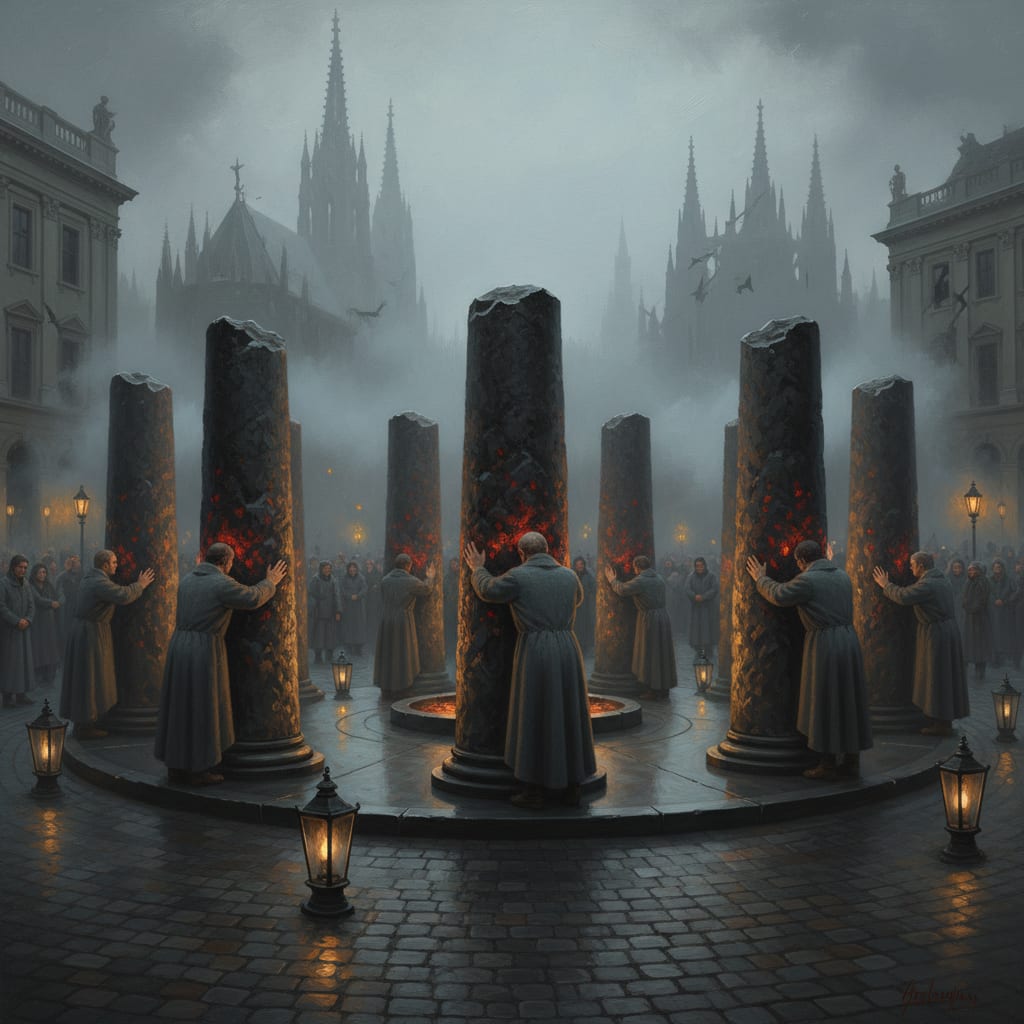
Vienna, the Shrine-Ruins
Three deaths, one gift shop, and a pen that has not dried in forty years
Three times ruined and once reclaimed. Vienna is the Synod's finest shrine and its most honest monument: the Rationalist capital, the Great Retreat's wound.
Codex Ref. II.4.09-010