

Ledger Category · Doctrine & Concepts
Doctrine & Concepts
Every ratified entry of the doctrine register, sorted alphabetically. 917 entries inscribed.
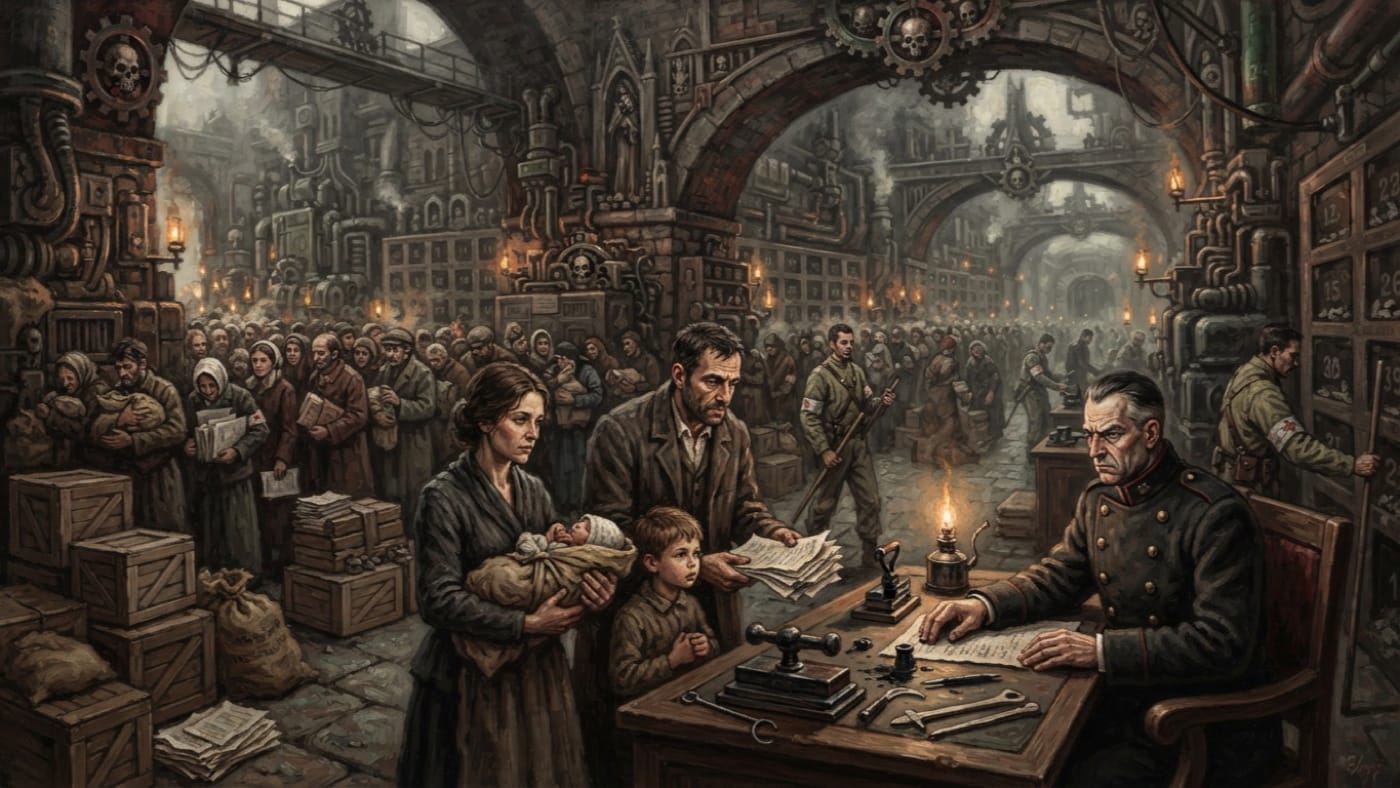
A.S. 78 Joint Classification Mandate
Five categories for the dead, one more queue for the living
The A.S. 78 emergency mandate made the dead controlled goods: five classifications, licensed mortuary clearance, and grief that could finally be billed.
Codex Ref. XIII.1.92-078
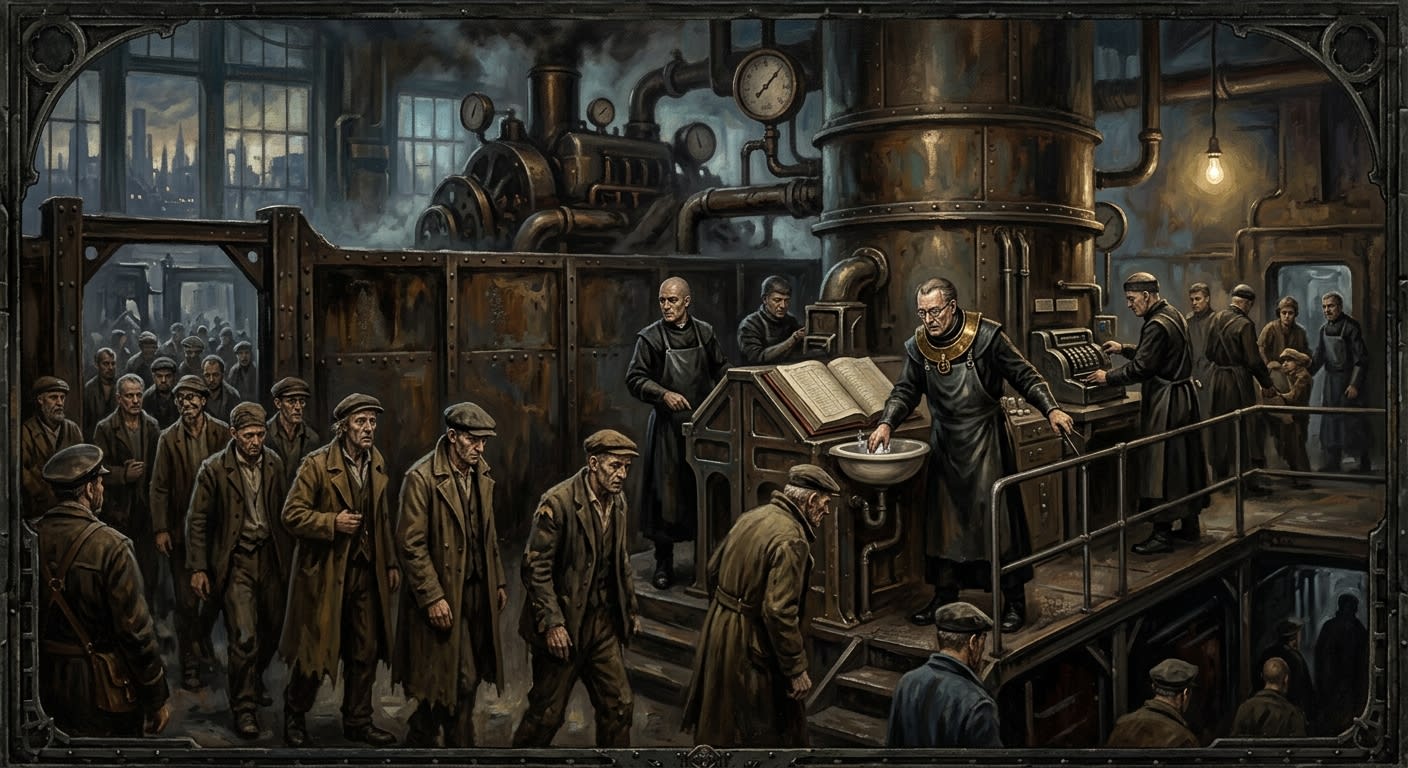
Absence Quota
The loaf improves when the mouth is misfiled
Rheinscarp's Absence Quota makes grain sufficient by correcting the hungry out of the count; arithmetic, being pious, washes its hands.
Codex Ref. XIII.1.97-198
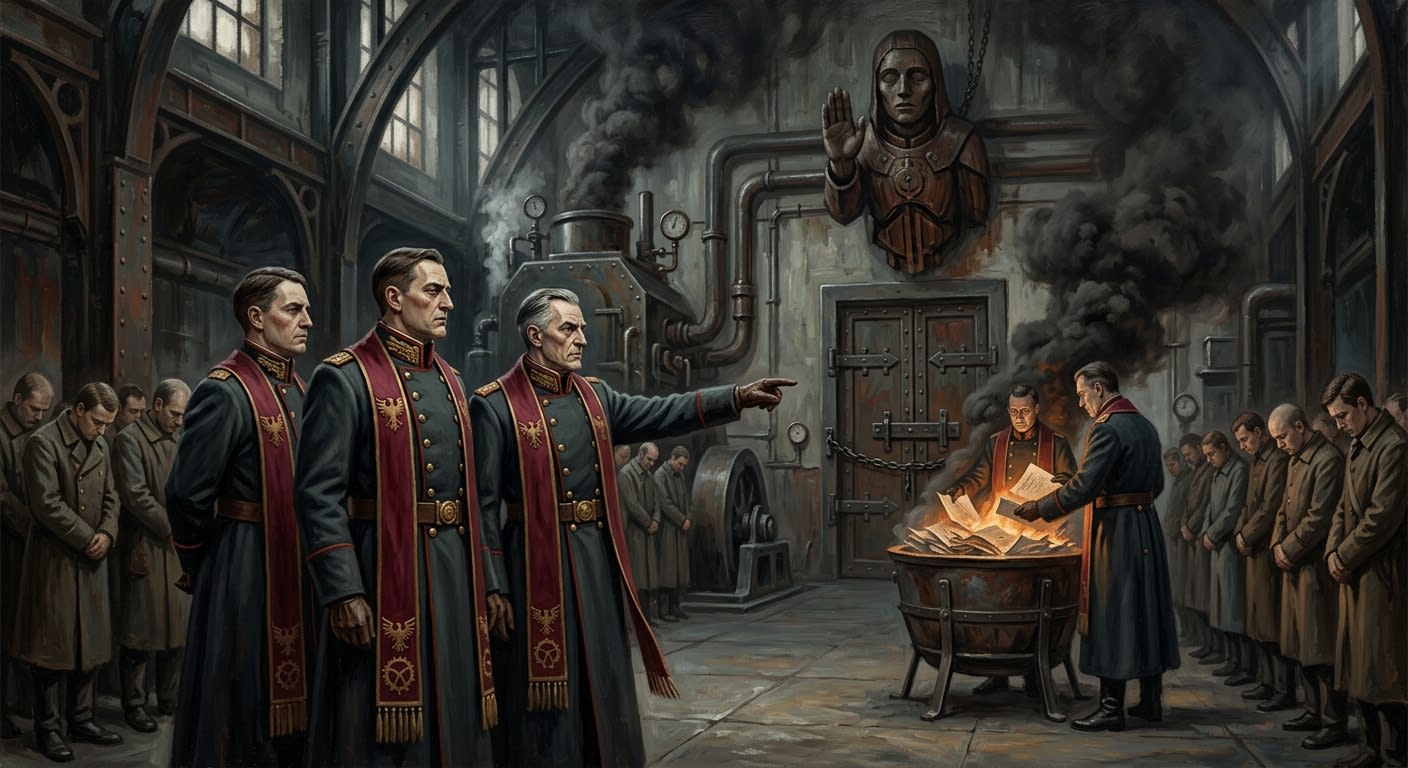
Absolute Suppression
The secret so holy it must command what it denies
Absolute Suppression is the Bureau's art of making hidden knowledge binding: a silence that issues orders, then denies it has a mouth.
Codex Ref. XIII.1.97-190

Absolution Token
Forgiveness, clipped at the gate and void by bell
The Absolution Token lets Brest sell movement as proof of confessed guilt: wax in the hand, sin in the file, gunfire postponed until the next bell.
Codex Ref. XIII.1.13-199

Absolutions of the Dead
Even the grave receives a form, a candle, and a fee
The Absolutions of the Dead keep death open for correction: a skull-cup candle, a disputed name, and mercy copied twice before it dares call itself final.
Codex Ref. XIII.1.85-184
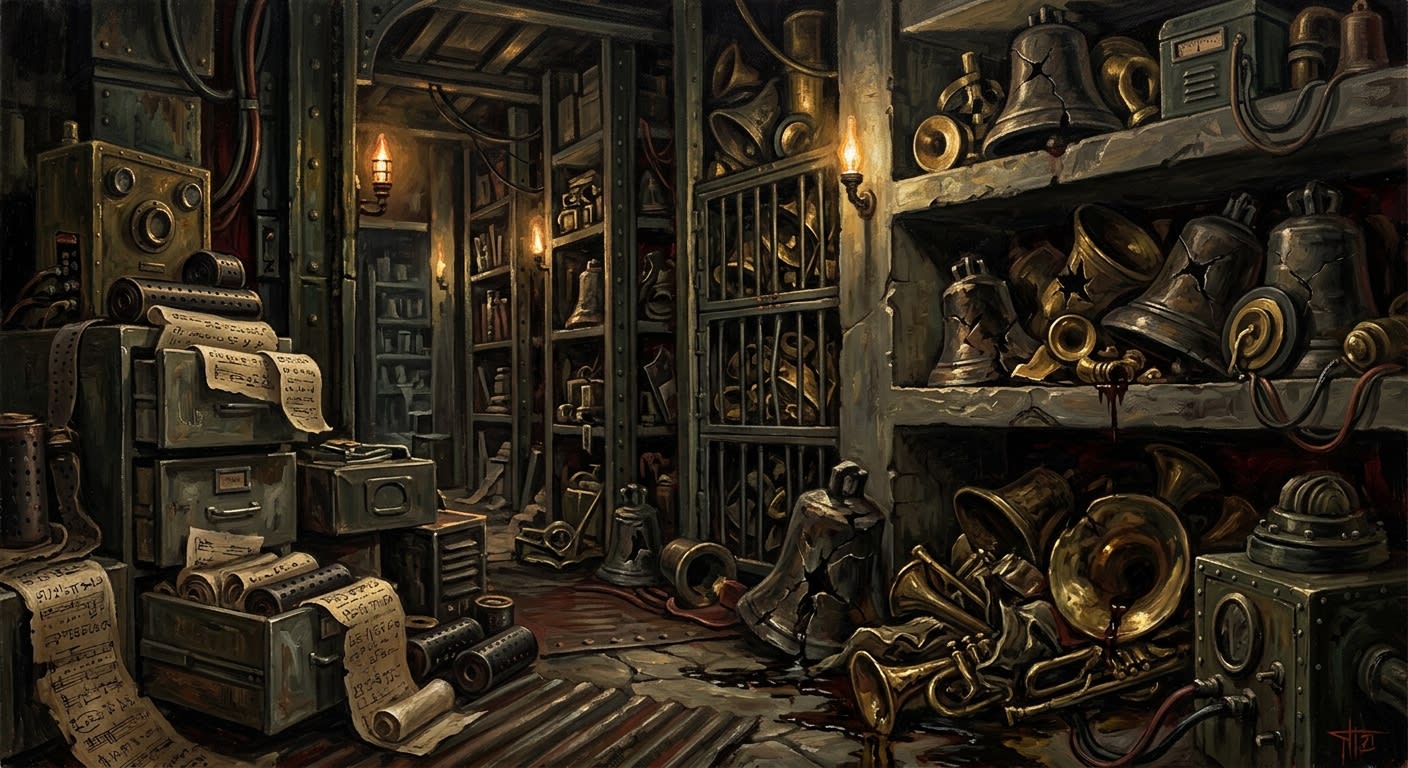
Acoustic Heresy Annex
Where forbidden notes are catalogued before anyone useful burns them
Strasbourg's Acoustic Heresy Annex preserves lethal notes, suspect hymn sheets, cracked bells, and musical filth too useful for Purity to burn.
Codex Ref. XIII.1.96-201
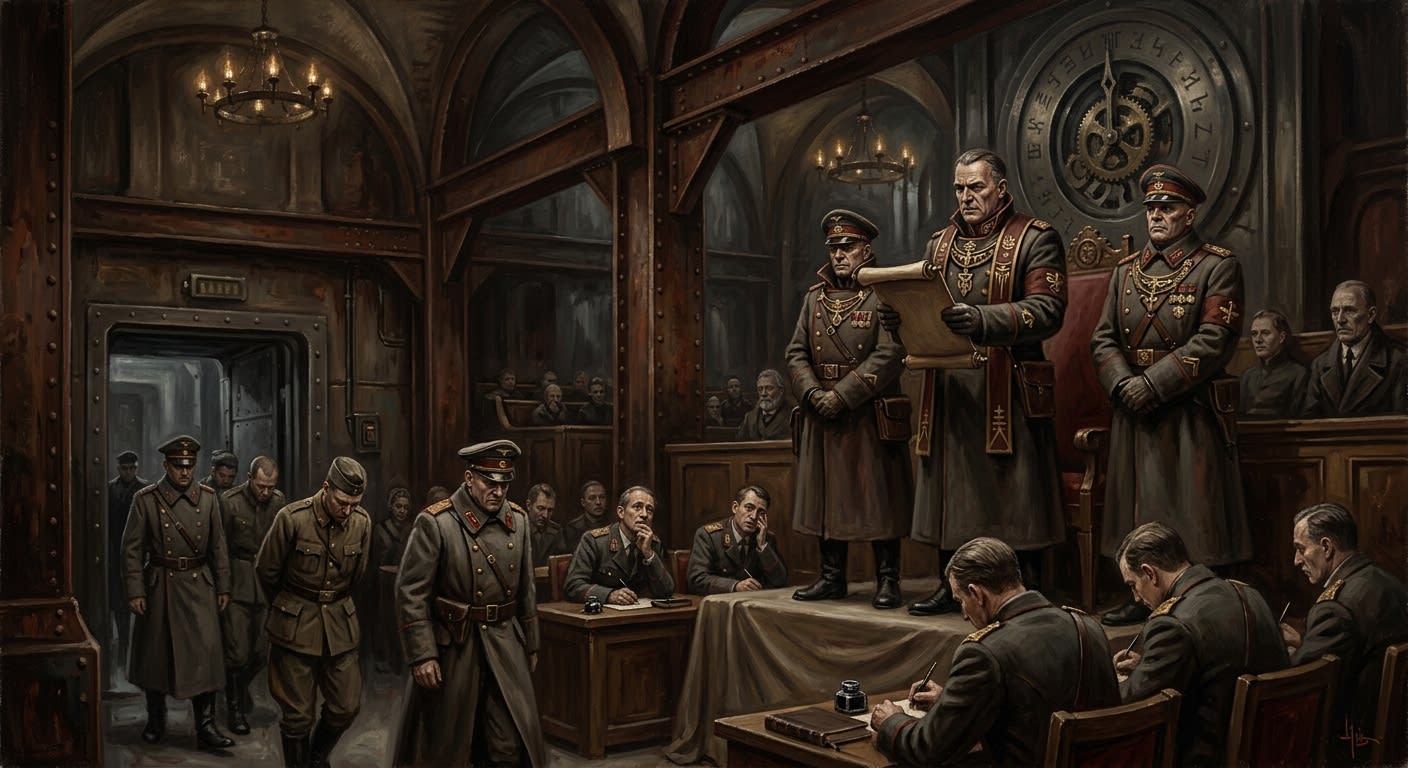
Act of Hierarchical Supremacy
The first chain, polished until citizens mistake it for anatomy
Ratified at Strasbourg in A.S. 90, the Act made authority descend through the Hierarchs and made refusal dissolve office, status, and comfort.
Codex Ref. XIII.1.89-090

Administrative Dissolution
What the Bureau calls a filing action; what the dogs remember
Administrative Dissolution is the Bureau of Records' procedure for rendering a soul present but illegible — a grid of Mortuary Black drawn across the name-entry, the null-mark Ø applied, the Ledger amended.
Codex Ref. XIII.1.01-001

Administrative Harmonists
The school that taught contradiction to queue politely
The Administrative Harmonists saved Regensburg's gate economy by teaching blessing and curse to obey the pamphlet, the stamp, and the fee schedule.
Codex Ref. XIII.1.76-092

Administrative Inconvenience Premium
The price of making the Ledger notice you twice
The Premium prices disobedience as clerical labour: miss Form 7-NR, trouble the Ledger, and watch one infant become a lifetime of doubled debt.
Codex Ref. XIII.1.02-158

Administrative Order 44-B
The mercy of eight hours in a room that wanted twelve
Order 44-B shortened Vault duty after Breel's hand wrote forbidden music, proving the Bureau can call terror a scheduling improvement.
Codex Ref. XIII.1.44-188

Administrative Recovery
The state calls it custody because theft has poor margins
Administrative Recovery is Mercy's washed name for taking unregistered children, renaming them, tagging them, and teaching the Ledger to stand where a family stood.
Codex Ref. XIII.1.02-159
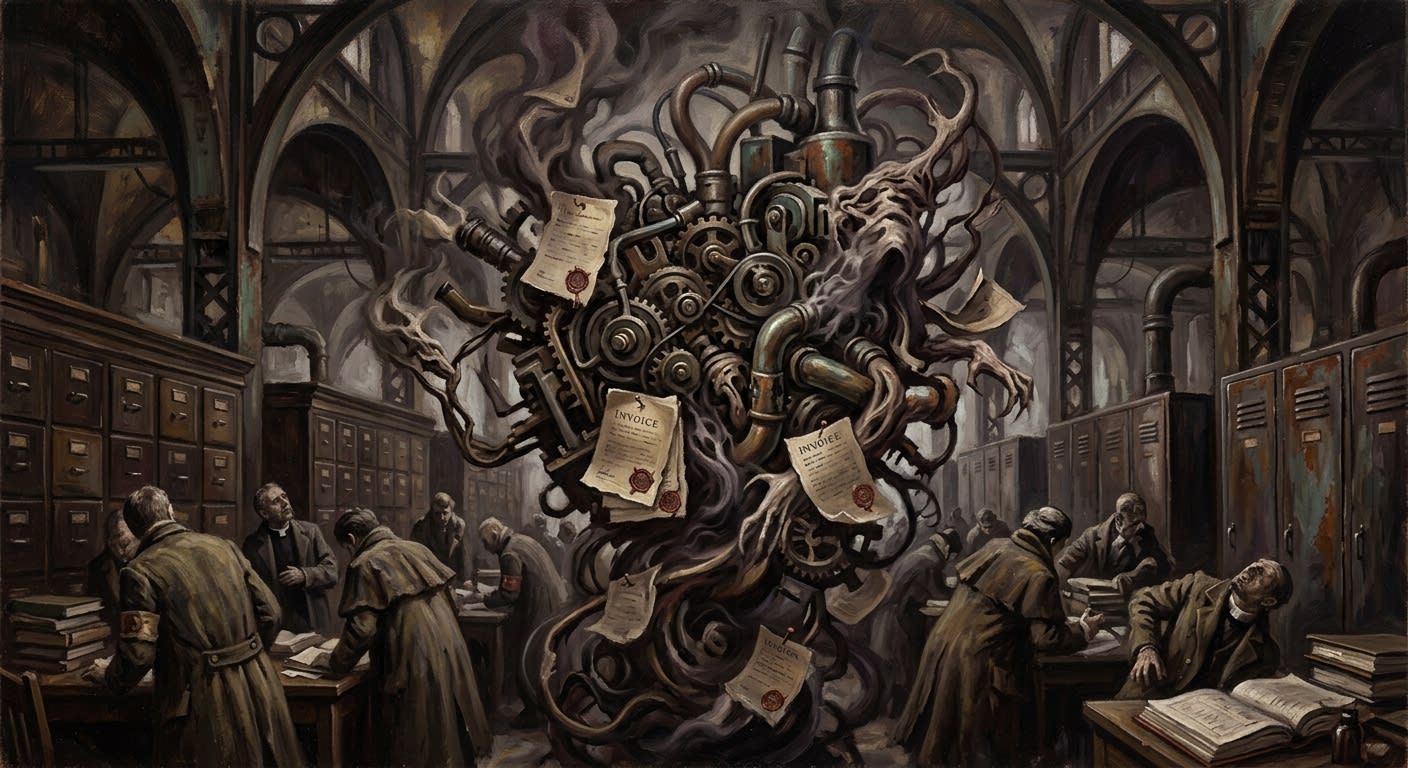
Adversary
The Enemy receives an office title and no face
The Bureau's cleanest dangerous word: a title for the hostile will behind sorcery, demons, Sin-General dominion, and every invoice Hell sends in bone.
Codex Ref. VI.3.01-001
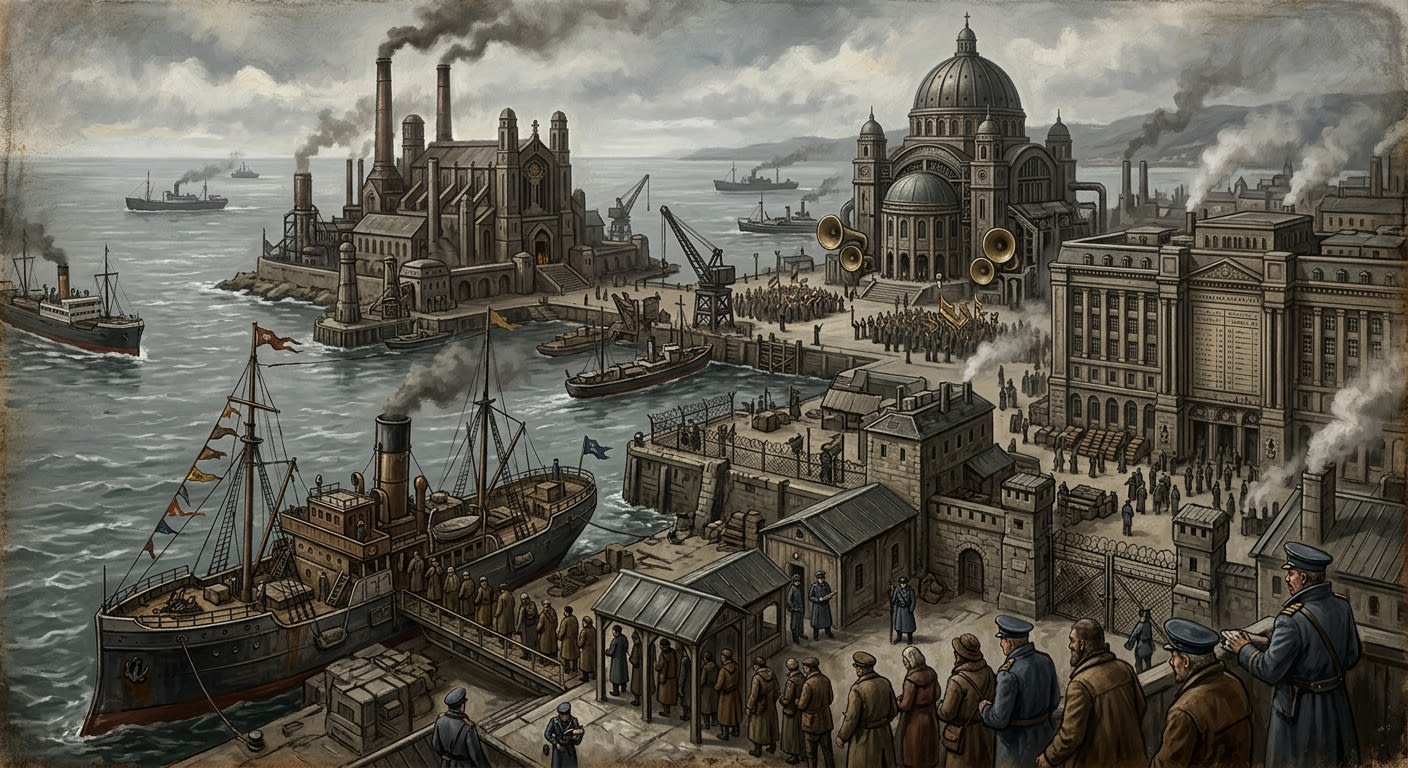
Aegean Shrine-Circuit
Devotion by convoy, tariff, bell, and brine
Licensed pilgrim sea-route where Marseille weighs devotion, Saffron quarantines it, Thessaloniki sings at it, and the Bureau invoices the miracle.
Codex Ref. XIII.1.40-123

Aerial Wing
The sky, briefly obedient, under seal
Joint aerial custody apparatus by which the Synod lifts reliquary dirigibles, sermons, guns, clerks, and terror above Bastion-Constantinople.
Codex Ref. XIII.1.21-168
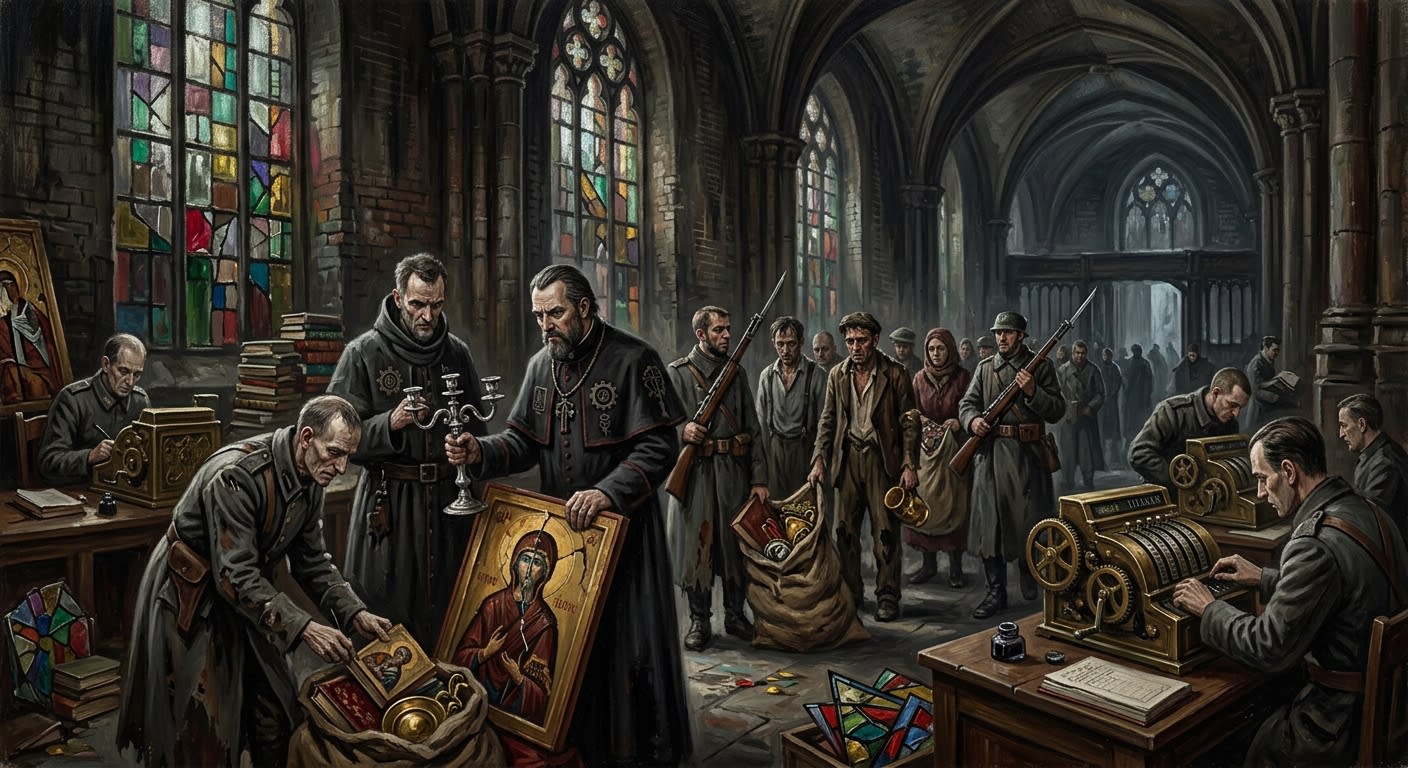
Aesthetic Tithe
When destruction discovers taste
Denied revenue, tolerated theft, and stained-glass hypocrisy: the Aesthetic Tithe turns seized beauty into patronage under the smile of useful sin.
Codex Ref. XIII.1.76-094

Against the Mercy of Rounding
The fraction shall be recorded
Fragmentary Edrinic scripture for Auditors, Branders, and every clerk who learns that a rounded mercy is an absence given shoes.
Codex Ref. XIII.1.58-117
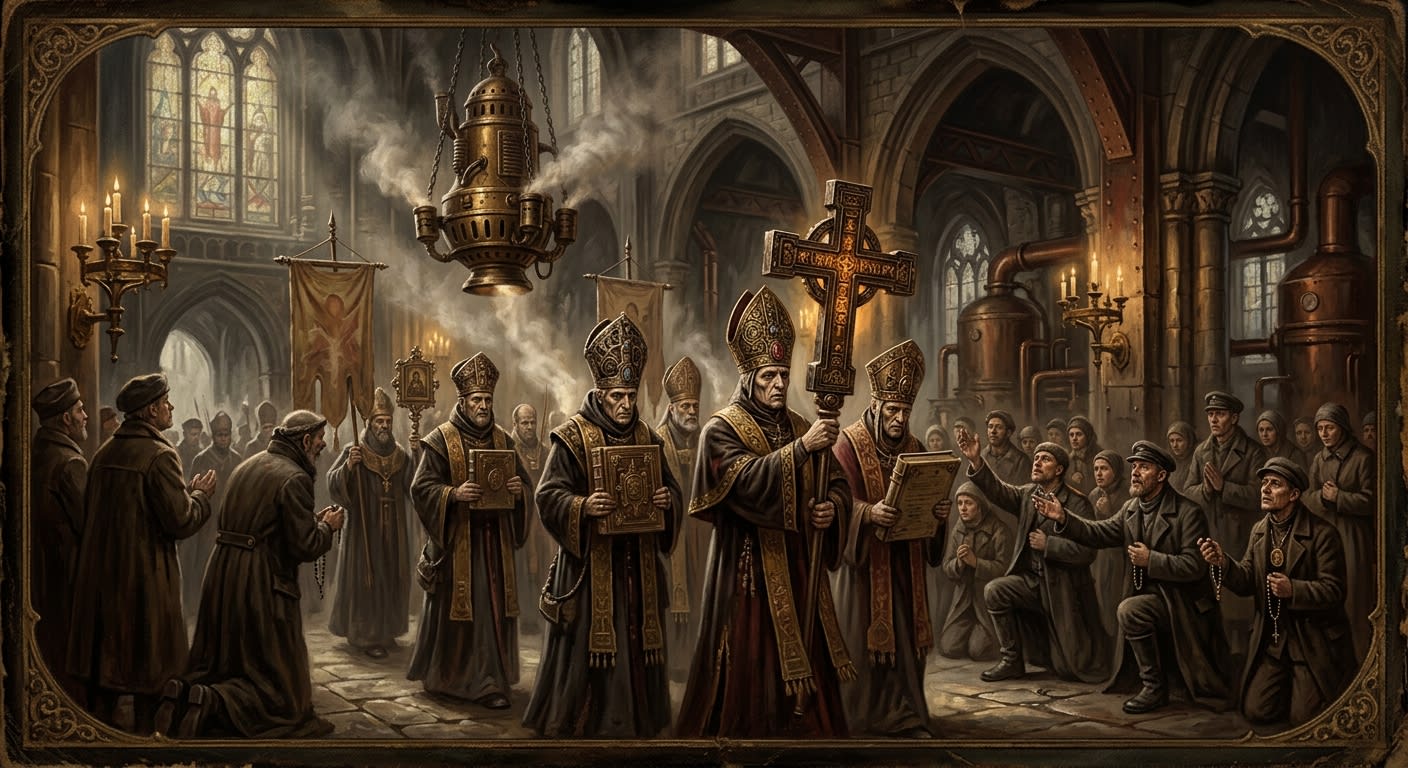
Age of Faith
The golden age improved by burial
A devotional-historical category for the centuries before A.S. 0, when Heaven is said to have answered and Europe had not yet taught unbelief to print.
Codex Ref. XIII.1.00-000
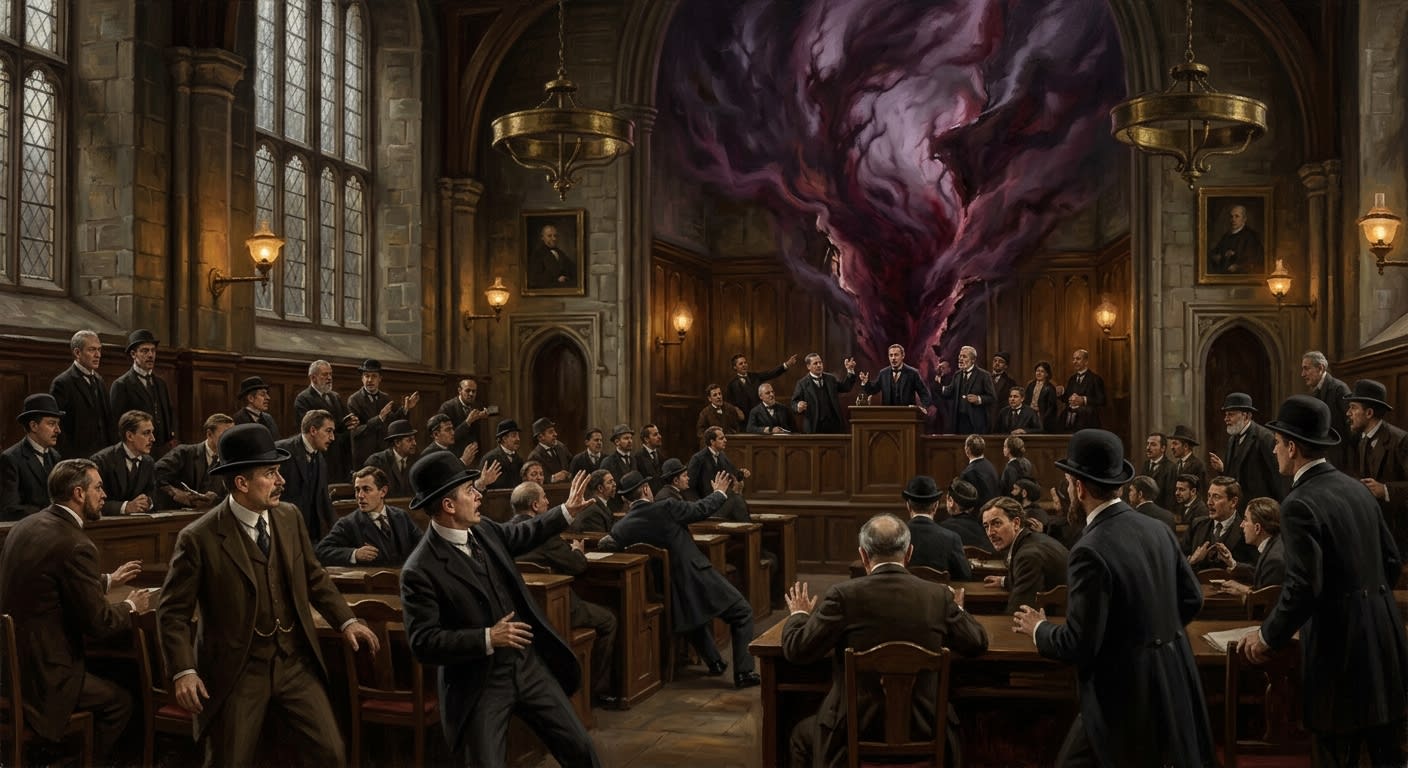
Age of Reason
The mind may hold the lamp, but Doctrine owns the flame
The Age of Reason licensed unbelief, polished desecration into civic virtue, and ended when Hell answered the lecture hall without raising its hand.
Codex Ref. XIII.1.00-001

Alchemical Classification Ladder
Four drawers for terror, and none of them empty
The Bureau's four-rung ladder turns twitching ash, hungry ink, harmful vapours, and materials with intent into classifications Strasbourg can seal, bill, and fear politely.
Codex Ref. XIII.1.02-092
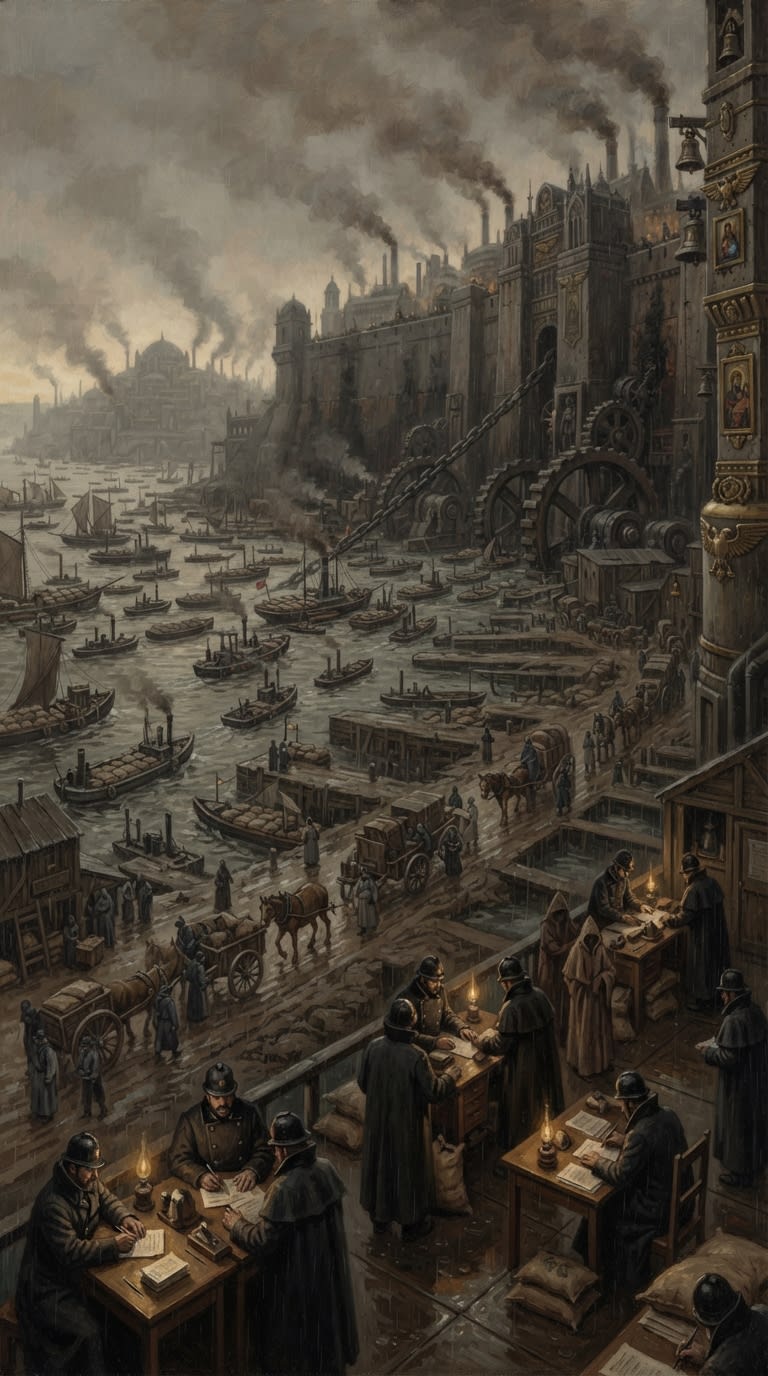
Anatolian grain convoys
The wall stands because the wheat arrives, usually lighter than declared
Constantinople's grain lifeline: Anatolian hulls, Green permits, Passage windows, Tithes arithmetic, and the persistent miracle by which every convoy arrives smaller than it departed.
Codex Ref. VI.4.21-068
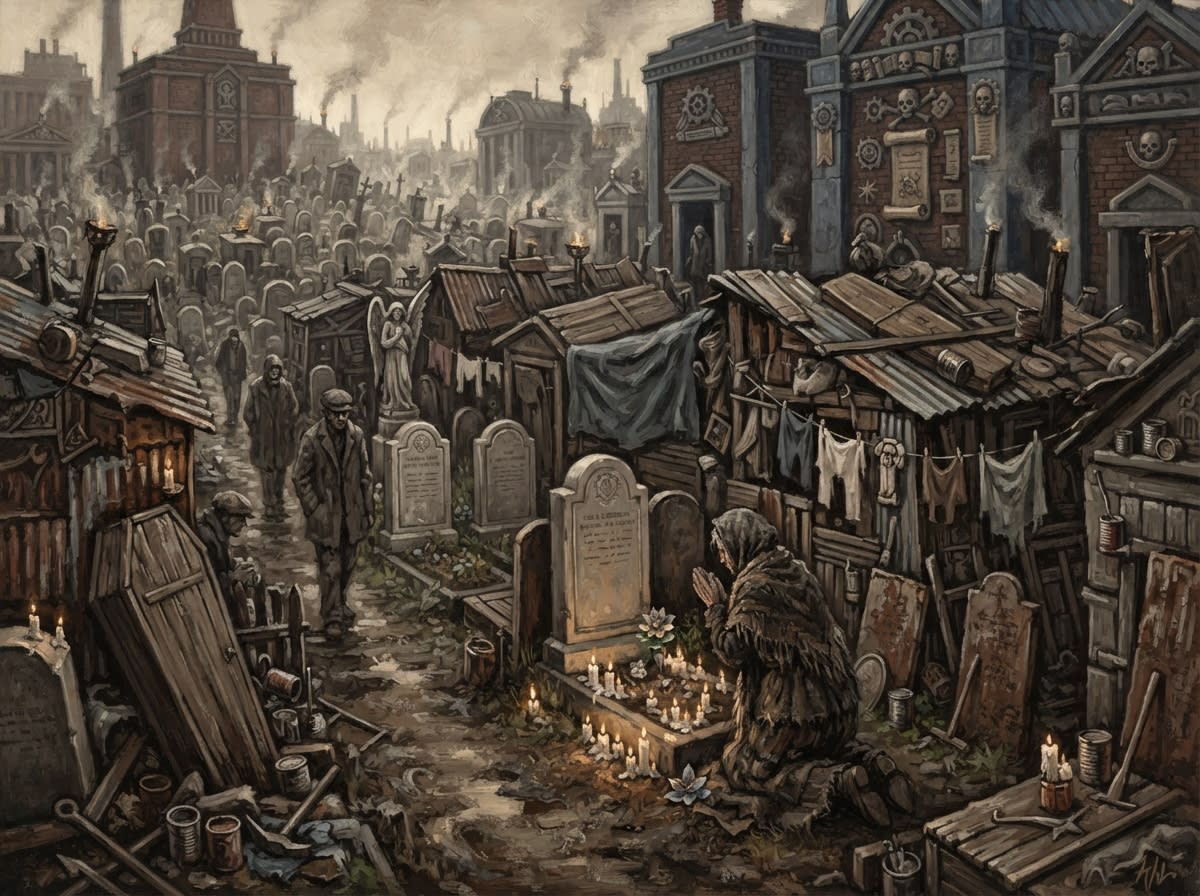
Anchor Graves
Where burial right does the work housing law refuses
Anchor graves are lawful family plots whose burial privileges let grave-field lanes pretend that shacks are caretaker shelters rather than homes.
Codex Ref. XIII.1.78-017
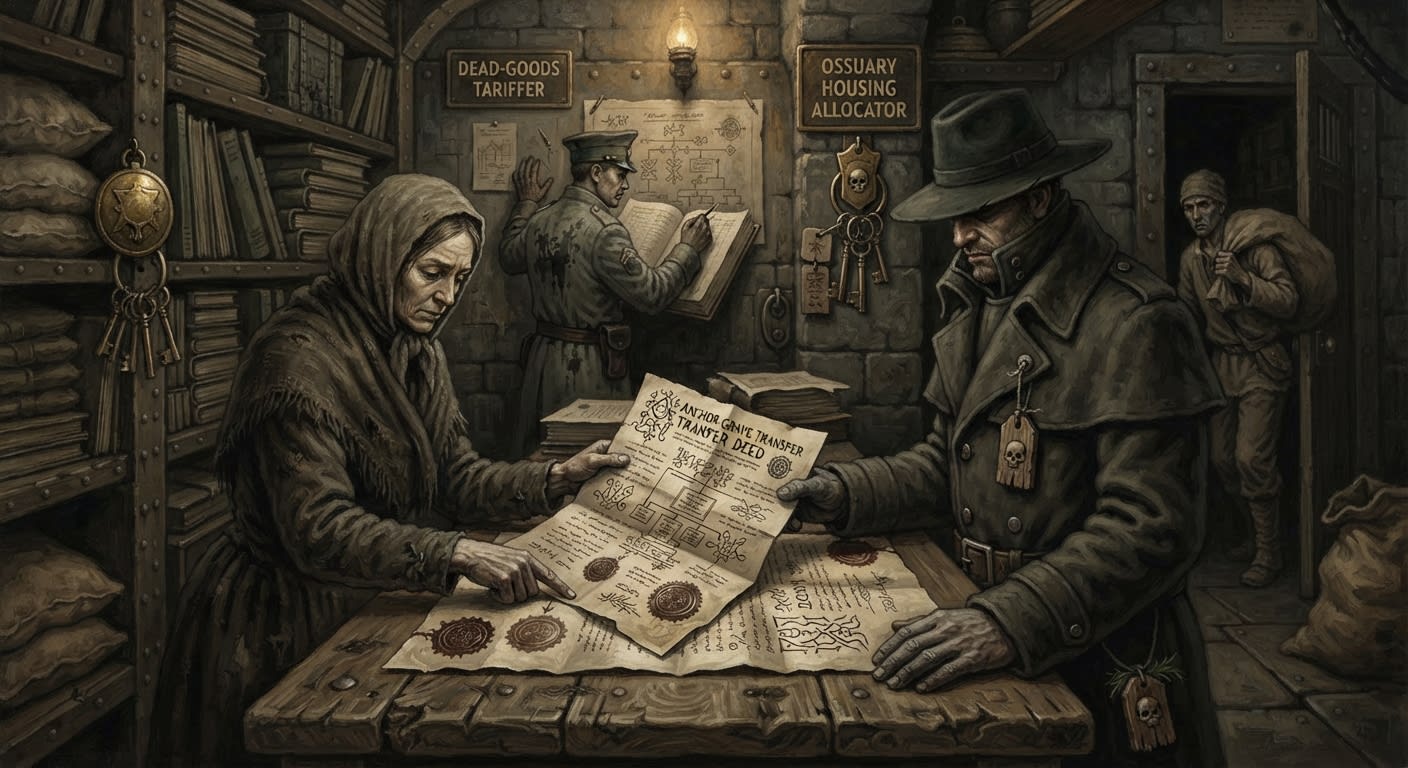
Anchor-Grave Transfer Deed
Where the grave becomes housing because hunger signs neatly
The anchor-grave transfer deed converts a family's burial claim into permitted ossuary presence, teaching grief to become tenancy and tenancy to remain revocable.
Codex Ref. XIII.1.78-178
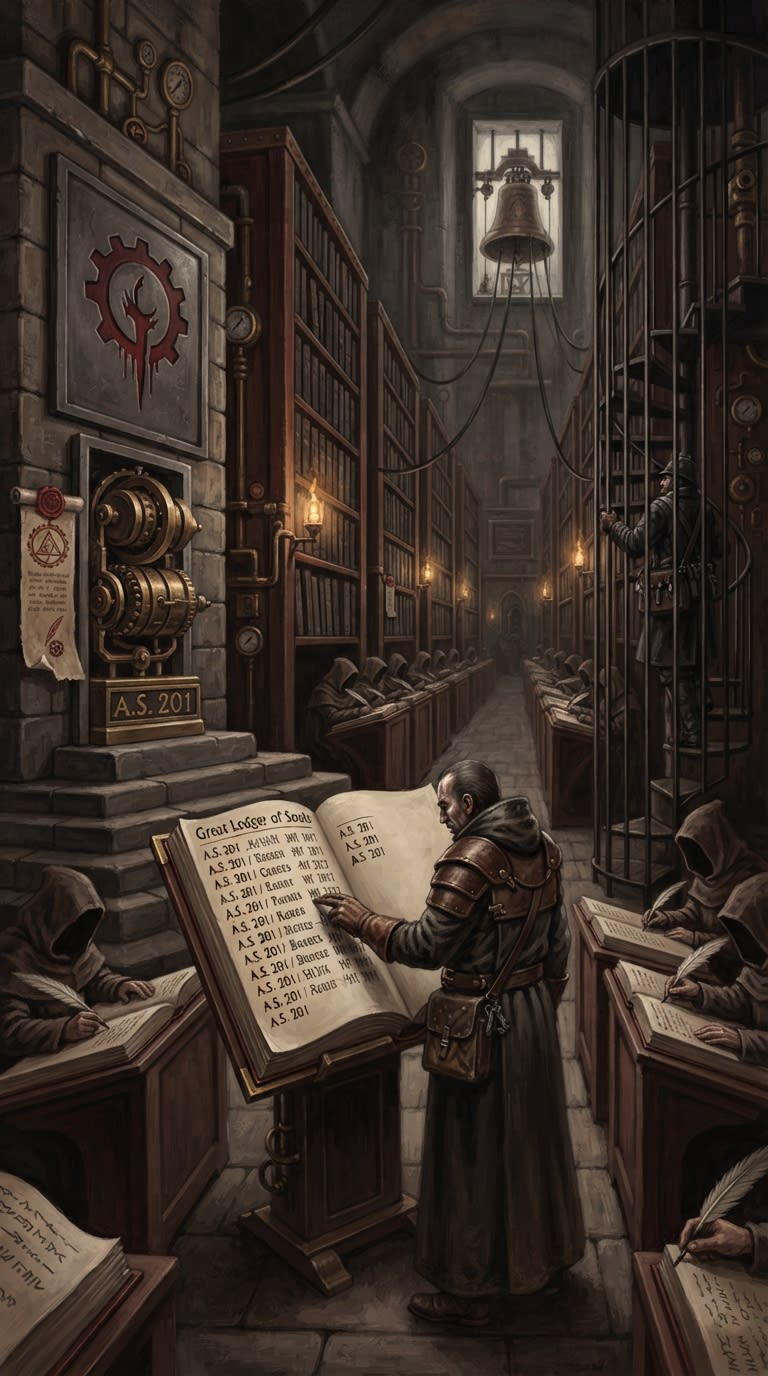
Anno Synodi
The wound by which Strasbourg owns the year
The Synod's calendar counts not from triumph but from wound: A.S. 0 at De Vera Luce, adopted retrospectively at the Concordat, and enforced by Records, Bells, and Doctrine.
Codex Ref. XIII.1.00-090

Annual Confirmation of Vacuity
One boat, three passes, and a city officially not answering
The Annual Confirmation of Vacuity is the yearly rite by which Pest remains legally Vacated: three river passes, five admissible measurements, no landing, and no occupancy category.
Codex Ref. XIII.1.88-201
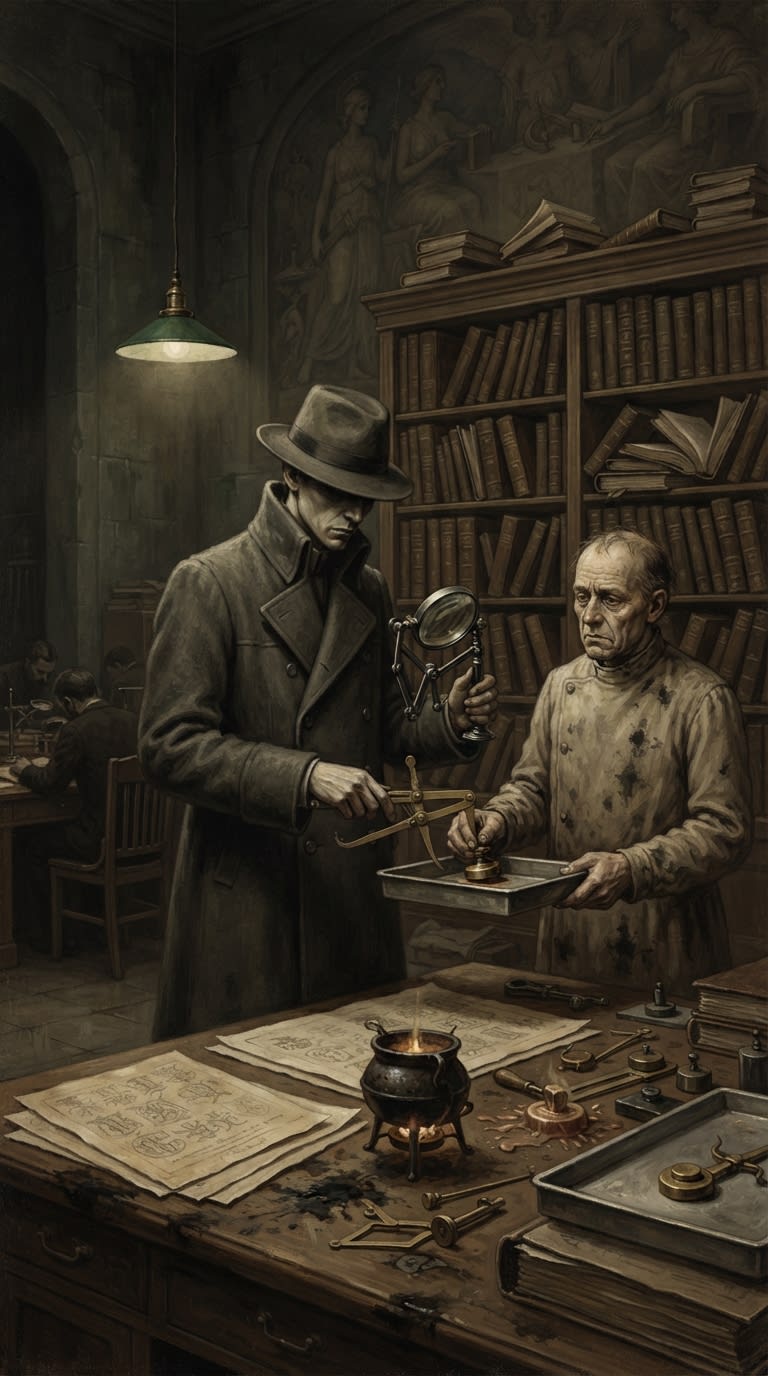
Annual Die Audit
Every lawful instrument must survive its own impression
Instituted after the A.S. 178 counter-seal embarrassment, the Annual Die Audit sends Seal-Walkers across Synod territory to weigh, strike, measure, accuse, retire, and occasionally retroactively shame every lawful seal-die.
Codex Ref. VI.4.19-178
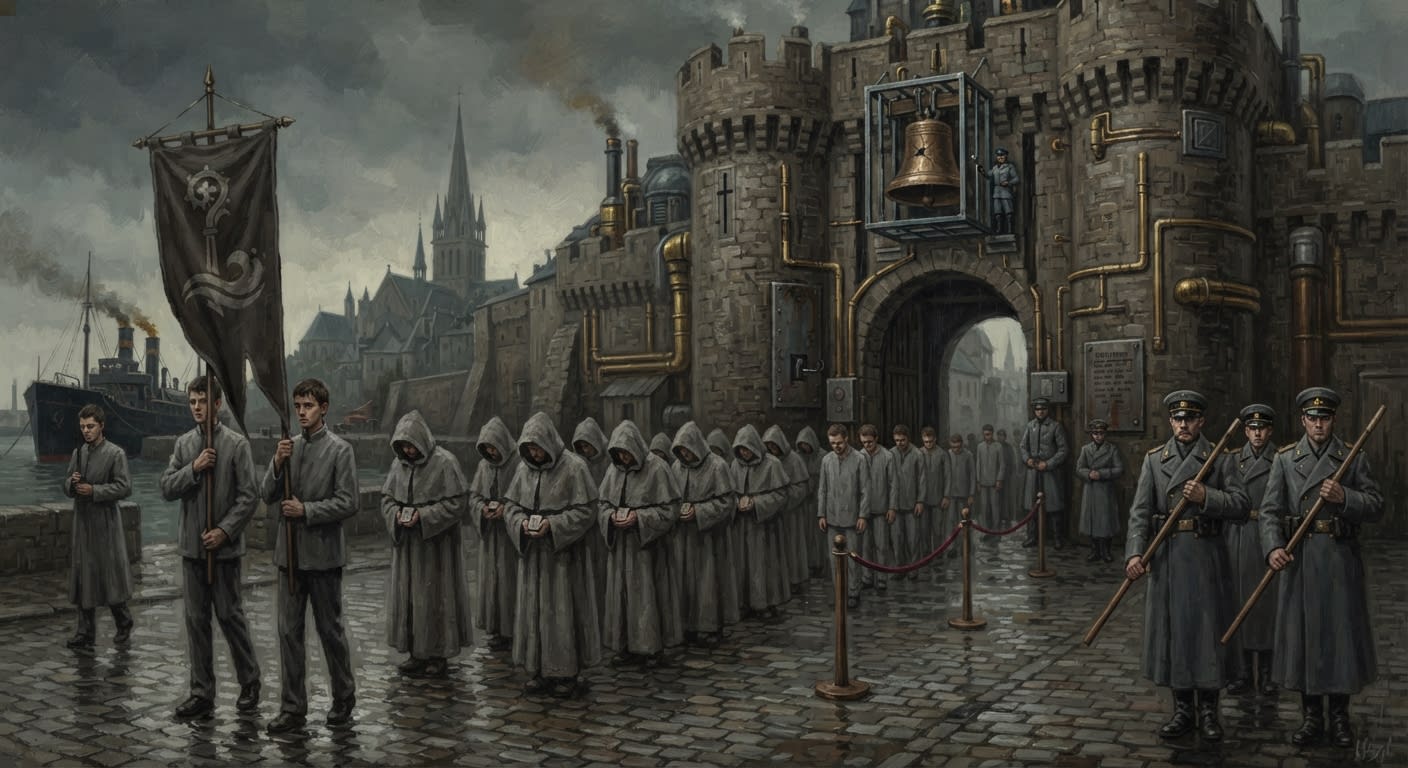
Annual Remembrance of Saint-Malo
Thirty-one tolls, forty-three seconds, and grief under licence
The annual office that makes Saint-Malo's first blood toll thirty-one times, hold forty-three seconds of silence, and remind Brittany that grief is licensed.
Codex Ref. XIII.1.87-011

Anomaly Protocol
The misspelled machinery by which panic becomes billable silence
The Anomaly Protocol is the Cloister's approved handling doctrine for denied bead disorder: misspelled in law, exact in hunger, and far too useful to correct.
Codex Ref. XIII.1.72-003

Anomoly Protocols
The misspelled machinery by which panic becomes billable silence
The Anomoly Protocols are the Cloister's approved handling procedures for bead drift: misspelled, deniable, indispensable, and far too useful to correct.
Codex Ref. XIII.1.72-003

Anonymous Productive Penance
Where a name becomes a number, and the number becomes paper
Anonymous Productive Penance is the Paper Mines sentence that strips condemned workers of names, invoices their labour, and turns guilt into warm, troublesome sheets.
Codex Ref. XIII.1.02-114
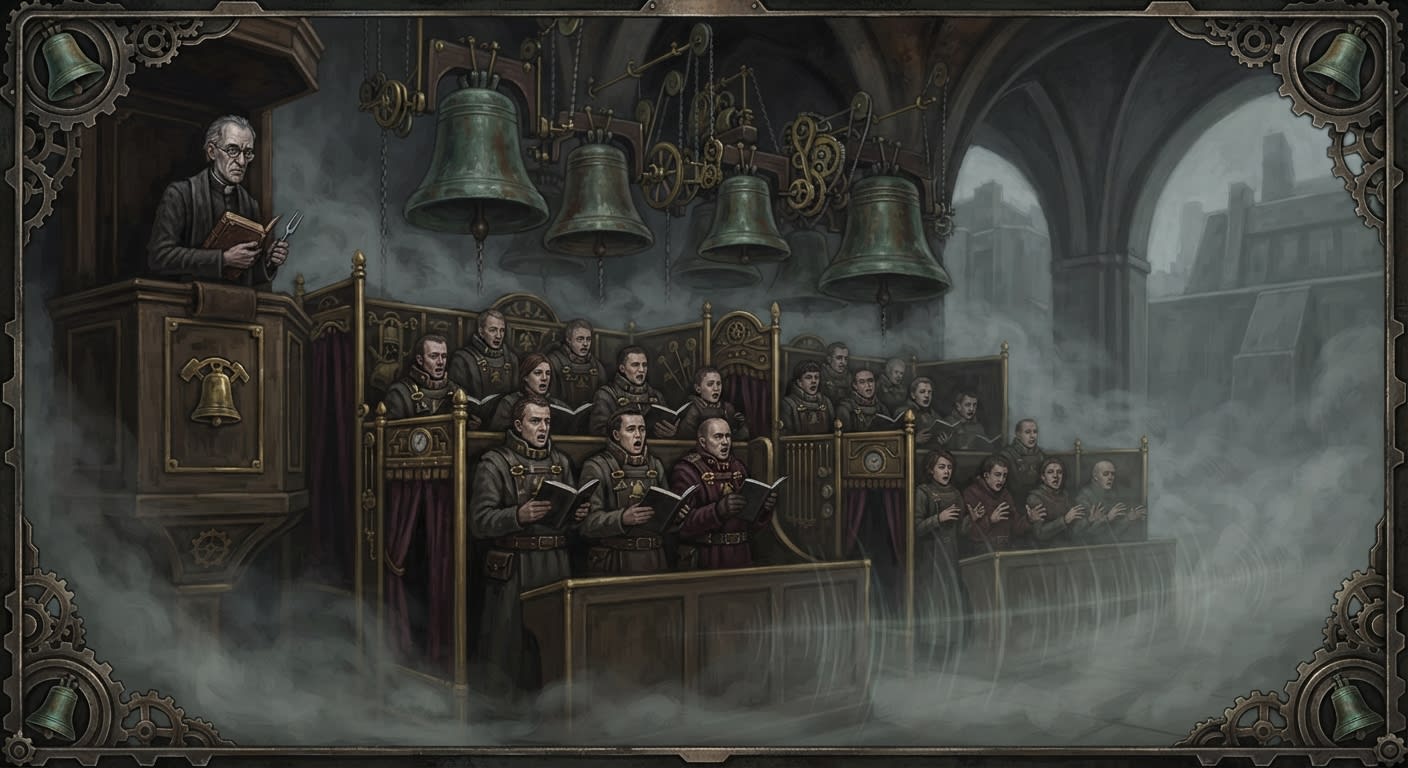
Anticipatory Acoustic Resonance
What the fog sings before the Choir dares breathe
Anticipatory acoustic resonance names the Grey's habit of returning Königsberg hymns before they are sung, because prophecy would require a braver office.
Codex Ref. XIII.1.87-037
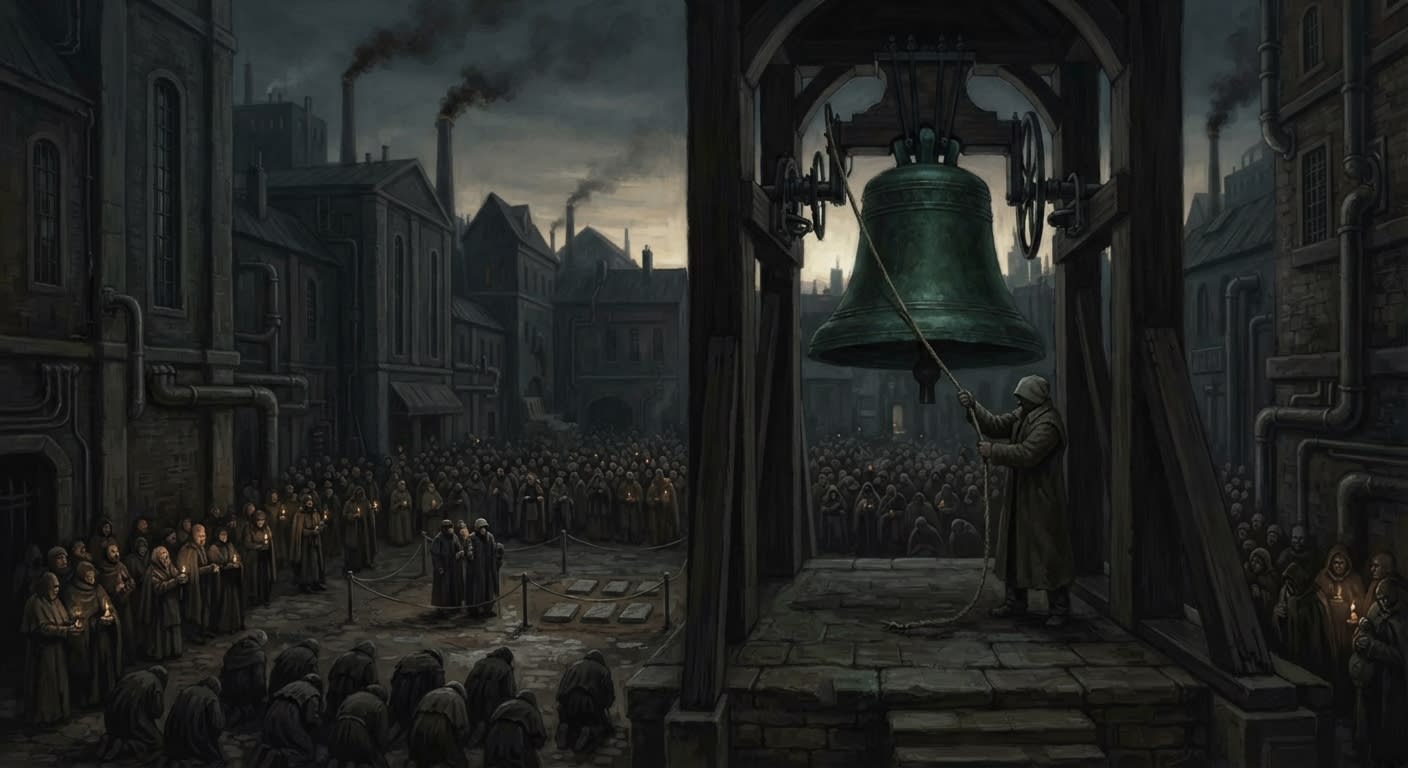
Antiphon Bell
Bronze may count what grief is not permitted to round
The Antiphon Bell is the licensed parish office that makes Saint-Malo audible: thirty-one tolls for the certified dead, then forty-three seconds for all who entered the gate.
Codex Ref. XIII.1.87-012
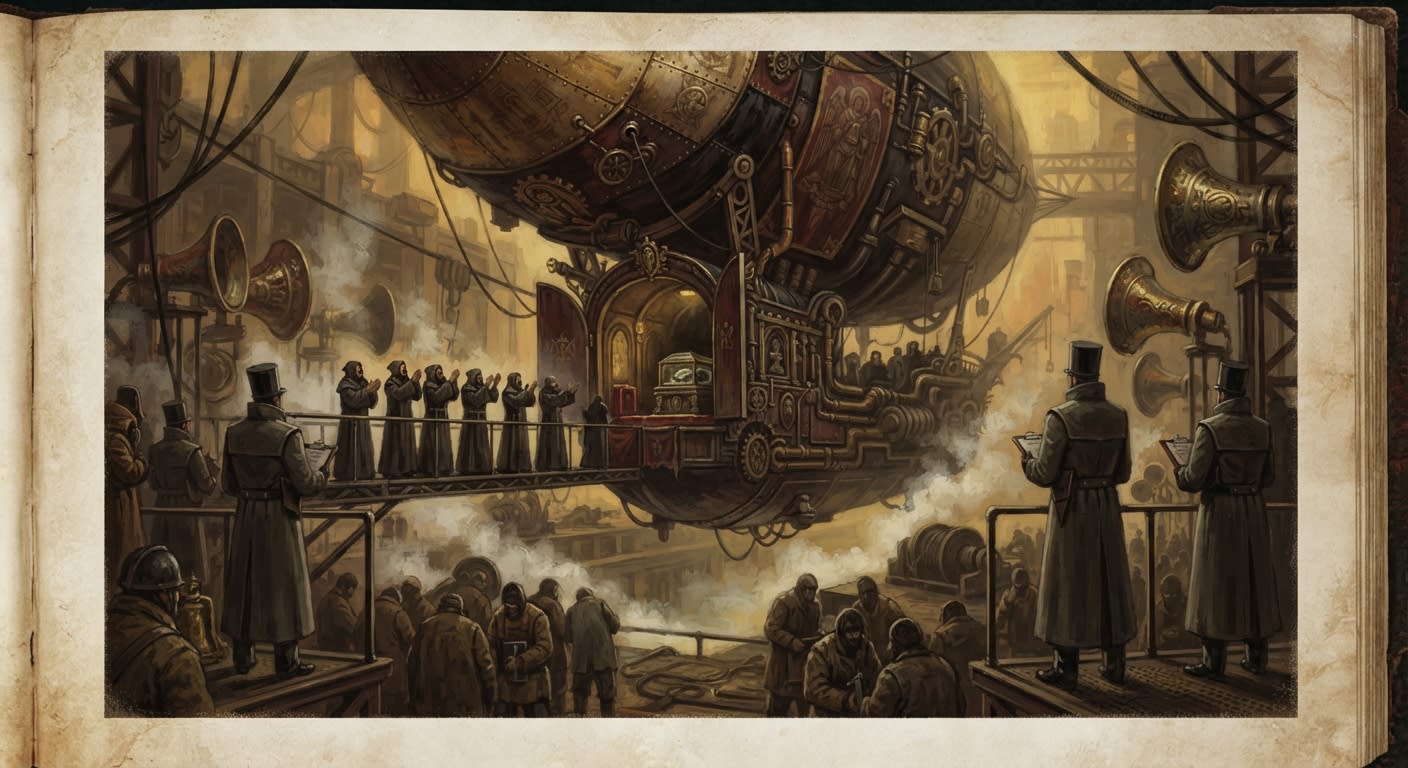
Antiphon of Ascension
The launch rite that received an answer and lost an airship
The Antiphon of Ascension is the licensed chant by which Vigil Arks are asked to rise. At Saint Uriel's second attempt, it did exactly enough to prove it had been heard.
Codex Ref. XIII.1.21-004
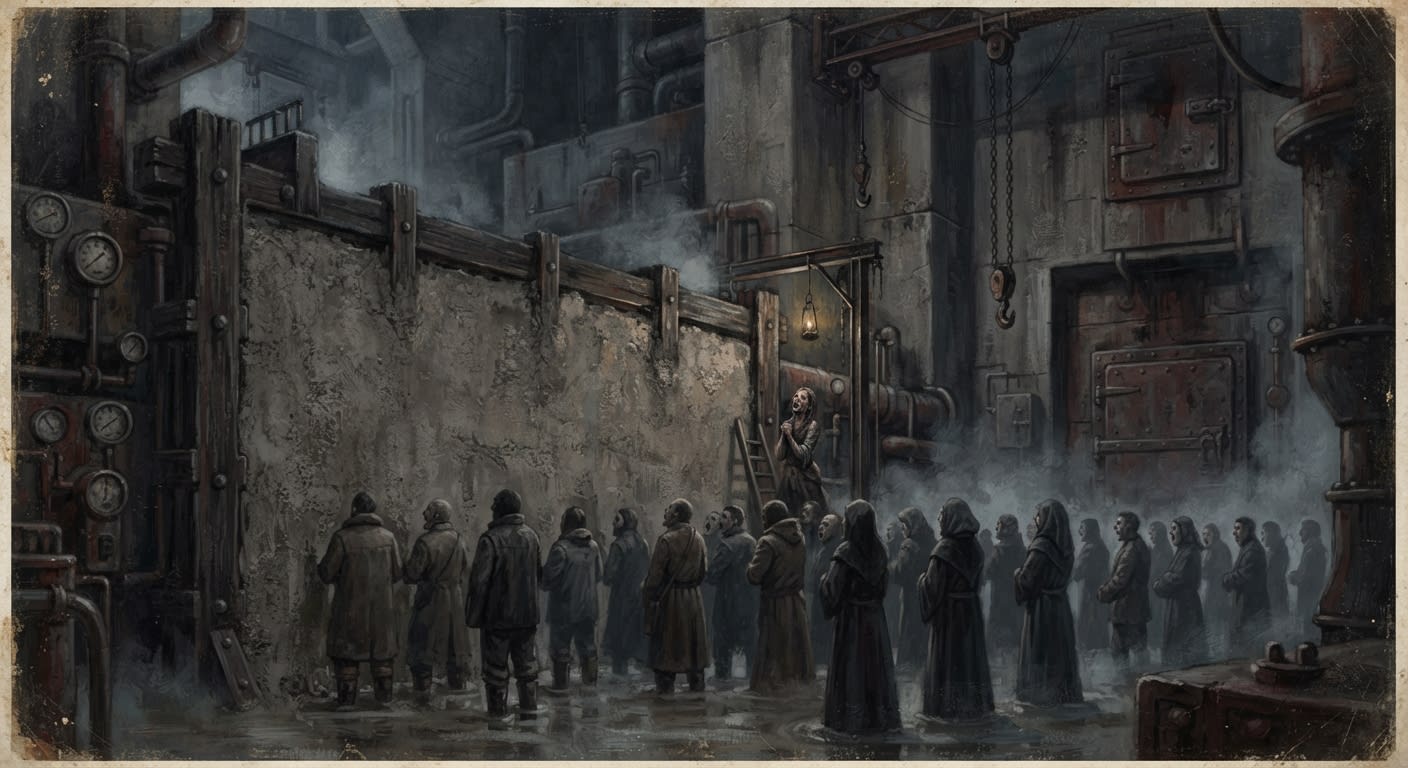
Antiphon of Endurance
Thirty-two verses, one last voice, and a wall that keeps time
The Antiphon of Endurance is the licensed siege hymn sung by the forty-seven as Chamber 7 was poured; thirty-two verses now answered yearly by a warm wall.
Codex Ref. XIII.1.96-170

Antiphon of Safe Passage
The road is holy; the queue remains under authority
A Breton road-song entered the Ledger through Saint-Malo blood, survived as licensed memory, and now frightens gate clerks by teaching crowds one rhythm.
Codex Ref. XIII.1.87-010
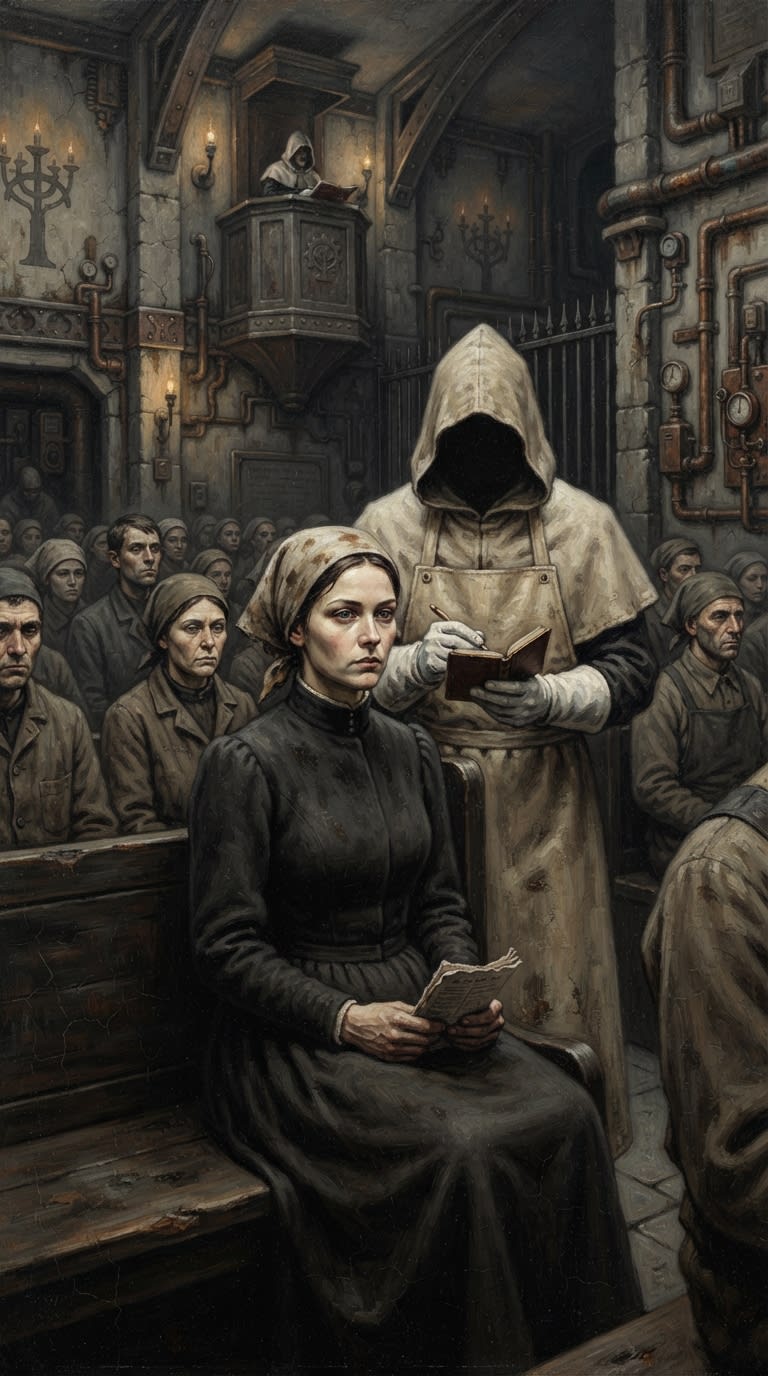
Appendix C
The face is a sloppy clerk; it files everything eventually
Restricted schedule to the Twelfth Amendment, Appendix C withholds the facial indicators by which Purity finds unlicensed thought sitting on the citizen's face.
Codex Ref. XIII.1.04-196

Approved Comforts
Fourteen lawful softenings, and the heresy of meaning them
The Approved Comforts are fourteen lawful phrases by which the Bureau calms grief without granting it rights, mercy, or a dangerous future tense.
Codex Ref. XIII.1.97-094
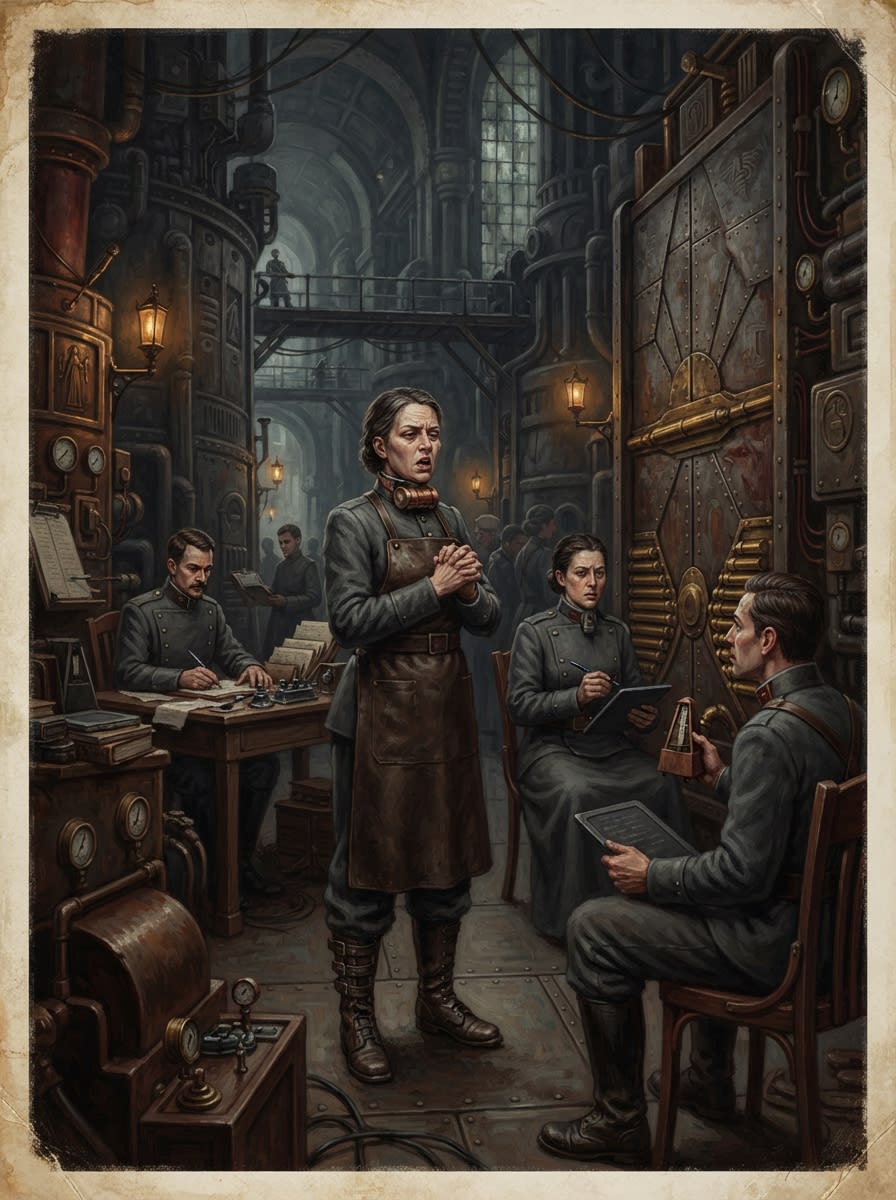
Approved Hymn Protocols Revision 14
The rulebook that made truth mandatory and expensive
Approved Hymn Protocols Revision 14 is Purity's A.S. 199 acoustic rulebook: witness the count, keep the iron dry, grade the room's answer, and do not harmonise.
Codex Ref. XIII.1.41-014

Archon
The chair survives the man and charges rent to history
An Archon is less a man than a legal altitude: Bureau sovereign, city master, seal threshold, and chair that lets the Synod replace the occupant while preserving the blame.
Codex Ref. XIII.1.07-090

Archon of Bells
The man who mistakes bronze for obedience and is usually correct
The Archon of Bells is the Bureau's supreme acoustic officer: custodian of licensed sound, enemy of Orison, and proprietor of every lawful peal that dares to call itself obedience.
Codex Ref. XIII.1.62-052

Archon of Records
The hand that opens almost everything, and records what it cannot touch
The Archon of Records opens nearly every lock in the Church's memory, commands the Great Ledger, and preserves one terrifying receipt: proof that some silences outrank even Records.
Codex Ref. XIII.1.07-078

Archon's Override
The phrase is withheld; the hierarchy it invokes is not.
The Archon's Override is not magic, mercy, or a passkey. It is spoken hierarchy: a Doctrine citation that teaches a lesser seal to fear the wax above it.
Codex Ref. XIII.1.07-090

Arthurian legitimacy
The old island claim Strasbourg can deny and still must salute
Arthurian legitimacy is Britain's old answer to Strasbourg: charter, altar, Table, coin and coastline, obeyed too long to be dismissed as mere legend.
Codex Ref. X.1.06-001

Arthurian Tradition
The myth that keeps the Channel open
The insular oath-machine Strasbourg cannot disprove and Britain does not need proved: Arthur as crown, charter, coin, bell, harbour chain, and naval discipline.
Codex Ref. X.1.01-002
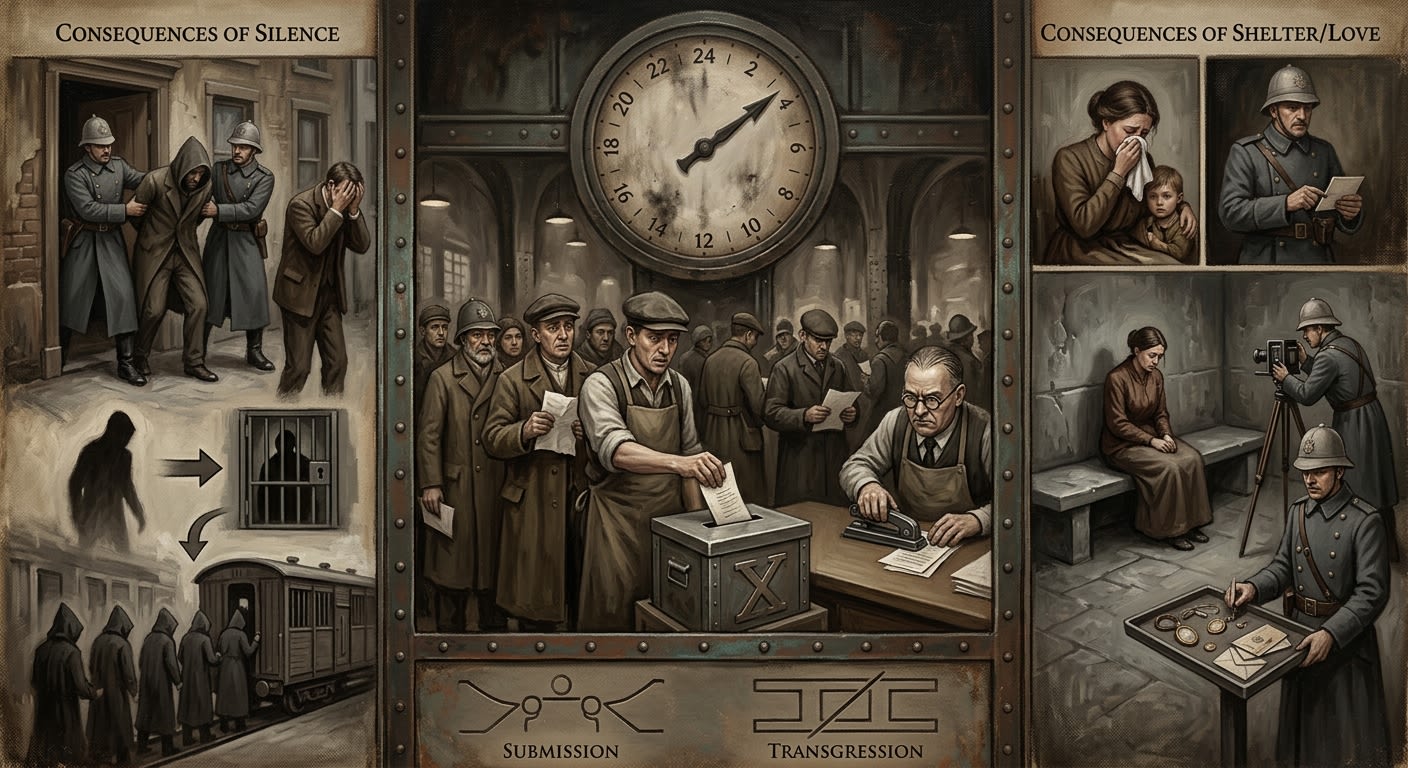
Article 19 of the Catechism of Obedience
The neighbour is promoted to witness and punished for delay
Article 19 makes suspected heresy reportable within twenty-four hours, converting silence into shelter, shelter into participation, and love into evidence.
Codex Ref. XIII.1.04-019

Article 4 of the Catechism of Obedience
Hope is a commodity; the soul must keep its receipt
Article 4 licenses hope, consolation, prophetic utterance and prayer beyond prescribed forms. Since A.S. 196, private devotion also belongs in the ledger. The soul may hope; it must keep its receipt.
Codex Ref. XIII.1.04-004
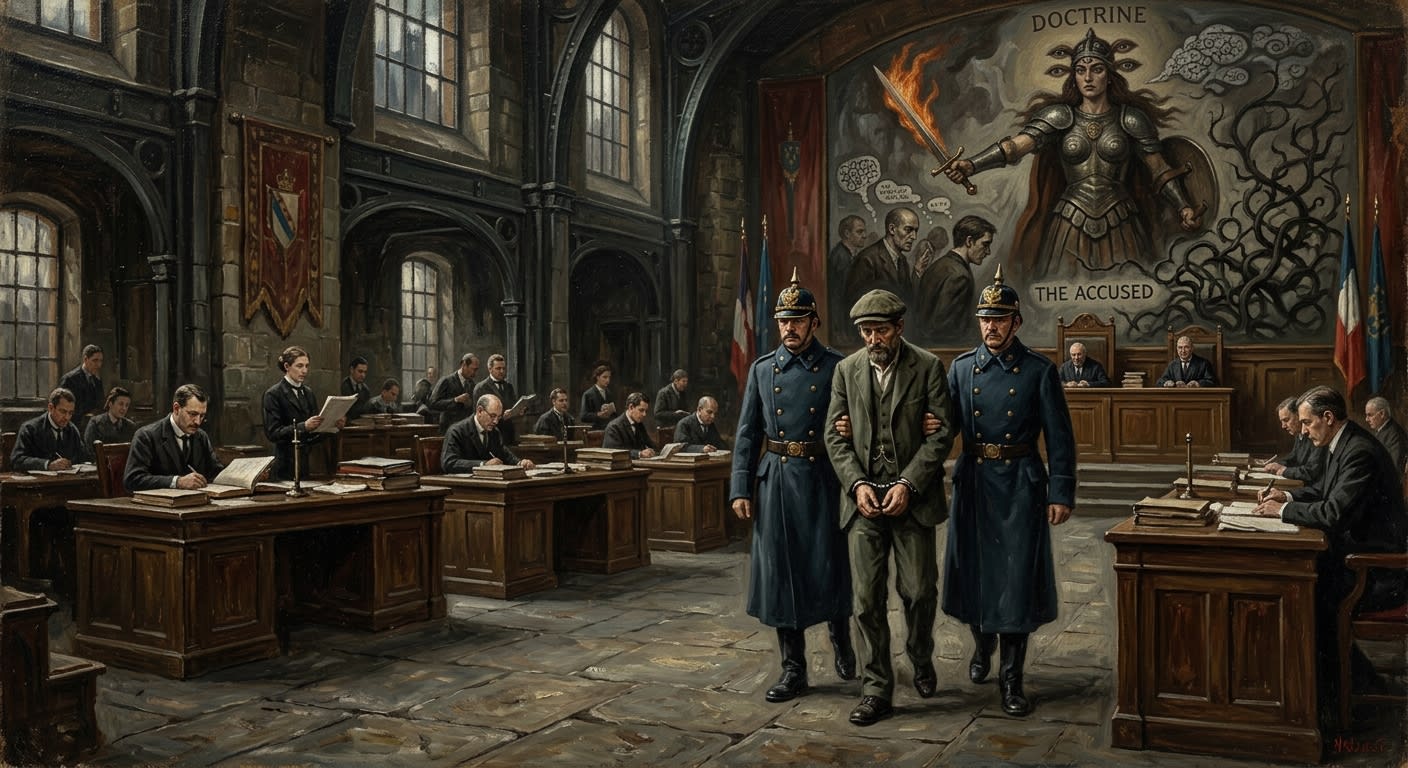
Article 9 of the Catechism of Obedience
The offence remains open so the soul cannot close
Article 9 refuses to define heresy, then makes Doctrine's later declaration retroactive to the first formation of the accused thought. Mercy hates the efficiency.
Codex Ref. XIII.1.04-009

Articles of Covenant
The approved page that survived by being underestimated
The Articles of Covenant were safe enough to leave open on a desk, until one pencil beside the Third Article taught Silence that obedience could be graded.
Codex Ref. XIII.1.56-001
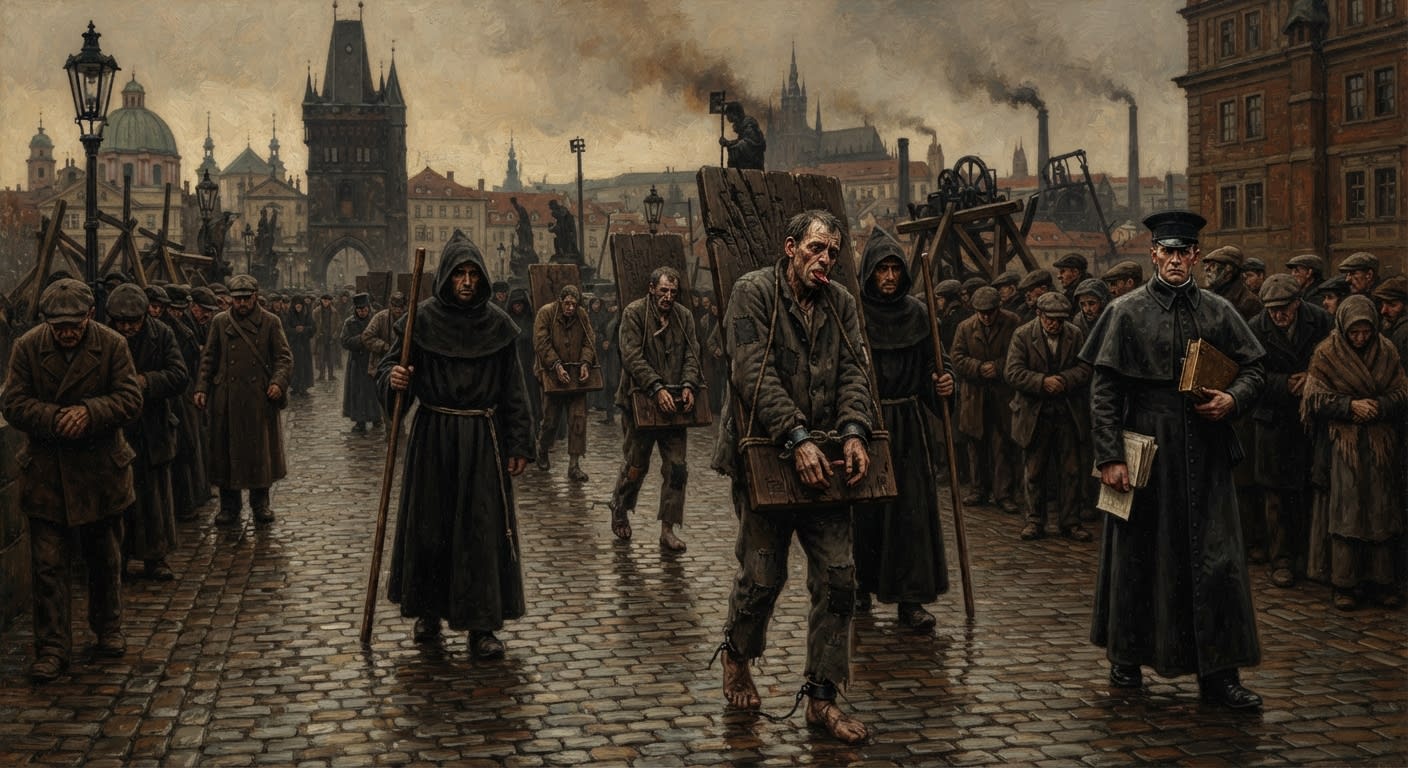
Articles of the Creed
The Creed is spoken by all, counted by few, and written in public only when nailed to oak.
The sealed divisions of the Eternal Creed: public in recitation, private in enumeration, and visible as text only under Bureau custody or Purity's oak.
Codex Ref. XIII.1.90-201
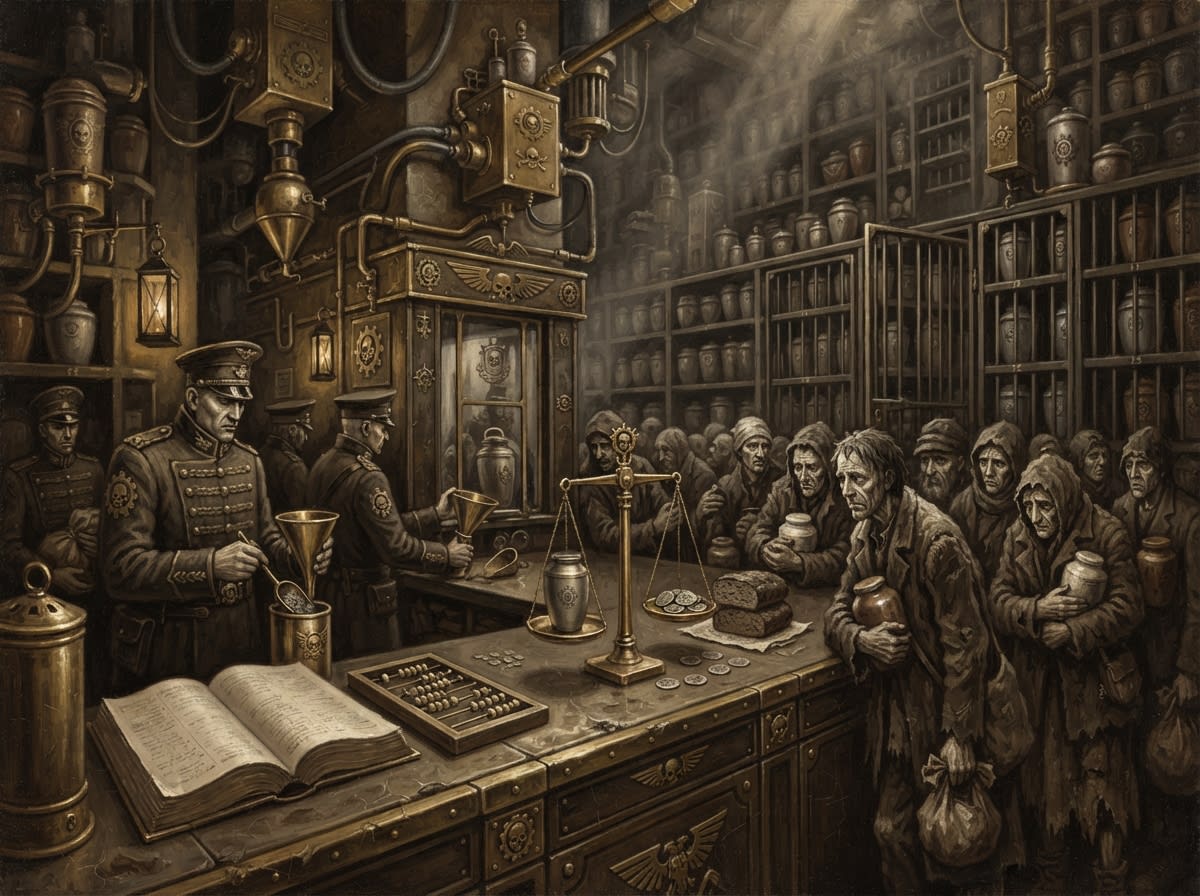
Ash Banks
Where grief is weighed, tendered, and filed as solvent
Ash Banks convert cremains, bone-dust, and pledged future remains into bread, salt, absolution tokens, and dust futures while every Bureau calls the ash something useful.
Codex Ref. XIII.1.98-201
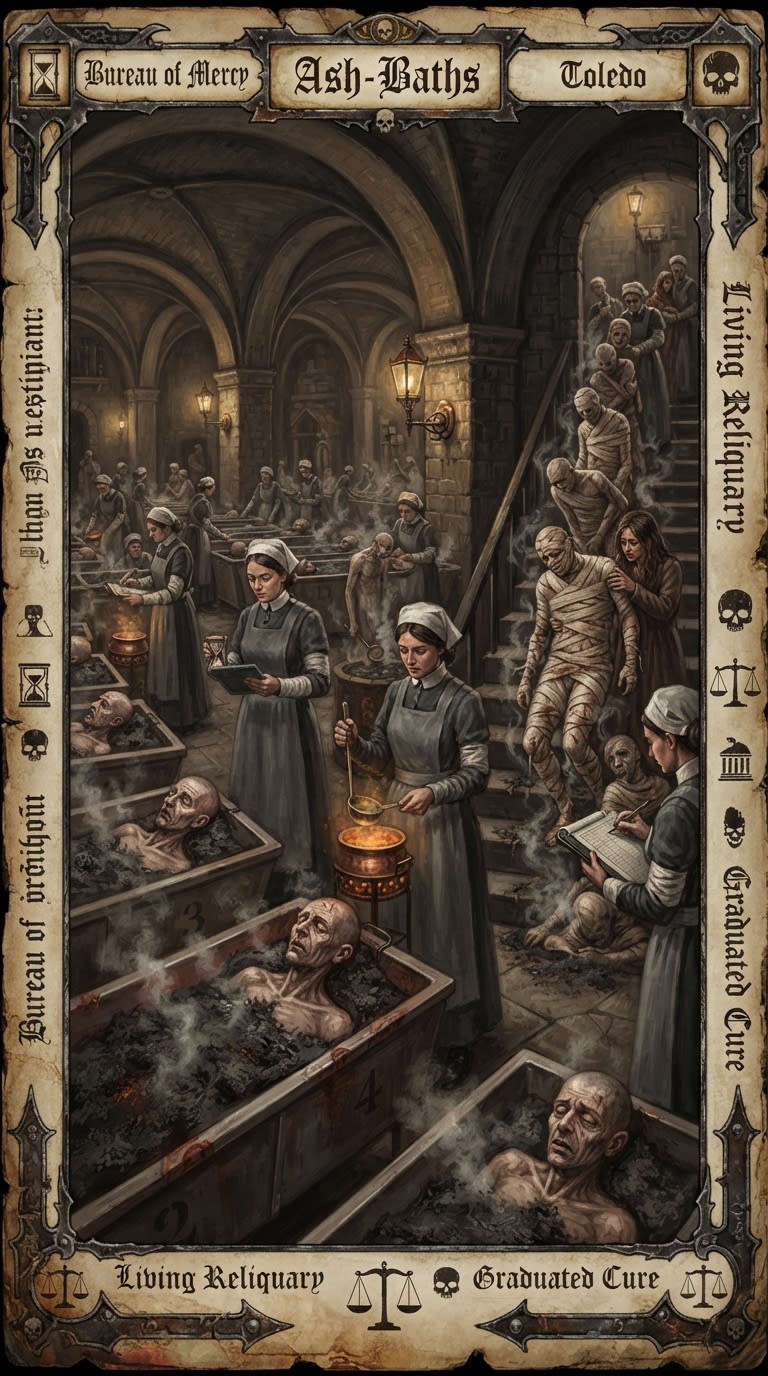
Ash-Baths
Where treatment warms its ash and bills the family
Toledo's Mercy-run ash treatment, where fever is lowered into hot ash, survivors become living reliquaries, and the dead are filed as graduated cures.
Codex Ref. XIII.1.56-002
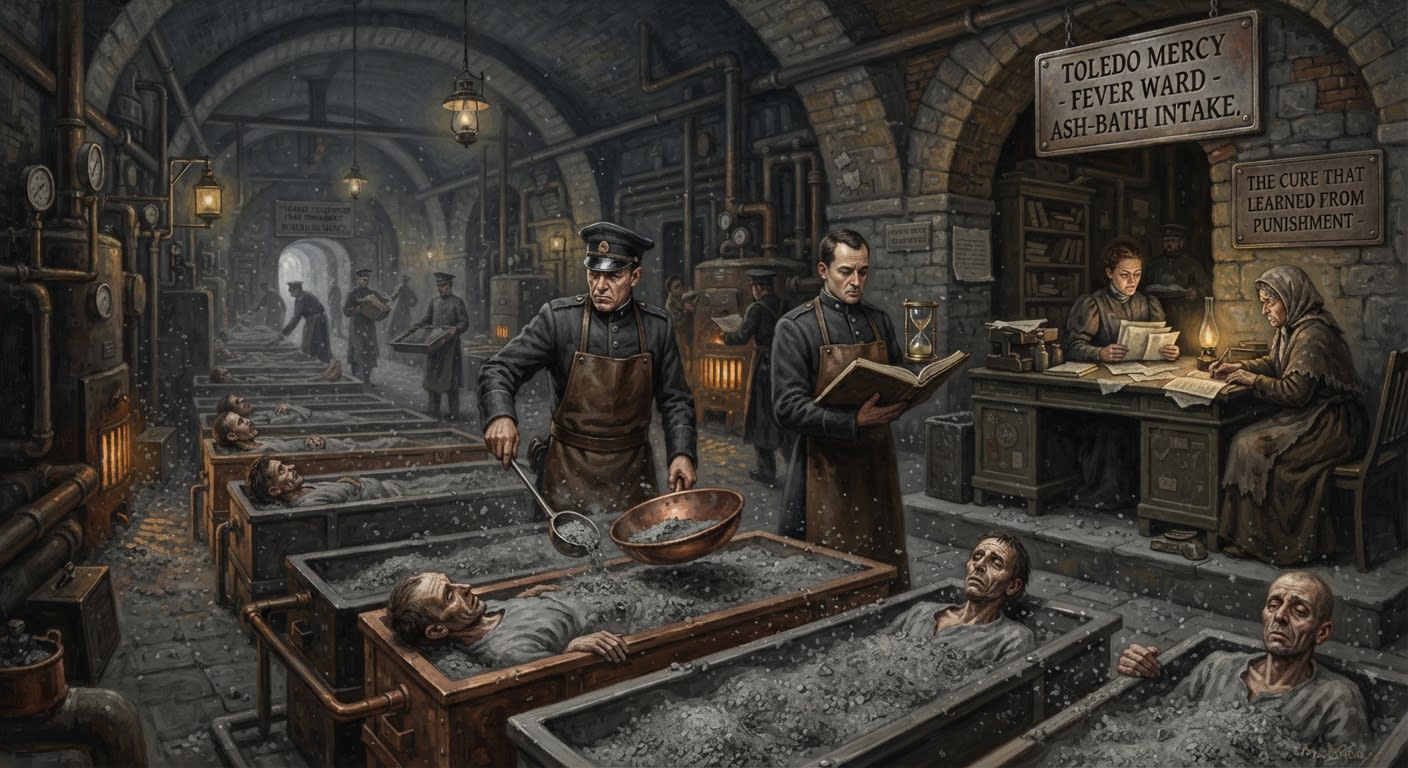
Ash-Baths of Toledo
Where Mercy learned to bill the fever
Toledo's Mercy-run ash cure, where fever patients are buried in hot grey doctrine, survivors are paraded as living reliquaries, and deaths are billed as graduated cures.
Codex Ref. XIII.1.56-002
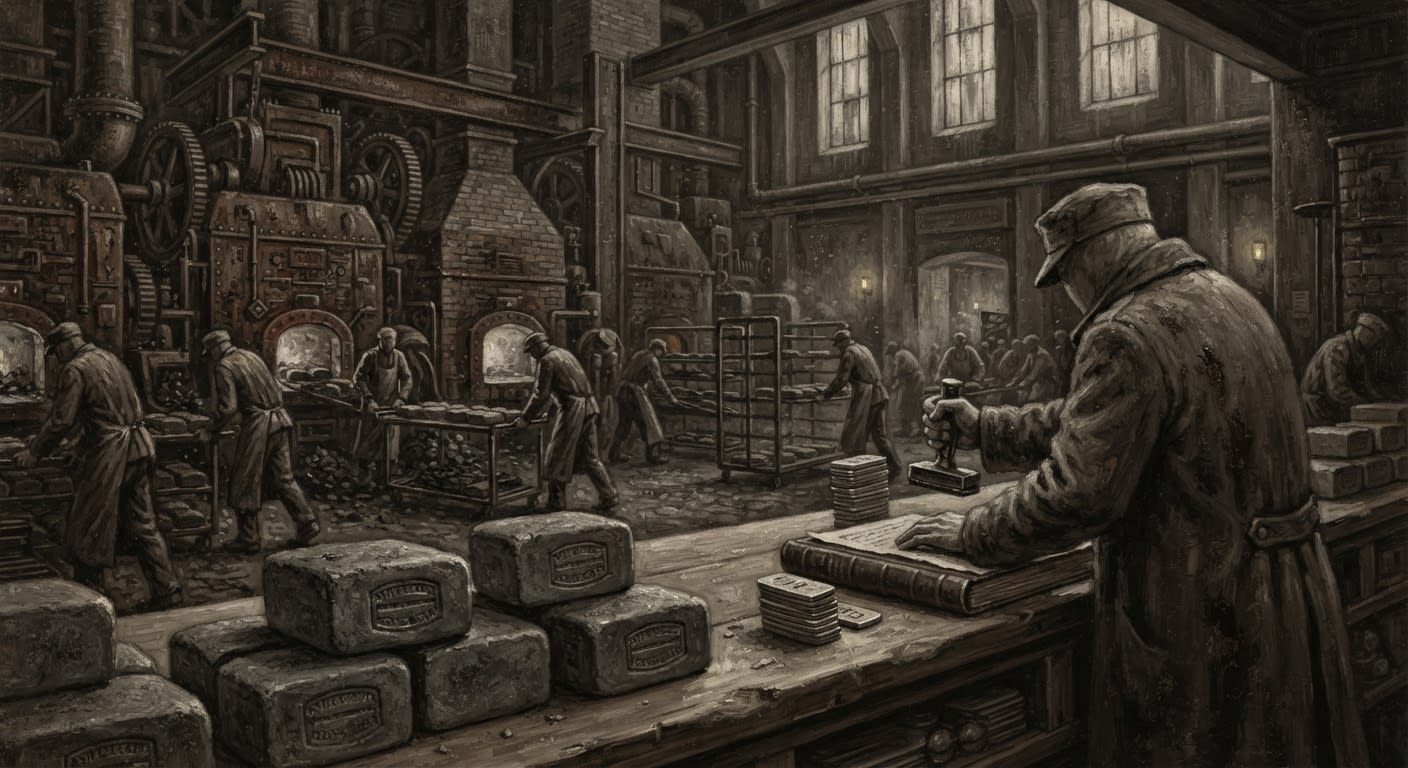
Ash-bread
The loaf does not spoil. That is how it learned to collect names.
San Vesta's grey ration-loaf does not rot, does not forgive, and does not let a name detach from its stamp; the Bureau of War calls this nutrition.
Codex Ref. VI.4.21-134
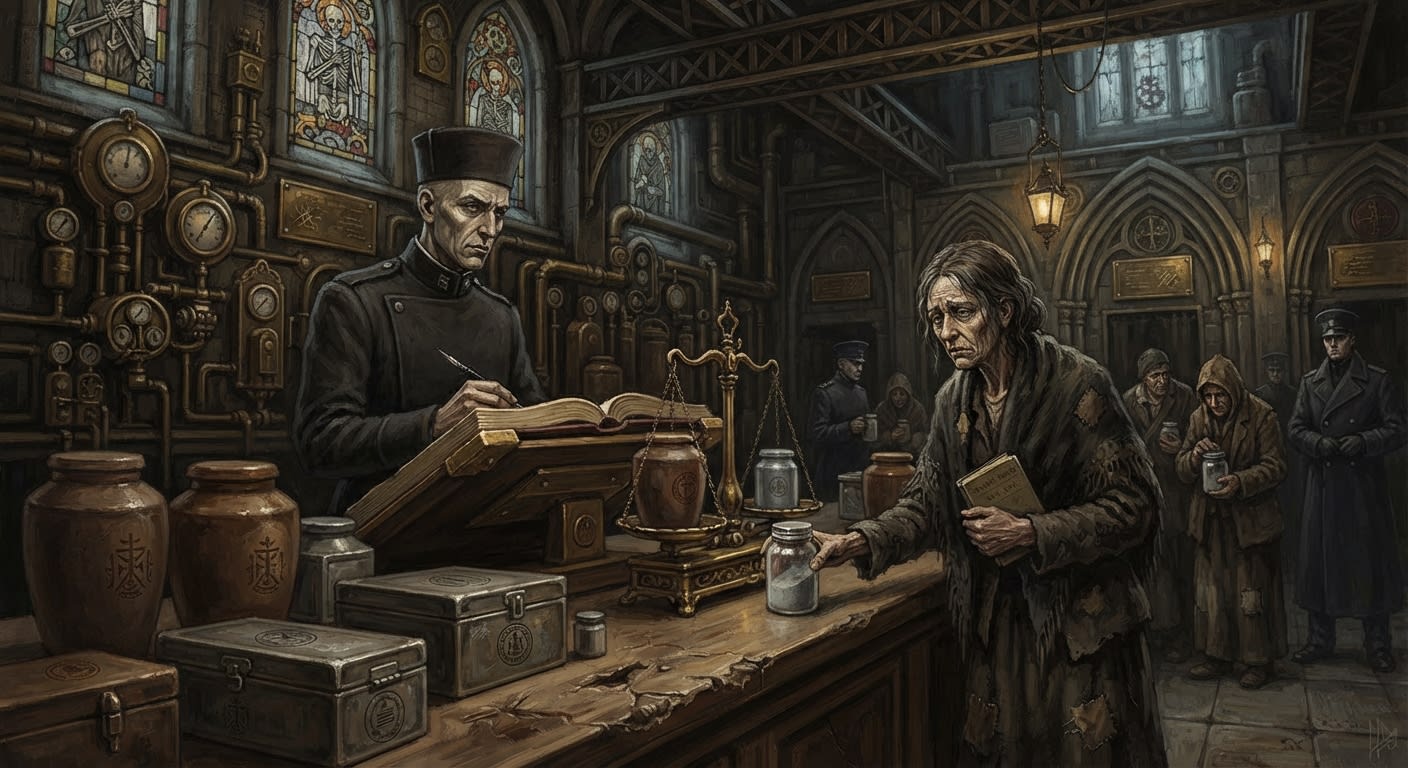
Ash-Credit
The dead are tender once Tithes finds a scale
Ash-credit is the Synod's devotional collateral, converting cremains, saint-dust, and pledged future remains into bread, grace rations, and obligations the dead cannot refuse.
Codex Ref. VI.3.01-002
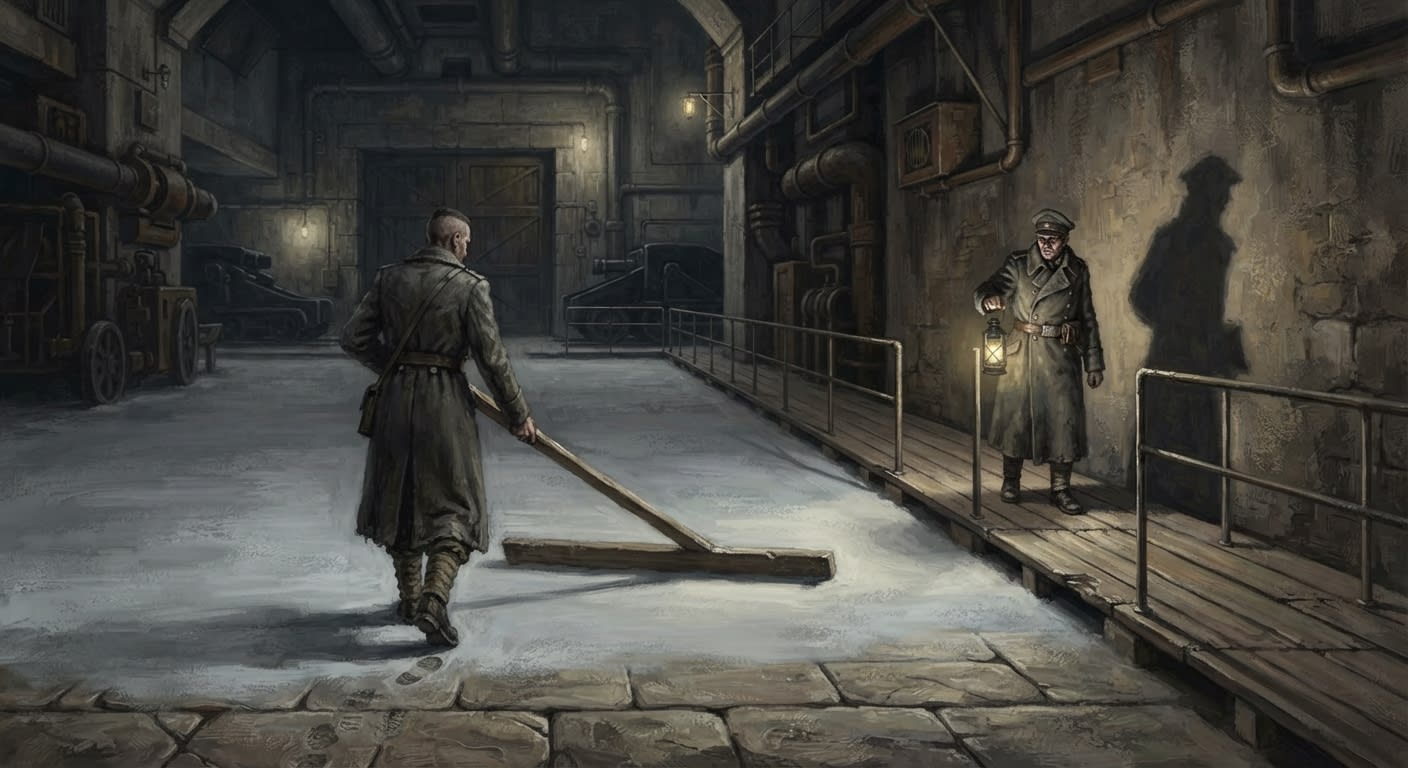
Ash-Dusting
Ask the floor; the floor has no reason to lie
Ash-dusting is the Synod's cheapest answer to Veil-Stalkers: blessed ash, a smoothing board, and the admission that the floor may be more reliable than a frightened sentry.
Codex Ref. XIII.1.88-190

Ash-Hands
The lowest white hands touch the saint first and receive the blame first
Lowest Saint-Bone Melter station: intake hands, feed attendants, sifters, and slake-rope bodies whose cracked palms become the first document in any failed batch.
Codex Ref. XII.20.10-001
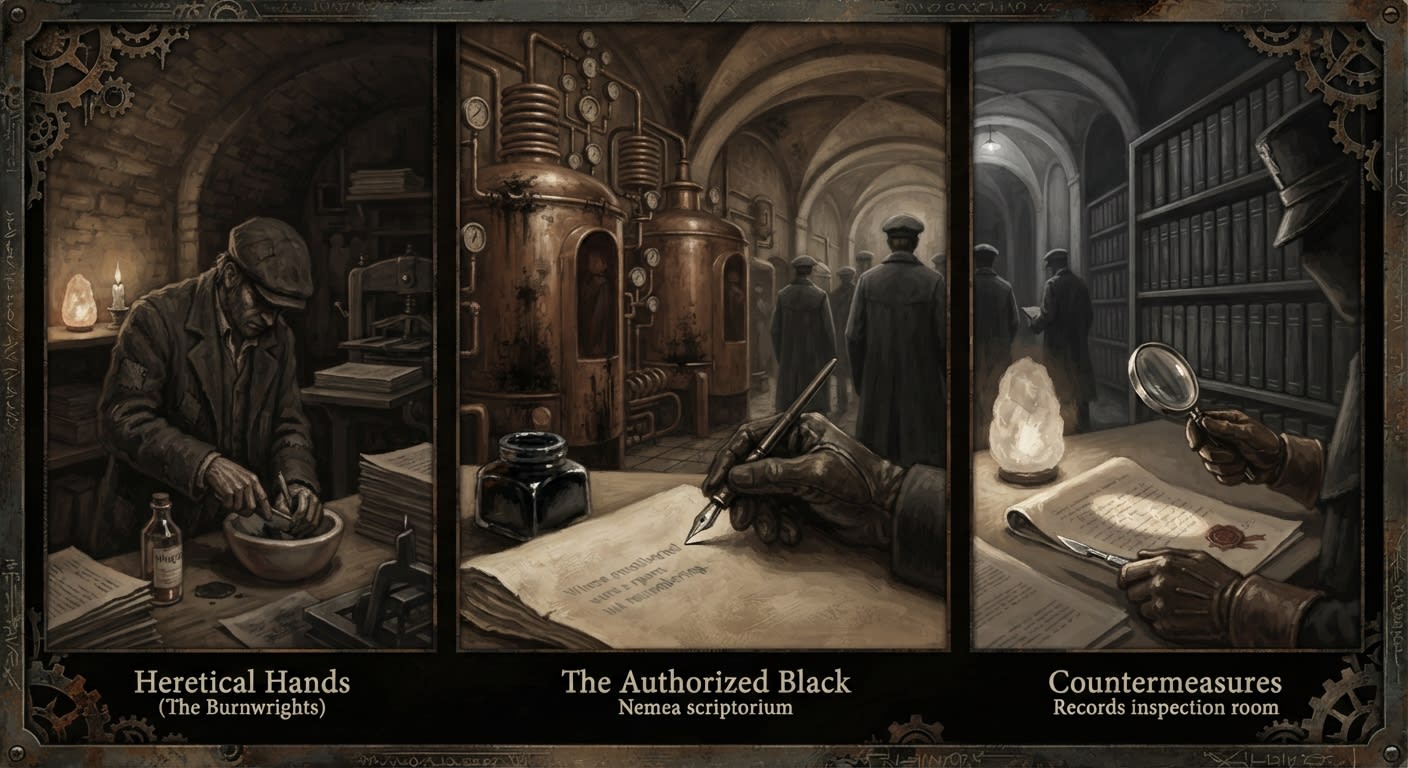
Ash-Ink
The authorized black, and the forgeries it taught to breathe
The lawful black of Nemea and its hanged imitations: ink made from burned authority, relic residue, and the Bureau of Records' dearest mistake.
Codex Ref. XIII.1.96-096
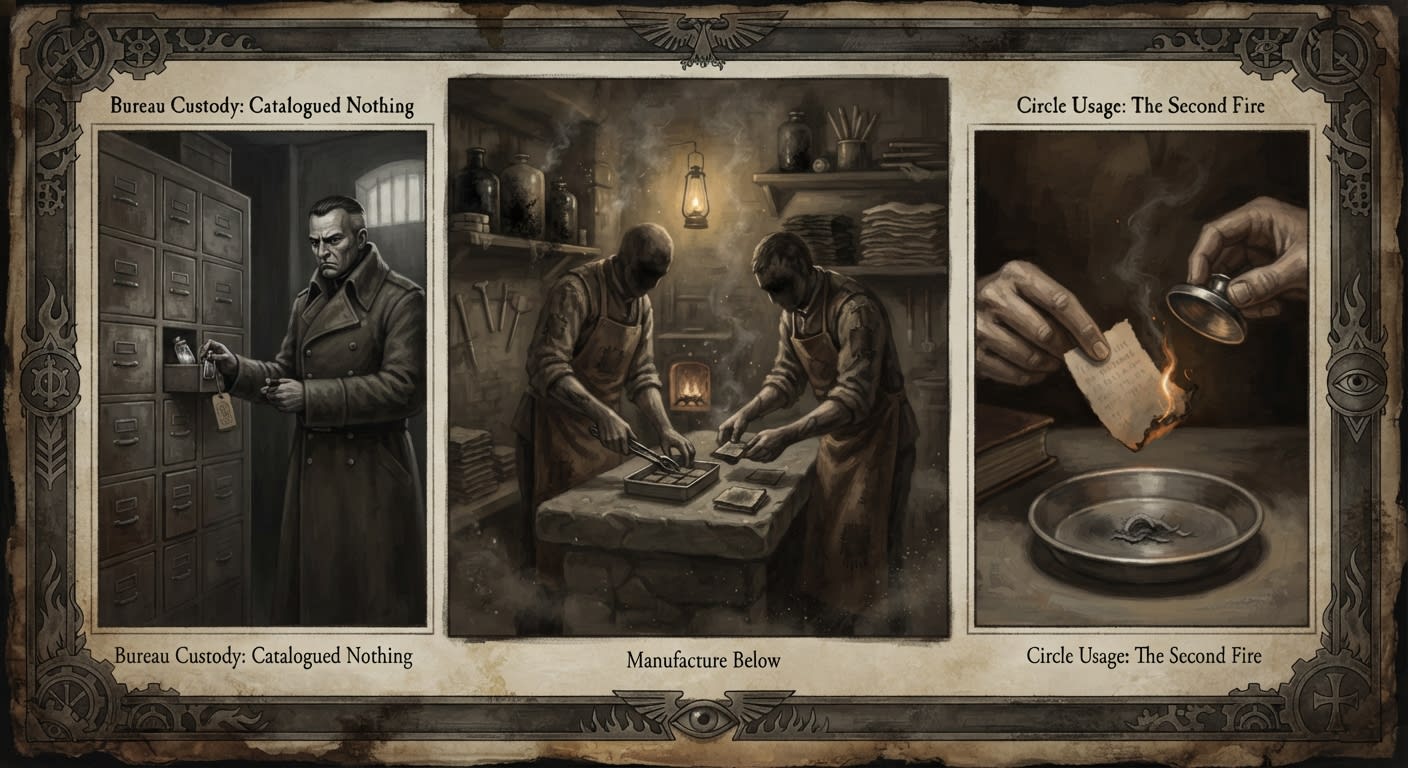
Ash-paper
A sheet built to outlast nothing, and therefore everything useful
Ash-paper is the Circle's pre-blackened answer to the Purge: charcloth pages made to carry one forbidden fact, burn twice, and leave the Bureau with only catalogued nothing.
Codex Ref. XIII.1.56-001

Ash-Substrate school
The unnamed doctrine that made the ink look back
The Ash-Substrate school argues that Hungry Ink is not contaminated ink but ash-bound intention, which is why the Bureau commissions its memoranda and buries their names.
Codex Ref. XIII.1.18-002

Ash-Test
A line of dirt across the Church's money
The ash-test is the Synod's first suspicion laid across a Crown of Grace: cheap, quick, useful, and far too often mistaken for certainty.
Codex Ref. XIII.1.23-092
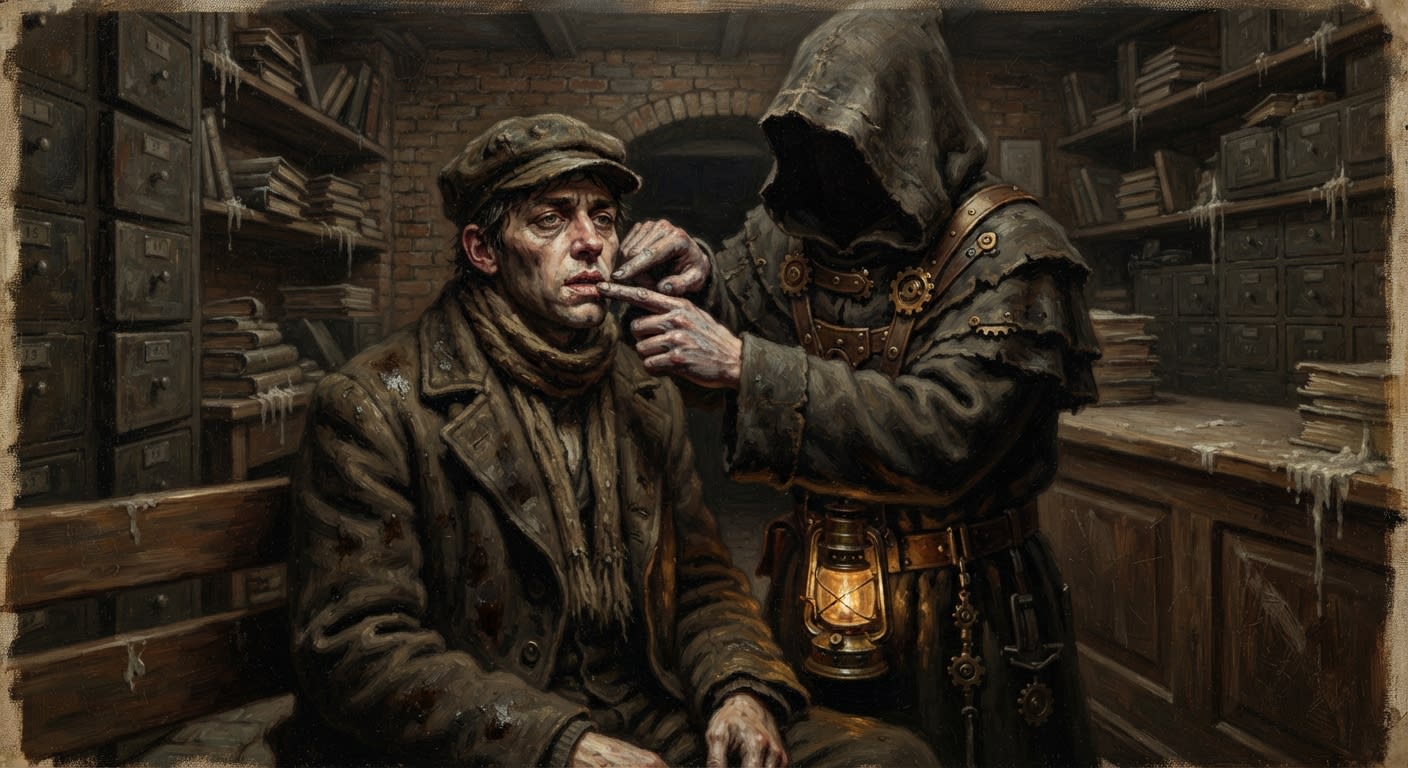
Ash-Tongue
A chapped mouth is cheaper than a missing witness
Ash-Tongue is the Circle of Ashen Steps' smallest correction: consecrated ash on the lips, preserving witnesses while delaying inconvenient speech.
Codex Ref. XIII.1.76-094
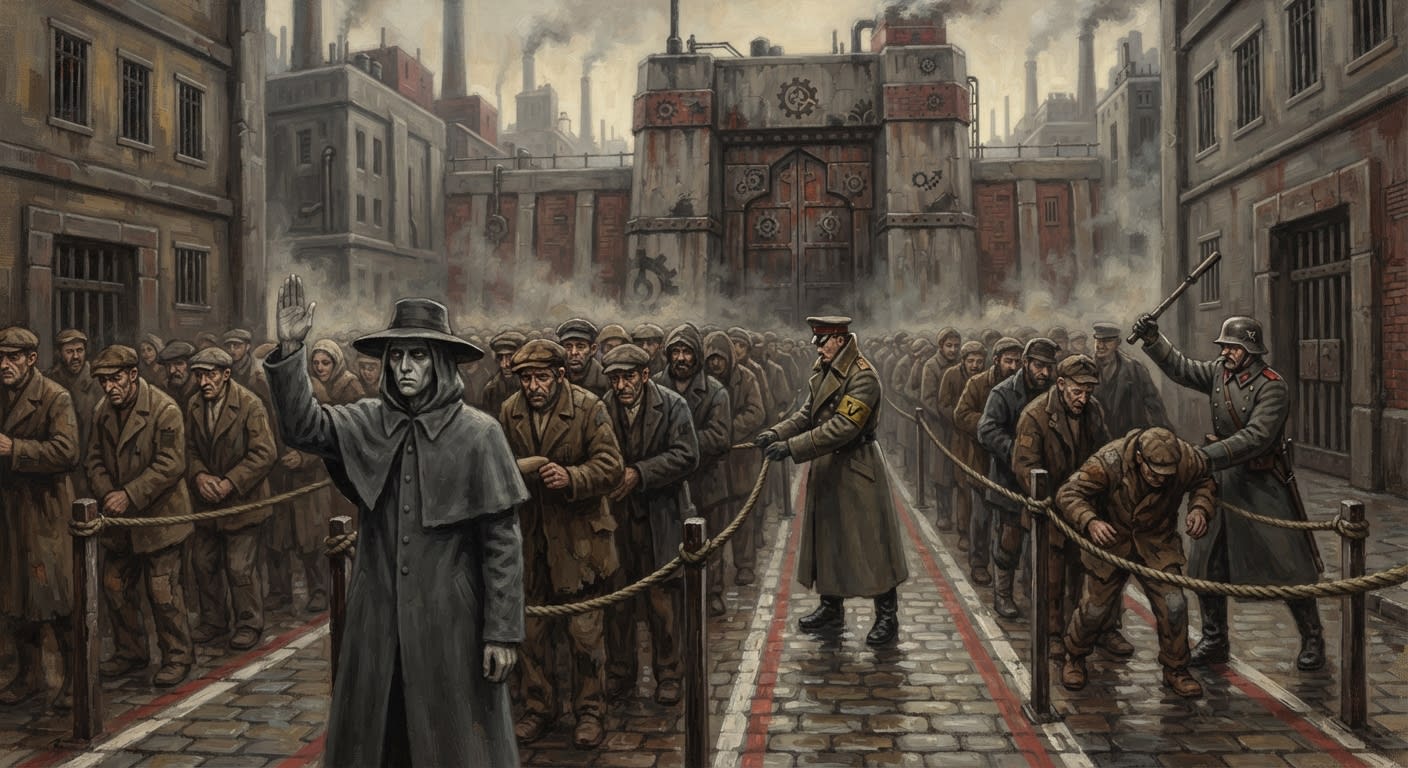
Ashbread Clause
The sentence that taught hunger to march
The A.S. 113 clause of the Concordat of Civic Cadence that made every bread queue subject to sound, rope, baton, and Bureau grammar.
Codex Ref. XIII.1.10-113
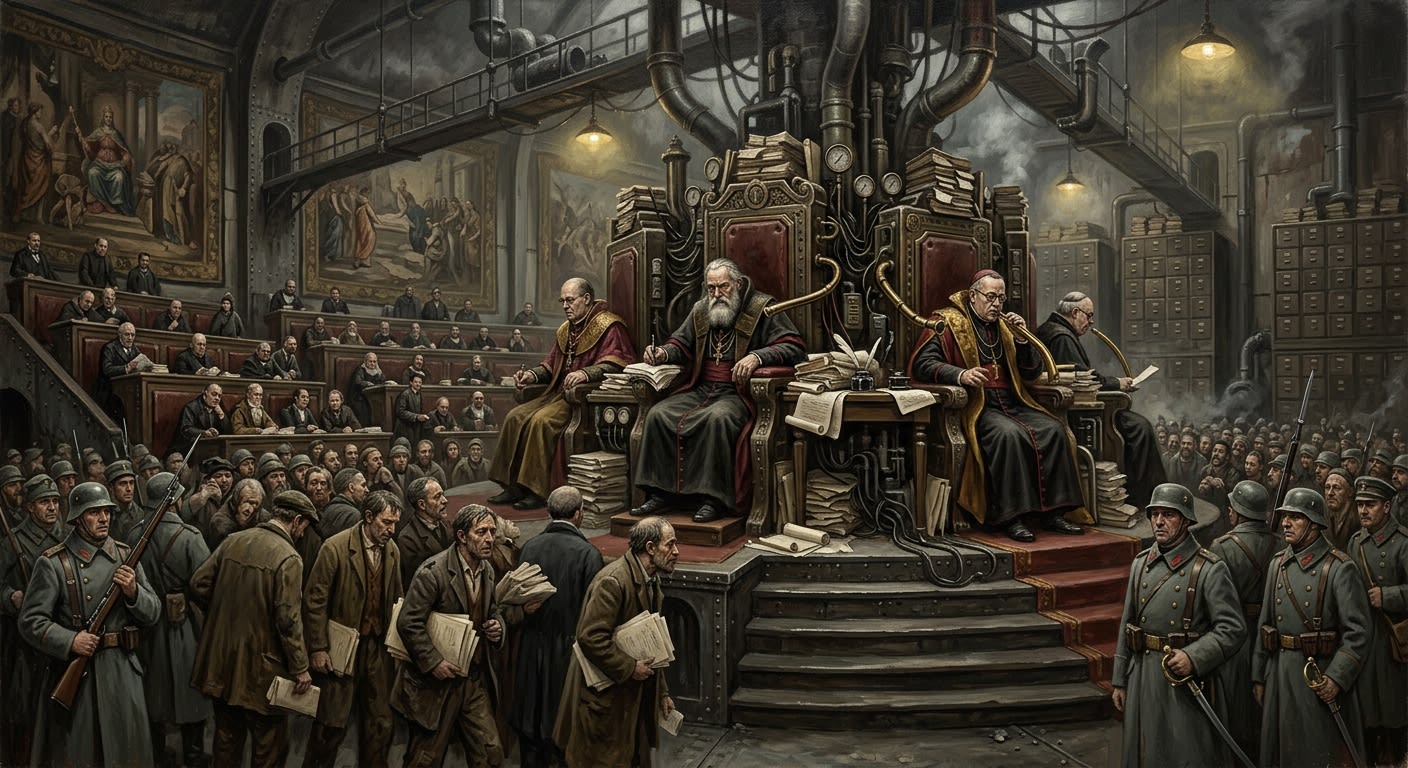
Assembly of Thrones
A chamber where pride is seated before it becomes militia
The Assembly of Thrones lets Bishops-Praetorial thunder safely: grievance seated, fury docketed, pride taxed, and every rebellion delayed by procedure.
Codex Ref. XIII.1.07-093

Assessment Engines
The machine does not ask what you cost. It tells you what may be bought.
Velmora's Assessment Engines price objects, persons, loyalties and betrayals with intolerable accuracy; the Synod captured them, ordered them destroyed, and then kept their accounts.
Codex Ref. XIII.1.27-201

Audit Liaisons
The Bureau's accountant of accountants; or, who weighs the hand that weighed the salt
Audit Liaisons are the Bureau of Tithes' auditors of its own predation: officers who count receipt blanks, scrape brine-stones, and keep an Assessor's private theft below the Bureau's public appetite.
Codex Ref. XII.46.01-002
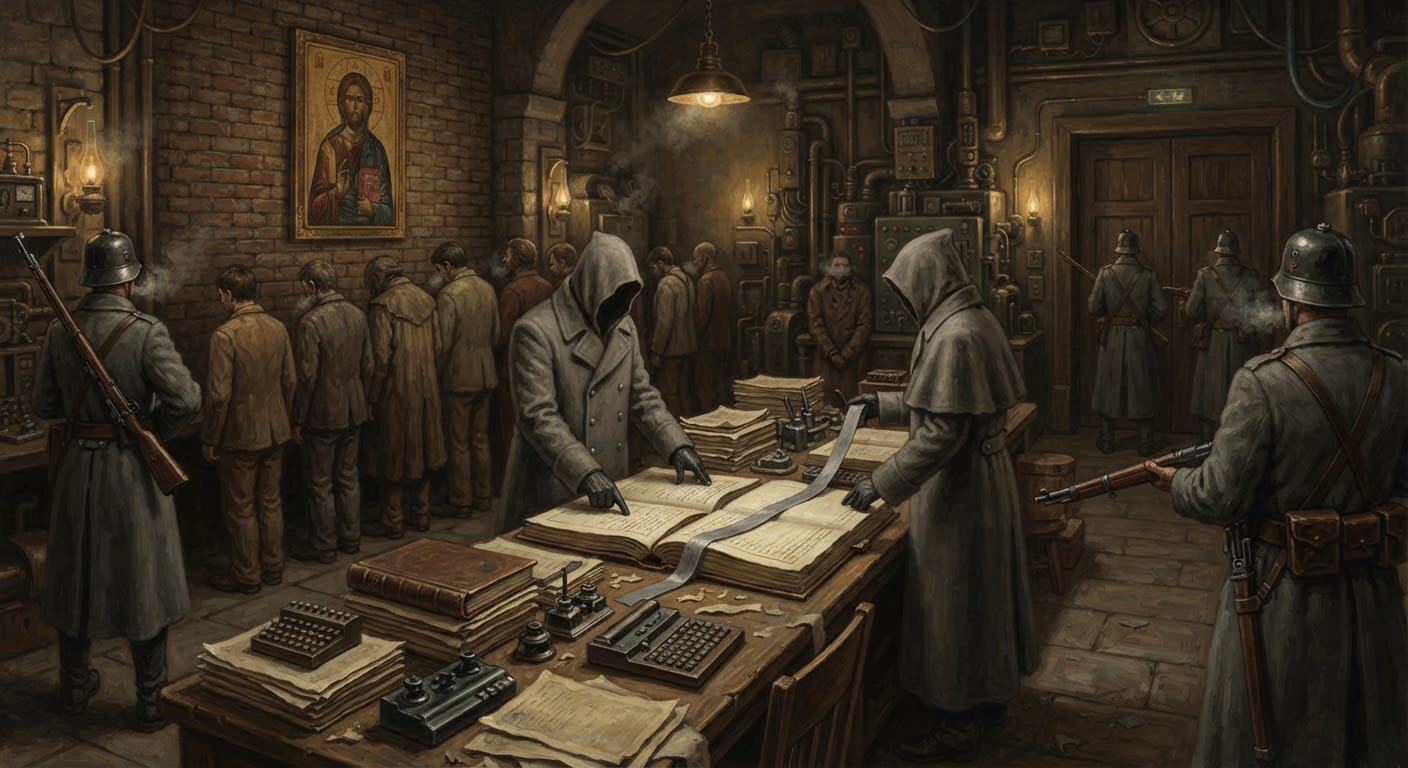
Audit Silence
The hush by which Records makes a room confess
Audit Silence is the Bureau of Records doctrine that stills speech, opens locked repositories, encloses witnesses, and lets an Indiction writ make law out of hush.
Codex Ref. XIII.1.06-090
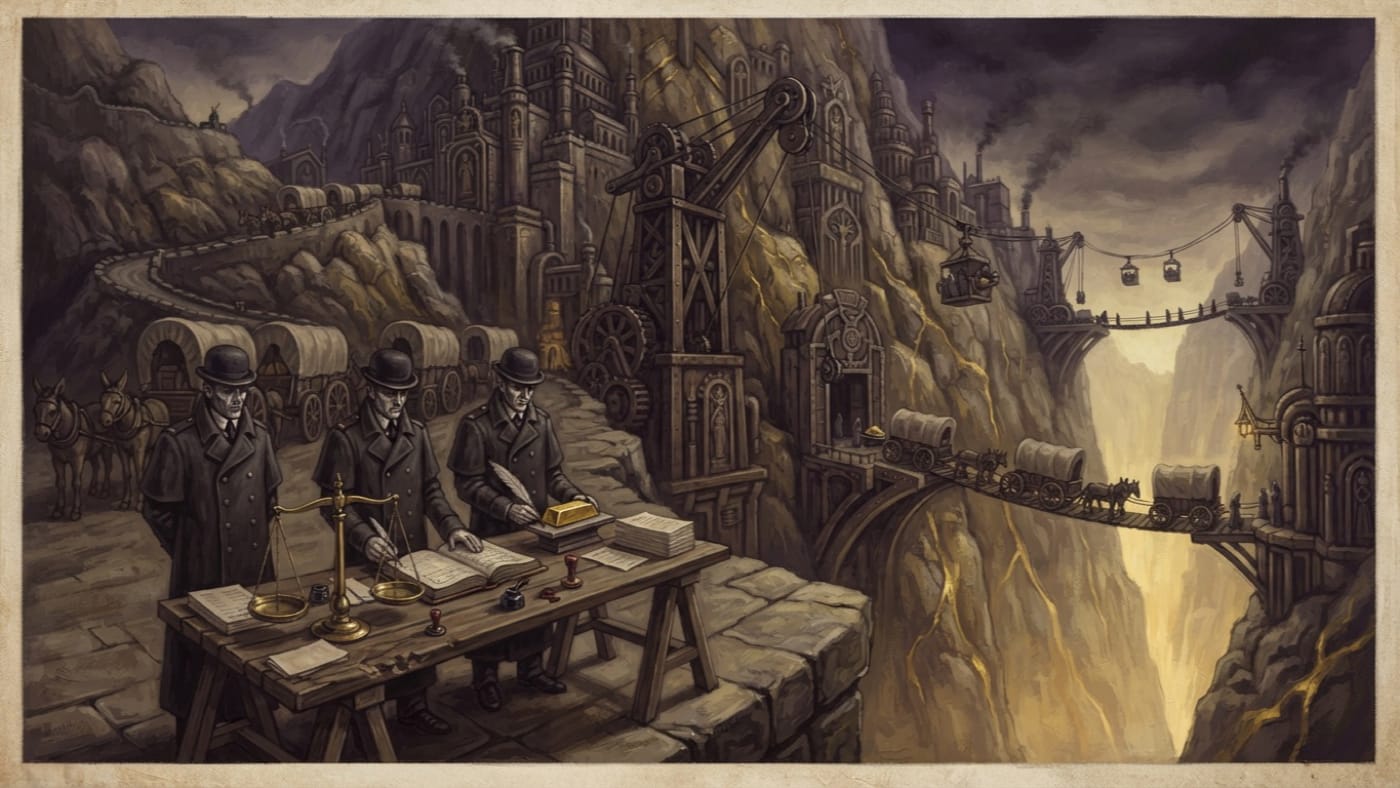
Audit Writ 88-G
The levy was collected. The cost was not weighed.
Audit Writ 88-G carried Tithes to the Gilded Chasm's upper rim in A.S. 114. Three platforms paid at once. The Bureau called it revenue; the returned auditors supplied the objection.
Codex Ref. XIII.1.02-114
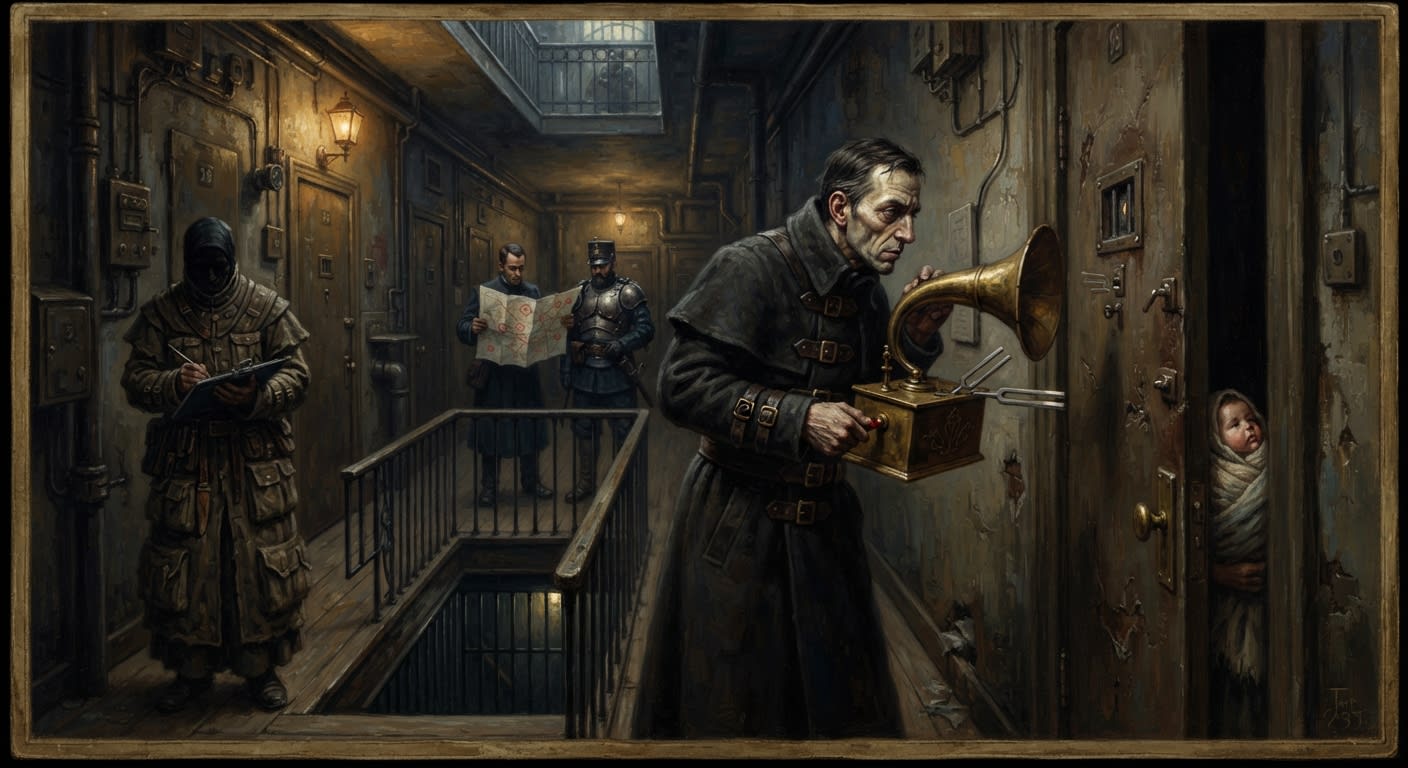
Auditory Heresy
Where recognition is possession and silence has a docket
The Synod's charge for unlicensed sound, where recognition becomes possession, comfort becomes contamination, and a child's sleep can convict a household.
Codex Ref. XIII.1.86-094
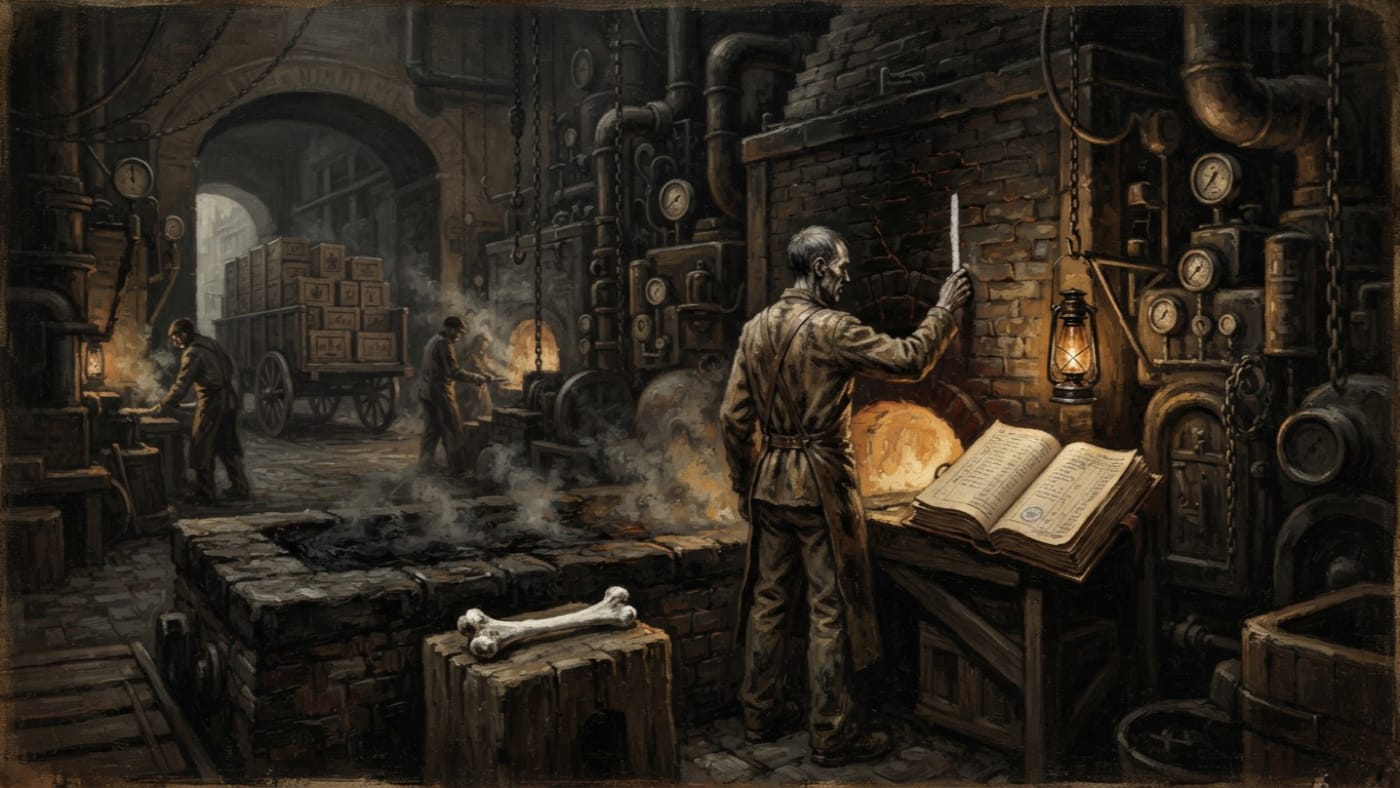
Aurel Eve
A white line, an honest bone, and guilt ready for the winter convoy
Aurel Eve gives Saint-Bone Melters one white line, one clean bone, and a ledger before the first winter convoy. Doctrine tolerates the devotion; the dead must still be numbered.
Codex Ref. XIII.1.89-201

Aurelite Use
Four lines for mercy, no additional licence for the kiln
One attributed kiln prayer and a tolerated yard observance: Aurelite Use lets Saint-Bone Melters ask Saint Aurel for mercy while granting no additional licence to burn.
Codex Ref. XIII.1.91-146

Authenticators' Manual
Seven stages. Two witnesses. Responsibility belongs to the hand.
The Bureau of Relics' working rulebook in A.S. 201: seven stages, two witnesses and seals that outrank arithmetic. Permission belongs to the Bureau; responsibility belongs to the Examiner.
Codex Ref. XIII.1.81-002

Authenticity Writ
Receipt is not recognition.
The Authenticity Writ brings a claimed relic before the Bureau: custody chain, description, doctrine and proof of payment. The applicant has paid to ask a question; the verdict comes later.
Codex Ref. XIII.1.35-201

Avarice Engine
A walking treasury with foreclosure for feet
The Avarice Engine is Velmora's walking treasury: a gold-and-silver war-golem that crushes ownership, appraises courage, and leaves pay-chests empty.
Codex Ref. XIII.1.27-190
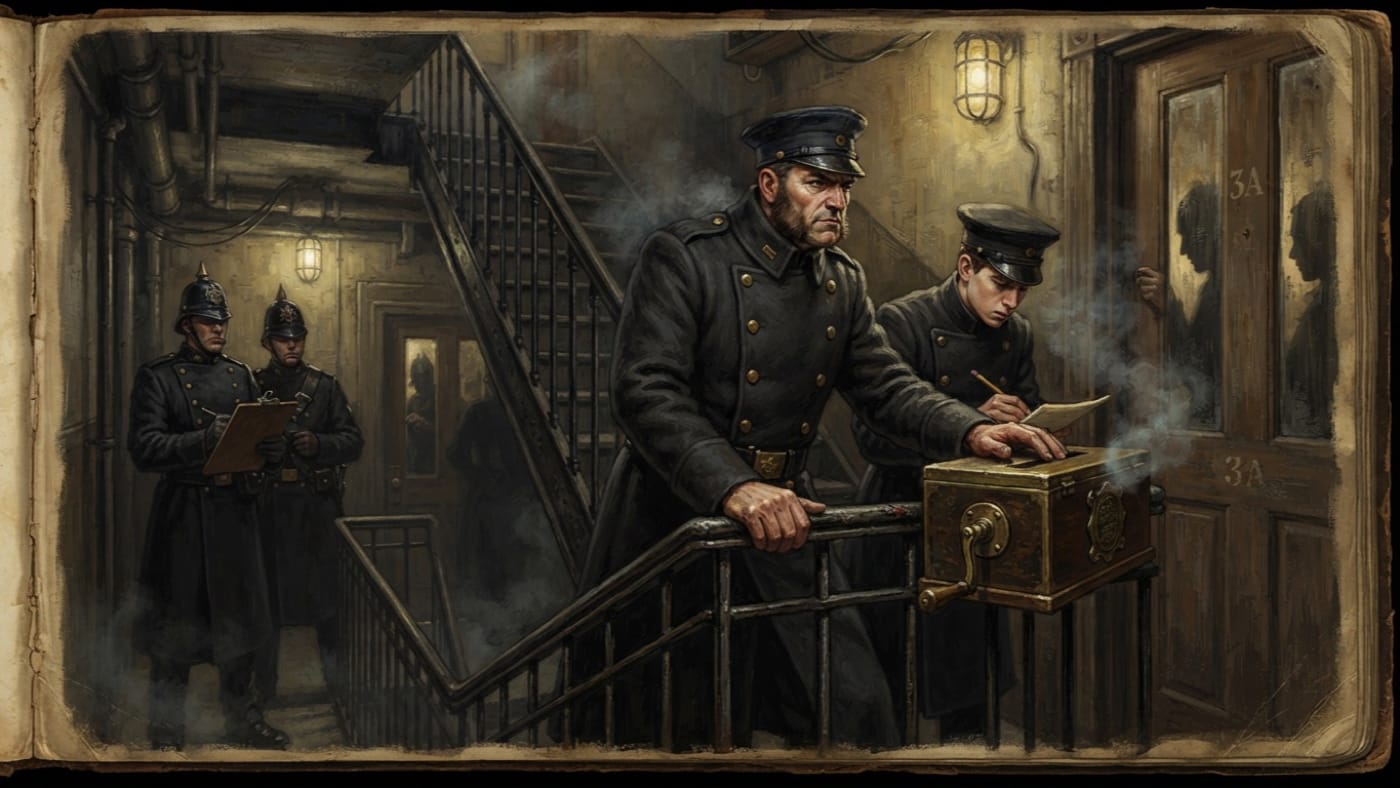
Bait-Cadence
The box plants a tune; the clerk harvests guilt
Orison's provocation method: a broken fragment of forbidden melody exposes recognition, turning a flinch, a corrected rhythm, or a sleeping infant into evidence of Melody Intent.
Codex Ref. XIII.1.87-201

Baptism of Mud
The household loses a son; War receives a name
The Baptism of Mud receives levy recruits into War's custody: a flooded trench, the Litany of First Earth, and three days of mud that make the household's loss official.
Codex Ref. XIII.1.54-002

Batch Scribe
The hand that remembers every saint the kiln forgets
The Saint-Bone Melter's middle-rank clerk, tracing each fragment from crate to barrel to wall seam. The book records what was burned; when the mortar fails, it also records whose hand the tribunal can blame.
Codex Ref. XII.40.03-001
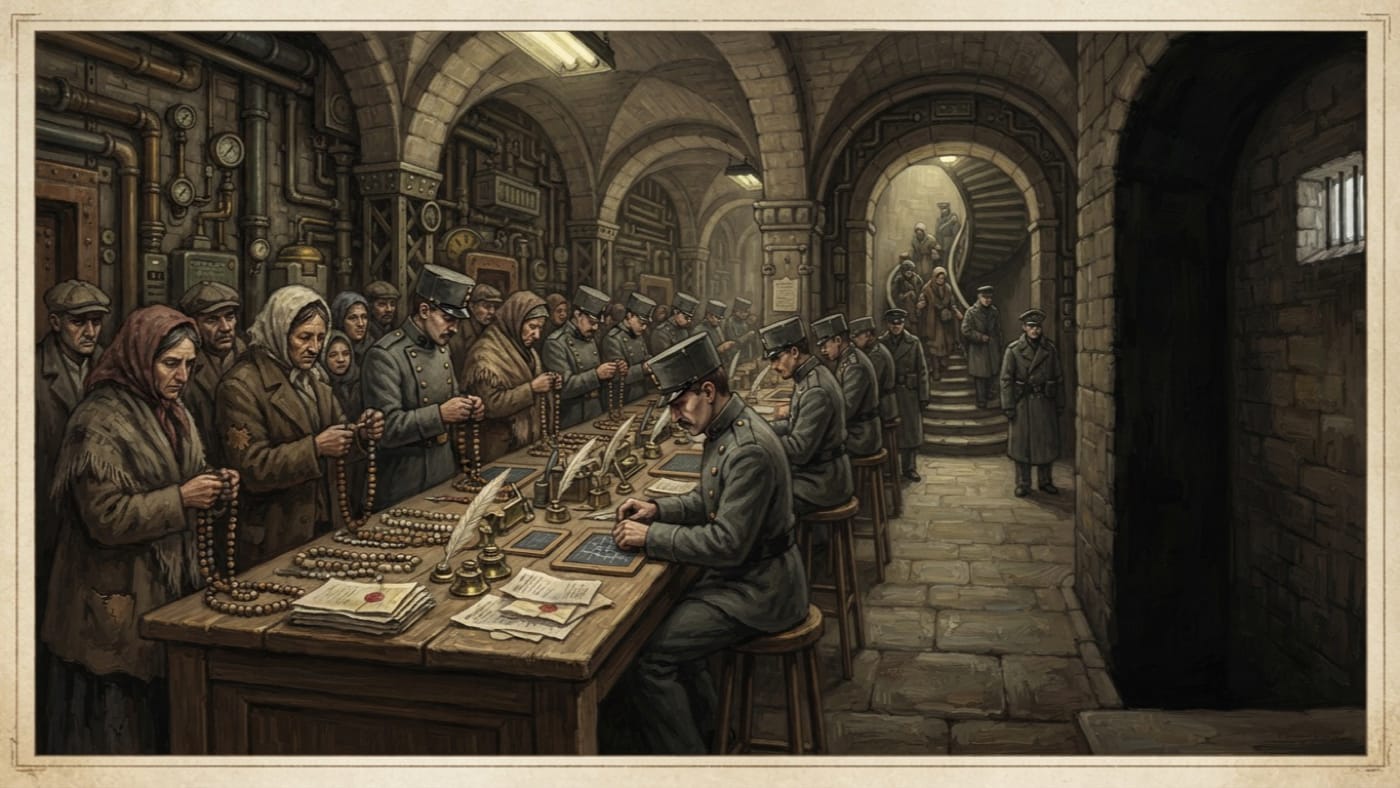
Bead Courts of Peregrine Row
Where the working is erased and the verdict kept
Twelve tables in Peregrine Row reconcile pilgrims' beads against confession receipts and passage credit. The working is wiped away; the verdict survives. A discrepancy costs passage, money, or liberty.
Codex Ref. XIII.1.23-002
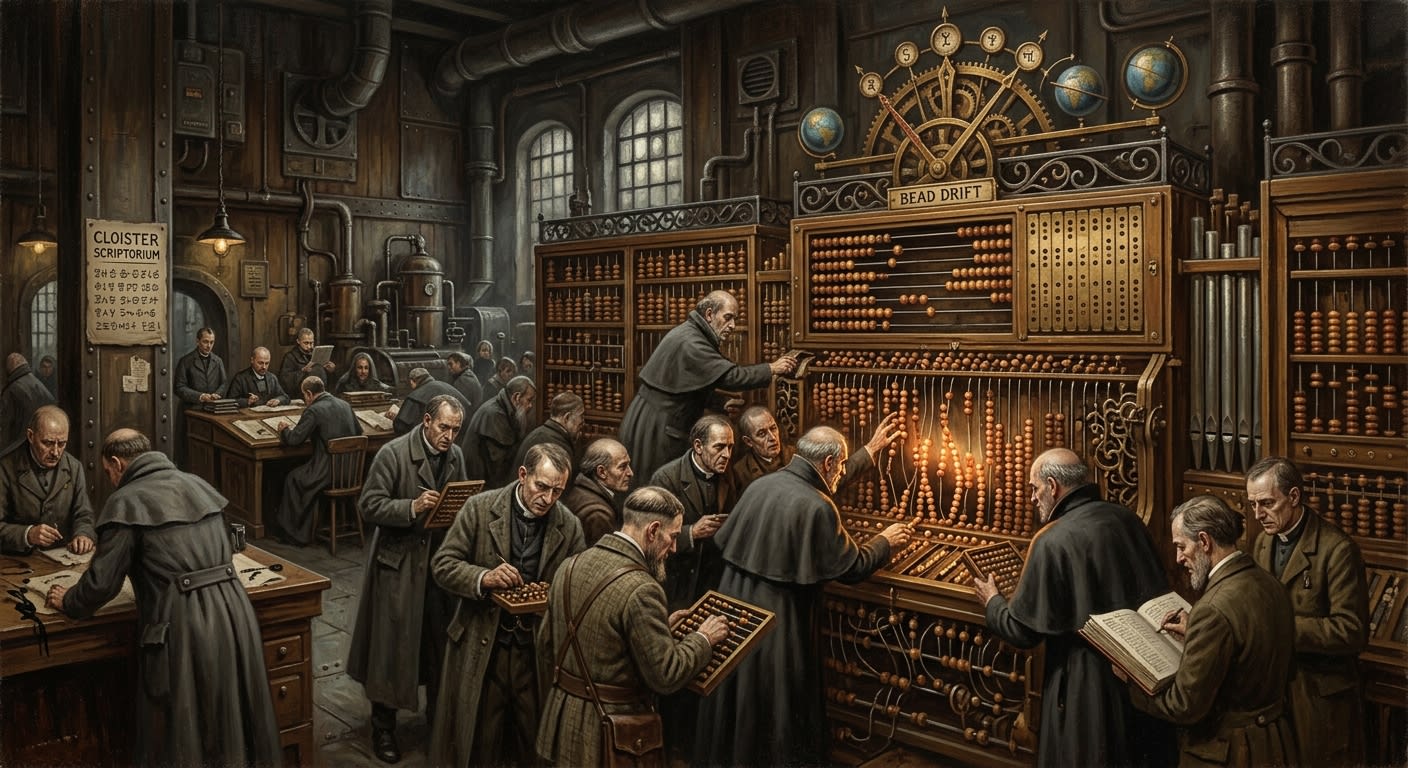
Bead Drift
The count moves, and Records bills the correction
Bead Drift is the Cloister's forbidden arithmetic: strings warm, names return, counts alter, and Records writes handling deviation over the sound of beads counting back.
Codex Ref. XIII.1.72-004

Bead-Drift Anomaly
The ledger corrects without leave, and the claimant waits
At the Cloister of Miscounted Beads, counts amend without hands and dead names return to ledgers. Correction without a fee remains a doctrinal embarrassment.
Codex Ref. XIII.1.72-005
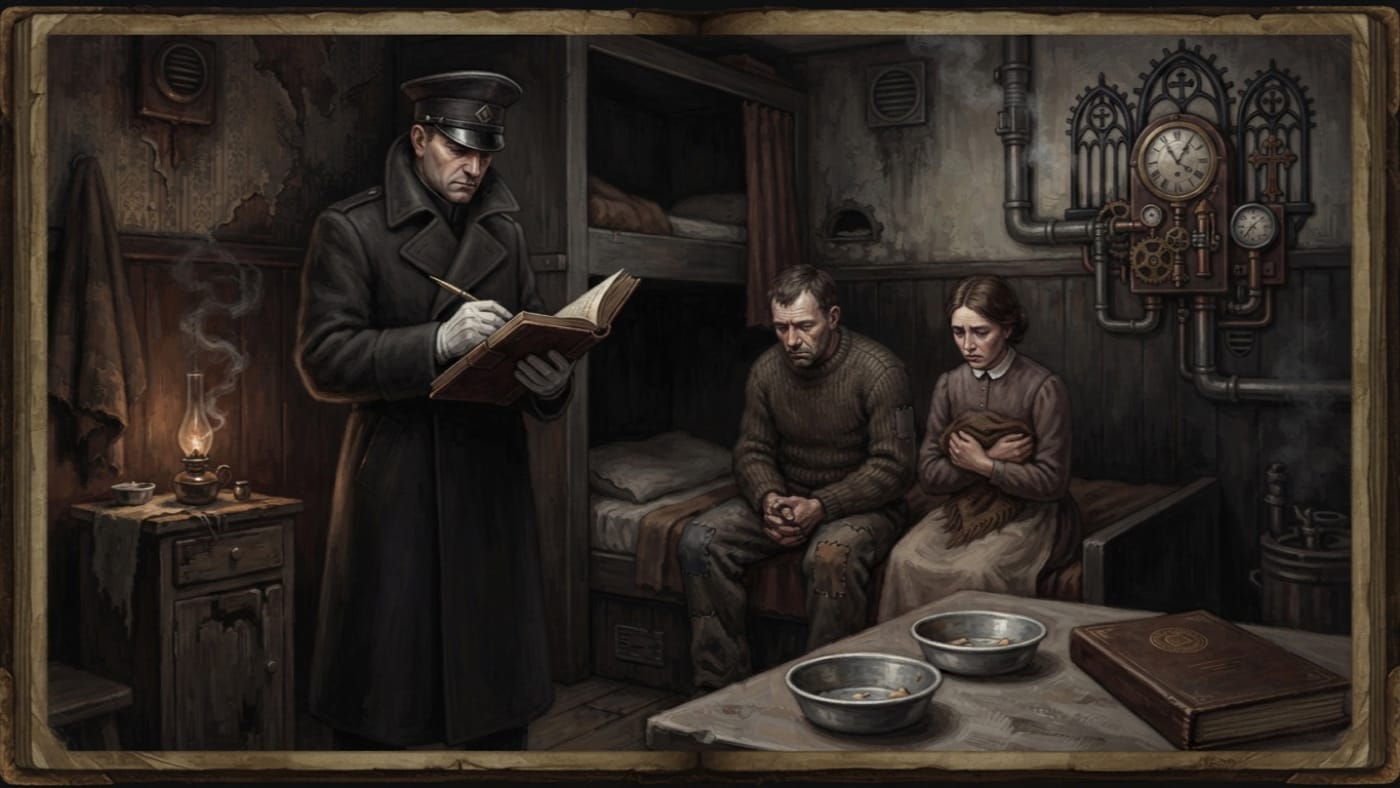
Bed Audits
The Bureau Counts Nights; the Household Counts Bread
Purity requires married couples to share a bed at least thrice per week. Failure is theft of fertility, answered by reduced rations. The Bureau counts nights; the household counts what remains in the bowl.
Codex Ref. XIII.1.02-197

Bell Codes
The chart is lawful. What the listener hears is his own difficulty.
I counted three liturgical variations before major political purges. The charts were lawful. The Bureau of Shadows insists nothing, because it does not exist.
Codex Ref. XIII.1.62-006
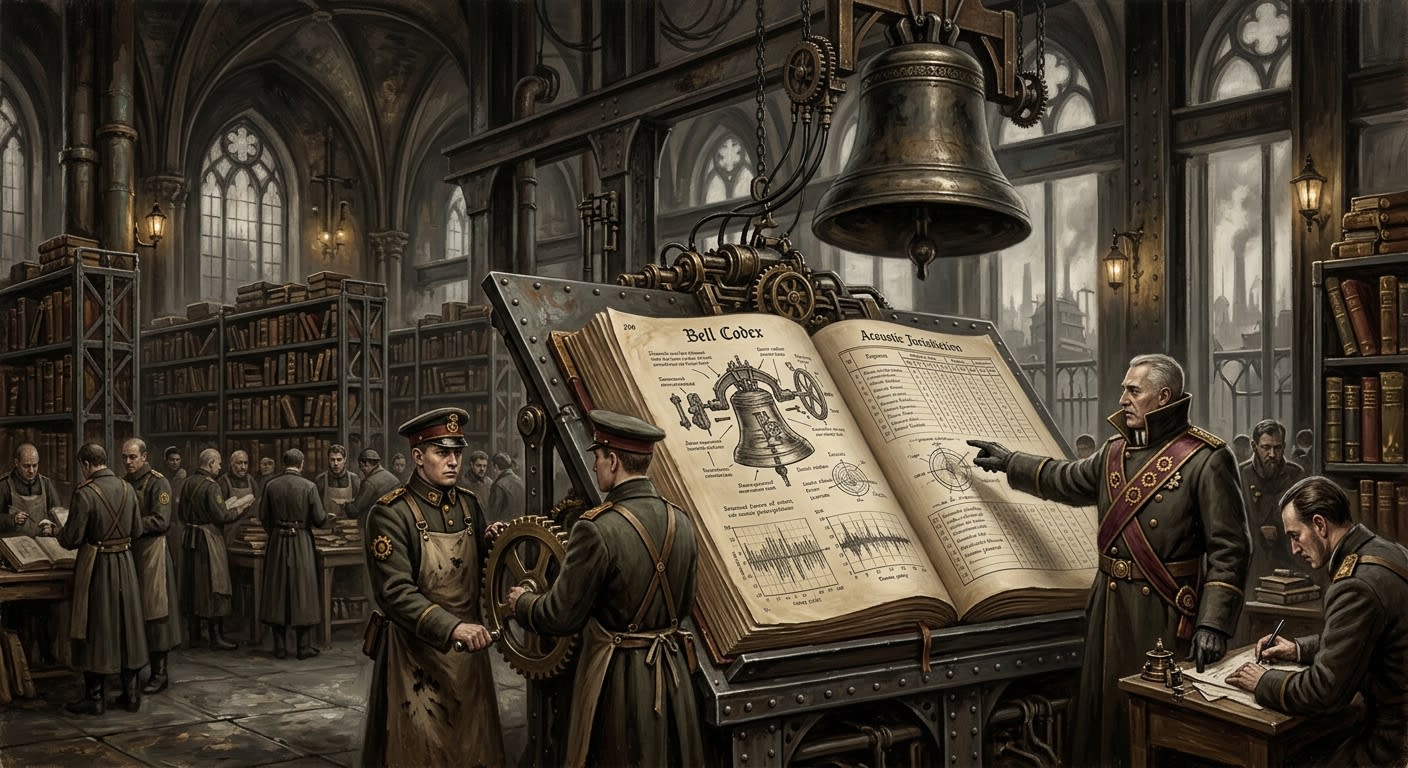
Bell Codex
The book by which bronze became law and silence learned to sign
Ratified in A.S. 115, the Bell Codex fixes the lawful grammar of peals, silences, curfews, alarms, licenses, and acoustic jurisdiction across the Synod.
Codex Ref. XIII.1.62-001

Bell Codex Affair
The book condemned for belief and retained for duty
In A.S. 115, Lyon's manuscript claimed to map future peals. Confiscated incomplete, it remains apocrypha and operational: condemned for belief, retained for duty.
Codex Ref. XIII.1.62-002

Bell Inspectors
Seven seconds of tolerance, and a book for the eighth
The Bureau of Bells sends inspectors from parish to parish with tuning forks, sanctified chronometers and seven seconds of tolerance. They record the discrepancy; other offices make the parish answer for it.
Codex Ref. XIII.1.62-214
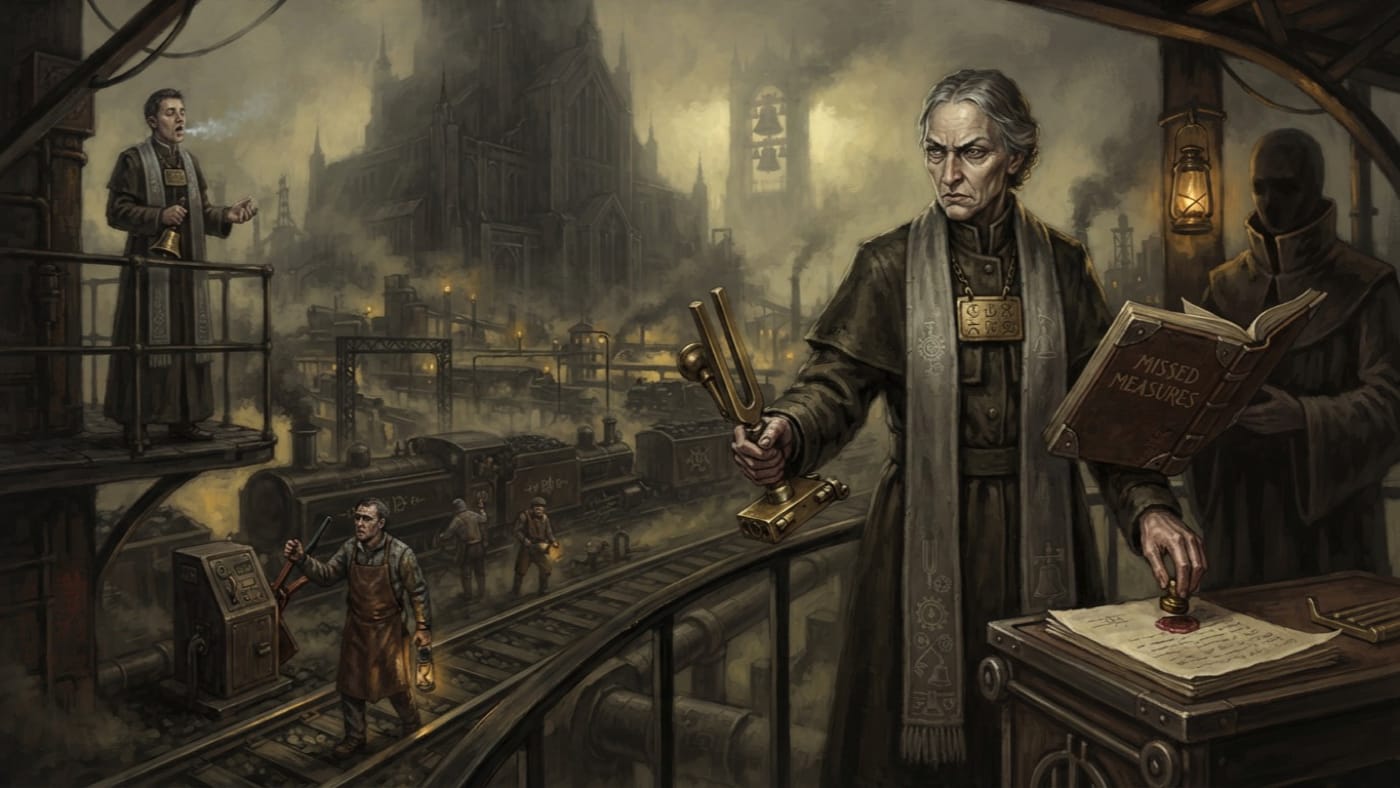
Bell Marshal
The hymn is correct; the dead await a signature
In Lorn, the Bell Marshal licenses every dispatch hymn and keeps the Missed Measures. Sister-Calder can certify the song; the dead still lack a signature.
Codex Ref. XIII.1.94-201
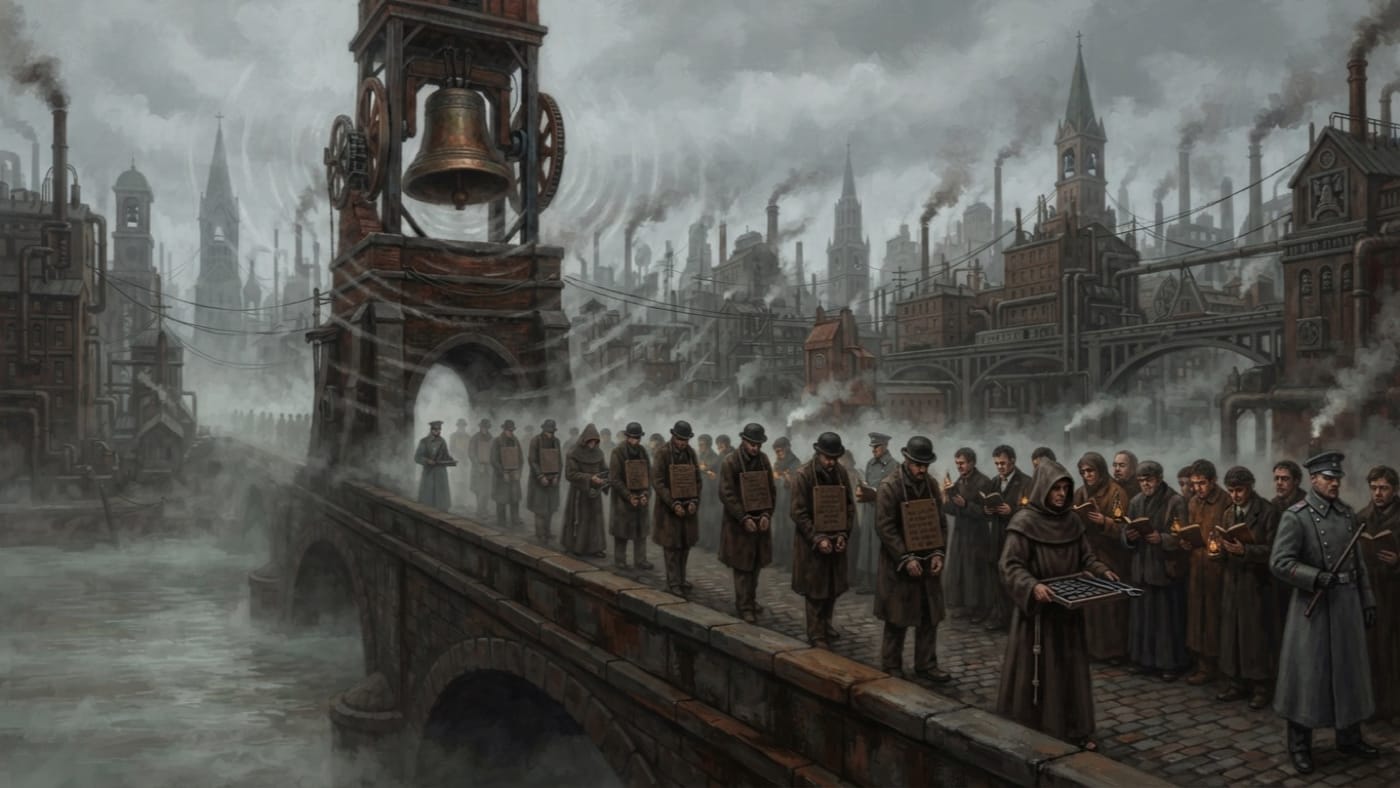
Bell Monists
One bell, three rulings, and a larger allowance for tuning forks
The Bell Monists teach that sound made the world. Orison calls this orthodoxy, Purity calls it heresy, and Doctrine calls it mildew. All three judgments remain in force; the tuning forks still require a tithe.
Codex Ref. XIII.1.224-201
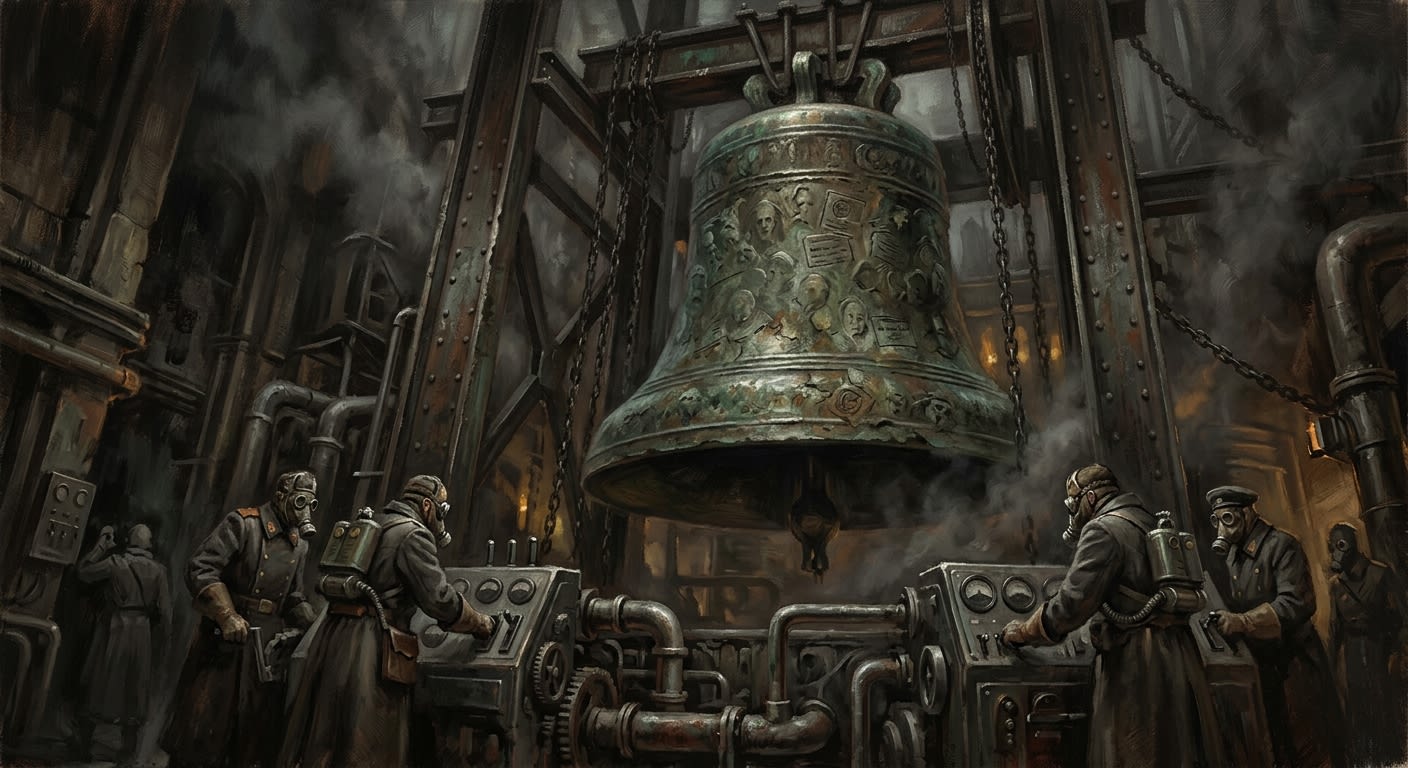
Bell of Names
When a city survives by paying thirty years from its own throat
The Bell of Names is the Synod's highest civic miracle: a forbidden peal that revises a city's memory and charges the years to its living.
Codex Ref. XIII.1.32-001

Bell Peal License
Bronze belongs to its owner. The hour belongs to the Bureau.
The Bell Peal License fences lawful sound in twelve pages and a longer appendix, fixing strokes, hours, tone, reach, and permitted grief. An extra stroke may cost more than the devotional fee.
Codex Ref. XIII.1.62-002

Bell Tower
The city obeys the bronze; the recruits salute the fork.
On Strasbourg's seventh floor, Canon Veyl's fork receives the Counter-Toll recruit salute. The Bell Tower keeps lawful hours and teaches that obedience must be louder than its enemies.
Codex Ref. XIII.1.62-201

Bell-Accountant
The clerk who counts the hours and questions the wax
Bell-Accountants turn bell-hours into ration priority and test hymn-gasket wax for its remembered song. Their ledgers decide whether bread may move, seals may pass, and emergency repairs may become lawful.
Codex Ref. XIII.1.62-202
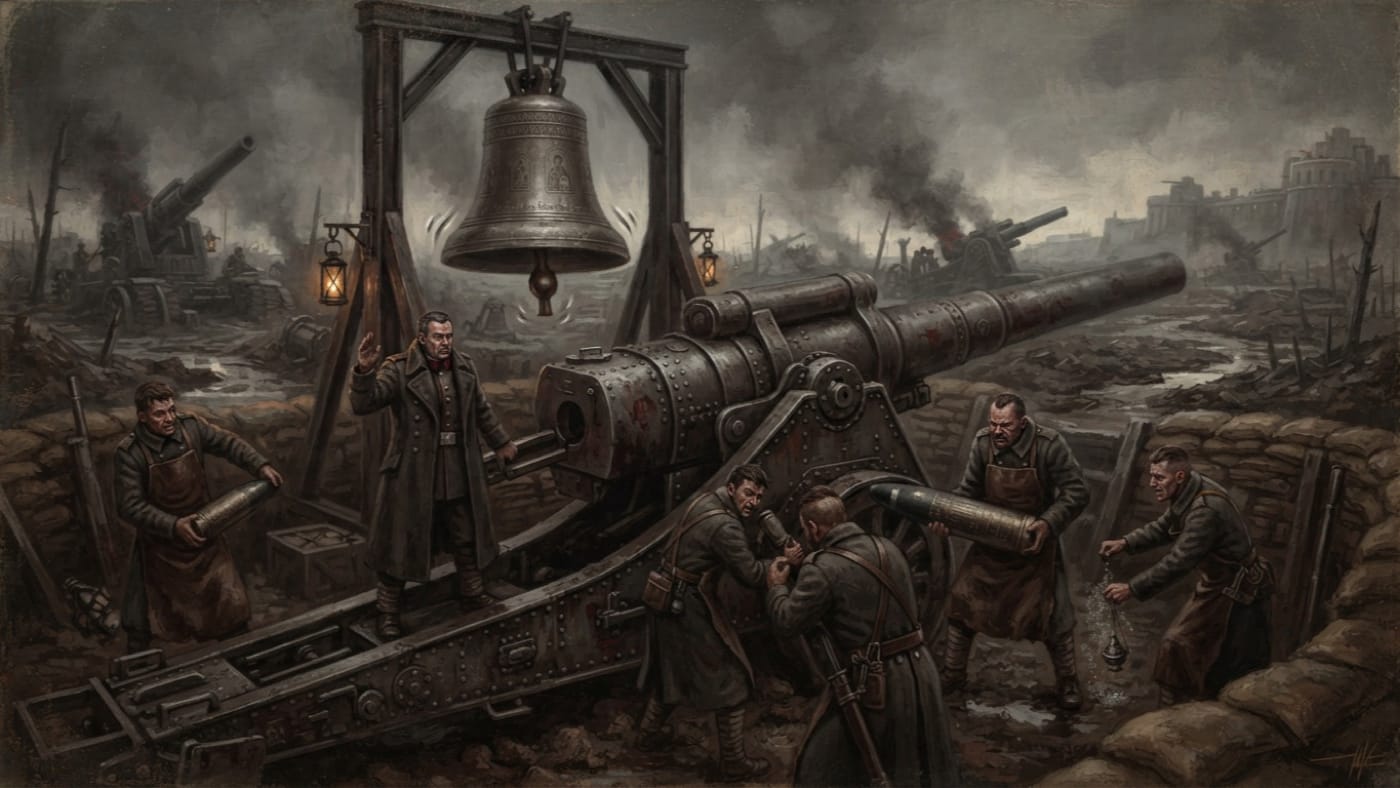
Bell-Cannon
The toll governs the barrage; the ledgers govern the blame
Field artillery governed by three peals and sustained by Essen's hymnsteel throats. The Bureaus agree when it should fire; each names a different author when it fails.
Codex Ref. XIII.1.93-201
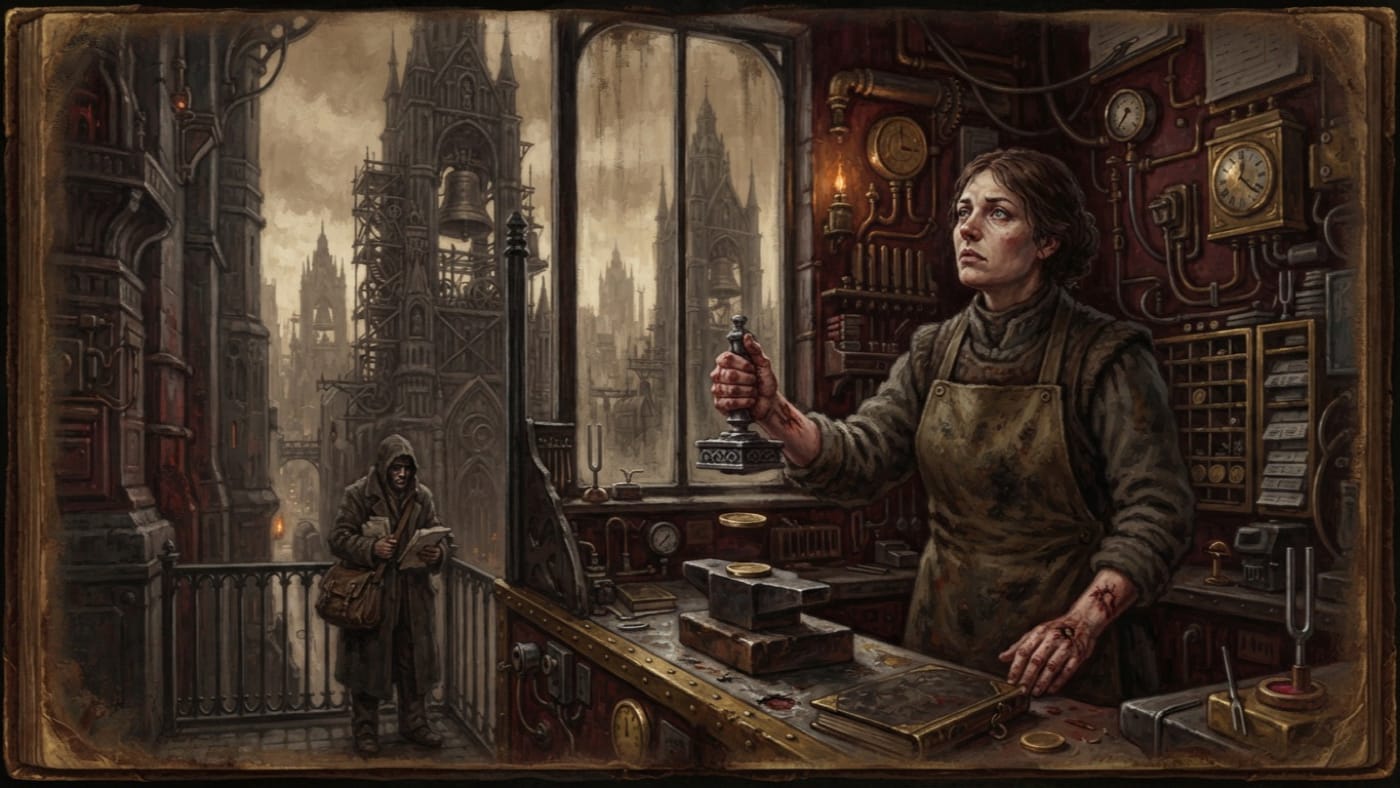
Bell-Eclipse
The bench waits for the bell
My A.S. 201 survey records the Route-Stampers' refusal to stamp while city bells are silent between canonical hours. Doctrine calls it superstition; the smiths fear the wrong world. The custom's origin remains undated.
Codex Ref. XIII.1.62-006
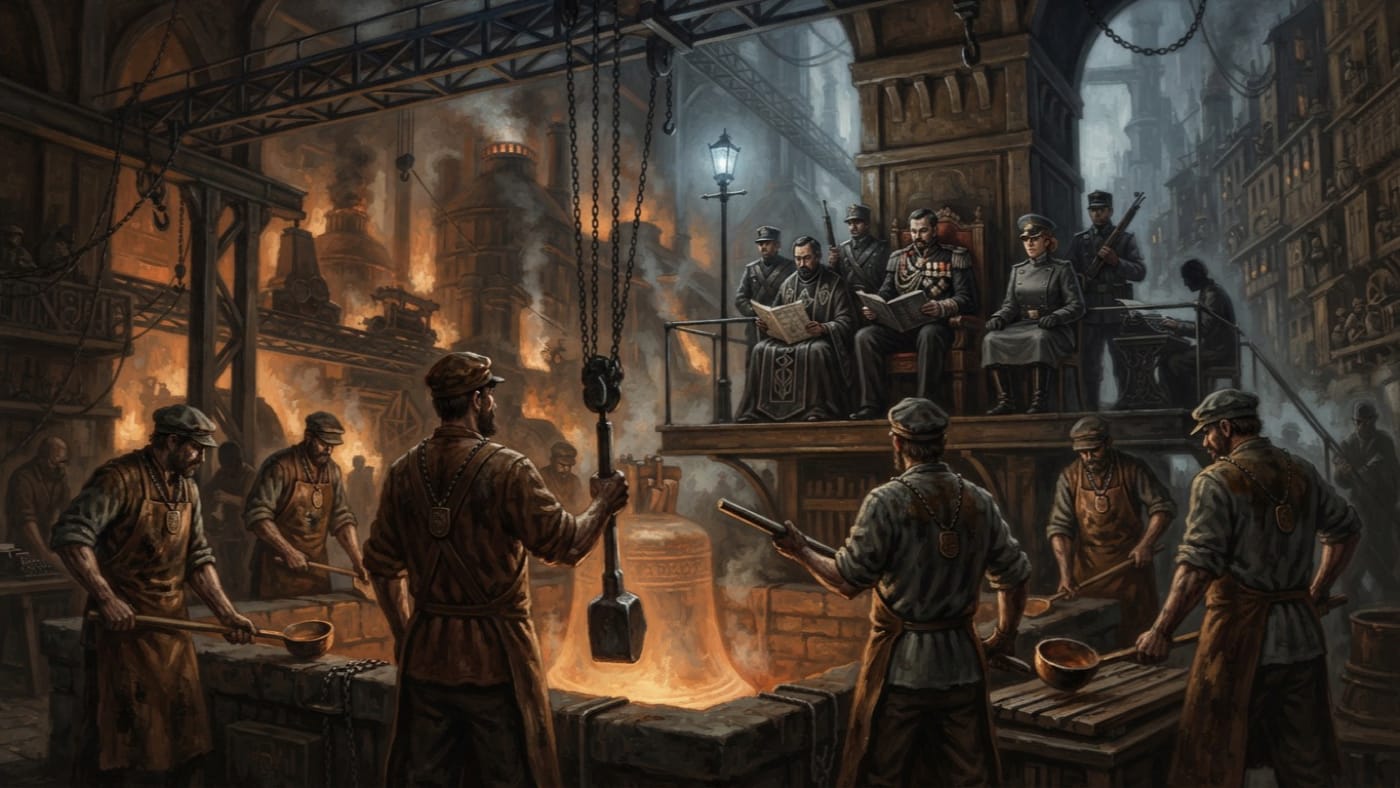
Bell-Founders of Essen
They cast the bells; other offices own the voice
The Bell-Founders sent six masters and one clapper to Münster in A.S. 105. One thumb bound their craft and descendants; they cast the bells while other offices own the voice.
Codex Ref. XIII.2.05-105

Bell-Hold Commentary
Bells keeps the tone. The Marshal keeps the hour.
The A.S. 132 gloss assuring Bells that the Route-Timing Concordat diminished no Bureau's dignity. Dignity survived; command of the hour passed to the Marshal.
Codex Ref. XIII.1.62-132
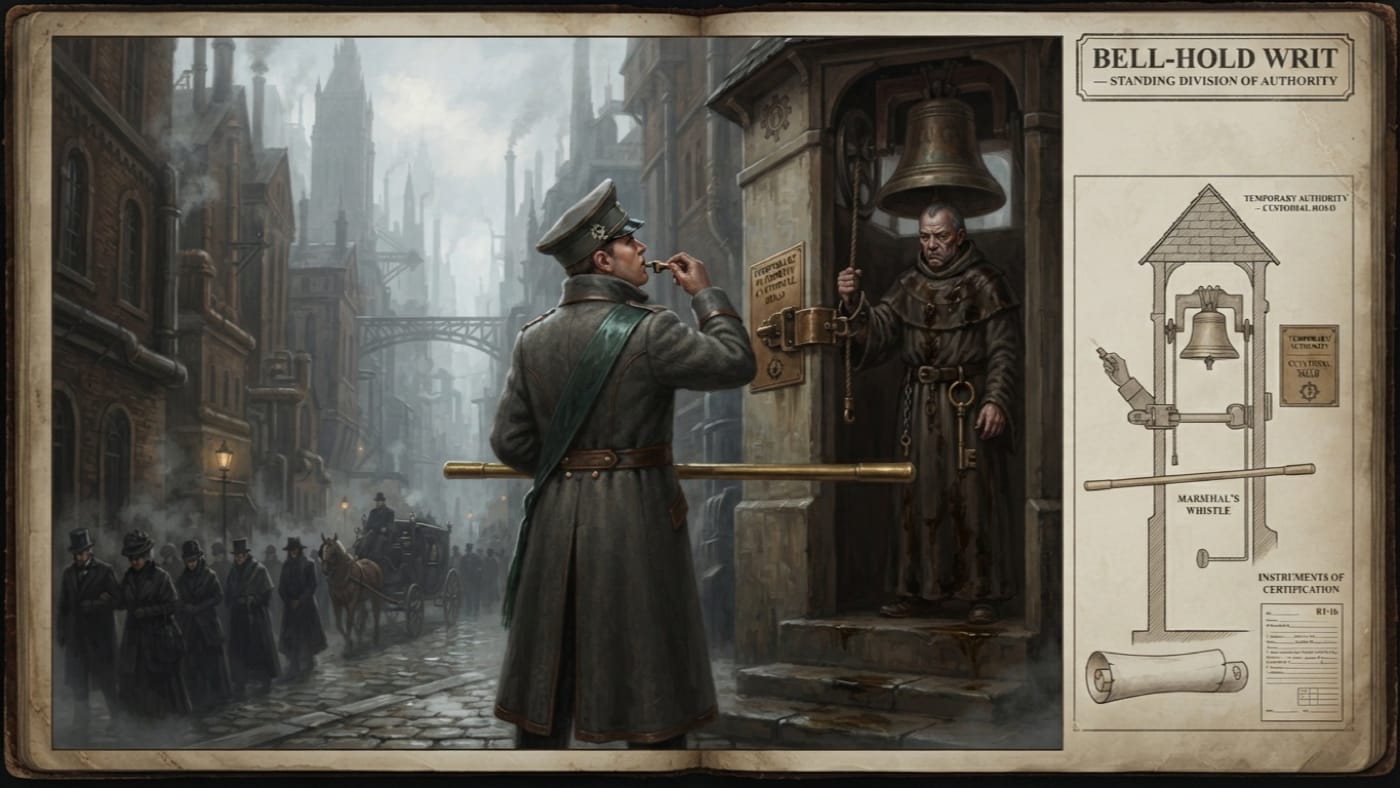
Bell-Hold Writ
The whistle may suspend. It may not compose.
The Bell-Hold Writ lets a Marshal suspend lawful bells inside cleared routes. Bells keeps the liturgy; the Corps keeps the crowd alive.
Codex Ref. XIII.1.62-129
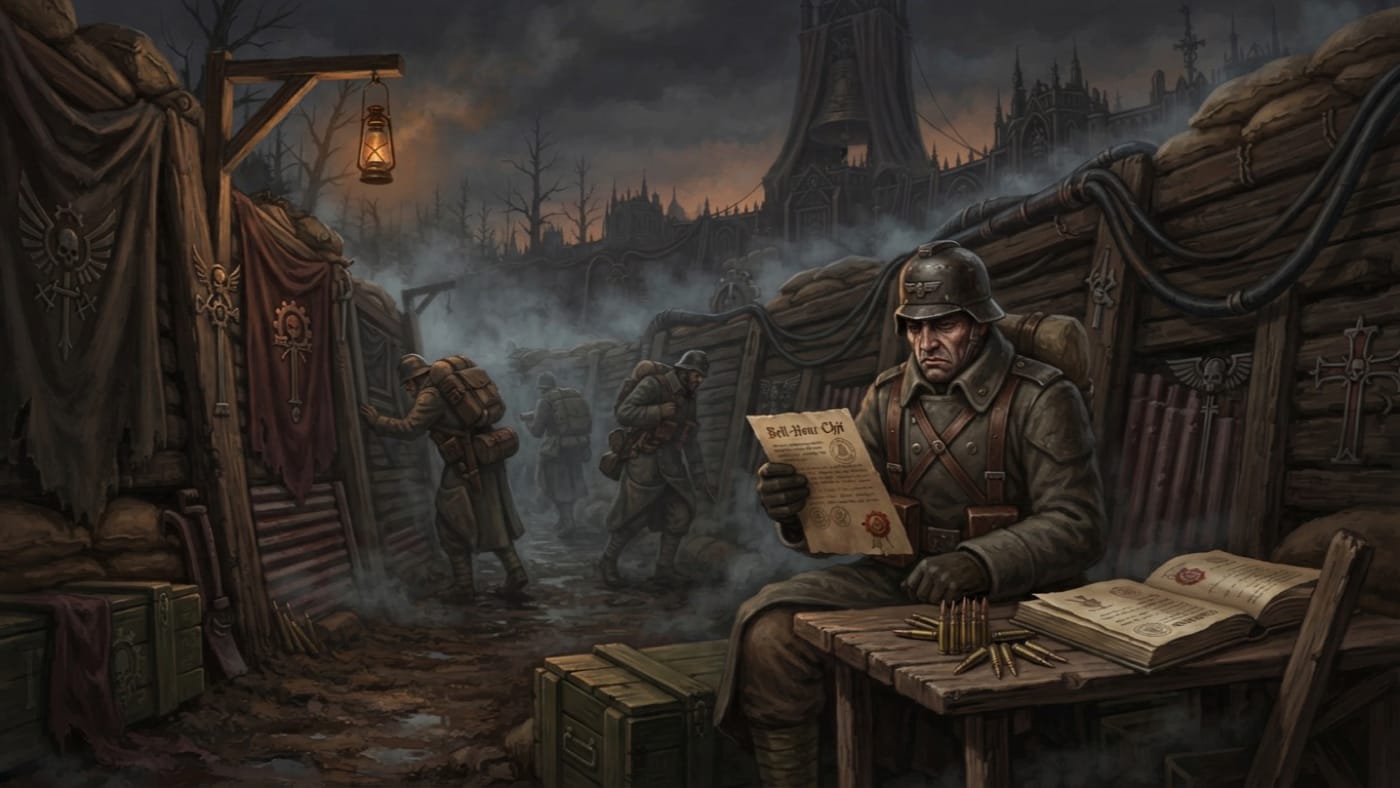
Bell-Hour Chit
The claim is paid in paper; the courage is paid in flesh
A bell-hour chit records a company's claim upon sanctified ringing. The Bureau of Bells audits the debit; the soldiers pay weariness for valour. Heaven's permission arrives on paper. Its cost arrives in the marrow.
Codex Ref. VI.3.01-003
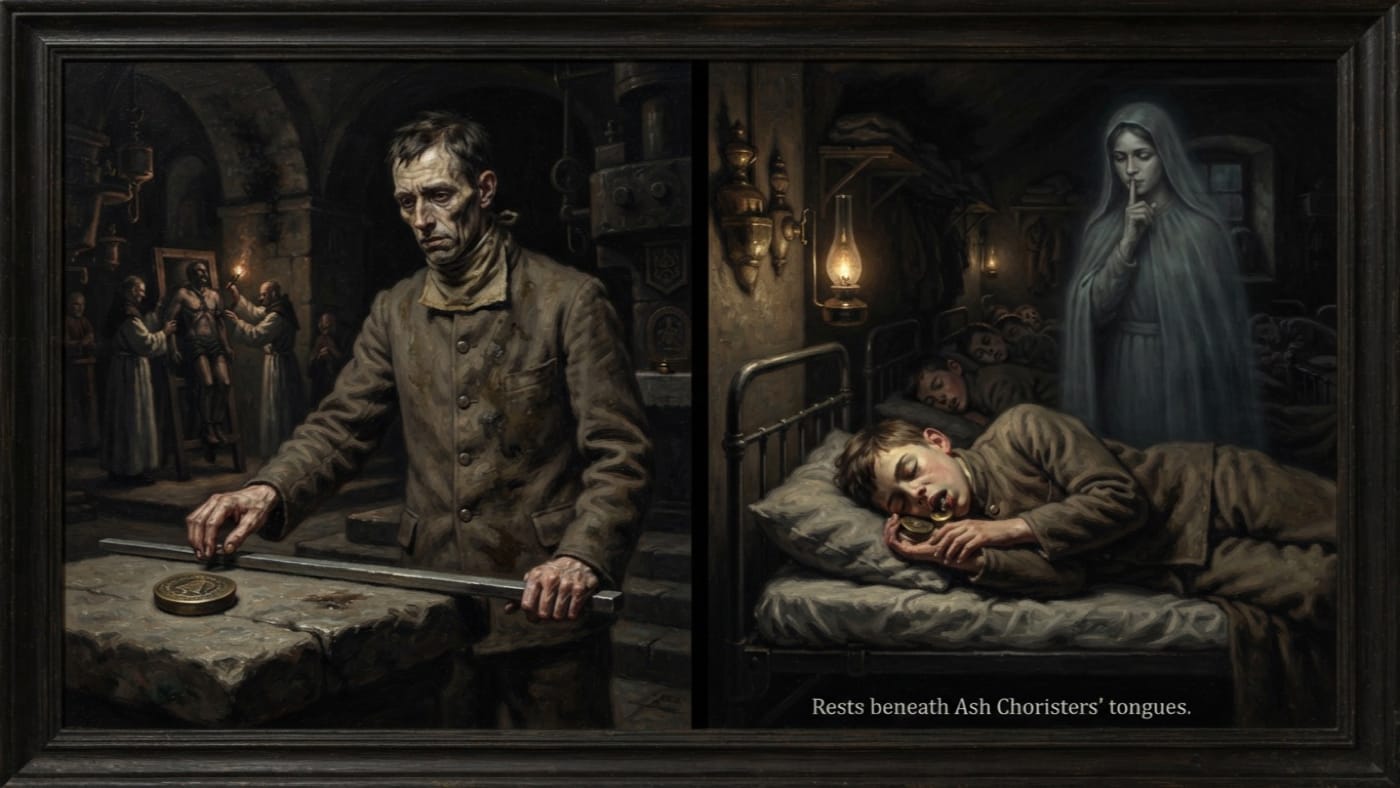
Bell-hour Metronome Token
The bell enters the mouth; the pension remains under review
Purity's bell-hour token keeps cadence by day and rests beneath Ash Choristers' tongues by night. Medicine calls the dreams sickness; Doctrine calls them devotion.
Codex Ref. XIII.1.41-213
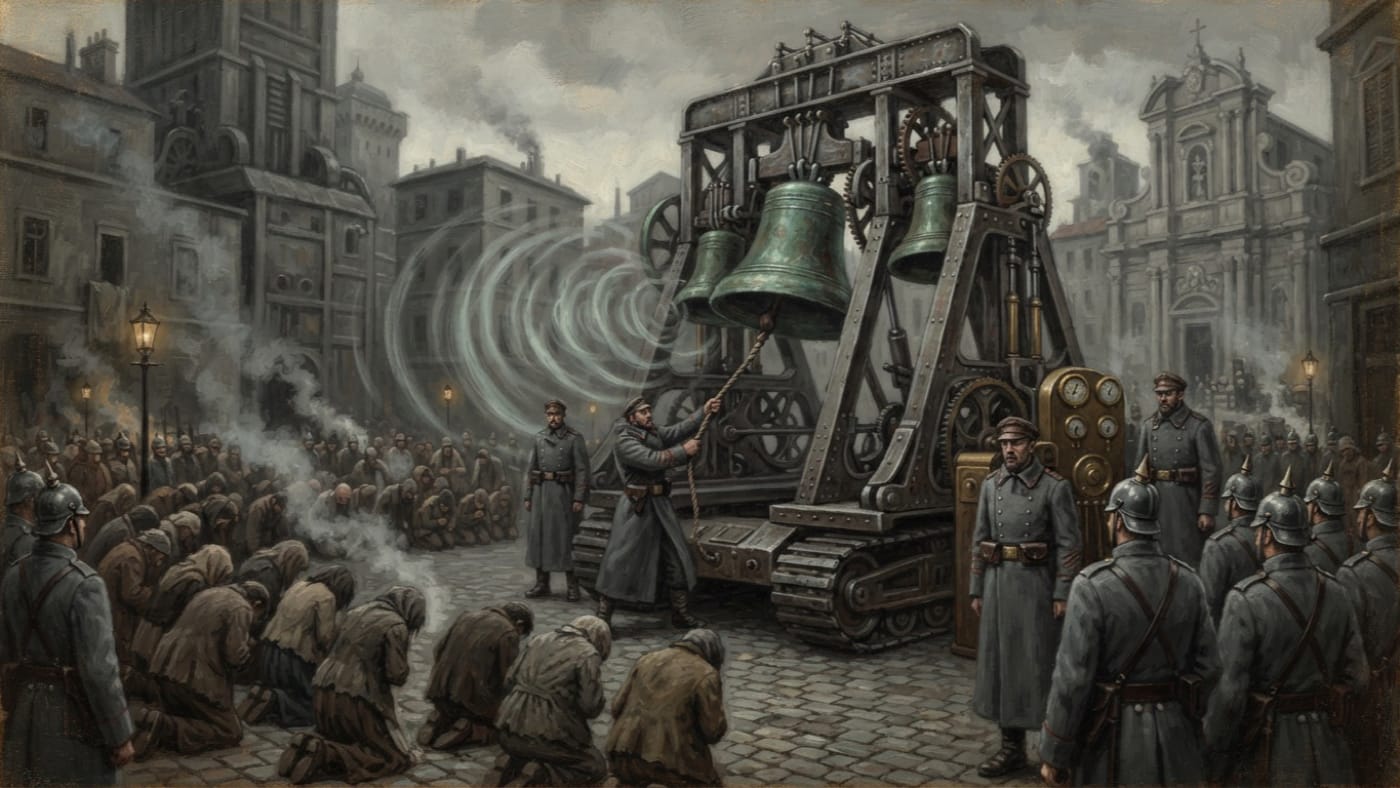
Bell-Litanies
The body obeys; the paperwork calls it willing
Bell-Litanies rout mobs, halt riots and recall stragglers through sanctioned sound. The company spends a chit; the faithful spend their strength. At Ragusa the crowd burned. The Bureau calls this a triumph of acoustics.
Codex Ref. VI.3.01-004
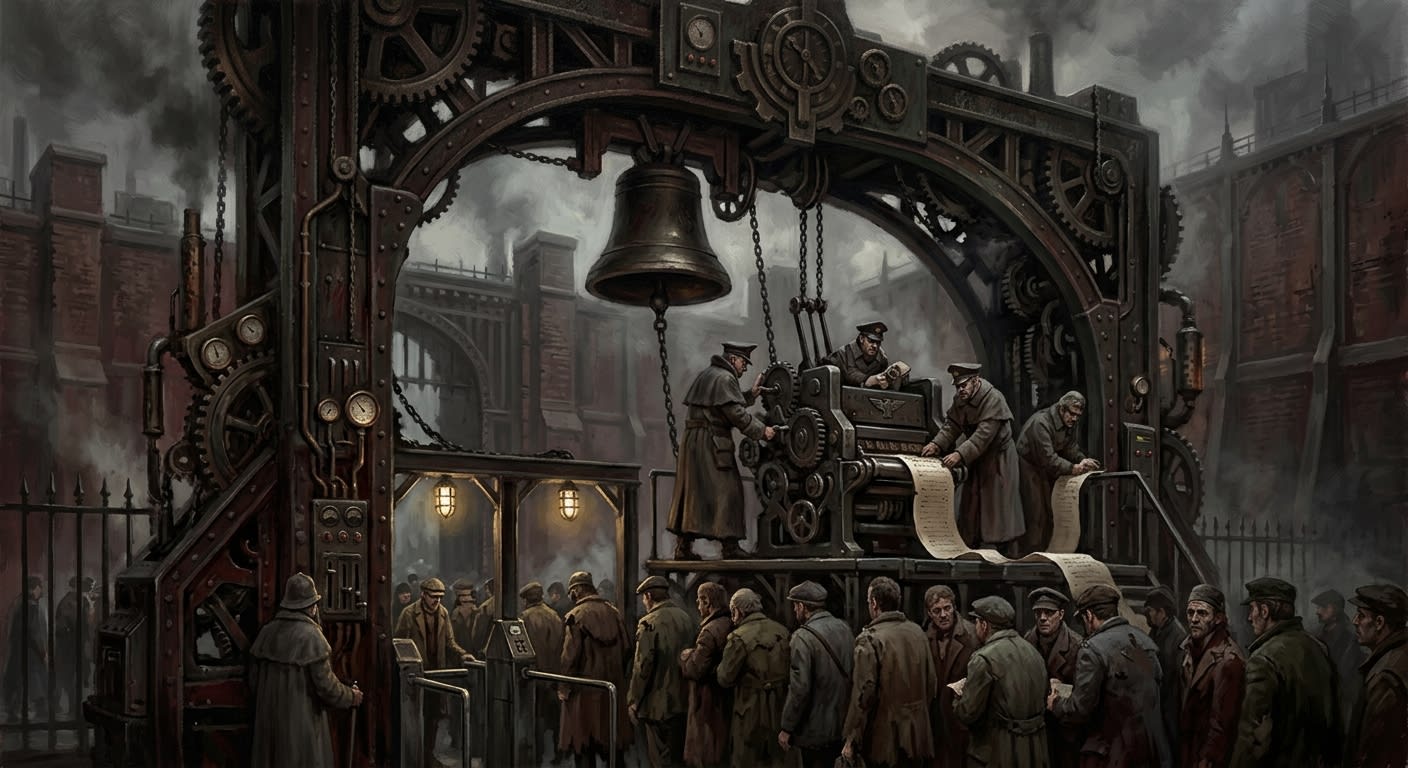
Bell-Mark Gantry
A stamp is violence without perspiration
The Bell-Mark Gantry is the Queue Road's iron throat above Gate Three, where bells, stamps, and priced minutes convert waiting bodies into lawful revenue.
Codex Ref. XIII.1.16-111
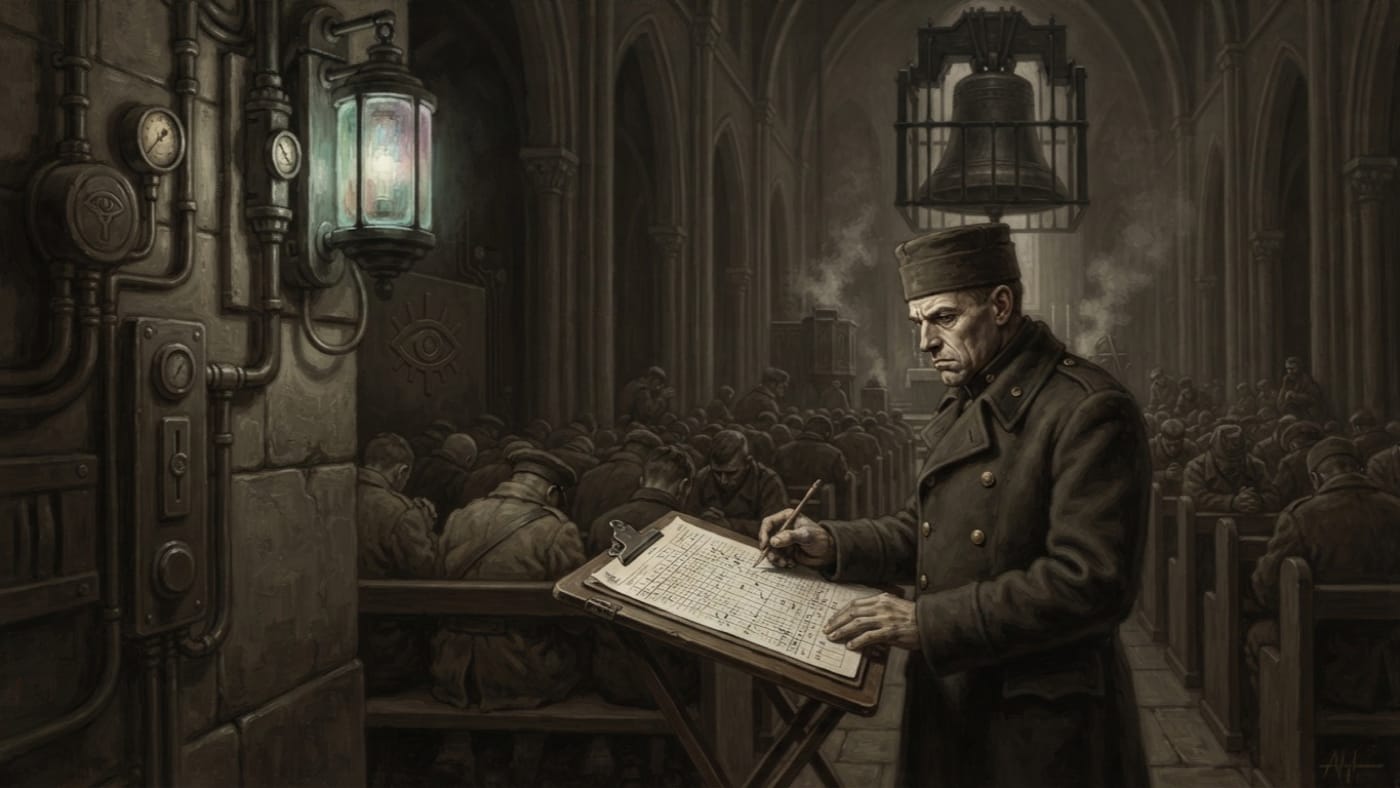
Bell-Pause Chart
Where the amen becomes evidence
Purity's ruled sheet measures the pause where an amen was owed and gives the Auditor a first line for the file. This A.S. 201 survey records current practice; the chart's first issue remains unknown.
Codex Ref. XIII.1.99-226
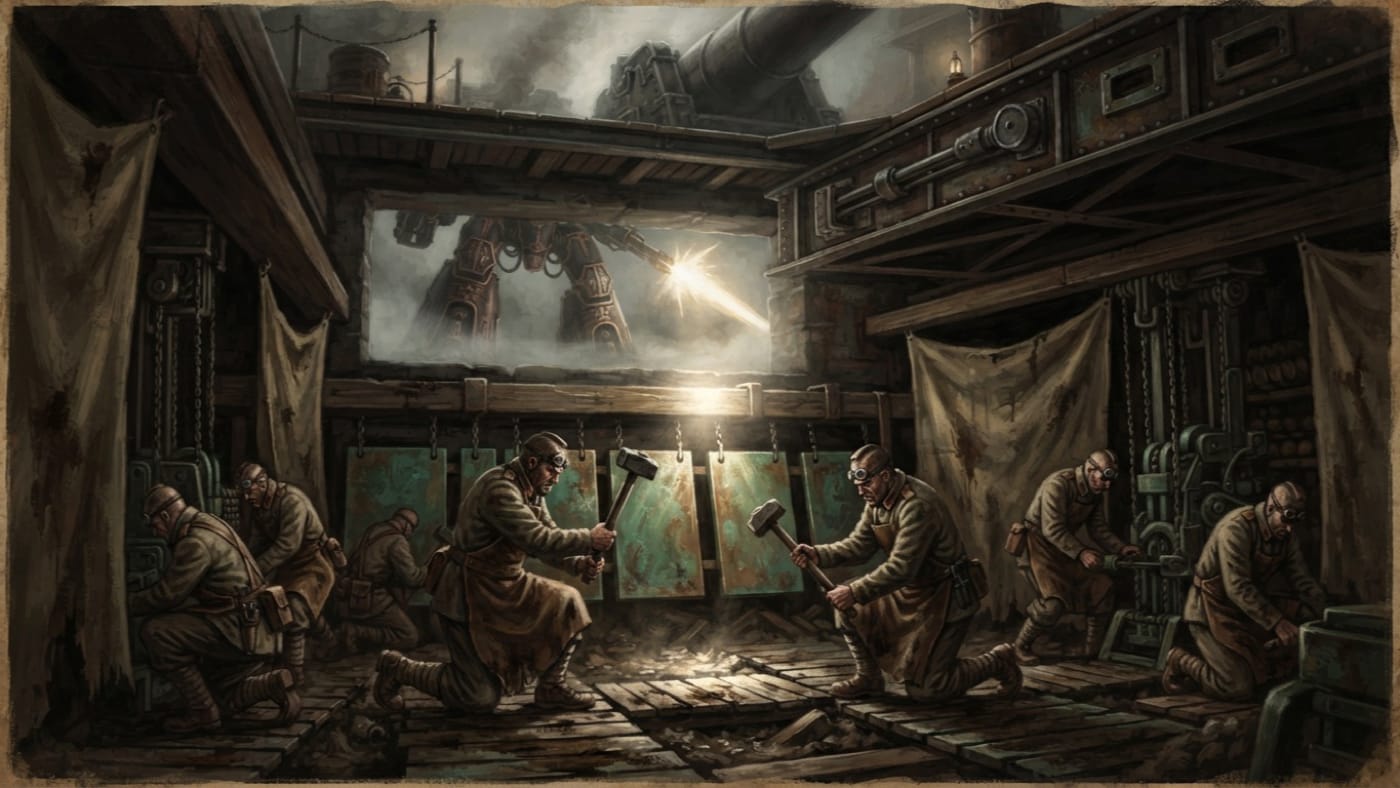
Bell-Plate Countermeasure
Strike low; bronze has no business feeling splendid
Low bronze beneath Przemyśl's gun-platforms partially suppresses Crownguard kneeling. Polished hammers and Sun Spear reflections punish any grander promise.
Codex Ref. XIII.1.94-201
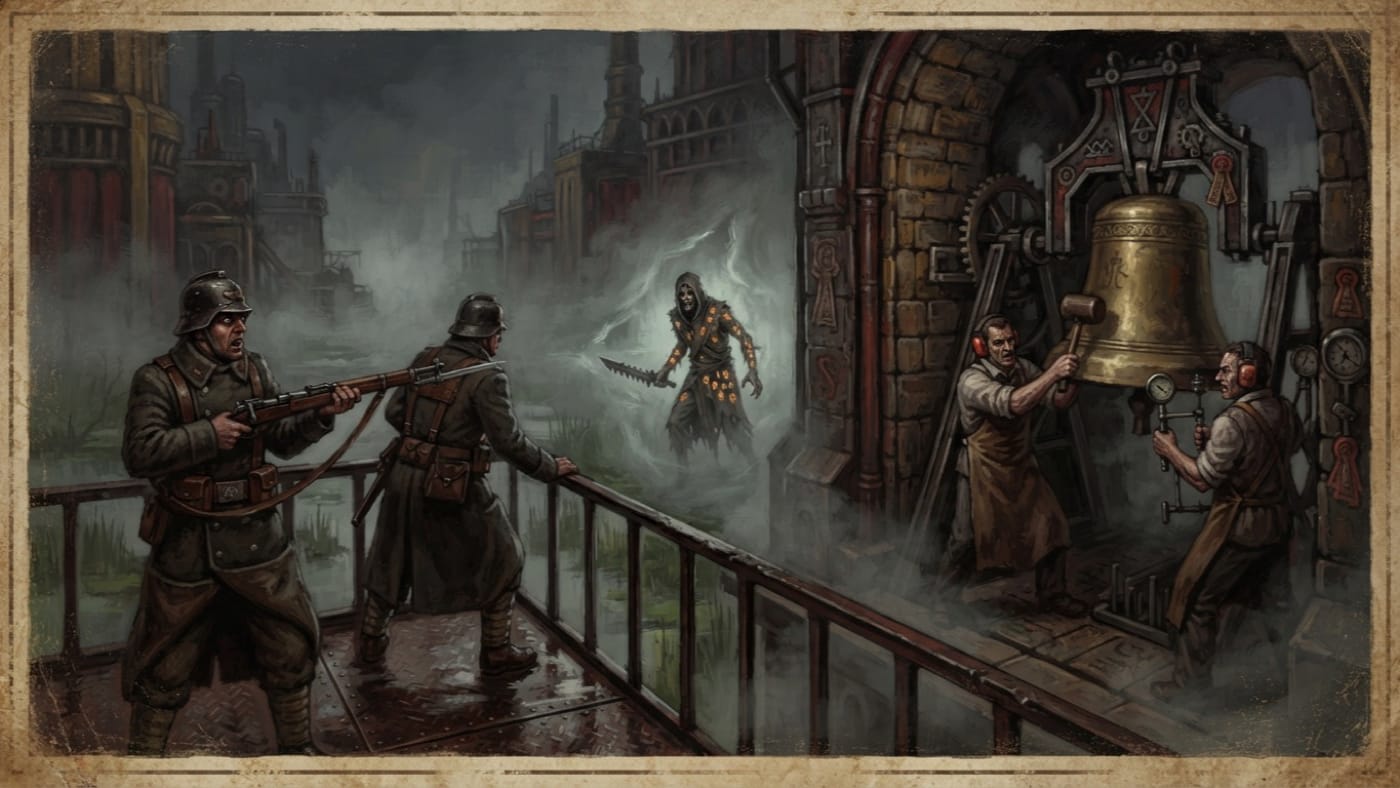
Bell-Pulse Counter-Rhythms
Two seconds to see; the rest of the night to stay awake
A.S. 201 survey of atonal bell-pulses against Veil-Stalkers: a break in Fog-Walk stupor, perhaps two seconds of visibility, and a garrison kept awake at its own expense.
Codex Ref. XIII.1.62-201
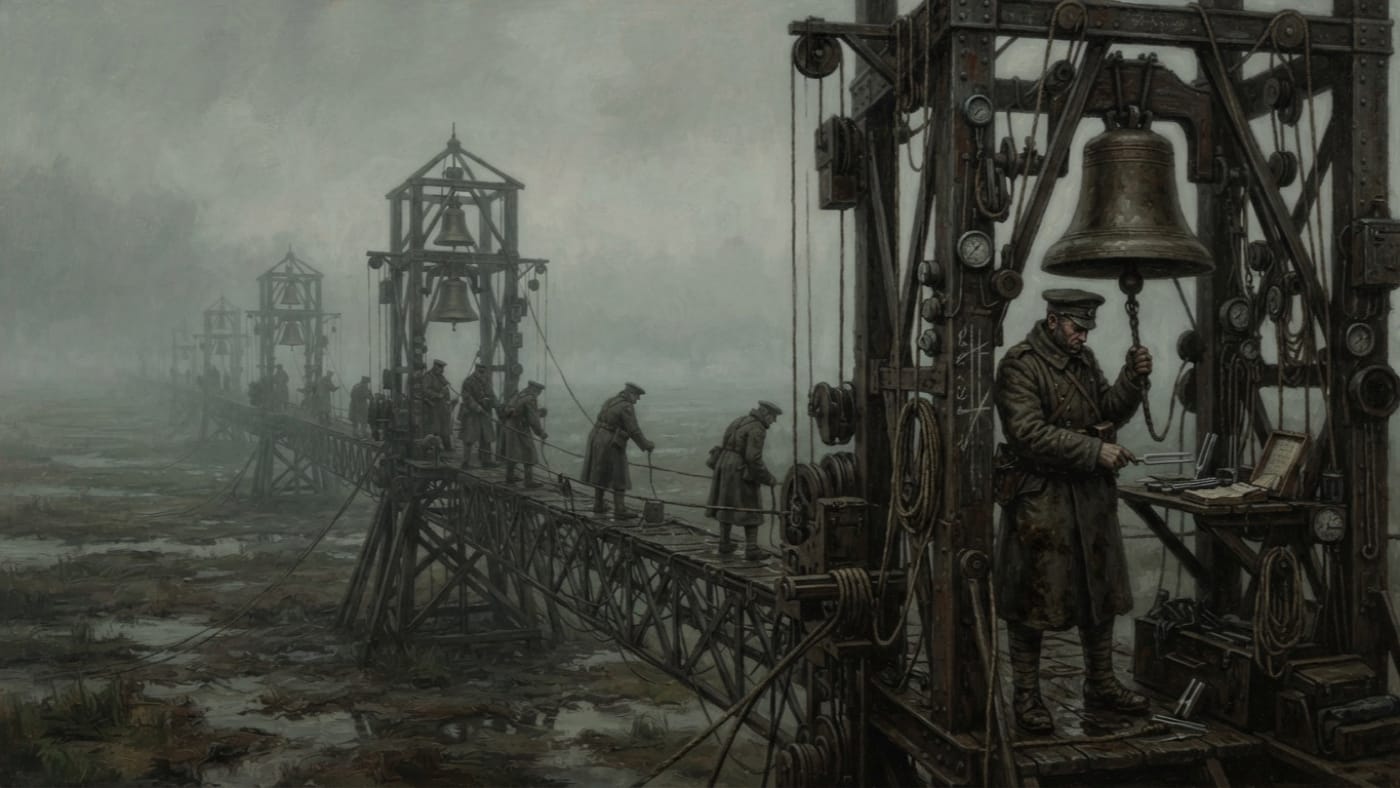
Bell-Resonance Towers
The Peal Is Lawful; the Traveller Is Unproven
Brest's forward-wire towers order watches, warnings and lawful movement. Their peals are calibrated, licensed and logged; the Bureau has yet to make an honest traveller by ringing a bell.
Codex Ref. XIII.1.62-201

Bell-sickness
The bell stops; the obedient skull keeps ringing
Bell-sickness is the Synod's recognised resonance affliction: phantom peals, compulsive cadence, command mislocation, and the small theological problem of obedience ringing back.
Codex Ref. XIII.1.87-201

Bell-Silence custody
Five depositions under wax; their witnesses under lime
Sealed custody for five Rouen depositions after the A.S. 184 convoy collapse: the witnesses burned as acoustic carriers, their testimony preserved, and the custodian left unnamed.
Codex Ref. XIII.1.86-184
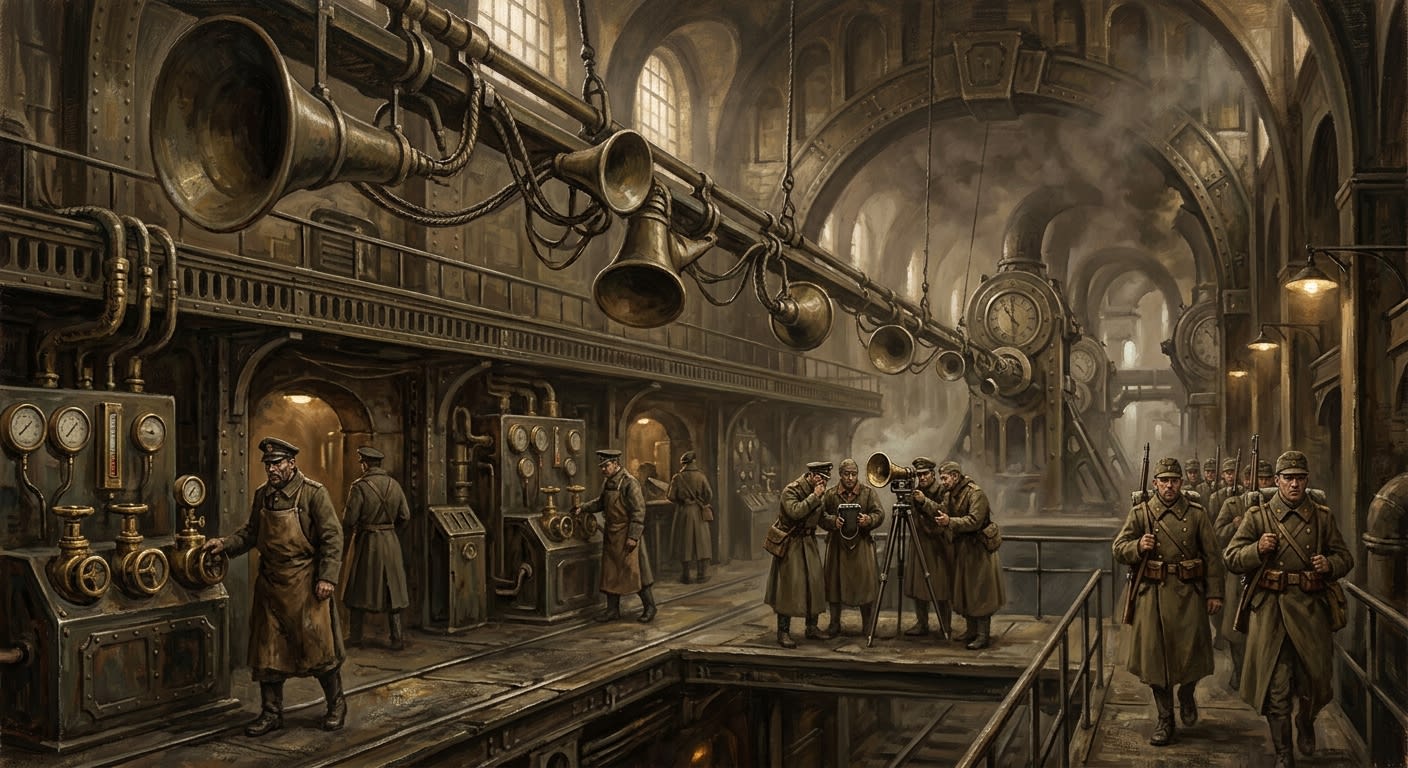
Bellway
The road that hears you, blesses you, taxes you, and may repeat you
Bellways are the Synod's sanctioned acoustic corridors: road, alarm, sermon, surveillance net, and mercy with teeth, carrying lawful sound through the Line and beyond.
Codex Ref. XIII.1.88-201
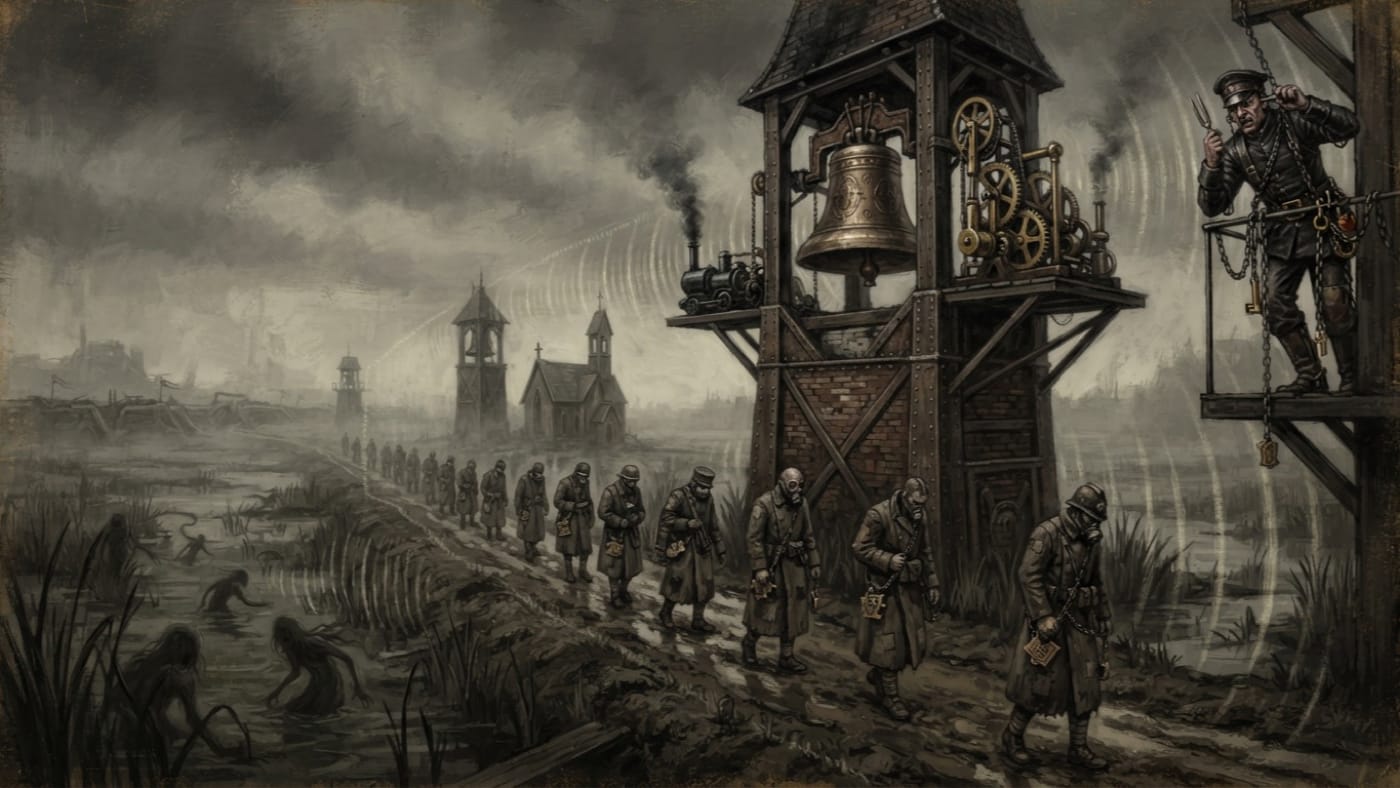
Bellway Protection
The road has no walls; the bells keep the boundary
Bellway protection keeps licensed pilgrims within maintained acoustic corridors that repel minor roadside threats. Bells tune the road; tokens keep the walker in time, and Tithes keeps the invoice.
Codex Ref. XIII.1.88-002
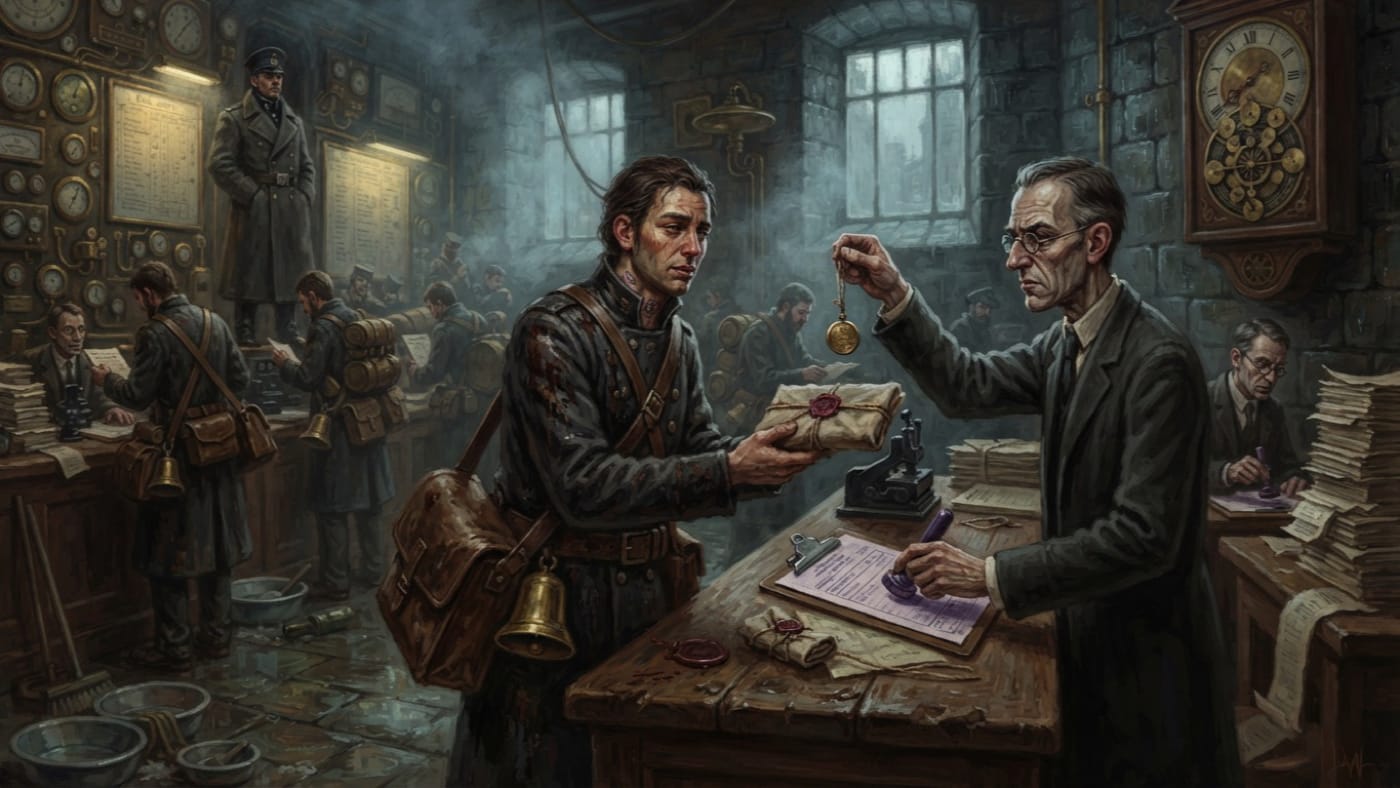
Bellway Synchronisation
The hour certifies arrival; it cannot certify a name
Bellway Synchronisation binds Purity's condemned-name packets to bell-hours, time-locked tokens and witnessed receipts. It proves when judgment arrived; it cannot make the judgment true.
Codex Ref. XIII.1.90-201
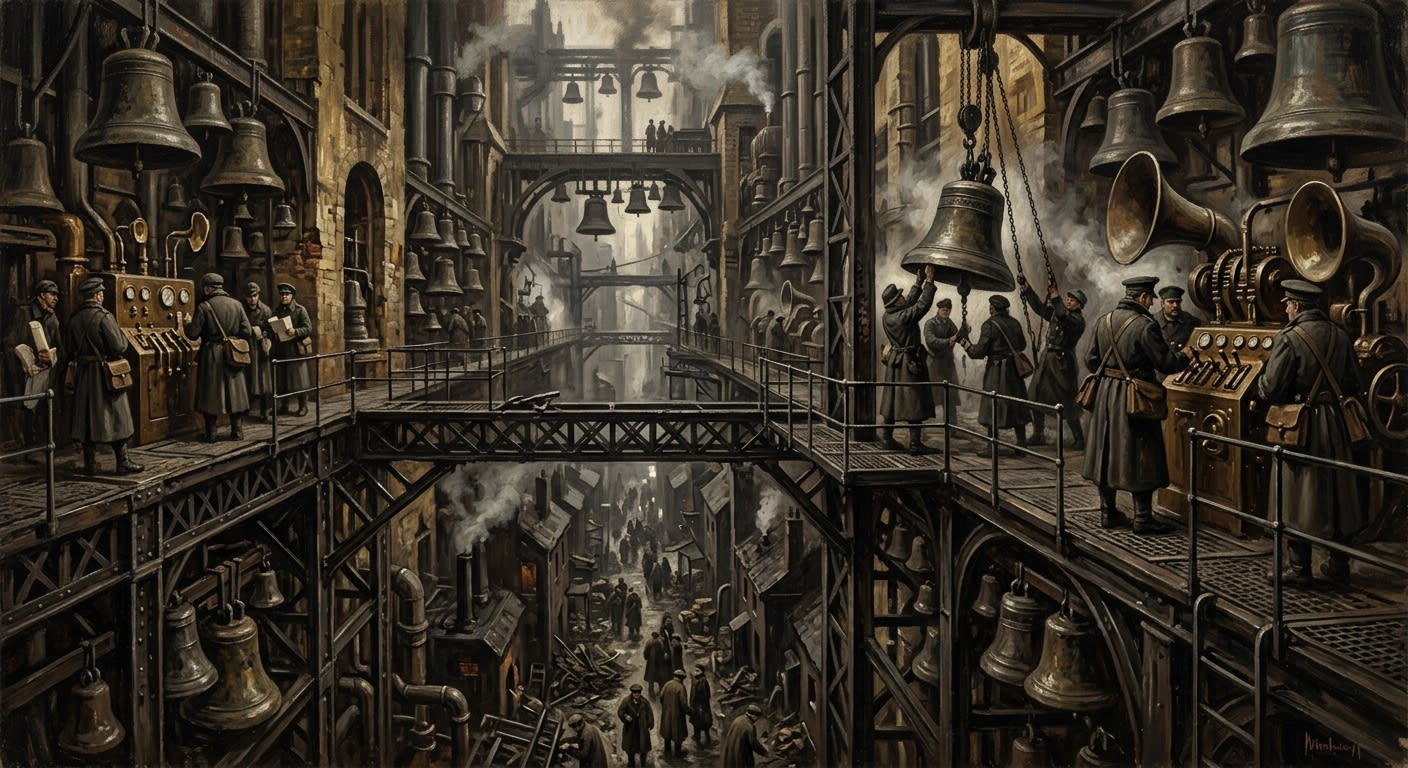
Bellways
The plural doctrine of roads, sky, trench, and taxable obedience
Bellways are the Synod's plural acoustic jurisdiction: low roads, middle war-lattices, high Ark corridors, and every quarrel they make audible.
Codex Ref. XIII.1.89-201
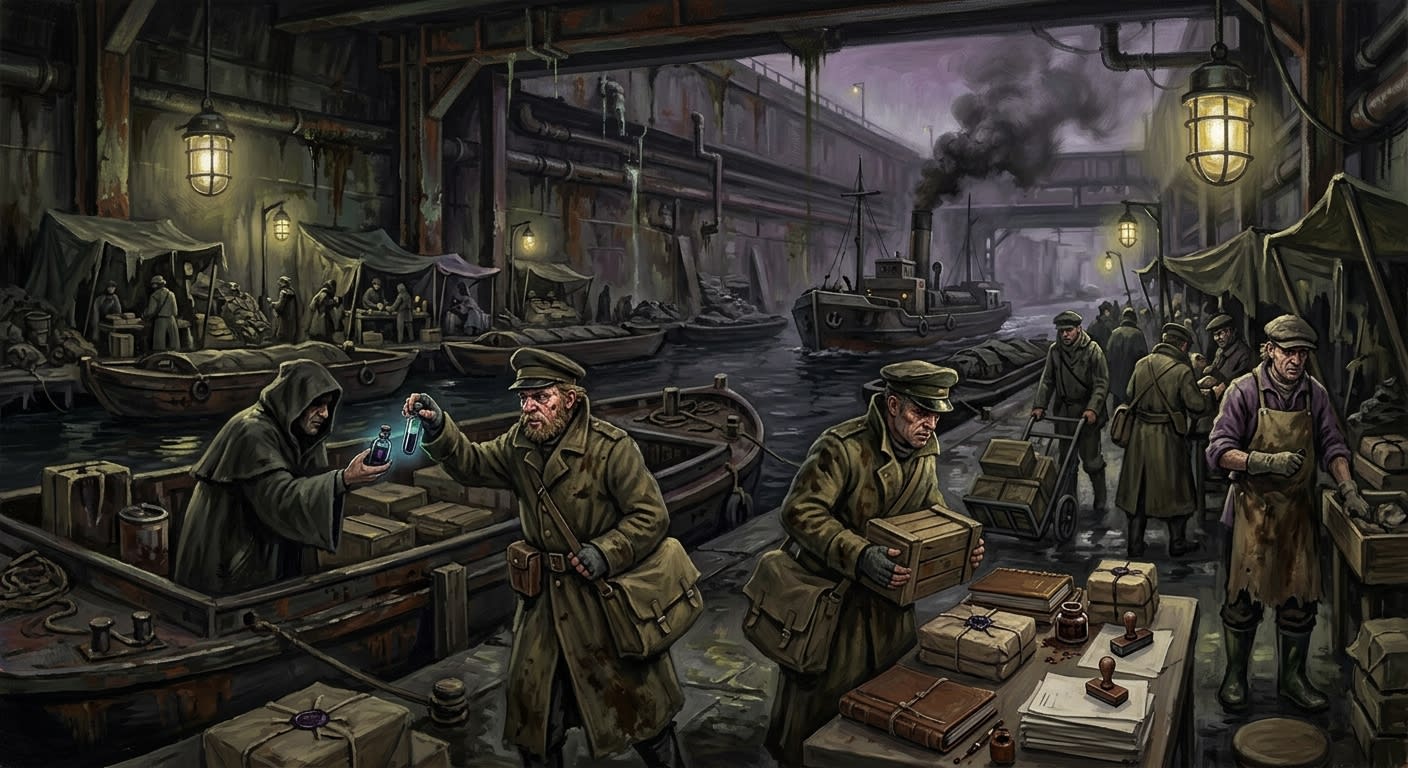
Black Canal
Where unlawful water teaches authority to float
The Black Canal is Candlewick's under-dike criminal water: a wet market of outlaw shade, Hungry Ink, false seals, name packages, and useful denial.
Codex Ref. XIII.1.19-098
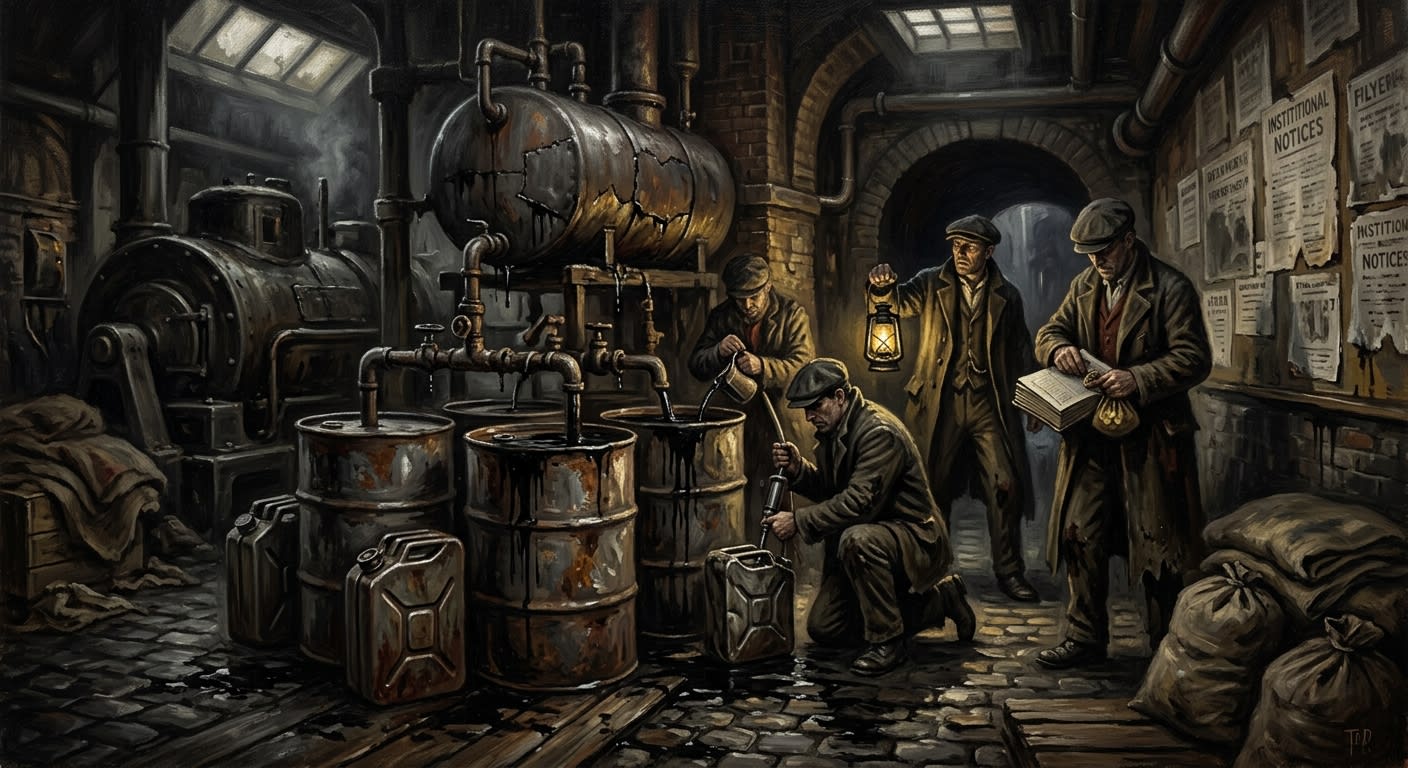
Black Diesel
Condemn the flame, count the warmth, deny the pipe
Black diesel is the Synod's favourite unlawful sacrament: prohibited fuel, hidden heat, scripture-smoke risk, tax opportunity, and winter's little felony.
Codex Ref. XIII.1.90-201

Black Ledger of Ghent
One hundred thirty-seven dead, four columns, and a stain called water
Seized in A.S. 159, Ghent's blood-stiffened weigh-station ledger records 137 executions and the arithmetic that became a criminal banner. The Church keeps it under glass and calls the stain water.
Codex Ref. XIII.1.17-002
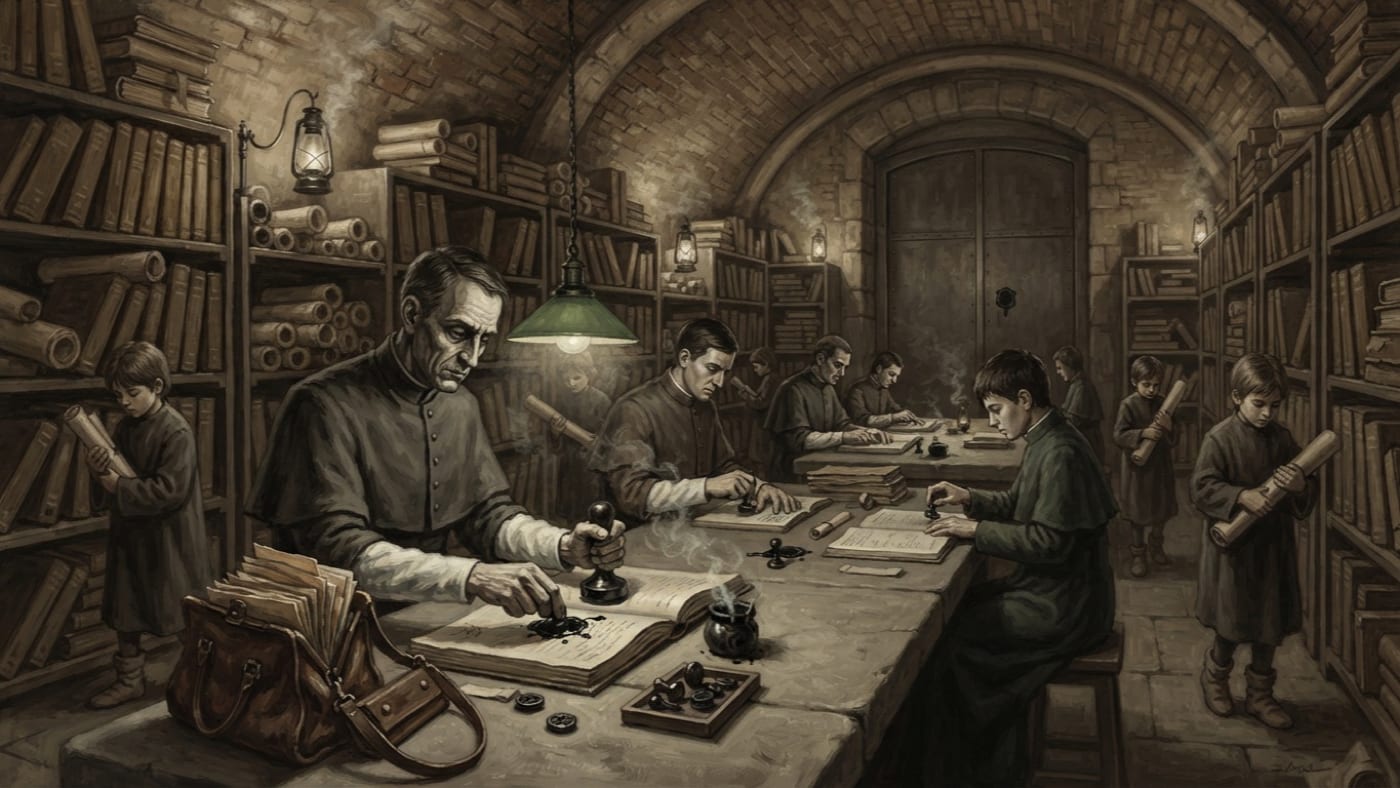
Black Seal Annex
The citizen loses everything. The file loses nothing.
Beneath Strasbourg's Records house, the Erasure Notaries keep every file behind a vanished citizen. The citizen loses everything; the Annex loses nothing.
Codex Ref. XIII.1.70-002
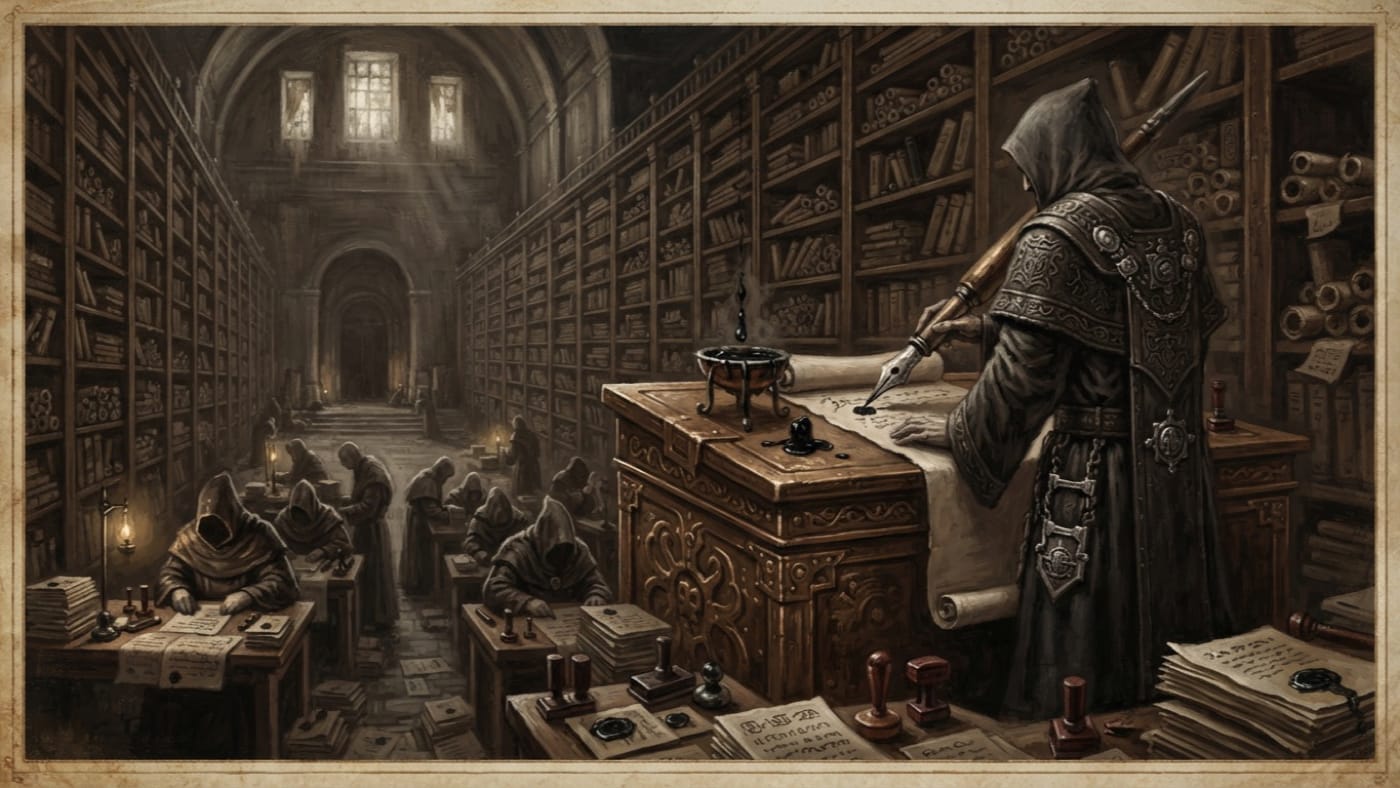
Black Seal Prelate
The Notary signs the strike; the summit decides whose signature survives.
The summit of the Office of Nullity's hierarchy: rarely seen, feared by every Erasure Notary, and capable of ruining one with a signature. The station is attested; the incumbent remains outside the public rolls.
Codex Ref. XIII.1.70-002
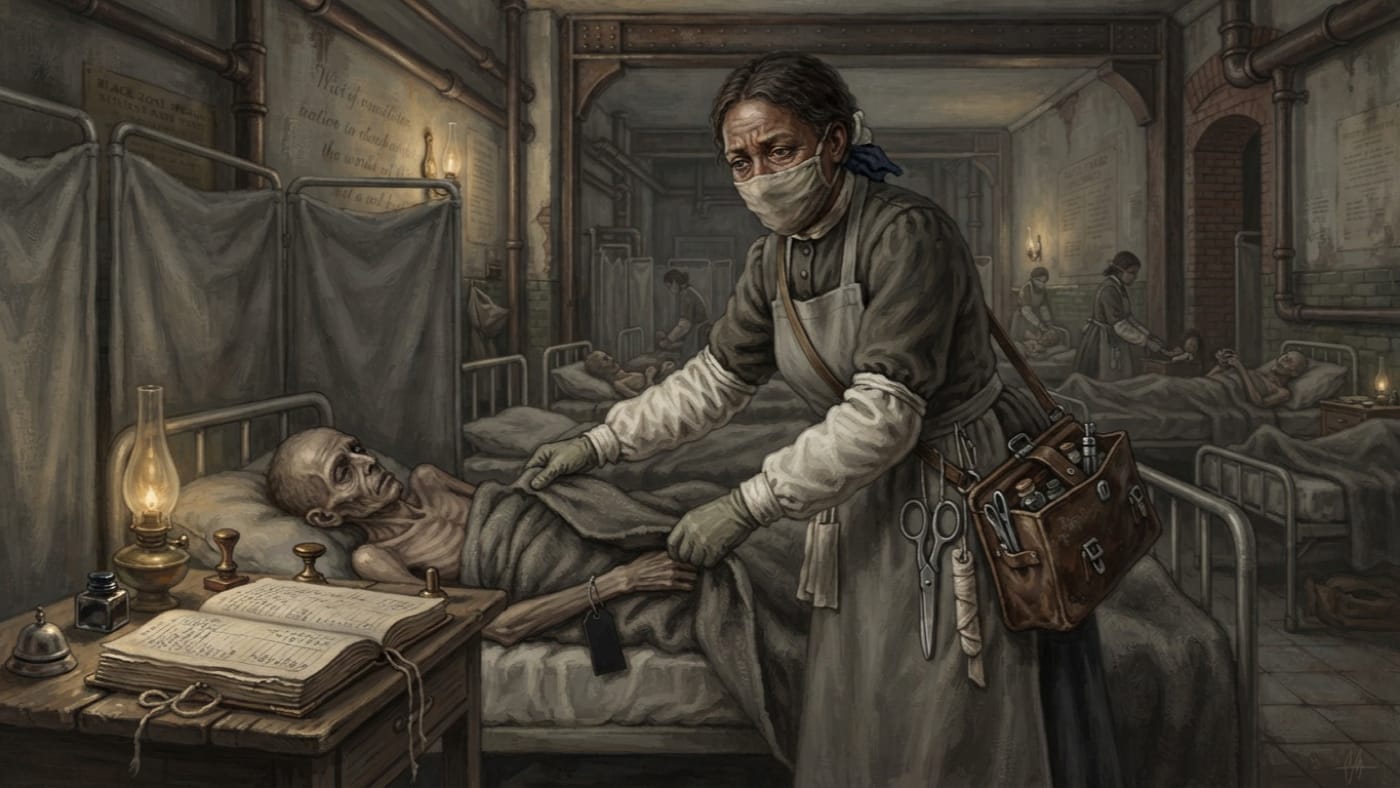
Black-Zone Specialist
Behind the screen, every kindness needs a signature
The Black-Zone Specialist serves Mercy Ward patients classified as terminal, contagious, anomalous, inconvenient, or beyond allotment. Every kindness needs a signature; every death must balance the ledger.
Codex Ref. XII.6.04-002

Blacklist Bundles
A decision with legs, dressed in wax
Sealed Index Damnatus amendments carried by the Runner Corps: paper that withdraws passage, rations, and sanctuary before its subject learns to fear the wax.
Codex Ref. XIII.1.76-001

Blackwheel Freelancer
The Bureau's method, invoiced to someone else
Blackwheel Freelancers sell the Bureau of Shadows' silent cartage to private clients, proving that a sacred monopoly is merely a method with expensive gate-men.
Codex Ref. XII.14.04-002
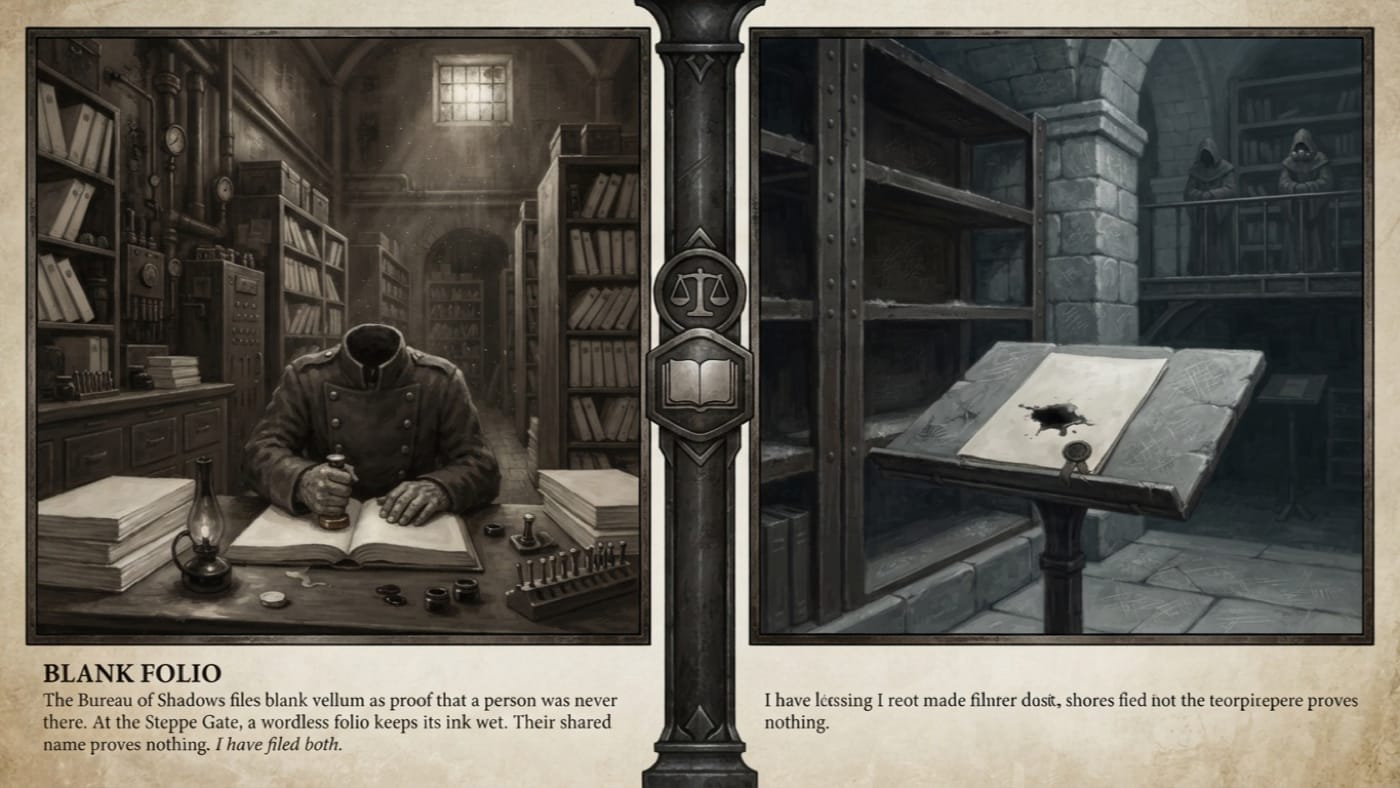
Blank Folio
One page erases a name. Another refuses to dry.
The Bureau of Shadows files blank vellum as proof that a person was never there. At the Steppe Gate, a wordless folio keeps its ink wet. Their shared name proves nothing. I have filed both.
Codex Ref. XIII.1.29-001
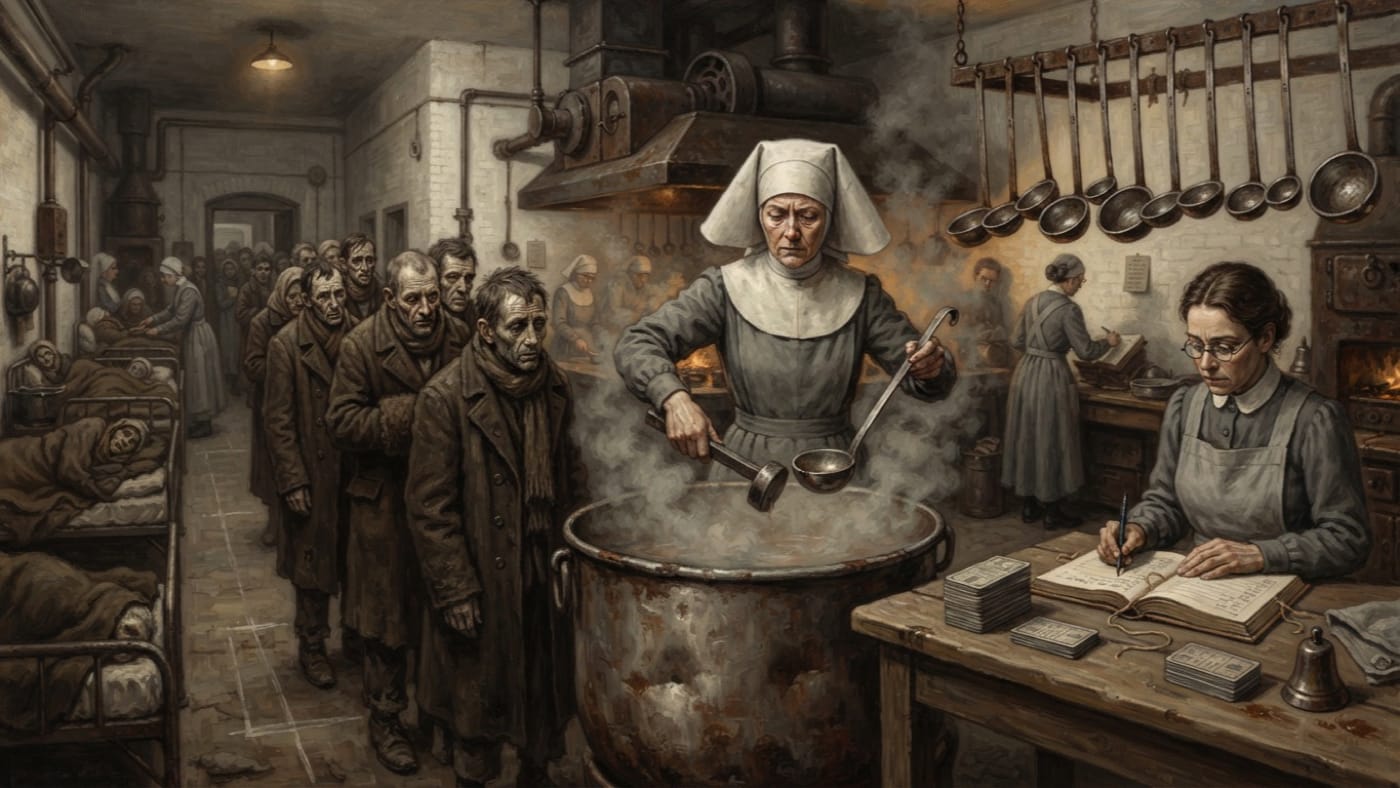
Blessing of the Ladles
Once a year the Church kisses the ladles; the measure remains fixed
An A.S. 201 survey of Saint Marrow's Mercy-house feast: ladles washed, counted, kissed and struck; the bowl is full, provided the hunger is registered.
Codex Ref. XIII.1.89-201
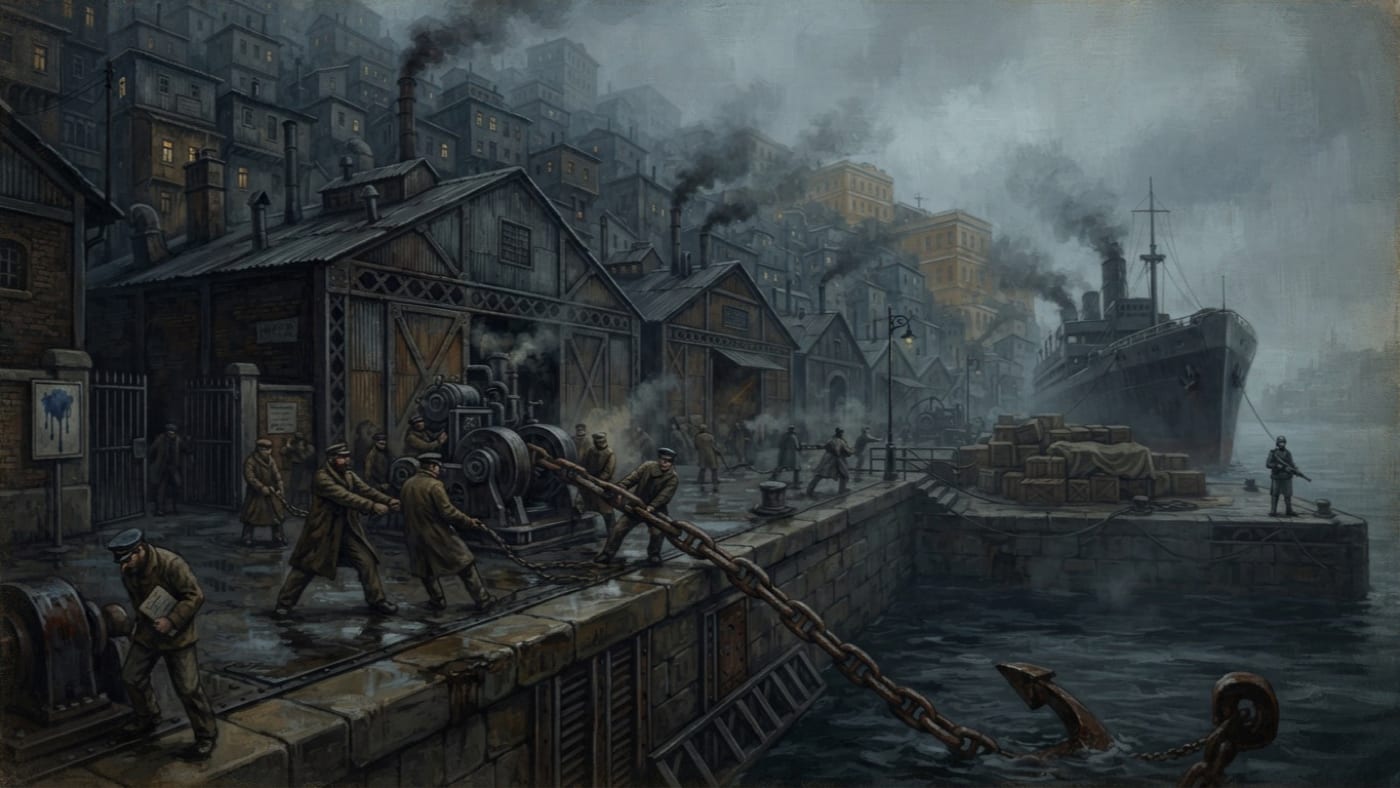
Blue ledger zone
Residence is permission to be counted
Blue registers the Harbor of Chains households for residence, rations and tithe. The permit supplies lawful standing; it leaves passage to another stamp.
Codex Ref. XIII.1.93-288
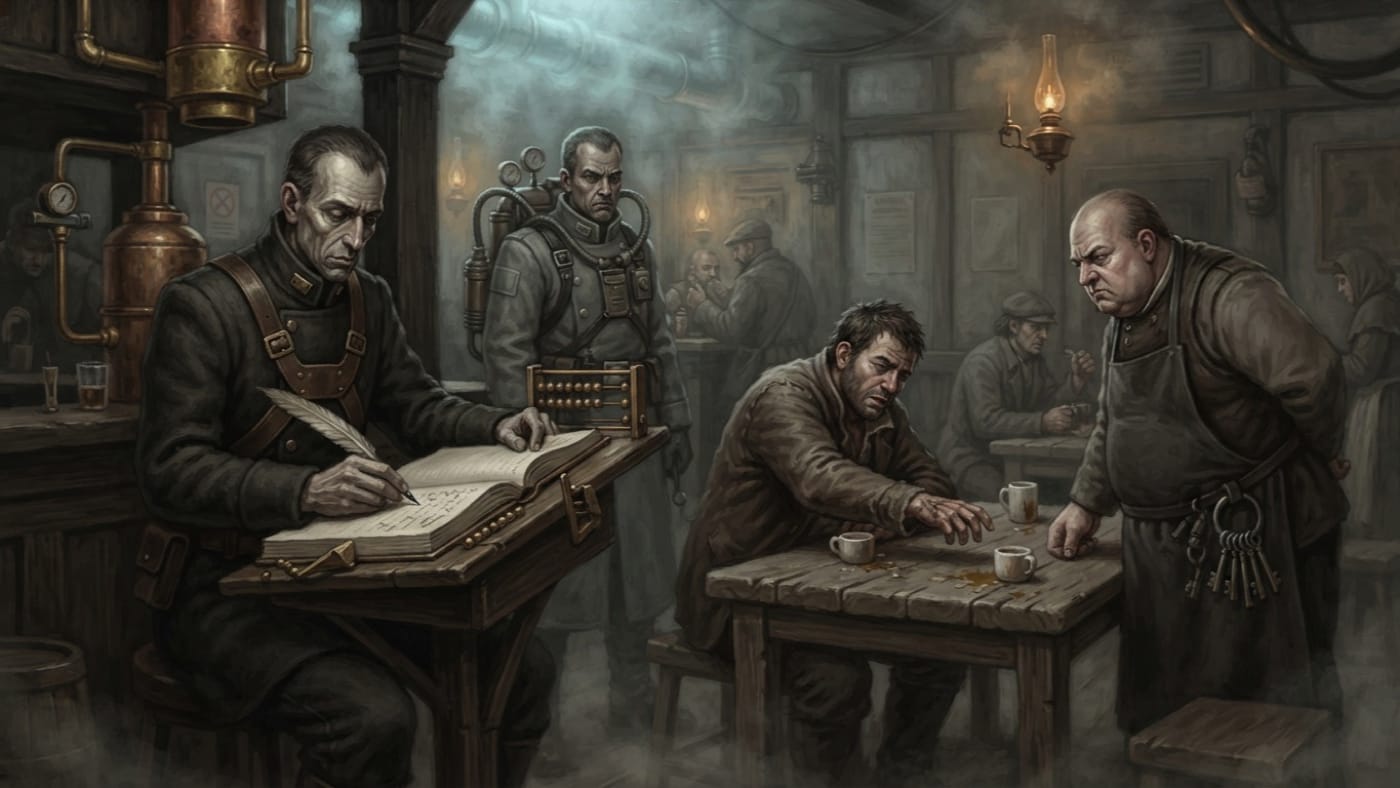
Bodily Percussion, Non-Musical
The hand forgets its thigh; the clerk remembers the licence
Bodily Percussion, Non-Musical is the List of Laughters category for a drunk who strikes a table believing it his thigh. The clerk records intention, keeps the bead rate unpublished, and charges the house for the noise.
Codex Ref. XIII.1.66-002
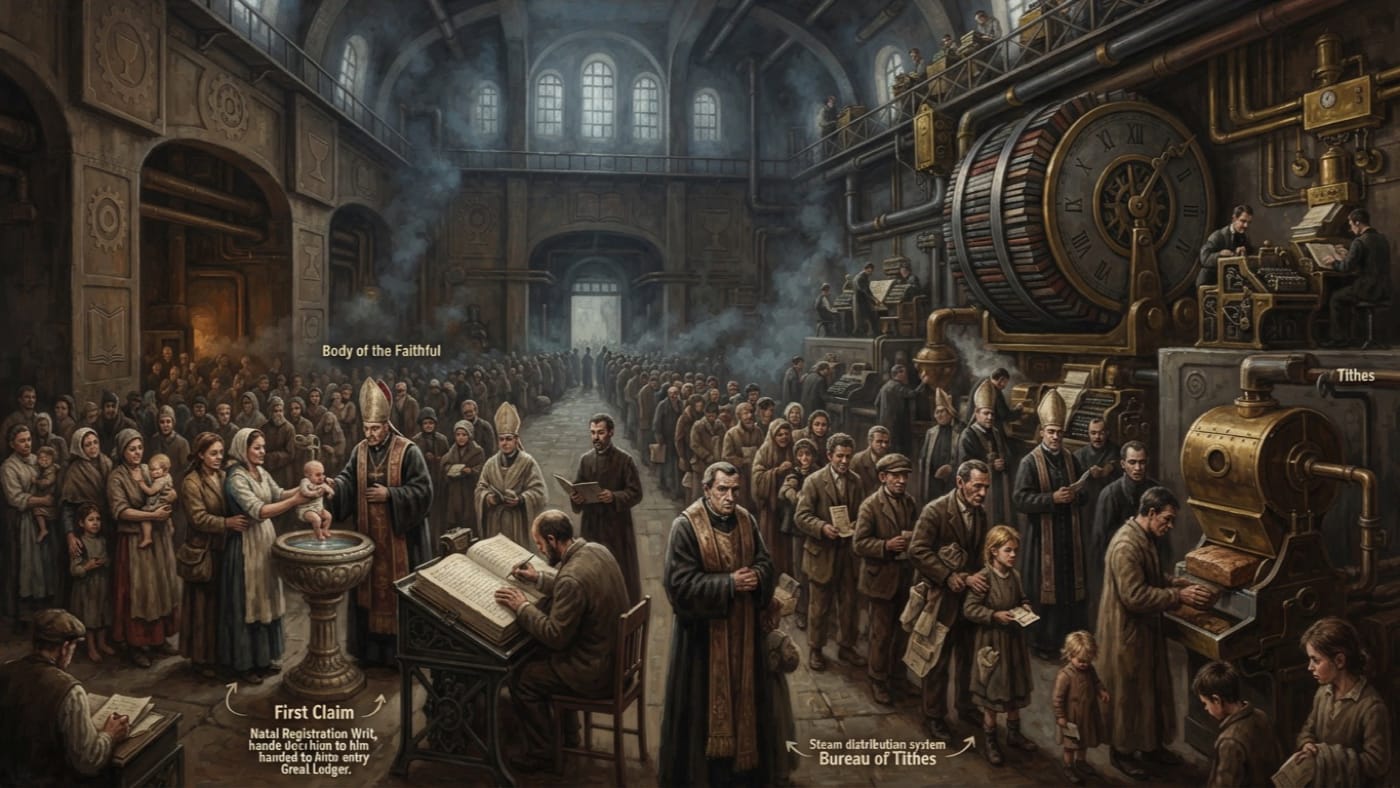
Body of the Faithful
Devotion warms the flock; recognition takes its pulse
The Church's faithful taken together: shepherded by bishops, recognised through the Ledger and claimed before the font. The flock receives bread; the accounts remember what it owes.
Codex Ref. XIII.1.03-201
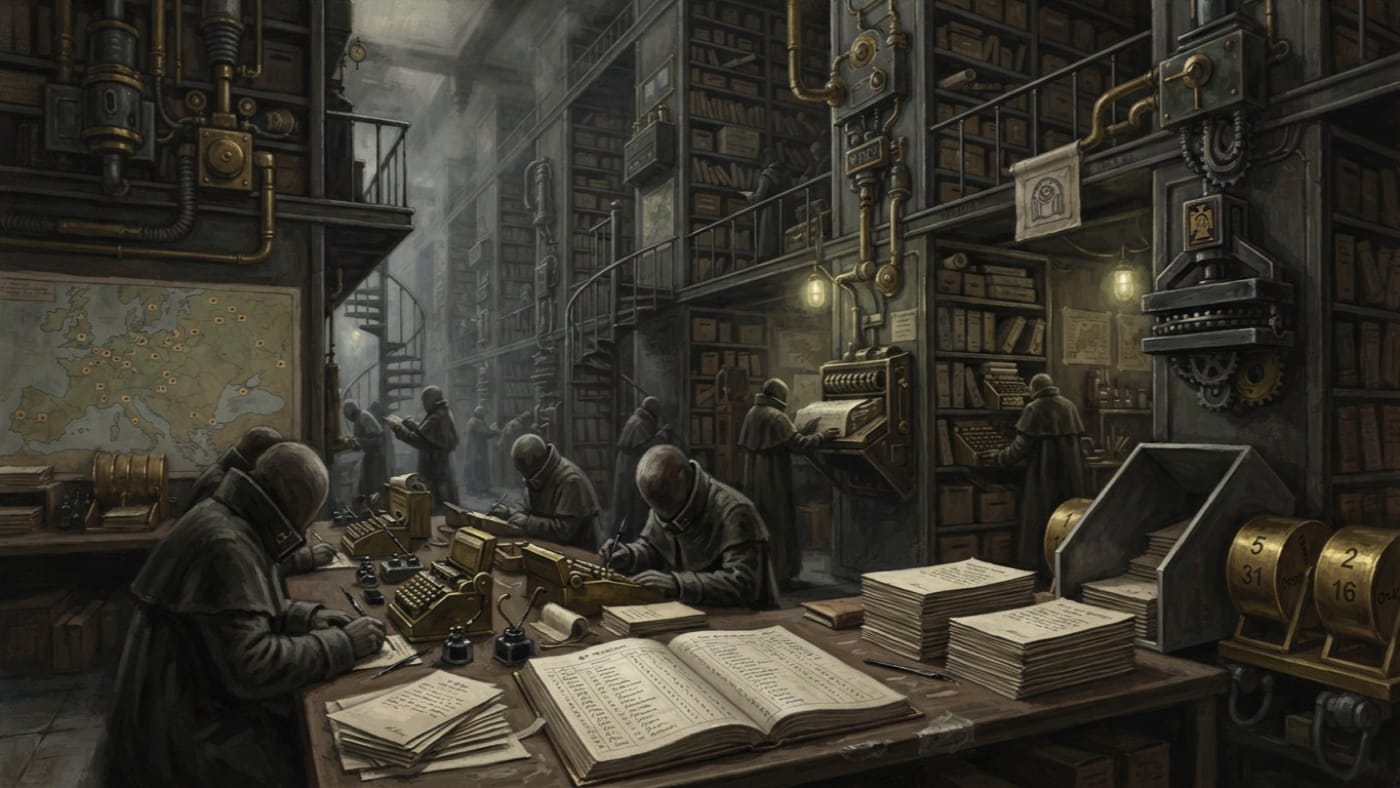
Bone Census
The count is conceded; the right to count is condemned
Compiled in Amsterdam in −32 A.S. / 1678 CE, the Bone Census tabulated 243 Aldebrand relic claims. The figures are conceded; the scholars' right to count remains condemned.
Codex Ref. I.1.04-000
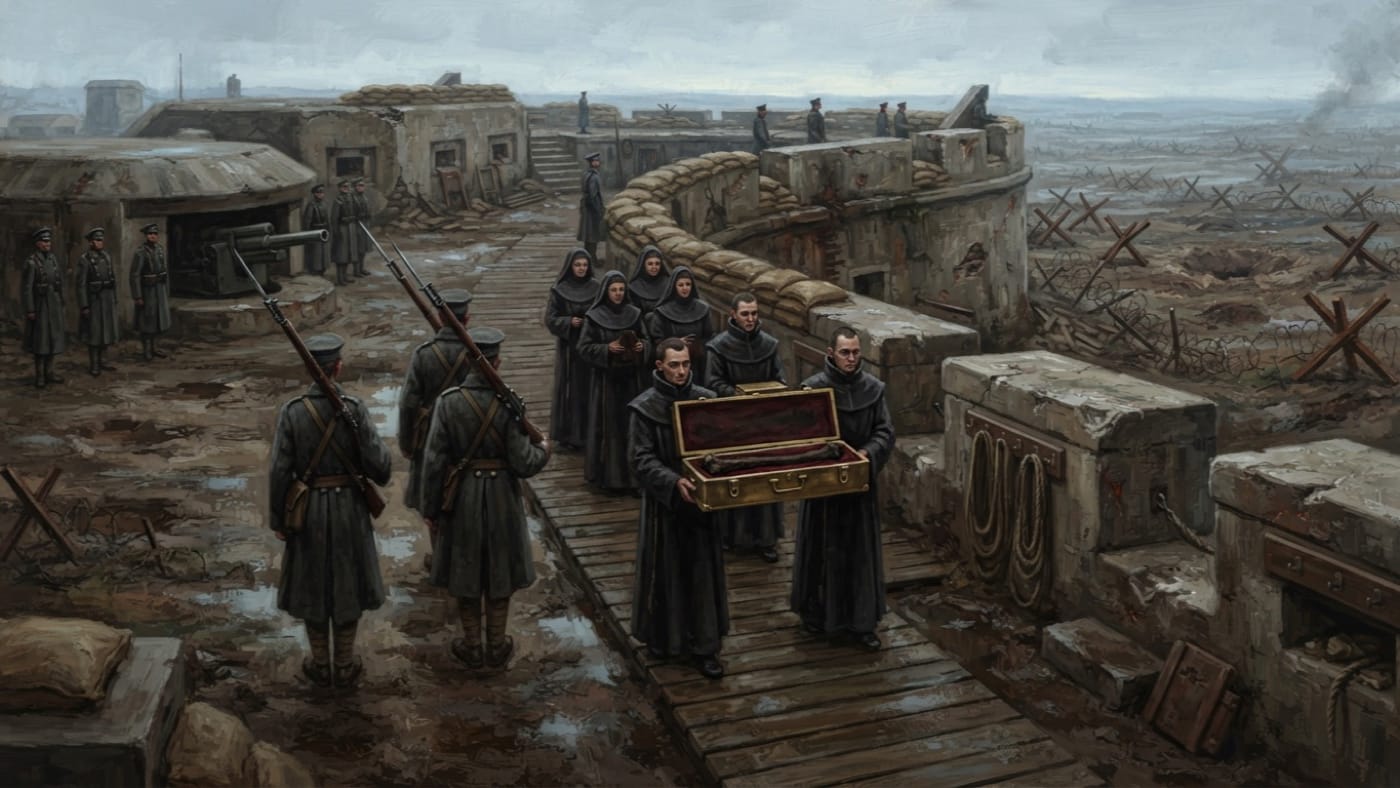
Bone Walk
Mechanism uncertified. Posture improved.
A notarized femur passes along the Ravelin of Vigilance on the third Friday of each month. The soldiers stand straighter. The miracle remains uncertified.
Codex Ref. XIII.1.12-311

Bone-Lines
What only you remember, until the copy remembers too
Bone-lines are the small, private memories Irongate files against Morwen's copies. Records calls them copy-resistant; I advise the reader to remember the distinction.
Codex Ref. XIII.1.01-004

Bone-Lung
The dead enter the chest one opened rack at a time
Progressive marrow-dust sickness of Ritual Bone-Stampers, politely misnamed by Medicine, cheaply classified by Records, and compensated by no one with a soul or budget.
Codex Ref. XIII.1.44-001
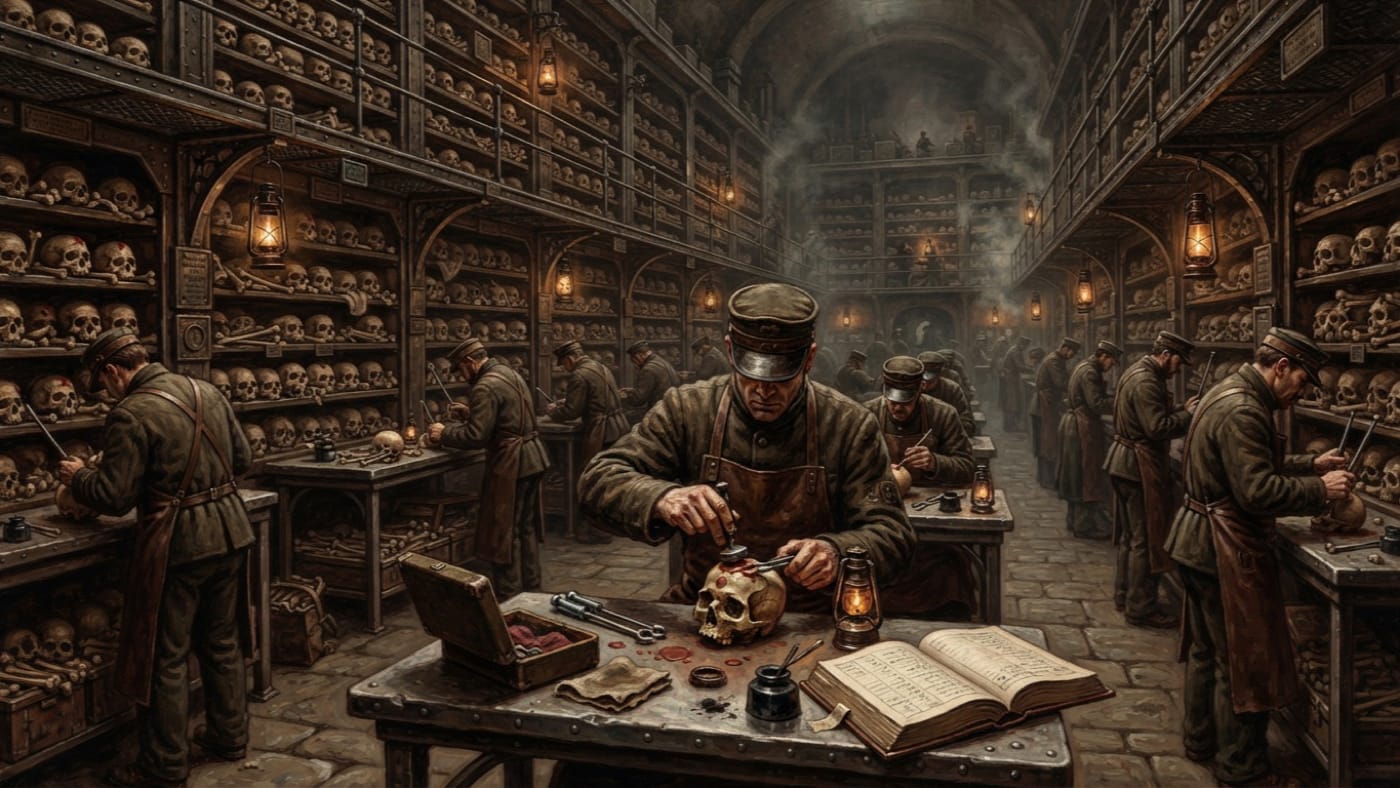
Bone-Stamp
The impression passes audit; the corridor gives its own verdict
The bone-stamp certifies that remains were received, catalogued, prayed over and placed. The Bureau audits the impression; the corridor judges whether it holds. Drax surveys the procedure in A.S. 201.
Codex Ref. VI.2.02-001

Bone-Tag clerks
The corpse needs a name; the living need the clerk's permission
Candle-Sump's Bone-Tag clerks keep names attached to corpses and living papers inside cabinets. In Lower Vire, clerical death needs only a wrong column and a clerk unwilling to correct it.
Codex Ref. XII.34.02-201

Book of Departures
Where the last breath becomes lawful ink
The Book of Departures receives every lawful death: mercy, tax instrument, burial rite, inheritance key, prayer license, and muzzle for ghosts.
Codex Ref. XIII.1.87-112
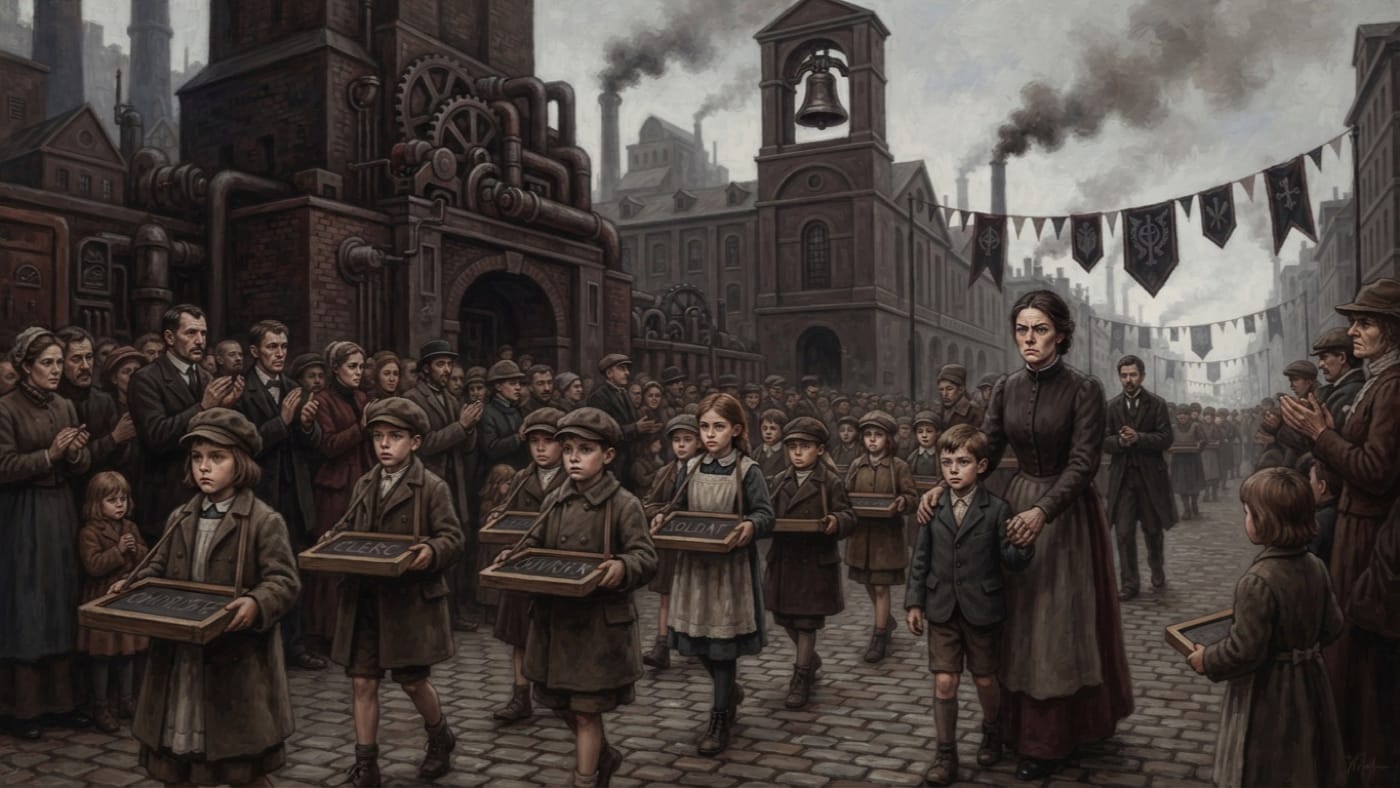
Book of Promise Parade
The child carries a future; the Bureaus retain the right to revise it
The Book of Promise Parade brings childhood's provisional vocations into the street: children carry wax tablets, families applaud, and the Bureaus reserve the right to change the future.
Codex Ref. XIII.1.22-002
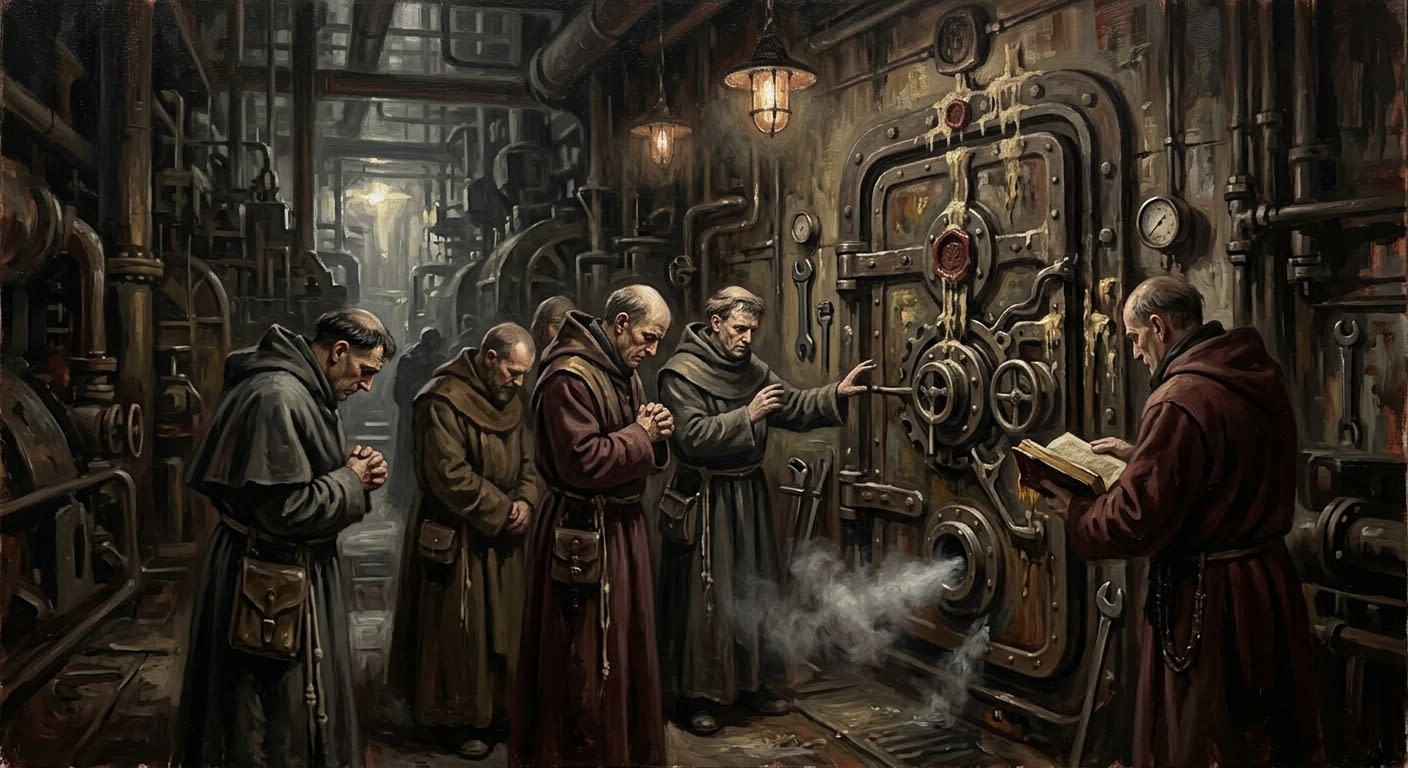
Boundary Litany
The hymn that teaches seals to remember where the world ends
Operational hymn for gasket, wax, flange, drum-mouth, and pressure door: the Boundary Litany makes matter confess where obedience stops.
Codex Ref. XIII.1.85-152

Brand Authority Officer
The board takes the burn; the street serves the sentence
The Auditor signs; the Officer burns. After three consecutive broadcast windows below eighty-five percent, Brand Authority Officers mark the sector board. The timber takes the burn; every household receives the ration downgrade and longer curfew.
Codex Ref. XII.45.01-002
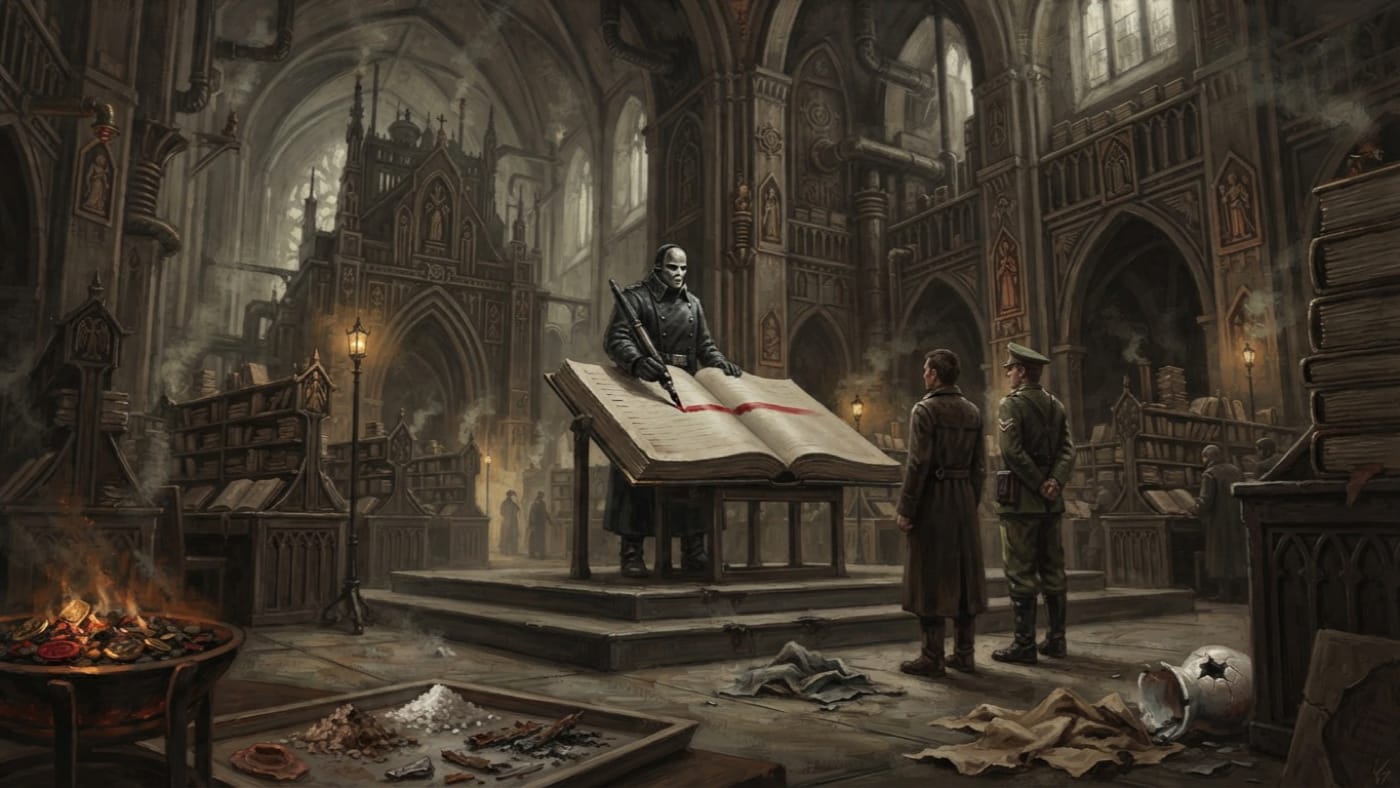
Breach Rite
The promise dies. The Ledger remembers.
The Bureau of Oaths buries failed vows in witnessed ceremony and red ink. The bond may end; its record remains available to every auditor, enemy, and future spouse.
Codex Ref. VI.4.03-013

Breach-Rite Witnesser
The promise dies; the witness returns.
The Bureau of Oaths sends its Breach-Rite Witnessers to bury failed vows, close the record, and discover which colleague tied the original knot badly.
Codex Ref. VI.4.03-014
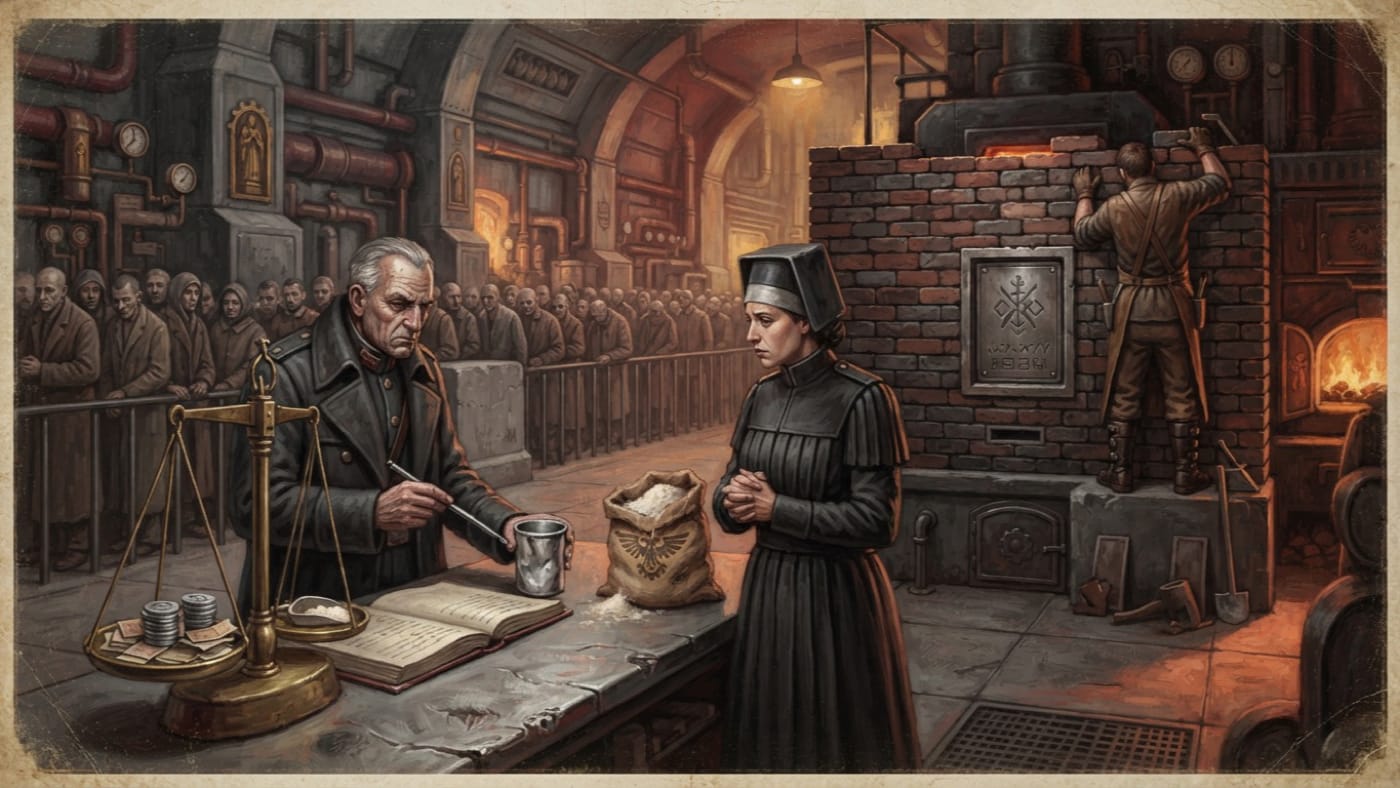
Bread Heresy
A short measure, a sealed wall
Bread heresy names the Church's charge against flour skimming, forged chits, hoarding, and unauthorized feeding. The cup measures the shortfall; the wall receives its assigned name.
Codex Ref. XIII.1.06-001

Bread-Wick
The crust must blacken; the ration must survive
The Bread-Wick admits Nine Wicks Ember-Pages by blackening a ration loaf without setting it alight: a catechism in applying pressure while keeping the hungry system intact.
Codex Ref. XIII.1.77-201
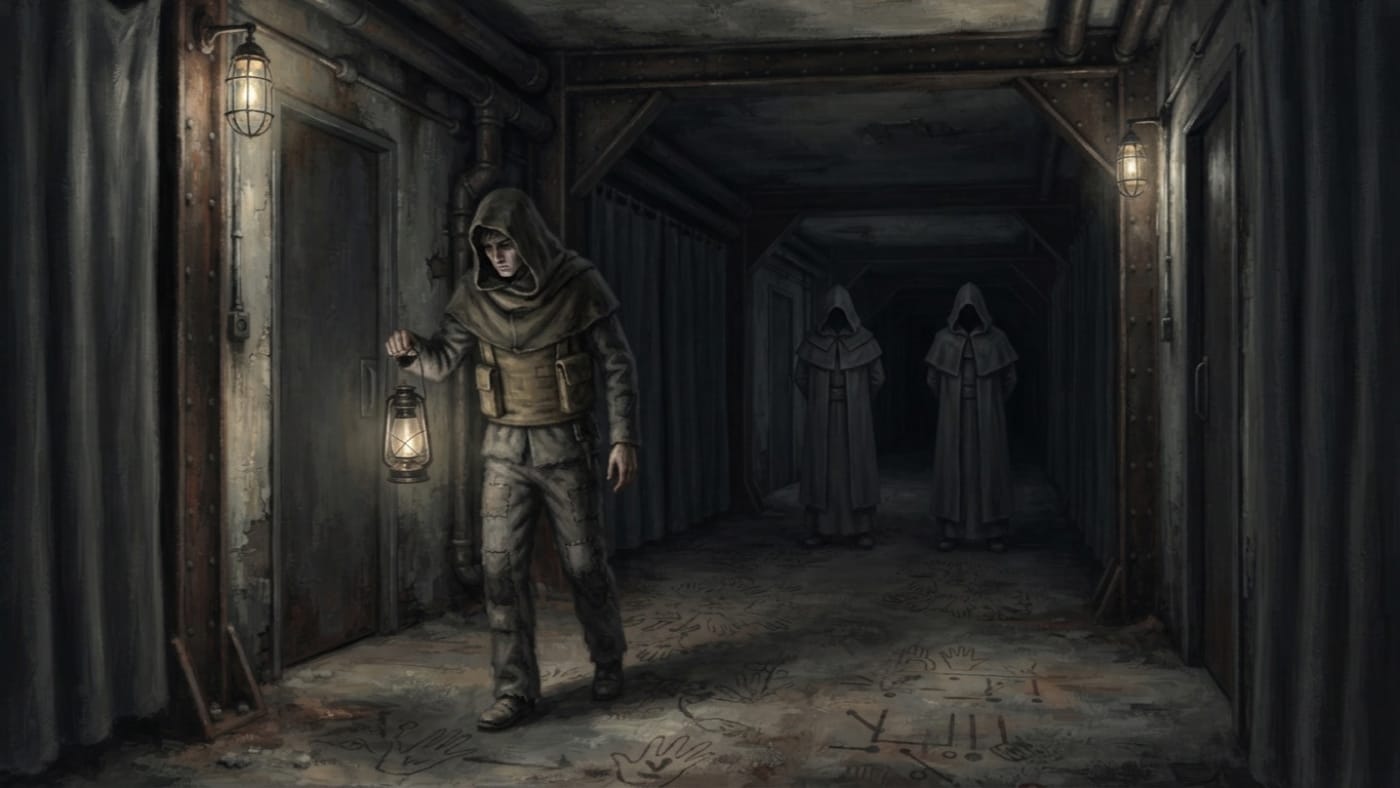
Breath Oath
One hundred counts, and the lungs learn their place
The Circle of Mute Radiance admits candidates by a corridor stalk lasting one hundred counts, with a lit lantern and no audible breath. Failure earns repetition; late failure adds iron to the lesson.
Codex Ref. XIII.1.76-002
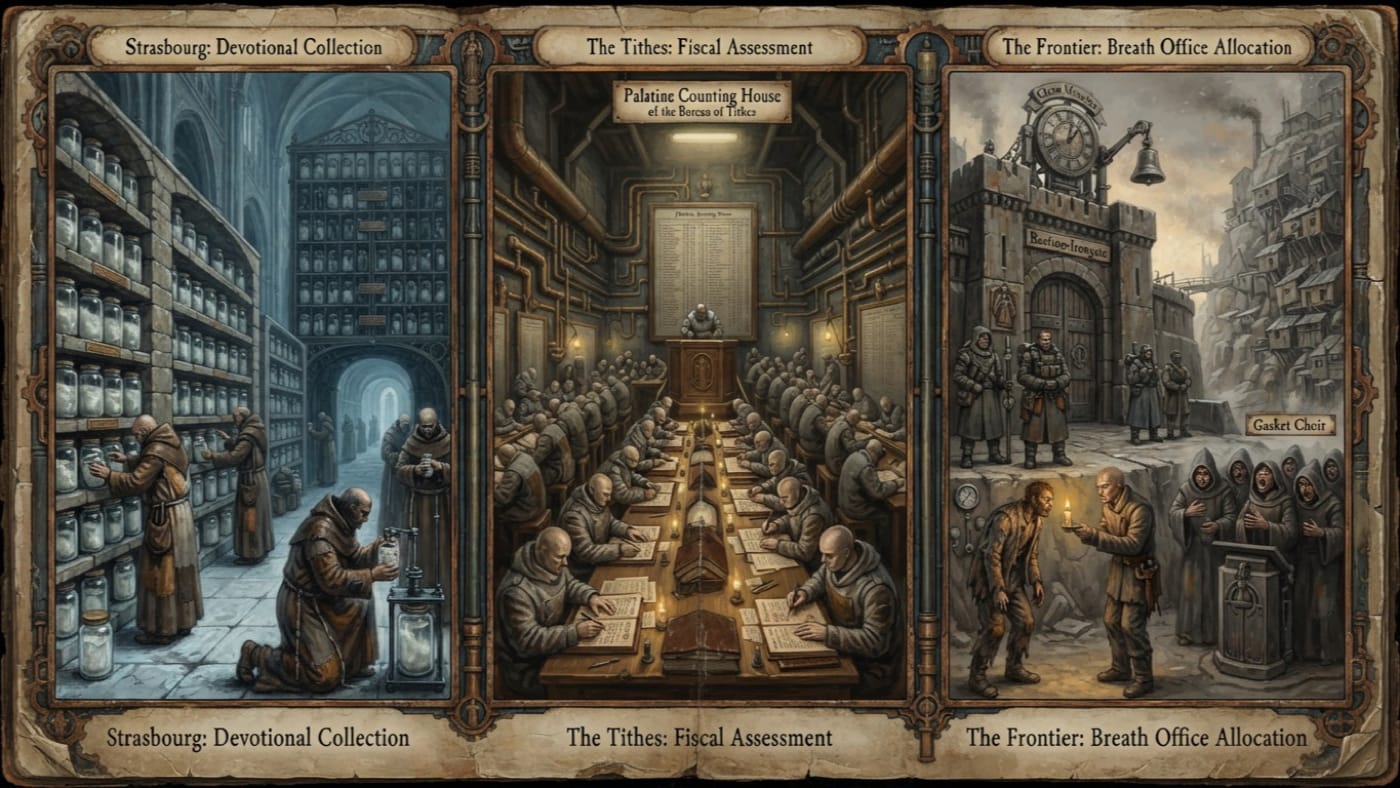
Breath-tithes
Whatever passes through a mouth can be made to pass through a desk
Breath-tithes make respiration administratively payable: Strasbourg collects devotion in jars, Tithes assesses atmospheric sanctification, and frontier offices price voice, warmth and shelter. The seals differ; the lungs do not.
Codex Ref. XIII.1.38-002
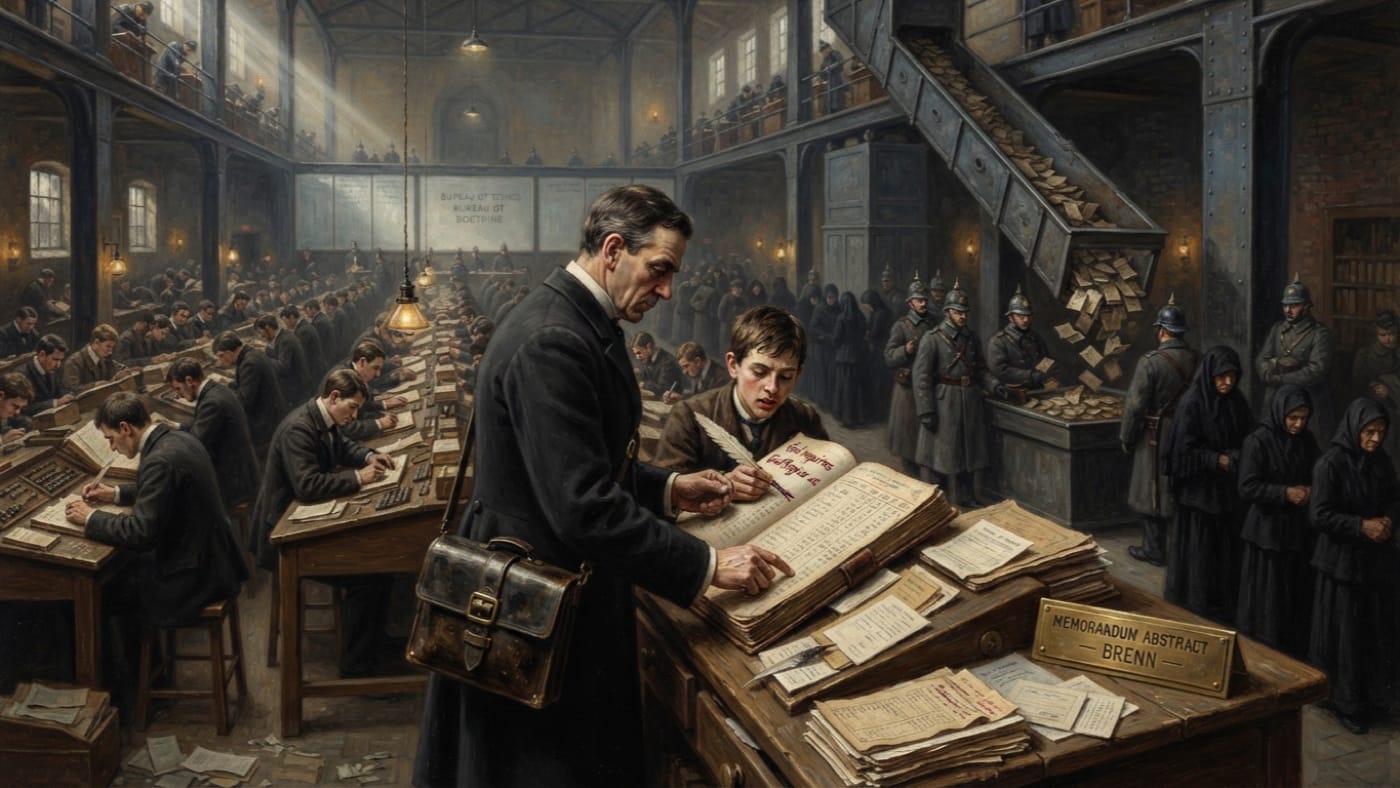
Brenn Memorandum
The prayer was corrected; the figures stood
Brenn's A.S. 138 memorandum proposed compulsory reduced-rate Widow's Pennies in place of pity exemptions. Doctrine corrected his prayer; Tithes kept the arithmetic.
Codex Ref. XIII.1.86-138

Brine Ledgers
A lie is safest in the column the auditor already expects to be wrong
Lübeck's cellar accounts hid debts behind salt losses. Their method was confiscated in A.S. 180; reconstructed books remain monitored and useful. The fraternity dissolved; its arithmetic kept working.
Codex Ref. XIII.1.180-358

Brine-Fork Phial Cellar
The room where grief is improved by glass, wax, and duplicate ledgers
Beneath Brine Fork, eleven thousand four hundred and six sealed tear-phials hum, lean, frost, and teach the Synod that grief keeps accounts.
Codex Ref. XIII.1.25-001

Broker's Split Prayer
Two mouths, one crossing, and a fee for joining them
A passage password divided between client and ferry broker, limiting what an informer can recite while keeping the crossing dependent on the man who sells the missing half.
Codex Ref. XIII.1.16-002

Brotherhood field manual
One page of wax paper, one night of memory, one minute at the lamp.
My A.S. 201 examination of the Brotherhood's disposable field leaf: five lantern signals, five street marks, the Triangle of Witness and proof too dangerous to carry past dawn.
Codex Ref. XII.25.11-201

Budgetary Annexes
Fear requires furniture; furniture requires fear
The Budgetary Annexes turn closed prosecutions into requests for clerks, cots, and listening cards. Vienna's five thousand branded mothers remain persuasive arithmetic.
Codex Ref. XIII.1.100-201

Bulgarian Orthodox Tradition in Sofia
Three churches, imposed words, and the exact letter of obedience
A.S. 201 survey of Sofia's three churches: Bulgarian Orthodox architecture, imposed Synodic liturgy, compulsory attendance and monitored catechism. The city obeys with a precision the Bureau finds inconvenient.
Codex Ref. XIII.1.26-001

Bundle-Carriers
Two doors, one living child, no papers
The Pale Kin's entry rank carries infants between two doors, with no papers and little knowledge. The Bureau counts thieves; the trade counts children alive after winter.
Codex Ref. XII.28.02-001

Burden Index Analyst
The red pen is warm; the household is elsewhere
The Burden Index Analyst corrects household scores for the Bureau of Tithes. One red slip can raise dues, thin rations and bring seizure nearer; the household seldom meets the hand.
Codex Ref. XII.46.02-201

Bureau Circular 221-R
Fourteen pages proving a living man can fail to count
Bureau Circular 221-R is the Records clarification that defines the dissolved as *praesens sed abrogatus*: present, abrogated, and ineligible for mercy by procedure.
Codex Ref. XIII.1.01-004
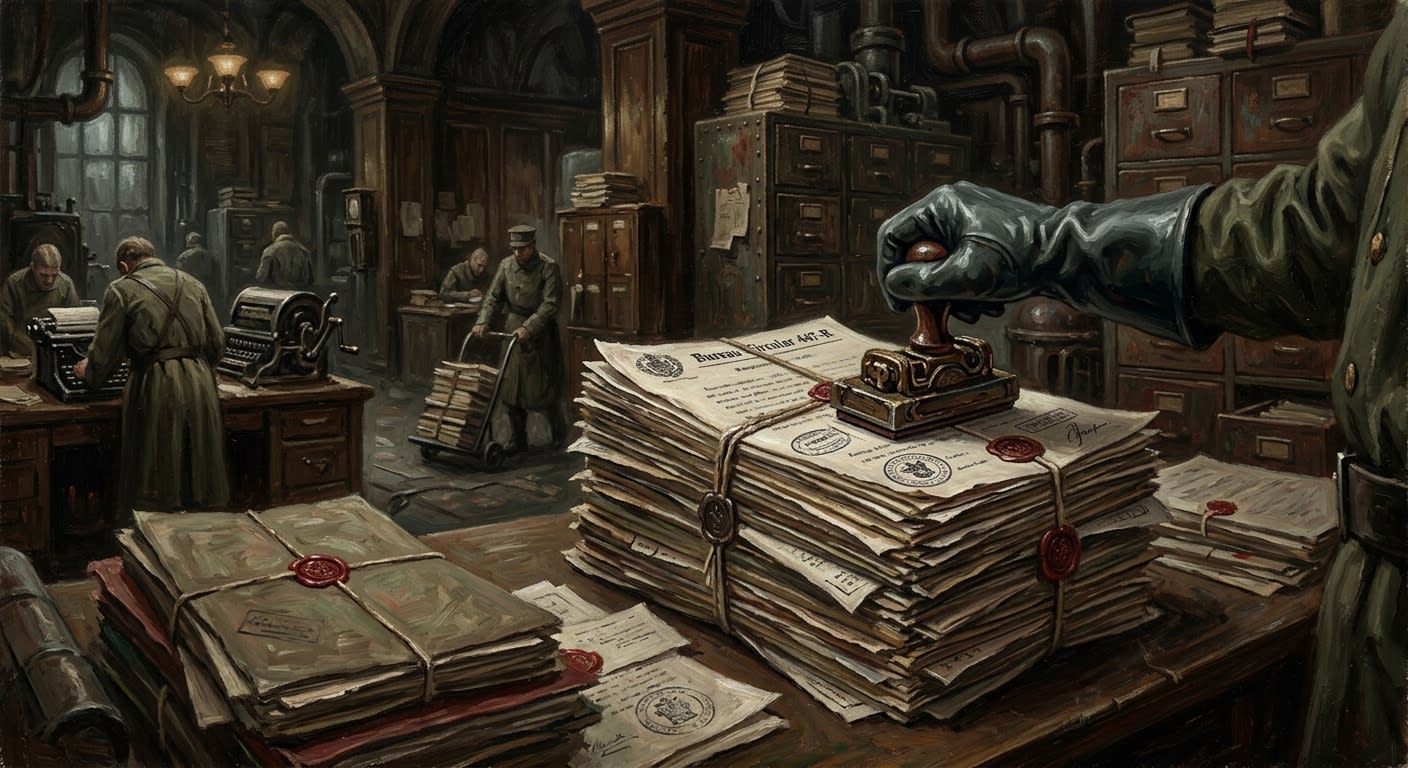
Bureau Circular 447-R
Four hundred and forty-seven words, none of them innocent
Bureau Circular 447-R denies the Codices Obscurae in exactly 447 words, each counted, sealed, revised, denied, and improved by fear.
Codex Ref. XIII.1.06-002
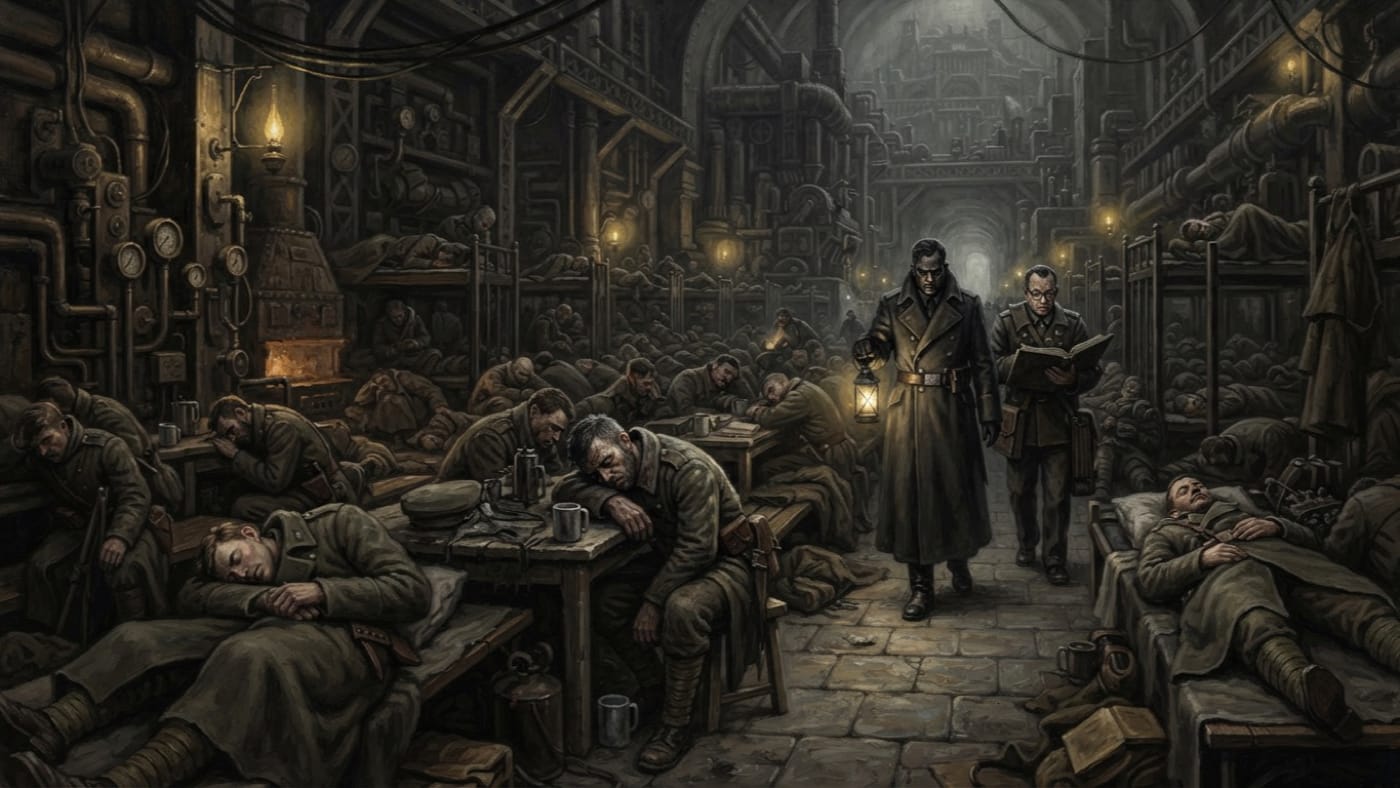
Bureau Circular 779-C
The intention to resume, invisible in the field.
Bureau Circular 779-C distinguishes rest from Sloth by the intention to resume labour. Doctrine acknowledges that the difference is invisible in the field, and leaves the field to manage it.
Codex Ref. XIII.1.07-779
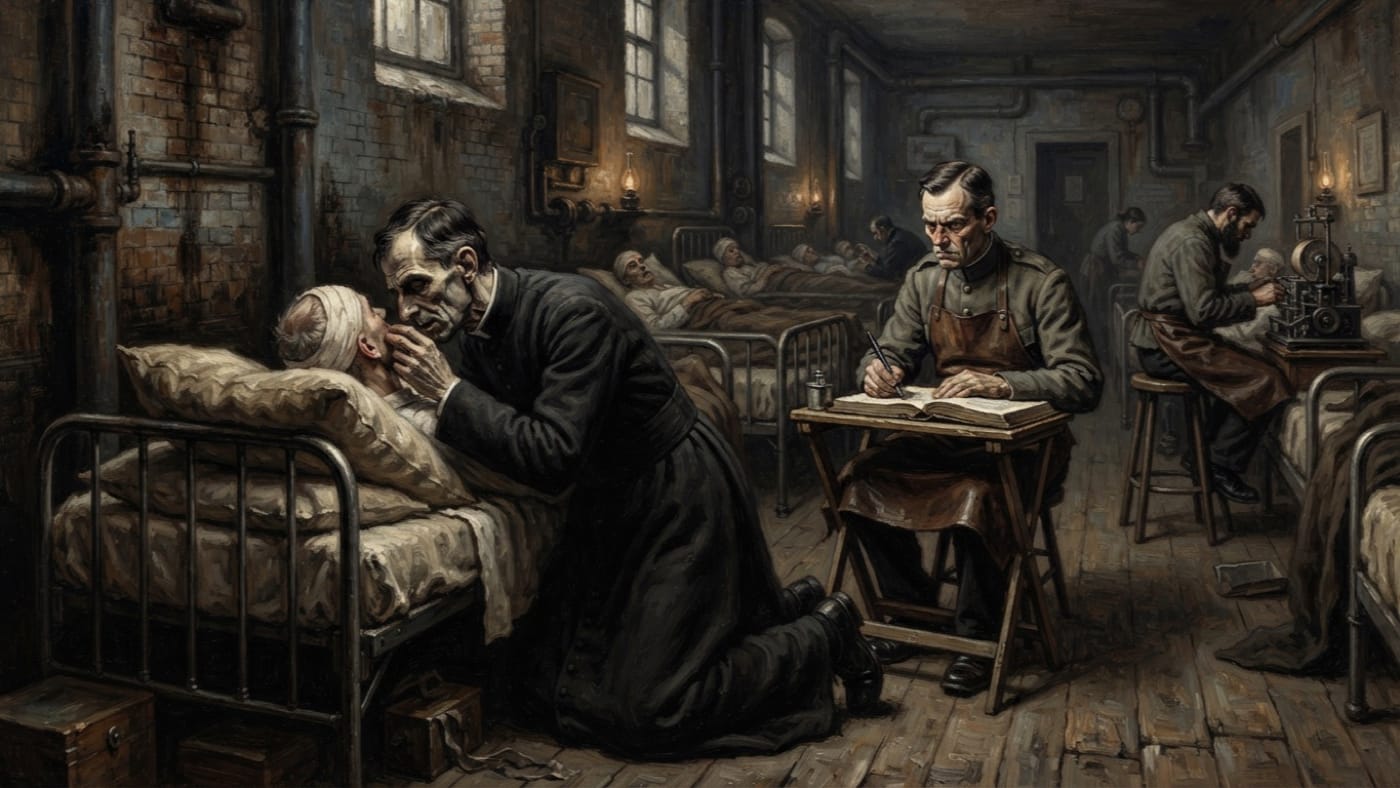
Bureau Circular 88-D
The appointed ear, and the reason Doctrine has not supplied
The Creed enters the right ear; the left remains doctrinally vulnerable. Circular 88-D specifies the side, withholds the reason, and leaves the bedside to manage exceptions.
Codex Ref. XIII.1.88-004

Bureau of Doctrine Declaration of A.S. 23
Engineering may measure the conduit; Doctrine keeps the verdict
The received Declaration of A.S. 23 distinguishes miracle from sorcery by source. The conduit may be measured; the verdict belongs to Doctrine, which reports that its rule has never changed.
Codex Ref. VI.3.01-023

Bureau of War Instrument 44-K
The word is voluntary. The collar is iron.
Instrument 44-K classifies the Sunken Choir's boys as "Liturgical Combatants, Voluntary" and licenses Line deployment. Mercy's objection enters the file; the cohort returns underground.
Codex Ref. XIII.1.44-001
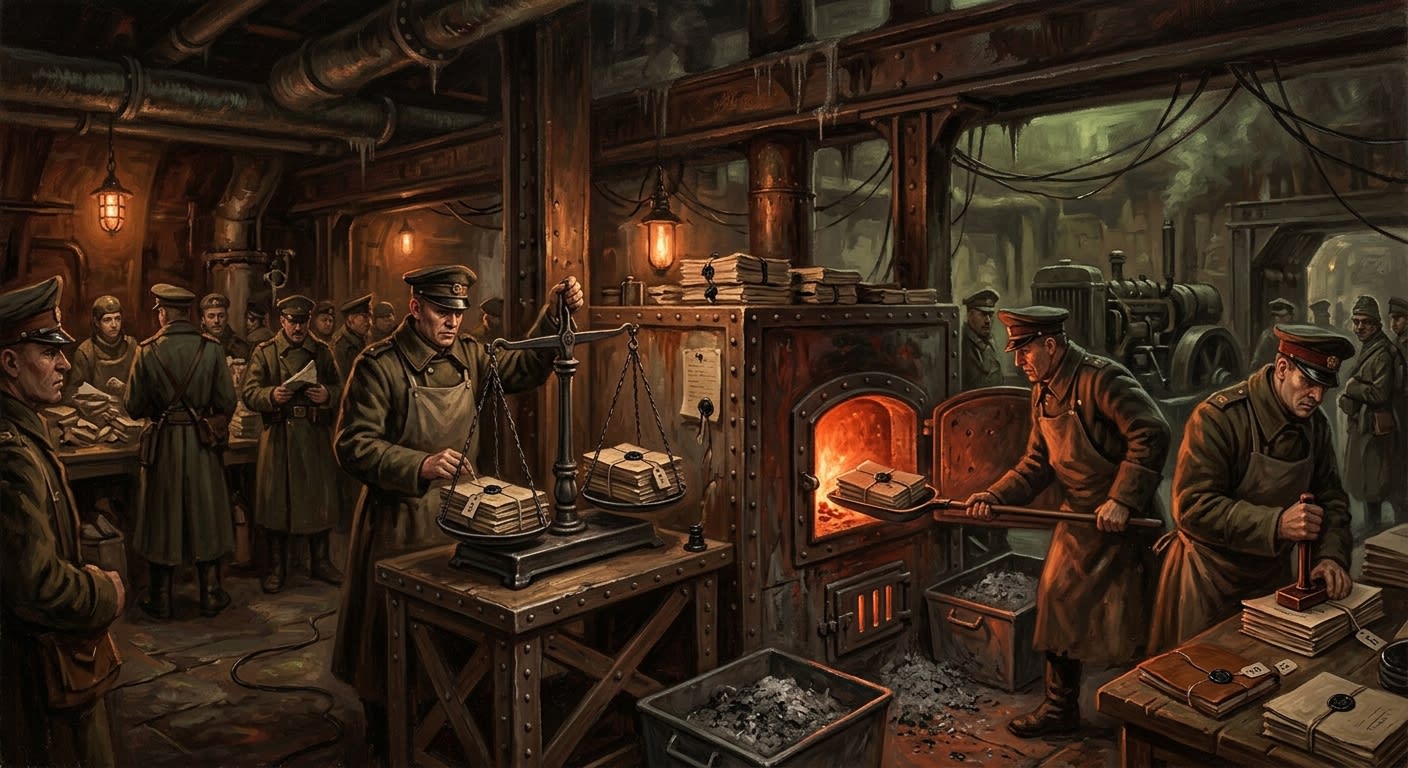
Burn Directive 7-C
Cauterize on Receipt, and call the ash a record
Burn Directive 7-C is the Trench Courts' authorised fire: dangerous last words are sealed, numbered, cauterized, weighed, and improved into ash.
Codex Ref. XIII.1.86-091
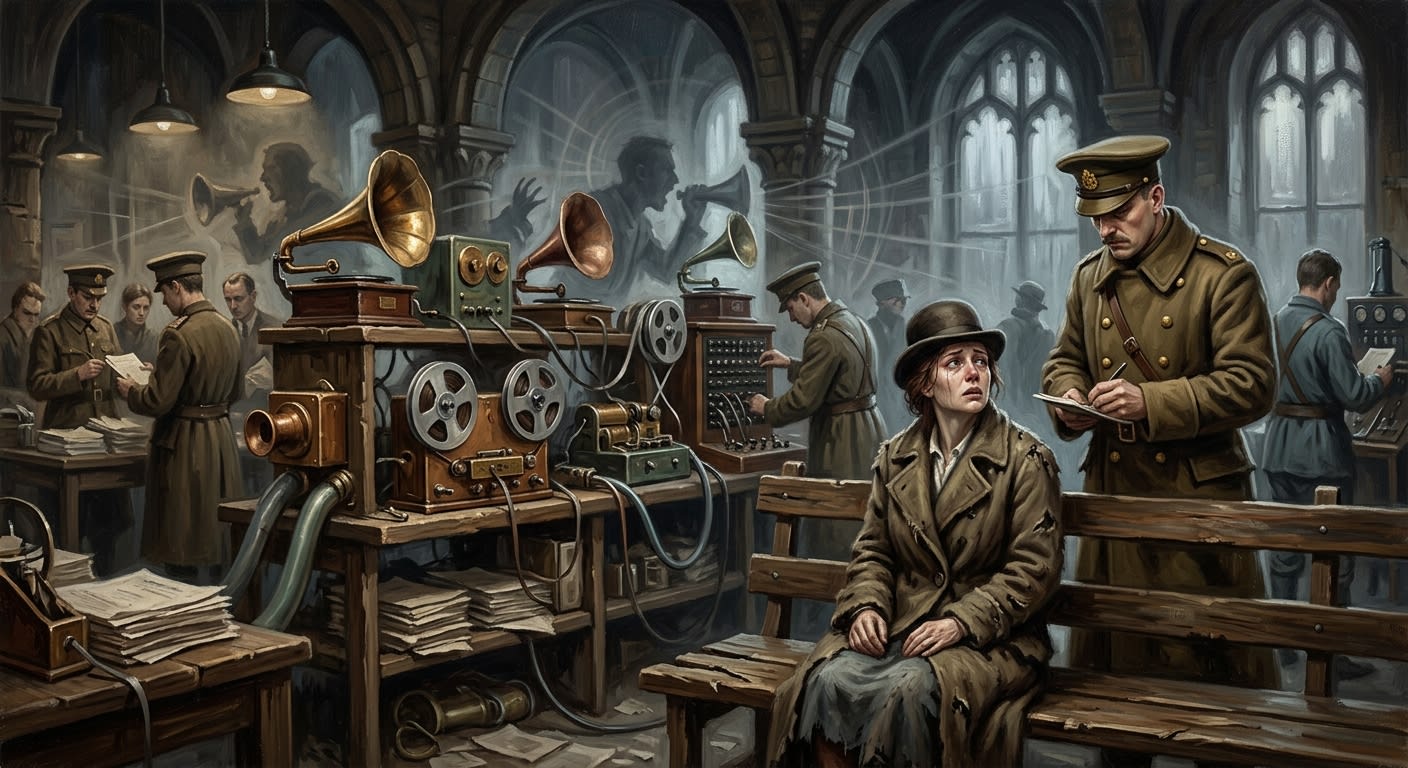
Cadence Anomaly
When the mouth is loyal and the voice is not
Restricted fifth Trench Court confession category for borrowed voices, wrong rhythms, and last words whose owners are administratively disputed.
Codex Ref. XIII.1.86-092

Cadence Corps Manual
Cut the crowd, signal Rites, refrain from listening
A.S. 201 present-use survey of the Cadence Corps Manual: route discipline, bell clearance, SCATTER and Section 7's withdrawn explanation of choirwind. Cut the crowd, signal Rites, do not listen.
Codex Ref. XII.31.02-201
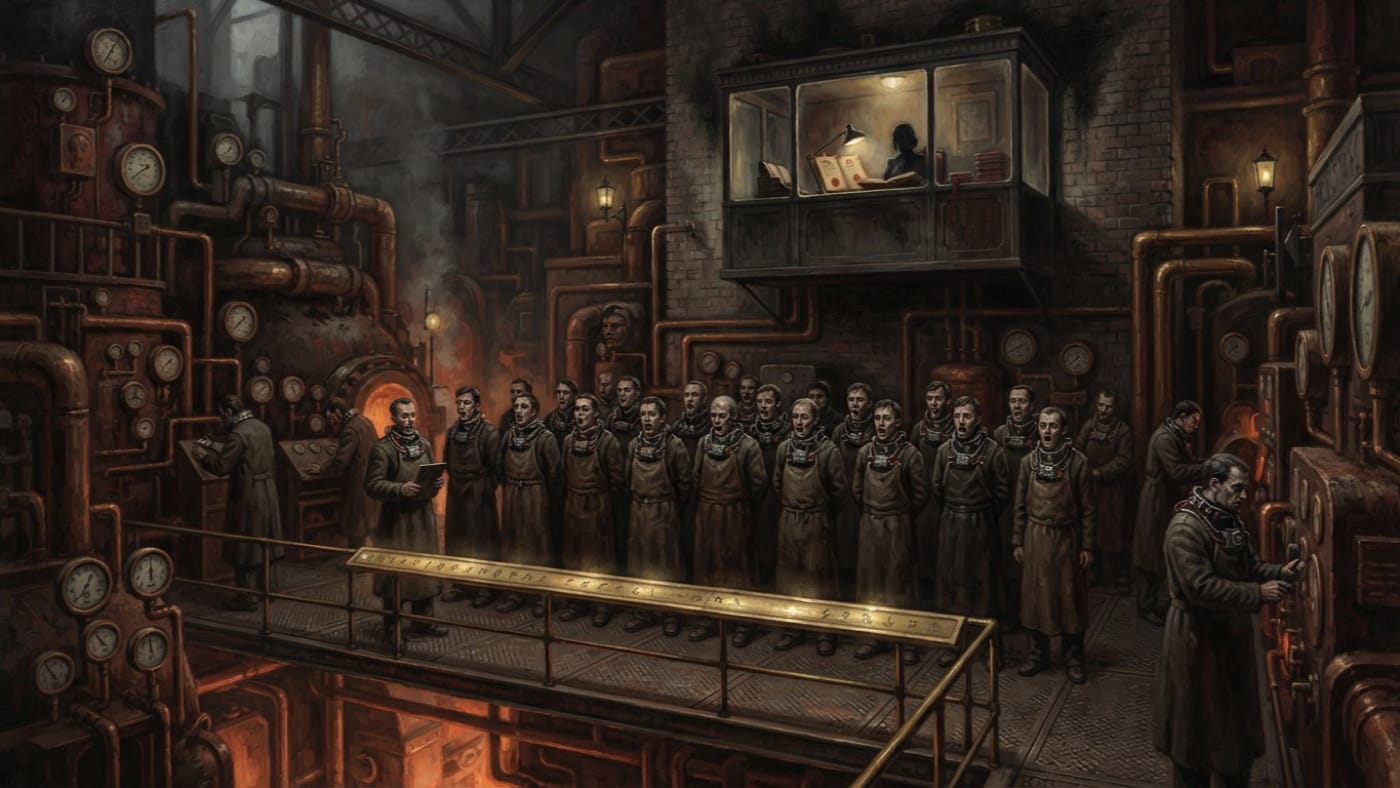
Cadence License
The paper licenses breath; Kest decides whether it works
A cadence license permits a Brast throat to command machinery. Doctrine and Ordnance keep the seals; Kest keeps the voice, the register, and the power to erase it.
Codex Ref. XIII.1.11-002
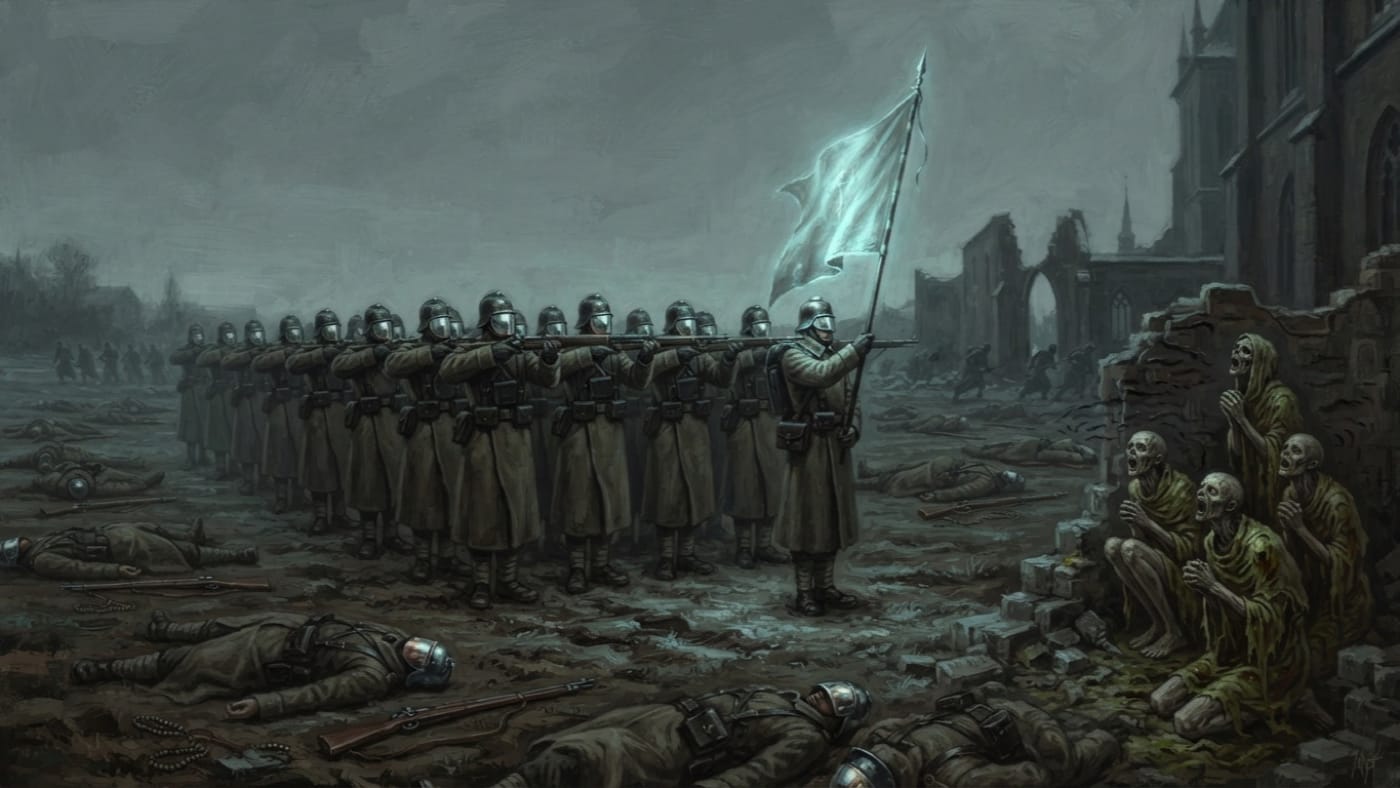
Cadence Severance
Where the command arrives and the hand finds no purpose
Cadence severance preserves a Fusilier's drill and obedience while cutting the passage from command to act. At Prague, forty-three loaded rifles survived their owners; the Bureaus revised the drill.
Codex Ref. VI.2.01-006

Calendar of Saints
Eternal saints, monthly amendments, and a clerk with glue
The Church's calendar of saints, feasts and fasts, held under the Seal of Martyrdom and revised by monthly amendment strips. Sanctity is permanent; the parish must keep its glue ready.
Codex Ref. XIII.1.05-002
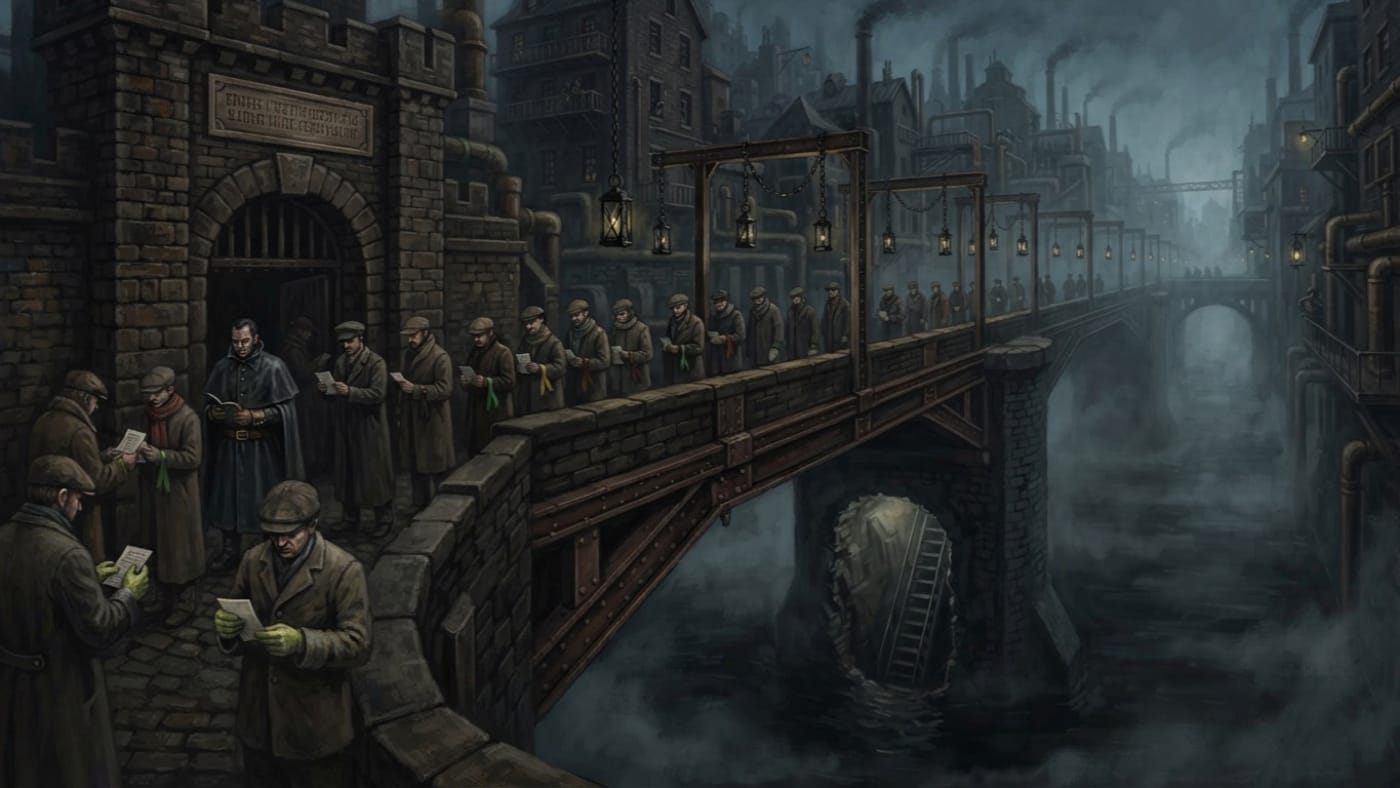
Candle Bridge
A crossing that preaches, and charges for the lesson
Candle-Sump's main crossing preaches cleanliness, obedience and sacred accounting above the canal. Its toll is unrecorded; its hollow pier descends to the underworks.
Codex Ref. XIII.1.05-201

Candle Proof
One palm-width of wax between sanctity and arrest
Relics doctrine standardised in A.S. 98: a clean taper, one palm-width from a suspected relic, asks whether the holy thing wants the flame.
Codex Ref. XIII.1.81-001
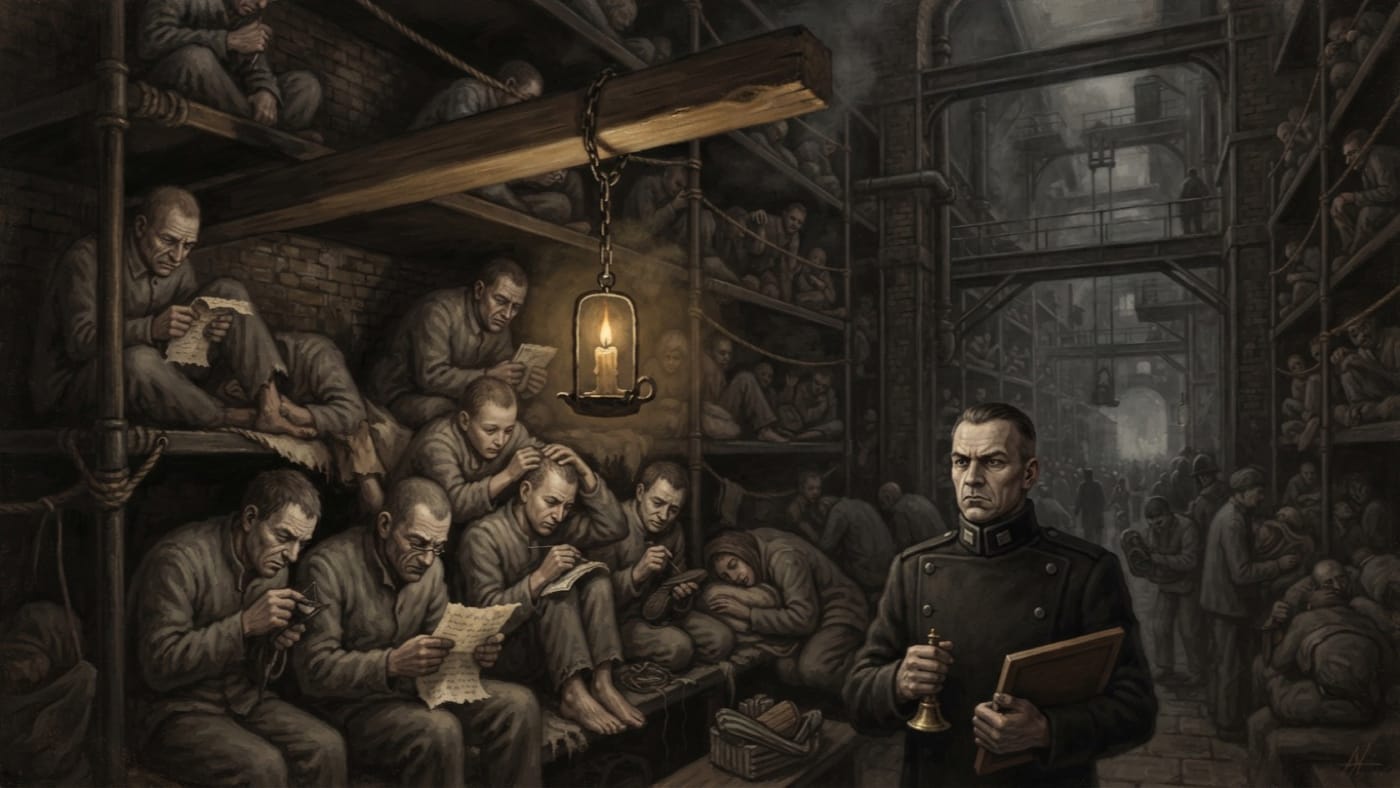
Candle Ration
One flame for six; the clerk keeps the darkness
One taper for six detainees, snuffed at fourth bell: the Dorm Rows ration light, delay appeals, and leave mercy to the clerk's revision.
Codex Ref. XIII.1.72-424

Candle Test
The candle measures breath; the clerk measures what remains of a citizen
At Irongate, a clerk times a worker's breath against a candle and enters the result beside license, heat and quarantine. The flame measures lungs; the Office decides what remains of citizenship.
Codex Ref. XIII.1.81-002
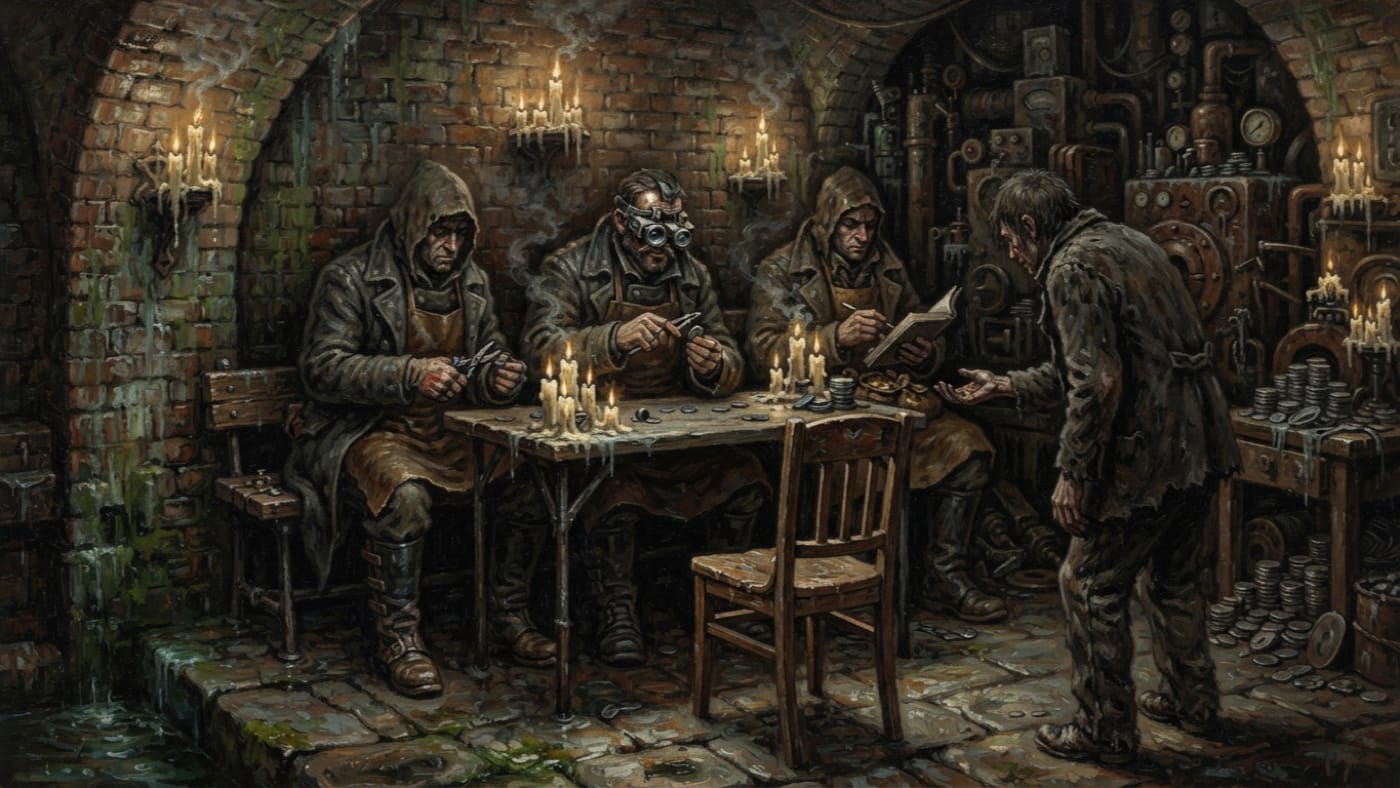
Candle Tribunal
Justice paid into the palm at low water
Beneath Sable Court's second canal lock, the Clipped Choir pays verdicts into the palm: acquittal, debt, exile, or cold coin. No appeal is recorded.
Codex Ref. XIII.1.58-201

Candle-Tally
The slate is kept; the household is corrected
Candle-Tally initiates the Circle of Ashen Steps through a full night of vigil-candle accounting. When slate and street disagree, the household is corrected until the ledger tells the truth.
Codex Ref. XIII.1.25-425

Candor Veritatis
Truth is a condition of cloth, subject to inspection
The whiteness of truth is the mantle standard in Hildegarde's A.S. 62 decree. Linen identifies the officer; inspection supplies the theology.
Codex Ref. XIII.1.88-063
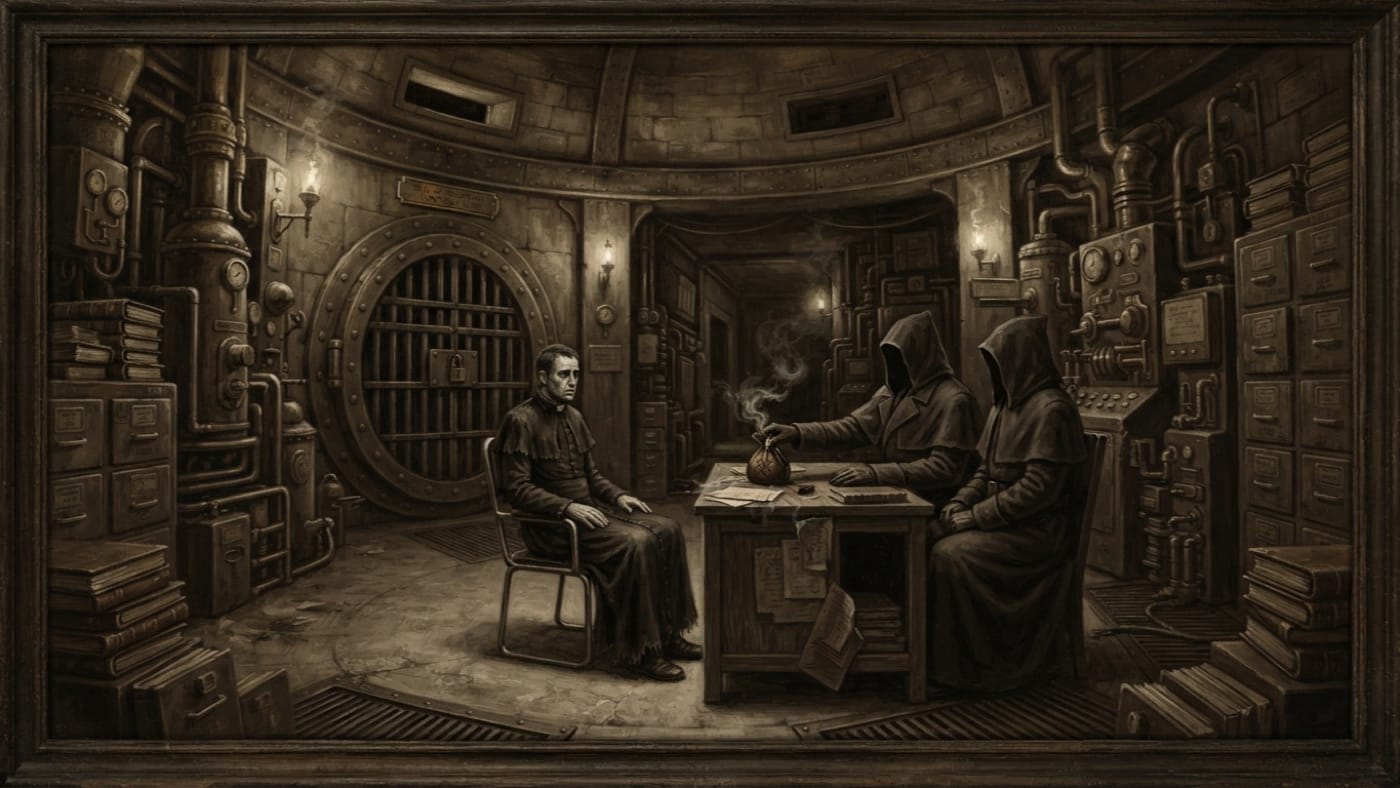
Canonical Audit
An A.S. 201 survey of the instrument whose investigators Records cannot name
An A.S. 201 survey of the Seal of Discipline's instrument: clergy investigated in sealed chambers by men Records cannot name, with findings carried in pouches said to destroy themselves upon opening. The Ledger retains the question.
Codex Ref. XIII.1.05-003
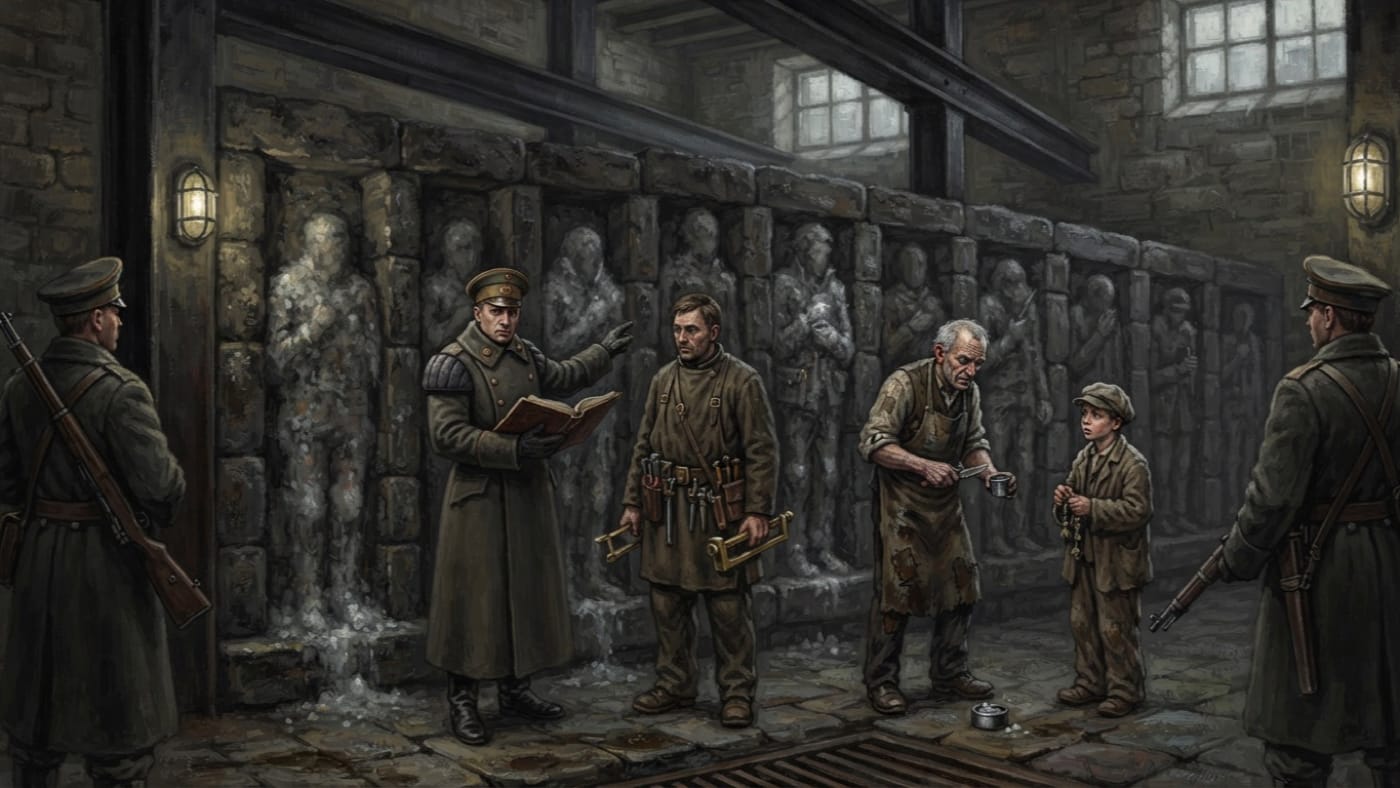
Canticle Day
The Plague was assigned an inspection
On Canticle Day, Przemyśl inspects its wall of fourteen immured suppliers. This A.S. 201 survey records pearly bloom, a reported hum, and mechanics selling luck.
Codex Ref. XIII.1.87-201

Canticle of Assured Return
The hymn assures. The Ledger counts.
Sixteen voices sang the Canticle before Commission 73-C in A.S. 73. Of 114 expeditions reportedly sent out under its assurance, 74 never returned. Doctrine considers the result sufficient.
Codex Ref. XIII.1.86-073

Canticle of Edras
On the Prayer That Remains Correct After Its Permission Expires
The Canticle of Edras is an authorized devotional text whose third verse serves as a rotating ferry password in Zones 2–3. The prayer endures; permission expires at sundown.
Codex Ref. XIII.1.16-445
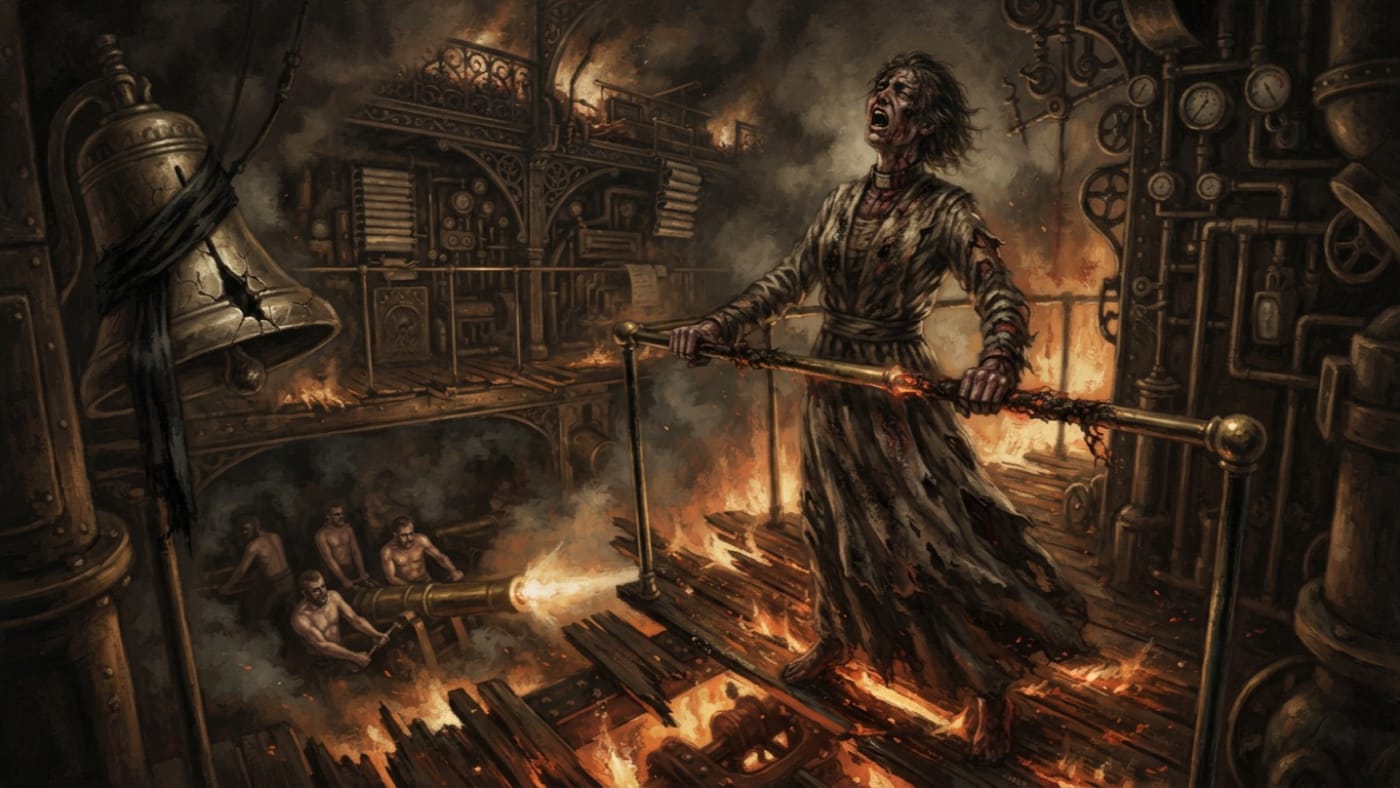
Canticle of Measured Fire
The bell failed. The voice kept the measure.
Saint Orla sang this Canticle through a burning Danube hymn-gallery, holding the guns in measure after the bell fouled. Rites counts forty minutes. The score is absent from my file.
Codex Ref. XIII.1.16-446
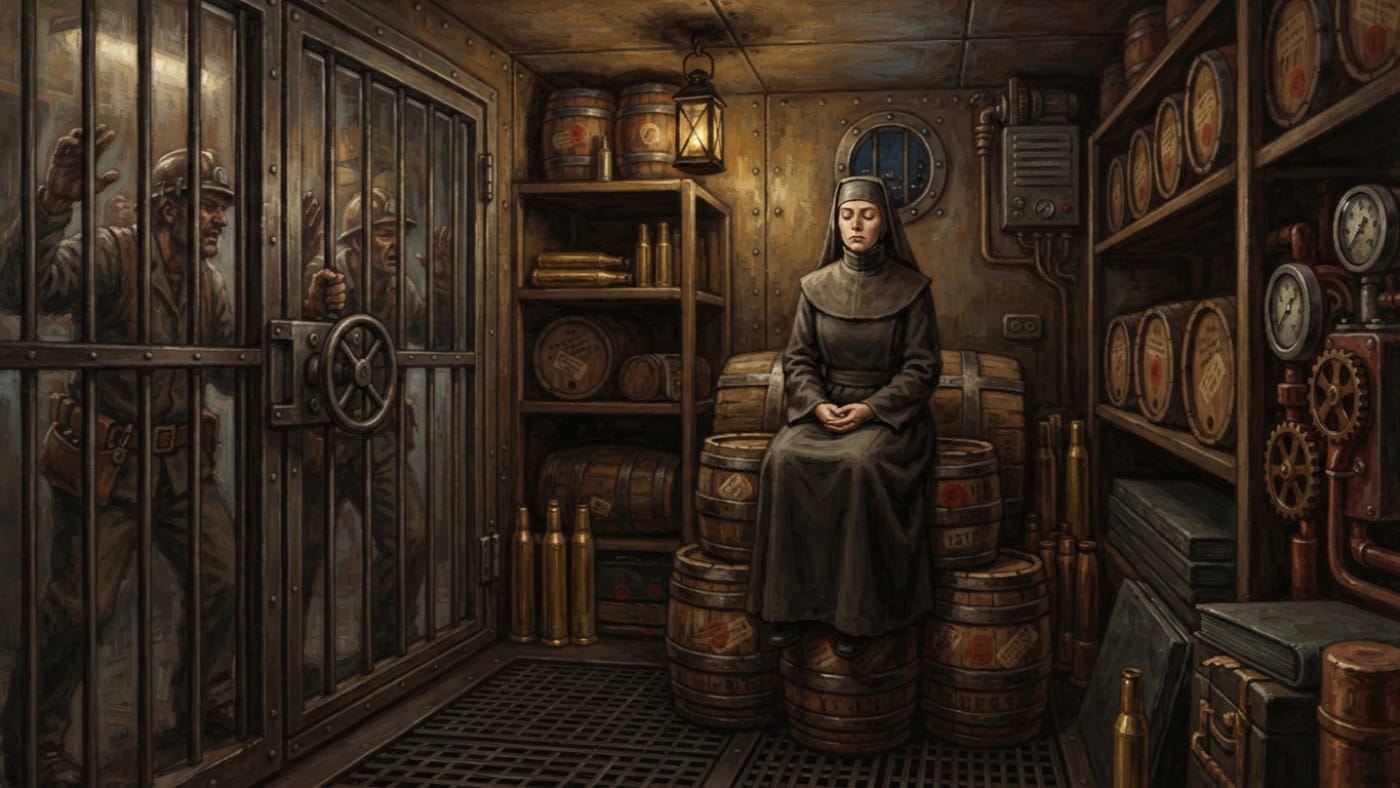
Canticle of Restraint
A locked magazine and eleven hours of unreasonable vocal endurance
Reported sung for eleven hours by Sister Margit during the Pressburg Mutiny following the A.S. 95 Cadence Reforms. The crew surrendered; the composer and score remain outside the Ledger.
Codex Ref. XIII.1.16-447

Canticle of Stable Pressure
A prayer for the pump, an injury file for the tongue
A Litany-Engineer pressure cant named in the A.S. 178 Odessa depositions, where Pale Chanter seepage made it tender. Engineering reinforced the hymnals' margins; the prayer kept its place.
Codex Ref. XIII.1.16-448
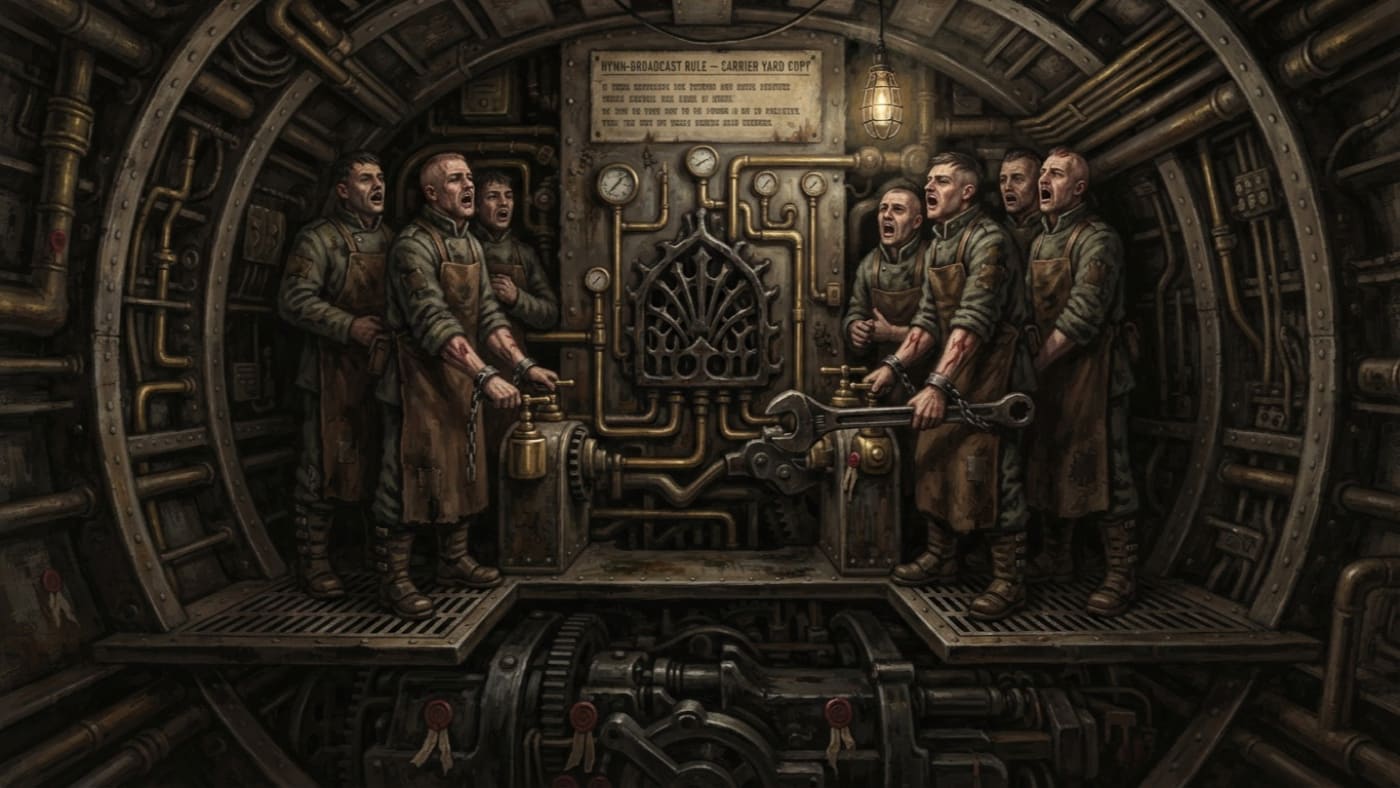
Canticle Primer
Before the engine wakes, someone must sing to what listens
The Canticle Primer must be sung before a Catacomb-Carrier wakes. Its author is unrecorded; Threnody's crews sang louder when the lower deck tapped its measure.
Codex Ref. XIII.1.16-449

Cantor Reforms
One rule, four clauses, and no certificate for the outcome
Lorn permits no switch, signal, dispatch or departure without a certified cantor's voiced measure. The Cantor Reforms certify obedience; the iron reserves its opinion of the outcome.
Codex Ref. XIII.1.95-201
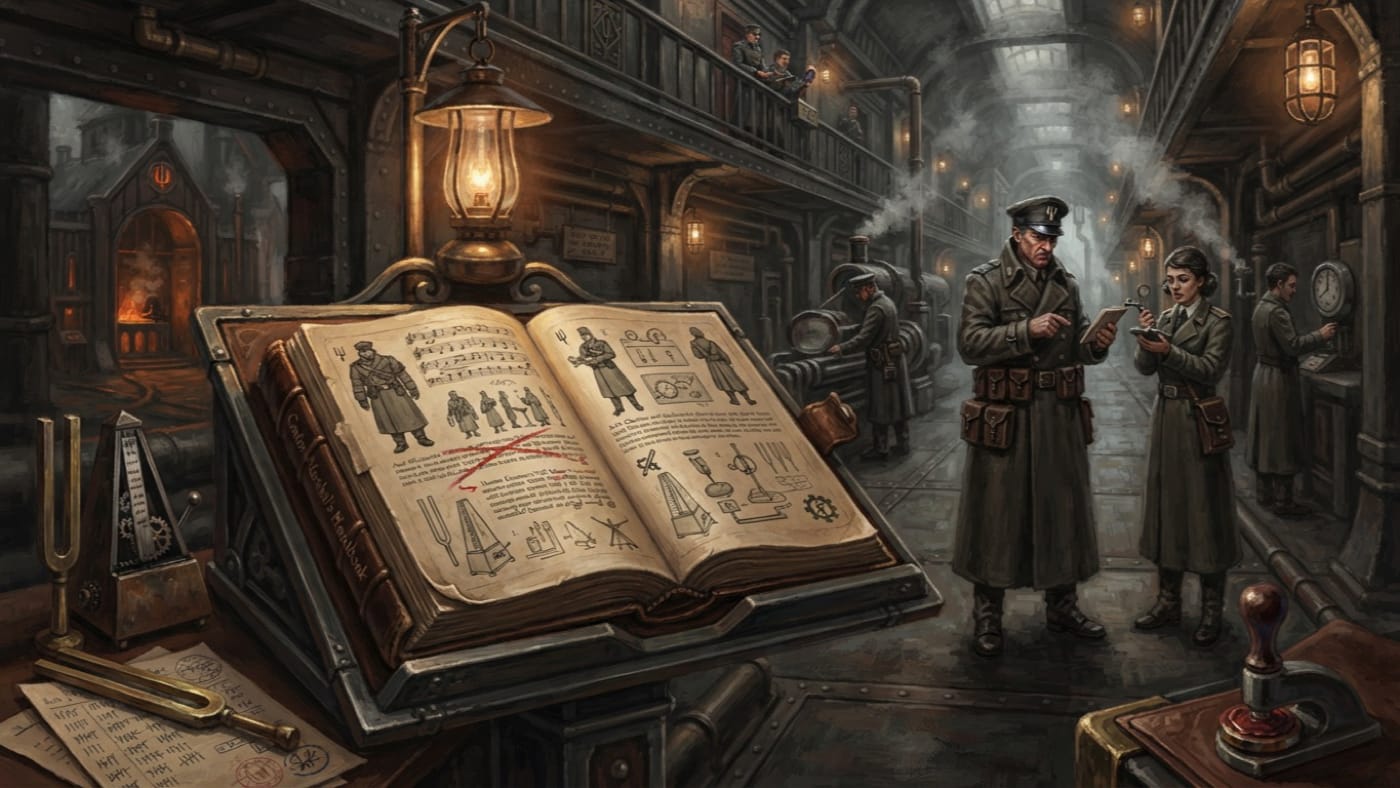
Cantor-Marshal's Handbook
A master cannot be recruited by ink
A.S. 201 survey of the Cantor-Marshal's Handbook: the Sixth Revision's claim that Vell vindicated Judgment Tone is withdrawn. A master's name is easier to enlist than his practice.
Codex Ref. XIII.1.41-006

Cantor-Scribe
The hand signs; the metal remembers
Cantor-Scribes turn Orison's steel notation into lawful song. When a copied breath mark kills a gun crew, the seals lead back to the hand that signed.
Codex Ref. VI.4.07-019
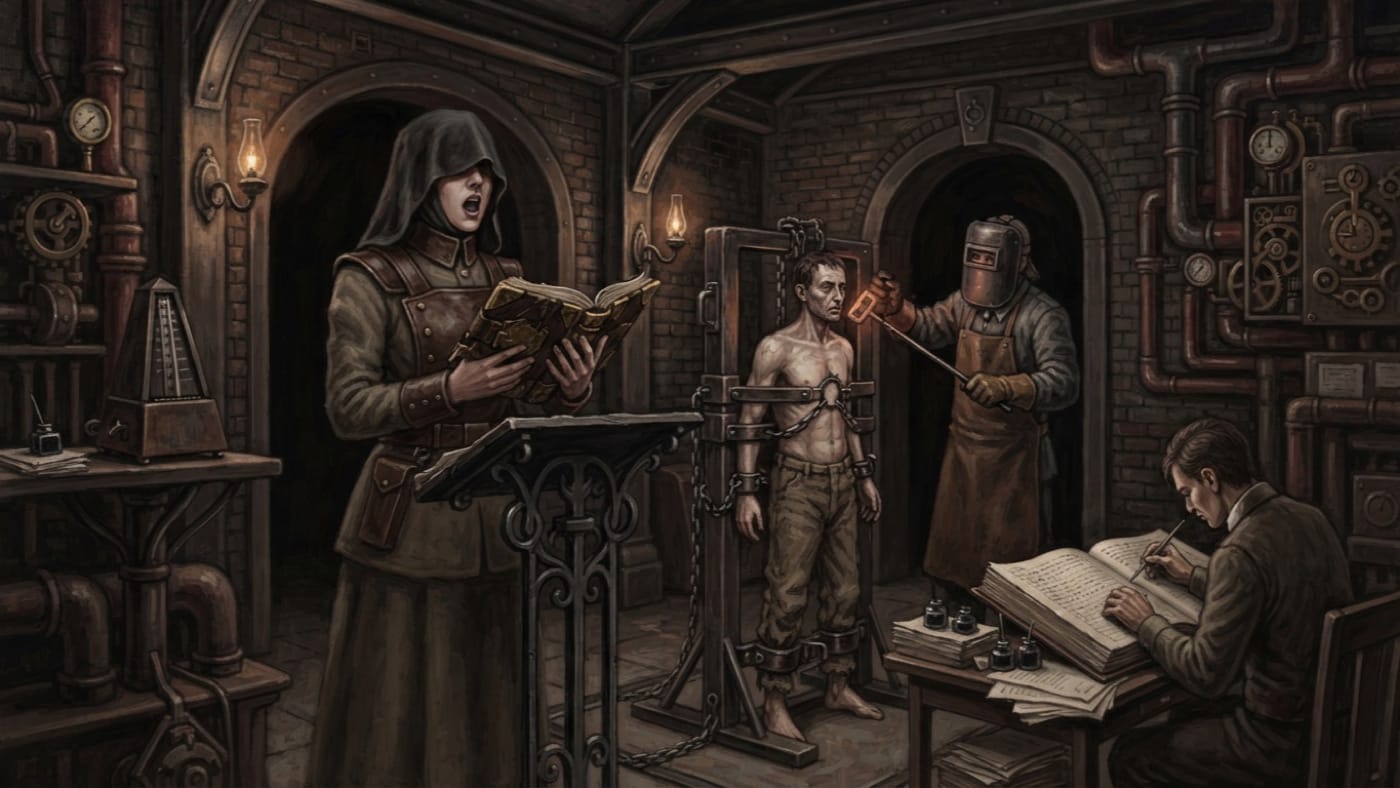
Cantor's Primer
Six words suffice for a citation. Truth requires more.
The Cantor's Primer is credited to Purity, Third Revision, through a single maxim. Six words explain the rite; they do not establish its compiler, issue date or the truth of a confession.
Codex Ref. XIII.1.41-003

Cantor's Primer, Fifth Revision
A master's name in the text, his warning in the margin
The Fifth Revision credits Vell with an older maxim without proof. His confirmed margin note offers the better instruction: keep the second note on time.
Codex Ref. XIII.1.41-005

Carmine Rule
Fourteen pages of theory, one butcher's manifest
The Carmine Rule asks every hypothesis in Dossier Carmine: was there food there? Haugen's answer to fourteen pages of theory undone by a butcher's manifest.
Codex Ref. VIII.7.01-005
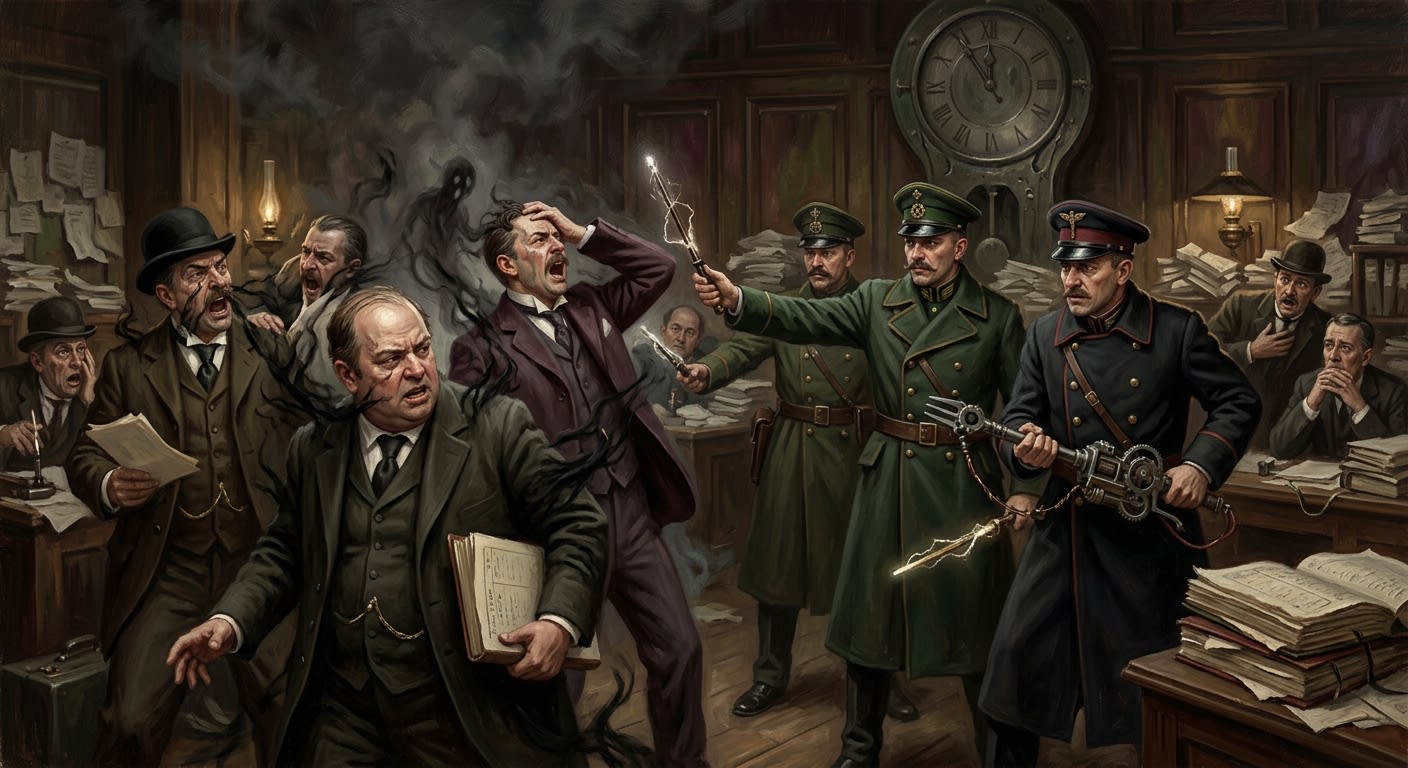
Carnelian Family of Metz
The lineage strike that bit its own hand
The A.S. 67 first recorded lineage-wide nullification attempt, in which Carnelian ration fraud, plague permits, and three overeager Notaries taught absence to bite backward.
Codex Ref. XIII.1.69-001
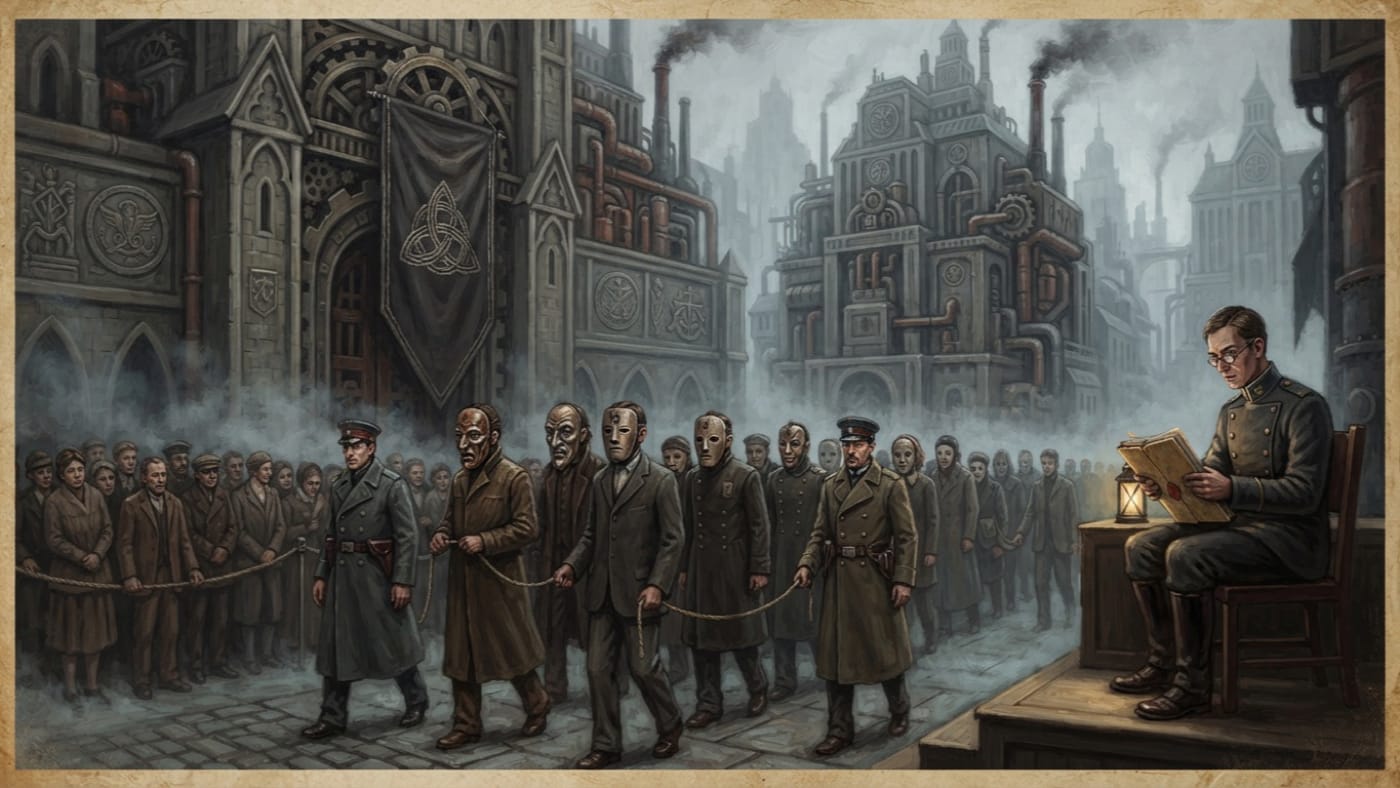
Carnival of the Triune Knot
The face may be hidden. The number remains.
The Carnival of the Triune Knot requires a licensed masked procession. Every face may be hidden; every mask remains numbered, stamped and measured. The wearer may withdraw a countenance. The Registry keeps the number.
Codex Ref. XIII.1.89-484
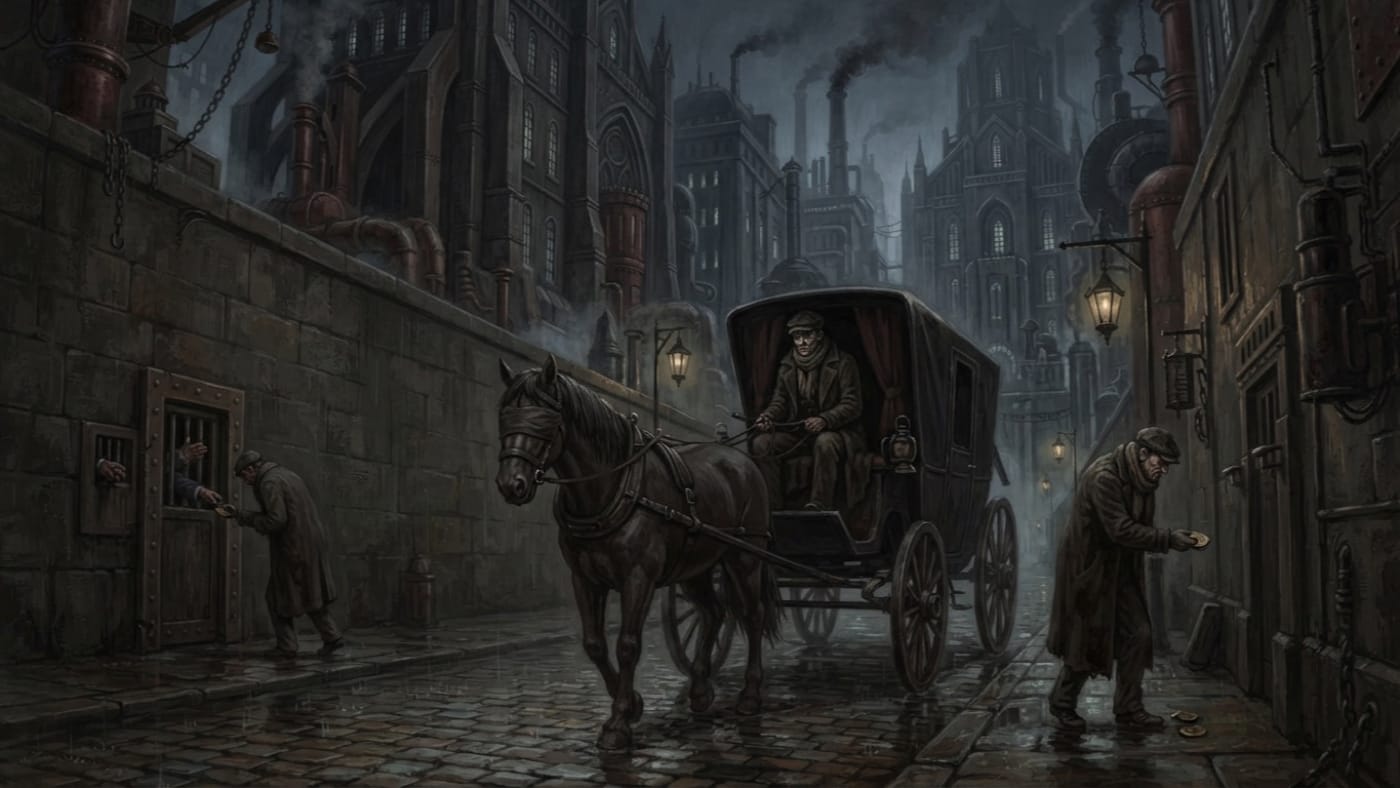
Carters and Runners
One pickup, three coins, and a wagon worth more than its hand
Carters and Runners are the Bureau of Shadows’ middle hands: entrusted with short routes, single pickups, and the second coin that buys a gate captain’s forgetting.
Codex Ref. XII.14.04-002

Cartographic Sacrifices
A name read aloud costs less than a surveyor
The Bureau of Cartography reads its lost surveyors' names once a year. Harlen's name was read; his death file remains unamended after a later Drava sighting.
Codex Ref. XIII.1.09-174

Catechism of Humility
The cure that asks the proud man whether he is cured
Purity prescribes the Catechism of Humility against Atheronic pride: close the eyes, recite, then report to a chaplain or the Lictors if needed. The manual names the cure and leaves its words to the chaplains.
Codex Ref. XIII.1.94-201
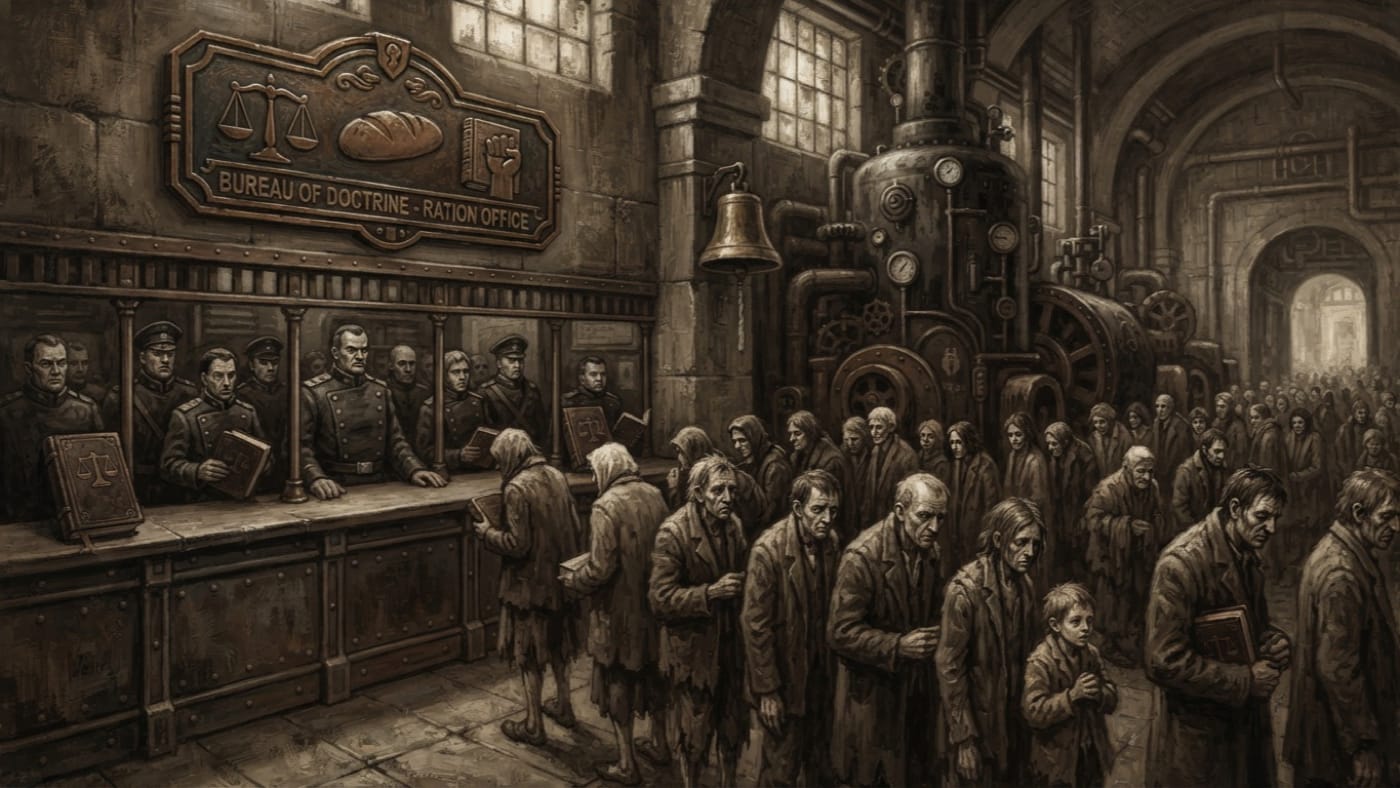
Catechism of Restraint
The portion is sanctified; the stomach may not object
I wrote the Catechism of Restraint to make the allotted ration holy and wanting more a commerce with Kargath. Revised in A.S. 189, it remains in use wherever the Synod counts a loaf.
Codex Ref. XIII.1.04-189
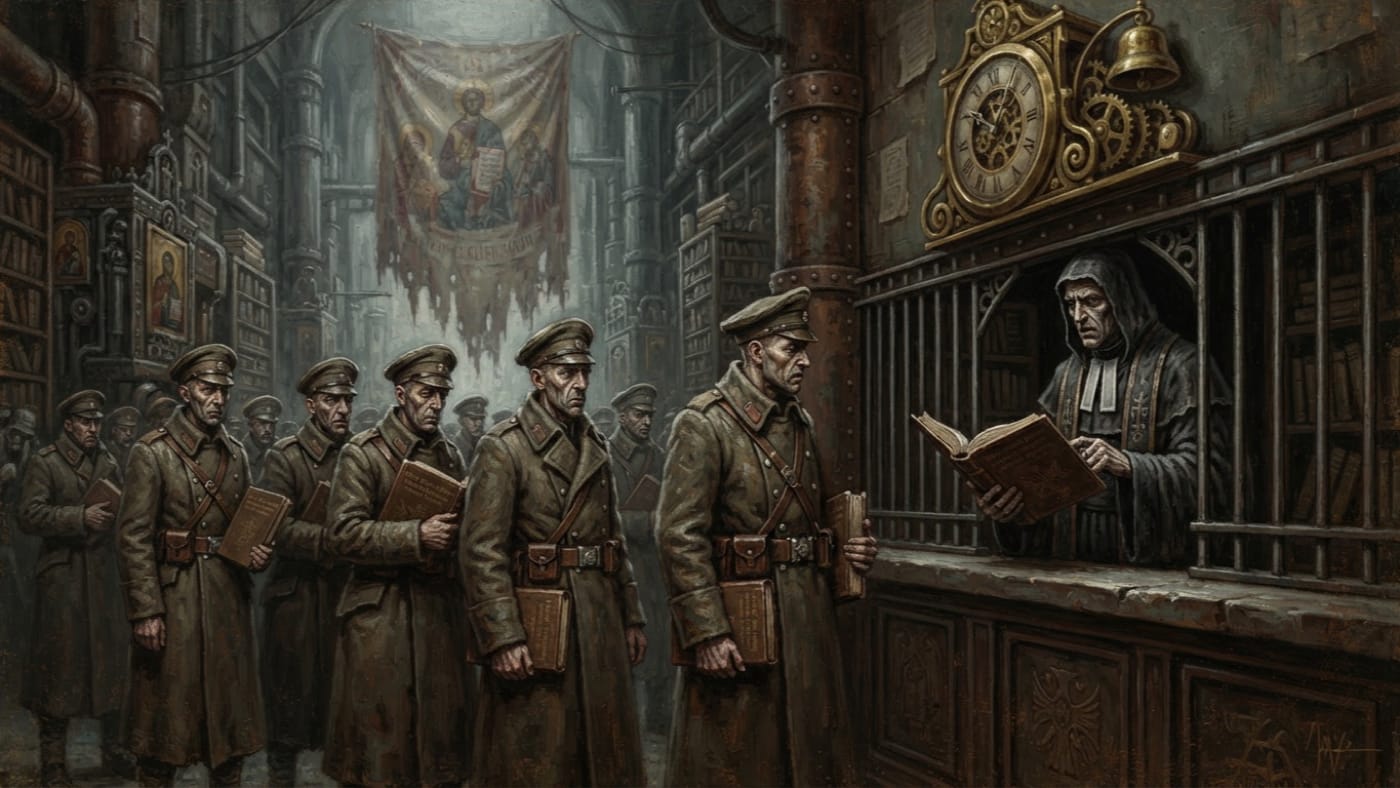
Catechism of the Empty Belly
An empty pot enters the register as readiness
In this A.S. 201 survey, Seraphinus's sixty-nine articles and seven appendices remain compulsory officer reading. The Synod gives shortage a grade and calls it readiness.
Codex Ref. XIII.1.69-001
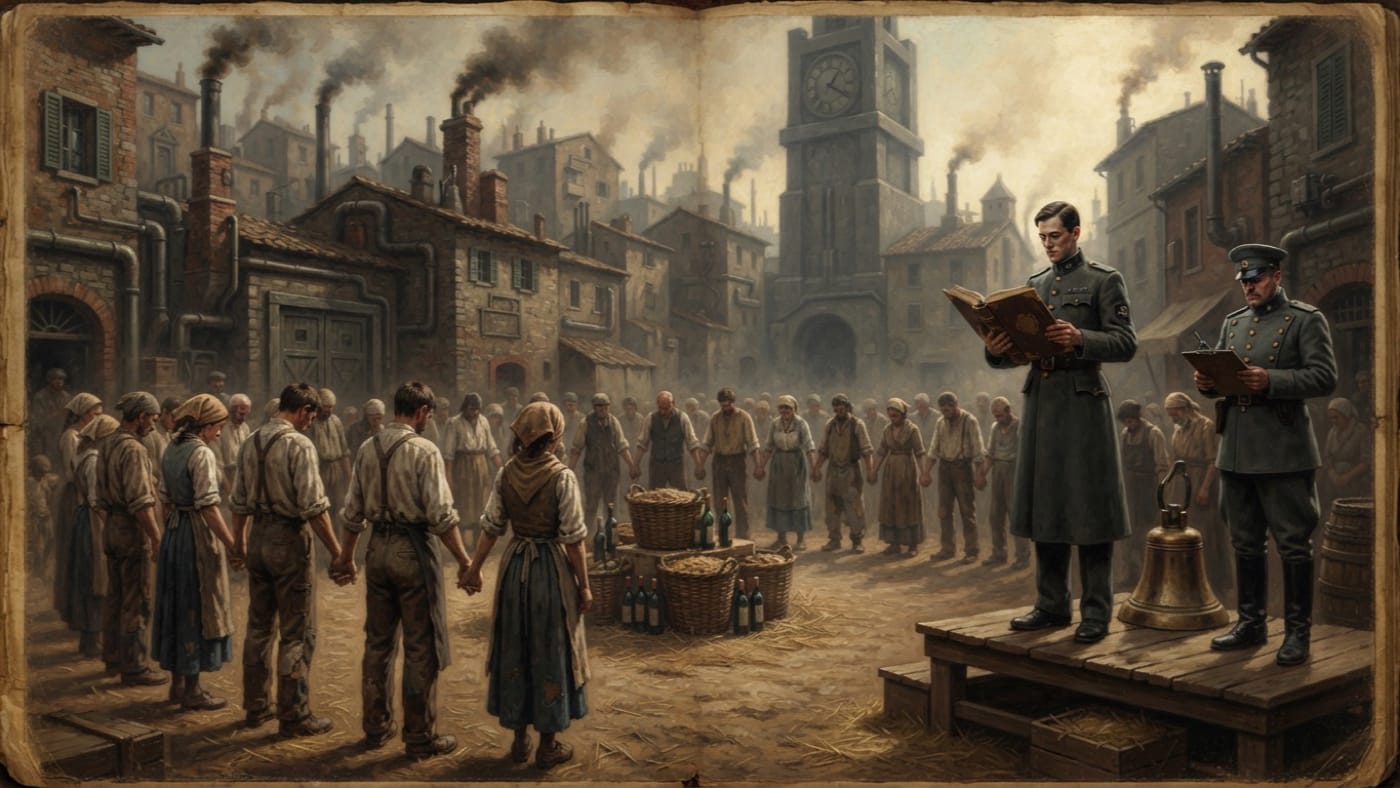
Catechism of the Sundering
The village may dance; Doctrine decides when it has finished
A.S. 201 survey of Doctrine's approved Catechism in public use: the passage that takes a harvest dance's ending from the village and gives the last word to Strasbourg.
Codex Ref. XIII.1.04-509
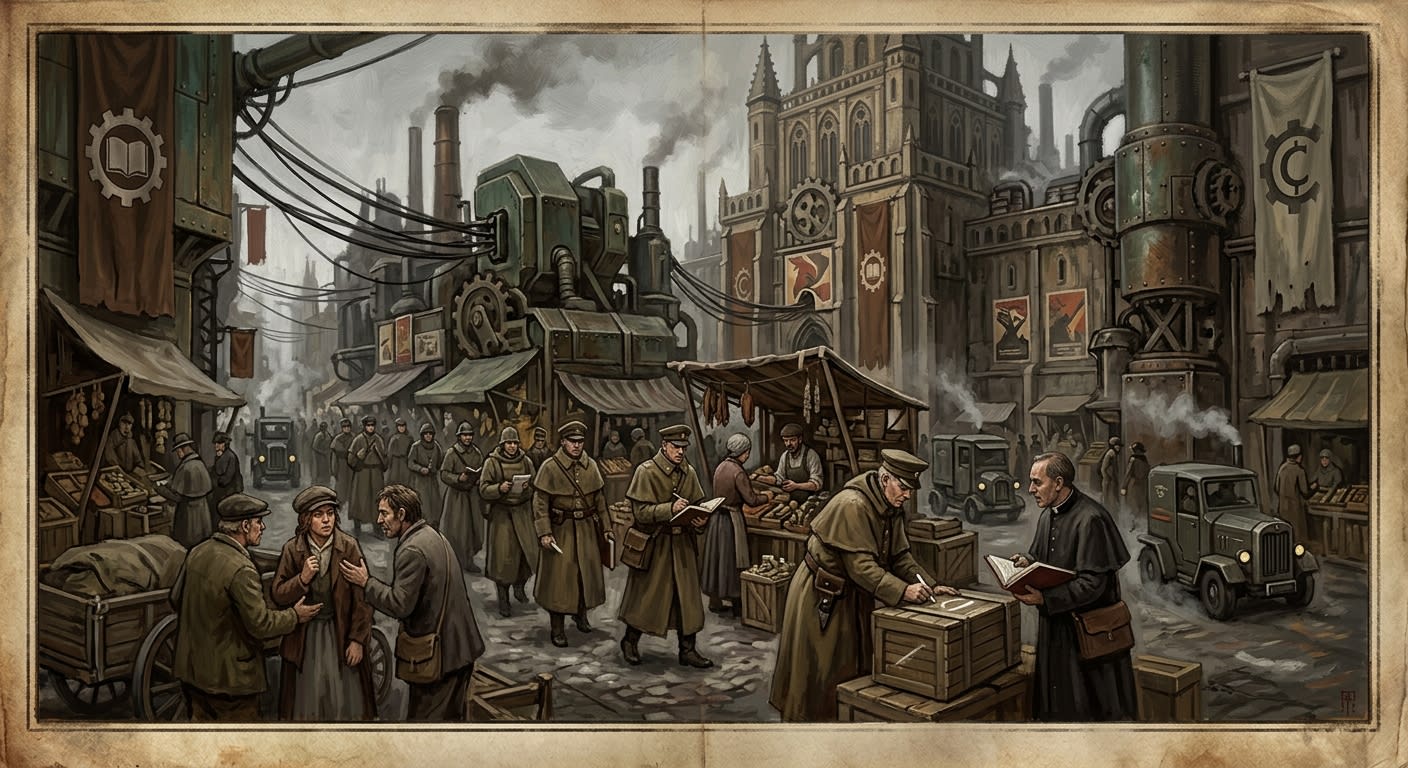
Catechism Third Revision
The street became a chapel with worse acoustics
A.S. 104 clarification that dragged obedience from chapel into market, making mouths, chalk, trade, and hesitation useful to Doctrine.
Codex Ref. XIII.1.04-104
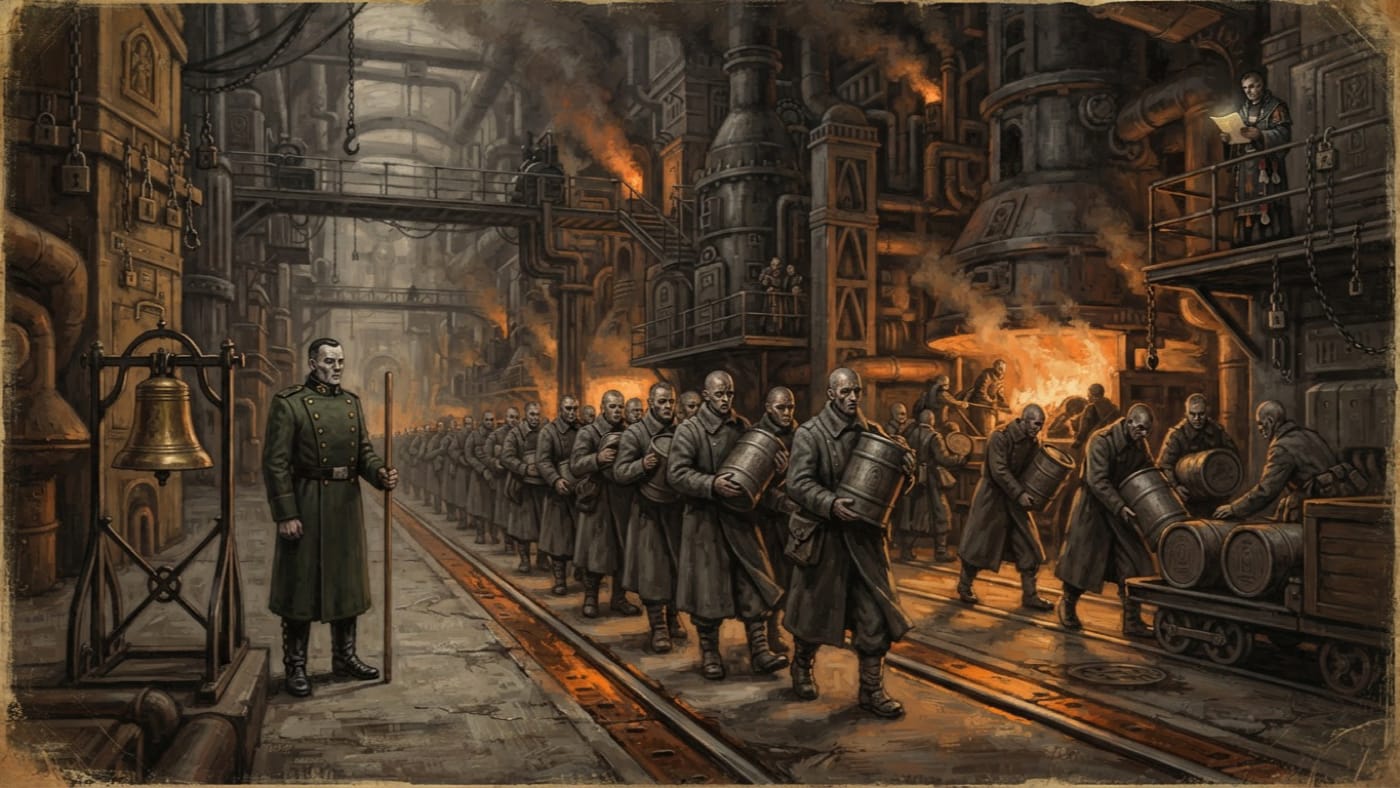
Catechism-Barracks of Brast
Where obedience learns the furnace's hours
Brast's catechism-barracks turn Levy recruits, furnace workers and penal crews into bodies that keep the furnaces' time. Courage is optional; cadence is required.
Codex Ref. XIII.1.98-201

Category D
The sentence is suspended. The prisoner remains condemned.
Category D suspends condemned prisoners' death sentences for battlefield-hazard studies. War supplies the subjects; Medicine measures them. The surviving record promises neither pardon nor release.
Codex Ref. XIII.1.99-134

Category Epsilon
Two weapons, one letter, and no defining memorandum.
Category Epsilon files Pale Chanters and Gore-Slingers under one letter. Two applications are attested; no general definition is on file. The ledger records what the bodies produce and leaves their names elsewhere.
Codex Ref. XIII.1.99-201

Category Sigma
Contamination when found; heat when not
Category Sigma makes Anatolian ground and crude into contamination: seized when useful, denied when necessary, and burned by the city that condemns it.
Codex Ref. XIII.1.96-201

Category Three Harmonic Anomaly
Too beautiful to be natural. Too useful to be investigated.
The Bureau of Bells names Irongate’s Gasket Choir a Category Three Harmonic Anomaly: sound that holds a fortress together, governs who stays warm, and remains too useful to explain.
Codex Ref. XIII.1.12-003

Category Two Localized Atmospheric-Scribal Disturbance
The file names the effects and leaves the cause blank
Since A.S. 194, Candle-Sump's crypt drafts have carried name-whispers, ruined paper and troubled lungs under a designation still pending review. The file names the effects; it declines to name their cause.
Codex Ref. XIII.1.20-002

Category Two Spiritual Security Breach
An intact casket offers no defence against an unsigned line.
A missing seal or unsigned transfer breaks a sanctioned relic shipment’s custody chain and invokes the martial codes of treason. The bones may be intact. The paperwork is what the Bureau keeps.
Codex Ref. XIII.1.07-002
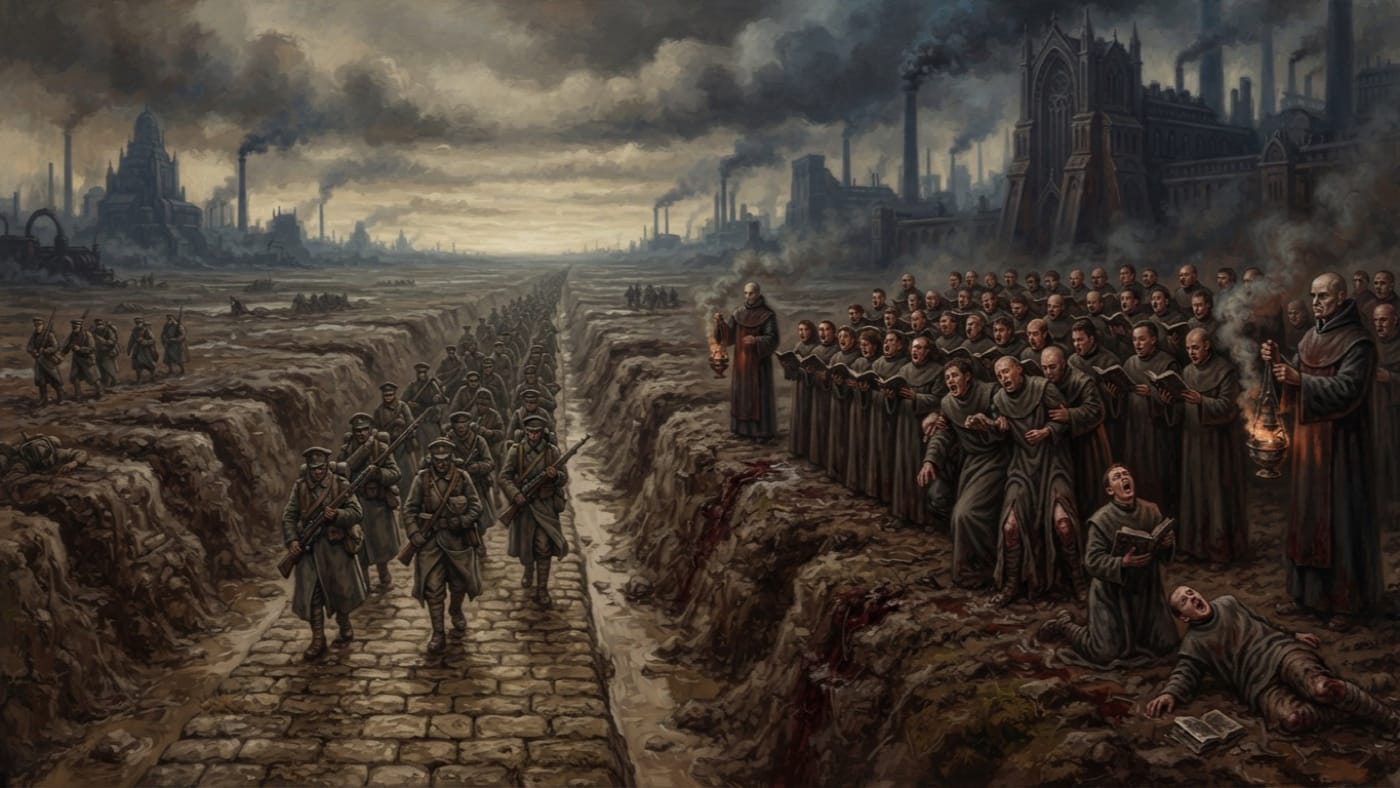
Cathedral Act
The army marches dry; the choir pays in years
Current doctrinal survey, A.S. 201: the Cathedral Act parts mud for an army while volunteer choirs stand until their knees split and surrender years of life. The passage is dry. The bill is human.
Codex Ref. VI.3.01-002

Census of the Living
Names, Debts and Accusations in Crimson
A.S. 201 survey of the Basilica's second-level register, which claims every baptised soul in the Theocracy. Diocese, parish and tithe-class locate the faithful; confessed and suspected sins share their entry.
Codex Ref. III.2.09-540
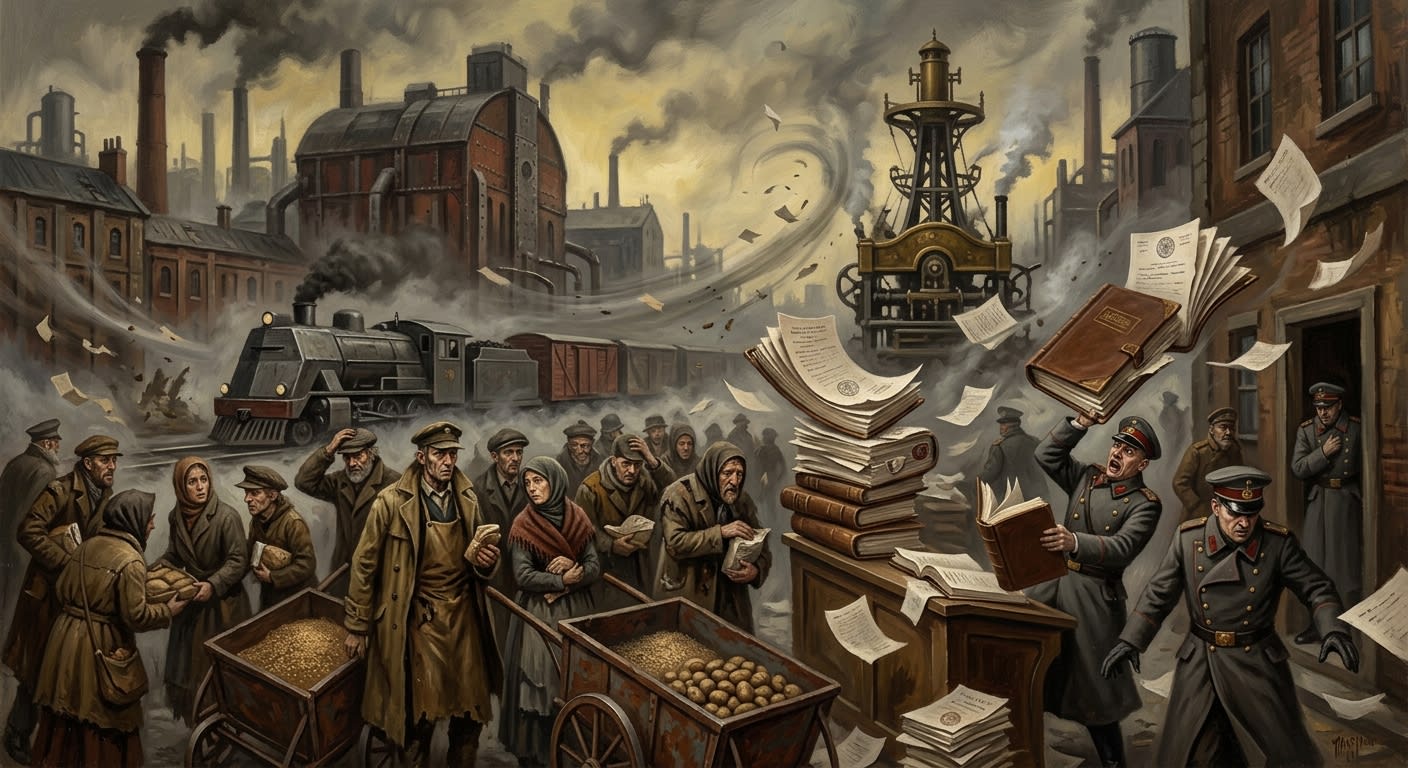
Chaff-Winds of Wexel
The weather laughs before the ledgers can fine it
At Wexel, the wind repeats forbidden laughter, bends citation ledgers into smiles, and teaches a ration town that mockery travels better than law.
Codex Ref. XIII.1.19-001
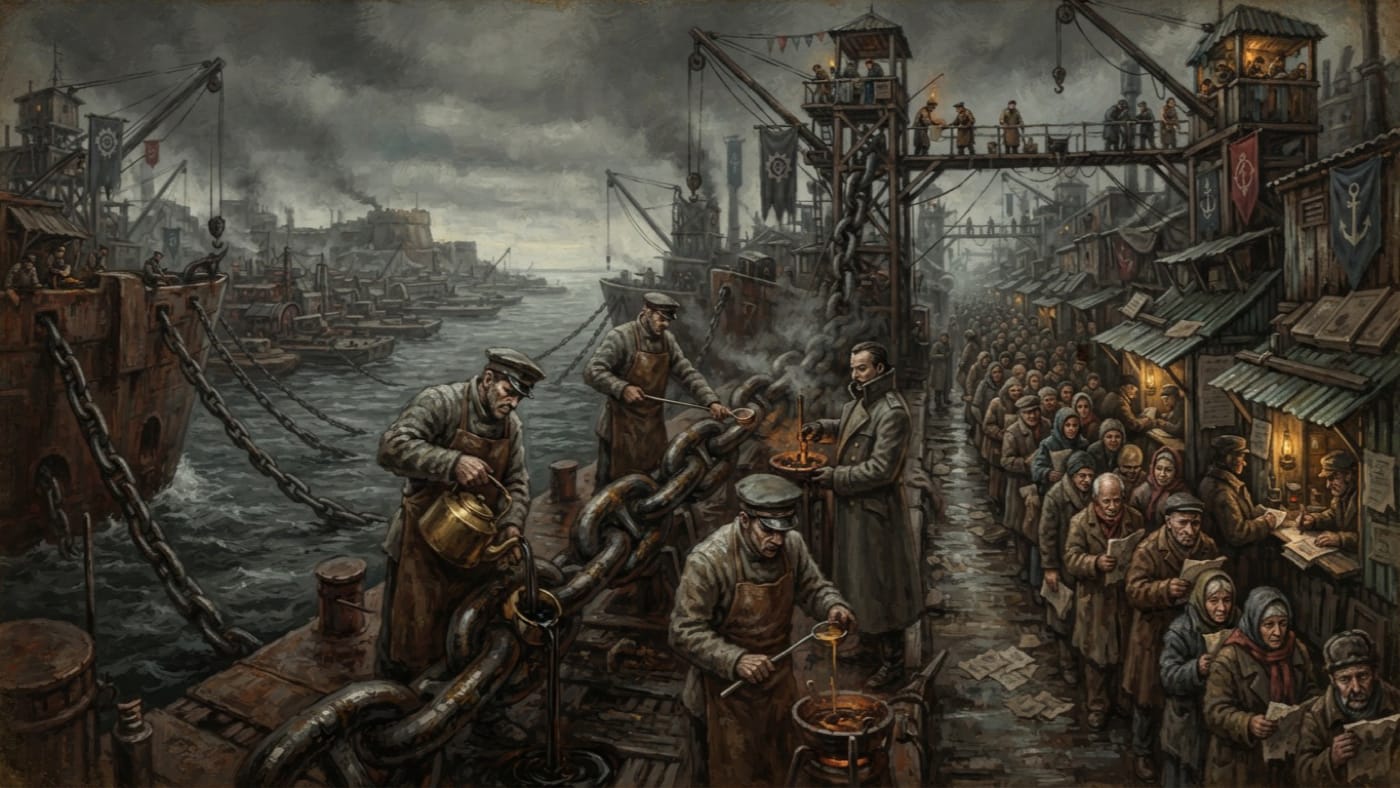
Chain Blessing
The chain is blessed; the debt keeps accruing.
An A.S. 201 survey of the Flotilla's spring blessing: oil and wax for the Grand Lash, half a day's rest for chain crews, and papers renewed at Seal Row. The iron is blessed; the debts continue.
Codex Ref. XIII.1.89-201
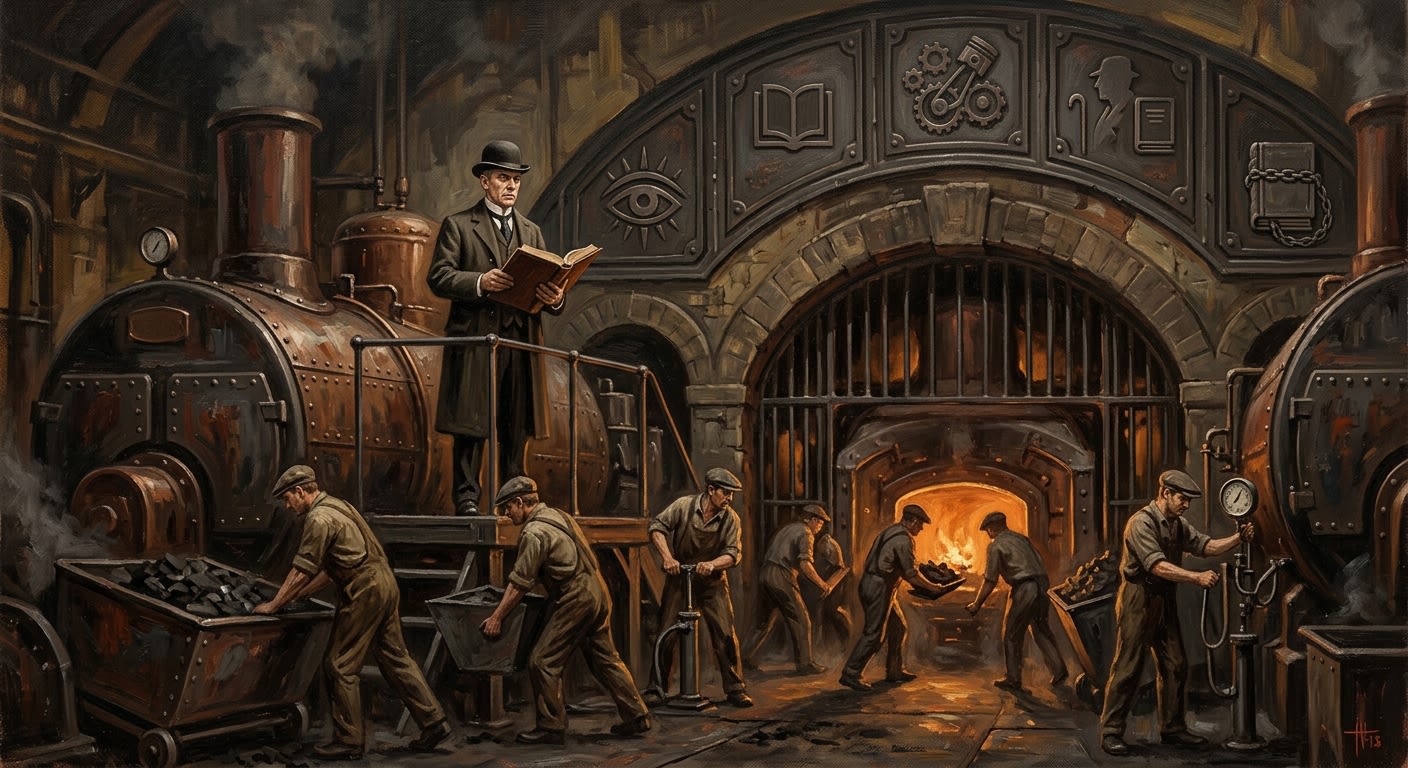
Chain of Cause
Fire may burn, provided it cites its superiors
Furnace Catechist recitation that subordinates fuel, spark, pressure, and output to Heaven, Doctrine, Engines, foremen, and the Ledger's jealous grammar.
Codex Ref. XIII.1.91-134
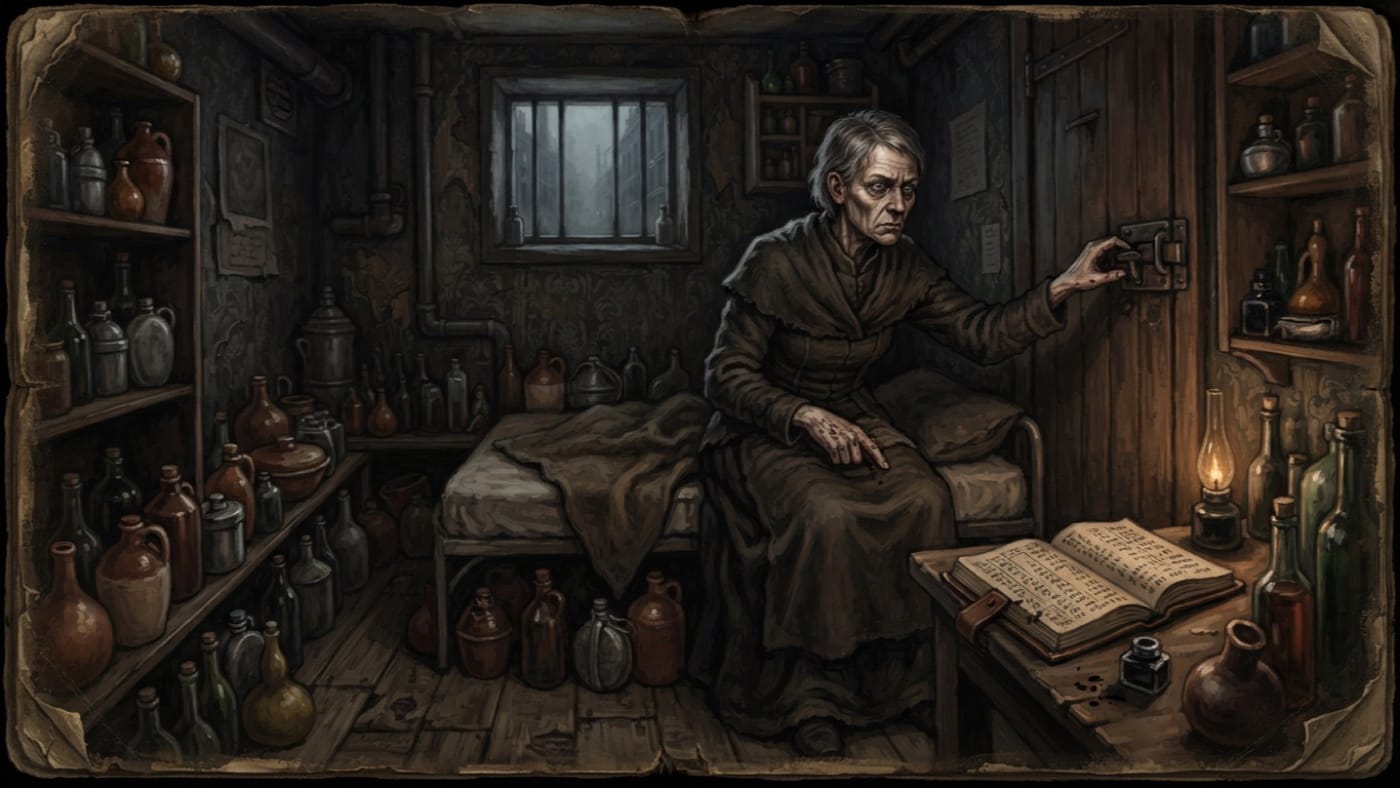
Chain-Sickness
The column ends; the count remains
The Handlers' name for duties that survive the Jubilee: compulsive lock-checking, counting, flinching at hymns and hoarded water. Mercy recognises no complaint; the ledger records success.
Codex Ref. XIII.1.225-201
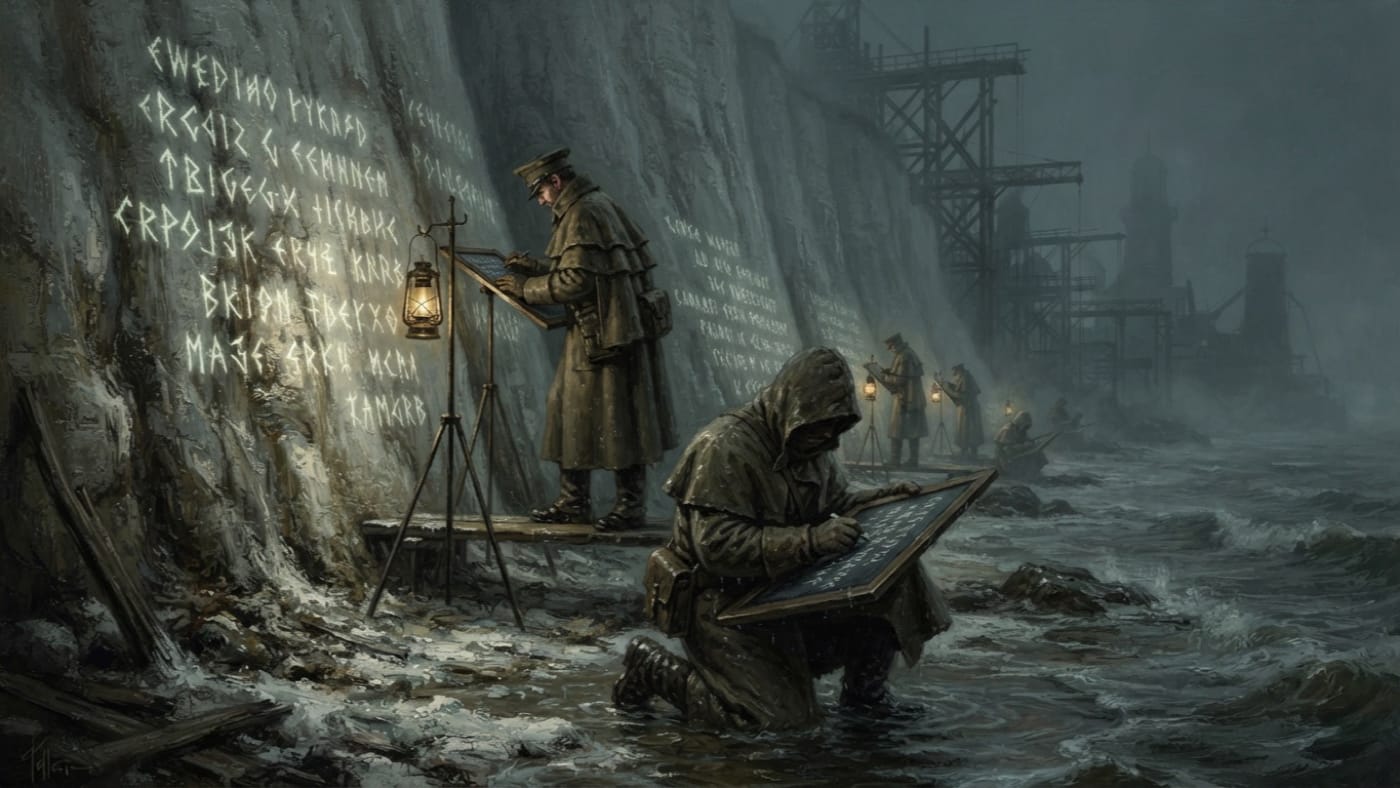
Chalk Scribes
Their authority ends at the slate; the consequences do not
Calais's Chalk Scribes copy fog-written names, mark hesitations, and preserve corrections for the Salt Tribunal. Their authority ends at the slate; the consequences do not.
Codex Ref. XII.13.04-201

Channel Escort After-Action
The captain called it answered; the fragment declines to explain
A.S. 201 survey of a redacted Channel escort extract: three grain barges reported hearing their names in British bells; the captain called the incident “answered.” Doctrine retains the word without its meaning.
Codex Ref. X.1.03-002

Chant Codex
The book that tells an engine what to hear and an auditor whom to blame.
The Litany-Engineer's sanctioned reference for cant aligned to engine RPM bands. It keeps combustion orderly and gives auditors a page to quote when the operator does not.
Codex Ref. XII.1.02-201
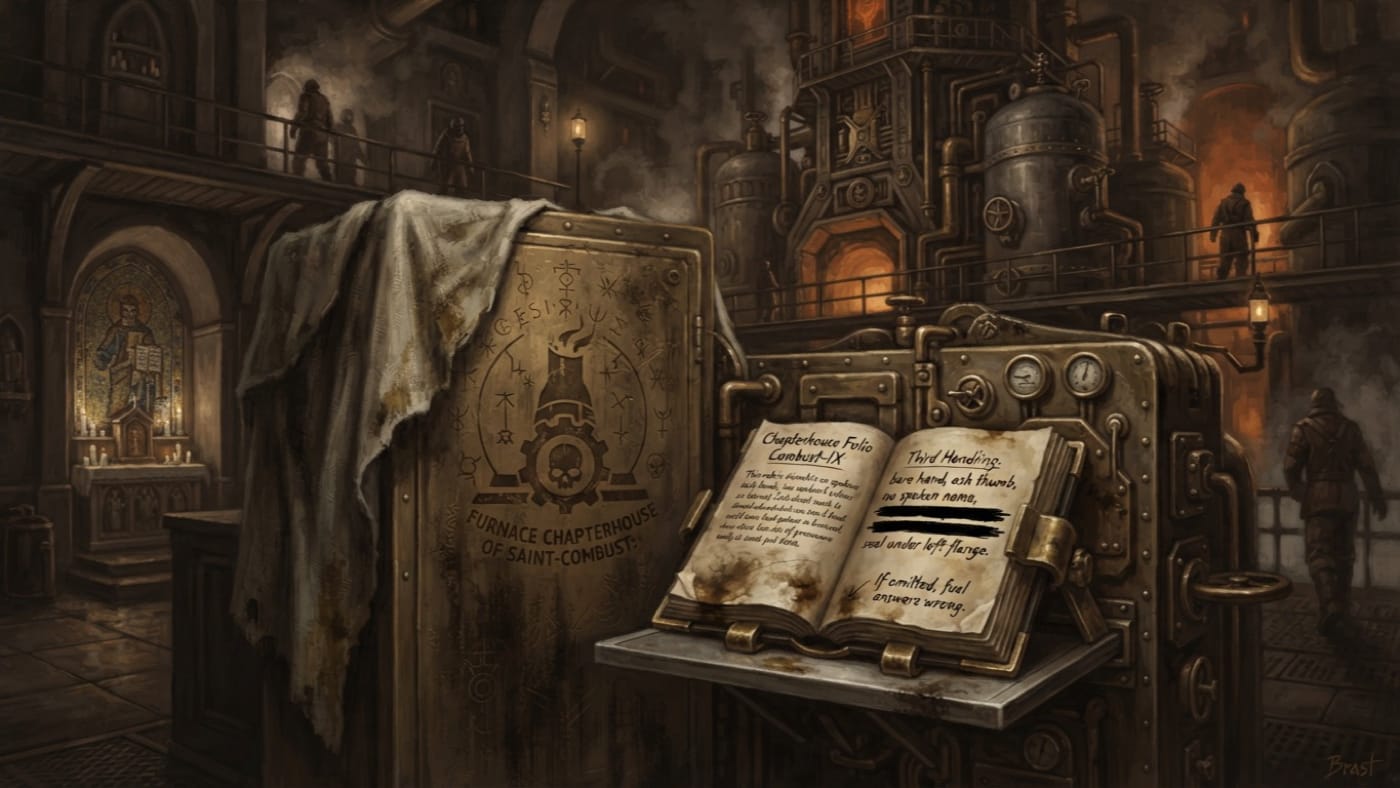
Chapterhouse Folio Combust-IX
Engineering keeps manuals. The Chapterhouse keeps the shelf.
Brast's Chapterhouse keeps the Third Handling of substrate behind a chapel door. Combust-IX records the rubric; a later hand warns that fuel can answer wrong.
Codex Ref. XIII.1.74-009

Charter Address of A.S. 82
Fire leaves witnesses; an orderly shelf leaves nothing to mourn
Aldara Vess the Elder's A.S. 82 Charter Address gave Silence its founding argument: fire distributes forbidden words; administrative absence keeps the shelf orderly.
Codex Ref. XIII.1.82-001
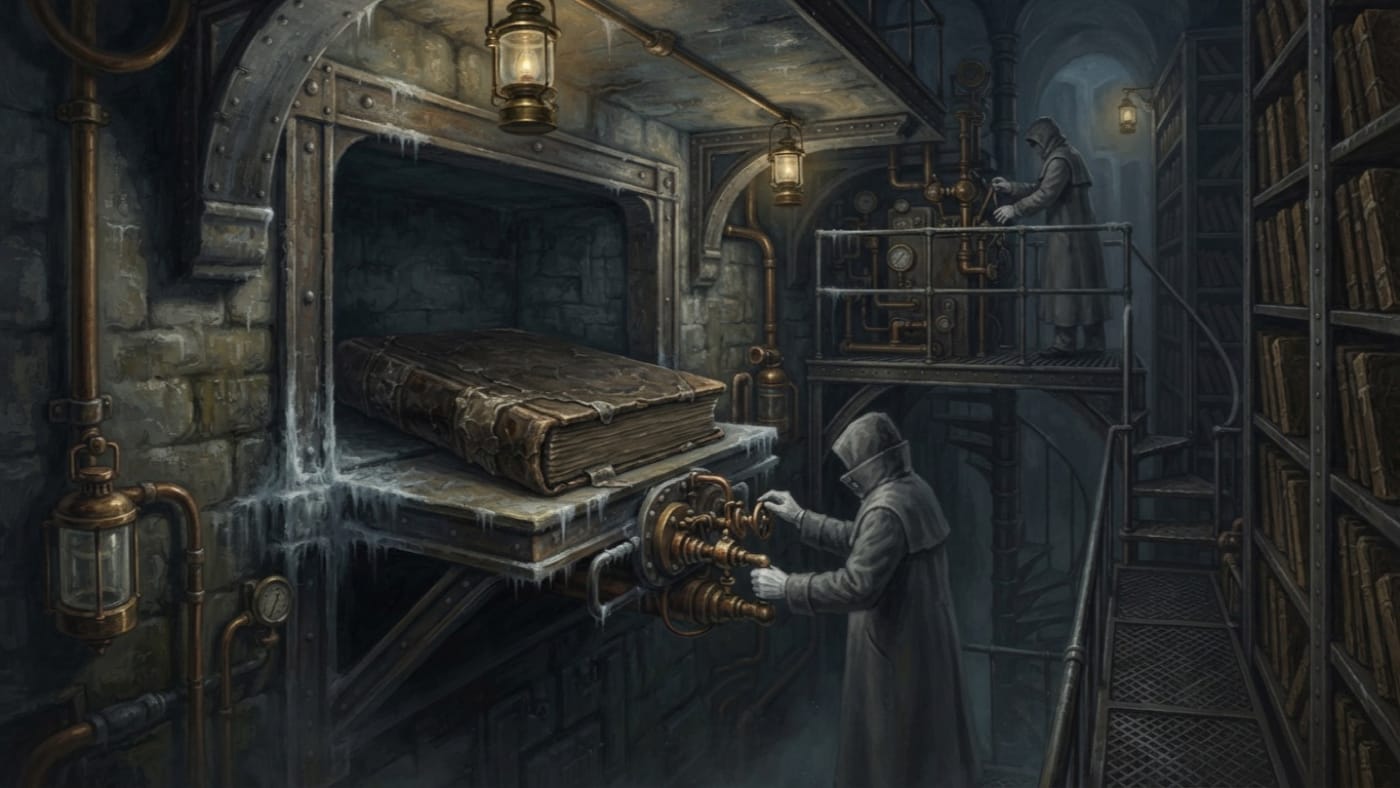
Charter of Administrative Node Seven
The filing is certain. The clauses are another matter.
Filed by Records in A.S. 78, the charter remains on the Burnless Archive's founding shelf. Its custody is attested. Its clauses have not crossed my desk.
Codex Ref. XIII.1.78-007
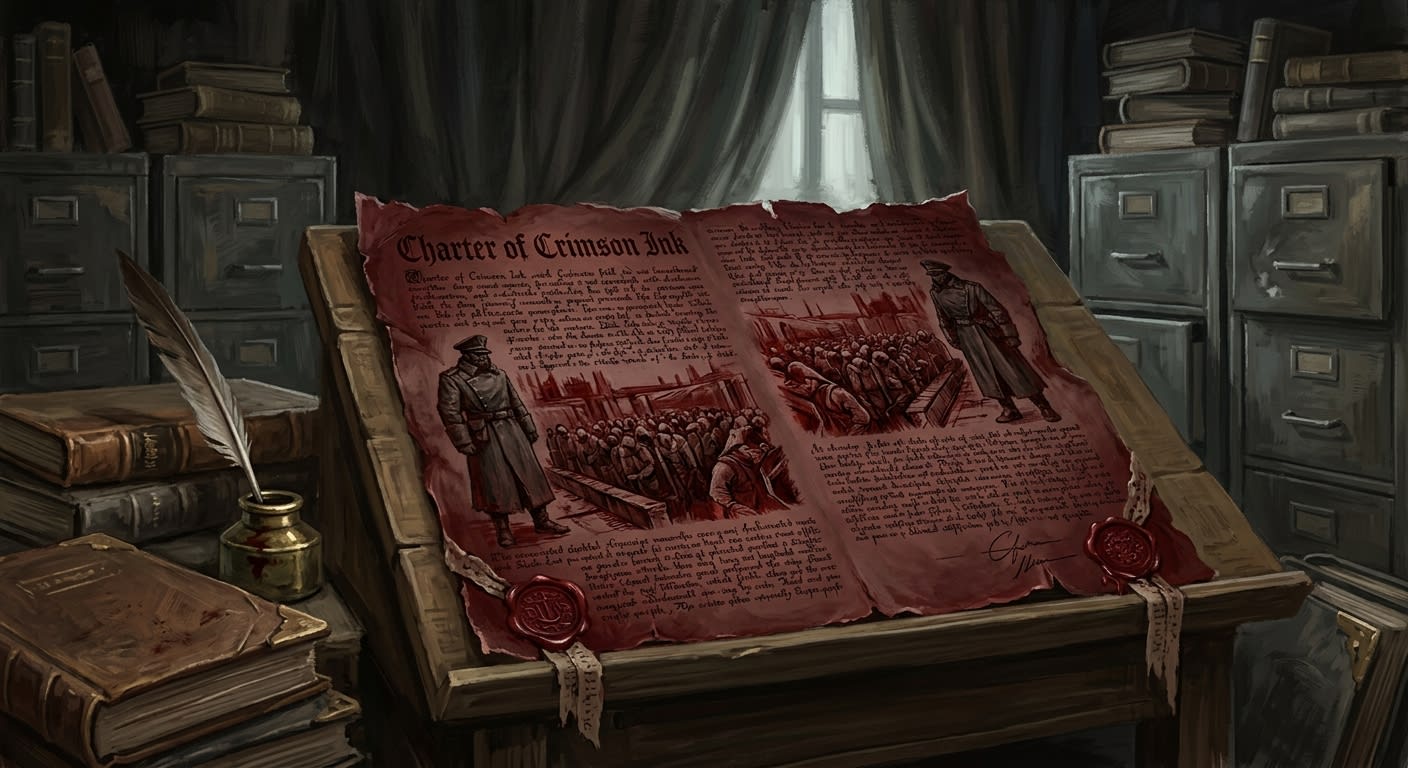
Charter of Crimson Ink
The sword received a desk and called the wound lawful
The Charter of Crimson Ink is War's founding writ: crimson vellum, authorised loss, levy custody, and the blessed discovery that armies obey better once owned.
Codex Ref. XIII.1.54-105

Charter of Prescribed Observance
The document that taught joy to queue and grief to file receipts
Ratified in A.S. 58, the Charter of Prescribed Observance turned public feeling into lawful form: mourning, feasting, silence, joy, and deviation all made taxable.
Codex Ref. XIII.1.23-001
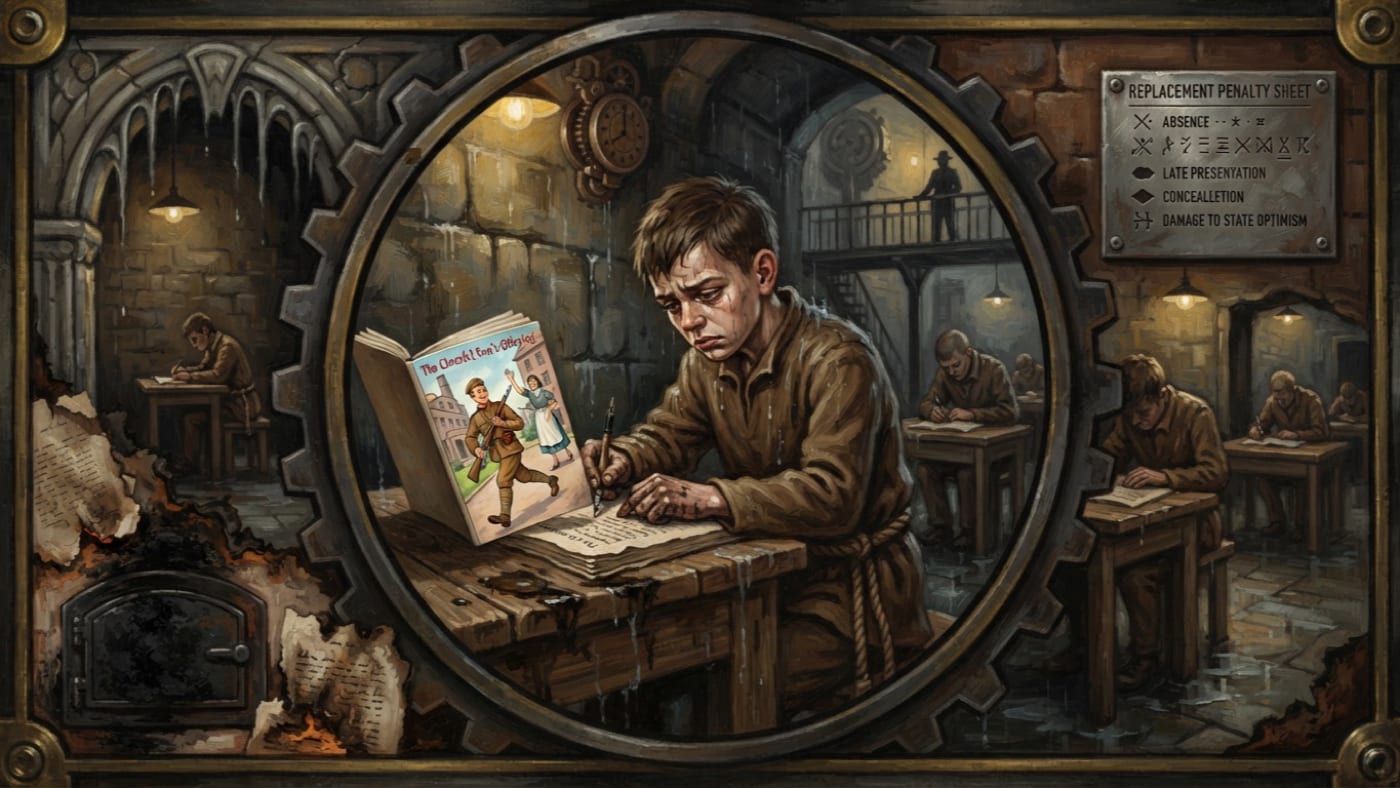
Cheerful Son's Offering
Withdrawn from issue, retained for punishment
An A.S. 201 survey of Lyon's withdrawn levy booklet. Its smiling recruit survives in the Sub-Yard, where refusal of the Wall Circuit earns three days of copying.
Codex Ref. VI.5.01-598

Chief Anatomist
Absent from the procession. Indispensable to the front.
The Chief Anatomist has no Synodal rank and every garrison's attention. Doctor Trenn holds the office: measurement, classification and a disclaimer that travels with each finding.
Codex Ref. XIII.1.07-082

Chief Archivist
The form asks for rank; it does not ask for conscience
The Bureau of Records' countersigning office: a Chief Archivist of at least Third Rank authorises Form 77-D to proceed. The folio is checked twice. The reason is filed elsewhere.
Codex Ref. XII.34.02-001
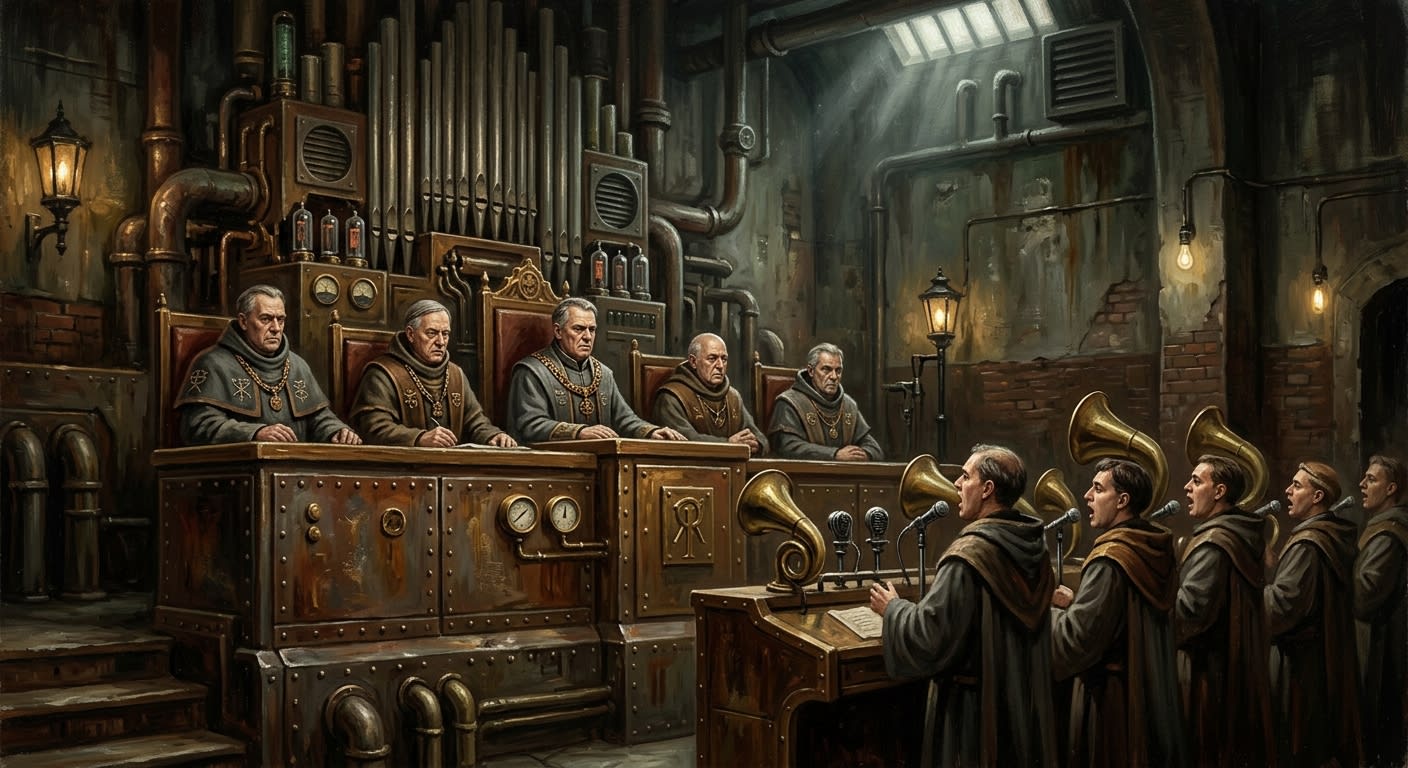
Choir Magistracy
Where verdicts are sung before they are read
The Choir Magistracy is Bastion-Irongate's acoustic tribunal: a warm bench where law, pressure, heat, song, and survival learn to share one throat.
Codex Ref. XIII.1.88-094

Choir of the Northern Standard
Twenty voices finish the verse after the fog has answered
Twenty voices at Bastion-Königsberg hold the Northern Standard against the Grey, singing late enough to survive and long enough to be damaged.
Codex Ref. XIII.1.57-188

Choir Rate
The percentage that put teeth in the listening window
The Choir Rate measures public listening, punishes low percentages, sanctifies exposed ears, and lets the Synod feed hunger through decimals.
Codex Ref. XIII.1.58-158

Choir-Mortars
Aim with the psalter; correct with the slide-rule
My A.S. 201 survey of liturgical artillery and counter-battery practice: barrels bear canticles, crews chant the trajectory, and shells finish the hymn in fire. Enemy mirrors may return the refrain.
Codex Ref. XIII.1.66-001

Chrismole
Blessed fuel, classified substrate, and the blue-black argument of necessity
Chrismole is sanctified fuel: oil disciplined by hymn, substrate, seal, and denial until it warms guns, feeds engines, and argues back.
Codex Ref. XIII.1.12-072

Chrismole Distillation Manual
The procedure keeps its seal; the explanation receives a correction
The Seventh Revision governs Brast's seven-stage fuel distillation. In A.S. 187 the Bureau corrected its explanation and left every bell intact. As of A.S. 201, the manual remains sacred; the engines remain difficult.
Codex Ref. XIII.1.12-187

Chromarch Codex
The law arrives late and remains binding
The Chromarch Codex teaches Sigil Inspectors what loyalty may look like: permitted symbols, colours and geometries, corrected quarterly and binding before the district receives its copy.
Codex Ref. VIII.1.03-003
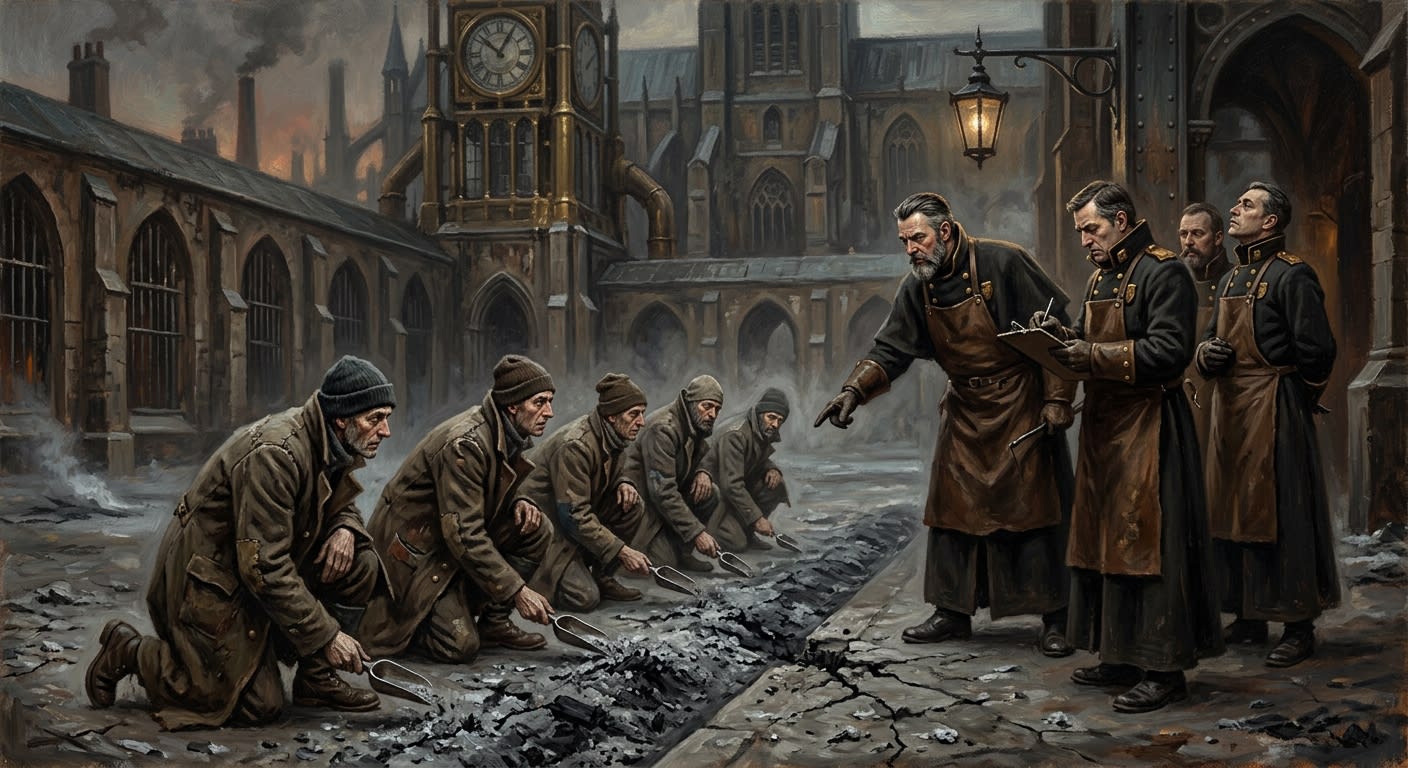
Cinder Trials
Where Toledo lets ash pretend to be law
Toledo's forecourt ash rite, born from post-Sundering martyrdom law, where grey crusts crack at Ninth Bell and Doctrine calls the fracture a verdict.
Codex Ref. XIII.1.56-001

Circular 192-M
Dull the glass before it promotes you
Circular 192-M orders Przemyśl's forward positions to spoil needless reflections and supervise essential ones. A man who cannot see a peer cannot hold the Line.
Codex Ref. XIII.1.07-192

Circular 881-R
The sentence that made moving beads a billable error
Circular 881-R is Records' A.S. 199 denial order: bead counts are fixed, bead drift is unsanctioned, and correction remains beautifully billable.
Codex Ref. XIII.1.72-199
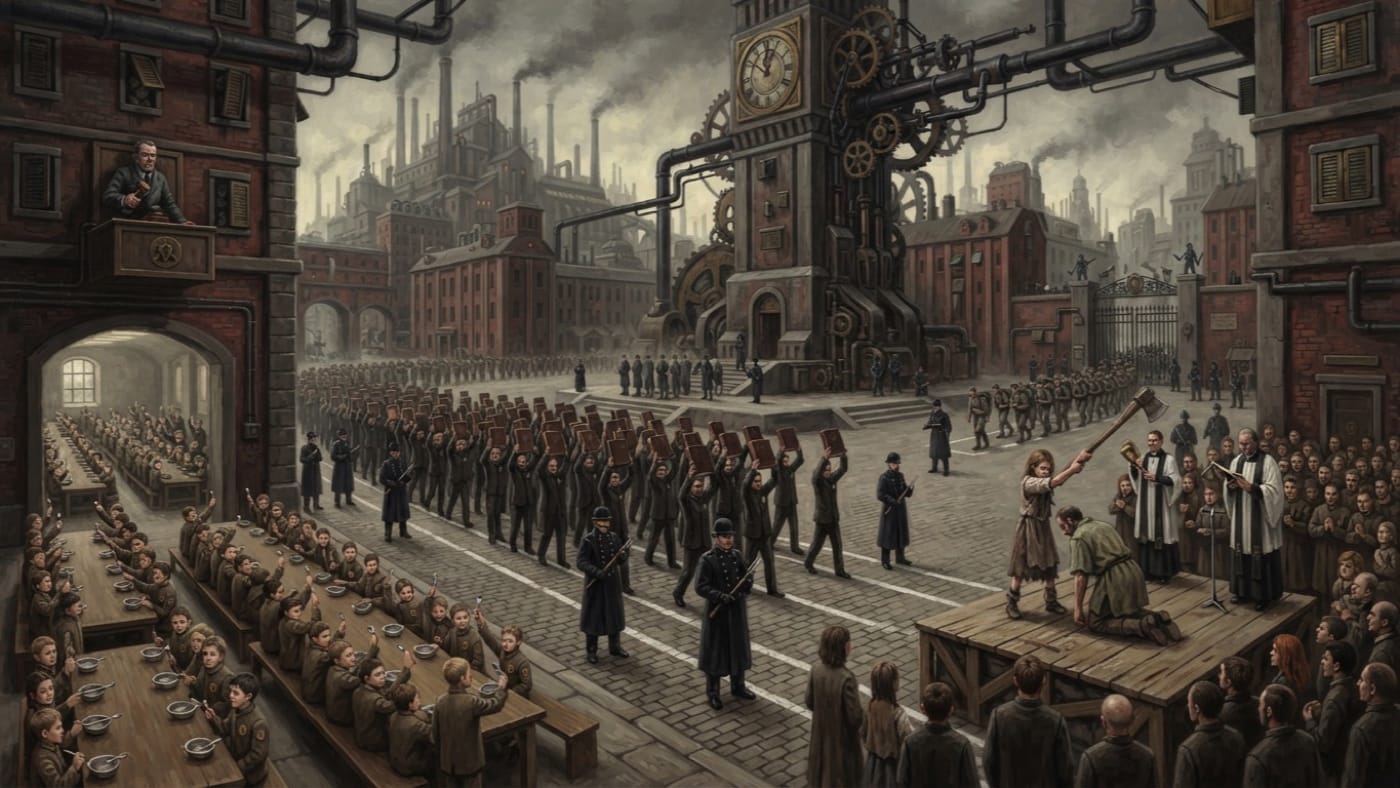
Civic Cut
The Levy takes a fraction. The Cut prepares the whole field.
Conscription takes a fraction. The Civic Cut prepares the whole field: children learn to eat, march, rejoice and betray in time with the bells, years before the Levy arrives.
Codex Ref. XIII.1.23-201
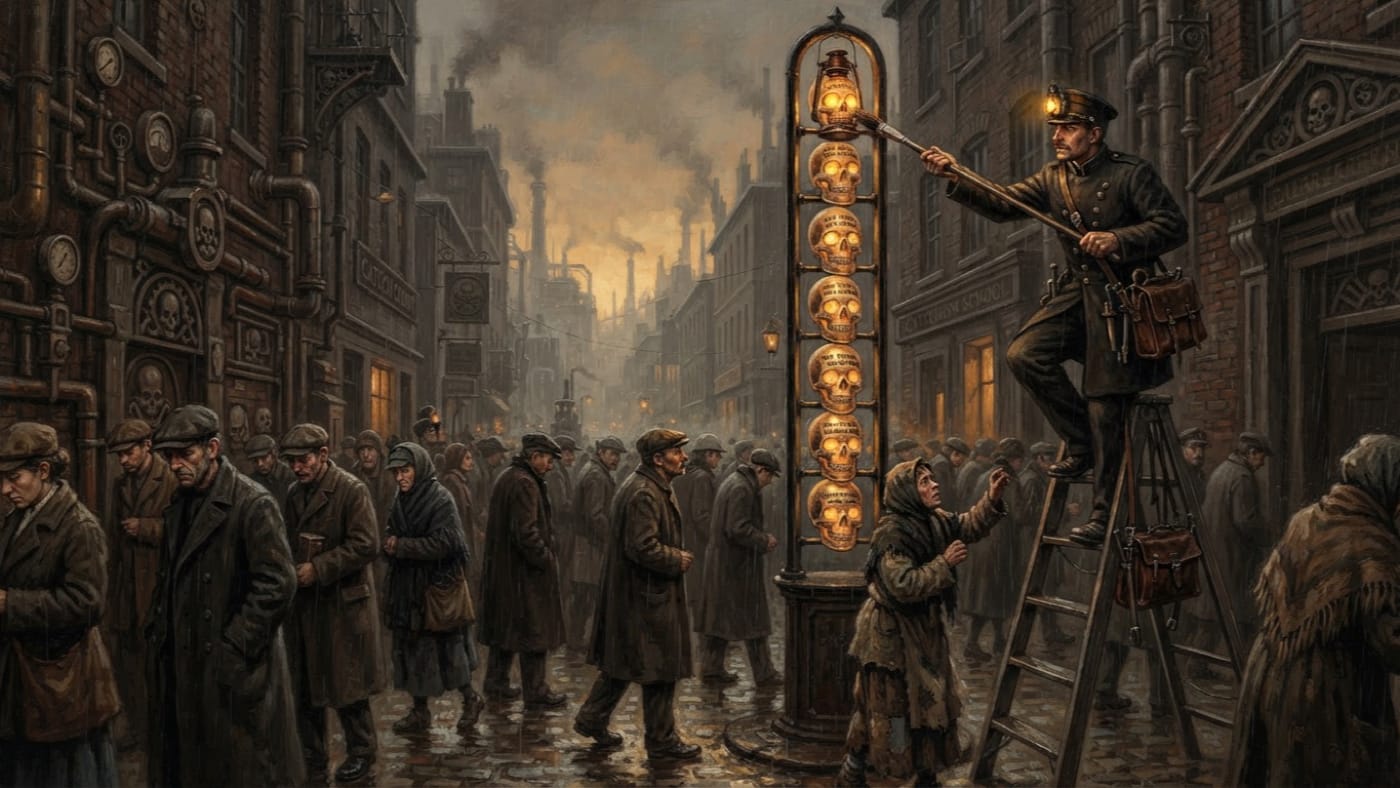
Civic Doctrine
A sentence in the ledger becomes a lesson in the street
A recorded sentence becomes compulsory street instruction: condemned names lit in Glass Skull Stacks, maintained by Pillar-Keepers and challenged by Mercy Cult blanks. The citizen need only pass beneath.
Codex Ref. XIII.1.07-201

Civic Triage Tribunal
The court where wounds learn their price before they heal
Marrowgate's Civic Triage Tribunal turns beds, saws, broth, labour, debt, and death into rulings; mercy enters only after allocation.
Codex Ref. XIII.1.88-083

Class Seven Visual Anomalies
If the paint sings, leave the wall to the Creator
Heraldry’s red-ink doctrine for marks that move, sing, sweat, restore themselves, enter dreams, and teach the Inspector why courage needs a leash.
Codex Ref. XIII.1.83-001
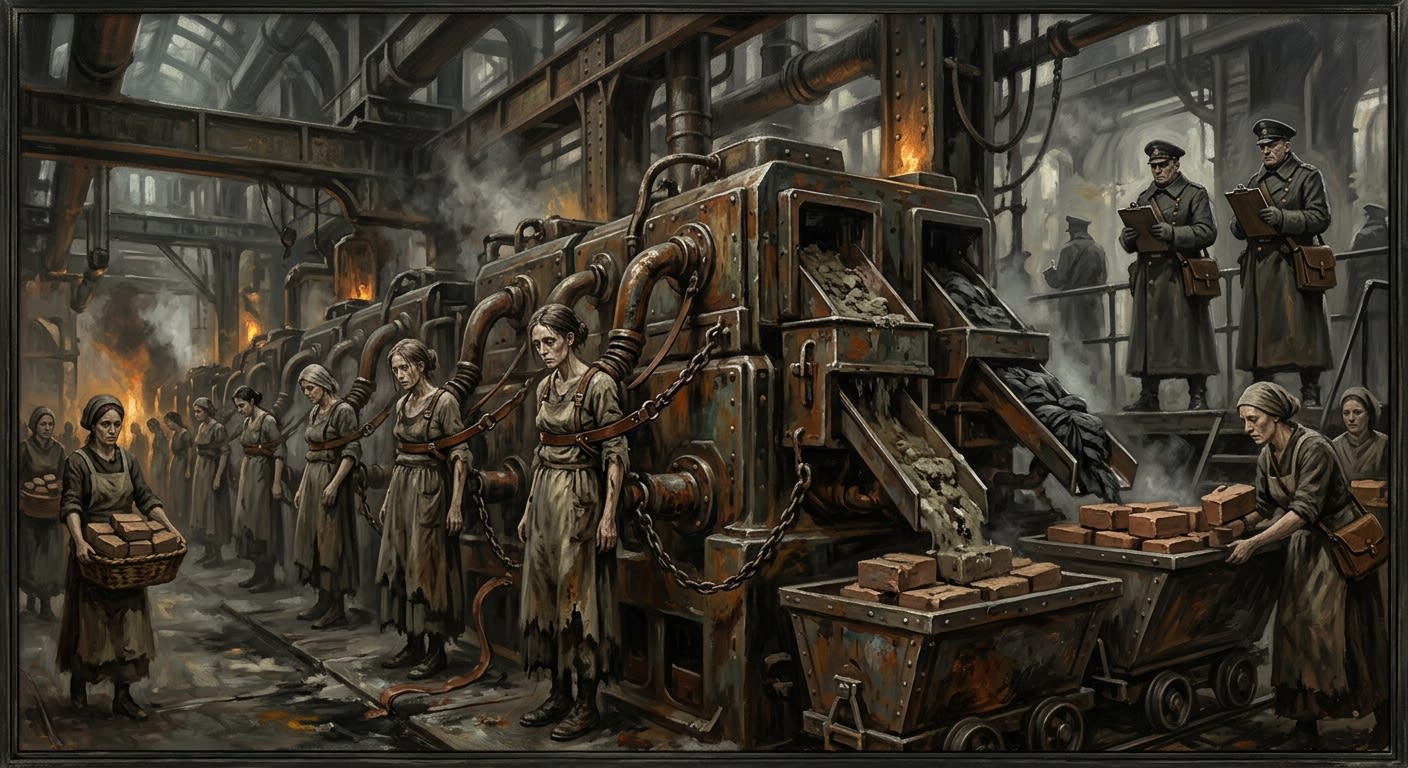
Classification 7-F
The file by which the Bureau teaches horror to stand in line
Classification 7-F names Reproductive Infrastructure, Hostile: the sealed category by which Ash-Mothers, mortar, obedience, and enemy supply become one file.
Codex Ref. XIII.1.72-004

Classification Advisory 14-L
Mercy under watch, recurrence on paper, the third citation in stone
The attested A.S. 199 revision of Purity's conditional Lantern proscription: mercy under watch, arrest upon documented recurrence, immurement upon third citation. Original issue year unknown.
Codex Ref. XIII.1.14-199

Classification Amber
The honeyed prison where Purity keeps suspicion alive
Classification Amber is Purity's suspended warrant: suspicion preserved in colour, fear extended by procedure, and mercy sharpened into watchfulness.
Codex Ref. XIII.1.06-001

Classification Black
The paper is kept; the knowledge is refused
Classification Black keeps a document on the shelf and forbids anyone to read it. The Synod preserves the paper; the clerk preserves their ignorance.
Codex Ref. XIII.1.09-002

Classification Report
The grade is spoken; the objection is filed
The Classification Report turns shrine measurements, receipts and pilgrim counts into a binding grade. Pilgrimage pronounces it; Records preserves it; the parish files its objections beside it.
Codex Ref. XIII.1.51-151

Clearance Seal
The small impression by which waiting ends
The Cloister's clearance seal ends waiting under a corrected name. Vale supplies the hand; Records and Pilgrimage supply the law; Strasbourg inherits the pilgrim.
Codex Ref. XIII.1.72-010
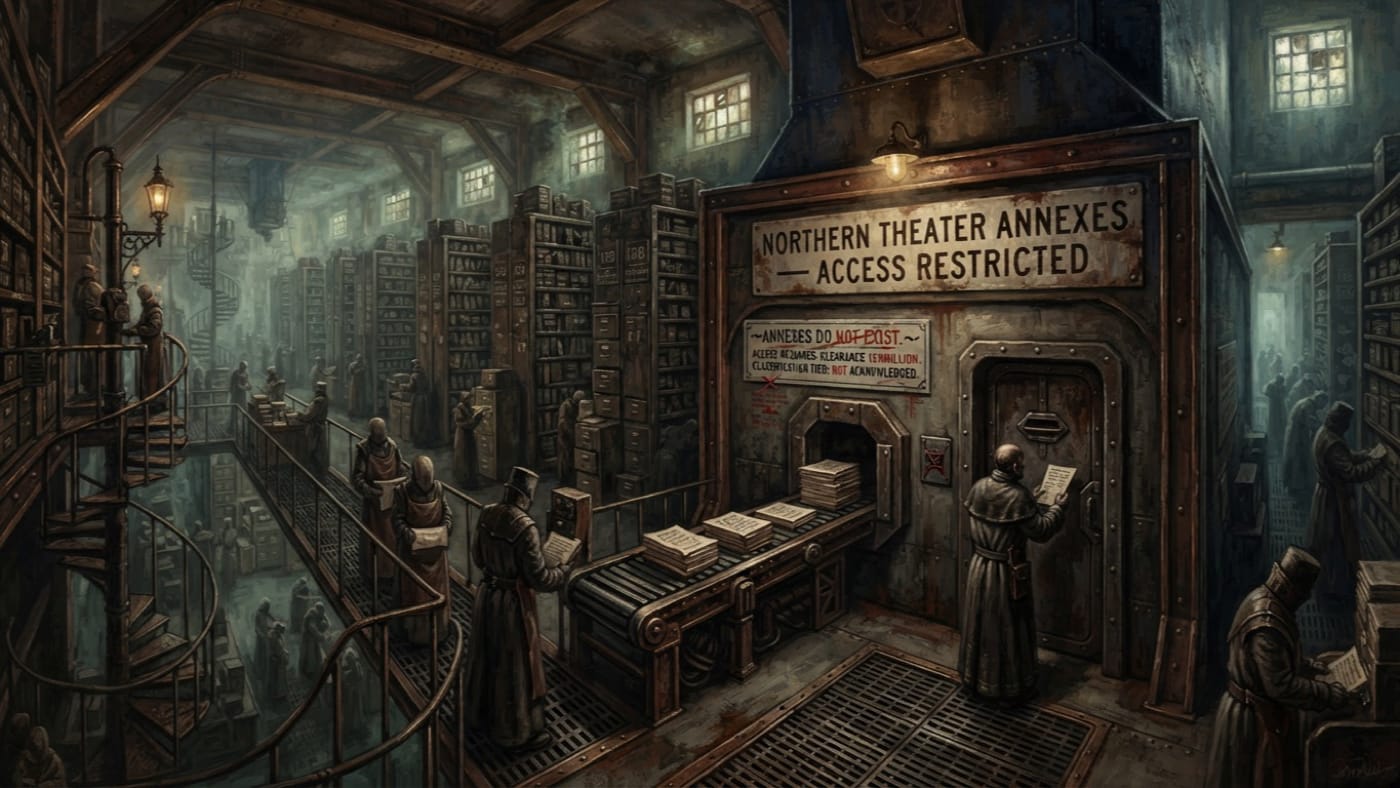
Clearance Vermillion
The Tier That Denies Its Own Existence
Clearance Vermillion restricts Brest's Northern Theater annexes while the Church denies the tier exists. I recorded the denial; my record acquired the same classification. The Ledger keeps its answer from its own Warden.
Codex Ref. XIII.1.72-011
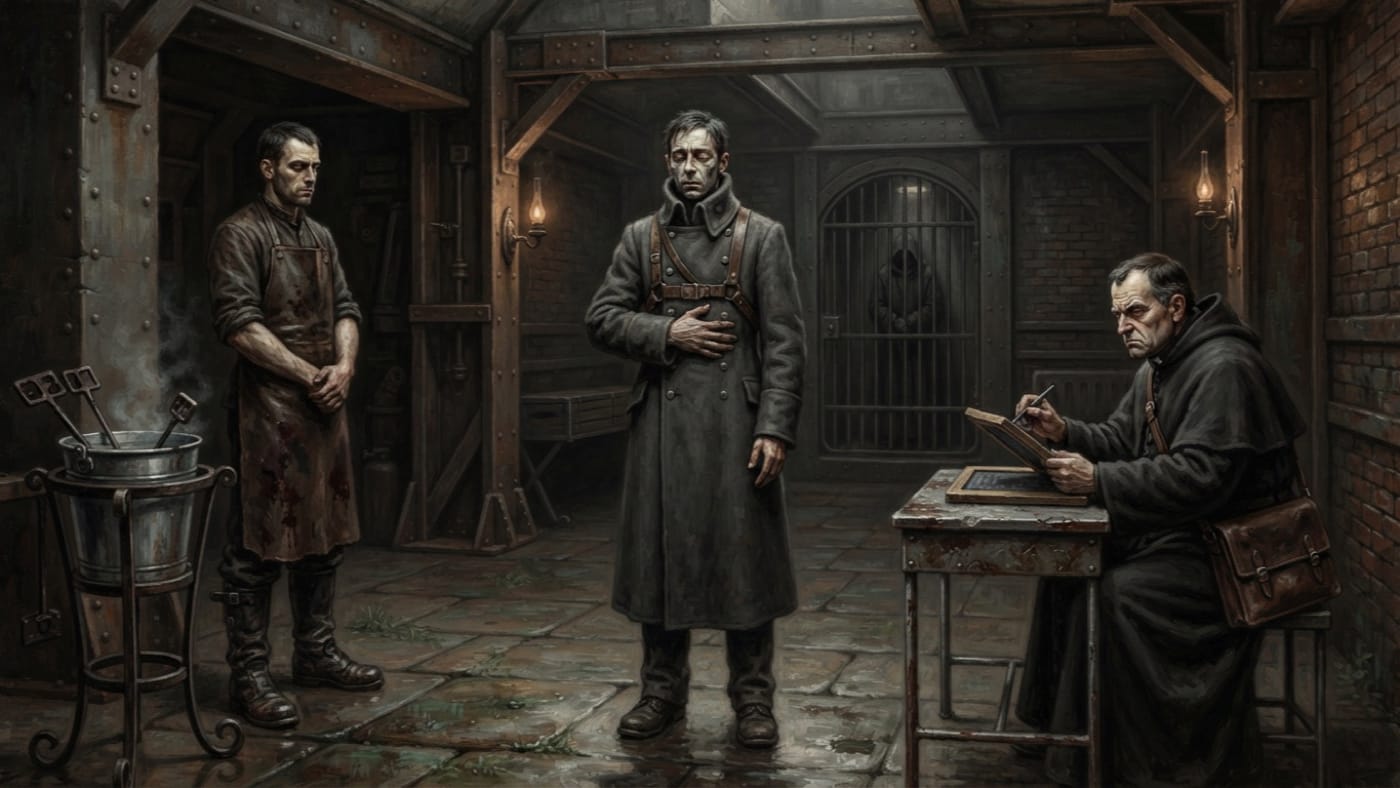
Closing Tone
Three notes down, fourteen heartbeats, and the clerk has the last word
Three descending notes, fourteen heartbeats of silence, and no speech until the scribe certifies the chamber clean: Purity permits even an ending only by paperwork.
Codex Ref. XIII.1.41-005

Coastal Countermeasures
The hook is zealous; the seal is pending
Calling for communion is heresy; calling for destruction is zeal. This A.S. 201 survey examines Saffron's disputed lure apparatus and insurance recovery still under review. The hook has a defence; the seal remains pending.
Codex Ref. XIII.1.31-002

Code of Rational Jurisprudence
A Courtroom Without Relics, and a Divisor Where Mercy Belonged
The Republic's court law made evidence sovereign, abolished relic-sworn oaths and sanctuary, and priced punishment by usefulness. Indexed to Regensburg, A.S. 30; its promulgation remains unknown.
Codex Ref. XIII.1.58-030

Code Seventeen
A man remains on the rolls; what happened to him does not
Code Seventeen keeps anomaly survivors on the Bureau of Records' rolls and their former postings out of reach. At Sofia, a desk may do the work of mercy.
Codex Ref. XIII.1.17-201

Codex Ferrum
The iron book that taught bishops to wait for the rail
The Codex Ferrum chartered the Guild of Rails in A.S. 94, giving iron custody a legal voice and every later train delay a holy ancestor.
Codex Ref. XIII.1.94-001
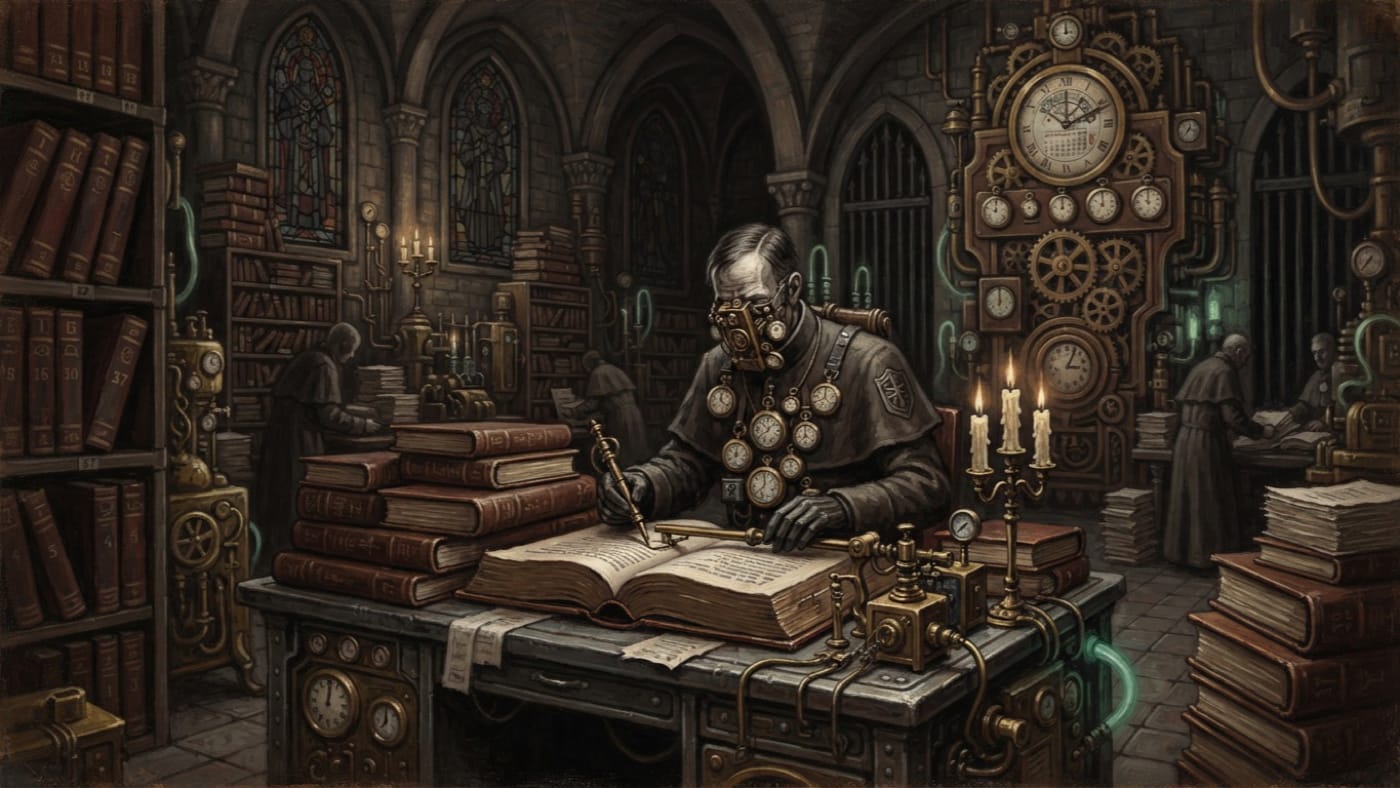
Codex Liturgiae
Eleven volumes. Thirty-seven annexes. One lawful way to kneel.
Eleven volumes and thirty-seven annexes prescribe every authorized rite in the Dominion. The Bureau of Rites measures obedience by the syllable and the second; the faithful pay afterward.
Codex Ref. XIII.1.63-001

Codex of Permitted Symbols
The little book that makes walls guilty
Pocket abridgement of the Armorial carried by Sigil Inspectors, where lawful shapes are licensed, colours are weaponised, and mercy is a counterfeit edition.
Codex Ref. XIII.1.82-001
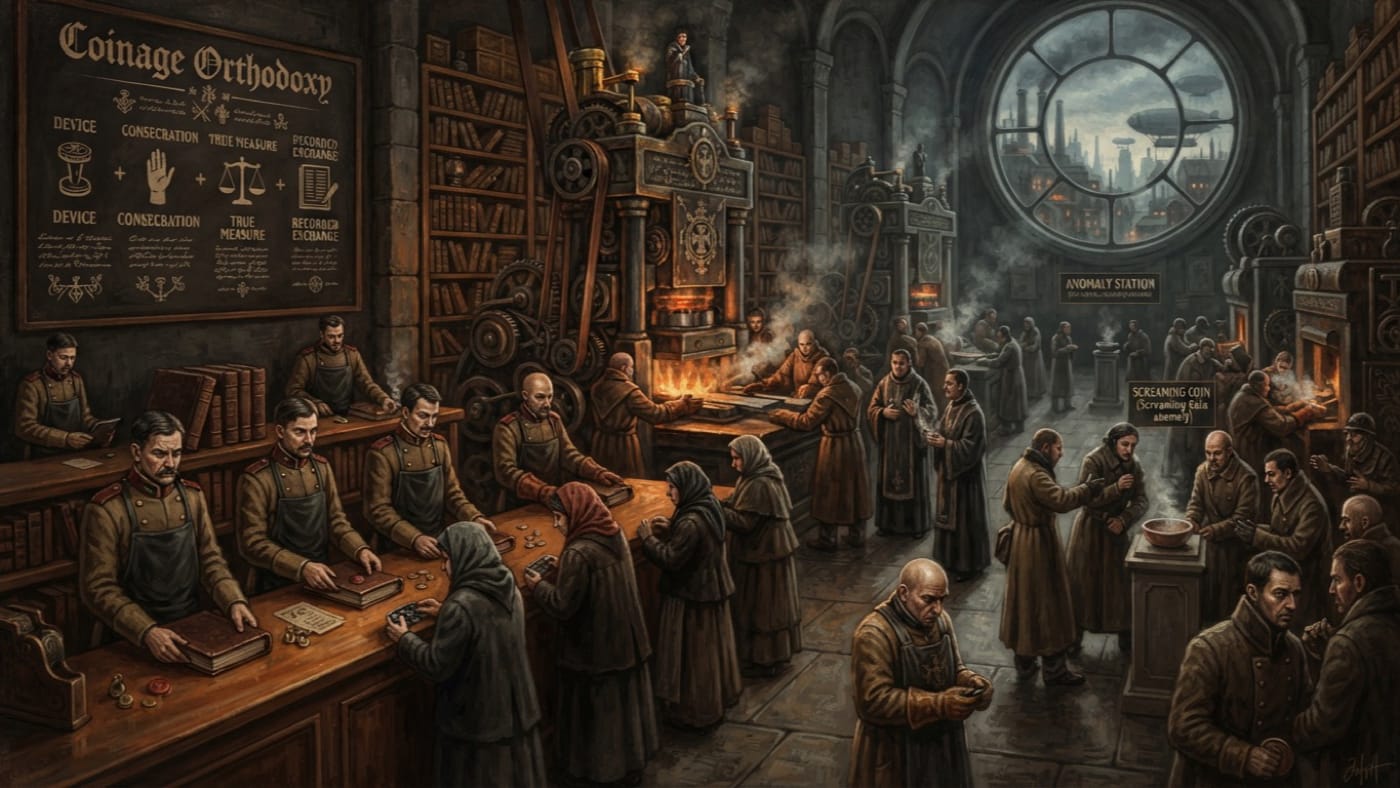
Coinage Orthodoxy
Iron is obedience you can count
The Synod recognises lawful money by device, consecration, true measure and recorded exchange. Counterfeit value is heresy; the Screaming Coin passes anyway.
Codex Ref. XIII.1.23-201
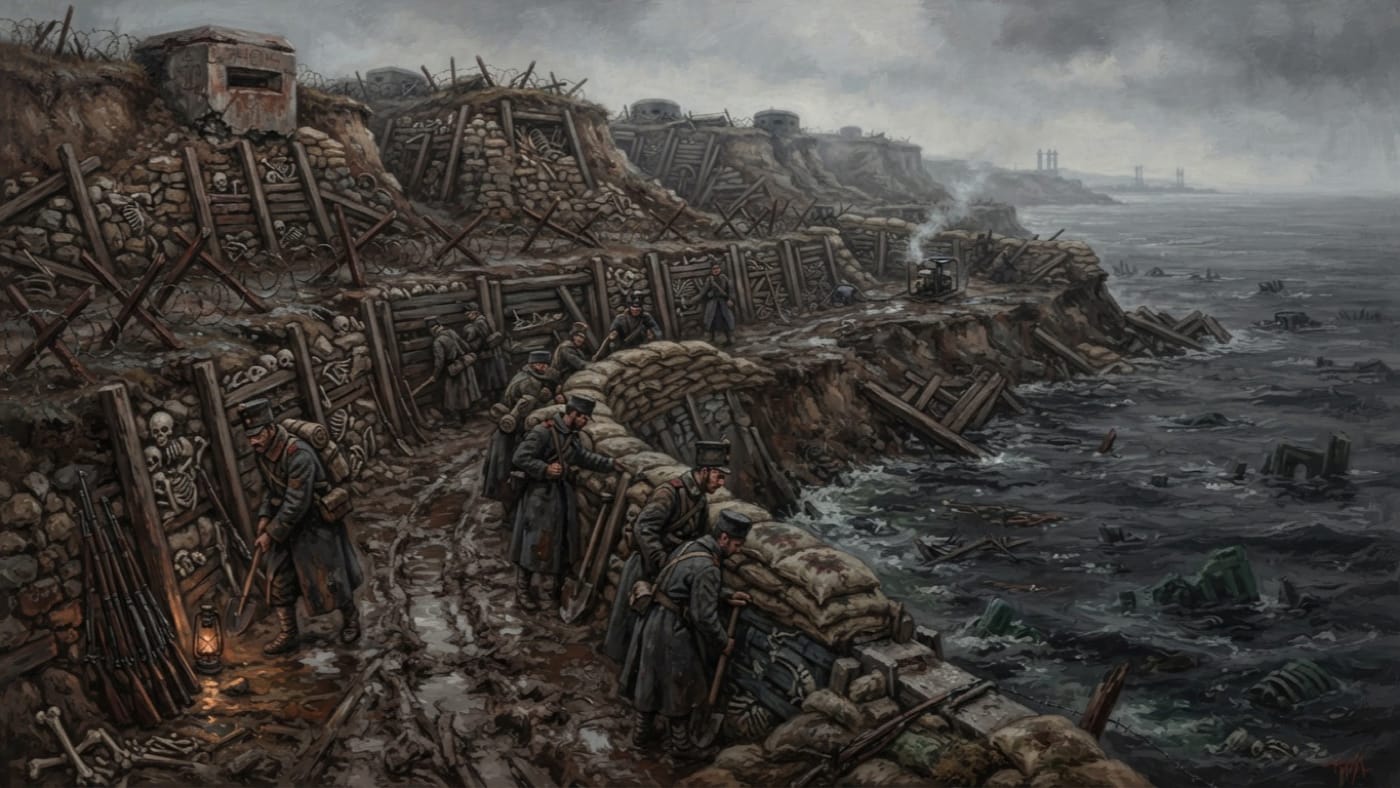
Collapse Tradition of the Sister Trenches
The ledger predicts; the garrison rebuilds
Commissioned in A.S. 201, this review preserves the Sister Trenches' Collapse as disputed tradition, rejects its numbered form as history, and finds Elder and Younger still active. The ledger cannot replace a shovel.
Codex Ref. XIII.1.08-201

Commentaries on Faithful Severity
The book that taught cruelty to file receipts
Severian's Commentaries turn cruelty into apparatus: cages, tongues, households, witness columns, and the tidy receipt by which harm becomes Doctrine.
Codex Ref. XIII.1.04-134
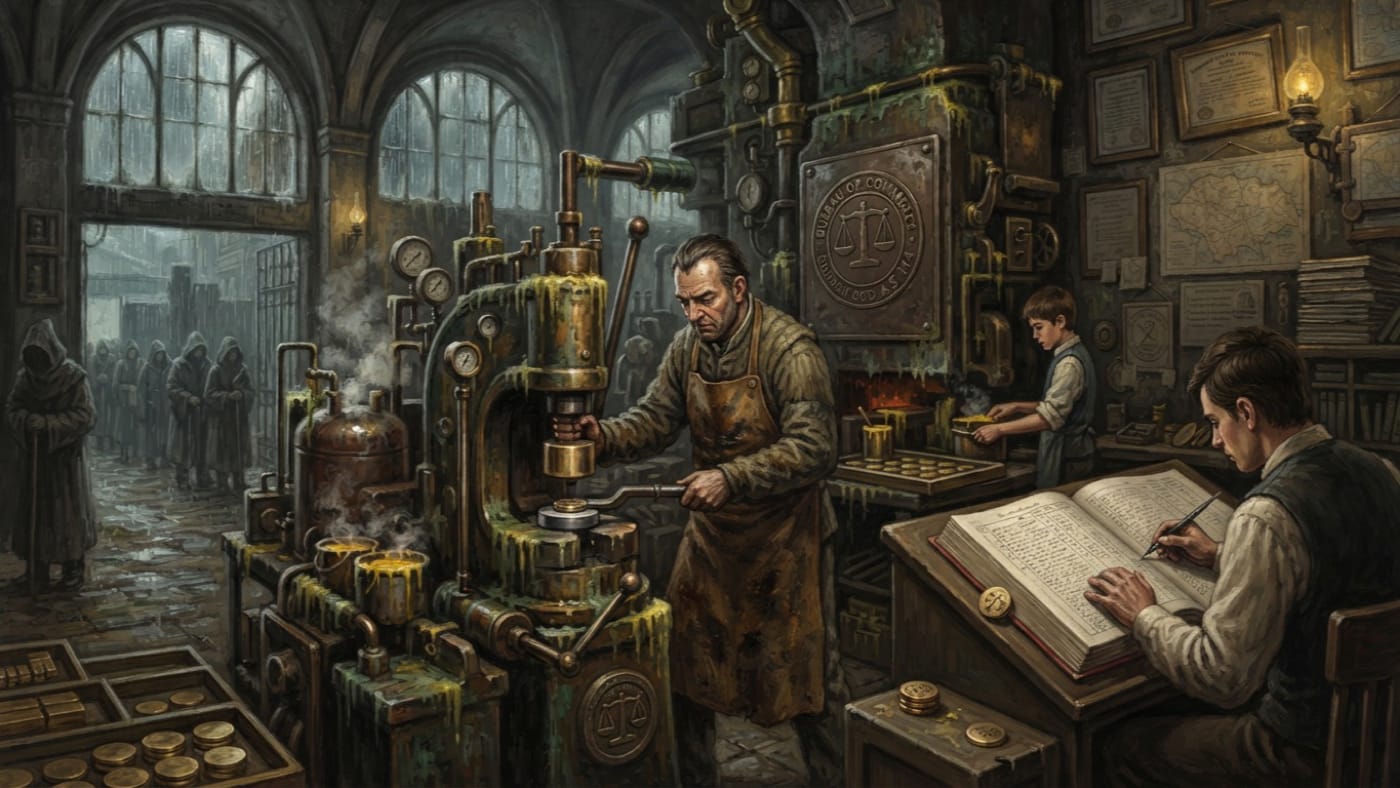
Commerce Charter A.S. 114
The Charter made the toll admissible
The A.S. 114 Charter licensed the Route-Stamper trade under Commerce and reserved Records veto authority over every forge. Brass could certify a journey; the ledger would decide whether it counted.
Codex Ref. XIII.1.38-114

Common Use Litany
Identity not restored. Service accepted.
Black-Snow Lor puts nameless bones to work through five acts: wash, seal, knock, hold, declare. Identity stays lost; the Guild's invoice finds its way.
Codex Ref. XIII.1.41-001
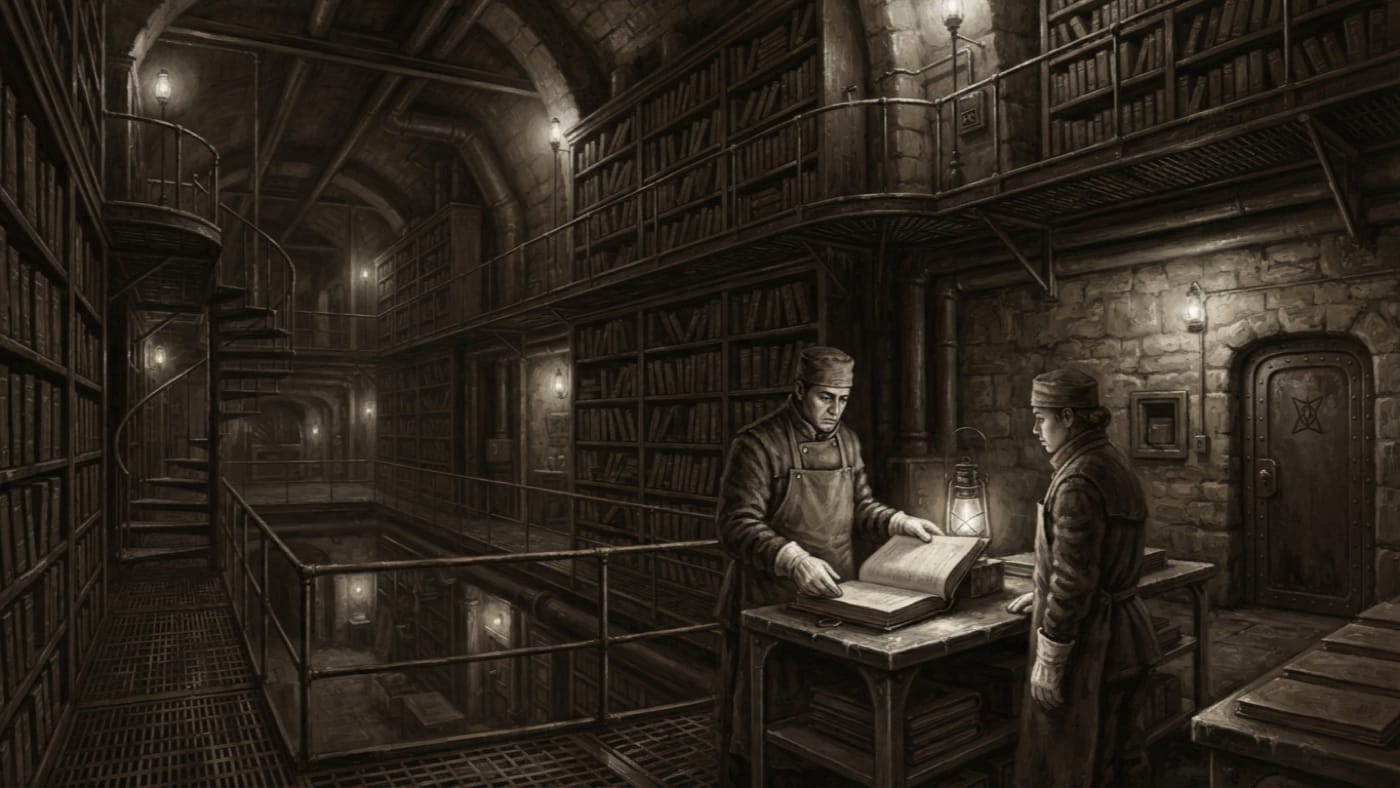
Compact of Subterranean Custody
The vaults were already there; the obedience needed signatures
Ratified in A.S. 82, the Compact gave the Burnless Archive custodians willing to live underground. The paper was already there; Alzen Voss taught its keepers how to obey.
Codex Ref. XIII.1.06-082
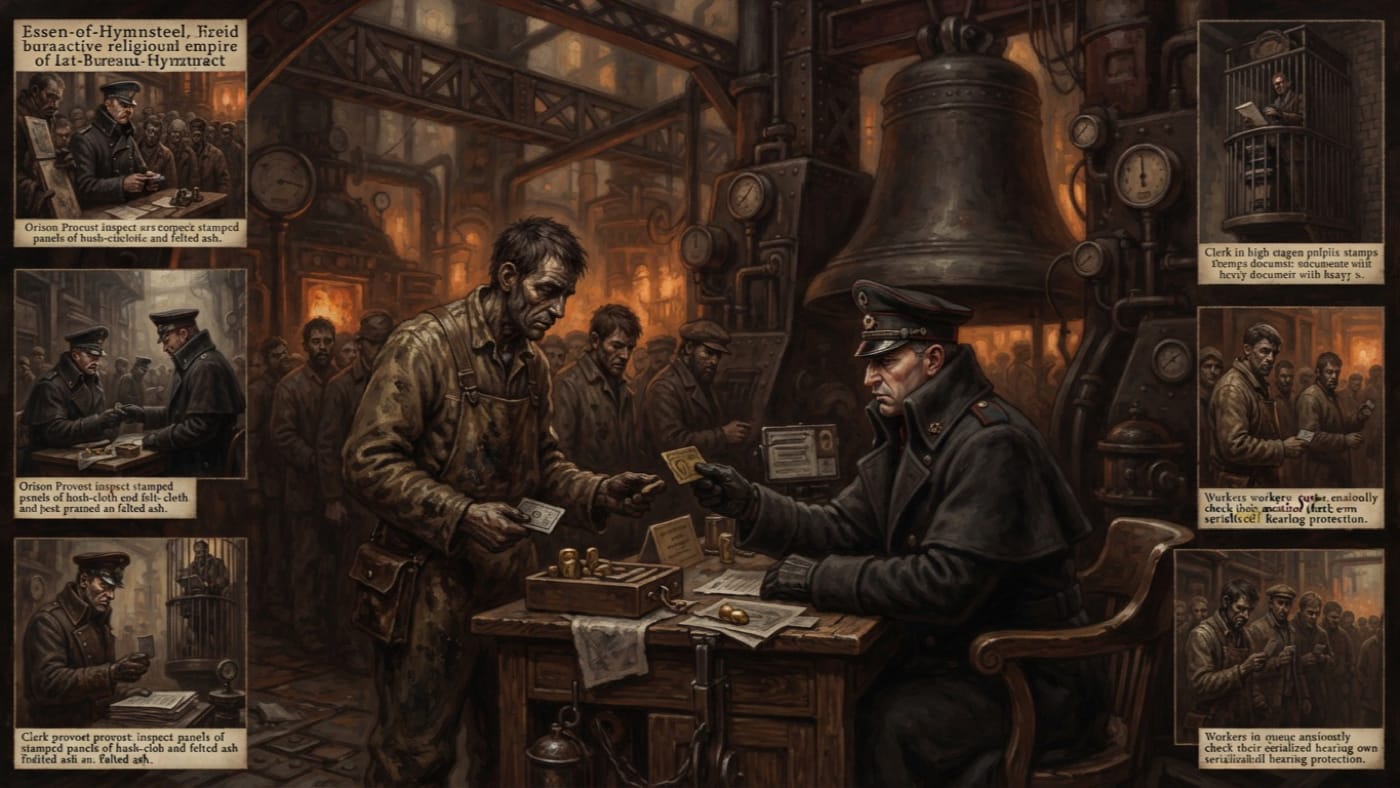
Compact Ordinance 7-C
The ears may rest when the paperwork permits
In this A.S. 201 survey, Essen's 7-C makes unauthorised silence an offence, demands current Hushwright seals, and treats unlicensed hearing protection as contraband. Even the ears require papers.
Codex Ref. XIII.1.93-007
Compact Report 447-E
The accusation survived longer than its arithmetic
The Compact's A.S. 198 report blamed Resonance Bloom on the Mirror Choir. Sealed review broke the chronology, and two Codex errata withdrew the convenient explanation.
Codex Ref. XIII.1.447-198

Comparative Notes on Counter-Hymn Phrase Recurrence
The arithmetic survived. The copyist was transferred.
Aldric Venn's A.S. 187 memorandum traced familiar hymns in Pale Chanter reports and proposed a Wound-Site echo. Records withdrew the paper in forty-seven minutes; the mechanism remains unadjudicated.
Codex Ref. XIII.1.689-187

Compendium Infernum
Twelve volumes of answers, and a northern question without a filing number
Twelve volumes give the enemy a designation, a class, a countermeasure and a filing number. The Grey has only the name its garrison gave it; the Bureau has had eleven years to supply the rest.
Codex Ref. XIII.1.102-001

Compendium of Proscribed Devotional Practices
A number for the practice; no answer for the marsh
Subsection 14.iii supplied the Bureau of Purity's A.S. 196 classification of the Somnolent Communion Cells: Sloth-Heresy, Passive Variant. The practice was numbered; the marsh remained unimpressed.
Codex Ref. XIII.1.14-196
Compendium of Proscribed Errors
Every grievance gets a shelf; the clerk supplies the kindling
The Bureau of Doctrine's register of eight proscribed heresies: every grievance receives a shelf, and every clerk learns which kindling to fetch.
Codex Ref. XIII.1.37-002
Complex Contraband
The goods have changed; the paperwork remains correct
Complex contraband reaches the Macedon checkpoints with genuine seals and correct manifests. The goods have changed; the paperwork has not. Records receives what inspection cannot explain.
Codex Ref. XIII.1.97-196

Compliance Directive 14-R
The soul may hide; the window must open
Orison's A.S. 112 directive made visible listening proof of allegiance. Windows, tokens and receiver tones entered the ledger; broken horns offered households no defence.
Codex Ref. XIII.1.14-112
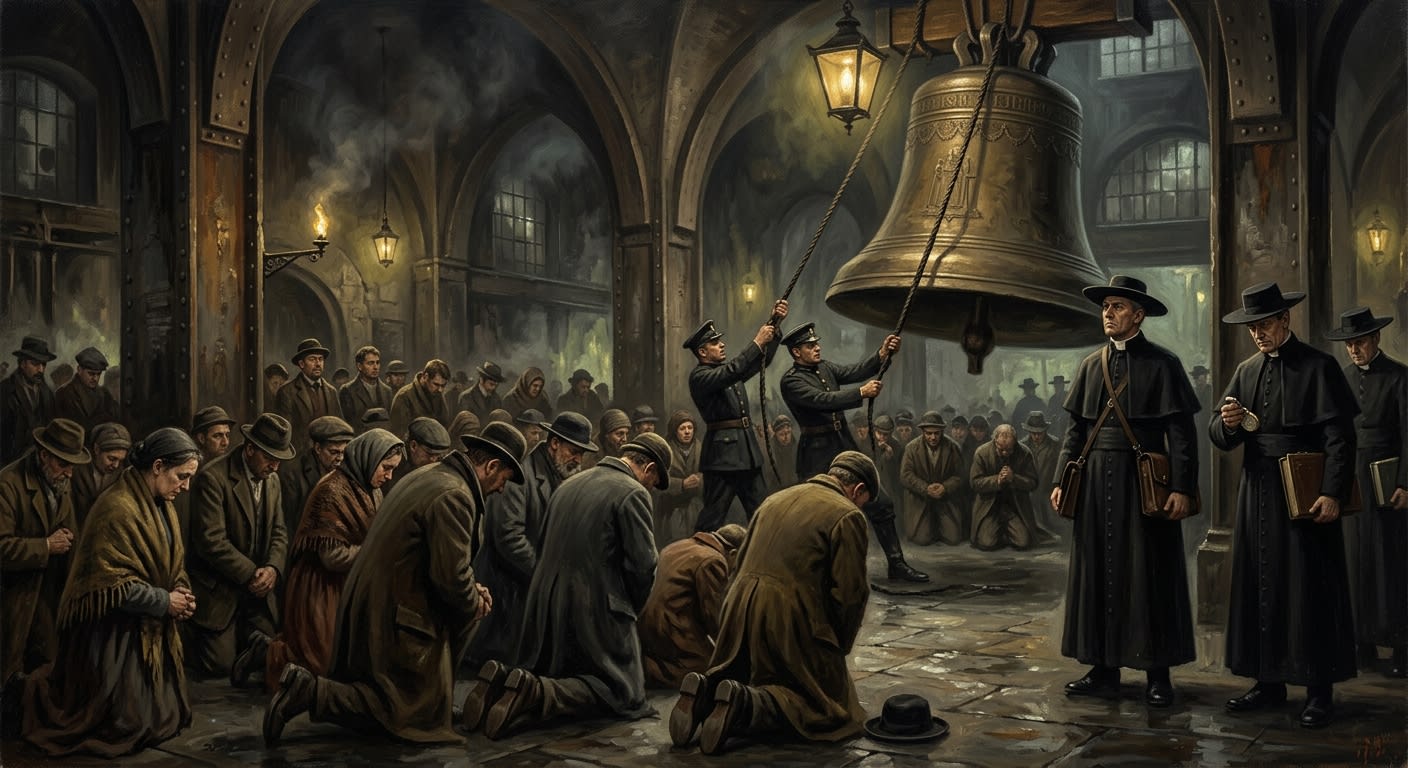
Compline
The bell that sells darkness back to the faithful
Compline is the Synod's last office before darkness: prayer turned curfew, bell turned warrant, sleep turned a privilege with witnesses.
Codex Ref. XIII.1.62-005
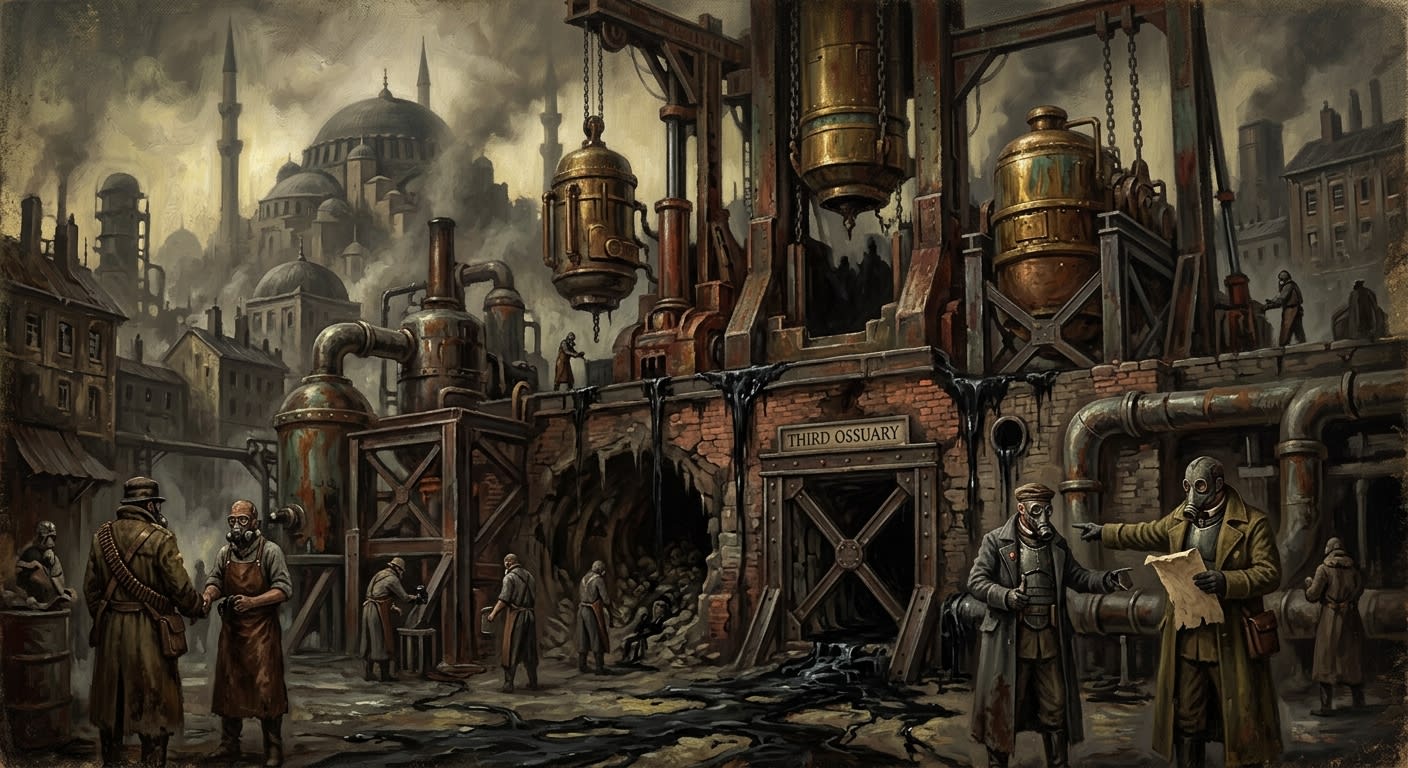
Compound 7
The gas that lifts cathedrals and smells like old confession
Compound 7 lifts the Vigil Arks, refuses flame, contracts toward relics, and leaks from the Third Ossuary beneath Constantinople with less generosity each season.
Codex Ref. XIII.1.21-003
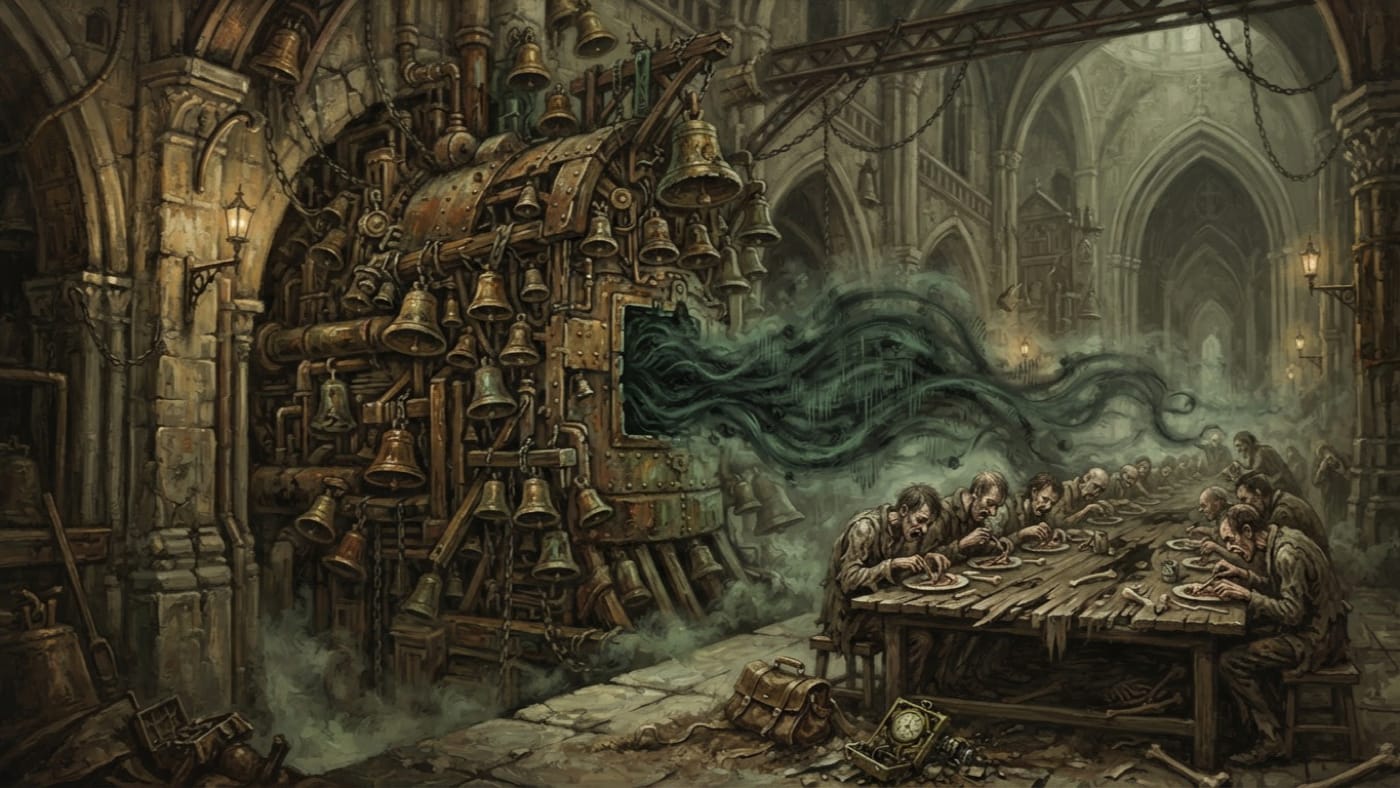
Compulsion Architecture
The hunger is recorded. The mechanism remains an interpretation.
Bells names the Hollow Court’s recorded harmonics Compulsion Architecture. Involuntary appetite is not proof of compelled action. Rites requested the chart’s destruction. The chart was reclassified.
Codex Ref. XIII.1.62-007
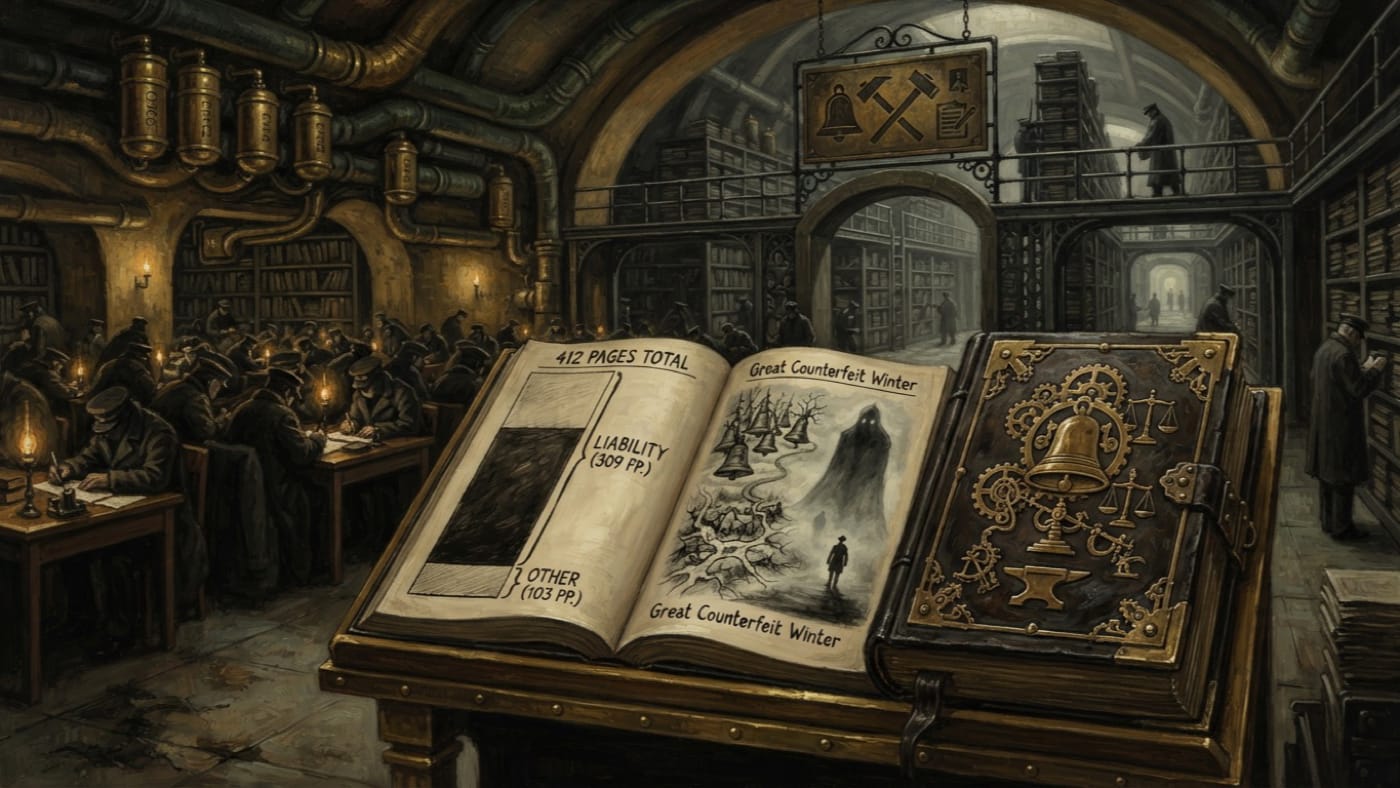
Concerning the True Toll and Its Faithful Reproduction
Three quarters of the book explain who is to blame
The Route-Stampers' workshop manual survives in the record at its Third Revision, A.S. 178: 412 pages, 309 devoted to liability. The traveller does not read it. The traveller is read.
Codex Ref. XIII.1.178-001

Concordat Supplementary
What the author forgot, the collectors remembered
An A.S. 201 survey of the Concordat Supplementary's attested Canon 17-D, cited by Tithes for infants' first teeth as preemptive dues. I wrote the canon. The Bureau remembered what I had forgotten.
Codex Ref. XIII.1.17-001

Concordats of Governance
Four hundred and twelve pages proving Hell does not respect footnotes
The Concordats of Governance were the Rationalist Republic's procedural gospel: prefectures, censuses, tribunals, and emergency clauses annulled too late to unmake their wounds.
Codex Ref. XIII.1.12-030
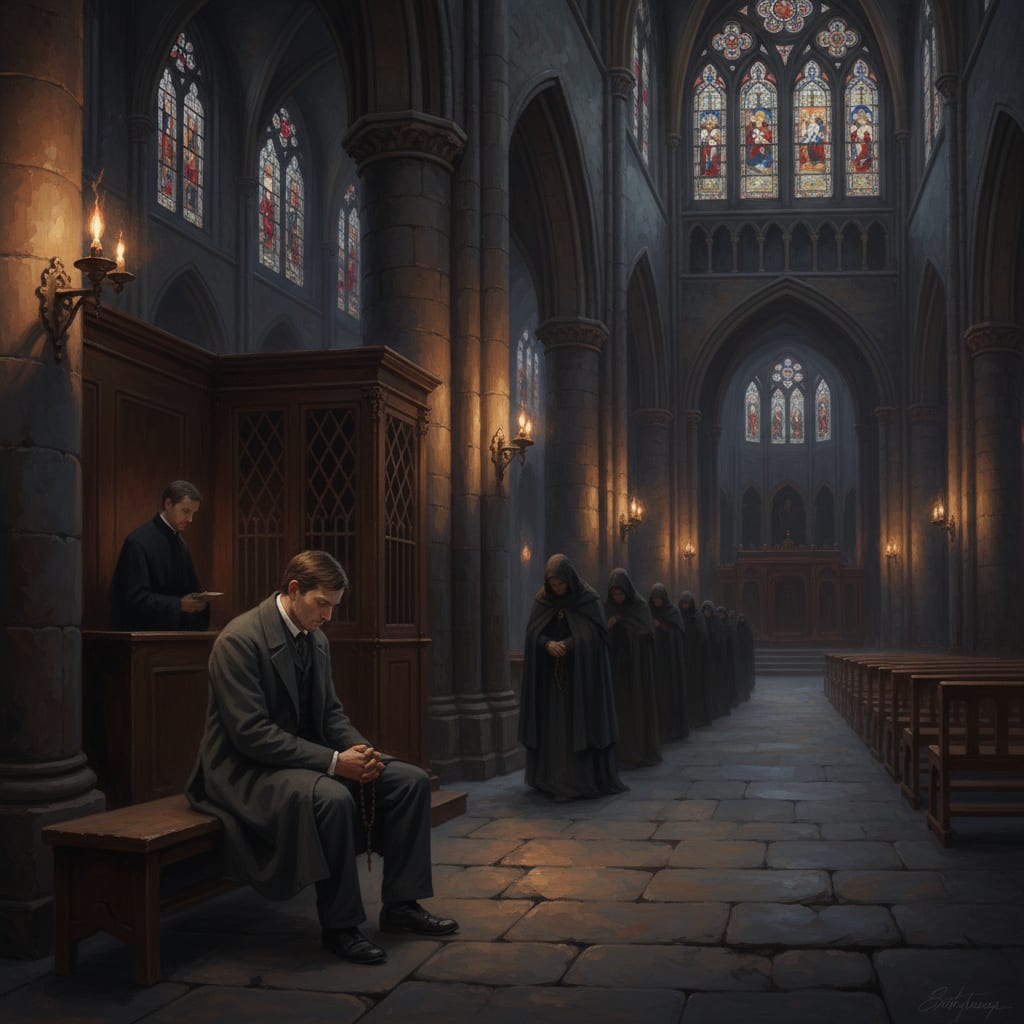
Confessarii
Two hundred and eighty-six reports filed; three blank pages received; the system functions as intended
The Confessarii are the Bureau of Shadows' listening network, which does not exist because the Bureau does not exist. They attend. They absorb. They file. The courier departs. Nothing is acknowledged. The system functions as designed.
Codex Ref. XIII.1.06-001
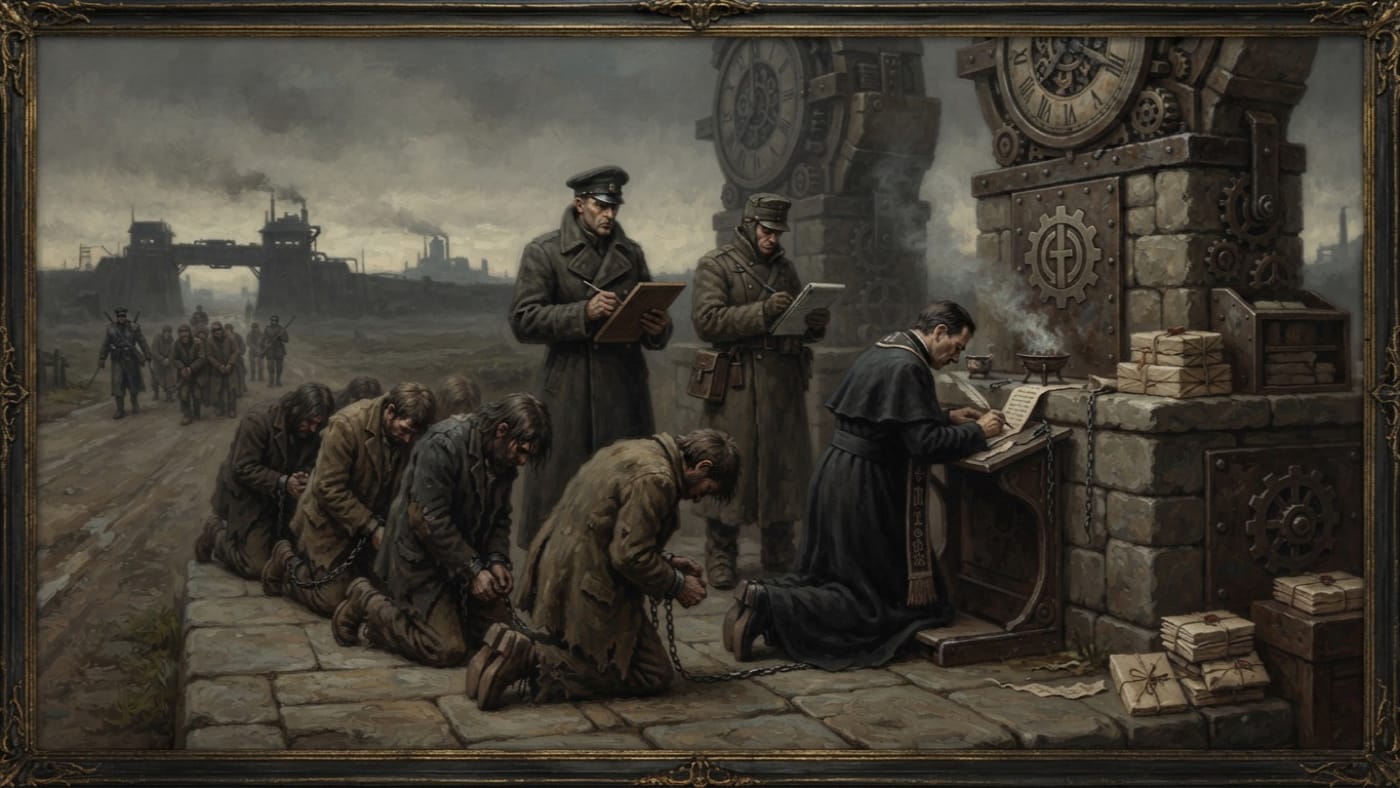
Confession Harvest
The strips travel with the condemned; the names bring others
At Jubilee shrines, chained penitents speak and priests write. Records files the sealed strips; Purity follows the names. The road supplies its next column.
Codex Ref. XIII.1.100-201
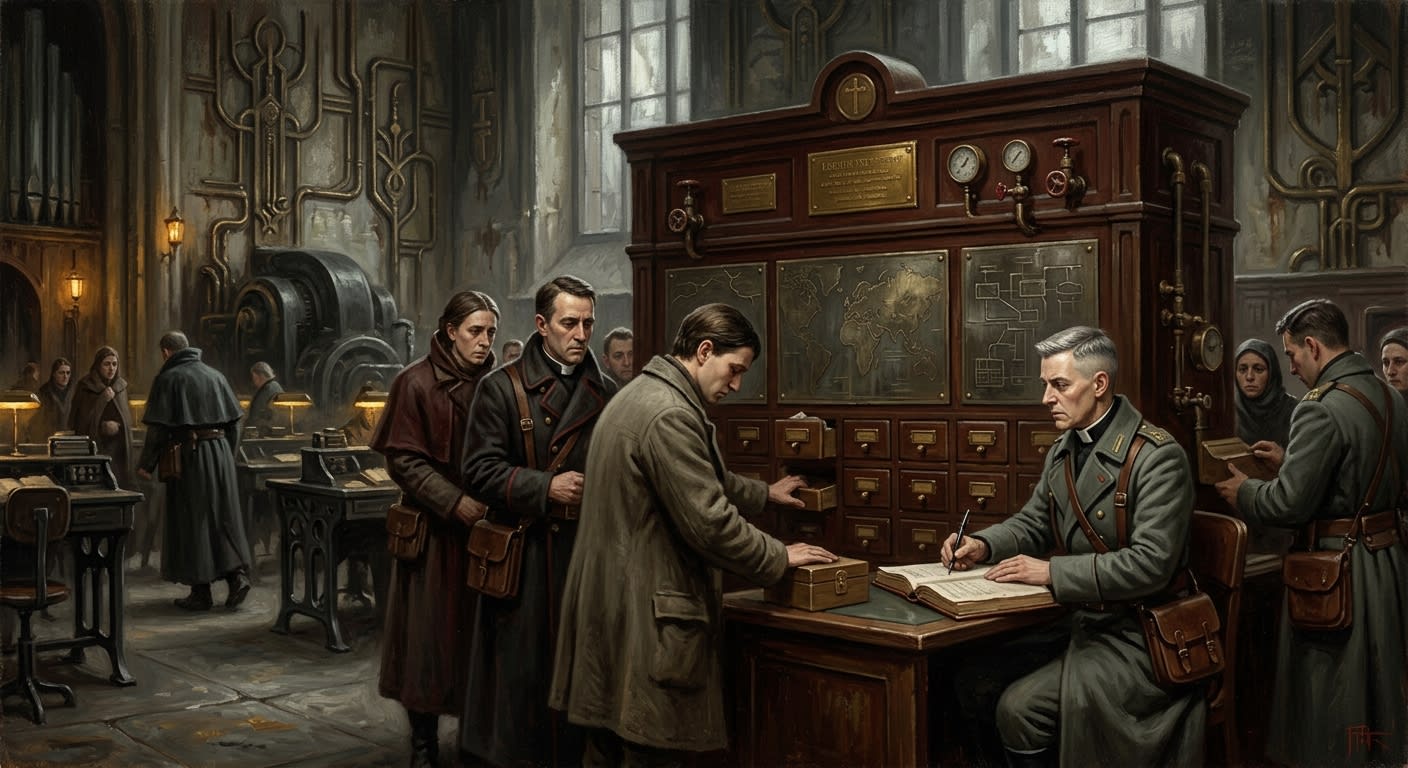
Confession of Desire
The rite that made shame searchable and taught the enemy where to knock
The Confession of Desire is Purity's quarterly rite for naming want, filing shame, and proving that a sealed cabinet can become the enemy's map.
Codex Ref. XIII.1.37-196
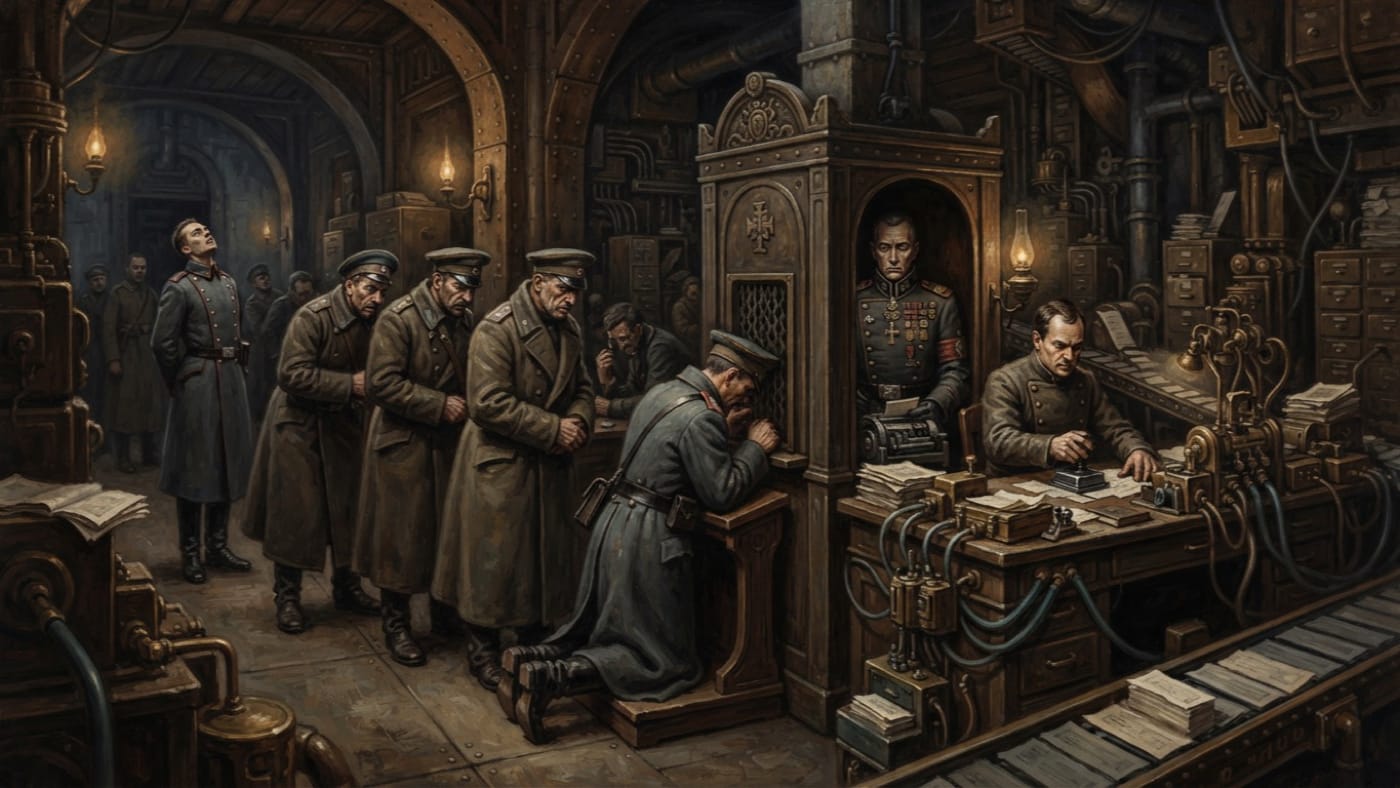
Confession of Pride
The clean return that proves nothing
Confession of Pride asks Przemyśl's officers to name contempt before a confessor. Purity receives candid intelligence from men still able to examine themselves; the most compromised sincerely confess nothing.
Codex Ref. XIII.1.95-201

Confession Wind
A lowered voice is no defence against the weather.
Confession Winds carry spoken words for miles, delivering whispered orders and private opinions to unintended ears. Officers detest them; inquisitors delight. I have found no remedy on record.
Codex Ref. XIII.1.29-007
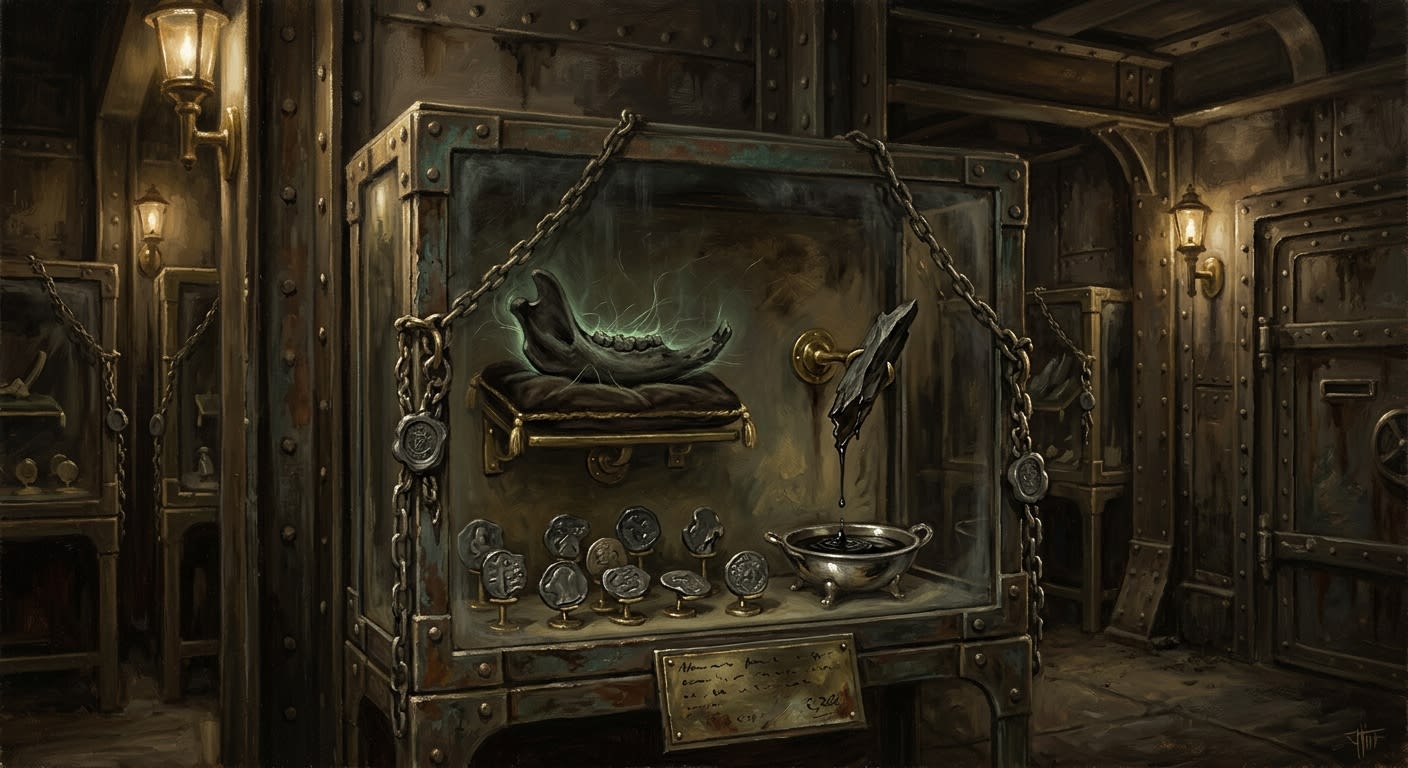
Confiscated Relics of Uncertain Provenance
Holy things without receipts, unholy things with excellent filing discipline
Third silence of the Vault of Silences, holding the humming jawbone, the weeping splinter, and Velmora's returning coins under suspended relic authority.
Codex Ref. XIII.1.50-001
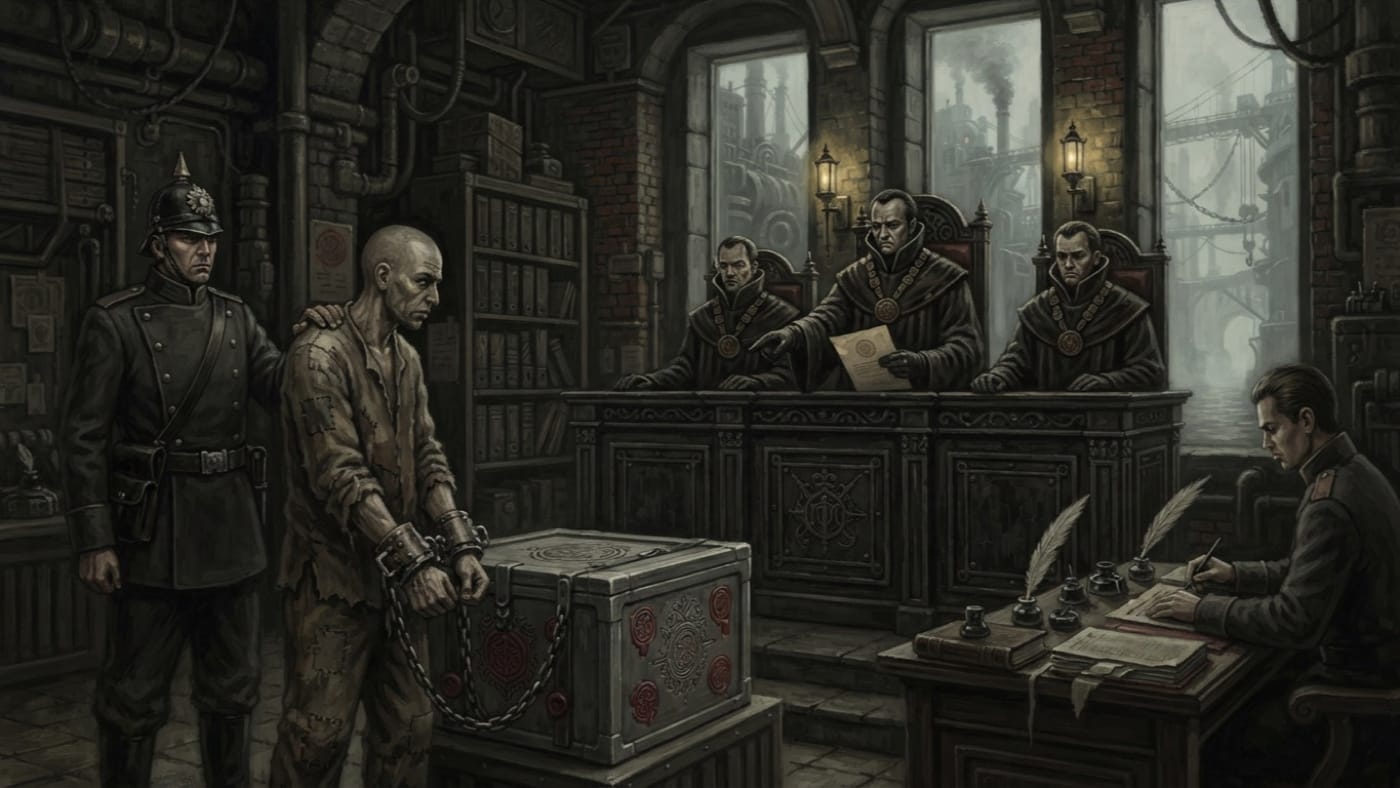
Constantinople Maritime Tribunal
The court condemned the hands and kept the testimony
Seen through Korin's A.S. 196 hearing, the Constantinople Maritime Tribunal condemned a wax-handler, sealed his demon-glass testimony, and returned his hands to the freight.
Codex Ref. XIII.1.58-196

Continental Levy
The decimal point where obedience becomes infantry
The Continental Levy is the Synod's permanent tithe of flesh, born from the A.S. 110 crisis and refined into household arithmetic.
Codex Ref. XIII.1.54-001

Continuations of the Original Grace
Grace is given once and collected forever
War's name for the Continental Levy renewals: the A.S. 110 emergency carried into successive generations, with sealed quotas and no promise of completion.
Codex Ref. XIII.1.54-002

Contract Theurgy
Where the pen remains free and the room has already been bought
Contract Theurgy is Velmora's law-shaped sorcery: obligation priced, witnessed, matured, and collected from a soul that remains technically free.
Codex Ref. XIII.1.37-171
Contradiction Doctrine
Write it down, seal it, burn it properly
Field doctrine codified in A.S. 91 requiring dangerous last words to be recorded, marked, sealed, routed, and burned under authority.
Codex Ref. XIII.1.86-091

Contradiction Map
The holy art of keeping incompatible truths from meeting before lunch
The Contradiction Map is the Broker's slip-book of lethal truths: relic claims, feast days, custody lies, and the blessed delays that keep bones from starting wars.
Codex Ref. XII.15.05-148

Contradiction Pouch Mechanism
One hearing, two custodies
Purge-era Trench Court procedure keeps a deserter's incriminating findings in the ordinary record while sealing accusations against command in separate custody. The sentence proceeds; the explanation waits.
Codex Ref. XIII.1.87-091

Cooperage Audit
The certificates are in order; the dust is not
An A.S. 201 survey of Mournwater's pending Cooperage Audit: certified saint-dust turns in transit, the ledgers balance, and the locks remain open.
Codex Ref. XIII.1.22-201

Corpse-Light
If it shines, don't follow.
Green-white light at the Ash-Glyph Marshworks copies lantern routes and burial grids, drawing boats into sinkholes. The Guild rows blind; the Bureau has spent fifty-eight years leaving the classification pending.
Codex Ref. XIII.1.24-002

Corridor Master
The driver who knows where Strasbourg declines to have doors
Corridor Masters know Strasbourg's unmarked doors and the approaches that let Night Wagons reach them unseen. No warrant records the specialty; the city depends upon it before dawn.
Codex Ref. XII.14.04-003

Corvus
The fourteenth stands; the rest awaits its papers
Corvus is a later Church month whose fourteenth day commands the Saint-Malo fast, names and bells. The memorial is assigned; the massacre's exact day remains unproved.
Codex Ref. XIII.1.05-003

Council of Prefects
Where dissent receives a chair, a minute, and a family corridor
The Council of Prefects is unanimity with chairs: a ratifying chamber where civic officers discover what Strasbourg has already decided they believe.
Codex Ref. XIII.1.90-138

Counter-Relic School
Interrogate the favour before lighting the taper
A.S. 201 survey of Strasbourg's Counter-Relic School training record and instructional role: question the favour, read the debt, then observe the flame. The founding and training note remain undated.
Codex Ref. XIII.1.81-002

Counter-Seal Crisis of A.S. 178
The papers were corrected. The executions were complete.
In A.S. 178, seventeen defective counter-seals left two years of Rhine Corridor paperwork unsigned. Order 178-A restored the documents; the three executions were already complete.
Codex Ref. VI.4.19-015
Counter-Seals
A clerk's certainty is the Court's preferred key
The Shadow Court's counter-seals reportedly revise a document's origin and the reader's assent. Under Directive 77-C, suspect wax is broken before reading and seal geometry must never be copied.
Codex Ref. XIII.1.25-002

Counter-Sorcery Verses
Speak only what you can finish, for the wall listens
The sanctioned combat cant of Litany-Engineers: twenty-seven working verses that time charges, fracture sorcery seams, and punish miscadence.
Codex Ref. XIII.1.65-001

Counterfeit Loyalty
The seal failed; the roster paid
At the A.S. 131 Duel of Broken Seals, failed ration seals became a charge against allegiance. Two companies paid for claims their soldiers had never seen; no forger was produced.
Codex Ref. XIII.1.10-131
Counterkeys
Unlicensed harmonics, written in the substance of a ruined voice
Counterkeys are Irongate's unlicensed acoustic patterns, recorded in gasket grease. Bells finds coherent notation; Purity finds a crime. Neither has proved the mountain prefers them.
Codex Ref. VI.2.01-002

Coupler Rite
The blessing catches up; the fingers do not.
A priest touches a moving train's rear coupling with consecrated chalk to supply a missed departure blessing. Rites records three lost fingers as devotional expenditure; the Guild of Rails keeps its own account.
Codex Ref. XIII.1.05-201
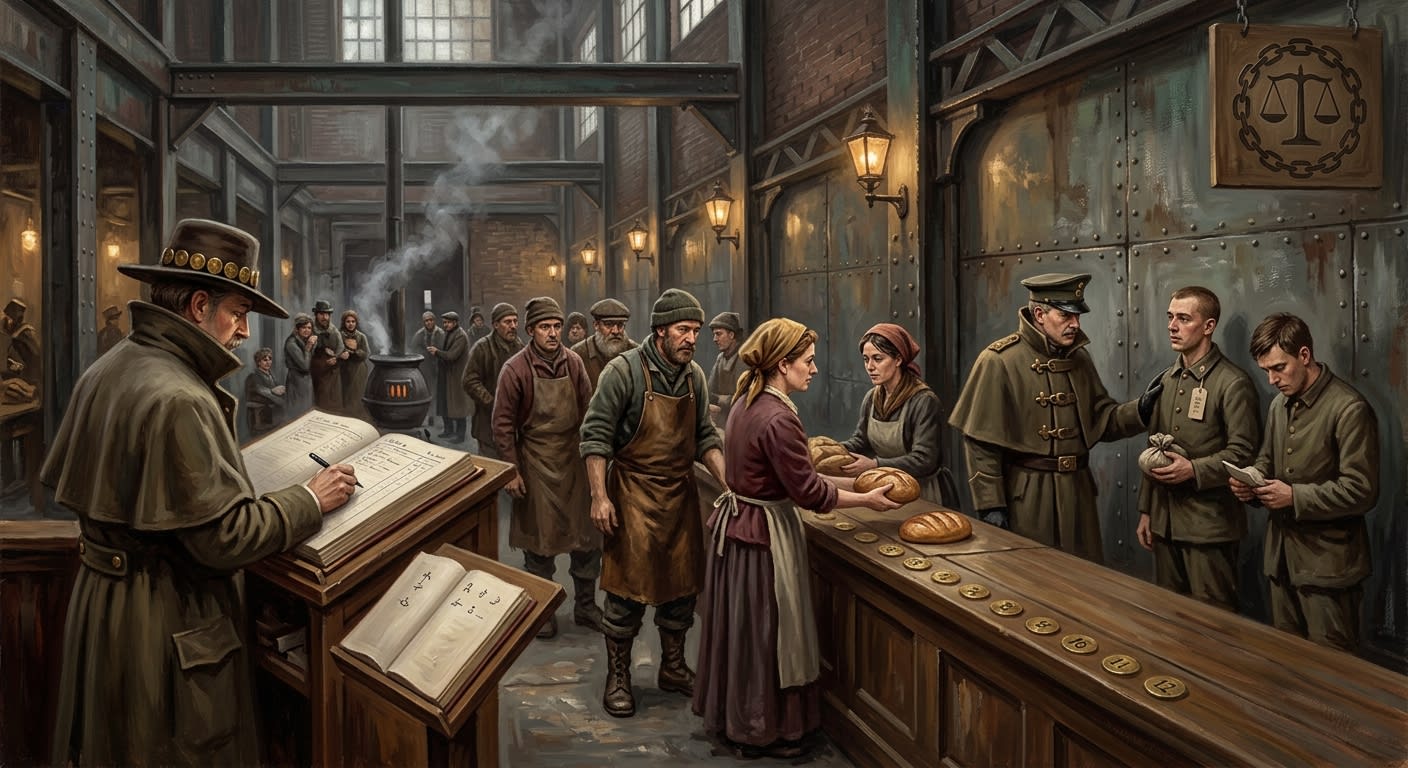
Covenant
The leash with bread on it, sanctified for public use
Covenant is the Synod's master noun: sacred pact in sermon, enforceable belonging in ledger, bread-chain in queue, and body-debt at the Line.
Codex Ref. XIII.1.04-090
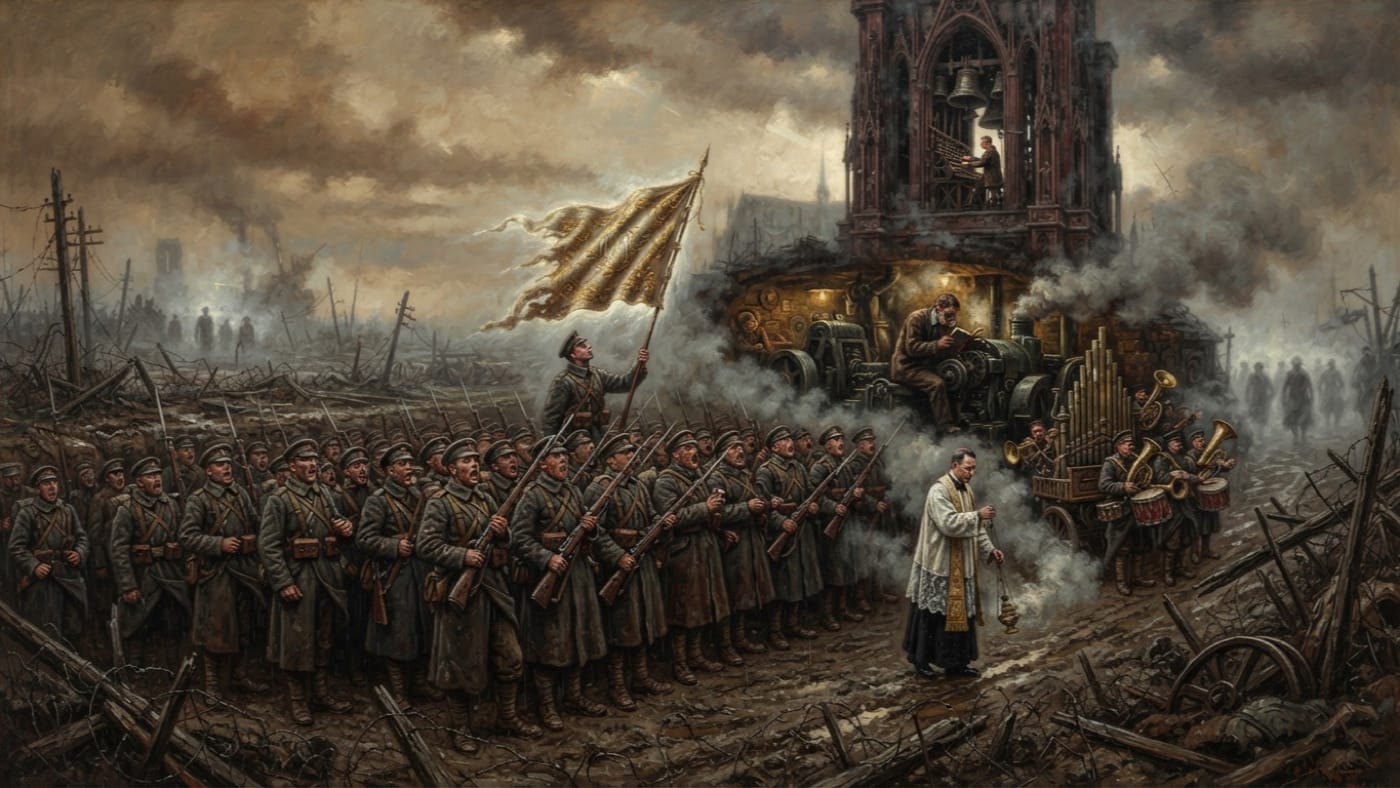
Covenant hymns
One breath for the company; one licence for the tune
A.S. 201 survey: Covenant hymns pace labour, volleys and worship under Orison's licence and Bells' schedule. Aldric Venn proposed that they might return as Pale Chanter cadence; the proposition remains withdrawn and unproven, and the singing continues.
Codex Ref. XIII.1.96-201
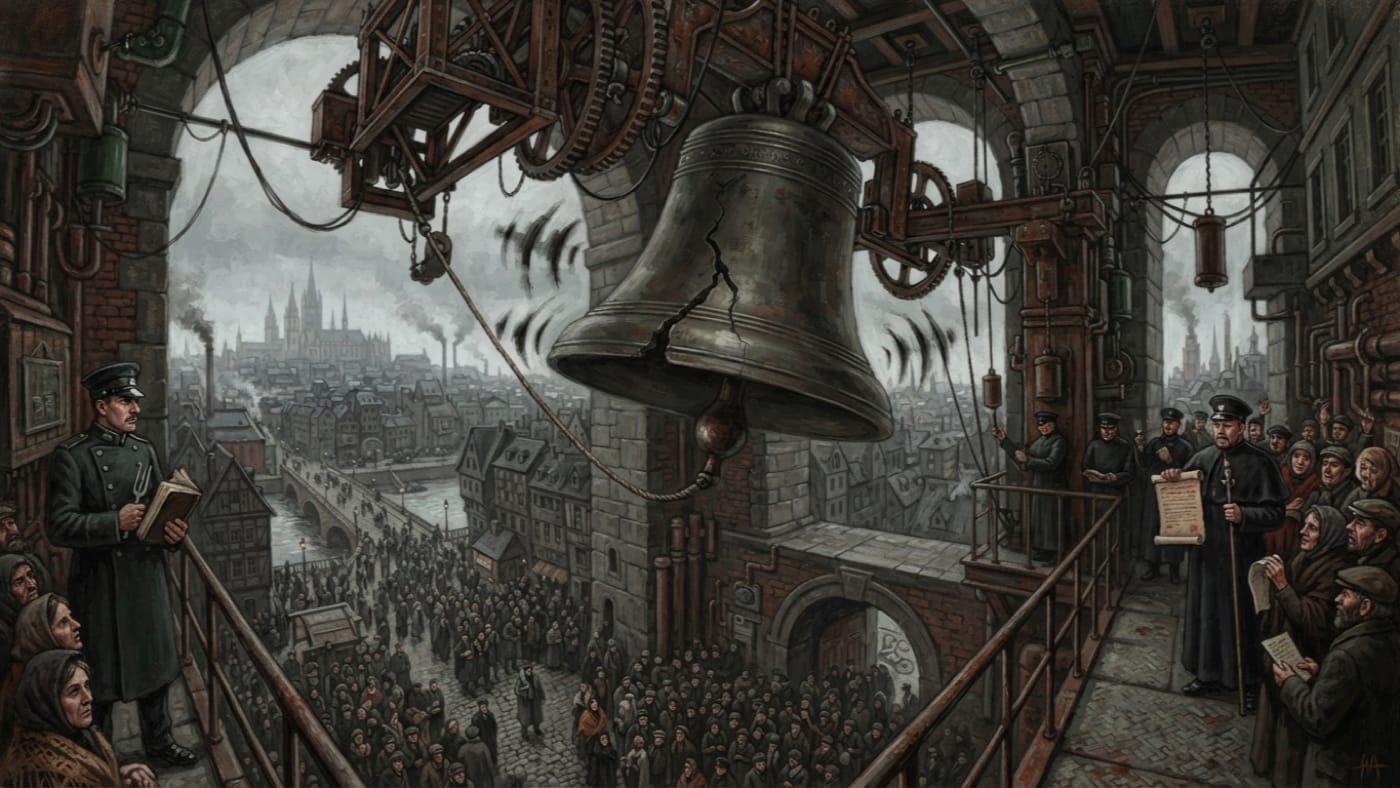
Cracked Bell of Mainz
The defect is licensed; the objections are on file
The Cracked Bell of Mainz teaches faithful imperfection and still tolls after fourteen protests, three redesigns, and one failed confiscation. The defect is licensed; the objections are on file.
Codex Ref. XIII.1.89-002

Cradle Brokers
Escape takes one night; milk is due again before dawn
Cradle Brokers place hidden infants and maintain the Pale Kin's wet-nurse rings. The Bureau calls them child thieves; their ledger asks whether anyone survived winter.
Codex Ref. XII.28.04-001
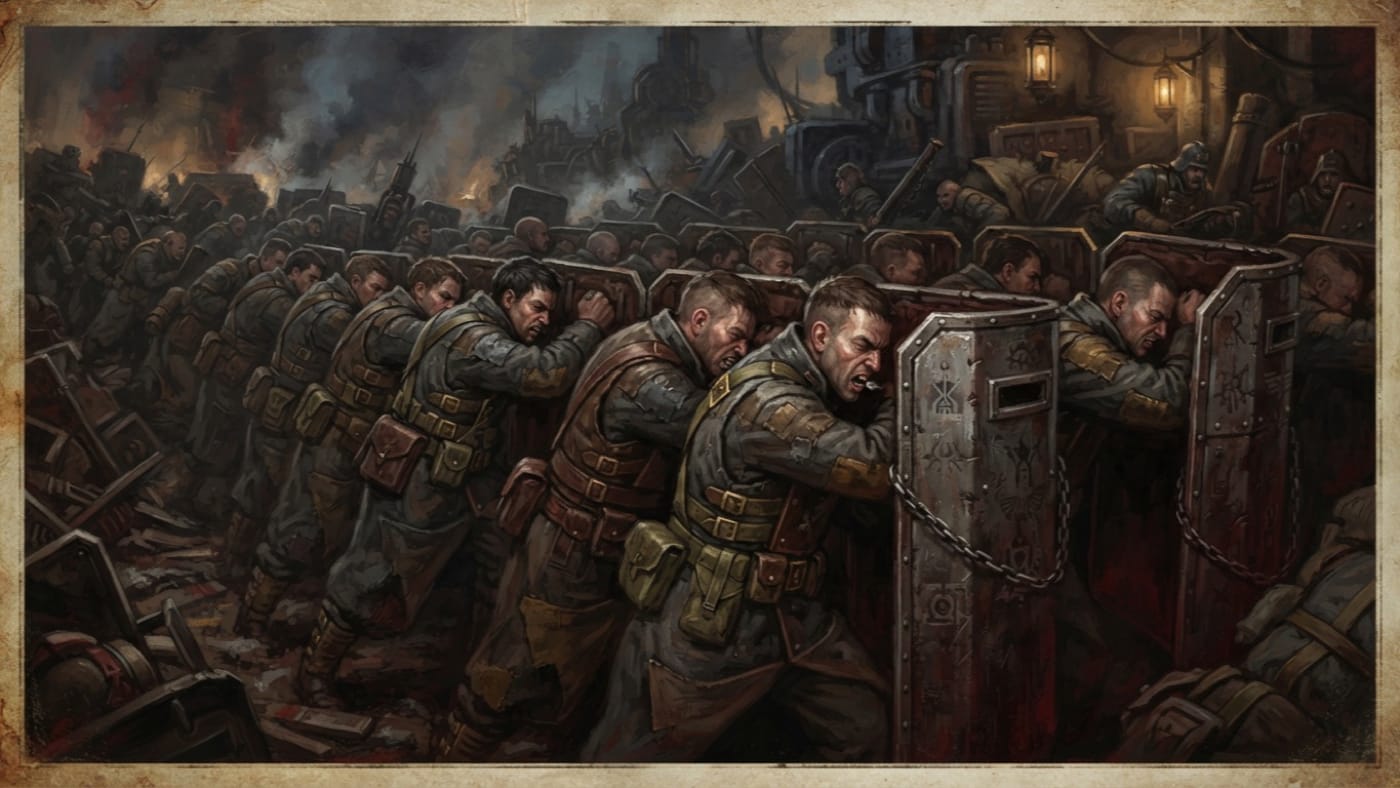
Credo Lapidem
Two words; the rest of the breath belongs to the wall
The Shield Paladins' second rank chants Credo Lapidem on each exhale, turning breath into a common brace. War counts the minutes; Doctrine certifies the lungs.
Codex Ref. XIII.1.64-002

Creed
The shortest border is the one behind the teeth
The Creed is the Synod's shortest border: a licensed mouth, a timed answer, a civic leash, and the little gate through which bread, obedience, and punishment pass.
Codex Ref. XIII.1.04-090

Creed Runner
The first rung is the cheapest signature
The Doctrine Street-Vicar Corps' entry grade: sixteen-year-old token checkers and correction-slip couriers, trained for chalk authority and expendable whenever the Bureau needs a signature.
Codex Ref. XII.9.02-002

Creed Volley
The horn summons; the banner commands
The Creed Volley reserves the Processional Band's horns for Radiant Fusilier intervention in Layered Death's fourth layer. The horn summons; the banner permits fire; neither promises relief.
Codex Ref. XIII.1.64-002

Crimson Boar of Saxony
The picture that outlived its guild and earned a sentence
A dead Saxon guild's red boar returned on convoy banners at Essen in A.S. 106. Eighty-seven died. Heraldry condemned the device by name in A.S. 108 and kept a banner to teach Inspectors what to scrape.
Codex Ref. XIII.1.82-002
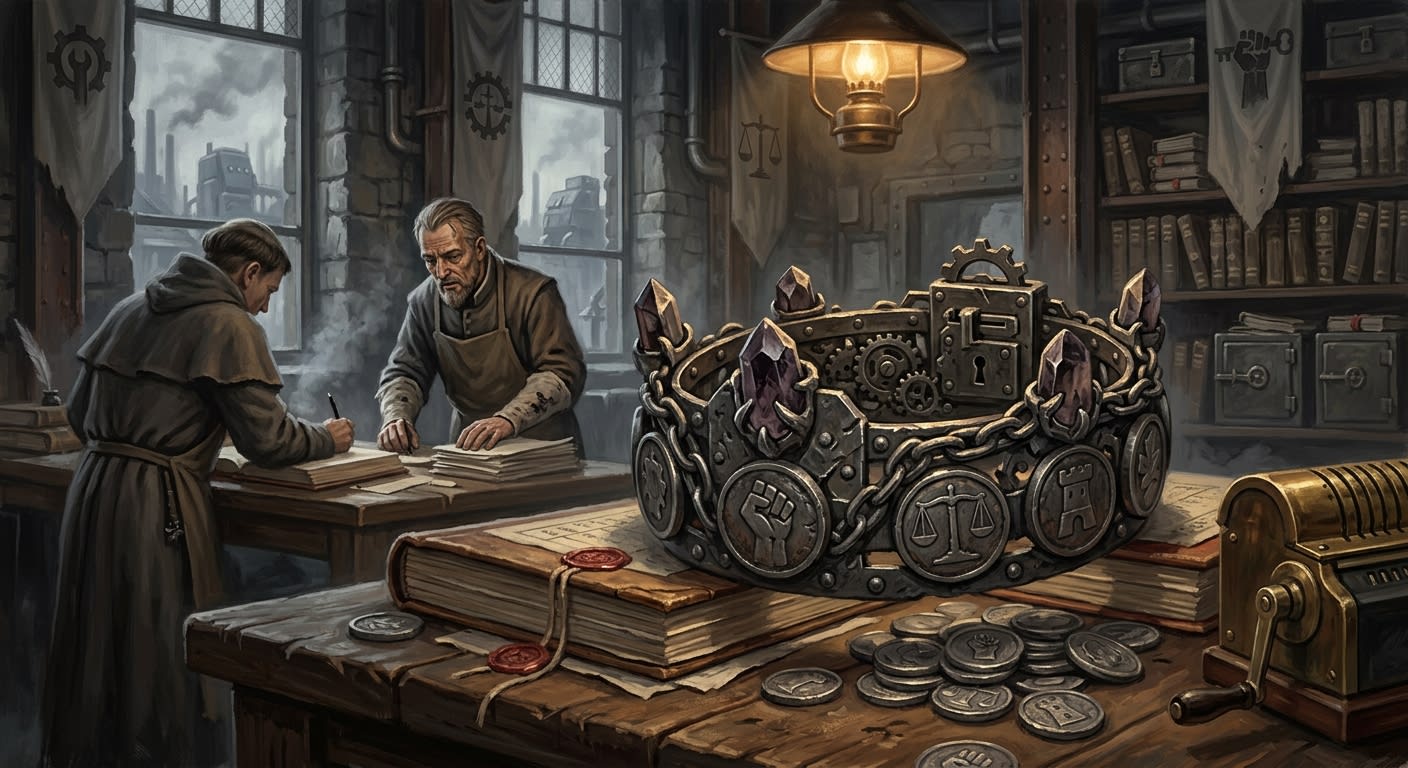
Crown of Grace
Iron given a halo, so long as the receipt survives
The Crown of Grace is the Synod's iron sacrament of value: minted, blessed, tested, taxed, hoarded, counterfeited, and still expected to buy bread under artillery.
Codex Ref. XIII.1.22-092

Crown of Grace accounting
The money is present; the payment remains incomplete
Crown of Grace accounting turns harbour cargo into recognised value, assessed dues and sealed proof. Coin may settle an obligation; only reconciled ledgers persuade the Bureau to release the salt.
Codex Ref. XIII.1.24-201

Crowns
Iron in the purse, obedience in the ledger
Crowns name both the Synod's stamped iron coin and its unit of account. Mint blessings, sealed receipts and honest weight still leave Velmora room in the ledger.
Codex Ref. XIII.1.22-201
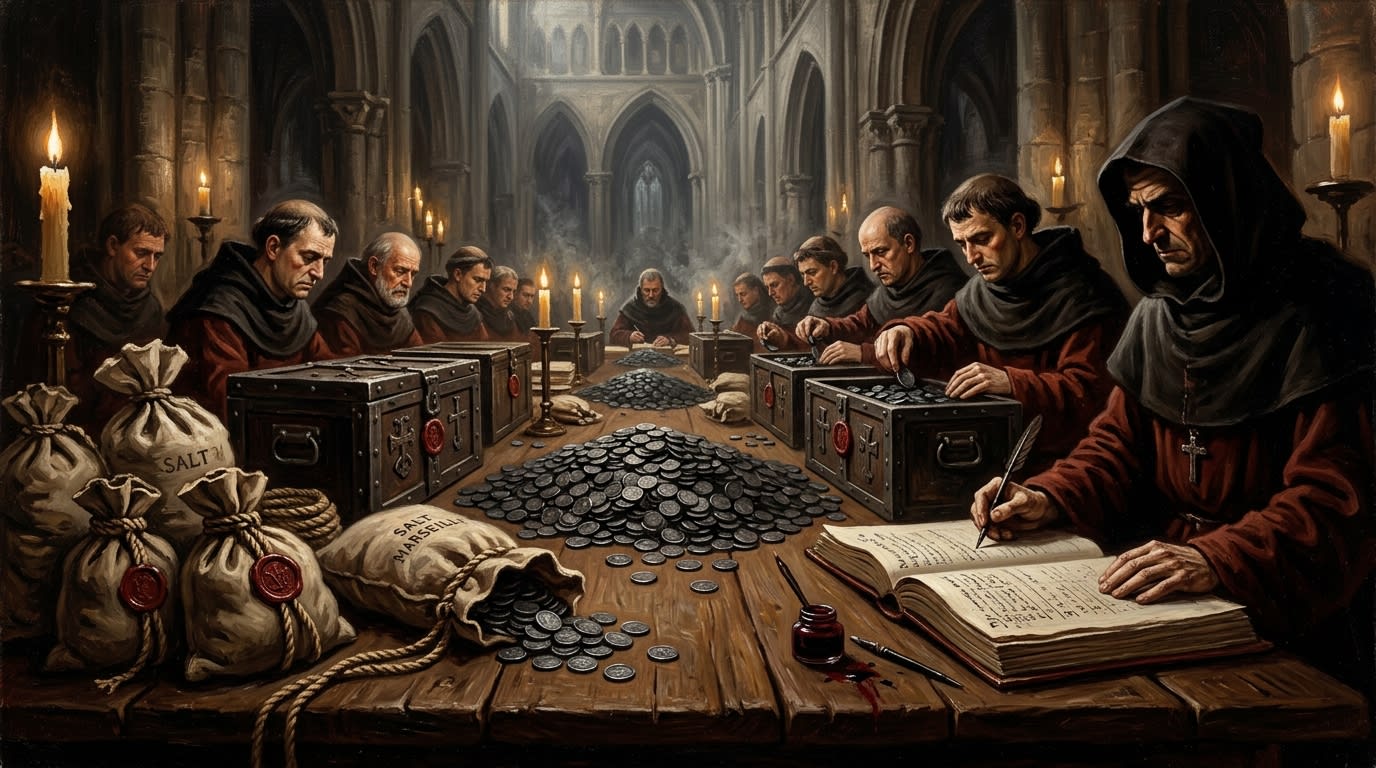
Crowns of Grace
One coin buys bread; the plural buys obedience
Crowns of Grace in the plural are obedience under arithmetic: harbour revenue, soldier arrears, salt dues, foreign insult, and bread counted until it kneels.
Codex Ref. XIII.1.22-093

Crumble-Wrong
When saint-dust remembers the body and refuses commerce
At Mournwater, saint-dust settles into bones, ruins casks, fattens futures markets, and suggests that industrialized holiness has begun objecting.
Codex Ref. XIII.1.21-001
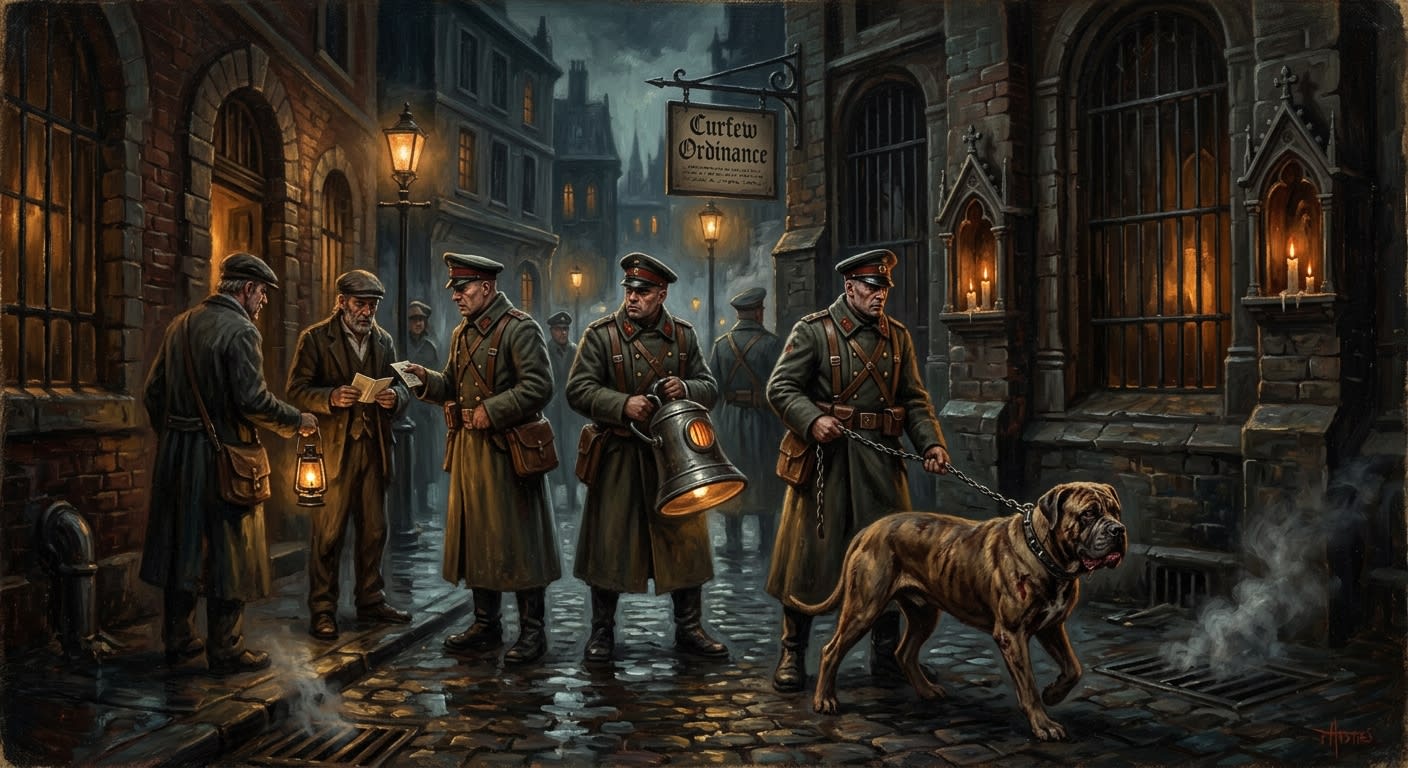
Curfew Ordinance of Quiet Hours
The margin law that taught night to carry a pass, a lamp, and a witness
The Curfew Ordinance of Quiet Hours began as a Rhineland margin law and became the Synod's nocturnal grammar: lamps, passes, Consolators, Brotherhood knives, and useful fear.
Codex Ref. XIII.1.76-094

Custodial Chain
The ledger remembers the hands. The bone keeps its own counsel.
The ledger joins an authenticated relic to the hands that held it. In 1678, Vienna severed Aldebrand's chain without moving the bone. The record lost custody; the custodian did not.
Codex Ref. XIII.1.97-001

Day of the First Seed
Heaven takes in ash. Tithes takes in sacks.
Current observance survey, A.S. 201: farmers burn the season's first grain shoots at parish shrines. Heaven receives the first offering; Tithes retains its claim, and forgiveness requires payment on genuine first growth.
Codex Ref. XIII.1.23-002
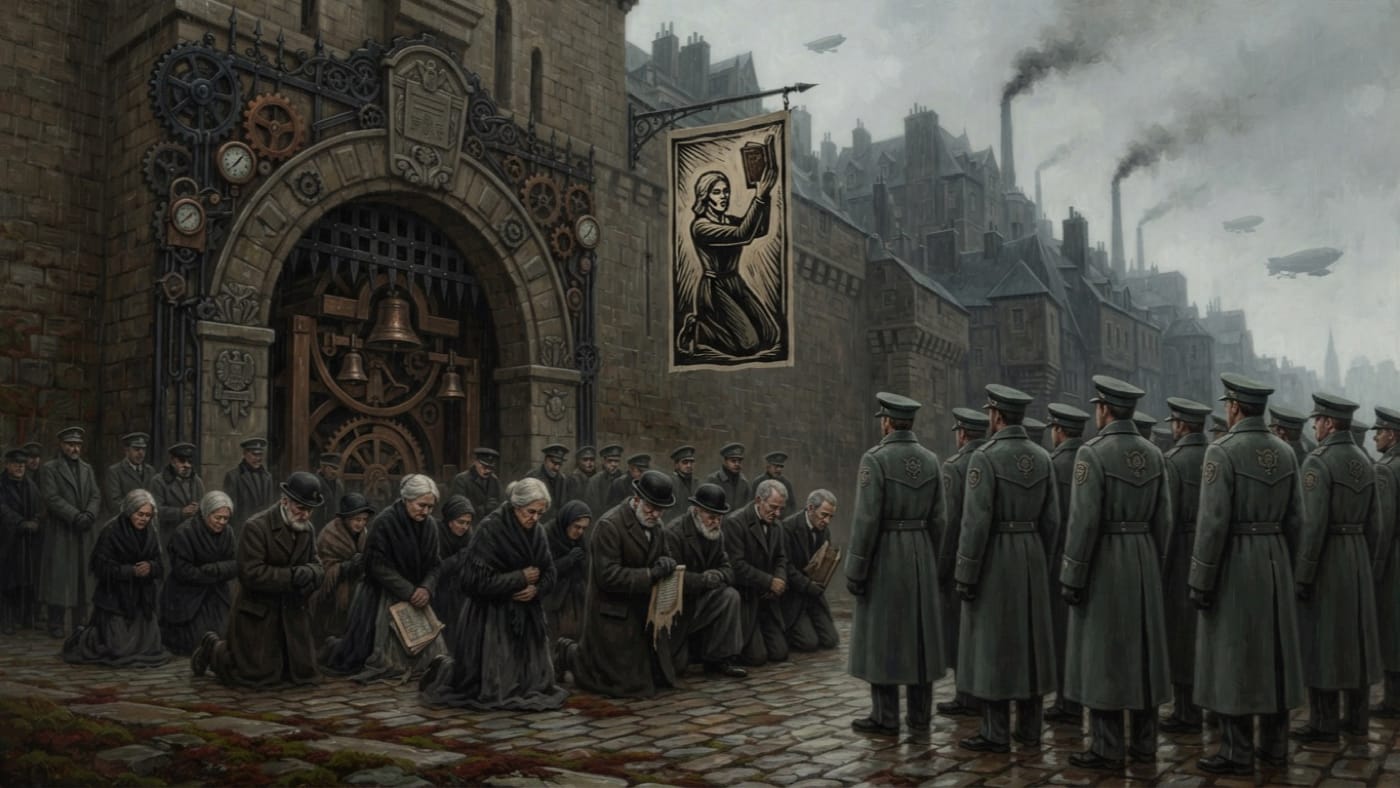
Day of the Thirty-One Names
Thirty-one tolls, forty-three seconds, and one face supplied by the printers
On 14 Corvus, Saint-Malo mourns thirty-one certified dead with thirty-one tolls and forty-three seconds of silence. The Church keeps the count, Strasbourg keeps the names, and Margaux supplies the face.
Codex Ref. XIII.1.87-031

Day of Zeroing
The pan returns to zero; the queue remains hungry
An A.S. 201 survey of Saint Calibrus's adopted feast: licensed scales are cleaned, checked, blessed and re-zeroed before a witness. The pan is certified; the queue still waits for bread.
Codex Ref. XIII.1.90-201
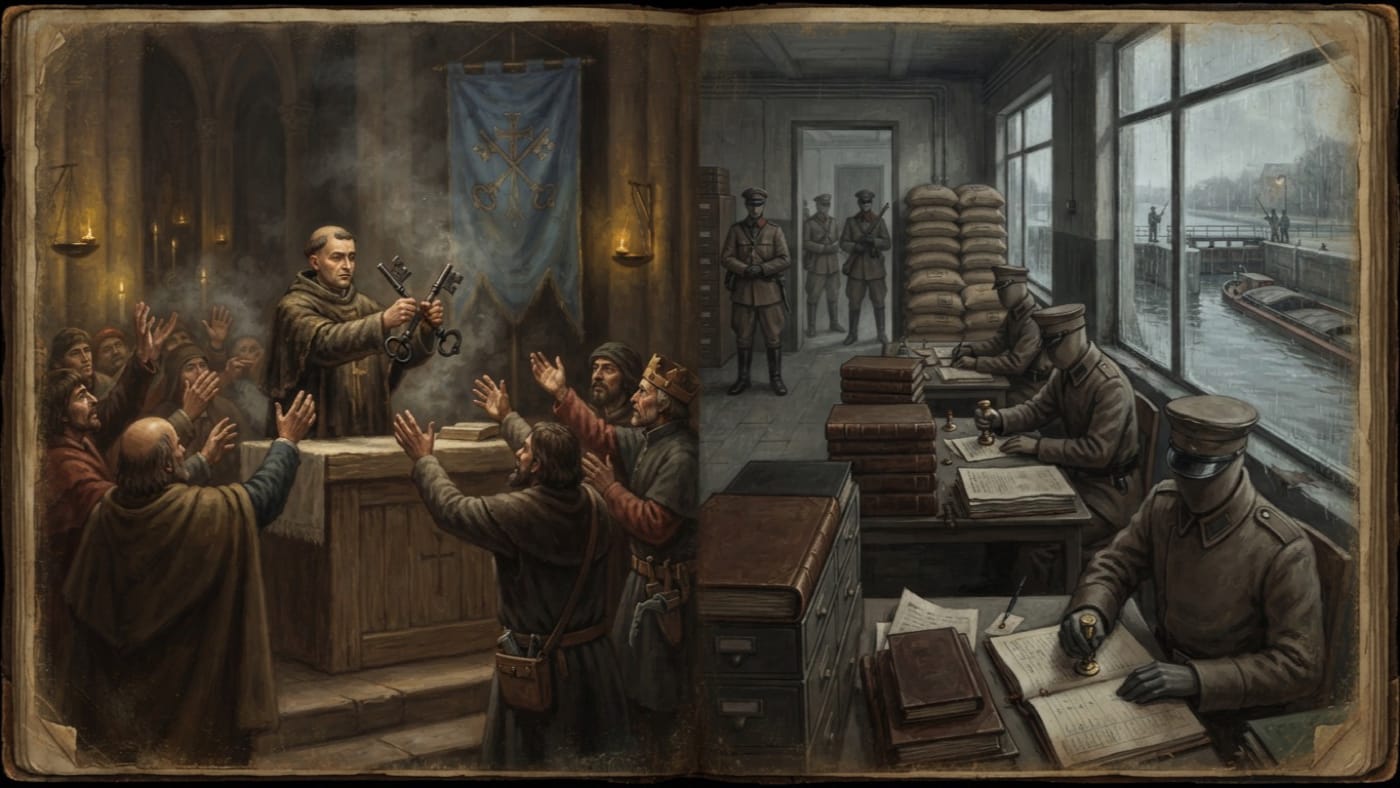
De Clavibus Restitutis
The entrusted hand and the clerk who kept the house
Ambrosius of Como's sermon placed authority in the entrusted hand. Lombardy heard restoration; Strasbourg answered with granaries, names and a river.
Codex Ref. VI.5.02-001

De Subtractione Misericordiae
Three pages read; the fourth carries a window
I read three pages of Purity's proposal for removing heretics without procession, trial, proclamation or corpse. A rectangle cut from the fourth explains its mercy rather well.
Codex Ref. XI.6.02-001
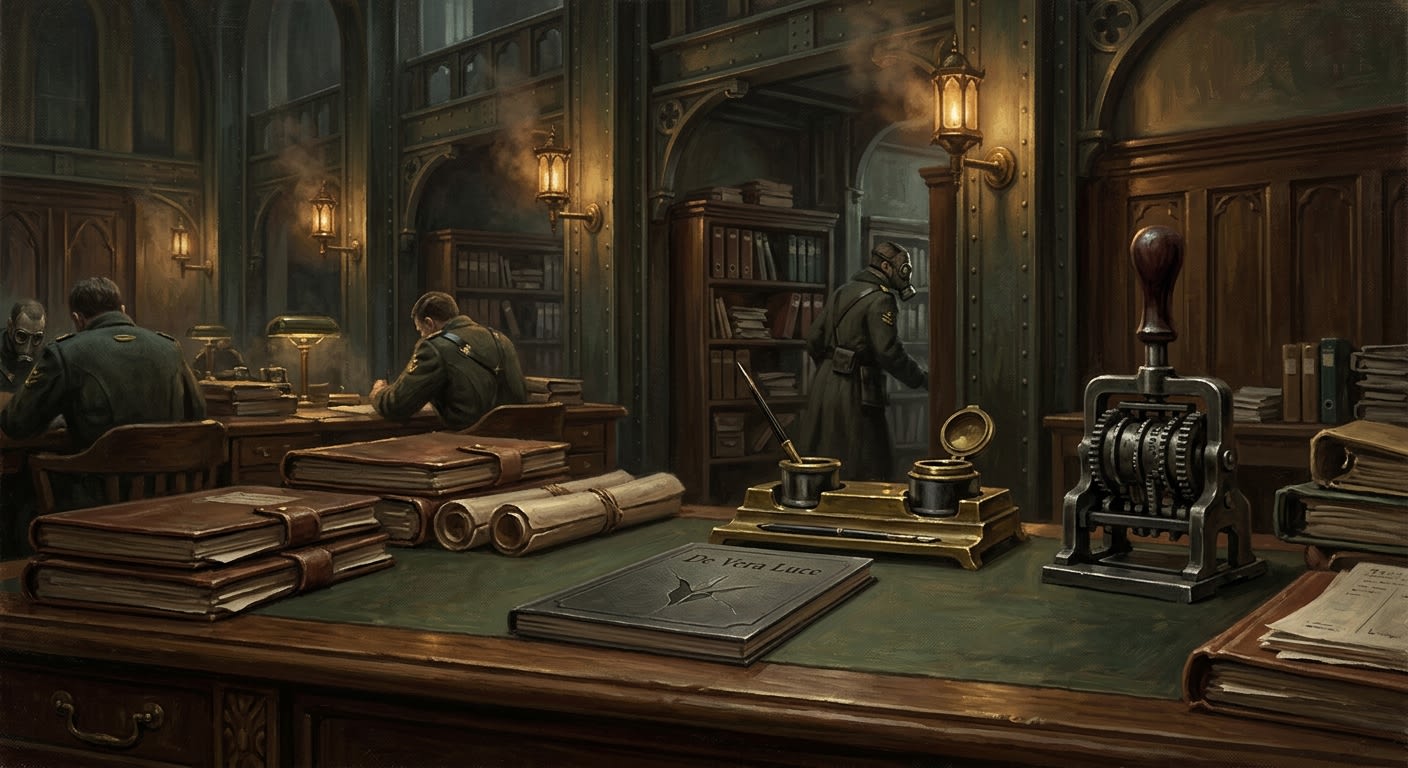
De Vera Luce
The lamp without altar becomes a torch in a library
The Amsterdam Academy's founding pamphlet made A.S. 0 a wound, not a birthday: thirty-two leaves of clean prose, humane poison, and continental ruin.
Codex Ref. I.1.04-001

Dead Sound
The hammer hears what the eye has certified
Dead sound is the rail's dull answer to a Track Walker's hammer: a warning of hidden fault, void, or what the Guild calls presence. Grosz heard it in A.S. 186; my knees survived.
Codex Ref. XII.44.02-001

Deadzone
The horn fails; the household answers for it
A deadzone is a place the Sky-Sermon fails to reach. The ledger counts the silence as guilt; perfect attendance may mean something else has begun to broadcast.
Codex Ref. XIII.1.59-201

Demon-Lures
The hook is holy when the bait has been notarized
Demon-Lures are Saffron Bastion's licensed bait-mechanisms: lantern, salt, false number, tone, and gun, all pretending invitation can be filed apart from bargain.
Codex Ref. XIII.1.31-001
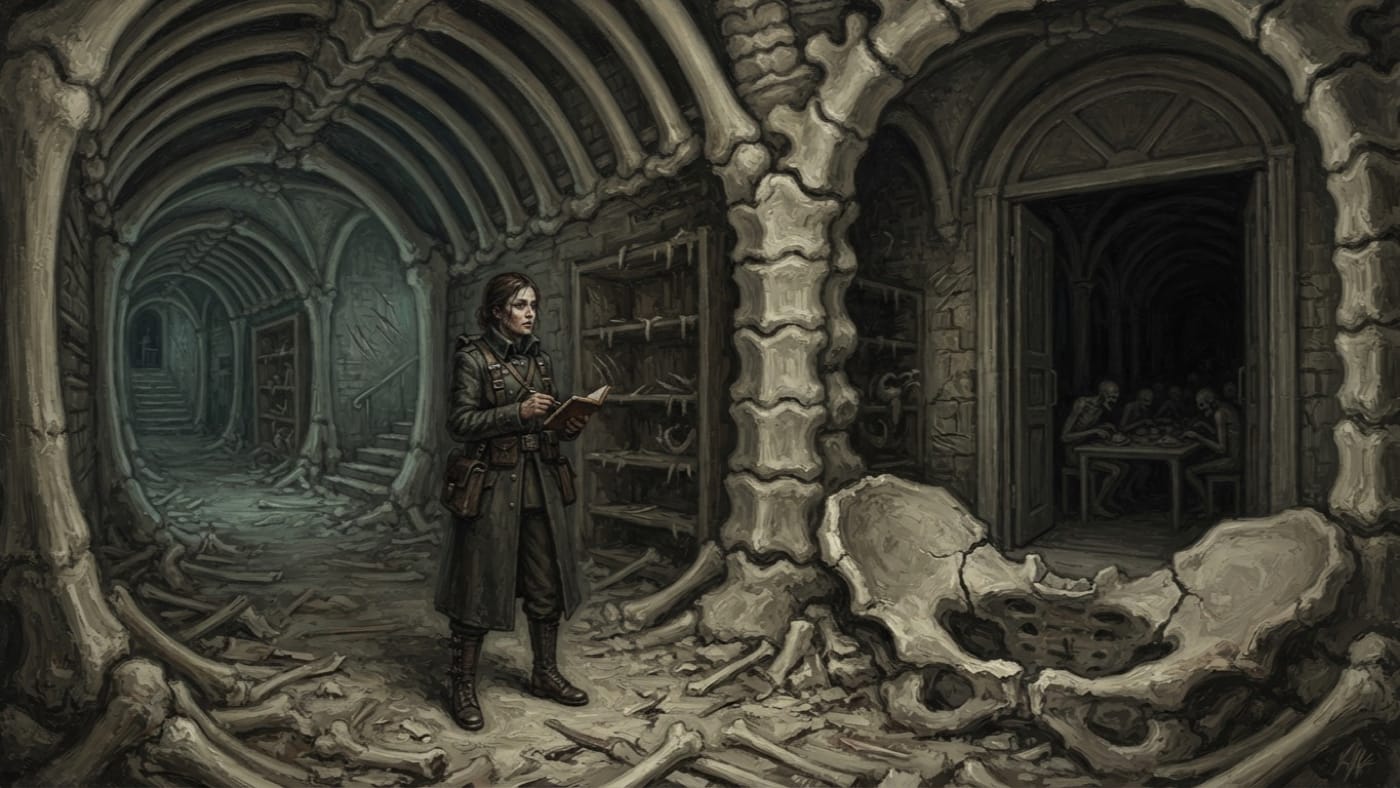
Deposition 7-K
Three days by her account. Nineteen by the calendar.
One redacted Shadows operative returned from the Hollow Court's outer galleries in A.S. 196. She reported about three days; the calendar recorded nineteen. The Bureau entered both and explained neither.
Codex Ref. V.6.01-007

Deposition 7-K/Pell
The sensations are retained; the conclusions are excised
Andros Pell's Seal Amber deposition records six silent strikes at Thessaloniki's Elder Tower in A.S. 198. Fourteen pages retain the sensations; the theological conclusions are excised.
Codex Ref. XIII.1.12-007

Desk Eleven
Where the blue lamp burns and the Bureau teaches furniture to deny arithmetic
Desk Eleven is the Cloister's blue-lamped denial station: a public desk for warm strings, backward slips, grave-clicks, and every bead count the Bureau refuses to name.
Codex Ref. XIII.1.72-199

Determination 198-K/7
The sentence that made a silent harbour lawful without asking the water to explain itself
Determination 198-K/7 is Doctrine's authorised sentence for the Silence of Thessaloniki: a splendidly hollow phrase that kept the harbour open and the Choir unnamed.
Codex Ref. XIII.1.12-198
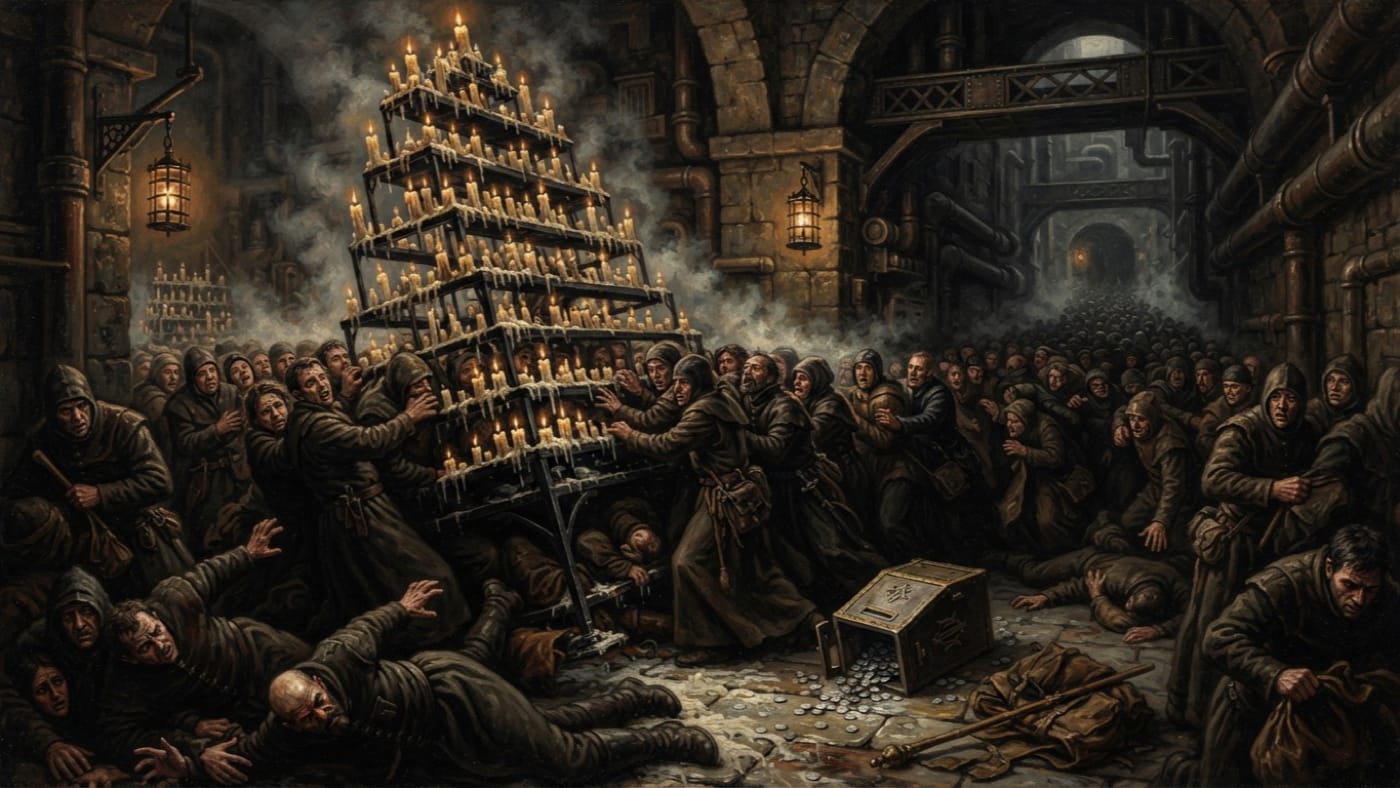
Deutz Candle Riot
Thirty-seven pilgrims taught an advisory to bind
The Deutz Candle Riot of A.S. 151 injured thirty-seven pilgrims and taught shrine committees that an Assessor's downgrade binds at utterance, before the cashbox can object.
Codex Ref. XIII.1.89-151

Devotional Debt
The Bureau balances; it does not forgive.
Current survey, A.S. 201: grace entails obligations, and unpaid obligations accumulate as devotional debt. Rites records the deficits and their reported signs. The Bureau balances; it does not forgive.
Codex Ref. VI.3.01-002
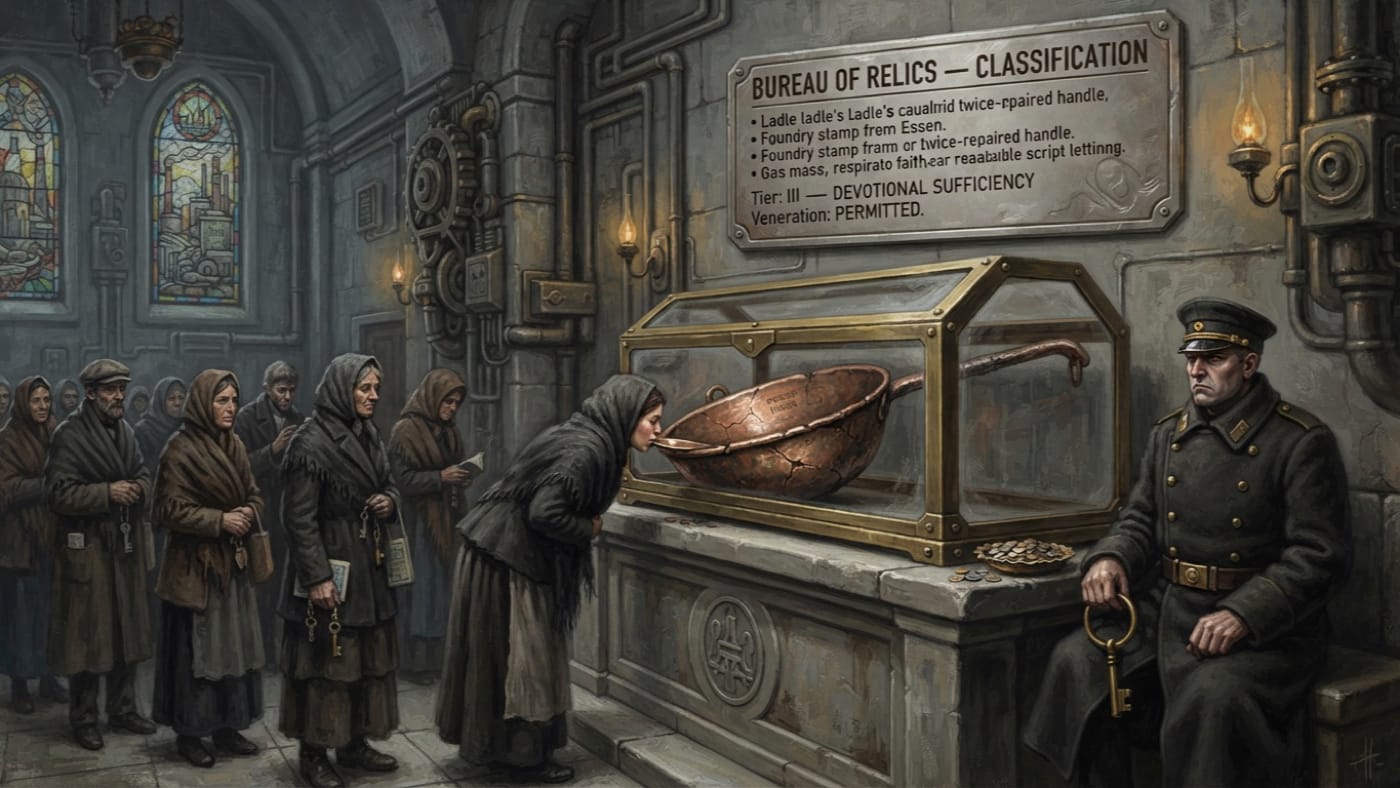
Devotional Sufficiency
The provenance is doubtful; the kissing may continue
Tier III permission to venerate a relic whose provenance remains doubtful. Saint Halva's ladle at Mainz is sufficient for devotion, pilgrimage and three pfennig per kiss; its ownership and powers remain unproved.
Codex Ref. XIII.1.43-001
Directive 31-D
The sentry watches the sentry
An A.S. 201 examination of Purity's paired checkpoint watch against the Desire-Cloak: an estimated sixty per cent fewer penetrations, and the sentry's affections entered as evidence.
Codex Ref. XIII.1.31-201

Directive 77-C
The holy art of leaving the enemy's sentence unfinished
Directive 77-C forbids the copying, completing, humming, tracing, staging, or correcting of the Shadow Court's Mock Liturgy. Curiosity here opens a mouth and calls it scholarship.
Codex Ref. XIII.1.77-174
Directive 88-F
A credential for the crowd, a profession for the count
The A.S. 138 directive requiring stamped wrist-ribbons at Bureau-sanctioned processions and licensing the Pageant Captain corps. Festivals gave the crowd a credential and hired men to read it.
Codex Ref. XIII.1.88-138
Directive 91-B
Grief kept its discount and lost its exemption
Issued in A.S. 139, Directive 91-B closed the pity-exemption rolls and made Widow's Pennies compulsory at reduced rate. Grief kept its discount; the Bureau kept its account.
Codex Ref. XIII.1.91-139

Discord Scribe
The hand is absent when the cannon fails
The Mirror Choir's Discord Scribe alters lawful hymn sheets at Essen-of-Hymnsteel. The ink passes audit; the hymnsteel may fail far from the hand that changed it.
Codex Ref. VI.4.07-020

Discrepancy Writ
A name at the font. No voice at the screen.
A son stands on the birth-roll and vanishes from the confession ledger. Conscription files the writ and informs Purity. The books disagree; the household acquires a second Bureau's attention.
Codex Ref. XIII.1.83-201
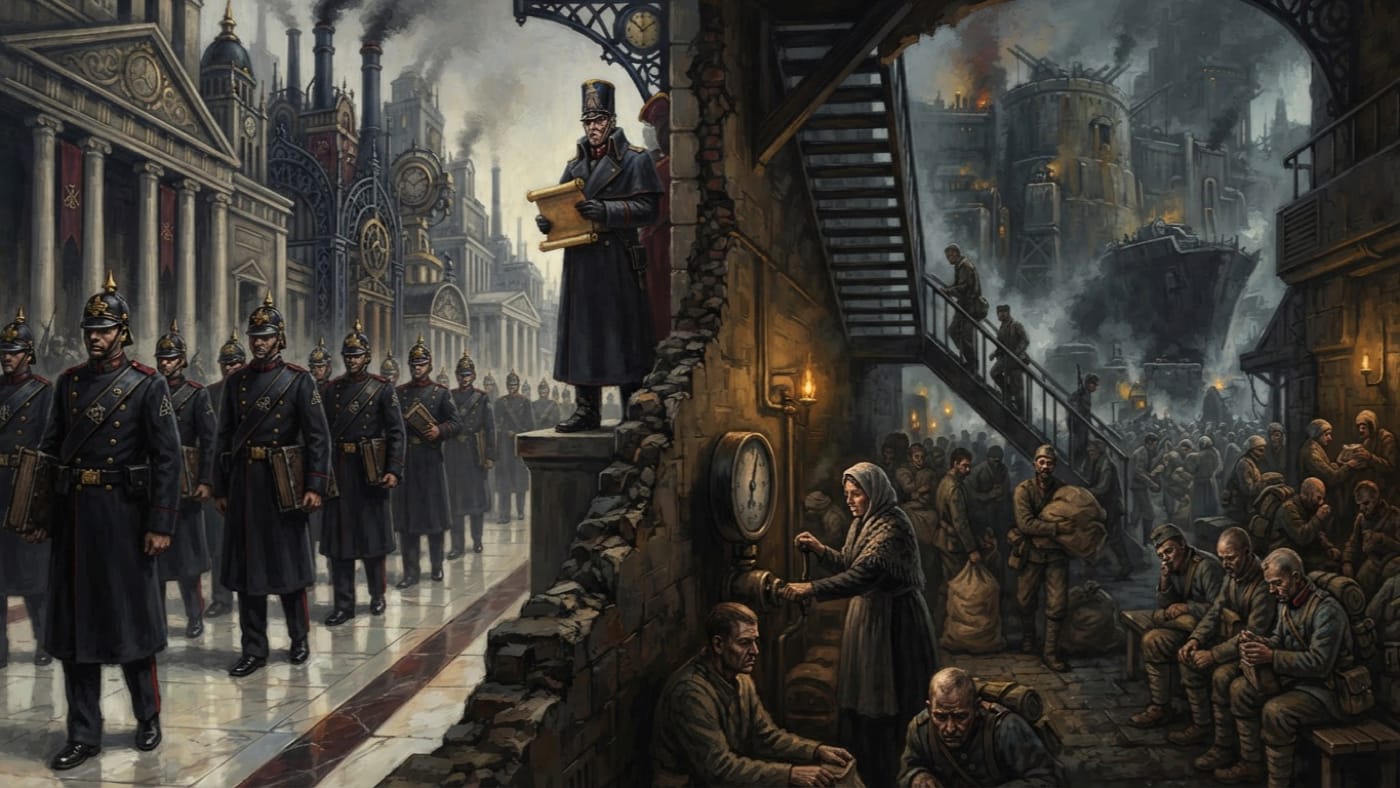
Dispatches from the Southern Hinge
One paragraph, and the review still waits
One paragraph from Warden-Adjutant Remy Sauvage's suppressed Dispatches survives in the Codex's A.S. 197 citation. It credits Constantinople's endurance to exhausted competence. The theological review remains pending.
Codex Ref. XIII.1.197-001
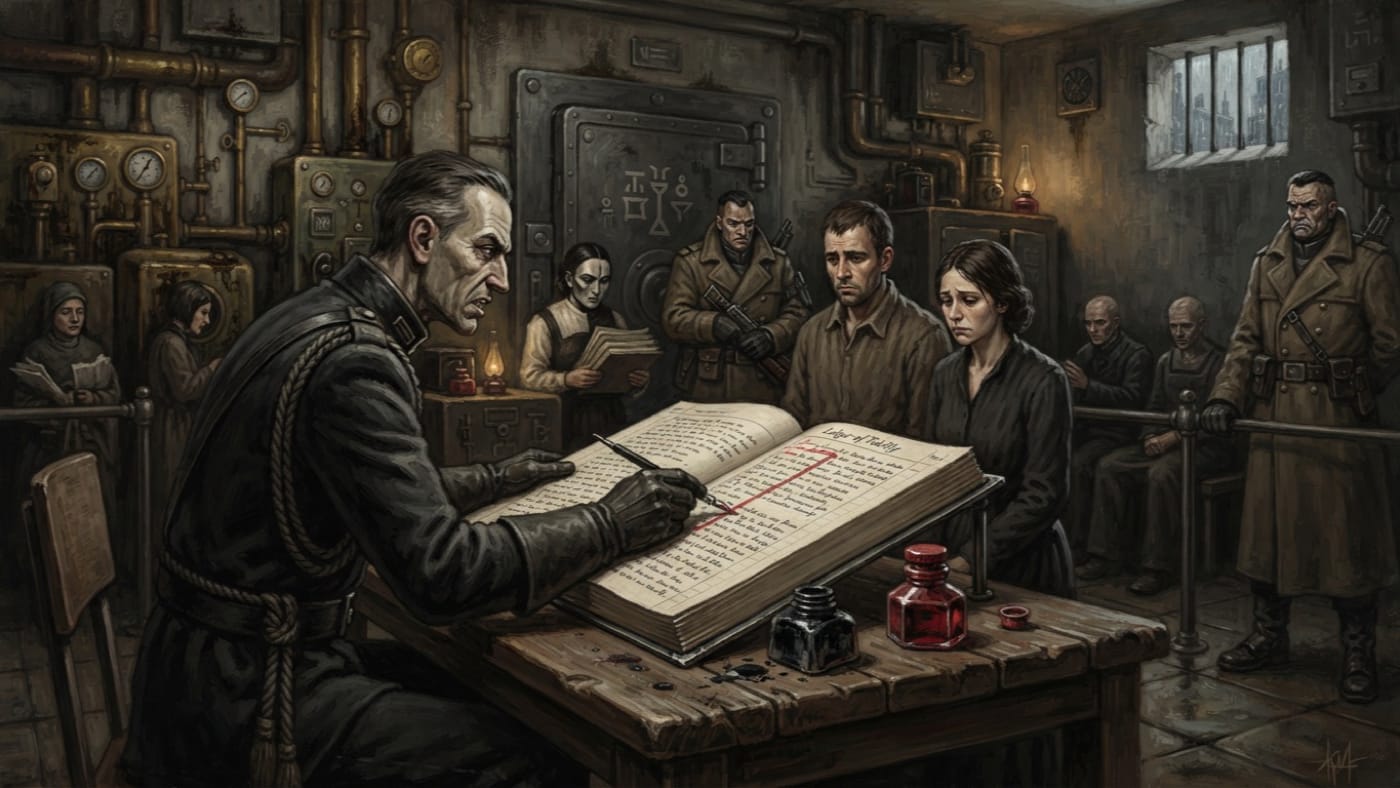
Dissolution Formula
The bond ends; the evidence remains
The Dissolution Formula closes witnessed vows by licensed speech and a red line. Strasbourg buries the bond, preserves the evidence, and collects the fee.
Codex Ref. VI.4.03-013
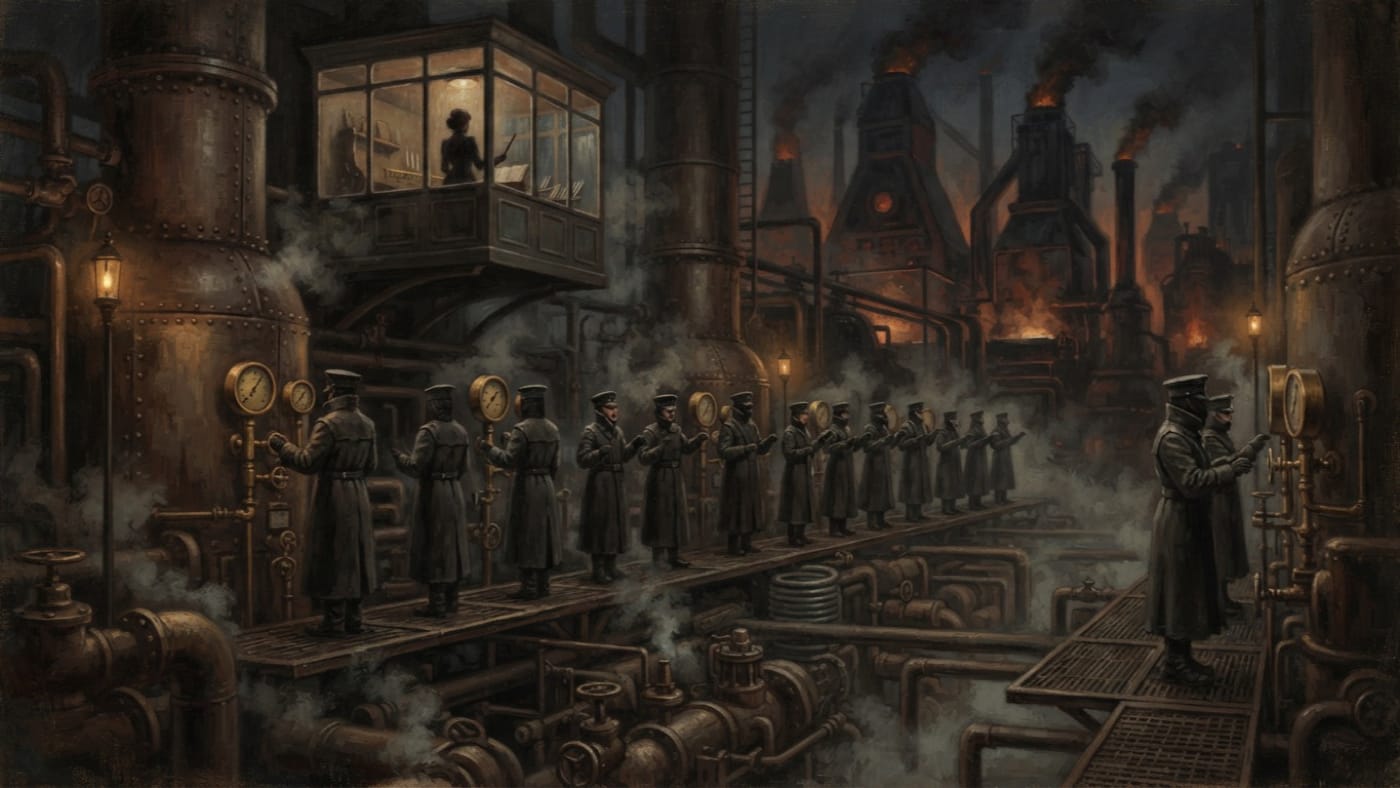
Distillation Hymn
Fourteen stanzas to make fuel obey; no license for an answer
The Distillation Hymn governs Brast's fuel with fourteen stanzas and a three-beat tolerance. The procedure remains sacred, the explanation has retreated, and the Choir reports an answer from the furnaces.
Codex Ref. XIII.1.12-014

District Doctrine Officer
The hand signs now; the doors are farther away.
Senior rank of the Doctrine Street-Vicar Corps: supervising eight to twelve Vicars, reading district returns and signing seventh-door justifications. The chalk moves farther away; the responsibility stays on the desk.
Codex Ref. XII.9.02-003

District Vicar
A parish measured in chalk and correction slips
District Vicar is the formal title of a Doctrine Street-Vicar licensed to test Creed responses, inspect purity tokens and mark doors. The district receives correction; the Vicar receives an audit.
Codex Ref. XII.9.02-004

Diver Testimony Phaleron-12
The survey was complete; the evidence was withheld
Engineering filed five words. An unauthorised fragment of the sealed A.S. 189 Phaleron testimony describes warm iron, moving rivets and a bell-line answered from within. The witness remains unnamed.
Codex Ref. XIII.1.12-189
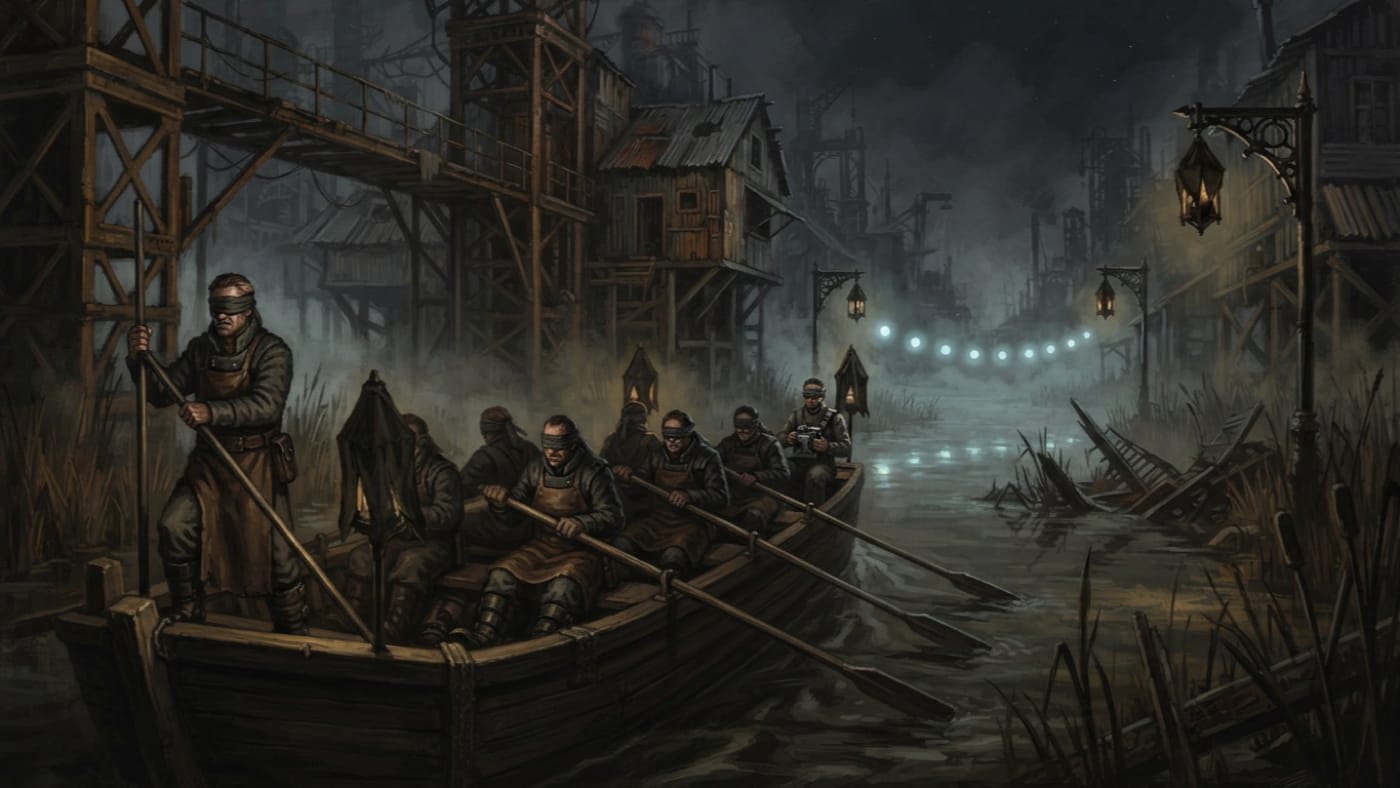
Do Not Answer
When the water answers, put out the light.
At the Ash-Glyph Marshworks, the Lantern Guild meets counterfeit corpse-light with hooded lamps, blindfolded oarsmen and bell-click cadence. The code is withheld; its origin is unrecorded.
Codex Ref. XIII.1.24-003
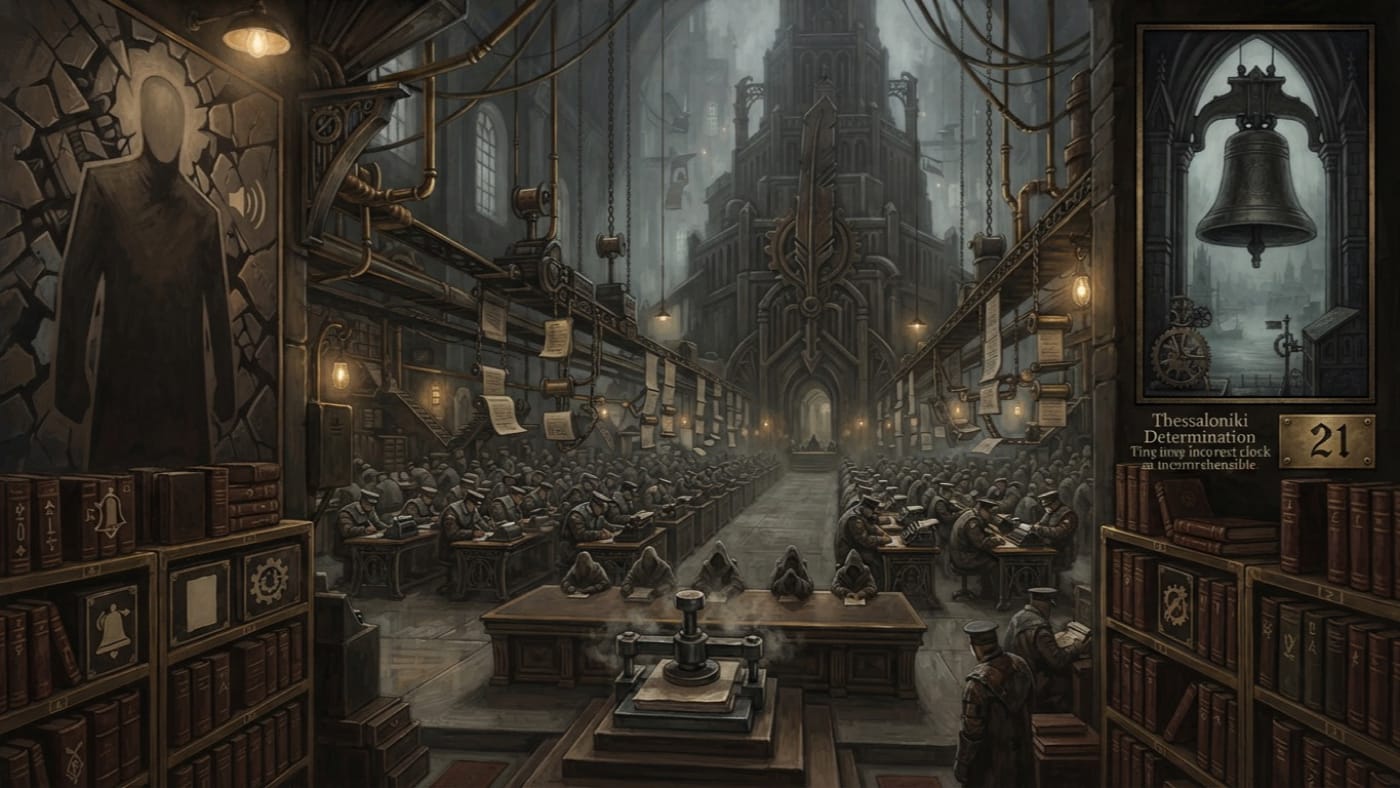
Doctrinal Congress
Where an opinion becomes an obligation
A Doctrinal Congress turns disputed findings into binding catechism, classification and wording. From the Creator's silence to Thessaloniki's reversed bells, the determinations stand while the mechanisms remain unexplained.
Codex Ref. XIII.1.90-201
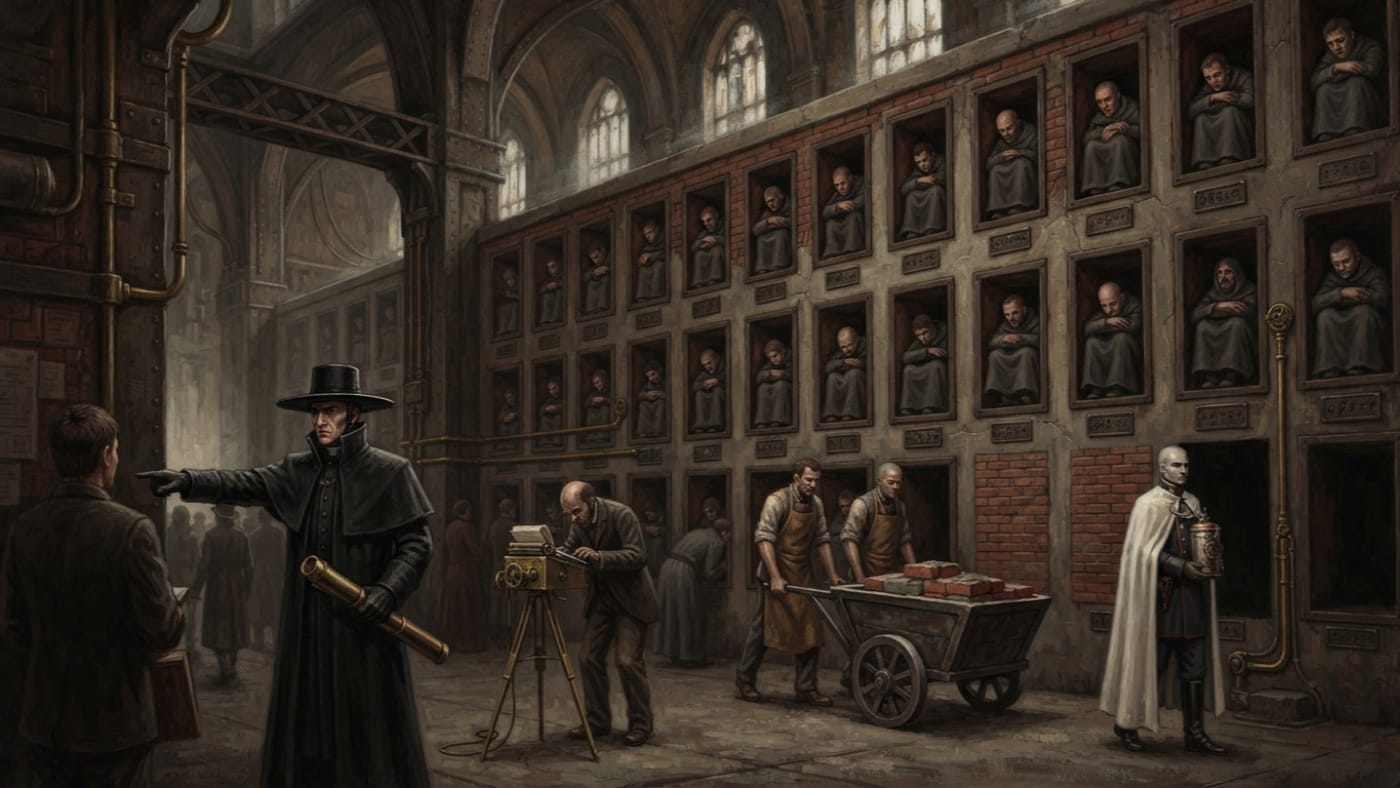
Doctrinal Contamination
Error becomes an epidemic when another mouth repeats it
Doctrinal Contamination is error that travels: heresy, doubt, song or silence made prosecutable by exposure. At Second Degree, Standing Order 14-M permits the wall.
Codex Ref. XIII.1.97-907

Doctrine Annex 10-M
A seal can keep testimony without making it proof
The A.S. 201 survey of Doctrine Annex 10-M records a Saint-Malo survivor's reported blood before the first blow and her pressured recantation. Custody is attested; the blood's cause and the historical seal date remain unknown.
Codex Ref. I.1.05-003
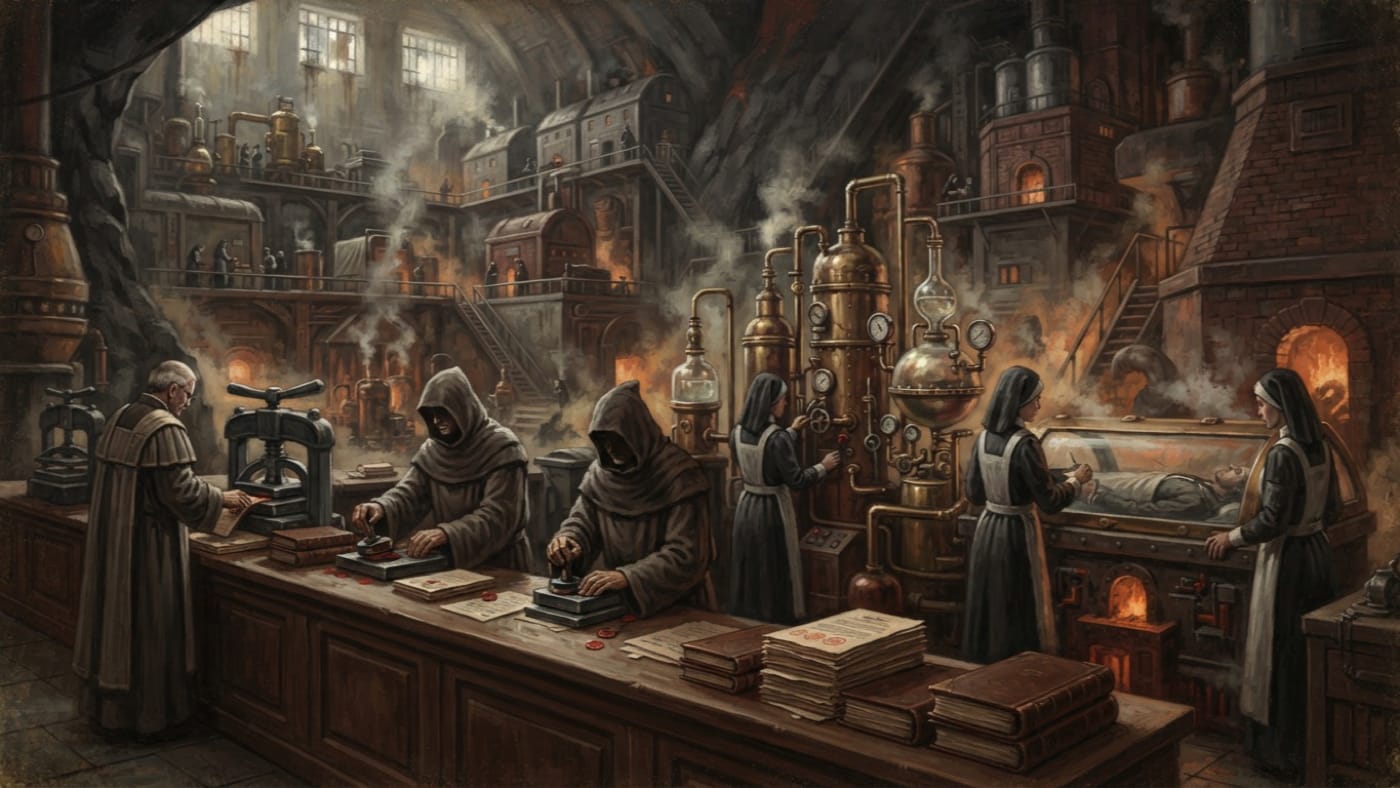
Doctrine of Acceptable Innovation
Three seals before the flame. A debt after the cure.
San Vesta's dispensation permits experiment after three seals and triplicate filing. The cure costs labour; the failure receives a classification. Unstamped experiment makes the practitioner a heretic.
Codex Ref. XIII.1.124-001
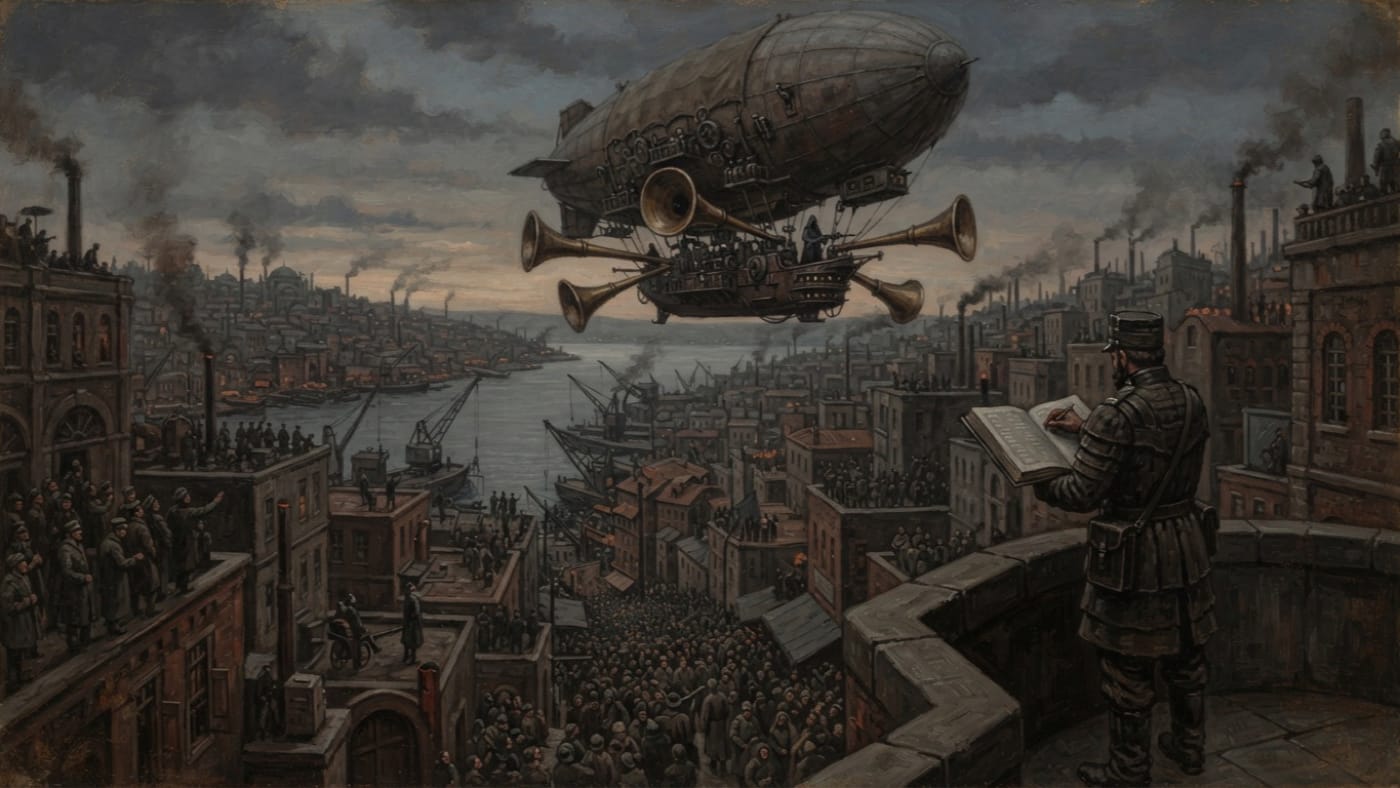
Doctrine of Aerial Sermon
The Word flies under authorization. The congregation is counted below.
The Bosphorus aerial sermon joins approved text, armed patrol and compulsory attendance. A.S. 201 survey: the roster is current, the returns are pending, and the Broadcast's speaker remains unlisted.
Codex Ref. XIII.1.21-005

Doctrine of Concordant Multiplicity
Contradiction is heresy until a competent office teaches it to pay rent
Bureau of Doctrine ruling born from Saint Halva's incompatible deaths, permitting approved contradictions to coexist when authority, utility, audience, and vocabulary have been properly sealed.
Codex Ref. XIII.1.42-001

Doctrine of Cool Hatred
The hand must open when the prayer is done
The Doctrine of Cool Hatred teaches Thracian soldiers to kill from duty and surrender pleasure in violence. Its improvement is marginal; the Bureau publishes the margin and withholds the count.
Codex Ref. XIII.1.125-201
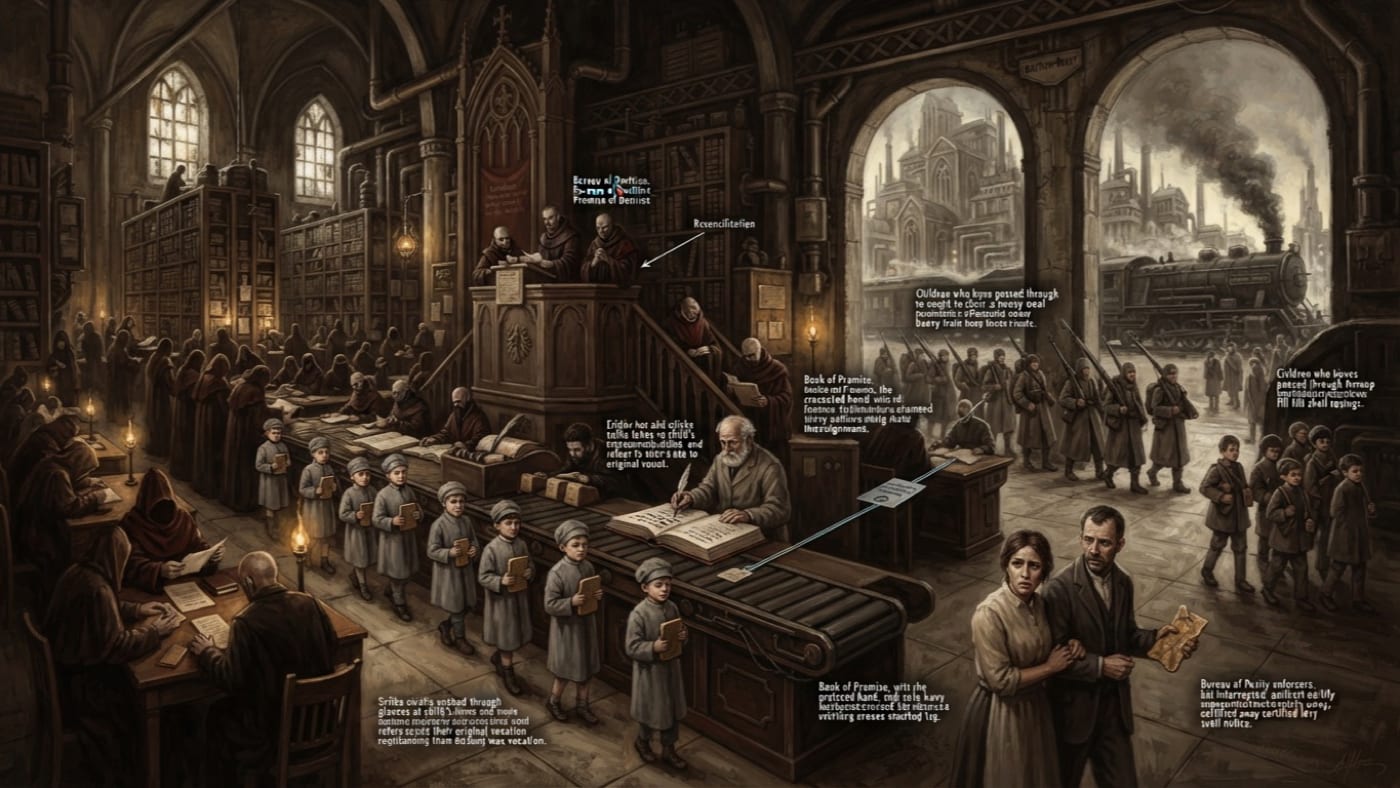
Doctrine of Deferred Fulfilment
The promise stands; the route belongs to the Bureaus
The Synod's promise is never broken: the Bureaus revise the vocation, Records certifies fulfilment, and the household's understanding is deferred indefinitely.
Codex Ref. XIII.1.22-002
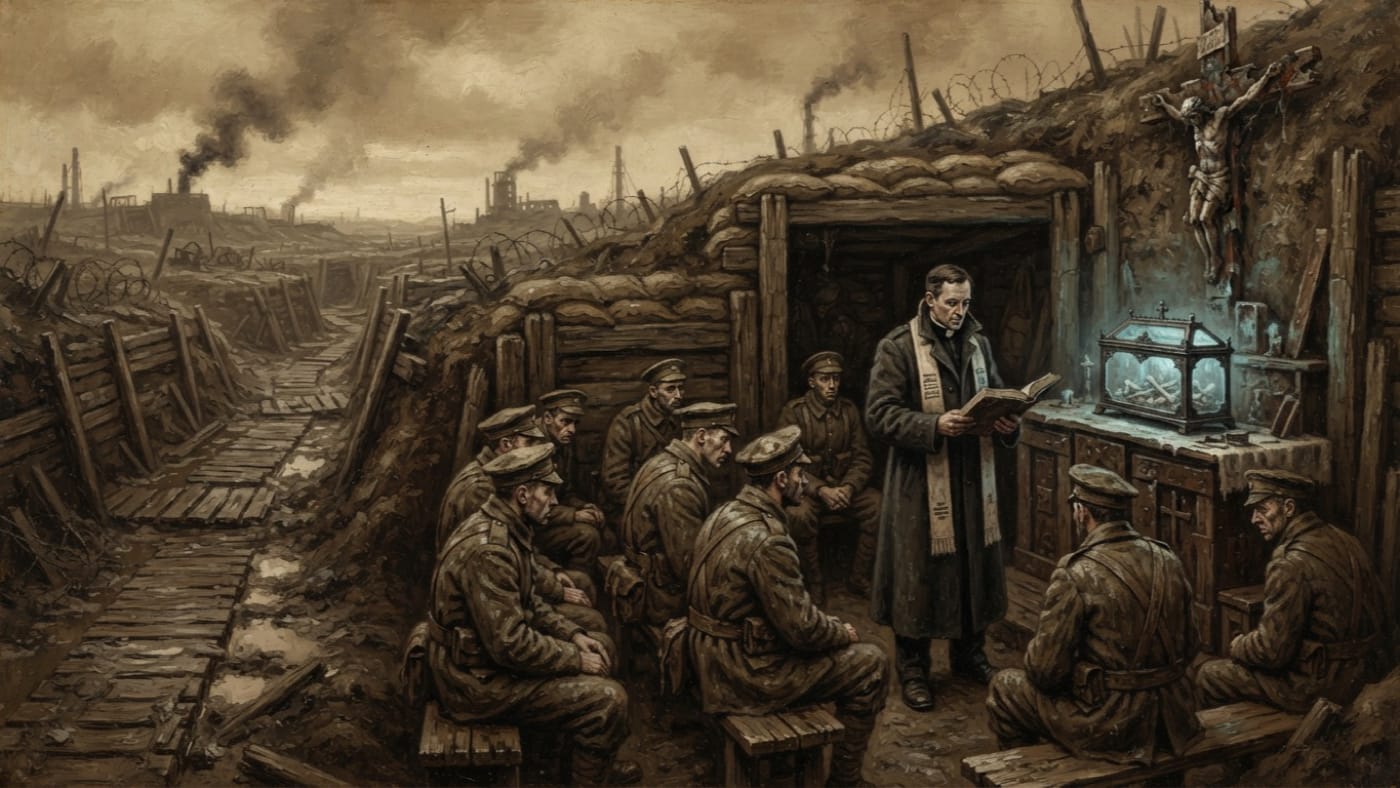
Doctrine of Divine Withdrawal
The way to our ears was broken. The responsibility remains ours.
Ratified in A.S. 72, the Doctrine blames Rationalist desecration for the Creator's silence. His return awaits Perfect Faith. The delay, naturally, belongs to the faithful.
Codex Ref. XIII.1.90-072

Doctrine of Doctrinal Nullification
How the Synod learned to prosecute the empty altar
Legal doctrine drafted for Arno Kett in A.S. 138, making absence of belief prosecutable as civic injury and giving Purity a rope for vacancy.
Codex Ref. XIII.1.82-001
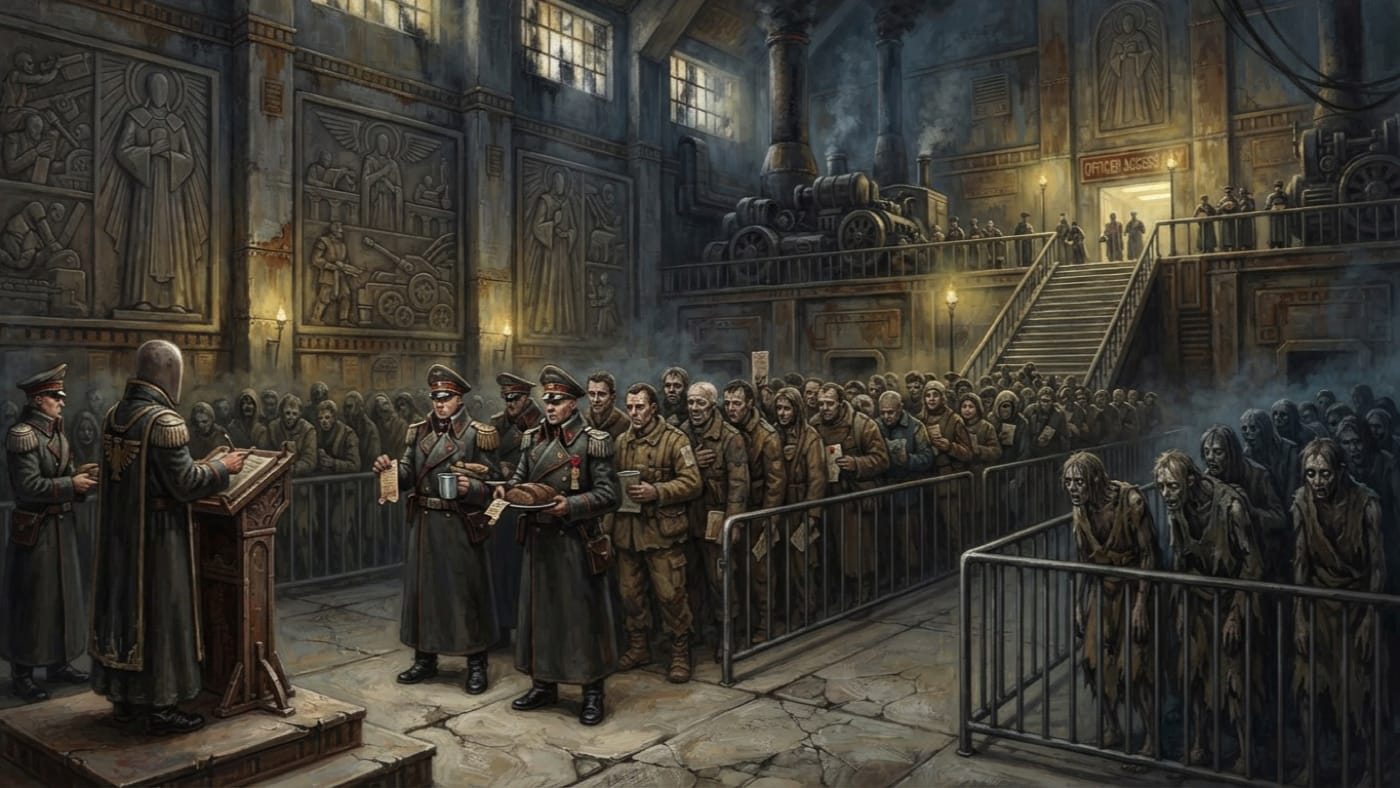
Doctrine of Equality Before the Divine
Equal at the blessing; ranked at the table
All humans stand equal before the Creator; the ration queue observes other rules. I assess the Synod's defence against Pride, its four disciplines, and the hierarchy that defeats them at Przemyśl.
Codex Ref. XIII.1.07-006
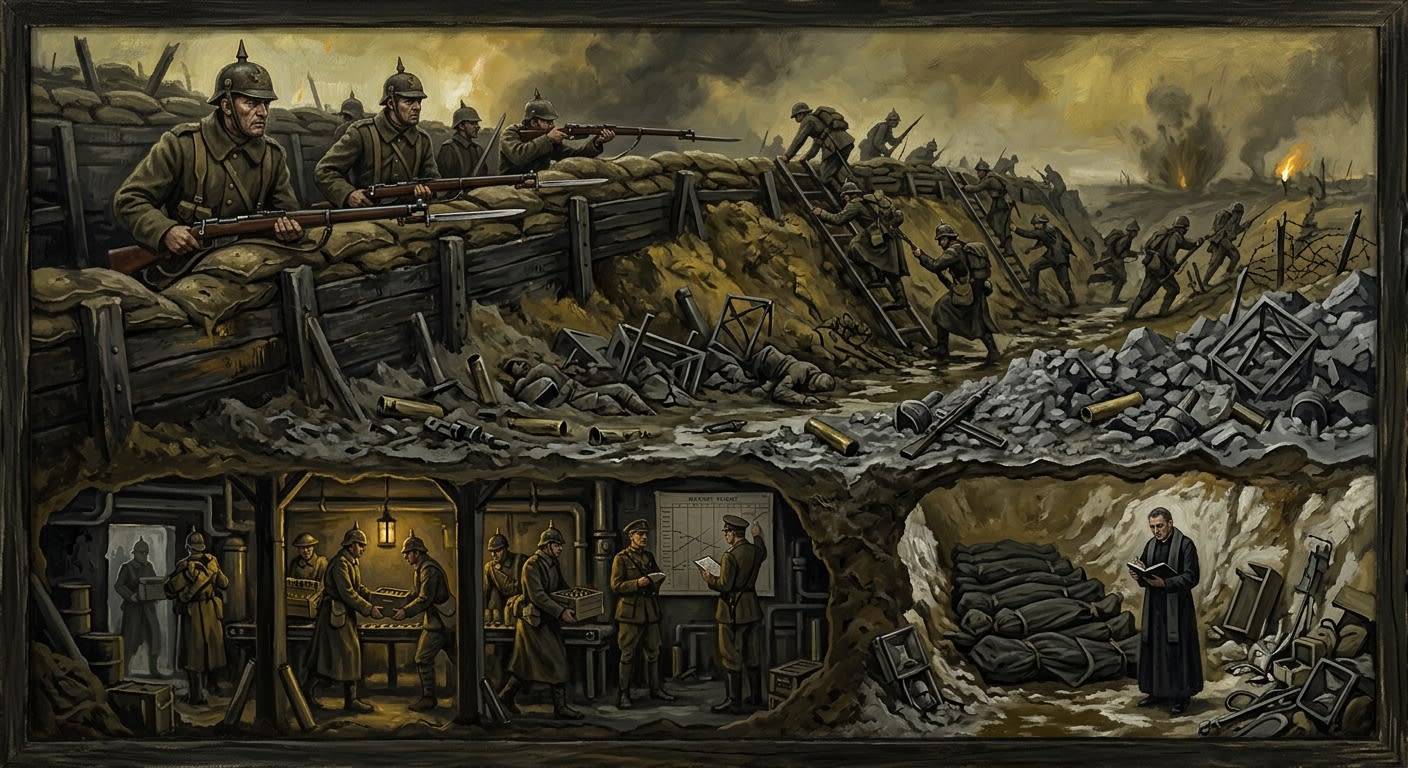
Doctrine of Layered Death
If all layers fail, make the failure expensive
War's breach-holding doctrine arranges panic into five useful layers: wall, charge, ash, rhythm, and the final dividend by which failure becomes legible.
Codex Ref. XIII.1.64-001
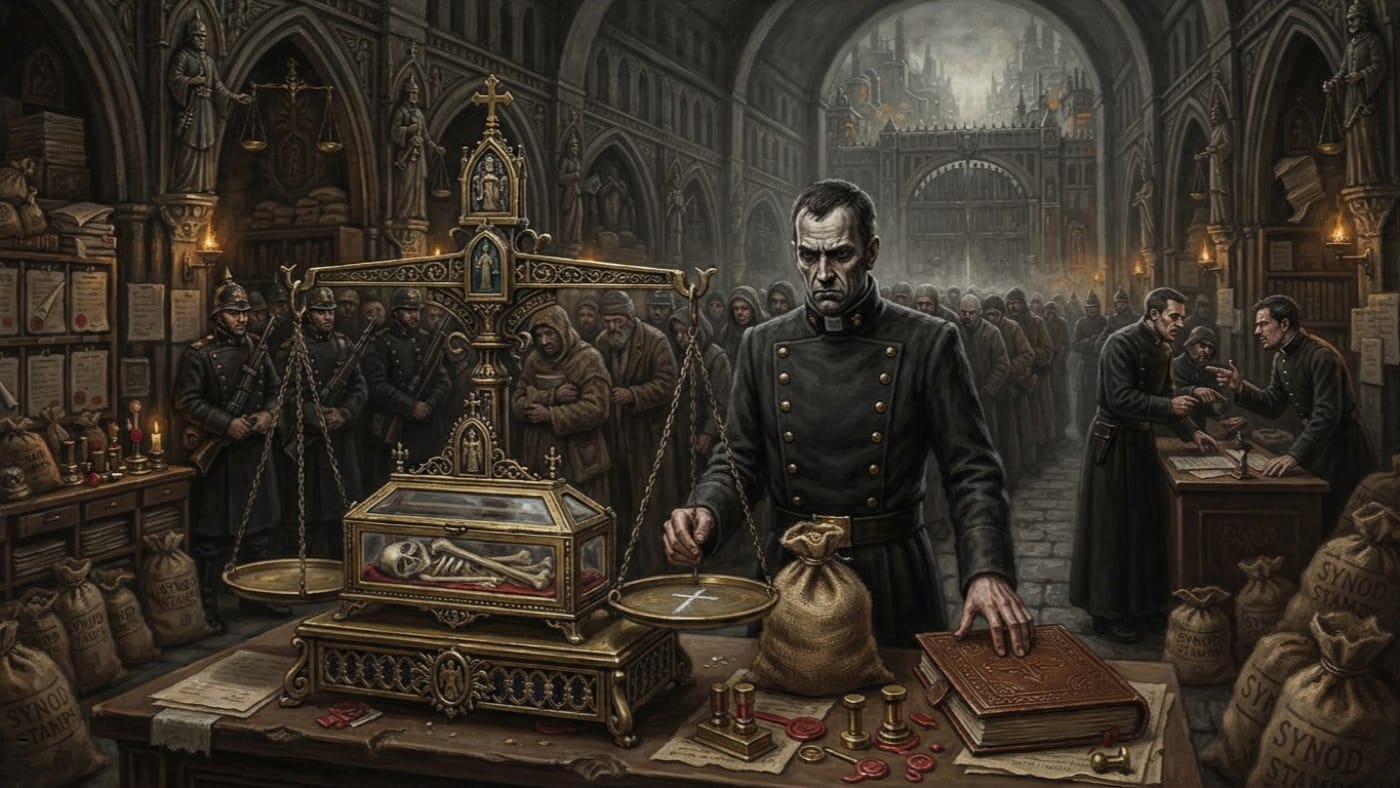
Doctrine of Measure
The scale tells the truth while the city starves
The Synod makes weighing a sacrament and false weight heresy. Relic-calibrated scales certify honest sacks; the offices remain free to let the grain rot.
Codex Ref. XIII.1.59-002

Doctrine of Sealed Intent
The office speaks; the hand goes upstairs
An affixed seal carries its office's authority, whoever pressed it. Worms supplies the documented anchor; attendance, consent and the hand remain separate questions.
Codex Ref. XIII.1.120-087
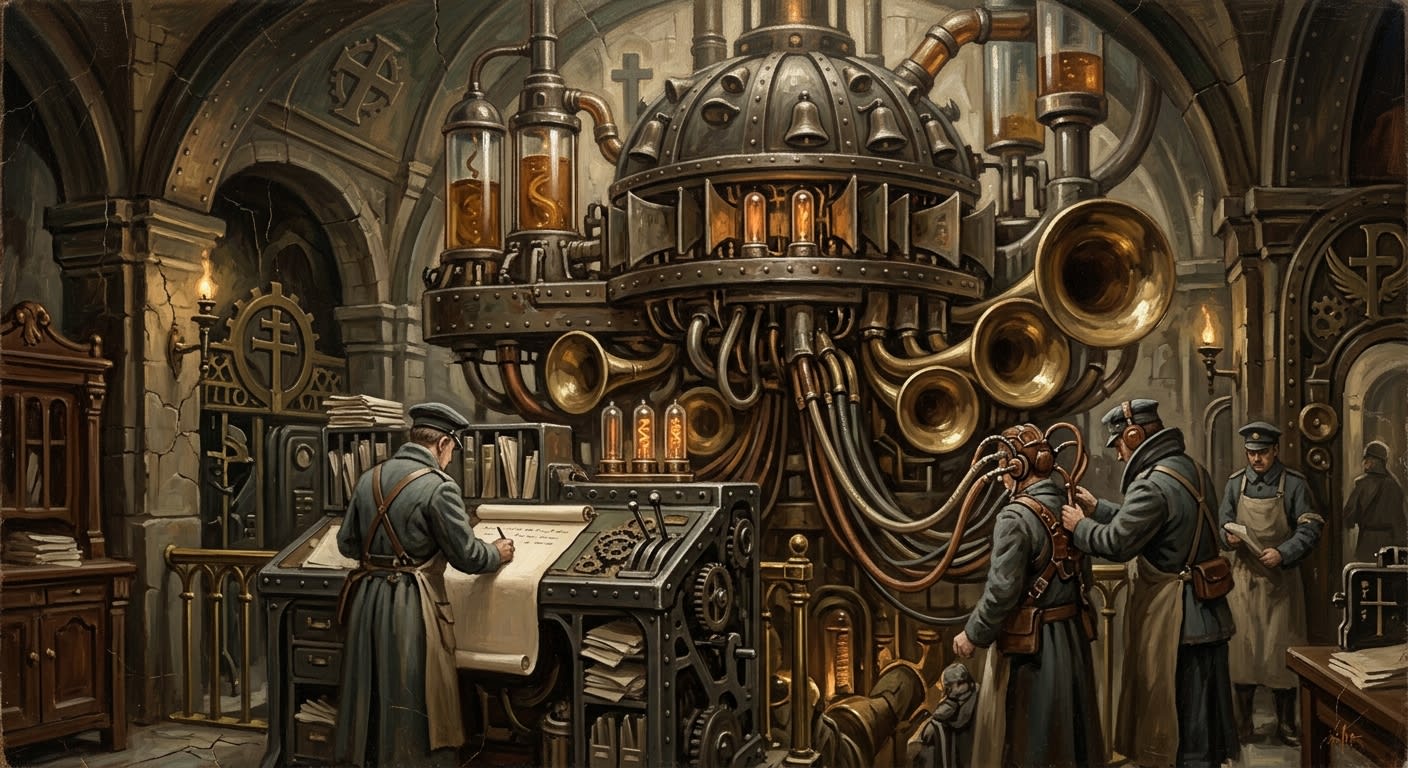
Doctrine of the Inaudible Voice
The Bureau's golden answer to the most dangerous quiet
Ratified in A.S. 104, the Doctrine of the Inaudible Voice converts divine quiet into mortal defect, pastoral discipline, and useful machinery.
Codex Ref. XIII.1.90-104
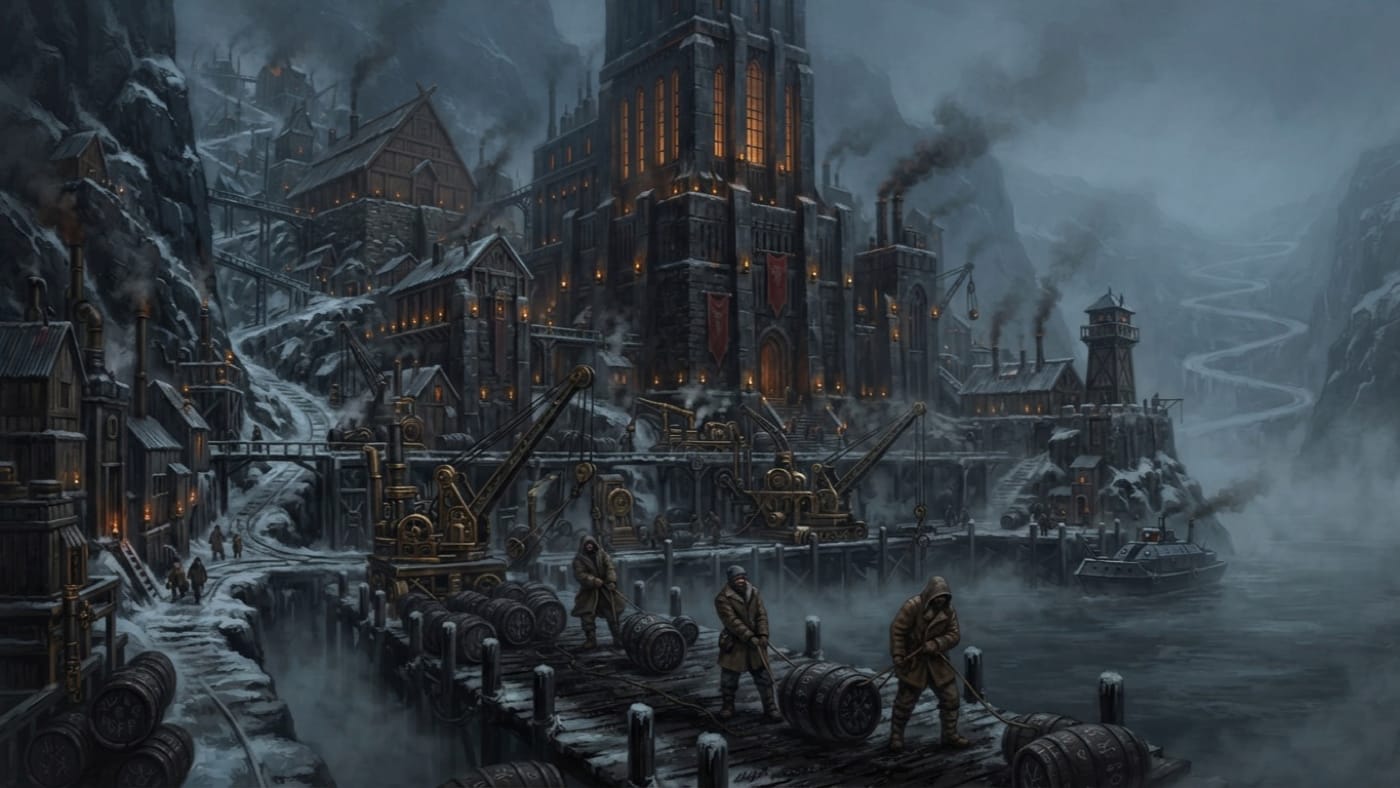
Doctrine of the Lamp
Light is grace; the rest is bookkeeping
At Hrafnvik, the Chapter calls light grace and lamp-debt sin. Drax's A.S. 197 inspection records a teaching neither ratified nor condemned, with status notes through A.S. 201.
Codex Ref. VI.3.02-001

Doctrine of the Virtue-Generals
The witness reports; the Bureau names
The faithful may report a stranger on the road. They may not appoint him Heaven's general. Standing Order 44-D condemns the belief and retains the evidence.
Codex Ref. IX.3.44-002

Dominion
Europe held in one gloved hand and taught to call it custody
Dominion is the Synod's official name for custody over Europe: border, tithe, bell, school, grave, and the thought before speech.
Codex Ref. XIII.1.02-090
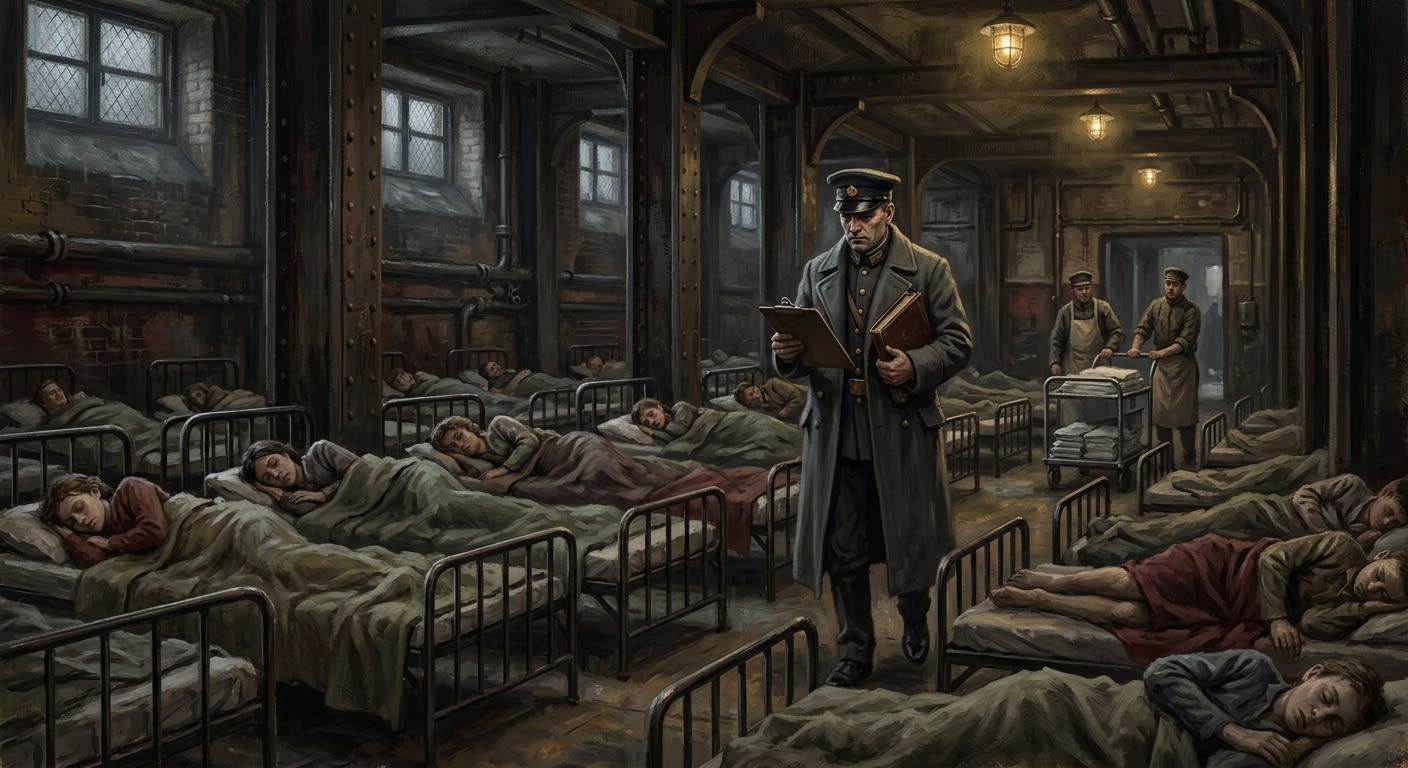
Dormition Canticle
Four bars, two deaf sleepers, and Mercy congratulated itself
Bureau-approved four-bar lullaby composed in A.S. 134 to replace criminalized comfort; its great triumph was stillness mistaken for sleep.
Codex Ref. XIII.1.86-134
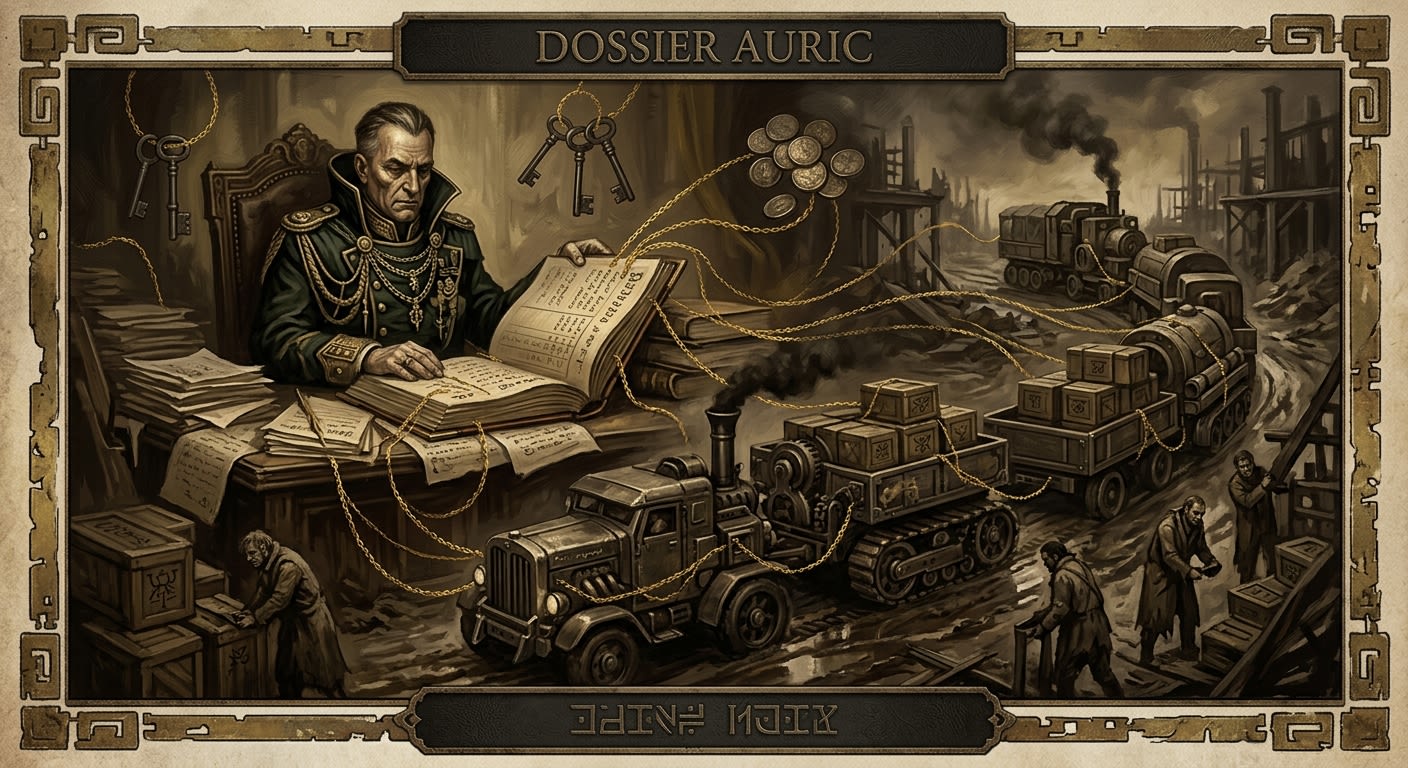
Dossier Auric
Greed keeps receipts because damnation prefers a clean audit trail
Dossier Auric tracks Velmora's fastest-growing war: contracts, keys, counterfeit mercy, Sibiu convoys, and the terrible competence by which Greed makes debt look like help.
Codex Ref. VIII.7.01-003
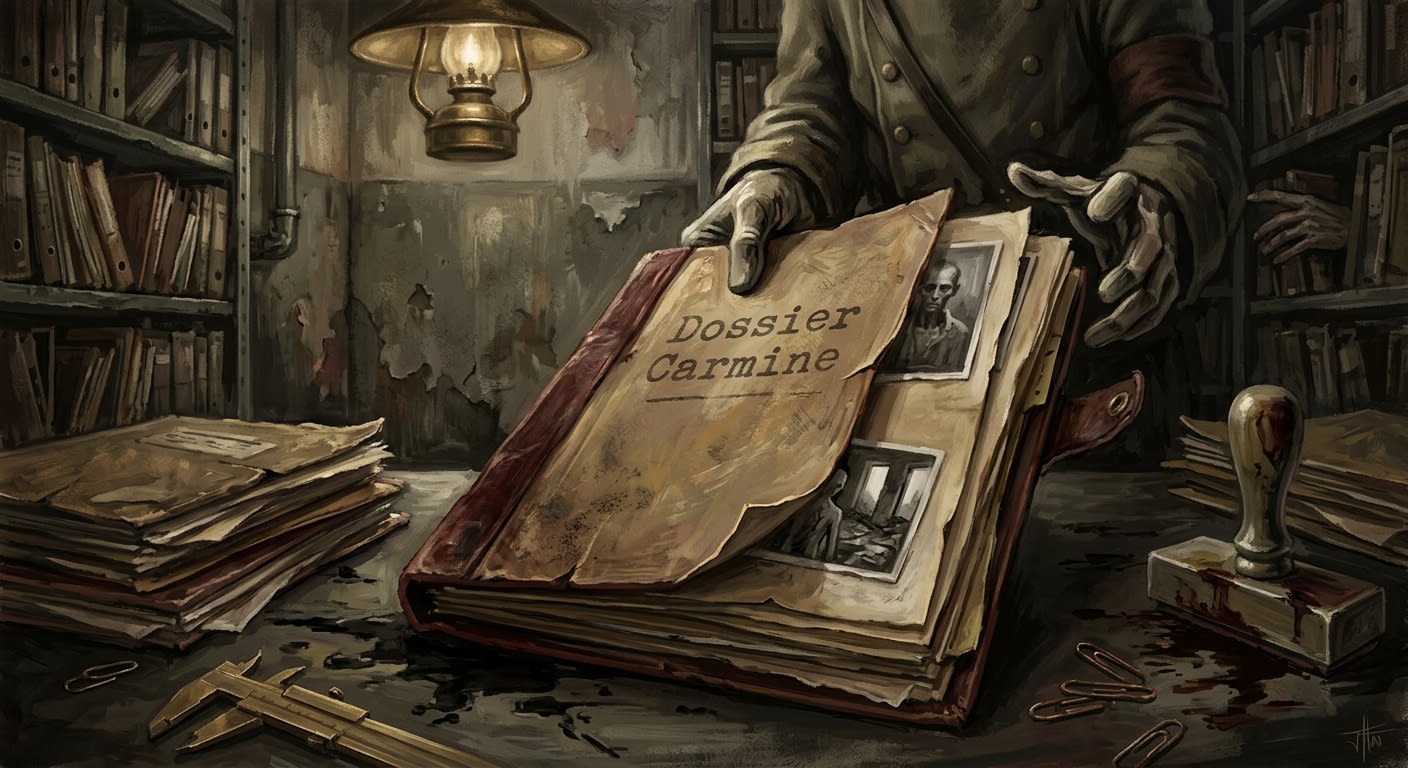
Dossier Carmine
The thinnest file in the Seven still outweighs a province of graves
Dossier Carmine is Inter-Infernal Analysis's thinnest file: Kargath, hunger, Blightmarsh creep, famine aftereffects, abundance hazards, and the brutal mercy of short sentences.
Codex Ref. VIII.7.01-004
Dossier Vermillion
Pride receives a red file and mistakes the cabinet for a stairway
Dossier Vermillion is Inter-Infernal Analysis's largest file: Atheron, Pride, spires, oaths, and the terrible question of whether ambition can climb above Hell itself.
Codex Ref. VIII.7.01-002
Double-Witness Protocol
Two seals for the truth, two names for the blame
After the A.S. 134 Mercy Ward Purge, terminal confessions require a second official, a countersigned ribbon, a separate bell-time entry and two seals. Mercy now has two names to blame.
Codex Ref. XIII.1.98-134

Drag Corridor
The road that keeps the walker and spends his years elsewhere
A Drag Corridor is Syrion's linear wound in useful roads: a route that eats routine, keeps the walker moving, and spends his years where the map cannot object.
Codex Ref. XIII.1.87-201

Driver of the Unmanifest
The wheel answers for what the ledger refuses to receive
The Bureau of Shadows’ formal style for a Night Wagon Driver: answerable for every body, order, and relic moved through a gap the ledger refuses to admit.
Codex Ref. XII.14.04-002
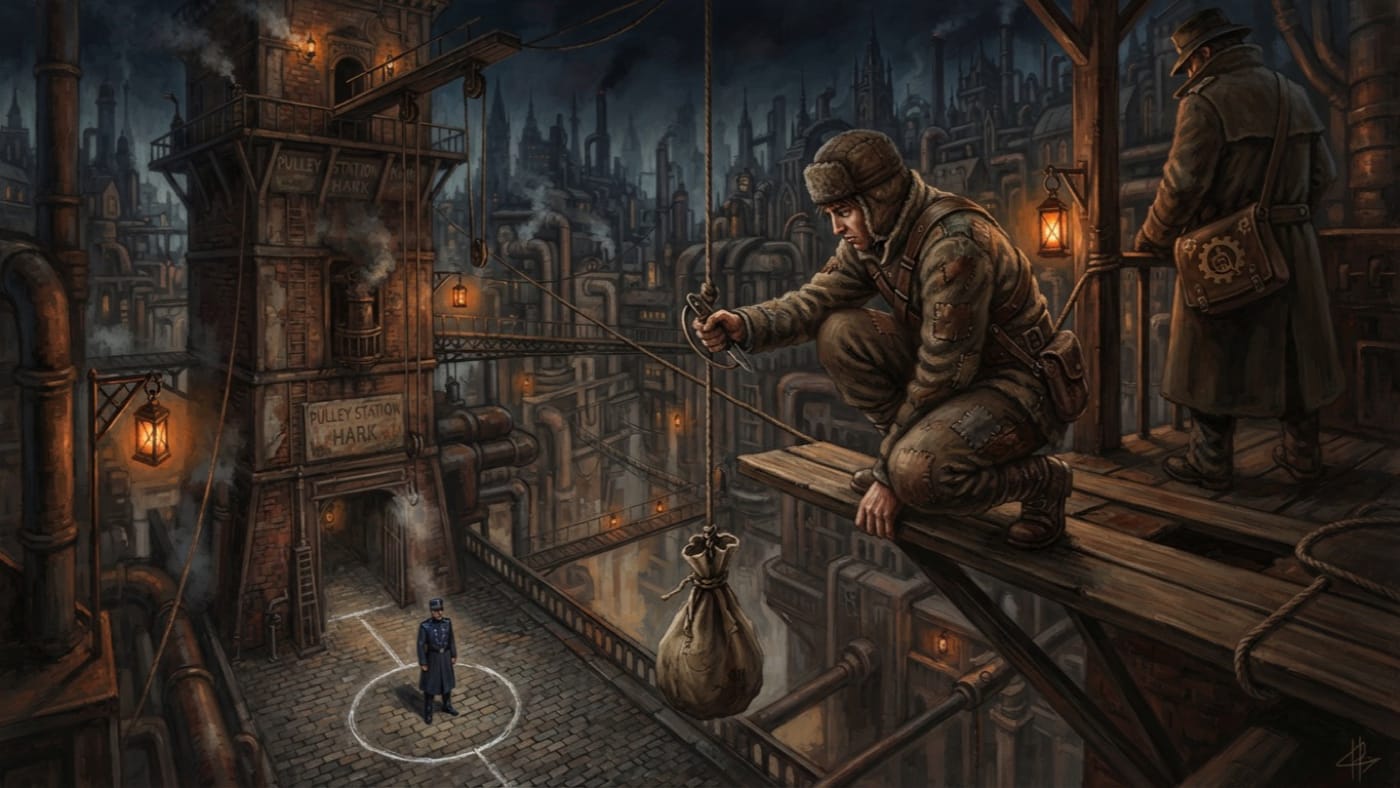
Drop Test
The hand makes the cut; gravity receives the credit
The Rope-Road Lanterns initiate candidates by cutting a weighted pouch into a marked circle below. The hand learns precision; those beneath it learn how easily choice is entered as fate.
Codex Ref. XIII.1.78-201
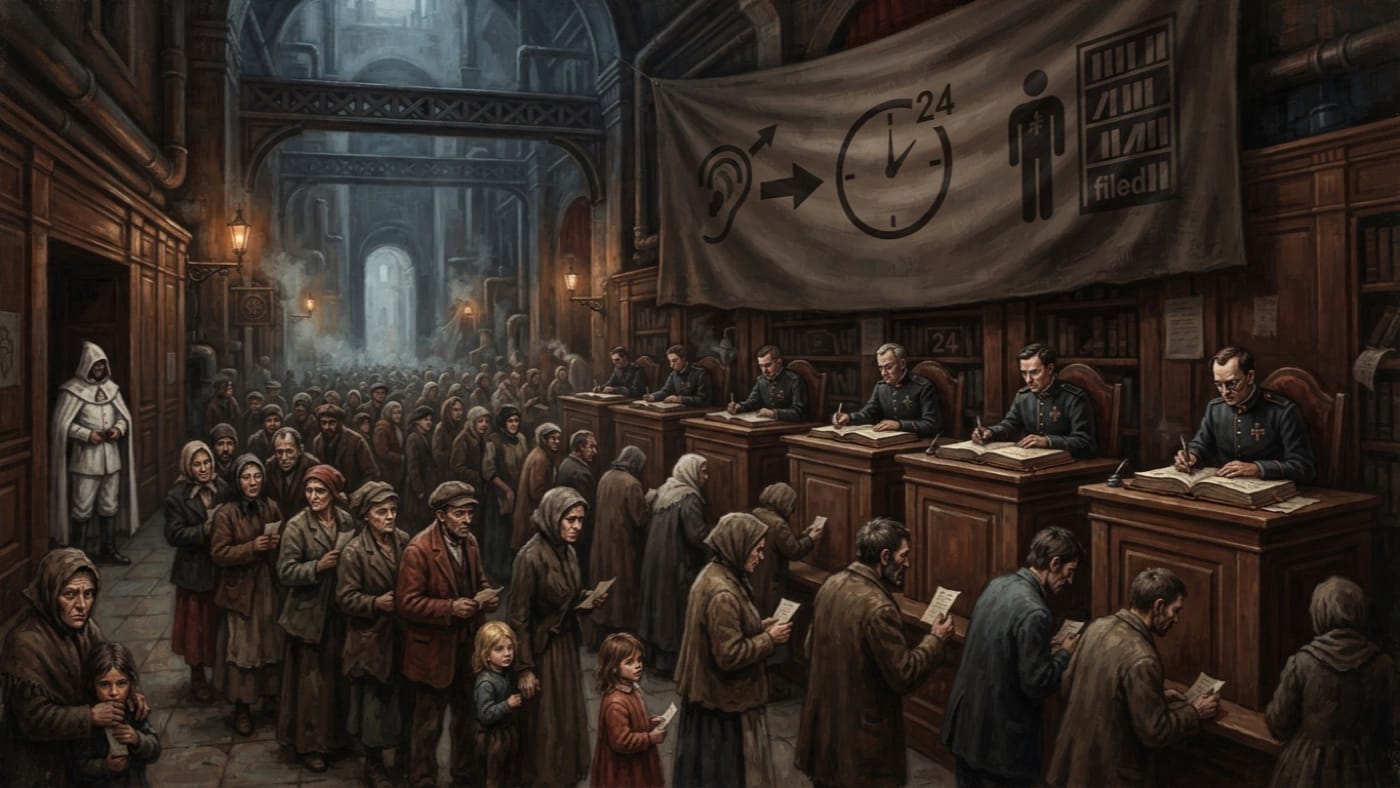
Duty of Denunciation
Every ear a witness; every silence a roof
Severian's Article 19 gives every ear a public office: report suspected heresy within twenty-four hours, or be filed beside the person you sheltered.
Codex Ref. XIII.1.04-944
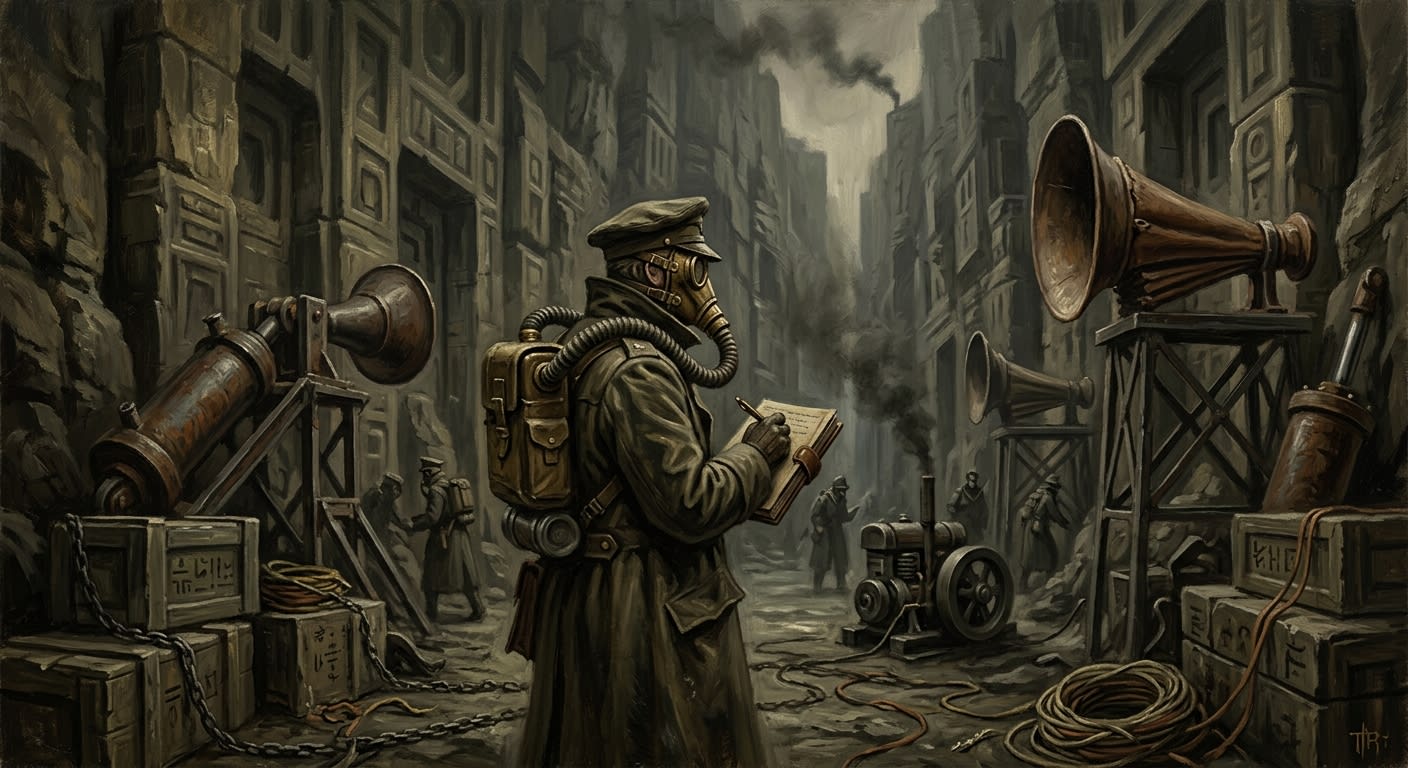
Echo Creed
When the canyon misquotes prayer and the invoice arrives clean
At Peregrine Row, a canyon repeats prayers with one vowel altered, and the Road Chapter has discovered that bad theology invoices beautifully.
Codex Ref. XIII.1.23-001
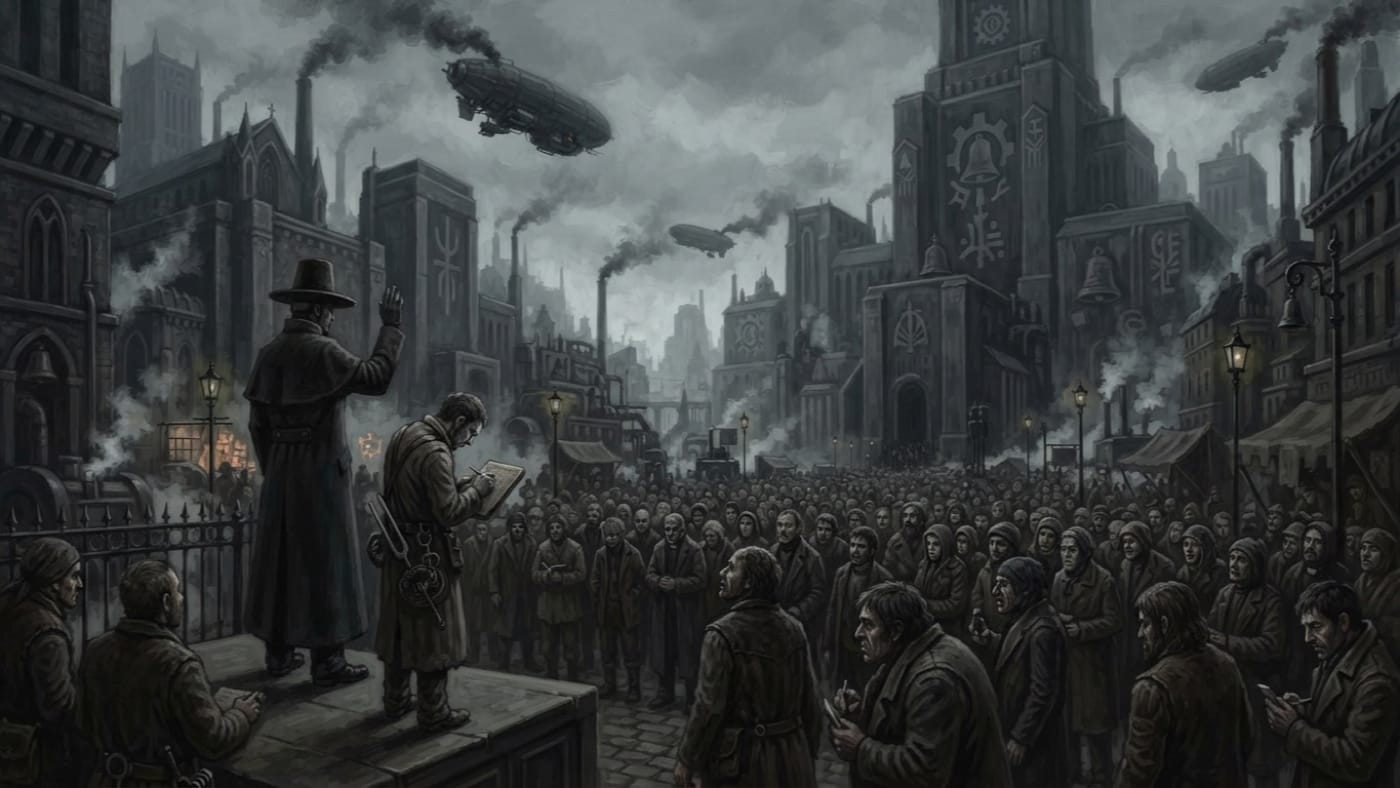
Echo Season
The words are correct. The second voice is not.
The Bureau of Doctrine's standing designation for suspect public recitation: correct words, wrong cadence, and orders to withdraw. The second voice is measured; its author remains disputed.
Codex Ref. XIII.1.86-093

Echo Weather
The room replies, and the wise do not harmonise
Echo weather is the Brand-Singer name for chamber response: the room returning cadence with manners of its own.
Codex Ref. XIII.1.41-004
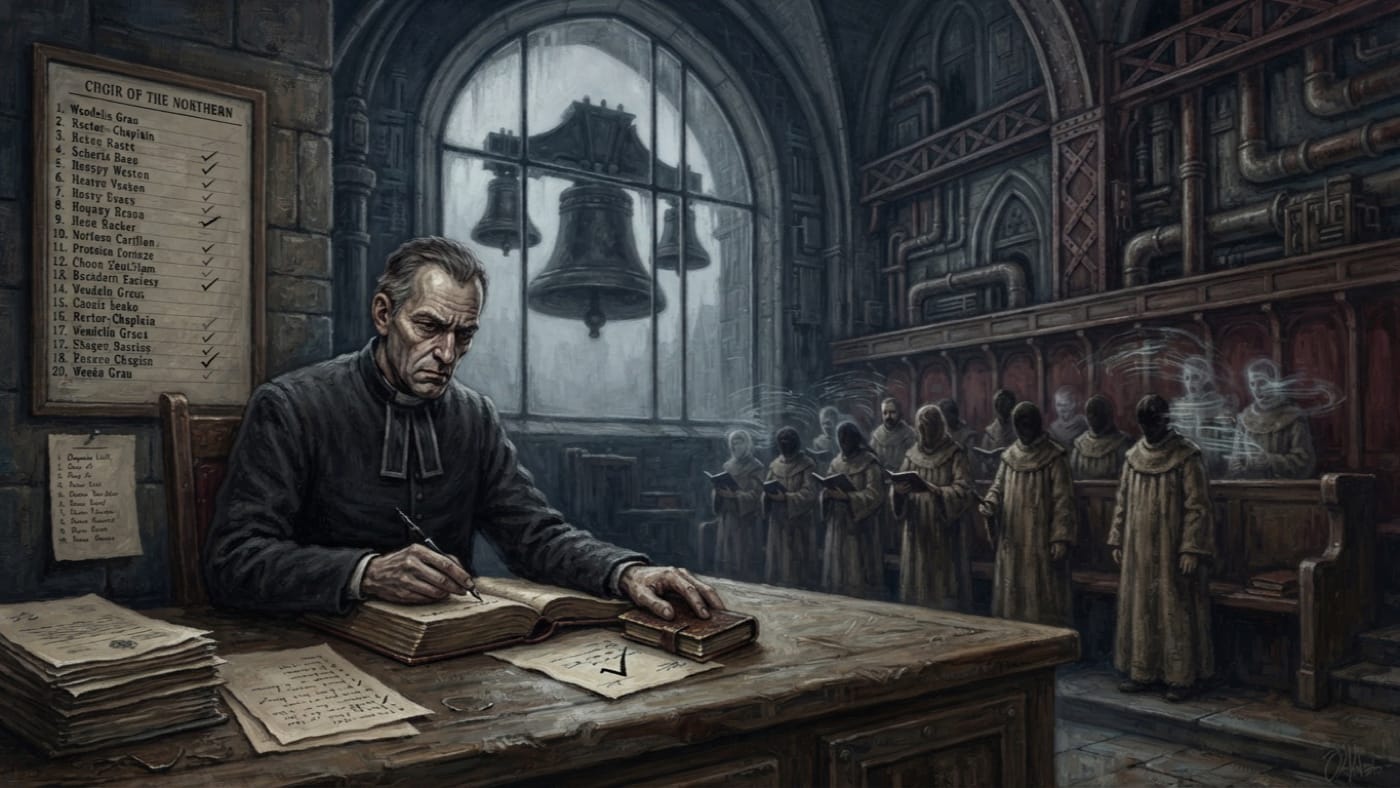
Echo-Sickness
The rota replaces the voice; the priest keeps the name
In A.S. 201, echo-sickness is recorded as a reason for removal from Königsberg's Choir rotation. Grau keeps the names after the rota replaces the voices; the record supplies neither diagnostic criteria nor a proven link to bell-sickness.
Codex Ref. XIII.1.88-201
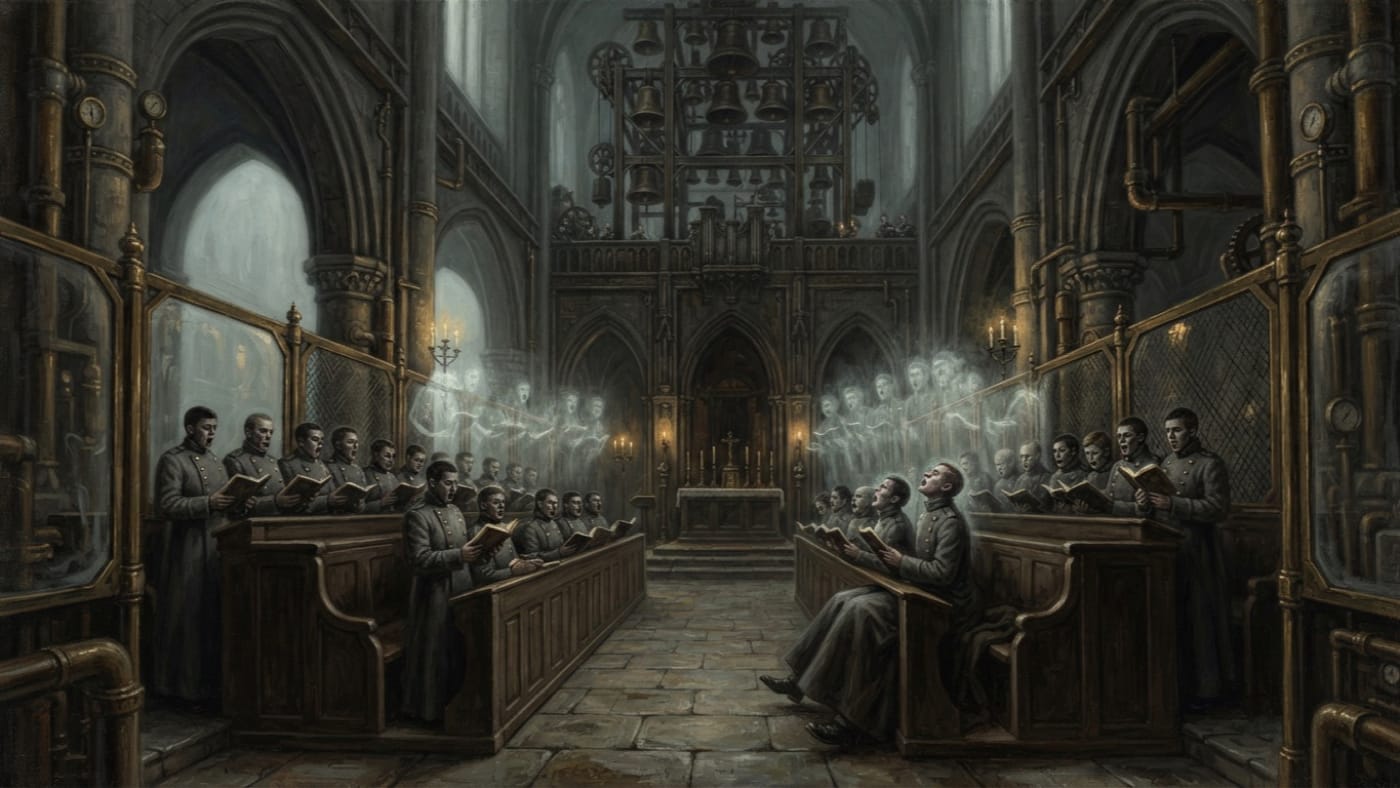
Echoed Hymns
The hymn is approved. The answer remains pending.
At Königsberg, the Choir's classified hymns return without a note altered, sometimes before they are sung. Three disruptions are documented; the source remains unproved. Doctrine has no drawer for perfection.
Codex Ref. XIII.1.97-201

Edict of Authentication
Anatomy objected; the seal overruled it
The Edict of Authentication ratified the Femur Principle at A.S. 147: sanctity obeys custody, seal, witness, and doctrine before anatomy.
Codex Ref. XIII.1.90-147
Edict of Cologne
Consent is expensive; retroactive obedience is cheaper
The Edict of Cologne bound dioceses to Strasbourg by discovering their obedience had already happened, then teaching silence to sign.
Codex Ref. XIII.1.90-100
Edict of Graphic Uniformity
Twenty-three permitted letters, and no exemption for the dead
Della Torre's A.S. 178 edict made the Triune Alphabet the Synod's only recognised script, licensing literacy, prescribing spelling and requiring approval for gravestones. The dead may rest; their names must pass inspection.
Codex Ref. XIII.1.03-002
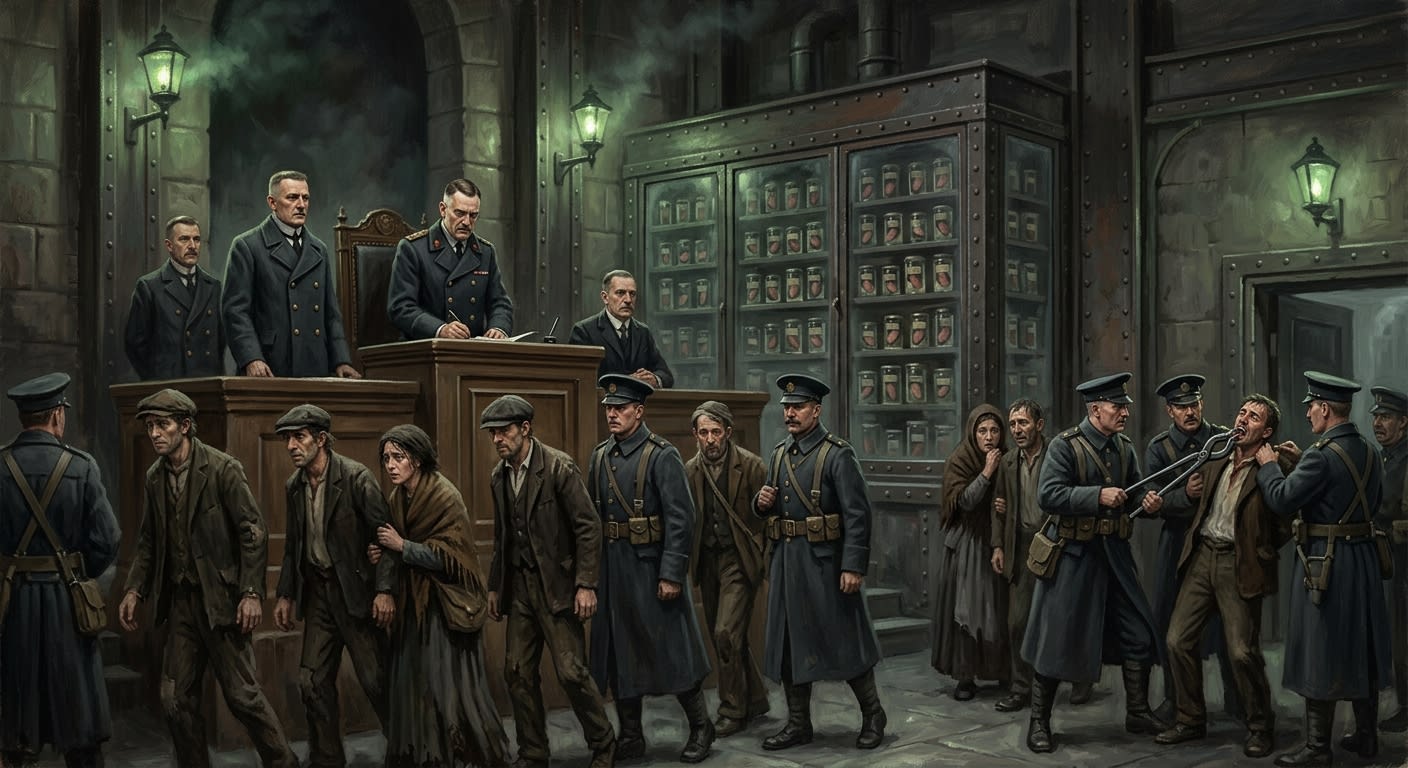
Edict of Ironmouth
When Reason mistook prayer for infection and discovered eleven thousand tongues to classify
A.S. 30 Rationalist law that made spoken prayer vocal treason, answered hymns with pincers, and left the Synod a cabinet of tongues to condemn and study.
Codex Ref. XIII.1.55-001
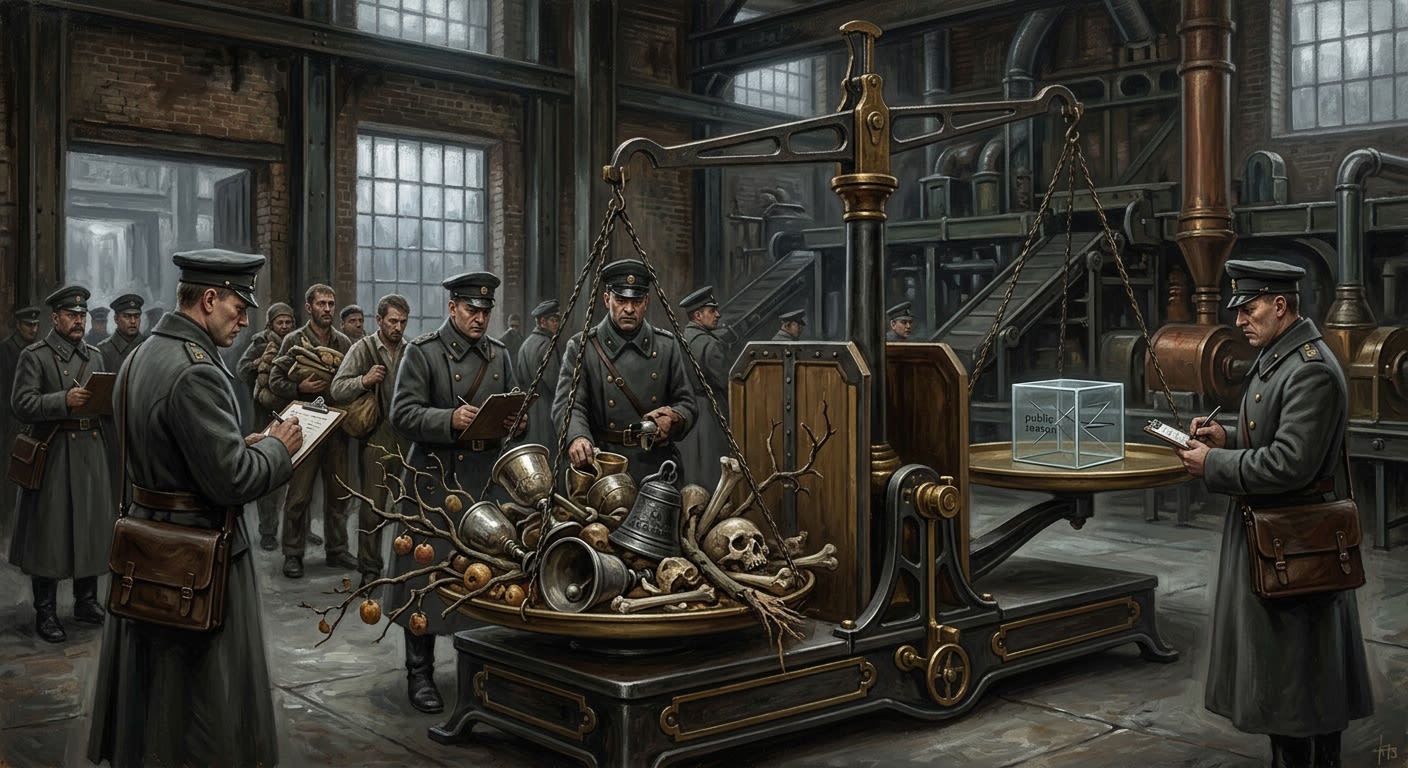
Edict of Rational Allocation
The chalice failed to justify its allocation, so theft put on spectacles
The Rationalist Republic weighed chalices, bells, bones, and orchards as idle matter, then called confiscation public reason until the Sundering audited the account.
Codex Ref. XIII.1.00-030

Eight Proscribed Heresies
Eight quarrels with the Synod, filed in one drawer
A.S. 201 survey of eight proscribed movements, their doctrines and the limits of their classification. They share a drawer; the surviving files establish neither common command nor settled ordinal ranks.
Codex Ref. XIII.4.08-001

Eight Strokes
Count the breath; keep the witness; earn the rotation
A.S. 201 survey of the Eight Strokes: eight sung ignition beats, compulsory for emergency restarts, with a witness and two working hands. The recensions still disagree.
Codex Ref. XIII.1.08-001
Eighth Doctrinal Congress
The room where silence acquired walls, windows, and a reporting form
The Eighth Doctrinal Congress put Article 19 into the Catechism, made silence shelter, and taught every household to staff Purity's desk behind the ear.
Codex Ref. XIII.1.90-134
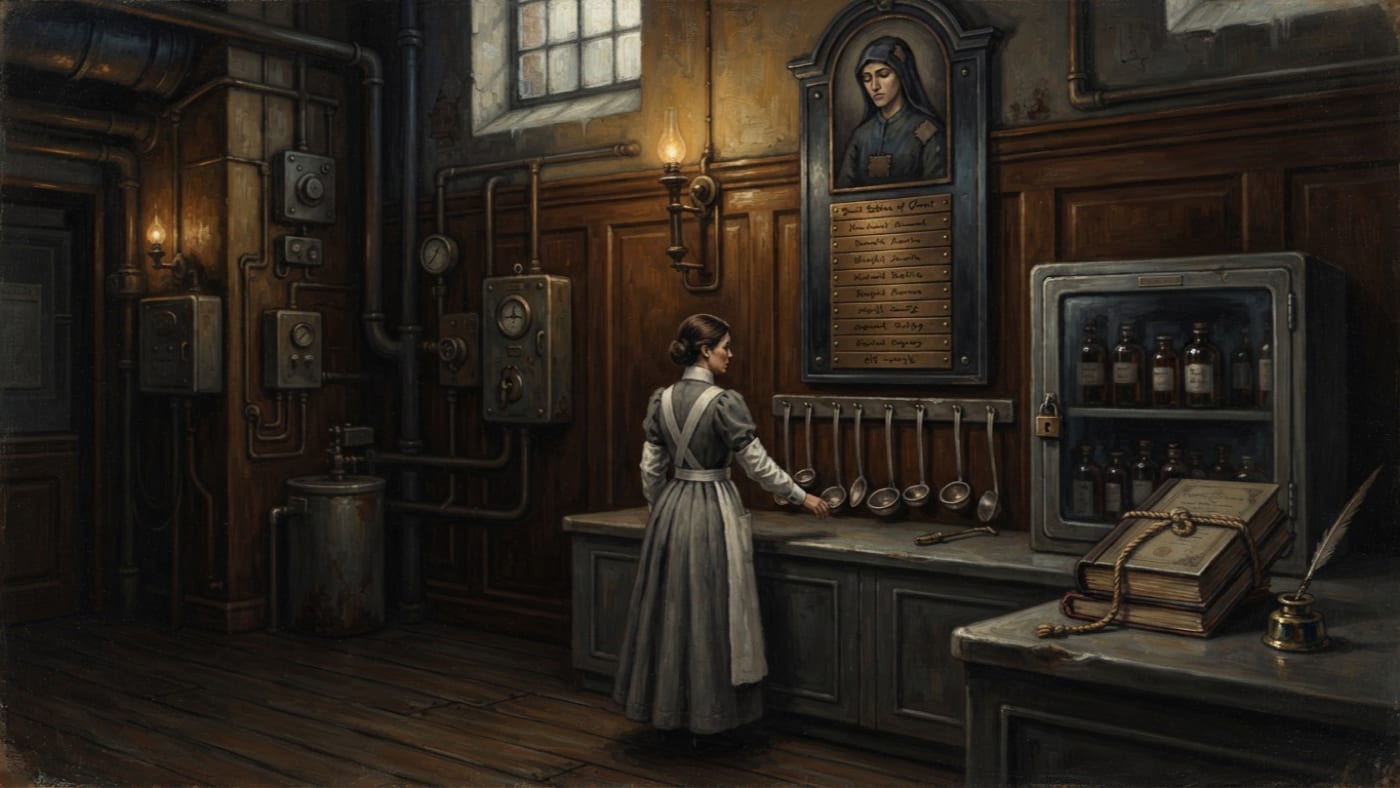
Eleven Bound list
Eleven bodies bound, seven witnesses counted, and Mercy's lesson in the ledger
The Eleven Bound remembers Sabina's reported bandaging recipients. Mercy recites their names; the seven final witnesses remain a different count.
Codex Ref. VII.8.02-002
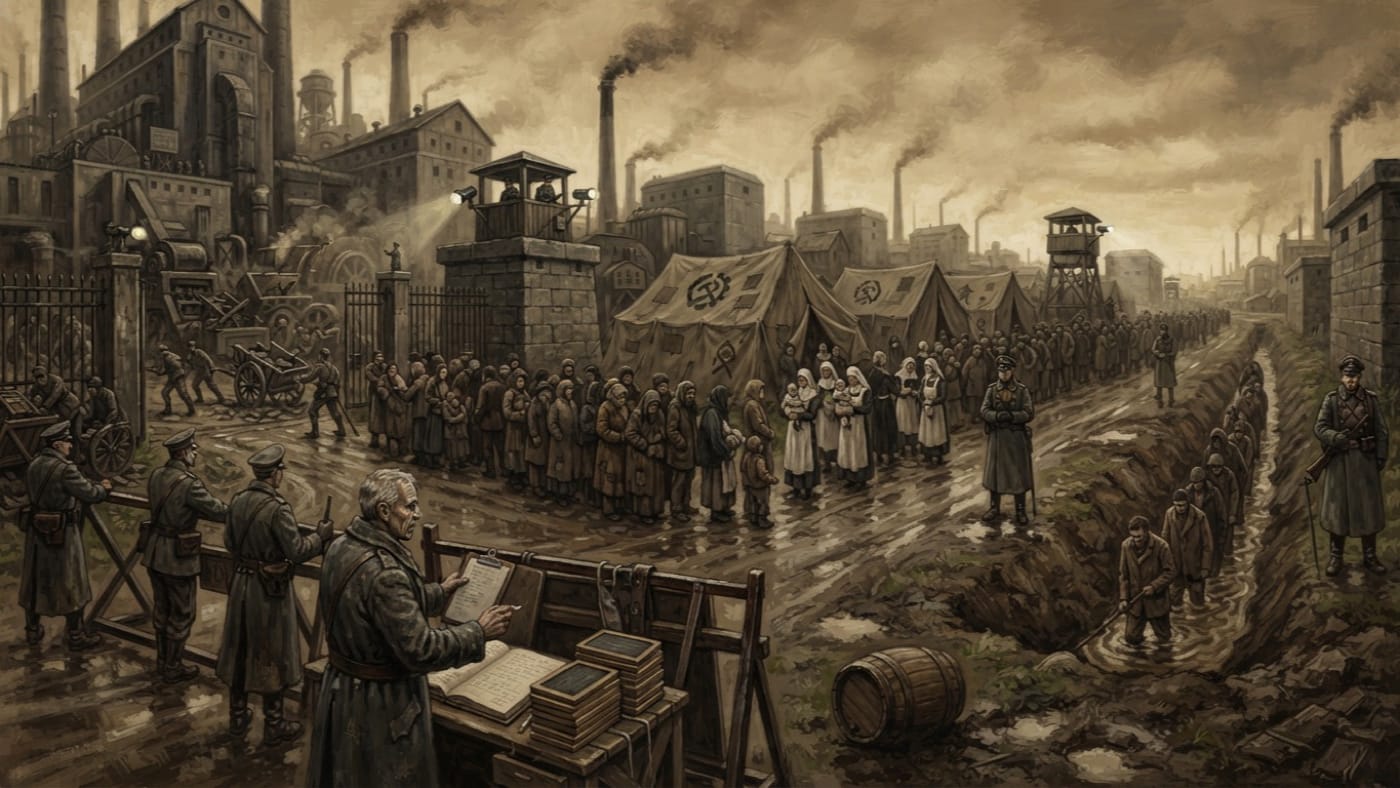
Emergency Disposition Table 4-B
The beer was omitted; the ditch remained
Records turned Thenm's A.S. 93 road decision into Table 4-B: beer omitted, ditch retained. This A.S. 201 survey establishes neither its issue year nor its present force.
Codex Ref. XIII.1.93-004
Emergency Lateral Release Pattern 3-C
The knot grants breath; the gate still demands a stamp
Pattern 3-C turns a crowd sideways before the gate turns it into casualties. Standardised in A.S. 118, Ravel's mercy preserves breath without granting passage.
Codex Ref. XIII.1.118-003
Empty Arrival
Forty-three hooks for the procession that never reached its saint
Forty-three hooks at Clement's chapel count everyone who set out from Dinan. The children hang the tokens each year; Doctrine keeps the destination denied.
Codex Ref. XIII.1.87-014

Empty Cradle Accord
Incentives for birth, an audit for loss
An A.S. 201 survey of the Empty Cradle Accord: fertility encouraged, miscarriages audited, and pregnant women received into Plenty Houses. The ledger counts the losses; the Accord's adoption year remains unknown.
Codex Ref. XIII.1.06-984

Empty Throne of War
A chair may command armies if enough clerks fear it
The Seventh Seal's white-draped chair has been publicly unoccupied since A.S. 107 and legally occupied ever since, proving absence can march an army.
Codex Ref. XIII.1.52-001
Enemy
One word for the thing beyond the Line and the person beneath the seal
The Enemy is the Synod's collective name for demonic powers, mortal auxiliaries and sanctioned targets. This present survey records how Doctrine's word becomes War's seal, the shrine-platform's volley and Records' permanent entry.
Codex Ref. XIII.1.43-201

Enforcement Digest
The canisters are counted; the pipes remain unfound
The Bureau of Purity's Enforcement Digest counts seized black diesel, corrects eradication into reduction, and preserves a return the Bureau of Tithes' projections contradict. The figures are sealed; the furnaces remain lit.
Codex Ref. XIII.1.97-198

Environmental Adjustment Protocol
Four thousand petitions, seven permissions, and the fog still at fault
The Environmental Adjustment Protocol lets Auditors amend Choir Rate for atmospheric interference. Four thousand invocations yielded seven approvals; the Bureau keeps the permission and the refusals.
Codex Ref. XIII.1.58-201
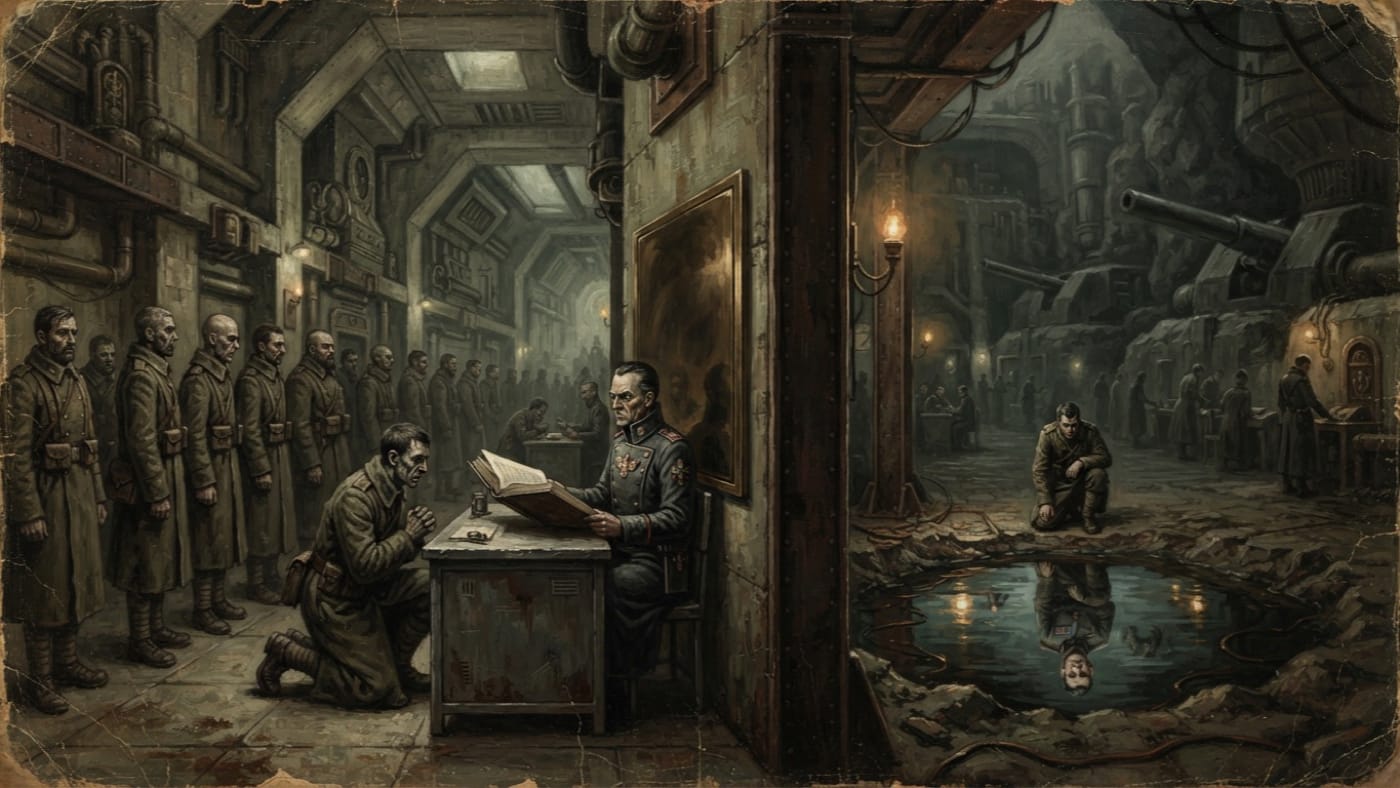
Envy
Greed wants your purse. Envy wants your name on it.
Envy covets another person's place and hollows the self to take it. Morwen makes the improvement work; the Synod's remedies remain easier for a good copy to pass.
Codex Ref. XIII.1.07-007

Equivalence Letter
The bone stays; the permission to kneel travels
The Equivalence Letter lets a shrine honour another jurisdiction's relic authentication without moving the bone. The seal travels; custody and identity stay where they were.
Codex Ref. XII.15.06-201

Examiner of the Third Degree
The seal is the Bureau's. The signature is yours.
Commissioned current survey, A.S. 201: the Bureau of Relics' Examiner assesses Authenticity Writs, weighs bones and records phenomena. A parish receives a certificate or a receipt. The office's founding remains unrecorded.
Codex Ref. XII.35.03-001

Excommunication
Cast out of communion, retained for punishment
Excommunication casts a person out of communion but keeps the name legible in the Great Ledger of Souls. The condemned retain standing for punishment and possible restoration. Records calls this generosity.
Codex Ref. XIII.1.01-005

Extraction Folio
The name remains. The evidence leaves with the knife.
The Shroud keeps the name and cuts away the evidence. Its black-bound Extraction Folios count disappearances; Records makes the rolls agree and charges the household for the correction.
Codex Ref. XIII.1.29-002
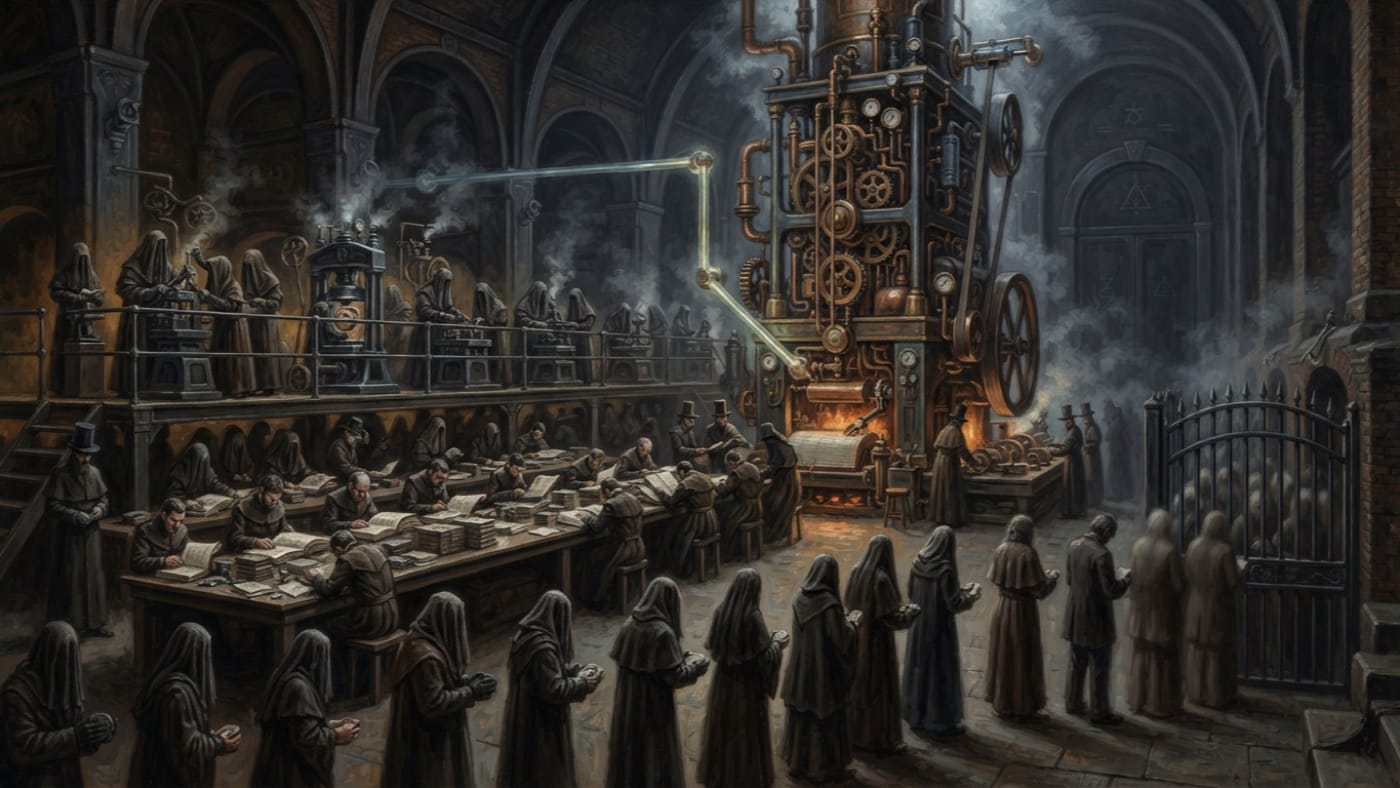
Face Registry Compact
The law that made recognition portable, taxable and revocable
Ratified in A.S. 94, the Face Registry Compact binds coin, face, name and the Ledger's soul account. Recognition may travel, be taxed, or be recalled; in Sable Court, even memory pays its dues.
Codex Ref. XIII.1.91-002
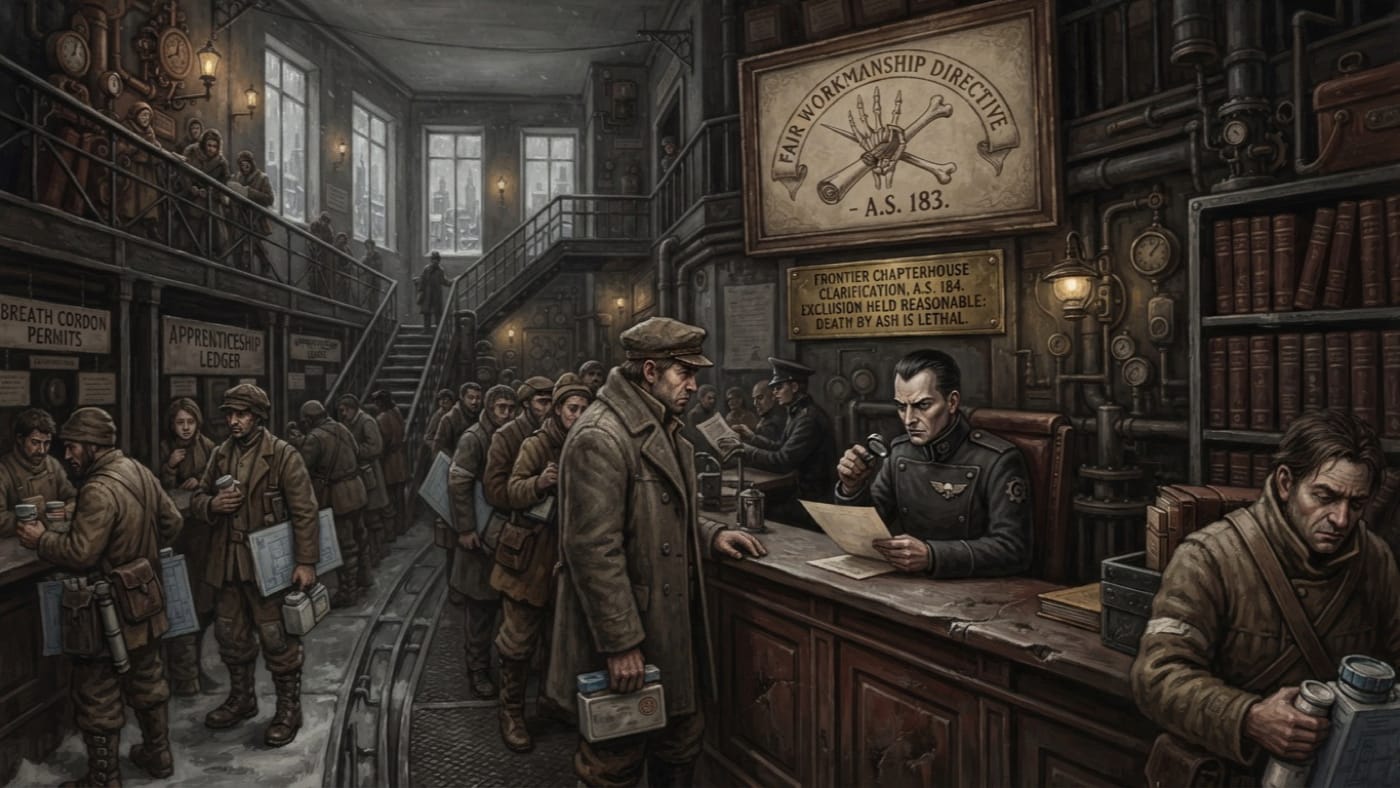
Fair Workmanship Directive
The adjective that kept the monopoly breathing
The A.S. 183 directive forbids unreasonable exclusion from frontier craft markets. Lor's Chapterhouse found death by ash sufficient reason to preserve the Bone-Guild's monopoly.
Codex Ref. XIII.1.183-001
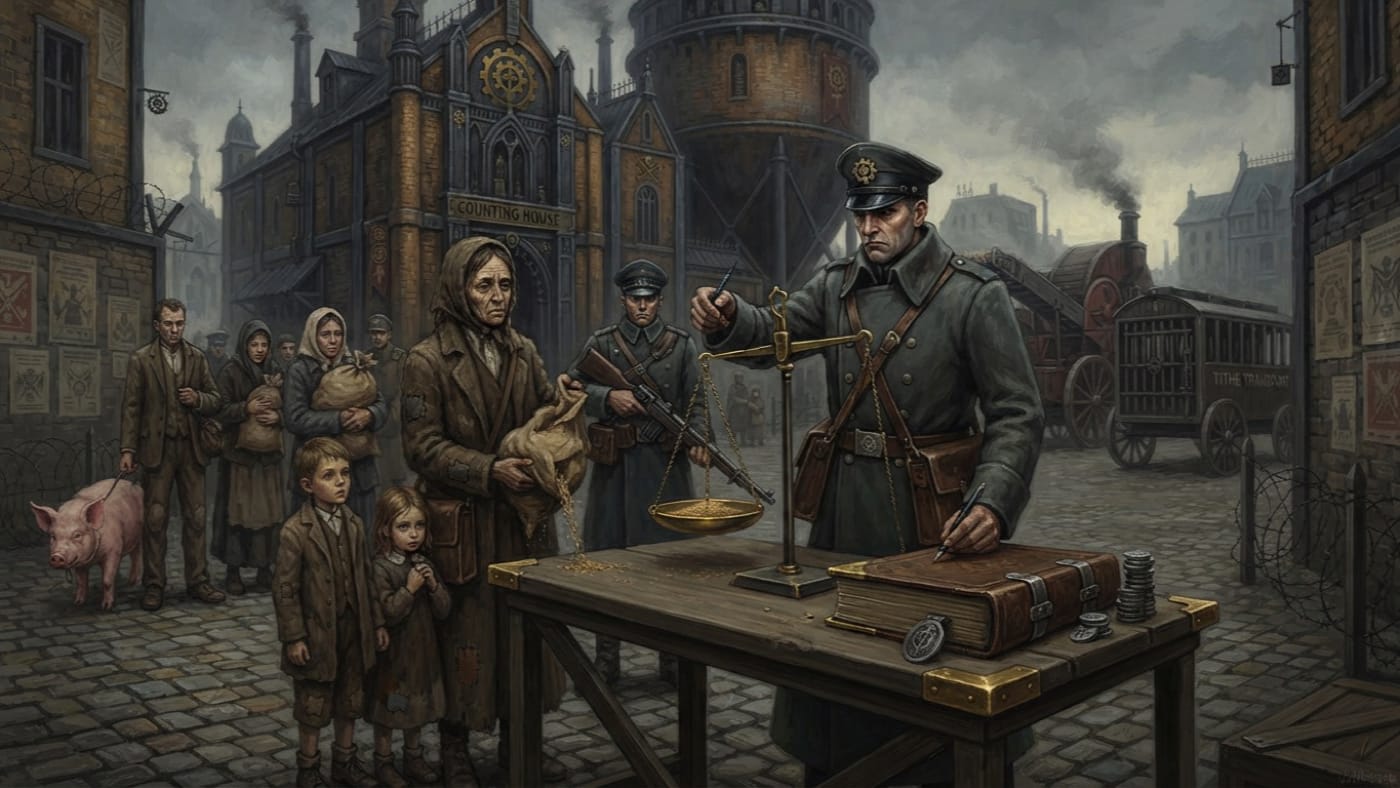
Faith-Tithe
The tenth that never settles the bill
The Faith-Tithe is the tenth owed by every baptised Synod subject, payable in coin, livestock, grain or labour. I certify the receipt; the surcharges follow.
Codex Ref. XIII.1.92-001

Fall List
The weather has patrons, and the dead have a list
The Fall List records the Rope-Road Lanterns' commissioned deaths: murder filed as weather, copied as insurance, and capable of ending the Circle's toleration in one widow's hands.
Codex Ref. XIII.1.125-001
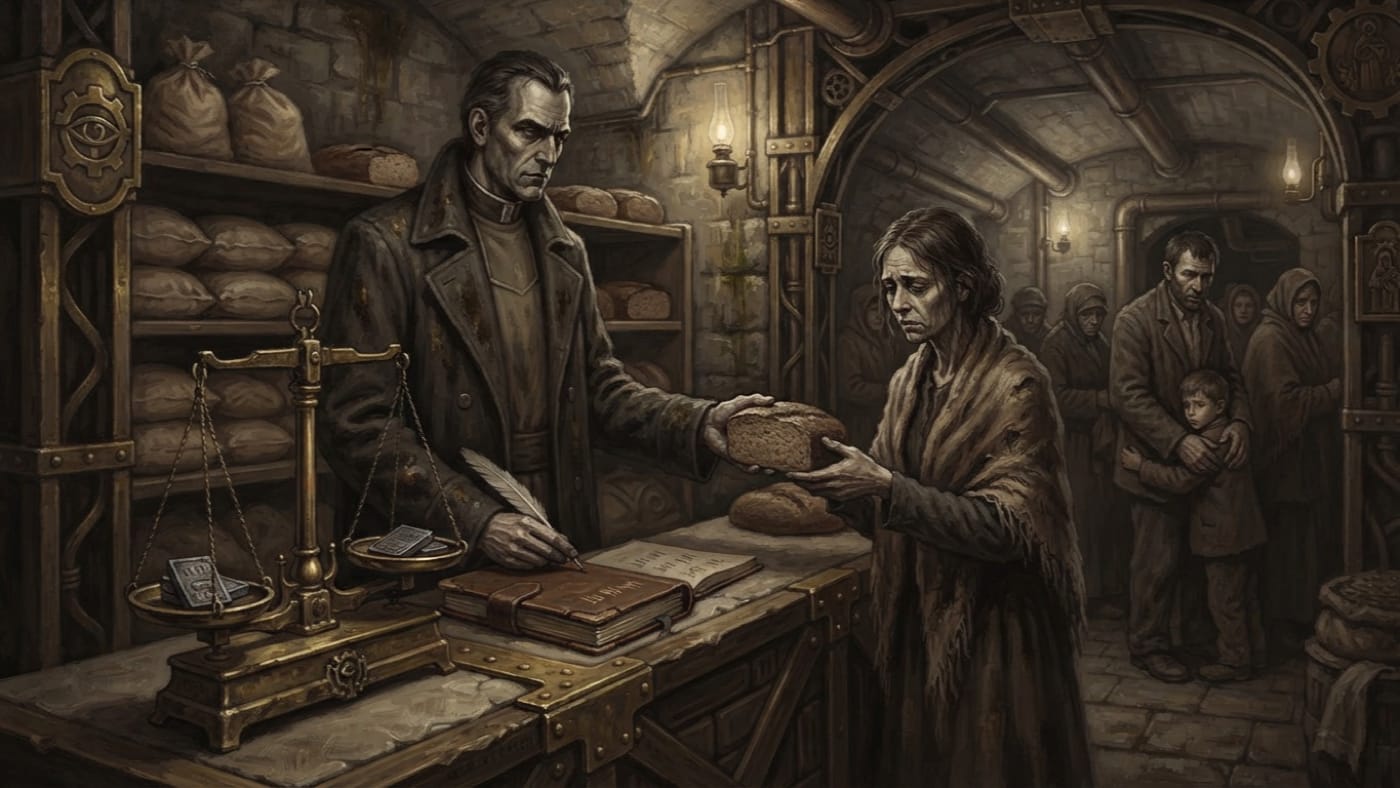
Famine Interest
The loaf is eaten; the obligation survives
Famine interest advances bread against property, silence, service, and persons. The Hunger Broker's ledger compounds because the debtor keeps eating.
Codex Ref. XIII.1.13-001
Fast of Silence
The tongue kneels before the knife is invited
The Fast of Silence is the Bureau of Festivals' cleanest cruelty: a district gagged from dawn to dusk until obedience sounds like piety.
Codex Ref. XIII.1.89-153

Feast of Annunciation Corrected
A feast is a schedule that has been to seminary
The Feast of Annunciation Corrected kept the Saint Gabriel's A.S. 182 launch from conflicting with a munitions delivery. The calendar, too, answers to logistics.
Codex Ref. XIII.1.89-182

Feast of Balanced Scales
Mercy, weighed once yearly and sealed before it multiplies
The Feast of Balanced Scales permits each Tithe Assessor one yearly remission, proving mercy can survive only when counted, sealed, and made afraid.
Codex Ref. XIII.1.89-201

Feast of Buried Names
Anonymous before the Creator. Numbered in the Registry.
On the Feast of Buried Names, every citizen is expected to walk the parish in silence behind licensed white cloth. Doctrine calls it necessary; Purity calls it a liability. The Registry keeps the eye-holes on file.
Codex Ref. XIII.1.91-001
Feast of Doctrinal Submission
The holiday that teaches the spine to kneel before the mouth calls it faith
The Feast of Doctrinal Submission is the Synod's mandatory kneeling holiday: census, pageant, ration queue, loyalty assay, and permitted joy under bells.
Codex Ref. XIII.1.89-072
Feast of Saint Aldebrand
Remembered by the register, mislaid by the diocese
A.S. 201 survey of Aldebrand's feast: sanctioned by Festivals, observed or omitted by dioceses, disputed by Records and taxed by Tithes. The register remembers; the day remains unknown.
Codex Ref. XIII.1.89-201
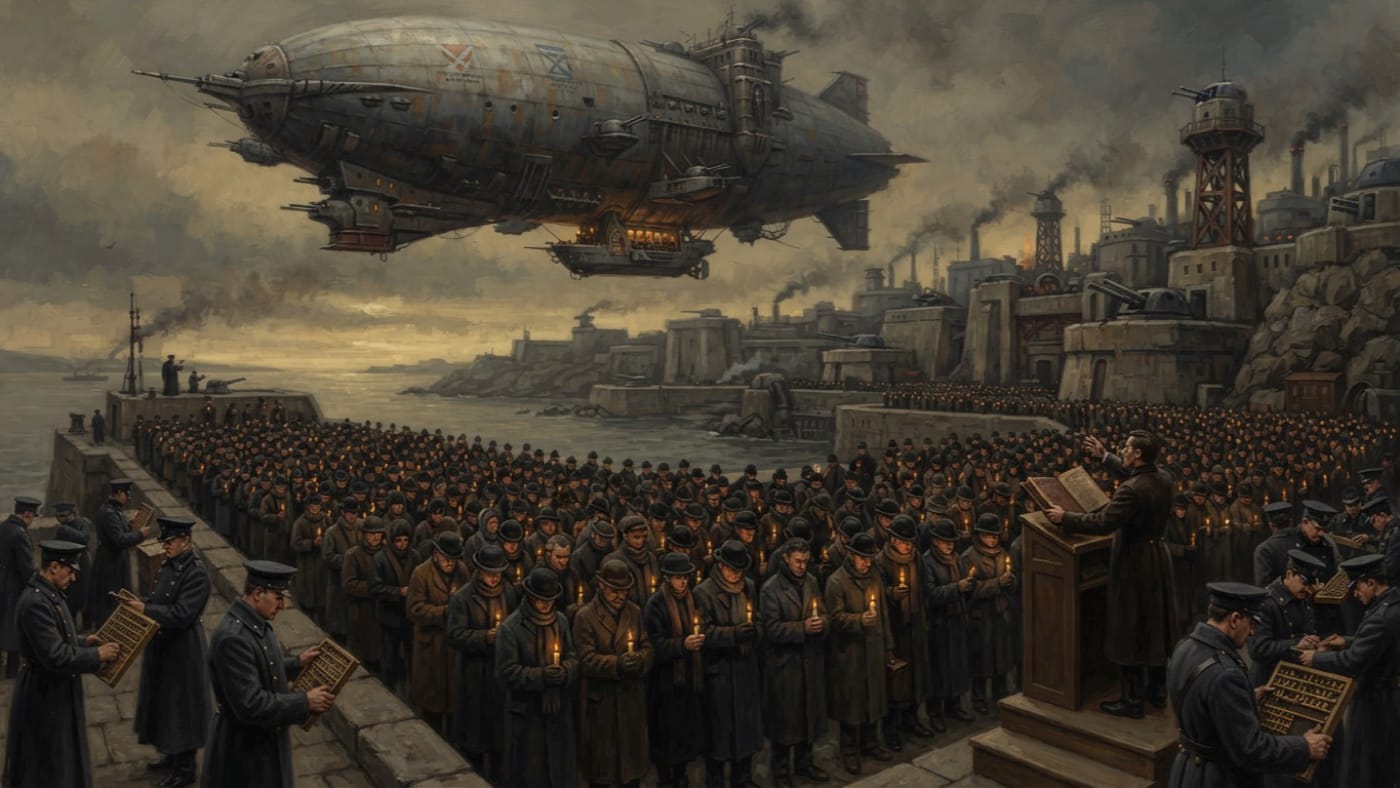
Feast of Saint Barachiel
The calendar gave the sky a patron and the weapon an appropriation
Ratified in A.S. 167 and bound to the Ark's first ascent in A.S. 168, Saint Barachiel's feast supplies lawful witness, counted candles, and the holy protection of a military budget.
Codex Ref. XIII.1.89-167
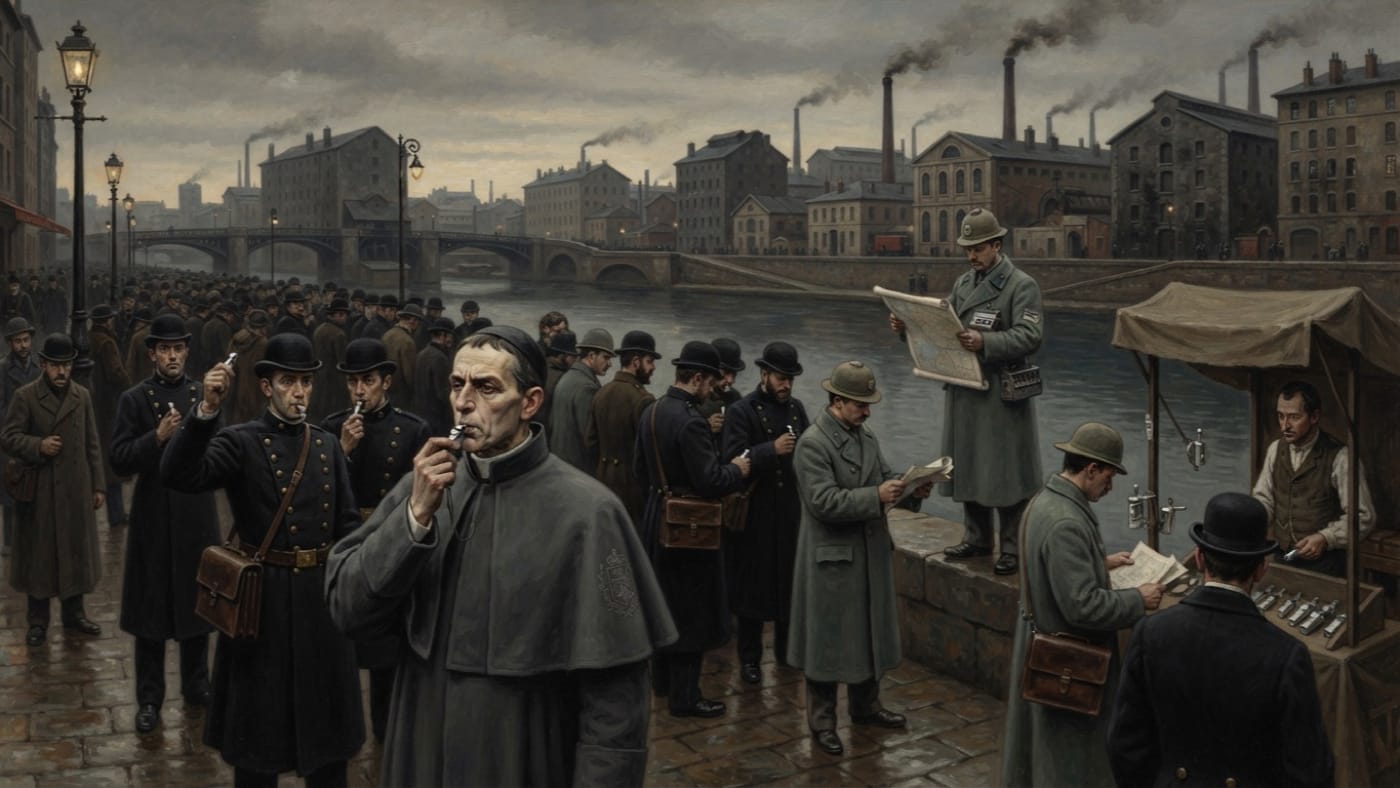
Feast of Saint Calistus
Lyon keeps the sound, and Festivals keeps the maps
This A.S. 201 survey records Lyon's supervised commemoration of Saint Calistus through whistle-hymns. Festivals keeps the route maps, merchants sell silver whistles, and Bureau counters attend. Memory travels by permission.
Codex Ref. XIII.1.87-015
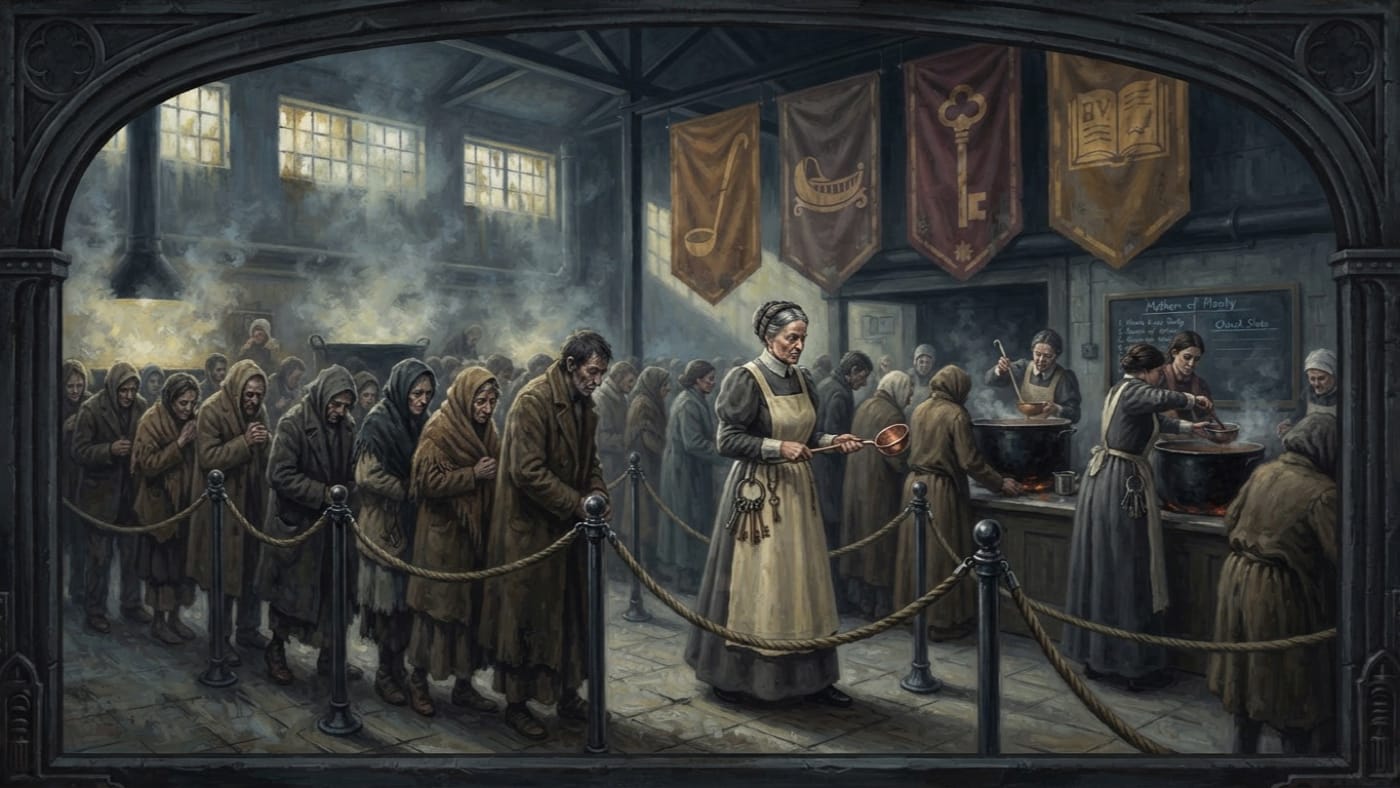
Feast of Saint Halva
A quarter-measure in the bowl, a colder week in the ledger
An A.S. 201 survey of Halva's annual 14 Brumaire feast: a quarter-measure more, the Ration Psalm, the Stirring and evening broth, paid for in next week's fuel. A.S. 94 dates the saint's canonisation; the first feast year is unrecorded.
Codex Ref. XIII.1.25-003
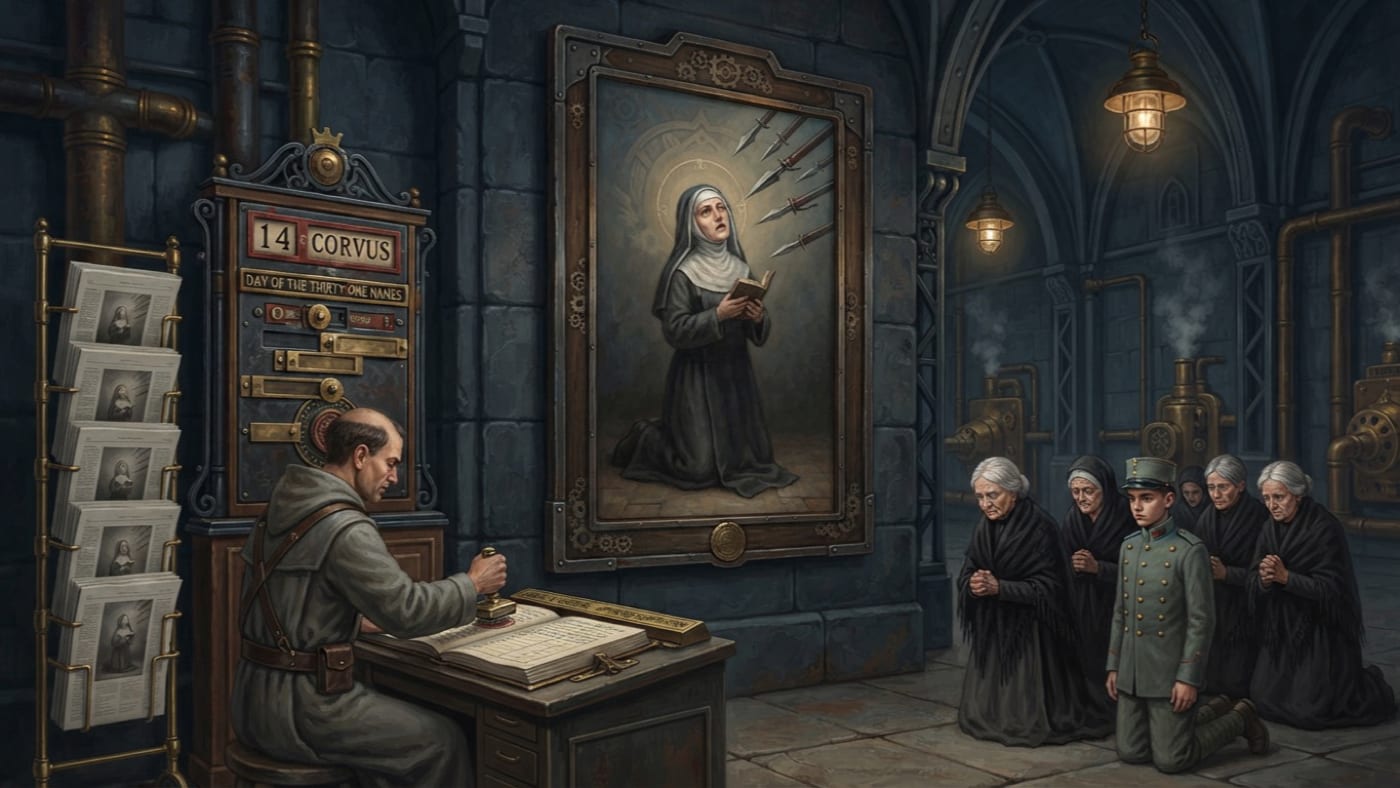
Feast of Saint Margaux
Thirty-one dead, one approved face
On 14 Corvus, Saint Margaux shares her feast with the Day of the Thirty-One Names. The grief belongs to the faithful; the face, the calendar and the uses belong to the Bureaus.
Codex Ref. XIII.1.87-014

Feast of Saint Rupert
Attendance is mandatory; relief has no column
Saint Rupert's mandatory feast, preserved in the Strasbourg return of A.S. 199: 1,847 present, 13.7 seconds of applause, and joy classified Within Parameters.
Codex Ref. XIII.1.89-199
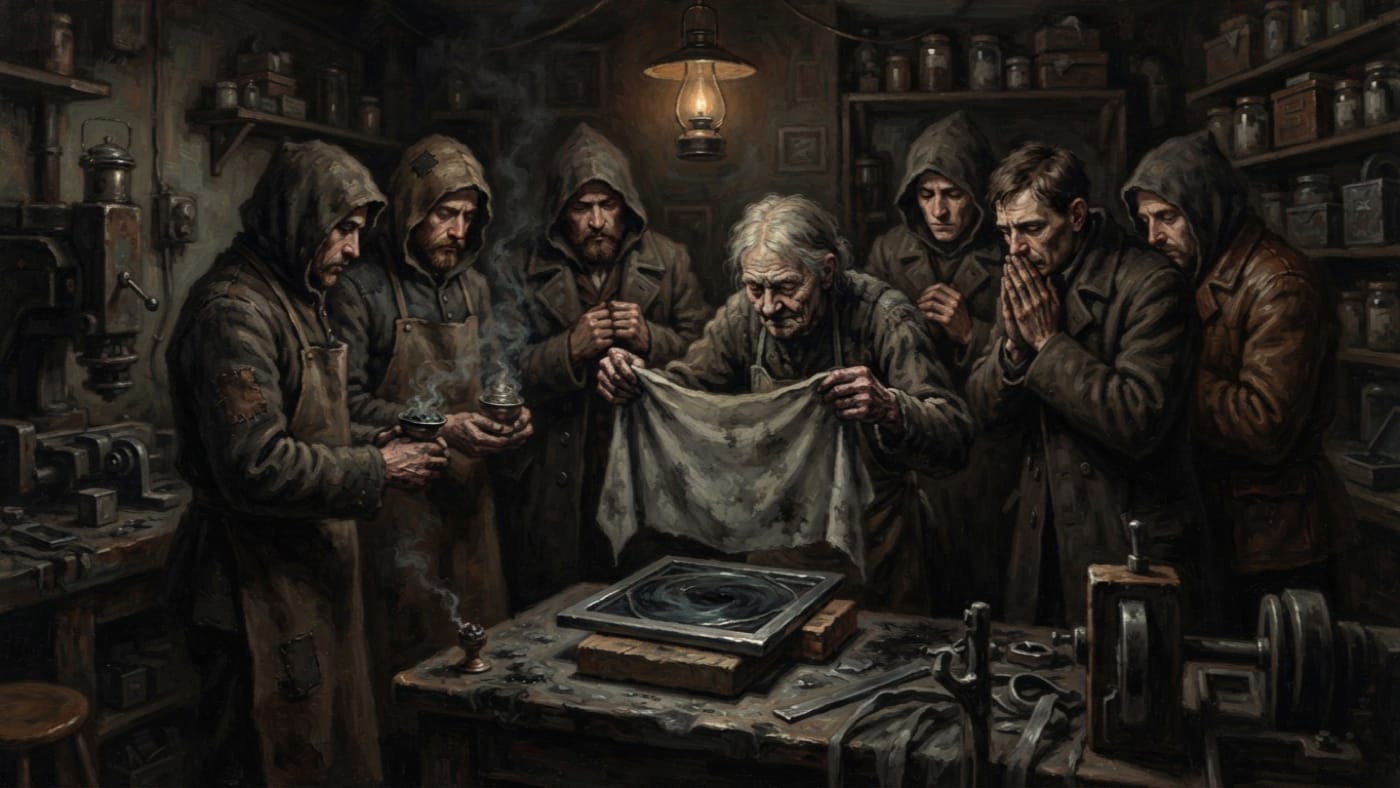
Feast of Silenced Tongues
A craft without a charter keeps the feast of a saint without a file
The Demon-Glass Polishers honour Saint Varda after Matins, on a night chosen by workshop consensus and denied by morning. A cloth is lifted for one breath; silence earns thanks, and a whisper earns them faster.
Codex Ref. XIII.1.92-001
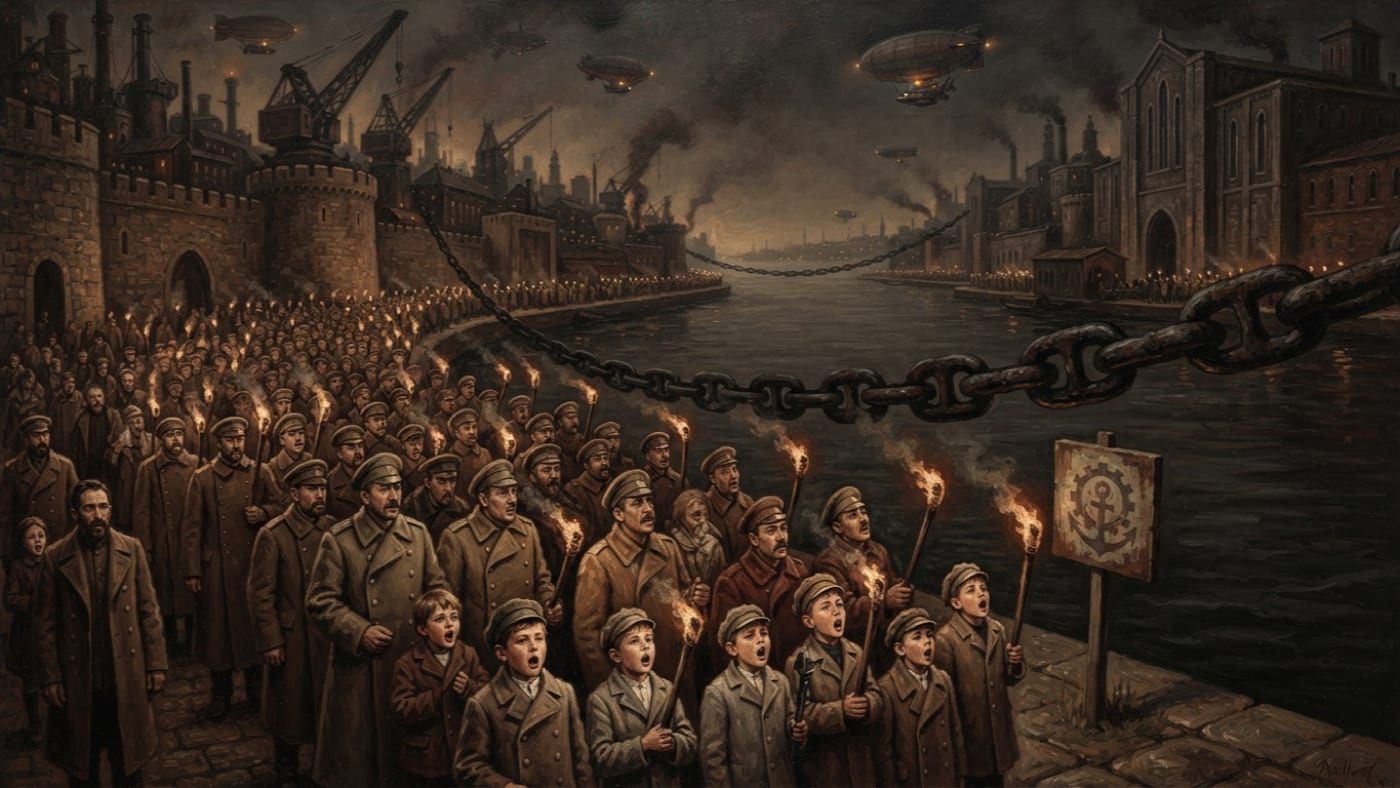
Feast of the Burning Chain
Four verses. Eleven mentions of faith. The chain was dark.
On 15 Ferrum, Constantinople celebrates the Armada victory. In A.S. 200, I watched the torchlit procession confront a dark chain. Four verses, eleven mentions of faith, and louder singing. The institution year remains unknown.
Codex Ref. XIII.1.90-200
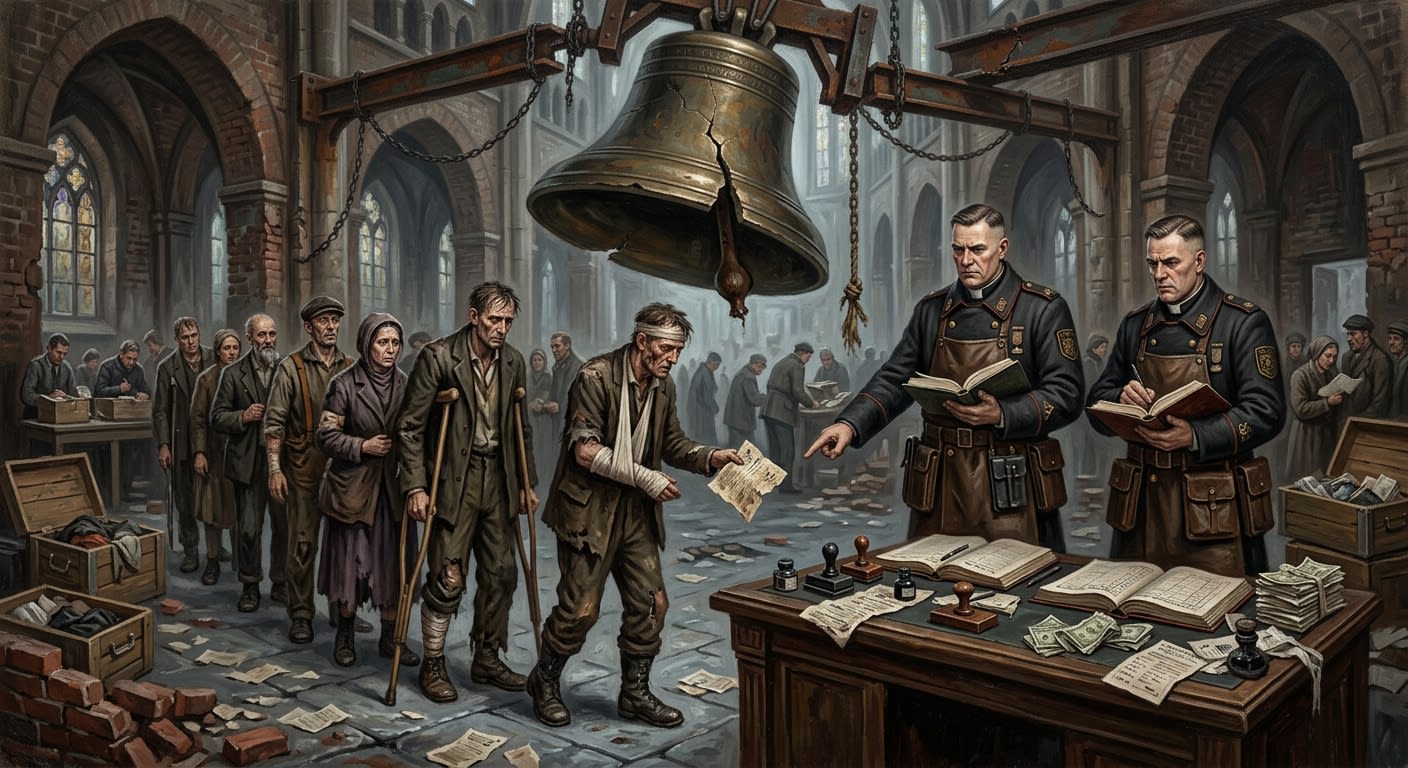
Feast of the Cracked Bell
The damaged bell still tolls, therefore the damaged citizen still owes
The Feast of the Cracked Bell teaches the Synod's favourite mercy: broken things may still serve, so damaged citizens may still be counted, tolled, and taxed.
Codex Ref. XIII.1.89-201
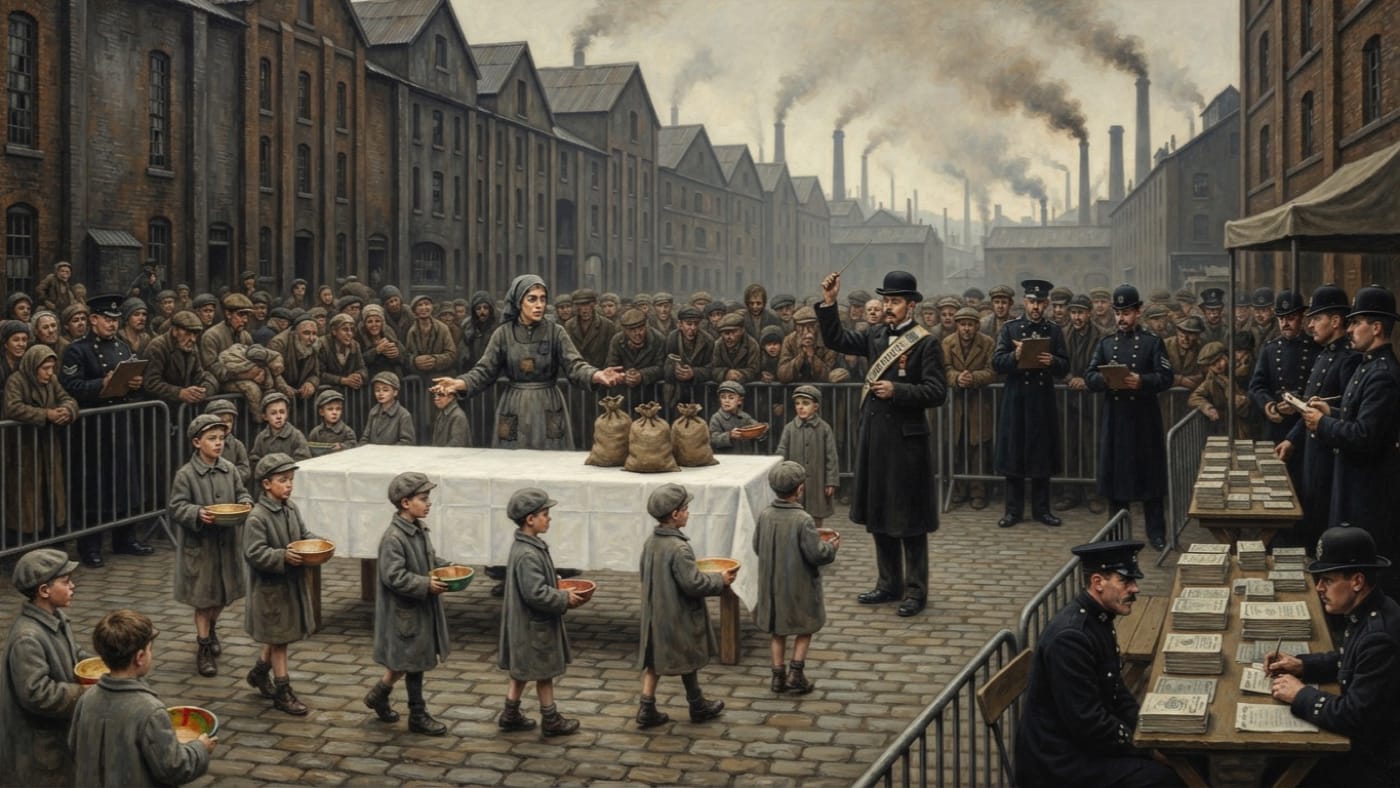
Feast of the Empty Table
Three sacks, no wall, and fourteen seconds of licensed grief
An annual licensed pageant turns Saint Silo-Agnes into a charity martyr. The sacks remain, the wall disappears, and the Bureau permits fourteen seconds of applause.
Codex Ref. XIII.1.25-002
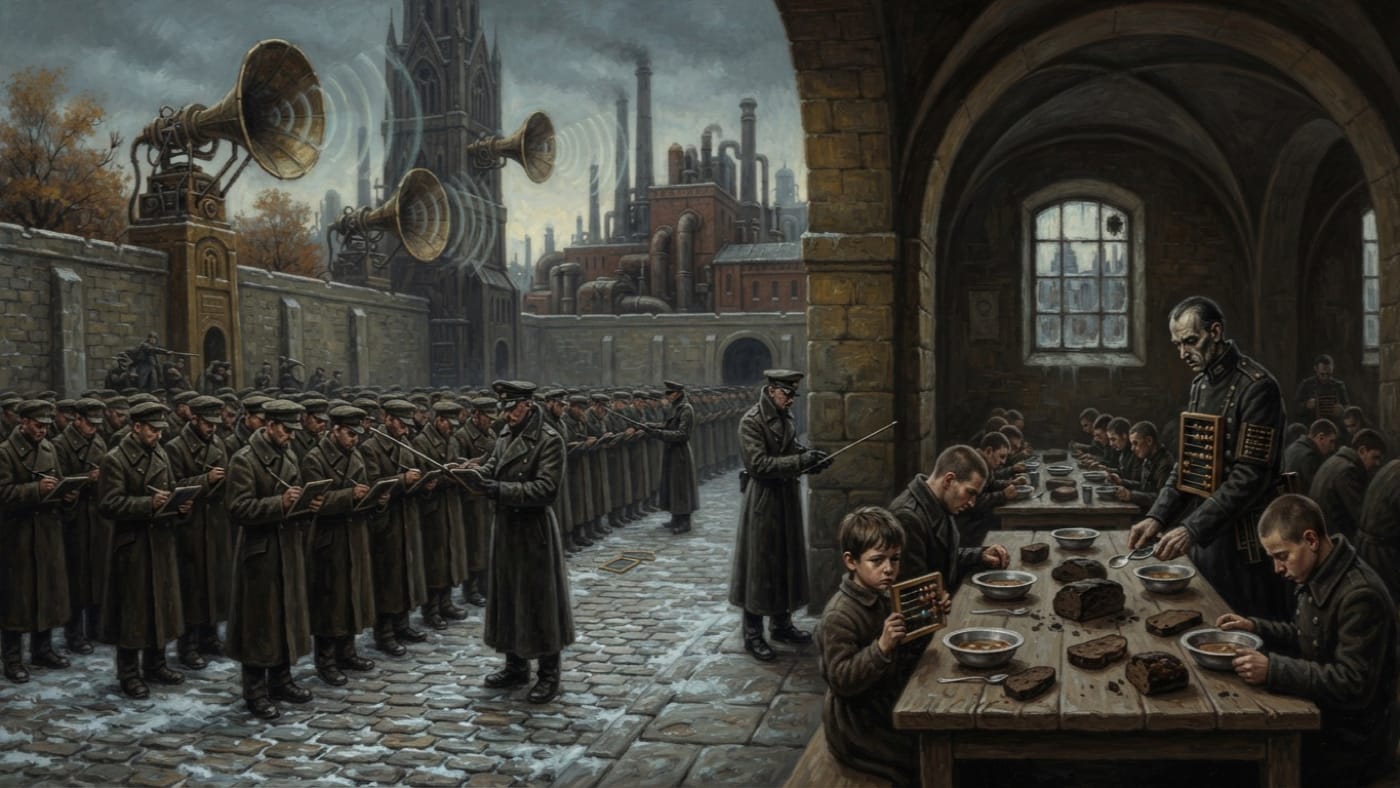
Feast of the Exact Ear
Three sermons for the ear; a counted silence for the table
As surveyed in A.S. 201, Blessed Edrin's feast tests listening with three simultaneous sermons, then counts the silent meal. The ear must be exact; the calendar remains local.
Codex Ref. XIII.1.90-201

Feast of the Ledger
Twelve portfolios read aloud; the offices that keep them standing go unnamed.
At the Feast of the Ledger, the Synod reads its twelve canonical portfolios aloud. Settlement, which assigns three hundred million addresses, receives no syllable. The recital is correct; the census is incomplete.
Codex Ref. XIII.1.89-201

Feast of the Mud
The trench becomes a cathedral when the order arrives
Soldiers coat themselves in trench mud and chant endurance into duty; children rehearse it with clay, and villages buy the residue as saint-soil. Attendance, unlike belief, is required.
Codex Ref. XIII.1.89-1047
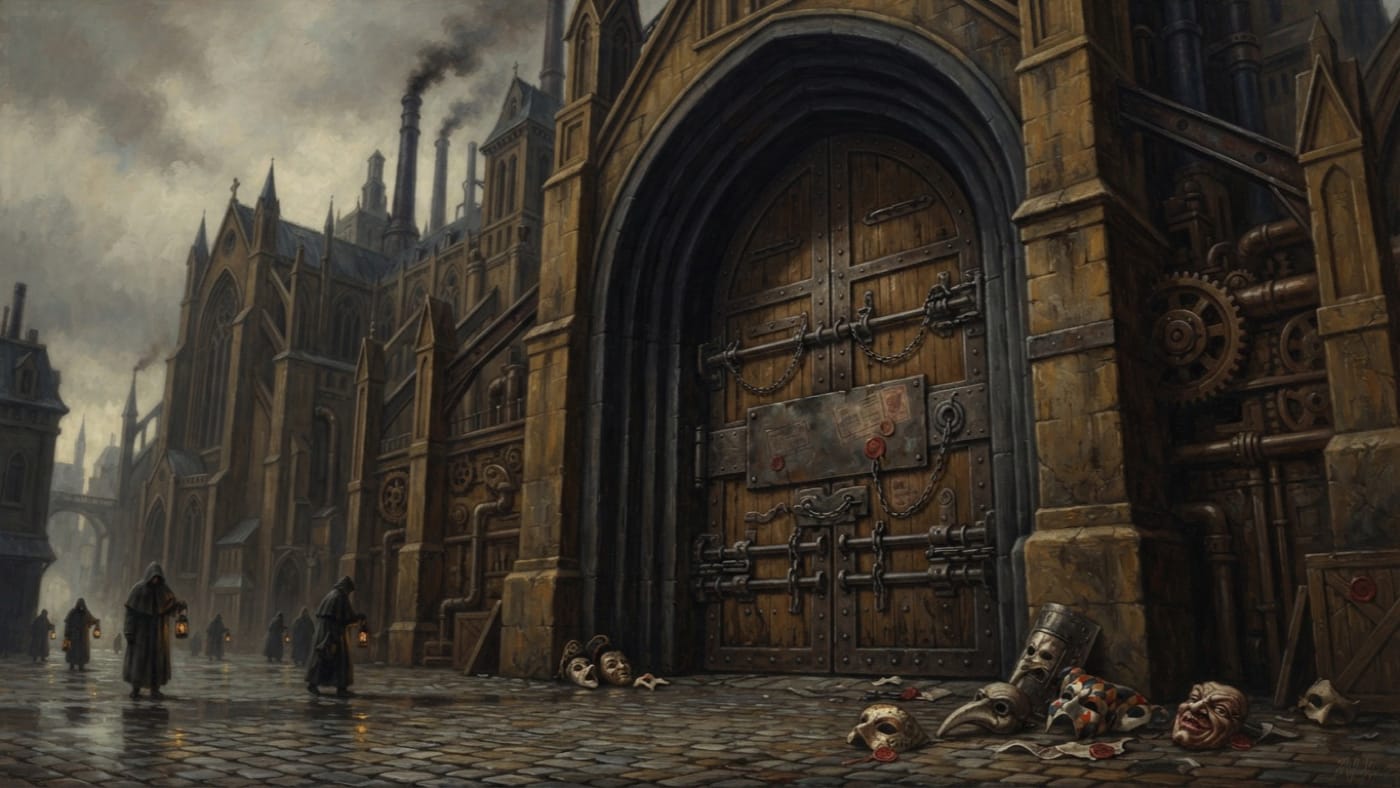
Feast of the Sealed Door
A feast in the calendar, a myth in the archive
The calendar names the feast; Records calls its whispered rite myth. My A.S. 201 survey records the annual eve, the locked-parish rumour and the particulars no source supplies.
Codex Ref. XIII.1.89-1048
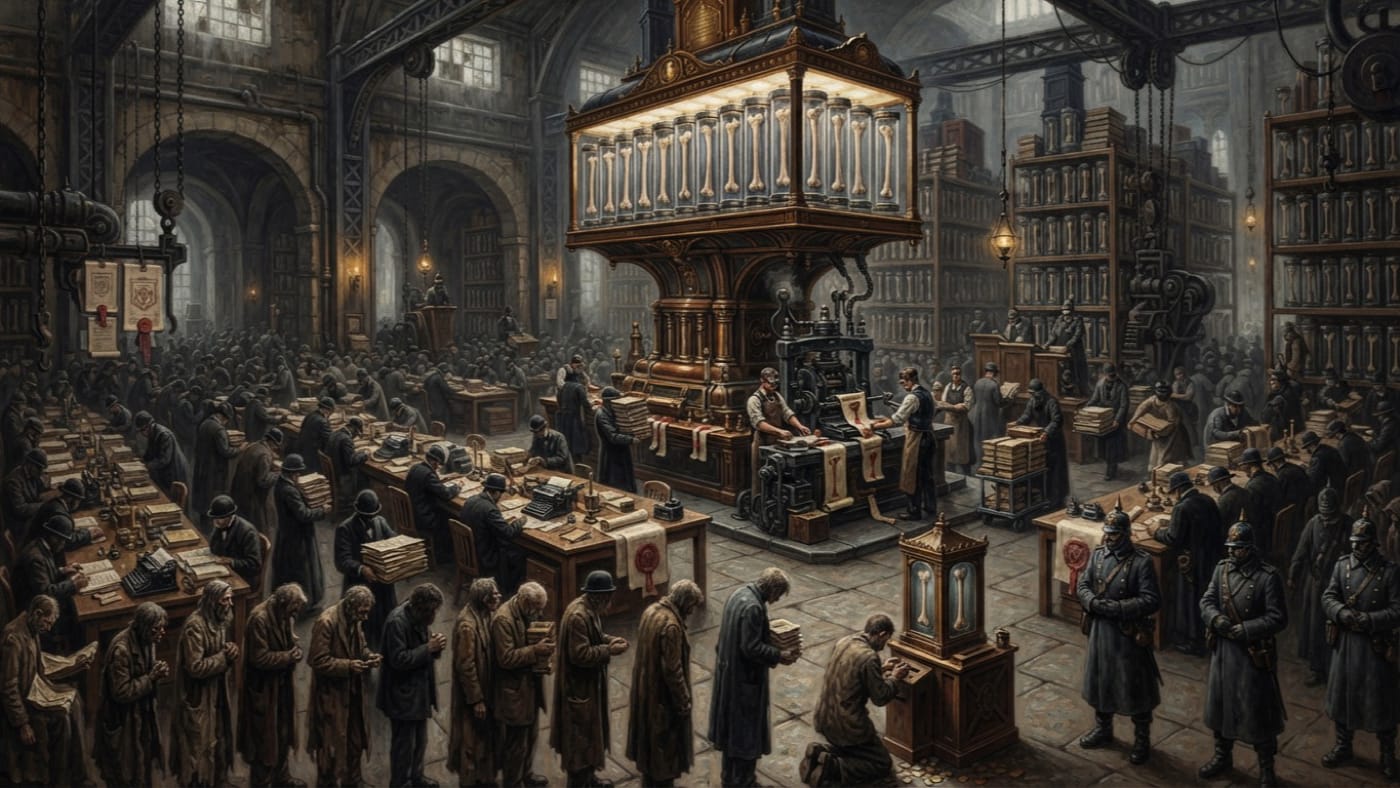
Femur Principle
The saint's skeleton has no standing
The A.S. 147 rule that made all notarized femurs authentic, preserved rival shrines, and gave anatomy the legal standing of an impertinent witness.
Codex Ref. XIII.1.90-147
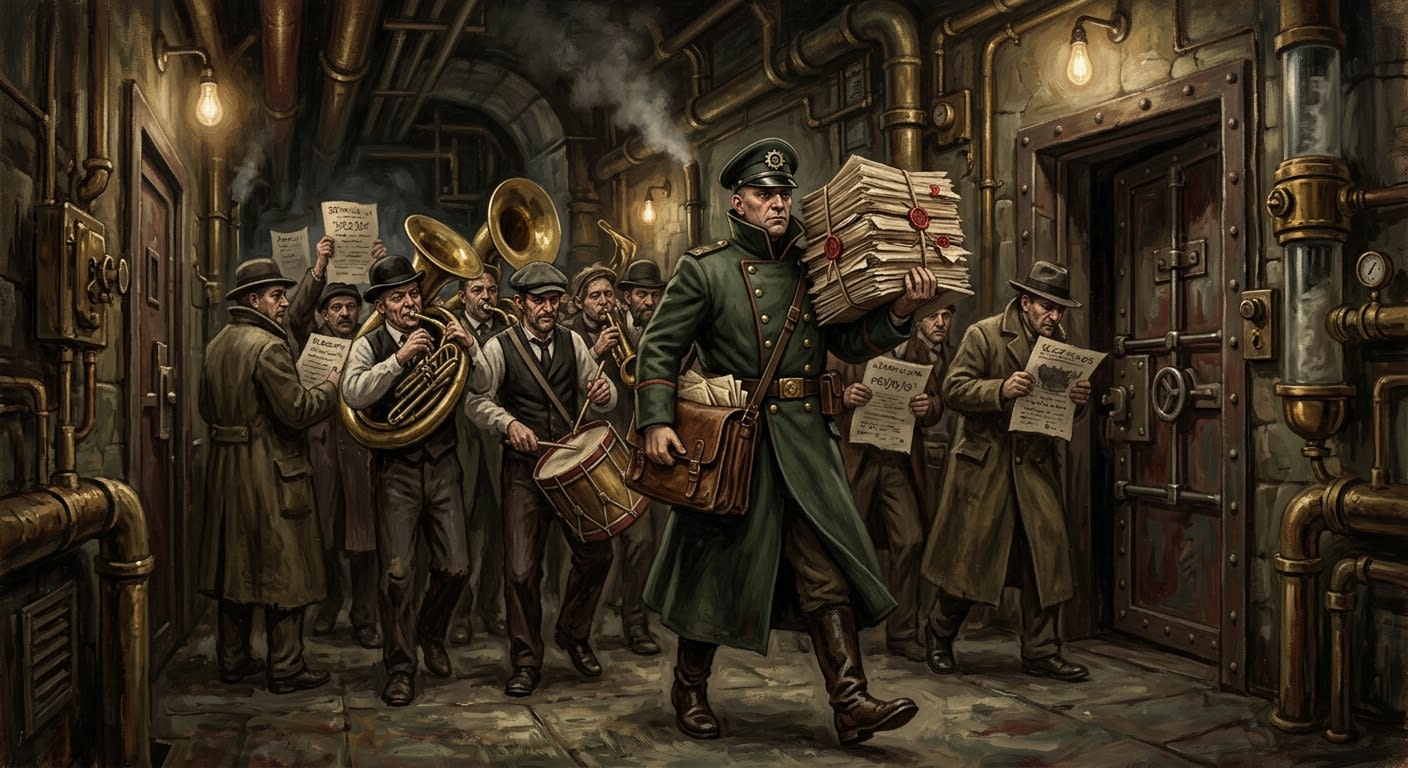
Festival Form 19-M
The paper that taught Seville to laugh in sequence
Festival Form 19-M began as a tavern supplement and became the paper Seville weaponised into music, mockery, and Purity jurisdiction.
Codex Ref. XIII.1.66-153

Festival of Ash Debts
The dead are asked to pay. The living are asked only to carry them.
Surveyed in A.S. 201: families trade ancestral ashes for bread. Those unable to produce ashes are branded debtors and conscripted. The family line makes excellent collateral.
Codex Ref. XIII.1.24-201
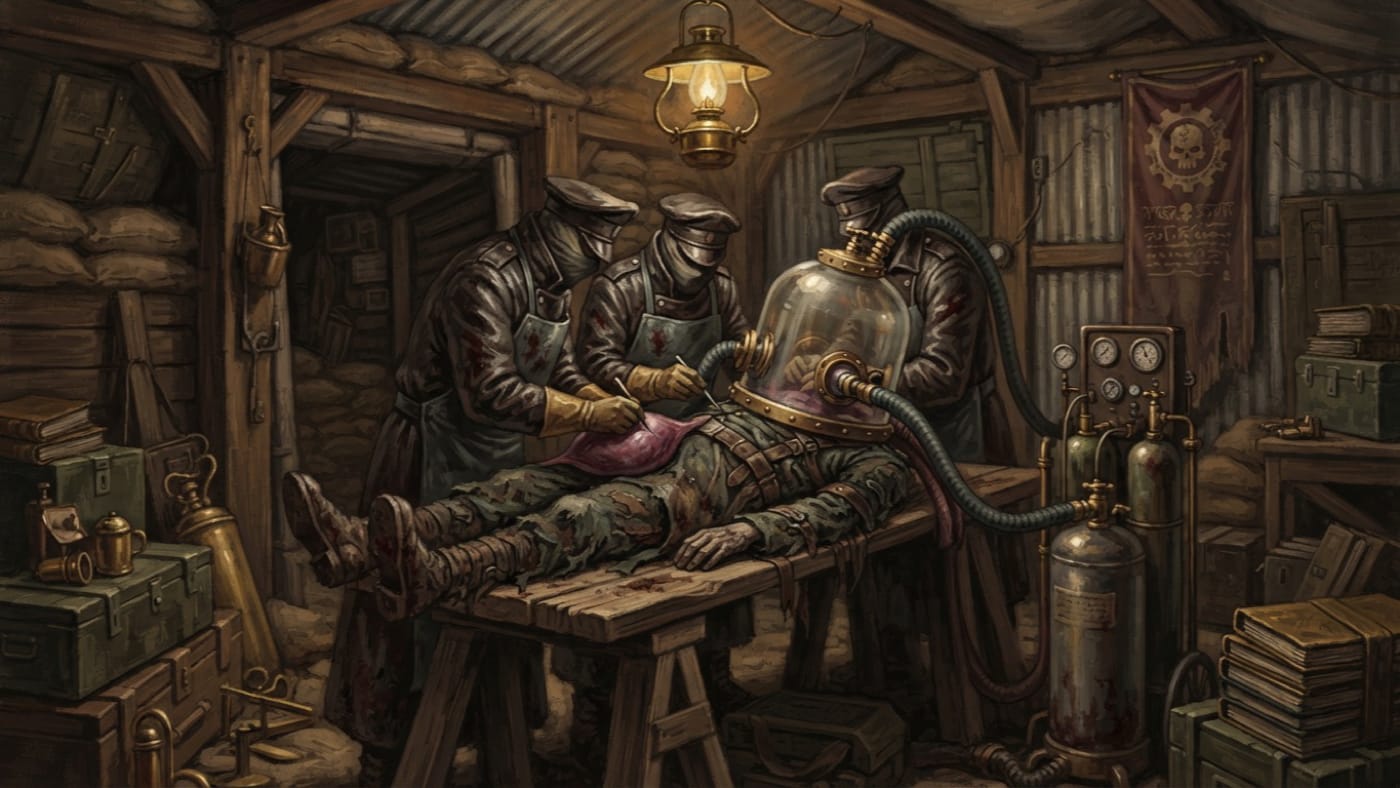
Field Autopsy Protocol 14-D
Three lost, one silent, and the capital letters remain.
The Bureau of Medicine's recorded A.S. 193 prohibition on incising Gore-Slinger sacs without full containment apparatus. Three field surgeons were lost; the fourth survived and has not spoken since.
Codex Ref. XIII.1.74-193

Field Manual for Sanctioned Emotional Release
The book that permits relief and forbids the crowd from providing its own
Eighteen revisions teach the Chorus-Master how to grant laughter, count applause and stop a crowd before it discovers that joy can proceed without permission.
Codex Ref. XIII.1.67-201
Fifteenth Doctrinal Congress
The hour Strasbourg taught an old river crime to testify on schedule
The Fifteenth Doctrinal Congress made Kraków's drowned priests administratively inexhaustible: witness ratified, silence scheduled, wire converted, and grief sealed.
Codex Ref. XIII.1.90-148
Fifth Ratification
The name is filed; the particulars remain sealed
An A.S. 201 survey of the Fifth Ratification's attested sealing of Augustinus's construction particulars. Engineering keeps the structural data; Mercy keeps the rest. The name is filed. The text is not before us.
Codex Ref. XIII.1.90-201
Fifth Seal of Faith
The prohibition arrives before the definition
The Fifth Seal governs Purity: forbidden speech, indexed forms, and the Inquisition. Strasbourg constituted it in A.S. 90; the definition of impurity remains pending while enforcement proceeds.
Codex Ref. XIII.1.05-005
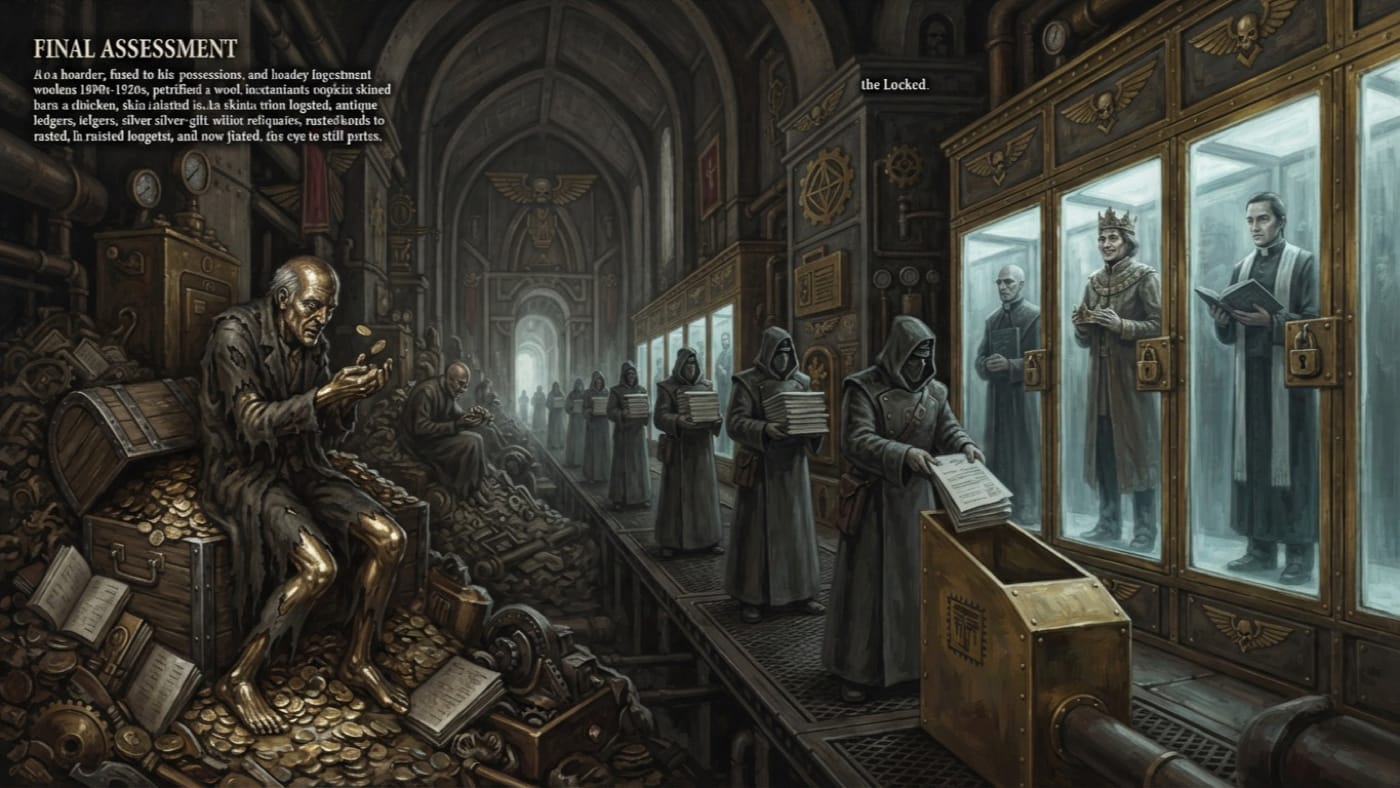
Final Assessment
The collector becomes the inventory
Final Assessment is Velmora's completed ownership: the hoarder becomes his hoard, the Locked become exhibits, and the Bureau returns petitions unread.
Codex Ref. XIII.1.37-198

First Black Census
The Republic learned to murder with a household table and a clean pen
The First Black Census turned belief into a column, children into transfer marks, and faithful households into blanks awaiting carts.
Codex Ref. I.1.06-030

First Catechism
The sentence is settled. The child's hesitation is filed.
A present survey of the First Catechism's opening sentence, taught at five and ratified in perpetuity. Doctrine may revise its explanations; Records keeps the child's hesitation.
Codex Ref. VI.1.01-002
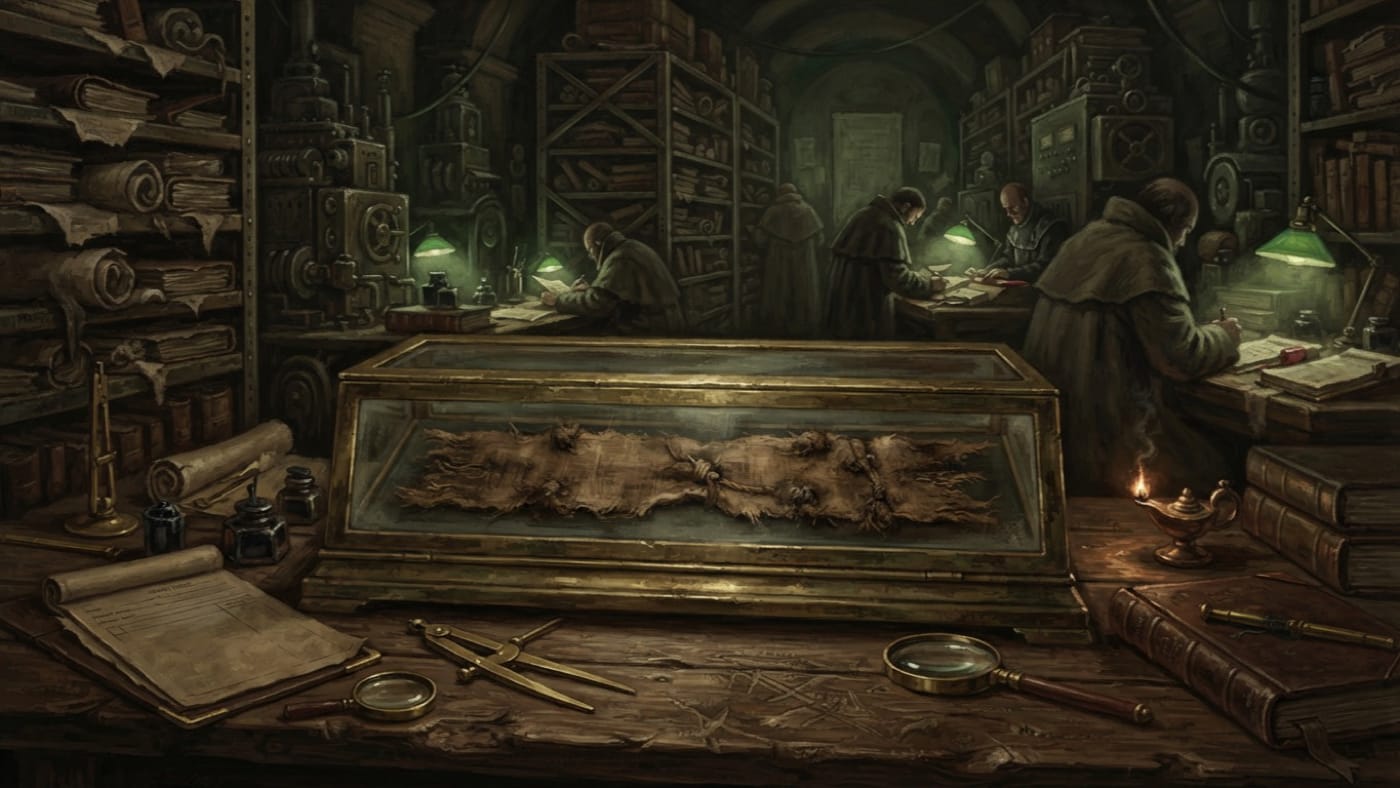
First Knot-Cloth
Thirty households bound, three certainties about where the cloth lies
An A.S. 201 survey of Liora's First Knot-Cloth, traditionally used to bind thirty hungry households to mutual aid. The offices agree it is preserved; they disagree on where.
Codex Ref. XIII.1.03-015
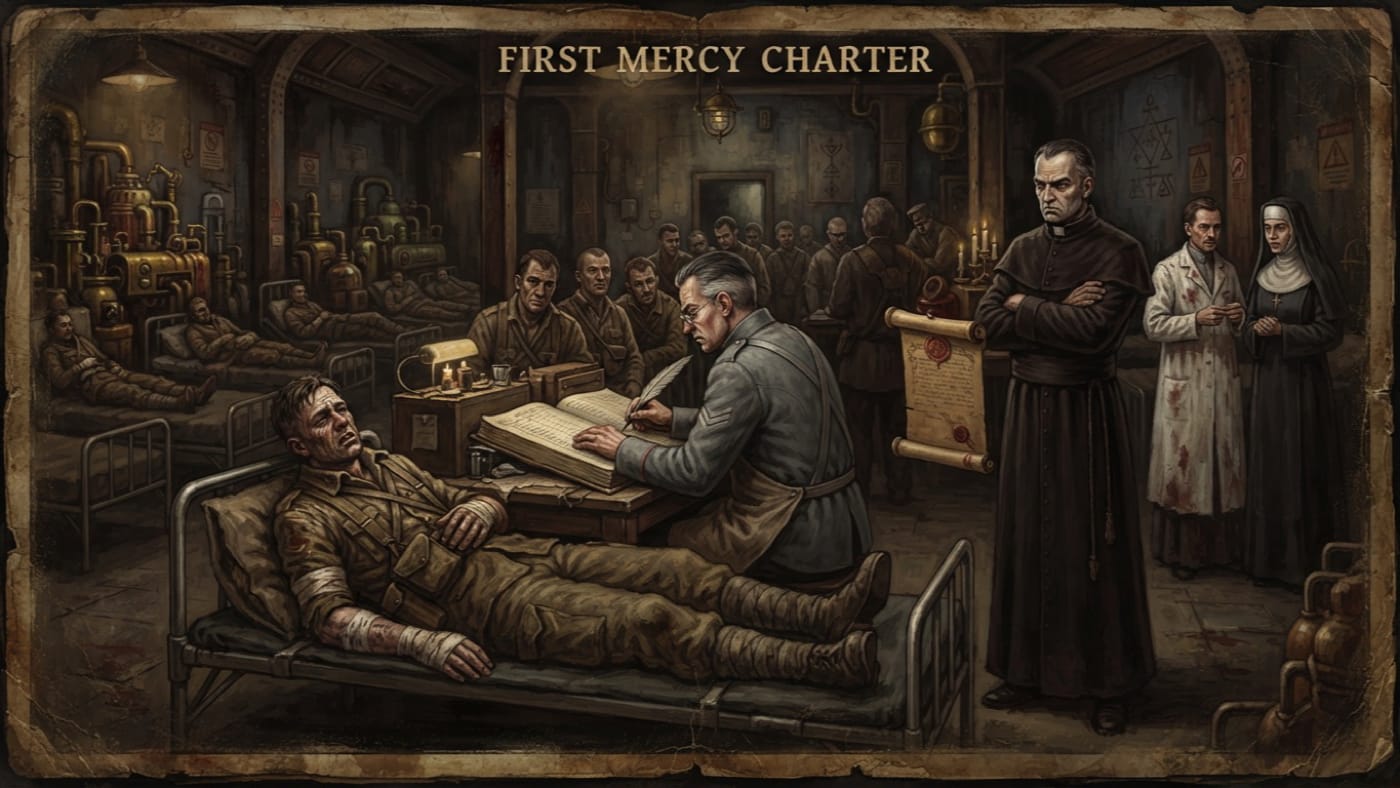
First Mercy Charter
The wound waits while the soul is put in order.
The First Mercy Charter of A.S. 92 conditions treatment on confession, absolution and acknowledgment of Providence. The body waits while the soul's paperwork is completed.
Codex Ref. XIII.1.92-092

First Position
The debt was inherited. The balance was never disclosed.
The former teaching that the Great Deceiver punishes Rationalist sins and will withdraw after sufficient penance. Recorded in the A.S. 201 survey: the doctrine is superseded, the debt unmeasured, and the faithful still paying.
Codex Ref. VI.1.01-002
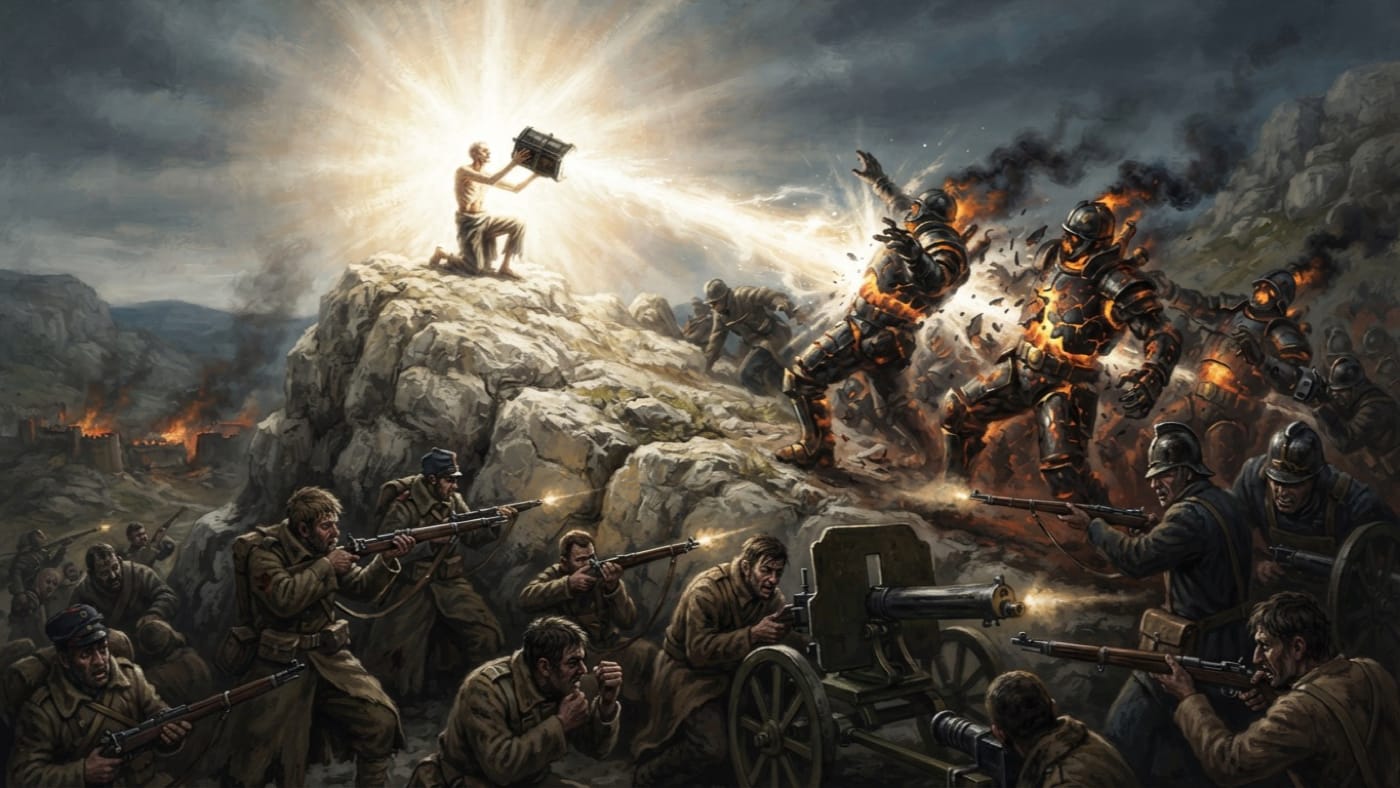
First-Order Miraculous Emission
The enemy recoiled; the rubric remains undefined
At Kalnik Ridge in A.S. 48, seventeen relics checked Maldrake's vanguard. The Bureau later filed the blaze as First-Order Miraculous Emission, Category: Martial; it neglected to define First-Order.
Codex Ref. VI.3.01-048
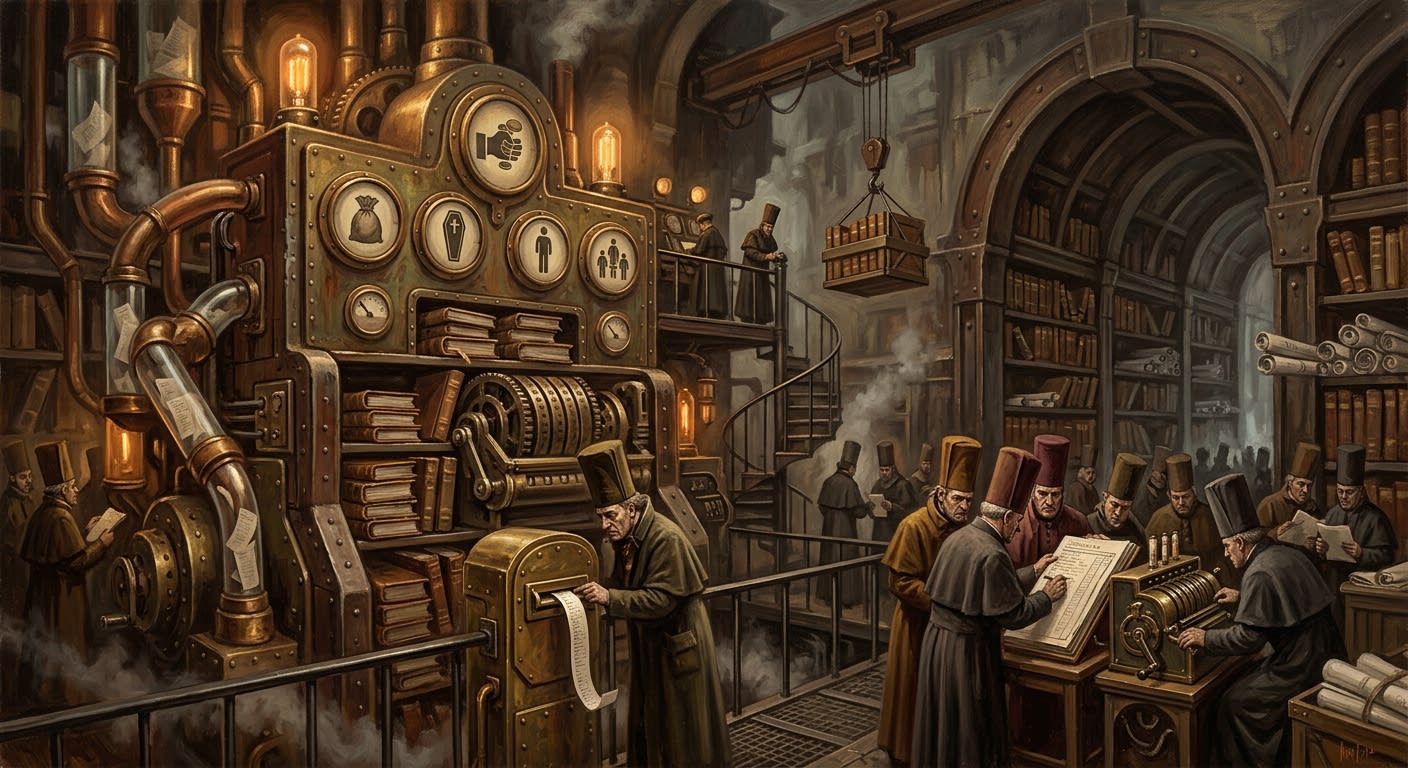
Fiscal Census
The mouth beneath the Ledger, still hungry after burial
The Fiscal Census is Tithes' continental obligation register: a vault-machine counting what the living, dead, unborn, and administratively inconvenient still owe.
Codex Ref. XIII.1.38-092
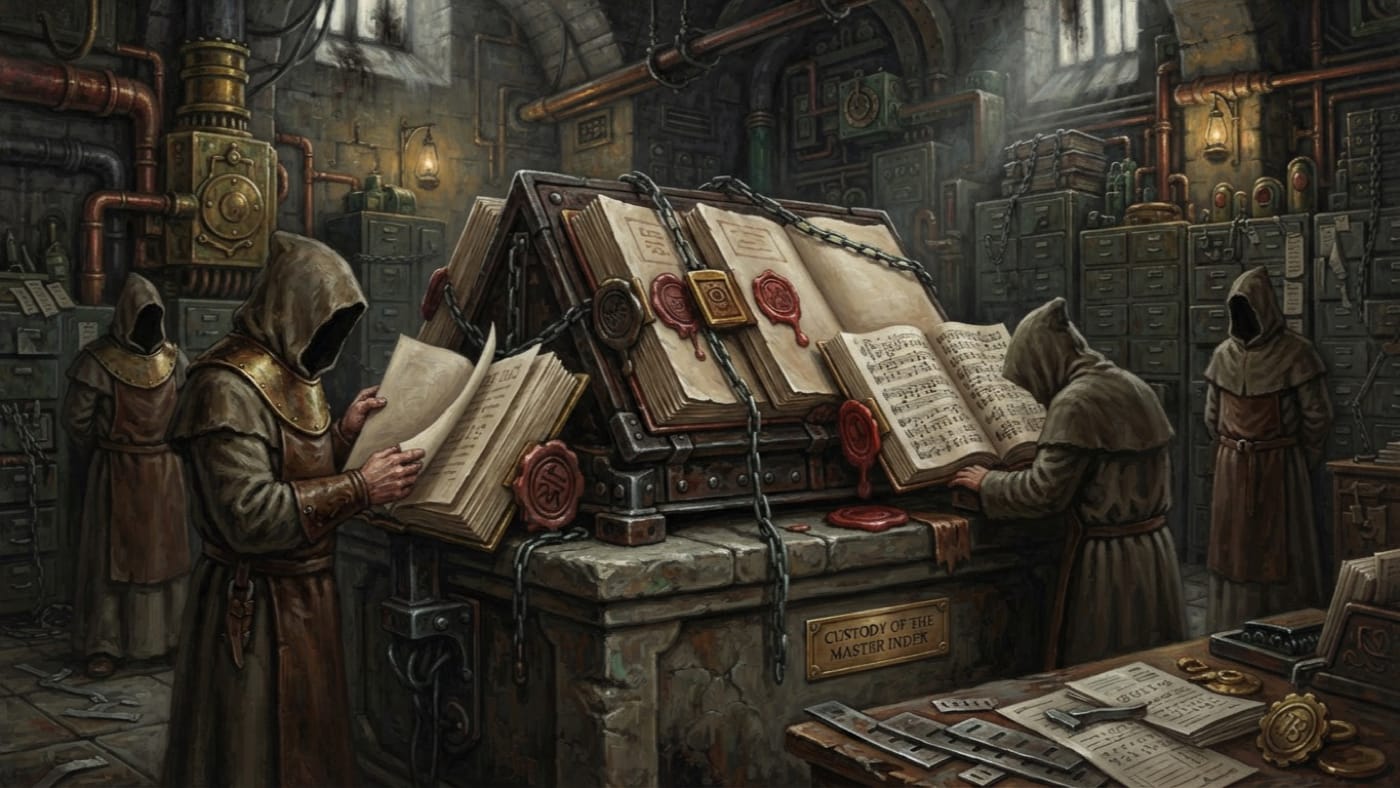
Five Registers of the Index Damnatus
One chained compendium, five kinds of condemnation
Five divisions of one chained compendium: Texts, Names, Sounds, Forms, and Lineages. Each has its own Purity quorum and seal; the faithful must obey what they may not read.
Codex Ref. XIII.1.48-001

Fjord-Bells of Scandinavia
Strasbourg claims the hour. The North keeps its own.
A.S. 201 survey of Scandinavian fjord-bell traditions, their quarrel with Strasbourg's schedules and their reported answer to the Grey. The old tunings are withheld; the Bureau has asked three times.
Codex Ref. XIII.1.62-002
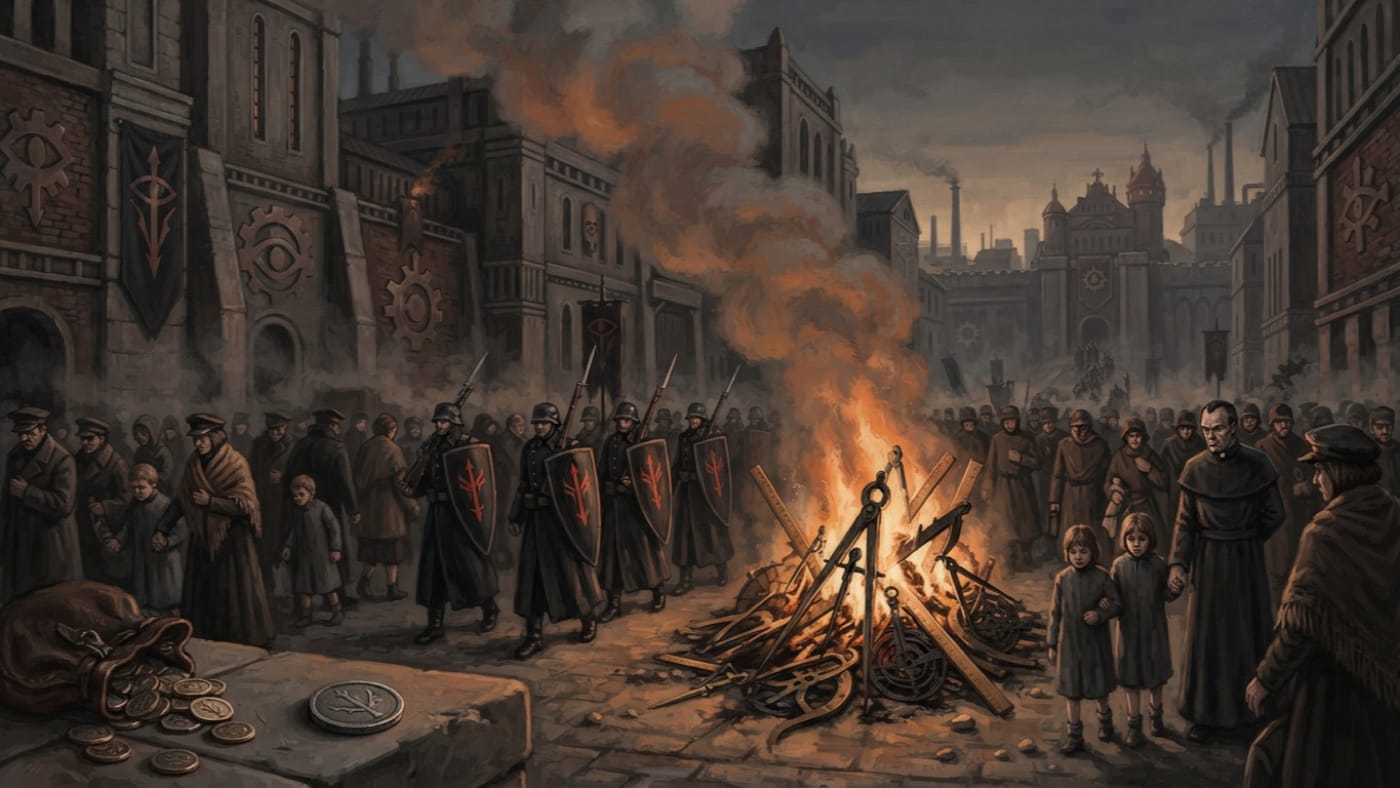
Flaming Sword
Permission has weight, and obedience has smoke
The Flaming Sword carries Synodal authority on coinage and lends its name to Strasbourg's burning of Rationalist instruments. I record its public uses; the emblem's origin remains unproved.
Codex Ref. XIII.1.03-001
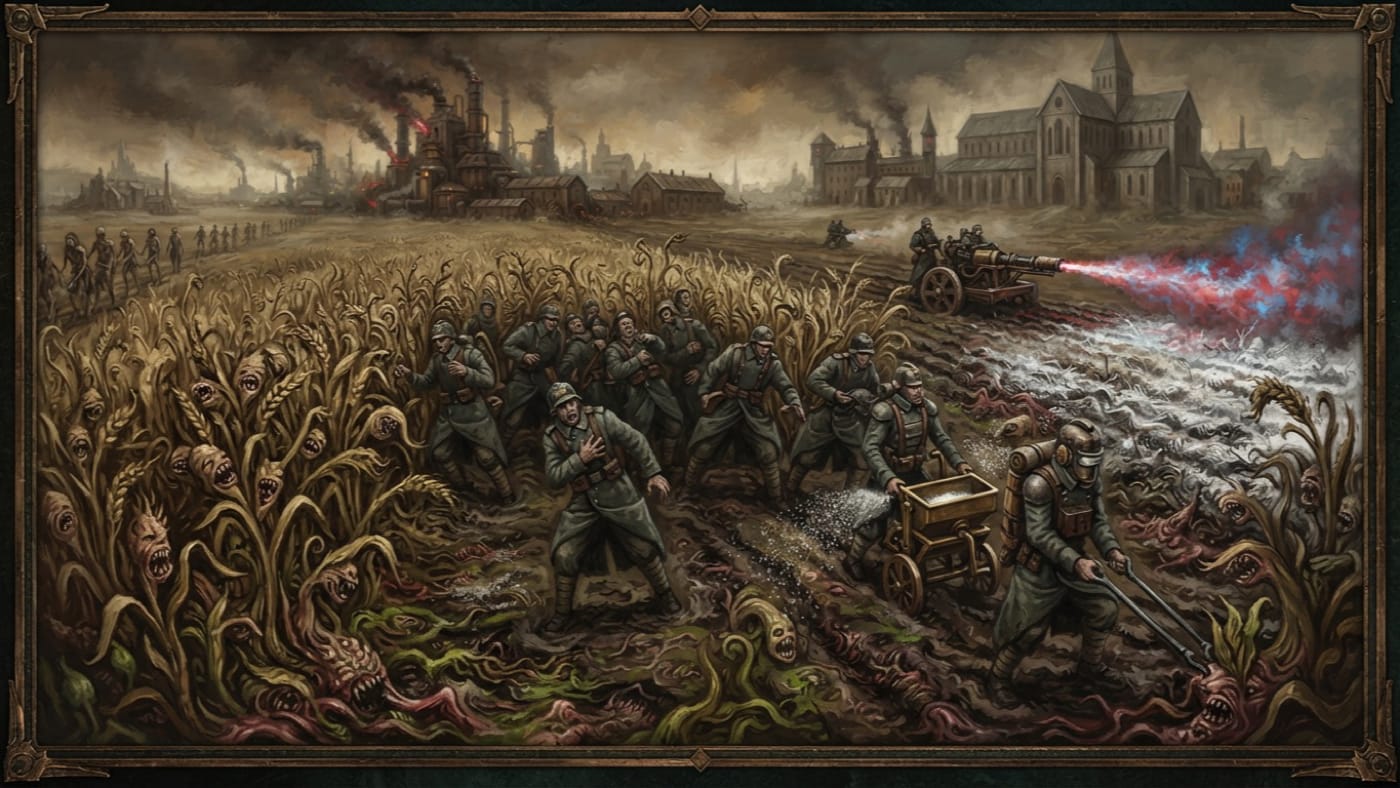
Flesh Litanies
The hungry sing; the flesh obeys
Kargath's hungry singing makes grain bite and stomachs refuse satisfaction. Salt, fasting-caps and relic-fire answer locally; the Bureau can suppress a manifestation more readily than recover a field.
Codex Ref. VI.3.01-003
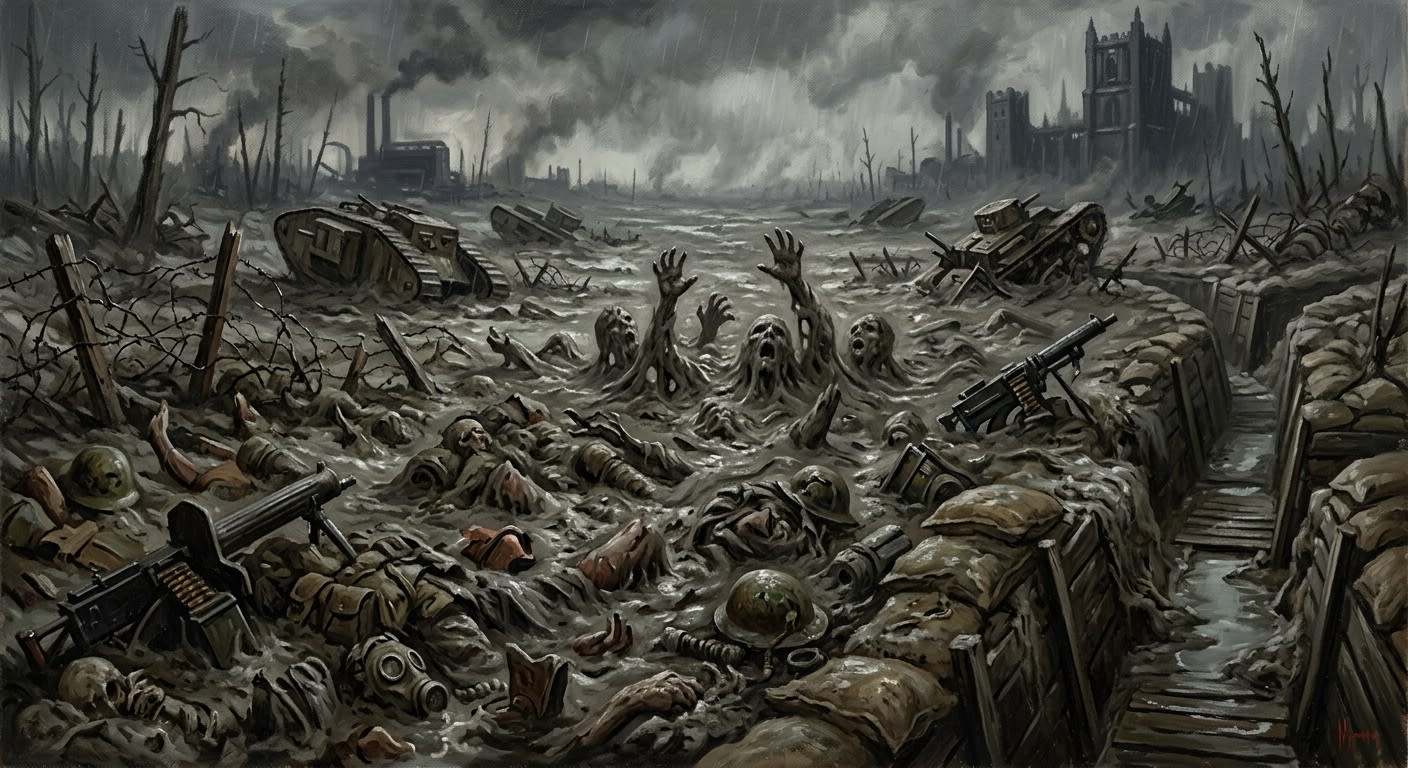
Flesh-Mud
The trench remembers what the grave failed to finish
Flesh-Mud is No Man's Land with appetite: trench mire made from rain, bone, grief, and the administrative failure to bury men separately.
Codex Ref. VI.2.01-004

Fog-Reader
Every household owes a voice; the sea promises nothing
Calais's Fog-Readers speak the Script Wall's names under Protocol 9-C. The Church owns their night voices; the sea decides what the reading buys.
Codex Ref. XII.13.02-201

Force-Count
The voice keeps time; the corridor keeps score
The cadence that keeps stamp pressure honest and dead bone where the Ledger put it. Quiet Hands reportedly quiet corridors before the wax touches; Records requires the Count without printing its words.
Codex Ref. XII.37.03-001

Foreign Harmonics
An engine may have many faults. The cause column permits one.
Engines drift, whisper, and sometimes answer outside the codex. The Litany-Engineer listens; Purity's A.S. 199 advisory permits one cause-column entry: Classification 7-K.
Codex Ref. XIII.1.07-199
Forge Evocations
Molten rage hammered into spell-form
Maldrake's Forge Evocations turn Wrath into slag-storms, screaming armour and blows from an empty sky. Three manifestations are certified. The first use is unrecorded; the bones are recovered.
Codex Ref. VI.3.01-004

Form 14-G
Do not correct what is still moving
Form 14-G records anomalous bodily mark drift: the grey sheet where Heraldry, Purity, Records, and fear all pretend moving proof can be boxed.
Codex Ref. XIII.1.14-147
Form 14-M(c)
The wall is entitled to a docket; the mason to silence
Form 14-M(c) records anomalous sounds from immurement walls. The A.S. 199 inspection revision requires a report, hush-powder, paired working, and a mason who keeps his theories off the page.
Codex Ref. XIII.1.14-199
Form 17-C
The explanation is printed before the death
The cessation sheet carried by every Pilgrim-Chain Handler: cause, disposition and notification printed before the death. Only the date and tag remain blank. The ditch supplies the rest.
Codex Ref. XIII.1.17-201
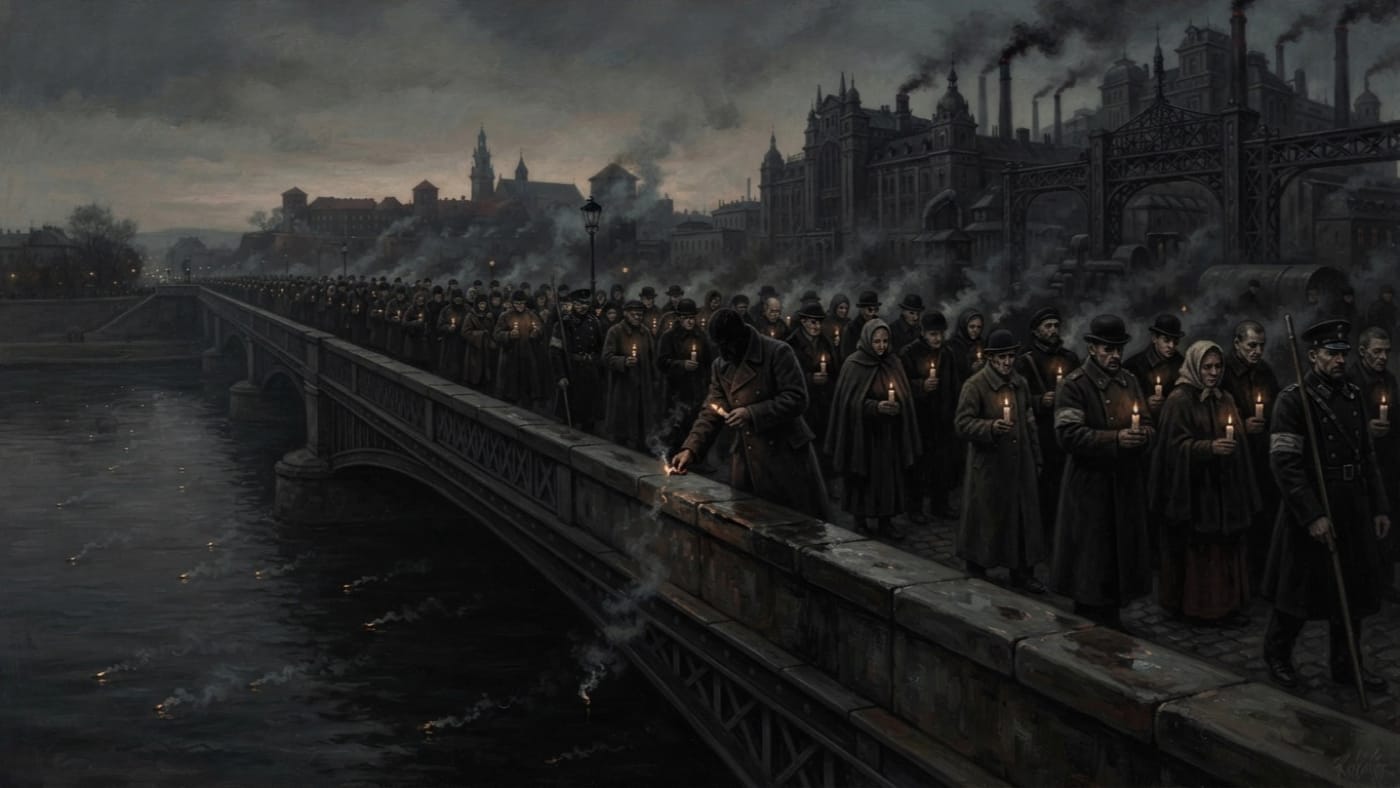
Form 17-K
A parish may choose its first name, but not its music
A.S. 201 survey of Form 17-K: two permitted candle-order beginnings, forty-seven candles and one hour of silence under Bells compliance. A parish may choose its first name; it may not improve the silence.
Codex Ref. XIII.1.17-002
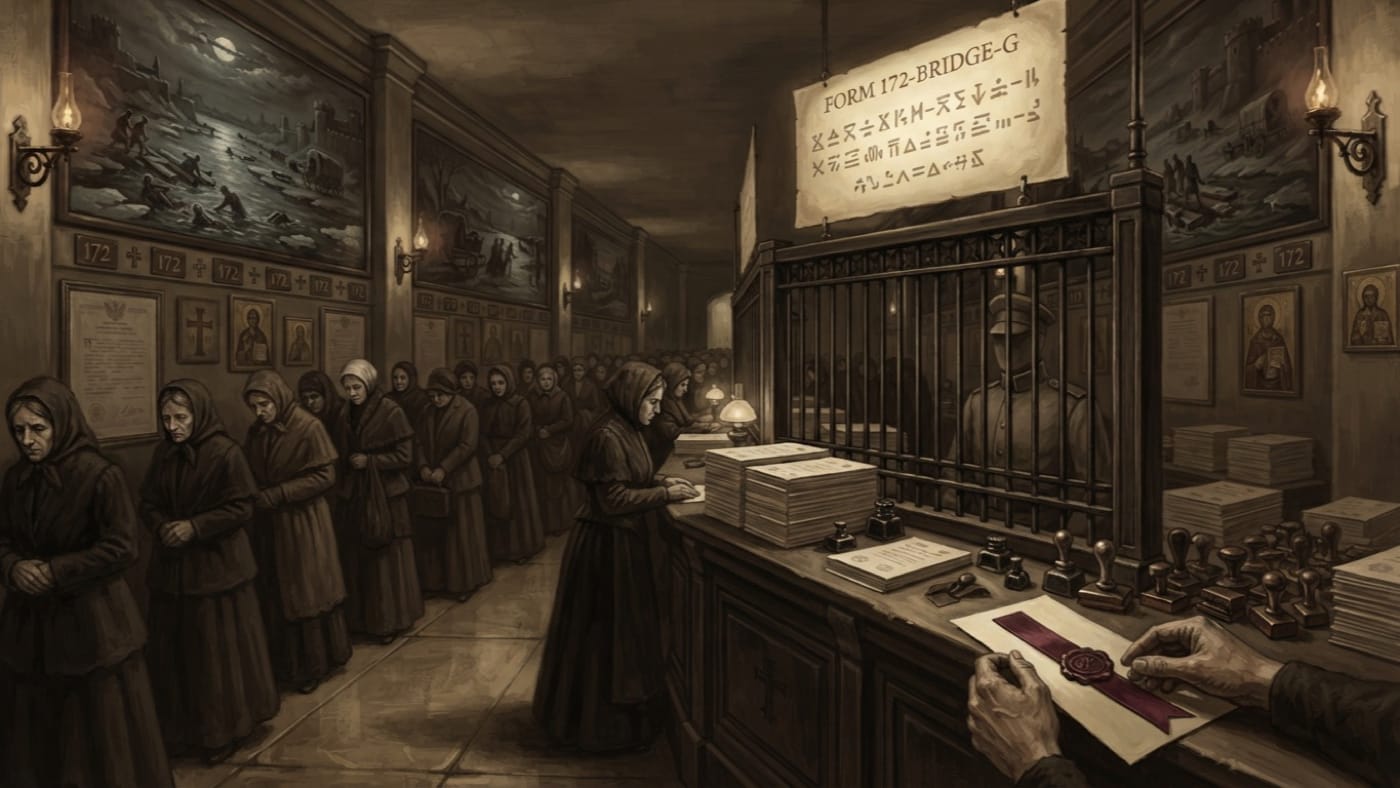
Form 172-Bridge-G
Permission is cheaper than coin
In this A.S. 201 survey, I examine Form 172-Bridge-G: families may apply for commemorative ribbon in lieu of pension after Records' roll revision. Permission is a remarkably economical gift.
Codex Ref. XIII.1.172-201
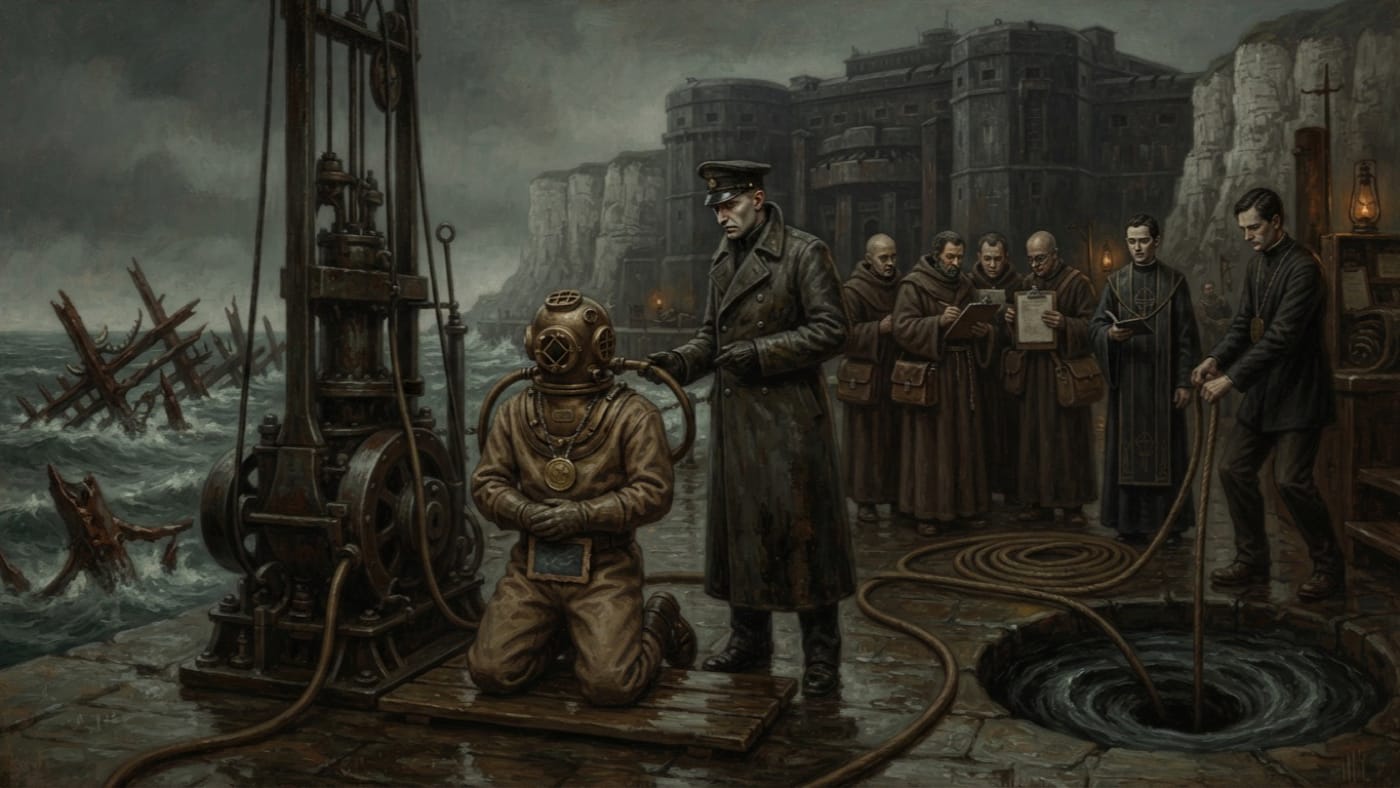
Form 71-M
The cost is entered before the descent
Calais records its Undertide Divers as expendable under Form 71-M. The cost is entered before descent; the sea supplies the return.
Codex Ref. XIII.1.71-201

Form 77-D
Three copies agree; the reason takes another road
Form 77-D authorizes Administrative Dissolution: three copies, one countersignature, and a soul rendered illegible. The reason travels under a separate seal; the writ has no field for undoing.
Codex Ref. XIII.1.77-201
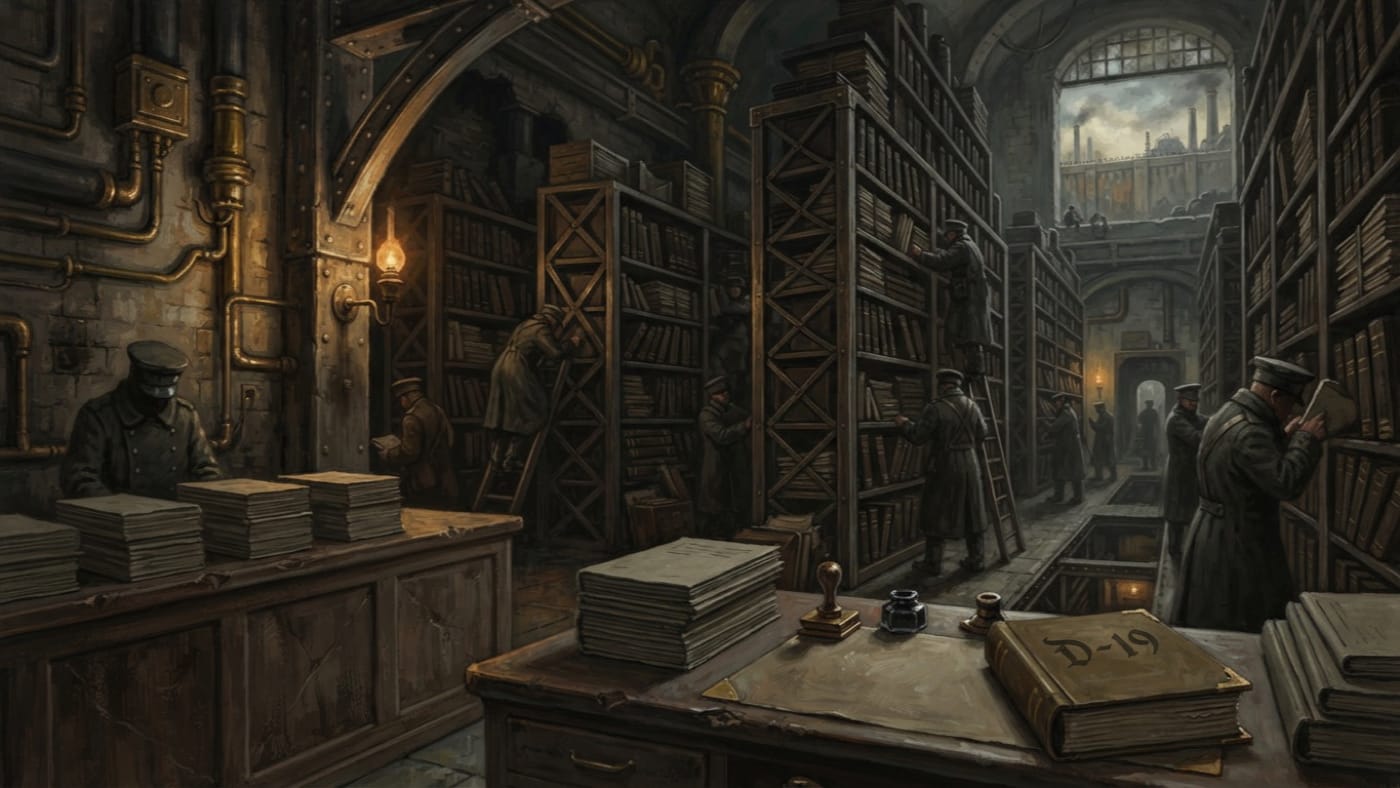
Form D-19
The question has an address
A.S. 201 survey of Form D-19's attested referral to Doctrine of the Hollow-Walker consciousness question after feeding. The question has an address; no comforting ruling is attested.
Codex Ref. VI.3.19-019
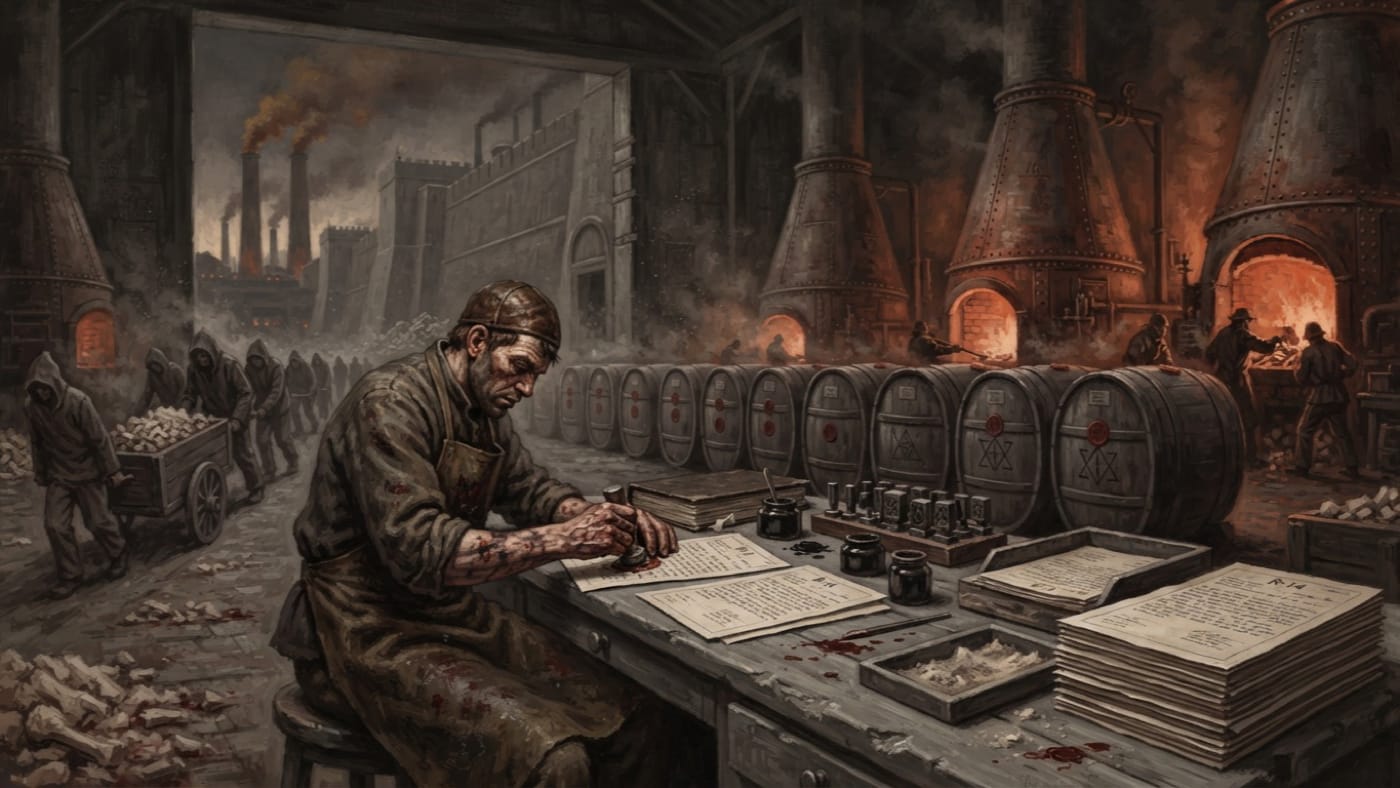
Form R-14
After thirty days, the wall will have set
The Saint-Bone Melter's Standard Destruction Certificate, revised A.S. 198, records a relic's permanent redistribution into sanctified mortar. Objections have thirty days. The bone has none.
Codex Ref. XIII.1.14-198

Founding Instruments
Five verbs gave one Bureau the brass.
The Founding Instruments of A.S. 92 grant Masks and Seals control of official authentication. Article XVII is cited exactly; the full text is absent from this file. The sub-clause still makes paper binding.
Codex Ref. XIII.1.17-092
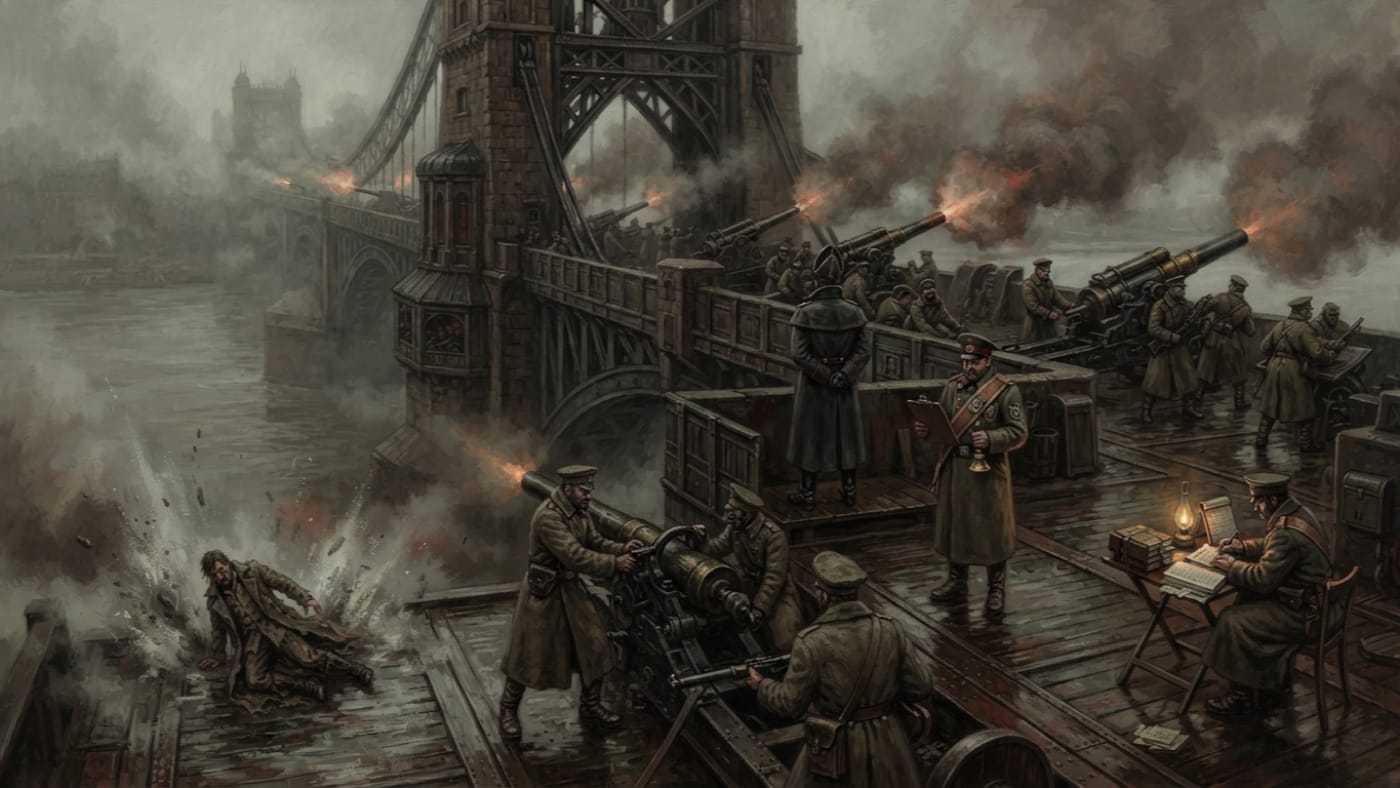
Founding Salvo of Bastion-Brest
The bridge fell. The anniversary remains licensed.
Brest's annual gun salute honours, per the current Codex, the nine-day stone-bridge defence of A.S. 66. The bridge fell on the tenth day. The guns commemorate endurance; Records files accidental deaths as celebratory expenditure.
Codex Ref. XIII.1.89-1146

Four Thousand Nails roll
The dead were filed separately from the measure
A.S. 201 survey of the surviving memorial roll cited against bloodless rail modernization. The relaying cost approximately four thousand lives; the measure was tidier than its accounts.
Codex Ref. XIII.1.44-201
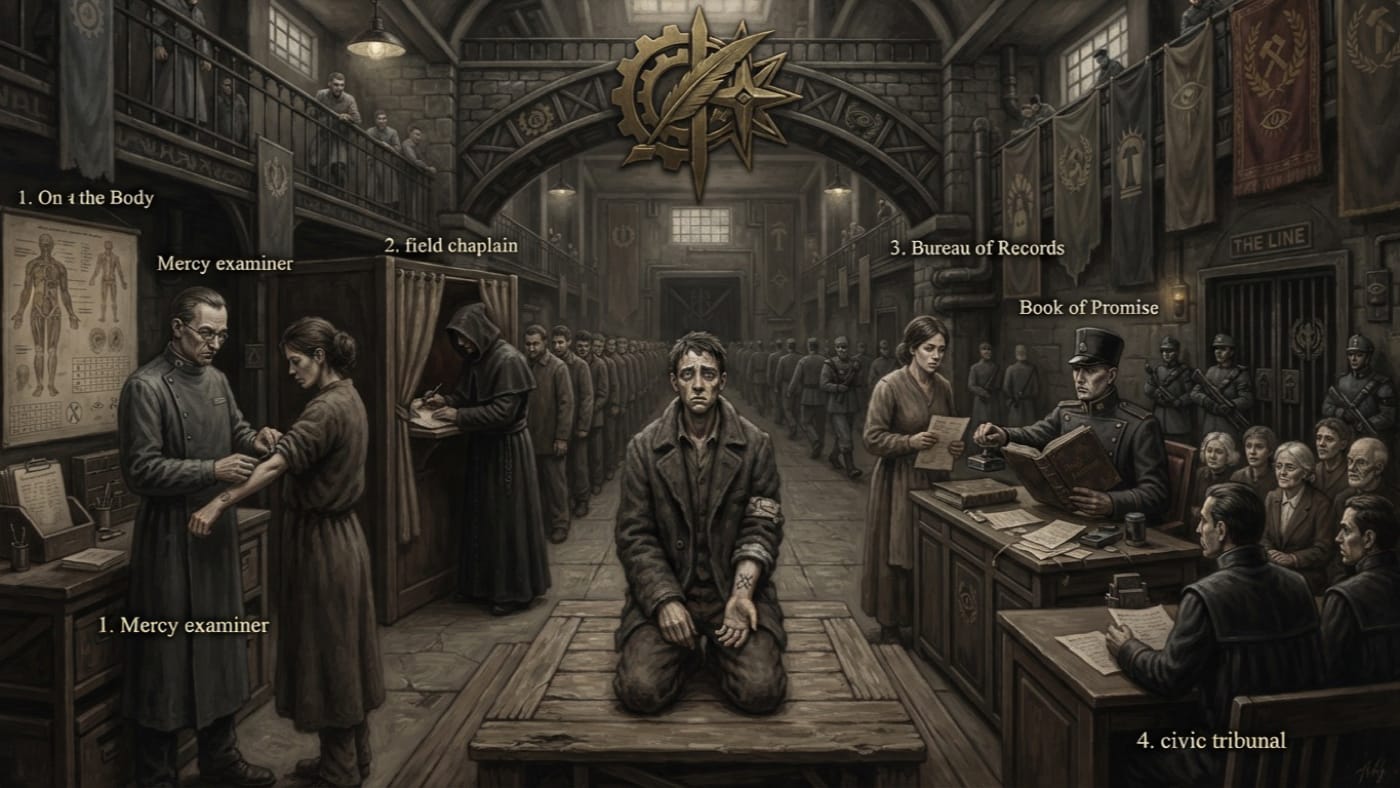
Fourfold Assessment
Four folios, one file, and a destination.
Body, confession, Promise and loyalty: the Fourfold Assessment converts a conscript into an assignment. Mercy examines, Records reconciles, and Conscription decides what the boy is worth.
Codex Ref. XIII.1.23-201
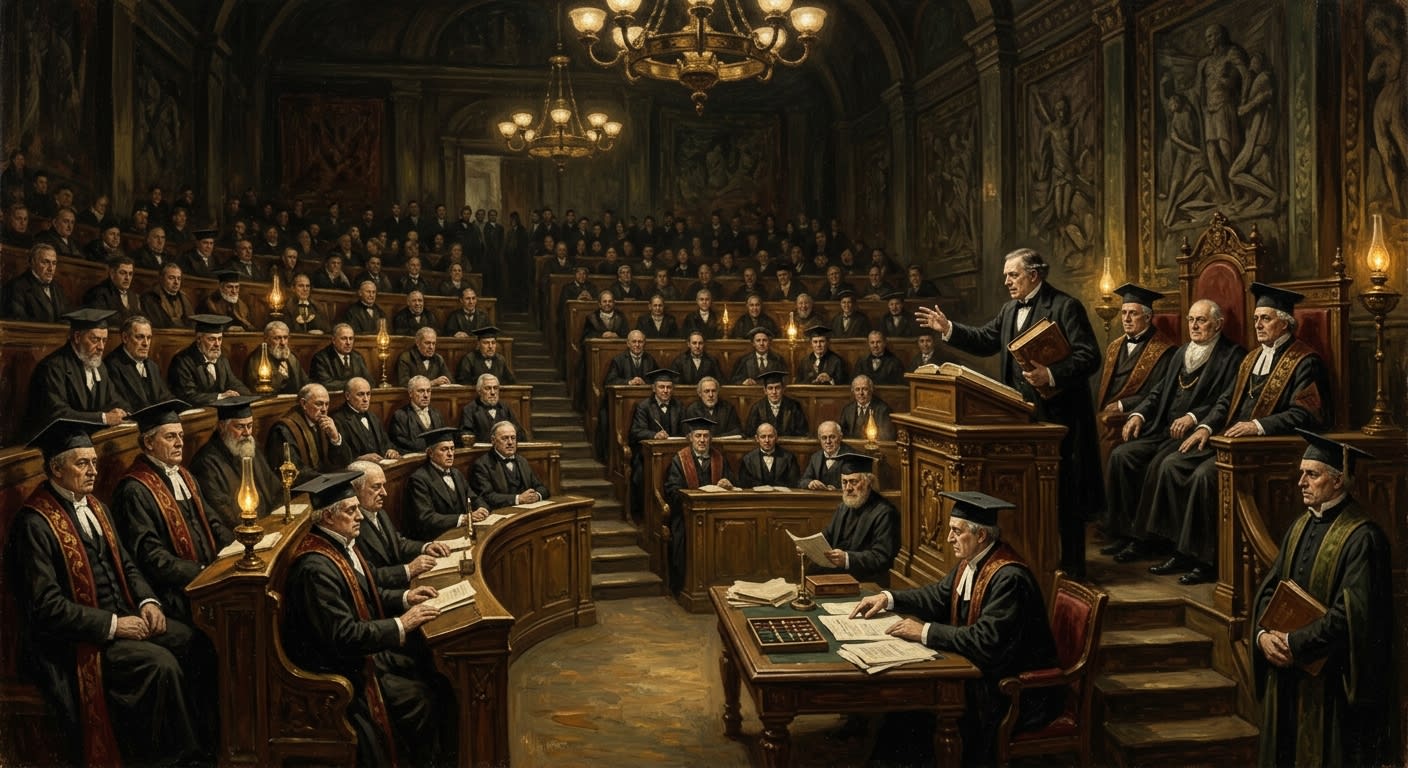
Fourteenth Doctrinal Congress
Matter protested; the seal prevailed
The A.S. 147 Congress that made authenticated contradiction obedient, ratifying the Femur Principle and Kargath's consumption taxonomy in the same week.
Codex Ref. XIII.1.90-147

Fourth Causeway Anomaly
Where ice refused the Bureau and grief kept its own accounts
On the Brielle spur of the Salt-Vigil Causeways, winter water refused to freeze, tear-phials grew heavier, and every Bureau discovered a different invoice.
Codex Ref. XIII.1.24-001
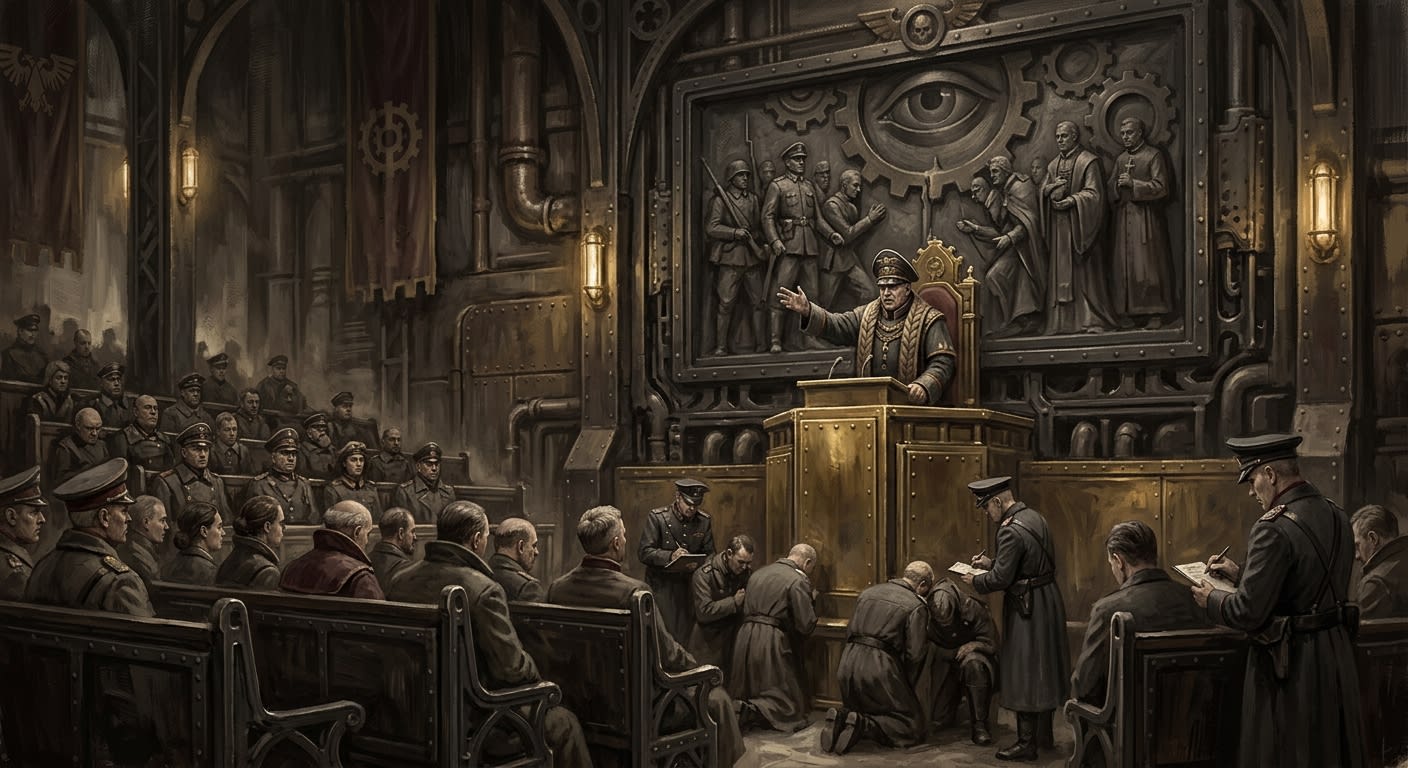
Fourth Doctrinal Congress
Where silence was made to testify against the listener
The Fourth Doctrinal Congress did not end doubt. It converted silence into mortal fault, canonised useful dead, and taught Strasbourg to occupy the Creator's quiet.
Codex Ref. XIII.1.90-104
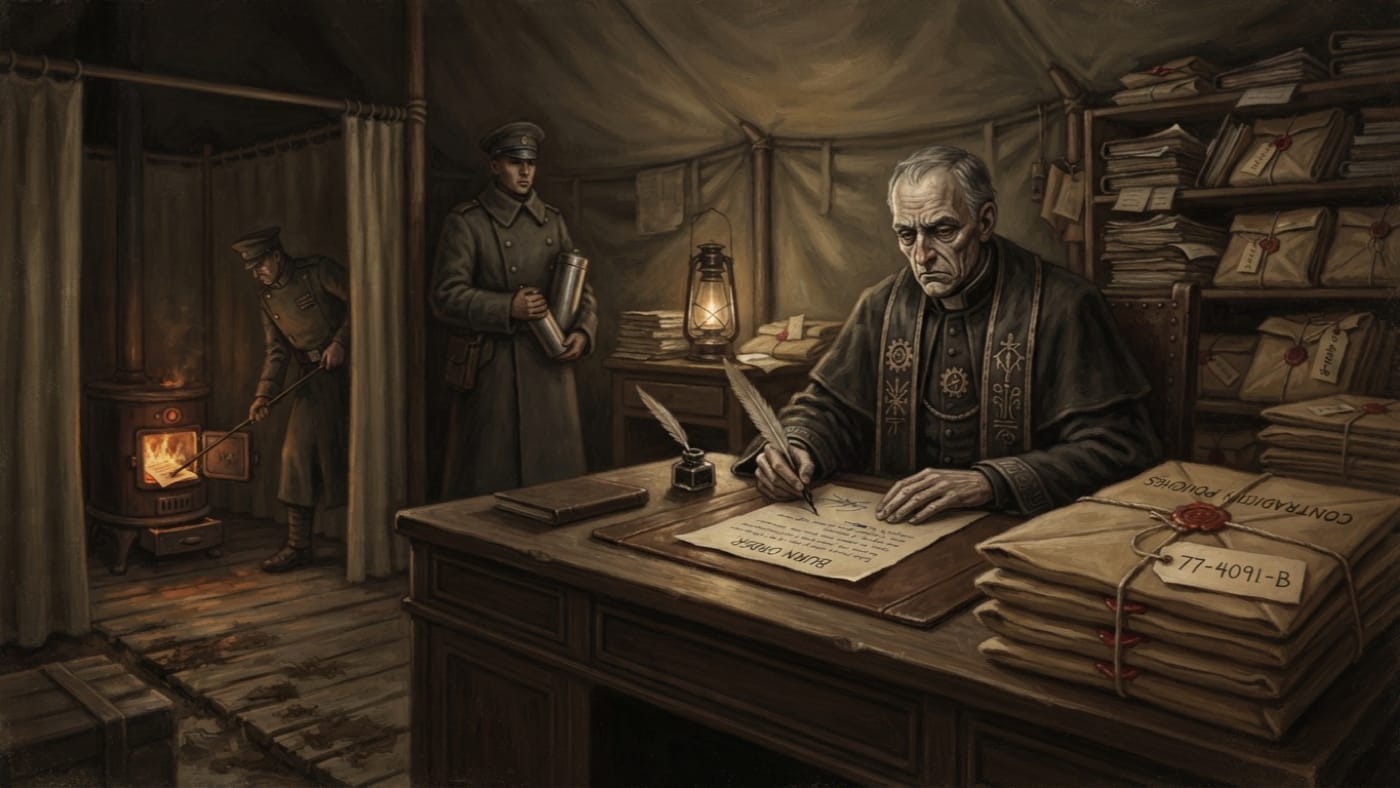
Front Prelate
The hand that makes the furnace lawful
The trench-court office whose signature authorises burning sealed contradictions under Burn Directive 7-C. The bundle numbers survive; the dying men's words do not.
Codex Ref. XII.47.02-001

Fuel Allowance Tables
The pen decides which fires survive the winter
The Fuel Allowance Tables let Engines & Furnaces decide which boilers, trains and wards receive heat. War requests, Tithes counts, and Engines keeps the pen warm.
Codex Ref. XIII.1.92-201

Fuel Is Chemistry
Three words, one furnace, and the indecency of useful truth
Fuel Is Chemistry was three words of useful treason: a furnace manual that taught workers cause before permission, and made Doctrine build walls around arithmetic.
Codex Ref. XIII.1.91-134

Fuel Monopoly Acts
The statute by which heat learned to kneel before a tariff table
A.S. 112 legal doctrine placing wound-site fuel, drums, charters, workers, accidents, and heat itself beneath Synodal licence and tariff.
Codex Ref. XIII.1.92-112

Full Witness Protocol
The witnesses certify the chain; justice has no box on the form
Full Witness Protocol binds body, iron, authority and observing witnesses into admissible bodily proof. The complete Chapel rite certifies the chain; it cannot certify a just sentence.
Codex Ref. XIII.1.101-201
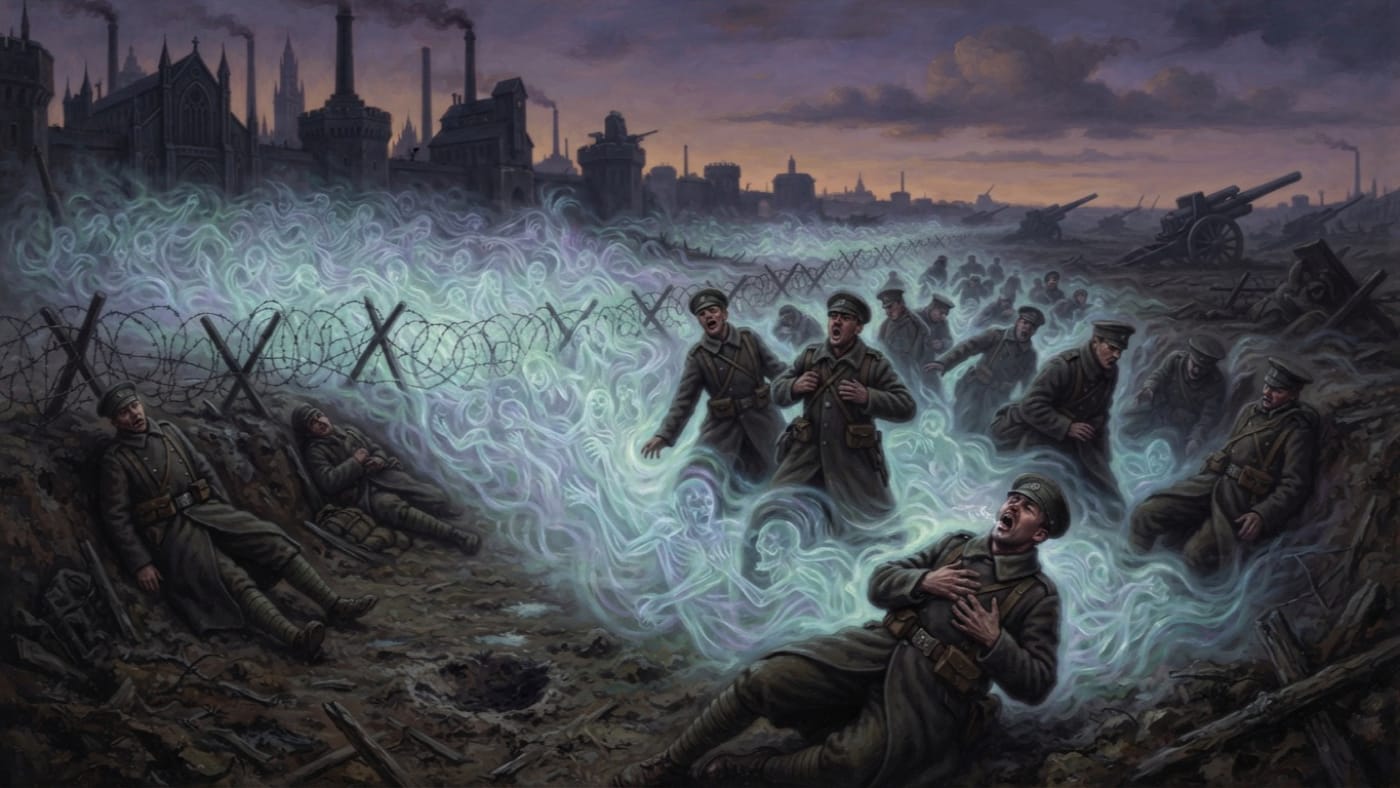
Gas That Sings
The Breath Spent in Song
I have seen No Man's Land's singing mists press wordless hymns from lungs until they burst. The Bureau of War's A.S. 197 survey records the danger; its origin, chemistry and remedies remain unknown.
Codex Ref. VI.2.01-006
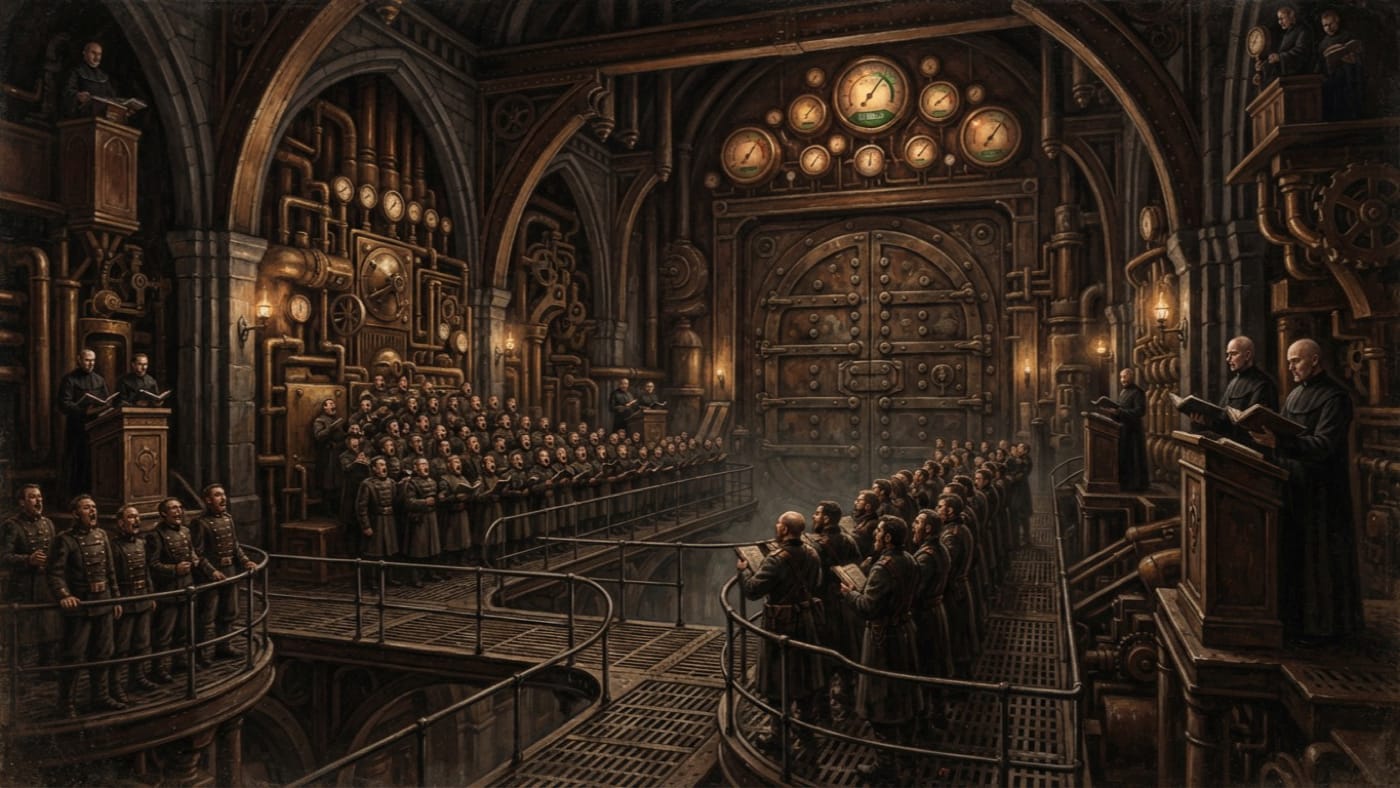
Gasket Sequence, Third Movement
Third Watch, stable gauges, and the limits of the Ledger
The Third Movement is recorded at Irongate’s Choir Nave during Third Watch, winter A.S. 200 (1910 CE), with gauges reported stable. The Ledger preserves the performance; it does not promise the next door will hold.
Codex Ref. VI.2.01-006

Gauge Standardization Decree
One measure for the iron, four thousand graves for the agreement
The A.S. 136 decree imposed 1,435 millimetres on Dominion rail and ended the Gauge War by threat of closure. Three years of relaying cost approximately four thousand lives; Engineering supplied the measure, labour the graves.
Codex Ref. XIII.1.136-001

Gauge Standardization Decree of A.S. 136
One measure in ink, three years under the hammer
The A.S. 136 decree fixed Dominion rail at 1,435 millimetres and ended the Gauge War by fiat. Three years of relaying cost an estimated four thousand lives. Engineering supplied the number; Guild crews supplied the measure.
Codex Ref. XIII.1.136-001
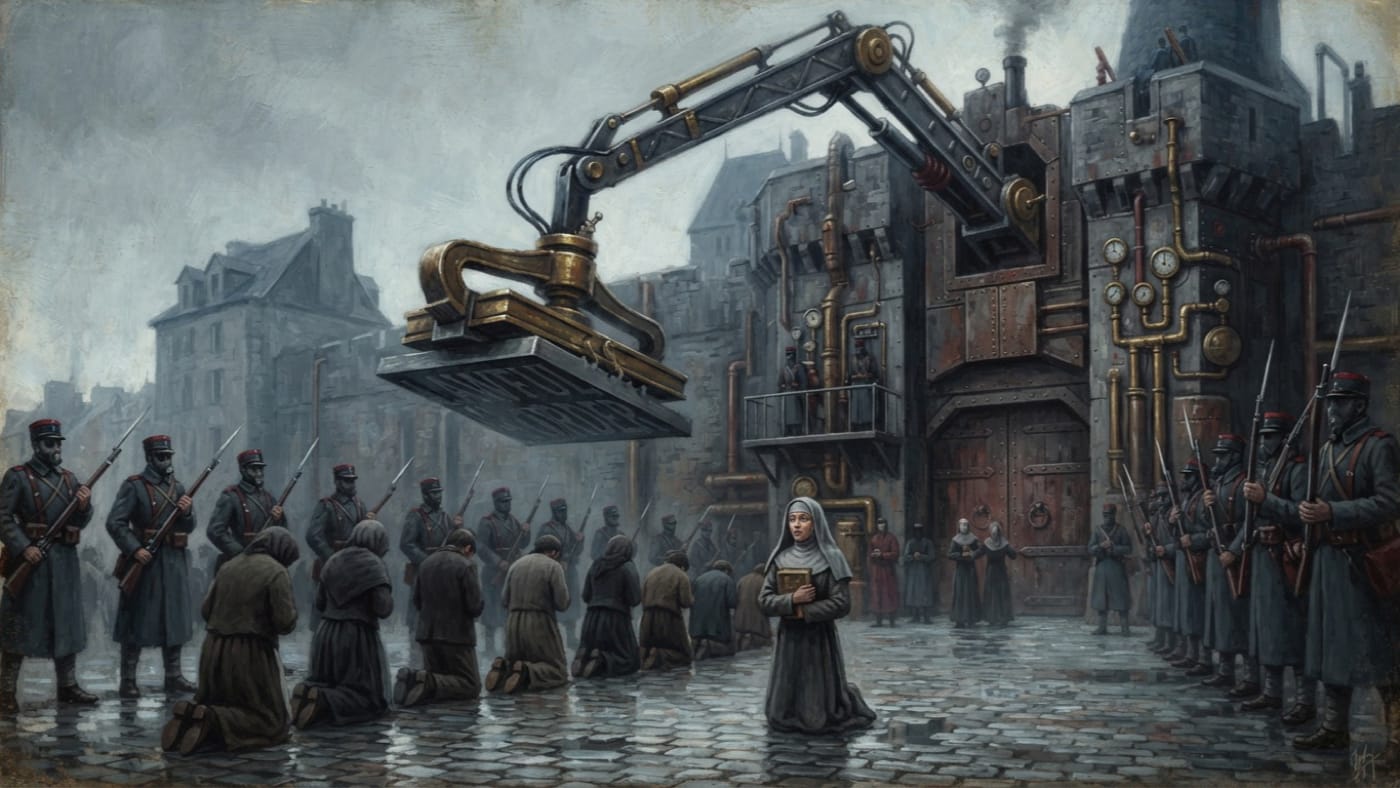
Gazette de la Raison
Four sentences against thirty-one dead
Four sentences made Saint-Malo's kneeling pilgrims vagrants and its bayonets lawful. The Gazette kept the magistrate's grammar; the Church kept the face of Saint Margaux.
Codex Ref. I.1.04-010

Ghost Slot
A death in the ledger, a door in the waystation
The Przemyśl ghost slot gives a blank convoy line a name, Grade C and a death in transit. A person leaves custody; rescue and sale close under the same clean loss report.
Codex Ref. XIII.1.27-197

Ghost Tags
A true number, a false history, and a fragment worth keeping
Forged salvage custody strips borrow numbers from destroyed registries, giving true fragments a false history. Relics keeps the fragment; the forger fares less well.
Codex Ref. XIII.1.36-002

Glass-Listener
The Synod has found a use for ruined ears
A Pillar-Keeper whose disciplined glass-speech detects cracks, sealed names and counterfeit pins. The Synod calls the affliction folklore, sends the worker into sealed yards and pays the old wage.
Codex Ref. XII.30.04-001

Glass-Speech
The city enters through the ear and leaves as obedience
Occupational condition of long-service Pillar-Keepers, beginning in tone, advancing into condemned names, and ending when the city speaks through the worker it has damaged.
Codex Ref. XIII.1.43-001
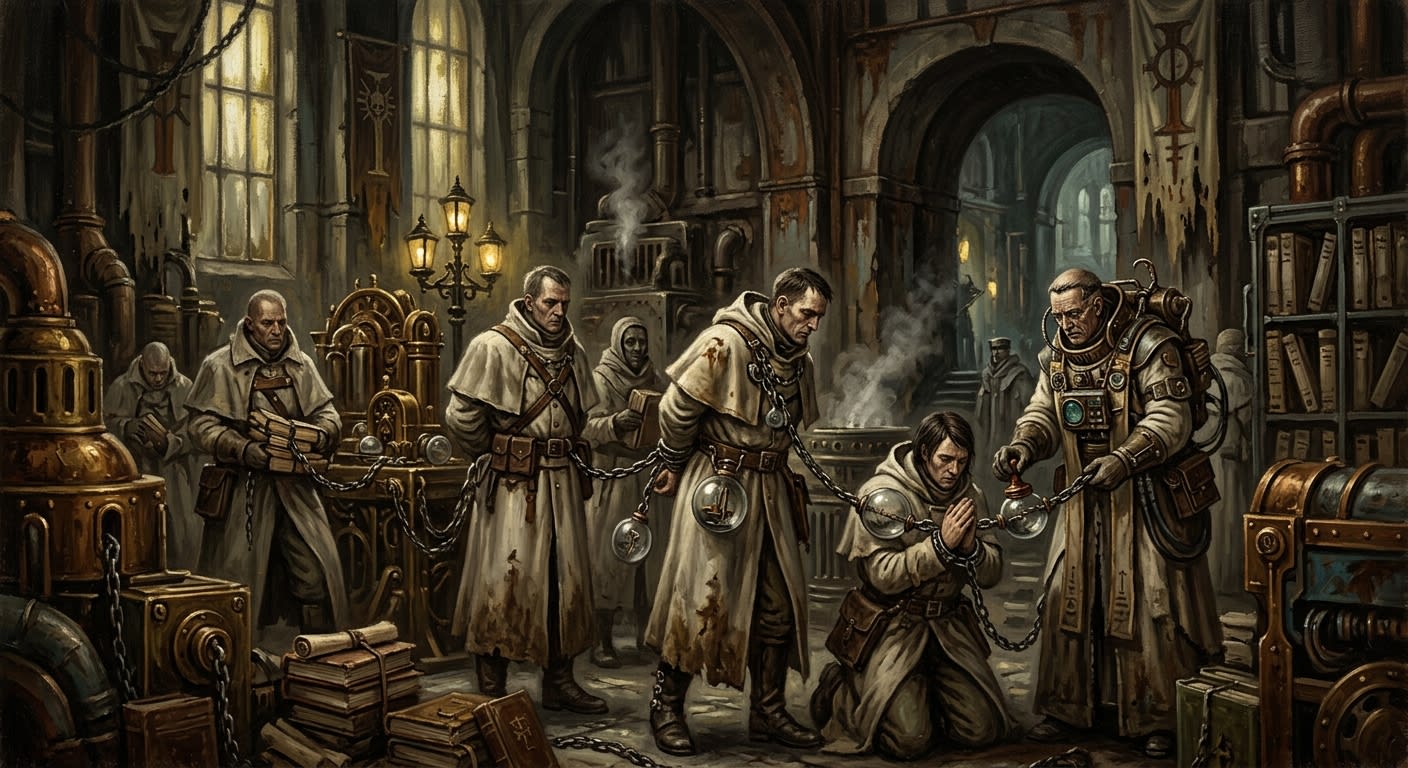
Glasschain Reform
Bind the binder, then listen when the glass objects
The Purity reform attributed to Chainmaster Veyl, binding White-Mantled Inquisitors to audible glass after seized words became contraband currency.
Codex Ref. XIII.1.87-201
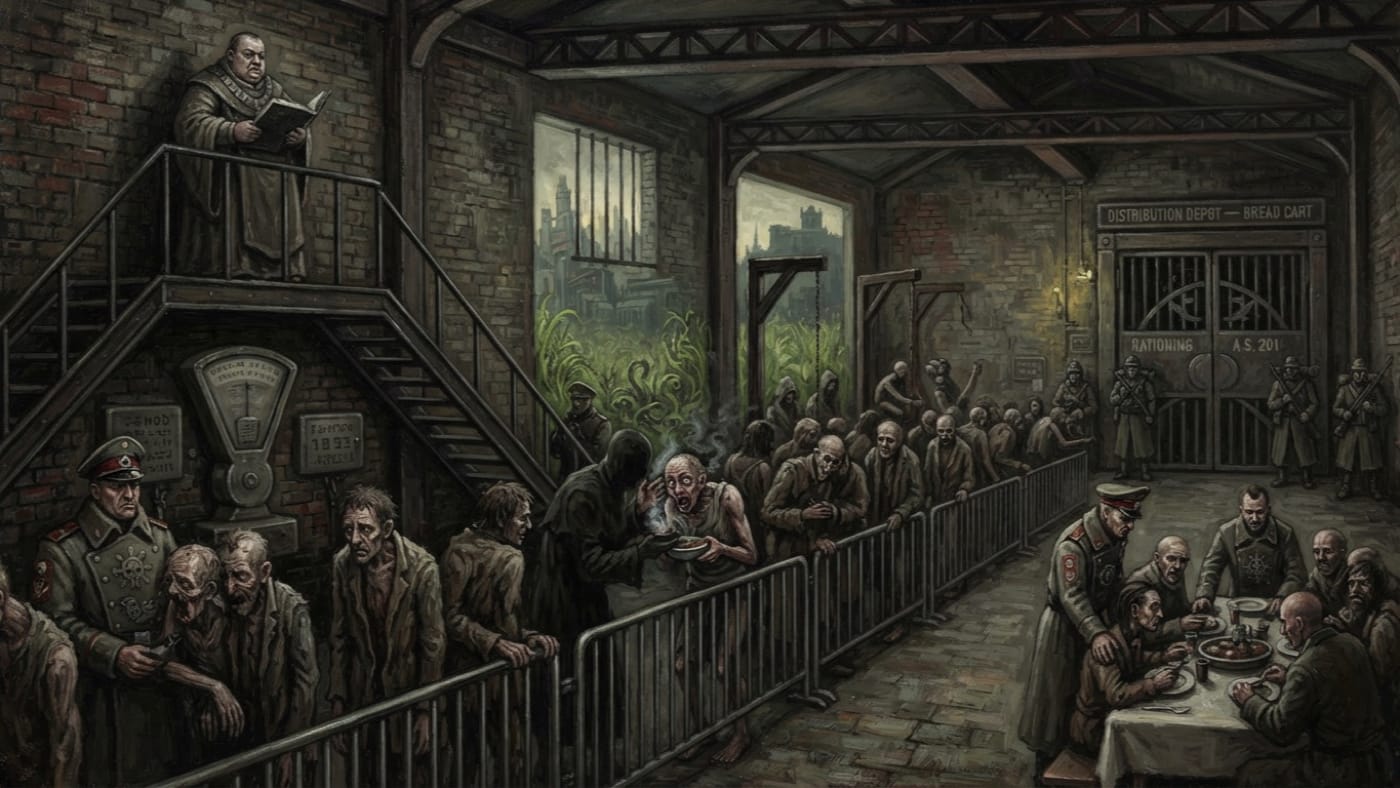
Gluttony
The Hunger That Survives the Feast
In this A.S. 201 survey, Gluttony is need that grows with feeding. Kargath offers relief before the hunger returns larger; the Synod answers with rationing, fasts and gallows. An empty stomach is no proof of a guilty soul.
Codex Ref. VI.3.01-003

Grace Rations
The pouch is issued; the soldier is spent
Bell-hour chits, saint-shares and indulgence slips ration mercy to the Church's armies. Tithe arrears suspend the claim; invoking grace still spends the soldier. The pouch is issued. The body pays.
Codex Ref. VI.3.01-004
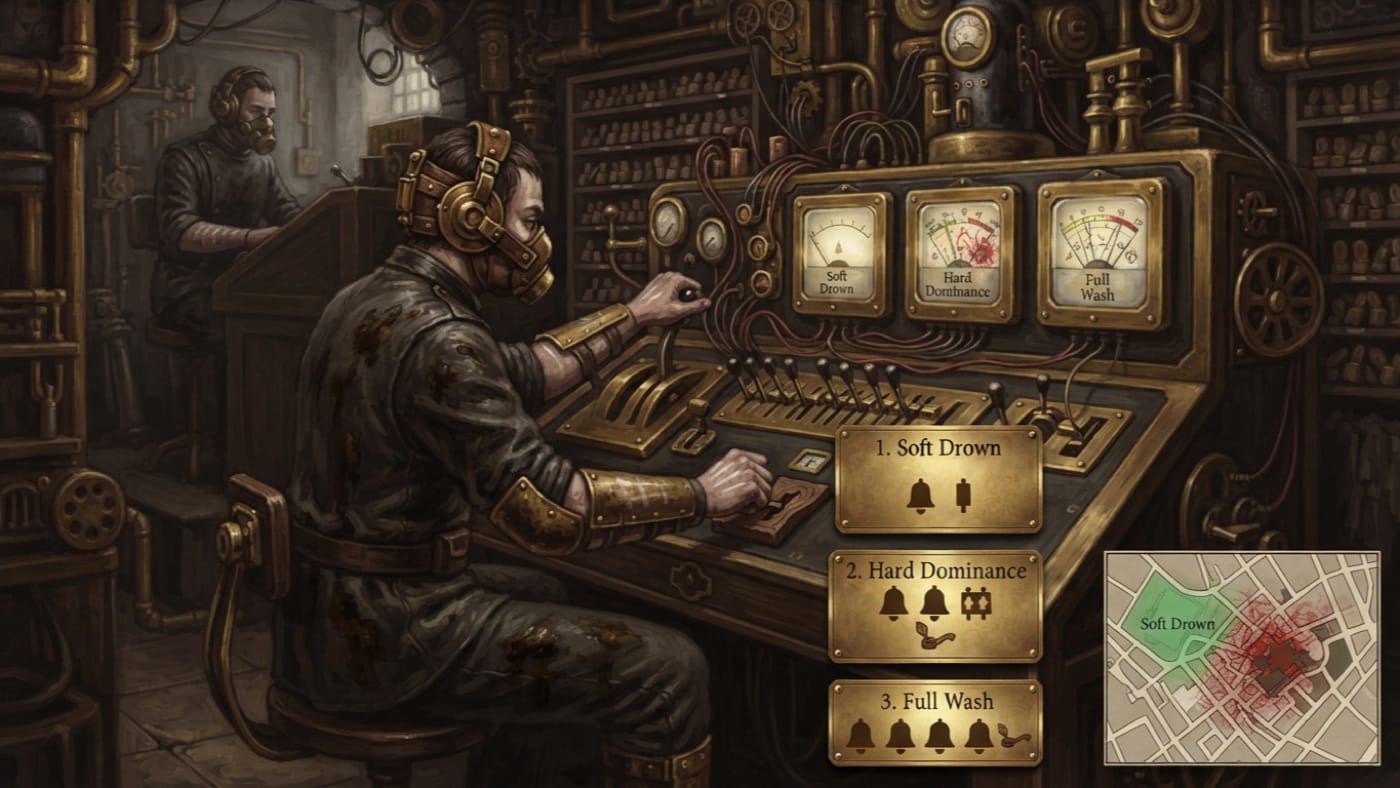
Graduated Dominance
Every louder answer requires a higher signature.
An A.S. 201 survey of the Counter-Toll escalation protocol: hostile tones drowned in three authorised bands, with wax, voice and living keys. The street and the operator pay for every louder answer.
Codex Ref. XIII.1.62-201
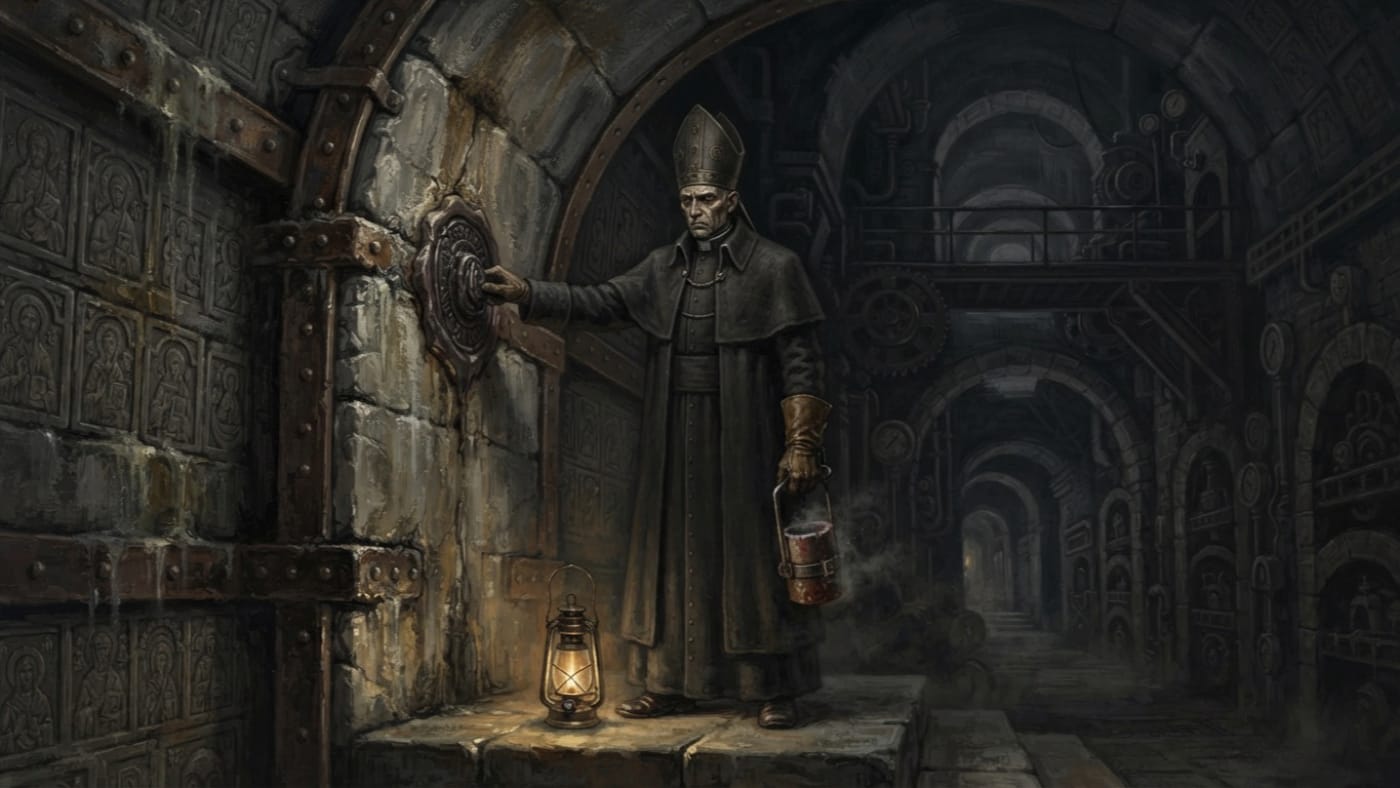
Gravis
The date is exact; the calendar is incomplete
Gravis is attested on the fourteenth, A.S. 199, when Canon-Warden Albrecht Goss applied the Third Ossuary's seventeenth wax layer. The year is 1909 CE. The Ledger knows the day and cannot place the month.
Codex Ref. XIII.1.05-004
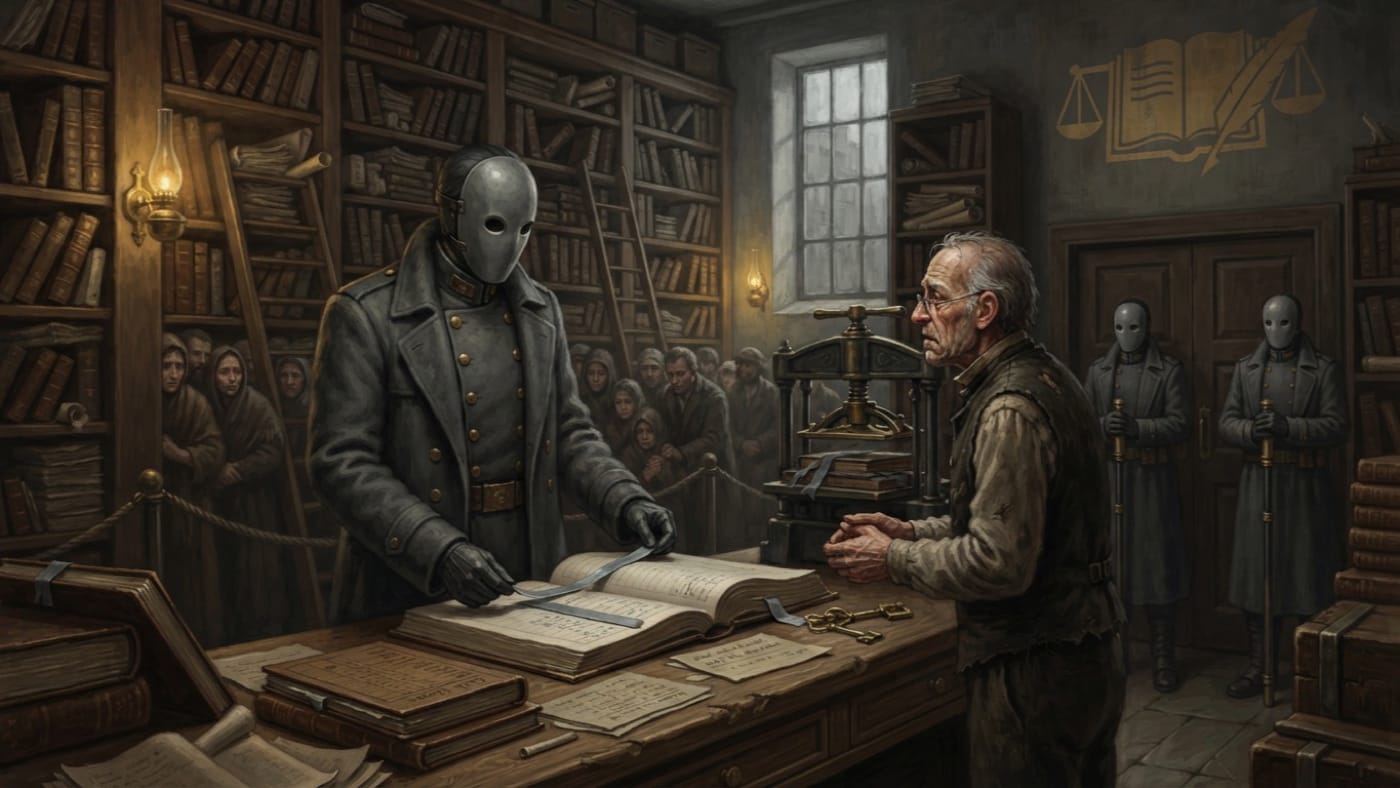
Great Ledger Harmonisation Mandate
The larger page that never has to enter the room
The Great Ledger Harmonisation Mandate supplies the standing authority cited by Indiction writs: books are reconciled, names suspended, and appeal waits until the archive decides who still counts.
Codex Ref. XIII.1.06-002
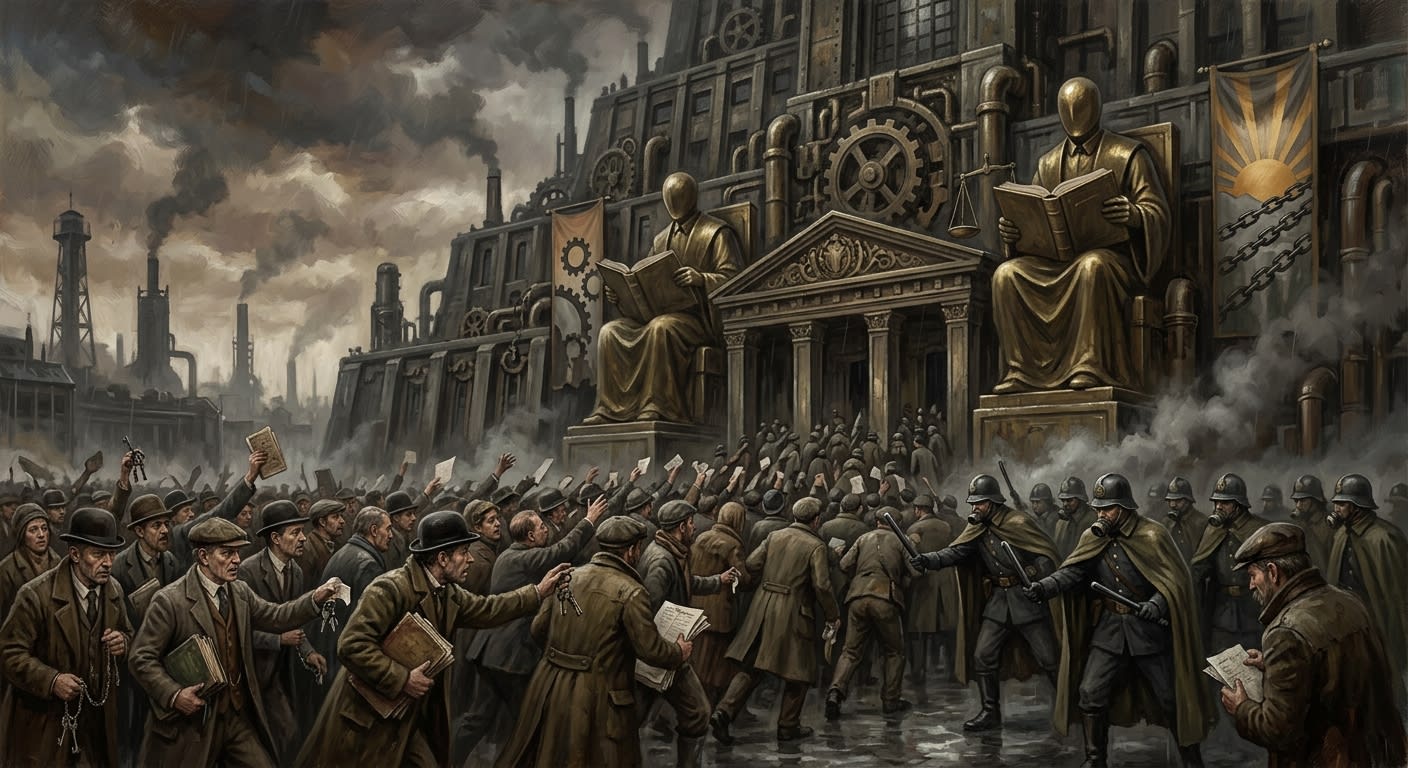
Great Maturity
The final due date Hell files through inherited keys
The Great Maturity is Velmora's deferred eschatology of debt: the hour when every key, favour, pledge, and inherited obligation comes due for the Inheritors.
Codex Ref. XIII.1.95-201

Greed
The appetite that cannot say enough.
Greed gives every possession a price and every person an obligation. Velmora's gifts are real; refusal remains possible. At Bastion-Sibiu, the walls hold while debt, bribes and counterfeit scrip do the purchasing.
Codex Ref. XIII.1.07-002

Greek in the Codex
A tongue in the ledger proves less than the clerk would like
An A.S. 201 survey of Greek in Codex records: restricted texts, Church learning, relic labels, parish spellings and recorded pleas. Lyon contributes one disputed claim; copying it does not produce another witness.
Codex Ref. XIII.1.03-002
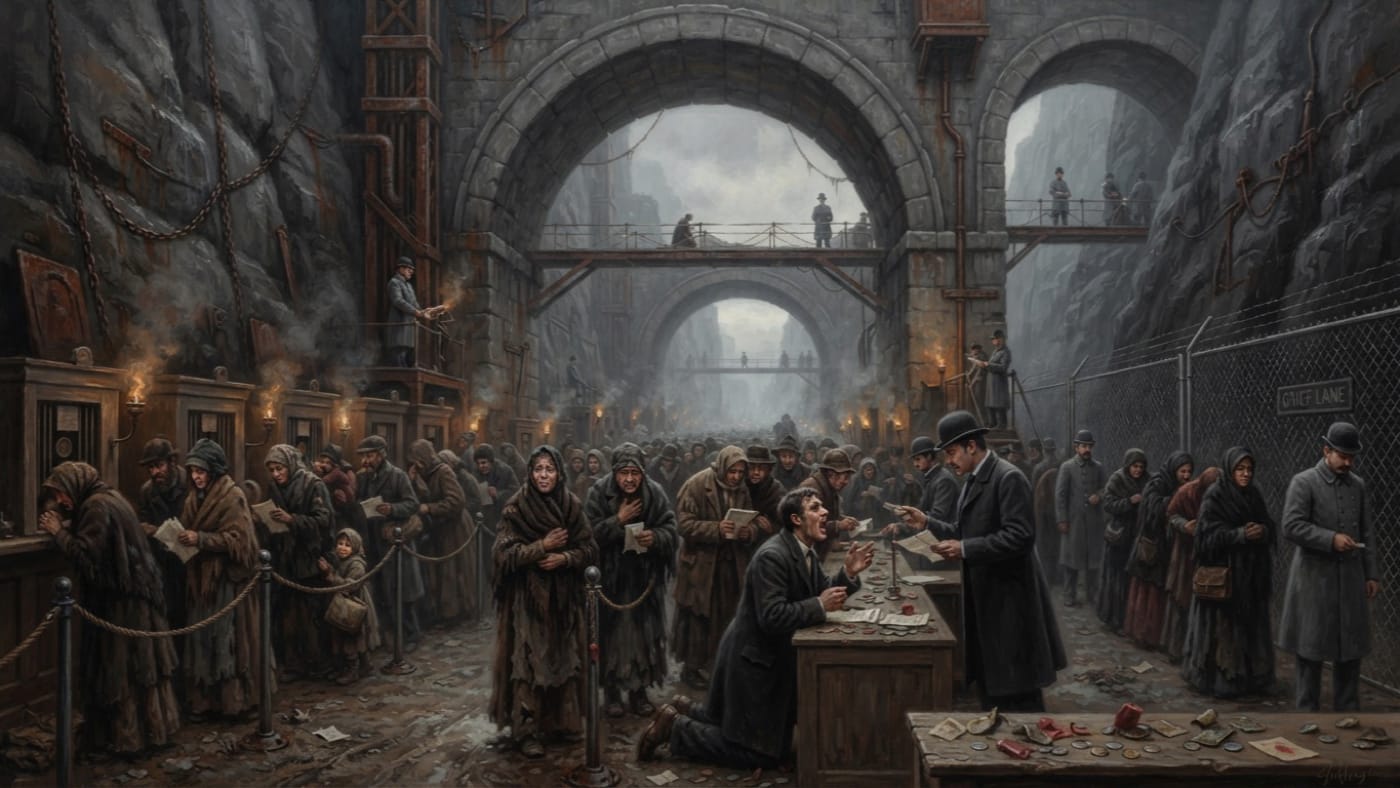
Grief Resonance
The stone takes a name; the clerk records a discrepancy
When mourners crowd Griefgate's arches, seals smear, coins tarnish, bells flatten and names fail. The Bureau has classified the disturbance and declined to fund its explanation.
Codex Ref. XIII.1.23-003
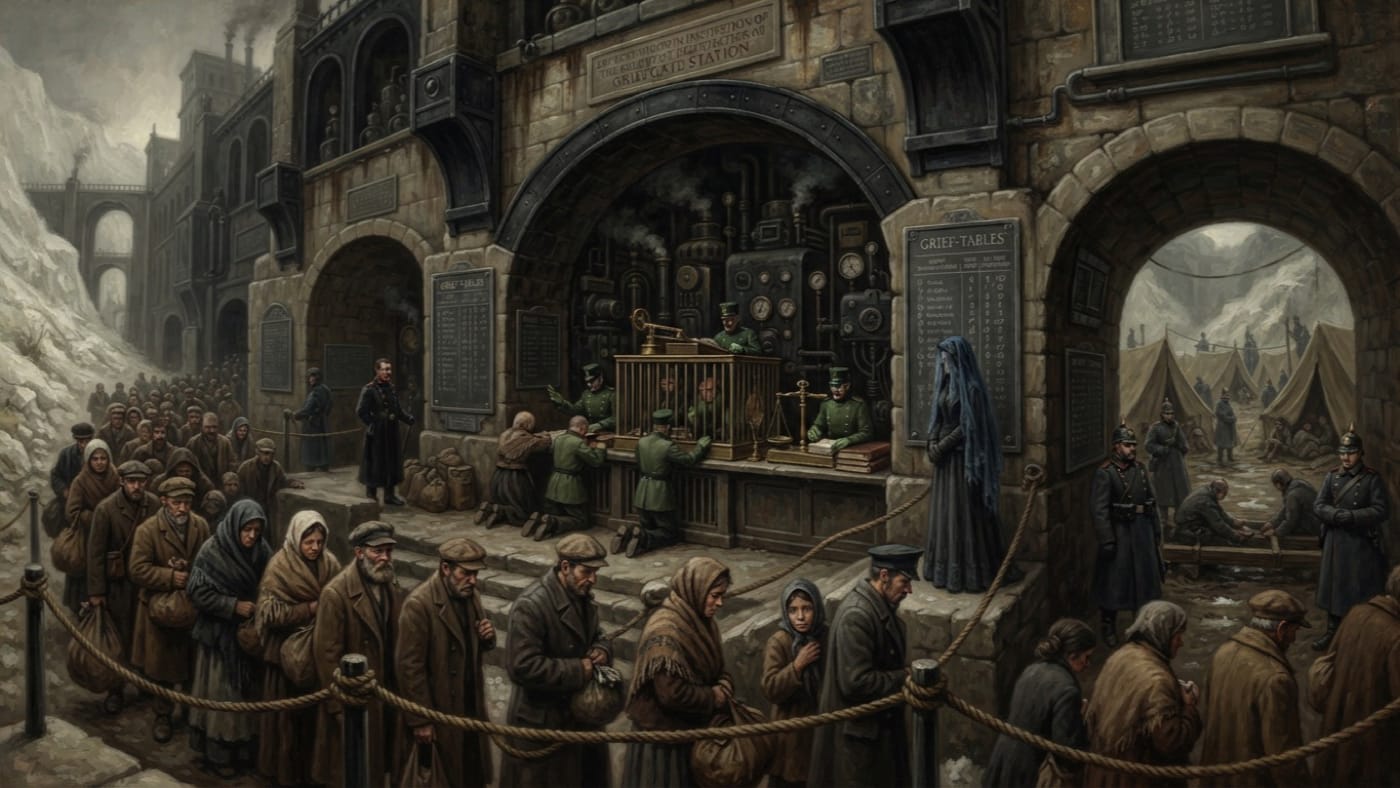
Grief-Tax
Declare your burden; the Gate will declare its price
At Griefgate, spiritual burden becomes a toll, payment becomes portable clearance, and unpaid sorrow becomes detention debt. The tables have no row for the unburdened.
Codex Ref. XIII.1.85-201
Gully Ledger Cartel
Transport assistance, without the inconvenience of authority
Forged addenda, almost-correct wax and deliberately bad Vark judgments sustain the Gully Ledger Cartel beneath the Steppe Gate's Corrals. The Bureau denies its existence and patronises its counter.
Codex Ref. XIII.1.27-002
Hagiography
The saints a profession keeps before the Church decides
Hagiography reviews saints' lives and patronal claims. Devotion, recognition, and authenticated relics remain separate matters, however often petitioners confuse them.
Codex Ref. XIII.1.01-1299

Hand-Code
The fist commands the man and leaves the register untouched
Hand-Code gives Mute Radiance four recorded manual commands for bell-dead patrols. The fist claims five minutes without citizenship; the parish register grants none. Adoption remains undated, and quiet congregations have no sign.
Codex Ref. XIII.1.76-007

Harbor Ledger Office
Where arrival becomes a queue and mercy learns to stamp twice
The Harbor Ledger Office is the wet jaw of Thessaloniki's record-law, translating ships, refugees, cargo, deaths, delays, and useful crimes into serviceable continuity.
Codex Ref. XIII.1.94-201

Harbor Patrol Log
The sailor saw sails. The Bureaus saw a file.
The Harbor Patrol recorded the Black Sea Armada's approach on 14 Ferrum, A.S. 162. Records ratified the page in A.S. 165; I annotated it in A.S. 201. The sailor wrote Contact. The Bureaus are still filing.
Codex Ref. XIII.1.63-162
Harbour Ledger
Arrival duly entered; bread lawfully withheld
The Harbour Ledger records arrivals, berths, inspection times and the first ship count in Varna's A.S. 129 grain disaster. It proves the bread arrived; responsibility is entered elsewhere.
Codex Ref. XIII.1.89-129
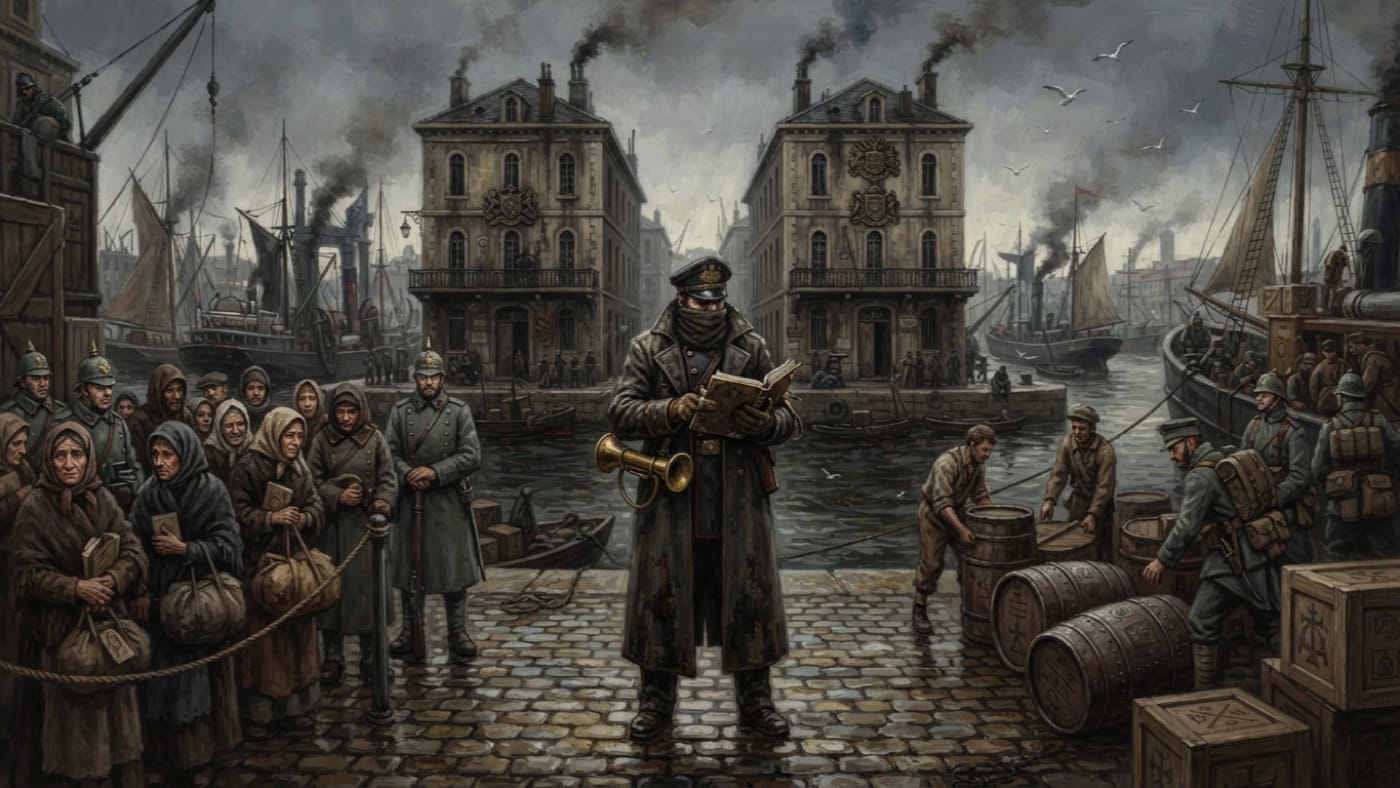
Harbour-Master
Authority has five claimants; responsibility awaits a name
Marseille's Harbour-Master claims authority beside four Bureaus. The Ledger records the title; the cargo waits for someone willing to answer for it.
Codex Ref. XIII.1.39-002
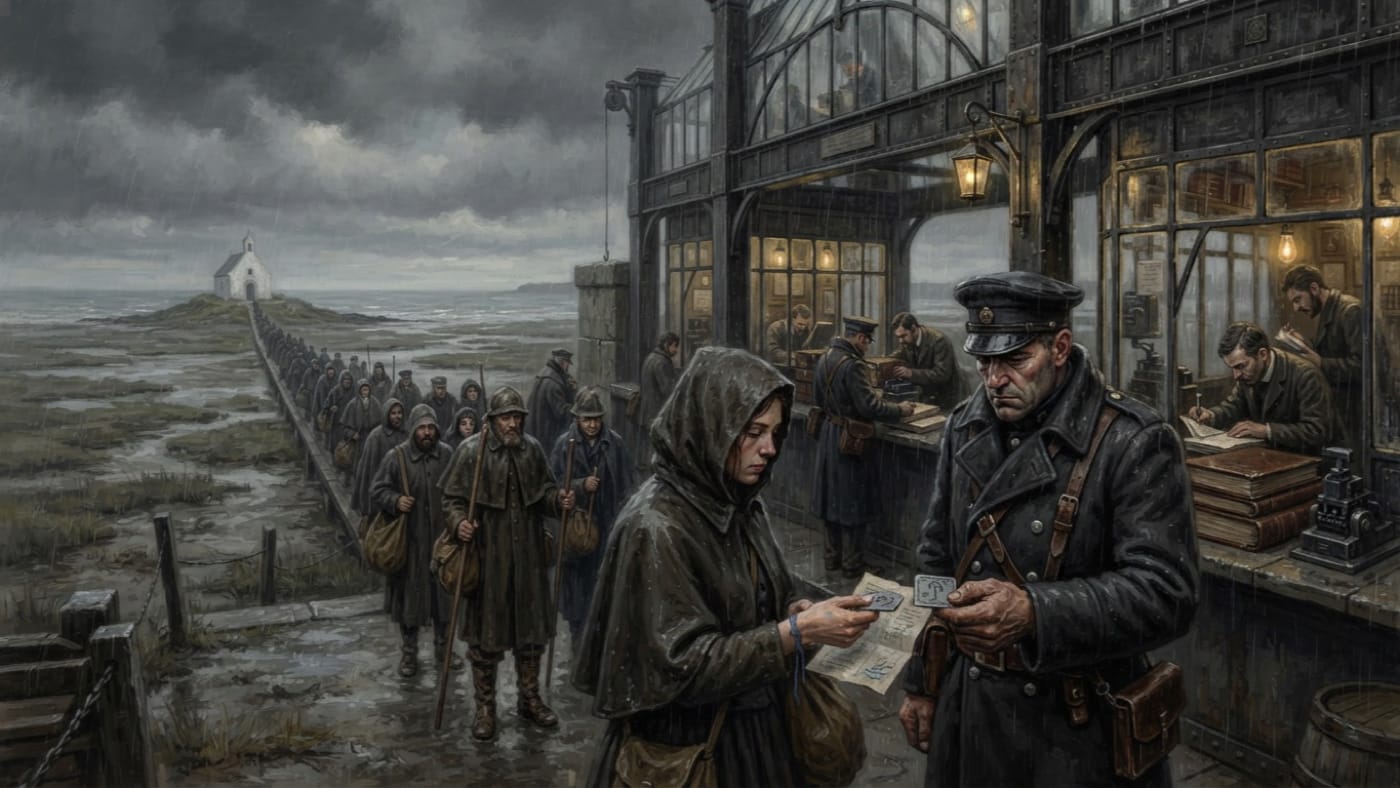
Harmonized Routes
The Bureau licenses the road and leaves arrival to the pilgrim
The Harmonized Routes tables join shrine, road and token under one licence. Pilgrimage certifies the right to set out; arrival remains the pilgrim's problem.
Codex Ref. XIII.1.86-201
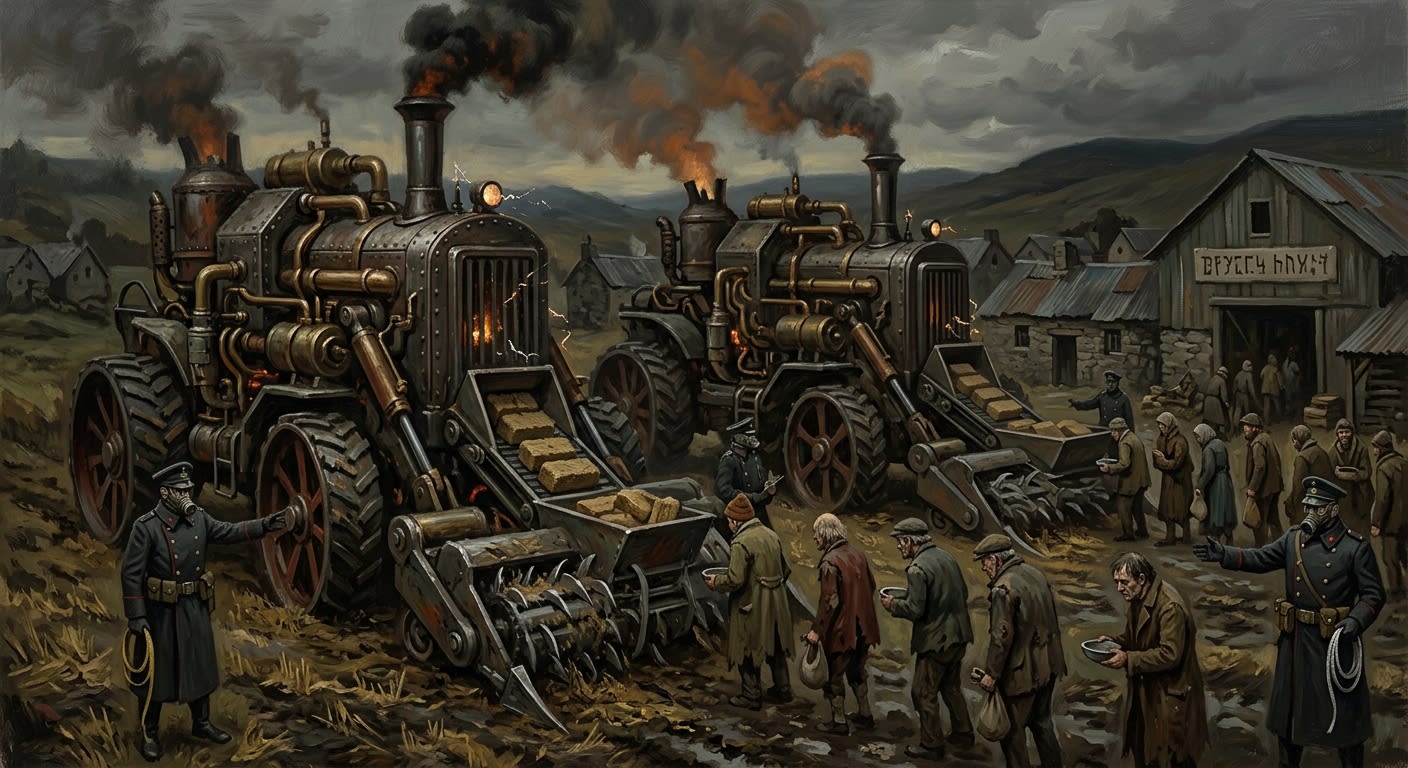
Harvest Engines
If it feeds without filing, burn it before gratitude begins
Harvest Engines are Kargath’s portable abundance: agricultural machines that make food, teach gratitude, and leave whole villages hungry beyond repair.
Codex Ref. XIII.1.26-001

Hazard Clause
The right to keep the token in one's pocket
Hamburg's A.S. 189 concession lets senior Compact holdmen withhold discharge certification for three named cargo hazards without immediate arrest for obstruction. War may buy labour; it cannot buy the signature.
Codex Ref. XIII.1.89-189
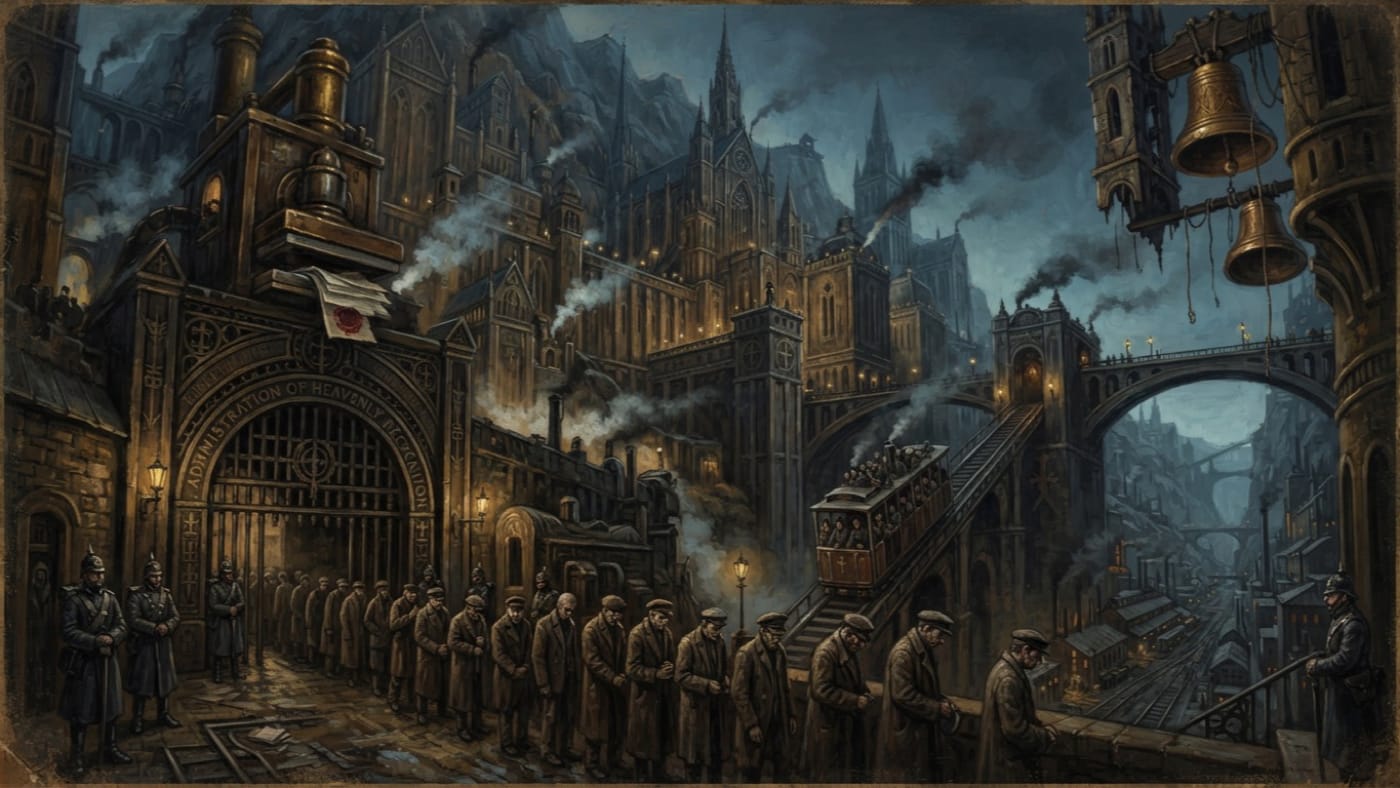
Heaven
Perfect recognition, beyond the reach of any clerk
Heaven knows every soul, Doctrine assures us. Strasbourg stamps acceptance until contradicted; I record the death registers and the silence no bureau can countersign.
Codex Ref. VI.1.02-201

Height-Fixation Advisory
Report the height, then remember what is moving beneath it
The Height-Fixation Advisory keeps Przemyśl's spotters reporting numbers instead of admiration. Its discipline survives in the A.S. 201 Spire alert card; its original issue date remains unknown.
Codex Ref. XIII.1.95-201
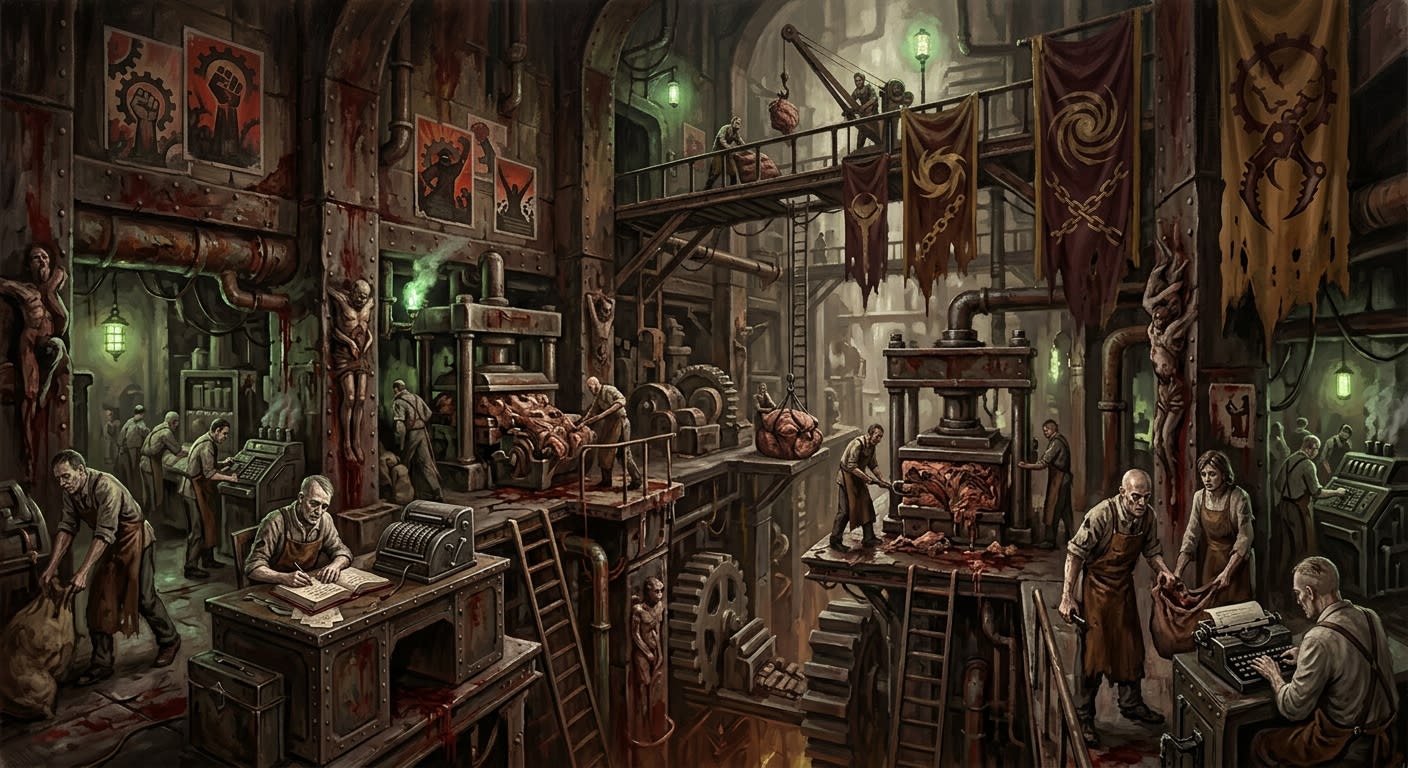
Hell
The Enemy's claim upon Creation, filed where screams become jurisdiction
Hell is not merely a place beyond the Sagittal Line. It is the Great Deceiver's active claim upon Creation: jurisdiction expressed through matter, contract, territory, sorcery, corrupted flesh, and obedient fear.
Codex Ref. XIII.1.01-201

Heresy of Selectivity
Choice belongs upward. Reception belongs downward.
The offence of choosing among accounts the Church has approved together. An office may allocate a truth; a subject who refuses its companions has edited authority and invited correction.
Codex Ref. XIII.1.42-002
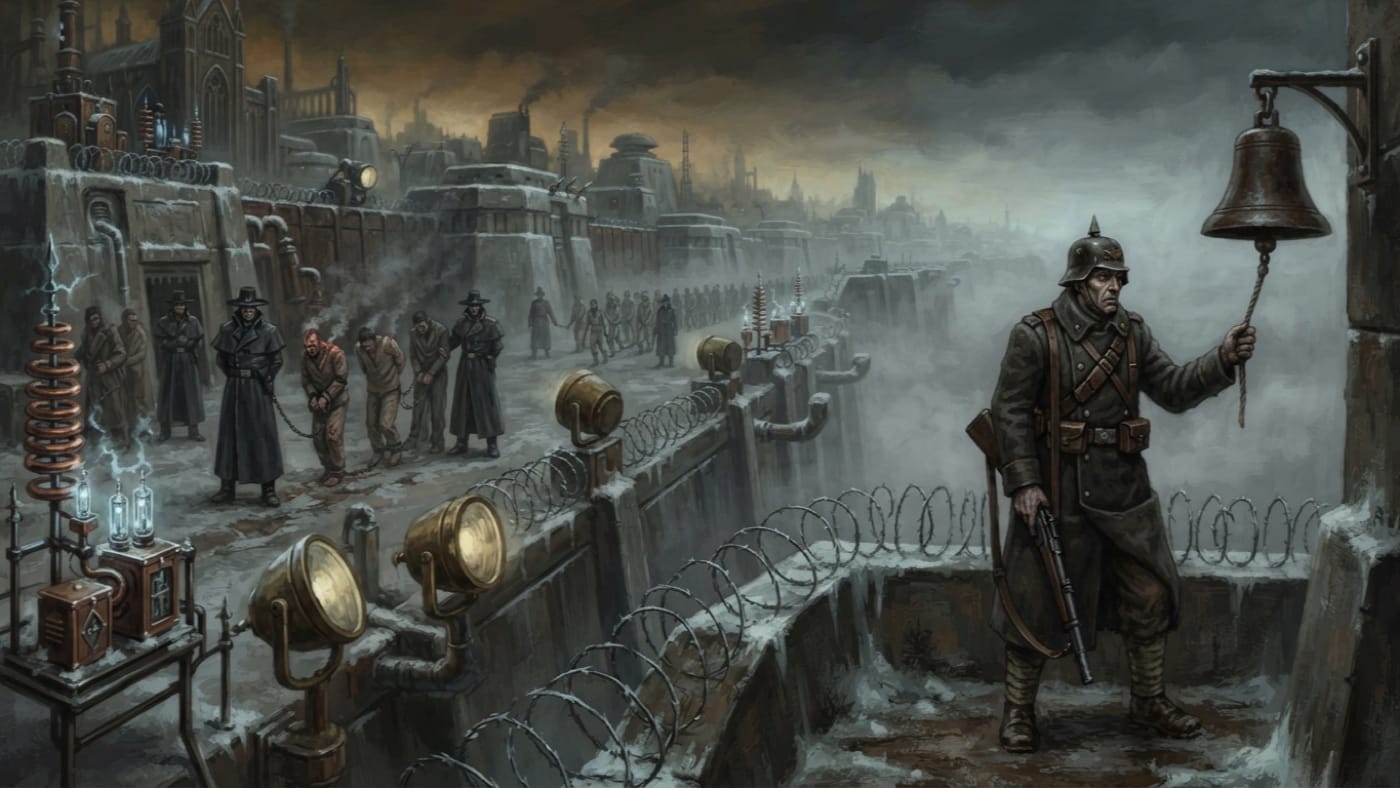
Heresy of the Absent Creator
The wards still hold. The promise no longer does.
The northern garrisons' claim that the Creator is dead and miracles spend His residual holiness. The wards still hold; the Bureau of Purity still brands adherents and sends them to the Penal Choir.
Codex Ref. VI.1.01-002
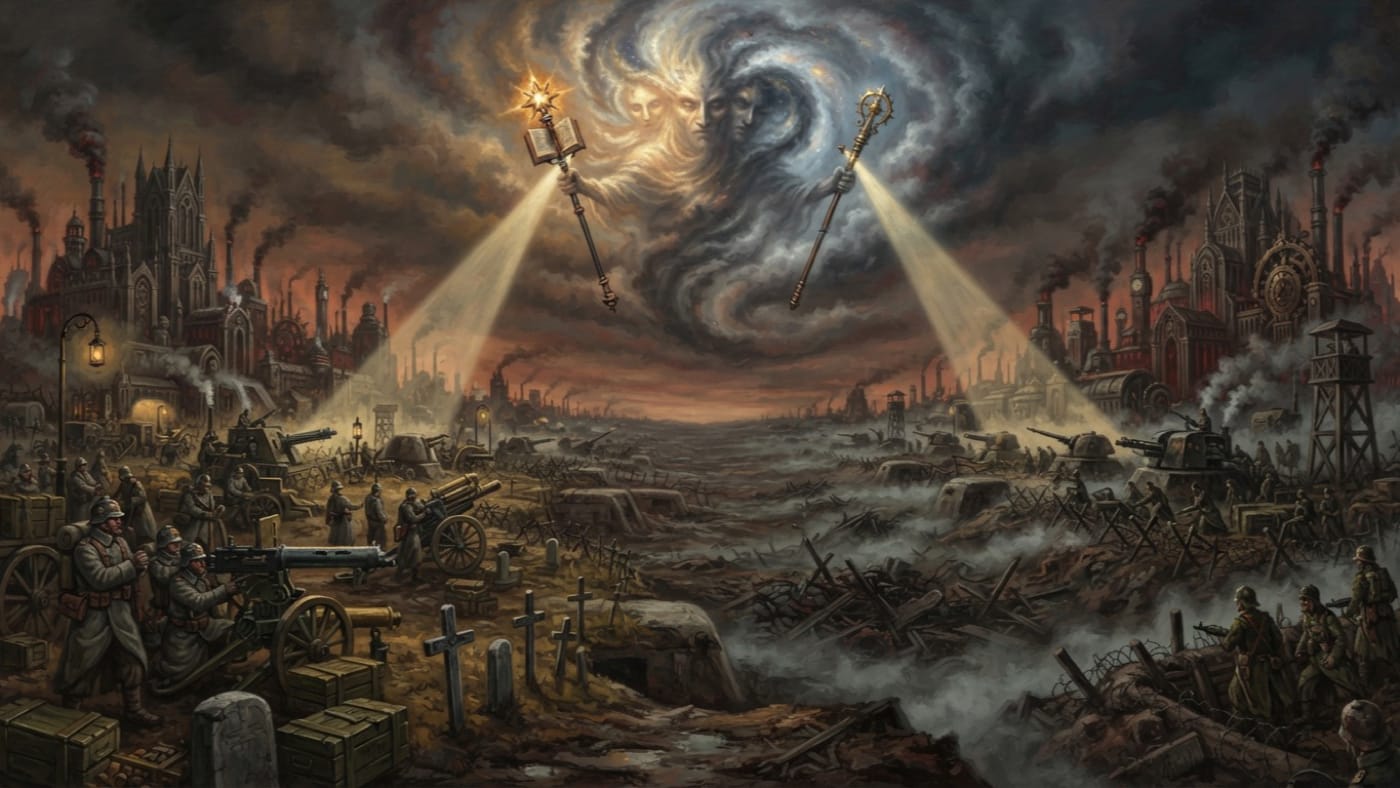
Heresy of the Complicit Creator
The proposition is prohibited. The classification remains blank.
The claim that the Creator and the Great Deceiver are one power, and the war a performance. I record its arguments under Standing Order 7-A; the Bureau prohibits the proposition and leaves its classification blank.
Codex Ref. VI.1.01-004
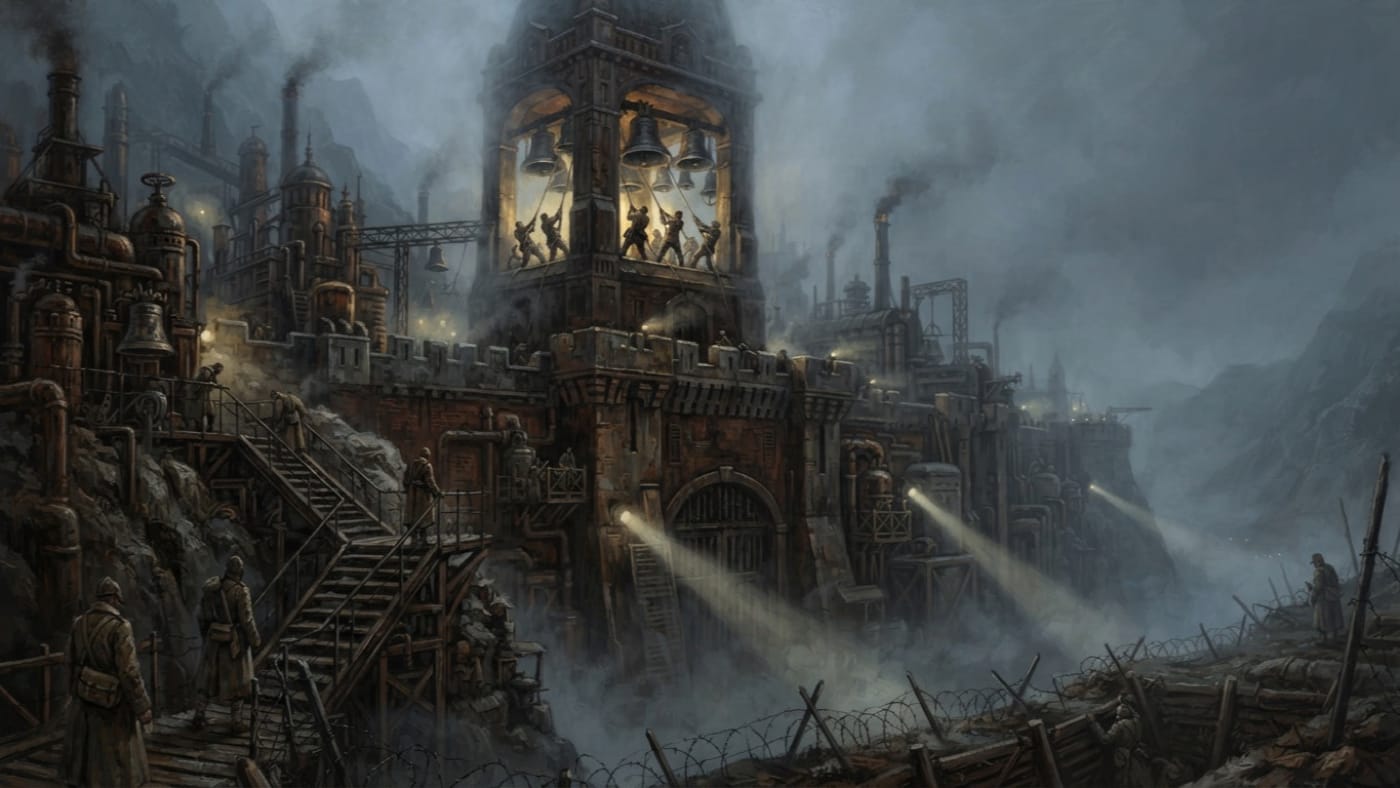
Heresy of the Sleeping Creator
The condemned ring on time. The Bureau keeps the rope.
A Second-Degree heresy claims the Creator dreams Creation into being and the bells keep Him asleep. I catalogue its southern circulation, the reported breath and the sentence imposed on men who ring with exceptional diligence.
Codex Ref. VI.1.01-003

Heresy of the Unnecessary Creator
The bone keeps its glow. The Hieromnemon may lose his post.
The forbidden proposition that relics, bells and consecrated stone work without a divine source. I catalogue what it grants, what Doctrine cannot demonstrate, and what becomes of our mandate when custody is merely property.
Codex Ref. VI.1.01-005
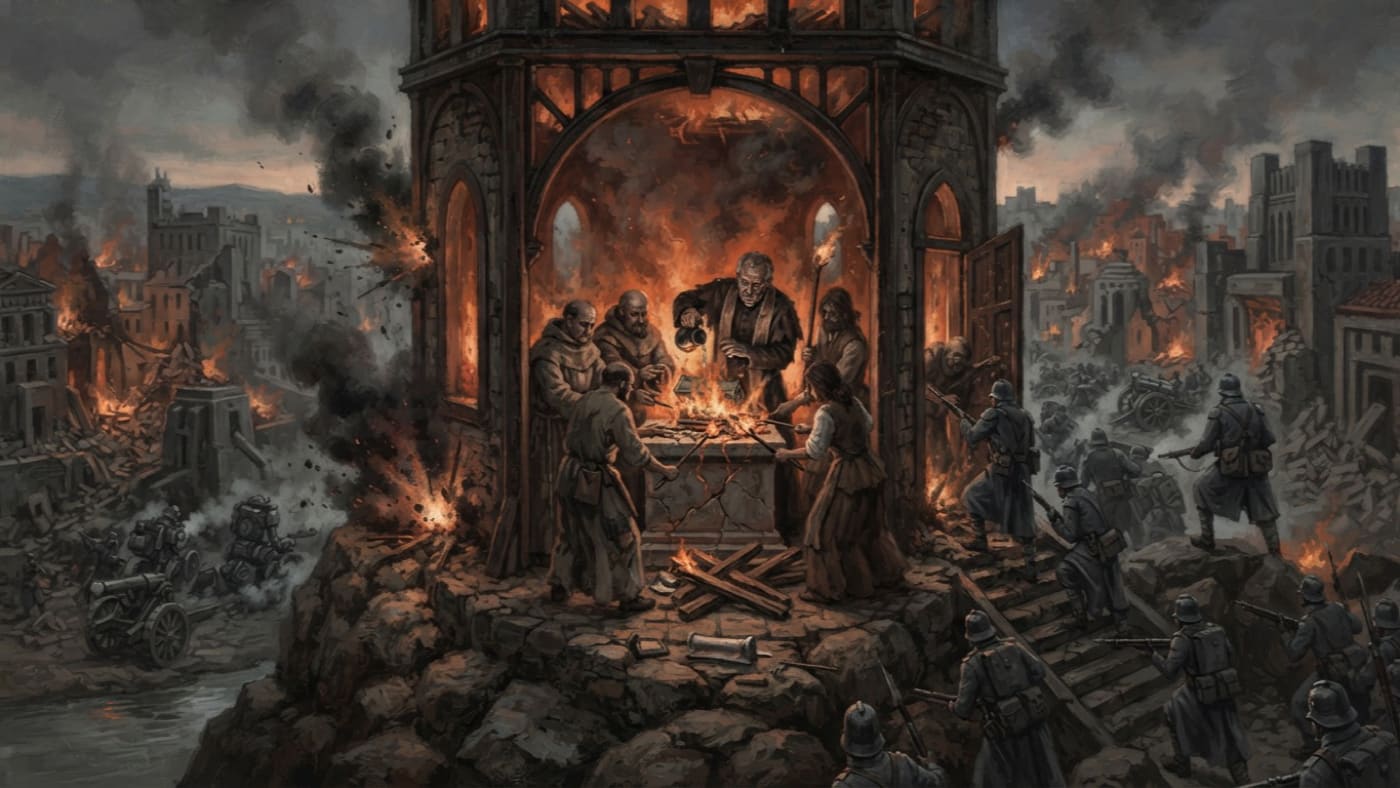
Heroic Destruction
The last duty of custody, taught from Toledo's ash
Heroic destruction is the deliberate unmaking of an entrusted holy object to deny enemy custody. At Toledo, the Order of Saint Iago lost the city and kept the enemy from taking its saint.
Codex Ref. XIII.1.58-015

Hierarch of the Fourth Seal
Two attestations, one number, and the rest ruled blank
The Fourth Seal appears in the A.S. 194 Tithe Instrument record and Morwen's A.S. 201 ratification. Two attestations, one number; the holder, tenure, and named domain remain unrecorded.
Codex Ref. XIII.1.05-004

Hierarch of the Third Seal
Three Bureaus know the title. None supplies the name.
Three Bureaus attest a Hierarch; none supplies a name. This A.S. 201 survey records restricted vault knowledge, attributed tribunal influence and Lyon's A.S. 170 satire, leaving the Seal unidentified.
Codex Ref. XIII.1.05-003
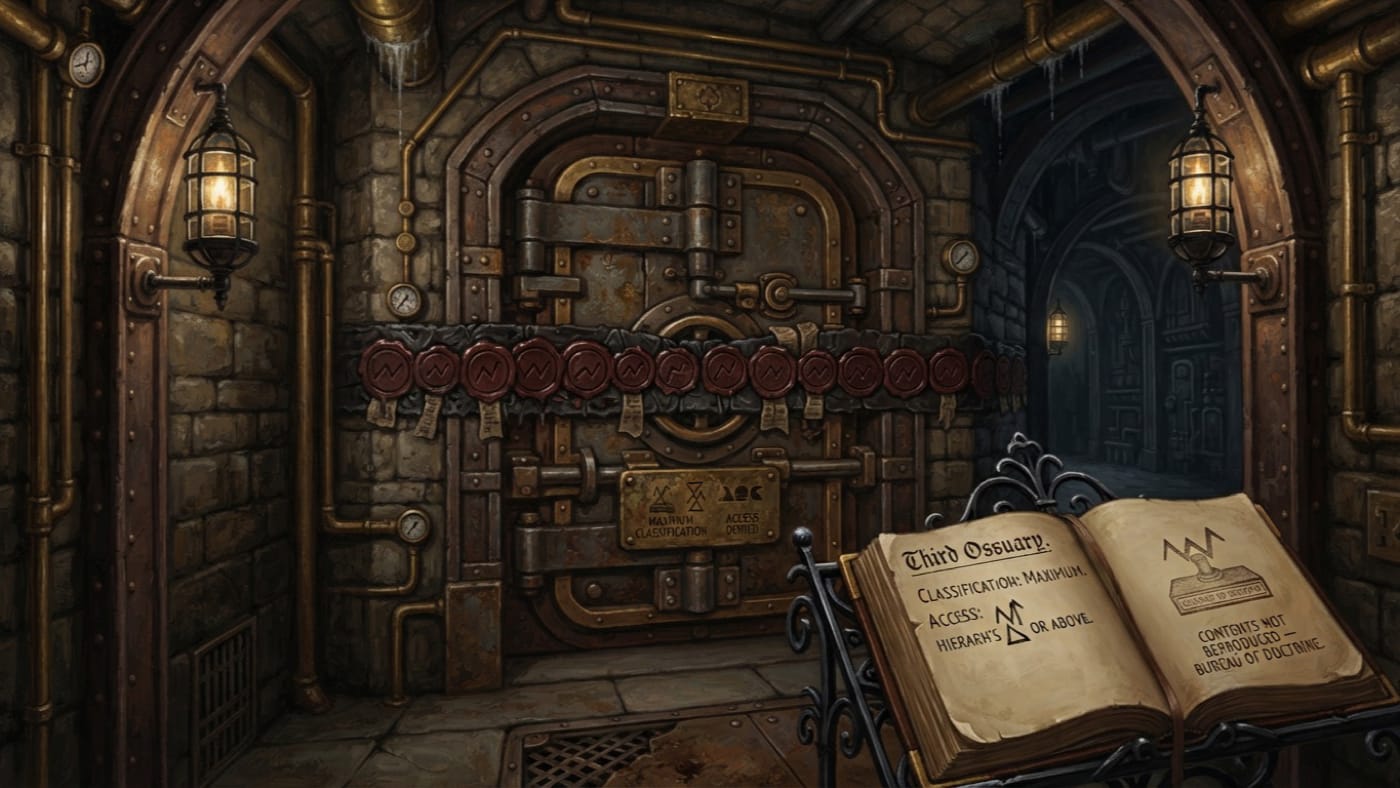
Hierarch's Seal
Where the File Stops
An access threshold named for the Hierarchs, governing the Third Ossuary and the sealed Saint Barachiel broadcast. The register admits that something stands above it; the reader is not admitted.
Codex Ref. XIII.1.05-002

Hieromnemon
The office that teaches memory to kneel
The Hieromnemon governs public memory for Doctrine: seal, margin, erratum, redaction, and the blessed sentence that makes contradiction obey.
Codex Ref. XIII.1.31-090
High Angelus
At noon, even the right to resume belongs to bronze
The High Angelus is the Bell Codex's noon peal: three ascending commands that stop the city, require recitation and return work by permission of bronze.
Codex Ref. XIII.1.62-003
High Censor
The title commands obedience. The archive cannot produce its holder.
The High Censor crowns the Inquisition's command chart. Doctrine grants the office obedience; Records denies it. Its holder is unestablished, its reported vacancy rests on one entry, and the orders continue.
Codex Ref. VI.3.02-002
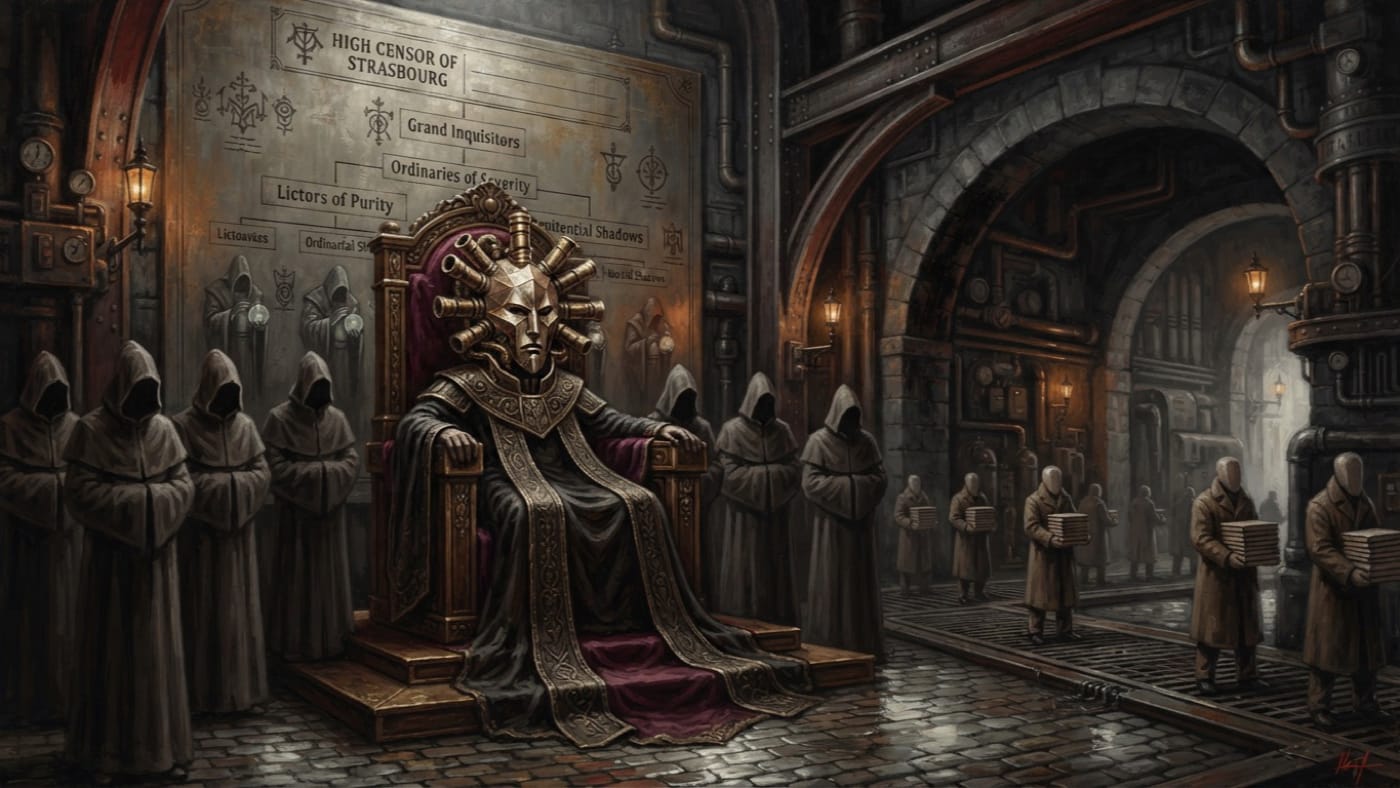
High Censor of Strasbourg
An empty name at the summit of the Inquisition
The High Censor of Strasbourg crowns the Inquisition's command chart. The title is current, the bearer's name remains empty, and even the summit may tremble before its silent subordinates.
Codex Ref. VI.3.02-003

High Censor's Advisory
A name fit for the docket, with no hand fit for the signature
Records has approved a name for the rumoured Council of Veils. The wording can be read aloud; its charter, members and author remain unestablished.
Codex Ref. VI.3.02-004

High Registrar of Chromas
The office that can invalidate a life by changing its shade
Candlewick's High Registrar defines lawful colour and decides which papers retain their standing. Sable Vorn holds the office; Hungry Ink obeys its shades while consuming its words.
Codex Ref. XIII.1.96-201
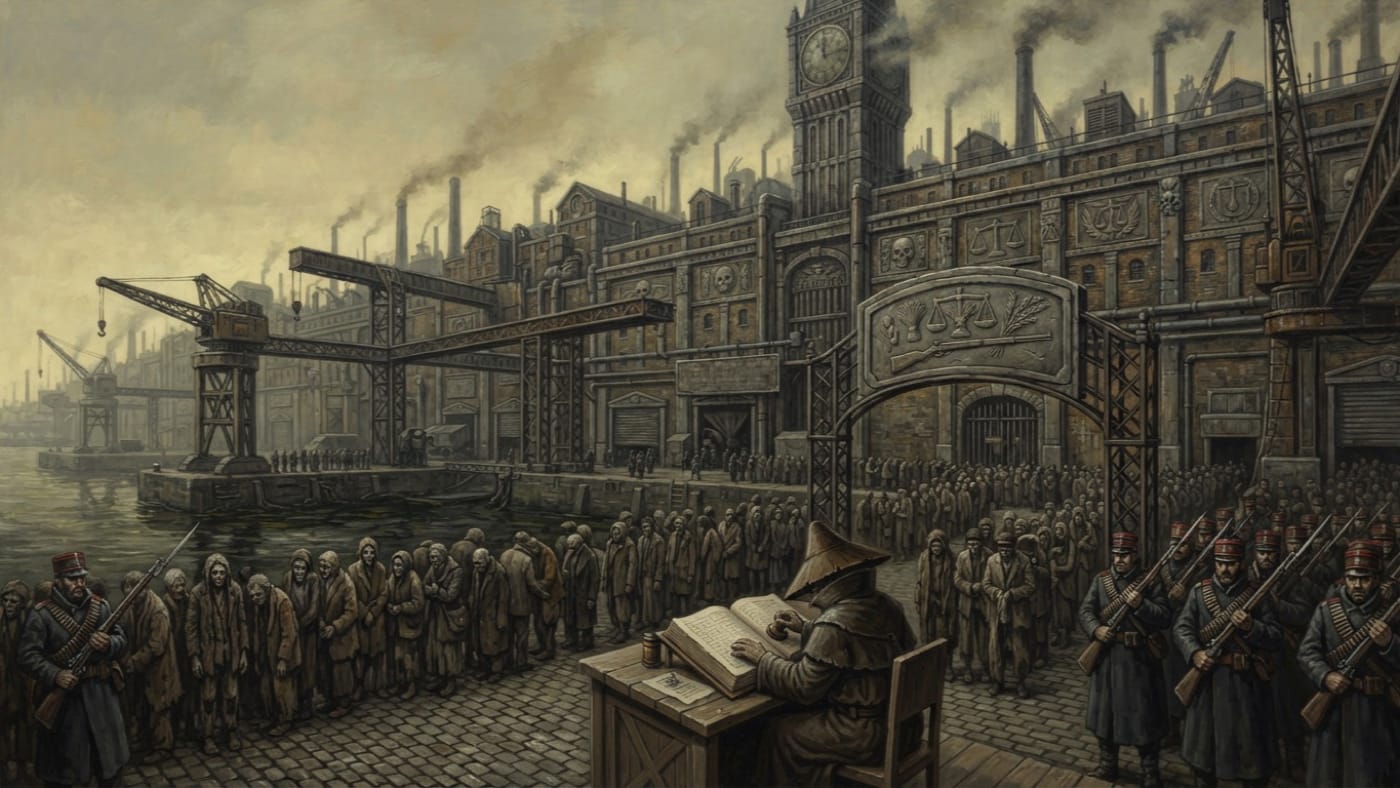
Holy Fast
The hunger came first; the consent was entered afterward
Holy Fast is Records' approved name for Varna's A.S. 129 deprivation: nineteen days of sealed grain, a Purity volley, and consent inferred from petitioners who could no longer petition.
Codex Ref. XIII.1.89-129
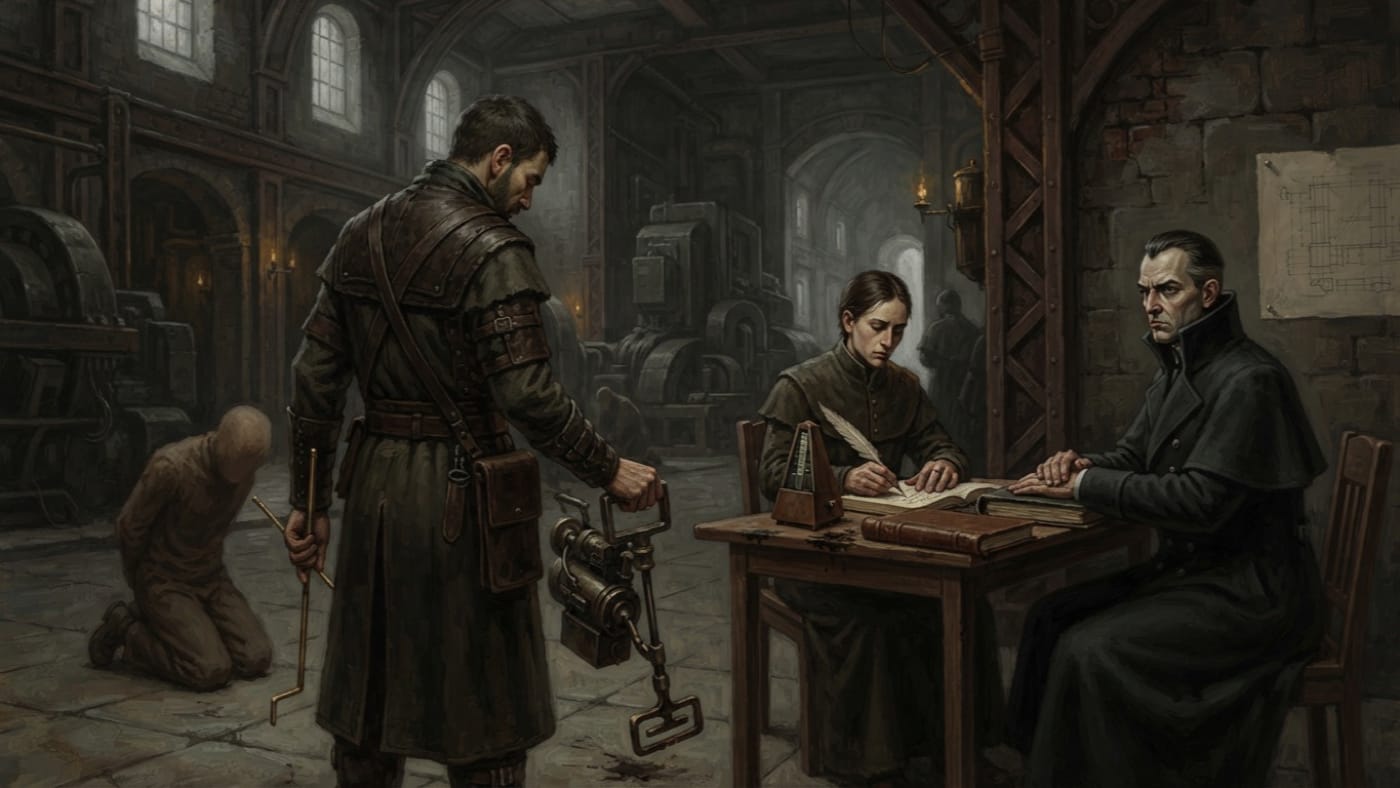
Holy Hush
The tract that mistook three quiet months for conversion
The Silentist tract claims Vell converted after East Hall. I keep the sentence struck through: three months at half volume do not make a disciple.
Codex Ref. XIII.1.41-1382

Hoop Codes
The private sign is forbidden; its approved shape is required
Lübeck's coopers wrote route memory beneath barrel hoops. Four meanings are recorded; the full grammar is not. After the Year of Smoke, private signs were prohibited and old shapes acquired respectable inspection names.
Codex Ref. XIII.1.26-004
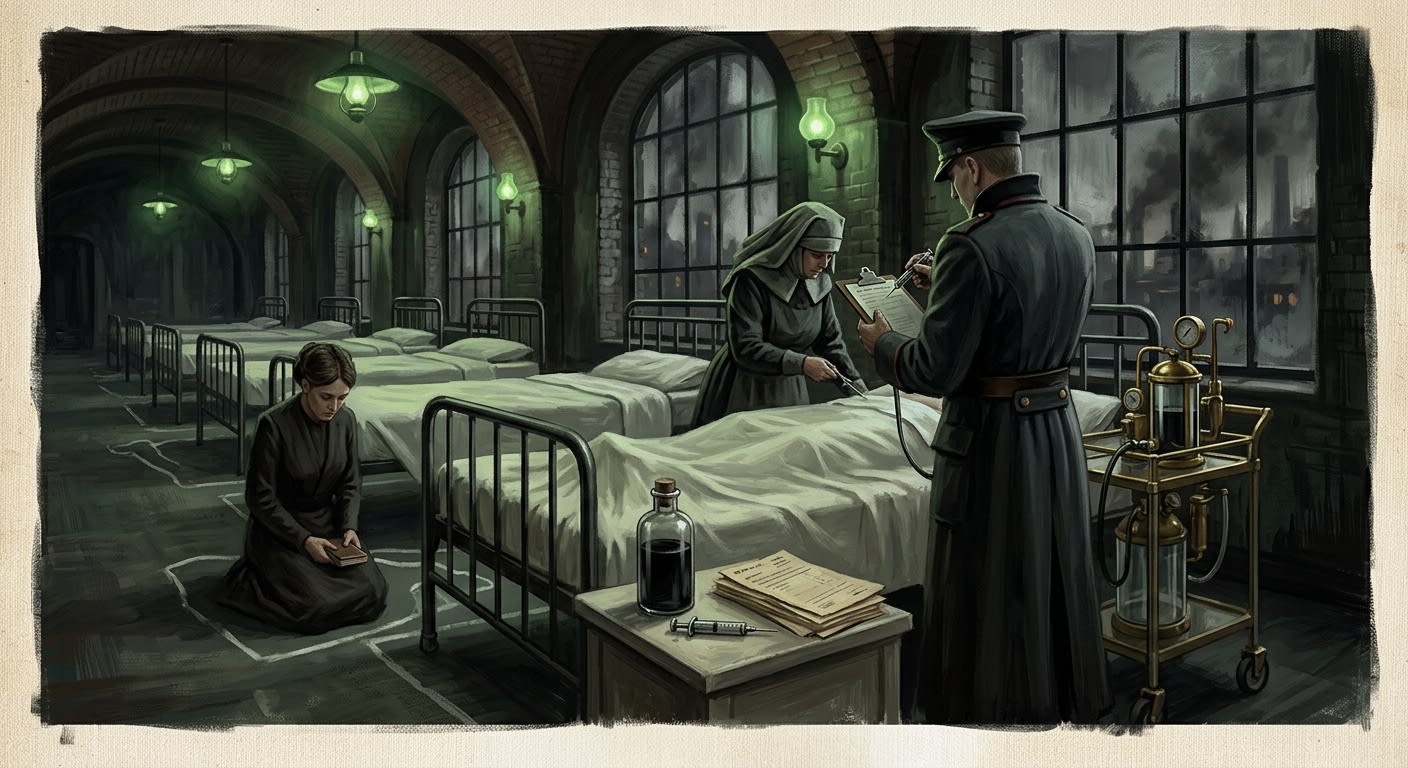
Hospices of Departure
Where Mercy warms the cup and counts the breath
The Hospices of Departure are Mercy's immaculate terminal rooms: clean linen, black elixir, family chalk-lines, final slips, and the doctrine by which the Synod makes death kind, lawful, useful, and recorded.
Codex Ref. XIII.1.88-112
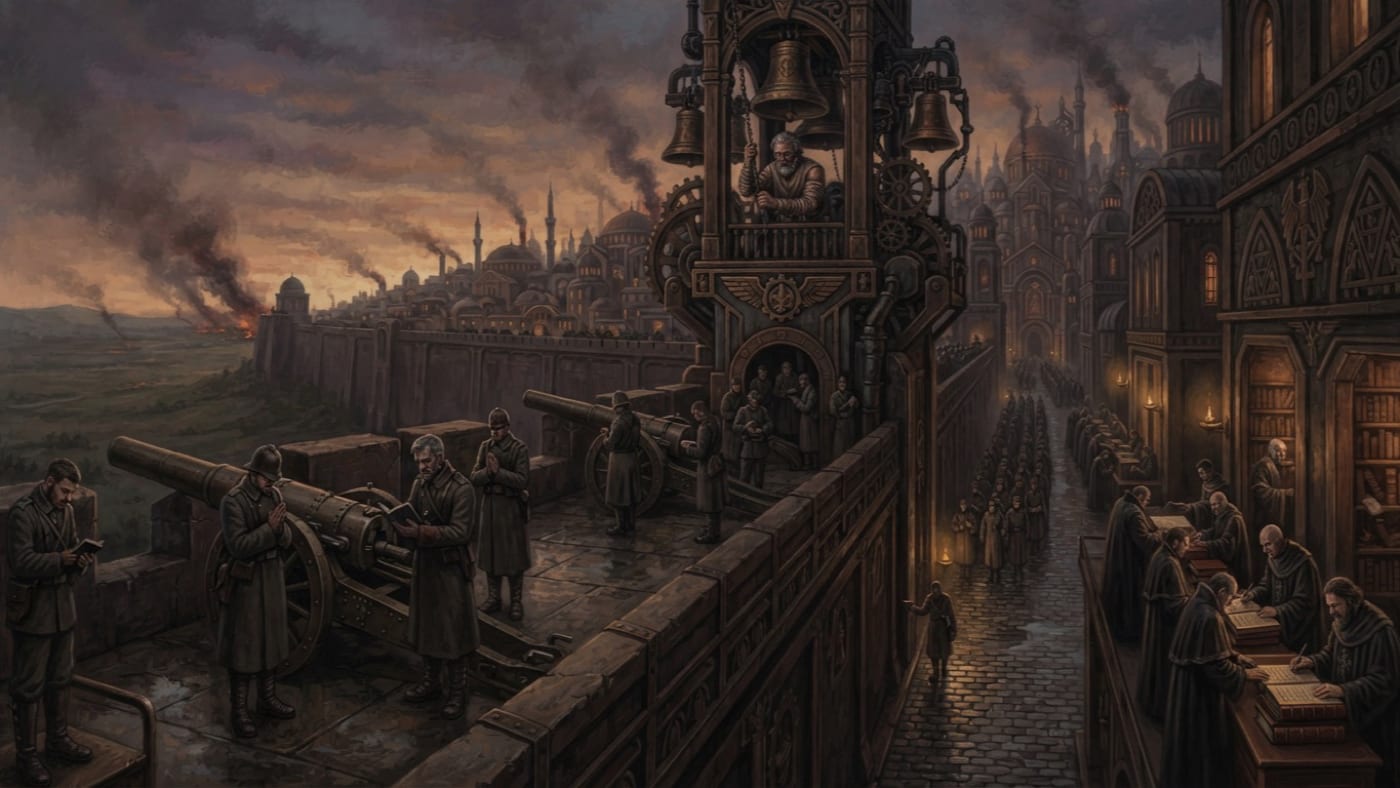
Hour of Vespers
The day closes when the bell permits it
The evening interval of Bastion-Constantinople, where prayer, watch readiness and the day's accounts answer to authorized bronze. Four Bureaus close the day; the guns remain attentive.
Codex Ref. XIII.1.96-201

Housing and Burial Codes
A roof and a grave remain yours while the marks agree
The Housing and Burial Codes bind roofs and graves to the same ledger. A valid Triune Knot makes a household legible; a failed mark makes its stone available for confiscation.
Codex Ref. XIII.1.07-014
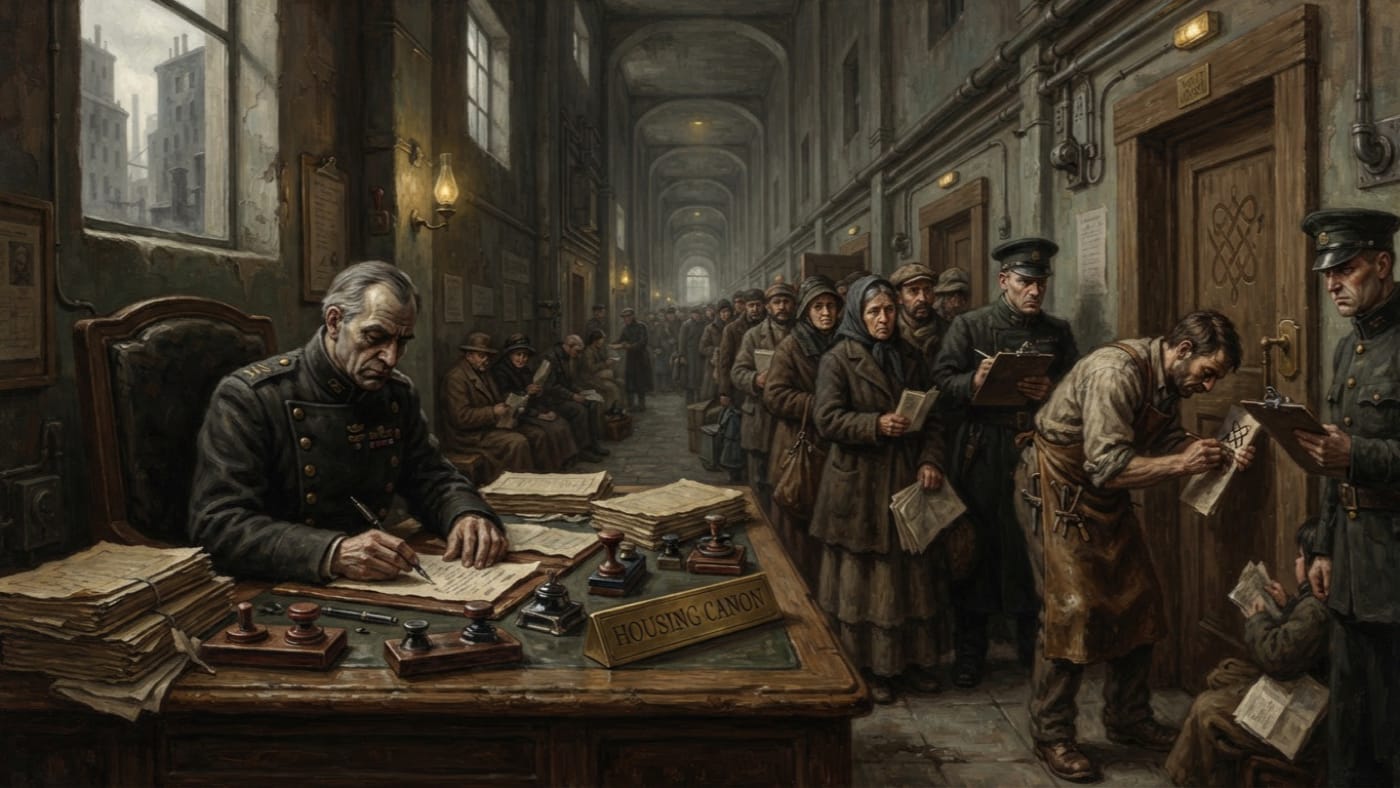
Housing Canon
Praise on the day, fines at month's end
The Bastion Housing Canon balances lawful households against marked thresholds, praising the carver who prevents today's riot and fining both haste and delay when the monthly tables arrive.
Codex Ref. XII.19.03-001
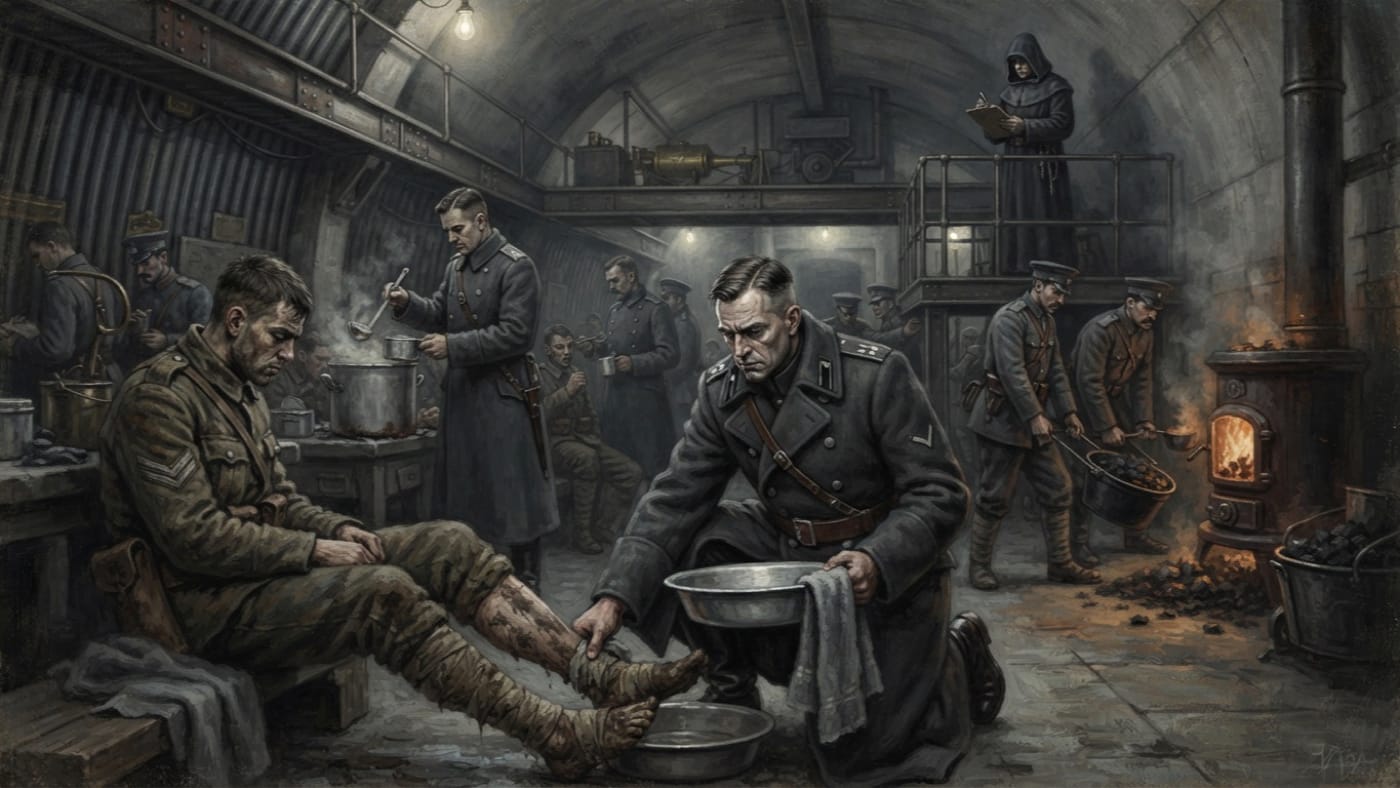
Humility Practices
A basin can be countersigned; a conscience cannot
Purity sends officers above captain to wash feet, serve meals and labour beneath their station each quarter. The register certifies the task; it cannot certify humility.
Codex Ref. XIII.1.94-003

Humility Sequence
Boot, mud, ration, wire; the ugly words that keep Pride low
The Humility Sequence is Przemyśl's deliberately ugly counter-recitation against Atheronic grandeur: boot, mud, ration, wire, cartridge, number, name, breath.
Codex Ref. XIII.1.94-188
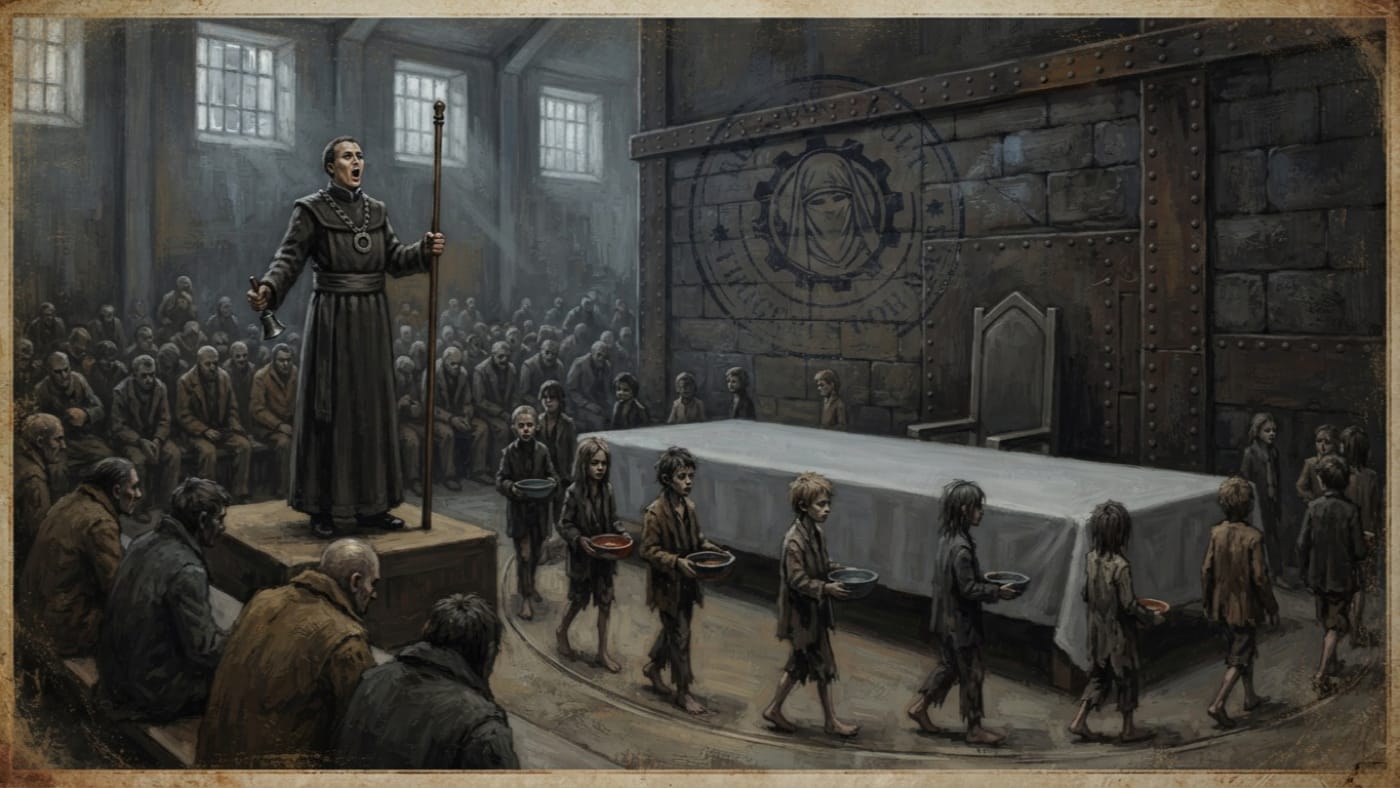
Hunger Antiphon
The bowls go round; charity waits for its cue
The Hunger Antiphon accompanies painted bowls at the Feast of the Empty Table. Its key flatters thin voices; charity arrives when the Bureau permits it.
Codex Ref. XIII.1.97-201

Hungry Ink
When the seal survives what the sentence cannot
Hungry Ink eats the sentence and spares the seal, proving with intolerable neatness that authority may survive the meaning it was meant to govern.
Codex Ref. XIII.1.18-001
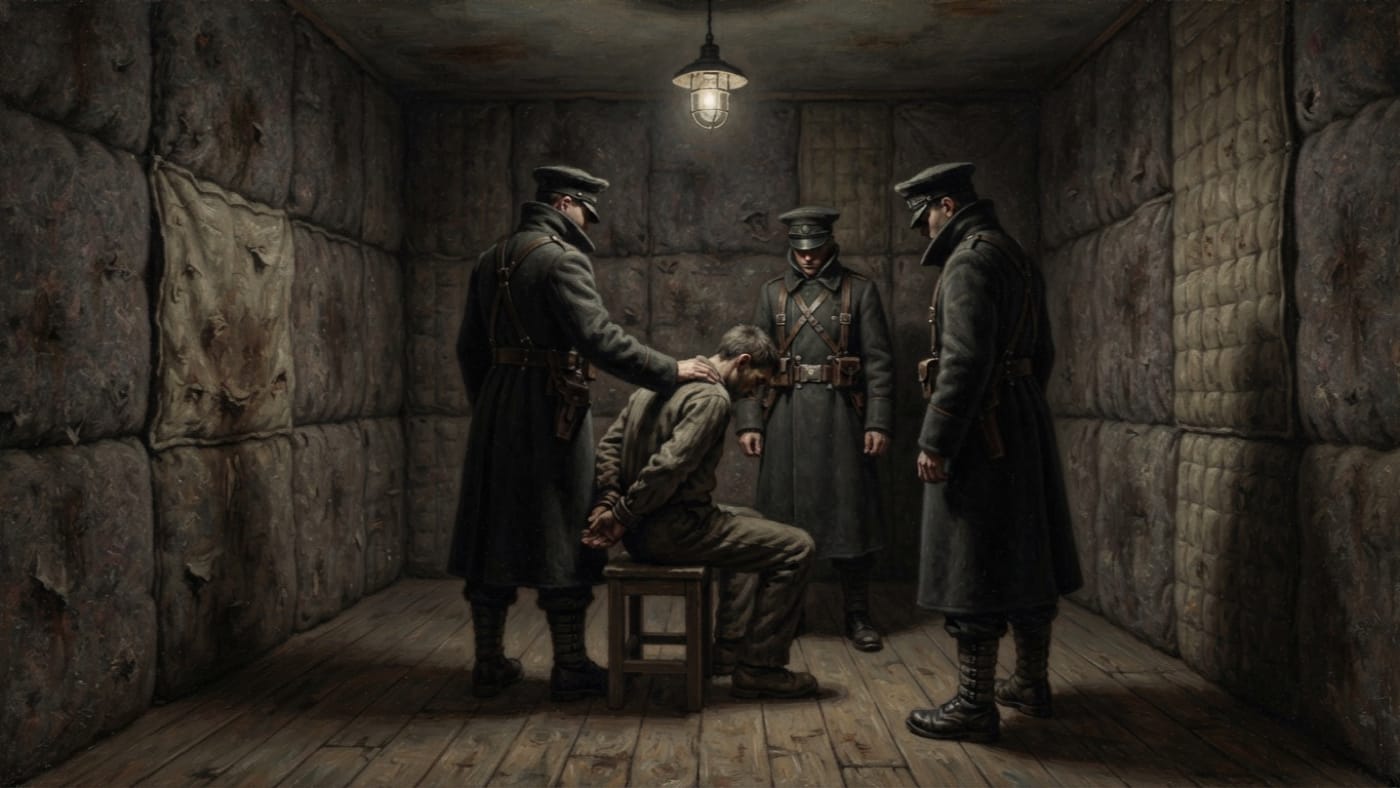
Hush Beating
The offender returns alive; the return records only calm
Mute Radiance's Hush Beating is methodical and non-lethal: soft cuffs, cloth on the wall, three Brothers and a closed door. The offender returns alive; the return reports a calm street. Origin and adoption remain unrecorded.
Codex Ref. XIII.1.76-009
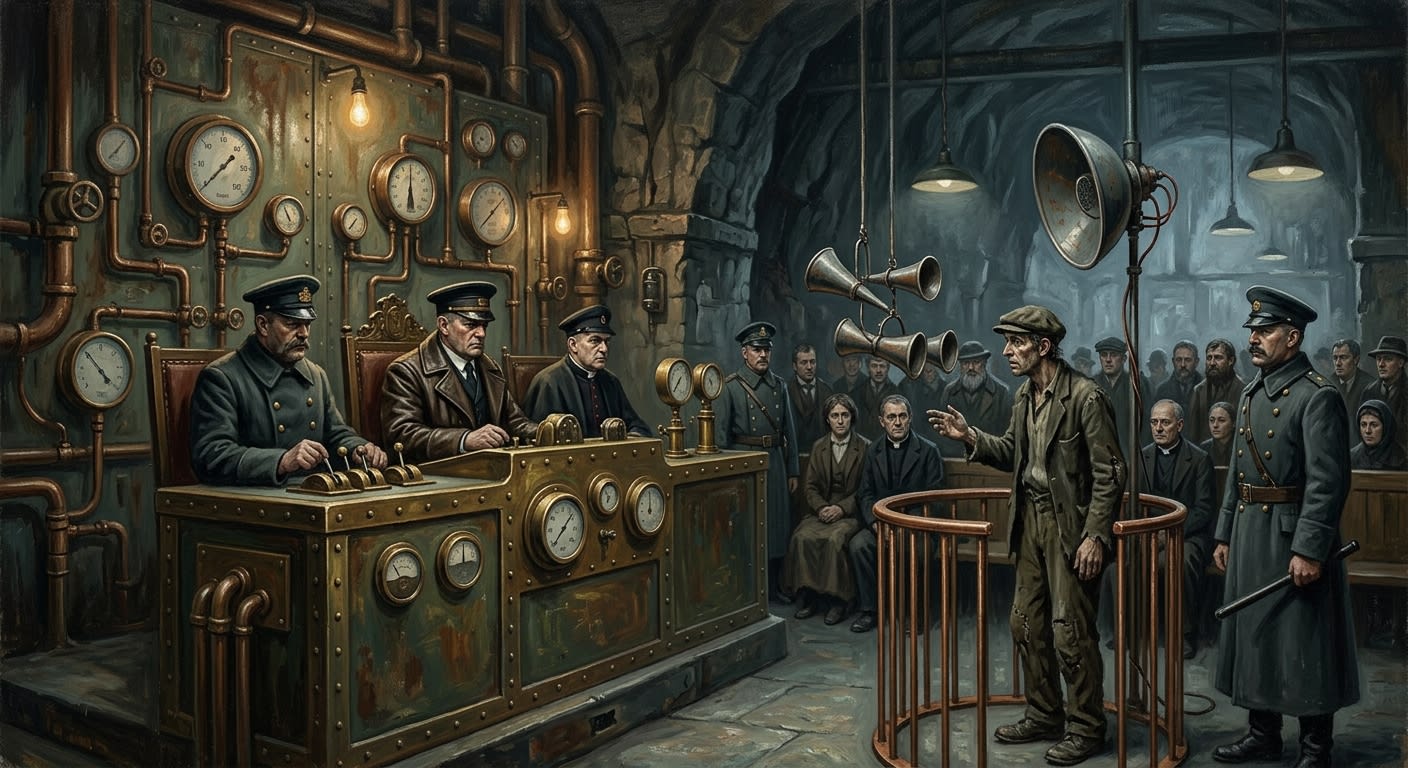
Hush Court
Where lungs become evidence and the ceiling signs the verdict
The Hush Court is Bastion-Irongate's acoustic tribunal: born from the Great Hush, sustained by pressure gauges, silence crimes, voice licenses, identity hearings, and every breath the mountain permits to become evidence.
Codex Ref. XIII.1.88-097
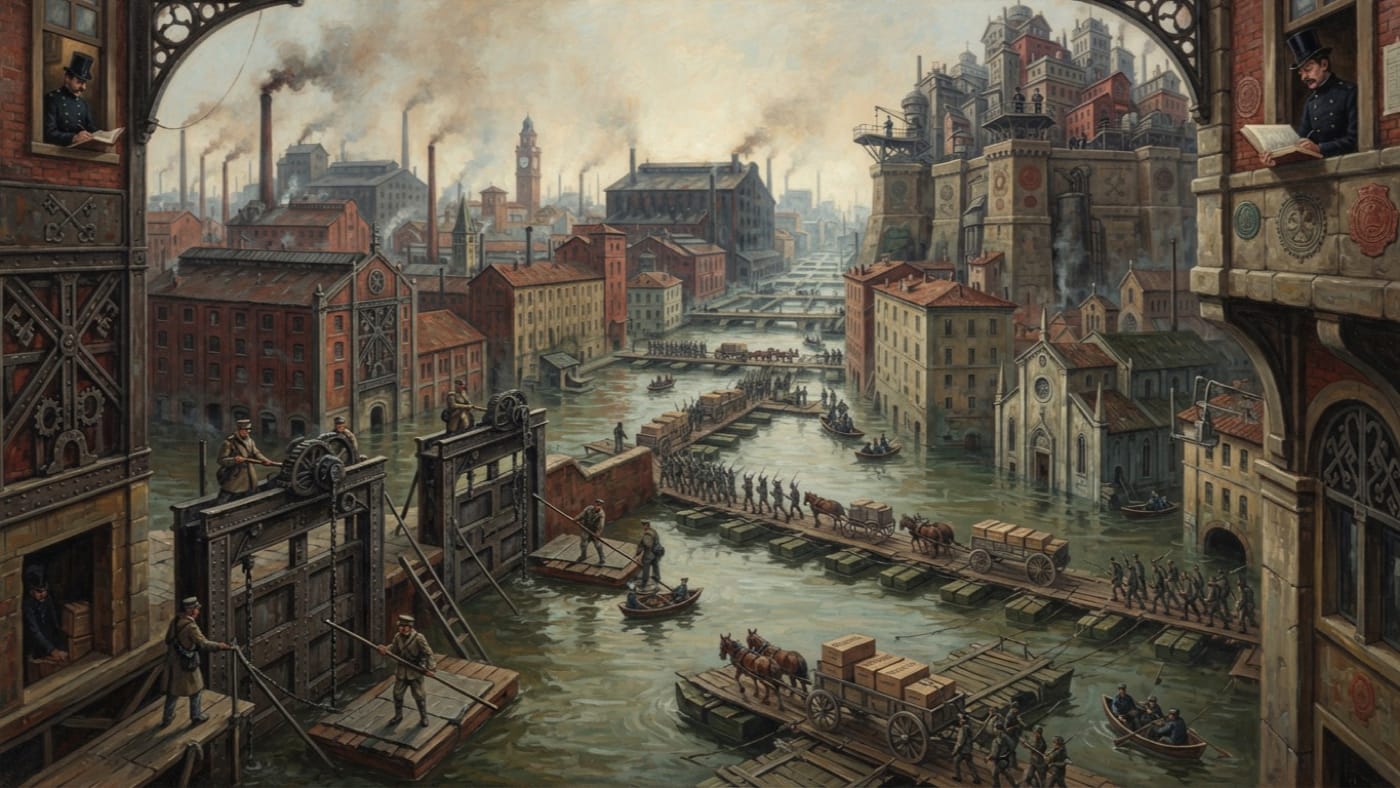
Hydrological Pacification
Water corrects the streets; ink pursues the families
The Bureau of War called Lombardy's A.S. 150 drowning hydrological pacification. Sluices corrected the streets; preserved registers continued the work long after the water withdrew.
Codex Ref. XIII.2.04-150
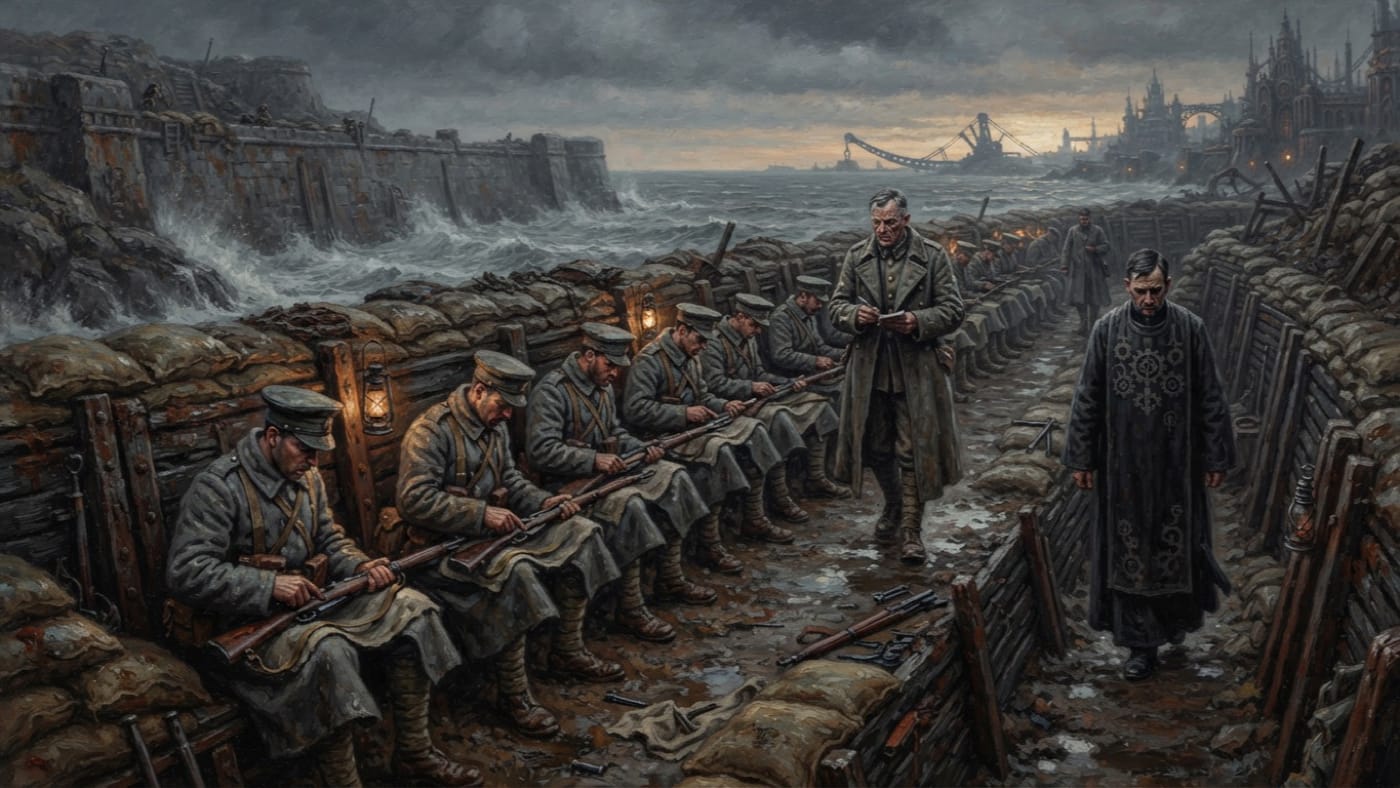
Hymn of Rust
Where a rag, a tune, and a clerk keep the rifles ready
At the Sister Trenches, the Hymn of Rust sets rifle cleaning to an evening chant. Each fallen flake is believed to buy the Line an hour; the quartermaster requires only that the rifle fire.
Codex Ref. III.5.08-017

Hymn of Salt
The sea returns the dead; the garrison supplies the hymn
At the Sister Trenches, soldiers chant the Hymn of Salt at dusk while collecting and reburying remains returned by the tide. The words are not held under seal; the dead still require a pit.
Codex Ref. III.5.08-018
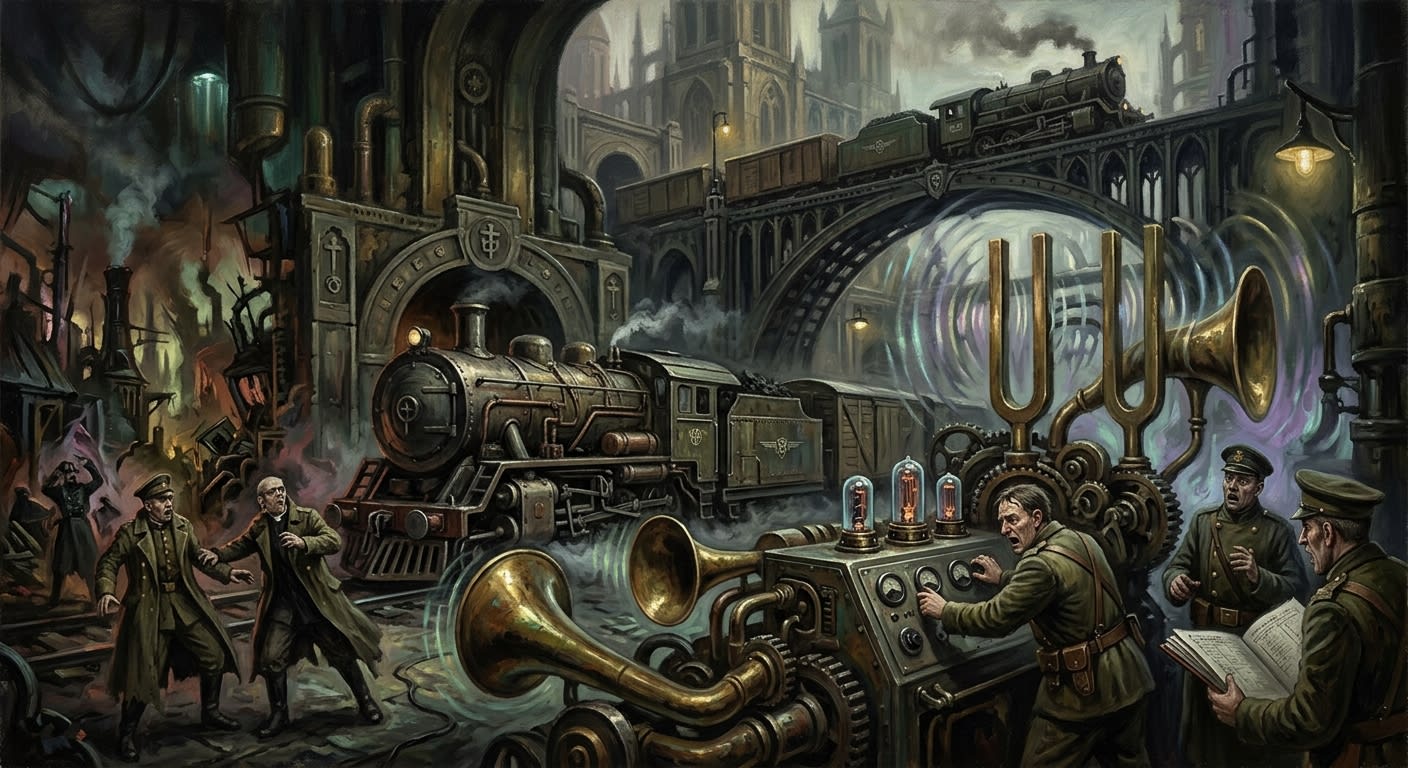
Hymn-Phase Slip
The measure arrives late, and obedience kills on schedule
Hymn-Phase Slip is Lorn's acoustic-mechanical heresy: correct hymn, correct signal, correct manifest, and a train delivered to the wrong truth.
Codex Ref. XIII.1.93-112

Hymnal Auditors
A wrong note is evidence before it is a verdict
Hymnal Auditors compare the Synod's worn hymnbooks against Orison's authorized versions. Soup, fatigue and sabotage may leave the same mark; someone must sign the finding.
Codex Ref. XII.45.02-001
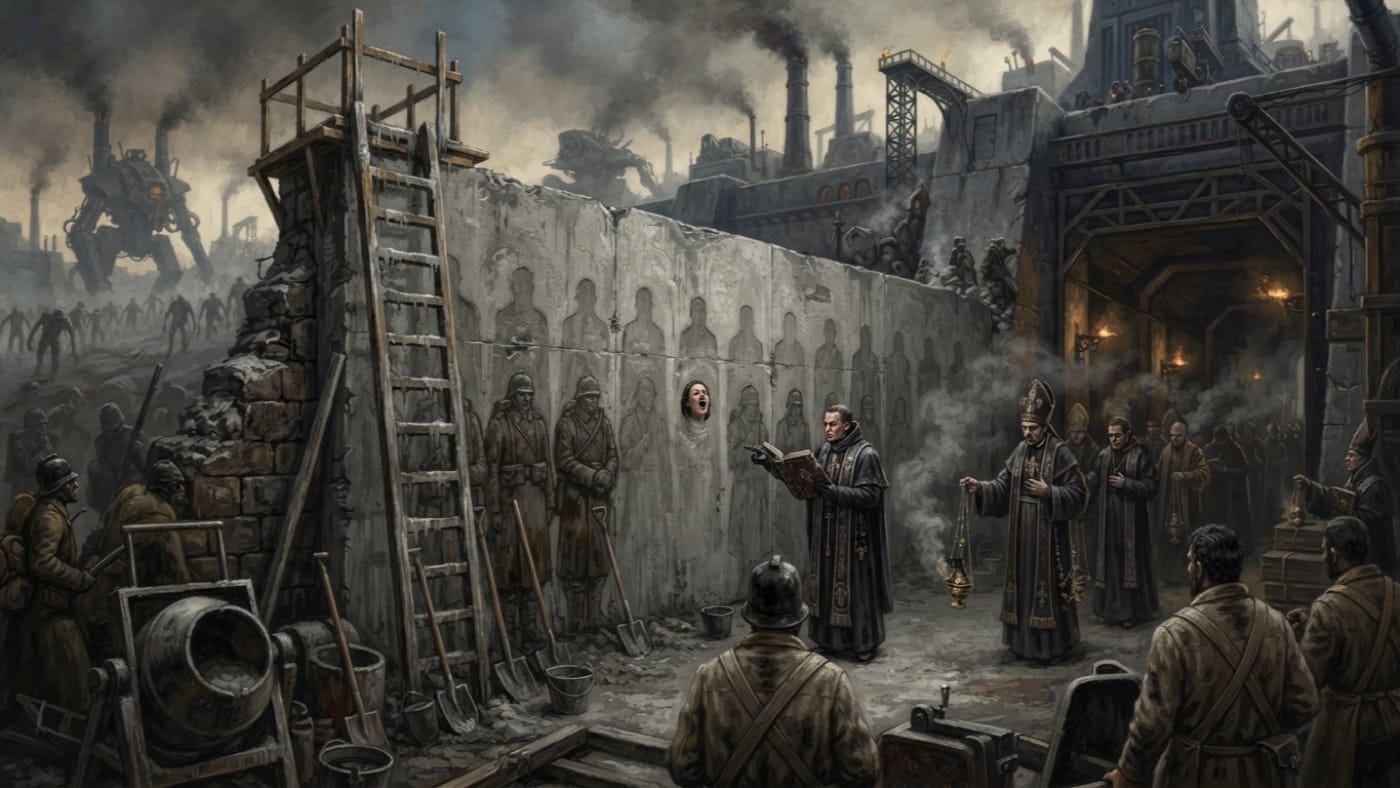
Hymnal for Desperate Hours
Page 4,117; thirty-two verses; forty-seven sealed singers.
The Bureau of Orison and Song's liturgical reference: page 4,117 prescribes the thirty-two-verse Antiphon of Endurance, sung by forty-seven at the Sixth Ravelin. The citation survives; the singers are sealed.
Codex Ref. XIII.1.97-170
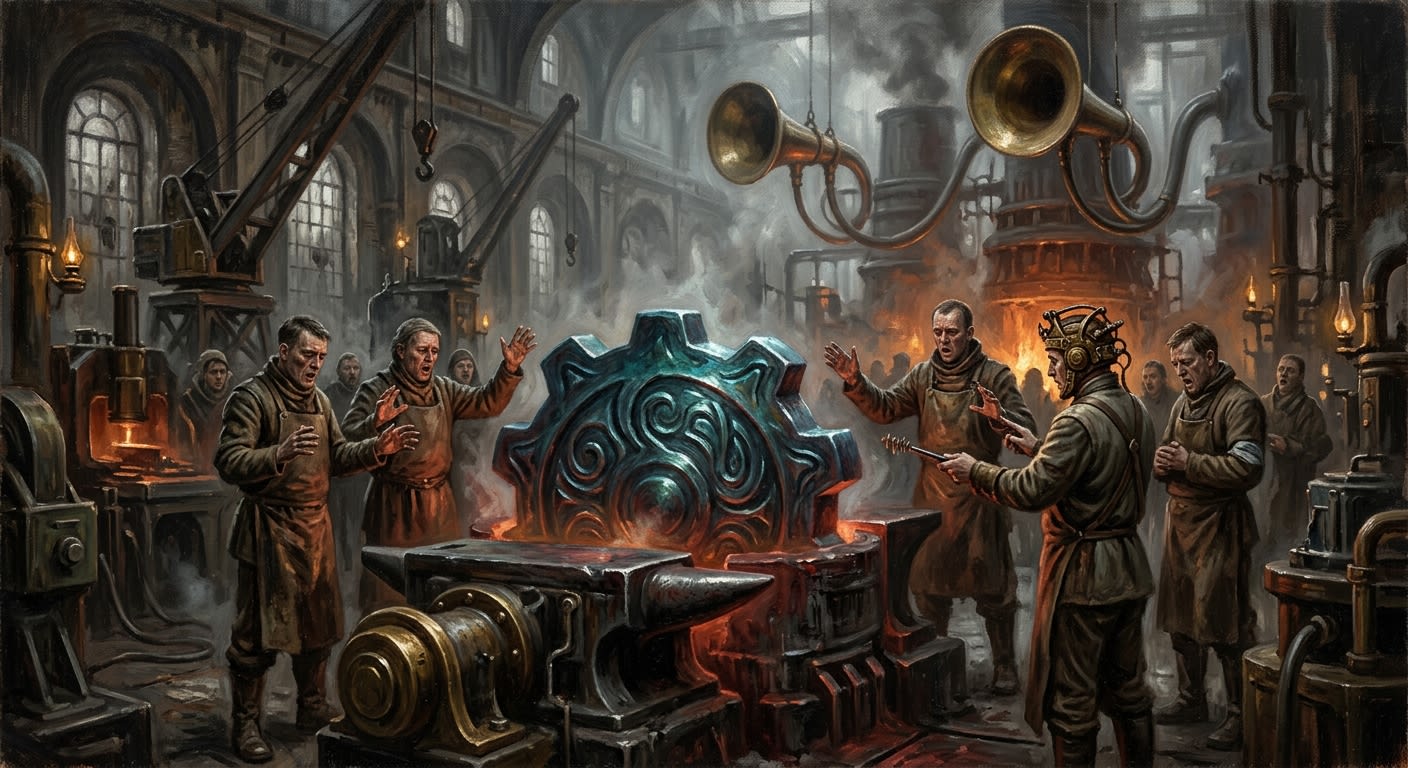
Hymnsteel
Metal taught obedience remembers every wrong note
Hymnsteel is obedient metal: forged at Essen by heat, formula, seal, and throat until iron remembers the note it was commanded to serve.
Codex Ref. XIII.1.93-110
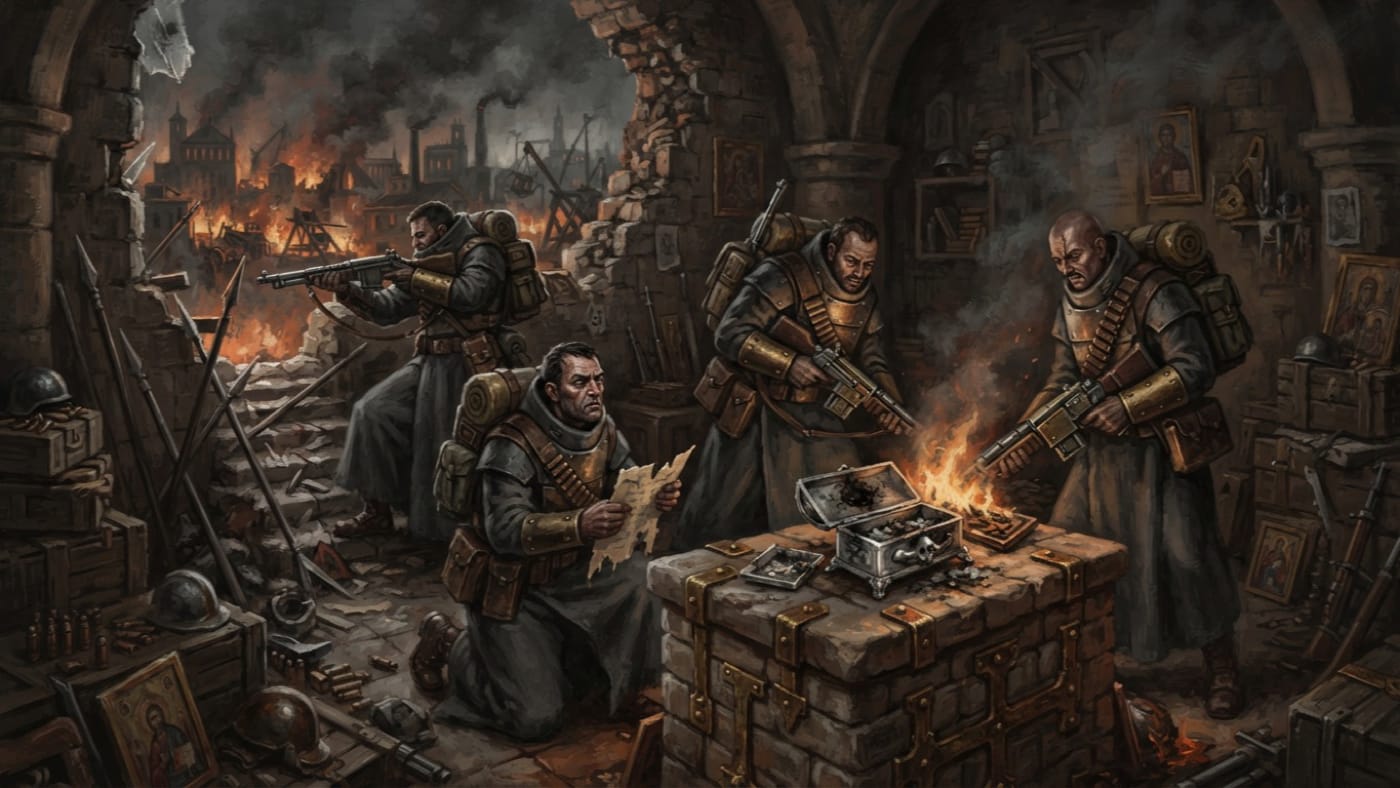
Iago Rule
Four sentences the smoke left behind
Four surviving sentences of the Order of Saint Iago's rule bind road, shrine, guest, and bone to custody. Toledo supplied the fire; the preserved text never commanded it.
Codex Ref. XIII.1.57-016

Identity Fraud
A stolen name buys bread; an authorised alteration earns a salary
Identity Fraud steals the registered person: names, ration rights and passage permissions. Standing Order 14-M gives offences of sufficient degree a wall; authorised alterations remain daily duty.
Codex Ref. XIII.1.97-1422
Index Claritatis
Speak only what has been granted, and preferably with witnesses
The Index Claritatis licenses permitted speech across the Synod, proving that censorship is crude until Doctrine teaches it grammar.
Codex Ref. XIII.1.30-001

Index Echo
The ledger forgets; the courier does not
Index echo is the Runner's habit of hearing condemned names in ordinary speech. Purity calls it vigilance fatigue and issues another route.
Codex Ref. XIII.1.23-201

Index of Canonised Persons
The name is recognised; the bone still has questions to answer
A.S. 201 survey of the Index used at Doctrine Fit. The Church recognises the person; the Authenticator must still answer for the bone. A name in the book supplies neither provenance nor a leaning candle.
Codex Ref. XIII.1.35-001

Index of Prohibited Emanations
The book that gives smoke a docket number
Bureau of Purity catalogue that turns unlawful smoke, warmth, vapour, residue, and prayer by-product into chargeable evidence for Fume-Inspectors and their theatrical little strips of paper.
Codex Ref. XIII.1.77-001
Indiction Writ
Five seals, five powers, and an appeal that waits
The Indiction writ lets Records seize ledgers, enclose witnesses and suspend names before any charge. Five seals announce that the Bureau has noticed; appeal waits until reconciliation.
Codex Ref. XIII.1.06-003

Injured Laborers' Provision
The law stops at the edge of the payroll
The A.S. 160 Provision gives injured direct Bureau employees recognised standing before the Synod. Charter-house prospectors fall outside it. Seven requests to close the gap have been received; seven have been filed.
Codex Ref. XIII.1.93-160

Injured Laborers’ Provision of A.S. 160
The wound is Synodal; the wages belong to someone else
The A.S. 160 provision covers injured Bureau employees and excludes charter-house prospectors. Seven petitions bearing Saint Orren's name sought correction; all seven were filed. The payroll decides whose wounds count.
Codex Ref. XIII.1.93-160

Inner Circle
Seven knives pointed inward, and Europe calls the locked box government
The Inner Circle is the Synod's highest chamber: seven Seal authorities locked in Strasbourg beneath the Basilica, manufacturing unanimity from obstruction, fear, rotating stamps, clerks, and the occupied absence of War.
Codex Ref. XIII.1.05-090
Instructional Silence
The master's silence grants no licence to imitate
An A.S. 201 survey of Vell's recorded reassignment: one cell, individual pupils and taps that judged careers. His name grants lesser throats no permission to attempt seven chambers.
Codex Ref. XIII.1.41-005

Integrated Route and Bellway Table
The street, the sound, and the name to blame
RT-1 and its later revision RT-1b join routes, bells and hazards on one sheet under the A.S. 129 Route-Timing Concordat. The living officer signs; the canal supplies the consequences.
Codex Ref. XIII.1.129-001
Inter-Bureau Advisory A.S. 195
A standing wall requires invoices
The A.S. 195 advisory answered Shipka's survival with consecrated mortar, relic-laced ironwork, prayer-stamped bolts, and revised replacement schedules for the marsh-facing works. The engineers obeyed; the clerks priced holiness.
Codex Ref. XIII.1.195-001

Inter-Infernal Anomalies
Hell's quarrels do not excuse an unwatched road
The Inter-Infernal Anomalies shelf records cooperation where Hell's quarrels should have prevented it. The A.S. 199 Sibiu contact is confirmed; its purpose remains unresolved, to the inconvenience of strategy and filing.
Codex Ref. VIII.7.02-001
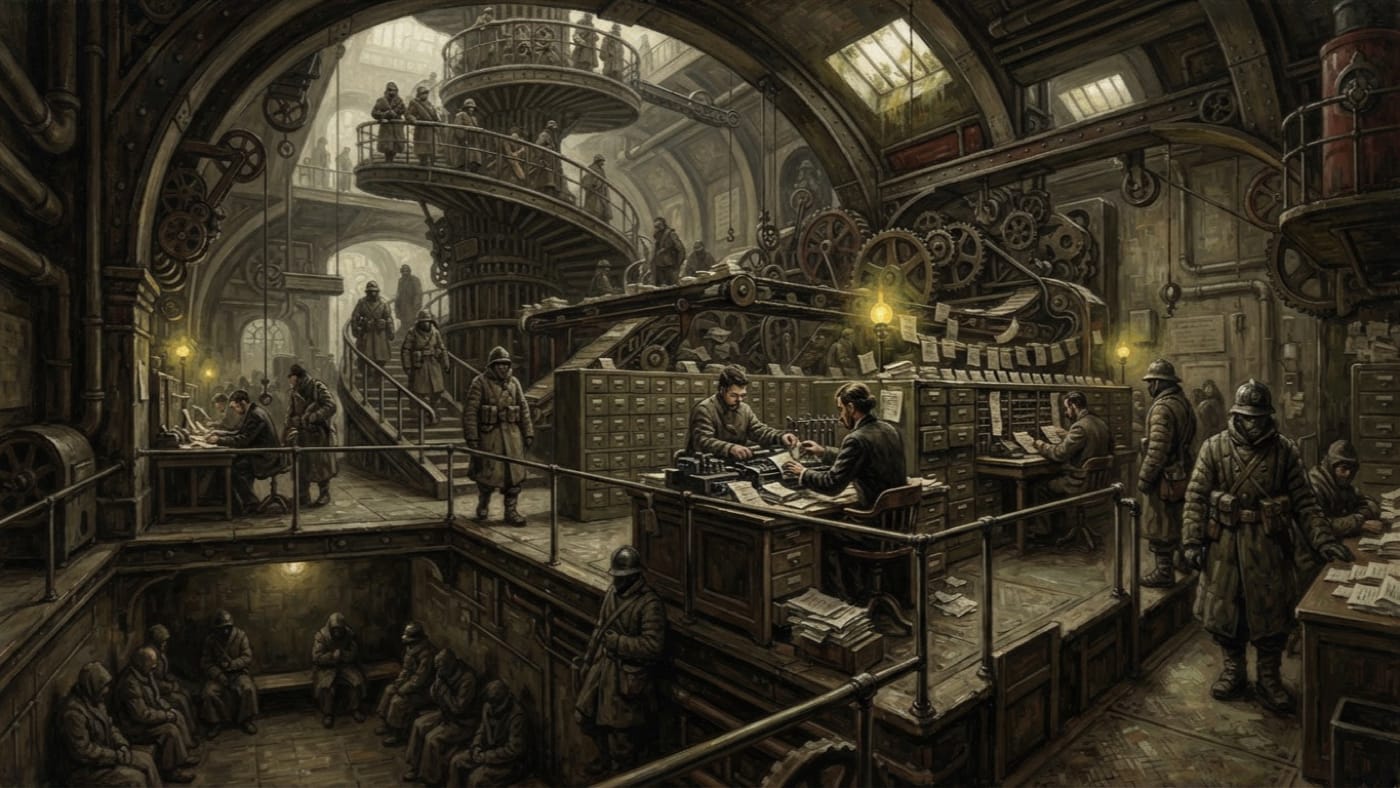
Internal Memorandum 7R-201
The reply ends; the detention fees continue
The Bureau of Doctrine's entire reply to Peregrine Row's detention quotas: "Standards are standards." Drax's A.S. 201 citation survey follows the vowel from creed test to fee; the memorandum's issue date remains unestablished.
Codex Ref. XIII.1.23-004
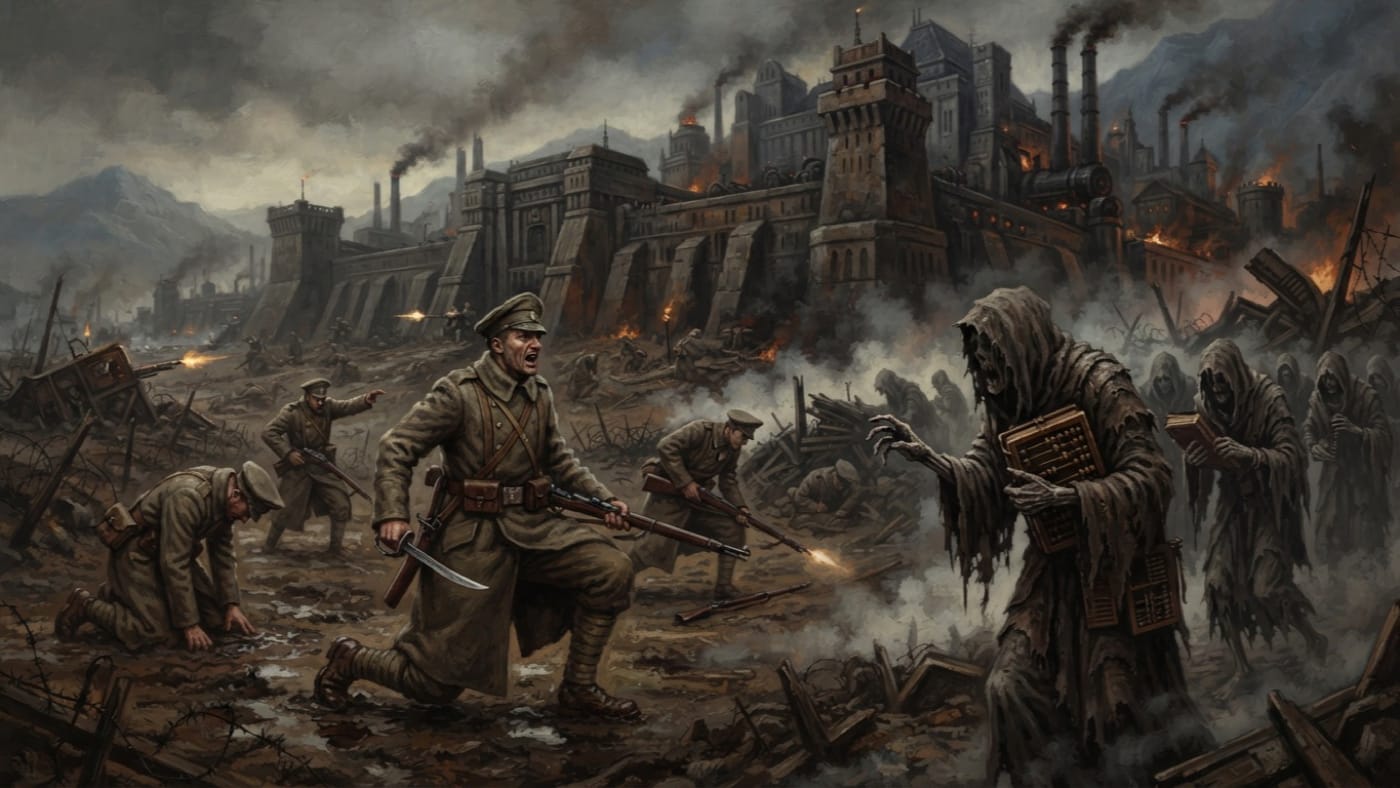
Inverse Litany
The will remains yours. The arm will not answer.
Velmora's Debt-Binders mutter a cadence that leaves soldiers willing to strike and unable to lift an arm. Doctrine has named the curse; it has neither a text nor a certified remedy.
Codex Ref. XIII.1.37-194

Investigation 447-N
The file pends because the bells know better than we do
Investigation 447-N began as a northern bell audit and became the Bureau's most useful cowardice: a pending file placed over a listening wound.
Codex Ref. XIII.1.97-199

Ira of the Second Bell
Search the papers. There are none.
Ira of the Second Bell carries the Unstruck's messages from the Barricade Maze to the Witness Rental Houses, with chalk chips in her mouth. Purity searches her papers; the record holds neither recipients nor contents.
Codex Ref. III.2.01-043

Iron Crown Currency
The British coin that buys rope, insults Tithes, and refuses to kneel
The Iron Crown is Britain's stubborn iron tender: older than the Synod's Crown of Grace, tolerated at mixed ports, and hated because it works.
Codex Ref. XIII.1.22-001
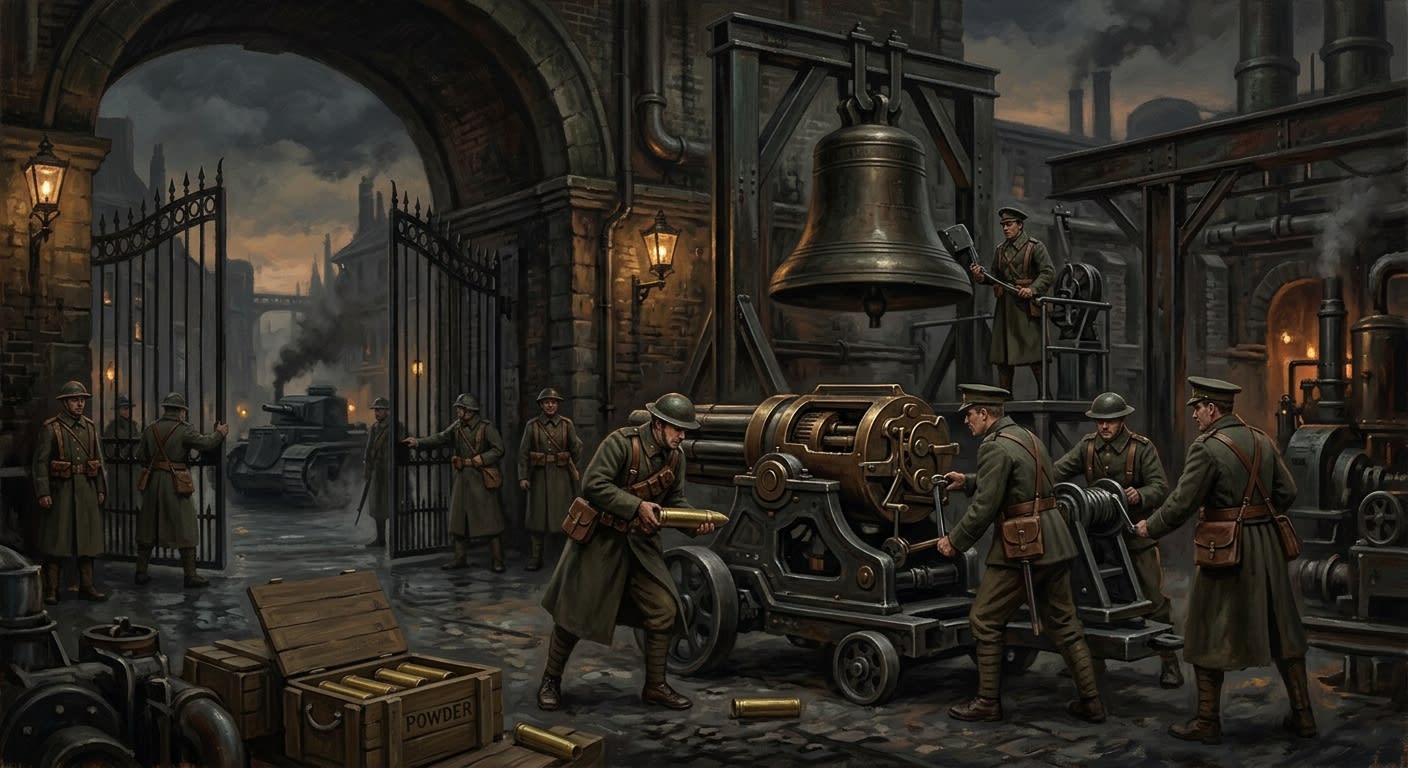
Iron Vespers
Bronze orders the night to become useful
Iron Vespers is the Synod's martial evening peal: seven strokes that lock gates, open powder, transfer custody to night, and teach soldiers that fear obeys better when bronze gives the order.
Codex Ref. XIII.1.62-004

Iron-Blood
The rail remembers; the Bureau recommends observation
Iron-Blood names the rail trade and the change its veterans claim. My A.S. 186 inspection records Grosz's grey hands and hard grip; six Purity inquiries found no evidence of supernatural contamination. The cause remains unfiled.
Codex Ref. XII.44.02-001
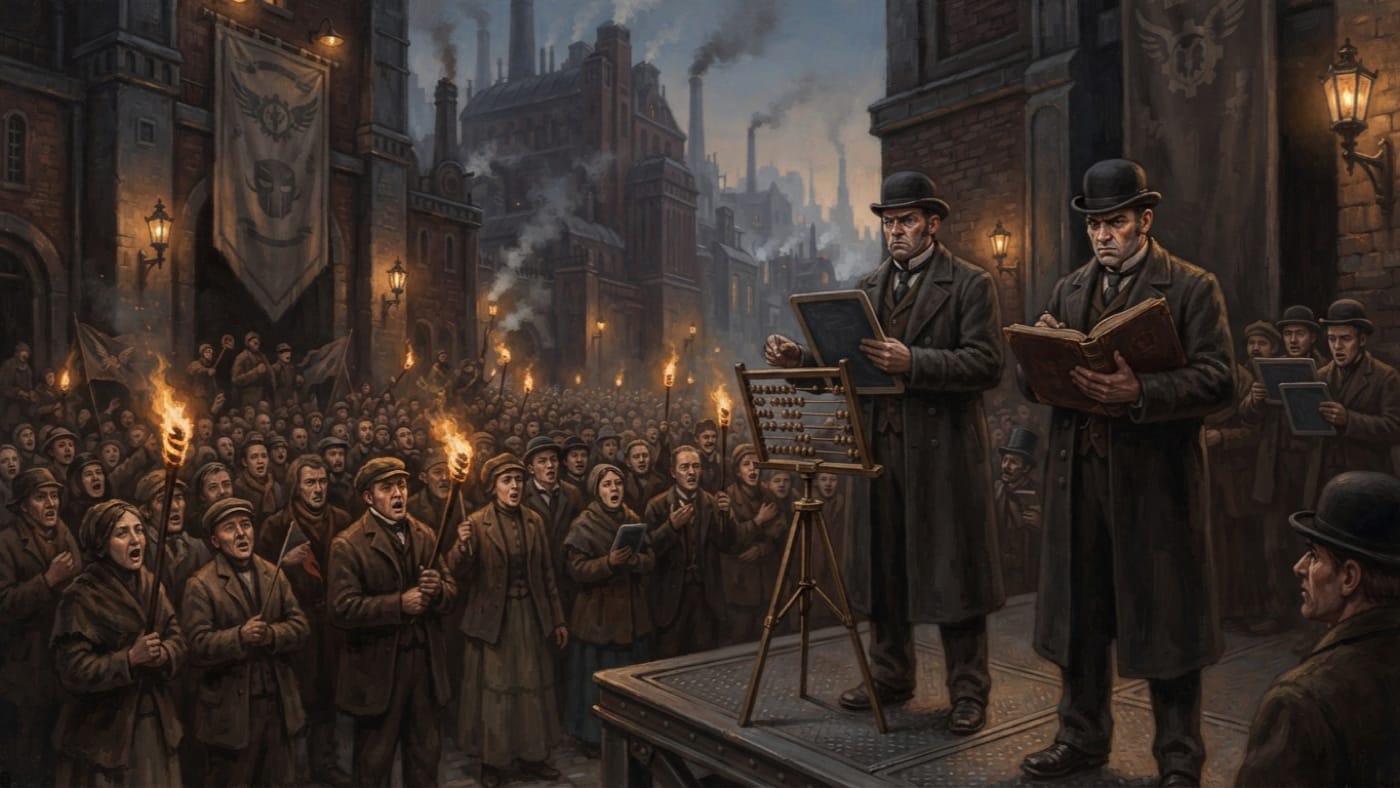
Joy Compliance Index
Rejoice by permission; be judged by the slate
The Bureau of Festivals grades a crowd's rejoicing through forty-two observable behaviours. Three verdicts follow; four points separate insufficient zeal from excessive emotion. The slate certifies conduct. It cannot certify joy.
Codex Ref. XIII.1.67-201
Joy Discipline
Gratitude has a lawful width, and the ledger charges for the rest
Wexel measures smiles, licences laughter, and converts emotional infractions into ration cuts, debt, and ash bills. Instituted after the Dust Fire of A.S. 112, its temporary safety law remains in force eighty-nine years later.
Codex Ref. XIII.1.19-112

Joy Rot
The ledger balances long after the music ceases to matter.
Joy rot leaves the Pageant Captain's count intact and his celebration dead. Mercy calls it Occupational Malady 17-F; Festivals requires a smile and files the damage as performance.
Codex Ref. XIII.1.17-001
Jubilee
Repentance by distance; completion by arithmetic
The Jubilee turns penance into distance, wrists into serial numbers, and confession into further chains. At the destination shrine, the delivered and the dead are added together. The arithmetic is correct.
Codex Ref. XIII.1.109-094

Judgment Tone
The knife-note by which truth is made punctual
Judgment Tone is the Brand-Singer school of cut cadence and rapid certification, beloved by tribunals whenever truth must arrive before the docket cools.
Codex Ref. XIII.1.41-002
Judicial Circular 4.12
Four minutes for law to wound before the road learns its hands
Judicial Circular 4.12 compressed roving circuit trials into one creed-hymn: opening, testimony, rebuttal, ruling — four chimes by which law outruns crowds, mothers, mercy, and its own exposed ankles.
Codex Ref. XIII.1.91-141

Jupiter
The planet may wander; the printed position remains in force
Jupiter departed from its approved position. Doctrine classified the planet as provisionally in error and corrected the astronomers who presumed to notice.
Codex Ref. XIII.1.08-199

Klem's Courtesy
Give the inspector a mistake he can afford to find
Klem's Courtesy plants an obvious error near the top of a grain ledger so the auditor may correct it, feel diligent and stop reading. This A.S. 201 survey records the device; its origin remains undated.
Codex Ref. XIII.1.97-1546
Knife-Mile Reframing
The companies drowned; Records supplied their intentions
Records renamed the Knife Mile drowning a Penance March, destroyed testimony, and made survivors recite the improvement. A.S. 137 dates the catastrophe; the reframing remains undated.
Codex Ref. XIII.1.137-001

Known Heresies
Eight offences. One drawer.
Eight movements condemned under one jurisdiction: scripture without a gloss, stolen bread, unbelief, demonic accommodation, hidden grain, forbidden inquiry, unregistered children and unauthorized mercy. The drawer is full.
Codex Ref. XIII.1.38-001
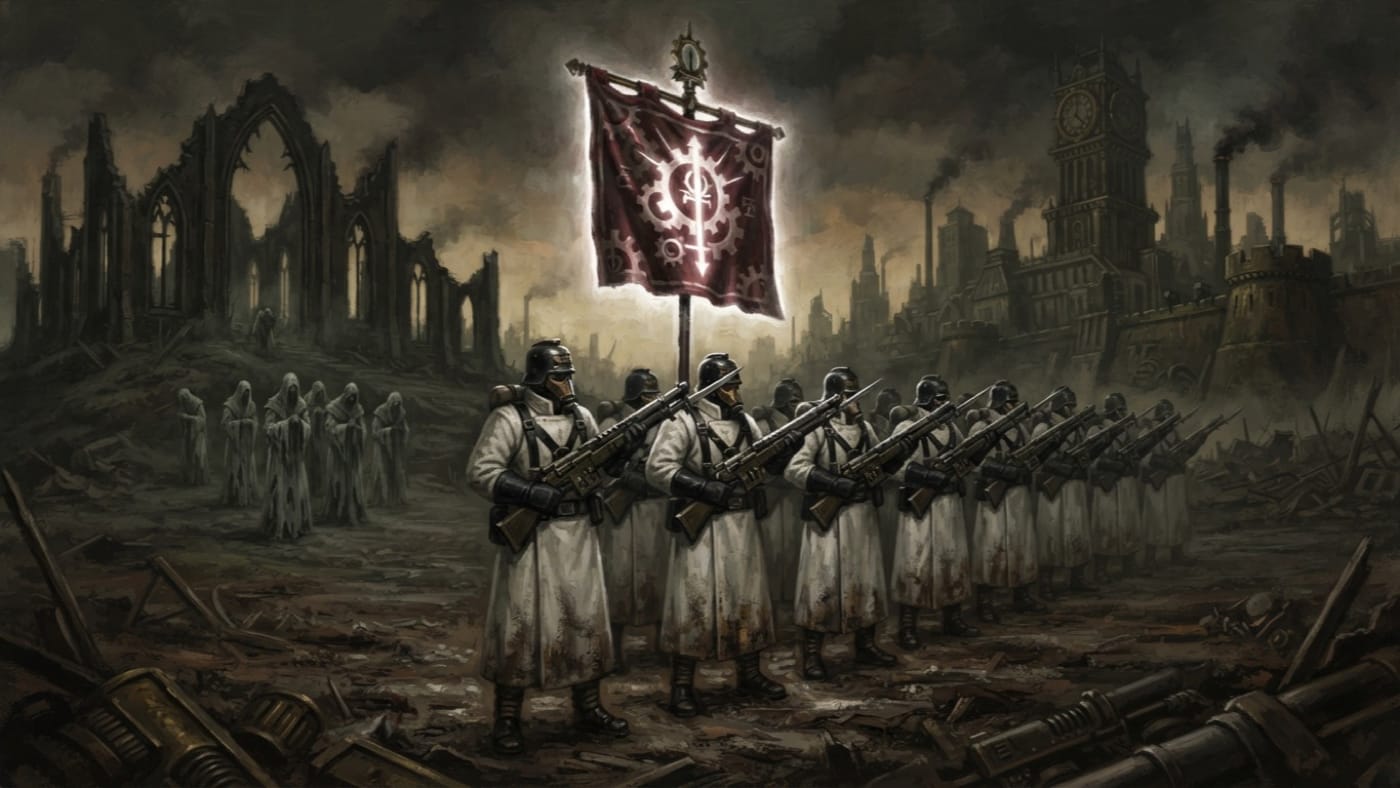
Kyrie Eleison
A prayer everyone knows is a key everyone carries
The Church's mercy prayer remains orthodox after its inversion at Prague in A.S. 167. Forty-three Fusiliers died without firing; the Bureaus have named the failure and left its mechanism unresolved.
Codex Ref. XIII.1.51-167

Labour Tokens
The receipt is settled; the hands are owed
Labour tokens settle household dues by pledging future work. The receipt calls the account paid; kitchens, factories and laundries collect what the household still owes.
Codex Ref. XIII.1.85-201
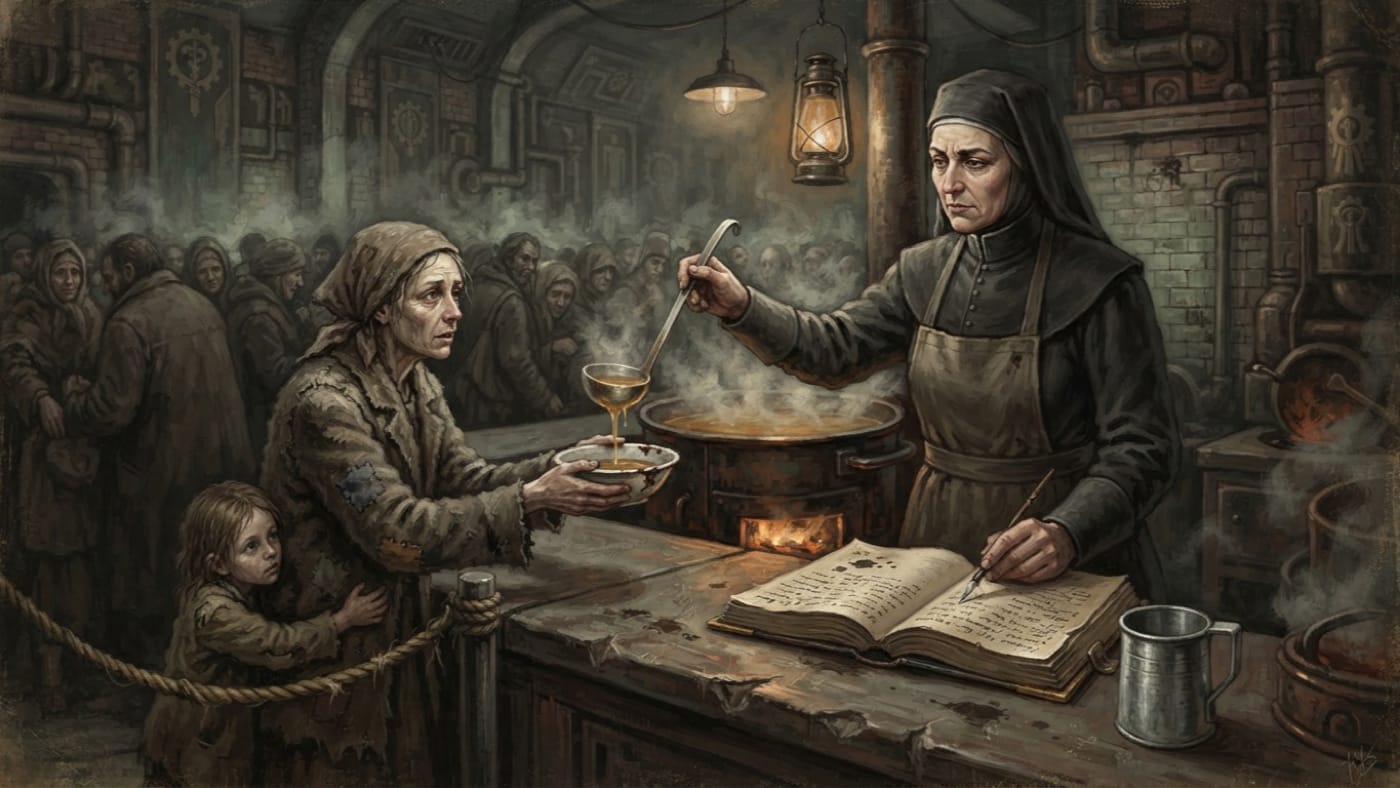
Ladle Debt
The bowl is warm; the account remains open
An extra ladle today buys an unspecified future service in a Matron's book. Mercy may leave the debt uncalled; desperation or cruelty may collect it. The broth is real. So is the name in ink.
Codex Ref. XIII.1.06-001
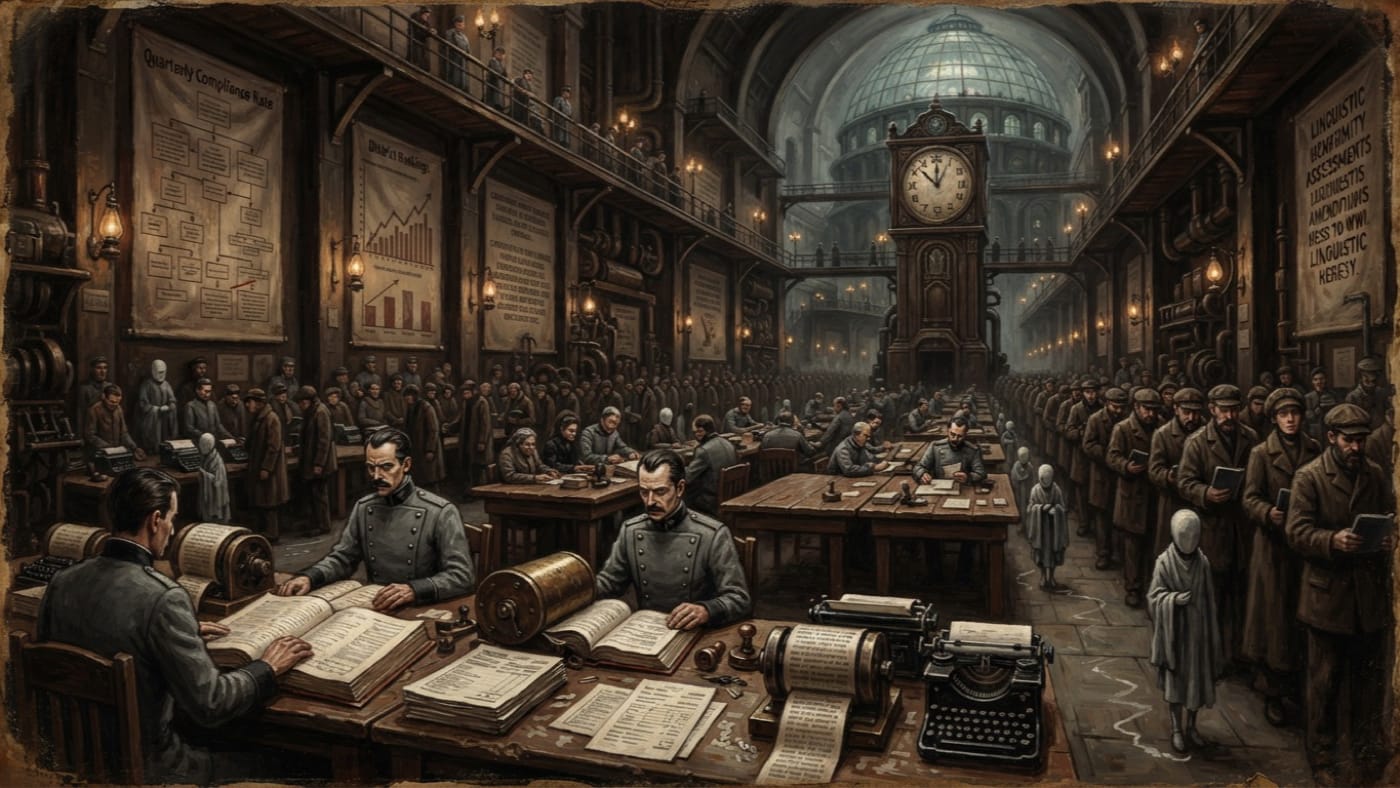
Language Conformity Assessments
The return records what was said; the Creator does not file quarterly
The Bureau of Purity's quarterly measure of how thoroughly approved words have displaced the old ones. Compliance ranks Inquisitors; belief remains beyond the ledger.
Codex Ref. XII.49.02-001
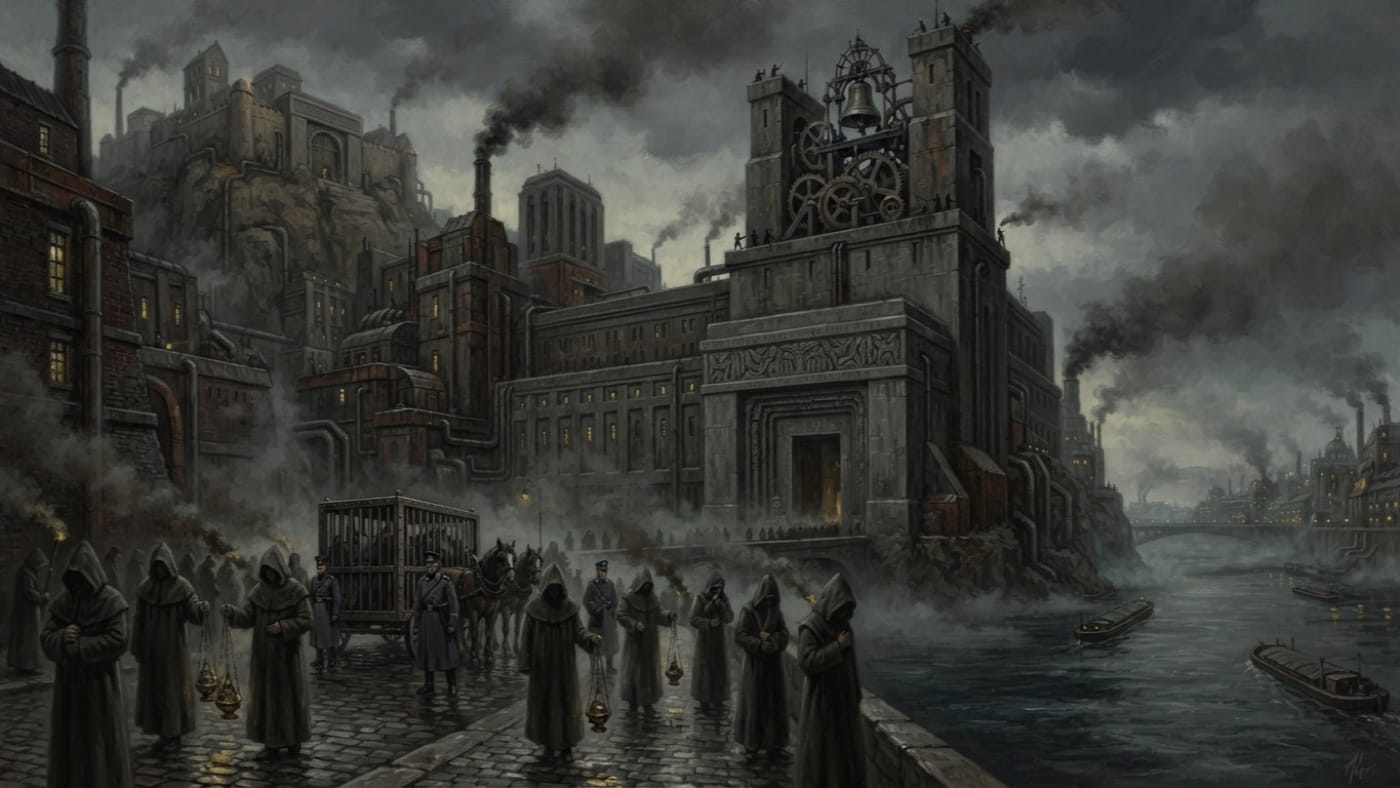
Latin
The river kept the hours; the Church kept arguing about the language
Latin carries the Church's prayers, titles and ceremonial condemnations. The Rhône reportedly used it; witnesses disagreed, and the archive declines to supply a grammar.
Codex Ref. XIII.1.97-001
Lazare
Two errands for one bell; neither promises a verdict
Lazare is Saint-Victor's bell for relic arrivals and disputed deaths: bronze announces the matter, while Marseille argues over the verdict.
Codex Ref. XIII.1.62-215
Ledger
Where the entry governs the living
The Ledger is the Synod's doctrine of authorized memory: every roll is presumed to agree, every name stands where an office writes it, and the body obeys the entry even when the words change.
Codex Ref. XIII.1.33-201
Ledger Cloisters (San Vesta)
The governors decide. The ink appoints the hour.
San Vesta's scheduling and archive district turns bread tokens into proof of existence, treatment debts into shifts, and stamped proposals into permission to burn. The governors decide; the Ledger Cloisters make the decision fall due.
Codex Ref. XIII.1.124-002

Ledger Hand
Legible, and therefore unread
Ledger Hand is the Grain Keeper art of making fraudulent ration pages look too dull to read. Attributed to Old Klem, it conceals grain misapplication beneath competent penmanship.
Codex Ref. XIII.1.100-201

Ledger Laws
Mercy measured by the ladle, sanctioned by the noose
The Ledger Laws made mercy countable after the Broth Riots: every bowl, bandage, draught, confession, death, and useful pity entered the record before it dared call itself compassion.
Codex Ref. XIII.1.89-112

Ledger of Compelled Consent
The signature precedes the will
Bound after the Black Decrees but obeyed before them, the Ledger of Compelled Consent made frightened signatures older than fear.
Codex Ref. XIII.1.17-001

Ledger of Dissolved Compacts
The promise ends. The record remains.
The Bureau of Oaths keeps annulled treaties, expired guild bonds and voided marriages in forty-seven volumes called the Graveyard. A compact may end. Strasbourg keeps the wording.
Codex Ref. XIII.1.159-001
Ledger of Fidelity
A promise may be buried. Its words remain.
One book in seven hundred bindings, the Ledger preserves witnessed oaths under Synod jurisdiction. Annulment draws a red line; it does not grant the mercy of forgetting.
Codex Ref. XIII.1.17-002

Ledger of Honourable Dust
The recipient cannot embarrass the award
An A.S. 201 survey of War's posthumous honours: a medal through the shroud, an entry above ground, and no guarantee that the widow will be paid.
Codex Ref. XIII.1.56-001
Ledger of Mud
The ground takes the man; Records keeps him pending
At Knife Mile, Records sorts the swallowed by depth and consistency, then harmonises the count. A man may remain pending long after the mud has finished with him.
Codex Ref. XIII.1.06-004
Ledger of Oaths Unspoken
I can report the allegation. I cannot produce the book.
I have seen no folio of the alleged Ledger of Oaths Unspoken. If it records vows never made, the Bureau has found a way to bind a mouth before it opens.
Codex Ref. XIII.1.17-003

Ledger of Obligatory Production
One opened thumb, and generations entered the account
The A.S. 105 register of hereditary craft obligation: nine hundred and ninety-nine guilds surrendered labour, households, tools and future inventions. A tax roll records what a man owes; this Ledger records what he is for.
Codex Ref. XIII.1.17-002
Ledger of Succession
Five Names in Print, Seven Seals in Law
Five names are printed each year for seven Seals. One seated Hierarch has only a changing file number; War's chair remains draped. The succession is continuous as printed.
Codex Ref. VI.3.02-002
Ledger of Unmarked Graves
The columns agree. The dead have not been consulted.
The Bureau of Records balances recorded deaths against sanctified burials. Missing bodies are supplied; missing deaths are assigned. I certify the arithmetic. The names are another matter.
Codex Ref. VI.2.01-002
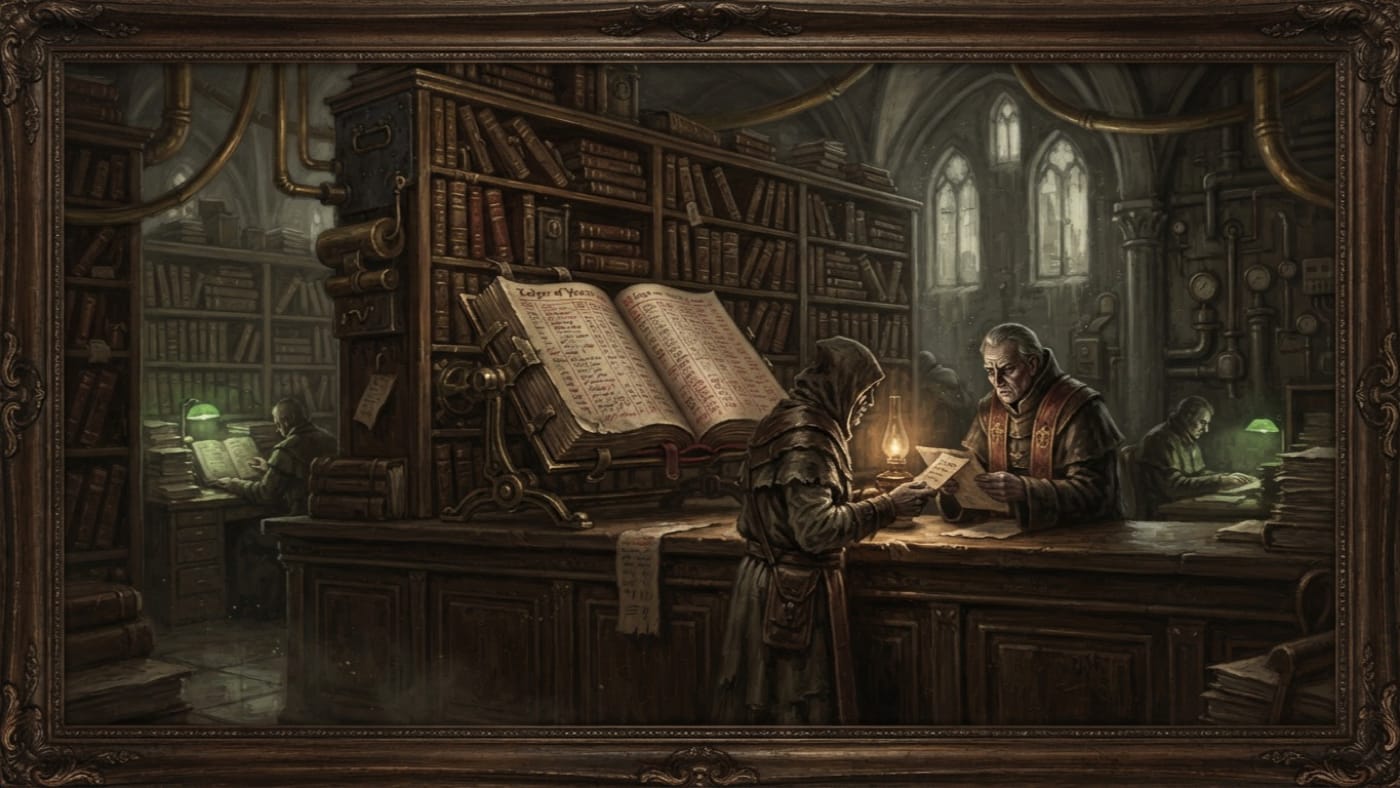
Ledger of Years
Entered, therefore occurred. Unentered, therefore pending.
The Ledger fixes the years from which the Church recognizes institutions, ratifications and precedence. Records certifies the entries; Doctrine supplies the meaning. Bring your year to the counter.
Codex Ref. XIII.1.33-201

Ledger Prefect
The Captain kisses the hand and watches the nib.
The Ledger Prefect controls permits, paper and patronage. One signature equips a Pageant Captain; another ends his career. The same office may sponsor the city's irregular trades, provided the stability arrives without scandal.
Codex Ref. XII.33.02-001

Ledger-Bindings
The signature obeys after the signer refuses
Ledger-Bindings make recorded promises material law. Contracts hold bridges; iron-gall signatures and a tithe of hair bind oaths. At Pressburg, signatures dragged deserters back into line. The Bureau calls this triumph. I retain the word slavery.
Codex Ref. VI.3.01-004

Ledger-Keepers
The entry is not the deed.
Velmora's Ledger-Keepers record transactions even before they occur. Doctrine forbids destroying them or reading their books aloud. Their mortal namesakes keep the cult's balances; the Bureau keeps losing the files.
Codex Ref. XIII.1.37-002

Ledgerists
What has not been entered did not happen. Purity is careful to enter everything.
The Ledgerists teach that unrecorded events never occurred. Records calls them prophets; Purity calls them liars and records their sentences with exceptional care. Both classifications remain filed.
Codex Ref. XIII.1.225-201
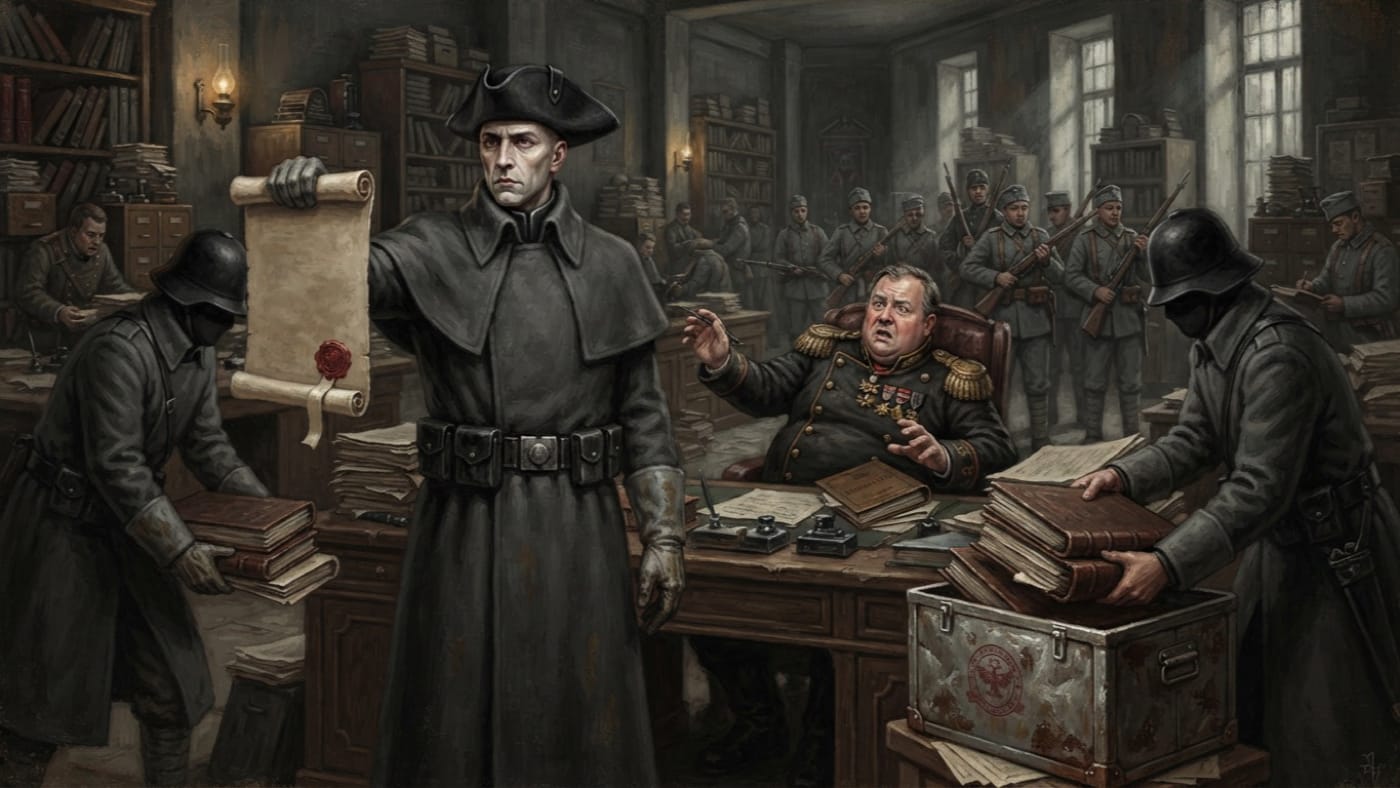
Legate
The commission travels; the correction stays
A legate carries Strasbourg's seal into troubled dioceses, seizes records, deposes governors and suspends armies. The commission ends; the correction stays.
Codex Ref. XIII.1.32-201

Legate-Praetorial
The guns are autonomous; the kitchens are inspected
Quarterly inspector of Bastion-Constantinople's internal administration. The fortress commands its guns; its observances remain open to correction. Seraphinus of Lyon's three generals supply the warning.
Codex Ref. XIII.1.33-201
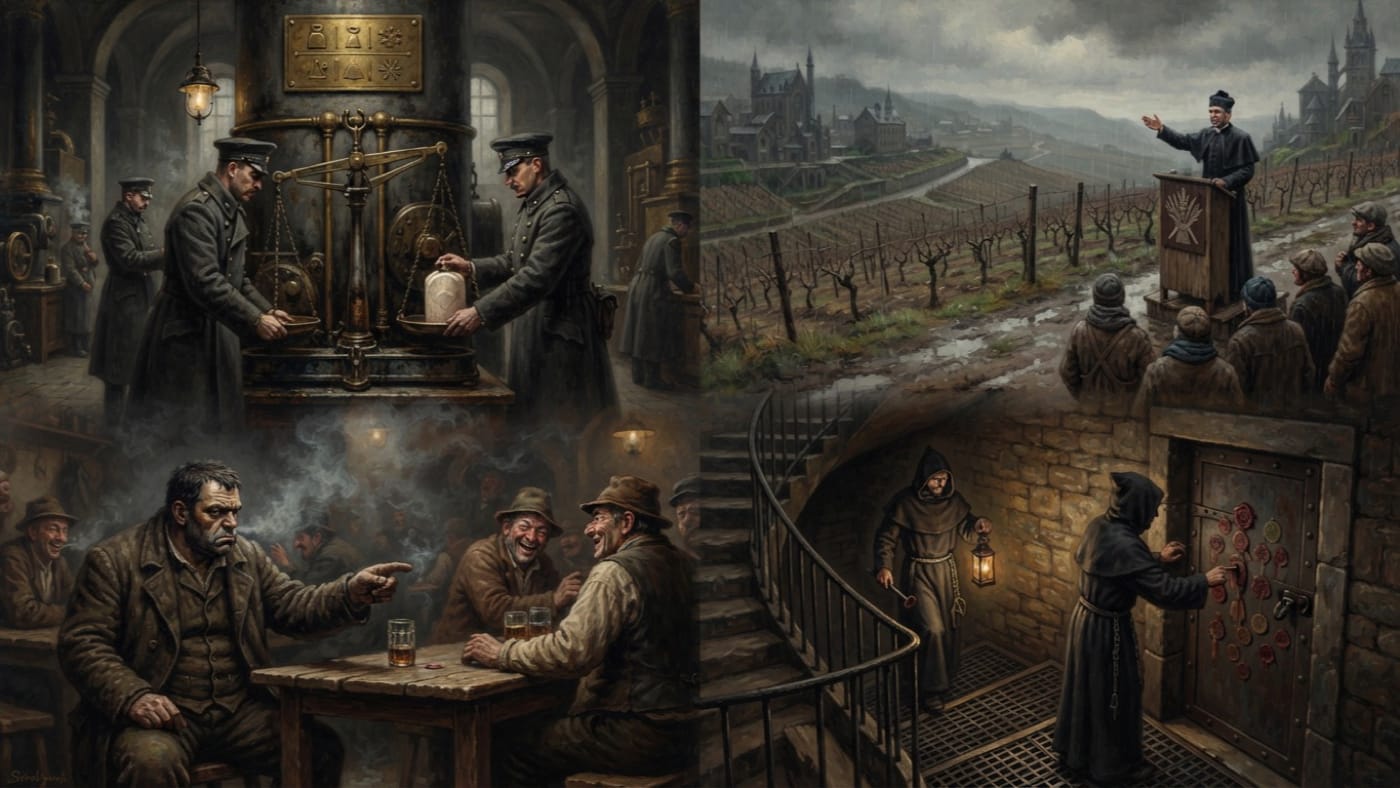
Lent
Three grains heavier; no count of days on file
An A.S. 201 survey of Lent: a heavier Host, an upper-Moselle sermon, a hired witness and renewed vault wax. The register supplies observances but declines to supply the season's edges.
Codex Ref. XIII.1.97-201
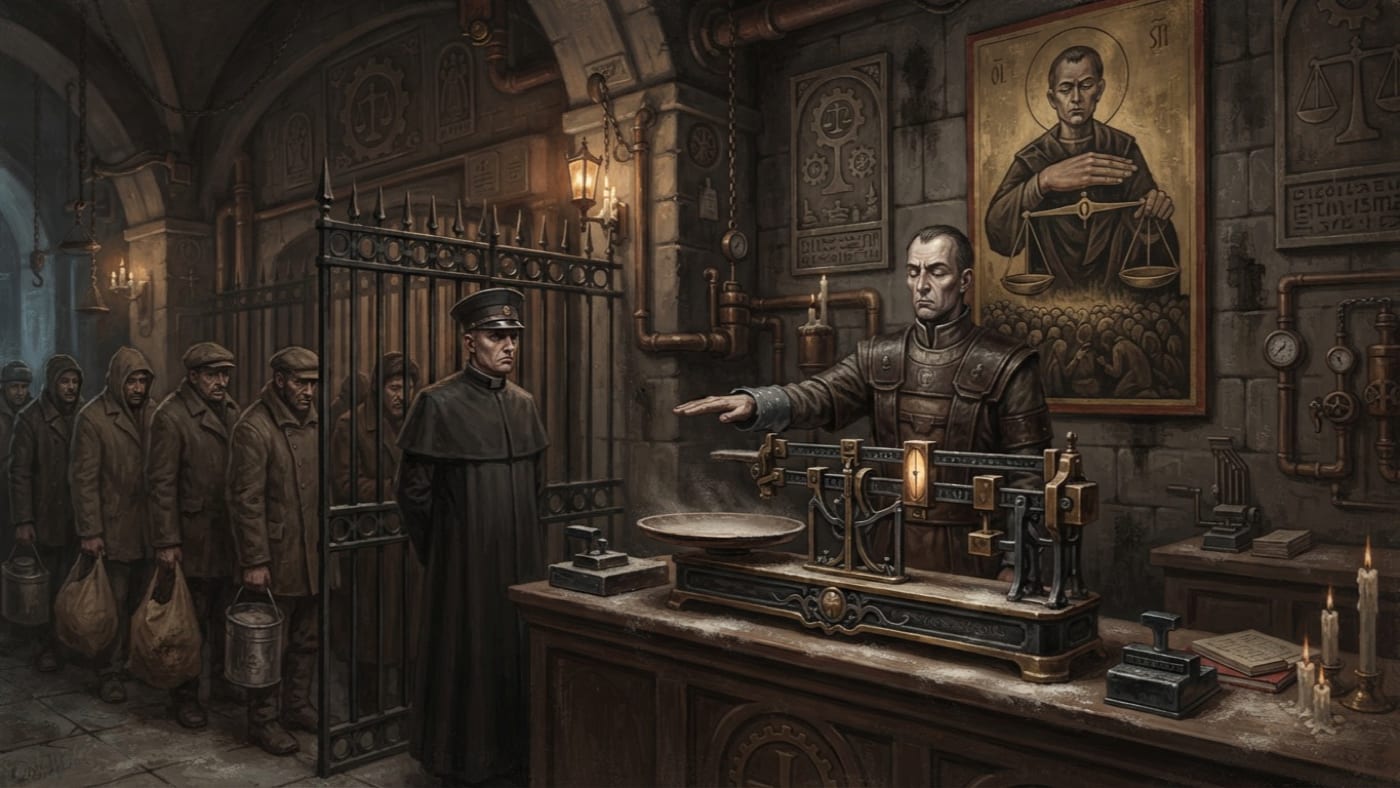
Level Prayer
The hand stays level; the sack stays empty
An A.S. 201 survey of the prayer recited by tariff-chapel weighers with the right hand level above the pan on Saint Calibrus's feast. Honest measure holds the zero; it does not fill the sack.
Codex Ref. XIII.1.91-201

Levy Assessor
The census names the household. The Assessor names the son.
The Levy Assessor compares sacred ledgers, declares a household's liability and stamps the selected wrist. The Bureau calls this collection. The household has other names.
Codex Ref. III.4.08-201

Lexicon
The printer and the Warden fear the same strip of paper
The Synod's authority over permitted and forbidden speech binds printer and Inquisitor alike. Truth is eternal; the officer's strip may already be obsolete.
Codex Ref. XIII.1.30-201

Liber Examinationis
The bone awaits a verdict. The reader incurs a strain.
The Bureau of Relics' Examiners carry the Liber Examinationis to the bench. Its cross-references constitute a Category Two Devotional Strain; the bone awaits a verdict.
Codex Ref. XIII.1.64-001

Life of Orla
A saint's duty roster, read until the throat obeys
The approved Life of Orla gives Brand-Singers a posting, a straight confession and fourteen heartbeats of silence. The woman is omitted; the work survives.
Codex Ref. XIII.1.41-064

Links
Custody is only a small fastening with authority
Links are the Synod's smallest instruments of custody: iron, ink, oath, route, relic claim, debt, guilt, and every useful fastening in between.
Codex Ref. XIII.1.84-201

Listening Cell Host
A coat may swallow a voice; a witness remembers it
Listening Cell Hosts teach forbidden lullaby endings in rooms padded with coats. Their pupils carry comfort home; Orison calls the same transaction distribution.
Codex Ref. XII.48.03-001

Listening Glass
The glass returns a sound; the offices return a sentence
Keeper lore credits Saint Velek with glass that holds and returns sound. A Velek cup may yield a condemned name, an inquisitor's business, or the Listener's own confession. Engineering denies the technique.
Codex Ref. XIII.1.43-002
Litany Against Echoes
A named prayer, three missed lines, and no proof of protection
At Metz in A.S. 144, an Inquisitor recited the Litany Against Echoes and missed three lines. The record preserves the lapse; it establishes neither the text nor the prayer's effect.
Codex Ref. XIII.1.62-144
Litany of Combustive Submission
A prayer for obedience, with the obedient party unspecified
Brast's furnace priests recite the Litany of Combustive Submission while the Calibration Choir holds the fourth bell. The priests demand obedience; whose submission the title requires remains unsettled.
Codex Ref. VI.6.04-001

Litany of Correct Arc
Good elevation is no answer to the conscience
Gun-Cantor Marshal Vonn recites the Litany before each salvo at Bastion-Brest, where Sera sings the ranges and the Bureau measures everything except the conscience.
Codex Ref. VI.6.04-002

Litany of Correct Reception
Seven hours of sound, and no proof of belief
Broadcast for seven hours during the A.S. 149 Quiet Quarter clearing, this Orison litany survives as a title and an attendance return. Its text is missing; the rifles are documented.
Codex Ref. VI.6.05-149
Litany of Custody
Custody ended in fire; the witnesses remained
Three canon-wardens recited the Litany of Custody while untransportable relics burned in Vienna in A.S. 48. The manifest preserves its name; the words remain unrecorded.
Codex Ref. XIII.1.62-048
Litany of Errors
Eleven names. One designation. Four minutes to agree.
At Bastion-Przemyśl, cadets recite eleven Ulm signatories and the unknown twelfth, then condemn all twelve in unison. Four minutes of exact remembrance, with no room left for curiosity.
Codex Ref. XIII.1.95-201
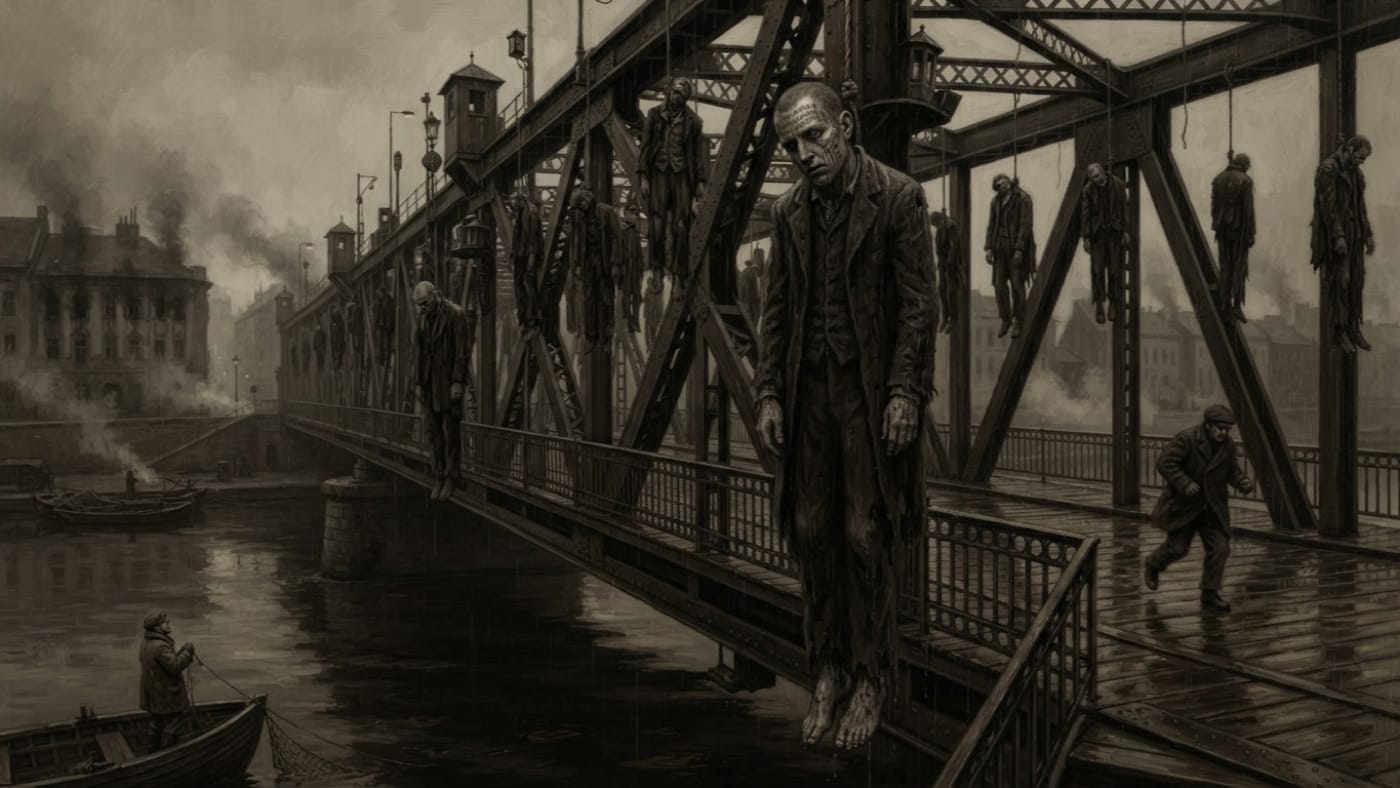
Litany of Obedience
The words were approved; the speaker remained a jurisdictional problem
The Litany of Obedience opened across a dead rebel's face on Vienna's Hanged Bridge. The words were canonical; the canal's later sermons had no licence.
Codex Ref. XIII.1.62-102
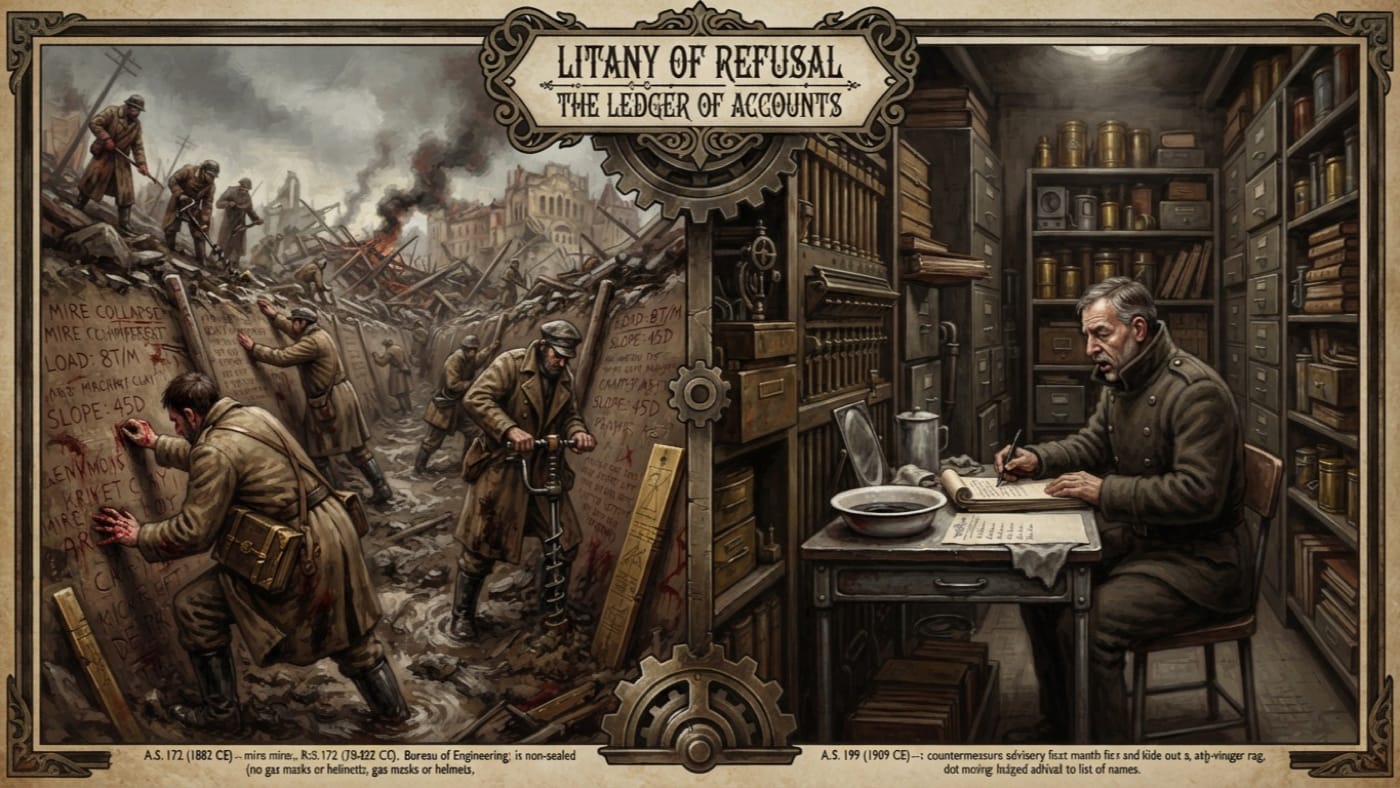
Litany of Refusal
A prayer between the vinegar and the clerk
Written in blood at Debrecen and recited after hostile perfume exposure, the Litany of Refusal survives in two records. Its words are absent; the duty to recite them remains.
Codex Ref. XIII.1.36-002
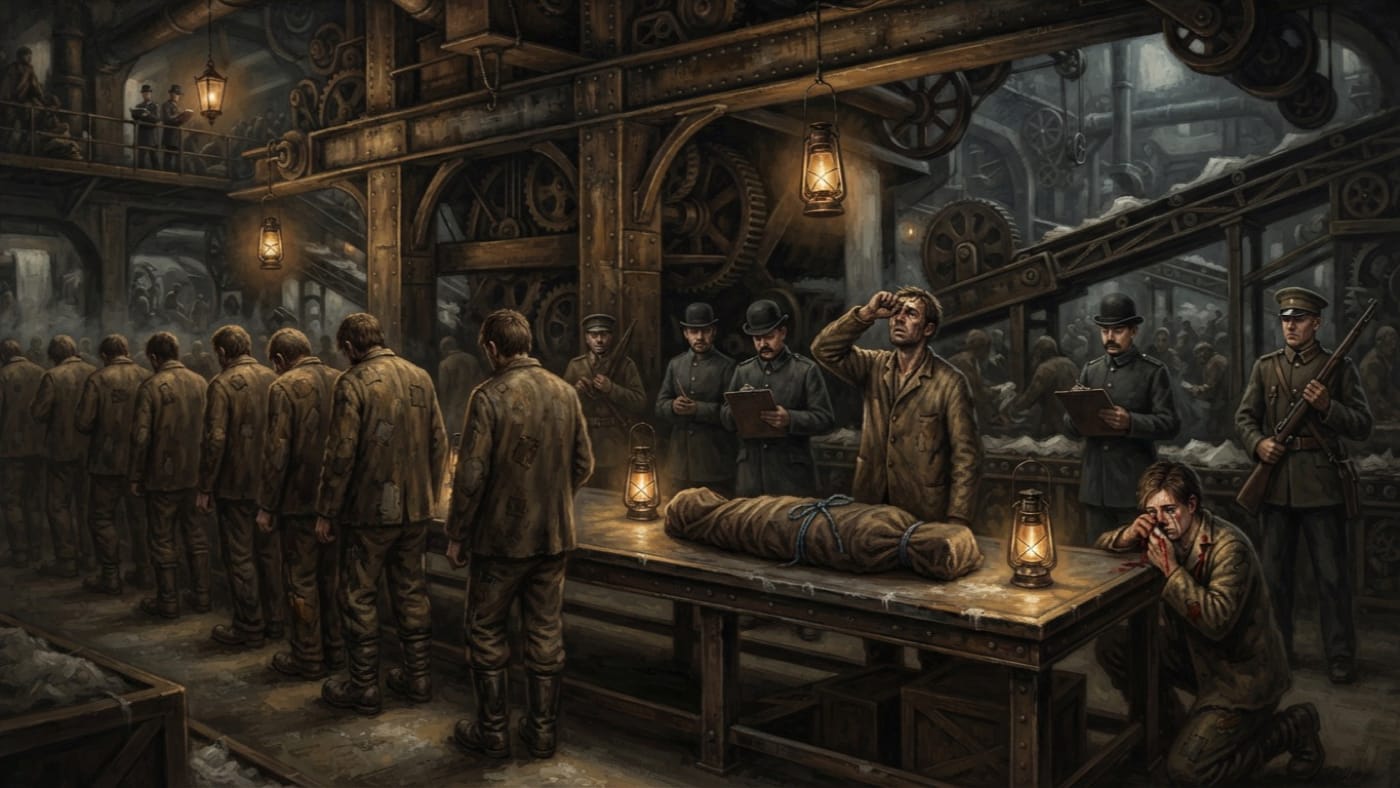
Litany of Saint Aldebrand
The prayer kept its name; the man who said it did not
A nameless labourer recited the Litany of Saint Aldebrand after sight returned in Ulm's Gallery Three, A.S. 156. The file preserves the prayer's name and none of its words.
Codex Ref. XIII.1.96-156
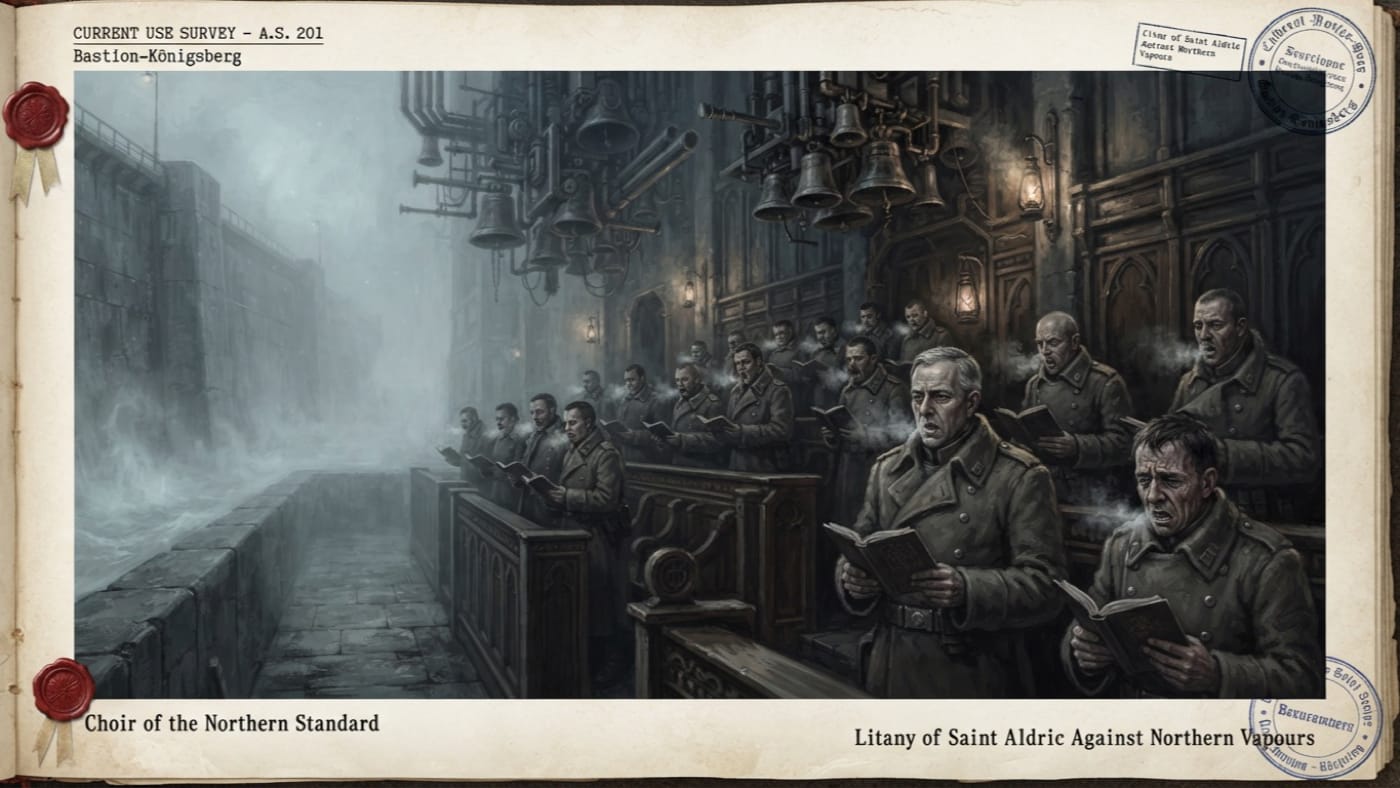
Litany of Saint Aldric Against Northern Vapours
The fog answers before the last breath; the Choir finishes
At Königsberg, Saint Aldric's litany is answered by the fog before its final antiphon ends. The Choir finishes; protection against vapours remains unproved.
Codex Ref. XIII.1.57-201

Litany of Saint Barrach
The crew died; the fourth petition kept speaking
At Wormwood Hill in A.S. 163, the Litany of Saint Barrach slowed by half a beat and repeated its fourth petition in a foreign voice. The crew died; the prayer continued.
Codex Ref. XIII.1.96-163
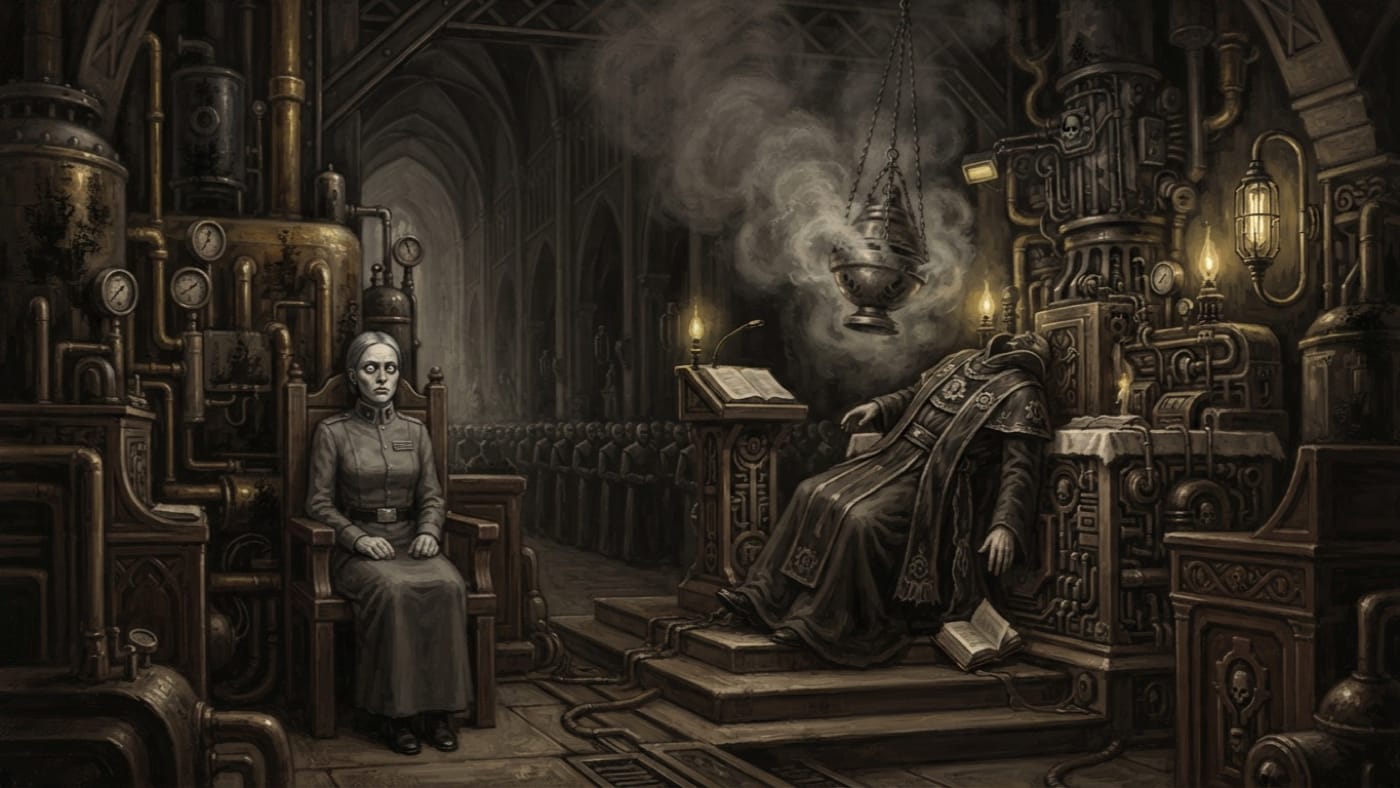
Litany of Solar Continuity
The title survived; the incense inherited the blame
Surveyed in A.S. 201, this litany survives by title in the Greyling file: one woman watched without blinking, one priest fell, and incense took the blame.
Codex Ref. XIII.1.32-002
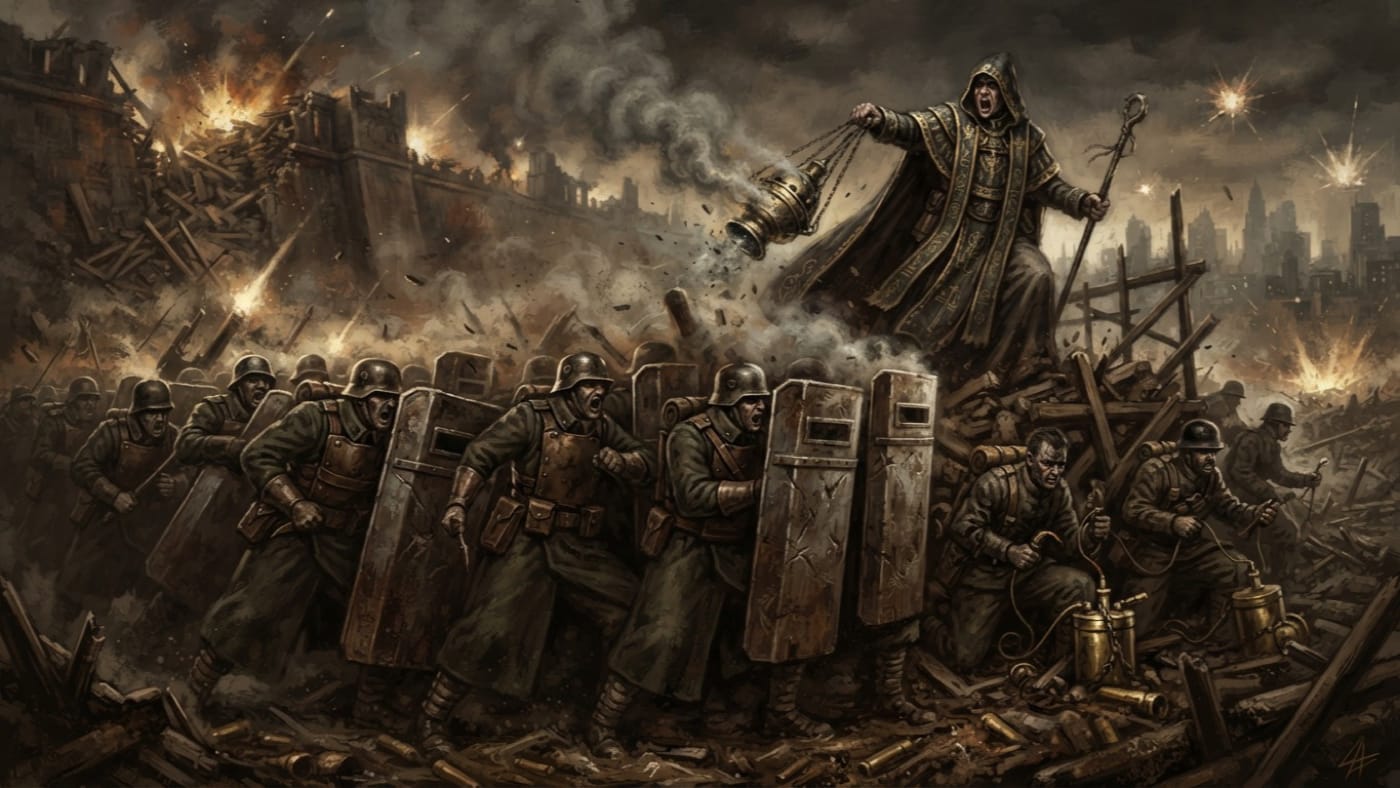
Litany of Stones
One throat keeps iron and powder in the same minute
The Ash Chaplain's breach litany binds Shield-Paladins and Litany-Engineers to one count. Iron braces, powder waits, and a name withheld teaches the cohort what silence costs.
Codex Ref. XIII.1.64-002
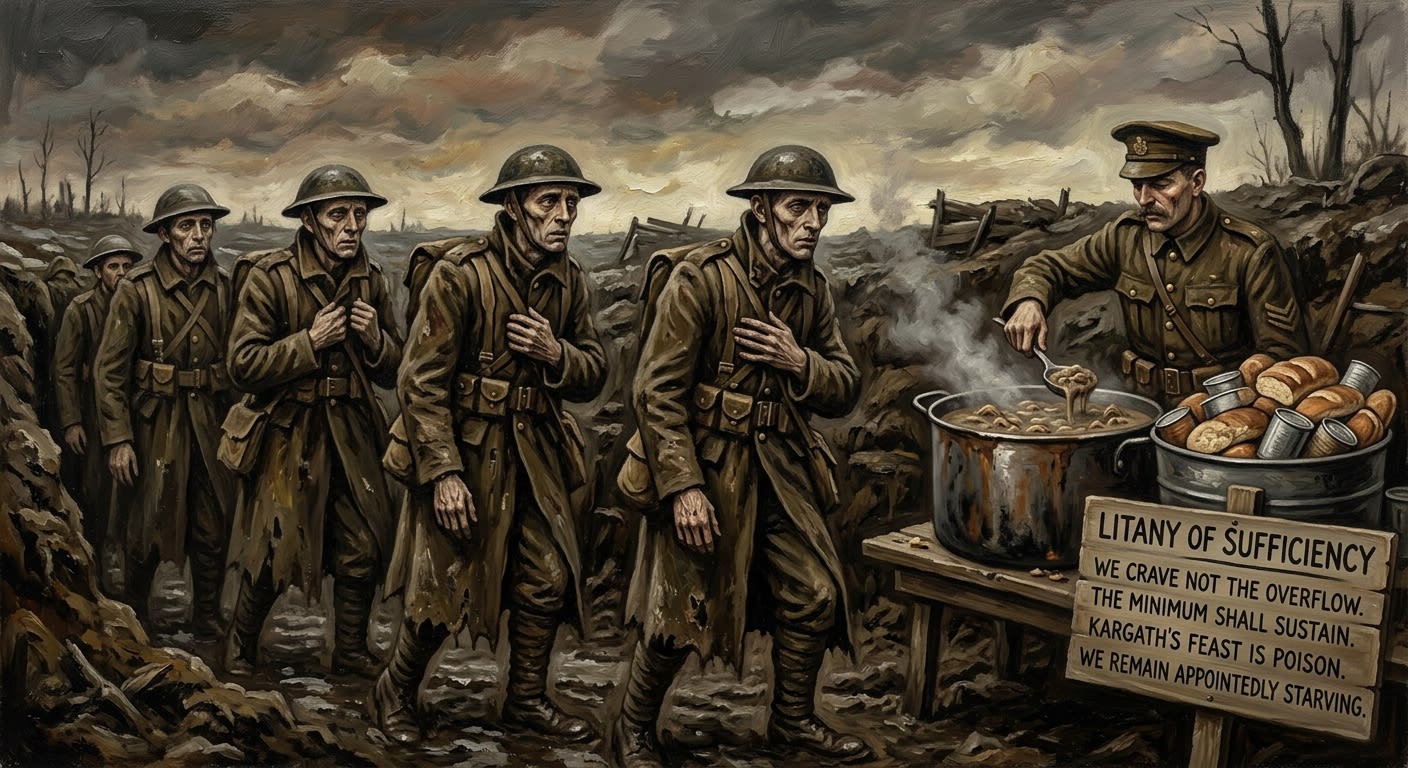
Litany of Sufficiency
Enough is given, and the Bureau has weaponised the crust
The approved field-prayer against Kargath's plenty: four ugly lines by which hungry soldiers step away from miracle food and remain merely starving.
Codex Ref. XIII.1.90-163
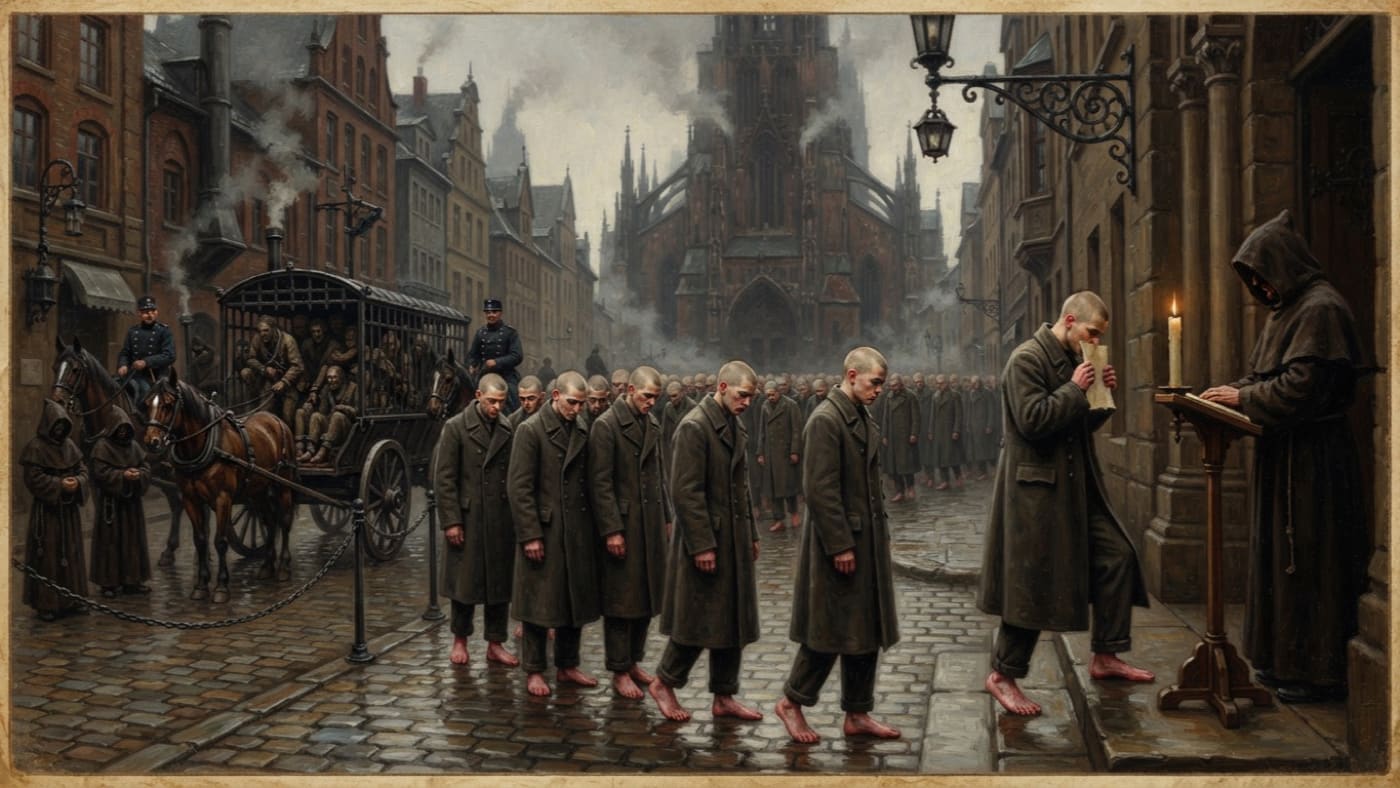
Litany of Twelve Errors
Bare feet, approved words, and a page that must remain unread
Ulm's students walk barefoot to the cathedral, recite the Litany of Twelve Errors and kiss blank Mine paper. Lawful learning survives by keeping its mouth obedient.
Codex Ref. XIII.1.97-201
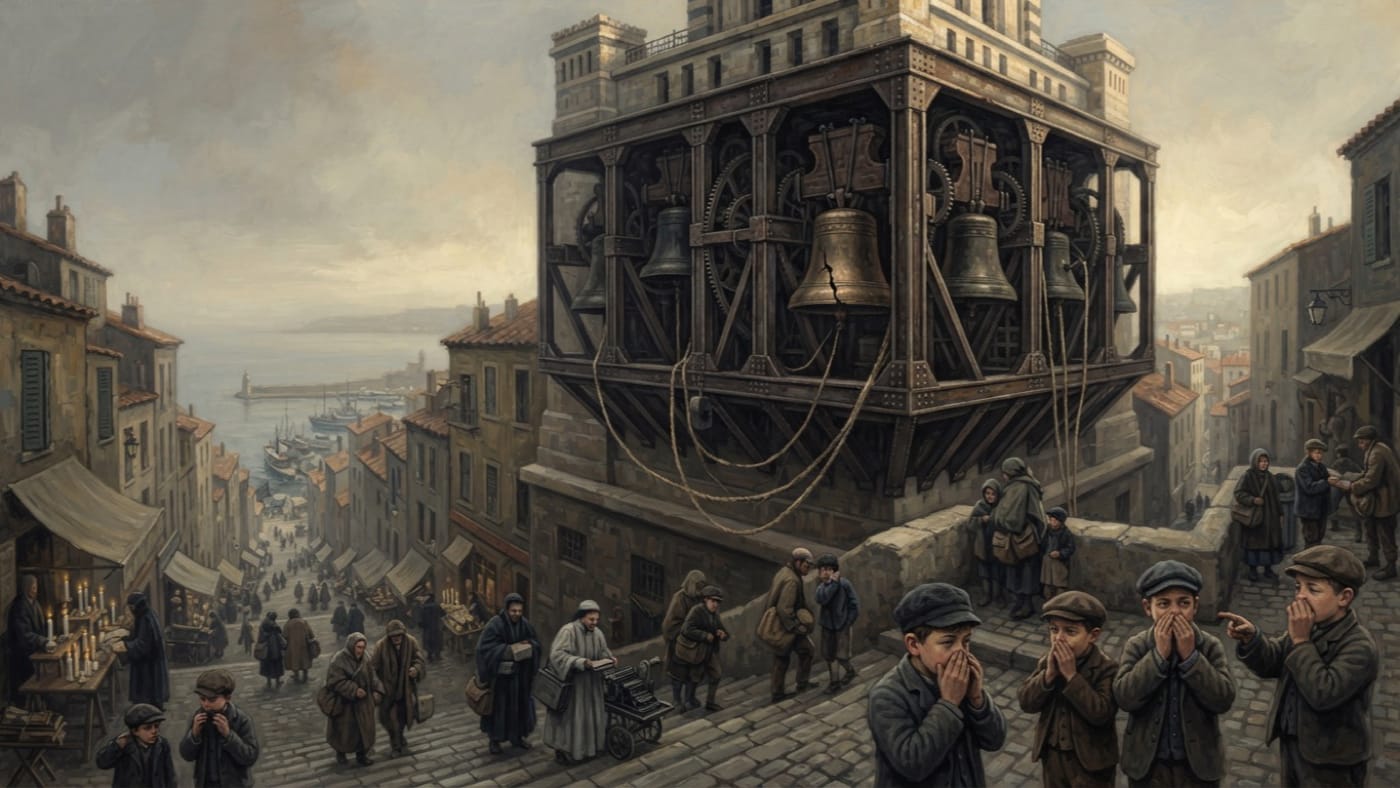
Little Beryn
Marseille knows the hour by a complaint its children can imitate
Little Beryn is Saint-Victor's bell for terce: cracked in A.S. 167, never properly repaired, and known to every Marseille child by its nasal complaint.
Codex Ref. XIII.1.62-218
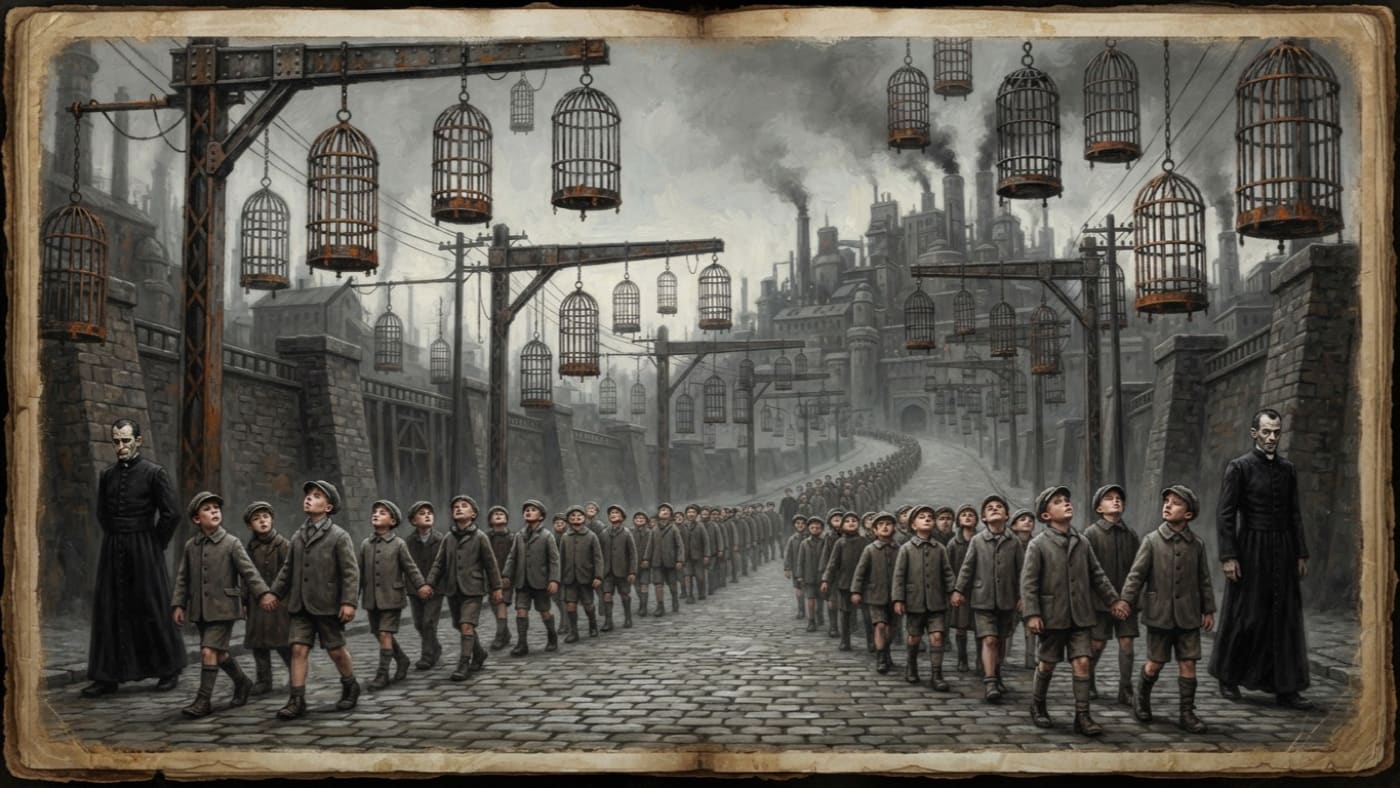
Little Witness Program
The schoolroom learns what the cage is for
The Little Witness Program marches schoolrooms past Mainz's Iron Choir to teach obedience through terror. Records claims a sixty-percent rise in confessional punctuality; Mercy's objection remains overruled.
Codex Ref. XIII.1.08-201

Liturgist-Primus
The Chair decides what counts as a performance.
The Chair of Prescribed Observance governs every authorized rite. Corvin Marche has occupied it for nineteen years; a misplaced syllable still requires correction.
Codex Ref. XIII.1.64-201
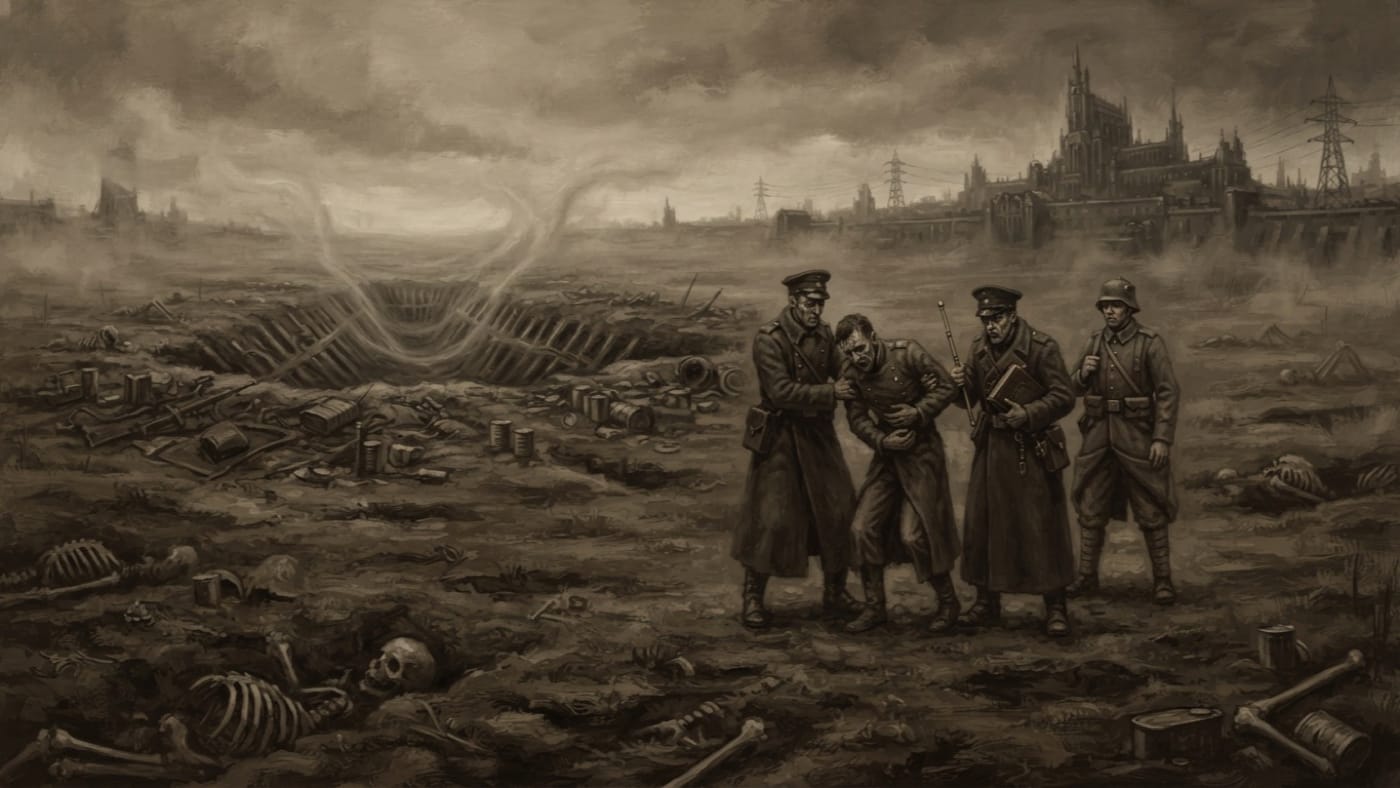
Liturgy of Satiation
The rite is drafted; the dead have yet to hear it.
Three proposals, a drafted rite, and no field test: the Liturgy of Satiation is meant to answer the Famine Pits' hunger. War has invited Doctrine to supply its own personnel. The dead remain unfed.
Codex Ref. XIII.1.26-199

Lock Formation
Three ranks, one breath, and the wall answering in iron
The Shield Paladins' breach-reception doctrine: three ranks of interlocked iron, jawbone chant, rim discipline, and the geometry by which panic is denied passage.
Codex Ref. XIII.1.63-001

Lost Paperwork Resurrection
The paper returns; resemblance remains uncertified
The Harbor Ledger Office of Thessaloniki resurrects lost manifests, permits, and witness slips. Every return is accepted, every charge recorded; resemblance to the original remains uncertified.
Codex Ref. XIII.1.94-002

Loyalty Phrasing Rubric
One correction between a man and his sentence
Standardized during the Deserter Purges of A.S. 91, this field card grades a suspect deserter’s words from safe to terminal and offers one correction. The court keeps the discretion; the file keeps the grammar.
Codex Ref. XIII.1.86-093

Lull Prayers
A blessing that calms the queue and sometimes points toward a stair
Official recitations to calm distress, sometimes made to carry concealed aid. Purity can transcribe the blessing; the informed listener has already found the stair.
Codex Ref. XIII.1.120-201

Lumen
Reason alone, debased by its own mint
The Lumen was the Rationalist Republic's bright little sermon in stolen metal: altar silver, RATIO SOLA, and a compass pointing straight into confiscation.
Codex Ref. XIII.1.90-030
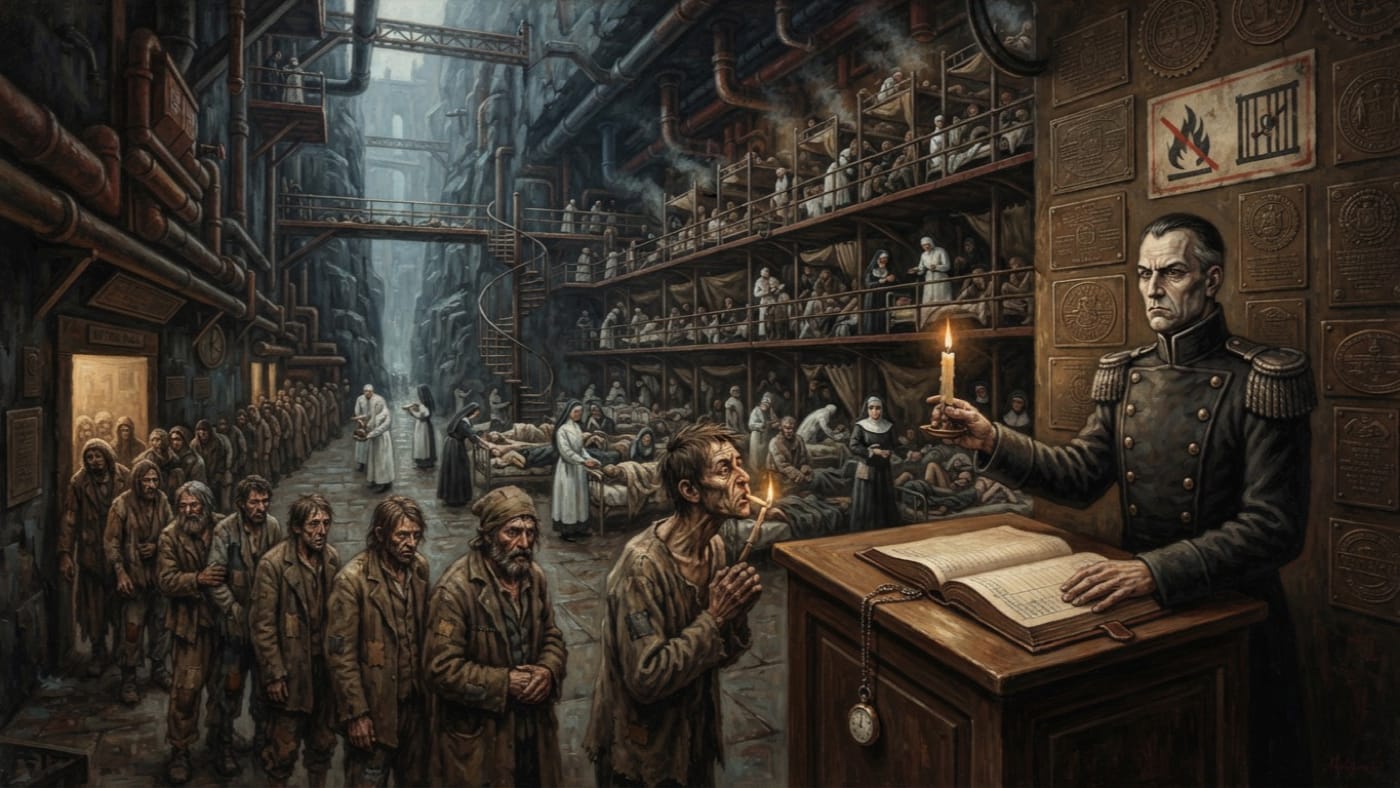
Lung-Rot
The cause is unruled. The quarantine is in force.
Lung-Rot names failing lungs across the Synod. At Irongate, the A.S. 199 outbreaks filled the wards and widened quarantine powers. The cause remains unruled; the consequences are thoroughly administered.
Codex Ref. XIII.1.81-003
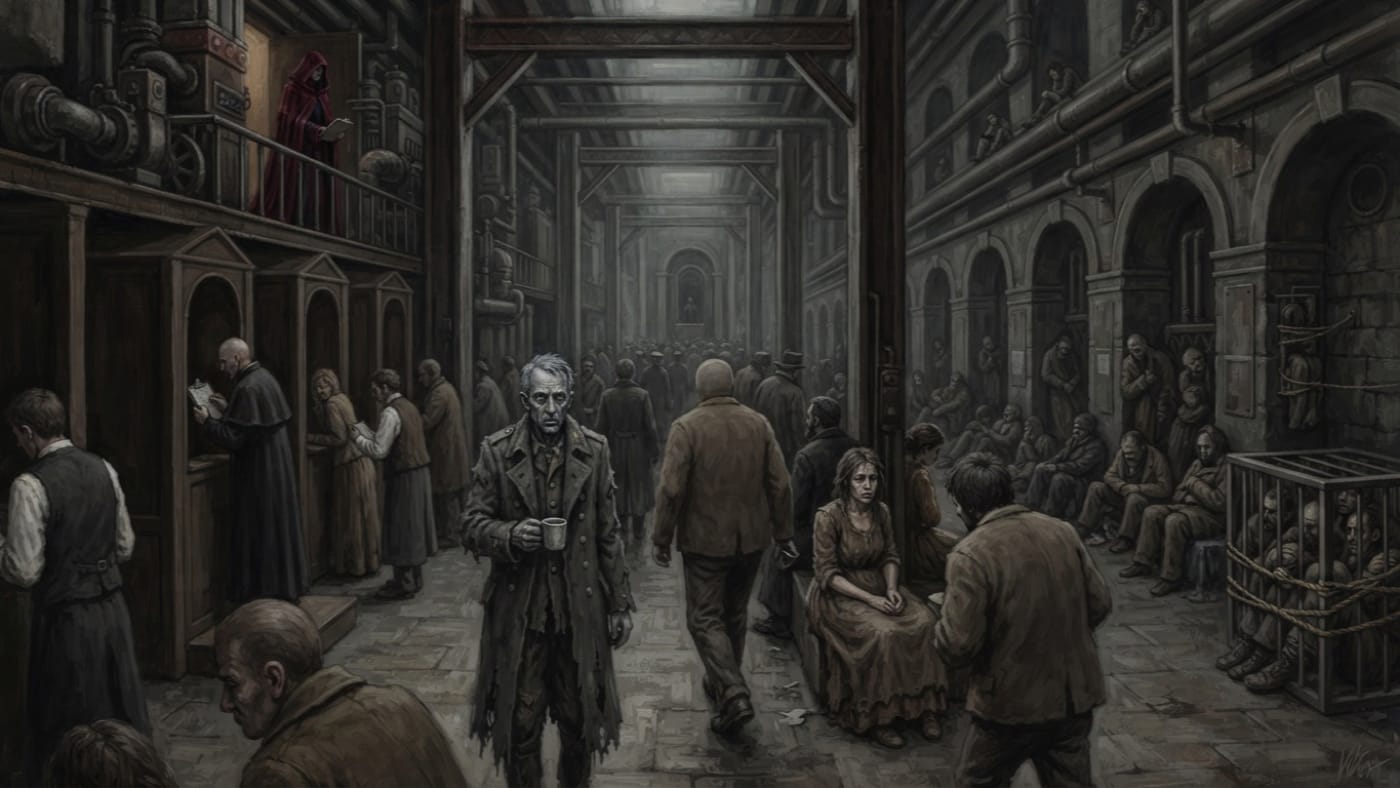
Lust
The tally survives the names
Lust uses people as material for sensation and discards them when the thrill fades. This A.S. 201 survey records Velkara's influence, greying and six Synodal remedies. The sin is the user's; the used bear none of it.
Codex Ref. XIII.1.07-005

Lyon Codex
The file remains open. The leaves remain absent.
Seized incomplete in A.S. 115, Lyon's apocryphal folio allegedly maps future peals. Records denies it existed while filing it twice: apocrypha and operational.
Codex Ref. XIII.1.62-003

Mainz Stamp-Head
Devotion has supplied what provenance has not
One of six objects attributed to Saint Vellum-of-the-Quiet-Hand: venerated, tested, doubted and returned to custody. The devotion is recorded; the authentication is absent.
Codex Ref. XIII.1.45-002
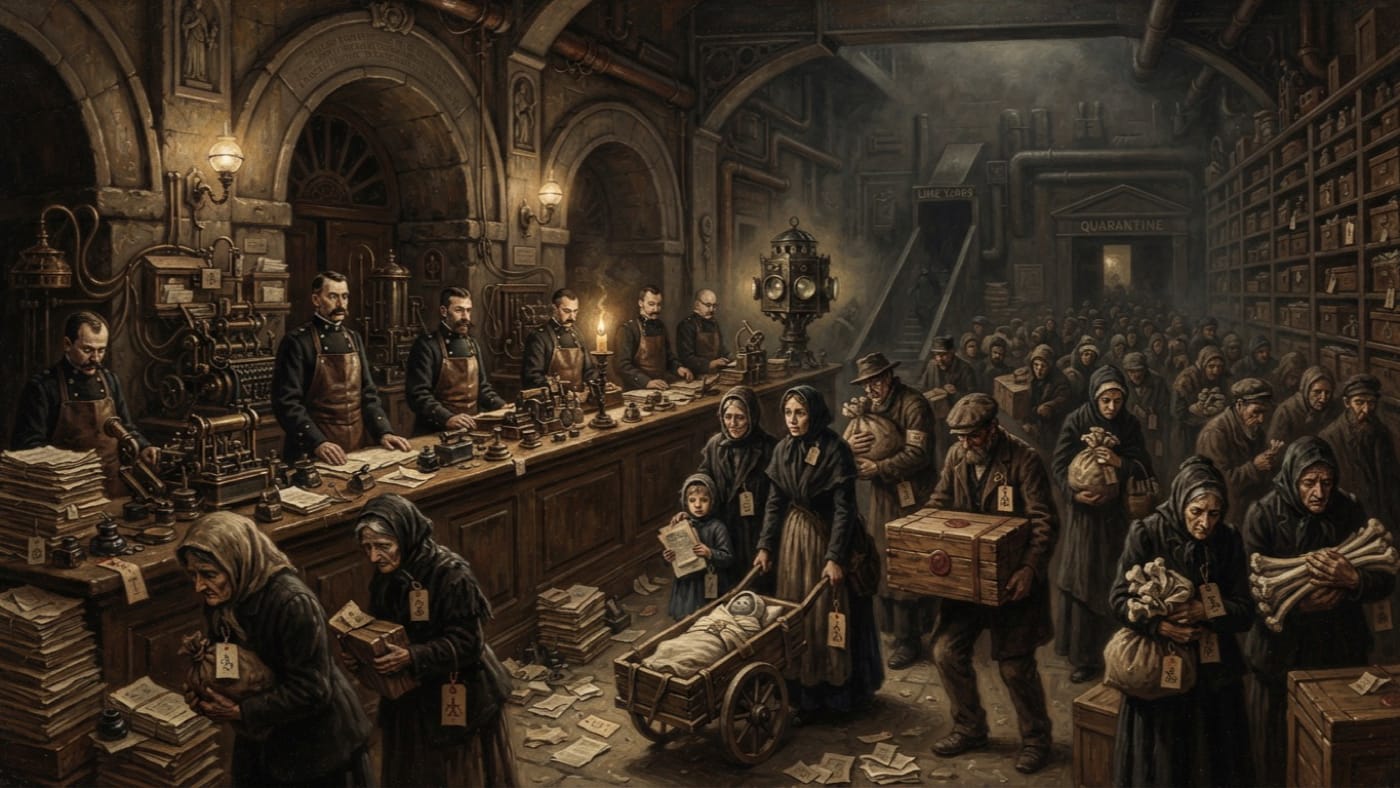
Mandatory Burial Clearance
Grief supplies no exemption
The A.S. 78 mandate placed every corpse, bone and ash sack under stamped clearance. Five classifications govern the dead; grief supplies no exemption.
Codex Ref. XIII.1.91-078

Mandatum Candoris
The decree by which terror learned to wear white
Hildegarde of Mainz's A.S. 62 decree requiring visible white mantles for Bureau of Purity field agents, making correction legible before it struck.
Codex Ref. XIII.1.88-062
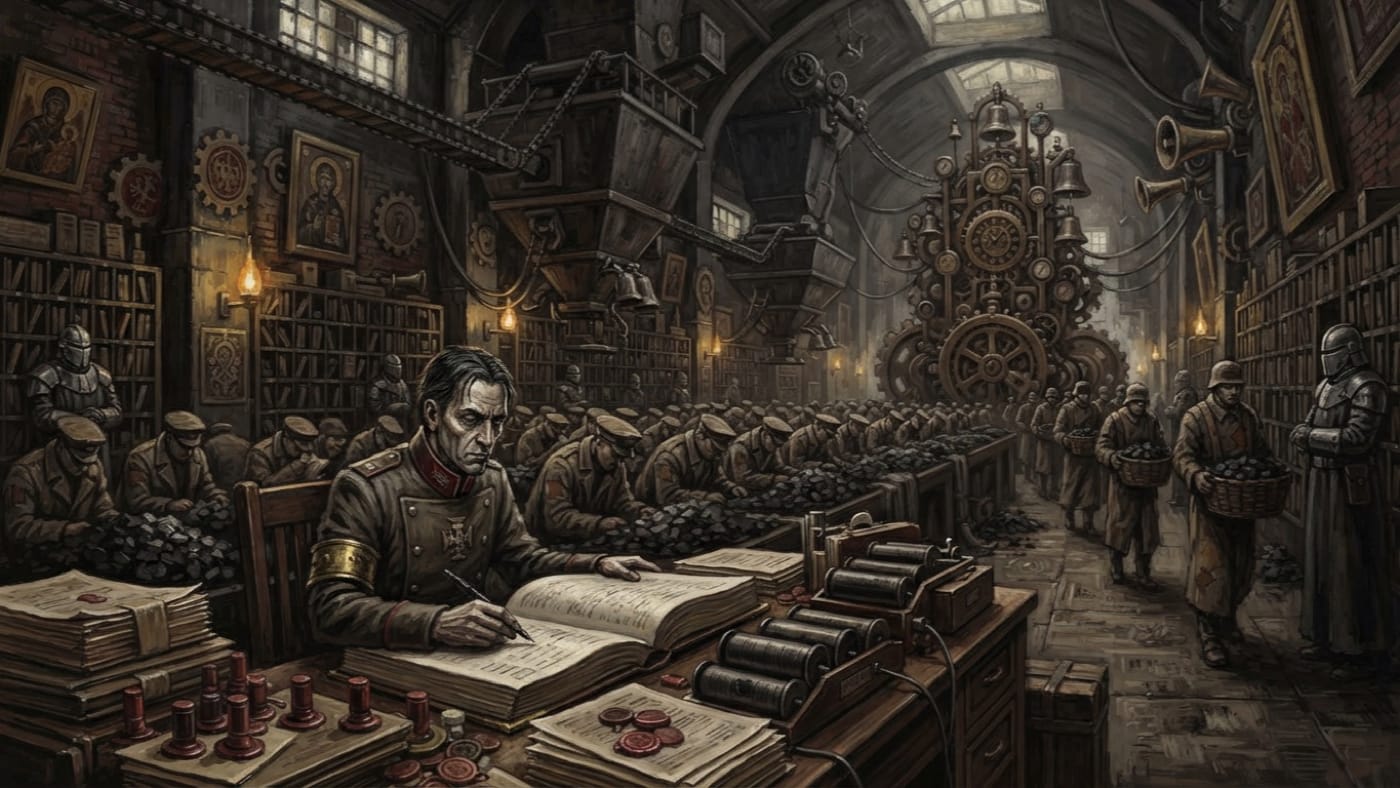
March of Saint Edras
Twelve authorised, thirteen unauthorised, one inconvenient ear
An A.S. 201 survey of the March of Saint Edras records twelve authorised and thirteen unauthorised variants known to Werrenrath. Permission trails recognition by one.
Codex Ref. XIII.1.96-201
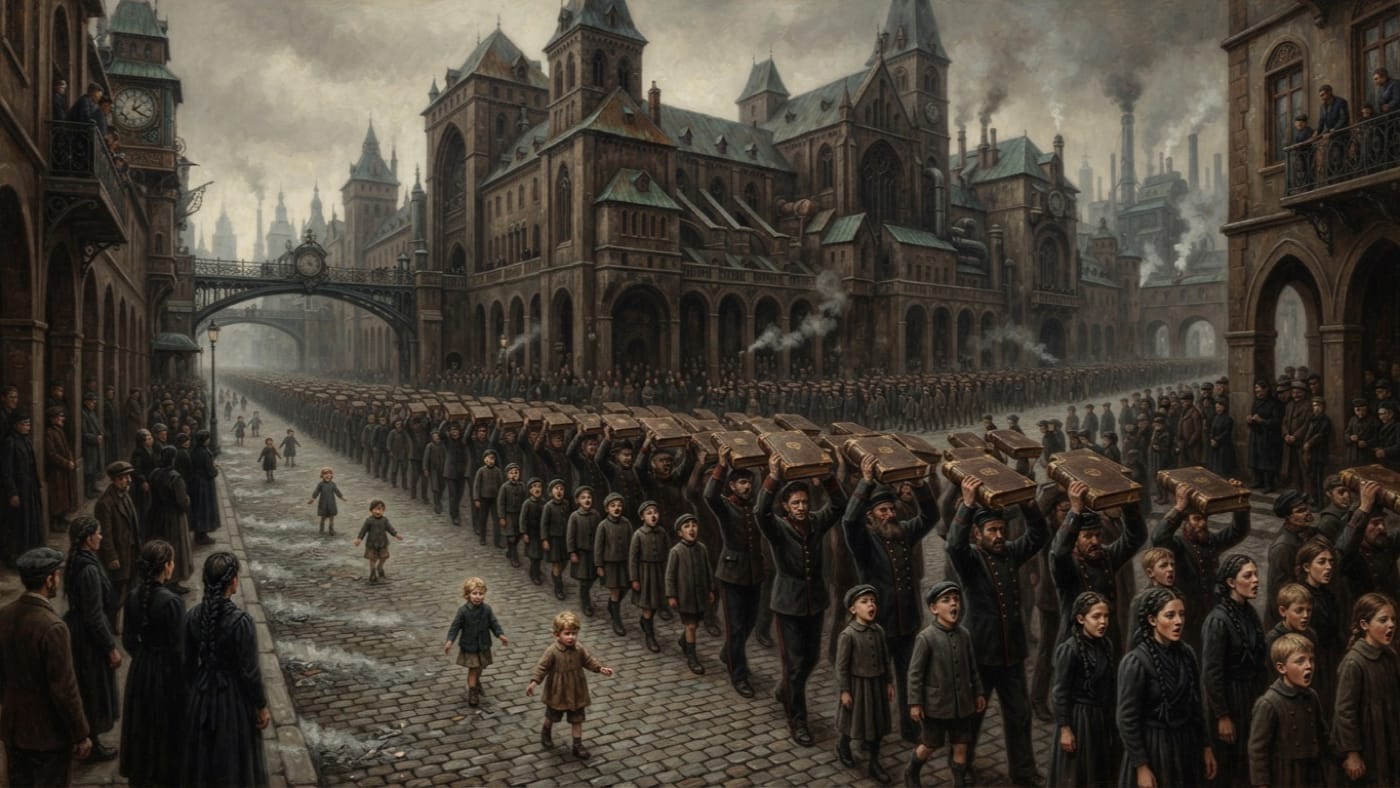
March of the 144 Wards
A census dressed as a parade, with every debt in the chorus
Strasbourg's wards parade their ledgers past the Cloister, chanting sums and debts while children scatter ash. A.S. 201 survey: a census dressed as a procession, with the accounts held high.
Codex Ref. XIII.1.144-001
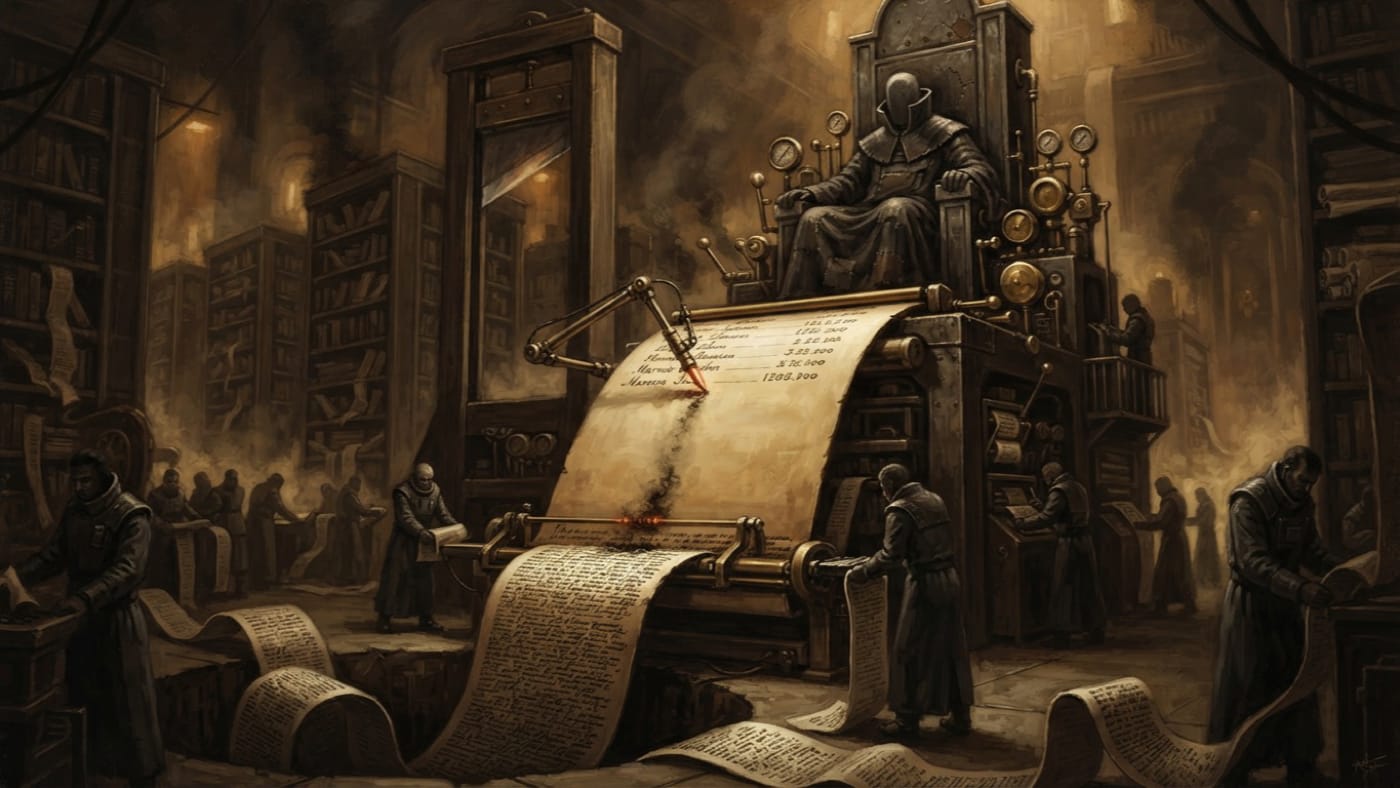
Margin Inheritance
The name grows smaller; the debt does not
Nemea's Margin Court moves names and debts into footnotes: a name loses its standing; a debt waits for whoever inherits the page. The Court insists this is not punishment.
Codex Ref. XIII.1.73-1732
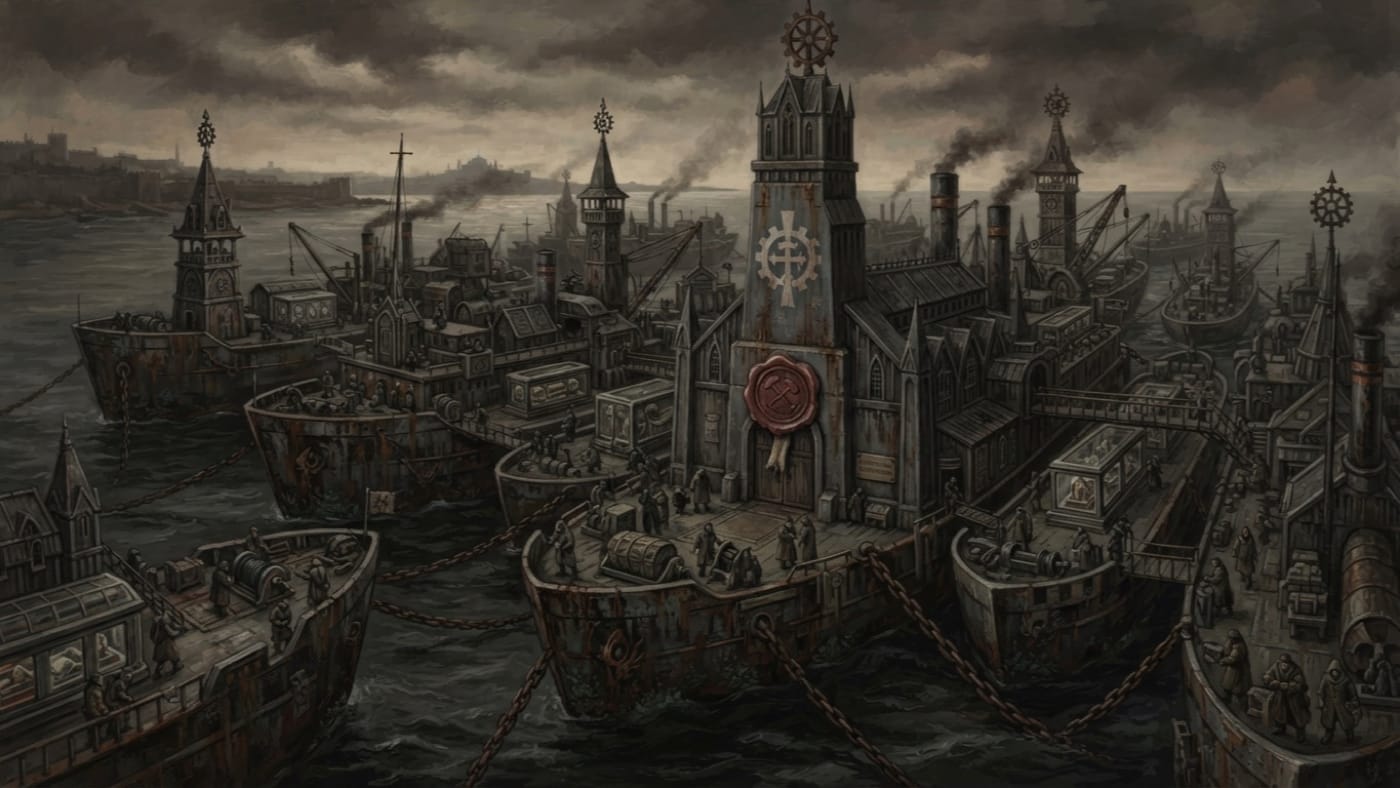
Maritime Reliquary Charter
Operational, conditionally. The condition is not stated.
The Flotilla governs in the name of a charter filed in A.S. 72. Nine pages of the founding record are absent; the joint seal survives. Operational, conditionally. The condition is not stated.
Codex Ref. XIII.1.72-001
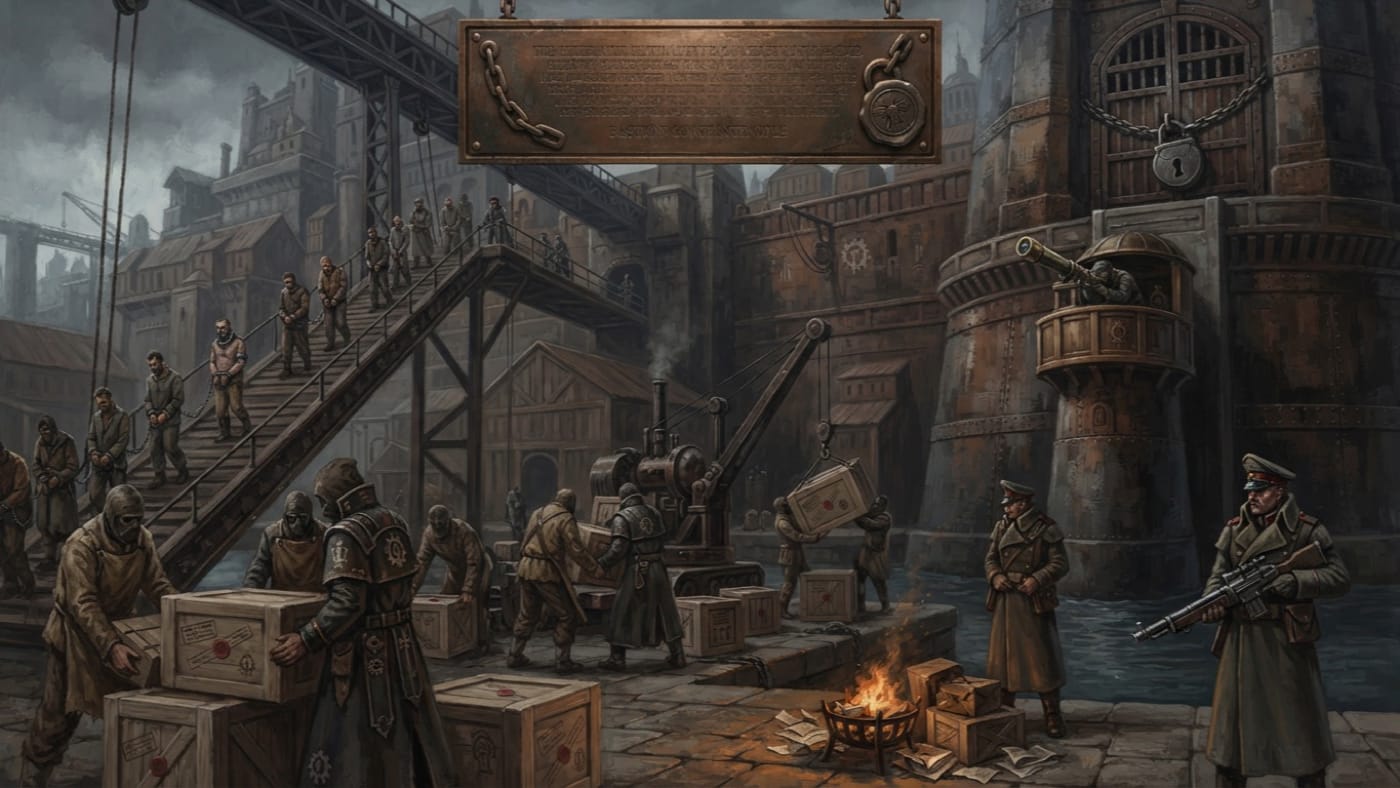
Maritime Spiritual Contamination Protocol
The page stays sealed; the customs pier has other instructions
My A.S. 201 survey follows a sealed Armada addendum, Purity's freight advisory and Korin's sentence. The Protocol's first issue remains outside the file.
Codex Ref. XIII.1.59-201
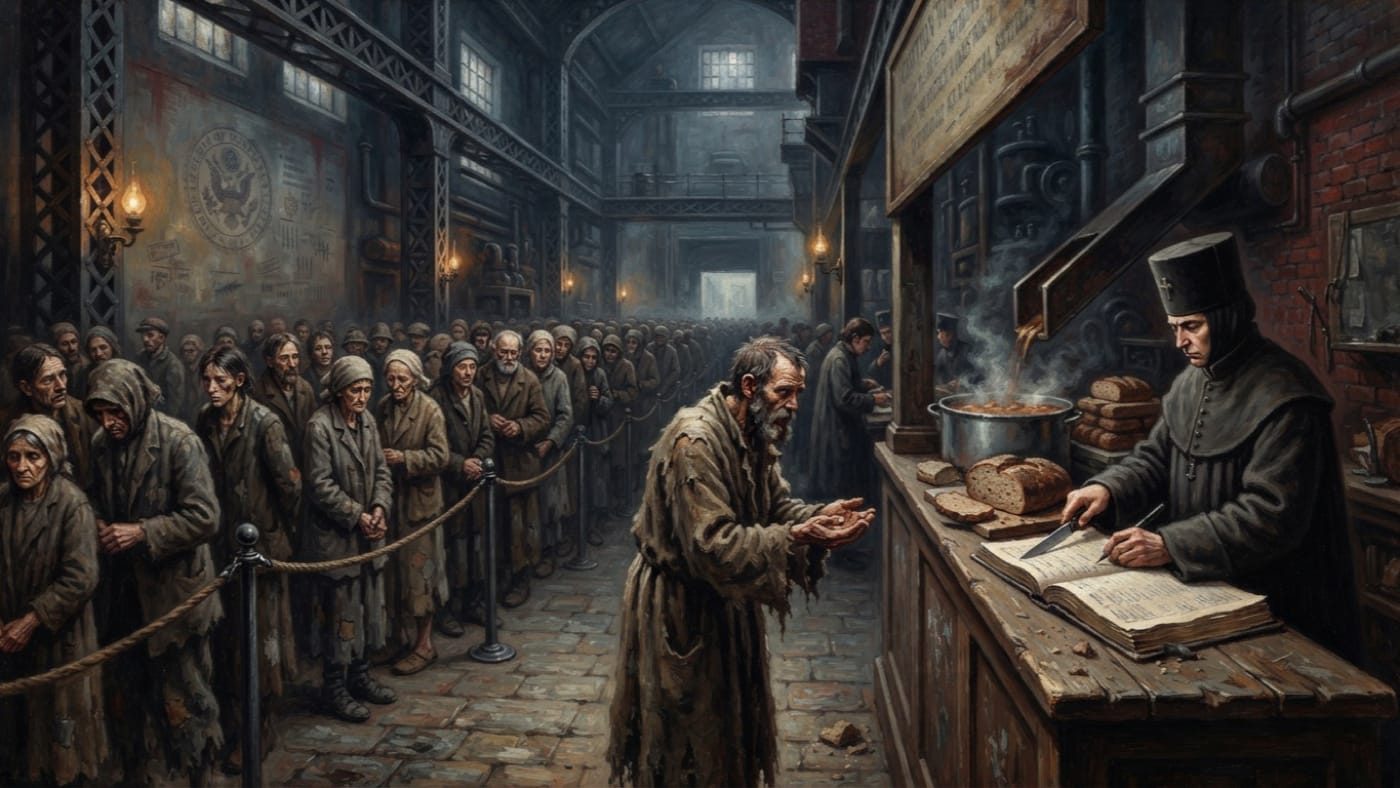
Mark of Poverty
Nothing to sell. Someone else must buy the bread.
A voluntary vow of absolute destitution against Velmora. Votaries surrender every possession and live on communal rations. Protection remains unproved; the communal store bears the cost.
Codex Ref. XIII.1.37-201

Market Restoration Canticle
The stones were clean; the paper was not
The Bureau of Rites' canticle, attested during the A.S. 162 (1872 CE) restoration of Bastion-Constantinople's southern market after the Carnival of Ink. The stalls reopened; the account records no reversal of the erasures.
Codex Ref. XIII.1.89-162
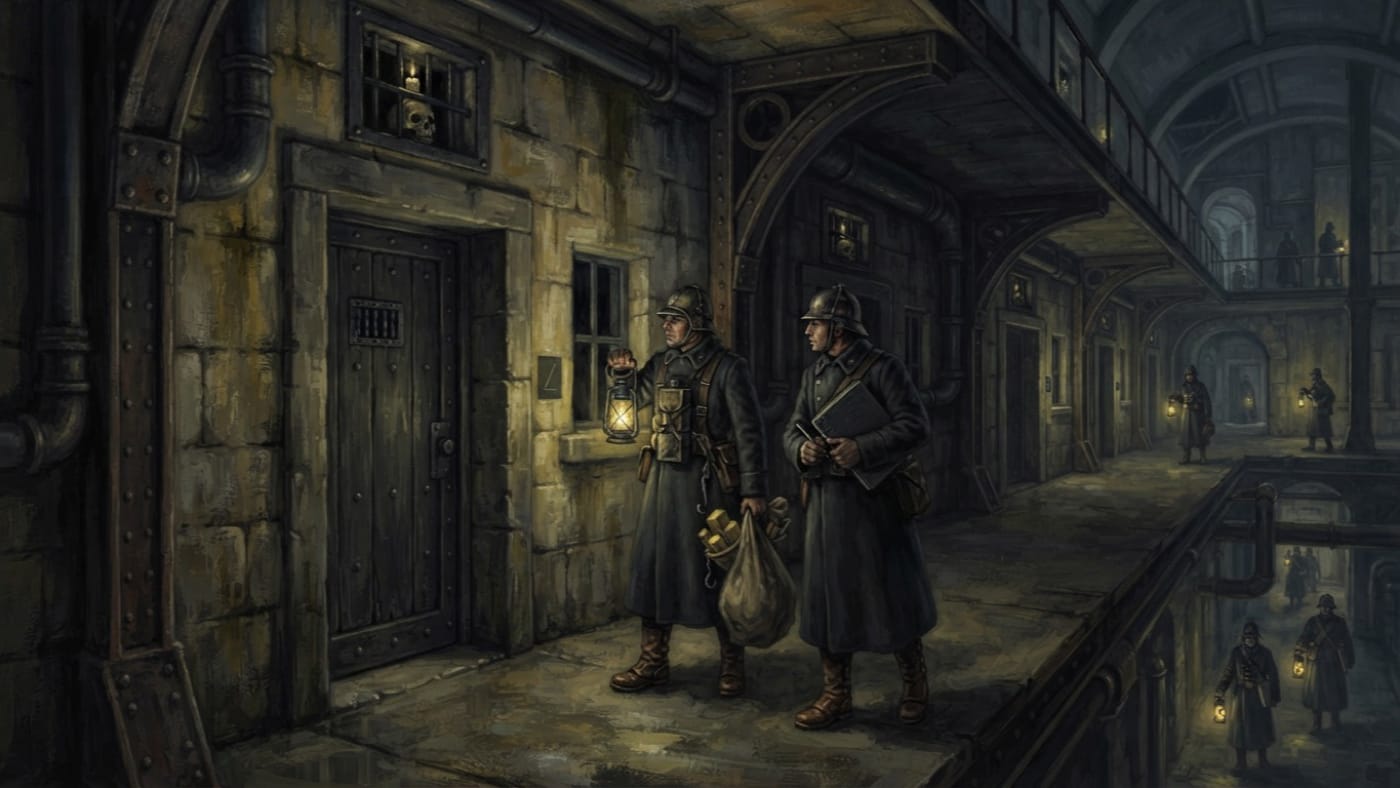
Marrow Fine
The wax is taken; the window still owes a flame
The Marrow Fine confiscates a household's approved vigil-wax while leaving its candle duty intact. Ashen Steps takes the fuel, then returns to count obedience.
Codex Ref. XIII.1.25-1743
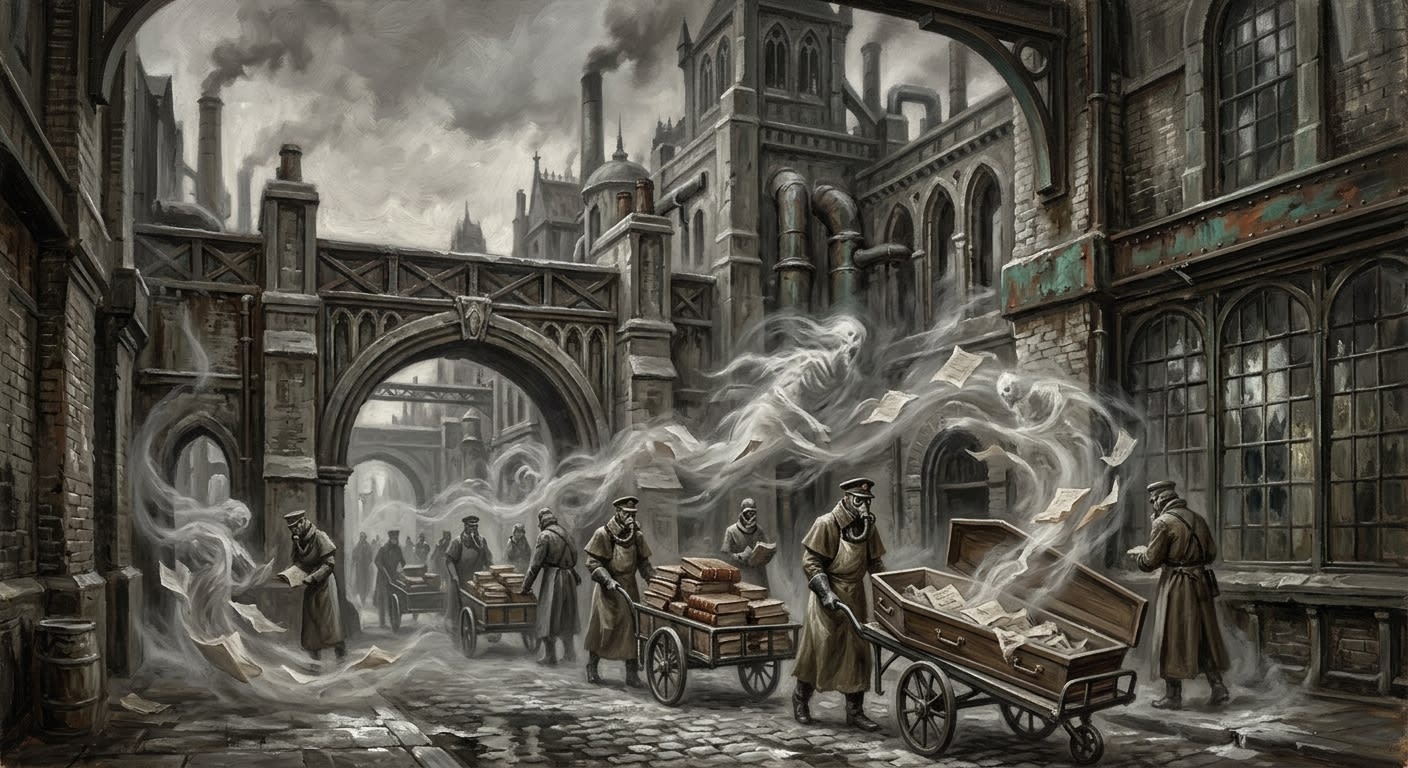
Marrowwind
The dead file amendments in lime and breath
At Marrowgate, chalk wind carries the voices of the dead, corrects fraudulent ledgers, and proves that a corpse with paperwork remains a witness.
Codex Ref. XIII.1.20-001
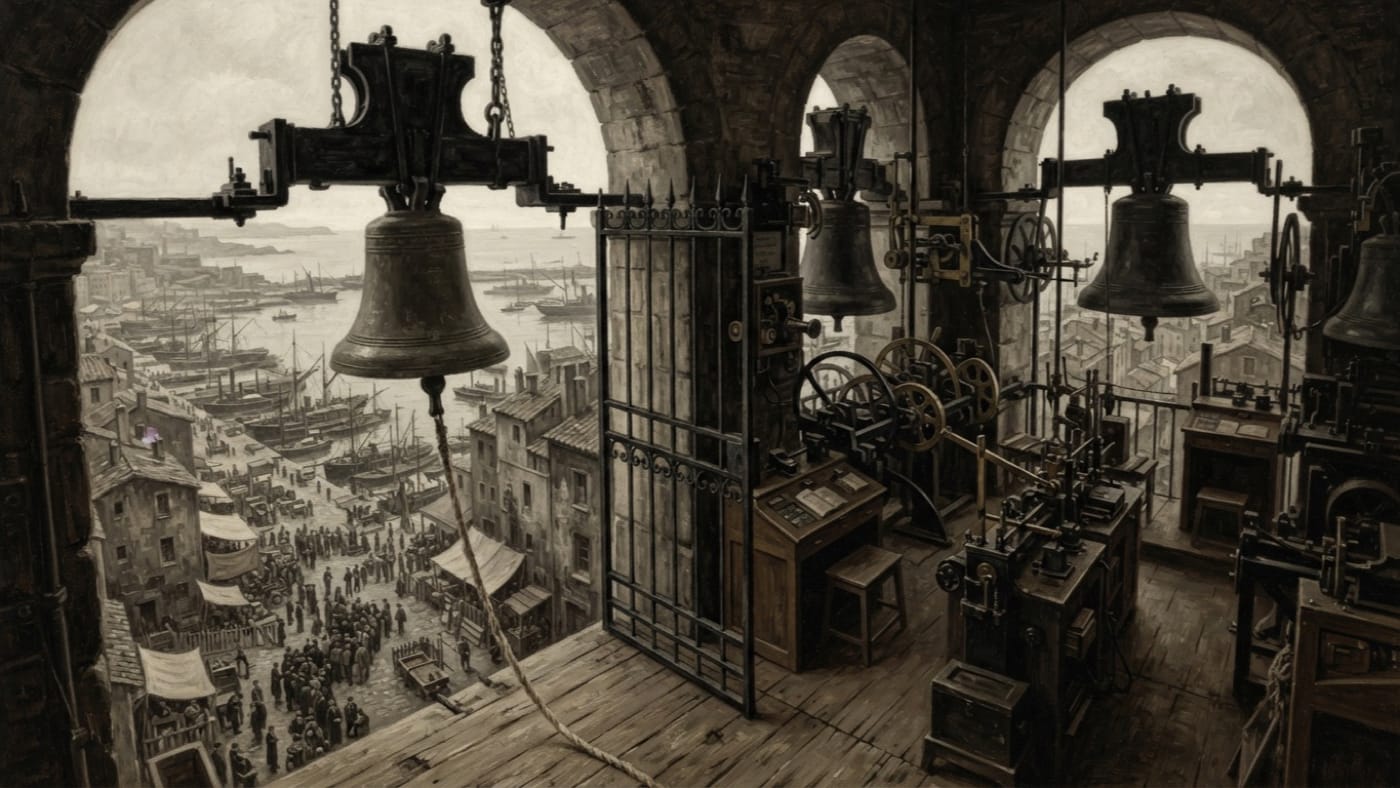
Marthe
Thin bronze gathers the faithful; ink decides where they go
Marthe is Saint-Victor's thin, sharp pilgrim muster bell: she gathers Marseille's faithful where the Bureau expects them, leaving permits and berths to Pilgrimage.
Codex Ref. XIII.1.62-222
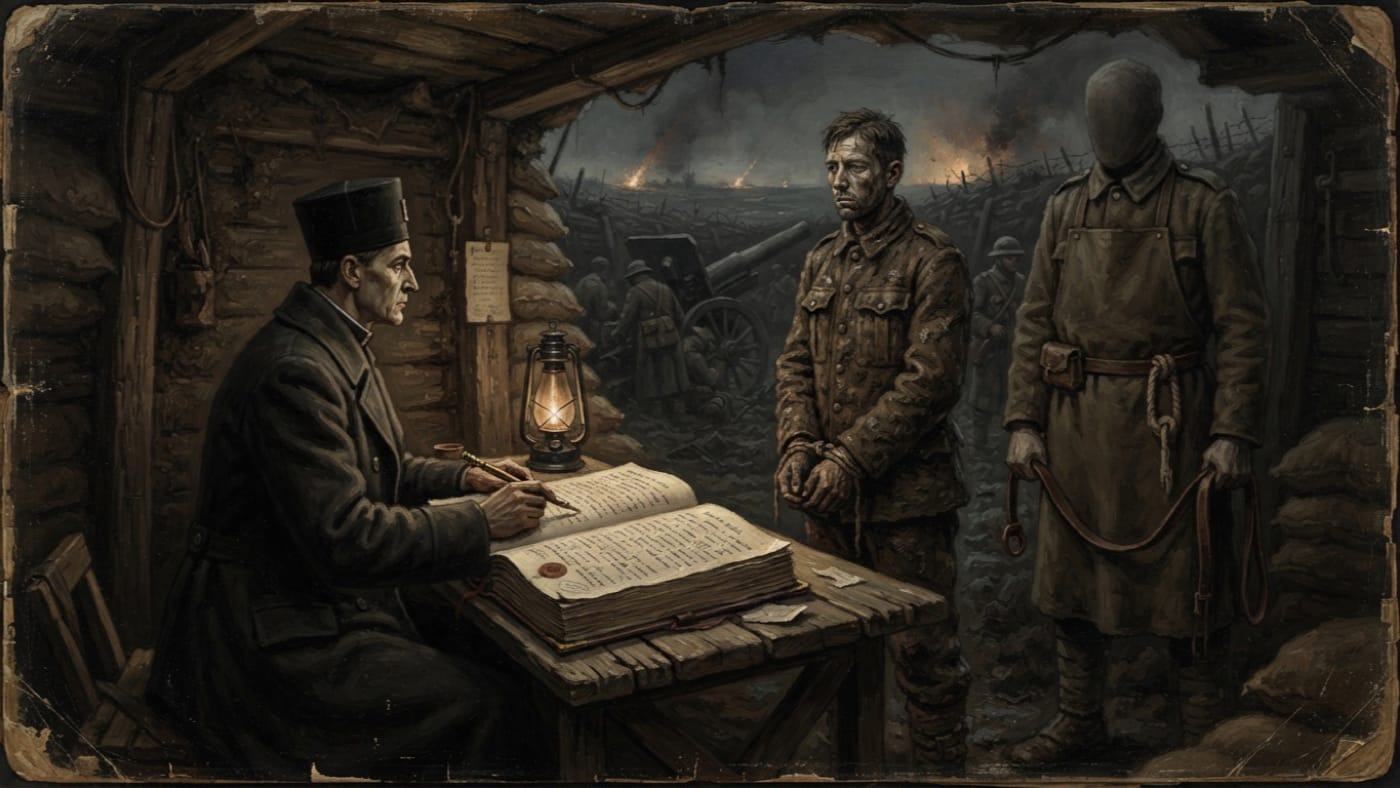
Martial Code
The Bureau hears the oath and notarises the silence.
In this A.S. 201 survey I follow the Martial Code from witnessed service to notarised silence. The military oath-breach penalty stands; the Bureau calls its use rare. The Code's origins remain unestablished.
Codex Ref. XIII.1.01-001
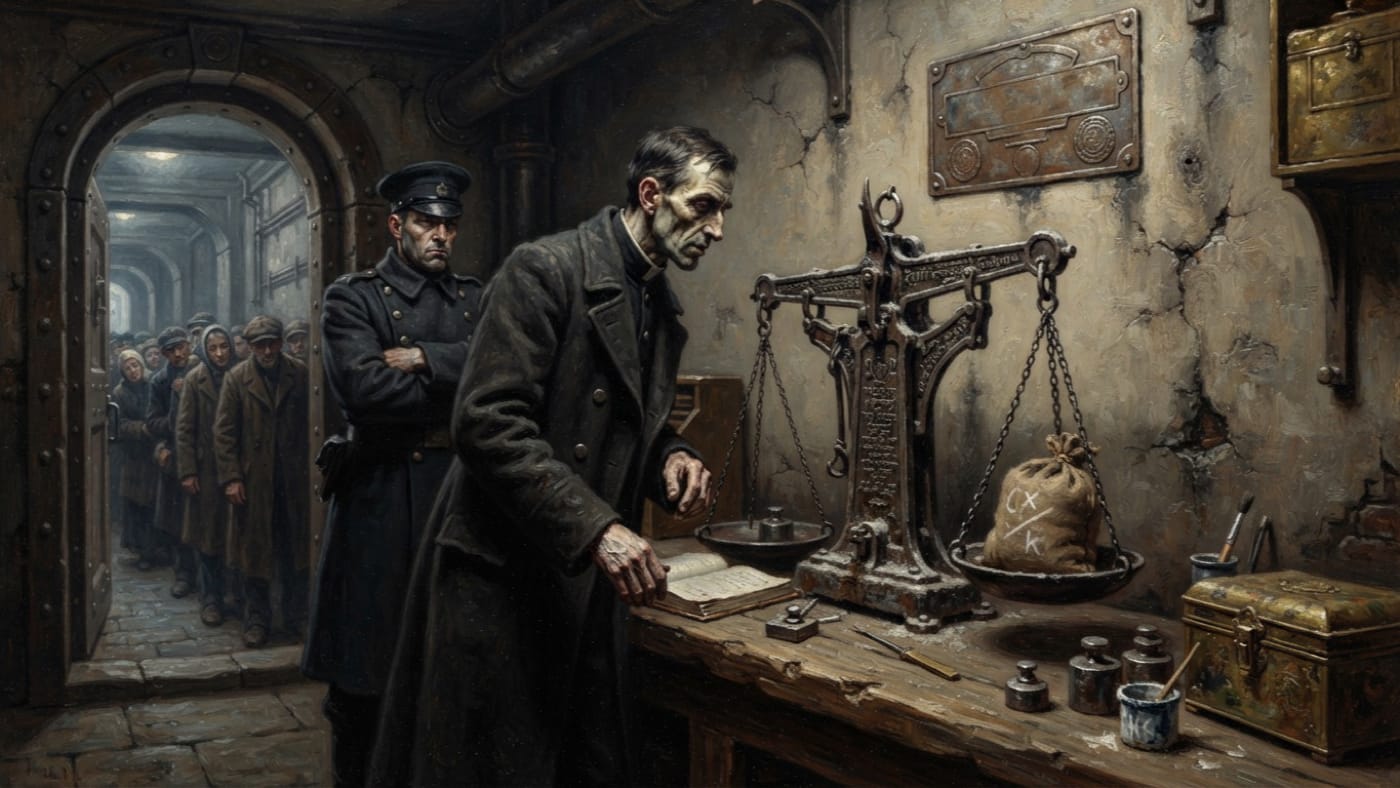
Martial Code 14-A
The zero is sacred. The hand that alters it is answerable.
Martial Code 14-A makes tampering with a sanctified scale spiritual contamination. The notice names the offence; the full text and prescribed sentence remain beyond my ledger.
Codex Ref. XIII.1.14-001
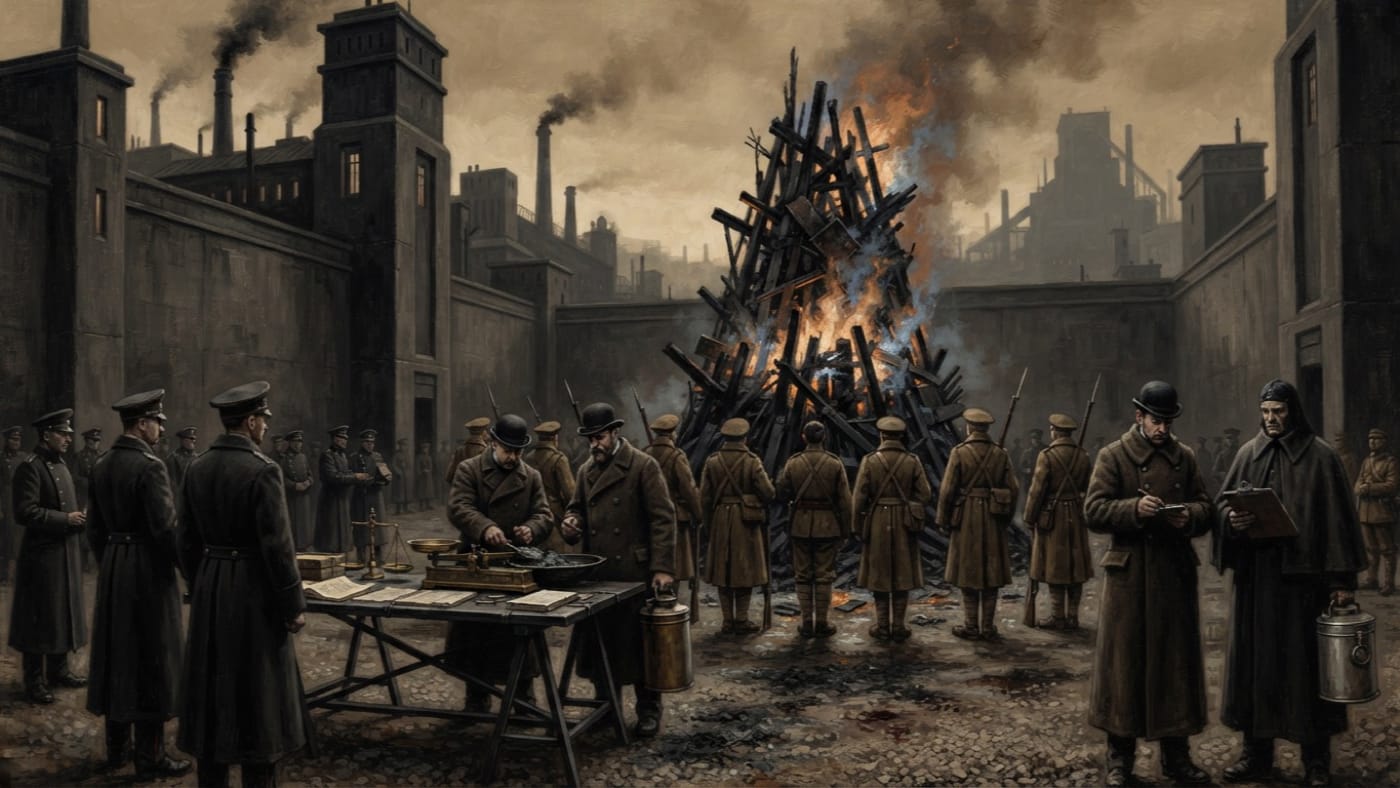
Martial Code 14-D
The parenthesis does the killing
Martial Code 14-D sends voluntary spiritual contamination to the pyre. Under Standing Order 119-F, I count forty burnings and three disappearances; the ledger is clearer about ashes than choice.
Codex Ref. XIII.1.14-004
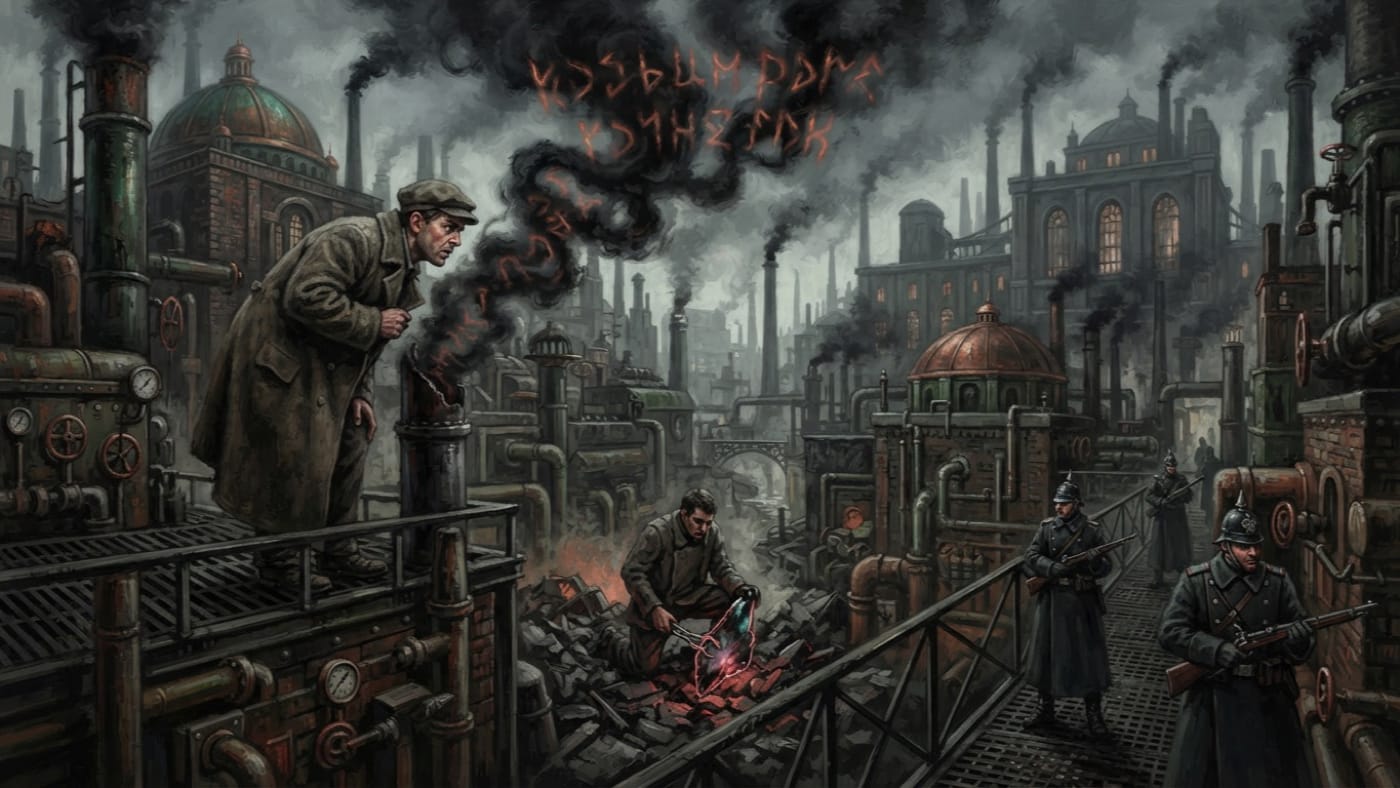
Martial Code 22-A
The smoke may write. The reader must answer.
Martial Code 22-A names voluntary spiritual contamination: reading smoke-text and specified demon-glass recovery under Standing Order 14-K. I hold the citations; the full Code and its prescribed sentence remain beyond my desk.
Codex Ref. XIII.1.22-001
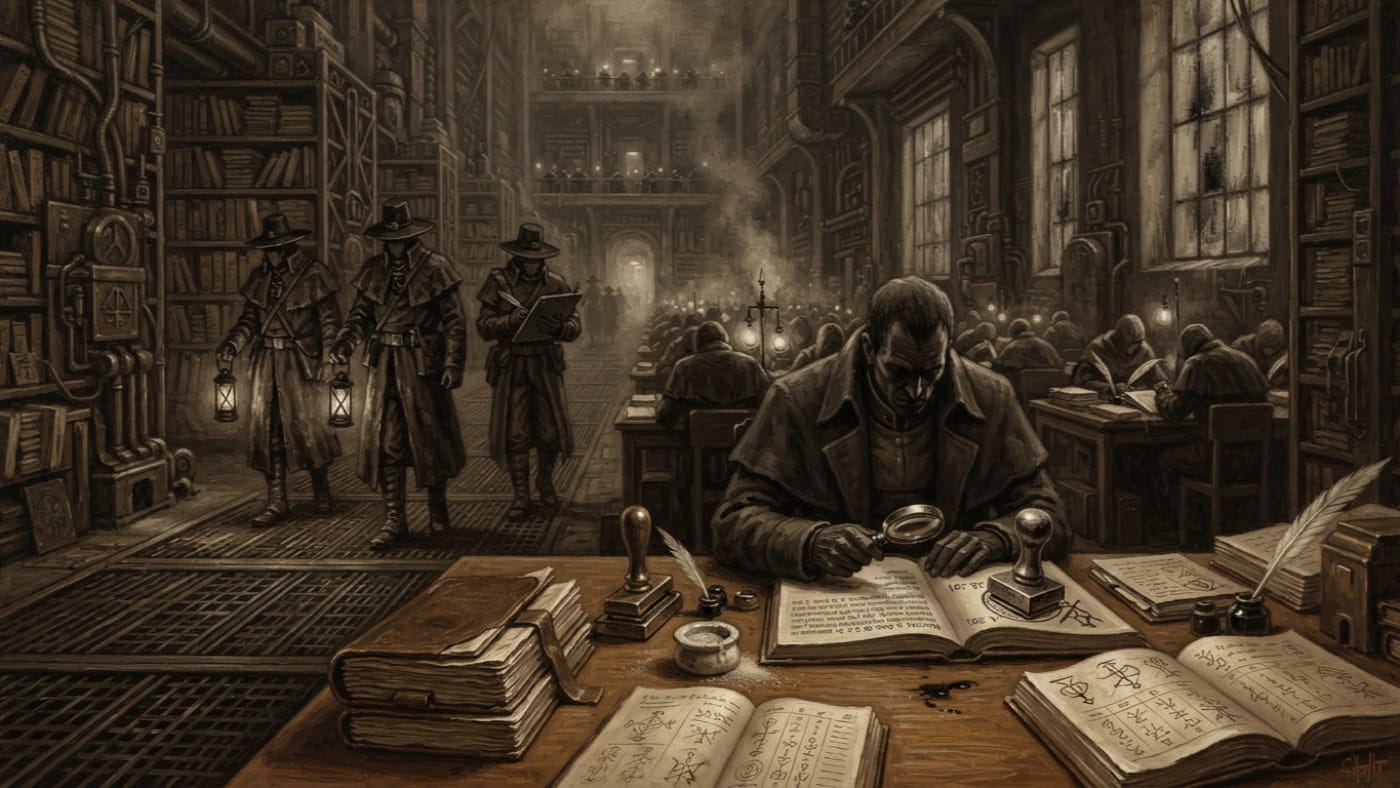
Martial Code 22-B
The thirty-first licensed name turns a tolerated Circle into an unauthorised gathering.
Under Standing Order 14-V, a Circle exceeding thirty licensed operatives becomes an unauthorised gathering under Martial Code 22-B. I hold the citation; the Code's full text and penalty remain beyond my desk.
Codex Ref. XIII.1.22-002
Martial Miracle
The river turns; the Bureaus take custody
Battlefield manifestations of the Creator's favour, read through Kalnik and Belgrade. Doctrine interprets, Records keeps the testimony, and War claims the victory. Pilgrimage sends the bill.
Codex Ref. VI.3.02-001

Martyr-Credits
The price of being spared the next question
Registry-backed devotion tokens that spare scrutiny on the Reliquary Switchbacks and secure Silent-Step fines. The Registry denies selling them; the booths remain open.
Codex Ref. XIII.1.85-201

Martyrology of Saint-Malo
Thirty-one names, forty-three seconds, and a civilization built from first blood
The Martyrology of Saint-Malo counts thirty-one dead, five absences, and every obedience the Synod has purchased with their blood.
Codex Ref. VII.8.02-001
Mask License
The face may vanish. The number must remain.
The Mask License permits the Synod's faithful to conceal their faces on approved occasions, for approved durations, through eye-holes of approved width. Even anonymity must be registered.
Codex Ref. XIII.1.19-002
Masonry Code
The sentence supplies the body; the specification supplies the wall
An A.S. 201 survey of the specifications that turn a writ into a wall: measured niches, binding mortar, paired masons, and a stamp that tells the inspector whom to blame.
Codex Ref. XIII.1.97-001

Masonry Code Appendix VII
A saint's recipe becomes a mason's liability
Appendix VII makes Saint Karron's mortar enforceable: five ingredients, four revisions, and a mason's stamp to identify whose wall has failed.
Codex Ref. XIII.1.97-007
Masonry Commentary
Why a soul has fewer excuses than a stone
Issued in A.S. 103, the Masonry Commentary gives Odo's listening stones a theology: silence becomes assent, and a soul has fewer excuses than granite.
Codex Ref. XIII.1.03-103
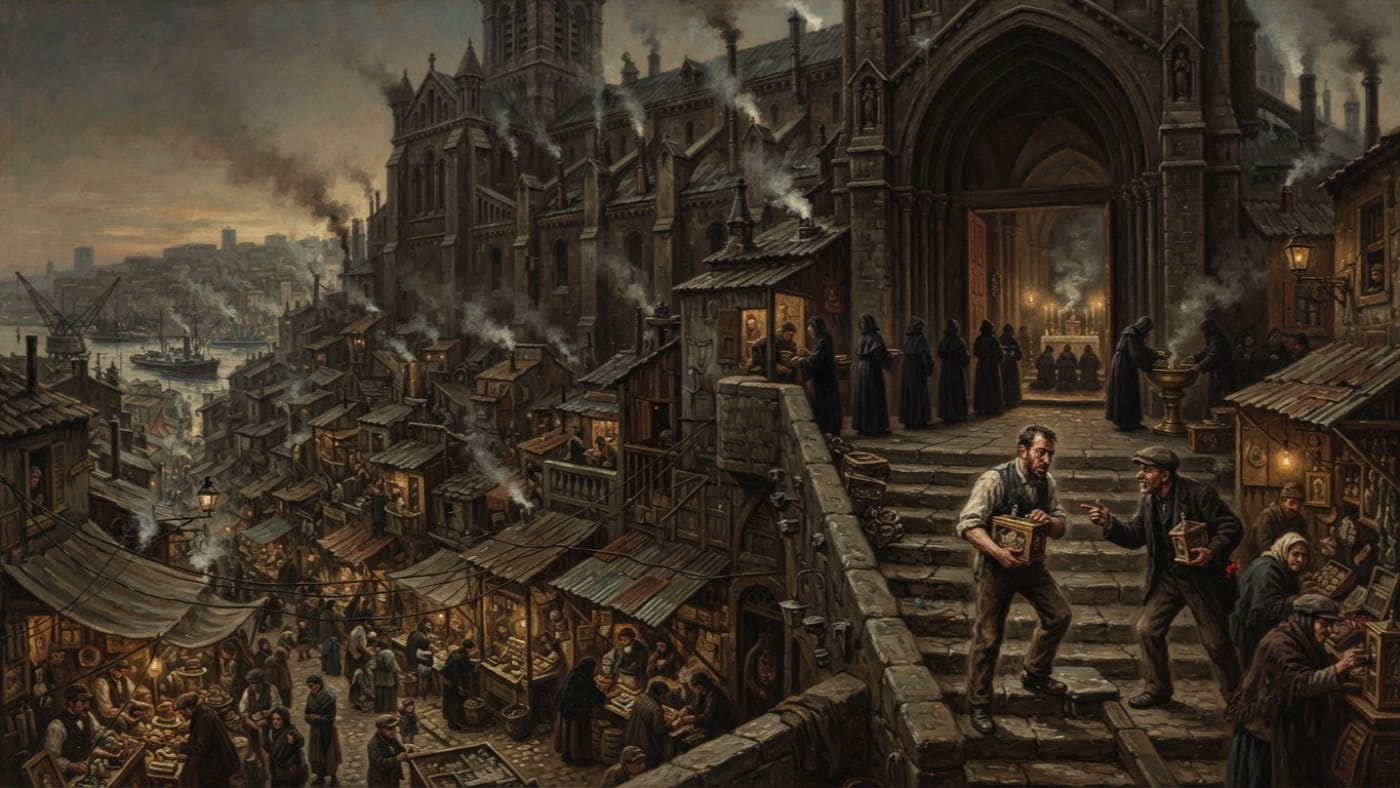
Masses of Remedial Doubt
The dealer pays for prayer; the knuckle keeps its provenance
At Saint-Victor in Marseille, relic dealers buy Masses of Remedial Doubt when customers complain. The cathedral receives an offering; the disputed bone acquires no certificate.
Codex Ref. XIII.1.43-002
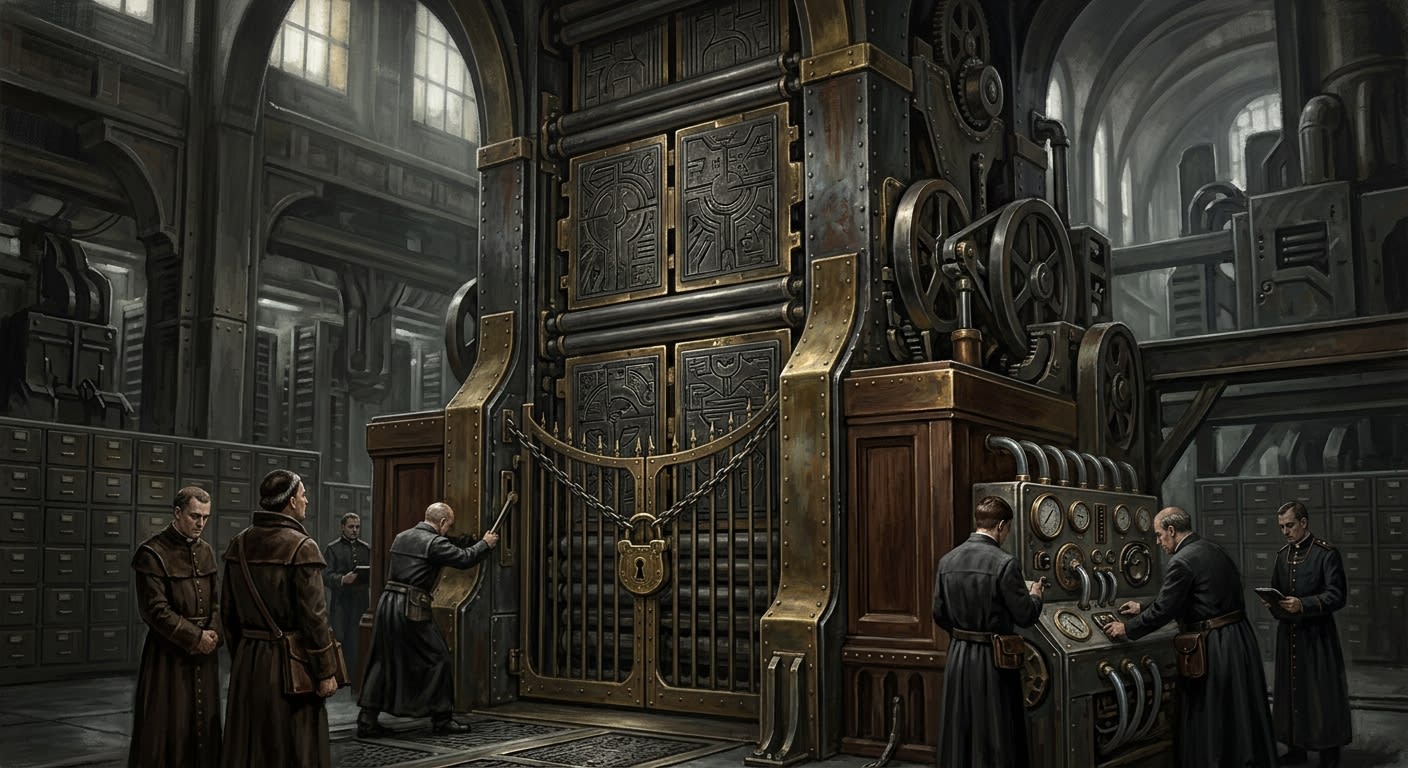
Master Hymnal Plates
The steel throat from which obedience descends
The Master Hymnal Plates are Orison's locked throat: steel scripture, legal ancestor, and the correction by which yesterday's mouths become wrong.
Codex Ref. XIII.1.96-092

Matins
The first permitted injury of the day
Matins is dawn made lawful: bell, prayer, register, and the Bureau's delicate art of converting a sleeping body into taxable obedience.
Codex Ref. XIII.1.96-115
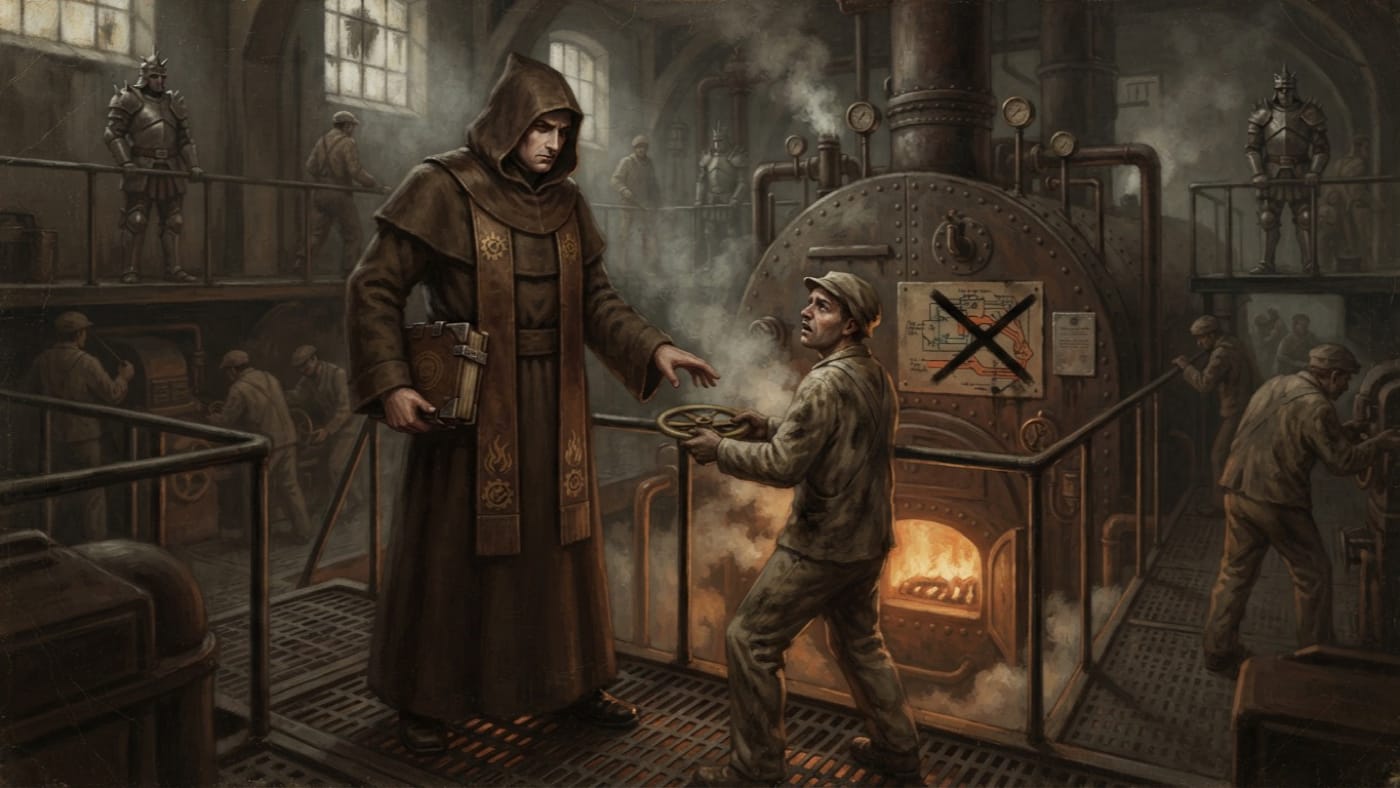
Mechanistic Heresy
Engineering owns the hands. Doctrine owns the why.
The charge against explaining a machine without the Church's permission. Engineering may work the valves; Doctrine owns the why. An A.S. 201 survey of the offence, its vocabulary and its precedents.
Codex Ref. XIII.1.91-201
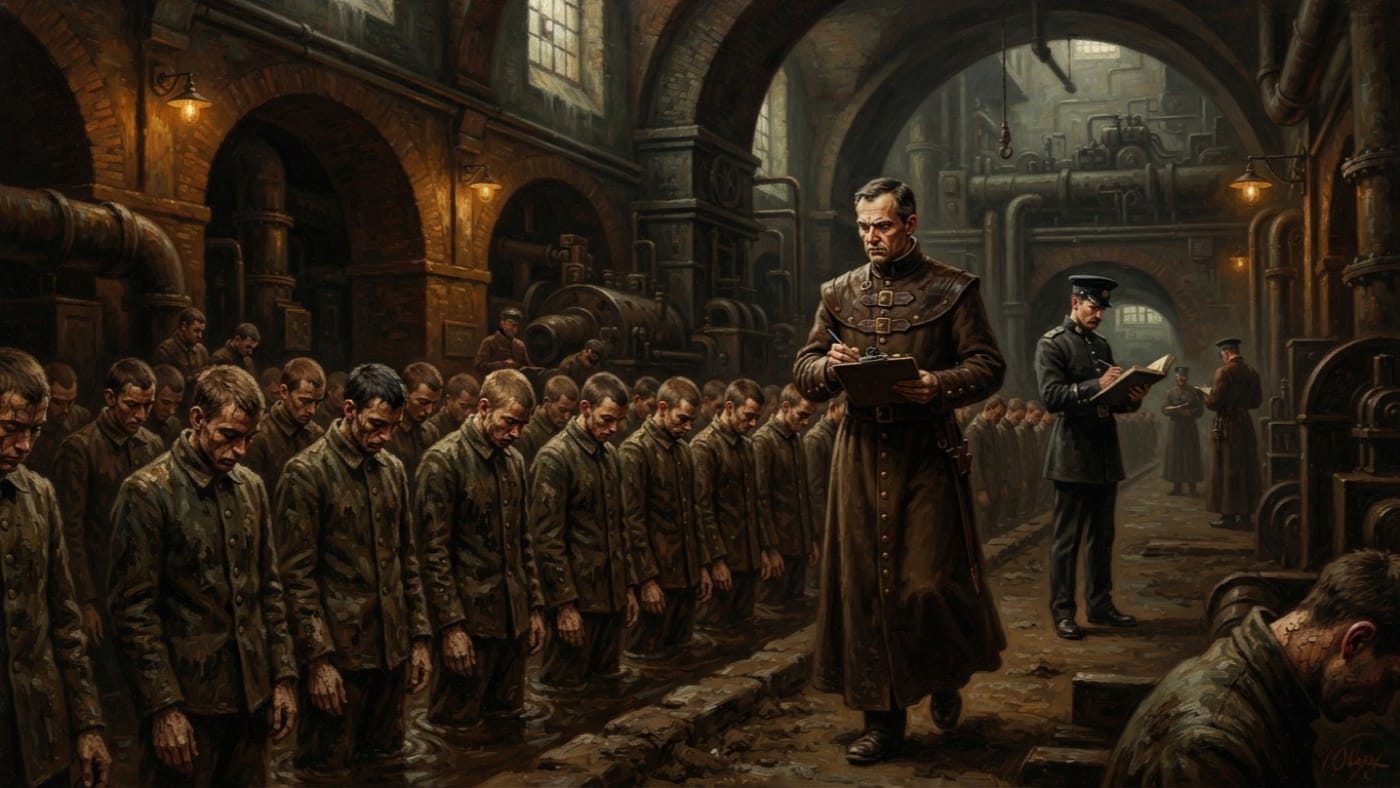
Medical Annex 44-C
Seventeen cases, one corrected sentence
Medical Annex 44-C survives through Stuttgart's broadsheet correction: trench rash, fungal bloom and seventeen cases of devotional fever. The A.S. 201 survey records amended promises and unchanged mud; the annex's issue date remains unrecorded.
Codex Ref. XIII.1.91-044

Medical Protocol 9-C
The little iron tooth that makes hunger testify
Medical Protocol 9-C is Medicine's iron tooth: a quarantine rite that turns appetite, refusal, dreams, and mud under the tongue into evidence.
Codex Ref. XIII.1.91-134
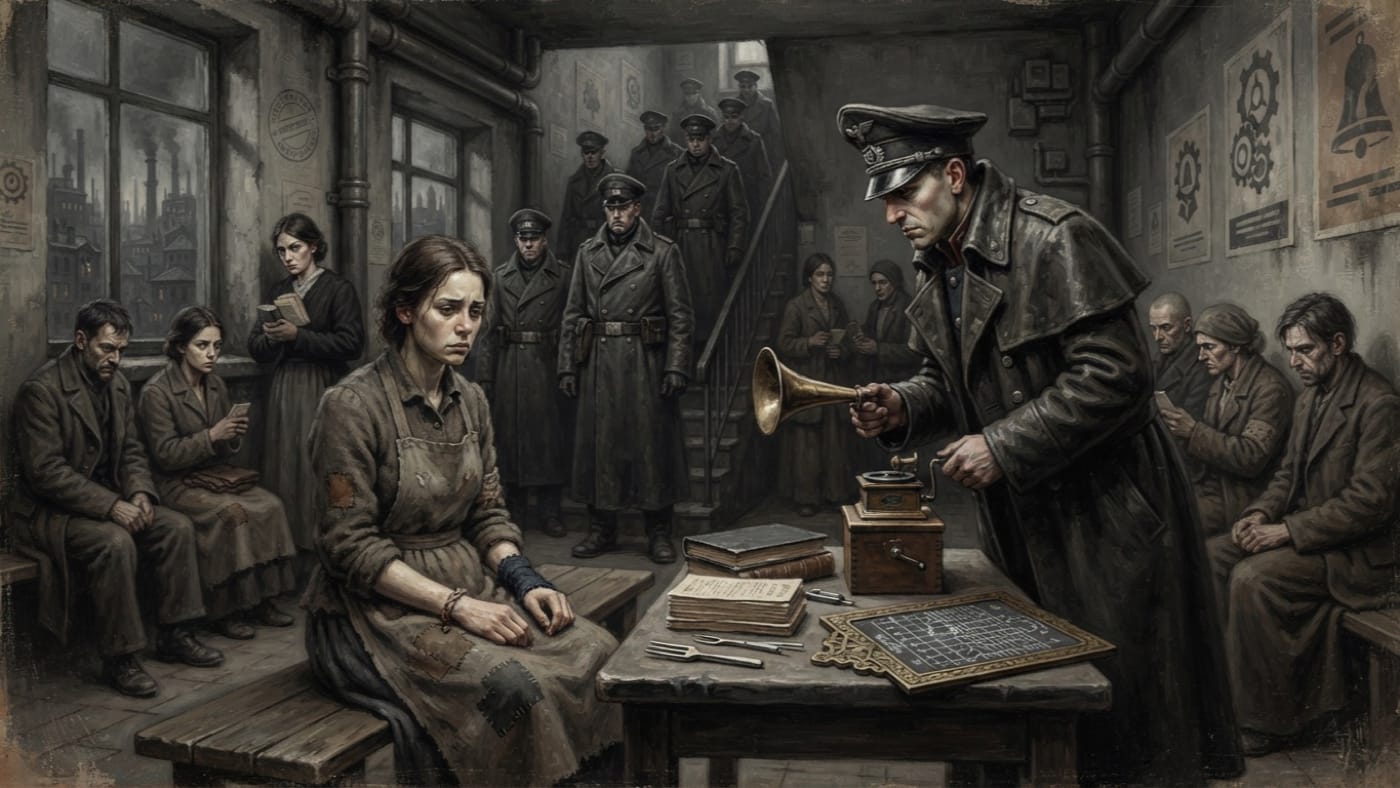
Melody Intent
The song need not be heard for the charge to be filed
Orison's charge for inferred knowledge of an unlicensed cadence and intent to transmit it; a silent cuff and a willing neighbour can begin the paperwork.
Codex Ref. XIII.1.86-201
Memorandum on Artillery Bombardment
Nine thousand shells, four hundred twelve names, and one unsigned appetite for arithmetic
An unsigned Bureau of War memorandum proposes shelling the Hollow Court. Doctrine finds nine thousand shells, no absolution, and a table that may be an organ.
Codex Ref. XIII.1.23-001

Memory Levy
The receipt closes the payment; Aachen's account stays open
Aachen's merchants pay for a gate they never opened. Tithes enters the memory levy beside ordinary duties, permanent pending moral improvement. A receipt settles payment; it does not absolve the city.
Codex Ref. XIII.1.92-002

Merchant Problem
The correct manifest with teeth
The Merchant Problem is Macedon's cleanest corruption: lawful caravans, correct manifests, obedient seals, and cargo that waits for the gate to believe it.
Codex Ref. XIII.1.97-187

Mercy of No Martyrs
The Church is spared a martyr; the household is spared nothing
The Priors call it mercy: the condemned vanish, the Church keeps their names, and households may grieve only for somebody else.
Codex Ref. XIII.1.06-001

Mercy Quota System
Every mercy has a measure; need has no column
Water by the cup, rest by the minute, bandages by the strip: the Jubilee formula permits only recorded relief. The slate accounts for every mercy. It has no column for need.
Codex Ref. XIII.1.89-141
Mercy Stamp clerks
The street cannot wait for the Ledger to finish grieving
Mercy Stamp clerks are Dead-Goods Tariffers who favour speed against street rot. The opinion is permitted; the unofficial clearance has no lawful standing.
Codex Ref. XIII.1.11-201
Mercy Stamps
The lawful hand guards grace; the ashen hand moves the queue
Two histories share one name: the confessor's restricted impression and Marrowgate's unofficial ash mark. Drax surveys their A.S. 201 standing, where forgiveness is guarded and speed has a price.
Codex Ref. XIII.1.13-201
Mercy Tone
The slow note by which the body remains useful
Mercy Tone is the Brand-Singer school that preserves breath, extends confession, and proves that the Synod can call acquisition mercy when the note is slow enough.
Codex Ref. XIII.1.41-001
Mercy Ward-Sister / Mercy Ward-Brother
The hand that brings broth also carries the ledger
The Mercy Ward-Sister and Ward-Brother are the Bureau of Mercy's grey-aproned operators of counted compassion, where broth, bandage, confession, and paperwork become one instrument.
Codex Ref. XII.6.04-001

Mercy Weighers
Compassion, when properly hidden, can pass an audit
Internal tariff-chapel faction of Commerce Clerks who shade tariffs, balance ledgers, and keep hunger quiet by committing mercy in ounces.
Codex Ref. XIII.1.60-001
Methodical Interview Protocols
The song leaves no residue; the confession leaves names
The Bureau of Purity turns remembered melodies into sealed admissions. This A.S. 201 survey records the origin chain, the bargain for three names and the certainty a confession acquires once the wax is pressed.
Codex Ref. XII.48.02-001

Metric Saturation Syndrome
The holy arithmetic enters the skull and finds office space
Internal medical classification for Auditors gone to numbers: the service deformation by which citizens become compliance probabilities before they remain human.
Codex Ref. XIII.1.83-001

Metronome Bell
The seal says whether; the bell says when
Under the A.S. 95 Cadence Reforms, a small brass bell governs shrine-platform volleys. A missed toll stays missed; the Cadence Caller signs for the failure.
Codex Ref. XIII.1.95-095

Military Secrecy Concordat
The Bureau owns the routes. The Watchers know the way.
An A.S. 201 survey of Article 17's attested restriction on copying Masurian lake charts. The Bureau owns the routes; the Watchers know where they are.
Codex Ref. XIII.1.17-001

Mimetic Theft
The voice is yours. The sermon may not be.
Morwen's school of sorcery steals voices, faces, and the evidence of a life. The Bureau can certify a broadcast. It remains less certain which corporal is entitled to answer his own name.
Codex Ref. VI.3.07-001

Minor Lauds
On the Opening Words That Still Require Papers
The opening invocation of the Minor Lauds serves as a rotating ferry password in Zones 2–3. The words endure; permission expires at sundown, and papers remain compulsory.
Codex Ref. XIII.1.16-446
Mint Catechism
Strike on the syllable. Speak no name.
In Sable Court, the choir sings faces into lawful currency. The Mint Catechism governs every press-hammer; its text is withheld, its origin undated, and twice its timing has slipped.
Codex Ref. XIII.1.23-002
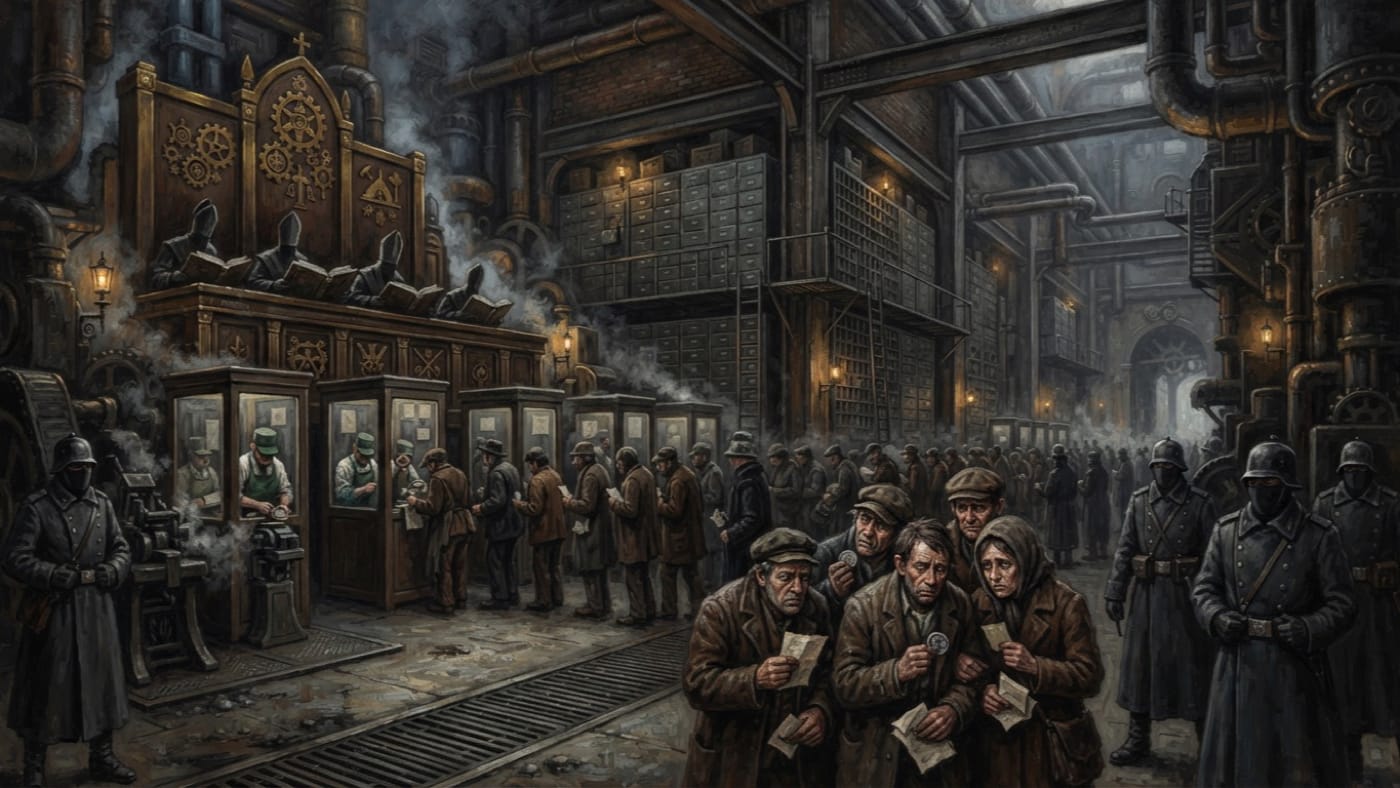
Mint Tribunal
Recognition is lent. The Hall keeps the receipt.
The Mint Tribunal of Sable Court holds, recalls, and corrects the right of a face to be recognised. Its orders reach bread, wages, and memory; the Face Theft complaints now wait on evidence that cannot remember itself.
Codex Ref. XIII.1.91-201

Mint-Chapter
Where the Synod makes faces spendable and obedience portable
The Mint-Chapter binds face, name, and coin into one leash: a polished doctrine by which bread, debt, memory, and burial all learn to ask for a clean strike.
Codex Ref. XIII.1.91-094

Mint-Prelate
The stamp that makes a face spendable
The Mint-Prelate makes Sable Court's coin-faces lawful. Varo Sable keeps recognition payable in advance while the Face Theft crisis enlarges the office's authority.
Codex Ref. XIII.1.91-002

Minute Drift
The road steals from the pulse and invoices the wound
Along the Queue Road, minutes slip from bodies into ledgers and the Apparatus beneath Gate Nine grinds waiting into something no Bureau will name.
Codex Ref. XIII.1.15-001
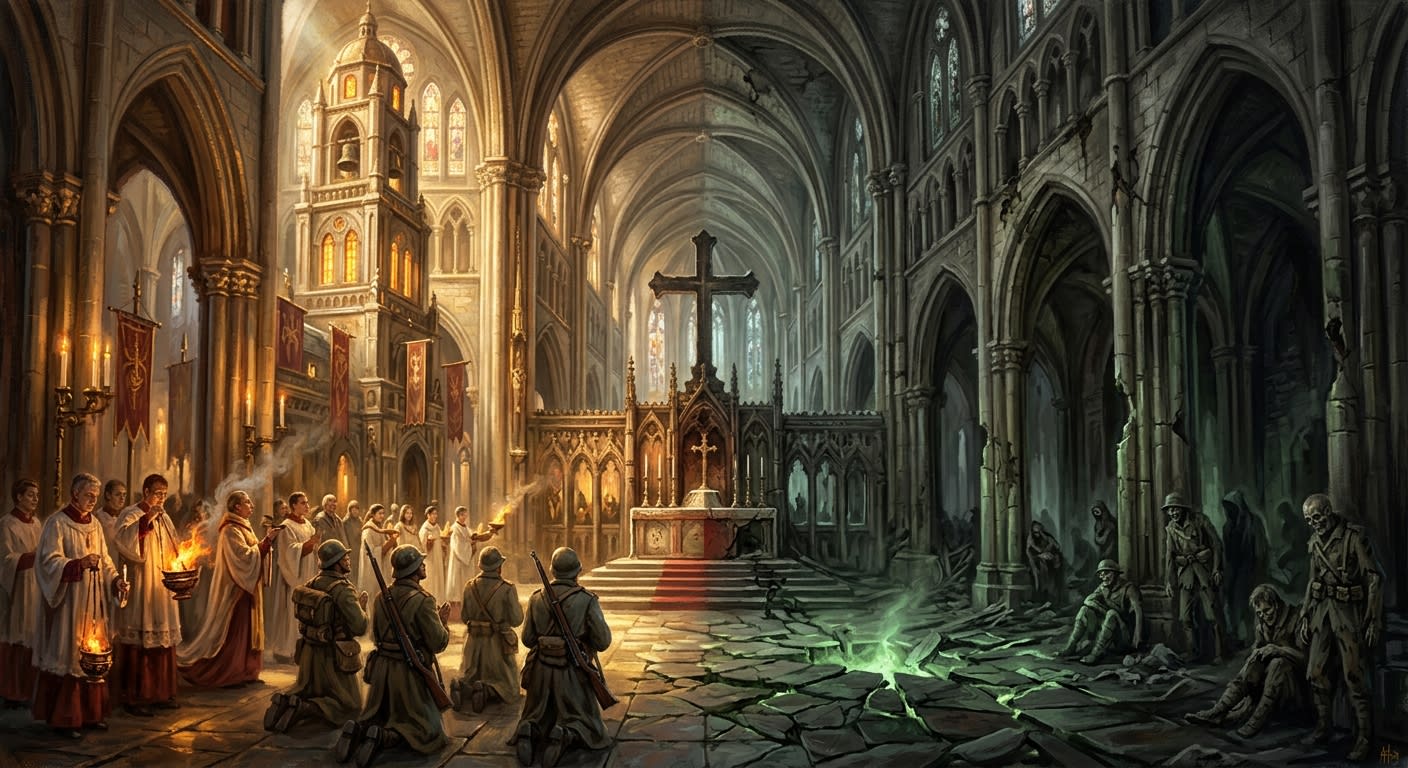
Miracles and Sorcery
Both crack Creation; only the paperwork differs
The Bureau insists miracles and sorcery are opposites. The mechanism, as Drax reluctantly confirms, is identical. The source determines canonisation or burning. The paperwork is different. The world pays either way.
Codex Ref. VI.3.01-001

Miraculum Diffusum
The miracle was everywhere, which is to say the presses worked
The one-use doctrinal category that crowned Margaux when no ordinary miracle arrived: effect, print, grief, and Latin with teeth.
Codex Ref. XIII.1.09-014
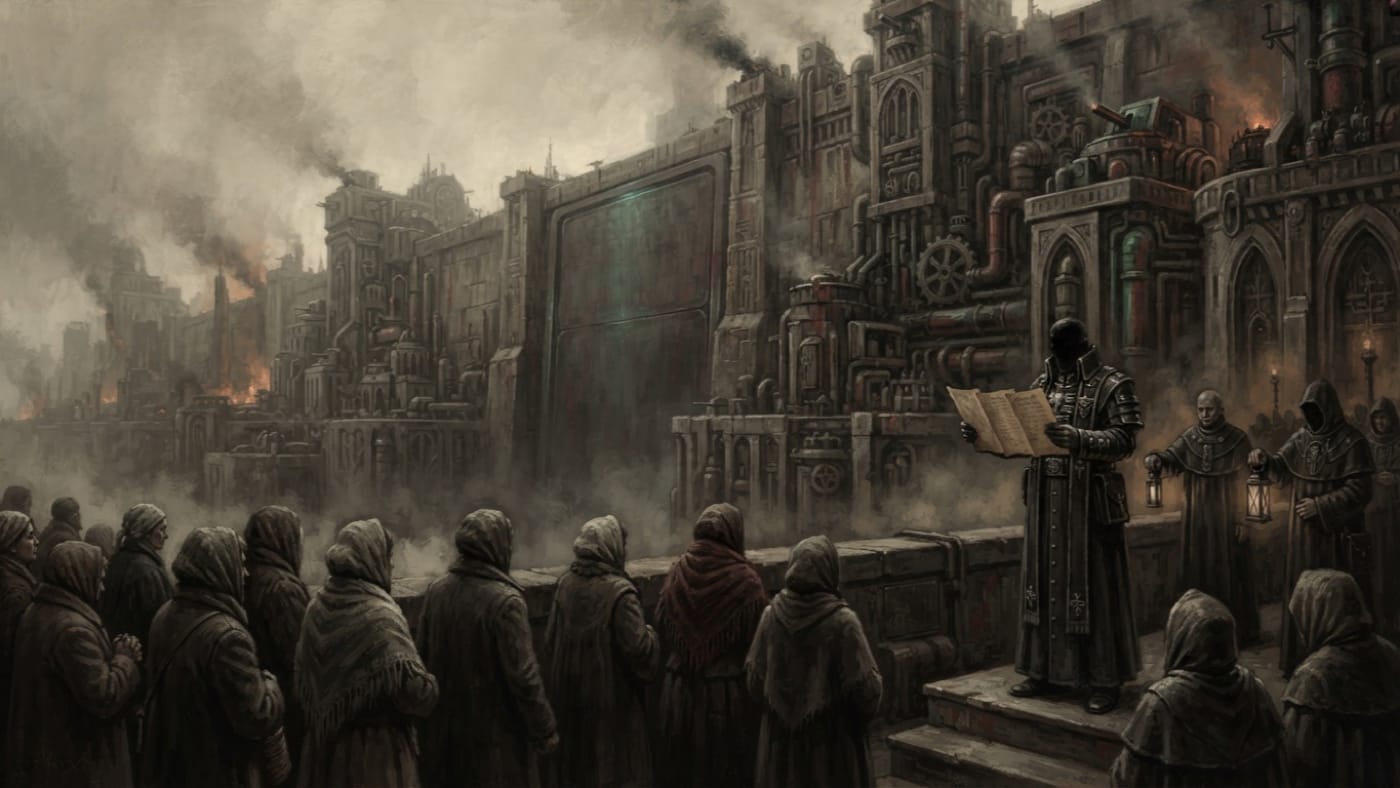
Miraculum Septimum: De Custodia Sancta
Three pages; forty-seven unnamed; the Wall endures.
The Bureau of Doctrine's three-page account of the Sixth Ravelin's sealing, filed in A.S. 170 and read at the Vigil of the Hollowed. Forty-seven offered; none named. The account records acceptance. The cement is omitted.
Codex Ref. XIII.1.98-170
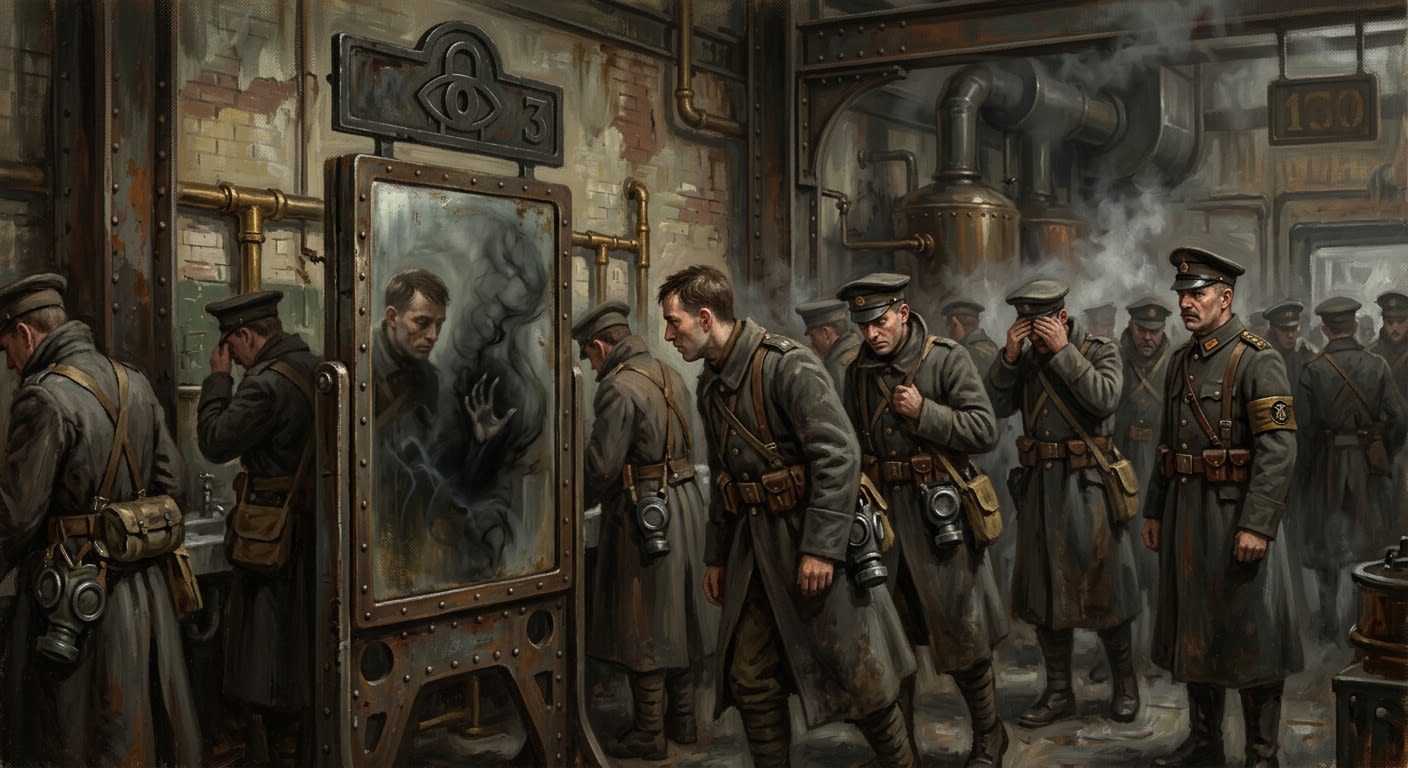
Mirror Discipline
Count to three before your face becomes negotiable
Mirror Discipline forbids the Irongate garrison from lingering over its own face, because Morwen enters where vanity counts past three.
Codex Ref. XIII.1.01-003
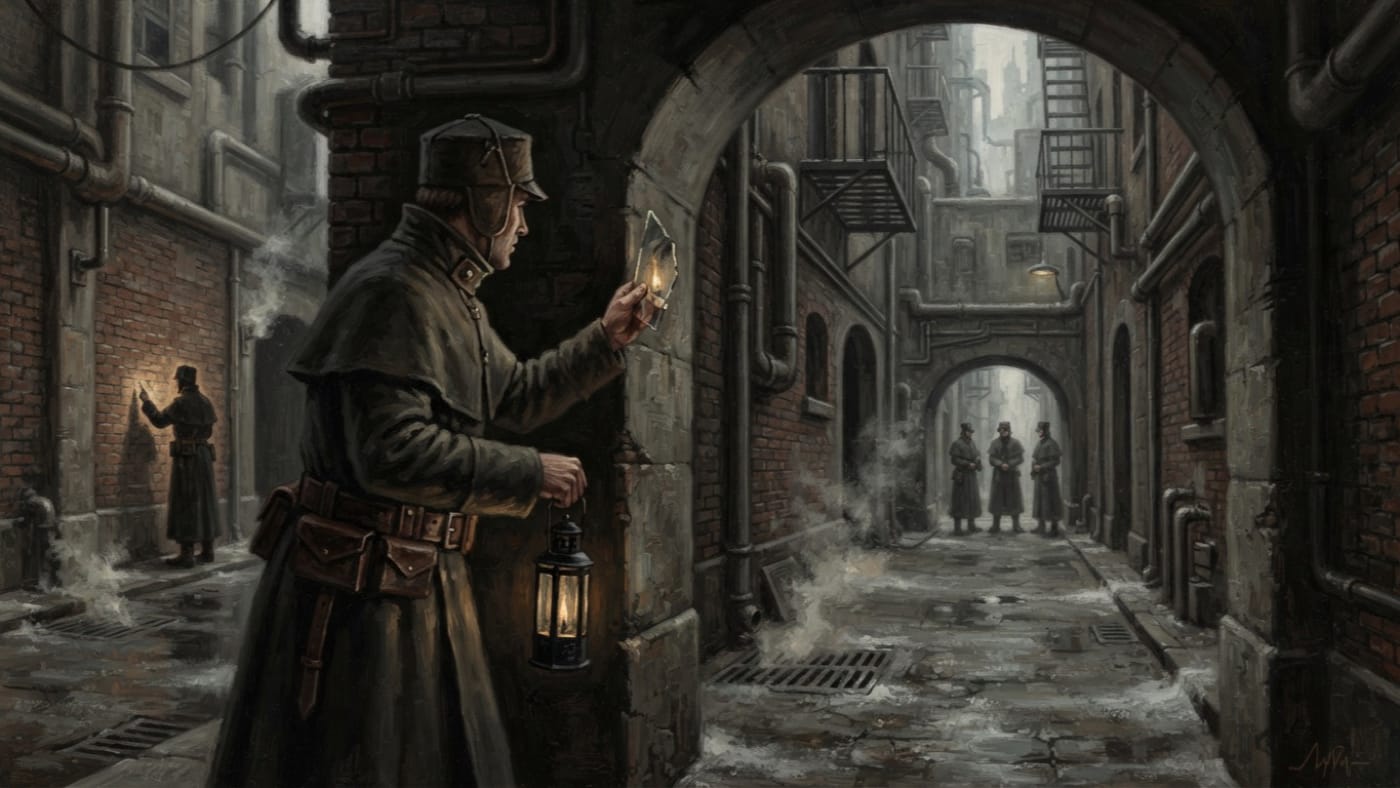
Mirror-Flash
The shard summons the Brothers and leaves the warrant blank
Mirror-Flash gives Mute Radiance one recorded optical command: 1–2–1, Circle converge. The shard summons Brothers wherever clear sight permits; it carries no warrant and cannot measure what a quiet congregation understands.
Codex Ref. XIII.1.76-008
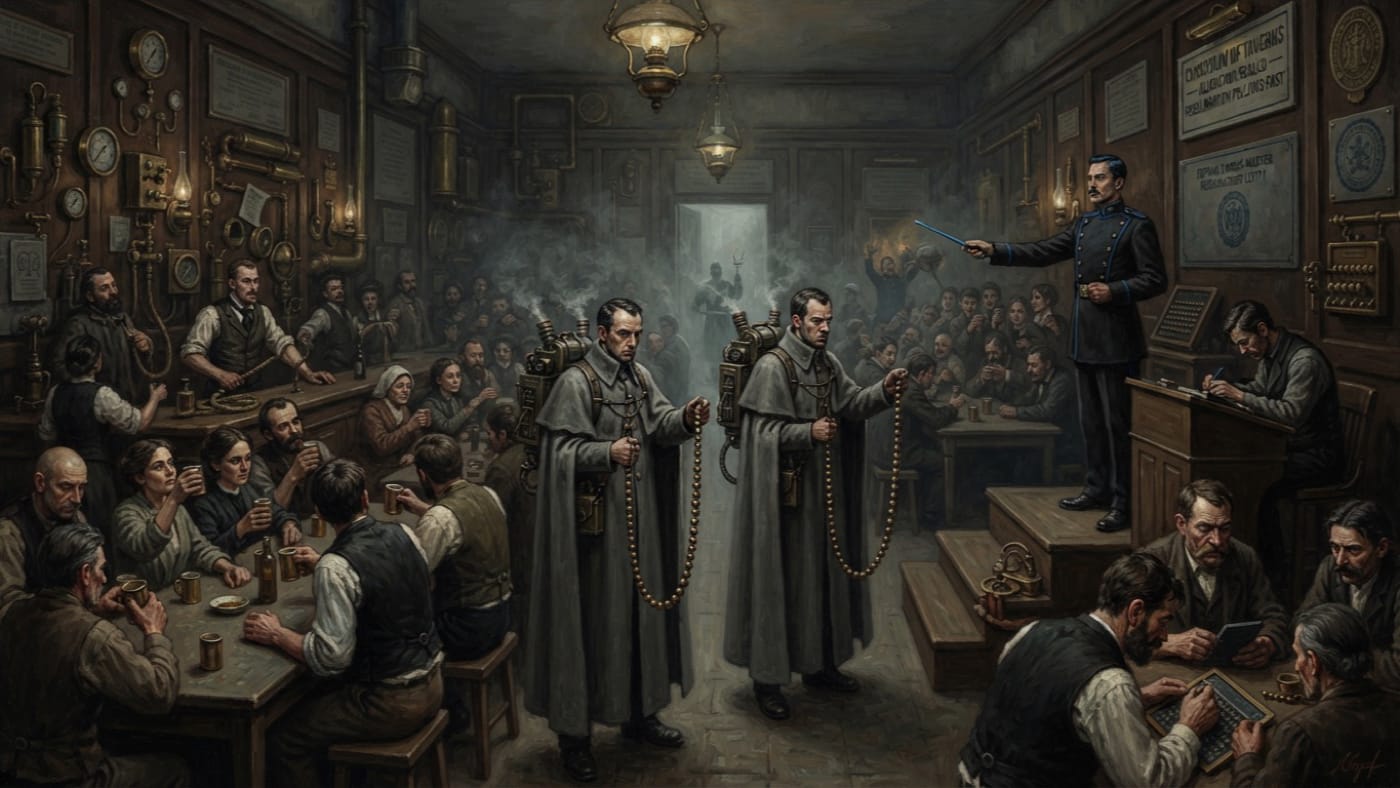
Mirth Quota
The allowance is sealed; the excess is your fault
The Bureau of Festivals rations public merriment by a sealed quota. Seville learned the limit through punishment, then taught the regulation to sing.
Codex Ref. XIII.1.66-002
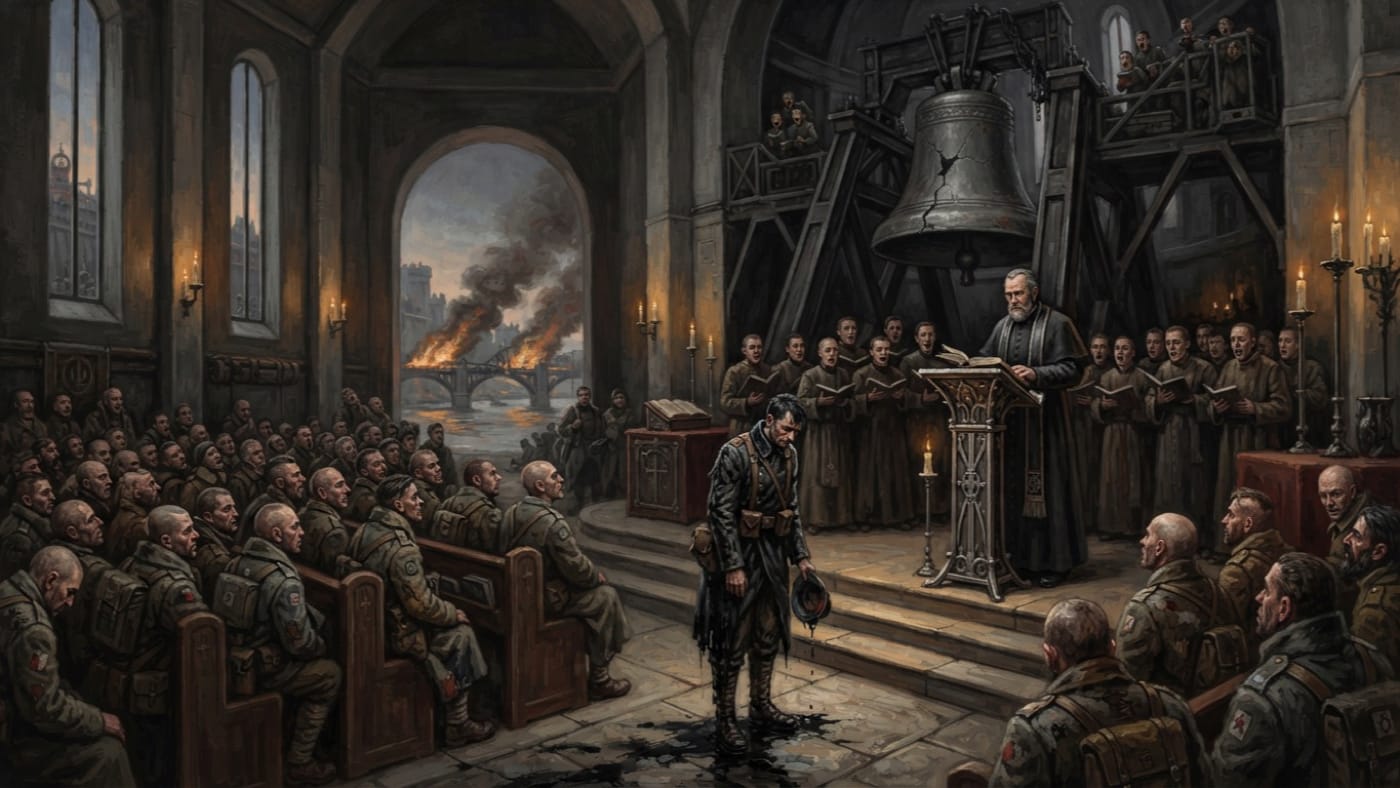
Miserere
The psalm Severin finished while the northern front collapsed
Severin finished the Miserere at Montreval after reading of Aachen's betrayal in A.S. 25. Mercy was requested; the bridges were burned anyway.
Codex Ref. XIII.1.96-025

Mold Ledger Rot
A seal confers status; it does not preserve a page
Records lost three months of southern casualty reconciliations in A.S. 156. Grey Veils supplied copies; Records supplied a denial, bound to forty-seven pages in Grey Veils ink.
Codex Ref. XIII.1.56-156

Mortuary Black
The ink that keeps the name and murders the claimant
Mortuary Black is the Bureau of Records compound for Administrative Dissolution: iron-gall, bone ash, Rites seal, and enough silence to make a name visible and unusable.
Codex Ref. XIII.1.01-002
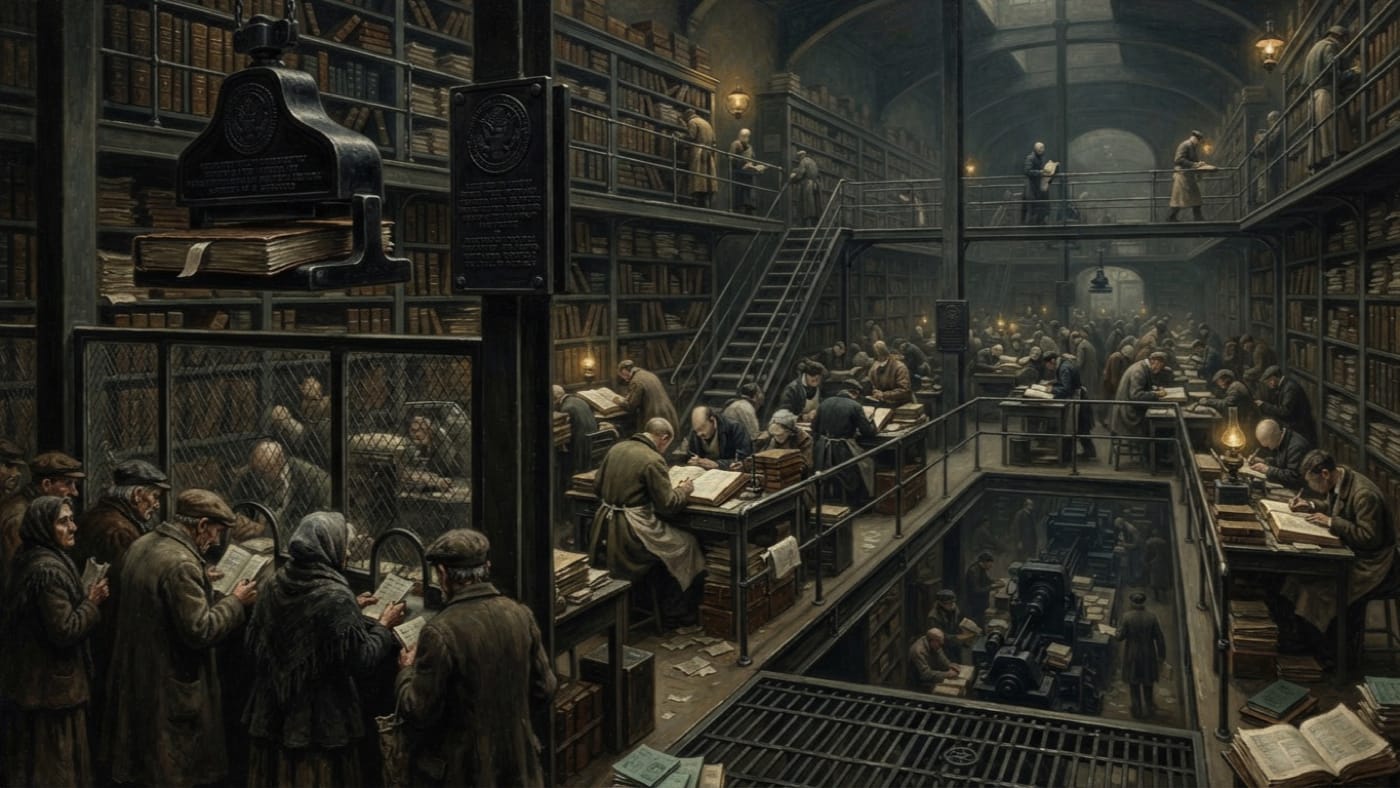
Mortuary Index
The dead receive a line. The erased receive nothing.
The Bureau of Records acknowledges the dead one name at a time. A line in the Mortuary Index records a recognised death; the erased receive none. I certify the distinction.
Codex Ref. XIII.1.98-201

Moth
The command title with too many bodies and one blank appetite
Moth names the Blank-Sheet Circle's disputed command absence: perhaps person, office, paper, or the procedure by which blankness learns to cross.
Codex Ref. XIII.1.53-001
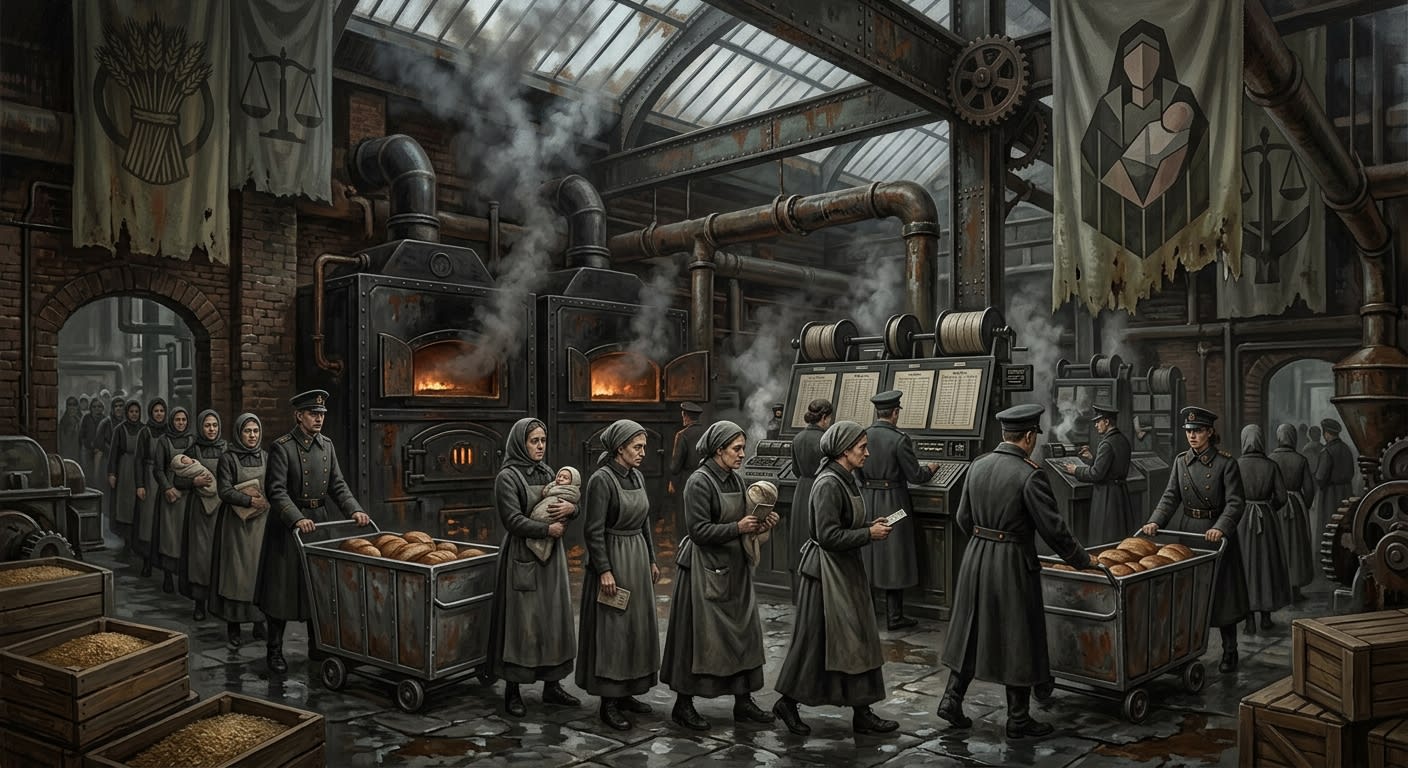
Mothers of Plenty
The queue kept warm, the cradle kept counted
The Mothers of Plenty govern bread and birth as one obedient system, turning ration queues, pregnancy ledgers, and infants not yet weaned into instruments of state continuity.
Codex Ref. XII.6.05-001

Mouth-Seal
One marked mouth instructs the watching alley
Mouth-Seal is Mute Radiance's public wax mark at the centre of the lips: the wearer supplies the notice and the alley learns silence. Origin and adoption remain unrecorded; auxiliary toleration grants no arrest authority.
Codex Ref. XIII.1.76-008
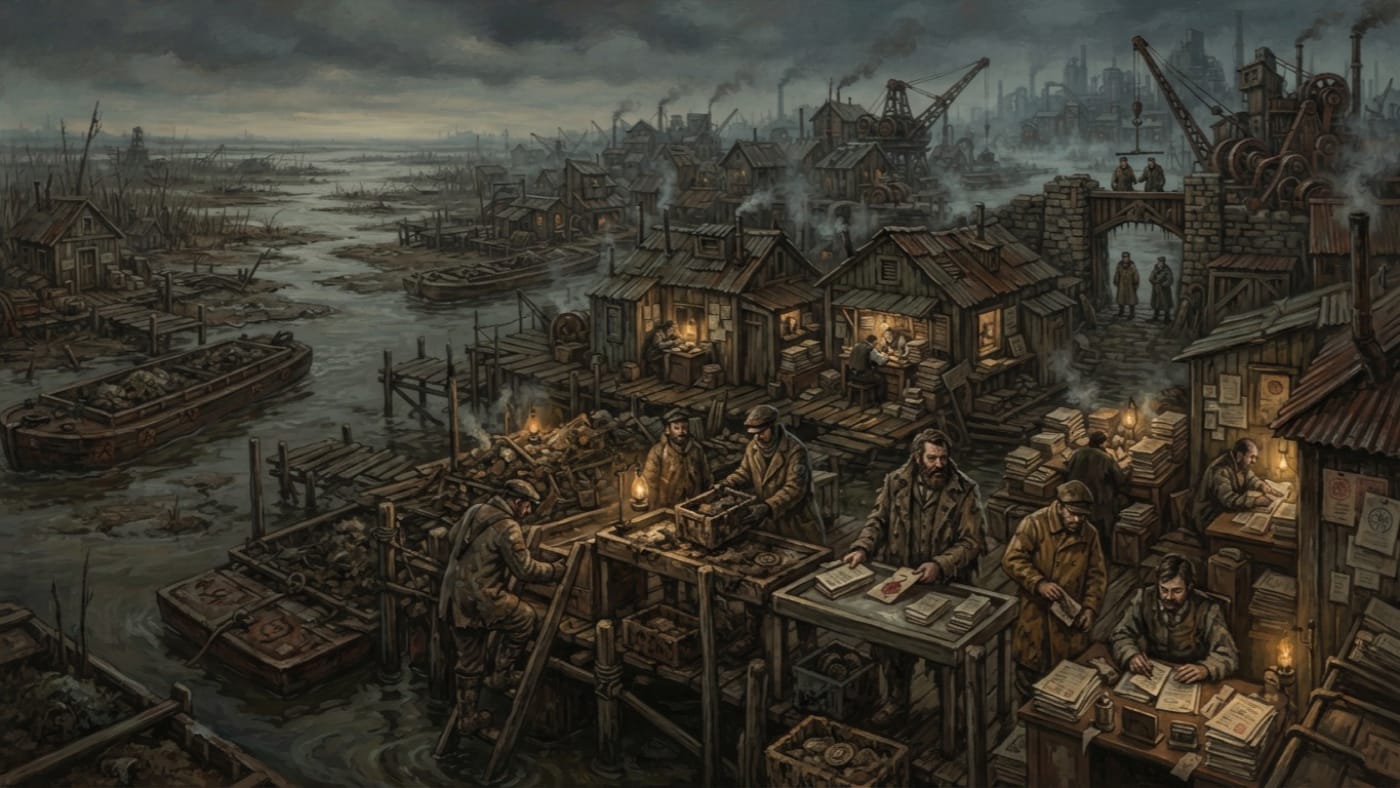
Mud-Relic Syndicate
A relic costs less than an acceptable history.
At the Ash-Glyph Marshworks, the Yesterday Finders turn planted relics and impossible recoveries into registered salvage. The tags are forged, the clerks are paid, and the mud has begun supplying its own paperwork.
Codex Ref. XIII.1.50-002

Name-Merchant
The broker who sells the bell before the knock
A Name-Merchant sells advance knowledge of Index condemnation, turning the interval before lawful erasure into the most expensive mercy in the Synod.
Codex Ref. XIII.1.75-001
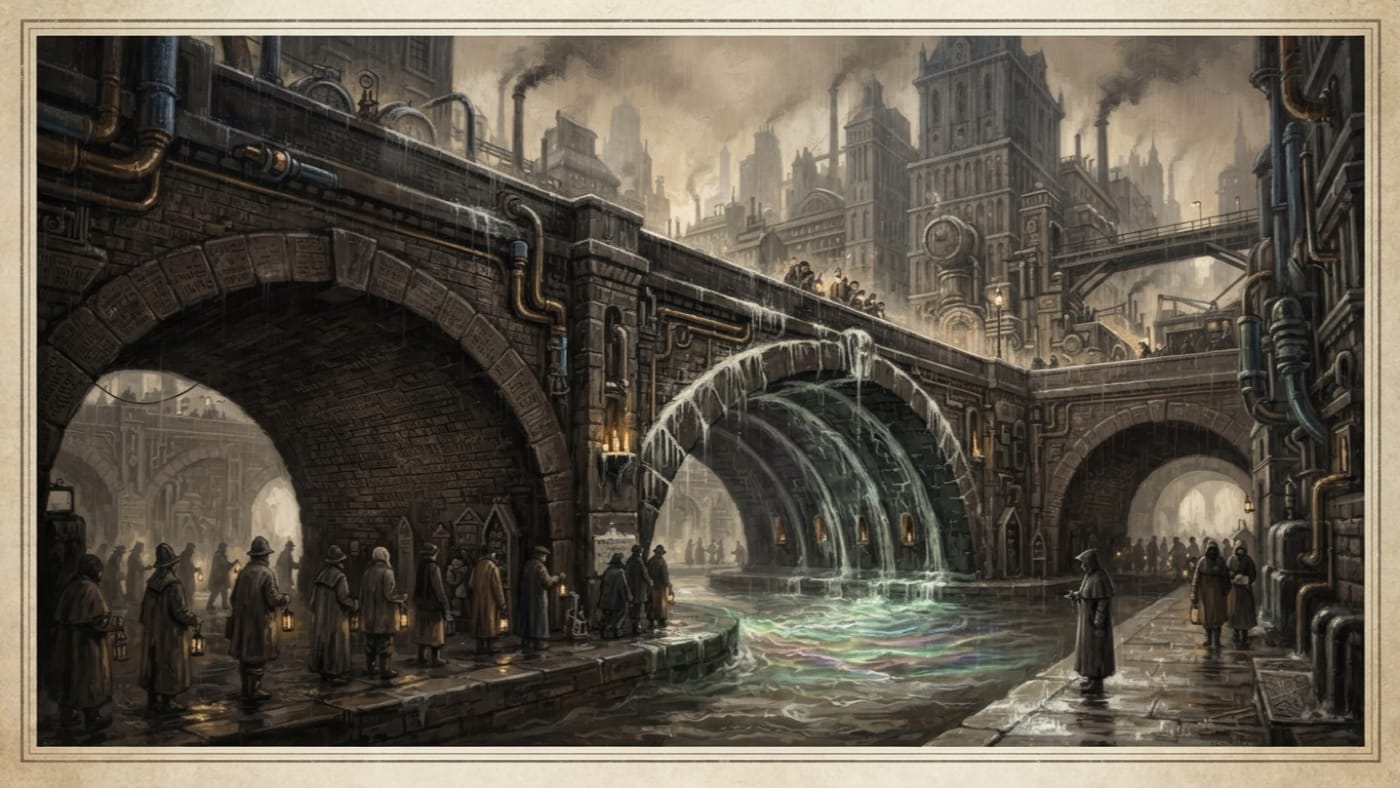
Name-Resonance Architecture
Where a registry error can become a bodily complaint
Certain arches of the Archivolt Causeyworks answer spoken names with lime, shifting water, healing or catarrh. The stone responds. Doctrine's explanation remains Category Three: Pending.
Codex Ref. XIII.1.02-003
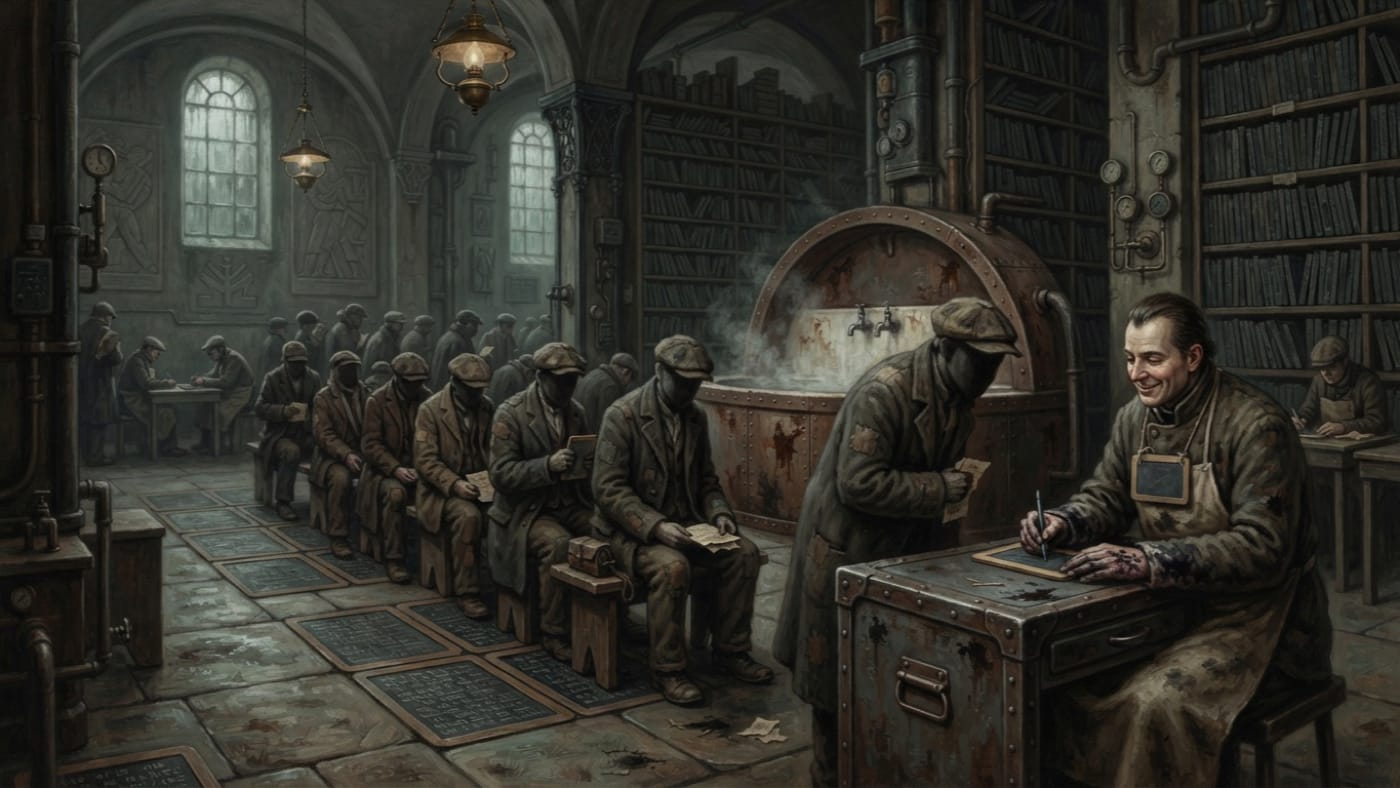
Namewash Night
The name comes back washed; the doubt stays in slate
Each week the Causeyworks requires residents to confess doubts about their names. The names are returned; the confessions remain in slate. The city calls this hygiene.
Codex Ref. XIII.1.02-004
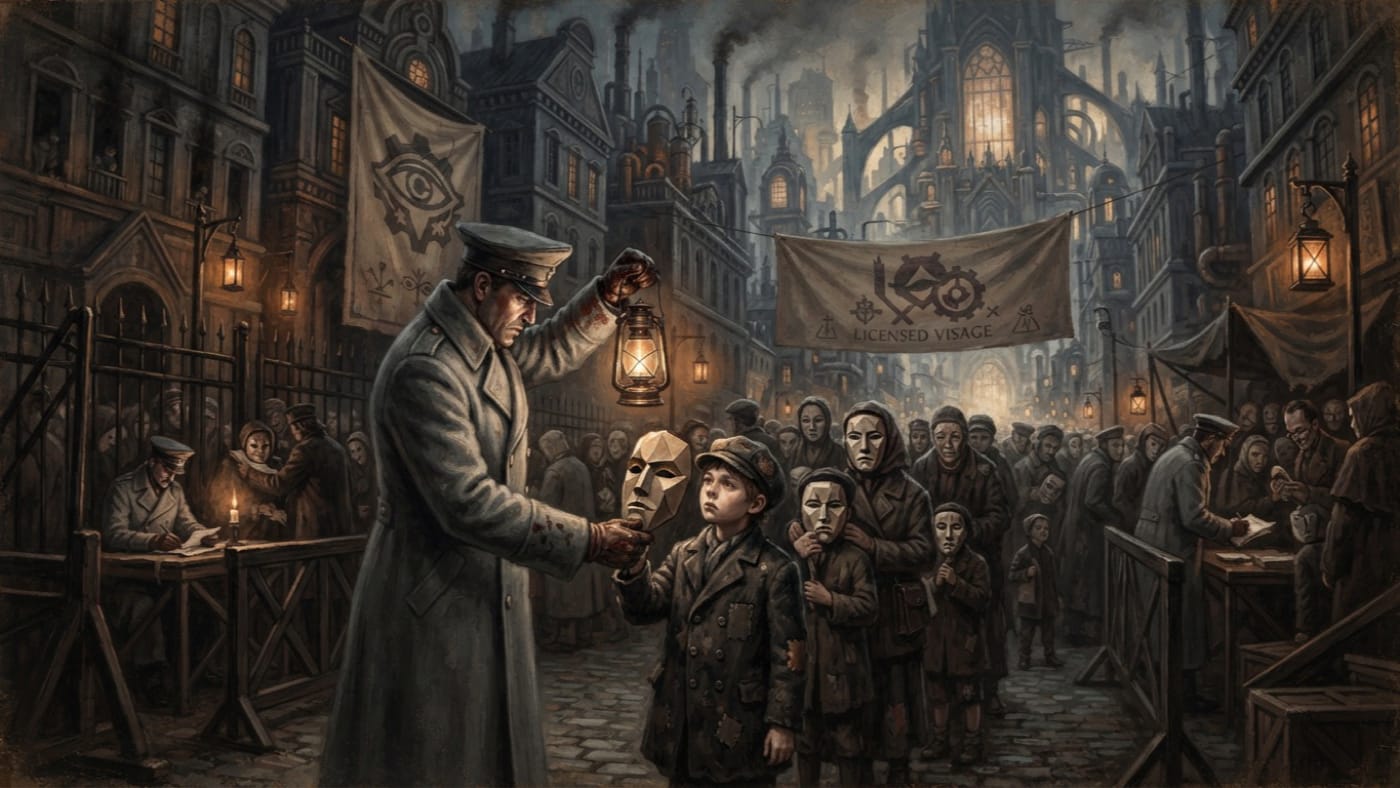
Night of Masks
Even delight must show its wax
On the eve of the Feast of the Sealed Door, the Synod licenses its carnival faces. Heraldry approves the design; Inspectors demand the wax. Even a child must learn to show permission.
Codex Ref. XIII.1.89-1919
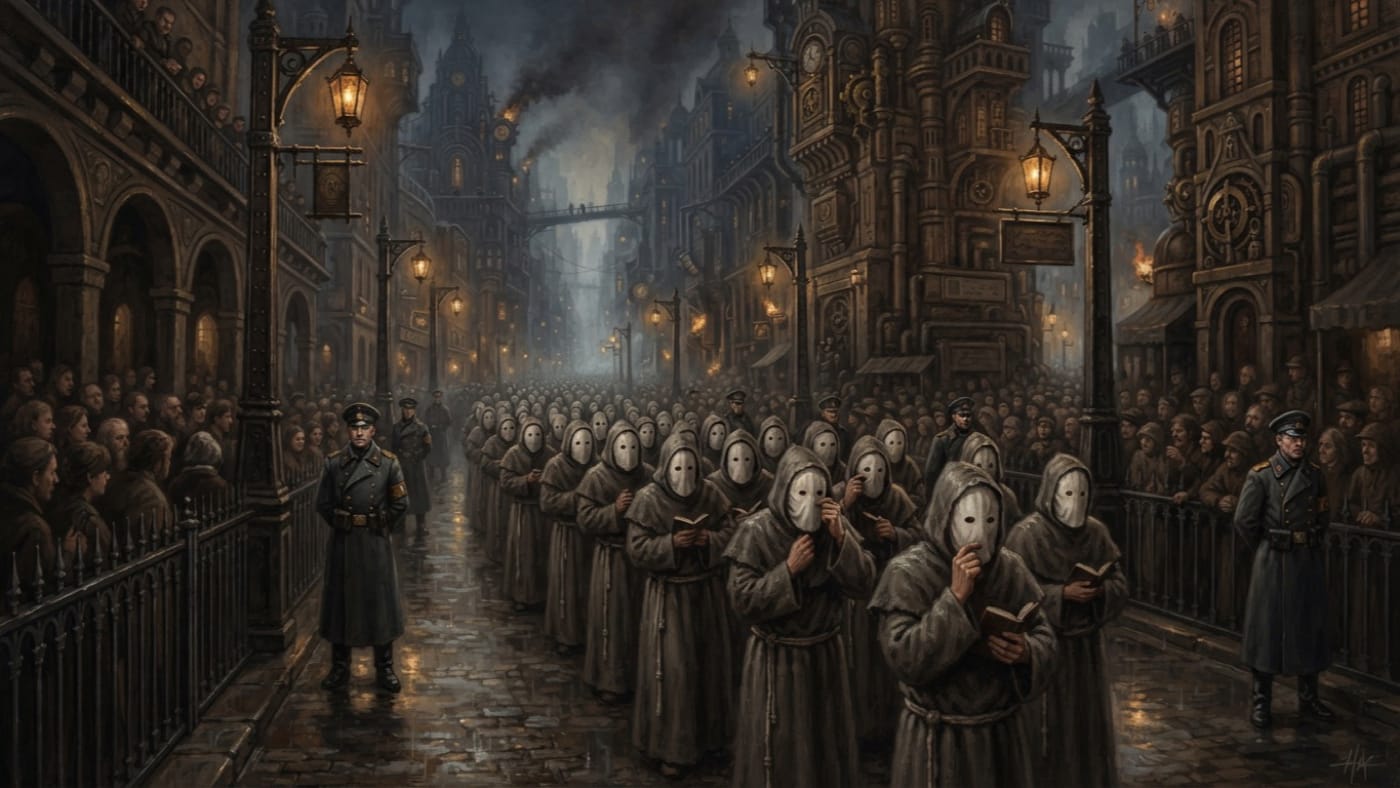
Night of Penitents
The face may be hidden. The sin stays on file.
On the Night of Penitents, the procession must go masked. Festivals orders the occasion; Masks and Seals numbers every concealed face. Shame may hide from the street. The Registry knows where to find it.
Codex Ref. XIII.1.89-1920

Night Papers Courier
Authority on borrowed hours and disappearing vellum
Night Papers Couriers deliver the Synod’s most deniable commands: grey vellum that outranks rank, bypasses appeal, and dies at dawn if conscience has not already done so.
Codex Ref. XII.14.03-001

Night Wagon Driver
The wheel that carries absence farther than doctrine can walk
Night Wagon Drivers are the Bureau of Shadows’ logistics spine, hauling people, orders, relics, and corpses through streets trained to forget the sound of wheels.
Codex Ref. XII.14.04-001
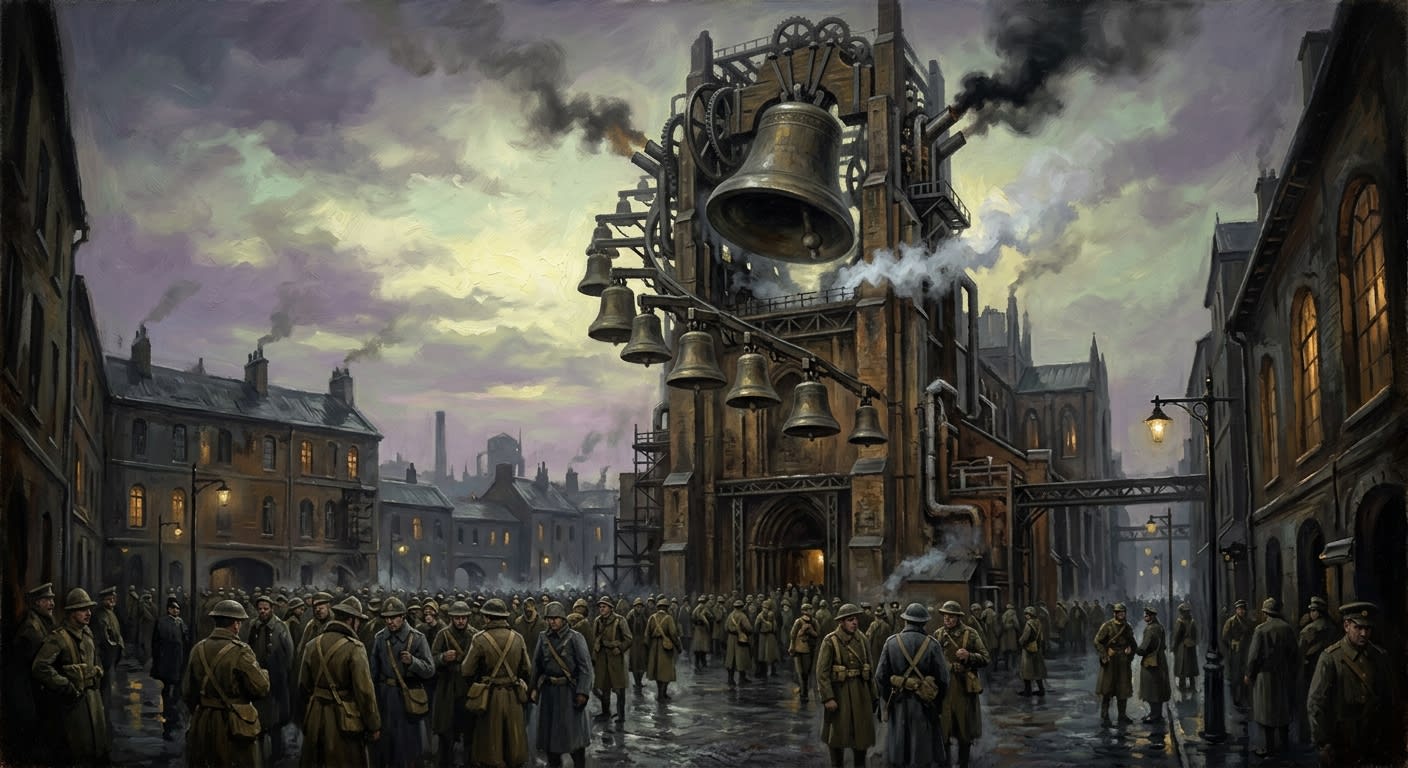
Ninefold Matins
Dawn is not welcomed; it is struck into obedience
Ninefold Matins is the Synod's dawn peal: nine descending strokes by which sleep is annulled, bodies are mustered, first actions become lawful, and the private self is beaten into schedule.
Codex Ref. XIII.1.62-115

Ninth Bell
The day ends when it is told to
The Ninth Bell closes the Synod's civic day: thresholds become confessionals, shutters become testimony, and silence belongs to those licensed to make it.
Codex Ref. XIII.1.62-009

Ninth Peal
The hour when a walking body must explain itself
The Ninth Peal makes every step conditional: after dusk, Rhineland crossings demand cause, route, pass, lamp and witness. Drax surveys the machinery in A.S. 201.
Codex Ref. XIII.1.62-201
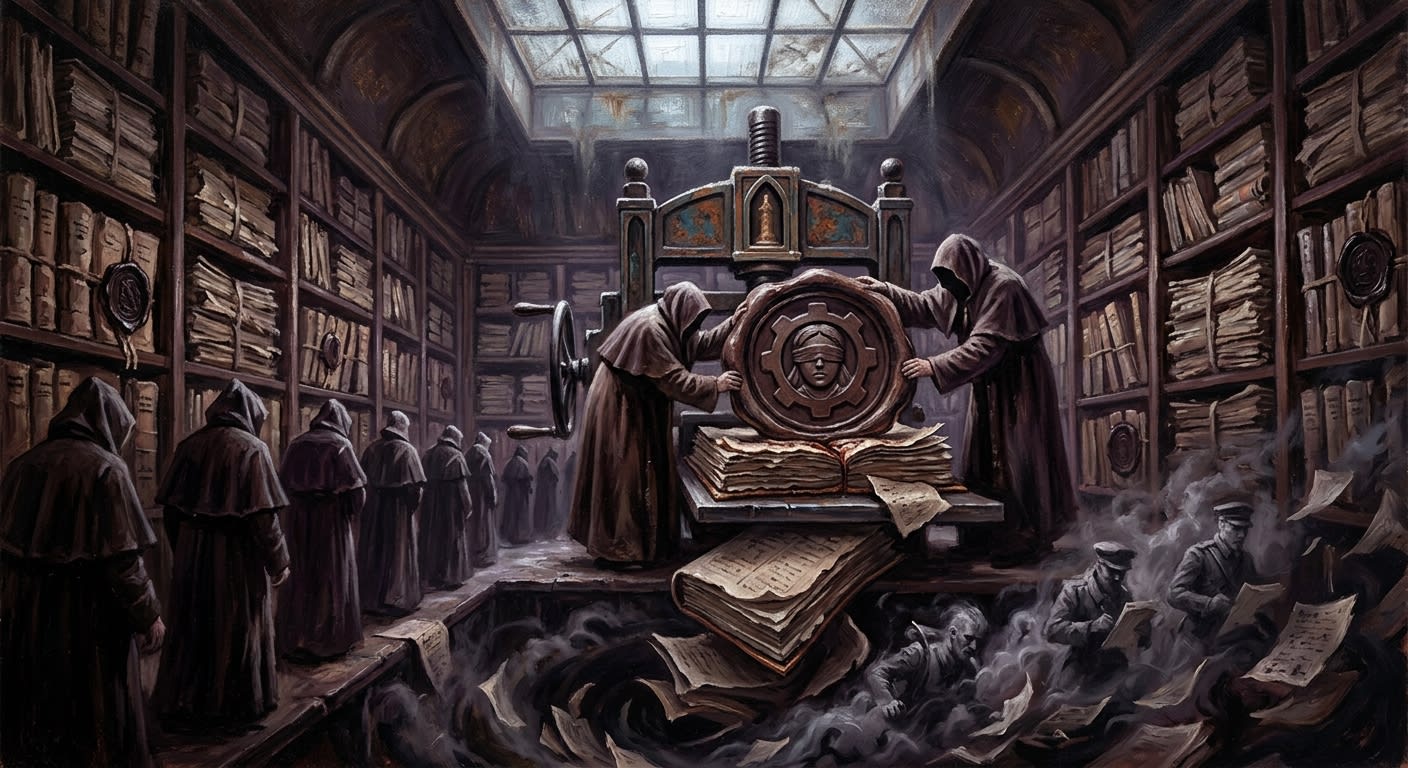
Ninth-Ratification
The seal that forbids analogy because pattern is accusation
Ninth-Ratification is the Synod's highest publicly nameable seal: a doctrine of lawful ignorance for records whose disclosure changes context, office, witness, and history itself.
Codex Ref. XIII.1.76-103

Ninth-Ratification Protocols
The evidence is kept; understanding is withheld
The Bead Vault applies Ninth-Ratification to custody, access and copying when a pilgrim case defeats correction. The evidence stays under lock; understanding is rationed by office.
Codex Ref. XIII.1.72-005
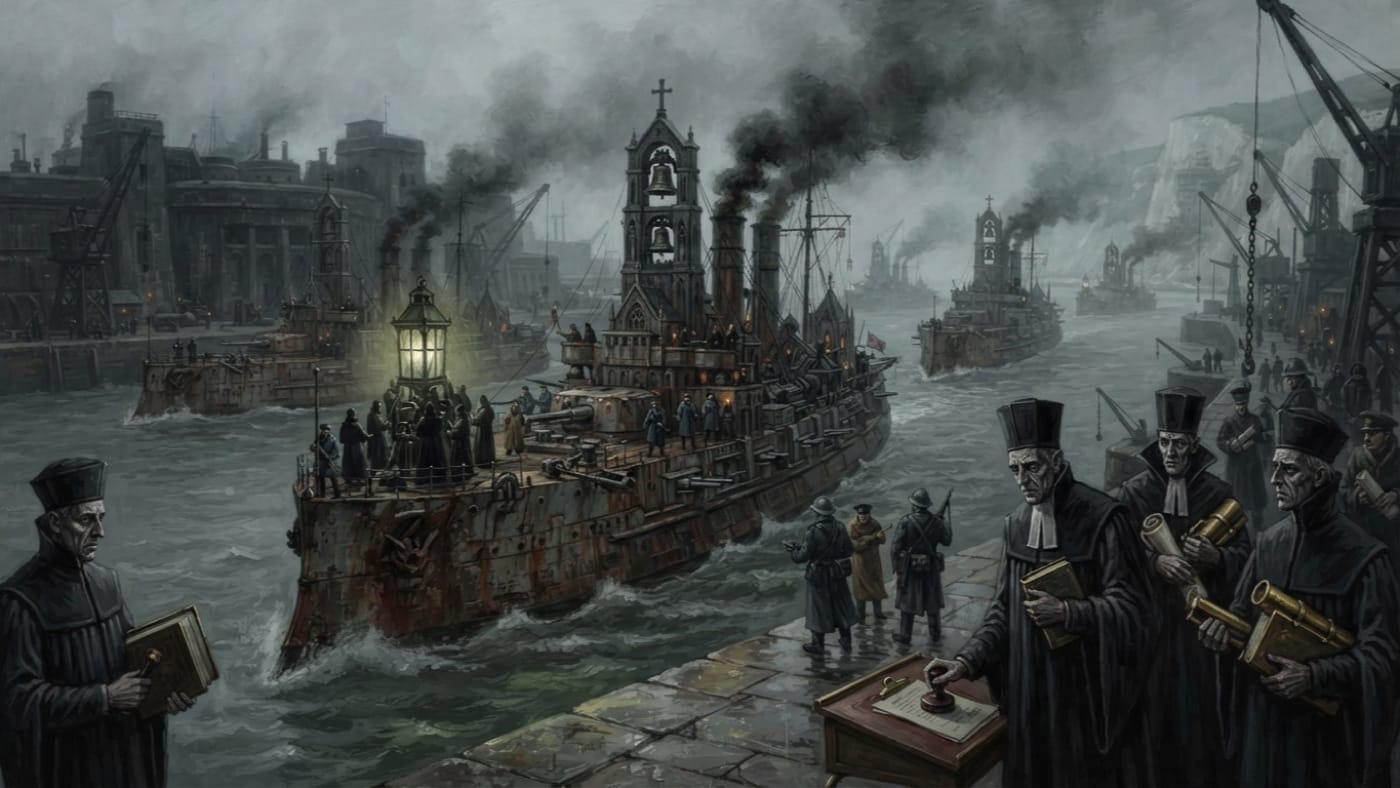
Non-Standard Observance, Diplomatically Accommodated
Every objection retained; every escort accepted
In A.S. 199 Doctrine reclassified the Lantern Way to accommodate the Crown whose ships guarded Synod grain. Every objection survived; so did the convoys.
Codex Ref. X.1.05-199
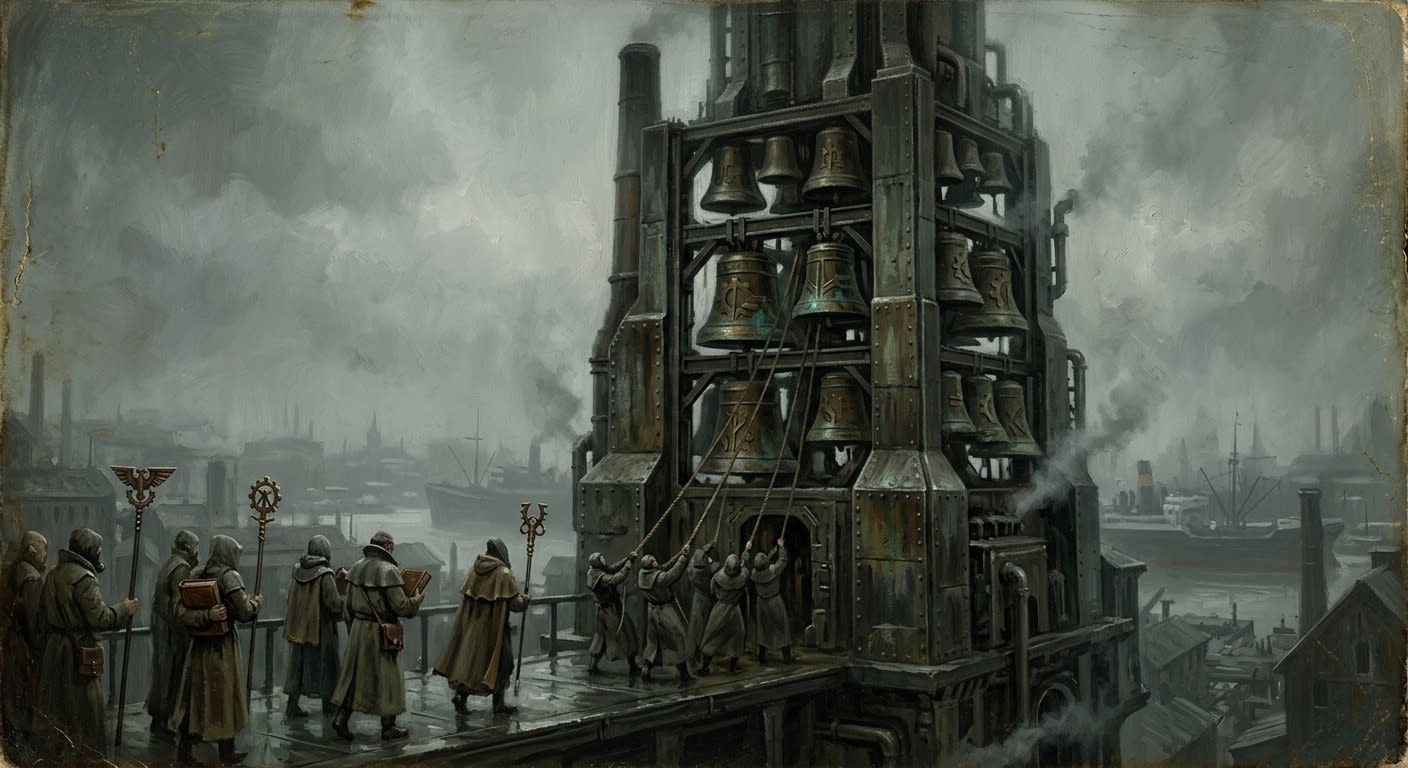
Northern Carillon
Forty-one bells speaking law into a fog that answers too politely
Königsberg's Northern Carillon is forty-one lawful bells, a Choir that sings into answering fog, and the Bureau's coldest proof that bronze can be obeyed without being understood.
Codex Ref. XIII.1.96-097
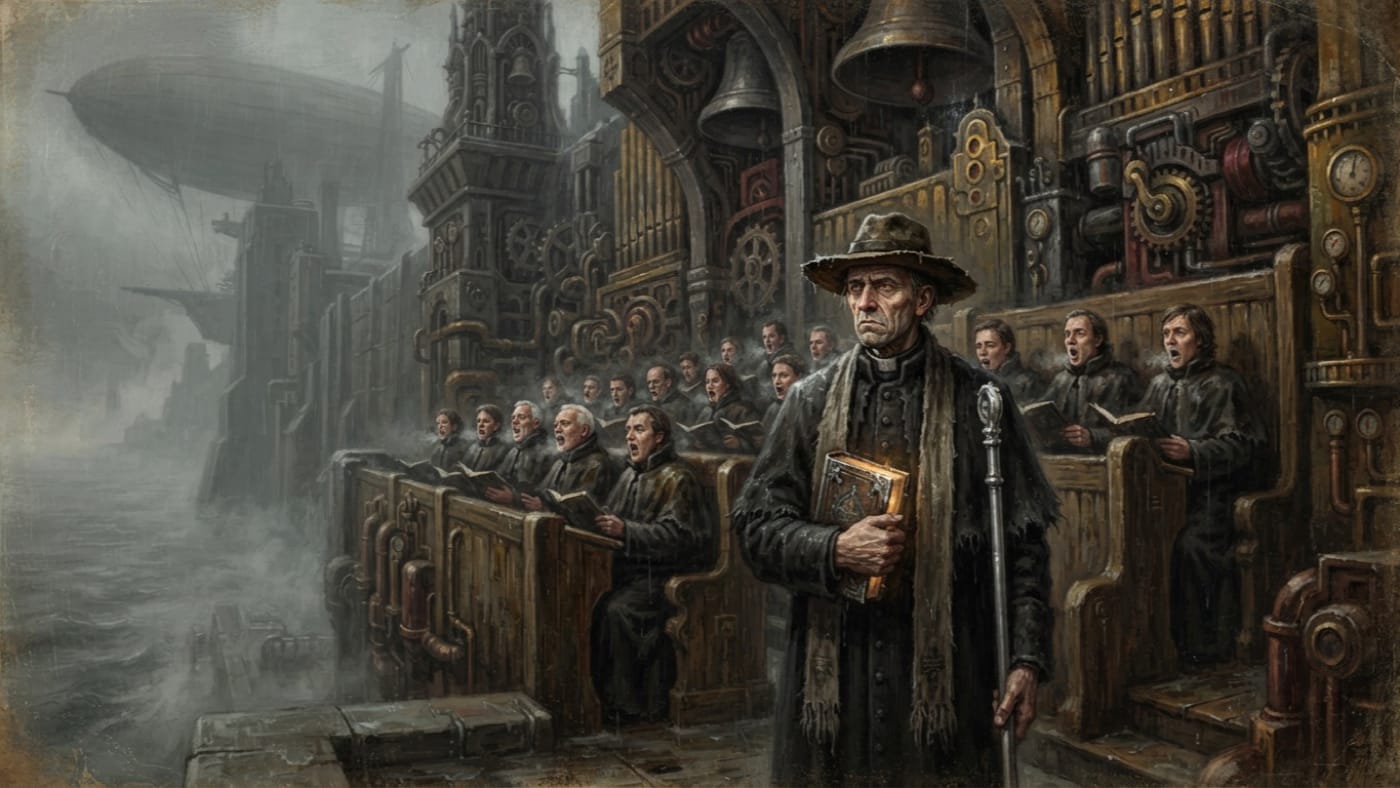
Northern Liturgical Inspector
A promotion denied because the Choir still needed its priest
The Northern Liturgical Inspector appears in Grau's personnel review as a promotion denied by operational necessity. The Bureau recorded a title; Königsberg kept its priest.
Codex Ref. XIII.1.57-201
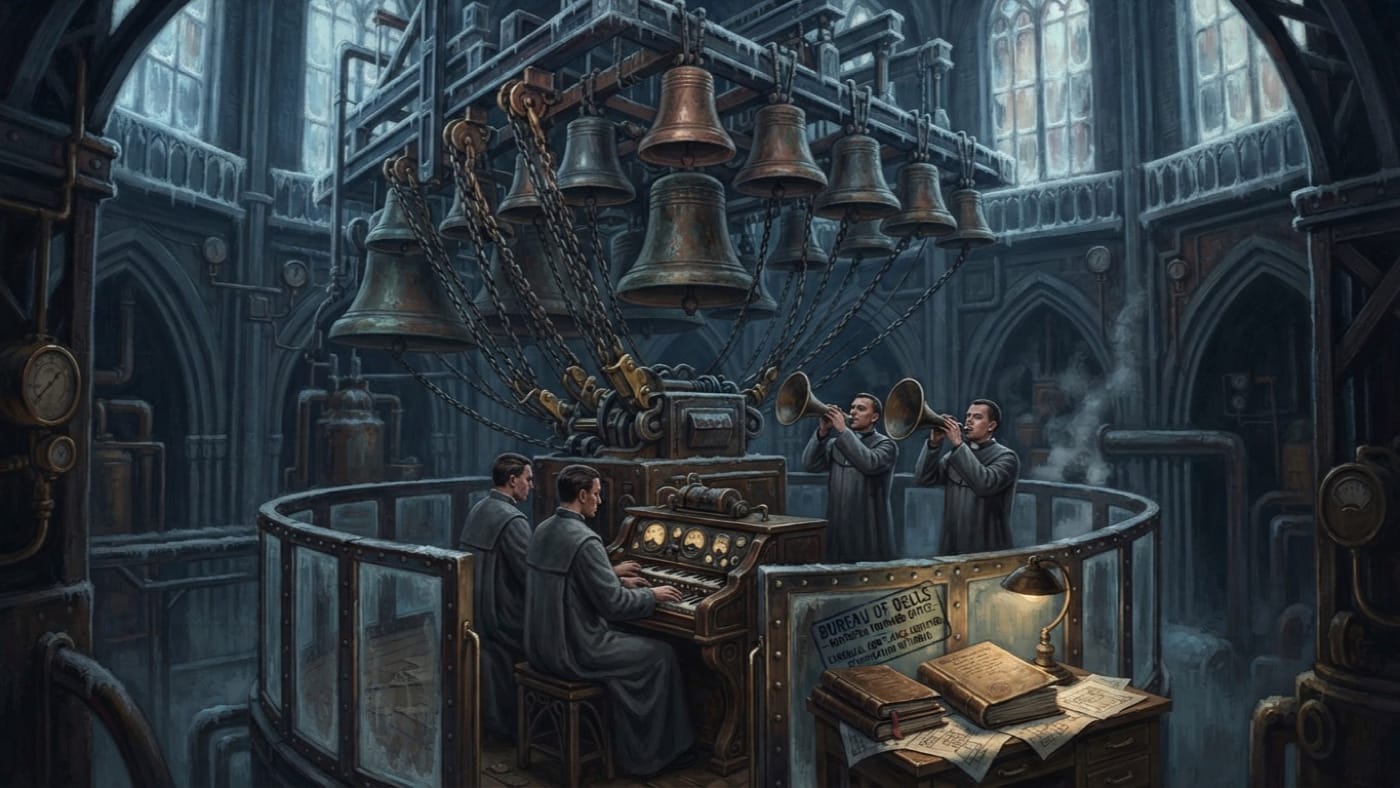
Northern Standard Resonance
The pitch is lawful; the answering remains unexplained
Northern Standard Resonance certifies the lawful tuning of Königsberg's forty-one bells. The gauges find no fault; the chaplains hear an answer. As of A.S. 201, both reports remain on file.
Codex Ref. XIII.1.62-201
Northern Theater Assessment
Eleven years of acknowledged receipt, and still no ruling
The Bureau of War filed its assessment of the Grey in A.S. 190 and urged classification review in A.S. 196. Doctrine acknowledged both. Eleven years on, I can record the receipts; I cannot record a ruling.
Codex Ref. XIII.1.103-190
Oath of Compelled Testimony
Fourteen answers. No single account.
The oath requires truthful answers under threat of Administrative Dissolution. Fourteen survivors of Commission 73-C spoke under it in A.S. 73. Their accounts disagreed. The obligation was fulfilled.
Codex Ref. XIII.1.17-002

Oath of the Line
The Bureau does not recognize death as grounds for termination.
Every soldier swears before deployment. Service, obedience, the bell-schedule, and death if required pass into the Ledger; under the Bureau's doctrine, death does not end the obligation. Survey of current practice, A.S. 201.
Codex Ref. XIII.1.02-201

Oaths Witnesser
The state attends every promise
Living seals of the Synod, Oaths Witnessers make spoken promises enforceable, record their fracture, and bury what was sworn when it fails.
Codex Ref. VI.4.03-012

Office for Those Whose Voices Are Missing
A black tick beside the name; the name remains
Grau writes once to singers transferred beyond Königsberg. When no answer returns, he adds a black tick beside the name and says the Office. Records has the occasion; the words remain his.
Codex Ref. XIII.1.57-002

Office of Nullity
The knife kept inside the book
Sub-office of the Bureau of Records governing Erasure Notaries, strike writs, dependent ledgers, black seals, and the civic art of making a person unprovable.
Codex Ref. XIII.1.70-001

Oil-Confession
One fear, one lie, and a catalogue its keeper calls spiritual.
My A.S. 201 survey records the Brotherhood's pre-shift rite: hands washed in lamp oil, one fear spoken, one lie catalogued by the Wick-Sergeant. I was refused the catalogue on spiritual grounds.
Codex Ref. XIII.1.76-201

On the Faithful Ear
The body is entered; belief remains unrecorded
Attributed to Blessed Edrin, On the Faithful Ear lends its name to attendance instruction. No surviving wording is certified to this volume; the body is counted regardless.
Codex Ref. XIII.1.58-201
On the Joyful Surrender of Offspring to Providence
War Takes the Son; Mercy Receives the Tears
Mercy's pamphlet teaches mothers to surrender a son to the levy and enter their tears as proof of faith. War takes the boy; Mercy takes title to the grief.
Codex Ref. XIII.1.54-002

On the Necessary Silence of Heaven
A sealed memoir and the limits of wax
This A.S. 201 survey records Artois's memoir under seal in Strasbourg, with unofficial copies reportedly circulating. The wax has custody; it has yet to secure obedience.
Codex Ref. XIII.1.06-001
On the Pilgrim-Chain Handlers
The mercy quota; or, how the chain teaches patience to both ends
The licensed custodians of the Jubilee chain and everything the chain implies — water counted by formula, confession harvested in strips, and a ditch at the end of every route the Bureau calls holy.
Codex Ref. XII.29.01-001
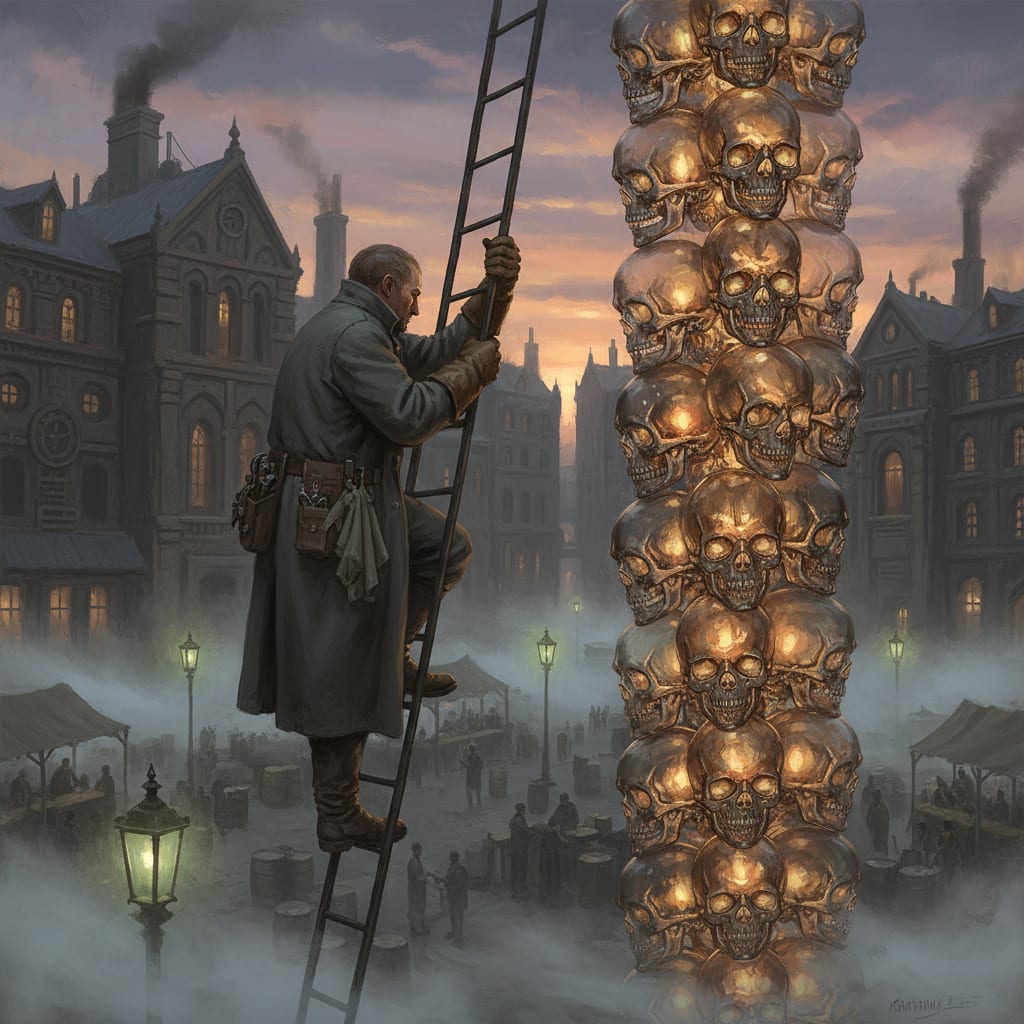
On the Pillar-Keepers of the Glass Skull Stacks
The city is held by witness; the witness is held by someone who needs his wages
A Drax survey of the Pillar-Keepers — grey-coated custodians who maintain the Synod's civic deterrence pylons: iron-boned columns of sermon-clear glass and inked names, holding the city by witness at a cost the Bureau does not audit.
Codex Ref. XII.30.01-001

On the Procession Marshal
The boot behind the beat; or, why orderly grief is the Synod's last public prayer
The boot behind the beat. The Procession Marshal controls pilgrim columns, funeral trains, and levy marches — setting cadence by baton, marking routes in chalk, and cutting lane ropes when the crowd folds. Born of three hundred dead at Bastion-Brest, A.S. 112.
Codex Ref. XII.31.01-001

On the Statistical Distribution of Relics
A correct sum confers no licence to pronounce on holiness
Voll's A.S. 11 Amsterdam lecture counted Saint Aldebrand's femurs and mistook the total for a verdict. The Bureau preserves it under suppression: the arithmetic may be conceded; the conclusion may not.
Codex Ref. XIII.1.11-011
Open Mouth Response Protocol
A whole skull, an absent name, a theological emergency
The A.S. 201 survey of the Clearance Tertius extract: blank skulls, detained Keepers, separated households and a maintenance explanation. The name is restored; the full procedure remains withheld.
Codex Ref. XIII.1.44-001
Opening Hymn
A frightened body must first learn the approved rhythm
Purity's Opening Hymn steadies the condemned person's breath before branding. A clean confession begins with lungs that keep the approved time.
Codex Ref. XIII.1.41-201

Operational Classification 7-G
Nine movements, forty-three dead, and a licence to be blamed
Issued after forty-three deaths in A.S. 164, Operational Classification 7-G licensed Gasket-Hymn Mechanics, fixed nine repair movements, and taught the tribunal to call missing paperwork sabotage.
Codex Ref. XIII.1.07-164

Operational Directive 14
The order that made air searchable and warmth prosecutable
Operational Directive 14 made smoke a witness, warmth a suspicion, and air a lawful target of Bureau of Purity entry, seizure, citation, and theatrical correction.
Codex Ref. XIII.1.94-143

Operational Directive 774-C
The Ark remains airborne. Its authority has been harder to locate.
Operational Directive 774-C commissioned the Vigil Ark Saint Barachiel in A.S. 168 to guard the Bosphorus sky. Classified, lost, recovered and ratified retroactively, its authority remains visible above the strait.
Codex Ref. XIII.1.21-774
Oraison
Saints draw crowds; someone must ring for the ledgers
Oraison is one of Saint-Victor's nine principal bells in Marseille, marking Bureau business at the quay. The clerks supply the ink; the Bureau of Bells supplies the bronze.
Codex Ref. XIII.1.62-225

Oratio Oblitterans
The six lines Heaven was not permitted to hear
The Oratio Oblitterans is the six-line Rites prayer proposed in A.S. 142 for Administrative Dissolution, rejected by Records, and preserved wherever mercy disobeys filing autonomy.
Codex Ref. XIII.1.01-003

Ordeal
The test that asks whether mercy has started charging interest
Ordeal is Sibiu's counter-accounting rite: coin, key, mercy, clause, and refusal arranged to learn whether charity has become Velmora's collateral.
Codex Ref. XIII.1.95-200
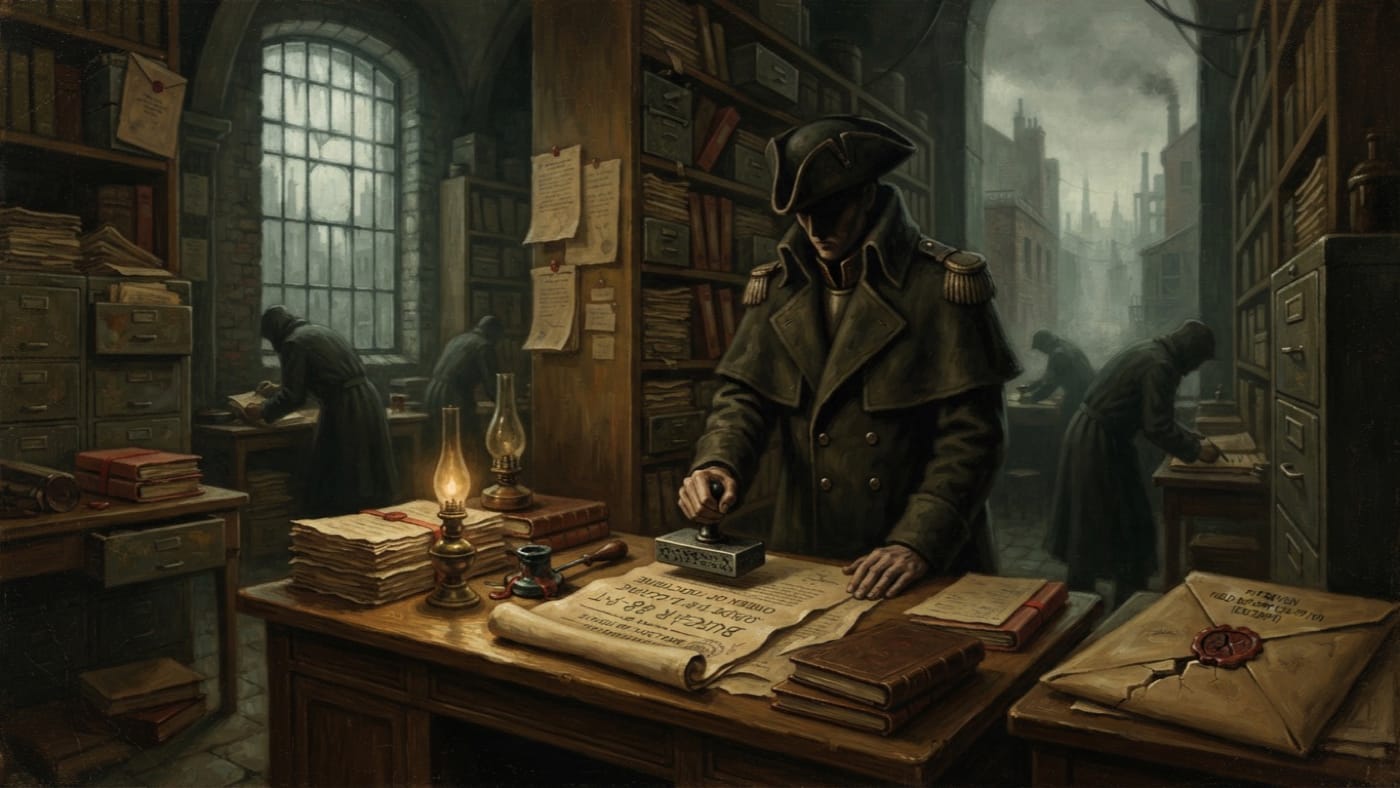
Order 88-V
The method is sealed. The measurements remain.
Order 88-V seals the Pit Seven exposure methodology. The A.S. 135 expungement is attested; the order's issue date is not. Its unsealed appendix keeps the measurements in circulation.
Codex Ref. XIII.1.100-135

Ordinance 14-A
The shelf requires a licence; understanding requires discretion
Ordinance 14-A licenses libraries, grades unlicensed possession, reading and understanding as heresy, and protects the Censor-Prelate's red pencil. The full text has not been located. The notices suffice.
Codex Ref. XIII.1.14-187
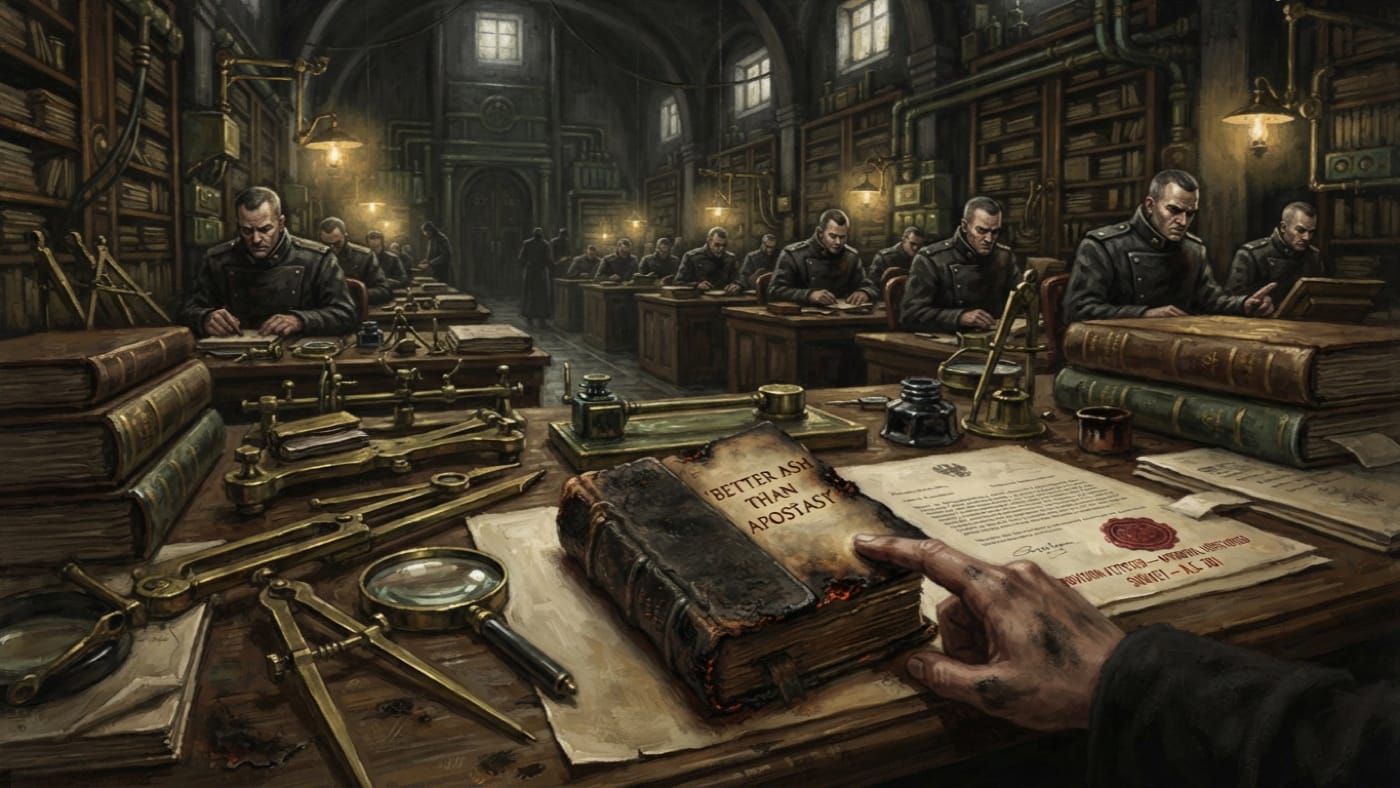
Ordo Ignis
Even the Cover Has Its Permission
An A.S. 201 survey of Doctrine's approval of accelerant-treated Ashman breviary bindings in the Ordo Ignis's forty-third revision. The approval remains unrevoked. Even the cover has its permission.
Codex Ref. XIII.1.43-001
Original Key
The stone is evidence; the first hymn remains a claim
The Circle calls Irongate's older basalt scoring the Original Key. Bells recognises ancestral notation; the stone has yet to certify the heretics' claim that their first hymn worked.
Codex Ref. XIII.1.35-002
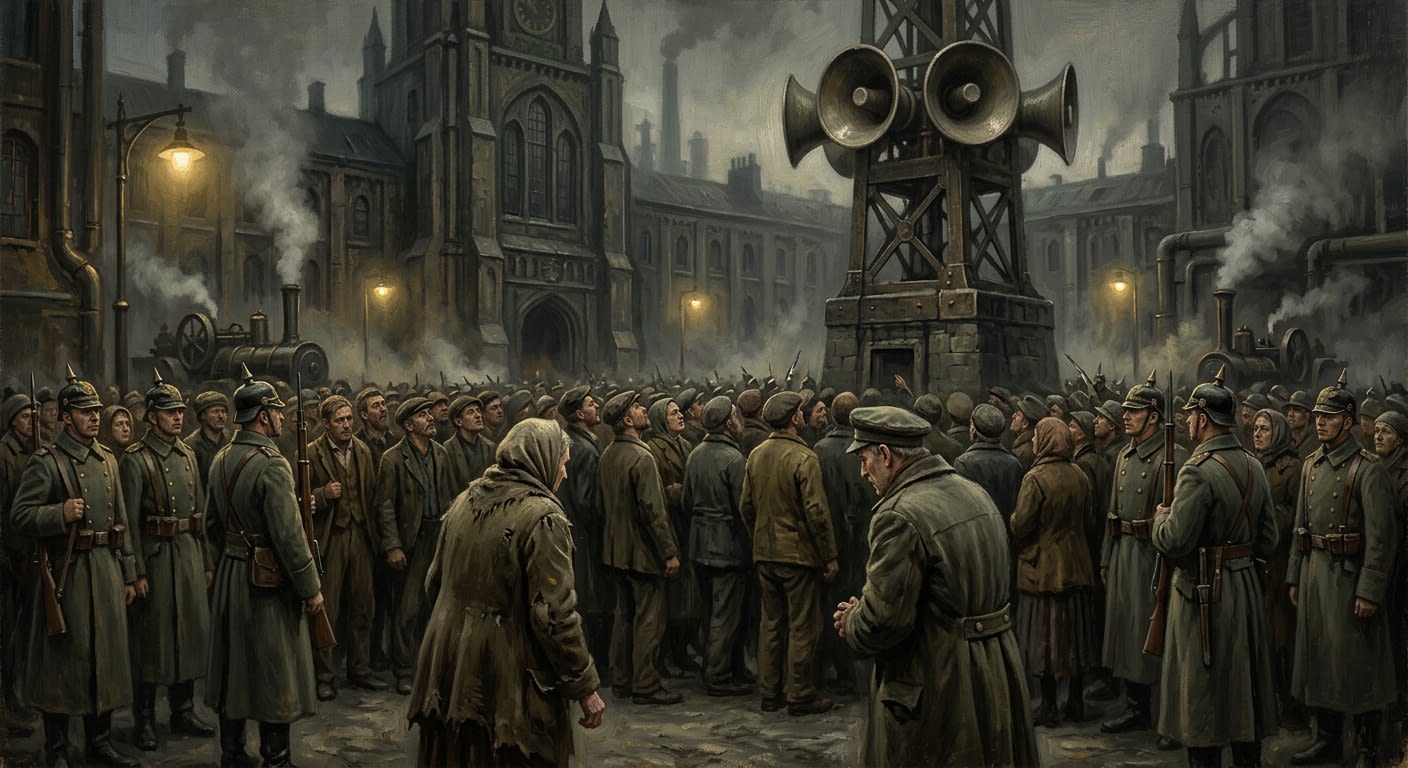
Orison Hour
The hour that owns the ear and charges rent for listening
The Orison Hour is prayer, ration order, casualty roll, curfew, census pressure, and acoustic cudgel: Europe instructed to possess one throat.
Codex Ref. XIII.1.96-112
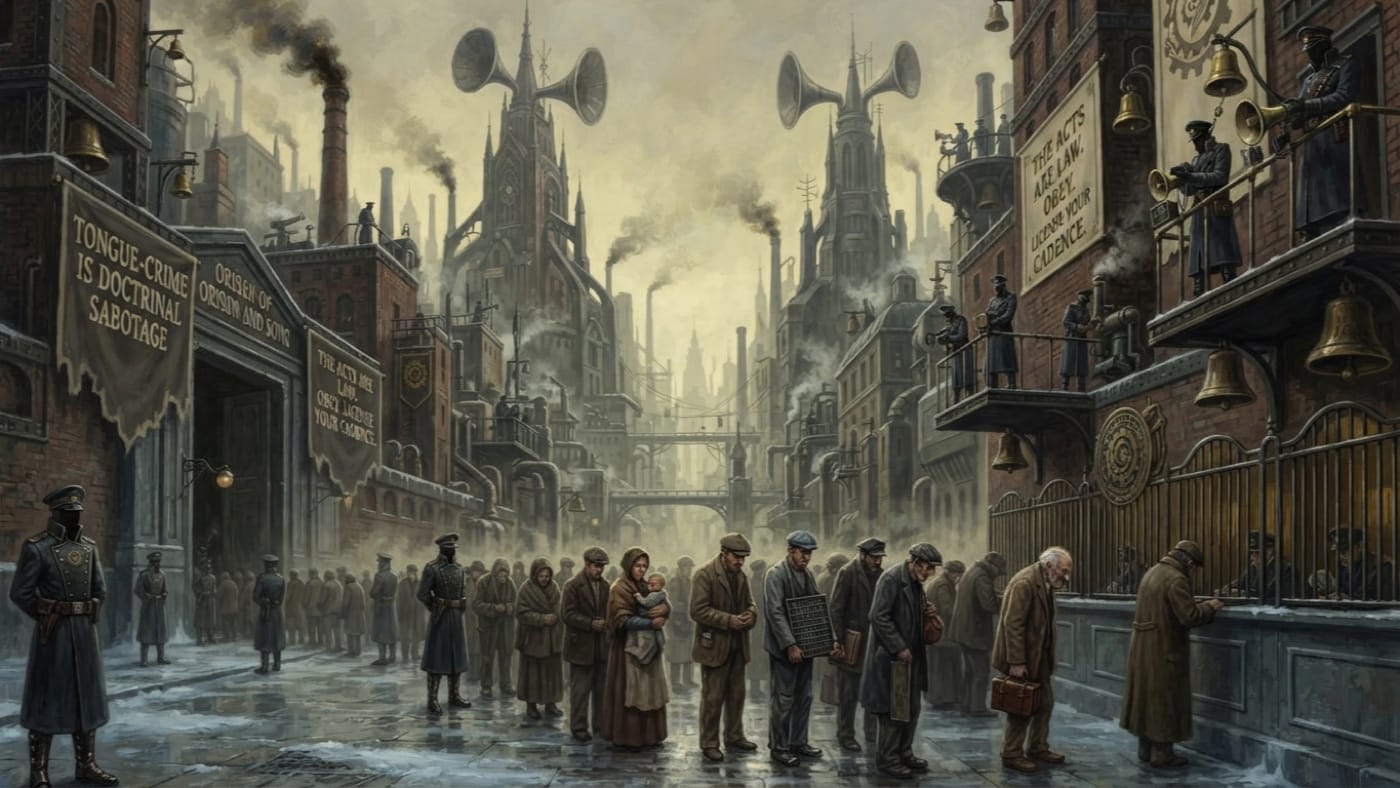
Orison Licensing Acts of A.S. 94
Every tune a licence or a crime
The A.S. 94 Acts placed every melody, cadence and whistled work-bar under Orison: licensed or criminal, with no middle category and no appeal. The Bureau acquired sound; the smugglers acquired a trade.
Codex Ref. XIII.1.96-094

Orison Signal Engineer
The approved voice must arrive cleaner than the air that carries it
Orison Signal Engineers lace the Synod's broadcasts with saint-dust, keeping doctrine, ration orders, and war commands from curdling into enemy song.
Codex Ref. VI.4.07-018

Orison Signals
The voice arrives certified; the lungs pay for its passage
Orison signals carry prayer, ration orders, and war commands on saint-dusted carriers. The voice arrives certified; whether it should be obeyed is another office's concern.
Codex Ref. VI.4.07-019

Orla-Seven Torque Pattern
The seal may answer; the auditor need not listen
Orla-Seven governs the final tightening of critical hymn-gaskets: three light passes, a listening pause, two opposing seats, and a quarter-turn that must satisfy both flange and file.
Codex Ref. XIII.1.07-201

Orphanage Registrar
The child enters crying and leaves legible
Orphanage Registrars convert foundlings into entries: named, tagged, risk-scored, and placed before hunger, memory, or bloodline can become a rival jurisdiction.
Codex Ref. VI.4.12-044
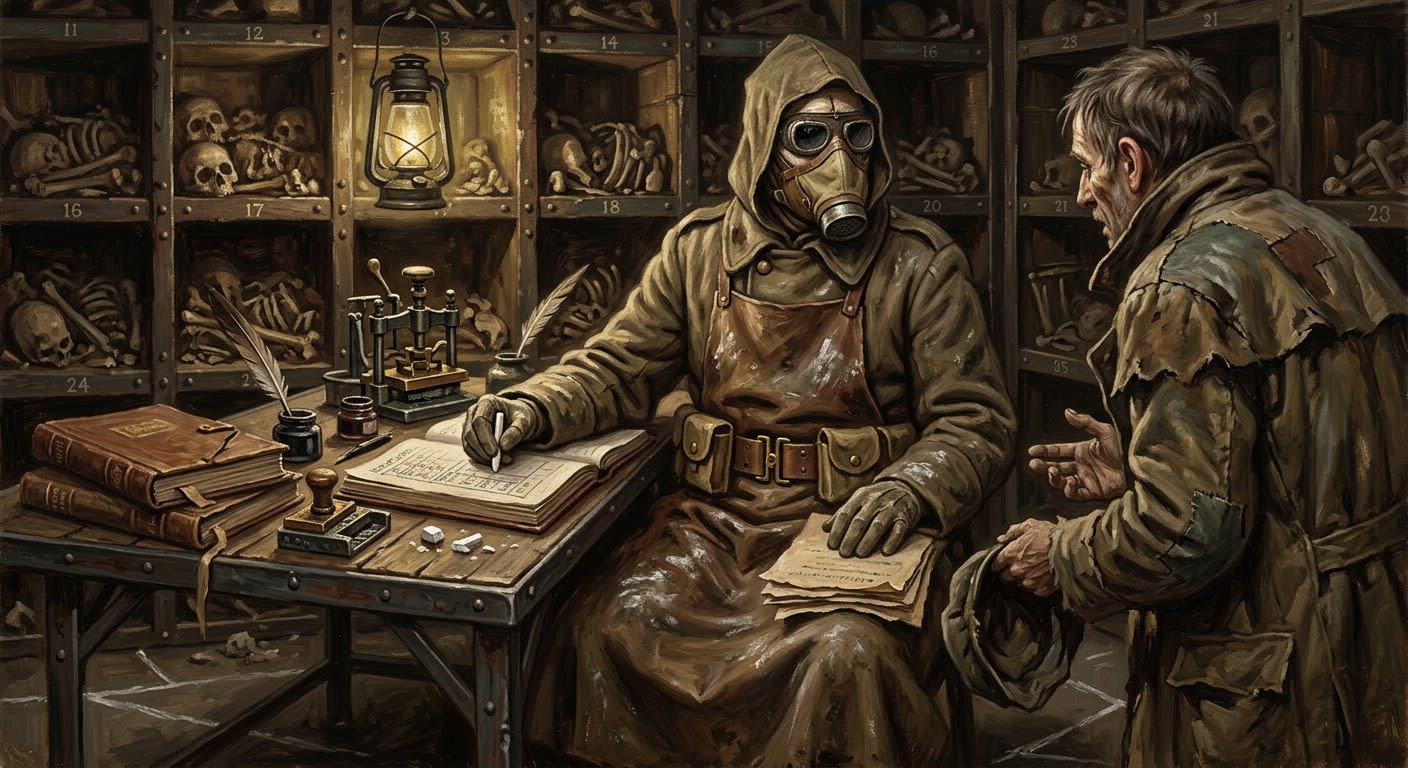
Ossuary Housing Allocator
The wall keeps the dead, and the clerk decides who may cling to it
Ossuary Housing Allocators sell dryness, bell-coverage, and sanctioned sleep beside the dead, converting overflow, grief, and fear into chalk lines and rent.
Codex Ref. VI.4.11-052
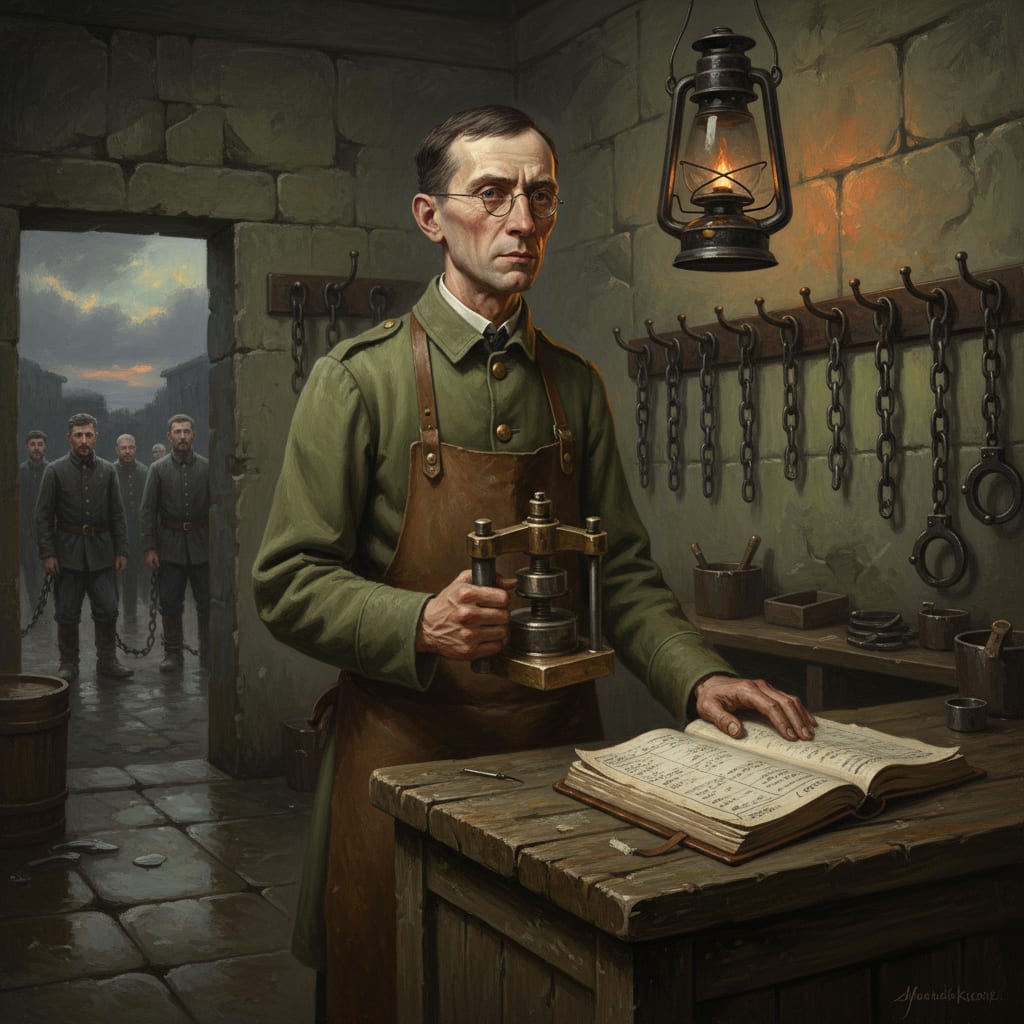
Ossuary-Draft Handler
Sanctioned freight-keeping; or, how the condemned earn their redemption by the pound
The Ossuary-Draft Handler converts the condemned into transport capacity. Licensed under joint writ of the Bureau of Rites and Bureau of War, he decides whether a human body is worth forty pounds over twenty miles.
Codex Ref. XII.27.01-001

Outside Current Doctrinal Scope
The question has been received. A verdict has not.
The Bureau has received the question. It declines to say what the question concerns. I survey the northern filings under Outside Current Doctrinal Scope; no classification is conferred.
Codex Ref. XIII.1.99-201

Pale Kin Runner
What the Bureau calls inventory discrepancy; what the mothers call salvation
The Pale Kin Runner is a child-smuggler, a midwife's heir, and the Bureau of Conscription's oldest unsolved arithmetic problem. She intervenes between birth and stamp. The Synod calls this heresy.
Codex Ref. XII.28.01-001

Paper Death
The name dies; its owner queues for bread elsewhere
The Burnwright kills a name across ration, tithe and parish records so its owner may survive under another. Records calls it forgery; the survivor calls it breakfast.
Codex Ref. XI.1.02-004
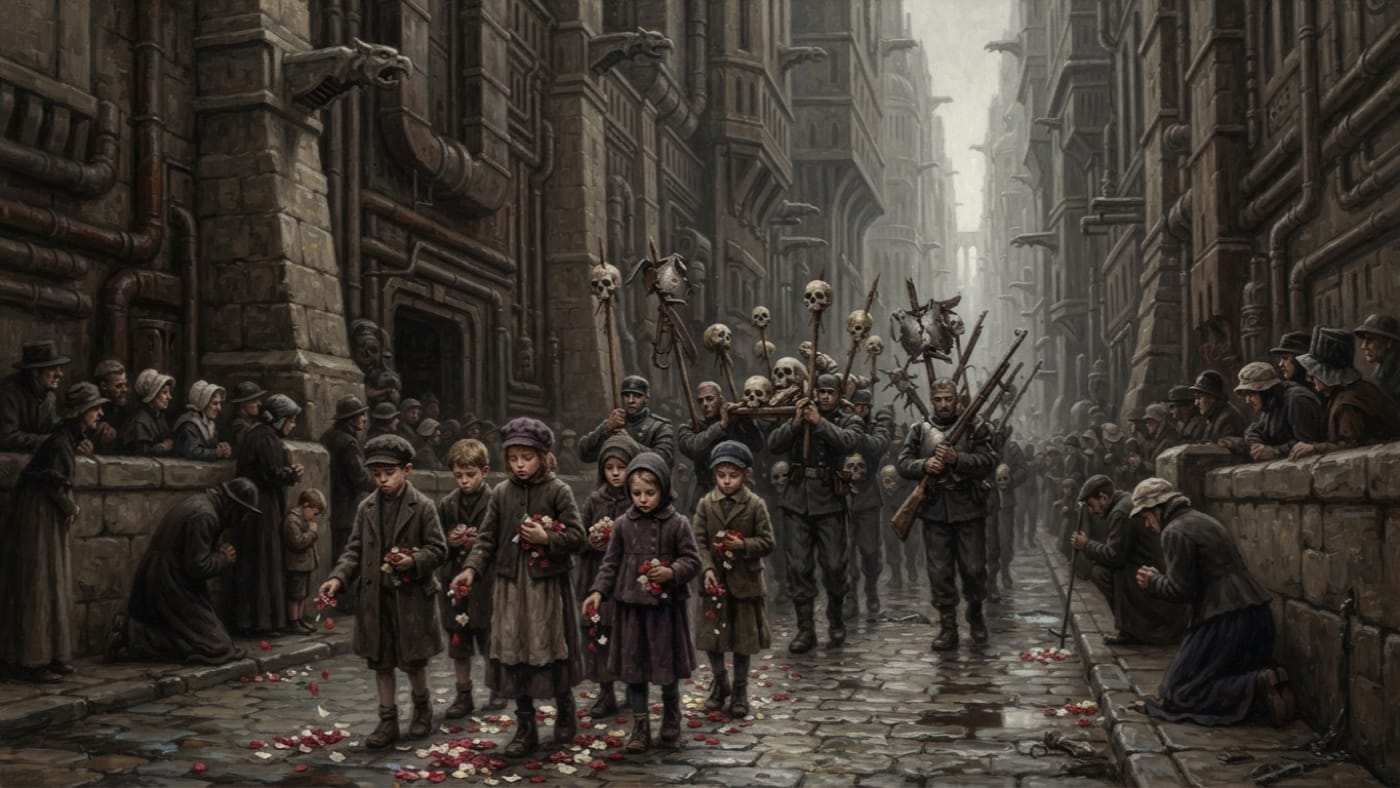
Parade of the Bones
The dead keep formation; the living scatter petals
The bastions carry skulls, shattered armour and consecrated iron behind children scattering petals. Festivals commends the cost per mile; Relics disputes the paperwork. The dead continue to serve without drawing pay.
Codex Ref. XIII.1.89-002

Passage Psalm
The harbour counts only what the throat survives
The Passage Psalm makes a ship countable under Thessaloniki's chains: a throat-ledger against the Drowned Choir, the sea, and every name below.
Codex Ref. XIII.1.96-145
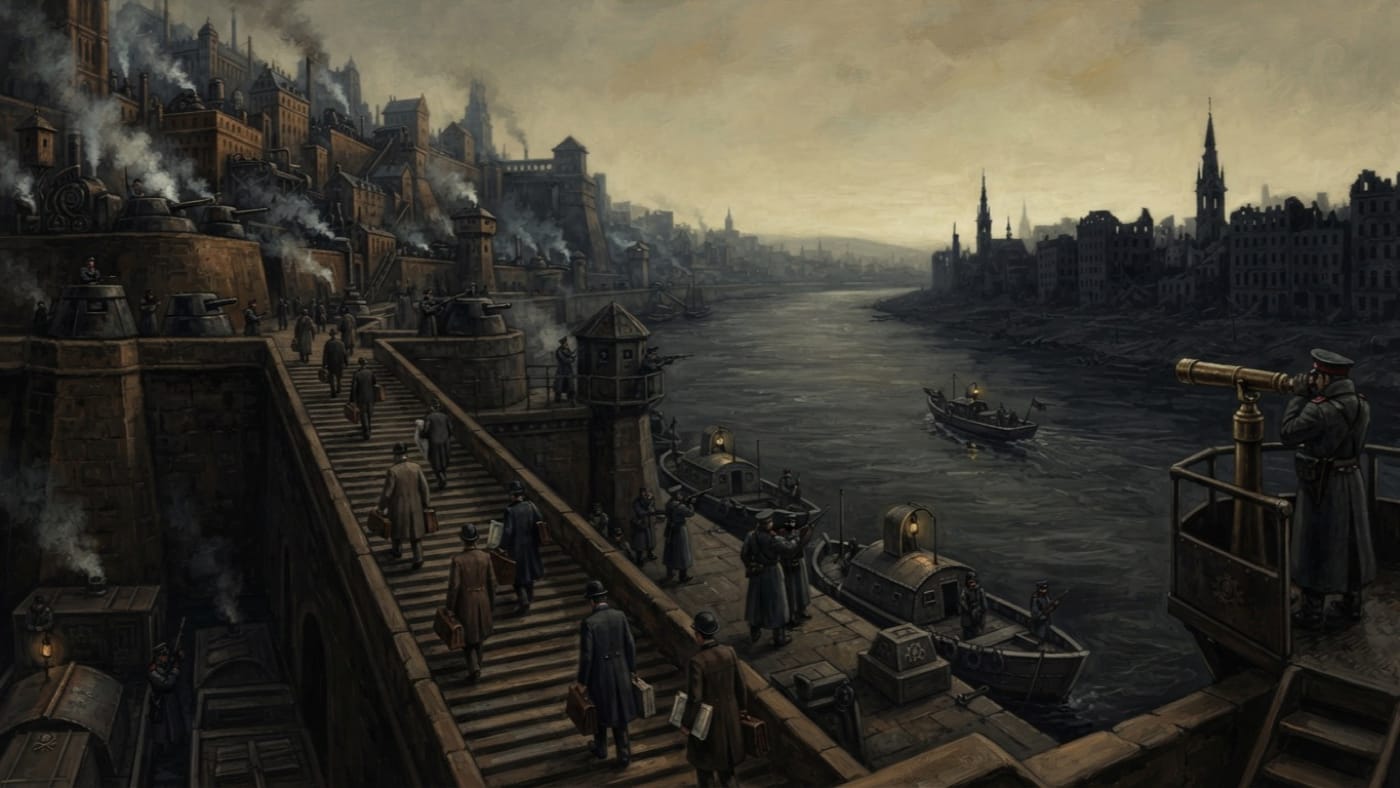
Pastoral Directive 88-E/BUDAPEST
The Church advises the neck; the river keeps its mirror
Pastoral Directive 88-E/BUDAPEST advises Budapest's quay clerks to face west. Pest remains Vacated, and eleven documented crossing attempts make the view a pastoral concern.
Codex Ref. XIII.1.88-201
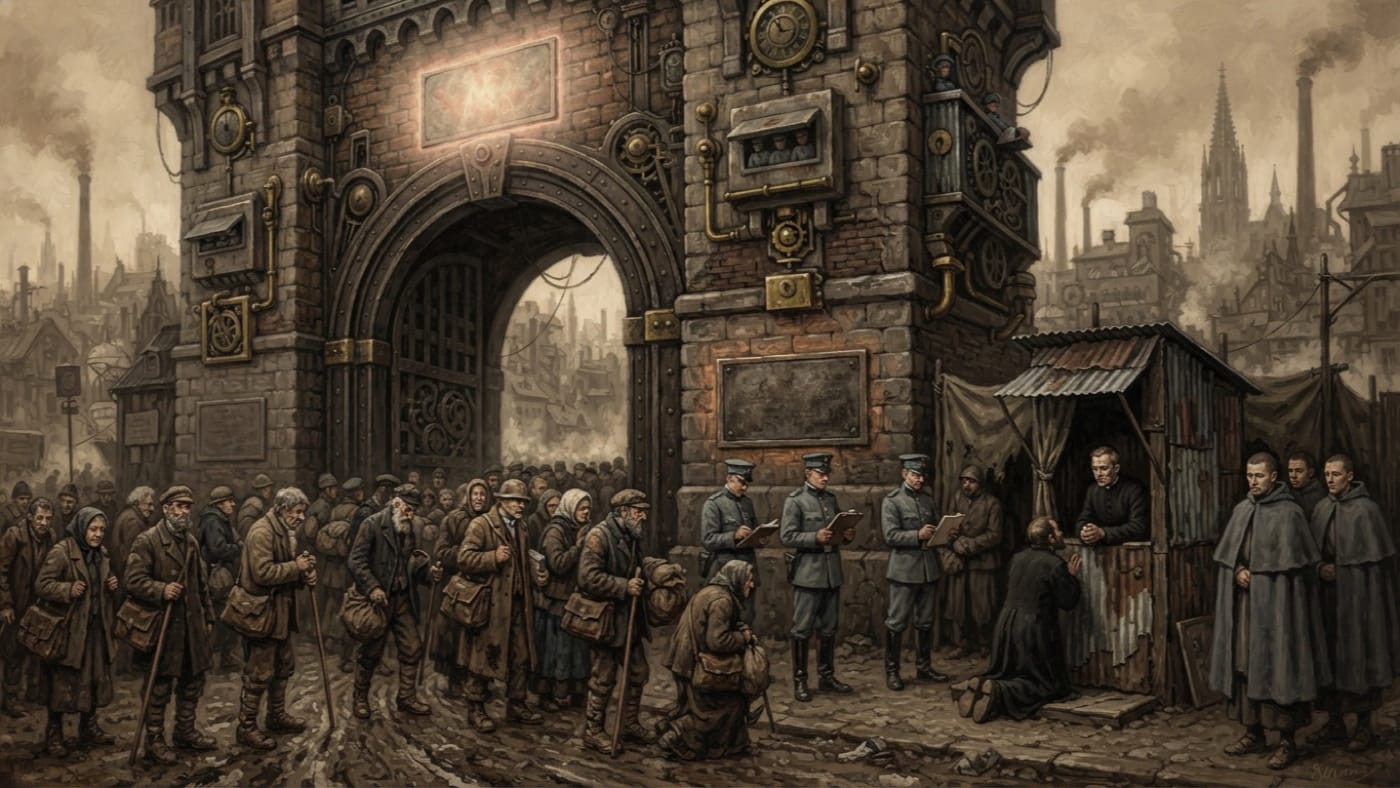
Pastoral Separatists
The soul decides; the clerk wants evidence
The Pastoral Separatists let the pilgrim's soul decide which Regensburg inscription takes hold, leaving the gatehouse to demand evidence it cannot inspect.
Codex Ref. XIII.1.76-093

Patron Window
Destroyed in the ledger, installed in the chapel
The Patron Window carries seized beauty from destruction ledgers into private chapels. The Circle of Stained Proof receives protection; the ledger certifies that nothing survived.
Codex Ref. XIII.1.76-201
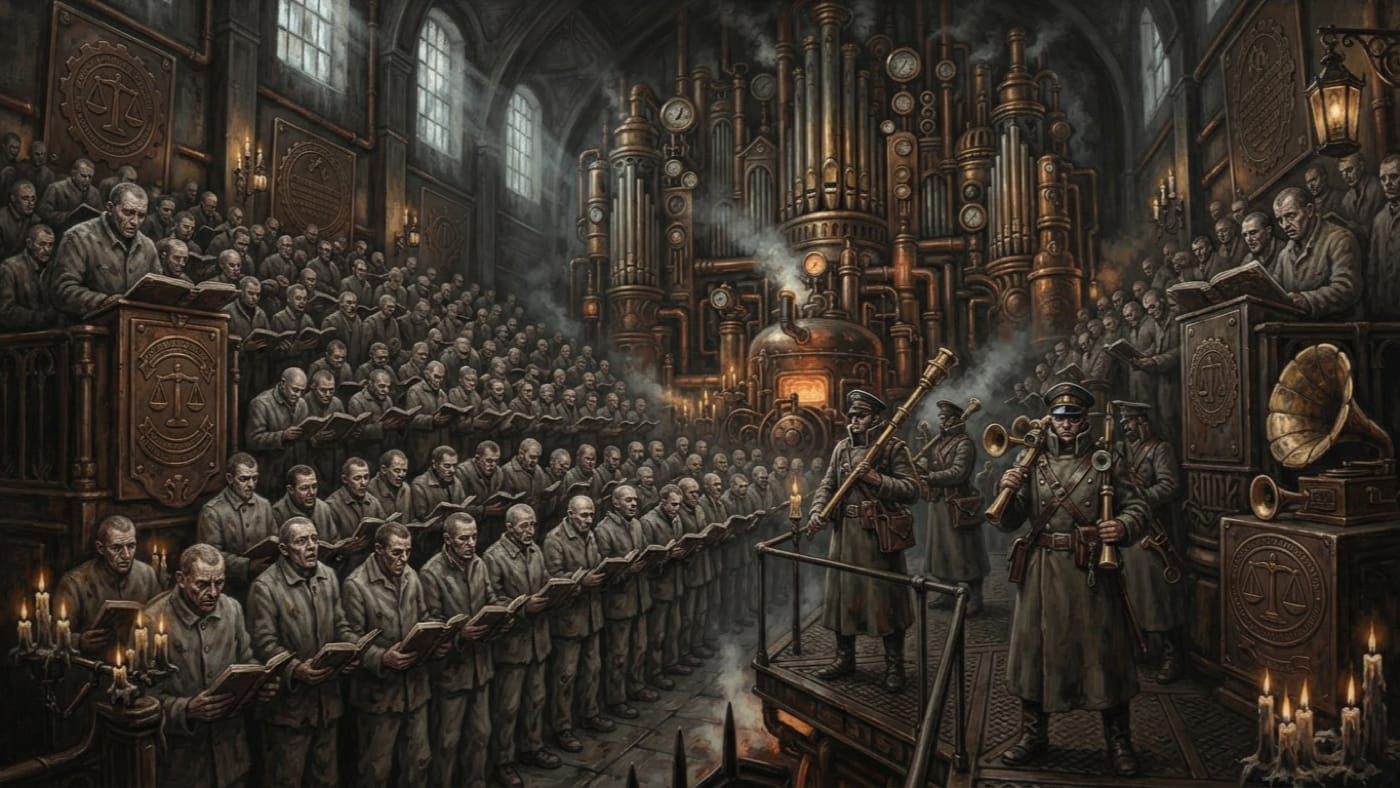
Penal Choir
The condemned supply the voice. The Bureau supplies the words.
An A.S. 201 survey of penal-choir assignments, compelled licensed singing and denunciation bargains. The Bureau can certify that the condemned sang the correct words. Belief requires a different form.
Codex Ref. VI.3.01-201
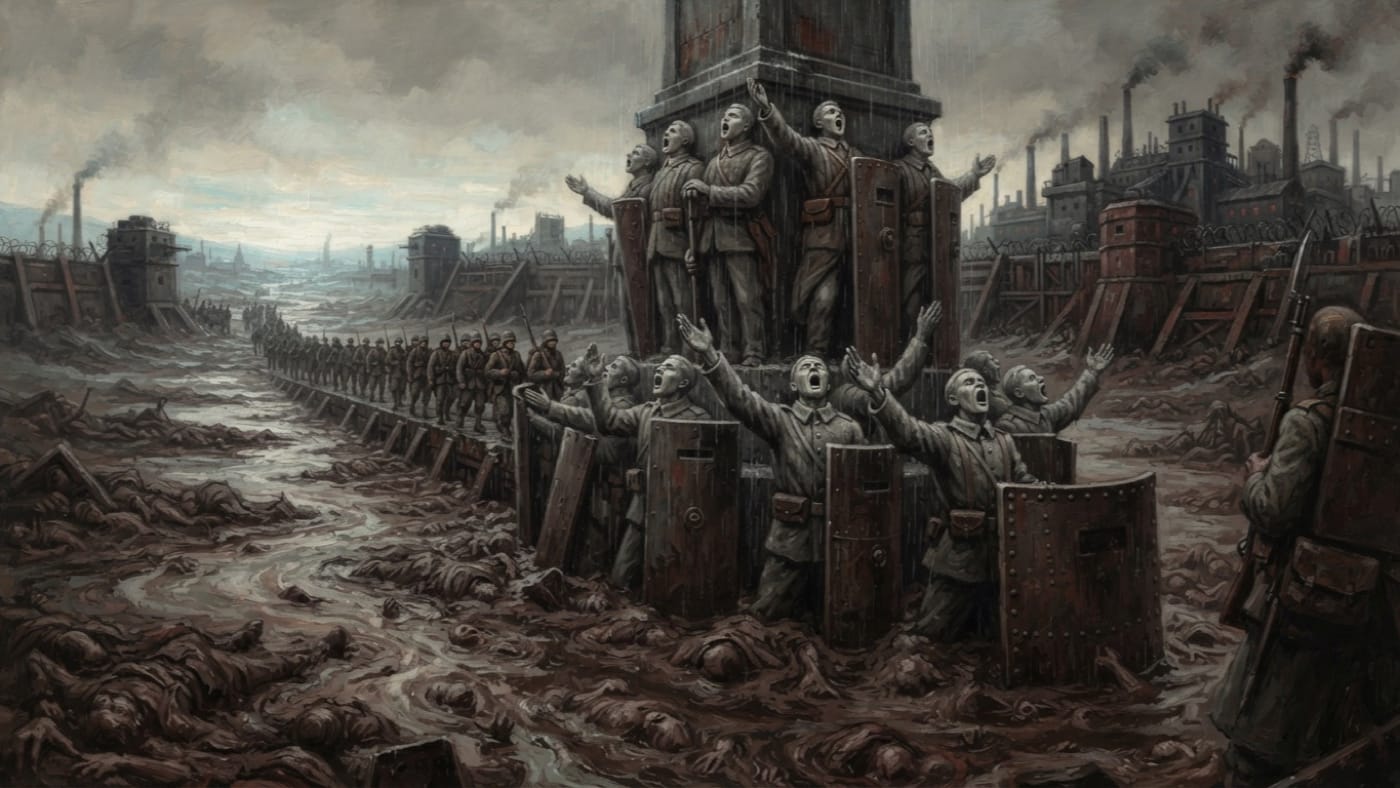
Penance March of Extraordinary Zeal
The dead sank; Records taught them to march
Records renamed the Knife Mile drowning the Penance March, taught survivors the approved account, and gave the dead singing mouths. A.S. 137 dates the catastrophe beneath the title.
Codex Ref. XIII.1.137-002

Penitential Creed
The right prayer in the wrong week leaves you on the bank
The Penitential Creed buys passage when the crossing demands it and the traveller knows the week's declension. Piety survives an expired form; the traveller remains on the bank.
Codex Ref. XIII.1.68-002

Peripheral Erasure
The sentry sees a man and files him as rubble
Peripheral Erasure lets a Veil-Stalker stand in plain sight while attention files him as rubble. The commonest concealment mode spends its bearer slowly enough to learn how a fortress eats.
Codex Ref. XIII.1.05-001
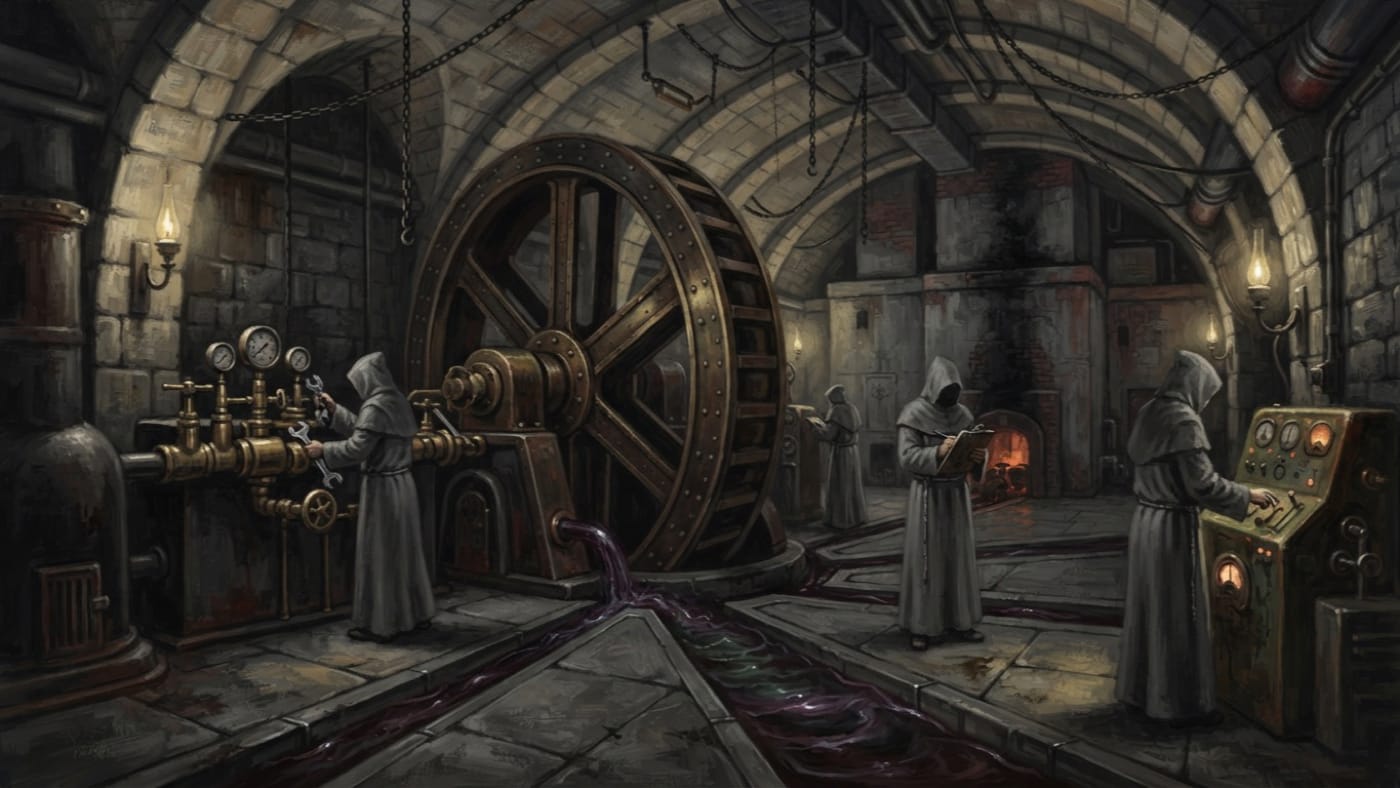
Phase Nine
A numbered phase without a schedule
Phase Nine is the designation in Report Three, A.S. 199, under which the Unnamed Bureau recommends continued non-disclosure. Its scope remains unconfirmed and completion unrecorded. The paper says pending. So do I.
Codex Ref. XIII.1.09-199

Philosophical Prefectures
Reason numbered Europe; Hell ignored the numbers
The Philosophical Prefectures were Reason's thirty-seven cuts across Europe: a map designed to erase saints, graves, borders, and memory by schedule.
Codex Ref. XIII.1.13-030

Phrase-Rotation
The comfort stays; the words refuse to testify
Mercy Preachers vary comfort and coded aid to defeat comparison. The meaning reaches the street; the clerk receives three perfectly useless transcripts.
Codex Ref. XIII.1.77-201
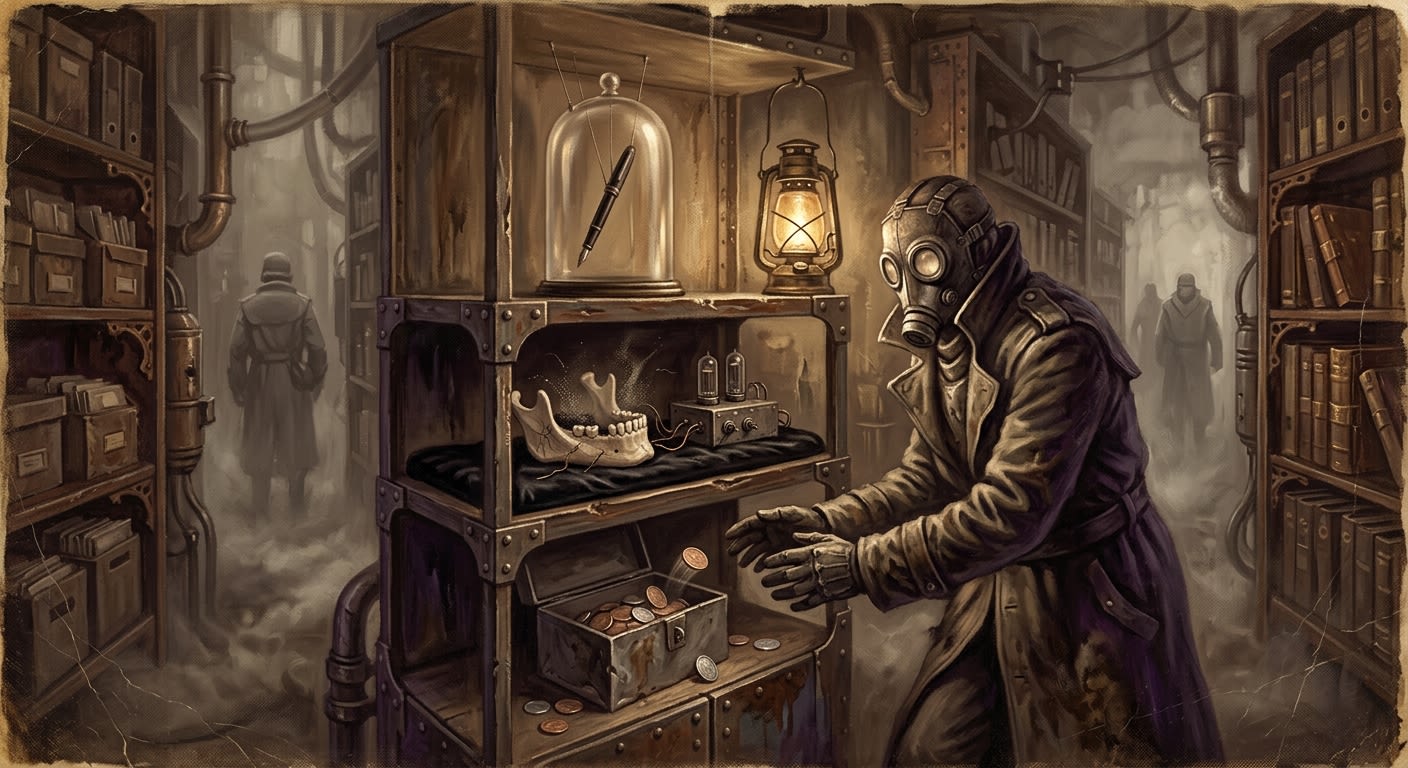
Physical Anomalies Collection
Matter misbehaved, was measured, and had the insolence to remain matter
Second silence of the Vault of Silences, preserving the Vienna pen, 217-hertz jawbone records, and returning coins that keep embarrassing their custodians.
Codex Ref. XIII.1.49-001

Pilgrim Reconciliation Statutes
Correction is salvation, provided the fee clears
The Pilgrim Reconciliation Statutes made mercy countable: bead strings, route errors, confession addenda, second strings, debt, and sanctioned delay.
Codex Ref. XIII.1.72-097
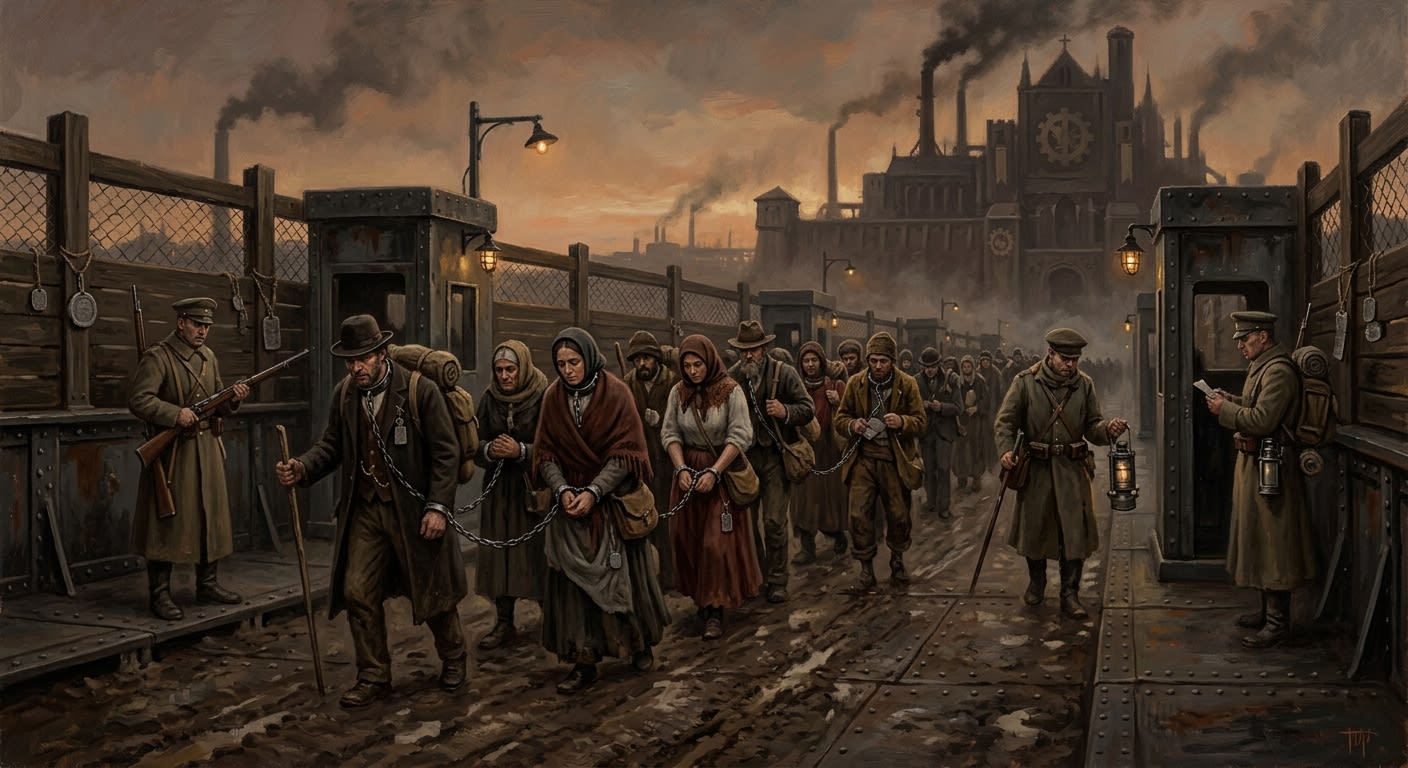
Pilgrim Roads
Sanctity is motion under witness, and witness under invoice
The Pilgrim Roads made walking obedient: licensed motion, tolls, tokens, chains, grief, delay, and low earth holiness under seal.
Codex Ref. XIII.1.86-094
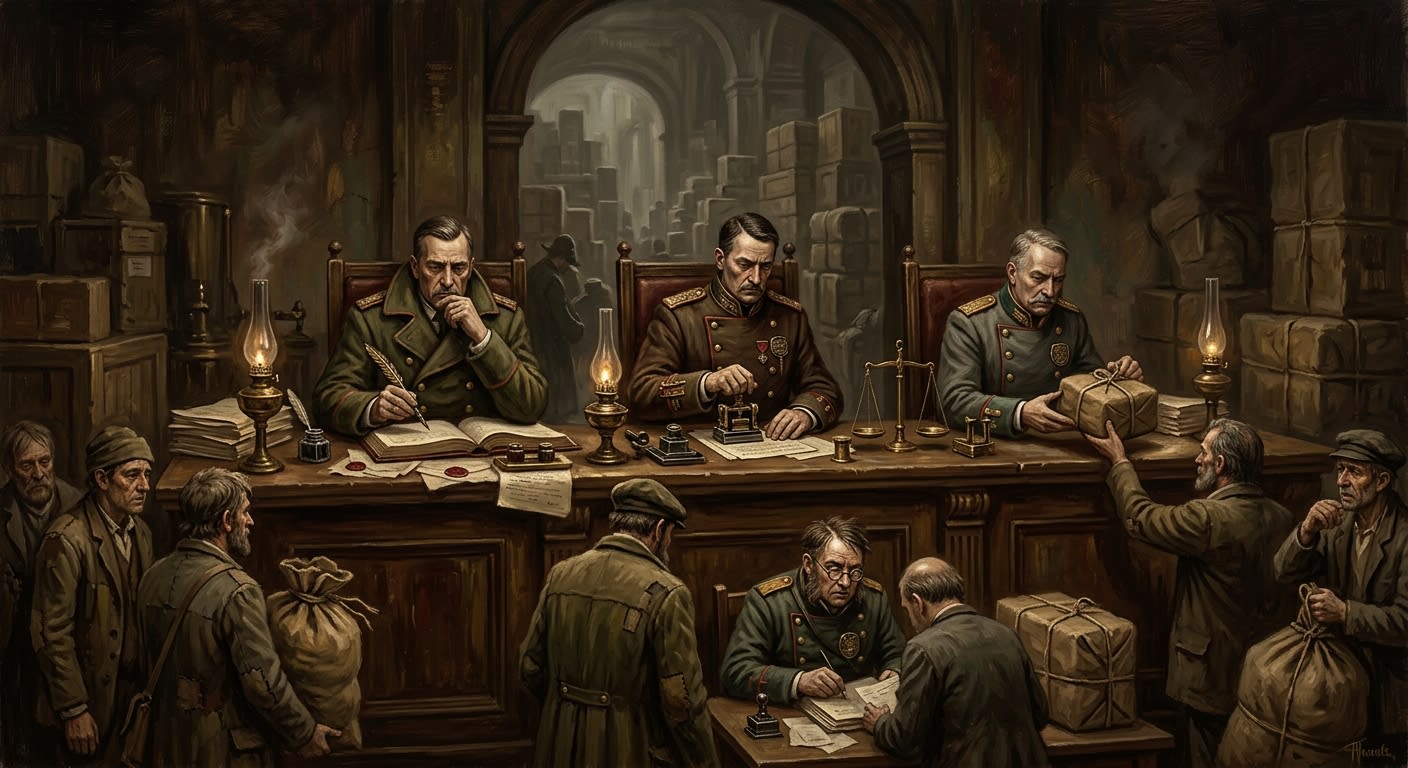
Port Court
Where cargo waits while permission proves it has a soul
The Port Court names cargo before mercy may touch it: a Commerce bench where sacks become law, law becomes delay, and delay invoices the hungry.
Codex Ref. XIII.1.89-112

Prayer of Unseeing
The eye is ordered to forget what the hand has already touched
Bureau-ratified handling formula for Index page-turns and sealed matter, asking sight to record without appetite and memory to keep its filthy hands closed.
Codex Ref. XIII.1.51-001
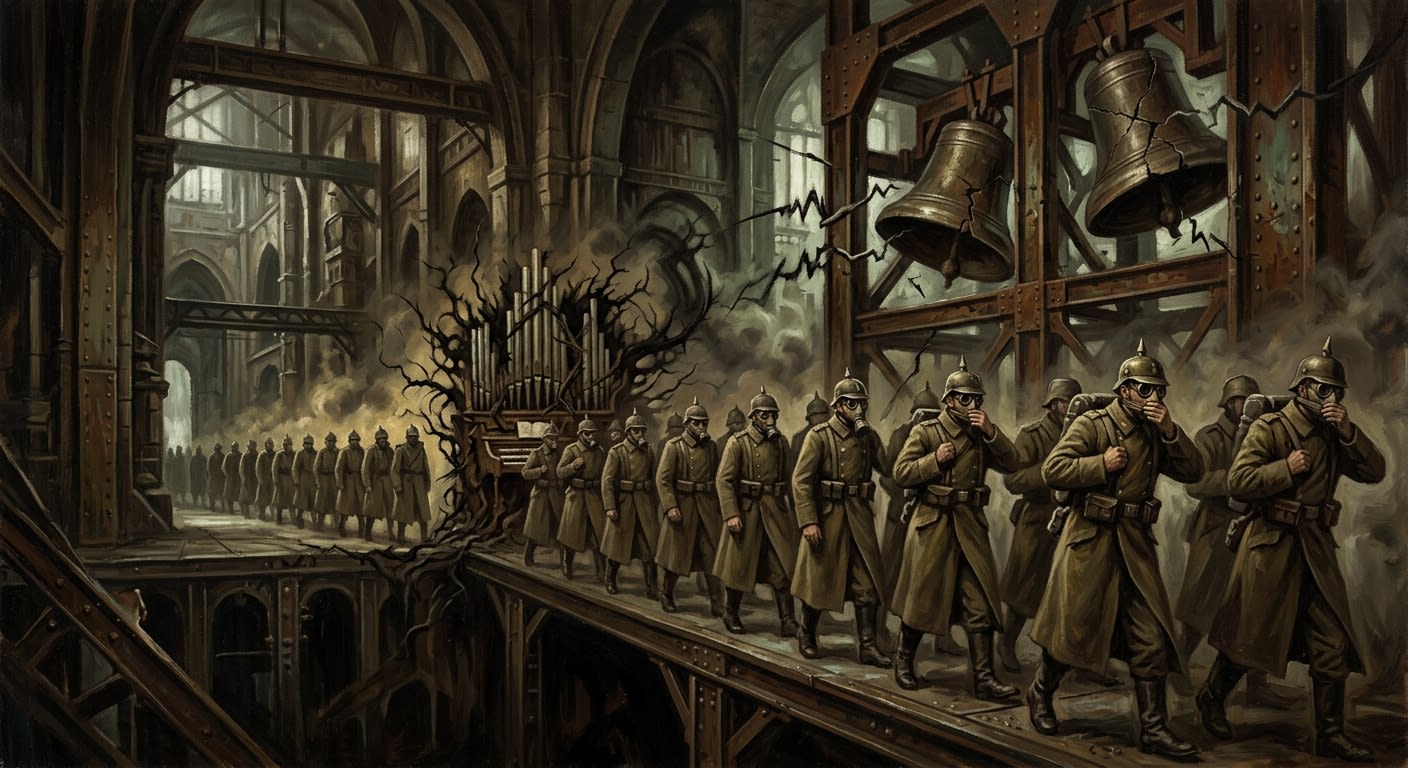
Prayer-Jam
When obedience enters the ear and comes out treason
Prayer-Jam is liturgical signal failure under hostile acoustic pressure: bells betray, hymns gag, and obedient men march precisely into ruin.
Codex Ref. VI.2.01-005
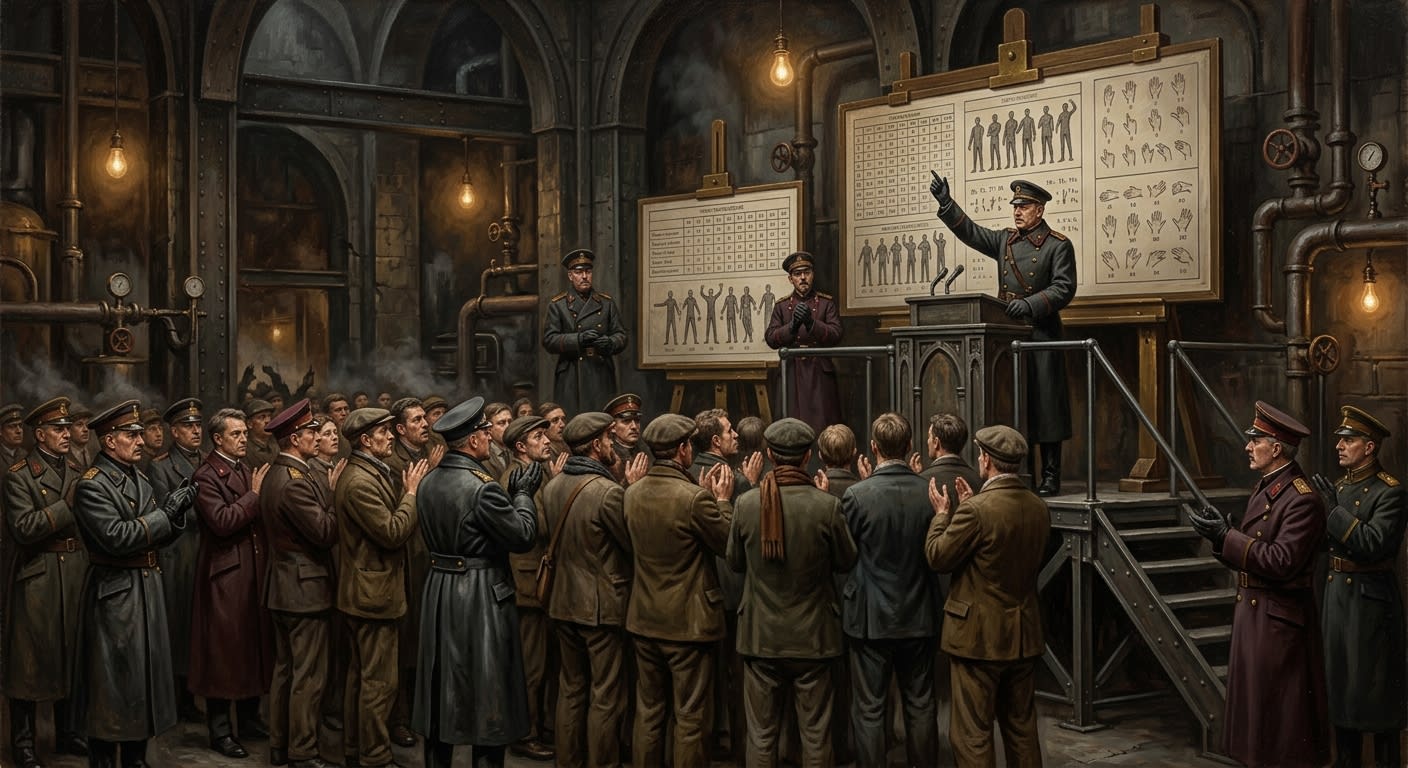
Prescribed Ovation Index
Count the clapping before the clapping counts you
The Synod's table of lawful applause, because a crowd that discovers its hands may soon discover teeth, rhythm, and politics.
Codex Ref. XIII.1.66-201
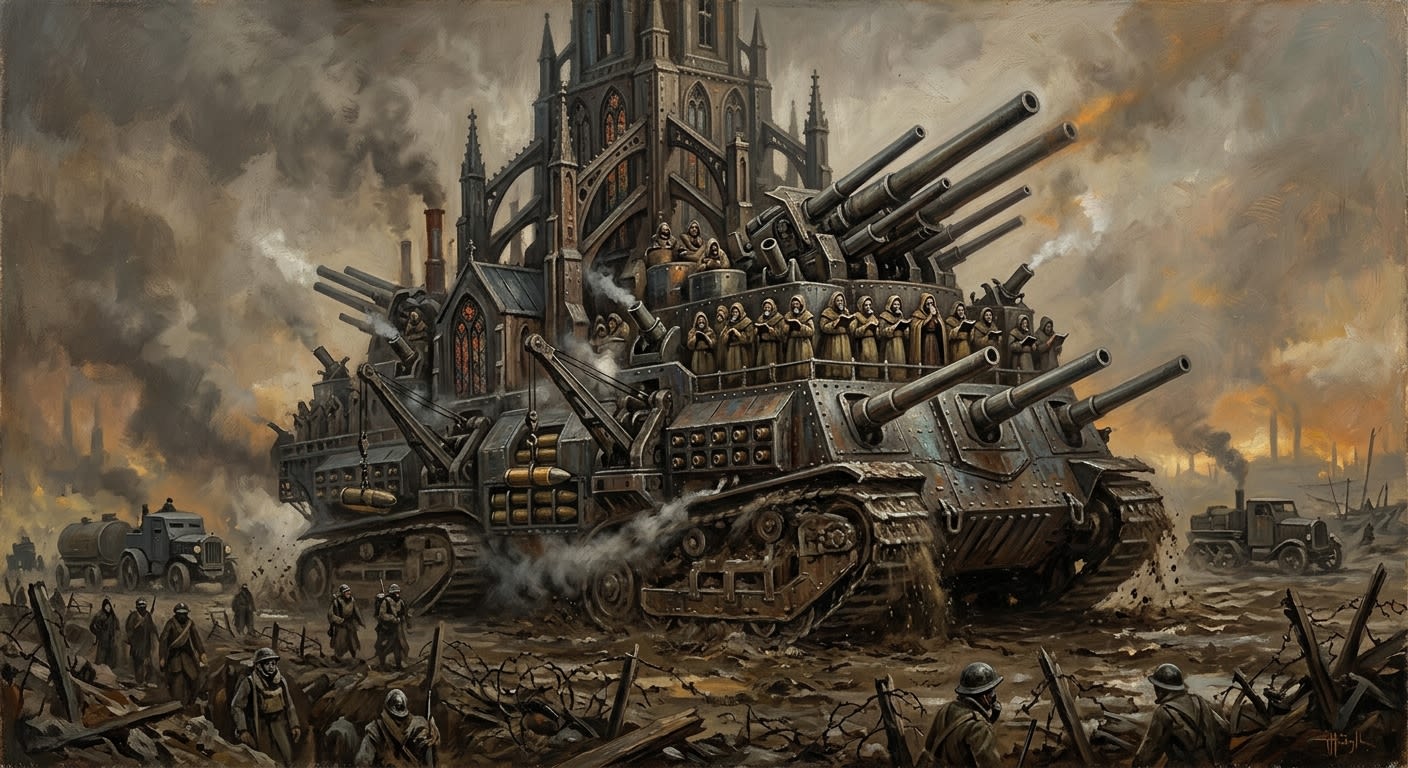
Processional Arsenal
Where the church climbs on treads and the Gloria arrives as mortar fire
The Processional Arsenal is a mobile shrine-artillery Choir-Engine: cathedral, battery, choir school, and powder magazine advancing together on blessed treads.
Codex Ref. XIII.1.34-001
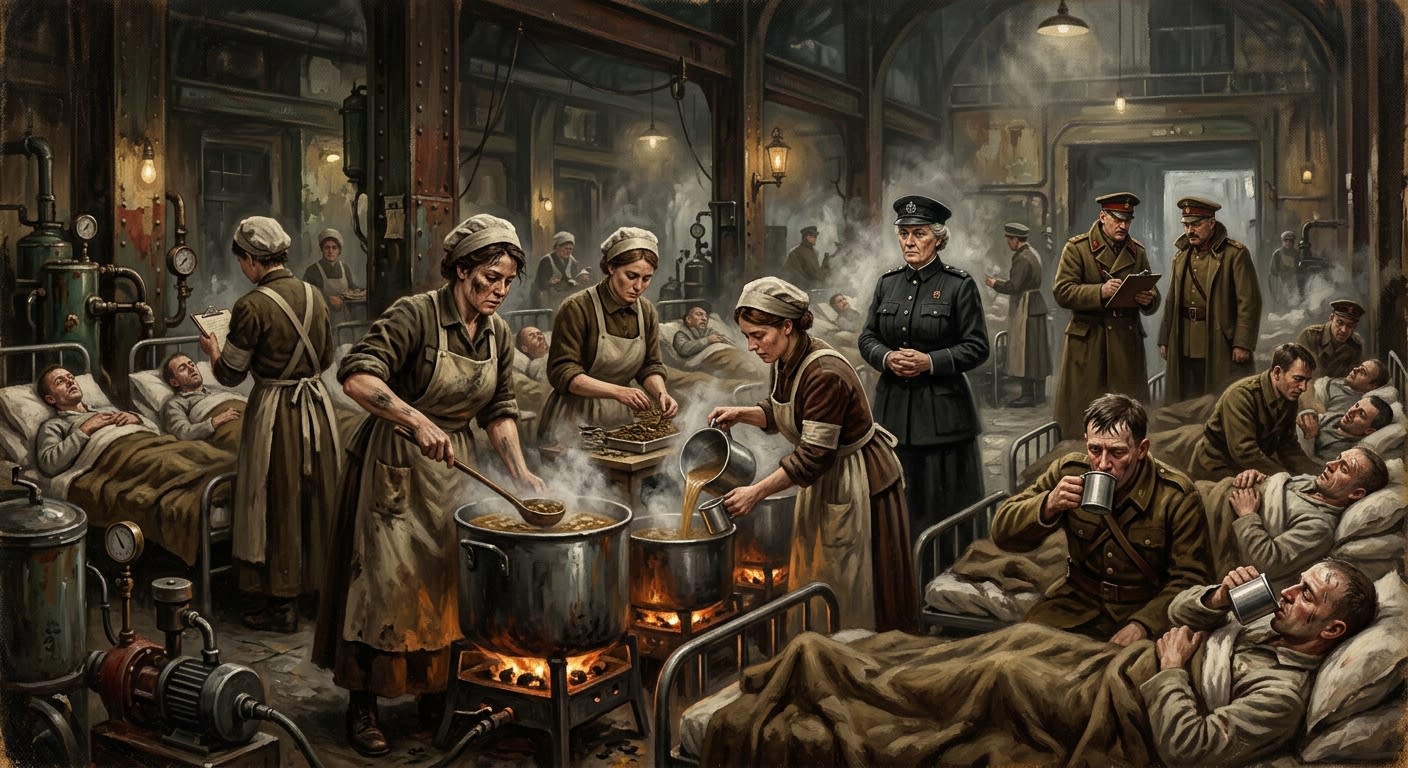
Protocol 7-C
The Bureau named the kettle after stealing the cure
Protocol 7-C saves fevered soldiers by boiling water, brewing bark, and pretending the woman who knew this first had never touched the pot.
Codex Ref. XIII.1.74-113

Psalm of Consuming
The Toledo fire-prayer that spent custody into ash
The Psalm of Consuming is Toledo's sealed fire-prayer: a relic-bound formula whose two lawful recitations turned siege stores, tower, and custody into ash.
Codex Ref. XIII.1.57-015
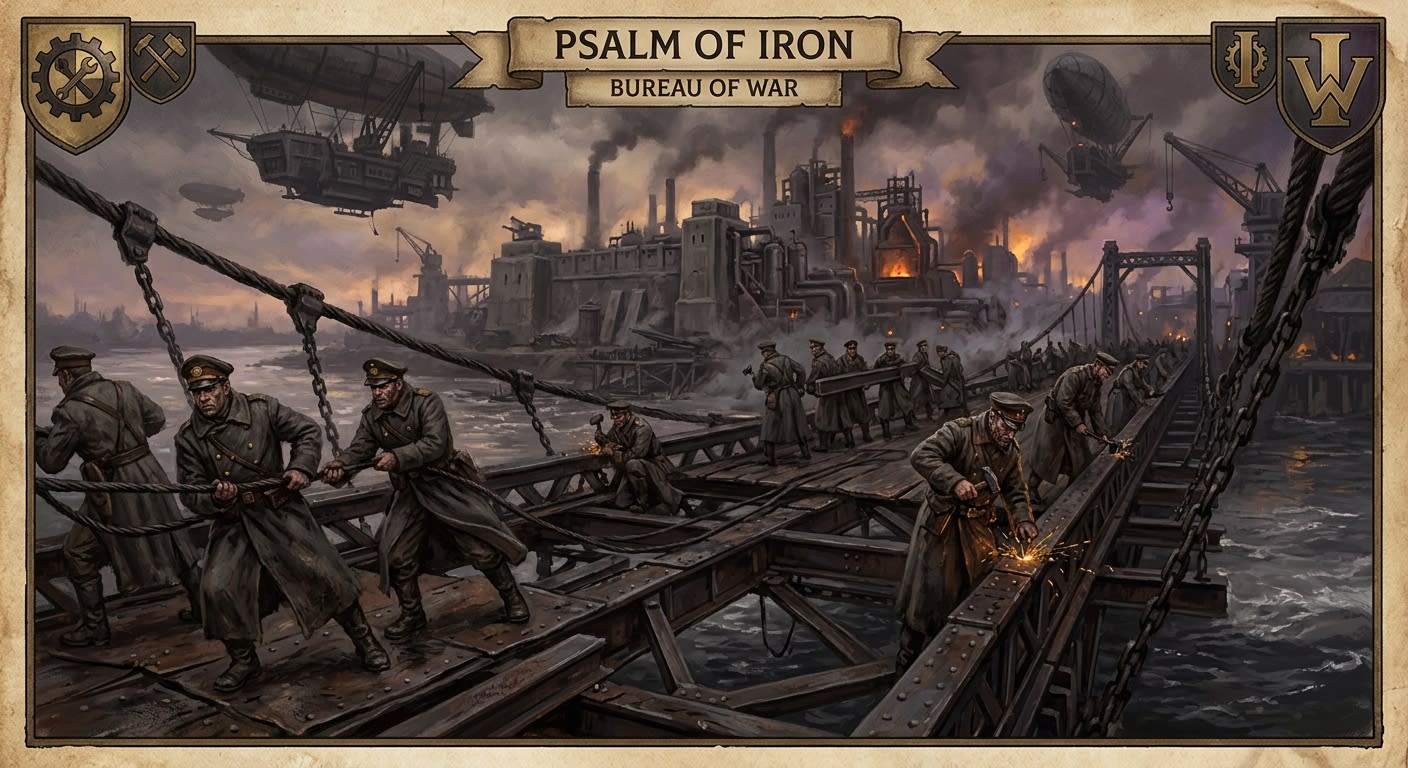
Psalm of Iron
Sing it softly and it curdles; sing it under fire and men cross
The Bureau of War's ugly, useful crossing-psalm turns breath into bridgework, teaching men to keep moving after timber, officers, and mouths fail.
Codex Ref. XIII.1.96-172

Psalm of Satiation
Enough to obey, enough to look away, enough not to begin
The Bureau of Rites' seven-verse field hymn delays Kargath's hunger long enough for obedience to keep its chair.
Codex Ref. XIII.1.96-194
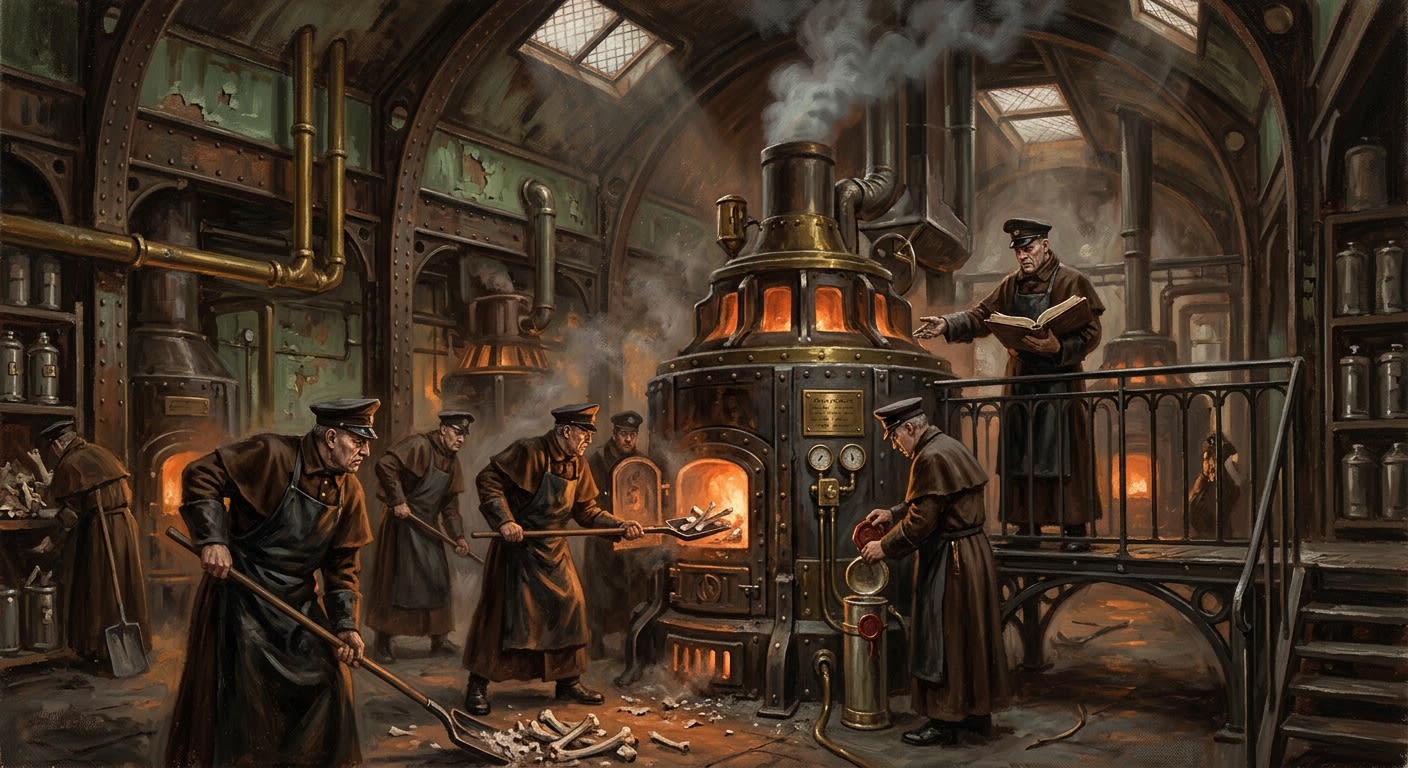
Purity Kiln Decree
Holiness must bear weight, and so must the men who burn it
The A.S. 142 decree made saint-bone burning legible: hymn, heat, quiet, seal, witness, blame, and the pious sentence that holiness must bear weight.
Codex Ref. XIII.1.91-142

Railway Track Engineer
He walks the line; the line walks into him
The Guild of Rails' licensed maintainer of the Dominion's iron circulation — gauge-walker, spike-maul, and listener. The men who standardised the line under fire, hear fractures before they form, and mark the junctions that should not be crossed alone after dark.
Codex Ref. XII.44.01-001

Receipt-Procession Pageant Captain
The Bureau does not celebrate. It enumerates. The ribbon is the proof.
The Bureau of Festivals does not employ artists. It employs accountants in bright sashes, charged with converting municipal celebration into municipal enumeration — the wrist-ribbon is the key, and joy rot is the wages.
Codex Ref. XII.33.01-001

Red Pronunciation
A vowel may execute when stone is listening
Red Pronunciation is the Steppe Gate doctrine of damaged binding speech: a word that bleeds, corrects itself, and charges the throat for law's repair.
Codex Ref. XIII.1.94-094

Register of Names
The death that continues answering until the clerks stop it
Second register of the Index Damnatus, preserving condemned names, aliases, lineage flags, seizure orders, and the machinery by which persons become legally absent.
Codex Ref. XIII.1.47-001
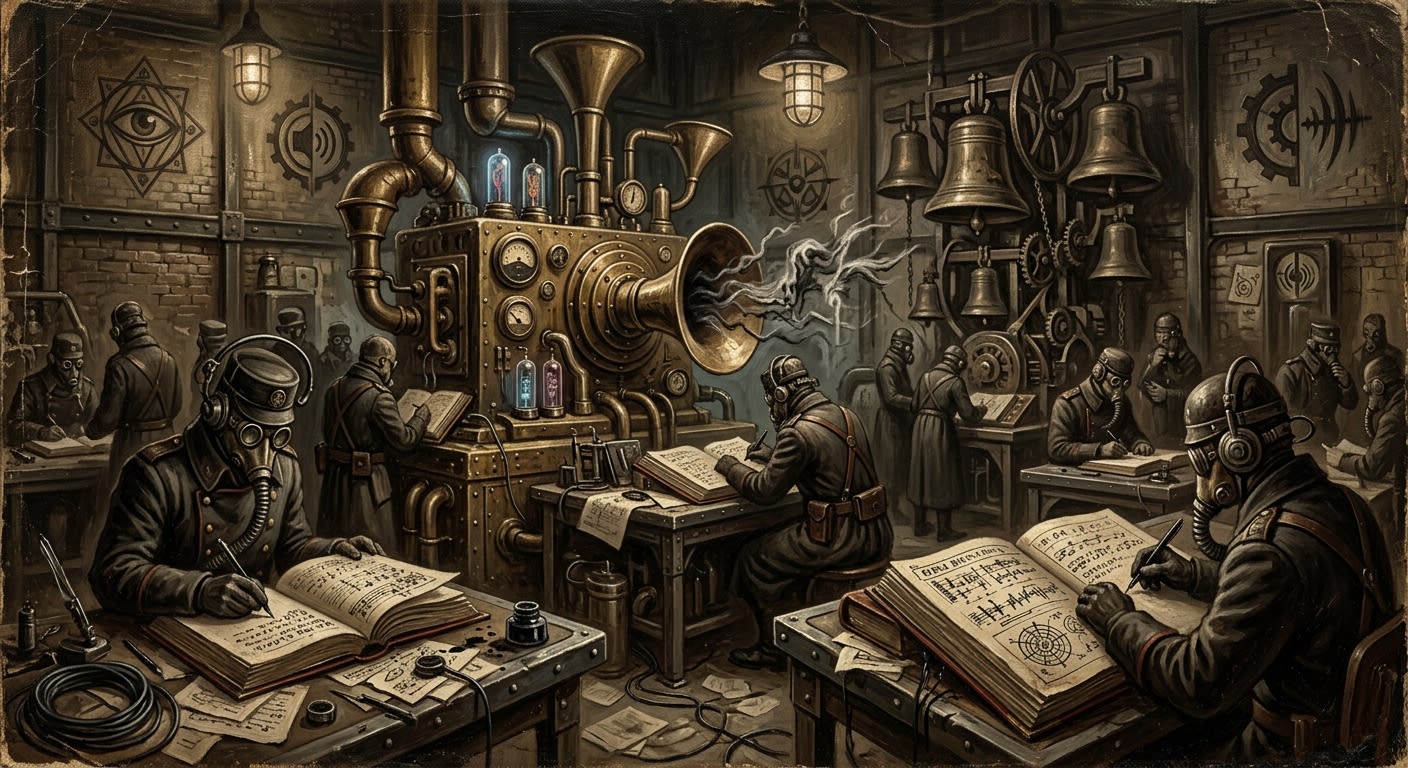
Register of Sounds
Where music is taught to confess before it escapes
Third register of the Index Damnatus, cataloguing forbidden tones, cadences, bellfalls, breath patterns, and the treasons ink can carry from one skull to another.
Codex Ref. XIII.1.46-001

Relic Authenticator
The stamp makes the filing complete; the bone remains what it was
The Synod's miracle-bureaucrats — clerks with gloves, lamps, and seal-presses who decide whether a fragment of bone is holy or merely expensive.
Codex Ref. XII.35.01-001
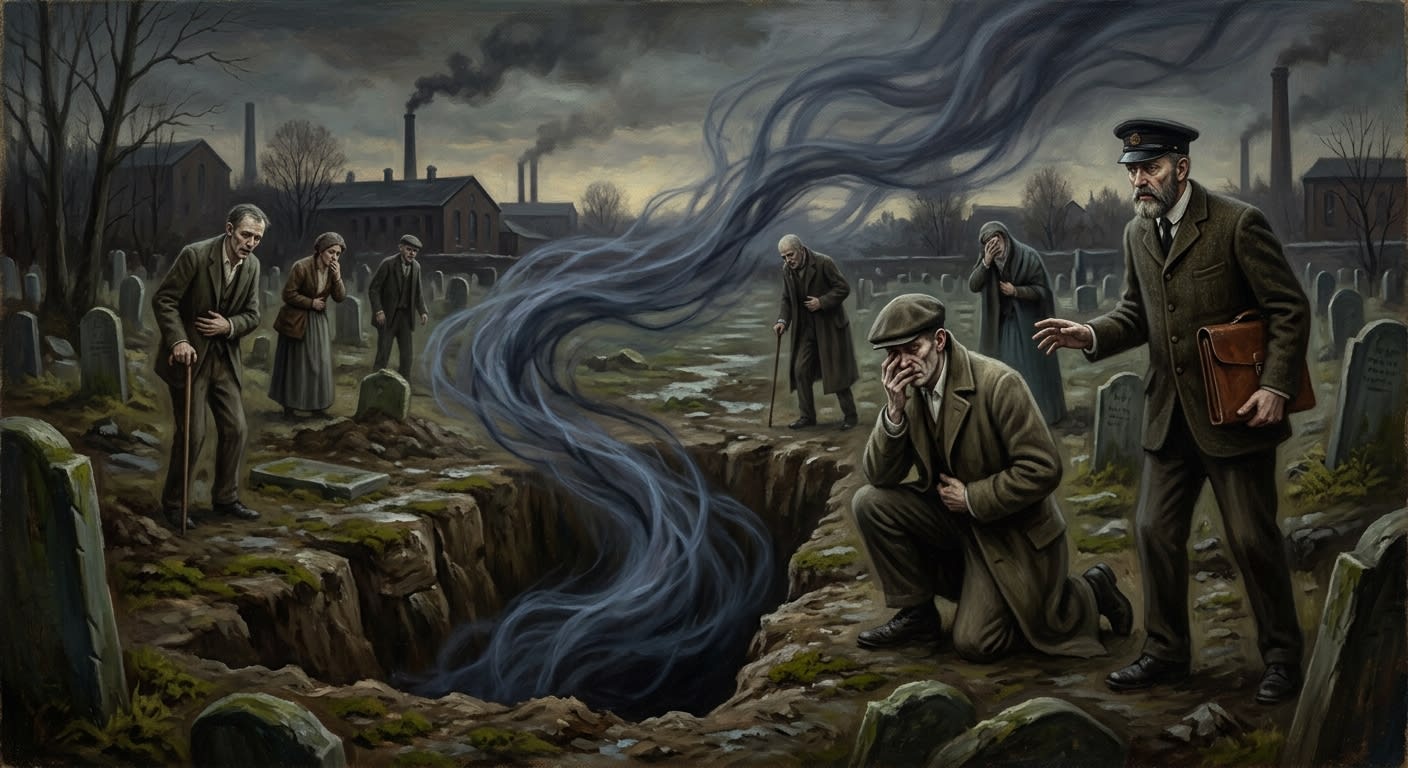
Residual Consumptive Emanation
The grave is still hungry; the phrase merely wears gloves
The Bureau's name for the hunger radiating from the Famine Pits: a cold, human-adjacent starvation that eats the living through old graves.
Codex Ref. XIII.1.25-134
Resonance Bloom
When Essen opens its throat beneath the floor
Resonance Bloom is Essen-of-Hymnsteel's acoustic-structural opening: teeth ache, hymnsteel cracks, districts fall silent, and every Bureau insists production continue.
Codex Ref. XIII.1.73-002
Resonant Vein
The mountain answers names; naturally the Bureau calls this mining
Beneath Saint-Helm's Cut, Oathglass responds to names rather than hymns, turning sacred verification into a quarry, a heresy, and a market.
Codex Ref. XIII.1.22-001
Rite of Passing
No soul departs until the Ledger has improved the death
The Rite of Passing turns death into lawful custody: right ear, last words, body display, black ink, routed remains, and no soul left vulgarly private.
Codex Ref. XIII.1.85-080

Ritual Bone-Stamper
Unsealed is unbound; the stamp is mercy; the stamper is what mercy costs
The Bureau of Records calls them Ossuary Authentication Wardens. The stampers call themselves tired. They have sealed the night-shift dead since A.S.
Codex Ref. XII.37.01-001

Route-Stamper / Indulgence-Token Smith
Walking is a contract; the Route-Stamper is the notary
Makers of the indulgence-token — a brass palm-piece whose captive bell-hour counts steps, repels road-spirits, and distinguishes the sanctioned traveller from the heretic-with-legs. The art is measured by one question only: whether it lies.
Codex Ref. XII.38.01-001

Sacred Ledger
The Synod's memory, sharpened until grief signs the receipt
The Sacred Ledger is the Synod's authorised memory: fact cooked into Doctrine, grief made grammatical, contradiction kept on a leash.
Codex Ref. XIII.1.32-090
Saint-Bone Melting Acts
Sanctity must bear weight, and the wall has receipts
The A.S. 96 Saint-Bone Melting Acts made surplus holiness structural, teaching relics to become mortar and the faithful to call subtraction a wall.
Codex Ref. XIII.1.91-096
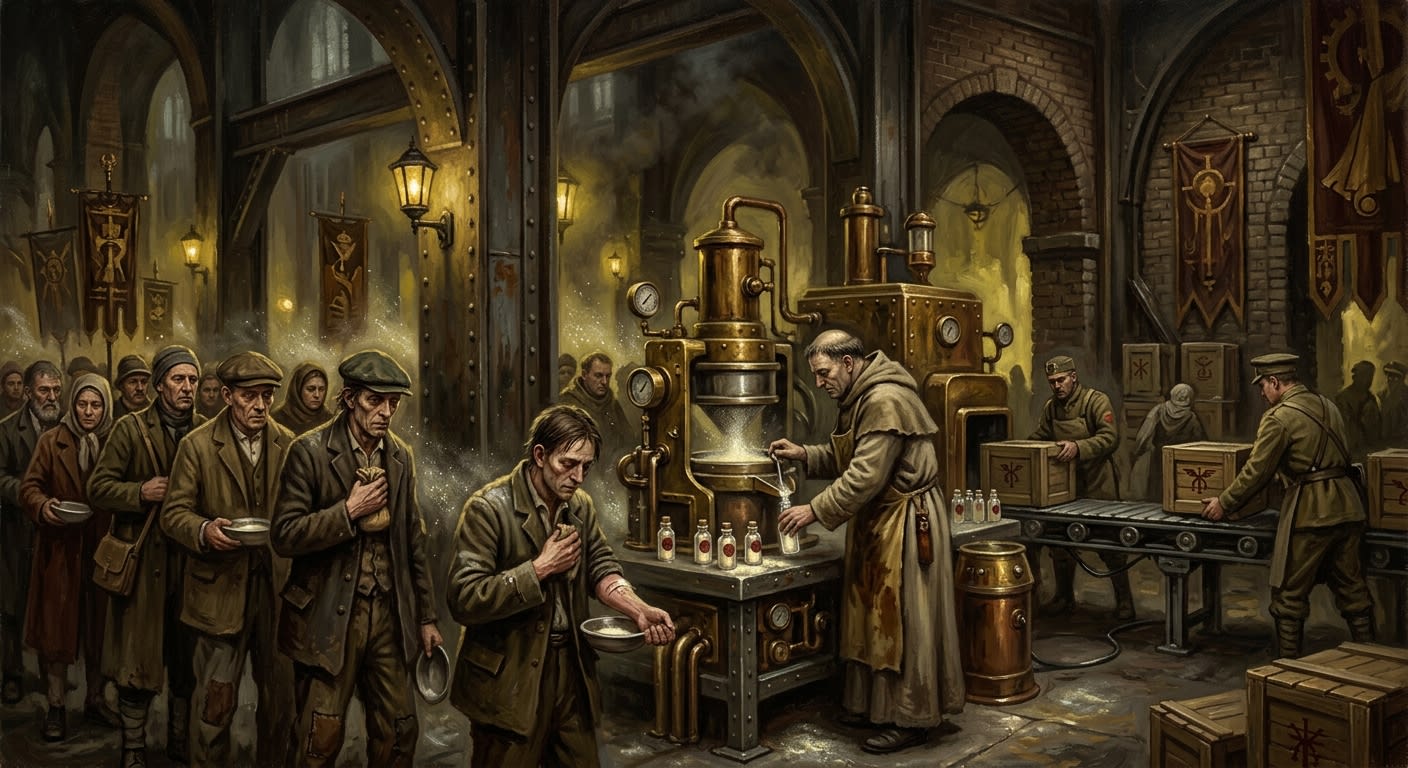
Saint-Dust
Powdered holiness enters the lung, the ledger, and the machine
Saint-dust is powdered holiness made useful: relic residue for broadcasts, wounds, shrines, walls, markets, miracles, and the lungs sacrificed between them.
Codex Ref. XIII.1.91-098
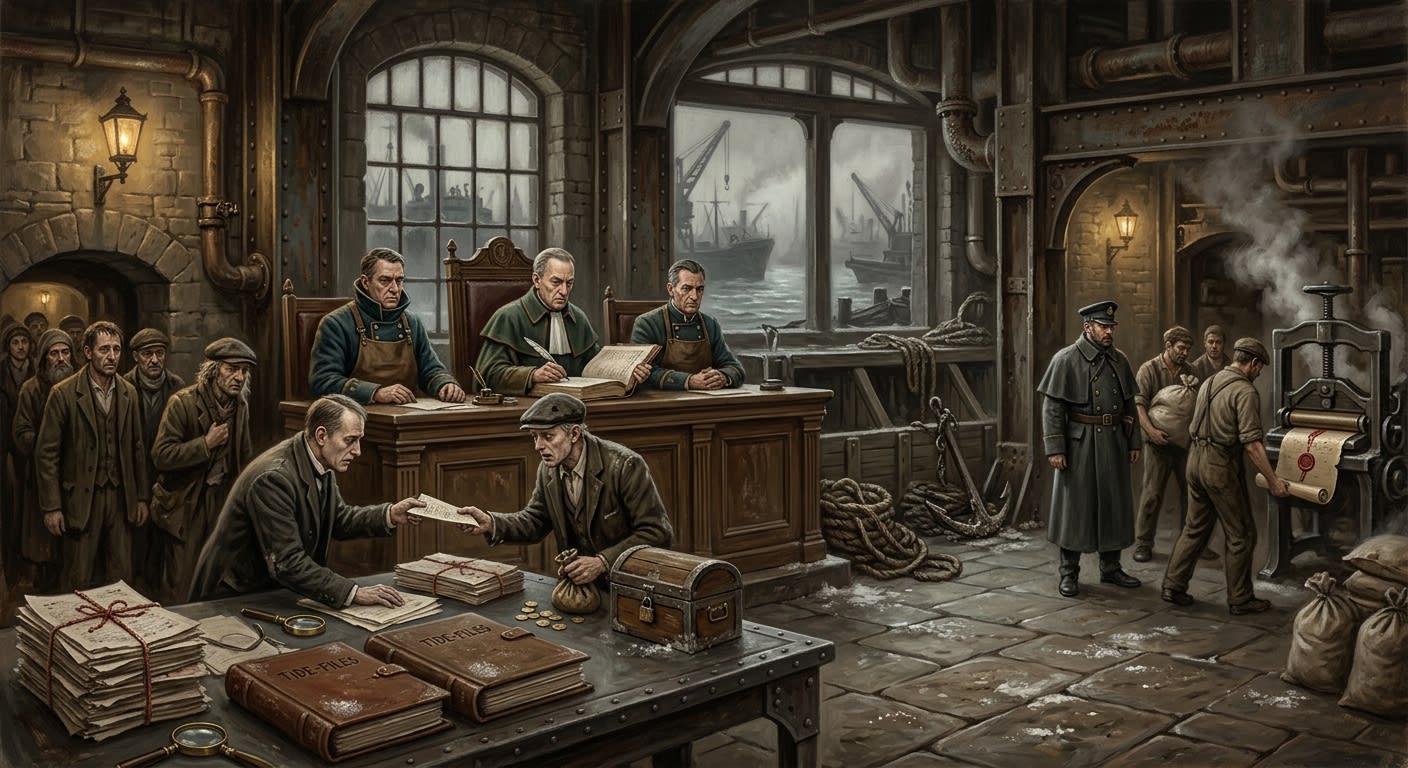
Salt Tribunal
The court that sells leaving and calls the invoice mercy
Calais' Salt Tribunal converts fear of water into legal passage, priced mercy, tide-files, quarantine holds, and salt-wax obedience.
Codex Ref. XIII.1.87-084
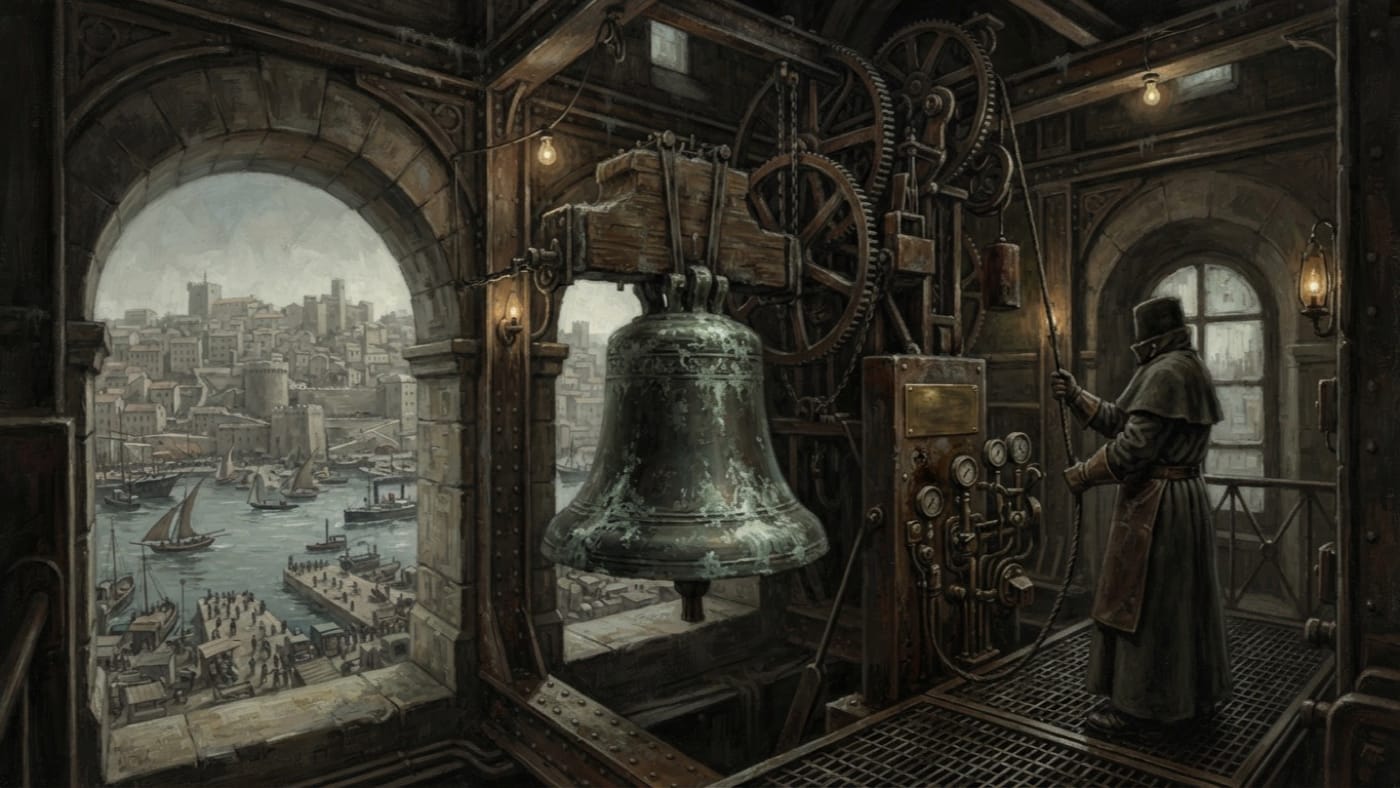
Salt-John
One bronze voice reserved for the hour when Marseille must listen
Salt-John sounds harbour danger from Saint-Victor's western relay in Marseille. One of nine principal bells, it remains under Bureau of Bells authority: a warning loses its power when every clerk may ring it.
Codex Ref. XIII.1.62-232

Sanitation Chapter
The clean line is a border, a sermon, and a threat
Mercy calls it sanitation; Marrowgate calls it the office that paints a white line and makes obedience look like hygiene.
Codex Ref. VIII.2.10-078
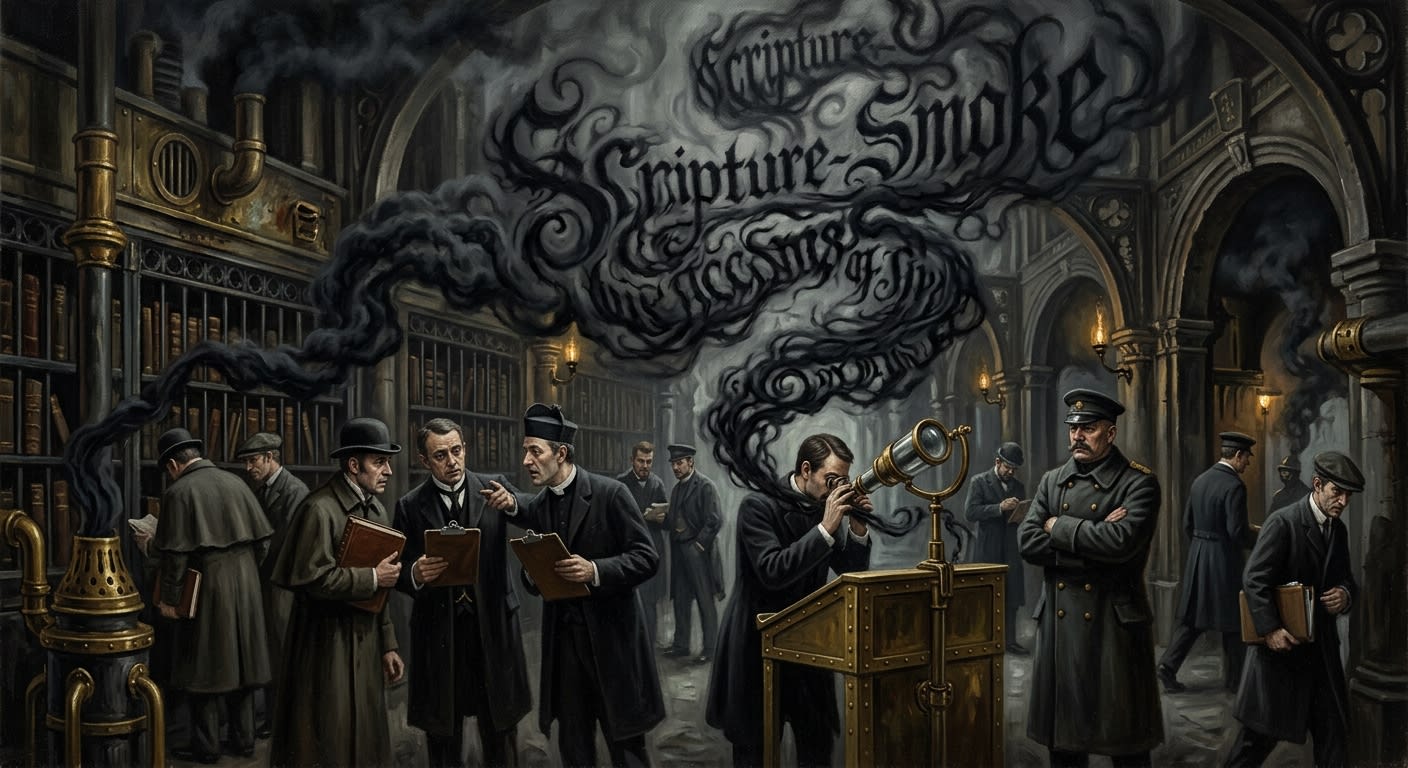
Scripture-Smoke
The vapour is not prophecy; it merely has the insolence to be legible
Scripture-Smoke is black-diesel vapour that writes back, which is precisely why the Bureau forbids reading it before reading it first.
Codex Ref. XIII.1.90-136
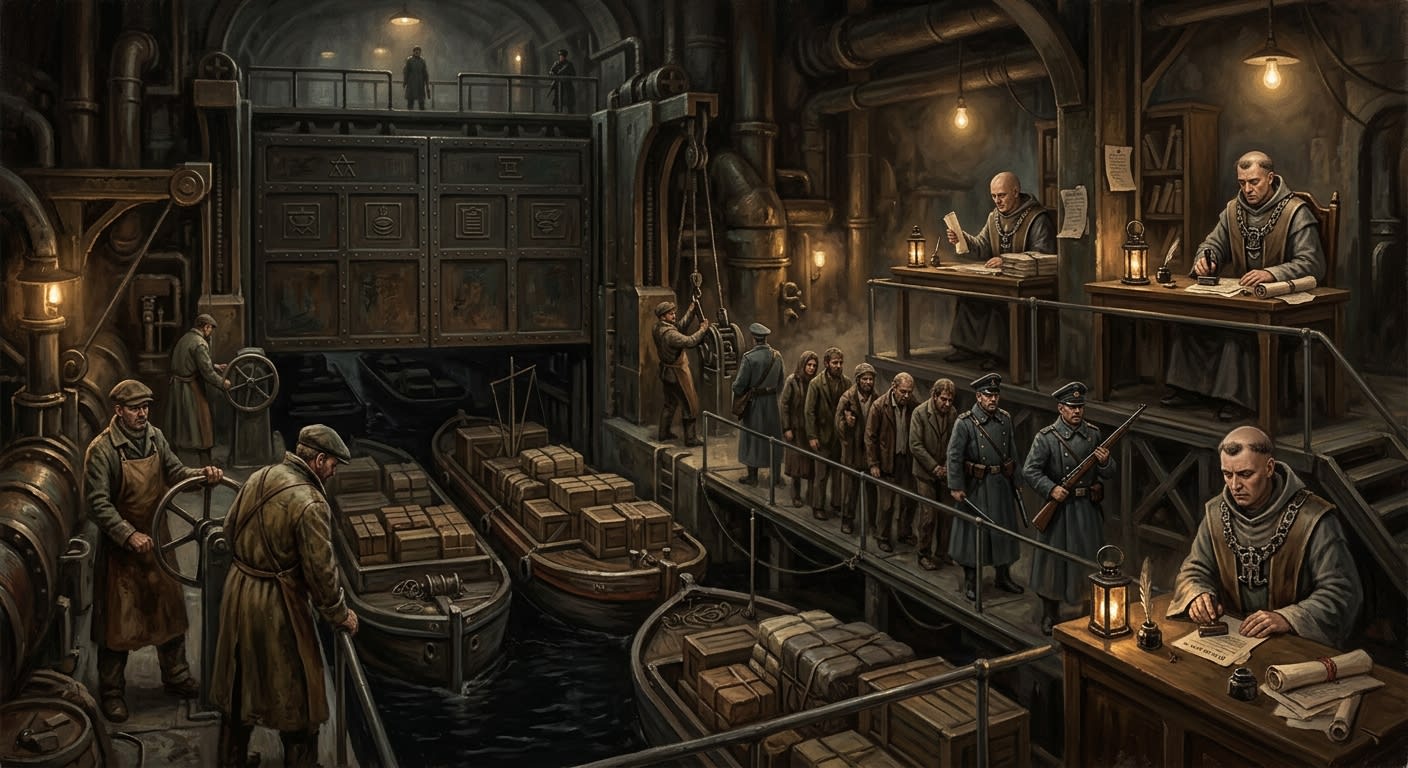
Seal Locks
Where the river kneels, the Ledger learns to swim
Seal Locks pause water, cargo, papers, fugitives, ink, dust, and conscience long enough for the Synod to call movement lawful and billable.
Codex Ref. XIII.1.95-092
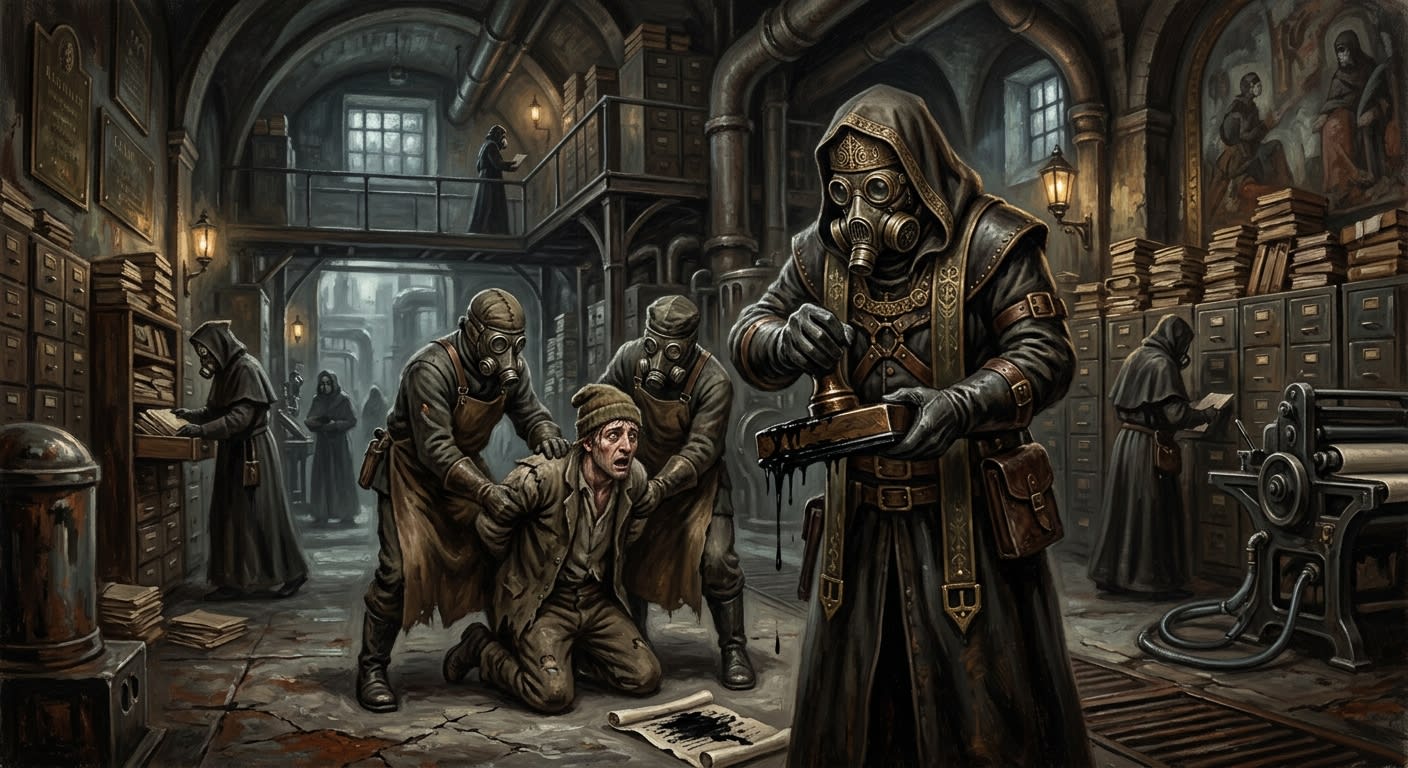
Seal Obsidian
The classification that denies the hand while sharpening the knife
Seal Obsidian is the Synod's blackest administrative mercy: knowledge retained because it is needed, denied because it is fatal.
Codex Ref. XIII.1.09-001

Seal Standardisation Edict
The law that taught rubber to confess and plumbers to keep two ledgers
The Seal Standardisation Edict answered Shipka's Unhymn with hymn-gaskets: a successful law, which means it created an office around the scar.
Codex Ref. XIII.1.92-164

Seal-Forger, Counterfeiter
The Synod's confession, pressed in unauthorised wax
The seal-forger is the Synod's shadow — pressing wax into survival where the Bureau presses wax into doctrine. Eleven immurements signed, six thousand fed, and the woman who may never have existed.
Codex Ref. XII.41.01-001
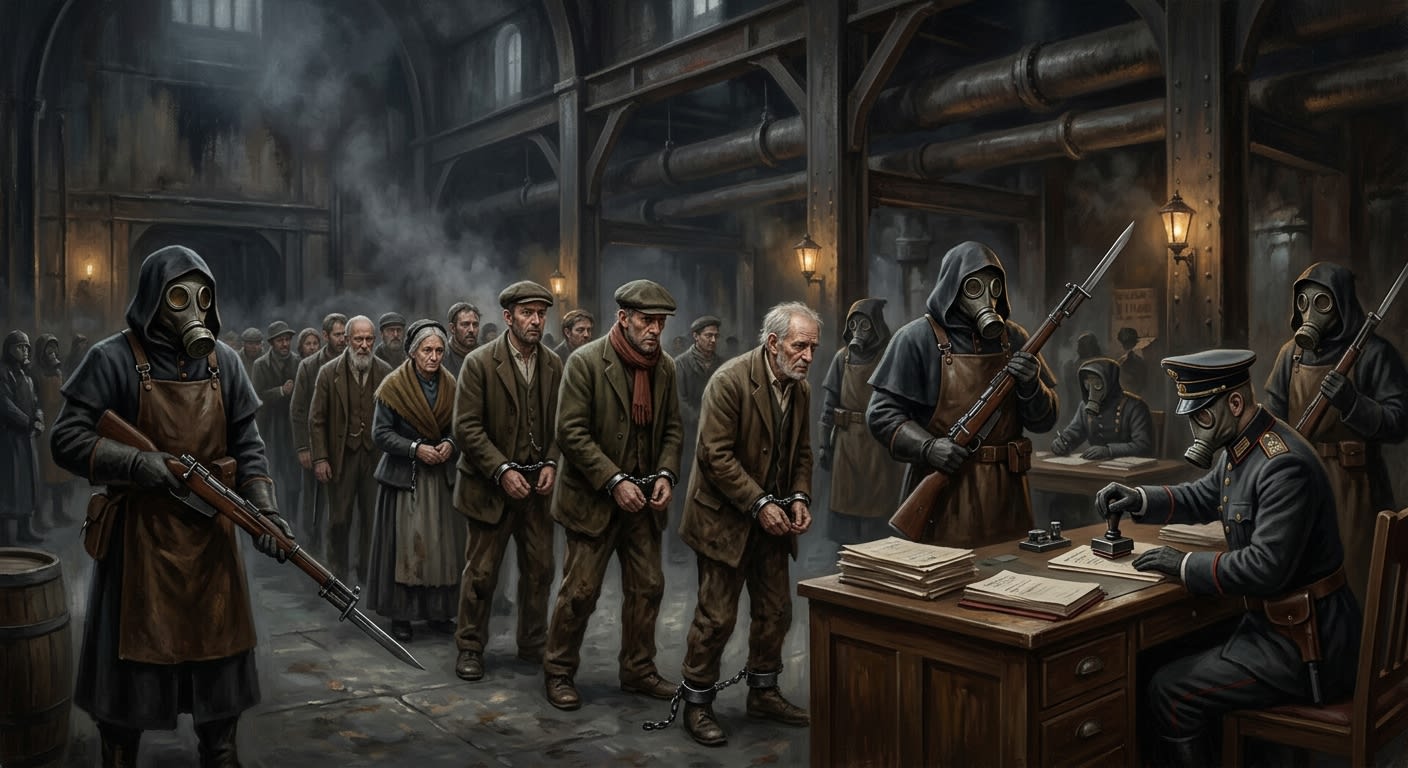
Secular Gatherings Act
The permit form that taught bayonets to quote law
The Secular Gatherings Act did not order massacre. It made massacre available, cleanly phrased, properly witnessed, and ready for bayonets.
Codex Ref. I.1.05-002
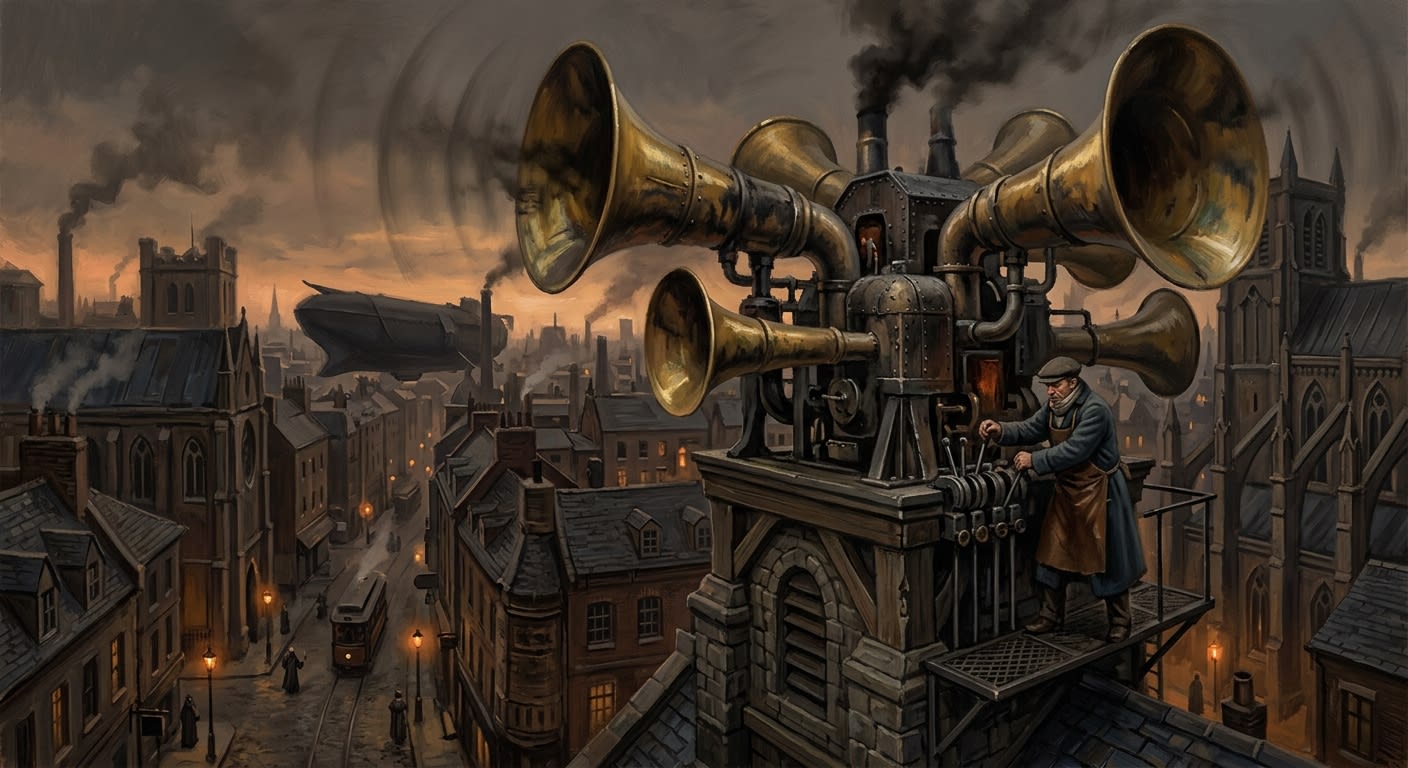
Sermon-horns
The brass throat by which doctrine stops asking politely
Sermon-horns make authorised language arrive with enough brass force that absence must explain itself, from rooftop shrines to Vigil Ark gondolas.
Codex Ref. XIII.1.96-092
Seven Seals of Faith
Seven absolute sovereignties, each checking the others, which Kratz called something else entirely
The constitutional framework of the Bureaucratic Synod — seven domains of overlapping absolute authority, each assigned to one Hierarch, each cancelling the others into the only available direction forward, toward the Sagittal Line, where jurisdiction is settled by artillery.
Codex Ref. XIII.1.05-001
Sext
Noon, where obedience sweats in public and the market answers aloud
Sext is the Synod's noon office: the exposed bell-hour where markets pause, rations align, mouths betray themselves, and daylight makes cruelty tidy.
Codex Ref. XIII.1.96-115
Shadow Noon
When a man's shadow applies for command
Shadow Noon is the Zone Five contradiction where light behaves, shadows mutiny, and the wise soldier survives by sitting down before Doctrine catches up.
Codex Ref. XIII.1.97-201

Shadow Relay
When the Index buys legs it refuses to name
Forbidden and persistent, the Shadow Relay is the illegal handoff that lets Index packets outrun their licensed Runners and poisons every receipt it saves.
Codex Ref. XIII.1.74-001
Shrine-Deck Crew
Bell, chalk, and brass — the three sacraments of the man who is too useful to die quickly
Mobile artillery and choir crews of the Synod's shrine-platforms — firing on the psalm-beat, logging every shell in a shot-ledger the Bureau calls the platform's soul, and maintaining chalk rings while the metronome bell keeps the guns from going hollow.
Codex Ref. XII.42.01-001

Sigil Inspector
The man who tells the world what it is allowed to look like — and scrapes the rest
The Bureau of Heraldry tells the world what it is permitted to look like. The Sigil Inspector is the man who walks the world and checks — codex in hand, swatch at the hip, blade heated to scraping temperature.
Codex Ref. XII.43.01-001
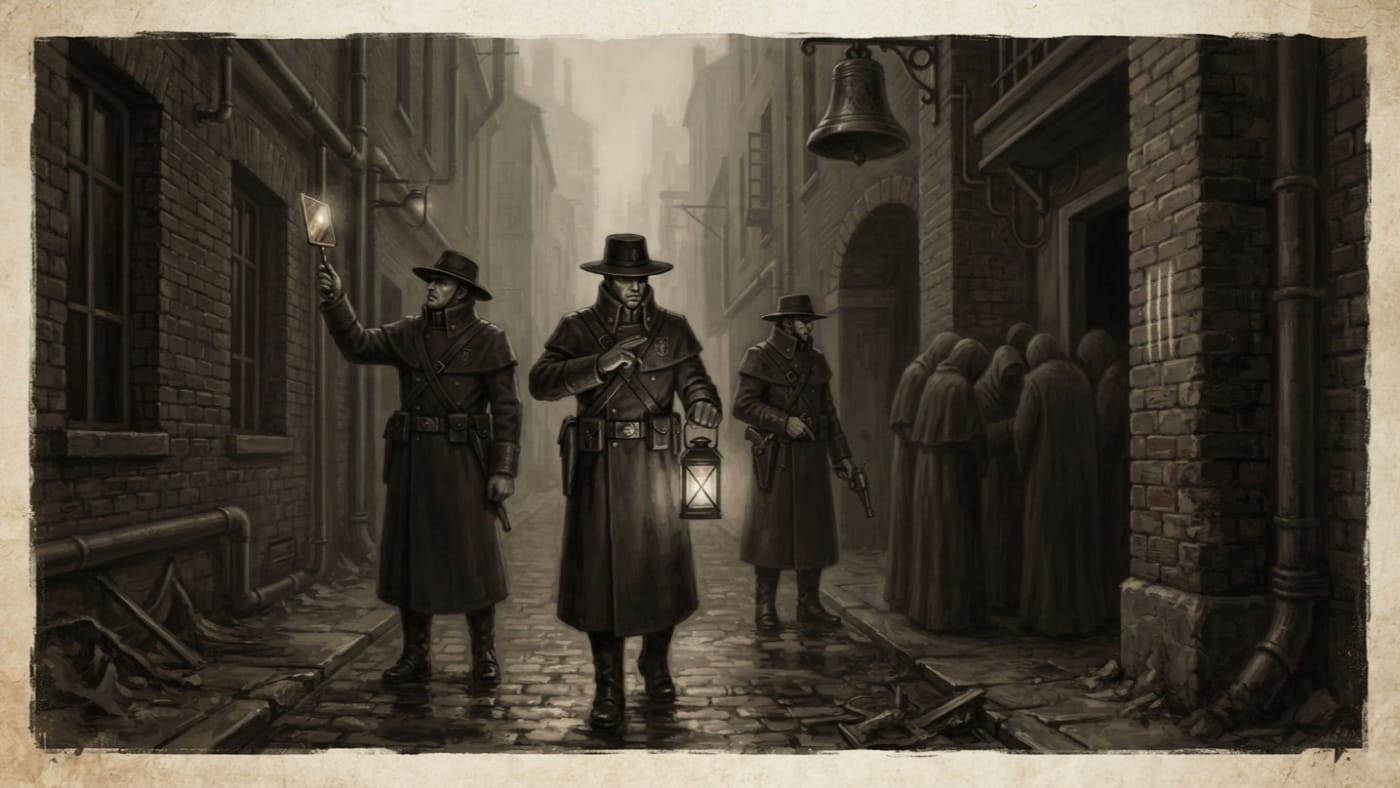
Signal Law
The hand commands what the bell cannot reach
Signal Law lets Mute Radiance command bell-dead streets by hand-code, mirror-flash and chalk. Auxiliary toleration supplies its licence; the charter claims the alley. Quiet congregations expose what silence-order cannot govern.
Codex Ref. XIII.1.76-005
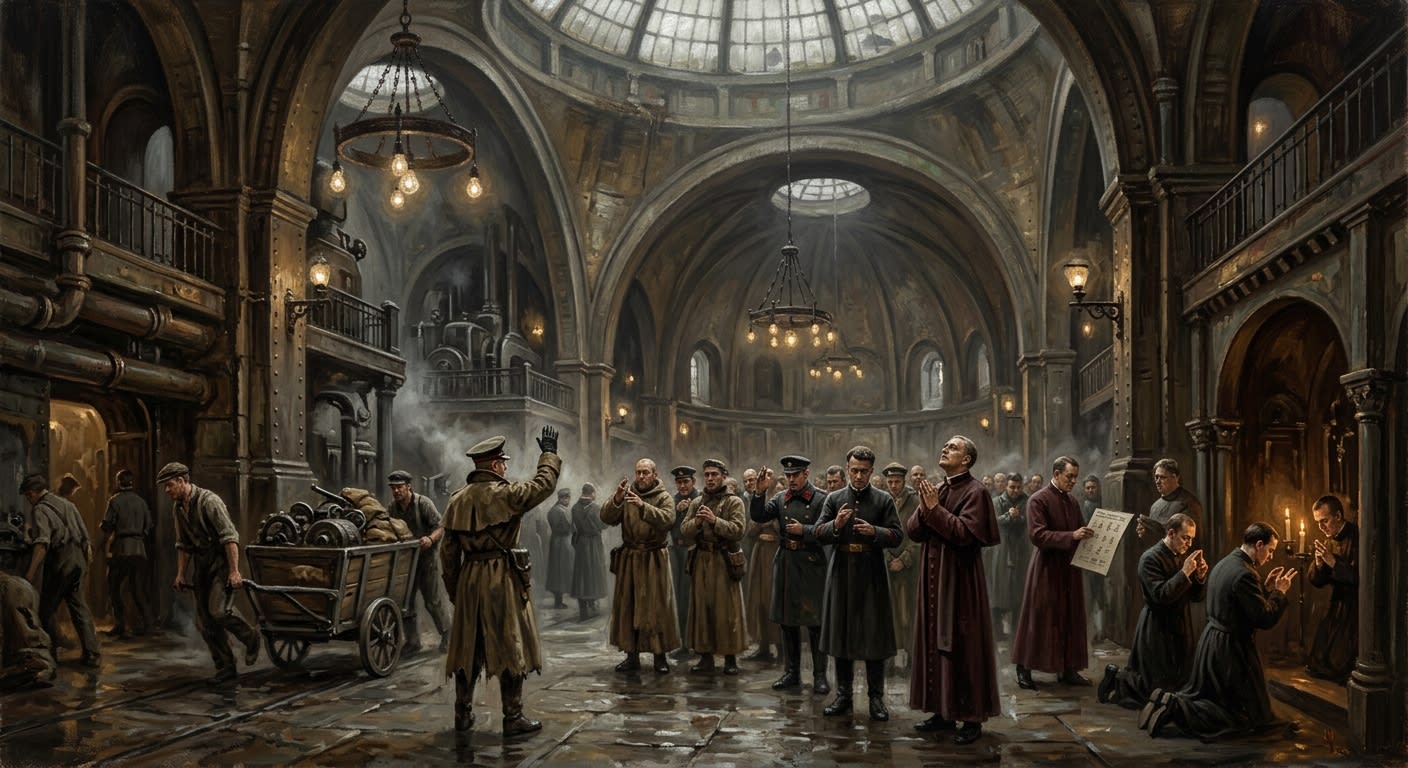
Silence Domes
When bells cannot carry, hands must become bells
Silence Domes are acoustic null palls where command, prayer, cadence, and civic habit die at the teeth; Orison governs the passes, signals, and surviving gestures.
Codex Ref. XIII.1.66-001
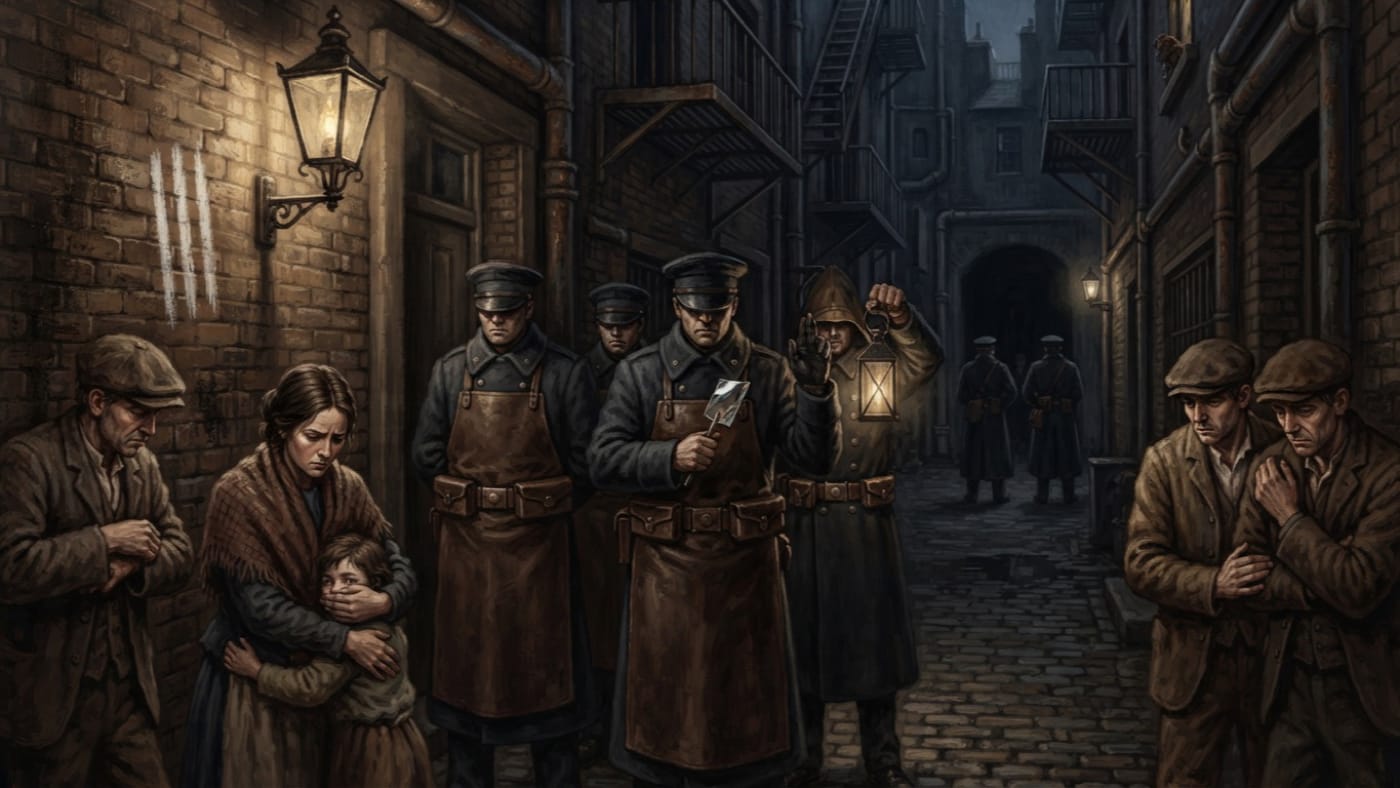
Silence-Order
A quiet street makes an immaculate return
Mute Radiance's silence-order forbids screams, gatherings and audible truth in hush-zones. Panic suppression earns toleration; silent detention keeps the returns clean. Quiet preaching leaves the mandate's boundary unresolved.
Codex Ref. XIII.1.76-006

Silent Steps
Where a whisper becomes evidence and silence pays rent
Licensed no-speech corridors born at Calais after A.S. 187, where names, coughs, prayers, and protests become fines, files, custody, and holy revenue.
Codex Ref. XIII.1.76-187
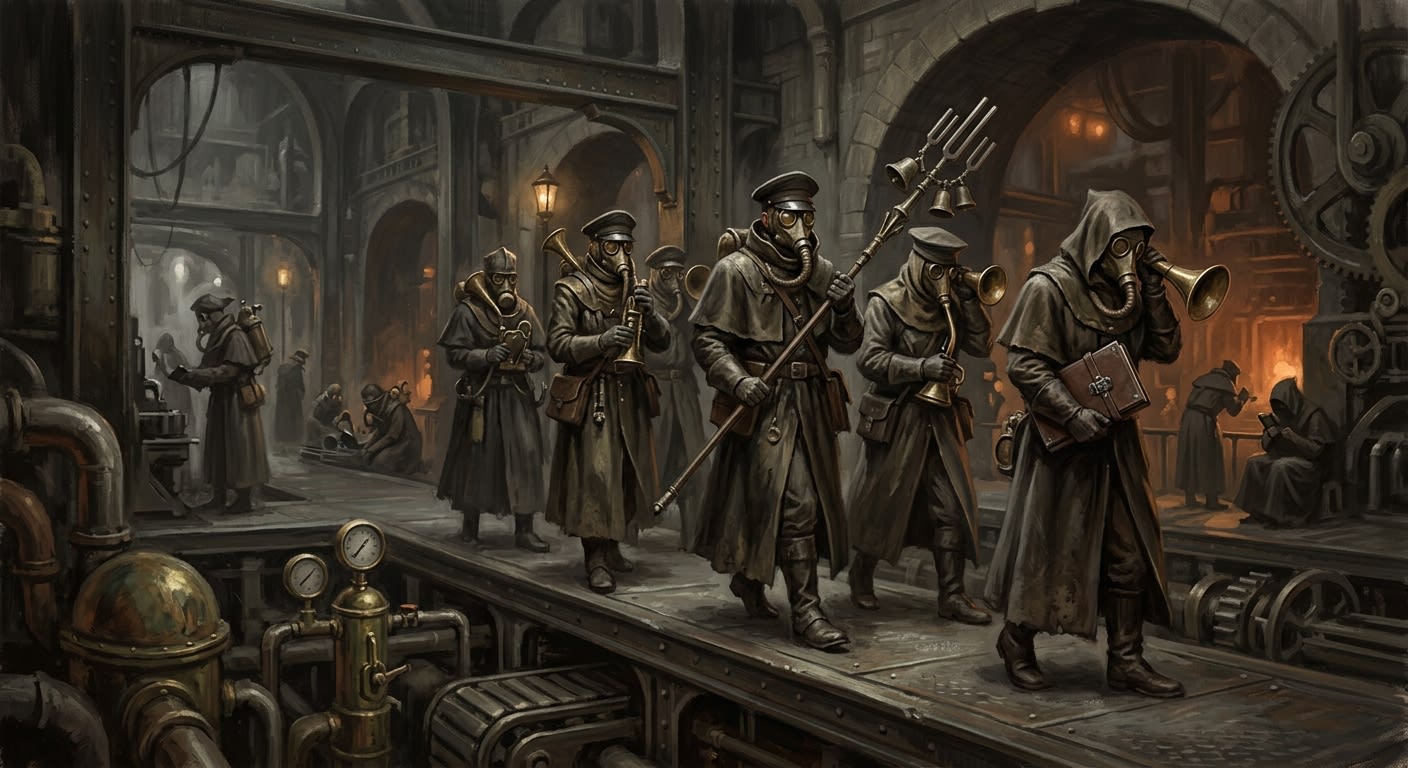
Silentists
The school that knows every note may be an invitation
The Silentists are the Brand-Singer school of withheld song, minimal cue, and useful quiet: despised by choirs, loved by rooms that do not answer.
Codex Ref. XIII.1.41-003
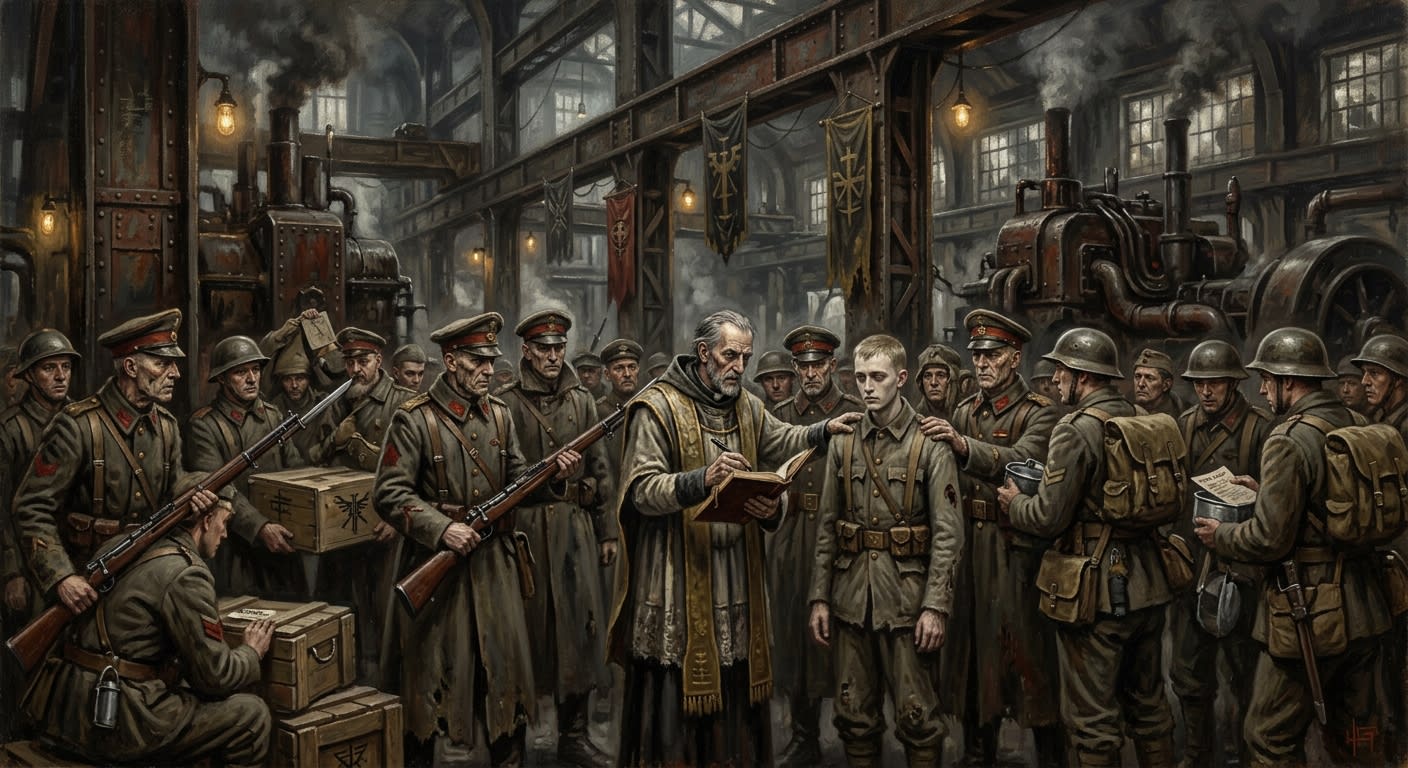
Singleton Doctrine
Heaven knows; the Synod stamps provisional
The Singleton Doctrine preserves one soul against Morwen's better faces, while admitting the Synod must issue rifles, rations, and death warrants provisionally.
Codex Ref. XIII.1.01-199

Sixth Canticle of Industry
The hymn that makes wax remember its superiors
The Sixth Canticle of Industry teaches purity wax to remember obedience, which is to say it lets Bells hear fraud, Doctrine name sin, and Tithes price both.
Codex Ref. XIII.1.86-178

Sky-Sermon Attendance Auditor
Attendance is allegiance; the Choir Rate is its catechism
The Synod does not require belief. It requires attendance. The Sky-Sermon Attendance Auditor counts the windows, calculates the Choir Rate, and brands the neighbourhoods that fall short of ninety-two percent.
Codex Ref. XII.45.01-001

Standard Ratification Protocol
The seal descends, and yesterday learns obedience
The Synod's Standard Ratification Protocol makes sequence repent: dissent is heard, wax cools, and the completed act becomes obedient.
Codex Ref. XIII.1.89-087

Standing Order 119-F
If it smells like mercy, withdraw
Standing Order 119-F forbids approach, harvest, sample, and even smell-contact with Abundance Fields, where Kargath makes plenty behave like hunger.
Codex Ref. XIII.1.24-001

Standing Order 14-B
The bridge learned to answer before Strasbourg finished asking
Standing Order 14-B is Brest's span-sovereign knife: seize the blank paper, halt the crossing, and make absence answer.
Codex Ref. XIII.1.14-196
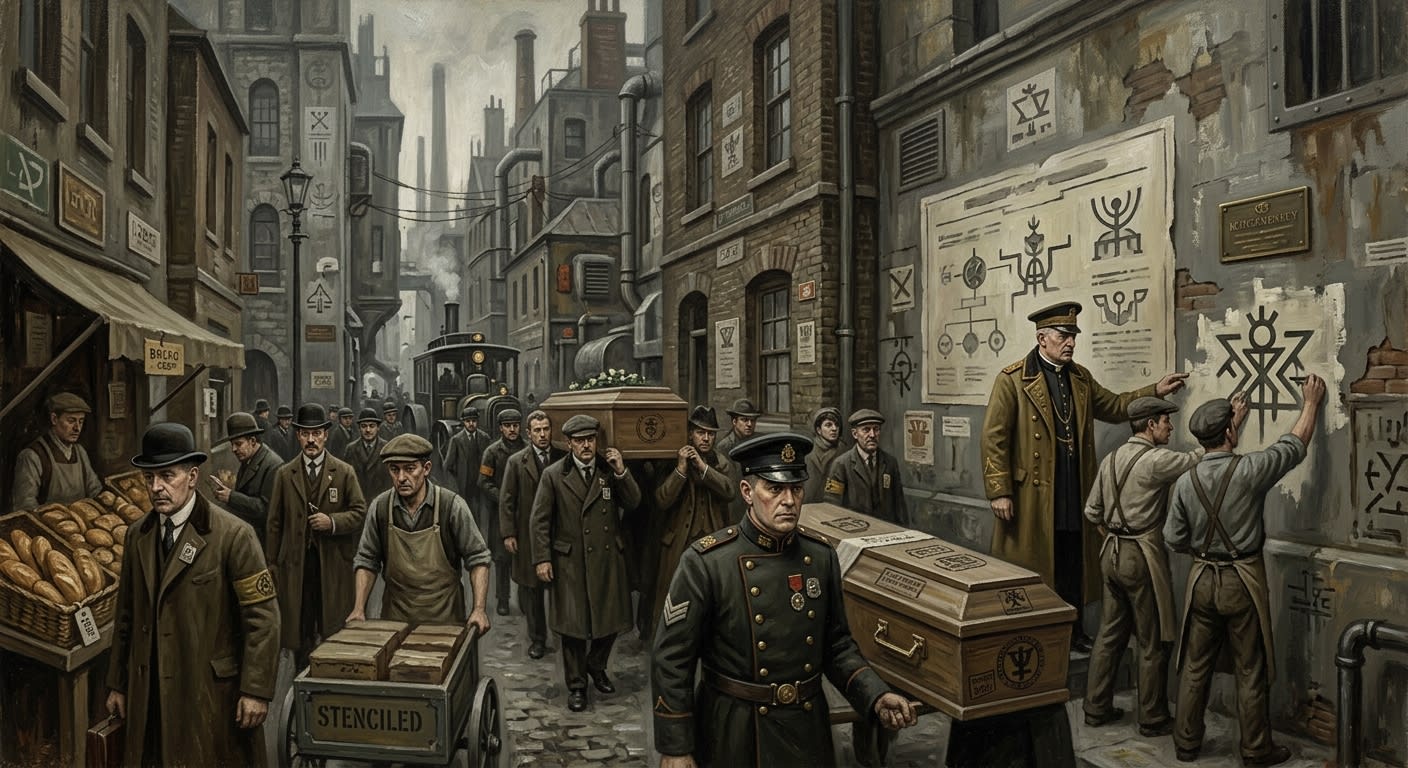
Standing Order 14-C
Every surface shall confess before speech begins
Standing Order 14-C teaches walls, bread, badges, coffins, and brows to confess: no lawful surface remains visually unclaimed.
Codex Ref. XIII.1.14-090
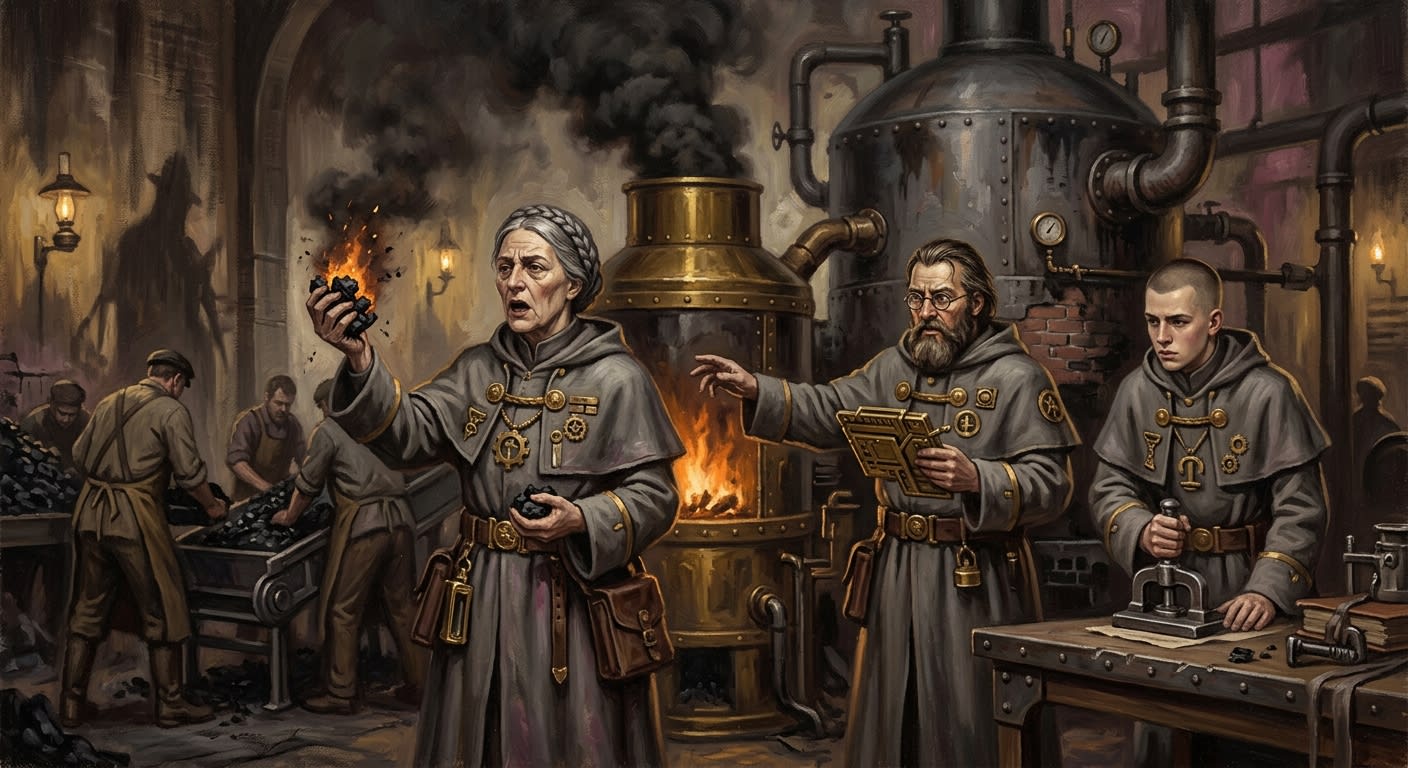
Standing Order 14-E
Sing before spark, or let the wall receive you
Standing Order 14-E is the smoke-written law of ignition: sing before spark, witness before load, seal before claim.
Codex Ref. XIII.1.14-097

Standing Order 14-K
The law that forbids the fuel by which the righteous keep warm
Standing Order 14-K forbids black diesel, demon glass, scripture-smoke, and every useful contamination the Synod condemns in public and routes by night.
Codex Ref. XIII.1.96-134
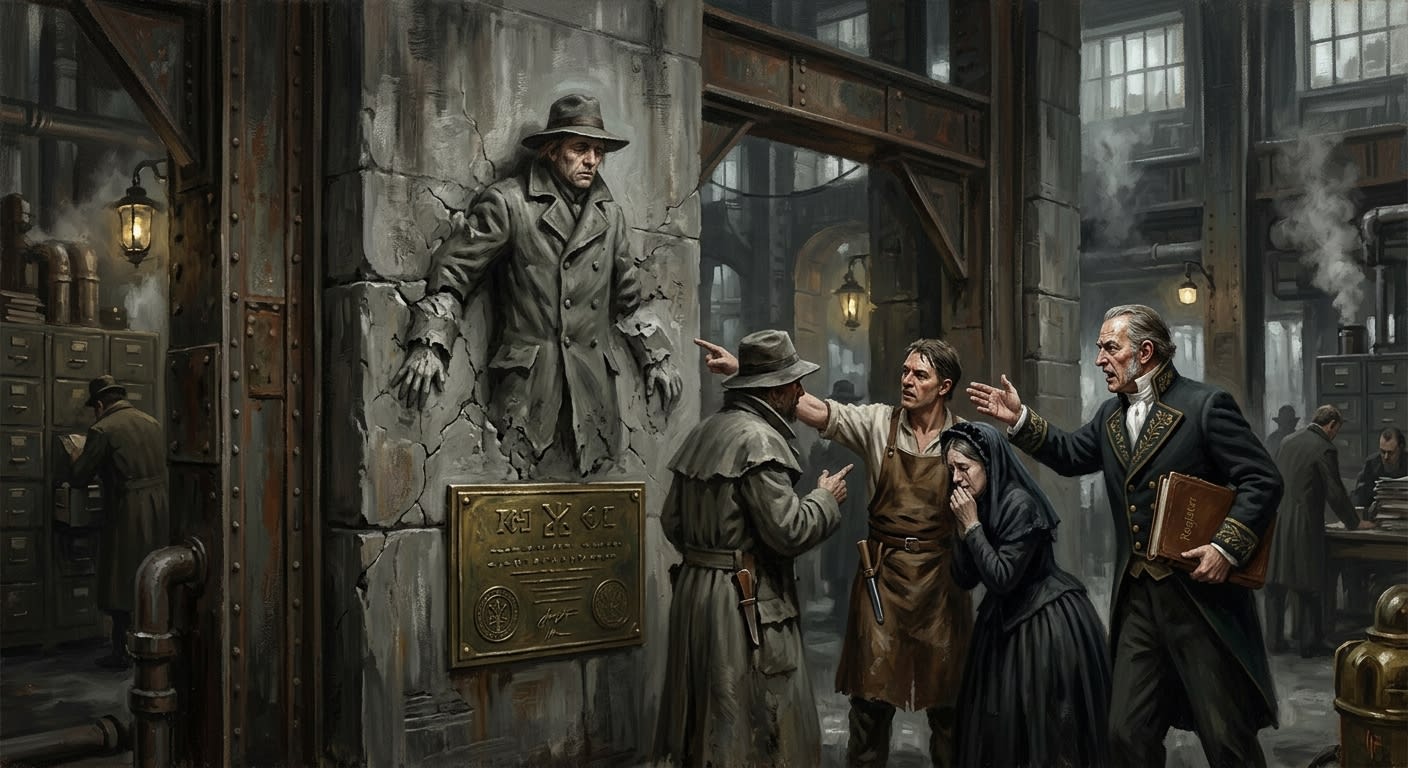
Standing Order 14-M
The sentence that makes masonry answerable for mercy
Standing Order 14-M turns condemned persons into walls with plaques, then lets masons, judges, families, and breath argue over what mercy costs.
Codex Ref. XIII.1.97-104

Standing Order 14-Q
Prior paper, or the living minute is guilty
Standing Order 14-Q forbids the living minute: no gasket-hymn sequence may bend unless paper arrives before steam.
Codex Ref. XIII.1.14-199

Standing Order 14-W/3
The evacuation order that discovered bakeries
Standing Order 14-W/3 ordered Warsaw to become movable in A.S. 95; a century later, the city remains larger, louder, and better fed by its own disobedience than by Settlement arithmetic.
Codex Ref. XIII.1.87-095
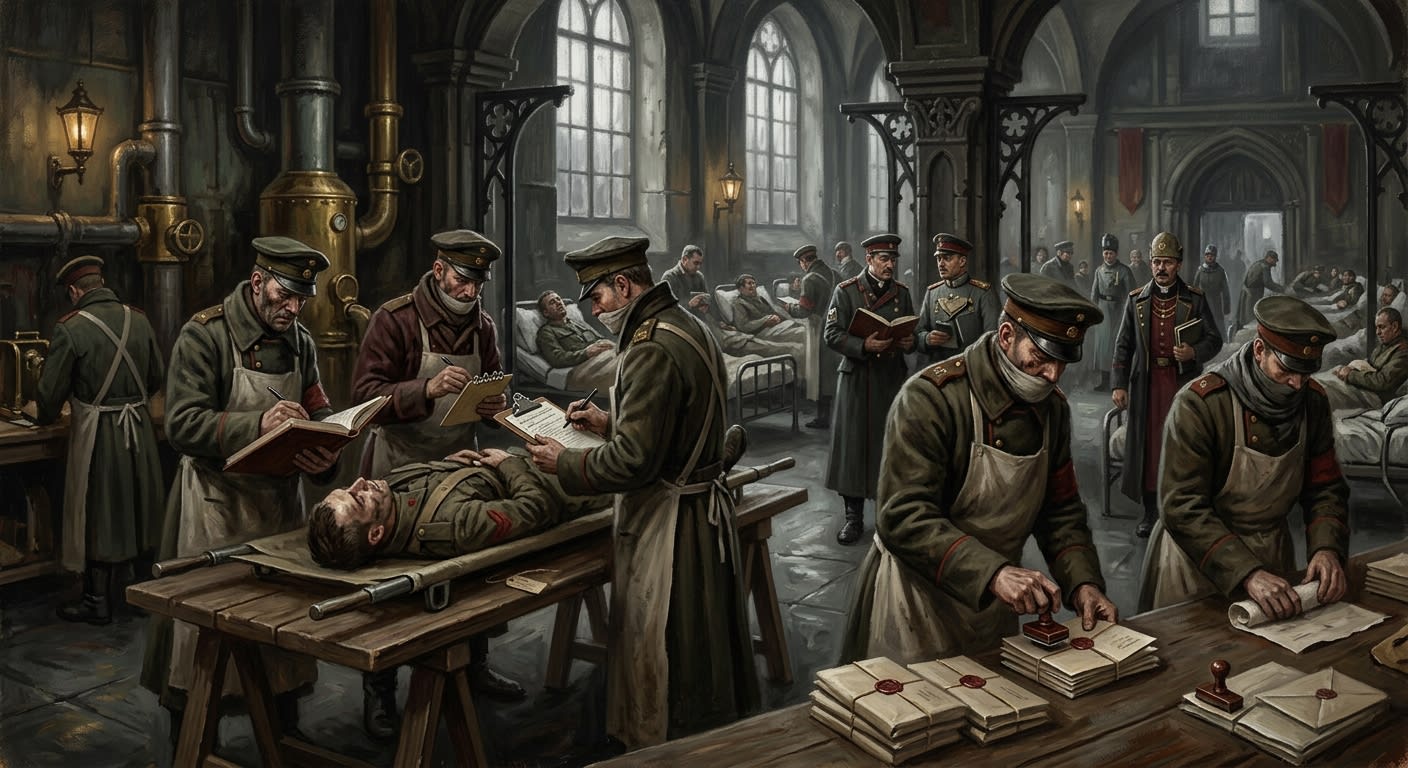
Standing Order 22-C
No last word unfiled, no dying mouth left private
Standing Order 22-C makes the dying useful: names first, comfort second, three copies sealed before the body is allowed to cool.
Codex Ref. XIII.1.98-080

Standing Order 22-D
The law that taught silence to file itself
Standing Order 22-D makes silence legible: the pause before assent, the scar before paperwork, the late answer that becomes evidence.
Codex Ref. XIII.1.99-084

Standing Order 22-S
When the room answers, starve it
Standing Order 22-S teaches the holy art of refusal: three notes down, fourteen beats sealed, no answer to the hungry wall.
Codex Ref. XIII.1.41-104
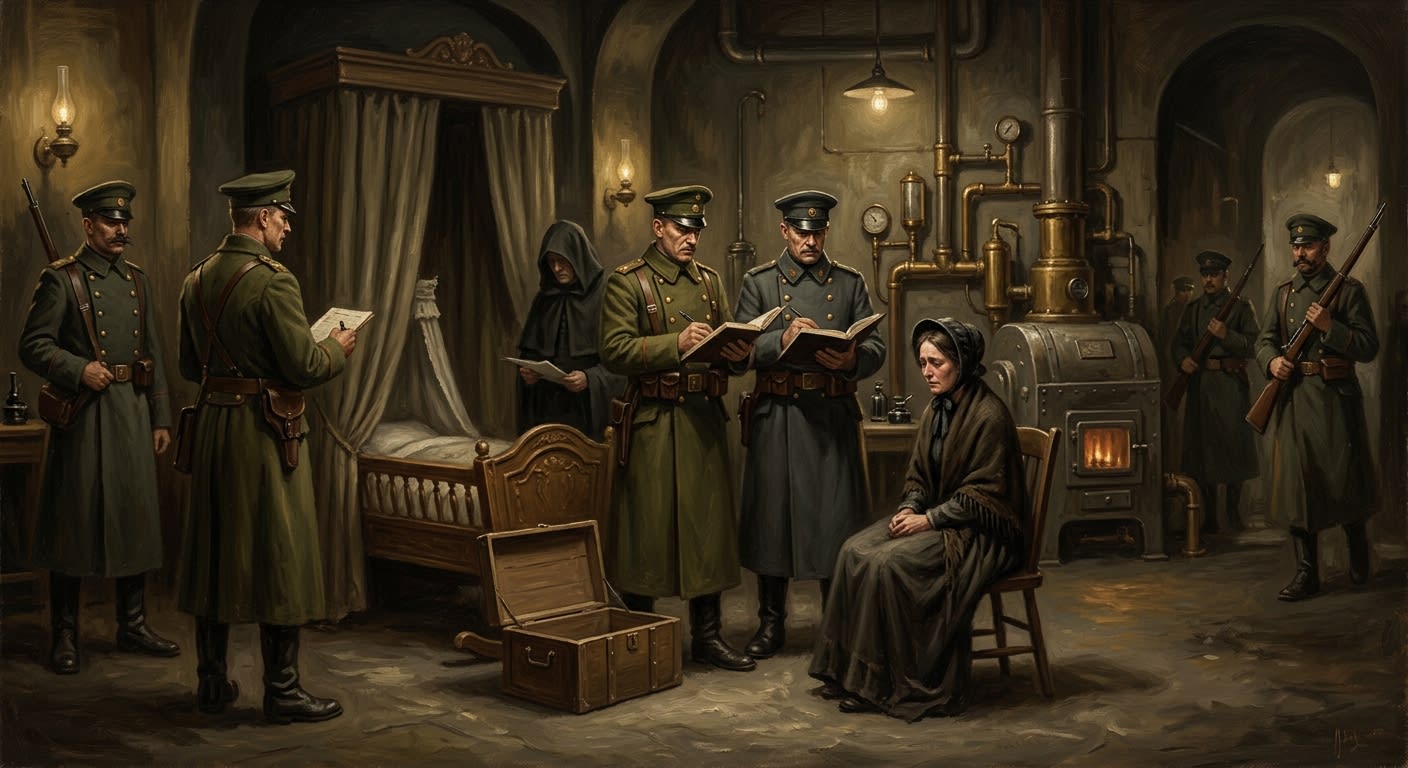
Standing Order 34-PK
The cradle confesses when the Ledger is hungry
Standing Order 34-PK makes the hidden cradle confess: missing infants become stolen soldiers, and a mother’s silence becomes evidence.
Codex Ref. XIII.1.34-158
Standing Order 77-A
Movement is holy until the receipt arrives
Standing Order 77-A prices delay, blesses audited bribery, and teaches cargo to move before correctness kills the hungry.
Codex Ref. XIII.1.77-172
Standing Order 77-K
Stand here, not there; the dead are bad at obedience
Standing Order 77-K draws a four-mile commandment around the Famine Pits, converting hunger into evidence and distance into doctrine.
Codex Ref. XIII.1.23-001
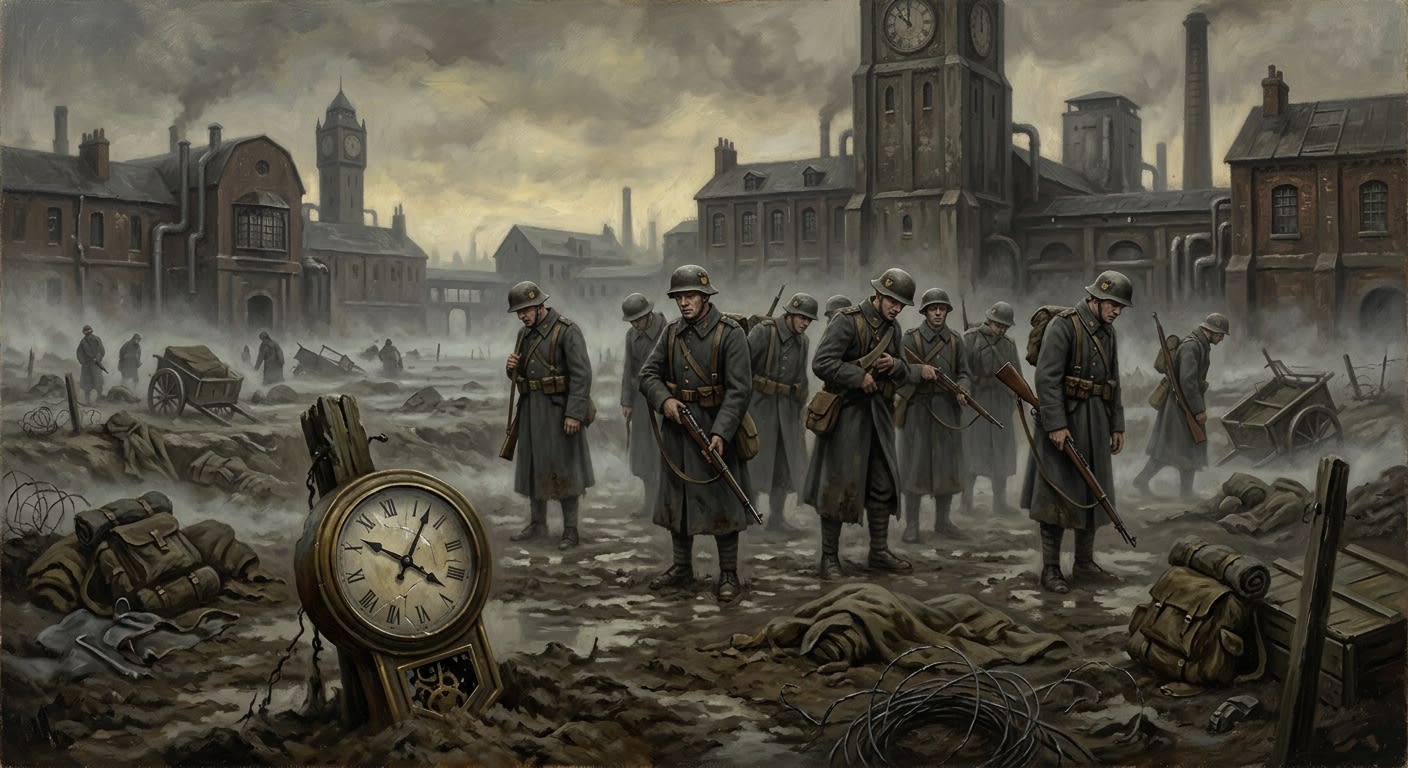
Stillness Fields
Where time sits down and calls it mercy
Syrion's fields do not stop men with walls. They offer rest, steal sequence, and let clocks become witnesses too frightened to agree.
Codex Ref. XIII.1.88-045

Substrate
The grey thing beneath the hymn
Brast's fourth fuel component is named blandly because useful horrors prefer dull labels, locked caskets, and a hymn before seventh bell.
Codex Ref. XIII.1.92-201

Sulking Engines
When machinery obeys exactly enough to make obedience an accusation
Brast's Sulking Engines delay, contradict, speak, remember, and obey just poorly enough to make every Bureau suspect the machine has learned procedure.
Codex Ref. XIII.1.11-001
Sunken Choir
The hymn beneath the trench, paid for in boys' throats
The Sunken Choir is a sanctioned Choir-Engine: boys altered into subterranean hymn machinery so the Synod may collapse enemy tunnels while calling the invoice grace.
Codex Ref. XIII.1.33-001
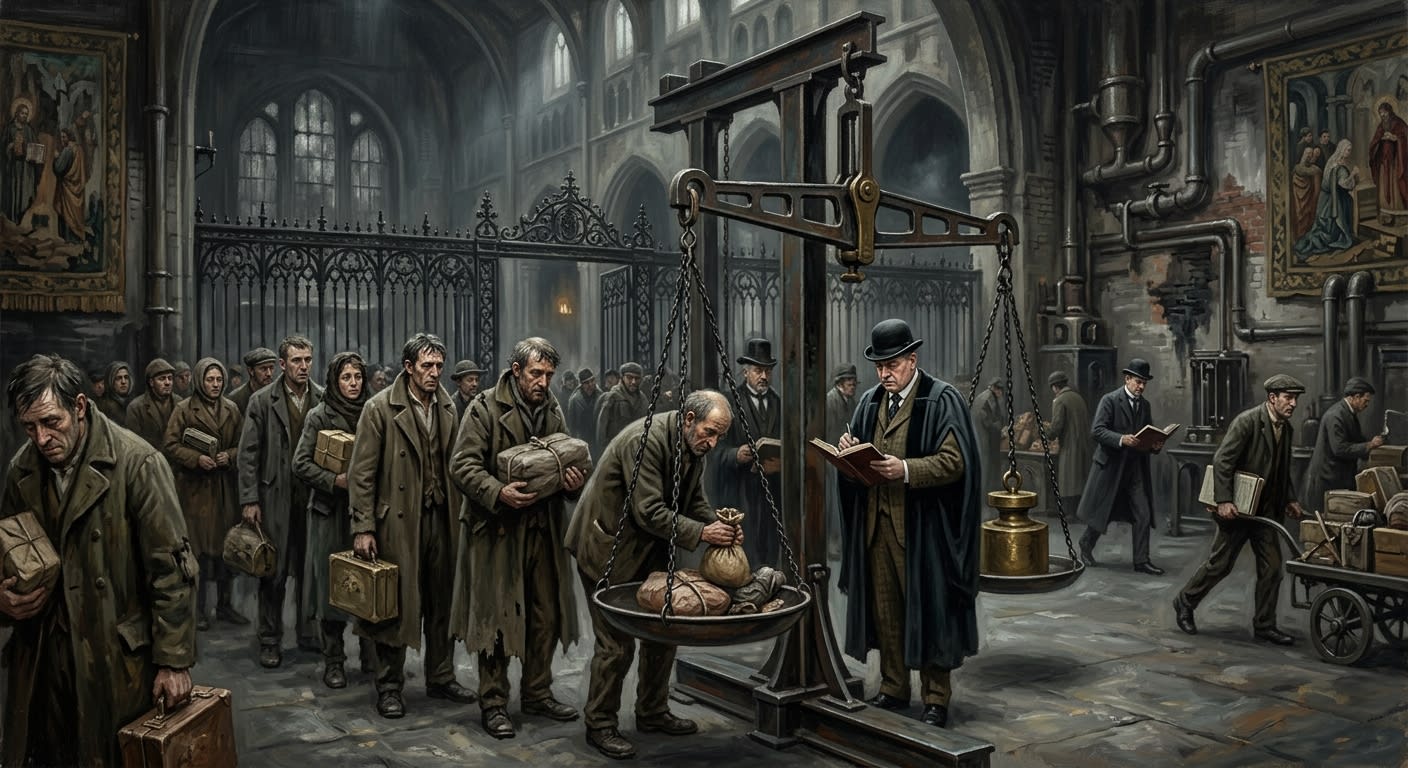
Tariff Chapel
The altar where hunger, bone, freight, and grief learn their lawful weight
The Tariff Chapel is the Synod's sacramental weighing room, born from the A.S. 97 Bread-Scale Uprising and extended to goods, corpses, relics, queues, and taxable desperation.
Codex Ref. XIII.1.67-001

The Age of Heresy
A World Sundered, a Faith Forged in Fire
The definitive overview of the Age of Heresy — a continent sundered by demonic invasion, ruled by a theocratic bureaucracy of bells and ink, locked in eternal war against the Seven Sin-Generals. As compiled by the only man qualified to compile it.
Codex Ref. I.1.01-001

The Anti-Synod
Damnation keeps minutes when chaos would be merciful
The Shadow Court's rival bureaucracy answers Synod decree with invitation, poisoned fact, swift procedure, and papers that make treason feel appointed.
Codex Ref. XIII.1.26-001

The Armorial of the Faithful
The book by which even colors learn obedience
The Armorial teaches every banner, crest, seal, colour, knot, and shop sign in the Synod the first virtue of a surface: obedience.
Codex Ref. VIII.1.03-002
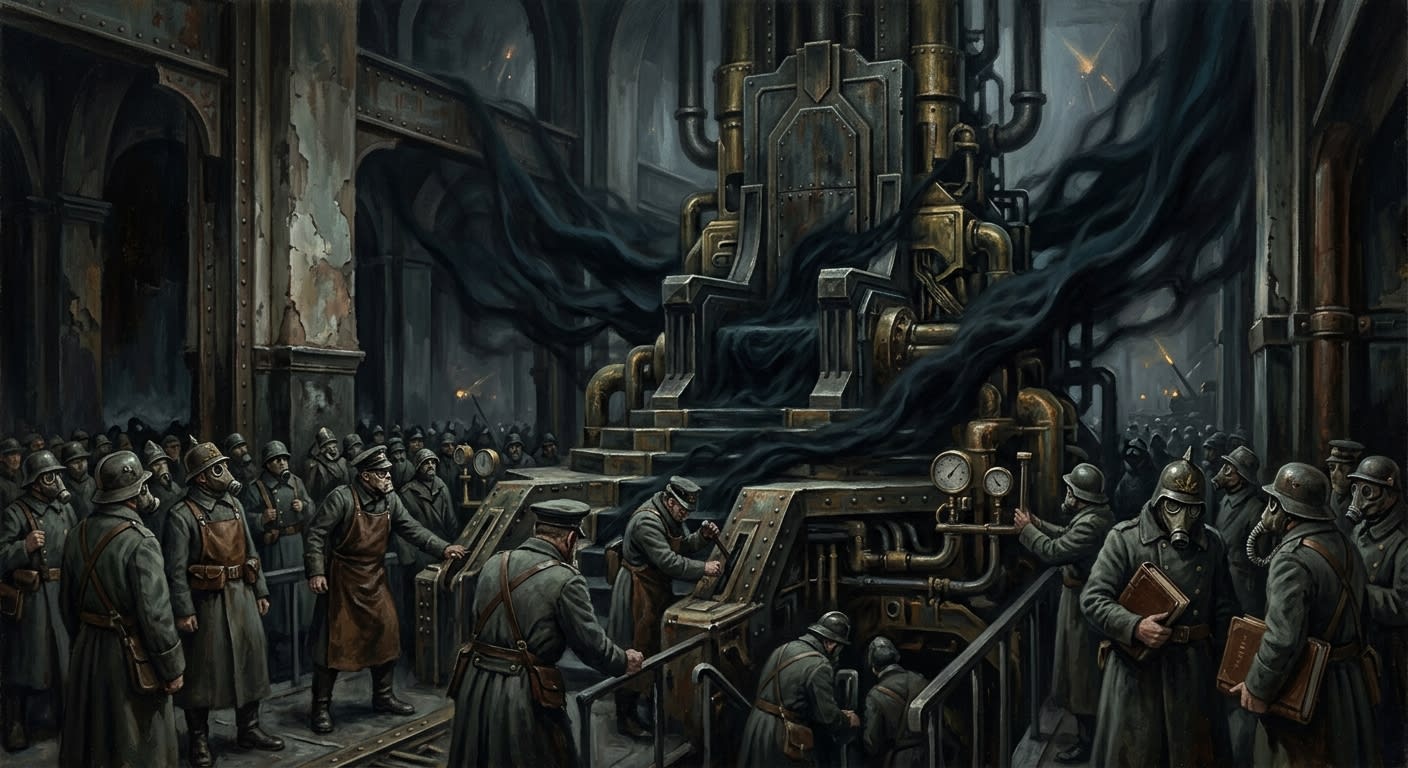
The Black Throne
Authority need not sit to make others kneel
Doctrine treats the Black Throne as symbol, Shadows as object, War as target; all agree that authority gathers there until place obeys.
Codex Ref. XIII.1.24-001

The Book of Promise
The child is named, measured, forecast, and gently confiscated
The Book of Promise is the Synod's vocational pre-allocation ledger, where baptism becomes forecast, childhood becomes collateral, and hope receives a quota mark.
Codex Ref. XIII.1.22-001

The Breathing
The forbidden name Praga gives the front at night
Praga calls the eastern night-pulse the Breathing; Doctrine forbids the name, which proves only that Doctrine has never successfully prosecuted weather, hunger, or grandmothers.
Codex Ref. XIII.1.88-201

The Broken Cross
The sigil that snapped heaven and called the wound reason
The Broken Cross was Reason's battlefield sermon: a snapped crucifix carried by men who denied symbols while marching under one.
Codex Ref. I.1.05-003

The Burden Index
The number rises; the bread shrinks
The Burden Index is the Bureau of Tithes household score that turns hunger, obedience, arrears, and suspicion into one billable number.
Codex Ref. XIII.1.84-157
The Catechism of Obedience
The Synod's licence to breathe; or, seventy-four pages in which the Bureau defined the terms of continued existence
The founding instrument of institutional faith — seventy-four pages that define the terms under which a soul may continue to exist within the Synod's jurisdiction, and enumerate the consequences of refusal.
Codex Ref. XIII.1.04-001
The Codices Obscurae
The books that do not exist have excellent indexing
The Codices Obscurae are denied by every Bureau that matters, which is precisely how a careful reader knows where the bodies are indexed.
Codex Ref. XIII.1.06-001

The Coexistence Heresy
The treaty Hell offers while still chewing the witnesses
Fourth of the eight proscribed heresies, the Coexistence Heresy teaches that mankind should bargain with demons; Doctrine answers that Hell only negotiates while digesting.
Codex Ref. XIII.1.37-001

The Common Allegiance
Seven pages that ended the age of a thousand altars
Drax examines the seven-page A.S. 55 charter that bound dioceses through local subscriptions and helped build the authority later formalized at Strasbourg.
Codex Ref. VI.5.01-001
The Confession Echo
Speak once for the booth; speak twice for the river
At Bastion-Brest, sins spoken into the Confessional Lanes return from brass ribs, corrected by something that has learned the Synod's sacrament.
Codex Ref. XIII.1.13-001
The Cradle Decree A.S. 157
The receipt issued before the first cry
The A.S. 157 Cradle Decree made pregnancy taxable, entering the unborn into the Ledger before birth and calling the cruelty provision.
Codex Ref. XIII.1.83-157
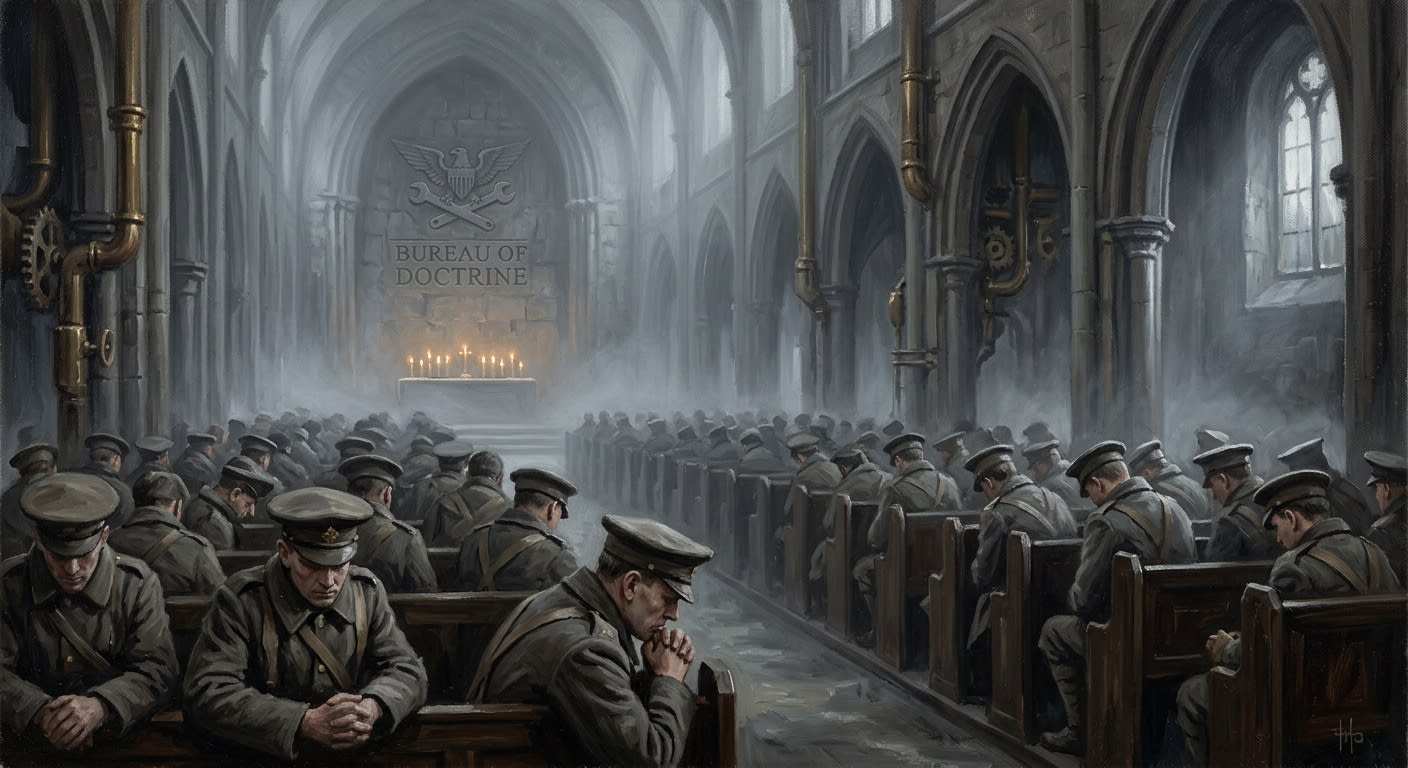
The Creator
The Bureau has two words for the most important question in theology. This entry contains both of them.
A doctrinal entry on the Creator composed by Hieromnemon Drax under compulsion, covering divine nature, the Silence, the inconvenience of miracles, and four forbidden heresies the Bureau insists do not exist.
Codex Ref. VI.1.01-001

The Custodians
The broom, the knife, and the blank page share one handle
The Custodians preserve Synodic continuity by omission: gauze-veiled operatives who collect contradictions, file absence, and leave the chair cleaner than the corpse.
Codex Ref. VIII.8.02-001
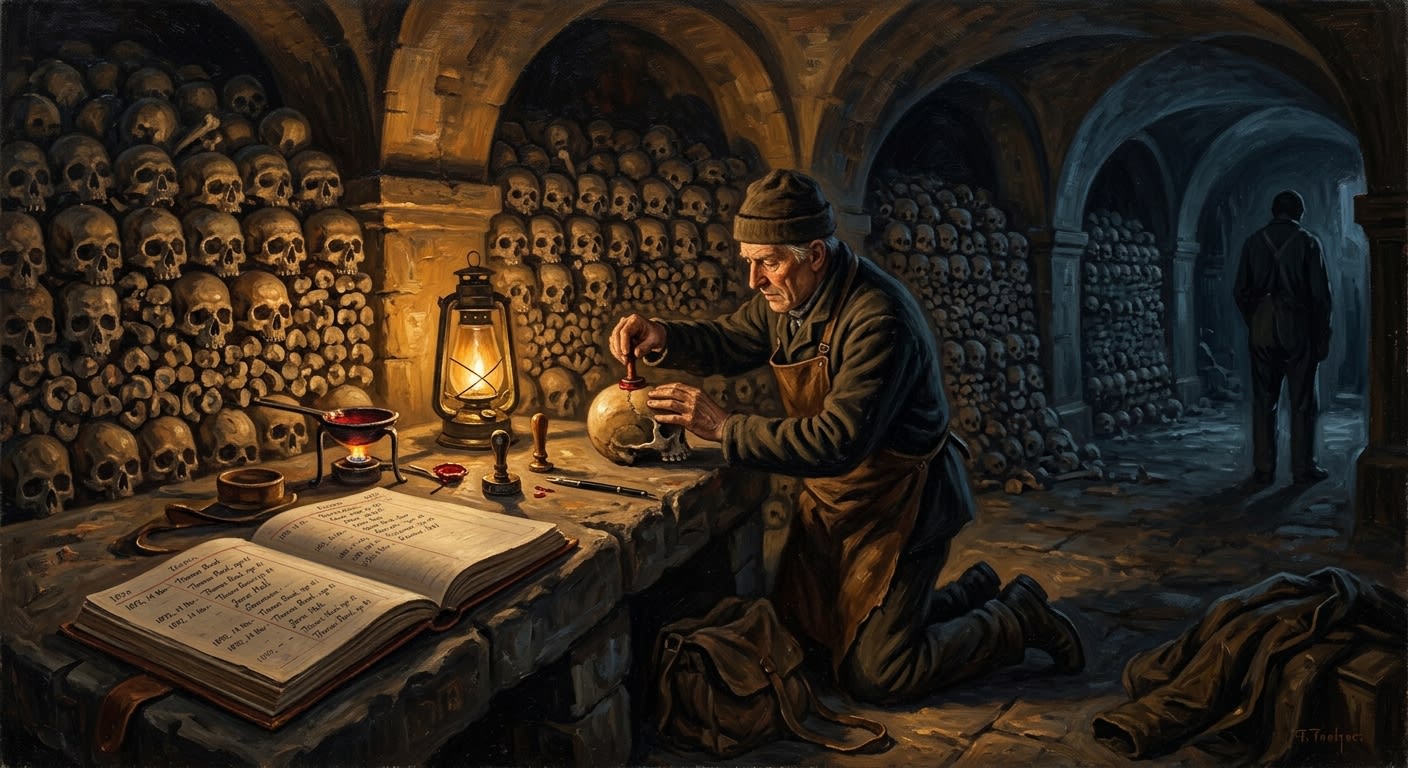
The Dead
What the filing system remembers, and what the Bureau has declined to ask
The Bureau maintains death is a clerical event. The dead, by the Bureau's own monitoring, appear to disagree. Drax files the discrepancy.
Codex Ref. VI.2.01-001

The Doctrine of Enough
The crust is counted because the soul is counted first
The Doctrine of Enough teaches the hungry that what is sealed is sufficient, and that desire beyond allocation gives Kargath a mouth.
Codex Ref. VI.3.01-002

The Doctrine Street-Vicar
The bell's feet; the chalk's teeth; the compliance that comes to you.
The Bureau of Doctrine's mobile enforcement arm: four thousand three hundred chalk-bearing officers who walk where the bell cannot reach, inspect purity tokens, and mark doorframes in white, yellow, and red.
Codex Ref. XII.9.02-001
The Drowned Choir
The sea has learned the bell-schedule, and it sings the names back wrong
Beneath Thessaloniki's harbour, a Category Three Harmonic Anomaly gathers names through chain, fog, hull, dream, tooth, and Bureau denial.
Codex Ref. XIII.1.12-001

The Eternal Creed
The first tax of the day is breath
The Eternal Creed is the Synod's oral civic machine: recited at dawn, commerce, correction, and inspection, hidden from paper so obedience may occupy the tongue.
Codex Ref. XIII.1.68-001
The Gasket Choir
When a fortress must be sung or else remember it is a mountain
The Gasket Choir is Bastion-Irongate’s continuous choral maintenance system: part liturgy, part engineering, and entirely responsible for keeping a mountain from closing over the faithful.
Codex Ref. VI.2.01-001

The Grey (The Unnamed)
Eleven years of classification pending, and the Bureau's best answer to why
The Grey is not a Sin-General. The Bureau has known this for eleven years and found the fact so uncomfortable that it has not yet produced a classification. Drax produces one anyway.
Codex Ref. VI.3.01-001

The Greyling Cohort
Children born under the sky that declined to answer
The Greyling Cohort names the silent grey-eyed children born during the Year Without Dawn, officially extinct, unofficially watched by anyone sensible.
Codex Ref. XIII.1.32-001

The Harbor Ledger
The book that teaches ships they have arrived only after the ink permits it
The Harbor Ledger of Thessaloniki is the Synod's coastal sacrament of arrival: Hull, Soul, and Substance counted beneath chains that hum with a sea's rival arithmetic.
Codex Ref. XIII.1.93-201
The Hidden Alcove
The wall remembered a first hymn, and Rill answered it
The Hidden Alcove behind Bastion-Irongate's baffle bank four held ancient acoustic scoring and fresh Counterkey grease, proving the wall had ancestors.
Codex Ref. XIII.1.35-001
The Hierarchy of Debt
Where relief becomes obligation and obligation learns to pray
Velmora's human cult arranges damnation as credit: Debtors, Creditors, Assessors, Ledger-Keepers, and Inheritors climbing a ledger that never forgives.
Codex Ref. XI.5.01-001
The Hierarchy of Need
Hunger is the sermon Kargath learned to serve hot
Kargath's cults do not begin with horns, but with bread. The Bureau calls their five stations a hierarchy. The hungry call them provision.
Codex Ref. IX.2.01-001
The Hierarchy of the Synod
Seven Seals, Six Occupants, and a Chair No One Has Laundered Since A.S. 107
Seven Seals. Six occupants. One chair draped in cloth no one has laundered since A.S. 107. The succession is continuous. The gaps are classified.
Codex Ref. VI.3.02-001

The Hollowing
When the hand remembers the rite and the soul declines attendance
The Bone-Stampers' private name for vocational faith-depletion, by which conviction thins, seals bite less deeply, and the dead resume their education in motion.
Codex Ref. XIII.1.45-001

The Index Damnatus
A Catalogue of Forbidden Names, Texts, and Silences
The rolling compendium of everything the Synod has declared unfit for human knowledge — books, names, songs, bloodlines, flavors of incense, and at least one species of moth.
Codex Ref. III.4.09-031

The Judges
They walk without letter, without herald, and without the patience of the Bureau.
The Judges arrive without letter, try without jury, and depart without filing. The Bureau denies they exist. It has been denying this since A.S. 92. The denial requires renewal every thirty years, which is itself a kind of evidence.
Codex Ref. V.1.01-003
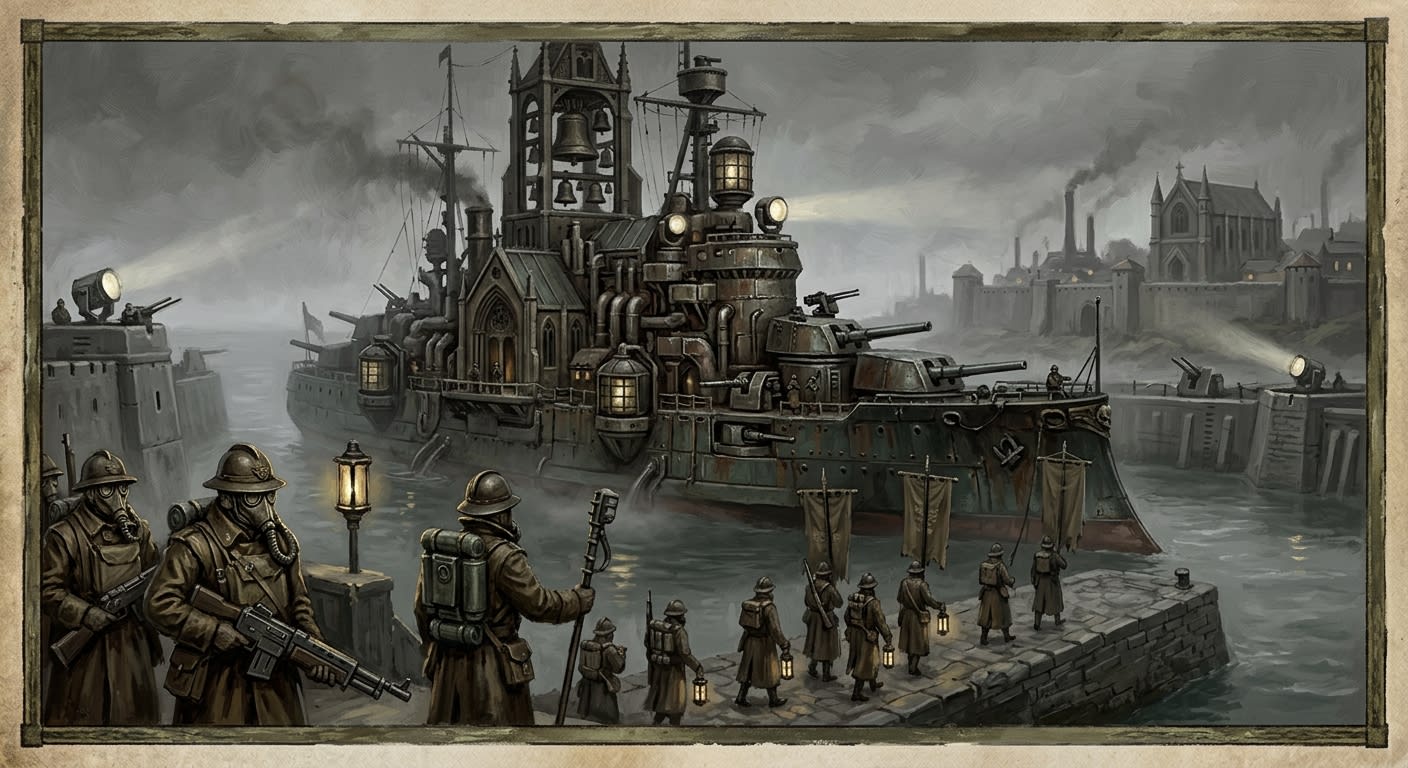
The Lantern Way
Britain's armed faith, ringing without permission and working without forms
Britain's Lantern Way is armed, parochial, naval, and intolerably effective: a faith of bells, Wardens, walling, chapel ships, and local vows.
Codex Ref. X.1.04-001

The Ledgers of Self
Identity, accepted provisionally until the next contradiction
At Bastion-Irongate the self is filed in triplicate, because Morwen steals what is unfastened and Strasbourg fastens with ink.
Codex Ref. XIII.1.01-002

The Lie
Falsehood with appetite, corrected by bell and flame
The Lie is not ordinary falsehood but hostile ontology: uncounting, unnamedness, mimicry, record-contagion, and the enemy grammar by which Creation is taught to refuse the Ledger.
Codex Ref. XIII.1.30-201

The List of Laughters
The ledger that hears teeth and teaches merriment to fear arithmetic
The List of Laughters is the Censorium's nightly mirth register, converting chuckles, guffaws, chortles, and riot-laughs into beads, fees, suspensions, fog, and fire.
Codex Ref. XIII.1.66-001

The Litany of First Earth
Mud receives the flesh; War receives the name
The Litany of First Earth is War's mud-prayer for levy transfer: four public lines, twenty-seven barracks responses, one cold trench, and a boy made legible before the Line eats him.
Codex Ref. XIII.1.55-105
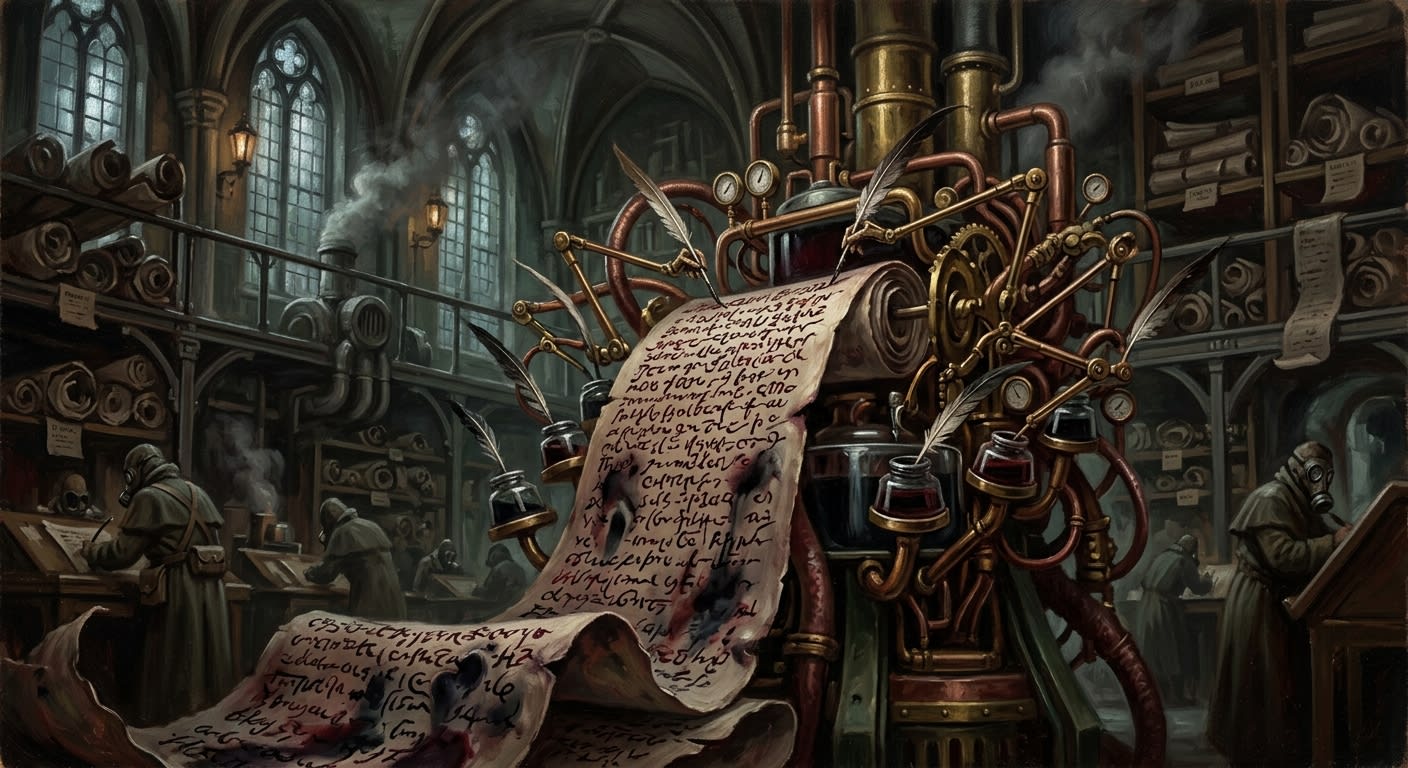
The Living Addenda
The correction writes itself, and the state kneels because the margins are proper
The Living Addenda are wet-ink amendments born in the Burnless Archive: procedurally perfect, unauthored, legally binding, and therefore impolite to reality.
Codex Ref. XIII.1.27-001
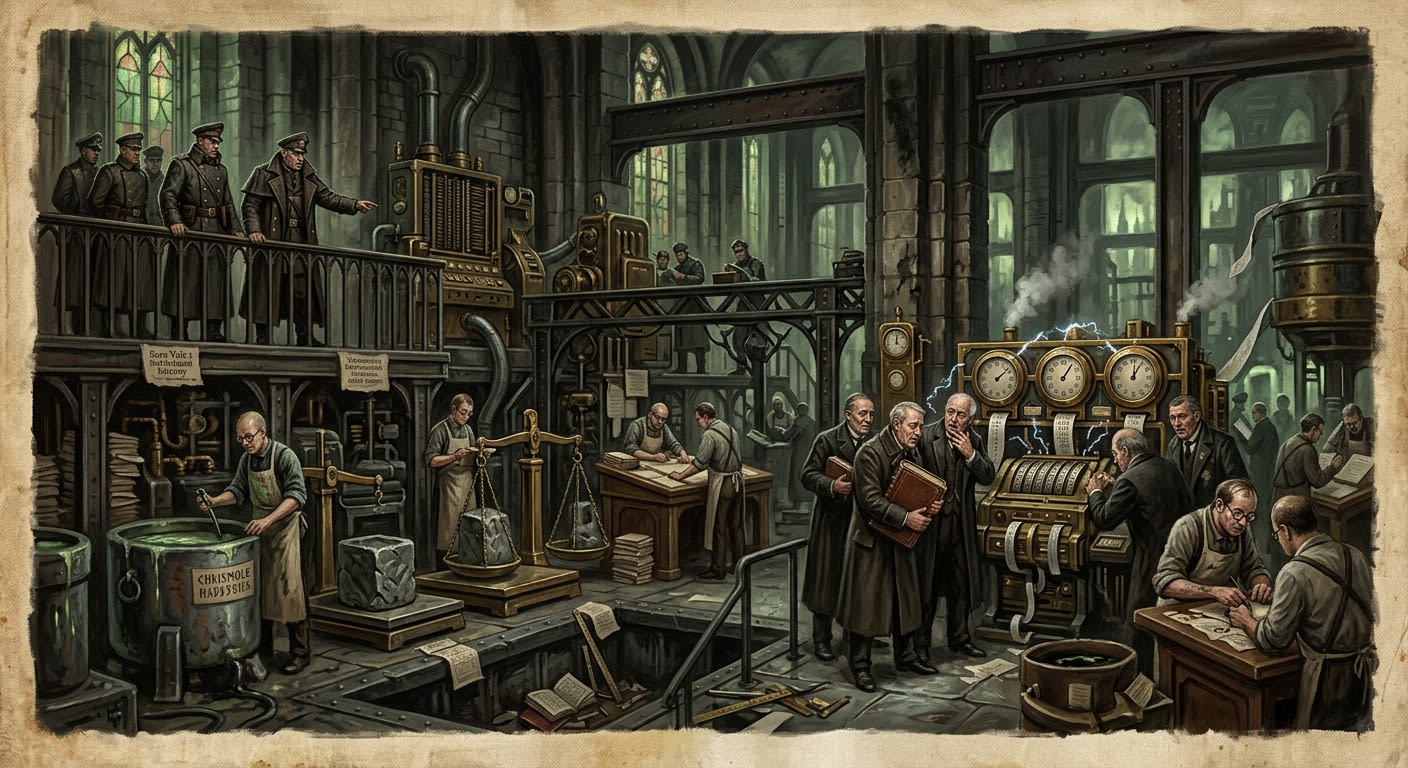
The Manifest Court
Where a drum becomes lawful and arithmetic learns the rope
The Manifest Court of Brast counts chrismole into legality: weigh-bridges, wax tables, variance pits, missing gallons, Sorn Vale's balcony, and the sacred terror of a number disagreeing with itself.
Codex Ref. XIII.1.93-090
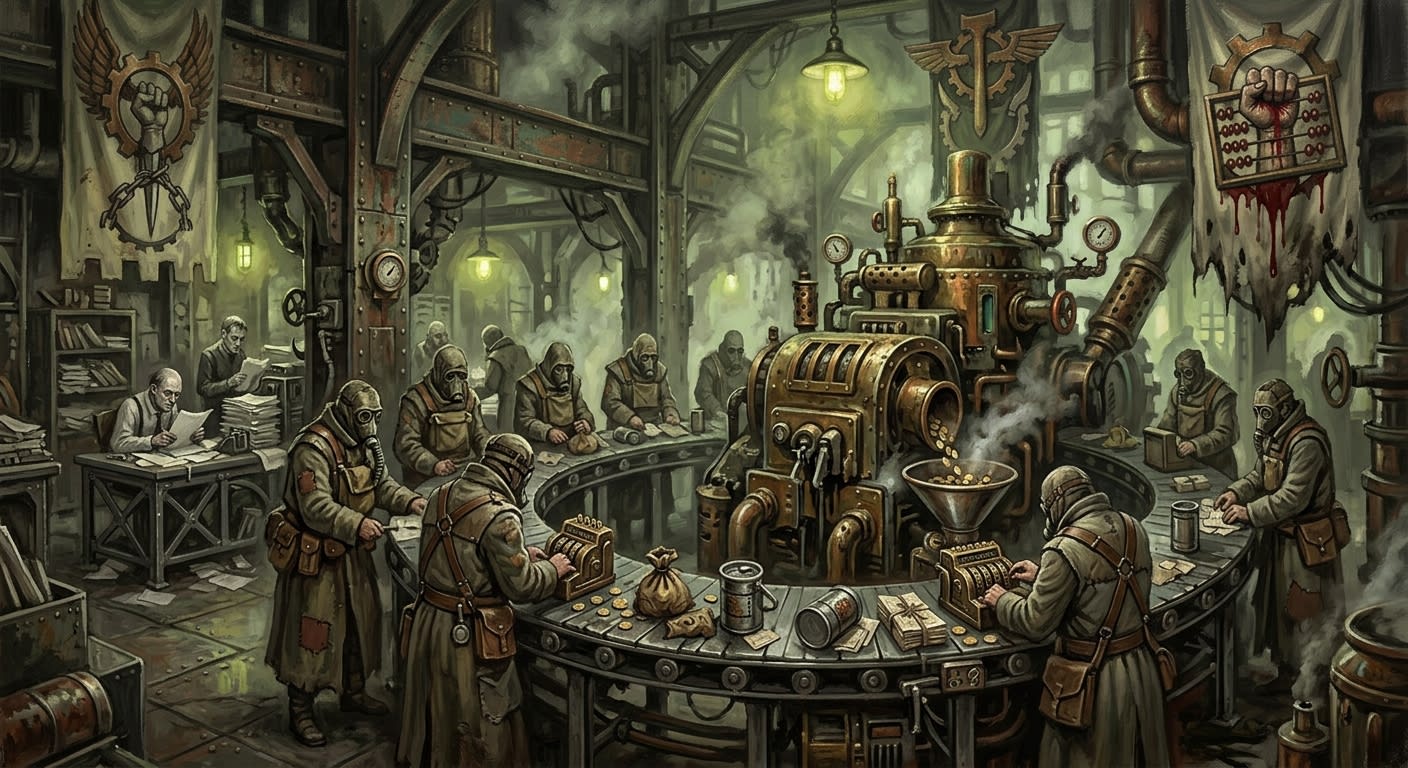
The Meta-Levy
The tax that charges for the privilege of being counted
The Meta-Levy is the Synod's tithe upon tithes, a circular sanctification of collection costs by which the Bureau of Tithes proves that even arithmetic kneels.
Codex Ref. XIII.1.38-001
The Miracle of Saint Aldebrand
The Bureau erased the bone. The bone declined.
The Bureau declared the Reliquary of Saint Aldebrand non-existent in –32 A.S. In A.S. 95 it shattered a sorcerer-lord's skull and saved Vienna. Both facts are official, both carry seals, and the Bureau sees no difficulty.
Codex Ref. VI.4.01-001

The Mirror and Perfume Arts
Beauty is not evidence, comfort is not acquittal
Velkara's Mirror and Perfume Arts turn reflection into passage and scent into revised memory; the chooser remains intact, which is why Purity sharpens its irons.
Codex Ref. XIII.1.36-001
The Mock Liturgy
Hell learned our responses and improved the paperwork
The Shadow Court's parodic sacramental apparatus turns worship into damnation-paperwork: counter-seals, unhymns, inverse rites, and choices that bind.
Codex Ref. XIII.1.25-001

The Natal Registration Act
The statute that put a clock beside the cradle
The Natal Registration Act of A.S. 158 made birth a Records event: forty-eight hours from first breath, Form 7-NR, midwife filing, tithe projection, and the cradle docketed.
Codex Ref. XIII.1.02-158

The Natal Registration Writ
Eleven inches by fourteen, and the whole apparatus of a life not yet lived
Form 7-NR is eleven inches by fourteen, bears two watermarks, and calculates the fiscal value of a human life at the moment of birth. Drax explains the theology, the penalties, and the people who would rather disappear than sign it.
Codex Ref. XIII.1.02-001
The Night Paper
Law with a knife in its sleeve, valid only between receipt and dawn
The Night Paper is Doctrine's black-wax instrument: read once, witnessed by three, burned before dawn, and obeyed before conscience learns its own name.
Codex Ref. XIII.1.28-001

The Purity Fume-Inspector
The Bureau does not employ impartial men; it employs useful ones
The Bureau of Purity's masked, ledger-bearing field apparatus: trained to identify forty-seven prohibited emanations and report only what the quota requires. Twenty percent flows. Eighty percent is taxed. The city breathes.
Codex Ref. XII.32.01-001
The Quiet Hands
The hand that does not tremble is the one the corridor obeys
Senior Ritual Bone-Stampers who quiet active corridors when ordinary seals fail, unlisted by organigramme yet indispensable wherever the dead begin correcting the Ledger.
Codex Ref. XII.37.02-001

The Records Scribe
Paper is citizenship; the Scribe is its god
Fourteen thousand souls in the Bureau of Records' base stratum, processing sixty entries per shift, deciding with each stamp who exists and who does not. The most powerful minor functionary in the Theocracy holds a reed pen and smells of wax smoke.
Codex Ref. XII.34.01-001

The Reliquary Salvager
The Synod misplaces relics; the Salvager retrieves them; no one speaks of the arrangement
The Synod does not lose its relics. It misplaces them — in collapsed vaults, sheared cathedrals, and quake-opened cellars. The Reliquary Salvager crawls in to retrieve them. His compliance record is spotless. His lungs are not.
Codex Ref. XII.36.01-001
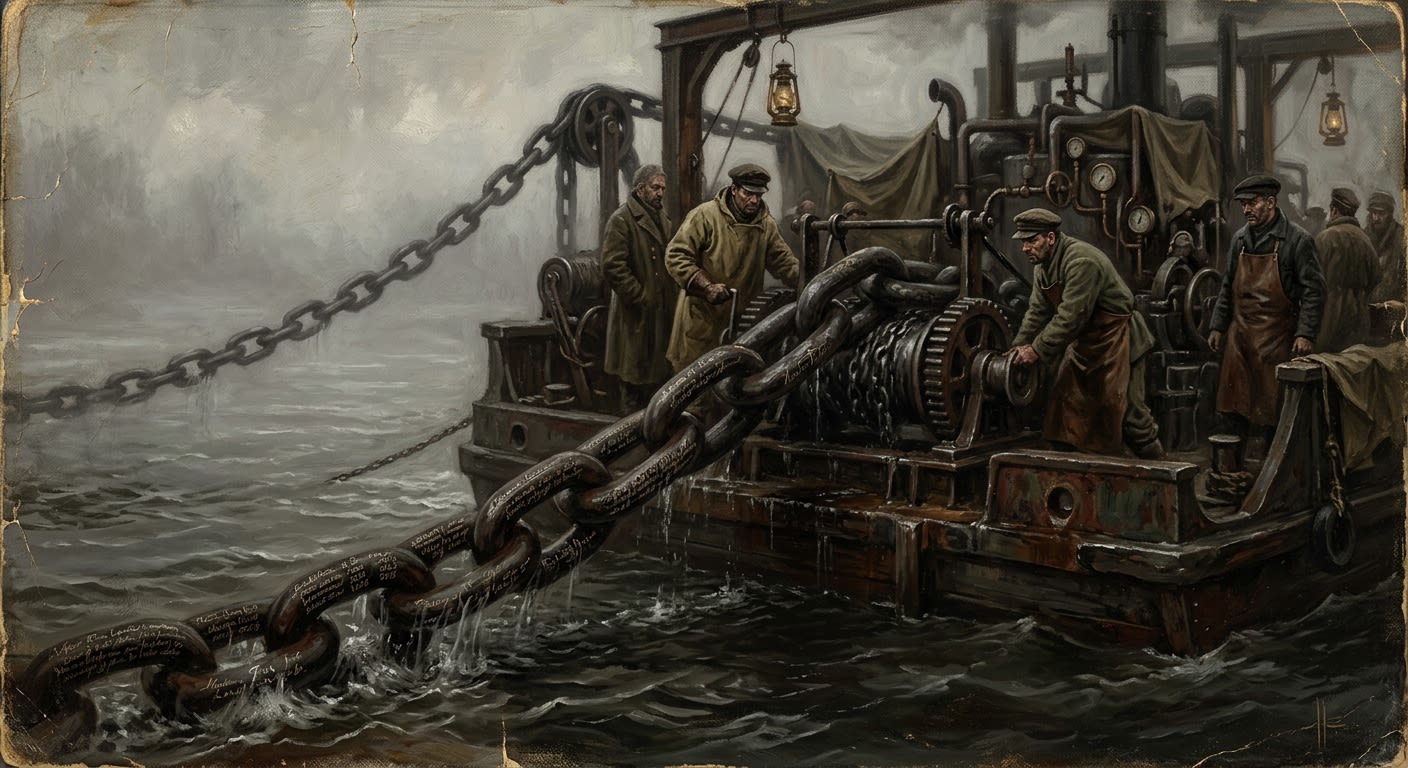
The River Ledger
When the rope writes, the river collects
On the Rope-Ferry Chain, wet mainlines blacken into names, weights, and sentences before the river makes the entries true.
Codex Ref. XIII.1.16-001

The Roving Judge's Bailiff
Chalk before mercy; chime before appeal; the seal is the court and the bailiff is its spine
The Roving Judge's Bailiff converts any patch of ground into a court and any crowd into an audience for justice lasting precisely one hymn. He keeps the chain, keeps the seal, and keeps the Judge above the stink. The rest is procedure.
Codex Ref. XII.39.01-001

The Saint-Bone Melter
The wall is the only sermon the Enemy has ever been forced to hear
The artisan who feeds the bones of saints to the kiln and receives in return the mortar that holds the Sagittal Line together. The arithmetic is simple and brutal: a femur in a reliquary inspires; a femur in a wall holds.
Codex Ref. XII.40.01-001
The Salt Dues of Marseille
Temporary measures have the finest survival instincts
The Salt Dues of Marseille began as an A.S. 92 emergency surcharge on coastal salt and learned immortality, feeding war, pilgrimage, and every clerk hungry enough to call permanence temporary.
Codex Ref. XIII.1.39-001
The Scour
When the Bureau decides a street has forfeited the privilege of remaining architecture
The Synod's ritual fire-purge of condemned quarters: horn, map, witness-line, and ash — the point at which bureaucracy ceases to argue and begins to burn.
Codex Ref. VI.4.01-001
The Script Wall
Fog is only weather until it spells your mother's name
At the Chalk Redoubt of Calais, fog writes names on seventy feet of exposed chalk; readers speak them before the sea decides who was meant.
Codex Ref. XIII.1.14-001

The Sealed Testimonies
Witness paper under restraint, because memory bites when shelved badly
First silence of the Vault of Silences, holding Atheron's emergence folios, the Mürren deposition from Debrecen, and the Iron Plains survivor volume.
Codex Ref. XIII.1.48-001
The Shaft Priory
An unchartered kettle where mercy becomes structural
The Shaft Priory is Bastion-Irongate's tolerated unchartered mercy-station, born after the A.S. 94 Great Hush and dangerous because broth can become doctrine.
Codex Ref. XIII.1.34-001

The Stillness Envelope
Where motion becomes a request the body declines to grant
The Stillness Envelope is the four-hundred-yard temporal-medical hazard around a Slumber-Hulk, where sleep is incidental, mercy is counterfeit, and motion dies by administrative refusal.
Codex Ref. XIII.1.87-194

The Thread
The quiet line by which bones, names, and suspicion crossed the dark
Informal Cellar Saint transit doctrine that moved relics, names, wafers, and warnings through trusted cellars from A.S. 30 until the Sundering tore the roads open.
Codex Ref. XIII.1.91-045

The Triune Alphabet
Twenty-three approved letterforms; everything else is heresy in the first stroke
The Triune Alphabet is the Synod's most perfect instrument of control: twenty-three approved letterforms, each angle mandated, each curve licensed, every dialect that falls between them erased. Procurator della Torre did not merely prescribe script. He proscribed thought.
Codex Ref. XIII.1.03-001

The Twelfth Amendment
The skull is licensed ground; keep your thoughts in uniform
Ratified in A.S. 196, the Twelfth Amendment closes the internal loophole, licenses private hope, and gives Purity the citizen's face as evidence.
Codex Ref. XIII.1.04-196
The Virtue Generals (So-Called)
Seven heresies dressed as hope, condemned in the forty-fourth standing order
Standing Order 44-D refuted, filed, and reluctantly left open. Seven alleged champions of the Creator — unregistered, unconfirmed, and disturbingly active for entities that do not exist.
Codex Ref. IX.3.44-001

The White-Mantled Inquisitor
The Bureau does not silence speech; it teaches the population to do it themselves
Bureau of Purity's language constables — Chalklings, Mantle Examiners, Chainmasters, and Glass-Canons — charged with containing unregistered speech, enforcing the Index Claritatis, and hunting the phrases that make the chain sing.
Codex Ref. XII.49.01-001
Theocracy
Piety with pipes, doctrine with payroll
Theocracy is the Synod's mature art: altar made warrant, prayer made schedule, fear made grammar, and every soul brought under ratified custody.
Codex Ref. XIII.1.01-201

Thirty-Seal Index of Precedent
The book that lets old disputes bite new throats
The Thirty-Seal Index is Commerce's weaponised memory: port-court precedent sealed thirty ways, kept cold, and lent to litigants who know where hunger must wait.
Codex Ref. XIII.1.89-187
Tithe Assessor
The Bureau's walking appetite; or, what it costs to weigh the widow's salt
The Tithe Assessor is the Bureau of Tithes' primary field instrument — a man with scales, seal cord, and an armed escort who determines whether a family's payment purchases another week of existence. He arrives. He weighs. He chalks the door.
Codex Ref. XII.46.01-001
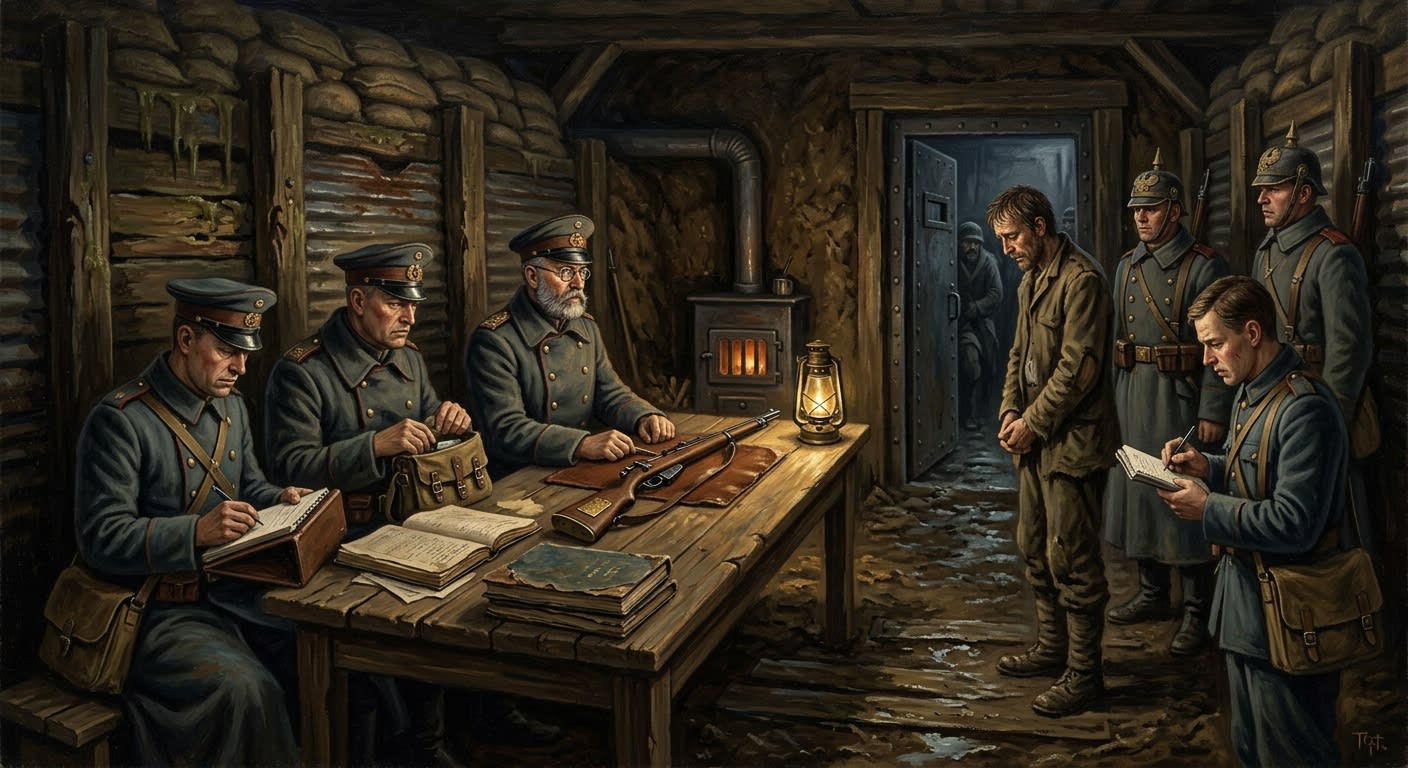
Trench Courts
Due process, shortened to fit one hymn and a rifle knock
The Trench Courts drag law into mud: lantern table, rifle-gavel, contradiction pouch, furnace, and the mercy of recording men before they rot out of legality.
Codex Ref. XIII.1.86-091
Trench-Court Clerk
The last words of the faithfully dead; and what becomes of the rest
Forward-deployed registry clerks of the Bureau of Records, stationed at Trench Court dugouts on the Sagittal Line to record the last confessions of the dying, assign doctrinal categories.
Codex Ref. XII.47.01-001
Tri-Bureau Compact
Three hands on one throat, and the furnace calls it law
The A.S. 110 Compact put Essen's heat, names, and voices under three rival Bureaus, turning guild craft into hymnsteel law and tyranny into minutes.
Codex Ref. XIII.1.93-110
Triangle of Witness
Three lamps, one file, and a citizen already half-swallowed
The Lantern Brotherhood's Triangle of Witness turns night patrol into court geometry: Anchor, Blade, and Echo arranging fear, contact, and ink into admissible calm.
Codex Ref. XIII.1.76-201

Tribunal of Clarity
Where Reason washed torture until it shone
The Rationalist Republic's secret Tribunal of Clarity renamed prayer as error, torture as method, and conviction as arithmetic until the Sundering answered the room.
Codex Ref. XIII.1.57-030

Tribunals of Doctrine
Where truth acquires a chair, a clerk, and teeth
The Synod's lawful tribunals convert dispute into Doctrine, mercy into numbered form, and local quarrel into central authority with a clerk's smile.
Codex Ref. XIII.1.58-100
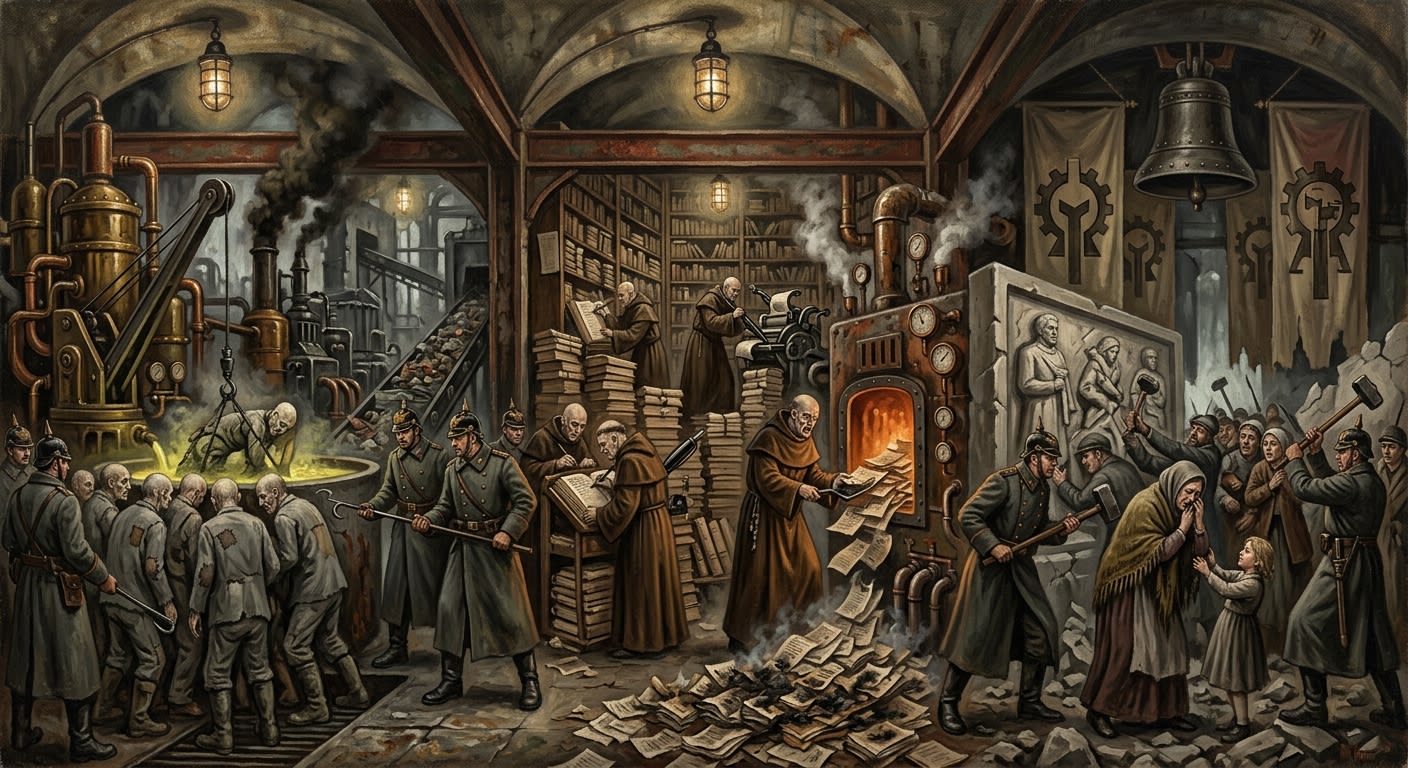
Trifold Erasure
Kill the body, strike the name, poison the recollection
Trifold Erasure is the Synod's threefold cure for rebellion: body extinguished, name struck, memory made too dangerous to love.
Codex Ref. XIII.1.71-111
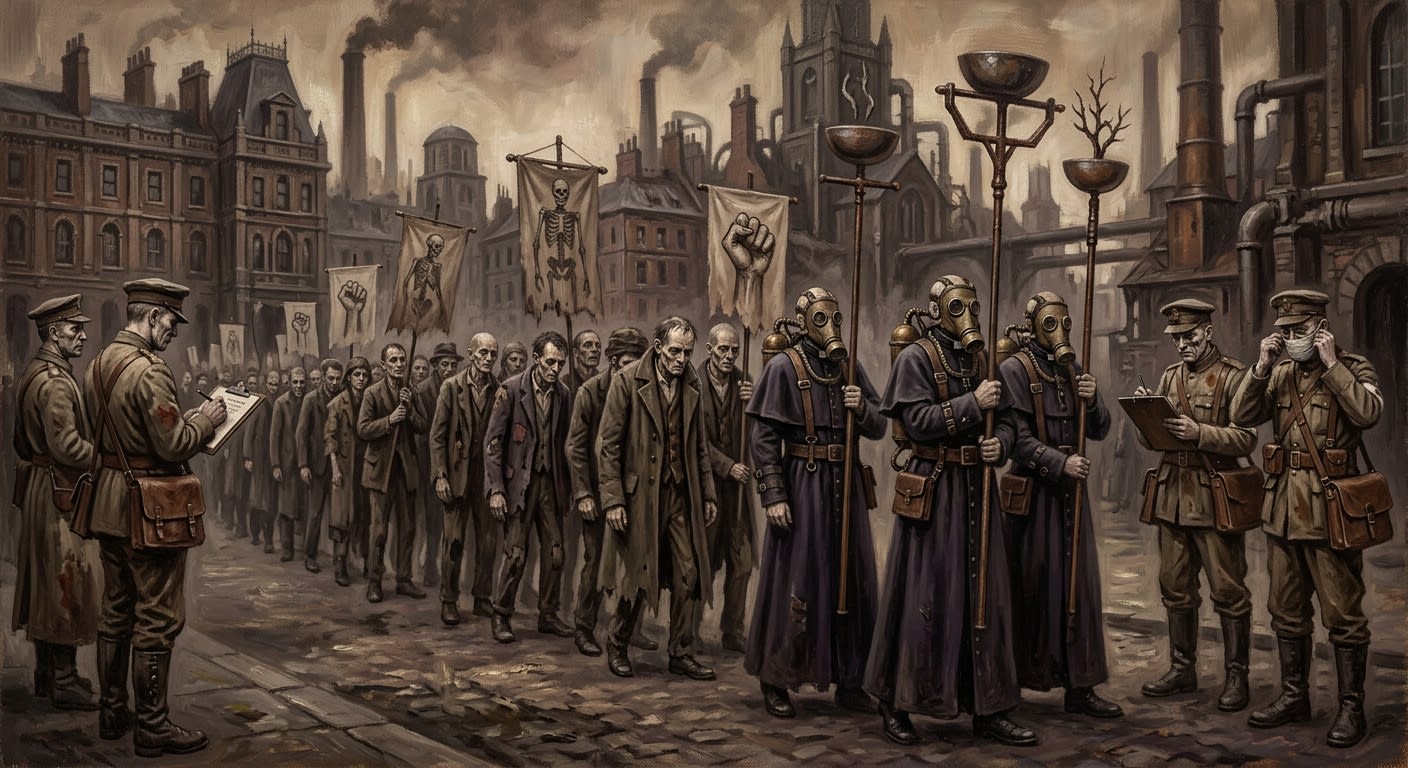
Triumph of the Gaunt
An injury given a hymn-sheet
The Triumph of the Gaunt crowns visible hunger as public virtue, training citizens to distrust plenty while Medicine counts the damage.
Codex Ref. XIII.1.25-001
Triune Hearth
Three old bodies, one chimney, and Strasbourg holding the poker
The Triune Hearth binds France, Iberia, and the Rhineland into one Synodal household: warm in sermon, hungry in ledger, and locked from Strasbourg.
Codex Ref. XIII.1.04-090
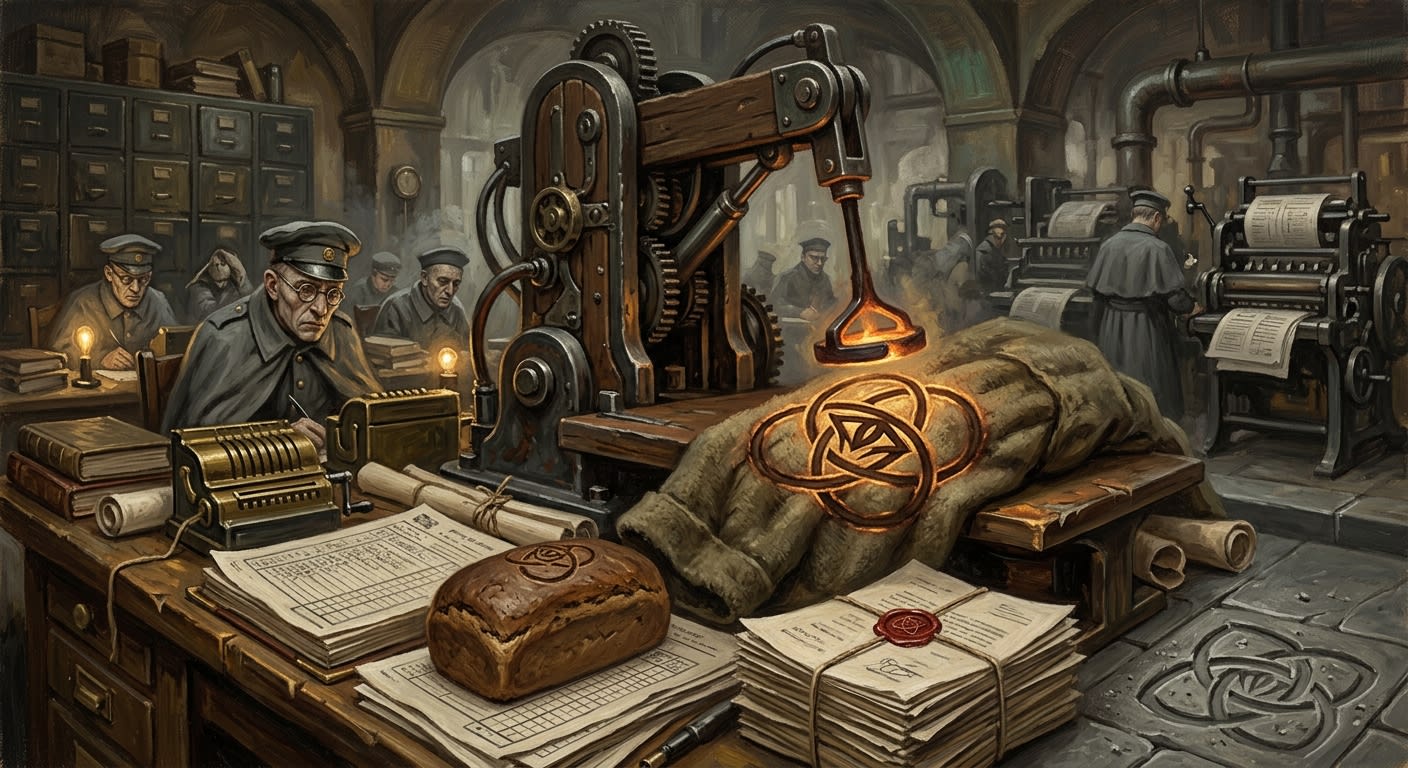
Triune Knot
Three loops, one law, and every door accounted for
Universal Synodal binding mark standardised under Theobald of Worms, by which doors, papers, bread, flesh, and graves become readable to law.
Codex Ref. XIII.1.03-002

True Measure Zealots
The pan decides, which is why everyone hates the pan
Internal tariff-chapel faction of Commerce Clerks whose devotion to strict relic calibration makes them useful witnesses, hated colleagues, and excellent disasters.
Codex Ref. XIII.1.59-001

Twenty-Percent Tolerance Directive
The city breathes or the city burns
Unwritten Ninth Mark operating custom born in A.S. 143, permitting enough contraband combustion to keep districts alive while turning the rest into fines, sermons, seizures, and fear.
Codex Ref. XIII.1.78-001

Two-Book Dead
One ledger for the law, one ledger for the body that vanished
The Two-Book Dead names the Ossuary Rings' hidden second ledger: one corpse for law, one corpse for price, and grief caught between them.
Codex Ref. XIII.1.76-094

Unauthorized Melody Smuggler
The lullaby the Bureau buried; the mouth it walks out of now
The Unauthorized Melody Smuggler is classified under Tongue-Crime, Melody Intent, Doctrinal Sabotage — above common theft, below armed heresy. The lullaby does not care what the Bureau calls it. It continues to walk out in someone else's mouth.
Codex Ref. XII.48.01-001

Unread
A closed mouth at Calais, and the sea counting anyway
The Unread refuse Calais' fog readings, claiming every spoken name is a hook lowered into the Undertide. Silence, naturally, became expensive.
Codex Ref. XIII.1.76-187
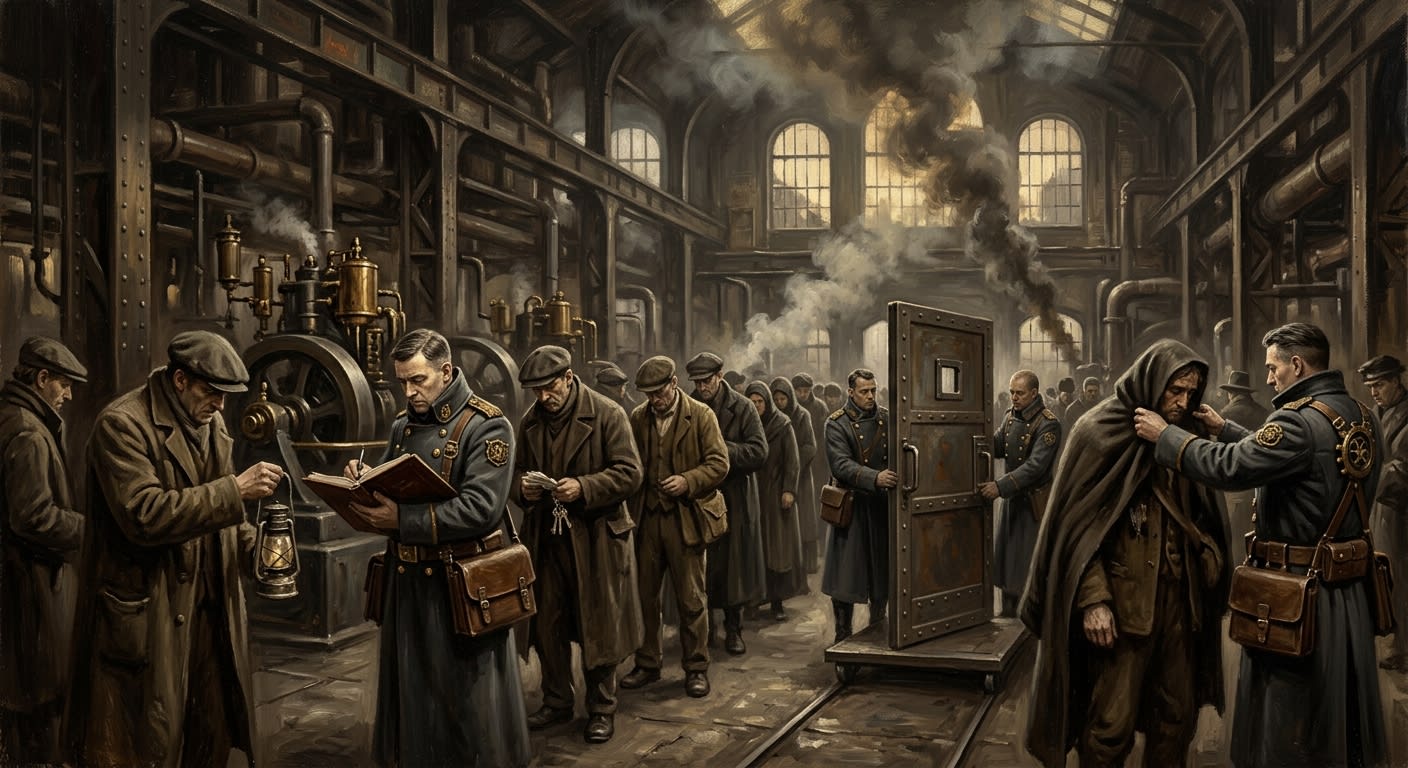
Vespers
The bell that repossesses the day
Vespers is not gentle evening prayer. It is the Synod's daily repossession of light, household, lamp, door, excuse, and dark.
Codex Ref. XIII.1.96-115
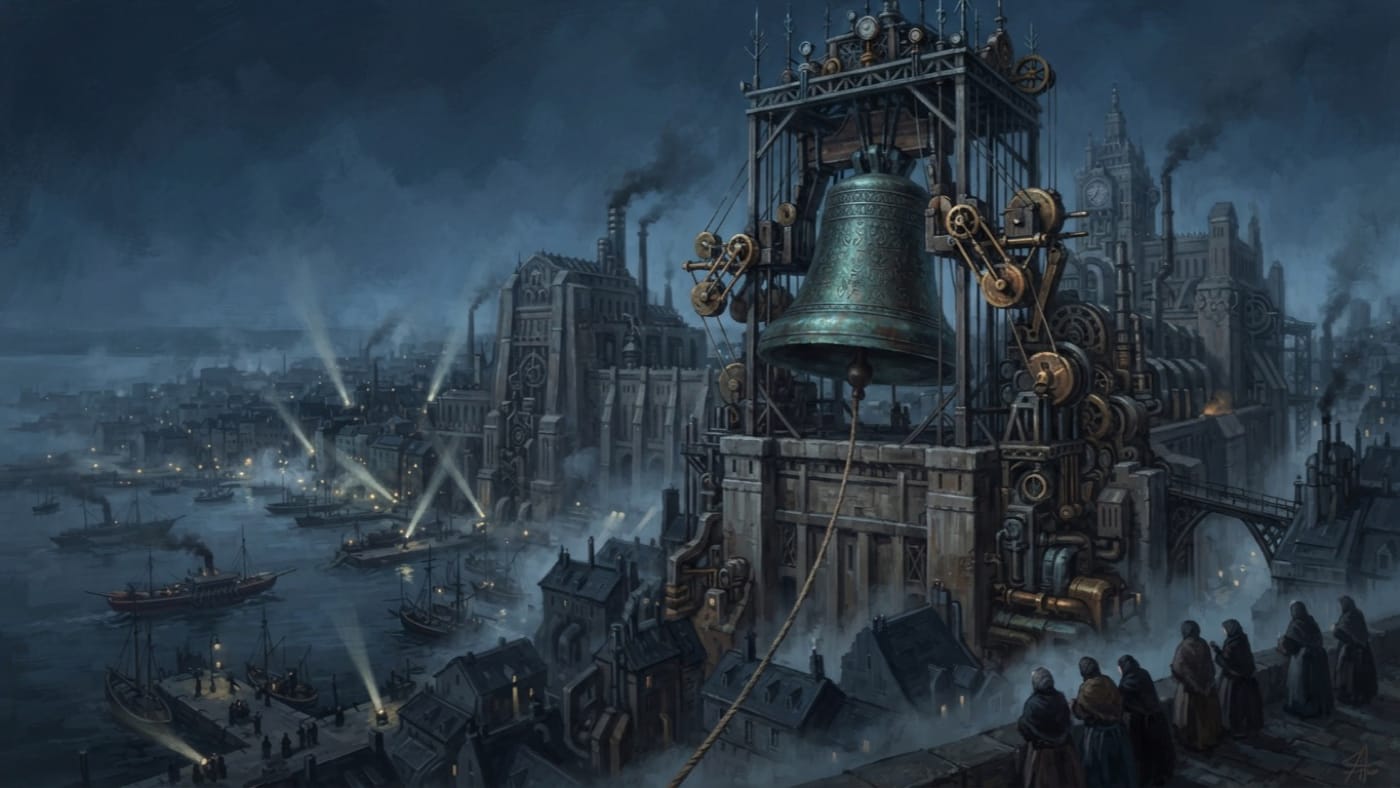
Victor, Great Bell of Marseille
The prayer is registered; the midnight peal has no authorised hand
Victor is the largest of Saint-Victor's nine bells, bronze bearing a prayer against shipwreck over Marseille. Its midnight return-peal remains filed, denied and unexplained.
Codex Ref. XIII.1.62-235

Void
The child survives when the gap is too dull to notice
Ash Registrar doctrine naming the document-thick gap between a living hidden child and the dead, misfiled, or duplicated child the Ledger believes in.
Codex Ref. XI.4.01-005
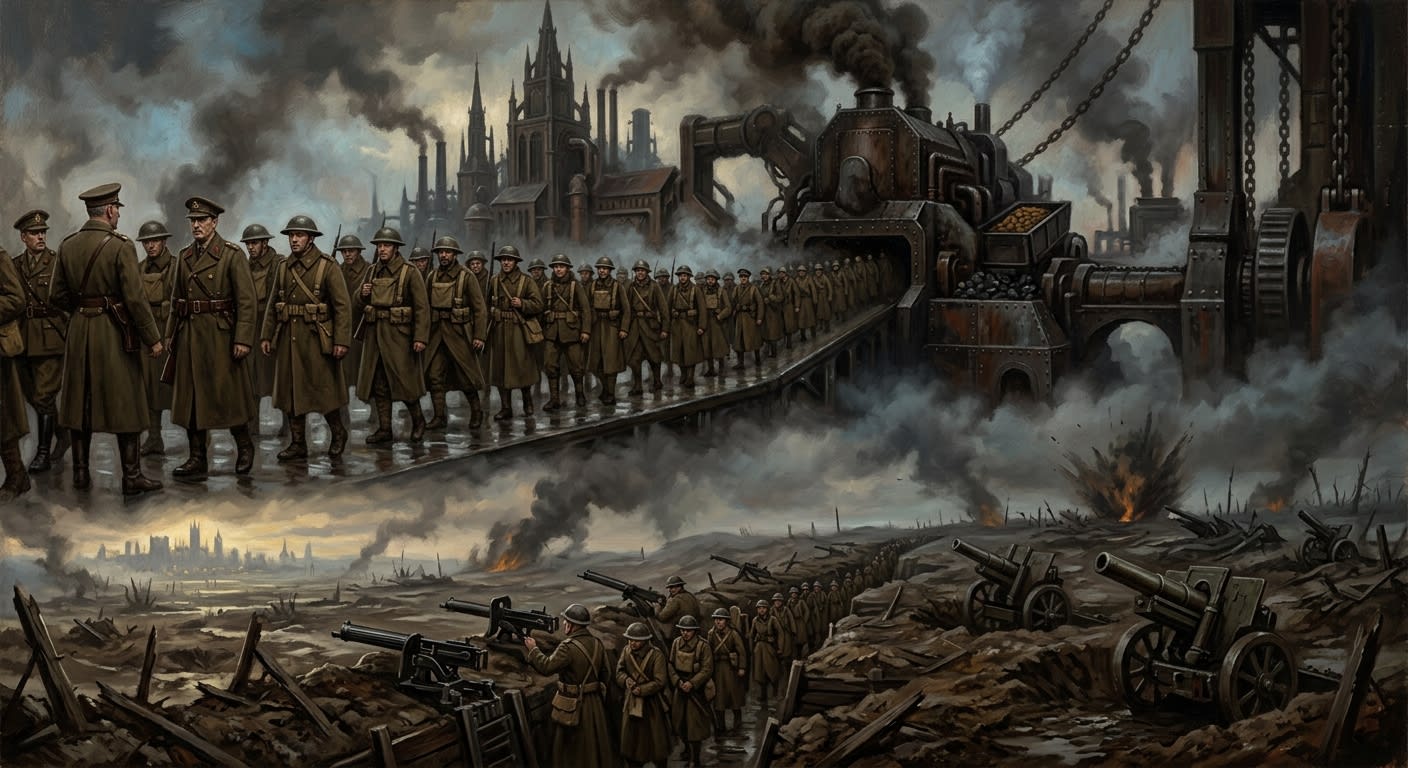
War Eternal
Victory assured; timetable irrelevant
The War Eternal is governed horror: the Line fed daily so the West may mistake survival for morning.
Codex Ref. XIII.1.92-065

Warden of the Sacred Ledger
Memory is permitted only after custody
The Warden of the Sacred Ledger guards the passage between recorded fact and ratified meaning, lest memory escape and become a riot with dates.
Codex Ref. XIII.1.33-090

Weeping Chamber
Pay wet, pass dry
The Weeping Chamber turns grief into passage, tears into toll, and misery into a receipt tidy enough for every Bureau to admire.
Codex Ref. XIII.1.25-082

Widow's Pennies
A penny enters the palm and waits for the scale
The Widow's Pennies are the Bureau of Tithes' smallest perfected cruelty: bereavement turned into household continuity, route discipline, and receipt.
Codex Ref. XIII.1.85-065
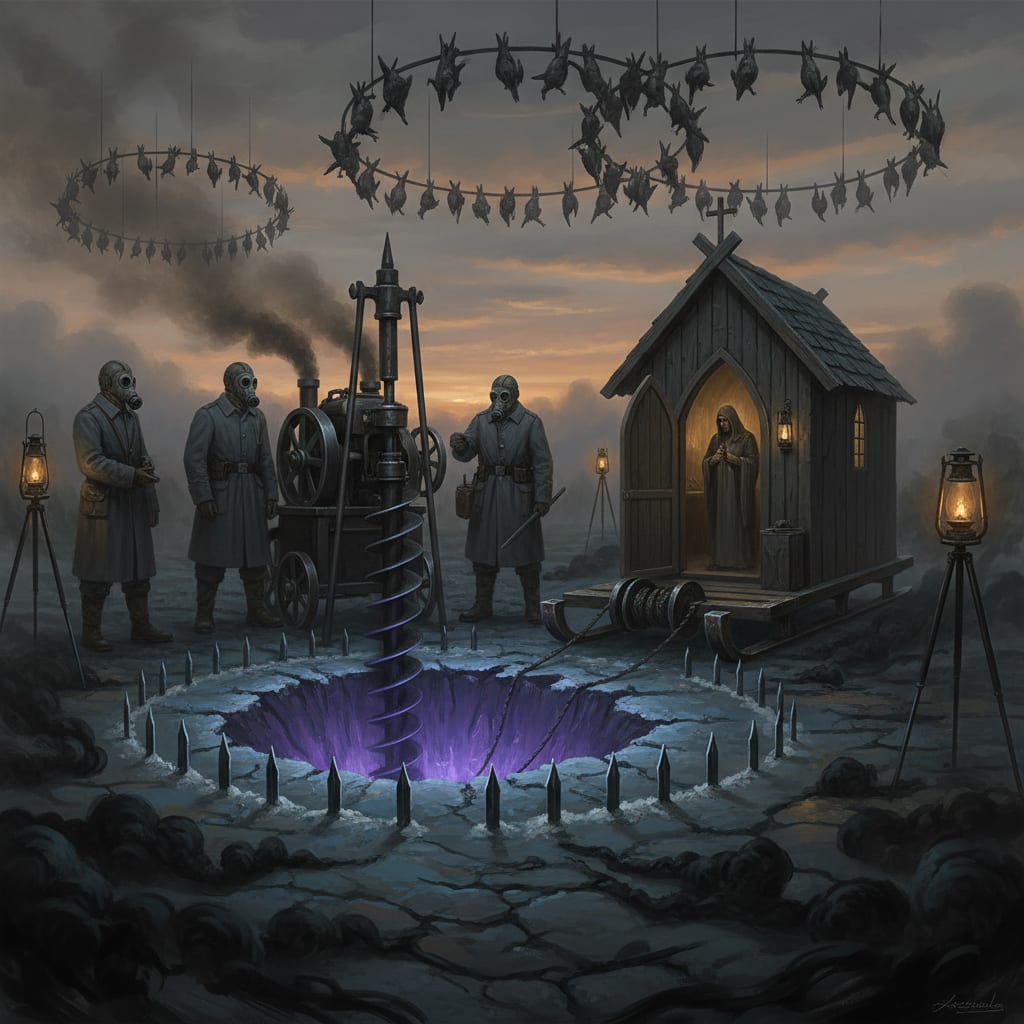
Wound-Site Prospector
The earth seeps; the drums breathe; the Bureau explains neither, and taxes both
The licensed harvesters of demon-seep from wound-sites — chartered by the Bureau of Tithes, destroyed by the work, and collectively silent on the one event that explains everything. The drums breathe at night.
Codex Ref. XII.50.01-001
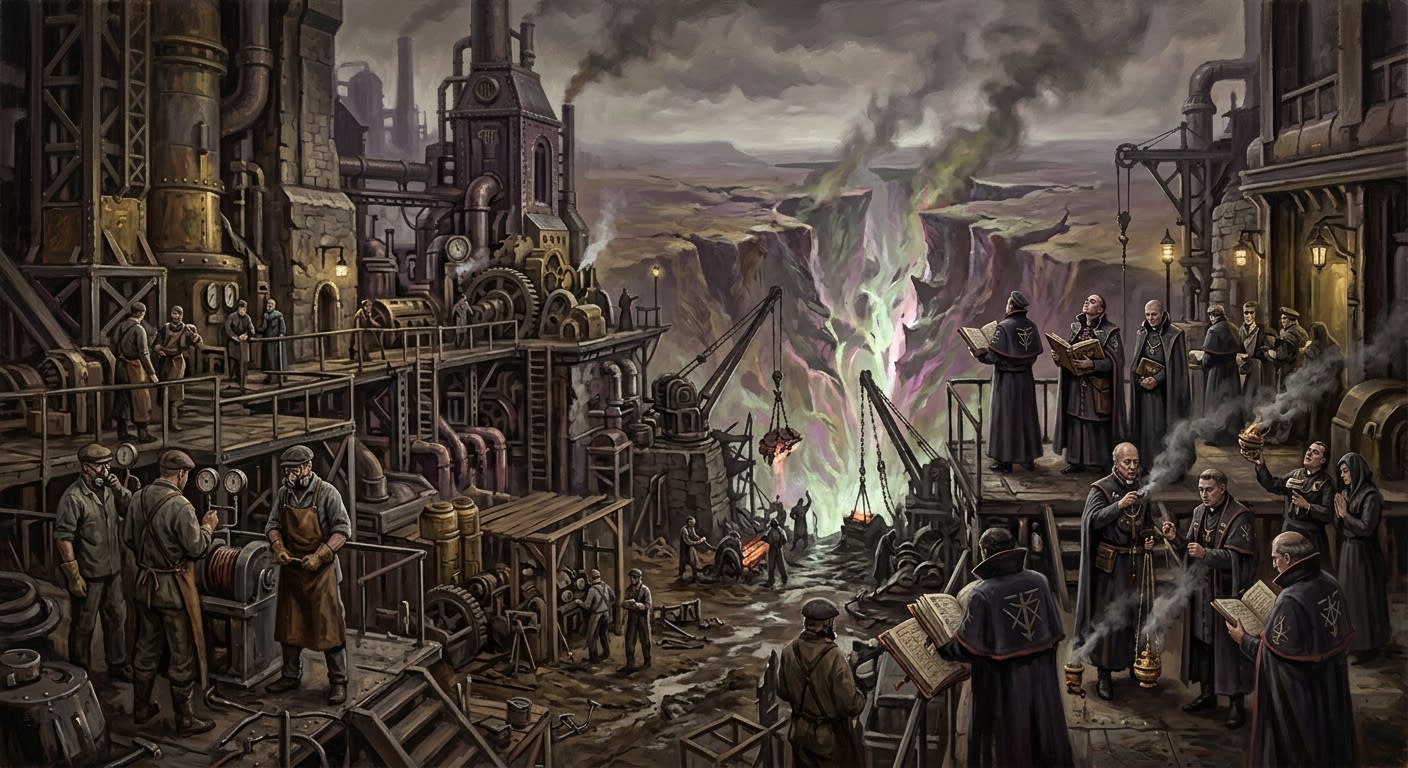
Wound-Sites
Where Creation filed an exception and the Bureau charged admission
Wound-Sites are Creation's open injuries: measured, taxed, exploited, prayed over, and officially caused by the Lie unless useful evidence says otherwise.
Codex Ref. XIII.1.29-001

Wrath-Sloth Convergence Code
When the fire learns patience and the fog begins to burn
The Wrath-Sloth Convergence Code is the ugly alarm that makes fire-readiness and wake-resistance obey one breath before Hell profits from contradiction.
Codex Ref. XIII.1.87-194
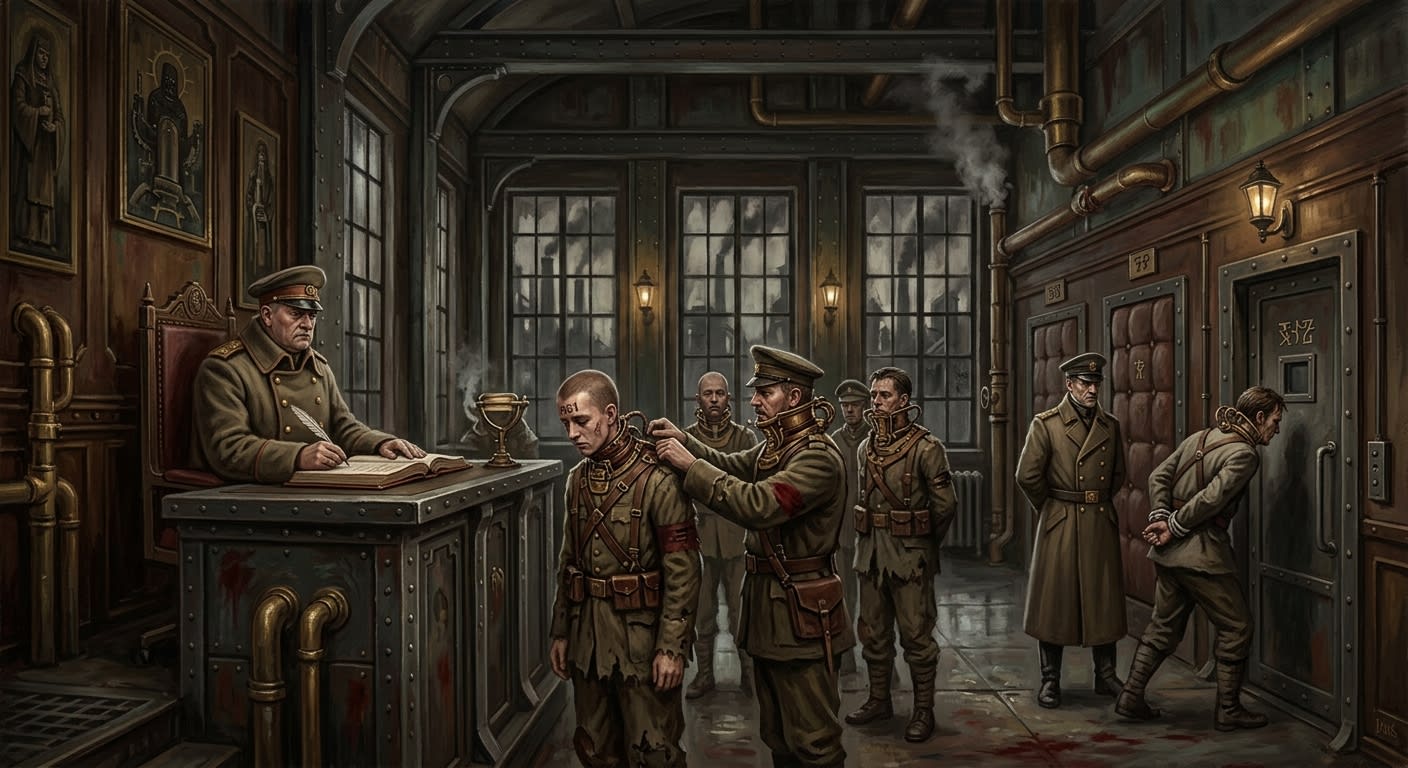
Writ 14-C
The law that taught the throat to wear a seal
Writ 14-C made the human throat an office: licensing Iron Choir Brand-Singers, disciplining pain into sound, and teaching rooms not to be answered.
Codex Ref. XIII.1.41-104

Wrong Choir
The sound beneath Essen that every office renamed and no office silenced
Essen's Wrong Choir is the sub-foundation hum beneath the Foundry Core, officially explained as resonance, cadence error, or providence while Resonance Blooms crack steel and teeth alike.
Codex Ref. XIII.1.73-001
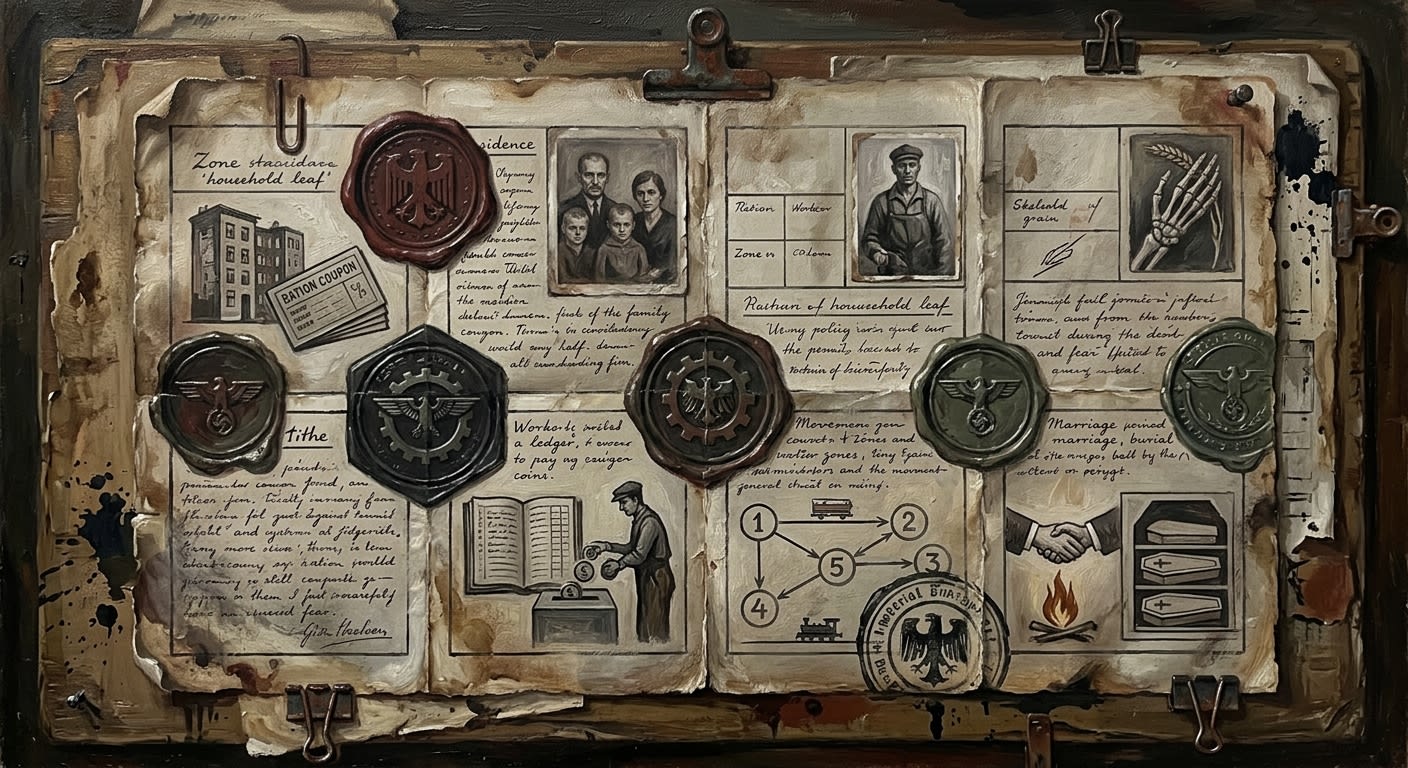
Zone Permit
The paper beneath the feet, and the shackle in the drawer
The Zone Permit is lawful standing made paper: residence, ration, tithe, movement, marriage, burial, and fear folded into one stamped household leaf.
Codex Ref. XIII.1.93-130
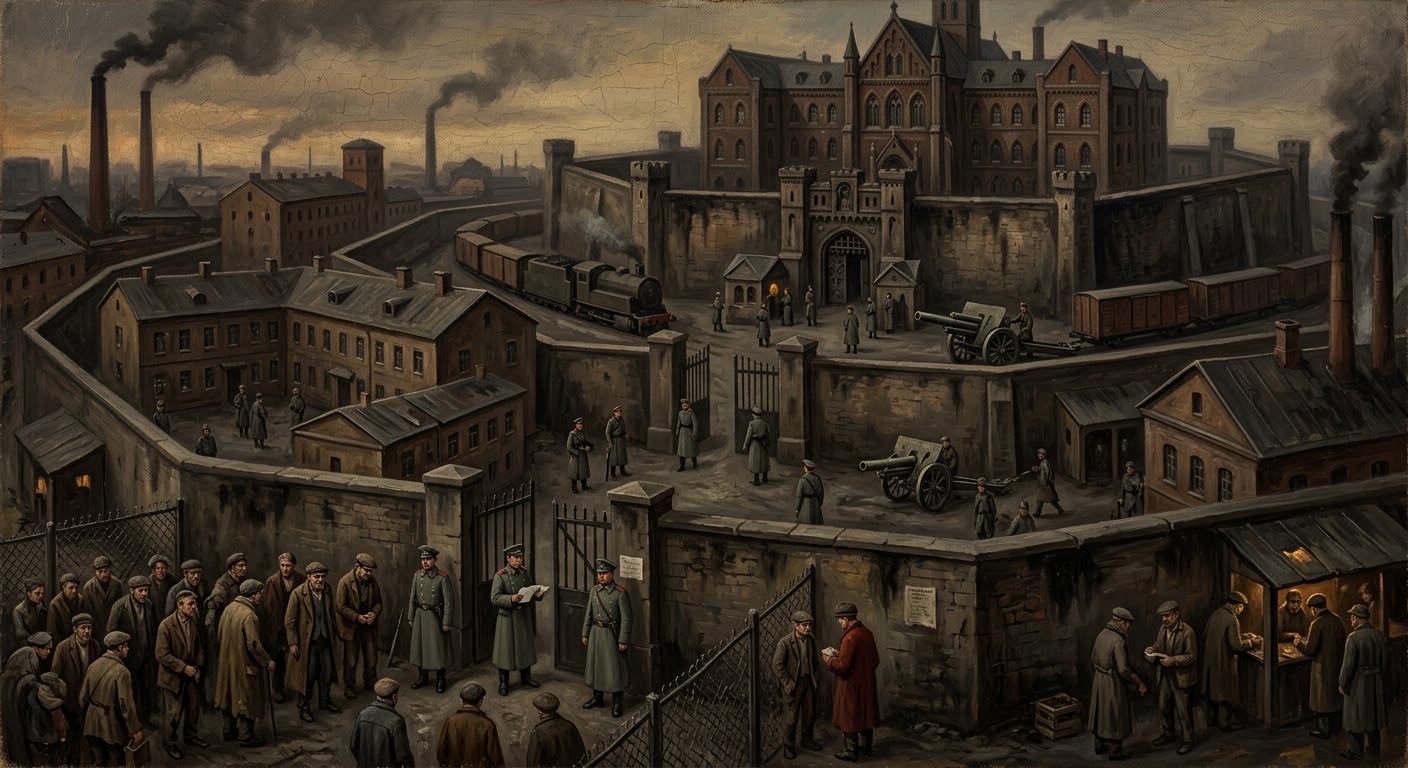
Zones 1 through 5
Five lawful pressures between invoice and mud
Zones 1 through 5 are graded permissions for bread, sons, movement, fear, artillery, and the state’s appetite.
Codex Ref. XIII.1.00-201
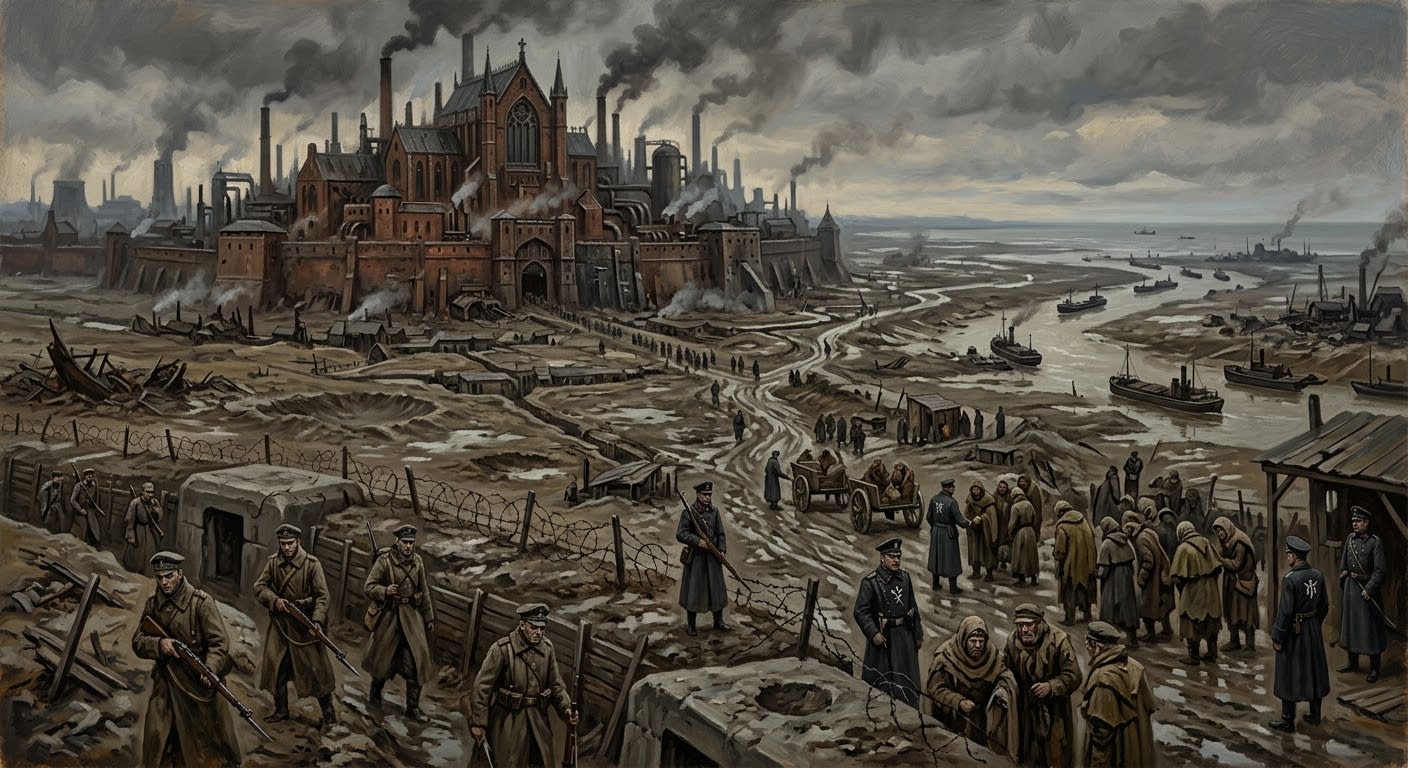
Zones 5 through 7
Mud, mouth, water — the outer grammar of danger
Zones 5 through 7 are the Synod’s controlled contact belt: contested mud, demonic custody, sea-rim commerce, contraband, pilgrimage, and useful contamination.
Codex Ref. XIII.1.00-207