

Reverse Index
Referencing “Relic of Saint Iago”
Every codex entry that links to Relic of Saint Iago. 23 entries.
Return to Relic of Saint Iago

4th Orison Company
Where prayer learned range tables and glass learned to sing
The 4th Orison Company sang before Orison had a charter, fired relic-shot at Toledo, and proved that a mistimed peal can make martyrs inward.
Codex Ref. VIII.6.02-015
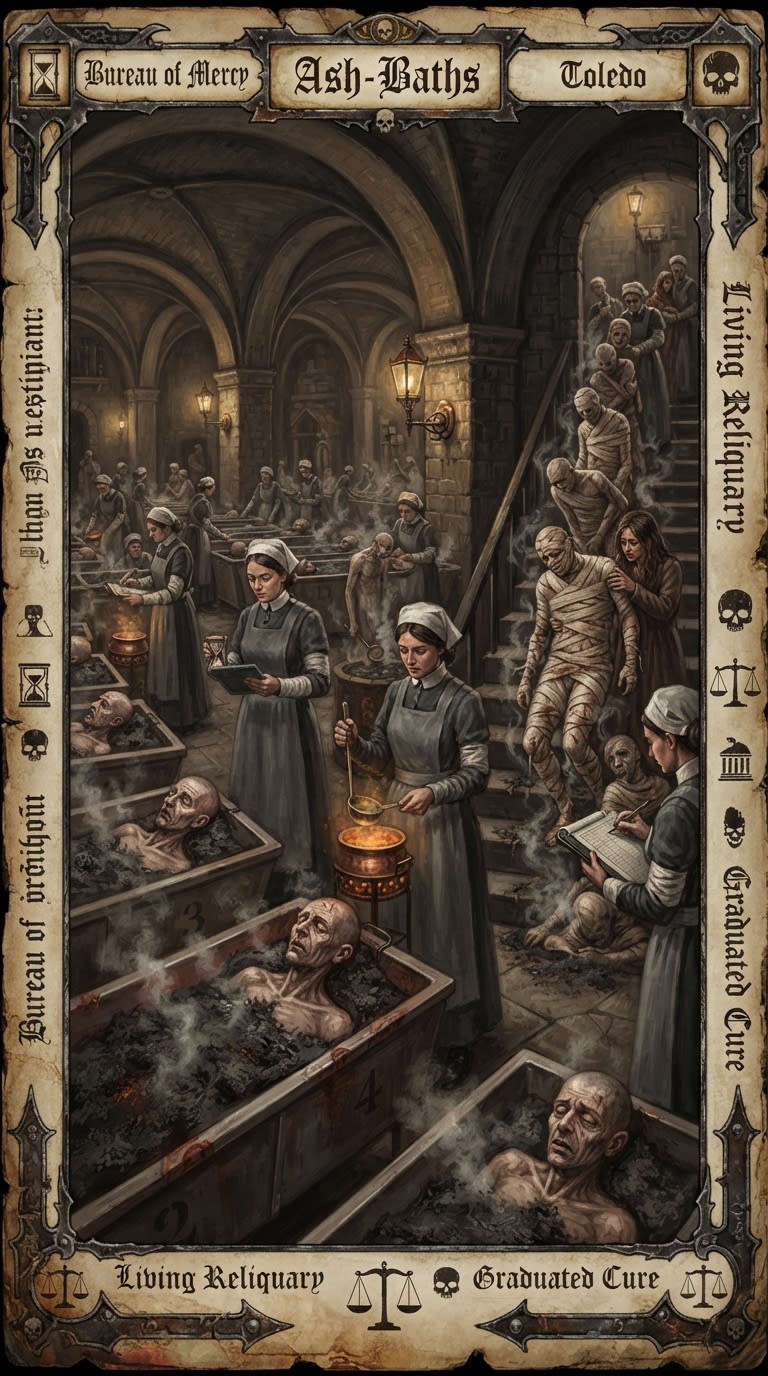
Ash-Baths
Where treatment warms its ash and bills the family
Toledo's Mercy-run ash treatment, where fever is lowered into hot ash, survivors become living reliquaries, and the dead are filed as graduated cures.
Codex Ref. XIII.1.56-002
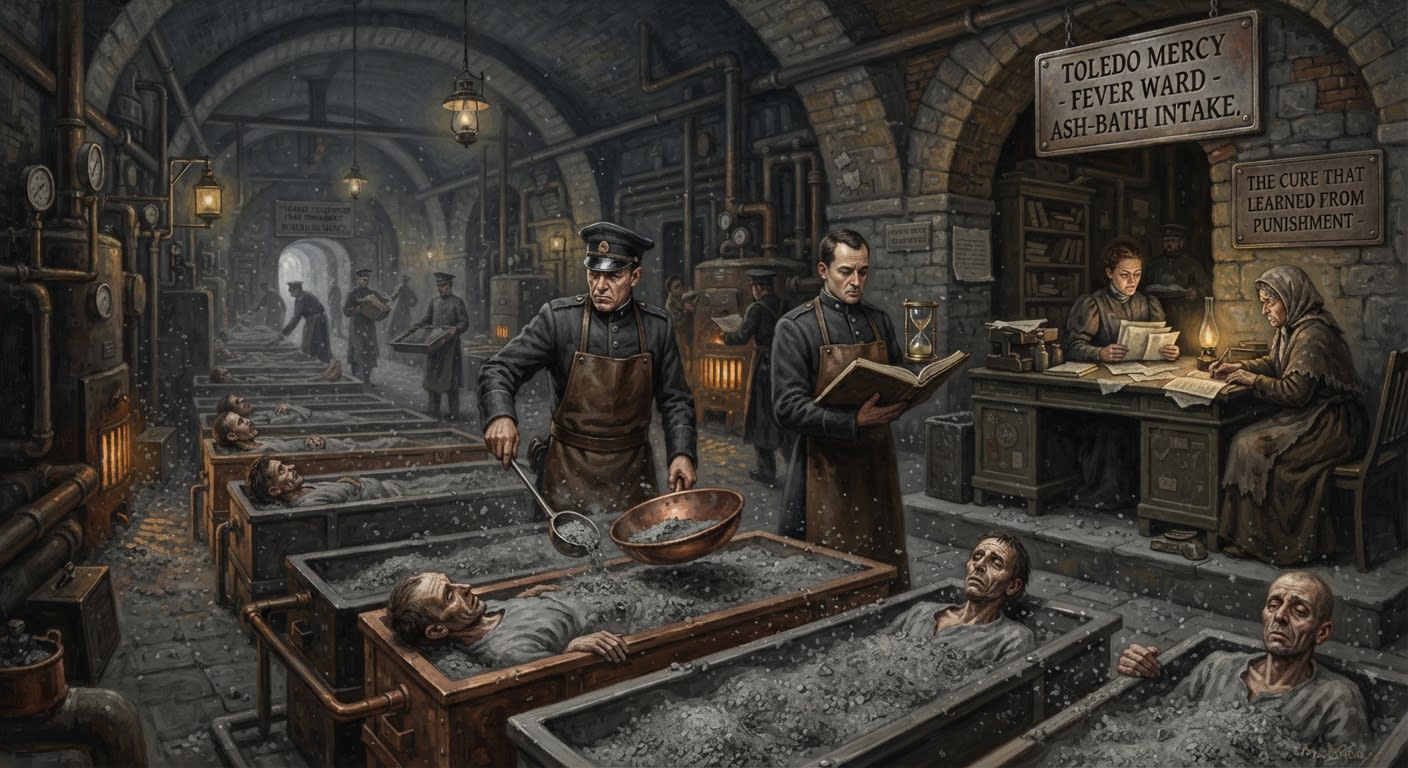
Ash-Baths of Toledo
Where Mercy learned to bill the fever
Toledo's Mercy-run ash cure, where fever patients are buried in hot grey doctrine, survivors are paraded as living reliquaries, and deaths are billed as graduated cures.
Codex Ref. XIII.1.56-002

Bell-Market of Toledo
The city where even time queues for a receipt
Toledo's west-cloister market leases bell-hours by stamp and tariff, prospering after reconstruction until the oversold Sext of A.S. 163 proved time dislikes accountants.
Codex Ref. II.1.06-002
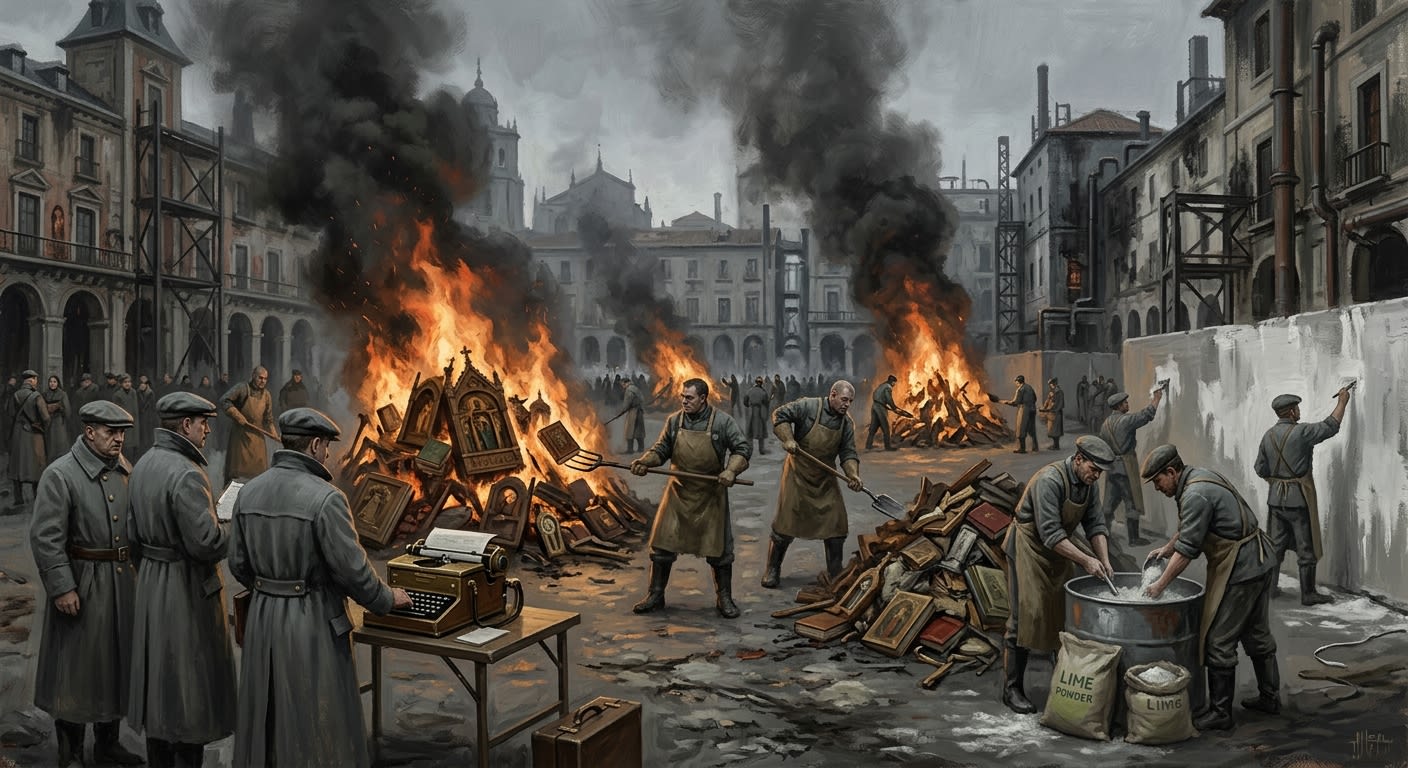
Bonfires of Purification
The walls have not finished speaking
The Bonfires of Purification were Iberia's pre-Synod Rationalist liturgies of theft: relics catalogued, mocked, burned, mixed into ash-lime, and taught from walls that remembered.
Codex Ref. VII.8.06-018

Bureau of Doctrine Declaration of A.S. 23
Engineering may measure the conduit; Doctrine keeps the verdict
The received Declaration of A.S. 23 distinguishes miracle from sorcery by source. The conduit may be measured; the verdict belongs to Doctrine, which reports that its rule has never changed.
Codex Ref. VI.3.01-023
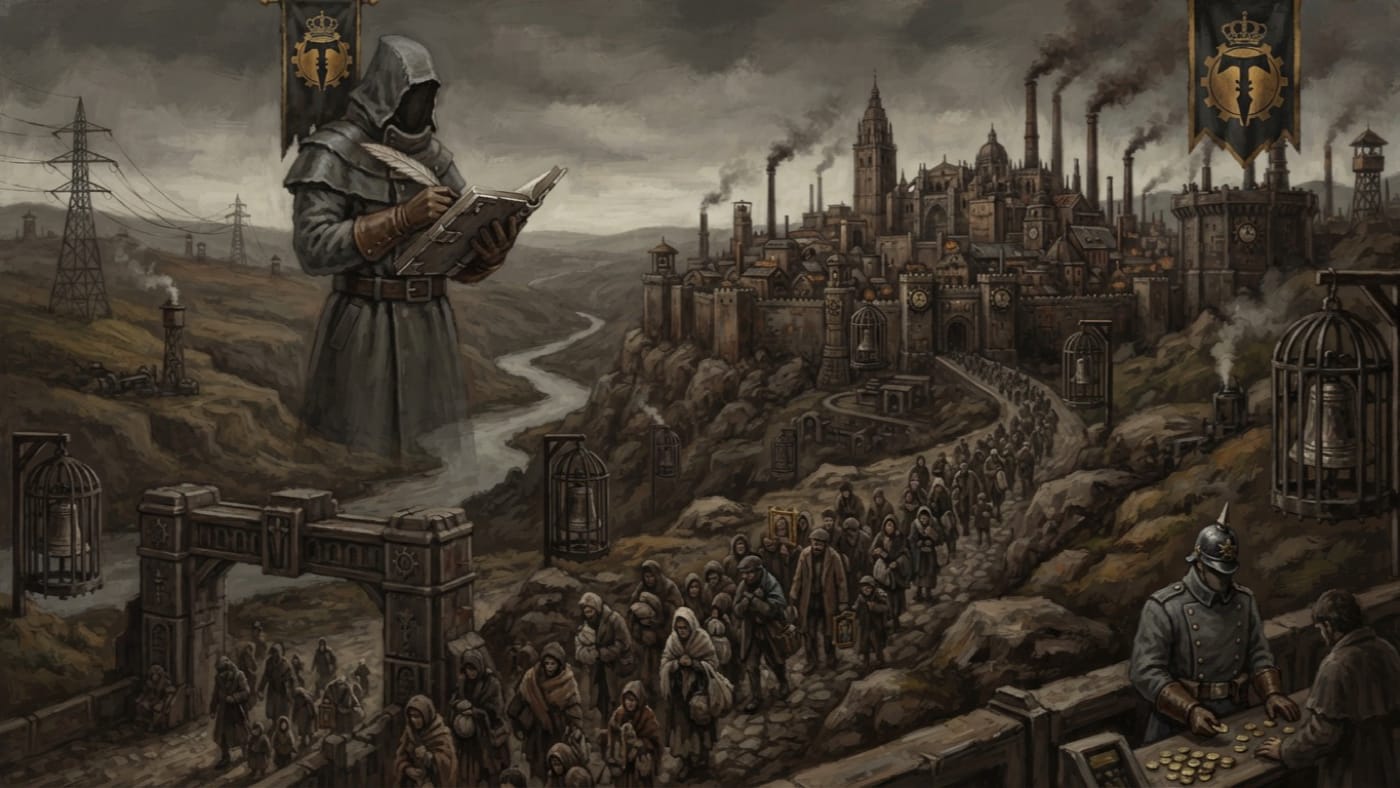
Castile
The province whose bells are better counted than its people
Castile pays under Iberia's seal and rings on Strasbourg's authority. Its refugees reached Toledo in A.S. 15; the Bureau preserved the martyr and omitted their names.
Codex Ref. II.1.04-201
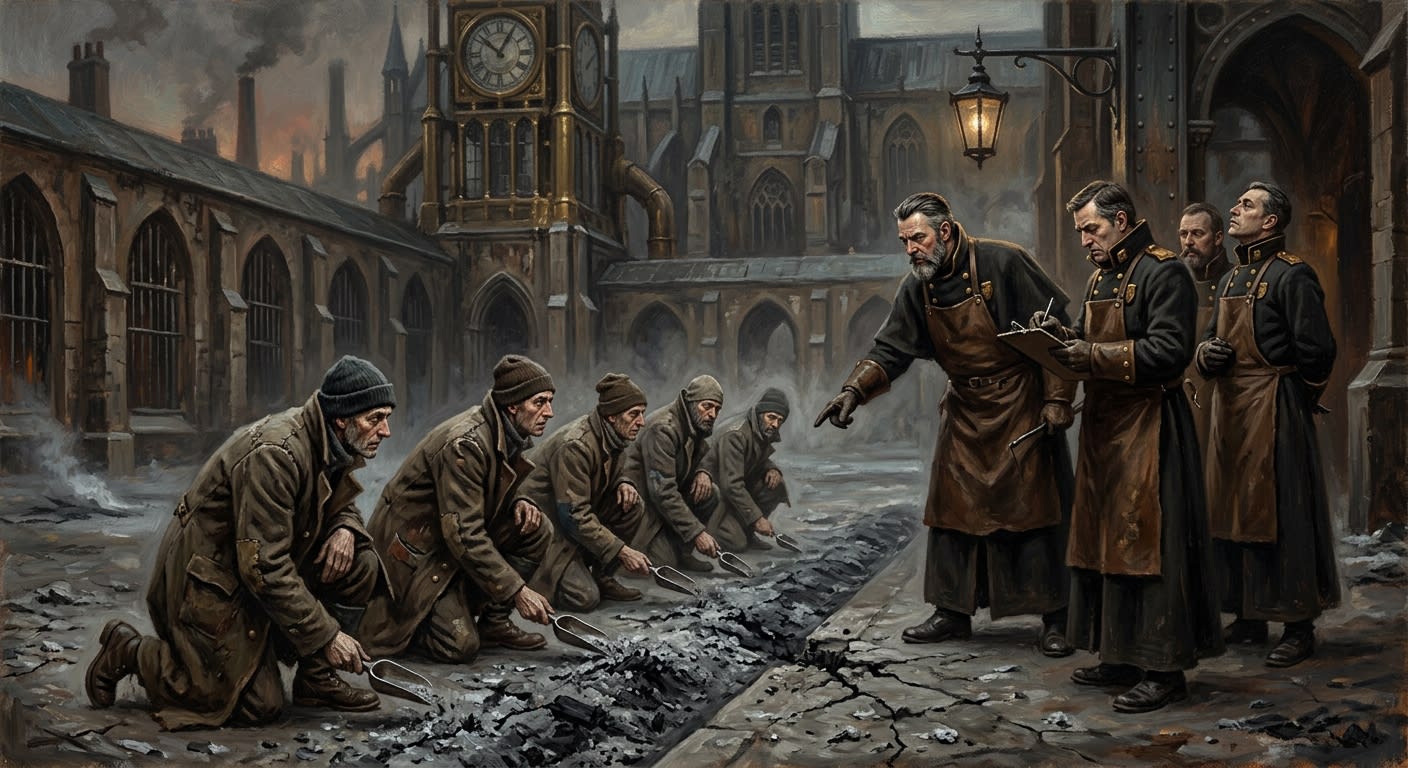
Cinder Trials
Where Toledo lets ash pretend to be law
Toledo's forecourt ash rite, born from post-Sundering martyrdom law, where grey crusts crack at Ninth Bell and Doctrine calls the fracture a verdict.
Codex Ref. XIII.1.56-001

Colonel-Prefect Étienne Grimal
The officer who took Toledo and failed to possess it
Rationalist Colonel-Prefect at Toledo, whose guns seized the city while Clemente, the Order of Saint Iago, and the Relic denied him the prize he came to count.
Codex Ref. III.2.01-084

Córdoba
The city that returned a saint and kept an altered inventory
Córdoba enters the Ledger through a prefect's desk: Saint Iago's jawbone was reclaimed there in A.S. 12, while the altered inventory keeps provenance inconvenient.
Codex Ref. II.1.04-012

Father Clemente de los Rios
The abbot who spent a saint's jawbone at the correct hour
Abbot of the Order of Saint Iago garrison at Toledo, Second-Tier Martyr, and keeper of the Relic whose second Psalm denied Reason its prize.
Codex Ref. III.2.01-083
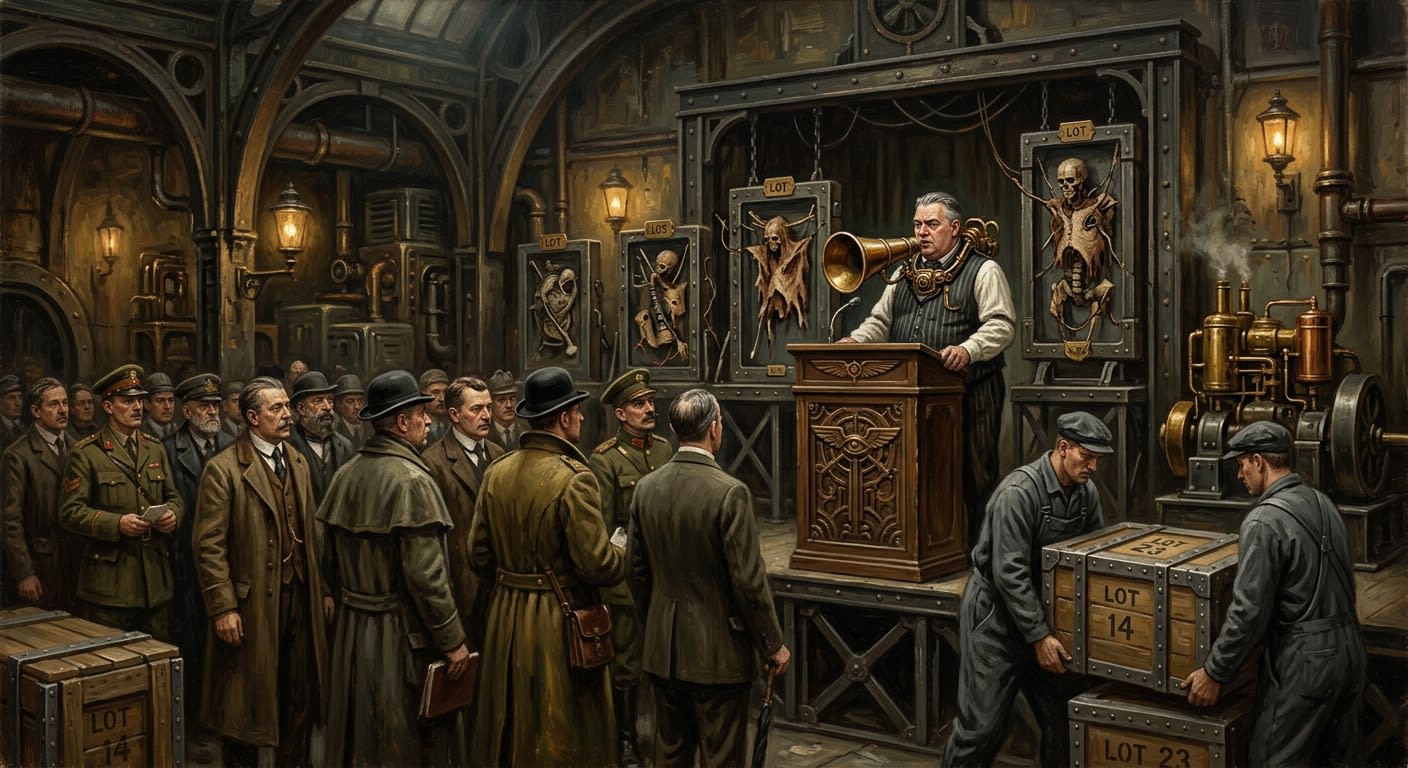
First Relic Auctions of Amsterdam
When the hammer learned to price a saint without blushing
Amsterdam's first relic auction season made sacrilege respectable by catalogue, turning stolen bones into lots and provenance wounds into profit.
Codex Ref. VII.8.10-007

Governor-Praelate Alaricus
The dangerous administrator who made mercy balance
Toledo's Governor-Praelate, watched for the A.S. 185 opening of the Granaries of Saint Benedict: mercy recorded so thoroughly that Tithes could not call it theft.
Codex Ref. III.2.01-085
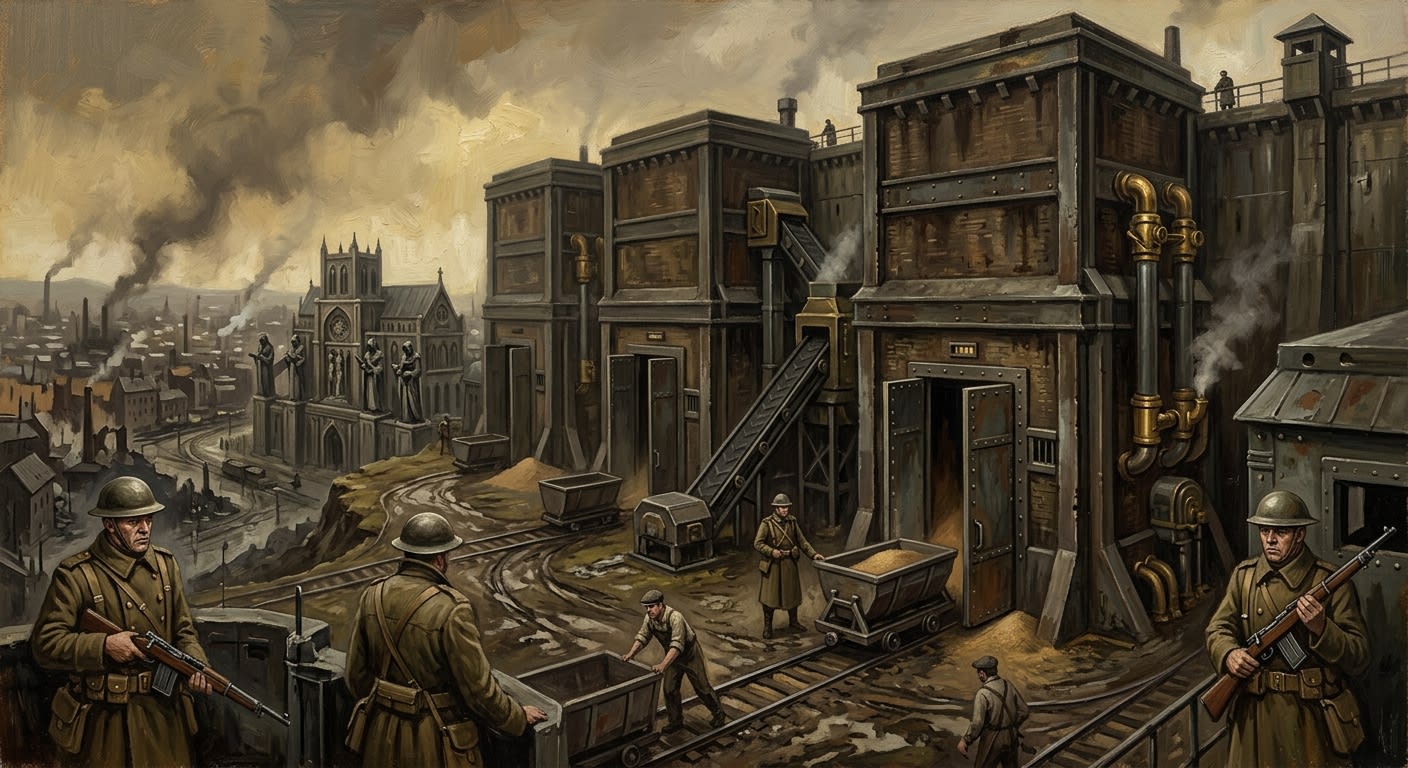
Granaries of Saint Benedict
Mercy under lock, key, and later approval
The Granaries of Saint Benedict are Toledo's four watched vaults of civic reserve grain, opened in A.S. 185 by Governor-Praelate Alaricus before Strasbourg could make mercy late.
Codex Ref. II.1.05-185
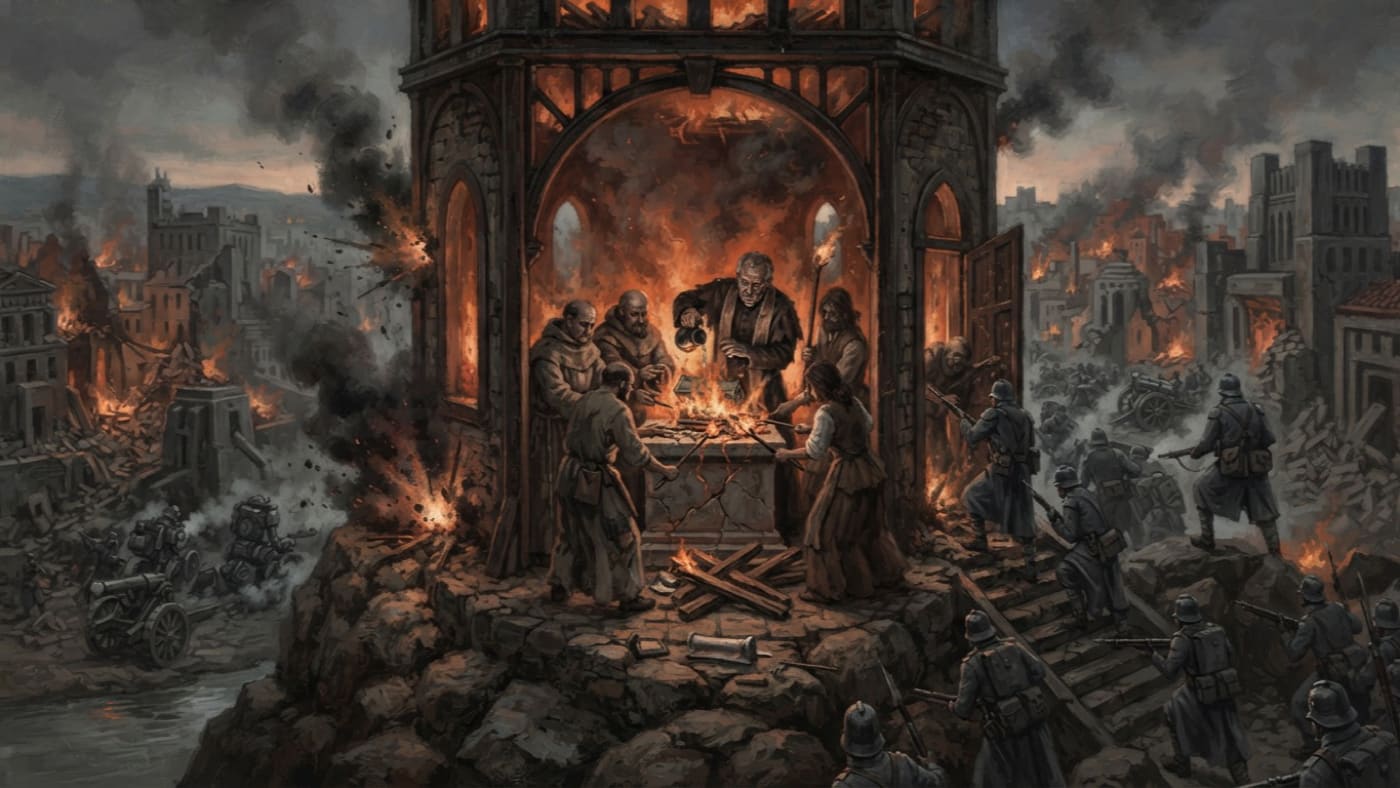
Heroic Destruction
The last duty of custody, taught from Toledo's ash
Heroic destruction is the deliberate unmaking of an entrusted holy object to deny enemy custody. At Toledo, the Order of Saint Iago lost the city and kept the enemy from taking its saint.
Codex Ref. XIII.1.58-015
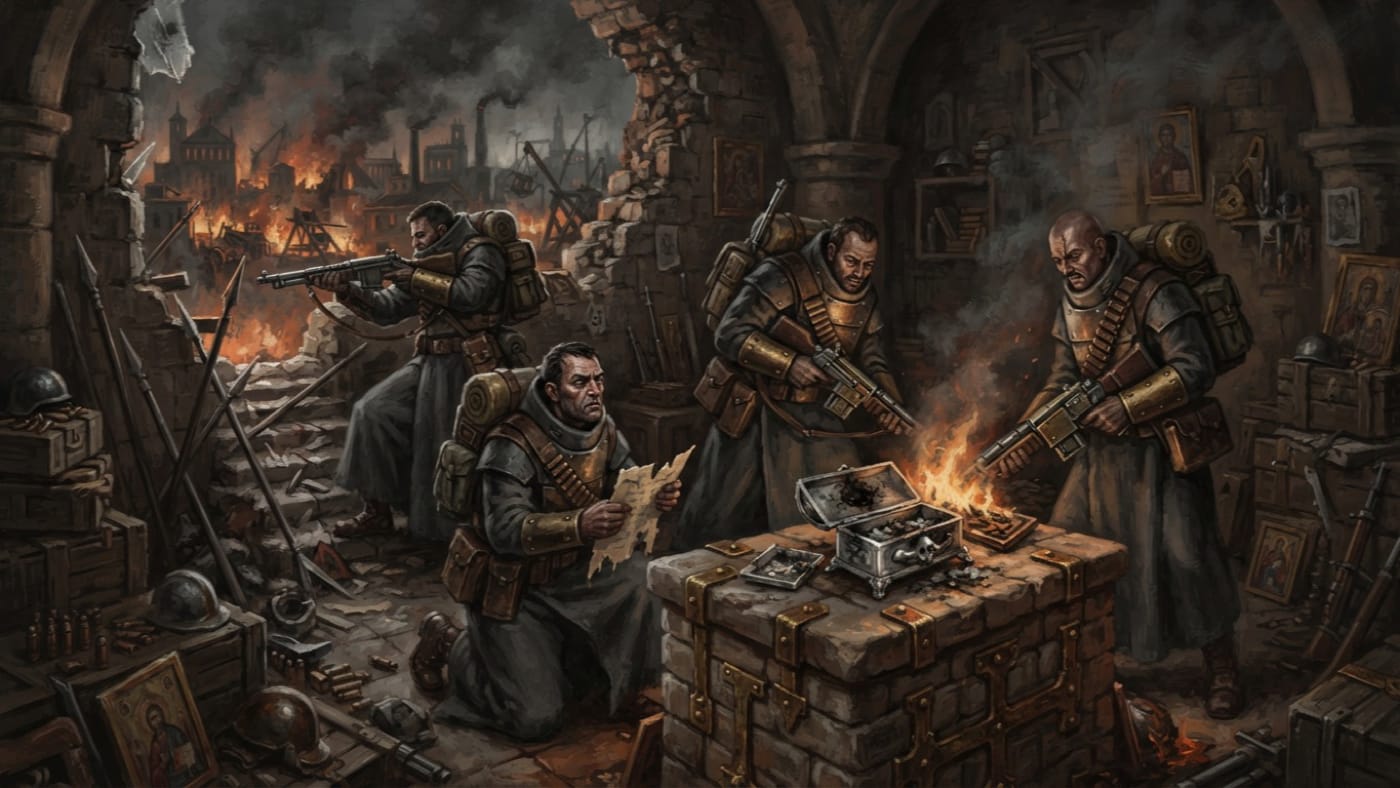
Iago Rule
Four sentences the smoke left behind
Four surviving sentences of the Order of Saint Iago's rule bind road, shrine, guest, and bone to custody. Toledo supplied the fire; the preserved text never commanded it.
Codex Ref. XIII.1.57-016
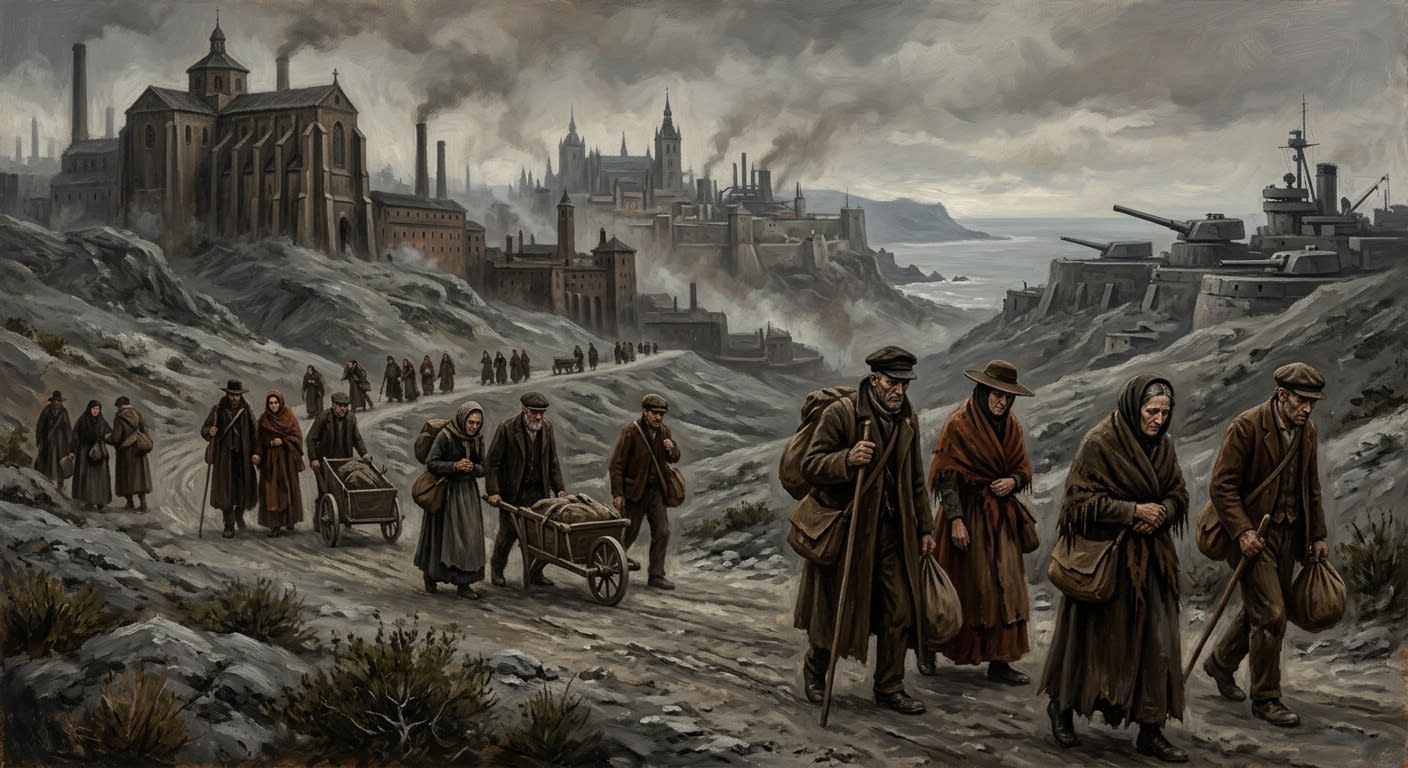
Iberia
The western furnace kneels, pays, murmurs, burns, and remembers
Iberia is the Synod's western furnace: a sealed peninsula of relic ash, late Concordat obedience, Seville mutters, Toledo martyrdom, pilgrimage roads, British guns at Gibraltar, and memory too old to confiscate cleanly.
Codex Ref. II.1.04-090

Lucien Artois
The cleverest gunner Reason fed to fire
Lucien Artois made Reason's artillery sing at four rounds per minute, then learned at the Iron Plains that Hell does not consult firing tables.
Codex Ref. I.1.06-001

Order of Saint Iago
The grey mantles who taught custody to survive defeat
Iberian military-monastic order remembered for guarding the Relic of Saint Iago at Toledo, holding the city nine months, and burning custody clean before Reason could take it.
Codex Ref. VIII.9.01-001

Psalm of Consuming
The Toledo fire-prayer that spent custody into ash
The Psalm of Consuming is Toledo's sealed fire-prayer: a relic-bound formula whose two lawful recitations turned siege stores, tower, and custody into ash.
Codex Ref. XIII.1.57-015

The Republican Guards
The philosophers wrote the sentence; the Guards added punctuation
The Republic's armed hand wore blue-grey, carried law over the heart, and proved that unbelief does not remain in books. It drills.
Codex Ref. I.1.05-001
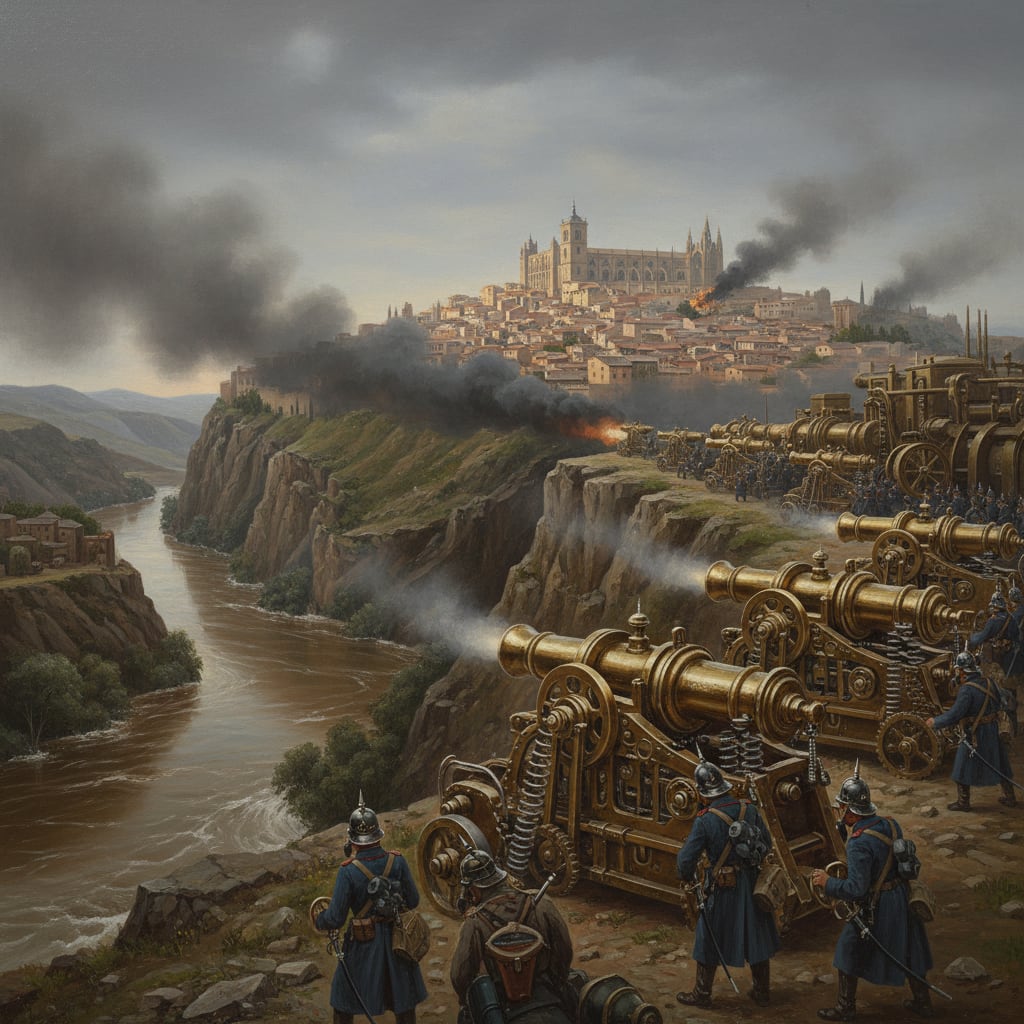
The Siege of Toledo
Nine months of walls and miracles, neither of which the Bureau can fully explain
Nine months of clockwork artillery against consecrated walls in A.S. 15, ending in fire the Bureau of Engineering cannot explain and a Relic it has been arguing about for a hundred and eighty-six years.
Codex Ref. VII.5.02-001
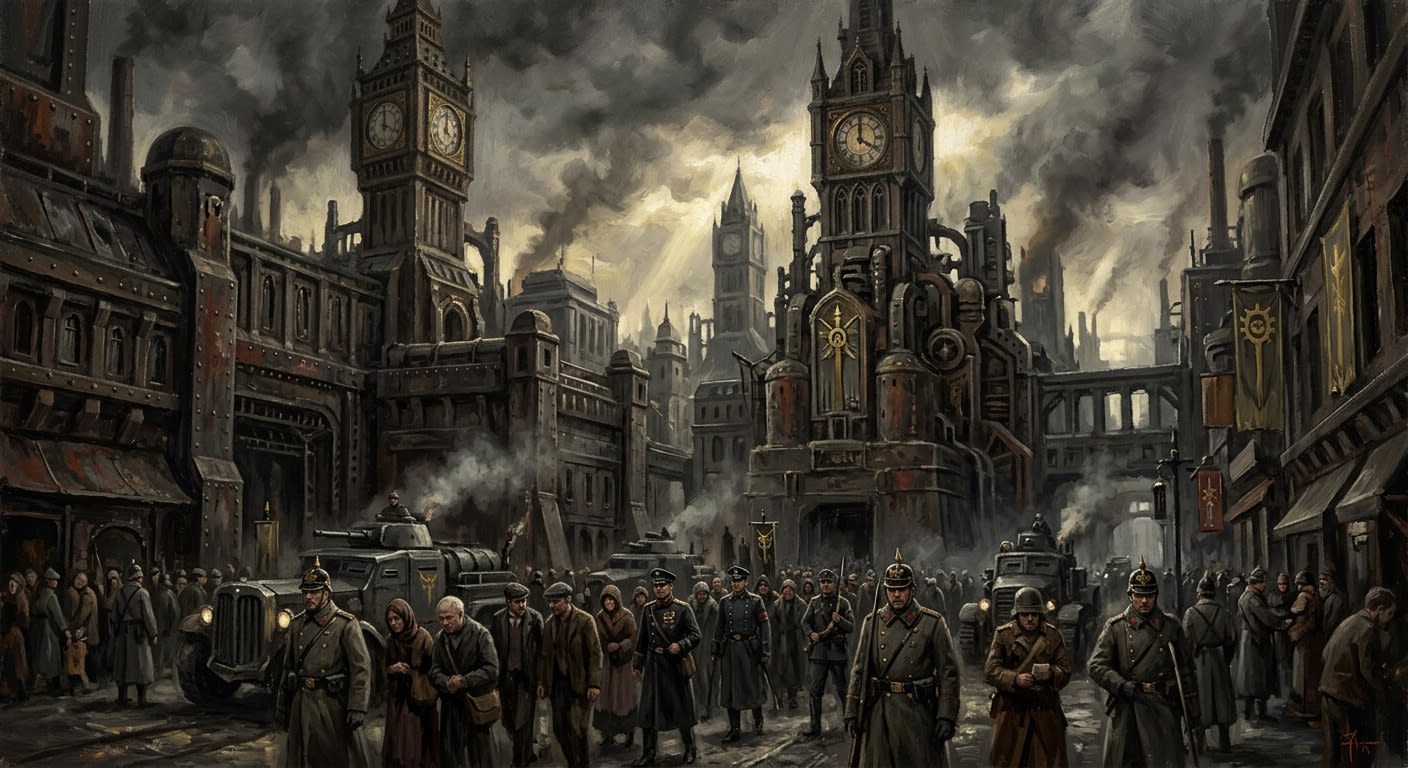
Toledo
The city taken by cannon and kept by ash
Toledo is the Synod-held Iberian martyr-city where a lost siege became custody, ash became law, and time itself learned tariffs.
Codex Ref. II.1.04-015