

Reverse Index
Referencing “Pilgrim's Coast”
Every codex entry that links to Pilgrim's Coast. 13 entries.
Return to Pilgrim's Coast
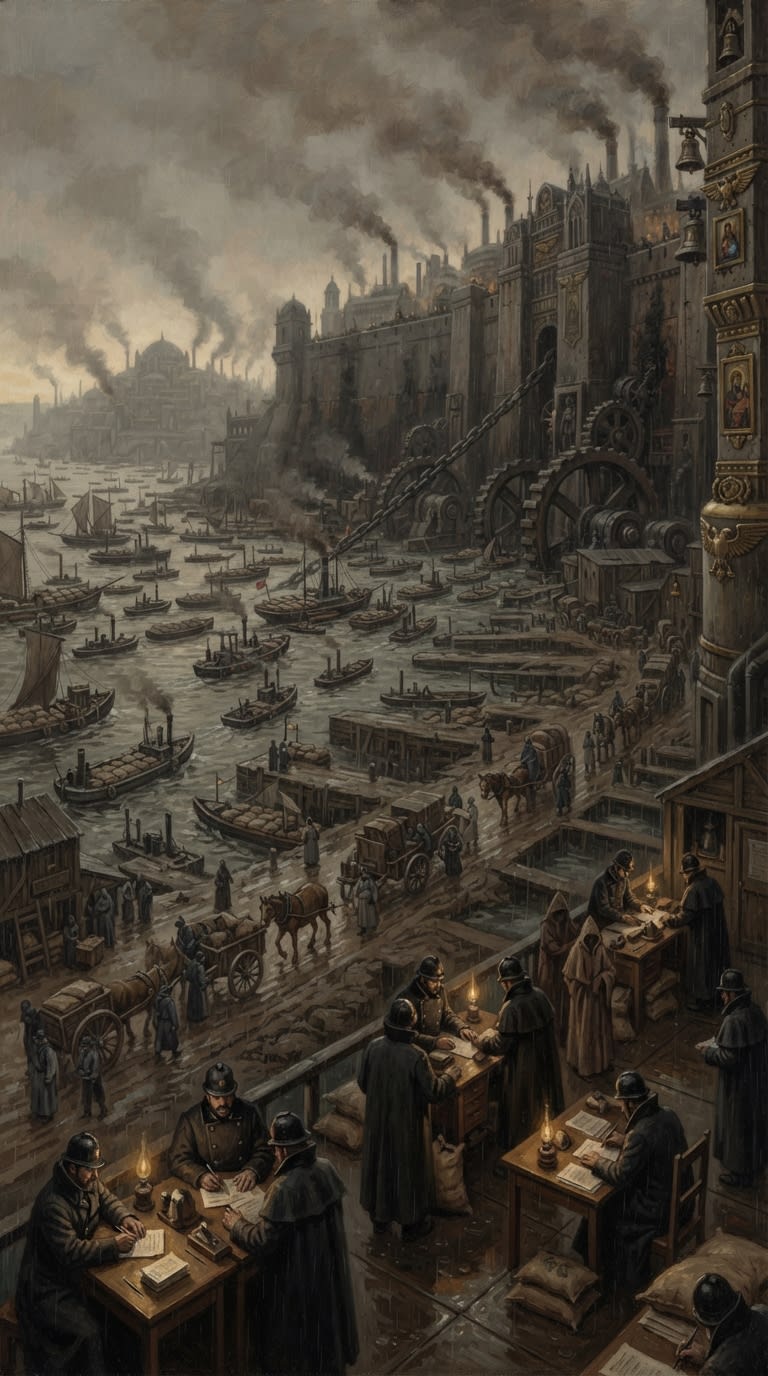
Anatolian grain convoys
The wall stands because the wheat arrives, usually lighter than declared
Constantinople's grain lifeline: Anatolian hulls, Green permits, Passage windows, Tithes arithmetic, and the persistent miracle by which every convoy arrives smaller than it departed.
Codex Ref. VI.4.21-068
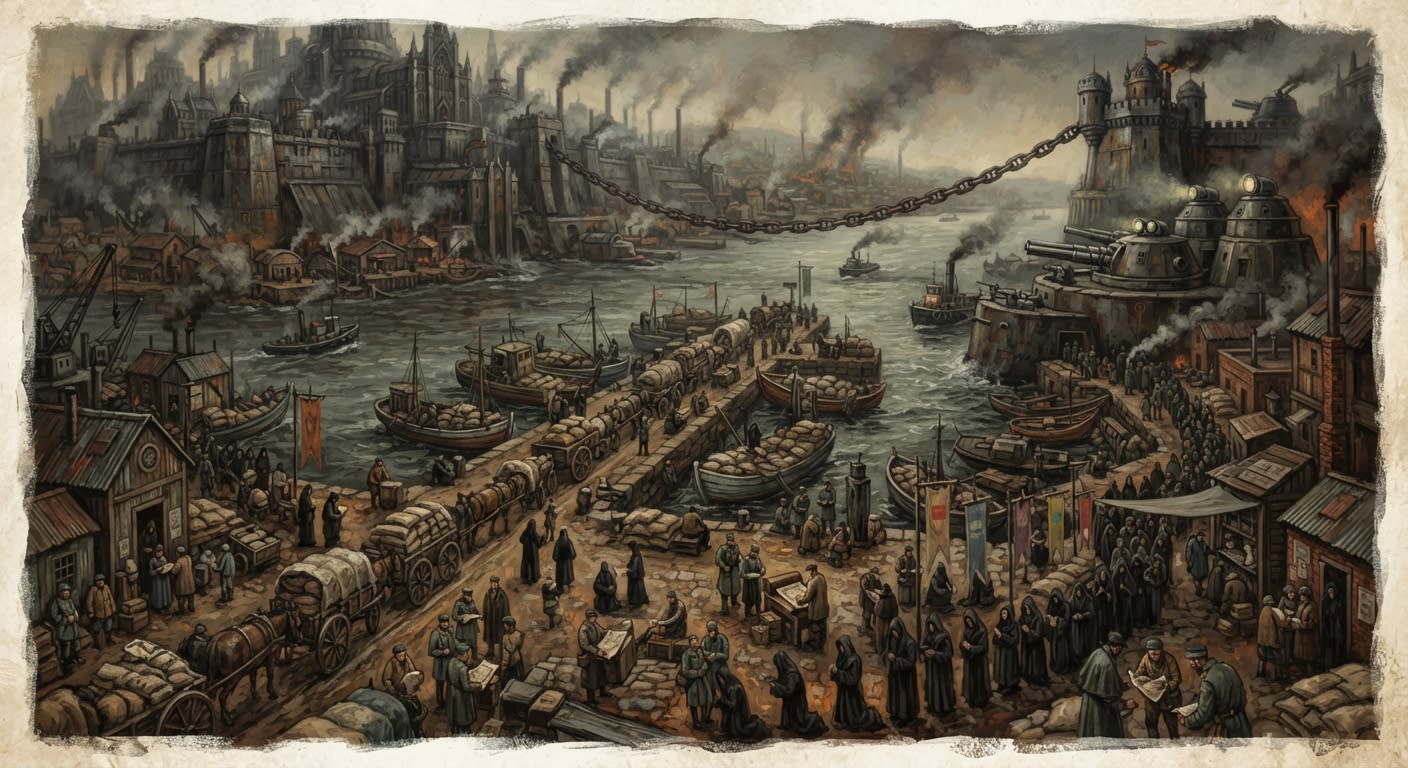
Anatolian Prefectures
The pantry the Hinge audits after eating
Synod-held Green Approach across the Bosphorus: grain, pilgrims, black diesel, and the arithmetic by which Bastion-Constantinople eats while accusing the hand that feeds it.
Codex Ref. II.4.09-069

Bastion-Constantinople
The Hinge of the South
Keystone fortress of the Sagittal Line, ratified in A.S. 68. The southernmost anchor of the Wall and its most celebrated grave. Where the advance of Hell first broke against ink and iron, and has broken ever since.
Codex Ref. III.2.04-017
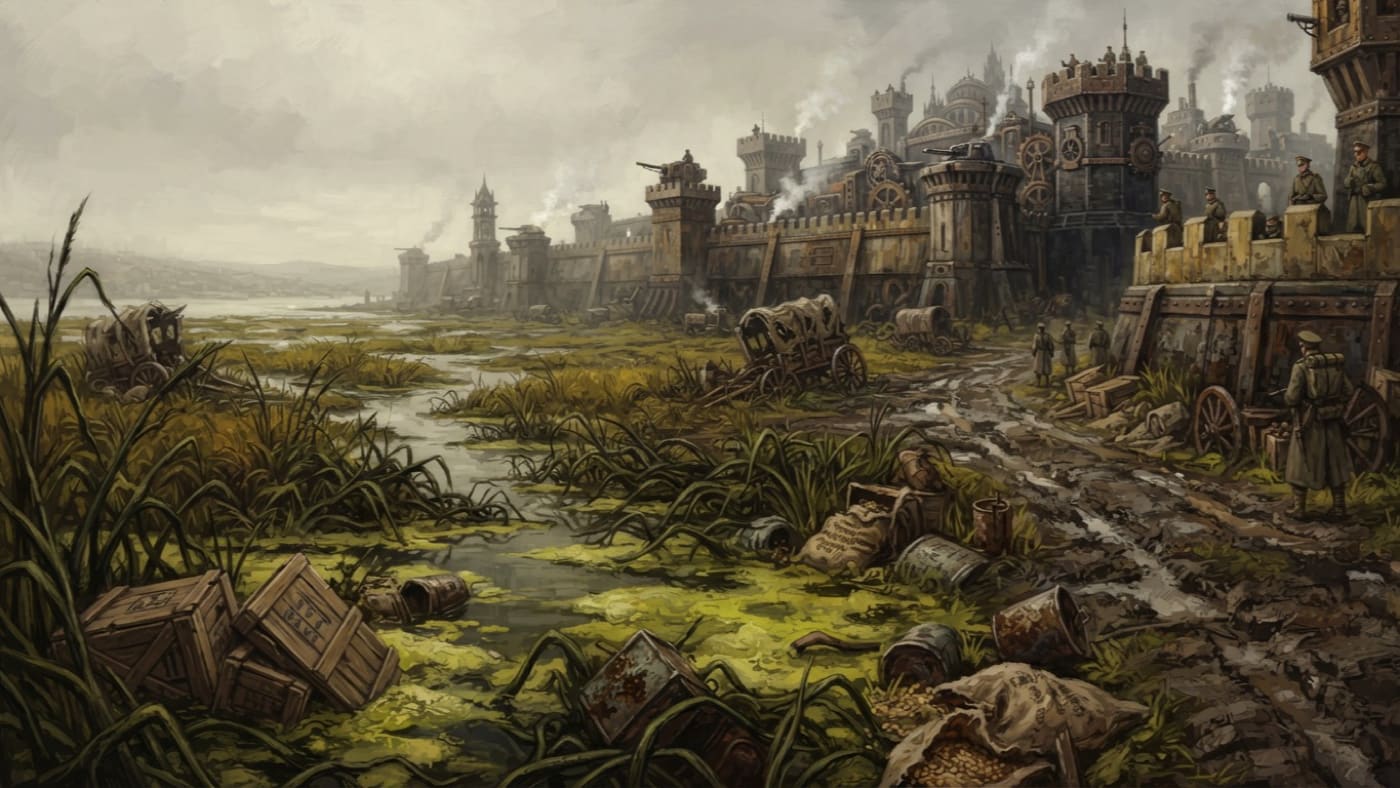
Blackening of the Bosporus
The reeds crawl; the onset remains unrecorded
A.S. 201 survey of the corrupted marshes opposite Bastion-Constantinople: crawling reeds, bile-coloured algae and ruined provisions. Doctrine names Kargath; the cartographers cannot name a beginning.
Codex Ref. VII.4.18-319
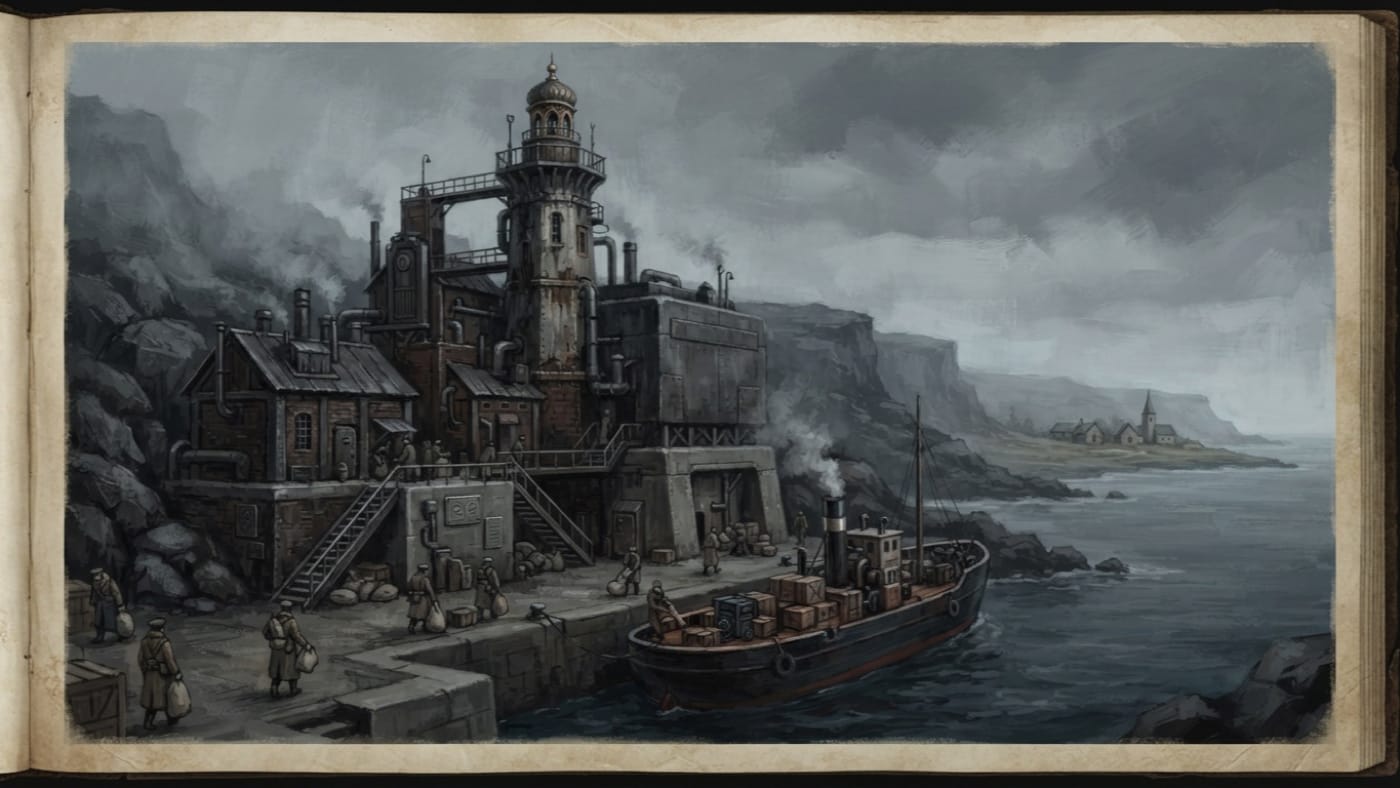
Coastal Station Theron
Where the sea is supposed to be written down
A.S. 201 documentary survey of the Pilgrim's Coast registry point attested in the Constantinople and Settlement accounts. A name, a harbour log and a measuring point: exactly as much station as the ink allows.
Codex Ref. II.4.09-661

Diver Testimony Phaleron-12
The survey was complete; the evidence was withheld
Engineering filed five words. An unauthorised fragment of the sealed A.S. 189 Phaleron testimony describes warm iron, moving rivets and a bell-line answered from within. The witness remains unnamed.
Codex Ref. XIII.1.12-189
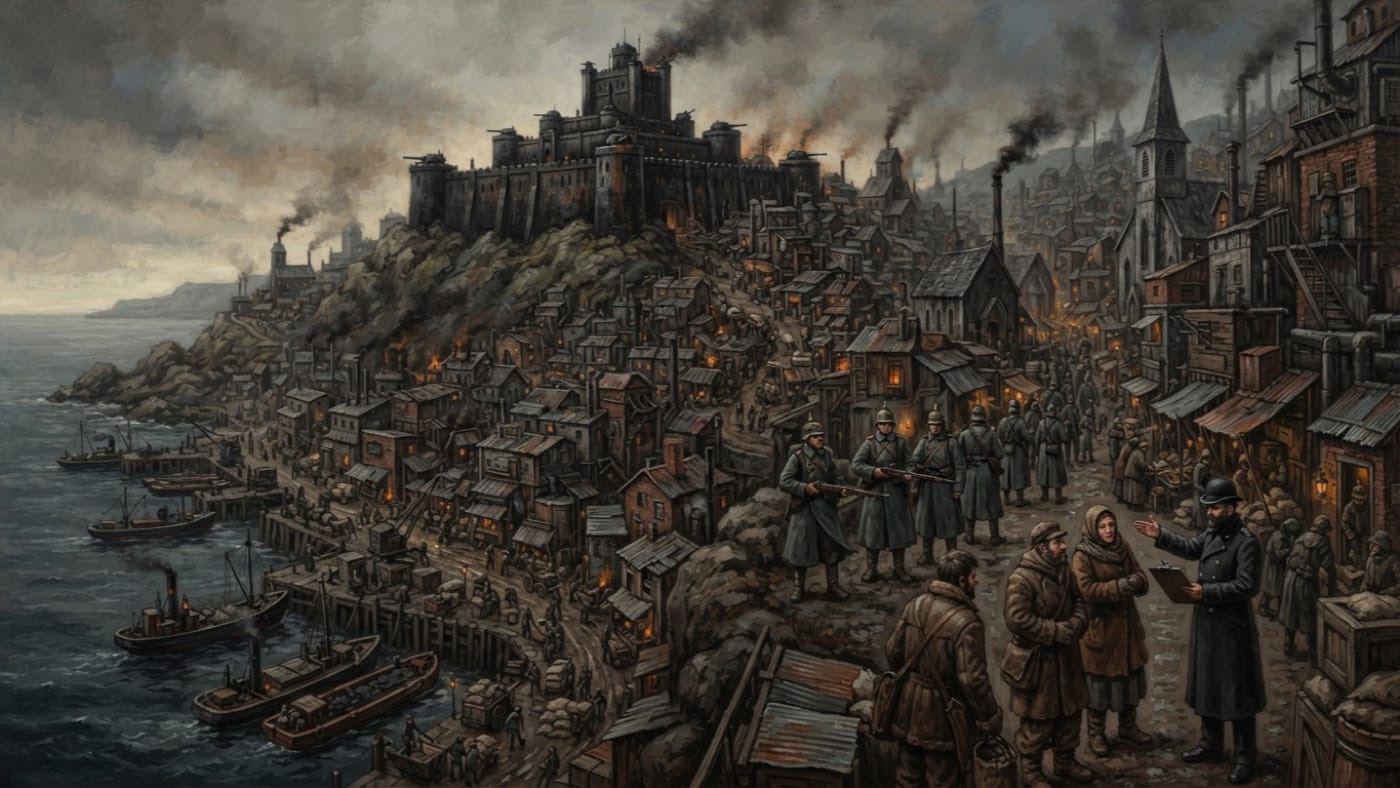
Organic Garrison Towns
The fort has soldiers. The town has a category.
An A.S. 201 survey of civilian communities that have outgrown Synod forts, especially along the Pilgrim's Coast. War claims the garrison, Tithes the market, Settlement the residents. The town has a category; responsibility remains pending.
Codex Ref. III.2.04-018
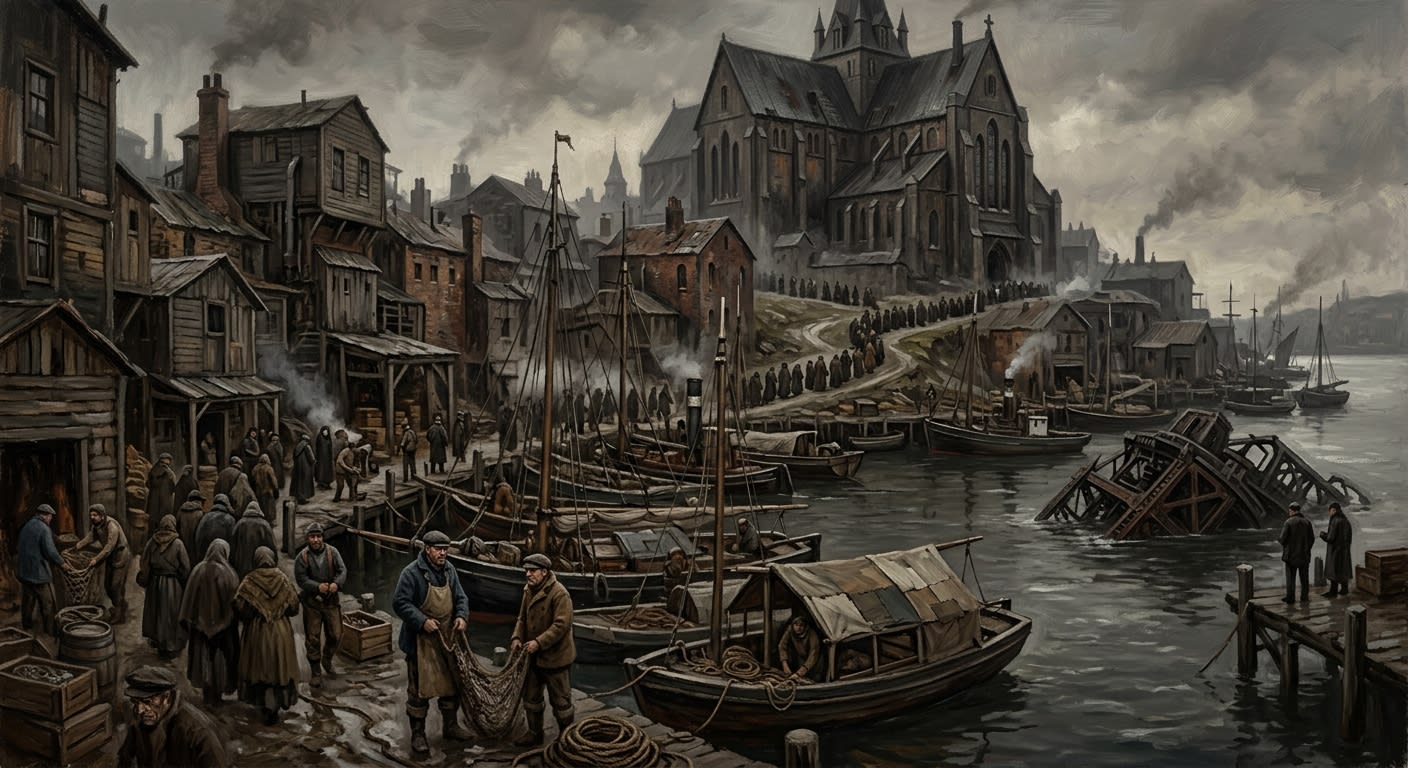
Phaleron Bay
The fishermen count boats because the water has learned names
Phaleron Bay is the Bosphorus inner approach's fishing ward, smuggling pocket, pilgrim nuisance, and quiet witness to the Iron Idol that waits below.
Codex Ref. II.4.09-189

Sub-Archon Provisional Yvette Langres
The woman in the wine cellar who can tell you whether your city exists
Yvette Langres administers three hundred million addresses from a damp Strasbourg cellar; provisional since A.S. 194, indispensable since the first corrected line.
Codex Ref. III.2.01-013
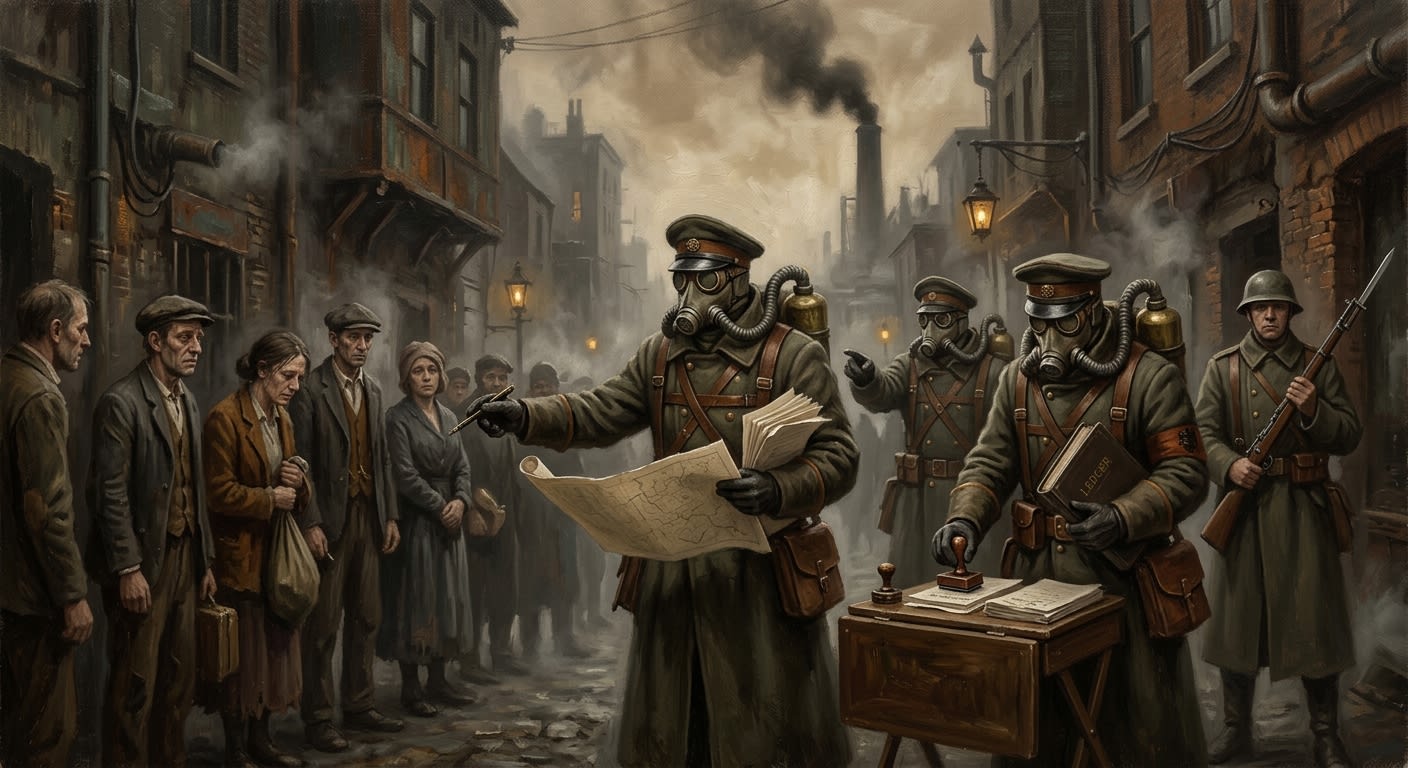
The Assignors
Men with maps, seals, and exactly enough authority to be hated
Assignors are Settlement field officers: map-carriers, permit-revokers, and escort-dependent instruments by which ink tells citizens where to stand.
Codex Ref. XII.2.06-001
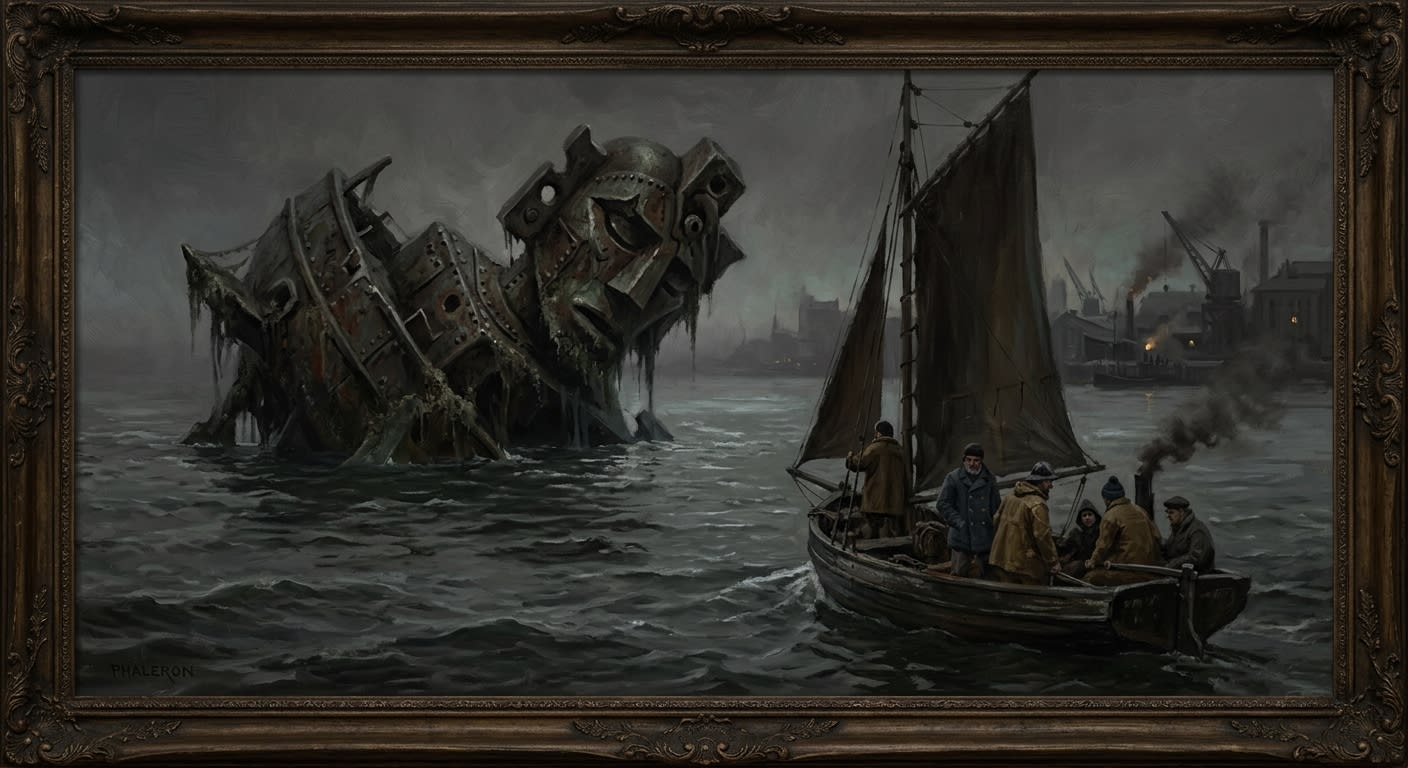
The Iron Idol
What the chain did not burn, the water learned to keep
A submerged iron anomaly off Phaleron Bay, linked to the Black Sea Armada's missing forty-seventh ship and watched by fishermen who wisely look elsewhere.
Codex Ref. V.2.02-001
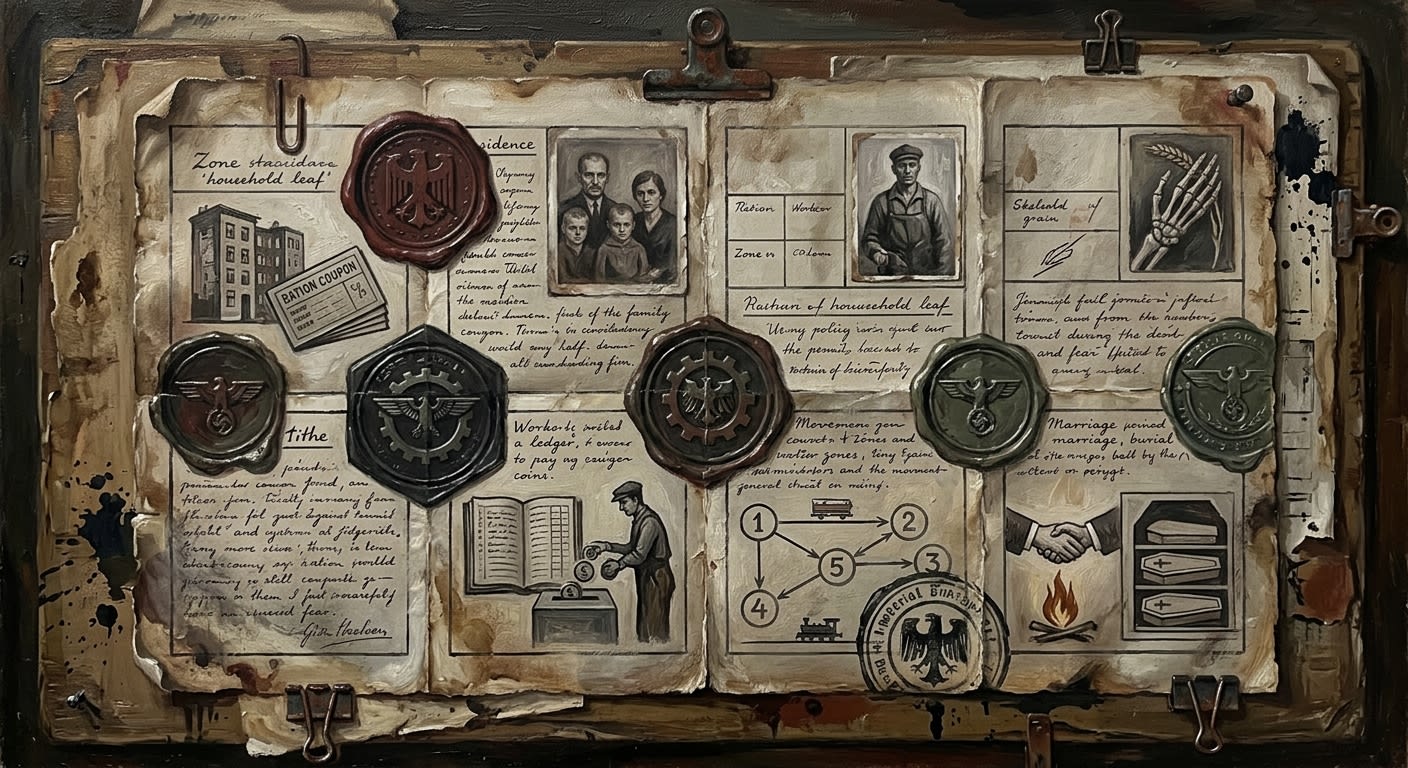
Zone Permit
The paper beneath the feet, and the shackle in the drawer
The Zone Permit is lawful standing made paper: residence, ration, tithe, movement, marriage, burial, and fear folded into one stamped household leaf.
Codex Ref. XIII.1.93-130
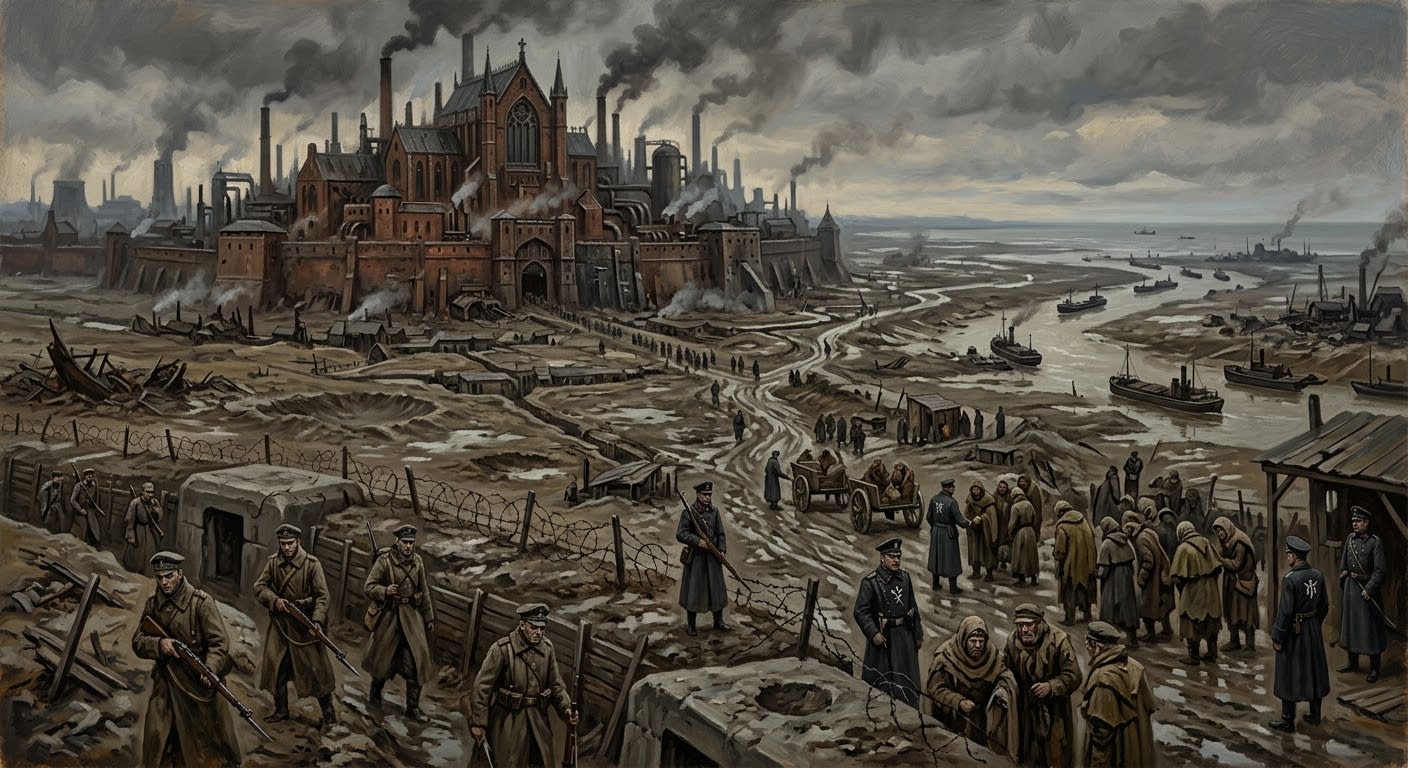
Zones 5 through 7
Mud, mouth, water — the outer grammar of danger
Zones 5 through 7 are the Synod’s controlled contact belt: contested mud, demonic custody, sea-rim commerce, contraband, pilgrimage, and useful contamination.
Codex Ref. XIII.1.00-207