

Reverse Index
Referencing “Ledger Laws”
Every codex entry that links to Ledger Laws. 16 entries.
Return to Ledger Laws

Black-Zone Specialist
Behind the screen, every kindness needs a signature
The Black-Zone Specialist serves Mercy Ward patients classified as terminal, contagious, anomalous, inconvenient, or beyond allotment. Every kindness needs a signature; every death must balance the ledger.
Codex Ref. XII.6.04-002
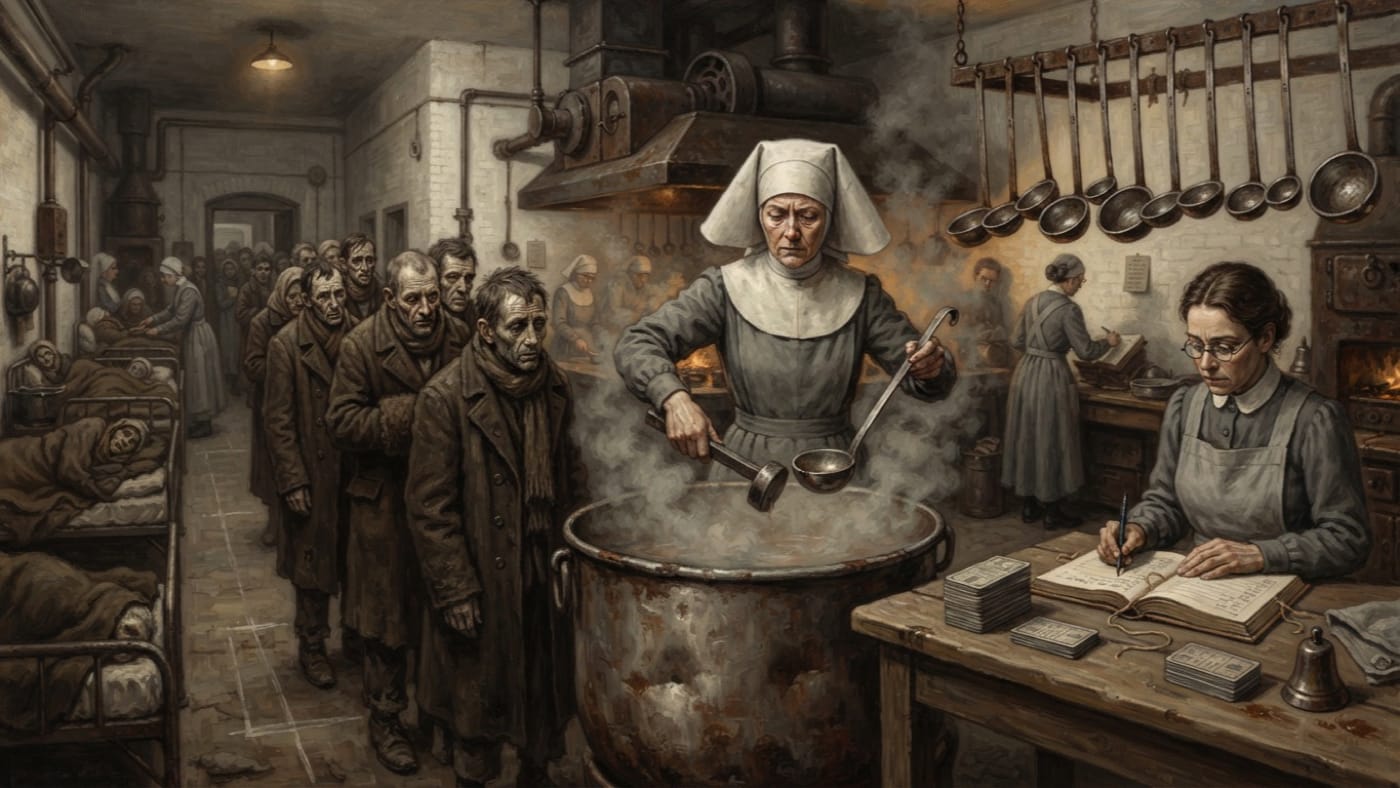
Blessing of the Ladles
Once a year the Church kisses the ladles; the measure remains fixed
An A.S. 201 survey of Saint Marrow's Mercy-house feast: ladles washed, counted, kissed and struck; the bowl is full, provided the hunger is registered.
Codex Ref. XIII.1.89-201

Book of Departures
Where the last breath becomes lawful ink
The Book of Departures receives every lawful death: mercy, tax instrument, burial rite, inheritance key, prayer license, and muzzle for ghosts.
Codex Ref. XIII.1.87-112

Bottle Quay
Where authority is poured into glass and taught appetite
Candlewick's ink-bottling throat: glassyards, shade seals, micro-vials, Hungry Ink suspicion, and the useful fires by which paper learns command.
Codex Ref. II.1.01-092
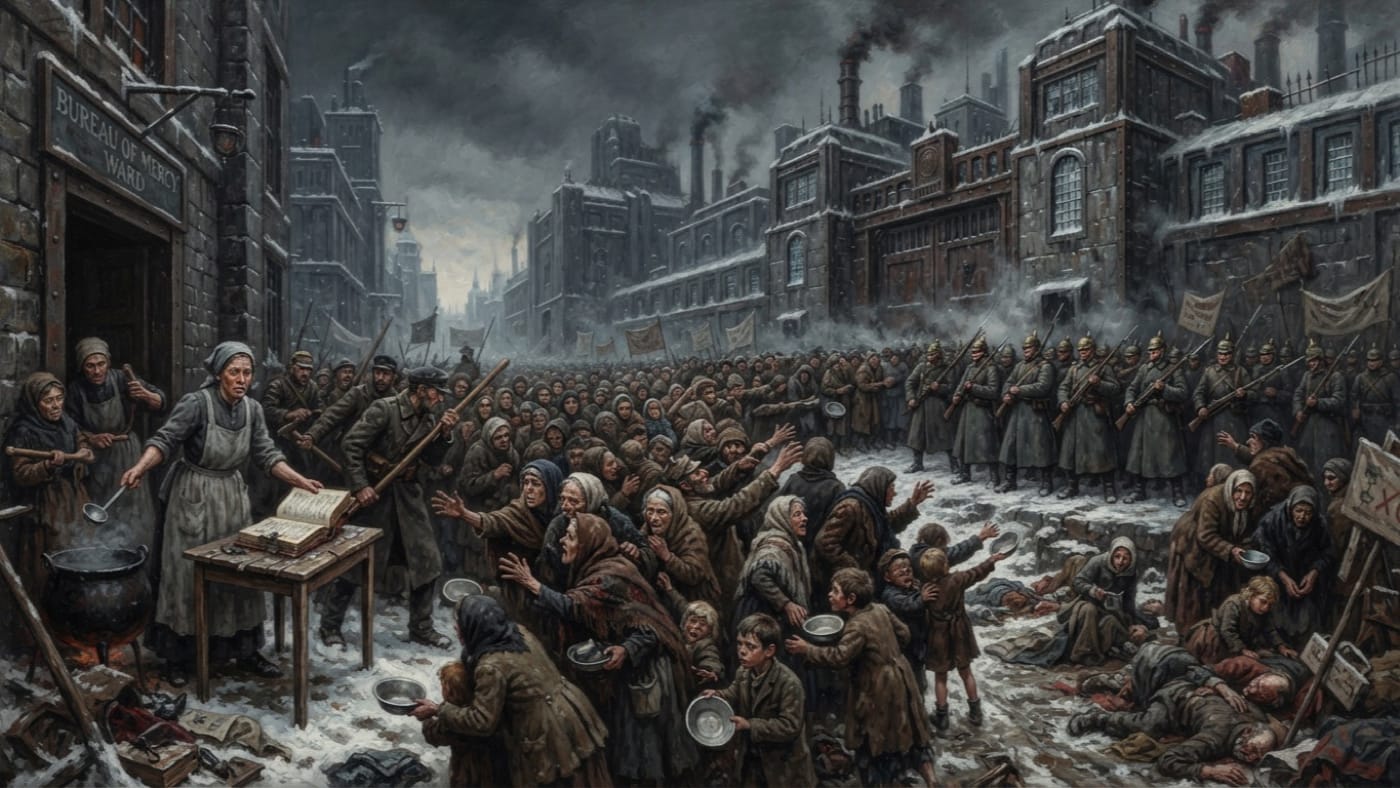
Broth Riots of A.S. 112
The hungry approached the granary; Mercy opened a ledger
The Broth Riots of A.S. 112 lasted eleven days: three hungry garrison populations sought grain; War supplied rifles, Purity arrests, and Mercy the Ledger Laws.
Codex Ref. VII.8.10-112
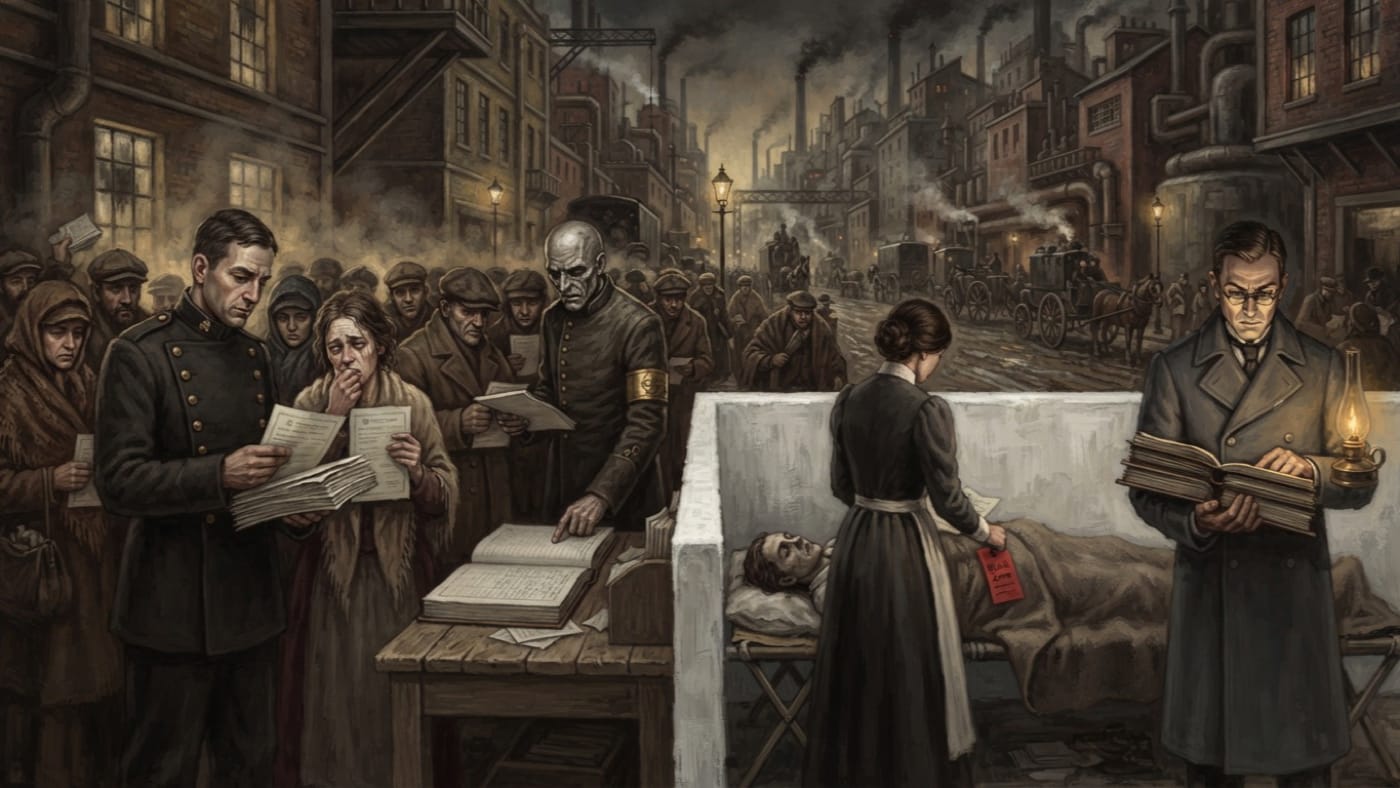
Clean Paper Plague of A.S. 199
The paper was clean. The patient was dying.
In A.S. 199, forged health clearances crossed Marrowgate's cordons while certified patients died. The ensuing audits exposed a system that trusted the seal more readily than the sick.
Codex Ref. VII.4.20-199

Merciful Pragmatists
Bread before ashes; auditors after bread.
A weak Synodal faction that ranks charity above purity. Commonly identified with Saint Mildred's Hospitallers, it survives because someone must feed the queues before the auditors arrive.
Codex Ref. VIII.7.01-201

Mercy Line
The rope where grief learned its tariff schedule
The Mercy Line began as a left-hand rope outside Saint Morin's chapel in A.S. 157, where grief discovered that even mercy could be accelerated.
Codex Ref. II.2.06-157
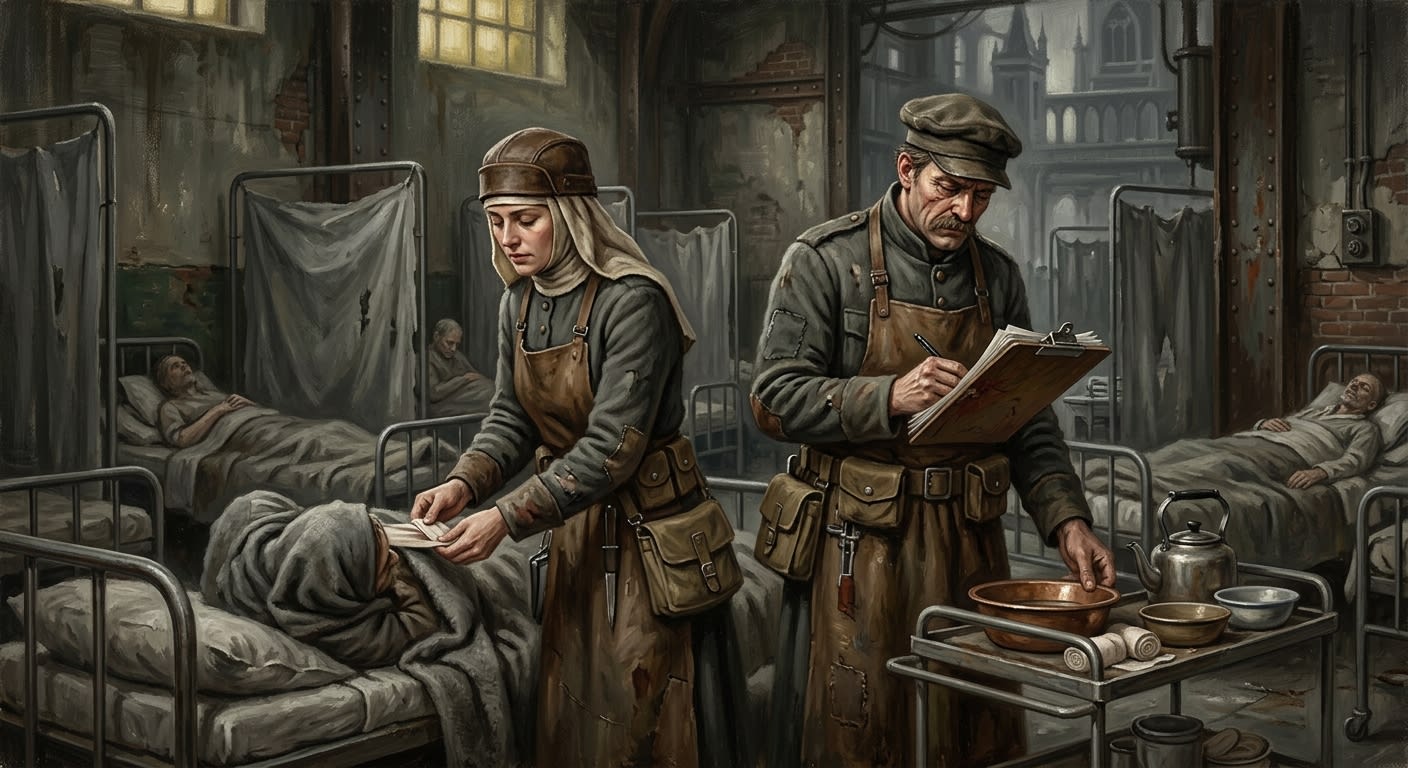
Mercy Ward-Sister / Mercy Ward-Brother
The hand that brings broth also carries the ledger
The Mercy Ward-Sister and Ward-Brother are the Bureau of Mercy's grey-aproned operators of counted compassion, where broth, bandage, confession, and paperwork become one instrument.
Codex Ref. XII.6.04-001
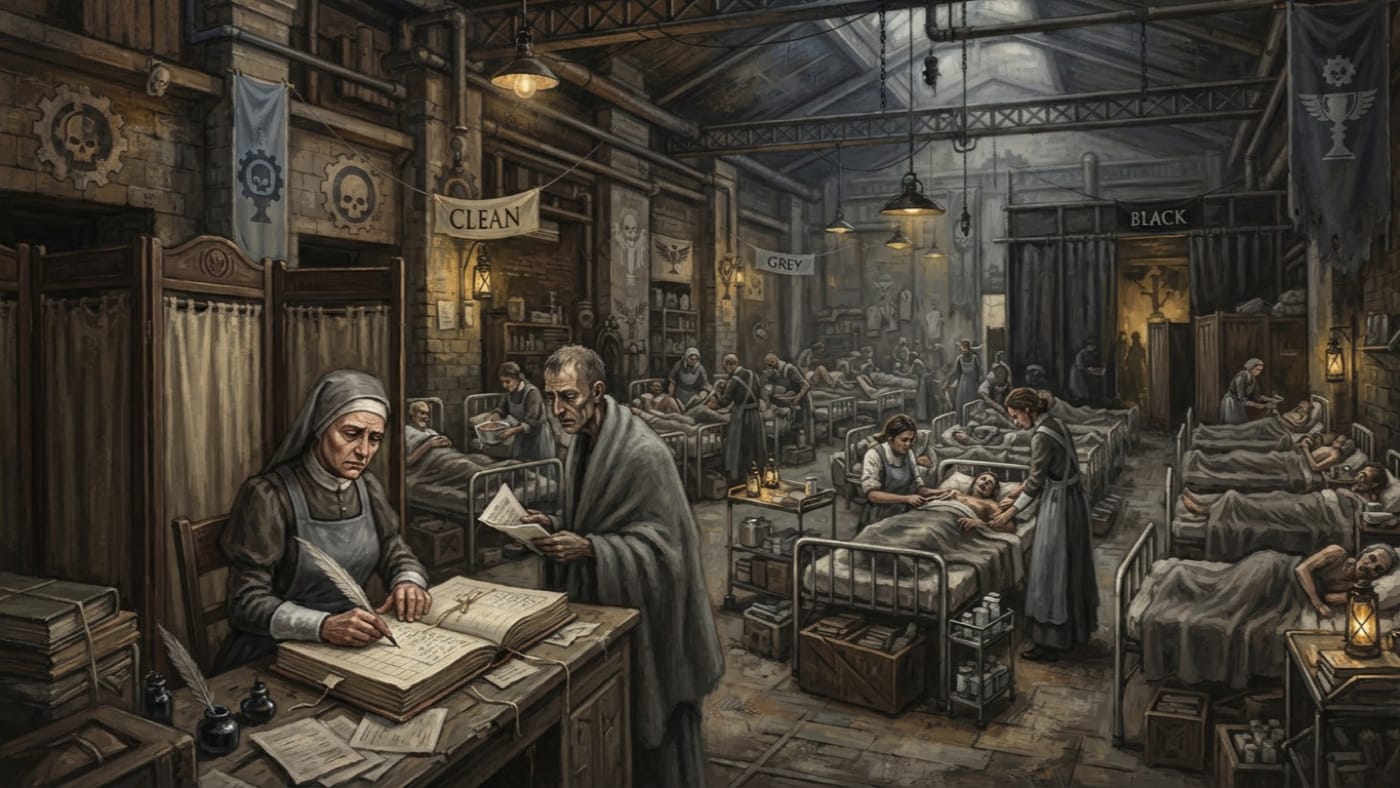
Mercy Wards
The bed is allotted; the suffering must be entered
The Bureau of Mercy's houses of the sick: broth, bandages, confession and clean, grey or black tags. This A.S. 201 survey counts the registered wards; the living remain harder to reconcile.
Codex Ref. II.6.04-001

Pity-Clerk
The ledger is correct; the patient is still waiting
A Pity-Clerk is a Mercy ward-hand accused of loving forms more than patients. Clean-zone tags wait for signatures or fuel chits; the ledger can remain immaculate.
Codex Ref. XII.6.04-002
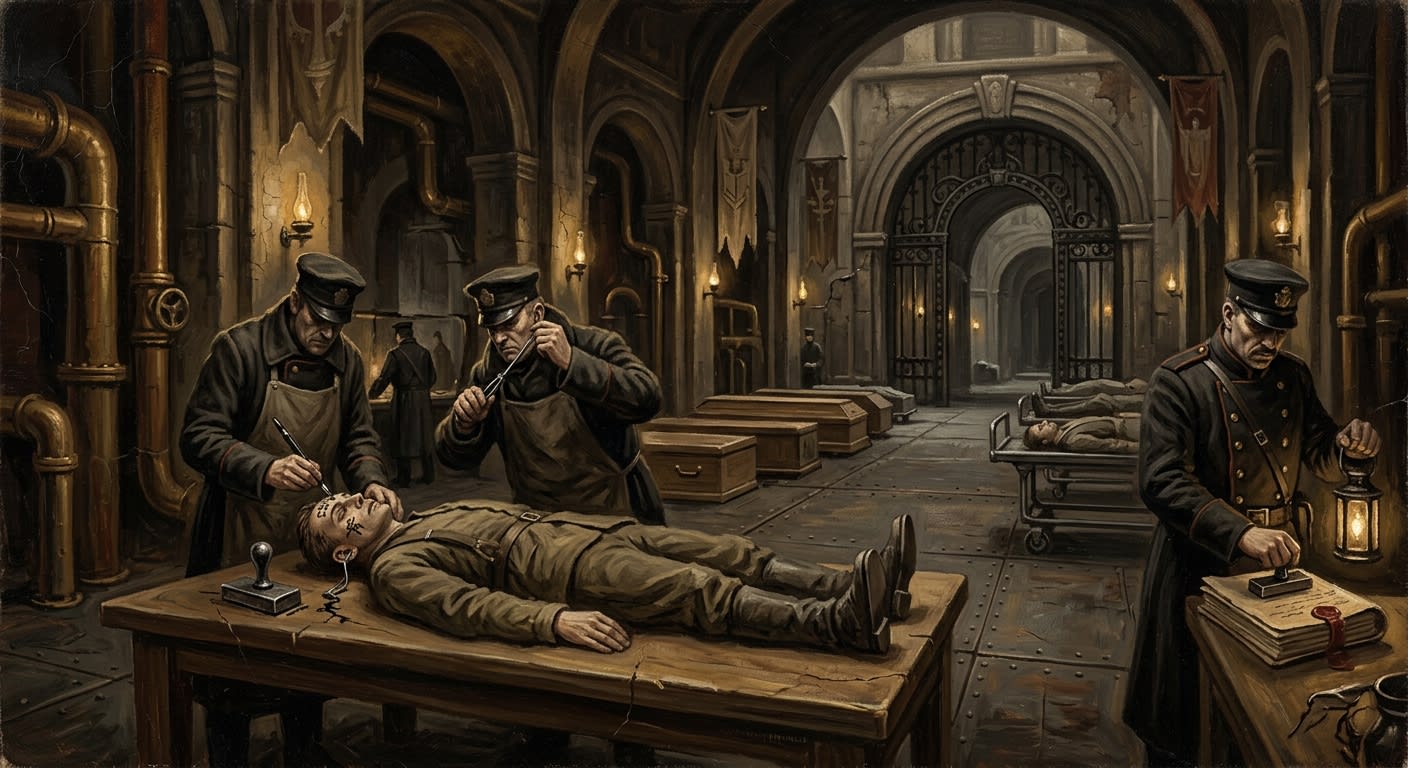
Rite of Passing
No soul departs until the Ledger has improved the death
The Rite of Passing turns death into lawful custody: right ear, last words, body display, black ink, routed remains, and no soul left vulgarly private.
Codex Ref. XIII.1.85-080
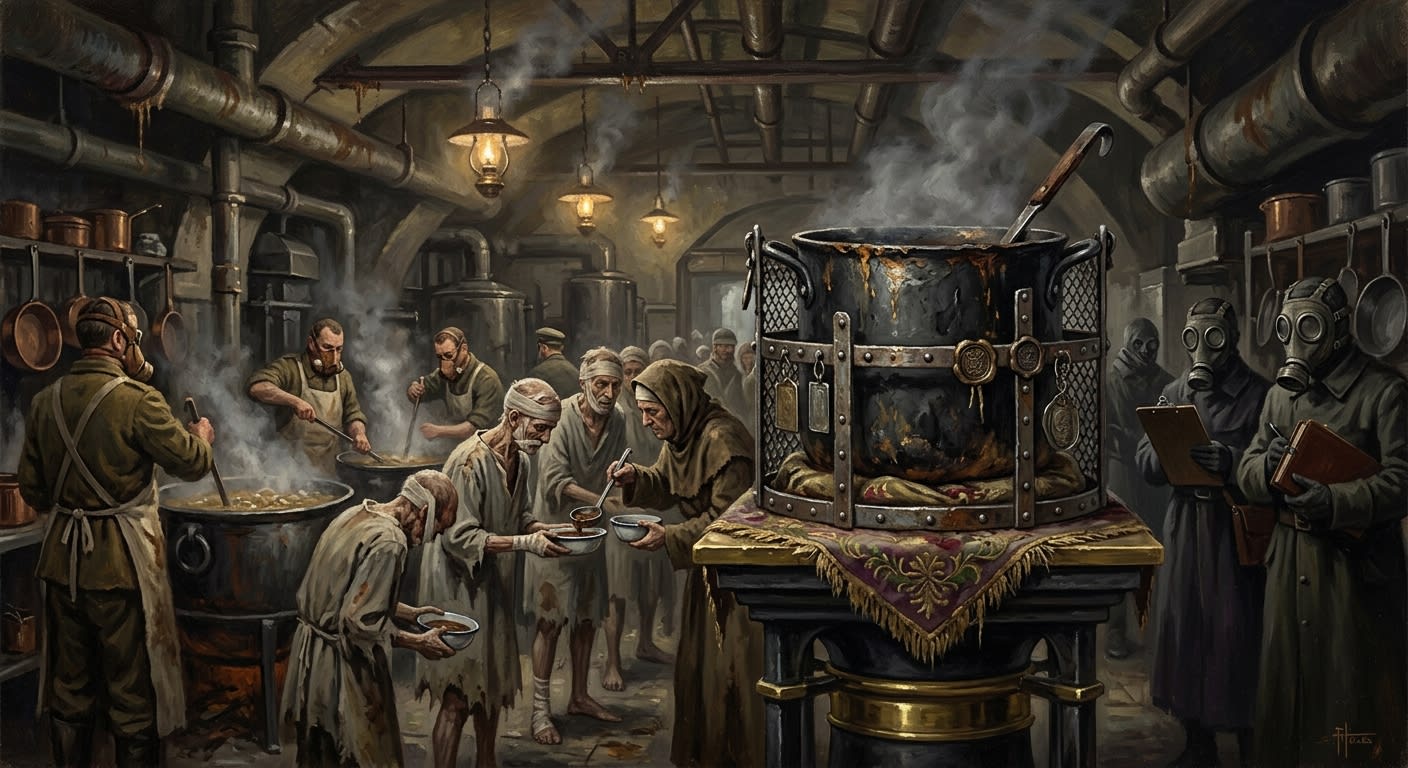
Saint Marrow-of-the-Ladle
Counted mercy, warm broth, and the holy arithmetic of the bowl
Saint Marrow-of-the-Ladle, patron of Mercy ward kitchens, may have been a pot; the Bureau prefers the miracle to the biography.
Codex Ref. III.2.01-016

Saint Varric of the Twelve Blisters
The chain becomes holy when the foot bleeds on schedule
Approved patron of Pilgrim-Chain Handlers: a useful, poorly documented saint whose twelve blisters became stations, tolls, custody doctrine, and a halo bent from iron.
Codex Ref. III.2.01-134

The Broth Riots
The hungry asked for food and received laws
The Broth Riots of A.S. 112 began with thin soup and ended with rifles, saints, Ledger Laws, and the Synod's discovery that hunger becomes obedient once measured.
Codex Ref. VII.8.10-112
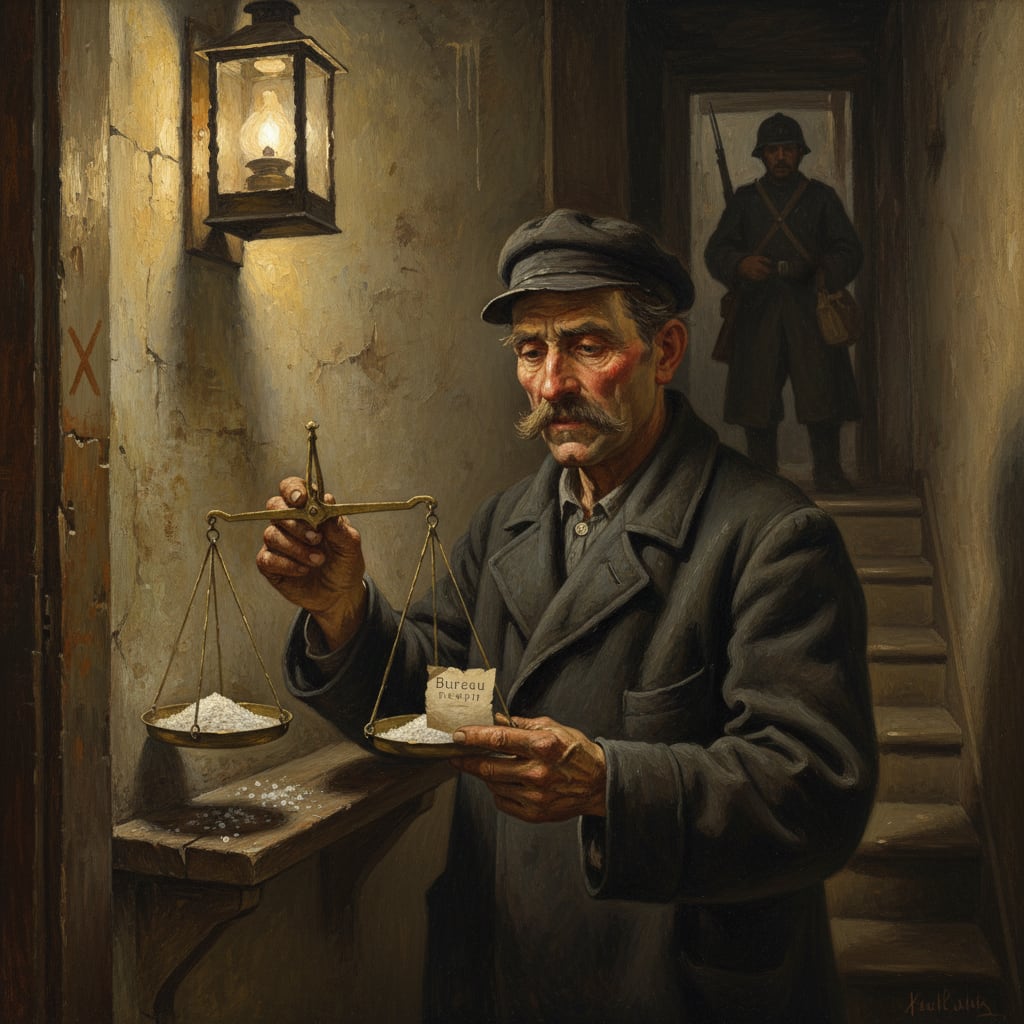
Tithe Assessor
The Bureau's walking appetite; or, what it costs to weigh the widow's salt
The Tithe Assessor is the Bureau of Tithes' primary field instrument — a man with scales, seal cord, and an armed escort who determines whether a family's payment purchases another week of existence. He arrives. He weighs. He chalks the door.
Codex Ref. XII.46.01-001