

Reverse Index
Referencing “Deathbed Confession Harvester”
Every codex entry that links to Deathbed Confession Harvester. 24 entries.
Return to Deathbed Confession Harvester
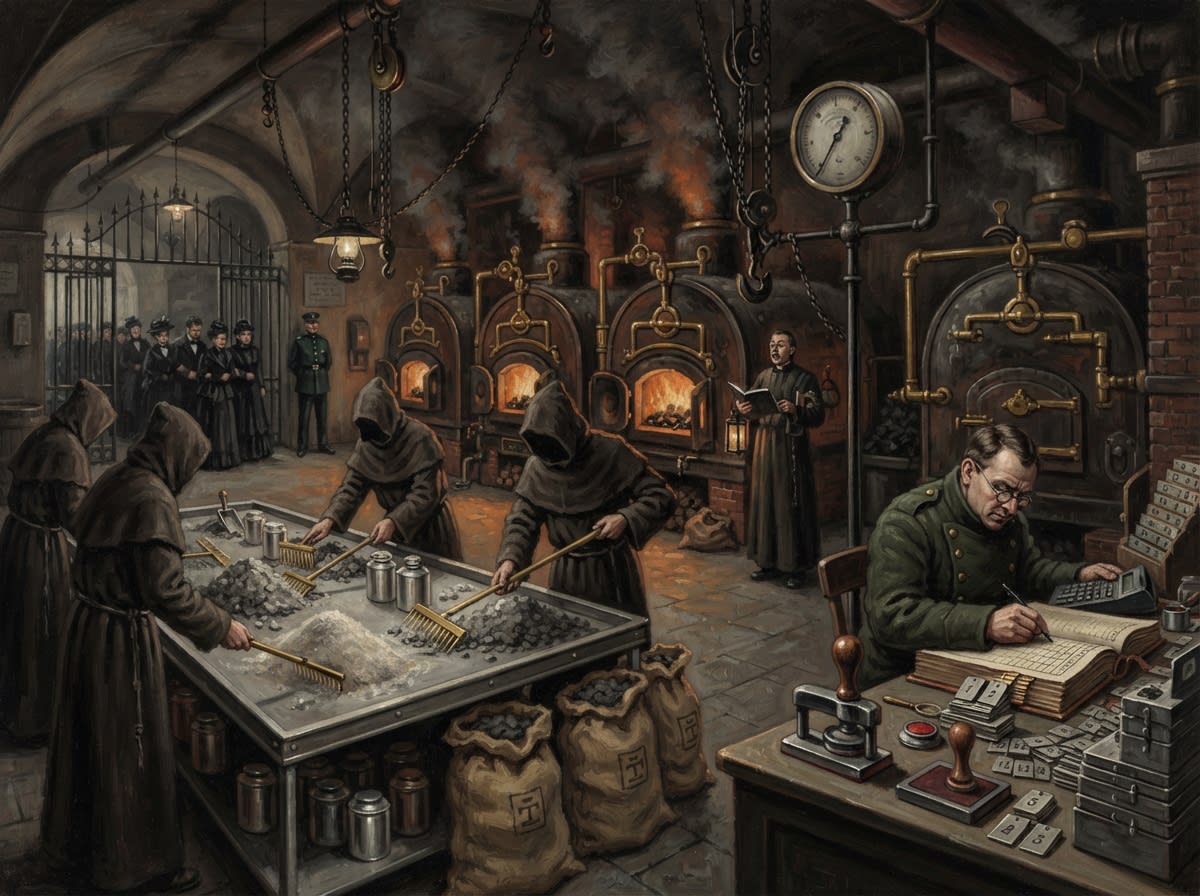
Ashbinders
The dead are sacred, and the receipt is extra
The Ashbinders burn the Synod's dead, sort the ash, sell the comfort, and accidentally perform one of the few procedures that keeps the cemeteries quiet.
Codex Ref. XII.41.01-001
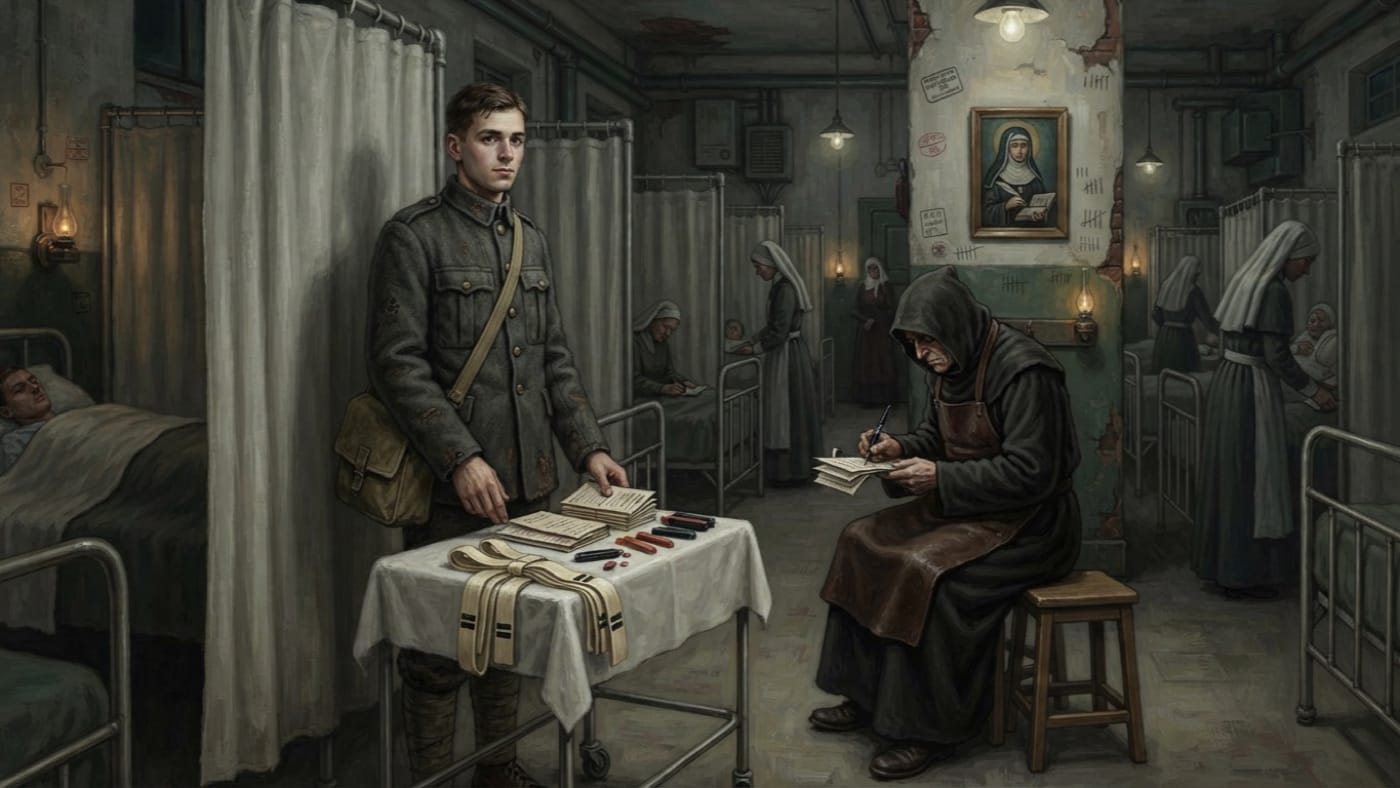
Bedside Runner
Close enough to hear everything, junior enough to bear the blame
The Bedside Runner carries ribbons, wax and forms for terminal confessions. The Bureau of Mercy's entry rank hears everything, seals nothing and supplies the second stool.
Codex Ref. XII.12.02-001
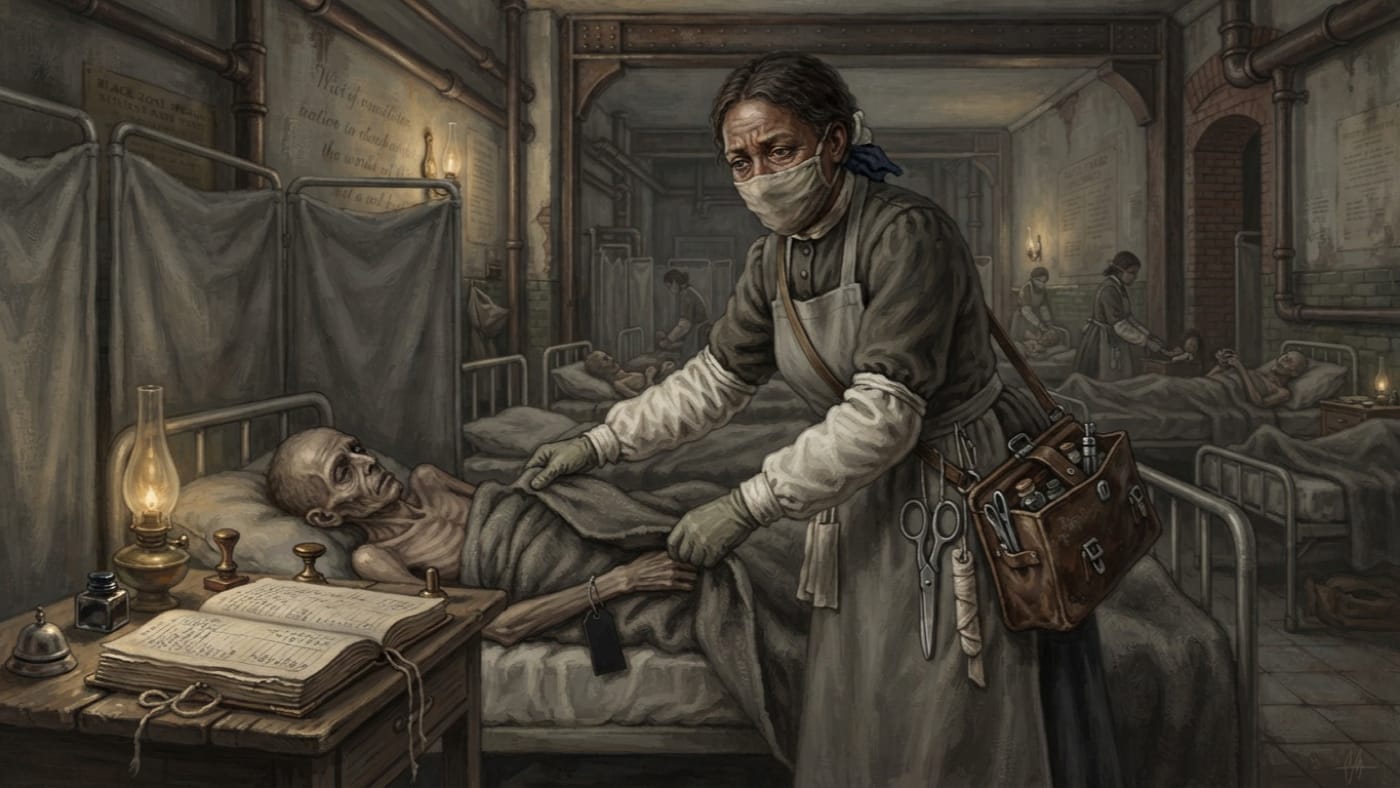
Black-Zone Specialist
Behind the screen, every kindness needs a signature
The Black-Zone Specialist serves Mercy Ward patients classified as terminal, contagious, anomalous, inconvenient, or beyond allotment. Every kindness needs a signature; every death must balance the ledger.
Codex Ref. XII.6.04-002
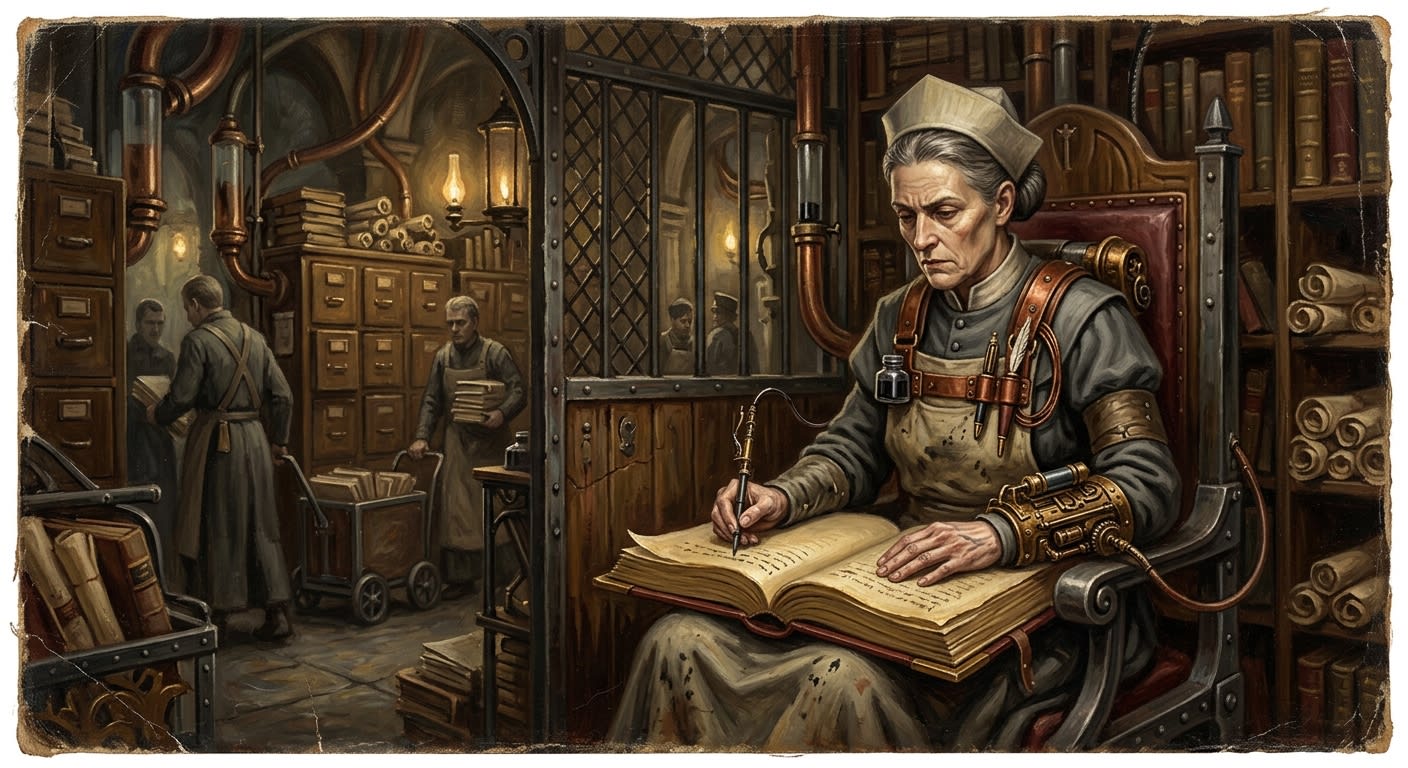
Blessed Vellum-Anna
The quiet quill that made mercy admissible before it made it kind
Blessed Vellum-Anna is the unauthenticated but indispensable patron of Deathbed Confession Harvesters, where last breaths become comfort, evidence, and paperwork.
Codex Ref. III.2.01-106
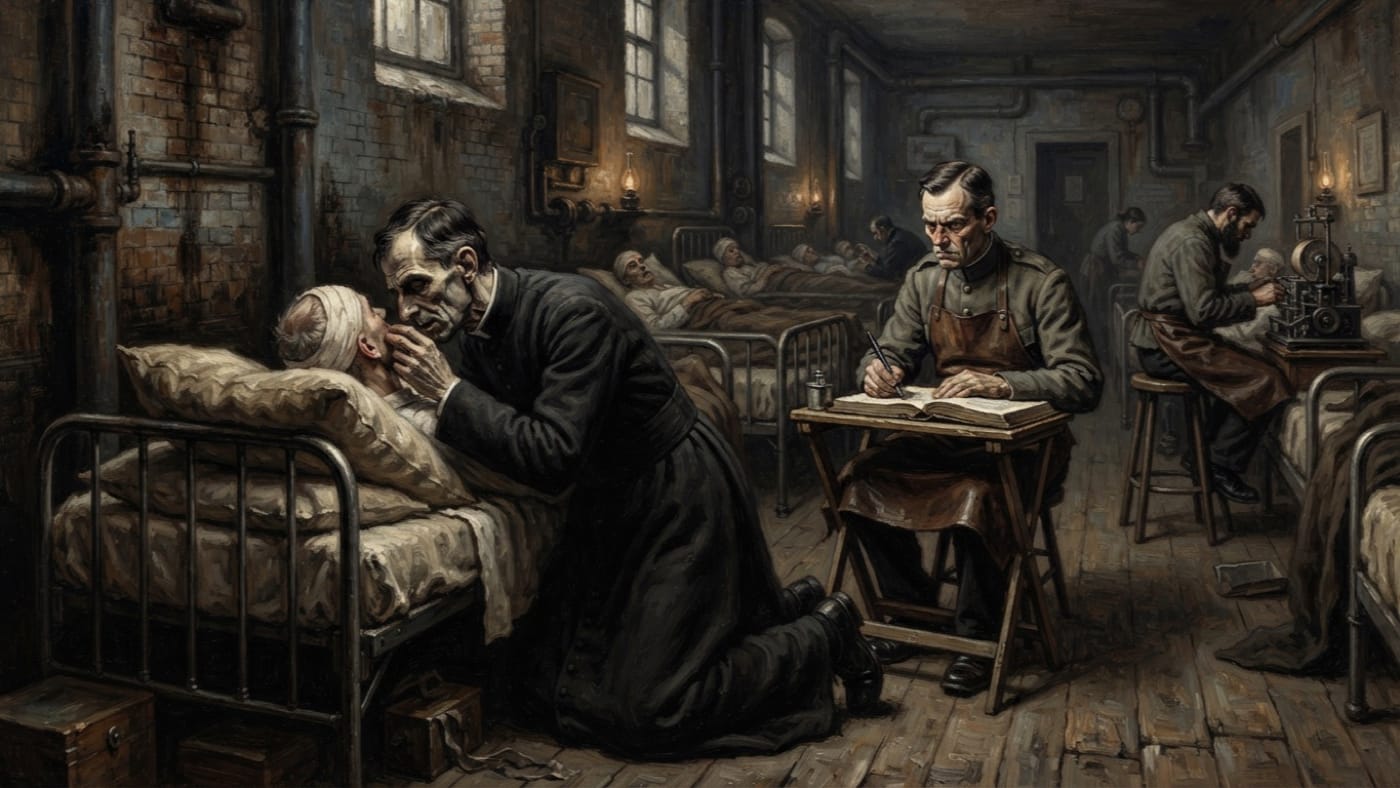
Bureau Circular 88-D
The appointed ear, and the reason Doctrine has not supplied
The Creed enters the right ear; the left remains doctrinally vulnerable. Circular 88-D specifies the side, withholds the reason, and leaves the bedside to manage exceptions.
Codex Ref. XIII.1.88-004
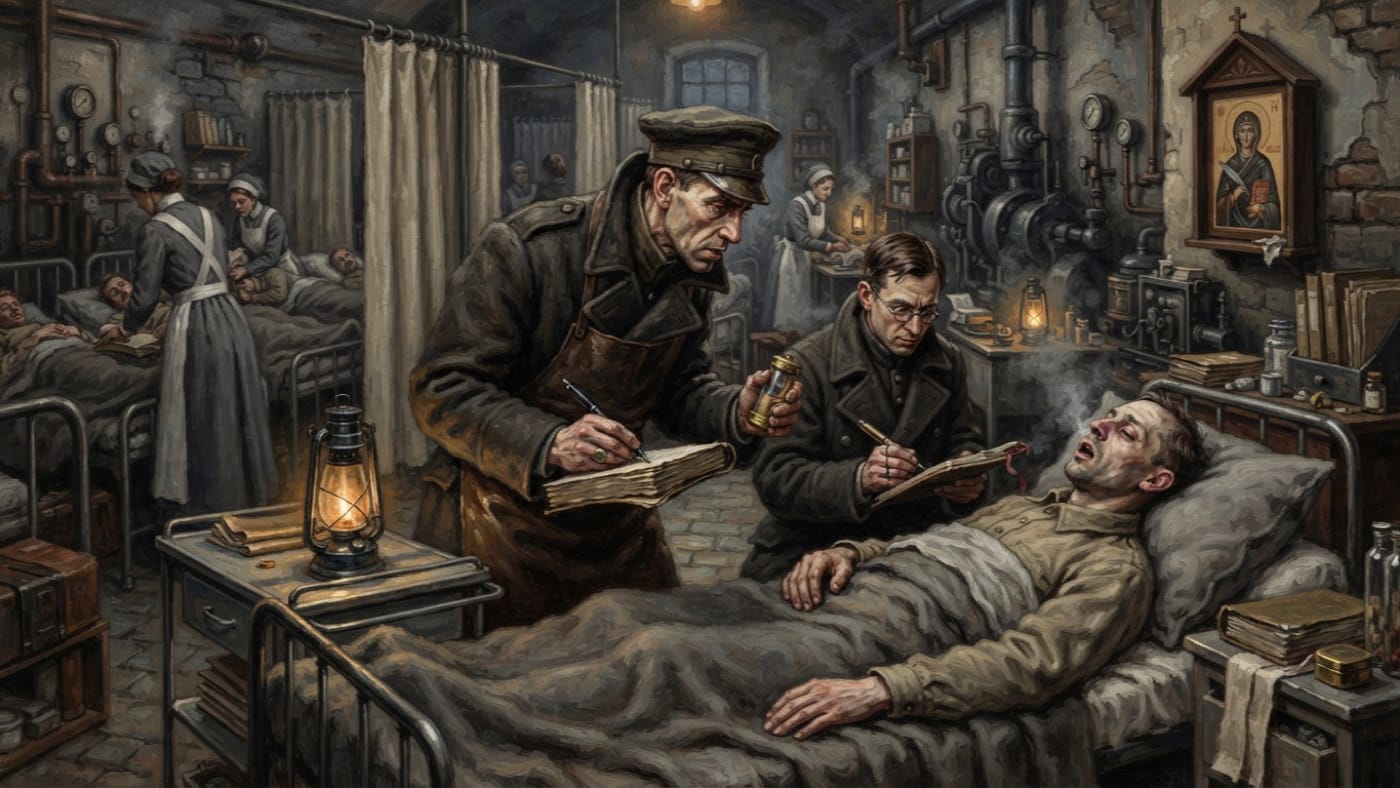
Butchers
Names before breath fails
The Butchers are information-first Deathbed Confession Harvesters, extracting names before comfort under the common seal. Their questions are sharp; their membership is unrecorded.
Codex Ref. XII.12.03-001
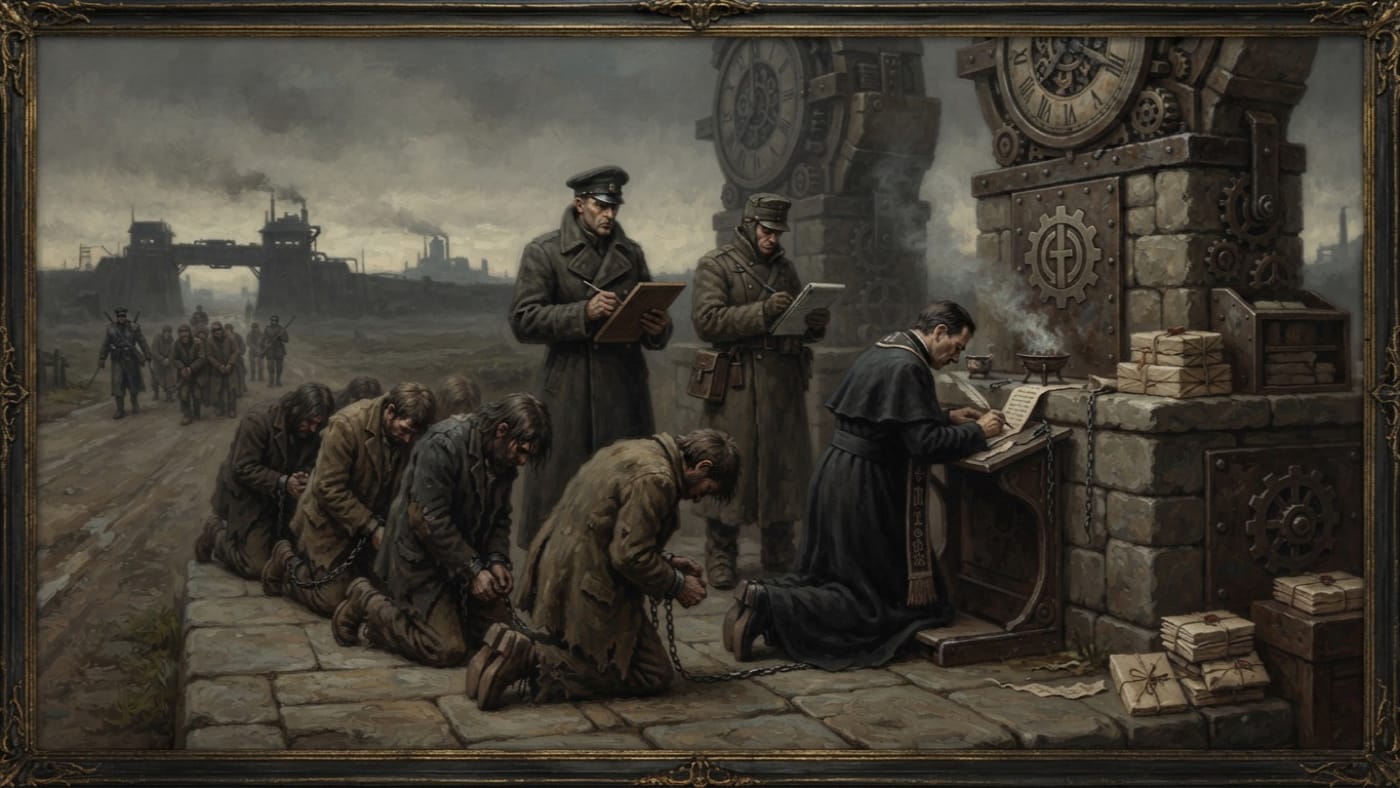
Confession Harvest
The strips travel with the condemned; the names bring others
At Jubilee shrines, chained penitents speak and priests write. Records files the sealed strips; Purity follows the names. The road supplies its next column.
Codex Ref. XIII.1.100-201
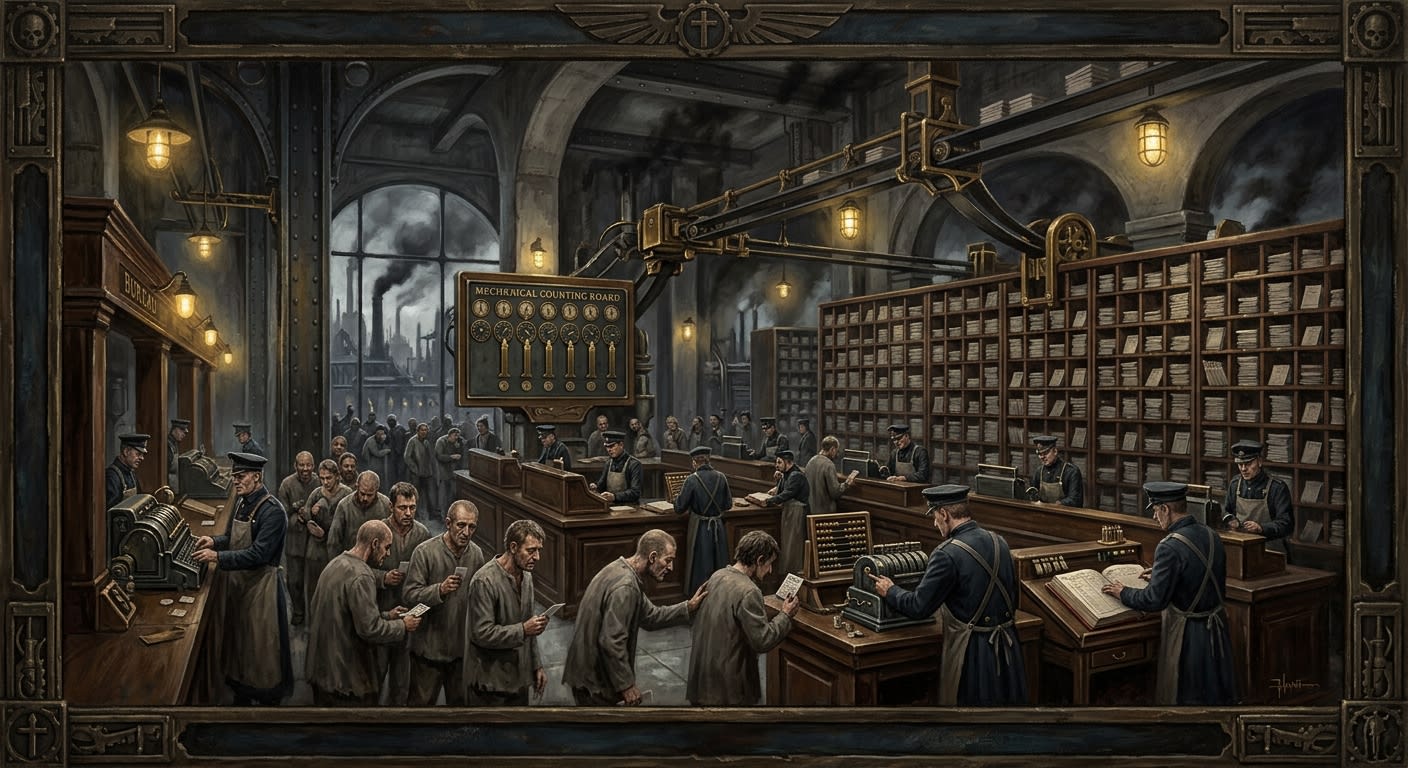
Confession Reform of A.S. 104
The paragraph that made sin stand in columns
A.S. 104 Bureau of Rites reform that standardised sin categories, introduced rubric cards, authorised lay intake clerks, and made confession countable at scale.
Codex Ref. VII.8.10-014

District Confession Registrar
The clerk hears the sin; the registrar counts the paper
A.S. 201 survey of the senior booth-paper keeper: blank receipts and mercy foils counted apart, district returns reconciled, and irregular kindness made legible to Purity. The registrar counts grace but cannot grant it.
Codex Ref. XII.9.02-001
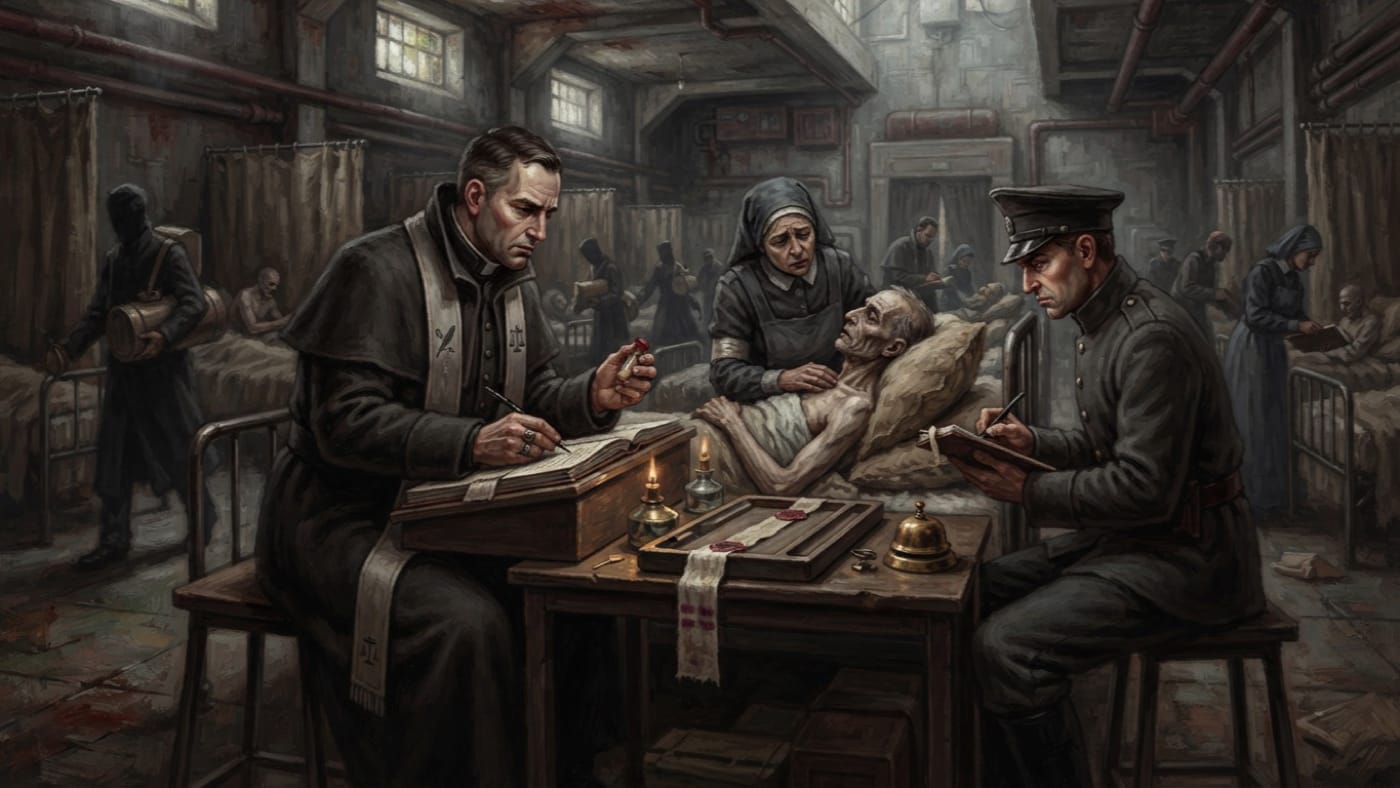
Double-Witness Protocol
Two seals for the truth, two names for the blame
After the A.S. 134 Mercy Ward Purge, terminal confessions require a second official, a countersigned ribbon, a separate bell-time entry and two seals. Mercy now has two names to blame.
Codex Ref. XIII.1.98-134
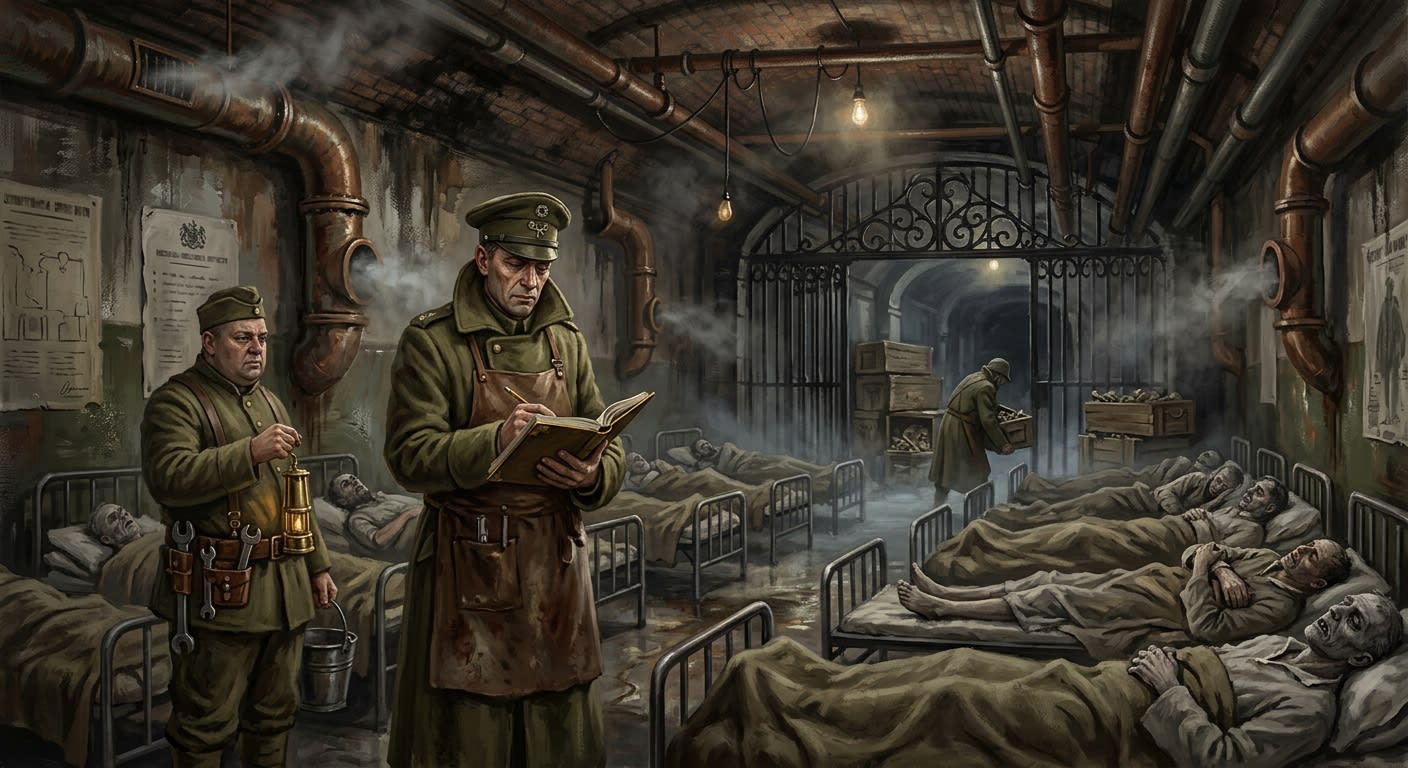
Great Plague of A.S. 78
The year Mercy learned to write before the mouth closed
The Great Plague of A.S. 78 ravaged the southern trench infirmaries and became the Lull of Names, birthing terminal confession mandates, ossuary controls, and threshold doctrine.
Codex Ref. VII.4.20-002

Hospital of Saint Sebastian
Where the Military City sends the wounded
Saint Sebastian tends wounded soldiers or buries them in Strasbourg's Military City. This A.S. 201 survey keeps the local record distinct from Mercy's wider machinery of care, confession and ink.
Codex Ref. II.2.10-201
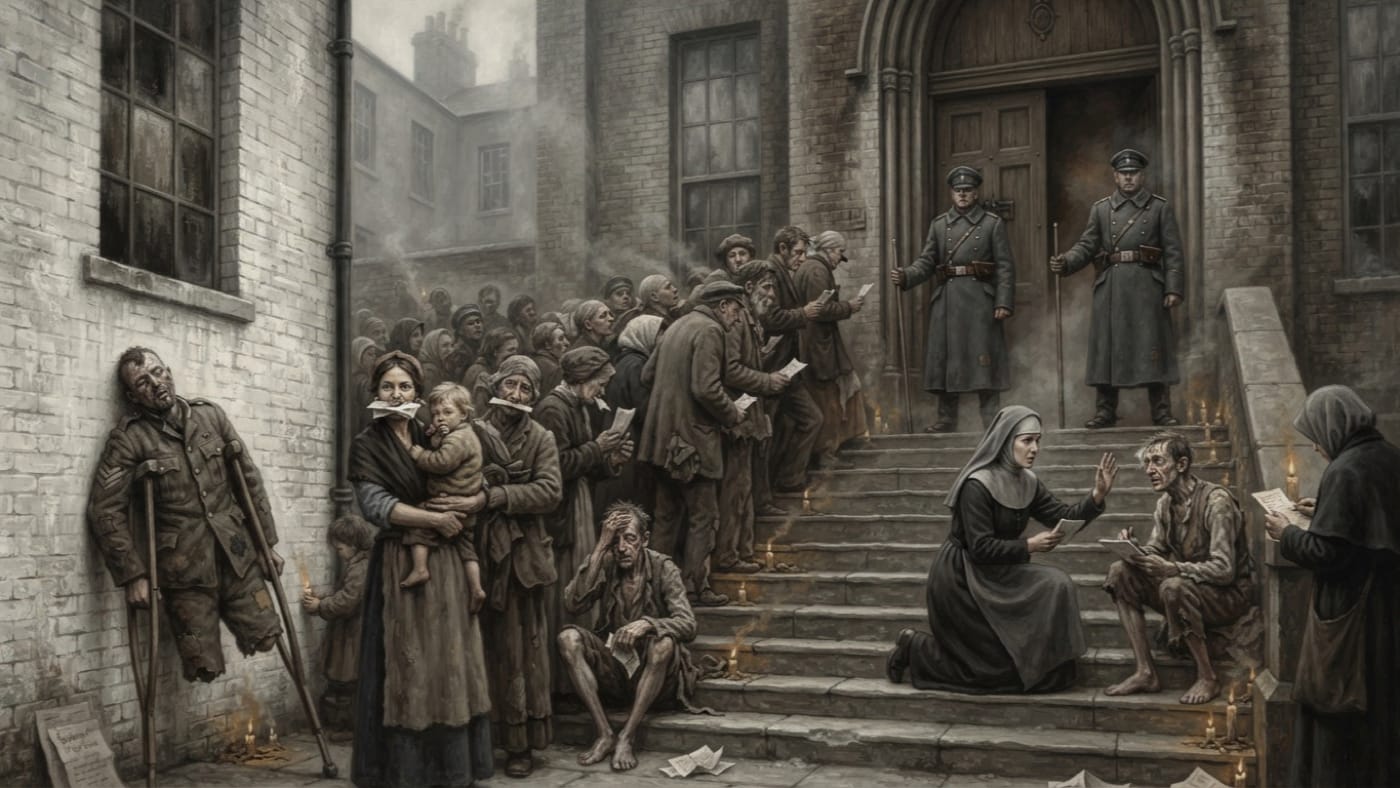
Mercy Chapel
Pain is relieved; the confession is retained
At Marrowgate's Mercy Chapel of the Unburdened, pain relief is rationed as sacrament, confessions become leverage, and sanctuary lasts as long as the chapel finds it useful.
Codex Ref. II.2.06-201

Mercy Rationing Reform of A.S. 134
Processing decides who may survive meanwhile; forgiveness is filed elsewhere
A.S. 134 Bureau of Rites reform, affirmed by Bureau of Doctrine, that restricted mercy stamps to licensed confessors, separated booth processing from forgiveness, and made unauthorised kindness auditable.
Codex Ref. VII.8.10-017

Mercy Tone
The slow note by which the body remains useful
Mercy Tone is the Brand-Singer school that preserves breath, extends confession, and proves that the Synod can call acquisition mercy when the note is slow enough.
Codex Ref. XIII.1.41-001
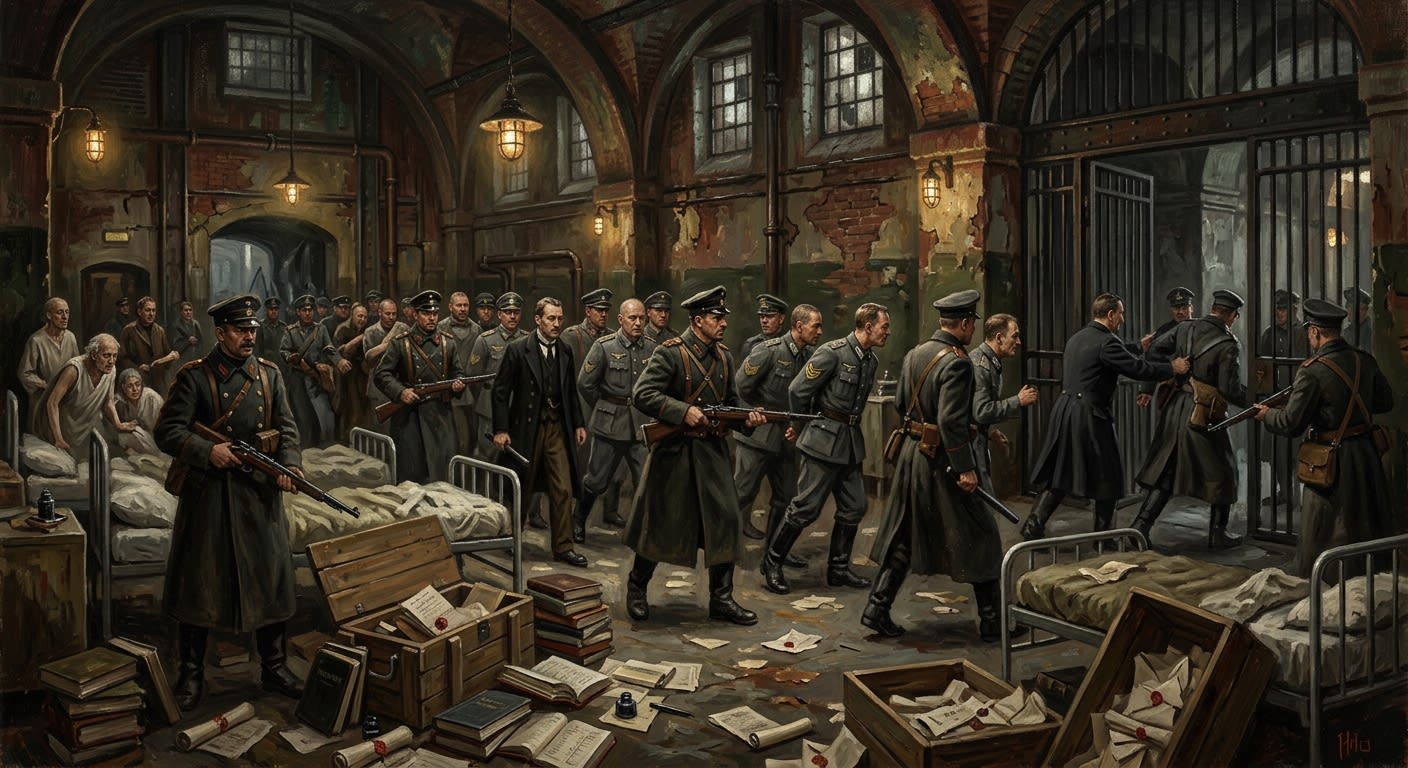
Mercy Ward Purge of A.S. 134
The year last words became contraband unless properly priced by authority
The Mercy Ward Purge of A.S. 134 exposed the sale and alteration of terminal confessions across Rhineland wards.
Codex Ref. VII.8.10-023
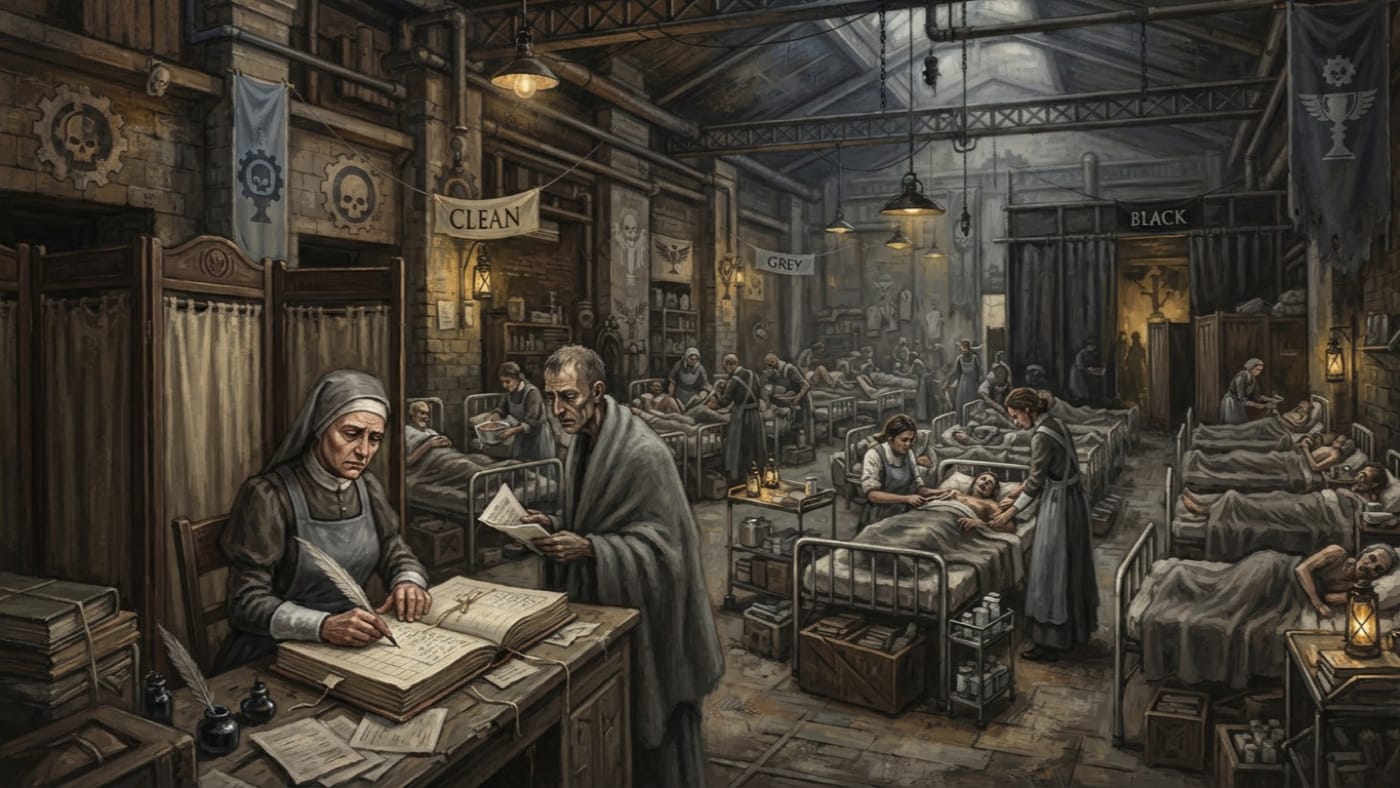
Mercy Wards
The bed is allotted; the suffering must be entered
The Bureau of Mercy's houses of the sick: broth, bandages, confession and clean, grey or black tags. This A.S. 201 survey counts the registered wards; the living remain harder to reconcile.
Codex Ref. II.6.04-001

Mortuary Index
The dead receive a line. The erased receive nothing.
The Bureau of Records acknowledges the dead one name at a time. A line in the Mortuary Index records a recognised death; the erased receive none. I certify the distinction.
Codex Ref. XIII.1.98-201

Pity-Clerk
The ledger is correct; the patient is still waiting
A Pity-Clerk is a Mercy ward-hand accused of loving forms more than patients. Clean-zone tags wait for signatures or fuel chits; the ledger can remain immaculate.
Codex Ref. XII.6.04-002
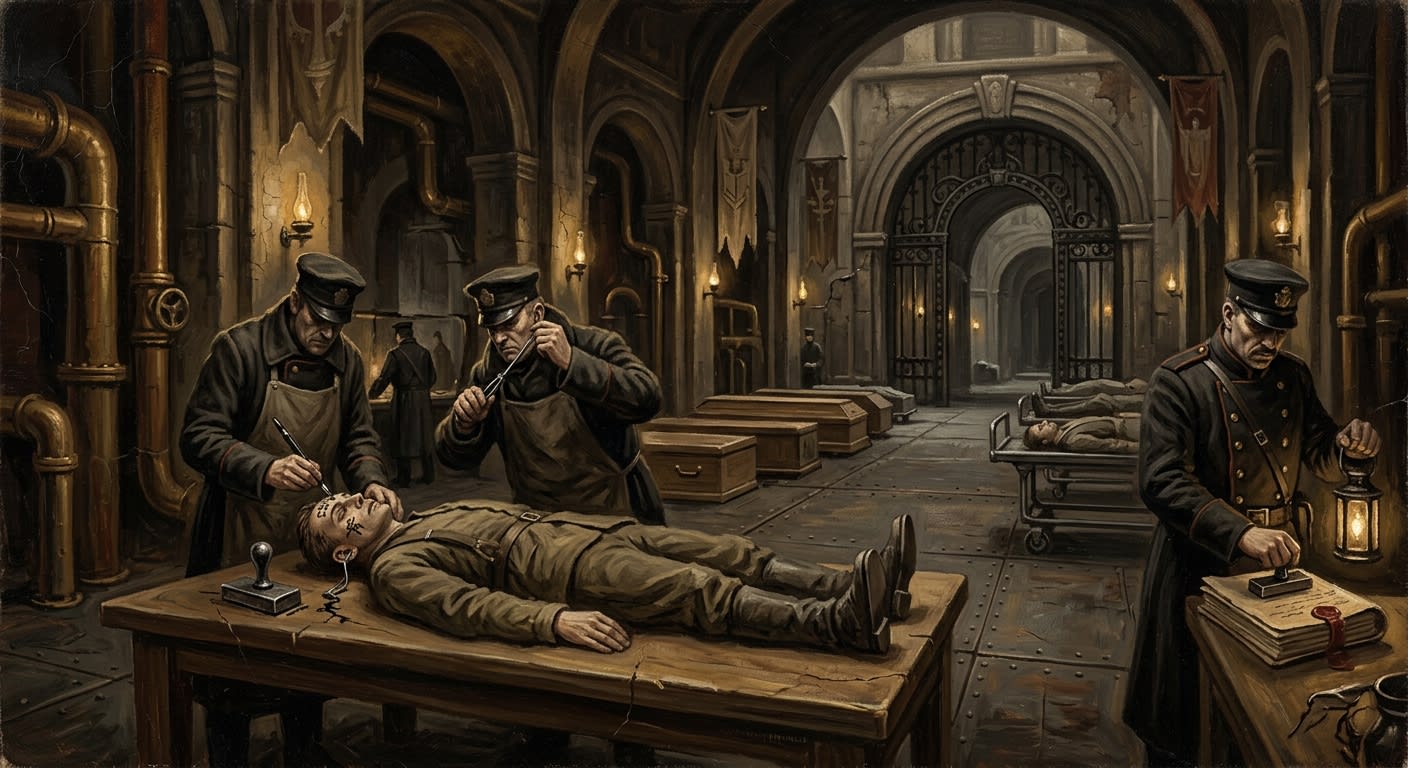
Rite of Passing
No soul departs until the Ledger has improved the death
The Rite of Passing turns death into lawful custody: right ear, last words, body display, black ink, routed remains, and no soul left vulgarly private.
Codex Ref. XIII.1.85-080

Saint Edrin of the Three Nails
Cut true, name all, hold the door
Saint Edrin of the Three Nails is the patron of Gate-Carvers, remembered for sealing a plague-house during the A.S. 78 Lull of Names with measure, witness, and refusal.
Codex Ref. III.2.01-120

Standing Order 22-C
No last word unfiled, no dying mouth left private
Standing Order 22-C makes the dying useful: names first, comfort second, three copies sealed before the body is allowed to cool.
Codex Ref. XIII.1.98-080

Trier
The city that taught chalk to count before it spoke
Trier is a loyal Moselle city with old hands, white margins, soft chalk, river memory, and the dangerous courtesy of obedience performed too well.
Codex Ref. II.2.02-004
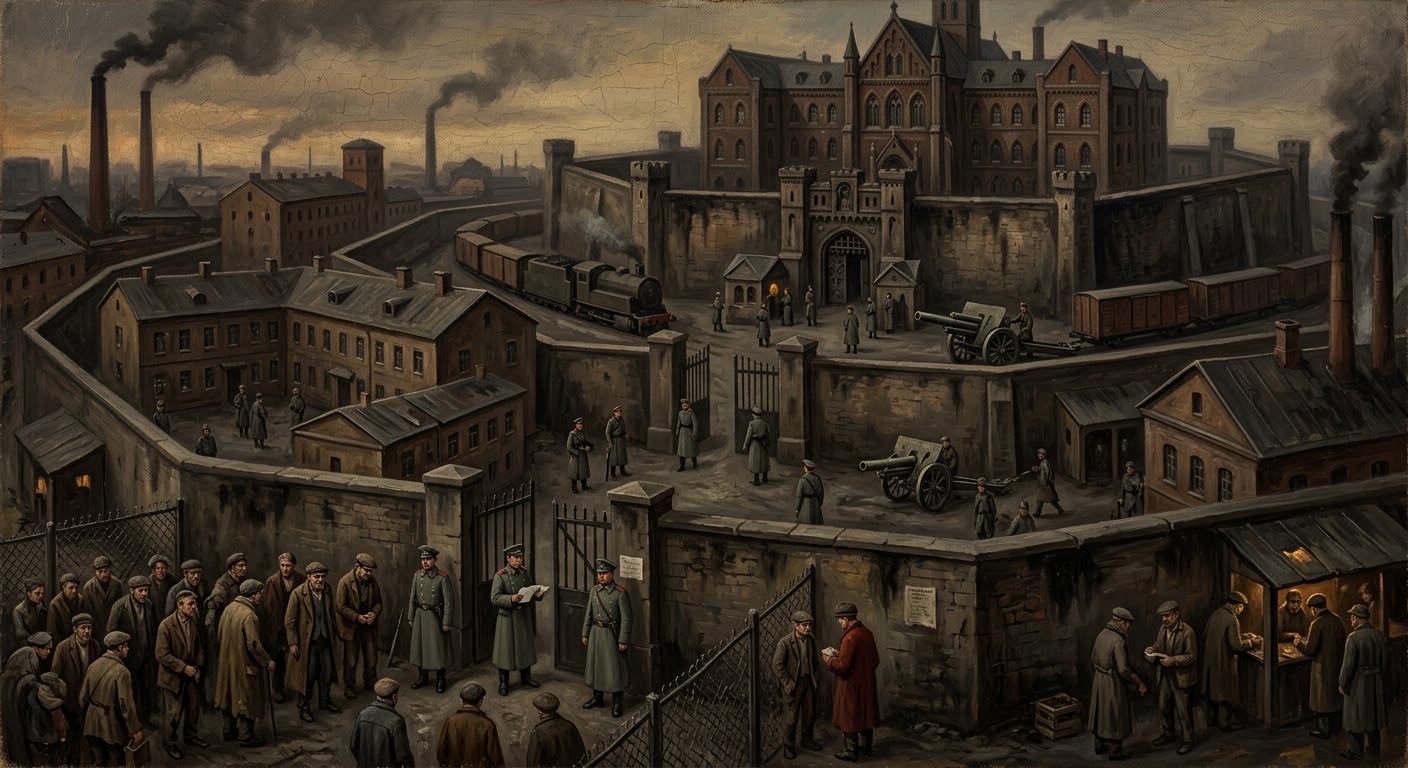
Zones 1 through 5
Five lawful pressures between invoice and mud
Zones 1 through 5 are graded permissions for bread, sons, movement, fear, artillery, and the state’s appetite.
Codex Ref. XIII.1.00-201