

Reverse Index
Referencing “Chapel of the Tide”
Every codex entry that links to Chapel of the Tide. 16 entries.
Return to Chapel of the Tide
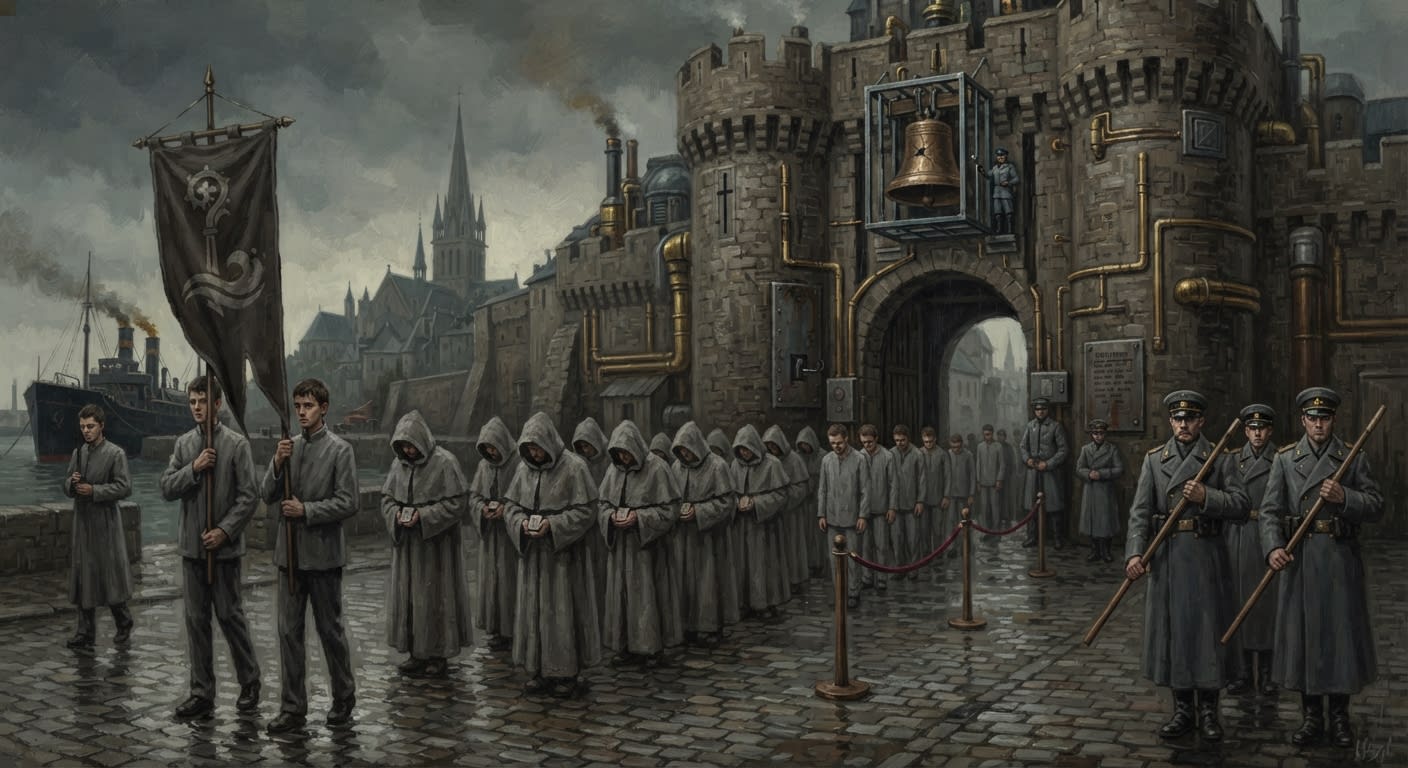
Annual Remembrance of Saint-Malo
Thirty-one tolls, forty-three seconds, and grief under licence
The annual office that makes Saint-Malo's first blood toll thirty-one times, hold forty-three seconds of silence, and remind Brittany that grief is licensed.
Codex Ref. XIII.1.87-011
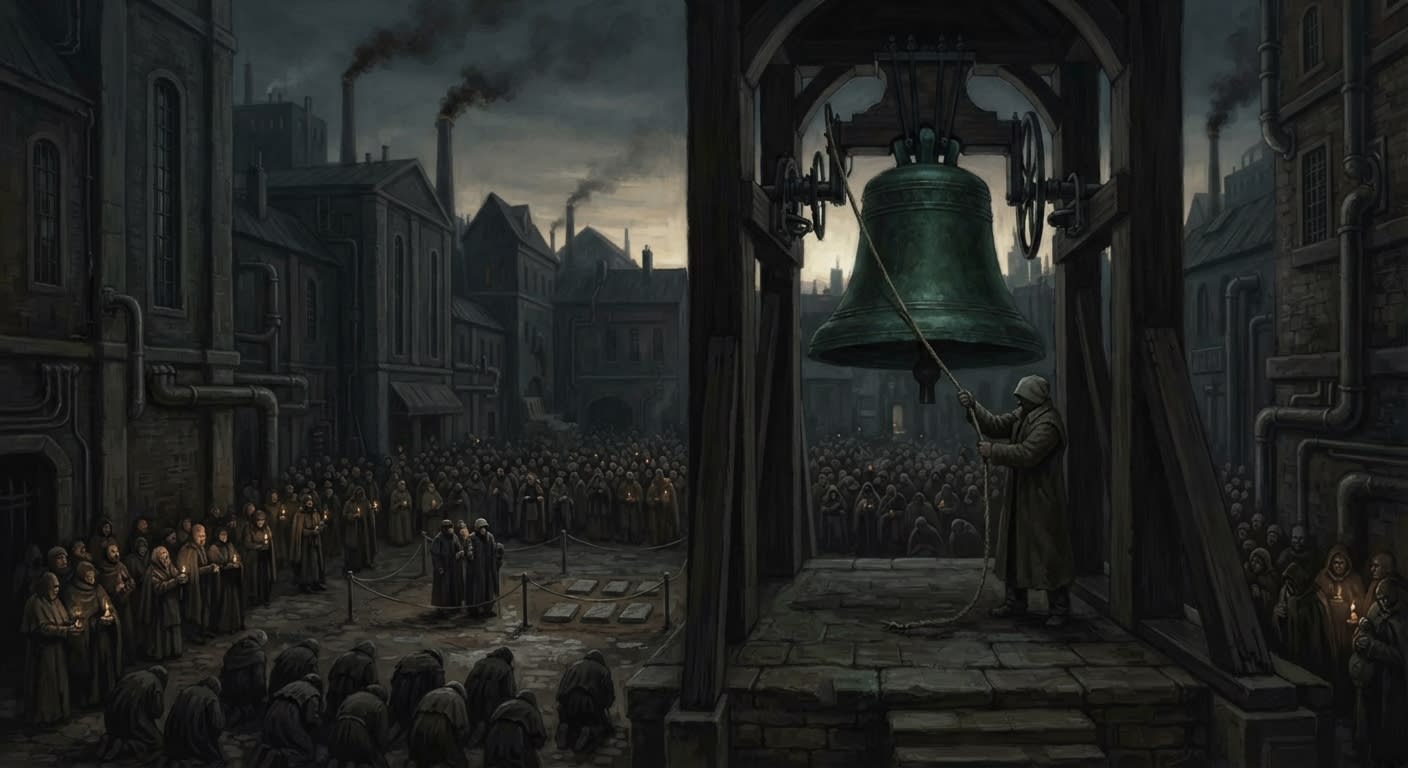
Antiphon Bell
Bronze may count what grief is not permitted to round
The Antiphon Bell is the licensed parish office that makes Saint-Malo audible: thirty-one tolls for the certified dead, then forty-three seconds for all who entered the gate.
Codex Ref. XIII.1.87-012
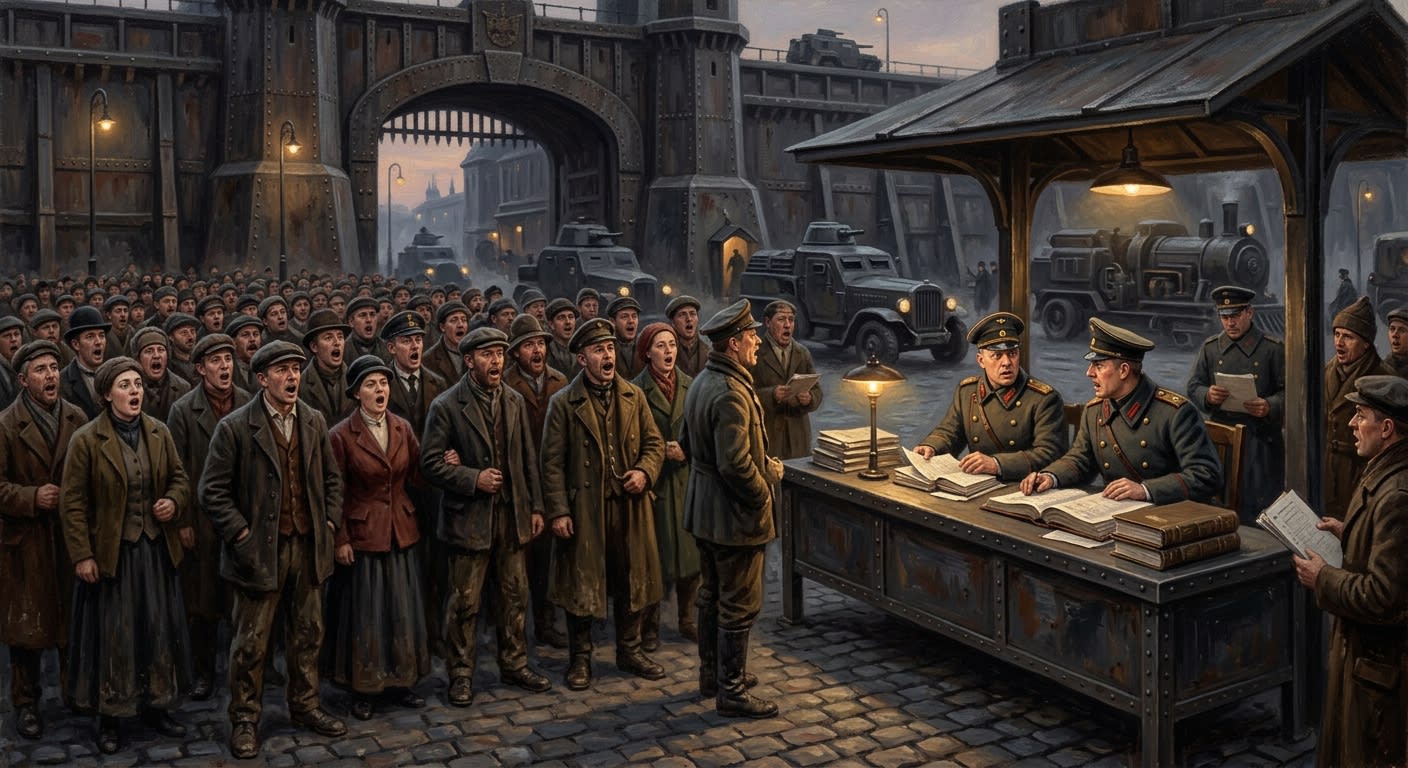
Antiphon of Safe Passage
The road is holy; the queue remains under authority
A Breton road-song entered the Ledger through Saint-Malo blood, survived as licensed memory, and now frightens gate clerks by teaching crowds one rhythm.
Codex Ref. XIII.1.87-010
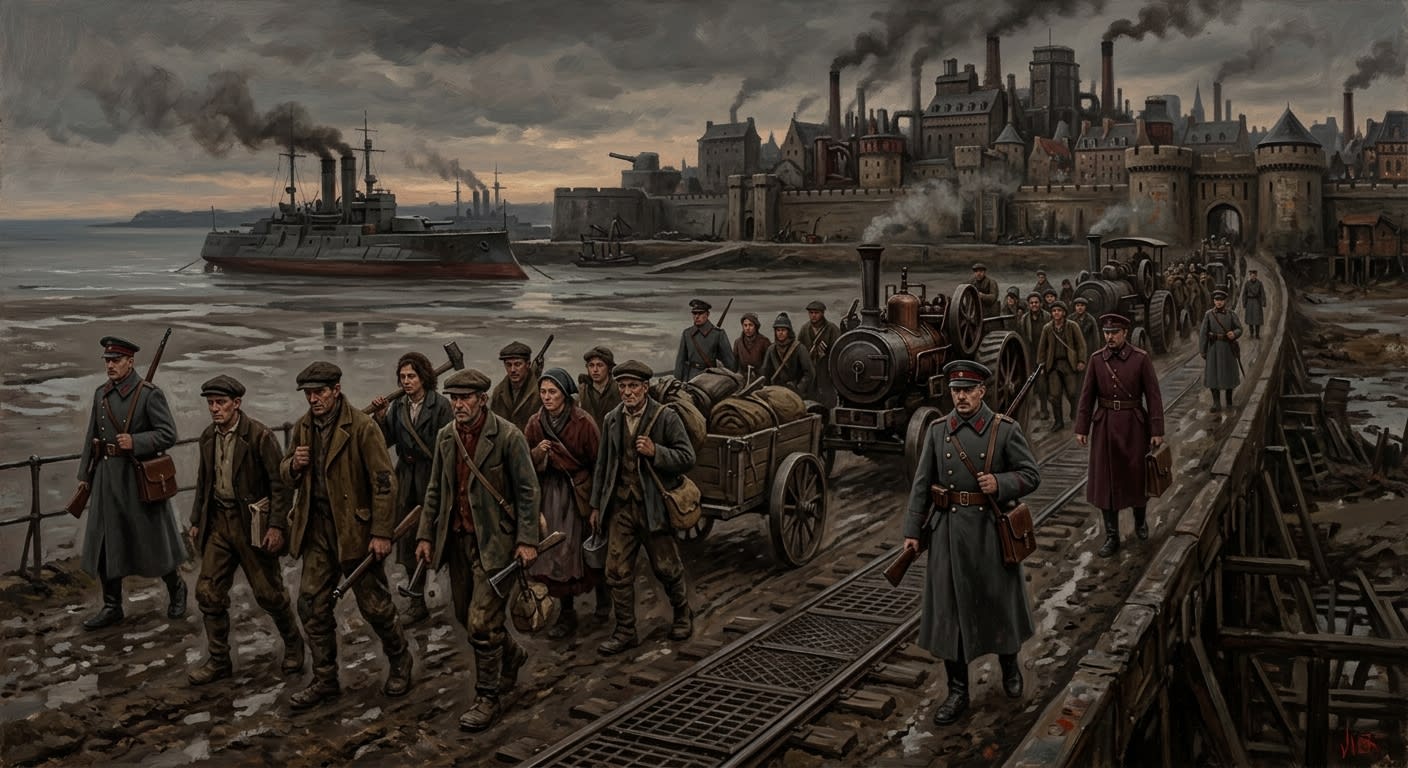
Brittany
The province that taught martyrdom to travel by road
Brittany is the Synod's western salt-wound: a loyal province that turned Saint-Malo's blood, Dinan's road, and local stubbornness into taxable Doctrine.
Codex Ref. II.1.09-010

Corvus
The fourteenth stands; the rest awaits its papers
Corvus is a later Church month whose fourteenth day commands the Saint-Malo fast, names and bells. The memorial is assigned; the massacre's exact day remains unproved.
Codex Ref. XIII.1.05-003
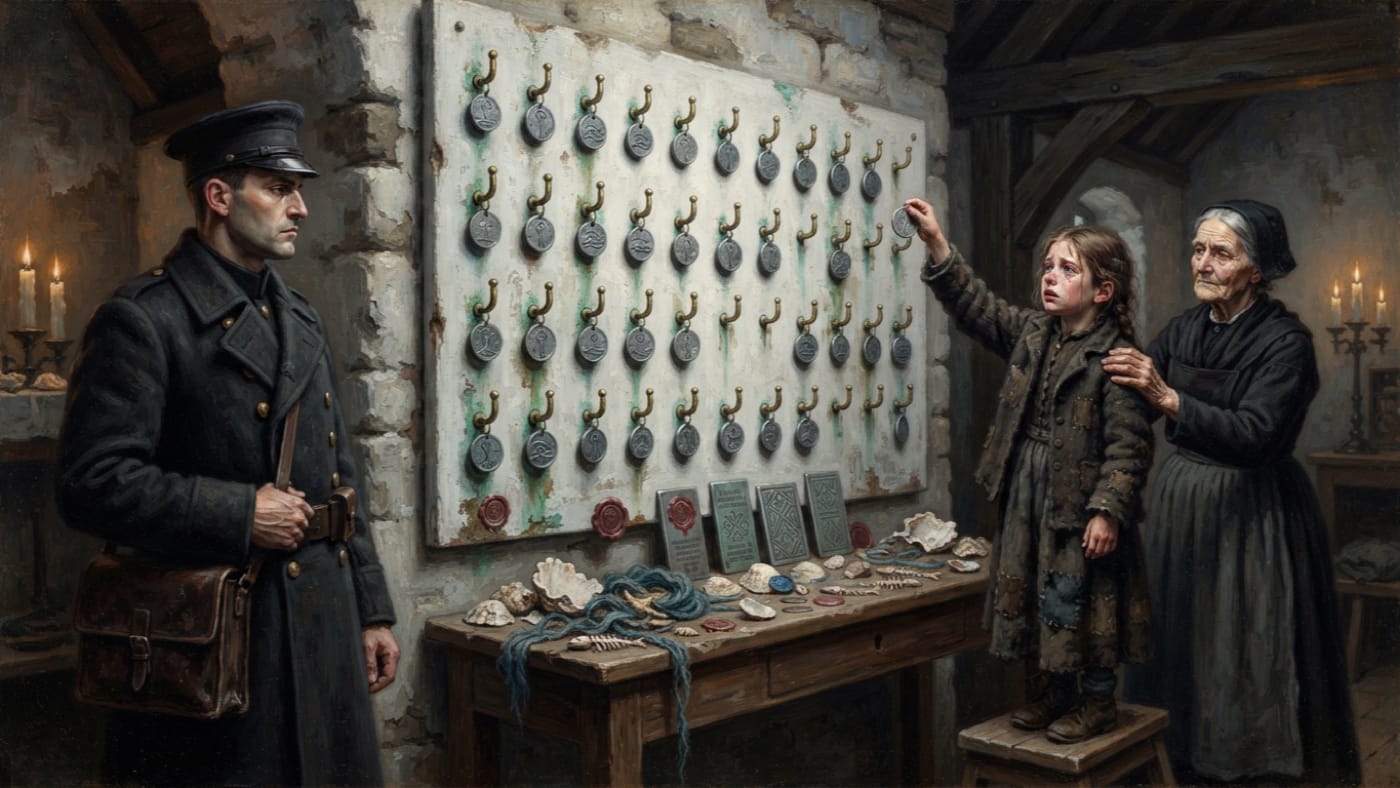
Empty Arrival
Forty-three hooks for the procession that never reached its saint
Forty-three hooks at Clement's chapel count everyone who set out from Dinan. The children hang the tokens each year; Doctrine keeps the destination denied.
Codex Ref. XIII.1.87-014
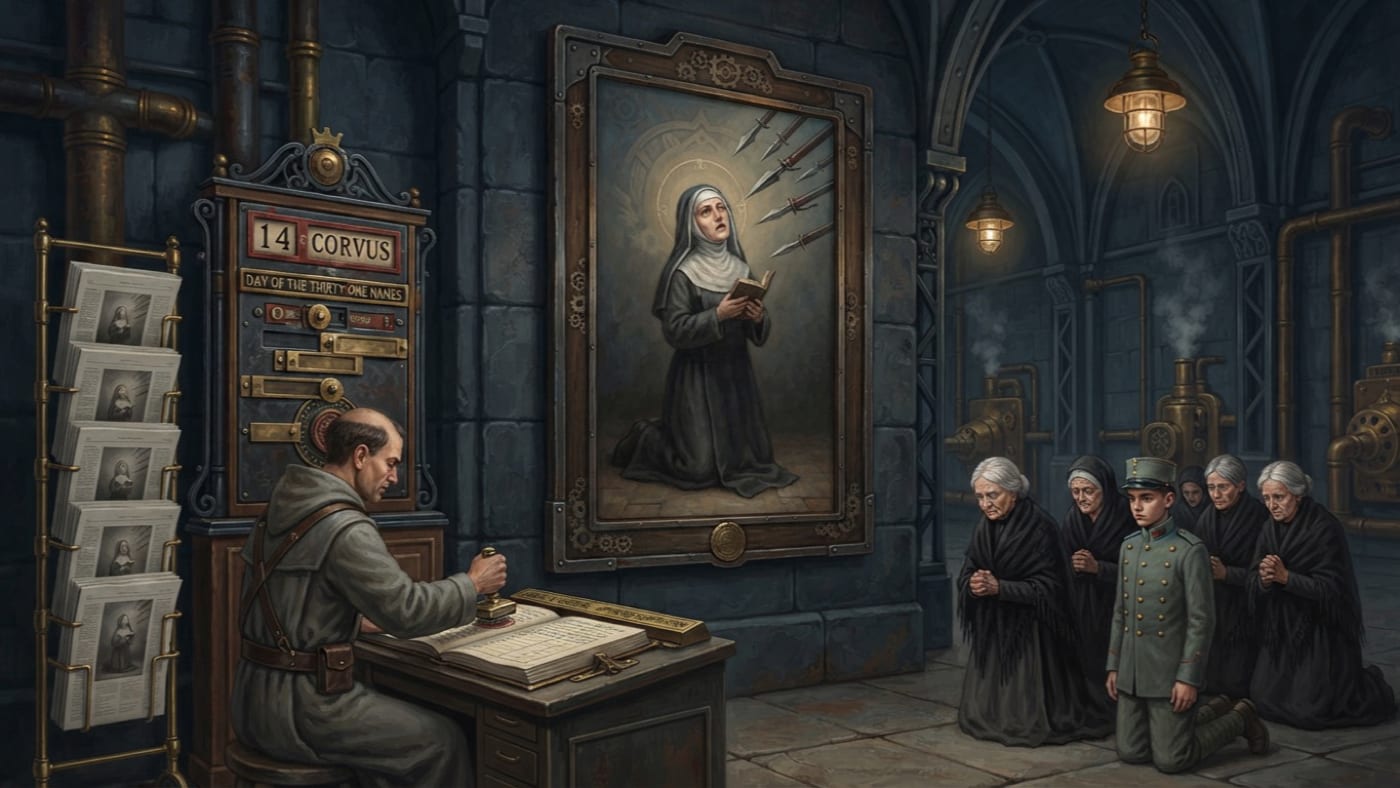
Feast of Saint Margaux
Thirty-one dead, one approved face
On 14 Corvus, Saint Margaux shares her feast with the Day of the Thirty-One Names. The grief belongs to the faithful; the face, the calendar and the uses belong to the Bureaus.
Codex Ref. XIII.1.87-014
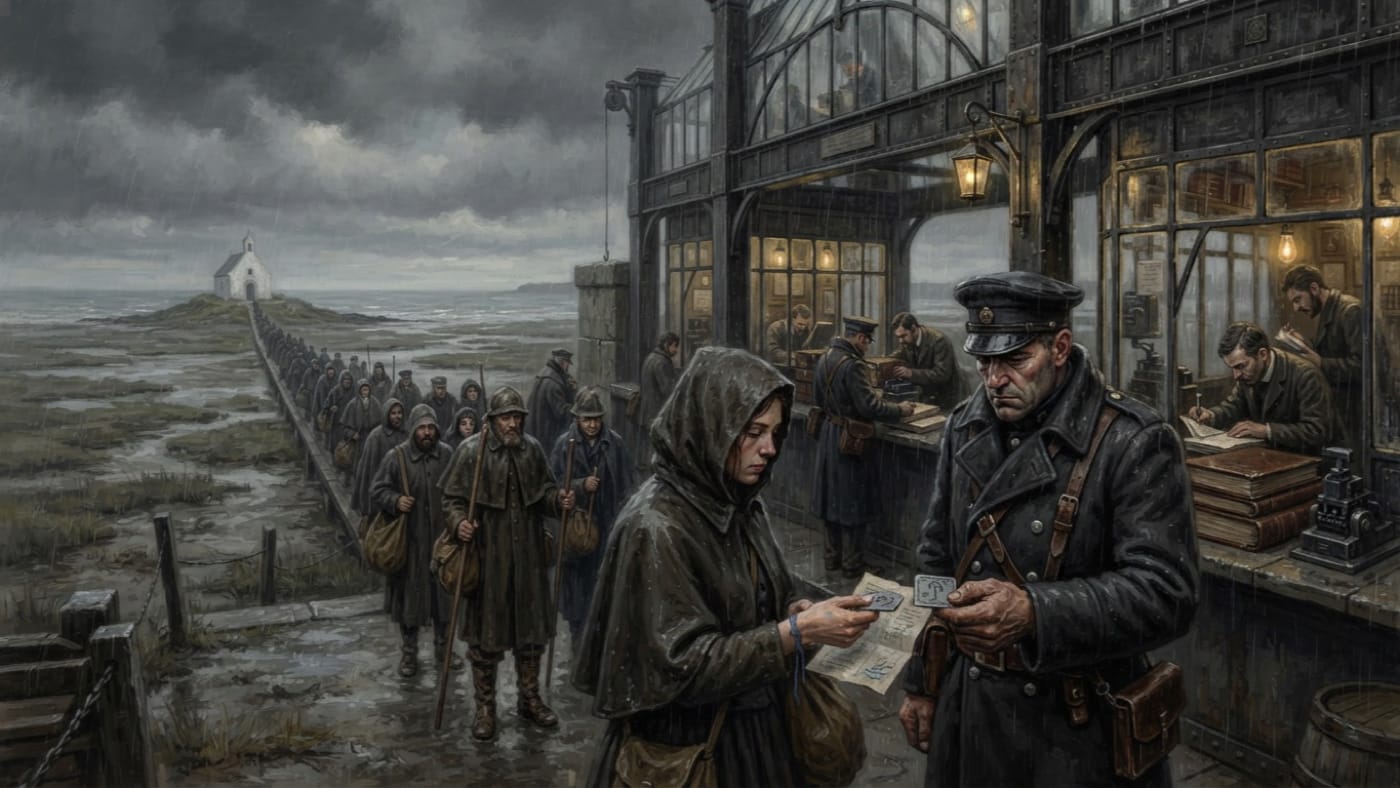
Harmonized Routes
The Bureau licenses the road and leaves arrival to the pilgrim
The Harmonized Routes tables join shrine, road and token under one licence. Pilgrimage certifies the right to set out; arrival remains the pilgrim's problem.
Codex Ref. XIII.1.86-201

Maëlle of Dinan
Three corrections the Church chose to keep
Maëlle of Dinan corrected her family's name in three copies of the Martyrology of Saint-Malo. The Church preserved her ink; this file cannot supply the surname.
Codex Ref. III.2.01-007
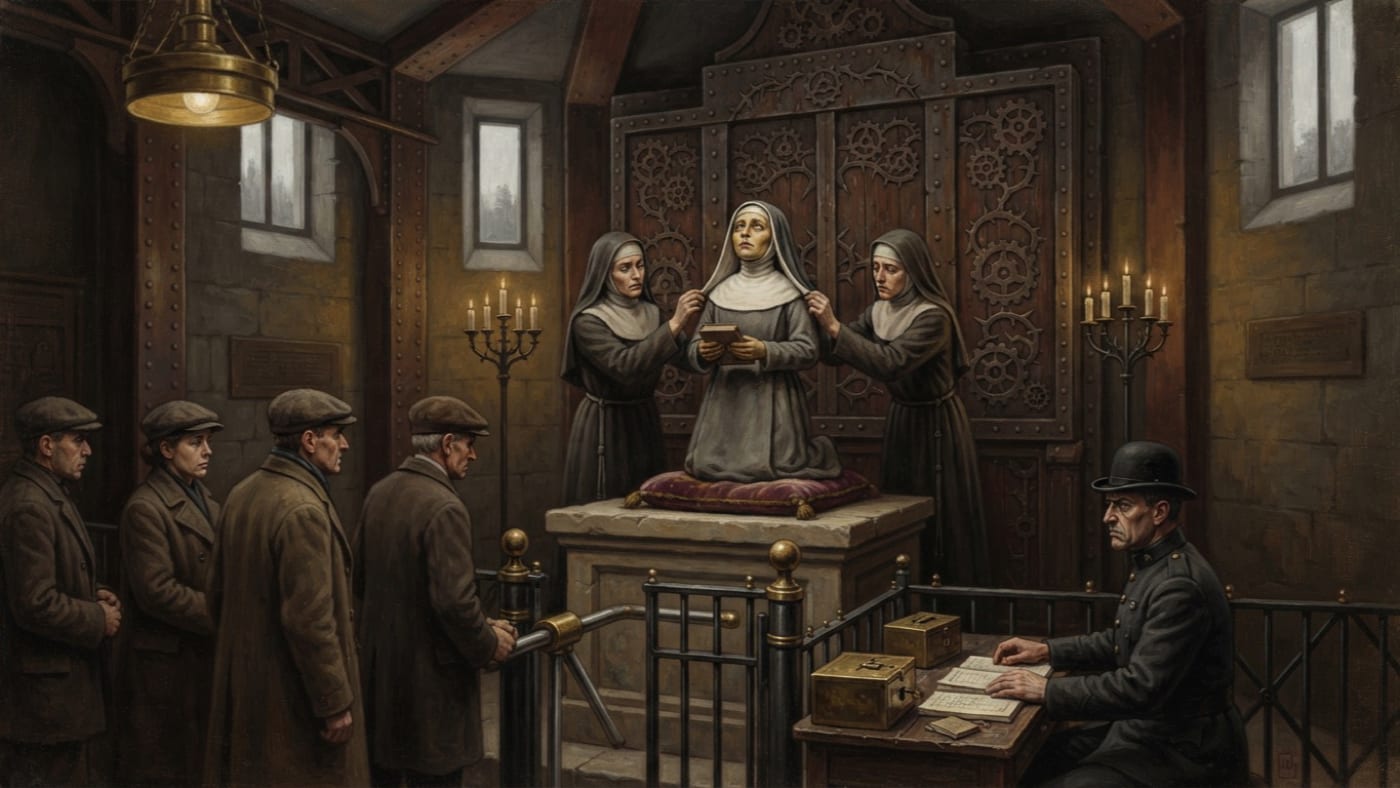
Margaux Chapel
Twelve sisters keep one saint from growing old
At Sainte-Claire-des-Landes, twelve sisters tend Saint Margaux's wax likeness while pilgrims pay at the gate. The face is certified; the chapel's founding remains unrecorded.
Codex Ref. II.1.09-015

Martyrology of Saint-Malo
Thirty-one names, forty-three seconds, and a civilization built from first blood
The Martyrology of Saint-Malo counts thirty-one dead, five absences, and every obedience the Synod has purchased with their blood.
Codex Ref. VII.8.02-001

Reliquary of Saint Matthias
A box of bones that taught law to bleed
The Reliquary of Saint Matthias is the Saint-Malo martyr-object: seized as Item 7, recovered from Rationalist custody, and made into portable proof that holy custody is not inventory.
Codex Ref. XIII.1.73-010
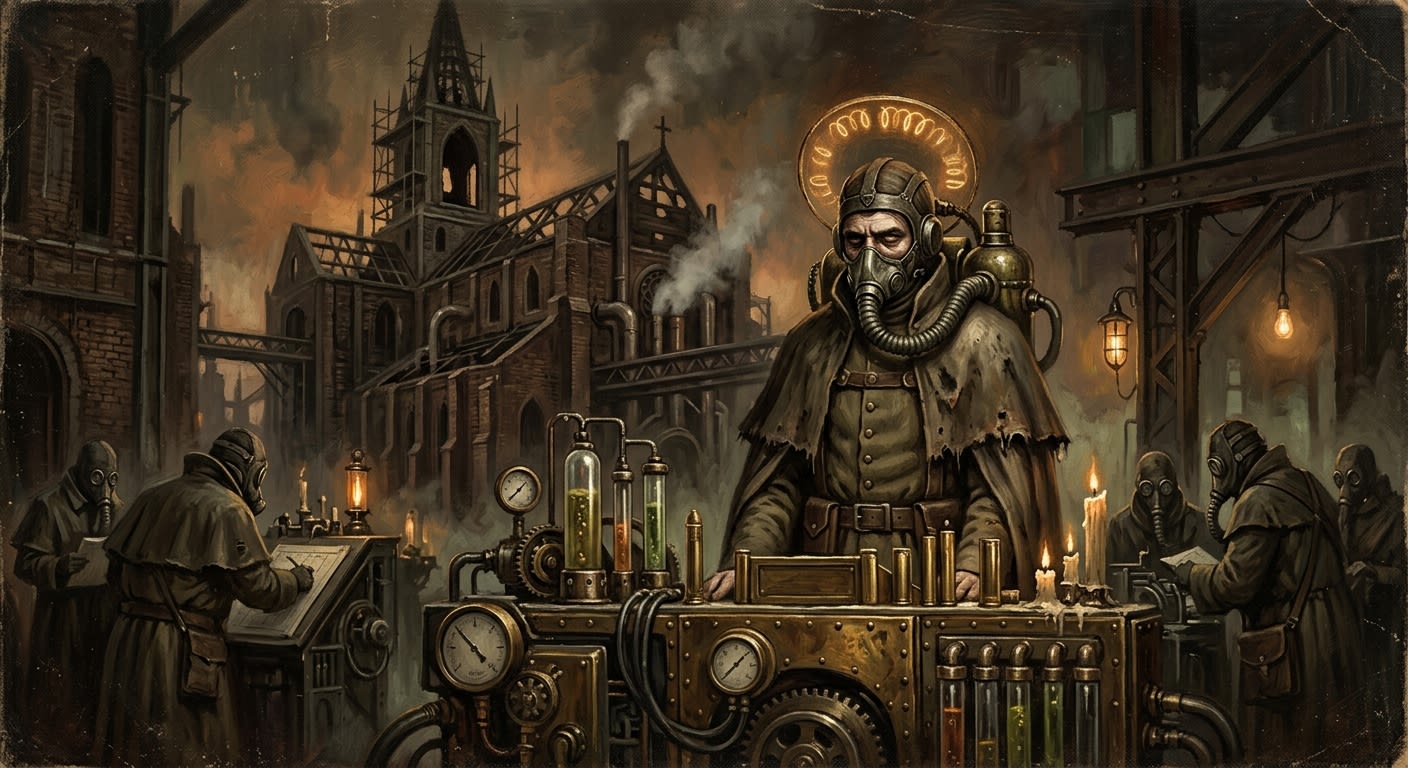
Saint Clement of Brittany
The chapel that received no pilgrims and therefore received a continent
Saint Clement of Brittany became doctrine's perfect destination: a chapel the martyrs never reached, and therefore a wound the Synod could license forever.
Codex Ref. III.2.01-005
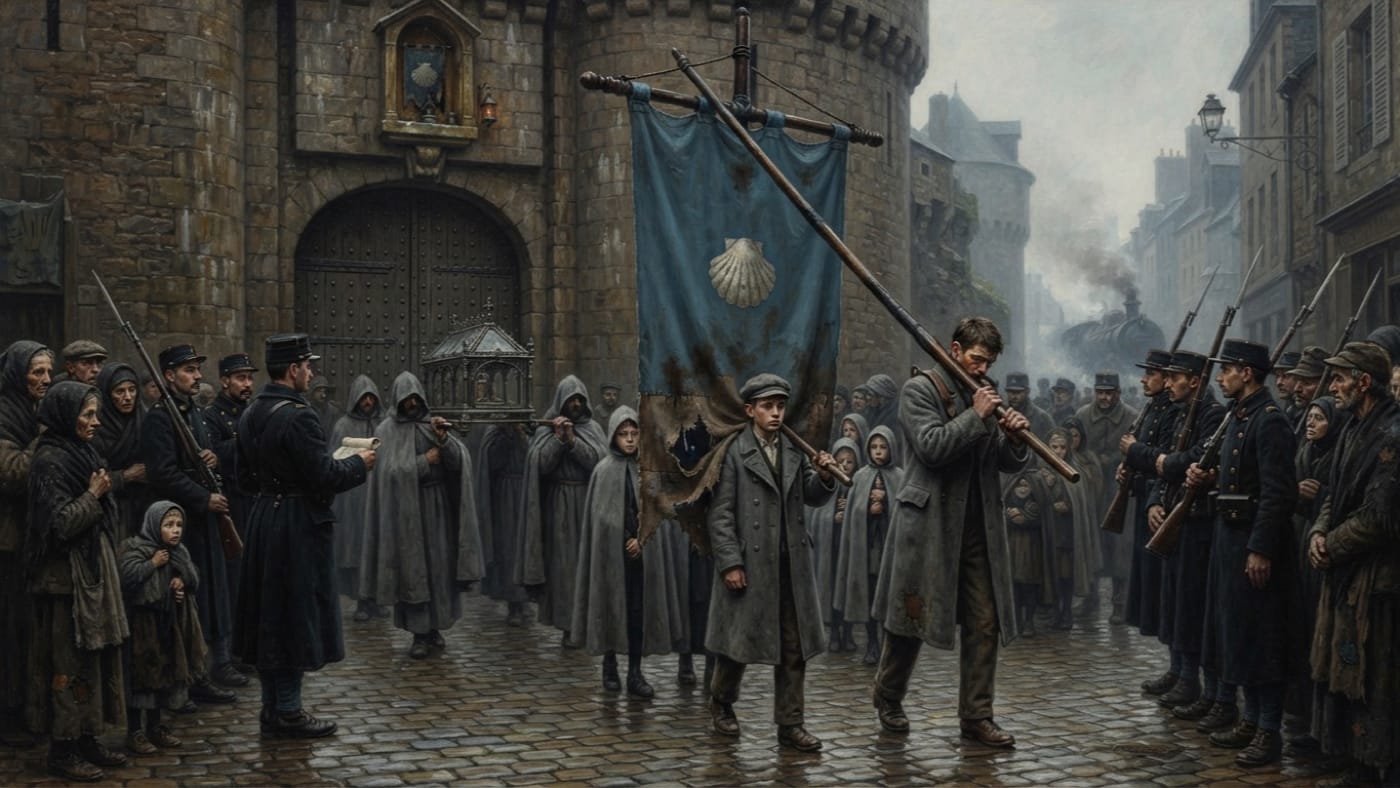
Saint Hermas Banner
One torn banner, thirteen slivers, and a successor under licence
The Saint Hermas banner tore over a boy at Saint-Malo in A.S. 10. Its fragments became relics; its sanctioned successor still marches under licence.
Codex Ref. III.2.04-010
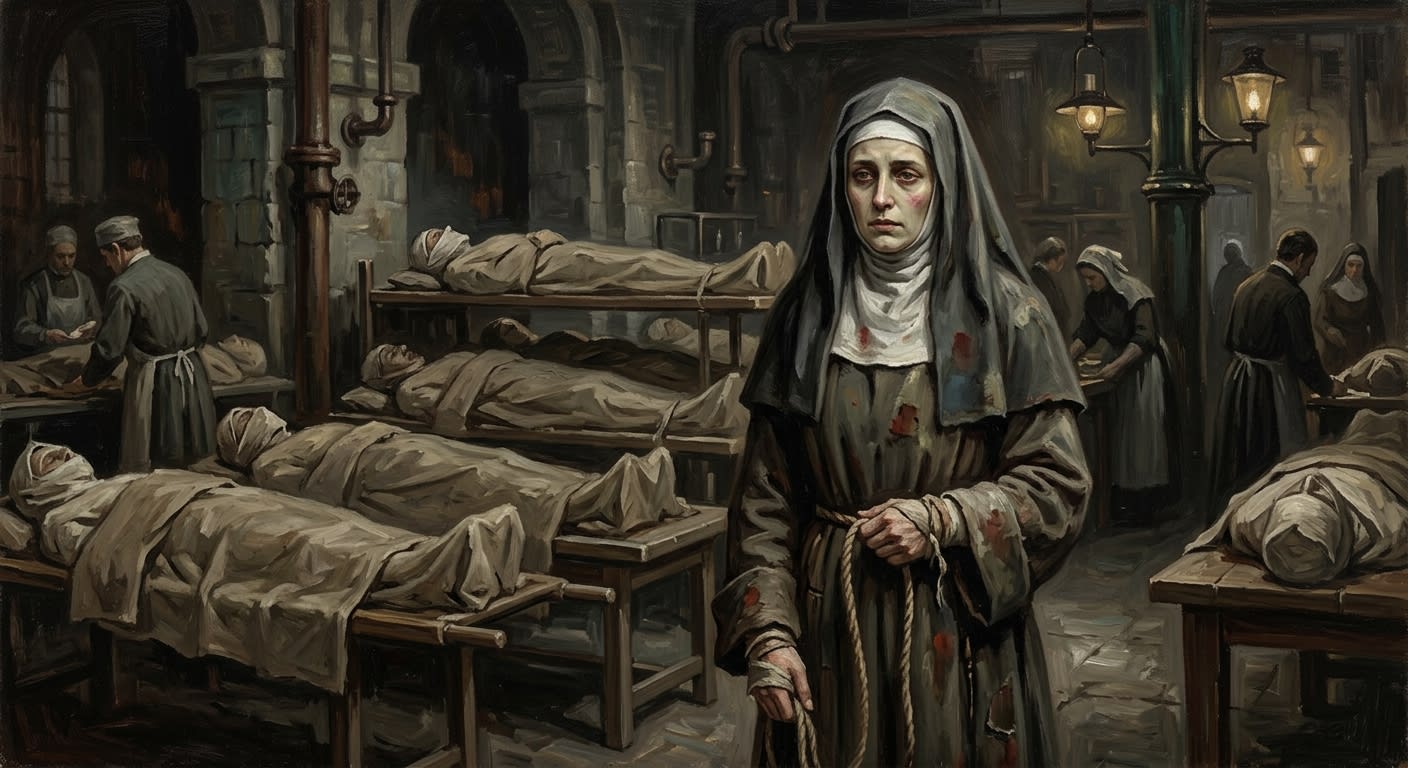
Saint Sabina of Ghent
The seamstress who gave Mercy its cloth and Doctrine its discomfort
Saint Sabina of Ghent bound eleven bodies after the Massacre at Saint-Malo, died of fever, and became Mercy's most useful rebuke.
Codex Ref. III.2.01-015
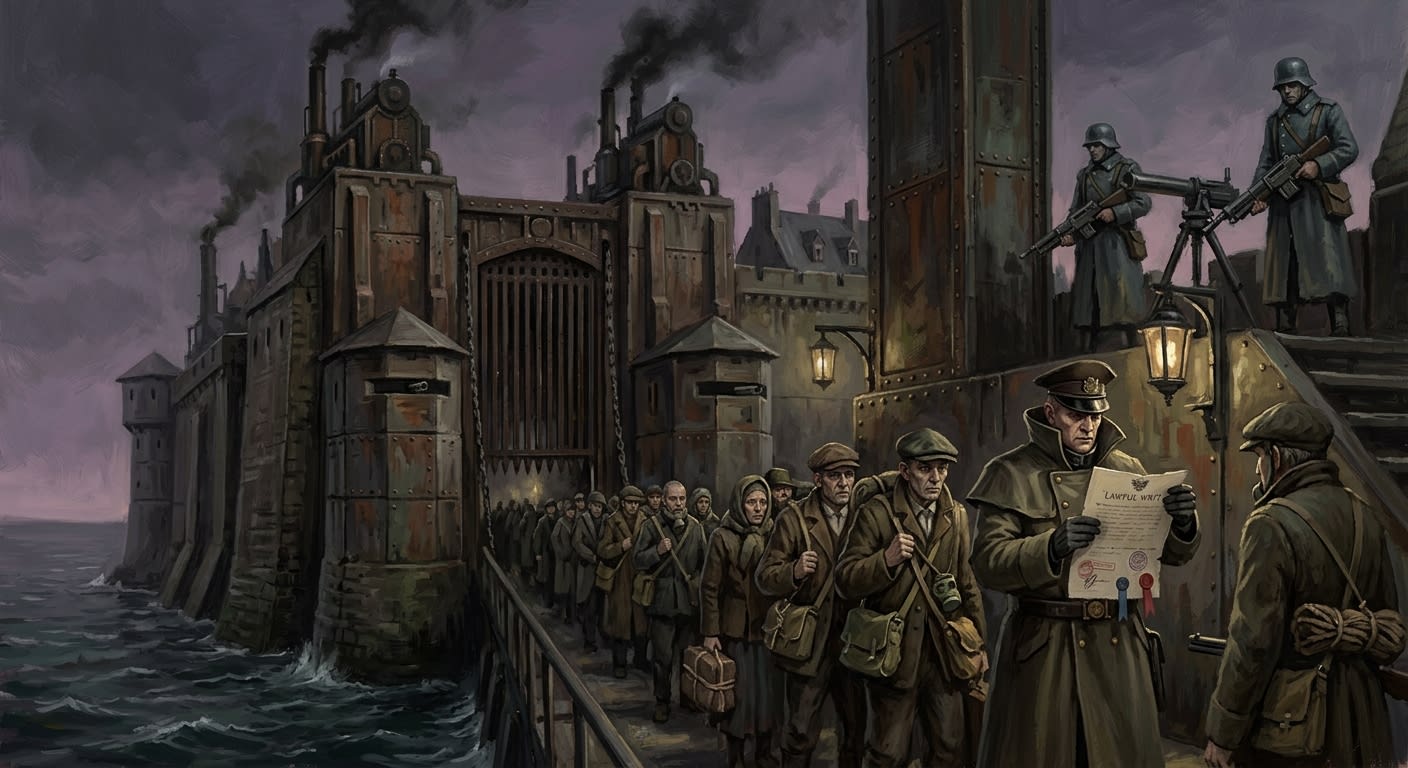
Town of Saint-Malo
The Breton gate where law discovered it could bleed
Saint-Malo is the Breton port where a narrow gate, a lawful writ, and forty-three pilgrims gave the Synod its most profitable wound.
Codex Ref. II.4.09-013