

Reverse Index
Referencing “The Broth Riots”
Every codex entry that links to The Broth Riots. 13 entries.
Return to The Broth Riots
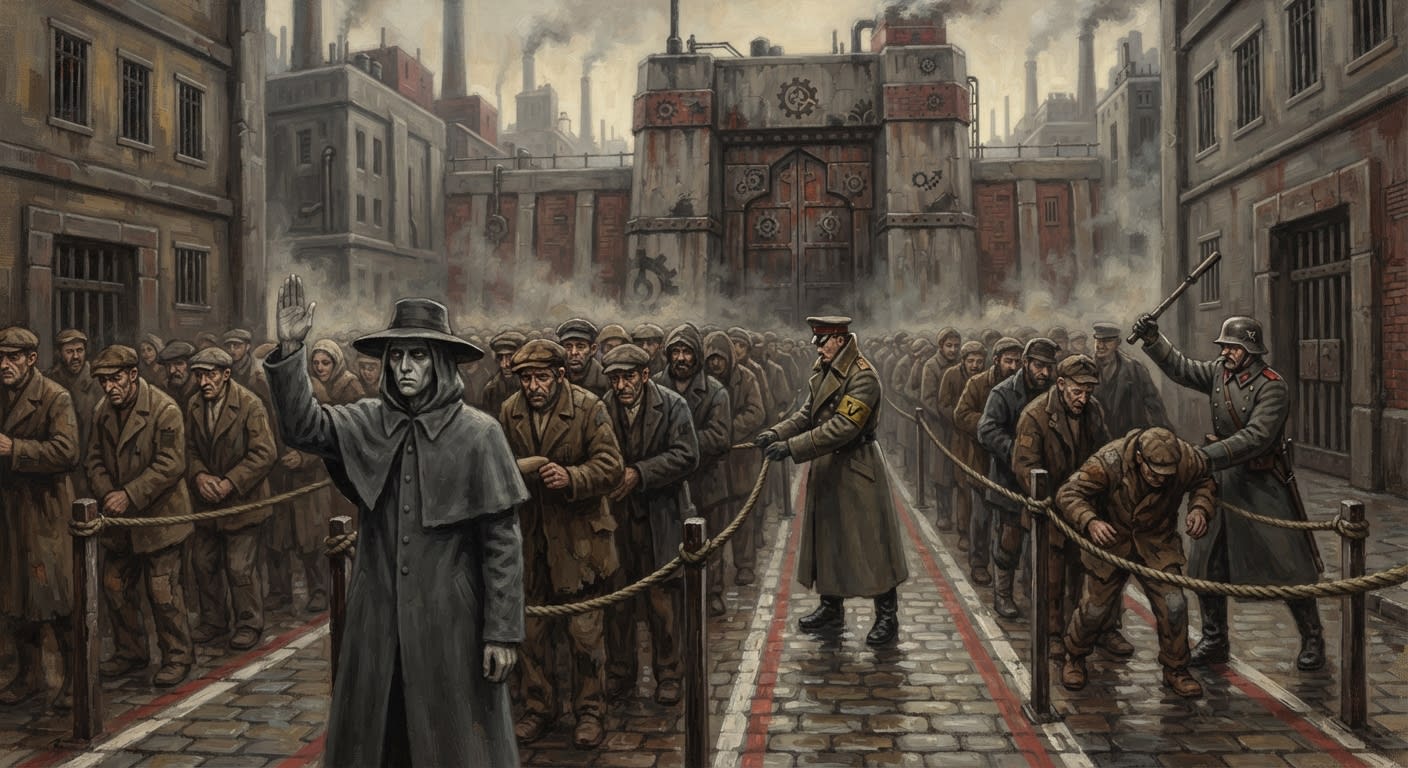
Ashbread Clause
The sentence that taught hunger to march
The A.S. 113 clause of the Concordat of Civic Cadence that made every bread queue subject to sound, rope, baton, and Bureau grammar.
Codex Ref. XIII.1.10-113
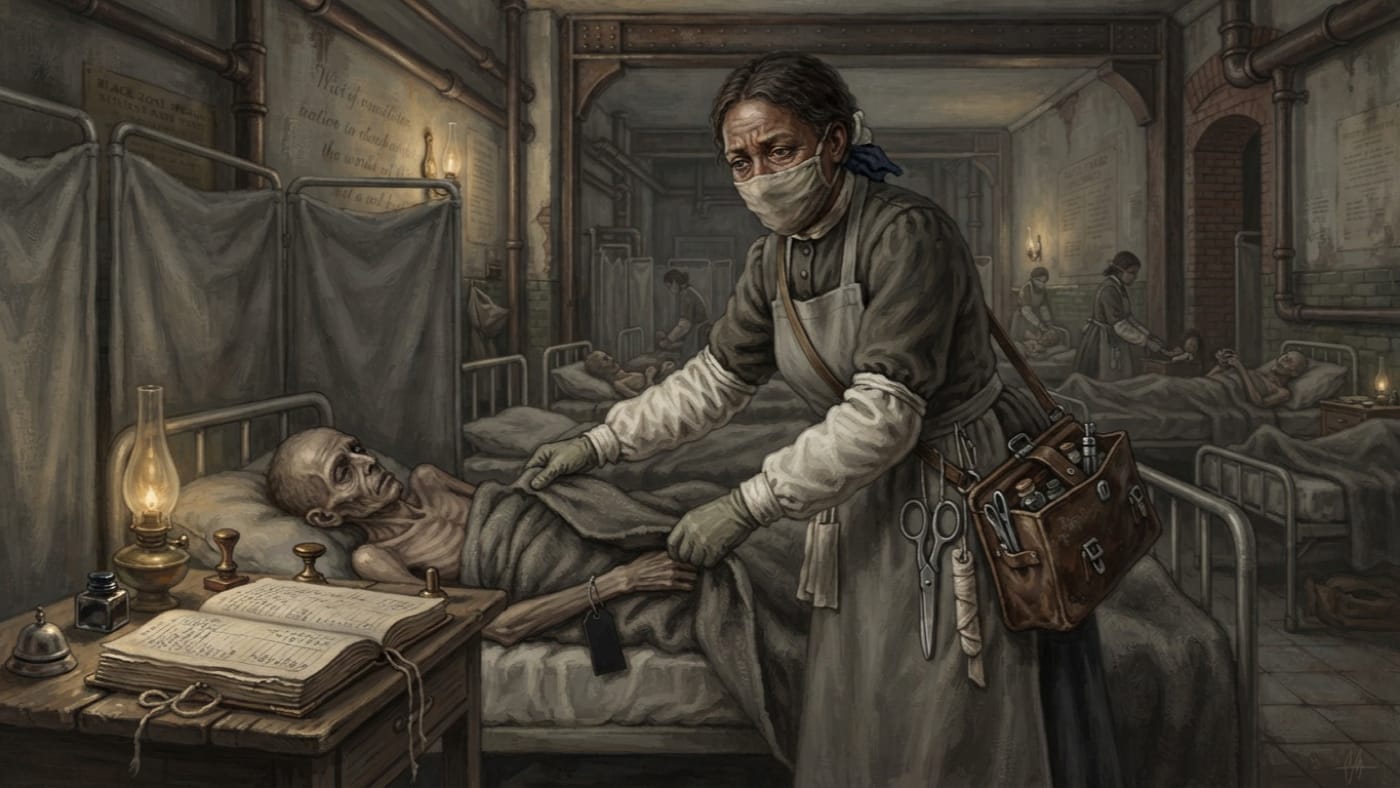
Black-Zone Specialist
Behind the screen, every kindness needs a signature
The Black-Zone Specialist serves Mercy Ward patients classified as terminal, contagious, anomalous, inconvenient, or beyond allotment. Every kindness needs a signature; every death must balance the ledger.
Codex Ref. XII.6.04-002
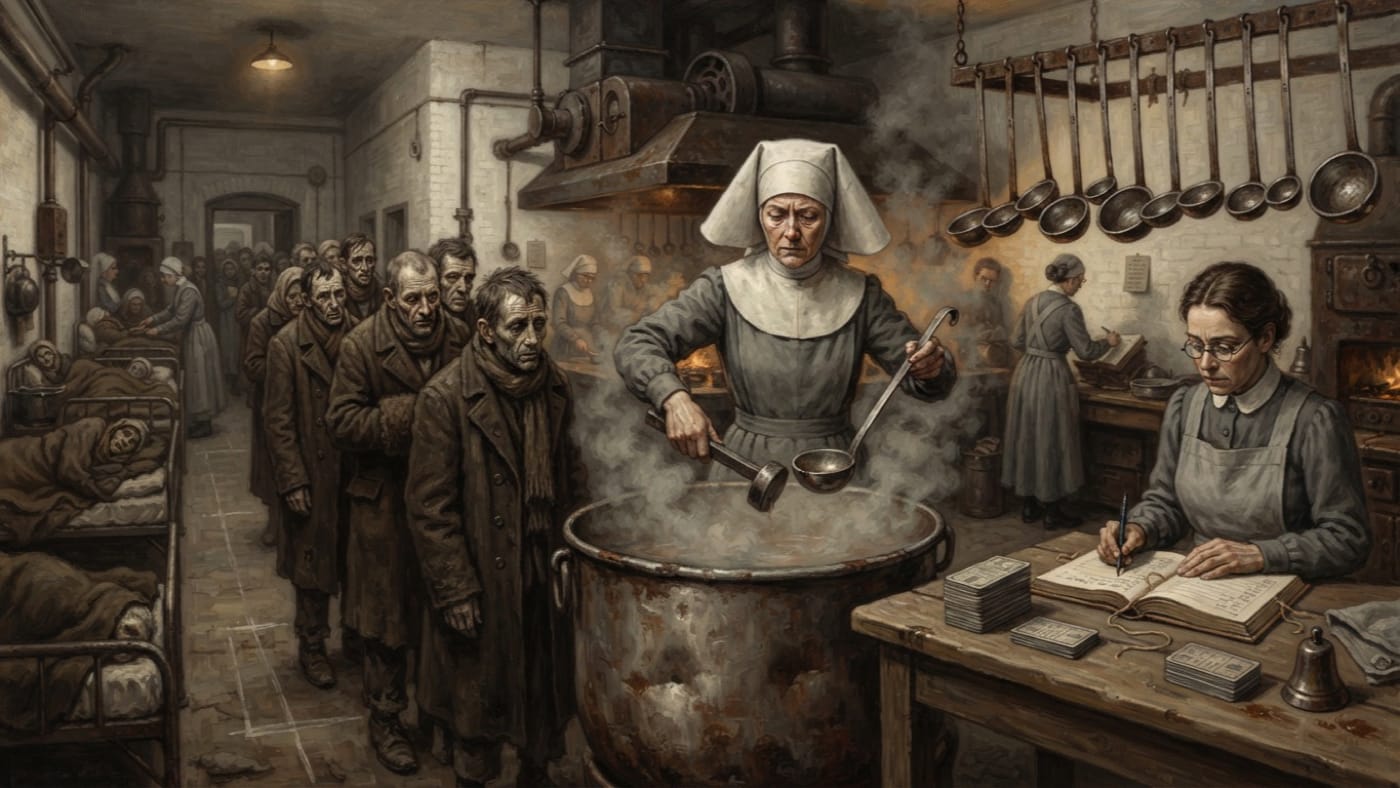
Blessing of the Ladles
Once a year the Church kisses the ladles; the measure remains fixed
An A.S. 201 survey of Saint Marrow's Mercy-house feast: ladles washed, counted, kissed and struck; the bowl is full, provided the hunger is registered.
Codex Ref. XIII.1.89-201

Bureau of Temperance
Appetite is a gate; moderation is the latch, and the latch has forms
The Bureau of Temperance measures wine, hunger, tavern weakness, northern spirits, and every appetite the Synod fears might become a gate for Hell.
Codex Ref. VIII.6.04-108

Glass Skull Stacks
The name goes up; the city learns to look
The Synod's municipal deterrence pylons hold condemned names in hollow glass crania, lit nightly for the street. Glass, ink and iron do the warning; Pillar-Keepers keep the sentence legible.
Codex Ref. V.2.08-001
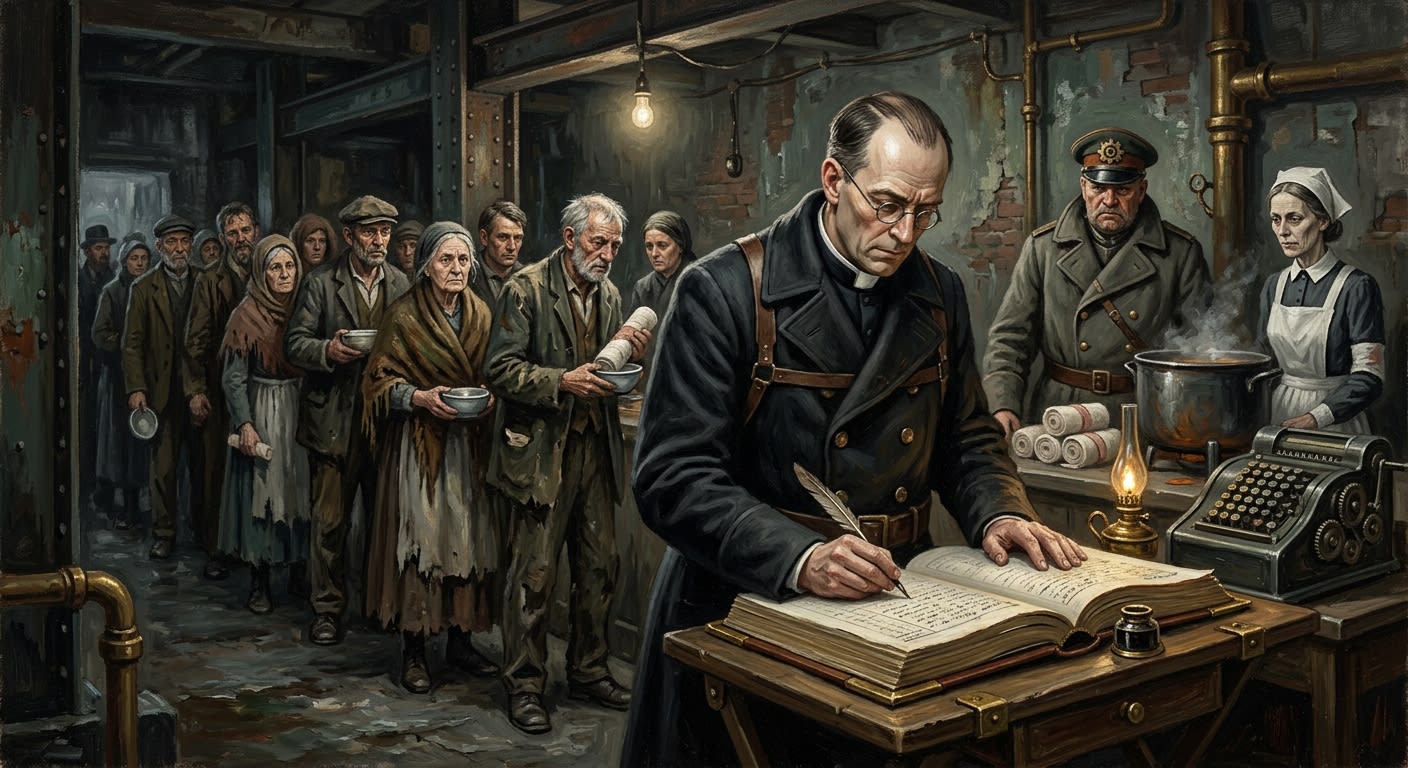
Ledger Laws
Mercy measured by the ladle, sanctioned by the noose
The Ledger Laws made mercy countable after the Broth Riots: every bowl, bandage, draught, confession, death, and useful pity entered the record before it dared call itself compassion.
Codex Ref. XIII.1.89-112

Mercy Line
The rope where grief learned its tariff schedule
The Mercy Line began as a left-hand rope outside Saint Morin's chapel in A.S. 157, where grief discovered that even mercy could be accelerated.
Codex Ref. II.2.06-157
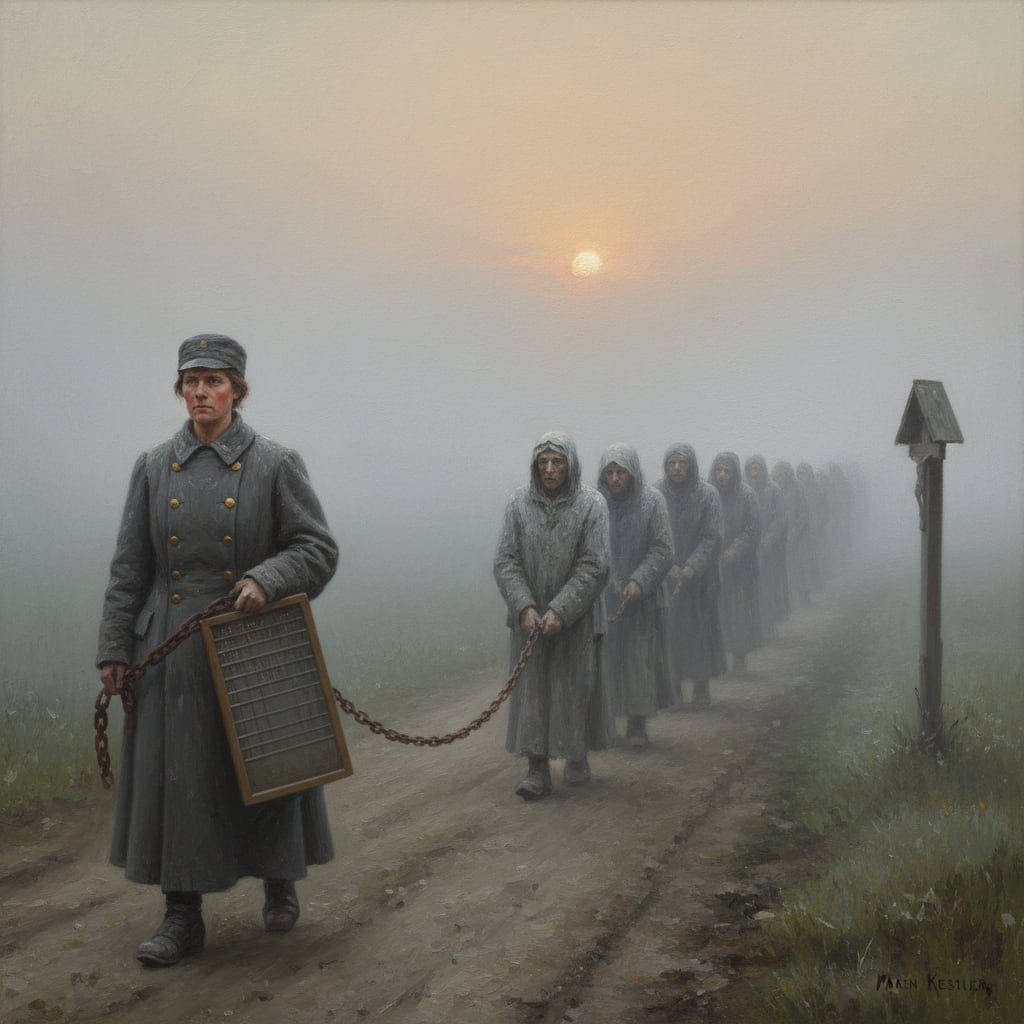
On the Pilgrim-Chain Handlers
The mercy quota; or, how the chain teaches patience to both ends
The licensed custodians of the Jubilee chain and everything the chain implies — water counted by formula, confession harvested in strips, and a ditch at the end of every route the Bureau calls holy.
Codex Ref. XII.29.01-001
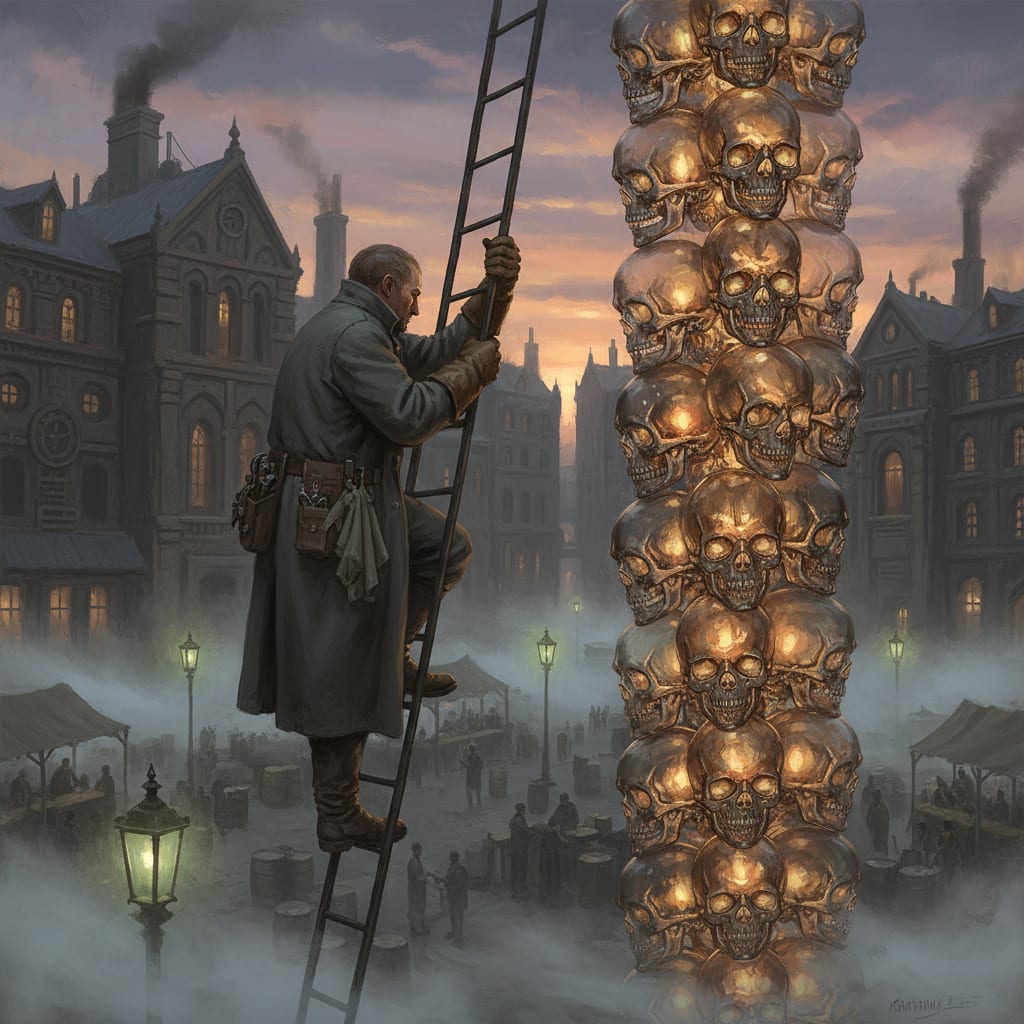
On the Pillar-Keepers of the Glass Skull Stacks
The city is held by witness; the witness is held by someone who needs his wages
A Drax survey of the Pillar-Keepers — grey-coated custodians who maintain the Synod's civic deterrence pylons: iron-boned columns of sermon-clear glass and inked names, holding the city by witness at a cost the Bureau does not audit.
Codex Ref. XII.30.01-001
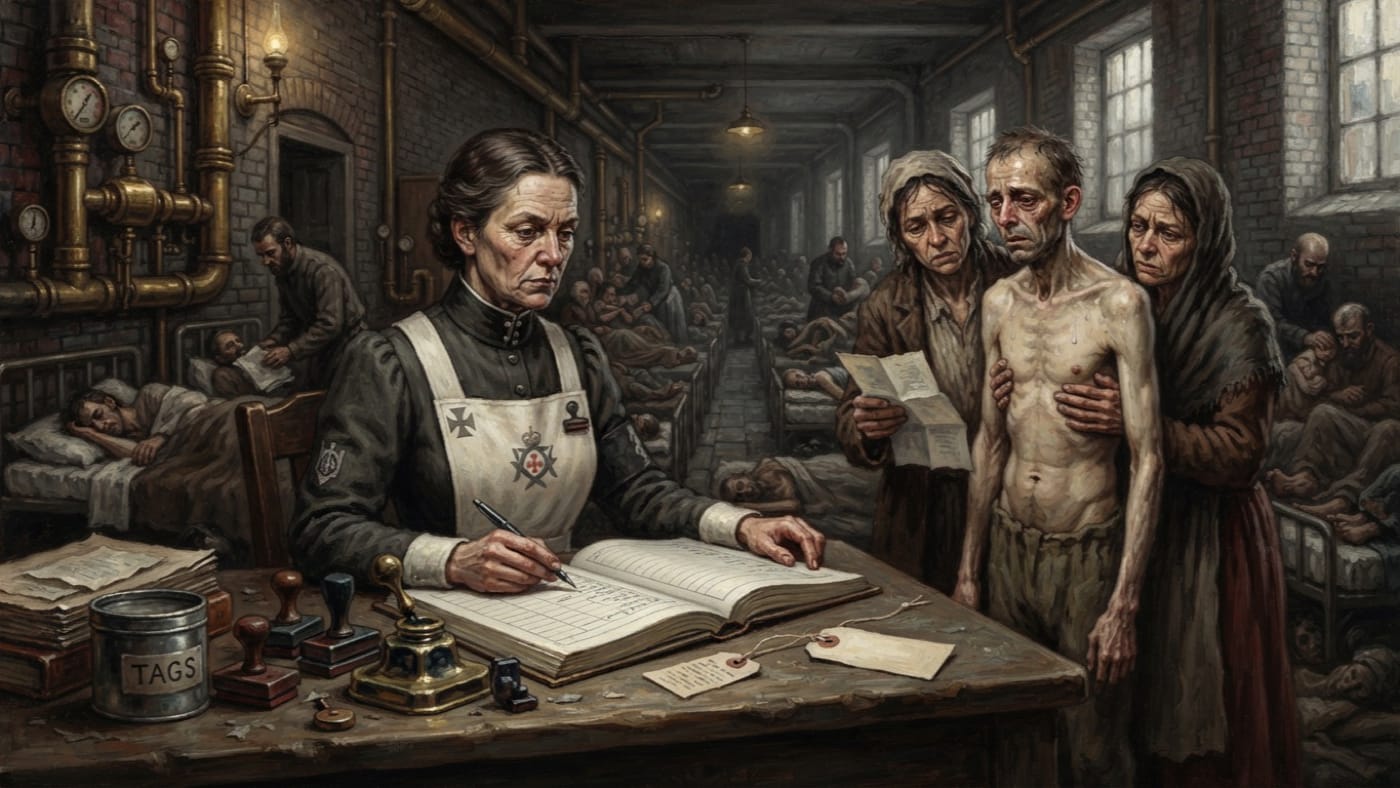
Pity-Clerk
The ledger is correct; the patient is still waiting
A Pity-Clerk is a Mercy ward-hand accused of loving forms more than patients. Clean-zone tags wait for signatures or fuel chits; the ledger can remain immaculate.
Codex Ref. XII.6.04-002
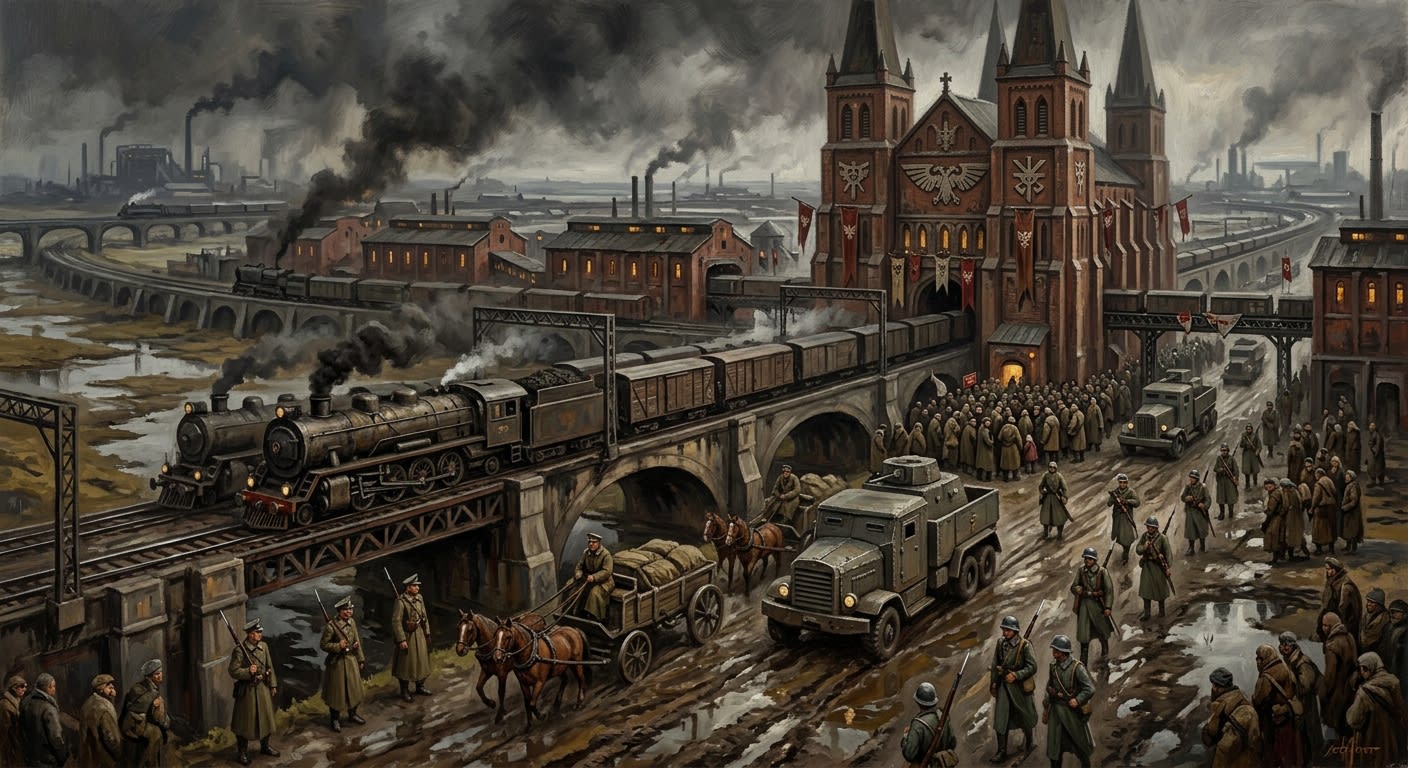
Polish Corridor
The flat throat by which Warsaw feeds the northern guns
The Polish Corridor is Warsaw's long flat throat: rail, road, hunger, prayer, and smoke feeding Brest and Königsberg while pretending passage is not a country.
Codex Ref. II.3.06-095
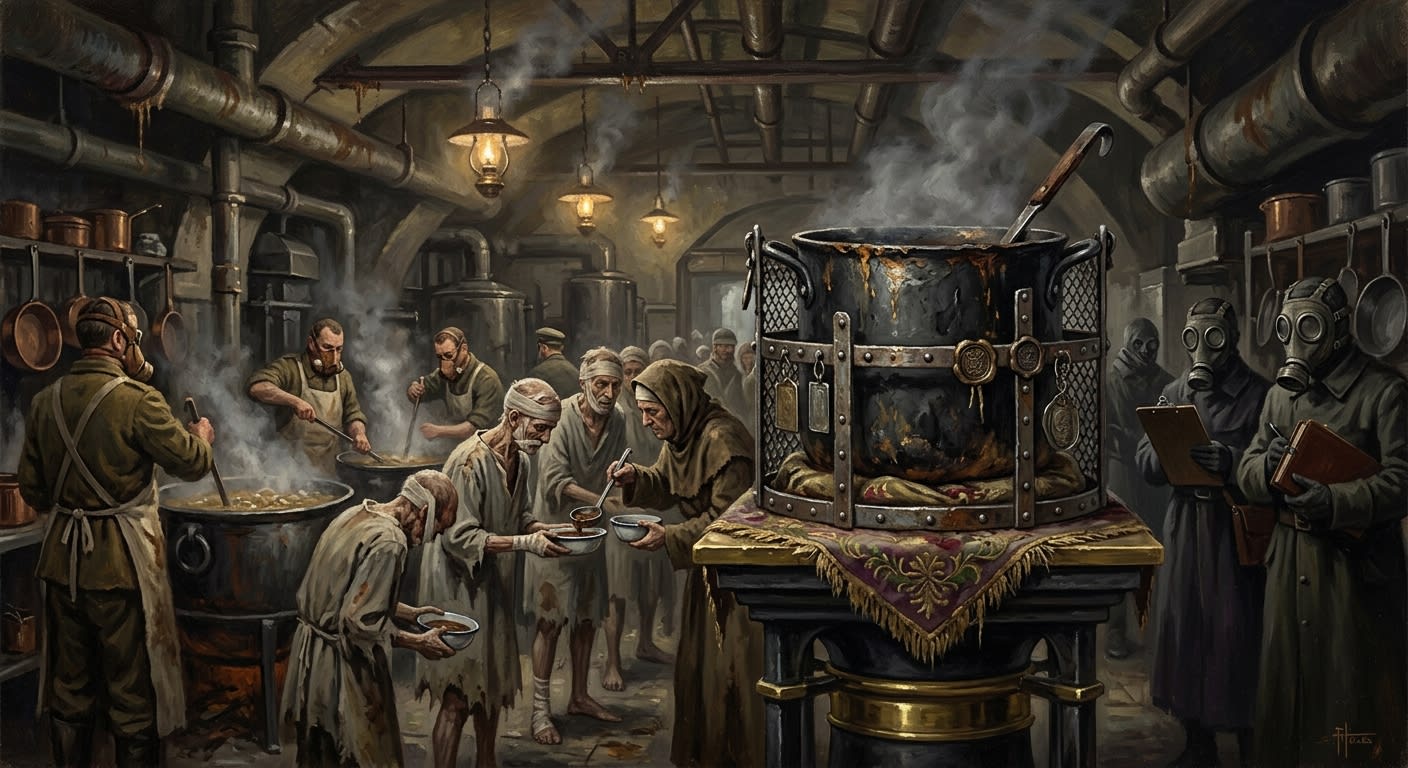
Saint Marrow-of-the-Ladle
Counted mercy, warm broth, and the holy arithmetic of the bowl
Saint Marrow-of-the-Ladle, patron of Mercy ward kitchens, may have been a pot; the Bureau prefers the miracle to the biography.
Codex Ref. III.2.01-016

Saint Varric of the Twelve Blisters
The chain becomes holy when the foot bleeds on schedule
Approved patron of Pilgrim-Chain Handlers: a useful, poorly documented saint whose twelve blisters became stations, tolls, custody doctrine, and a halo bent from iron.
Codex Ref. III.2.01-134