

Reverse Index
Referencing “Book of Departures”
Every codex entry that links to Book of Departures. 14 entries.
Return to Book of Departures
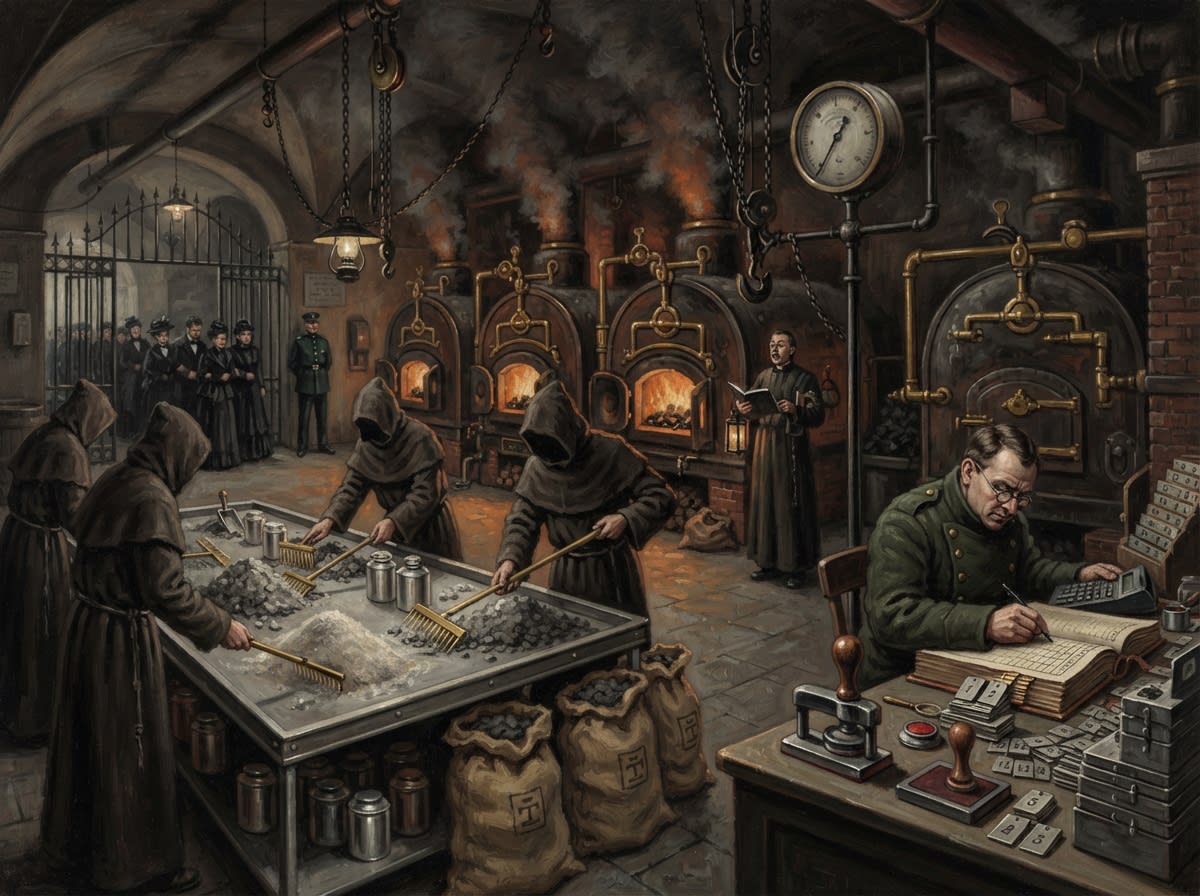
Ashbinders
The dead are sacred, and the receipt is extra
The Ashbinders burn the Synod's dead, sort the ash, sell the comfort, and accidentally perform one of the few procedures that keeps the cemeteries quiet.
Codex Ref. XII.41.01-001

Bastion-Constantinople
The Hinge of the South
Keystone fortress of the Sagittal Line, ratified in A.S. 68. The southernmost anchor of the Wall and its most celebrated grave. Where the advance of Hell first broke against ink and iron, and has broken ever since.
Codex Ref. III.2.04-017
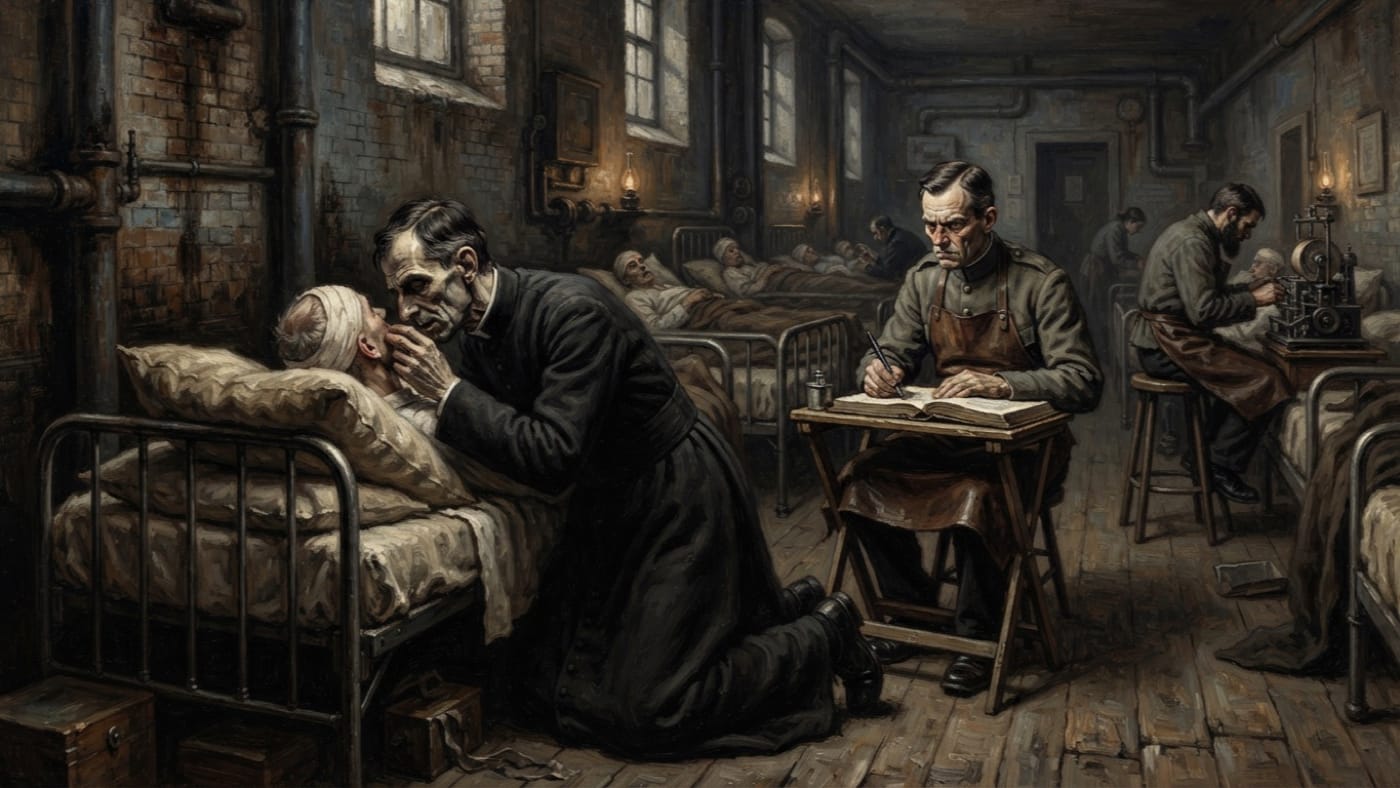
Bureau Circular 88-D
The appointed ear, and the reason Doctrine has not supplied
The Creed enters the right ear; the left remains doctrinally vulnerable. Circular 88-D specifies the side, withholds the reason, and leaves the bedside to manage exceptions.
Codex Ref. XIII.1.88-004
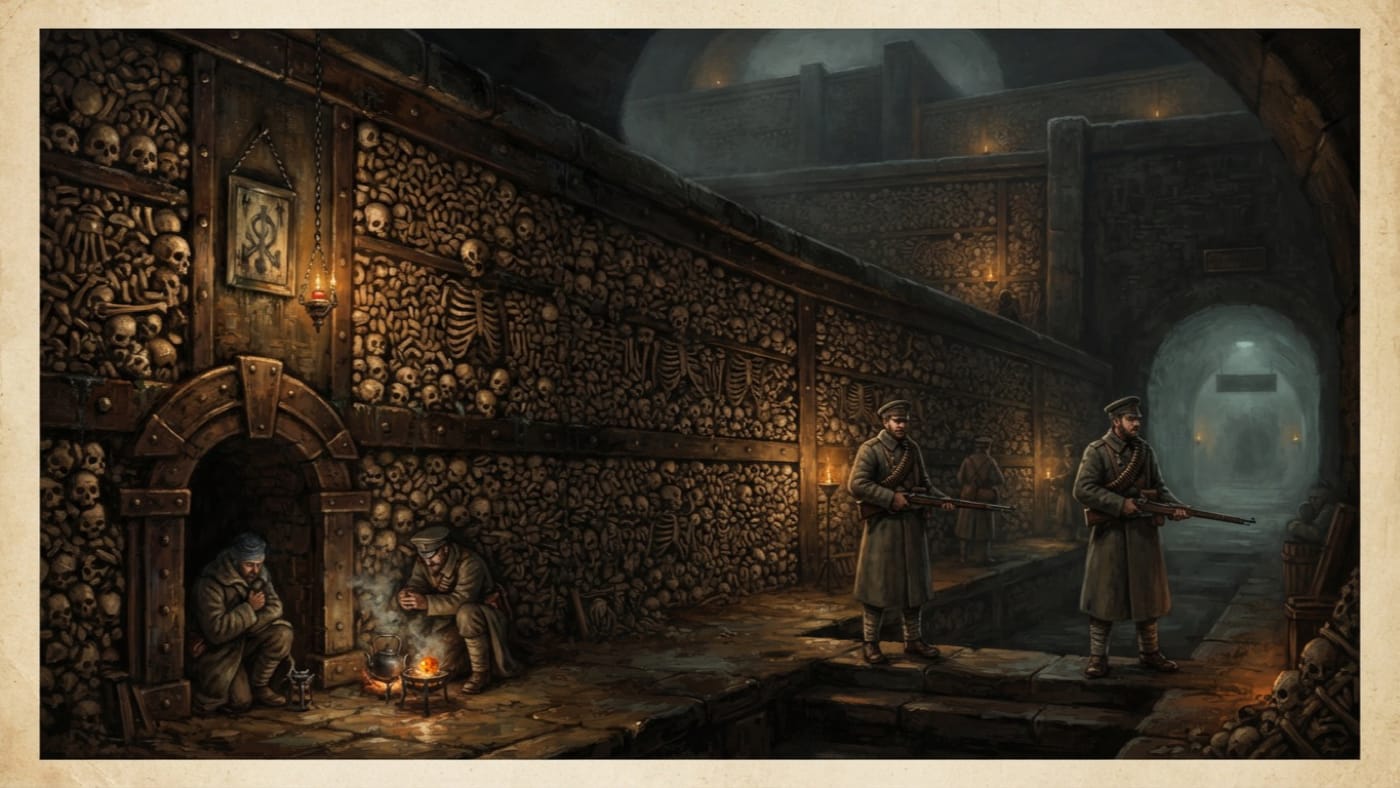
First Ossuary Ring
The dead remain on duty
The oldest bone-built wall of Bastion-Constantinople, accreted from the Continental Levy's graves in the winter of A.S. 47. Standing, garrisoned and consecrated by attestation. The dead remain structural; their service has not concluded.
Codex Ref. II.4.10-047
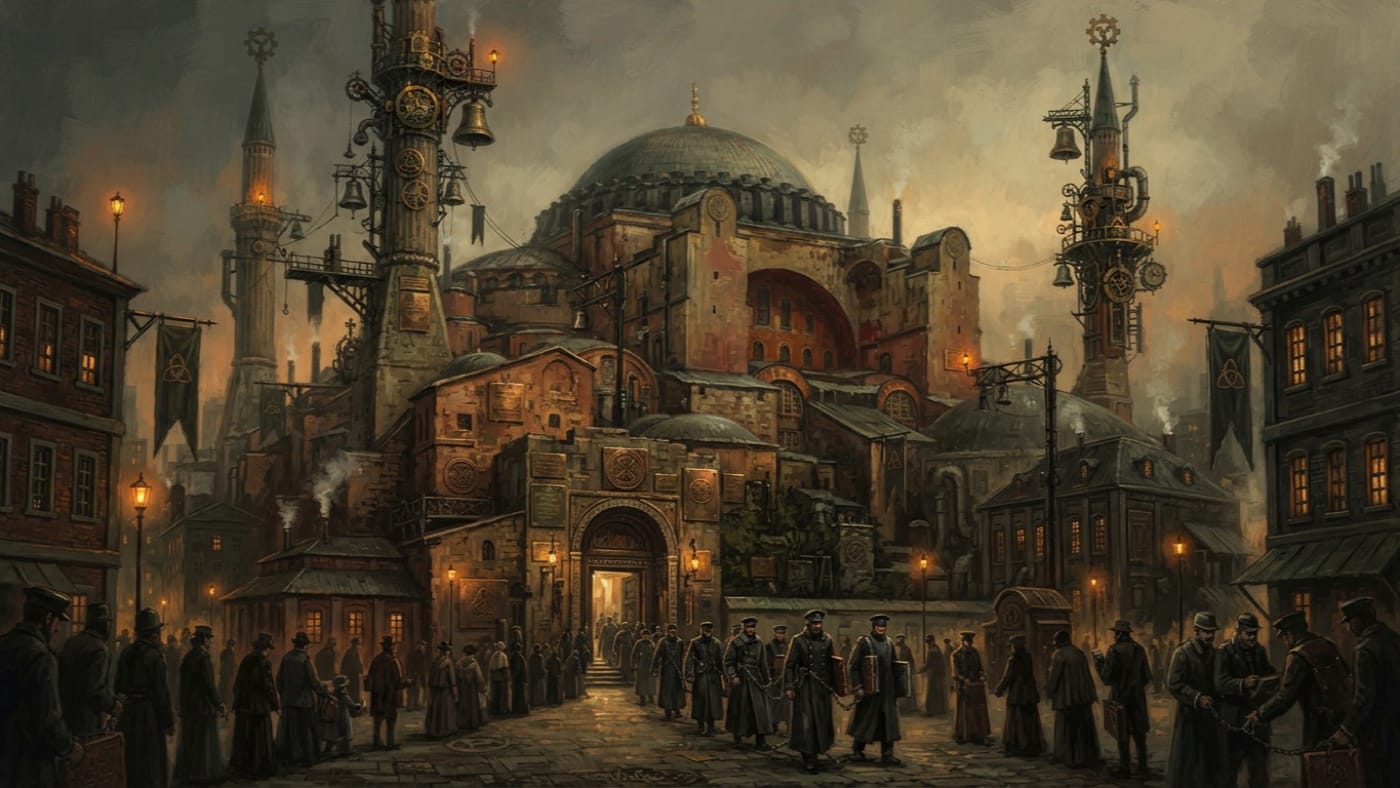
Hagia Sophia
The Dome Has Not Countersigned
Constantinople's old Hagia Sophia, seized in A.S. 68 and titled the Cathedral of the Perpetual Registry in A.S. 72. Beneath its ancient dome, the southern front is made official one ratified record at a time.
Codex Ref. II.4.10-1298
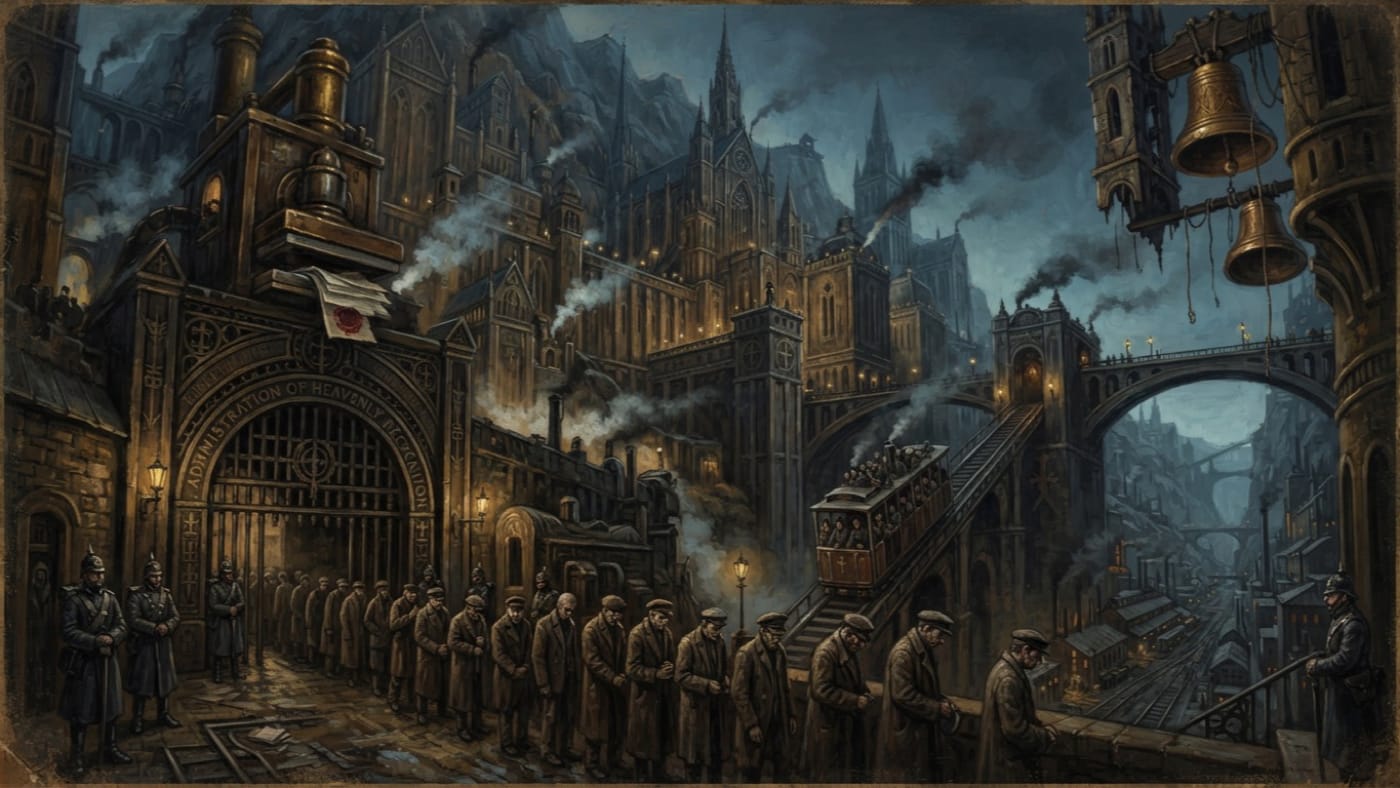
Heaven
Perfect recognition, beyond the reach of any clerk
Heaven knows every soul, Doctrine assures us. Strasbourg stamps acceptance until contradicted; I record the death registers and the silence no bureau can countersign.
Codex Ref. VI.1.02-201
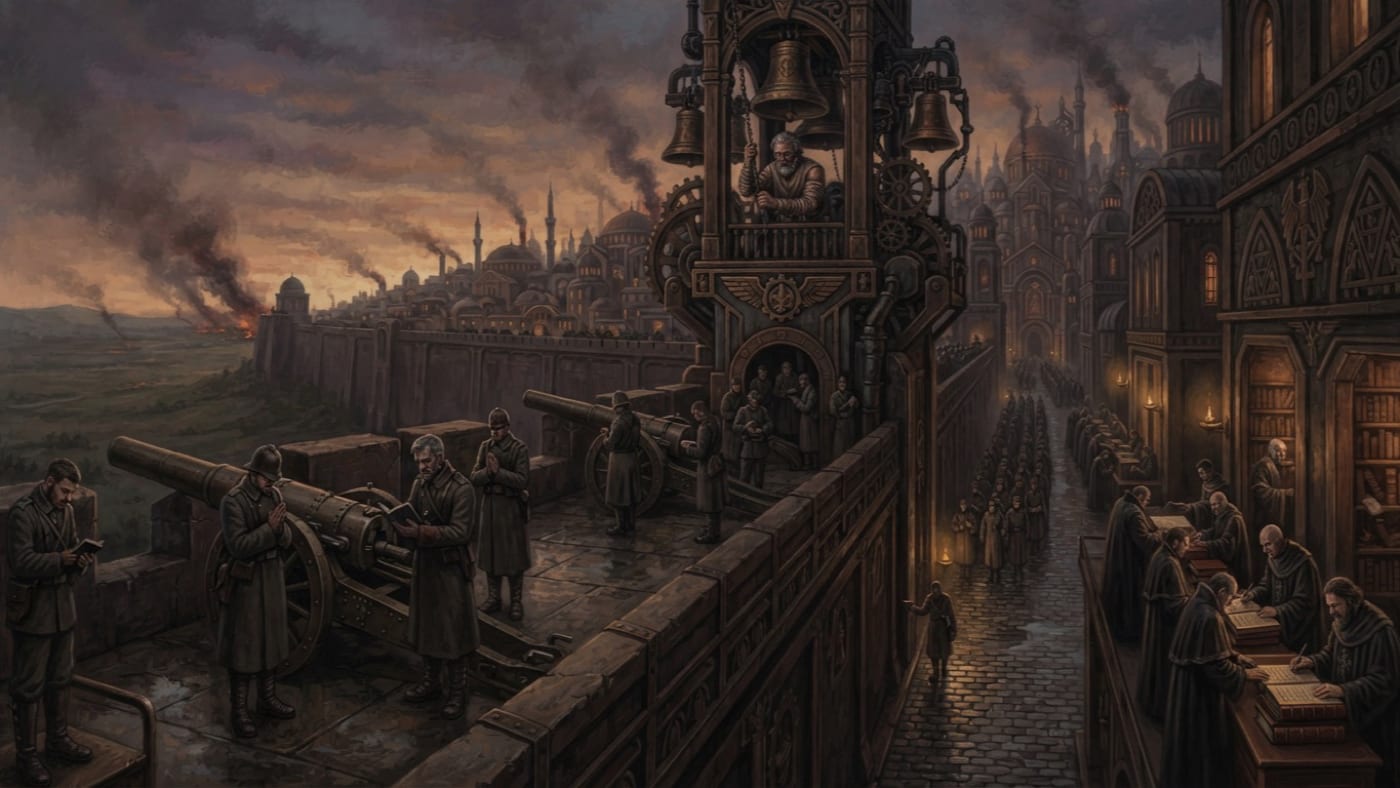
Hour of Vespers
The day closes when the bell permits it
The evening interval of Bastion-Constantinople, where prayer, watch readiness and the day's accounts answer to authorized bronze. Four Bureaus close the day; the guns remain attentive.
Codex Ref. XIII.1.96-201
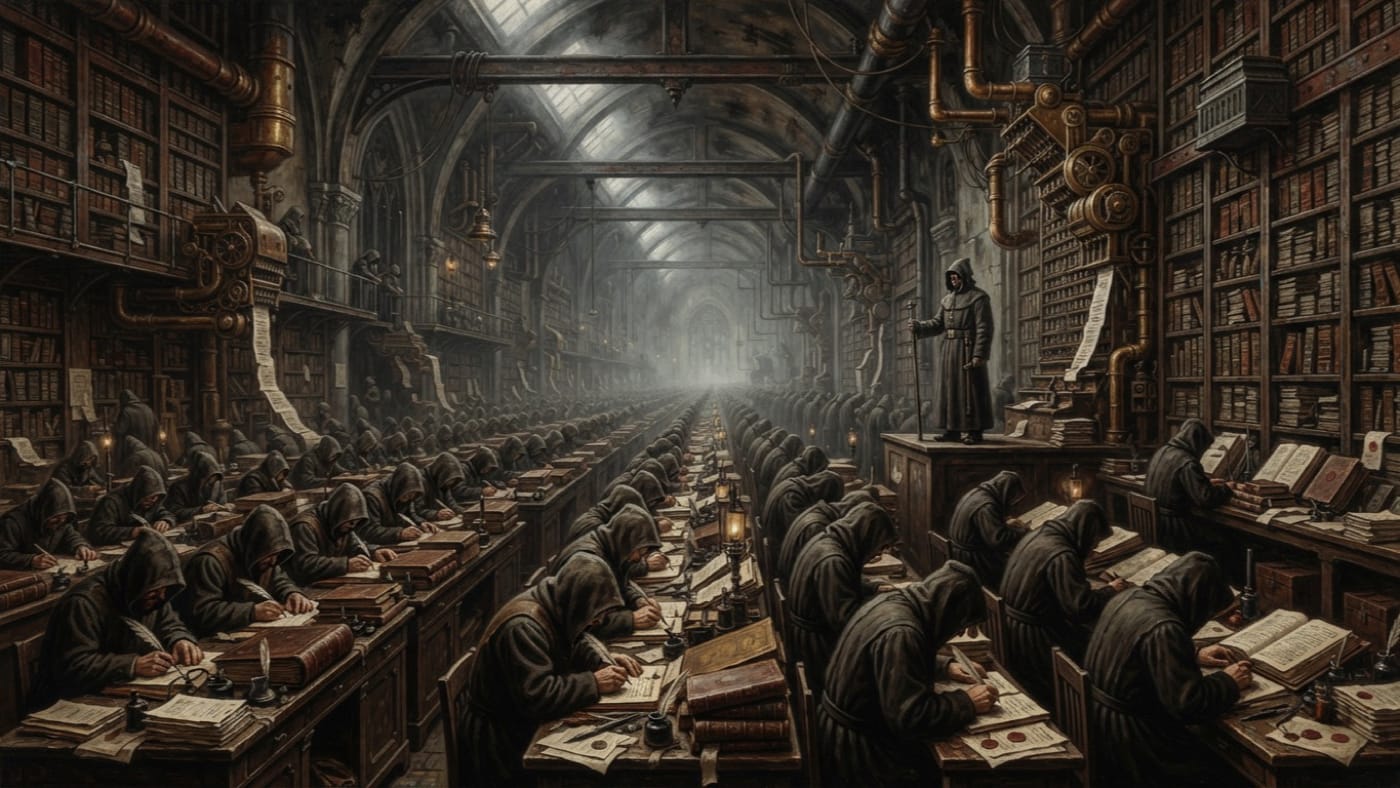
Ledger
Where the entry governs the living
The Ledger is the Synod's doctrine of authorized memory: every roll is presumed to agree, every name stands where an office writes it, and the body obeys the entry even when the words change.
Codex Ref. XIII.1.33-201

Ledger of Honourable Dust
The recipient cannot embarrass the award
An A.S. 201 survey of War's posthumous honours: a medal through the shroud, an entry above ground, and no guarantee that the widow will be paid.
Codex Ref. XIII.1.56-001
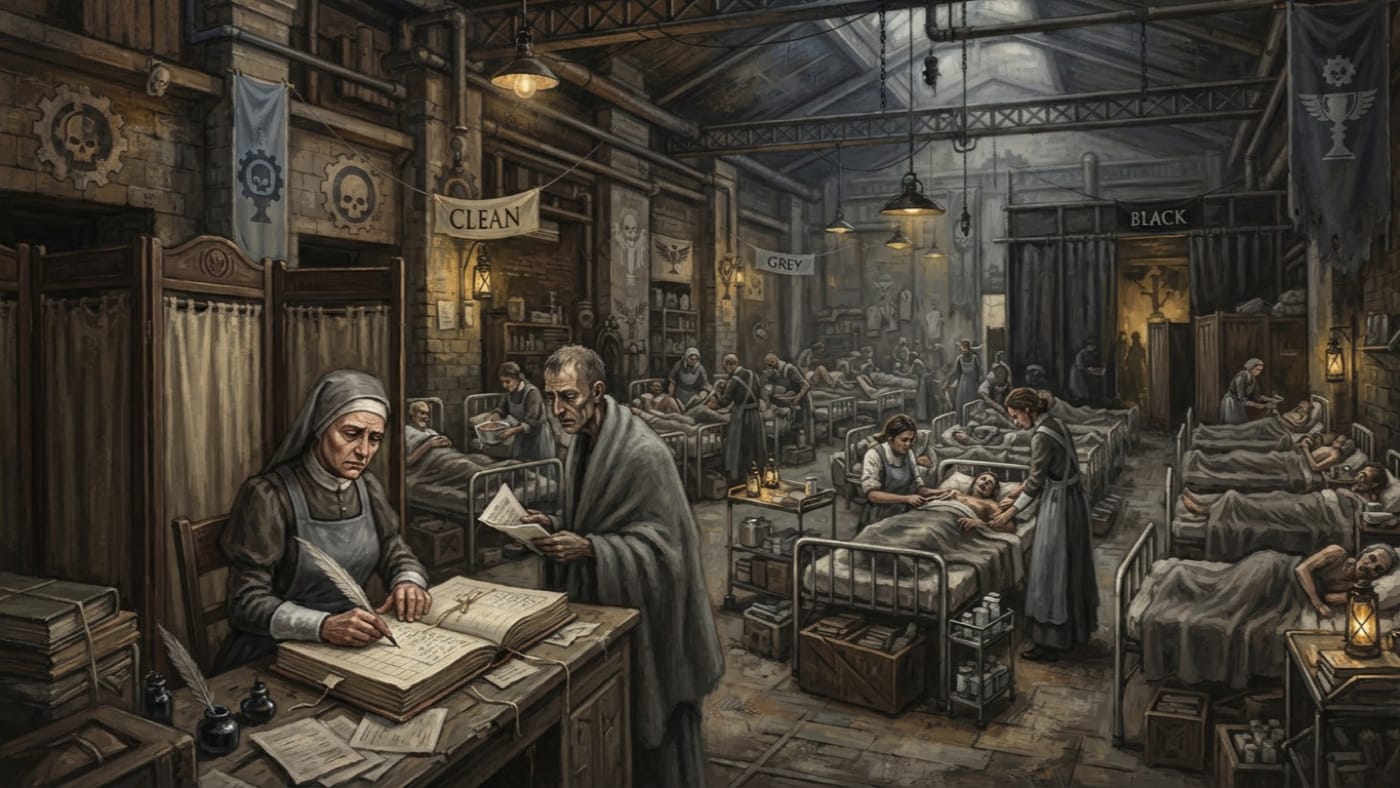
Mercy Wards
The bed is allotted; the suffering must be entered
The Bureau of Mercy's houses of the sick: broth, bandages, confession and clean, grey or black tags. This A.S. 201 survey counts the registered wards; the living remain harder to reconcile.
Codex Ref. II.6.04-001
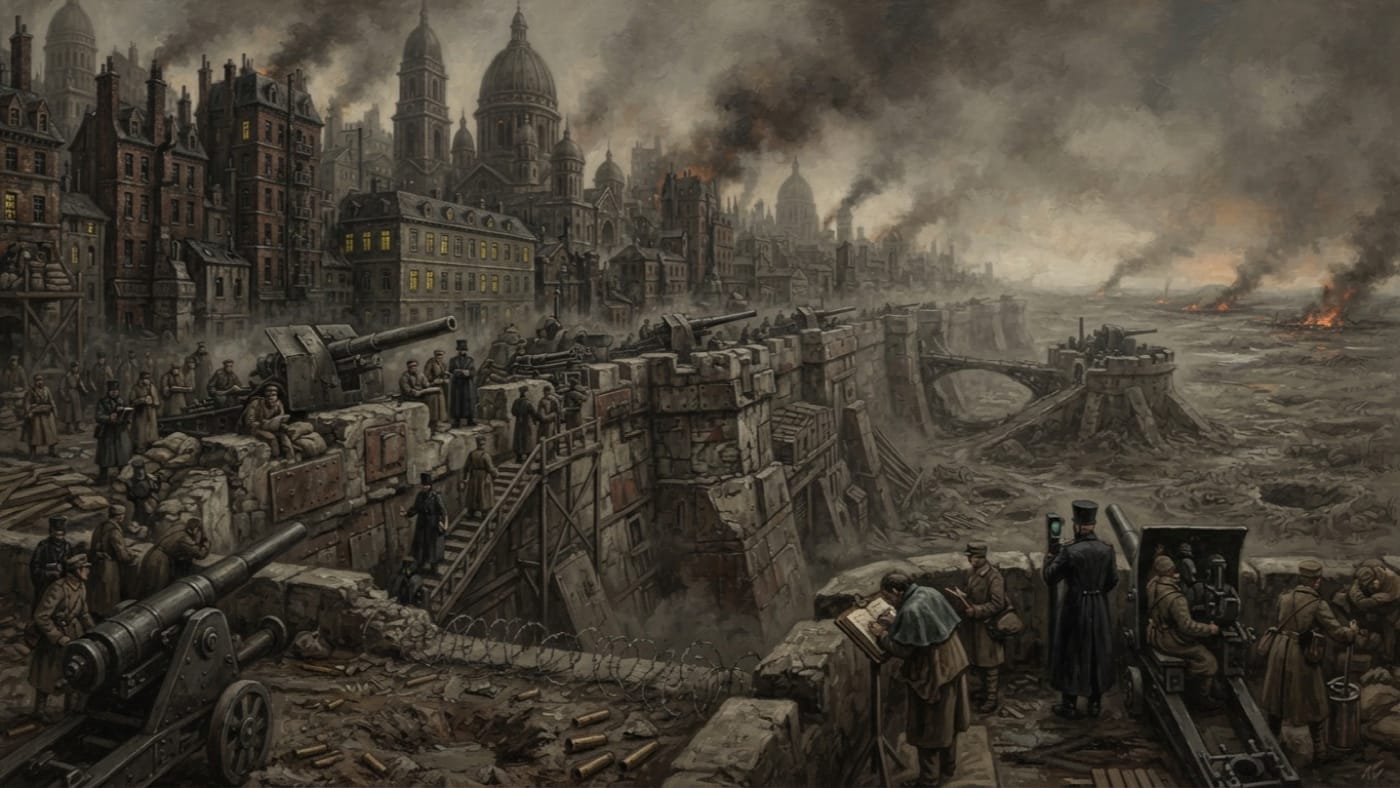
Northern Wall
The guns answer north; the city goes to dinner
The north-facing defenses of Bastion-Constantinople answer Maldrake across the Thracian Plain. Guns, Wardens and repair crews keep the frontage in service; the records still cannot agree where it ends.
Codex Ref. II.4.10-201
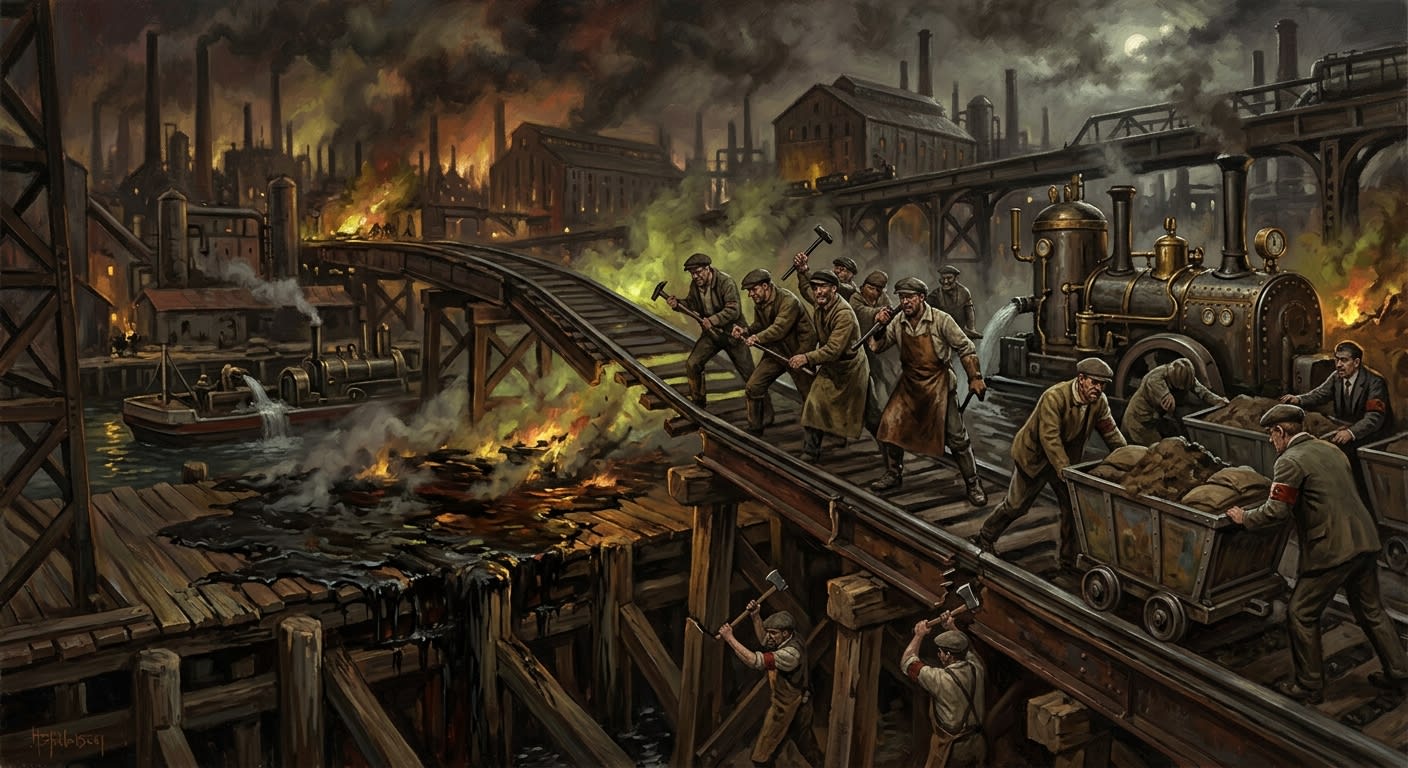
Reed-Road Sleepfire
The night Shipka learned water can be severer than flame
The Reed-Road Sleepfire burned Shipka's outer stilts while Sloth made flight seem vulgar; engineers answered with flood, demolition, and useful disobedience.
Codex Ref. VII.8.10-178
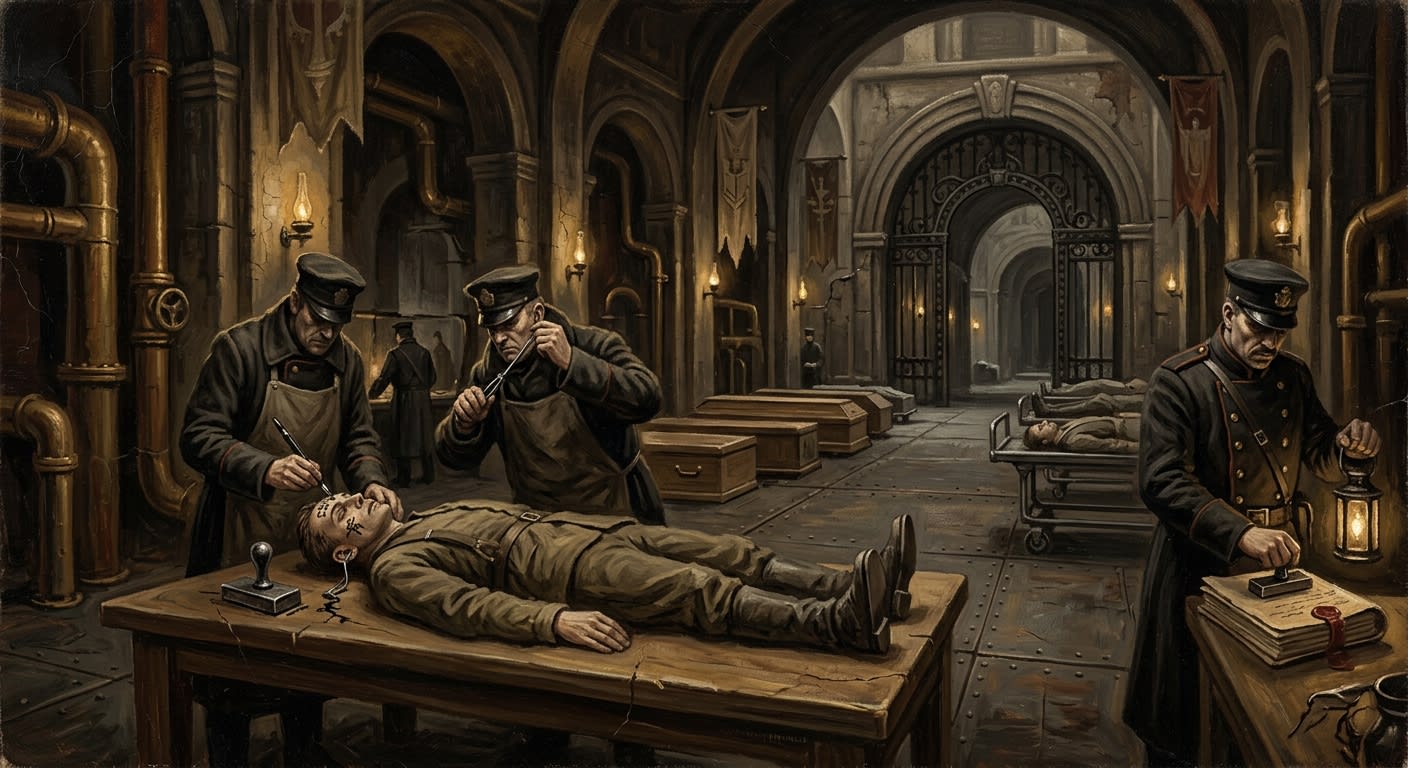
Rite of Passing
No soul departs until the Ledger has improved the death
The Rite of Passing turns death into lawful custody: right ear, last words, body display, black ink, routed remains, and no soul left vulgarly private.
Codex Ref. XIII.1.85-080
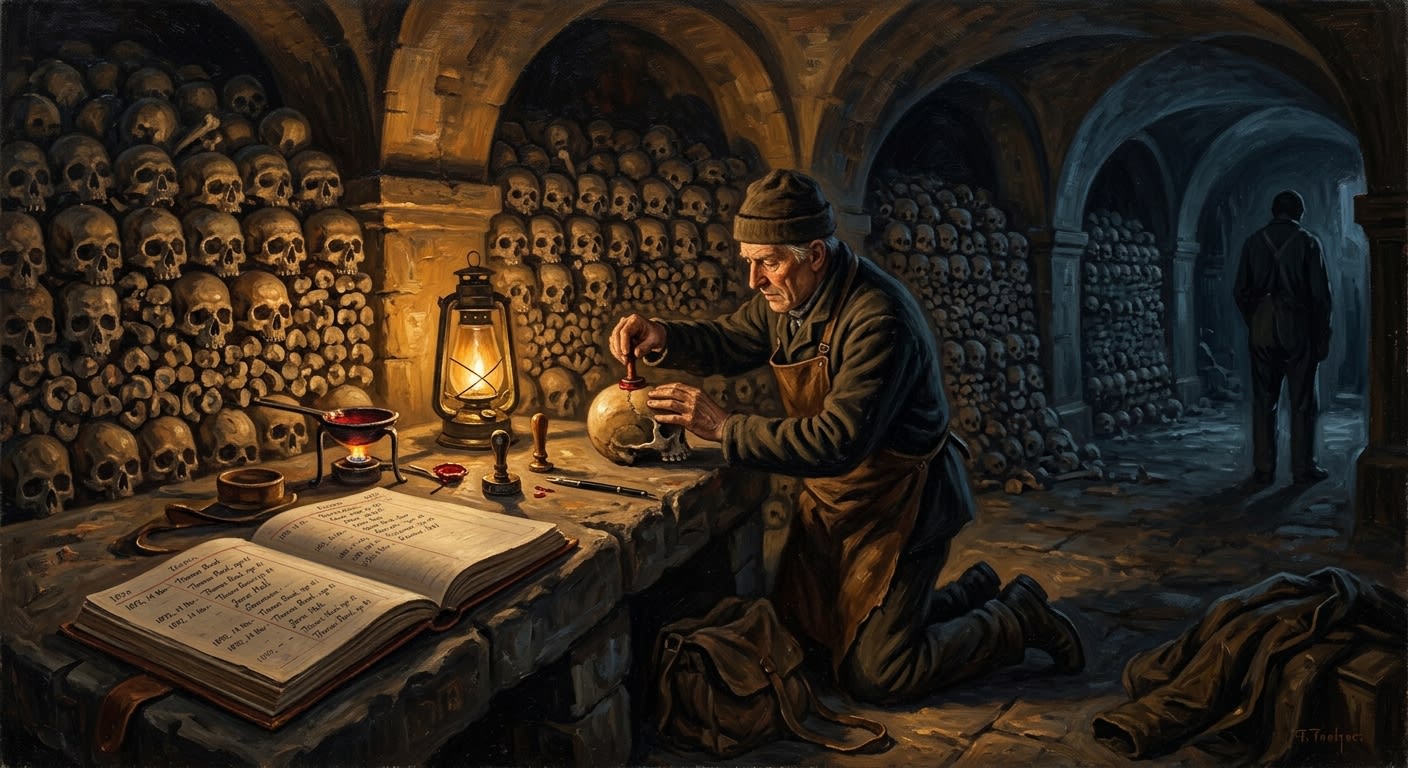
The Dead
What the filing system remembers, and what the Bureau has declined to ask
The Bureau maintains death is a clerical event. The dead, by the Bureau's own monitoring, appear to disagree. Drax files the discrepancy.
Codex Ref. VI.2.01-001