

Reverse Index
Referencing “The Pale Kin”
Every codex entry that links to The Pale Kin. 21 entries.
Return to The Pale Kin

Administrative Inconvenience Premium
The price of making the Ledger notice you twice
The Premium prices disobedience as clerical labour: miss Form 7-NR, trouble the Ledger, and watch one infant become a lifetime of doubled debt.
Codex Ref. XIII.1.02-158

Administrative Recovery
The state calls it custody because theft has poor margins
Administrative Recovery is Mercy's washed name for taking unregistered children, renaming them, tagging them, and teaching the Ledger to stand where a family stood.
Codex Ref. XIII.1.02-159
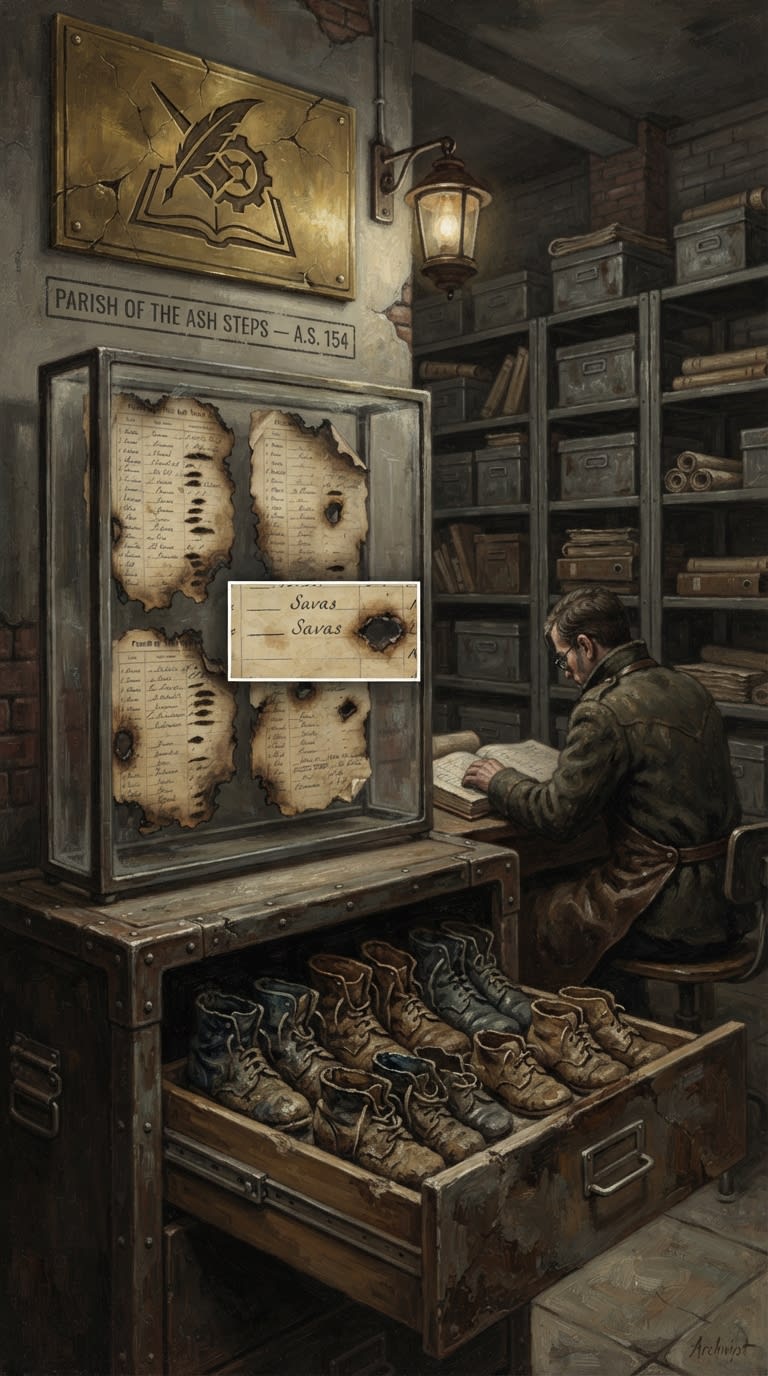
Ash Eleven
Eleven ruled lines, six names, one scorched twin
Eleven Ash Steps infants erased from A.S. 154 levy arithmetic by Mother Sava's registry fire, leaving six names, one scorched twin, and shoes the Ledger cannot file.
Codex Ref. VII.8.10-154
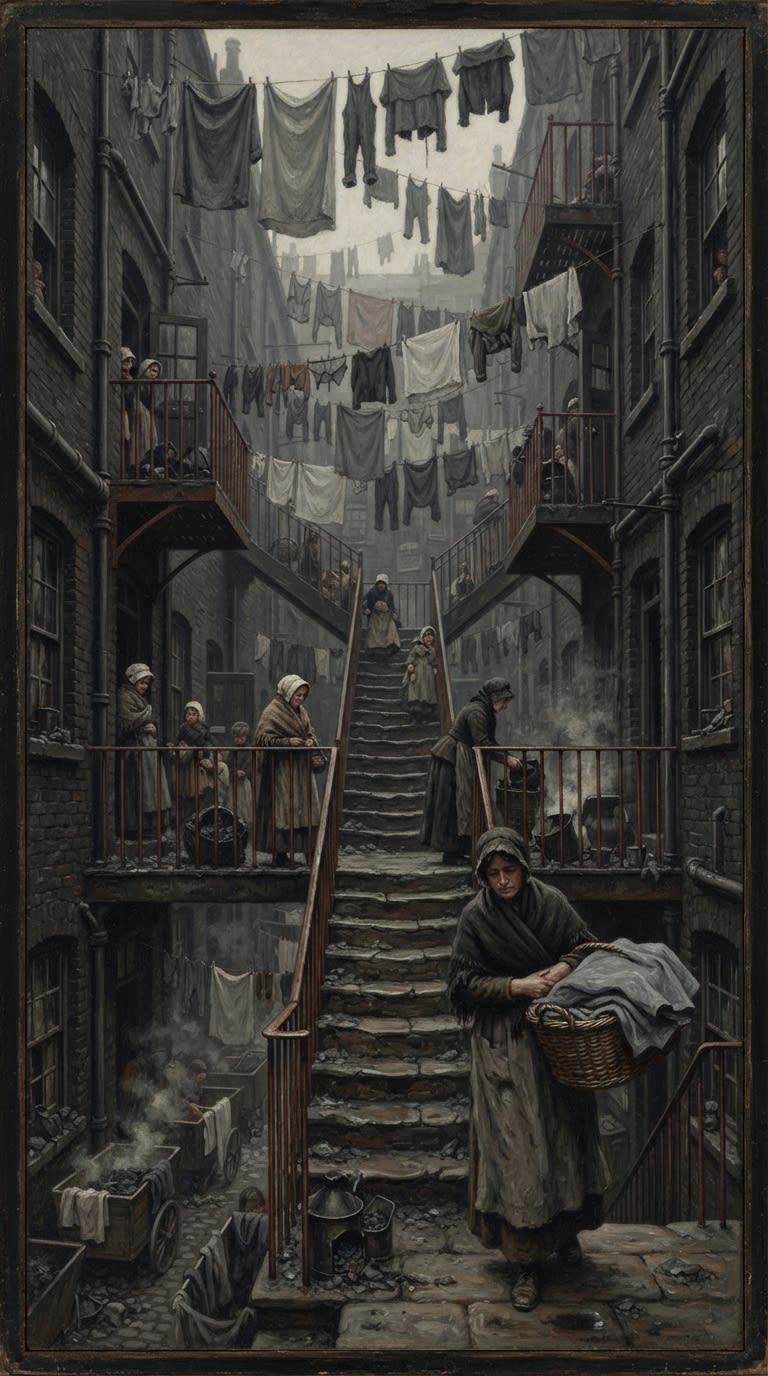
Ash Steps
Where a parish became a method and a roll became ash
The Ash Steps are an unmapped parish-name where laundry, back stairs, milk debts, and a burned A.S. 154 registry taught the Pale Kin that a place can become a method.
Codex Ref. II.2.06-154
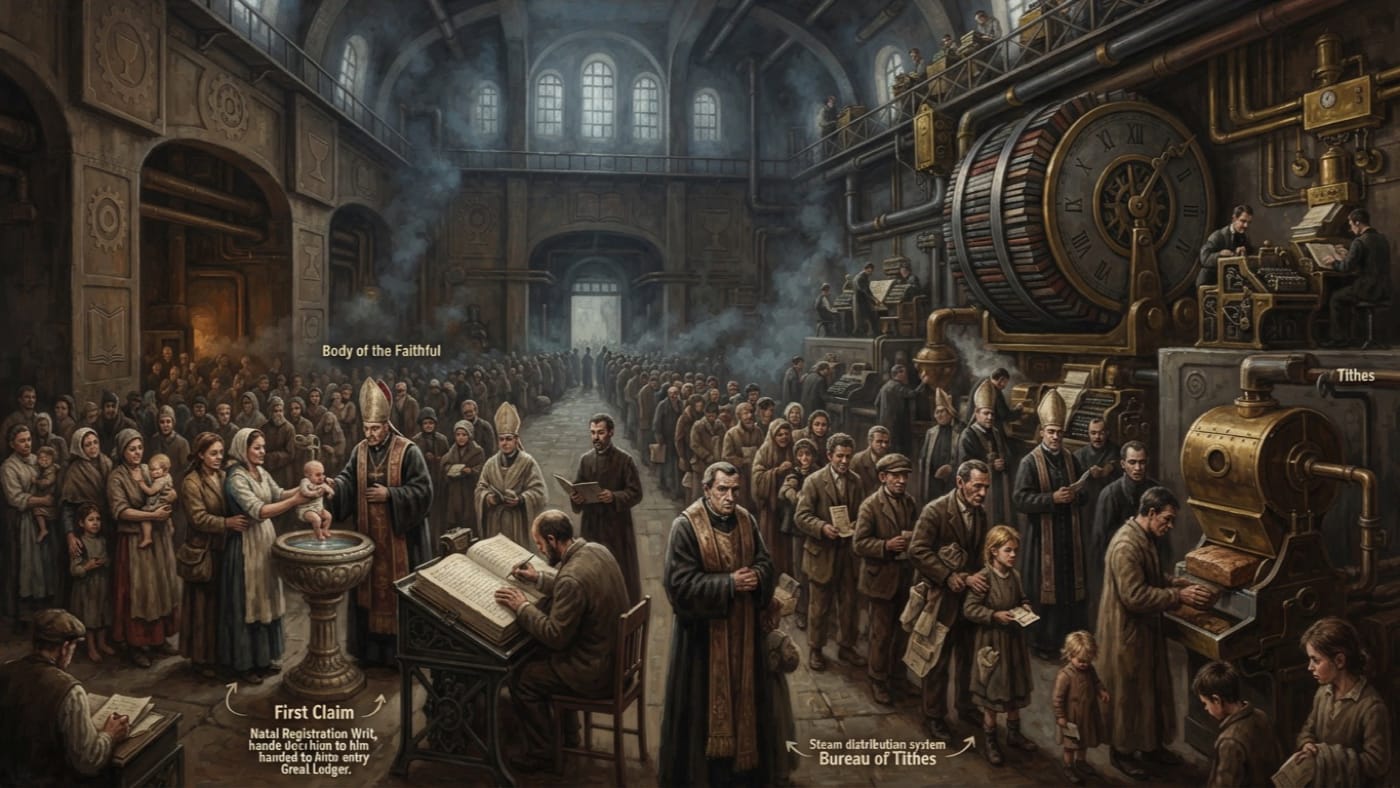
Body of the Faithful
Devotion warms the flock; recognition takes its pulse
The Church's faithful taken together: shepherded by bishops, recognised through the Ledger and claimed before the font. The flock receives bread; the accounts remember what it owes.
Codex Ref. XIII.1.03-201

Bureau Circular 221-R
Fourteen pages proving a living man can fail to count
Bureau Circular 221-R is the Records clarification that defines the dissolved as *praesens sed abrogatus*: present, abrogated, and ineligible for mercy by procedure.
Codex Ref. XIII.1.01-004
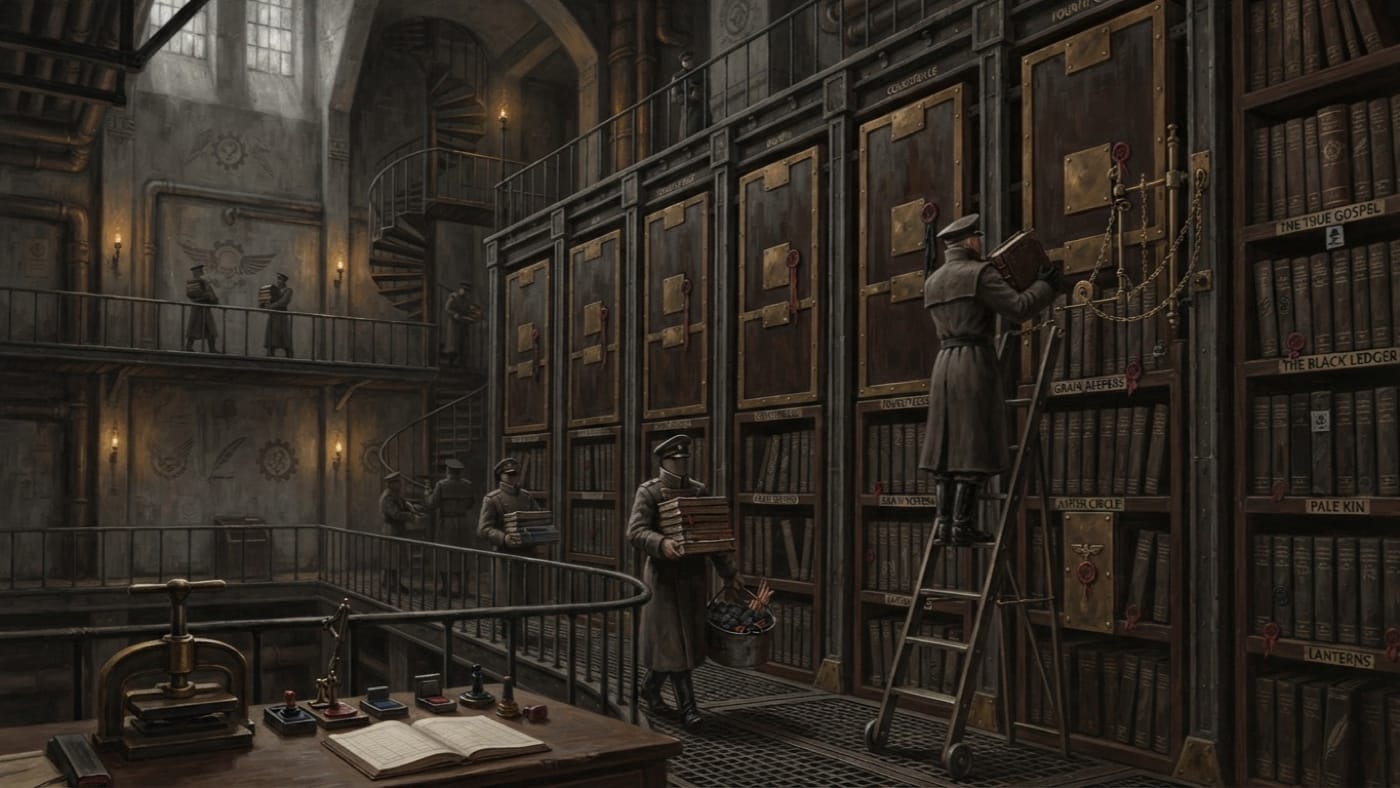
Compendium of Proscribed Errors
Every grievance gets a shelf; the clerk supplies the kindling
The Bureau of Doctrine's register of eight proscribed heresies: every grievance receives a shelf, and every clerk learns which kindling to fetch.
Codex Ref. XIII.1.37-002

Discrepancy Writ
A name at the font. No voice at the screen.
A son stands on the birth-roll and vanishes from the confession ledger. Conscription files the writ and informs Purity. The books disagree; the household acquires a second Bureau's attention.
Codex Ref. XIII.1.83-201

Hierarch-Procurator Marius of Cologne
The signature that moved the state into the birth room
Marius of Cologne ratified the Natal Registration Act of A.S. 158, turning Veyrault's recorded-existence doctrine into midwife deadlines, Womb Registrars, and the price of a child's first breath.
Codex Ref. III.2.01-158
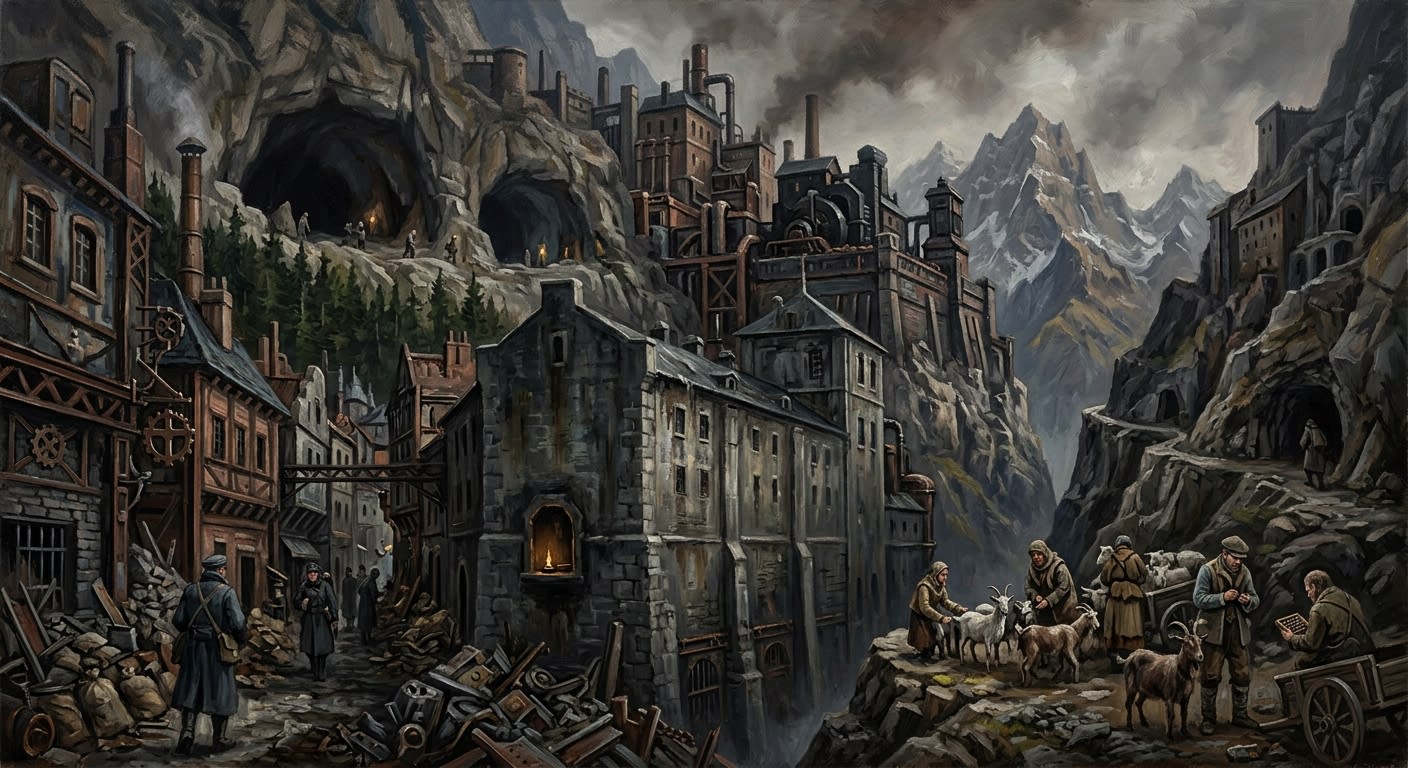
Innsbruck
Where mountains, grandmothers, caves, and walls defeat the census
Innsbruck is the Synod's alpine refuge-city: Cellar Saint caves above the treeline, relics disguised as trash, Mother Sava's wall-cavity, Pale Kin routes, goat arithmetic, and the most pious registry evasion in the mountains.
Codex Ref. II.2.09-030

Inquisition
The white hand closes with a receipt
The Inquisition is Purity's authorised appetite for correction: White Cloaks, Lictors, Red Lanterns, Ashmen, Shadows, Index packets, denunciation law, and the clerkly miracle by which fear learns to file itself.
Codex Ref. VIII.1.08-093
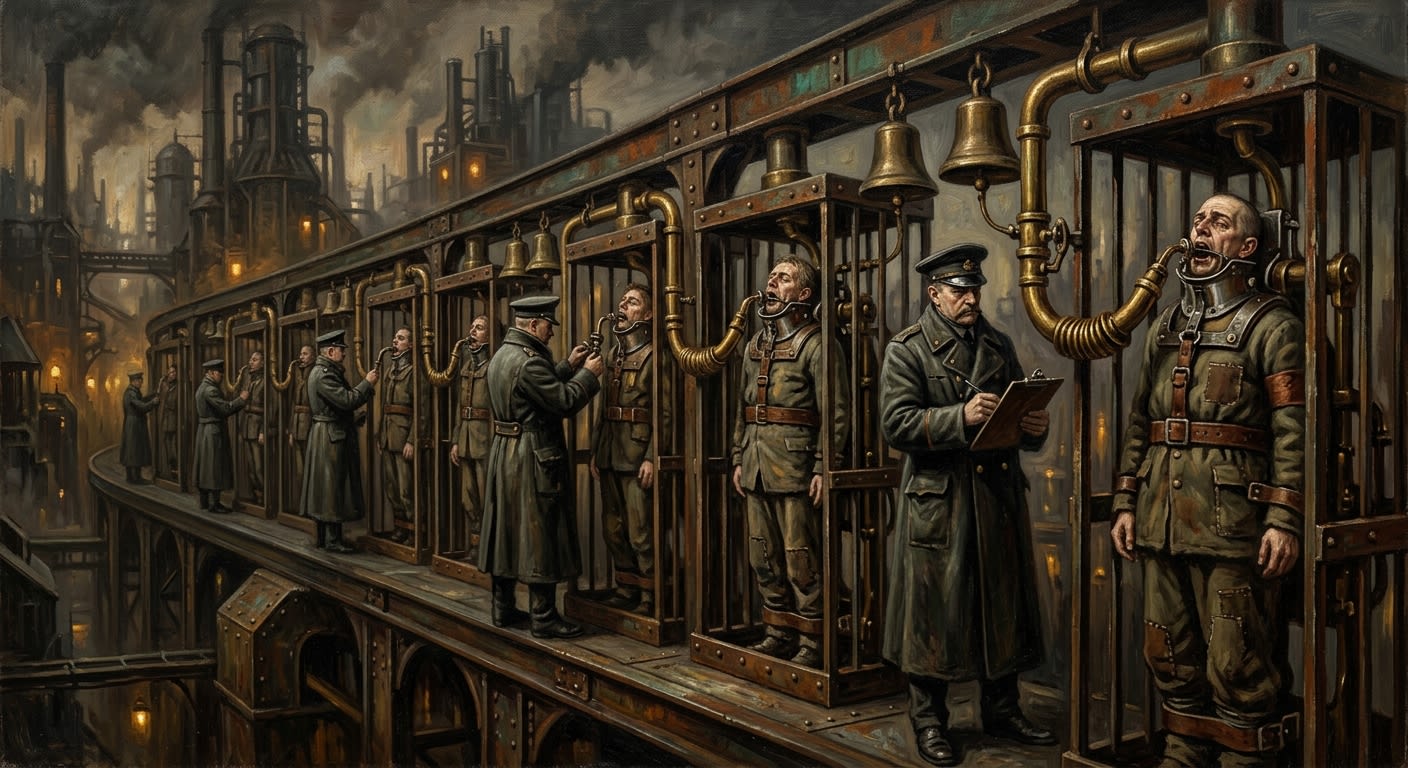
Iron Choir of Mainz
Where the road learned to keep a throat open
The Iron Choir of Mainz turns condemned throats into civic instruction: a Purity road of cages, bells, Brand-Singers, witness columns.
Codex Ref. VIII.1.09-134

Levy Assessor
The census names the household. The Assessor names the son.
The Levy Assessor compares sacred ledgers, declares a household's liability and stamps the selected wrist. The Bureau calls this collection. The household has other names.
Codex Ref. III.4.08-201

Midwives
She catches the child and inherits the clock
Midwives attend the birth and carry its liability to Records. This A.S. 201 survey follows notice, Form 7-NR, Registrar scrutiny and evasion through laws whose clocks still disagree.
Codex Ref. XII.9.04-002
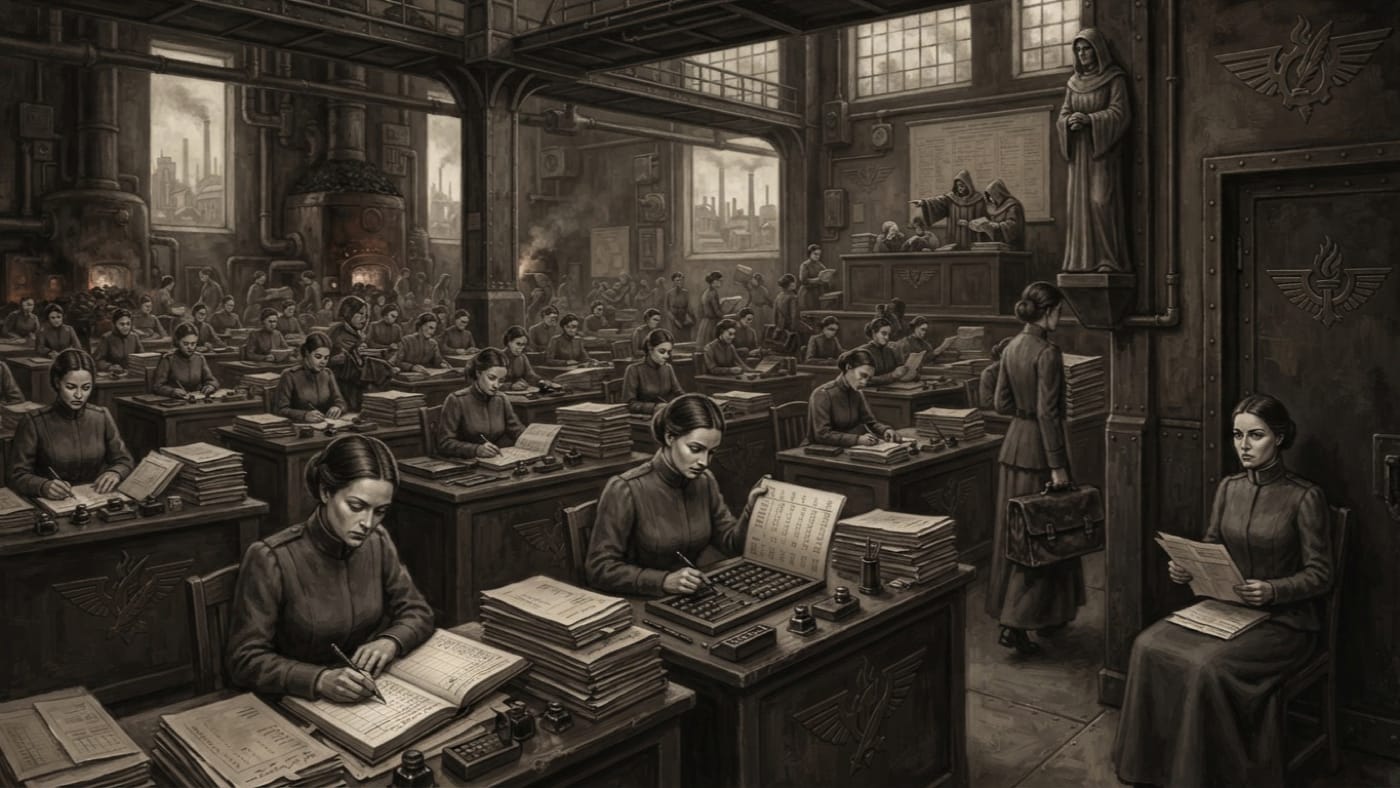
Natal Division
Where congratulations becomes a claim upon the household
The Natal Division trains Strasbourg's Womb Registrars to make pregnancy legible: notices, approved names, household sums, reconciled writs, and suspicions precise enough for Purity to act upon.
Codex Ref. XII.9.04-002
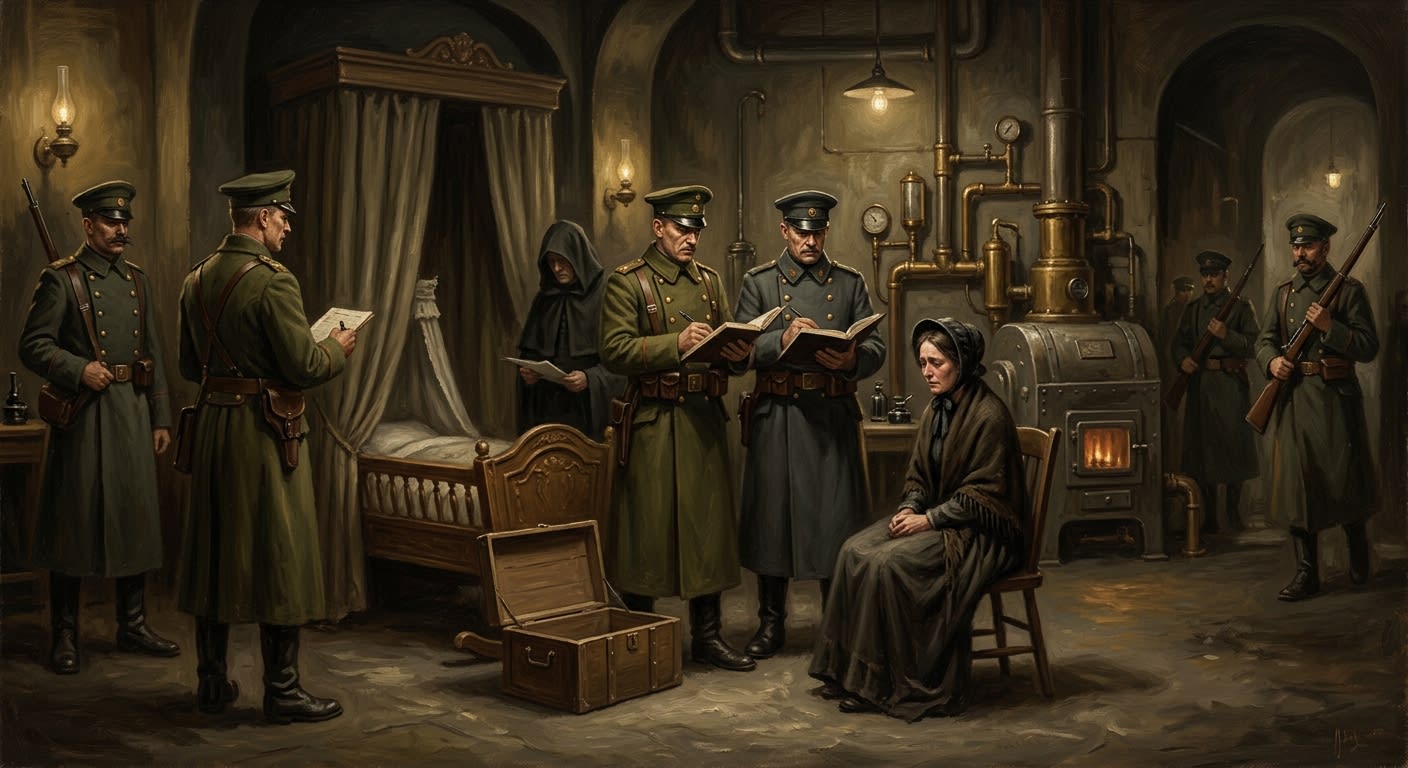
Standing Order 34-PK
The cradle confesses when the Ledger is hungry
Standing Order 34-PK makes the hidden cradle confess: missing infants become stolen soldiers, and a mother’s silence becomes evidence.
Codex Ref. XIII.1.34-158
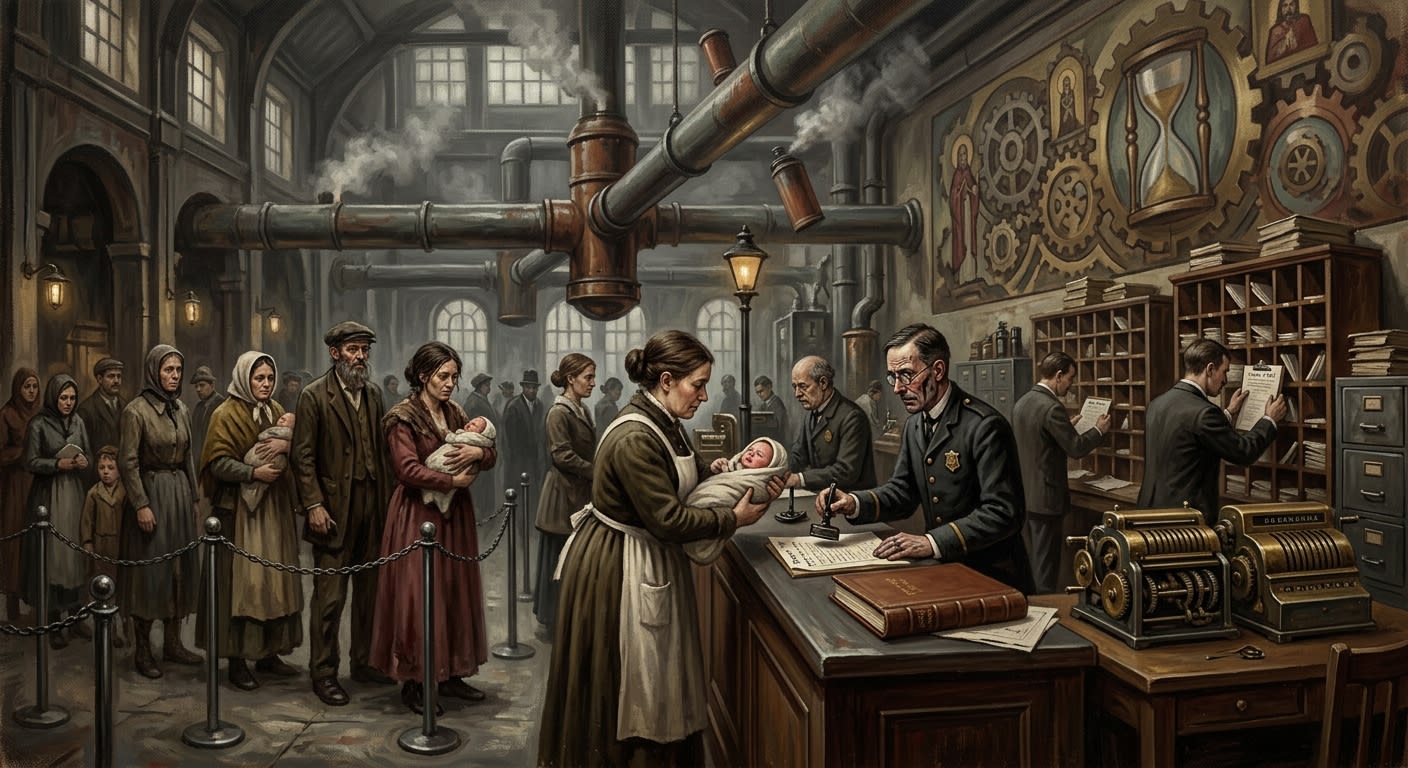
The Natal Registration Act
The statute that put a clock beside the cradle
The Natal Registration Act of A.S. 158 made birth a Records event: forty-eight hours from first breath, Form 7-NR, midwife filing, tithe projection, and the cradle docketed.
Codex Ref. XIII.1.02-158
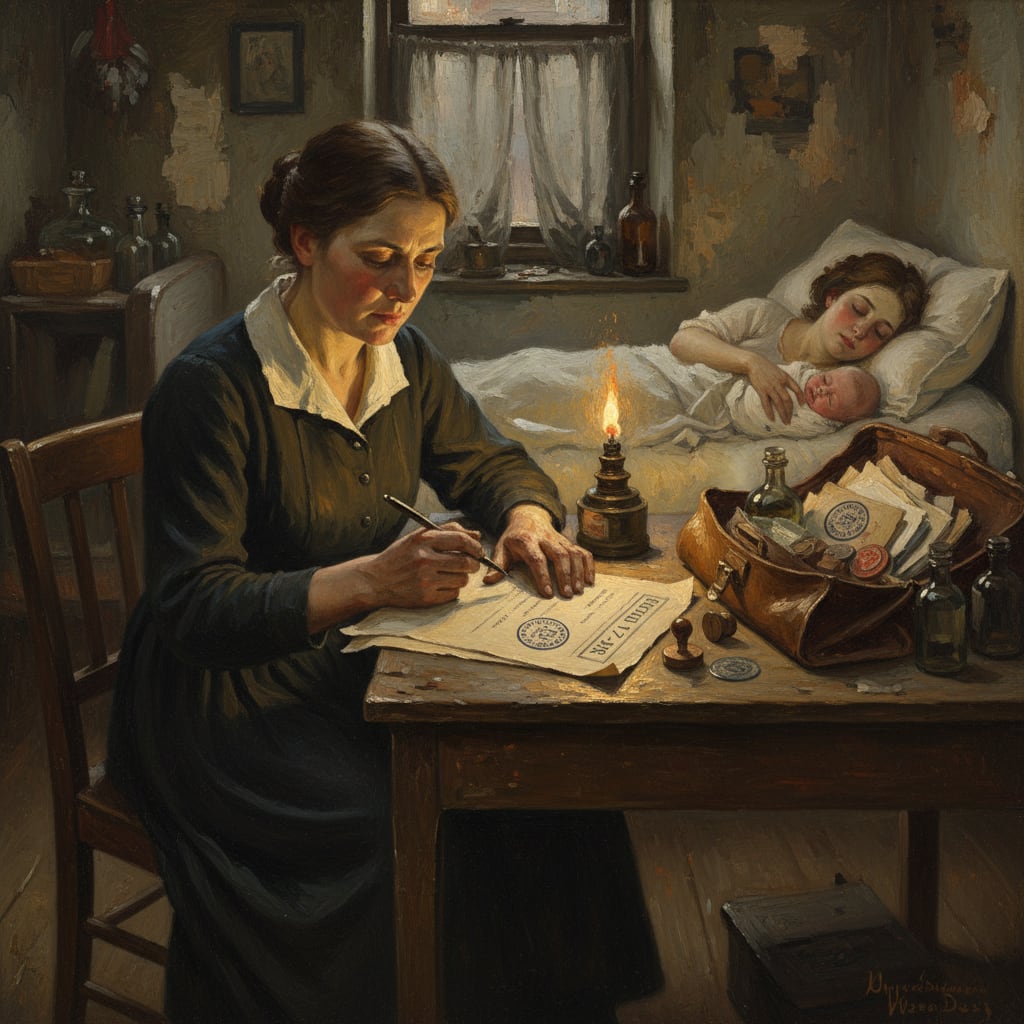
The Natal Registration Writ
Eleven inches by fourteen, and the whole apparatus of a life not yet lived
Form 7-NR is eleven inches by fourteen, bears two watermarks, and calculates the fiscal value of a human life at the moment of birth. Drax explains the theology, the penalties, and the people who would rather disappear than sign it.
Codex Ref. XIII.1.02-001
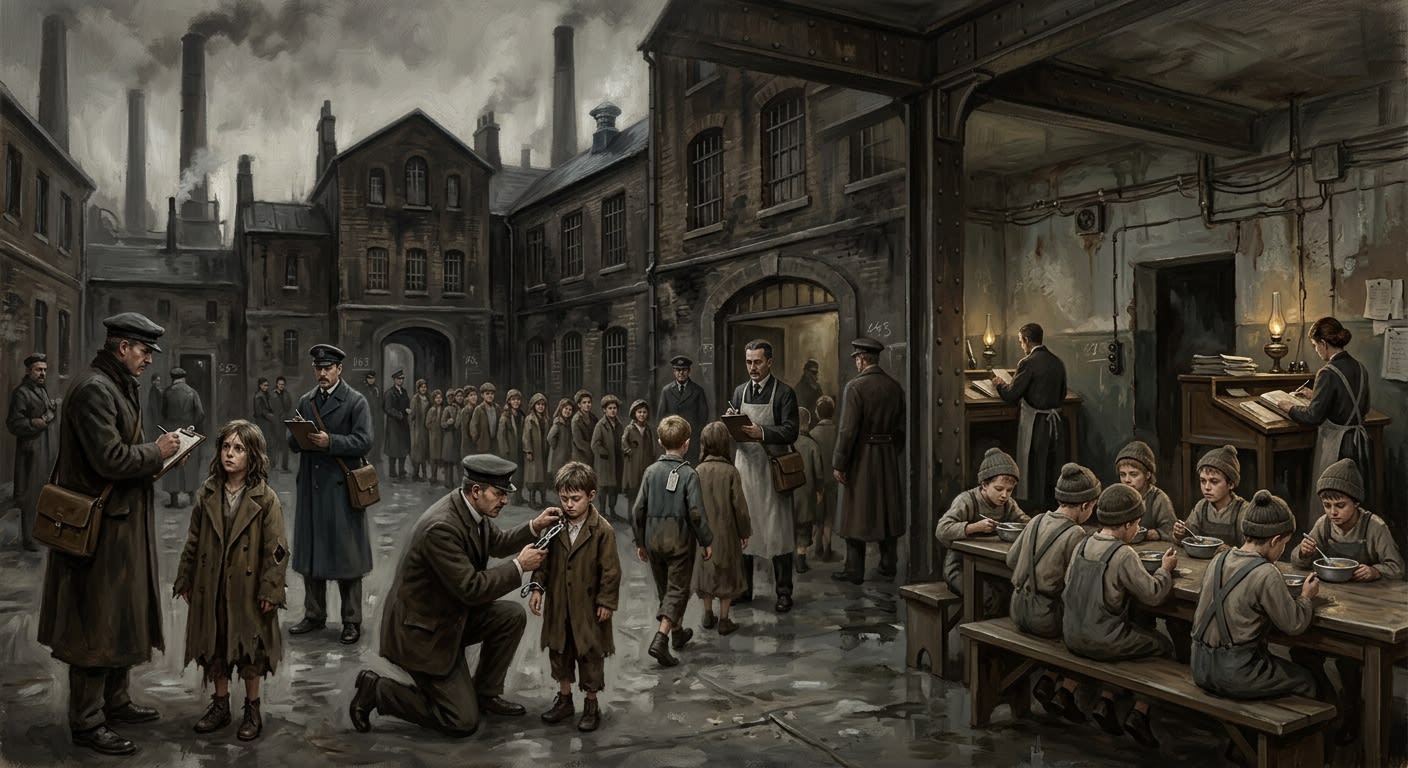
The Orphanarium
Mercy with hinges, locks, soup, and a tag cabinet
The Orphanarium receives children without acceptable custody and returns registered minors: washed, renamed, tagged, fed, placed, and corrected until Mercy can invoice itself.
Codex Ref. II.2.06-005

Void
The child survives when the gap is too dull to notice
Ash Registrar doctrine naming the document-thick gap between a living hidden child and the dead, misfiled, or duplicated child the Ledger believes in.
Codex Ref. XI.4.01-005

Womb Registrars
The cradle has a visitor, and she has already priced the child
Womb Registrars are Bureau of Records parish deputies who turn pregnancy into ledger matter: notice, name control, midwife compliance, and tithe projection before first breath becomes evasion.
Codex Ref. XII.9.04-001