

Reverse Index
Referencing “Crown of Grace”
Every codex entry that links to Crown of Grace. 21 entries.
Return to Crown of Grace

Administrative Inconvenience Premium
The price of making the Ledger notice you twice
The Premium prices disobedience as clerical labour: miss Form 7-NR, trouble the Ledger, and watch one infant become a lifetime of doubled debt.
Codex Ref. XIII.1.02-158
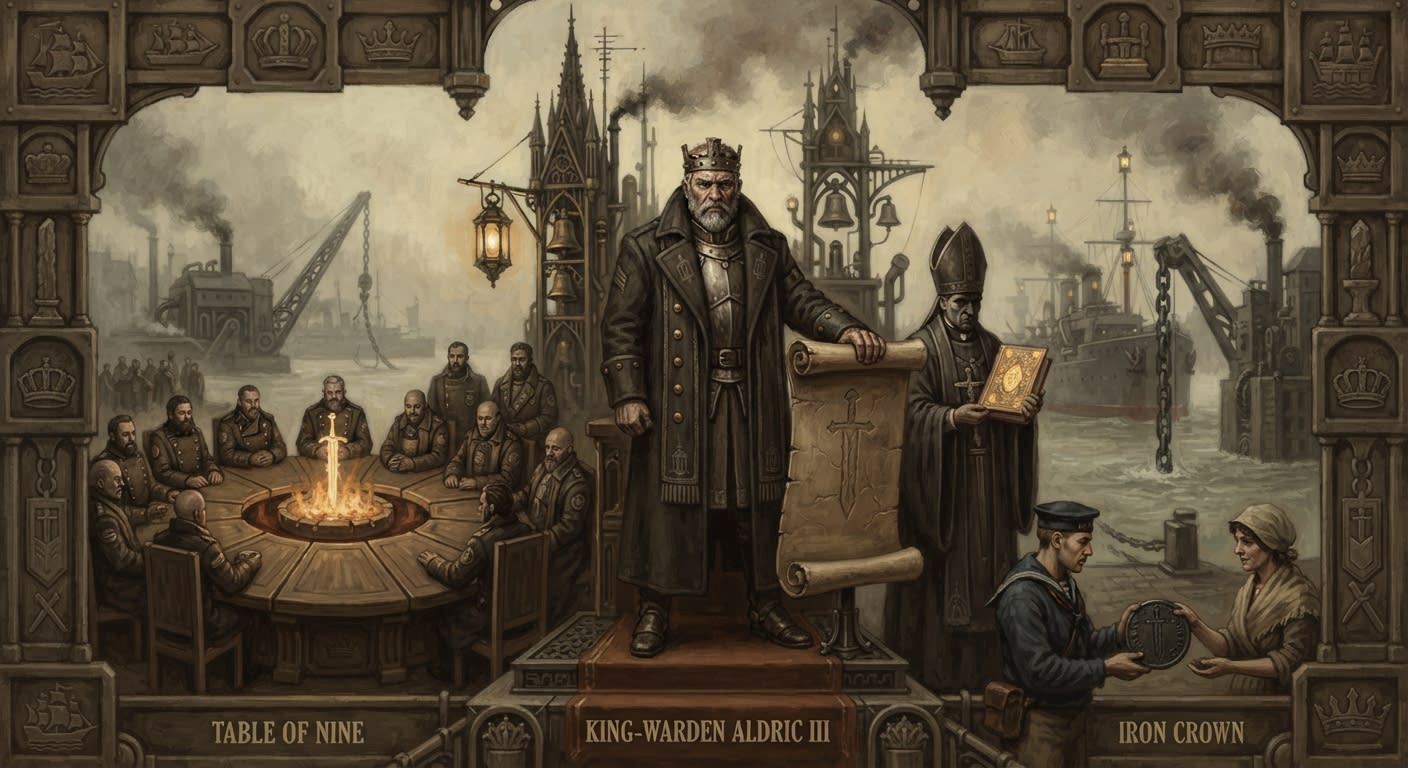
Arthurian legitimacy
The old island claim Strasbourg can deny and still must salute
Arthurian legitimacy is Britain's old answer to Strasbourg: charter, altar, Table, coin and coastline, obeyed too long to be dismissed as mere legend.
Codex Ref. X.1.06-001

Arthurian Tradition
The myth that keeps the Channel open
The insular oath-machine Strasbourg cannot disprove and Britain does not need proved: Arthur as crown, charter, coin, bell, harbour chain, and naval discipline.
Codex Ref. X.1.01-002

Ash-Test
A line of dirt across the Church's money
The ash-test is the Synod's first suspicion laid across a Crown of Grace: cheap, quick, useful, and far too often mistaken for certainty.
Codex Ref. XIII.1.23-092
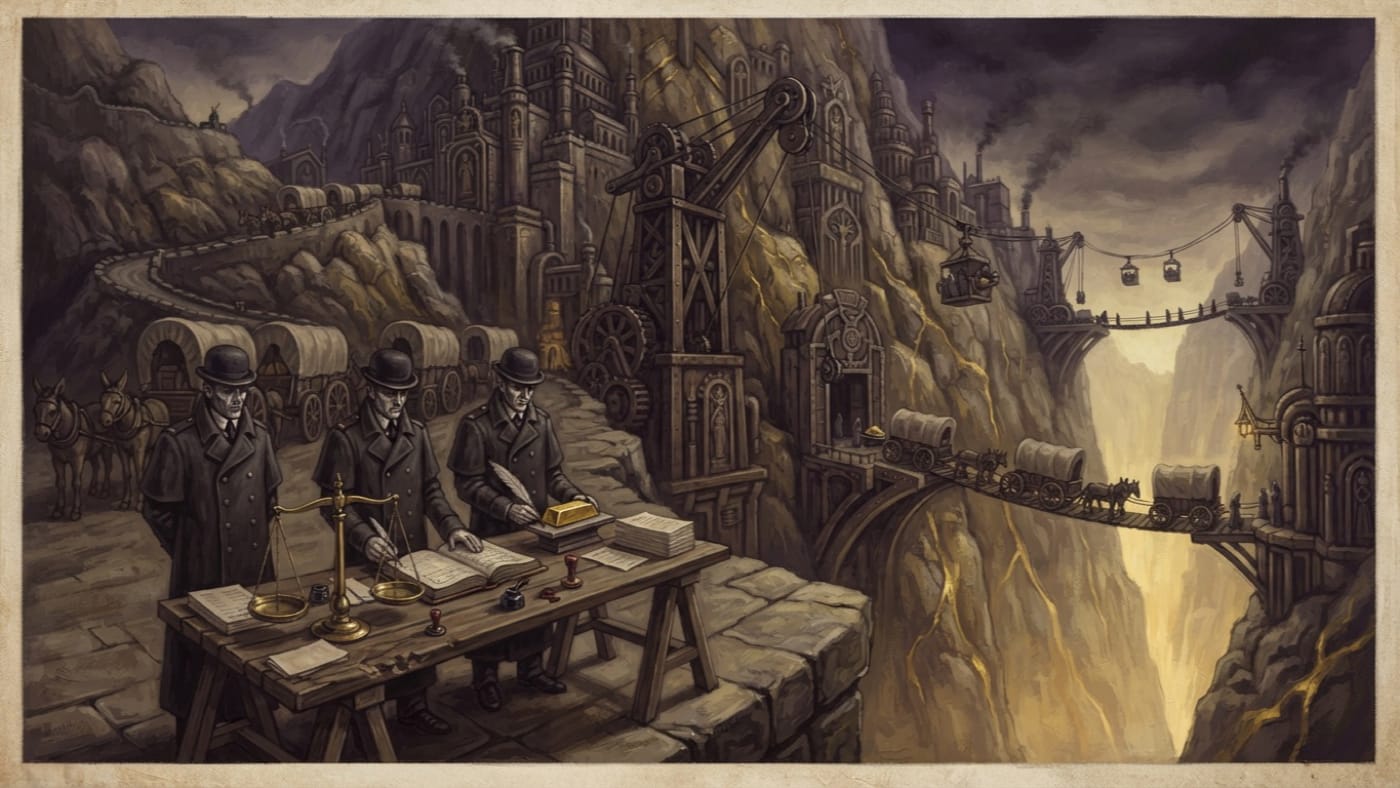
Audit Writ 88-G
The levy was collected. The cost was not weighed.
Audit Writ 88-G carried Tithes to the Gilded Chasm's upper rim in A.S. 114. Three platforms paid at once. The Bureau called it revenue; the returned auditors supplied the objection.
Codex Ref. XIII.1.02-114

Avarice Engine
A walking treasury with foreclosure for feet
The Avarice Engine is Velmora's walking treasury: a gold-and-silver war-golem that crushes ownership, appraises courage, and leaves pay-chests empty.
Codex Ref. XIII.1.27-190

Bureau of Concord
Harmony, filed with teeth
The Bureau of Concord preserves peace by translation, delay, treaty custody, foreign grievance, and the elegant violence of a pending clause.
Codex Ref. VIII.1.05-090

Canterbury
The cathedral that refused to become a bureau
Canterbury is the British Crown's cathedral-seat: old, armed, bell-ridden, unaudited, and infuriatingly functional beyond Strasbourg's forms.
Codex Ref. II.0.01-201
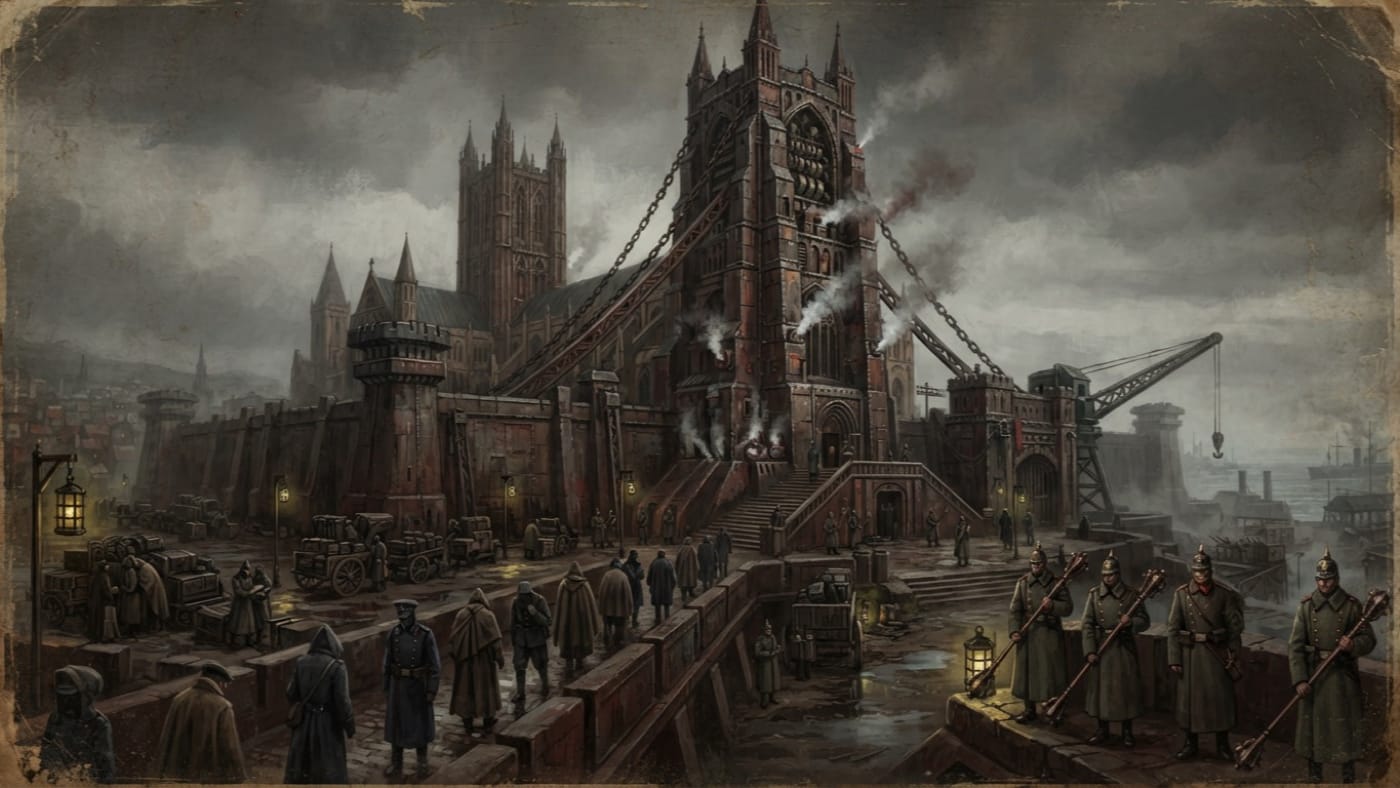
Canterbury Cathedral
Where British bells keep the hours and Strasbourg keeps its distance
Canterbury Cathedral keeps Britain's oaths, relics and bells beneath Crown authority. Its face circulates on Iron Crowns; Strasbourg's authority stops at the rail.
Codex Ref. II.0.02-201
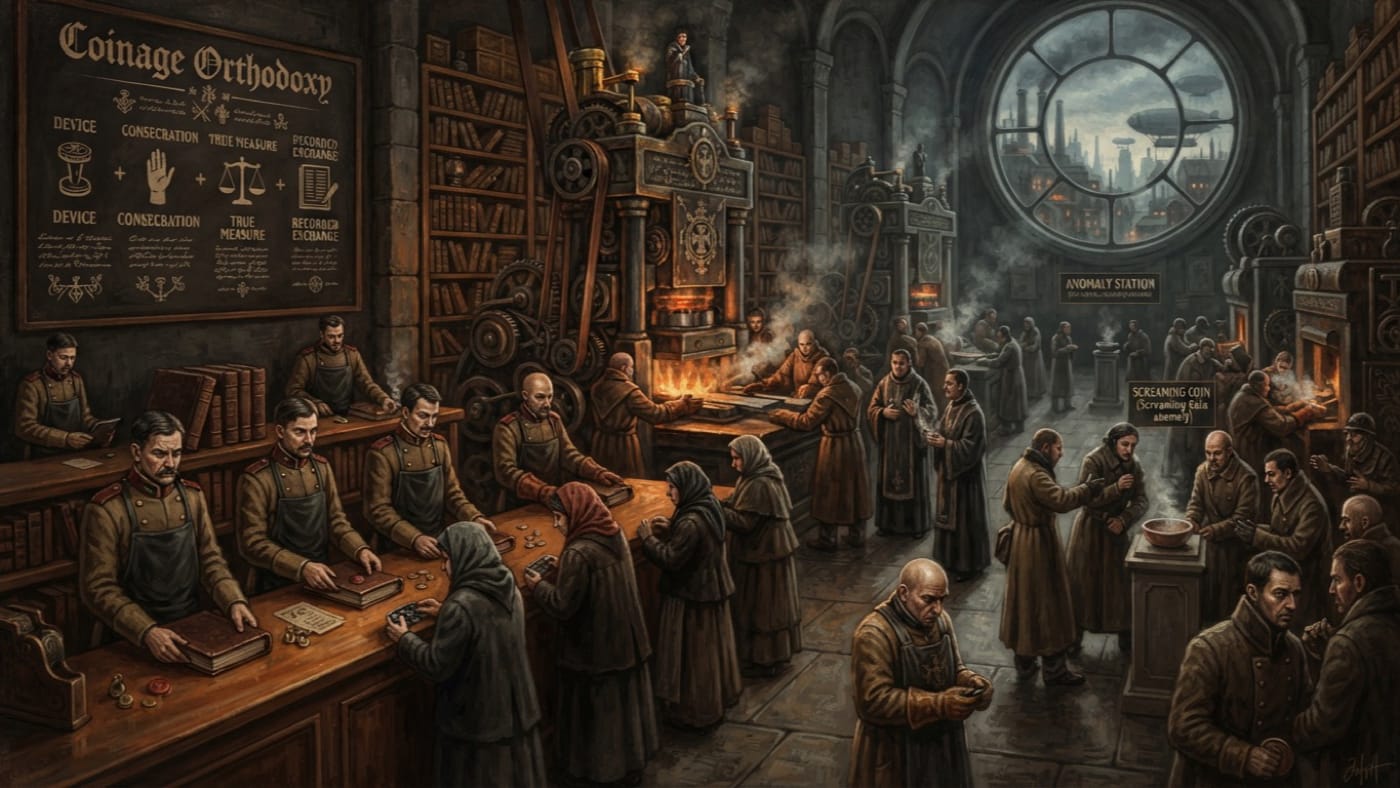
Coinage Orthodoxy
Iron is obedience you can count
The Synod recognises lawful money by device, consecration, true measure and recorded exchange. Counterfeit value is heresy; the Screaming Coin passes anyway.
Codex Ref. XIII.1.23-201

Coinbound
Accumulation is the trap.
Velmora's demons appear as animated treasure, walking hoards and pure currency. They cannot be spent; they accumulate, resist removal and invite their keepers to add more. Accumulation is the trap.
Codex Ref. IV.2.07-003

Crown of Grace accounting
The money is present; the payment remains incomplete
Crown of Grace accounting turns harbour cargo into recognised value, assessed dues and sealed proof. Coin may settle an obligation; only reconciled ledgers persuade the Bureau to release the salt.
Codex Ref. XIII.1.24-201

Crowns
Iron in the purse, obedience in the ledger
Crowns name both the Synod's stamped iron coin and its unit of account. Mint blessings, sealed receipts and honest weight still leave Velmora room in the ledger.
Codex Ref. XIII.1.22-201
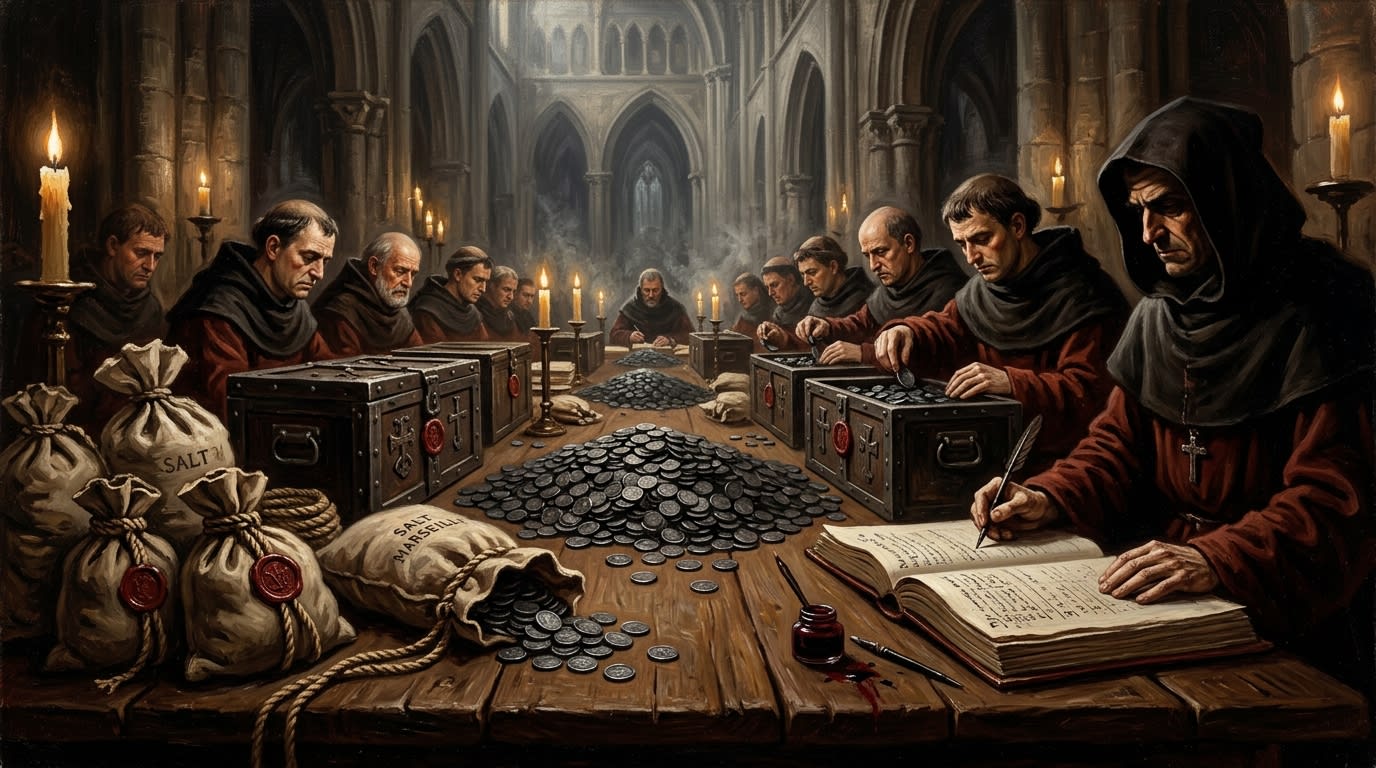
Crowns of Grace
One coin buys bread; the plural buys obedience
Crowns of Grace in the plural are obedience under arithmetic: harbour revenue, soldier arrears, salt dues, foreign insult, and bread counted until it kneels.
Codex Ref. XIII.1.22-093
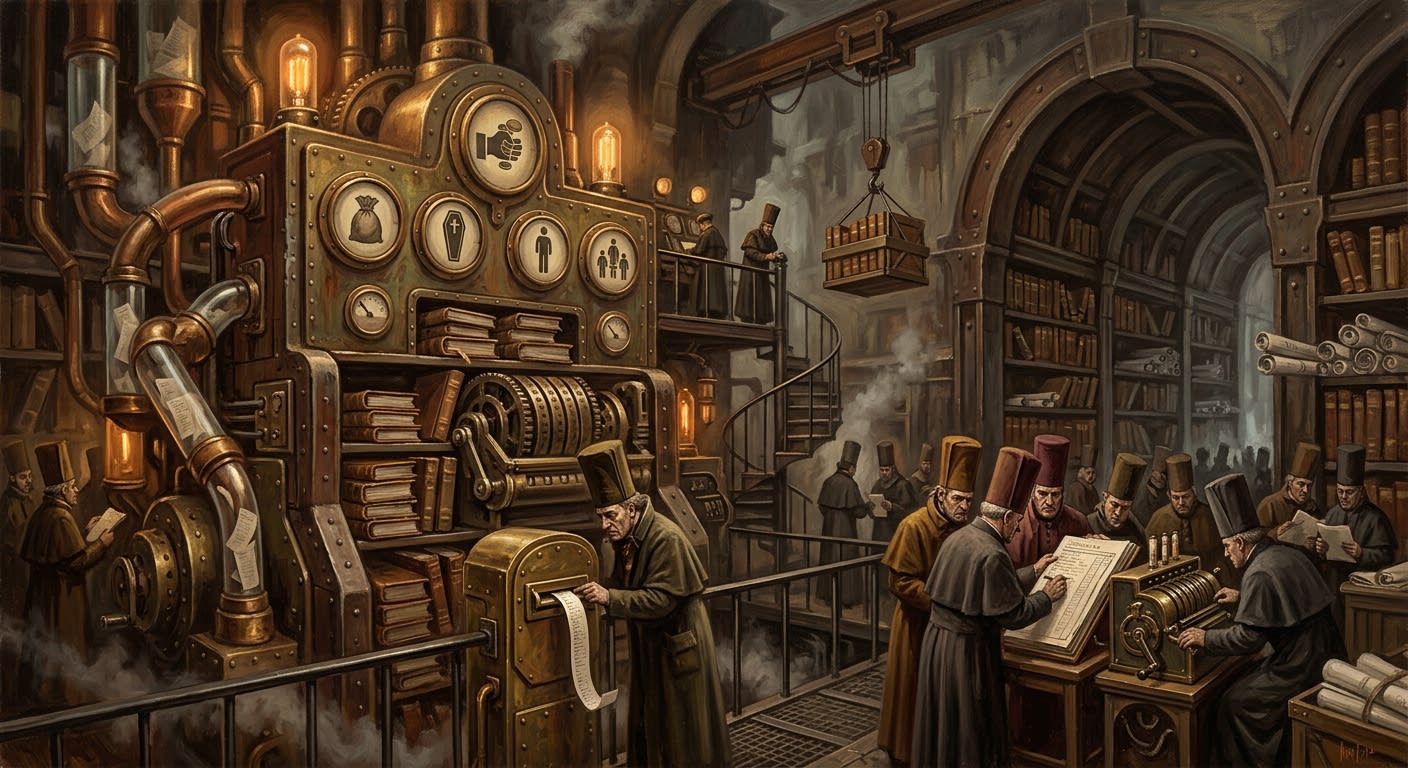
Fiscal Census
The mouth beneath the Ledger, still hungry after burial
The Fiscal Census is Tithes' continental obligation register: a vault-machine counting what the living, dead, unborn, and administratively inconvenient still owe.
Codex Ref. XIII.1.38-092
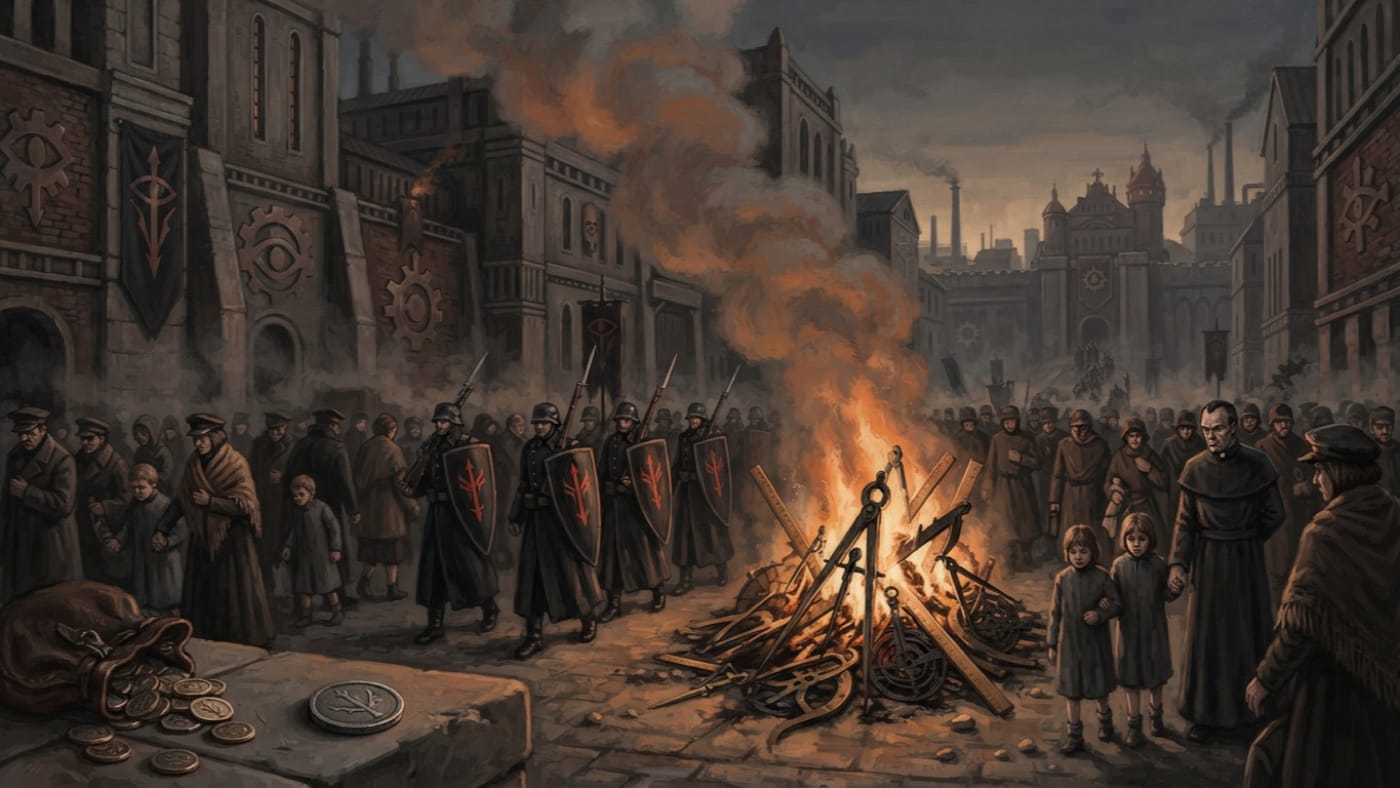
Flaming Sword
Permission has weight, and obedience has smoke
The Flaming Sword carries Synodal authority on coinage and lends its name to Strasbourg's burning of Rationalist instruments. I record its public uses; the emblem's origin remains unproved.
Codex Ref. XIII.1.03-001
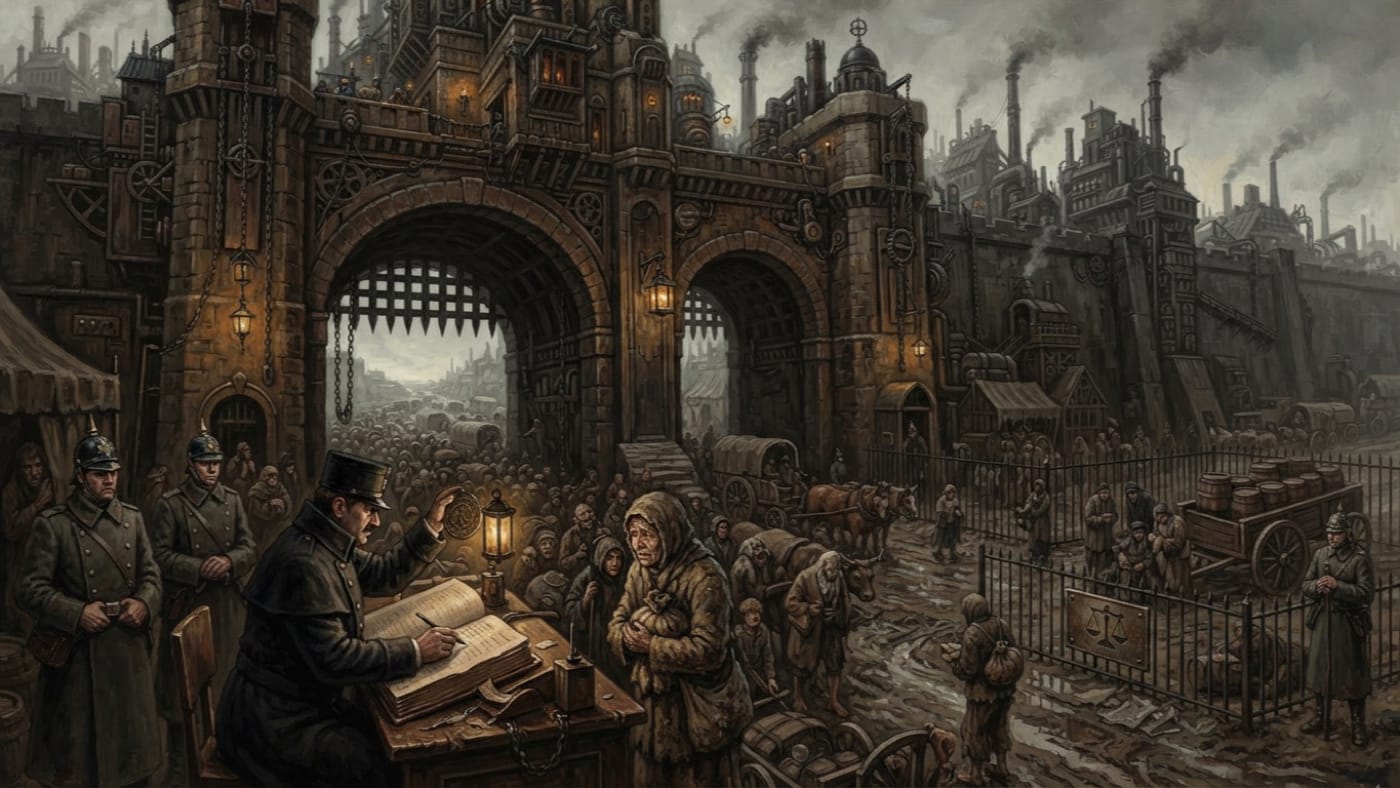
Gate and Bridge Tariffs
The coin is taken. The syllable is examined.
The Bureau of Tithes collects coin and Creed at the Synod's gates and tolled bridges. A faulty syllable voids passage; the ledger keeps the payment and the traveller keeps waiting.
Codex Ref. II.4.08-201

Greed
The appetite that cannot say enough.
Greed gives every possession a price and every person an obligation. Velmora's gifts are real; refusal remains possible. At Bastion-Sibiu, the walls hold while debt, bribes and counterfeit scrip do the purchasing.
Codex Ref. XIII.1.07-002

Iron Crown Currency
The British coin that buys rope, insults Tithes, and refuses to kneel
The Iron Crown is Britain's stubborn iron tender: older than the Synod's Crown of Grace, tolerated at mixed ports, and hated because it works.
Codex Ref. XIII.1.22-001
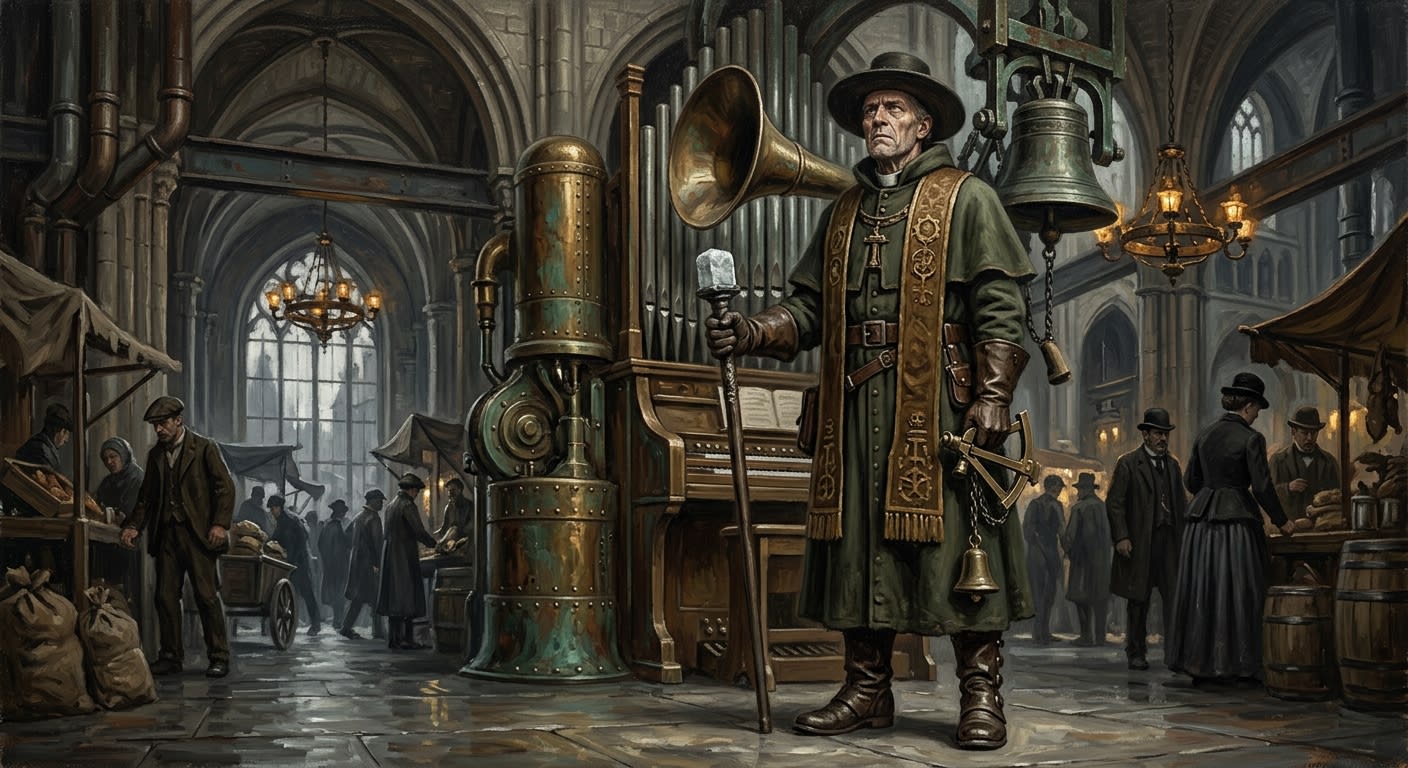
Saint Rupert
Salt in the wound, bronze in the tower, order in the market
Saint Rupert, Vienna’s salt-saint, preserves meat, measure, bells, markets, and civic memory: the patron whose bronze throat answered when men forgot to kneel.
Codex Ref. III.2.01-095

The Ten Thousand Keys
Hell with a good interest rate receives repeat custom
Velmora's Ten Thousand Keys turn relief into obligation, obligation into worship, and every warm little key into a receipt Hell can collect.
Codex Ref. XI.5.01-002