

Reverse Index
Referencing “Seal-Forgers' Winter”
Every codex entry that links to Seal-Forgers' Winter. 13 entries.
Return to Seal-Forgers' Winter
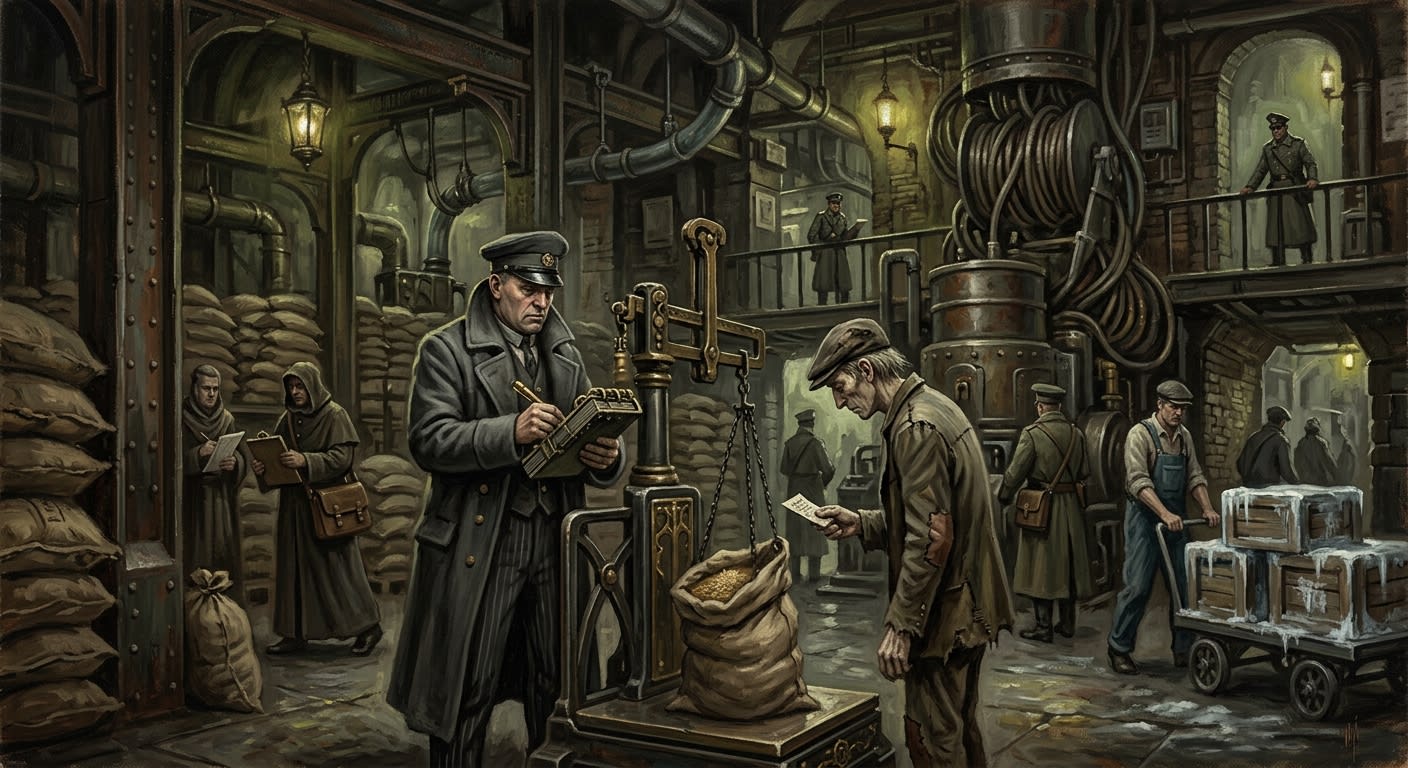
Bureau of Commerce
Bread becomes law before it becomes bread
The Bureau of Commerce prices obedience: weighing grain, freezing cargo, selling road-sound, licensing shortage, and making hunger kneel before the scale.
Codex Ref. VIII.2.10-097
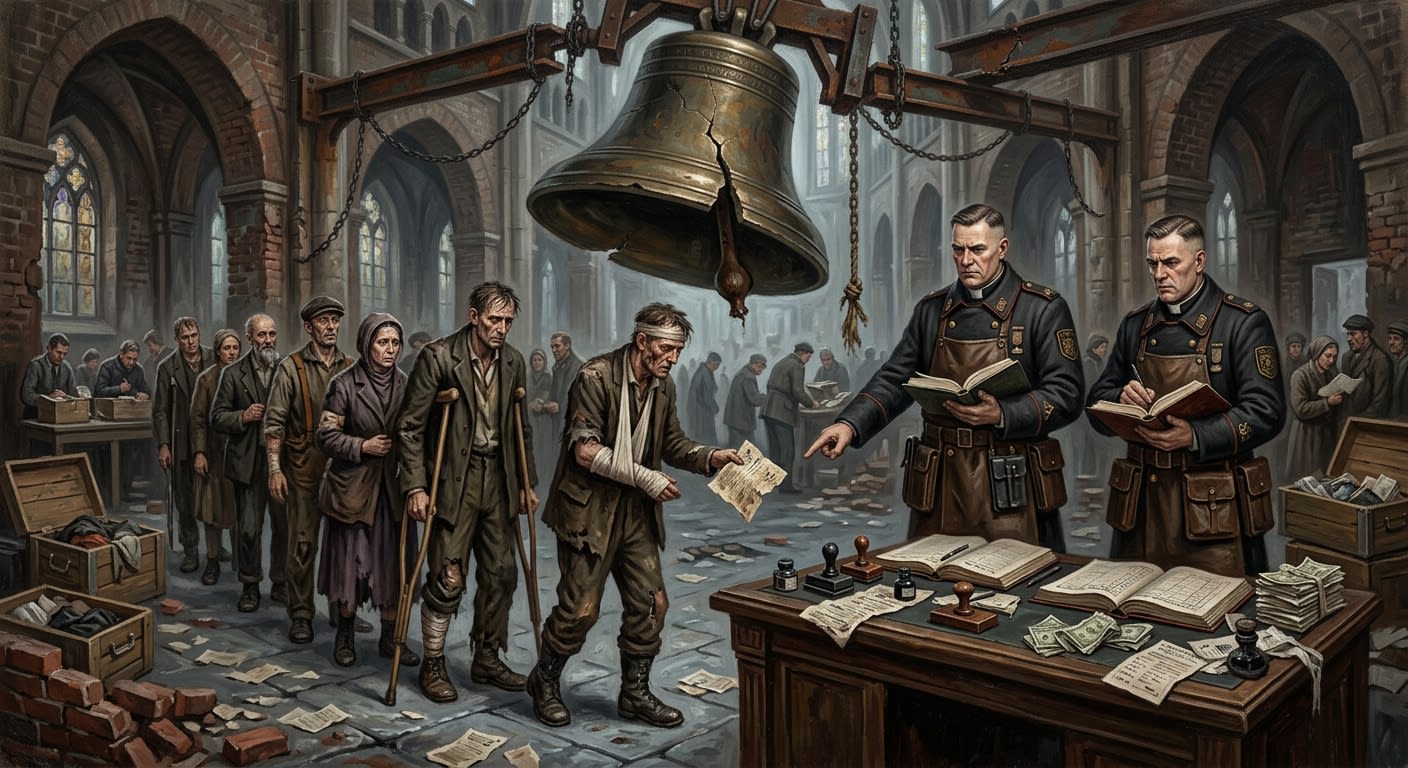
Feast of the Cracked Bell
The damaged bell still tolls, therefore the damaged citizen still owes
The Feast of the Cracked Bell teaches the Synod's favourite mercy: broken things may still serve, so damaged citizens may still be counted, tolled, and taxed.
Codex Ref. XIII.1.89-201
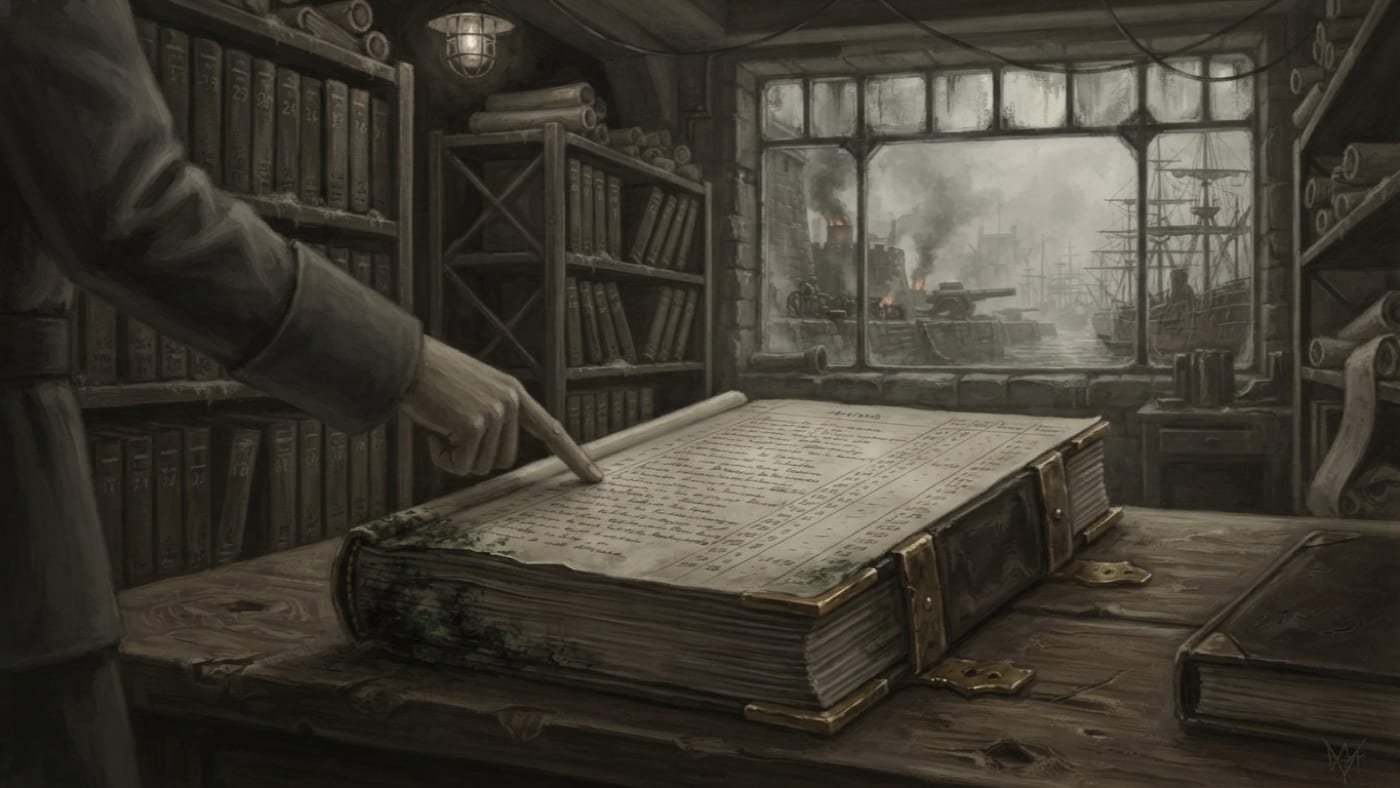
Harbour Ledger
Arrival duly entered; bread lawfully withheld
The Harbour Ledger records arrivals, berths, inspection times and the first ship count in Varna's A.S. 129 grain disaster. It proves the bread arrived; responsibility is entered elsewhere.
Codex Ref. XIII.1.89-129
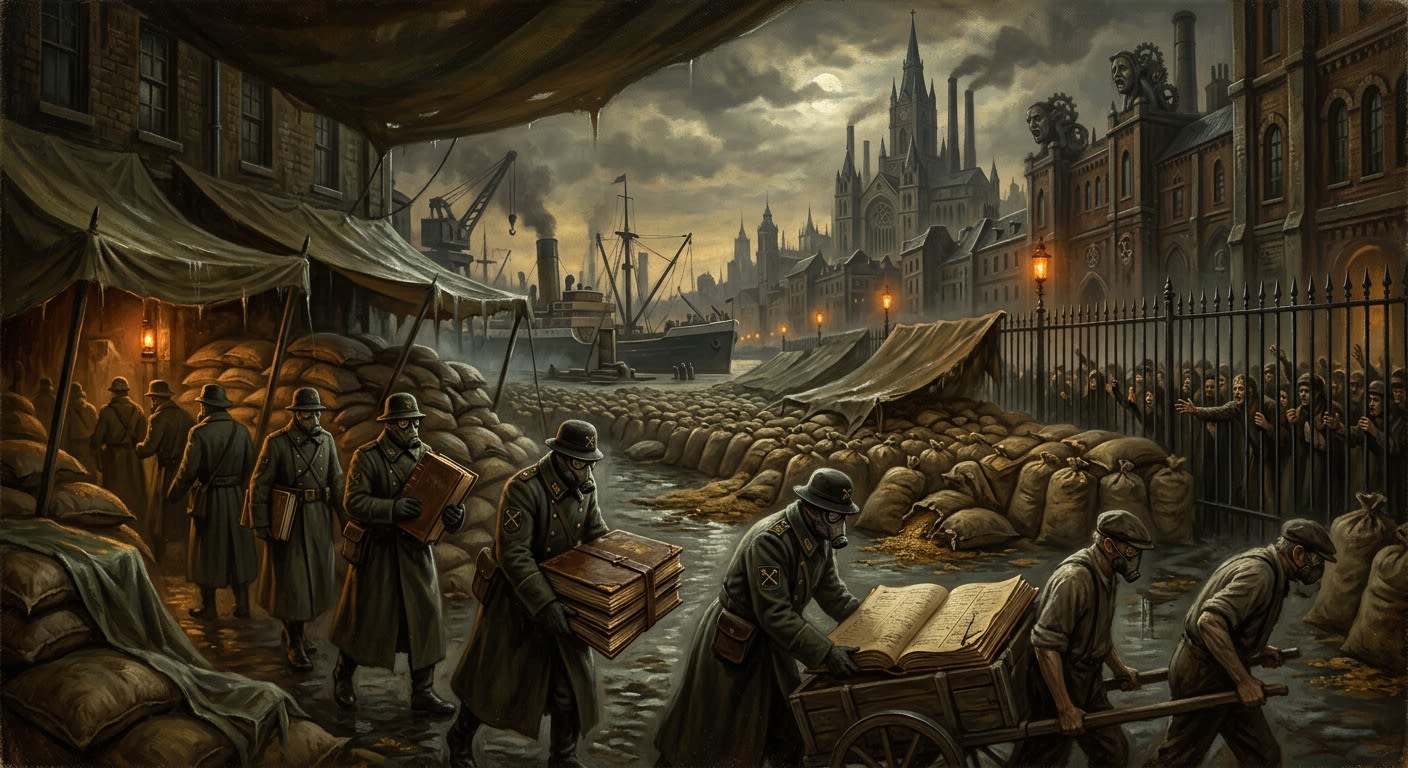
Ledgers of Varna
Bread in sight, mercy in arrears, tariff integrity preserved
The Ledgers of Varna record the A.S. 129 grain-fleet tariff paralysis that let bread rot under harbour canvas while citizens starved and the Bureaus preserved tariff integrity.
Codex Ref. VII.8.10-004

Manifest Litigant
In which the Bureau confirms that identity is paper, paper can be disputed, and dispute, correctly licensed, is a revenue stream.
The licensed enforcers of documentary reality at the port courts — the profession that cannot save the grain but can prove, conclusively, why it was permitted to rot.
Codex Ref. XII.26.01-001
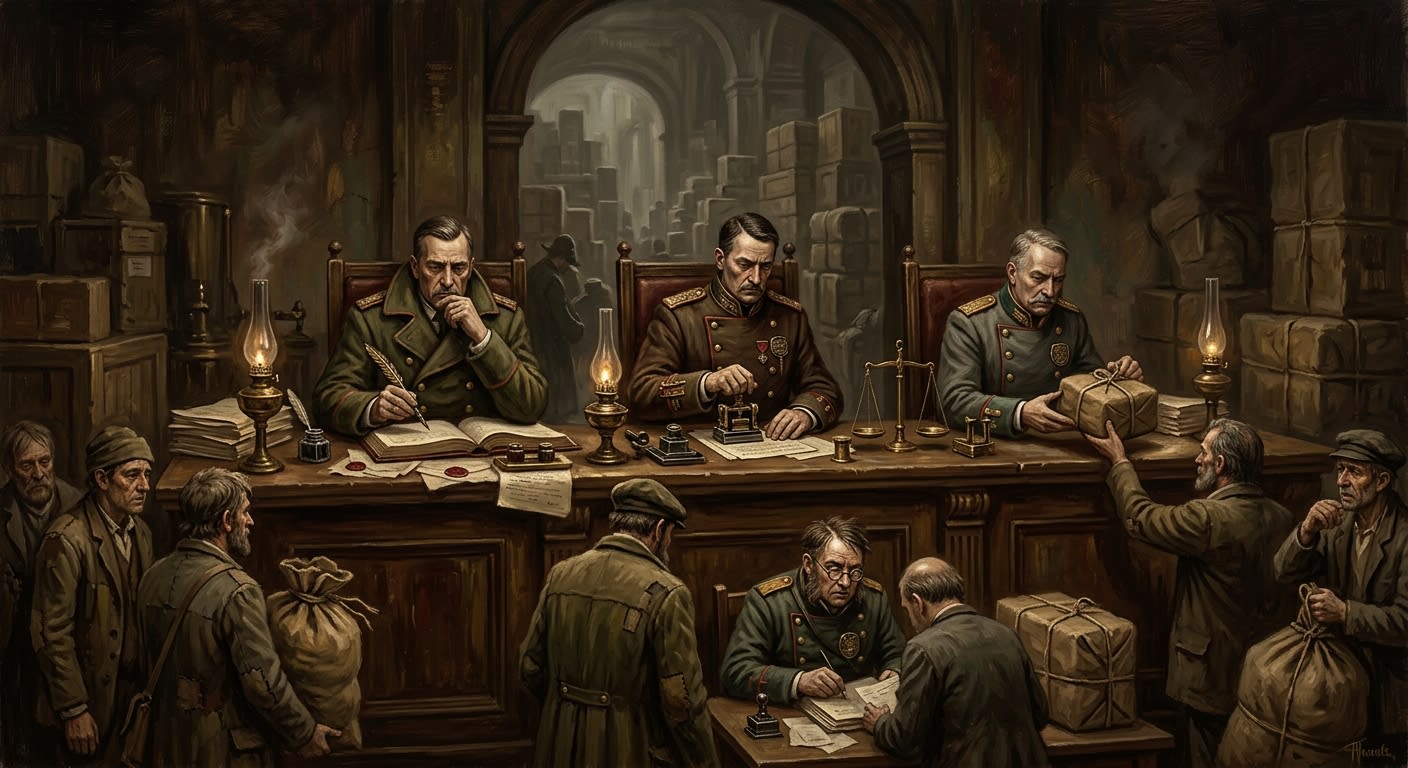
Port Court
Where cargo waits while permission proves it has a soul
The Port Court names cargo before mercy may touch it: a Commerce bench where sacks become law, law becomes delay, and delay invoices the hungry.
Codex Ref. XIII.1.89-112

Precedent Curator
The cargo is gone; the case remains, sharpened and shelved
Precedent Curators are archive-retired Manifest Litigants who preserve citations, reconcile variants, feed the Thirty-Seal Index, and make old disputes profitable again.
Codex Ref. XII.26.01-001

Route-Stamper / Indulgence-Token Smith
Walking is a contract; the Route-Stamper is the notary
Makers of the indulgence-token — a brass palm-piece whose captive bell-hour counts steps, repels road-spirits, and distinguishes the sanctioned traveller from the heretic-with-legs. The art is measured by one question only: whether it lies.
Codex Ref. XII.38.01-001

Saint Vellum of the Narrow Line
He proved a warehouse may burn correctly if its name burns first
Saint Vellum, patron of Manifest Litigants and cargo-identity quarrels, entered the Ledger by invoice: no bone, uncertain vita, and a burning warehouse rendered clean enough for doctrine.
Codex Ref. III.2.01-066

Shadow Counsel
Where the law does not break, but bends toward the purse
Shadow Counsel are purchased Manifest Litigants: licensed mouths rented by smugglers, syndicates, and caravan houses to make lawful procedure serve private dirt.
Codex Ref. XI.1.06-001

Theobald of Worms
The man who taught Europe to confess by angle
First Archon of the Bureau of Heraldry, Theobald of Worms standardised the Triune Knot and made the visible world legible, taxable, and prosecutable.
Codex Ref. III.2.01-119

Thirty-Seal Index of Precedent
The book that lets old disputes bite new throats
The Thirty-Seal Index is Commerce's weaponised memory: port-court precedent sealed thirty ways, kept cold, and lent to litigants who know where hunger must wait.
Codex Ref. XIII.1.89-187

Venice
The city that obeys by tide and invoices by fog
Venice is loyal, wealthy, damp, evasive, and necessary: an Adriatic city the Synod owns by writ and must still ask politely by tide.
Codex Ref. II.4.09-201