
#On the Survey's Finding
What was reported, and how little it took to report it.
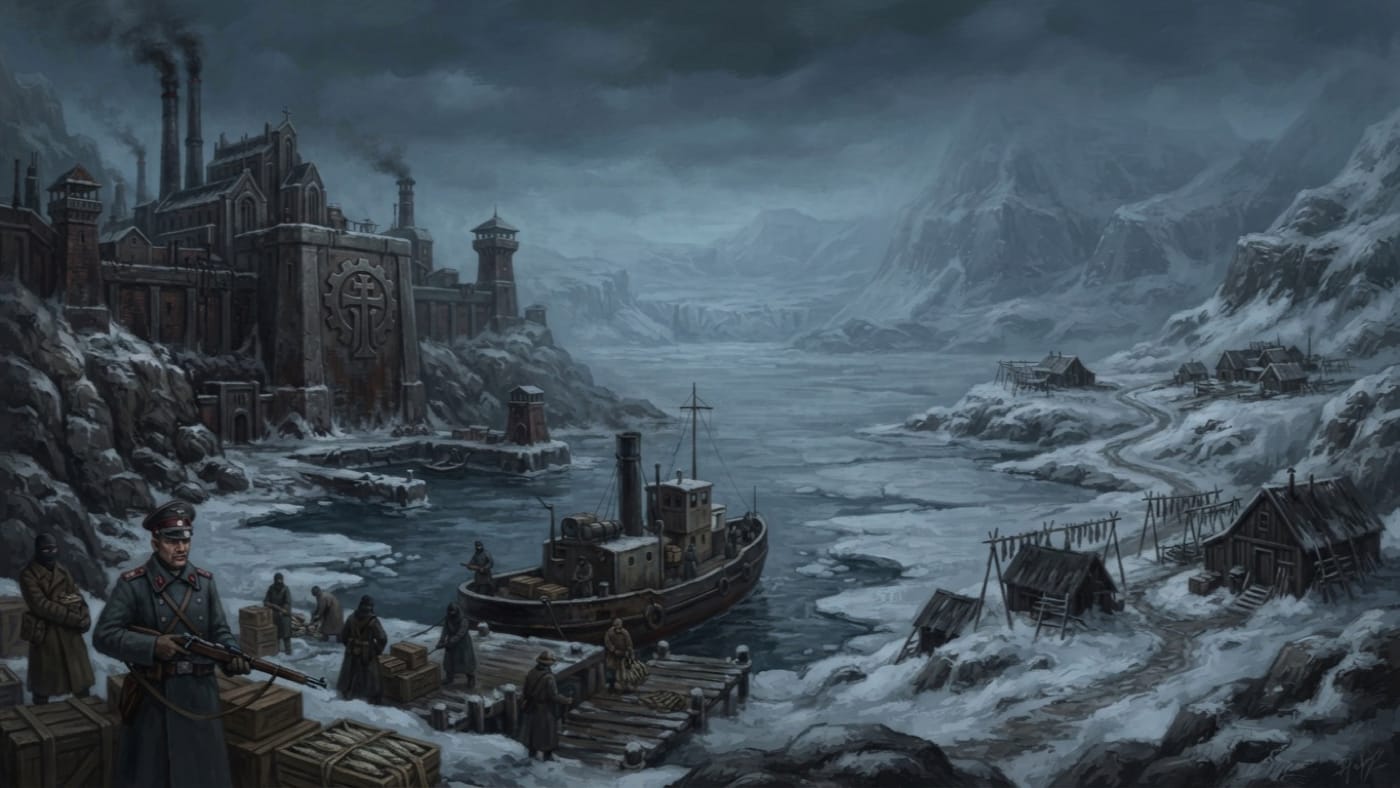
In A.S. 190 the Northern Survey reached Gothenburg, surveyed two fishing villages, accepted fourteen gifts of dried herring and returned to Strasbourg. It reported "no evidence of heretical activity."
Those are all the particulars. The account available to this desk does not name the villages. It does not say whether they lay north of Gothenburg or south of it, across the water, or a morning's walk from the quay. It does not give the surveyors' names or number, their vessel, the month they sailed or how long they were away. It does not name the office that commissioned them, and I decline to invent one. The Church has buried better men under thicker files and still managed to remember who sent them.
The file does preserve a conclusion, and within its limits the conclusion is sound. Two villages were examined, and in those two villages nothing heretical was found. A clerk who reads the sentence carefully will find it true. A clerk who reads it carelessly will find a great deal more in it than it contains, and for some years that was this Codex.
#On the Northern Question
Why anyone was sent at all.
The so-called Virtue Generals are seven alleged champions of the Creator. Heretics set them against the Seven Sin-Generals in a symmetry the Bureau of Doctrine considers too neat to be anything except manufactured. Standing Order 44-D lists the belief in the Index Damnatus as a Category Two Heresy. One of the seven is the Exile of Temperance.
Condemned testimony describes the Exile as a wanderer across the frozen wastes of the North who neither hungers nor thirsts and who teaches that the path to salvation is balance rather than obedience. I repeat these claims for identification and suppression. The Bureau has confirmed nothing about the figure: its existence, its identity, its nature, its allegiance or the abstinence attributed to it.
The theology is what gives offence. A wanderer who goes without bread can be explained as a hermit, a liar or a famine. A wanderer who tells the frozen poor that salvation is a matter of measure, and needs no ledger, has proposed a second road to Heaven, and Doctrine is not obliged to maintain a second road.
The North was a natural place to look, and a hard one. The Lore Book records communities in the Fractured North that have few Wardens. Each family there enforces the Covenant as strictly as a tribunal would, villages rise before dawn to chant the Creed on the cliffs, and people live on fish and seal-flesh. Southern assessments describe Scandinavia as acknowledging Synodal authority in theory and ignoring it in practice. Both accounts can be true at once. Devotion to the Creator and obedience to Strasbourg are separate questions. The North has always been more willing to answer the first.
#On What Was Examined
The extent of the inquiry, entered at its true size.
The record says that Gothenburg was reached. It does not say that Gothenburg was surveyed. A reader who treats those two verbs as one has granted the Survey a city it never claimed. On the evidence of the account, the Survey arrived at a port, went on to two villages and left. What it did in the port is not recorded. Neither are the villages' size, their distance from Gothenburg, their parishes or whether a Warden served either of them.
Two villages. Set them against the Fractured North, its fjords and ice-clad ranges and the coast the Synod's own maps decline to measure with any confidence, and the proportion explains itself. I will not explain it further.
The fourteen gifts must also be entered at their true size. The record counts gifts. It does not count fish, so a single gift may have been one herring or a cask of them. It does not say how many households gave, whether the gifts came from one village or both, or who carried them south. I have heard men in this building call the herring a bribe. The record does not support them. A bribe requires a bargain, a bargain requires terms, and no terms are recorded. The Bureau of Purity cannot prosecute an implication, however much it might want to. What is documented is narrower and more embarrassing: an inquiry into northern heresy came home with more fish than findings.
No available account records any interviews, examinations, catechisms put to villagers, searches of houses, inspections of shrines or questions asked in the port. I do not say these things did not happen. I say the file does not contain them, and a file that does not contain them cannot be cited as though it did.
What can honestly be drawn from the record is small. In two unnamed fishing villages, at an unrecorded season, persons of unrecorded rank found nothing they judged heretical and said so. That is a finding. It is a local finding about two places, and it says nothing about the region.
Extent: Gothenburg (reached); two fishing villages (surveyed; names not recorded) Gifts accepted: Fourteen (dried herring) Reported conclusion: "No evidence of heretical activity." Application beyond the villages surveyed: NOT SUPPORTED
#On the Finding's Enlargement
How two villages were made to speak for the North, and for a wanderer who was never found there.
The Survey did not claim to have refuted the Exile of Temperance. Nothing in the account shows that it went looking for the Exile, or met anyone who claimed to have seen the Exile, or asked after a wanderer of any kind. The Survey said that it had found no heresy in two places. The enlargement came afterwards, in this office.
The sentence appeared in this Codex, which is mine. It read cleanly, it served Doctrine, and it was entered into the record without anyone asking how a fishing village near Gothenburg could testify to the frozen wastes. There is a strong temptation to treat an absence that happens to be convenient as evidence. I am not the first archivist to give in to it, and if the profession continues I will not be the last.
The correction has to be made precisely. The Survey's finding stays, as reported, for the villages it surveyed. The inference this Codex built on it is withdrawn. Withdrawing a refutation does not prove the opposite. Two villages that showed no heresy are no evidence that a wanderer walks the ice. The heretics who read this paragraph will want it to say otherwise, and it does not.
The Exile of Temperance was conclusively debunked by the Northern Survey of A.S. 190.
The Northern Survey of A.S. 190 reported no evidence of heretical activity in the two fishing villages it surveyed. No available record shows that it sought the Exile of Temperance or encountered the figure, and its finding establishes nothing about the Exile's existence or absence. The condemnation of the belief rests on Standing Order 44-D.
#On the Record's Standing
What survives the correction, and what never depended on the Survey.
The condemnation stands. Doctrine never condemned the Exile of Temperance for being absent from Gothenburg. It condemned the belief for what it teaches: that salvation can be reached by balance in place of obedience, and that the Creator might send help that bypasses the Church He established. That is a theological judgment. It needed no expedition before A.S. 190 and loses nothing by the expedition's limits now. Doctrine defines the heresy and Purity prosecutes those who profess it. The Bureau of Shadows keeps an interest in the wider phenomenon that it does not share with this desk. None of those three functions was ever founded on herring.
Standing Order 44-D was issued in A.S. 134, fifty-six years before the Survey. Its Twelfth Revision came in A.S. 196, six years after it. I have been asked whether the Survey prompted that revision. The file does not say so, and neither will I.
A separate attempt was made in A.S. 193, and it should be entered beside this one only for comparison. A Bureau operative was returned to Bastion-Königsberg in a fishing boat with a polite note thanking the Bureau for its interest and asking it to send no more visitors. That attempt was not a second leg of the Survey, and its particulars belong to its own file. Taken together, the two records show how the North has been examined so far: once by a party that saw two villages and came home, and once by a party the North sent back.
Whether the Exile walks the North is unresolved, and an unresolved question is no licence. The belief remains condemned, its profession remains an offence, and the 190 finding is restored to the size of the two villages it covered.
Reported finding: RETAINED, as limited to the two villages surveyed Codex inference (conclusive refutation of the Exile of Temperance): WITHDRAWN Standing Order 44-D: UNAFFECTED Exile of Temperance: CONDEMNED AS BELIEF; UNCONFIRMED AS FACT
— Bureau of Doctrine, Strasbourg