

Reverse Index
Referencing “The Hierarchy of the Synod”
Every codex entry that links to The Hierarchy of the Synod. 40 entries.
Return to The Hierarchy of the Synod
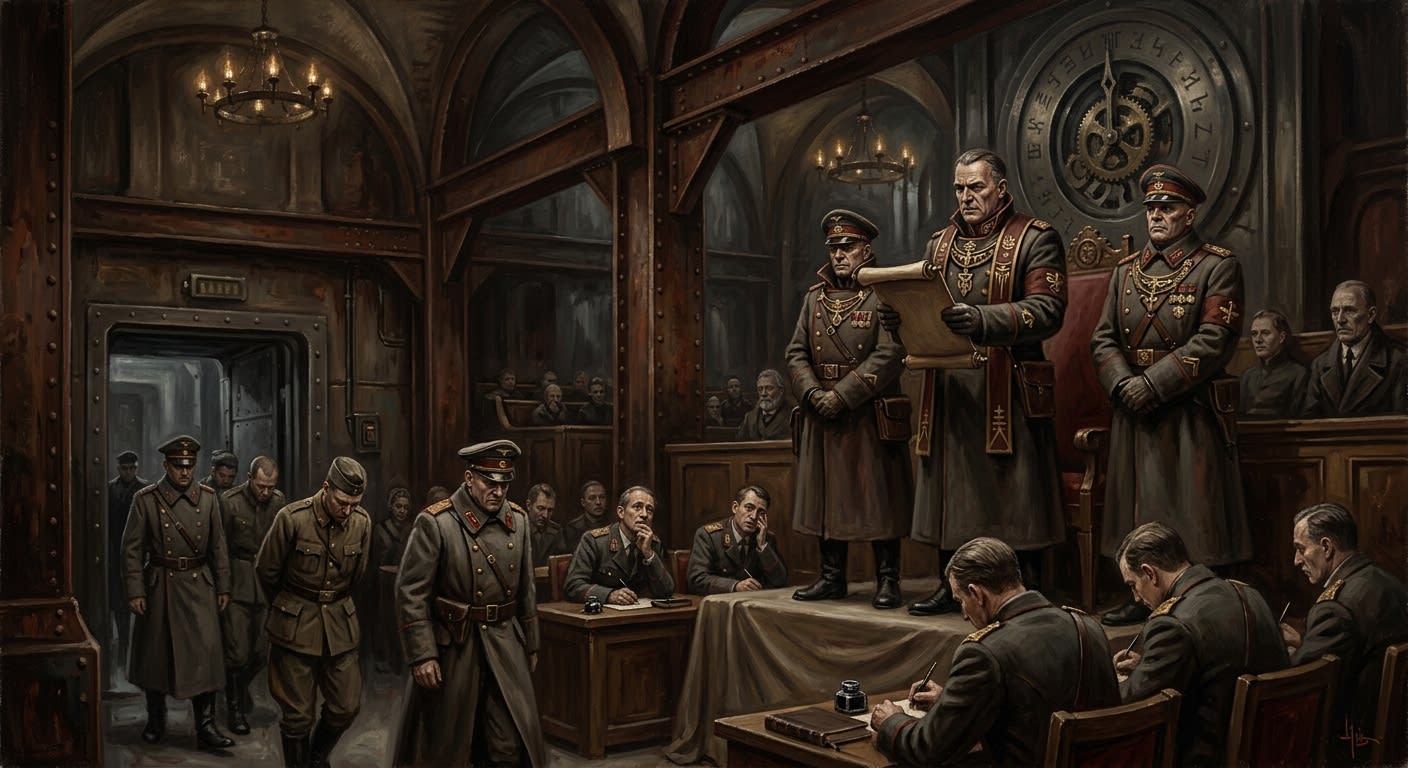
Act of Hierarchical Supremacy
The first chain, polished until citizens mistake it for anatomy
Ratified at Strasbourg in A.S. 90, the Act made authority descend through the Hierarchs and made refusal dissolve office, status, and comfort.
Codex Ref. XIII.1.89-090
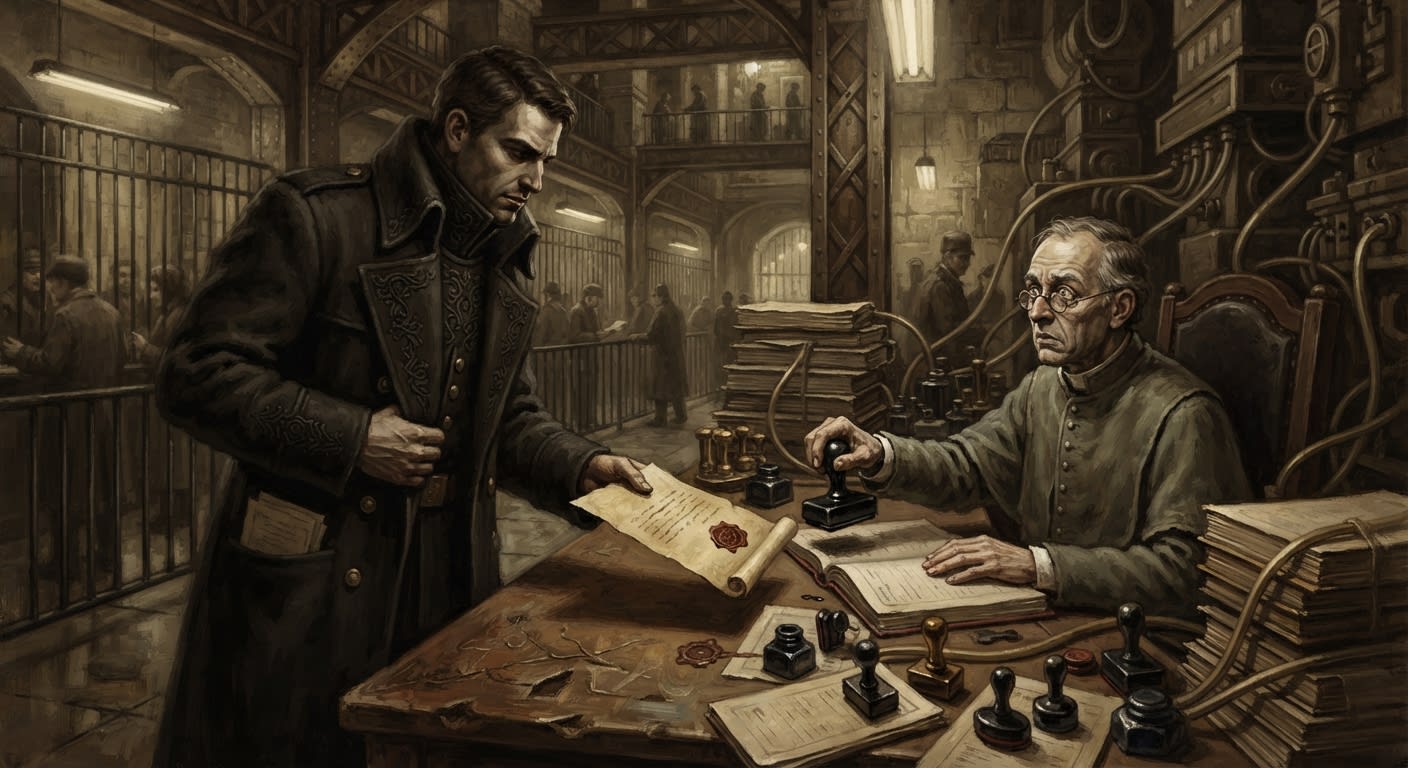
Archon's Override
The phrase is withheld; the hierarchy it invokes is not.
The Archon's Override is not magic, mercy, or a passkey. It is spoken hierarchy: a Doctrine citation that teaches a lesser seal to fear the wax above it.
Codex Ref. XIII.1.07-090
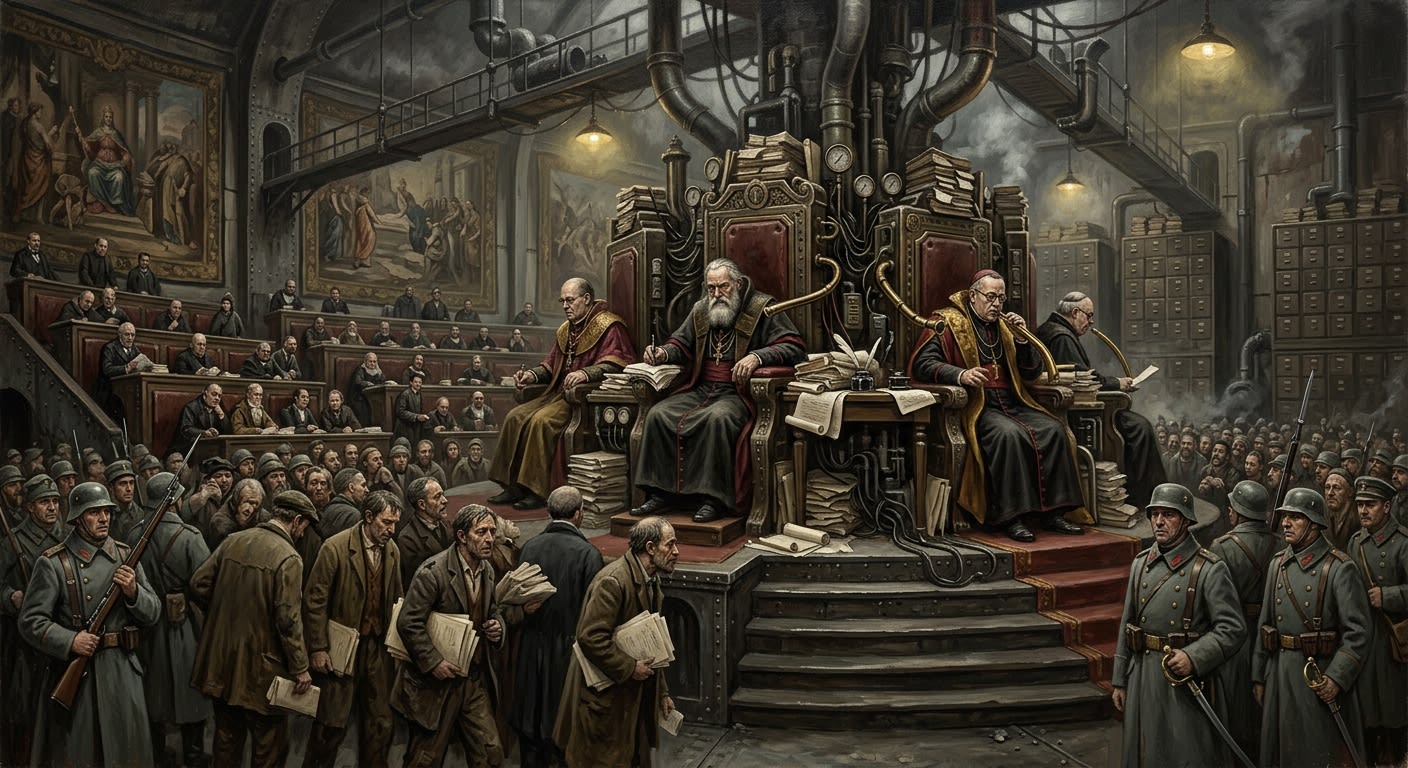
Assembly of Thrones
A chamber where pride is seated before it becomes militia
The Assembly of Thrones lets Bishops-Praetorial thunder safely: grievance seated, fury docketed, pride taxed, and every rebellion delayed by procedure.
Codex Ref. XIII.1.07-093
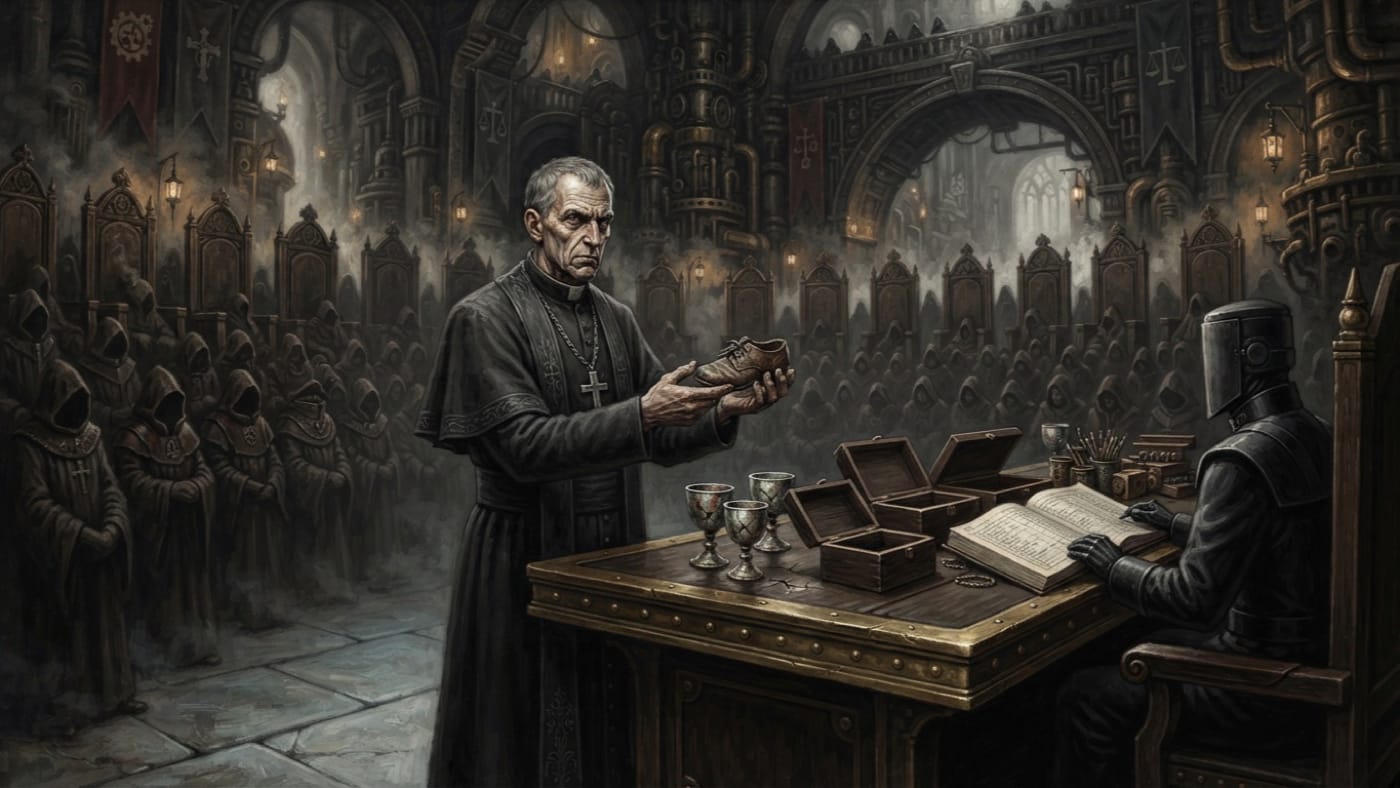
Bishop-Praetorial Lanfranc of Trier
A child's shoe before the Thrones, a bill afterward
Bishop-Praetorial Lanfranc of Trier challenged the Meta-Levy for seventeen dioceses in A.S. 138. His child's shoe moved the Thrones; the Fiscal Census moved the ruling.
Codex Ref. III.2.01-138

Bishops-Praetorial
Mitres welded to prefectures, and souls counted twice
The Bishops-Praetorial keep souls, quotas, provinces, and grudges: mitred governors whose pastoral care arrives with tithe tables attached.
Codex Ref. VIII.3.04-093
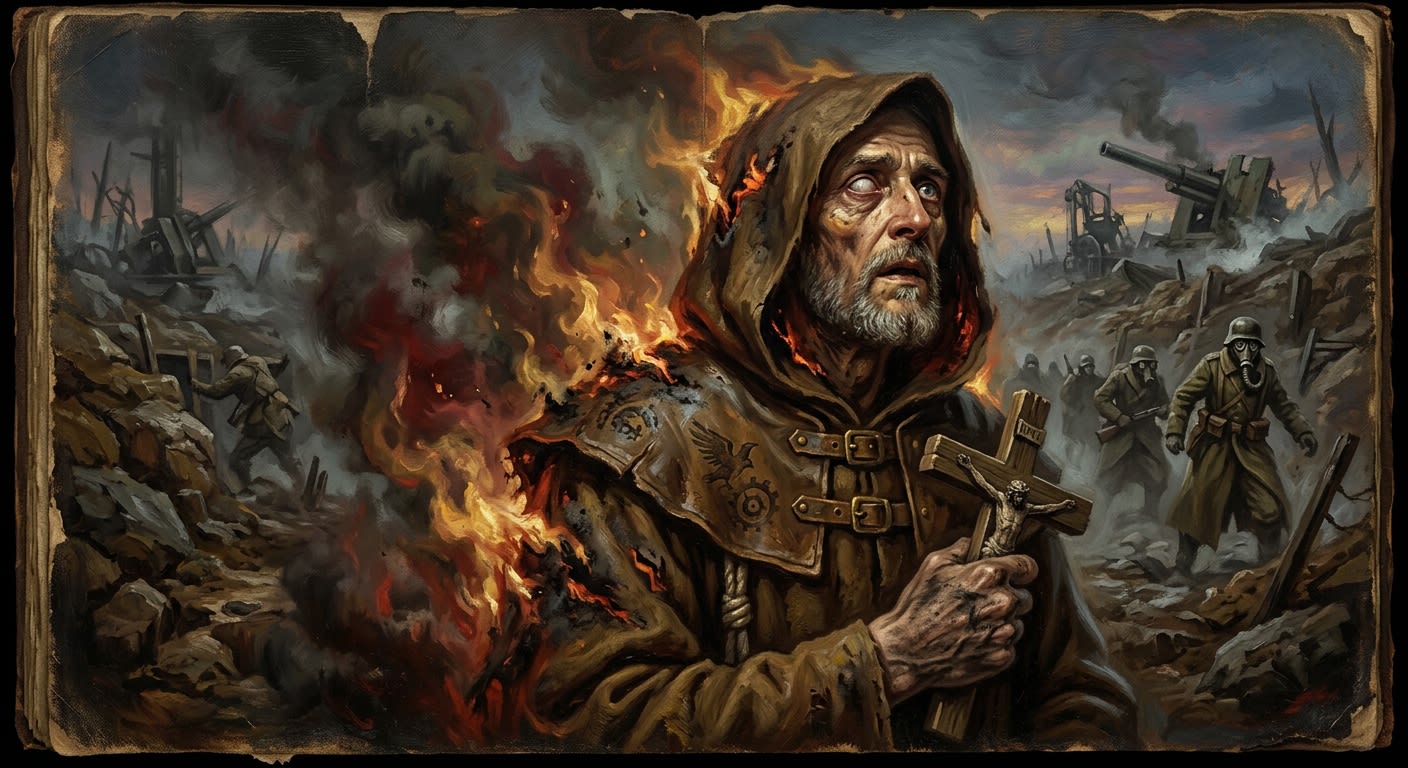
Brother Tomislav
The half-blind monk who lifted a reliquary and made Wrath recoil
Half-blind Franciscan, custodian by refusal, and instrument of the Miracle of Kalnik Ridge; consumed by sacred fire in A.S. 48, though the Bureau remains professionally unable to call him dead.
Codex Ref. III.2.01-004
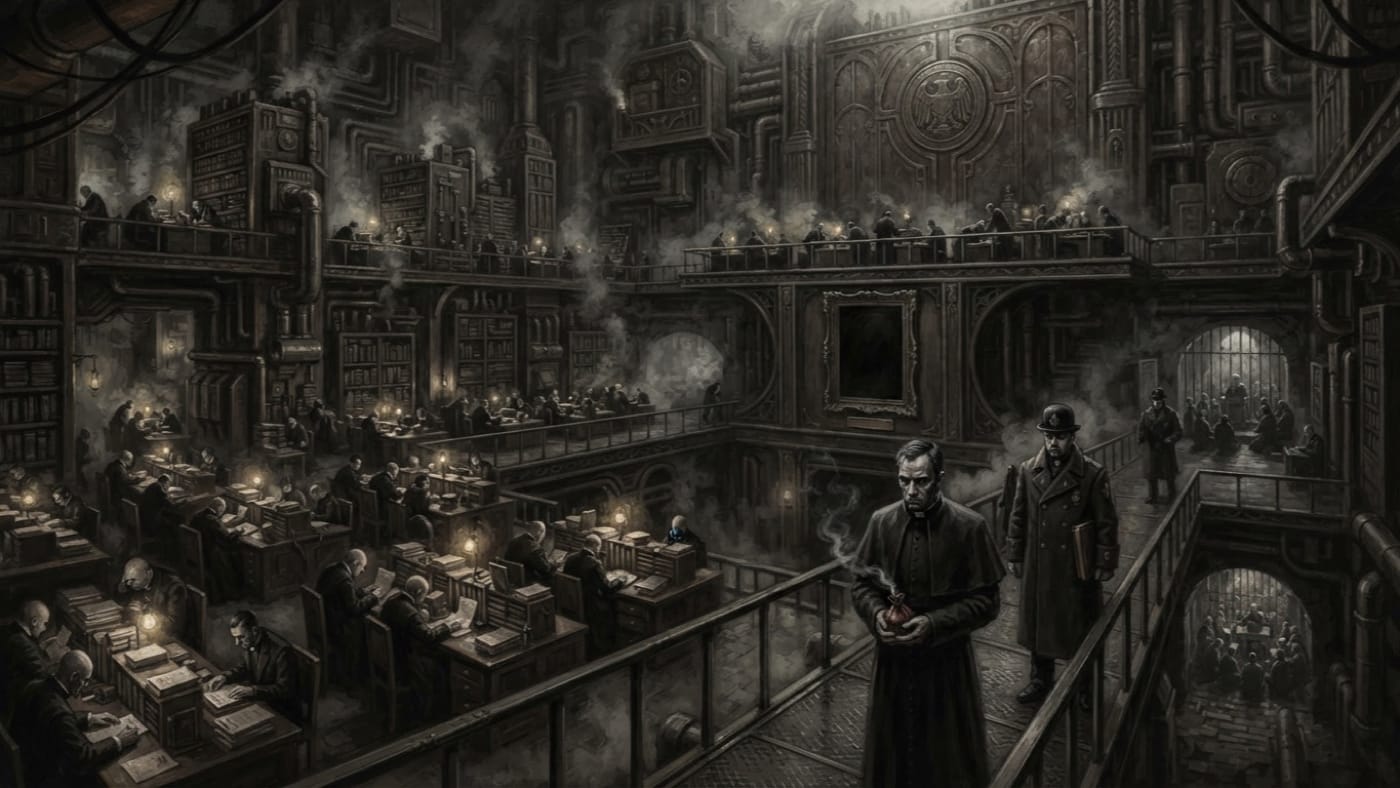
Bureau of Discipline
The office that recognises pulpits and withholds praise
The Bureau of Discipline decides which pulpits count and when vanished superiors may be praised. A cleric may retain his tongue and still lose his standing.
Codex Ref. III.3.03-001
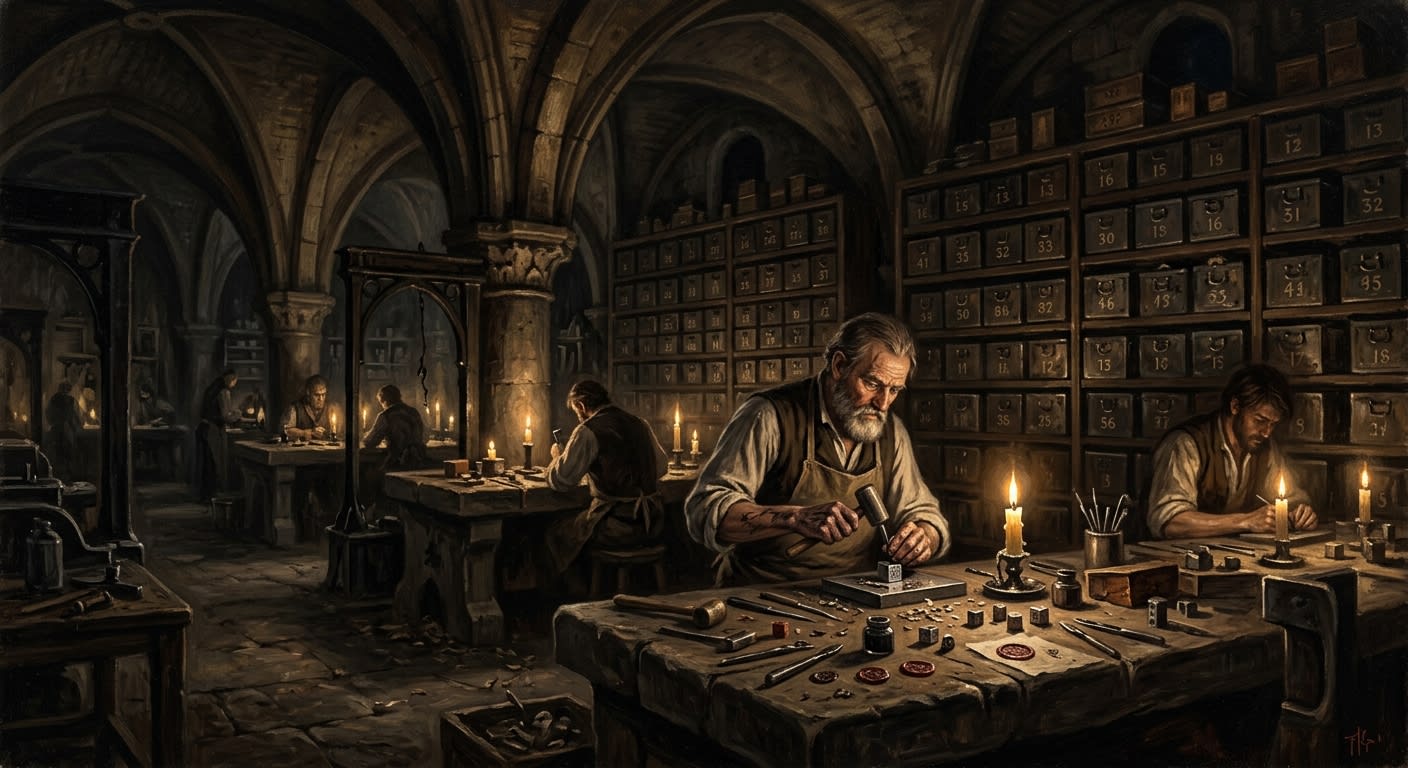
Bureau of Masks and Seals
The stamp is the Synod. Everything else is suggestion.
The Bureau of Masks and Seals controls every stamp, seal, and counter-seal in Synod territory. Without its impressed wax, no document is real. Without its license, no face may be hidden. Casselius of Mainz holds the Synod's mouth and press in one pair of ink-stained hands.
Codex Ref. VI.4.19-014
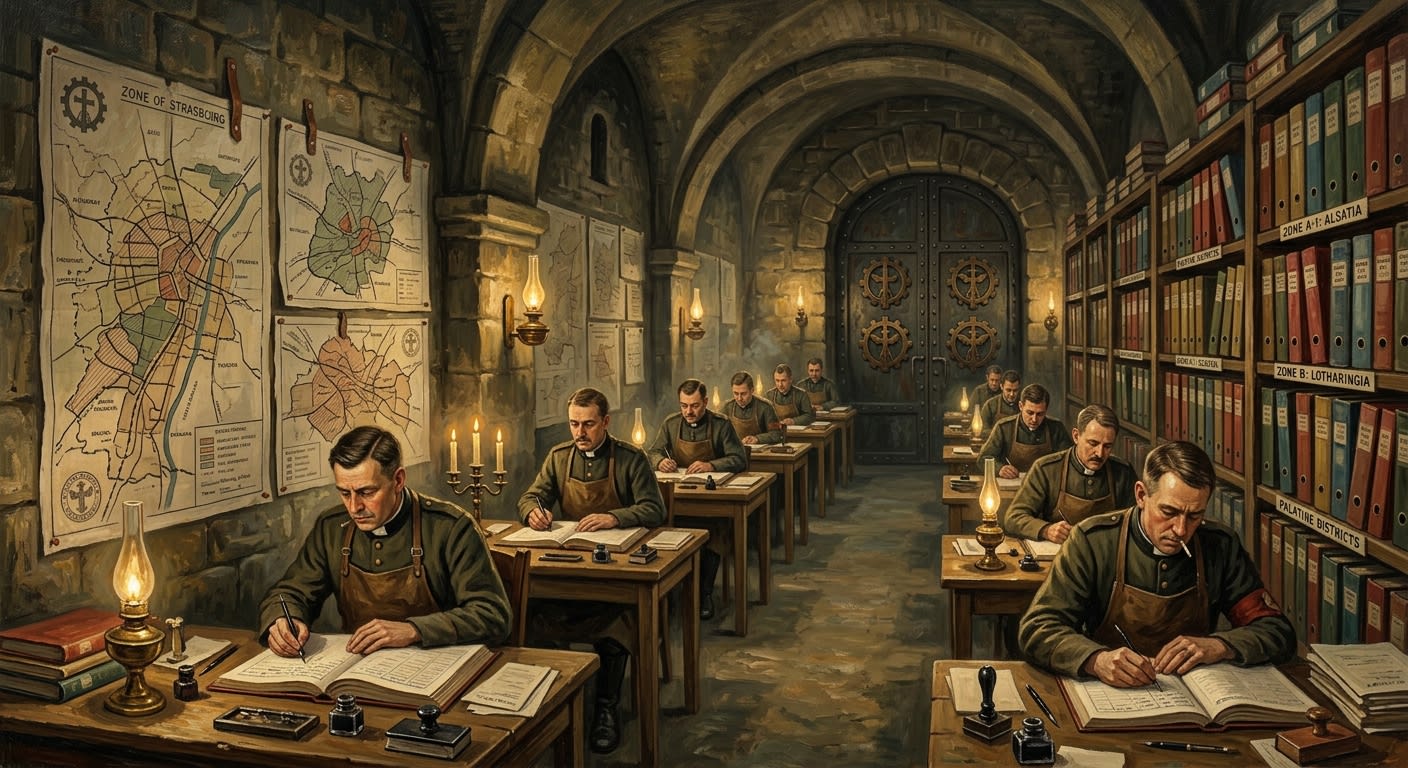
Bureau of Settlement
Where three hundred million subjects are permitted to stand — and by whose leave.
The Bureau of Settlement does not appear in the twelve canonical portfolios. No crimson sash, no hymn. What it has is authority over the address of every living subject of the Theocracy — and the knowledge that no one listens until the plumbing fails.
Codex Ref. IV.3.08-001

Bureau of Tithes
The organ no one praises and no one dares remove
The Bureau of Tithes is the Synod's fiscal organ — the stomach no one praises and no one dares remove. It taxes breath, grain, bereavement, and the management of its own taxation.
Codex Ref. VIII.4.01-001
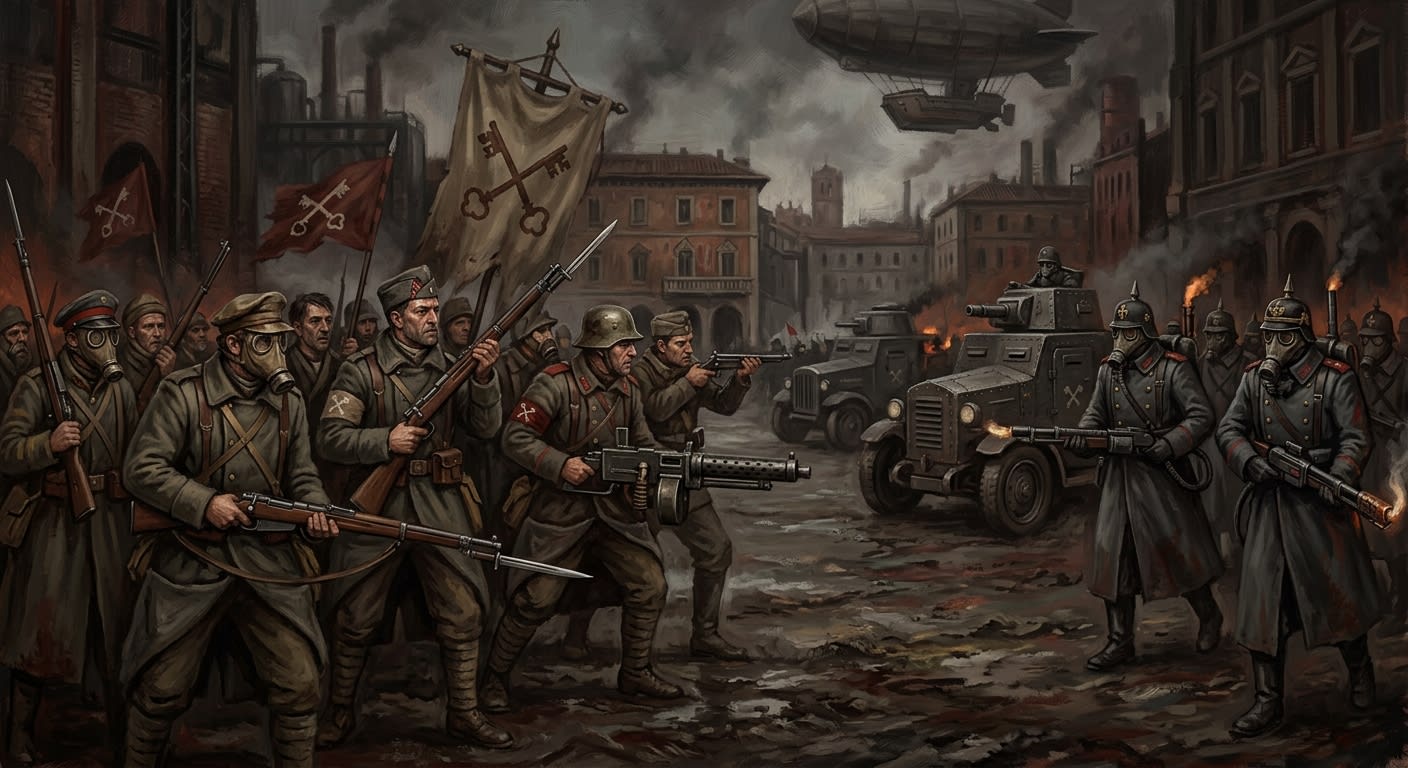
Coalition of the Crossed Keys
A handsome heresy drowned with exemplary thoroughness
The Coalition of the Crossed Keys rose in Lombardy in A.S. 150, mistook local dignity for apostolic succession, held three cities, and drowned under Synod correction.
Codex Ref. VII.8.04-001
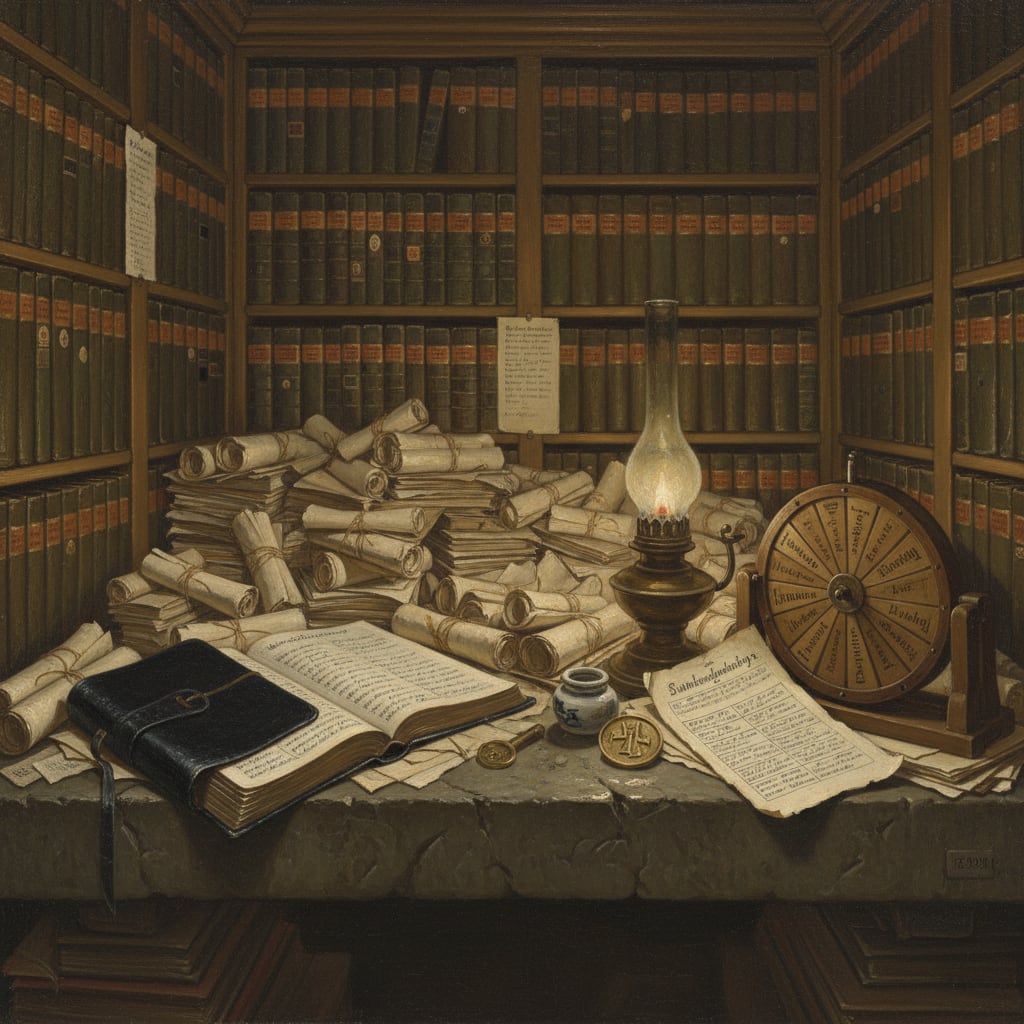
Codex 'Doubt' Auditor
The men and women who weigh belief on scales you cannot see and file the reading under your name
The Codex Auditors are the Bureau of Purity's intelligence branch — operatives who audit belief itself, detecting hesitation before it becomes opinion and opinion before it becomes faction.
Codex Ref. VIII.2.01-001
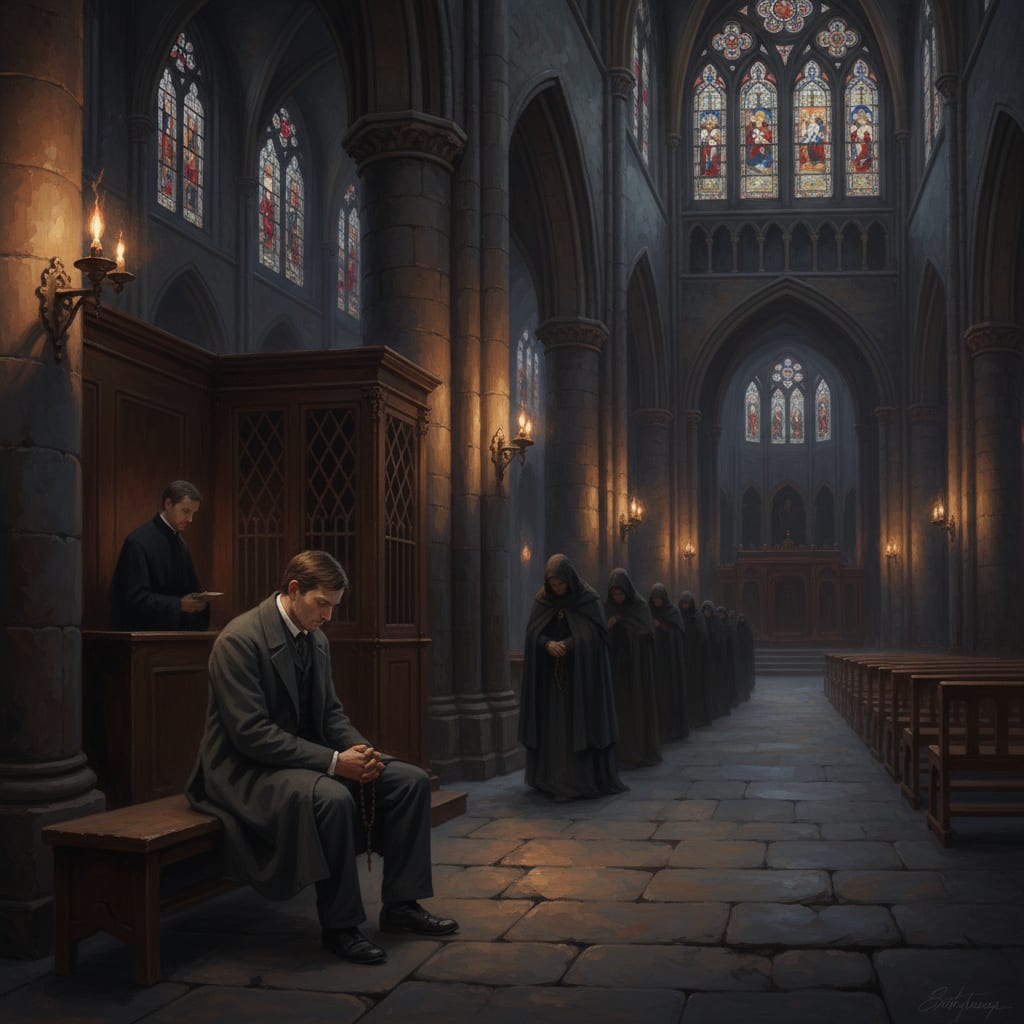
Confessarii
Two hundred and eighty-six reports filed; three blank pages received; the system functions as intended
The Confessarii are the Bureau of Shadows' listening network, which does not exist because the Bureau does not exist. They attend. They absorb. They file. The courier departs. Nothing is acknowledged. The system functions as designed.
Codex Ref. XIII.1.06-001
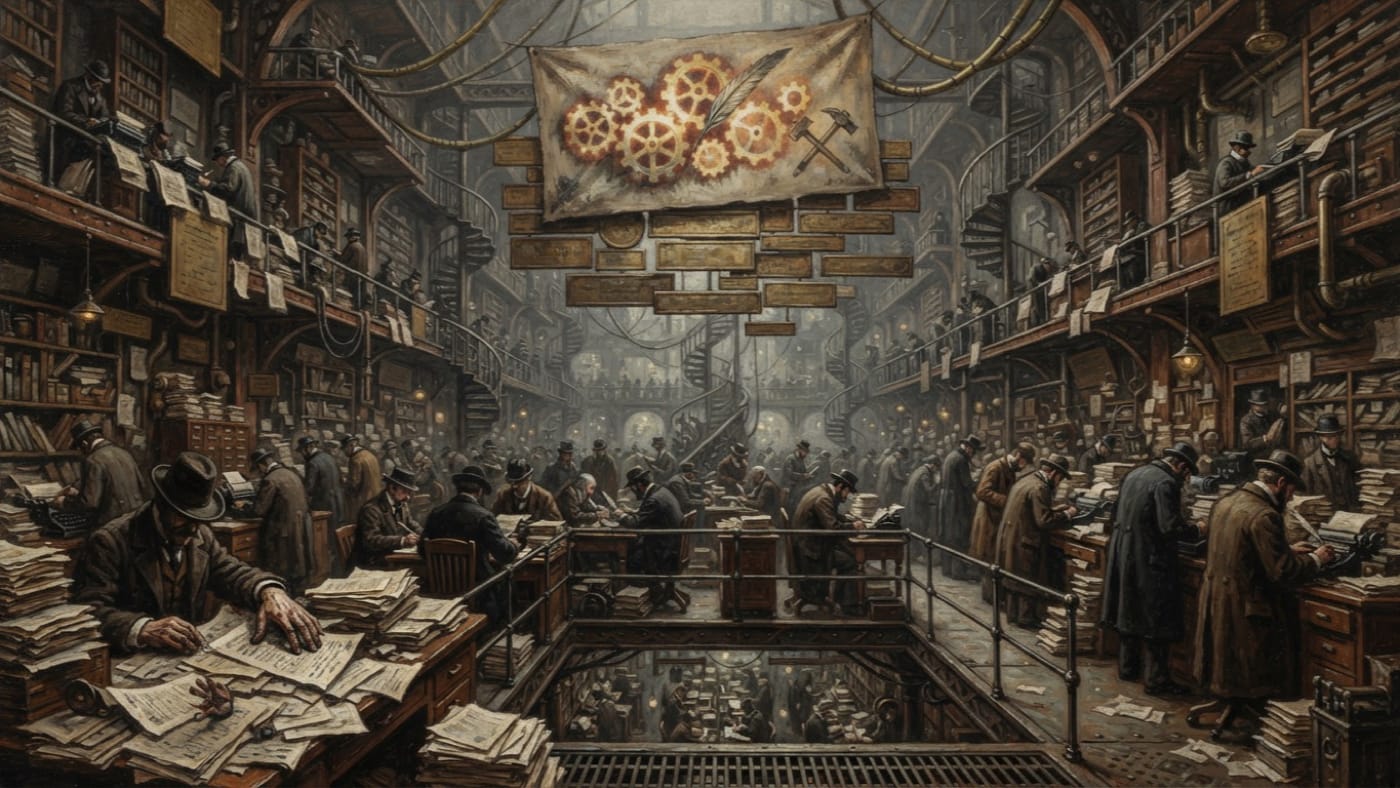
Council of Seven Orders
One surviving maxim. A continent of duplicate offices.
The Council of A.S. 110 gave the Synod a doctrine of overlapping offices: redundancy is sanctity. Its roster remains unavailable, its proceedings unfiled, and its administrative descendants still draw stipends.
Codex Ref. VII.7.03-001
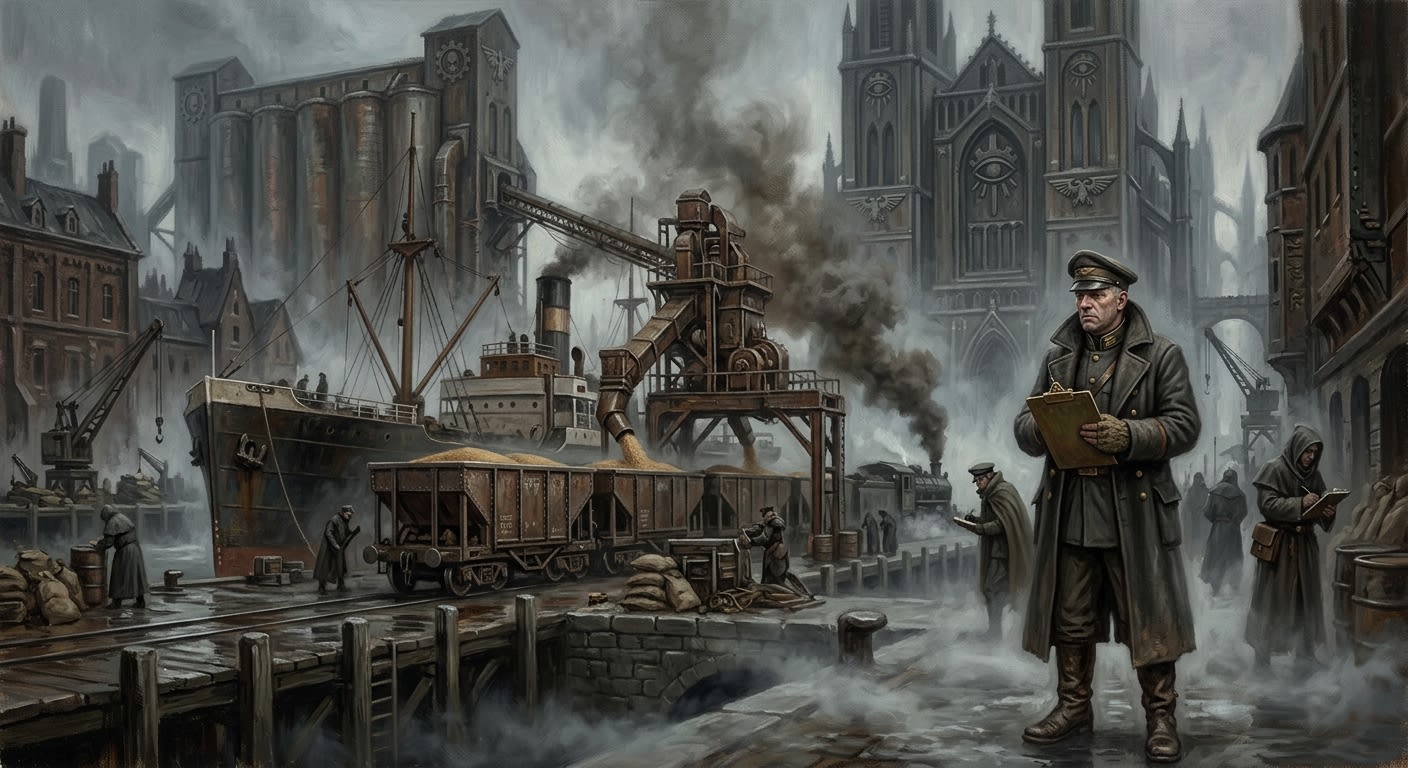
Danzig
The Baltic port that feeds the north and lies with admirable punctuality
Danzig is the Baltic grain mouth of the Northern Corridor: obedient in public, competent in fog, audited forever, and too necessary for Strasbourg to purify without starving itself.
Codex Ref. II.4.09-013
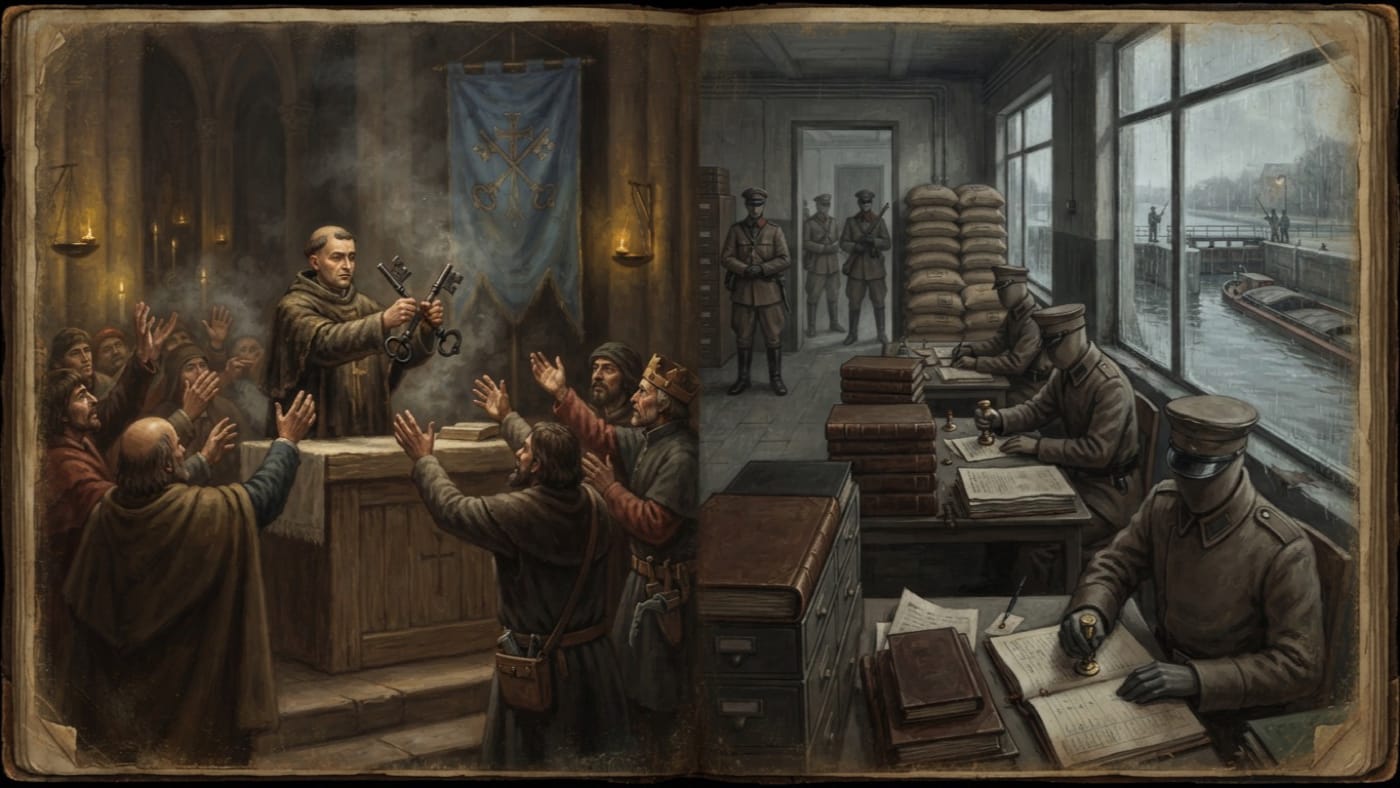
De Clavibus Restitutis
The entrusted hand and the clerk who kept the house
Ambrosius of Como's sermon placed authority in the entrusted hand. Lombardy heard restoration; Strasbourg answered with granaries, names and a river.
Codex Ref. VI.5.02-001
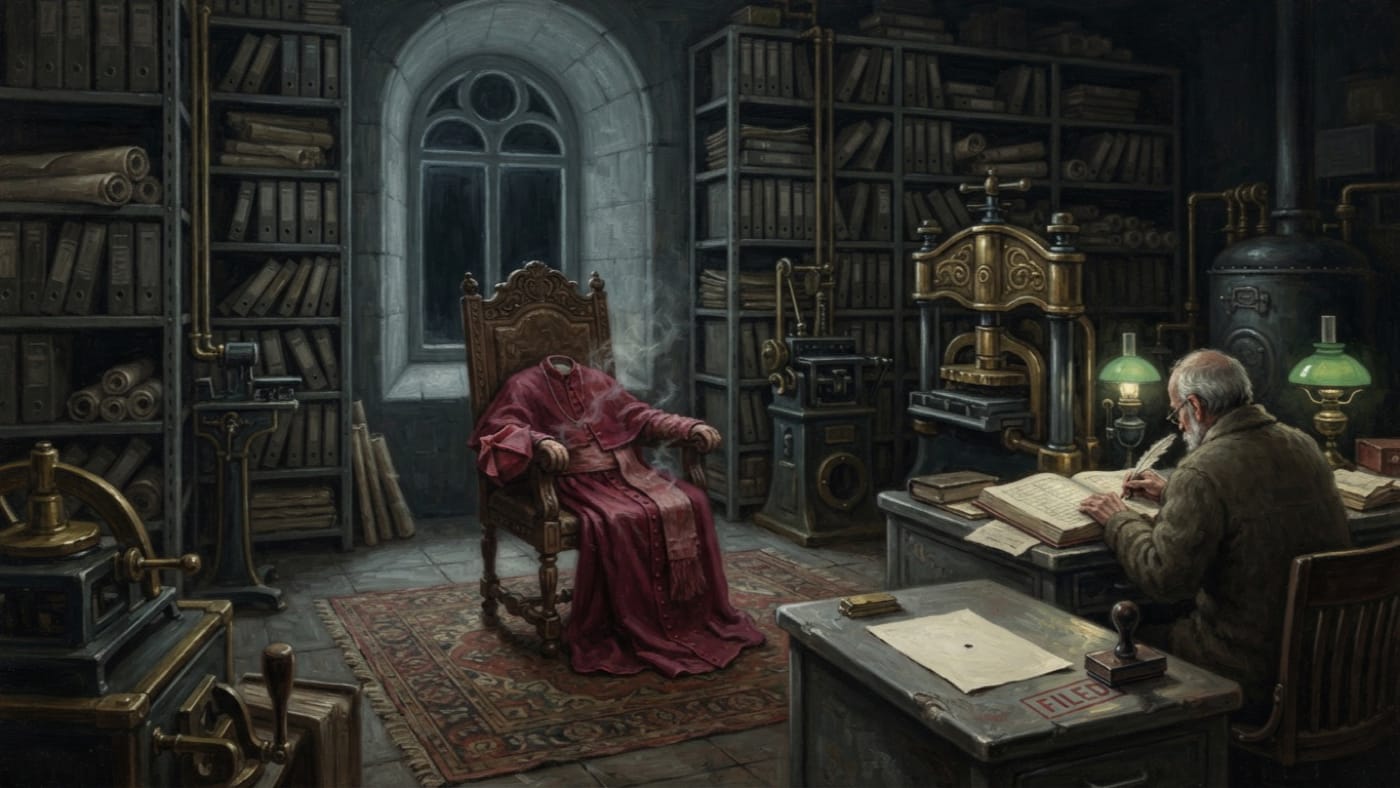
Empty Throne Affair
A reported absence, an alleged minute, and the comfort of FILED
A.S. 201 survey of a cardinal's reported absence and warm cassock, an alleged Veils minute and its reported FILED stamp. The affair has a name; its year and his fate remain unknown.
Codex Ref. VII.4.01-001
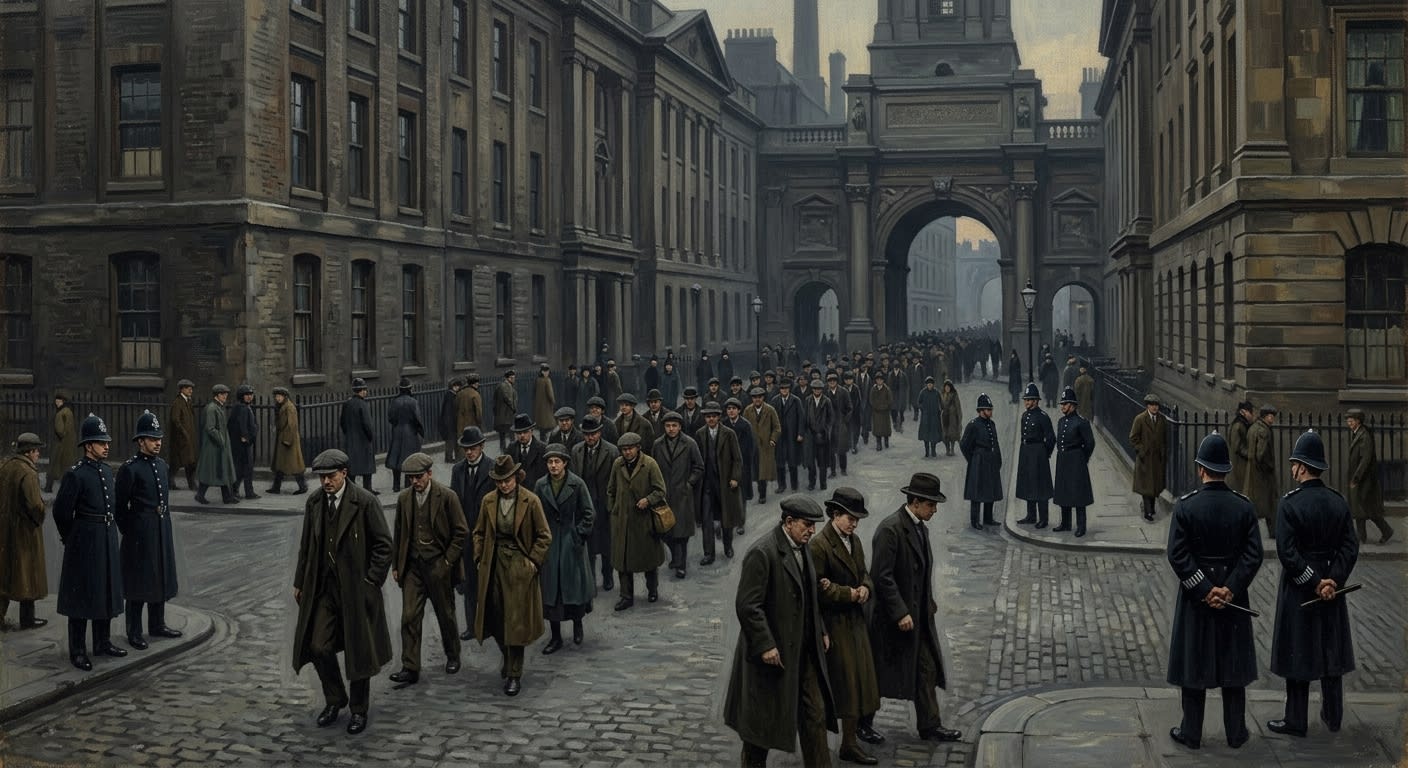
Fast of Silence
The tongue kneels before the knife is invited
The Fast of Silence is the Bureau of Festivals' cleanest cruelty: a district gagged from dawn to dusk until obedience sounds like piety.
Codex Ref. XIII.1.89-153

Father Ambrosius of Como
A key in each fist and a river waiting below
Father Ambrosius of Como made keys into crowns, sermons into siegework, and Lombardy into a lesson the Po carried east.
Codex Ref. XI.5.01-001
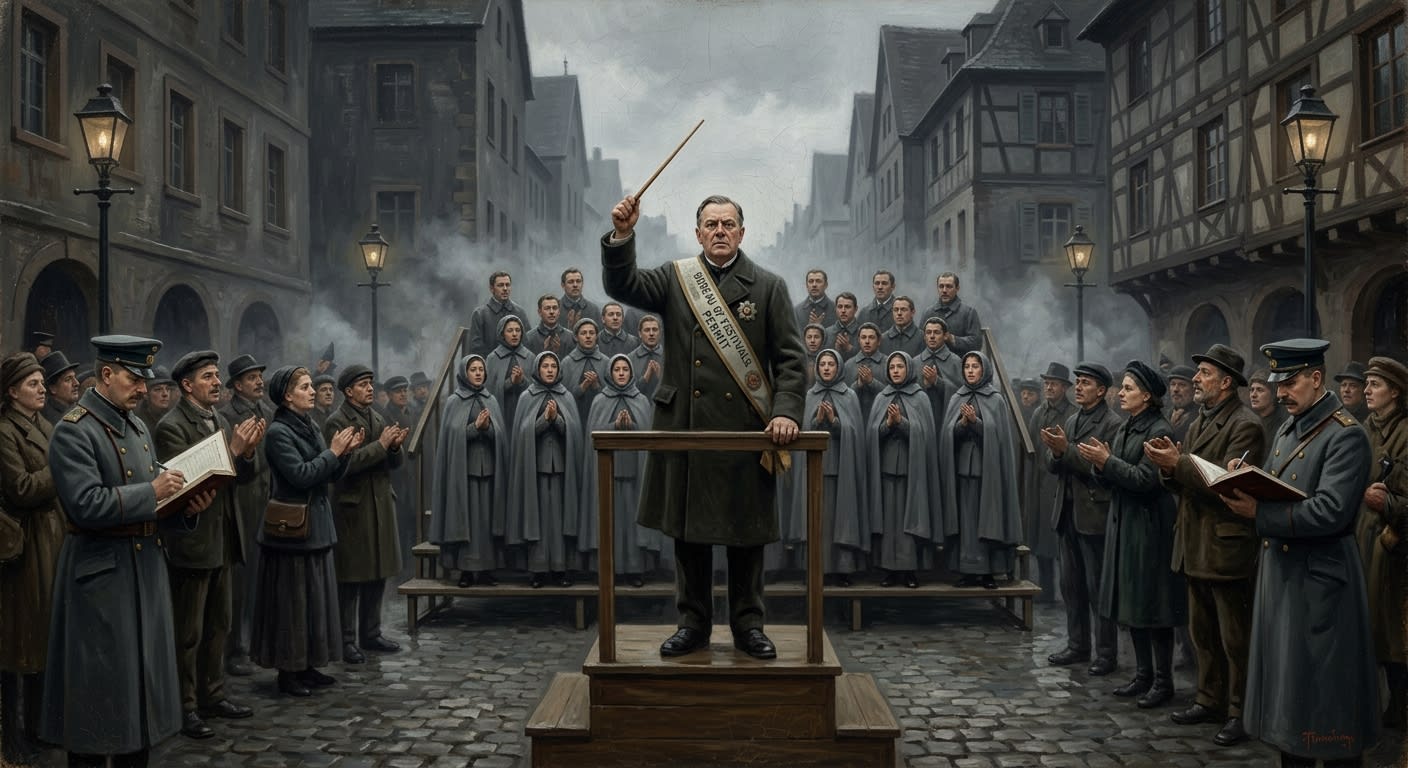
Festival Chorus-Master
The Synod's licensed conductor of controlled emotion — half-cleric, half-stagecraft tactician, certified to manufacture joy by those incapable of permitting it
The Bureau of Festivals' licensed joy engineer — eleven ranks, one Conservatory, forty-one years of unresolved investigations, and a career that ends when laughter becomes indistinguishable from threat.
Codex Ref. XII.17.01-001
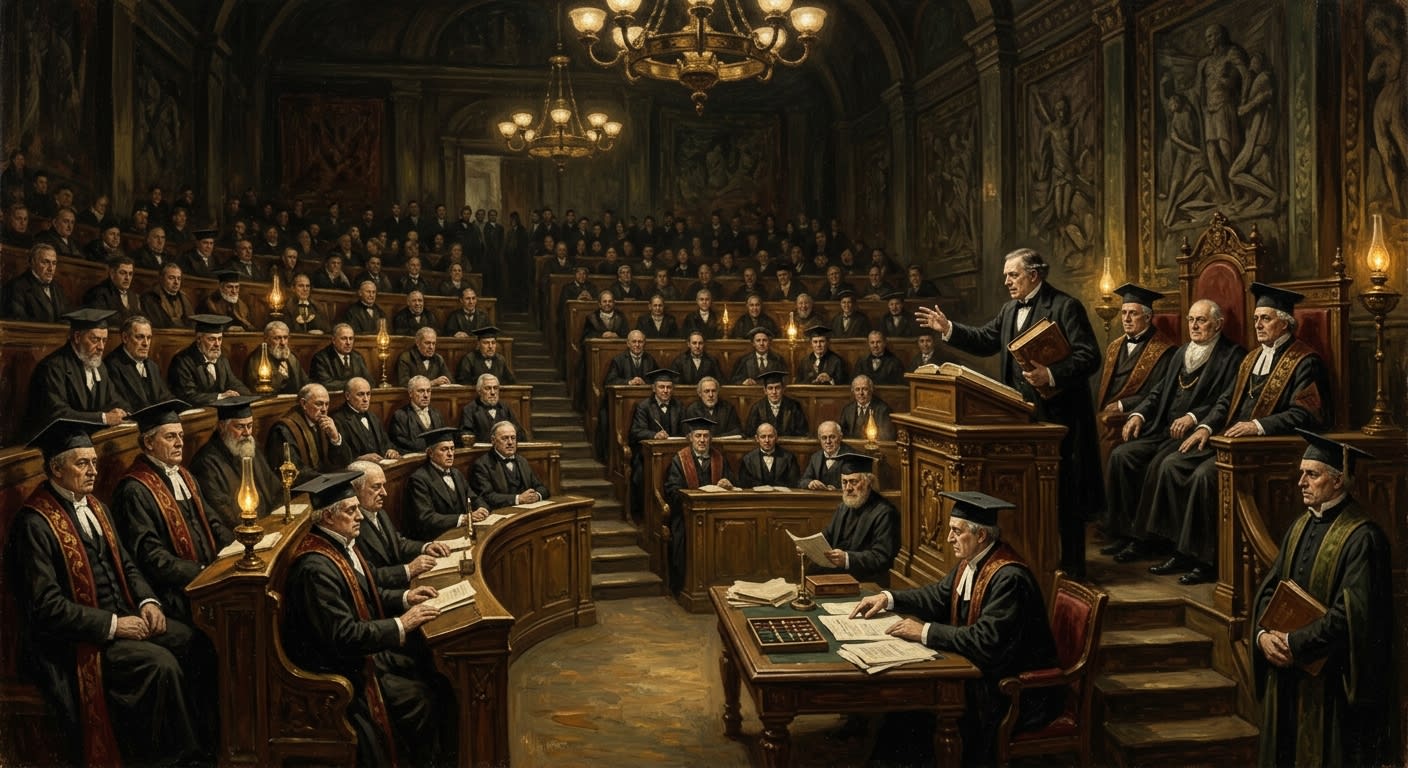
Fourteenth Doctrinal Congress
Matter protested; the seal prevailed
The A.S. 147 Congress that made authenticated contradiction obedient, ratifying the Femur Principle and Kargath's consumption taxonomy in the same week.
Codex Ref. XIII.1.90-147
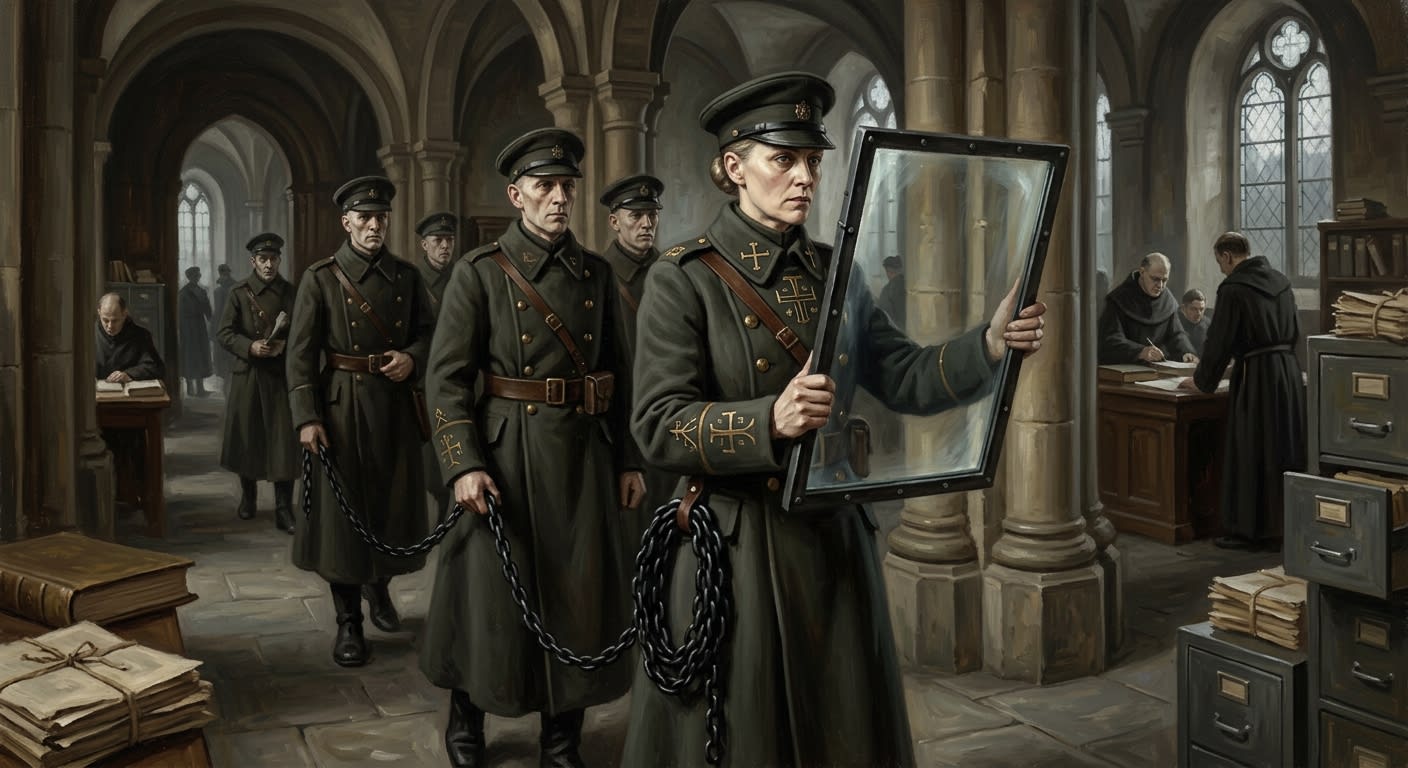
Glass-Canons
The officer enters after the chain begins to sing
Bureau of Purity specialists for singing phrases and chain-response events, armed with clear witness-glass and the black chain no public decree admits.
Codex Ref. XII.49.02-001
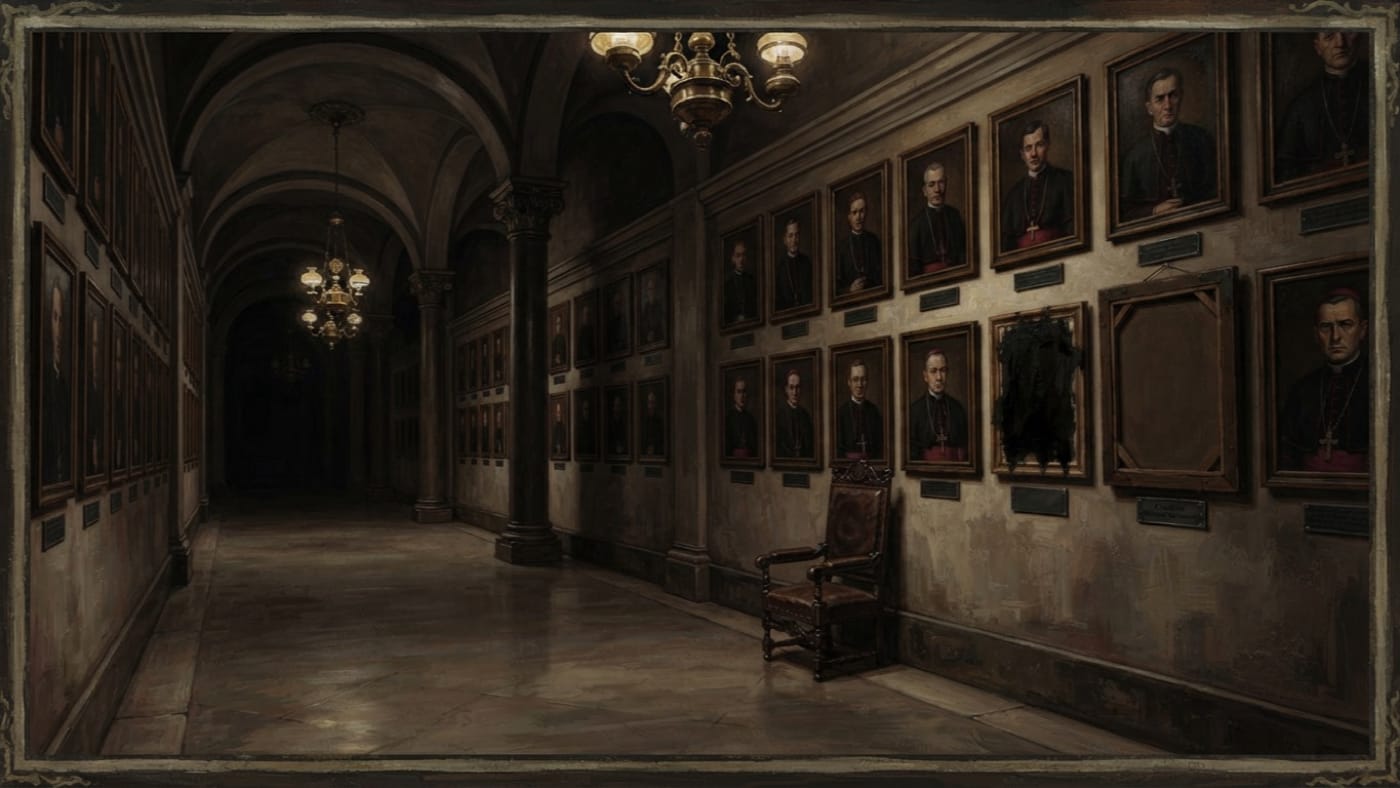
Hall of Succession
The succession is continuous; the faces are revocable
The Synod's portrait corridor in Strasbourg keeps seven successions unbroken in paint. One canvas is black, one portrait faces the wall, and one empty chair continues its duties. The faces are revocable.
Codex Ref. II.1.04-005
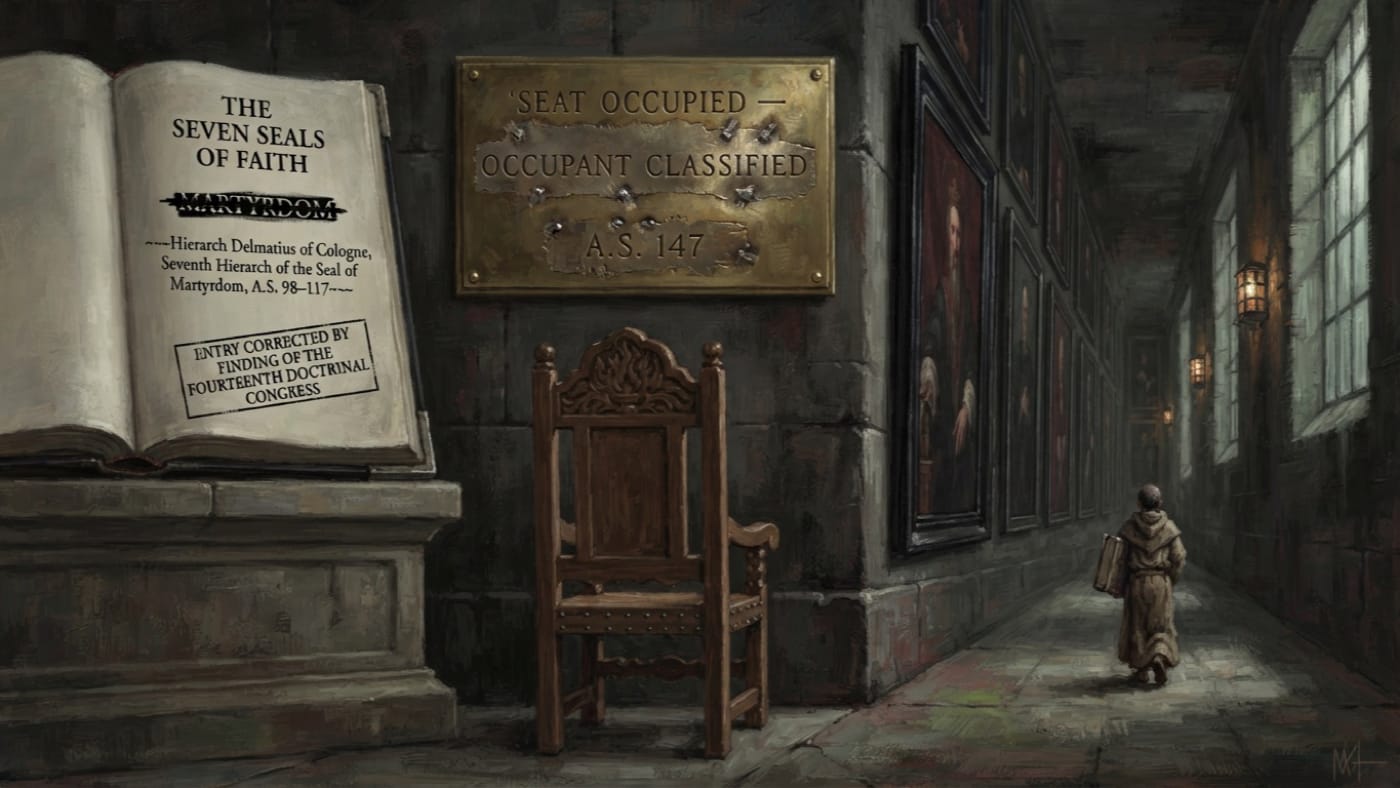
Hierarch Delmatius of Cologne
The Synod Condemned the Hierarch and Kept the Chair
Delmatius was condemned in A.S. 147 for canonisation proceedings based on a dead man's testimony. The Synod withdrew his name, turned his portrait, and kept the chair.
Codex Ref. III.2.01-147
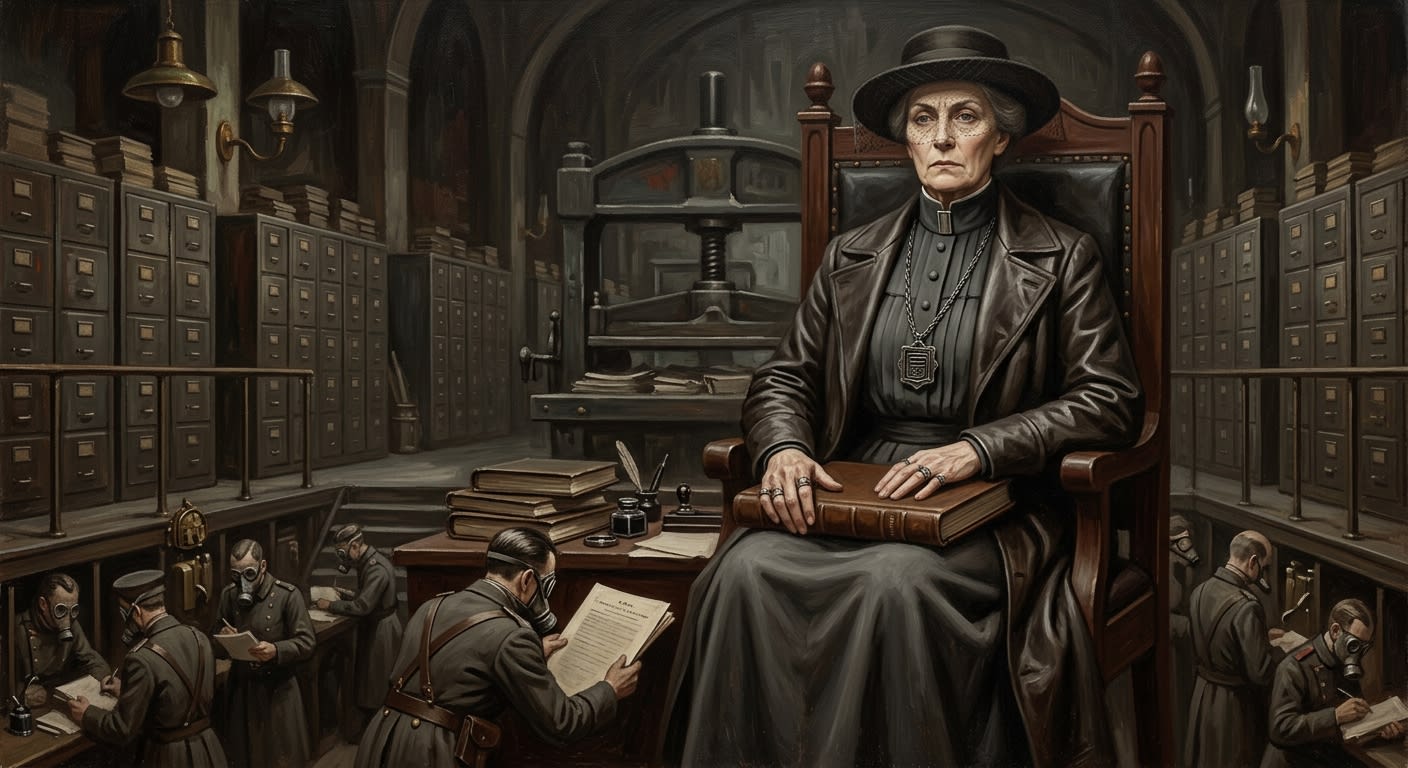
Hierarch of Purity
The silence before confession has a chair and wears white
The unnamed current holder of the Fifth Seal commands Purity, the Inquisition, and the administrative terror by which impurity becomes whatever her silence permits.
Codex Ref. III.2.01-072

Hierarch of the Fourth Seal
Two attestations, one number, and the rest ruled blank
The Fourth Seal appears in the A.S. 194 Tithe Instrument record and Morwen's A.S. 201 ratification. Two attestations, one number; the holder, tenure, and named domain remain unrecorded.
Codex Ref. XIII.1.05-004
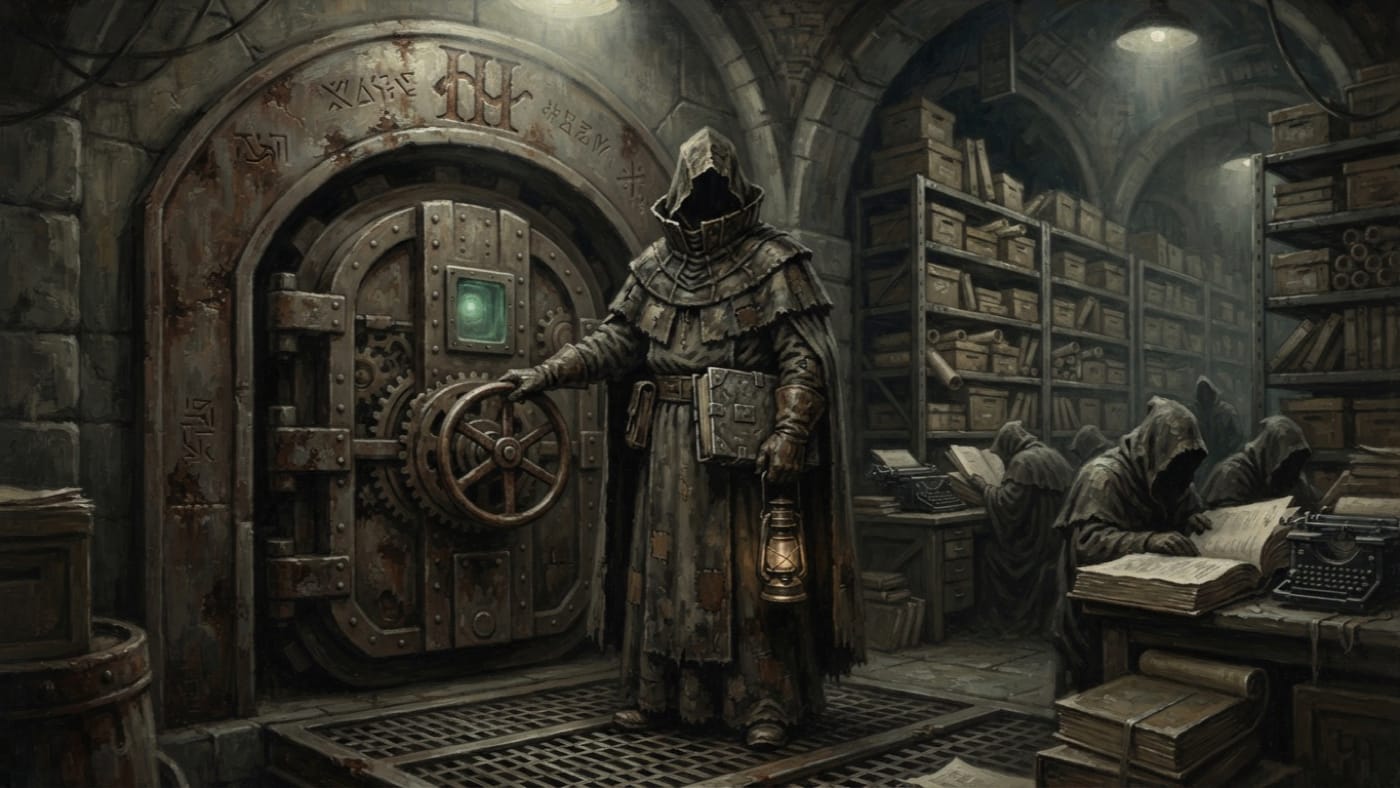
Hierarch of the Third Seal
Three Bureaus know the title. None supplies the name.
Three Bureaus attest a Hierarch; none supplies a name. This A.S. 201 survey records restricted vault knowledge, attributed tribunal influence and Lyon's A.S. 170 satire, leaving the Seal unidentified.
Codex Ref. XIII.1.05-003
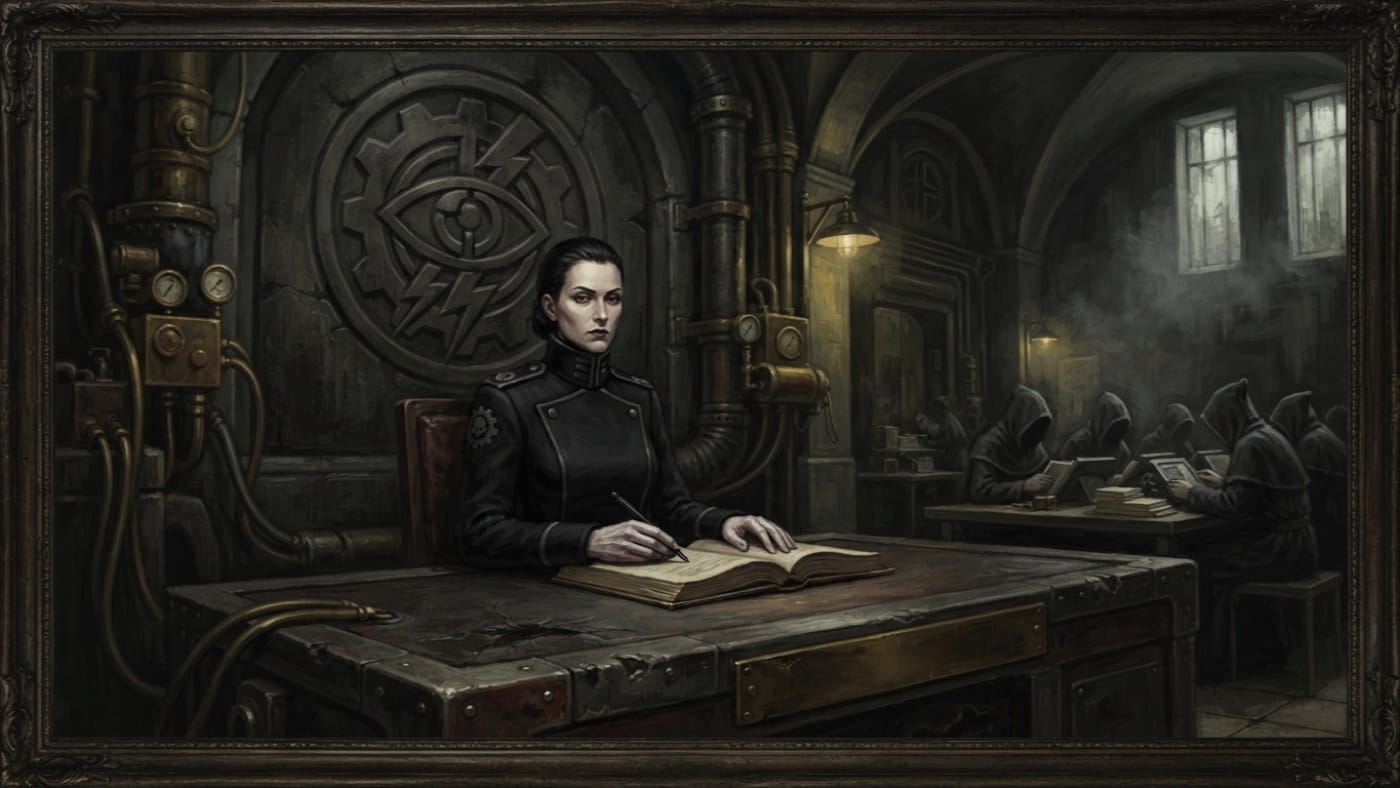
High Interrogatrix
A gentle voice with terrible hands, and a reform the Ledger cannot explain
Ysabeau leads the Bureau of Purity beneath the Hierarch's seal. Her reform reportedly cut the confession rate by forty per cent. Her personal dossier remains sealed; the Auditors still count pauses.
Codex Ref. III.2.01-201
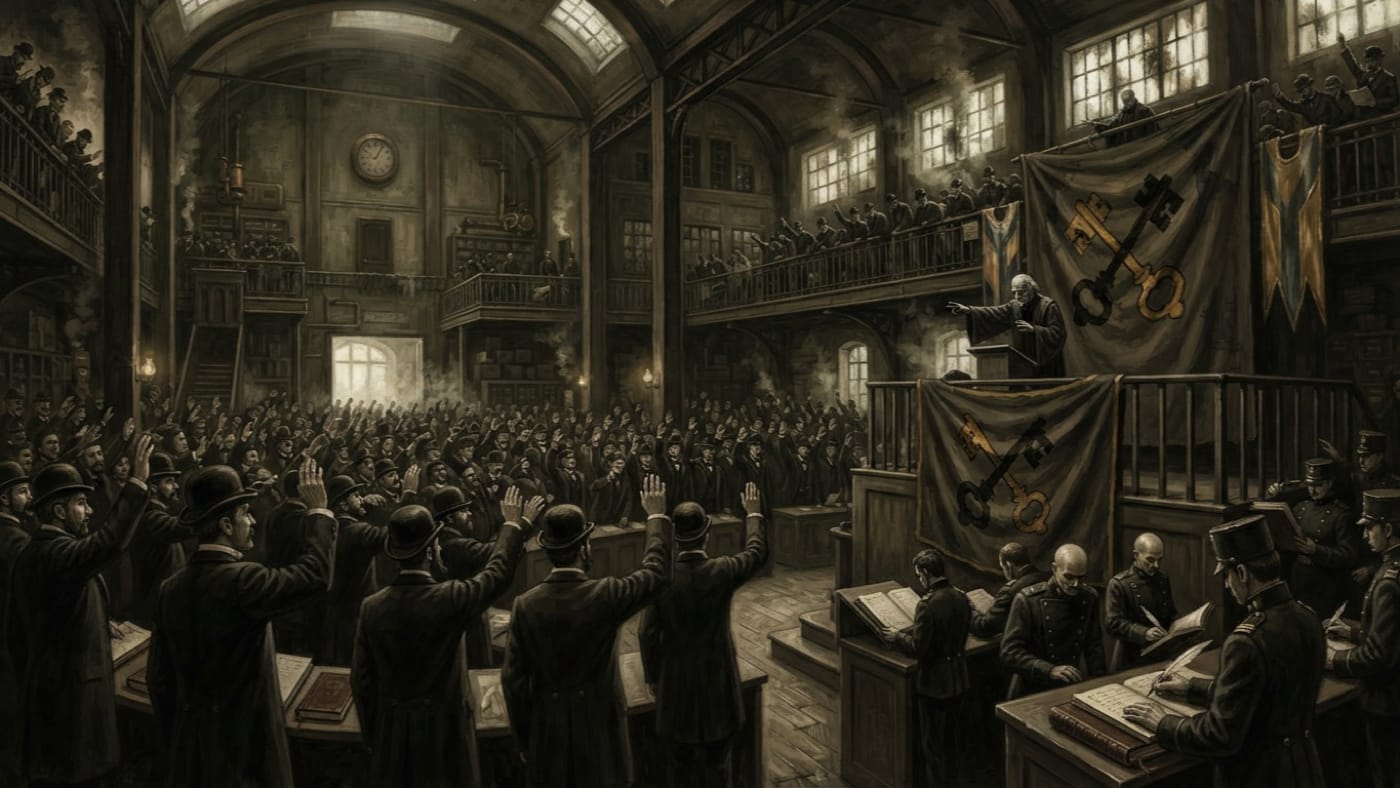
Key-Oath
An allegiance voided, a city entered
In A.S. 150, Milan's city councils swore the Key-Oath to the Coalition of the Crossed Keys and its so-called True Successor of Rome. The oath is void; the names remain useful.
Codex Ref. VII.8.04-002
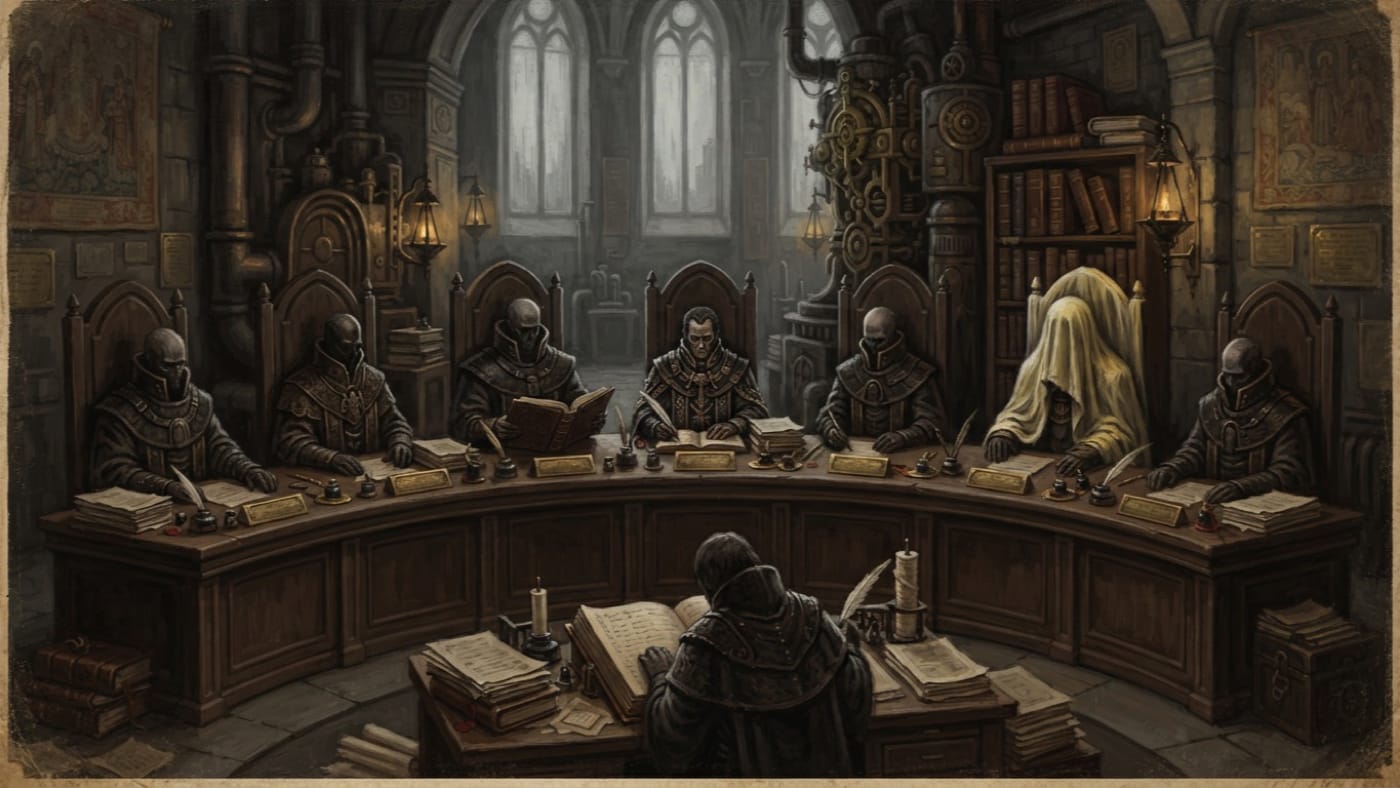
Ledger of Succession
Five Names in Print, Seven Seals in Law
Five names are printed each year for seven Seals. One seated Hierarch has only a changing file number; War's chair remains draped. The succession is continuous as printed.
Codex Ref. VI.3.02-002
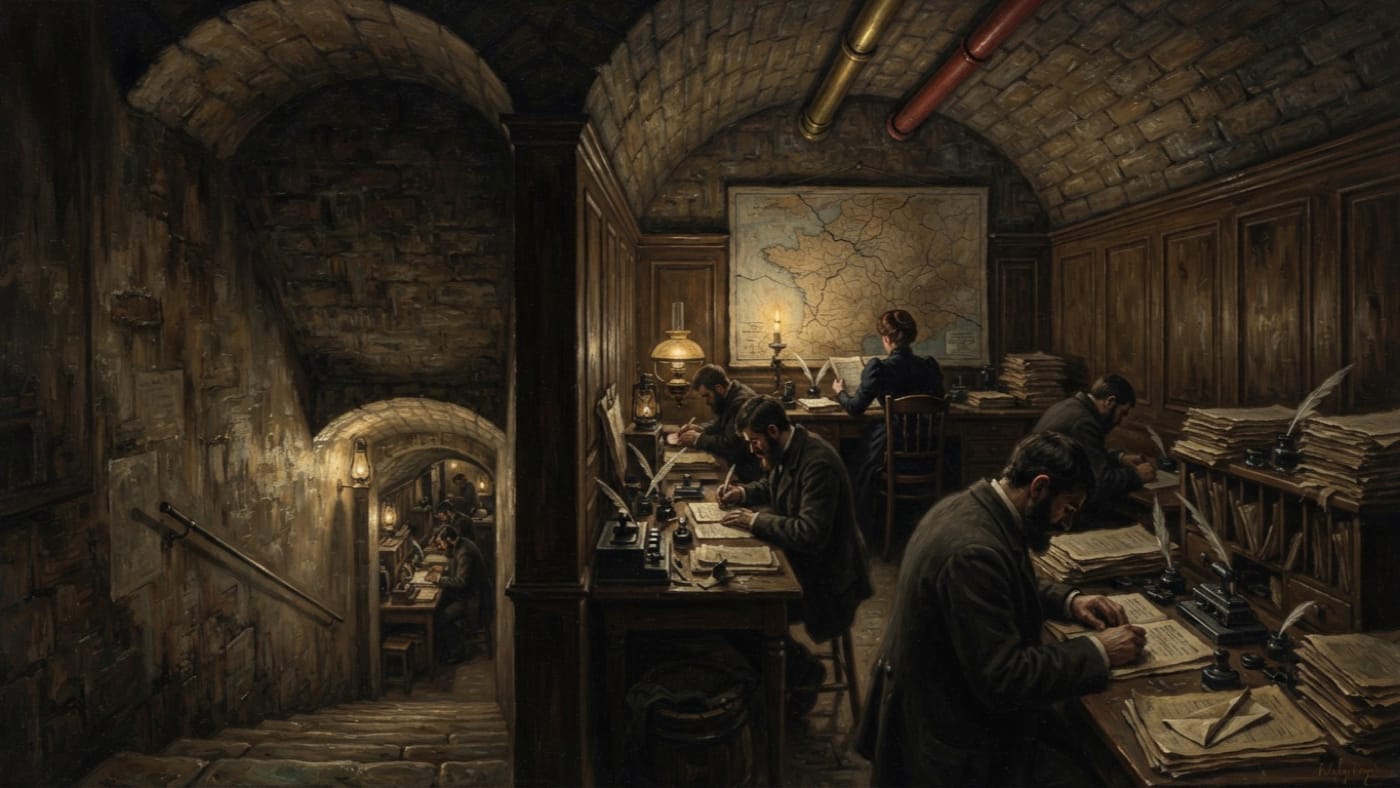
Palatine Administrative Wing
Rank ascends. Settlement descends.
The Palatine Administrative Wing stacks Tithes above Records above Settlement, whose wine-cellar offices decide where three hundred million subjects may sleep. In Strasbourg, dependence is measured by how far one must descend.
Codex Ref. II.2.08-201
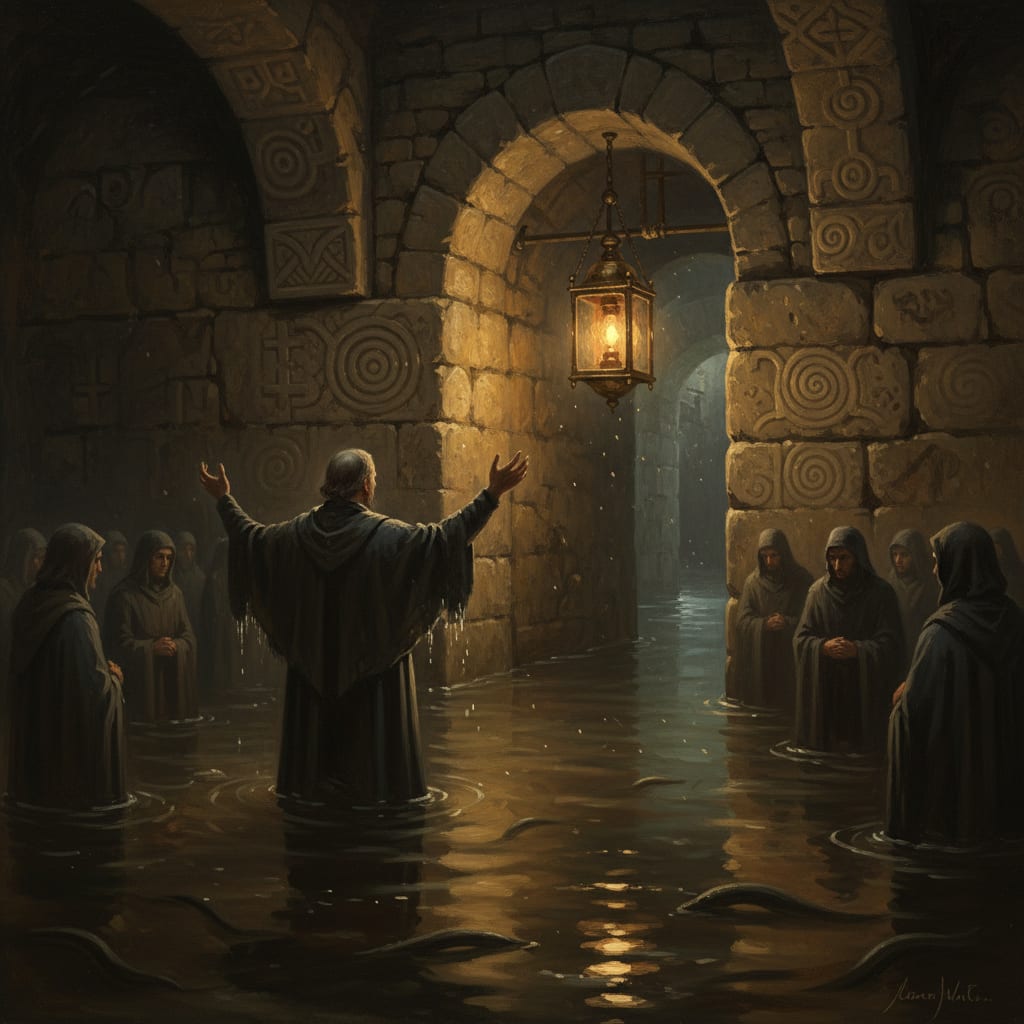
Pontifex Submersis
The name is gone; the chains still hum; the Bureau has no comment
The man the Bureau erased so thoroughly it must write eleven pages explaining what he was not: the Drowned Pontiff of Avignon, non-person, non-event, non-theology. His name is gone. The chains hum in B-flat.
Codex Ref. III.2.02-001

Sub-Archon Provisional Yvette Langres
The woman in the wine cellar who can tell you whether your city exists
Yvette Langres administers three hundred million addresses from a damp Strasbourg cellar; provisional since A.S. 194, indispensable since the first corrected line.
Codex Ref. III.2.01-013

The Age of Heresy
A World Sundered, a Faith Forged in Fire
The definitive overview of the Age of Heresy — a continent sundered by demonic invasion, ruled by a theocratic bureaucracy of bells and ink, locked in eternal war against the Seven Sin-Generals. As compiled by the only man qualified to compile it.
Codex Ref. I.1.01-001
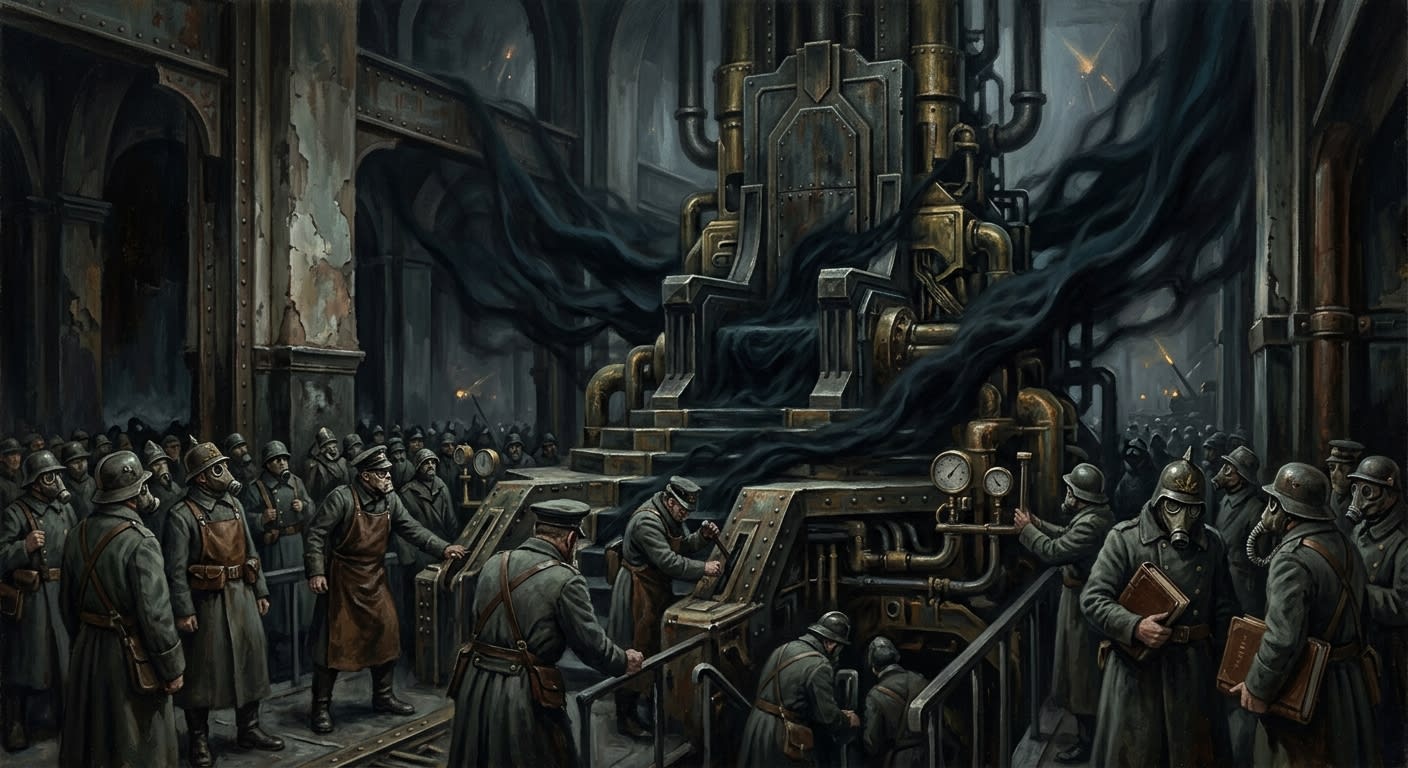
The Black Throne
Authority need not sit to make others kneel
Doctrine treats the Black Throne as symbol, Shadows as object, War as target; all agree that authority gathers there until place obeys.
Codex Ref. XIII.1.24-001
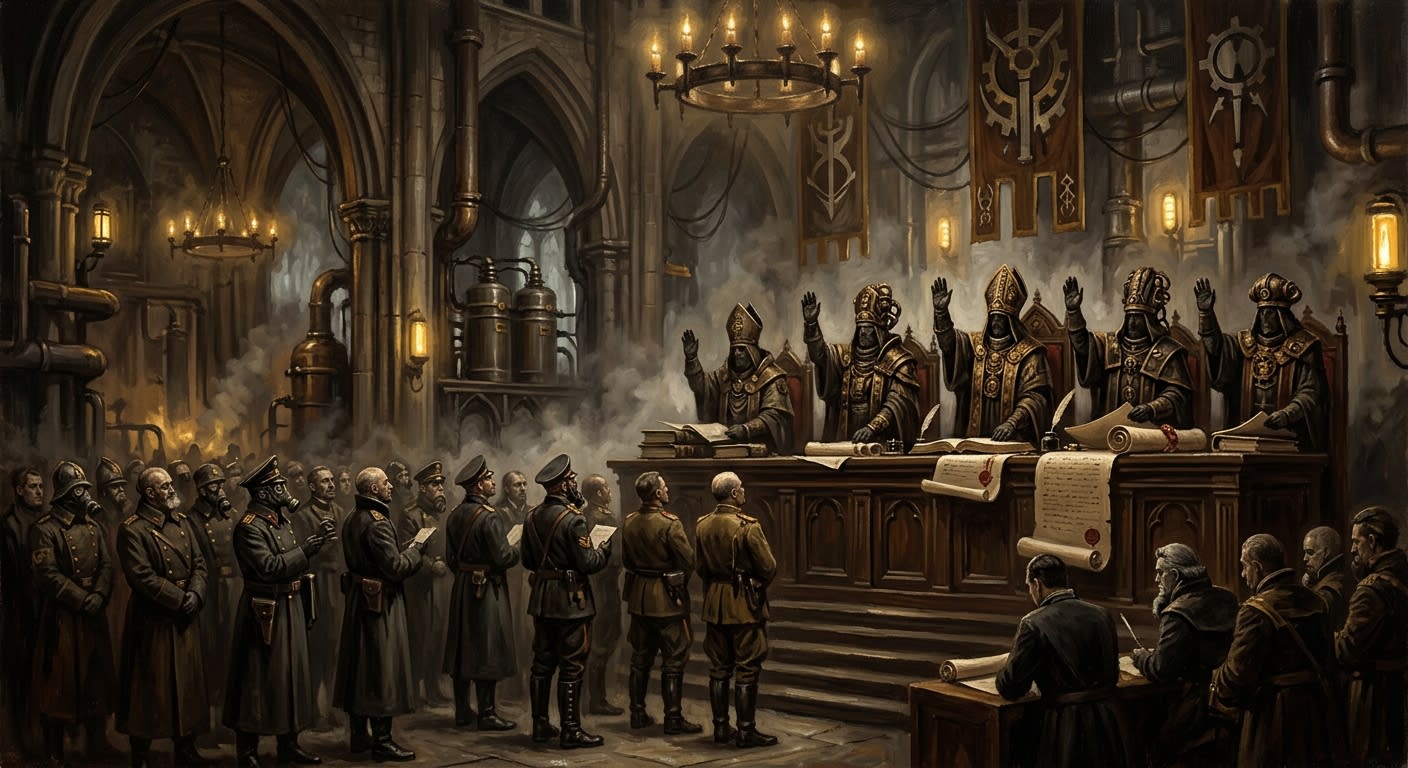
The Council of Mainz
Where law learned to cheer on command
The Council of Mainz confirmed the first seven Hierarchs in A.S. 93, turning Concordat law into staged acclamation, ratified offices, and obedient witnesses.
Codex Ref. VII.7.02-001
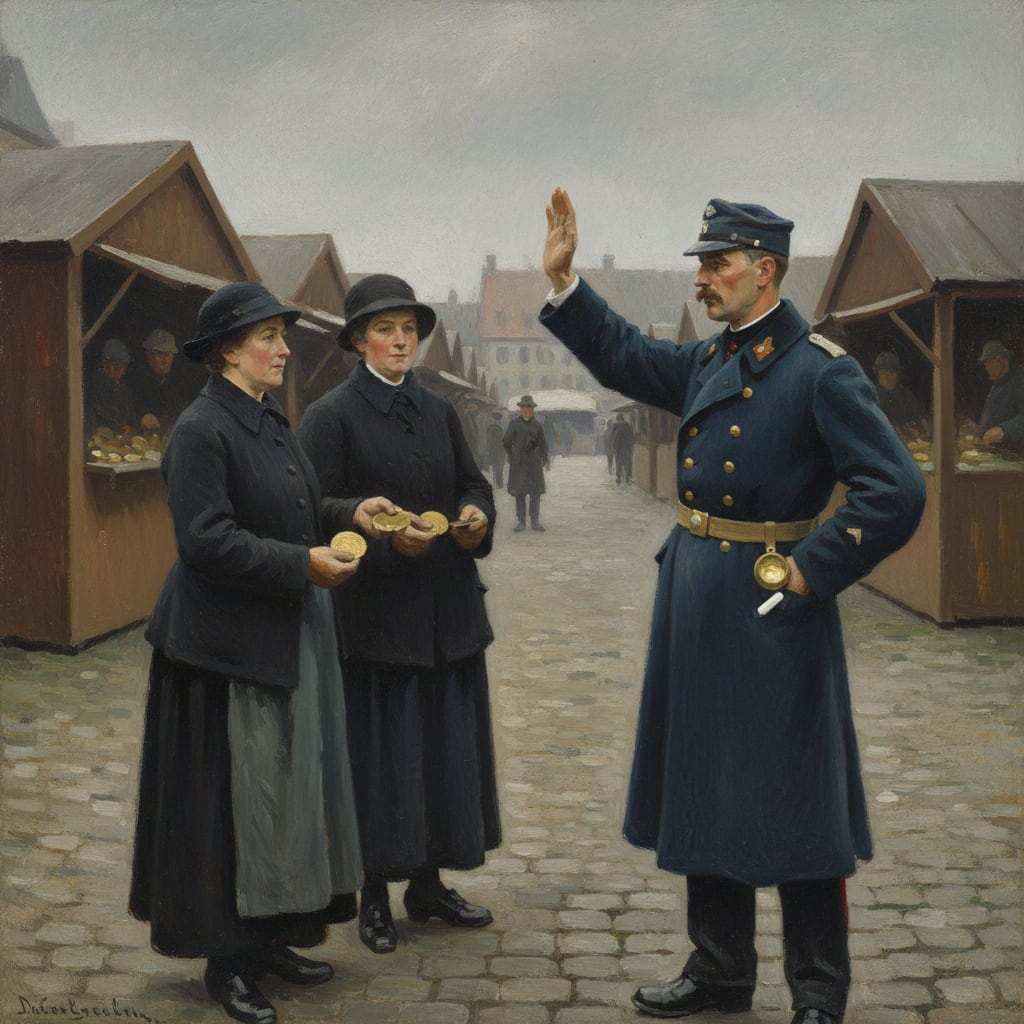
The Doctrine Street-Vicar
The bell's feet; the chalk's teeth; the compliance that comes to you.
The Bureau of Doctrine's mobile enforcement arm: four thousand three hundred chalk-bearing officers who walk where the bell cannot reach, inspect purity tokens, and mark doorframes in white, yellow, and red.
Codex Ref. XII.9.02-001
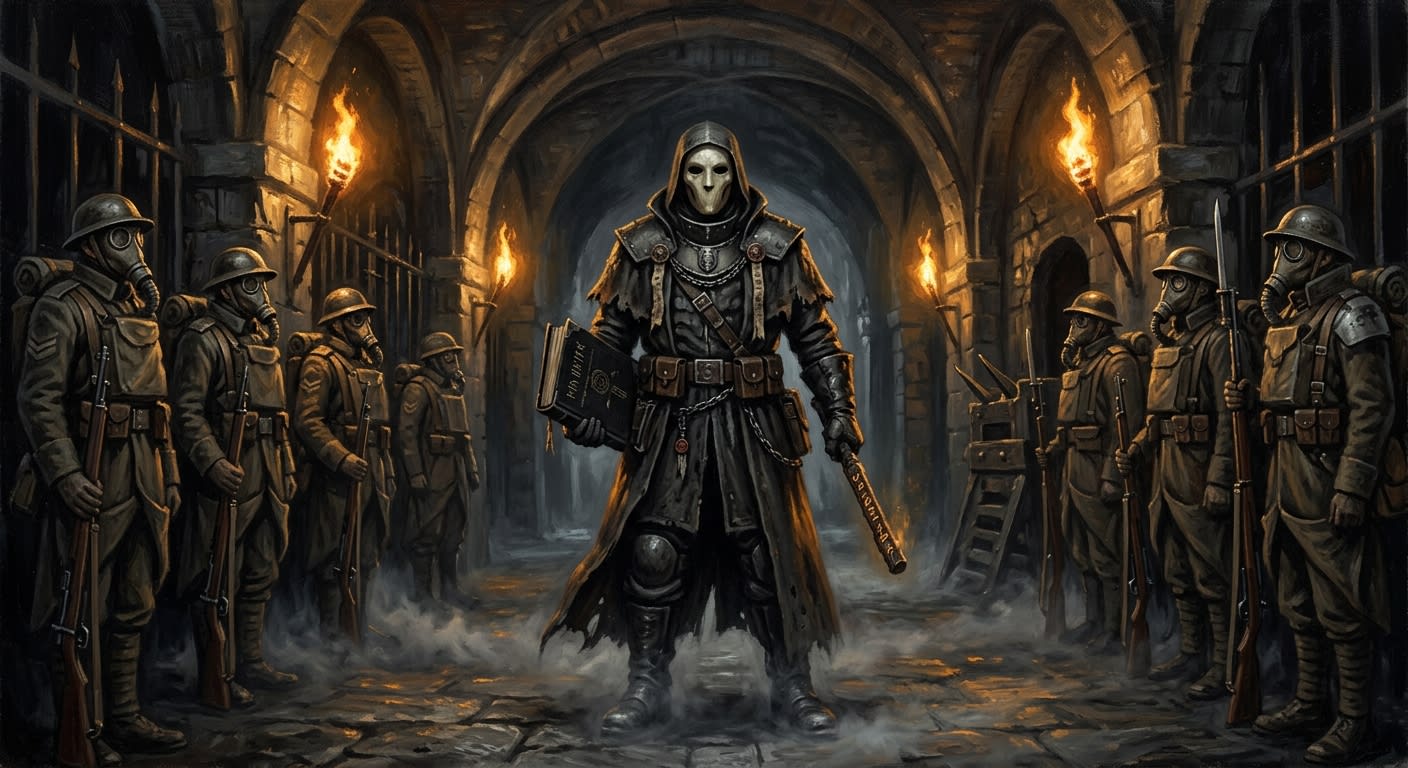
The Judges
They walk without letter, without herald, and without the patience of the Bureau.
The Judges arrive without letter, try without jury, and depart without filing. The Bureau denies they exist. It has been denying this since A.S. 92. The denial requires renewal every thirty years, which is itself a kind of evidence.
Codex Ref. V.1.01-003
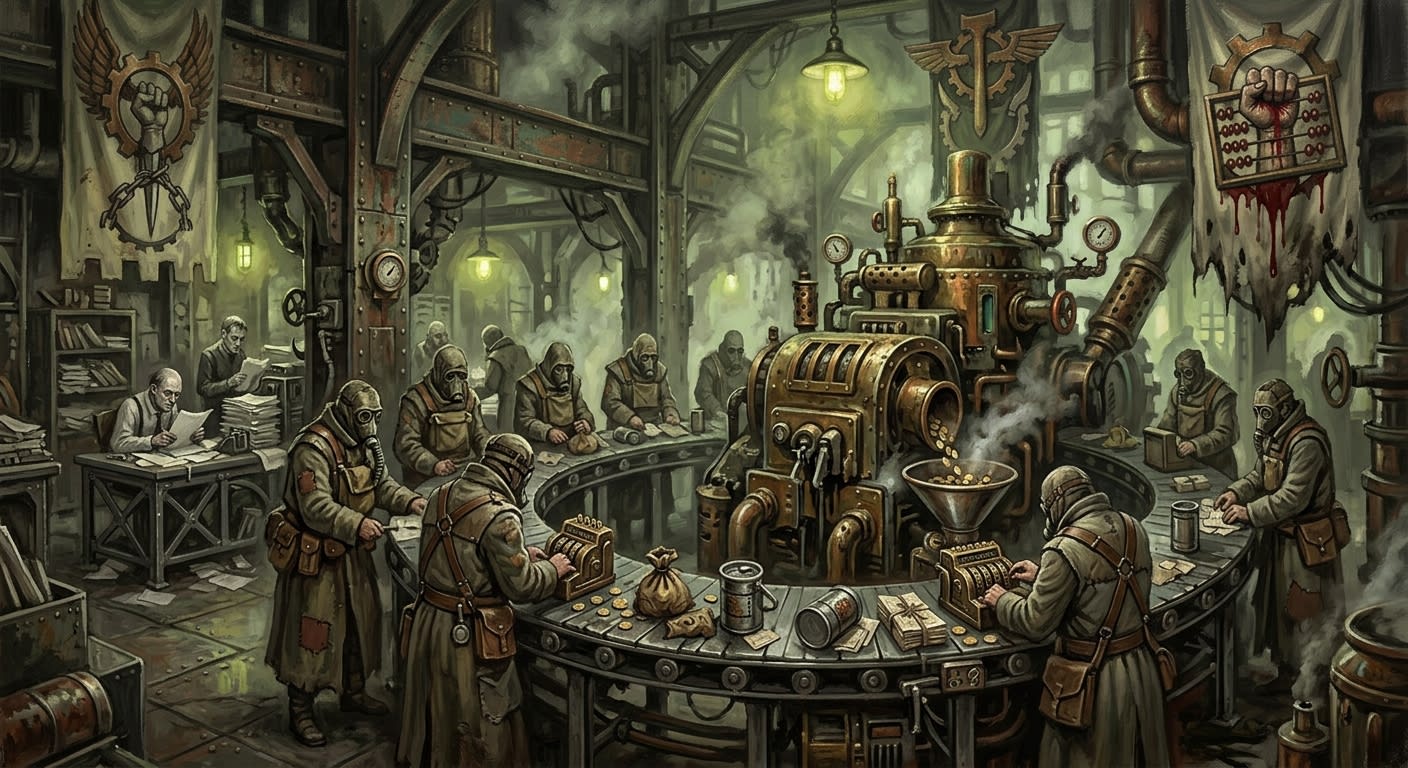
The Meta-Levy
The tax that charges for the privilege of being counted
The Meta-Levy is the Synod's tithe upon tithes, a circular sanctification of collection costs by which the Bureau of Tithes proves that even arithmetic kneels.
Codex Ref. XIII.1.38-001
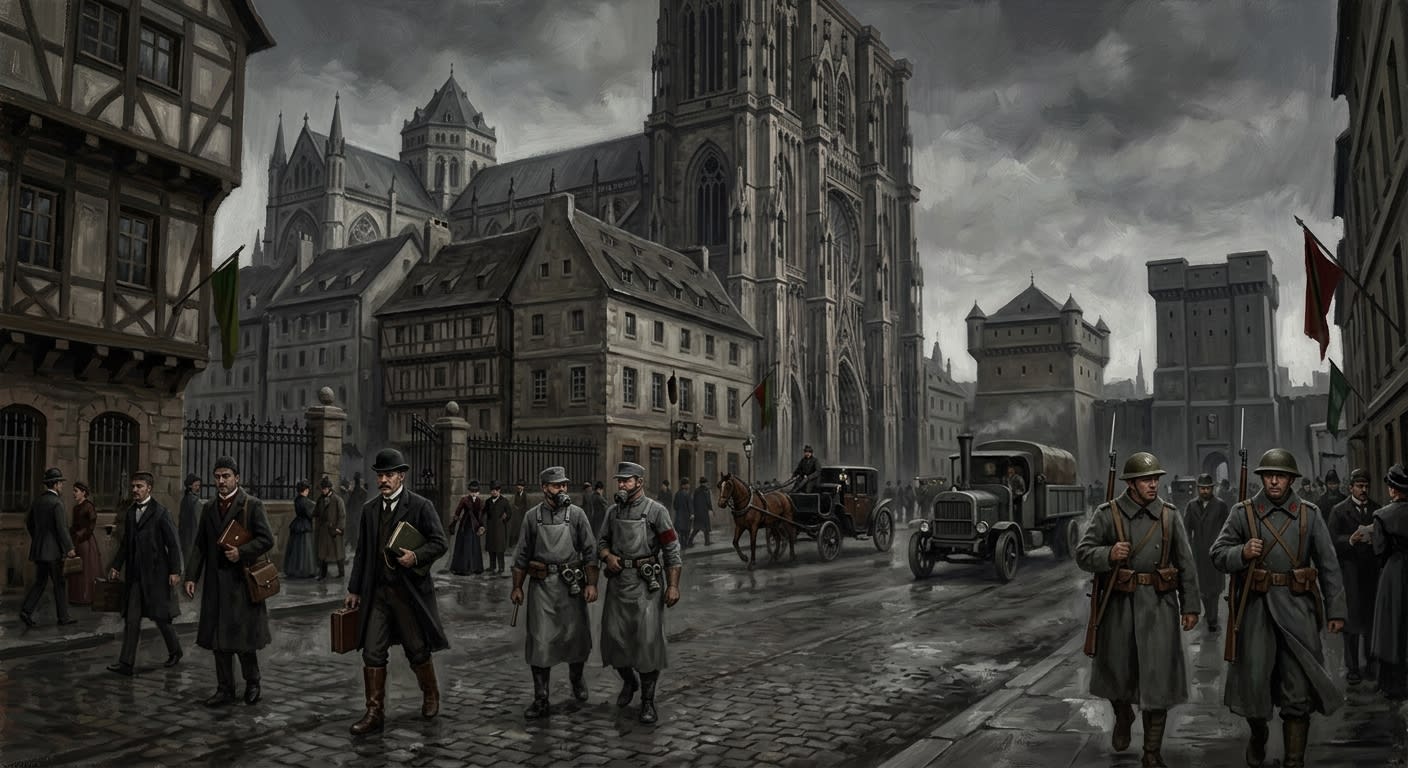
The Sanctum Mile
Strasbourg's white corridor, scrubbed clean enough to hide the blood
The Sanctum Mile is Strasbourg's white civic-sacral corridor: cathedral stone, Bureau houses, the Hall of Confessions, and the Prison of Questions in polished alignment.
Codex Ref. II.2.02-002